window.__IS_SSR__=true
window.__INITIAL_STATE__={
"attachmentsReducer": {
"audio_0": {
"type": "attachments",
"id": "audio_0",
"imgSizes": {
"kqedFullSize": {
"file": "https://ww2.kqed.org/news/wp-content/themes/KQED-unified/img/audio_bgs/background0.jpg"
}
}
},
"audio_1": {
"type": "attachments",
"id": "audio_1",
"imgSizes": {
"kqedFullSize": {
"file": "https://ww2.kqed.org/news/wp-content/themes/KQED-unified/img/audio_bgs/background1.jpg"
}
}
},
"audio_2": {
"type": "attachments",
"id": "audio_2",
"imgSizes": {
"kqedFullSize": {
"file": "https://ww2.kqed.org/news/wp-content/themes/KQED-unified/img/audio_bgs/background2.jpg"
}
}
},
"audio_3": {
"type": "attachments",
"id": "audio_3",
"imgSizes": {
"kqedFullSize": {
"file": "https://ww2.kqed.org/news/wp-content/themes/KQED-unified/img/audio_bgs/background3.jpg"
}
}
},
"audio_4": {
"type": "attachments",
"id": "audio_4",
"imgSizes": {
"kqedFullSize": {
"file": "https://ww2.kqed.org/news/wp-content/themes/KQED-unified/img/audio_bgs/background4.jpg"
}
}
},
"placeholder": {
"type": "attachments",
"id": "placeholder",
"imgSizes": {
"thumbnail": {
"file": "https://cdn.kqed.org/wp-content/uploads/2024/12/KQED-Default-Image-816638274-2000x1333-1-160x107.jpg",
"width": 160,
"height": 107,
"mimeType": "image/jpeg"
},
"medium": {
"file": "https://cdn.kqed.org/wp-content/uploads/2024/12/KQED-Default-Image-816638274-2000x1333-1-800x533.jpg",
"width": 800,
"height": 533,
"mimeType": "image/jpeg"
},
"medium_large": {
"file": "https://cdn.kqed.org/wp-content/uploads/2024/12/KQED-Default-Image-816638274-2000x1333-1-768x512.jpg",
"width": 768,
"height": 512,
"mimeType": "image/jpeg"
},
"large": {
"file": "https://cdn.kqed.org/wp-content/uploads/2024/12/KQED-Default-Image-816638274-2000x1333-1-1020x680.jpg",
"width": 1020,
"height": 680,
"mimeType": "image/jpeg"
},
"1536x1536": {
"file": "https://cdn.kqed.org/wp-content/uploads/2024/12/KQED-Default-Image-816638274-2000x1333-1-1536x1024.jpg",
"width": 1536,
"height": 1024,
"mimeType": "image/jpeg"
},
"fd-lrg": {
"file": "https://cdn.kqed.org/wp-content/uploads/2024/12/KQED-Default-Image-816638274-2000x1333-1-1536x1024.jpg",
"width": 1536,
"height": 1024,
"mimeType": "image/jpeg"
},
"fd-med": {
"file": "https://cdn.kqed.org/wp-content/uploads/2024/12/KQED-Default-Image-816638274-2000x1333-1-1020x680.jpg",
"width": 1020,
"height": 680,
"mimeType": "image/jpeg"
},
"fd-sm": {
"file": "https://cdn.kqed.org/wp-content/uploads/2024/12/KQED-Default-Image-816638274-2000x1333-1-800x533.jpg",
"width": 800,
"height": 533,
"mimeType": "image/jpeg"
},
"post-thumbnail": {
"file": "https://cdn.kqed.org/wp-content/uploads/2024/12/KQED-Default-Image-816638274-2000x1333-1-672x372.jpg",
"width": 672,
"height": 372,
"mimeType": "image/jpeg"
},
"twentyfourteen-full-width": {
"file": "https://cdn.kqed.org/wp-content/uploads/2024/12/KQED-Default-Image-816638274-2000x1333-1-1038x576.jpg",
"width": 1038,
"height": 576,
"mimeType": "image/jpeg"
},
"xxsmall": {
"file": "https://cdn.kqed.org/wp-content/uploads/2024/12/KQED-Default-Image-816638274-2000x1333-1-160x107.jpg",
"width": 160,
"height": 107,
"mimeType": "image/jpeg"
},
"xsmall": {
"file": "https://cdn.kqed.org/wp-content/uploads/2024/12/KQED-Default-Image-816638274-2000x1333-1-672x372.jpg",
"width": 672,
"height": 372,
"mimeType": "image/jpeg"
},
"small": {
"file": "https://cdn.kqed.org/wp-content/uploads/2024/12/KQED-Default-Image-816638274-2000x1333-1-672x372.jpg",
"width": 672,
"height": 372,
"mimeType": "image/jpeg"
},
"xlarge": {
"file": "https://cdn.kqed.org/wp-content/uploads/2024/12/KQED-Default-Image-816638274-2000x1333-1-1020x680.jpg",
"width": 1020,
"height": 680,
"mimeType": "image/jpeg"
},
"full-width": {
"file": "https://cdn.kqed.org/wp-content/uploads/2024/12/KQED-Default-Image-816638274-2000x1333-1-1920x1280.jpg",
"width": 1920,
"height": 1280,
"mimeType": "image/jpeg"
},
"guest-author-32": {
"file": "https://cdn.kqed.org/wp-content/uploads/2025/01/KQED-Default-Image-816638274-1333x1333-1-160x160.jpg",
"width": 32,
"height": 32,
"mimeType": "image/jpeg"
},
"guest-author-50": {
"file": "https://cdn.kqed.org/wp-content/uploads/2025/01/KQED-Default-Image-816638274-1333x1333-1-160x160.jpg",
"width": 50,
"height": 50,
"mimeType": "image/jpeg"
},
"guest-author-64": {
"file": "https://cdn.kqed.org/wp-content/uploads/2025/01/KQED-Default-Image-816638274-1333x1333-1-160x160.jpg",
"width": 64,
"height": 64,
"mimeType": "image/jpeg"
},
"guest-author-96": {
"file": "https://cdn.kqed.org/wp-content/uploads/2025/01/KQED-Default-Image-816638274-1333x1333-1-160x160.jpg",
"width": 96,
"height": 96,
"mimeType": "image/jpeg"
},
"guest-author-128": {
"file": "https://cdn.kqed.org/wp-content/uploads/2025/01/KQED-Default-Image-816638274-1333x1333-1-160x160.jpg",
"width": 128,
"height": 128,
"mimeType": "image/jpeg"
},
"detail": {
"file": "https://cdn.kqed.org/wp-content/uploads/2025/01/KQED-Default-Image-816638274-1333x1333-1-160x160.jpg",
"width": 160,
"height": 160,
"mimeType": "image/jpeg"
},
"kqedFullSize": {
"file": "https://cdn.kqed.org/wp-content/uploads/2024/12/KQED-Default-Image-816638274-2000x1333-1.jpg",
"width": 2000,
"height": 1333
}
}
},
"arts_13956570": {
"type": "attachments",
"id": "arts_13956570",
"meta": {
"index": "attachments_1716263798",
"site": "arts",
"id": "13956570",
"found": true
},
"parent": 0,
"imgSizes": {
"twentyfourteen-full-width": {
"file": "https://cdn.kqed.org/wp-content/uploads/sites/2/2024/04/240422-LOCOBLOCO-54-BL-KQED-1038x576.jpg",
"width": 1038,
"mimeType": "image/jpeg",
"height": 576
},
"thumbnail": {
"file": "https://cdn.kqed.org/wp-content/uploads/sites/2/2024/04/240422-LOCOBLOCO-54-BL-KQED-160x107.jpg",
"width": 160,
"mimeType": "image/jpeg",
"height": 107
},
"post-thumbnail": {
"file": "https://cdn.kqed.org/wp-content/uploads/sites/2/2024/04/240422-LOCOBLOCO-54-BL-KQED-672x372.jpg",
"width": 672,
"mimeType": "image/jpeg",
"height": 372
},
"kqedFullSize": {
"file": "https://cdn.kqed.org/wp-content/uploads/sites/2/2024/04/240422-LOCOBLOCO-54-BL-KQED.jpg",
"width": 2000,
"height": 1333
},
"large": {
"file": "https://cdn.kqed.org/wp-content/uploads/sites/2/2024/04/240422-LOCOBLOCO-54-BL-KQED-1020x680.jpg",
"width": 1020,
"mimeType": "image/jpeg",
"height": 680
},
"1536x1536": {
"file": "https://cdn.kqed.org/wp-content/uploads/sites/2/2024/04/240422-LOCOBLOCO-54-BL-KQED-1536x1024.jpg",
"width": 1536,
"mimeType": "image/jpeg",
"height": 1024
},
"full-width": {
"file": "https://cdn.kqed.org/wp-content/uploads/sites/2/2024/04/240422-LOCOBLOCO-54-BL-KQED-1920x1280.jpg",
"width": 1920,
"mimeType": "image/jpeg",
"height": 1280
},
"medium": {
"file": "https://cdn.kqed.org/wp-content/uploads/sites/2/2024/04/240422-LOCOBLOCO-54-BL-KQED-800x533.jpg",
"width": 800,
"mimeType": "image/jpeg",
"height": 533
},
"medium_large": {
"file": "https://cdn.kqed.org/wp-content/uploads/sites/2/2024/04/240422-LOCOBLOCO-54-BL-KQED-768x512.jpg",
"width": 768,
"mimeType": "image/jpeg",
"height": 512
}
},
"publishDate": 1713977046,
"modified": 1713991606,
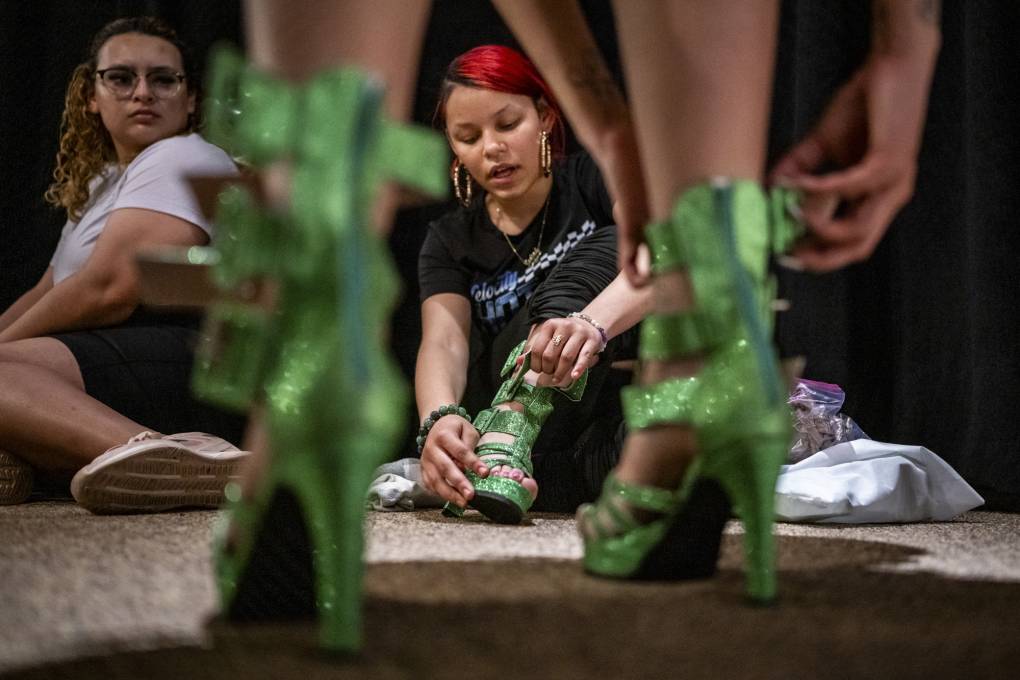
"caption": "Jediah Pratt (center), 15, tries on dance shoes during practice with Loco Bloco at Brava Theater in San Francisco on April 22, 2024, during preparations for their performance in Carnaval.",
"description": null,
"title": "240422-LOCOBLOCO-54-BL-KQED",
"credit": "Beth LaBerge/KQED",
"status": "inherit",
"altTag": "A young woman in black T-shirt and red dyed hair works on a costume, framed by two legs in green shoes.",
"isLoading": false,
"fetchFailed": false
},
"arts_13956180": {
"type": "attachments",
"id": "arts_13956180",
"meta": {
"index": "attachments_1716263798",
"site": "arts",
"id": "13956180",
"found": true
},
"parent": 13956177,
"imgSizes": {
"twentyfourteen-full-width": {
"file": "https://cdn.kqed.org/wp-content/uploads/sites/2/2024/04/Lowrider.Mission.crop_-1038x576.jpg",
"width": 1038,
"mimeType": "image/jpeg",
"height": 576
},
"thumbnail": {
"file": "https://cdn.kqed.org/wp-content/uploads/sites/2/2024/04/Lowrider.Mission.crop_-160x90.jpg",
"width": 160,
"mimeType": "image/jpeg",
"height": 90
},
"post-thumbnail": {
"file": "https://cdn.kqed.org/wp-content/uploads/sites/2/2024/04/Lowrider.Mission.crop_-672x372.jpg",
"width": 672,
"mimeType": "image/jpeg",
"height": 372
},
"kqedFullSize": {
"file": "https://cdn.kqed.org/wp-content/uploads/sites/2/2024/04/Lowrider.Mission.crop_.jpg",
"width": 1074,
"height": 604
},
"large": {
"file": "https://cdn.kqed.org/wp-content/uploads/sites/2/2024/04/Lowrider.Mission.crop_-1020x574.jpg",
"width": 1020,
"mimeType": "image/jpeg",
"height": 574
},
"medium": {
"file": "https://cdn.kqed.org/wp-content/uploads/sites/2/2024/04/Lowrider.Mission.crop_-800x450.jpg",
"width": 800,
"mimeType": "image/jpeg",
"height": 450
},
"medium_large": {
"file": "https://cdn.kqed.org/wp-content/uploads/sites/2/2024/04/Lowrider.Mission.crop_-768x432.jpg",
"width": 768,
"mimeType": "image/jpeg",
"height": 432
}
},
"publishDate": 1713461650,
"modified": 1713461699,
"caption": "A lowrider rides on three wheels in the Mission District in 2016.",
"description": null,
"title": "Lowrider.Mission.crop",
"credit": "Claudia Escobar/KQED",
"status": "inherit",
"altTag": "A green car tips diagonally upward with one wheel high in the air in front of an old theater and a crowd of onlookers.",
"isLoading": false,
"fetchFailed": false
},
"arts_13955048": {
"type": "attachments",
"id": "arts_13955048",
"meta": {
"index": "attachments_1716263798",
"site": "arts",
"id": "13955048",
"found": true
},
"parent": 13955045,
"imgSizes": {
"thumbnail": {
"file": "https://cdn.kqed.org/wp-content/uploads/sites/2/2024/03/IMG_7753-160x107.jpeg",
"width": 160,
"mimeType": "image/jpeg",
"height": 107
},
"post-thumbnail": {
"file": "https://cdn.kqed.org/wp-content/uploads/sites/2/2024/03/IMG_7753-672x372.jpeg",
"width": 672,
"mimeType": "image/jpeg",
"height": 372
},
"kqedFullSize": {
"file": "https://cdn.kqed.org/wp-content/uploads/sites/2/2024/03/IMG_7753.jpeg",
"width": 750,
"height": 500
}
},
"publishDate": 1711761322,
"modified": 1711762355,
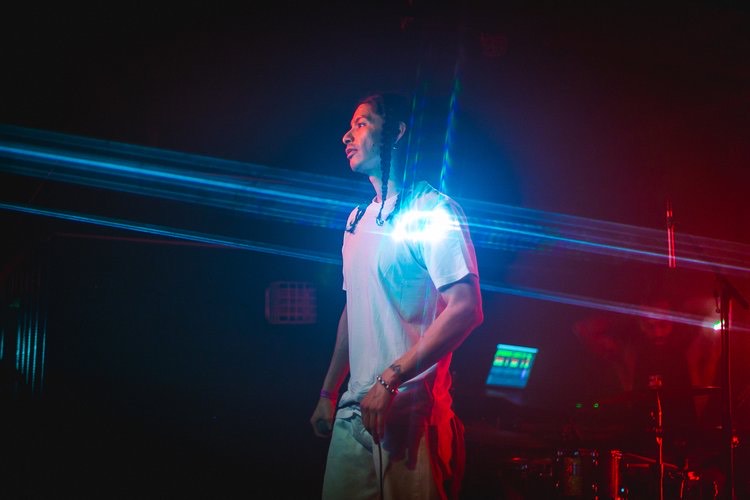
"caption": "A.CHAL's latest album, ESPÍRITU, is garnering national attention. He'll be performing in San Francisco this week.",
"description": null,
"title": "IMG_7753",
"credit": "Courtesy Cold Medina",
"status": "inherit",
"altTag": "a Peruvian rapper is on a darkly lit stage during a music performance",
"isLoading": false,
"fetchFailed": false
},
"arts_13954942": {
"type": "attachments",
"id": "arts_13954942",
"meta": {
"index": "attachments_1716263798",
"site": "arts",
"id": "13954942",
"found": true
},
"parent": 13954939,
"imgSizes": {
"twentyfourteen-full-width": {
"file": "https://cdn.kqed.org/wp-content/uploads/sites/2/2024/03/rasa-rasa_rendang-feature-1038x576.jpg",
"width": 1038,
"mimeType": "image/jpeg",
"height": 576
},
"thumbnail": {
"file": "https://cdn.kqed.org/wp-content/uploads/sites/2/2024/03/rasa-rasa_rendang-feature-160x90.jpg",
"width": 160,
"mimeType": "image/jpeg",
"height": 90
},
"post-thumbnail": {
"file": "https://cdn.kqed.org/wp-content/uploads/sites/2/2024/03/rasa-rasa_rendang-feature-672x372.jpg",
"width": 672,
"mimeType": "image/jpeg",
"height": 372
},
"kqedFullSize": {
"file": "https://cdn.kqed.org/wp-content/uploads/sites/2/2024/03/rasa-rasa_rendang-feature.jpg",
"width": 2000,
"height": 1125
},
"large": {
"file": "https://cdn.kqed.org/wp-content/uploads/sites/2/2024/03/rasa-rasa_rendang-feature-1020x574.jpg",
"width": 1020,
"mimeType": "image/jpeg",
"height": 574
},
"1536x1536": {
"file": "https://cdn.kqed.org/wp-content/uploads/sites/2/2024/03/rasa-rasa_rendang-feature-1536x864.jpg",
"width": 1536,
"mimeType": "image/jpeg",
"height": 864
},
"full-width": {
"file": "https://cdn.kqed.org/wp-content/uploads/sites/2/2024/03/rasa-rasa_rendang-feature-1920x1080.jpg",
"width": 1920,
"mimeType": "image/jpeg",
"height": 1080
},
"medium": {
"file": "https://cdn.kqed.org/wp-content/uploads/sites/2/2024/03/rasa-rasa_rendang-feature-800x450.jpg",
"width": 800,
"mimeType": "image/jpeg",
"height": 450
},
"medium_large": {
"file": "https://cdn.kqed.org/wp-content/uploads/sites/2/2024/03/rasa-rasa_rendang-feature-768x432.jpg",
"width": 768,
"mimeType": "image/jpeg",
"height": 432
}
},
"publishDate": 1711651347,
"modified": 1711651493,
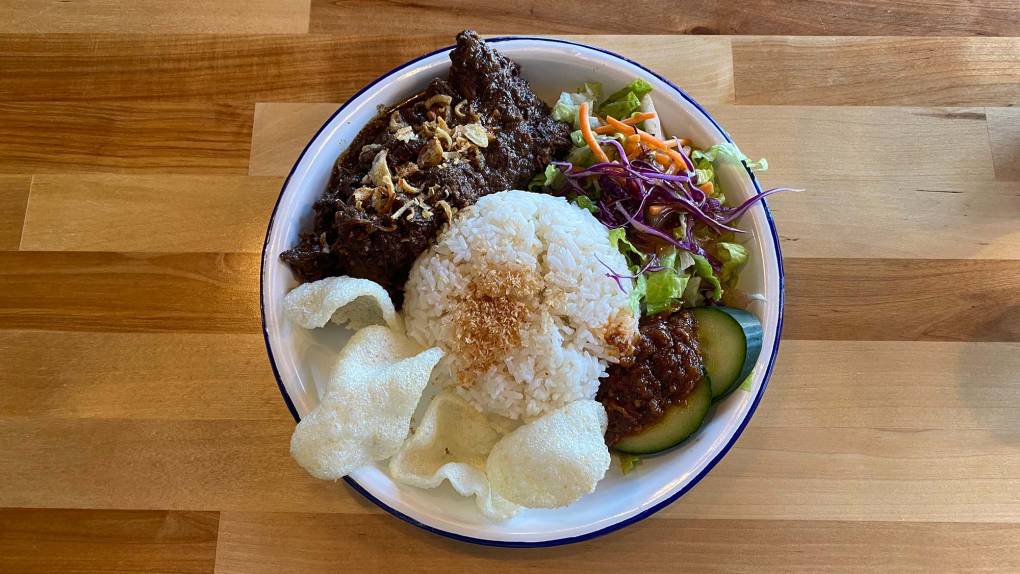
"caption": "The beef rendang platter is one of the classic Indonesian dishes customers can find at Rasa Rasa Kitchen, a new restaurant in San Francisco's Mission District.",
"description": null,
"title": "rasa rasa_rendang feature",
"credit": "Luke Tsai/KQED",
"status": "inherit",
"altTag": "A bowl loaded with beef rendang, coconut white rice, shrimp chips and a salad.",
"isLoading": false,
"fetchFailed": false
},
"arts_13953120": {
"type": "attachments",
"id": "arts_13953120",
"meta": {
"index": "attachments_1716263798",
"site": "arts",
"id": "13953120",
"found": true
},
"parent": 13953119,
"imgSizes": {
"twentyfourteen-full-width": {
"file": "https://cdn.kqed.org/wp-content/uploads/sites/2/2024/02/231128-GeorgeCramptonGlassanos-16-BL-qut-1038x576.jpg",
"width": 1038,
"mimeType": "image/jpeg",
"height": 576
},
"thumbnail": {
"file": "https://cdn.kqed.org/wp-content/uploads/sites/2/2024/02/231128-GeorgeCramptonGlassanos-16-BL-qut-160x107.jpg",
"width": 160,
"mimeType": "image/jpeg",
"height": 107
},
"post-thumbnail": {
"file": "https://cdn.kqed.org/wp-content/uploads/sites/2/2024/02/231128-GeorgeCramptonGlassanos-16-BL-qut-672x372.jpg",
"width": 672,
"mimeType": "image/jpeg",
"height": 372
},
"kqedFullSize": {
"file": "https://cdn.kqed.org/wp-content/uploads/sites/2/2024/02/231128-GeorgeCramptonGlassanos-16-BL-qut.jpg",
"width": 1920,
"height": 1280
},
"large": {
"file": "https://cdn.kqed.org/wp-content/uploads/sites/2/2024/02/231128-GeorgeCramptonGlassanos-16-BL-qut-1020x680.jpg",
"width": 1020,
"mimeType": "image/jpeg",
"height": 680
},
"1536x1536": {
"file": "https://cdn.kqed.org/wp-content/uploads/sites/2/2024/02/231128-GeorgeCramptonGlassanos-16-BL-qut-1536x1024.jpg",
"width": 1536,
"mimeType": "image/jpeg",
"height": 1024
},
"medium": {
"file": "https://cdn.kqed.org/wp-content/uploads/sites/2/2024/02/231128-GeorgeCramptonGlassanos-16-BL-qut-800x533.jpg",
"width": 800,
"mimeType": "image/jpeg",
"height": 533
},
"medium_large": {
"file": "https://cdn.kqed.org/wp-content/uploads/sites/2/2024/02/231128-GeorgeCramptonGlassanos-16-BL-qut-768x512.jpg",
"width": 768,
"mimeType": "image/jpeg",
"height": 512
}
},
"publishDate": 1709134205,
"modified": 1709164019,
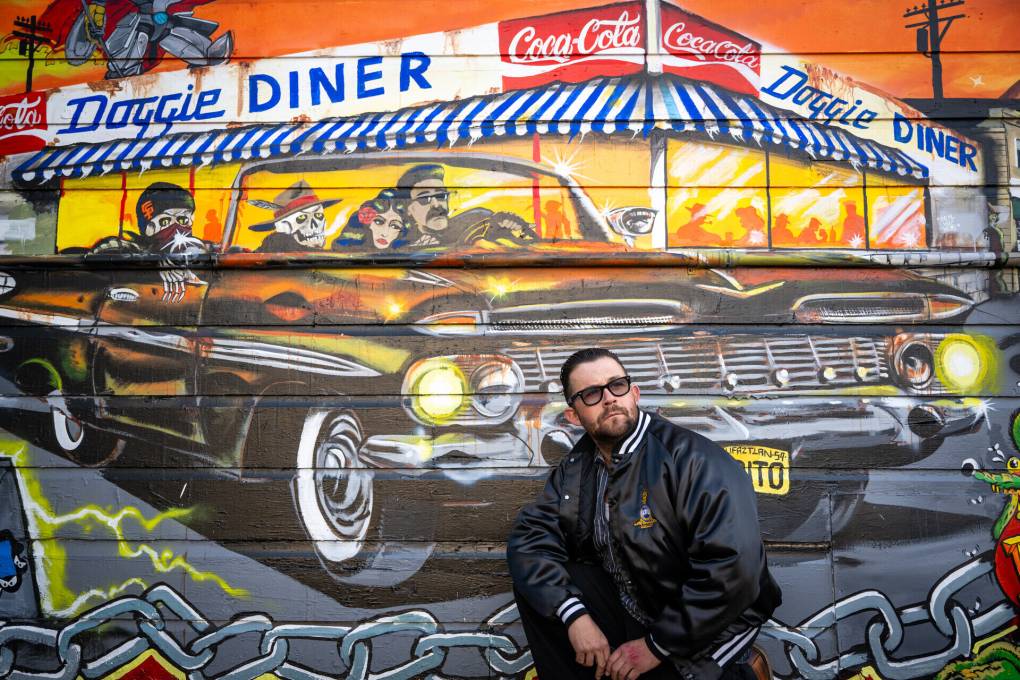
"caption": "George Crampton Glassanos posing in front of his mural of a black droptop lowrider and the Mission staple, Doggie Diner.",
"description": null,
"title": "George Crampton Glassanos posing in front of his mural of a black droptop lowrider and the Mission staple, Doggie Diner.",
"credit": "Beth LaBerge/KQED",
"status": "inherit",
"altTag": "George Crampton Glassanos posing in front of his mural of a black droptop lowrider and the Mission staple, Doggie Diner.",
"isLoading": false,
"fetchFailed": false
},
"arts_13952156": {
"type": "attachments",
"id": "arts_13952156",
"meta": {
"index": "attachments_1716263798",
"site": "arts",
"id": "13952156",
"found": true
},
"parent": 13952152,
"imgSizes": {
"twentyfourteen-full-width": {
"file": "https://cdn.kqed.org/wp-content/uploads/sites/2/2024/02/Screen-Shot-2024-02-13-at-11.52.21-AM-1038x576.png",
"width": 1038,
"mimeType": "image/png",
"height": 576
},
"thumbnail": {
"file": "https://cdn.kqed.org/wp-content/uploads/sites/2/2024/02/Screen-Shot-2024-02-13-at-11.52.21-AM-160x86.png",
"width": 160,
"mimeType": "image/png",
"height": 86
},
"post-thumbnail": {
"file": "https://cdn.kqed.org/wp-content/uploads/sites/2/2024/02/Screen-Shot-2024-02-13-at-11.52.21-AM-672x372.png",
"width": 672,
"mimeType": "image/png",
"height": 372
},
"kqedFullSize": {
"file": "https://cdn.kqed.org/wp-content/uploads/sites/2/2024/02/Screen-Shot-2024-02-13-at-11.52.21-AM.png",
"width": 1378,
"height": 738
},
"large": {
"file": "https://cdn.kqed.org/wp-content/uploads/sites/2/2024/02/Screen-Shot-2024-02-13-at-11.52.21-AM-1020x546.png",
"width": 1020,
"mimeType": "image/png",
"height": 546
},
"medium": {
"file": "https://cdn.kqed.org/wp-content/uploads/sites/2/2024/02/Screen-Shot-2024-02-13-at-11.52.21-AM-800x428.png",
"width": 800,
"mimeType": "image/png",
"height": 428
},
"medium_large": {
"file": "https://cdn.kqed.org/wp-content/uploads/sites/2/2024/02/Screen-Shot-2024-02-13-at-11.52.21-AM-768x411.png",
"width": 768,
"mimeType": "image/png",
"height": 411
}
},
"publishDate": 1707853994,
"modified": 1707956352,
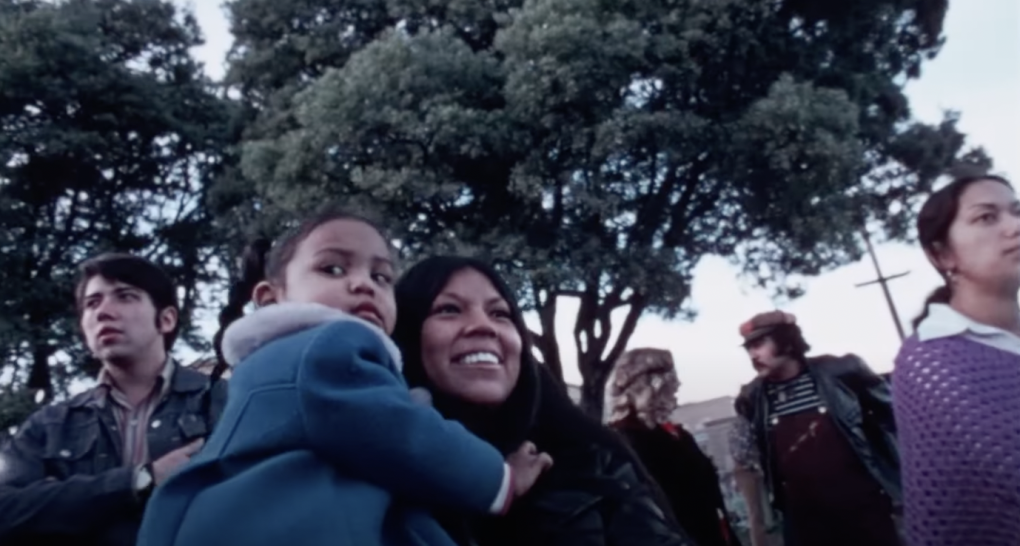
"caption": "A woman holds a child in the San Francisco Mission during a community event in the early 1970s, in a still from the program 'Mission Love.'",
"description": null,
"title": "Screen Shot 2024-02-13 at 11.52.21 AM",
"credit": "Roxie Theater",
"status": "inherit",
"altTag": "a Latina woman holds a child in a San Francisco park, circa 1970s",
"isLoading": false,
"fetchFailed": false
},
"arts_13938804": {
"type": "attachments",
"id": "arts_13938804",
"meta": {
"index": "attachments_1716263798",
"site": "arts",
"id": "13938804",
"found": true
},
"parent": 13938798,
"imgSizes": {
"twentyfourteen-full-width": {
"file": "https://ww2.kqed.org/app/uploads/sites/2/2023/12/Bibingka-HR-PC_-Rezel-Kealoha-1038x576.jpg",
"width": 1038,
"mimeType": "image/jpeg",
"height": 576
},
"thumbnail": {
"file": "https://ww2.kqed.org/app/uploads/sites/2/2023/12/Bibingka-HR-PC_-Rezel-Kealoha-160x90.jpg",
"width": 160,
"mimeType": "image/jpeg",
"height": 90
},
"post-thumbnail": {
"file": "https://ww2.kqed.org/app/uploads/sites/2/2023/12/Bibingka-HR-PC_-Rezel-Kealoha-672x372.jpg",
"width": 672,
"mimeType": "image/jpeg",
"height": 372
},
"kqedFullSize": {
"file": "https://ww2.kqed.org/app/uploads/sites/2/2023/12/Bibingka-HR-PC_-Rezel-Kealoha.jpg",
"width": 2000,
"height": 1125
},
"large": {
"file": "https://ww2.kqed.org/app/uploads/sites/2/2023/12/Bibingka-HR-PC_-Rezel-Kealoha-1020x574.jpg",
"width": 1020,
"mimeType": "image/jpeg",
"height": 574
},
"1536x1536": {
"file": "https://ww2.kqed.org/app/uploads/sites/2/2023/12/Bibingka-HR-PC_-Rezel-Kealoha-1536x864.jpg",
"width": 1536,
"mimeType": "image/jpeg",
"height": 864
},
"full-width": {
"file": "https://ww2.kqed.org/app/uploads/sites/2/2023/12/Bibingka-HR-PC_-Rezel-Kealoha-1920x1080.jpg",
"width": 1920,
"mimeType": "image/jpeg",
"height": 1080
},
"medium": {
"file": "https://ww2.kqed.org/app/uploads/sites/2/2023/12/Bibingka-HR-PC_-Rezel-Kealoha-800x450.jpg",
"width": 800,
"mimeType": "image/jpeg",
"height": 450
},
"medium_large": {
"file": "https://ww2.kqed.org/app/uploads/sites/2/2023/12/Bibingka-HR-PC_-Rezel-Kealoha-768x432.jpg",
"width": 768,
"mimeType": "image/jpeg",
"height": 432
}
},
"publishDate": 1701461447,
"modified": 1701461613,
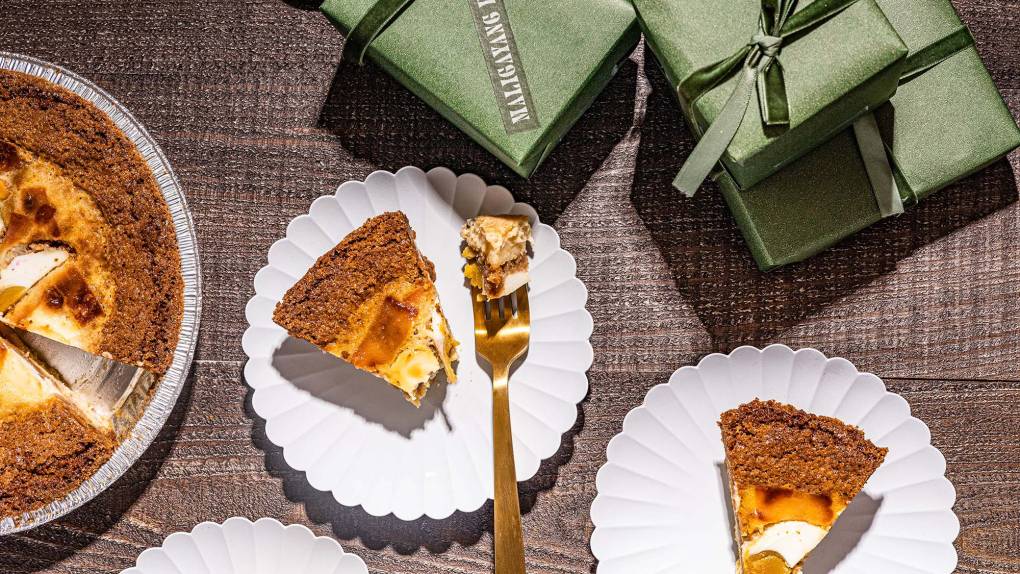
"caption": "Sweet Condesa's bibingka pie is inspired by a kind of coconut rice cake that's traditionally eaten for Christmas in the Philippines.",
"description": null,
"title": "Bibingka HR (PC_ Rezel Kealoha)",
"credit": "Courtesy of Rezel Kealoha",
"status": "inherit",
"altTag": "Overhead view of slices of custard pie on white plates, with gifts wrapped in green wrapping paper in the background.",
"isLoading": false,
"fetchFailed": false
},
"arts_13938677": {
"type": "attachments",
"id": "arts_13938677",
"meta": {
"index": "attachments_1716263798",
"site": "arts",
"id": "13938677",
"found": true
},
"parent": 13938658,
"imgSizes": {
"twentyfourteen-full-width": {
"file": "https://ww2.kqed.org/app/uploads/sites/2/2023/11/RS54273_20220310-IMG_5694-qut-1-1038x576.jpg",
"width": 1038,
"mimeType": "image/jpeg",
"height": 576
},
"thumbnail": {
"file": "https://ww2.kqed.org/app/uploads/sites/2/2023/11/RS54273_20220310-IMG_5694-qut-1-160x97.jpg",
"width": 160,
"mimeType": "image/jpeg",
"height": 97
},
"post-thumbnail": {
"file": "https://ww2.kqed.org/app/uploads/sites/2/2023/11/RS54273_20220310-IMG_5694-qut-1-672x372.jpg",
"width": 672,
"mimeType": "image/jpeg",
"height": 372
},
"kqedFullSize": {
"file": "https://ww2.kqed.org/app/uploads/sites/2/2023/11/RS54273_20220310-IMG_5694-qut-1.jpg",
"width": 1920,
"height": 1167
},
"large": {
"file": "https://ww2.kqed.org/app/uploads/sites/2/2023/11/RS54273_20220310-IMG_5694-qut-1-1020x620.jpg",
"width": 1020,
"mimeType": "image/jpeg",
"height": 620
},
"1536x1536": {
"file": "https://ww2.kqed.org/app/uploads/sites/2/2023/11/RS54273_20220310-IMG_5694-qut-1-1536x934.jpg",
"width": 1536,
"mimeType": "image/jpeg",
"height": 934
},
"medium": {
"file": "https://ww2.kqed.org/app/uploads/sites/2/2023/11/RS54273_20220310-IMG_5694-qut-1-800x486.jpg",
"width": 800,
"mimeType": "image/jpeg",
"height": 486
},
"medium_large": {
"file": "https://ww2.kqed.org/app/uploads/sites/2/2023/11/RS54273_20220310-IMG_5694-qut-1-768x467.jpg",
"width": 768,
"mimeType": "image/jpeg",
"height": 467
}
},
"publishDate": 1701304373,
"modified": 1701304454,
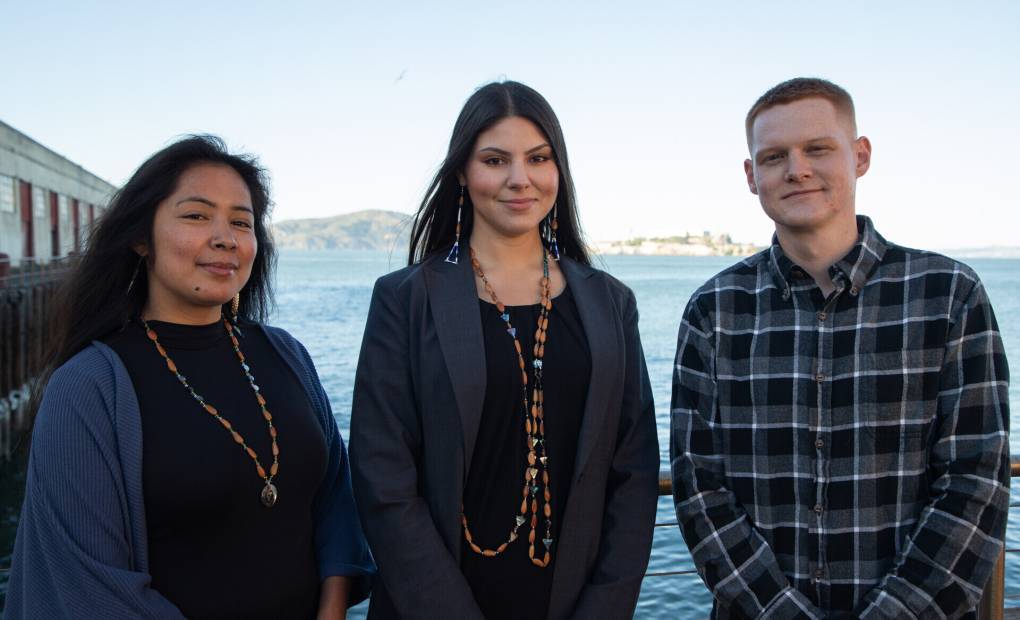
"caption": "Cultural District Staff, Paloma Flores, Sharaya Souza, and Tal Quetone pose for portraits at Fort Mason in San Francisco. Alcatraz floats in the background, a significant landmark.",
"description": "Cultural District Staff, Paloma Flores, Sharaya Souza, and Tal Quetone pose for portraits at Fort Mason in San Francisco. Alcatraz floats in the background, a significant landmark.",
"title": "RS54273_20220310-IMG_5694-qut (1)",
"credit": "Amaya Edwards/KQED",
"status": "inherit",
"altTag": "Cultural District Staff, Paloma Flores, Sharaya Souza, and Tal Quetone pose for portraits at Fort Mason in San Francisco. Alcatraz floats in the background, a significant landmark.",
"isLoading": false,
"fetchFailed": false
},
"arts_13934969": {
"type": "attachments",
"id": "arts_13934969",
"meta": {
"index": "attachments_1716263798",
"site": "arts",
"id": "13934969",
"found": true
},
"parent": 13934956,
"imgSizes": {
"twentyfourteen-full-width": {
"file": "https://ww2.kqed.org/app/uploads/sites/2/2023/09/David-James-by-Lenny-Gonzalez-13-1038x576.jpeg",
"width": 1038,
"mimeType": "image/jpeg",
"height": 576
},
"thumbnail": {
"file": "https://ww2.kqed.org/app/uploads/sites/2/2023/09/David-James-by-Lenny-Gonzalez-13-160x94.jpeg",
"width": 160,
"mimeType": "image/jpeg",
"height": 94
},
"post-thumbnail": {
"file": "https://ww2.kqed.org/app/uploads/sites/2/2023/09/David-James-by-Lenny-Gonzalez-13-672x372.jpeg",
"width": 672,
"mimeType": "image/jpeg",
"height": 372
},
"kqedFullSize": {
"file": "https://ww2.kqed.org/app/uploads/sites/2/2023/09/David-James-by-Lenny-Gonzalez-13.jpeg",
"width": 1086,
"height": 638
},
"large": {
"file": "https://ww2.kqed.org/app/uploads/sites/2/2023/09/David-James-by-Lenny-Gonzalez-13-1020x599.jpeg",
"width": 1020,
"mimeType": "image/jpeg",
"height": 599
},
"medium": {
"file": "https://ww2.kqed.org/app/uploads/sites/2/2023/09/David-James-by-Lenny-Gonzalez-13-800x470.jpeg",
"width": 800,
"mimeType": "image/jpeg",
"height": 470
},
"medium_large": {
"file": "https://ww2.kqed.org/app/uploads/sites/2/2023/09/David-James-by-Lenny-Gonzalez-13-768x451.jpeg",
"width": 768,
"mimeType": "image/jpeg",
"height": 451
}
},
"publishDate": 1695149165,
"modified": 1695150539,
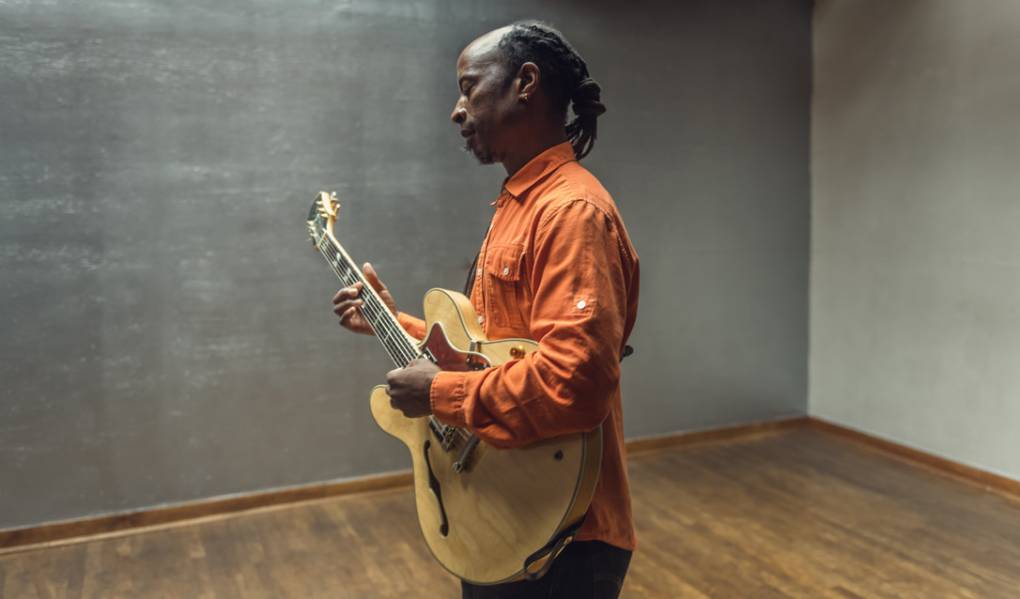
"caption": "Musician David James will explore the legacy left by his father, youth advocate Jesse James, in a new performance premiering Sept. 22 at Brava Theater in San Francisco.",
"description": null,
"title": "David James by (13)",
"credit": " Lenny Gonzalez",
"status": "inherit",
"altTag": "a Black man wears a button down orange shirt and holds a guitar standing against a gray wall",
"isLoading": false,
"fetchFailed": false
},
"arts_13933155": {
"type": "attachments",
"id": "arts_13933155",
"meta": {
"index": "attachments_1716263798",
"site": "arts",
"id": "13933155",
"found": true
},
"parent": 13933138,
"imgSizes": {
"twentyfourteen-full-width": {
"file": "https://ww2.kqed.org/app/uploads/sites/2/2023/08/bolita-purple_tortillas-1038x576.jpg",
"width": 1038,
"mimeType": "image/jpeg",
"height": 576
},
"thumbnail": {
"file": "https://ww2.kqed.org/app/uploads/sites/2/2023/08/bolita-purple_tortillas-160x90.jpg",
"width": 160,
"mimeType": "image/jpeg",
"height": 90
},
"post-thumbnail": {
"file": "https://ww2.kqed.org/app/uploads/sites/2/2023/08/bolita-purple_tortillas-672x372.jpg",
"width": 672,
"mimeType": "image/jpeg",
"height": 372
},
"kqedFullSize": {
"file": "https://ww2.kqed.org/app/uploads/sites/2/2023/08/bolita-purple_tortillas.jpg",
"width": 1920,
"height": 1081
},
"large": {
"file": "https://ww2.kqed.org/app/uploads/sites/2/2023/08/bolita-purple_tortillas-1020x574.jpg",
"width": 1020,
"mimeType": "image/jpeg",
"height": 574
},
"1536x1536": {
"file": "https://ww2.kqed.org/app/uploads/sites/2/2023/08/bolita-purple_tortillas-1536x865.jpg",
"width": 1536,
"mimeType": "image/jpeg",
"height": 865
},
"medium": {
"file": "https://ww2.kqed.org/app/uploads/sites/2/2023/08/bolita-purple_tortillas-800x450.jpg",
"width": 800,
"mimeType": "image/jpeg",
"height": 450
},
"medium_large": {
"file": "https://ww2.kqed.org/app/uploads/sites/2/2023/08/bolita-purple_tortillas-768x432.jpg",
"width": 768,
"mimeType": "image/jpeg",
"height": 432
}
},
"publishDate": 1692037091,
"modified": 1692037197,
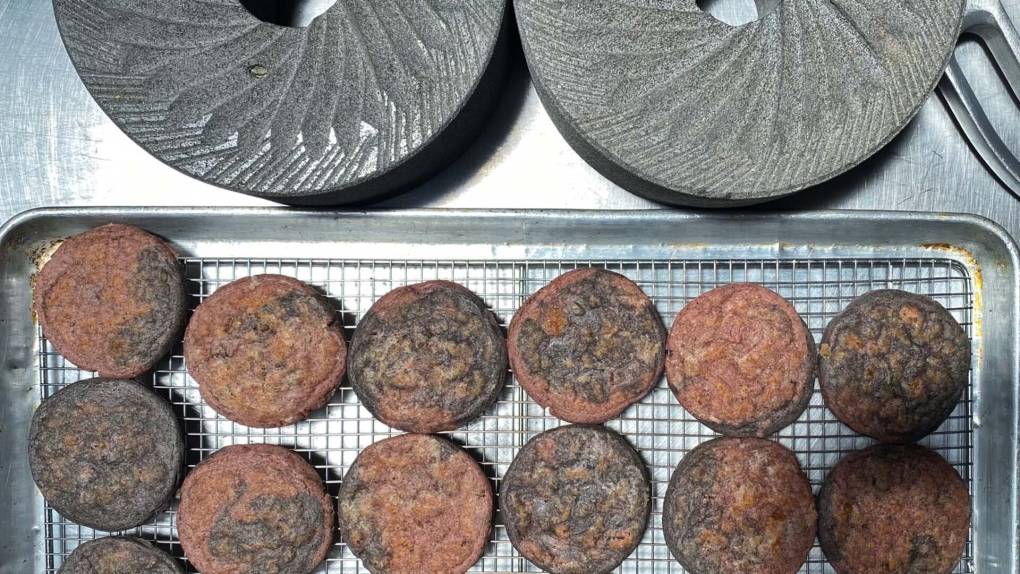
"caption": "These purple tortillas are a signature at Bolita Masa.",
"description": null,
"title": "bolita-purple_tortillas",
"credit": "Emmanuel Galvan",
"status": "inherit",
"altTag": "handmade tortillas using purple masa are prepared on a countertop",
"isLoading": false,
"fetchFailed": false
},
"arts_13910045": {
"type": "attachments",
"id": "arts_13910045",
"meta": {
"index": "attachments_1716263798",
"site": "arts",
"id": "13910045",
"found": true
},
"parent": 13910030,
"imgSizes": {
"twentyfourteen-full-width": {
"file": "https://ww2.kqed.org/app/uploads/sites/2/2022/03/20220302_150812-1038x576.jpg",
"width": 1038,
"mimeType": "image/jpeg",
"height": 576
},
"thumbnail": {
"file": "https://ww2.kqed.org/app/uploads/sites/2/2022/03/20220302_150812-160x90.jpg",
"width": 160,
"mimeType": "image/jpeg",
"height": 90
},
"post-thumbnail": {
"file": "https://ww2.kqed.org/app/uploads/sites/2/2022/03/20220302_150812-672x372.jpg",
"width": 672,
"mimeType": "image/jpeg",
"height": 372
},
"kqedFullSize": {
"file": "https://ww2.kqed.org/app/uploads/sites/2/2022/03/20220302_150812-scaled-e1646346280825.jpg",
"width": 1920,
"height": 1081
},
"2048x2048": {
"file": "https://ww2.kqed.org/app/uploads/sites/2/2022/03/20220302_150812-2048x1153.jpg",
"width": 2048,
"mimeType": "image/jpeg",
"height": 1153
},
"large": {
"file": "https://ww2.kqed.org/app/uploads/sites/2/2022/03/20220302_150812-1020x574.jpg",
"width": 1020,
"mimeType": "image/jpeg",
"height": 574
},
"1536x1536": {
"file": "https://ww2.kqed.org/app/uploads/sites/2/2022/03/20220302_150812-1536x865.jpg",
"width": 1536,
"mimeType": "image/jpeg",
"height": 865
},
"full-width": {
"file": "https://ww2.kqed.org/app/uploads/sites/2/2022/03/20220302_150812-1920x1081.jpg",
"width": 1920,
"mimeType": "image/jpeg",
"height": 1081
},
"medium": {
"file": "https://ww2.kqed.org/app/uploads/sites/2/2022/03/20220302_150812-800x450.jpg",
"width": 800,
"mimeType": "image/jpeg",
"height": 450
},
"medium_large": {
"file": "https://ww2.kqed.org/app/uploads/sites/2/2022/03/20220302_150812-768x432.jpg",
"width": 768,
"mimeType": "image/jpeg",
"height": 432
}
},
"publishDate": 1646346114,
"modified": 1646352040,
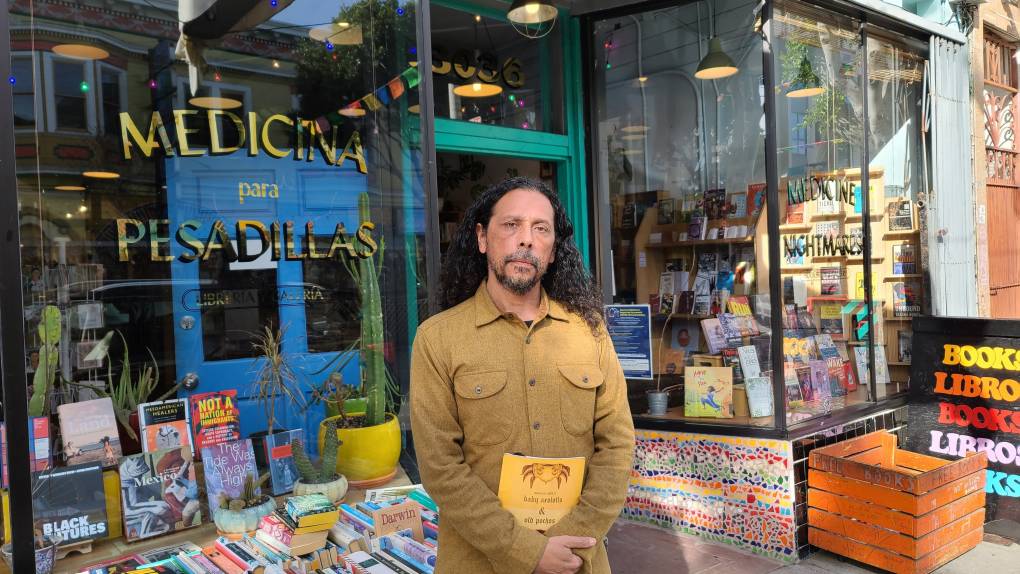
"caption": "Josiah Luis Alderete stands in front of Medicine for Nightmares with his book of poetry in hand. ",
"description": "Josiah Luis Alderete",
"title": "Josiah Luis Alderete",
"credit": "Carlos Cabrera-Lomelí",
"status": "inherit",
"altTag": "Josiah Luis Alderete stands in front of the windows of his bookstore, he wears a mustard shirt and holds his book of poems at his waist.",
"isLoading": false,
"fetchFailed": false
},
"arts_13931715": {
"type": "attachments",
"id": "arts_13931715",
"meta": {
"index": "attachments_1716263798",
"site": "arts",
"id": "13931715",
"found": true
},
"parent": 13931586,
"imgSizes": {
"twentyfourteen-full-width": {
"file": "https://ww2.kqed.org/app/uploads/sites/2/2023/07/Discodelic.THUMB_-1038x576.jpg",
"width": 1038,
"mimeType": "image/jpeg",
"height": 576
},
"thumbnail": {
"file": "https://ww2.kqed.org/app/uploads/sites/2/2023/07/Discodelic.THUMB_-160x90.jpg",
"width": 160,
"mimeType": "image/jpeg",
"height": 90
},
"post-thumbnail": {
"file": "https://ww2.kqed.org/app/uploads/sites/2/2023/07/Discodelic.THUMB_-672x372.jpg",
"width": 672,
"mimeType": "image/jpeg",
"height": 372
},
"kqedFullSize": {
"file": "https://ww2.kqed.org/app/uploads/sites/2/2023/07/Discodelic.THUMB_.jpg",
"width": 1920,
"height": 1080
},
"large": {
"file": "https://ww2.kqed.org/app/uploads/sites/2/2023/07/Discodelic.THUMB_-1020x574.jpg",
"width": 1020,
"mimeType": "image/jpeg",
"height": 574
},
"1536x1536": {
"file": "https://ww2.kqed.org/app/uploads/sites/2/2023/07/Discodelic.THUMB_-1536x864.jpg",
"width": 1536,
"mimeType": "image/jpeg",
"height": 864
},
"medium": {
"file": "https://ww2.kqed.org/app/uploads/sites/2/2023/07/Discodelic.THUMB_-800x450.jpg",
"width": 800,
"mimeType": "image/jpeg",
"height": 450
},
"medium_large": {
"file": "https://ww2.kqed.org/app/uploads/sites/2/2023/07/Discodelic.THUMB_-768x432.jpg",
"width": 768,
"mimeType": "image/jpeg",
"height": 432
}
},
"publishDate": 1689616290,
"modified": 1689617153,
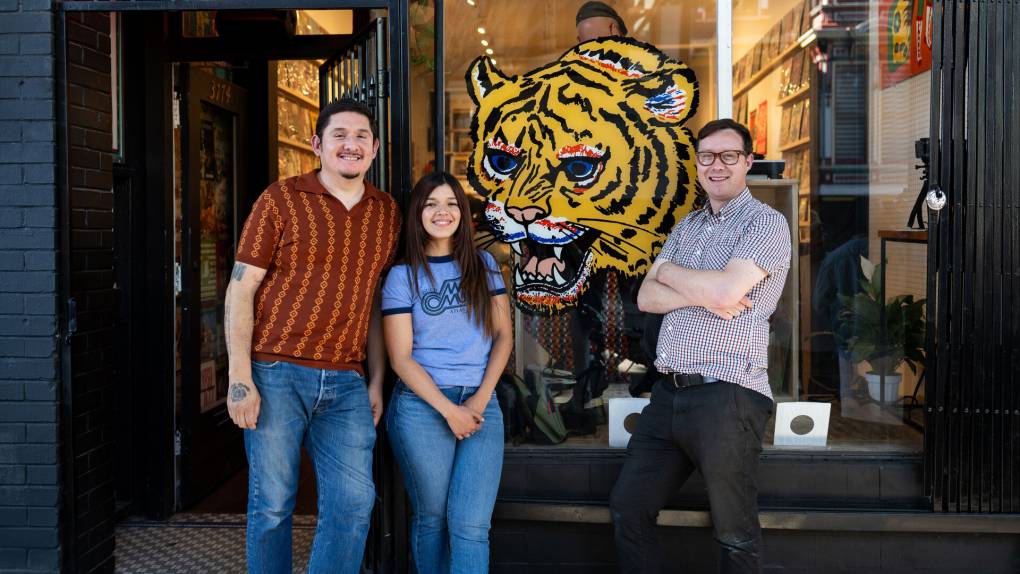
"caption": "Co-owners (from left) Ruben “Ruffy” Rangel, Maria Jose “Majoo” Salguero, and Miles Ake stand outside their record store Discodelic Disco Viajantes on 24th Street in San Francisco's Mission District on July 15, 2023, during a grand opening celebration.",
"description": null,
"title": "Discodelic.THUMB",
"credit": "Beth LaBerge/KQED",
"status": "inherit",
"altTag": "Three people in front of a window with a large tiger mural painted on it",
"isLoading": false,
"fetchFailed": false
}
},
"audioPlayerReducer": {
"postId": "stream_live",
"isPaused": true,
"isPlaying": false,
"pfsActive": false,
"pledgeModalIsOpen": true,
"playerDrawerIsOpen": false,
"liveAudioPlayStartedAt": 0,
"liveAudioPlayContext": ""
},
"authorsReducer": {
"byline_arts_13956554": {
"type": "authors",
"id": "byline_arts_13956554",
"meta": {
"override": true
},
"slug": "byline_arts_13956554",
"name": "Binnie Kenvin",
"isLoading": false
},
"gmeline": {
"type": "authors",
"id": "185",
"meta": {
"index": "authors_1716337520",
"id": "185",
"found": true
},
"name": "Gabe Meline",
"firstName": "Gabe",
"lastName": "Meline",
"slug": "gmeline",
"email": "gmeline@kqed.org",
"display_author_email": true,
"staff_mastheads": [
"arts"
],
"title": "Senior Editor, KQED Arts & Culture",
"bio": "Gabe Meline entered journalism at age 15 making photocopied zines, and has since earned awards from the Edward R. Murrow Awards, the Society for Professional Journalists, the Online Journalism Awards, the Association of Alternative Newsweeklies and the California Newspaper Publishers Association. Prior to KQED, he was the editor of the \u003cem>North Bay Bohemian\u003c/em> and a touring musician. He lives with his wife and daughter in his hometown of Santa Rosa, CA.",
"avatar": "https://secure.gravatar.com/avatar/5bebe57be0d8bc2dd318934feb47299e2d2d10cba28d09d8d7afb389a2ce2bdd?s=600&d=blank&r=g",
"twitter": null,
"bluesky": null,
"facebook": null,
"instagram": null,
"linkedin": null,
"sites": [
{
"site": "",
"roles": [
"editor"
]
},
{
"site": "arts",
"roles": [
"administrator"
]
},
{
"site": "artschool",
"roles": [
"editor"
]
},
{
"site": "news",
"roles": [
"author"
]
},
{
"site": "pop",
"roles": [
"editor"
]
},
{
"site": "bayareabites",
"roles": [
"editor"
]
},
{
"site": "food",
"roles": [
"editor"
]
},
{
"site": "forum",
"roles": [
"administrator"
]
},
{
"site": "liveblog",
"roles": [
"editor"
]
},
{
"site": "hiphop",
"roles": [
"editor"
]
}
],
"headData": {
"title": "Gabe Meline | KQED",
"description": "Senior Editor, KQED Arts & Culture",
"ogImgSrc": "https://secure.gravatar.com/avatar/5bebe57be0d8bc2dd318934feb47299e2d2d10cba28d09d8d7afb389a2ce2bdd?s=600&d=blank&r=g",
"twImgSrc": "https://secure.gravatar.com/avatar/5bebe57be0d8bc2dd318934feb47299e2d2d10cba28d09d8d7afb389a2ce2bdd?s=600&d=blank&r=g"
},
"isLoading": false,
"link": "/author/gmeline"
},
"ogpenn": {
"type": "authors",
"id": "11491",
"meta": {
"index": "authors_1716337520",
"id": "11491",
"found": true
},
"name": "Pendarvis Harshaw",
"firstName": "Pendarvis",
"lastName": "Harshaw",
"slug": "ogpenn",
"email": "ogpenn@gmail.com",
"display_author_email": false,
"staff_mastheads": [
"arts"
],
"title": "Community Engagement Reporter",
"bio": "Pendarvis Harshaw is an educator, host and writer with KQED Arts.",
"avatar": "https://secure.gravatar.com/avatar/972b77ee8e3f346ae2b00622661187fbfabd059b5693bbdc1475ea7a722fd4cd?s=600&d=blank&r=g",
"twitter": null,
"bluesky": null,
"facebook": null,
"instagram": "ogpenn",
"linkedin": null,
"sites": [
{
"site": "arts",
"roles": [
"administrator"
]
},
{
"site": "news",
"roles": [
"editor"
]
},
{
"site": "bayareabites",
"roles": [
"author"
]
},
{
"site": "hiphop",
"roles": [
"editor"
]
}
],
"headData": {
"title": "Pendarvis Harshaw | KQED",
"description": "Community Engagement Reporter",
"ogImgSrc": "https://secure.gravatar.com/avatar/972b77ee8e3f346ae2b00622661187fbfabd059b5693bbdc1475ea7a722fd4cd?s=600&d=blank&r=g",
"twImgSrc": "https://secure.gravatar.com/avatar/972b77ee8e3f346ae2b00622661187fbfabd059b5693bbdc1475ea7a722fd4cd?s=600&d=blank&r=g"
},
"isLoading": false,
"link": "/author/ogpenn"
},
"mmedina": {
"type": "authors",
"id": "11528",
"meta": {
"index": "authors_1716337520",
"id": "11528",
"found": true
},
"name": "Marisol Medina-Cadena",
"firstName": "Marisol",
"lastName": "Medina-Cadena",
"slug": "mmedina",
"email": "mmedina@KQED.org",
"display_author_email": true,
"staff_mastheads": [],
"title": "Producer, Rightnowish Podcast",
"bio": "Marisol Medina-Cadena is a radio reporter and podcast producer. Before working at KQED, she produced for PBS member station, KCET, in Los Angeles. In 2017, Marisol won an Emmy Award for her work on the televised documentary, \u003cem>City Rising\u003c/em>, examining California's affordable housing crisis and the historical roots of gentrification.",
"avatar": "https://secure.gravatar.com/avatar/6c3db46a1cabb5e1fe9a365b5f4e681e?s=600&d=blank&r=g",
"twitter": "marisolreports",
"facebook": null,
"instagram": null,
"linkedin": null,
"sites": [
{
"site": "arts",
"roles": []
},
{
"site": "news",
"roles": [
"edit_others_posts"
]
}
],
"headData": {
"title": "Marisol Medina-Cadena | KQED",
"description": "Producer, Rightnowish Podcast",
"ogImgSrc": "https://secure.gravatar.com/avatar/6c3db46a1cabb5e1fe9a365b5f4e681e?s=600&d=blank&r=g",
"twImgSrc": "https://secure.gravatar.com/avatar/6c3db46a1cabb5e1fe9a365b5f4e681e?s=600&d=blank&r=g"
},
"isLoading": false,
"link": "/author/mmedina"
},
"ltsai": {
"type": "authors",
"id": "11743",
"meta": {
"index": "authors_1716337520",
"id": "11743",
"found": true
},
"name": "Luke Tsai",
"firstName": "Luke",
"lastName": "Tsai",
"slug": "ltsai",
"email": "ltsai@kqed.org",
"display_author_email": true,
"staff_mastheads": [
"arts"
],
"title": "Food Editor",
"bio": "Luke Tsai is KQED's food editor and resident stinky tofu connoisseur. Prior to KQED, he was an editor at Eater SF, \u003cem>San Francisco \u003c/em>magazine, and the \u003cem>East Bay Express\u003c/em>, and his work has also appeared in TASTE, the \u003cem>San Francisco Chronicle\u003c/em>, and the \u003cem>Best Food Writing\u003c/em> anthology. When he isn't writing or editing, you'll find him eating most everything he can get his hands on.",
"avatar": "https://secure.gravatar.com/avatar/1e59b45bf191526e7339d6ba46e33a57b2030d25c27660ecc64ea3cb863e34f7?s=600&d=blank&r=g",
"twitter": "theluketsai",
"bluesky": null,
"facebook": null,
"instagram": null,
"linkedin": null,
"sites": [
{
"site": "",
"roles": [
"editor"
]
},
{
"site": "arts",
"roles": [
"administrator"
]
},
{
"site": "news",
"roles": [
"editor",
"contributor"
]
},
{
"site": "bayareabites",
"roles": [
"editor"
]
},
{
"site": "food",
"roles": [
"editor"
]
}
],
"headData": {
"title": "Luke Tsai | KQED",
"description": "Food Editor",
"ogImgSrc": "https://secure.gravatar.com/avatar/1e59b45bf191526e7339d6ba46e33a57b2030d25c27660ecc64ea3cb863e34f7?s=600&d=blank&r=g",
"twImgSrc": "https://secure.gravatar.com/avatar/1e59b45bf191526e7339d6ba46e33a57b2030d25c27660ecc64ea3cb863e34f7?s=600&d=blank&r=g"
},
"isLoading": false,
"link": "/author/ltsai"
},
"achazaro": {
"type": "authors",
"id": "11748",
"meta": {
"index": "authors_1716337520",
"id": "11748",
"found": true
},
"name": "Alan Chazaro",
"firstName": "Alan",
"lastName": "Chazaro",
"slug": "achazaro",
"email": "agchazaro@gmail.com",
"display_author_email": true,
"staff_mastheads": [],
"title": "Food Writer and Reporter",
"bio": "Alan Chazaro is the author of \u003cem>This Is Not a Frank Ocean Cover Album\u003c/em> (Black Lawrence Press, 2019), \u003cem>Piñata Theory\u003c/em> (Black Lawrence Press, 2020), and \u003cem>Notes from the Eastern Span of the Bay Bridge\u003c/em> (Ghost City Press, 2021). He is a graduate of June Jordan’s Poetry for the People program at UC Berkeley and a former Lawrence Ferlinghetti Fellow at the University of San Francisco. He writes about sports, food, art, music, education, and culture while repping the Bay on \u003ca href=\"https://twitter.com/alan_chazaro\">Twitter\u003c/a> and \u003ca href=\"https://www.instagram.com/alan_chazaro/?hl=en\">Instagram\u003c/a> at @alan_chazaro.",
"avatar": "https://secure.gravatar.com/avatar/ea8b6dd970fc5c29e7a188e7d5861df7?s=600&d=blank&r=g",
"twitter": "alan_chazaro",
"facebook": null,
"instagram": null,
"linkedin": null,
"sites": [
{
"site": "arts",
"roles": [
"contributor"
]
},
{
"site": "news",
"roles": [
"editor"
]
}
],
"headData": {
"title": "Alan Chazaro | KQED",
"description": "Food Writer and Reporter",
"ogImgSrc": "https://secure.gravatar.com/avatar/ea8b6dd970fc5c29e7a188e7d5861df7?s=600&d=blank&r=g",
"twImgSrc": "https://secure.gravatar.com/avatar/ea8b6dd970fc5c29e7a188e7d5861df7?s=600&d=blank&r=g"
},
"isLoading": false,
"link": "/author/achazaro"
},
"sminobucheli": {
"type": "authors",
"id": "11764",
"meta": {
"index": "authors_1716337520",
"id": "11764",
"found": true
},
"name": "Sebastian Miño-Bucheli",
"firstName": "Sebastian",
"lastName": "Miño-Bucheli",
"slug": "sminobucheli",
"email": "sminobucheli@kqed.org",
"display_author_email": false,
"staff_mastheads": [],
"title": "KQED Contributor",
"bio": "Sebastian Miño-Bucheli is a bilingual multimedia reporter and contributor to KQED Digital News. His reporting has been featured for Bay Curious, the California Report Magazine and KQED Arts. ",
"avatar": "https://secure.gravatar.com/avatar/4d433e33876cb631fbbe1ab7b9ddf7a1616f5e270c709b89ee147c0489875612?s=600&d=blank&r=g",
"twitter": "@BucheliMino",
"bluesky": null,
"facebook": null,
"instagram": null,
"linkedin": null,
"sites": [
{
"site": "arts",
"roles": [
"subscriber"
]
},
{
"site": "news",
"roles": [
"subscriber"
]
}
],
"headData": {
"title": "Sebastian Miño-Bucheli | KQED",
"description": "KQED Contributor",
"ogImgSrc": "https://secure.gravatar.com/avatar/4d433e33876cb631fbbe1ab7b9ddf7a1616f5e270c709b89ee147c0489875612?s=600&d=blank&r=g",
"twImgSrc": "https://secure.gravatar.com/avatar/4d433e33876cb631fbbe1ab7b9ddf7a1616f5e270c709b89ee147c0489875612?s=600&d=blank&r=g"
},
"isLoading": false,
"link": "/author/sminobucheli"
},
"omayeda": {
"type": "authors",
"id": "11872",
"meta": {
"index": "authors_1716337520",
"id": "11872",
"found": true
},
"name": "Olivia Cruz Mayeda",
"firstName": "Olivia Cruz",
"lastName": "Mayeda",
"slug": "omayeda",
"email": "omayeda@kqed.org",
"display_author_email": false,
"staff_mastheads": [],
"title": "Reporter",
"bio": "Olivia Cruz Mayeda is a journalist covering style, culture and reparations in the Bay Area, a place that has been home to her family for over 100 years. Her writing has also appeared in the \u003cem>San Francisco Chronicle\u003c/em> and \u003cem>El Tecolote\u003c/em>.",
"avatar": "https://secure.gravatar.com/avatar/a8c0baa30219ce1071a9474f4c14141f?s=600&d=blank&r=g",
"twitter": null,
"facebook": null,
"instagram": null,
"linkedin": null,
"sites": [
{
"site": "arts",
"roles": [
"contributor"
]
}
],
"headData": {
"title": "Olivia Cruz Mayeda | KQED",
"description": "Reporter",
"ogImgSrc": "https://secure.gravatar.com/avatar/a8c0baa30219ce1071a9474f4c14141f?s=600&d=blank&r=g",
"twImgSrc": "https://secure.gravatar.com/avatar/a8c0baa30219ce1071a9474f4c14141f?s=600&d=blank&r=g"
},
"isLoading": false,
"link": "/author/omayeda"
}
},
"pagesReducer": {
"arts_tag_mission-district": {
"type": "terms",
"id": "arts_1257",
"meta": {
"index": "terms_1716263798",
"site": "arts",
"id": "1257",
"score": 8.669338
},
"featImg": null,
"name": "Mission District",
"description": null,
"taxonomy": "tag",
"headData": {
"twImgId": null,
"twTitle": null,
"ogTitle": null,
"ogImgId": null,
"twDescription": null,
"description": null,
"title": "Mission District Archives | KQED Arts",
"ogDescription": null
},
"ttid": 1269,
"slug": "mission-district",
"isLoading": false,
"title": "Mission District",
"pageMeta": {
"site": "arts",
"WpPageTemplate": "page-topic-editorial",
"currentPage": 3
},
"blocks": [
{
"blockName": "kqed/post-list",
"attrs": {
"layout": "cardArticle2",
"query": "posts/arts?tag=mission-district",
"seeMore": false,
"paginated": true,
"page": 3
}
},
{
"blockName": "kqed/ad"
}
]
}
},
"pfsSessionReducer": {},
"postsReducer": {
"stream_live": {
"type": "live",
"id": "stream_live",
"audioUrl": "https://streams.kqed.org/kqedradio",
"title": "Live Stream",
"excerpt": "Live Stream information currently unavailable.",
"link": "/radio",
"featImg": "",
"label": {
"name": "KQED Live",
"link": "/"
}
},
"stream_kqedNewscast": {
"type": "posts",
"id": "stream_kqedNewscast",
"audioUrl": "https://www.kqed.org/.stream/anon/radio/RDnews/newscast.mp3?_=1",
"title": "KQED Newscast",
"featImg": "",
"label": {
"name": "88.5 FM",
"link": "/"
}
},
"arts_13956554": {
"type": "posts",
"id": "arts_13956554",
"meta": {
"index": "posts_1716263798",
"site": "arts",
"id": "13956554",
"score": null,
"sort": [
1713993863000
]
},
"guestAuthors": [],
"slug": "loco-bloco-mission-district-carnaval-jediah-pratt",
"title": "The Drumbeat of Home: How Loco Bloco Keeps One Family Tethered to the Mission",
"publishDate": 1713993863,
"format": "standard",
"headTitle": "The Drumbeat of Home: How Loco Bloco Keeps One Family Tethered to the Mission | KQED",
"labelTerm": {
"site": "arts"
},
"content": "\u003cp>\u003cem>\u003cstrong>Editor’s note\u003c/strong>: This story is part of KQED’s \u003ca href=\"https://www.kqed.org/youthtakeover\">Youth Takeover\u003c/a>. Throughout the week of April 22-26, we’re publishing content by high school students from all over the Bay Area.\u003c/em>\u003c/p>\n\u003cp>The booming sounds can be heard in the Mission District all the way down the block. From inside a brightly painted building on 24th Street, upstairs at the Brava Theater Center, 20 drummers pound out a rhythm for nearly three dozen dancers, shaking the floor as they move. \u003cimg loading=\"lazy\" decoding=\"async\" class=\"alignright size-thumbnail wp-image-13956328\" src=\"https://cdn.kqed.org/wp-content/uploads/sites/2/2024/04/Binnie.headshot-160x190.jpg\" alt=\"\" width=\"160\" height=\"190\" srcset=\"https://cdn.kqed.org/wp-content/uploads/sites/2/2024/04/Binnie.headshot-160x190.jpg 160w, https://cdn.kqed.org/wp-content/uploads/sites/2/2024/04/Binnie.headshot.jpg 180w\" sizes=\"(max-width: 160px) 100vw, 160px\">\u003c/p>\n\u003cp>This is a typical weeknight rehearsal for \u003ca href=\"https://www.locoblocosf.org/\">Loco Bloco\u003c/a>, whose performers are currently working for hours on end to master intricate choreography and complex drum patterns for their performance at San Francisco’s massive \u003ca href=\"https://carnavalsanfrancisco.org/\">Carnaval celebration\u003c/a> in May.\u003c/p>\n\u003cp>A donations-based organization offering free dance and music classes to young people, Loco Bloco primarily serves the Latin and Afro-Latino communities in the Bay Area. Since its founding in 1994, Loco Bloco has influenced countless young participants, giving them a sense of community, stability and core values.\u003c/p>\n\u003cfigure id=\"attachment_13956568\" class=\"wp-caption aligncenter\" style=\"max-width: 2000px\">\u003cimg loading=\"lazy\" decoding=\"async\" class=\"size-full wp-image-13956568\" src=\"https://cdn.kqed.org/wp-content/uploads/sites/2/2024/04/240422-LOCOBLOCO-44-BL-KQED.jpg\" alt=\"\" width=\"2000\" height=\"1333\" srcset=\"https://cdn.kqed.org/wp-content/uploads/sites/2/2024/04/240422-LOCOBLOCO-44-BL-KQED.jpg 2000w, https://cdn.kqed.org/wp-content/uploads/sites/2/2024/04/240422-LOCOBLOCO-44-BL-KQED-800x533.jpg 800w, https://cdn.kqed.org/wp-content/uploads/sites/2/2024/04/240422-LOCOBLOCO-44-BL-KQED-1020x680.jpg 1020w, https://cdn.kqed.org/wp-content/uploads/sites/2/2024/04/240422-LOCOBLOCO-44-BL-KQED-160x107.jpg 160w, https://cdn.kqed.org/wp-content/uploads/sites/2/2024/04/240422-LOCOBLOCO-44-BL-KQED-768x512.jpg 768w, https://cdn.kqed.org/wp-content/uploads/sites/2/2024/04/240422-LOCOBLOCO-44-BL-KQED-1536x1024.jpg 1536w, https://cdn.kqed.org/wp-content/uploads/sites/2/2024/04/240422-LOCOBLOCO-44-BL-KQED-1920x1280.jpg 1920w\" sizes=\"(max-width: 2000px) 100vw, 2000px\">\u003cfigcaption class=\"wp-caption-text\">Antonio ‘Tico’ Dos Santos leads a Loco Bloco drum lesson at Brava Theater in San Francisco on April 22, 2024, to prepare for their performance in Carnaval. \u003ccite>(Beth LaBerge/KQED)\u003c/cite>\u003c/figcaption>\u003c/figure>\n\u003cp>A prime example of this is 15-year-old dancer Jediah Pratt, who began dancing with Loco Bloco when she was just 6 years old. When asked about the benefits of the program, she emphasizes the group’s tight-knit bond, and how much it means to her and her family since moving out of San Francisco with its rising costs. Now living an hour away, she says the program has kept her connected to the city where her family lived for generations.\u003c/p>\n\u003cfigure id=\"attachment_13956565\" class=\"wp-caption aligncenter\" style=\"max-width: 2000px\">\u003cimg loading=\"lazy\" decoding=\"async\" class=\"size-full wp-image-13956565\" src=\"https://cdn.kqed.org/wp-content/uploads/sites/2/2024/04/240422-LOCOBLOCO-31-BL-KQED.jpg\" alt=\"\" width=\"2000\" height=\"1333\" srcset=\"https://cdn.kqed.org/wp-content/uploads/sites/2/2024/04/240422-LOCOBLOCO-31-BL-KQED.jpg 2000w, https://cdn.kqed.org/wp-content/uploads/sites/2/2024/04/240422-LOCOBLOCO-31-BL-KQED-800x533.jpg 800w, https://cdn.kqed.org/wp-content/uploads/sites/2/2024/04/240422-LOCOBLOCO-31-BL-KQED-1020x680.jpg 1020w, https://cdn.kqed.org/wp-content/uploads/sites/2/2024/04/240422-LOCOBLOCO-31-BL-KQED-160x107.jpg 160w, https://cdn.kqed.org/wp-content/uploads/sites/2/2024/04/240422-LOCOBLOCO-31-BL-KQED-768x512.jpg 768w, https://cdn.kqed.org/wp-content/uploads/sites/2/2024/04/240422-LOCOBLOCO-31-BL-KQED-1536x1024.jpg 1536w, https://cdn.kqed.org/wp-content/uploads/sites/2/2024/04/240422-LOCOBLOCO-31-BL-KQED-1920x1280.jpg 1920w\" sizes=\"(max-width: 2000px) 100vw, 2000px\">\u003cfigcaption class=\"wp-caption-text\">Jediah Pratt (center right), 15, practices with a Loco Bloco dance group lead by artistic director Mayela Carrasco at Brava Theater in San Francisco on April 22, 2024, to prepare for their performance in Carnaval. \u003ccite>(Beth LaBerge/KQED)\u003c/cite>\u003c/figcaption>\u003c/figure>\n\u003cp>Jediah’s family has a long history with Loco Bloco. Her mother Ramona was introduced to the program by one of its founders, Jose Carrasco, when she was 11, and would watch rehearsals from the sidelines after school before joining in herself as a drummer.\u003c/p>\n\u003cp>[ad fullwidth]\u003c/p>\n\u003cp>Many years later, when Jediah was just 5, she saw the group perform — feathers, floats, colors and all — and begged her mom to join. In first grade, her wish came true, and she dutifully showed up to rehearsals, rain or shine. (Once, when a family member died, she remembers wanting to go to Loco Bloco rehearsal instead of their funeral.)\u003c/p>\n\u003cfigure id=\"attachment_13956564\" class=\"wp-caption aligncenter\" style=\"max-width: 2000px\">\u003cimg loading=\"lazy\" decoding=\"async\" class=\"size-full wp-image-13956564\" src=\"https://cdn.kqed.org/wp-content/uploads/sites/2/2024/04/240422-LOCOBLOCO-16-BL-KQED.jpg\" alt=\"\" width=\"2000\" height=\"1333\" srcset=\"https://cdn.kqed.org/wp-content/uploads/sites/2/2024/04/240422-LOCOBLOCO-16-BL-KQED.jpg 2000w, https://cdn.kqed.org/wp-content/uploads/sites/2/2024/04/240422-LOCOBLOCO-16-BL-KQED-800x533.jpg 800w, https://cdn.kqed.org/wp-content/uploads/sites/2/2024/04/240422-LOCOBLOCO-16-BL-KQED-1020x680.jpg 1020w, https://cdn.kqed.org/wp-content/uploads/sites/2/2024/04/240422-LOCOBLOCO-16-BL-KQED-160x107.jpg 160w, https://cdn.kqed.org/wp-content/uploads/sites/2/2024/04/240422-LOCOBLOCO-16-BL-KQED-768x512.jpg 768w, https://cdn.kqed.org/wp-content/uploads/sites/2/2024/04/240422-LOCOBLOCO-16-BL-KQED-1536x1024.jpg 1536w, https://cdn.kqed.org/wp-content/uploads/sites/2/2024/04/240422-LOCOBLOCO-16-BL-KQED-1920x1280.jpg 1920w\" sizes=\"(max-width: 2000px) 100vw, 2000px\">\u003cfigcaption class=\"wp-caption-text\">Jediah Pratt, 15, stands outside Brava Theater in San Francisco on April 22, 2024, before dance practice with the group Loco Bloco to prepare for Carnaval. \u003ccite>(Beth LaBerge/KQED)\u003c/cite>\u003c/figcaption>\u003c/figure>\n\u003cp>“She’s grown up with Loco Bloco, which I think is a beautiful thing,” says Ramona of her daughter. “I’ve asked over and over again, ‘Is this what you really want to do? Because you’re really good at it.’”\u003c/p>\n\u003cp>Three years ago, the closeness and familial bond of the program gave Jediah and her family a sense of stability after moving to Concord due to high costs and inflation. It was a difficult time, and her new home and school were vastly different from San Francisco. Yet Jediah and her three siblings still attended Loco Bloco every Monday and Wednesday.\u003c/p>\n\u003cfigure id=\"attachment_13956569\" class=\"wp-caption aligncenter\" style=\"max-width: 2000px\">\u003cimg loading=\"lazy\" decoding=\"async\" class=\"size-full wp-image-13956569\" src=\"https://cdn.kqed.org/wp-content/uploads/sites/2/2024/04/240422-LOCOBLOCO-48-BL-KQED.jpg\" alt=\"\" width=\"2000\" height=\"1333\" srcset=\"https://cdn.kqed.org/wp-content/uploads/sites/2/2024/04/240422-LOCOBLOCO-48-BL-KQED.jpg 2000w, https://cdn.kqed.org/wp-content/uploads/sites/2/2024/04/240422-LOCOBLOCO-48-BL-KQED-800x533.jpg 800w, https://cdn.kqed.org/wp-content/uploads/sites/2/2024/04/240422-LOCOBLOCO-48-BL-KQED-1020x680.jpg 1020w, https://cdn.kqed.org/wp-content/uploads/sites/2/2024/04/240422-LOCOBLOCO-48-BL-KQED-160x107.jpg 160w, https://cdn.kqed.org/wp-content/uploads/sites/2/2024/04/240422-LOCOBLOCO-48-BL-KQED-768x512.jpg 768w, https://cdn.kqed.org/wp-content/uploads/sites/2/2024/04/240422-LOCOBLOCO-48-BL-KQED-1536x1024.jpg 1536w, https://cdn.kqed.org/wp-content/uploads/sites/2/2024/04/240422-LOCOBLOCO-48-BL-KQED-1920x1280.jpg 1920w\" sizes=\"(max-width: 2000px) 100vw, 2000px\">\u003cfigcaption class=\"wp-caption-text\">Loco Bloco managing director Jose Carrasco leads a drum group during practice at Brava Theater in San Francisco on April 22, 2024, to prepare for their performance in Carnaval. \u003ccite>(Beth LaBerge/KQED)\u003c/cite>\u003c/figcaption>\u003c/figure>\n\u003cp>“Jediah is really the best,” said Jose Carrasco, now Loco Bloco’s managing director. “She has really developed into a beautiful artist, and through the years I’ve watched her blossom.” Jediah helps out with the younger kids and their stilts lessons, Carrasco is quick to point out, while Ramona spends her time drumming and volunteering for the program.\u003c/p>\n\u003cp>Two years ago, Jediah’s family moved to Fairfield, an hour away from San Francisco without traffic, where her routine and environment changed once again. She began high school in Fairfield this year, which she described as rough. She didn’t know anybody at first, and went to a school with thousands of kids and “fights every day on the schoolyard.”\u003c/p>\n\u003cfigure id=\"attachment_13956567\" class=\"wp-caption aligncenter\" style=\"max-width: 2000px\">\u003cimg loading=\"lazy\" decoding=\"async\" class=\"size-full wp-image-13956567\" src=\"https://cdn.kqed.org/wp-content/uploads/sites/2/2024/04/240422-LOCOBLOCO-35-BL-KQED.jpg\" alt=\"\" width=\"2000\" height=\"1333\" srcset=\"https://cdn.kqed.org/wp-content/uploads/sites/2/2024/04/240422-LOCOBLOCO-35-BL-KQED.jpg 2000w, https://cdn.kqed.org/wp-content/uploads/sites/2/2024/04/240422-LOCOBLOCO-35-BL-KQED-800x533.jpg 800w, https://cdn.kqed.org/wp-content/uploads/sites/2/2024/04/240422-LOCOBLOCO-35-BL-KQED-1020x680.jpg 1020w, https://cdn.kqed.org/wp-content/uploads/sites/2/2024/04/240422-LOCOBLOCO-35-BL-KQED-160x107.jpg 160w, https://cdn.kqed.org/wp-content/uploads/sites/2/2024/04/240422-LOCOBLOCO-35-BL-KQED-768x512.jpg 768w, https://cdn.kqed.org/wp-content/uploads/sites/2/2024/04/240422-LOCOBLOCO-35-BL-KQED-1536x1024.jpg 1536w, https://cdn.kqed.org/wp-content/uploads/sites/2/2024/04/240422-LOCOBLOCO-35-BL-KQED-1920x1280.jpg 1920w\" sizes=\"(max-width: 2000px) 100vw, 2000px\">\u003cfigcaption class=\"wp-caption-text\">Jediah Pratt, 15, talks with friends during Loco Bloco dance practice at Brava Theater in San Francisco on April 22, 2024, to prepare for their performance in Carnaval. \u003ccite>(Beth LaBerge/KQED)\u003c/cite>\u003c/figcaption>\u003c/figure>\n\u003cp>Still, every Monday and Wednesday at 5 p.m., Ramona drives the family down I-80 and through the city’s traffic to Loco Bloco, where Jediah and her siblings dance and drum for hours. They don’t get back home until 11 p.m. While it may sound strenuous, when asked about it, Jediah says, “I feel like everybody is kind of like family. Everyone knows everyone, and we’re always there for each other, looking out for each other.”\u003c/p>\n\u003cp>For this year’s Carnaval, Jediah is one of just two teens dancing with the adults. Though the rehearsals and dances are difficult, the hardest part of preparing for Carnaval is the costumes, she says. Each year the dancers are given costumes to decorate with rhinestones or other accouterments and make their own. Jediah recalls staying up until one a.m. the night before last year’s Carnaval, trying to finish her outfit and falling asleep with the hot glue gun in hand.\u003c/p>\n\u003cfigure id=\"attachment_13956563\" class=\"wp-caption aligncenter\" style=\"max-width: 2000px\">\u003cimg loading=\"lazy\" decoding=\"async\" class=\"size-full wp-image-13956563\" src=\"https://cdn.kqed.org/wp-content/uploads/sites/2/2024/04/240422-LOCOBLOCO-09-BL-KQED.jpg\" alt=\"\" width=\"2000\" height=\"1333\" srcset=\"https://cdn.kqed.org/wp-content/uploads/sites/2/2024/04/240422-LOCOBLOCO-09-BL-KQED.jpg 2000w, https://cdn.kqed.org/wp-content/uploads/sites/2/2024/04/240422-LOCOBLOCO-09-BL-KQED-800x533.jpg 800w, https://cdn.kqed.org/wp-content/uploads/sites/2/2024/04/240422-LOCOBLOCO-09-BL-KQED-1020x680.jpg 1020w, https://cdn.kqed.org/wp-content/uploads/sites/2/2024/04/240422-LOCOBLOCO-09-BL-KQED-160x107.jpg 160w, https://cdn.kqed.org/wp-content/uploads/sites/2/2024/04/240422-LOCOBLOCO-09-BL-KQED-768x512.jpg 768w, https://cdn.kqed.org/wp-content/uploads/sites/2/2024/04/240422-LOCOBLOCO-09-BL-KQED-1536x1024.jpg 1536w, https://cdn.kqed.org/wp-content/uploads/sites/2/2024/04/240422-LOCOBLOCO-09-BL-KQED-1920x1280.jpg 1920w\" sizes=\"(max-width: 2000px) 100vw, 2000px\">\u003cfigcaption class=\"wp-caption-text\">Jediah Pratt, 15, helps stilt walkers for the group Loco Bloco practice outside Brava Theater in San Francisco on April 22, 2024. \u003ccite>(Beth LaBerge/KQED)\u003c/cite>\u003c/figcaption>\u003c/figure>\n\u003cp>As Jediah continues to navigate the challenges of adjusting to a new environment and the demands of high school life, her dedication to Loco Bloco remains a testament to the power of community and art. Through Loco Bloco, she not only hones her skills as an artist but also cultivates resilience, perseverance, and a sense of belonging.\u003c/p>\n\u003cp>At the upcoming Carnaval performance, there’ll be drums, dancing and colorful costumes — and for Jediah, there’ll also be the enduring impact of cultural expression and the bonds forged through shared experiences.\u003c/p>\n\u003chr>\n\u003cp>\u003cem>Loco Bloco performs as part of this year’s San Francisco’s Carnaval, running May 25–26 in the Mission District. \u003ca href=\"https://carnavalsanfrancisco.org/\">Details here\u003c/a>. \u003c/em>\u003c/p>\n\u003cp>[ad floatright]\u003c/p>\n\u003cp>\u003cem>Binnie Kenvin is a Junior at University High School. She is passionate about screenwriting, dancing and playing bass, and loves to hang out with her three dogs. In the future she hopes to be a screenwriter. \u003c/em>\u003c/p>\n\n",
"blocks": [],
"excerpt": "As rehearsals heat up for this year's Carnaval, one 15-year-old dancer calls Loco Bloco 'like family.' ",
"status": "publish",
"parent": 0,
"modified": 1726770954,
"stats": {
"hasAudio": false,
"hasVideo": false,
"hasChartOrMap": false,
"iframeSrcs": [],
"hasGoogleForm": false,
"hasGallery": false,
"hasHearkenModule": false,
"hasPolis": false,
"paragraphCount": 19,
"wordCount": 1122
},
"headData": {
"title": "The Drumbeat of Home: How Loco Bloco Keeps One Family Tethered to the Mission | KQED",
"description": "As rehearsals heat up for this year's Carnaval, one 15-year-old dancer calls Loco Bloco 'like family.' ",
"ogTitle": "",
"ogDescription": "",
"ogImgId": "",
"twTitle": "",
"twDescription": "",
"twImgId": "",
"schema": {
"@context": "https://schema.org",
"@type": "Article",
"headline": "The Drumbeat of Home: How Loco Bloco Keeps One Family Tethered to the Mission",
"datePublished": "2024-04-24T14:24:23-07:00",
"dateModified": "2024-09-19T11:35:54-07:00",
"image": "https://cdn.kqed.org/wp-content/uploads/2020/02/KQED-OG-Image@1x.png"
}
},
"sticky": false,
"WpOldSlug": "the-drumbeat-of-home-how-loco-bloco-keeps-one-family-tethered-to-the-mission",
"nprByline": "Binnie Kenvin",
"nprStoryId": "kqed-13956554",
"templateType": "standard",
"featuredImageType": "standard",
"excludeFromSiteSearch": "Include",
"showOnAuthorArchivePages": "No",
"articleAge": "0",
"path": "/arts/13956554/loco-bloco-mission-district-carnaval-jediah-pratt",
"audioTrackLength": null,
"parsedContent": [
{
"type": "contentString",
"content": "\u003cdiv class=\"post-body\">\u003cp>\u003cp>\u003cem>\u003cstrong>Editor’s note\u003c/strong>: This story is part of KQED’s \u003ca href=\"https://www.kqed.org/youthtakeover\">Youth Takeover\u003c/a>. Throughout the week of April 22-26, we’re publishing content by high school students from all over the Bay Area.\u003c/em>\u003c/p>\n\u003cp>The booming sounds can be heard in the Mission District all the way down the block. From inside a brightly painted building on 24th Street, upstairs at the Brava Theater Center, 20 drummers pound out a rhythm for nearly three dozen dancers, shaking the floor as they move. \u003cimg loading=\"lazy\" decoding=\"async\" class=\"alignright size-thumbnail wp-image-13956328\" src=\"https://cdn.kqed.org/wp-content/uploads/sites/2/2024/04/Binnie.headshot-160x190.jpg\" alt=\"\" width=\"160\" height=\"190\" srcset=\"https://cdn.kqed.org/wp-content/uploads/sites/2/2024/04/Binnie.headshot-160x190.jpg 160w, https://cdn.kqed.org/wp-content/uploads/sites/2/2024/04/Binnie.headshot.jpg 180w\" sizes=\"(max-width: 160px) 100vw, 160px\">\u003c/p>\n\u003cp>This is a typical weeknight rehearsal for \u003ca href=\"https://www.locoblocosf.org/\">Loco Bloco\u003c/a>, whose performers are currently working for hours on end to master intricate choreography and complex drum patterns for their performance at San Francisco’s massive \u003ca href=\"https://carnavalsanfrancisco.org/\">Carnaval celebration\u003c/a> in May.\u003c/p>\n\u003cp>A donations-based organization offering free dance and music classes to young people, Loco Bloco primarily serves the Latin and Afro-Latino communities in the Bay Area. Since its founding in 1994, Loco Bloco has influenced countless young participants, giving them a sense of community, stability and core values.\u003c/p>\n\u003cfigure id=\"attachment_13956568\" class=\"wp-caption aligncenter\" style=\"max-width: 2000px\">\u003cimg loading=\"lazy\" decoding=\"async\" class=\"size-full wp-image-13956568\" src=\"https://cdn.kqed.org/wp-content/uploads/sites/2/2024/04/240422-LOCOBLOCO-44-BL-KQED.jpg\" alt=\"\" width=\"2000\" height=\"1333\" srcset=\"https://cdn.kqed.org/wp-content/uploads/sites/2/2024/04/240422-LOCOBLOCO-44-BL-KQED.jpg 2000w, https://cdn.kqed.org/wp-content/uploads/sites/2/2024/04/240422-LOCOBLOCO-44-BL-KQED-800x533.jpg 800w, https://cdn.kqed.org/wp-content/uploads/sites/2/2024/04/240422-LOCOBLOCO-44-BL-KQED-1020x680.jpg 1020w, https://cdn.kqed.org/wp-content/uploads/sites/2/2024/04/240422-LOCOBLOCO-44-BL-KQED-160x107.jpg 160w, https://cdn.kqed.org/wp-content/uploads/sites/2/2024/04/240422-LOCOBLOCO-44-BL-KQED-768x512.jpg 768w, https://cdn.kqed.org/wp-content/uploads/sites/2/2024/04/240422-LOCOBLOCO-44-BL-KQED-1536x1024.jpg 1536w, https://cdn.kqed.org/wp-content/uploads/sites/2/2024/04/240422-LOCOBLOCO-44-BL-KQED-1920x1280.jpg 1920w\" sizes=\"(max-width: 2000px) 100vw, 2000px\">\u003cfigcaption class=\"wp-caption-text\">Antonio ‘Tico’ Dos Santos leads a Loco Bloco drum lesson at Brava Theater in San Francisco on April 22, 2024, to prepare for their performance in Carnaval. \u003ccite>(Beth LaBerge/KQED)\u003c/cite>\u003c/figcaption>\u003c/figure>\n\u003cp>A prime example of this is 15-year-old dancer Jediah Pratt, who began dancing with Loco Bloco when she was just 6 years old. When asked about the benefits of the program, she emphasizes the group’s tight-knit bond, and how much it means to her and her family since moving out of San Francisco with its rising costs. Now living an hour away, she says the program has kept her connected to the city where her family lived for generations.\u003c/p>\n\u003cfigure id=\"attachment_13956565\" class=\"wp-caption aligncenter\" style=\"max-width: 2000px\">\u003cimg loading=\"lazy\" decoding=\"async\" class=\"size-full wp-image-13956565\" src=\"https://cdn.kqed.org/wp-content/uploads/sites/2/2024/04/240422-LOCOBLOCO-31-BL-KQED.jpg\" alt=\"\" width=\"2000\" height=\"1333\" srcset=\"https://cdn.kqed.org/wp-content/uploads/sites/2/2024/04/240422-LOCOBLOCO-31-BL-KQED.jpg 2000w, https://cdn.kqed.org/wp-content/uploads/sites/2/2024/04/240422-LOCOBLOCO-31-BL-KQED-800x533.jpg 800w, https://cdn.kqed.org/wp-content/uploads/sites/2/2024/04/240422-LOCOBLOCO-31-BL-KQED-1020x680.jpg 1020w, https://cdn.kqed.org/wp-content/uploads/sites/2/2024/04/240422-LOCOBLOCO-31-BL-KQED-160x107.jpg 160w, https://cdn.kqed.org/wp-content/uploads/sites/2/2024/04/240422-LOCOBLOCO-31-BL-KQED-768x512.jpg 768w, https://cdn.kqed.org/wp-content/uploads/sites/2/2024/04/240422-LOCOBLOCO-31-BL-KQED-1536x1024.jpg 1536w, https://cdn.kqed.org/wp-content/uploads/sites/2/2024/04/240422-LOCOBLOCO-31-BL-KQED-1920x1280.jpg 1920w\" sizes=\"(max-width: 2000px) 100vw, 2000px\">\u003cfigcaption class=\"wp-caption-text\">Jediah Pratt (center right), 15, practices with a Loco Bloco dance group lead by artistic director Mayela Carrasco at Brava Theater in San Francisco on April 22, 2024, to prepare for their performance in Carnaval. \u003ccite>(Beth LaBerge/KQED)\u003c/cite>\u003c/figcaption>\u003c/figure>\n\u003cp>Jediah’s family has a long history with Loco Bloco. Her mother Ramona was introduced to the program by one of its founders, Jose Carrasco, when she was 11, and would watch rehearsals from the sidelines after school before joining in herself as a drummer.\u003c/p>\n\u003cp>\u003c/p>\u003c/div>",
"attributes": {
"named": {},
"numeric": []
}
},
{
"type": "component",
"content": "",
"name": "ad",
"attributes": {
"named": {
"label": "fullwidth"
},
"numeric": [
"fullwidth"
]
}
},
{
"type": "contentString",
"content": "\u003cdiv class=\"post-body\">\u003cp>\u003c/p>\n\u003cp>Many years later, when Jediah was just 5, she saw the group perform — feathers, floats, colors and all — and begged her mom to join. In first grade, her wish came true, and she dutifully showed up to rehearsals, rain or shine. (Once, when a family member died, she remembers wanting to go to Loco Bloco rehearsal instead of their funeral.)\u003c/p>\n\u003cfigure id=\"attachment_13956564\" class=\"wp-caption aligncenter\" style=\"max-width: 2000px\">\u003cimg loading=\"lazy\" decoding=\"async\" class=\"size-full wp-image-13956564\" src=\"https://cdn.kqed.org/wp-content/uploads/sites/2/2024/04/240422-LOCOBLOCO-16-BL-KQED.jpg\" alt=\"\" width=\"2000\" height=\"1333\" srcset=\"https://cdn.kqed.org/wp-content/uploads/sites/2/2024/04/240422-LOCOBLOCO-16-BL-KQED.jpg 2000w, https://cdn.kqed.org/wp-content/uploads/sites/2/2024/04/240422-LOCOBLOCO-16-BL-KQED-800x533.jpg 800w, https://cdn.kqed.org/wp-content/uploads/sites/2/2024/04/240422-LOCOBLOCO-16-BL-KQED-1020x680.jpg 1020w, https://cdn.kqed.org/wp-content/uploads/sites/2/2024/04/240422-LOCOBLOCO-16-BL-KQED-160x107.jpg 160w, https://cdn.kqed.org/wp-content/uploads/sites/2/2024/04/240422-LOCOBLOCO-16-BL-KQED-768x512.jpg 768w, https://cdn.kqed.org/wp-content/uploads/sites/2/2024/04/240422-LOCOBLOCO-16-BL-KQED-1536x1024.jpg 1536w, https://cdn.kqed.org/wp-content/uploads/sites/2/2024/04/240422-LOCOBLOCO-16-BL-KQED-1920x1280.jpg 1920w\" sizes=\"(max-width: 2000px) 100vw, 2000px\">\u003cfigcaption class=\"wp-caption-text\">Jediah Pratt, 15, stands outside Brava Theater in San Francisco on April 22, 2024, before dance practice with the group Loco Bloco to prepare for Carnaval. \u003ccite>(Beth LaBerge/KQED)\u003c/cite>\u003c/figcaption>\u003c/figure>\n\u003cp>“She’s grown up with Loco Bloco, which I think is a beautiful thing,” says Ramona of her daughter. “I’ve asked over and over again, ‘Is this what you really want to do? Because you’re really good at it.’”\u003c/p>\n\u003cp>Three years ago, the closeness and familial bond of the program gave Jediah and her family a sense of stability after moving to Concord due to high costs and inflation. It was a difficult time, and her new home and school were vastly different from San Francisco. Yet Jediah and her three siblings still attended Loco Bloco every Monday and Wednesday.\u003c/p>\n\u003cfigure id=\"attachment_13956569\" class=\"wp-caption aligncenter\" style=\"max-width: 2000px\">\u003cimg loading=\"lazy\" decoding=\"async\" class=\"size-full wp-image-13956569\" src=\"https://cdn.kqed.org/wp-content/uploads/sites/2/2024/04/240422-LOCOBLOCO-48-BL-KQED.jpg\" alt=\"\" width=\"2000\" height=\"1333\" srcset=\"https://cdn.kqed.org/wp-content/uploads/sites/2/2024/04/240422-LOCOBLOCO-48-BL-KQED.jpg 2000w, https://cdn.kqed.org/wp-content/uploads/sites/2/2024/04/240422-LOCOBLOCO-48-BL-KQED-800x533.jpg 800w, https://cdn.kqed.org/wp-content/uploads/sites/2/2024/04/240422-LOCOBLOCO-48-BL-KQED-1020x680.jpg 1020w, https://cdn.kqed.org/wp-content/uploads/sites/2/2024/04/240422-LOCOBLOCO-48-BL-KQED-160x107.jpg 160w, https://cdn.kqed.org/wp-content/uploads/sites/2/2024/04/240422-LOCOBLOCO-48-BL-KQED-768x512.jpg 768w, https://cdn.kqed.org/wp-content/uploads/sites/2/2024/04/240422-LOCOBLOCO-48-BL-KQED-1536x1024.jpg 1536w, https://cdn.kqed.org/wp-content/uploads/sites/2/2024/04/240422-LOCOBLOCO-48-BL-KQED-1920x1280.jpg 1920w\" sizes=\"(max-width: 2000px) 100vw, 2000px\">\u003cfigcaption class=\"wp-caption-text\">Loco Bloco managing director Jose Carrasco leads a drum group during practice at Brava Theater in San Francisco on April 22, 2024, to prepare for their performance in Carnaval. \u003ccite>(Beth LaBerge/KQED)\u003c/cite>\u003c/figcaption>\u003c/figure>\n\u003cp>“Jediah is really the best,” said Jose Carrasco, now Loco Bloco’s managing director. “She has really developed into a beautiful artist, and through the years I’ve watched her blossom.” Jediah helps out with the younger kids and their stilts lessons, Carrasco is quick to point out, while Ramona spends her time drumming and volunteering for the program.\u003c/p>\n\u003cp>Two years ago, Jediah’s family moved to Fairfield, an hour away from San Francisco without traffic, where her routine and environment changed once again. She began high school in Fairfield this year, which she described as rough. She didn’t know anybody at first, and went to a school with thousands of kids and “fights every day on the schoolyard.”\u003c/p>\n\u003cfigure id=\"attachment_13956567\" class=\"wp-caption aligncenter\" style=\"max-width: 2000px\">\u003cimg loading=\"lazy\" decoding=\"async\" class=\"size-full wp-image-13956567\" src=\"https://cdn.kqed.org/wp-content/uploads/sites/2/2024/04/240422-LOCOBLOCO-35-BL-KQED.jpg\" alt=\"\" width=\"2000\" height=\"1333\" srcset=\"https://cdn.kqed.org/wp-content/uploads/sites/2/2024/04/240422-LOCOBLOCO-35-BL-KQED.jpg 2000w, https://cdn.kqed.org/wp-content/uploads/sites/2/2024/04/240422-LOCOBLOCO-35-BL-KQED-800x533.jpg 800w, https://cdn.kqed.org/wp-content/uploads/sites/2/2024/04/240422-LOCOBLOCO-35-BL-KQED-1020x680.jpg 1020w, https://cdn.kqed.org/wp-content/uploads/sites/2/2024/04/240422-LOCOBLOCO-35-BL-KQED-160x107.jpg 160w, https://cdn.kqed.org/wp-content/uploads/sites/2/2024/04/240422-LOCOBLOCO-35-BL-KQED-768x512.jpg 768w, https://cdn.kqed.org/wp-content/uploads/sites/2/2024/04/240422-LOCOBLOCO-35-BL-KQED-1536x1024.jpg 1536w, https://cdn.kqed.org/wp-content/uploads/sites/2/2024/04/240422-LOCOBLOCO-35-BL-KQED-1920x1280.jpg 1920w\" sizes=\"(max-width: 2000px) 100vw, 2000px\">\u003cfigcaption class=\"wp-caption-text\">Jediah Pratt, 15, talks with friends during Loco Bloco dance practice at Brava Theater in San Francisco on April 22, 2024, to prepare for their performance in Carnaval. \u003ccite>(Beth LaBerge/KQED)\u003c/cite>\u003c/figcaption>\u003c/figure>\n\u003cp>Still, every Monday and Wednesday at 5 p.m., Ramona drives the family down I-80 and through the city’s traffic to Loco Bloco, where Jediah and her siblings dance and drum for hours. They don’t get back home until 11 p.m. While it may sound strenuous, when asked about it, Jediah says, “I feel like everybody is kind of like family. Everyone knows everyone, and we’re always there for each other, looking out for each other.”\u003c/p>\n\u003cp>For this year’s Carnaval, Jediah is one of just two teens dancing with the adults. Though the rehearsals and dances are difficult, the hardest part of preparing for Carnaval is the costumes, she says. Each year the dancers are given costumes to decorate with rhinestones or other accouterments and make their own. Jediah recalls staying up until one a.m. the night before last year’s Carnaval, trying to finish her outfit and falling asleep with the hot glue gun in hand.\u003c/p>\n\u003cfigure id=\"attachment_13956563\" class=\"wp-caption aligncenter\" style=\"max-width: 2000px\">\u003cimg loading=\"lazy\" decoding=\"async\" class=\"size-full wp-image-13956563\" src=\"https://cdn.kqed.org/wp-content/uploads/sites/2/2024/04/240422-LOCOBLOCO-09-BL-KQED.jpg\" alt=\"\" width=\"2000\" height=\"1333\" srcset=\"https://cdn.kqed.org/wp-content/uploads/sites/2/2024/04/240422-LOCOBLOCO-09-BL-KQED.jpg 2000w, https://cdn.kqed.org/wp-content/uploads/sites/2/2024/04/240422-LOCOBLOCO-09-BL-KQED-800x533.jpg 800w, https://cdn.kqed.org/wp-content/uploads/sites/2/2024/04/240422-LOCOBLOCO-09-BL-KQED-1020x680.jpg 1020w, https://cdn.kqed.org/wp-content/uploads/sites/2/2024/04/240422-LOCOBLOCO-09-BL-KQED-160x107.jpg 160w, https://cdn.kqed.org/wp-content/uploads/sites/2/2024/04/240422-LOCOBLOCO-09-BL-KQED-768x512.jpg 768w, https://cdn.kqed.org/wp-content/uploads/sites/2/2024/04/240422-LOCOBLOCO-09-BL-KQED-1536x1024.jpg 1536w, https://cdn.kqed.org/wp-content/uploads/sites/2/2024/04/240422-LOCOBLOCO-09-BL-KQED-1920x1280.jpg 1920w\" sizes=\"(max-width: 2000px) 100vw, 2000px\">\u003cfigcaption class=\"wp-caption-text\">Jediah Pratt, 15, helps stilt walkers for the group Loco Bloco practice outside Brava Theater in San Francisco on April 22, 2024. \u003ccite>(Beth LaBerge/KQED)\u003c/cite>\u003c/figcaption>\u003c/figure>\n\u003cp>As Jediah continues to navigate the challenges of adjusting to a new environment and the demands of high school life, her dedication to Loco Bloco remains a testament to the power of community and art. Through Loco Bloco, she not only hones her skills as an artist but also cultivates resilience, perseverance, and a sense of belonging.\u003c/p>\n\u003cp>At the upcoming Carnaval performance, there’ll be drums, dancing and colorful costumes — and for Jediah, there’ll also be the enduring impact of cultural expression and the bonds forged through shared experiences.\u003c/p>\n\u003chr>\n\u003cp>\u003cem>Loco Bloco performs as part of this year’s San Francisco’s Carnaval, running May 25–26 in the Mission District. \u003ca href=\"https://carnavalsanfrancisco.org/\">Details here\u003c/a>. \u003c/em>\u003c/p>\n\u003cp>\u003c/p>\u003c/div>",
"attributes": {
"named": {},
"numeric": []
}
},
{
"type": "component",
"content": "",
"name": "ad",
"attributes": {
"named": {
"label": "floatright"
},
"numeric": [
"floatright"
]
}
},
{
"type": "contentString",
"content": "\u003cdiv class=\"post-body\">\u003cp>\u003c/p>\n\u003cp>\u003cem>Binnie Kenvin is a Junior at University High School. She is passionate about screenwriting, dancing and playing bass, and loves to hang out with her three dogs. In the future she hopes to be a screenwriter. \u003c/em>\u003c/p>\n\n\u003c/div>\u003c/p>",
"attributes": {
"named": {},
"numeric": []
}
}
],
"link": "/arts/13956554/loco-bloco-mission-district-carnaval-jediah-pratt",
"authors": [
"byline_arts_13956554"
],
"categories": [
"arts_1",
"arts_966",
"arts_76",
"arts_69",
"arts_235"
],
"tags": [
"arts_10342",
"arts_10278",
"arts_1257",
"arts_822",
"arts_1146",
"arts_4533"
],
"featImg": "arts_13956570",
"label": "arts"
},
"arts_13956177": {
"type": "posts",
"id": "arts_13956177",
"meta": {
"index": "posts_1716263798",
"site": "arts",
"id": "13956177",
"score": null,
"sort": [
1713465612000
]
},
"guestAuthors": [],
"slug": "a-lowrider-cruise-in-honor-of-selena-the-queen-of-tejano-in-san-francisco",
"title": "A Lowrider Cruise in Honor of Selena, the Queen of Tejano, in San Francisco",
"publishDate": 1713465612,
"format": "standard",
"headTitle": "A Lowrider Cruise in Honor of Selena, the Queen of Tejano, in San Francisco | KQED",
"labelTerm": {
"term": 140,
"site": "arts"
},
"content": "\u003cp>It’s been almost 30 years since Selena, the undisputed Queen of Tejano Music, was tragically murdered — but a group of lowriders are ensuring her memory isn’t forgotten. \u003c/p>\n\u003cp>On Saturday, April 20, a lowrider cruise in San Francisco’s Mission District will pay tribute to the widely beloved singer of hits like “Como La Flor” and “Amor Prohibido.” The cruise will start at 4 p.m., and run along Mission Street between Cesar Chavez and 20th Streets.\u003c/p>\n\u003cp>[aside postID='news_11966254']The annual cruise is organized by the San Francisco Lowrider Council. This year, it takes place directly following the group’s Blessing of the Cars, or La Bendicion, a 1 p.m. ceremony at 24th and Mission BART Plaza.\u003c/p>\n\u003cp>Participants in freshly painted classic cars and creative hydraulics are expected to come from all over Northern California to ride slow and low at the event, which carries the tagline: “Anything for Selenas.” \u003c/p>\n\u003cp>The Texas-raised singer, one of the most popular Latin music stars in the world, would have been 53 this year. \u003c/p>\n\u003cp>[ad fullwidth]\u003c/p>\u003cp>\u003c/p>\n",
"blocks": [],
"excerpt": "A lowrider cruise in the Mission District will pay tribute to the widely beloved singer.",
"status": "publish",
"parent": 0,
"modified": 1726770961,
"stats": {
"hasAudio": false,
"hasVideo": false,
"hasChartOrMap": false,
"iframeSrcs": [],
"hasGoogleForm": false,
"hasGallery": false,
"hasHearkenModule": false,
"hasPolis": false,
"paragraphCount": 7,
"wordCount": 187
},
"headData": {
"title": "A Lowrider Cruise in Honor of Selena, the Queen of Tejano, in San Francisco | KQED",
"description": "A lowrider cruise in the Mission District will pay tribute to the widely beloved singer.",
"ogTitle": "",
"ogDescription": "",
"ogImgId": "",
"twTitle": "",
"twDescription": "",
"twImgId": "",
"schema": {
"@context": "https://schema.org",
"@type": "Article",
"headline": "A Lowrider Cruise in Honor of Selena, the Queen of Tejano, in San Francisco",
"datePublished": "2024-04-18T11:40:12-07:00",
"dateModified": "2024-09-19T11:36:01-07:00",
"image": "https://cdn.kqed.org/wp-content/uploads/2020/02/KQED-OG-Image@1x.png"
}
},
"sticky": false,
"templateType": "standard",
"featuredImageType": "standard",
"excludeFromSiteSearch": "Include",
"articleAge": "0",
"path": "/arts/13956177/a-lowrider-cruise-in-honor-of-selena-the-queen-of-tejano-in-san-francisco",
"audioTrackLength": null,
"parsedContent": [
{
"type": "contentString",
"content": "\u003cdiv class=\"post-body\">\u003cp>\u003cp>It’s been almost 30 years since Selena, the undisputed Queen of Tejano Music, was tragically murdered — but a group of lowriders are ensuring her memory isn’t forgotten. \u003c/p>\n\u003cp>On Saturday, April 20, a lowrider cruise in San Francisco’s Mission District will pay tribute to the widely beloved singer of hits like “Como La Flor” and “Amor Prohibido.” The cruise will start at 4 p.m., and run along Mission Street between Cesar Chavez and 20th Streets.\u003c/p>\n\u003cp>\u003c/p>\u003c/div>",
"attributes": {
"named": {},
"numeric": []
}
},
{
"type": "component",
"content": "",
"name": "aside",
"attributes": {
"named": {
"postid": "news_11966254",
"label": ""
},
"numeric": []
}
},
{
"type": "contentString",
"content": "\u003cdiv class=\"post-body\">\u003cp>The annual cruise is organized by the San Francisco Lowrider Council. This year, it takes place directly following the group’s Blessing of the Cars, or La Bendicion, a 1 p.m. ceremony at 24th and Mission BART Plaza.\u003c/p>\n\u003cp>Participants in freshly painted classic cars and creative hydraulics are expected to come from all over Northern California to ride slow and low at the event, which carries the tagline: “Anything for Selenas.” \u003c/p>\n\u003cp>The Texas-raised singer, one of the most popular Latin music stars in the world, would have been 53 this year. \u003c/p>\n\u003cp>\u003c/p>\u003c/div>",
"attributes": {
"named": {},
"numeric": []
}
},
{
"type": "component",
"content": "",
"name": "ad",
"attributes": {
"named": {
"label": "fullwidth"
},
"numeric": [
"fullwidth"
]
}
},
{
"type": "contentString",
"content": "\u003cdiv class=\"post-body\">\u003cp>\u003c/p>\u003cp>\u003c/p>\n\u003c/div>\u003c/p>",
"attributes": {
"named": {},
"numeric": []
}
}
],
"link": "/arts/13956177/a-lowrider-cruise-in-honor-of-selena-the-queen-of-tejano-in-san-francisco",
"authors": [
"185"
],
"programs": [
"arts_140"
],
"categories": [
"arts_1",
"arts_69"
],
"tags": [
"arts_22093",
"arts_10278",
"arts_22092",
"arts_1257",
"arts_22091",
"arts_585"
],
"featImg": "arts_13956180",
"label": "arts_140"
},
"arts_13955045": {
"type": "posts",
"id": "arts_13955045",
"meta": {
"index": "posts_1716263798",
"site": "arts",
"id": "13955045",
"score": null,
"sort": [
1711999083000
]
},
"guestAuthors": [],
"slug": "a-chal-cold-medina-the-chapel-san-francisco",
"title": "A.CHAL to Bring Genre-Bending, Bilingual Rap to the Chapel",
"publishDate": 1711999083,
"format": "standard",
"headTitle": "A.CHAL to Bring Genre-Bending, Bilingual Rap to the Chapel | KQED",
"labelTerm": {},
"content": "\u003cp>\u003cspan style=\"font-weight: 400\">If you’re like me, you might’ve been sleeping on \u003c/span>\u003ca href=\"https://www.instagram.com/a.chal/?hl=en\">\u003cspan style=\"font-weight: 400\">A.CHAL\u003c/span>\u003c/a>\u003cspan style=\"font-weight: 400\"> — the trippy Peruvian-born wordsmith and producer whose bars switch from English to Spanish to Spanglish and back like a dirt bike churning over an uneven jungle path.\u003c/span>\u003c/p>\n\u003cp>\u003cspan style=\"font-weight: 400\">The millennial’s expansive vibe pulls from ’80s synthpop and goth, with underlying hints of trap, corridos tumbados, rock en español and reggaeton. A.CHAL in many ways embodies today’s diverse Latinx musicscape — a broad category that has been propelled into the stratosphere by genre-bending artists like Bad Bunny, Karol G, Kali Uchis, Peso Pluma and so many others.\u003c/span>\u003c/p>\n\u003cp>\u003cspan style=\"font-weight: 400\">A.CHAL’s new work could easily fit on a playlist of that caliber. And on Thurs., Apr. 4, he’ll be pulling up to the Bay to perform at \u003ca href=\"https://wl.seetickets.us/event/achal/587924?afflky=TheChapel\">The Chapel\u003c/a> in San Francisco’s Mission District as part of his nationwide tour.\u003c/span>\u003c/p>\n\u003cp>\u003cspan style=\"font-weight: 400\">With his latest album release, \u003c/span>\u003ca href=\"https://www.youtube.com/playlist?list=OLAK5uy_k6Q7AdJy8rXQy-6OOZt6hUmO9ugSrhUYQ\">\u003ci>\u003cspan style=\"font-weight: 400\">ESPÍRITU\u003c/span>\u003c/i>\u003c/a>\u003ci>\u003cspan style=\"font-weight: 400\">, \u003c/span>\u003c/i>\u003cspan style=\"font-weight: 400\">A.CHAL — whose family immigrated to Queens, New York when he was only four years old — is entering his prime. After \u003c/span>\u003ca href=\"https://remezcla.com/features/music/interview-a-chal-explores-psychedelic-existentialism-on-espiritu/\">\u003cspan style=\"font-weight: 400\">recently spending two years in his native country\u003c/span>\u003c/a>\u003cspan style=\"font-weight: 400\"> exploring the mountainside of Trujillo, Peru, the blossoming artist is hitting his stride and \u003c/span>\u003ca href=\"https://www.rollingstone.com/music/music-features/a-chal-espiritu-new-album-interview-1234979042/\">\u003cspan style=\"font-weight: 400\">garnering national attention\u003c/span>\u003c/a>\u003cspan style=\"font-weight: 400\">. At times, A.CHAL sounds like a young Latinx Weeknd. On other tracks, he’s reminiscent of a lazy-flowing Benito. \u003c/span>\u003c/p>\n\u003cp>\u003cspan style=\"font-weight: 400\">Though he may be new to some West Coast listeners, A.CHAL has been a factor for years. He’s someone that \u003c/span>\u003ca href=\"https://www.instagram.com/thecoldmedina/\">\u003cspan style=\"font-weight: 400\">Cold Medina, a local Mexican and Nicaraguan rapper from Frisco\u003c/span>\u003c/a>\u003cspan style=\"font-weight: 400\">, has had on his radar for some time. Cold Medina will be opening up for A.CHAL on his Bay Area stop.\u003c/span>\u003c/p>\n\u003cp>[ad fullwidth]\u003c/p>\n\u003cp>\u003cspan style=\"font-weight: 400\">“A few years back when I was a teaching artist at an after-school program, one of my students showed me a song of his and told me I needed to work with him, so this is a little bit of a full circle moment for me in that regard,” Cold Medina says about the upcoming show.\u003c/span>\u003c/p>\n\u003cfigure id=\"attachment_13955051\" class=\"wp-caption alignleft\" style=\"max-width: 584px\">\u003cimg loading=\"lazy\" decoding=\"async\" class=\"size-full wp-image-13955051\" src=\"https://cdn.kqed.org/wp-content/uploads/sites/2/2024/03/Screen-Shot-2024-03-29-at-6.25.42-PM.png\" alt=\"A Latinx man stands on an outdoor balcony with his sunglasses on while looking downard\" width=\"584\" height=\"720\" srcset=\"https://cdn.kqed.org/wp-content/uploads/sites/2/2024/03/Screen-Shot-2024-03-29-at-6.25.42-PM.png 584w, https://cdn.kqed.org/wp-content/uploads/sites/2/2024/03/Screen-Shot-2024-03-29-at-6.25.42-PM-160x197.png 160w\" sizes=\"(max-width: 584px) 100vw, 584px\">\u003cfigcaption class=\"wp-caption-text\">Cold Medina has been involved in the Bay Area’s arts and education scene for years. He’s now opening for A.CHAL, whose music a former student first introduced him to. \u003ccite>(Courtesy Cold Medina)\u003c/cite>\u003c/figcaption>\u003c/figure>\n\u003cp>\u003cspan style=\"font-weight: 400\">Like A.CHAL, Cold Medina’s vibe is at once tropical, chill and clouded by weed smoke. On his 2023 EP, \u003c/span>\u003ca href=\"https://thecoldmedina.bandcamp.com/album/a-quest-called-medina\">\u003ci>\u003cspan style=\"font-weight: 400\">A Quest Called Medina \u003c/span>\u003c/i>\u003c/a>\u003cspan style=\"font-weight: 400\">with Vallejo producer \u003c/span>\u003ca href=\"https://www.instagram.com/_sydequest/\">\u003cspan style=\"font-weight: 400\">Sydequest\u003c/span>\u003c/a>\u003cspan style=\"font-weight: 400\">, he flaunts his conscious lyricism with an array of references to Mexican culture and Bay slang. Parallel to A.CHAL’s journey, Medina has spent his adult years traveling to his ancestral homeland, and it shows in the music, which often references — through either direct language or music video settings — an earnest connection to Latin America.\u003c/span>\u003c/p>\n\u003cp>\u003cspan style=\"font-weight: 400\">“There’s a lot more space for Latinx artists to grow their platforms and get some well deserved attention,” Cold Medina says. “The industry still has a narrow view of what a Latinx artist is and can be, [and] with mainstream exposure it can be easy for artists to get pigeonholed. [But] the Latinx experience is very unique and diverse. You are going to get some indigenous perspective and sounds rooted in that experience.”\u003c/span>\u003c/p>\n\u003cp>That spiritual essence will be in full effect when the two bilingual artists synergize on Valencia Street later this week.\u003c/p>\n\u003cp>\u003cimg loading=\"lazy\" decoding=\"async\" class=\"alignnone size-full wp-image-12127869\" src=\"https://cdn.kqed.org/wp-content/uploads/sites/2/2016/09/Q.Logo_.Break_.jpg\" alt=\"\" width=\"800\" height=\"78\" srcset=\"https://cdn.kqed.org/wp-content/uploads/sites/2/2016/09/Q.Logo_.Break_.jpg 800w, https://cdn.kqed.org/wp-content/uploads/sites/2/2016/09/Q.Logo_.Break_-400x39.jpg 400w, https://cdn.kqed.org/wp-content/uploads/sites/2/2016/09/Q.Logo_.Break_-768x75.jpg 768w\" sizes=\"(max-width: 800px) 100vw, 800px\">\u003c/p>\n\u003cp>\u003c/p>\n\u003cp>\u003ci>\u003cspan style=\"font-weight: 400\">\u003ca href=\"https://www.instagram.com/a.chal/?hl=en\">A.CHAL\u003c/a> and \u003ca href=\"https://www.instagram.com/thecoldmedina/\">Cold Medina\u003c/a> will be performing at The Chapel (777 Valencia St., SF) on Thurs. Apr. 4 at 7 p.m. \u003c/span>\u003c/i>\u003ca href=\"https://wl.seetickets.us/event/achal/587924?afflky=TheChapel\">\u003ci>\u003cspan style=\"font-weight: 400\">Tickets and details here\u003c/span>\u003c/i>\u003c/a>\u003ci>\u003cspan style=\"font-weight: 400\">.\u003c/span>\u003c/i>\u003c/p>\n\n",
"blocks": [],
"excerpt": "The Peruvian New York rapper and his SF collaborator Cold Medina embody today's diverse Latinx musical landscape.",
"status": "publish",
"parent": 0,
"modified": 1726701779,
"stats": {
"hasAudio": false,
"hasVideo": false,
"hasChartOrMap": false,
"iframeSrcs": [],
"hasGoogleForm": false,
"hasGallery": false,
"hasHearkenModule": false,
"hasPolis": false,
"paragraphCount": 13,
"wordCount": 606
},
"headData": {
"title": "A.CHAL to Bring Genre-Bending, Bilingual Rap to the Chapel | KQED",
"description": "The Peruvian New York rapper and his SF collaborator Cold Medina embody today's diverse Latinx musical landscape.",
"ogTitle": "",
"ogDescription": "",
"ogImgId": "",
"twTitle": "",
"twDescription": "",
"twImgId": "",
"schema": {
"@context": "https://schema.org",
"@type": "Article",
"headline": "A.CHAL to Bring Genre-Bending, Bilingual Rap to the Chapel",
"datePublished": "2024-04-01T12:18:03-07:00",
"dateModified": "2024-09-18T16:22:59-07:00",
"image": "https://cdn.kqed.org/wp-content/uploads/2020/02/KQED-OG-Image@1x.png"
}
},
"source": "Food",
"sourceUrl": "https://www.kqed.org/food",
"sticky": false,
"templateType": "standard",
"featuredImageType": "standard",
"excludeFromSiteSearch": "Include",
"articleAge": "0",
"path": "/arts/13955045/a-chal-cold-medina-the-chapel-san-francisco",
"audioTrackLength": null,
"parsedContent": [
{
"type": "contentString",
"content": "\u003cdiv class=\"post-body\">\u003cp>\u003cp>\u003cspan style=\"font-weight: 400\">If you’re like me, you might’ve been sleeping on \u003c/span>\u003ca href=\"https://www.instagram.com/a.chal/?hl=en\">\u003cspan style=\"font-weight: 400\">A.CHAL\u003c/span>\u003c/a>\u003cspan style=\"font-weight: 400\"> — the trippy Peruvian-born wordsmith and producer whose bars switch from English to Spanish to Spanglish and back like a dirt bike churning over an uneven jungle path.\u003c/span>\u003c/p>\n\u003cp>\u003cspan style=\"font-weight: 400\">The millennial’s expansive vibe pulls from ’80s synthpop and goth, with underlying hints of trap, corridos tumbados, rock en español and reggaeton. A.CHAL in many ways embodies today’s diverse Latinx musicscape — a broad category that has been propelled into the stratosphere by genre-bending artists like Bad Bunny, Karol G, Kali Uchis, Peso Pluma and so many others.\u003c/span>\u003c/p>\n\u003cp>\u003cspan style=\"font-weight: 400\">A.CHAL’s new work could easily fit on a playlist of that caliber. And on Thurs., Apr. 4, he’ll be pulling up to the Bay to perform at \u003ca href=\"https://wl.seetickets.us/event/achal/587924?afflky=TheChapel\">The Chapel\u003c/a> in San Francisco’s Mission District as part of his nationwide tour.\u003c/span>\u003c/p>\n\u003cp>\u003cspan style=\"font-weight: 400\">With his latest album release, \u003c/span>\u003ca href=\"https://www.youtube.com/playlist?list=OLAK5uy_k6Q7AdJy8rXQy-6OOZt6hUmO9ugSrhUYQ\">\u003ci>\u003cspan style=\"font-weight: 400\">ESPÍRITU\u003c/span>\u003c/i>\u003c/a>\u003ci>\u003cspan style=\"font-weight: 400\">, \u003c/span>\u003c/i>\u003cspan style=\"font-weight: 400\">A.CHAL — whose family immigrated to Queens, New York when he was only four years old — is entering his prime. After \u003c/span>\u003ca href=\"https://remezcla.com/features/music/interview-a-chal-explores-psychedelic-existentialism-on-espiritu/\">\u003cspan style=\"font-weight: 400\">recently spending two years in his native country\u003c/span>\u003c/a>\u003cspan style=\"font-weight: 400\"> exploring the mountainside of Trujillo, Peru, the blossoming artist is hitting his stride and \u003c/span>\u003ca href=\"https://www.rollingstone.com/music/music-features/a-chal-espiritu-new-album-interview-1234979042/\">\u003cspan style=\"font-weight: 400\">garnering national attention\u003c/span>\u003c/a>\u003cspan style=\"font-weight: 400\">. At times, A.CHAL sounds like a young Latinx Weeknd. On other tracks, he’s reminiscent of a lazy-flowing Benito. \u003c/span>\u003c/p>\n\u003cp>\u003cspan style=\"font-weight: 400\">Though he may be new to some West Coast listeners, A.CHAL has been a factor for years. He’s someone that \u003c/span>\u003ca href=\"https://www.instagram.com/thecoldmedina/\">\u003cspan style=\"font-weight: 400\">Cold Medina, a local Mexican and Nicaraguan rapper from Frisco\u003c/span>\u003c/a>\u003cspan style=\"font-weight: 400\">, has had on his radar for some time. Cold Medina will be opening up for A.CHAL on his Bay Area stop.\u003c/span>\u003c/p>\n\u003cp>\u003c/p>\u003c/div>",
"attributes": {
"named": {},
"numeric": []
}
},
{
"type": "component",
"content": "",
"name": "ad",
"attributes": {
"named": {
"label": "fullwidth"
},
"numeric": [
"fullwidth"
]
}
},
{
"type": "contentString",
"content": "\u003cdiv class=\"post-body\">\u003cp>\u003c/p>\n\u003cp>\u003cspan style=\"font-weight: 400\">“A few years back when I was a teaching artist at an after-school program, one of my students showed me a song of his and told me I needed to work with him, so this is a little bit of a full circle moment for me in that regard,” Cold Medina says about the upcoming show.\u003c/span>\u003c/p>\n\u003cfigure id=\"attachment_13955051\" class=\"wp-caption alignleft\" style=\"max-width: 584px\">\u003cimg loading=\"lazy\" decoding=\"async\" class=\"size-full wp-image-13955051\" src=\"https://cdn.kqed.org/wp-content/uploads/sites/2/2024/03/Screen-Shot-2024-03-29-at-6.25.42-PM.png\" alt=\"A Latinx man stands on an outdoor balcony with his sunglasses on while looking downard\" width=\"584\" height=\"720\" srcset=\"https://cdn.kqed.org/wp-content/uploads/sites/2/2024/03/Screen-Shot-2024-03-29-at-6.25.42-PM.png 584w, https://cdn.kqed.org/wp-content/uploads/sites/2/2024/03/Screen-Shot-2024-03-29-at-6.25.42-PM-160x197.png 160w\" sizes=\"(max-width: 584px) 100vw, 584px\">\u003cfigcaption class=\"wp-caption-text\">Cold Medina has been involved in the Bay Area’s arts and education scene for years. He’s now opening for A.CHAL, whose music a former student first introduced him to. \u003ccite>(Courtesy Cold Medina)\u003c/cite>\u003c/figcaption>\u003c/figure>\n\u003cp>\u003cspan style=\"font-weight: 400\">Like A.CHAL, Cold Medina’s vibe is at once tropical, chill and clouded by weed smoke. On his 2023 EP, \u003c/span>\u003ca href=\"https://thecoldmedina.bandcamp.com/album/a-quest-called-medina\">\u003ci>\u003cspan style=\"font-weight: 400\">A Quest Called Medina \u003c/span>\u003c/i>\u003c/a>\u003cspan style=\"font-weight: 400\">with Vallejo producer \u003c/span>\u003ca href=\"https://www.instagram.com/_sydequest/\">\u003cspan style=\"font-weight: 400\">Sydequest\u003c/span>\u003c/a>\u003cspan style=\"font-weight: 400\">, he flaunts his conscious lyricism with an array of references to Mexican culture and Bay slang. Parallel to A.CHAL’s journey, Medina has spent his adult years traveling to his ancestral homeland, and it shows in the music, which often references — through either direct language or music video settings — an earnest connection to Latin America.\u003c/span>\u003c/p>\n\u003cp>\u003cspan style=\"font-weight: 400\">“There’s a lot more space for Latinx artists to grow their platforms and get some well deserved attention,” Cold Medina says. “The industry still has a narrow view of what a Latinx artist is and can be, [and] with mainstream exposure it can be easy for artists to get pigeonholed. [But] the Latinx experience is very unique and diverse. You are going to get some indigenous perspective and sounds rooted in that experience.”\u003c/span>\u003c/p>\n\u003cp>That spiritual essence will be in full effect when the two bilingual artists synergize on Valencia Street later this week.\u003c/p>\n\u003cp>\u003cimg loading=\"lazy\" decoding=\"async\" class=\"alignnone size-full wp-image-12127869\" src=\"https://cdn.kqed.org/wp-content/uploads/sites/2/2016/09/Q.Logo_.Break_.jpg\" alt=\"\" width=\"800\" height=\"78\" srcset=\"https://cdn.kqed.org/wp-content/uploads/sites/2/2016/09/Q.Logo_.Break_.jpg 800w, https://cdn.kqed.org/wp-content/uploads/sites/2/2016/09/Q.Logo_.Break_-400x39.jpg 400w, https://cdn.kqed.org/wp-content/uploads/sites/2/2016/09/Q.Logo_.Break_-768x75.jpg 768w\" sizes=\"(max-width: 800px) 100vw, 800px\">\u003c/p>\n\u003cp>\u003c/p>\n\u003cp>\u003ci>\u003cspan style=\"font-weight: 400\">\u003ca href=\"https://www.instagram.com/a.chal/?hl=en\">A.CHAL\u003c/a> and \u003ca href=\"https://www.instagram.com/thecoldmedina/\">Cold Medina\u003c/a> will be performing at The Chapel (777 Valencia St., SF) on Thurs. Apr. 4 at 7 p.m. \u003c/span>\u003c/i>\u003ca href=\"https://wl.seetickets.us/event/achal/587924?afflky=TheChapel\">\u003ci>\u003cspan style=\"font-weight: 400\">Tickets and details here\u003c/span>\u003c/i>\u003c/a>\u003ci>\u003cspan style=\"font-weight: 400\">.\u003c/span>\u003c/i>\u003c/p>\n\n\u003c/div>\u003c/p>",
"attributes": {
"named": {},
"numeric": []
}
}
],
"link": "/arts/13955045/a-chal-cold-medina-the-chapel-san-francisco",
"authors": [
"11748"
],
"programs": [
"arts_140"
],
"categories": [
"arts_1",
"arts_69"
],
"tags": [
"arts_4435",
"arts_831",
"arts_1720",
"arts_1257",
"arts_974",
"arts_1146"
],
"featImg": "arts_13955048",
"label": "source_arts_13955045"
},
"arts_13954939": {
"type": "posts",
"id": "arts_13954939",
"meta": {
"index": "posts_1716263798",
"site": "arts",
"id": "13954939",
"score": null,
"sort": [
1711651990000
]
},
"guestAuthors": [],
"slug": "rasa-rasa-indonesian-restaurant-mission-sf",
"title": "Rasa Rasa Brings Big Indonesian Flavor to the Mission",
"publishDate": 1711651990,
"format": "standard",
"headTitle": "Rasa Rasa Brings Big Indonesian Flavor to the Mission | KQED",
"labelTerm": {},
"content": "\u003cp>In 2020 — March 5, to be exact — Joe Sharp and Patty Tang debuted \u003ca href=\"https://www.instagram.com/sf.rasarasa/?hl=en\">Rasa Rasa\u003c/a>, a shiny new food truck with a mission to initiate San Francisco diners into the bold, spice-forward universe of Indonesian home cooking — a universe populated by rich laksa noodle soups, fiery sambals and tenderly slow-cooked beef rendang.\u003c/p>\n\u003cp>Of course, we all know what happened next: Less than two weeks after the truck served its first bowls of laksa at the Parklab Gardens street food park in Mission Bay, COVID-19 pandemic shutdowns hit the Bay Area, and every food business in the region closed for the better part of three months.\u003c/p>\n\u003cp>There’s a sense of poetry, then, to the fact that Sharp and Tang opened their first brick-and-mortar restaurant, \u003ca href=\"https://www.rasarasakitchen.com/\">Rasa Rasa Kitchen\u003c/a>, exactly four years after the truck’s debut. As of March 5, they’ve brought their home-style Indonesian cooking to a sit-down setting in the Mission, with a bigger and even more creative menu.\u003c/p>\n\u003cp>Looking back on those early months of 2020 now, Sharp says, “It was really tough, but we didn’t give up.” Thankfully, business picked up that summer, when everyone was going stir crazy and, for many San Franciscans, takeout from a food truck was the best available option. But in a very real sense, Rasa Rasa fought an uphill battle just to survive its first year.\u003c/p>\n\u003cfigure id=\"attachment_13954943\" class=\"wp-caption alignnone\" style=\"max-width: 2000px\">\u003cimg loading=\"lazy\" decoding=\"async\" class=\"size-full wp-image-13954943\" src=\"https://cdn.kqed.org/wp-content/uploads/sites/2/2024/03/rasa-rasa-exterior.jpg\" alt='Exterior of a restaurant on a street corner, with the sun setting in the background. The sign reads, \"Rasa Rasa.\"' width=\"2000\" height=\"1500\" srcset=\"https://cdn.kqed.org/wp-content/uploads/sites/2/2024/03/rasa-rasa-exterior.jpg 2000w, https://cdn.kqed.org/wp-content/uploads/sites/2/2024/03/rasa-rasa-exterior-800x600.jpg 800w, https://cdn.kqed.org/wp-content/uploads/sites/2/2024/03/rasa-rasa-exterior-1020x765.jpg 1020w, https://cdn.kqed.org/wp-content/uploads/sites/2/2024/03/rasa-rasa-exterior-160x120.jpg 160w, https://cdn.kqed.org/wp-content/uploads/sites/2/2024/03/rasa-rasa-exterior-768x576.jpg 768w, https://cdn.kqed.org/wp-content/uploads/sites/2/2024/03/rasa-rasa-exterior-1536x1152.jpg 1536w, https://cdn.kqed.org/wp-content/uploads/sites/2/2024/03/rasa-rasa-exterior-1920x1440.jpg 1920w\" sizes=\"(max-width: 2000px) 100vw, 2000px\">\u003cfigcaption class=\"wp-caption-text\">The restaurant offers a larger, more family-style menu compared to Rasa Rasa’s original food truck. \u003ccite>(Courtesy of Rasa Rasa)\u003c/cite>\u003c/figcaption>\u003c/figure>\n\u003cp>For fans of Indonesian cuisine, the restaurant’s arrival is game-changing news. There have, of course, been a handful of Indonesian restaurants in the Bay Area going back as far as the \u003ca href=\"https://www.kqed.org/arts/13929177/borobudur-first-indonesian-restaurant-san-francisco-el-cerrito-grandmother-essay\">early 1980s\u003c/a>. But until the pandemic spurred a \u003ca href=\"https://www.sfchronicle.com/food/restaurants/article/Bay-Area-s-underground-Indonesian-food-scene-is-16263823.php\">new wave\u003c/a> of ambitious food trucks and informal \u003ca href=\"https://www.kqed.org/arts/13908798/bakso-indonesian-street-food-noodle-soup-dgrobak-richmond\">pop-ups\u003c/a>, the cuisine has largely languished in obscurity in our region. From the beginning, Sharp and Tang’s motivation has been to introduce Indonesian food to a wider audience — to, as Sharp puts it, prove to people that it’s “actually very tasty.”\u003c/p>\n\u003cp>[ad fullwidth]\u003c/p>\n\u003cp>On that front, the Rasa Rasa food truck has been a resounding success. Its spicy shrimp laksa, in particular, has built up a dedicated fanbase. When the \u003ca href=\"https://www.sfchronicle.com/projects/best-food-trucks-san-francisco-bay-area/#:~:text=Rasa%20Rasa%20is%20a%20Southeast,a%20faintly%20sweet%20coconut%20broth.\">\u003ci>San Francisco Chronicle\u003c/i>\u003c/a> named Rasa Rasa one of the Bay Area’s top food trucks, it praised the noodle soup’s “alluring spice punch tamped with a faintly sweet coconut broth.”\u003c/p>\n\u003cp>So it was a bold decision for Rasa Rasa to not offer the laksa at the restaurant, except perhaps as an occasional weekend special. Sharp says part of their reasoning was that they didn’t want to cannibalize their own business. The food truck is stationed less than two miles away from the restaurant, after all, and they still want customers to have a reason to go to the truck.\u003c/p>\n\u003cp>[aside postID='arts_13908798,arts_13929177,arts_13951914']Beyond that, though, Sharp says the concept behind the restaurant is to serve all of the food in a more traditional family-style format, with large dishes of curry, fried fish and sambal-smothered vegetables placed at the center of the table for everyone to share. Sharp is hoping that old customers who only ever ordered the laksa will come to the restaurant to try Rasa Rasa’s turmeric fried chicken, rica rica (a saucy pork belly stew) and beef rendang.\u003c/p>\n\u003cp>The rendang I tried during my visit was super-savory, tender enough to pull apart with a spoon, with an intricately spiced gravy that proved to be a fantastic vehicle for devouring a large quantity of fragrant coconut rice. Best of all was the little dollop of chunky sambal that came on the side — a chunky, shrimp paste–spiked version, hot enough to set my tongue on fire.\u003c/p>\n\u003cp>Without any prompting, Sharp concedes that his food isn’t strictly “authentic,” mostly to accommodate the more limited palate — and spice tolerance — of most American diners. If, for example, he made the rica rica the way he would serve it in Indonesia, it would be way too spicy for the vast majority of his customers to eat. Instead, he serves the spicy sauce on the side. True chileheads can of course ask for more.\u003c/p>\n\u003cfigure id=\"attachment_13954944\" class=\"wp-caption alignnone\" style=\"max-width: 2000px\">\u003cimg loading=\"lazy\" decoding=\"async\" class=\"size-full wp-image-13954944\" src=\"https://cdn.kqed.org/wp-content/uploads/sites/2/2024/03/rendang-bread-bowl.jpg\" alt=\"Beef rendang overflowing from the inside of a sourdough bread bowl.\" width=\"2000\" height=\"2000\" srcset=\"https://cdn.kqed.org/wp-content/uploads/sites/2/2024/03/rendang-bread-bowl.jpg 2000w, https://cdn.kqed.org/wp-content/uploads/sites/2/2024/03/rendang-bread-bowl-800x800.jpg 800w, https://cdn.kqed.org/wp-content/uploads/sites/2/2024/03/rendang-bread-bowl-1020x1020.jpg 1020w, https://cdn.kqed.org/wp-content/uploads/sites/2/2024/03/rendang-bread-bowl-160x160.jpg 160w, https://cdn.kqed.org/wp-content/uploads/sites/2/2024/03/rendang-bread-bowl-768x768.jpg 768w, https://cdn.kqed.org/wp-content/uploads/sites/2/2024/03/rendang-bread-bowl-1536x1536.jpg 1536w, https://cdn.kqed.org/wp-content/uploads/sites/2/2024/03/rendang-bread-bowl-1920x1920.jpg 1920w\" sizes=\"(max-width: 2000px) 100vw, 2000px\">\u003cfigcaption class=\"wp-caption-text\">Only in San Francisco? Beef rendang served inside a sourdough bread bowl. \u003ccite>(Courtesy of Rasa Rasa)\u003c/cite>\u003c/figcaption>\u003c/figure>\n\u003cp>Apart from the spice adjustment, Sharp and Tang have also embraced the restaurant’s Northern California home. So, for instance, during dinner service, the gado gado (a kind of salad with both raw and cooked vegetables) comes in a baked tortilla bowl — a nod to the Mission’s vibrant Mexican food scene. And while Rasa Rasa does offer its beef rendang the traditional Indonesian way, over rice, you can also order it served inside the most San Francisco of vessels: a Boudin sourdough bread bowl. The most delicious way to eat this rendang bread bowl, Sharp says, is to just pull it apart with your hands after letting the sauce soak in.\u003c/p>\n\u003cp>According to Sharp, the best thing about opening the restaurant is seeing the way that newcomers to Indonesian food have really embraced the cuisine. He recalls one recent customer’s response to his first rendang: “It’s so good! I feel like I have a parade of spice in my mouth!”\u003c/p>\n\u003cp>\u003cimg loading=\"lazy\" decoding=\"async\" class=\"alignnone size-full wp-image-12127869\" src=\"https://cdn.kqed.org/wp-content/uploads/sites/2/2016/09/Q.Logo_.Break_.jpg\" alt=\"\" width=\"800\" height=\"78\" srcset=\"https://cdn.kqed.org/wp-content/uploads/sites/2/2016/09/Q.Logo_.Break_.jpg 800w, https://cdn.kqed.org/wp-content/uploads/sites/2/2016/09/Q.Logo_.Break_-400x39.jpg 400w, https://cdn.kqed.org/wp-content/uploads/sites/2/2016/09/Q.Logo_.Break_-768x75.jpg 768w\" sizes=\"(max-width: 800px) 100vw, 800px\">\u003c/p>\n\u003cp>\u003c/p>\n\u003cp>\u003ca href=\"https://www.instagram.com/sf.rasarasa/?hl=en\">\u003ci>Rasa Rasa Kitchen\u003c/i>\u003c/a>\u003ci> is open Tuesday through Sunday, 11 a.m.–3 p.m. for lunch and 5 p.m.–9 p.m. for dinner, at 2200 Bryant St. in San Francisco. The Rasa Rasa food truck is open 11 a.m.–8 p.m. daily inside \u003c/i>\u003ca href=\"https://www.instagram.com/parklabgardens/?hl=en\">\u003ci>Parklab Gardens\u003c/i>\u003c/a>\u003ci> at 1379 4th St. in San Francisco.\u003c/i>\u003c/p>\n\n",
"blocks": [],
"excerpt": "Known for its laksa, the popular food truck just opened its first brick-and-mortar restaurant.",
"status": "publish",
"parent": 0,
"modified": 1723056977,
"stats": {
"hasAudio": false,
"hasVideo": false,
"hasChartOrMap": false,
"iframeSrcs": [],
"hasGoogleForm": false,
"hasGallery": false,
"hasHearkenModule": false,
"hasPolis": false,
"paragraphCount": 16,
"wordCount": 980
},
"headData": {
"title": "Rasa Rasa Is a New Indonesian Restaurant in San Francisco | KQED",
"description": "Known for its laksa, the popular food truck just opened its first brick-and-mortar restaurant.",
"ogTitle": "Rasa Rasa Brings Big Indonesian Flavor to the Mission",
"ogDescription": "",
"ogImgId": "",
"twTitle": "Rasa Rasa Brings Big Indonesian Flavor to the Mission",
"twDescription": "",
"twImgId": "",
"socialTitle": "Rasa Rasa Is a New Indonesian Restaurant in San Francisco %%page%% %%sep%% KQED",
"schema": {
"@context": "https://schema.org",
"@type": "Article",
"headline": "Rasa Rasa Brings Big Indonesian Flavor to the Mission",
"datePublished": "2024-03-28T11:53:10-07:00",
"dateModified": "2024-08-07T11:56:17-07:00",
"image": "https://cdn.kqed.org/wp-content/uploads/2020/02/KQED-OG-Image@1x.png"
}
},
"source": "Food",
"sourceUrl": "https://www.kqed.org/food",
"sticky": false,
"excludeFromSiteSearch": "Include",
"articleAge": "0",
"path": "/arts/13954939/rasa-rasa-indonesian-restaurant-mission-sf",
"audioTrackLength": null,
"parsedContent": [
{
"type": "contentString",
"content": "\u003cdiv class=\"post-body\">\u003cp>\u003cp>In 2020 — March 5, to be exact — Joe Sharp and Patty Tang debuted \u003ca href=\"https://www.instagram.com/sf.rasarasa/?hl=en\">Rasa Rasa\u003c/a>, a shiny new food truck with a mission to initiate San Francisco diners into the bold, spice-forward universe of Indonesian home cooking — a universe populated by rich laksa noodle soups, fiery sambals and tenderly slow-cooked beef rendang.\u003c/p>\n\u003cp>Of course, we all know what happened next: Less than two weeks after the truck served its first bowls of laksa at the Parklab Gardens street food park in Mission Bay, COVID-19 pandemic shutdowns hit the Bay Area, and every food business in the region closed for the better part of three months.\u003c/p>\n\u003cp>There’s a sense of poetry, then, to the fact that Sharp and Tang opened their first brick-and-mortar restaurant, \u003ca href=\"https://www.rasarasakitchen.com/\">Rasa Rasa Kitchen\u003c/a>, exactly four years after the truck’s debut. As of March 5, they’ve brought their home-style Indonesian cooking to a sit-down setting in the Mission, with a bigger and even more creative menu.\u003c/p>\n\u003cp>Looking back on those early months of 2020 now, Sharp says, “It was really tough, but we didn’t give up.” Thankfully, business picked up that summer, when everyone was going stir crazy and, for many San Franciscans, takeout from a food truck was the best available option. But in a very real sense, Rasa Rasa fought an uphill battle just to survive its first year.\u003c/p>\n\u003cfigure id=\"attachment_13954943\" class=\"wp-caption alignnone\" style=\"max-width: 2000px\">\u003cimg loading=\"lazy\" decoding=\"async\" class=\"size-full wp-image-13954943\" src=\"https://cdn.kqed.org/wp-content/uploads/sites/2/2024/03/rasa-rasa-exterior.jpg\" alt='Exterior of a restaurant on a street corner, with the sun setting in the background. The sign reads, \"Rasa Rasa.\"' width=\"2000\" height=\"1500\" srcset=\"https://cdn.kqed.org/wp-content/uploads/sites/2/2024/03/rasa-rasa-exterior.jpg 2000w, https://cdn.kqed.org/wp-content/uploads/sites/2/2024/03/rasa-rasa-exterior-800x600.jpg 800w, https://cdn.kqed.org/wp-content/uploads/sites/2/2024/03/rasa-rasa-exterior-1020x765.jpg 1020w, https://cdn.kqed.org/wp-content/uploads/sites/2/2024/03/rasa-rasa-exterior-160x120.jpg 160w, https://cdn.kqed.org/wp-content/uploads/sites/2/2024/03/rasa-rasa-exterior-768x576.jpg 768w, https://cdn.kqed.org/wp-content/uploads/sites/2/2024/03/rasa-rasa-exterior-1536x1152.jpg 1536w, https://cdn.kqed.org/wp-content/uploads/sites/2/2024/03/rasa-rasa-exterior-1920x1440.jpg 1920w\" sizes=\"(max-width: 2000px) 100vw, 2000px\">\u003cfigcaption class=\"wp-caption-text\">The restaurant offers a larger, more family-style menu compared to Rasa Rasa’s original food truck. \u003ccite>(Courtesy of Rasa Rasa)\u003c/cite>\u003c/figcaption>\u003c/figure>\n\u003cp>For fans of Indonesian cuisine, the restaurant’s arrival is game-changing news. There have, of course, been a handful of Indonesian restaurants in the Bay Area going back as far as the \u003ca href=\"https://www.kqed.org/arts/13929177/borobudur-first-indonesian-restaurant-san-francisco-el-cerrito-grandmother-essay\">early 1980s\u003c/a>. But until the pandemic spurred a \u003ca href=\"https://www.sfchronicle.com/food/restaurants/article/Bay-Area-s-underground-Indonesian-food-scene-is-16263823.php\">new wave\u003c/a> of ambitious food trucks and informal \u003ca href=\"https://www.kqed.org/arts/13908798/bakso-indonesian-street-food-noodle-soup-dgrobak-richmond\">pop-ups\u003c/a>, the cuisine has largely languished in obscurity in our region. From the beginning, Sharp and Tang’s motivation has been to introduce Indonesian food to a wider audience — to, as Sharp puts it, prove to people that it’s “actually very tasty.”\u003c/p>\n\u003cp>\u003c/p>\u003c/div>",
"attributes": {
"named": {},
"numeric": []
}
},
{
"type": "component",
"content": "",
"name": "ad",
"attributes": {
"named": {
"label": "fullwidth"
},
"numeric": [
"fullwidth"
]
}
},
{
"type": "contentString",
"content": "\u003cdiv class=\"post-body\">\u003cp>\u003c/p>\n\u003cp>On that front, the Rasa Rasa food truck has been a resounding success. Its spicy shrimp laksa, in particular, has built up a dedicated fanbase. When the \u003ca href=\"https://www.sfchronicle.com/projects/best-food-trucks-san-francisco-bay-area/#:~:text=Rasa%20Rasa%20is%20a%20Southeast,a%20faintly%20sweet%20coconut%20broth.\">\u003ci>San Francisco Chronicle\u003c/i>\u003c/a> named Rasa Rasa one of the Bay Area’s top food trucks, it praised the noodle soup’s “alluring spice punch tamped with a faintly sweet coconut broth.”\u003c/p>\n\u003cp>So it was a bold decision for Rasa Rasa to not offer the laksa at the restaurant, except perhaps as an occasional weekend special. Sharp says part of their reasoning was that they didn’t want to cannibalize their own business. The food truck is stationed less than two miles away from the restaurant, after all, and they still want customers to have a reason to go to the truck.\u003c/p>\n\u003cp>\u003c/p>\u003c/div>",
"attributes": {
"named": {},
"numeric": []
}
},
{
"type": "component",
"content": "",
"name": "aside",
"attributes": {
"named": {
"postid": "arts_13908798,arts_13929177,arts_13951914",
"label": ""
},
"numeric": []
}
},
{
"type": "contentString",
"content": "\u003cdiv class=\"post-body\">\u003cp>Beyond that, though, Sharp says the concept behind the restaurant is to serve all of the food in a more traditional family-style format, with large dishes of curry, fried fish and sambal-smothered vegetables placed at the center of the table for everyone to share. Sharp is hoping that old customers who only ever ordered the laksa will come to the restaurant to try Rasa Rasa’s turmeric fried chicken, rica rica (a saucy pork belly stew) and beef rendang.\u003c/p>\n\u003cp>The rendang I tried during my visit was super-savory, tender enough to pull apart with a spoon, with an intricately spiced gravy that proved to be a fantastic vehicle for devouring a large quantity of fragrant coconut rice. Best of all was the little dollop of chunky sambal that came on the side — a chunky, shrimp paste–spiked version, hot enough to set my tongue on fire.\u003c/p>\n\u003cp>Without any prompting, Sharp concedes that his food isn’t strictly “authentic,” mostly to accommodate the more limited palate — and spice tolerance — of most American diners. If, for example, he made the rica rica the way he would serve it in Indonesia, it would be way too spicy for the vast majority of his customers to eat. Instead, he serves the spicy sauce on the side. True chileheads can of course ask for more.\u003c/p>\n\u003cfigure id=\"attachment_13954944\" class=\"wp-caption alignnone\" style=\"max-width: 2000px\">\u003cimg loading=\"lazy\" decoding=\"async\" class=\"size-full wp-image-13954944\" src=\"https://cdn.kqed.org/wp-content/uploads/sites/2/2024/03/rendang-bread-bowl.jpg\" alt=\"Beef rendang overflowing from the inside of a sourdough bread bowl.\" width=\"2000\" height=\"2000\" srcset=\"https://cdn.kqed.org/wp-content/uploads/sites/2/2024/03/rendang-bread-bowl.jpg 2000w, https://cdn.kqed.org/wp-content/uploads/sites/2/2024/03/rendang-bread-bowl-800x800.jpg 800w, https://cdn.kqed.org/wp-content/uploads/sites/2/2024/03/rendang-bread-bowl-1020x1020.jpg 1020w, https://cdn.kqed.org/wp-content/uploads/sites/2/2024/03/rendang-bread-bowl-160x160.jpg 160w, https://cdn.kqed.org/wp-content/uploads/sites/2/2024/03/rendang-bread-bowl-768x768.jpg 768w, https://cdn.kqed.org/wp-content/uploads/sites/2/2024/03/rendang-bread-bowl-1536x1536.jpg 1536w, https://cdn.kqed.org/wp-content/uploads/sites/2/2024/03/rendang-bread-bowl-1920x1920.jpg 1920w\" sizes=\"(max-width: 2000px) 100vw, 2000px\">\u003cfigcaption class=\"wp-caption-text\">Only in San Francisco? Beef rendang served inside a sourdough bread bowl. \u003ccite>(Courtesy of Rasa Rasa)\u003c/cite>\u003c/figcaption>\u003c/figure>\n\u003cp>Apart from the spice adjustment, Sharp and Tang have also embraced the restaurant’s Northern California home. So, for instance, during dinner service, the gado gado (a kind of salad with both raw and cooked vegetables) comes in a baked tortilla bowl — a nod to the Mission’s vibrant Mexican food scene. And while Rasa Rasa does offer its beef rendang the traditional Indonesian way, over rice, you can also order it served inside the most San Francisco of vessels: a Boudin sourdough bread bowl. The most delicious way to eat this rendang bread bowl, Sharp says, is to just pull it apart with your hands after letting the sauce soak in.\u003c/p>\n\u003cp>According to Sharp, the best thing about opening the restaurant is seeing the way that newcomers to Indonesian food have really embraced the cuisine. He recalls one recent customer’s response to his first rendang: “It’s so good! I feel like I have a parade of spice in my mouth!”\u003c/p>\n\u003cp>\u003cimg loading=\"lazy\" decoding=\"async\" class=\"alignnone size-full wp-image-12127869\" src=\"https://cdn.kqed.org/wp-content/uploads/sites/2/2016/09/Q.Logo_.Break_.jpg\" alt=\"\" width=\"800\" height=\"78\" srcset=\"https://cdn.kqed.org/wp-content/uploads/sites/2/2016/09/Q.Logo_.Break_.jpg 800w, https://cdn.kqed.org/wp-content/uploads/sites/2/2016/09/Q.Logo_.Break_-400x39.jpg 400w, https://cdn.kqed.org/wp-content/uploads/sites/2/2016/09/Q.Logo_.Break_-768x75.jpg 768w\" sizes=\"(max-width: 800px) 100vw, 800px\">\u003c/p>\n\u003cp>\u003c/p>\n\u003cp>\u003ca href=\"https://www.instagram.com/sf.rasarasa/?hl=en\">\u003ci>Rasa Rasa Kitchen\u003c/i>\u003c/a>\u003ci> is open Tuesday through Sunday, 11 a.m.–3 p.m. for lunch and 5 p.m.–9 p.m. for dinner, at 2200 Bryant St. in San Francisco. The Rasa Rasa food truck is open 11 a.m.–8 p.m. daily inside \u003c/i>\u003ca href=\"https://www.instagram.com/parklabgardens/?hl=en\">\u003ci>Parklab Gardens\u003c/i>\u003c/a>\u003ci> at 1379 4th St. in San Francisco.\u003c/i>\u003c/p>\n\n\u003c/div>\u003c/p>",
"attributes": {
"named": {},
"numeric": []
}
}
],
"link": "/arts/13954939/rasa-rasa-indonesian-restaurant-mission-sf",
"authors": [
"11743"
],
"categories": [
"arts_1",
"arts_12276"
],
"tags": [
"arts_10278",
"arts_1297",
"arts_22255",
"arts_1257",
"arts_1146"
],
"featImg": "arts_13954942",
"label": "source_arts_13954939"
},
"arts_13953119": {
"type": "posts",
"id": "arts_13953119",
"meta": {
"index": "posts_1716263798",
"site": "arts",
"id": "13953119",
"score": null,
"sort": [
1709204438000
]
},
"guestAuthors": [],
"slug": "george-crampton-glassanos-has-pendletons-paint-and-passion",
"title": "George Crampton Glassanos has Pendletons, Paint and Passion",
"publishDate": 1709204438,
"format": "audio",
"headTitle": "George Crampton Glassanos has Pendletons, Paint and Passion | KQED",
"labelTerm": {
"term": 8720,
"site": "arts"
},
"content": "\u003cp>\u003ca href=\"#episode-transcript\">\u003ci>\u003cspan style=\"font-weight: 400\">View the full episode transcript.\u003c/span>\u003c/i>\u003c/a>\u003c/p>\n\u003cp>Let \u003ca href=\"https://www.instagram.com/paintergeorge415/\" target=\"_blank\" rel=\"noopener\">George Crampton Glassanos\u003c/a> tell it, he isn’t an artist.\u003c/p>\n\u003cp>Despite this, he’s painted numerous signs and murals throughout San Francisco’s Mission district— including one depicting a fly, black, droptop lowrider in front of the once beloved eatery, \u003ca href=\"https://www.doggiediner.info/\">Doggie Diner\u003c/a> and another of the legendary, charismatic gorilla logo of union-made work clothing company, Ben Davis.\u003c/p>\n\u003cp>George is firm on this: he isn’t an artist, he’s a painter.\u003c/p>\n\u003cfigure id=\"attachment_13953121\" class=\"wp-caption aligncenter\" style=\"max-width: 800px\">\u003cimg loading=\"lazy\" decoding=\"async\" class=\"wp-image-13953121 size-medium\" src=\"https://cdn.kqed.org/wp-content/uploads/sites/2/2024/02/GeorgeCramptonGlassanos_PhotosByPendarvisH_3-800x600.jpg\" alt=\"Person in plaid button-up shirt standing in front of the Ben Davis sign, where the iconic logo of a yellow gorilla with a charismatic smile serves as the main image, and the words "World's Toughest Work Clothing" sits atop the sign. \" width=\"800\" height=\"600\" srcset=\"https://cdn.kqed.org/wp-content/uploads/sites/2/2024/02/GeorgeCramptonGlassanos_PhotosByPendarvisH_3-800x600.jpg 800w, https://cdn.kqed.org/wp-content/uploads/sites/2/2024/02/GeorgeCramptonGlassanos_PhotosByPendarvisH_3-1020x765.jpg 1020w, https://cdn.kqed.org/wp-content/uploads/sites/2/2024/02/GeorgeCramptonGlassanos_PhotosByPendarvisH_3-160x120.jpg 160w, https://cdn.kqed.org/wp-content/uploads/sites/2/2024/02/GeorgeCramptonGlassanos_PhotosByPendarvisH_3-768x576.jpg 768w, https://cdn.kqed.org/wp-content/uploads/sites/2/2024/02/GeorgeCramptonGlassanos_PhotosByPendarvisH_3-1536x1152.jpg 1536w, https://cdn.kqed.org/wp-content/uploads/sites/2/2024/02/GeorgeCramptonGlassanos_PhotosByPendarvisH_3-2048x1536.jpg 2048w, https://cdn.kqed.org/wp-content/uploads/sites/2/2024/02/GeorgeCramptonGlassanos_PhotosByPendarvisH_3-1920x1440.jpg 1920w\" sizes=\"(max-width: 800px) 100vw, 800px\">\u003cfigcaption class=\"wp-caption-text\">George Harry Crampton Glassanos standing in front of the Ben Davis sign he restored. (Pendarvis Harshaw/KQED)\u003c/figcaption>\u003c/figure>\n\u003cp>His work, full of eye-catching colors and symbols representative of the Mission’s culture, is utilitarian in nature. It’s born out of both a need to serve others, and George’s personal urge to create.\u003c/p>\n\u003cp>Raised on Lexington and San Carlos streets, George was an imaginative kid. His parents introduced him to the creative process and gave him basic art tools and a foundation to express himself (including comic books like \u003ca href=\"https://www.youtube.com/watch?v=lTYzqHRqRQU\">Love and Rockets\u003c/a>). That coupled with his memories of frequenting eateries and hanging out with friends, serves as the backdrop to his work.\u003c/p>\n\u003cp>Even when he wasn’t outside, George’s unique perspective on his neighborhood was further tailored by watching the world through a window overlooking 18th and Valencia streets. From that perch he began to create.\u003c/p>\n\u003cfigure id=\"attachment_13953179\" class=\"wp-caption aligncenter\" style=\"max-width: 800px\">\u003cimg loading=\"lazy\" decoding=\"async\" class=\"size-medium wp-image-13953179\" src=\"https://cdn.kqed.org/wp-content/uploads/sites/2/2024/02/231128-GeorgeCramptonGlassanos-09-BL-qut-800x533.jpg\" alt=\"A person wearing sunglasses holds up a jacket with "International Longshoremen's Warehousemen's Union" written on it.\" width=\"800\" height=\"533\" srcset=\"https://cdn.kqed.org/wp-content/uploads/sites/2/2024/02/231128-GeorgeCramptonGlassanos-09-BL-qut-800x533.jpg 800w, https://cdn.kqed.org/wp-content/uploads/sites/2/2024/02/231128-GeorgeCramptonGlassanos-09-BL-qut-1020x680.jpg 1020w, https://cdn.kqed.org/wp-content/uploads/sites/2/2024/02/231128-GeorgeCramptonGlassanos-09-BL-qut-160x107.jpg 160w, https://cdn.kqed.org/wp-content/uploads/sites/2/2024/02/231128-GeorgeCramptonGlassanos-09-BL-qut-768x512.jpg 768w, https://cdn.kqed.org/wp-content/uploads/sites/2/2024/02/231128-GeorgeCramptonGlassanos-09-BL-qut-1536x1024.jpg 1536w, https://cdn.kqed.org/wp-content/uploads/sites/2/2024/02/231128-GeorgeCramptonGlassanos-09-BL-qut.jpg 1920w\" sizes=\"(max-width: 800px) 100vw, 800px\">\u003cfigcaption class=\"wp-caption-text\">George Harry Crampton Glassanos holds up his International Longshoremen’s and Warehouse’s Union (ILWU) jacket in front of a mural he painted in Clarion Alley in San Francisco’s Mission District on Nov. 28, 2023. \u003ccite>(Beth LaBerge/KQED)\u003c/cite>\u003c/figcaption>\u003c/figure>\n\u003cp>Years later, George is a proud member of \u003ca href=\"https://www.ilwu.org/\" target=\"_blank\" rel=\"noopener\">The International Longshoremen’s and Warehousemen’s Union (ILWU).\u003c/a> He gets creative inspiration from getting up early to take in the sunrise and listen to the birds. He’s also driven by the need to advocate for the rights of working class people, locally and abroad. This all adds to his paintings and drawings, but don’t call it artwork.\u003c/p>\n\u003cp>He recently stopped by KQED’s headquarters to share a bit of his story, then he took us on a short ride to see a few of his hand painted signs and murals— his work.\u003c/p>\n\u003cp>\u003c!-- iframe plugin v.4.3 wordpress.org/plugins/iframe/ -->\u003cbr>\n\u003ciframe loading=\"lazy\" frameborder=\"0\" height=\"200\" scrolling=\"no\" src=\"https://playlist.megaphone.fm/?e=KQINC8150831467\" width=\"100%\" class=\"iframe-class\">\u003c/iframe>\u003c/p>\n\u003ch2 id=\"episode-transcript\">Episode Transcript\u003c/h2>\n\u003cp> \u003c/p>\n\u003cp>\u003cb>Pendarvis Harshaw, host: \u003c/b>\u003cspan style=\"font-weight: 400\">Hey, what’s up Rightnowish listeners. It’s the dream team Pendarvis Harshaw\u003c/span>\u003c/p>\n\u003cp>\u003cb>Marisol Medina-Cadena, host: \u003c/b>\u003cspan style=\"font-weight: 400\">and Marisol Medina-Cadena!\u003c/span>\u003c/p>\n\u003cp>\u003cb>Pendarvis Harshaw: \u003c/b>\u003cspan style=\"font-weight: 400\">Today’s episode has us locked in The Mission, starting at a parking lot off 18th and Valencia. \u003c/span>\u003c/p>\n\u003cp>\u003cb>Marisol Medina-Cadena: \u003c/b>\u003cspan style=\"font-weight: 400\">That’s where I caught up with painter\u003c/span> \u003cspan style=\"font-weight: 400\">George Crampton Glassanos putting the final touches on his latest mural. \u003c/span>\u003c/p>\n\u003cp>\u003cb>Pendarvis Harshaw:\u003c/b>\u003cspan style=\"font-weight: 400\"> That parking lot is near and dear to George because it’s the main intersection where he grew up \u003c/span>\u003c/p>\n\u003cp>\u003cb>George Crampton Glassanos, guest: \u003c/b>\u003cspan style=\"font-weight: 400\">This street’s completely changed. You know, it’s like you’re in the Marina now or something. It’s completely wacky. I don’t think anyone ever thought it was going to be like this when I was a kid, you know? Growing up right here, Valencia Street was no man’s land, given the few auto body shops. But it was like a lot of gas stations, auto, uh, used car lots, a lot of appliance stores. Which is cool that we’re painting this mural on, on the Cherin’s, in the Cherin’s parking lot. Cherin’s has been here since 1892. They sell refrigerators and washing machines and stuff. \u003c/span>\u003c/p>\n\u003cp>\u003cspan style=\"font-weight: 400\">I remember this whole street just being like, a crazy mix of working class people, you know, different families. There was a guy next door to us that lived on the ground floor, corner apartment, right there on Lexington. And his family came up from the South during World War II to work in the shipyards. We had all different types of neighbors from different countries, you know. It wasn’t just Latinos. There’s a lot of Asian folks and I do remember Eastern Europeans in the neighborhood. \u003c/span>\u003c/p>\n\u003cp>\u003cb>Marisol Medina-Cadena: \u003c/b>\u003cspan style=\"font-weight: 400\">George’s memories of the way the neighborhood was back iin the 90s, find their way into his work. Living in the bay, where murals are a-plenty, I think we residents take these large scale works of art for granted. They become like wallpaper. But when you stop to really look at the stories these walls tell, you can learn a lot about a place, its history and the people who came before us.\u003c/span>\u003c/p>\n\u003cp>\u003cb>George Crampton Glassnos:\u003c/b> \u003cspan style=\"font-weight: 400\">To be able to paint right here on this corner has been a real treat, completely different from painting at home, you know. Painting outside, you you’re on a ladder and there’s cars flying by and people walking by, and it’s a whole other experience than painting on a canvas at home. \u003c/span>\u003c/p>\n\u003cp>\u003ci>\u003cspan style=\"font-weight: 400\">[Music]\u003c/span>\u003c/i>\u003c/p>\n\u003cp>\u003cb>Marisol Medina-Cadena: \u003c/b>\u003cspan style=\"font-weight: 400\">George and his friend named the mural the “Four-Fifteenth Dimension.” It portrays a night out at a drive-in movie theater. Parked lowriders face a projection screen. And in each corner is a depiction of different Mission institutions like Doggie Diner, Hunt’s Donuts, and the 500 Club. It looks like a scene straight out of a comic book.\u003c/span>\u003c/p>\n\u003cp>\u003cb>George Crampton Glassanos:\u003c/b> \u003cspan style=\"font-weight: 400\">I wanted to stick with, like, the theme of, like, new and old and, like, ancient civilizations fitting in with, like, modern or, you know, 1980’s burger stand. So I put the pyramid in just to kind of pay respects to, you know, the people that were here before us. \u003c/span>\u003c/p>\n\u003cp>\u003cb>Pendarvis Harshaw: \u003c/b>\u003cspan style=\"font-weight: 400\">We’ll hear more about George Crampton Glassanos’ work and the message of caretaking that he’s spreading, right after this message.\u003c/span>\u003c/p>\n\u003cp>\u003cb>Marisol Medina-Cadena:\u003c/b>\u003cspan style=\"font-weight: 400\"> I thought we could start by just talking about your… your threads. \u003c/span>\u003ci>\u003cspan style=\"font-weight: 400\">[Laughs] \u003c/span>\u003c/i>\u003cspan style=\"font-weight: 400\">Because every time I see you in the mission, you’re always wearing really cool outfits. Like jackets. \u003c/span>\u003c/p>\n\u003cp>\u003cb>George Crampton Glassanos: \u003c/b>\u003cspan style=\"font-weight: 400\">Oh, yeah. \u003c/span>\u003c/p>\n\u003cp>\u003cb>Marisol Medina-Cadena:\u003c/b>\u003cspan style=\"font-weight: 400\"> So what are you wearing today? \u003c/span>\u003c/p>\n\u003cp>\u003cb>George Crampton Glassanos: \u003c/b>\u003cspan style=\"font-weight: 400\">I wore a Pendleton. I dressed up because I wear my work clothes all week long, so when the weekend rolls around, I like to put on a nice outfit. It’s also the, you know, it’s that time of year it’s cold out, and Pendleton keeps you warm. \u003c/span>\u003c/p>\n\u003cp>\u003cb>Marisol Medina-Cadena: \u003c/b>\u003cspan style=\"font-weight: 400\">Well, back in November, when we first started talking to you, I caught up with you and your friend, 18th and Valencia. \u003c/span>\u003c/p>\n\u003cp>\u003cb>George Crampton Glassanos: \u003c/b>\u003cspan style=\"font-weight: 400\">Yeah. \u003c/span>\u003c/p>\n\u003cp>\u003cb>Marisol Medina-Cadena: \u003c/b>\u003cspan style=\"font-weight: 400\">Painting that mural. It’s finished now. So what’s the reception been like?\u003c/span>\u003c/p>\n\u003cp>\u003cb>George Crampton Glassanos: \u003c/b>\u003cspan style=\"font-weight: 400\">The other day I drove by it after high school got out, up at Mission High school. And there’s a big group of kids in there, you know, with their backpacks and skateboards, and they were all checking it out, so that makes me feel good, driving by and seeing the youth checking it out. That’s who it’s for: it’s for the kids. And, you know, my neighbors that are still there on that street that I grew up on a lot of… a lot of people left. A lot of people got pushed out. \u003c/span>\u003c/p>\n\u003cp>\u003cb>Marisol Medina-Cadena: \u003c/b>\u003cspan style=\"font-weight: 400\"> Why is that street corner significant to you? \u003c/span>\u003c/p>\n\u003cp>\u003cb>George Crampton Glassanos:\u003c/b>\u003cspan style=\"font-weight: 400\"> I have memories of standing in the window as a kid, and I came up to, like, right at right to, like, the window sill when I was a kid. So I’d sit there in that fucking window for hours, and I’d look at cars driving by on the street, and my mom was like, “I couldn’t figure out what your obsession was with cars.”\u003c/span>\u003c/p>\n\u003cp>\u003cspan style=\"font-weight: 400\">And we chewed on the window sill and, you know, this, like, lead paint, okay?And so, I just sit up there in that window, chewing on the window sill, and I could see that parking lot from my window. And across from the parking lot there was another, empty lot. It’s a condo now, but that was a used car dealership.\u003c/span>\u003c/p>\n\u003cp>\u003cspan style=\"font-weight: 400\">So I had a whole view of that street, and there was a puddle that would form across the street from my house. And this was back in the day, so they had rush hour. They make you move your car at a certain time in the afternoon. It was like commute hours, so there’d be no cars on 18th. It was like four lanes, two lanes going down and two lanes going up. And you’d watch cars come tearing down the street and hit this puddle and it would soak people on the sidewalk. So that was our entertainment, you know, we’d sit up there and we’d laugh at people getting splashed. \u003c/span>\u003c/p>\n\u003cp>\u003cb>Marisol Medina-Cadena: \u003c/b>\u003cspan style=\"font-weight: 400\"> That’s very Looney Tunes behavior. \u003c/span>\u003c/p>\n\u003cp>\u003cb>George Crampton Glassanos: \u003c/b>\u003cspan style=\"font-weight: 400\">Looney, looney. Yeah, Looney Tune behavior. \u003c/span>\u003c/p>\n\u003cp>\u003cb>Marisol Medina-Cadena: \u003c/b>\u003cspan style=\"font-weight: 400\"> \u003c/span>\u003ci>\u003cspan style=\"font-weight: 400\">[Laughs]\u003c/span>\u003c/i>\u003c/p>\n\u003cp>\u003cb>George Crampton Glassanos: \u003c/b>\u003cspan style=\"font-weight: 400\">All of those memories hold significance to me. And part of growing up in the neighborhood and, being able to paint in that parking lot, it’s crazy. We were evicted out of that apartment at a certain point, but 18th Street was a big part of my upbringing, and it was such a beautiful community. All different kinds of people from every walk of life living around us really embodied what the mission used to be, you know. \u003c/span>\u003c/p>\n\u003cp>\u003cb>Marisol Medina-Cadena: \u003c/b>\u003cspan style=\"font-weight: 400\">This was the 90s? \u003c/span>\u003c/p>\n\u003cp>\u003cb>George Crampton Glassanos: \u003c/b>\u003cspan style=\"font-weight: 400\">This was the 90s. \u003c/span>\u003c/p>\n\u003cp>\u003cb>Pendarvis Harshaw:\u003c/b>\u003cspan style=\"font-weight: 400\"> Thank you for sharing that. That’s beautiful. Paint that picture for us, everything from the window sill to the interactions in the community.\u003c/span>\u003c/p>\n\u003cp>\u003cb>George Crampton Glassanos: \u003c/b>\u003cspan style=\"font-weight: 400\">Man… \u003c/span>\u003c/p>\n\u003cp>\u003cb>Pendarvis Harshaw: \u003c/b>\u003cspan style=\"font-weight: 400\">And you mentioned your mother and as I understand that both of your parents are artists. \u003c/span>\u003c/p>\n\u003cp>\u003cb>George Crampton Glassanos: \u003c/b>\u003cspan style=\"font-weight: 400\">They are, yeah. \u003c/span>\u003c/p>\n\u003cp>\u003cb>Pendarvis Harshaw:\u003c/b>\u003cspan style=\"font-weight: 400\"> Yeah. And I’m wondering, what role did they play in shaping you as an artist? \u003c/span>\u003c/p>\n\u003cp>\u003cb>George Crampton Glassanos: \u003c/b>\u003cspan style=\"font-weight: 400\">My dad would get off of work and he’d come home and draw with us, or on the weekends we’d draw together. And, you know, my mom always encouraged art in the house. We always had art materials laying around. They didn’t stick me in front of the TV, they stuck me in front of a drawing pad. Which I hated, you know, because I, you know, you’d go to school and I would be talking about TV and stuff, but now I’m very grateful for it. \u003c/span>\u003c/p>\n\u003cp>\u003cb>Pendarvis Harshaw: \u003c/b>\u003cspan style=\"font-weight: 400\">You hear that, parents?\u003c/span>\u003ci>\u003cspan style=\"font-weight: 400\"> [Laughs]\u003c/span>\u003c/i>\u003cspan style=\"font-weight: 400\"> And then on top of providing the resources, were there any specific techniques that they showed you? \u003c/span>\u003c/p>\n\u003cp>\u003cb>George Crampton Glassanos: \u003c/b>\u003cspan style=\"font-weight: 400\">You know, my dad would sit down with me and show me how to, like, crosshatch and shade. And, I remember my mom showing me, shad— like, how to shadow, like, “look a lamp is pointed at this, uh, cylinder. Your shadow is going to come off this side.” So they taught me stuff like that. \u003c/span>\u003c/p>\n\u003cp> \u003c/p>\n\u003cp>\u003cspan style=\"font-weight: 400\">My father had a huge comic book collection when I was a kid. Every Friday after work, he’d come home, we’d walk up Mission from 18th Street to 23rd. There’s a comic book shop on 23rd and Bartlett. He’d grab a stack of comic books, and that’s where I got a lot of inspiration from to, you know, like, underground comics and Spain Rodriguez, R. Crumb. My mom had a big collection of the Hernandez brothers comics called \u003c/span>\u003ci>\u003cspan style=\"font-weight: 400\">Love and Rockets\u003c/span>\u003c/i>\u003cspan style=\"font-weight: 400\">. \u003c/span>\u003c/p>\n\u003cp> \u003c/p>\n\u003cp>\u003cspan style=\"font-weight: 400\">When they were like, doing something in the other room, I’d get, I’d grab the ladder and go up to the shelf and pull down on R. Crumb book and run off into my room. \u003c/span>\u003c/p>\n\u003cp> \u003c/p>\n\u003cp>\u003cspan style=\"font-weight: 400\">I like that whole, that whole underground comic scene, but then combining that with, like, everyday life in the neighborhood, you know, like cars cruising on Mission, Muni busses. That’s when it, like, it clicked for me and I was like, this is what I want to draw and paint. And then from then on, I was like, you know, coming up with wacky scenarios in my head, probably all that lead paint I chewed. \u003c/span>\u003c/p>\n\u003cp> \u003c/p>\n\u003cp>\u003cb>Pendarvis Harshaw:\u003c/b>\u003cspan style=\"font-weight: 400\"> I was, it goes back to the window. I was, I promise you, I was thinking that it goes back to the kid in the window, you know? \u003c/span>\u003c/p>\n\u003cp> \u003c/p>\n\u003cp>\u003cb>George Crampton Glassanos:\u003c/b>\u003cspan style=\"font-weight: 400\"> It does, you know? Yeah, I like having a good time with it. Like painting that mural on 18th Street. We were just joking with each other all day long, coming up with crazy scenarios and then painting them. We didn’t map anything out. We kind of just showed up there and started painting, and that’s what we came up with. \u003c/span>\u003c/p>\n\u003cp> \u003c/p>\n\u003cp>\u003cspan style=\"font-weight: 400\">I got to give my high school teachers a lot of credit too, because, they played, I went to School of the Arts here in San Francisco, and they played a huge role in, you know, kind of shaping me and teaching me.\u003c/span>\u003c/p>\n\u003cp> \u003c/p>\n\u003cp>\u003cspan style=\"font-weight: 400\">I was stuck in a rut, you know, this was like ninth grade. I didn’t, I had all these fucking teachers telling me to do these, like, still lifes of fruit, like a vase with flowers and I hated it. And I had this one teacher tell me, “Just draw what you want to draw.” So I did, like, a popsicle man pushing a cart, but he’s a skeleton, you know. I put him in front of, like, a produce market on 23rd and Mission and that’s when my creativity flourished. \u003c/span>\u003c/p>\n\u003cp> \u003c/p>\n\u003cp>\u003cb>Pendarvis Harshaw: \u003c/b>\u003cspan style=\"font-weight: 400\">At what point did young George, who used to draw and then eventually went to high school, when did he claim the title of an artist? When did you see yourself as such? \u003c/span>\u003c/p>\n\u003cp> \u003c/p>\n\u003cp>\u003cb>George Crampton Glassanos: \u003c/b>\u003cspan style=\"font-weight: 400\">I still don’t like considering myself an artist. I just consider myself a painter. It’s fine to be called an artist, but I feel weird about, like, giving yourself that title. \u003c/span>\u003c/p>\n\u003cp> \u003c/p>\n\u003cp>\u003cb>Pendarvis Harshaw:\u003c/b>\u003cspan style=\"font-weight: 400\"> So you not an artist, a painter, and and you walked in today with this beautiful piece that you did with a ballpoint pen. It’s beautiful, black and white, a 1937 Chevy bomber.\u003c/span>\u003c/p>\n\u003cp> \u003c/p>\n\u003cp>\u003cb>George Crampton Glassanos:\u003c/b>\u003cspan style=\"font-weight: 400\"> yeah, yeah, \u003c/span>\u003c/p>\n\u003cp> \u003c/p>\n\u003cp>\u003cb>Pendarvis Harshaw:\u003c/b>\u003cspan style=\"font-weight: 400\">..in front of a panaderia. This piece, that’s not painting, and so you’re still not an artist?\u003c/span>\u003c/p>\n\u003cp> \u003c/p>\n\u003cp>\u003cb>George Crampton Glassanos:\u003c/b>\u003cspan style=\"font-weight: 400\"> It’s a drawing. \u003c/span>\u003c/p>\n\u003cp> \u003c/p>\n\u003cp>\u003cb>Pendarvis Harshaw:\u003c/b>\u003cspan style=\"font-weight: 400\"> It’s a drawing?! \u003c/span>\u003ci>\u003cspan style=\"font-weight: 400\">[Laughs]\u003c/span>\u003c/i>\u003cspan style=\"font-weight: 400\"> Come on! \u003c/span>\u003c/p>\n\u003cp> \u003c/p>\n\u003cp>\u003cb>George Crampton Glassanos: \u003c/b>\u003cspan style=\"font-weight: 400\">A ballpoint pen drawing. \u003c/span>\u003c/p>\n\u003cp> \u003c/p>\n\u003cp>\u003cb>Pendarvis Harshaw:\u003c/b>\u003cspan style=\"font-weight: 400\"> You went through two ballpoint pens in making this drawing? \u003c/span>\u003c/p>\n\u003cp> \u003c/p>\n\u003cp>\u003cb>George Crampton Glassanos: \u003c/b>\u003cspan style=\"font-weight: 400\">Yeah, I did, yeah. I like to just work with whatever I got laying around, you know, and I think that’s important for a lot of people that create. You don’t need a $50 set of acrylic paint. You don’t need a canvas. Pick up a piece of cardboard or a piece of plywood off the street and just draw on it, or pick up a Sharpie and draw something on a wall. I think once people break through that boundary of being like, oh you know, I don’t have the right supplies or this or that, you can start rolling from there, you know. \u003c/span>\u003c/p>\n\u003cp> \u003c/p>\n\u003cp>\u003cb>Pendarvis Harshaw:\u003c/b>\u003cspan style=\"font-weight: 400\"> I love it. I was going to ask for some words of wisdom for the creatives out there, but that’s it: just create. \u003c/span>\u003c/p>\n\u003cp> \u003c/p>\n\u003cp>\u003ci>\u003cspan style=\"font-weight: 400\">[Music]\u003c/span>\u003c/i>\u003c/p>\n\u003cp> \u003c/p>\n\u003cp>\u003cb>Marisol Medina-Cadena:\u003c/b>\u003cspan style=\"font-weight: 400\"> So you’re a member of the ILWU, the International Longshore Workers Union. Talk to us about how that influences your creative practice. \u003c/span>\u003c/p>\n\u003cp> \u003c/p>\n\u003cp>\u003cb>George Crampton Glassanos:\u003c/b>\u003cspan style=\"font-weight: 400\"> Being right on the waterfront under these huge cranes and trucks and machines and all of that’s super inspirational to me. Also, being up at like 4 or 5 in the morning, you see all different kinds of crazy shit on your way to work. And all of that plays a role in inspiration, you know, crazy sunrises and trains and freeways. And I take parts from my day to day surroundings and put them into my paintings at the end of the day. \u003c/span>\u003c/p>\n\u003cp> \u003c/p>\n\u003cp>\u003cb>Marisol Medina-Cadena: \u003c/b>\u003cspan style=\"font-weight: 400\">Was it a big deal to get into the ILWU because from what I understood, like you can only get in if you have a relative in. \u003c/span>\u003c/p>\n\u003cp> \u003c/p>\n\u003cp>\u003cb>George Crampton Glassanos: \u003c/b>\u003cspan style=\"font-weight: 400\">Well my dad’s right hand man for a long time, for a number of years, worked with my father. He put his name on the list in ‘99. They did uh… off-the-street hires, and he didn’t get a call until mid 2000, like ‘12, ‘10. When he became registered he got an interest card and he passed that along to me. So that was how I got in there. You know it’s been a, it’s a blessing. You know, have the benefits and the security. It’s a good gig. I feel lucky to be down there. \u003c/span>\u003c/p>\n\u003cp> \u003c/p>\n\u003cp>\u003cb>Marisol Medina-Cadena: \u003c/b>\u003cspan style=\"font-weight: 400\">You posted on Instagram about the the local chapter passing a resolution calling for a cease fire in Gaza?\u003c/span>\u003c/p>\n\u003cp> \u003c/p>\n\u003cp>\u003cb>George Crampton Glassanos: \u003c/b>\u003cspan style=\"font-weight: 400\">Yeah, yeah. \u003c/span>\u003c/p>\n\u003cp> \u003c/p>\n\u003cp>\u003cb>Marisol Medina-Cadena:\u003c/b>\u003cspan style=\"font-weight: 400\"> Can you talk about how organizing that came to be? \u003c/span>\u003c/p>\n\u003cp> \u003c/p>\n\u003cp>\u003cb>George Crampton Glassanos: \u003c/b>\u003cspan style=\"font-weight: 400\">You know, it’s long overdue. In the past, our union has stood steadfast with dismantling apartheid in South Africa. And, we always stick up for, you know, the workers that get the lower end of the stick and the people that- oppressed people around the world. \u003c/span>\u003c/p>\n\u003cp> \u003c/p>\n\u003cp>\u003cspan style=\"font-weight: 400\">Our chairman of the Young Workers Committee, Bo Logo, you need to be at a certain level of seniority within the union to push forward a resolution, and he has that position. So he drafted up the resolution and pushed it forward, and it passed unanimously. \u003c/span>\u003c/p>\n\u003cp> \u003c/p>\n\u003cp>\u003cb>Marisol Medina-Cadena:\u003c/b>\u003cspan style=\"font-weight: 400\"> That’s a big deal! \u003c/span>\u003c/p>\n\u003cp> \u003c/p>\n\u003cp>\u003cb>George Crampton Glassanos: \u003c/b>\u003cspan style=\"font-weight: 400\">And we, to my knowledge, are the only local that pushed forward a resolution for the ceasefire. And we’ve always been kind of more the-we’ve been more militant and radical here in the Bay area. And this is where, this is where the longshoremen started, you know. \u003c/span>\u003c/p>\n\u003cp> \u003c/p>\n\u003cp>\u003cb>Marisol Medina-Cadena: \u003c/b>\u003cspan style=\"font-weight: 400\">During the general strike. \u003c/span>\u003c/p>\n\u003cp> \u003c/p>\n\u003cp>\u003cb>George Crampton Glassanos:\u003c/b>\u003cspan style=\"font-weight: 400\"> General strike, a number of ports along the West Coast, you know, went on strike. And we… we were founded in ‘37. \u003c/span>\u003c/p>\n\u003cp> \u003c/p>\n\u003cp>\u003cb>Marisol Medina-Cadena:\u003c/b>\u003cspan style=\"font-weight: 400\"> It makes sense that the I-W-L-U… Sorry.\u003c/span>\u003c/p>\n\u003cp> \u003c/p>\n\u003cp>\u003cb>George Crampton Glassanos: \u003c/b>\u003cspan style=\"font-weight: 400\">Yeah, ILWU, yeah.\u003c/span>\u003c/p>\n\u003cp> \u003c/p>\n\u003cp>\u003cb>Marisol Medina-Cadena:\u003c/b>\u003cspan style=\"font-weight: 400\"> it’s hard to roll off the tongue. \u003c/span>\u003c/p>\n\u003cp> \u003c/p>\n\u003cp>\u003cb>George Crampton Glassanos: \u003c/b>\u003cspan style=\"font-weight: 400\">Yeah, yeah. \u003c/span>\u003c/p>\n\u003cp> \u003c/p>\n\u003cp>\u003cb>Marisol Medina-Cadena: \u003c/b>\u003cspan style=\"font-weight: 400\">But, yeah. You know, they were so staunchly opposed to South African apartheid because in the 30s, not staunchly, it was a battle, but they were about integration when a lot of other unions weren’t. \u003c/span>\u003c/p>\n\u003cp> \u003c/p>\n\u003cp>\u003cb>George Crampton Glassanos: \u003c/b>\u003cspan style=\"font-weight: 400\">Yeah and a lot of the African Americans, you know, were brought in to scab, scab and to take the work over. And, Harry bridges said, look, if if we all come together, we’re all going to work together. We’re all workers, and, we’re going to get benefits and we’re going to get what we want. His promise was at the end of the day, there’d be a Black guy and a white guy on the dock together. And that’s what, you know, that was the start of the integration. And, today, my union’s 85% African-American. Yeah, we got a rich history. \u003c/span>\u003c/p>\n\u003cp> \u003c/p>\n\u003cp>\u003cspan style=\"font-weight: 400\">We did a march on Market Street with the farm workers during the grape strike. \u003c/span>\u003c/p>\n\u003cp> \u003c/p>\n\u003cp>\u003cb>Marisol Medina-Cadena:\u003c/b>\u003cspan style=\"font-weight: 400\"> In the 60s? \u003c/span>\u003c/p>\n\u003cp> \u003c/p>\n\u003cp>\u003cb>George Crampton Glassanos: \u003c/b>\u003cspan style=\"font-weight: 400\">Yeah, in the 60s, our drill team met Martin Luther King at the airport and provided a security for him when he came to visit. We are super involved with the Black Panthers and um…\u003c/span>\u003c/p>\n\u003cp> \u003c/p>\n\u003cp>\u003cb>Marisol Medina-Cadena: \u003c/b>\u003cspan style=\"font-weight: 400\">A couple of years ago, you guys gave Angela Davis, like, honorary status. \u003c/span>\u003c/p>\n\u003cp> \u003c/p>\n\u003cp>\u003cb>George Crampton Glassanos:\u003c/b>\u003cspan style=\"font-weight: 400\"> Yeah, yeah, yeah, our sister, Angela Davis, she’s an honorary member. Danny Glover was inducted recently. So there’s all this history within the union. And, when I got my letter in the mail for my safety training and my drug test and everything it was like a dream come true. I couldn’t think of a better union to be part of. \u003c/span>\u003c/p>\n\u003cp> \u003c/p>\n\u003cp>\u003cb>Marisol Medina-Cadena: \u003c/b>\u003cspan style=\"font-weight: 400\">Also sounds like you have this like deep responsibility to others and to the city, in the land and the people. And I feel like that kind of shows up in the work you do to restore, like classic signs in the mission, like I’m thinking about the iconic Ben Davis mural, by Arik’s, or it was that Arik’s Supply Co before, they had an electrical fire and burned down. Can you talk about what led you to restore that mural? \u003c/span>\u003c/p>\n\u003cp> \u003c/p>\n\u003cp>\u003cb>George Crampton Glassanos: \u003c/b>\u003cspan style=\"font-weight: 400\">I don’t think we’re the first to restore it. I restored it with a friend of mine, Charlie. But it’s kind of our civic duty, you know. We think of it as, like, community service. So, you know, driving by it and seeing that, how it was, it needed to be fixed. And it’s been holding up pretty good. We’ve done it twice. \u003c/span>\u003c/p>\n\u003cp> \u003c/p>\n\u003cp>\u003cb>Marisol Medina-Cadena: \u003c/b>\u003cspan style=\"font-weight: 400\">When did you first do it, in 2016?\u003c/span>\u003c/p>\n\u003cp> \u003c/p>\n\u003cp>\u003cb>George Crampton Glassanos:\u003c/b>\u003cspan style=\"font-weight: 400\"> Sometime around then. I can’t remember the exact year, but we went down there early in the morning with a drop cloth and a ladder, and we didn’t want an audience. We wanted to get in and out as fast as possible. So we started early, but we had people thanking us and offering to buy us beer and whatever. And it felt good, you know, doing something like that for the neighborhood. And we didn’t expect anything in return from it. We just love that sign. We’ve seen it for so long that… It almost felt like it was… It was like a mandatory thing for us to do. \u003c/span>\u003c/p>\n\u003cp> \u003c/p>\n\u003cp>\u003cb>Pendarvis Harshaw:\u003c/b>\u003cspan style=\"font-weight: 400\"> You mentioned folks were hitting the horn and offering to buy you beer. Like for folks who don’t know, why is this sign so significant to Frisco kids? \u003c/span>\u003c/p>\n\u003cp> \u003c/p>\n\u003cp>\u003cb>George Crampton Glassanos:\u003c/b>\u003cspan style=\"font-weight: 400\"> It’s on the corner of Mission and Valencia, right where Mission and Valencia butt into each other. But that gorilla has been there ever, you know, it’s been there as long as I’ve been alive. And he’s grinning at you, and, it’s a symbol of resilience and resistance and in my opinion, you know, like a fading image of the working class here in San Francisco. And, it’s a killer sign. Glad that it’s still there. It’s a church now, I think. Did you see that? \u003c/span>\u003c/p>\n\u003cp> \u003c/p>\n\u003cp>\u003cb>Marisol Medina-Cadena:\u003c/b>\u003cspan style=\"font-weight: 400\"> I don’t know if you know this, but the church owners said to the bar, bar owners next door that they will keep the mural\u003c/span>\u003c/p>\n\u003cp> \u003c/p>\n\u003cp>\u003cb>George Crampton Glassanos: \u003c/b>\u003cspan style=\"font-weight: 400\">Cool. \u003c/span>\u003c/p>\n\u003cp> \u003c/p>\n\u003cp>\u003cb>Marisol Medina-Cadena:\u003c/b>\u003cspan style=\"font-weight: 400\"> They’re not going to touch it because they understand it has important value. \u003c/span>\u003c/p>\n\u003cp> \u003c/p>\n\u003cp>\u003cb>George Crampton Glassanos: \u003c/b>\u003cspan style=\"font-weight: 400\">Yeah, it’s our savior, Ben Davis. Right? \u003c/span>\u003c/p>\n\u003cp> \u003c/p>\n\u003cp>\u003cb>Marisol Medina-Cadena:\u003c/b>\u003cspan style=\"font-weight: 400\"> Yeah. \u003c/span>\u003c/p>\n\u003cp> \u003c/p>\n\u003cp>\u003cb>George Crampton Glassanos: \u003c/b>\u003cspan style=\"font-weight: 400\">Our Lord and Savior. \u003c/span>\u003ci>\u003cspan style=\"font-weight: 400\">[Laughs]\u003c/span>\u003c/i>\u003c/p>\n\u003cp> \u003c/p>\n\u003cp>\u003cb>Pendarvis Harshaw: \u003c/b>\u003cspan style=\"font-weight: 400\">What was your relationship like with the, with the brand? When did you start rocking the gear? \u003c/span>\u003c/p>\n\u003cp> \u003c/p>\n\u003cp>\u003cb>George Crampton Glassanos:\u003c/b>\u003cspan style=\"font-weight: 400\"> We went out and bought Ben Davis shirts and like fifth or sixth grade, like me and a group of my friends because, my, my older, my friend’s older brother would wear it and we thought it was so cool. You know, we love striped Ben Davis shirts with the… the little zipper that came down on the, you know, with the collar. We all would wear Ben Davis to school. The school decided we can’t wear it, you can’t wear your Ben Davis no more because it’s, uh, street gang clothing.\u003c/span>\u003c/p>\n\u003cp> \u003c/p>\n\u003cp>\u003cspan style=\"font-weight: 400\">If I can remember correctly, a group of our dads went, went down there and talked to school and said, there’s no way you guys make them… can’t make them wear it. Where? Like, my friend’s dad was a muffler guy and he wore it. And my other friend’s dad was the janitor at the school and he wore it. So it was like, this has nothing to do with that, you know? So we won. We won our right to wear Ben Davis. \u003c/span>\u003c/p>\n\u003cp> \u003c/p>\n\u003cp>\u003cb>Pendarvis Harshaw:\u003c/b>\u003cspan style=\"font-weight: 400\"> That’s beautiful. That’s what my, you know, fighting the system at a young age. \u003c/span>\u003c/p>\n\u003cp> \u003c/p>\n\u003cp>\u003cb>George Crampton Glassanos:\u003c/b>\u003cspan style=\"font-weight: 400\"> I’ve been wearing it ever since. \u003c/span>\u003c/p>\n\u003cp> \u003c/p>\n\u003cp>\u003ci>\u003cspan style=\"font-weight: 400\">[Music]\u003c/span>\u003c/i>\u003c/p>\n\u003cp> \u003c/p>\n\u003cp>\u003cb>Pendarvis Harshaw: \u003c/b>\u003cspan style=\"font-weight: 400\">The process of hand painting something. Why is that important to you? \u003c/span>\u003c/p>\n\u003cp> \u003c/p>\n\u003cp>\u003cb>George Crampton Glassanos:\u003c/b>\u003cspan style=\"font-weight: 400\"> It’s not cookie cutter, printed out on a printer or vinyl banner and you see so much of that now. Everything’s so digitalized now. So the importance of a hand-painted sign is it has character. You know, lines aren’t perfect. There’s drips. There’s paint on the sidewalk, You know.\u003c/span>\u003c/p>\n\u003cp> \u003c/p>\n\u003cp>\u003cb>Marisol Medina-Cadena:\u003c/b>\u003cspan style=\"font-weight: 400\"> The texture!\u003c/span>\u003c/p>\n\u003cp> \u003c/p>\n\u003cp>\u003cb>George Crampton Glassanos: \u003c/b>\u003cspan style=\"font-weight: 400\">There’s texture. There’s years of, you know, oh there’s been someone leaning against it in this corner so there’s a mark on it now. And you don’t get that with a vinyl banner. The sun, the sun will end up destroying it, and then it’ll be flapping there and…the signs really hold a lot of value, you know. \u003c/span>\u003c/p>\n\u003cp> \u003c/p>\n\u003cp>\u003cb>Marisol Medina-Cadena: \u003c/b>\u003cspan style=\"font-weight: 400\"> You pay a lot of attention to preserving technique, preserving culture through signs, iconography. I’m wondering, is there someone or a group of people you’re trying to pass your skills onto? \u003c/span>\u003c/p>\n\u003cp> \u003c/p>\n\u003cp>\u003cb>George Crampton Glassanos:\u003c/b>\u003cspan style=\"font-weight: 400\"> It’s just part of being from the city and growing up here. And, anyone that wants to pick up a brush and learn and, you know, just do it. I’m happy to teach you. I’ll show you as much as I know, you know. \u003c/span>\u003c/p>\n\u003cp> \u003c/p>\n\u003cp>\u003cb>Marisol Medina-Cadena:\u003c/b>\u003cspan style=\"font-weight: 400\"> But I guess it’s not only just like the technique. It’s like you’re… maybe you’re teaching people like, a perspective, like a way to go about your business. \u003c/span>\u003c/p>\n\u003cp> \u003c/p>\n\u003cp>\u003cb>George Crampton Glassanos: \u003c/b>\u003cspan style=\"font-weight: 400\">Yeah, yeah. And I just kind of try to show, this sign’s been around since the 40s or the 50. So let’s preserve it. But I also don’t, you know, I’m not, I’m not here to tell people what to do either so… \u003c/span>\u003c/p>\n\u003cp> \u003c/p>\n\u003cp>\u003cb>Marisol Medina-Cadena: \u003c/b>\u003cspan style=\"font-weight: 400\"> I get that. Yeah, yeah. Do you have your eyes set on another sign? I mean, I know you also take care of the Lucca’s Ravioli one. \u003c/span>\u003c/p>\n\u003cp> \u003c/p>\n\u003cp>\u003cb>George Crampton Glassanos: \u003c/b>\u003cspan style=\"font-weight: 400\">Yeah, it got graffitied on, so we touch that up. All these places were like places that I’d go and walk to with my mom when I was a little kid. You know, my brother in the stroller. And I’d be walking along, and I just like keeping an eye on things. \u003c/span>\u003c/p>\n\u003cp> \u003c/p>\n\u003cp>\u003cb>Marisol Medina-Cadena:\u003c/b>\u003cspan style=\"font-weight: 400\"> What about, I guess, can I volunteer you one, put it on your radar? It’s that burger joint on mission, but over in the Excelsior, like on Silver. \u003c/span>\u003c/p>\n\u003cp> \u003c/p>\n\u003cp>\u003cb>George Crampton Glassanos: \u003c/b>\u003cspan style=\"font-weight: 400\">Oh, you’re talking about “Joe Grinds His Fresh Chuck Daily.” Cable Car Joe’s? \u003c/span>\u003c/p>\n\u003cp> \u003c/p>\n\u003cp>\u003cb>Marisol Medina-Cadena: \u003c/b>\u003cspan style=\"font-weight: 400\">Yes. Like that needs some love. \u003c/span>\u003c/p>\n\u003cp> \u003c/p>\n\u003cp>\u003cb>George Crampton-Glassanos: \u003c/b>\u003cspan style=\"font-weight: 400\">Yeah, that sign was too cool. Yeah. I never even ate a burger in there because we were when we were kids. They’re like, oh, those burgers are like 15 bucks. You know, when you’re young, you want to, like, buy some weed and like a 40, and you’d probably going to end up, like, splitting a burrito with three other people or something. \u003c/span>\u003c/p>\n\u003cp> \u003c/p>\n\u003cp>\u003cb>Marisol Medina-Cadena: \u003c/b>\u003cspan style=\"font-weight: 400\">Yeah, you got to maximize.\u003c/span>\u003c/p>\n\u003cp> \u003c/p>\n\u003cp>\u003cb>Pendarvis Harshaw: \u003c/b>\u003cspan style=\"font-weight: 400\">Priorities. \u003c/span>\u003c/p>\n\u003cp> \u003c/p>\n\u003cp>\u003cb>George Crampton Glassanos:\u003c/b>\u003cspan style=\"font-weight: 400\"> Yeah, yeah.\u003c/span>\u003c/p>\n\u003cp> \u003c/p>\n\u003cp>\u003cb>Pendarvis Harshaw: \u003c/b>\u003cspan style=\"font-weight: 400\">Thank you for sharing that. \u003c/span>\u003c/p>\n\u003cp> \u003c/p>\n\u003cp>\u003cb>Marisol Medina-Cadena: \u003c/b>\u003cspan style=\"font-weight: 400\">Thank you. \u003c/span>\u003c/p>\n\u003cp> \u003c/p>\n\u003cp>\u003cb>George Crampton Glassanos: \u003c/b>\u003cspan style=\"font-weight: 400\">Yeah. Thank you. \u003c/span>\u003c/p>\n\u003cp> \u003c/p>\n\u003cp>\u003ci>\u003cspan style=\"font-weight: 400\">[Music]\u003c/span>\u003c/i>\u003c/p>\n\u003cp>\u003cb>Marisol Medina-Cadena: \u003c/b>\u003cspan style=\"font-weight: 400\">Much appreciation to George Crampton Glassanos for bringing us into your world. For real tho! You drove us around in your truck and gave us a tour of basically your hall of fame… of murals. \u003c/span>\u003c/p>\n\u003cp>\u003cspan style=\"font-weight: 400\">If you’re itching to see George’s work in person, I highly recommend you get yourself to 24th street or Mission & 18th. He’s got a bunch of pieces up on the walls. \u003c/span>\u003c/p>\n\u003cp>\u003cspan style=\"font-weight: 400\">And to keep up with him online, his Instagram handle is @paintergeorge415\u003c/span>\u003c/p>\n\u003cp>\u003cb>Pendarvis Harshaw: \u003c/b>\u003cspan style=\"font-weight: 400\">This episode was hosted by Marisol Medina-Cadena and myself, Pendarvis Harshaw. It was produced by Marisol Medina-Cadena. Chris Hambrick is our fierce editor. Christopher Beale is our wizard of an engineer. Sheree Bishop is the Rightnowish production intern. Additional support provided by Jen Chien, Katie Sprenger, Cesar Saldaña, Ugur Dursun and Holly Kernan.\u003c/span>\u003c/p>\n\u003cp> \u003c/p>\n\u003cp>\u003cspan style=\"font-weight: 400\">Get out and see some art, hit the streets y’all. \u003c/span>\u003c/p>\n\u003cp> \u003c/p>\n\u003cp>\u003cspan style=\"font-weight: 400\">Rightnowish is a KQED Production.\u003c/span>\u003c/p>\n\u003cp> \u003c/p>\n\u003cp>\u003cspan style=\"font-weight: 400\">Peace.\u003c/span>\u003c/p>\n\u003cp>\u003cimg loading=\"lazy\" decoding=\"async\" class=\"aligncenter size-full wp-image-12127869\" src=\"https://ww2.kqed.org/app/uploads/sites/2/2016/09/Q.Logo_.Break_.jpg\" alt=\"\" width=\"800\" height=\"78\" srcset=\"https://cdn.kqed.org/wp-content/uploads/sites/2/2016/09/Q.Logo_.Break_.jpg 800w, https://cdn.kqed.org/wp-content/uploads/sites/2/2016/09/Q.Logo_.Break_-400x39.jpg 400w, https://cdn.kqed.org/wp-content/uploads/sites/2/2016/09/Q.Logo_.Break_-768x75.jpg 768w\" sizes=\"(max-width: 800px) 100vw, 800px\">\u003c/p>\n\u003cp>\u003cstrong>\u003cem>Rightnowish is an arts and culture podcast produced at KQED. Listen to it wherever you get your podcasts or click the play button at the top of this page and subscribe to the show on \u003ca href=\"https://www.npr.org/podcasts/721590300/rightnowish\">NPR One\u003c/a>, \u003ca href=\"https://open.spotify.com/show/7kEJuafTzTVan7B78ttz1I\">Spotify\u003c/a>, \u003ca href=\"https://podcasts.apple.com/us/podcast/rightnowish/id1482187648\">Apple Podcasts\u003c/a>, \u003ca href=\"https://tunein.com/podcasts/Arts--Culture-Podcasts/Rightnowish-p1258245/\">TuneIn\u003c/a>, \u003ca href=\"https://www.stitcher.com/podcast/kqed/rightnowish\">Stitcher\u003c/a> or wherever you get your podcasts. \u003c/em>\u003c/strong>\u003c/p>\n\u003cp>[ad fullwidth]=\u003c/p>\n\u003cp>[ad floatright]\u003c/p>\n",
"blocks": [],
"excerpt": "Let George Crampton Glassanos tell it, he isn't an artist. He's a painter.",
"status": "publish",
"parent": 0,
"modified": 1726875413,
"stats": {
"hasAudio": true,
"hasVideo": false,
"hasChartOrMap": false,
"iframeSrcs": [],
"hasGoogleForm": false,
"hasGallery": false,
"hasHearkenModule": false,
"hasPolis": false,
"paragraphCount": 142,
"wordCount": 5293
},
"headData": {
"title": "George Crampton Glassanos has Pendletons, Paint and Passion | KQED",
"description": "George Crampton Glassanos says he isn't an artist, he's a painter. Despite this assertion, his work is full of eye-catching colors and symbols representative of San Francisco's Mission district culture. It's born out of both a need to serve others, and George's personal urge to create. He's also driven by the need to advocate for the rights of working class people locally and abroad. This all adds to his paintings and drawings, but don't call it artwork. He recently stopped by KQED's headquarters to share a bit of his story, then he took us on a short ride to see a few of his hand painted signs and murals.",
"ogTitle": "",
"ogDescription": "",
"ogImgId": "",
"twTitle": "",
"twDescription": "",
"twImgId": "",
"socialDescription": "George Crampton Glassanos says he isn't an artist, he's a painter. Despite this assertion, his work is full of eye-catching colors and symbols representative of San Francisco's Mission district culture. It's born out of both a need to serve others, and George's personal urge to create. He's also driven by the need to advocate for the rights of working class people locally and abroad. This all adds to his paintings and drawings, but don't call it artwork. He recently stopped by KQED's headquarters to share a bit of his story, then he took us on a short ride to see a few of his hand painted signs and murals.",
"schema": {
"@context": "https://schema.org",
"@type": "Article",
"headline": "George Crampton Glassanos has Pendletons, Paint and Passion",
"datePublished": "2024-02-29T03:00:38-08:00",
"dateModified": "2024-09-20T16:36:53-07:00",
"image": "https://cdn.kqed.org/wp-content/uploads/2020/02/KQED-OG-Image@1x.png"
}
},
"audioUrl": "https://www.podtrac.com/pts/redirect.mp3/chrt.fm/track/G6C7C3/traffic.megaphone.fm/KQINC8150831467.mp3?updated=1709173069",
"sticky": false,
"excludeFromSiteSearch": "Include",
"articleAge": "0",
"path": "/arts/13953119/george-crampton-glassanos-has-pendletons-paint-and-passion",
"audioTrackLength": null,
"parsedContent": [
{
"type": "contentString",
"content": "\u003cdiv class=\"post-body\">\u003cp>\u003cp>\u003ca href=\"#episode-transcript\">\u003ci>\u003cspan style=\"font-weight: 400\">View the full episode transcript.\u003c/span>\u003c/i>\u003c/a>\u003c/p>\n\u003cp>Let \u003ca href=\"https://www.instagram.com/paintergeorge415/\" target=\"_blank\" rel=\"noopener\">George Crampton Glassanos\u003c/a> tell it, he isn’t an artist.\u003c/p>\n\u003cp>Despite this, he’s painted numerous signs and murals throughout San Francisco’s Mission district— including one depicting a fly, black, droptop lowrider in front of the once beloved eatery, \u003ca href=\"https://www.doggiediner.info/\">Doggie Diner\u003c/a> and another of the legendary, charismatic gorilla logo of union-made work clothing company, Ben Davis.\u003c/p>\n\u003cp>George is firm on this: he isn’t an artist, he’s a painter.\u003c/p>\n\u003cfigure id=\"attachment_13953121\" class=\"wp-caption aligncenter\" style=\"max-width: 800px\">\u003cimg loading=\"lazy\" decoding=\"async\" class=\"wp-image-13953121 size-medium\" src=\"https://cdn.kqed.org/wp-content/uploads/sites/2/2024/02/GeorgeCramptonGlassanos_PhotosByPendarvisH_3-800x600.jpg\" alt=\"Person in plaid button-up shirt standing in front of the Ben Davis sign, where the iconic logo of a yellow gorilla with a charismatic smile serves as the main image, and the words "World's Toughest Work Clothing" sits atop the sign. \" width=\"800\" height=\"600\" srcset=\"https://cdn.kqed.org/wp-content/uploads/sites/2/2024/02/GeorgeCramptonGlassanos_PhotosByPendarvisH_3-800x600.jpg 800w, https://cdn.kqed.org/wp-content/uploads/sites/2/2024/02/GeorgeCramptonGlassanos_PhotosByPendarvisH_3-1020x765.jpg 1020w, https://cdn.kqed.org/wp-content/uploads/sites/2/2024/02/GeorgeCramptonGlassanos_PhotosByPendarvisH_3-160x120.jpg 160w, https://cdn.kqed.org/wp-content/uploads/sites/2/2024/02/GeorgeCramptonGlassanos_PhotosByPendarvisH_3-768x576.jpg 768w, https://cdn.kqed.org/wp-content/uploads/sites/2/2024/02/GeorgeCramptonGlassanos_PhotosByPendarvisH_3-1536x1152.jpg 1536w, https://cdn.kqed.org/wp-content/uploads/sites/2/2024/02/GeorgeCramptonGlassanos_PhotosByPendarvisH_3-2048x1536.jpg 2048w, https://cdn.kqed.org/wp-content/uploads/sites/2/2024/02/GeorgeCramptonGlassanos_PhotosByPendarvisH_3-1920x1440.jpg 1920w\" sizes=\"(max-width: 800px) 100vw, 800px\">\u003cfigcaption class=\"wp-caption-text\">George Harry Crampton Glassanos standing in front of the Ben Davis sign he restored. (Pendarvis Harshaw/KQED)\u003c/figcaption>\u003c/figure>\n\u003cp>His work, full of eye-catching colors and symbols representative of the Mission’s culture, is utilitarian in nature. It’s born out of both a need to serve others, and George’s personal urge to create.\u003c/p>\n\u003cp>Raised on Lexington and San Carlos streets, George was an imaginative kid. His parents introduced him to the creative process and gave him basic art tools and a foundation to express himself (including comic books like \u003ca href=\"https://www.youtube.com/watch?v=lTYzqHRqRQU\">Love and Rockets\u003c/a>). That coupled with his memories of frequenting eateries and hanging out with friends, serves as the backdrop to his work.\u003c/p>\n\u003cp>Even when he wasn’t outside, George’s unique perspective on his neighborhood was further tailored by watching the world through a window overlooking 18th and Valencia streets. From that perch he began to create.\u003c/p>\n\u003cfigure id=\"attachment_13953179\" class=\"wp-caption aligncenter\" style=\"max-width: 800px\">\u003cimg loading=\"lazy\" decoding=\"async\" class=\"size-medium wp-image-13953179\" src=\"https://cdn.kqed.org/wp-content/uploads/sites/2/2024/02/231128-GeorgeCramptonGlassanos-09-BL-qut-800x533.jpg\" alt=\"A person wearing sunglasses holds up a jacket with "International Longshoremen's Warehousemen's Union" written on it.\" width=\"800\" height=\"533\" srcset=\"https://cdn.kqed.org/wp-content/uploads/sites/2/2024/02/231128-GeorgeCramptonGlassanos-09-BL-qut-800x533.jpg 800w, https://cdn.kqed.org/wp-content/uploads/sites/2/2024/02/231128-GeorgeCramptonGlassanos-09-BL-qut-1020x680.jpg 1020w, https://cdn.kqed.org/wp-content/uploads/sites/2/2024/02/231128-GeorgeCramptonGlassanos-09-BL-qut-160x107.jpg 160w, https://cdn.kqed.org/wp-content/uploads/sites/2/2024/02/231128-GeorgeCramptonGlassanos-09-BL-qut-768x512.jpg 768w, https://cdn.kqed.org/wp-content/uploads/sites/2/2024/02/231128-GeorgeCramptonGlassanos-09-BL-qut-1536x1024.jpg 1536w, https://cdn.kqed.org/wp-content/uploads/sites/2/2024/02/231128-GeorgeCramptonGlassanos-09-BL-qut.jpg 1920w\" sizes=\"(max-width: 800px) 100vw, 800px\">\u003cfigcaption class=\"wp-caption-text\">George Harry Crampton Glassanos holds up his International Longshoremen’s and Warehouse’s Union (ILWU) jacket in front of a mural he painted in Clarion Alley in San Francisco’s Mission District on Nov. 28, 2023. \u003ccite>(Beth LaBerge/KQED)\u003c/cite>\u003c/figcaption>\u003c/figure>\n\u003cp>Years later, George is a proud member of \u003ca href=\"https://www.ilwu.org/\" target=\"_blank\" rel=\"noopener\">The International Longshoremen’s and Warehousemen’s Union (ILWU).\u003c/a> He gets creative inspiration from getting up early to take in the sunrise and listen to the birds. He’s also driven by the need to advocate for the rights of working class people, locally and abroad. This all adds to his paintings and drawings, but don’t call it artwork.\u003c/p>\n\u003cp>He recently stopped by KQED’s headquarters to share a bit of his story, then he took us on a short ride to see a few of his hand painted signs and murals— his work.\u003c/p>\n\u003cp>\u003c!-- iframe plugin v.4.3 wordpress.org/plugins/iframe/ -->\u003cbr>\n\u003ciframe loading=\"lazy\" frameborder=\"0\" height=\"200\" scrolling=\"no\" src=\"https://playlist.megaphone.fm/?e=KQINC8150831467\" width=\"100%\" class=\"iframe-class\">\u003c/iframe>\u003c/div>",
"attributes": {
"named": {},
"numeric": []
}
},
{
"type": "contentString",
"content": "\u003cdiv class=\"post-content post-body\">\u003ch2 id=\"episode-transcript\">Episode Transcript\u003c/h2>\n\u003cp> \u003c/p>\n\u003cp>\u003cb>Pendarvis Harshaw, host: \u003c/b>\u003cspan style=\"font-weight: 400\">Hey, what’s up Rightnowish listeners. It’s the dream team Pendarvis Harshaw\u003c/span>\u003c/p>\n\u003cp>\u003cb>Marisol Medina-Cadena, host: \u003c/b>\u003cspan style=\"font-weight: 400\">and Marisol Medina-Cadena!\u003c/span>\u003c/p>\n\u003cp>\u003cb>Pendarvis Harshaw: \u003c/b>\u003cspan style=\"font-weight: 400\">Today’s episode has us locked in The Mission, starting at a parking lot off 18th and Valencia. \u003c/span>\u003c/p>\n\u003cp>\u003cb>Marisol Medina-Cadena: \u003c/b>\u003cspan style=\"font-weight: 400\">That’s where I caught up with painter\u003c/span> \u003cspan style=\"font-weight: 400\">George Crampton Glassanos putting the final touches on his latest mural. \u003c/span>\u003c/p>\n\u003cp>\u003cb>Pendarvis Harshaw:\u003c/b>\u003cspan style=\"font-weight: 400\"> That parking lot is near and dear to George because it’s the main intersection where he grew up \u003c/span>\u003c/p>\n\u003cp>\u003cb>George Crampton Glassanos, guest: \u003c/b>\u003cspan style=\"font-weight: 400\">This street’s completely changed. You know, it’s like you’re in the Marina now or something. It’s completely wacky. I don’t think anyone ever thought it was going to be like this when I was a kid, you know? Growing up right here, Valencia Street was no man’s land, given the few auto body shops. But it was like a lot of gas stations, auto, uh, used car lots, a lot of appliance stores. Which is cool that we’re painting this mural on, on the Cherin’s, in the Cherin’s parking lot. Cherin’s has been here since 1892. They sell refrigerators and washing machines and stuff. \u003c/span>\u003c/p>\n\u003cp>\u003cspan style=\"font-weight: 400\">I remember this whole street just being like, a crazy mix of working class people, you know, different families. There was a guy next door to us that lived on the ground floor, corner apartment, right there on Lexington. And his family came up from the South during World War II to work in the shipyards. We had all different types of neighbors from different countries, you know. It wasn’t just Latinos. There’s a lot of Asian folks and I do remember Eastern Europeans in the neighborhood. \u003c/span>\u003c/p>\n\u003cp>\u003cb>Marisol Medina-Cadena: \u003c/b>\u003cspan style=\"font-weight: 400\">George’s memories of the way the neighborhood was back iin the 90s, find their way into his work. Living in the bay, where murals are a-plenty, I think we residents take these large scale works of art for granted. They become like wallpaper. But when you stop to really look at the stories these walls tell, you can learn a lot about a place, its history and the people who came before us.\u003c/span>\u003c/p>\n\u003cp>\u003cb>George Crampton Glassnos:\u003c/b> \u003cspan style=\"font-weight: 400\">To be able to paint right here on this corner has been a real treat, completely different from painting at home, you know. Painting outside, you you’re on a ladder and there’s cars flying by and people walking by, and it’s a whole other experience than painting on a canvas at home. \u003c/span>\u003c/p>\n\u003cp>\u003ci>\u003cspan style=\"font-weight: 400\">[Music]\u003c/span>\u003c/i>\u003c/p>\n\u003cp>\u003cb>Marisol Medina-Cadena: \u003c/b>\u003cspan style=\"font-weight: 400\">George and his friend named the mural the “Four-Fifteenth Dimension.” It portrays a night out at a drive-in movie theater. Parked lowriders face a projection screen. And in each corner is a depiction of different Mission institutions like Doggie Diner, Hunt’s Donuts, and the 500 Club. It looks like a scene straight out of a comic book.\u003c/span>\u003c/p>\n\u003cp>\u003cb>George Crampton Glassanos:\u003c/b> \u003cspan style=\"font-weight: 400\">I wanted to stick with, like, the theme of, like, new and old and, like, ancient civilizations fitting in with, like, modern or, you know, 1980’s burger stand. So I put the pyramid in just to kind of pay respects to, you know, the people that were here before us. \u003c/span>\u003c/p>\n\u003cp>\u003cb>Pendarvis Harshaw: \u003c/b>\u003cspan style=\"font-weight: 400\">We’ll hear more about George Crampton Glassanos’ work and the message of caretaking that he’s spreading, right after this message.\u003c/span>\u003c/p>\n\u003cp>\u003cb>Marisol Medina-Cadena:\u003c/b>\u003cspan style=\"font-weight: 400\"> I thought we could start by just talking about your… your threads. \u003c/span>\u003ci>\u003cspan style=\"font-weight: 400\">[Laughs] \u003c/span>\u003c/i>\u003cspan style=\"font-weight: 400\">Because every time I see you in the mission, you’re always wearing really cool outfits. Like jackets. \u003c/span>\u003c/p>\n\u003cp>\u003cb>George Crampton Glassanos: \u003c/b>\u003cspan style=\"font-weight: 400\">Oh, yeah. \u003c/span>\u003c/p>\n\u003cp>\u003cb>Marisol Medina-Cadena:\u003c/b>\u003cspan style=\"font-weight: 400\"> So what are you wearing today? \u003c/span>\u003c/p>\n\u003cp>\u003cb>George Crampton Glassanos: \u003c/b>\u003cspan style=\"font-weight: 400\">I wore a Pendleton. I dressed up because I wear my work clothes all week long, so when the weekend rolls around, I like to put on a nice outfit. It’s also the, you know, it’s that time of year it’s cold out, and Pendleton keeps you warm. \u003c/span>\u003c/p>\n\u003cp>\u003cb>Marisol Medina-Cadena: \u003c/b>\u003cspan style=\"font-weight: 400\">Well, back in November, when we first started talking to you, I caught up with you and your friend, 18th and Valencia. \u003c/span>\u003c/p>\n\u003cp>\u003cb>George Crampton Glassanos: \u003c/b>\u003cspan style=\"font-weight: 400\">Yeah. \u003c/span>\u003c/p>\n\u003cp>\u003cb>Marisol Medina-Cadena: \u003c/b>\u003cspan style=\"font-weight: 400\">Painting that mural. It’s finished now. So what’s the reception been like?\u003c/span>\u003c/p>\n\u003cp>\u003cb>George Crampton Glassanos: \u003c/b>\u003cspan style=\"font-weight: 400\">The other day I drove by it after high school got out, up at Mission High school. And there’s a big group of kids in there, you know, with their backpacks and skateboards, and they were all checking it out, so that makes me feel good, driving by and seeing the youth checking it out. That’s who it’s for: it’s for the kids. And, you know, my neighbors that are still there on that street that I grew up on a lot of… a lot of people left. A lot of people got pushed out. \u003c/span>\u003c/p>\n\u003cp>\u003cb>Marisol Medina-Cadena: \u003c/b>\u003cspan style=\"font-weight: 400\"> Why is that street corner significant to you? \u003c/span>\u003c/p>\n\u003cp>\u003cb>George Crampton Glassanos:\u003c/b>\u003cspan style=\"font-weight: 400\"> I have memories of standing in the window as a kid, and I came up to, like, right at right to, like, the window sill when I was a kid. So I’d sit there in that fucking window for hours, and I’d look at cars driving by on the street, and my mom was like, “I couldn’t figure out what your obsession was with cars.”\u003c/span>\u003c/p>\n\u003cp>\u003cspan style=\"font-weight: 400\">And we chewed on the window sill and, you know, this, like, lead paint, okay?And so, I just sit up there in that window, chewing on the window sill, and I could see that parking lot from my window. And across from the parking lot there was another, empty lot. It’s a condo now, but that was a used car dealership.\u003c/span>\u003c/p>\n\u003cp>\u003cspan style=\"font-weight: 400\">So I had a whole view of that street, and there was a puddle that would form across the street from my house. And this was back in the day, so they had rush hour. They make you move your car at a certain time in the afternoon. It was like commute hours, so there’d be no cars on 18th. It was like four lanes, two lanes going down and two lanes going up. And you’d watch cars come tearing down the street and hit this puddle and it would soak people on the sidewalk. So that was our entertainment, you know, we’d sit up there and we’d laugh at people getting splashed. \u003c/span>\u003c/p>\n\u003cp>\u003cb>Marisol Medina-Cadena: \u003c/b>\u003cspan style=\"font-weight: 400\"> That’s very Looney Tunes behavior. \u003c/span>\u003c/p>\n\u003cp>\u003cb>George Crampton Glassanos: \u003c/b>\u003cspan style=\"font-weight: 400\">Looney, looney. Yeah, Looney Tune behavior. \u003c/span>\u003c/p>\n\u003cp>\u003cb>Marisol Medina-Cadena: \u003c/b>\u003cspan style=\"font-weight: 400\"> \u003c/span>\u003ci>\u003cspan style=\"font-weight: 400\">[Laughs]\u003c/span>\u003c/i>\u003c/p>\n\u003cp>\u003cb>George Crampton Glassanos: \u003c/b>\u003cspan style=\"font-weight: 400\">All of those memories hold significance to me. And part of growing up in the neighborhood and, being able to paint in that parking lot, it’s crazy. We were evicted out of that apartment at a certain point, but 18th Street was a big part of my upbringing, and it was such a beautiful community. All different kinds of people from every walk of life living around us really embodied what the mission used to be, you know. \u003c/span>\u003c/p>\n\u003cp>\u003cb>Marisol Medina-Cadena: \u003c/b>\u003cspan style=\"font-weight: 400\">This was the 90s? \u003c/span>\u003c/p>\n\u003cp>\u003cb>George Crampton Glassanos: \u003c/b>\u003cspan style=\"font-weight: 400\">This was the 90s. \u003c/span>\u003c/p>\n\u003cp>\u003cb>Pendarvis Harshaw:\u003c/b>\u003cspan style=\"font-weight: 400\"> Thank you for sharing that. That’s beautiful. Paint that picture for us, everything from the window sill to the interactions in the community.\u003c/span>\u003c/p>\n\u003cp>\u003cb>George Crampton Glassanos: \u003c/b>\u003cspan style=\"font-weight: 400\">Man… \u003c/span>\u003c/p>\n\u003cp>\u003cb>Pendarvis Harshaw: \u003c/b>\u003cspan style=\"font-weight: 400\">And you mentioned your mother and as I understand that both of your parents are artists. \u003c/span>\u003c/p>\n\u003cp>\u003cb>George Crampton Glassanos: \u003c/b>\u003cspan style=\"font-weight: 400\">They are, yeah. \u003c/span>\u003c/p>\n\u003cp>\u003cb>Pendarvis Harshaw:\u003c/b>\u003cspan style=\"font-weight: 400\"> Yeah. And I’m wondering, what role did they play in shaping you as an artist? \u003c/span>\u003c/p>\n\u003cp>\u003cb>George Crampton Glassanos: \u003c/b>\u003cspan style=\"font-weight: 400\">My dad would get off of work and he’d come home and draw with us, or on the weekends we’d draw together. And, you know, my mom always encouraged art in the house. We always had art materials laying around. They didn’t stick me in front of the TV, they stuck me in front of a drawing pad. Which I hated, you know, because I, you know, you’d go to school and I would be talking about TV and stuff, but now I’m very grateful for it. \u003c/span>\u003c/p>\n\u003cp>\u003cb>Pendarvis Harshaw: \u003c/b>\u003cspan style=\"font-weight: 400\">You hear that, parents?\u003c/span>\u003ci>\u003cspan style=\"font-weight: 400\"> [Laughs]\u003c/span>\u003c/i>\u003cspan style=\"font-weight: 400\"> And then on top of providing the resources, were there any specific techniques that they showed you? \u003c/span>\u003c/p>\n\u003cp>\u003cb>George Crampton Glassanos: \u003c/b>\u003cspan style=\"font-weight: 400\">You know, my dad would sit down with me and show me how to, like, crosshatch and shade. And, I remember my mom showing me, shad— like, how to shadow, like, “look a lamp is pointed at this, uh, cylinder. Your shadow is going to come off this side.” So they taught me stuff like that. \u003c/span>\u003c/p>\n\u003cp> \u003c/p>\n\u003cp>\u003cspan style=\"font-weight: 400\">My father had a huge comic book collection when I was a kid. Every Friday after work, he’d come home, we’d walk up Mission from 18th Street to 23rd. There’s a comic book shop on 23rd and Bartlett. He’d grab a stack of comic books, and that’s where I got a lot of inspiration from to, you know, like, underground comics and Spain Rodriguez, R. Crumb. My mom had a big collection of the Hernandez brothers comics called \u003c/span>\u003ci>\u003cspan style=\"font-weight: 400\">Love and Rockets\u003c/span>\u003c/i>\u003cspan style=\"font-weight: 400\">. \u003c/span>\u003c/p>\n\u003cp> \u003c/p>\n\u003cp>\u003cspan style=\"font-weight: 400\">When they were like, doing something in the other room, I’d get, I’d grab the ladder and go up to the shelf and pull down on R. Crumb book and run off into my room. \u003c/span>\u003c/p>\n\u003cp> \u003c/p>\n\u003cp>\u003cspan style=\"font-weight: 400\">I like that whole, that whole underground comic scene, but then combining that with, like, everyday life in the neighborhood, you know, like cars cruising on Mission, Muni busses. That’s when it, like, it clicked for me and I was like, this is what I want to draw and paint. And then from then on, I was like, you know, coming up with wacky scenarios in my head, probably all that lead paint I chewed. \u003c/span>\u003c/p>\n\u003cp> \u003c/p>\n\u003cp>\u003cb>Pendarvis Harshaw:\u003c/b>\u003cspan style=\"font-weight: 400\"> I was, it goes back to the window. I was, I promise you, I was thinking that it goes back to the kid in the window, you know? \u003c/span>\u003c/p>\n\u003cp> \u003c/p>\n\u003cp>\u003cb>George Crampton Glassanos:\u003c/b>\u003cspan style=\"font-weight: 400\"> It does, you know? Yeah, I like having a good time with it. Like painting that mural on 18th Street. We were just joking with each other all day long, coming up with crazy scenarios and then painting them. We didn’t map anything out. We kind of just showed up there and started painting, and that’s what we came up with. \u003c/span>\u003c/p>\n\u003cp> \u003c/p>\n\u003cp>\u003cspan style=\"font-weight: 400\">I got to give my high school teachers a lot of credit too, because, they played, I went to School of the Arts here in San Francisco, and they played a huge role in, you know, kind of shaping me and teaching me.\u003c/span>\u003c/p>\n\u003cp> \u003c/p>\n\u003cp>\u003cspan style=\"font-weight: 400\">I was stuck in a rut, you know, this was like ninth grade. I didn’t, I had all these fucking teachers telling me to do these, like, still lifes of fruit, like a vase with flowers and I hated it. And I had this one teacher tell me, “Just draw what you want to draw.” So I did, like, a popsicle man pushing a cart, but he’s a skeleton, you know. I put him in front of, like, a produce market on 23rd and Mission and that’s when my creativity flourished. \u003c/span>\u003c/p>\n\u003cp> \u003c/p>\n\u003cp>\u003cb>Pendarvis Harshaw: \u003c/b>\u003cspan style=\"font-weight: 400\">At what point did young George, who used to draw and then eventually went to high school, when did he claim the title of an artist? When did you see yourself as such? \u003c/span>\u003c/p>\n\u003cp> \u003c/p>\n\u003cp>\u003cb>George Crampton Glassanos: \u003c/b>\u003cspan style=\"font-weight: 400\">I still don’t like considering myself an artist. I just consider myself a painter. It’s fine to be called an artist, but I feel weird about, like, giving yourself that title. \u003c/span>\u003c/p>\n\u003cp> \u003c/p>\n\u003cp>\u003cb>Pendarvis Harshaw:\u003c/b>\u003cspan style=\"font-weight: 400\"> So you not an artist, a painter, and and you walked in today with this beautiful piece that you did with a ballpoint pen. It’s beautiful, black and white, a 1937 Chevy bomber.\u003c/span>\u003c/p>\n\u003cp> \u003c/p>\n\u003cp>\u003cb>George Crampton Glassanos:\u003c/b>\u003cspan style=\"font-weight: 400\"> yeah, yeah, \u003c/span>\u003c/p>\n\u003cp> \u003c/p>\n\u003cp>\u003cb>Pendarvis Harshaw:\u003c/b>\u003cspan style=\"font-weight: 400\">..in front of a panaderia. This piece, that’s not painting, and so you’re still not an artist?\u003c/span>\u003c/p>\n\u003cp> \u003c/p>\n\u003cp>\u003cb>George Crampton Glassanos:\u003c/b>\u003cspan style=\"font-weight: 400\"> It’s a drawing. \u003c/span>\u003c/p>\n\u003cp> \u003c/p>\n\u003cp>\u003cb>Pendarvis Harshaw:\u003c/b>\u003cspan style=\"font-weight: 400\"> It’s a drawing?! \u003c/span>\u003ci>\u003cspan style=\"font-weight: 400\">[Laughs]\u003c/span>\u003c/i>\u003cspan style=\"font-weight: 400\"> Come on! \u003c/span>\u003c/p>\n\u003cp> \u003c/p>\n\u003cp>\u003cb>George Crampton Glassanos: \u003c/b>\u003cspan style=\"font-weight: 400\">A ballpoint pen drawing. \u003c/span>\u003c/p>\n\u003cp> \u003c/p>\n\u003cp>\u003cb>Pendarvis Harshaw:\u003c/b>\u003cspan style=\"font-weight: 400\"> You went through two ballpoint pens in making this drawing? \u003c/span>\u003c/p>\n\u003cp> \u003c/p>\n\u003cp>\u003cb>George Crampton Glassanos: \u003c/b>\u003cspan style=\"font-weight: 400\">Yeah, I did, yeah. I like to just work with whatever I got laying around, you know, and I think that’s important for a lot of people that create. You don’t need a $50 set of acrylic paint. You don’t need a canvas. Pick up a piece of cardboard or a piece of plywood off the street and just draw on it, or pick up a Sharpie and draw something on a wall. I think once people break through that boundary of being like, oh you know, I don’t have the right supplies or this or that, you can start rolling from there, you know. \u003c/span>\u003c/p>\n\u003cp> \u003c/p>\n\u003cp>\u003cb>Pendarvis Harshaw:\u003c/b>\u003cspan style=\"font-weight: 400\"> I love it. I was going to ask for some words of wisdom for the creatives out there, but that’s it: just create. \u003c/span>\u003c/p>\n\u003cp> \u003c/p>\n\u003cp>\u003ci>\u003cspan style=\"font-weight: 400\">[Music]\u003c/span>\u003c/i>\u003c/p>\n\u003cp> \u003c/p>\n\u003cp>\u003cb>Marisol Medina-Cadena:\u003c/b>\u003cspan style=\"font-weight: 400\"> So you’re a member of the ILWU, the International Longshore Workers Union. Talk to us about how that influences your creative practice. \u003c/span>\u003c/p>\n\u003cp> \u003c/p>\n\u003cp>\u003cb>George Crampton Glassanos:\u003c/b>\u003cspan style=\"font-weight: 400\"> Being right on the waterfront under these huge cranes and trucks and machines and all of that’s super inspirational to me. Also, being up at like 4 or 5 in the morning, you see all different kinds of crazy shit on your way to work. And all of that plays a role in inspiration, you know, crazy sunrises and trains and freeways. And I take parts from my day to day surroundings and put them into my paintings at the end of the day. \u003c/span>\u003c/p>\n\u003cp> \u003c/p>\n\u003cp>\u003cb>Marisol Medina-Cadena: \u003c/b>\u003cspan style=\"font-weight: 400\">Was it a big deal to get into the ILWU because from what I understood, like you can only get in if you have a relative in. \u003c/span>\u003c/p>\n\u003cp> \u003c/p>\n\u003cp>\u003cb>George Crampton Glassanos: \u003c/b>\u003cspan style=\"font-weight: 400\">Well my dad’s right hand man for a long time, for a number of years, worked with my father. He put his name on the list in ‘99. They did uh… off-the-street hires, and he didn’t get a call until mid 2000, like ‘12, ‘10. When he became registered he got an interest card and he passed that along to me. So that was how I got in there. You know it’s been a, it’s a blessing. You know, have the benefits and the security. It’s a good gig. I feel lucky to be down there. \u003c/span>\u003c/p>\n\u003cp> \u003c/p>\n\u003cp>\u003cb>Marisol Medina-Cadena: \u003c/b>\u003cspan style=\"font-weight: 400\">You posted on Instagram about the the local chapter passing a resolution calling for a cease fire in Gaza?\u003c/span>\u003c/p>\n\u003cp> \u003c/p>\n\u003cp>\u003cb>George Crampton Glassanos: \u003c/b>\u003cspan style=\"font-weight: 400\">Yeah, yeah. \u003c/span>\u003c/p>\n\u003cp> \u003c/p>\n\u003cp>\u003cb>Marisol Medina-Cadena:\u003c/b>\u003cspan style=\"font-weight: 400\"> Can you talk about how organizing that came to be? \u003c/span>\u003c/p>\n\u003cp> \u003c/p>\n\u003cp>\u003cb>George Crampton Glassanos: \u003c/b>\u003cspan style=\"font-weight: 400\">You know, it’s long overdue. In the past, our union has stood steadfast with dismantling apartheid in South Africa. And, we always stick up for, you know, the workers that get the lower end of the stick and the people that- oppressed people around the world. \u003c/span>\u003c/p>\n\u003cp> \u003c/p>\n\u003cp>\u003cspan style=\"font-weight: 400\">Our chairman of the Young Workers Committee, Bo Logo, you need to be at a certain level of seniority within the union to push forward a resolution, and he has that position. So he drafted up the resolution and pushed it forward, and it passed unanimously. \u003c/span>\u003c/p>\n\u003cp> \u003c/p>\n\u003cp>\u003cb>Marisol Medina-Cadena:\u003c/b>\u003cspan style=\"font-weight: 400\"> That’s a big deal! \u003c/span>\u003c/p>\n\u003cp> \u003c/p>\n\u003cp>\u003cb>George Crampton Glassanos: \u003c/b>\u003cspan style=\"font-weight: 400\">And we, to my knowledge, are the only local that pushed forward a resolution for the ceasefire. And we’ve always been kind of more the-we’ve been more militant and radical here in the Bay area. And this is where, this is where the longshoremen started, you know. \u003c/span>\u003c/p>\n\u003cp> \u003c/p>\n\u003cp>\u003cb>Marisol Medina-Cadena: \u003c/b>\u003cspan style=\"font-weight: 400\">During the general strike. \u003c/span>\u003c/p>\n\u003cp> \u003c/p>\n\u003cp>\u003cb>George Crampton Glassanos:\u003c/b>\u003cspan style=\"font-weight: 400\"> General strike, a number of ports along the West Coast, you know, went on strike. And we… we were founded in ‘37. \u003c/span>\u003c/p>\n\u003cp> \u003c/p>\n\u003cp>\u003cb>Marisol Medina-Cadena:\u003c/b>\u003cspan style=\"font-weight: 400\"> It makes sense that the I-W-L-U… Sorry.\u003c/span>\u003c/p>\n\u003cp> \u003c/p>\n\u003cp>\u003cb>George Crampton Glassanos: \u003c/b>\u003cspan style=\"font-weight: 400\">Yeah, ILWU, yeah.\u003c/span>\u003c/p>\n\u003cp> \u003c/p>\n\u003cp>\u003cb>Marisol Medina-Cadena:\u003c/b>\u003cspan style=\"font-weight: 400\"> it’s hard to roll off the tongue. \u003c/span>\u003c/p>\n\u003cp> \u003c/p>\n\u003cp>\u003cb>George Crampton Glassanos: \u003c/b>\u003cspan style=\"font-weight: 400\">Yeah, yeah. \u003c/span>\u003c/p>\n\u003cp> \u003c/p>\n\u003cp>\u003cb>Marisol Medina-Cadena: \u003c/b>\u003cspan style=\"font-weight: 400\">But, yeah. You know, they were so staunchly opposed to South African apartheid because in the 30s, not staunchly, it was a battle, but they were about integration when a lot of other unions weren’t. \u003c/span>\u003c/p>\n\u003cp> \u003c/p>\n\u003cp>\u003cb>George Crampton Glassanos: \u003c/b>\u003cspan style=\"font-weight: 400\">Yeah and a lot of the African Americans, you know, were brought in to scab, scab and to take the work over. And, Harry bridges said, look, if if we all come together, we’re all going to work together. We’re all workers, and, we’re going to get benefits and we’re going to get what we want. His promise was at the end of the day, there’d be a Black guy and a white guy on the dock together. And that’s what, you know, that was the start of the integration. And, today, my union’s 85% African-American. Yeah, we got a rich history. \u003c/span>\u003c/p>\n\u003cp> \u003c/p>\n\u003cp>\u003cspan style=\"font-weight: 400\">We did a march on Market Street with the farm workers during the grape strike. \u003c/span>\u003c/p>\n\u003cp> \u003c/p>\n\u003cp>\u003cb>Marisol Medina-Cadena:\u003c/b>\u003cspan style=\"font-weight: 400\"> In the 60s? \u003c/span>\u003c/p>\n\u003cp> \u003c/p>\n\u003cp>\u003cb>George Crampton Glassanos: \u003c/b>\u003cspan style=\"font-weight: 400\">Yeah, in the 60s, our drill team met Martin Luther King at the airport and provided a security for him when he came to visit. We are super involved with the Black Panthers and um…\u003c/span>\u003c/p>\n\u003cp> \u003c/p>\n\u003cp>\u003cb>Marisol Medina-Cadena: \u003c/b>\u003cspan style=\"font-weight: 400\">A couple of years ago, you guys gave Angela Davis, like, honorary status. \u003c/span>\u003c/p>\n\u003cp> \u003c/p>\n\u003cp>\u003cb>George Crampton Glassanos:\u003c/b>\u003cspan style=\"font-weight: 400\"> Yeah, yeah, yeah, our sister, Angela Davis, she’s an honorary member. Danny Glover was inducted recently. So there’s all this history within the union. And, when I got my letter in the mail for my safety training and my drug test and everything it was like a dream come true. I couldn’t think of a better union to be part of. \u003c/span>\u003c/p>\n\u003cp> \u003c/p>\n\u003cp>\u003cb>Marisol Medina-Cadena: \u003c/b>\u003cspan style=\"font-weight: 400\">Also sounds like you have this like deep responsibility to others and to the city, in the land and the people. And I feel like that kind of shows up in the work you do to restore, like classic signs in the mission, like I’m thinking about the iconic Ben Davis mural, by Arik’s, or it was that Arik’s Supply Co before, they had an electrical fire and burned down. Can you talk about what led you to restore that mural? \u003c/span>\u003c/p>\n\u003cp> \u003c/p>\n\u003cp>\u003cb>George Crampton Glassanos: \u003c/b>\u003cspan style=\"font-weight: 400\">I don’t think we’re the first to restore it. I restored it with a friend of mine, Charlie. But it’s kind of our civic duty, you know. We think of it as, like, community service. So, you know, driving by it and seeing that, how it was, it needed to be fixed. And it’s been holding up pretty good. We’ve done it twice. \u003c/span>\u003c/p>\n\u003cp> \u003c/p>\n\u003cp>\u003cb>Marisol Medina-Cadena: \u003c/b>\u003cspan style=\"font-weight: 400\">When did you first do it, in 2016?\u003c/span>\u003c/p>\n\u003cp> \u003c/p>\n\u003cp>\u003cb>George Crampton Glassanos:\u003c/b>\u003cspan style=\"font-weight: 400\"> Sometime around then. I can’t remember the exact year, but we went down there early in the morning with a drop cloth and a ladder, and we didn’t want an audience. We wanted to get in and out as fast as possible. So we started early, but we had people thanking us and offering to buy us beer and whatever. And it felt good, you know, doing something like that for the neighborhood. And we didn’t expect anything in return from it. We just love that sign. We’ve seen it for so long that… It almost felt like it was… It was like a mandatory thing for us to do. \u003c/span>\u003c/p>\n\u003cp> \u003c/p>\n\u003cp>\u003cb>Pendarvis Harshaw:\u003c/b>\u003cspan style=\"font-weight: 400\"> You mentioned folks were hitting the horn and offering to buy you beer. Like for folks who don’t know, why is this sign so significant to Frisco kids? \u003c/span>\u003c/p>\n\u003cp> \u003c/p>\n\u003cp>\u003cb>George Crampton Glassanos:\u003c/b>\u003cspan style=\"font-weight: 400\"> It’s on the corner of Mission and Valencia, right where Mission and Valencia butt into each other. But that gorilla has been there ever, you know, it’s been there as long as I’ve been alive. And he’s grinning at you, and, it’s a symbol of resilience and resistance and in my opinion, you know, like a fading image of the working class here in San Francisco. And, it’s a killer sign. Glad that it’s still there. It’s a church now, I think. Did you see that? \u003c/span>\u003c/p>\n\u003cp> \u003c/p>\n\u003cp>\u003cb>Marisol Medina-Cadena:\u003c/b>\u003cspan style=\"font-weight: 400\"> I don’t know if you know this, but the church owners said to the bar, bar owners next door that they will keep the mural\u003c/span>\u003c/p>\n\u003cp> \u003c/p>\n\u003cp>\u003cb>George Crampton Glassanos: \u003c/b>\u003cspan style=\"font-weight: 400\">Cool. \u003c/span>\u003c/p>\n\u003cp> \u003c/p>\n\u003cp>\u003cb>Marisol Medina-Cadena:\u003c/b>\u003cspan style=\"font-weight: 400\"> They’re not going to touch it because they understand it has important value. \u003c/span>\u003c/p>\n\u003cp> \u003c/p>\n\u003cp>\u003cb>George Crampton Glassanos: \u003c/b>\u003cspan style=\"font-weight: 400\">Yeah, it’s our savior, Ben Davis. Right? \u003c/span>\u003c/p>\n\u003cp> \u003c/p>\n\u003cp>\u003cb>Marisol Medina-Cadena:\u003c/b>\u003cspan style=\"font-weight: 400\"> Yeah. \u003c/span>\u003c/p>\n\u003cp> \u003c/p>\n\u003cp>\u003cb>George Crampton Glassanos: \u003c/b>\u003cspan style=\"font-weight: 400\">Our Lord and Savior. \u003c/span>\u003ci>\u003cspan style=\"font-weight: 400\">[Laughs]\u003c/span>\u003c/i>\u003c/p>\n\u003cp> \u003c/p>\n\u003cp>\u003cb>Pendarvis Harshaw: \u003c/b>\u003cspan style=\"font-weight: 400\">What was your relationship like with the, with the brand? When did you start rocking the gear? \u003c/span>\u003c/p>\n\u003cp> \u003c/p>\n\u003cp>\u003cb>George Crampton Glassanos:\u003c/b>\u003cspan style=\"font-weight: 400\"> We went out and bought Ben Davis shirts and like fifth or sixth grade, like me and a group of my friends because, my, my older, my friend’s older brother would wear it and we thought it was so cool. You know, we love striped Ben Davis shirts with the… the little zipper that came down on the, you know, with the collar. We all would wear Ben Davis to school. The school decided we can’t wear it, you can’t wear your Ben Davis no more because it’s, uh, street gang clothing.\u003c/span>\u003c/p>\n\u003cp> \u003c/p>\n\u003cp>\u003cspan style=\"font-weight: 400\">If I can remember correctly, a group of our dads went, went down there and talked to school and said, there’s no way you guys make them… can’t make them wear it. Where? Like, my friend’s dad was a muffler guy and he wore it. And my other friend’s dad was the janitor at the school and he wore it. So it was like, this has nothing to do with that, you know? So we won. We won our right to wear Ben Davis. \u003c/span>\u003c/p>\n\u003cp> \u003c/p>\n\u003cp>\u003cb>Pendarvis Harshaw:\u003c/b>\u003cspan style=\"font-weight: 400\"> That’s beautiful. That’s what my, you know, fighting the system at a young age. \u003c/span>\u003c/p>\n\u003cp> \u003c/p>\n\u003cp>\u003cb>George Crampton Glassanos:\u003c/b>\u003cspan style=\"font-weight: 400\"> I’ve been wearing it ever since. \u003c/span>\u003c/p>\n\u003cp> \u003c/p>\n\u003cp>\u003ci>\u003cspan style=\"font-weight: 400\">[Music]\u003c/span>\u003c/i>\u003c/p>\n\u003cp> \u003c/p>\n\u003cp>\u003cb>Pendarvis Harshaw: \u003c/b>\u003cspan style=\"font-weight: 400\">The process of hand painting something. Why is that important to you? \u003c/span>\u003c/p>\n\u003cp> \u003c/p>\n\u003cp>\u003cb>George Crampton Glassanos:\u003c/b>\u003cspan style=\"font-weight: 400\"> It’s not cookie cutter, printed out on a printer or vinyl banner and you see so much of that now. Everything’s so digitalized now. So the importance of a hand-painted sign is it has character. You know, lines aren’t perfect. There’s drips. There’s paint on the sidewalk, You know.\u003c/span>\u003c/p>\n\u003cp> \u003c/p>\n\u003cp>\u003cb>Marisol Medina-Cadena:\u003c/b>\u003cspan style=\"font-weight: 400\"> The texture!\u003c/span>\u003c/p>\n\u003cp> \u003c/p>\n\u003cp>\u003cb>George Crampton Glassanos: \u003c/b>\u003cspan style=\"font-weight: 400\">There’s texture. There’s years of, you know, oh there’s been someone leaning against it in this corner so there’s a mark on it now. And you don’t get that with a vinyl banner. The sun, the sun will end up destroying it, and then it’ll be flapping there and…the signs really hold a lot of value, you know. \u003c/span>\u003c/p>\n\u003cp> \u003c/p>\n\u003cp>\u003cb>Marisol Medina-Cadena: \u003c/b>\u003cspan style=\"font-weight: 400\"> You pay a lot of attention to preserving technique, preserving culture through signs, iconography. I’m wondering, is there someone or a group of people you’re trying to pass your skills onto? \u003c/span>\u003c/p>\n\u003cp> \u003c/p>\n\u003cp>\u003cb>George Crampton Glassanos:\u003c/b>\u003cspan style=\"font-weight: 400\"> It’s just part of being from the city and growing up here. And, anyone that wants to pick up a brush and learn and, you know, just do it. I’m happy to teach you. I’ll show you as much as I know, you know. \u003c/span>\u003c/p>\n\u003cp> \u003c/p>\n\u003cp>\u003cb>Marisol Medina-Cadena:\u003c/b>\u003cspan style=\"font-weight: 400\"> But I guess it’s not only just like the technique. It’s like you’re… maybe you’re teaching people like, a perspective, like a way to go about your business. \u003c/span>\u003c/p>\n\u003cp> \u003c/p>\n\u003cp>\u003cb>George Crampton Glassanos: \u003c/b>\u003cspan style=\"font-weight: 400\">Yeah, yeah. And I just kind of try to show, this sign’s been around since the 40s or the 50. So let’s preserve it. But I also don’t, you know, I’m not, I’m not here to tell people what to do either so… \u003c/span>\u003c/p>\n\u003cp> \u003c/p>\n\u003cp>\u003cb>Marisol Medina-Cadena: \u003c/b>\u003cspan style=\"font-weight: 400\"> I get that. Yeah, yeah. Do you have your eyes set on another sign? I mean, I know you also take care of the Lucca’s Ravioli one. \u003c/span>\u003c/p>\n\u003cp> \u003c/p>\n\u003cp>\u003cb>George Crampton Glassanos: \u003c/b>\u003cspan style=\"font-weight: 400\">Yeah, it got graffitied on, so we touch that up. All these places were like places that I’d go and walk to with my mom when I was a little kid. You know, my brother in the stroller. And I’d be walking along, and I just like keeping an eye on things. \u003c/span>\u003c/p>\n\u003cp> \u003c/p>\n\u003cp>\u003cb>Marisol Medina-Cadena:\u003c/b>\u003cspan style=\"font-weight: 400\"> What about, I guess, can I volunteer you one, put it on your radar? It’s that burger joint on mission, but over in the Excelsior, like on Silver. \u003c/span>\u003c/p>\n\u003cp> \u003c/p>\n\u003cp>\u003cb>George Crampton Glassanos: \u003c/b>\u003cspan style=\"font-weight: 400\">Oh, you’re talking about “Joe Grinds His Fresh Chuck Daily.” Cable Car Joe’s? \u003c/span>\u003c/p>\n\u003cp> \u003c/p>\n\u003cp>\u003cb>Marisol Medina-Cadena: \u003c/b>\u003cspan style=\"font-weight: 400\">Yes. Like that needs some love. \u003c/span>\u003c/p>\n\u003cp> \u003c/p>\n\u003cp>\u003cb>George Crampton-Glassanos: \u003c/b>\u003cspan style=\"font-weight: 400\">Yeah, that sign was too cool. Yeah. I never even ate a burger in there because we were when we were kids. They’re like, oh, those burgers are like 15 bucks. You know, when you’re young, you want to, like, buy some weed and like a 40, and you’d probably going to end up, like, splitting a burrito with three other people or something. \u003c/span>\u003c/p>\n\u003cp> \u003c/p>\n\u003cp>\u003cb>Marisol Medina-Cadena: \u003c/b>\u003cspan style=\"font-weight: 400\">Yeah, you got to maximize.\u003c/span>\u003c/p>\n\u003cp> \u003c/p>\n\u003cp>\u003cb>Pendarvis Harshaw: \u003c/b>\u003cspan style=\"font-weight: 400\">Priorities. \u003c/span>\u003c/p>\n\u003cp> \u003c/p>\n\u003cp>\u003cb>George Crampton Glassanos:\u003c/b>\u003cspan style=\"font-weight: 400\"> Yeah, yeah.\u003c/span>\u003c/p>\n\u003cp> \u003c/p>\n\u003cp>\u003cb>Pendarvis Harshaw: \u003c/b>\u003cspan style=\"font-weight: 400\">Thank you for sharing that. \u003c/span>\u003c/p>\n\u003cp> \u003c/p>\n\u003cp>\u003cb>Marisol Medina-Cadena: \u003c/b>\u003cspan style=\"font-weight: 400\">Thank you. \u003c/span>\u003c/p>\n\u003cp> \u003c/p>\n\u003cp>\u003cb>George Crampton Glassanos: \u003c/b>\u003cspan style=\"font-weight: 400\">Yeah. Thank you. \u003c/span>\u003c/p>\n\u003cp> \u003c/p>\n\u003cp>\u003ci>\u003cspan style=\"font-weight: 400\">[Music]\u003c/span>\u003c/i>\u003c/p>\n\u003cp>\u003cb>Marisol Medina-Cadena: \u003c/b>\u003cspan style=\"font-weight: 400\">Much appreciation to George Crampton Glassanos for bringing us into your world. For real tho! You drove us around in your truck and gave us a tour of basically your hall of fame… of murals. \u003c/span>\u003c/p>\n\u003cp>\u003cspan style=\"font-weight: 400\">If you’re itching to see George’s work in person, I highly recommend you get yourself to 24th street or Mission & 18th. He’s got a bunch of pieces up on the walls. \u003c/span>\u003c/p>\n\u003cp>\u003cspan style=\"font-weight: 400\">And to keep up with him online, his Instagram handle is @paintergeorge415\u003c/span>\u003c/p>\n\u003cp>\u003cb>Pendarvis Harshaw: \u003c/b>\u003cspan style=\"font-weight: 400\">This episode was hosted by Marisol Medina-Cadena and myself, Pendarvis Harshaw. It was produced by Marisol Medina-Cadena. Chris Hambrick is our fierce editor. Christopher Beale is our wizard of an engineer. Sheree Bishop is the Rightnowish production intern. Additional support provided by Jen Chien, Katie Sprenger, Cesar Saldaña, Ugur Dursun and Holly Kernan.\u003c/span>\u003c/p>\n\u003cp> \u003c/p>\n\u003cp>\u003cspan style=\"font-weight: 400\">Get out and see some art, hit the streets y’all. \u003c/span>\u003c/p>\n\u003cp> \u003c/p>\n\u003cp>\u003cspan style=\"font-weight: 400\">Rightnowish is a KQED Production.\u003c/span>\u003c/p>\n\u003cp> \u003c/p>\n\u003cp>\u003cspan style=\"font-weight: 400\">Peace.\u003c/span>\u003c/p>\n\u003cp>\u003cimg loading=\"lazy\" decoding=\"async\" class=\"aligncenter size-full wp-image-12127869\" src=\"https://ww2.kqed.org/app/uploads/sites/2/2016/09/Q.Logo_.Break_.jpg\" alt=\"\" width=\"800\" height=\"78\" srcset=\"https://cdn.kqed.org/wp-content/uploads/sites/2/2016/09/Q.Logo_.Break_.jpg 800w, https://cdn.kqed.org/wp-content/uploads/sites/2/2016/09/Q.Logo_.Break_-400x39.jpg 400w, https://cdn.kqed.org/wp-content/uploads/sites/2/2016/09/Q.Logo_.Break_-768x75.jpg 768w\" sizes=\"(max-width: 800px) 100vw, 800px\">\u003c/p>\n\u003cp>\u003cstrong>\u003cem>Rightnowish is an arts and culture podcast produced at KQED. Listen to it wherever you get your podcasts or click the play button at the top of this page and subscribe to the show on \u003ca href=\"https://www.npr.org/podcasts/721590300/rightnowish\">NPR One\u003c/a>, \u003ca href=\"https://open.spotify.com/show/7kEJuafTzTVan7B78ttz1I\">Spotify\u003c/a>, \u003ca href=\"https://podcasts.apple.com/us/podcast/rightnowish/id1482187648\">Apple Podcasts\u003c/a>, \u003ca href=\"https://tunein.com/podcasts/Arts--Culture-Podcasts/Rightnowish-p1258245/\">TuneIn\u003c/a>, \u003ca href=\"https://www.stitcher.com/podcast/kqed/rightnowish\">Stitcher\u003c/a> or wherever you get your podcasts. \u003c/em>\u003c/strong>\u003c/p>\n\u003cp>=\u003c/p>\n\u003cp>\u003c/p>\n\u003c/div>"
}
],
"link": "/arts/13953119/george-crampton-glassanos-has-pendletons-paint-and-passion",
"authors": [
"11491",
"11528"
],
"programs": [
"arts_8720"
],
"categories": [
"arts_1",
"arts_21759"
],
"tags": [
"arts_21983",
"arts_21982",
"arts_1257",
"arts_1737",
"arts_1146",
"arts_21264",
"arts_21984"
],
"featImg": "arts_13953120",
"label": "arts_8720"
},
"arts_13952152": {
"type": "posts",
"id": "arts_13952152",
"meta": {
"index": "posts_1716263798",
"site": "arts",
"id": "13952152",
"score": null,
"sort": [
1707956361000
]
},
"guestAuthors": [],
"slug": "mission-love-archival-film-roxie",
"title": "It's Your Last Chance to See the Archival Footage of ‘Mission Love’ at the Roxie",
"publishDate": 1707956361,
"format": "standard",
"headTitle": "It’s Your Last Chance to See the Archival Footage of ‘Mission Love’ at the Roxie | KQED",
"labelTerm": {},
"content": "\u003cp>“Brown people from the Mission, this is our little history here,” says Ray Balberan of Mission Media Archives, in the trailer for \u003ci>Mission Love\u003c/i>, while holding an original can of 16mm footage.\u003c/p>\n\u003cp>The Chicano filmmaker’s latest project opened at the Roxie Theater on Jan. 27, and will have one final screening on Sunday, Feb. 18.\u003c/p>\n\u003cp>A compilation of four short films — which includes the work of Latinx filmmakers and community activists Vero Majano, Debra Koffler and Loriz “Ginger” Godines — serves as a time capsule into the early 1970s, when, in the words of Balberan, “young people took to the streets in the struggle to gain access to the broadcast airwaves to serve the community, share our own views, and create systematic change around issues like empowerment, poverty, youth employment, police brutality, and racial discrimination.”\u003c/p>\n\u003cp>The short films utilize footage taken between 1972 to 1973 that appear in each of the four shorts: \u003ci>The Family\u003c/i>; \u003ci>Mission Streets\u003c/i>;\u003ci> Back on the Streets\u003c/i>; and\u003ci> Mission Coalition Organization Demonstration and Press Conference.\u003c/i>\u003c/p>\n\u003cp>https://www.youtube.com/watch?v=7zZ_vkS1R_I\u003c/p>\n\u003cp>[ad fullwidth]\u003c/p>\n\u003cp> \u003c/p>\n\u003cp>The sepia-toned, black and white, grainy-color footage from each film creates a mixtape-like montage of iconic institutions and community members from a bygone era. During a time of social upheaval, including the Vietnam War in a post-Civil Rights America, the films focus on the fabric of family, community and rebellious youth movements that held the Mission together — in ways that propelled progress with poetry, protests and public music gatherings.\u003c/p>\n\u003cp>Among the more hyperlocal issues, the final short film “Mission Coalition Organization Demonstration and Press Conference” follows protestors’ reaction to the sudden cancellation of KQED’s \u003cem>Mission and 24th Street\u003c/em> program. Having originally premiered in 1970, the program provided training for neighborhood residents in film and television. An issue of censorship is said to have caused the cancellation, which initially featured Balberan’s \u003ca href=\"https://www.youtube.com/channel/UCbuiQlIGfWBLBNZ24j_cnjQ\">Mission Mediarts\u003c/a> as part of the show’s production.\u003c/p>\n\u003cp>In many ways, \u003ci>Mission Love\u003c/i> is a reclamation — what may once have been censored is now essential viewing.\u003c/p>\n\u003cp>\u003cimg loading=\"lazy\" decoding=\"async\" class=\"alignnone size-full wp-image-12127869\" src=\"https://cdn.kqed.org/wp-content/uploads/sites/2/2016/09/Q.Logo_.Break_.jpg\" alt=\"\" width=\"800\" height=\"78\" srcset=\"https://cdn.kqed.org/wp-content/uploads/sites/2/2016/09/Q.Logo_.Break_.jpg 800w, https://cdn.kqed.org/wp-content/uploads/sites/2/2016/09/Q.Logo_.Break_-400x39.jpg 400w, https://cdn.kqed.org/wp-content/uploads/sites/2/2016/09/Q.Logo_.Break_-768x75.jpg 768w\" sizes=\"(max-width: 800px) 100vw, 800px\">\u003c/p>\n\u003cp>\u003c/p>\n\u003cp>\u003ci>‘Mission Love’ will be shown for the final time at the Roxie Theater (3125 16th St., SF) on Sun., Feb. 18 at 6 p.m. Tickets available \u003ca href=\"https://ticketing.uswest.veezi.com/purchase/14923?siteToken=4m48btf3yavn7xjk5yxk6nc40c\">here\u003c/a>.\u003c/i>\u003c/p>\n\n",
"blocks": [],
"excerpt": "A compilation of short films from the early '70s showcases the Mission’s resistance against censorship.\r\n",
"status": "publish",
"parent": 0,
"modified": 1726757245,
"stats": {
"hasAudio": false,
"hasVideo": true,
"hasChartOrMap": false,
"iframeSrcs": [],
"hasGoogleForm": false,
"hasGallery": false,
"hasHearkenModule": false,
"hasPolis": false,
"paragraphCount": 11,
"wordCount": 389
},
"headData": {
"title": "It's Your Last Chance to See the Archival Footage of ‘Mission Love’ at the Roxie | KQED",
"description": "A compilation of short films from the early '70s showcases the Mission’s resistance against censorship.\r\n",
"ogTitle": "",
"ogDescription": "",
"ogImgId": "",
"twTitle": "",
"twDescription": "",
"twImgId": "",
"schema": {
"@context": "https://schema.org",
"@type": "Article",
"headline": "It's Your Last Chance to See the Archival Footage of ‘Mission Love’ at the Roxie",
"datePublished": "2024-02-14T16:19:21-08:00",
"dateModified": "2024-09-19T07:47:25-07:00",
"image": "https://cdn.kqed.org/wp-content/uploads/2020/02/KQED-OG-Image@1x.png"
}
},
"source": "The Do List",
"sticky": false,
"WpOldSlug": "its-your-last-chance-to-see-the-archival-footage-of-mission-love-at-the-roxie",
"templateType": "standard",
"featuredImageType": "standard",
"excludeFromSiteSearch": "Include",
"articleAge": "0",
"path": "/arts/13952152/mission-love-archival-film-roxie",
"audioTrackLength": null,
"parsedContent": [
{
"type": "contentString",
"content": "\u003cdiv class=\"post-body\">\u003cp>\u003cp>“Brown people from the Mission, this is our little history here,” says Ray Balberan of Mission Media Archives, in the trailer for \u003ci>Mission Love\u003c/i>, while holding an original can of 16mm footage.\u003c/p>\n\u003cp>The Chicano filmmaker’s latest project opened at the Roxie Theater on Jan. 27, and will have one final screening on Sunday, Feb. 18.\u003c/p>\n\u003cp>A compilation of four short films — which includes the work of Latinx filmmakers and community activists Vero Majano, Debra Koffler and Loriz “Ginger” Godines — serves as a time capsule into the early 1970s, when, in the words of Balberan, “young people took to the streets in the struggle to gain access to the broadcast airwaves to serve the community, share our own views, and create systematic change around issues like empowerment, poverty, youth employment, police brutality, and racial discrimination.”\u003c/p>\n\u003cp>The short films utilize footage taken between 1972 to 1973 that appear in each of the four shorts: \u003ci>The Family\u003c/i>; \u003ci>Mission Streets\u003c/i>;\u003ci> Back on the Streets\u003c/i>; and\u003ci> Mission Coalition Organization Demonstration and Press Conference.\u003c/i>\u003c/p>\u003c/p>\u003cp>\u003cspan class='utils-parseShortcode-shortcodes-__youtubeShortcode__embedYoutube'>\n \u003cspan class='utils-parseShortcode-shortcodes-__youtubeShortcode__embedYoutubeInside'>\n \u003ciframe\n loading='lazy'\n class='utils-parseShortcode-shortcodes-__youtubeShortcode__youtubePlayer'\n type='text/html'\n src='//www.youtube.com/embed/7zZ_vkS1R_I'\n title='//www.youtube.com/embed/7zZ_vkS1R_I'\n allowfullscreen='true'\n style='border:0;'>\u003c/iframe>\n \u003c/span>\n \u003c/span>\u003c/p>\u003cp>\u003cp>\u003c/p>\u003c/div>",
"attributes": {
"named": {},
"numeric": []
}
},
{
"type": "component",
"content": "",
"name": "ad",
"attributes": {
"named": {
"label": "fullwidth"
},
"numeric": [
"fullwidth"
]
}
},
{
"type": "contentString",
"content": "\u003cdiv class=\"post-body\">\u003cp>\u003c/p>\n\u003cp> \u003c/p>\n\u003cp>The sepia-toned, black and white, grainy-color footage from each film creates a mixtape-like montage of iconic institutions and community members from a bygone era. During a time of social upheaval, including the Vietnam War in a post-Civil Rights America, the films focus on the fabric of family, community and rebellious youth movements that held the Mission together — in ways that propelled progress with poetry, protests and public music gatherings.\u003c/p>\n\u003cp>Among the more hyperlocal issues, the final short film “Mission Coalition Organization Demonstration and Press Conference” follows protestors’ reaction to the sudden cancellation of KQED’s \u003cem>Mission and 24th Street\u003c/em> program. Having originally premiered in 1970, the program provided training for neighborhood residents in film and television. An issue of censorship is said to have caused the cancellation, which initially featured Balberan’s \u003ca href=\"https://www.youtube.com/channel/UCbuiQlIGfWBLBNZ24j_cnjQ\">Mission Mediarts\u003c/a> as part of the show’s production.\u003c/p>\n\u003cp>In many ways, \u003ci>Mission Love\u003c/i> is a reclamation — what may once have been censored is now essential viewing.\u003c/p>\n\u003cp>\u003cimg loading=\"lazy\" decoding=\"async\" class=\"alignnone size-full wp-image-12127869\" src=\"https://cdn.kqed.org/wp-content/uploads/sites/2/2016/09/Q.Logo_.Break_.jpg\" alt=\"\" width=\"800\" height=\"78\" srcset=\"https://cdn.kqed.org/wp-content/uploads/sites/2/2016/09/Q.Logo_.Break_.jpg 800w, https://cdn.kqed.org/wp-content/uploads/sites/2/2016/09/Q.Logo_.Break_-400x39.jpg 400w, https://cdn.kqed.org/wp-content/uploads/sites/2/2016/09/Q.Logo_.Break_-768x75.jpg 768w\" sizes=\"(max-width: 800px) 100vw, 800px\">\u003c/p>\n\u003cp>\u003c/p>\n\u003cp>\u003ci>‘Mission Love’ will be shown for the final time at the Roxie Theater (3125 16th St., SF) on Sun., Feb. 18 at 6 p.m. Tickets available \u003ca href=\"https://ticketing.uswest.veezi.com/purchase/14923?siteToken=4m48btf3yavn7xjk5yxk6nc40c\">here\u003c/a>.\u003c/i>\u003c/p>\n\n\u003c/div>\u003c/p>",
"attributes": {
"named": {},
"numeric": []
}
}
],
"link": "/arts/13952152/mission-love-archival-film-roxie",
"authors": [
"11748"
],
"programs": [
"arts_140"
],
"categories": [
"arts_1",
"arts_74"
],
"tags": [
"arts_7705",
"arts_977",
"arts_2696",
"arts_1256",
"arts_5747",
"arts_1257",
"arts_1146",
"arts_585"
],
"featImg": "arts_13952156",
"label": "source_arts_13952152"
},
"arts_13938798": {
"type": "posts",
"id": "arts_13938798",
"meta": {
"index": "posts_1716263798",
"site": "arts",
"id": "13938798",
"score": null,
"sort": [
1701462609000
]
},
"parent": 0,
"labelTerm": {},
"blocks": [],
"publishDate": 1701462609,
"format": "standard",
"title": "The Bay Area’s Famous ‘Pinay Pie Lady’ Gears Up for One Last Christmas Bake Sale",
"headTitle": "The Bay Area’s Famous ‘Pinay Pie Lady’ Gears Up for One Last Christmas Bake Sale | KQED",
"content": "\u003cp>For hundreds of Bay Area Filipinos, Christmas wouldn’t be Christmas without holiday pie — and not just any pie, but one of \u003ca href=\"https://sweetcondesapastries.com/\">Sweet Condesa’s\u003c/a> Filipino-inspired pies, which come in \u003ca href=\"https://www.kqed.org/arts/13906834/sweet-condesa-filipino-holiday-pie-bibingka\">nostalgic seasonal flavors\u003c/a> like bibingka and queso de bola.\u003c/p>\n\u003cp>Owner Melody Lorenzo, the Bay Area’s self-styled “\u003ca href=\"https://sweetcondesapastries.com/our-story\">Pinay Pie Lady\u003c/a>,” says the end-of-year holidays have always been Sweet Condesa’s busiest time. But this Christmas season will also be bittersweet: It’ll be the Filipino dessert shop’s last-ever holiday pie sale before it transitions from being a bakery business into more of a consulting agency next summer.\u003c/p>\n\u003cp>In other words, this might be the last year you’ll be able to secure an ube pie for your holiday table, short of having to bake one yourself.\u003c/p>\n\u003cp>Sweet Condesa’s graham-cracker-crust custard pies have enjoyed cult favorite status in the Bay ever since the pandemic \u003ca href=\"https://sf.eater.com/2020/11/9/21557156/sweet-condesa-filipino-bakery-ube-calamansi-turon-pie-thanksgiving-oakland\">turned Lorenzo’s baking side hustle into a full-time business\u003c/a>. But the past year has been particularly difficult, Lorenzo explains. She’d moved Sweet Condesa from Oakland to the old Tselogs location in San Francisco’s Mission District with the idea of setting up an in-person storefront — but then city inspectors wound up nixing that plan. To make up for that loss, Lorenzo redoubled her efforts on the events and wedding catering side of her business. But it has been slow going.\u003c/p>\n\u003cfigure id=\"attachment_13938806\" class=\"wp-caption alignnone\" style=\"max-width: 1707px\">\u003cimg loading=\"lazy\" decoding=\"async\" class=\"size-full wp-image-13938806\" src=\"https://ww2.kqed.org/app/uploads/sites/2/2023/12/Headshot-2-PC_-Hillary-Jeanne-Photography-scaled.jpg\" alt='A Filipina woman seated on a staircase poses for a portrait. The text on the front of her pink sweatshirt reads, \"100% Pinay\".' width=\"1707\" height=\"2560\" srcset=\"https://cdn.kqed.org/wp-content/uploads/sites/2/2023/12/Headshot-2-PC_-Hillary-Jeanne-Photography-scaled.jpg 1707w, https://cdn.kqed.org/wp-content/uploads/sites/2/2023/12/Headshot-2-PC_-Hillary-Jeanne-Photography-800x1200.jpg 800w, https://cdn.kqed.org/wp-content/uploads/sites/2/2023/12/Headshot-2-PC_-Hillary-Jeanne-Photography-1020x1530.jpg 1020w, https://cdn.kqed.org/wp-content/uploads/sites/2/2023/12/Headshot-2-PC_-Hillary-Jeanne-Photography-160x240.jpg 160w, https://cdn.kqed.org/wp-content/uploads/sites/2/2023/12/Headshot-2-PC_-Hillary-Jeanne-Photography-768x1152.jpg 768w, https://cdn.kqed.org/wp-content/uploads/sites/2/2023/12/Headshot-2-PC_-Hillary-Jeanne-Photography-1024x1536.jpg 1024w, https://cdn.kqed.org/wp-content/uploads/sites/2/2023/12/Headshot-2-PC_-Hillary-Jeanne-Photography-1365x2048.jpg 1365w, https://cdn.kqed.org/wp-content/uploads/sites/2/2023/12/Headshot-2-PC_-Hillary-Jeanne-Photography-1920x2880.jpg 1920w\" sizes=\"(max-width: 1707px) 100vw, 1707px\">\u003cfigcaption class=\"wp-caption-text\">Melody Lorenzo has been running Sweet Condesa as a full-time business since the start of the pandemic. \u003ccite>(Courtesy of Hillary Jeanne Photography)\u003c/cite>\u003c/figcaption>\u003c/figure>\n\u003cp>“I don’t know if it’s because of inflation, but [business] is not the same compared to the past,” she says. “Sales are down.”\u003c/p>\n\u003cp>[ad fullwidth]\u003c/p>\n\u003cp>And so, after having spent the last three years of the pandemic grinding away to keep the bakery afloat, Lorenzo says she’s going to reboot the business when her lease runs out at the end of July. Instead of selling baked goods herself, she wants to step outside the kitchen and turn Sweet Condesa into a resource for other aspiring small business owners, especially folks of color. Part of that will take the form of consulting and mentorship. She’d like to help other bakers who are new to the industry draft their business plans and navigate the permitting process. She’ll assist with recipe development and conduct baking and dessert decorating workshops. Eventually, she’d like to write a cookbook.\u003c/p>\n\u003cp>“Sweet Condesa isn’t going anywhere,” Lorenzo says. “It’s just sad that there’s not going to be holiday pies.”\u003c/p>\n\u003cfigure id=\"attachment_13938807\" class=\"wp-caption alignnone\" style=\"max-width: 1707px\">\u003cimg loading=\"lazy\" decoding=\"async\" class=\"size-full wp-image-13938807\" src=\"https://ww2.kqed.org/app/uploads/sites/2/2023/12/Puto-Bumbong-PC_-Rezel-Kealoha-vertical-scaled.jpg\" alt=\"A graham cracker crust pie topped with black glutinous rice, shredded coconut and sesame seeds.\" width=\"1707\" height=\"2560\" srcset=\"https://cdn.kqed.org/wp-content/uploads/sites/2/2023/12/Puto-Bumbong-PC_-Rezel-Kealoha-vertical-scaled.jpg 1707w, https://cdn.kqed.org/wp-content/uploads/sites/2/2023/12/Puto-Bumbong-PC_-Rezel-Kealoha-vertical-800x1200.jpg 800w, https://cdn.kqed.org/wp-content/uploads/sites/2/2023/12/Puto-Bumbong-PC_-Rezel-Kealoha-vertical-1020x1530.jpg 1020w, https://cdn.kqed.org/wp-content/uploads/sites/2/2023/12/Puto-Bumbong-PC_-Rezel-Kealoha-vertical-160x240.jpg 160w, https://cdn.kqed.org/wp-content/uploads/sites/2/2023/12/Puto-Bumbong-PC_-Rezel-Kealoha-vertical-768x1152.jpg 768w, https://cdn.kqed.org/wp-content/uploads/sites/2/2023/12/Puto-Bumbong-PC_-Rezel-Kealoha-vertical-1024x1536.jpg 1024w, https://cdn.kqed.org/wp-content/uploads/sites/2/2023/12/Puto-Bumbong-PC_-Rezel-Kealoha-vertical-1365x2048.jpg 1365w, https://cdn.kqed.org/wp-content/uploads/sites/2/2023/12/Puto-Bumbong-PC_-Rezel-Kealoha-vertical-1920x2880.jpg 1920w\" sizes=\"(max-width: 1707px) 100vw, 1707px\">\u003cfigcaption class=\"wp-caption-text\">The puto bumbong pie comes topped with shredded coconut, sesame seeds and muscovado sugar. \u003ccite>(Courtesy of Rezel Kealoha)\u003c/cite>\u003c/figcaption>\u003c/figure>\n\u003cp>\u003cspan style=\"color: #2b2b2b;font-weight: 400\">\u003cb>\u003cstrong>\u003cspan style=\"font-weight: 400\">[aside postID='arts_13923127,arts_13938479,arts_13936639']\u003c/span>\u003c/strong>\u003c/b>\u003c/span>For her final big “Pasko,” or Christmas, dessert drop, Lorenzo has brought back all of her \u003ca href=\"https://www.hotplate.com/sweetcondesapastries/504dbbae-0bf2-4dab-8527-f3ea805e088c\">signature holiday pies\u003c/a>, which draw inspiration from the items you would find at any traditional Filipino Christmas feast. There’s the bibingka pie, inspired by the steaming-hot coconut rice cakes that vendors in the Philippines sell after Christmas mass. There’s a savory-sweet pie that features queso de bola, a cheese that Filipinos traditionally eat for Christmas, and another one that incorporates the flavors of the purple steamed rice cakes known as puto bumbong. Sweet Condesa’s year-round classics will also be available — the tangy-sweet calamansi pie (the highlight of my family’s socially distanced Thanksgiving 2020) and, of course, the neon-purple ube pie. All of the pies have a cold custard base and a graham cracker crust.\u003c/p>\n\u003cp>This year, Lorenzo is also selling of mixed baker’s dozen of Pasko cookies, including a gingerbread-adjacent cookie that includes pieces of dried Philippine mango, a cookie inspired by Filipino hot chocolate and an “ube pie” cookie — a happy accident that Lorenzo created when she had to repurpose a less-than-aesthetic batch of pies.\u003c/p>\n\u003cfigure id=\"attachment_13938808\" class=\"wp-caption alignnone\" style=\"max-width: 2000px\">\u003cimg loading=\"lazy\" decoding=\"async\" class=\"size-full wp-image-13938808\" src=\"https://ww2.kqed.org/app/uploads/sites/2/2023/12/Pasko-Cookies.jpg\" alt=\"A plate of Christmas cookies surround by presents and other holiday-related decorative paraphernalia.\" width=\"2000\" height=\"1933\" srcset=\"https://cdn.kqed.org/wp-content/uploads/sites/2/2023/12/Pasko-Cookies.jpg 2000w, https://cdn.kqed.org/wp-content/uploads/sites/2/2023/12/Pasko-Cookies-800x773.jpg 800w, https://cdn.kqed.org/wp-content/uploads/sites/2/2023/12/Pasko-Cookies-1020x986.jpg 1020w, https://cdn.kqed.org/wp-content/uploads/sites/2/2023/12/Pasko-Cookies-160x155.jpg 160w, https://cdn.kqed.org/wp-content/uploads/sites/2/2023/12/Pasko-Cookies-768x742.jpg 768w, https://cdn.kqed.org/wp-content/uploads/sites/2/2023/12/Pasko-Cookies-1536x1485.jpg 1536w, https://cdn.kqed.org/wp-content/uploads/sites/2/2023/12/Pasko-Cookies-1920x1856.jpg 1920w\" sizes=\"(max-width: 2000px) 100vw, 2000px\">\u003cfigcaption class=\"wp-caption-text\">Lorenzo’s Christmas cookies incorporate Filipino ingredients such as dried mango and ube. \u003ccite>(Courtesy of Sweet Condesa)\u003c/cite>\u003c/figcaption>\u003c/figure>\n\u003cp>As Sweet Condesa’s post-bakery life nears, longtime customers will have to take solace in the fact that they’ll still have access to Lorenzo’s desserts for about eight more months. Even after the holiday pie sale ends, customers will still be able to order pies and other sweet treats \u003ca href=\"https://www.exploreneon.com/store/restaurant/486/?utm_source=sweetcondesa&utm_medium=partner&utm_campaign=fbb\">online\u003c/a>, for pickup and home delivery, twice a month. The desserts are also available three days a week at \u003ca href=\"https://www.abanicocoffee.com/\">Abanico Coffee Roasters\u003c/a> in the Mission. And Lorenzo will continue to do events catering and occasional afternoon tea pop-ups over that same time period, before she closes the books on this chapter of her business.\u003c/p>\n\u003cp>“I still want to do a lot of weddings,” she says.\u003c/p>\n\u003cp>\u003cimg loading=\"lazy\" decoding=\"async\" class=\"alignnone size-full wp-image-12127869\" src=\"https://ww2.kqed.org/app/uploads/sites/2/2016/09/Q.Logo_.Break_.jpg\" alt=\"\" width=\"800\" height=\"78\" srcset=\"https://cdn.kqed.org/wp-content/uploads/sites/2/2016/09/Q.Logo_.Break_.jpg 800w, https://cdn.kqed.org/wp-content/uploads/sites/2/2016/09/Q.Logo_.Break_-400x39.jpg 400w, https://cdn.kqed.org/wp-content/uploads/sites/2/2016/09/Q.Logo_.Break_-768x75.jpg 768w\" sizes=\"(max-width: 800px) 100vw, 800px\">\u003c/p>\n\u003cp>\u003c/p>\n\u003cp>\u003ci>\u003ca href=\"https://sweetcondesapastries.com/\">Sweet Condesa\u003c/a>’s \u003c/i>\u003ci>Christmas pre-sale\u003c/i>\u003ci> is open for \u003ca href=\"https://www.hotplate.com/sweetcondesapastries/504dbbae-0bf2-4dab-8527-f3ea805e088c\">online ordering\u003c/a> from now through Dec. 19. Pickup at the bakery’s Mission District headquarters (518 S. Van Ness, San Francisco) will take place on Friday, Dec. 22 and Saturday, Dec. 23. Limited home delivery is available for Dec. 21–22.\u003c/i>\u003c/p>\n\n",
"stats": {
"hasVideo": false,
"hasChartOrMap": false,
"hasAudio": false,
"hasPolis": false,
"wordCount": 884,
"hasGoogleForm": false,
"hasGallery": false,
"hasHearkenModule": false,
"iframeSrcs": [],
"paragraphCount": 15
},
"modified": 1716247646,
"excerpt": "Sweet Condesa’s ube and bibingka pies are a Filipino American holiday staple.",
"headData": {
"twImgId": "",
"twTitle": "",
"ogTitle": "",
"ogImgId": "",
"twDescription": "",
"description": "Sweet Condesa’s ube and bibingka pies are a Filipino American holiday staple.",
"title": "The Bay Area’s Famous ‘Pinay Pie Lady’ Gears Up for One Last Christmas Bake Sale | KQED",
"ogDescription": "",
"schema": {
"@context": "https://schema.org",
"@type": "Article",
"headline": "The Bay Area’s Famous ‘Pinay Pie Lady’ Gears Up for One Last Christmas Bake Sale",
"datePublished": "2023-12-01T12:30:09-08:00",
"dateModified": "2024-05-20T16:27:26-07:00",
"image": "https://cdn.kqed.org/wp-content/uploads/2020/02/KQED-OG-Image@1x.png"
}
},
"guestAuthors": [],
"slug": "filipino-christmas-pies-sweet-condesa-sf-pinay-pie-lady",
"status": "publish",
"sourceUrl": "https://www.kqed.org/food",
"excludeFromSiteSearch": "Include",
"sticky": false,
"source": "Food",
"articleAge": "0",
"path": "/arts/13938798/filipino-christmas-pies-sweet-condesa-sf-pinay-pie-lady",
"audioTrackLength": null,
"parsedContent": [
{
"type": "contentString",
"content": "\u003cdiv class=\"post-body\">\u003cp>\u003cp>For hundreds of Bay Area Filipinos, Christmas wouldn’t be Christmas without holiday pie — and not just any pie, but one of \u003ca href=\"https://sweetcondesapastries.com/\">Sweet Condesa’s\u003c/a> Filipino-inspired pies, which come in \u003ca href=\"https://www.kqed.org/arts/13906834/sweet-condesa-filipino-holiday-pie-bibingka\">nostalgic seasonal flavors\u003c/a> like bibingka and queso de bola.\u003c/p>\n\u003cp>Owner Melody Lorenzo, the Bay Area’s self-styled “\u003ca href=\"https://sweetcondesapastries.com/our-story\">Pinay Pie Lady\u003c/a>,” says the end-of-year holidays have always been Sweet Condesa’s busiest time. But this Christmas season will also be bittersweet: It’ll be the Filipino dessert shop’s last-ever holiday pie sale before it transitions from being a bakery business into more of a consulting agency next summer.\u003c/p>\n\u003cp>In other words, this might be the last year you’ll be able to secure an ube pie for your holiday table, short of having to bake one yourself.\u003c/p>\n\u003cp>Sweet Condesa’s graham-cracker-crust custard pies have enjoyed cult favorite status in the Bay ever since the pandemic \u003ca href=\"https://sf.eater.com/2020/11/9/21557156/sweet-condesa-filipino-bakery-ube-calamansi-turon-pie-thanksgiving-oakland\">turned Lorenzo’s baking side hustle into a full-time business\u003c/a>. But the past year has been particularly difficult, Lorenzo explains. She’d moved Sweet Condesa from Oakland to the old Tselogs location in San Francisco’s Mission District with the idea of setting up an in-person storefront — but then city inspectors wound up nixing that plan. To make up for that loss, Lorenzo redoubled her efforts on the events and wedding catering side of her business. But it has been slow going.\u003c/p>\n\u003cfigure id=\"attachment_13938806\" class=\"wp-caption alignnone\" style=\"max-width: 1707px\">\u003cimg loading=\"lazy\" decoding=\"async\" class=\"size-full wp-image-13938806\" src=\"https://ww2.kqed.org/app/uploads/sites/2/2023/12/Headshot-2-PC_-Hillary-Jeanne-Photography-scaled.jpg\" alt='A Filipina woman seated on a staircase poses for a portrait. The text on the front of her pink sweatshirt reads, \"100% Pinay\".' width=\"1707\" height=\"2560\" srcset=\"https://cdn.kqed.org/wp-content/uploads/sites/2/2023/12/Headshot-2-PC_-Hillary-Jeanne-Photography-scaled.jpg 1707w, https://cdn.kqed.org/wp-content/uploads/sites/2/2023/12/Headshot-2-PC_-Hillary-Jeanne-Photography-800x1200.jpg 800w, https://cdn.kqed.org/wp-content/uploads/sites/2/2023/12/Headshot-2-PC_-Hillary-Jeanne-Photography-1020x1530.jpg 1020w, https://cdn.kqed.org/wp-content/uploads/sites/2/2023/12/Headshot-2-PC_-Hillary-Jeanne-Photography-160x240.jpg 160w, https://cdn.kqed.org/wp-content/uploads/sites/2/2023/12/Headshot-2-PC_-Hillary-Jeanne-Photography-768x1152.jpg 768w, https://cdn.kqed.org/wp-content/uploads/sites/2/2023/12/Headshot-2-PC_-Hillary-Jeanne-Photography-1024x1536.jpg 1024w, https://cdn.kqed.org/wp-content/uploads/sites/2/2023/12/Headshot-2-PC_-Hillary-Jeanne-Photography-1365x2048.jpg 1365w, https://cdn.kqed.org/wp-content/uploads/sites/2/2023/12/Headshot-2-PC_-Hillary-Jeanne-Photography-1920x2880.jpg 1920w\" sizes=\"(max-width: 1707px) 100vw, 1707px\">\u003cfigcaption class=\"wp-caption-text\">Melody Lorenzo has been running Sweet Condesa as a full-time business since the start of the pandemic. \u003ccite>(Courtesy of Hillary Jeanne Photography)\u003c/cite>\u003c/figcaption>\u003c/figure>\n\u003cp>“I don’t know if it’s because of inflation, but [business] is not the same compared to the past,” she says. “Sales are down.”\u003c/p>\n\u003cp>\u003c/p>\u003c/div>",
"attributes": {
"named": {},
"numeric": []
}
},
{
"type": "component",
"content": "",
"name": "ad",
"attributes": {
"named": {
"label": "fullwidth"
},
"numeric": [
"fullwidth"
]
}
},
{
"type": "contentString",
"content": "\u003cdiv class=\"post-body\">\u003cp>\u003c/p>\n\u003cp>And so, after having spent the last three years of the pandemic grinding away to keep the bakery afloat, Lorenzo says she’s going to reboot the business when her lease runs out at the end of July. Instead of selling baked goods herself, she wants to step outside the kitchen and turn Sweet Condesa into a resource for other aspiring small business owners, especially folks of color. Part of that will take the form of consulting and mentorship. She’d like to help other bakers who are new to the industry draft their business plans and navigate the permitting process. She’ll assist with recipe development and conduct baking and dessert decorating workshops. Eventually, she’d like to write a cookbook.\u003c/p>\n\u003cp>“Sweet Condesa isn’t going anywhere,” Lorenzo says. “It’s just sad that there’s not going to be holiday pies.”\u003c/p>\n\u003cfigure id=\"attachment_13938807\" class=\"wp-caption alignnone\" style=\"max-width: 1707px\">\u003cimg loading=\"lazy\" decoding=\"async\" class=\"size-full wp-image-13938807\" src=\"https://ww2.kqed.org/app/uploads/sites/2/2023/12/Puto-Bumbong-PC_-Rezel-Kealoha-vertical-scaled.jpg\" alt=\"A graham cracker crust pie topped with black glutinous rice, shredded coconut and sesame seeds.\" width=\"1707\" height=\"2560\" srcset=\"https://cdn.kqed.org/wp-content/uploads/sites/2/2023/12/Puto-Bumbong-PC_-Rezel-Kealoha-vertical-scaled.jpg 1707w, https://cdn.kqed.org/wp-content/uploads/sites/2/2023/12/Puto-Bumbong-PC_-Rezel-Kealoha-vertical-800x1200.jpg 800w, https://cdn.kqed.org/wp-content/uploads/sites/2/2023/12/Puto-Bumbong-PC_-Rezel-Kealoha-vertical-1020x1530.jpg 1020w, https://cdn.kqed.org/wp-content/uploads/sites/2/2023/12/Puto-Bumbong-PC_-Rezel-Kealoha-vertical-160x240.jpg 160w, https://cdn.kqed.org/wp-content/uploads/sites/2/2023/12/Puto-Bumbong-PC_-Rezel-Kealoha-vertical-768x1152.jpg 768w, https://cdn.kqed.org/wp-content/uploads/sites/2/2023/12/Puto-Bumbong-PC_-Rezel-Kealoha-vertical-1024x1536.jpg 1024w, https://cdn.kqed.org/wp-content/uploads/sites/2/2023/12/Puto-Bumbong-PC_-Rezel-Kealoha-vertical-1365x2048.jpg 1365w, https://cdn.kqed.org/wp-content/uploads/sites/2/2023/12/Puto-Bumbong-PC_-Rezel-Kealoha-vertical-1920x2880.jpg 1920w\" sizes=\"(max-width: 1707px) 100vw, 1707px\">\u003cfigcaption class=\"wp-caption-text\">The puto bumbong pie comes topped with shredded coconut, sesame seeds and muscovado sugar. \u003ccite>(Courtesy of Rezel Kealoha)\u003c/cite>\u003c/figcaption>\u003c/figure>\n\u003cp>\u003cspan style=\"color: #2b2b2b;font-weight: 400\">\u003cb>\u003cstrong>\u003cspan style=\"font-weight: 400\">\u003c/p>\u003c/div>",
"attributes": {
"named": {},
"numeric": []
}
},
{
"type": "component",
"content": "",
"name": "aside",
"attributes": {
"named": {
"postid": "arts_13923127,arts_13938479,arts_13936639",
"label": ""
},
"numeric": []
}
},
{
"type": "contentString",
"content": "\u003cdiv class=\"post-body\">\u003cp>\u003c/span>\u003c/strong>\u003c/b>\u003c/span>For her final big “Pasko,” or Christmas, dessert drop, Lorenzo has brought back all of her \u003ca href=\"https://www.hotplate.com/sweetcondesapastries/504dbbae-0bf2-4dab-8527-f3ea805e088c\">signature holiday pies\u003c/a>, which draw inspiration from the items you would find at any traditional Filipino Christmas feast. There’s the bibingka pie, inspired by the steaming-hot coconut rice cakes that vendors in the Philippines sell after Christmas mass. There’s a savory-sweet pie that features queso de bola, a cheese that Filipinos traditionally eat for Christmas, and another one that incorporates the flavors of the purple steamed rice cakes known as puto bumbong. Sweet Condesa’s year-round classics will also be available — the tangy-sweet calamansi pie (the highlight of my family’s socially distanced Thanksgiving 2020) and, of course, the neon-purple ube pie. All of the pies have a cold custard base and a graham cracker crust.\u003c/p>\n\u003cp>This year, Lorenzo is also selling of mixed baker’s dozen of Pasko cookies, including a gingerbread-adjacent cookie that includes pieces of dried Philippine mango, a cookie inspired by Filipino hot chocolate and an “ube pie” cookie — a happy accident that Lorenzo created when she had to repurpose a less-than-aesthetic batch of pies.\u003c/p>\n\u003cfigure id=\"attachment_13938808\" class=\"wp-caption alignnone\" style=\"max-width: 2000px\">\u003cimg loading=\"lazy\" decoding=\"async\" class=\"size-full wp-image-13938808\" src=\"https://ww2.kqed.org/app/uploads/sites/2/2023/12/Pasko-Cookies.jpg\" alt=\"A plate of Christmas cookies surround by presents and other holiday-related decorative paraphernalia.\" width=\"2000\" height=\"1933\" srcset=\"https://cdn.kqed.org/wp-content/uploads/sites/2/2023/12/Pasko-Cookies.jpg 2000w, https://cdn.kqed.org/wp-content/uploads/sites/2/2023/12/Pasko-Cookies-800x773.jpg 800w, https://cdn.kqed.org/wp-content/uploads/sites/2/2023/12/Pasko-Cookies-1020x986.jpg 1020w, https://cdn.kqed.org/wp-content/uploads/sites/2/2023/12/Pasko-Cookies-160x155.jpg 160w, https://cdn.kqed.org/wp-content/uploads/sites/2/2023/12/Pasko-Cookies-768x742.jpg 768w, https://cdn.kqed.org/wp-content/uploads/sites/2/2023/12/Pasko-Cookies-1536x1485.jpg 1536w, https://cdn.kqed.org/wp-content/uploads/sites/2/2023/12/Pasko-Cookies-1920x1856.jpg 1920w\" sizes=\"(max-width: 2000px) 100vw, 2000px\">\u003cfigcaption class=\"wp-caption-text\">Lorenzo’s Christmas cookies incorporate Filipino ingredients such as dried mango and ube. \u003ccite>(Courtesy of Sweet Condesa)\u003c/cite>\u003c/figcaption>\u003c/figure>\n\u003cp>As Sweet Condesa’s post-bakery life nears, longtime customers will have to take solace in the fact that they’ll still have access to Lorenzo’s desserts for about eight more months. Even after the holiday pie sale ends, customers will still be able to order pies and other sweet treats \u003ca href=\"https://www.exploreneon.com/store/restaurant/486/?utm_source=sweetcondesa&utm_medium=partner&utm_campaign=fbb\">online\u003c/a>, for pickup and home delivery, twice a month. The desserts are also available three days a week at \u003ca href=\"https://www.abanicocoffee.com/\">Abanico Coffee Roasters\u003c/a> in the Mission. And Lorenzo will continue to do events catering and occasional afternoon tea pop-ups over that same time period, before she closes the books on this chapter of her business.\u003c/p>\n\u003cp>“I still want to do a lot of weddings,” she says.\u003c/p>\n\u003cp>\u003cimg loading=\"lazy\" decoding=\"async\" class=\"alignnone size-full wp-image-12127869\" src=\"https://ww2.kqed.org/app/uploads/sites/2/2016/09/Q.Logo_.Break_.jpg\" alt=\"\" width=\"800\" height=\"78\" srcset=\"https://cdn.kqed.org/wp-content/uploads/sites/2/2016/09/Q.Logo_.Break_.jpg 800w, https://cdn.kqed.org/wp-content/uploads/sites/2/2016/09/Q.Logo_.Break_-400x39.jpg 400w, https://cdn.kqed.org/wp-content/uploads/sites/2/2016/09/Q.Logo_.Break_-768x75.jpg 768w\" sizes=\"(max-width: 800px) 100vw, 800px\">\u003c/p>\n\u003cp>\u003c/p>\n\u003cp>\u003ci>\u003ca href=\"https://sweetcondesapastries.com/\">Sweet Condesa\u003c/a>’s \u003c/i>\u003ci>Christmas pre-sale\u003c/i>\u003ci> is open for \u003ca href=\"https://www.hotplate.com/sweetcondesapastries/504dbbae-0bf2-4dab-8527-f3ea805e088c\">online ordering\u003c/a> from now through Dec. 19. Pickup at the bakery’s Mission District headquarters (518 S. Van Ness, San Francisco) will take place on Friday, Dec. 22 and Saturday, Dec. 23. Limited home delivery is available for Dec. 21–22.\u003c/i>\u003c/p>\n\n\u003c/div>\u003c/p>",
"attributes": {
"named": {},
"numeric": []
}
}
],
"link": "/arts/13938798/filipino-christmas-pies-sweet-condesa-sf-pinay-pie-lady",
"authors": [
"11743"
],
"programs": [
"arts_140"
],
"categories": [
"arts_1",
"arts_12276"
],
"tags": [
"arts_3388",
"arts_22144",
"arts_10278",
"arts_14183",
"arts_1176",
"arts_1297",
"arts_3247",
"arts_1257",
"arts_1146",
"arts_585",
"arts_16240"
],
"featImg": "arts_13938804",
"label": "source_arts_13938798"
},
"arts_13938658": {
"type": "posts",
"id": "arts_13938658",
"meta": {
"index": "posts_1716263798",
"site": "arts",
"id": "13938658",
"score": null,
"sort": [
1701342045000
]
},
"guestAuthors": [],
"slug": "youre-on-native-land-the-cultural-district-honoring-urban-native-history-2",
"title": "'Indigenizing' San Francisco (Yelamu): The Cultural District Honoring Native History",
"publishDate": 1701342045,
"format": "audio",
"headTitle": "‘Indigenizing’ San Francisco (Yelamu): The Cultural District Honoring Native History | KQED",
"labelTerm": {},
"content": "\u003cp>\u003ca href=\"#episode-transcript\">\u003ci>\u003cspan style=\"font-weight: 400\">View the full episode transcript.\u003c/span>\u003c/i>\u003c/a>\u003c/p>\n\u003cp>In Indigenous protocol, we’re beginning this week’s episode honoring the original stewards of this land that many of us in Frisco now occupy — the ancestral homeland of the \u003ca href=\"https://www.ramaytush.org/terminology.html\">Ramaytush Ohlone\u003c/a>.\u003c/p>\n\u003cp>Now, let’s take a trip down Valencia Street to La Misión.\u003c/p>\n\u003cp>The neighborhood is home to not one, but two rich cultural districts. \u003ca href=\"https://www.calle24sf.org/\">Calle 24\u003c/a> Latino Cultural District was first established in 1999. More recently, in 2020, it was joined by the\u003ca href=\"https://americanindianculturaldistrict.org/\"> American Indian Cultural District —\u003c/a> a home base for the Urban Native community. Its aim is to uplift the culture, history, and continuing contributions of American Indians in San Francisco and beyond.\u003c/p>\n\u003cp>On this week’s Rightnowish, we introduce you to some of the people behind this cultural district that’s the first of its kind in the Golden State.\u003c/p>\n\u003cp>Mary Travis-Allen (Mayagna, Chortega, Seneca) is the President of the District’s Advisory Board and recalls memories of “\u003ca href=\"https://www.sfheritage.org/community/community-voices-preserving-american-indian-culture-in-san-francisco/\">Little Rez\u003c/a>” along 16th Street. Debbie Santiago (\u003cspan style=\"font-weight: 400\">Washoe, Osage) \u003c/span>and her mother, Alberta Snyder (\u003cspan style=\"font-weight: 400\">Washoe) share their memories about the SFUSD’s \u003ca href=\"https://www.sfheritage.org/cultural-districts/the-history-of-the-indian-education-program-in-san-francisco/\">Indian Education Program\u003c/a> that ran out of the \u003ca href=\"https://www.aiccsf.org/\">American Indian Cultural Center\u003c/a> on Valencia Street in the 70s and 80s. \u003c/span>\u003cspan style=\"font-weight: 400\">Karen Waukazoo (Lakota) remembers her late mother and local hero, Helen Waukazoo, who co-founded \u003ca href=\"https://www.friendshiphousesf.org/\">Friendship House,\u003c/a> the oldest social service organization in the United States run by and for American Indians. Last but not least, we venture to the waterfront at Fort Mason to talk with Sharaya Souza (Taos Pueblo, Ute, Kiowa), the Executive Director of the \u003ca href=\"https://americanindianculturaldistrict.org/\">American Indian Cultural District \u003c/a>about the legacy of the Alcatraz occupation. \u003c/span>\u003c/p>\n\u003cp>There are so many Native stories alive in La Misión — we hope this is just the start to more of us hearing about them.\u003c/p>\n\u003cp>\u003cem>This story was originally published July 22, 2022.\u003c/em>\u003c/p>\n\u003cp>\u003cstrong>Below are photos along with some lightly edited excerpts from the episode.\u003c/strong>\u003c/p>\n\u003cfigure id=\"attachment_13916489\" class=\"wp-caption alignnone\" style=\"max-width: 800px\">\u003cimg loading=\"lazy\" decoding=\"async\" class=\"wp-image-13916489 size-medium\" src=\"https://ww2.kqed.org/app/uploads/sites/2/2022/07/RS54254_20220310-IMG_5523-800x576.jpg\" alt=\"\" width=\"800\" height=\"576\" srcset=\"https://cdn.kqed.org/wp-content/uploads/sites/2/2022/07/RS54254_20220310-IMG_5523-800x576.jpg 800w, https://cdn.kqed.org/wp-content/uploads/sites/2/2022/07/RS54254_20220310-IMG_5523-1020x735.jpg 1020w, https://cdn.kqed.org/wp-content/uploads/sites/2/2022/07/RS54254_20220310-IMG_5523-160x115.jpg 160w, https://cdn.kqed.org/wp-content/uploads/sites/2/2022/07/RS54254_20220310-IMG_5523-768x553.jpg 768w, https://cdn.kqed.org/wp-content/uploads/sites/2/2022/07/RS54254_20220310-IMG_5523-1536x1106.jpg 1536w, https://cdn.kqed.org/wp-content/uploads/sites/2/2022/07/RS54254_20220310-IMG_5523-1920x1383.jpg 1920w, https://cdn.kqed.org/wp-content/uploads/sites/2/2022/07/RS54254_20220310-IMG_5523.jpg 2048w\" sizes=\"(max-width: 800px) 100vw, 800px\">\u003cfigcaption class=\"wp-caption-text\">Mary Travis-Allen poses for a portrait in front of Bond Bar in San Francisco, Calif., on Mar. 10, 2022. Travis-Allen remembers Bond Bar, formerly known as Warren’s Slaughterhouse Bar, as a gathering hub for Native Americans during the 60s and 70s. (Amaya Edwards)\u003c/figcaption>\u003c/figure>\n\u003cp>\u003cem>\u003cspan style=\"font-weight: 400\">\u003cstrong>Mary Travis-Allen\u003c/strong>: \u003c/span>\u003cspan style=\"font-weight: 400\">Warren’s Slaughterhouse Bar … was a meeting location for us back in the 60s and 70s, and helped foundationally bring our community together.\u003c/span>\u003c/em>\u003c/p>\n\u003cp>\u003cem>\u003cspan style=\"font-weight: 400\">With people coming from all over the states and different reservations, they were able to socialize — but more importantly, discuss the similarities of the struggles that they were having… \u003c/span>\u003cspan style=\"font-weight: 400\">because what people were experiencing here was a failure of yet another promise by the government to move our communities into the city and assimilate into America. \u003c/span>\u003cspan style=\"font-weight: 400\">They struggled for employment, and they found that there really wasn’t the resource or the realization of this American Dream that had been promised to them.\u003c/span>\u003c/em>\u003c/p>\n\u003cfigure id=\"attachment_13916493\" class=\"wp-caption alignnone\" style=\"max-width: 800px\">\u003cimg loading=\"lazy\" decoding=\"async\" class=\"size-medium wp-image-13916493\" src=\"https://ww2.kqed.org/app/uploads/sites/2/2022/07/RS54229_20220310-IMG_5337-800x561.jpg\" alt=\"\" width=\"800\" height=\"561\" srcset=\"https://cdn.kqed.org/wp-content/uploads/sites/2/2022/07/RS54229_20220310-IMG_5337-800x561.jpg 800w, https://cdn.kqed.org/wp-content/uploads/sites/2/2022/07/RS54229_20220310-IMG_5337-1020x715.jpg 1020w, https://cdn.kqed.org/wp-content/uploads/sites/2/2022/07/RS54229_20220310-IMG_5337-160x112.jpg 160w, https://cdn.kqed.org/wp-content/uploads/sites/2/2022/07/RS54229_20220310-IMG_5337-768x538.jpg 768w, https://cdn.kqed.org/wp-content/uploads/sites/2/2022/07/RS54229_20220310-IMG_5337-1536x1076.jpg 1536w, https://cdn.kqed.org/wp-content/uploads/sites/2/2022/07/RS54229_20220310-IMG_5337-1920x1345.jpg 1920w, https://cdn.kqed.org/wp-content/uploads/sites/2/2022/07/RS54229_20220310-IMG_5337.jpg 2048w\" sizes=\"(max-width: 800px) 100vw, 800px\">\u003cfigcaption class=\"wp-caption-text\">Debbie Santiago poses for a portrait with her mother at the Old American Indian Center in the American Indian Cultural District of San Francisco, Calif., on Mar. 10, 2022. (Amaya Edwards)\u003c/figcaption>\u003c/figure>\n\u003cp>\u003cem>\u003cspan style=\"font-weight: 400\">\u003cstrong>Debbie Santiago\u003c/strong>: \u003c/span>\u003c/em>\u003cem>\u003cspan style=\"font-weight: 400\">Our people … after a long period of time, have been overlooked and unseen. People come up to me and say, “Oh, you don’t exist.”\u003c/span>\u003c/em>\u003c/p>\n\u003cp>\u003cem>\u003cspan style=\"font-weight: 400\">\u003cstrong>Alberta Snyder\u003c/strong>: “I didn’t know there was any American Indian people still living here in the Bay Area …” \u003c/span>\u003c/em>\u003c/p>\n\u003cp>\u003cem>\u003cspan style=\"font-weight: 400\">And so we have to laugh and tell them, “I’m American Indian, number one, and I’ve lived here in the Bay Area all my life.” … There’s a big community of American Indian people from different tribes that was relocated into the Bay Area. So\u003c/span>\u003cspan style=\"font-weight: 400\"> to me, it’s always funny that they’re thinking, you know, that we’re gone, with the cowboys or whatever.\u003c/span>\u003c/em>\u003c/p>\n\u003cfigure id=\"attachment_13916528\" class=\"wp-caption aligncenter\" style=\"max-width: 800px\">\u003cimg loading=\"lazy\" decoding=\"async\" class=\"wp-image-13916528 size-medium\" src=\"https://ww2.kqed.org/app/uploads/sites/2/2022/07/RS54864_20220321-IMG_7446-qut-800x574.jpg\" alt=\"\" width=\"800\" height=\"574\" srcset=\"https://cdn.kqed.org/wp-content/uploads/sites/2/2022/07/RS54864_20220321-IMG_7446-qut-800x574.jpg 800w, https://cdn.kqed.org/wp-content/uploads/sites/2/2022/07/RS54864_20220321-IMG_7446-qut-1020x732.jpg 1020w, https://cdn.kqed.org/wp-content/uploads/sites/2/2022/07/RS54864_20220321-IMG_7446-qut-160x115.jpg 160w, https://cdn.kqed.org/wp-content/uploads/sites/2/2022/07/RS54864_20220321-IMG_7446-qut-768x551.jpg 768w, https://cdn.kqed.org/wp-content/uploads/sites/2/2022/07/RS54864_20220321-IMG_7446-qut-1536x1102.jpg 1536w, https://cdn.kqed.org/wp-content/uploads/sites/2/2022/07/RS54864_20220321-IMG_7446-qut.jpg 1920w\" sizes=\"(max-width: 800px) 100vw, 800px\">\u003cfigcaption class=\"wp-caption-text\">The Old American Indian Center at 225 Valencia St. on Mar. 21 ,2022 \u003ccite>(Amaya Edwards)\u003c/cite>\u003c/figcaption>\u003c/figure>\n\u003cfigure id=\"attachment_13916491\" class=\"wp-caption alignnone\" style=\"max-width: 800px\">\u003cimg loading=\"lazy\" decoding=\"async\" class=\"size-medium wp-image-13916491\" src=\"https://ww2.kqed.org/app/uploads/sites/2/2022/07/RS54242_20220310-IMG_5420-800x520.jpg\" alt=\"\" width=\"800\" height=\"520\" srcset=\"https://cdn.kqed.org/wp-content/uploads/sites/2/2022/07/RS54242_20220310-IMG_5420-800x520.jpg 800w, https://cdn.kqed.org/wp-content/uploads/sites/2/2022/07/RS54242_20220310-IMG_5420-1020x663.jpg 1020w, https://cdn.kqed.org/wp-content/uploads/sites/2/2022/07/RS54242_20220310-IMG_5420-160x104.jpg 160w, https://cdn.kqed.org/wp-content/uploads/sites/2/2022/07/RS54242_20220310-IMG_5420-768x499.jpg 768w, https://cdn.kqed.org/wp-content/uploads/sites/2/2022/07/RS54242_20220310-IMG_5420-1536x998.jpg 1536w, https://cdn.kqed.org/wp-content/uploads/sites/2/2022/07/RS54242_20220310-IMG_5420-1920x1248.jpg 1920w, https://cdn.kqed.org/wp-content/uploads/sites/2/2022/07/RS54242_20220310-IMG_5420.jpg 2048w\" sizes=\"(max-width: 800px) 100vw, 800px\">\u003cfigcaption class=\"wp-caption-text\">The Friendship House American Indian Healing Center on Mar. 10, 2022. (Amaya Edwards)\u003c/figcaption>\u003c/figure>\n\u003cp>\u003cem>\u003cstrong>Karen Waukazoo\u003c/strong>: \u003cspan style=\"font-weight: 400\">My mom came out around early 60s … She was taken from her family by the U.S. government to go to a boarding school. … \u003c/span>\u003cspan style=\"font-weight: 400\">While she was here [in San Francisco] she saw that there was so much alcoholism, and there was no place for Native Americans to go for that. That is when she started this program. \u003c/span>\u003c/em>\u003c/p>\n\u003cfigure id=\"attachment_13916490\" class=\"wp-caption alignnone\" style=\"max-width: 800px\">\u003cimg loading=\"lazy\" decoding=\"async\" class=\"size-medium wp-image-13916490\" src=\"https://ww2.kqed.org/app/uploads/sites/2/2022/07/RS54244_20220310-IMG_5424-800x533.jpg\" alt=\"\" width=\"800\" height=\"533\" srcset=\"https://cdn.kqed.org/wp-content/uploads/sites/2/2022/07/RS54244_20220310-IMG_5424-800x533.jpg 800w, https://cdn.kqed.org/wp-content/uploads/sites/2/2022/07/RS54244_20220310-IMG_5424-1020x680.jpg 1020w, https://cdn.kqed.org/wp-content/uploads/sites/2/2022/07/RS54244_20220310-IMG_5424-160x107.jpg 160w, https://cdn.kqed.org/wp-content/uploads/sites/2/2022/07/RS54244_20220310-IMG_5424-768x512.jpg 768w, https://cdn.kqed.org/wp-content/uploads/sites/2/2022/07/RS54244_20220310-IMG_5424-1536x1024.jpg 1536w, https://cdn.kqed.org/wp-content/uploads/sites/2/2022/07/RS54244_20220310-IMG_5424-1920x1280.jpg 1920w, https://cdn.kqed.org/wp-content/uploads/sites/2/2022/07/RS54244_20220310-IMG_5424.jpg 2048w\" sizes=\"(max-width: 800px) 100vw, 800px\">\u003cfigcaption class=\"wp-caption-text\">Abalone shells and sage lay in a brick shrine at the Friendship House American Indian Healing Center on Mar. 10, 2022. (Amaya Edwards)\u003c/figcaption>\u003c/figure>\n\u003cp>\u003cem>\u003cspan style=\"font-weight: 400\">\u003cstrong>Marisol Medina-Cadena\u003c/strong>: And the alcoholism that your mom was seeing didn’t happen out of nowhere, right? \u003c/span>\u003c/em>\u003c/p>\n\u003cp>\u003cem>\u003cspan style=\"font-weight: 400\">\u003cstrong>Karen Waukazoo\u003c/strong>: Yes, completely! So, Natives face all the same issues as when my mom first came here: housing, jobs, health, mental health care, suicide prevention, substance abuse treatment… \u003c/span>My mom would always say it’s a shame that Natives are homeless on their own land. \u003c/em>\u003c/p>\n\u003cfigure id=\"attachment_13916492\" class=\"wp-caption alignnone\" style=\"max-width: 800px\">\u003cimg loading=\"lazy\" decoding=\"async\" class=\"wp-image-13916492 size-medium\" src=\"https://ww2.kqed.org/app/uploads/sites/2/2022/07/RS54235_20220310-IMG_5380-800x533.jpg\" alt=\"\" width=\"800\" height=\"533\" srcset=\"https://cdn.kqed.org/wp-content/uploads/sites/2/2022/07/RS54235_20220310-IMG_5380-800x533.jpg 800w, https://cdn.kqed.org/wp-content/uploads/sites/2/2022/07/RS54235_20220310-IMG_5380-1020x680.jpg 1020w, https://cdn.kqed.org/wp-content/uploads/sites/2/2022/07/RS54235_20220310-IMG_5380-160x107.jpg 160w, https://cdn.kqed.org/wp-content/uploads/sites/2/2022/07/RS54235_20220310-IMG_5380-768x512.jpg 768w, https://cdn.kqed.org/wp-content/uploads/sites/2/2022/07/RS54235_20220310-IMG_5380-1536x1024.jpg 1536w, https://cdn.kqed.org/wp-content/uploads/sites/2/2022/07/RS54235_20220310-IMG_5380-1920x1280.jpg 1920w, https://cdn.kqed.org/wp-content/uploads/sites/2/2022/07/RS54235_20220310-IMG_5380.jpg 2048w\" sizes=\"(max-width: 800px) 100vw, 800px\">\u003cfigcaption class=\"wp-caption-text\">Karen Waukazoo (right) poses for portraits with Dauwila Harrison at the Friendship House in San Francisco, on Mar. 10, 2022. Waukazoo reminisces on memories of her late mother, Helen Waukazoo, highlighting her mother’s unwavering determination to provide social services for the Native American community in San Francisco. (Amaya Edwards)\u003c/figcaption>\u003c/figure>\n\u003cp>\u003cem>\u003cspan style=\"font-weight: 400\">\u003cstrong>Karen Waukazoo\u003c/strong>: The unique thing about Friendship House is that it provides these services in a very culturally specific way, which is important to our Native people. \u003c/span>\u003cspan style=\"font-weight: 400\">There can be a deep-seated level of distrust in government services because … being separated from your family can cause hurt and pain…\u003c/span>\u003c/em>\u003c/p>\n\u003cfigure id=\"attachment_13938688\" class=\"wp-caption aligncenter\" style=\"max-width: 800px\">\u003cimg loading=\"lazy\" decoding=\"async\" class=\"size-medium wp-image-13938688\" src=\"https://ww2.kqed.org/app/uploads/sites/2/2023/11/20220310-IMG_5535-qut-800x531.jpg\" alt=\"\" width=\"800\" height=\"531\" srcset=\"https://cdn.kqed.org/wp-content/uploads/sites/2/2023/11/20220310-IMG_5535-qut-800x531.jpg 800w, https://cdn.kqed.org/wp-content/uploads/sites/2/2023/11/20220310-IMG_5535-qut-1020x677.jpg 1020w, https://cdn.kqed.org/wp-content/uploads/sites/2/2023/11/20220310-IMG_5535-qut-160x106.jpg 160w, https://cdn.kqed.org/wp-content/uploads/sites/2/2023/11/20220310-IMG_5535-qut-768x510.jpg 768w, https://cdn.kqed.org/wp-content/uploads/sites/2/2023/11/20220310-IMG_5535-qut-1536x1019.jpg 1536w, https://cdn.kqed.org/wp-content/uploads/sites/2/2023/11/20220310-IMG_5535-qut.jpg 1920w\" sizes=\"(max-width: 800px) 100vw, 800px\">\u003cfigcaption class=\"wp-caption-text\">A “Visions of the Future” board in the American Indian Cultural District office at Fort Mason in San Francisco. The board is covered in post-it notes with “visions” written on them. \u003ccite>(Amaya Edwards/KQED)\u003c/cite>\u003c/figcaption>\u003c/figure>\n\u003cp>\u003cem>\u003cspan style=\"font-weight: 400\">\u003cstrong>Sharaya Souza\u003c/strong>: What people don’t know is that at one point, the Mission district was called the “Red Ghetto.” At one point, it was a thriving, bustling area of American Indian businesses, organizations and community members. And today, when we look at the data that comes from a map, we still see many of our members actually reside in the cultural district. …It is a continuing history. It is a living history. \u003c/span>\u003c/em>\u003c/p>\n\u003cp>\u003cem>\u003cspan style=\"font-weight: 400\">One of the biggest things that I’ve noticed coming into San Francisco — aside from the fact that we don’t have tribal liaisons like we do in the governor’s office or at state institutions — is that this city is predicated on equity and racial equity … yet [American Indians] have the lowest graduation rates, the highest suicide rates, the lowest employment rates, the second lowest income, the lowest homeownership rates. Our funding for our youth is completely disproportionate. \u003c/span>\u003cspan style=\"font-weight: 400\">And it’s not about competing with each other for resources. It’s really just understanding how we’ve constantly turned a blind eye to American Indians. \u003c/span>\u003c/em>\u003c/p>\n\u003cp>\u003c!-- iframe plugin v.4.3 wordpress.org/plugins/iframe/ -->\u003cbr>\n\u003ciframe loading=\"lazy\" frameborder=\"0\" height=\"200\" scrolling=\"no\" src=\"https://playlist.megaphone.fm/?e=KQINC4399537508&light=true\" width=\"100%\" class=\"iframe-class\">\u003c/iframe>\u003c/p>\n\u003ch2 id=\"episode-transcript\">Episode Transcript\u003c/h2>\n\u003cp>\u003ci>\u003cspan style=\"font-weight: 400\">[Music]\u003c/span>\u003c/i>\u003c/p>\n\u003cp>\u003cb>Marisol Medina-Cadena, co-host: \u003c/b>\u003cspan style=\"font-weight: 400\">What up y’all?! I don’t know about you but November flew by. Scratch that, it zoomed by. Scorpio season did a number on me, and from my point of view, it also did one on our global community. This month also happens to be Native American Heritage Month. \u003c/span>\u003c/p>\n\u003cp>\u003cspan style=\"font-weight: 400\">Maybe last week, you had a feast with your fam, or a lovely Friendsgiving. \u003c/span>\u003cspan style=\"font-weight: 400\">For many Native families, the American holiday is considered “A Day of Mourning.” Because for them, it symbolizes the \u003c/span>\u003cspan style=\"font-weight: 400\">betrayal and bloodshed \u003c/span>\u003cspan style=\"font-weight: 400\">by the “pilgrims”… or “settlers” if we wanna be historically accurate. \u003c/span>\u003c/p>\n\u003cp>\u003cspan style=\"font-weight: 400\">I know, I dropped a lot on you. So, let’s take a deep breath and exhale together. \u003c/span>\u003c/p>\n\u003cp>\u003ci>\u003cspan style=\"font-weight: 400\">[breath]\u003c/span>\u003c/i>\u003c/p>\n\u003cp>\u003cspan style=\"font-weight: 400\">For this week’s episode, the Rightnowish team decided to throw it back to an episode we made last year: where we took you to meet culture-keepers in Frisco’s Mission district, who are fighting Indigenous erasure. \u003c/span>\u003c/p>\n\u003cp>\u003cspan style=\"font-weight: 400\">And since we reported this story, there’s been some cool developments. Visual markers like, colorful murals, sleek pole banners and official street signs have been installed… The goal: to remind us that we’re still on “Native Land.” \u003c/span>\u003c/p>\n\u003cp>\u003cspan style=\"font-weight: 400\">Okay, here we go… \u003c/span>\u003c/p>\n\u003cp>\u003ci>\u003cspan style=\"font-weight: 400\">[Music]\u003c/span>\u003c/i>\u003c/p>\n\u003cp>\u003ci>\u003cspan style=\"font-weight: 400\">[street noise, quiet traffic, and sounds of chatter]\u003c/span>\u003c/i>\u003c/p>\n\u003cp>\u003cb>Sharaya Souza, guest: \u003c/b>\u003cspan style=\"font-weight: 400\">So as American Indian people, it’s always protocol to acknowledge whose land you’re on. And today, no matter where you go in the city and county of San Francisco, you’re on Ramaytush Ohlone land. \u003c/span>\u003c/p>\n\u003cp>\u003cb>Pendarvis Harshaw, co-host: \u003c/b>\u003cspan style=\"font-weight: 400\">Hello, wassup world it’s Pendarvis Harshaw, host of Rightnowish… \u003c/span>\u003c/p>\n\u003cp>\u003cb>Marisol Medina-Cadena: \u003c/b>\u003cspan style=\"font-weight: 400\">And I’m Marisol Medina-Cadena, the Rightnowish Producer. And we’re coming to you from KQED’s studios on unceded \u003c/span>\u003ca href=\"https://www.youtube.com/watch?v=dvEaoZyi03k\">\u003cspan style=\"font-weight: 400\">Ramaytush\u003c/span>\u003c/a>\u003cspan style=\"font-weight: 400\"> Ohlone land… originally known as Yelamu.\u003c/span>\u003c/p>\n\u003cp>\u003ci>\u003cspan style=\"font-weight: 400\">[Music]\u003c/span>\u003c/i>\u003c/p>\n\u003cp>\u003cb>Pendarvis Harshaw: \u003c/b>\u003cspan style=\"font-weight: 400\">Yeah and that voice you heard earlier is that of Sharaya Souza.\u003c/span>\u003c/p>\n\u003cp>\u003cb>Sharaya Souza:\u003c/b>\u003cspan style=\"font-weight: 400\"> Hello everyone, my name is Sharaya Souza, Taos Pueblo, Ute, and Kiowa, and I’m the executive director and co-founder of the American Indian Cultural District. \u003c/span>\u003c/p>\n\u003cp>\u003cb>Pendarvis Harshaw: \u003c/b>\u003cspan style=\"font-weight: 400\">Two years ago, San Francisco became the home of the \u003c/span>\u003cspan style=\"font-weight: 400\">first\u003c/span>\u003cspan style=\"font-weight: 400\"> American Indian Cultural District of its kind in California. What makes it so special… is that it is a hub honoring the multiplicity of urban Native groups that reside in the Bay, in addition to the Ramaytush [ram-uh-tush] Ohlone. It’s located in the Mission District…\u003c/span>\u003c/p>\n\u003cp>\u003cb>Sharaya Souza: \u003c/b>\u003cspan style=\"font-weight: 400\">What people don’t know is that at one point, the Mission district was called the “Red Ghetto.”At one point, it was a thriving, bustling area of American Indian businesses, organizations and community members. And today, when we look at the data that comes from a map, we still see many of our members actually reside in the cultural district // and that it is a continuing history. It is a living history. \u003c/span>\u003c/p>\n\u003cp>\u003cb>Marisol Medina-Cadena: \u003c/b>\u003cspan style=\"font-weight: 400\">We’ve talked about the “\u003c/span>\u003ca href=\"https://www.archives.gov/education/lessons/indian-relocation.html\">\u003cspan style=\"font-weight: 400\">Urban relocation program\u003c/span>\u003c/a>\u003cspan style=\"font-weight: 400\">” on Rightnowish \u003c/span>\u003ca href=\"https://www.kqed.org/arts/13894961/rightnowish-jackie-keliiaa\">\u003cspan style=\"font-weight: 400\">before\u003c/span>\u003c/a>\u003cspan style=\"font-weight: 400\"> but, for those unfamiliar… It was a federal policy passed in 1952 that tried to assimilate American Indians living on the Rez or Pueblos by incentivising them to move to urban cities like L.A., Detroit, Chicago, Oakland and San Francisco.\u003c/span>\u003cb> \u003c/b>\u003c/p>\n\u003cp>\u003cb>Pendarvis Harshaw: \u003c/b>\u003cspan style=\"font-weight: 400\">And with all these Native folks arriving in the Bay during a time of red lining, racial discrimination, and low wage jobs for people of color… American Indians felt enough was enough, and a movement started to grow. In 1969, a group of activists organized a historic takeover of \u003c/span>\u003ci>\u003cspan style=\"font-weight: 400\">one\u003c/span>\u003c/i>\u003cspan style=\"font-weight: 400\"> of the City’s abandoned islands that would be known as the Alcatraz Occupation. \u003c/span>\u003c/p>\n\u003cp>\u003cb>Marisol Medina-Cadena:\u003c/b>\u003cspan style=\"font-weight: 400\">Over 100 American Indians occupied the defunct prison and surrounding island to establish a sovereign Native space. It was an effort to push the Federal government to honor a \u003c/span>\u003ca href=\"https://www.npr.org/sections/thetwo-way/2017/05/22/529504340/richard-oakes-who-occupied-alcatraz-for-native-rights-gets-a-birthday-honor\">\u003cspan style=\"font-weight: 400\">1868 treaty with the Sioux Nation\u003c/span>\u003c/a>\u003cspan style=\"font-weight: 400\">… that promised to return out-of-use land to Native groups. Here’s Richard Oakes, one of the lead organizers, speaking to news cameras: \u003c/span>\u003c/p>\n\u003cp>\u003cb>Archival Clip: \u003c/b>\u003cspan style=\"font-weight: 400\">“We wish to be fair and honorable in our dealings with the Caucasian inhabitants of this land and hereby offer the follow treaty: we purchase said alcatraz island for $24, glass beads, and red cloth, a precedent by white mans’ purchase of a similar island 300 years ago” \u003c/span>\u003c/p>\n\u003cp>\u003ci>\u003cspan style=\"font-weight: 400\">[Music]\u003c/span>\u003c/i>\u003c/p>\n\u003cp>\u003cb>Pendarvis Harshaw:\u003c/b>\u003cspan style=\"font-weight: 400\"> But even before the Alcatraz occupation, American Indians were organizing in San Francisco. The Mission District was a hub for political organizing, cultural activity, and social services \u003c/span>\u003ci>\u003cspan style=\"font-weight: 400\">by and for \u003c/span>\u003c/i>\u003cspan style=\"font-weight: 400\">Native folks.\u003c/span>\u003c/p>\n\u003cp>\u003cb>Marisol Medina-Cadena:\u003c/b>\u003cspan style=\"font-weight: 400\"> Which is where today’s cultural district comes in… because it’s about preserving that activist and cultural history that began in the ‘50s… continuing through today, and is \u003c/span>\u003ci>\u003cspan style=\"font-weight: 400\">foundational\u003c/span>\u003c/i>\u003cspan style=\"font-weight: 400\"> to this city’s DNA. \u003c/span>\u003c/p>\n\u003cp>\u003cb>Pendarvis Harshaw:\u003c/b>\u003cspan style=\"font-weight: 400\"> To dig deeper into urban Native history in the Bay, Marisol’s going to take us to a few of the sites that are culturally significant within the district. But, first let’s \u003c/span>\u003ca href=\"https://americanindianculturaldistrict.org/cultural-district-map\">\u003cspan style=\"font-weight: 400\">situate you on the map\u003c/span>\u003c/a>\u003cspan style=\"font-weight: 400\">. It’s more than just the area surrounding Mission Dolores Church, right? \u003c/span>\u003c/p>\n\u003cp>\u003cb>Marisol Medina-Cadena:\u003c/b>\u003cspan style=\"font-weight: 400\"> Right! Get yourself to Dolores Park. Walk down 16th to Mission street. And cool fact: the park was known as “\u003c/span>\u003ca href=\"https://americanindianculturaldistrict.org/cultural-district-map\">\u003cspan style=\"font-weight: 400\">Chutchui\u003c/span>\u003c/a>\u003cspan style=\"font-weight: 400\">” by the Ramatush Ohlone pre-Spanish colonization. It was a central gathering spot back then! \u003c/span>\u003c/p>\n\u003cp>\u003cb>Pendarvis Harshaw: \u003c/b>\u003cspan style=\"font-weight: 400\">It’s still a central gathering spot, looks totally different now.\u003c/span>\u003c/p>\n\u003cp>\u003cb>Marisol Medina-Cadena:\u003c/b>\u003cspan style=\"font-weight: 400\">Yeah, and to be honest, it’s been a \u003c/span>\u003ci>\u003cspan style=\"font-weight: 400\">long\u003c/span>\u003c/i>\u003cspan style=\"font-weight: 400\"> time coming for the city of San Francisco to recognize Native contributions… \u003c/span>\u003ci>\u003cspan style=\"font-weight: 400\">at this scale\u003c/span>\u003c/i>\u003cspan style=\"font-weight: 400\">. So, let’s buckle up. We got learning to do. \u003c/span>\u003cb> \u003c/b>\u003c/p>\n\u003cp>\u003ci>\u003cspan style=\"font-weight: 400\">[street noise, quiet traffic, and sounds of chatter]\u003c/span>\u003c/i>\u003c/p>\n\u003cp>\u003cb>Marisol Medina-Cadena: \u003c/b>\u003cspan style=\"font-weight: 400\">Let’s begin our tour near 16th & Mission street, just a block up from the BART station. We’re in front of a gray painted stucco building. It’s a pretty plain looking bar right next to a popular Indian & Pakistani restaurant. \u003c/span>\u003c/p>\n\u003cp>\u003cb>Mary-Traves Allan, guest: \u003c/b>\u003cspan style=\"font-weight: 400\">Hi, my name’s Mary Travis Allen. I am \u003c/span>\u003cspan style=\"font-weight: 400\">Mayagna, Chortega, and Seneca. I am\u003c/span>\u003cspan style=\"font-weight: 400\"> the advisory board president for the American Indian Cultural District. Right now, we’re standing in front of 379 16th Street, which currently is a bar, Bond Bar. But its historical merit to us in our community is that it was the former location of Warren’s Slaughterhouse Bar, and that was a meeting location for us back in the ‘60s and ‘70s and helped foundationally bringing our community together.\u003c/span>\u003c/p>\n\u003cp>\u003cspan style=\"font-weight: 400\">With people coming from all over the states and different reservations, they were able to socialize, but more importantly, discuss the similarities of the struggles that they were having because what people were experiencing here was a failure of yet another promise by the government to move our communities into the city and assimilate into America. \u003c/span>\u003c/p>\n\u003cp>\u003cspan style=\"font-weight: 400\">They struggled for employment, and they found that there really wasn’t the resource or the realization of this American dream that had been promised to them. Right down the street was the American Indian Center. So, you know, a lot of the resources and conversations that existed there kind of came over to this area. \u003c/span>\u003c/p>\n\u003cp>\u003cspan style=\"font-weight: 400\">Those conversations, in addition to identifying, you know, social needs, employment opportunities… there was a hiring hall right down the street at the Redstone building. So there was union organization that was going on there. You know, a lot of it that cascaded over into this location. \u003c/span>\u003c/p>\n\u003cp>\u003cspan style=\"font-weight: 400\">Richard Oakes you know, this was one of his 1st employments here. \u003c/span>\u003c/p>\n\u003cp>\u003cb>Marisol Medina-Cadena: \u003c/b>\u003cspan style=\"font-weight: 400\">This area at the time that you’re talking about was referred to as the “Red Ghetto,” who called it that and why was it called that?\u003c/span>\u003c/p>\n\u003cp>\u003cb>Mary-Traves Allan:\u003c/b>\u003cspan style=\"font-weight: 400\"> In this area, you know, was single occupancy housing, low income housing, the lack of other resources, it was redlined. It was the least desirable place where people would want to live and also the loans weren’t being given. \u003c/span>\u003c/p>\n\u003cp>\u003cspan style=\"font-weight: 400\">And so, with our concentration of our people in our community here, we came to be known as the “Red Power” movement here. \u003c/span>\u003c/p>\n\u003cp>\u003cspan style=\"font-weight: 400\"> \u003c/span>\u003cspan style=\"font-weight: 400\">And so the term “Red Ghetto,” you know, was applied to this area because it was a ghetto. It was underserved economically, but it was also the hub and existence of our community. \u003c/span>\u003c/p>\n\u003cp>\u003cspan style=\"font-weight: 400\"> \u003c/span>\u003ci>\u003cspan style=\"font-weight: 400\">[traffic sounds continue]\u003c/span>\u003c/i>\u003c/p>\n\u003cp>\u003ci>\u003cspan style=\"font-weight: 400\">[Music]\u003c/span>\u003c/i>\u003c/p>\n\u003cp>\u003cb>Mary-Traves Allan:\u003c/b>\u003cspan style=\"font-weight: 400\"> I remember kind of because I was a kid at the time. There were dances, ya know. There were people that were meeting and getting together because this urban environment took away a lot of our cultural norms, you know, from the reservations from our cultures and got blended together here. The other thing it presented and I have to speak to is, is the police. The police amped up its patrols around here. Our people were getting arrested. \u003c/span>\u003c/p>\n\u003cp>\u003cspan style=\"font-weight: 400\"> \u003c/span>\u003cspan style=\"font-weight: 400\">Ya know,\u003c/span> \u003cspan style=\"font-weight: 400\">a report that came out in the ‘70s, the late ‘70s that said that our people were being targeted by stereotyping and profiling, and they were being arrested 4x higher than any other ethnic group in this city, you know. \u003c/span>\u003c/p>\n\u003cp>\u003cspan style=\"font-weight: 400\">So in our struggles to exist here in the city, we had locations, you know, like Warren, where we could go and gather and talk about these things, ya know. Instead of it making us weaker, it made us stronger because that collective thinking, that thought, that process and that advocacy… that happened here. \u003c/span>\u003c/p>\n\u003cp>\u003ci>\u003cspan style=\"font-weight: 400\">[sounds of chatter and cars passing]\u003c/span>\u003c/i>\u003c/p>\n\u003cp>\u003cb>Marisol Medina-Cadena: \u003c/b>\u003cspan style=\"font-weight: 400\">A few blocks from the bar, I met up with Debbie Santiago and her mother Alberta Snyder at one of the former sites of the American Indian Cultural Centers. They stood shoulder to shoulder, each with walking canes. \u003c/span>\u003c/p>\n\u003cp>\u003cb>Alberta Snyder, guest: \u003c/b>\u003cspan style=\"font-weight: 400\">I’m Alberta Snyder, Washoe and Rode Washoe member of the California Nevada tribe from Carson, actually the Carson Valley area. And I was born and raised here in San Francisco. \u003c/span>\u003c/p>\n\u003cp>\u003cb>Debbie Santiago, guest:\u003c/b>\u003cspan style=\"font-weight: 400\"> Hi, I’m Debbie Santiago, and I am an enrolled member of the Washoe tribe of Nevada, California, and I’m on my mother’s side and I’m also Osage from my father’s from Oklahoma. \u003c/span>\u003c/p>\n\u003cp>\u003cb>Marisol Medina-Cadena:\u003c/b>\u003cspan style=\"font-weight: 400\"> And can one of you tell us where we’re standing today? \u003c/span>\u003c/p>\n\u003cp>\u003cb>Debbie Santiago:\u003c/b>\u003cspan style=\"font-weight: 400\"> This is the old Indian center that opened in the early 1970s. So all my memories are from the center here… We had a women’s basketball team which was called Eagle Shawl, and we would have tournaments and playing in different areas from California all the way to Nevada. It was pretty awesome to be around my own people when we won.\u003c/span>\u003c/p>\n\u003cp>\u003cspan style=\"font-weight: 400\">Here at the bottom… we had social services: job training. And then upstairs we had a little event area with the stage, dance class, drum class, bead making classes, shawl classes. My mother was a big part of that. \u003c/span>\u003c/p>\n\u003cp>\u003cb>Marisol Medina-Cadena: \u003c/b>\u003cspan style=\"font-weight: 400\">Today, it’s a nondescript office building. \u003c/span>\u003ca href=\"https://www.sfheritage.org/news/the-american-indian-center-in-san-francisco/\">\u003cspan style=\"font-weight: 400\">A bright mural showing tepees belonging to Plains Indian\u003c/span>\u003c/a>\u003cspan style=\"font-weight: 400\"> is no longer. It’s now a canvas for graf writers. \u003c/span>\u003c/p>\n\u003cp>\u003ci>\u003cspan style=\"font-weight: 400\">[Music]\u003c/span>\u003c/i>\u003c/p>\n\u003cp>\u003cb>Marisol Medina-Cadena: \u003c/b>\u003cspan style=\"font-weight: 400\">Debbie’s mom Alberta eventually became a teacher at the center. It was a hub of \u003c/span>\u003ci>\u003cspan style=\"font-weight: 400\">so\u003c/span>\u003c/i>\u003cspan style=\"font-weight: 400\"> much cultural and education activity. They reminisced about the days when Valencia street was transformed into pow wow grounds… \u003c/span>\u003c/p>\n\u003cp>\u003ci>\u003cspan style=\"font-weight: 400\">[sounds of powwow drums and jingle dancers]\u003c/span>\u003c/i>\u003c/p>\n\u003cp>\u003cb>Marisol Medina-Cadena: \u003c/b>\u003cspan style=\"font-weight: 400\">…which really struck me because nowadays if you want to go to a public powwow you gotta make the trek to an elite college campus like UC Berkeley, Stanford, or Santa Clara. \u003c/span>\u003c/p>\n\u003cp>\u003cb>Debbie Santiago: \u003c/b>\u003cspan style=\"font-weight: 400\">So many people from all over, big time dancers would come down all over the place and booth vendors. And, but this day, when we had that street fair closed and that was the biggest I’ve ever seen here in Valencia Street in front of the center.\u003c/span>\u003c/p>\n\u003cp>\u003cb> \u003c/b>\u003cb>Marisol Medina-Cadena: \u003c/b>\u003cspan style=\"font-weight: 400\">The American Indian Center is no longer at this building, and the one that came after closed due to lack of funding.\u003c/span>\u003ca href=\"https://www.aiccsf.org/our-creation-story\">\u003cspan style=\"font-weight: 400\"> So, today they’re a virtual organization\u003c/span>\u003c/a>\u003cspan style=\"font-weight: 400\">. I asked Debbie and Alberta about this. \u003c/span>\u003c/p>\n\u003cp>\u003cspan style=\"font-weight: 400\">Y\u003c/span>\u003cspan style=\"font-weight: 400\">ou don’t have a physical space? \u003c/span>\u003c/p>\n\u003cp>\u003cb>Debbie Santiago:\u003c/b>\u003cspan style=\"font-weight: 400\"> No. We need a center and we need it now. \u003c/span>\u003c/p>\n\u003cp>\u003cb>Alberta Snyder:\u003c/b>\u003cspan style=\"font-weight: 400\"> The reason we want a physical space is because it gives us a chance to gather, for families to see each other because many of us are spread out within the San Francisco community. \u003c/span>\u003c/p>\n\u003cp>\u003cspan style=\"font-weight: 400\">And it also gives us, the elders, a chance to get out and be with family. You know, we’ve discovered that there are many elders that are alone. They are in their rooms and you know, they don’t get a chance to be around people. \u003c/span>\u003c/p>\n\u003cp>\u003cspan style=\"font-weight: 400\">Some of them don’t eat, but maybe once a day, so we could have them there for lunch and dinner. \u003c/span>\u003cspan style=\"font-weight: 400\"> \u003c/span>\u003c/p>\n\u003cp>\u003cb>Marisol Medina-Cadena: \u003c/b>\u003cspan style=\"font-weight: 400\">Cultural centers aren’t just active when folks are making art, or there for an event… They can also be gathering places for people to simply be in community with each other – which is vital in a City that can render living American Indians as invisible. \u003c/span>\u003c/p>\n\u003cp>\u003cb>Debbie Santiago: \u003c/b>\u003cspan style=\"font-weight: 400\">Our people here, is… after a long period of time is been overlooked and unseen. People come up to me and say, Oh, you don’t exist. \u003c/span>\u003c/p>\n\u003cp>\u003cb>Alberta Snyder:\u003c/b>\u003cspan style=\"font-weight: 400\"> I didn’t know there is any American Indian people still living here in the Bay Area and I… And so we have to laugh and tell them I’m American Indian number one and I’ve lived here in the Bay Area all my life. And I said, and there’s a big community of American Indian people from different tribes that was relocated into the Bay Area.\u003c/span>\u003c/p>\n\u003cp>\u003cspan style=\"font-weight: 400\">So… to me.. it’s always funny that they’re they’re thinking, you know, that we’re gone in with the cowboys or whatever. [laughs]\u003c/span>\u003c/p>\n\u003cp>\u003cb>Marisol Medina-Cadena: \u003c/b>\u003cspan style=\"font-weight: 400\">At the end of our conversation, we parted ways. Then, I headed over to a building on Julian Way and 15th street. For the last 50 years it’s been the “Friendship House,” the oldest social service organization in the United States run \u003c/span>\u003ci>\u003cspan style=\"font-weight: 400\">by and for\u003c/span>\u003c/i>\u003cspan style=\"font-weight: 400\"> American Indians… I’m here to meet another community leader…\u003c/span>\u003c/p>\n\u003cp>\u003cb>Karen Wakazoo, guest: \u003c/b>\u003cspan style=\"font-weight: 400\">Karen Wakazoo, my role at Friendship House is data and contract specialist and I am Lakota. I am from Standing Rock and Rosebud. \u003c/span>\u003c/p>\n\u003cp>\u003cb>Marisol Medina-Cadena: \u003c/b>\u003cspan style=\"font-weight: 400\">Karen is the daughter of one of Friendship House’s \u003c/span>\u003ca href=\"https://www.friendshiphousesf.org/helens-story-1\">\u003cspan style=\"font-weight: 400\">founder\u003c/span>\u003c/a>\u003cspan style=\"font-weight: 400\">, Helen Wakazoo.\u003c/span>\u003c/p>\n\u003cp>\u003cb>Karen Wakazoo: \u003c/b>\u003cspan style=\"font-weight: 400\">My mom came out around early 60s … She was taken from her family by the U.S. government to go to a boarding school.\u003c/span>\u003c/p>\n\u003cp>\u003cspan style=\"font-weight: 400\">But while she was here she saw that there was so much alcoholism and there was no place for Native Americans to go for that…That is when she started this program. \u003c/span>\u003c/p>\n\u003cp>\u003cb>Marisol Medina-Cadena: \u003c/b>\u003cspan style=\"font-weight: 400\">And the… alcoholism that your mom was seeing didn’t happen out of nowhere, right? \u003c/span>\u003c/p>\n\u003cp>\u003cb>Karen Wakazoo: \u003c/b>\u003cspan style=\"font-weight: 400\">Yes, completely! So, Natives face all the same issues as when my mom first came here: housing, jobs, health, mental health care, suicide prevention, substance abuse treatment…\u003c/span>\u003c/p>\n\u003cp>\u003cspan style=\"font-weight: 400\">My mom would always say it’s a shame that Natives are homeless on their own land. \u003c/span>\u003c/p>\n\u003cp>\u003cspan style=\"font-weight: 400\">The unique thing about Friendship House is that it provides these services in a very culturally specific way, which is important to our Native people. \u003c/span>\u003c/p>\n\u003cp>\u003cspan style=\"font-weight: 400\"> \u003c/span>\u003cspan style=\"font-weight: 400\">There can be a deep seated level of distrust in government services because of that being separated from your family, can cause hurt and pain and that…\u003c/span>\u003c/p>\n\u003cp>\u003ci>\u003cspan style=\"font-weight: 400\">[Music]\u003c/span>\u003c/i>\u003c/p>\n\u003cp>\u003cb>Marisol Medina-Cadena: \u003c/b>\u003cspan style=\"font-weight: 400\">Karen tells me, there’s a plan to rename the street where Friendship House is located… from Julian Ave to Wakazoo Way in honor of her mother, who passed away in 2021. \u003c/span>\u003c/p>\n\u003cp>\u003cb>Karen Wakazoo: \u003c/b>\u003cspan style=\"font-weight: 400\">Ya know I was thinking about her the other day, how her office would.. was right there and she would come down and it was like she was a celebrity. You know, people wanted to hug her and be around her… she just made you feel special. \u003c/span>\u003cspan style=\"font-weight: 400\">But her vision to continue going into the future was “The Village” \u003c/span>\u003c/p>\n\u003cp>\u003ci>\u003cspan style=\"font-weight: 400\">[Music]\u003c/span>\u003c/i>\u003c/p>\n\u003cp>\u003cb>Marisol Medina-Cadena: \u003c/b>\u003cspan style=\"font-weight: 400\">The street renaming — will accompany a new 6 story building named “The Village” that would offer even more health services, temporary supportive housing, job training, and a rooftop farm for cultivating plant and food medicine. \u003c/span>\u003c/p>\n\u003cp>\u003cspan style=\"font-weight: 400\">When your mom was running this space, uh… did she have to pressure the city government to recognize the work people were doing here and to, like, fund it or? \u003c/span>\u003c/p>\n\u003cp>\u003cb>Karen Wakazoo: \u003c/b>\u003cspan style=\"font-weight: 400\">There were times that she just got her coat on and went down to City Hall and knocked on the door until somebody let her in. She wasn’t scared of going and getting what she needed done. \u003c/span>\u003c/p>\n\u003cp>\u003cb>Marisol Medina-Cadena:\u003c/b>\u003cspan style=\"font-weight: 400\"> Is there a similar kind of battle today to get the city to fund the resources you all provide? \u003c/span>\u003c/p>\n\u003cp>\u003cb>Karen Wakazoo:\u003c/b>\u003cspan style=\"font-weight: 400\"> We always kind of have to show that we’re still here. You know, we always kind of have to show that, you know, we’re not gone. \u003c/span>\u003cspan style=\"font-weight: 400\">We are the only group that has to prove our blood quantum. You know, who else does to do that? Horses and dogs? Yeah, it’s crazy, huh? \u003c/span>\u003c/p>\n\u003cp>\u003cb>Marisol Medina-Cadena:\u003c/b>\u003cspan style=\"font-weight: 400\"> Yeah…\u003c/span>\u003c/p>\n\u003cp>\u003ci>\u003cspan style=\"font-weight: 400\">[Music]\u003c/span>\u003c/i>\u003c/p>\n\u003cp>\u003cb>Marisol Medina-Cadena: \u003c/b>\u003cspan style=\"font-weight: 400\">When Julian Avenue gets renamed after your mother, more people will know her name… \u003c/span>\u003c/p>\n\u003cp>\u003cb>Karen Wakazoo: \u003c/b>\u003cspan style=\"font-weight: 400\">That is the one thing, you know, I want to get The Village built and we’re going to have a statue of her, and I just look forward to that day. \u003c/span>\u003c/p>\n\u003cp>\u003cspan style=\"font-weight: 400\">She never quit. She worked from a secretary all the way up to a CEO. It was difficult, but she made it and she didn’t quit. And that’s something I’m trying to follow in her footsteps with.\u003c/span>\u003c/p>\n\u003cp>\u003ci>\u003cspan style=\"font-weight: 400\">[sounds of waves on a beach, seagulls calling]\u003c/span>\u003c/i>\u003c/p>\n\u003cp>\u003cb>Sharaya Souza, guest: \u003c/b>\u003cspan style=\"font-weight: 400\">Everywhere you walk in San Francisco, you’re on Native land. But I think in the modern terms, in the legislative terms of having a cultural district is really visibility. \u003c/span>\u003c/p>\n\u003cp>\u003ci>\u003cspan style=\"font-weight: 400\">[Music]\u003c/span>\u003c/i>\u003c/p>\n\u003cp>\u003cb>Marisol Medina-Cadena: \u003c/b>\u003cspan style=\"font-weight: 400\">Last but not least, our tour ends with, who we met at the start of this episode. She’s Executive Director and Co-Founder of the American Indian Cultural District. \u003c/span>\u003c/p>\n\u003cp>\u003cb>Sharaya Souza: \u003c/b>\u003cspan style=\"font-weight: 400\">I feel like it’s always been a dream. The more I hear from our elders of something that they wanted here, you know, when we think about the occupation of Alcatraz was a call for a space. And so we didn’t just get a space. You know, we got an entire legislated space on a map. \u003c/span>\u003c/p>\n\u003cp>\u003cspan style=\"font-weight: 400\">San Francisco to me, I’ve only been here 3 years, I’m from Sacramento. I always thought of San Francisco as the home of the, you know, Alcatraz occupation. Oh my gosh, they must be like, that’s where the American Indian Film Festival happens. They’re so liberal they must really care about American Indians. And when I got here, it was really disappointing to learn that we don’t have any American Indians on the Board of Supervisors. We don’t have any American Indians in the human rights commissions. We don’t have any American Indians in really high positions within our city government. \u003c/span>\u003c/p>\n\u003cp>\u003cspan style=\"font-weight: 400\">One of the biggest things that I’ve noticed coming into San Francisco, aside from the fact that we don’t have tribal liaisons like we do in the governor’s office or at state institutions, is that this city is predicated on equity and racial equity, and that’s our big push in the city. Yet we have the lowest graduation rates, the highest suicide rates, the lowest employment rates, the second lowest income, the lowest homeownership rates. Our funding for our youth is completely disproportionate.\u003c/span>\u003c/p>\n\u003cp>\u003cspan style=\"font-weight: 400\">And it’s not about competing with each other for resources. It’s really just understanding how we’ve constantly turned a blind eye to American Indians. \u003c/span>\u003c/p>\n\u003cp>\u003cspan style=\"font-weight: 400\"> \u003c/span>\u003cspan style=\"font-weight: 400\">Just recently, we were able to work with the mayor’s office to really edit the stats that were not 0.3% of the population or 1.1 % of the population. And after again, the 2020 redistricting stats, we actually came out as 2.1 % of the population, with over 17,956 American Indians that identified as American Indian plus another race and 6,475 that identified as Single Race American Indians. So we are here. We’ve been here. \u003c/span>\u003c/p>\n\u003cp>\u003cspan style=\"font-weight: 400\"> \u003c/span>\u003ci>\u003cspan style=\"font-weight: 400\">[Music]\u003c/span>\u003c/i>\u003c/p>\n\u003cp>\u003cb>Marisol Medina-Cadena:\u003c/b>\u003cspan style=\"font-weight: 400\"> The American Indian Cultural DIstrict has their office \u003c/span>\u003ci>\u003cspan style=\"font-weight: 400\">here\u003c/span>\u003c/i>\u003cspan style=\"font-weight: 400\"> in Fort Mason, not the Mission district because this area is also significant to urban native folks. In case you didn’t know, the annual 2spirit powwow is held here. Put on by Bay Area American Indian Two-Spirits. And the Alcatraz occupation happened just a stone’s throw away from here. \u003c/span>\u003c/p>\n\u003cp>\u003cb>Sharaya Souza: \u003c/b>\u003cspan style=\"font-weight: 400\">Every day that I see Alcatraz outside, it inspires me because the people that came here to Alcatraz came to bring visibility to relocation, termination – the federal government policies in the 1950s, which meant to terminate American Indians and urbanized them and move them into cities in order to assimilate them. But what it ended up doing is it ended up making stronger. Instead, we built inter-tribal communities here, and what Alcatraz did was it was really a catalyst. \u003c/span>\u003c/p>\n\u003cp>\u003cspan style=\"font-weight: 400\">It was sort of the first cultural district before cultural districts were born because folks basically looked at the different treaty rights and they said based off of the fact that this is, you know, federal land and it is unoccupied, you know, given them the rules that go along with the federal government, this could potentially be Indian land. And so they occupied it.\u003c/span>\u003c/p>\n\u003cp>\u003cspan style=\"font-weight: 400\">So for me, it’s it’s a reminder of the work that was done before me. It’s the reminder that that work needs to keep continuing. And it’s a reminder that Alcatraz is a living movement and it’s still an inspiration to many people today and that those people who occupied are still here. \u003c/span>\u003c/p>\n\u003cp>\u003cspan style=\"font-weight: 400\"> \u003c/span>\u003cspan style=\"font-weight: 400\">That is why I think the district is so symbolic… is because you can’t deny that we’re here anymore. You can’t say that we don’t exist. \u003c/span>\u003c/p>\n\u003cp>\u003ci>\u003cspan style=\"font-weight: 400\">[Music]\u003c/span>\u003c/i>\u003c/p>\n\u003cp>\u003cb>Marisol Medina-Cadena: \u003c/b>\u003cspan style=\"font-weight: 400\">Thank you to the American Indian Cultural District team who worked with me to make this story happen. That’s Paloma Flores and Tal \u003c/span>\u003cspan style=\"font-weight: 400\">Quetone. \u003c/span>\u003cspan style=\"font-weight: 400\">Also, special thanks to Janeen Antoine for connecting us. \u003c/span>\u003c/p>\n\u003cp>\u003cspan style=\"font-weight: 400\">For more info on the cultural district look them up \u003c/span>\u003ca href=\"https://americanindianculturaldistrict.org/\">\u003cspan style=\"font-weight: 400\">https://americanindianculturaldistrict.org/\u003c/span>\u003c/a>\u003cspan style=\"font-weight: 400\">. And if you want to know more about Oakland during urban relocation, you can go listen to our episode with comedian Jackie Kelliaa. Thanks!\u003c/span>\u003c/p>\n\u003cp>\u003cspan style=\"font-weight: 400\">Pendarvis Harshaw: The producer and host of this episode is Marisol Medina-Cadena. \u003c/span>\u003c/p>\n\u003cp>\u003cspan style=\"font-weight: 400\">This episode was edited by Jessica Placzek, Kyana Moghadam and Jen Chien. \u003c/span>\u003cspan style=\"font-weight: 400\">Our engineer is Ceil Muller. \u003c/span>\u003cspan style=\"font-weight: 400\">Corey Antonio Rose is our production intern. \u003c/span>\u003cspan style=\"font-weight: 400\">Our engagement team is made up of Justin Ebramhemi, and Ria Garewal. \u003c/span>\u003cspan style=\"font-weight: 400\">Kyana Moghadam is the senior producer of podcasts. \u003c/span>\u003cspan style=\"font-weight: 400\">KQED execs are David Markus, Holly Kernan and Jen Chien. \u003c/span>\u003c/p>\n\u003cp>\u003cspan style=\"font-weight: 400\">I’m Pendarvis Harshaw and I will be back in the host seat next week… In the meantime go to the Mission and visit the cultural district for yourself. \u003c/span>\u003c/p>\n\u003cp>\u003cspan style=\"font-weight: 400\">Peace. \u003c/span>\u003c/p>\n\u003cp>\u003cspan style=\"font-weight: 400\">Rightnowish is a KQED production.\u003c/span>\u003c/p>\n\u003cp>\u003cimg loading=\"lazy\" decoding=\"async\" class=\"aligncenter size-full wp-image-12127869\" src=\"https://ww2.kqed.org/app/uploads/sites/2/2016/09/Q.Logo_.Break_.jpg\" alt=\"\" width=\"800\" height=\"78\" srcset=\"https://cdn.kqed.org/wp-content/uploads/sites/2/2016/09/Q.Logo_.Break_.jpg 800w, https://cdn.kqed.org/wp-content/uploads/sites/2/2016/09/Q.Logo_.Break_-400x39.jpg 400w, https://cdn.kqed.org/wp-content/uploads/sites/2/2016/09/Q.Logo_.Break_-768x75.jpg 768w\" sizes=\"(max-width: 800px) 100vw, 800px\">\u003c/p>\n\u003cp>\u003cstrong>\u003cem>Rightnowish is an arts and culture podcast produced at KQED. Listen to it wherever you get your podcasts or click the play button at the top of this page and subscribe to the show on \u003ca href=\"https://www.npr.org/podcasts/721590300/rightnowish\">NPR One\u003c/a>, \u003ca href=\"https://open.spotify.com/show/7kEJuafTzTVan7B78ttz1I\">Spotify\u003c/a>, \u003ca href=\"https://podcasts.apple.com/us/podcast/rightnowish/id1482187648\">Apple Podcasts\u003c/a>, \u003ca href=\"https://tunein.com/podcasts/Arts--Culture-Podcasts/Rightnowish-p1258245/\">TuneIn\u003c/a>, \u003ca href=\"https://www.stitcher.com/podcast/kqed/rightnowish\">Stitcher\u003c/a> or wherever you get your podcasts. \u003c/em>\u003c/strong>\u003c/p>\n\u003cp>[ad fullwidth]\u003c/p>\n\u003cp>[ad floatright]\u003c/p>\n",
"blocks": [],
"excerpt": "The American Indian Cultural District in the Mission neighborhood honors Native groups in the Bay Area.",
"status": "publish",
"parent": 0,
"modified": 1726875432,
"stats": {
"hasAudio": true,
"hasVideo": false,
"hasChartOrMap": false,
"iframeSrcs": [],
"hasGoogleForm": false,
"hasGallery": false,
"hasHearkenModule": false,
"hasPolis": false,
"paragraphCount": 132,
"wordCount": 5392
},
"headData": {
"title": "'Indigenizing' San Francisco (Yelamu): The Cultural District Honoring Native History | KQED",
"description": "On this week's Rightnowish, we revisit last year's tour of the American Indian Cultural District — a home base for the Urban Native community. It was founded in 2020 with the aim of uplifting the culture, history, and continuing contributions of American Indians in San Francisco and beyond.",
"ogTitle": "",
"ogDescription": "",
"ogImgId": "",
"twTitle": "",
"twDescription": "",
"twImgId": "",
"socialDescription": "On this week's Rightnowish, we revisit last year's tour of the American Indian Cultural District — a home base for the Urban Native community. It was founded in 2020 with the aim of uplifting the culture, history, and continuing contributions of American Indians in San Francisco and beyond.",
"schema": {
"@context": "https://schema.org",
"@type": "Article",
"headline": "'Indigenizing' San Francisco (Yelamu): The Cultural District Honoring Native History",
"datePublished": "2023-11-30T03:00:45-08:00",
"dateModified": "2024-09-20T16:37:12-07:00",
"image": "https://cdn.kqed.org/wp-content/uploads/2020/02/KQED-OG-Image@1x.png"
}
},
"source": "Rightnowish",
"audioUrl": "https://www.podtrac.com/pts/redirect.mp3/chrt.fm/track/G6C7C3/traffic.megaphone.fm/KQINC4399537508.mp3?updated=1701310569",
"sticky": false,
"excludeFromSiteSearch": "Include",
"articleAge": "0",
"path": "/arts/13938658/youre-on-native-land-the-cultural-district-honoring-urban-native-history-2",
"audioTrackLength": null,
"parsedContent": [
{
"type": "contentString",
"content": "\u003cdiv class=\"post-body\">\u003cp>\u003cp>\u003ca href=\"#episode-transcript\">\u003ci>\u003cspan style=\"font-weight: 400\">View the full episode transcript.\u003c/span>\u003c/i>\u003c/a>\u003c/p>\n\u003cp>In Indigenous protocol, we’re beginning this week’s episode honoring the original stewards of this land that many of us in Frisco now occupy — the ancestral homeland of the \u003ca href=\"https://www.ramaytush.org/terminology.html\">Ramaytush Ohlone\u003c/a>.\u003c/p>\n\u003cp>Now, let’s take a trip down Valencia Street to La Misión.\u003c/p>\n\u003cp>The neighborhood is home to not one, but two rich cultural districts. \u003ca href=\"https://www.calle24sf.org/\">Calle 24\u003c/a> Latino Cultural District was first established in 1999. More recently, in 2020, it was joined by the\u003ca href=\"https://americanindianculturaldistrict.org/\"> American Indian Cultural District —\u003c/a> a home base for the Urban Native community. Its aim is to uplift the culture, history, and continuing contributions of American Indians in San Francisco and beyond.\u003c/p>\n\u003cp>On this week’s Rightnowish, we introduce you to some of the people behind this cultural district that’s the first of its kind in the Golden State.\u003c/p>\n\u003cp>Mary Travis-Allen (Mayagna, Chortega, Seneca) is the President of the District’s Advisory Board and recalls memories of “\u003ca href=\"https://www.sfheritage.org/community/community-voices-preserving-american-indian-culture-in-san-francisco/\">Little Rez\u003c/a>” along 16th Street. Debbie Santiago (\u003cspan style=\"font-weight: 400\">Washoe, Osage) \u003c/span>and her mother, Alberta Snyder (\u003cspan style=\"font-weight: 400\">Washoe) share their memories about the SFUSD’s \u003ca href=\"https://www.sfheritage.org/cultural-districts/the-history-of-the-indian-education-program-in-san-francisco/\">Indian Education Program\u003c/a> that ran out of the \u003ca href=\"https://www.aiccsf.org/\">American Indian Cultural Center\u003c/a> on Valencia Street in the 70s and 80s. \u003c/span>\u003cspan style=\"font-weight: 400\">Karen Waukazoo (Lakota) remembers her late mother and local hero, Helen Waukazoo, who co-founded \u003ca href=\"https://www.friendshiphousesf.org/\">Friendship House,\u003c/a> the oldest social service organization in the United States run by and for American Indians. Last but not least, we venture to the waterfront at Fort Mason to talk with Sharaya Souza (Taos Pueblo, Ute, Kiowa), the Executive Director of the \u003ca href=\"https://americanindianculturaldistrict.org/\">American Indian Cultural District \u003c/a>about the legacy of the Alcatraz occupation. \u003c/span>\u003c/p>\n\u003cp>There are so many Native stories alive in La Misión — we hope this is just the start to more of us hearing about them.\u003c/p>\n\u003cp>\u003cem>This story was originally published July 22, 2022.\u003c/em>\u003c/p>\n\u003cp>\u003cstrong>Below are photos along with some lightly edited excerpts from the episode.\u003c/strong>\u003c/p>\n\u003cfigure id=\"attachment_13916489\" class=\"wp-caption alignnone\" style=\"max-width: 800px\">\u003cimg loading=\"lazy\" decoding=\"async\" class=\"wp-image-13916489 size-medium\" src=\"https://ww2.kqed.org/app/uploads/sites/2/2022/07/RS54254_20220310-IMG_5523-800x576.jpg\" alt=\"\" width=\"800\" height=\"576\" srcset=\"https://cdn.kqed.org/wp-content/uploads/sites/2/2022/07/RS54254_20220310-IMG_5523-800x576.jpg 800w, https://cdn.kqed.org/wp-content/uploads/sites/2/2022/07/RS54254_20220310-IMG_5523-1020x735.jpg 1020w, https://cdn.kqed.org/wp-content/uploads/sites/2/2022/07/RS54254_20220310-IMG_5523-160x115.jpg 160w, https://cdn.kqed.org/wp-content/uploads/sites/2/2022/07/RS54254_20220310-IMG_5523-768x553.jpg 768w, https://cdn.kqed.org/wp-content/uploads/sites/2/2022/07/RS54254_20220310-IMG_5523-1536x1106.jpg 1536w, https://cdn.kqed.org/wp-content/uploads/sites/2/2022/07/RS54254_20220310-IMG_5523-1920x1383.jpg 1920w, https://cdn.kqed.org/wp-content/uploads/sites/2/2022/07/RS54254_20220310-IMG_5523.jpg 2048w\" sizes=\"(max-width: 800px) 100vw, 800px\">\u003cfigcaption class=\"wp-caption-text\">Mary Travis-Allen poses for a portrait in front of Bond Bar in San Francisco, Calif., on Mar. 10, 2022. Travis-Allen remembers Bond Bar, formerly known as Warren’s Slaughterhouse Bar, as a gathering hub for Native Americans during the 60s and 70s. (Amaya Edwards)\u003c/figcaption>\u003c/figure>\n\u003cp>\u003cem>\u003cspan style=\"font-weight: 400\">\u003cstrong>Mary Travis-Allen\u003c/strong>: \u003c/span>\u003cspan style=\"font-weight: 400\">Warren’s Slaughterhouse Bar … was a meeting location for us back in the 60s and 70s, and helped foundationally bring our community together.\u003c/span>\u003c/em>\u003c/p>\n\u003cp>\u003cem>\u003cspan style=\"font-weight: 400\">With people coming from all over the states and different reservations, they were able to socialize — but more importantly, discuss the similarities of the struggles that they were having… \u003c/span>\u003cspan style=\"font-weight: 400\">because what people were experiencing here was a failure of yet another promise by the government to move our communities into the city and assimilate into America. \u003c/span>\u003cspan style=\"font-weight: 400\">They struggled for employment, and they found that there really wasn’t the resource or the realization of this American Dream that had been promised to them.\u003c/span>\u003c/em>\u003c/p>\n\u003cfigure id=\"attachment_13916493\" class=\"wp-caption alignnone\" style=\"max-width: 800px\">\u003cimg loading=\"lazy\" decoding=\"async\" class=\"size-medium wp-image-13916493\" src=\"https://ww2.kqed.org/app/uploads/sites/2/2022/07/RS54229_20220310-IMG_5337-800x561.jpg\" alt=\"\" width=\"800\" height=\"561\" srcset=\"https://cdn.kqed.org/wp-content/uploads/sites/2/2022/07/RS54229_20220310-IMG_5337-800x561.jpg 800w, https://cdn.kqed.org/wp-content/uploads/sites/2/2022/07/RS54229_20220310-IMG_5337-1020x715.jpg 1020w, https://cdn.kqed.org/wp-content/uploads/sites/2/2022/07/RS54229_20220310-IMG_5337-160x112.jpg 160w, https://cdn.kqed.org/wp-content/uploads/sites/2/2022/07/RS54229_20220310-IMG_5337-768x538.jpg 768w, https://cdn.kqed.org/wp-content/uploads/sites/2/2022/07/RS54229_20220310-IMG_5337-1536x1076.jpg 1536w, https://cdn.kqed.org/wp-content/uploads/sites/2/2022/07/RS54229_20220310-IMG_5337-1920x1345.jpg 1920w, https://cdn.kqed.org/wp-content/uploads/sites/2/2022/07/RS54229_20220310-IMG_5337.jpg 2048w\" sizes=\"(max-width: 800px) 100vw, 800px\">\u003cfigcaption class=\"wp-caption-text\">Debbie Santiago poses for a portrait with her mother at the Old American Indian Center in the American Indian Cultural District of San Francisco, Calif., on Mar. 10, 2022. (Amaya Edwards)\u003c/figcaption>\u003c/figure>\n\u003cp>\u003cem>\u003cspan style=\"font-weight: 400\">\u003cstrong>Debbie Santiago\u003c/strong>: \u003c/span>\u003c/em>\u003cem>\u003cspan style=\"font-weight: 400\">Our people … after a long period of time, have been overlooked and unseen. People come up to me and say, “Oh, you don’t exist.”\u003c/span>\u003c/em>\u003c/p>\n\u003cp>\u003cem>\u003cspan style=\"font-weight: 400\">\u003cstrong>Alberta Snyder\u003c/strong>: “I didn’t know there was any American Indian people still living here in the Bay Area …” \u003c/span>\u003c/em>\u003c/p>\n\u003cp>\u003cem>\u003cspan style=\"font-weight: 400\">And so we have to laugh and tell them, “I’m American Indian, number one, and I’ve lived here in the Bay Area all my life.” … There’s a big community of American Indian people from different tribes that was relocated into the Bay Area. So\u003c/span>\u003cspan style=\"font-weight: 400\"> to me, it’s always funny that they’re thinking, you know, that we’re gone, with the cowboys or whatever.\u003c/span>\u003c/em>\u003c/p>\n\u003cfigure id=\"attachment_13916528\" class=\"wp-caption aligncenter\" style=\"max-width: 800px\">\u003cimg loading=\"lazy\" decoding=\"async\" class=\"wp-image-13916528 size-medium\" src=\"https://ww2.kqed.org/app/uploads/sites/2/2022/07/RS54864_20220321-IMG_7446-qut-800x574.jpg\" alt=\"\" width=\"800\" height=\"574\" srcset=\"https://cdn.kqed.org/wp-content/uploads/sites/2/2022/07/RS54864_20220321-IMG_7446-qut-800x574.jpg 800w, https://cdn.kqed.org/wp-content/uploads/sites/2/2022/07/RS54864_20220321-IMG_7446-qut-1020x732.jpg 1020w, https://cdn.kqed.org/wp-content/uploads/sites/2/2022/07/RS54864_20220321-IMG_7446-qut-160x115.jpg 160w, https://cdn.kqed.org/wp-content/uploads/sites/2/2022/07/RS54864_20220321-IMG_7446-qut-768x551.jpg 768w, https://cdn.kqed.org/wp-content/uploads/sites/2/2022/07/RS54864_20220321-IMG_7446-qut-1536x1102.jpg 1536w, https://cdn.kqed.org/wp-content/uploads/sites/2/2022/07/RS54864_20220321-IMG_7446-qut.jpg 1920w\" sizes=\"(max-width: 800px) 100vw, 800px\">\u003cfigcaption class=\"wp-caption-text\">The Old American Indian Center at 225 Valencia St. on Mar. 21 ,2022 \u003ccite>(Amaya Edwards)\u003c/cite>\u003c/figcaption>\u003c/figure>\n\u003cfigure id=\"attachment_13916491\" class=\"wp-caption alignnone\" style=\"max-width: 800px\">\u003cimg loading=\"lazy\" decoding=\"async\" class=\"size-medium wp-image-13916491\" src=\"https://ww2.kqed.org/app/uploads/sites/2/2022/07/RS54242_20220310-IMG_5420-800x520.jpg\" alt=\"\" width=\"800\" height=\"520\" srcset=\"https://cdn.kqed.org/wp-content/uploads/sites/2/2022/07/RS54242_20220310-IMG_5420-800x520.jpg 800w, https://cdn.kqed.org/wp-content/uploads/sites/2/2022/07/RS54242_20220310-IMG_5420-1020x663.jpg 1020w, https://cdn.kqed.org/wp-content/uploads/sites/2/2022/07/RS54242_20220310-IMG_5420-160x104.jpg 160w, https://cdn.kqed.org/wp-content/uploads/sites/2/2022/07/RS54242_20220310-IMG_5420-768x499.jpg 768w, https://cdn.kqed.org/wp-content/uploads/sites/2/2022/07/RS54242_20220310-IMG_5420-1536x998.jpg 1536w, https://cdn.kqed.org/wp-content/uploads/sites/2/2022/07/RS54242_20220310-IMG_5420-1920x1248.jpg 1920w, https://cdn.kqed.org/wp-content/uploads/sites/2/2022/07/RS54242_20220310-IMG_5420.jpg 2048w\" sizes=\"(max-width: 800px) 100vw, 800px\">\u003cfigcaption class=\"wp-caption-text\">The Friendship House American Indian Healing Center on Mar. 10, 2022. (Amaya Edwards)\u003c/figcaption>\u003c/figure>\n\u003cp>\u003cem>\u003cstrong>Karen Waukazoo\u003c/strong>: \u003cspan style=\"font-weight: 400\">My mom came out around early 60s … She was taken from her family by the U.S. government to go to a boarding school. … \u003c/span>\u003cspan style=\"font-weight: 400\">While she was here [in San Francisco] she saw that there was so much alcoholism, and there was no place for Native Americans to go for that. That is when she started this program. \u003c/span>\u003c/em>\u003c/p>\n\u003cfigure id=\"attachment_13916490\" class=\"wp-caption alignnone\" style=\"max-width: 800px\">\u003cimg loading=\"lazy\" decoding=\"async\" class=\"size-medium wp-image-13916490\" src=\"https://ww2.kqed.org/app/uploads/sites/2/2022/07/RS54244_20220310-IMG_5424-800x533.jpg\" alt=\"\" width=\"800\" height=\"533\" srcset=\"https://cdn.kqed.org/wp-content/uploads/sites/2/2022/07/RS54244_20220310-IMG_5424-800x533.jpg 800w, https://cdn.kqed.org/wp-content/uploads/sites/2/2022/07/RS54244_20220310-IMG_5424-1020x680.jpg 1020w, https://cdn.kqed.org/wp-content/uploads/sites/2/2022/07/RS54244_20220310-IMG_5424-160x107.jpg 160w, https://cdn.kqed.org/wp-content/uploads/sites/2/2022/07/RS54244_20220310-IMG_5424-768x512.jpg 768w, https://cdn.kqed.org/wp-content/uploads/sites/2/2022/07/RS54244_20220310-IMG_5424-1536x1024.jpg 1536w, https://cdn.kqed.org/wp-content/uploads/sites/2/2022/07/RS54244_20220310-IMG_5424-1920x1280.jpg 1920w, https://cdn.kqed.org/wp-content/uploads/sites/2/2022/07/RS54244_20220310-IMG_5424.jpg 2048w\" sizes=\"(max-width: 800px) 100vw, 800px\">\u003cfigcaption class=\"wp-caption-text\">Abalone shells and sage lay in a brick shrine at the Friendship House American Indian Healing Center on Mar. 10, 2022. (Amaya Edwards)\u003c/figcaption>\u003c/figure>\n\u003cp>\u003cem>\u003cspan style=\"font-weight: 400\">\u003cstrong>Marisol Medina-Cadena\u003c/strong>: And the alcoholism that your mom was seeing didn’t happen out of nowhere, right? \u003c/span>\u003c/em>\u003c/p>\n\u003cp>\u003cem>\u003cspan style=\"font-weight: 400\">\u003cstrong>Karen Waukazoo\u003c/strong>: Yes, completely! So, Natives face all the same issues as when my mom first came here: housing, jobs, health, mental health care, suicide prevention, substance abuse treatment… \u003c/span>My mom would always say it’s a shame that Natives are homeless on their own land. \u003c/em>\u003c/p>\n\u003cfigure id=\"attachment_13916492\" class=\"wp-caption alignnone\" style=\"max-width: 800px\">\u003cimg loading=\"lazy\" decoding=\"async\" class=\"wp-image-13916492 size-medium\" src=\"https://ww2.kqed.org/app/uploads/sites/2/2022/07/RS54235_20220310-IMG_5380-800x533.jpg\" alt=\"\" width=\"800\" height=\"533\" srcset=\"https://cdn.kqed.org/wp-content/uploads/sites/2/2022/07/RS54235_20220310-IMG_5380-800x533.jpg 800w, https://cdn.kqed.org/wp-content/uploads/sites/2/2022/07/RS54235_20220310-IMG_5380-1020x680.jpg 1020w, https://cdn.kqed.org/wp-content/uploads/sites/2/2022/07/RS54235_20220310-IMG_5380-160x107.jpg 160w, https://cdn.kqed.org/wp-content/uploads/sites/2/2022/07/RS54235_20220310-IMG_5380-768x512.jpg 768w, https://cdn.kqed.org/wp-content/uploads/sites/2/2022/07/RS54235_20220310-IMG_5380-1536x1024.jpg 1536w, https://cdn.kqed.org/wp-content/uploads/sites/2/2022/07/RS54235_20220310-IMG_5380-1920x1280.jpg 1920w, https://cdn.kqed.org/wp-content/uploads/sites/2/2022/07/RS54235_20220310-IMG_5380.jpg 2048w\" sizes=\"(max-width: 800px) 100vw, 800px\">\u003cfigcaption class=\"wp-caption-text\">Karen Waukazoo (right) poses for portraits with Dauwila Harrison at the Friendship House in San Francisco, on Mar. 10, 2022. Waukazoo reminisces on memories of her late mother, Helen Waukazoo, highlighting her mother’s unwavering determination to provide social services for the Native American community in San Francisco. (Amaya Edwards)\u003c/figcaption>\u003c/figure>\n\u003cp>\u003cem>\u003cspan style=\"font-weight: 400\">\u003cstrong>Karen Waukazoo\u003c/strong>: The unique thing about Friendship House is that it provides these services in a very culturally specific way, which is important to our Native people. \u003c/span>\u003cspan style=\"font-weight: 400\">There can be a deep-seated level of distrust in government services because … being separated from your family can cause hurt and pain…\u003c/span>\u003c/em>\u003c/p>\n\u003cfigure id=\"attachment_13938688\" class=\"wp-caption aligncenter\" style=\"max-width: 800px\">\u003cimg loading=\"lazy\" decoding=\"async\" class=\"size-medium wp-image-13938688\" src=\"https://ww2.kqed.org/app/uploads/sites/2/2023/11/20220310-IMG_5535-qut-800x531.jpg\" alt=\"\" width=\"800\" height=\"531\" srcset=\"https://cdn.kqed.org/wp-content/uploads/sites/2/2023/11/20220310-IMG_5535-qut-800x531.jpg 800w, https://cdn.kqed.org/wp-content/uploads/sites/2/2023/11/20220310-IMG_5535-qut-1020x677.jpg 1020w, https://cdn.kqed.org/wp-content/uploads/sites/2/2023/11/20220310-IMG_5535-qut-160x106.jpg 160w, https://cdn.kqed.org/wp-content/uploads/sites/2/2023/11/20220310-IMG_5535-qut-768x510.jpg 768w, https://cdn.kqed.org/wp-content/uploads/sites/2/2023/11/20220310-IMG_5535-qut-1536x1019.jpg 1536w, https://cdn.kqed.org/wp-content/uploads/sites/2/2023/11/20220310-IMG_5535-qut.jpg 1920w\" sizes=\"(max-width: 800px) 100vw, 800px\">\u003cfigcaption class=\"wp-caption-text\">A “Visions of the Future” board in the American Indian Cultural District office at Fort Mason in San Francisco. The board is covered in post-it notes with “visions” written on them. \u003ccite>(Amaya Edwards/KQED)\u003c/cite>\u003c/figcaption>\u003c/figure>\n\u003cp>\u003cem>\u003cspan style=\"font-weight: 400\">\u003cstrong>Sharaya Souza\u003c/strong>: What people don’t know is that at one point, the Mission district was called the “Red Ghetto.” At one point, it was a thriving, bustling area of American Indian businesses, organizations and community members. And today, when we look at the data that comes from a map, we still see many of our members actually reside in the cultural district. …It is a continuing history. It is a living history. \u003c/span>\u003c/em>\u003c/p>\n\u003cp>\u003cem>\u003cspan style=\"font-weight: 400\">One of the biggest things that I’ve noticed coming into San Francisco — aside from the fact that we don’t have tribal liaisons like we do in the governor’s office or at state institutions — is that this city is predicated on equity and racial equity … yet [American Indians] have the lowest graduation rates, the highest suicide rates, the lowest employment rates, the second lowest income, the lowest homeownership rates. Our funding for our youth is completely disproportionate. \u003c/span>\u003cspan style=\"font-weight: 400\">And it’s not about competing with each other for resources. It’s really just understanding how we’ve constantly turned a blind eye to American Indians. \u003c/span>\u003c/em>\u003c/p>\n\u003cp>\u003c!-- iframe plugin v.4.3 wordpress.org/plugins/iframe/ -->\u003cbr>\n\u003ciframe loading=\"lazy\" frameborder=\"0\" height=\"200\" scrolling=\"no\" src=\"https://playlist.megaphone.fm/?e=KQINC4399537508&light=true\" width=\"100%\" class=\"iframe-class\">\u003c/iframe>\u003c/div>",
"attributes": {
"named": {},
"numeric": []
}
},
{
"type": "contentString",
"content": "\u003cdiv class=\"post-content post-body\">\u003ch2 id=\"episode-transcript\">Episode Transcript\u003c/h2>\n\u003cp>\u003ci>\u003cspan style=\"font-weight: 400\">[Music]\u003c/span>\u003c/i>\u003c/p>\n\u003cp>\u003cb>Marisol Medina-Cadena, co-host: \u003c/b>\u003cspan style=\"font-weight: 400\">What up y’all?! I don’t know about you but November flew by. Scratch that, it zoomed by. Scorpio season did a number on me, and from my point of view, it also did one on our global community. This month also happens to be Native American Heritage Month. \u003c/span>\u003c/p>\n\u003cp>\u003cspan style=\"font-weight: 400\">Maybe last week, you had a feast with your fam, or a lovely Friendsgiving. \u003c/span>\u003cspan style=\"font-weight: 400\">For many Native families, the American holiday is considered “A Day of Mourning.” Because for them, it symbolizes the \u003c/span>\u003cspan style=\"font-weight: 400\">betrayal and bloodshed \u003c/span>\u003cspan style=\"font-weight: 400\">by the “pilgrims”… or “settlers” if we wanna be historically accurate. \u003c/span>\u003c/p>\n\u003cp>\u003cspan style=\"font-weight: 400\">I know, I dropped a lot on you. So, let’s take a deep breath and exhale together. \u003c/span>\u003c/p>\n\u003cp>\u003ci>\u003cspan style=\"font-weight: 400\">[breath]\u003c/span>\u003c/i>\u003c/p>\n\u003cp>\u003cspan style=\"font-weight: 400\">For this week’s episode, the Rightnowish team decided to throw it back to an episode we made last year: where we took you to meet culture-keepers in Frisco’s Mission district, who are fighting Indigenous erasure. \u003c/span>\u003c/p>\n\u003cp>\u003cspan style=\"font-weight: 400\">And since we reported this story, there’s been some cool developments. Visual markers like, colorful murals, sleek pole banners and official street signs have been installed… The goal: to remind us that we’re still on “Native Land.” \u003c/span>\u003c/p>\n\u003cp>\u003cspan style=\"font-weight: 400\">Okay, here we go… \u003c/span>\u003c/p>\n\u003cp>\u003ci>\u003cspan style=\"font-weight: 400\">[Music]\u003c/span>\u003c/i>\u003c/p>\n\u003cp>\u003ci>\u003cspan style=\"font-weight: 400\">[street noise, quiet traffic, and sounds of chatter]\u003c/span>\u003c/i>\u003c/p>\n\u003cp>\u003cb>Sharaya Souza, guest: \u003c/b>\u003cspan style=\"font-weight: 400\">So as American Indian people, it’s always protocol to acknowledge whose land you’re on. And today, no matter where you go in the city and county of San Francisco, you’re on Ramaytush Ohlone land. \u003c/span>\u003c/p>\n\u003cp>\u003cb>Pendarvis Harshaw, co-host: \u003c/b>\u003cspan style=\"font-weight: 400\">Hello, wassup world it’s Pendarvis Harshaw, host of Rightnowish… \u003c/span>\u003c/p>\n\u003cp>\u003cb>Marisol Medina-Cadena: \u003c/b>\u003cspan style=\"font-weight: 400\">And I’m Marisol Medina-Cadena, the Rightnowish Producer. And we’re coming to you from KQED’s studios on unceded \u003c/span>\u003ca href=\"https://www.youtube.com/watch?v=dvEaoZyi03k\">\u003cspan style=\"font-weight: 400\">Ramaytush\u003c/span>\u003c/a>\u003cspan style=\"font-weight: 400\"> Ohlone land… originally known as Yelamu.\u003c/span>\u003c/p>\n\u003cp>\u003ci>\u003cspan style=\"font-weight: 400\">[Music]\u003c/span>\u003c/i>\u003c/p>\n\u003cp>\u003cb>Pendarvis Harshaw: \u003c/b>\u003cspan style=\"font-weight: 400\">Yeah and that voice you heard earlier is that of Sharaya Souza.\u003c/span>\u003c/p>\n\u003cp>\u003cb>Sharaya Souza:\u003c/b>\u003cspan style=\"font-weight: 400\"> Hello everyone, my name is Sharaya Souza, Taos Pueblo, Ute, and Kiowa, and I’m the executive director and co-founder of the American Indian Cultural District. \u003c/span>\u003c/p>\n\u003cp>\u003cb>Pendarvis Harshaw: \u003c/b>\u003cspan style=\"font-weight: 400\">Two years ago, San Francisco became the home of the \u003c/span>\u003cspan style=\"font-weight: 400\">first\u003c/span>\u003cspan style=\"font-weight: 400\"> American Indian Cultural District of its kind in California. What makes it so special… is that it is a hub honoring the multiplicity of urban Native groups that reside in the Bay, in addition to the Ramaytush [ram-uh-tush] Ohlone. It’s located in the Mission District…\u003c/span>\u003c/p>\n\u003cp>\u003cb>Sharaya Souza: \u003c/b>\u003cspan style=\"font-weight: 400\">What people don’t know is that at one point, the Mission district was called the “Red Ghetto.”At one point, it was a thriving, bustling area of American Indian businesses, organizations and community members. And today, when we look at the data that comes from a map, we still see many of our members actually reside in the cultural district // and that it is a continuing history. It is a living history. \u003c/span>\u003c/p>\n\u003cp>\u003cb>Marisol Medina-Cadena: \u003c/b>\u003cspan style=\"font-weight: 400\">We’ve talked about the “\u003c/span>\u003ca href=\"https://www.archives.gov/education/lessons/indian-relocation.html\">\u003cspan style=\"font-weight: 400\">Urban relocation program\u003c/span>\u003c/a>\u003cspan style=\"font-weight: 400\">” on Rightnowish \u003c/span>\u003ca href=\"https://www.kqed.org/arts/13894961/rightnowish-jackie-keliiaa\">\u003cspan style=\"font-weight: 400\">before\u003c/span>\u003c/a>\u003cspan style=\"font-weight: 400\"> but, for those unfamiliar… It was a federal policy passed in 1952 that tried to assimilate American Indians living on the Rez or Pueblos by incentivising them to move to urban cities like L.A., Detroit, Chicago, Oakland and San Francisco.\u003c/span>\u003cb> \u003c/b>\u003c/p>\n\u003cp>\u003cb>Pendarvis Harshaw: \u003c/b>\u003cspan style=\"font-weight: 400\">And with all these Native folks arriving in the Bay during a time of red lining, racial discrimination, and low wage jobs for people of color… American Indians felt enough was enough, and a movement started to grow. In 1969, a group of activists organized a historic takeover of \u003c/span>\u003ci>\u003cspan style=\"font-weight: 400\">one\u003c/span>\u003c/i>\u003cspan style=\"font-weight: 400\"> of the City’s abandoned islands that would be known as the Alcatraz Occupation. \u003c/span>\u003c/p>\n\u003cp>\u003cb>Marisol Medina-Cadena:\u003c/b>\u003cspan style=\"font-weight: 400\">Over 100 American Indians occupied the defunct prison and surrounding island to establish a sovereign Native space. It was an effort to push the Federal government to honor a \u003c/span>\u003ca href=\"https://www.npr.org/sections/thetwo-way/2017/05/22/529504340/richard-oakes-who-occupied-alcatraz-for-native-rights-gets-a-birthday-honor\">\u003cspan style=\"font-weight: 400\">1868 treaty with the Sioux Nation\u003c/span>\u003c/a>\u003cspan style=\"font-weight: 400\">… that promised to return out-of-use land to Native groups. Here’s Richard Oakes, one of the lead organizers, speaking to news cameras: \u003c/span>\u003c/p>\n\u003cp>\u003cb>Archival Clip: \u003c/b>\u003cspan style=\"font-weight: 400\">“We wish to be fair and honorable in our dealings with the Caucasian inhabitants of this land and hereby offer the follow treaty: we purchase said alcatraz island for $24, glass beads, and red cloth, a precedent by white mans’ purchase of a similar island 300 years ago” \u003c/span>\u003c/p>\n\u003cp>\u003ci>\u003cspan style=\"font-weight: 400\">[Music]\u003c/span>\u003c/i>\u003c/p>\n\u003cp>\u003cb>Pendarvis Harshaw:\u003c/b>\u003cspan style=\"font-weight: 400\"> But even before the Alcatraz occupation, American Indians were organizing in San Francisco. The Mission District was a hub for political organizing, cultural activity, and social services \u003c/span>\u003ci>\u003cspan style=\"font-weight: 400\">by and for \u003c/span>\u003c/i>\u003cspan style=\"font-weight: 400\">Native folks.\u003c/span>\u003c/p>\n\u003cp>\u003cb>Marisol Medina-Cadena:\u003c/b>\u003cspan style=\"font-weight: 400\"> Which is where today’s cultural district comes in… because it’s about preserving that activist and cultural history that began in the ‘50s… continuing through today, and is \u003c/span>\u003ci>\u003cspan style=\"font-weight: 400\">foundational\u003c/span>\u003c/i>\u003cspan style=\"font-weight: 400\"> to this city’s DNA. \u003c/span>\u003c/p>\n\u003cp>\u003cb>Pendarvis Harshaw:\u003c/b>\u003cspan style=\"font-weight: 400\"> To dig deeper into urban Native history in the Bay, Marisol’s going to take us to a few of the sites that are culturally significant within the district. But, first let’s \u003c/span>\u003ca href=\"https://americanindianculturaldistrict.org/cultural-district-map\">\u003cspan style=\"font-weight: 400\">situate you on the map\u003c/span>\u003c/a>\u003cspan style=\"font-weight: 400\">. It’s more than just the area surrounding Mission Dolores Church, right? \u003c/span>\u003c/p>\n\u003cp>\u003cb>Marisol Medina-Cadena:\u003c/b>\u003cspan style=\"font-weight: 400\"> Right! Get yourself to Dolores Park. Walk down 16th to Mission street. And cool fact: the park was known as “\u003c/span>\u003ca href=\"https://americanindianculturaldistrict.org/cultural-district-map\">\u003cspan style=\"font-weight: 400\">Chutchui\u003c/span>\u003c/a>\u003cspan style=\"font-weight: 400\">” by the Ramatush Ohlone pre-Spanish colonization. It was a central gathering spot back then! \u003c/span>\u003c/p>\n\u003cp>\u003cb>Pendarvis Harshaw: \u003c/b>\u003cspan style=\"font-weight: 400\">It’s still a central gathering spot, looks totally different now.\u003c/span>\u003c/p>\n\u003cp>\u003cb>Marisol Medina-Cadena:\u003c/b>\u003cspan style=\"font-weight: 400\">Yeah, and to be honest, it’s been a \u003c/span>\u003ci>\u003cspan style=\"font-weight: 400\">long\u003c/span>\u003c/i>\u003cspan style=\"font-weight: 400\"> time coming for the city of San Francisco to recognize Native contributions… \u003c/span>\u003ci>\u003cspan style=\"font-weight: 400\">at this scale\u003c/span>\u003c/i>\u003cspan style=\"font-weight: 400\">. So, let’s buckle up. We got learning to do. \u003c/span>\u003cb> \u003c/b>\u003c/p>\n\u003cp>\u003ci>\u003cspan style=\"font-weight: 400\">[street noise, quiet traffic, and sounds of chatter]\u003c/span>\u003c/i>\u003c/p>\n\u003cp>\u003cb>Marisol Medina-Cadena: \u003c/b>\u003cspan style=\"font-weight: 400\">Let’s begin our tour near 16th & Mission street, just a block up from the BART station. We’re in front of a gray painted stucco building. It’s a pretty plain looking bar right next to a popular Indian & Pakistani restaurant. \u003c/span>\u003c/p>\n\u003cp>\u003cb>Mary-Traves Allan, guest: \u003c/b>\u003cspan style=\"font-weight: 400\">Hi, my name’s Mary Travis Allen. I am \u003c/span>\u003cspan style=\"font-weight: 400\">Mayagna, Chortega, and Seneca. I am\u003c/span>\u003cspan style=\"font-weight: 400\"> the advisory board president for the American Indian Cultural District. Right now, we’re standing in front of 379 16th Street, which currently is a bar, Bond Bar. But its historical merit to us in our community is that it was the former location of Warren’s Slaughterhouse Bar, and that was a meeting location for us back in the ‘60s and ‘70s and helped foundationally bringing our community together.\u003c/span>\u003c/p>\n\u003cp>\u003cspan style=\"font-weight: 400\">With people coming from all over the states and different reservations, they were able to socialize, but more importantly, discuss the similarities of the struggles that they were having because what people were experiencing here was a failure of yet another promise by the government to move our communities into the city and assimilate into America. \u003c/span>\u003c/p>\n\u003cp>\u003cspan style=\"font-weight: 400\">They struggled for employment, and they found that there really wasn’t the resource or the realization of this American dream that had been promised to them. Right down the street was the American Indian Center. So, you know, a lot of the resources and conversations that existed there kind of came over to this area. \u003c/span>\u003c/p>\n\u003cp>\u003cspan style=\"font-weight: 400\">Those conversations, in addition to identifying, you know, social needs, employment opportunities… there was a hiring hall right down the street at the Redstone building. So there was union organization that was going on there. You know, a lot of it that cascaded over into this location. \u003c/span>\u003c/p>\n\u003cp>\u003cspan style=\"font-weight: 400\">Richard Oakes you know, this was one of his 1st employments here. \u003c/span>\u003c/p>\n\u003cp>\u003cb>Marisol Medina-Cadena: \u003c/b>\u003cspan style=\"font-weight: 400\">This area at the time that you’re talking about was referred to as the “Red Ghetto,” who called it that and why was it called that?\u003c/span>\u003c/p>\n\u003cp>\u003cb>Mary-Traves Allan:\u003c/b>\u003cspan style=\"font-weight: 400\"> In this area, you know, was single occupancy housing, low income housing, the lack of other resources, it was redlined. It was the least desirable place where people would want to live and also the loans weren’t being given. \u003c/span>\u003c/p>\n\u003cp>\u003cspan style=\"font-weight: 400\">And so, with our concentration of our people in our community here, we came to be known as the “Red Power” movement here. \u003c/span>\u003c/p>\n\u003cp>\u003cspan style=\"font-weight: 400\"> \u003c/span>\u003cspan style=\"font-weight: 400\">And so the term “Red Ghetto,” you know, was applied to this area because it was a ghetto. It was underserved economically, but it was also the hub and existence of our community. \u003c/span>\u003c/p>\n\u003cp>\u003cspan style=\"font-weight: 400\"> \u003c/span>\u003ci>\u003cspan style=\"font-weight: 400\">[traffic sounds continue]\u003c/span>\u003c/i>\u003c/p>\n\u003cp>\u003ci>\u003cspan style=\"font-weight: 400\">[Music]\u003c/span>\u003c/i>\u003c/p>\n\u003cp>\u003cb>Mary-Traves Allan:\u003c/b>\u003cspan style=\"font-weight: 400\"> I remember kind of because I was a kid at the time. There were dances, ya know. There were people that were meeting and getting together because this urban environment took away a lot of our cultural norms, you know, from the reservations from our cultures and got blended together here. The other thing it presented and I have to speak to is, is the police. The police amped up its patrols around here. Our people were getting arrested. \u003c/span>\u003c/p>\n\u003cp>\u003cspan style=\"font-weight: 400\"> \u003c/span>\u003cspan style=\"font-weight: 400\">Ya know,\u003c/span> \u003cspan style=\"font-weight: 400\">a report that came out in the ‘70s, the late ‘70s that said that our people were being targeted by stereotyping and profiling, and they were being arrested 4x higher than any other ethnic group in this city, you know. \u003c/span>\u003c/p>\n\u003cp>\u003cspan style=\"font-weight: 400\">So in our struggles to exist here in the city, we had locations, you know, like Warren, where we could go and gather and talk about these things, ya know. Instead of it making us weaker, it made us stronger because that collective thinking, that thought, that process and that advocacy… that happened here. \u003c/span>\u003c/p>\n\u003cp>\u003ci>\u003cspan style=\"font-weight: 400\">[sounds of chatter and cars passing]\u003c/span>\u003c/i>\u003c/p>\n\u003cp>\u003cb>Marisol Medina-Cadena: \u003c/b>\u003cspan style=\"font-weight: 400\">A few blocks from the bar, I met up with Debbie Santiago and her mother Alberta Snyder at one of the former sites of the American Indian Cultural Centers. They stood shoulder to shoulder, each with walking canes. \u003c/span>\u003c/p>\n\u003cp>\u003cb>Alberta Snyder, guest: \u003c/b>\u003cspan style=\"font-weight: 400\">I’m Alberta Snyder, Washoe and Rode Washoe member of the California Nevada tribe from Carson, actually the Carson Valley area. And I was born and raised here in San Francisco. \u003c/span>\u003c/p>\n\u003cp>\u003cb>Debbie Santiago, guest:\u003c/b>\u003cspan style=\"font-weight: 400\"> Hi, I’m Debbie Santiago, and I am an enrolled member of the Washoe tribe of Nevada, California, and I’m on my mother’s side and I’m also Osage from my father’s from Oklahoma. \u003c/span>\u003c/p>\n\u003cp>\u003cb>Marisol Medina-Cadena:\u003c/b>\u003cspan style=\"font-weight: 400\"> And can one of you tell us where we’re standing today? \u003c/span>\u003c/p>\n\u003cp>\u003cb>Debbie Santiago:\u003c/b>\u003cspan style=\"font-weight: 400\"> This is the old Indian center that opened in the early 1970s. So all my memories are from the center here… We had a women’s basketball team which was called Eagle Shawl, and we would have tournaments and playing in different areas from California all the way to Nevada. It was pretty awesome to be around my own people when we won.\u003c/span>\u003c/p>\n\u003cp>\u003cspan style=\"font-weight: 400\">Here at the bottom… we had social services: job training. And then upstairs we had a little event area with the stage, dance class, drum class, bead making classes, shawl classes. My mother was a big part of that. \u003c/span>\u003c/p>\n\u003cp>\u003cb>Marisol Medina-Cadena: \u003c/b>\u003cspan style=\"font-weight: 400\">Today, it’s a nondescript office building. \u003c/span>\u003ca href=\"https://www.sfheritage.org/news/the-american-indian-center-in-san-francisco/\">\u003cspan style=\"font-weight: 400\">A bright mural showing tepees belonging to Plains Indian\u003c/span>\u003c/a>\u003cspan style=\"font-weight: 400\"> is no longer. It’s now a canvas for graf writers. \u003c/span>\u003c/p>\n\u003cp>\u003ci>\u003cspan style=\"font-weight: 400\">[Music]\u003c/span>\u003c/i>\u003c/p>\n\u003cp>\u003cb>Marisol Medina-Cadena: \u003c/b>\u003cspan style=\"font-weight: 400\">Debbie’s mom Alberta eventually became a teacher at the center. It was a hub of \u003c/span>\u003ci>\u003cspan style=\"font-weight: 400\">so\u003c/span>\u003c/i>\u003cspan style=\"font-weight: 400\"> much cultural and education activity. They reminisced about the days when Valencia street was transformed into pow wow grounds… \u003c/span>\u003c/p>\n\u003cp>\u003ci>\u003cspan style=\"font-weight: 400\">[sounds of powwow drums and jingle dancers]\u003c/span>\u003c/i>\u003c/p>\n\u003cp>\u003cb>Marisol Medina-Cadena: \u003c/b>\u003cspan style=\"font-weight: 400\">…which really struck me because nowadays if you want to go to a public powwow you gotta make the trek to an elite college campus like UC Berkeley, Stanford, or Santa Clara. \u003c/span>\u003c/p>\n\u003cp>\u003cb>Debbie Santiago: \u003c/b>\u003cspan style=\"font-weight: 400\">So many people from all over, big time dancers would come down all over the place and booth vendors. And, but this day, when we had that street fair closed and that was the biggest I’ve ever seen here in Valencia Street in front of the center.\u003c/span>\u003c/p>\n\u003cp>\u003cb> \u003c/b>\u003cb>Marisol Medina-Cadena: \u003c/b>\u003cspan style=\"font-weight: 400\">The American Indian Center is no longer at this building, and the one that came after closed due to lack of funding.\u003c/span>\u003ca href=\"https://www.aiccsf.org/our-creation-story\">\u003cspan style=\"font-weight: 400\"> So, today they’re a virtual organization\u003c/span>\u003c/a>\u003cspan style=\"font-weight: 400\">. I asked Debbie and Alberta about this. \u003c/span>\u003c/p>\n\u003cp>\u003cspan style=\"font-weight: 400\">Y\u003c/span>\u003cspan style=\"font-weight: 400\">ou don’t have a physical space? \u003c/span>\u003c/p>\n\u003cp>\u003cb>Debbie Santiago:\u003c/b>\u003cspan style=\"font-weight: 400\"> No. We need a center and we need it now. \u003c/span>\u003c/p>\n\u003cp>\u003cb>Alberta Snyder:\u003c/b>\u003cspan style=\"font-weight: 400\"> The reason we want a physical space is because it gives us a chance to gather, for families to see each other because many of us are spread out within the San Francisco community. \u003c/span>\u003c/p>\n\u003cp>\u003cspan style=\"font-weight: 400\">And it also gives us, the elders, a chance to get out and be with family. You know, we’ve discovered that there are many elders that are alone. They are in their rooms and you know, they don’t get a chance to be around people. \u003c/span>\u003c/p>\n\u003cp>\u003cspan style=\"font-weight: 400\">Some of them don’t eat, but maybe once a day, so we could have them there for lunch and dinner. \u003c/span>\u003cspan style=\"font-weight: 400\"> \u003c/span>\u003c/p>\n\u003cp>\u003cb>Marisol Medina-Cadena: \u003c/b>\u003cspan style=\"font-weight: 400\">Cultural centers aren’t just active when folks are making art, or there for an event… They can also be gathering places for people to simply be in community with each other – which is vital in a City that can render living American Indians as invisible. \u003c/span>\u003c/p>\n\u003cp>\u003cb>Debbie Santiago: \u003c/b>\u003cspan style=\"font-weight: 400\">Our people here, is… after a long period of time is been overlooked and unseen. People come up to me and say, Oh, you don’t exist. \u003c/span>\u003c/p>\n\u003cp>\u003cb>Alberta Snyder:\u003c/b>\u003cspan style=\"font-weight: 400\"> I didn’t know there is any American Indian people still living here in the Bay Area and I… And so we have to laugh and tell them I’m American Indian number one and I’ve lived here in the Bay Area all my life. And I said, and there’s a big community of American Indian people from different tribes that was relocated into the Bay Area.\u003c/span>\u003c/p>\n\u003cp>\u003cspan style=\"font-weight: 400\">So… to me.. it’s always funny that they’re they’re thinking, you know, that we’re gone in with the cowboys or whatever. [laughs]\u003c/span>\u003c/p>\n\u003cp>\u003cb>Marisol Medina-Cadena: \u003c/b>\u003cspan style=\"font-weight: 400\">At the end of our conversation, we parted ways. Then, I headed over to a building on Julian Way and 15th street. For the last 50 years it’s been the “Friendship House,” the oldest social service organization in the United States run \u003c/span>\u003ci>\u003cspan style=\"font-weight: 400\">by and for\u003c/span>\u003c/i>\u003cspan style=\"font-weight: 400\"> American Indians… I’m here to meet another community leader…\u003c/span>\u003c/p>\n\u003cp>\u003cb>Karen Wakazoo, guest: \u003c/b>\u003cspan style=\"font-weight: 400\">Karen Wakazoo, my role at Friendship House is data and contract specialist and I am Lakota. I am from Standing Rock and Rosebud. \u003c/span>\u003c/p>\n\u003cp>\u003cb>Marisol Medina-Cadena: \u003c/b>\u003cspan style=\"font-weight: 400\">Karen is the daughter of one of Friendship House’s \u003c/span>\u003ca href=\"https://www.friendshiphousesf.org/helens-story-1\">\u003cspan style=\"font-weight: 400\">founder\u003c/span>\u003c/a>\u003cspan style=\"font-weight: 400\">, Helen Wakazoo.\u003c/span>\u003c/p>\n\u003cp>\u003cb>Karen Wakazoo: \u003c/b>\u003cspan style=\"font-weight: 400\">My mom came out around early 60s … She was taken from her family by the U.S. government to go to a boarding school.\u003c/span>\u003c/p>\n\u003cp>\u003cspan style=\"font-weight: 400\">But while she was here she saw that there was so much alcoholism and there was no place for Native Americans to go for that…That is when she started this program. \u003c/span>\u003c/p>\n\u003cp>\u003cb>Marisol Medina-Cadena: \u003c/b>\u003cspan style=\"font-weight: 400\">And the… alcoholism that your mom was seeing didn’t happen out of nowhere, right? \u003c/span>\u003c/p>\n\u003cp>\u003cb>Karen Wakazoo: \u003c/b>\u003cspan style=\"font-weight: 400\">Yes, completely! So, Natives face all the same issues as when my mom first came here: housing, jobs, health, mental health care, suicide prevention, substance abuse treatment…\u003c/span>\u003c/p>\n\u003cp>\u003cspan style=\"font-weight: 400\">My mom would always say it’s a shame that Natives are homeless on their own land. \u003c/span>\u003c/p>\n\u003cp>\u003cspan style=\"font-weight: 400\">The unique thing about Friendship House is that it provides these services in a very culturally specific way, which is important to our Native people. \u003c/span>\u003c/p>\n\u003cp>\u003cspan style=\"font-weight: 400\"> \u003c/span>\u003cspan style=\"font-weight: 400\">There can be a deep seated level of distrust in government services because of that being separated from your family, can cause hurt and pain and that…\u003c/span>\u003c/p>\n\u003cp>\u003ci>\u003cspan style=\"font-weight: 400\">[Music]\u003c/span>\u003c/i>\u003c/p>\n\u003cp>\u003cb>Marisol Medina-Cadena: \u003c/b>\u003cspan style=\"font-weight: 400\">Karen tells me, there’s a plan to rename the street where Friendship House is located… from Julian Ave to Wakazoo Way in honor of her mother, who passed away in 2021. \u003c/span>\u003c/p>\n\u003cp>\u003cb>Karen Wakazoo: \u003c/b>\u003cspan style=\"font-weight: 400\">Ya know I was thinking about her the other day, how her office would.. was right there and she would come down and it was like she was a celebrity. You know, people wanted to hug her and be around her… she just made you feel special. \u003c/span>\u003cspan style=\"font-weight: 400\">But her vision to continue going into the future was “The Village” \u003c/span>\u003c/p>\n\u003cp>\u003ci>\u003cspan style=\"font-weight: 400\">[Music]\u003c/span>\u003c/i>\u003c/p>\n\u003cp>\u003cb>Marisol Medina-Cadena: \u003c/b>\u003cspan style=\"font-weight: 400\">The street renaming — will accompany a new 6 story building named “The Village” that would offer even more health services, temporary supportive housing, job training, and a rooftop farm for cultivating plant and food medicine. \u003c/span>\u003c/p>\n\u003cp>\u003cspan style=\"font-weight: 400\">When your mom was running this space, uh… did she have to pressure the city government to recognize the work people were doing here and to, like, fund it or? \u003c/span>\u003c/p>\n\u003cp>\u003cb>Karen Wakazoo: \u003c/b>\u003cspan style=\"font-weight: 400\">There were times that she just got her coat on and went down to City Hall and knocked on the door until somebody let her in. She wasn’t scared of going and getting what she needed done. \u003c/span>\u003c/p>\n\u003cp>\u003cb>Marisol Medina-Cadena:\u003c/b>\u003cspan style=\"font-weight: 400\"> Is there a similar kind of battle today to get the city to fund the resources you all provide? \u003c/span>\u003c/p>\n\u003cp>\u003cb>Karen Wakazoo:\u003c/b>\u003cspan style=\"font-weight: 400\"> We always kind of have to show that we’re still here. You know, we always kind of have to show that, you know, we’re not gone. \u003c/span>\u003cspan style=\"font-weight: 400\">We are the only group that has to prove our blood quantum. You know, who else does to do that? Horses and dogs? Yeah, it’s crazy, huh? \u003c/span>\u003c/p>\n\u003cp>\u003cb>Marisol Medina-Cadena:\u003c/b>\u003cspan style=\"font-weight: 400\"> Yeah…\u003c/span>\u003c/p>\n\u003cp>\u003ci>\u003cspan style=\"font-weight: 400\">[Music]\u003c/span>\u003c/i>\u003c/p>\n\u003cp>\u003cb>Marisol Medina-Cadena: \u003c/b>\u003cspan style=\"font-weight: 400\">When Julian Avenue gets renamed after your mother, more people will know her name… \u003c/span>\u003c/p>\n\u003cp>\u003cb>Karen Wakazoo: \u003c/b>\u003cspan style=\"font-weight: 400\">That is the one thing, you know, I want to get The Village built and we’re going to have a statue of her, and I just look forward to that day. \u003c/span>\u003c/p>\n\u003cp>\u003cspan style=\"font-weight: 400\">She never quit. She worked from a secretary all the way up to a CEO. It was difficult, but she made it and she didn’t quit. And that’s something I’m trying to follow in her footsteps with.\u003c/span>\u003c/p>\n\u003cp>\u003ci>\u003cspan style=\"font-weight: 400\">[sounds of waves on a beach, seagulls calling]\u003c/span>\u003c/i>\u003c/p>\n\u003cp>\u003cb>Sharaya Souza, guest: \u003c/b>\u003cspan style=\"font-weight: 400\">Everywhere you walk in San Francisco, you’re on Native land. But I think in the modern terms, in the legislative terms of having a cultural district is really visibility. \u003c/span>\u003c/p>\n\u003cp>\u003ci>\u003cspan style=\"font-weight: 400\">[Music]\u003c/span>\u003c/i>\u003c/p>\n\u003cp>\u003cb>Marisol Medina-Cadena: \u003c/b>\u003cspan style=\"font-weight: 400\">Last but not least, our tour ends with, who we met at the start of this episode. She’s Executive Director and Co-Founder of the American Indian Cultural District. \u003c/span>\u003c/p>\n\u003cp>\u003cb>Sharaya Souza: \u003c/b>\u003cspan style=\"font-weight: 400\">I feel like it’s always been a dream. The more I hear from our elders of something that they wanted here, you know, when we think about the occupation of Alcatraz was a call for a space. And so we didn’t just get a space. You know, we got an entire legislated space on a map. \u003c/span>\u003c/p>\n\u003cp>\u003cspan style=\"font-weight: 400\">San Francisco to me, I’ve only been here 3 years, I’m from Sacramento. I always thought of San Francisco as the home of the, you know, Alcatraz occupation. Oh my gosh, they must be like, that’s where the American Indian Film Festival happens. They’re so liberal they must really care about American Indians. And when I got here, it was really disappointing to learn that we don’t have any American Indians on the Board of Supervisors. We don’t have any American Indians in the human rights commissions. We don’t have any American Indians in really high positions within our city government. \u003c/span>\u003c/p>\n\u003cp>\u003cspan style=\"font-weight: 400\">One of the biggest things that I’ve noticed coming into San Francisco, aside from the fact that we don’t have tribal liaisons like we do in the governor’s office or at state institutions, is that this city is predicated on equity and racial equity, and that’s our big push in the city. Yet we have the lowest graduation rates, the highest suicide rates, the lowest employment rates, the second lowest income, the lowest homeownership rates. Our funding for our youth is completely disproportionate.\u003c/span>\u003c/p>\n\u003cp>\u003cspan style=\"font-weight: 400\">And it’s not about competing with each other for resources. It’s really just understanding how we’ve constantly turned a blind eye to American Indians. \u003c/span>\u003c/p>\n\u003cp>\u003cspan style=\"font-weight: 400\"> \u003c/span>\u003cspan style=\"font-weight: 400\">Just recently, we were able to work with the mayor’s office to really edit the stats that were not 0.3% of the population or 1.1 % of the population. And after again, the 2020 redistricting stats, we actually came out as 2.1 % of the population, with over 17,956 American Indians that identified as American Indian plus another race and 6,475 that identified as Single Race American Indians. So we are here. We’ve been here. \u003c/span>\u003c/p>\n\u003cp>\u003cspan style=\"font-weight: 400\"> \u003c/span>\u003ci>\u003cspan style=\"font-weight: 400\">[Music]\u003c/span>\u003c/i>\u003c/p>\n\u003cp>\u003cb>Marisol Medina-Cadena:\u003c/b>\u003cspan style=\"font-weight: 400\"> The American Indian Cultural DIstrict has their office \u003c/span>\u003ci>\u003cspan style=\"font-weight: 400\">here\u003c/span>\u003c/i>\u003cspan style=\"font-weight: 400\"> in Fort Mason, not the Mission district because this area is also significant to urban native folks. In case you didn’t know, the annual 2spirit powwow is held here. Put on by Bay Area American Indian Two-Spirits. And the Alcatraz occupation happened just a stone’s throw away from here. \u003c/span>\u003c/p>\n\u003cp>\u003cb>Sharaya Souza: \u003c/b>\u003cspan style=\"font-weight: 400\">Every day that I see Alcatraz outside, it inspires me because the people that came here to Alcatraz came to bring visibility to relocation, termination – the federal government policies in the 1950s, which meant to terminate American Indians and urbanized them and move them into cities in order to assimilate them. But what it ended up doing is it ended up making stronger. Instead, we built inter-tribal communities here, and what Alcatraz did was it was really a catalyst. \u003c/span>\u003c/p>\n\u003cp>\u003cspan style=\"font-weight: 400\">It was sort of the first cultural district before cultural districts were born because folks basically looked at the different treaty rights and they said based off of the fact that this is, you know, federal land and it is unoccupied, you know, given them the rules that go along with the federal government, this could potentially be Indian land. And so they occupied it.\u003c/span>\u003c/p>\n\u003cp>\u003cspan style=\"font-weight: 400\">So for me, it’s it’s a reminder of the work that was done before me. It’s the reminder that that work needs to keep continuing. And it’s a reminder that Alcatraz is a living movement and it’s still an inspiration to many people today and that those people who occupied are still here. \u003c/span>\u003c/p>\n\u003cp>\u003cspan style=\"font-weight: 400\"> \u003c/span>\u003cspan style=\"font-weight: 400\">That is why I think the district is so symbolic… is because you can’t deny that we’re here anymore. You can’t say that we don’t exist. \u003c/span>\u003c/p>\n\u003cp>\u003ci>\u003cspan style=\"font-weight: 400\">[Music]\u003c/span>\u003c/i>\u003c/p>\n\u003cp>\u003cb>Marisol Medina-Cadena: \u003c/b>\u003cspan style=\"font-weight: 400\">Thank you to the American Indian Cultural District team who worked with me to make this story happen. That’s Paloma Flores and Tal \u003c/span>\u003cspan style=\"font-weight: 400\">Quetone. \u003c/span>\u003cspan style=\"font-weight: 400\">Also, special thanks to Janeen Antoine for connecting us. \u003c/span>\u003c/p>\n\u003cp>\u003cspan style=\"font-weight: 400\">For more info on the cultural district look them up \u003c/span>\u003ca href=\"https://americanindianculturaldistrict.org/\">\u003cspan style=\"font-weight: 400\">https://americanindianculturaldistrict.org/\u003c/span>\u003c/a>\u003cspan style=\"font-weight: 400\">. And if you want to know more about Oakland during urban relocation, you can go listen to our episode with comedian Jackie Kelliaa. Thanks!\u003c/span>\u003c/p>\n\u003cp>\u003cspan style=\"font-weight: 400\">Pendarvis Harshaw: The producer and host of this episode is Marisol Medina-Cadena. \u003c/span>\u003c/p>\n\u003cp>\u003cspan style=\"font-weight: 400\">This episode was edited by Jessica Placzek, Kyana Moghadam and Jen Chien. \u003c/span>\u003cspan style=\"font-weight: 400\">Our engineer is Ceil Muller. \u003c/span>\u003cspan style=\"font-weight: 400\">Corey Antonio Rose is our production intern. \u003c/span>\u003cspan style=\"font-weight: 400\">Our engagement team is made up of Justin Ebramhemi, and Ria Garewal. \u003c/span>\u003cspan style=\"font-weight: 400\">Kyana Moghadam is the senior producer of podcasts. \u003c/span>\u003cspan style=\"font-weight: 400\">KQED execs are David Markus, Holly Kernan and Jen Chien. \u003c/span>\u003c/p>\n\u003cp>\u003cspan style=\"font-weight: 400\">I’m Pendarvis Harshaw and I will be back in the host seat next week… In the meantime go to the Mission and visit the cultural district for yourself. \u003c/span>\u003c/p>\n\u003cp>\u003cspan style=\"font-weight: 400\">Peace. \u003c/span>\u003c/p>\n\u003cp>\u003cspan style=\"font-weight: 400\">Rightnowish is a KQED production.\u003c/span>\u003c/p>\n\u003cp>\u003cimg loading=\"lazy\" decoding=\"async\" class=\"aligncenter size-full wp-image-12127869\" src=\"https://ww2.kqed.org/app/uploads/sites/2/2016/09/Q.Logo_.Break_.jpg\" alt=\"\" width=\"800\" height=\"78\" srcset=\"https://cdn.kqed.org/wp-content/uploads/sites/2/2016/09/Q.Logo_.Break_.jpg 800w, https://cdn.kqed.org/wp-content/uploads/sites/2/2016/09/Q.Logo_.Break_-400x39.jpg 400w, https://cdn.kqed.org/wp-content/uploads/sites/2/2016/09/Q.Logo_.Break_-768x75.jpg 768w\" sizes=\"(max-width: 800px) 100vw, 800px\">\u003c/p>\n\u003cp>\u003cstrong>\u003cem>Rightnowish is an arts and culture podcast produced at KQED. Listen to it wherever you get your podcasts or click the play button at the top of this page and subscribe to the show on \u003ca href=\"https://www.npr.org/podcasts/721590300/rightnowish\">NPR One\u003c/a>, \u003ca href=\"https://open.spotify.com/show/7kEJuafTzTVan7B78ttz1I\">Spotify\u003c/a>, \u003ca href=\"https://podcasts.apple.com/us/podcast/rightnowish/id1482187648\">Apple Podcasts\u003c/a>, \u003ca href=\"https://tunein.com/podcasts/Arts--Culture-Podcasts/Rightnowish-p1258245/\">TuneIn\u003c/a>, \u003ca href=\"https://www.stitcher.com/podcast/kqed/rightnowish\">Stitcher\u003c/a> or wherever you get your podcasts. \u003c/em>\u003c/strong>\u003c/p>\n\u003cp>\u003c/p>\n\u003cp>\u003c/p>\n\u003c/div>"
}
],
"link": "/arts/13938658/youre-on-native-land-the-cultural-district-honoring-urban-native-history-2",
"authors": [
"11528"
],
"programs": [
"arts_8720"
],
"categories": [
"arts_1",
"arts_7862",
"arts_21759"
],
"tags": [
"arts_21810",
"arts_21766",
"arts_1118",
"arts_7005",
"arts_1257",
"arts_3178",
"arts_21811"
],
"featImg": "arts_13938677",
"label": "source_arts_13938658"
},
"arts_13934956": {
"type": "posts",
"id": "arts_13934956",
"meta": {
"index": "posts_1716263798",
"site": "arts",
"id": "13934956",
"score": null,
"sort": [
1695152952000
]
},
"guestAuthors": [],
"slug": "jesse-james-mission-rebels-david-james",
"title": "A Personal Tribute in Music to a Mission District Organizer",
"publishDate": 1695152952,
"format": "standard",
"headTitle": "A Personal Tribute in Music to a Mission District Organizer | KQED",
"labelTerm": {
"term": 140,
"site": "arts"
},
"content": "\u003cp>After singer and guitarist \u003ca href=\"https://www.heydavidjames.com/\" target=\"_blank\" rel=\"noopener\">David James\u003c/a> ran into his estranged father, Jesse James, in late ‘90s San Francisco, they met up at the St. John Coltrane Church on Divisadero Street to reconcile their relationship. But it wasn’t until after his father passed in 2005 that the musician learned the full extent of the elder James’s legacy in the city: In 1965, he founded \u003ca href=\"https://www.foundsf.org/index.php?title=Mission_Rebels_in_Action\" target=\"_blank\" rel=\"noopener\">Mission Rebels\u003c/a>, an organization that provided job training, educational opportunities and apprenticeships to impoverished youth.\u003c/p>\n\u003cp>On Sept. 22 and 24, David James and seven ensemble musicians will pay tribute to Jesse James — known to some as “the Rev” for his reputation as a street minister — in a multimedia performance titled \u003cem>Mission Rebel No. 1. \u003c/em>Accompanying projected images of his father and samples of his father’s voice, the music includes jazz, funk, classical and hip-hop, says James, adding that he formed the set from an intuitive and emotional place.\u003c/p>\n\u003cp>“In a weird way, it is a love letter to my dad,” says David James, of the performances at San Francisco’s Brava Theater and Palo Alto’s Mitchell Park Community Center. “I guess it’s me trying to understand him a little more.”\u003c/p>\n\u003cfigure id=\"attachment_13934972\" class=\"wp-caption aligncenter\" style=\"max-width: 768px\">\u003ca href=\"https://ww2.kqed.org/app/uploads/sites/2/2023/09/Rev.-Jesse-James-by-Linda-Wilson.jpeg\">\u003cimg loading=\"lazy\" decoding=\"async\" class=\"size-full wp-image-13934972\" src=\"https://ww2.kqed.org/app/uploads/sites/2/2023/09/Rev.-Jesse-James-by-Linda-Wilson.jpeg\" alt=\"a black and white photo of an older Black man using a wheelchair\" width=\"768\" height=\"1024\" srcset=\"https://cdn.kqed.org/wp-content/uploads/sites/2/2023/09/Rev.-Jesse-James-by-Linda-Wilson.jpeg 768w, https://cdn.kqed.org/wp-content/uploads/sites/2/2023/09/Rev.-Jesse-James-by-Linda-Wilson-160x213.jpeg 160w\" sizes=\"(max-width: 768px) 100vw, 768px\">\u003c/a>\u003cfigcaption class=\"wp-caption-text\">‘The Rev’ Jesse James, date unknown. \u003ccite>(Linda Wilson)\u003c/cite>\u003c/figcaption>\u003c/figure>\n\u003cp>Each segment is based on a moment in Jesse James’ life. One is centered around his life in Harlem — before he moved to San Francisco in the ‘60s — and his experiences with addiction and incarceration as a Muslim man.\u003c/p>\n\u003cp>“I realized that this person’s life is quite a story,” says his son.\u003c/p>\n\u003cp>[ad fullwidth]\u003c/p>\n\u003cp>[aside postID='news_11906012']While David James grew up in the Mission and then West Oakland without his father, he found a love for music that he later learned was a part of his father’s life too. In one image featured in the performance, Jesse James, wearing a houndstooth blazer and large glasses, bellows into a microphone.\u003c/p>\n\u003cp>David James, meanwhile, sang as a kid, picked up multiple instruments, joined a band just out of high school and later played with Bay Area bands Spearhead, The Coup and the Afrofunk Experience. (He now plays with the band GPS, which in 2016 released the \u003ca href=\"https://www.kqed.org/news/10879005/brian-andres-david-james-and-kneedelus-oh-my-3-new-albums-by-california-artists\">locally acclaimed album \u003cem>Billionaire Blues\u003c/em>\u003c/a>.)\u003c/p>\n\u003cfigure id=\"attachment_13934973\" class=\"wp-caption aligncenter\" style=\"max-width: 715px\">\u003ca href=\"https://ww2.kqed.org/app/uploads/sites/2/2023/09/David-James-by-Lenny-Gonzalez-5.jpeg\">\u003cimg loading=\"lazy\" decoding=\"async\" class=\"size-full wp-image-13934973\" src=\"https://ww2.kqed.org/app/uploads/sites/2/2023/09/David-James-by-Lenny-Gonzalez-5.jpeg\" alt=\"a Black man with long hair sits in a blue shirt and red pants, holding a guitar and smiling\" width=\"715\" height=\"732\" srcset=\"https://cdn.kqed.org/wp-content/uploads/sites/2/2023/09/David-James-by-Lenny-Gonzalez-5.jpeg 715w, https://cdn.kqed.org/wp-content/uploads/sites/2/2023/09/David-James-by-Lenny-Gonzalez-5-160x164.jpeg 160w\" sizes=\"(max-width: 715px) 100vw, 715px\">\u003c/a>\u003cfigcaption class=\"wp-caption-text\">David James says that learning about his late father’s work has been inspiring. \u003ccite>(Lenny Gonzalez)\u003c/cite>\u003c/figcaption>\u003c/figure>\n\u003cp>Since embarking on this historical recovery of his father’s life and impact, James has been inspired by his findings. His father’s legacy in San Francisco, for example, lives on through \u003ca href=\"https://www.horizons-sf.org/\" target=\"_blank\" rel=\"noopener\">Horizons Unlimited\u003c/a>, a program that grew out of Mission Rebels and still serves young people of color in the city.\u003c/p>\n\u003cp>“It’s this ripple that he put out just through his life and talking to these kids,” says James, “which wound up becoming so much bigger.”\u003c/p>\n\u003cp>\u003cimg loading=\"lazy\" decoding=\"async\" class=\"aligncenter size-full wp-image-12127869\" src=\"https://ww2.kqed.org/app/uploads/sites/2/2016/09/Q.Logo_.Break_.jpg\" alt=\"\" width=\"800\" height=\"78\" srcset=\"https://cdn.kqed.org/wp-content/uploads/sites/2/2016/09/Q.Logo_.Break_.jpg 800w, https://cdn.kqed.org/wp-content/uploads/sites/2/2016/09/Q.Logo_.Break_-400x39.jpg 400w, https://cdn.kqed.org/wp-content/uploads/sites/2/2016/09/Q.Logo_.Break_-768x75.jpg 768w\" sizes=\"(max-width: 800px) 100vw, 800px\">\u003cem>‘Mission Rebel No. 1’ \u003c/em>\u003cem>premieres at 8 p.m. on Friday, Sept. 22 at the Brava Theater (2789 24th St.) in San Francisco. \u003ca href=\"https://brava.my.salesforce-sites.com/ticket/#/instances/a0F2M00000MSo0WUAT\" target=\"_blank\" rel=\"noopener\">Tickets here\u003c/a>. \u003c/em>\u003c/p>\n\u003cp>\u003c/p>\n\u003cp>\u003cem>A second performance takes place at 2 p.m. on Sunday, Sept. 24 at the Mitchell Park Community Center (3700 Middlefield Road) in Palo Alto. \u003ca href=\"https://www.eventbrite.com/e/earthwise-welcomes-david-jamess-gps-mission-rebel-no-1-finding-reverend-j-tickets-601712878417\">Tickets here\u003c/a>. \u003c/em>\u003c/p>\n\n",
"blocks": [],
"excerpt": "Jesse James founded the Mission Rebels in 1965. Now, his son David James premieres a new work honoring his father’s impact.",
"status": "publish",
"parent": 0,
"modified": 1726757752,
"stats": {
"hasAudio": false,
"hasVideo": false,
"hasChartOrMap": false,
"iframeSrcs": [],
"hasGoogleForm": false,
"hasGallery": false,
"hasHearkenModule": false,
"hasPolis": false,
"paragraphCount": 13,
"wordCount": 551
},
"headData": {
"title": "A Personal Tribute in Music to a Mission District Organizer | KQED",
"description": "Jesse James founded the Mission Rebels in 1965. Now, his son David James premieres a new work honoring his father’s impact.",
"ogTitle": "",
"ogDescription": "",
"ogImgId": "",
"twTitle": "",
"twDescription": "",
"twImgId": "",
"schema": {
"@context": "https://schema.org",
"@type": "Article",
"headline": "A Personal Tribute in Music to a Mission District Organizer",
"datePublished": "2023-09-19T12:49:12-07:00",
"dateModified": "2024-09-19T07:55:52-07:00",
"image": "https://cdn.kqed.org/wp-content/uploads/2020/02/KQED-OG-Image@1x.png"
}
},
"sticky": false,
"templateType": "standard",
"featuredImageType": "standard",
"excludeFromSiteSearch": "Include",
"articleAge": "0",
"path": "/arts/13934956/jesse-james-mission-rebels-david-james",
"audioTrackLength": null,
"parsedContent": [
{
"type": "contentString",
"content": "\u003cdiv class=\"post-body\">\u003cp>\u003cp>After singer and guitarist \u003ca href=\"https://www.heydavidjames.com/\" target=\"_blank\" rel=\"noopener\">David James\u003c/a> ran into his estranged father, Jesse James, in late ‘90s San Francisco, they met up at the St. John Coltrane Church on Divisadero Street to reconcile their relationship. But it wasn’t until after his father passed in 2005 that the musician learned the full extent of the elder James’s legacy in the city: In 1965, he founded \u003ca href=\"https://www.foundsf.org/index.php?title=Mission_Rebels_in_Action\" target=\"_blank\" rel=\"noopener\">Mission Rebels\u003c/a>, an organization that provided job training, educational opportunities and apprenticeships to impoverished youth.\u003c/p>\n\u003cp>On Sept. 22 and 24, David James and seven ensemble musicians will pay tribute to Jesse James — known to some as “the Rev” for his reputation as a street minister — in a multimedia performance titled \u003cem>Mission Rebel No. 1. \u003c/em>Accompanying projected images of his father and samples of his father’s voice, the music includes jazz, funk, classical and hip-hop, says James, adding that he formed the set from an intuitive and emotional place.\u003c/p>\n\u003cp>“In a weird way, it is a love letter to my dad,” says David James, of the performances at San Francisco’s Brava Theater and Palo Alto’s Mitchell Park Community Center. “I guess it’s me trying to understand him a little more.”\u003c/p>\n\u003cfigure id=\"attachment_13934972\" class=\"wp-caption aligncenter\" style=\"max-width: 768px\">\u003ca href=\"https://ww2.kqed.org/app/uploads/sites/2/2023/09/Rev.-Jesse-James-by-Linda-Wilson.jpeg\">\u003cimg loading=\"lazy\" decoding=\"async\" class=\"size-full wp-image-13934972\" src=\"https://ww2.kqed.org/app/uploads/sites/2/2023/09/Rev.-Jesse-James-by-Linda-Wilson.jpeg\" alt=\"a black and white photo of an older Black man using a wheelchair\" width=\"768\" height=\"1024\" srcset=\"https://cdn.kqed.org/wp-content/uploads/sites/2/2023/09/Rev.-Jesse-James-by-Linda-Wilson.jpeg 768w, https://cdn.kqed.org/wp-content/uploads/sites/2/2023/09/Rev.-Jesse-James-by-Linda-Wilson-160x213.jpeg 160w\" sizes=\"(max-width: 768px) 100vw, 768px\">\u003c/a>\u003cfigcaption class=\"wp-caption-text\">‘The Rev’ Jesse James, date unknown. \u003ccite>(Linda Wilson)\u003c/cite>\u003c/figcaption>\u003c/figure>\n\u003cp>Each segment is based on a moment in Jesse James’ life. One is centered around his life in Harlem — before he moved to San Francisco in the ‘60s — and his experiences with addiction and incarceration as a Muslim man.\u003c/p>\n\u003cp>“I realized that this person’s life is quite a story,” says his son.\u003c/p>\n\u003cp>\u003c/p>\u003c/div>",
"attributes": {
"named": {},
"numeric": []
}
},
{
"type": "component",
"content": "",
"name": "ad",
"attributes": {
"named": {
"label": "fullwidth"
},
"numeric": [
"fullwidth"
]
}
},
{
"type": "contentString",
"content": "\u003cdiv class=\"post-body\">\u003cp>\u003c/p>\n\u003cp>\u003c/p>\u003c/div>",
"attributes": {
"named": {},
"numeric": []
}
},
{
"type": "component",
"content": "",
"name": "aside",
"attributes": {
"named": {
"postid": "news_11906012",
"label": ""
},
"numeric": []
}
},
{
"type": "contentString",
"content": "\u003cdiv class=\"post-body\">\u003cp>While David James grew up in the Mission and then West Oakland without his father, he found a love for music that he later learned was a part of his father’s life too. In one image featured in the performance, Jesse James, wearing a houndstooth blazer and large glasses, bellows into a microphone.\u003c/p>\n\u003cp>David James, meanwhile, sang as a kid, picked up multiple instruments, joined a band just out of high school and later played with Bay Area bands Spearhead, The Coup and the Afrofunk Experience. (He now plays with the band GPS, which in 2016 released the \u003ca href=\"https://www.kqed.org/news/10879005/brian-andres-david-james-and-kneedelus-oh-my-3-new-albums-by-california-artists\">locally acclaimed album \u003cem>Billionaire Blues\u003c/em>\u003c/a>.)\u003c/p>\n\u003cfigure id=\"attachment_13934973\" class=\"wp-caption aligncenter\" style=\"max-width: 715px\">\u003ca href=\"https://ww2.kqed.org/app/uploads/sites/2/2023/09/David-James-by-Lenny-Gonzalez-5.jpeg\">\u003cimg loading=\"lazy\" decoding=\"async\" class=\"size-full wp-image-13934973\" src=\"https://ww2.kqed.org/app/uploads/sites/2/2023/09/David-James-by-Lenny-Gonzalez-5.jpeg\" alt=\"a Black man with long hair sits in a blue shirt and red pants, holding a guitar and smiling\" width=\"715\" height=\"732\" srcset=\"https://cdn.kqed.org/wp-content/uploads/sites/2/2023/09/David-James-by-Lenny-Gonzalez-5.jpeg 715w, https://cdn.kqed.org/wp-content/uploads/sites/2/2023/09/David-James-by-Lenny-Gonzalez-5-160x164.jpeg 160w\" sizes=\"(max-width: 715px) 100vw, 715px\">\u003c/a>\u003cfigcaption class=\"wp-caption-text\">David James says that learning about his late father’s work has been inspiring. \u003ccite>(Lenny Gonzalez)\u003c/cite>\u003c/figcaption>\u003c/figure>\n\u003cp>Since embarking on this historical recovery of his father’s life and impact, James has been inspired by his findings. His father’s legacy in San Francisco, for example, lives on through \u003ca href=\"https://www.horizons-sf.org/\" target=\"_blank\" rel=\"noopener\">Horizons Unlimited\u003c/a>, a program that grew out of Mission Rebels and still serves young people of color in the city.\u003c/p>\n\u003cp>“It’s this ripple that he put out just through his life and talking to these kids,” says James, “which wound up becoming so much bigger.”\u003c/p>\n\u003cp>\u003cimg loading=\"lazy\" decoding=\"async\" class=\"aligncenter size-full wp-image-12127869\" src=\"https://ww2.kqed.org/app/uploads/sites/2/2016/09/Q.Logo_.Break_.jpg\" alt=\"\" width=\"800\" height=\"78\" srcset=\"https://cdn.kqed.org/wp-content/uploads/sites/2/2016/09/Q.Logo_.Break_.jpg 800w, https://cdn.kqed.org/wp-content/uploads/sites/2/2016/09/Q.Logo_.Break_-400x39.jpg 400w, https://cdn.kqed.org/wp-content/uploads/sites/2/2016/09/Q.Logo_.Break_-768x75.jpg 768w\" sizes=\"(max-width: 800px) 100vw, 800px\">\u003cem>‘Mission Rebel No. 1’ \u003c/em>\u003cem>premieres at 8 p.m. on Friday, Sept. 22 at the Brava Theater (2789 24th St.) in San Francisco. \u003ca href=\"https://brava.my.salesforce-sites.com/ticket/#/instances/a0F2M00000MSo0WUAT\" target=\"_blank\" rel=\"noopener\">Tickets here\u003c/a>. \u003c/em>\u003c/p>\n\u003cp>\u003c/p>\n\u003cp>\u003cem>A second performance takes place at 2 p.m. on Sunday, Sept. 24 at the Mitchell Park Community Center (3700 Middlefield Road) in Palo Alto. \u003ca href=\"https://www.eventbrite.com/e/earthwise-welcomes-david-jamess-gps-mission-rebel-no-1-finding-reverend-j-tickets-601712878417\">Tickets here\u003c/a>. \u003c/em>\u003c/p>\n\n\u003c/div>\u003c/p>",
"attributes": {
"named": {},
"numeric": []
}
}
],
"link": "/arts/13934956/jesse-james-mission-rebels-david-james",
"authors": [
"11872"
],
"programs": [
"arts_140"
],
"categories": [
"arts_1",
"arts_69"
],
"tags": [
"arts_1252",
"arts_831",
"arts_1257",
"arts_1146",
"arts_585"
],
"featImg": "arts_13934969",
"label": "arts_140"
},
"arts_13933138": {
"type": "posts",
"id": "arts_13933138",
"meta": {
"index": "posts_1716263798",
"site": "arts",
"id": "13933138",
"score": null,
"sort": [
1692047549000
]
},
"parent": 0,
"labelTerm": {},
"blocks": [],
"publishDate": 1692047549,
"format": "standard",
"title": "Berkeley's Bolita Celebrates the Delicate Art of Mexican Masa",
"headTitle": "Berkeley’s Bolita Celebrates the Delicate Art of Mexican Masa | KQED",
"content": "\u003cp>For Emmanuel Galvan, the founder of \u003ca href=\"https://www.instagram.com/bolitamasa/?hl=en\">Bolita Masa\u003c/a>, turning raw corn into maize dough is part of an ancestral magic.\u003c/p>\n\u003cp>“It’s the humble backbone of [Mexico],” says Galvan, whose Berkeley-based pop-up specializes in Mexican masa. “Corn allowed the Maya and Aztec empires to grow to their sizes as an incredibly important crop. There is so much mythology around it, and it’s instilled in being Mexican. I want to shine a light on that and the work it takes because making masa is fucking hard.”\u003c/p>\n\u003cp>How hard? Start with the fact that he begins by choosing from at least 13 corn varietals at his disposal — each with their own color, texture, flavor and purpose — hailing from wildly distinct regions of Mexico. On some days, Galvan and his team might handle over 200 pounds of corn, from bruised shades of blue and dusky purple kernels to the eternally glowing yellow of classic elote. Alchemizing this colorful crop into masa is as much a delicate art as it is a calculated science.\u003c/p>\n\u003cfigure id=\"attachment_13933157\" class=\"wp-caption alignnone\" style=\"max-width: 800px\">\u003cimg loading=\"lazy\" decoding=\"async\" class=\"size-medium wp-image-13933157\" src=\"https://ww2.kqed.org/app/uploads/sites/2/2023/08/bolita-tricolor-800x1200.jpg\" alt=\"tri color tortillas (yellow, blue and purple) are displayed on a tan plate inside the Berkeley kitchen where they were made\" width=\"800\" height=\"1200\" srcset=\"https://cdn.kqed.org/wp-content/uploads/sites/2/2023/08/bolita-tricolor-800x1200.jpg 800w, https://cdn.kqed.org/wp-content/uploads/sites/2/2023/08/bolita-tricolor-1020x1530.jpg 1020w, https://cdn.kqed.org/wp-content/uploads/sites/2/2023/08/bolita-tricolor-160x240.jpg 160w, https://cdn.kqed.org/wp-content/uploads/sites/2/2023/08/bolita-tricolor-768x1152.jpg 768w, https://cdn.kqed.org/wp-content/uploads/sites/2/2023/08/bolita-tricolor-1024x1536.jpg 1024w, https://cdn.kqed.org/wp-content/uploads/sites/2/2023/08/bolita-tricolor-1365x2048.jpg 1365w, https://cdn.kqed.org/wp-content/uploads/sites/2/2023/08/bolita-tricolor-scaled.jpg 1707w\" sizes=\"(max-width: 800px) 100vw, 800px\">\u003cfigcaption class=\"wp-caption-text\">These tri-color tortillas are displayed inside the Berkeley kitchen where they were made. \u003ccite>(Emmanuel Galvan)\u003c/cite>\u003c/figcaption>\u003c/figure>\n\u003cp>The 28-hour process involves a meticulous amount of measuring, weighing, boiling, soaking, softening and nixtamalizing that ends with a grinder made of volcanic stone crushing the wet, calcified kernels into fresh masa. The result is a nutritious staple in the Mexican and Central American diet that has become a literal foundation for culinary sustenance, forming the base for tamales, tacos, tlayudas, tetelas, tlacoyos, tostadas and more — including foods that don’t start with the letter “T,” such as pupusas.\u003c/p>\n\u003cp>[pullquote size=\"large\" align=\"right\"]“Alchemizing this colorful crop into masa is as much a delicate art as it is a calculated science.”[/pullquote]Bolita, which launched in 2020, sells their pre-packaged masas, as well as some of the Bay Area’s best salsas and moles, at the Mission Mercado farmers market in San Francisco. And the business is now expanding to Oakland’s Grand Lake Farmers Market on Saturdays. For Galvan, working with \u003ca href=\"https://www.instagram.com/tamoamx/?hl=en\">Tamao, an ethical corn supplier in Mexico City\u003c/a>, is a huge reason he can continue to operate. Tamao’s owner, Francisco Musi, maintains close partnerships with farmers around Mexico to bring in a diverse array of corn from 11 states — each with its own unique properties. As Galvan notes, Tamao sells strictly surplus produce that does not impact the local needs or economy in Mexico and de-prioritizes any U.S. demand.\u003c/p>\n\u003cp>[ad fullwidth]\u003c/p>\n\u003cp>\u003cspan style=\"font-weight: 400\">[aside postID='arts_13920076,arts_13931115,arts_13925233']\u003c/span>Most importantly, Galvan deeply honors what masa represents — and its holy place at the top of the Indigenous American food pyramid. The name Bolita comes from a varietal of Oaxacan corn, the bolita, which is round and sturdy, and is often used for making the largest tortillas. But it also reminds Galvan of his roots in Napa, where his immigrant father worked in the local vineyards. His mother would bring home commercially-made masa from the supermarket and have him and his siblings roll it into a ball (or “bolita”) to be pressed into tortillas.\u003c/p>\n\u003cp>Though Galvan prides himself in being able to sell some of the Bay Area’s freshest scratch-made masa for customers to take home as is, he can also throw down in the kitchen with his team of cooks. That’s because Bolita Masa also provides hot meals as a roaming pop-up that embraces various masa-based dishes.\u003c/p>\n\u003cfigure id=\"attachment_13933158\" class=\"wp-caption alignnone\" style=\"max-width: 800px\">\u003cimg loading=\"lazy\" decoding=\"async\" class=\"size-medium wp-image-13933158\" src=\"https://ww2.kqed.org/app/uploads/sites/2/2023/08/bolita1-candid-800x544.jpg\" alt=\"a Mexican American chef smiles inside the kitchen where he makes masa from scratch \" width=\"800\" height=\"544\" srcset=\"https://cdn.kqed.org/wp-content/uploads/sites/2/2023/08/bolita1-candid-800x544.jpg 800w, https://cdn.kqed.org/wp-content/uploads/sites/2/2023/08/bolita1-candid-1020x693.jpg 1020w, https://cdn.kqed.org/wp-content/uploads/sites/2/2023/08/bolita1-candid-160x109.jpg 160w, https://cdn.kqed.org/wp-content/uploads/sites/2/2023/08/bolita1-candid-768x522.jpg 768w, https://cdn.kqed.org/wp-content/uploads/sites/2/2023/08/bolita1-candid-1536x1044.jpg 1536w, https://cdn.kqed.org/wp-content/uploads/sites/2/2023/08/bolita1-candid.jpg 1920w\" sizes=\"(max-width: 800px) 100vw, 800px\">\u003cfigcaption class=\"wp-caption-text\">Emmanuel Galvan has been perfecting the delicate art of Mexican masa in Berkeley. \u003ccite>(ICA Fund/Cayce Clifford)\u003c/cite>\u003c/figcaption>\u003c/figure>\n\u003cp>One must-try for the uninitiated is Bolita’s tetela, a classic Oaxacan snack that Galvan describes as a “simple triangular pocket of masa filled with black beans, gooey quesillo and hoja santa.” For his upcoming one-off pop-up at Birba Wine Bar on Aug. 27, Galvan is preparing a sweet corn tamal with strawberry chamoy, along with a savory tamal stuffed with Jimmy Nardello peppers and quesillo. He tells me there will be four more masa-based dishes in the mix, too. With its newly acquired kitchen in Berkeley, Bolita seems to have found the right recipe.\u003c/p>\n\u003cp>“It’s an ingredient I’ve always been excited about,” Galvan says of his masa-based cuisine. “I’m not doing anything new. People have been using maize to make food for centuries. But I hope to show the importance of these ingredients as something that can be valued.”\u003c/p>\n\u003cp>\u003cimg loading=\"lazy\" decoding=\"async\" class=\"alignnone size-medium wp-image-12127869\" src=\"https://ww2.kqed.org/app/uploads/sites/2/2016/09/Q.Logo_.Break_-800x78.jpg\" alt=\"\" width=\"800\" height=\"78\" srcset=\"https://cdn.kqed.org/wp-content/uploads/sites/2/2016/09/Q.Logo_.Break_.jpg 800w, https://cdn.kqed.org/wp-content/uploads/sites/2/2016/09/Q.Logo_.Break_-400x39.jpg 400w, https://cdn.kqed.org/wp-content/uploads/sites/2/2016/09/Q.Logo_.Break_-768x75.jpg 768w\" sizes=\"(max-width: 800px) 100vw, 800px\">\u003c/p>\n\u003cp>\u003ca href=\"https://www.instagram.com/p/CtsbnGQrmzB/?img_index=1\">\u003ci>Bolita Masa\u003c/i>\u003c/a>\u003ci> sells pre-packed goods at \u003c/i>\u003ca href=\"https://www.instagram.com/missionmercado/?hl=en\">\u003ci>Mission Mercado\u003c/i>\u003c/a>\u003ci> (84 Bartlett St., San Francisco) every Thursday from 3 p.m. to 7 p.m. and \u003c/i>\u003ca href=\"https://www.agriculturalinstitute.org/grand-lake\">\u003ci>Grand Lake Farmers Market\u003c/i>\u003c/a>\u003ci> (746 Grand Ave., Oakland) on Saturdays from 9 a.m. to 2 p.m. \u003c/i>\u003c/p>\n\u003cp>\u003c/p>\n\u003cp>\u003ci>Bolita also appears as a regular food pop-up at \u003c/i>\u003ca href=\"https://www.instagram.com/hammerlingwines/?hl=en\">\u003ci>Hammerling Wines\u003c/i>\u003c/a>\u003ci> (1350 Fifth St., Berkeley) every first Friday of the month from 3 p.m. to 8 p.m. and will be serving food at \u003c/i>\u003ca href=\"https://www.instagram.com/birbawinebar/?hl=en\">\u003ci>Birba\u003c/i>\u003c/a>\u003ci> (458 Grove St., San Francisco) on Sun., Aug. 27 from 1 p.m. to 8 p.m.\u003c/i>\u003c/p>\n\n",
"stats": {
"hasVideo": false,
"hasChartOrMap": false,
"hasAudio": false,
"hasPolis": false,
"wordCount": 873,
"hasGoogleForm": false,
"hasGallery": false,
"hasHearkenModule": false,
"iframeSrcs": [],
"paragraphCount": 14
},
"modified": 1705005149,
"excerpt": "The pop-up specializes in scratch-made masa, tetelas, tamales and more.",
"headData": {
"twImgId": "",
"twTitle": "",
"ogTitle": "",
"ogImgId": "",
"twDescription": "",
"description": "The pop-up specializes in scratch-made masa, tetelas, tamales and more.",
"title": "Berkeley's Bolita Celebrates the Delicate Art of Mexican Masa | KQED",
"ogDescription": "",
"schema": {
"@context": "https://schema.org",
"@type": "Article",
"headline": "Berkeley's Bolita Celebrates the Delicate Art of Mexican Masa",
"datePublished": "2023-08-14T14:12:29-07:00",
"dateModified": "2024-01-11T12:32:29-08:00",
"image": "https://cdn.kqed.org/wp-content/uploads/2020/02/KQED-OG-Image@1x.png"
}
},
"guestAuthors": [],
"slug": "bolita-masa-berkeley-pop-up-farmers-market-tetelas-tamales",
"status": "publish",
"sourceUrl": "https://www.kqed.org/food",
"excludeFromSiteSearch": "Include",
"sticky": false,
"source": "Food",
"articleAge": "0",
"path": "/arts/13933138/bolita-masa-berkeley-pop-up-farmers-market-tetelas-tamales",
"audioTrackLength": null,
"parsedContent": [
{
"type": "contentString",
"content": "\u003cdiv class=\"post-body\">\u003cp>\u003cp>For Emmanuel Galvan, the founder of \u003ca href=\"https://www.instagram.com/bolitamasa/?hl=en\">Bolita Masa\u003c/a>, turning raw corn into maize dough is part of an ancestral magic.\u003c/p>\n\u003cp>“It’s the humble backbone of [Mexico],” says Galvan, whose Berkeley-based pop-up specializes in Mexican masa. “Corn allowed the Maya and Aztec empires to grow to their sizes as an incredibly important crop. There is so much mythology around it, and it’s instilled in being Mexican. I want to shine a light on that and the work it takes because making masa is fucking hard.”\u003c/p>\n\u003cp>How hard? Start with the fact that he begins by choosing from at least 13 corn varietals at his disposal — each with their own color, texture, flavor and purpose — hailing from wildly distinct regions of Mexico. On some days, Galvan and his team might handle over 200 pounds of corn, from bruised shades of blue and dusky purple kernels to the eternally glowing yellow of classic elote. Alchemizing this colorful crop into masa is as much a delicate art as it is a calculated science.\u003c/p>\n\u003cfigure id=\"attachment_13933157\" class=\"wp-caption alignnone\" style=\"max-width: 800px\">\u003cimg loading=\"lazy\" decoding=\"async\" class=\"size-medium wp-image-13933157\" src=\"https://ww2.kqed.org/app/uploads/sites/2/2023/08/bolita-tricolor-800x1200.jpg\" alt=\"tri color tortillas (yellow, blue and purple) are displayed on a tan plate inside the Berkeley kitchen where they were made\" width=\"800\" height=\"1200\" srcset=\"https://cdn.kqed.org/wp-content/uploads/sites/2/2023/08/bolita-tricolor-800x1200.jpg 800w, https://cdn.kqed.org/wp-content/uploads/sites/2/2023/08/bolita-tricolor-1020x1530.jpg 1020w, https://cdn.kqed.org/wp-content/uploads/sites/2/2023/08/bolita-tricolor-160x240.jpg 160w, https://cdn.kqed.org/wp-content/uploads/sites/2/2023/08/bolita-tricolor-768x1152.jpg 768w, https://cdn.kqed.org/wp-content/uploads/sites/2/2023/08/bolita-tricolor-1024x1536.jpg 1024w, https://cdn.kqed.org/wp-content/uploads/sites/2/2023/08/bolita-tricolor-1365x2048.jpg 1365w, https://cdn.kqed.org/wp-content/uploads/sites/2/2023/08/bolita-tricolor-scaled.jpg 1707w\" sizes=\"(max-width: 800px) 100vw, 800px\">\u003cfigcaption class=\"wp-caption-text\">These tri-color tortillas are displayed inside the Berkeley kitchen where they were made. \u003ccite>(Emmanuel Galvan)\u003c/cite>\u003c/figcaption>\u003c/figure>\n\u003cp>The 28-hour process involves a meticulous amount of measuring, weighing, boiling, soaking, softening and nixtamalizing that ends with a grinder made of volcanic stone crushing the wet, calcified kernels into fresh masa. The result is a nutritious staple in the Mexican and Central American diet that has become a literal foundation for culinary sustenance, forming the base for tamales, tacos, tlayudas, tetelas, tlacoyos, tostadas and more — including foods that don’t start with the letter “T,” such as pupusas.\u003c/p>\n\u003cp>\u003c/p>\u003c/div>",
"attributes": {
"named": {},
"numeric": []
}
},
{
"type": "component",
"content": "“Alchemizing this colorful crop into masa is as much a delicate art as it is a calculated science.”",
"name": "pullquote",
"attributes": {
"named": {
"size": "large",
"align": "right",
"label": ""
},
"numeric": []
}
},
{
"type": "contentString",
"content": "\u003cdiv class=\"post-body\">\u003cp>Bolita, which launched in 2020, sells their pre-packaged masas, as well as some of the Bay Area’s best salsas and moles, at the Mission Mercado farmers market in San Francisco. And the business is now expanding to Oakland’s Grand Lake Farmers Market on Saturdays. For Galvan, working with \u003ca href=\"https://www.instagram.com/tamoamx/?hl=en\">Tamao, an ethical corn supplier in Mexico City\u003c/a>, is a huge reason he can continue to operate. Tamao’s owner, Francisco Musi, maintains close partnerships with farmers around Mexico to bring in a diverse array of corn from 11 states — each with its own unique properties. As Galvan notes, Tamao sells strictly surplus produce that does not impact the local needs or economy in Mexico and de-prioritizes any U.S. demand.\u003c/p>\n\u003cp>\u003c/p>\u003c/div>",
"attributes": {
"named": {},
"numeric": []
}
},
{
"type": "component",
"content": "",
"name": "ad",
"attributes": {
"named": {
"label": "fullwidth"
},
"numeric": [
"fullwidth"
]
}
},
{
"type": "contentString",
"content": "\u003cdiv class=\"post-body\">\u003cp>\u003c/p>\n\u003cp>\u003cspan style=\"font-weight: 400\">\u003c/p>\u003c/div>",
"attributes": {
"named": {},
"numeric": []
}
},
{
"type": "component",
"content": "",
"name": "aside",
"attributes": {
"named": {
"postid": "arts_13920076,arts_13931115,arts_13925233",
"label": ""
},
"numeric": []
}
},
{
"type": "contentString",
"content": "\u003cdiv class=\"post-body\">\u003cp>\u003c/span>Most importantly, Galvan deeply honors what masa represents — and its holy place at the top of the Indigenous American food pyramid. The name Bolita comes from a varietal of Oaxacan corn, the bolita, which is round and sturdy, and is often used for making the largest tortillas. But it also reminds Galvan of his roots in Napa, where his immigrant father worked in the local vineyards. His mother would bring home commercially-made masa from the supermarket and have him and his siblings roll it into a ball (or “bolita”) to be pressed into tortillas.\u003c/p>\n\u003cp>Though Galvan prides himself in being able to sell some of the Bay Area’s freshest scratch-made masa for customers to take home as is, he can also throw down in the kitchen with his team of cooks. That’s because Bolita Masa also provides hot meals as a roaming pop-up that embraces various masa-based dishes.\u003c/p>\n\u003cfigure id=\"attachment_13933158\" class=\"wp-caption alignnone\" style=\"max-width: 800px\">\u003cimg loading=\"lazy\" decoding=\"async\" class=\"size-medium wp-image-13933158\" src=\"https://ww2.kqed.org/app/uploads/sites/2/2023/08/bolita1-candid-800x544.jpg\" alt=\"a Mexican American chef smiles inside the kitchen where he makes masa from scratch \" width=\"800\" height=\"544\" srcset=\"https://cdn.kqed.org/wp-content/uploads/sites/2/2023/08/bolita1-candid-800x544.jpg 800w, https://cdn.kqed.org/wp-content/uploads/sites/2/2023/08/bolita1-candid-1020x693.jpg 1020w, https://cdn.kqed.org/wp-content/uploads/sites/2/2023/08/bolita1-candid-160x109.jpg 160w, https://cdn.kqed.org/wp-content/uploads/sites/2/2023/08/bolita1-candid-768x522.jpg 768w, https://cdn.kqed.org/wp-content/uploads/sites/2/2023/08/bolita1-candid-1536x1044.jpg 1536w, https://cdn.kqed.org/wp-content/uploads/sites/2/2023/08/bolita1-candid.jpg 1920w\" sizes=\"(max-width: 800px) 100vw, 800px\">\u003cfigcaption class=\"wp-caption-text\">Emmanuel Galvan has been perfecting the delicate art of Mexican masa in Berkeley. \u003ccite>(ICA Fund/Cayce Clifford)\u003c/cite>\u003c/figcaption>\u003c/figure>\n\u003cp>One must-try for the uninitiated is Bolita’s tetela, a classic Oaxacan snack that Galvan describes as a “simple triangular pocket of masa filled with black beans, gooey quesillo and hoja santa.” For his upcoming one-off pop-up at Birba Wine Bar on Aug. 27, Galvan is preparing a sweet corn tamal with strawberry chamoy, along with a savory tamal stuffed with Jimmy Nardello peppers and quesillo. He tells me there will be four more masa-based dishes in the mix, too. With its newly acquired kitchen in Berkeley, Bolita seems to have found the right recipe.\u003c/p>\n\u003cp>“It’s an ingredient I’ve always been excited about,” Galvan says of his masa-based cuisine. “I’m not doing anything new. People have been using maize to make food for centuries. But I hope to show the importance of these ingredients as something that can be valued.”\u003c/p>\n\u003cp>\u003cimg loading=\"lazy\" decoding=\"async\" class=\"alignnone size-medium wp-image-12127869\" src=\"https://ww2.kqed.org/app/uploads/sites/2/2016/09/Q.Logo_.Break_-800x78.jpg\" alt=\"\" width=\"800\" height=\"78\" srcset=\"https://cdn.kqed.org/wp-content/uploads/sites/2/2016/09/Q.Logo_.Break_.jpg 800w, https://cdn.kqed.org/wp-content/uploads/sites/2/2016/09/Q.Logo_.Break_-400x39.jpg 400w, https://cdn.kqed.org/wp-content/uploads/sites/2/2016/09/Q.Logo_.Break_-768x75.jpg 768w\" sizes=\"(max-width: 800px) 100vw, 800px\">\u003c/p>\n\u003cp>\u003ca href=\"https://www.instagram.com/p/CtsbnGQrmzB/?img_index=1\">\u003ci>Bolita Masa\u003c/i>\u003c/a>\u003ci> sells pre-packed goods at \u003c/i>\u003ca href=\"https://www.instagram.com/missionmercado/?hl=en\">\u003ci>Mission Mercado\u003c/i>\u003c/a>\u003ci> (84 Bartlett St., San Francisco) every Thursday from 3 p.m. to 7 p.m. and \u003c/i>\u003ca href=\"https://www.agriculturalinstitute.org/grand-lake\">\u003ci>Grand Lake Farmers Market\u003c/i>\u003c/a>\u003ci> (746 Grand Ave., Oakland) on Saturdays from 9 a.m. to 2 p.m. \u003c/i>\u003c/p>\n\u003cp>\u003c/p>\n\u003cp>\u003ci>Bolita also appears as a regular food pop-up at \u003c/i>\u003ca href=\"https://www.instagram.com/hammerlingwines/?hl=en\">\u003ci>Hammerling Wines\u003c/i>\u003c/a>\u003ci> (1350 Fifth St., Berkeley) every first Friday of the month from 3 p.m. to 8 p.m. and will be serving food at \u003c/i>\u003ca href=\"https://www.instagram.com/birbawinebar/?hl=en\">\u003ci>Birba\u003c/i>\u003c/a>\u003ci> (458 Grove St., San Francisco) on Sun., Aug. 27 from 1 p.m. to 8 p.m.\u003c/i>\u003c/p>\n\n\u003c/div>\u003c/p>",
"attributes": {
"named": {},
"numeric": []
}
}
],
"link": "/arts/13933138/bolita-masa-berkeley-pop-up-farmers-market-tetelas-tamales",
"authors": [
"11748"
],
"programs": [
"arts_140"
],
"categories": [
"arts_1",
"arts_12276"
],
"tags": [
"arts_1270",
"arts_3419",
"arts_10278",
"arts_1297",
"arts_5542",
"arts_14985",
"arts_1257",
"arts_1855",
"arts_19757",
"arts_14984",
"arts_585"
],
"featImg": "arts_13933155",
"label": "source_arts_13933138"
},
"arts_13932147": {
"type": "posts",
"id": "arts_13932147",
"meta": {
"index": "posts_1716263798",
"site": "arts",
"id": "13932147",
"score": null,
"sort": [
1690538413000
]
},
"parent": 0,
"labelTerm": {},
"blocks": [],
"publishDate": 1690538413,
"format": "audio",
"title": "Pocho Poet Josiah Luis Alderete Speaks Fire In The Mission",
"headTitle": "Pocho Poet Josiah Luis Alderete Speaks Fire In The Mission | KQED",
"content": "\u003cp>In a city that gives the cold shoulder to working class people and creative folks that aren’t backed by trust funds or tech money, \u003ca href=\"https://medicinefornightmares.com/\">Medicine for Nightmares Bookstore\u003c/a> opens their doors to those who still care about the artistic soul of San Francisco.\u003c/p>\n\u003cp>It’s a place where you can walk in and be greeted with a warm “Hey hermano, hey prima, hey familia,” and strike up a conversation with the booksellers, fellow readers or local writers that frequent the Mission shop. It’s a venue where folks can read to a supportive inter generational audience. It’s a gallery space showcasing artists of color. It’s a sanctuary to just stop in and exhale a deep breath from the chaos of the city.\u003c/p>\n\u003cp>This familia vibe is tended to and nurtured by co-owner and poet Josiah Luis Alderete. Coming of age in San Francisco in the 90s, he became immersed in the Mission’s vibrant literary scene. “\u003cspan style=\"font-weight: 400\">People say North Beach is the heart of a literary scene in San Pancho or in San Francisco, and I’d say, nah, man, it’s the Mission,” he muses. \u003c/span>\u003c/p>\n\u003cfigure id=\"attachment_13932150\" class=\"wp-caption alignright\" style=\"max-width: 213px\">\u003cimg loading=\"lazy\" decoding=\"async\" class=\" wp-image-13932150\" src=\"https://ww2.kqed.org/app/uploads/sites/2/2023/07/Fuchi-faces-800x1243.jpg\" alt=\"A yellow book cover with the title Fuchi Faces de los Estados Jodidos. A black ink print of a woman making a serious face is in the center.\" width=\"213\" height=\"331\" srcset=\"https://cdn.kqed.org/wp-content/uploads/sites/2/2023/07/Fuchi-faces-800x1243.jpg 800w, https://cdn.kqed.org/wp-content/uploads/sites/2/2023/07/Fuchi-faces-1020x1584.jpg 1020w, https://cdn.kqed.org/wp-content/uploads/sites/2/2023/07/Fuchi-faces-160x249.jpg 160w, https://cdn.kqed.org/wp-content/uploads/sites/2/2023/07/Fuchi-faces-768x1193.jpg 768w, https://cdn.kqed.org/wp-content/uploads/sites/2/2023/07/Fuchi-faces-989x1536.jpg 989w, https://cdn.kqed.org/wp-content/uploads/sites/2/2023/07/Fuchi-faces-1319x2048.jpg 1319w, https://cdn.kqed.org/wp-content/uploads/sites/2/2023/07/Fuchi-faces-1920x2982.jpg 1920w, https://cdn.kqed.org/wp-content/uploads/sites/2/2023/07/Fuchi-faces-scaled.jpg 1648w\" sizes=\"(max-width: 213px) 100vw, 213px\">\u003cfigcaption class=\"wp-caption-text\">Josiah’s latest chapbook of poems.\u003c/figcaption>\u003c/figure>\n\u003cp>As many of the bookstores and cafes from that era have shuttered in the neighborhood, Alderete is helping keep the Mission poetry scene alive through organizing and booking local writers to read and share their work at the 24th street bookstore.\u003c/p>\n\u003cp>In our conversation \u003ca href=\"https://www.kqed.org/arts/13910030/rightnowish-josiah-luis-alderete-medicine-for-nightmares\">back in 2022\u003c/a>, Josiah shared literary history of the Mission, why Axolotl’s show up in his \u003ca href=\"https://citylights.com/general-poetry/baby-axolotls-old-pochos/\">pocho poems\u003c/a>, and how his work is a form of memory keeping.\u003c/p>\n\u003cp>Most recently, Josiah published a new chapbook of poetry called \u003cem>Fuchi Faces de los Estados Jodidos. \u003c/em>He has also been named the\u003cb>\u003ci> \u003c/i>\u003c/b>Fall 2023 \u003ca href=\"https://diva.sfsu.edu/collections/poetrycenter/12635\">Mazza Writer in Residence\u003c/a> at San Francisco State’s Poetry Center. \u003cstrong class=\"Zsym headword\" lang=\"mul\">¡\u003c/strong>Míralo, the poet stays busy poeting!\u003c/p>\n\u003cp>This fall, Medicine for Nightmares will celebrate its 2nd anniversary — a testament to the deep love and dedication that co-owners Alderete and Tân Khánh Cao have invested in the business despite the shaky pandemic economy. If you haven’t visited the store, do yourself a favor and check it out. It’s always filled with good energía and good people.\u003c/p>\n\u003cp>\u003cem>This episode originally aired March 4, 2022 .\u003c/em>\u003c/p>\n\u003cp>\u003c!-- iframe plugin v.4.3 wordpress.org/plugins/iframe/ -->\u003cbr>\n\u003ciframe loading=\"lazy\" frameborder=\"0\" height=\"200\" scrolling=\"no\" src=\"https://playlist.megaphone.fm/?e=KQINC6680099535&light=true\" width=\"100%\" class=\"iframe-class\">\u003c/iframe>\u003c/p>\n\u003cp>\u003ca href=\"https://bit.ly/3q9nMzM\">Read the episode transcript\u003c/a>\u003c/p>\n\u003cp>\u003cstrong>Below are lightly edited excerpts of my conversation with Josiah Luis Alderete.\u003c/strong>\u003c/p>\n\u003cp>\u003cem>\u003cstrong>Marisol:\u003c/strong> On the cover [of your book] is a picture of a salamander indigenous to Mexico. It has the cute grin and the crown of feathery gills and in Nahuatl it’s called the “axolotl”… That’s also part of the name of your monthly poetry readings, \u003ca href=\"https://medicinefornightmares.com/events/7gcf8kb3kht3arhangdf55galbwdaj\">Speaking Axolotl\u003c/a>. I’d love to know what the axolotl symbolizes for you?\u003c/em>\u003c/p>\n\u003cp>\u003cstrong>Josiah:\u003c/strong> The axolotl for me goes way back to my high school days. I went to a school that mostly only taught dead white males. So basically, I went to a very, very white school and never saw myself or my cultura in anything that was taught. That was the first place I was ever called a wetback. I remember that quite distinctly. I remember not knowing what it was. There were a lot of other words used there too.\u003c/p>\n\u003cp>But the last month before graduating, the English teacher gave us a short story to read called “Axolotl,” which is a \u003ca href=\"https://ambystoma.uky.edu/teachers_materials/axolitbook/AxolotlByJulioCortazar.html\">story by Julio Cortazar\u003c/a>. And I remember reading that story and connecting with it—Don’t get me wrong, I love reading other cultures, I love them dead white males, they’re great— but I looked [Cortazar] up right after that. I was like, ‘Quién? Who the hell is this?’\u003c/p>\n\u003cp>From Cortazar I found Márquez. From Márquez I found Borges. From Borges I found Silvina Ocampo. From Ocampo, Jimmy Santiago Baca. So it’s Julio that got me jumping off to those other people. So a lot of times when you see me using the axolotl, it’s kind of me giving a tribute back to Julio and that first moment when I connected as a youngster.\u003c/p>\n\u003cp>\u003cem>\u003cstrong>Marisol:\u003c/strong> Do the qualities of the axolotl — in that like they regenerate any time a limb is cut off or an organ is cut off — does any of that have resonance for you too?\u003c/em>\u003c/p>\n\u003cp>\u003cstrong>Josiah:\u003c/strong> Oh yeah, when I realized that the reason we’ve discovered this is because there was some weird, nerdy dude in a science lab basically cutting off the little axolotl limb and he’s going, AHHHHH, (we can’t hear that) but [the limb] does come back, que no, it’s the resilience.\u003c/p>\n\u003cp>\u003cem>\u003cstrong>Marisol:\u003c/strong> You mentioning the fact that we know a lot about axolotls because like some scientist in the lab…I think that’s the strange paradox: the axolotl in Mexico are at the brink of extinction yet they’re like one of the most popular animals in research labs around the world. Maybe it’s also an allegory for like Latinx culture: it’s consumed but then [Latinx] people are barely hanging on here in the City.\u003c/em>\u003c/p>\n\u003cp>\u003cstrong>Josiah:\u003c/strong> Yeah, that makes sense. That makes sense, that dissecting us. They’re always yanking things off, like, ‘What’s this taste like?’ [laughs], Yeah, man. That’s that’s a good one. I like that.\u003c/p>\n\u003cp>\u003cem>\u003cstrong>Marisol:\u003c/strong> In the spirit of having, community members come in and share their cuentos and their words [at Medicine for Nightmares] I want to have you read one of your poems from your book, \u003ca href=\"https://www.blackfreighterpress.com/bfpcatalog/p/baby-axolotls-y-old-pochos\">Baby Axolotls & Old Pochos\u003c/a>…\u003c/em>\u003c/p>\n\u003cp>\u003cstrong>(untitled)\u003cbr>\n\u003c/strong>\u003c/p>\n\u003cp>\u003cstrong>The rules for Español\u003c/strong>\u003cbr>\n\u003cstrong>en el caro or en la casa\u003c/strong>\u003c/p>\n\u003cp>\u003cstrong>the rules for Spanglish\u003c/strong>\u003cbr>\n\u003cstrong>near the front door or on certain playgrounds\u003c/strong>\u003c/p>\n\u003cp>\u003cstrong>the rules for English\u003c/strong>\u003cbr>\n\u003cstrong>near the Sizzler salad bar or when we talked about history\u003c/strong>\u003c/p>\n\u003cp>\u003cstrong>the rules for Nahuatl that I heard in mi dreams\u003c/strong>\u003cbr>\n\u003cstrong>pues no me acuerdo\u003c/strong>\u003c/p>\n\u003cp>\u003cstrong>mi accent goes way way back\u003c/strong>\u003cbr>\n\u003cstrong>and was not formed by the neighborhood I grew up in\u003c/strong>\u003cbr>\n\u003cstrong>or the place that mi familia is from\u003c/strong>\u003c/p>\n\u003cp>\u003cstrong>mi accent has been formed\u003c/strong>\u003cbr>\n\u003cstrong>by all those things about ourselves\u003c/strong>\u003cbr>\n\u003cstrong>that were not taught to us\u003c/strong>\u003c/p>\n\u003cp>\u003cstrong>by all those things that our ancestors were not allowed to say\u003c/strong>\u003c/p>\n\u003cp>\u003cstrong>mi accent has been formed by the forced violent migration\u003c/strong>\u003cbr>\n\u003cstrong>of our gente\u003c/strong>\u003cbr>\n\u003cstrong>by the mystical milagroso migration of our gente\u003c/strong>\u003c/p>\n\u003cp>\u003cstrong>along the way\u003c/strong>\u003cbr>\n\u003cstrong>along miles and years\u003c/strong>\u003cbr>\n\u003cstrong>between generations of talking blood and our children becoming our ancestors\u003c/strong>\u003c/p>\n\u003cp>\u003cstrong>we have peeled and transformed the idiomas that we have been given\u003c/strong>\u003cbr>\n\u003cstrong>so that we can believe what we are saying about ourselves\u003c/strong>\u003c/p>\n\u003cp>\u003cstrong>we’ve used what we’ve forgotten how to pronounce\u003c/strong>\u003cbr>\n\u003cstrong>without even knowing it\u003c/strong>\u003cbr>\n\u003cstrong>como constellations in el cielo\u003c/strong>\u003cbr>\n\u003cstrong>como slang directions to the party\u003c/strong>\u003cbr>\n\u003cstrong>como sagrado pronunciations of a ritual\u003c/strong>\u003cbr>\n\u003cstrong>como palabras that your abuelo spoke folded up in your corazon’s memorias\u003c/strong>\u003c/p>\n\u003cp>\u003cstrong>through no fault of our own mispronunciations\u003c/strong>\u003cbr>\n\u003cstrong>our tamales had one oliva each\u003c/strong>\u003cbr>\n\u003cstrong>with a hole in a hole in a hole\u003c/strong>\u003cbr>\n\u003cstrong>where what we were saying should have gone\u003c/strong>\u003c/p>\n\u003cp>\u003cstrong>cuando we were little\u003c/strong>\u003cbr>\n\u003cstrong>we spread the palabras out\u003c/strong>\u003cbr>\n\u003cstrong>on our Abuelita’s kitchen table\u003c/strong>\u003cbr>\n\u003cstrong>we’d mix the palabras up\u003c/strong>\u003cbr>\n\u003cstrong>with frijoles and tortillas that Abuelita would make for us\u003c/strong>\u003cbr>\n\u003cstrong>we could taste the history in what we were eating\u003c/strong>\u003cbr>\n\u003cstrong>we didn’t know what it was\u003c/strong>\u003cbr>\n\u003cstrong>we just knew it tasted good\u003c/strong>\u003c/p>\n\u003cp>\u003cstrong>that was when I learned\u003c/strong>\u003cbr>\n\u003cstrong>que the palabras that they give to us\u003c/strong>\u003cbr>\n\u003cstrong>no tienen sabor\u003c/strong>\u003c/p>\n\u003cp>\u003cstrong>the patron calls us another word for what we are\u003c/strong>\u003cbr>\n\u003cstrong>the religious man calls us another word for who we are\u003c/strong>\u003cbr>\n\u003cstrong>and so many of us end up believing them\u003c/strong>\u003c/p>\n\u003cp>\u003cstrong>si no los ponemos trucha\u003c/strong>\u003cbr>\n\u003cstrong>they’ll go ahead and lose us in-between the lines\u003c/strong>\u003cbr>\n\u003cstrong>they’ll go ahead and lose us in translation\u003c/strong>\u003c/p>\n\u003cp>\u003cstrong>¿can you pronounce yourself with the words that they have given you?\u003c/strong>\u003cbr>\n\u003cstrong>¿can you pronounce your cultura with the words that they have given you?\u003c/strong>\u003c/p>\n\u003cp>\u003cstrong>we can and do speak border because we have to\u003c/strong>\u003cbr>\n\u003cstrong>we can and do speak very clearly with our ancestor’s voices\u003c/strong>\u003cbr>\n\u003cstrong>I can speak just like mi Tia Vangie in a dream\u003c/strong>\u003c/p>\n\u003cp>\u003cstrong>I remember all of this\u003c/strong>\u003cbr>\n\u003cstrong>cuando I pronounce and mispronounce the palabras\u003c/strong>\u003c/p>\n\u003cp>\u003cem>\u003cstrong>Marisol:\u003c/strong> I picked that poem because I thought it spoke to this idea of identity formation and memory keeping, which I think a lot of your poems talk about. How do you see your poetry as a form of culture keeping?\u003c/em>\u003c/p>\n\u003cp>\u003cstrong>Josiah:\u003c/strong> I mean, Black and brown poets, we’re historians. Art, for a lot of us, is all about survival and survival is history, is memoria. In a very small way my poesía is keeping track of us. Remembering the little things in the neighborhood.\u003c/p>\n\u003cp>\u003cem>\u003cstrong>Marisol:\u003c/strong> How do you think younger Josiah would feel about being here in the space as a co-owner alongside another poet [Tân Khánh Cao] owning a bookstore?\u003c/em>\u003c/p>\n\u003cp>\u003cstrong>Josiah:\u003c/strong> It’s really silly, I always dreamed these dreams, but now that I’m doing it… like, how the hell did this happen? To flash forward and see the possibility that my book is going to be on the shelf and one of these strange, awkward little Latinx test tube babies is going to come in and pick it up and hopefully read something in there that connects ‘em… that’s a beautiful thing. If my poetry could do that to somebody, I think I got what I was supposed to do.\u003c/p>\n\u003cp>\u003cimg loading=\"lazy\" decoding=\"async\" class=\"aligncenter size-full wp-image-12127869\" src=\"https://ww2.kqed.org/app/uploads/sites/2/2016/09/Q.Logo_.Break_.jpg\" alt=\"\" width=\"800\" height=\"78\" srcset=\"https://cdn.kqed.org/wp-content/uploads/sites/2/2016/09/Q.Logo_.Break_.jpg 800w, https://cdn.kqed.org/wp-content/uploads/sites/2/2016/09/Q.Logo_.Break_-400x39.jpg 400w, https://cdn.kqed.org/wp-content/uploads/sites/2/2016/09/Q.Logo_.Break_-768x75.jpg 768w\" sizes=\"(max-width: 800px) 100vw, 800px\">\u003c/p>\n\u003cp>\u003cstrong>\u003cem>Rightnowish is an arts and culture podcast produced at KQED. Listen to it wherever you get your podcasts or click the play button at the top of this page and subscribe to the show on \u003ca href=\"https://www.npr.org/podcasts/721590300/rightnowish\">NPR One\u003c/a>, \u003ca href=\"https://open.spotify.com/show/7kEJuafTzTVan7B78ttz1I\">Spotify\u003c/a>, \u003ca href=\"https://podcasts.apple.com/us/podcast/rightnowish/id1482187648\">Apple Podcasts\u003c/a>, \u003ca href=\"https://tunein.com/podcasts/Arts--Culture-Podcasts/Rightnowish-p1258245/\">TuneIn\u003c/a>, \u003ca href=\"https://www.stitcher.com/podcast/kqed/rightnowish\">Stitcher\u003c/a> or wherever you get your podcasts. \u003c/em>\u003c/strong>\u003c/p>\n\u003cp>[ad fullwidth]\u003c/p>\n\u003cp>[ad floatright]\u003c/p>\n",
"stats": {
"hasVideo": false,
"hasChartOrMap": false,
"hasAudio": true,
"hasPolis": false,
"wordCount": 1714,
"hasGoogleForm": false,
"hasGallery": false,
"hasHearkenModule": false,
"iframeSrcs": [],
"paragraphCount": 48
},
"modified": 1705005222,
"excerpt": "Poet Josiah Luis Alderete talks about keeping the Mission District poetry scene alive.\r\n",
"headData": {
"twImgId": "",
"twTitle": "",
"ogTitle": "",
"ogImgId": "",
"twDescription": "",
"description": "Poet Josiah Luis Alderete is helping keep the Mission poetry scene alive through booking local writers to read and share their work at the Medicine for Nightmares Bookstore.",
"socialDescription": "Poet Josiah Luis Alderete is helping keep the Mission poetry scene alive through booking local writers to read and share their work at the Medicine for Nightmares Bookstore.",
"title": "Pocho Poet Josiah Luis Alderete Speaks Fire In The Mission | KQED",
"ogDescription": "",
"schema": {
"@context": "https://schema.org",
"@type": "Article",
"headline": "Pocho Poet Josiah Luis Alderete Speaks Fire In The Mission",
"datePublished": "2023-07-28T03:00:13-07:00",
"dateModified": "2024-01-11T12:33:42-08:00",
"image": "https://cdn.kqed.org/wp-content/uploads/2020/02/KQED-OG-Image@1x.png"
}
},
"guestAuthors": [],
"slug": "pocho-poet-josiah-luis-alderete-speaks-fire-in-the-mission",
"status": "publish",
"sourceUrl": "https://www.kqed.org/podcasts/rightnowish",
"audioUrl": "https://www.podtrac.com/pts/redirect.mp3/chrt.fm/track/G6C7C3/traffic.megaphone.fm/KQINC6680099535.mp3?updated=1690504207",
"excludeFromSiteSearch": "Include",
"sticky": false,
"subhead": "Josiah Luis Alderete's poems speak truths about colonialism and displacement but are also imbued with irreverent humor for culture vultures.",
"source": "Rightnowish",
"articleAge": "0",
"path": "/arts/13932147/pocho-poet-josiah-luis-alderete-speaks-fire-in-the-mission",
"audioTrackLength": null,
"parsedContent": [
{
"type": "contentString",
"content": "\u003cdiv class=\"post-body\">\u003cp>\u003cp>In a city that gives the cold shoulder to working class people and creative folks that aren’t backed by trust funds or tech money, \u003ca href=\"https://medicinefornightmares.com/\">Medicine for Nightmares Bookstore\u003c/a> opens their doors to those who still care about the artistic soul of San Francisco.\u003c/p>\n\u003cp>It’s a place where you can walk in and be greeted with a warm “Hey hermano, hey prima, hey familia,” and strike up a conversation with the booksellers, fellow readers or local writers that frequent the Mission shop. It’s a venue where folks can read to a supportive inter generational audience. It’s a gallery space showcasing artists of color. It’s a sanctuary to just stop in and exhale a deep breath from the chaos of the city.\u003c/p>\n\u003cp>This familia vibe is tended to and nurtured by co-owner and poet Josiah Luis Alderete. Coming of age in San Francisco in the 90s, he became immersed in the Mission’s vibrant literary scene. “\u003cspan style=\"font-weight: 400\">People say North Beach is the heart of a literary scene in San Pancho or in San Francisco, and I’d say, nah, man, it’s the Mission,” he muses. \u003c/span>\u003c/p>\n\u003cfigure id=\"attachment_13932150\" class=\"wp-caption alignright\" style=\"max-width: 213px\">\u003cimg loading=\"lazy\" decoding=\"async\" class=\" wp-image-13932150\" src=\"https://ww2.kqed.org/app/uploads/sites/2/2023/07/Fuchi-faces-800x1243.jpg\" alt=\"A yellow book cover with the title Fuchi Faces de los Estados Jodidos. A black ink print of a woman making a serious face is in the center.\" width=\"213\" height=\"331\" srcset=\"https://cdn.kqed.org/wp-content/uploads/sites/2/2023/07/Fuchi-faces-800x1243.jpg 800w, https://cdn.kqed.org/wp-content/uploads/sites/2/2023/07/Fuchi-faces-1020x1584.jpg 1020w, https://cdn.kqed.org/wp-content/uploads/sites/2/2023/07/Fuchi-faces-160x249.jpg 160w, https://cdn.kqed.org/wp-content/uploads/sites/2/2023/07/Fuchi-faces-768x1193.jpg 768w, https://cdn.kqed.org/wp-content/uploads/sites/2/2023/07/Fuchi-faces-989x1536.jpg 989w, https://cdn.kqed.org/wp-content/uploads/sites/2/2023/07/Fuchi-faces-1319x2048.jpg 1319w, https://cdn.kqed.org/wp-content/uploads/sites/2/2023/07/Fuchi-faces-1920x2982.jpg 1920w, https://cdn.kqed.org/wp-content/uploads/sites/2/2023/07/Fuchi-faces-scaled.jpg 1648w\" sizes=\"(max-width: 213px) 100vw, 213px\">\u003cfigcaption class=\"wp-caption-text\">Josiah’s latest chapbook of poems.\u003c/figcaption>\u003c/figure>\n\u003cp>As many of the bookstores and cafes from that era have shuttered in the neighborhood, Alderete is helping keep the Mission poetry scene alive through organizing and booking local writers to read and share their work at the 24th street bookstore.\u003c/p>\n\u003cp>In our conversation \u003ca href=\"https://www.kqed.org/arts/13910030/rightnowish-josiah-luis-alderete-medicine-for-nightmares\">back in 2022\u003c/a>, Josiah shared literary history of the Mission, why Axolotl’s show up in his \u003ca href=\"https://citylights.com/general-poetry/baby-axolotls-old-pochos/\">pocho poems\u003c/a>, and how his work is a form of memory keeping.\u003c/p>\n\u003cp>Most recently, Josiah published a new chapbook of poetry called \u003cem>Fuchi Faces de los Estados Jodidos. \u003c/em>He has also been named the\u003cb>\u003ci> \u003c/i>\u003c/b>Fall 2023 \u003ca href=\"https://diva.sfsu.edu/collections/poetrycenter/12635\">Mazza Writer in Residence\u003c/a> at San Francisco State’s Poetry Center. \u003cstrong class=\"Zsym headword\" lang=\"mul\">¡\u003c/strong>Míralo, the poet stays busy poeting!\u003c/p>\n\u003cp>This fall, Medicine for Nightmares will celebrate its 2nd anniversary — a testament to the deep love and dedication that co-owners Alderete and Tân Khánh Cao have invested in the business despite the shaky pandemic economy. If you haven’t visited the store, do yourself a favor and check it out. It’s always filled with good energía and good people.\u003c/p>\n\u003cp>\u003cem>This episode originally aired March 4, 2022 .\u003c/em>\u003c/p>\n\u003cp>\u003c!-- iframe plugin v.4.3 wordpress.org/plugins/iframe/ -->\u003cbr>\n\u003ciframe loading=\"lazy\" frameborder=\"0\" height=\"200\" scrolling=\"no\" src=\"https://playlist.megaphone.fm/?e=KQINC6680099535&light=true\" width=\"100%\" class=\"iframe-class\">\u003c/iframe>\u003c/p>\n\u003cp>\u003ca href=\"https://bit.ly/3q9nMzM\">Read the episode transcript\u003c/a>\u003c/p>\n\u003cp>\u003cstrong>Below are lightly edited excerpts of my conversation with Josiah Luis Alderete.\u003c/strong>\u003c/p>\n\u003cp>\u003cem>\u003cstrong>Marisol:\u003c/strong> On the cover [of your book] is a picture of a salamander indigenous to Mexico. It has the cute grin and the crown of feathery gills and in Nahuatl it’s called the “axolotl”… That’s also part of the name of your monthly poetry readings, \u003ca href=\"https://medicinefornightmares.com/events/7gcf8kb3kht3arhangdf55galbwdaj\">Speaking Axolotl\u003c/a>. I’d love to know what the axolotl symbolizes for you?\u003c/em>\u003c/p>\n\u003cp>\u003cstrong>Josiah:\u003c/strong> The axolotl for me goes way back to my high school days. I went to a school that mostly only taught dead white males. So basically, I went to a very, very white school and never saw myself or my cultura in anything that was taught. That was the first place I was ever called a wetback. I remember that quite distinctly. I remember not knowing what it was. There were a lot of other words used there too.\u003c/p>\n\u003cp>But the last month before graduating, the English teacher gave us a short story to read called “Axolotl,” which is a \u003ca href=\"https://ambystoma.uky.edu/teachers_materials/axolitbook/AxolotlByJulioCortazar.html\">story by Julio Cortazar\u003c/a>. And I remember reading that story and connecting with it—Don’t get me wrong, I love reading other cultures, I love them dead white males, they’re great— but I looked [Cortazar] up right after that. I was like, ‘Quién? Who the hell is this?’\u003c/p>\n\u003cp>From Cortazar I found Márquez. From Márquez I found Borges. From Borges I found Silvina Ocampo. From Ocampo, Jimmy Santiago Baca. So it’s Julio that got me jumping off to those other people. So a lot of times when you see me using the axolotl, it’s kind of me giving a tribute back to Julio and that first moment when I connected as a youngster.\u003c/p>\n\u003cp>\u003cem>\u003cstrong>Marisol:\u003c/strong> Do the qualities of the axolotl — in that like they regenerate any time a limb is cut off or an organ is cut off — does any of that have resonance for you too?\u003c/em>\u003c/p>\n\u003cp>\u003cstrong>Josiah:\u003c/strong> Oh yeah, when I realized that the reason we’ve discovered this is because there was some weird, nerdy dude in a science lab basically cutting off the little axolotl limb and he’s going, AHHHHH, (we can’t hear that) but [the limb] does come back, que no, it’s the resilience.\u003c/p>\n\u003cp>\u003cem>\u003cstrong>Marisol:\u003c/strong> You mentioning the fact that we know a lot about axolotls because like some scientist in the lab…I think that’s the strange paradox: the axolotl in Mexico are at the brink of extinction yet they’re like one of the most popular animals in research labs around the world. Maybe it’s also an allegory for like Latinx culture: it’s consumed but then [Latinx] people are barely hanging on here in the City.\u003c/em>\u003c/p>\n\u003cp>\u003cstrong>Josiah:\u003c/strong> Yeah, that makes sense. That makes sense, that dissecting us. They’re always yanking things off, like, ‘What’s this taste like?’ [laughs], Yeah, man. That’s that’s a good one. I like that.\u003c/p>\n\u003cp>\u003cem>\u003cstrong>Marisol:\u003c/strong> In the spirit of having, community members come in and share their cuentos and their words [at Medicine for Nightmares] I want to have you read one of your poems from your book, \u003ca href=\"https://www.blackfreighterpress.com/bfpcatalog/p/baby-axolotls-y-old-pochos\">Baby Axolotls & Old Pochos\u003c/a>…\u003c/em>\u003c/p>\n\u003cp>\u003cstrong>(untitled)\u003cbr>\n\u003c/strong>\u003c/p>\n\u003cp>\u003cstrong>The rules for Español\u003c/strong>\u003cbr>\n\u003cstrong>en el caro or en la casa\u003c/strong>\u003c/p>\n\u003cp>\u003cstrong>the rules for Spanglish\u003c/strong>\u003cbr>\n\u003cstrong>near the front door or on certain playgrounds\u003c/strong>\u003c/p>\n\u003cp>\u003cstrong>the rules for English\u003c/strong>\u003cbr>\n\u003cstrong>near the Sizzler salad bar or when we talked about history\u003c/strong>\u003c/p>\n\u003cp>\u003cstrong>the rules for Nahuatl that I heard in mi dreams\u003c/strong>\u003cbr>\n\u003cstrong>pues no me acuerdo\u003c/strong>\u003c/p>\n\u003cp>\u003cstrong>mi accent goes way way back\u003c/strong>\u003cbr>\n\u003cstrong>and was not formed by the neighborhood I grew up in\u003c/strong>\u003cbr>\n\u003cstrong>or the place that mi familia is from\u003c/strong>\u003c/p>\n\u003cp>\u003cstrong>mi accent has been formed\u003c/strong>\u003cbr>\n\u003cstrong>by all those things about ourselves\u003c/strong>\u003cbr>\n\u003cstrong>that were not taught to us\u003c/strong>\u003c/p>\n\u003cp>\u003cstrong>by all those things that our ancestors were not allowed to say\u003c/strong>\u003c/p>\n\u003cp>\u003cstrong>mi accent has been formed by the forced violent migration\u003c/strong>\u003cbr>\n\u003cstrong>of our gente\u003c/strong>\u003cbr>\n\u003cstrong>by the mystical milagroso migration of our gente\u003c/strong>\u003c/p>\n\u003cp>\u003cstrong>along the way\u003c/strong>\u003cbr>\n\u003cstrong>along miles and years\u003c/strong>\u003cbr>\n\u003cstrong>between generations of talking blood and our children becoming our ancestors\u003c/strong>\u003c/p>\n\u003cp>\u003cstrong>we have peeled and transformed the idiomas that we have been given\u003c/strong>\u003cbr>\n\u003cstrong>so that we can believe what we are saying about ourselves\u003c/strong>\u003c/p>\n\u003cp>\u003cstrong>we’ve used what we’ve forgotten how to pronounce\u003c/strong>\u003cbr>\n\u003cstrong>without even knowing it\u003c/strong>\u003cbr>\n\u003cstrong>como constellations in el cielo\u003c/strong>\u003cbr>\n\u003cstrong>como slang directions to the party\u003c/strong>\u003cbr>\n\u003cstrong>como sagrado pronunciations of a ritual\u003c/strong>\u003cbr>\n\u003cstrong>como palabras that your abuelo spoke folded up in your corazon’s memorias\u003c/strong>\u003c/p>\n\u003cp>\u003cstrong>through no fault of our own mispronunciations\u003c/strong>\u003cbr>\n\u003cstrong>our tamales had one oliva each\u003c/strong>\u003cbr>\n\u003cstrong>with a hole in a hole in a hole\u003c/strong>\u003cbr>\n\u003cstrong>where what we were saying should have gone\u003c/strong>\u003c/p>\n\u003cp>\u003cstrong>cuando we were little\u003c/strong>\u003cbr>\n\u003cstrong>we spread the palabras out\u003c/strong>\u003cbr>\n\u003cstrong>on our Abuelita’s kitchen table\u003c/strong>\u003cbr>\n\u003cstrong>we’d mix the palabras up\u003c/strong>\u003cbr>\n\u003cstrong>with frijoles and tortillas that Abuelita would make for us\u003c/strong>\u003cbr>\n\u003cstrong>we could taste the history in what we were eating\u003c/strong>\u003cbr>\n\u003cstrong>we didn’t know what it was\u003c/strong>\u003cbr>\n\u003cstrong>we just knew it tasted good\u003c/strong>\u003c/p>\n\u003cp>\u003cstrong>that was when I learned\u003c/strong>\u003cbr>\n\u003cstrong>que the palabras that they give to us\u003c/strong>\u003cbr>\n\u003cstrong>no tienen sabor\u003c/strong>\u003c/p>\n\u003cp>\u003cstrong>the patron calls us another word for what we are\u003c/strong>\u003cbr>\n\u003cstrong>the religious man calls us another word for who we are\u003c/strong>\u003cbr>\n\u003cstrong>and so many of us end up believing them\u003c/strong>\u003c/p>\n\u003cp>\u003cstrong>si no los ponemos trucha\u003c/strong>\u003cbr>\n\u003cstrong>they’ll go ahead and lose us in-between the lines\u003c/strong>\u003cbr>\n\u003cstrong>they’ll go ahead and lose us in translation\u003c/strong>\u003c/p>\n\u003cp>\u003cstrong>¿can you pronounce yourself with the words that they have given you?\u003c/strong>\u003cbr>\n\u003cstrong>¿can you pronounce your cultura with the words that they have given you?\u003c/strong>\u003c/p>\n\u003cp>\u003cstrong>we can and do speak border because we have to\u003c/strong>\u003cbr>\n\u003cstrong>we can and do speak very clearly with our ancestor’s voices\u003c/strong>\u003cbr>\n\u003cstrong>I can speak just like mi Tia Vangie in a dream\u003c/strong>\u003c/p>\n\u003cp>\u003cstrong>I remember all of this\u003c/strong>\u003cbr>\n\u003cstrong>cuando I pronounce and mispronounce the palabras\u003c/strong>\u003c/p>\n\u003cp>\u003cem>\u003cstrong>Marisol:\u003c/strong> I picked that poem because I thought it spoke to this idea of identity formation and memory keeping, which I think a lot of your poems talk about. How do you see your poetry as a form of culture keeping?\u003c/em>\u003c/p>\n\u003cp>\u003cstrong>Josiah:\u003c/strong> I mean, Black and brown poets, we’re historians. Art, for a lot of us, is all about survival and survival is history, is memoria. In a very small way my poesía is keeping track of us. Remembering the little things in the neighborhood.\u003c/p>\n\u003cp>\u003cem>\u003cstrong>Marisol:\u003c/strong> How do you think younger Josiah would feel about being here in the space as a co-owner alongside another poet [Tân Khánh Cao] owning a bookstore?\u003c/em>\u003c/p>\n\u003cp>\u003cstrong>Josiah:\u003c/strong> It’s really silly, I always dreamed these dreams, but now that I’m doing it… like, how the hell did this happen? To flash forward and see the possibility that my book is going to be on the shelf and one of these strange, awkward little Latinx test tube babies is going to come in and pick it up and hopefully read something in there that connects ‘em… that’s a beautiful thing. If my poetry could do that to somebody, I think I got what I was supposed to do.\u003c/p>\n\u003cp>\u003cimg loading=\"lazy\" decoding=\"async\" class=\"aligncenter size-full wp-image-12127869\" src=\"https://ww2.kqed.org/app/uploads/sites/2/2016/09/Q.Logo_.Break_.jpg\" alt=\"\" width=\"800\" height=\"78\" srcset=\"https://cdn.kqed.org/wp-content/uploads/sites/2/2016/09/Q.Logo_.Break_.jpg 800w, https://cdn.kqed.org/wp-content/uploads/sites/2/2016/09/Q.Logo_.Break_-400x39.jpg 400w, https://cdn.kqed.org/wp-content/uploads/sites/2/2016/09/Q.Logo_.Break_-768x75.jpg 768w\" sizes=\"(max-width: 800px) 100vw, 800px\">\u003c/p>\n\u003cp>\u003cstrong>\u003cem>Rightnowish is an arts and culture podcast produced at KQED. Listen to it wherever you get your podcasts or click the play button at the top of this page and subscribe to the show on \u003ca href=\"https://www.npr.org/podcasts/721590300/rightnowish\">NPR One\u003c/a>, \u003ca href=\"https://open.spotify.com/show/7kEJuafTzTVan7B78ttz1I\">Spotify\u003c/a>, \u003ca href=\"https://podcasts.apple.com/us/podcast/rightnowish/id1482187648\">Apple Podcasts\u003c/a>, \u003ca href=\"https://tunein.com/podcasts/Arts--Culture-Podcasts/Rightnowish-p1258245/\">TuneIn\u003c/a>, \u003ca href=\"https://www.stitcher.com/podcast/kqed/rightnowish\">Stitcher\u003c/a> or wherever you get your podcasts. \u003c/em>\u003c/strong>\u003c/p>\n\u003cp>\u003c/p>\u003c/div>",
"attributes": {
"named": {},
"numeric": []
}
},
{
"type": "component",
"content": "",
"name": "ad",
"attributes": {
"named": {
"label": "fullwidth"
},
"numeric": [
"fullwidth"
]
}
},
{
"type": "contentString",
"content": "\u003cdiv class=\"post-body\">\u003cp>\u003c/p>\n\u003cp>\u003c/p>\u003c/div>",
"attributes": {
"named": {},
"numeric": []
}
},
{
"type": "component",
"content": "",
"name": "ad",
"attributes": {
"named": {
"label": "floatright"
},
"numeric": [
"floatright"
]
}
},
{
"type": "contentString",
"content": "\u003cdiv class=\"post-body\">\u003cp>\u003c/p>\n\u003c/div>\u003c/p>",
"attributes": {
"named": {},
"numeric": []
}
}
],
"link": "/arts/13932147/pocho-poet-josiah-luis-alderete-speaks-fire-in-the-mission",
"authors": [
"11528"
],
"programs": [
"arts_8720"
],
"categories": [
"arts_1",
"arts_21759"
],
"tags": [
"arts_928",
"arts_3419",
"arts_1118",
"arts_1332",
"arts_1257",
"arts_1496",
"arts_6764",
"arts_16816"
],
"featImg": "arts_13910045",
"label": "source_arts_13932147"
},
"arts_13931586": {
"type": "posts",
"id": "arts_13931586",
"meta": {
"index": "posts_1716263798",
"site": "arts",
"id": "13931586",
"score": null,
"sort": [
1689357742000
]
},
"parent": 0,
"labelTerm": {
"site": "arts"
},
"blocks": [],
"publishDate": 1689357742,
"format": "aside",
"title": "A New Record Store Is Bringing Latin Vinyl Home to the Mission District",
"headTitle": "A New Record Store Is Bringing Latin Vinyl Home to the Mission District | KQED",
"content": "\u003cfigure id=\"attachment_13931714\" class=\"wp-caption aligncenter\" style=\"max-width: 1920px\">\u003cimg loading=\"lazy\" decoding=\"async\" src=\"https://ww2.kqed.org/app/uploads/sites/2/2023/07/RS67022_230715-Discodelic-11-BL-qut.jpg\" alt=\"Three people in front of a window with a large tiger mural painted on it\" width=\"1920\" height=\"1280\" class=\"size-full wp-image-13931714\" srcset=\"https://cdn.kqed.org/wp-content/uploads/sites/2/2023/07/RS67022_230715-Discodelic-11-BL-qut.jpg 1920w, https://cdn.kqed.org/wp-content/uploads/sites/2/2023/07/RS67022_230715-Discodelic-11-BL-qut-800x533.jpg 800w, https://cdn.kqed.org/wp-content/uploads/sites/2/2023/07/RS67022_230715-Discodelic-11-BL-qut-1020x680.jpg 1020w, https://cdn.kqed.org/wp-content/uploads/sites/2/2023/07/RS67022_230715-Discodelic-11-BL-qut-160x107.jpg 160w, https://cdn.kqed.org/wp-content/uploads/sites/2/2023/07/RS67022_230715-Discodelic-11-BL-qut-768x512.jpg 768w, https://cdn.kqed.org/wp-content/uploads/sites/2/2023/07/RS67022_230715-Discodelic-11-BL-qut-1536x1024.jpg 1536w\" sizes=\"(max-width: 1920px) 100vw, 1920px\">\u003cfigcaption class=\"wp-caption-text\">Co-owners (from left) Ruben “Ruffy” Rangel, Maria Jose “Majoo” Salguero, and Miles Ake stand outside their record store Discodelic Disco Viajantes on 24th Street in San Francisco’s Mission District on July 15, 2023, during a grand opening celebration. \u003ccite>(Beth LaBerge/KQED)\u003c/cite>\u003c/figcaption>\u003c/figure>\n\u003cp>With its bold block letters above 24th Street, the \u003ca href=\"https://missionloca.s3.amazonaws.com/mission/wp-content/uploads/2017/08/24th-Street_Photo-by-Ekevara-Kitpowsong-6668.jpg\">Discolandia\u003c/a> sign is an icon of the Mission District. But Discolandia, a Latin-focused record store, \u003ca href=\"https://missionlocal.org/2018/04/a-blast-from-the-past-discolandia/\">closed over a decade ago\u003c/a>. Since then, there’s been no record store in the neighborhood that caters specifically to the Mission’s Latinx population.\u003c/p>\n\u003cp>That finally changes this week with the July 15 opening of Discodelic, which specializes in vinyl from Latin American and Caribbean countries, offering Latin soul, cumbia, salsa, boleros, Cuban music, reggae and more.\u003c/p>\n\u003cp>[aside postid='arts_11835183']The store, a physical home for the record label of the same name, will operate at 3174 24th St., in a space where two vinyl record stores, Pyramid Records and Explorist International, once stood years ago.\u003c/p>\n\u003ch2>A musical archaeological expedition\u003c/h2>\n\u003cp>Discodelic founders Ruben “Ruffy” Rangel, 43, and Maria Jose “Majoo” Salguero, 30, met through MySpace 13 years ago, bonding over their shared love of ska, rocksteady and reggae. Their conversations soon grew into travel plans.\u003c/p>\n\u003cp>“Since the ’90s, I have always been looking for discos in stores, at swap meets, everywhere,” said Rangel. “But I never traveled much until I started traveling together with Majoo.”\u003c/p>\n\u003cfigure id=\"attachment_13931636\" class=\"wp-caption aligncenter\" style=\"max-width: 2000px\">\u003cimg loading=\"lazy\" decoding=\"async\" src=\"https://ww2.kqed.org/app/uploads/sites/2/2023/07/RS66971_230713-DiscodelicRecords-18-BL-KQED.jpg\" alt=\"Records fill the bins at Discodelic Disco Viajantes record store\" width=\"2000\" height=\"1333\" class=\"size-full wp-image-13931636\" srcset=\"https://cdn.kqed.org/wp-content/uploads/sites/2/2023/07/RS66971_230713-DiscodelicRecords-18-BL-KQED.jpg 2000w, https://cdn.kqed.org/wp-content/uploads/sites/2/2023/07/RS66971_230713-DiscodelicRecords-18-BL-KQED-800x533.jpg 800w, https://cdn.kqed.org/wp-content/uploads/sites/2/2023/07/RS66971_230713-DiscodelicRecords-18-BL-KQED-1020x680.jpg 1020w, https://cdn.kqed.org/wp-content/uploads/sites/2/2023/07/RS66971_230713-DiscodelicRecords-18-BL-KQED-160x107.jpg 160w, https://cdn.kqed.org/wp-content/uploads/sites/2/2023/07/RS66971_230713-DiscodelicRecords-18-BL-KQED-768x512.jpg 768w, https://cdn.kqed.org/wp-content/uploads/sites/2/2023/07/RS66971_230713-DiscodelicRecords-18-BL-KQED-1536x1024.jpg 1536w, https://cdn.kqed.org/wp-content/uploads/sites/2/2023/07/RS66971_230713-DiscodelicRecords-18-BL-KQED-1920x1280.jpg 1920w\" sizes=\"(max-width: 2000px) 100vw, 2000px\">\u003cfigcaption class=\"wp-caption-text\">Records start to fill the bins at Discodelic Disco Viajantes record store in San Francisco’s Mission District on July 13, 2023. \u003ccite>(Beth LaBerge/KQED)\u003c/cite>\u003c/figcaption>\u003c/figure>\n\u003cp>The duo began to travel all over Central America, looking for vinyl that was pressed in the 1960s and 1970s, much of which was presumed lost due to wars in the region.\u003c/p>\n\u003cp>While both were passionate about their mission, it was especially meaningful for Salguero, who is Salvadoran; record stores were practically nonexistent in the country in the early 2010s. This crate-digging mission turned out to be a musical archaeological expedition.\u003c/p>\n\u003cp>“We went to old bodegas, old radio stations, and houses,” Rangel said. “We went looking for artists, old labels that were closed for decades, and we ended up accumulating a large amount of old recordings.”\u003c/p>\n\u003cfigure id=\"attachment_13931634\" class=\"wp-caption aligncenter\" style=\"max-width: 800px\">\u003ca href=\"https://ww2.kqed.org/app/uploads/sites/2/2023/07/Discodelic-Dig.jpg\">\u003cimg loading=\"lazy\" decoding=\"async\" class=\"size-medium wp-image-13931634\" src=\"https://ww2.kqed.org/app/uploads/sites/2/2023/07/Discodelic-Dig-800x380.jpg\" alt=\"in a diptych, two people search through records and 45s\" width=\"800\" height=\"380\" srcset=\"https://cdn.kqed.org/wp-content/uploads/sites/2/2023/07/Discodelic-Dig-800x380.jpg 800w, https://cdn.kqed.org/wp-content/uploads/sites/2/2023/07/Discodelic-Dig-1020x484.jpg 1020w, https://cdn.kqed.org/wp-content/uploads/sites/2/2023/07/Discodelic-Dig-160x76.jpg 160w, https://cdn.kqed.org/wp-content/uploads/sites/2/2023/07/Discodelic-Dig-768x364.jpg 768w, https://cdn.kqed.org/wp-content/uploads/sites/2/2023/07/Discodelic-Dig-1536x729.jpg 1536w, https://cdn.kqed.org/wp-content/uploads/sites/2/2023/07/Discodelic-Dig-1920x911.jpg 1920w, https://cdn.kqed.org/wp-content/uploads/sites/2/2023/07/Discodelic-Dig.jpg 2023w\" sizes=\"(max-width: 800px) 100vw, 800px\">\u003c/a>\u003cfigcaption class=\"wp-caption-text\">Once the Discodelic team arrives in a country, they look through old bodegas, old radio stations and defunct record label warehouses. At left, Majoo searches through a collection spread throughout a bedroom in Perú. Ruffy is seen searching through a collection of 45s in Costa Rica. \u003ccite>(Courtesy of Discodelic)\u003c/cite>\u003c/figcaption>\u003c/figure>\n\u003cp>In 2015, the duo opened their first brick-and-mortar record store, Discodelic, in El Salvador. But they weren’t content to just sell records — they began to track down musicians and collaborate with record labels to reissue some of the older records they’d found. This soon became their \u003ca href=\"https://discodelic.bandcamp.com/music\">very own reissue label\u003c/a> — also named Discodelic — which now has 10 releases under its belt.\u003c/p>\n\u003cp>“In the beginning, we knew we only wanted to be in El Salvador for one year because we’re ‘Discos Viajantes de Otros Dimensions (Traveling Vinyl Discs from Other Dimensions),’” Rangel said, a name that came out of years spend traveling around Central America to find vinyl. “We stayed in El Salvador to start a vinyl community there.”\u003c/p>\n\u003cfigure id=\"attachment_13931632\" class=\"wp-caption aligncenter\" style=\"max-width: 960px\">\u003cimg loading=\"lazy\" decoding=\"async\" src=\"https://ww2.kqed.org/app/uploads/sites/2/2023/07/DIscodelic.Duo_.jpeg\" alt=\"a Latino man and a Latina woman stand together outside the door of a record store they own\" width=\"960\" height=\"719\" class=\"size-full wp-image-13931632\" srcset=\"https://cdn.kqed.org/wp-content/uploads/sites/2/2023/07/DIscodelic.Duo_.jpeg 960w, https://cdn.kqed.org/wp-content/uploads/sites/2/2023/07/DIscodelic.Duo_-800x599.jpeg 800w, https://cdn.kqed.org/wp-content/uploads/sites/2/2023/07/DIscodelic.Duo_-160x120.jpeg 160w, https://cdn.kqed.org/wp-content/uploads/sites/2/2023/07/DIscodelic.Duo_-768x575.jpeg 768w\" sizes=\"(max-width: 960px) 100vw, 960px\">\u003cfigcaption class=\"wp-caption-text\">Ruben ‘Ruffy’ Rangel and María José ‘Majoo’ Salguero stand outside their store, Discodelic, in Guatemala in 2016. \u003ccite>(Courtesy of Discodelic)\u003c/cite>\u003c/figcaption>\u003c/figure>\n\u003cp>Though the Salvadoran store was a success, attracting young people first learning about vinyl as well as older folks who shared stories about the music, Rangel and Salguero decided to pack it up in 2016 and move to Guatemala.\u003c/p>\n\u003cp>Rangel wanted to bring something to Guatemala beyond the retail store, so the Discodelic duo began connecting with DJs in Guatemala and from other countries to start parties, working with artists and DJs from Mexico, Japan, Costa Rica, Germany and more. Soon, the duo’s interests expanded beyond Central American music. They set off to visit neighboring countries like the Dominican Republic, Jamaica, Trinidad and Tobago, Cuba, Barbados and Panama.\u003c/p>\n\u003cfigure id=\"attachment_13931631\" class=\"wp-caption aligncenter\" style=\"max-width: 800px\">\u003ca href=\"https://ww2.kqed.org/app/uploads/sites/2/2023/07/Discodelic-Kenya.jpg\">\u003cimg loading=\"lazy\" decoding=\"async\" class=\"size-medium wp-image-13931631\" src=\"https://ww2.kqed.org/app/uploads/sites/2/2023/07/Discodelic-Kenya-800x581.jpg\" alt=\"two Latinx people and two Kenyan people stand holding 45s in a village in Kenya\" width=\"800\" height=\"581\" srcset=\"https://cdn.kqed.org/wp-content/uploads/sites/2/2023/07/Discodelic-Kenya-800x581.jpg 800w, https://cdn.kqed.org/wp-content/uploads/sites/2/2023/07/Discodelic-Kenya-1020x741.jpg 1020w, https://cdn.kqed.org/wp-content/uploads/sites/2/2023/07/Discodelic-Kenya-160x116.jpg 160w, https://cdn.kqed.org/wp-content/uploads/sites/2/2023/07/Discodelic-Kenya-768x558.jpg 768w, https://cdn.kqed.org/wp-content/uploads/sites/2/2023/07/Discodelic-Kenya-1536x1116.jpg 1536w, https://cdn.kqed.org/wp-content/uploads/sites/2/2023/07/Discodelic-Kenya.jpg 1842w\" sizes=\"(max-width: 800px) 100vw, 800px\">\u003c/a>\u003cfigcaption class=\"wp-caption-text\">The duo behind Discodelic, in the middle of an 18-month world tour to find vinyl and 45s. Here they are pictured visiting with music fans in Kenya. \u003ccite>(Courtesy of Discodelic)\u003c/cite>\u003c/figcaption>\u003c/figure>\n\u003cp>When it comes to buying valuable records in countries where vinyl might not be popular anymore, Rangel said that Discodelic maintains their own code of ethics, and they want to be known for paying a fair price.\u003c/p>\n\u003cp>“When we went to Mexico, we gained a sort of reputation,” Rangel said. “‘The Discodelics are the crazy ones who go around the world looking for strange discos.’”\u003c/p>\n\u003ch2>The San Franciscan connection\u003c/h2>\n\u003cp>Making DJ connections at parties came easily for Rangel and Salguero. One night, they befriended a 37-year-old San Franciscan named Miles Ake, a chef and a part-time DJ.\u003c/p>\n\u003cfigure id=\"attachment_13931713\" class=\"wp-caption aligncenter\" style=\"max-width: 1920px\">\u003cimg loading=\"lazy\" decoding=\"async\" src=\"https://ww2.kqed.org/app/uploads/sites/2/2023/07/RS67018_230715-Discodelic-02-BL-qut.jpg\" alt=\"A young woman in a blue jacket and glasses browses a record bin\" width=\"1920\" height=\"1280\" class=\"size-full wp-image-13931713\" srcset=\"https://cdn.kqed.org/wp-content/uploads/sites/2/2023/07/RS67018_230715-Discodelic-02-BL-qut.jpg 1920w, https://cdn.kqed.org/wp-content/uploads/sites/2/2023/07/RS67018_230715-Discodelic-02-BL-qut-800x533.jpg 800w, https://cdn.kqed.org/wp-content/uploads/sites/2/2023/07/RS67018_230715-Discodelic-02-BL-qut-1020x680.jpg 1020w, https://cdn.kqed.org/wp-content/uploads/sites/2/2023/07/RS67018_230715-Discodelic-02-BL-qut-160x107.jpg 160w, https://cdn.kqed.org/wp-content/uploads/sites/2/2023/07/RS67018_230715-Discodelic-02-BL-qut-768x512.jpg 768w, https://cdn.kqed.org/wp-content/uploads/sites/2/2023/07/RS67018_230715-Discodelic-02-BL-qut-1536x1024.jpg 1536w\" sizes=\"(max-width: 1920px) 100vw, 1920px\">\u003cfigcaption class=\"wp-caption-text\">Karla Herrera browses records at Discodelic Disco Viajantes on 24th Street in San Francisco’s Mission District on July 15, 2023, during a grand opening celebration for the record store. \u003ccite>(Beth LaBerge/KQED)\u003c/cite>\u003c/figcaption>\u003c/figure>\n\u003cp>In 2018, Discodelic invited Ake to DJ at a music festival in Mexico City called Latinos Con Soul. Ake helped the duo with contacts in the States and with shipping vinyl. Working together, the three brought the festival \u003ca href=\"https://dothebay.com/events/2018/11/3/revoluciones-tropisoul-festival-djs-xicasoul-philippe-noel-ruffy-tnt\">TropiSol\u003c/a> to the Bay Area in the same year.\u003c/p>\n\u003cp>That reputation and connections helped the store flourish — but again, the duo missed traveling. So in the same year, they packed their house into a storage room and went on an 18-month tour to buy more vinyl, visiting Guyana, Surname, Turkey, Ethiopia, Egypt, Kenya, Portugal, Bolivia and Peru.\u003c/p>\n\u003cp>https://www.youtube.com/watch?v=3VICu0BAxhI\u003c/p>\n\u003cp>Soon after the duo’s return to Mexico, the COVID-19 pandemic hit, and closed the physical Discodelic storefront.\u003c/p>\n\u003cp>Around the same time, back in San Francisco, Miles Ake lost his job as a chef. Ake suggested the duo open a Discodelic store in the Bay.\u003c/p>\n\u003cp>“I knew that the location of a Discodelic would be perfect on 24th Street,” Ake said. “It’s just a way to bring back a Latin record store to the neighborhood.”\u003c/p>\n\u003cp>Ake also knew that there was a local scene ready to support and benefit from a Latin and Caribbean-focused record store, with the DJ collective Chulita Vinyl Club, Latin soul collectives, vinyl collectors and numerous Bay Area fans all eager to embrace a new space.\u003c/p>\n\u003cfigure id=\"attachment_13931712\" class=\"wp-caption aligncenter\" style=\"max-width: 1920px\">\u003cimg loading=\"lazy\" decoding=\"async\" src=\"https://ww2.kqed.org/app/uploads/sites/2/2023/07/RS67019_230715-Discodelic-06-BL-qut.jpg\" alt=\"\" width=\"1920\" height=\"1280\" class=\"size-full wp-image-13931712\" srcset=\"https://cdn.kqed.org/wp-content/uploads/sites/2/2023/07/RS67019_230715-Discodelic-06-BL-qut.jpg 1920w, https://cdn.kqed.org/wp-content/uploads/sites/2/2023/07/RS67019_230715-Discodelic-06-BL-qut-800x533.jpg 800w, https://cdn.kqed.org/wp-content/uploads/sites/2/2023/07/RS67019_230715-Discodelic-06-BL-qut-1020x680.jpg 1020w, https://cdn.kqed.org/wp-content/uploads/sites/2/2023/07/RS67019_230715-Discodelic-06-BL-qut-160x107.jpg 160w, https://cdn.kqed.org/wp-content/uploads/sites/2/2023/07/RS67019_230715-Discodelic-06-BL-qut-768x512.jpg 768w, https://cdn.kqed.org/wp-content/uploads/sites/2/2023/07/RS67019_230715-Discodelic-06-BL-qut-1536x1024.jpg 1536w\" sizes=\"(max-width: 1920px) 100vw, 1920px\">\u003cfigcaption class=\"wp-caption-text\">Co-owners Ruben “Ruffy” Rangel and Maria Jose “Majoo” Salguero talk with shoppers at Discodelic Disco Viajantes on 24th Street in San Francisco’s Mission District on July 15, 2023, during a grand opening celebration. \u003ccite>(Beth LaBerge/KQED)\u003c/cite>\u003c/figcaption>\u003c/figure>\n\u003ch2>The store on 24th Street\u003c/h2>\n\u003cp>The three business owners have an ambitious plan for the storefront, promising art exhibitions, conferences, the launch of their book publishing company Que Bonito, a podcast and, of course, DJ events.\u003c/p>\n\u003cp>LPs and 45s on offer represent a wide range of artists, from Latin America and beyond, including Joe Baatan, Ralfi Pagan, Clive Zanda, The Skatalites, Rabbits & Carrots, Leo Acosta, Mulatu Astatke and Poder de Alma. One of Ruben’s favorites is Leo Soto’s “Caballo Psicodelico,” a rare 45 they were able to find in Mexico.\u003c/p>\n\u003cp>Discodelic’s inventory will also include records from their own label, and new music the team enjoys, like that of \u003ca href=\"https://earenas.bandcamp.com/music\">É Arenas\u003c/a>, a founding member of Chicano Batman. There’s also Bay Area music, like Oakland’s \u003ca href=\"https://ritmostropicosmos.bandcamp.com/\">Ritmos Tropicoso\u003c/a>.\u003c/p>\n\u003cfigure id=\"attachment_13931640\" class=\"wp-caption aligncenter\" style=\"max-width: 800px\">\u003ca href=\"https://ww2.kqed.org/app/uploads/sites/2/2023/07/discodelic.poster.jpg\">\u003cimg loading=\"lazy\" decoding=\"async\" class=\"size-medium wp-image-13931640\" src=\"https://ww2.kqed.org/app/uploads/sites/2/2023/07/discodelic.poster-800x533.jpg\" alt=\"a poster from a concert in panama hangs on the wall of a record store\" width=\"800\" height=\"533\" srcset=\"https://cdn.kqed.org/wp-content/uploads/sites/2/2023/07/discodelic.poster-800x533.jpg 800w, https://cdn.kqed.org/wp-content/uploads/sites/2/2023/07/discodelic.poster-1020x680.jpg 1020w, https://cdn.kqed.org/wp-content/uploads/sites/2/2023/07/discodelic.poster-160x107.jpg 160w, https://cdn.kqed.org/wp-content/uploads/sites/2/2023/07/discodelic.poster-768x512.jpg 768w, https://cdn.kqed.org/wp-content/uploads/sites/2/2023/07/discodelic.poster-1536x1024.jpg 1536w, https://cdn.kqed.org/wp-content/uploads/sites/2/2023/07/discodelic.poster-1920x1280.jpg 1920w, https://cdn.kqed.org/wp-content/uploads/sites/2/2023/07/discodelic.poster.jpg 2000w\" sizes=\"(max-width: 800px) 100vw, 800px\">\u003c/a>\u003cfigcaption class=\"wp-caption-text\">Artwork and records fill the wall at Discodelic. \u003ccite>(Beth LaBerge/KQED)\u003c/cite>\u003c/figcaption>\u003c/figure>\n\u003cp>The prices also vary widely, with some records priced at $10, and other rarer ones at $80, $500 and up to $800. Those are special outliers, though, and “we have a lot of classic records at accessible prices,” Rangel said.\u003c/p>\n\u003cp>While in San Francisco, Discodelics’ founders want to strengthen connections here: they hope to collaborate on events or reissues with Jose “Chepito” Arias, a percussionist who recorded with Santana, as well as Poder de Alma in San Leandro, and Los Vampiros, who hail from Stockton.\u003c/p>\n\u003cp>“We want this place to be a place of entry for nostalgia,” Salguero said. “What better place than the Mission District?”\u003c/p>\n\u003cp>\u003cimg loading=\"lazy\" decoding=\"async\" class=\"aligncenter size-full wp-image-12127869\" src=\"https://ww2.kqed.org/app/uploads/sites/2/2016/09/Q.Logo_.Break_.jpg\" alt=\"\" width=\"800\" height=\"78\" srcset=\"https://cdn.kqed.org/wp-content/uploads/sites/2/2016/09/Q.Logo_.Break_.jpg 800w, https://cdn.kqed.org/wp-content/uploads/sites/2/2016/09/Q.Logo_.Break_-400x39.jpg 400w, https://cdn.kqed.org/wp-content/uploads/sites/2/2016/09/Q.Logo_.Break_-768x75.jpg 768w\" sizes=\"(max-width: 800px) 100vw, 800px\">\u003c/p>\n\u003cp>[ad fullwidth]\u003c/p>\n\u003cp>[ad floatright]\u003c/p>\n",
"stats": {
"hasVideo": true,
"hasChartOrMap": false,
"hasAudio": false,
"hasPolis": false,
"wordCount": 1425,
"hasGoogleForm": false,
"hasGallery": false,
"hasHearkenModule": false,
"iframeSrcs": [],
"paragraphCount": 30
},
"modified": 1705005273,
"excerpt": "Launched by a world-traveling DJ crew, Discodelic will highlight Latin soul, salsa, reggae and more. ",
"headData": {
"twImgId": "",
"twTitle": "A New Record Store is Bringing Latin Vinyl Home to the Mission District",
"ogTitle": "A New Record Store is Bringing Latin Vinyl Home to the Mission District",
"ogImgId": "",
"twDescription": "Launched by a world-traveling DJ crew, Discodelic will highlight Latin soul, salsa, reggae and more.",
"description": "Launched by a world-traveling DJ crew, Discodelic will highlight Latin soul, salsa, reggae and more. ",
"title": "A New Record Store Is Bringing Latin Vinyl Home to the Mission District | KQED",
"ogDescription": "Launched by a world-traveling DJ crew, Discodelic will highlight Latin soul, salsa, reggae and more.",
"schema": {
"@context": "https://schema.org",
"@type": "Article",
"headline": "A New Record Store Is Bringing Latin Vinyl Home to the Mission District",
"datePublished": "2023-07-14T11:02:22-07:00",
"dateModified": "2024-01-11T12:34:33-08:00",
"image": "https://cdn.kqed.org/wp-content/uploads/2020/02/KQED-OG-Image@1x.png"
}
},
"guestAuthors": [],
"slug": "discodelic-brings-latin-vinyl-home-to-the-mission-district",
"status": "publish",
"templateType": "standard",
"excludeFromSiteSearch": "Include",
"featuredImageType": "standard",
"sticky": false,
"showOnAuthorArchivePages": "No",
"articleAge": "0",
"path": "/arts/13931586/discodelic-brings-latin-vinyl-home-to-the-mission-district",
"audioTrackLength": null,
"parsedContent": [
{
"type": "contentString",
"content": "\u003cdiv class=\"post-body\">\u003cp>\u003cfigure id=\"attachment_13931714\" class=\"wp-caption aligncenter\" style=\"max-width: 1920px\">\u003cimg loading=\"lazy\" decoding=\"async\" src=\"https://ww2.kqed.org/app/uploads/sites/2/2023/07/RS67022_230715-Discodelic-11-BL-qut.jpg\" alt=\"Three people in front of a window with a large tiger mural painted on it\" width=\"1920\" height=\"1280\" class=\"size-full wp-image-13931714\" srcset=\"https://cdn.kqed.org/wp-content/uploads/sites/2/2023/07/RS67022_230715-Discodelic-11-BL-qut.jpg 1920w, https://cdn.kqed.org/wp-content/uploads/sites/2/2023/07/RS67022_230715-Discodelic-11-BL-qut-800x533.jpg 800w, https://cdn.kqed.org/wp-content/uploads/sites/2/2023/07/RS67022_230715-Discodelic-11-BL-qut-1020x680.jpg 1020w, https://cdn.kqed.org/wp-content/uploads/sites/2/2023/07/RS67022_230715-Discodelic-11-BL-qut-160x107.jpg 160w, https://cdn.kqed.org/wp-content/uploads/sites/2/2023/07/RS67022_230715-Discodelic-11-BL-qut-768x512.jpg 768w, https://cdn.kqed.org/wp-content/uploads/sites/2/2023/07/RS67022_230715-Discodelic-11-BL-qut-1536x1024.jpg 1536w\" sizes=\"(max-width: 1920px) 100vw, 1920px\">\u003cfigcaption class=\"wp-caption-text\">Co-owners (from left) Ruben “Ruffy” Rangel, Maria Jose “Majoo” Salguero, and Miles Ake stand outside their record store Discodelic Disco Viajantes on 24th Street in San Francisco’s Mission District on July 15, 2023, during a grand opening celebration. \u003ccite>(Beth LaBerge/KQED)\u003c/cite>\u003c/figcaption>\u003c/figure>\n\u003cp>With its bold block letters above 24th Street, the \u003ca href=\"https://missionloca.s3.amazonaws.com/mission/wp-content/uploads/2017/08/24th-Street_Photo-by-Ekevara-Kitpowsong-6668.jpg\">Discolandia\u003c/a> sign is an icon of the Mission District. But Discolandia, a Latin-focused record store, \u003ca href=\"https://missionlocal.org/2018/04/a-blast-from-the-past-discolandia/\">closed over a decade ago\u003c/a>. Since then, there’s been no record store in the neighborhood that caters specifically to the Mission’s Latinx population.\u003c/p>\n\u003cp>That finally changes this week with the July 15 opening of Discodelic, which specializes in vinyl from Latin American and Caribbean countries, offering Latin soul, cumbia, salsa, boleros, Cuban music, reggae and more.\u003c/p>\n\u003cp>\u003c/p>\u003c/div>",
"attributes": {
"named": {},
"numeric": []
}
},
{
"type": "component",
"content": "",
"name": "aside",
"attributes": {
"named": {
"postid": "arts_11835183",
"label": ""
},
"numeric": []
}
},
{
"type": "contentString",
"content": "\u003cdiv class=\"post-body\">\u003cp>The store, a physical home for the record label of the same name, will operate at 3174 24th St., in a space where two vinyl record stores, Pyramid Records and Explorist International, once stood years ago.\u003c/p>\n\u003ch2>A musical archaeological expedition\u003c/h2>\n\u003cp>Discodelic founders Ruben “Ruffy” Rangel, 43, and Maria Jose “Majoo” Salguero, 30, met through MySpace 13 years ago, bonding over their shared love of ska, rocksteady and reggae. Their conversations soon grew into travel plans.\u003c/p>\n\u003cp>“Since the ’90s, I have always been looking for discos in stores, at swap meets, everywhere,” said Rangel. “But I never traveled much until I started traveling together with Majoo.”\u003c/p>\n\u003cfigure id=\"attachment_13931636\" class=\"wp-caption aligncenter\" style=\"max-width: 2000px\">\u003cimg loading=\"lazy\" decoding=\"async\" src=\"https://ww2.kqed.org/app/uploads/sites/2/2023/07/RS66971_230713-DiscodelicRecords-18-BL-KQED.jpg\" alt=\"Records fill the bins at Discodelic Disco Viajantes record store\" width=\"2000\" height=\"1333\" class=\"size-full wp-image-13931636\" srcset=\"https://cdn.kqed.org/wp-content/uploads/sites/2/2023/07/RS66971_230713-DiscodelicRecords-18-BL-KQED.jpg 2000w, https://cdn.kqed.org/wp-content/uploads/sites/2/2023/07/RS66971_230713-DiscodelicRecords-18-BL-KQED-800x533.jpg 800w, https://cdn.kqed.org/wp-content/uploads/sites/2/2023/07/RS66971_230713-DiscodelicRecords-18-BL-KQED-1020x680.jpg 1020w, https://cdn.kqed.org/wp-content/uploads/sites/2/2023/07/RS66971_230713-DiscodelicRecords-18-BL-KQED-160x107.jpg 160w, https://cdn.kqed.org/wp-content/uploads/sites/2/2023/07/RS66971_230713-DiscodelicRecords-18-BL-KQED-768x512.jpg 768w, https://cdn.kqed.org/wp-content/uploads/sites/2/2023/07/RS66971_230713-DiscodelicRecords-18-BL-KQED-1536x1024.jpg 1536w, https://cdn.kqed.org/wp-content/uploads/sites/2/2023/07/RS66971_230713-DiscodelicRecords-18-BL-KQED-1920x1280.jpg 1920w\" sizes=\"(max-width: 2000px) 100vw, 2000px\">\u003cfigcaption class=\"wp-caption-text\">Records start to fill the bins at Discodelic Disco Viajantes record store in San Francisco’s Mission District on July 13, 2023. \u003ccite>(Beth LaBerge/KQED)\u003c/cite>\u003c/figcaption>\u003c/figure>\n\u003cp>The duo began to travel all over Central America, looking for vinyl that was pressed in the 1960s and 1970s, much of which was presumed lost due to wars in the region.\u003c/p>\n\u003cp>While both were passionate about their mission, it was especially meaningful for Salguero, who is Salvadoran; record stores were practically nonexistent in the country in the early 2010s. This crate-digging mission turned out to be a musical archaeological expedition.\u003c/p>\n\u003cp>“We went to old bodegas, old radio stations, and houses,” Rangel said. “We went looking for artists, old labels that were closed for decades, and we ended up accumulating a large amount of old recordings.”\u003c/p>\n\u003cfigure id=\"attachment_13931634\" class=\"wp-caption aligncenter\" style=\"max-width: 800px\">\u003ca href=\"https://ww2.kqed.org/app/uploads/sites/2/2023/07/Discodelic-Dig.jpg\">\u003cimg loading=\"lazy\" decoding=\"async\" class=\"size-medium wp-image-13931634\" src=\"https://ww2.kqed.org/app/uploads/sites/2/2023/07/Discodelic-Dig-800x380.jpg\" alt=\"in a diptych, two people search through records and 45s\" width=\"800\" height=\"380\" srcset=\"https://cdn.kqed.org/wp-content/uploads/sites/2/2023/07/Discodelic-Dig-800x380.jpg 800w, https://cdn.kqed.org/wp-content/uploads/sites/2/2023/07/Discodelic-Dig-1020x484.jpg 1020w, https://cdn.kqed.org/wp-content/uploads/sites/2/2023/07/Discodelic-Dig-160x76.jpg 160w, https://cdn.kqed.org/wp-content/uploads/sites/2/2023/07/Discodelic-Dig-768x364.jpg 768w, https://cdn.kqed.org/wp-content/uploads/sites/2/2023/07/Discodelic-Dig-1536x729.jpg 1536w, https://cdn.kqed.org/wp-content/uploads/sites/2/2023/07/Discodelic-Dig-1920x911.jpg 1920w, https://cdn.kqed.org/wp-content/uploads/sites/2/2023/07/Discodelic-Dig.jpg 2023w\" sizes=\"(max-width: 800px) 100vw, 800px\">\u003c/a>\u003cfigcaption class=\"wp-caption-text\">Once the Discodelic team arrives in a country, they look through old bodegas, old radio stations and defunct record label warehouses. At left, Majoo searches through a collection spread throughout a bedroom in Perú. Ruffy is seen searching through a collection of 45s in Costa Rica. \u003ccite>(Courtesy of Discodelic)\u003c/cite>\u003c/figcaption>\u003c/figure>\n\u003cp>In 2015, the duo opened their first brick-and-mortar record store, Discodelic, in El Salvador. But they weren’t content to just sell records — they began to track down musicians and collaborate with record labels to reissue some of the older records they’d found. This soon became their \u003ca href=\"https://discodelic.bandcamp.com/music\">very own reissue label\u003c/a> — also named Discodelic — which now has 10 releases under its belt.\u003c/p>\n\u003cp>“In the beginning, we knew we only wanted to be in El Salvador for one year because we’re ‘Discos Viajantes de Otros Dimensions (Traveling Vinyl Discs from Other Dimensions),’” Rangel said, a name that came out of years spend traveling around Central America to find vinyl. “We stayed in El Salvador to start a vinyl community there.”\u003c/p>\n\u003cfigure id=\"attachment_13931632\" class=\"wp-caption aligncenter\" style=\"max-width: 960px\">\u003cimg loading=\"lazy\" decoding=\"async\" src=\"https://ww2.kqed.org/app/uploads/sites/2/2023/07/DIscodelic.Duo_.jpeg\" alt=\"a Latino man and a Latina woman stand together outside the door of a record store they own\" width=\"960\" height=\"719\" class=\"size-full wp-image-13931632\" srcset=\"https://cdn.kqed.org/wp-content/uploads/sites/2/2023/07/DIscodelic.Duo_.jpeg 960w, https://cdn.kqed.org/wp-content/uploads/sites/2/2023/07/DIscodelic.Duo_-800x599.jpeg 800w, https://cdn.kqed.org/wp-content/uploads/sites/2/2023/07/DIscodelic.Duo_-160x120.jpeg 160w, https://cdn.kqed.org/wp-content/uploads/sites/2/2023/07/DIscodelic.Duo_-768x575.jpeg 768w\" sizes=\"(max-width: 960px) 100vw, 960px\">\u003cfigcaption class=\"wp-caption-text\">Ruben ‘Ruffy’ Rangel and María José ‘Majoo’ Salguero stand outside their store, Discodelic, in Guatemala in 2016. \u003ccite>(Courtesy of Discodelic)\u003c/cite>\u003c/figcaption>\u003c/figure>\n\u003cp>Though the Salvadoran store was a success, attracting young people first learning about vinyl as well as older folks who shared stories about the music, Rangel and Salguero decided to pack it up in 2016 and move to Guatemala.\u003c/p>\n\u003cp>Rangel wanted to bring something to Guatemala beyond the retail store, so the Discodelic duo began connecting with DJs in Guatemala and from other countries to start parties, working with artists and DJs from Mexico, Japan, Costa Rica, Germany and more. Soon, the duo’s interests expanded beyond Central American music. They set off to visit neighboring countries like the Dominican Republic, Jamaica, Trinidad and Tobago, Cuba, Barbados and Panama.\u003c/p>\n\u003cfigure id=\"attachment_13931631\" class=\"wp-caption aligncenter\" style=\"max-width: 800px\">\u003ca href=\"https://ww2.kqed.org/app/uploads/sites/2/2023/07/Discodelic-Kenya.jpg\">\u003cimg loading=\"lazy\" decoding=\"async\" class=\"size-medium wp-image-13931631\" src=\"https://ww2.kqed.org/app/uploads/sites/2/2023/07/Discodelic-Kenya-800x581.jpg\" alt=\"two Latinx people and two Kenyan people stand holding 45s in a village in Kenya\" width=\"800\" height=\"581\" srcset=\"https://cdn.kqed.org/wp-content/uploads/sites/2/2023/07/Discodelic-Kenya-800x581.jpg 800w, https://cdn.kqed.org/wp-content/uploads/sites/2/2023/07/Discodelic-Kenya-1020x741.jpg 1020w, https://cdn.kqed.org/wp-content/uploads/sites/2/2023/07/Discodelic-Kenya-160x116.jpg 160w, https://cdn.kqed.org/wp-content/uploads/sites/2/2023/07/Discodelic-Kenya-768x558.jpg 768w, https://cdn.kqed.org/wp-content/uploads/sites/2/2023/07/Discodelic-Kenya-1536x1116.jpg 1536w, https://cdn.kqed.org/wp-content/uploads/sites/2/2023/07/Discodelic-Kenya.jpg 1842w\" sizes=\"(max-width: 800px) 100vw, 800px\">\u003c/a>\u003cfigcaption class=\"wp-caption-text\">The duo behind Discodelic, in the middle of an 18-month world tour to find vinyl and 45s. Here they are pictured visiting with music fans in Kenya. \u003ccite>(Courtesy of Discodelic)\u003c/cite>\u003c/figcaption>\u003c/figure>\n\u003cp>When it comes to buying valuable records in countries where vinyl might not be popular anymore, Rangel said that Discodelic maintains their own code of ethics, and they want to be known for paying a fair price.\u003c/p>\n\u003cp>“When we went to Mexico, we gained a sort of reputation,” Rangel said. “‘The Discodelics are the crazy ones who go around the world looking for strange discos.’”\u003c/p>\n\u003ch2>The San Franciscan connection\u003c/h2>\n\u003cp>Making DJ connections at parties came easily for Rangel and Salguero. One night, they befriended a 37-year-old San Franciscan named Miles Ake, a chef and a part-time DJ.\u003c/p>\n\u003cfigure id=\"attachment_13931713\" class=\"wp-caption aligncenter\" style=\"max-width: 1920px\">\u003cimg loading=\"lazy\" decoding=\"async\" src=\"https://ww2.kqed.org/app/uploads/sites/2/2023/07/RS67018_230715-Discodelic-02-BL-qut.jpg\" alt=\"A young woman in a blue jacket and glasses browses a record bin\" width=\"1920\" height=\"1280\" class=\"size-full wp-image-13931713\" srcset=\"https://cdn.kqed.org/wp-content/uploads/sites/2/2023/07/RS67018_230715-Discodelic-02-BL-qut.jpg 1920w, https://cdn.kqed.org/wp-content/uploads/sites/2/2023/07/RS67018_230715-Discodelic-02-BL-qut-800x533.jpg 800w, https://cdn.kqed.org/wp-content/uploads/sites/2/2023/07/RS67018_230715-Discodelic-02-BL-qut-1020x680.jpg 1020w, https://cdn.kqed.org/wp-content/uploads/sites/2/2023/07/RS67018_230715-Discodelic-02-BL-qut-160x107.jpg 160w, https://cdn.kqed.org/wp-content/uploads/sites/2/2023/07/RS67018_230715-Discodelic-02-BL-qut-768x512.jpg 768w, https://cdn.kqed.org/wp-content/uploads/sites/2/2023/07/RS67018_230715-Discodelic-02-BL-qut-1536x1024.jpg 1536w\" sizes=\"(max-width: 1920px) 100vw, 1920px\">\u003cfigcaption class=\"wp-caption-text\">Karla Herrera browses records at Discodelic Disco Viajantes on 24th Street in San Francisco’s Mission District on July 15, 2023, during a grand opening celebration for the record store. \u003ccite>(Beth LaBerge/KQED)\u003c/cite>\u003c/figcaption>\u003c/figure>\n\u003cp>In 2018, Discodelic invited Ake to DJ at a music festival in Mexico City called Latinos Con Soul. Ake helped the duo with contacts in the States and with shipping vinyl. Working together, the three brought the festival \u003ca href=\"https://dothebay.com/events/2018/11/3/revoluciones-tropisoul-festival-djs-xicasoul-philippe-noel-ruffy-tnt\">TropiSol\u003c/a> to the Bay Area in the same year.\u003c/p>\n\u003cp>That reputation and connections helped the store flourish — but again, the duo missed traveling. So in the same year, they packed their house into a storage room and went on an 18-month tour to buy more vinyl, visiting Guyana, Surname, Turkey, Ethiopia, Egypt, Kenya, Portugal, Bolivia and Peru.\u003c/p>\u003c/p>\u003cp>\u003cspan class='utils-parseShortcode-shortcodes-__youtubeShortcode__embedYoutube'>\n \u003cspan class='utils-parseShortcode-shortcodes-__youtubeShortcode__embedYoutubeInside'>\n \u003ciframe\n loading='lazy'\n class='utils-parseShortcode-shortcodes-__youtubeShortcode__youtubePlayer'\n type='text/html'\n src='//www.youtube.com/embed/3VICu0BAxhI'\n title='//www.youtube.com/embed/3VICu0BAxhI'\n allowfullscreen='true'\n style='border:0;'>\u003c/iframe>\n \u003c/span>\n \u003c/span>\u003c/p>\u003cp>\u003cp>Soon after the duo’s return to Mexico, the COVID-19 pandemic hit, and closed the physical Discodelic storefront.\u003c/p>\n\u003cp>Around the same time, back in San Francisco, Miles Ake lost his job as a chef. Ake suggested the duo open a Discodelic store in the Bay.\u003c/p>\n\u003cp>“I knew that the location of a Discodelic would be perfect on 24th Street,” Ake said. “It’s just a way to bring back a Latin record store to the neighborhood.”\u003c/p>\n\u003cp>Ake also knew that there was a local scene ready to support and benefit from a Latin and Caribbean-focused record store, with the DJ collective Chulita Vinyl Club, Latin soul collectives, vinyl collectors and numerous Bay Area fans all eager to embrace a new space.\u003c/p>\n\u003cfigure id=\"attachment_13931712\" class=\"wp-caption aligncenter\" style=\"max-width: 1920px\">\u003cimg loading=\"lazy\" decoding=\"async\" src=\"https://ww2.kqed.org/app/uploads/sites/2/2023/07/RS67019_230715-Discodelic-06-BL-qut.jpg\" alt=\"\" width=\"1920\" height=\"1280\" class=\"size-full wp-image-13931712\" srcset=\"https://cdn.kqed.org/wp-content/uploads/sites/2/2023/07/RS67019_230715-Discodelic-06-BL-qut.jpg 1920w, https://cdn.kqed.org/wp-content/uploads/sites/2/2023/07/RS67019_230715-Discodelic-06-BL-qut-800x533.jpg 800w, https://cdn.kqed.org/wp-content/uploads/sites/2/2023/07/RS67019_230715-Discodelic-06-BL-qut-1020x680.jpg 1020w, https://cdn.kqed.org/wp-content/uploads/sites/2/2023/07/RS67019_230715-Discodelic-06-BL-qut-160x107.jpg 160w, https://cdn.kqed.org/wp-content/uploads/sites/2/2023/07/RS67019_230715-Discodelic-06-BL-qut-768x512.jpg 768w, https://cdn.kqed.org/wp-content/uploads/sites/2/2023/07/RS67019_230715-Discodelic-06-BL-qut-1536x1024.jpg 1536w\" sizes=\"(max-width: 1920px) 100vw, 1920px\">\u003cfigcaption class=\"wp-caption-text\">Co-owners Ruben “Ruffy” Rangel and Maria Jose “Majoo” Salguero talk with shoppers at Discodelic Disco Viajantes on 24th Street in San Francisco’s Mission District on July 15, 2023, during a grand opening celebration. \u003ccite>(Beth LaBerge/KQED)\u003c/cite>\u003c/figcaption>\u003c/figure>\n\u003ch2>The store on 24th Street\u003c/h2>\n\u003cp>The three business owners have an ambitious plan for the storefront, promising art exhibitions, conferences, the launch of their book publishing company Que Bonito, a podcast and, of course, DJ events.\u003c/p>\n\u003cp>LPs and 45s on offer represent a wide range of artists, from Latin America and beyond, including Joe Baatan, Ralfi Pagan, Clive Zanda, The Skatalites, Rabbits & Carrots, Leo Acosta, Mulatu Astatke and Poder de Alma. One of Ruben’s favorites is Leo Soto’s “Caballo Psicodelico,” a rare 45 they were able to find in Mexico.\u003c/p>\n\u003cp>Discodelic’s inventory will also include records from their own label, and new music the team enjoys, like that of \u003ca href=\"https://earenas.bandcamp.com/music\">É Arenas\u003c/a>, a founding member of Chicano Batman. There’s also Bay Area music, like Oakland’s \u003ca href=\"https://ritmostropicosmos.bandcamp.com/\">Ritmos Tropicoso\u003c/a>.\u003c/p>\n\u003cfigure id=\"attachment_13931640\" class=\"wp-caption aligncenter\" style=\"max-width: 800px\">\u003ca href=\"https://ww2.kqed.org/app/uploads/sites/2/2023/07/discodelic.poster.jpg\">\u003cimg loading=\"lazy\" decoding=\"async\" class=\"size-medium wp-image-13931640\" src=\"https://ww2.kqed.org/app/uploads/sites/2/2023/07/discodelic.poster-800x533.jpg\" alt=\"a poster from a concert in panama hangs on the wall of a record store\" width=\"800\" height=\"533\" srcset=\"https://cdn.kqed.org/wp-content/uploads/sites/2/2023/07/discodelic.poster-800x533.jpg 800w, https://cdn.kqed.org/wp-content/uploads/sites/2/2023/07/discodelic.poster-1020x680.jpg 1020w, https://cdn.kqed.org/wp-content/uploads/sites/2/2023/07/discodelic.poster-160x107.jpg 160w, https://cdn.kqed.org/wp-content/uploads/sites/2/2023/07/discodelic.poster-768x512.jpg 768w, https://cdn.kqed.org/wp-content/uploads/sites/2/2023/07/discodelic.poster-1536x1024.jpg 1536w, https://cdn.kqed.org/wp-content/uploads/sites/2/2023/07/discodelic.poster-1920x1280.jpg 1920w, https://cdn.kqed.org/wp-content/uploads/sites/2/2023/07/discodelic.poster.jpg 2000w\" sizes=\"(max-width: 800px) 100vw, 800px\">\u003c/a>\u003cfigcaption class=\"wp-caption-text\">Artwork and records fill the wall at Discodelic. \u003ccite>(Beth LaBerge/KQED)\u003c/cite>\u003c/figcaption>\u003c/figure>\n\u003cp>The prices also vary widely, with some records priced at $10, and other rarer ones at $80, $500 and up to $800. Those are special outliers, though, and “we have a lot of classic records at accessible prices,” Rangel said.\u003c/p>\n\u003cp>While in San Francisco, Discodelics’ founders want to strengthen connections here: they hope to collaborate on events or reissues with Jose “Chepito” Arias, a percussionist who recorded with Santana, as well as Poder de Alma in San Leandro, and Los Vampiros, who hail from Stockton.\u003c/p>\n\u003cp>“We want this place to be a place of entry for nostalgia,” Salguero said. “What better place than the Mission District?”\u003c/p>\n\u003cp>\u003cimg loading=\"lazy\" decoding=\"async\" class=\"aligncenter size-full wp-image-12127869\" src=\"https://ww2.kqed.org/app/uploads/sites/2/2016/09/Q.Logo_.Break_.jpg\" alt=\"\" width=\"800\" height=\"78\" srcset=\"https://cdn.kqed.org/wp-content/uploads/sites/2/2016/09/Q.Logo_.Break_.jpg 800w, https://cdn.kqed.org/wp-content/uploads/sites/2/2016/09/Q.Logo_.Break_-400x39.jpg 400w, https://cdn.kqed.org/wp-content/uploads/sites/2/2016/09/Q.Logo_.Break_-768x75.jpg 768w\" sizes=\"(max-width: 800px) 100vw, 800px\">\u003c/p>\n\u003cp>\u003c/p>\u003c/div>",
"attributes": {
"named": {},
"numeric": []
}
},
{
"type": "component",
"content": "",
"name": "ad",
"attributes": {
"named": {
"label": "fullwidth"
},
"numeric": [
"fullwidth"
]
}
},
{
"type": "contentString",
"content": "\u003cdiv class=\"post-body\">\u003cp>\u003c/p>\n\u003cp>\u003c/p>\u003c/div>",
"attributes": {
"named": {},
"numeric": []
}
},
{
"type": "component",
"content": "",
"name": "ad",
"attributes": {
"named": {
"label": "floatright"
},
"numeric": [
"floatright"
]
}
},
{
"type": "contentString",
"content": "\u003cdiv class=\"post-body\">\u003cp>\u003c/p>\n\u003c/div>\u003c/p>",
"attributes": {
"named": {},
"numeric": []
}
}
],
"link": "/arts/13931586/discodelic-brings-latin-vinyl-home-to-the-mission-district",
"authors": [
"11764"
],
"categories": [
"arts_1",
"arts_69"
],
"tags": [
"arts_11374",
"arts_2241",
"arts_2852",
"arts_10278",
"arts_2519",
"arts_1257",
"arts_905",
"arts_3741"
],
"featImg": "arts_13931715",
"label": "arts"
}
},
"podcastsReducer": {
"isFetching": false,
"fetchFailed": false,
"hasFetched": false,
"podcasts": {}
},
"radioProgramsReducer": {
"isFetching": false,
"fetchFailed": false,
"hasFetched": false,
"radioPrograms": {}
},
"radioSearchSegmentsReducer": {},
"programsReducer": {
"all-things-considered": {
"id": "all-things-considered",
"title": "All Things Considered",
"info": "Every weekday, \u003cem>All Things Considered\u003c/em> hosts Robert Siegel, Audie Cornish, Ari Shapiro, and Kelly McEvers present the program's trademark mix of news, interviews, commentaries, reviews, and offbeat features. Michel Martin hosts on the weekends.",
"airtime": "MON-FRI 1pm-2pm, 4:30pm-6:30pm\u003cbr />SAT-SUN 5pm-6pm",
"imageSrc": "https://cdn.kqed.org/wp-content/uploads/2024/04/All-Things-Considered-Podcast-Tile-360x360-1.jpg",
"officialWebsiteLink": "https://www.npr.org/programs/all-things-considered/",
"meta": {
"site": "news",
"source": "npr"
},
"link": "/radio/program/all-things-considered"
},
"american-suburb-podcast": {
"id": "american-suburb-podcast",
"title": "American Suburb: The Podcast",
"tagline": "The flip side of gentrification, told through one town",
"info": "Gentrification is changing cities across America, forcing people from neighborhoods they have long called home. Call them the displaced. Now those priced out of the Bay Area are looking for a better life in an unlikely place. American Suburb follows this migration to one California town along the Delta, 45 miles from San Francisco. But is this once sleepy suburb ready for them?",
"imageSrc": "https://cdn.kqed.org/wp-content/uploads/2024/04/American-Suburb-Podcast-Tile-703x703-1.jpg",
"officialWebsiteLink": "/news/series/american-suburb-podcast",
"meta": {
"site": "news",
"source": "kqed",
"order": 19
},
"link": "/news/series/american-suburb-podcast/",
"subscribe": {
"npr": "https://rpb3r.app.goo.gl/RBrW",
"apple": "https://itunes.apple.com/WebObjects/MZStore.woa/wa/viewPodcast?mt=2&id=1287748328",
"tuneIn": "https://tunein.com/radio/American-Suburb-p1086805/",
"rss": "https://ww2.kqed.org/news/series/american-suburb-podcast/feed/podcast",
"google": "https://podcasts.google.com/feed/aHR0cHM6Ly9mZWVkcy5tZWdhcGhvbmUuZm0vS1FJTkMzMDExODgxNjA5"
}
},
"baycurious": {
"id": "baycurious",
"title": "Bay Curious",
"tagline": "Exploring the Bay Area, one question at a time",
"info": "KQED’s new podcast, Bay Curious, gets to the bottom of the mysteries — both profound and peculiar — that give the Bay Area its unique identity. And we’ll do it with your help! You ask the questions. You decide what Bay Curious investigates. And you join us on the journey to find the answers.",
"imageSrc": "https://cdn.kqed.org/wp-content/uploads/2024/04/Bay-Curious-Podcast-Tile-703x703-1.jpg",
"imageAlt": "KQED Bay Curious",
"officialWebsiteLink": "/news/series/baycurious",
"meta": {
"site": "news",
"source": "kqed",
"order": 3
},
"link": "/podcasts/baycurious",
"subscribe": {
"apple": "https://podcasts.apple.com/us/podcast/bay-curious/id1172473406",
"npr": "https://www.npr.org/podcasts/500557090/bay-curious",
"rss": "https://ww2.kqed.org/news/category/bay-curious-podcast/feed/podcast",
"amazon": "https://music.amazon.com/podcasts/9a90d476-aa04-455d-9a4c-0871ed6216d4/bay-curious",
"stitcher": "https://www.stitcher.com/podcast/kqed/bay-curious",
"spotify": "https://open.spotify.com/show/6O76IdmhixfijmhTZLIJ8k"
}
},
"bbc-world-service": {
"id": "bbc-world-service",
"title": "BBC World Service",
"info": "The day's top stories from BBC News compiled twice daily in the week, once at weekends.",
"airtime": "MON-FRI 9pm-10pm, TUE-FRI 1am-2am",
"imageSrc": "https://cdn.kqed.org/wp-content/uploads/2024/04/BBC-World-Service-Podcast-Tile-360x360-1.jpg",
"officialWebsiteLink": "https://www.bbc.co.uk/sounds/play/live:bbc_world_service",
"meta": {
"site": "news",
"source": "BBC World Service"
},
"link": "/radio/program/bbc-world-service",
"subscribe": {
"apple": "https://itunes.apple.com/us/podcast/global-news-podcast/id135067274?mt=2",
"tuneIn": "https://tunein.com/radio/BBC-World-Service-p455581/",
"rss": "https://podcasts.files.bbci.co.uk/p02nq0gn.rss"
}
},
"californiareport": {
"id": "californiareport",
"title": "The California Report",
"tagline": "California, day by day",
"info": "KQED’s statewide radio news program providing daily coverage of issues, trends and public policy decisions.",
"imageSrc": "https://cdn.kqed.org/wp-content/uploads/2024/04/The-California-Report-Podcast-Tile-703x703-1.jpg",
"imageAlt": "KQED The California Report",
"officialWebsiteLink": "/californiareport",
"meta": {
"site": "news",
"source": "kqed",
"order": 8
},
"link": "/californiareport",
"subscribe": {
"apple": "https://podcasts.apple.com/us/podcast/kqeds-the-california-report/id79681292",
"amazon": "https://music.amazon.com/podcasts/26099305-72af-4542-9dde-ac1807fe36d5/kqed-s-the-california-report",
"npr": "https://www.npr.org/podcasts/432285393/the-california-report",
"stitcher": "https://www.stitcher.com/podcast/kqedfm-kqeds-the-california-report-podcast-8838",
"rss": "https://ww2.kqed.org/news/tag/tcram/feed/podcast"
}
},
"californiareportmagazine": {
"id": "californiareportmagazine",
"title": "The California Report Magazine",
"tagline": "Your state, your stories",
"info": "Every week, The California Report Magazine takes you on a road trip for the ears: to visit the places and meet the people who make California unique. The in-depth storytelling podcast from the California Report.",
"airtime": "FRI 4:30pm-5pm, 6:30pm-7pm, 11pm-11:30pm",
"imageSrc": "https://cdn.kqed.org/wp-content/uploads/2024/04/The-California-Report-Magazine-Podcast-Tile-703x703-1.jpg",
"imageAlt": "KQED The California Report Magazine",
"officialWebsiteLink": "/californiareportmagazine",
"meta": {
"site": "news",
"source": "kqed",
"order": 10
},
"link": "/californiareportmagazine",
"subscribe": {
"apple": "https://podcasts.apple.com/us/podcast/the-california-report-magazine/id1314750545",
"google": "https://podcasts.google.com/feed/aHR0cHM6Ly9mZWVkcy5tZWdhcGhvbmUuZm0vS1FJTkM3NjkwNjk1OTAz",
"npr": "https://www.npr.org/podcasts/564733126/the-california-report-magazine",
"stitcher": "https://www.stitcher.com/podcast/kqed/the-california-report-magazine",
"rss": "https://ww2.kqed.org/news/tag/tcrmag/feed/podcast"
}
},
"city-arts": {
"id": "city-arts",
"title": "City Arts & Lectures",
"info": "A one-hour radio program to hear celebrated writers, artists and thinkers address contemporary ideas and values, often discussing the creative process. Please note: tapes or transcripts are not available",
"imageSrc": "https://ww2.kqed.org/radio/wp-content/uploads/sites/50/2018/05/cityartsandlecture-300x300.jpg",
"officialWebsiteLink": "https://www.cityarts.net/",
"airtime": "SUN 1pm-2pm, TUE 10pm, WED 1am",
"meta": {
"site": "news",
"source": "City Arts & Lectures"
},
"link": "https://www.cityarts.net",
"subscribe": {
"tuneIn": "https://tunein.com/radio/City-Arts-and-Lectures-p692/",
"rss": "https://www.cityarts.net/feed/"
}
},
"closealltabs": {
"id": "closealltabs",
"title": "Close All Tabs",
"tagline": "Your irreverent guide to the trends redefining our world",
"info": "Close All Tabs breaks down how digital culture shapes our world through thoughtful insights and irreverent humor.",
"imageSrc": "https://cdn.kqed.org/wp-content/uploads/2025/02/CAT_2_Tile-scaled.jpg",
"imageAlt": "KQED Close All Tabs",
"officialWebsiteLink": "/podcasts/closealltabs",
"meta": {
"site": "news",
"source": "kqed",
"order": 1
},
"link": "/podcasts/closealltabs",
"subscribe": {
"apple": "https://podcasts.apple.com/us/podcast/close-all-tabs/id214663465",
"rss": "https://feeds.megaphone.fm/KQINC6993880386",
"amazon": "https://music.amazon.com/podcasts/92d9d4ac-67a3-4eed-b10a-fb45d45b1ef2/close-all-tabs",
"spotify": "https://open.spotify.com/show/6LAJFHnGK1pYXYzv6SIol6?si=deb0cae19813417c"
}
},
"code-switch-life-kit": {
"id": "code-switch-life-kit",
"title": "Code Switch / Life Kit",
"info": "\u003cem>Code Switch\u003c/em>, which listeners will hear in the first part of the hour, has fearless and much-needed conversations about race. Hosted by journalists of color, the show tackles the subject of race head-on, exploring how it impacts every part of society — from politics and pop culture to history, sports and more.\u003cbr />\u003cbr />\u003cem>Life Kit\u003c/em>, which will be in the second part of the hour, guides you through spaces and feelings no one prepares you for — from finances to mental health, from workplace microaggressions to imposter syndrome, from relationships to parenting. The show features experts with real world experience and shares their knowledge. Because everyone needs a little help being human.\u003cbr />\u003cbr />\u003ca href=\"https://www.npr.org/podcasts/510312/codeswitch\">\u003cem>Code Switch\u003c/em> offical site and podcast\u003c/a>\u003cbr />\u003ca href=\"https://www.npr.org/lifekit\">\u003cem>Life Kit\u003c/em> offical site and podcast\u003c/a>\u003cbr />",
"airtime": "SUN 9pm-10pm",
"imageSrc": "https://cdn.kqed.org/wp-content/uploads/2024/04/Code-Switch-Life-Kit-Podcast-Tile-360x360-1.jpg",
"meta": {
"site": "radio",
"source": "npr"
},
"link": "/radio/program/code-switch-life-kit",
"subscribe": {
"apple": "https://podcasts.apple.com/podcast/1112190608?mt=2&at=11l79Y&ct=nprdirectory",
"google": "https://podcasts.google.com/feed/aHR0cHM6Ly93d3cubnByLm9yZy9yc3MvcG9kY2FzdC5waHA_aWQ9NTEwMzEy",
"spotify": "https://open.spotify.com/show/3bExJ9JQpkwNhoHvaIIuyV",
"rss": "https://feeds.npr.org/510312/podcast.xml"
}
},
"commonwealth-club": {
"id": "commonwealth-club",
"title": "Commonwealth Club of California Podcast",
"info": "The Commonwealth Club of California is the nation's oldest and largest public affairs forum. As a non-partisan forum, The Club brings to the public airwaves diverse viewpoints on important topics. The Club's weekly radio broadcast - the oldest in the U.S., dating back to 1924 - is carried across the nation on public radio stations and is now podcasting. Our website archive features audio of our recent programs, as well as selected speeches from our long and distinguished history. This podcast feed is usually updated twice a week and is always un-edited.",
"airtime": "THU 10pm, FRI 1am",
"imageSrc": "https://cdn.kqed.org/wp-content/uploads/2024/04/Commonwealth-Club-Podcast-Tile-360x360-1.jpg",
"officialWebsiteLink": "https://www.commonwealthclub.org/podcasts",
"meta": {
"site": "news",
"source": "Commonwealth Club of California"
},
"link": "/radio/program/commonwealth-club",
"subscribe": {
"apple": "https://itunes.apple.com/us/podcast/commonwealth-club-of-california-podcast/id976334034?mt=2",
"google": "https://podcasts.google.com/feed/aHR0cDovL3d3dy5jb21tb253ZWFsdGhjbHViLm9yZy9hdWRpby9wb2RjYXN0L3dlZWtseS54bWw",
"tuneIn": "https://tunein.com/radio/Commonwealth-Club-of-California-p1060/"
}
},
"forum": {
"id": "forum",
"title": "Forum",
"tagline": "The conversation starts here",
"info": "KQED’s live call-in program discussing local, state, national and international issues, as well as in-depth interviews.",
"airtime": "MON-FRI 9am-11am, 10pm-11pm",
"imageSrc": "https://cdn.kqed.org/wp-content/uploads/2024/04/Forum-Podcast-Tile-703x703-1.jpg",
"imageAlt": "KQED Forum with Mina Kim and Alexis Madrigal",
"officialWebsiteLink": "/forum",
"meta": {
"site": "news",
"source": "kqed",
"order": 9
},
"link": "/forum",
"subscribe": {
"apple": "https://podcasts.apple.com/us/podcast/kqeds-forum/id73329719",
"google": "https://podcasts.google.com/feed/aHR0cHM6Ly9mZWVkcy5tZWdhcGhvbmUuZm0vS1FJTkM5NTU3MzgxNjMz",
"npr": "https://www.npr.org/podcasts/432307980/forum",
"stitcher": "https://www.stitcher.com/podcast/kqedfm-kqeds-forum-podcast",
"rss": "https://feeds.megaphone.fm/KQINC9557381633"
}
},
"freakonomics-radio": {
"id": "freakonomics-radio",
"title": "Freakonomics Radio",
"info": "Freakonomics Radio is a one-hour award-winning podcast and public-radio project hosted by Stephen Dubner, with co-author Steve Levitt as a regular guest. It is produced in partnership with WNYC.",
"imageSrc": "https://ww2.kqed.org/news/wp-content/uploads/sites/10/2018/05/freakonomicsRadio.png",
"officialWebsiteLink": "http://freakonomics.com/",
"airtime": "SUN 1am-2am, SAT 3pm-4pm",
"meta": {
"site": "radio",
"source": "WNYC"
},
"link": "/radio/program/freakonomics-radio",
"subscribe": {
"npr": "https://rpb3r.app.goo.gl/4s8b",
"apple": "https://itunes.apple.com/us/podcast/freakonomics-radio/id354668519",
"tuneIn": "https://tunein.com/podcasts/WNYC-Podcasts/Freakonomics-Radio-p272293/",
"rss": "https://feeds.feedburner.com/freakonomicsradio"
}
},
"fresh-air": {
"id": "fresh-air",
"title": "Fresh Air",
"info": "Hosted by Terry Gross, \u003cem>Fresh Air from WHYY\u003c/em> is the Peabody Award-winning weekday magazine of contemporary arts and issues. One of public radio's most popular programs, Fresh Air features intimate conversations with today's biggest luminaries.",
"airtime": "MON-FRI 7pm-8pm",
"imageSrc": "https://cdn.kqed.org/wp-content/uploads/2024/04/Fresh-Air-Podcast-Tile-360x360-1.jpg",
"officialWebsiteLink": "https://www.npr.org/programs/fresh-air/",
"meta": {
"site": "radio",
"source": "npr"
},
"link": "/radio/program/fresh-air",
"subscribe": {
"npr": "https://rpb3r.app.goo.gl/4s8b",
"apple": "https://itunes.apple.com/WebObjects/MZStore.woa/wa/viewPodcast?s=143441&mt=2&id=214089682&at=11l79Y&ct=nprdirectory",
"tuneIn": "https://tunein.com/radio/Fresh-Air-p17/",
"rss": "https://feeds.npr.org/381444908/podcast.xml"
}
},
"here-and-now": {
"id": "here-and-now",
"title": "Here & Now",
"info": "A live production of NPR and WBUR Boston, in collaboration with stations across the country, Here & Now reflects the fluid world of news as it's happening in the middle of the day, with timely, in-depth news, interviews and conversation. Hosted by Robin Young, Jeremy Hobson and Tonya Mosley.",
"airtime": "MON-THU 11am-12pm",
"imageSrc": "https://cdn.kqed.org/wp-content/uploads/2024/04/Here-And-Now-Podcast-Tile-360x360-1.jpg",
"officialWebsiteLink": "http://www.wbur.org/hereandnow",
"meta": {
"site": "news",
"source": "npr"
},
"link": "/radio/program/here-and-now",
"subsdcribe": {
"apple": "https://itunes.apple.com/WebObjects/MZStore.woa/wa/viewPodcast?mt=2&id=426698661",
"tuneIn": "https://tunein.com/radio/Here--Now-p211/",
"rss": "https://feeds.npr.org/510051/podcast.xml"
}
},
"hidden-brain": {
"id": "hidden-brain",
"title": "Hidden Brain",
"info": "Shankar Vedantam uses science and storytelling to reveal the unconscious patterns that drive human behavior, shape our choices and direct our relationships.",
"imageSrc": "https://ww2.kqed.org/radio/wp-content/uploads/sites/50/2018/05/hiddenbrain.jpg",
"officialWebsiteLink": "https://www.npr.org/series/423302056/hidden-brain",
"airtime": "SUN 7pm-8pm",
"meta": {
"site": "news",
"source": "NPR"
},
"link": "/radio/program/hidden-brain",
"subscribe": {
"apple": "https://itunes.apple.com/us/podcast/hidden-brain/id1028908750?mt=2",
"tuneIn": "https://tunein.com/podcasts/Science-Podcasts/Hidden-Brain-p787503/",
"rss": "https://feeds.npr.org/510308/podcast.xml"
}
},
"how-i-built-this": {
"id": "how-i-built-this",
"title": "How I Built This with Guy Raz",
"info": "Guy Raz dives into the stories behind some of the world's best known companies. How I Built This weaves a narrative journey about innovators, entrepreneurs and idealists—and the movements they built.",
"imageSrc": "https://ww2.kqed.org/news/wp-content/uploads/sites/10/2018/05/howIBuiltThis.png",
"officialWebsiteLink": "https://www.npr.org/podcasts/510313/how-i-built-this",
"airtime": "SUN 7:30pm-8pm",
"meta": {
"site": "news",
"source": "npr"
},
"link": "/radio/program/how-i-built-this",
"subscribe": {
"npr": "https://rpb3r.app.goo.gl/3zxy",
"apple": "https://itunes.apple.com/us/podcast/how-i-built-this-with-guy-raz/id1150510297?mt=2",
"tuneIn": "https://tunein.com/podcasts/Arts--Culture-Podcasts/How-I-Built-This-p910896/",
"rss": "https://feeds.npr.org/510313/podcast.xml"
}
},
"hyphenacion": {
"id": "hyphenacion",
"title": "Hyphenación",
"tagline": "Where conversation and cultura meet",
"info": "What kind of no sabo word is Hyphenación? For us, it’s about living within a hyphenation. Like being a third-gen Mexican-American from the Texas border now living that Bay Area Chicano life. Like Xorje! Each week we bring together a couple of hyphenated Latinos to talk all about personal life choices: family, careers, relationships, belonging … everything is on the table. ",
"imageSrc": "https://cdn.kqed.org/wp-content/uploads/2025/03/Hyphenacion_FinalAssets_PodcastTile.png",
"imageAlt": "KQED Hyphenación",
"officialWebsiteLink": "/podcasts/hyphenacion",
"meta": {
"site": "news",
"source": "kqed",
"order": 15
},
"link": "/podcasts/hyphenacion",
"subscribe": {
"apple": "https://podcasts.apple.com/us/podcast/hyphenaci%C3%B3n/id1191591838",
"spotify": "https://open.spotify.com/show/2p3Fifq96nw9BPcmFdIq0o?si=39209f7b25774f38",
"youtube": "https://www.youtube.com/c/kqedarts",
"amazon": "https://music.amazon.com/podcasts/6c3dd23c-93fb-4aab-97ba-1725fa6315f1/hyphenaci%C3%B3n",
"rss": "https://feeds.megaphone.fm/KQINC2275451163"
}
},
"jerrybrown": {
"id": "jerrybrown",
"title": "The Political Mind of Jerry Brown",
"tagline": "Lessons from a lifetime in politics",
"info": "The Political Mind of Jerry Brown brings listeners the wisdom of the former Governor, Mayor, and presidential candidate. Scott Shafer interviewed Brown for more than 40 hours, covering the former governor's life and half-century in the political game – and Brown has some lessons he'd like to share. ",
"imageSrc": "https://cdn.kqed.org/wp-content/uploads/2024/04/The-Political-Mind-of-Jerry-Brown-Podcast-Tile-703x703-1.jpg",
"imageAlt": "KQED The Political Mind of Jerry Brown",
"officialWebsiteLink": "/podcasts/jerrybrown",
"meta": {
"site": "news",
"source": "kqed",
"order": 18
},
"link": "/podcasts/jerrybrown",
"subscribe": {
"npr": "https://www.npr.org/podcasts/790253322/the-political-mind-of-jerry-brown",
"apple": "https://itunes.apple.com/us/podcast/id1492194549",
"rss": "https://ww2.kqed.org/news/series/jerrybrown/feed/podcast/",
"tuneIn": "http://tun.in/pjGcK",
"stitcher": "https://www.stitcher.com/podcast/kqed/the-political-mind-of-jerry-brown",
"spotify": "https://open.spotify.com/show/54C1dmuyFyKMFttY6X2j6r?si=K8SgRCoISNK6ZbjpXrX5-w",
"amazon": "https://music.amazon.com/podcasts/44420f75-3b0e-4301-ab3b-16da6b09e543/the-political-mind-of-jerry-brown"
}
},
"latino-usa": {
"id": "latino-usa",
"title": "Latino USA",
"airtime": "MON 1am-2am, SUN 6pm-7pm",
"info": "Latino USA, the radio journal of news and culture, is the only national, English-language radio program produced from a Latino perspective.",
"imageSrc": "https://ww2.kqed.org/radio/wp-content/uploads/sites/50/2018/04/latinoUsa.jpg",
"officialWebsiteLink": "http://latinousa.org/",
"meta": {
"site": "news",
"source": "npr"
},
"link": "/radio/program/latino-usa",
"subscribe": {
"npr": "https://rpb3r.app.goo.gl/xtTd",
"apple": "https://itunes.apple.com/WebObjects/MZStore.woa/wa/viewPodcast?s=143441&mt=2&id=79681317&at=11l79Y&ct=nprdirectory",
"tuneIn": "https://tunein.com/radio/Latino-USA-p621/",
"rss": "https://feeds.npr.org/510016/podcast.xml"
}
},
"marketplace": {
"id": "marketplace",
"title": "Marketplace",
"info": "Our flagship program, helmed by Kai Ryssdal, examines what the day in money delivered, through stories, conversations, newsworthy numbers and more. Updated Monday through Friday at about 3:30 p.m. PT.",
"airtime": "MON-FRI 4pm-4:30pm, MON-WED 6:30pm-7pm",
"imageSrc": "https://cdn.kqed.org/wp-content/uploads/2024/04/Marketplace-Podcast-Tile-360x360-1.jpg",
"officialWebsiteLink": "https://www.marketplace.org/",
"meta": {
"site": "news",
"source": "American Public Media"
},
"link": "/radio/program/marketplace",
"subscribe": {
"apple": "https://itunes.apple.com/WebObjects/MZStore.woa/wa/viewPodcast?s=143441&mt=2&id=201853034&at=11l79Y&ct=nprdirectory",
"tuneIn": "https://tunein.com/radio/APM-Marketplace-p88/",
"rss": "https://feeds.publicradio.org/public_feeds/marketplace-pm/rss/rss"
}
},
"masters-of-scale": {
"id": "masters-of-scale",
"title": "Masters of Scale",
"info": "Masters of Scale is an original podcast in which LinkedIn co-founder and Greylock Partner Reid Hoffman sets out to describe and prove theories that explain how great entrepreneurs take their companies from zero to a gazillion in ingenious fashion.",
"airtime": "Every other Wednesday June 12 through October 16 at 8pm (repeats Thursdays at 2am)",
"imageSrc": "https://cdn.kqed.org/wp-content/uploads/2024/04/Masters-of-Scale-Podcast-Tile-360x360-1.jpg",
"officialWebsiteLink": "https://mastersofscale.com/",
"meta": {
"site": "radio",
"source": "WaitWhat"
},
"link": "/radio/program/masters-of-scale",
"subscribe": {
"apple": "http://mastersofscale.app.link/",
"rss": "https://rss.art19.com/masters-of-scale"
}
},
"mindshift": {
"id": "mindshift",
"title": "MindShift",
"tagline": "A podcast about the future of learning and how we raise our kids",
"info": "The MindShift podcast explores the innovations in education that are shaping how kids learn. Hosts Ki Sung and Katrina Schwartz introduce listeners to educators, researchers, parents and students who are developing effective ways to improve how kids learn. We cover topics like how fed-up administrators are developing surprising tactics to deal with classroom disruptions; how listening to podcasts are helping kids develop reading skills; the consequences of overparenting; and why interdisciplinary learning can engage students on all ends of the traditional achievement spectrum. This podcast is part of the MindShift education site, a division of KQED News. KQED is an NPR/PBS member station based in San Francisco. You can also visit the MindShift website for episodes and supplemental blog posts or tweet us \u003ca href=\"https://twitter.com/MindShiftKQED\">@MindShiftKQED\u003c/a> or visit us at \u003ca href=\"/mindshift\">MindShift.KQED.org\u003c/a>",
"imageSrc": "https://cdn.kqed.org/wp-content/uploads/2024/04/Mindshift-Podcast-Tile-703x703-1.jpg",
"imageAlt": "KQED MindShift: How We Will Learn",
"officialWebsiteLink": "/mindshift/",
"meta": {
"site": "news",
"source": "kqed",
"order": 12
},
"link": "/podcasts/mindshift",
"subscribe": {
"apple": "https://podcasts.apple.com/us/podcast/mindshift-podcast/id1078765985",
"google": "https://podcasts.google.com/feed/aHR0cHM6Ly9mZWVkcy5tZWdhcGhvbmUuZm0vS1FJTkM1NzY0NjAwNDI5",
"npr": "https://www.npr.org/podcasts/464615685/mind-shift-podcast",
"stitcher": "https://www.stitcher.com/podcast/kqed/stories-teachers-share",
"spotify": "https://open.spotify.com/show/0MxSpNYZKNprFLCl7eEtyx"
}
},
"morning-edition": {
"id": "morning-edition",
"title": "Morning Edition",
"info": "\u003cem>Morning Edition\u003c/em> takes listeners around the country and the world with multi-faceted stories and commentaries every weekday. Hosts Steve Inskeep, David Greene and Rachel Martin bring you the latest breaking news and features to prepare you for the day.",
"airtime": "MON-FRI 3am-9am",
"imageSrc": "https://cdn.kqed.org/wp-content/uploads/2024/04/Morning-Edition-Podcast-Tile-360x360-1.jpg",
"officialWebsiteLink": "https://www.npr.org/programs/morning-edition/",
"meta": {
"site": "news",
"source": "npr"
},
"link": "/radio/program/morning-edition"
},
"onourwatch": {
"id": "onourwatch",
"title": "On Our Watch",
"tagline": "Deeply-reported investigative journalism",
"info": "For decades, the process for how police police themselves has been inconsistent – if not opaque. In some states, like California, these proceedings were completely hidden. After a new police transparency law unsealed scores of internal affairs files, our reporters set out to examine these cases and the shadow world of police discipline. On Our Watch brings listeners into the rooms where officers are questioned and witnesses are interrogated to find out who this system is really protecting. Is it the officers, or the public they've sworn to serve?",
"imageSrc": "https://cdn.kqed.org/wp-content/uploads/2024/04/On-Our-Watch-Podcast-Tile-703x703-1.jpg",
"imageAlt": "On Our Watch from NPR and KQED",
"officialWebsiteLink": "/podcasts/onourwatch",
"meta": {
"site": "news",
"source": "kqed",
"order": 11
},
"link": "/podcasts/onourwatch",
"subscribe": {
"apple": "https://podcasts.apple.com/podcast/id1567098962",
"google": "https://podcasts.google.com/feed/aHR0cHM6Ly9mZWVkcy5ucHIub3JnLzUxMDM2MC9wb2RjYXN0LnhtbD9zYz1nb29nbGVwb2RjYXN0cw",
"npr": "https://rpb3r.app.goo.gl/onourwatch",
"spotify": "https://open.spotify.com/show/0OLWoyizopu6tY1XiuX70x",
"tuneIn": "https://tunein.com/radio/On-Our-Watch-p1436229/",
"stitcher": "https://www.stitcher.com/show/on-our-watch",
"rss": "https://feeds.npr.org/510360/podcast.xml"
}
},
"on-the-media": {
"id": "on-the-media",
"title": "On The Media",
"info": "Our weekly podcast explores how the media 'sausage' is made, casts an incisive eye on fluctuations in the marketplace of ideas, and examines threats to the freedom of information and expression in America and abroad. For one hour a week, the show tries to lift the veil from the process of \"making media,\" especially news media, because it's through that lens that we see the world and the world sees us",
"airtime": "SUN 2pm-3pm, MON 12am-1am",
"imageSrc": "https://ww2.kqed.org/radio/wp-content/uploads/sites/50/2018/04/onTheMedia.png",
"officialWebsiteLink": "https://www.wnycstudios.org/shows/otm",
"meta": {
"site": "news",
"source": "wnyc"
},
"link": "/radio/program/on-the-media",
"subscribe": {
"apple": "https://itunes.apple.com/us/podcast/on-the-media/id73330715?mt=2",
"tuneIn": "https://tunein.com/radio/On-the-Media-p69/",
"rss": "http://feeds.wnyc.org/onthemedia"
}
},
"pbs-newshour": {
"id": "pbs-newshour",
"title": "PBS NewsHour",
"info": "Analysis, background reports and updates from the PBS NewsHour putting today's news in context.",
"airtime": "MON-FRI 3pm-4pm",
"imageSrc": "https://cdn.kqed.org/wp-content/uploads/2024/04/PBS-News-Hour-Podcast-Tile-360x360-1.jpg",
"officialWebsiteLink": "https://www.pbs.org/newshour/",
"meta": {
"site": "news",
"source": "pbs"
},
"link": "/radio/program/pbs-newshour",
"subscribe": {
"apple": "https://itunes.apple.com/us/podcast/pbs-newshour-full-show/id394432287?mt=2",
"tuneIn": "https://tunein.com/radio/PBS-NewsHour---Full-Show-p425698/",
"rss": "https://www.pbs.org/newshour/feeds/rss/podcasts/show"
}
},
"perspectives": {
"id": "perspectives",
"title": "Perspectives",
"tagline": "KQED's series of daily listener commentaries since 1991",
"info": "KQED's series of daily listener commentaries since 1991.",
"imageSrc": "https://cdn.kqed.org/wp-content/uploads/2025/01/Perspectives_Tile_Final.jpg",
"imageAlt": "KQED Perspectives",
"officialWebsiteLink": "/perspectives/",
"meta": {
"site": "radio",
"source": "kqed",
"order": 14
},
"link": "/perspectives",
"subscribe": {
"apple": "https://podcasts.apple.com/us/podcast/id73801135",
"npr": "https://www.npr.org/podcasts/432309616/perspectives",
"rss": "https://ww2.kqed.org/perspectives/category/perspectives/feed/",
"google": "https://podcasts.google.com/feed/aHR0cHM6Ly93dzIua3FlZC5vcmcvcGVyc3BlY3RpdmVzL2NhdGVnb3J5L3BlcnNwZWN0aXZlcy9mZWVkLw"
}
},
"planet-money": {
"id": "planet-money",
"title": "Planet Money",
"info": "The economy explained. Imagine you could call up a friend and say, Meet me at the bar and tell me what's going on with the economy. Now imagine that's actually a fun evening.",
"airtime": "SUN 3pm-4pm",
"imageSrc": "https://ww2.kqed.org/radio/wp-content/uploads/sites/50/2018/04/planetmoney.jpg",
"officialWebsiteLink": "https://www.npr.org/sections/money/",
"meta": {
"site": "news",
"source": "npr"
},
"link": "/radio/program/planet-money",
"subscribe": {
"npr": "https://rpb3r.app.goo.gl/M4f5",
"apple": "https://itunes.apple.com/us/podcast/planet-money/id290783428?mt=2",
"tuneIn": "https://tunein.com/podcasts/Business--Economics-Podcasts/Planet-Money-p164680/",
"rss": "https://feeds.npr.org/510289/podcast.xml"
}
},
"politicalbreakdown": {
"id": "politicalbreakdown",
"title": "Political Breakdown",
"tagline": "Politics from a personal perspective",
"info": "Political Breakdown is a new series that explores the political intersection of California and the nation. Each week hosts Scott Shafer and Marisa Lagos are joined with a new special guest to unpack politics -- with personality — and offer an insider’s glimpse at how politics happens.",
"airtime": "THU 6:30pm-7pm",
"imageSrc": "https://cdn.kqed.org/wp-content/uploads/2024/04/Political-Breakdown-2024-Podcast-Tile-703x703-1.jpg",
"imageAlt": "KQED Political Breakdown",
"officialWebsiteLink": "/podcasts/politicalbreakdown",
"meta": {
"site": "radio",
"source": "kqed",
"order": 5
},
"link": "/podcasts/politicalbreakdown",
"subscribe": {
"apple": "https://podcasts.apple.com/us/podcast/political-breakdown/id1327641087",
"amazon": "https://music.amazon.com/podcasts/e0c2d153-ad36-4c8d-901d-f1da6a724824/political-breakdown",
"npr": "https://www.npr.org/podcasts/572155894/political-breakdown",
"stitcher": "https://www.stitcher.com/podcast/kqed/political-breakdown",
"spotify": "https://open.spotify.com/show/07RVyIjIdk2WDuVehvBMoN",
"rss": "https://ww2.kqed.org/news/tag/political-breakdown/feed/podcast"
}
},
"possible": {
"id": "possible",
"title": "Possible",
"info": "Possible is hosted by entrepreneur Reid Hoffman and writer Aria Finger. Together in Possible, Hoffman and Finger lead enlightening discussions about building a brighter collective future. The show features interviews with visionary guests like Trevor Noah, Sam Altman and Janette Sadik-Khan. Possible paints an optimistic portrait of the world we can create through science, policy, business, art and our shared humanity. It asks: What if everything goes right for once? How can we get there? Each episode also includes a short fiction story generated by advanced AI GPT-4, serving as a thought-provoking springboard to speculate how humanity could leverage technology for good.",
"airtime": "SUN 2pm",
"imageSrc": "https://cdn.kqed.org/wp-content/uploads/2024/04/Possible-Podcast-Tile-360x360-1.jpg",
"officialWebsiteLink": "https://www.possible.fm/",
"meta": {
"site": "news",
"source": "Possible"
},
"link": "/radio/program/possible",
"subscribe": {
"apple": "https://podcasts.apple.com/us/podcast/possible/id1677184070",
"spotify": "https://open.spotify.com/show/730YpdUSNlMyPQwNnyjp4k"
}
},
"pri-the-world": {
"id": "pri-the-world",
"title": "PRI's The World: Latest Edition",
"info": "Each weekday, host Marco Werman and his team of producers bring you the world's most interesting stories in an hour of radio that reminds us just how small our planet really is.",
"airtime": "MON-FRI 2pm-3pm",
"imageSrc": "https://cdn.kqed.org/wp-content/uploads/2024/04/The-World-Podcast-Tile-360x360-1.jpg",
"officialWebsiteLink": "https://www.pri.org/programs/the-world",
"meta": {
"site": "news",
"source": "PRI"
},
"link": "/radio/program/pri-the-world",
"subscribe": {
"apple": "https://itunes.apple.com/us/podcast/pris-the-world-latest-edition/id278196007?mt=2",
"tuneIn": "https://tunein.com/podcasts/News--Politics-Podcasts/PRIs-The-World-p24/",
"rss": "http://feeds.feedburner.com/pri/theworld"
}
},
"radiolab": {
"id": "radiolab",
"title": "Radiolab",
"info": "A two-time Peabody Award-winner, Radiolab is an investigation told through sounds and stories, and centered around one big idea. In the Radiolab world, information sounds like music and science and culture collide. Hosted by Jad Abumrad and Robert Krulwich, the show is designed for listeners who demand skepticism, but appreciate wonder. WNYC Studios is the producer of other leading podcasts including Freakonomics Radio, Death, Sex & Money, On the Media and many more.",
"airtime": "SUN 12am-1am, SAT 2pm-3pm",
"imageSrc": "https://ww2.kqed.org/radio/wp-content/uploads/sites/50/2018/04/radiolab1400.png",
"officialWebsiteLink": "https://www.wnycstudios.org/shows/radiolab/",
"meta": {
"site": "science",
"source": "WNYC"
},
"link": "/radio/program/radiolab",
"subscribe": {
"apple": "https://itunes.apple.com/us/podcast/radiolab/id152249110?mt=2",
"tuneIn": "https://tunein.com/radio/RadioLab-p68032/",
"rss": "https://feeds.wnyc.org/radiolab"
}
},
"reveal": {
"id": "reveal",
"title": "Reveal",
"info": "Created by The Center for Investigative Reporting and PRX, Reveal is public radios first one-hour weekly radio show and podcast dedicated to investigative reporting. Credible, fact based and without a partisan agenda, Reveal combines the power and artistry of driveway moment storytelling with data-rich reporting on critically important issues. The result is stories that inform and inspire, arming our listeners with information to right injustices, hold the powerful accountable and improve lives.Reveal is hosted by Al Letson and showcases the award-winning work of CIR and newsrooms large and small across the nation. In a radio and podcast market crowded with choices, Reveal focuses on important and often surprising stories that illuminate the world for our listeners.",
"airtime": "SAT 4pm-5pm",
"imageSrc": "https://ww2.kqed.org/radio/wp-content/uploads/sites/50/2018/04/reveal300px.png",
"officialWebsiteLink": "https://www.revealnews.org/episodes/",
"meta": {
"site": "news",
"source": "npr"
},
"link": "/radio/program/reveal",
"subscribe": {
"apple": "https://itunes.apple.com/us/podcast/reveal/id886009669",
"tuneIn": "https://tunein.com/radio/Reveal-p679597/",
"rss": "http://feeds.revealradio.org/revealpodcast"
}
},
"rightnowish": {
"id": "rightnowish",
"title": "Rightnowish",
"tagline": "Art is where you find it",
"info": "Rightnowish digs into life in the Bay Area right now… ish. Journalist Pendarvis Harshaw takes us to galleries painted on the sides of liquor stores in West Oakland. We'll dance in warehouses in the Bayview, make smoothies with kids in South Berkeley, and listen to classical music in a 1984 Cutlass Supreme in Richmond. Every week, Pen talks to movers and shakers about how the Bay Area shapes what they create, and how they shape the place we call home.",
"imageSrc": "https://cdn.kqed.org/wp-content/uploads/2024/04/Rightnowish-Podcast-Tile-500x500-1.jpg",
"imageAlt": "KQED Rightnowish with Pendarvis Harshaw",
"officialWebsiteLink": "/podcasts/rightnowish",
"meta": {
"site": "arts",
"source": "kqed",
"order": 16
},
"link": "/podcasts/rightnowish",
"subscribe": {
"npr": "https://www.npr.org/podcasts/721590300/rightnowish",
"rss": "https://ww2.kqed.org/arts/programs/rightnowish/feed/podcast",
"apple": "https://podcasts.apple.com/us/podcast/rightnowish/id1482187648",
"stitcher": "https://www.stitcher.com/podcast/kqed/rightnowish",
"google": "https://podcasts.google.com/feed/aHR0cHM6Ly9mZWVkcy5tZWdhcGhvbmUuZm0vS1FJTkMxMjU5MTY3NDc4",
"spotify": "https://open.spotify.com/show/7kEJuafTzTVan7B78ttz1I"
}
},
"science-friday": {
"id": "science-friday",
"title": "Science Friday",
"info": "Science Friday is a weekly science talk show, broadcast live over public radio stations nationwide. Each week, the show focuses on science topics that are in the news and tries to bring an educated, balanced discussion to bear on the scientific issues at hand. Panels of expert guests join host Ira Flatow, a veteran science journalist, to discuss science and to take questions from listeners during the call-in portion of the program.",
"airtime": "FRI 11am-1pm",
"imageSrc": "https://cdn.kqed.org/wp-content/uploads/2024/04/Science-Friday-Podcast-Tile-360x360-1.jpg",
"officialWebsiteLink": "https://www.wnycstudios.org/shows/science-friday",
"meta": {
"site": "news",
"source": "npr"
},
"link": "/radio/program/science-friday",
"subscribe": {
"apple": "https://itunes.apple.com/WebObjects/MZStore.woa/wa/viewPodcast?s=143441&mt=2&id=73329284&at=11l79Y&ct=nprdirectory",
"tuneIn": "https://tunein.com/radio/Science-Friday-p394/",
"rss": "http://feeds.wnyc.org/science-friday"
}
},
"snap-judgment": {
"id": "snap-judgment",
"title": "Snap Judgment",
"tagline": "Real stories with killer beats",
"info": "The Snap Judgment radio show and podcast mixes real stories with killer beats to produce cinematic, dramatic radio. Snap's musical brand of storytelling dares listeners to see the world through the eyes of another. This is storytelling... with a BEAT!! Snap first aired on public radio stations nationwide in July 2010. Today, Snap Judgment airs on over 450 public radio stations and is brought to the airwaves by KQED & PRX.",
"airtime": "SAT 1pm-2pm, 9pm-10pm",
"imageSrc": "https://cdn.kqed.org/wp-content/uploads/2024/05/Snap-Judgment-Podcast-Tile-703x703-1.jpg",
"imageAlt": "KQED Snap Judgment",
"officialWebsiteLink": "https://snapjudgment.org",
"meta": {
"site": "arts",
"source": "kqed",
"order": 4
},
"link": "https://snapjudgment.org",
"subscribe": {
"apple": "https://podcasts.apple.com/us/podcast/snap-judgment/id283657561",
"npr": "https://www.npr.org/podcasts/449018144/snap-judgment",
"stitcher": "https://www.pandora.com/podcast/snap-judgment/PC:241?source=stitcher-sunset",
"spotify": "https://open.spotify.com/show/3Cct7ZWmxHNAtLgBTqjC5v",
"rss": "https://snap.feed.snapjudgment.org/"
}
},
"soldout": {
"id": "soldout",
"title": "SOLD OUT: Rethinking Housing in America",
"tagline": "A new future for housing",
"info": "Sold Out: Rethinking Housing in America",
"imageSrc": "https://cdn.kqed.org/wp-content/uploads/2024/04/Sold-Out-Podcast-Tile-703x703-1.jpg",
"imageAlt": "KQED Sold Out: Rethinking Housing in America",
"officialWebsiteLink": "/podcasts/soldout",
"meta": {
"site": "news",
"source": "kqed",
"order": 13
},
"link": "/podcasts/soldout",
"subscribe": {
"npr": "https://www.npr.org/podcasts/911586047/s-o-l-d-o-u-t-a-new-future-for-housing",
"apple": "https://podcasts.apple.com/us/podcast/introducing-sold-out-rethinking-housing-in-america/id1531354937",
"rss": "https://feeds.megaphone.fm/soldout",
"spotify": "https://open.spotify.com/show/38dTBSk2ISFoPiyYNoKn1X",
"stitcher": "https://www.stitcher.com/podcast/kqed/sold-out-rethinking-housing-in-america",
"tunein": "https://tunein.com/radio/SOLD-OUT-Rethinking-Housing-in-America-p1365871/"
}
},
"spooked": {
"id": "spooked",
"title": "Spooked",
"tagline": "True-life supernatural stories",
"info": "",
"imageSrc": "https://cdn.kqed.org/wp-content/uploads/2024/10/Spooked-Podcast-Tile-703x703-1.jpg",
"imageAlt": "KQED Spooked",
"officialWebsiteLink": "https://spookedpodcast.org/",
"meta": {
"site": "news",
"source": "kqed",
"order": 7
},
"link": "https://spookedpodcast.org/",
"subscribe": {
"apple": "https://podcasts.apple.com/us/podcast/spooked/id1279361017",
"npr": "https://www.npr.org/podcasts/549547848/snap-judgment-presents-spooked",
"spotify": "https://open.spotify.com/show/76571Rfl3m7PLJQZKQIGCT",
"rss": "https://feeds.simplecast.com/TBotaapn"
}
},
"tech-nation": {
"id": "tech-nation",
"title": "Tech Nation Radio Podcast",
"info": "Tech Nation is a weekly public radio program, hosted by Dr. Moira Gunn. Founded in 1993, it has grown from a simple interview show to a multi-faceted production, featuring conversations with noted technology and science leaders, and a weekly science and technology-related commentary.",
"airtime": "FRI 10pm",
"imageSrc": "https://cdn.kqed.org/wp-content/uploads/2024/04/Tech-Nation-Radio-Podcast-Tile-360x360-1.jpg",
"officialWebsiteLink": "http://technation.podomatic.com/",
"meta": {
"site": "science",
"source": "Tech Nation Media"
},
"link": "/radio/program/tech-nation",
"subscribe": {
"rss": "https://technation.podomatic.com/rss2.xml"
}
},
"ted-radio-hour": {
"id": "ted-radio-hour",
"title": "TED Radio Hour",
"info": "The TED Radio Hour is a journey through fascinating ideas, astonishing inventions, fresh approaches to old problems, and new ways to think and create.",
"airtime": "SUN 3pm-4pm, SAT 10pm-11pm",
"imageSrc": "https://ww2.kqed.org/radio/wp-content/uploads/sites/50/2018/04/tedRadioHour.jpg",
"officialWebsiteLink": "https://www.npr.org/programs/ted-radio-hour/?showDate=2018-06-22",
"meta": {
"site": "news",
"source": "npr"
},
"link": "/radio/program/ted-radio-hour",
"subscribe": {
"npr": "https://rpb3r.app.goo.gl/8vsS",
"apple": "https://itunes.apple.com/WebObjects/MZStore.woa/wa/viewPodcast?s=143441&mt=2&id=523121474&at=11l79Y&ct=nprdirectory",
"tuneIn": "https://tunein.com/radio/TED-Radio-Hour-p418021/",
"rss": "https://feeds.npr.org/510298/podcast.xml"
}
},
"thebay": {
"id": "thebay",
"title": "The Bay",
"tagline": "Local news to keep you rooted",
"info": "Host Devin Katayama walks you through the biggest story of the day with reporters and newsmakers.",
"imageSrc": "https://cdn.kqed.org/wp-content/uploads/2024/04/The-Bay-Podcast-Tile-703x703-1.jpg",
"imageAlt": "KQED The Bay",
"officialWebsiteLink": "/podcasts/thebay",
"meta": {
"site": "radio",
"source": "kqed",
"order": 2
},
"link": "/podcasts/thebay",
"subscribe": {
"apple": "https://podcasts.apple.com/us/podcast/the-bay/id1350043452",
"amazon": "https://music.amazon.com/podcasts/d800ea4c-7a2c-42f2-b861-edaf78a5db0b/the-bay",
"npr": "https://www.npr.org/podcasts/586725995/the-bay",
"stitcher": "https://www.stitcher.com/podcast/kqed/the-bay",
"spotify": "https://open.spotify.com/show/4BIKBKIujizLHlIlBNaAqQ",
"rss": "https://feeds.megaphone.fm/KQINC8259786327"
}
},
"thelatest": {
"id": "thelatest",
"title": "The Latest",
"tagline": "Trusted local news in real time",
"info": "",
"imageSrc": "https://cdn.kqed.org/wp-content/uploads/2025/05/The-Latest-2025-Podcast-Tile-703x703-1.jpg",
"imageAlt": "KQED The Latest",
"officialWebsiteLink": "/thelatest",
"meta": {
"site": "news",
"source": "kqed",
"order": 6
},
"link": "/thelatest",
"subscribe": {
"apple": "https://podcasts.apple.com/us/podcast/the-latest-from-kqed/id1197721799",
"npr": "https://www.npr.org/podcasts/1257949365/the-latest-from-k-q-e-d",
"spotify": "https://open.spotify.com/show/5KIIXMgM9GTi5AepwOYvIZ?si=bd3053fec7244dba",
"rss": "https://feeds.megaphone.fm/KQINC9137121918"
}
},
"theleap": {
"id": "theleap",
"title": "The Leap",
"tagline": "What if you closed your eyes, and jumped?",
"info": "Stories about people making dramatic, risky changes, told by award-winning public radio reporter Judy Campbell.",
"imageSrc": "https://cdn.kqed.org/wp-content/uploads/2024/04/The-Leap-Podcast-Tile-703x703-1.jpg",
"imageAlt": "KQED The Leap",
"officialWebsiteLink": "/podcasts/theleap",
"meta": {
"site": "news",
"source": "kqed",
"order": 17
},
"link": "/podcasts/theleap",
"subscribe": {
"apple": "https://podcasts.apple.com/us/podcast/the-leap/id1046668171",
"npr": "https://www.npr.org/podcasts/447248267/the-leap",
"stitcher": "https://www.stitcher.com/podcast/kqed/the-leap",
"spotify": "https://open.spotify.com/show/3sSlVHHzU0ytLwuGs1SD1U",
"rss": "https://ww2.kqed.org/news/programs/the-leap/feed/podcast"
}
},
"the-moth-radio-hour": {
"id": "the-moth-radio-hour",
"title": "The Moth Radio Hour",
"info": "Since its launch in 1997, The Moth has presented thousands of true stories, told live and without notes, to standing-room-only crowds worldwide. Moth storytellers stand alone, under a spotlight, with only a microphone and a roomful of strangers. The storyteller and the audience embark on a high-wire act of shared experience which is both terrifying and exhilarating. Since 2008, The Moth podcast has featured many of our favorite stories told live on Moth stages around the country. For information on all of our programs and live events, visit themoth.org.",
"airtime": "SAT 8pm-9pm and SUN 11am-12pm",
"imageSrc": "https://ww2.kqed.org/radio/wp-content/uploads/sites/50/2018/04/theMoth.jpg",
"officialWebsiteLink": "https://themoth.org/",
"meta": {
"site": "arts",
"source": "prx"
},
"link": "/radio/program/the-moth-radio-hour",
"subscribe": {
"apple": "https://itunes.apple.com/us/podcast/the-moth-podcast/id275699983?mt=2",
"tuneIn": "https://tunein.com/radio/The-Moth-p273888/",
"rss": "http://feeds.themoth.org/themothpodcast"
}
},
"the-new-yorker-radio-hour": {
"id": "the-new-yorker-radio-hour",
"title": "The New Yorker Radio Hour",
"info": "The New Yorker Radio Hour is a weekly program presented by the magazine's editor, David Remnick, and produced by WNYC Studios and The New Yorker. Each episode features a diverse mix of interviews, profiles, storytelling, and an occasional burst of humor inspired by the magazine, and shaped by its writers, artists, and editors. This isn't a radio version of a magazine, but something all its own, reflecting the rich possibilities of audio storytelling and conversation. Theme music for the show was composed and performed by Merrill Garbus of tUnE-YArDs.",
"airtime": "SAT 10am-11am",
"imageSrc": "https://cdn.kqed.org/wp-content/uploads/2024/04/The-New-Yorker-Podcast-Tile-360x360-1.jpg",
"officialWebsiteLink": "https://www.wnycstudios.org/shows/tnyradiohour",
"meta": {
"site": "arts",
"source": "WNYC"
},
"link": "/radio/program/the-new-yorker-radio-hour",
"subscribe": {
"apple": "https://itunes.apple.com/us/podcast/id1050430296",
"tuneIn": "https://tunein.com/podcasts/WNYC-Podcasts/New-Yorker-Radio-Hour-p803804/",
"rss": "https://feeds.feedburner.com/newyorkerradiohour"
}
},
"the-sam-sanders-show": {
"id": "the-sam-sanders-show",
"title": "The Sam Sanders Show",
"info": "One of public radio's most dynamic voices, Sam Sanders helped launch The NPR Politics Podcast and hosted NPR's hit show It's Been A Minute. Now, the award-winning host returns with something brand new, The Sam Sanders Show. Every week, Sam Sanders and friends dig into the culture that shapes our lives: what's driving the biggest trends, how artists really think, and even the memes you can't stop scrolling past. Sam is beloved for his way of unpacking the world and bringing you up close to fresh currents and engaging conversations. The Sam Sanders Show is smart, funny and always a good time.",
"airtime": "FRI 12-1pm AND SAT 11am-12pm",
"imageSrc": "https://cdn.kqed.org/wp-content/uploads/2025/11/The-Sam-Sanders-Show-Podcast-Tile-400x400-1.jpg",
"officialWebsiteLink": "https://www.kcrw.com/shows/the-sam-sanders-show/latest",
"meta": {
"site": "arts",
"source": "KCRW"
},
"link": "https://www.kcrw.com/shows/the-sam-sanders-show/latest",
"subscribe": {
"rss": "https://feed.cdnstream1.com/zjb/feed/download/ac/28/59/ac28594c-e1d0-4231-8728-61865cdc80e8.xml"
}
},
"the-splendid-table": {
"id": "the-splendid-table",
"title": "The Splendid Table",
"info": "\u003cem>The Splendid Table\u003c/em> hosts our nation's conversations about cooking, sustainability and food culture.",
"imageSrc": "https://cdn.kqed.org/wp-content/uploads/2024/04/The-Splendid-Table-Podcast-Tile-360x360-1.jpg",
"officialWebsiteLink": "https://www.splendidtable.org/",
"airtime": "SUN 10-11 pm",
"meta": {
"site": "radio",
"source": "npr"
},
"link": "/radio/program/the-splendid-table"
},
"this-american-life": {
"id": "this-american-life",
"title": "This American Life",
"info": "This American Life is a weekly public radio show, heard by 2.2 million people on more than 500 stations. Another 2.5 million people download the weekly podcast. It is hosted by Ira Glass, produced in collaboration with Chicago Public Media, delivered to stations by PRX The Public Radio Exchange, and has won all of the major broadcasting awards.",
"airtime": "SAT 12pm-1pm, 7pm-8pm",
"imageSrc": "https://ww2.kqed.org/radio/wp-content/uploads/sites/50/2018/04/thisAmericanLife.png",
"officialWebsiteLink": "https://www.thisamericanlife.org/",
"meta": {
"site": "news",
"source": "wbez"
},
"link": "/radio/program/this-american-life",
"subscribe": {
"apple": "https://itunes.apple.com/WebObjects/MZStore.woa/wa/viewPodcast?s=143441&mt=2&id=201671138&at=11l79Y&ct=nprdirectory",
"rss": "https://www.thisamericanlife.org/podcast/rss.xml"
}
},
"tinydeskradio": {
"id": "tinydeskradio",
"title": "Tiny Desk Radio",
"info": "We're bringing the best of Tiny Desk to the airwaves, only on public radio.",
"airtime": "SUN 8pm and SAT 9pm",
"imageSrc": "https://cdn.kqed.org/wp-content/uploads/2025/04/300x300-For-Member-Station-Logo-Tiny-Desk-Radio-@2x.png",
"officialWebsiteLink": "https://www.npr.org/series/g-s1-52030/tiny-desk-radio",
"meta": {
"site": "news",
"source": "npr"
},
"link": "/radio/program/tinydeskradio",
"subscribe": {
"rss": "https://feeds.npr.org/g-s1-52030/rss.xml"
}
},
"wait-wait-dont-tell-me": {
"id": "wait-wait-dont-tell-me",
"title": "Wait Wait... Don't Tell Me!",
"info": "Peter Sagal and Bill Kurtis host the weekly NPR News quiz show alongside some of the best and brightest news and entertainment personalities.",
"airtime": "SUN 10am-11am, SAT 11am-12pm, SAT 6pm-7pm",
"imageSrc": "https://cdn.kqed.org/wp-content/uploads/2024/04/Wait-Wait-Podcast-Tile-300x300-1.jpg",
"officialWebsiteLink": "https://www.npr.org/programs/wait-wait-dont-tell-me/",
"meta": {
"site": "news",
"source": "npr"
},
"link": "/radio/program/wait-wait-dont-tell-me",
"subscribe": {
"npr": "https://rpb3r.app.goo.gl/Xogv",
"apple": "https://itunes.apple.com/WebObjects/MZStore.woa/wa/viewPodcast?s=143441&mt=2&id=121493804&at=11l79Y&ct=nprdirectory",
"tuneIn": "https://tunein.com/radio/Wait-Wait-Dont-Tell-Me-p46/",
"rss": "https://feeds.npr.org/344098539/podcast.xml"
}
},
"weekend-edition-saturday": {
"id": "weekend-edition-saturday",
"title": "Weekend Edition Saturday",
"info": "Weekend Edition Saturday wraps up the week's news and offers a mix of analysis and features on a wide range of topics, including arts, sports, entertainment, and human interest stories. The two-hour program is hosted by NPR's Peabody Award-winning Scott Simon.",
"airtime": "SAT 5am-10am",
"imageSrc": "https://cdn.kqed.org/wp-content/uploads/2024/04/Weekend-Edition-Podcast-Tile-360x360-1.jpg",
"officialWebsiteLink": "https://www.npr.org/programs/weekend-edition-saturday/",
"meta": {
"site": "news",
"source": "npr"
},
"link": "/radio/program/weekend-edition-saturday"
},
"weekend-edition-sunday": {
"id": "weekend-edition-sunday",
"title": "Weekend Edition Sunday",
"info": "Weekend Edition Sunday features interviews with newsmakers, artists, scientists, politicians, musicians, writers, theologians and historians. The program has covered news events from Nelson Mandela's 1990 release from a South African prison to the capture of Saddam Hussein.",
"airtime": "SUN 5am-10am",
"imageSrc": "https://cdn.kqed.org/wp-content/uploads/2024/04/Weekend-Edition-Podcast-Tile-360x360-1.jpg",
"officialWebsiteLink": "https://www.npr.org/programs/weekend-edition-sunday/",
"meta": {
"site": "news",
"source": "npr"
},
"link": "/radio/program/weekend-edition-sunday"
}
},
"racesReducer": {},
"racesGenElectionReducer": {},
"racesGenElection2026Reducer": {},
"radioSchedulesReducer": {},
"listsReducer": {
"posts/arts?tag=mission-district": {
"isFetching": false,
"latestQuery": {
"from": 24,
"size": 12
},
"vitalsOnly": false,
"totalRequested": 12,
"isLoading": false,
"isLoadingMore": true,
"total": {
"value": 70,
"relation": "eq"
},
"items": [
"arts_13956554",
"arts_13956177",
"arts_13955045",
"arts_13954939",
"arts_13953119",
"arts_13952152",
"arts_13938798",
"arts_13938658",
"arts_13934956",
"arts_13933138",
"arts_13932147",
"arts_13931586"
],
"complete": true
}
},
"recallGuideReducer": {
"intros": {},
"policy": {},
"candidates": {}
},
"savedArticleReducer": {
"articles": [],
"status": {}
},
"newslettersReducer": {
"isFetching": false,
"fetchFailed": false,
"hasFetched": false,
"newsletters": {},
"isSubscribing": false,
"isUnsubscribing": false,
"subscribedNewsletters": {}
},
"termsReducer": {
"about": {
"name": "About",
"type": "terms",
"id": "about",
"slug": "about",
"link": "/about",
"taxonomy": "site"
},
"arts": {
"name": "Arts & Culture",
"grouping": [
"arts",
"pop",
"trulyca"
],
"description": "KQED Arts provides daily in-depth coverage of the Bay Area's music, art, film, performing arts, literature and arts news, as well as cultural commentary and criticism.",
"type": "terms",
"id": "arts",
"slug": "arts",
"link": "/arts",
"taxonomy": "site"
},
"artschool": {
"name": "Art School",
"parent": "arts",
"type": "terms",
"id": "artschool",
"slug": "artschool",
"link": "/artschool",
"taxonomy": "site"
},
"bayareabites": {
"name": "KQED food",
"grouping": [
"food",
"bayareabites",
"checkplease"
],
"parent": "food",
"type": "terms",
"id": "bayareabites",
"slug": "bayareabites",
"link": "/food",
"taxonomy": "site"
},
"bayareahiphop": {
"name": "Bay Area Hiphop",
"type": "terms",
"id": "bayareahiphop",
"slug": "bayareahiphop",
"link": "/bayareahiphop",
"taxonomy": "site"
},
"campaign21": {
"name": "Campaign 21",
"type": "terms",
"id": "campaign21",
"slug": "campaign21",
"link": "/campaign21",
"taxonomy": "site"
},
"careers": {
"name": "Careers",
"type": "terms",
"id": "careers",
"slug": "careers",
"link": "/careers",
"taxonomy": "site"
},
"checkplease": {
"name": "KQED food",
"grouping": [
"food",
"bayareabites",
"checkplease"
],
"parent": "food",
"type": "terms",
"id": "checkplease",
"slug": "checkplease",
"link": "/food",
"taxonomy": "site"
},
"education": {
"name": "Education",
"grouping": [
"education"
],
"type": "terms",
"id": "education",
"slug": "education",
"link": "/education",
"taxonomy": "site"
},
"elections": {
"name": "Elections",
"type": "terms",
"id": "elections",
"slug": "elections",
"link": "/elections",
"taxonomy": "site"
},
"events": {
"name": "Events",
"type": "terms",
"id": "events",
"slug": "events",
"link": "/events",
"taxonomy": "site"
},
"event": {
"name": "Event",
"alias": "events",
"type": "terms",
"id": "event",
"slug": "event",
"link": "/event",
"taxonomy": "site"
},
"filmschoolshorts": {
"name": "Film School Shorts",
"type": "terms",
"id": "filmschoolshorts",
"slug": "filmschoolshorts",
"link": "/filmschoolshorts",
"taxonomy": "site"
},
"food": {
"name": "KQED food",
"grouping": [
"food",
"bayareabites",
"checkplease"
],
"type": "terms",
"id": "food",
"slug": "food",
"link": "/food",
"taxonomy": "site"
},
"forum": {
"name": "Forum",
"relatedContentQuery": "posts/forum?",
"parent": "news",
"type": "terms",
"id": "forum",
"slug": "forum",
"link": "/forum",
"taxonomy": "site"
},
"futureofyou": {
"name": "Future of You",
"grouping": [
"science",
"futureofyou"
],
"parent": "science",
"type": "terms",
"id": "futureofyou",
"slug": "futureofyou",
"link": "/futureofyou",
"taxonomy": "site"
},
"jpepinheart": {
"name": "KQED food",
"relatedContentQuery": "posts/food,bayareabites,checkplease",
"parent": "food",
"type": "terms",
"id": "jpepinheart",
"slug": "jpepinheart",
"link": "/food",
"taxonomy": "site"
},
"liveblog": {
"name": "Live Blog",
"type": "terms",
"id": "liveblog",
"slug": "liveblog",
"link": "/liveblog",
"taxonomy": "site"
},
"livetv": {
"name": "Live TV",
"parent": "tv",
"type": "terms",
"id": "livetv",
"slug": "livetv",
"link": "/livetv",
"taxonomy": "site"
},
"lowdown": {
"name": "The Lowdown",
"relatedContentQuery": "posts/lowdown?",
"parent": "news",
"type": "terms",
"id": "lowdown",
"slug": "lowdown",
"link": "/lowdown",
"taxonomy": "site"
},
"mindshift": {
"name": "Mindshift",
"parent": "news",
"description": "MindShift explores the future of education by highlighting the innovative – and sometimes counterintuitive – ways educators and parents are helping all children succeed.",
"type": "terms",
"id": "mindshift",
"slug": "mindshift",
"link": "/mindshift",
"taxonomy": "site"
},
"news": {
"name": "News",
"grouping": [
"news",
"forum"
],
"type": "terms",
"id": "news",
"slug": "news",
"link": "/news",
"taxonomy": "site"
},
"newsletters": {
"name": "newsletters",
"type": "terms",
"id": "newsletters",
"slug": "newsletters",
"link": "/newsletters",
"taxonomy": "site"
},
"perspectives": {
"name": "Perspectives",
"parent": "radio",
"type": "terms",
"id": "perspectives",
"slug": "perspectives",
"link": "/perspectives",
"taxonomy": "site"
},
"podcasts": {
"name": "Podcasts",
"type": "terms",
"id": "podcasts",
"slug": "podcasts",
"link": "/podcasts",
"taxonomy": "site"
},
"pop": {
"name": "Pop",
"parent": "arts",
"type": "terms",
"id": "pop",
"slug": "pop",
"link": "/pop",
"taxonomy": "site"
},
"pressroom": {
"name": "Pressroom",
"type": "terms",
"id": "pressroom",
"slug": "pressroom",
"link": "/pressroom",
"taxonomy": "site"
},
"quest": {
"name": "Quest",
"parent": "science",
"type": "terms",
"id": "quest",
"slug": "quest",
"link": "/quest",
"taxonomy": "site"
},
"radio": {
"name": "Radio",
"grouping": [
"forum",
"perspectives"
],
"description": "Listen to KQED Public Radio – home of Forum and The California Report – on 88.5 FM in San Francisco, 89.3 FM in Sacramento, 88.3 FM in Santa Rosa and 88.1 FM in Martinez.",
"type": "terms",
"id": "radio",
"slug": "radio",
"link": "/radio",
"taxonomy": "site"
},
"root": {
"name": "KQED",
"image": "https://ww2.kqed.org/app/uploads/2020/02/KQED-OG-Image@1x.png",
"imageWidth": 1200,
"imageHeight": 630,
"headData": {
"title": "KQED | News, Radio, Podcasts, TV | Public Media for Northern California",
"description": "KQED provides public radio, television, and independent reporting on issues that matter to the Bay Area. We’re the NPR and PBS member station for Northern California."
},
"type": "terms",
"id": "root",
"slug": "root",
"link": "/root",
"taxonomy": "site"
},
"science": {
"name": "Science",
"grouping": [
"science",
"futureofyou"
],
"description": "KQED Science brings you award-winning science and environment coverage from the Bay Area and beyond.",
"type": "terms",
"id": "science",
"slug": "science",
"link": "/science",
"taxonomy": "site"
},
"stateofhealth": {
"name": "State of Health",
"parent": "science",
"type": "terms",
"id": "stateofhealth",
"slug": "stateofhealth",
"link": "/stateofhealth",
"taxonomy": "site"
},
"support": {
"name": "Support",
"type": "terms",
"id": "support",
"slug": "support",
"link": "/support",
"taxonomy": "site"
},
"thedolist": {
"name": "The Do List",
"parent": "arts",
"type": "terms",
"id": "thedolist",
"slug": "thedolist",
"link": "/thedolist",
"taxonomy": "site"
},
"trulyca": {
"name": "Truly CA",
"grouping": [
"arts",
"pop",
"trulyca"
],
"parent": "arts",
"type": "terms",
"id": "trulyca",
"slug": "trulyca",
"link": "/trulyca",
"taxonomy": "site"
},
"tv": {
"name": "TV",
"type": "terms",
"id": "tv",
"slug": "tv",
"link": "/tv",
"taxonomy": "site"
},
"voterguide": {
"name": "Voter Guide",
"parent": "elections",
"alias": "elections",
"type": "terms",
"id": "voterguide",
"slug": "voterguide",
"link": "/voterguide",
"taxonomy": "site"
},
"guiaelectoral": {
"name": "Guia Electoral",
"parent": "elections",
"alias": "elections",
"type": "terms",
"id": "guiaelectoral",
"slug": "guiaelectoral",
"link": "/guiaelectoral",
"taxonomy": "site"
},
"arts_tag_mission-district": {
"isLoading": true
},
"arts_1257": {
"type": "terms",
"id": "arts_1257",
"meta": {
"index": "terms_1716263798",
"site": "arts",
"id": "1257",
"found": true
},
"relationships": {},
"featImg": null,
"name": "Mission District",
"description": null,
"taxonomy": "tag",
"headData": {
"twImgId": null,
"twTitle": null,
"ogTitle": null,
"ogImgId": null,
"twDescription": null,
"description": null,
"title": "Mission District Archives | KQED Arts",
"ogDescription": null
},
"ttid": 1269,
"slug": "mission-district",
"isLoading": false,
"link": "/arts/tag/mission-district"
},
"source_arts_13955045": {
"type": "terms",
"id": "source_arts_13955045",
"meta": {
"override": true
},
"name": "Food",
"link": "https://www.kqed.org/food",
"isLoading": false
},
"source_arts_13954939": {
"type": "terms",
"id": "source_arts_13954939",
"meta": {
"override": true
},
"name": "Food",
"link": "https://www.kqed.org/food",
"isLoading": false
},
"source_arts_13952152": {
"type": "terms",
"id": "source_arts_13952152",
"meta": {
"override": true
},
"name": "The Do List",
"isLoading": false
},
"source_arts_13938798": {
"type": "terms",
"id": "source_arts_13938798",
"meta": {
"override": true
},
"name": "Food",
"link": "https://www.kqed.org/food",
"isLoading": false
},
"source_arts_13938658": {
"type": "terms",
"id": "source_arts_13938658",
"meta": {
"override": true
},
"name": "Rightnowish",
"isLoading": false
},
"source_arts_13933138": {
"type": "terms",
"id": "source_arts_13933138",
"meta": {
"override": true
},
"name": "Food",
"link": "https://www.kqed.org/food",
"isLoading": false
},
"source_arts_13932147": {
"type": "terms",
"id": "source_arts_13932147",
"meta": {
"override": true
},
"name": "Rightnowish",
"link": "https://www.kqed.org/podcasts/rightnowish",
"isLoading": false
},
"arts_1": {
"type": "terms",
"id": "arts_1",
"meta": {
"index": "terms_1716263798",
"site": "arts",
"id": "1",
"found": true
},
"relationships": {},
"featImg": null,
"name": "Arts",
"description": null,
"taxonomy": "category",
"headData": {
"twImgId": null,
"twTitle": null,
"ogTitle": null,
"ogImgId": null,
"twDescription": null,
"description": null,
"title": "Arts Archives | KQED Arts",
"ogDescription": null
},
"ttid": 1,
"slug": "arts",
"isLoading": false,
"link": "/arts/category/arts"
},
"arts_966": {
"type": "terms",
"id": "arts_966",
"meta": {
"index": "terms_1716263798",
"site": "arts",
"id": "966",
"found": true
},
"relationships": {},
"featImg": null,
"name": "Dance",
"description": null,
"taxonomy": "category",
"headData": {
"twImgId": null,
"twTitle": null,
"ogTitle": null,
"ogImgId": null,
"twDescription": null,
"description": null,
"title": "Dance Archives | KQED Arts",
"ogDescription": null
},
"ttid": 984,
"slug": "dance",
"isLoading": false,
"link": "/arts/category/dance"
},
"arts_76": {
"type": "terms",
"id": "arts_76",
"meta": {
"index": "terms_1716263798",
"site": "arts",
"id": "76",
"found": true
},
"relationships": {},
"featImg": null,
"name": "Fashion/Design",
"description": null,
"taxonomy": "category",
"headData": {
"twImgId": null,
"twTitle": null,
"ogTitle": null,
"ogImgId": null,
"twDescription": null,
"description": null,
"title": "Fashion/Design Archives | KQED Arts",
"ogDescription": null
},
"ttid": 77,
"slug": "design",
"isLoading": false,
"link": "/arts/category/design"
},
"arts_69": {
"type": "terms",
"id": "arts_69",
"meta": {
"index": "terms_1716263798",
"site": "arts",
"id": "69",
"found": true
},
"relationships": {},
"featImg": null,
"name": "Music",
"description": null,
"taxonomy": "category",
"headData": {
"twImgId": null,
"twTitle": null,
"ogTitle": null,
"ogImgId": null,
"twDescription": null,
"description": null,
"title": "Music Archives | KQED Arts",
"ogDescription": null
},
"ttid": 70,
"slug": "music",
"isLoading": false,
"link": "/arts/category/music"
},
"arts_235": {
"type": "terms",
"id": "arts_235",
"meta": {
"index": "terms_1716263798",
"site": "arts",
"id": "235",
"found": true
},
"relationships": {},
"featImg": null,
"name": "News",
"description": null,
"taxonomy": "category",
"headData": {
"twImgId": null,
"twTitle": null,
"ogTitle": null,
"ogImgId": null,
"twDescription": null,
"description": null,
"title": "News Archives | KQED Arts",
"ogDescription": null
},
"ttid": 236,
"slug": "news",
"isLoading": false,
"link": "/arts/category/news"
},
"arts_10342": {
"type": "terms",
"id": "arts_10342",
"meta": {
"index": "terms_1716263798",
"site": "arts",
"id": "10342",
"found": true
},
"relationships": {},
"featImg": null,
"name": "editorspick",
"description": null,
"taxonomy": "tag",
"headData": {
"twImgId": null,
"twTitle": null,
"ogTitle": null,
"ogImgId": null,
"twDescription": null,
"description": null,
"title": "editorspick Archives | KQED Arts",
"ogDescription": null
},
"ttid": 10354,
"slug": "editorspick",
"isLoading": false,
"link": "/arts/tag/editorspick"
},
"arts_10278": {
"type": "terms",
"id": "arts_10278",
"meta": {
"index": "terms_1716263798",
"site": "arts",
"id": "10278",
"found": true
},
"relationships": {},
"featImg": null,
"name": "featured-arts",
"description": null,
"taxonomy": "tag",
"headData": {
"twImgId": null,
"twTitle": null,
"ogTitle": null,
"ogImgId": null,
"twDescription": null,
"description": null,
"title": "featured-arts Archives | KQED Arts",
"ogDescription": null
},
"ttid": 10290,
"slug": "featured-arts",
"isLoading": false,
"link": "/arts/tag/featured-arts"
},
"arts_822": {
"type": "terms",
"id": "arts_822",
"meta": {
"index": "terms_1716263798",
"site": "arts",
"id": "822",
"found": true
},
"relationships": {},
"featImg": null,
"name": "photography",
"description": null,
"taxonomy": "tag",
"headData": {
"twImgId": null,
"twTitle": null,
"ogTitle": null,
"ogImgId": null,
"twDescription": null,
"description": null,
"title": "photography Archives | KQED Arts",
"ogDescription": null
},
"ttid": 840,
"slug": "photography",
"isLoading": false,
"link": "/arts/tag/photography"
},
"arts_1146": {
"type": "terms",
"id": "arts_1146",
"meta": {
"index": "terms_1716263798",
"site": "arts",
"id": "1146",
"found": true
},
"relationships": {},
"featImg": null,
"name": "San Francisco",
"description": null,
"taxonomy": "tag",
"headData": {
"twImgId": null,
"twTitle": null,
"ogTitle": null,
"ogImgId": null,
"twDescription": null,
"description": null,
"title": "San Francisco Archives | KQED Arts",
"ogDescription": null
},
"ttid": 701,
"slug": "san-francisco",
"isLoading": false,
"link": "/arts/tag/san-francisco"
},
"arts_4533": {
"type": "terms",
"id": "arts_4533",
"meta": {
"index": "terms_1716263798",
"site": "arts",
"id": "4533",
"found": true
},
"relationships": {},
"featImg": null,
"name": "Youth Takeover",
"description": null,
"taxonomy": "tag",
"headData": {
"twImgId": null,
"twTitle": null,
"ogTitle": null,
"ogImgId": null,
"twDescription": null,
"description": null,
"title": "Youth Takeover Archives | KQED Arts",
"ogDescription": null
},
"ttid": 4545,
"slug": "youth-takeover",
"isLoading": false,
"link": "/arts/tag/youth-takeover"
},
"arts_140": {
"type": "terms",
"id": "arts_140",
"meta": {
"index": "terms_1716263798",
"site": "arts",
"id": "140",
"found": true
},
"relationships": {},
"name": "The Do List",
"slug": "the-do-list",
"taxonomy": "program",
"description": null,
"featImg": "https://cdn.kqed.org/wp-content/uploads/sites/2/2015/11/The-Do-LIst-logo-2014-horizontal-015.png",
"headData": {
"title": "The Do List Archives | KQED Arts",
"description": null,
"ogTitle": null,
"ogDescription": null,
"ogImgId": null,
"twTitle": null,
"twDescription": null,
"twImgId": null
},
"ttid": 141,
"isLoading": false,
"link": "/arts/program/the-do-list"
},
"arts_22093": {
"type": "terms",
"id": "arts_22093",
"meta": {
"index": "terms_1716263798",
"site": "arts",
"id": "22093",
"found": true
},
"relationships": {},
"featImg": null,
"name": "car culture",
"description": null,
"taxonomy": "tag",
"headData": {
"twImgId": null,
"twTitle": null,
"ogTitle": null,
"ogImgId": null,
"twDescription": null,
"description": null,
"title": "car culture Archives | KQED Arts",
"ogDescription": null
},
"ttid": 22105,
"slug": "car-culture",
"isLoading": false,
"link": "/arts/tag/car-culture"
},
"arts_22092": {
"type": "terms",
"id": "arts_22092",
"meta": {
"index": "terms_1716263798",
"site": "arts",
"id": "22092",
"found": true
},
"relationships": {},
"featImg": null,
"name": "lowriders",
"description": null,
"taxonomy": "tag",
"headData": {
"twImgId": null,
"twTitle": null,
"ogTitle": null,
"ogImgId": null,
"twDescription": null,
"description": null,
"title": "lowriders Archives | KQED Arts",
"ogDescription": null
},
"ttid": 22104,
"slug": "lowriders",
"isLoading": false,
"link": "/arts/tag/lowriders"
},
"arts_22091": {
"type": "terms",
"id": "arts_22091",
"meta": {
"index": "terms_1716263798",
"site": "arts",
"id": "22091",
"found": true
},
"relationships": {},
"featImg": null,
"name": "selena",
"description": null,
"taxonomy": "tag",
"headData": {
"twImgId": null,
"twTitle": null,
"ogTitle": null,
"ogImgId": null,
"twDescription": null,
"description": null,
"title": "selena Archives | KQED Arts",
"ogDescription": null
},
"ttid": 22103,
"slug": "selena",
"isLoading": false,
"link": "/arts/tag/selena"
},
"arts_585": {
"type": "terms",
"id": "arts_585",
"meta": {
"index": "terms_1716263798",
"site": "arts",
"id": "585",
"found": true
},
"relationships": {},
"featImg": null,
"name": "thedolist",
"description": null,
"taxonomy": "tag",
"headData": {
"twImgId": null,
"twTitle": null,
"ogTitle": null,
"ogImgId": null,
"twDescription": null,
"description": null,
"title": "thedolist Archives | KQED Arts",
"ogDescription": null
},
"ttid": 590,
"slug": "thedolist",
"isLoading": false,
"link": "/arts/tag/thedolist"
},
"arts_21866": {
"type": "terms",
"id": "arts_21866",
"meta": {
"index": "terms_1716263798",
"site": "arts",
"id": "21866",
"found": true
},
"relationships": {},
"featImg": null,
"name": "Arts and Culture",
"description": null,
"taxonomy": "interest",
"headData": {
"twImgId": null,
"twTitle": null,
"ogTitle": null,
"ogImgId": null,
"twDescription": null,
"description": null,
"title": "Arts and Culture Archives | KQED Arts",
"ogDescription": null
},
"ttid": 21878,
"slug": "arts-and-culture",
"isLoading": false,
"link": "/arts/interest/arts-and-culture"
},
"arts_21859": {
"type": "terms",
"id": "arts_21859",
"meta": {
"index": "terms_1716263798",
"site": "arts",
"id": "21859",
"found": true
},
"relationships": {},
"featImg": null,
"name": "San Francisco",
"description": null,
"taxonomy": "interest",
"headData": {
"twImgId": null,
"twTitle": null,
"ogTitle": null,
"ogImgId": null,
"twDescription": null,
"description": null,
"title": "San Francisco Archives | KQED Arts",
"ogDescription": null
},
"ttid": 21871,
"slug": "san-francisco",
"isLoading": false,
"link": "/arts/interest/san-francisco"
},
"arts_4435": {
"type": "terms",
"id": "arts_4435",
"meta": {
"index": "terms_1716263798",
"site": "arts",
"id": "4435",
"found": true
},
"relationships": {},
"featImg": null,
"name": "Do List",
"description": null,
"taxonomy": "tag",
"headData": {
"twImgId": null,
"twTitle": null,
"ogTitle": null,
"ogImgId": null,
"twDescription": null,
"description": null,
"title": "Do List Archives | KQED Arts",
"ogDescription": null
},
"ttid": 4447,
"slug": "do-list",
"isLoading": false,
"link": "/arts/tag/do-list"
},
"arts_831": {
"type": "terms",
"id": "arts_831",
"meta": {
"index": "terms_1716263798",
"site": "arts",
"id": "831",
"found": true
},
"relationships": {},
"featImg": null,
"name": "Hip Hop",
"description": null,
"taxonomy": "tag",
"headData": {
"twImgId": null,
"twTitle": null,
"socialTitle": "Fresh Off the Streets: Get Amped by the Bay's Hottest Hip-Hop Stories",
"ogTitle": null,
"ogImgId": null,
"twDescription": null,
"description": "Discover rising stars, hidden gems, and live events that'll keep your head nodding. Find your next favorite local hip hop artist right here.",
"metaRobotsNoIndex": "index",
"title": "Fresh Off the Streets: Get Amped by the Bay's Hottest Hip-Hop Stories",
"ogDescription": null
},
"ttid": 849,
"slug": "hip-hop",
"isLoading": false,
"link": "/arts/tag/hip-hop"
},
"arts_1720": {
"type": "terms",
"id": "arts_1720",
"meta": {
"index": "terms_1716263798",
"site": "arts",
"id": "1720",
"found": true
},
"relationships": {},
"featImg": null,
"name": "local music",
"description": null,
"taxonomy": "tag",
"headData": {
"twImgId": null,
"twTitle": null,
"ogTitle": null,
"ogImgId": null,
"twDescription": null,
"description": null,
"title": "local music Archives | KQED Arts",
"ogDescription": null
},
"ttid": 1732,
"slug": "local-music",
"isLoading": false,
"link": "/arts/tag/local-music"
},
"arts_974": {
"type": "terms",
"id": "arts_974",
"meta": {
"index": "terms_1716263798",
"site": "arts",
"id": "974",
"found": true
},
"relationships": {},
"featImg": null,
"name": "rap",
"description": null,
"taxonomy": "tag",
"headData": {
"twImgId": null,
"twTitle": null,
"ogTitle": null,
"ogImgId": null,
"twDescription": null,
"description": null,
"title": "rap Archives | KQED Arts",
"ogDescription": null
},
"ttid": 992,
"slug": "rap",
"isLoading": false,
"link": "/arts/tag/rap"
},
"arts_21879": {
"type": "terms",
"id": "arts_21879",
"meta": {
"index": "terms_1716263798",
"site": "arts",
"id": "21879",
"found": true
},
"relationships": {},
"featImg": null,
"name": "Entertainment",
"description": null,
"taxonomy": "interest",
"headData": {
"twImgId": null,
"twTitle": null,
"ogTitle": null,
"ogImgId": null,
"twDescription": null,
"description": null,
"title": "Entertainment Archives | KQED Arts",
"ogDescription": null
},
"ttid": 21891,
"slug": "entertainment",
"isLoading": false,
"link": "/arts/interest/entertainment"
},
"arts_12276": {
"type": "terms",
"id": "arts_12276",
"meta": {
"index": "terms_1716263798",
"site": "arts",
"id": "12276",
"found": true
},
"relationships": {},
"featImg": null,
"name": "Food",
"description": null,
"taxonomy": "category",
"headData": {
"twImgId": null,
"twTitle": null,
"ogTitle": null,
"ogImgId": null,
"twDescription": null,
"description": "Explore the Bay Area culinary scene through KQED's food stories, recipes, dining experiences, and stories from the diverse tastemakers that define the Bay's cuisines.",
"title": "Bay Area Food Archives, Articles, News, and Reviews | KQED",
"ogDescription": null
},
"ttid": 12288,
"slug": "food",
"isLoading": false,
"link": "/arts/category/food"
},
"arts_1297": {
"type": "terms",
"id": "arts_1297",
"meta": {
"index": "terms_1716263798",
"site": "arts",
"id": "1297",
"found": true
},
"relationships": {},
"featImg": null,
"name": "food",
"description": null,
"taxonomy": "tag",
"headData": {
"twImgId": null,
"twTitle": null,
"ogTitle": null,
"ogImgId": null,
"twDescription": null,
"description": null,
"title": "food Archives | KQED Arts",
"ogDescription": null
},
"ttid": 1309,
"slug": "food",
"isLoading": false,
"link": "/arts/tag/food"
},
"arts_22255": {
"type": "terms",
"id": "arts_22255",
"meta": {
"index": "terms_1716263798",
"site": "arts",
"id": "22255",
"found": true
},
"relationships": {},
"name": "indonesian food",
"slug": "indonesian-food",
"taxonomy": "tag",
"description": null,
"featImg": null,
"headData": {
"title": "indonesian food Archives | KQED Arts",
"description": null,
"ogTitle": null,
"ogDescription": null,
"ogImgId": null,
"twTitle": null,
"twDescription": null,
"twImgId": null
},
"ttid": 22267,
"isLoading": false,
"link": "/arts/tag/indonesian-food"
},
"arts_21865": {
"type": "terms",
"id": "arts_21865",
"meta": {
"index": "terms_1716263798",
"site": "arts",
"id": "21865",
"found": true
},
"relationships": {},
"featImg": null,
"name": "Food and Drink",
"description": null,
"taxonomy": "interest",
"headData": {
"twImgId": null,
"twTitle": null,
"ogTitle": null,
"ogImgId": null,
"twDescription": null,
"description": null,
"title": "Food and Drink Archives | KQED Arts",
"ogDescription": null
},
"ttid": 21877,
"slug": "food-and-drink",
"isLoading": false,
"link": "/arts/interest/food-and-drink"
},
"arts_8720": {
"type": "terms",
"id": "arts_8720",
"meta": {
"index": "terms_1716263798",
"site": "arts",
"id": "8720",
"found": true
},
"relationships": {},
"featImg": null,
"name": "Rightnowish",
"description": null,
"taxonomy": "program",
"headData": {
"twImgId": null,
"twTitle": null,
"ogTitle": null,
"ogImgId": null,
"twDescription": null,
"description": null,
"title": "Rightnowish Archives | KQED Arts",
"ogDescription": null
},
"ttid": 8732,
"slug": "rightnowish",
"isLoading": false,
"link": "/arts/program/rightnowish"
},
"arts_21759": {
"type": "terms",
"id": "arts_21759",
"meta": {
"index": "terms_1716263798",
"site": "arts",
"id": "21759",
"found": true
},
"relationships": {},
"featImg": null,
"name": "Podcast",
"description": null,
"taxonomy": "category",
"headData": {
"twImgId": null,
"twTitle": null,
"ogTitle": null,
"ogImgId": null,
"twDescription": null,
"description": null,
"title": "Podcast Archives | KQED Arts",
"ogDescription": null
},
"ttid": 21771,
"slug": "podcast",
"isLoading": false,
"link": "/arts/category/podcast"
},
"arts_21983": {
"type": "terms",
"id": "arts_21983",
"meta": {
"index": "terms_1716263798",
"site": "arts",
"id": "21983",
"found": true
},
"relationships": {},
"featImg": null,
"name": "Ben Davis",
"description": null,
"taxonomy": "tag",
"headData": {
"twImgId": null,
"twTitle": null,
"ogTitle": null,
"ogImgId": null,
"twDescription": null,
"description": null,
"title": "Ben Davis Archives | KQED Arts",
"ogDescription": null
},
"ttid": 21995,
"slug": "ben-davis",
"isLoading": false,
"link": "/arts/tag/ben-davis"
},
"arts_21982": {
"type": "terms",
"id": "arts_21982",
"meta": {
"index": "terms_1716263798",
"site": "arts",
"id": "21982",
"found": true
},
"relationships": {},
"featImg": null,
"name": "George Crampton Glassanos",
"description": null,
"taxonomy": "tag",
"headData": {
"twImgId": null,
"twTitle": null,
"ogTitle": null,
"ogImgId": null,
"twDescription": null,
"description": null,
"title": "George Crampton Glassanos Archives | KQED Arts",
"ogDescription": null
},
"ttid": 21994,
"slug": "george-crampton-glassanos",
"isLoading": false,
"link": "/arts/tag/george-crampton-glassanos"
},
"arts_1737": {
"type": "terms",
"id": "arts_1737",
"meta": {
"index": "terms_1716263798",
"site": "arts",
"id": "1737",
"found": true
},
"relationships": {},
"featImg": null,
"name": "murals",
"description": null,
"taxonomy": "tag",
"headData": {
"twImgId": null,
"twTitle": null,
"ogTitle": null,
"ogImgId": null,
"twDescription": null,
"description": null,
"title": "murals Archives | KQED Arts",
"ogDescription": null
},
"ttid": 1749,
"slug": "murals",
"isLoading": false,
"link": "/arts/tag/murals"
},
"arts_21264": {
"type": "terms",
"id": "arts_21264",
"meta": {
"index": "terms_1716263798",
"site": "arts",
"id": "21264",
"found": true
},
"relationships": {},
"featImg": null,
"name": "unions",
"description": null,
"taxonomy": "tag",
"headData": {
"twImgId": null,
"twTitle": null,
"ogTitle": null,
"ogImgId": null,
"twDescription": null,
"description": null,
"title": "unions Archives | KQED Arts",
"ogDescription": null
},
"ttid": 21276,
"slug": "unions",
"isLoading": false,
"link": "/arts/tag/unions"
},
"arts_21984": {
"type": "terms",
"id": "arts_21984",
"meta": {
"index": "terms_1716263798",
"site": "arts",
"id": "21984",
"found": true
},
"relationships": {},
"featImg": null,
"name": "Working Class",
"description": null,
"taxonomy": "tag",
"headData": {
"twImgId": null,
"twTitle": null,
"ogTitle": null,
"ogImgId": null,
"twDescription": null,
"description": null,
"title": "Working Class Archives | KQED Arts",
"ogDescription": null
},
"ttid": 21996,
"slug": "working-class",
"isLoading": false,
"link": "/arts/tag/working-class"
},
"arts_74": {
"type": "terms",
"id": "arts_74",
"meta": {
"index": "terms_1716263798",
"site": "arts",
"id": "74",
"found": true
},
"relationships": {},
"featImg": null,
"name": "Movies",
"description": null,
"taxonomy": "category",
"headData": {
"twImgId": null,
"twTitle": null,
"ogTitle": null,
"ogImgId": null,
"twDescription": null,
"description": null,
"title": "Movies Archives | KQED Arts",
"ogDescription": null
},
"ttid": 75,
"slug": "movies",
"isLoading": false,
"link": "/arts/category/movies"
},
"arts_7705": {
"type": "terms",
"id": "arts_7705",
"meta": {
"index": "terms_1716263798",
"site": "arts",
"id": "7705",
"found": true
},
"relationships": {},
"featImg": null,
"name": "archives",
"description": null,
"taxonomy": "tag",
"headData": {
"twImgId": null,
"twTitle": null,
"ogTitle": null,
"ogImgId": null,
"twDescription": null,
"description": null,
"title": "archives Archives | KQED Arts",
"ogDescription": null
},
"ttid": 7717,
"slug": "archives",
"isLoading": false,
"link": "/arts/tag/archives"
},
"arts_977": {
"type": "terms",
"id": "arts_977",
"meta": {
"index": "terms_1716263798",
"site": "arts",
"id": "977",
"found": true
},
"relationships": {},
"name": "Film",
"slug": "film",
"taxonomy": "tag",
"description": null,
"featImg": null,
"headData": {
"title": "Film Archives | KQED Arts",
"description": null,
"ogTitle": null,
"ogDescription": null,
"ogImgId": null,
"twTitle": null,
"twDescription": null,
"twImgId": null
},
"ttid": 995,
"isLoading": false,
"link": "/arts/tag/film"
},
"arts_2696": {
"type": "terms",
"id": "arts_2696",
"meta": {
"index": "terms_1716263798",
"site": "arts",
"id": "2696",
"found": true
},
"relationships": {},
"featImg": null,
"name": "KQED",
"description": null,
"taxonomy": "tag",
"headData": {
"twImgId": null,
"twTitle": null,
"ogTitle": null,
"ogImgId": null,
"twDescription": null,
"description": null,
"title": "KQED Archives | KQED Arts",
"ogDescription": null
},
"ttid": 2708,
"slug": "kqed",
"isLoading": false,
"link": "/arts/tag/kqed"
},
"arts_1256": {
"type": "terms",
"id": "arts_1256",
"meta": {
"index": "terms_1716263798",
"site": "arts",
"id": "1256",
"found": true
},
"relationships": {},
"featImg": null,
"name": "Latino",
"description": null,
"taxonomy": "tag",
"headData": {
"twImgId": null,
"twTitle": null,
"ogTitle": null,
"ogImgId": null,
"twDescription": null,
"description": null,
"title": "Latino Archives | KQED Arts",
"ogDescription": null
},
"ttid": 1268,
"slug": "latino",
"isLoading": false,
"link": "/arts/tag/latino"
},
"arts_5747": {
"type": "terms",
"id": "arts_5747",
"meta": {
"index": "terms_1716263798",
"site": "arts",
"id": "5747",
"found": true
},
"relationships": {},
"featImg": null,
"name": "latinx",
"description": null,
"taxonomy": "tag",
"headData": {
"twImgId": null,
"twTitle": null,
"ogTitle": null,
"ogImgId": null,
"twDescription": null,
"description": null,
"title": "latinx Archives | KQED Arts",
"ogDescription": null
},
"ttid": 5759,
"slug": "latinx",
"isLoading": false,
"link": "/arts/tag/latinx"
},
"arts_3388": {
"type": "terms",
"id": "arts_3388",
"meta": {
"index": "terms_1716263798",
"site": "arts",
"id": "3388",
"found": true
},
"relationships": {},
"featImg": null,
"name": "christmas",
"description": null,
"taxonomy": "tag",
"headData": {
"twImgId": null,
"twTitle": null,
"ogTitle": null,
"ogImgId": null,
"twDescription": null,
"description": null,
"title": "christmas Archives | KQED Arts",
"ogDescription": null
},
"ttid": 3400,
"slug": "christmas",
"isLoading": false,
"link": "/arts/tag/christmas"
},
"arts_22144": {
"type": "terms",
"id": "arts_22144",
"meta": {
"index": "terms_1716263798",
"site": "arts",
"id": "22144",
"found": true
},
"relationships": {},
"featImg": null,
"name": "dessert",
"description": null,
"taxonomy": "tag",
"headData": {
"twImgId": null,
"twTitle": null,
"ogTitle": null,
"ogImgId": null,
"twDescription": null,
"description": null,
"title": "dessert Archives | KQED Arts",
"ogDescription": null
},
"ttid": 22156,
"slug": "dessert",
"isLoading": false,
"link": "/arts/tag/dessert"
},
"arts_14183": {
"type": "terms",
"id": "arts_14183",
"meta": {
"index": "terms_1716263798",
"site": "arts",
"id": "14183",
"found": true
},
"relationships": {},
"featImg": null,
"name": "Filipino food",
"description": null,
"taxonomy": "tag",
"headData": {
"twImgId": null,
"twTitle": null,
"ogTitle": null,
"ogImgId": null,
"twDescription": null,
"description": null,
"title": "Filipino food Archives | KQED Arts",
"ogDescription": null
},
"ttid": 14195,
"slug": "filipino-food",
"isLoading": false,
"link": "/arts/tag/filipino-food"
},
"arts_1176": {
"type": "terms",
"id": "arts_1176",
"meta": {
"index": "terms_1716263798",
"site": "arts",
"id": "1176",
"found": true
},
"relationships": {},
"featImg": null,
"name": "Filipino-American",
"description": null,
"taxonomy": "tag",
"headData": {
"twImgId": null,
"twTitle": null,
"ogTitle": null,
"ogImgId": null,
"twDescription": null,
"description": null,
"title": "Filipino-American Archives | KQED Arts",
"ogDescription": null
},
"ttid": 1188,
"slug": "filipino-american",
"isLoading": false,
"link": "/arts/tag/filipino-american"
},
"arts_3247": {
"type": "terms",
"id": "arts_3247",
"meta": {
"index": "terms_1716263798",
"site": "arts",
"id": "3247",
"found": true
},
"relationships": {},
"featImg": null,
"name": "holidays",
"description": null,
"taxonomy": "tag",
"headData": {
"twImgId": null,
"twTitle": null,
"ogTitle": null,
"ogImgId": null,
"twDescription": null,
"description": null,
"title": "holidays Archives | KQED Arts",
"ogDescription": null
},
"ttid": 3259,
"slug": "holidays",
"isLoading": false,
"link": "/arts/tag/holidays"
},
"arts_16240": {
"type": "terms",
"id": "arts_16240",
"meta": {
"index": "terms_1716263798",
"site": "arts",
"id": "16240",
"found": true
},
"relationships": {},
"featImg": null,
"name": "ube",
"description": null,
"taxonomy": "tag",
"headData": {
"twImgId": null,
"twTitle": null,
"ogTitle": null,
"ogImgId": null,
"twDescription": null,
"description": null,
"title": "ube Archives | KQED Arts",
"ogDescription": null
},
"ttid": 16252,
"slug": "ube",
"isLoading": false,
"link": "/arts/tag/ube"
},
"arts_7862": {
"type": "terms",
"id": "arts_7862",
"meta": {
"index": "terms_1716263798",
"site": "arts",
"id": "7862",
"found": true
},
"relationships": {},
"featImg": null,
"name": "History",
"description": null,
"taxonomy": "category",
"headData": {
"twImgId": null,
"twTitle": null,
"ogTitle": null,
"ogImgId": null,
"twDescription": null,
"description": null,
"title": "History Archives | KQED Arts",
"ogDescription": null
},
"ttid": 7874,
"slug": "history",
"isLoading": false,
"link": "/arts/category/history"
},
"arts_21810": {
"type": "terms",
"id": "arts_21810",
"meta": {
"index": "terms_1716263798",
"site": "arts",
"id": "21810",
"found": true
},
"relationships": {},
"featImg": null,
"name": "Alcatraz",
"description": null,
"taxonomy": "tag",
"headData": {
"twImgId": null,
"twTitle": null,
"ogTitle": null,
"ogImgId": null,
"twDescription": null,
"description": null,
"title": "Alcatraz Archives | KQED Arts",
"ogDescription": null
},
"ttid": 21822,
"slug": "alcatraz",
"isLoading": false,
"link": "/arts/tag/alcatraz"
},
"arts_21766": {
"type": "terms",
"id": "arts_21766",
"meta": {
"index": "terms_1716263798",
"site": "arts",
"id": "21766",
"found": true
},
"relationships": {},
"featImg": null,
"name": "american indian",
"description": null,
"taxonomy": "tag",
"headData": {
"twImgId": null,
"twTitle": null,
"ogTitle": null,
"ogImgId": null,
"twDescription": null,
"description": null,
"title": "american indian Archives | KQED Arts",
"ogDescription": null
},
"ttid": 21778,
"slug": "american-indian",
"isLoading": false,
"link": "/arts/tag/american-indian"
},
"arts_1118": {
"type": "terms",
"id": "arts_1118",
"meta": {
"index": "terms_1716263798",
"site": "arts",
"id": "1118",
"found": true
},
"relationships": {},
"featImg": null,
"name": "featured",
"description": null,
"taxonomy": "tag",
"headData": {
"twImgId": null,
"twTitle": null,
"ogTitle": null,
"ogImgId": null,
"twDescription": null,
"description": null,
"title": "featured Archives | KQED Arts",
"ogDescription": null
},
"ttid": 1135,
"slug": "featured",
"isLoading": false,
"link": "/arts/tag/featured"
},
"arts_7005": {
"type": "terms",
"id": "arts_7005",
"meta": {
"index": "terms_1716263798",
"site": "arts",
"id": "7005",
"found": true
},
"relationships": {},
"featImg": null,
"name": "Indigenous",
"description": null,
"taxonomy": "tag",
"headData": {
"twImgId": null,
"twTitle": null,
"ogTitle": null,
"ogImgId": null,
"twDescription": null,
"description": null,
"title": "Indigenous Archives | KQED Arts",
"ogDescription": null
},
"ttid": 7017,
"slug": "indigenous",
"isLoading": false,
"link": "/arts/tag/indigenous"
},
"arts_3178": {
"type": "terms",
"id": "arts_3178",
"meta": {
"index": "terms_1716263798",
"site": "arts",
"id": "3178",
"found": true
},
"relationships": {},
"featImg": null,
"name": "native american",
"description": null,
"taxonomy": "tag",
"headData": {
"twImgId": null,
"twTitle": null,
"ogTitle": null,
"ogImgId": null,
"twDescription": null,
"description": null,
"title": "native american Archives | KQED Arts",
"ogDescription": null
},
"ttid": 3190,
"slug": "native-american",
"isLoading": false,
"link": "/arts/tag/native-american"
},
"arts_21811": {
"type": "terms",
"id": "arts_21811",
"meta": {
"index": "terms_1716263798",
"site": "arts",
"id": "21811",
"found": true
},
"relationships": {},
"featImg": null,
"name": "Ohlone",
"description": null,
"taxonomy": "tag",
"headData": {
"twImgId": null,
"twTitle": null,
"ogTitle": null,
"ogImgId": null,
"twDescription": null,
"description": null,
"title": "Ohlone Archives | KQED Arts",
"ogDescription": null
},
"ttid": 21823,
"slug": "ohlone",
"isLoading": false,
"link": "/arts/tag/ohlone"
},
"arts_1252": {
"type": "terms",
"id": "arts_1252",
"meta": {
"index": "terms_1716263798",
"site": "arts",
"id": "1252",
"found": true
},
"relationships": {},
"featImg": null,
"name": "Brava Theater",
"description": null,
"taxonomy": "tag",
"headData": {
"twImgId": null,
"twTitle": null,
"ogTitle": null,
"ogImgId": null,
"twDescription": null,
"description": null,
"title": "Brava Theater Archives | KQED Arts",
"ogDescription": null
},
"ttid": 1264,
"slug": "brava-theater",
"isLoading": false,
"link": "/arts/tag/brava-theater"
},
"arts_1270": {
"type": "terms",
"id": "arts_1270",
"meta": {
"index": "terms_1716263798",
"site": "arts",
"id": "1270",
"found": true
},
"relationships": {},
"featImg": null,
"name": "Berkeley",
"description": null,
"taxonomy": "tag",
"headData": {
"twImgId": null,
"twTitle": null,
"ogTitle": null,
"ogImgId": null,
"twDescription": null,
"description": null,
"title": "Berkeley Archives | KQED Arts",
"ogDescription": null
},
"ttid": 1282,
"slug": "berkeley",
"isLoading": false,
"link": "/arts/tag/berkeley"
},
"arts_3419": {
"type": "terms",
"id": "arts_3419",
"meta": {
"index": "terms_1716263798",
"site": "arts",
"id": "3419",
"found": true
},
"relationships": {},
"featImg": null,
"name": "Chicano",
"description": null,
"taxonomy": "tag",
"headData": {
"twImgId": null,
"twTitle": null,
"ogTitle": null,
"ogImgId": null,
"twDescription": null,
"description": null,
"title": "Chicano Archives | KQED Arts",
"ogDescription": null
},
"ttid": 3431,
"slug": "chicano",
"isLoading": false,
"link": "/arts/tag/chicano"
},
"arts_5542": {
"type": "terms",
"id": "arts_5542",
"meta": {
"index": "terms_1716263798",
"site": "arts",
"id": "5542",
"found": true
},
"relationships": {},
"featImg": null,
"name": "grand lake",
"description": null,
"taxonomy": "tag",
"headData": {
"twImgId": null,
"twTitle": null,
"ogTitle": null,
"ogImgId": null,
"twDescription": null,
"description": null,
"title": "grand lake Archives | KQED Arts",
"ogDescription": null
},
"ttid": 5554,
"slug": "grand-lake",
"isLoading": false,
"link": "/arts/tag/grand-lake"
},
"arts_14985": {
"type": "terms",
"id": "arts_14985",
"meta": {
"index": "terms_1716263798",
"site": "arts",
"id": "14985",
"found": true
},
"relationships": {},
"featImg": null,
"name": "mexican food",
"description": null,
"taxonomy": "tag",
"headData": {
"twImgId": null,
"twTitle": null,
"ogTitle": null,
"ogImgId": null,
"twDescription": null,
"description": null,
"title": "mexican food Archives | KQED Arts",
"ogDescription": null
},
"ttid": 14997,
"slug": "mexican-food",
"isLoading": false,
"link": "/arts/tag/mexican-food"
},
"arts_1855": {
"type": "terms",
"id": "arts_1855",
"meta": {
"index": "terms_1716263798",
"site": "arts",
"id": "1855",
"found": true
},
"relationships": {},
"featImg": null,
"name": "napa",
"description": null,
"taxonomy": "tag",
"headData": {
"twImgId": null,
"twTitle": null,
"ogTitle": null,
"ogImgId": null,
"twDescription": null,
"description": null,
"title": "napa Archives | KQED Arts",
"ogDescription": null
},
"ttid": 1867,
"slug": "napa",
"isLoading": false,
"link": "/arts/tag/napa"
},
"arts_19757": {
"type": "terms",
"id": "arts_19757",
"meta": {
"index": "terms_1716263798",
"site": "arts",
"id": "19757",
"found": true
},
"relationships": {},
"featImg": null,
"name": "nixtamalization",
"description": null,
"taxonomy": "tag",
"headData": {
"twImgId": null,
"twTitle": null,
"ogTitle": null,
"ogImgId": null,
"twDescription": null,
"description": null,
"title": "nixtamalization Archives | KQED Arts",
"ogDescription": null
},
"ttid": 19769,
"slug": "nixtamalization",
"isLoading": false,
"link": "/arts/tag/nixtamalization"
},
"arts_14984": {
"type": "terms",
"id": "arts_14984",
"meta": {
"index": "terms_1716263798",
"site": "arts",
"id": "14984",
"found": true
},
"relationships": {},
"featImg": null,
"name": "tacos",
"description": null,
"taxonomy": "tag",
"headData": {
"twImgId": null,
"twTitle": null,
"ogTitle": null,
"ogImgId": null,
"twDescription": null,
"description": null,
"title": "tacos Archives | KQED Arts",
"ogDescription": null
},
"ttid": 14996,
"slug": "tacos",
"isLoading": false,
"link": "/arts/tag/tacos"
},
"arts_928": {
"type": "terms",
"id": "arts_928",
"meta": {
"index": "terms_1716263798",
"site": "arts",
"id": "928",
"found": true
},
"relationships": {},
"featImg": null,
"name": "books",
"description": null,
"taxonomy": "tag",
"headData": {
"twImgId": null,
"twTitle": null,
"ogTitle": null,
"ogImgId": null,
"twDescription": null,
"description": null,
"title": "books Archives | KQED Arts",
"ogDescription": null
},
"ttid": 946,
"slug": "books",
"isLoading": false,
"link": "/arts/tag/books"
},
"arts_1332": {
"type": "terms",
"id": "arts_1332",
"meta": {
"index": "terms_1716263798",
"site": "arts",
"id": "1332",
"found": true
},
"relationships": {},
"featImg": null,
"name": "gentrification",
"description": null,
"taxonomy": "tag",
"headData": {
"twImgId": null,
"twTitle": null,
"ogTitle": null,
"ogImgId": null,
"twDescription": null,
"description": null,
"title": "gentrification Archives | KQED Arts",
"ogDescription": null
},
"ttid": 1344,
"slug": "gentrification",
"isLoading": false,
"link": "/arts/tag/gentrification"
},
"arts_1496": {
"type": "terms",
"id": "arts_1496",
"meta": {
"index": "terms_1716263798",
"site": "arts",
"id": "1496",
"found": true
},
"relationships": {},
"featImg": null,
"name": "Poetry",
"description": null,
"taxonomy": "tag",
"headData": {
"twImgId": null,
"twTitle": null,
"ogTitle": null,
"ogImgId": null,
"twDescription": null,
"description": null,
"title": "Poetry Archives | KQED Arts",
"ogDescription": null
},
"ttid": 1508,
"slug": "poetry",
"isLoading": false,
"link": "/arts/tag/poetry"
},
"arts_6764": {
"type": "terms",
"id": "arts_6764",
"meta": {
"index": "terms_1716263798",
"site": "arts",
"id": "6764",
"found": true
},
"relationships": {},
"featImg": "https://ww2.kqed.org/app/uploads/sites/2/2019/02/Rightnowish-Link-for-Social.jpg",
"name": "Rightnowish",
"description": "Art is where you find it. Each week, follow lifelong Oaklander, Pendarvis Harshaw, on a brief but memorable trip through the Bay Area’s creative hubs. ",
"taxonomy": "tag",
"headData": {
"twImgId": null,
"twTitle": null,
"ogTitle": null,
"ogImgId": null,
"twDescription": null,
"description": "Art is where you find it. Each week, follow lifelong Oaklander, Pendarvis Harshaw, on a brief but memorable trip through the Bay Area’s creative hubs.",
"title": "Rightnowish Archives | KQED Arts",
"ogDescription": null
},
"ttid": 6776,
"slug": "rightnowish",
"isLoading": false,
"link": "/arts/tag/rightnowish"
},
"arts_16816": {
"type": "terms",
"id": "arts_16816",
"meta": {
"index": "terms_1716263798",
"site": "arts",
"id": "16816",
"found": true
},
"relationships": {},
"featImg": null,
"name": "spanglish",
"description": null,
"taxonomy": "tag",
"headData": {
"twImgId": null,
"twTitle": null,
"ogTitle": null,
"ogImgId": null,
"twDescription": null,
"description": null,
"title": "spanglish Archives | KQED Arts",
"ogDescription": null
},
"ttid": 16828,
"slug": "spanglish",
"isLoading": false,
"link": "/arts/tag/spanglish"
},
"arts_11374": {
"type": "terms",
"id": "arts_11374",
"meta": {
"index": "terms_1716263798",
"site": "arts",
"id": "11374",
"found": true
},
"relationships": {},
"featImg": null,
"name": "arts-featured",
"description": null,
"taxonomy": "tag",
"headData": {
"twImgId": null,
"twTitle": null,
"ogTitle": null,
"ogImgId": null,
"twDescription": null,
"description": null,
"title": "arts-featured Archives | KQED Arts",
"ogDescription": null
},
"ttid": 11386,
"slug": "arts-featured",
"isLoading": false,
"link": "/arts/tag/arts-featured"
},
"arts_2241": {
"type": "terms",
"id": "arts_2241",
"meta": {
"index": "terms_1716263798",
"site": "arts",
"id": "2241",
"found": true
},
"relationships": {},
"featImg": null,
"name": "chulita vinyl club",
"description": null,
"taxonomy": "tag",
"headData": {
"twImgId": null,
"twTitle": null,
"ogTitle": null,
"ogImgId": null,
"twDescription": null,
"description": null,
"title": "chulita vinyl club Archives | KQED Arts",
"ogDescription": null
},
"ttid": 2253,
"slug": "chulita-vinyl-club",
"isLoading": false,
"link": "/arts/tag/chulita-vinyl-club"
},
"arts_2852": {
"type": "terms",
"id": "arts_2852",
"meta": {
"index": "terms_1716263798",
"site": "arts",
"id": "2852",
"found": true
},
"relationships": {},
"featImg": null,
"name": "DJs",
"description": null,
"taxonomy": "tag",
"headData": {
"twImgId": null,
"twTitle": null,
"ogTitle": null,
"ogImgId": null,
"twDescription": null,
"description": null,
"title": "DJs Archives | KQED Arts",
"ogDescription": null
},
"ttid": 2864,
"slug": "djs",
"isLoading": false,
"link": "/arts/tag/djs"
},
"arts_2519": {
"type": "terms",
"id": "arts_2519",
"meta": {
"index": "terms_1716263798",
"site": "arts",
"id": "2519",
"found": true
},
"relationships": {},
"featImg": null,
"name": "Latin music",
"description": null,
"taxonomy": "tag",
"headData": {
"twImgId": null,
"twTitle": null,
"ogTitle": null,
"ogImgId": null,
"twDescription": null,
"description": null,
"title": "Latin music Archives | KQED Arts",
"ogDescription": null
},
"ttid": 2531,
"slug": "latin-music",
"isLoading": false,
"link": "/arts/tag/latin-music"
},
"arts_905": {
"type": "terms",
"id": "arts_905",
"meta": {
"index": "terms_1716263798",
"site": "arts",
"id": "905",
"found": true
},
"relationships": {},
"featImg": null,
"name": "rock",
"description": null,
"taxonomy": "tag",
"headData": {
"twImgId": null,
"twTitle": null,
"ogTitle": null,
"ogImgId": null,
"twDescription": null,
"description": null,
"title": "rock Archives | KQED Arts",
"ogDescription": null
},
"ttid": 923,
"slug": "rock",
"isLoading": false,
"link": "/arts/tag/rock"
},
"arts_3741": {
"type": "terms",
"id": "arts_3741",
"meta": {
"index": "terms_1716263798",
"site": "arts",
"id": "3741",
"found": true
},
"relationships": {},
"featImg": null,
"name": "Vinyl",
"description": null,
"taxonomy": "tag",
"headData": {
"twImgId": null,
"twTitle": null,
"ogTitle": null,
"ogImgId": null,
"twDescription": null,
"description": null,
"title": "Vinyl Archives | KQED Arts",
"ogDescription": null
},
"ttid": 3753,
"slug": "vinyl",
"isLoading": false,
"link": "/arts/tag/vinyl"
}
},
"userPermissionsReducer": {
"wpLoggedIn": false
},
"eventsReducer": {},
"fssReducer": {},
"tvDailyScheduleReducer": {},
"tvWeeklyScheduleReducer": {},
"tvPrimetimeScheduleReducer": {},
"tvMonthlyScheduleReducer": {},
"userAccountReducer": {
"user": {
"email": null,
"emailStatus": "EMAIL_UNVALIDATED",
"loggedStatus": "LOGGED_OUT",
"loggingChecked": false,
"articles": [],
"firstName": null,
"lastName": null,
"phoneNumber": null,
"fetchingMembership": false,
"membershipError": false,
"memberships": [
{
"id": null,
"startDate": null,
"firstName": null,
"lastName": null,
"familyNumber": null,
"memberNumber": null,
"memberSince": null,
"expirationDate": null,
"pfsEligible": false,
"isSustaining": false,
"membershipLevel": "Prospect",
"membershipStatus": "Non Member",
"lastGiftDate": null,
"renewalDate": null,
"lastDonationAmount": null
}
]
},
"authModal": {
"isOpen": false,
"view": "LANDING_VIEW"
},
"error": null
},
"youthMediaReducer": {},
"checkPleaseReducer": {
"filterData": {
"region": {
"key": "Restaurant Region",
"filters": [
"Any Region"
]
},
"cuisine": {
"key": "Restaurant Cuisine",
"filters": [
"Any Cuisine"
]
}
},
"restaurantDataById": {},
"restaurantIdsSorted": [],
"error": null
},
"userAgentReducer": {
"userAgent": "Mozilla/5.0 AppleWebKit/537.36 (KHTML, like Gecko; compatible; ClaudeBot/1.0; +claudebot@anthropic.com)",
"isBot": true
},
"requestOutcomesReducer": {
"notFound": []
}
}