window.__IS_SSR__=true
window.__INITIAL_STATE__={
"attachmentsReducer": {
"audio_0": {
"type": "attachments",
"id": "audio_0",
"imgSizes": {
"kqedFullSize": {
"file": "https://ww2.kqed.org/news/wp-content/themes/KQED-unified/img/audio_bgs/background0.jpg"
}
}
},
"audio_1": {
"type": "attachments",
"id": "audio_1",
"imgSizes": {
"kqedFullSize": {
"file": "https://ww2.kqed.org/news/wp-content/themes/KQED-unified/img/audio_bgs/background1.jpg"
}
}
},
"audio_2": {
"type": "attachments",
"id": "audio_2",
"imgSizes": {
"kqedFullSize": {
"file": "https://ww2.kqed.org/news/wp-content/themes/KQED-unified/img/audio_bgs/background2.jpg"
}
}
},
"audio_3": {
"type": "attachments",
"id": "audio_3",
"imgSizes": {
"kqedFullSize": {
"file": "https://ww2.kqed.org/news/wp-content/themes/KQED-unified/img/audio_bgs/background3.jpg"
}
}
},
"audio_4": {
"type": "attachments",
"id": "audio_4",
"imgSizes": {
"kqedFullSize": {
"file": "https://ww2.kqed.org/news/wp-content/themes/KQED-unified/img/audio_bgs/background4.jpg"
}
}
},
"placeholder": {
"type": "attachments",
"id": "placeholder",
"imgSizes": {
"thumbnail": {
"file": "https://cdn.kqed.org/wp-content/uploads/2024/12/KQED-Default-Image-816638274-2000x1333-1-160x107.jpg",
"width": 160,
"height": 107,
"mimeType": "image/jpeg"
},
"medium": {
"file": "https://cdn.kqed.org/wp-content/uploads/2024/12/KQED-Default-Image-816638274-2000x1333-1-800x533.jpg",
"width": 800,
"height": 533,
"mimeType": "image/jpeg"
},
"medium_large": {
"file": "https://cdn.kqed.org/wp-content/uploads/2024/12/KQED-Default-Image-816638274-2000x1333-1-768x512.jpg",
"width": 768,
"height": 512,
"mimeType": "image/jpeg"
},
"large": {
"file": "https://cdn.kqed.org/wp-content/uploads/2024/12/KQED-Default-Image-816638274-2000x1333-1-1020x680.jpg",
"width": 1020,
"height": 680,
"mimeType": "image/jpeg"
},
"1536x1536": {
"file": "https://cdn.kqed.org/wp-content/uploads/2024/12/KQED-Default-Image-816638274-2000x1333-1-1536x1024.jpg",
"width": 1536,
"height": 1024,
"mimeType": "image/jpeg"
},
"fd-lrg": {
"file": "https://cdn.kqed.org/wp-content/uploads/2024/12/KQED-Default-Image-816638274-2000x1333-1-1536x1024.jpg",
"width": 1536,
"height": 1024,
"mimeType": "image/jpeg"
},
"fd-med": {
"file": "https://cdn.kqed.org/wp-content/uploads/2024/12/KQED-Default-Image-816638274-2000x1333-1-1020x680.jpg",
"width": 1020,
"height": 680,
"mimeType": "image/jpeg"
},
"fd-sm": {
"file": "https://cdn.kqed.org/wp-content/uploads/2024/12/KQED-Default-Image-816638274-2000x1333-1-800x533.jpg",
"width": 800,
"height": 533,
"mimeType": "image/jpeg"
},
"post-thumbnail": {
"file": "https://cdn.kqed.org/wp-content/uploads/2024/12/KQED-Default-Image-816638274-2000x1333-1-672x372.jpg",
"width": 672,
"height": 372,
"mimeType": "image/jpeg"
},
"twentyfourteen-full-width": {
"file": "https://cdn.kqed.org/wp-content/uploads/2024/12/KQED-Default-Image-816638274-2000x1333-1-1038x576.jpg",
"width": 1038,
"height": 576,
"mimeType": "image/jpeg"
},
"xxsmall": {
"file": "https://cdn.kqed.org/wp-content/uploads/2024/12/KQED-Default-Image-816638274-2000x1333-1-160x107.jpg",
"width": 160,
"height": 107,
"mimeType": "image/jpeg"
},
"xsmall": {
"file": "https://cdn.kqed.org/wp-content/uploads/2024/12/KQED-Default-Image-816638274-2000x1333-1-672x372.jpg",
"width": 672,
"height": 372,
"mimeType": "image/jpeg"
},
"small": {
"file": "https://cdn.kqed.org/wp-content/uploads/2024/12/KQED-Default-Image-816638274-2000x1333-1-672x372.jpg",
"width": 672,
"height": 372,
"mimeType": "image/jpeg"
},
"xlarge": {
"file": "https://cdn.kqed.org/wp-content/uploads/2024/12/KQED-Default-Image-816638274-2000x1333-1-1020x680.jpg",
"width": 1020,
"height": 680,
"mimeType": "image/jpeg"
},
"full-width": {
"file": "https://cdn.kqed.org/wp-content/uploads/2024/12/KQED-Default-Image-816638274-2000x1333-1-1920x1280.jpg",
"width": 1920,
"height": 1280,
"mimeType": "image/jpeg"
},
"guest-author-32": {
"file": "https://cdn.kqed.org/wp-content/uploads/2025/01/KQED-Default-Image-816638274-1333x1333-1-160x160.jpg",
"width": 32,
"height": 32,
"mimeType": "image/jpeg"
},
"guest-author-50": {
"file": "https://cdn.kqed.org/wp-content/uploads/2025/01/KQED-Default-Image-816638274-1333x1333-1-160x160.jpg",
"width": 50,
"height": 50,
"mimeType": "image/jpeg"
},
"guest-author-64": {
"file": "https://cdn.kqed.org/wp-content/uploads/2025/01/KQED-Default-Image-816638274-1333x1333-1-160x160.jpg",
"width": 64,
"height": 64,
"mimeType": "image/jpeg"
},
"guest-author-96": {
"file": "https://cdn.kqed.org/wp-content/uploads/2025/01/KQED-Default-Image-816638274-1333x1333-1-160x160.jpg",
"width": 96,
"height": 96,
"mimeType": "image/jpeg"
},
"guest-author-128": {
"file": "https://cdn.kqed.org/wp-content/uploads/2025/01/KQED-Default-Image-816638274-1333x1333-1-160x160.jpg",
"width": 128,
"height": 128,
"mimeType": "image/jpeg"
},
"detail": {
"file": "https://cdn.kqed.org/wp-content/uploads/2025/01/KQED-Default-Image-816638274-1333x1333-1-160x160.jpg",
"width": 160,
"height": 160,
"mimeType": "image/jpeg"
},
"kqedFullSize": {
"file": "https://cdn.kqed.org/wp-content/uploads/2024/12/KQED-Default-Image-816638274-2000x1333-1.jpg",
"width": 2000,
"height": 1333
}
}
},
"arts_13860205": {
"type": "attachments",
"id": "arts_13860205",
"meta": {
"index": "attachments_1716263798",
"site": "arts",
"id": "13860205",
"found": true
},
"parent": 0,
"imgSizes": {
"twentyfourteen-full-width": {
"file": "https://ww2.kqed.org/app/uploads/sites/2/2019/06/Redstone-Building-Hallway-Murals-3-1038x576.jpg",
"width": 1038,
"mimeType": "image/jpeg",
"height": 576
},
"thumbnail": {
"file": "https://ww2.kqed.org/app/uploads/sites/2/2019/06/Redstone-Building-Hallway-Murals-3-160x90.jpg",
"width": 160,
"mimeType": "image/jpeg",
"height": 90
},
"post-thumbnail": {
"file": "https://ww2.kqed.org/app/uploads/sites/2/2019/06/Redstone-Building-Hallway-Murals-3-672x372.jpg",
"width": 672,
"mimeType": "image/jpeg",
"height": 372
},
"kqedFullSize": {
"file": "https://ww2.kqed.org/app/uploads/sites/2/2019/06/Redstone-Building-Hallway-Murals-3.jpg",
"width": 1920,
"height": 1080
},
"large": {
"file": "https://ww2.kqed.org/app/uploads/sites/2/2019/06/Redstone-Building-Hallway-Murals-3-1020x574.jpg",
"width": 1020,
"mimeType": "image/jpeg",
"height": 574
},
"complete_open_graph": {
"file": "https://ww2.kqed.org/app/uploads/sites/2/2019/06/Redstone-Building-Hallway-Murals-3-1200x675.jpg",
"width": 1200,
"mimeType": "image/jpeg",
"height": 675
},
"full-width": {
"file": "https://ww2.kqed.org/app/uploads/sites/2/2019/06/Redstone-Building-Hallway-Murals-3-1920x1080.jpg",
"width": 1920,
"mimeType": "image/jpeg",
"height": 1080
},
"medium": {
"file": "https://ww2.kqed.org/app/uploads/sites/2/2019/06/Redstone-Building-Hallway-Murals-3-800x450.jpg",
"width": 800,
"mimeType": "image/jpeg",
"height": 450
},
"medium_large": {
"file": "https://ww2.kqed.org/app/uploads/sites/2/2019/06/Redstone-Building-Hallway-Murals-3-768x432.jpg",
"width": 768,
"mimeType": "image/jpeg",
"height": 432
}
},
"publishDate": 1561492660,
"modified": 1561495332,
"caption": "Murals inside the Redstone Building commemorate the structure's legacy of labor organizing and community service. ",
"description": "Murals inside the Redstone Building commemorate the structure's legacy of labor organizing and community service. ",
"title": "Redstone-Building-Hallway-Murals-3",
"credit": "Sam Lefebvre/KQED",
"status": "inherit",
"isLoading": false,
"fetchFailed": false
},
"arts_10150153": {
"type": "attachments",
"id": "arts_10150153",
"meta": {
"index": "attachments_1716263798",
"site": "arts",
"id": "10150153",
"found": true
},
"parent": 10150034,
"imgSizes": {
"thumbnail": {
"file": "https://ww2.kqed.org/app/uploads/sites/2/2014/11/Inside-Elbo-400x266.jpg",
"width": 400,
"mimeType": "image/jpeg",
"height": 266
},
"post-thumbnail": {
"file": "https://ww2.kqed.org/app/uploads/sites/2/2014/11/Inside-Elbo-672x372.jpg",
"width": 672,
"mimeType": "image/jpeg",
"height": 372
},
"kqedFullSize": {
"file": "https://ww2.kqed.org/app/uploads/sites/2/2014/11/Inside-Elbo.jpg",
"width": 800,
"height": 533
},
"guest-author-96": {
"file": "https://ww2.kqed.org/app/uploads/sites/2/2014/11/Inside-Elbo-96x96.jpg",
"width": 96,
"mimeType": "image/jpeg",
"height": 96
},
"guest-author-64": {
"file": "https://ww2.kqed.org/app/uploads/sites/2/2014/11/Inside-Elbo-64x64.jpg",
"width": 64,
"mimeType": "image/jpeg",
"height": 64
},
"detail": {
"file": "https://ww2.kqed.org/app/uploads/sites/2/2014/11/Inside-Elbo-75x75.jpg",
"width": 75,
"mimeType": "image/jpeg",
"height": 75
},
"guest-author-32": {
"file": "https://ww2.kqed.org/app/uploads/sites/2/2014/11/Inside-Elbo-32x32.jpg",
"width": 32,
"mimeType": "image/jpeg",
"height": 32
},
"guest-author-128": {
"file": "https://ww2.kqed.org/app/uploads/sites/2/2014/11/Inside-Elbo-128x128.jpg",
"width": 128,
"mimeType": "image/jpeg",
"height": 128
}
},
"publishDate": 1416555005,
"modified": 1557161770,
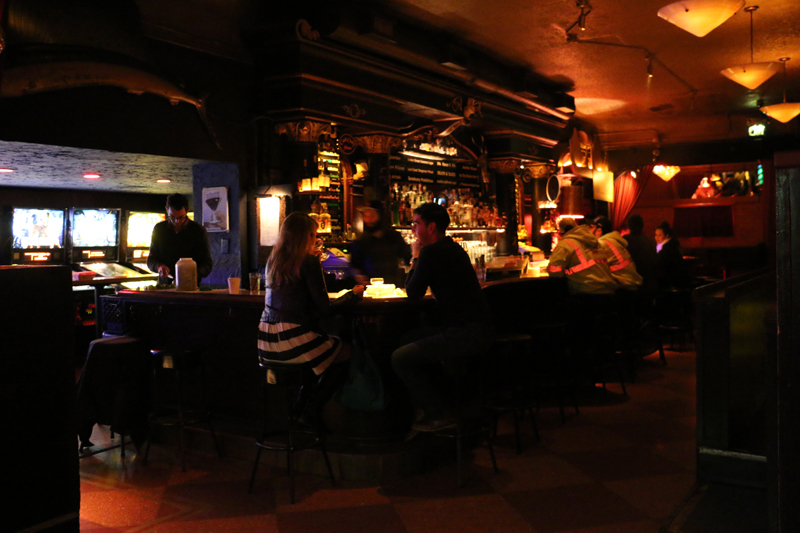
"caption": "Dimly lit dive the Elbo Room closed at the end of 2018.",
"description": "Dimly lit dive the Elbo Room closed at the end of 2018.",
"title": "Dim-lit dive the Elbo Room closed at the end of 2018.",
"credit": "KQED",
"status": "inherit",
"isLoading": false,
"fetchFailed": false
},
"arts_13855774": {
"type": "attachments",
"id": "arts_13855774",
"meta": {
"index": "attachments_1716263798",
"site": "arts",
"id": "13855774",
"found": true
},
"parent": 13855723,
"imgSizes": {
"thumbnail": {
"file": "https://ww2.kqed.org/app/uploads/sites/2/2019/04/DavidIreland.500Cappsign-160x90.jpg",
"width": 160,
"mimeType": "image/jpeg",
"height": 90
},
"post-thumbnail": {
"file": "https://ww2.kqed.org/app/uploads/sites/2/2019/04/DavidIreland.500Cappsign-672x372.jpg",
"width": 672,
"mimeType": "image/jpeg",
"height": 372
},
"kqedFullSize": {
"file": "https://ww2.kqed.org/app/uploads/sites/2/2019/04/DavidIreland.500Cappsign.jpg",
"width": 1020,
"height": 574
},
"large": {
"file": "https://ww2.kqed.org/app/uploads/sites/2/2019/04/DavidIreland.500Cappsign-1020x574.jpg",
"width": 1020,
"mimeType": "image/jpeg",
"height": 574
},
"medium": {
"file": "https://ww2.kqed.org/app/uploads/sites/2/2019/04/DavidIreland.500Cappsign-800x450.jpg",
"width": 800,
"mimeType": "image/jpeg",
"height": 450
},
"medium_large": {
"file": "https://ww2.kqed.org/app/uploads/sites/2/2019/04/DavidIreland.500Cappsign-768x432.jpg",
"width": 768,
"mimeType": "image/jpeg",
"height": 432
}
},
"publishDate": 1556139899,
"modified": 1556139952,
"caption": "Carlie Wilmans frames the evictions as part of an altruistic project to provide free temporary lodging to artists.",
"description": "Carlie Wilmans frames the evictions as part of an altruistic project to provide free temporary lodging to artists.",
"title": "DavidIreland.500Cappsign",
"credit": "Sam Lefebvre/KQED",
"status": "inherit",
"isLoading": false,
"fetchFailed": false
},
"arts_13837211": {
"type": "attachments",
"id": "arts_13837211",
"meta": {
"index": "attachments_1716263798",
"site": "arts",
"id": "13837211",
"found": true
},
"parent": 13837204,
"imgSizes": {
"small": {
"file": "https://ww2.kqed.org/app/uploads/sites/2/2018/07/Puerto-Alegre_COVER-520x293.jpg",
"width": 520,
"mimeType": "image/jpeg",
"height": 293
},
"twentyfourteen-full-width": {
"file": "https://ww2.kqed.org/app/uploads/sites/2/2018/07/Puerto-Alegre_COVER-1038x576.jpg",
"width": 1038,
"mimeType": "image/jpeg",
"height": 576
},
"thumbnail": {
"file": "https://ww2.kqed.org/app/uploads/sites/2/2018/07/Puerto-Alegre_COVER-160x90.jpg",
"width": 160,
"mimeType": "image/jpeg",
"height": 90
},
"fd-sm": {
"file": "https://ww2.kqed.org/app/uploads/sites/2/2018/07/Puerto-Alegre_COVER-960x540.jpg",
"width": 960,
"mimeType": "image/jpeg",
"height": 540
},
"post-thumbnail": {
"file": "https://ww2.kqed.org/app/uploads/sites/2/2018/07/Puerto-Alegre_COVER-672x372.jpg",
"width": 672,
"mimeType": "image/jpeg",
"height": 372
},
"xsmall": {
"file": "https://ww2.kqed.org/app/uploads/sites/2/2018/07/Puerto-Alegre_COVER-375x211.jpg",
"width": 375,
"mimeType": "image/jpeg",
"height": 211
},
"kqedFullSize": {
"file": "https://ww2.kqed.org/app/uploads/sites/2/2018/07/Puerto-Alegre_COVER.jpg",
"width": 1920,
"height": 1080
},
"large": {
"file": "https://ww2.kqed.org/app/uploads/sites/2/2018/07/Puerto-Alegre_COVER-1020x574.jpg",
"width": 1020,
"mimeType": "image/jpeg",
"height": 574
},
"xlarge": {
"file": "https://ww2.kqed.org/app/uploads/sites/2/2018/07/Puerto-Alegre_COVER-1180x664.jpg",
"width": 1180,
"mimeType": "image/jpeg",
"height": 664
},
"complete_open_graph": {
"file": "https://ww2.kqed.org/app/uploads/sites/2/2018/07/Puerto-Alegre_COVER-1200x675.jpg",
"width": 1200,
"mimeType": "image/jpeg",
"height": 675
},
"guest-author-50": {
"file": "https://ww2.kqed.org/app/uploads/sites/2/2018/07/Puerto-Alegre_COVER-50x50.jpg",
"width": 50,
"mimeType": "image/jpeg",
"height": 50
},
"guest-author-96": {
"file": "https://ww2.kqed.org/app/uploads/sites/2/2018/07/Puerto-Alegre_COVER-96x96.jpg",
"width": 96,
"mimeType": "image/jpeg",
"height": 96
},
"medium": {
"file": "https://ww2.kqed.org/app/uploads/sites/2/2018/07/Puerto-Alegre_COVER-800x450.jpg",
"width": 800,
"mimeType": "image/jpeg",
"height": 450
},
"guest-author-64": {
"file": "https://ww2.kqed.org/app/uploads/sites/2/2018/07/Puerto-Alegre_COVER-64x64.jpg",
"width": 64,
"mimeType": "image/jpeg",
"height": 64
},
"guest-author-32": {
"file": "https://ww2.kqed.org/app/uploads/sites/2/2018/07/Puerto-Alegre_COVER-32x32.jpg",
"width": 32,
"mimeType": "image/jpeg",
"height": 32
},
"fd-lrg": {
"file": "https://ww2.kqed.org/app/uploads/sites/2/2018/07/Puerto-Alegre_COVER-1920x1080.jpg",
"width": 1920,
"mimeType": "image/jpeg",
"height": 1080
},
"fd-med": {
"file": "https://ww2.kqed.org/app/uploads/sites/2/2018/07/Puerto-Alegre_COVER-1180x664.jpg",
"width": 1180,
"mimeType": "image/jpeg",
"height": 664
},
"full-width": {
"file": "https://ww2.kqed.org/app/uploads/sites/2/2018/07/Puerto-Alegre_COVER-1920x1080.jpg",
"width": 1920,
"mimeType": "image/jpeg",
"height": 1080
},
"detail": {
"file": "https://ww2.kqed.org/app/uploads/sites/2/2018/07/Puerto-Alegre_COVER-150x150.jpg",
"width": 150,
"mimeType": "image/jpeg",
"height": 150
},
"medium_large": {
"file": "https://ww2.kqed.org/app/uploads/sites/2/2018/07/Puerto-Alegre_COVER-768x432.jpg",
"width": 768,
"mimeType": "image/jpeg",
"height": 432
},
"guest-author-128": {
"file": "https://ww2.kqed.org/app/uploads/sites/2/2018/07/Puerto-Alegre_COVER-128x128.jpg",
"width": 128,
"mimeType": "image/jpeg",
"height": 128
},
"xxsmall": {
"file": "https://ww2.kqed.org/app/uploads/sites/2/2018/07/Puerto-Alegre_COVER-240x135.jpg",
"width": 240,
"mimeType": "image/jpeg",
"height": 135
}
},
"publishDate": 1531785269,
"modified": 1531788338,
"caption": "A view of Puerto Alegre's 'El Color y El Dolor: A Frida Inspired Art Show,' which opened at the restaurant on July 10.",
"description": "A view of Puerto Alegre's 'El Color y El Dolor: A Frida Inspired Art Show,' which opened at the restaurant on July 10.",
"title": "Puerto Alegre_COVER",
"credit": "Azucena Rasilla/KQED",
"status": "inherit",
"isLoading": false,
"fetchFailed": false
},
"arts_13833819": {
"type": "attachments",
"id": "arts_13833819",
"meta": {
"index": "attachments_1716263798",
"site": "arts",
"id": "13833819",
"found": true
},
"parent": 13833740,
"imgSizes": {
"small": {
"file": "https://ww2.kqed.org/app/uploads/sites/2/2018/05/PasionPorFrida69crop-520x293.jpg",
"width": 520,
"mimeType": "image/jpeg",
"height": 293
},
"twentyfourteen-full-width": {
"file": "https://ww2.kqed.org/app/uploads/sites/2/2018/05/PasionPorFrida69crop-1038x576.jpg",
"width": 1038,
"mimeType": "image/jpeg",
"height": 576
},
"thumbnail": {
"file": "https://ww2.kqed.org/app/uploads/sites/2/2018/05/PasionPorFrida69crop-160x90.jpg",
"width": 160,
"mimeType": "image/jpeg",
"height": 90
},
"fd-sm": {
"file": "https://ww2.kqed.org/app/uploads/sites/2/2018/05/PasionPorFrida69crop-960x540.jpg",
"width": 960,
"mimeType": "image/jpeg",
"height": 540
},
"post-thumbnail": {
"file": "https://ww2.kqed.org/app/uploads/sites/2/2018/05/PasionPorFrida69crop-672x372.jpg",
"width": 672,
"mimeType": "image/jpeg",
"height": 372
},
"xsmall": {
"file": "https://ww2.kqed.org/app/uploads/sites/2/2018/05/PasionPorFrida69crop-375x211.jpg",
"width": 375,
"mimeType": "image/jpeg",
"height": 211
},
"kqedFullSize": {
"file": "https://ww2.kqed.org/app/uploads/sites/2/2018/05/PasionPorFrida69crop.jpg",
"width": 1920,
"height": 1080
},
"large": {
"file": "https://ww2.kqed.org/app/uploads/sites/2/2018/05/PasionPorFrida69crop-1020x574.jpg",
"width": 1020,
"mimeType": "image/jpeg",
"height": 574
},
"xlarge": {
"file": "https://ww2.kqed.org/app/uploads/sites/2/2018/05/PasionPorFrida69crop-1180x664.jpg",
"width": 1180,
"mimeType": "image/jpeg",
"height": 664
},
"complete_open_graph": {
"file": "https://ww2.kqed.org/app/uploads/sites/2/2018/05/PasionPorFrida69crop-1200x675.jpg",
"width": 1200,
"mimeType": "image/jpeg",
"height": 675
},
"guest-author-50": {
"file": "https://ww2.kqed.org/app/uploads/sites/2/2018/05/PasionPorFrida69crop-50x50.jpg",
"width": 50,
"mimeType": "image/jpeg",
"height": 50
},
"guest-author-96": {
"file": "https://ww2.kqed.org/app/uploads/sites/2/2018/05/PasionPorFrida69crop-96x96.jpg",
"width": 96,
"mimeType": "image/jpeg",
"height": 96
},
"medium": {
"file": "https://ww2.kqed.org/app/uploads/sites/2/2018/05/PasionPorFrida69crop-800x450.jpg",
"width": 800,
"mimeType": "image/jpeg",
"height": 450
},
"guest-author-64": {
"file": "https://ww2.kqed.org/app/uploads/sites/2/2018/05/PasionPorFrida69crop-64x64.jpg",
"width": 64,
"mimeType": "image/jpeg",
"height": 64
},
"guest-author-32": {
"file": "https://ww2.kqed.org/app/uploads/sites/2/2018/05/PasionPorFrida69crop-32x32.jpg",
"width": 32,
"mimeType": "image/jpeg",
"height": 32
},
"fd-lrg": {
"file": "https://ww2.kqed.org/app/uploads/sites/2/2018/05/PasionPorFrida69crop-1920x1080.jpg",
"width": 1920,
"mimeType": "image/jpeg",
"height": 1080
},
"fd-med": {
"file": "https://ww2.kqed.org/app/uploads/sites/2/2018/05/PasionPorFrida69crop-1180x664.jpg",
"width": 1180,
"mimeType": "image/jpeg",
"height": 664
},
"full-width": {
"file": "https://ww2.kqed.org/app/uploads/sites/2/2018/05/PasionPorFrida69crop-1920x1080.jpg",
"width": 1920,
"mimeType": "image/jpeg",
"height": 1080
},
"detail": {
"file": "https://ww2.kqed.org/app/uploads/sites/2/2018/05/PasionPorFrida69crop-150x150.jpg",
"width": 150,
"mimeType": "image/jpeg",
"height": 150
},
"medium_large": {
"file": "https://ww2.kqed.org/app/uploads/sites/2/2018/05/PasionPorFrida69crop-768x432.jpg",
"width": 768,
"mimeType": "image/jpeg",
"height": 432
},
"guest-author-128": {
"file": "https://ww2.kqed.org/app/uploads/sites/2/2018/05/PasionPorFrida69crop-128x128.jpg",
"width": 128,
"mimeType": "image/jpeg",
"height": 128
},
"xxsmall": {
"file": "https://ww2.kqed.org/app/uploads/sites/2/2018/05/PasionPorFrida69crop-240x135.jpg",
"width": 240,
"mimeType": "image/jpeg",
"height": 135
}
},
"publishDate": 1527707044,
"modified": 1527707581,
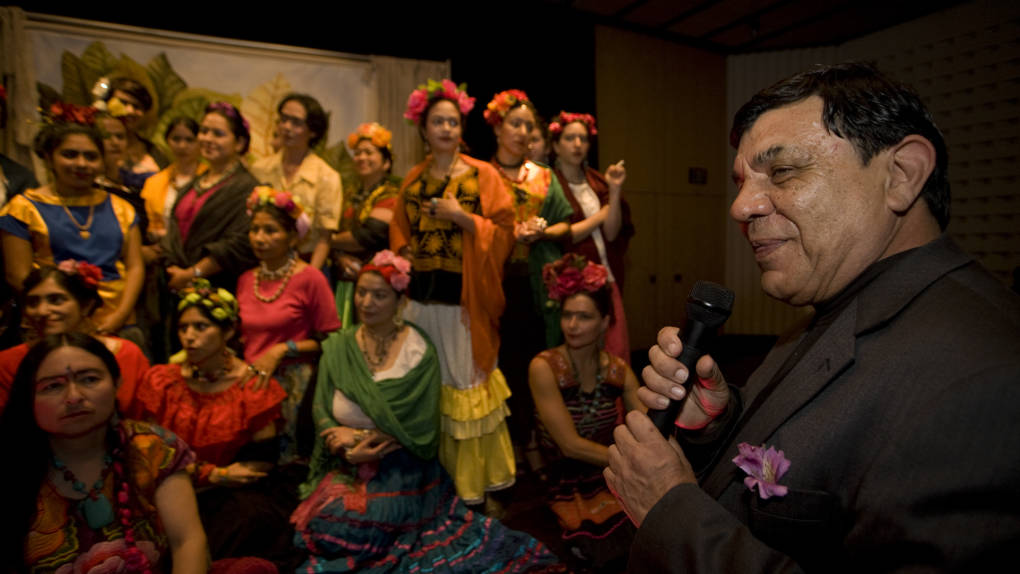
"caption": "A multitude of Fridas converged upon the SFMOMA for the \"Pasión por Frida!\" event — the culmination of the Frida Kahlo exhibit. Curated by Rene Yanez, \"Pasión por Frida!\" was an all day event which the modern day Fridas acted on several stages, painted, sand, wandered the gallery searching for Diego.",
"description": "A multitude of Fridas converged upon the SFMOMA for the \"Pasión por Frida!\" event — the culmination of the Frida Kahlo exhibit. Curated by Rene Yanez, \"Pasión por Frida!\" was an all day event which the modern day Fridas acted on several stages, painted, sand, wandered the gallery searching for Diego.",
"title": "Pasion Por Frida at SFMOMA",
"credit": "Kris Davidson, courtesy SFMOMA",
"status": "inherit",
"isLoading": false,
"fetchFailed": false
},
"arts_13844964": {
"type": "attachments",
"id": "arts_13844964",
"meta": {
"index": "attachments_1716263798",
"site": "arts",
"id": "13844964",
"found": true
},
"parent": 13825213,
"imgSizes": {
"small": {
"file": "https://ww2.kqed.org/app/uploads/sites/2/2018/02/Leo_BTL_Thumbnail-520x293.jpg",
"width": 520,
"mimeType": "image/jpeg",
"height": 293
},
"twentyfourteen-full-width": {
"file": "https://ww2.kqed.org/app/uploads/sites/2/2018/02/Leo_BTL_Thumbnail-1038x576.jpg",
"width": 1038,
"mimeType": "image/jpeg",
"height": 576
},
"thumbnail": {
"file": "https://ww2.kqed.org/app/uploads/sites/2/2018/02/Leo_BTL_Thumbnail-160x90.jpg",
"width": 160,
"mimeType": "image/jpeg",
"height": 90
},
"fd-sm": {
"file": "https://ww2.kqed.org/app/uploads/sites/2/2018/02/Leo_BTL_Thumbnail-960x540.jpg",
"width": 960,
"mimeType": "image/jpeg",
"height": 540
},
"post-thumbnail": {
"file": "https://ww2.kqed.org/app/uploads/sites/2/2018/02/Leo_BTL_Thumbnail-672x372.jpg",
"width": 672,
"mimeType": "image/jpeg",
"height": 372
},
"xsmall": {
"file": "https://ww2.kqed.org/app/uploads/sites/2/2018/02/Leo_BTL_Thumbnail-375x211.jpg",
"width": 375,
"mimeType": "image/jpeg",
"height": 211
},
"kqedFullSize": {
"file": "https://ww2.kqed.org/app/uploads/sites/2/2018/02/Leo_BTL_Thumbnail.jpg",
"width": 1920,
"height": 1080
},
"large": {
"file": "https://ww2.kqed.org/app/uploads/sites/2/2018/02/Leo_BTL_Thumbnail-1020x574.jpg",
"width": 1020,
"mimeType": "image/jpeg",
"height": 574
},
"xlarge": {
"file": "https://ww2.kqed.org/app/uploads/sites/2/2018/02/Leo_BTL_Thumbnail-1180x664.jpg",
"width": 1180,
"mimeType": "image/jpeg",
"height": 664
},
"complete_open_graph": {
"file": "https://ww2.kqed.org/app/uploads/sites/2/2018/02/Leo_BTL_Thumbnail-1200x675.jpg",
"width": 1200,
"mimeType": "image/jpeg",
"height": 675
},
"guest-author-50": {
"file": "https://ww2.kqed.org/app/uploads/sites/2/2018/02/Leo_BTL_Thumbnail-50x50.jpg",
"width": 50,
"mimeType": "image/jpeg",
"height": 50
},
"guest-author-96": {
"file": "https://ww2.kqed.org/app/uploads/sites/2/2018/02/Leo_BTL_Thumbnail-96x96.jpg",
"width": 96,
"mimeType": "image/jpeg",
"height": 96
},
"medium": {
"file": "https://ww2.kqed.org/app/uploads/sites/2/2018/02/Leo_BTL_Thumbnail-800x450.jpg",
"width": 800,
"mimeType": "image/jpeg",
"height": 450
},
"guest-author-64": {
"file": "https://ww2.kqed.org/app/uploads/sites/2/2018/02/Leo_BTL_Thumbnail-64x64.jpg",
"width": 64,
"mimeType": "image/jpeg",
"height": 64
},
"guest-author-32": {
"file": "https://ww2.kqed.org/app/uploads/sites/2/2018/02/Leo_BTL_Thumbnail-32x32.jpg",
"width": 32,
"mimeType": "image/jpeg",
"height": 32
},
"fd-lrg": {
"file": "https://ww2.kqed.org/app/uploads/sites/2/2018/02/Leo_BTL_Thumbnail-1920x1080.jpg",
"width": 1920,
"mimeType": "image/jpeg",
"height": 1080
},
"fd-med": {
"file": "https://ww2.kqed.org/app/uploads/sites/2/2018/02/Leo_BTL_Thumbnail-1180x664.jpg",
"width": 1180,
"mimeType": "image/jpeg",
"height": 664
},
"full-width": {
"file": "https://ww2.kqed.org/app/uploads/sites/2/2018/02/Leo_BTL_Thumbnail-1920x1080.jpg",
"width": 1920,
"mimeType": "image/jpeg",
"height": 1080
},
"detail": {
"file": "https://ww2.kqed.org/app/uploads/sites/2/2018/02/Leo_BTL_Thumbnail-150x150.jpg",
"width": 150,
"mimeType": "image/jpeg",
"height": 150
},
"medium_large": {
"file": "https://ww2.kqed.org/app/uploads/sites/2/2018/02/Leo_BTL_Thumbnail-768x432.jpg",
"width": 768,
"mimeType": "image/jpeg",
"height": 432
},
"guest-author-128": {
"file": "https://ww2.kqed.org/app/uploads/sites/2/2018/02/Leo_BTL_Thumbnail-128x128.jpg",
"width": 128,
"mimeType": "image/jpeg",
"height": 128
},
"xxsmall": {
"file": "https://ww2.kqed.org/app/uploads/sites/2/2018/02/Leo_BTL_Thumbnail-240x135.jpg",
"width": 240,
"mimeType": "image/jpeg",
"height": 135
}
},
"publishDate": 1542247581,
"modified": 1542247581,
"caption": null,
"description": null,
"title": "Leo_BTL_Thumbnail",
"credit": null,
"status": "inherit",
"isLoading": false,
"fetchFailed": false
},
"arts_13816682": {
"type": "attachments",
"id": "arts_13816682",
"meta": {
"index": "attachments_1716263798",
"site": "arts",
"id": "13816682",
"found": true
},
"parent": 13816557,
"imgSizes": {
"small": {
"file": "https://ww2.kqed.org/app/uploads/sites/2/2017/12/Mission.DetourDance-520x309.jpg",
"width": 520,
"mimeType": "image/jpeg",
"height": 309
},
"twentyfourteen-full-width": {
"file": "https://ww2.kqed.org/app/uploads/sites/2/2017/12/Mission.DetourDance-1038x576.jpg",
"width": 1038,
"mimeType": "image/jpeg",
"height": 576
},
"thumbnail": {
"file": "https://ww2.kqed.org/app/uploads/sites/2/2017/12/Mission.DetourDance-160x95.jpg",
"width": 160,
"mimeType": "image/jpeg",
"height": 95
},
"fd-sm": {
"file": "https://ww2.kqed.org/app/uploads/sites/2/2017/12/Mission.DetourDance-960x570.jpg",
"width": 960,
"mimeType": "image/jpeg",
"height": 570
},
"post-thumbnail": {
"file": "https://ww2.kqed.org/app/uploads/sites/2/2017/12/Mission.DetourDance-672x372.jpg",
"width": 672,
"mimeType": "image/jpeg",
"height": 372
},
"xsmall": {
"file": "https://ww2.kqed.org/app/uploads/sites/2/2017/12/Mission.DetourDance-375x223.jpg",
"width": 375,
"mimeType": "image/jpeg",
"height": 223
},
"kqedFullSize": {
"file": "https://ww2.kqed.org/app/uploads/sites/2/2017/12/Mission.DetourDance.jpg",
"width": 1920,
"height": 1140
},
"large": {
"file": "https://ww2.kqed.org/app/uploads/sites/2/2017/12/Mission.DetourDance-1020x606.jpg",
"width": 1020,
"mimeType": "image/jpeg",
"height": 606
},
"xlarge": {
"file": "https://ww2.kqed.org/app/uploads/sites/2/2017/12/Mission.DetourDance-1180x701.jpg",
"width": 1180,
"mimeType": "image/jpeg",
"height": 701
},
"guest-author-50": {
"file": "https://ww2.kqed.org/app/uploads/sites/2/2017/12/Mission.DetourDance-50x50.jpg",
"width": 50,
"mimeType": "image/jpeg",
"height": 50
},
"guest-author-96": {
"file": "https://ww2.kqed.org/app/uploads/sites/2/2017/12/Mission.DetourDance-96x96.jpg",
"width": 96,
"mimeType": "image/jpeg",
"height": 96
},
"medium": {
"file": "https://ww2.kqed.org/app/uploads/sites/2/2017/12/Mission.DetourDance-800x475.jpg",
"width": 800,
"mimeType": "image/jpeg",
"height": 475
},
"guest-author-64": {
"file": "https://ww2.kqed.org/app/uploads/sites/2/2017/12/Mission.DetourDance-64x64.jpg",
"width": 64,
"mimeType": "image/jpeg",
"height": 64
},
"guest-author-32": {
"file": "https://ww2.kqed.org/app/uploads/sites/2/2017/12/Mission.DetourDance-32x32.jpg",
"width": 32,
"mimeType": "image/jpeg",
"height": 32
},
"fd-lrg": {
"file": "https://ww2.kqed.org/app/uploads/sites/2/2017/12/Mission.DetourDance-1920x1140.jpg",
"width": 1920,
"mimeType": "image/jpeg",
"height": 1140
},
"fd-med": {
"file": "https://ww2.kqed.org/app/uploads/sites/2/2017/12/Mission.DetourDance-1180x701.jpg",
"width": 1180,
"mimeType": "image/jpeg",
"height": 701
},
"full-width": {
"file": "https://ww2.kqed.org/app/uploads/sites/2/2017/12/Mission.DetourDance-1920x1140.jpg",
"width": 1920,
"mimeType": "image/jpeg",
"height": 1140
},
"detail": {
"file": "https://ww2.kqed.org/app/uploads/sites/2/2017/12/Mission.DetourDance-150x150.jpg",
"width": 150,
"mimeType": "image/jpeg",
"height": 150
},
"medium_large": {
"file": "https://ww2.kqed.org/app/uploads/sites/2/2017/12/Mission.DetourDance-768x456.jpg",
"width": 768,
"mimeType": "image/jpeg",
"height": 456
},
"guest-author-128": {
"file": "https://ww2.kqed.org/app/uploads/sites/2/2017/12/Mission.DetourDance-128x128.jpg",
"width": 128,
"mimeType": "image/jpeg",
"height": 128
},
"xxsmall": {
"file": "https://ww2.kqed.org/app/uploads/sites/2/2017/12/Mission.DetourDance-240x143.jpg",
"width": 240,
"mimeType": "image/jpeg",
"height": 143
}
},
"publishDate": 1512457698,
"modified": 1512457753,
"caption": "Liane Burns, Maro Guevara, Erin Mei-Ling Stuart and Scott Marlowe in Detour Dance's 'Fugue.' ",
"description": "Liane Burns, Maro Guevara, Erin Mei-Ling Stuart and Scott Marlowe in detour dance's 'Fugue.' ",
"title": "Mission.DetourDance",
"credit": "Robbie Sweeny",
"status": "inherit",
"isLoading": false,
"fetchFailed": false
},
"arts_13813557": {
"type": "attachments",
"id": "arts_13813557",
"meta": {
"index": "attachments_1716263798",
"site": "arts",
"id": "13813557",
"found": true
},
"parent": 13813188,
"imgSizes": {
"small": {
"file": "https://ww2.kqed.org/app/uploads/sites/2/2017/11/Stephen-Parrcrop-520x293.jpg",
"width": 520,
"mimeType": "image/jpeg",
"height": 293
},
"twentyfourteen-full-width": {
"file": "https://ww2.kqed.org/app/uploads/sites/2/2017/11/Stephen-Parrcrop-1038x576.jpg",
"width": 1038,
"mimeType": "image/jpeg",
"height": 576
},
"thumbnail": {
"file": "https://ww2.kqed.org/app/uploads/sites/2/2017/11/Stephen-Parrcrop-160x90.jpg",
"width": 160,
"mimeType": "image/jpeg",
"height": 90
},
"fd-sm": {
"file": "https://ww2.kqed.org/app/uploads/sites/2/2017/11/Stephen-Parrcrop-960x540.jpg",
"width": 960,
"mimeType": "image/jpeg",
"height": 540
},
"post-thumbnail": {
"file": "https://ww2.kqed.org/app/uploads/sites/2/2017/11/Stephen-Parrcrop-672x372.jpg",
"width": 672,
"mimeType": "image/jpeg",
"height": 372
},
"xsmall": {
"file": "https://ww2.kqed.org/app/uploads/sites/2/2017/11/Stephen-Parrcrop-375x211.jpg",
"width": 375,
"mimeType": "image/jpeg",
"height": 211
},
"kqedFullSize": {
"file": "https://ww2.kqed.org/app/uploads/sites/2/2017/11/Stephen-Parrcrop.jpg",
"width": 1920,
"height": 1080
},
"large": {
"file": "https://ww2.kqed.org/app/uploads/sites/2/2017/11/Stephen-Parrcrop-1020x574.jpg",
"width": 1020,
"mimeType": "image/jpeg",
"height": 574
},
"xlarge": {
"file": "https://ww2.kqed.org/app/uploads/sites/2/2017/11/Stephen-Parrcrop-1180x664.jpg",
"width": 1180,
"mimeType": "image/jpeg",
"height": 664
},
"guest-author-50": {
"file": "https://ww2.kqed.org/app/uploads/sites/2/2017/11/Stephen-Parrcrop-50x50.jpg",
"width": 50,
"mimeType": "image/jpeg",
"height": 50
},
"guest-author-96": {
"file": "https://ww2.kqed.org/app/uploads/sites/2/2017/11/Stephen-Parrcrop-96x96.jpg",
"width": 96,
"mimeType": "image/jpeg",
"height": 96
},
"medium": {
"file": "https://ww2.kqed.org/app/uploads/sites/2/2017/11/Stephen-Parrcrop-800x450.jpg",
"width": 800,
"mimeType": "image/jpeg",
"height": 450
},
"guest-author-64": {
"file": "https://ww2.kqed.org/app/uploads/sites/2/2017/11/Stephen-Parrcrop-64x64.jpg",
"width": 64,
"mimeType": "image/jpeg",
"height": 64
},
"guest-author-32": {
"file": "https://ww2.kqed.org/app/uploads/sites/2/2017/11/Stephen-Parrcrop-32x32.jpg",
"width": 32,
"mimeType": "image/jpeg",
"height": 32
},
"fd-lrg": {
"file": "https://ww2.kqed.org/app/uploads/sites/2/2017/11/Stephen-Parrcrop-1920x1080.jpg",
"width": 1920,
"mimeType": "image/jpeg",
"height": 1080
},
"fd-med": {
"file": "https://ww2.kqed.org/app/uploads/sites/2/2017/11/Stephen-Parrcrop-1180x664.jpg",
"width": 1180,
"mimeType": "image/jpeg",
"height": 664
},
"full-width": {
"file": "https://ww2.kqed.org/app/uploads/sites/2/2017/11/Stephen-Parrcrop-1920x1080.jpg",
"width": 1920,
"mimeType": "image/jpeg",
"height": 1080
},
"detail": {
"file": "https://ww2.kqed.org/app/uploads/sites/2/2017/11/Stephen-Parrcrop-150x150.jpg",
"width": 150,
"mimeType": "image/jpeg",
"height": 150
},
"medium_large": {
"file": "https://ww2.kqed.org/app/uploads/sites/2/2017/11/Stephen-Parrcrop-768x432.jpg",
"width": 768,
"mimeType": "image/jpeg",
"height": 432
},
"guest-author-128": {
"file": "https://ww2.kqed.org/app/uploads/sites/2/2017/11/Stephen-Parrcrop-128x128.jpg",
"width": 128,
"mimeType": "image/jpeg",
"height": 128
},
"xxsmall": {
"file": "https://ww2.kqed.org/app/uploads/sites/2/2017/11/Stephen-Parrcrop-240x135.jpg",
"width": 240,
"mimeType": "image/jpeg",
"height": 135
}
},
"publishDate": 1509651088,
"modified": 1509651130,
"caption": "Stephen Parr in 2017, days before he died",
"description": "Stephen Parr in 2017, days before he died",
"title": "Stephen Parrcrop",
"credit": "Jenni Olson",
"status": "inherit",
"isLoading": false,
"fetchFailed": false
},
"arts_13805737": {
"type": "attachments",
"id": "arts_13805737",
"meta": {
"index": "attachments_1716263798",
"site": "arts",
"id": "13805737",
"found": true
},
"parent": 13805730,
"imgSizes": {
"small": {
"file": "https://ww2.kqed.org/app/uploads/sites/2/2017/08/NPxKQEDHunt_723x38-520x273.jpg",
"width": 520,
"mimeType": "image/jpeg",
"height": 273
},
"thumbnail": {
"file": "https://ww2.kqed.org/app/uploads/sites/2/2017/08/NPxKQEDHunt_723x38-160x84.jpg",
"width": 160,
"mimeType": "image/jpeg",
"height": 84
},
"post-thumbnail": {
"file": "https://ww2.kqed.org/app/uploads/sites/2/2017/08/NPxKQEDHunt_723x38-672x372.jpg",
"width": 672,
"mimeType": "image/jpeg",
"height": 372
},
"xsmall": {
"file": "https://ww2.kqed.org/app/uploads/sites/2/2017/08/NPxKQEDHunt_723x38-375x197.jpg",
"width": 375,
"mimeType": "image/jpeg",
"height": 197
},
"kqedFullSize": {
"file": "https://ww2.kqed.org/app/uploads/sites/2/2017/08/NPxKQEDHunt_723x38.jpg",
"width": 723,
"height": 380
},
"guest-author-50": {
"file": "https://ww2.kqed.org/app/uploads/sites/2/2017/08/NPxKQEDHunt_723x38-50x50.jpg",
"width": 50,
"mimeType": "image/jpeg",
"height": 50
},
"guest-author-96": {
"file": "https://ww2.kqed.org/app/uploads/sites/2/2017/08/NPxKQEDHunt_723x38-96x96.jpg",
"width": 96,
"mimeType": "image/jpeg",
"height": 96
},
"guest-author-64": {
"file": "https://ww2.kqed.org/app/uploads/sites/2/2017/08/NPxKQEDHunt_723x38-64x64.jpg",
"width": 64,
"mimeType": "image/jpeg",
"height": 64
},
"detail": {
"file": "https://ww2.kqed.org/app/uploads/sites/2/2017/08/NPxKQEDHunt_723x38-150x150.jpg",
"width": 150,
"mimeType": "image/jpeg",
"height": 150
},
"guest-author-32": {
"file": "https://ww2.kqed.org/app/uploads/sites/2/2017/08/NPxKQEDHunt_723x38-32x32.jpg",
"width": 32,
"mimeType": "image/jpeg",
"height": 32
},
"guest-author-128": {
"file": "https://ww2.kqed.org/app/uploads/sites/2/2017/08/NPxKQEDHunt_723x38-128x128.jpg",
"width": 128,
"mimeType": "image/jpeg",
"height": 128
},
"xxsmall": {
"file": "https://ww2.kqed.org/app/uploads/sites/2/2017/08/NPxKQEDHunt_723x38-240x126.jpg",
"width": 240,
"mimeType": "image/jpeg",
"height": 126
}
},
"publishDate": 1502919368,
"modified": 1502919384,
"caption": null,
"description": null,
"title": "NPxKQEDHunt_723x38",
"credit": null,
"status": "inherit",
"isLoading": false,
"fetchFailed": false
},
"arts_12928940": {
"type": "attachments",
"id": "arts_12928940",
"meta": {
"index": "attachments_1716263798",
"site": "arts",
"id": "12928940",
"found": true
},
"parent": 12928888,
"imgSizes": {
"small": {
"file": "https://ww2.kqed.org/app/uploads/sites/2/2017/03/mission-1-520x347.jpg",
"width": 520,
"mimeType": "image/jpeg",
"height": 347
},
"twentyfourteen-full-width": {
"file": "https://ww2.kqed.org/app/uploads/sites/2/2017/03/mission-1-1038x576.jpg",
"width": 1038,
"mimeType": "image/jpeg",
"height": 576
},
"thumbnail": {
"file": "https://ww2.kqed.org/app/uploads/sites/2/2017/03/mission-1-160x107.jpg",
"width": 160,
"mimeType": "image/jpeg",
"height": 107
},
"fd-sm": {
"file": "https://ww2.kqed.org/app/uploads/sites/2/2017/03/mission-1-960x640.jpg",
"width": 960,
"mimeType": "image/jpeg",
"height": 640
},
"post-thumbnail": {
"file": "https://ww2.kqed.org/app/uploads/sites/2/2017/03/mission-1-672x372.jpg",
"width": 672,
"mimeType": "image/jpeg",
"height": 372
},
"xsmall": {
"file": "https://ww2.kqed.org/app/uploads/sites/2/2017/03/mission-1-375x250.jpg",
"width": 375,
"mimeType": "image/jpeg",
"height": 250
},
"kqedFullSize": {
"file": "https://ww2.kqed.org/app/uploads/sites/2/2017/03/mission-1.jpg",
"width": 1500,
"height": 1000
},
"large": {
"file": "https://ww2.kqed.org/app/uploads/sites/2/2017/03/mission-1-1020x680.jpg",
"width": 1020,
"mimeType": "image/jpeg",
"height": 680
},
"xlarge": {
"file": "https://ww2.kqed.org/app/uploads/sites/2/2017/03/mission-1-1180x787.jpg",
"width": 1180,
"mimeType": "image/jpeg",
"height": 787
},
"guest-author-50": {
"file": "https://ww2.kqed.org/app/uploads/sites/2/2017/03/mission-1-50x50.jpg",
"width": 50,
"mimeType": "image/jpeg",
"height": 50
},
"guest-author-96": {
"file": "https://ww2.kqed.org/app/uploads/sites/2/2017/03/mission-1-96x96.jpg",
"width": 96,
"mimeType": "image/jpeg",
"height": 96
},
"medium": {
"file": "https://ww2.kqed.org/app/uploads/sites/2/2017/03/mission-1-800x533.jpg",
"width": 800,
"mimeType": "image/jpeg",
"height": 533
},
"guest-author-64": {
"file": "https://ww2.kqed.org/app/uploads/sites/2/2017/03/mission-1-64x64.jpg",
"width": 64,
"mimeType": "image/jpeg",
"height": 64
},
"guest-author-32": {
"file": "https://ww2.kqed.org/app/uploads/sites/2/2017/03/mission-1-32x32.jpg",
"width": 32,
"mimeType": "image/jpeg",
"height": 32
},
"fd-med": {
"file": "https://ww2.kqed.org/app/uploads/sites/2/2017/03/mission-1-1180x787.jpg",
"width": 1180,
"mimeType": "image/jpeg",
"height": 787
},
"detail": {
"file": "https://ww2.kqed.org/app/uploads/sites/2/2017/03/mission-1-150x150.jpg",
"width": 150,
"mimeType": "image/jpeg",
"height": 150
},
"medium_large": {
"file": "https://ww2.kqed.org/app/uploads/sites/2/2017/03/mission-1-768x512.jpg",
"width": 768,
"mimeType": "image/jpeg",
"height": 512
},
"guest-author-128": {
"file": "https://ww2.kqed.org/app/uploads/sites/2/2017/03/mission-1-128x128.jpg",
"width": 128,
"mimeType": "image/jpeg",
"height": 128
},
"xxsmall": {
"file": "https://ww2.kqed.org/app/uploads/sites/2/2017/03/mission-1-240x160.jpg",
"width": 240,
"mimeType": "image/jpeg",
"height": 160
}
},
"publishDate": 1490042875,
"modified": 1490223134,
"caption": "\"This Place: A Tribute to the Mission Community,\" a 2015 mural by Precita Eyes muralists, photographed by Dick Evans. ",
"description": "'This Place: A Tribute to the Mission Community,' a 2015 mural by Precita Eyes muralists, photographed by Dick Evans. ",
"title": "Mission -1",
"credit": "Courtesy Dick Evans and Heyday Books",
"status": "inherit",
"isLoading": false,
"fetchFailed": false
}
},
"audioPlayerReducer": {
"postId": "stream_live",
"isPaused": true,
"isPlaying": false,
"pfsActive": false,
"pledgeModalIsOpen": true,
"playerDrawerIsOpen": false,
"liveAudioPlayStartedAt": 0,
"liveAudioPlayContext": ""
},
"authorsReducer": {
"kqedarts": {
"type": "authors",
"id": "92",
"meta": {
"index": "authors_1716337520",
"id": "92",
"found": true
},
"name": "KQED Arts",
"firstName": "KQED",
"lastName": "Arts",
"slug": "kqedarts",
"email": "arts@kqed.org",
"display_author_email": false,
"staff_mastheads": [],
"title": "KQED Staff",
"bio": null,
"avatar": "https://secure.gravatar.com/avatar/321c9ebfeb7736f9e55366a6d3399ab0?s=600&d=blank&r=g",
"twitter": null,
"facebook": null,
"instagram": "https://www.instagram.com/kqed_arts/",
"linkedin": null,
"sites": [
{
"site": "arts",
"roles": [
"contributor"
]
},
{
"site": "pop",
"roles": [
"contributor"
]
},
{
"site": "science",
"roles": [
"author"
]
},
{
"site": "food",
"roles": [
"contributor"
]
}
],
"headData": {
"title": "KQED Arts | KQED",
"description": "KQED Staff",
"ogImgSrc": "https://secure.gravatar.com/avatar/321c9ebfeb7736f9e55366a6d3399ab0?s=600&d=blank&r=g",
"twImgSrc": "https://secure.gravatar.com/avatar/321c9ebfeb7736f9e55366a6d3399ab0?s=600&d=blank&r=g"
},
"isLoading": false,
"link": "/author/kqedarts"
},
"kjones": {
"type": "authors",
"id": "93",
"meta": {
"index": "authors_1716337520",
"id": "93",
"found": true
},
"name": "Kevin L. Jones",
"firstName": "Kevin",
"lastName": "Jones",
"slug": "kjones",
"email": "kjones@kqed.org",
"display_author_email": false,
"staff_mastheads": [],
"title": null,
"bio": null,
"avatar": "https://secure.gravatar.com/avatar/12c65b5633ed39d0a59bb7f497eff645?s=600&d=blank&r=g",
"twitter": null,
"facebook": null,
"instagram": null,
"linkedin": null,
"sites": [
{
"site": "arts",
"roles": [
"subscriber"
]
},
{
"site": "styleguide",
"roles": [
"contributor"
]
},
{
"site": "artschool",
"roles": [
"subscriber"
]
},
{
"site": "news",
"roles": [
"subscriber"
]
},
{
"site": "pop",
"roles": [
"subscriber"
]
}
],
"headData": {
"title": "Kevin L. Jones | KQED",
"description": null,
"ogImgSrc": "https://secure.gravatar.com/avatar/12c65b5633ed39d0a59bb7f497eff645?s=600&d=blank&r=g",
"twImgSrc": "https://secure.gravatar.com/avatar/12c65b5633ed39d0a59bb7f497eff645?s=600&d=blank&r=g"
},
"isLoading": false,
"link": "/author/kjones"
},
"slefebvre": {
"type": "authors",
"id": "11091",
"meta": {
"index": "authors_1716337520",
"id": "11091",
"found": true
},
"name": "Sam Lefebvre",
"firstName": "Sam",
"lastName": "Lefebvre",
"slug": "slefebvre",
"email": "sdlefebvre@gmail.com",
"display_author_email": false,
"staff_mastheads": [],
"title": "KQED Contributor",
"bio": "Sam Lefebvre is an award-winning reporter at KQED Arts. He has worked as an editor and columnist at the \u003cem>East Bay Express\u003c/em>, \u003cem>SF Weekly \u003c/em>and Impose Magazine, and his journalism and criticism has appeared in \u003cem>The New York Times\u003c/em>, the Guardian and Pitchfork.",
"avatar": "https://secure.gravatar.com/avatar/49d39b42930b77fb13784ddd9fa63fe780666b71bf289368509dba576b64e69b?s=600&d=blank&r=g",
"twitter": "Lefebvre_Sam",
"bluesky": null,
"facebook": null,
"instagram": null,
"linkedin": null,
"sites": [
{
"site": "arts",
"roles": [
"subscriber"
]
},
{
"site": "news",
"roles": [
"author"
]
}
],
"headData": {
"title": "Sam Lefebvre | KQED",
"description": "KQED Contributor",
"ogImgSrc": "https://secure.gravatar.com/avatar/49d39b42930b77fb13784ddd9fa63fe780666b71bf289368509dba576b64e69b?s=600&d=blank&r=g",
"twImgSrc": "https://secure.gravatar.com/avatar/49d39b42930b77fb13784ddd9fa63fe780666b71bf289368509dba576b64e69b?s=600&d=blank&r=g"
},
"isLoading": false,
"link": "/author/slefebvre"
},
"cescoda": {
"type": "authors",
"id": "11206",
"meta": {
"index": "authors_1716337520",
"id": "11206",
"found": true
},
"name": "Carla Escoda",
"firstName": "Carla",
"lastName": "Escoda",
"slug": "cescoda",
"email": "ballettothepeople@gmail.com",
"display_author_email": false,
"staff_mastheads": [],
"title": null,
"bio": "Carla can most often be found in theatres, airports and on airplanes, writing about dance and the arts for various websites whenever she can find wi-fi. Her blog Ballet to the People<\u003ca href=\"http://ballettothepeople.com/\" target=\"_blank\" rel=\"noreferrer\">http://\u003cwbr />ballettothepeople.com\u003c/a>> has become a street corner where dance-lovers enjoy loitering and plotting the revolution which will renew the populist roots of ballet.\r\n\u003cspan class=\"im\">\r\nIn her previous lives, Carla worked in scientific research, then in project finance in Asia. Prior to that, she trained as a ballet and modern dancer, and performed with the Yaledancers while getting her undergraduate degrees in Engineering and Applied Science and French Literature, and her graduate degree in Engineering.\u003c/span>",
"avatar": "https://secure.gravatar.com/avatar/3a012eb3749d4353e3e28aab414dd815?s=600&d=blank&r=g",
"twitter": null,
"facebook": null,
"instagram": null,
"linkedin": null,
"sites": [
{
"site": "arts",
"roles": [
"author"
]
}
],
"headData": {
"title": "Carla Escoda | KQED",
"description": null,
"ogImgSrc": "https://secure.gravatar.com/avatar/3a012eb3749d4353e3e28aab414dd815?s=600&d=blank&r=g",
"twImgSrc": "https://secure.gravatar.com/avatar/3a012eb3749d4353e3e28aab414dd815?s=600&d=blank&r=g"
},
"isLoading": false,
"link": "/author/cescoda"
},
"cescobar": {
"type": "authors",
"id": "11241",
"meta": {
"index": "authors_1716337520",
"id": "11241",
"found": true
},
"name": "Claudia Escobar",
"firstName": "Claudia",
"lastName": "Escobar",
"slug": "cescobar",
"email": "cescobar@kqed.org",
"display_author_email": false,
"staff_mastheads": [],
"title": "KQED Contributor",
"bio": "Tropical latin visual story teller extraordinaire! bread maker apprentice.",
"avatar": "https://secure.gravatar.com/avatar/39af590a0e19126bafbf121ec9d891a77a3d680061d7cc03d720efe706992707?s=600&d=blank&r=g",
"twitter": null,
"bluesky": null,
"facebook": null,
"instagram": null,
"linkedin": null,
"sites": [
{
"site": "arts",
"roles": [
"subscriber"
]
},
{
"site": "news",
"roles": [
"author"
]
}
],
"headData": {
"title": "Claudia Escobar | KQED",
"description": "KQED Contributor",
"ogImgSrc": "https://secure.gravatar.com/avatar/39af590a0e19126bafbf121ec9d891a77a3d680061d7cc03d720efe706992707?s=600&d=blank&r=g",
"twImgSrc": "https://secure.gravatar.com/avatar/39af590a0e19126bafbf121ec9d891a77a3d680061d7cc03d720efe706992707?s=600&d=blank&r=g"
},
"isLoading": false,
"link": "/author/cescobar"
},
"runterberger": {
"type": "authors",
"id": "11302",
"meta": {
"index": "authors_1716337520",
"id": "11302",
"found": true
},
"name": "Richie Unterberger",
"firstName": "Richie",
"lastName": "Unterberger",
"slug": "runterberger",
"email": "richie@richieunterberger.com",
"display_author_email": false,
"staff_mastheads": [],
"title": null,
"bio": "Richie Unterberger has written a dozen rock history books, including volumes on the Velvet Underground, the Who, and the Beatles. He teaches community education rock history courses at the College of Marin and the Fromm Institute in San Francisco. Read more of his work at www.richieunterberger.com/wordpress.",
"avatar": "https://secure.gravatar.com/avatar/a39c81cd6643bc782cfa0bf46a2a5a4c?s=600&d=blank&r=g",
"twitter": null,
"facebook": null,
"instagram": null,
"linkedin": null,
"sites": [
{
"site": "arts",
"roles": [
"author"
]
}
],
"headData": {
"title": "Richie Unterberger | KQED",
"description": null,
"ogImgSrc": "https://secure.gravatar.com/avatar/a39c81cd6643bc782cfa0bf46a2a5a4c?s=600&d=blank&r=g",
"twImgSrc": "https://secure.gravatar.com/avatar/a39c81cd6643bc782cfa0bf46a2a5a4c?s=600&d=blank&r=g"
},
"isLoading": false,
"link": "/author/runterberger"
},
"sburke": {
"type": "authors",
"id": "11323",
"meta": {
"index": "authors_1716337520",
"id": "11323",
"found": true
},
"name": "Sarah Burke",
"firstName": "Sarah",
"lastName": "Burke",
"slug": "sburke",
"email": "sarahlburke@gmail.com",
"display_author_email": false,
"staff_mastheads": [],
"title": "KQED Contributor",
"bio": "Sarah Burke is a journalist, critic, and curator living and working in Oakland, California. She is a regular contributor to KQED's Culture Cue, for which she writes about topics at the intersection of art, culture, and identity. Her work has been recognized with first place awards from the American Association of Alternative Newsmedia and The Society of Professional Journalists. Previously, she served as Managing Editor at the \u003cem>East Bay Express\u003c/em>. Find her on twitter at \u003ca href=\"https://twitter.com/sarahlubyburke\">@sarahlubyburke. \u003c/a>",
"avatar": "https://secure.gravatar.com/avatar/ea2a423eaf2fff65d31ec42d2a88bb6b96668e41e653ffa1945172c043a786b2?s=600&d=blank&r=g",
"twitter": "sarahlubyburke",
"bluesky": null,
"facebook": null,
"instagram": null,
"linkedin": null,
"sites": [
{
"site": "arts",
"roles": [
"subscriber"
]
}
],
"headData": {
"title": "Sarah Burke | KQED",
"description": "KQED Contributor",
"ogImgSrc": "https://secure.gravatar.com/avatar/ea2a423eaf2fff65d31ec42d2a88bb6b96668e41e653ffa1945172c043a786b2?s=600&d=blank&r=g",
"twImgSrc": "https://secure.gravatar.com/avatar/ea2a423eaf2fff65d31ec42d2a88bb6b96668e41e653ffa1945172c043a786b2?s=600&d=blank&r=g"
},
"isLoading": false,
"link": "/author/sburke"
},
"azucenarasilla": {
"type": "authors",
"id": "11624",
"meta": {
"index": "authors_1716337520",
"id": "11624",
"found": true
},
"name": "Azucena Rasilla",
"firstName": "Azucena",
"lastName": "Rasilla",
"slug": "azucenarasilla",
"email": "azucena.rasilla@gmail.com",
"display_author_email": false,
"staff_mastheads": [],
"title": null,
"bio": "Freelance Journalist I former East Bay Express I DM/email music/arts/culture tips that I can turn into stories I azucena.rasilla@gmail.com",
"avatar": "https://secure.gravatar.com/avatar/451ecba09a36b5e0f6fbb13210621eea?s=600&d=blank&r=g",
"twitter": "chroniclesofazu",
"facebook": null,
"instagram": null,
"linkedin": null,
"sites": [
{
"site": "arts",
"roles": [
"contributor"
]
},
{
"site": "bayareabites",
"roles": [
"contributor"
]
}
],
"headData": {
"title": "Azucena Rasilla | KQED",
"description": null,
"ogImgSrc": "https://secure.gravatar.com/avatar/451ecba09a36b5e0f6fbb13210621eea?s=600&d=blank&r=g",
"twImgSrc": "https://secure.gravatar.com/avatar/451ecba09a36b5e0f6fbb13210621eea?s=600&d=blank&r=g"
},
"isLoading": false,
"link": "/author/azucenarasilla"
}
},
"pagesReducer": {
"arts_tag_mission-district": {
"type": "terms",
"id": "arts_1257",
"meta": {
"index": "terms_1716263798",
"site": "arts",
"id": "1257",
"score": 8.669338
},
"featImg": null,
"name": "Mission District",
"description": null,
"taxonomy": "tag",
"headData": {
"twImgId": null,
"twTitle": null,
"ogTitle": null,
"ogImgId": null,
"twDescription": null,
"description": null,
"title": "Mission District Archives | KQED Arts",
"ogDescription": null
},
"ttid": 1269,
"slug": "mission-district",
"isLoading": false,
"title": "Mission District",
"pageMeta": {
"site": "arts",
"WpPageTemplate": "page-topic-editorial",
"currentPage": 6
},
"blocks": [
{
"blockName": "kqed/post-list",
"attrs": {
"layout": "cardArticle2",
"query": "posts/arts?tag=mission-district",
"seeMore": false,
"paginated": true,
"page": 6
}
},
{
"blockName": "kqed/ad"
}
]
}
},
"pfsSessionReducer": {},
"postsReducer": {
"stream_live": {
"type": "live",
"id": "stream_live",
"audioUrl": "https://streams.kqed.org/kqedradio",
"title": "Live Stream",
"excerpt": "Live Stream information currently unavailable.",
"link": "/radio",
"featImg": "",
"label": {
"name": "KQED Live",
"link": "/"
}
},
"stream_kqedNewscast": {
"type": "posts",
"id": "stream_kqedNewscast",
"audioUrl": "https://www.kqed.org/.stream/anon/radio/RDnews/newscast.mp3?_=1",
"title": "KQED Newscast",
"featImg": "",
"label": {
"name": "88.5 FM",
"link": "/"
}
},
"arts_13860198": {
"type": "posts",
"id": "arts_13860198",
"meta": {
"index": "posts_1716263798",
"site": "arts",
"id": "13860198",
"score": null,
"sort": [
1561575659000
]
},
"guestAuthors": [],
"slug": "nonprofit-developer-poised-to-buy-redstone-building-calls-on-sf-to-close-funding-gap",
"title": "Nonprofit Developer Poised to Buy Redstone Building Calls on S.F. to Close Funding Gap",
"publishDate": 1561575659,
"format": "standard",
"headTitle": "Nonprofit Developer Poised to Buy Redstone Building Calls on S.F. to Close Funding Gap | KQED",
"labelTerm": {
"site": "arts"
},
"content": "\u003cp>Affordable housing developer Mission Economic Development Agency is in contract to acquire the Redstone Building, a purchase tenants and supporters call essential to preserving the historic arts and social services hub, but still needs millions of dollars to finalize the deal.\u003c/p>\n\u003cp>MEDA spokesperson Christopher Gil said the developer has reached an agreement to buy the Redstone Building from property owner David Lucchesi for $15 million by Aug. 1, and that renovations, including a seismic retrofit, are expected to cost “many millions” in addition.\u003c/p>\n\u003cp>MEDA is still short some $7 million, so the developer, Redstone tenants and supporters are asking the City of San Francisco to commit $1 million by July 15. Such a pledge, according to Gil, would help assure other investors “that our organization can make the numbers work.”\u003c/p>\n\u003cp>The goal of the plan, Gil continued, is to “preserve the three-story landmark as a permanent center for cultural resources, while maintaining affordable rents for all current tenants.”\u003c/p>\n\u003cfigure id=\"attachment_13860204\" class=\"wp-caption aligncenter\" style=\"max-width: 800px\">\u003cimg loading=\"lazy\" decoding=\"async\" class=\"size-medium wp-image-13860204\" src=\"https://ww2.kqed.org/arts/wp-content/uploads/sites/2/2019/06/Redstone-Building-and-Lab-signs-800x450.jpg\" alt=\"The Redstone Building houses an array of arts and social services organizations.\" width=\"800\" height=\"450\" srcset=\"https://cdn.kqed.org/wp-content/uploads/sites/2/2019/06/Redstone-Building-and-Lab-signs-800x450.jpg 800w, https://cdn.kqed.org/wp-content/uploads/sites/2/2019/06/Redstone-Building-and-Lab-signs-160x90.jpg 160w, https://cdn.kqed.org/wp-content/uploads/sites/2/2019/06/Redstone-Building-and-Lab-signs-768x432.jpg 768w, https://cdn.kqed.org/wp-content/uploads/sites/2/2019/06/Redstone-Building-and-Lab-signs-1020x574.jpg 1020w, https://cdn.kqed.org/wp-content/uploads/sites/2/2019/06/Redstone-Building-and-Lab-signs-1200x675.jpg 1200w, https://cdn.kqed.org/wp-content/uploads/sites/2/2019/06/Redstone-Building-and-Lab-signs.jpg 1920w\" sizes=\"(max-width: 800px) 100vw, 800px\">\u003cfigcaption class=\"wp-caption-text\">The Redstone Building houses an array of arts and social services organizations. \u003ccite>(Sam Lefebvre/KQED)\u003c/cite>\u003c/figcaption>\u003c/figure>\n\u003cp>Although city officials have not identified a funding source, on Tuesday the San Francisco Board of Supervisors voted to approve a resolution, sponsored by supervisors Hillary Ronen, Shamann Walton and Gordon Mar, pledging support for the acquisition effort.\u003c/p>\n\u003cp>[ad fullwidth]\u003c/p>\n\u003cp>The resolution states that “one of the last buildings in San Francisco dedicated to maintaining the culture and community of the Mission District” is “being targeted by the same forces of real estate speculation that are displacing poor and working class people from San Francisco.”\u003c/p>\n\u003cp>“I am so sick of the nonstop displacement of the heart and soul of my district,” Ronen said in a statement. “I am impressed by the Redstone tenants’ determination and their creativity to save this precious Mission resource, and I am ready to do whatever I can to support them.”\u003c/p>\n\u003cfigure id=\"attachment_13860206\" class=\"wp-caption aligncenter\" style=\"max-width: 800px\">\u003cimg loading=\"lazy\" decoding=\"async\" class=\"size-medium wp-image-13860206\" src=\"https://ww2.kqed.org/arts/wp-content/uploads/sites/2/2019/06/Redstone-Building-Hallway-w-Murals-800x450.jpg\" alt=\"In the 1990s, the Lab and Clarion Alley Mural Project commissioned artists to paint murals inside the Redstone Building. \" width=\"800\" height=\"450\" srcset=\"https://cdn.kqed.org/wp-content/uploads/sites/2/2019/06/Redstone-Building-Hallway-w-Murals-800x450.jpg 800w, https://cdn.kqed.org/wp-content/uploads/sites/2/2019/06/Redstone-Building-Hallway-w-Murals-160x90.jpg 160w, https://cdn.kqed.org/wp-content/uploads/sites/2/2019/06/Redstone-Building-Hallway-w-Murals-768x432.jpg 768w, https://cdn.kqed.org/wp-content/uploads/sites/2/2019/06/Redstone-Building-Hallway-w-Murals-1020x574.jpg 1020w, https://cdn.kqed.org/wp-content/uploads/sites/2/2019/06/Redstone-Building-Hallway-w-Murals-1200x675.jpg 1200w, https://cdn.kqed.org/wp-content/uploads/sites/2/2019/06/Redstone-Building-Hallway-w-Murals.jpg 1920w\" sizes=\"(max-width: 800px) 100vw, 800px\">\u003cfigcaption class=\"wp-caption-text\">In the 1990s, the Lab and Clarion Alley Mural Project commissioned artists to paint murals inside the Redstone Building. \u003ccite>(Sam Lefebvre/KQED)\u003c/cite>\u003c/figcaption>\u003c/figure>\n\u003cp>The red-brick structure at 16th & Capp streets houses organizations including \u003ca href=\"https://www.thelab.org/\" target=\"_blank\" rel=\"noopener\">the Lab\u003c/a>, a multidisciplinary art space; \u003ca href=\"http://ellaparatranslatinas.yolasite.com/\" target=\"_blank\" rel=\"noopener\">El/La Para TransLatinas\u003c/a>, a social-services resource for transgender Latinx people; \u003ca href=\"https://www.iitc.org/\" target=\"_blank\" rel=\"noopener\">International Indian Treaty Council\u003c/a>, an advocacy group for indigenous people; and \u003ca href=\"https://wraphome.org/\" target=\"_blank\" rel=\"noopener\">Western Regional Advocacy Project\u003c/a>, a grassroots group focused on ending homelessness.\u003c/p>\n\u003cp>Last Thursday tenants and supporters of the building, carrying banners and “speculators out” signs, marched from the Redstone to City Hall, and delivered a petition of support signed by more than 7,000 people. Ronen’s aide Amy Beinart said at the rally that the supervisor is advocating for financing to be made available through the city’s budget process.\u003c/p>\n\u003cp>Lucchesi listed the 55,000-square-foot building for sale in 2018, \u003ca href=\"https://missionlocal.org/2019/01/negotiations-continue-over-historic-sf-redstone-building/\" target=\"_blank\" rel=\"noopener\">reportedly\u003c/a> asking $25 million. Tenants of the registered landmark believe sale of the Redstone to a for-profit entity would lead to untenable rent increases—one prospective buyer, they say, was a co-working office company—and ultimately displacement for the longtime arts and nonprofit organizations.\u003c/p>\n\u003cfigure id=\"attachment_13860210\" class=\"wp-caption aligncenter\" style=\"max-width: 800px\">\u003cimg loading=\"lazy\" decoding=\"async\" class=\"size-medium wp-image-13860210\" src=\"https://ww2.kqed.org/arts/wp-content/uploads/sites/2/2019/06/San-Francisco-Labor-Temple-sign-800x450.jpg\" alt=\"The San Francisco Labor Temple opened in 1914, and for decades played a key role in the city’s labor movement.\" width=\"800\" height=\"450\" srcset=\"https://cdn.kqed.org/wp-content/uploads/sites/2/2019/06/San-Francisco-Labor-Temple-sign-800x450.jpg 800w, https://cdn.kqed.org/wp-content/uploads/sites/2/2019/06/San-Francisco-Labor-Temple-sign-160x90.jpg 160w, https://cdn.kqed.org/wp-content/uploads/sites/2/2019/06/San-Francisco-Labor-Temple-sign-768x432.jpg 768w, https://cdn.kqed.org/wp-content/uploads/sites/2/2019/06/San-Francisco-Labor-Temple-sign-1020x574.jpg 1020w, https://cdn.kqed.org/wp-content/uploads/sites/2/2019/06/San-Francisco-Labor-Temple-sign-1200x675.jpg 1200w, https://cdn.kqed.org/wp-content/uploads/sites/2/2019/06/San-Francisco-Labor-Temple-sign.jpg 1920w\" sizes=\"(max-width: 800px) 100vw, 800px\">\u003cfigcaption class=\"wp-caption-text\">The San Francisco Labor Temple opened in 1914, and for decades played a key role in the city’s labor movement. \u003ccite>(Sam Lefebvre/KQED)\u003c/cite>\u003c/figcaption>\u003c/figure>\n\u003cp>Karl Kramer, a Redstone Labor Temple Association and \u003ca href=\"https://www.livingwage-sf.org/\" target=\"_blank\" rel=\"noopener\">San Francisco Living Wage Coalition\u003c/a> organizer, said that the potential sale to a co-working company, along with anxieties about a controversial adjacent housing development, led some tenants to move out in recent years.\u003c/p>\n\u003cp>“It was obvious the co-working companies would have no interest in retaining the existing tenants—they’re in the business of renting couch space to techies by the hour,” Kramer said.\u003c/p>\n\u003cp>Currently there’s some two dozen tenants, Kramer said, and ample empty space, including performing arts and workshop facilities used until 2009 by Theater Rhinoceros, the groundbreaking queer theater company. Kramer said the anticipated MEDA acquisition has spurred talk of tenants collaboratively establishing a Center for Economic and Social Justice.\u003c/p>\n\u003cp>Kramer added that in addition to pressuring the city, Redstone tenants are seeking philanthropic backing. Separately, a \u003ca href=\"https://www.kickstarter.com/projects/buildthelab/buy-the-lab\" target=\"_blank\" rel=\"noopener\">crowdfunding campaign\u003c/a> organized by the Lab seeks $50,000 towards buying its own space from MEDA if the deal goes through.\u003c/p>\n\u003cfigure id=\"attachment_13860203\" class=\"wp-caption aligncenter\" style=\"max-width: 800px\">\u003cimg loading=\"lazy\" decoding=\"async\" class=\"size-medium wp-image-13860203\" src=\"https://ww2.kqed.org/arts/wp-content/uploads/sites/2/2019/06/Margaret-Kilgallen-Lab-Sign-800x450.jpg\" alt=\"One of the city’s only publicly viewable artworks by the late Mission School artist Margaret Kilgallen is the Lab’s hand-painted sign at the Redstone Building.\" width=\"800\" height=\"450\" srcset=\"https://cdn.kqed.org/wp-content/uploads/sites/2/2019/06/Margaret-Kilgallen-Lab-Sign-800x450.jpg 800w, https://cdn.kqed.org/wp-content/uploads/sites/2/2019/06/Margaret-Kilgallen-Lab-Sign-160x90.jpg 160w, https://cdn.kqed.org/wp-content/uploads/sites/2/2019/06/Margaret-Kilgallen-Lab-Sign-768x432.jpg 768w, https://cdn.kqed.org/wp-content/uploads/sites/2/2019/06/Margaret-Kilgallen-Lab-Sign-1020x574.jpg 1020w, https://cdn.kqed.org/wp-content/uploads/sites/2/2019/06/Margaret-Kilgallen-Lab-Sign-1200x675.jpg 1200w, https://cdn.kqed.org/wp-content/uploads/sites/2/2019/06/Margaret-Kilgallen-Lab-Sign.jpg 1920w\" sizes=\"(max-width: 800px) 100vw, 800px\">\u003cfigcaption class=\"wp-caption-text\">One of the city’s only publicly viewable artworks by the late Mission School artist Margaret Kilgallen is the Lab’s hand-painted sign at the Redstone Building. \u003ccite>(Sam Lefebvre/KQED)\u003c/cite>\u003c/figcaption>\u003c/figure>\n\u003cp>The San Francisco Labor Temple opened in 1914, and for decades played a key role in the city’s labor movement. It was the headquarters for unions including Bookbinder’s Local 125, the first all-women union, and in 1934 was the nexus of a historic general strike. The building sold in 1968, gradually acquiring its current mix of arts, social services and cultural advocacy tenants.\u003c/p>\n\u003cp>In the 1990s, the Lab and the Clarion Alley Mural Project commissioned artists including Barry McGee, Chuck Sperry and Carolyn Castano to paint murals commemorating the building’s legacy of labor organizing and community service. One of the city’s only publicly viewable artworks by the late Mission School artist Margaret Kilgallen is the Lab’s hand-painted sign.\u003c/p>\n\u003cp>Dena Beard, executive director of the Lab, described the murals as a prescient collection of the Mission School, a movement associated with unconventional materials, everyday forms and social commentary. “Every piece is really indicative of the artists’ styles at the time,” Beard said. “It was major recognition for what we now consider a hugely important movement.”\u003c/p>\n\u003cp>Beard said she’s currently having the body of work appraised in order to better impress its value on the organization she expects to be the Lab’s next landlord.\u003c/p>\n\u003cp>\u003c/p>\n\u003cp>Gil, the MEDA spokesperson, said it will take a “true community-wide effort from the City, investors and philanthropy to keep the Redstone’s tenants in place at affordable rents, thereby stopping their displacement not just from their building, but San Francisco itself.”\u003c/p>\n\n",
"blocks": [],
"excerpt": "The registered landmark houses an array of arts and social service organizations. ",
"status": "publish",
"parent": 0,
"modified": 1726704613,
"stats": {
"hasAudio": false,
"hasVideo": false,
"hasChartOrMap": false,
"iframeSrcs": [],
"hasGoogleForm": false,
"hasGallery": false,
"hasHearkenModule": false,
"hasPolis": false,
"paragraphCount": 21,
"wordCount": 1016
},
"headData": {
"title": "Nonprofit Developer Poised to Buy Redstone Building Calls on S.F. to Close Funding Gap | KQED",
"description": "The registered landmark houses an array of arts and social service organizations. ",
"ogTitle": "",
"ogDescription": "",
"ogImgId": "",
"twTitle": "",
"twDescription": "",
"twImgId": "",
"schema": {
"@context": "https://schema.org",
"@type": "Article",
"headline": "Nonprofit Developer Poised to Buy Redstone Building Calls on S.F. to Close Funding Gap",
"datePublished": "2019-06-26T12:00:59-07:00",
"dateModified": "2024-09-18T17:10:13-07:00",
"image": "https://cdn.kqed.org/wp-content/uploads/2020/02/KQED-OG-Image@1x.png"
}
},
"sticky": false,
"path": "/arts/13860198/nonprofit-developer-poised-to-buy-redstone-building-calls-on-sf-to-close-funding-gap",
"audioTrackLength": null,
"parsedContent": [
{
"type": "contentString",
"content": "\u003cdiv class=\"post-body\">\u003cp>\u003cp>Affordable housing developer Mission Economic Development Agency is in contract to acquire the Redstone Building, a purchase tenants and supporters call essential to preserving the historic arts and social services hub, but still needs millions of dollars to finalize the deal.\u003c/p>\n\u003cp>MEDA spokesperson Christopher Gil said the developer has reached an agreement to buy the Redstone Building from property owner David Lucchesi for $15 million by Aug. 1, and that renovations, including a seismic retrofit, are expected to cost “many millions” in addition.\u003c/p>\n\u003cp>MEDA is still short some $7 million, so the developer, Redstone tenants and supporters are asking the City of San Francisco to commit $1 million by July 15. Such a pledge, according to Gil, would help assure other investors “that our organization can make the numbers work.”\u003c/p>\n\u003cp>The goal of the plan, Gil continued, is to “preserve the three-story landmark as a permanent center for cultural resources, while maintaining affordable rents for all current tenants.”\u003c/p>\n\u003cfigure id=\"attachment_13860204\" class=\"wp-caption aligncenter\" style=\"max-width: 800px\">\u003cimg loading=\"lazy\" decoding=\"async\" class=\"size-medium wp-image-13860204\" src=\"https://ww2.kqed.org/arts/wp-content/uploads/sites/2/2019/06/Redstone-Building-and-Lab-signs-800x450.jpg\" alt=\"The Redstone Building houses an array of arts and social services organizations.\" width=\"800\" height=\"450\" srcset=\"https://cdn.kqed.org/wp-content/uploads/sites/2/2019/06/Redstone-Building-and-Lab-signs-800x450.jpg 800w, https://cdn.kqed.org/wp-content/uploads/sites/2/2019/06/Redstone-Building-and-Lab-signs-160x90.jpg 160w, https://cdn.kqed.org/wp-content/uploads/sites/2/2019/06/Redstone-Building-and-Lab-signs-768x432.jpg 768w, https://cdn.kqed.org/wp-content/uploads/sites/2/2019/06/Redstone-Building-and-Lab-signs-1020x574.jpg 1020w, https://cdn.kqed.org/wp-content/uploads/sites/2/2019/06/Redstone-Building-and-Lab-signs-1200x675.jpg 1200w, https://cdn.kqed.org/wp-content/uploads/sites/2/2019/06/Redstone-Building-and-Lab-signs.jpg 1920w\" sizes=\"(max-width: 800px) 100vw, 800px\">\u003cfigcaption class=\"wp-caption-text\">The Redstone Building houses an array of arts and social services organizations. \u003ccite>(Sam Lefebvre/KQED)\u003c/cite>\u003c/figcaption>\u003c/figure>\n\u003cp>Although city officials have not identified a funding source, on Tuesday the San Francisco Board of Supervisors voted to approve a resolution, sponsored by supervisors Hillary Ronen, Shamann Walton and Gordon Mar, pledging support for the acquisition effort.\u003c/p>\n\u003cp>\u003c/p>\u003c/div>",
"attributes": {
"named": {},
"numeric": []
}
},
{
"type": "component",
"content": "",
"name": "ad",
"attributes": {
"named": {
"label": "fullwidth"
},
"numeric": [
"fullwidth"
]
}
},
{
"type": "contentString",
"content": "\u003cdiv class=\"post-body\">\u003cp>\u003c/p>\n\u003cp>The resolution states that “one of the last buildings in San Francisco dedicated to maintaining the culture and community of the Mission District” is “being targeted by the same forces of real estate speculation that are displacing poor and working class people from San Francisco.”\u003c/p>\n\u003cp>“I am so sick of the nonstop displacement of the heart and soul of my district,” Ronen said in a statement. “I am impressed by the Redstone tenants’ determination and their creativity to save this precious Mission resource, and I am ready to do whatever I can to support them.”\u003c/p>\n\u003cfigure id=\"attachment_13860206\" class=\"wp-caption aligncenter\" style=\"max-width: 800px\">\u003cimg loading=\"lazy\" decoding=\"async\" class=\"size-medium wp-image-13860206\" src=\"https://ww2.kqed.org/arts/wp-content/uploads/sites/2/2019/06/Redstone-Building-Hallway-w-Murals-800x450.jpg\" alt=\"In the 1990s, the Lab and Clarion Alley Mural Project commissioned artists to paint murals inside the Redstone Building. \" width=\"800\" height=\"450\" srcset=\"https://cdn.kqed.org/wp-content/uploads/sites/2/2019/06/Redstone-Building-Hallway-w-Murals-800x450.jpg 800w, https://cdn.kqed.org/wp-content/uploads/sites/2/2019/06/Redstone-Building-Hallway-w-Murals-160x90.jpg 160w, https://cdn.kqed.org/wp-content/uploads/sites/2/2019/06/Redstone-Building-Hallway-w-Murals-768x432.jpg 768w, https://cdn.kqed.org/wp-content/uploads/sites/2/2019/06/Redstone-Building-Hallway-w-Murals-1020x574.jpg 1020w, https://cdn.kqed.org/wp-content/uploads/sites/2/2019/06/Redstone-Building-Hallway-w-Murals-1200x675.jpg 1200w, https://cdn.kqed.org/wp-content/uploads/sites/2/2019/06/Redstone-Building-Hallway-w-Murals.jpg 1920w\" sizes=\"(max-width: 800px) 100vw, 800px\">\u003cfigcaption class=\"wp-caption-text\">In the 1990s, the Lab and Clarion Alley Mural Project commissioned artists to paint murals inside the Redstone Building. \u003ccite>(Sam Lefebvre/KQED)\u003c/cite>\u003c/figcaption>\u003c/figure>\n\u003cp>The red-brick structure at 16th & Capp streets houses organizations including \u003ca href=\"https://www.thelab.org/\" target=\"_blank\" rel=\"noopener\">the Lab\u003c/a>, a multidisciplinary art space; \u003ca href=\"http://ellaparatranslatinas.yolasite.com/\" target=\"_blank\" rel=\"noopener\">El/La Para TransLatinas\u003c/a>, a social-services resource for transgender Latinx people; \u003ca href=\"https://www.iitc.org/\" target=\"_blank\" rel=\"noopener\">International Indian Treaty Council\u003c/a>, an advocacy group for indigenous people; and \u003ca href=\"https://wraphome.org/\" target=\"_blank\" rel=\"noopener\">Western Regional Advocacy Project\u003c/a>, a grassroots group focused on ending homelessness.\u003c/p>\n\u003cp>Last Thursday tenants and supporters of the building, carrying banners and “speculators out” signs, marched from the Redstone to City Hall, and delivered a petition of support signed by more than 7,000 people. Ronen’s aide Amy Beinart said at the rally that the supervisor is advocating for financing to be made available through the city’s budget process.\u003c/p>\n\u003cp>Lucchesi listed the 55,000-square-foot building for sale in 2018, \u003ca href=\"https://missionlocal.org/2019/01/negotiations-continue-over-historic-sf-redstone-building/\" target=\"_blank\" rel=\"noopener\">reportedly\u003c/a> asking $25 million. Tenants of the registered landmark believe sale of the Redstone to a for-profit entity would lead to untenable rent increases—one prospective buyer, they say, was a co-working office company—and ultimately displacement for the longtime arts and nonprofit organizations.\u003c/p>\n\u003cfigure id=\"attachment_13860210\" class=\"wp-caption aligncenter\" style=\"max-width: 800px\">\u003cimg loading=\"lazy\" decoding=\"async\" class=\"size-medium wp-image-13860210\" src=\"https://ww2.kqed.org/arts/wp-content/uploads/sites/2/2019/06/San-Francisco-Labor-Temple-sign-800x450.jpg\" alt=\"The San Francisco Labor Temple opened in 1914, and for decades played a key role in the city’s labor movement.\" width=\"800\" height=\"450\" srcset=\"https://cdn.kqed.org/wp-content/uploads/sites/2/2019/06/San-Francisco-Labor-Temple-sign-800x450.jpg 800w, https://cdn.kqed.org/wp-content/uploads/sites/2/2019/06/San-Francisco-Labor-Temple-sign-160x90.jpg 160w, https://cdn.kqed.org/wp-content/uploads/sites/2/2019/06/San-Francisco-Labor-Temple-sign-768x432.jpg 768w, https://cdn.kqed.org/wp-content/uploads/sites/2/2019/06/San-Francisco-Labor-Temple-sign-1020x574.jpg 1020w, https://cdn.kqed.org/wp-content/uploads/sites/2/2019/06/San-Francisco-Labor-Temple-sign-1200x675.jpg 1200w, https://cdn.kqed.org/wp-content/uploads/sites/2/2019/06/San-Francisco-Labor-Temple-sign.jpg 1920w\" sizes=\"(max-width: 800px) 100vw, 800px\">\u003cfigcaption class=\"wp-caption-text\">The San Francisco Labor Temple opened in 1914, and for decades played a key role in the city’s labor movement. \u003ccite>(Sam Lefebvre/KQED)\u003c/cite>\u003c/figcaption>\u003c/figure>\n\u003cp>Karl Kramer, a Redstone Labor Temple Association and \u003ca href=\"https://www.livingwage-sf.org/\" target=\"_blank\" rel=\"noopener\">San Francisco Living Wage Coalition\u003c/a> organizer, said that the potential sale to a co-working company, along with anxieties about a controversial adjacent housing development, led some tenants to move out in recent years.\u003c/p>\n\u003cp>“It was obvious the co-working companies would have no interest in retaining the existing tenants—they’re in the business of renting couch space to techies by the hour,” Kramer said.\u003c/p>\n\u003cp>Currently there’s some two dozen tenants, Kramer said, and ample empty space, including performing arts and workshop facilities used until 2009 by Theater Rhinoceros, the groundbreaking queer theater company. Kramer said the anticipated MEDA acquisition has spurred talk of tenants collaboratively establishing a Center for Economic and Social Justice.\u003c/p>\n\u003cp>Kramer added that in addition to pressuring the city, Redstone tenants are seeking philanthropic backing. Separately, a \u003ca href=\"https://www.kickstarter.com/projects/buildthelab/buy-the-lab\" target=\"_blank\" rel=\"noopener\">crowdfunding campaign\u003c/a> organized by the Lab seeks $50,000 towards buying its own space from MEDA if the deal goes through.\u003c/p>\n\u003cfigure id=\"attachment_13860203\" class=\"wp-caption aligncenter\" style=\"max-width: 800px\">\u003cimg loading=\"lazy\" decoding=\"async\" class=\"size-medium wp-image-13860203\" src=\"https://ww2.kqed.org/arts/wp-content/uploads/sites/2/2019/06/Margaret-Kilgallen-Lab-Sign-800x450.jpg\" alt=\"One of the city’s only publicly viewable artworks by the late Mission School artist Margaret Kilgallen is the Lab’s hand-painted sign at the Redstone Building.\" width=\"800\" height=\"450\" srcset=\"https://cdn.kqed.org/wp-content/uploads/sites/2/2019/06/Margaret-Kilgallen-Lab-Sign-800x450.jpg 800w, https://cdn.kqed.org/wp-content/uploads/sites/2/2019/06/Margaret-Kilgallen-Lab-Sign-160x90.jpg 160w, https://cdn.kqed.org/wp-content/uploads/sites/2/2019/06/Margaret-Kilgallen-Lab-Sign-768x432.jpg 768w, https://cdn.kqed.org/wp-content/uploads/sites/2/2019/06/Margaret-Kilgallen-Lab-Sign-1020x574.jpg 1020w, https://cdn.kqed.org/wp-content/uploads/sites/2/2019/06/Margaret-Kilgallen-Lab-Sign-1200x675.jpg 1200w, https://cdn.kqed.org/wp-content/uploads/sites/2/2019/06/Margaret-Kilgallen-Lab-Sign.jpg 1920w\" sizes=\"(max-width: 800px) 100vw, 800px\">\u003cfigcaption class=\"wp-caption-text\">One of the city’s only publicly viewable artworks by the late Mission School artist Margaret Kilgallen is the Lab’s hand-painted sign at the Redstone Building. \u003ccite>(Sam Lefebvre/KQED)\u003c/cite>\u003c/figcaption>\u003c/figure>\n\u003cp>The San Francisco Labor Temple opened in 1914, and for decades played a key role in the city’s labor movement. It was the headquarters for unions including Bookbinder’s Local 125, the first all-women union, and in 1934 was the nexus of a historic general strike. The building sold in 1968, gradually acquiring its current mix of arts, social services and cultural advocacy tenants.\u003c/p>\n\u003cp>In the 1990s, the Lab and the Clarion Alley Mural Project commissioned artists including Barry McGee, Chuck Sperry and Carolyn Castano to paint murals commemorating the building’s legacy of labor organizing and community service. One of the city’s only publicly viewable artworks by the late Mission School artist Margaret Kilgallen is the Lab’s hand-painted sign.\u003c/p>\n\u003cp>Dena Beard, executive director of the Lab, described the murals as a prescient collection of the Mission School, a movement associated with unconventional materials, everyday forms and social commentary. “Every piece is really indicative of the artists’ styles at the time,” Beard said. “It was major recognition for what we now consider a hugely important movement.”\u003c/p>\n\u003cp>Beard said she’s currently having the body of work appraised in order to better impress its value on the organization she expects to be the Lab’s next landlord.\u003c/p>\n\u003cp>\u003c/p>\n\u003cp>Gil, the MEDA spokesperson, said it will take a “true community-wide effort from the City, investors and philanthropy to keep the Redstone’s tenants in place at affordable rents, thereby stopping their displacement not just from their building, but San Francisco itself.”\u003c/p>\n\n\u003c/div>\u003c/p>",
"attributes": {
"named": {},
"numeric": []
}
}
],
"link": "/arts/13860198/nonprofit-developer-poised-to-buy-redstone-building-calls-on-sf-to-close-funding-gap",
"authors": [
"11091"
],
"categories": [
"arts_1",
"arts_235"
],
"tags": [
"arts_1118",
"arts_1257",
"arts_746",
"arts_596",
"arts_4109"
],
"featImg": "arts_13860205",
"label": "arts"
},
"arts_13856537": {
"type": "posts",
"id": "arts_13856537",
"meta": {
"index": "posts_1716263798",
"site": "arts",
"id": "13856537",
"score": null,
"sort": [
1557162024000
]
},
"parent": 0,
"labelTerm": {
"site": "arts"
},
"blocks": [],
"publishDate": 1557162024,
"format": "standard",
"title": "Elbo Room to Reopen as New Bar and Venue This Month",
"headTitle": "Elbo Room to Reopen as New Bar and Venue This Month | KQED",
"content": "\u003cp>With condo plans dashed, the longtime site of Mission District haunt the Elbo Room will reopen this month as the Valencia Room, a bar and venue geared toward electronic music, \u003ca href=\"https://sf.eater.com/2019/5/2/18526925/the-valencia-room-elbo-room-sf-bar-opening-music-venue\">Eater reports\u003c/a>. \u003c/p>\n\u003cp>The Elbo Room, a dimly lit dive with an upstairs venue that opened in 1991 at 647 Valencia Street, was mourned for years before its doors closed at the end of 2018, with many lamenting the property owners’ ongoing plans to raze the historic two-story building in favor of new housing. \u003c/p>\n\u003cp>But city officials ultimately denied the landlords’ development plans. So while Elbo Room operators Matt Shapiro and Erik Cantu launched Elbo Room Jack London in Oakland, Susan and Dennis Ring sold the building to Steve Schefsky, owner of Playland and Topsy’s Fun House.\u003c/p>\n\u003cp>Schefsky in turn partnered with Sylvia Holden and David Che, who’d been running a bar in Brooklyn called Mary’s, to create and operate the Valencia Room. Che told Eater that changes to the bar, which started in January, stress “restoration over renovation.” There will be newspaper and magazine collages on the walls as well as a new bathroom upstairs. \u003c/p>\n\u003cp>Music fans will note several more speakers downstairs and a new Void Acoustics sound-system in the upstairs venue, a setup reflecting the Valencia Room operators’ stated plans to prioritize DJs and electronic music over the rock fare associated with the Elbo Room.\u003c/p>\n\u003cp>[ad fullwidth]\u003c/p>\n\u003cp>\u003c/p>\n\u003cp>The Valencia St. address previously housed lesbian bar Amelia’s and, before that, cowboy-themed watering hole Luke & Larry’s. \u003c/p>\n\n",
"stats": {
"hasVideo": false,
"hasChartOrMap": false,
"hasAudio": false,
"hasPolis": false,
"wordCount": 265,
"hasGoogleForm": false,
"hasGallery": false,
"hasHearkenModule": false,
"iframeSrcs": [],
"paragraphCount": 8
},
"modified": 1705026243,
"excerpt": "The Valencia Room will be geared toward electronic music. ",
"headData": {
"twImgId": "",
"twTitle": "",
"ogTitle": "",
"ogImgId": "",
"twDescription": "",
"description": "The Valencia Room will be geared toward electronic music. ",
"title": "Elbo Room to Reopen as New Bar and Venue This Month | KQED",
"ogDescription": "",
"schema": {
"@context": "https://schema.org",
"@type": "Article",
"headline": "Elbo Room to Reopen as New Bar and Venue This Month",
"datePublished": "2019-05-06T10:00:24-07:00",
"dateModified": "2024-01-11T18:24:03-08:00",
"image": "https://cdn.kqed.org/wp-content/uploads/2020/02/KQED-OG-Image@1x.png"
}
},
"guestAuthors": [],
"slug": "elbo-room-to-reopen-as-new-bar-and-venue-this-month",
"status": "publish",
"sticky": false,
"path": "/arts/13856537/elbo-room-to-reopen-as-new-bar-and-venue-this-month",
"audioTrackLength": null,
"parsedContent": [
{
"type": "contentString",
"content": "\u003cdiv class=\"post-body\">\u003cp>\u003cp>With condo plans dashed, the longtime site of Mission District haunt the Elbo Room will reopen this month as the Valencia Room, a bar and venue geared toward electronic music, \u003ca href=\"https://sf.eater.com/2019/5/2/18526925/the-valencia-room-elbo-room-sf-bar-opening-music-venue\">Eater reports\u003c/a>. \u003c/p>\n\u003cp>The Elbo Room, a dimly lit dive with an upstairs venue that opened in 1991 at 647 Valencia Street, was mourned for years before its doors closed at the end of 2018, with many lamenting the property owners’ ongoing plans to raze the historic two-story building in favor of new housing. \u003c/p>\n\u003cp>But city officials ultimately denied the landlords’ development plans. So while Elbo Room operators Matt Shapiro and Erik Cantu launched Elbo Room Jack London in Oakland, Susan and Dennis Ring sold the building to Steve Schefsky, owner of Playland and Topsy’s Fun House.\u003c/p>\n\u003cp>Schefsky in turn partnered with Sylvia Holden and David Che, who’d been running a bar in Brooklyn called Mary’s, to create and operate the Valencia Room. Che told Eater that changes to the bar, which started in January, stress “restoration over renovation.” There will be newspaper and magazine collages on the walls as well as a new bathroom upstairs. \u003c/p>\n\u003cp>Music fans will note several more speakers downstairs and a new Void Acoustics sound-system in the upstairs venue, a setup reflecting the Valencia Room operators’ stated plans to prioritize DJs and electronic music over the rock fare associated with the Elbo Room.\u003c/p>\n\u003cp>\u003c/p>\u003c/div>",
"attributes": {
"named": {},
"numeric": []
}
},
{
"type": "component",
"content": "",
"name": "ad",
"attributes": {
"named": {
"label": "fullwidth"
},
"numeric": [
"fullwidth"
]
}
},
{
"type": "contentString",
"content": "\u003cdiv class=\"post-body\">\u003cp>\u003c/p>\n\u003cp>\u003c/p>\n\u003cp>The Valencia St. address previously housed lesbian bar Amelia’s and, before that, cowboy-themed watering hole Luke & Larry’s. \u003c/p>\n\n\u003c/div>\u003c/p>",
"attributes": {
"named": {},
"numeric": []
}
}
],
"link": "/arts/13856537/elbo-room-to-reopen-as-new-bar-and-venue-this-month",
"authors": [
"11091"
],
"categories": [
"arts_69",
"arts_235"
],
"tags": [
"arts_1118",
"arts_1257",
"arts_6387",
"arts_746",
"arts_596"
],
"featImg": "arts_10150153",
"label": "arts"
},
"arts_13855723": {
"type": "posts",
"id": "arts_13855723",
"meta": {
"index": "posts_1716263798",
"site": "arts",
"id": "13855723",
"score": null,
"sort": [
1556140490000
]
},
"parent": 0,
"labelTerm": {
"site": "arts"
},
"blocks": [],
"publishDate": 1556140490,
"format": "standard",
"title": "Arts Funder Under Fire for Evicting Family Next to David Ireland House",
"headTitle": "Arts Funder Under Fire for Evicting Family Next to David Ireland House | KQED",
"content": "\u003cp>In 1975, David Ireland bought an 1886 Italianate-style home in the Mission District of San Francisco and proceeded to incorporate its existing contents and surroundings into works of art.\u003c/p>\n\u003cp>\u003cspan style=\"font-weight: 400\">He coated the walls in tinted polyurethane, enjoying how it reflected the colors of passing cars, and installed the previous owner’s belongings as sculptures. \u003c/span>He even enlisted a tenant at the time of his purchase in a 1979 “action” by throwing the 95-year-old a birthday party.\u003c/p>\n\u003cp>Now, however, the owner of the late conceptual artist’s home, prominent local arts funder and collector Carlie Wilmans, appears to be a different kind of landlord. She’s evicting the neighbors—a multigenerational family of six, including an 80-year-old Chinese immigrant with disabilities who’s lived at the property since 1995.\u003c/p>\n\u003cp>Wilmans bought 500 Capp Street to preserve Ireland’s work, forming a nonprofit foundation and opening it to the public in 2016. She also acquired the duplex next door, quickly moving to evict its tenants. As the \u003cem>San Francisco Examiner\u003c/em> \u003ca href=\"https://www.sfexaminer.com/home/mission-district-landlord-is-evicting-tenants-to-house-artists-for-david-ireland-foundation/\">first reported\u003c/a>, Wilmans plans to “donate” use of the duplex to her 500 Capp Street Foundation.\u003c/p>\n\u003cp>Wilmans and her attorney, Scott Freedman, frame the evictions as part of an altruistic project to provide artists free temporary lodging. But critics call it a brazen case of “artwashing,” whereby galleries tout cultural benefits to mask the pernicious effects of gentrification.\u003c/p>\n\u003cfigure id=\"attachment_13855722\" class=\"wp-caption aligncenter\" style=\"max-width: 800px\">\u003cimg loading=\"lazy\" decoding=\"async\" class=\"size-medium wp-image-13855722\" src=\"https://ww2.kqed.org/arts/wp-content/uploads/sites/2/2019/04/500-Capp-Street-Carlie-Wilmans-Eviction-800x450.jpg\" alt=\"Carlie Wilmans acquired the duplex next to the David Ireland House in 2016, quickly moving to evict its tenants.\" width=\"800\" height=\"450\" srcset=\"https://cdn.kqed.org/wp-content/uploads/sites/2/2019/04/500-Capp-Street-Carlie-Wilmans-Eviction-800x450.jpg 800w, https://cdn.kqed.org/wp-content/uploads/sites/2/2019/04/500-Capp-Street-Carlie-Wilmans-Eviction-160x90.jpg 160w, https://cdn.kqed.org/wp-content/uploads/sites/2/2019/04/500-Capp-Street-Carlie-Wilmans-Eviction-768x432.jpg 768w, https://cdn.kqed.org/wp-content/uploads/sites/2/2019/04/500-Capp-Street-Carlie-Wilmans-Eviction-1020x574.jpg 1020w, https://cdn.kqed.org/wp-content/uploads/sites/2/2019/04/500-Capp-Street-Carlie-Wilmans-Eviction-1200x675.jpg 1200w, https://cdn.kqed.org/wp-content/uploads/sites/2/2019/04/500-Capp-Street-Carlie-Wilmans-Eviction.jpg 1920w\" sizes=\"(max-width: 800px) 100vw, 800px\">\u003cfigcaption class=\"wp-caption-text\">Carlie Wilmans acquired the duplex next to the David Ireland House in 2016, quickly moving to evict its tenants. \u003ccite>(Sam Lefebvre/KQED)\u003c/cite>\u003c/figcaption>\u003c/figure>\n\u003cp>Wilmans is a board member at 500 Capp Street Foundation, the San Francisco Museum of Modern Art and California College of the Arts, as well as the Wattis Foundation, an arts grant-making organization named for her grandmother, the late philanthropist Phyllis Wattis.\u003c/p>\n\u003cp>[ad fullwidth]\u003c/p>\n\u003cp>Jennifer Fieber of the San Francisco Tenants Union, which has offices on the same block of Capp St., shared a \u003ca href=\"https://www.facebook.com/SFTenantsUnion/photos/p.2472583769453764/2472583769453764/?type=3&theater\">letter\u003c/a> Saturday urging Wilmans to rescind the eviction. “It is not a good look for an art organization to be destroying the lives of hardworking and vulnerable families and seniors,” Fieber wrote. “Please do not excuse this action by saying it is to help artists.”\u003c/p>\n\u003cp>In an interview, Fieber said the situation shows art patrons’ disconnection from working people. Noting Wilmans’ role at SFMOMA, she said the same insensitivity underlined the museum’s resistance to giving its staff cost-of-living raises during \u003ca href=\"https://www.kqed.org/arts/13838611/sfmoma-union-talks-drag-over-cost-of-living-raise-proposal\">contract talks\u003c/a> last year. In Fieber’s view, the arts’ leadership and benefactor class too often harms the community it claims to support.\u003c/p>\n\u003cp>“If they know the story, I don’t think traveling artists are going to want to stay there,” she added.\u003c/p>\n\u003cp>“This foundation, run by one of the richer people in the Bay Area art scene, is showing a total disregard for the neighborhood that supported and inspired David Ireland,” said Spike Kahn, a photographer who helped develop the Pacific Felt Factory arts complex in the Mission District. “For this to be done in the name of the arts means artists have a responsibility to speak out.” [aside postID=arts_13855321,arts_13838611]\u003c/p>\n\u003cp>In an emailed statement, Wilmans stressed that the 500 Capp Street Foundation is not a party to the pending eviction lawsuit.\u003c/p>\n\u003cp>“I personally took efforts to recover possession of my property, and my plan has been to donate use of the space to enhance opportunities for art in the Mission,” she wrote. “My intent has always been to create community around art and to provide some financial stability for a non-profit arts organization in a time when funding of such organizations is diminishing.”\u003c/p>\n\u003cp>Wilmans added that she’s “shocked and disappointed” to see tenant groups “eager to dictate what type of art [is] allowed in the Mission.” Still, she said she’s considering a change of course following the backlash, noting she’s “in talks” with the City of San Francisco’s Small Sites Program, which helps nonprofit housing developers acquire property while retaining tenants at risk of displacement.\u003c/p>\n\u003cp>(Reached by phone, an agency spokesperson said there’s no proposal for Wilmans’ property, and that the program is generally for buildings with 5-25 units.)\u003c/p>\n\u003cp>“Dictating art—I’m not sure what she’s talking about,” said Steven Collier, a Tenderloin Housing Clinic staff attorney representing the tenants. “I don’t have an issue with the art.”\u003c/p>\n\u003cp>Collier continued, “I have an issue with evicting long term, low-income tenants who will essentially have to move out of the city so some artists can live here temporarily instead of a hotel.”\u003c/p>\n\u003cfigure id=\"attachment_13855769\" class=\"wp-caption aligncenter\" style=\"max-width: 800px\">\u003cimg loading=\"lazy\" decoding=\"async\" src=\"https://ww2.kqed.org/arts/wp-content/uploads/sites/2/2019/04/6_DIH_Exterior_HenrikKam_2015-800x450.jpg\" alt=\"Wilmans' duplex seen from 20th Street on the far right, next to the David Ireland House.\" width=\"800\" height=\"450\" class=\"size-medium wp-image-13855769\" srcset=\"https://cdn.kqed.org/wp-content/uploads/sites/2/2019/04/6_DIH_Exterior_HenrikKam_2015-800x450.jpg 800w, https://cdn.kqed.org/wp-content/uploads/sites/2/2019/04/6_DIH_Exterior_HenrikKam_2015-160x90.jpg 160w, https://cdn.kqed.org/wp-content/uploads/sites/2/2019/04/6_DIH_Exterior_HenrikKam_2015-768x432.jpg 768w, https://cdn.kqed.org/wp-content/uploads/sites/2/2019/04/6_DIH_Exterior_HenrikKam_2015-1020x574.jpg 1020w, https://cdn.kqed.org/wp-content/uploads/sites/2/2019/04/6_DIH_Exterior_HenrikKam_2015.jpg 1200w\" sizes=\"(max-width: 800px) 100vw, 800px\">\u003cfigcaption class=\"wp-caption-text\">Wilmans’ duplex seen from 20th Street on the far right, next to the David Ireland House. \u003ccite>(Henrik Kam/Courtesy 500 Capp Street Foundation)\u003c/cite>\u003c/figcaption>\u003c/figure>\n\u003cp>Property records show Wilmans bought the duplex on 20th Street in 2016 through a limited-liability company for $1.6 million. That year, court filings show she filed a successful eviction lawsuit against the lower unit’s tenants, arguing people were illegally sleeping in the garage. (In 2018, she acquired permits to renovate the bathroom and kitchen.)\u003c/p>\n\u003cp>In 2017, Wilmans invoked the Ellis Act, which allows eviction if a landlord intends to remove a property from the rental market, to oust the family from the upper unit. Because the tenants include a disabled senior, they received a one-year reprieve. Wilmans then initiated the eviction lawsuit last October, seeking to recover the unit and $150 in damages a day until the case resolves.\u003c/p>\n\u003cp>Collier accused Wilmans of retaliating against his clients for complaining about substandard conditions and exercising their right to reject earlier buyout attempts. He’s requested a jury trial.\u003c/p>\n\u003cp>His main argument is that Wilmans’ plan to temporarily house artists is an improper use of the Ellis Act. “She’s indicated they could be there for one or two months, similar to a corporate apartment,” he said. “The Ellis Act isn’t meant to exchange one group of tenants for another… It’s still a tenancy, even without rent charged.”\u003c/p>\n\u003cp>\u003c/p>\n\u003cp>In her statement, Wilmans called the eviction a “lawful use of an unpopular state law.”\u003c/p>\n\n",
"stats": {
"hasVideo": false,
"hasChartOrMap": false,
"hasAudio": false,
"hasPolis": false,
"wordCount": 1075,
"hasGoogleForm": false,
"hasGallery": false,
"hasHearkenModule": false,
"iframeSrcs": [],
"paragraphCount": 23
},
"modified": 1705026287,
"excerpt": "David Ireland House owner Carlie Wilmans is evicting a Mission District family to make space for her nonprofit arts foundation.",
"headData": {
"twImgId": "",
"twTitle": "",
"ogTitle": "",
"ogImgId": "",
"twDescription": "",
"description": "David Ireland House owner Carlie Wilmans is evicting a Mission District family to make space for her nonprofit arts foundation.",
"title": "Arts Funder Under Fire for Evicting Family Next to David Ireland House | KQED",
"ogDescription": "",
"schema": {
"@context": "https://schema.org",
"@type": "Article",
"headline": "Arts Funder Under Fire for Evicting Family Next to David Ireland House",
"datePublished": "2019-04-24T14:14:50-07:00",
"dateModified": "2024-01-11T18:24:47-08:00",
"image": "https://cdn.kqed.org/wp-content/uploads/2020/02/KQED-OG-Image@1x.png"
}
},
"guestAuthors": [],
"slug": "arts-funder-under-fire-for-evicting-family-next-to-david-ireland-house",
"status": "publish",
"sticky": false,
"path": "/arts/13855723/arts-funder-under-fire-for-evicting-family-next-to-david-ireland-house",
"audioTrackLength": null,
"parsedContent": [
{
"type": "contentString",
"content": "\u003cdiv class=\"post-body\">\u003cp>\u003cp>In 1975, David Ireland bought an 1886 Italianate-style home in the Mission District of San Francisco and proceeded to incorporate its existing contents and surroundings into works of art.\u003c/p>\n\u003cp>\u003cspan style=\"font-weight: 400\">He coated the walls in tinted polyurethane, enjoying how it reflected the colors of passing cars, and installed the previous owner’s belongings as sculptures. \u003c/span>He even enlisted a tenant at the time of his purchase in a 1979 “action” by throwing the 95-year-old a birthday party.\u003c/p>\n\u003cp>Now, however, the owner of the late conceptual artist’s home, prominent local arts funder and collector Carlie Wilmans, appears to be a different kind of landlord. She’s evicting the neighbors—a multigenerational family of six, including an 80-year-old Chinese immigrant with disabilities who’s lived at the property since 1995.\u003c/p>\n\u003cp>Wilmans bought 500 Capp Street to preserve Ireland’s work, forming a nonprofit foundation and opening it to the public in 2016. She also acquired the duplex next door, quickly moving to evict its tenants. As the \u003cem>San Francisco Examiner\u003c/em> \u003ca href=\"https://www.sfexaminer.com/home/mission-district-landlord-is-evicting-tenants-to-house-artists-for-david-ireland-foundation/\">first reported\u003c/a>, Wilmans plans to “donate” use of the duplex to her 500 Capp Street Foundation.\u003c/p>\n\u003cp>Wilmans and her attorney, Scott Freedman, frame the evictions as part of an altruistic project to provide artists free temporary lodging. But critics call it a brazen case of “artwashing,” whereby galleries tout cultural benefits to mask the pernicious effects of gentrification.\u003c/p>\n\u003cfigure id=\"attachment_13855722\" class=\"wp-caption aligncenter\" style=\"max-width: 800px\">\u003cimg loading=\"lazy\" decoding=\"async\" class=\"size-medium wp-image-13855722\" src=\"https://ww2.kqed.org/arts/wp-content/uploads/sites/2/2019/04/500-Capp-Street-Carlie-Wilmans-Eviction-800x450.jpg\" alt=\"Carlie Wilmans acquired the duplex next to the David Ireland House in 2016, quickly moving to evict its tenants.\" width=\"800\" height=\"450\" srcset=\"https://cdn.kqed.org/wp-content/uploads/sites/2/2019/04/500-Capp-Street-Carlie-Wilmans-Eviction-800x450.jpg 800w, https://cdn.kqed.org/wp-content/uploads/sites/2/2019/04/500-Capp-Street-Carlie-Wilmans-Eviction-160x90.jpg 160w, https://cdn.kqed.org/wp-content/uploads/sites/2/2019/04/500-Capp-Street-Carlie-Wilmans-Eviction-768x432.jpg 768w, https://cdn.kqed.org/wp-content/uploads/sites/2/2019/04/500-Capp-Street-Carlie-Wilmans-Eviction-1020x574.jpg 1020w, https://cdn.kqed.org/wp-content/uploads/sites/2/2019/04/500-Capp-Street-Carlie-Wilmans-Eviction-1200x675.jpg 1200w, https://cdn.kqed.org/wp-content/uploads/sites/2/2019/04/500-Capp-Street-Carlie-Wilmans-Eviction.jpg 1920w\" sizes=\"(max-width: 800px) 100vw, 800px\">\u003cfigcaption class=\"wp-caption-text\">Carlie Wilmans acquired the duplex next to the David Ireland House in 2016, quickly moving to evict its tenants. \u003ccite>(Sam Lefebvre/KQED)\u003c/cite>\u003c/figcaption>\u003c/figure>\n\u003cp>Wilmans is a board member at 500 Capp Street Foundation, the San Francisco Museum of Modern Art and California College of the Arts, as well as the Wattis Foundation, an arts grant-making organization named for her grandmother, the late philanthropist Phyllis Wattis.\u003c/p>\n\u003cp>\u003c/p>\u003c/div>",
"attributes": {
"named": {},
"numeric": []
}
},
{
"type": "component",
"content": "",
"name": "ad",
"attributes": {
"named": {
"label": "fullwidth"
},
"numeric": [
"fullwidth"
]
}
},
{
"type": "contentString",
"content": "\u003cdiv class=\"post-body\">\u003cp>\u003c/p>\n\u003cp>Jennifer Fieber of the San Francisco Tenants Union, which has offices on the same block of Capp St., shared a \u003ca href=\"https://www.facebook.com/SFTenantsUnion/photos/p.2472583769453764/2472583769453764/?type=3&theater\">letter\u003c/a> Saturday urging Wilmans to rescind the eviction. “It is not a good look for an art organization to be destroying the lives of hardworking and vulnerable families and seniors,” Fieber wrote. “Please do not excuse this action by saying it is to help artists.”\u003c/p>\n\u003cp>In an interview, Fieber said the situation shows art patrons’ disconnection from working people. Noting Wilmans’ role at SFMOMA, she said the same insensitivity underlined the museum’s resistance to giving its staff cost-of-living raises during \u003ca href=\"https://www.kqed.org/arts/13838611/sfmoma-union-talks-drag-over-cost-of-living-raise-proposal\">contract talks\u003c/a> last year. In Fieber’s view, the arts’ leadership and benefactor class too often harms the community it claims to support.\u003c/p>\n\u003cp>“If they know the story, I don’t think traveling artists are going to want to stay there,” she added.\u003c/p>\n\u003cp>“This foundation, run by one of the richer people in the Bay Area art scene, is showing a total disregard for the neighborhood that supported and inspired David Ireland,” said Spike Kahn, a photographer who helped develop the Pacific Felt Factory arts complex in the Mission District. “For this to be done in the name of the arts means artists have a responsibility to speak out.” \u003c/p>\u003c/div>",
"attributes": {
"named": {},
"numeric": []
}
},
{
"type": "component",
"content": "",
"name": "aside",
"attributes": {
"named": {
"postid": "arts_13855321,arts_13838611",
"label": ""
},
"numeric": []
}
},
{
"type": "contentString",
"content": "\u003cdiv class=\"post-body\">\u003cp>\u003c/p>\n\u003cp>In an emailed statement, Wilmans stressed that the 500 Capp Street Foundation is not a party to the pending eviction lawsuit.\u003c/p>\n\u003cp>“I personally took efforts to recover possession of my property, and my plan has been to donate use of the space to enhance opportunities for art in the Mission,” she wrote. “My intent has always been to create community around art and to provide some financial stability for a non-profit arts organization in a time when funding of such organizations is diminishing.”\u003c/p>\n\u003cp>Wilmans added that she’s “shocked and disappointed” to see tenant groups “eager to dictate what type of art [is] allowed in the Mission.” Still, she said she’s considering a change of course following the backlash, noting she’s “in talks” with the City of San Francisco’s Small Sites Program, which helps nonprofit housing developers acquire property while retaining tenants at risk of displacement.\u003c/p>\n\u003cp>(Reached by phone, an agency spokesperson said there’s no proposal for Wilmans’ property, and that the program is generally for buildings with 5-25 units.)\u003c/p>\n\u003cp>“Dictating art—I’m not sure what she’s talking about,” said Steven Collier, a Tenderloin Housing Clinic staff attorney representing the tenants. “I don’t have an issue with the art.”\u003c/p>\n\u003cp>Collier continued, “I have an issue with evicting long term, low-income tenants who will essentially have to move out of the city so some artists can live here temporarily instead of a hotel.”\u003c/p>\n\u003cfigure id=\"attachment_13855769\" class=\"wp-caption aligncenter\" style=\"max-width: 800px\">\u003cimg loading=\"lazy\" decoding=\"async\" src=\"https://ww2.kqed.org/arts/wp-content/uploads/sites/2/2019/04/6_DIH_Exterior_HenrikKam_2015-800x450.jpg\" alt=\"Wilmans' duplex seen from 20th Street on the far right, next to the David Ireland House.\" width=\"800\" height=\"450\" class=\"size-medium wp-image-13855769\" srcset=\"https://cdn.kqed.org/wp-content/uploads/sites/2/2019/04/6_DIH_Exterior_HenrikKam_2015-800x450.jpg 800w, https://cdn.kqed.org/wp-content/uploads/sites/2/2019/04/6_DIH_Exterior_HenrikKam_2015-160x90.jpg 160w, https://cdn.kqed.org/wp-content/uploads/sites/2/2019/04/6_DIH_Exterior_HenrikKam_2015-768x432.jpg 768w, https://cdn.kqed.org/wp-content/uploads/sites/2/2019/04/6_DIH_Exterior_HenrikKam_2015-1020x574.jpg 1020w, https://cdn.kqed.org/wp-content/uploads/sites/2/2019/04/6_DIH_Exterior_HenrikKam_2015.jpg 1200w\" sizes=\"(max-width: 800px) 100vw, 800px\">\u003cfigcaption class=\"wp-caption-text\">Wilmans’ duplex seen from 20th Street on the far right, next to the David Ireland House. \u003ccite>(Henrik Kam/Courtesy 500 Capp Street Foundation)\u003c/cite>\u003c/figcaption>\u003c/figure>\n\u003cp>Property records show Wilmans bought the duplex on 20th Street in 2016 through a limited-liability company for $1.6 million. That year, court filings show she filed a successful eviction lawsuit against the lower unit’s tenants, arguing people were illegally sleeping in the garage. (In 2018, she acquired permits to renovate the bathroom and kitchen.)\u003c/p>\n\u003cp>In 2017, Wilmans invoked the Ellis Act, which allows eviction if a landlord intends to remove a property from the rental market, to oust the family from the upper unit. Because the tenants include a disabled senior, they received a one-year reprieve. Wilmans then initiated the eviction lawsuit last October, seeking to recover the unit and $150 in damages a day until the case resolves.\u003c/p>\n\u003cp>Collier accused Wilmans of retaliating against his clients for complaining about substandard conditions and exercising their right to reject earlier buyout attempts. He’s requested a jury trial.\u003c/p>\n\u003cp>His main argument is that Wilmans’ plan to temporarily house artists is an improper use of the Ellis Act. “She’s indicated they could be there for one or two months, similar to a corporate apartment,” he said. “The Ellis Act isn’t meant to exchange one group of tenants for another… It’s still a tenancy, even without rent charged.”\u003c/p>\n\u003cp>\u003c/p>\n\u003cp>In her statement, Wilmans called the eviction a “lawful use of an unpopular state law.”\u003c/p>\n\n\u003c/div>\u003c/p>",
"attributes": {
"named": {},
"numeric": []
}
}
],
"link": "/arts/13855723/arts-funder-under-fire-for-evicting-family-next-to-david-ireland-house",
"authors": [
"11091"
],
"categories": [
"arts_1",
"arts_235",
"arts_70"
],
"tags": [
"arts_6336",
"arts_7246",
"arts_1118",
"arts_1332",
"arts_4544",
"arts_1257",
"arts_746",
"arts_596",
"arts_901"
],
"featImg": "arts_13855774",
"label": "arts"
},
"arts_13837204": {
"type": "posts",
"id": "arts_13837204",
"meta": {
"index": "posts_1716263798",
"site": "arts",
"id": "13837204",
"score": null,
"sort": [
1531864806000
]
},
"guestAuthors": [],
"slug": "at-puerto-alegre-a-feast-for-the-stomach-and-the-eyes",
"title": "At Puerto Alegre, a Feast for the Stomach—and the Eyes",
"publishDate": 1531864806,
"format": "standard",
"headTitle": "At Puerto Alegre, a Feast for the Stomach—and the Eyes | KQED",
"labelTerm": {
"site": "arts"
},
"content": "\u003cp>The Bay Area houses countless unconventional art spaces, and one of them just happens to be a Mexican restaurant.\u003c/p>\n\u003cp>If you’ve ever eaten at \u003ca href=\"https://www.puertoalegresf.net/\" target=\"_blank\" rel=\"noopener noreferrer\">Puerto Alegre\u003c/a>, a Mission District institution going strong since 1970, you’re probably familiar with its delicious dishes, refreshing margaritas and friendly staff. Less well-known, however, is the restaurant’s decade-old exhibition program, organized by Amparo Vigil, one of the restaurant’s sibling co-owners, alongside a group of guest curators.\u003c/p>\n\u003cp>The idea to utilize the restaurant’s wall space for exhibitions came from Carnaval, the two-day festival that takes place every year in San Francisco at the end of May. “\u003cspan style=\"font-weight: 400\">We’re here, our customers are part of Carnaval,\u003c/span>” Vigil recalls. “I sort of wanted to blend it, and bring it in here.”\u003c/p>\n\u003cfigure id=\"attachment_13837210\" class=\"wp-caption aligncenter\" style=\"max-width: 1200px\">\u003cimg loading=\"lazy\" decoding=\"async\" class=\"size-full wp-image-13837210\" src=\"https://ww2.kqed.org/arts/wp-content/uploads/sites/2/2018/07/Puerto-Alegre-Amparo-Vigil_1200.jpg\" alt=\"Amparo Vigil, one of Puerto Alegre's co-owners, in front of the Frida Kahlo tribute show she organized.\" width=\"1200\" height=\"797\" srcset=\"https://cdn.kqed.org/wp-content/uploads/sites/2/2018/07/Puerto-Alegre-Amparo-Vigil_1200.jpg 1200w, https://cdn.kqed.org/wp-content/uploads/sites/2/2018/07/Puerto-Alegre-Amparo-Vigil_1200-160x106.jpg 160w, https://cdn.kqed.org/wp-content/uploads/sites/2/2018/07/Puerto-Alegre-Amparo-Vigil_1200-800x531.jpg 800w, https://cdn.kqed.org/wp-content/uploads/sites/2/2018/07/Puerto-Alegre-Amparo-Vigil_1200-768x510.jpg 768w, https://cdn.kqed.org/wp-content/uploads/sites/2/2018/07/Puerto-Alegre-Amparo-Vigil_1200-1020x677.jpg 1020w, https://cdn.kqed.org/wp-content/uploads/sites/2/2018/07/Puerto-Alegre-Amparo-Vigil_1200-1180x784.jpg 1180w, https://cdn.kqed.org/wp-content/uploads/sites/2/2018/07/Puerto-Alegre-Amparo-Vigil_1200-960x638.jpg 960w, https://cdn.kqed.org/wp-content/uploads/sites/2/2018/07/Puerto-Alegre-Amparo-Vigil_1200-240x159.jpg 240w, https://cdn.kqed.org/wp-content/uploads/sites/2/2018/07/Puerto-Alegre-Amparo-Vigil_1200-375x249.jpg 375w, https://cdn.kqed.org/wp-content/uploads/sites/2/2018/07/Puerto-Alegre-Amparo-Vigil_1200-520x345.jpg 520w\" sizes=\"(max-width: 1200px) 100vw, 1200px\">\u003cfigcaption class=\"wp-caption-text\">Amparo Vigil, one of Puerto Alegre’s co-owners, in front of the Frida Kahlo tribute show she organized. \u003ccite>(Azucena Rasilla)\u003c/cite>\u003c/figcaption>\u003c/figure>\n\u003cp>She connected with one of her customers, Daniel Chimowitz, a photographer who also happened to be shooting the festival. Chimowitz brought in a series of shots from past years and hung them along the walls of the restaurant. It turned into the first of many exhibitions.\u003c/p>\n\u003cp>Inspired by the Carnaval exhibition, friends and customers inquired about the possibility of doing other shows. One of them was Calixto Robles, who is now one of the leading curators of the restaurant’s yearly Día de los Muertos shows.\u003c/p>\n\u003cp>[ad fullwidth]\u003c/p>\n\u003cp>Developing exhibition concepts is time consuming, and Vigil has a restaurant to run, so Puerto Alegre doesn’t adhere to month-long shows like a fast-paced commercial art gallery. Instead, Vigil focuses her efforts on two main projects: the Día de los Muertos exhibit, and a Frida Kahlo show, which opens yearly around the time of the late artist’s birthday, July 6.\u003c/p>\n\u003cfigure id=\"attachment_13837209\" class=\"wp-caption aligncenter\" style=\"max-width: 1200px\">\u003cimg loading=\"lazy\" decoding=\"async\" class=\"size-full wp-image-13837209\" src=\"https://ww2.kqed.org/arts/wp-content/uploads/sites/2/2018/07/Puerto-Alegre-5-Mi-Dulce-Frida_1200.jpg\" alt=\"A view of Ruben Dario Villa's 'Mi Dulce Frida' at Puerto Alegre.\" width=\"1200\" height=\"797\" srcset=\"https://cdn.kqed.org/wp-content/uploads/sites/2/2018/07/Puerto-Alegre-5-Mi-Dulce-Frida_1200.jpg 1200w, https://cdn.kqed.org/wp-content/uploads/sites/2/2018/07/Puerto-Alegre-5-Mi-Dulce-Frida_1200-160x106.jpg 160w, https://cdn.kqed.org/wp-content/uploads/sites/2/2018/07/Puerto-Alegre-5-Mi-Dulce-Frida_1200-800x531.jpg 800w, https://cdn.kqed.org/wp-content/uploads/sites/2/2018/07/Puerto-Alegre-5-Mi-Dulce-Frida_1200-768x510.jpg 768w, https://cdn.kqed.org/wp-content/uploads/sites/2/2018/07/Puerto-Alegre-5-Mi-Dulce-Frida_1200-1020x677.jpg 1020w, https://cdn.kqed.org/wp-content/uploads/sites/2/2018/07/Puerto-Alegre-5-Mi-Dulce-Frida_1200-1180x784.jpg 1180w, https://cdn.kqed.org/wp-content/uploads/sites/2/2018/07/Puerto-Alegre-5-Mi-Dulce-Frida_1200-960x638.jpg 960w, https://cdn.kqed.org/wp-content/uploads/sites/2/2018/07/Puerto-Alegre-5-Mi-Dulce-Frida_1200-240x159.jpg 240w, https://cdn.kqed.org/wp-content/uploads/sites/2/2018/07/Puerto-Alegre-5-Mi-Dulce-Frida_1200-375x249.jpg 375w, https://cdn.kqed.org/wp-content/uploads/sites/2/2018/07/Puerto-Alegre-5-Mi-Dulce-Frida_1200-520x345.jpg 520w\" sizes=\"(max-width: 1200px) 100vw, 1200px\">\u003cfigcaption class=\"wp-caption-text\">A view of Ruben Dario Villa’s ‘Mi Dulce Frida’ at Puerto Alegre. \u003ccite>(Azucena Rasilla)\u003c/cite>\u003c/figcaption>\u003c/figure>\n\u003cp>The Kahlo shows coincide with \u003ca href=\"https://www.fiestasfridas.com/\" target=\"_blank\" rel=\"noopener noreferrer\">Fiestas Fridas\u003c/a>, a multi-day event that takes place in San Francisco and other Bay Area cities. This year’s group exhibition, \u003ci>El Color y El Dolor: A Frida Inspired Art Show,\u003c/i> opened at the restaurant on July 10.\u003c/p>\n\u003cp>Each Puerto Alegre exhibit typically remains up for at least two months, and gallery hours are the restaurant’s dining hours. No matter where you sit in the space, you get a glimpse of a colorful piece of art.\u003c/p>\n\u003cp>In this year’s Frida exhibit, one of the most striking pieces is \u003cem>Mi Dulce Frida\u003c/em> by Ruben Dario Villa, a portrait of Kahlo made entirely out of Mexican candy. Villa documented the six-day process of creating the piece on his Instagram.\u003c/p>\n\u003cp>\u003ca href=\"https://www.instagram.com/p/BkzFXBOBokM/?taken-by=elchicanodesigner\">https://www.instagram.com/p/BkzFXBOBokM/?taken-by=elchicanodesigner\u003c/a>\u003c/p>\n\u003cp>Vigil enjoys ceding her walls to other curators with their own varied exhibition ideas. This past May, Bird Levy curated \u003cem>\u003ca href=\"https://www.facebook.com/PuertoAlegreSF/photos/?tab=album&album_id=10155619879108129\" target=\"_blank\" rel=\"noopener noreferrer\">Mujeres de Valor\u003c/a>\u003c/em> (Women of Value), a tribute show to women as mothers, caregivers, nurturers, sisters, daughters and grandmothers. Calixto Robles curated a \u003ca href=\"https://www.facebook.com/pg/PuertoAlegreSF/photos/?tab=album&album_id=10155303712463129\" target=\"_blank\" rel=\"noopener noreferrer\">winter show\u003c/a> at the beginning of 2018, and \u003cem>\u003ca href=\"https://www.facebook.com/pg/PuertoAlegreSF/photos/?tab=album&album_id=10154626494903129\" target=\"_blank\" rel=\"noopener noreferrer\">Arte en Resistencia\u003c/a>\u003c/em> (Art in Resistance), a spring 2017 show that demonstrated how Puerto Alegre’s community unifies in the face of oppression and racism.\u003c/p>\n\u003cp>While summer’s only a month over, Vigil is already contemplating a new exhibit for the end of the year. She’s thinking, this time, of a religious theme revolving around La Virgen de Guadalupe, a venerated Catholic symbol highly representative of Mexican culture.\u003c/p>\n\u003cp>Puerto Alegre is known as one of the last remaining local family-owned businesses in San Francisco, but over the past ten years, thanks to its exhibitions of Bay Area artists, and the celebrations of those exhibitions, it’s become a space for Latinx artists to showcase their work in the midst of a supportive community.\u003c/p>\n\u003cp>\u003c/p>\n\u003cp>“We’re a table service restaurant, and we’re all about service,” Vigil says. “We’re all about Mexican hospitality, and bringing you into our home. We want to show you what our home looks like.”\u003c/p>\n\n",
"blocks": [],
"excerpt": "The Mission District institution is known for delicious food and refreshing margaritas, but it's also carved out a supportive space for local Latinx artists to exhibit their work.",
"status": "publish",
"parent": 0,
"modified": 1726771031,
"stats": {
"hasAudio": false,
"hasVideo": false,
"hasChartOrMap": false,
"iframeSrcs": [],
"hasGoogleForm": false,
"hasGallery": false,
"hasHearkenModule": false,
"hasPolis": false,
"paragraphCount": 15,
"wordCount": 703
},
"headData": {
"title": "At Puerto Alegre, a Feast for the Stomach—and the Eyes | KQED",
"description": "The Mission District institution is known for delicious food and refreshing margaritas, but it's also carved out a supportive space for local Latinx artists to exhibit their work.",
"ogTitle": "",
"ogDescription": "",
"ogImgId": "",
"twTitle": "",
"twDescription": "",
"twImgId": "",
"schema": {
"@context": "https://schema.org",
"@type": "Article",
"headline": "At Puerto Alegre, a Feast for the Stomach—and the Eyes",
"datePublished": "2018-07-17T15:00:06-07:00",
"dateModified": "2024-09-19T11:37:11-07:00",
"image": "https://cdn.kqed.org/wp-content/uploads/2020/02/KQED-OG-Image@1x.png"
}
},
"sticky": false,
"path": "/arts/13837204/at-puerto-alegre-a-feast-for-the-stomach-and-the-eyes",
"audioTrackLength": null,
"parsedContent": [
{
"type": "contentString",
"content": "\u003cdiv class=\"post-body\">\u003cp>\u003cp>The Bay Area houses countless unconventional art spaces, and one of them just happens to be a Mexican restaurant.\u003c/p>\n\u003cp>If you’ve ever eaten at \u003ca href=\"https://www.puertoalegresf.net/\" target=\"_blank\" rel=\"noopener noreferrer\">Puerto Alegre\u003c/a>, a Mission District institution going strong since 1970, you’re probably familiar with its delicious dishes, refreshing margaritas and friendly staff. Less well-known, however, is the restaurant’s decade-old exhibition program, organized by Amparo Vigil, one of the restaurant’s sibling co-owners, alongside a group of guest curators.\u003c/p>\n\u003cp>The idea to utilize the restaurant’s wall space for exhibitions came from Carnaval, the two-day festival that takes place every year in San Francisco at the end of May. “\u003cspan style=\"font-weight: 400\">We’re here, our customers are part of Carnaval,\u003c/span>” Vigil recalls. “I sort of wanted to blend it, and bring it in here.”\u003c/p>\n\u003cfigure id=\"attachment_13837210\" class=\"wp-caption aligncenter\" style=\"max-width: 1200px\">\u003cimg loading=\"lazy\" decoding=\"async\" class=\"size-full wp-image-13837210\" src=\"https://ww2.kqed.org/arts/wp-content/uploads/sites/2/2018/07/Puerto-Alegre-Amparo-Vigil_1200.jpg\" alt=\"Amparo Vigil, one of Puerto Alegre's co-owners, in front of the Frida Kahlo tribute show she organized.\" width=\"1200\" height=\"797\" srcset=\"https://cdn.kqed.org/wp-content/uploads/sites/2/2018/07/Puerto-Alegre-Amparo-Vigil_1200.jpg 1200w, https://cdn.kqed.org/wp-content/uploads/sites/2/2018/07/Puerto-Alegre-Amparo-Vigil_1200-160x106.jpg 160w, https://cdn.kqed.org/wp-content/uploads/sites/2/2018/07/Puerto-Alegre-Amparo-Vigil_1200-800x531.jpg 800w, https://cdn.kqed.org/wp-content/uploads/sites/2/2018/07/Puerto-Alegre-Amparo-Vigil_1200-768x510.jpg 768w, https://cdn.kqed.org/wp-content/uploads/sites/2/2018/07/Puerto-Alegre-Amparo-Vigil_1200-1020x677.jpg 1020w, https://cdn.kqed.org/wp-content/uploads/sites/2/2018/07/Puerto-Alegre-Amparo-Vigil_1200-1180x784.jpg 1180w, https://cdn.kqed.org/wp-content/uploads/sites/2/2018/07/Puerto-Alegre-Amparo-Vigil_1200-960x638.jpg 960w, https://cdn.kqed.org/wp-content/uploads/sites/2/2018/07/Puerto-Alegre-Amparo-Vigil_1200-240x159.jpg 240w, https://cdn.kqed.org/wp-content/uploads/sites/2/2018/07/Puerto-Alegre-Amparo-Vigil_1200-375x249.jpg 375w, https://cdn.kqed.org/wp-content/uploads/sites/2/2018/07/Puerto-Alegre-Amparo-Vigil_1200-520x345.jpg 520w\" sizes=\"(max-width: 1200px) 100vw, 1200px\">\u003cfigcaption class=\"wp-caption-text\">Amparo Vigil, one of Puerto Alegre’s co-owners, in front of the Frida Kahlo tribute show she organized. \u003ccite>(Azucena Rasilla)\u003c/cite>\u003c/figcaption>\u003c/figure>\n\u003cp>She connected with one of her customers, Daniel Chimowitz, a photographer who also happened to be shooting the festival. Chimowitz brought in a series of shots from past years and hung them along the walls of the restaurant. It turned into the first of many exhibitions.\u003c/p>\n\u003cp>Inspired by the Carnaval exhibition, friends and customers inquired about the possibility of doing other shows. One of them was Calixto Robles, who is now one of the leading curators of the restaurant’s yearly Día de los Muertos shows.\u003c/p>\n\u003cp>\u003c/p>\u003c/div>",
"attributes": {
"named": {},
"numeric": []
}
},
{
"type": "component",
"content": "",
"name": "ad",
"attributes": {
"named": {
"label": "fullwidth"
},
"numeric": [
"fullwidth"
]
}
},
{
"type": "contentString",
"content": "\u003cdiv class=\"post-body\">\u003cp>\u003c/p>\n\u003cp>Developing exhibition concepts is time consuming, and Vigil has a restaurant to run, so Puerto Alegre doesn’t adhere to month-long shows like a fast-paced commercial art gallery. Instead, Vigil focuses her efforts on two main projects: the Día de los Muertos exhibit, and a Frida Kahlo show, which opens yearly around the time of the late artist’s birthday, July 6.\u003c/p>\n\u003cfigure id=\"attachment_13837209\" class=\"wp-caption aligncenter\" style=\"max-width: 1200px\">\u003cimg loading=\"lazy\" decoding=\"async\" class=\"size-full wp-image-13837209\" src=\"https://ww2.kqed.org/arts/wp-content/uploads/sites/2/2018/07/Puerto-Alegre-5-Mi-Dulce-Frida_1200.jpg\" alt=\"A view of Ruben Dario Villa's 'Mi Dulce Frida' at Puerto Alegre.\" width=\"1200\" height=\"797\" srcset=\"https://cdn.kqed.org/wp-content/uploads/sites/2/2018/07/Puerto-Alegre-5-Mi-Dulce-Frida_1200.jpg 1200w, https://cdn.kqed.org/wp-content/uploads/sites/2/2018/07/Puerto-Alegre-5-Mi-Dulce-Frida_1200-160x106.jpg 160w, https://cdn.kqed.org/wp-content/uploads/sites/2/2018/07/Puerto-Alegre-5-Mi-Dulce-Frida_1200-800x531.jpg 800w, https://cdn.kqed.org/wp-content/uploads/sites/2/2018/07/Puerto-Alegre-5-Mi-Dulce-Frida_1200-768x510.jpg 768w, https://cdn.kqed.org/wp-content/uploads/sites/2/2018/07/Puerto-Alegre-5-Mi-Dulce-Frida_1200-1020x677.jpg 1020w, https://cdn.kqed.org/wp-content/uploads/sites/2/2018/07/Puerto-Alegre-5-Mi-Dulce-Frida_1200-1180x784.jpg 1180w, https://cdn.kqed.org/wp-content/uploads/sites/2/2018/07/Puerto-Alegre-5-Mi-Dulce-Frida_1200-960x638.jpg 960w, https://cdn.kqed.org/wp-content/uploads/sites/2/2018/07/Puerto-Alegre-5-Mi-Dulce-Frida_1200-240x159.jpg 240w, https://cdn.kqed.org/wp-content/uploads/sites/2/2018/07/Puerto-Alegre-5-Mi-Dulce-Frida_1200-375x249.jpg 375w, https://cdn.kqed.org/wp-content/uploads/sites/2/2018/07/Puerto-Alegre-5-Mi-Dulce-Frida_1200-520x345.jpg 520w\" sizes=\"(max-width: 1200px) 100vw, 1200px\">\u003cfigcaption class=\"wp-caption-text\">A view of Ruben Dario Villa’s ‘Mi Dulce Frida’ at Puerto Alegre. \u003ccite>(Azucena Rasilla)\u003c/cite>\u003c/figcaption>\u003c/figure>\n\u003cp>The Kahlo shows coincide with \u003ca href=\"https://www.fiestasfridas.com/\" target=\"_blank\" rel=\"noopener noreferrer\">Fiestas Fridas\u003c/a>, a multi-day event that takes place in San Francisco and other Bay Area cities. This year’s group exhibition, \u003ci>El Color y El Dolor: A Frida Inspired Art Show,\u003c/i> opened at the restaurant on July 10.\u003c/p>\n\u003cp>Each Puerto Alegre exhibit typically remains up for at least two months, and gallery hours are the restaurant’s dining hours. No matter where you sit in the space, you get a glimpse of a colorful piece of art.\u003c/p>\n\u003cp>In this year’s Frida exhibit, one of the most striking pieces is \u003cem>Mi Dulce Frida\u003c/em> by Ruben Dario Villa, a portrait of Kahlo made entirely out of Mexican candy. Villa documented the six-day process of creating the piece on his Instagram.\u003c/p>\n\u003cp>\u003ca href=\"https://www.instagram.com/p/BkzFXBOBokM/?taken-by=elchicanodesigner\">https://www.instagram.com/p/BkzFXBOBokM/?taken-by=elchicanodesigner\u003c/a>\u003c/p>\n\u003cp>Vigil enjoys ceding her walls to other curators with their own varied exhibition ideas. This past May, Bird Levy curated \u003cem>\u003ca href=\"https://www.facebook.com/PuertoAlegreSF/photos/?tab=album&album_id=10155619879108129\" target=\"_blank\" rel=\"noopener noreferrer\">Mujeres de Valor\u003c/a>\u003c/em> (Women of Value), a tribute show to women as mothers, caregivers, nurturers, sisters, daughters and grandmothers. Calixto Robles curated a \u003ca href=\"https://www.facebook.com/pg/PuertoAlegreSF/photos/?tab=album&album_id=10155303712463129\" target=\"_blank\" rel=\"noopener noreferrer\">winter show\u003c/a> at the beginning of 2018, and \u003cem>\u003ca href=\"https://www.facebook.com/pg/PuertoAlegreSF/photos/?tab=album&album_id=10154626494903129\" target=\"_blank\" rel=\"noopener noreferrer\">Arte en Resistencia\u003c/a>\u003c/em> (Art in Resistance), a spring 2017 show that demonstrated how Puerto Alegre’s community unifies in the face of oppression and racism.\u003c/p>\n\u003cp>While summer’s only a month over, Vigil is already contemplating a new exhibit for the end of the year. She’s thinking, this time, of a religious theme revolving around La Virgen de Guadalupe, a venerated Catholic symbol highly representative of Mexican culture.\u003c/p>\n\u003cp>Puerto Alegre is known as one of the last remaining local family-owned businesses in San Francisco, but over the past ten years, thanks to its exhibitions of Bay Area artists, and the celebrations of those exhibitions, it’s become a space for Latinx artists to showcase their work in the midst of a supportive community.\u003c/p>\n\u003cp>\u003c/p>\n\u003cp>“We’re a table service restaurant, and we’re all about service,” Vigil says. “We’re all about Mexican hospitality, and bringing you into our home. We want to show you what our home looks like.”\u003c/p>\n\n\u003c/div>\u003c/p>",
"attributes": {
"named": {},
"numeric": []
}
}
],
"link": "/arts/13837204/at-puerto-alegre-a-feast-for-the-stomach-and-the-eyes",
"authors": [
"11624"
],
"categories": [
"arts_70"
],
"tags": [
"arts_1118",
"arts_3649",
"arts_1257",
"arts_596"
],
"featImg": "arts_13837211",
"label": "arts"
},
"arts_13833740": {
"type": "posts",
"id": "arts_13833740",
"meta": {
"index": "posts_1716263798",
"site": "arts",
"id": "13833740",
"score": null,
"sort": [
1527646003000
]
},
"guestAuthors": [],
"slug": "rene-yanez-revered-chicano-artist-and-gallery-founder-dies",
"title": "René Yañez, Revered Chicano Artist and Gallery Founder, Dies",
"publishDate": 1527646003,
"format": "standard",
"headTitle": "René Yañez, Revered Chicano Artist and Gallery Founder, Dies | KQED",
"labelTerm": {
"site": "arts"
},
"content": "\u003cp>René Yañez, the Chicano artist who helped introduce the United States to Día de Los Muertos and the work of Frida Kahlo, died Tuesday morning from cancer. He was 75.\u003c/p>\n\u003cp>Yañez’s son Rio announced his father’s death on Facebook, saying the influential artist passed “surrounded by people who loved him.” Diagnosed with both prostate and bone cancer seven months before, the revered artist had been hospitalized for the past two weeks.\u003c/p>\n\u003cp>“Throughout the past two weeks my Dad’s spirit has defied every expectation of his mortality to talk, laugh, joke, and sing with us,” \u003ca href=\"https://www.facebook.com/rioyanez/posts/10156920238627573\" rel=\"noopener\" target=\"_blank\">Rio wrote\u003c/a>. “Once my Dad entered the hospital he was never alone, there was always a friend by his side.”\u003c/p>\n\u003cp>Described as “\u003ca href=\"https://www.sfgate.com/art/article/Rene-Ya-ez-an-elder-of-the-Bay-Area-Chicano-12733588.php\" rel=\"noopener\" target=\"_blank\">an elder of the Bay Area Chicano arts movement\u003c/a>,” Yañez spent most of his career in San Francisco, tirelessly promoting the work of Latinx artists and Chicano culture. An accomplished artist himself, his greatest work may have been his impact on the community. \u003c/p>\n\u003cp>“He was instrumental in reconnecting [Chicanos] to the traditions we hold dear, and making them more visible in the United States,” Galería de la Raza’s executive director Ani Rivera said.\u003c/p>\n\u003cp>[ad fullwidth]\u003c/p>\n\u003cp>Yañez came to the United States from Mexico when he was 12 and moved to San Francisco in the ’60s, after being drafted during the Vietnam War. There, he attended several schools, including California College of the Arts and the San Francisco Art Institute.\u003c/p>\n\u003cp>In 1970, he and several other artists co-founded Galería de la Raza, a cultural institution in San Francisco’s Mission District. As the space’s first artistic director, he established the gallery as a premier venue for Chicano art, but also as a home for burgeoning artists. The gallery became a hub for the community, providing services for the neighborhood like youth programs and public murals, which Yañez helped mount.\u003c/p>\n\u003cp>“There was no separation between René and the gallery,” Rivera said.\u003c/p>\n\u003cp>https://www.youtube.com/watch?v=OGBHORYEF_8\u003c/p>\n\u003cp>Yañez made history in 1972 when he and his colleague Ralph Maradiaga brought the Mexican tradition of Día de Los Muertos, or Day of the Dead, to San Francisco. It began with an altar in front of the Galería de la Raza, later expanding to exhibits at the Yerba Buena Center for the Arts. The exhibitions became an annual event, helping establish the holiday as an important cultural celebration in the Mission District. \u003c/p>\n\u003cp>“I came to realize that everything that happens in this country is hybrid. It’s not totally pure,” Yañez later said \u003ca href=\"https://journals.openedition.org/lisa/2858\" rel=\"noopener\" target=\"_blank\">about his gallery’s impact\u003c/a>. “In fact we are creating the culture here.”\u003c/p>\n\u003cp>Later, after the San Francisco Museum of Modern Art (SFMOMA) reportedly declined his idea for a retrospective of Frida Kahlo’s works, Yañez hosted it at Galería de la Raza instead. It was one of the first comprehensive exhibits of Kahlo’s art in the United States, bringing her out of the shadow of husband Diego Rivera to be recognized as a talented artist in her own right.\u003c/p>\n\u003cp>In 2001, with the help of comedian Cheech Marin and his vast collection of Chicano art, Yañez curated \u003ci>Chicano Visions: American Painters on the Verge.\u003c/i> Described as “perhaps the most \u003ca href=\"http://cheechmarin.com/chicano-visions/\" rel=\"noopener\" target=\"_blank\">complete exhibition of Chicano art\u003c/a>,” the exhibit toured the United States for five years, reaching as far as Florida and Minnesota.\u003c/p>\n\u003cp>All the while Yañez promoted the work of others, he made his own art, both physical and performance-based. He started the Chicano comedy group \u003ca href=\"https://library.csun.edu/SCA/Peek-in-the-Stacks/culture-clash\" rel=\"noopener\" target=\"_blank\">Culture Clash\u003c/a> in 1984 and later, with his son Rio, they formed The Great Tortilla Conspiracy, which combined food-based art with humor. \u003c/p>\n\u003cp>https://www.youtube.com/watch?v=sWKFbtSTZkw\u003c/p>\n\u003cp>The community gave back to Yañez in the years before his death. In 2013, he and his family \u003ca href=\"https://www.kqed.org/news/135170/in-san-franciscos-mission-district-evicted-artists-hold-garage-sale-to-pay-for-move\" rel=\"noopener\" target=\"_blank\">faced eviction\u003c/a> from the building they had lived in since 1978. But two years later, the San Francisco Community Land Trust and the Mission Economic Development Agency bought the building, thereby allowing Yañez’s family to stay put. \u003c/p>\n\u003cp>This year, after learning he had just months to live, Yañez and friends curated one last show — a retrospective of his work. The exhibit, \u003ci>\u003ca href=\"https://www.sfgate.com/art/article/Rene-Ya-ez-an-elder-of-the-Bay-Area-Chicano-12733588.php\" rel=\"noopener\" target=\"_blank\">Into The Fade\u003c/a>\u003c/i> at the Luggage Store Gallery, showcased decades of work, from street art and abstract drawings to tortillas and virtual reality pieces. \u003c/p>\n\u003cp>When asked what he wanted to be remembered for before the opening of his show, the thoughtful, gentle Yañez did not mention his art, or his impact on the art world.\u003c/p>\n\u003cp>“I want to be remembered for how lucky I am to have such good friends,” Yañez told \u003ca href=\"http://eltecolote.org/content/en/features/rene-yanez-reflects-on-five-decades-of-being-an-artist-in-the-mission/\" rel=\"noopener\" target=\"_blank\">\u003cem>El Tecolote\u003c/em>\u003c/a>.\u003c/p>\n\u003cp> \u003c/p>\n\u003cp>\u003c/p>\n\u003cp>\u003ci>At press time, a public memorial for Yañez has not been announced. We will update this story when we learn new details.\u003c/i>\u003c/p>\n\u003cfigure id=\"attachment_13833788\" class=\"wp-caption aligncenter\" style=\"max-width: 800px\">\u003cimg loading=\"lazy\" decoding=\"async\" src=\"https://ww2.kqed.org/arts/wp-content/uploads/sites/2/2018/05/Rene-Yanez-2-800x450.jpg\" alt=\"René Yañez in 2017\" width=\"800\" height=\"450\" class=\"size-medium wp-image-13833788\" srcset=\"https://cdn.kqed.org/wp-content/uploads/sites/2/2018/05/Rene-Yanez-2-800x450.jpg 800w, https://cdn.kqed.org/wp-content/uploads/sites/2/2018/05/Rene-Yanez-2-160x90.jpg 160w, https://cdn.kqed.org/wp-content/uploads/sites/2/2018/05/Rene-Yanez-2-768x432.jpg 768w, https://cdn.kqed.org/wp-content/uploads/sites/2/2018/05/Rene-Yanez-2.jpg 960w, https://cdn.kqed.org/wp-content/uploads/sites/2/2018/05/Rene-Yanez-2-240x135.jpg 240w, https://cdn.kqed.org/wp-content/uploads/sites/2/2018/05/Rene-Yanez-2-375x211.jpg 375w, https://cdn.kqed.org/wp-content/uploads/sites/2/2018/05/Rene-Yanez-2-520x293.jpg 520w\" sizes=\"(max-width: 800px) 100vw, 800px\">\u003cfigcaption class=\"wp-caption-text\">René Yañez in 2017 \u003ccite>(Rio Yañez)\u003c/cite>\u003c/figcaption>\u003c/figure>\n\n",
"blocks": [],
"excerpt": "The influential artist helped teach the United States the beauty and importance of Chicano culture.",
"status": "publish",
"parent": 0,
"modified": 1726705087,
"stats": {
"hasAudio": false,
"hasVideo": true,
"hasChartOrMap": false,
"iframeSrcs": [],
"hasGoogleForm": false,
"hasGallery": false,
"hasHearkenModule": false,
"hasPolis": false,
"paragraphCount": 20,
"wordCount": 876
},
"headData": {
"title": "René Yañez, Revered Chicano Artist and Gallery Founder, Dies | KQED",
"description": "The influential artist helped teach the United States the beauty and importance of Chicano culture.",
"ogTitle": "",
"ogDescription": "",
"ogImgId": "",
"twTitle": "",
"twDescription": "",
"twImgId": "",
"schema": {
"@context": "https://schema.org",
"@type": "Article",
"headline": "René Yañez, Revered Chicano Artist and Gallery Founder, Dies",
"datePublished": "2018-05-29T19:06:43-07:00",
"dateModified": "2024-09-18T17:18:07-07:00",
"image": "https://cdn.kqed.org/wp-content/uploads/2020/02/KQED-OG-Image@1x.png"
}
},
"sticky": false,
"path": "/arts/13833740/rene-yanez-revered-chicano-artist-and-gallery-founder-dies",
"audioTrackLength": null,
"parsedContent": [
{
"type": "contentString",
"content": "\u003cdiv class=\"post-body\">\u003cp>\u003cp>René Yañez, the Chicano artist who helped introduce the United States to Día de Los Muertos and the work of Frida Kahlo, died Tuesday morning from cancer. He was 75.\u003c/p>\n\u003cp>Yañez’s son Rio announced his father’s death on Facebook, saying the influential artist passed “surrounded by people who loved him.” Diagnosed with both prostate and bone cancer seven months before, the revered artist had been hospitalized for the past two weeks.\u003c/p>\n\u003cp>“Throughout the past two weeks my Dad’s spirit has defied every expectation of his mortality to talk, laugh, joke, and sing with us,” \u003ca href=\"https://www.facebook.com/rioyanez/posts/10156920238627573\" rel=\"noopener\" target=\"_blank\">Rio wrote\u003c/a>. “Once my Dad entered the hospital he was never alone, there was always a friend by his side.”\u003c/p>\n\u003cp>Described as “\u003ca href=\"https://www.sfgate.com/art/article/Rene-Ya-ez-an-elder-of-the-Bay-Area-Chicano-12733588.php\" rel=\"noopener\" target=\"_blank\">an elder of the Bay Area Chicano arts movement\u003c/a>,” Yañez spent most of his career in San Francisco, tirelessly promoting the work of Latinx artists and Chicano culture. An accomplished artist himself, his greatest work may have been his impact on the community. \u003c/p>\n\u003cp>“He was instrumental in reconnecting [Chicanos] to the traditions we hold dear, and making them more visible in the United States,” Galería de la Raza’s executive director Ani Rivera said.\u003c/p>\n\u003cp>\u003c/p>\u003c/div>",
"attributes": {
"named": {},
"numeric": []
}
},
{
"type": "component",
"content": "",
"name": "ad",
"attributes": {
"named": {
"label": "fullwidth"
},
"numeric": [
"fullwidth"
]
}
},
{
"type": "contentString",
"content": "\u003cdiv class=\"post-body\">\u003cp>\u003c/p>\n\u003cp>Yañez came to the United States from Mexico when he was 12 and moved to San Francisco in the ’60s, after being drafted during the Vietnam War. There, he attended several schools, including California College of the Arts and the San Francisco Art Institute.\u003c/p>\n\u003cp>In 1970, he and several other artists co-founded Galería de la Raza, a cultural institution in San Francisco’s Mission District. As the space’s first artistic director, he established the gallery as a premier venue for Chicano art, but also as a home for burgeoning artists. The gallery became a hub for the community, providing services for the neighborhood like youth programs and public murals, which Yañez helped mount.\u003c/p>\n\u003cp>“There was no separation between René and the gallery,” Rivera said.\u003c/p>\u003c/p>\u003cp>\u003cspan class='utils-parseShortcode-shortcodes-__youtubeShortcode__embedYoutube'>\n \u003cspan class='utils-parseShortcode-shortcodes-__youtubeShortcode__embedYoutubeInside'>\n \u003ciframe\n loading='lazy'\n class='utils-parseShortcode-shortcodes-__youtubeShortcode__youtubePlayer'\n type='text/html'\n src='//www.youtube.com/embed/OGBHORYEF_8'\n title='//www.youtube.com/embed/OGBHORYEF_8'\n allowfullscreen='true'\n style='border:0;'>\u003c/iframe>\n \u003c/span>\n \u003c/span>\u003c/p>\u003cp>\u003cp>Yañez made history in 1972 when he and his colleague Ralph Maradiaga brought the Mexican tradition of Día de Los Muertos, or Day of the Dead, to San Francisco. It began with an altar in front of the Galería de la Raza, later expanding to exhibits at the Yerba Buena Center for the Arts. The exhibitions became an annual event, helping establish the holiday as an important cultural celebration in the Mission District. \u003c/p>\n\u003cp>“I came to realize that everything that happens in this country is hybrid. It’s not totally pure,” Yañez later said \u003ca href=\"https://journals.openedition.org/lisa/2858\" rel=\"noopener\" target=\"_blank\">about his gallery’s impact\u003c/a>. “In fact we are creating the culture here.”\u003c/p>\n\u003cp>Later, after the San Francisco Museum of Modern Art (SFMOMA) reportedly declined his idea for a retrospective of Frida Kahlo’s works, Yañez hosted it at Galería de la Raza instead. It was one of the first comprehensive exhibits of Kahlo’s art in the United States, bringing her out of the shadow of husband Diego Rivera to be recognized as a talented artist in her own right.\u003c/p>\n\u003cp>In 2001, with the help of comedian Cheech Marin and his vast collection of Chicano art, Yañez curated \u003ci>Chicano Visions: American Painters on the Verge.\u003c/i> Described as “perhaps the most \u003ca href=\"http://cheechmarin.com/chicano-visions/\" rel=\"noopener\" target=\"_blank\">complete exhibition of Chicano art\u003c/a>,” the exhibit toured the United States for five years, reaching as far as Florida and Minnesota.\u003c/p>\n\u003cp>All the while Yañez promoted the work of others, he made his own art, both physical and performance-based. He started the Chicano comedy group \u003ca href=\"https://library.csun.edu/SCA/Peek-in-the-Stacks/culture-clash\" rel=\"noopener\" target=\"_blank\">Culture Clash\u003c/a> in 1984 and later, with his son Rio, they formed The Great Tortilla Conspiracy, which combined food-based art with humor. \u003c/p>\u003c/p>\u003cp>\u003cspan class='utils-parseShortcode-shortcodes-__youtubeShortcode__embedYoutube'>\n \u003cspan class='utils-parseShortcode-shortcodes-__youtubeShortcode__embedYoutubeInside'>\n \u003ciframe\n loading='lazy'\n class='utils-parseShortcode-shortcodes-__youtubeShortcode__youtubePlayer'\n type='text/html'\n src='//www.youtube.com/embed/sWKFbtSTZkw'\n title='//www.youtube.com/embed/sWKFbtSTZkw'\n allowfullscreen='true'\n style='border:0;'>\u003c/iframe>\n \u003c/span>\n \u003c/span>\u003c/p>\u003cp>\u003cp>The community gave back to Yañez in the years before his death. In 2013, he and his family \u003ca href=\"https://www.kqed.org/news/135170/in-san-franciscos-mission-district-evicted-artists-hold-garage-sale-to-pay-for-move\" rel=\"noopener\" target=\"_blank\">faced eviction\u003c/a> from the building they had lived in since 1978. But two years later, the San Francisco Community Land Trust and the Mission Economic Development Agency bought the building, thereby allowing Yañez’s family to stay put. \u003c/p>\n\u003cp>This year, after learning he had just months to live, Yañez and friends curated one last show — a retrospective of his work. The exhibit, \u003ci>\u003ca href=\"https://www.sfgate.com/art/article/Rene-Ya-ez-an-elder-of-the-Bay-Area-Chicano-12733588.php\" rel=\"noopener\" target=\"_blank\">Into The Fade\u003c/a>\u003c/i> at the Luggage Store Gallery, showcased decades of work, from street art and abstract drawings to tortillas and virtual reality pieces. \u003c/p>\n\u003cp>When asked what he wanted to be remembered for before the opening of his show, the thoughtful, gentle Yañez did not mention his art, or his impact on the art world.\u003c/p>\n\u003cp>“I want to be remembered for how lucky I am to have such good friends,” Yañez told \u003ca href=\"http://eltecolote.org/content/en/features/rene-yanez-reflects-on-five-decades-of-being-an-artist-in-the-mission/\" rel=\"noopener\" target=\"_blank\">\u003cem>El Tecolote\u003c/em>\u003c/a>.\u003c/p>\n\u003cp> \u003c/p>\n\u003cp>\u003c/p>\n\u003cp>\u003ci>At press time, a public memorial for Yañez has not been announced. We will update this story when we learn new details.\u003c/i>\u003c/p>\n\u003cfigure id=\"attachment_13833788\" class=\"wp-caption aligncenter\" style=\"max-width: 800px\">\u003cimg loading=\"lazy\" decoding=\"async\" src=\"https://ww2.kqed.org/arts/wp-content/uploads/sites/2/2018/05/Rene-Yanez-2-800x450.jpg\" alt=\"René Yañez in 2017\" width=\"800\" height=\"450\" class=\"size-medium wp-image-13833788\" srcset=\"https://cdn.kqed.org/wp-content/uploads/sites/2/2018/05/Rene-Yanez-2-800x450.jpg 800w, https://cdn.kqed.org/wp-content/uploads/sites/2/2018/05/Rene-Yanez-2-160x90.jpg 160w, https://cdn.kqed.org/wp-content/uploads/sites/2/2018/05/Rene-Yanez-2-768x432.jpg 768w, https://cdn.kqed.org/wp-content/uploads/sites/2/2018/05/Rene-Yanez-2.jpg 960w, https://cdn.kqed.org/wp-content/uploads/sites/2/2018/05/Rene-Yanez-2-240x135.jpg 240w, https://cdn.kqed.org/wp-content/uploads/sites/2/2018/05/Rene-Yanez-2-375x211.jpg 375w, https://cdn.kqed.org/wp-content/uploads/sites/2/2018/05/Rene-Yanez-2-520x293.jpg 520w\" sizes=\"(max-width: 800px) 100vw, 800px\">\u003cfigcaption class=\"wp-caption-text\">René Yañez in 2017 \u003ccite>(Rio Yañez)\u003c/cite>\u003c/figcaption>\u003c/figure>\n\n\u003c/div>\u003c/p>",
"attributes": {
"named": {},
"numeric": []
}
}
],
"link": "/arts/13833740/rene-yanez-revered-chicano-artist-and-gallery-founder-dies",
"authors": [
"93"
],
"categories": [
"arts_235",
"arts_70"
],
"tags": [
"arts_2839",
"arts_3447",
"arts_1257",
"arts_596",
"arts_1091"
],
"featImg": "arts_13833819",
"label": "arts"
},
"arts_13825213": {
"type": "posts",
"id": "arts_13825213",
"meta": {
"index": "posts_1716263798",
"site": "arts",
"id": "13825213",
"score": null,
"sort": [
1519769879000
]
},
"guestAuthors": [],
"slug": "filmmaker-leo-herrera-imagines-an-alternate-world-without-aids",
"title": "Filmmaker Leo Herrera Imagines an Alternate World Without AIDS",
"publishDate": 1519769879,
"format": "video",
"headTitle": "Filmmaker Leo Herrera Imagines an Alternate World Without AIDS | KQED",
"labelTerm": {
"term": 3500,
"site": "arts"
},
"content": "\u003cp>\u003cem>Editor’s Note: \u003ca href=\"https://www.kqed.org/arts/series/behind-the-lens\" target=\"_blank\" rel=\"noopener noreferrer\">Behind the Lens\u003c/a> is a digital video series featuring bold California indie filmmakers pushing the boundaries of their craft. Each episode captures the personal experiences that inform a filmmaker’s work and the risks they take to bring stories to the screen.\u003c/em>\u003c/p>\n\u003cp>LGBT history is full of brilliance and beauty. But it’s also marked by tragedy, the darkest being the AIDS epidemic, which claimed 18,500 San Franciscans in the last quarter of the 20th century. What if AIDS had never happened? What if our queer heroes had lived? Who would we be?\u003c/p>\n\u003cp>\u003ca href=\"http://www.homochic.com/\">Leo Herrera\u003c/a>, a Mexican-American activist and filmmaker, in collaboration with other queer artists and the GLBT Historical Museum, imagines that parallel universe with \u003ca href=\"https://www.iftheylived.org/\">The Fathers Project\u003c/a>, a “sci-fi documentary” that he likens to a mix of \u003cem>Cruising\u003c/em>, \u003cem>Black Mirror\u003c/em>, and Beyoncé’s \u003cem>Lemonade\u003c/em>. (If that description doesn’t get your pulse racing, see a doctor.)\u003c/p>\n\u003cp>[contextly_sidebar id=”7zLlV9OcDknobTsLxvmGyRpeHozQqzJh”]\u003c/p>\n\u003cp>Herrera’s interest in LGBT history began at a young age. After his family left Ascensión, Mexico for Phoenix, Arizona, he quickly found that his new home wasn’t an easy place to be a gay immigrant. Herrera found solace in gay bookstores, where he tore through queer biographies and became enamored with the 1970s Gay Liberation movement. Eventually he and his gay brother moved to San Francisco’s Mission district, where they found their own tribe of brown people, queers, drag queens, and others.\u003c/p>\n\u003cp>[ad fullwidth]\u003c/p>\n\u003cp>“We were just like, ‘I can’t believe we get to live this life!'” Herrera says. “We knew how much sacrifice our family made to come over here, so me and my brother were going to enjoy the shit out of it and work really hard.” It wasn’t long before Herrera and his brother began filming within their new community.\u003c/p>\n\u003cp>Herrera’s latest piece quilts together glimpses of a queer utopia populated by real people at Pride in San Francisco, as well as Provincetown and Fire Island. Drawing on the queer biographies he discovered shortly after coming to the U.S., Herrera also re-creates an alternate world where the work of notable artists and activists hadn’t been stopped short by AIDS.\u003c/p>\n\u003cp>Overall, Herrera hopes that the final product serves as an antidote to fear.\u003c/p>\n\u003cp>“The world we live in was shaped by [AIDS], but we’re still okay,” he says. “We’re going to be good.” \u003cem>—Emmanuel Hapsis\u003c/em>\u003c/p>\n\u003cp>\u003c/p>\n\u003cp>\u003cem>Follow the Fathers Project \u003ca href=\"https://www.iftheylived.org/\" target=\"_blank\" rel=\"noopener noreferrer\">here\u003c/a>.\u003c/em>\u003c/p>\n\n",
"blocks": [],
"excerpt": "Mexican filmmaker Leo Herrera imagines a world without AIDS in a \"sci-fi documentary\" that's a mix of 'Cruising,' 'Black Mirror,' and Beyoncé's 'Lemonade.'",
"status": "publish",
"parent": 0,
"modified": 1726771225,
"stats": {
"hasAudio": false,
"hasVideo": false,
"hasChartOrMap": false,
"iframeSrcs": [],
"hasGoogleForm": false,
"hasGallery": false,
"hasHearkenModule": false,
"hasPolis": false,
"paragraphCount": 12,
"wordCount": 445
},
"headData": {
"title": "Filmmaker Leo Herrera Imagines an Alternate World Without AIDS | KQED",
"description": "Mexican filmmaker Leo Herrera imagines a world without AIDS in a "sci-fi documentary" that's a mix of 'Cruising,' 'Black Mirror,' and Beyoncé's 'Lemonade.'",
"ogTitle": "",
"ogDescription": "",
"ogImgId": "",
"twTitle": "",
"twDescription": "",
"twImgId": "",
"schema": {
"@context": "https://schema.org",
"@type": "Article",
"headline": "Filmmaker Leo Herrera Imagines an Alternate World Without AIDS",
"datePublished": "2018-02-27T14:17:59-08:00",
"dateModified": "2024-09-19T11:40:25-07:00",
"image": "https://cdn.kqed.org/wp-content/uploads/2020/02/KQED-OG-Image@1x.png"
}
},
"videoEmbed": "https://vimeo.com/254955811",
"pbsMediaId": "3018259720",
"sticky": false,
"excludeFromSiteSearch": "Include",
"path": "/arts/13825213/filmmaker-leo-herrera-imagines-an-alternate-world-without-aids",
"audioTrackLength": null,
"parsedContent": [
{
"type": "contentString",
"content": "\u003cdiv class=\"post-body\">\u003cp>\u003cp>\u003cem>Editor’s Note: \u003ca href=\"https://www.kqed.org/arts/series/behind-the-lens\" target=\"_blank\" rel=\"noopener noreferrer\">Behind the Lens\u003c/a> is a digital video series featuring bold California indie filmmakers pushing the boundaries of their craft. Each episode captures the personal experiences that inform a filmmaker’s work and the risks they take to bring stories to the screen.\u003c/em>\u003c/p>\n\u003cp>LGBT history is full of brilliance and beauty. But it’s also marked by tragedy, the darkest being the AIDS epidemic, which claimed 18,500 San Franciscans in the last quarter of the 20th century. What if AIDS had never happened? What if our queer heroes had lived? Who would we be?\u003c/p>\n\u003cp>\u003ca href=\"http://www.homochic.com/\">Leo Herrera\u003c/a>, a Mexican-American activist and filmmaker, in collaboration with other queer artists and the GLBT Historical Museum, imagines that parallel universe with \u003ca href=\"https://www.iftheylived.org/\">The Fathers Project\u003c/a>, a “sci-fi documentary” that he likens to a mix of \u003cem>Cruising\u003c/em>, \u003cem>Black Mirror\u003c/em>, and Beyoncé’s \u003cem>Lemonade\u003c/em>. (If that description doesn’t get your pulse racing, see a doctor.)\u003c/p>\n\u003cp>\u003c/p>\u003cp>\u003c/p>\u003cp>\u003c/p>\n\u003cp>Herrera’s interest in LGBT history began at a young age. After his family left Ascensión, Mexico for Phoenix, Arizona, he quickly found that his new home wasn’t an easy place to be a gay immigrant. Herrera found solace in gay bookstores, where he tore through queer biographies and became enamored with the 1970s Gay Liberation movement. Eventually he and his gay brother moved to San Francisco’s Mission district, where they found their own tribe of brown people, queers, drag queens, and others.\u003c/p>\n\u003cp>\u003c/p>\u003c/div>",
"attributes": {
"named": {},
"numeric": []
}
},
{
"type": "component",
"content": "",
"name": "ad",
"attributes": {
"named": {
"label": "fullwidth"
},
"numeric": [
"fullwidth"
]
}
},
{
"type": "contentString",
"content": "\u003cdiv class=\"post-body\">\u003cp>\u003c/p>\n\u003cp>“We were just like, ‘I can’t believe we get to live this life!'” Herrera says. “We knew how much sacrifice our family made to come over here, so me and my brother were going to enjoy the shit out of it and work really hard.” It wasn’t long before Herrera and his brother began filming within their new community.\u003c/p>\n\u003cp>Herrera’s latest piece quilts together glimpses of a queer utopia populated by real people at Pride in San Francisco, as well as Provincetown and Fire Island. Drawing on the queer biographies he discovered shortly after coming to the U.S., Herrera also re-creates an alternate world where the work of notable artists and activists hadn’t been stopped short by AIDS.\u003c/p>\n\u003cp>Overall, Herrera hopes that the final product serves as an antidote to fear.\u003c/p>\n\u003cp>“The world we live in was shaped by [AIDS], but we’re still okay,” he says. “We’re going to be good.” \u003cem>—Emmanuel Hapsis\u003c/em>\u003c/p>\n\u003cp>\u003c/p>\n\u003cp>\u003cem>Follow the Fathers Project \u003ca href=\"https://www.iftheylived.org/\" target=\"_blank\" rel=\"noopener noreferrer\">here\u003c/a>.\u003c/em>\u003c/p>\n\n\u003c/div>\u003c/p>",
"attributes": {
"named": {},
"numeric": []
}
}
],
"link": "/arts/13825213/filmmaker-leo-herrera-imagines-an-alternate-world-without-aids",
"authors": [
"11241"
],
"series": [
"arts_3500"
],
"categories": [
"arts_74"
],
"tags": [
"arts_2449",
"arts_2771",
"arts_1118",
"arts_977",
"arts_4205",
"arts_3226",
"arts_1257",
"arts_596",
"arts_4204",
"arts_1007"
],
"featImg": "arts_13844964",
"label": "arts_3500"
},
"arts_13816557": {
"type": "posts",
"id": "arts_13816557",
"meta": {
"index": "posts_1716263798",
"site": "arts",
"id": "13816557",
"score": null,
"sort": [
1512504037000
]
},
"parent": 0,
"labelTerm": {
"site": "arts"
},
"blocks": [],
"publishDate": 1512504037,
"format": "image",
"title": "New Tales of the Mission in 'Fugue' from Detour Dance",
"headTitle": "New Tales of the Mission in ‘Fugue’ from Detour Dance | KQED",
"content": "\u003cp>I knew I had to join the aptly named \u003ca href=\"http://www.detourdance.com\" target=\"_blank\" rel=\"noopener\">Detour Dance\u003c/a> on their new dance odyssey around the Mission when the company proposed a dress code: “your most fabulous, glittery, flowery self (with comfortable shoes, of course).”\u003c/p>\n\u003cp>Yes, there is a lot of walking involved in the experience, titled \u003cem>\u003ca href=\"http://www.detourdance.com/fugue\" target=\"_blank\" rel=\"noopener\">Fugue\u003c/a>\u003c/em>. And when the tour guide (or self-styled “path-finder”) arrives clad in red shorts, sequined tailcoat, a fascinator worthy of Ascot, and glittery eye makeup, it’s impossible for one to be overdressed. The crisp, weed-scented night air on Dec. 1 made it a perfect opening night for a madcap dash around the \u003ca href=\"https://www.calle24sf.org/en/\" target=\"_blank\" rel=\"noopener\">Calle 24 corridor\u003c/a>.\u003c/p>\n\u003cp>\u003cem>Fugue\u003c/em> is more than a madcap dash, though — it weaves historical narratives about queer people of color in the Mission into poetry and site-specific performance art. Detour founders Kat Cole and Eric Garcia inject elements of fantasy into this profoundly ambitious enterprise with an overriding social-justice theme.\u003c/p>\n\u003cfigure id=\"attachment_13816608\" class=\"wp-caption aligncenter\" style=\"max-width: 800px\">\u003cimg loading=\"lazy\" decoding=\"async\" src=\"https://ww2.kqed.org/arts/wp-content/uploads/sites/2/2017/12/Jana-Griffin-left-and-Sienna-Williams-in-detour-dances-Fugue.-Photo-by-Robbie-Sweeny-800x501.jpg\" alt=\"\" width=\"800\" height=\"501\" class=\"size-medium wp-image-13816608\" srcset=\"https://cdn.kqed.org/wp-content/uploads/sites/2/2017/12/Jana-Griffin-left-and-Sienna-Williams-in-detour-dances-Fugue.-Photo-by-Robbie-Sweeny-800x501.jpg 800w, https://cdn.kqed.org/wp-content/uploads/sites/2/2017/12/Jana-Griffin-left-and-Sienna-Williams-in-detour-dances-Fugue.-Photo-by-Robbie-Sweeny-160x100.jpg 160w, https://cdn.kqed.org/wp-content/uploads/sites/2/2017/12/Jana-Griffin-left-and-Sienna-Williams-in-detour-dances-Fugue.-Photo-by-Robbie-Sweeny-768x481.jpg 768w, https://cdn.kqed.org/wp-content/uploads/sites/2/2017/12/Jana-Griffin-left-and-Sienna-Williams-in-detour-dances-Fugue.-Photo-by-Robbie-Sweeny-1020x639.jpg 1020w, https://cdn.kqed.org/wp-content/uploads/sites/2/2017/12/Jana-Griffin-left-and-Sienna-Williams-in-detour-dances-Fugue.-Photo-by-Robbie-Sweeny-1920x1203.jpg 1920w, https://cdn.kqed.org/wp-content/uploads/sites/2/2017/12/Jana-Griffin-left-and-Sienna-Williams-in-detour-dances-Fugue.-Photo-by-Robbie-Sweeny-1180x739.jpg 1180w, https://cdn.kqed.org/wp-content/uploads/sites/2/2017/12/Jana-Griffin-left-and-Sienna-Williams-in-detour-dances-Fugue.-Photo-by-Robbie-Sweeny-960x601.jpg 960w, https://cdn.kqed.org/wp-content/uploads/sites/2/2017/12/Jana-Griffin-left-and-Sienna-Williams-in-detour-dances-Fugue.-Photo-by-Robbie-Sweeny-240x150.jpg 240w, https://cdn.kqed.org/wp-content/uploads/sites/2/2017/12/Jana-Griffin-left-and-Sienna-Williams-in-detour-dances-Fugue.-Photo-by-Robbie-Sweeny-375x235.jpg 375w, https://cdn.kqed.org/wp-content/uploads/sites/2/2017/12/Jana-Griffin-left-and-Sienna-Williams-in-detour-dances-Fugue.-Photo-by-Robbie-Sweeny-520x326.jpg 520w\" sizes=\"(max-width: 800px) 100vw, 800px\">\u003cfigcaption class=\"wp-caption-text\">Jana Griffin, left, and Sienna Williams in Detour Dance’s ‘Fugue.’ (Photo by Robbie Sweeny)\u003c/figcaption>\u003c/figure>\n\u003cp>On Friday, night, after streaming out of the jewel-box-like Holy Innocents’ Episcopal Church, the audience broke up into small groups, each instructed to take a different route to meet their guide. On our way, we ran into a pair of angels in wigs and fairy lights. They cavorted along the sidewalk, pausing to press an ear to garage doors along Fair Oaks Street, as if listening for mysterious messages from on high, piped through the HVAC of the elegant row houses. Quiet blocks lined with immaculately restored painted ladies, spruced up for Christmas, quickly gave way to assorted commercial establishments and more modest houses whose main window ornaments were stickers proclaiming solidarity with Black Lives Matter and LGBTQ rights.\u003c/p>\n\u003cp>We hooked up with our guide, who introduced herself as Frank (short for H.R.H. Francesca) — but whom some of us recognized as the formidable Erin Mei-Ling Stuart – outside the storied Revolution Café. Frank promised to lead us to a fabled “new city,” evoking Peter Pan as she darted through the busy streets. A light canister dangled from her backpack in place of Tinkerbell on her shoulder.\u003c/p>\n\u003cp>[ad fullwidth]\u003c/p>\n\u003cp>We made pitstops along the way to contemplate the haunts of former inhabitants whose stories were unearthed during two years of research by Cole and Garcia. These stories were fashioned into a script by playwrights Lourdes Figueroa, Baruch Porras-Hernandez and Brian Thorstenson.\u003c/p>\n\u003cfigure id=\"attachment_13816560\" class=\"wp-caption alignright\" style=\"max-width: 640px\">\u003cimg loading=\"lazy\" decoding=\"async\" src=\"https://ww2.kqed.org/arts/wp-content/uploads/sites/2/2017/12/Scott-Marlowe-in-detour-dances-Fugue.-Photo-by-Robbie-Sweeny-1020x1528.jpg\" alt=\"Scott Marlowe in Detour Dance's 'Fugue.' \" width=\"640\" height=\"959\" class=\"size-large wp-image-13816560\" srcset=\"https://cdn.kqed.org/wp-content/uploads/sites/2/2017/12/Scott-Marlowe-in-detour-dances-Fugue.-Photo-by-Robbie-Sweeny-1020x1528.jpg 1020w, https://cdn.kqed.org/wp-content/uploads/sites/2/2017/12/Scott-Marlowe-in-detour-dances-Fugue.-Photo-by-Robbie-Sweeny-160x240.jpg 160w, https://cdn.kqed.org/wp-content/uploads/sites/2/2017/12/Scott-Marlowe-in-detour-dances-Fugue.-Photo-by-Robbie-Sweeny-800x1199.jpg 800w, https://cdn.kqed.org/wp-content/uploads/sites/2/2017/12/Scott-Marlowe-in-detour-dances-Fugue.-Photo-by-Robbie-Sweeny-768x1151.jpg 768w, https://cdn.kqed.org/wp-content/uploads/sites/2/2017/12/Scott-Marlowe-in-detour-dances-Fugue.-Photo-by-Robbie-Sweeny-1920x2877.jpg 1920w, https://cdn.kqed.org/wp-content/uploads/sites/2/2017/12/Scott-Marlowe-in-detour-dances-Fugue.-Photo-by-Robbie-Sweeny-1180x1768.jpg 1180w, https://cdn.kqed.org/wp-content/uploads/sites/2/2017/12/Scott-Marlowe-in-detour-dances-Fugue.-Photo-by-Robbie-Sweeny-960x1439.jpg 960w, https://cdn.kqed.org/wp-content/uploads/sites/2/2017/12/Scott-Marlowe-in-detour-dances-Fugue.-Photo-by-Robbie-Sweeny-240x360.jpg 240w, https://cdn.kqed.org/wp-content/uploads/sites/2/2017/12/Scott-Marlowe-in-detour-dances-Fugue.-Photo-by-Robbie-Sweeny-375x562.jpg 375w, https://cdn.kqed.org/wp-content/uploads/sites/2/2017/12/Scott-Marlowe-in-detour-dances-Fugue.-Photo-by-Robbie-Sweeny-520x779.jpg 520w\" sizes=\"(max-width: 640px) 100vw, 640px\">\u003cfigcaption class=\"wp-caption-text\">Scott Marlowe in Detour Dance’s ‘Fugue.’ \u003ccite>(Robbie Sweeny)\u003c/cite>\u003c/figcaption>\u003c/figure>\n\u003cp>From this emerged Frank’s poetic monologue of bite-sized tales that underscore the crazy quilt of democracy and greed that blankets the Mission, the oldest settlement on the Bay, which long sought to remain distinct from the rest of San Francisco. Even through the Gold Rush, and the waves of immigration by the Irish, Germans, Scandinavians, Mexicans, Central and South Americans — who were often fleeing deprivation or political unrest in their homelands — Mission residents fought for self-governance.\u003c/p>\n\u003cp>Today, of course, longtime residents of the Mission continue to be pushed out by waves of gentrification. “Don’t look,” Frank commanded as we trooped past blocks of new high-rise condo developments that mostly resemble prison blocks made from Lego bricks. Where we’re headed, she assured us, “the buildings kneel down twice a day, sunrise and sunset, so you can enjoy the view.”\u003c/p>\n\u003cp>But among the new condos in the Mission, there is still much exhilarating diversity to take in, from Radio Habana to the Free Speech Wall, and all manner of spiritual practice.\u003c/p>\n\u003cp>As we wound down the first portion of our journey, Frank reflected, “You have to leave when the city stops sending you secret messages to stay.” She pulled a ukulele from her backpack and, for the remaining few blocks, serenaded us with a whimsical ballad. Could there be any better way to navigate the Mission, I wondered, as we traipsed past the Salvation Army, its dusty windows seemingly frozen in time at Christmas in 1972?\u003c/p>\n\u003cp>The second half of the program took place in the round at a studio in the Old Sears Building (a.k.a. the portal to the “new city”). This series of ensemble dances, solos and duets by the striking company of 10, possibly meant to evoke a utopian setting, felt to me more like the labors of a community stranded on an alien planet, hopeful of rescue. There was much gesturing skyward, intricate tracing of celestial flight patterns on invisible sand, and scrambling to various heights (on chairs; up stairs) to scout for friendly rocketships. In the most spellbinding sequence, Scott Marlowe and Arletta Anderson ascended a staircase, absurdly entwined, both supporting each other and weighing each other down.\u003c/p>\n\u003cfigure id=\"attachment_13816609\" class=\"wp-caption aligncenter\" style=\"max-width: 800px\">\u003cimg loading=\"lazy\" decoding=\"async\" src=\"https://ww2.kqed.org/arts/wp-content/uploads/sites/2/2017/12/From-left-Sienna-Williams-Kevin-Lopez-and-Jana-Griffin-in-detour-dances-Fugue.-Photo-by-Robbie-Sweeny-800x534.jpg\" alt=\"\" width=\"800\" height=\"534\" class=\"size-medium wp-image-13816609\" srcset=\"https://cdn.kqed.org/wp-content/uploads/sites/2/2017/12/From-left-Sienna-Williams-Kevin-Lopez-and-Jana-Griffin-in-detour-dances-Fugue.-Photo-by-Robbie-Sweeny-800x534.jpg 800w, https://cdn.kqed.org/wp-content/uploads/sites/2/2017/12/From-left-Sienna-Williams-Kevin-Lopez-and-Jana-Griffin-in-detour-dances-Fugue.-Photo-by-Robbie-Sweeny-160x107.jpg 160w, https://cdn.kqed.org/wp-content/uploads/sites/2/2017/12/From-left-Sienna-Williams-Kevin-Lopez-and-Jana-Griffin-in-detour-dances-Fugue.-Photo-by-Robbie-Sweeny-768x513.jpg 768w, https://cdn.kqed.org/wp-content/uploads/sites/2/2017/12/From-left-Sienna-Williams-Kevin-Lopez-and-Jana-Griffin-in-detour-dances-Fugue.-Photo-by-Robbie-Sweeny-1020x681.jpg 1020w, https://cdn.kqed.org/wp-content/uploads/sites/2/2017/12/From-left-Sienna-Williams-Kevin-Lopez-and-Jana-Griffin-in-detour-dances-Fugue.-Photo-by-Robbie-Sweeny-1920x1281.jpg 1920w, https://cdn.kqed.org/wp-content/uploads/sites/2/2017/12/From-left-Sienna-Williams-Kevin-Lopez-and-Jana-Griffin-in-detour-dances-Fugue.-Photo-by-Robbie-Sweeny-1180x787.jpg 1180w, https://cdn.kqed.org/wp-content/uploads/sites/2/2017/12/From-left-Sienna-Williams-Kevin-Lopez-and-Jana-Griffin-in-detour-dances-Fugue.-Photo-by-Robbie-Sweeny-960x641.jpg 960w, https://cdn.kqed.org/wp-content/uploads/sites/2/2017/12/From-left-Sienna-Williams-Kevin-Lopez-and-Jana-Griffin-in-detour-dances-Fugue.-Photo-by-Robbie-Sweeny-240x160.jpg 240w, https://cdn.kqed.org/wp-content/uploads/sites/2/2017/12/From-left-Sienna-Williams-Kevin-Lopez-and-Jana-Griffin-in-detour-dances-Fugue.-Photo-by-Robbie-Sweeny-375x250.jpg 375w, https://cdn.kqed.org/wp-content/uploads/sites/2/2017/12/From-left-Sienna-Williams-Kevin-Lopez-and-Jana-Griffin-in-detour-dances-Fugue.-Photo-by-Robbie-Sweeny-520x347.jpg 520w\" sizes=\"(max-width: 800px) 100vw, 800px\">\u003cfigcaption class=\"wp-caption-text\">Sienna Williams, Kevin Lopez and Jana Griffin in Detour Dance’s ‘Fugue.’ (Photo by Robbie Sweeny)\u003c/figcaption>\u003c/figure>\n\u003cp>The terrific soundtrack, with original music composed and recorded by Brent Arnold and further engineered by Teddy Hulsker, included the scraping of an otherworldly cello, what sounded like an Indonesian angklung orchestra, and a track from the Village People – unintentionally embellished by the sound of intermittent sirens from police cars racing down Cesar Chavez. The closing sequence, a live a cappella chant that resonated eerily through the intimate space, proved haunting.\u003c/p>\n\u003cp>Crammed with gorgeous moments (and one very funny interlude), this part of the experience carried no echo of an arc from our earlier trek through the Mission. Perhaps there wasn’t meant to be one; after all, we were supposed to have left San Francisco behind to enter a new city. But it felt sad to leave even the ghosts of the Mission behind.\u003c/p>\n\u003cp>\u003cimg loading=\"lazy\" decoding=\"async\" src=\"https://ww2.kqed.org/arts/wp-content/uploads/sites/2/2016/09/Q.Logo_.Break_.jpg\" alt=\"\" width=\"800\" height=\"78\" class=\"aligncenter size-full wp-image-12127869\" srcset=\"https://cdn.kqed.org/wp-content/uploads/sites/2/2016/09/Q.Logo_.Break_.jpg 800w, https://cdn.kqed.org/wp-content/uploads/sites/2/2016/09/Q.Logo_.Break_-400x39.jpg 400w, https://cdn.kqed.org/wp-content/uploads/sites/2/2016/09/Q.Logo_.Break_-768x75.jpg 768w\" sizes=\"(max-width: 800px) 100vw, 800px\">\u003c/p>\n\u003cp>\u003c/p>\n\u003cp>\u003cem>‘Fugue’ runs for five more performances from Dec. 8–10. More information \u003ca href=\"http://www.detourdance.com/fugue\" target=\"_blank\" rel=\"noopener\">here\u003c/a>. If sold out, wait list for tickets is \u003ca href=\"mailto:detourdance@gmail.com\">here\u003c/a>.\u003c/em>\u003c/p>\n\n",
"stats": {
"hasVideo": false,
"hasChartOrMap": false,
"hasAudio": false,
"hasPolis": false,
"wordCount": 1001,
"hasGoogleForm": false,
"hasGallery": false,
"hasHearkenModule": false,
"iframeSrcs": [],
"paragraphCount": 17
},
"modified": 1705028972,
"excerpt": "An enlightening time at the opening night of 'Fugue,' a new site-specific dance performance in the Mission District.",
"headData": {
"twImgId": "",
"twTitle": "",
"ogTitle": "",
"ogImgId": "",
"twDescription": "",
"description": "An enlightening time at the opening night of 'Fugue,' a new site-specific dance performance in the Mission District.",
"title": "New Tales of the Mission in 'Fugue' from Detour Dance | KQED",
"ogDescription": "",
"schema": {
"@context": "https://schema.org",
"@type": "Article",
"headline": "New Tales of the Mission in 'Fugue' from Detour Dance",
"datePublished": "2017-12-05T12:00:37-08:00",
"dateModified": "2024-01-11T19:09:32-08:00",
"image": "https://cdn.kqed.org/wp-content/uploads/2020/02/KQED-OG-Image@1x.png"
}
},
"guestAuthors": [],
"slug": "new-tales-of-the-mission-in-fugue-from-detour-dance",
"status": "publish",
"sticky": false,
"path": "/arts/13816557/new-tales-of-the-mission-in-fugue-from-detour-dance",
"audioTrackLength": null,
"parsedContent": [
{
"type": "contentString",
"content": "\u003cdiv class=\"post-body\">\u003cp>\u003cp>I knew I had to join the aptly named \u003ca href=\"http://www.detourdance.com\" target=\"_blank\" rel=\"noopener\">Detour Dance\u003c/a> on their new dance odyssey around the Mission when the company proposed a dress code: “your most fabulous, glittery, flowery self (with comfortable shoes, of course).”\u003c/p>\n\u003cp>Yes, there is a lot of walking involved in the experience, titled \u003cem>\u003ca href=\"http://www.detourdance.com/fugue\" target=\"_blank\" rel=\"noopener\">Fugue\u003c/a>\u003c/em>. And when the tour guide (or self-styled “path-finder”) arrives clad in red shorts, sequined tailcoat, a fascinator worthy of Ascot, and glittery eye makeup, it’s impossible for one to be overdressed. The crisp, weed-scented night air on Dec. 1 made it a perfect opening night for a madcap dash around the \u003ca href=\"https://www.calle24sf.org/en/\" target=\"_blank\" rel=\"noopener\">Calle 24 corridor\u003c/a>.\u003c/p>\n\u003cp>\u003cem>Fugue\u003c/em> is more than a madcap dash, though — it weaves historical narratives about queer people of color in the Mission into poetry and site-specific performance art. Detour founders Kat Cole and Eric Garcia inject elements of fantasy into this profoundly ambitious enterprise with an overriding social-justice theme.\u003c/p>\n\u003cfigure id=\"attachment_13816608\" class=\"wp-caption aligncenter\" style=\"max-width: 800px\">\u003cimg loading=\"lazy\" decoding=\"async\" src=\"https://ww2.kqed.org/arts/wp-content/uploads/sites/2/2017/12/Jana-Griffin-left-and-Sienna-Williams-in-detour-dances-Fugue.-Photo-by-Robbie-Sweeny-800x501.jpg\" alt=\"\" width=\"800\" height=\"501\" class=\"size-medium wp-image-13816608\" srcset=\"https://cdn.kqed.org/wp-content/uploads/sites/2/2017/12/Jana-Griffin-left-and-Sienna-Williams-in-detour-dances-Fugue.-Photo-by-Robbie-Sweeny-800x501.jpg 800w, https://cdn.kqed.org/wp-content/uploads/sites/2/2017/12/Jana-Griffin-left-and-Sienna-Williams-in-detour-dances-Fugue.-Photo-by-Robbie-Sweeny-160x100.jpg 160w, https://cdn.kqed.org/wp-content/uploads/sites/2/2017/12/Jana-Griffin-left-and-Sienna-Williams-in-detour-dances-Fugue.-Photo-by-Robbie-Sweeny-768x481.jpg 768w, https://cdn.kqed.org/wp-content/uploads/sites/2/2017/12/Jana-Griffin-left-and-Sienna-Williams-in-detour-dances-Fugue.-Photo-by-Robbie-Sweeny-1020x639.jpg 1020w, https://cdn.kqed.org/wp-content/uploads/sites/2/2017/12/Jana-Griffin-left-and-Sienna-Williams-in-detour-dances-Fugue.-Photo-by-Robbie-Sweeny-1920x1203.jpg 1920w, https://cdn.kqed.org/wp-content/uploads/sites/2/2017/12/Jana-Griffin-left-and-Sienna-Williams-in-detour-dances-Fugue.-Photo-by-Robbie-Sweeny-1180x739.jpg 1180w, https://cdn.kqed.org/wp-content/uploads/sites/2/2017/12/Jana-Griffin-left-and-Sienna-Williams-in-detour-dances-Fugue.-Photo-by-Robbie-Sweeny-960x601.jpg 960w, https://cdn.kqed.org/wp-content/uploads/sites/2/2017/12/Jana-Griffin-left-and-Sienna-Williams-in-detour-dances-Fugue.-Photo-by-Robbie-Sweeny-240x150.jpg 240w, https://cdn.kqed.org/wp-content/uploads/sites/2/2017/12/Jana-Griffin-left-and-Sienna-Williams-in-detour-dances-Fugue.-Photo-by-Robbie-Sweeny-375x235.jpg 375w, https://cdn.kqed.org/wp-content/uploads/sites/2/2017/12/Jana-Griffin-left-and-Sienna-Williams-in-detour-dances-Fugue.-Photo-by-Robbie-Sweeny-520x326.jpg 520w\" sizes=\"(max-width: 800px) 100vw, 800px\">\u003cfigcaption class=\"wp-caption-text\">Jana Griffin, left, and Sienna Williams in Detour Dance’s ‘Fugue.’ (Photo by Robbie Sweeny)\u003c/figcaption>\u003c/figure>\n\u003cp>On Friday, night, after streaming out of the jewel-box-like Holy Innocents’ Episcopal Church, the audience broke up into small groups, each instructed to take a different route to meet their guide. On our way, we ran into a pair of angels in wigs and fairy lights. They cavorted along the sidewalk, pausing to press an ear to garage doors along Fair Oaks Street, as if listening for mysterious messages from on high, piped through the HVAC of the elegant row houses. Quiet blocks lined with immaculately restored painted ladies, spruced up for Christmas, quickly gave way to assorted commercial establishments and more modest houses whose main window ornaments were stickers proclaiming solidarity with Black Lives Matter and LGBTQ rights.\u003c/p>\n\u003cp>We hooked up with our guide, who introduced herself as Frank (short for H.R.H. Francesca) — but whom some of us recognized as the formidable Erin Mei-Ling Stuart – outside the storied Revolution Café. Frank promised to lead us to a fabled “new city,” evoking Peter Pan as she darted through the busy streets. A light canister dangled from her backpack in place of Tinkerbell on her shoulder.\u003c/p>\n\u003cp>\u003c/p>\u003c/div>",
"attributes": {
"named": {},
"numeric": []
}
},
{
"type": "component",
"content": "",
"name": "ad",
"attributes": {
"named": {
"label": "fullwidth"
},
"numeric": [
"fullwidth"
]
}
},
{
"type": "contentString",
"content": "\u003cdiv class=\"post-body\">\u003cp>\u003c/p>\n\u003cp>We made pitstops along the way to contemplate the haunts of former inhabitants whose stories were unearthed during two years of research by Cole and Garcia. These stories were fashioned into a script by playwrights Lourdes Figueroa, Baruch Porras-Hernandez and Brian Thorstenson.\u003c/p>\n\u003cfigure id=\"attachment_13816560\" class=\"wp-caption alignright\" style=\"max-width: 640px\">\u003cimg loading=\"lazy\" decoding=\"async\" src=\"https://ww2.kqed.org/arts/wp-content/uploads/sites/2/2017/12/Scott-Marlowe-in-detour-dances-Fugue.-Photo-by-Robbie-Sweeny-1020x1528.jpg\" alt=\"Scott Marlowe in Detour Dance's 'Fugue.' \" width=\"640\" height=\"959\" class=\"size-large wp-image-13816560\" srcset=\"https://cdn.kqed.org/wp-content/uploads/sites/2/2017/12/Scott-Marlowe-in-detour-dances-Fugue.-Photo-by-Robbie-Sweeny-1020x1528.jpg 1020w, https://cdn.kqed.org/wp-content/uploads/sites/2/2017/12/Scott-Marlowe-in-detour-dances-Fugue.-Photo-by-Robbie-Sweeny-160x240.jpg 160w, https://cdn.kqed.org/wp-content/uploads/sites/2/2017/12/Scott-Marlowe-in-detour-dances-Fugue.-Photo-by-Robbie-Sweeny-800x1199.jpg 800w, https://cdn.kqed.org/wp-content/uploads/sites/2/2017/12/Scott-Marlowe-in-detour-dances-Fugue.-Photo-by-Robbie-Sweeny-768x1151.jpg 768w, https://cdn.kqed.org/wp-content/uploads/sites/2/2017/12/Scott-Marlowe-in-detour-dances-Fugue.-Photo-by-Robbie-Sweeny-1920x2877.jpg 1920w, https://cdn.kqed.org/wp-content/uploads/sites/2/2017/12/Scott-Marlowe-in-detour-dances-Fugue.-Photo-by-Robbie-Sweeny-1180x1768.jpg 1180w, https://cdn.kqed.org/wp-content/uploads/sites/2/2017/12/Scott-Marlowe-in-detour-dances-Fugue.-Photo-by-Robbie-Sweeny-960x1439.jpg 960w, https://cdn.kqed.org/wp-content/uploads/sites/2/2017/12/Scott-Marlowe-in-detour-dances-Fugue.-Photo-by-Robbie-Sweeny-240x360.jpg 240w, https://cdn.kqed.org/wp-content/uploads/sites/2/2017/12/Scott-Marlowe-in-detour-dances-Fugue.-Photo-by-Robbie-Sweeny-375x562.jpg 375w, https://cdn.kqed.org/wp-content/uploads/sites/2/2017/12/Scott-Marlowe-in-detour-dances-Fugue.-Photo-by-Robbie-Sweeny-520x779.jpg 520w\" sizes=\"(max-width: 640px) 100vw, 640px\">\u003cfigcaption class=\"wp-caption-text\">Scott Marlowe in Detour Dance’s ‘Fugue.’ \u003ccite>(Robbie Sweeny)\u003c/cite>\u003c/figcaption>\u003c/figure>\n\u003cp>From this emerged Frank’s poetic monologue of bite-sized tales that underscore the crazy quilt of democracy and greed that blankets the Mission, the oldest settlement on the Bay, which long sought to remain distinct from the rest of San Francisco. Even through the Gold Rush, and the waves of immigration by the Irish, Germans, Scandinavians, Mexicans, Central and South Americans — who were often fleeing deprivation or political unrest in their homelands — Mission residents fought for self-governance.\u003c/p>\n\u003cp>Today, of course, longtime residents of the Mission continue to be pushed out by waves of gentrification. “Don’t look,” Frank commanded as we trooped past blocks of new high-rise condo developments that mostly resemble prison blocks made from Lego bricks. Where we’re headed, she assured us, “the buildings kneel down twice a day, sunrise and sunset, so you can enjoy the view.”\u003c/p>\n\u003cp>But among the new condos in the Mission, there is still much exhilarating diversity to take in, from Radio Habana to the Free Speech Wall, and all manner of spiritual practice.\u003c/p>\n\u003cp>As we wound down the first portion of our journey, Frank reflected, “You have to leave when the city stops sending you secret messages to stay.” She pulled a ukulele from her backpack and, for the remaining few blocks, serenaded us with a whimsical ballad. Could there be any better way to navigate the Mission, I wondered, as we traipsed past the Salvation Army, its dusty windows seemingly frozen in time at Christmas in 1972?\u003c/p>\n\u003cp>The second half of the program took place in the round at a studio in the Old Sears Building (a.k.a. the portal to the “new city”). This series of ensemble dances, solos and duets by the striking company of 10, possibly meant to evoke a utopian setting, felt to me more like the labors of a community stranded on an alien planet, hopeful of rescue. There was much gesturing skyward, intricate tracing of celestial flight patterns on invisible sand, and scrambling to various heights (on chairs; up stairs) to scout for friendly rocketships. In the most spellbinding sequence, Scott Marlowe and Arletta Anderson ascended a staircase, absurdly entwined, both supporting each other and weighing each other down.\u003c/p>\n\u003cfigure id=\"attachment_13816609\" class=\"wp-caption aligncenter\" style=\"max-width: 800px\">\u003cimg loading=\"lazy\" decoding=\"async\" src=\"https://ww2.kqed.org/arts/wp-content/uploads/sites/2/2017/12/From-left-Sienna-Williams-Kevin-Lopez-and-Jana-Griffin-in-detour-dances-Fugue.-Photo-by-Robbie-Sweeny-800x534.jpg\" alt=\"\" width=\"800\" height=\"534\" class=\"size-medium wp-image-13816609\" srcset=\"https://cdn.kqed.org/wp-content/uploads/sites/2/2017/12/From-left-Sienna-Williams-Kevin-Lopez-and-Jana-Griffin-in-detour-dances-Fugue.-Photo-by-Robbie-Sweeny-800x534.jpg 800w, https://cdn.kqed.org/wp-content/uploads/sites/2/2017/12/From-left-Sienna-Williams-Kevin-Lopez-and-Jana-Griffin-in-detour-dances-Fugue.-Photo-by-Robbie-Sweeny-160x107.jpg 160w, https://cdn.kqed.org/wp-content/uploads/sites/2/2017/12/From-left-Sienna-Williams-Kevin-Lopez-and-Jana-Griffin-in-detour-dances-Fugue.-Photo-by-Robbie-Sweeny-768x513.jpg 768w, https://cdn.kqed.org/wp-content/uploads/sites/2/2017/12/From-left-Sienna-Williams-Kevin-Lopez-and-Jana-Griffin-in-detour-dances-Fugue.-Photo-by-Robbie-Sweeny-1020x681.jpg 1020w, https://cdn.kqed.org/wp-content/uploads/sites/2/2017/12/From-left-Sienna-Williams-Kevin-Lopez-and-Jana-Griffin-in-detour-dances-Fugue.-Photo-by-Robbie-Sweeny-1920x1281.jpg 1920w, https://cdn.kqed.org/wp-content/uploads/sites/2/2017/12/From-left-Sienna-Williams-Kevin-Lopez-and-Jana-Griffin-in-detour-dances-Fugue.-Photo-by-Robbie-Sweeny-1180x787.jpg 1180w, https://cdn.kqed.org/wp-content/uploads/sites/2/2017/12/From-left-Sienna-Williams-Kevin-Lopez-and-Jana-Griffin-in-detour-dances-Fugue.-Photo-by-Robbie-Sweeny-960x641.jpg 960w, https://cdn.kqed.org/wp-content/uploads/sites/2/2017/12/From-left-Sienna-Williams-Kevin-Lopez-and-Jana-Griffin-in-detour-dances-Fugue.-Photo-by-Robbie-Sweeny-240x160.jpg 240w, https://cdn.kqed.org/wp-content/uploads/sites/2/2017/12/From-left-Sienna-Williams-Kevin-Lopez-and-Jana-Griffin-in-detour-dances-Fugue.-Photo-by-Robbie-Sweeny-375x250.jpg 375w, https://cdn.kqed.org/wp-content/uploads/sites/2/2017/12/From-left-Sienna-Williams-Kevin-Lopez-and-Jana-Griffin-in-detour-dances-Fugue.-Photo-by-Robbie-Sweeny-520x347.jpg 520w\" sizes=\"(max-width: 800px) 100vw, 800px\">\u003cfigcaption class=\"wp-caption-text\">Sienna Williams, Kevin Lopez and Jana Griffin in Detour Dance’s ‘Fugue.’ (Photo by Robbie Sweeny)\u003c/figcaption>\u003c/figure>\n\u003cp>The terrific soundtrack, with original music composed and recorded by Brent Arnold and further engineered by Teddy Hulsker, included the scraping of an otherworldly cello, what sounded like an Indonesian angklung orchestra, and a track from the Village People – unintentionally embellished by the sound of intermittent sirens from police cars racing down Cesar Chavez. The closing sequence, a live a cappella chant that resonated eerily through the intimate space, proved haunting.\u003c/p>\n\u003cp>Crammed with gorgeous moments (and one very funny interlude), this part of the experience carried no echo of an arc from our earlier trek through the Mission. Perhaps there wasn’t meant to be one; after all, we were supposed to have left San Francisco behind to enter a new city. But it felt sad to leave even the ghosts of the Mission behind.\u003c/p>\n\u003cp>\u003cimg loading=\"lazy\" decoding=\"async\" src=\"https://ww2.kqed.org/arts/wp-content/uploads/sites/2/2016/09/Q.Logo_.Break_.jpg\" alt=\"\" width=\"800\" height=\"78\" class=\"aligncenter size-full wp-image-12127869\" srcset=\"https://cdn.kqed.org/wp-content/uploads/sites/2/2016/09/Q.Logo_.Break_.jpg 800w, https://cdn.kqed.org/wp-content/uploads/sites/2/2016/09/Q.Logo_.Break_-400x39.jpg 400w, https://cdn.kqed.org/wp-content/uploads/sites/2/2016/09/Q.Logo_.Break_-768x75.jpg 768w\" sizes=\"(max-width: 800px) 100vw, 800px\">\u003c/p>\n\u003cp>\u003c/p>\n\u003cp>\u003cem>‘Fugue’ runs for five more performances from Dec. 8–10. More information \u003ca href=\"http://www.detourdance.com/fugue\" target=\"_blank\" rel=\"noopener\">here\u003c/a>. If sold out, wait list for tickets is \u003ca href=\"mailto:detourdance@gmail.com\">here\u003c/a>.\u003c/em>\u003c/p>\n\n\u003c/div>\u003c/p>",
"attributes": {
"named": {},
"numeric": []
}
}
],
"link": "/arts/13816557/new-tales-of-the-mission-in-fugue-from-detour-dance",
"authors": [
"11206"
],
"categories": [
"arts_966"
],
"tags": [
"arts_879",
"arts_1118",
"arts_1257",
"arts_596",
"arts_769"
],
"featImg": "arts_13816682",
"label": "arts"
},
"arts_13813188": {
"type": "posts",
"id": "arts_13813188",
"meta": {
"index": "posts_1716263798",
"site": "arts",
"id": "13813188",
"score": null,
"sort": [
1509660055000
]
},
"guestAuthors": [],
"slug": "a-total-oddball-remembering-stephen-parr-hero-of-forgotten-film",
"title": "A Total Oddball: Remembering Stephen Parr, Hero of Forgotten Film",
"publishDate": 1509660055,
"format": "image",
"headTitle": "A Total Oddball: Remembering Stephen Parr, Hero of Forgotten Film | KQED",
"labelTerm": {
"site": "arts"
},
"content": "\u003cp>The first time I talked to Stephen Parr, it felt like a test. I’d been referred to him as a lead to hard-to-find footage of the Velvet Underground while researching films for a book on the group. At our first meeting, Parr asked me whether it was true that noted avant-garde filmmaker/musician Tony Conrad had been an original member. I had to explain at some length that this wasn’t the case, though Conrad had indeed played with John Cale and Lou Reed before the Velvets formed. My explanation wasn’t enough for Parr, who proceeded to jab me with questions and make me justify myself. \u003c/p>\n\u003cp>Satisfied after several minutes that I did indeed know my Velvet Underground, he went to some lengths to help me view rare footage of the group through contacts at the Andy Warhol museum. Several years after that, he invited me to give a Velvet Underground film night of sorts at his small funky theater of sorts at the Oddball Films archive, near Capp and 18th Streets in the Mission. I presented several other screenings of rare rock films at Oddball over the past few years, and on multiple occasions I witnessed Stephen’s generally pessimistic view give way to fanboy enthusiasm when lights dimmed and the show got underway.\u003c/p>\n\u003cp>The last time I saw him this spring, he had no apparent physical problems, so it came as a shock to myself and the entire Bay Area film community when he died Oct. 24 at 63 years old. According to those close to him, Parr died from complications related to Parkinson’s disease.\u003c/p>\n\u003cp>https://vimeo.com/175884766\u003cbr>\n\u003c/p>\n\u003cp>For the past three decades or so, Parr ran Oddball Films and its massive archive that preserved the kind of footage most other film repositories overlook or even disdain. Educational shorts, industrial movies and early punk performances all found a home at Oddball. He even collected actual home movies, all obtained during “home movie days” when the originals would be given to the archive in exchange for higher-tech copies. Clients who licensed footage ranged from mainstream media corporations like ABC, HBO, and MTV to independent filmmakers struggling to complete their first feature.\u003c/p>\n\u003cp>[ad fullwidth]\u003c/p>\n\u003cp>“Steve was down with the underground. There were people approaching him that were advertising agencies, and he would charge them a good amount of money. There were other people who approached him who were, like, some independent filmmaker who lived in the Mission and didn’t really have any money, and he’d work with that,” said filmmaker Sam Green. \u003c/p>\n\u003cp>Green used some of Oddball’s footage in \u003cem>The Weather Underground\u003c/em>, his acclaimed documentary on radical activists the Weathermen. “Steve understood that there were artists were making art, and they didn’t necessarily have the budgets of the ad agencies,” he said. \u003c/p>\n\u003cp>And while Parr could be prickly while you were getting to know him, those who worked with Oddball stress that once he was convinced of the worthiness of your enterprise, he’d go to great lengths to help. \u003c/p>\n\u003cp>“It is a crazy thing to do, film collecting. And there are generally only dribs and drabs of revenue that come in. Without him handling my footage I never would have been able to get it out into the world like that,” director and LGBT film historian Jenni Olson said. Olson’s collection of vintage trailers and 16mm/35mm prints was stored, transferred, and licensed by Oddball.\u003c/p>\n\u003cfigure id=\"attachment_13813547\" class=\"wp-caption aligncenter\" style=\"max-width: 800px\">\u003cimg loading=\"lazy\" decoding=\"async\" src=\"https://ww2.kqed.org/arts/wp-content/uploads/sites/2/2017/11/Oddball-Films-inside-800x600.jpg\" alt=\"Inside Oddball Films\" width=\"800\" height=\"600\" class=\"size-medium wp-image-13813547\" srcset=\"https://cdn.kqed.org/wp-content/uploads/sites/2/2017/11/Oddball-Films-inside.jpg 800w, https://cdn.kqed.org/wp-content/uploads/sites/2/2017/11/Oddball-Films-inside-160x120.jpg 160w, https://cdn.kqed.org/wp-content/uploads/sites/2/2017/11/Oddball-Films-inside-768x576.jpg 768w, https://cdn.kqed.org/wp-content/uploads/sites/2/2017/11/Oddball-Films-inside-240x180.jpg 240w, https://cdn.kqed.org/wp-content/uploads/sites/2/2017/11/Oddball-Films-inside-375x281.jpg 375w, https://cdn.kqed.org/wp-content/uploads/sites/2/2017/11/Oddball-Films-inside-520x390.jpg 520w\" sizes=\"(max-width: 800px) 100vw, 800px\">\u003cfigcaption class=\"wp-caption-text\">Inside Oddball Films \u003ccite>(Jenni Olson)\u003c/cite>\u003c/figcaption>\u003c/figure>\n\u003cp>“Thanks to Stephen and his colleagues at Oddball — especially Robert Chehoski — my footage was licensed for dozens of documentaries, including films like \u003ci>I Am Divine\u003c/i>, \u003ci>After Stonewall\u003c/i>, \u003ci>The Battle of AmFAR\u003c/i>, and \u003ci>Regarding Susan Sontag\u003c/i>.”\u003c/p>\n\u003cp>At Oddball, “you never knew what excitement was gonna get thrown at you” during a regular day, said Chehoski, who worked with Parr as Oddball’s project director for 13 years, beginning in 1998. Chehoski handled licensing and client requests — “the business stuff” as Chehoski called it — so Parr could concentrate on collecting.\u003c/p>\n\u003cp>“What made Stephen tick was collecting,” Chehoski said. “He was so skilled at obtaining that kind of stuff because he was relentless. He would literally haunt people until he got what he wanted.”\u003c/p>\n\u003cp>The thousands of reels of films at Oddball — stacked on dozens of shelves, rising dozens of feet high — formed aisles you walked through when attending Parr’s periodic screenings at the archive’s Capp Street headquarters. It was those same reels that Parr mined for the screenings at Oddball, which showcased the simultaneously eclectic and obscure. They ranged from new work by local filmmakers to vintage Asian-American rock performances.\u003c/p>\n\u003cfigure id=\"attachment_13813581\" class=\"wp-caption alignright\" style=\"max-width: 579px\">\u003cimg loading=\"lazy\" decoding=\"async\" src=\"https://ww2.kqed.org/arts/wp-content/uploads/sites/2/2017/11/Stephen-Parr-CAke-1.jpg\" alt=\"A rare photo of Parr smiling on his birthday\" width=\"579\" height=\"872\" class=\"size-full wp-image-13813581\" srcset=\"https://cdn.kqed.org/wp-content/uploads/sites/2/2017/11/Stephen-Parr-CAke-1.jpg 579w, https://cdn.kqed.org/wp-content/uploads/sites/2/2017/11/Stephen-Parr-CAke-1-160x241.jpg 160w, https://cdn.kqed.org/wp-content/uploads/sites/2/2017/11/Stephen-Parr-CAke-1-240x361.jpg 240w, https://cdn.kqed.org/wp-content/uploads/sites/2/2017/11/Stephen-Parr-CAke-1-375x565.jpg 375w, https://cdn.kqed.org/wp-content/uploads/sites/2/2017/11/Stephen-Parr-CAke-1-520x783.jpg 520w\" sizes=\"(max-width: 579px) 100vw, 579px\">\u003cfigcaption class=\"wp-caption-text\">A rare photo of Parr smiling on his birthday \u003ccite>(Robert Chehoski)\u003c/cite>\u003c/figcaption>\u003c/figure>\n\u003cp>“His film screenings were the playful side of Stephen,” Chehoski said. \u003c/p>\n\u003cp>The Bay Area is blessed with several venues showing offbeat films, but arguably none could compare with Oddball what had to offer. And though plenty of Oddball’s films could send those with conservative tastes running for the hills, not everything Parr showed was sexy or shocking. For example, for one of my rare rock clip nights, he unearthed excerpts from the forgotten 1970 TV series \u003ci>Something Else,\u003c/i> which showed the singer Melanie and political folksinger Phil Ochs miming in impossibly industrial settings.\u003c/p>\n\u003cp>“Stephen had a great affection for the most unusual vintage films and footage — both obviously appealing campy things, but also materials that were deceptively mundane but deserved our attention,” Olson said.\u003c/p>\n\u003cp>Chehoski said it was when he showed those films that folks saw the best side of Parr.\u003c/p>\n\u003cp>“The first time I saw him onstage, talking about some films he was gonna show, he was so articulate and so well spoken, he just captivated everybody,” Chehoski said. “When he was in his element and it was something that he loved, he was incredible.”\u003c/p>\n\u003cp>\u003c/p>\n\u003cp>\u003cimg loading=\"lazy\" decoding=\"async\" src=\"https://ww2.kqed.org/arts/wp-content/uploads/sites/2/2016/09/Q.Logo_.Break_-800x78.jpg\" alt=\"\" width=\"800\" height=\"78\" class=\"aligncenter size-medium wp-image-12127869\" srcset=\"https://cdn.kqed.org/wp-content/uploads/sites/2/2016/09/Q.Logo_.Break_.jpg 800w, https://cdn.kqed.org/wp-content/uploads/sites/2/2016/09/Q.Logo_.Break_-400x39.jpg 400w, https://cdn.kqed.org/wp-content/uploads/sites/2/2016/09/Q.Logo_.Break_-768x75.jpg 768w\" sizes=\"(max-width: 800px) 100vw, 800px\">\u003c/p>\n\n",
"blocks": [],
"excerpt": "The founder of Oddball Films was a beloved character dedicated to preserving film footage others would consider detritus. ",
"status": "publish",
"parent": 0,
"modified": 1726706930,
"stats": {
"hasAudio": false,
"hasVideo": false,
"hasChartOrMap": false,
"iframeSrcs": [],
"hasGoogleForm": false,
"hasGallery": false,
"hasHearkenModule": false,
"hasPolis": false,
"paragraphCount": 20,
"wordCount": 1021
},
"headData": {
"title": "A Total Oddball: Remembering Stephen Parr, Hero of Forgotten Film | KQED",
"description": "The founder of Oddball Films was a beloved character dedicated to preserving film footage others would consider detritus. ",
"ogTitle": "",
"ogDescription": "",
"ogImgId": "",
"twTitle": "",
"twDescription": "",
"twImgId": "",
"schema": {
"@context": "https://schema.org",
"@type": "Article",
"headline": "A Total Oddball: Remembering Stephen Parr, Hero of Forgotten Film",
"datePublished": "2017-11-02T15:00:55-07:00",
"dateModified": "2024-09-18T17:48:50-07:00",
"image": "https://cdn.kqed.org/wp-content/uploads/2020/02/KQED-OG-Image@1x.png"
}
},
"sticky": false,
"path": "/arts/13813188/a-total-oddball-remembering-stephen-parr-hero-of-forgotten-film",
"audioTrackLength": null,
"parsedContent": [
{
"type": "contentString",
"content": "\u003cdiv class=\"post-body\">\u003cp>\u003cp>The first time I talked to Stephen Parr, it felt like a test. I’d been referred to him as a lead to hard-to-find footage of the Velvet Underground while researching films for a book on the group. At our first meeting, Parr asked me whether it was true that noted avant-garde filmmaker/musician Tony Conrad had been an original member. I had to explain at some length that this wasn’t the case, though Conrad had indeed played with John Cale and Lou Reed before the Velvets formed. My explanation wasn’t enough for Parr, who proceeded to jab me with questions and make me justify myself. \u003c/p>\n\u003cp>Satisfied after several minutes that I did indeed know my Velvet Underground, he went to some lengths to help me view rare footage of the group through contacts at the Andy Warhol museum. Several years after that, he invited me to give a Velvet Underground film night of sorts at his small funky theater of sorts at the Oddball Films archive, near Capp and 18th Streets in the Mission. I presented several other screenings of rare rock films at Oddball over the past few years, and on multiple occasions I witnessed Stephen’s generally pessimistic view give way to fanboy enthusiasm when lights dimmed and the show got underway.\u003c/p>\n\u003cp>The last time I saw him this spring, he had no apparent physical problems, so it came as a shock to myself and the entire Bay Area film community when he died Oct. 24 at 63 years old. According to those close to him, Parr died from complications related to Parkinson’s disease.\u003c/p>\n\u003cp>https://vimeo.com/175884766\u003cbr>\n\u003c/p>\n\u003cp>For the past three decades or so, Parr ran Oddball Films and its massive archive that preserved the kind of footage most other film repositories overlook or even disdain. Educational shorts, industrial movies and early punk performances all found a home at Oddball. He even collected actual home movies, all obtained during “home movie days” when the originals would be given to the archive in exchange for higher-tech copies. Clients who licensed footage ranged from mainstream media corporations like ABC, HBO, and MTV to independent filmmakers struggling to complete their first feature.\u003c/p>\n\u003cp>\u003c/p>\u003c/div>",
"attributes": {
"named": {},
"numeric": []
}
},
{
"type": "component",
"content": "",
"name": "ad",
"attributes": {
"named": {
"label": "fullwidth"
},
"numeric": [
"fullwidth"
]
}
},
{
"type": "contentString",
"content": "\u003cdiv class=\"post-body\">\u003cp>\u003c/p>\n\u003cp>“Steve was down with the underground. There were people approaching him that were advertising agencies, and he would charge them a good amount of money. There were other people who approached him who were, like, some independent filmmaker who lived in the Mission and didn’t really have any money, and he’d work with that,” said filmmaker Sam Green. \u003c/p>\n\u003cp>Green used some of Oddball’s footage in \u003cem>The Weather Underground\u003c/em>, his acclaimed documentary on radical activists the Weathermen. “Steve understood that there were artists were making art, and they didn’t necessarily have the budgets of the ad agencies,” he said. \u003c/p>\n\u003cp>And while Parr could be prickly while you were getting to know him, those who worked with Oddball stress that once he was convinced of the worthiness of your enterprise, he’d go to great lengths to help. \u003c/p>\n\u003cp>“It is a crazy thing to do, film collecting. And there are generally only dribs and drabs of revenue that come in. Without him handling my footage I never would have been able to get it out into the world like that,” director and LGBT film historian Jenni Olson said. Olson’s collection of vintage trailers and 16mm/35mm prints was stored, transferred, and licensed by Oddball.\u003c/p>\n\u003cfigure id=\"attachment_13813547\" class=\"wp-caption aligncenter\" style=\"max-width: 800px\">\u003cimg loading=\"lazy\" decoding=\"async\" src=\"https://ww2.kqed.org/arts/wp-content/uploads/sites/2/2017/11/Oddball-Films-inside-800x600.jpg\" alt=\"Inside Oddball Films\" width=\"800\" height=\"600\" class=\"size-medium wp-image-13813547\" srcset=\"https://cdn.kqed.org/wp-content/uploads/sites/2/2017/11/Oddball-Films-inside.jpg 800w, https://cdn.kqed.org/wp-content/uploads/sites/2/2017/11/Oddball-Films-inside-160x120.jpg 160w, https://cdn.kqed.org/wp-content/uploads/sites/2/2017/11/Oddball-Films-inside-768x576.jpg 768w, https://cdn.kqed.org/wp-content/uploads/sites/2/2017/11/Oddball-Films-inside-240x180.jpg 240w, https://cdn.kqed.org/wp-content/uploads/sites/2/2017/11/Oddball-Films-inside-375x281.jpg 375w, https://cdn.kqed.org/wp-content/uploads/sites/2/2017/11/Oddball-Films-inside-520x390.jpg 520w\" sizes=\"(max-width: 800px) 100vw, 800px\">\u003cfigcaption class=\"wp-caption-text\">Inside Oddball Films \u003ccite>(Jenni Olson)\u003c/cite>\u003c/figcaption>\u003c/figure>\n\u003cp>“Thanks to Stephen and his colleagues at Oddball — especially Robert Chehoski — my footage was licensed for dozens of documentaries, including films like \u003ci>I Am Divine\u003c/i>, \u003ci>After Stonewall\u003c/i>, \u003ci>The Battle of AmFAR\u003c/i>, and \u003ci>Regarding Susan Sontag\u003c/i>.”\u003c/p>\n\u003cp>At Oddball, “you never knew what excitement was gonna get thrown at you” during a regular day, said Chehoski, who worked with Parr as Oddball’s project director for 13 years, beginning in 1998. Chehoski handled licensing and client requests — “the business stuff” as Chehoski called it — so Parr could concentrate on collecting.\u003c/p>\n\u003cp>“What made Stephen tick was collecting,” Chehoski said. “He was so skilled at obtaining that kind of stuff because he was relentless. He would literally haunt people until he got what he wanted.”\u003c/p>\n\u003cp>The thousands of reels of films at Oddball — stacked on dozens of shelves, rising dozens of feet high — formed aisles you walked through when attending Parr’s periodic screenings at the archive’s Capp Street headquarters. It was those same reels that Parr mined for the screenings at Oddball, which showcased the simultaneously eclectic and obscure. They ranged from new work by local filmmakers to vintage Asian-American rock performances.\u003c/p>\n\u003cfigure id=\"attachment_13813581\" class=\"wp-caption alignright\" style=\"max-width: 579px\">\u003cimg loading=\"lazy\" decoding=\"async\" src=\"https://ww2.kqed.org/arts/wp-content/uploads/sites/2/2017/11/Stephen-Parr-CAke-1.jpg\" alt=\"A rare photo of Parr smiling on his birthday\" width=\"579\" height=\"872\" class=\"size-full wp-image-13813581\" srcset=\"https://cdn.kqed.org/wp-content/uploads/sites/2/2017/11/Stephen-Parr-CAke-1.jpg 579w, https://cdn.kqed.org/wp-content/uploads/sites/2/2017/11/Stephen-Parr-CAke-1-160x241.jpg 160w, https://cdn.kqed.org/wp-content/uploads/sites/2/2017/11/Stephen-Parr-CAke-1-240x361.jpg 240w, https://cdn.kqed.org/wp-content/uploads/sites/2/2017/11/Stephen-Parr-CAke-1-375x565.jpg 375w, https://cdn.kqed.org/wp-content/uploads/sites/2/2017/11/Stephen-Parr-CAke-1-520x783.jpg 520w\" sizes=\"(max-width: 579px) 100vw, 579px\">\u003cfigcaption class=\"wp-caption-text\">A rare photo of Parr smiling on his birthday \u003ccite>(Robert Chehoski)\u003c/cite>\u003c/figcaption>\u003c/figure>\n\u003cp>“His film screenings were the playful side of Stephen,” Chehoski said. \u003c/p>\n\u003cp>The Bay Area is blessed with several venues showing offbeat films, but arguably none could compare with Oddball what had to offer. And though plenty of Oddball’s films could send those with conservative tastes running for the hills, not everything Parr showed was sexy or shocking. For example, for one of my rare rock clip nights, he unearthed excerpts from the forgotten 1970 TV series \u003ci>Something Else,\u003c/i> which showed the singer Melanie and political folksinger Phil Ochs miming in impossibly industrial settings.\u003c/p>\n\u003cp>“Stephen had a great affection for the most unusual vintage films and footage — both obviously appealing campy things, but also materials that were deceptively mundane but deserved our attention,” Olson said.\u003c/p>\n\u003cp>Chehoski said it was when he showed those films that folks saw the best side of Parr.\u003c/p>\n\u003cp>“The first time I saw him onstage, talking about some films he was gonna show, he was so articulate and so well spoken, he just captivated everybody,” Chehoski said. “When he was in his element and it was something that he loved, he was incredible.”\u003c/p>\n\u003cp>\u003c/p>\n\u003cp>\u003cimg loading=\"lazy\" decoding=\"async\" src=\"https://ww2.kqed.org/arts/wp-content/uploads/sites/2/2016/09/Q.Logo_.Break_-800x78.jpg\" alt=\"\" width=\"800\" height=\"78\" class=\"aligncenter size-medium wp-image-12127869\" srcset=\"https://cdn.kqed.org/wp-content/uploads/sites/2/2016/09/Q.Logo_.Break_.jpg 800w, https://cdn.kqed.org/wp-content/uploads/sites/2/2016/09/Q.Logo_.Break_-400x39.jpg 400w, https://cdn.kqed.org/wp-content/uploads/sites/2/2016/09/Q.Logo_.Break_-768x75.jpg 768w\" sizes=\"(max-width: 800px) 100vw, 800px\">\u003c/p>\n\n\u003c/div>\u003c/p>",
"attributes": {
"named": {},
"numeric": []
}
}
],
"link": "/arts/13813188/a-total-oddball-remembering-stephen-parr-hero-of-forgotten-film",
"authors": [
"11302"
],
"categories": [
"arts_74",
"arts_235",
"arts_1564"
],
"tags": [
"arts_1118",
"arts_977",
"arts_1257",
"arts_596",
"arts_1091"
],
"featImg": "arts_13813557",
"label": "arts"
},
"arts_13805730": {
"type": "posts",
"id": "arts_13805730",
"meta": {
"index": "posts_1716263798",
"site": "arts",
"id": "13805730",
"score": null,
"sort": [
1502924259000
]
},
"parent": 0,
"labelTerm": {
"site": "arts",
"term": 146
},
"blocks": [],
"publishDate": 1502924259,
"format": "standard",
"title": "Game On! Noise Pop and KQED Arts' 20th Street Block Party Instahunt",
"headTitle": "Game On! Noise Pop and KQED Arts’ 20th Street Block Party Instahunt | KQED",
"content": "\u003cp>The hunt is on! \u003ca href=\"http://noisepop.com/\">Noise Pop\u003c/a> and \u003ca href=\"https://ww2.kqed.org/arts/\">KQED Arts\u003c/a> present an adventure-filled Instagram Hunt at the \u003ca href=\"http://www.20thstreetblockparty.com/\">20th Street Block Party\u003c/a>.\u003c/p>\n\u003cul>\n\u003cli>One day only\u003c/li>\n\u003cli>10 emojis to find!\u003c/li>\n\u003c/ul>\n\u003cp>On Saturday, Aug. 19, we’ll place 10 oversized emojis\u003ca href=\"http://www.20thstreetblockparty.com/information\"> within the boundaries\u003c/a> of Noise Pop’s Block Party on 20th and 19th streets, between Bryant and Harrison and Florida and Alabama Streets. Your task? FIND THEM. \u003cstrong>The first three people to find all ten emoji between 2pm and 5pm will receive awesome prizes\u003c/strong> including: concert tickets, swag and even a night on the town!\u003c/p>\n\u003cp>Don’t forget to follow \u003ca href=\"https://www.instagram.com/noisepop/\">@NoisePop\u003c/a> and \u003ca href=\"https://www.instagram.com/kqed_arts/\">@KQED_ Arts\u003c/a> on Instagram, where we’ll share clues leading up to this Saturday’s hunt.\u003c/p>\n\u003ch4>\u003cb>To Play\u003c/b>\u003c/h4>\n\u003cul>\n\u003cli>Follow Noise Pop and KQED Arts’ on Instagram — so you don’t miss out on the clues!\u003c/li>\n\u003cli>Once you find an emoji, snap a picture of it at the secret location (selfies encouraged), then post to your Instagram or Instagram Stories using the hashtag \u003cstrong>#NPxKQEDHunt\u003c/strong>.\u003c/li>\n\u003cli>Once you find all 10, bingo! Send \u003ca href=\"https://www.instagram.com/kqed_arts/\">@KQED_Arts\u003c/a> a direct message to be eligible to win.\u003c/li>\n\u003cli>\u003cspan style=\"text-decoration: underline\">Important\u003c/span>: You must make your account public to be eligibile to win.\u003c/li>\n\u003c/ul>\n\u003cfigure class=\"wp-caption alignnone\">\u003c/figure>\n\u003ch4>\u003cb>Prizes\u003c/b>\u003c/h4>\n\u003cp>\u003cstrong>First Place:\u003c/strong> A ‘golden ticket’ to Cafe du Nord and Swedish American Hall for September. This gives you access to any and all shows at either venue for the month of September.\u003c/p>\n\u003cp>\u003cstrong>Second Place:\u003c/strong> One pair of tickets to the 20th Street Block Party after-party, with Neon Indian spinning a DJ set at Cafe du Nord.\u003c/p>\n\u003cp>[ad fullwidth]\u003c/p>\n\u003cp>\u003cstrong>Third Place:\u003c/strong> One merchandise package filled with KQED and Noise Pop goodies.\u003c/p>\n\u003ch4>\u003cb>Clues\u003c/b>\u003c/h4>\n\u003cp>\u003cem>Find all ten emoji within the boundaries of Noise Pop’s 20th Street Block Party using the clues below:\u003c/em>\u003c/p>\n\u003cp>\u003c/p>\n\u003cp>[gallery ids=\"13806041,13806050,13806046,13806047,13806049,13806044,13806051,13806042,13806048,13806043\"]\u003c/p>\n\n",
"stats": {
"hasVideo": false,
"hasChartOrMap": false,
"hasAudio": false,
"hasPolis": false,
"wordCount": 317,
"hasGoogleForm": false,
"hasGallery": true,
"hasHearkenModule": false,
"iframeSrcs": [],
"paragraphCount": 10
},
"modified": 1705029759,
"excerpt": "Instructions, rules and clues for Saturday's emoji scavenger hunt.",
"headData": {
"twImgId": "",
"twTitle": "",
"ogTitle": "",
"ogImgId": "",
"twDescription": "",
"description": "Instructions, rules and clues for Saturday's emoji scavenger hunt.",
"title": "Game On! Noise Pop and KQED Arts' 20th Street Block Party Instahunt | KQED",
"ogDescription": "",
"schema": {
"@context": "https://schema.org",
"@type": "Article",
"headline": "Game On! Noise Pop and KQED Arts' 20th Street Block Party Instahunt",
"datePublished": "2017-08-16T15:57:39-07:00",
"dateModified": "2024-01-11T19:22:39-08:00",
"image": "https://cdn.kqed.org/wp-content/uploads/2020/02/KQED-OG-Image@1x.png"
}
},
"guestAuthors": [],
"slug": "game-on-noise-pop-and-kqed-arts-20th-street-block-party-instahunt",
"status": "publish",
"sticky": false,
"path": "/arts/13805730/game-on-noise-pop-and-kqed-arts-20th-street-block-party-instahunt",
"audioTrackLength": null,
"parsedContent": [
{
"type": "contentString",
"content": "\u003cdiv class=\"post-body\">\u003cp>\u003cp>The hunt is on! \u003ca href=\"http://noisepop.com/\">Noise Pop\u003c/a> and \u003ca href=\"https://ww2.kqed.org/arts/\">KQED Arts\u003c/a> present an adventure-filled Instagram Hunt at the \u003ca href=\"http://www.20thstreetblockparty.com/\">20th Street Block Party\u003c/a>.\u003c/p>\n\u003cul>\n\u003cli>One day only\u003c/li>\n\u003cli>10 emojis to find!\u003c/li>\n\u003c/ul>\n\u003cp>On Saturday, Aug. 19, we’ll place 10 oversized emojis\u003ca href=\"http://www.20thstreetblockparty.com/information\"> within the boundaries\u003c/a> of Noise Pop’s Block Party on 20th and 19th streets, between Bryant and Harrison and Florida and Alabama Streets. Your task? FIND THEM. \u003cstrong>The first three people to find all ten emoji between 2pm and 5pm will receive awesome prizes\u003c/strong> including: concert tickets, swag and even a night on the town!\u003c/p>\n\u003cp>Don’t forget to follow \u003ca href=\"https://www.instagram.com/noisepop/\">@NoisePop\u003c/a> and \u003ca href=\"https://www.instagram.com/kqed_arts/\">@KQED_ Arts\u003c/a> on Instagram, where we’ll share clues leading up to this Saturday’s hunt.\u003c/p>\n\u003ch4>\u003cb>To Play\u003c/b>\u003c/h4>\n\u003cul>\n\u003cli>Follow Noise Pop and KQED Arts’ on Instagram — so you don’t miss out on the clues!\u003c/li>\n\u003cli>Once you find an emoji, snap a picture of it at the secret location (selfies encouraged), then post to your Instagram or Instagram Stories using the hashtag \u003cstrong>#NPxKQEDHunt\u003c/strong>.\u003c/li>\n\u003cli>Once you find all 10, bingo! Send \u003ca href=\"https://www.instagram.com/kqed_arts/\">@KQED_Arts\u003c/a> a direct message to be eligible to win.\u003c/li>\n\u003cli>\u003cspan style=\"text-decoration: underline\">Important\u003c/span>: You must make your account public to be eligibile to win.\u003c/li>\n\u003c/ul>\n\u003cfigure class=\"wp-caption alignnone\">\u003c/figure>\n\u003ch4>\u003cb>Prizes\u003c/b>\u003c/h4>\n\u003cp>\u003cstrong>First Place:\u003c/strong> A ‘golden ticket’ to Cafe du Nord and Swedish American Hall for September. This gives you access to any and all shows at either venue for the month of September.\u003c/p>\n\u003cp>\u003cstrong>Second Place:\u003c/strong> One pair of tickets to the 20th Street Block Party after-party, with Neon Indian spinning a DJ set at Cafe du Nord.\u003c/p>\n\u003cp>\u003c/p>\u003c/div>",
"attributes": {
"named": {},
"numeric": []
}
},
{
"type": "component",
"content": "",
"name": "ad",
"attributes": {
"named": {
"label": "fullwidth"
},
"numeric": [
"fullwidth"
]
}
},
{
"type": "contentString",
"content": "\u003cdiv class=\"post-body\">\u003cp>\u003c/p>\n\u003cp>\u003cstrong>Third Place:\u003c/strong> One merchandise package filled with KQED and Noise Pop goodies.\u003c/p>\n\u003ch4>\u003cb>Clues\u003c/b>\u003c/h4>\n\u003cp>\u003cem>Find all ten emoji within the boundaries of Noise Pop’s 20th Street Block Party using the clues below:\u003c/em>\u003c/p>\n\u003cp>\u003c/p>\n\u003cp>\u003c/p>\u003c/div>",
"attributes": {
"named": {},
"numeric": []
}
},
{
"type": "component",
"content": "",
"name": "gallery",
"attributes": {
"named": {
"ids": "13806041,13806050,13806046,13806047,13806049,13806044,13806051,13806042,13806048,13806043",
"label": ""
},
"numeric": []
}
},
{
"type": "contentString",
"content": "\u003cdiv class=\"post-body\">\u003cp>\u003c/p>\n\n\u003c/div>\u003c/p>",
"attributes": {
"named": {},
"numeric": []
}
}
],
"link": "/arts/13805730/game-on-noise-pop-and-kqed-arts-20th-street-block-party-instahunt",
"authors": [
"92"
],
"categories": [
"arts_1",
"arts_69",
"arts_75"
],
"tags": [
"arts_10589",
"arts_1257",
"arts_1022",
"arts_2137"
],
"affiliates": [
"arts_146"
],
"featImg": "arts_13805737",
"label": "arts_146"
},
"arts_12928888": {
"type": "posts",
"id": "arts_12928888",
"meta": {
"index": "posts_1716263798",
"site": "arts",
"id": "12928888",
"score": null,
"sort": [
1490281247000
]
},
"guestAuthors": [],
"slug": "new-book-captures-the-murals-and-cultural-collisions-of-the-mission",
"title": "New Book Captures the Murals, and Cultural Collisions, of the Mission",
"publishDate": 1490281247,
"format": "image",
"headTitle": "New Book Captures the Murals, and Cultural Collisions, of the Mission | KQED",
"labelTerm": {
"site": "arts"
},
"content": "\u003cp>When Carlos Gonzalez, a San Francisco Mission native and muralist, first heard that a man named Dick Evans wanted to make a photography book about murals in the Mission, he wasn’t immediately on board.\u003c/p>\n\u003cp>“I’ve been through experiences before where people come, pick our brains, and then kind of use and abuse us and misrepresent what we say,” says Gonzalez, “so I was a little skeptical.”\u003c/p>\n\u003cp>Four years later, though, Gonzalez couldn’t be happier with \u003ca href=\"https://heydaybooks.com/book/the-mission/\">\u003cem>Mission\u003c/em>,\u003c/a> Evans’ finished product recently released by Heyday Books.\u003c/p>\n\u003cp>“Many people from the neighborhood would be really proud to have that book on their coffee table and brag about it, because that’s the essence of the neighborhood in the book,” says Gonzalez. “I mean, not only did he cover the murals, but he captured the culture. You can actually smell the \u003cem>carnitas\u003c/em> and the fresh \u003cem>pan dulce\u003c/em>.”\u003c/p>\n\u003cfigure id=\"attachment_12928942\" class=\"wp-caption aligncenter\" style=\"max-width: 800px\">\u003cimg loading=\"lazy\" decoding=\"async\" class=\"size-medium wp-image-12928942\" src=\"https://ww2.kqed.org/arts/wp-content/uploads/sites/2/2017/03/mission-2-800x533.jpg\" alt='\"Santana\" by Mel Waters and David Cho, photographed by Dick Evans. ' width=\"800\" height=\"533\" srcset=\"https://cdn.kqed.org/wp-content/uploads/sites/2/2017/03/mission-2-800x533.jpg 800w, https://cdn.kqed.org/wp-content/uploads/sites/2/2017/03/mission-2-160x107.jpg 160w, https://cdn.kqed.org/wp-content/uploads/sites/2/2017/03/mission-2-768x512.jpg 768w, https://cdn.kqed.org/wp-content/uploads/sites/2/2017/03/mission-2-1020x680.jpg 1020w, https://cdn.kqed.org/wp-content/uploads/sites/2/2017/03/mission-2-1180x787.jpg 1180w, https://cdn.kqed.org/wp-content/uploads/sites/2/2017/03/mission-2-960x640.jpg 960w, https://cdn.kqed.org/wp-content/uploads/sites/2/2017/03/mission-2-240x160.jpg 240w, https://cdn.kqed.org/wp-content/uploads/sites/2/2017/03/mission-2-375x250.jpg 375w, https://cdn.kqed.org/wp-content/uploads/sites/2/2017/03/mission-2-520x347.jpg 520w, https://cdn.kqed.org/wp-content/uploads/sites/2/2017/03/mission-2.jpg 1500w\" sizes=\"(max-width: 800px) 100vw, 800px\">\u003cfigcaption class=\"wp-caption-text\">‘Santana’ by Mel Waters and David Cho, photographed by Dick Evans. \u003ccite>(Courtesy Dick Evans and Heyday Books)\u003c/cite>\u003c/figcaption>\u003c/figure>\n\u003cp>Community murals in general — but especially murals in San Francisco’s Mission District — occupy complicated and slippery cultural terrain. Initially a community-led method of beautification for a neighborhood neglected by local government, the Mission District’s fantastically rich display of murals has also become one of the characteristics drawing newcomers — and, in turn, contributing to the ongoing displacement of primarily Latino families who have resided in the area for decades. (Gonzalez himself was priced out and now lives in San Bruno.) The vibrant visibility of the murals makes them simultaneously empowering and co-optable. Capturing them in a coffee table book only adds another layer of vulnerability.\u003c/p>\n\u003cp>[ad fullwidth]\u003c/p>\n\u003cp>\u003cem>Mission\u003c/em>, however, isn’t some anthropological catalogue. The brightly saturated hardcover book offers close-ups of artistry in the murals as well as more contextual shots of the paintings’ true use as backdrop to urban life. In many, pedestrians walk through the frame, their sneakers and jackets adding pops of color that juxtapose the palettes of the walls. Meanwhile, fruit markets, restaurant signs, and events such as Carnivale offer their own kind of color.\u003c/p>\n\u003cfigure id=\"attachment_12928946\" class=\"wp-caption alignright\" style=\"max-width: 720px\">\u003cimg loading=\"lazy\" decoding=\"async\" class=\"size-full wp-image-12928946\" src=\"https://ww2.kqed.org/arts/wp-content/uploads/sites/2/2017/03/mission-7.jpg\" alt='\"Puebla Mexico Takeout\" sign photographed by Dick Evans. ' width=\"720\" height=\"1080\" srcset=\"https://cdn.kqed.org/wp-content/uploads/sites/2/2017/03/mission-7.jpg 720w, https://cdn.kqed.org/wp-content/uploads/sites/2/2017/03/mission-7-160x240.jpg 160w, https://cdn.kqed.org/wp-content/uploads/sites/2/2017/03/mission-7-240x360.jpg 240w, https://cdn.kqed.org/wp-content/uploads/sites/2/2017/03/mission-7-375x563.jpg 375w, https://cdn.kqed.org/wp-content/uploads/sites/2/2017/03/mission-7-520x780.jpg 520w\" sizes=\"(max-width: 720px) 100vw, 720px\">\u003cfigcaption class=\"wp-caption-text\">‘Puebla Mexico Takeout’ sign photographed by Dick Evans. \u003ccite>(Courtesy Dick Evans and Heyday Books. )\u003c/cite>\u003c/figcaption>\u003c/figure>\n\u003cp>\u003cem>Mission\u003c/em> is not Evans’ first photography book. In 2011, he published \u003cem>San Francisco and the Bay Area: The Haight-Ashbury Edition\u003c/em>, which focused on murals along San Francisco’s famous Haight Street. But, as soon as he began \u003cem>Mission\u003c/em>, he realized this book would be much more complicated. “The murals in the Mission are inherently much more political,” he says.\u003c/p>\n\u003cp>He also decided early on that he wanted to use the project to raise funds for a local institution. The obvious choice was Precita Eyes, a long-running community-based mural organization that’s key to the area’s heart and soul. Profits from the book will support the organization.\u003c/p>\n\u003cp>A close look at the murals of the Mission also offers a visualized social history of the area. Evans’ book begins with a portrait of Ohlone descendant and writer Vincent Medina in front of “Mission Dolores Mural,” a public recreation of the mural that sits behind the altar in the famous Mission Dolores, originally painted by Ohlone artists during the late 18th century. In the time since Evans took the photo, the mural was torn down due to fire damage on the building.\u003c/p>\n\u003cp>\u003cem>Mission\u003c/em> goes on to include murals painted in protest of U.S. involvement in Central American civil wars in the 1970s, murals demanding justice for laborers and all people of color, Black Panther murals, LGBTQ-centric murals, anti-police brutality murals, and murals about gentrification.\u003c/p>\n\u003cfigure id=\"attachment_12928945\" class=\"wp-caption aligncenter\" style=\"max-width: 800px\">\u003cimg loading=\"lazy\" decoding=\"async\" class=\"size-medium wp-image-12928945\" src=\"https://ww2.kqed.org/arts/wp-content/uploads/sites/2/2017/03/mission-6-800x533.jpg\" alt='\"St Francis: Past, Present, and Future\" by Daniel P. Doherty, photographed by Dick Evans. ' width=\"800\" height=\"533\" srcset=\"https://cdn.kqed.org/wp-content/uploads/sites/2/2017/03/mission-6-800x533.jpg 800w, https://cdn.kqed.org/wp-content/uploads/sites/2/2017/03/mission-6-160x107.jpg 160w, https://cdn.kqed.org/wp-content/uploads/sites/2/2017/03/mission-6-768x512.jpg 768w, https://cdn.kqed.org/wp-content/uploads/sites/2/2017/03/mission-6-1020x680.jpg 1020w, https://cdn.kqed.org/wp-content/uploads/sites/2/2017/03/mission-6-1180x787.jpg 1180w, https://cdn.kqed.org/wp-content/uploads/sites/2/2017/03/mission-6-960x640.jpg 960w, https://cdn.kqed.org/wp-content/uploads/sites/2/2017/03/mission-6-240x160.jpg 240w, https://cdn.kqed.org/wp-content/uploads/sites/2/2017/03/mission-6-375x250.jpg 375w, https://cdn.kqed.org/wp-content/uploads/sites/2/2017/03/mission-6-520x347.jpg 520w, https://cdn.kqed.org/wp-content/uploads/sites/2/2017/03/mission-6.jpg 1500w\" sizes=\"(max-width: 800px) 100vw, 800px\">\u003cfigcaption class=\"wp-caption-text\">‘St Francis: Past, Present, and Future’ by Daniel P. Doherty, photographed by Dick Evans. \u003ccite>(Courtesy Dick Evans and Heyday Books. )\u003c/cite>\u003c/figcaption>\u003c/figure>\n\u003cp>But rather than offering historical background for the paintings, \u003cem>Mission\u003c/em> is instead punctuated with poems, statements, and interview excerpts from artists, activists, and residents who call the neighborhood home. These were collected by muralist and tenant’s rights activist Carla Wojczuk, whom Precita Eyes co-founder Susan Cervantes asked to act as a community liaison for the project. Wojczuk says the inclusions are important because they ensure the book is not only “for the community, but also by the community.”\u003c/p>\n\u003cfigure id=\"attachment_12928941\" class=\"wp-caption alignright\" style=\"max-width: 720px\">\u003cimg loading=\"lazy\" decoding=\"async\" class=\"size-full wp-image-12928941\" src=\"https://ww2.kqed.org/arts/wp-content/uploads/sites/2/2017/03/mission-4.jpg\" alt=\""La Llorona's Sacred Waters" by Juana Alicia Araiza photographed by Dick Evans. \" width=\"720\" height=\"480\" srcset=\"https://cdn.kqed.org/wp-content/uploads/sites/2/2017/03/mission-4.jpg 720w, https://cdn.kqed.org/wp-content/uploads/sites/2/2017/03/mission-4-160x107.jpg 160w, https://cdn.kqed.org/wp-content/uploads/sites/2/2017/03/mission-4-240x160.jpg 240w, https://cdn.kqed.org/wp-content/uploads/sites/2/2017/03/mission-4-375x250.jpg 375w, https://cdn.kqed.org/wp-content/uploads/sites/2/2017/03/mission-4-520x347.jpg 520w\" sizes=\"(max-width: 720px) 100vw, 720px\">\u003cfigcaption class=\"wp-caption-text\">‘La Llorona’s Sacred Waters’ by Juana Alicia Araiza, photographed by Dick Evans. \u003ccite>(Courtesy Dick Evans and Heyday Books. )\u003c/cite>\u003c/figcaption>\u003c/figure>\n\u003cp>Among those elongated captions are many statements by artist Juana Alicia, who painted \u003cem>La Llorona’s Sacred Waters\u003c/em> on York and 24th Streets — a dynamic narrative rendered in blue and red that’s one of the most admired murals in the Mission today. “Every time I emerge from the guts of the 24th Street BART Station, with its tamale vendors, sidewalk musicians, drunks, junkies, bible-thumpers, hipsters on their way to Noe Valley or their new Mission condos, and political organizers, I feel reborn, like I have arrived,” reads one of Alicia’s contributions. “It’s the same way I feel in the Zócalo in Mexico City, where 500 years of history are on decade-by-decade display. I am mesmerized and absorbed, and could draw there for days at a time.”\u003c/p>\n\u003cp>In his photographer’s statement, Evans writes that he intentionally aimed not to politicize any of the content in the book or the cultural shifts in the area. Simply, the goal was to document and let the images speak for themselves. That decision is largely what makes the collection interesting — because it leaves room for all the slippery and chaotic cultural collisions that make the Mission what it is today.\u003c/p>\n\u003cfigure id=\"attachment_12928944\" class=\"wp-caption alignleft\" style=\"max-width: 800px\">\u003cimg loading=\"lazy\" decoding=\"async\" class=\"size-medium wp-image-12928944\" src=\"https://ww2.kqed.org/arts/wp-content/uploads/sites/2/2017/03/mission-5-800x979.jpg\" alt='\"La Flor de la Vida\" by Elaine Chu and Marina Perez-Wong photographed by Dick Evans. ' width=\"800\" height=\"979\" srcset=\"https://cdn.kqed.org/wp-content/uploads/sites/2/2017/03/mission-5-800x979.jpg 800w, https://cdn.kqed.org/wp-content/uploads/sites/2/2017/03/mission-5-160x196.jpg 160w, https://cdn.kqed.org/wp-content/uploads/sites/2/2017/03/mission-5-768x940.jpg 768w, https://cdn.kqed.org/wp-content/uploads/sites/2/2017/03/mission-5-1020x1248.jpg 1020w, https://cdn.kqed.org/wp-content/uploads/sites/2/2017/03/mission-5-1180x1444.jpg 1180w, https://cdn.kqed.org/wp-content/uploads/sites/2/2017/03/mission-5-960x1174.jpg 960w, https://cdn.kqed.org/wp-content/uploads/sites/2/2017/03/mission-5-240x294.jpg 240w, https://cdn.kqed.org/wp-content/uploads/sites/2/2017/03/mission-5-375x459.jpg 375w, https://cdn.kqed.org/wp-content/uploads/sites/2/2017/03/mission-5-520x636.jpg 520w, https://cdn.kqed.org/wp-content/uploads/sites/2/2017/03/mission-5.jpg 1500w\" sizes=\"(max-width: 800px) 100vw, 800px\">\u003cfigcaption class=\"wp-caption-text\">‘La Flor de la Vida’ by Elaine Chu and Marina Perez-Wong, photographed by Dick Evans. \u003ccite>(Courtesy Dick Evans and Heyday Books. )\u003c/cite>\u003c/figcaption>\u003c/figure>\n\u003cp>Rather than the typical dry opener one might expect, \u003cem>Mission\u003c/em> begins with a gorgeous poem by U.S. poet laureate Juan Felipe Herrera — who is Mission-raised. Then comes the introduction, a personal essay by Wojczuk that ultimately does offer some radically upfront political positioning that one might only find in a coffee table book published by Berkeley’s conscientious Heyday Books.\u003c/p>\n\u003cp>“The Mission is tangled in myriad strands of history, but the purpose of this book is not to offer up an archeological or architectural scavenger hunt,” writes Wojczuk. “The demographics of the Mission are changing rapidly and often traumatically, but we are not here to fetishize a settler/colonial mentality, nor do we attempt to satisfy progressive dying-culture savior mentalities.\u003c/p>\n\u003cp>“This is a record of a history that lies in the present: contested, dynamic, and made by many forces.”\u003c/p>\n\u003cp>\u003cimg loading=\"lazy\" decoding=\"async\" src=\"https://ww2.kqed.org/arts/wp-content/uploads/sites/2/2016/09/Q.Logo_.Break_-800x78.jpg\" alt=\"Q.Logo.Break\" width=\"800\" height=\"78\" class=\"aligncenter size-medium wp-image-12127869\" srcset=\"https://cdn.kqed.org/wp-content/uploads/sites/2/2016/09/Q.Logo_.Break_.jpg 800w, https://cdn.kqed.org/wp-content/uploads/sites/2/2016/09/Q.Logo_.Break_-400x39.jpg 400w, https://cdn.kqed.org/wp-content/uploads/sites/2/2016/09/Q.Logo_.Break_-768x75.jpg 768w\" sizes=\"(max-width: 800px) 100vw, 800px\">\u003c/p>\n\u003cp>[ad floatright]\u003c/p>\n\u003cp>\u003cem>A launch event for ‘Mission’ takes place at Gray Area (2665 Mission St., San Francisco) on Thursday, April 13, at 6pm. See \u003ca href=\"https://missionbooksf.com/\">here\u003c/a> for more details. \u003c/em>\u003c/p>\n\n",
"blocks": [],
"excerpt": "Murals beautify and empower a neighborhood — and can also contribute to gentrification and displacement. 'Mission,' out this month, thoughtfully straddles the divide.",
"status": "publish",
"parent": 0,
"modified": 1726785695,
"stats": {
"hasAudio": false,
"hasVideo": false,
"hasChartOrMap": false,
"iframeSrcs": [],
"hasGoogleForm": false,
"hasGallery": false,
"hasHearkenModule": false,
"hasPolis": false,
"paragraphCount": 20,
"wordCount": 1179
},
"headData": {
"title": "New Book Captures the Murals, and Cultural Collisions, of the Mission | KQED",
"description": "Murals beautify and empower a neighborhood — and can also contribute to gentrification and displacement. 'Mission,' out this month, thoughtfully straddles the divide.",
"ogTitle": "",
"ogDescription": "",
"ogImgId": "",
"twTitle": "",
"twDescription": "",
"twImgId": "",
"schema": {
"@context": "https://schema.org",
"@type": "Article",
"headline": "New Book Captures the Murals, and Cultural Collisions, of the Mission",
"datePublished": "2017-03-23T08:00:47-07:00",
"dateModified": "2024-09-19T15:41:35-07:00",
"image": "https://cdn.kqed.org/wp-content/uploads/2020/02/KQED-OG-Image@1x.png"
}
},
"sticky": false,
"path": "/arts/12928888/new-book-captures-the-murals-and-cultural-collisions-of-the-mission",
"audioTrackLength": null,
"parsedContent": [
{
"type": "contentString",
"content": "\u003cdiv class=\"post-body\">\u003cp>\u003cp>When Carlos Gonzalez, a San Francisco Mission native and muralist, first heard that a man named Dick Evans wanted to make a photography book about murals in the Mission, he wasn’t immediately on board.\u003c/p>\n\u003cp>“I’ve been through experiences before where people come, pick our brains, and then kind of use and abuse us and misrepresent what we say,” says Gonzalez, “so I was a little skeptical.”\u003c/p>\n\u003cp>Four years later, though, Gonzalez couldn’t be happier with \u003ca href=\"https://heydaybooks.com/book/the-mission/\">\u003cem>Mission\u003c/em>,\u003c/a> Evans’ finished product recently released by Heyday Books.\u003c/p>\n\u003cp>“Many people from the neighborhood would be really proud to have that book on their coffee table and brag about it, because that’s the essence of the neighborhood in the book,” says Gonzalez. “I mean, not only did he cover the murals, but he captured the culture. You can actually smell the \u003cem>carnitas\u003c/em> and the fresh \u003cem>pan dulce\u003c/em>.”\u003c/p>\n\u003cfigure id=\"attachment_12928942\" class=\"wp-caption aligncenter\" style=\"max-width: 800px\">\u003cimg loading=\"lazy\" decoding=\"async\" class=\"size-medium wp-image-12928942\" src=\"https://ww2.kqed.org/arts/wp-content/uploads/sites/2/2017/03/mission-2-800x533.jpg\" alt='\"Santana\" by Mel Waters and David Cho, photographed by Dick Evans. ' width=\"800\" height=\"533\" srcset=\"https://cdn.kqed.org/wp-content/uploads/sites/2/2017/03/mission-2-800x533.jpg 800w, https://cdn.kqed.org/wp-content/uploads/sites/2/2017/03/mission-2-160x107.jpg 160w, https://cdn.kqed.org/wp-content/uploads/sites/2/2017/03/mission-2-768x512.jpg 768w, https://cdn.kqed.org/wp-content/uploads/sites/2/2017/03/mission-2-1020x680.jpg 1020w, https://cdn.kqed.org/wp-content/uploads/sites/2/2017/03/mission-2-1180x787.jpg 1180w, https://cdn.kqed.org/wp-content/uploads/sites/2/2017/03/mission-2-960x640.jpg 960w, https://cdn.kqed.org/wp-content/uploads/sites/2/2017/03/mission-2-240x160.jpg 240w, https://cdn.kqed.org/wp-content/uploads/sites/2/2017/03/mission-2-375x250.jpg 375w, https://cdn.kqed.org/wp-content/uploads/sites/2/2017/03/mission-2-520x347.jpg 520w, https://cdn.kqed.org/wp-content/uploads/sites/2/2017/03/mission-2.jpg 1500w\" sizes=\"(max-width: 800px) 100vw, 800px\">\u003cfigcaption class=\"wp-caption-text\">‘Santana’ by Mel Waters and David Cho, photographed by Dick Evans. \u003ccite>(Courtesy Dick Evans and Heyday Books)\u003c/cite>\u003c/figcaption>\u003c/figure>\n\u003cp>Community murals in general — but especially murals in San Francisco’s Mission District — occupy complicated and slippery cultural terrain. Initially a community-led method of beautification for a neighborhood neglected by local government, the Mission District’s fantastically rich display of murals has also become one of the characteristics drawing newcomers — and, in turn, contributing to the ongoing displacement of primarily Latino families who have resided in the area for decades. (Gonzalez himself was priced out and now lives in San Bruno.) The vibrant visibility of the murals makes them simultaneously empowering and co-optable. Capturing them in a coffee table book only adds another layer of vulnerability.\u003c/p>\n\u003cp>\u003c/p>\u003c/div>",
"attributes": {
"named": {},
"numeric": []
}
},
{
"type": "component",
"content": "",
"name": "ad",
"attributes": {
"named": {
"label": "fullwidth"
},
"numeric": [
"fullwidth"
]
}
},
{
"type": "contentString",
"content": "\u003cdiv class=\"post-body\">\u003cp>\u003c/p>\n\u003cp>\u003cem>Mission\u003c/em>, however, isn’t some anthropological catalogue. The brightly saturated hardcover book offers close-ups of artistry in the murals as well as more contextual shots of the paintings’ true use as backdrop to urban life. In many, pedestrians walk through the frame, their sneakers and jackets adding pops of color that juxtapose the palettes of the walls. Meanwhile, fruit markets, restaurant signs, and events such as Carnivale offer their own kind of color.\u003c/p>\n\u003cfigure id=\"attachment_12928946\" class=\"wp-caption alignright\" style=\"max-width: 720px\">\u003cimg loading=\"lazy\" decoding=\"async\" class=\"size-full wp-image-12928946\" src=\"https://ww2.kqed.org/arts/wp-content/uploads/sites/2/2017/03/mission-7.jpg\" alt='\"Puebla Mexico Takeout\" sign photographed by Dick Evans. ' width=\"720\" height=\"1080\" srcset=\"https://cdn.kqed.org/wp-content/uploads/sites/2/2017/03/mission-7.jpg 720w, https://cdn.kqed.org/wp-content/uploads/sites/2/2017/03/mission-7-160x240.jpg 160w, https://cdn.kqed.org/wp-content/uploads/sites/2/2017/03/mission-7-240x360.jpg 240w, https://cdn.kqed.org/wp-content/uploads/sites/2/2017/03/mission-7-375x563.jpg 375w, https://cdn.kqed.org/wp-content/uploads/sites/2/2017/03/mission-7-520x780.jpg 520w\" sizes=\"(max-width: 720px) 100vw, 720px\">\u003cfigcaption class=\"wp-caption-text\">‘Puebla Mexico Takeout’ sign photographed by Dick Evans. \u003ccite>(Courtesy Dick Evans and Heyday Books. )\u003c/cite>\u003c/figcaption>\u003c/figure>\n\u003cp>\u003cem>Mission\u003c/em> is not Evans’ first photography book. In 2011, he published \u003cem>San Francisco and the Bay Area: The Haight-Ashbury Edition\u003c/em>, which focused on murals along San Francisco’s famous Haight Street. But, as soon as he began \u003cem>Mission\u003c/em>, he realized this book would be much more complicated. “The murals in the Mission are inherently much more political,” he says.\u003c/p>\n\u003cp>He also decided early on that he wanted to use the project to raise funds for a local institution. The obvious choice was Precita Eyes, a long-running community-based mural organization that’s key to the area’s heart and soul. Profits from the book will support the organization.\u003c/p>\n\u003cp>A close look at the murals of the Mission also offers a visualized social history of the area. Evans’ book begins with a portrait of Ohlone descendant and writer Vincent Medina in front of “Mission Dolores Mural,” a public recreation of the mural that sits behind the altar in the famous Mission Dolores, originally painted by Ohlone artists during the late 18th century. In the time since Evans took the photo, the mural was torn down due to fire damage on the building.\u003c/p>\n\u003cp>\u003cem>Mission\u003c/em> goes on to include murals painted in protest of U.S. involvement in Central American civil wars in the 1970s, murals demanding justice for laborers and all people of color, Black Panther murals, LGBTQ-centric murals, anti-police brutality murals, and murals about gentrification.\u003c/p>\n\u003cfigure id=\"attachment_12928945\" class=\"wp-caption aligncenter\" style=\"max-width: 800px\">\u003cimg loading=\"lazy\" decoding=\"async\" class=\"size-medium wp-image-12928945\" src=\"https://ww2.kqed.org/arts/wp-content/uploads/sites/2/2017/03/mission-6-800x533.jpg\" alt='\"St Francis: Past, Present, and Future\" by Daniel P. Doherty, photographed by Dick Evans. ' width=\"800\" height=\"533\" srcset=\"https://cdn.kqed.org/wp-content/uploads/sites/2/2017/03/mission-6-800x533.jpg 800w, https://cdn.kqed.org/wp-content/uploads/sites/2/2017/03/mission-6-160x107.jpg 160w, https://cdn.kqed.org/wp-content/uploads/sites/2/2017/03/mission-6-768x512.jpg 768w, https://cdn.kqed.org/wp-content/uploads/sites/2/2017/03/mission-6-1020x680.jpg 1020w, https://cdn.kqed.org/wp-content/uploads/sites/2/2017/03/mission-6-1180x787.jpg 1180w, https://cdn.kqed.org/wp-content/uploads/sites/2/2017/03/mission-6-960x640.jpg 960w, https://cdn.kqed.org/wp-content/uploads/sites/2/2017/03/mission-6-240x160.jpg 240w, https://cdn.kqed.org/wp-content/uploads/sites/2/2017/03/mission-6-375x250.jpg 375w, https://cdn.kqed.org/wp-content/uploads/sites/2/2017/03/mission-6-520x347.jpg 520w, https://cdn.kqed.org/wp-content/uploads/sites/2/2017/03/mission-6.jpg 1500w\" sizes=\"(max-width: 800px) 100vw, 800px\">\u003cfigcaption class=\"wp-caption-text\">‘St Francis: Past, Present, and Future’ by Daniel P. Doherty, photographed by Dick Evans. \u003ccite>(Courtesy Dick Evans and Heyday Books. )\u003c/cite>\u003c/figcaption>\u003c/figure>\n\u003cp>But rather than offering historical background for the paintings, \u003cem>Mission\u003c/em> is instead punctuated with poems, statements, and interview excerpts from artists, activists, and residents who call the neighborhood home. These were collected by muralist and tenant’s rights activist Carla Wojczuk, whom Precita Eyes co-founder Susan Cervantes asked to act as a community liaison for the project. Wojczuk says the inclusions are important because they ensure the book is not only “for the community, but also by the community.”\u003c/p>\n\u003cfigure id=\"attachment_12928941\" class=\"wp-caption alignright\" style=\"max-width: 720px\">\u003cimg loading=\"lazy\" decoding=\"async\" class=\"size-full wp-image-12928941\" src=\"https://ww2.kqed.org/arts/wp-content/uploads/sites/2/2017/03/mission-4.jpg\" alt=\""La Llorona's Sacred Waters" by Juana Alicia Araiza photographed by Dick Evans. \" width=\"720\" height=\"480\" srcset=\"https://cdn.kqed.org/wp-content/uploads/sites/2/2017/03/mission-4.jpg 720w, https://cdn.kqed.org/wp-content/uploads/sites/2/2017/03/mission-4-160x107.jpg 160w, https://cdn.kqed.org/wp-content/uploads/sites/2/2017/03/mission-4-240x160.jpg 240w, https://cdn.kqed.org/wp-content/uploads/sites/2/2017/03/mission-4-375x250.jpg 375w, https://cdn.kqed.org/wp-content/uploads/sites/2/2017/03/mission-4-520x347.jpg 520w\" sizes=\"(max-width: 720px) 100vw, 720px\">\u003cfigcaption class=\"wp-caption-text\">‘La Llorona’s Sacred Waters’ by Juana Alicia Araiza, photographed by Dick Evans. \u003ccite>(Courtesy Dick Evans and Heyday Books. )\u003c/cite>\u003c/figcaption>\u003c/figure>\n\u003cp>Among those elongated captions are many statements by artist Juana Alicia, who painted \u003cem>La Llorona’s Sacred Waters\u003c/em> on York and 24th Streets — a dynamic narrative rendered in blue and red that’s one of the most admired murals in the Mission today. “Every time I emerge from the guts of the 24th Street BART Station, with its tamale vendors, sidewalk musicians, drunks, junkies, bible-thumpers, hipsters on their way to Noe Valley or their new Mission condos, and political organizers, I feel reborn, like I have arrived,” reads one of Alicia’s contributions. “It’s the same way I feel in the Zócalo in Mexico City, where 500 years of history are on decade-by-decade display. I am mesmerized and absorbed, and could draw there for days at a time.”\u003c/p>\n\u003cp>In his photographer’s statement, Evans writes that he intentionally aimed not to politicize any of the content in the book or the cultural shifts in the area. Simply, the goal was to document and let the images speak for themselves. That decision is largely what makes the collection interesting — because it leaves room for all the slippery and chaotic cultural collisions that make the Mission what it is today.\u003c/p>\n\u003cfigure id=\"attachment_12928944\" class=\"wp-caption alignleft\" style=\"max-width: 800px\">\u003cimg loading=\"lazy\" decoding=\"async\" class=\"size-medium wp-image-12928944\" src=\"https://ww2.kqed.org/arts/wp-content/uploads/sites/2/2017/03/mission-5-800x979.jpg\" alt='\"La Flor de la Vida\" by Elaine Chu and Marina Perez-Wong photographed by Dick Evans. ' width=\"800\" height=\"979\" srcset=\"https://cdn.kqed.org/wp-content/uploads/sites/2/2017/03/mission-5-800x979.jpg 800w, https://cdn.kqed.org/wp-content/uploads/sites/2/2017/03/mission-5-160x196.jpg 160w, https://cdn.kqed.org/wp-content/uploads/sites/2/2017/03/mission-5-768x940.jpg 768w, https://cdn.kqed.org/wp-content/uploads/sites/2/2017/03/mission-5-1020x1248.jpg 1020w, https://cdn.kqed.org/wp-content/uploads/sites/2/2017/03/mission-5-1180x1444.jpg 1180w, https://cdn.kqed.org/wp-content/uploads/sites/2/2017/03/mission-5-960x1174.jpg 960w, https://cdn.kqed.org/wp-content/uploads/sites/2/2017/03/mission-5-240x294.jpg 240w, https://cdn.kqed.org/wp-content/uploads/sites/2/2017/03/mission-5-375x459.jpg 375w, https://cdn.kqed.org/wp-content/uploads/sites/2/2017/03/mission-5-520x636.jpg 520w, https://cdn.kqed.org/wp-content/uploads/sites/2/2017/03/mission-5.jpg 1500w\" sizes=\"(max-width: 800px) 100vw, 800px\">\u003cfigcaption class=\"wp-caption-text\">‘La Flor de la Vida’ by Elaine Chu and Marina Perez-Wong, photographed by Dick Evans. \u003ccite>(Courtesy Dick Evans and Heyday Books. )\u003c/cite>\u003c/figcaption>\u003c/figure>\n\u003cp>Rather than the typical dry opener one might expect, \u003cem>Mission\u003c/em> begins with a gorgeous poem by U.S. poet laureate Juan Felipe Herrera — who is Mission-raised. Then comes the introduction, a personal essay by Wojczuk that ultimately does offer some radically upfront political positioning that one might only find in a coffee table book published by Berkeley’s conscientious Heyday Books.\u003c/p>\n\u003cp>“The Mission is tangled in myriad strands of history, but the purpose of this book is not to offer up an archeological or architectural scavenger hunt,” writes Wojczuk. “The demographics of the Mission are changing rapidly and often traumatically, but we are not here to fetishize a settler/colonial mentality, nor do we attempt to satisfy progressive dying-culture savior mentalities.\u003c/p>\n\u003cp>“This is a record of a history that lies in the present: contested, dynamic, and made by many forces.”\u003c/p>\n\u003cp>\u003cimg loading=\"lazy\" decoding=\"async\" src=\"https://ww2.kqed.org/arts/wp-content/uploads/sites/2/2016/09/Q.Logo_.Break_-800x78.jpg\" alt=\"Q.Logo.Break\" width=\"800\" height=\"78\" class=\"aligncenter size-medium wp-image-12127869\" srcset=\"https://cdn.kqed.org/wp-content/uploads/sites/2/2016/09/Q.Logo_.Break_.jpg 800w, https://cdn.kqed.org/wp-content/uploads/sites/2/2016/09/Q.Logo_.Break_-400x39.jpg 400w, https://cdn.kqed.org/wp-content/uploads/sites/2/2016/09/Q.Logo_.Break_-768x75.jpg 768w\" sizes=\"(max-width: 800px) 100vw, 800px\">\u003c/p>\n\u003cp>\u003c/p>\u003c/div>",
"attributes": {
"named": {},
"numeric": []
}
},
{
"type": "component",
"content": "",
"name": "ad",
"attributes": {
"named": {
"label": "floatright"
},
"numeric": [
"floatright"
]
}
},
{
"type": "contentString",
"content": "\u003cdiv class=\"post-body\">\u003cp>\u003c/p>\n\u003cp>\u003cem>A launch event for ‘Mission’ takes place at Gray Area (2665 Mission St., San Francisco) on Thursday, April 13, at 6pm. See \u003ca href=\"https://missionbooksf.com/\">here\u003c/a> for more details. \u003c/em>\u003c/p>\n\n\u003c/div>\u003c/p>",
"attributes": {
"named": {},
"numeric": []
}
}
],
"link": "/arts/12928888/new-book-captures-the-murals-and-cultural-collisions-of-the-mission",
"authors": [
"11323"
],
"categories": [
"arts_1",
"arts_70"
],
"tags": [
"arts_1522",
"arts_1118",
"arts_1257",
"arts_1737",
"arts_596"
],
"featImg": "arts_12928940",
"label": "arts"
}
},
"podcastsReducer": {
"isFetching": false,
"fetchFailed": false,
"hasFetched": false,
"podcasts": {}
},
"radioProgramsReducer": {
"isFetching": false,
"fetchFailed": false,
"hasFetched": false,
"radioPrograms": {}
},
"radioSearchSegmentsReducer": {},
"programsReducer": {
"all-things-considered": {
"id": "all-things-considered",
"title": "All Things Considered",
"info": "Every weekday, \u003cem>All Things Considered\u003c/em> hosts Robert Siegel, Audie Cornish, Ari Shapiro, and Kelly McEvers present the program's trademark mix of news, interviews, commentaries, reviews, and offbeat features. Michel Martin hosts on the weekends.",
"airtime": "MON-FRI 1pm-2pm, 4:30pm-6:30pm\u003cbr />SAT-SUN 5pm-6pm",
"imageSrc": "https://cdn.kqed.org/wp-content/uploads/2024/04/All-Things-Considered-Podcast-Tile-360x360-1.jpg",
"officialWebsiteLink": "https://www.npr.org/programs/all-things-considered/",
"meta": {
"site": "news",
"source": "npr"
},
"link": "/radio/program/all-things-considered"
},
"american-suburb-podcast": {
"id": "american-suburb-podcast",
"title": "American Suburb: The Podcast",
"tagline": "The flip side of gentrification, told through one town",
"info": "Gentrification is changing cities across America, forcing people from neighborhoods they have long called home. Call them the displaced. Now those priced out of the Bay Area are looking for a better life in an unlikely place. American Suburb follows this migration to one California town along the Delta, 45 miles from San Francisco. But is this once sleepy suburb ready for them?",
"imageSrc": "https://cdn.kqed.org/wp-content/uploads/2024/04/American-Suburb-Podcast-Tile-703x703-1.jpg",
"officialWebsiteLink": "/news/series/american-suburb-podcast",
"meta": {
"site": "news",
"source": "kqed",
"order": 19
},
"link": "/news/series/american-suburb-podcast/",
"subscribe": {
"npr": "https://rpb3r.app.goo.gl/RBrW",
"apple": "https://itunes.apple.com/WebObjects/MZStore.woa/wa/viewPodcast?mt=2&id=1287748328",
"tuneIn": "https://tunein.com/radio/American-Suburb-p1086805/",
"rss": "https://ww2.kqed.org/news/series/american-suburb-podcast/feed/podcast",
"google": "https://podcasts.google.com/feed/aHR0cHM6Ly9mZWVkcy5tZWdhcGhvbmUuZm0vS1FJTkMzMDExODgxNjA5"
}
},
"baycurious": {
"id": "baycurious",
"title": "Bay Curious",
"tagline": "Exploring the Bay Area, one question at a time",
"info": "KQED’s new podcast, Bay Curious, gets to the bottom of the mysteries — both profound and peculiar — that give the Bay Area its unique identity. And we’ll do it with your help! You ask the questions. You decide what Bay Curious investigates. And you join us on the journey to find the answers.",
"imageSrc": "https://cdn.kqed.org/wp-content/uploads/2024/04/Bay-Curious-Podcast-Tile-703x703-1.jpg",
"imageAlt": "KQED Bay Curious",
"officialWebsiteLink": "/news/series/baycurious",
"meta": {
"site": "news",
"source": "kqed",
"order": 3
},
"link": "/podcasts/baycurious",
"subscribe": {
"apple": "https://podcasts.apple.com/us/podcast/bay-curious/id1172473406",
"npr": "https://www.npr.org/podcasts/500557090/bay-curious",
"rss": "https://ww2.kqed.org/news/category/bay-curious-podcast/feed/podcast",
"amazon": "https://music.amazon.com/podcasts/9a90d476-aa04-455d-9a4c-0871ed6216d4/bay-curious",
"stitcher": "https://www.stitcher.com/podcast/kqed/bay-curious",
"spotify": "https://open.spotify.com/show/6O76IdmhixfijmhTZLIJ8k"
}
},
"bbc-world-service": {
"id": "bbc-world-service",
"title": "BBC World Service",
"info": "The day's top stories from BBC News compiled twice daily in the week, once at weekends.",
"airtime": "MON-FRI 9pm-10pm, TUE-FRI 1am-2am",
"imageSrc": "https://cdn.kqed.org/wp-content/uploads/2024/04/BBC-World-Service-Podcast-Tile-360x360-1.jpg",
"officialWebsiteLink": "https://www.bbc.co.uk/sounds/play/live:bbc_world_service",
"meta": {
"site": "news",
"source": "BBC World Service"
},
"link": "/radio/program/bbc-world-service",
"subscribe": {
"apple": "https://itunes.apple.com/us/podcast/global-news-podcast/id135067274?mt=2",
"tuneIn": "https://tunein.com/radio/BBC-World-Service-p455581/",
"rss": "https://podcasts.files.bbci.co.uk/p02nq0gn.rss"
}
},
"californiareport": {
"id": "californiareport",
"title": "The California Report",
"tagline": "California, day by day",
"info": "KQED’s statewide radio news program providing daily coverage of issues, trends and public policy decisions.",
"imageSrc": "https://cdn.kqed.org/wp-content/uploads/2024/04/The-California-Report-Podcast-Tile-703x703-1.jpg",
"imageAlt": "KQED The California Report",
"officialWebsiteLink": "/californiareport",
"meta": {
"site": "news",
"source": "kqed",
"order": 8
},
"link": "/californiareport",
"subscribe": {
"apple": "https://podcasts.apple.com/us/podcast/kqeds-the-california-report/id79681292",
"amazon": "https://music.amazon.com/podcasts/26099305-72af-4542-9dde-ac1807fe36d5/kqed-s-the-california-report",
"npr": "https://www.npr.org/podcasts/432285393/the-california-report",
"stitcher": "https://www.stitcher.com/podcast/kqedfm-kqeds-the-california-report-podcast-8838",
"rss": "https://ww2.kqed.org/news/tag/tcram/feed/podcast"
}
},
"californiareportmagazine": {
"id": "californiareportmagazine",
"title": "The California Report Magazine",
"tagline": "Your state, your stories",
"info": "Every week, The California Report Magazine takes you on a road trip for the ears: to visit the places and meet the people who make California unique. The in-depth storytelling podcast from the California Report.",
"airtime": "FRI 4:30pm-5pm, 6:30pm-7pm, 11pm-11:30pm",
"imageSrc": "https://cdn.kqed.org/wp-content/uploads/2024/04/The-California-Report-Magazine-Podcast-Tile-703x703-1.jpg",
"imageAlt": "KQED The California Report Magazine",
"officialWebsiteLink": "/californiareportmagazine",
"meta": {
"site": "news",
"source": "kqed",
"order": 10
},
"link": "/californiareportmagazine",
"subscribe": {
"apple": "https://podcasts.apple.com/us/podcast/the-california-report-magazine/id1314750545",
"google": "https://podcasts.google.com/feed/aHR0cHM6Ly9mZWVkcy5tZWdhcGhvbmUuZm0vS1FJTkM3NjkwNjk1OTAz",
"npr": "https://www.npr.org/podcasts/564733126/the-california-report-magazine",
"stitcher": "https://www.stitcher.com/podcast/kqed/the-california-report-magazine",
"rss": "https://ww2.kqed.org/news/tag/tcrmag/feed/podcast"
}
},
"city-arts": {
"id": "city-arts",
"title": "City Arts & Lectures",
"info": "A one-hour radio program to hear celebrated writers, artists and thinkers address contemporary ideas and values, often discussing the creative process. Please note: tapes or transcripts are not available",
"imageSrc": "https://ww2.kqed.org/radio/wp-content/uploads/sites/50/2018/05/cityartsandlecture-300x300.jpg",
"officialWebsiteLink": "https://www.cityarts.net/",
"airtime": "SUN 1pm-2pm, TUE 10pm, WED 1am",
"meta": {
"site": "news",
"source": "City Arts & Lectures"
},
"link": "https://www.cityarts.net",
"subscribe": {
"tuneIn": "https://tunein.com/radio/City-Arts-and-Lectures-p692/",
"rss": "https://www.cityarts.net/feed/"
}
},
"closealltabs": {
"id": "closealltabs",
"title": "Close All Tabs",
"tagline": "Your irreverent guide to the trends redefining our world",
"info": "Close All Tabs breaks down how digital culture shapes our world through thoughtful insights and irreverent humor.",
"imageSrc": "https://cdn.kqed.org/wp-content/uploads/2025/02/CAT_2_Tile-scaled.jpg",
"imageAlt": "KQED Close All Tabs",
"officialWebsiteLink": "/podcasts/closealltabs",
"meta": {
"site": "news",
"source": "kqed",
"order": 1
},
"link": "/podcasts/closealltabs",
"subscribe": {
"apple": "https://podcasts.apple.com/us/podcast/close-all-tabs/id214663465",
"rss": "https://feeds.megaphone.fm/KQINC6993880386",
"amazon": "https://music.amazon.com/podcasts/92d9d4ac-67a3-4eed-b10a-fb45d45b1ef2/close-all-tabs",
"spotify": "https://open.spotify.com/show/6LAJFHnGK1pYXYzv6SIol6?si=deb0cae19813417c"
}
},
"code-switch-life-kit": {
"id": "code-switch-life-kit",
"title": "Code Switch / Life Kit",
"info": "\u003cem>Code Switch\u003c/em>, which listeners will hear in the first part of the hour, has fearless and much-needed conversations about race. Hosted by journalists of color, the show tackles the subject of race head-on, exploring how it impacts every part of society — from politics and pop culture to history, sports and more.\u003cbr />\u003cbr />\u003cem>Life Kit\u003c/em>, which will be in the second part of the hour, guides you through spaces and feelings no one prepares you for — from finances to mental health, from workplace microaggressions to imposter syndrome, from relationships to parenting. The show features experts with real world experience and shares their knowledge. Because everyone needs a little help being human.\u003cbr />\u003cbr />\u003ca href=\"https://www.npr.org/podcasts/510312/codeswitch\">\u003cem>Code Switch\u003c/em> offical site and podcast\u003c/a>\u003cbr />\u003ca href=\"https://www.npr.org/lifekit\">\u003cem>Life Kit\u003c/em> offical site and podcast\u003c/a>\u003cbr />",
"airtime": "SUN 9pm-10pm",
"imageSrc": "https://cdn.kqed.org/wp-content/uploads/2024/04/Code-Switch-Life-Kit-Podcast-Tile-360x360-1.jpg",
"meta": {
"site": "radio",
"source": "npr"
},
"link": "/radio/program/code-switch-life-kit",
"subscribe": {
"apple": "https://podcasts.apple.com/podcast/1112190608?mt=2&at=11l79Y&ct=nprdirectory",
"google": "https://podcasts.google.com/feed/aHR0cHM6Ly93d3cubnByLm9yZy9yc3MvcG9kY2FzdC5waHA_aWQ9NTEwMzEy",
"spotify": "https://open.spotify.com/show/3bExJ9JQpkwNhoHvaIIuyV",
"rss": "https://feeds.npr.org/510312/podcast.xml"
}
},
"commonwealth-club": {
"id": "commonwealth-club",
"title": "Commonwealth Club of California Podcast",
"info": "The Commonwealth Club of California is the nation's oldest and largest public affairs forum. As a non-partisan forum, The Club brings to the public airwaves diverse viewpoints on important topics. The Club's weekly radio broadcast - the oldest in the U.S., dating back to 1924 - is carried across the nation on public radio stations and is now podcasting. Our website archive features audio of our recent programs, as well as selected speeches from our long and distinguished history. This podcast feed is usually updated twice a week and is always un-edited.",
"airtime": "THU 10pm, FRI 1am",
"imageSrc": "https://cdn.kqed.org/wp-content/uploads/2024/04/Commonwealth-Club-Podcast-Tile-360x360-1.jpg",
"officialWebsiteLink": "https://www.commonwealthclub.org/podcasts",
"meta": {
"site": "news",
"source": "Commonwealth Club of California"
},
"link": "/radio/program/commonwealth-club",
"subscribe": {
"apple": "https://itunes.apple.com/us/podcast/commonwealth-club-of-california-podcast/id976334034?mt=2",
"google": "https://podcasts.google.com/feed/aHR0cDovL3d3dy5jb21tb253ZWFsdGhjbHViLm9yZy9hdWRpby9wb2RjYXN0L3dlZWtseS54bWw",
"tuneIn": "https://tunein.com/radio/Commonwealth-Club-of-California-p1060/"
}
},
"forum": {
"id": "forum",
"title": "Forum",
"tagline": "The conversation starts here",
"info": "KQED’s live call-in program discussing local, state, national and international issues, as well as in-depth interviews.",
"airtime": "MON-FRI 9am-11am, 10pm-11pm",
"imageSrc": "https://cdn.kqed.org/wp-content/uploads/2024/04/Forum-Podcast-Tile-703x703-1.jpg",
"imageAlt": "KQED Forum with Mina Kim and Alexis Madrigal",
"officialWebsiteLink": "/forum",
"meta": {
"site": "news",
"source": "kqed",
"order": 9
},
"link": "/forum",
"subscribe": {
"apple": "https://podcasts.apple.com/us/podcast/kqeds-forum/id73329719",
"google": "https://podcasts.google.com/feed/aHR0cHM6Ly9mZWVkcy5tZWdhcGhvbmUuZm0vS1FJTkM5NTU3MzgxNjMz",
"npr": "https://www.npr.org/podcasts/432307980/forum",
"stitcher": "https://www.stitcher.com/podcast/kqedfm-kqeds-forum-podcast",
"rss": "https://feeds.megaphone.fm/KQINC9557381633"
}
},
"freakonomics-radio": {
"id": "freakonomics-radio",
"title": "Freakonomics Radio",
"info": "Freakonomics Radio is a one-hour award-winning podcast and public-radio project hosted by Stephen Dubner, with co-author Steve Levitt as a regular guest. It is produced in partnership with WNYC.",
"imageSrc": "https://ww2.kqed.org/news/wp-content/uploads/sites/10/2018/05/freakonomicsRadio.png",
"officialWebsiteLink": "http://freakonomics.com/",
"airtime": "SUN 1am-2am, SAT 3pm-4pm",
"meta": {
"site": "radio",
"source": "WNYC"
},
"link": "/radio/program/freakonomics-radio",
"subscribe": {
"npr": "https://rpb3r.app.goo.gl/4s8b",
"apple": "https://itunes.apple.com/us/podcast/freakonomics-radio/id354668519",
"tuneIn": "https://tunein.com/podcasts/WNYC-Podcasts/Freakonomics-Radio-p272293/",
"rss": "https://feeds.feedburner.com/freakonomicsradio"
}
},
"fresh-air": {
"id": "fresh-air",
"title": "Fresh Air",
"info": "Hosted by Terry Gross, \u003cem>Fresh Air from WHYY\u003c/em> is the Peabody Award-winning weekday magazine of contemporary arts and issues. One of public radio's most popular programs, Fresh Air features intimate conversations with today's biggest luminaries.",
"airtime": "MON-FRI 7pm-8pm",
"imageSrc": "https://cdn.kqed.org/wp-content/uploads/2024/04/Fresh-Air-Podcast-Tile-360x360-1.jpg",
"officialWebsiteLink": "https://www.npr.org/programs/fresh-air/",
"meta": {
"site": "radio",
"source": "npr"
},
"link": "/radio/program/fresh-air",
"subscribe": {
"npr": "https://rpb3r.app.goo.gl/4s8b",
"apple": "https://itunes.apple.com/WebObjects/MZStore.woa/wa/viewPodcast?s=143441&mt=2&id=214089682&at=11l79Y&ct=nprdirectory",
"tuneIn": "https://tunein.com/radio/Fresh-Air-p17/",
"rss": "https://feeds.npr.org/381444908/podcast.xml"
}
},
"here-and-now": {
"id": "here-and-now",
"title": "Here & Now",
"info": "A live production of NPR and WBUR Boston, in collaboration with stations across the country, Here & Now reflects the fluid world of news as it's happening in the middle of the day, with timely, in-depth news, interviews and conversation. Hosted by Robin Young, Jeremy Hobson and Tonya Mosley.",
"airtime": "MON-THU 11am-12pm",
"imageSrc": "https://cdn.kqed.org/wp-content/uploads/2024/04/Here-And-Now-Podcast-Tile-360x360-1.jpg",
"officialWebsiteLink": "http://www.wbur.org/hereandnow",
"meta": {
"site": "news",
"source": "npr"
},
"link": "/radio/program/here-and-now",
"subsdcribe": {
"apple": "https://itunes.apple.com/WebObjects/MZStore.woa/wa/viewPodcast?mt=2&id=426698661",
"tuneIn": "https://tunein.com/radio/Here--Now-p211/",
"rss": "https://feeds.npr.org/510051/podcast.xml"
}
},
"hidden-brain": {
"id": "hidden-brain",
"title": "Hidden Brain",
"info": "Shankar Vedantam uses science and storytelling to reveal the unconscious patterns that drive human behavior, shape our choices and direct our relationships.",
"imageSrc": "https://ww2.kqed.org/radio/wp-content/uploads/sites/50/2018/05/hiddenbrain.jpg",
"officialWebsiteLink": "https://www.npr.org/series/423302056/hidden-brain",
"airtime": "SUN 7pm-8pm",
"meta": {
"site": "news",
"source": "NPR"
},
"link": "/radio/program/hidden-brain",
"subscribe": {
"apple": "https://itunes.apple.com/us/podcast/hidden-brain/id1028908750?mt=2",
"tuneIn": "https://tunein.com/podcasts/Science-Podcasts/Hidden-Brain-p787503/",
"rss": "https://feeds.npr.org/510308/podcast.xml"
}
},
"how-i-built-this": {
"id": "how-i-built-this",
"title": "How I Built This with Guy Raz",
"info": "Guy Raz dives into the stories behind some of the world's best known companies. How I Built This weaves a narrative journey about innovators, entrepreneurs and idealists—and the movements they built.",
"imageSrc": "https://ww2.kqed.org/news/wp-content/uploads/sites/10/2018/05/howIBuiltThis.png",
"officialWebsiteLink": "https://www.npr.org/podcasts/510313/how-i-built-this",
"airtime": "SUN 7:30pm-8pm",
"meta": {
"site": "news",
"source": "npr"
},
"link": "/radio/program/how-i-built-this",
"subscribe": {
"npr": "https://rpb3r.app.goo.gl/3zxy",
"apple": "https://itunes.apple.com/us/podcast/how-i-built-this-with-guy-raz/id1150510297?mt=2",
"tuneIn": "https://tunein.com/podcasts/Arts--Culture-Podcasts/How-I-Built-This-p910896/",
"rss": "https://feeds.npr.org/510313/podcast.xml"
}
},
"hyphenacion": {
"id": "hyphenacion",
"title": "Hyphenación",
"tagline": "Where conversation and cultura meet",
"info": "What kind of no sabo word is Hyphenación? For us, it’s about living within a hyphenation. Like being a third-gen Mexican-American from the Texas border now living that Bay Area Chicano life. Like Xorje! Each week we bring together a couple of hyphenated Latinos to talk all about personal life choices: family, careers, relationships, belonging … everything is on the table. ",
"imageSrc": "https://cdn.kqed.org/wp-content/uploads/2025/03/Hyphenacion_FinalAssets_PodcastTile.png",
"imageAlt": "KQED Hyphenación",
"officialWebsiteLink": "/podcasts/hyphenacion",
"meta": {
"site": "news",
"source": "kqed",
"order": 15
},
"link": "/podcasts/hyphenacion",
"subscribe": {
"apple": "https://podcasts.apple.com/us/podcast/hyphenaci%C3%B3n/id1191591838",
"spotify": "https://open.spotify.com/show/2p3Fifq96nw9BPcmFdIq0o?si=39209f7b25774f38",
"youtube": "https://www.youtube.com/c/kqedarts",
"amazon": "https://music.amazon.com/podcasts/6c3dd23c-93fb-4aab-97ba-1725fa6315f1/hyphenaci%C3%B3n",
"rss": "https://feeds.megaphone.fm/KQINC2275451163"
}
},
"jerrybrown": {
"id": "jerrybrown",
"title": "The Political Mind of Jerry Brown",
"tagline": "Lessons from a lifetime in politics",
"info": "The Political Mind of Jerry Brown brings listeners the wisdom of the former Governor, Mayor, and presidential candidate. Scott Shafer interviewed Brown for more than 40 hours, covering the former governor's life and half-century in the political game – and Brown has some lessons he'd like to share. ",
"imageSrc": "https://cdn.kqed.org/wp-content/uploads/2024/04/The-Political-Mind-of-Jerry-Brown-Podcast-Tile-703x703-1.jpg",
"imageAlt": "KQED The Political Mind of Jerry Brown",
"officialWebsiteLink": "/podcasts/jerrybrown",
"meta": {
"site": "news",
"source": "kqed",
"order": 18
},
"link": "/podcasts/jerrybrown",
"subscribe": {
"npr": "https://www.npr.org/podcasts/790253322/the-political-mind-of-jerry-brown",
"apple": "https://itunes.apple.com/us/podcast/id1492194549",
"rss": "https://ww2.kqed.org/news/series/jerrybrown/feed/podcast/",
"tuneIn": "http://tun.in/pjGcK",
"stitcher": "https://www.stitcher.com/podcast/kqed/the-political-mind-of-jerry-brown",
"spotify": "https://open.spotify.com/show/54C1dmuyFyKMFttY6X2j6r?si=K8SgRCoISNK6ZbjpXrX5-w",
"amazon": "https://music.amazon.com/podcasts/44420f75-3b0e-4301-ab3b-16da6b09e543/the-political-mind-of-jerry-brown"
}
},
"latino-usa": {
"id": "latino-usa",
"title": "Latino USA",
"airtime": "MON 1am-2am, SUN 6pm-7pm",
"info": "Latino USA, the radio journal of news and culture, is the only national, English-language radio program produced from a Latino perspective.",
"imageSrc": "https://ww2.kqed.org/radio/wp-content/uploads/sites/50/2018/04/latinoUsa.jpg",
"officialWebsiteLink": "http://latinousa.org/",
"meta": {
"site": "news",
"source": "npr"
},
"link": "/radio/program/latino-usa",
"subscribe": {
"npr": "https://rpb3r.app.goo.gl/xtTd",
"apple": "https://itunes.apple.com/WebObjects/MZStore.woa/wa/viewPodcast?s=143441&mt=2&id=79681317&at=11l79Y&ct=nprdirectory",
"tuneIn": "https://tunein.com/radio/Latino-USA-p621/",
"rss": "https://feeds.npr.org/510016/podcast.xml"
}
},
"marketplace": {
"id": "marketplace",
"title": "Marketplace",
"info": "Our flagship program, helmed by Kai Ryssdal, examines what the day in money delivered, through stories, conversations, newsworthy numbers and more. Updated Monday through Friday at about 3:30 p.m. PT.",
"airtime": "MON-FRI 4pm-4:30pm, MON-WED 6:30pm-7pm",
"imageSrc": "https://cdn.kqed.org/wp-content/uploads/2024/04/Marketplace-Podcast-Tile-360x360-1.jpg",
"officialWebsiteLink": "https://www.marketplace.org/",
"meta": {
"site": "news",
"source": "American Public Media"
},
"link": "/radio/program/marketplace",
"subscribe": {
"apple": "https://itunes.apple.com/WebObjects/MZStore.woa/wa/viewPodcast?s=143441&mt=2&id=201853034&at=11l79Y&ct=nprdirectory",
"tuneIn": "https://tunein.com/radio/APM-Marketplace-p88/",
"rss": "https://feeds.publicradio.org/public_feeds/marketplace-pm/rss/rss"
}
},
"masters-of-scale": {
"id": "masters-of-scale",
"title": "Masters of Scale",
"info": "Masters of Scale is an original podcast in which LinkedIn co-founder and Greylock Partner Reid Hoffman sets out to describe and prove theories that explain how great entrepreneurs take their companies from zero to a gazillion in ingenious fashion.",
"airtime": "Every other Wednesday June 12 through October 16 at 8pm (repeats Thursdays at 2am)",
"imageSrc": "https://cdn.kqed.org/wp-content/uploads/2024/04/Masters-of-Scale-Podcast-Tile-360x360-1.jpg",
"officialWebsiteLink": "https://mastersofscale.com/",
"meta": {
"site": "radio",
"source": "WaitWhat"
},
"link": "/radio/program/masters-of-scale",
"subscribe": {
"apple": "http://mastersofscale.app.link/",
"rss": "https://rss.art19.com/masters-of-scale"
}
},
"mindshift": {
"id": "mindshift",
"title": "MindShift",
"tagline": "A podcast about the future of learning and how we raise our kids",
"info": "The MindShift podcast explores the innovations in education that are shaping how kids learn. Hosts Ki Sung and Katrina Schwartz introduce listeners to educators, researchers, parents and students who are developing effective ways to improve how kids learn. We cover topics like how fed-up administrators are developing surprising tactics to deal with classroom disruptions; how listening to podcasts are helping kids develop reading skills; the consequences of overparenting; and why interdisciplinary learning can engage students on all ends of the traditional achievement spectrum. This podcast is part of the MindShift education site, a division of KQED News. KQED is an NPR/PBS member station based in San Francisco. You can also visit the MindShift website for episodes and supplemental blog posts or tweet us \u003ca href=\"https://twitter.com/MindShiftKQED\">@MindShiftKQED\u003c/a> or visit us at \u003ca href=\"/mindshift\">MindShift.KQED.org\u003c/a>",
"imageSrc": "https://cdn.kqed.org/wp-content/uploads/2024/04/Mindshift-Podcast-Tile-703x703-1.jpg",
"imageAlt": "KQED MindShift: How We Will Learn",
"officialWebsiteLink": "/mindshift/",
"meta": {
"site": "news",
"source": "kqed",
"order": 12
},
"link": "/podcasts/mindshift",
"subscribe": {
"apple": "https://podcasts.apple.com/us/podcast/mindshift-podcast/id1078765985",
"google": "https://podcasts.google.com/feed/aHR0cHM6Ly9mZWVkcy5tZWdhcGhvbmUuZm0vS1FJTkM1NzY0NjAwNDI5",
"npr": "https://www.npr.org/podcasts/464615685/mind-shift-podcast",
"stitcher": "https://www.stitcher.com/podcast/kqed/stories-teachers-share",
"spotify": "https://open.spotify.com/show/0MxSpNYZKNprFLCl7eEtyx"
}
},
"morning-edition": {
"id": "morning-edition",
"title": "Morning Edition",
"info": "\u003cem>Morning Edition\u003c/em> takes listeners around the country and the world with multi-faceted stories and commentaries every weekday. Hosts Steve Inskeep, David Greene and Rachel Martin bring you the latest breaking news and features to prepare you for the day.",
"airtime": "MON-FRI 3am-9am",
"imageSrc": "https://cdn.kqed.org/wp-content/uploads/2024/04/Morning-Edition-Podcast-Tile-360x360-1.jpg",
"officialWebsiteLink": "https://www.npr.org/programs/morning-edition/",
"meta": {
"site": "news",
"source": "npr"
},
"link": "/radio/program/morning-edition"
},
"onourwatch": {
"id": "onourwatch",
"title": "On Our Watch",
"tagline": "Deeply-reported investigative journalism",
"info": "For decades, the process for how police police themselves has been inconsistent – if not opaque. In some states, like California, these proceedings were completely hidden. After a new police transparency law unsealed scores of internal affairs files, our reporters set out to examine these cases and the shadow world of police discipline. On Our Watch brings listeners into the rooms where officers are questioned and witnesses are interrogated to find out who this system is really protecting. Is it the officers, or the public they've sworn to serve?",
"imageSrc": "https://cdn.kqed.org/wp-content/uploads/2024/04/On-Our-Watch-Podcast-Tile-703x703-1.jpg",
"imageAlt": "On Our Watch from NPR and KQED",
"officialWebsiteLink": "/podcasts/onourwatch",
"meta": {
"site": "news",
"source": "kqed",
"order": 11
},
"link": "/podcasts/onourwatch",
"subscribe": {
"apple": "https://podcasts.apple.com/podcast/id1567098962",
"google": "https://podcasts.google.com/feed/aHR0cHM6Ly9mZWVkcy5ucHIub3JnLzUxMDM2MC9wb2RjYXN0LnhtbD9zYz1nb29nbGVwb2RjYXN0cw",
"npr": "https://rpb3r.app.goo.gl/onourwatch",
"spotify": "https://open.spotify.com/show/0OLWoyizopu6tY1XiuX70x",
"tuneIn": "https://tunein.com/radio/On-Our-Watch-p1436229/",
"stitcher": "https://www.stitcher.com/show/on-our-watch",
"rss": "https://feeds.npr.org/510360/podcast.xml"
}
},
"on-the-media": {
"id": "on-the-media",
"title": "On The Media",
"info": "Our weekly podcast explores how the media 'sausage' is made, casts an incisive eye on fluctuations in the marketplace of ideas, and examines threats to the freedom of information and expression in America and abroad. For one hour a week, the show tries to lift the veil from the process of \"making media,\" especially news media, because it's through that lens that we see the world and the world sees us",
"airtime": "SUN 2pm-3pm, MON 12am-1am",
"imageSrc": "https://ww2.kqed.org/radio/wp-content/uploads/sites/50/2018/04/onTheMedia.png",
"officialWebsiteLink": "https://www.wnycstudios.org/shows/otm",
"meta": {
"site": "news",
"source": "wnyc"
},
"link": "/radio/program/on-the-media",
"subscribe": {
"apple": "https://itunes.apple.com/us/podcast/on-the-media/id73330715?mt=2",
"tuneIn": "https://tunein.com/radio/On-the-Media-p69/",
"rss": "http://feeds.wnyc.org/onthemedia"
}
},
"pbs-newshour": {
"id": "pbs-newshour",
"title": "PBS NewsHour",
"info": "Analysis, background reports and updates from the PBS NewsHour putting today's news in context.",
"airtime": "MON-FRI 3pm-4pm",
"imageSrc": "https://cdn.kqed.org/wp-content/uploads/2024/04/PBS-News-Hour-Podcast-Tile-360x360-1.jpg",
"officialWebsiteLink": "https://www.pbs.org/newshour/",
"meta": {
"site": "news",
"source": "pbs"
},
"link": "/radio/program/pbs-newshour",
"subscribe": {
"apple": "https://itunes.apple.com/us/podcast/pbs-newshour-full-show/id394432287?mt=2",
"tuneIn": "https://tunein.com/radio/PBS-NewsHour---Full-Show-p425698/",
"rss": "https://www.pbs.org/newshour/feeds/rss/podcasts/show"
}
},
"perspectives": {
"id": "perspectives",
"title": "Perspectives",
"tagline": "KQED's series of daily listener commentaries since 1991",
"info": "KQED's series of daily listener commentaries since 1991.",
"imageSrc": "https://cdn.kqed.org/wp-content/uploads/2025/01/Perspectives_Tile_Final.jpg",
"imageAlt": "KQED Perspectives",
"officialWebsiteLink": "/perspectives/",
"meta": {
"site": "radio",
"source": "kqed",
"order": 14
},
"link": "/perspectives",
"subscribe": {
"apple": "https://podcasts.apple.com/us/podcast/id73801135",
"npr": "https://www.npr.org/podcasts/432309616/perspectives",
"rss": "https://ww2.kqed.org/perspectives/category/perspectives/feed/",
"google": "https://podcasts.google.com/feed/aHR0cHM6Ly93dzIua3FlZC5vcmcvcGVyc3BlY3RpdmVzL2NhdGVnb3J5L3BlcnNwZWN0aXZlcy9mZWVkLw"
}
},
"planet-money": {
"id": "planet-money",
"title": "Planet Money",
"info": "The economy explained. Imagine you could call up a friend and say, Meet me at the bar and tell me what's going on with the economy. Now imagine that's actually a fun evening.",
"airtime": "SUN 3pm-4pm",
"imageSrc": "https://ww2.kqed.org/radio/wp-content/uploads/sites/50/2018/04/planetmoney.jpg",
"officialWebsiteLink": "https://www.npr.org/sections/money/",
"meta": {
"site": "news",
"source": "npr"
},
"link": "/radio/program/planet-money",
"subscribe": {
"npr": "https://rpb3r.app.goo.gl/M4f5",
"apple": "https://itunes.apple.com/us/podcast/planet-money/id290783428?mt=2",
"tuneIn": "https://tunein.com/podcasts/Business--Economics-Podcasts/Planet-Money-p164680/",
"rss": "https://feeds.npr.org/510289/podcast.xml"
}
},
"politicalbreakdown": {
"id": "politicalbreakdown",
"title": "Political Breakdown",
"tagline": "Politics from a personal perspective",
"info": "Political Breakdown is a new series that explores the political intersection of California and the nation. Each week hosts Scott Shafer and Marisa Lagos are joined with a new special guest to unpack politics -- with personality — and offer an insider’s glimpse at how politics happens.",
"airtime": "THU 6:30pm-7pm",
"imageSrc": "https://cdn.kqed.org/wp-content/uploads/2024/04/Political-Breakdown-2024-Podcast-Tile-703x703-1.jpg",
"imageAlt": "KQED Political Breakdown",
"officialWebsiteLink": "/podcasts/politicalbreakdown",
"meta": {
"site": "radio",
"source": "kqed",
"order": 5
},
"link": "/podcasts/politicalbreakdown",
"subscribe": {
"apple": "https://podcasts.apple.com/us/podcast/political-breakdown/id1327641087",
"amazon": "https://music.amazon.com/podcasts/e0c2d153-ad36-4c8d-901d-f1da6a724824/political-breakdown",
"npr": "https://www.npr.org/podcasts/572155894/political-breakdown",
"stitcher": "https://www.stitcher.com/podcast/kqed/political-breakdown",
"spotify": "https://open.spotify.com/show/07RVyIjIdk2WDuVehvBMoN",
"rss": "https://ww2.kqed.org/news/tag/political-breakdown/feed/podcast"
}
},
"possible": {
"id": "possible",
"title": "Possible",
"info": "Possible is hosted by entrepreneur Reid Hoffman and writer Aria Finger. Together in Possible, Hoffman and Finger lead enlightening discussions about building a brighter collective future. The show features interviews with visionary guests like Trevor Noah, Sam Altman and Janette Sadik-Khan. Possible paints an optimistic portrait of the world we can create through science, policy, business, art and our shared humanity. It asks: What if everything goes right for once? How can we get there? Each episode also includes a short fiction story generated by advanced AI GPT-4, serving as a thought-provoking springboard to speculate how humanity could leverage technology for good.",
"airtime": "SUN 2pm",
"imageSrc": "https://cdn.kqed.org/wp-content/uploads/2024/04/Possible-Podcast-Tile-360x360-1.jpg",
"officialWebsiteLink": "https://www.possible.fm/",
"meta": {
"site": "news",
"source": "Possible"
},
"link": "/radio/program/possible",
"subscribe": {
"apple": "https://podcasts.apple.com/us/podcast/possible/id1677184070",
"spotify": "https://open.spotify.com/show/730YpdUSNlMyPQwNnyjp4k"
}
},
"pri-the-world": {
"id": "pri-the-world",
"title": "PRI's The World: Latest Edition",
"info": "Each weekday, host Marco Werman and his team of producers bring you the world's most interesting stories in an hour of radio that reminds us just how small our planet really is.",
"airtime": "MON-FRI 2pm-3pm",
"imageSrc": "https://cdn.kqed.org/wp-content/uploads/2024/04/The-World-Podcast-Tile-360x360-1.jpg",
"officialWebsiteLink": "https://www.pri.org/programs/the-world",
"meta": {
"site": "news",
"source": "PRI"
},
"link": "/radio/program/pri-the-world",
"subscribe": {
"apple": "https://itunes.apple.com/us/podcast/pris-the-world-latest-edition/id278196007?mt=2",
"tuneIn": "https://tunein.com/podcasts/News--Politics-Podcasts/PRIs-The-World-p24/",
"rss": "http://feeds.feedburner.com/pri/theworld"
}
},
"radiolab": {
"id": "radiolab",
"title": "Radiolab",
"info": "A two-time Peabody Award-winner, Radiolab is an investigation told through sounds and stories, and centered around one big idea. In the Radiolab world, information sounds like music and science and culture collide. Hosted by Jad Abumrad and Robert Krulwich, the show is designed for listeners who demand skepticism, but appreciate wonder. WNYC Studios is the producer of other leading podcasts including Freakonomics Radio, Death, Sex & Money, On the Media and many more.",
"airtime": "SUN 12am-1am, SAT 2pm-3pm",
"imageSrc": "https://ww2.kqed.org/radio/wp-content/uploads/sites/50/2018/04/radiolab1400.png",
"officialWebsiteLink": "https://www.wnycstudios.org/shows/radiolab/",
"meta": {
"site": "science",
"source": "WNYC"
},
"link": "/radio/program/radiolab",
"subscribe": {
"apple": "https://itunes.apple.com/us/podcast/radiolab/id152249110?mt=2",
"tuneIn": "https://tunein.com/radio/RadioLab-p68032/",
"rss": "https://feeds.wnyc.org/radiolab"
}
},
"reveal": {
"id": "reveal",
"title": "Reveal",
"info": "Created by The Center for Investigative Reporting and PRX, Reveal is public radios first one-hour weekly radio show and podcast dedicated to investigative reporting. Credible, fact based and without a partisan agenda, Reveal combines the power and artistry of driveway moment storytelling with data-rich reporting on critically important issues. The result is stories that inform and inspire, arming our listeners with information to right injustices, hold the powerful accountable and improve lives.Reveal is hosted by Al Letson and showcases the award-winning work of CIR and newsrooms large and small across the nation. In a radio and podcast market crowded with choices, Reveal focuses on important and often surprising stories that illuminate the world for our listeners.",
"airtime": "SAT 4pm-5pm",
"imageSrc": "https://ww2.kqed.org/radio/wp-content/uploads/sites/50/2018/04/reveal300px.png",
"officialWebsiteLink": "https://www.revealnews.org/episodes/",
"meta": {
"site": "news",
"source": "npr"
},
"link": "/radio/program/reveal",
"subscribe": {
"apple": "https://itunes.apple.com/us/podcast/reveal/id886009669",
"tuneIn": "https://tunein.com/radio/Reveal-p679597/",
"rss": "http://feeds.revealradio.org/revealpodcast"
}
},
"rightnowish": {
"id": "rightnowish",
"title": "Rightnowish",
"tagline": "Art is where you find it",
"info": "Rightnowish digs into life in the Bay Area right now… ish. Journalist Pendarvis Harshaw takes us to galleries painted on the sides of liquor stores in West Oakland. We'll dance in warehouses in the Bayview, make smoothies with kids in South Berkeley, and listen to classical music in a 1984 Cutlass Supreme in Richmond. Every week, Pen talks to movers and shakers about how the Bay Area shapes what they create, and how they shape the place we call home.",
"imageSrc": "https://cdn.kqed.org/wp-content/uploads/2024/04/Rightnowish-Podcast-Tile-500x500-1.jpg",
"imageAlt": "KQED Rightnowish with Pendarvis Harshaw",
"officialWebsiteLink": "/podcasts/rightnowish",
"meta": {
"site": "arts",
"source": "kqed",
"order": 16
},
"link": "/podcasts/rightnowish",
"subscribe": {
"npr": "https://www.npr.org/podcasts/721590300/rightnowish",
"rss": "https://ww2.kqed.org/arts/programs/rightnowish/feed/podcast",
"apple": "https://podcasts.apple.com/us/podcast/rightnowish/id1482187648",
"stitcher": "https://www.stitcher.com/podcast/kqed/rightnowish",
"google": "https://podcasts.google.com/feed/aHR0cHM6Ly9mZWVkcy5tZWdhcGhvbmUuZm0vS1FJTkMxMjU5MTY3NDc4",
"spotify": "https://open.spotify.com/show/7kEJuafTzTVan7B78ttz1I"
}
},
"science-friday": {
"id": "science-friday",
"title": "Science Friday",
"info": "Science Friday is a weekly science talk show, broadcast live over public radio stations nationwide. Each week, the show focuses on science topics that are in the news and tries to bring an educated, balanced discussion to bear on the scientific issues at hand. Panels of expert guests join host Ira Flatow, a veteran science journalist, to discuss science and to take questions from listeners during the call-in portion of the program.",
"airtime": "FRI 11am-1pm",
"imageSrc": "https://cdn.kqed.org/wp-content/uploads/2024/04/Science-Friday-Podcast-Tile-360x360-1.jpg",
"officialWebsiteLink": "https://www.wnycstudios.org/shows/science-friday",
"meta": {
"site": "news",
"source": "npr"
},
"link": "/radio/program/science-friday",
"subscribe": {
"apple": "https://itunes.apple.com/WebObjects/MZStore.woa/wa/viewPodcast?s=143441&mt=2&id=73329284&at=11l79Y&ct=nprdirectory",
"tuneIn": "https://tunein.com/radio/Science-Friday-p394/",
"rss": "http://feeds.wnyc.org/science-friday"
}
},
"snap-judgment": {
"id": "snap-judgment",
"title": "Snap Judgment",
"tagline": "Real stories with killer beats",
"info": "The Snap Judgment radio show and podcast mixes real stories with killer beats to produce cinematic, dramatic radio. Snap's musical brand of storytelling dares listeners to see the world through the eyes of another. This is storytelling... with a BEAT!! Snap first aired on public radio stations nationwide in July 2010. Today, Snap Judgment airs on over 450 public radio stations and is brought to the airwaves by KQED & PRX.",
"airtime": "SAT 1pm-2pm, 9pm-10pm",
"imageSrc": "https://cdn.kqed.org/wp-content/uploads/2024/05/Snap-Judgment-Podcast-Tile-703x703-1.jpg",
"imageAlt": "KQED Snap Judgment",
"officialWebsiteLink": "https://snapjudgment.org",
"meta": {
"site": "arts",
"source": "kqed",
"order": 4
},
"link": "https://snapjudgment.org",
"subscribe": {
"apple": "https://podcasts.apple.com/us/podcast/snap-judgment/id283657561",
"npr": "https://www.npr.org/podcasts/449018144/snap-judgment",
"stitcher": "https://www.pandora.com/podcast/snap-judgment/PC:241?source=stitcher-sunset",
"spotify": "https://open.spotify.com/show/3Cct7ZWmxHNAtLgBTqjC5v",
"rss": "https://snap.feed.snapjudgment.org/"
}
},
"soldout": {
"id": "soldout",
"title": "SOLD OUT: Rethinking Housing in America",
"tagline": "A new future for housing",
"info": "Sold Out: Rethinking Housing in America",
"imageSrc": "https://cdn.kqed.org/wp-content/uploads/2024/04/Sold-Out-Podcast-Tile-703x703-1.jpg",
"imageAlt": "KQED Sold Out: Rethinking Housing in America",
"officialWebsiteLink": "/podcasts/soldout",
"meta": {
"site": "news",
"source": "kqed",
"order": 13
},
"link": "/podcasts/soldout",
"subscribe": {
"npr": "https://www.npr.org/podcasts/911586047/s-o-l-d-o-u-t-a-new-future-for-housing",
"apple": "https://podcasts.apple.com/us/podcast/introducing-sold-out-rethinking-housing-in-america/id1531354937",
"rss": "https://feeds.megaphone.fm/soldout",
"spotify": "https://open.spotify.com/show/38dTBSk2ISFoPiyYNoKn1X",
"stitcher": "https://www.stitcher.com/podcast/kqed/sold-out-rethinking-housing-in-america",
"tunein": "https://tunein.com/radio/SOLD-OUT-Rethinking-Housing-in-America-p1365871/"
}
},
"spooked": {
"id": "spooked",
"title": "Spooked",
"tagline": "True-life supernatural stories",
"info": "",
"imageSrc": "https://cdn.kqed.org/wp-content/uploads/2024/10/Spooked-Podcast-Tile-703x703-1.jpg",
"imageAlt": "KQED Spooked",
"officialWebsiteLink": "https://spookedpodcast.org/",
"meta": {
"site": "news",
"source": "kqed",
"order": 7
},
"link": "https://spookedpodcast.org/",
"subscribe": {
"apple": "https://podcasts.apple.com/us/podcast/spooked/id1279361017",
"npr": "https://www.npr.org/podcasts/549547848/snap-judgment-presents-spooked",
"spotify": "https://open.spotify.com/show/76571Rfl3m7PLJQZKQIGCT",
"rss": "https://feeds.simplecast.com/TBotaapn"
}
},
"tech-nation": {
"id": "tech-nation",
"title": "Tech Nation Radio Podcast",
"info": "Tech Nation is a weekly public radio program, hosted by Dr. Moira Gunn. Founded in 1993, it has grown from a simple interview show to a multi-faceted production, featuring conversations with noted technology and science leaders, and a weekly science and technology-related commentary.",
"airtime": "FRI 10pm",
"imageSrc": "https://cdn.kqed.org/wp-content/uploads/2024/04/Tech-Nation-Radio-Podcast-Tile-360x360-1.jpg",
"officialWebsiteLink": "http://technation.podomatic.com/",
"meta": {
"site": "science",
"source": "Tech Nation Media"
},
"link": "/radio/program/tech-nation",
"subscribe": {
"rss": "https://technation.podomatic.com/rss2.xml"
}
},
"ted-radio-hour": {
"id": "ted-radio-hour",
"title": "TED Radio Hour",
"info": "The TED Radio Hour is a journey through fascinating ideas, astonishing inventions, fresh approaches to old problems, and new ways to think and create.",
"airtime": "SUN 3pm-4pm, SAT 10pm-11pm",
"imageSrc": "https://ww2.kqed.org/radio/wp-content/uploads/sites/50/2018/04/tedRadioHour.jpg",
"officialWebsiteLink": "https://www.npr.org/programs/ted-radio-hour/?showDate=2018-06-22",
"meta": {
"site": "news",
"source": "npr"
},
"link": "/radio/program/ted-radio-hour",
"subscribe": {
"npr": "https://rpb3r.app.goo.gl/8vsS",
"apple": "https://itunes.apple.com/WebObjects/MZStore.woa/wa/viewPodcast?s=143441&mt=2&id=523121474&at=11l79Y&ct=nprdirectory",
"tuneIn": "https://tunein.com/radio/TED-Radio-Hour-p418021/",
"rss": "https://feeds.npr.org/510298/podcast.xml"
}
},
"thebay": {
"id": "thebay",
"title": "The Bay",
"tagline": "Local news to keep you rooted",
"info": "Host Devin Katayama walks you through the biggest story of the day with reporters and newsmakers.",
"imageSrc": "https://cdn.kqed.org/wp-content/uploads/2024/04/The-Bay-Podcast-Tile-703x703-1.jpg",
"imageAlt": "KQED The Bay",
"officialWebsiteLink": "/podcasts/thebay",
"meta": {
"site": "radio",
"source": "kqed",
"order": 2
},
"link": "/podcasts/thebay",
"subscribe": {
"apple": "https://podcasts.apple.com/us/podcast/the-bay/id1350043452",
"amazon": "https://music.amazon.com/podcasts/d800ea4c-7a2c-42f2-b861-edaf78a5db0b/the-bay",
"npr": "https://www.npr.org/podcasts/586725995/the-bay",
"stitcher": "https://www.stitcher.com/podcast/kqed/the-bay",
"spotify": "https://open.spotify.com/show/4BIKBKIujizLHlIlBNaAqQ",
"rss": "https://feeds.megaphone.fm/KQINC8259786327"
}
},
"thelatest": {
"id": "thelatest",
"title": "The Latest",
"tagline": "Trusted local news in real time",
"info": "",
"imageSrc": "https://cdn.kqed.org/wp-content/uploads/2025/05/The-Latest-2025-Podcast-Tile-703x703-1.jpg",
"imageAlt": "KQED The Latest",
"officialWebsiteLink": "/thelatest",
"meta": {
"site": "news",
"source": "kqed",
"order": 6
},
"link": "/thelatest",
"subscribe": {
"apple": "https://podcasts.apple.com/us/podcast/the-latest-from-kqed/id1197721799",
"npr": "https://www.npr.org/podcasts/1257949365/the-latest-from-k-q-e-d",
"spotify": "https://open.spotify.com/show/5KIIXMgM9GTi5AepwOYvIZ?si=bd3053fec7244dba",
"rss": "https://feeds.megaphone.fm/KQINC9137121918"
}
},
"theleap": {
"id": "theleap",
"title": "The Leap",
"tagline": "What if you closed your eyes, and jumped?",
"info": "Stories about people making dramatic, risky changes, told by award-winning public radio reporter Judy Campbell.",
"imageSrc": "https://cdn.kqed.org/wp-content/uploads/2024/04/The-Leap-Podcast-Tile-703x703-1.jpg",
"imageAlt": "KQED The Leap",
"officialWebsiteLink": "/podcasts/theleap",
"meta": {
"site": "news",
"source": "kqed",
"order": 17
},
"link": "/podcasts/theleap",
"subscribe": {
"apple": "https://podcasts.apple.com/us/podcast/the-leap/id1046668171",
"npr": "https://www.npr.org/podcasts/447248267/the-leap",
"stitcher": "https://www.stitcher.com/podcast/kqed/the-leap",
"spotify": "https://open.spotify.com/show/3sSlVHHzU0ytLwuGs1SD1U",
"rss": "https://ww2.kqed.org/news/programs/the-leap/feed/podcast"
}
},
"the-moth-radio-hour": {
"id": "the-moth-radio-hour",
"title": "The Moth Radio Hour",
"info": "Since its launch in 1997, The Moth has presented thousands of true stories, told live and without notes, to standing-room-only crowds worldwide. Moth storytellers stand alone, under a spotlight, with only a microphone and a roomful of strangers. The storyteller and the audience embark on a high-wire act of shared experience which is both terrifying and exhilarating. Since 2008, The Moth podcast has featured many of our favorite stories told live on Moth stages around the country. For information on all of our programs and live events, visit themoth.org.",
"airtime": "SAT 8pm-9pm and SUN 11am-12pm",
"imageSrc": "https://ww2.kqed.org/radio/wp-content/uploads/sites/50/2018/04/theMoth.jpg",
"officialWebsiteLink": "https://themoth.org/",
"meta": {
"site": "arts",
"source": "prx"
},
"link": "/radio/program/the-moth-radio-hour",
"subscribe": {
"apple": "https://itunes.apple.com/us/podcast/the-moth-podcast/id275699983?mt=2",
"tuneIn": "https://tunein.com/radio/The-Moth-p273888/",
"rss": "http://feeds.themoth.org/themothpodcast"
}
},
"the-new-yorker-radio-hour": {
"id": "the-new-yorker-radio-hour",
"title": "The New Yorker Radio Hour",
"info": "The New Yorker Radio Hour is a weekly program presented by the magazine's editor, David Remnick, and produced by WNYC Studios and The New Yorker. Each episode features a diverse mix of interviews, profiles, storytelling, and an occasional burst of humor inspired by the magazine, and shaped by its writers, artists, and editors. This isn't a radio version of a magazine, but something all its own, reflecting the rich possibilities of audio storytelling and conversation. Theme music for the show was composed and performed by Merrill Garbus of tUnE-YArDs.",
"airtime": "SAT 10am-11am",
"imageSrc": "https://cdn.kqed.org/wp-content/uploads/2024/04/The-New-Yorker-Podcast-Tile-360x360-1.jpg",
"officialWebsiteLink": "https://www.wnycstudios.org/shows/tnyradiohour",
"meta": {
"site": "arts",
"source": "WNYC"
},
"link": "/radio/program/the-new-yorker-radio-hour",
"subscribe": {
"apple": "https://itunes.apple.com/us/podcast/id1050430296",
"tuneIn": "https://tunein.com/podcasts/WNYC-Podcasts/New-Yorker-Radio-Hour-p803804/",
"rss": "https://feeds.feedburner.com/newyorkerradiohour"
}
},
"the-sam-sanders-show": {
"id": "the-sam-sanders-show",
"title": "The Sam Sanders Show",
"info": "One of public radio's most dynamic voices, Sam Sanders helped launch The NPR Politics Podcast and hosted NPR's hit show It's Been A Minute. Now, the award-winning host returns with something brand new, The Sam Sanders Show. Every week, Sam Sanders and friends dig into the culture that shapes our lives: what's driving the biggest trends, how artists really think, and even the memes you can't stop scrolling past. Sam is beloved for his way of unpacking the world and bringing you up close to fresh currents and engaging conversations. The Sam Sanders Show is smart, funny and always a good time.",
"airtime": "FRI 12-1pm AND SAT 11am-12pm",
"imageSrc": "https://cdn.kqed.org/wp-content/uploads/2025/11/The-Sam-Sanders-Show-Podcast-Tile-400x400-1.jpg",
"officialWebsiteLink": "https://www.kcrw.com/shows/the-sam-sanders-show/latest",
"meta": {
"site": "arts",
"source": "KCRW"
},
"link": "https://www.kcrw.com/shows/the-sam-sanders-show/latest",
"subscribe": {
"rss": "https://feed.cdnstream1.com/zjb/feed/download/ac/28/59/ac28594c-e1d0-4231-8728-61865cdc80e8.xml"
}
},
"the-splendid-table": {
"id": "the-splendid-table",
"title": "The Splendid Table",
"info": "\u003cem>The Splendid Table\u003c/em> hosts our nation's conversations about cooking, sustainability and food culture.",
"imageSrc": "https://cdn.kqed.org/wp-content/uploads/2024/04/The-Splendid-Table-Podcast-Tile-360x360-1.jpg",
"officialWebsiteLink": "https://www.splendidtable.org/",
"airtime": "SUN 10-11 pm",
"meta": {
"site": "radio",
"source": "npr"
},
"link": "/radio/program/the-splendid-table"
},
"this-american-life": {
"id": "this-american-life",
"title": "This American Life",
"info": "This American Life is a weekly public radio show, heard by 2.2 million people on more than 500 stations. Another 2.5 million people download the weekly podcast. It is hosted by Ira Glass, produced in collaboration with Chicago Public Media, delivered to stations by PRX The Public Radio Exchange, and has won all of the major broadcasting awards.",
"airtime": "SAT 12pm-1pm, 7pm-8pm",
"imageSrc": "https://ww2.kqed.org/radio/wp-content/uploads/sites/50/2018/04/thisAmericanLife.png",
"officialWebsiteLink": "https://www.thisamericanlife.org/",
"meta": {
"site": "news",
"source": "wbez"
},
"link": "/radio/program/this-american-life",
"subscribe": {
"apple": "https://itunes.apple.com/WebObjects/MZStore.woa/wa/viewPodcast?s=143441&mt=2&id=201671138&at=11l79Y&ct=nprdirectory",
"rss": "https://www.thisamericanlife.org/podcast/rss.xml"
}
},
"tinydeskradio": {
"id": "tinydeskradio",
"title": "Tiny Desk Radio",
"info": "We're bringing the best of Tiny Desk to the airwaves, only on public radio.",
"airtime": "SUN 8pm and SAT 9pm",
"imageSrc": "https://cdn.kqed.org/wp-content/uploads/2025/04/300x300-For-Member-Station-Logo-Tiny-Desk-Radio-@2x.png",
"officialWebsiteLink": "https://www.npr.org/series/g-s1-52030/tiny-desk-radio",
"meta": {
"site": "news",
"source": "npr"
},
"link": "/radio/program/tinydeskradio",
"subscribe": {
"rss": "https://feeds.npr.org/g-s1-52030/rss.xml"
}
},
"wait-wait-dont-tell-me": {
"id": "wait-wait-dont-tell-me",
"title": "Wait Wait... Don't Tell Me!",
"info": "Peter Sagal and Bill Kurtis host the weekly NPR News quiz show alongside some of the best and brightest news and entertainment personalities.",
"airtime": "SUN 10am-11am, SAT 11am-12pm, SAT 6pm-7pm",
"imageSrc": "https://cdn.kqed.org/wp-content/uploads/2024/04/Wait-Wait-Podcast-Tile-300x300-1.jpg",
"officialWebsiteLink": "https://www.npr.org/programs/wait-wait-dont-tell-me/",
"meta": {
"site": "news",
"source": "npr"
},
"link": "/radio/program/wait-wait-dont-tell-me",
"subscribe": {
"npr": "https://rpb3r.app.goo.gl/Xogv",
"apple": "https://itunes.apple.com/WebObjects/MZStore.woa/wa/viewPodcast?s=143441&mt=2&id=121493804&at=11l79Y&ct=nprdirectory",
"tuneIn": "https://tunein.com/radio/Wait-Wait-Dont-Tell-Me-p46/",
"rss": "https://feeds.npr.org/344098539/podcast.xml"
}
},
"weekend-edition-saturday": {
"id": "weekend-edition-saturday",
"title": "Weekend Edition Saturday",
"info": "Weekend Edition Saturday wraps up the week's news and offers a mix of analysis and features on a wide range of topics, including arts, sports, entertainment, and human interest stories. The two-hour program is hosted by NPR's Peabody Award-winning Scott Simon.",
"airtime": "SAT 5am-10am",
"imageSrc": "https://cdn.kqed.org/wp-content/uploads/2024/04/Weekend-Edition-Podcast-Tile-360x360-1.jpg",
"officialWebsiteLink": "https://www.npr.org/programs/weekend-edition-saturday/",
"meta": {
"site": "news",
"source": "npr"
},
"link": "/radio/program/weekend-edition-saturday"
},
"weekend-edition-sunday": {
"id": "weekend-edition-sunday",
"title": "Weekend Edition Sunday",
"info": "Weekend Edition Sunday features interviews with newsmakers, artists, scientists, politicians, musicians, writers, theologians and historians. The program has covered news events from Nelson Mandela's 1990 release from a South African prison to the capture of Saddam Hussein.",
"airtime": "SUN 5am-10am",
"imageSrc": "https://cdn.kqed.org/wp-content/uploads/2024/04/Weekend-Edition-Podcast-Tile-360x360-1.jpg",
"officialWebsiteLink": "https://www.npr.org/programs/weekend-edition-sunday/",
"meta": {
"site": "news",
"source": "npr"
},
"link": "/radio/program/weekend-edition-sunday"
}
},
"racesReducer": {},
"racesGenElectionReducer": {},
"racesGenElection2026Reducer": {},
"radioSchedulesReducer": {},
"listsReducer": {
"posts/arts?tag=mission-district": {
"isFetching": false,
"latestQuery": {
"from": 60,
"size": 12
},
"vitalsOnly": false,
"totalRequested": 10,
"isLoading": false,
"isLoadingMore": true,
"total": {
"value": 70,
"relation": "eq"
},
"items": [
"arts_13860198",
"arts_13856537",
"arts_13855723",
"arts_13837204",
"arts_13833740",
"arts_13825213",
"arts_13816557",
"arts_13813188",
"arts_13805730",
"arts_12928888"
],
"complete": true
}
},
"recallGuideReducer": {
"intros": {},
"policy": {},
"candidates": {}
},
"savedArticleReducer": {
"articles": [],
"status": {}
},
"newslettersReducer": {
"isFetching": false,
"fetchFailed": false,
"hasFetched": false,
"newsletters": {},
"isSubscribing": false,
"isUnsubscribing": false,
"subscribedNewsletters": {}
},
"termsReducer": {
"about": {
"name": "About",
"type": "terms",
"id": "about",
"slug": "about",
"link": "/about",
"taxonomy": "site"
},
"arts": {
"name": "Arts & Culture",
"grouping": [
"arts",
"pop",
"trulyca"
],
"description": "KQED Arts provides daily in-depth coverage of the Bay Area's music, art, film, performing arts, literature and arts news, as well as cultural commentary and criticism.",
"type": "terms",
"id": "arts",
"slug": "arts",
"link": "/arts",
"taxonomy": "site"
},
"artschool": {
"name": "Art School",
"parent": "arts",
"type": "terms",
"id": "artschool",
"slug": "artschool",
"link": "/artschool",
"taxonomy": "site"
},
"bayareabites": {
"name": "KQED food",
"grouping": [
"food",
"bayareabites",
"checkplease"
],
"parent": "food",
"type": "terms",
"id": "bayareabites",
"slug": "bayareabites",
"link": "/food",
"taxonomy": "site"
},
"bayareahiphop": {
"name": "Bay Area Hiphop",
"type": "terms",
"id": "bayareahiphop",
"slug": "bayareahiphop",
"link": "/bayareahiphop",
"taxonomy": "site"
},
"campaign21": {
"name": "Campaign 21",
"type": "terms",
"id": "campaign21",
"slug": "campaign21",
"link": "/campaign21",
"taxonomy": "site"
},
"careers": {
"name": "Careers",
"type": "terms",
"id": "careers",
"slug": "careers",
"link": "/careers",
"taxonomy": "site"
},
"checkplease": {
"name": "KQED food",
"grouping": [
"food",
"bayareabites",
"checkplease"
],
"parent": "food",
"type": "terms",
"id": "checkplease",
"slug": "checkplease",
"link": "/food",
"taxonomy": "site"
},
"education": {
"name": "Education",
"grouping": [
"education"
],
"type": "terms",
"id": "education",
"slug": "education",
"link": "/education",
"taxonomy": "site"
},
"elections": {
"name": "Elections",
"type": "terms",
"id": "elections",
"slug": "elections",
"link": "/elections",
"taxonomy": "site"
},
"events": {
"name": "Events",
"type": "terms",
"id": "events",
"slug": "events",
"link": "/events",
"taxonomy": "site"
},
"event": {
"name": "Event",
"alias": "events",
"type": "terms",
"id": "event",
"slug": "event",
"link": "/event",
"taxonomy": "site"
},
"filmschoolshorts": {
"name": "Film School Shorts",
"type": "terms",
"id": "filmschoolshorts",
"slug": "filmschoolshorts",
"link": "/filmschoolshorts",
"taxonomy": "site"
},
"food": {
"name": "KQED food",
"grouping": [
"food",
"bayareabites",
"checkplease"
],
"type": "terms",
"id": "food",
"slug": "food",
"link": "/food",
"taxonomy": "site"
},
"forum": {
"name": "Forum",
"relatedContentQuery": "posts/forum?",
"parent": "news",
"type": "terms",
"id": "forum",
"slug": "forum",
"link": "/forum",
"taxonomy": "site"
},
"futureofyou": {
"name": "Future of You",
"grouping": [
"science",
"futureofyou"
],
"parent": "science",
"type": "terms",
"id": "futureofyou",
"slug": "futureofyou",
"link": "/futureofyou",
"taxonomy": "site"
},
"jpepinheart": {
"name": "KQED food",
"relatedContentQuery": "posts/food,bayareabites,checkplease",
"parent": "food",
"type": "terms",
"id": "jpepinheart",
"slug": "jpepinheart",
"link": "/food",
"taxonomy": "site"
},
"liveblog": {
"name": "Live Blog",
"type": "terms",
"id": "liveblog",
"slug": "liveblog",
"link": "/liveblog",
"taxonomy": "site"
},
"livetv": {
"name": "Live TV",
"parent": "tv",
"type": "terms",
"id": "livetv",
"slug": "livetv",
"link": "/livetv",
"taxonomy": "site"
},
"lowdown": {
"name": "The Lowdown",
"relatedContentQuery": "posts/lowdown?",
"parent": "news",
"type": "terms",
"id": "lowdown",
"slug": "lowdown",
"link": "/lowdown",
"taxonomy": "site"
},
"mindshift": {
"name": "Mindshift",
"parent": "news",
"description": "MindShift explores the future of education by highlighting the innovative – and sometimes counterintuitive – ways educators and parents are helping all children succeed.",
"type": "terms",
"id": "mindshift",
"slug": "mindshift",
"link": "/mindshift",
"taxonomy": "site"
},
"news": {
"name": "News",
"grouping": [
"news",
"forum"
],
"type": "terms",
"id": "news",
"slug": "news",
"link": "/news",
"taxonomy": "site"
},
"newsletters": {
"name": "newsletters",
"type": "terms",
"id": "newsletters",
"slug": "newsletters",
"link": "/newsletters",
"taxonomy": "site"
},
"perspectives": {
"name": "Perspectives",
"parent": "radio",
"type": "terms",
"id": "perspectives",
"slug": "perspectives",
"link": "/perspectives",
"taxonomy": "site"
},
"podcasts": {
"name": "Podcasts",
"type": "terms",
"id": "podcasts",
"slug": "podcasts",
"link": "/podcasts",
"taxonomy": "site"
},
"pop": {
"name": "Pop",
"parent": "arts",
"type": "terms",
"id": "pop",
"slug": "pop",
"link": "/pop",
"taxonomy": "site"
},
"pressroom": {
"name": "Pressroom",
"type": "terms",
"id": "pressroom",
"slug": "pressroom",
"link": "/pressroom",
"taxonomy": "site"
},
"quest": {
"name": "Quest",
"parent": "science",
"type": "terms",
"id": "quest",
"slug": "quest",
"link": "/quest",
"taxonomy": "site"
},
"radio": {
"name": "Radio",
"grouping": [
"forum",
"perspectives"
],
"description": "Listen to KQED Public Radio – home of Forum and The California Report – on 88.5 FM in San Francisco, 89.3 FM in Sacramento, 88.3 FM in Santa Rosa and 88.1 FM in Martinez.",
"type": "terms",
"id": "radio",
"slug": "radio",
"link": "/radio",
"taxonomy": "site"
},
"root": {
"name": "KQED",
"image": "https://ww2.kqed.org/app/uploads/2020/02/KQED-OG-Image@1x.png",
"imageWidth": 1200,
"imageHeight": 630,
"headData": {
"title": "KQED | News, Radio, Podcasts, TV | Public Media for Northern California",
"description": "KQED provides public radio, television, and independent reporting on issues that matter to the Bay Area. We’re the NPR and PBS member station for Northern California."
},
"type": "terms",
"id": "root",
"slug": "root",
"link": "/root",
"taxonomy": "site"
},
"science": {
"name": "Science",
"grouping": [
"science",
"futureofyou"
],
"description": "KQED Science brings you award-winning science and environment coverage from the Bay Area and beyond.",
"type": "terms",
"id": "science",
"slug": "science",
"link": "/science",
"taxonomy": "site"
},
"stateofhealth": {
"name": "State of Health",
"parent": "science",
"type": "terms",
"id": "stateofhealth",
"slug": "stateofhealth",
"link": "/stateofhealth",
"taxonomy": "site"
},
"support": {
"name": "Support",
"type": "terms",
"id": "support",
"slug": "support",
"link": "/support",
"taxonomy": "site"
},
"thedolist": {
"name": "The Do List",
"parent": "arts",
"type": "terms",
"id": "thedolist",
"slug": "thedolist",
"link": "/thedolist",
"taxonomy": "site"
},
"trulyca": {
"name": "Truly CA",
"grouping": [
"arts",
"pop",
"trulyca"
],
"parent": "arts",
"type": "terms",
"id": "trulyca",
"slug": "trulyca",
"link": "/trulyca",
"taxonomy": "site"
},
"tv": {
"name": "TV",
"type": "terms",
"id": "tv",
"slug": "tv",
"link": "/tv",
"taxonomy": "site"
},
"voterguide": {
"name": "Voter Guide",
"parent": "elections",
"alias": "elections",
"type": "terms",
"id": "voterguide",
"slug": "voterguide",
"link": "/voterguide",
"taxonomy": "site"
},
"guiaelectoral": {
"name": "Guia Electoral",
"parent": "elections",
"alias": "elections",
"type": "terms",
"id": "guiaelectoral",
"slug": "guiaelectoral",
"link": "/guiaelectoral",
"taxonomy": "site"
},
"arts_tag_mission-district": {
"isLoading": true
},
"arts_1257": {
"type": "terms",
"id": "arts_1257",
"meta": {
"index": "terms_1716263798",
"site": "arts",
"id": "1257",
"found": true
},
"relationships": {},
"featImg": null,
"name": "Mission District",
"description": null,
"taxonomy": "tag",
"headData": {
"twImgId": null,
"twTitle": null,
"ogTitle": null,
"ogImgId": null,
"twDescription": null,
"description": null,
"title": "Mission District Archives | KQED Arts",
"ogDescription": null
},
"ttid": 1269,
"slug": "mission-district",
"isLoading": false,
"link": "/arts/tag/mission-district"
},
"arts_1": {
"type": "terms",
"id": "arts_1",
"meta": {
"index": "terms_1716263798",
"site": "arts",
"id": "1",
"found": true
},
"relationships": {},
"featImg": null,
"name": "Arts",
"description": null,
"taxonomy": "category",
"headData": {
"twImgId": null,
"twTitle": null,
"ogTitle": null,
"ogImgId": null,
"twDescription": null,
"description": null,
"title": "Arts Archives | KQED Arts",
"ogDescription": null
},
"ttid": 1,
"slug": "arts",
"isLoading": false,
"link": "/arts/category/arts"
},
"arts_235": {
"type": "terms",
"id": "arts_235",
"meta": {
"index": "terms_1716263798",
"site": "arts",
"id": "235",
"found": true
},
"relationships": {},
"featImg": null,
"name": "News",
"description": null,
"taxonomy": "category",
"headData": {
"twImgId": null,
"twTitle": null,
"ogTitle": null,
"ogImgId": null,
"twDescription": null,
"description": null,
"title": "News Archives | KQED Arts",
"ogDescription": null
},
"ttid": 236,
"slug": "news",
"isLoading": false,
"link": "/arts/category/news"
},
"arts_1118": {
"type": "terms",
"id": "arts_1118",
"meta": {
"index": "terms_1716263798",
"site": "arts",
"id": "1118",
"found": true
},
"relationships": {},
"featImg": null,
"name": "featured",
"description": null,
"taxonomy": "tag",
"headData": {
"twImgId": null,
"twTitle": null,
"ogTitle": null,
"ogImgId": null,
"twDescription": null,
"description": null,
"title": "featured Archives | KQED Arts",
"ogDescription": null
},
"ttid": 1135,
"slug": "featured",
"isLoading": false,
"link": "/arts/tag/featured"
},
"arts_746": {
"type": "terms",
"id": "arts_746",
"meta": {
"index": "terms_1716263798",
"site": "arts",
"id": "746",
"found": true
},
"relationships": {},
"featImg": null,
"name": "news",
"description": null,
"taxonomy": "tag",
"headData": {
"twImgId": null,
"twTitle": null,
"ogTitle": null,
"ogImgId": null,
"twDescription": null,
"description": null,
"title": "news Archives | KQED Arts",
"ogDescription": null
},
"ttid": 764,
"slug": "news-2",
"isLoading": false,
"link": "/arts/tag/news-2"
},
"arts_596": {
"type": "terms",
"id": "arts_596",
"meta": {
"index": "terms_1716263798",
"site": "arts",
"id": "596",
"found": true
},
"relationships": {},
"featImg": null,
"name": "ntv",
"description": null,
"taxonomy": "tag",
"headData": {
"twImgId": null,
"twTitle": null,
"ogTitle": null,
"ogImgId": null,
"twDescription": null,
"description": null,
"title": "ntv Archives | KQED Arts",
"ogDescription": null
},
"ttid": 602,
"slug": "ntv",
"isLoading": false,
"link": "/arts/tag/ntv"
},
"arts_4109": {
"type": "terms",
"id": "arts_4109",
"meta": {
"index": "terms_1716263798",
"site": "arts",
"id": "4109",
"found": true
},
"relationships": {},
"featImg": null,
"name": "The Lab",
"description": null,
"taxonomy": "tag",
"headData": {
"twImgId": null,
"twTitle": null,
"ogTitle": null,
"ogImgId": null,
"twDescription": null,
"description": null,
"title": "The Lab Archives | KQED Arts",
"ogDescription": null
},
"ttid": 4121,
"slug": "the-lab",
"isLoading": false,
"link": "/arts/tag/the-lab"
},
"arts_69": {
"type": "terms",
"id": "arts_69",
"meta": {
"index": "terms_1716263798",
"site": "arts",
"id": "69",
"found": true
},
"relationships": {},
"featImg": null,
"name": "Music",
"description": null,
"taxonomy": "category",
"headData": {
"twImgId": null,
"twTitle": null,
"ogTitle": null,
"ogImgId": null,
"twDescription": null,
"description": null,
"title": "Music Archives | KQED Arts",
"ogDescription": null
},
"ttid": 70,
"slug": "music",
"isLoading": false,
"link": "/arts/category/music"
},
"arts_6387": {
"type": "terms",
"id": "arts_6387",
"meta": {
"index": "terms_1716263798",
"site": "arts",
"id": "6387",
"found": true
},
"relationships": {},
"featImg": null,
"name": "music venues",
"description": null,
"taxonomy": "tag",
"headData": {
"twImgId": null,
"twTitle": null,
"ogTitle": null,
"ogImgId": null,
"twDescription": null,
"description": null,
"title": "music venues Archives | KQED Arts",
"ogDescription": null
},
"ttid": 6399,
"slug": "music-venues",
"isLoading": false,
"link": "/arts/tag/music-venues"
},
"arts_70": {
"type": "terms",
"id": "arts_70",
"meta": {
"index": "terms_1716263798",
"site": "arts",
"id": "70",
"found": true
},
"relationships": {},
"featImg": null,
"name": "Visual Arts",
"description": null,
"taxonomy": "category",
"headData": {
"twImgId": null,
"twTitle": null,
"ogTitle": null,
"ogImgId": null,
"twDescription": null,
"description": null,
"title": "Visual Arts Archives | KQED Arts",
"ogDescription": null
},
"ttid": 71,
"slug": "visualarts",
"isLoading": false,
"link": "/arts/category/visualarts"
},
"arts_6336": {
"type": "terms",
"id": "arts_6336",
"meta": {
"index": "terms_1716263798",
"site": "arts",
"id": "6336",
"found": true
},
"relationships": {},
"featImg": null,
"name": "500 capp street",
"description": null,
"taxonomy": "tag",
"headData": {
"twImgId": null,
"twTitle": null,
"ogTitle": null,
"ogImgId": null,
"twDescription": null,
"description": null,
"title": "500 capp street Archives | KQED Arts",
"ogDescription": null
},
"ttid": 6348,
"slug": "500-capp-street",
"isLoading": false,
"link": "/arts/tag/500-capp-street"
},
"arts_7246": {
"type": "terms",
"id": "arts_7246",
"meta": {
"index": "terms_1716263798",
"site": "arts",
"id": "7246",
"found": true
},
"relationships": {},
"featImg": null,
"name": "carlie wilmans",
"description": null,
"taxonomy": "tag",
"headData": {
"twImgId": null,
"twTitle": null,
"ogTitle": null,
"ogImgId": null,
"twDescription": null,
"description": null,
"title": "carlie wilmans Archives | KQED Arts",
"ogDescription": null
},
"ttid": 7258,
"slug": "carlie-wilmans",
"isLoading": false,
"link": "/arts/tag/carlie-wilmans"
},
"arts_1332": {
"type": "terms",
"id": "arts_1332",
"meta": {
"index": "terms_1716263798",
"site": "arts",
"id": "1332",
"found": true
},
"relationships": {},
"featImg": null,
"name": "gentrification",
"description": null,
"taxonomy": "tag",
"headData": {
"twImgId": null,
"twTitle": null,
"ogTitle": null,
"ogImgId": null,
"twDescription": null,
"description": null,
"title": "gentrification Archives | KQED Arts",
"ogDescription": null
},
"ttid": 1344,
"slug": "gentrification",
"isLoading": false,
"link": "/arts/tag/gentrification"
},
"arts_4544": {
"type": "terms",
"id": "arts_4544",
"meta": {
"index": "terms_1716263798",
"site": "arts",
"id": "4544",
"found": true
},
"relationships": {},
"featImg": null,
"name": "Housing",
"description": null,
"taxonomy": "tag",
"headData": {
"twImgId": null,
"twTitle": null,
"ogTitle": null,
"ogImgId": null,
"twDescription": null,
"description": null,
"title": "Housing Archives | KQED Arts",
"ogDescription": null
},
"ttid": 4556,
"slug": "housing",
"isLoading": false,
"link": "/arts/tag/housing"
},
"arts_901": {
"type": "terms",
"id": "arts_901",
"meta": {
"index": "terms_1716263798",
"site": "arts",
"id": "901",
"found": true
},
"relationships": {},
"featImg": null,
"name": "visual art",
"description": null,
"taxonomy": "tag",
"headData": {
"twImgId": null,
"twTitle": null,
"ogTitle": null,
"ogImgId": null,
"twDescription": null,
"description": null,
"title": "visual art Archives | KQED Arts",
"ogDescription": null
},
"ttid": 919,
"slug": "visual-art",
"isLoading": false,
"link": "/arts/tag/visual-art"
},
"arts_3649": {
"type": "terms",
"id": "arts_3649",
"meta": {
"index": "terms_1716263798",
"site": "arts",
"id": "3649",
"found": true
},
"relationships": {},
"featImg": null,
"name": "galleries",
"description": null,
"taxonomy": "tag",
"headData": {
"twImgId": null,
"twTitle": null,
"ogTitle": null,
"ogImgId": null,
"twDescription": null,
"description": null,
"title": "galleries Archives | KQED Arts",
"ogDescription": null
},
"ttid": 3661,
"slug": "galleries",
"isLoading": false,
"link": "/arts/tag/galleries"
},
"arts_2839": {
"type": "terms",
"id": "arts_2839",
"meta": {
"index": "terms_1716263798",
"site": "arts",
"id": "2839",
"found": true
},
"relationships": {},
"featImg": null,
"name": "dia de los muertos",
"description": null,
"taxonomy": "tag",
"headData": {
"twImgId": null,
"twTitle": null,
"ogTitle": null,
"ogImgId": null,
"twDescription": null,
"description": null,
"title": "dia de los muertos Archives | KQED Arts",
"ogDescription": null
},
"ttid": 2851,
"slug": "dia-de-los-muertos",
"isLoading": false,
"link": "/arts/tag/dia-de-los-muertos"
},
"arts_3447": {
"type": "terms",
"id": "arts_3447",
"meta": {
"index": "terms_1716263798",
"site": "arts",
"id": "3447",
"found": true
},
"relationships": {},
"featImg": null,
"name": "galeria de la raza",
"description": null,
"taxonomy": "tag",
"headData": {
"twImgId": null,
"twTitle": null,
"ogTitle": null,
"ogImgId": null,
"twDescription": null,
"description": null,
"title": "galeria de la raza Archives | KQED Arts",
"ogDescription": null
},
"ttid": 3459,
"slug": "galeria-de-la-raza",
"isLoading": false,
"link": "/arts/tag/galeria-de-la-raza"
},
"arts_1091": {
"type": "terms",
"id": "arts_1091",
"meta": {
"index": "terms_1716263798",
"site": "arts",
"id": "1091",
"found": true
},
"relationships": {},
"featImg": null,
"name": "obit",
"description": null,
"taxonomy": "tag",
"headData": {
"twImgId": null,
"twTitle": null,
"ogTitle": null,
"ogImgId": null,
"twDescription": null,
"description": null,
"title": "obit Archives | KQED Arts",
"ogDescription": null
},
"ttid": 1108,
"slug": "obit",
"isLoading": false,
"link": "/arts/tag/obit"
},
"arts_3500": {
"type": "terms",
"id": "arts_3500",
"meta": {
"index": "terms_1716263798",
"site": "arts",
"id": "3500",
"found": true
},
"relationships": {},
"featImg": "https://ww2.kqed.org/app/uploads/sites/2/2017/12/MosesFinal.jpg",
"name": "Behind the Lens",
"description": "\u003cstrong>\u003cem>Behind the Lens\u003c/em>\u003c/strong> is a KQED Arts web video series featuring up and coming Bay Area documentary and narrative filmmakers, committed to telling compelling stories about our communities and their aspirations.",
"taxonomy": "series",
"headData": {
"twImgId": null,
"twTitle": null,
"ogTitle": null,
"ogImgId": null,
"twDescription": null,
"description": "Behind the Lens is a KQED Arts web video series featuring up and coming Bay Area documentary and narrative filmmakers, committed to telling compelling stories about our communities and their aspirations.",
"title": "Behind the Lens Archives | KQED Arts",
"ogDescription": null
},
"ttid": 3512,
"slug": "behind-the-lens",
"isLoading": false,
"link": "/arts/series/behind-the-lens"
},
"arts_74": {
"type": "terms",
"id": "arts_74",
"meta": {
"index": "terms_1716263798",
"site": "arts",
"id": "74",
"found": true
},
"relationships": {},
"featImg": null,
"name": "Movies",
"description": null,
"taxonomy": "category",
"headData": {
"twImgId": null,
"twTitle": null,
"ogTitle": null,
"ogImgId": null,
"twDescription": null,
"description": null,
"title": "Movies Archives | KQED Arts",
"ogDescription": null
},
"ttid": 75,
"slug": "movies",
"isLoading": false,
"link": "/arts/category/movies"
},
"arts_2449": {
"type": "terms",
"id": "arts_2449",
"meta": {
"index": "terms_1716263798",
"site": "arts",
"id": "2449",
"found": true
},
"relationships": {},
"featImg": null,
"name": "AIDS",
"description": null,
"taxonomy": "tag",
"headData": {
"twImgId": null,
"twTitle": null,
"ogTitle": null,
"ogImgId": null,
"twDescription": null,
"description": null,
"title": "AIDS Archives | KQED Arts",
"ogDescription": null
},
"ttid": 2461,
"slug": "aids",
"isLoading": false,
"link": "/arts/tag/aids"
},
"arts_2771": {
"type": "terms",
"id": "arts_2771",
"meta": {
"index": "terms_1716263798",
"site": "arts",
"id": "2771",
"found": true
},
"relationships": {},
"featImg": null,
"name": "behind the lens",
"description": null,
"taxonomy": "tag",
"headData": {
"twImgId": null,
"twTitle": null,
"ogTitle": null,
"ogImgId": null,
"twDescription": null,
"description": null,
"title": "behind the lens Archives | KQED Arts",
"ogDescription": null
},
"ttid": 2783,
"slug": "behind-the-lens",
"isLoading": false,
"link": "/arts/tag/behind-the-lens"
},
"arts_977": {
"type": "terms",
"id": "arts_977",
"meta": {
"index": "terms_1716263798",
"site": "arts",
"id": "977",
"found": true
},
"relationships": {},
"name": "Film",
"slug": "film",
"taxonomy": "tag",
"description": null,
"featImg": null,
"headData": {
"title": "Film Archives | KQED Arts",
"description": null,
"ogTitle": null,
"ogDescription": null,
"ogImgId": null,
"twTitle": null,
"twDescription": null,
"twImgId": null
},
"ttid": 995,
"isLoading": false,
"link": "/arts/tag/film"
},
"arts_4205": {
"type": "terms",
"id": "arts_4205",
"meta": {
"index": "terms_1716263798",
"site": "arts",
"id": "4205",
"found": true
},
"relationships": {},
"featImg": null,
"name": "latest video",
"description": null,
"taxonomy": "tag",
"headData": {
"twImgId": null,
"twTitle": null,
"ogTitle": null,
"ogImgId": null,
"twDescription": null,
"description": null,
"title": "latest video Archives | KQED Arts",
"ogDescription": null
},
"ttid": 4217,
"slug": "latest-video",
"isLoading": false,
"link": "/arts/tag/latest-video"
},
"arts_3226": {
"type": "terms",
"id": "arts_3226",
"meta": {
"index": "terms_1716263798",
"site": "arts",
"id": "3226",
"found": true
},
"relationships": {},
"name": "LGBTQ+",
"slug": "lgbtq",
"taxonomy": "tag",
"description": null,
"featImg": null,
"headData": {
"title": "LGBTQ+ | KQED Arts",
"description": null,
"ogTitle": null,
"ogDescription": null,
"ogImgId": null,
"twTitle": null,
"twDescription": null,
"twImgId": null
},
"ttid": 3238,
"isLoading": false,
"link": "/arts/tag/lgbtq"
},
"arts_4204": {
"type": "terms",
"id": "arts_4204",
"meta": {
"index": "terms_1716263798",
"site": "arts",
"id": "4204",
"found": true
},
"relationships": {},
"featImg": null,
"name": "top video",
"description": null,
"taxonomy": "tag",
"headData": {
"twImgId": null,
"twTitle": null,
"ogTitle": null,
"ogImgId": null,
"twDescription": null,
"description": null,
"title": "top video Archives | KQED Arts",
"ogDescription": null
},
"ttid": 4216,
"slug": "top-video",
"isLoading": false,
"link": "/arts/tag/top-video"
},
"arts_1007": {
"type": "terms",
"id": "arts_1007",
"meta": {
"index": "terms_1716263798",
"site": "arts",
"id": "1007",
"found": true
},
"relationships": {},
"featImg": null,
"name": "video",
"description": null,
"taxonomy": "tag",
"headData": {
"twImgId": null,
"twTitle": null,
"ogTitle": null,
"ogImgId": null,
"twDescription": null,
"description": null,
"title": "video Archives | KQED Arts",
"ogDescription": null
},
"ttid": 1024,
"slug": "video",
"isLoading": false,
"link": "/arts/tag/video"
},
"arts_966": {
"type": "terms",
"id": "arts_966",
"meta": {
"index": "terms_1716263798",
"site": "arts",
"id": "966",
"found": true
},
"relationships": {},
"featImg": null,
"name": "Dance",
"description": null,
"taxonomy": "category",
"headData": {
"twImgId": null,
"twTitle": null,
"ogTitle": null,
"ogImgId": null,
"twDescription": null,
"description": null,
"title": "Dance Archives | KQED Arts",
"ogDescription": null
},
"ttid": 984,
"slug": "dance",
"isLoading": false,
"link": "/arts/category/dance"
},
"arts_879": {
"type": "terms",
"id": "arts_879",
"meta": {
"index": "terms_1716263798",
"site": "arts",
"id": "879",
"found": true
},
"relationships": {},
"featImg": null,
"name": "dance",
"description": "Covering dance events in the Bay Area and more.",
"taxonomy": "tag",
"headData": {
"twImgId": null,
"twTitle": null,
"ogTitle": null,
"ogImgId": null,
"twDescription": null,
"description": "Covering dance events in the Bay Area and more.",
"title": "dance Archives | KQED Arts",
"ogDescription": null
},
"ttid": 897,
"slug": "dance",
"isLoading": false,
"link": "/arts/tag/dance"
},
"arts_769": {
"type": "terms",
"id": "arts_769",
"meta": {
"index": "terms_1716263798",
"site": "arts",
"id": "769",
"found": true
},
"relationships": {},
"featImg": null,
"name": "review",
"description": null,
"taxonomy": "tag",
"headData": {
"twImgId": null,
"twTitle": null,
"ogTitle": null,
"ogImgId": null,
"twDescription": null,
"description": null,
"title": "review Archives | KQED Arts",
"ogDescription": null
},
"ttid": 787,
"slug": "review",
"isLoading": false,
"link": "/arts/tag/review"
},
"arts_1564": {
"type": "terms",
"id": "arts_1564",
"meta": {
"index": "terms_1716263798",
"site": "arts",
"id": "1564",
"found": true
},
"relationships": {},
"featImg": null,
"name": "Remembrance",
"description": null,
"taxonomy": "category",
"headData": {
"twImgId": null,
"twTitle": null,
"ogTitle": null,
"ogImgId": null,
"twDescription": null,
"description": null,
"title": "Remembrance Archives | KQED Arts",
"ogDescription": null
},
"ttid": 1576,
"slug": "remembrance",
"isLoading": false,
"link": "/arts/category/remembrance"
},
"arts_75": {
"type": "terms",
"id": "arts_75",
"meta": {
"index": "terms_1716263798",
"site": "arts",
"id": "75",
"found": true
},
"relationships": {},
"featImg": null,
"name": "Pop Culture",
"description": null,
"taxonomy": "category",
"headData": {
"twImgId": null,
"twTitle": null,
"ogTitle": null,
"ogImgId": null,
"twDescription": null,
"description": null,
"title": "Pop Culture Archives | KQED Arts",
"ogDescription": null
},
"ttid": 76,
"slug": "popculture",
"isLoading": false,
"link": "/arts/category/popculture"
},
"arts_10589": {
"type": "terms",
"id": "arts_10589",
"meta": {
"index": "terms_1716263798",
"site": "arts",
"id": "10589",
"found": true
},
"relationships": {},
"featImg": null,
"name": "&Music",
"description": null,
"taxonomy": "tag",
"headData": {
"twImgId": null,
"twTitle": null,
"ogTitle": null,
"ogImgId": null,
"twDescription": null,
"description": null,
"title": "&Music Archives | KQED Arts",
"ogDescription": null
},
"ttid": 10601,
"slug": "music",
"isLoading": false,
"link": "/arts/tag/music"
},
"arts_1022": {
"type": "terms",
"id": "arts_1022",
"meta": {
"index": "terms_1716263798",
"site": "arts",
"id": "1022",
"found": true
},
"relationships": {},
"featImg": null,
"name": "noise pop",
"description": null,
"taxonomy": "tag",
"headData": {
"twImgId": null,
"twTitle": null,
"ogTitle": null,
"ogImgId": null,
"twDescription": null,
"description": null,
"title": "noise pop Archives | KQED Arts",
"ogDescription": null
},
"ttid": 1039,
"slug": "noise-pop",
"isLoading": false,
"link": "/arts/tag/noise-pop"
},
"arts_2137": {
"type": "terms",
"id": "arts_2137",
"meta": {
"index": "terms_1716263798",
"site": "arts",
"id": "2137",
"found": true
},
"relationships": {},
"featImg": null,
"name": "social media",
"description": null,
"taxonomy": "tag",
"headData": {
"twImgId": null,
"twTitle": null,
"ogTitle": null,
"ogImgId": null,
"twDescription": null,
"description": null,
"title": "social media Archives | KQED Arts",
"ogDescription": null
},
"ttid": 2149,
"slug": "social-media",
"isLoading": false,
"link": "/arts/tag/social-media"
},
"arts_146": {
"type": "terms",
"id": "arts_146",
"meta": {
"index": "terms_1716263798",
"site": "arts",
"id": "146",
"found": true
},
"relationships": {},
"featImg": "https://ww2.kqed.org/app/uploads/sites/2/2014/04/masthead-noisepop1.png",
"name": "Noise Pop",
"description": "The Noise Pop Podcast is a bi-monthly series showcasing noteworthy new releases from the independent and underground music scene, produced by Noise Pop: San Francisco’s favorite indie music, arts and film festival. KQED Arts has discontinued distributing the podcast, but you can find it \u003ca href=\"http://www.noisepop.com/podcast/\" target=\"_blank\">on their website\u003c/a>. ",
"taxonomy": "affiliate",
"headData": {
"twImgId": null,
"twTitle": null,
"ogTitle": null,
"ogImgId": null,
"twDescription": null,
"description": "The Noise Pop Podcast is a bi-monthly series showcasing noteworthy new releases from the independent and underground music scene, produced by Noise Pop: San Francisco’s favorite indie music, arts and film festival. KQED Arts has discontinued distributing the podcast, but you can find it on their website.",
"title": "Noise Pop Archives | KQED Arts",
"ogDescription": null
},
"ttid": 147,
"slug": "noise-pop",
"isLoading": false,
"link": "/arts/affiliate/noise-pop"
},
"arts_1522": {
"type": "terms",
"id": "arts_1522",
"meta": {
"index": "terms_1716263798",
"site": "arts",
"id": "1522",
"found": true
},
"relationships": {},
"featImg": null,
"name": "culture cue",
"description": null,
"taxonomy": "tag",
"headData": {
"twImgId": null,
"twTitle": null,
"ogTitle": null,
"ogImgId": null,
"twDescription": null,
"description": null,
"title": "culture cue Archives | KQED Arts",
"ogDescription": null
},
"ttid": 1534,
"slug": "culture-cue",
"isLoading": false,
"link": "/arts/tag/culture-cue"
},
"arts_1737": {
"type": "terms",
"id": "arts_1737",
"meta": {
"index": "terms_1716263798",
"site": "arts",
"id": "1737",
"found": true
},
"relationships": {},
"featImg": null,
"name": "murals",
"description": null,
"taxonomy": "tag",
"headData": {
"twImgId": null,
"twTitle": null,
"ogTitle": null,
"ogImgId": null,
"twDescription": null,
"description": null,
"title": "murals Archives | KQED Arts",
"ogDescription": null
},
"ttid": 1749,
"slug": "murals",
"isLoading": false,
"link": "/arts/tag/murals"
}
},
"userPermissionsReducer": {
"wpLoggedIn": false
},
"eventsReducer": {},
"fssReducer": {},
"tvDailyScheduleReducer": {},
"tvWeeklyScheduleReducer": {},
"tvPrimetimeScheduleReducer": {},
"tvMonthlyScheduleReducer": {},
"userAccountReducer": {
"user": {
"email": null,
"emailStatus": "EMAIL_UNVALIDATED",
"loggedStatus": "LOGGED_OUT",
"loggingChecked": false,
"articles": [],
"firstName": null,
"lastName": null,
"phoneNumber": null,
"fetchingMembership": false,
"membershipError": false,
"memberships": [
{
"id": null,
"startDate": null,
"firstName": null,
"lastName": null,
"familyNumber": null,
"memberNumber": null,
"memberSince": null,
"expirationDate": null,
"pfsEligible": false,
"isSustaining": false,
"membershipLevel": "Prospect",
"membershipStatus": "Non Member",
"lastGiftDate": null,
"renewalDate": null,
"lastDonationAmount": null
}
]
},
"authModal": {
"isOpen": false,
"view": "LANDING_VIEW"
},
"error": null
},
"youthMediaReducer": {},
"checkPleaseReducer": {
"filterData": {
"region": {
"key": "Restaurant Region",
"filters": [
"Any Region"
]
},
"cuisine": {
"key": "Restaurant Cuisine",
"filters": [
"Any Cuisine"
]
}
},
"restaurantDataById": {},
"restaurantIdsSorted": [],
"error": null
},
"userAgentReducer": {
"userAgent": "Mozilla/5.0 AppleWebKit/537.36 (KHTML, like Gecko; compatible; ClaudeBot/1.0; +claudebot@anthropic.com)",
"isBot": true
},
"requestOutcomesReducer": {
"notFound": []
}
}