window.__IS_SSR__=true
window.__INITIAL_STATE__={
"attachmentsReducer": {
"audio_0": {
"type": "attachments",
"id": "audio_0",
"imgSizes": {
"kqedFullSize": {
"file": "https://ww2.kqed.org/news/wp-content/themes/KQED-unified/img/audio_bgs/background0.jpg"
}
}
},
"audio_1": {
"type": "attachments",
"id": "audio_1",
"imgSizes": {
"kqedFullSize": {
"file": "https://ww2.kqed.org/news/wp-content/themes/KQED-unified/img/audio_bgs/background1.jpg"
}
}
},
"audio_2": {
"type": "attachments",
"id": "audio_2",
"imgSizes": {
"kqedFullSize": {
"file": "https://ww2.kqed.org/news/wp-content/themes/KQED-unified/img/audio_bgs/background2.jpg"
}
}
},
"audio_3": {
"type": "attachments",
"id": "audio_3",
"imgSizes": {
"kqedFullSize": {
"file": "https://ww2.kqed.org/news/wp-content/themes/KQED-unified/img/audio_bgs/background3.jpg"
}
}
},
"audio_4": {
"type": "attachments",
"id": "audio_4",
"imgSizes": {
"kqedFullSize": {
"file": "https://ww2.kqed.org/news/wp-content/themes/KQED-unified/img/audio_bgs/background4.jpg"
}
}
},
"placeholder": {
"type": "attachments",
"id": "placeholder",
"imgSizes": {
"thumbnail": {
"file": "https://cdn.kqed.org/wp-content/uploads/2024/12/KQED-Default-Image-816638274-2000x1333-1-160x107.jpg",
"width": 160,
"height": 107,
"mimeType": "image/jpeg"
},
"medium": {
"file": "https://cdn.kqed.org/wp-content/uploads/2024/12/KQED-Default-Image-816638274-2000x1333-1-800x533.jpg",
"width": 800,
"height": 533,
"mimeType": "image/jpeg"
},
"medium_large": {
"file": "https://cdn.kqed.org/wp-content/uploads/2024/12/KQED-Default-Image-816638274-2000x1333-1-768x512.jpg",
"width": 768,
"height": 512,
"mimeType": "image/jpeg"
},
"large": {
"file": "https://cdn.kqed.org/wp-content/uploads/2024/12/KQED-Default-Image-816638274-2000x1333-1-1020x680.jpg",
"width": 1020,
"height": 680,
"mimeType": "image/jpeg"
},
"1536x1536": {
"file": "https://cdn.kqed.org/wp-content/uploads/2024/12/KQED-Default-Image-816638274-2000x1333-1-1536x1024.jpg",
"width": 1536,
"height": 1024,
"mimeType": "image/jpeg"
},
"fd-lrg": {
"file": "https://cdn.kqed.org/wp-content/uploads/2024/12/KQED-Default-Image-816638274-2000x1333-1-1536x1024.jpg",
"width": 1536,
"height": 1024,
"mimeType": "image/jpeg"
},
"fd-med": {
"file": "https://cdn.kqed.org/wp-content/uploads/2024/12/KQED-Default-Image-816638274-2000x1333-1-1020x680.jpg",
"width": 1020,
"height": 680,
"mimeType": "image/jpeg"
},
"fd-sm": {
"file": "https://cdn.kqed.org/wp-content/uploads/2024/12/KQED-Default-Image-816638274-2000x1333-1-800x533.jpg",
"width": 800,
"height": 533,
"mimeType": "image/jpeg"
},
"post-thumbnail": {
"file": "https://cdn.kqed.org/wp-content/uploads/2024/12/KQED-Default-Image-816638274-2000x1333-1-672x372.jpg",
"width": 672,
"height": 372,
"mimeType": "image/jpeg"
},
"twentyfourteen-full-width": {
"file": "https://cdn.kqed.org/wp-content/uploads/2024/12/KQED-Default-Image-816638274-2000x1333-1-1038x576.jpg",
"width": 1038,
"height": 576,
"mimeType": "image/jpeg"
},
"xxsmall": {
"file": "https://cdn.kqed.org/wp-content/uploads/2024/12/KQED-Default-Image-816638274-2000x1333-1-160x107.jpg",
"width": 160,
"height": 107,
"mimeType": "image/jpeg"
},
"xsmall": {
"file": "https://cdn.kqed.org/wp-content/uploads/2024/12/KQED-Default-Image-816638274-2000x1333-1-672x372.jpg",
"width": 672,
"height": 372,
"mimeType": "image/jpeg"
},
"small": {
"file": "https://cdn.kqed.org/wp-content/uploads/2024/12/KQED-Default-Image-816638274-2000x1333-1-672x372.jpg",
"width": 672,
"height": 372,
"mimeType": "image/jpeg"
},
"xlarge": {
"file": "https://cdn.kqed.org/wp-content/uploads/2024/12/KQED-Default-Image-816638274-2000x1333-1-1020x680.jpg",
"width": 1020,
"height": 680,
"mimeType": "image/jpeg"
},
"full-width": {
"file": "https://cdn.kqed.org/wp-content/uploads/2024/12/KQED-Default-Image-816638274-2000x1333-1-1920x1280.jpg",
"width": 1920,
"height": 1280,
"mimeType": "image/jpeg"
},
"guest-author-32": {
"file": "https://cdn.kqed.org/wp-content/uploads/2025/01/KQED-Default-Image-816638274-1333x1333-1-160x160.jpg",
"width": 32,
"height": 32,
"mimeType": "image/jpeg"
},
"guest-author-50": {
"file": "https://cdn.kqed.org/wp-content/uploads/2025/01/KQED-Default-Image-816638274-1333x1333-1-160x160.jpg",
"width": 50,
"height": 50,
"mimeType": "image/jpeg"
},
"guest-author-64": {
"file": "https://cdn.kqed.org/wp-content/uploads/2025/01/KQED-Default-Image-816638274-1333x1333-1-160x160.jpg",
"width": 64,
"height": 64,
"mimeType": "image/jpeg"
},
"guest-author-96": {
"file": "https://cdn.kqed.org/wp-content/uploads/2025/01/KQED-Default-Image-816638274-1333x1333-1-160x160.jpg",
"width": 96,
"height": 96,
"mimeType": "image/jpeg"
},
"guest-author-128": {
"file": "https://cdn.kqed.org/wp-content/uploads/2025/01/KQED-Default-Image-816638274-1333x1333-1-160x160.jpg",
"width": 128,
"height": 128,
"mimeType": "image/jpeg"
},
"detail": {
"file": "https://cdn.kqed.org/wp-content/uploads/2025/01/KQED-Default-Image-816638274-1333x1333-1-160x160.jpg",
"width": 160,
"height": 160,
"mimeType": "image/jpeg"
},
"kqedFullSize": {
"file": "https://cdn.kqed.org/wp-content/uploads/2024/12/KQED-Default-Image-816638274-2000x1333-1.jpg",
"width": 2000,
"height": 1333
}
}
},
"arts_13985503": {
"type": "attachments",
"id": "arts_13985503",
"meta": {
"index": "attachments_1716263798",
"site": "arts",
"id": "13985503",
"found": true
},
"title": "El Rio Patio-4",
"publishDate": 1768517834,
"status": "inherit",
"parent": 13985494,
"modified": 1768518185,
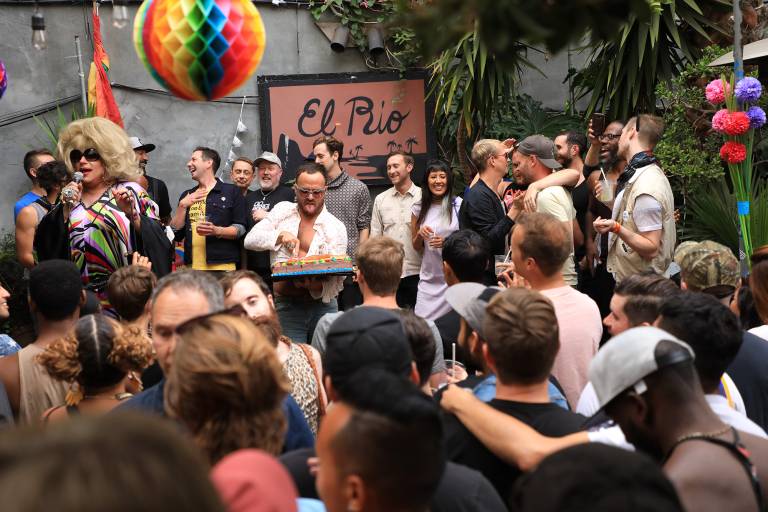
"caption": "Crowd mingling a past event at El Rio, a queer bar in San Francisco's Mission District. The bar will host a \"Melt the Ice Fest\" dance party on Jan. 18, 2026, to raise money to support local families affected by ICE.",
"credit": "Shot in the City, courtesy of El Rio",
"altTag": "Crowd mingling on a bar's outdoor patio. A pink sign in the back reads, \"El Rio.\"",
"description": null,
"imgSizes": {
"thumbnail": {
"file": "https://cdn.kqed.org/wp-content/uploads/sites/2/2026/01/El-Rio-Patio-4-160x107.jpg",
"width": 160,
"height": 107,
"mimeType": "image/jpeg"
},
"medium_large": {
"file": "https://cdn.kqed.org/wp-content/uploads/sites/2/2026/01/El-Rio-Patio-4-768x512.jpg",
"width": 768,
"height": 512,
"mimeType": "image/jpeg"
},
"1536x1536": {
"file": "https://cdn.kqed.org/wp-content/uploads/sites/2/2026/01/El-Rio-Patio-4-1536x1024.jpg",
"width": 1536,
"height": 1024,
"mimeType": "image/jpeg"
},
"post-thumbnail": {
"file": "https://cdn.kqed.org/wp-content/uploads/sites/2/2026/01/El-Rio-Patio-4-672x372.jpg",
"width": 672,
"height": 372,
"mimeType": "image/jpeg"
},
"twentyfourteen-full-width": {
"file": "https://cdn.kqed.org/wp-content/uploads/sites/2/2026/01/El-Rio-Patio-4-1038x576.jpg",
"width": 1038,
"height": 576,
"mimeType": "image/jpeg"
},
"npr-cds-wide": {
"file": "https://cdn.kqed.org/wp-content/uploads/sites/2/2026/01/El-Rio-Patio-4-1200x675.jpg",
"width": 1200,
"height": 675,
"mimeType": "image/jpeg"
},
"kqedFullSize": {
"file": "https://cdn.kqed.org/wp-content/uploads/sites/2/2026/01/El-Rio-Patio-4.jpg",
"width": 2000,
"height": 1333
}
},
"isLoading": false,
"fetchFailed": false
},
"arts_13982833": {
"type": "attachments",
"id": "arts_13982833",
"meta": {
"index": "attachments_1716263798",
"site": "arts",
"id": "13982833",
"found": true
},
"title": "HeroImage_SarahDavis",
"publishDate": 1761259702,
"status": "inherit",
"parent": 13982831,
"modified": 1761259908,
"caption": "Spiritual Cramp, formed in San Francisco in 2017, release their third album 'Rude' on Oct. 24, 2025.",
"credit": "Sarah Davis",
"altTag": "group of musicians pose on a street",
"description": null,
"imgSizes": {
"thumbnail": {
"file": "https://cdn.kqed.org/wp-content/uploads/sites/2/2025/10/HeroImage_SarahDavis-160x106.png",
"width": 160,
"height": 106,
"mimeType": "image/png"
},
"medium_large": {
"file": "https://cdn.kqed.org/wp-content/uploads/sites/2/2025/10/HeroImage_SarahDavis-768x511.png",
"width": 768,
"height": 511,
"mimeType": "image/png"
},
"post-thumbnail": {
"file": "https://cdn.kqed.org/wp-content/uploads/sites/2/2025/10/HeroImage_SarahDavis-672x372.png",
"width": 672,
"height": 372,
"mimeType": "image/png"
},
"twentyfourteen-full-width": {
"file": "https://cdn.kqed.org/wp-content/uploads/sites/2/2025/10/HeroImage_SarahDavis-1038x576.png",
"width": 1038,
"height": 576,
"mimeType": "image/png"
},
"kqedFullSize": {
"file": "https://cdn.kqed.org/wp-content/uploads/sites/2/2025/10/HeroImage_SarahDavis.png",
"width": 1200,
"height": 798
}
},
"isLoading": false,
"fetchFailed": false
},
"arts_13981673": {
"type": "attachments",
"id": "arts_13981673",
"meta": {
"index": "attachments_1716263798",
"site": "arts",
"id": "13981673",
"found": true
},
"title": "El Rey Impala",
"publishDate": 1758661204,
"status": "inherit",
"parent": 13981636,
"modified": 1758734631,
"caption": "Gypsy Rose, a vintage 1964 Chevrolet Impala, is one of the lowrider world's most famous custom cars.",
"credit": "National Musuem of American History",
"altTag": "A vintage 1963 Chevrolet Impala named “El Rey.”",
"description": null,
"imgSizes": {
"thumbnail": {
"file": "https://cdn.kqed.org/wp-content/uploads/sites/2/2025/09/KgJR7pRg-160x82.jpg",
"width": 160,
"height": 82,
"mimeType": "image/jpeg"
},
"medium_large": {
"file": "https://cdn.kqed.org/wp-content/uploads/sites/2/2025/09/KgJR7pRg-768x394.jpg",
"width": 768,
"height": 394,
"mimeType": "image/jpeg"
},
"1536x1536": {
"file": "https://cdn.kqed.org/wp-content/uploads/sites/2/2025/09/KgJR7pRg-1536x788.jpg",
"width": 1536,
"height": 788,
"mimeType": "image/jpeg"
},
"post-thumbnail": {
"file": "https://cdn.kqed.org/wp-content/uploads/sites/2/2025/09/KgJR7pRg-672x372.jpg",
"width": 672,
"height": 372,
"mimeType": "image/jpeg"
},
"twentyfourteen-full-width": {
"file": "https://cdn.kqed.org/wp-content/uploads/sites/2/2025/09/KgJR7pRg-1038x576.jpg",
"width": 1038,
"height": 576,
"mimeType": "image/jpeg"
},
"kqedFullSize": {
"file": "https://cdn.kqed.org/wp-content/uploads/sites/2/2025/09/KgJR7pRg.jpg",
"width": 1600,
"height": 821
}
},
"isLoading": false,
"fetchFailed": false
},
"arts_13980799": {
"type": "attachments",
"id": "arts_13980799",
"meta": {
"index": "attachments_1716263798",
"site": "arts",
"id": "13980799",
"found": true
},
"title": "BasementVHS_JamesGrossi",
"publishDate": 1756412632,
"status": "inherit",
"parent": 13980743,
"modified": 1756412688,
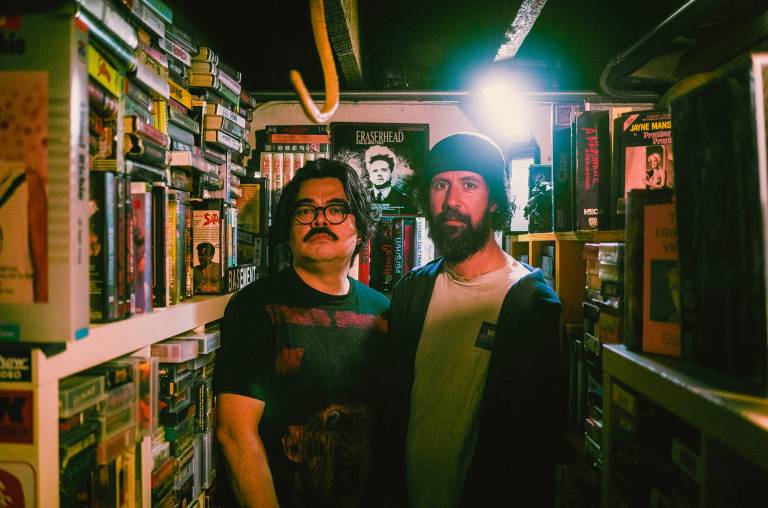
"caption": "The co-founders of Basement VHS, Mitsu Okubo and Luca Antonucci.",
"credit": "James Grossi",
"altTag": null,
"description": null,
"imgSizes": {
"thumbnail": {
"file": "https://cdn.kqed.org/wp-content/uploads/sites/2/2025/08/BasementVHS_JamesGrossi-160x106.jpg",
"width": 160,
"height": 106,
"mimeType": "image/jpeg"
},
"medium_large": {
"file": "https://cdn.kqed.org/wp-content/uploads/sites/2/2025/08/BasementVHS_JamesGrossi-768x508.jpg",
"width": 768,
"height": 508,
"mimeType": "image/jpeg"
},
"1536x1536": {
"file": "https://cdn.kqed.org/wp-content/uploads/sites/2/2025/08/BasementVHS_JamesGrossi-1536x1015.jpg",
"width": 1536,
"height": 1015,
"mimeType": "image/jpeg"
},
"post-thumbnail": {
"file": "https://cdn.kqed.org/wp-content/uploads/sites/2/2025/08/BasementVHS_JamesGrossi-672x372.jpg",
"width": 672,
"height": 372,
"mimeType": "image/jpeg"
},
"twentyfourteen-full-width": {
"file": "https://cdn.kqed.org/wp-content/uploads/sites/2/2025/08/BasementVHS_JamesGrossi-1038x576.jpg",
"width": 1038,
"height": 576,
"mimeType": "image/jpeg"
},
"kqedFullSize": {
"file": "https://cdn.kqed.org/wp-content/uploads/sites/2/2025/08/BasementVHS_JamesGrossi.jpg",
"width": 2000,
"height": 1322
}
},
"isLoading": false,
"fetchFailed": false
},
"arts_13977382": {
"type": "attachments",
"id": "arts_13977382",
"meta": {
"index": "attachments_1716263798",
"site": "arts",
"id": "13977382",
"found": true
},
"title": "teresita at proyecto",
"publishDate": 1749509834,
"status": "inherit",
"parent": 13977374,
"modified": 1750200405,
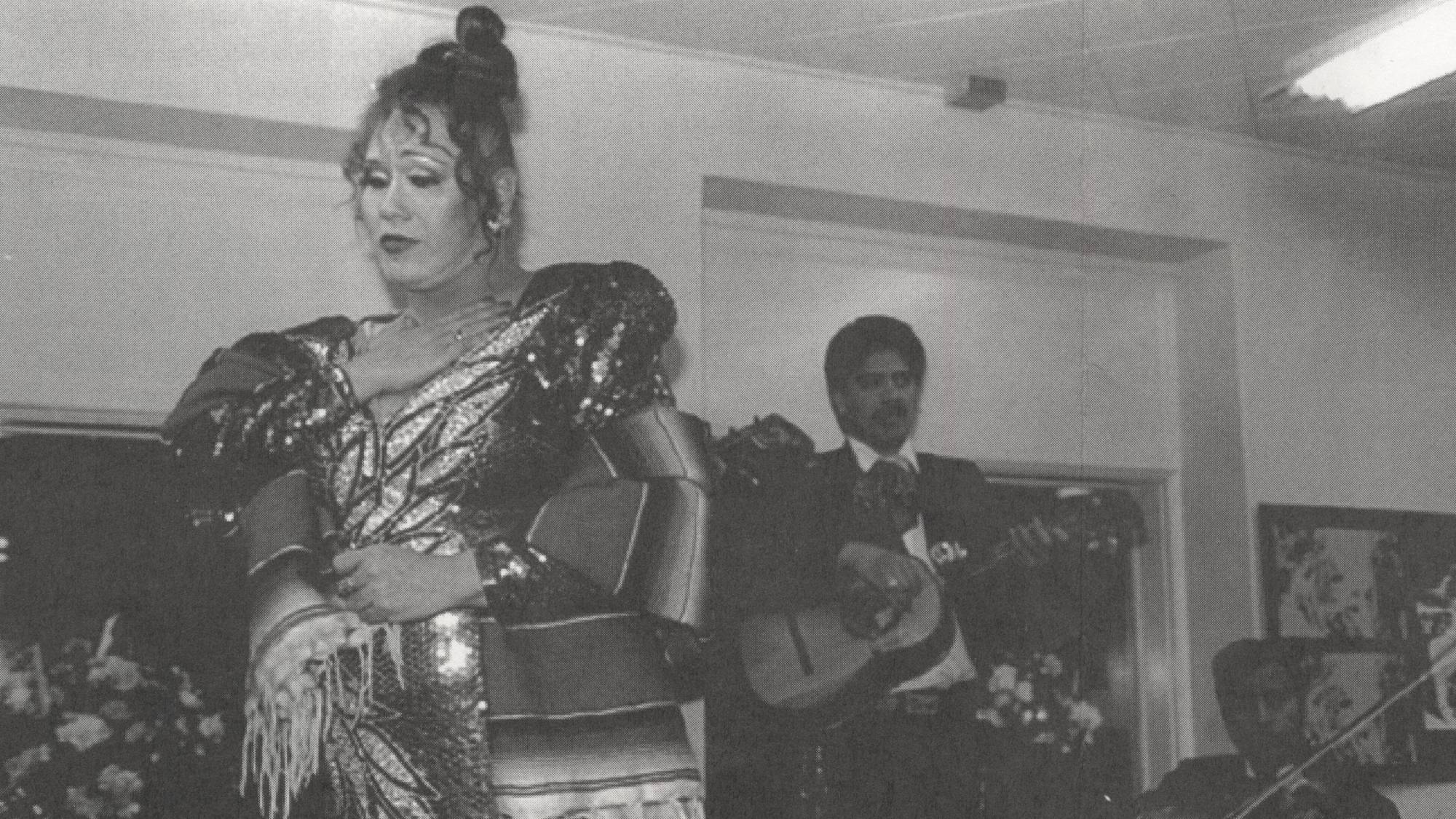
"caption": "Teresita La Campesina was one of the artists who worked with Proyecto ContraSIDA Por Vida on HIV/AIDS prevention in San Francisco's Latinx community. Ephemera collection, National Task Force on AIDS Prevention.",
"credit": "Photo by Augie Robles, courtesy of Gay, Lesbian, Bisexual Transgender Historical Society",
"altTag": null,
"description": "Licensed exclusively for Trans Bay - do not use in anything else. ",
"imgSizes": {
"medium": {
"file": "https://cdn.kqed.org/wp-content/uploads/sites/2/2025/06/teresita-at-proyecto-2000x1125.jpg",
"width": 2000,
"height": 1125,
"mimeType": "image/jpeg"
},
"large": {
"file": "https://cdn.kqed.org/wp-content/uploads/sites/2/2025/06/teresita-at-proyecto-2000x1125.jpg",
"width": 2000,
"height": 1125,
"mimeType": "image/jpeg"
},
"thumbnail": {
"file": "https://cdn.kqed.org/wp-content/uploads/sites/2/2025/06/teresita-at-proyecto-160x90.jpg",
"width": 160,
"height": 90,
"mimeType": "image/jpeg"
},
"medium_large": {
"file": "https://cdn.kqed.org/wp-content/uploads/sites/2/2025/06/teresita-at-proyecto-768x432.jpg",
"width": 768,
"height": 432,
"mimeType": "image/jpeg"
},
"1536x1536": {
"file": "https://cdn.kqed.org/wp-content/uploads/sites/2/2025/06/teresita-at-proyecto-1536x864.jpg",
"width": 1536,
"height": 864,
"mimeType": "image/jpeg"
},
"2048x2048": {
"file": "https://cdn.kqed.org/wp-content/uploads/sites/2/2025/06/teresita-at-proyecto-2048x1152.jpg",
"width": 2048,
"height": 1152,
"mimeType": "image/jpeg"
},
"post-thumbnail": {
"file": "https://cdn.kqed.org/wp-content/uploads/sites/2/2025/06/teresita-at-proyecto-672x372.jpg",
"width": 672,
"height": 372,
"mimeType": "image/jpeg"
},
"twentyfourteen-full-width": {
"file": "https://cdn.kqed.org/wp-content/uploads/sites/2/2025/06/teresita-at-proyecto-1038x576.jpg",
"width": 1038,
"height": 576,
"mimeType": "image/jpeg"
},
"full-width": {
"file": "https://cdn.kqed.org/wp-content/uploads/sites/2/2025/06/teresita-at-proyecto-2000x1125.jpg",
"width": 2000,
"height": 1125,
"mimeType": "image/jpeg"
},
"kqedFullSize": {
"file": "https://cdn.kqed.org/wp-content/uploads/sites/2/2025/06/teresita-at-proyecto-scaled.jpg",
"width": 2560,
"height": 1440
}
},
"isLoading": false,
"fetchFailed": false
},
"arts_13975254": {
"type": "attachments",
"id": "arts_13975254",
"meta": {
"index": "attachments_1716263798",
"site": "arts",
"id": "13975254",
"found": true
},
"title": "drawing room annex",
"publishDate": 1745457125,
"status": "inherit",
"parent": 13975248,
"modified": 1745457246,
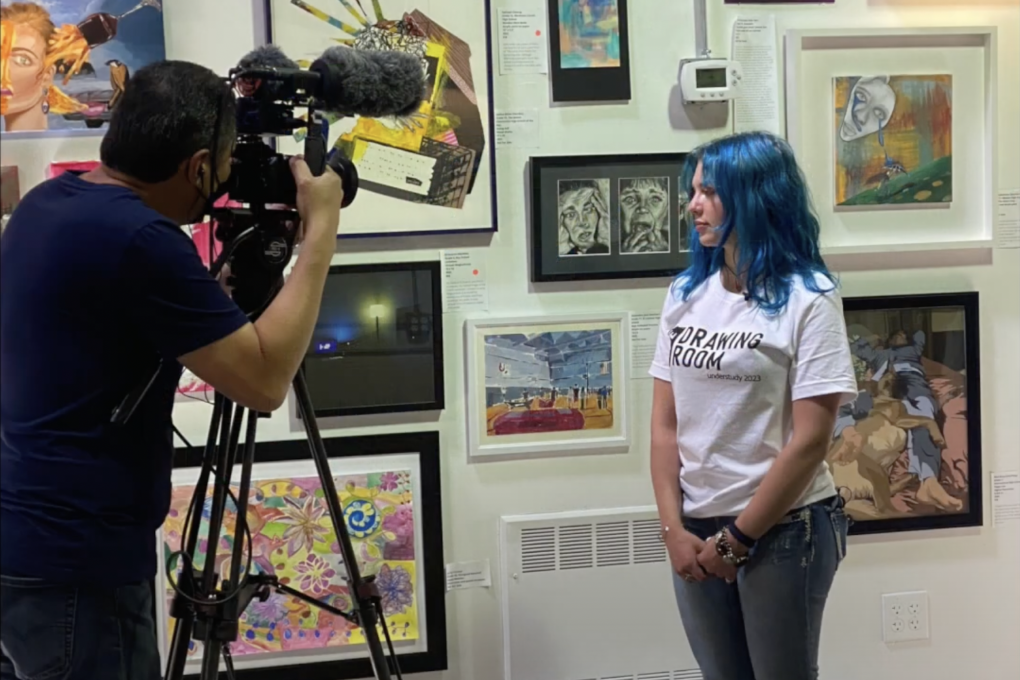
"caption": "A participant in The Drawing Room Annex's ‘High School Art Show’ in 2022. ",
"credit": "Courtesy of The Drawing Room Annex",
"altTag": "A teenage girl with blue hair wearing a white t-shirt and black jeans stands next a wall of artwork while a cameraman films her.",
"description": null,
"imgSizes": {
"medium": {
"file": "https://cdn.kqed.org/wp-content/uploads/sites/2/2025/04/drawing-room-annex-800x533.png",
"width": 800,
"height": 533,
"mimeType": "image/png"
},
"large": {
"file": "https://cdn.kqed.org/wp-content/uploads/sites/2/2025/04/drawing-room-annex-1020x680.png",
"width": 1020,
"height": 680,
"mimeType": "image/png"
},
"thumbnail": {
"file": "https://cdn.kqed.org/wp-content/uploads/sites/2/2025/04/drawing-room-annex-160x107.png",
"width": 160,
"height": 107,
"mimeType": "image/png"
},
"medium_large": {
"file": "https://cdn.kqed.org/wp-content/uploads/sites/2/2025/04/drawing-room-annex-768x512.png",
"width": 768,
"height": 512,
"mimeType": "image/png"
},
"1536x1536": {
"file": "https://cdn.kqed.org/wp-content/uploads/sites/2/2025/04/drawing-room-annex-1536x1024.png",
"width": 1536,
"height": 1024,
"mimeType": "image/png"
},
"post-thumbnail": {
"file": "https://cdn.kqed.org/wp-content/uploads/sites/2/2025/04/drawing-room-annex-672x372.png",
"width": 672,
"height": 372,
"mimeType": "image/png"
},
"twentyfourteen-full-width": {
"file": "https://cdn.kqed.org/wp-content/uploads/sites/2/2025/04/drawing-room-annex-1038x576.png",
"width": 1038,
"height": 576,
"mimeType": "image/png"
},
"full-width": {
"file": "https://cdn.kqed.org/wp-content/uploads/sites/2/2025/04/drawing-room-annex-1920x1280.png",
"width": 1920,
"height": 1280,
"mimeType": "image/png"
},
"kqedFullSize": {
"file": "https://cdn.kqed.org/wp-content/uploads/sites/2/2025/04/drawing-room-annex.png",
"width": 2000,
"height": 1333
}
},
"isLoading": false,
"fetchFailed": false
},
"arts_13974544": {
"type": "attachments",
"id": "arts_13974544",
"meta": {
"index": "attachments_1716263798",
"site": "arts",
"id": "13974544",
"found": true
},
"title": "IndieFest outside Roxie",
"publishDate": 1744672402,
"status": "inherit",
"parent": 13974460,
"modified": 1744672432,
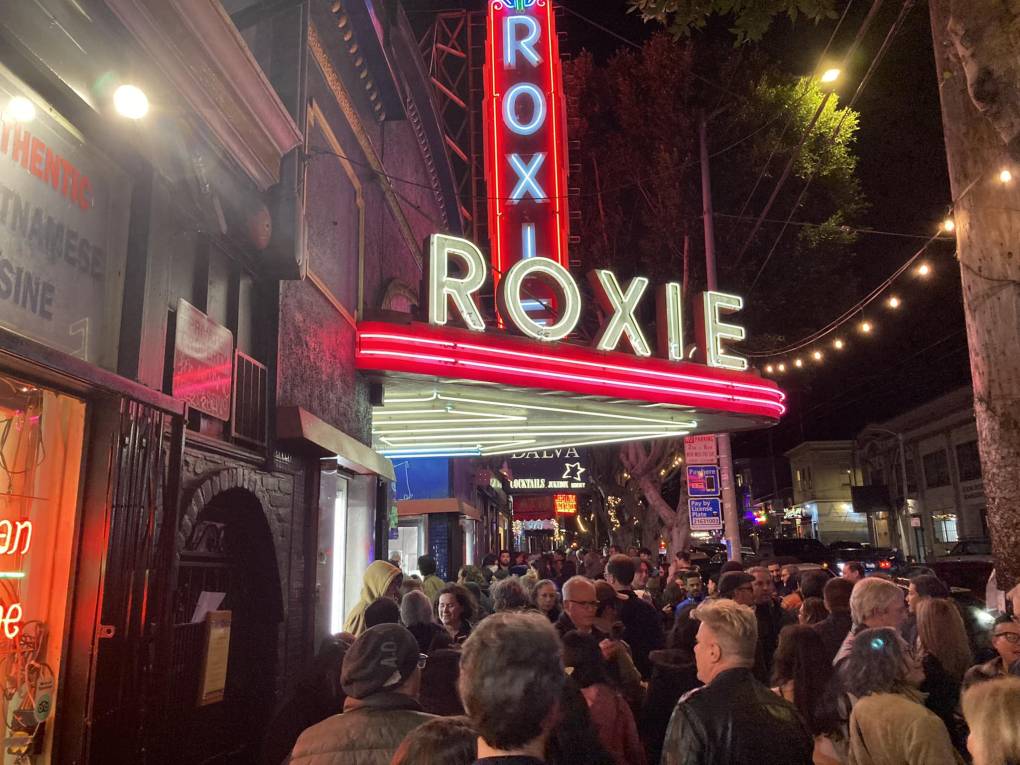
"caption": "A crowd gathers for IndieFest at the Roxie Theater in San Francisco. ",
"credit": "Courtesy Roxie Theater",
"altTag": null,
"description": null,
"imgSizes": {
"medium": {
"file": "https://cdn.kqed.org/wp-content/uploads/sites/2/2025/04/IndieFest-outside-Roxie-800x600.jpg",
"width": 800,
"height": 600,
"mimeType": "image/jpeg"
},
"large": {
"file": "https://cdn.kqed.org/wp-content/uploads/sites/2/2025/04/IndieFest-outside-Roxie-1020x765.jpg",
"width": 1020,
"height": 765,
"mimeType": "image/jpeg"
},
"thumbnail": {
"file": "https://cdn.kqed.org/wp-content/uploads/sites/2/2025/04/IndieFest-outside-Roxie-160x120.jpg",
"width": 160,
"height": 120,
"mimeType": "image/jpeg"
},
"medium_large": {
"file": "https://cdn.kqed.org/wp-content/uploads/sites/2/2025/04/IndieFest-outside-Roxie-768x576.jpg",
"width": 768,
"height": 576,
"mimeType": "image/jpeg"
},
"1536x1536": {
"file": "https://cdn.kqed.org/wp-content/uploads/sites/2/2025/04/IndieFest-outside-Roxie-1536x1152.jpg",
"width": 1536,
"height": 1152,
"mimeType": "image/jpeg"
},
"post-thumbnail": {
"file": "https://cdn.kqed.org/wp-content/uploads/sites/2/2025/04/IndieFest-outside-Roxie-672x372.jpg",
"width": 672,
"height": 372,
"mimeType": "image/jpeg"
},
"twentyfourteen-full-width": {
"file": "https://cdn.kqed.org/wp-content/uploads/sites/2/2025/04/IndieFest-outside-Roxie-1038x576.jpg",
"width": 1038,
"height": 576,
"mimeType": "image/jpeg"
},
"full-width": {
"file": "https://cdn.kqed.org/wp-content/uploads/sites/2/2025/04/IndieFest-outside-Roxie-1920x1440.jpg",
"width": 1920,
"height": 1440,
"mimeType": "image/jpeg"
},
"kqedFullSize": {
"file": "https://cdn.kqed.org/wp-content/uploads/sites/2/2025/04/IndieFest-outside-Roxie.jpg",
"width": 2048,
"height": 1536
}
},
"isLoading": false,
"fetchFailed": false
},
"arts_13971555": {
"type": "attachments",
"id": "arts_13971555",
"meta": {
"index": "attachments_1716263798",
"site": "arts",
"id": "13971555",
"found": true
},
"title": "lovers lane cropped 2",
"publishDate": 1738949940,
"status": "inherit",
"parent": 13971508,
"modified": 1738950063,
"caption": "Lovers Lane block party is a celebration of artists and activists in the Mission. ",
"credit": "Andrew Brobst",
"altTag": null,
"description": null,
"imgSizes": {
"medium": {
"file": "https://cdn.kqed.org/wp-content/uploads/sites/2/2025/02/lovers-lane-cropped-2-800x450.jpg",
"width": 800,
"height": 450,
"mimeType": "image/jpeg"
},
"large": {
"file": "https://cdn.kqed.org/wp-content/uploads/sites/2/2025/02/lovers-lane-cropped-2-1020x574.jpg",
"width": 1020,
"height": 574,
"mimeType": "image/jpeg"
},
"thumbnail": {
"file": "https://cdn.kqed.org/wp-content/uploads/sites/2/2025/02/lovers-lane-cropped-2-160x90.jpg",
"width": 160,
"height": 90,
"mimeType": "image/jpeg"
},
"medium_large": {
"file": "https://cdn.kqed.org/wp-content/uploads/sites/2/2025/02/lovers-lane-cropped-2-768x432.jpg",
"width": 768,
"height": 432,
"mimeType": "image/jpeg"
},
"1536x1536": {
"file": "https://cdn.kqed.org/wp-content/uploads/sites/2/2025/02/lovers-lane-cropped-2-1536x864.jpg",
"width": 1536,
"height": 864,
"mimeType": "image/jpeg"
},
"post-thumbnail": {
"file": "https://cdn.kqed.org/wp-content/uploads/sites/2/2025/02/lovers-lane-cropped-2-672x372.jpg",
"width": 672,
"height": 372,
"mimeType": "image/jpeg"
},
"twentyfourteen-full-width": {
"file": "https://cdn.kqed.org/wp-content/uploads/sites/2/2025/02/lovers-lane-cropped-2-1038x576.jpg",
"width": 1038,
"height": 576,
"mimeType": "image/jpeg"
},
"full-width": {
"file": "https://cdn.kqed.org/wp-content/uploads/sites/2/2025/02/lovers-lane-cropped-2-1920x1080.jpg",
"width": 1920,
"height": 1080,
"mimeType": "image/jpeg"
},
"kqedFullSize": {
"file": "https://cdn.kqed.org/wp-content/uploads/sites/2/2025/02/lovers-lane-cropped-2.jpg",
"width": 2000,
"height": 1125
}
},
"isLoading": false,
"fetchFailed": false
},
"arts_13966906": {
"type": "attachments",
"id": "arts_13966906",
"meta": {
"index": "attachments_1716263798",
"site": "arts",
"id": "13966906",
"found": true
},
"title": "IMG_0524 (1)-Edit",
"publishDate": 1729537590,
"status": "inherit",
"parent": 0,
"modified": 1729537793,
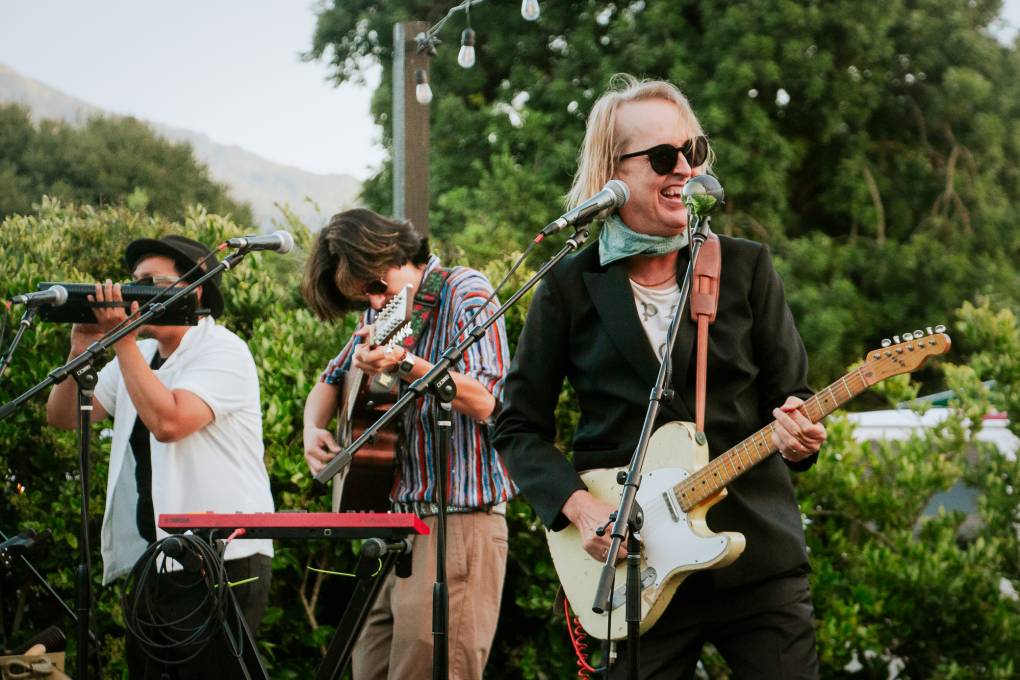
"caption": "Qiensave members Mario Cortez (left) and Alejandro Gomez perform with Chuck Prophet at Folktale Winery in Carmel on Aug. 21, 2024.",
"credit": "Folktale Winery ",
"altTag": "three men play in a band onstage",
"description": null,
"imgSizes": {
"medium": {
"file": "https://cdn.kqed.org/wp-content/uploads/sites/2/2024/10/IMG_0524-1-Edit-800x533.jpg",
"width": 800,
"height": 533,
"mimeType": "image/jpeg"
},
"large": {
"file": "https://cdn.kqed.org/wp-content/uploads/sites/2/2024/10/IMG_0524-1-Edit-1020x680.jpg",
"width": 1020,
"height": 680,
"mimeType": "image/jpeg"
},
"thumbnail": {
"file": "https://cdn.kqed.org/wp-content/uploads/sites/2/2024/10/IMG_0524-1-Edit-160x107.jpg",
"width": 160,
"height": 107,
"mimeType": "image/jpeg"
},
"medium_large": {
"file": "https://cdn.kqed.org/wp-content/uploads/sites/2/2024/10/IMG_0524-1-Edit-768x512.jpg",
"width": 768,
"height": 512,
"mimeType": "image/jpeg"
},
"1536x1536": {
"file": "https://cdn.kqed.org/wp-content/uploads/sites/2/2024/10/IMG_0524-1-Edit-1536x1024.jpg",
"width": 1536,
"height": 1024,
"mimeType": "image/jpeg"
},
"post-thumbnail": {
"file": "https://cdn.kqed.org/wp-content/uploads/sites/2/2024/10/IMG_0524-1-Edit-672x372.jpg",
"width": 672,
"height": 372,
"mimeType": "image/jpeg"
},
"twentyfourteen-full-width": {
"file": "https://cdn.kqed.org/wp-content/uploads/sites/2/2024/10/IMG_0524-1-Edit-1038x576.jpg",
"width": 1038,
"height": 576,
"mimeType": "image/jpeg"
},
"full-width": {
"file": "https://cdn.kqed.org/wp-content/uploads/sites/2/2024/10/IMG_0524-1-Edit-1920x1280.jpg",
"width": 1920,
"height": 1280,
"mimeType": "image/jpeg"
},
"kqedFullSize": {
"file": "https://cdn.kqed.org/wp-content/uploads/sites/2/2024/10/IMG_0524-1-Edit.jpg",
"width": 2000,
"height": 1333
}
},
"isLoading": false,
"fetchFailed": false
},
"arts_13966815": {
"type": "attachments",
"id": "arts_13966815",
"meta": {
"index": "attachments_1716263798",
"site": "arts",
"id": "13966815",
"found": true
},
"title": "Mitchell's-crop",
"publishDate": 1729210676,
"status": "inherit",
"parent": 13966812,
"modified": 1729210795,
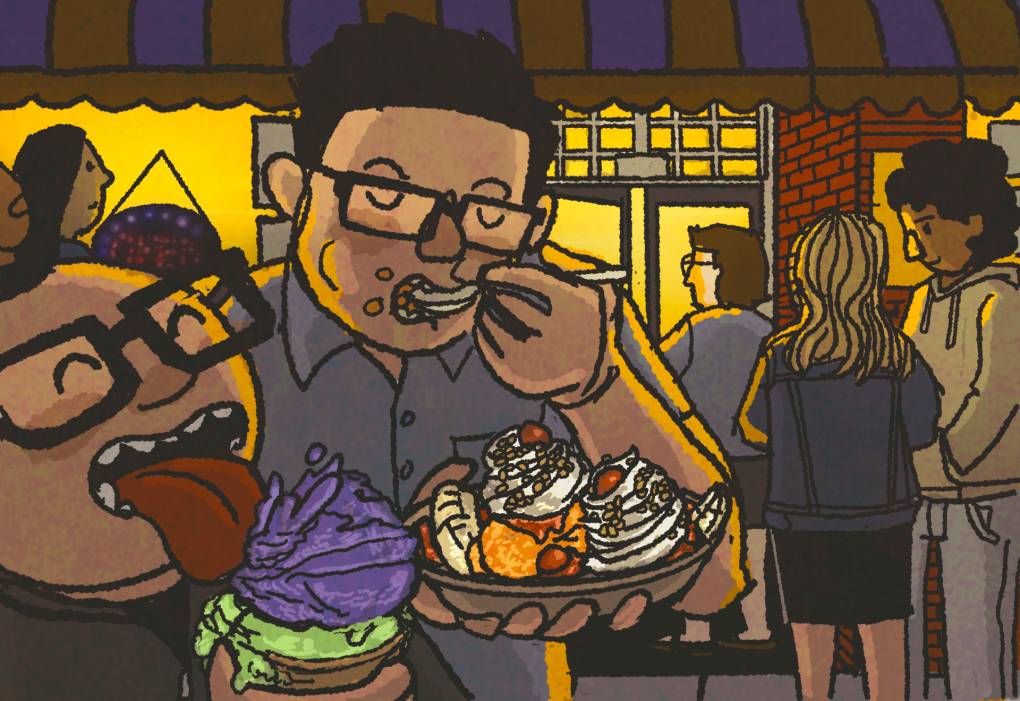
"caption": "A San Francisco classic since 1953, Mitchell's Ice Cream's Mission District shop is known for its tropical fruit flavors and its late-night hours.",
"credit": "Thien Pham",
"altTag": "Illustration: Two men eating ice cream outside an ice cream shop at night.",
"description": null,
"imgSizes": {
"medium": {
"file": "https://cdn.kqed.org/wp-content/uploads/sites/2/2024/10/Mitchells-crop-800x550.jpg",
"width": 800,
"height": 550,
"mimeType": "image/jpeg"
},
"large": {
"file": "https://cdn.kqed.org/wp-content/uploads/sites/2/2024/10/Mitchells-crop-1020x701.jpg",
"width": 1020,
"height": 701,
"mimeType": "image/jpeg"
},
"thumbnail": {
"file": "https://cdn.kqed.org/wp-content/uploads/sites/2/2024/10/Mitchells-crop-160x110.jpg",
"width": 160,
"height": 110,
"mimeType": "image/jpeg"
},
"medium_large": {
"file": "https://cdn.kqed.org/wp-content/uploads/sites/2/2024/10/Mitchells-crop-768x528.jpg",
"width": 768,
"height": 528,
"mimeType": "image/jpeg"
},
"1536x1536": {
"file": "https://cdn.kqed.org/wp-content/uploads/sites/2/2024/10/Mitchells-crop-1536x1056.jpg",
"width": 1536,
"height": 1056,
"mimeType": "image/jpeg"
},
"post-thumbnail": {
"file": "https://cdn.kqed.org/wp-content/uploads/sites/2/2024/10/Mitchells-crop-672x372.jpg",
"width": 672,
"height": 372,
"mimeType": "image/jpeg"
},
"twentyfourteen-full-width": {
"file": "https://cdn.kqed.org/wp-content/uploads/sites/2/2024/10/Mitchells-crop-1038x576.jpg",
"width": 1038,
"height": 576,
"mimeType": "image/jpeg"
},
"kqedFullSize": {
"file": "https://cdn.kqed.org/wp-content/uploads/sites/2/2024/10/Mitchells-crop.jpg",
"width": 1920,
"height": 1320
}
},
"isLoading": false,
"fetchFailed": false
},
"arts_13966066": {
"type": "attachments",
"id": "arts_13966066",
"meta": {
"index": "attachments_1716263798",
"site": "arts",
"id": "13966066",
"found": true
},
"title": "Barry McGee at KQED on Oct. 3, 2024.",
"publishDate": 1727990748,
"status": "inherit",
"parent": 0,
"modified": 1728621146,
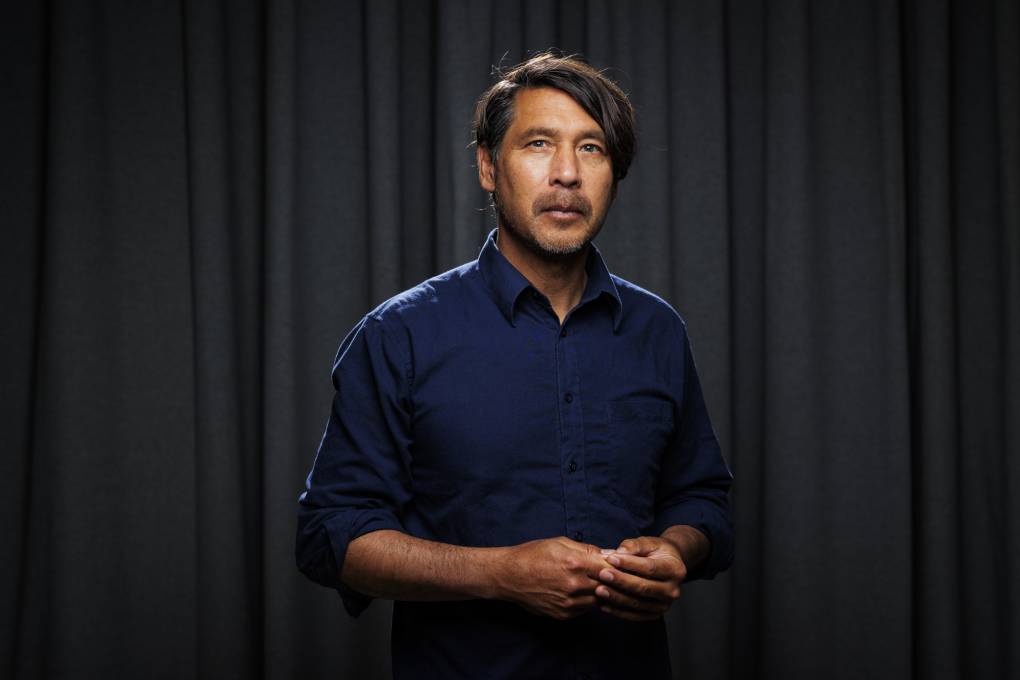
"caption": "Barry McGee poses for a portrait at KQED in San Francisco on Oct. 3, 2024. The Mission District artist is at a pivotal juncture, with his first major solo show in San Francisco in nearly 10 years.",
"credit": "Martin do Nascimento/KQED",
"altTag": null,
"description": null,
"imgSizes": {
"medium": {
"file": "https://cdn.kqed.org/wp-content/uploads/sites/2/2024/10/241003-BARRY-MCGEE-MD-06-KQED-800x533.jpg",
"width": 800,
"height": 533,
"mimeType": "image/jpeg"
},
"large": {
"file": "https://cdn.kqed.org/wp-content/uploads/sites/2/2024/10/241003-BARRY-MCGEE-MD-06-KQED-1020x680.jpg",
"width": 1020,
"height": 680,
"mimeType": "image/jpeg"
},
"thumbnail": {
"file": "https://cdn.kqed.org/wp-content/uploads/sites/2/2024/10/241003-BARRY-MCGEE-MD-06-KQED-160x107.jpg",
"width": 160,
"height": 107,
"mimeType": "image/jpeg"
},
"medium_large": {
"file": "https://cdn.kqed.org/wp-content/uploads/sites/2/2024/10/241003-BARRY-MCGEE-MD-06-KQED-768x512.jpg",
"width": 768,
"height": 512,
"mimeType": "image/jpeg"
},
"1536x1536": {
"file": "https://cdn.kqed.org/wp-content/uploads/sites/2/2024/10/241003-BARRY-MCGEE-MD-06-KQED-1536x1024.jpg",
"width": 1536,
"height": 1024,
"mimeType": "image/jpeg"
},
"post-thumbnail": {
"file": "https://cdn.kqed.org/wp-content/uploads/sites/2/2024/10/241003-BARRY-MCGEE-MD-06-KQED-672x372.jpg",
"width": 672,
"height": 372,
"mimeType": "image/jpeg"
},
"twentyfourteen-full-width": {
"file": "https://cdn.kqed.org/wp-content/uploads/sites/2/2024/10/241003-BARRY-MCGEE-MD-06-KQED-1038x576.jpg",
"width": 1038,
"height": 576,
"mimeType": "image/jpeg"
},
"full-width": {
"file": "https://cdn.kqed.org/wp-content/uploads/sites/2/2024/10/241003-BARRY-MCGEE-MD-06-KQED-1920x1280.jpg",
"width": 1920,
"height": 1280,
"mimeType": "image/jpeg"
},
"kqedFullSize": {
"file": "https://cdn.kqed.org/wp-content/uploads/sites/2/2024/10/241003-BARRY-MCGEE-MD-06-KQED.jpg",
"width": 2000,
"height": 1333
}
},
"isLoading": false,
"fetchFailed": false
},
"arts_13963441": {
"type": "attachments",
"id": "arts_13963441",
"meta": {
"index": "attachments_1716263798",
"site": "arts",
"id": "13963441",
"found": true
},
"title": "Emmys-crop",
"publishDate": 1724975141,
"status": "inherit",
"parent": 13963437,
"modified": 1724975264,
"caption": "Emmy's Spaghetti Shack has been open in the Mission Bernal area of San Francisco for more than 20 years.",
"credit": "Thien Pham",
"altTag": "Illustration: red and purple front facade of a restaurant at nighttime. The sign reads, \"Emmy's\" in cursive.",
"description": null,
"imgSizes": {
"medium": {
"file": "https://cdn.kqed.org/wp-content/uploads/sites/2/2024/08/Emmys-crop-800x450.jpg",
"width": 800,
"height": 450,
"mimeType": "image/jpeg"
},
"large": {
"file": "https://cdn.kqed.org/wp-content/uploads/sites/2/2024/08/Emmys-crop-1020x574.jpg",
"width": 1020,
"height": 574,
"mimeType": "image/jpeg"
},
"thumbnail": {
"file": "https://cdn.kqed.org/wp-content/uploads/sites/2/2024/08/Emmys-crop-160x90.jpg",
"width": 160,
"height": 90,
"mimeType": "image/jpeg"
},
"medium_large": {
"file": "https://cdn.kqed.org/wp-content/uploads/sites/2/2024/08/Emmys-crop-768x432.jpg",
"width": 768,
"height": 432,
"mimeType": "image/jpeg"
},
"1536x1536": {
"file": "https://cdn.kqed.org/wp-content/uploads/sites/2/2024/08/Emmys-crop-1536x864.jpg",
"width": 1536,
"height": 864,
"mimeType": "image/jpeg"
},
"post-thumbnail": {
"file": "https://cdn.kqed.org/wp-content/uploads/sites/2/2024/08/Emmys-crop-672x372.jpg",
"width": 672,
"height": 372,
"mimeType": "image/jpeg"
},
"twentyfourteen-full-width": {
"file": "https://cdn.kqed.org/wp-content/uploads/sites/2/2024/08/Emmys-crop-1038x576.jpg",
"width": 1038,
"height": 576,
"mimeType": "image/jpeg"
},
"kqedFullSize": {
"file": "https://cdn.kqed.org/wp-content/uploads/sites/2/2024/08/Emmys-crop.jpg",
"width": 1920,
"height": 1080
}
},
"isLoading": false,
"fetchFailed": false
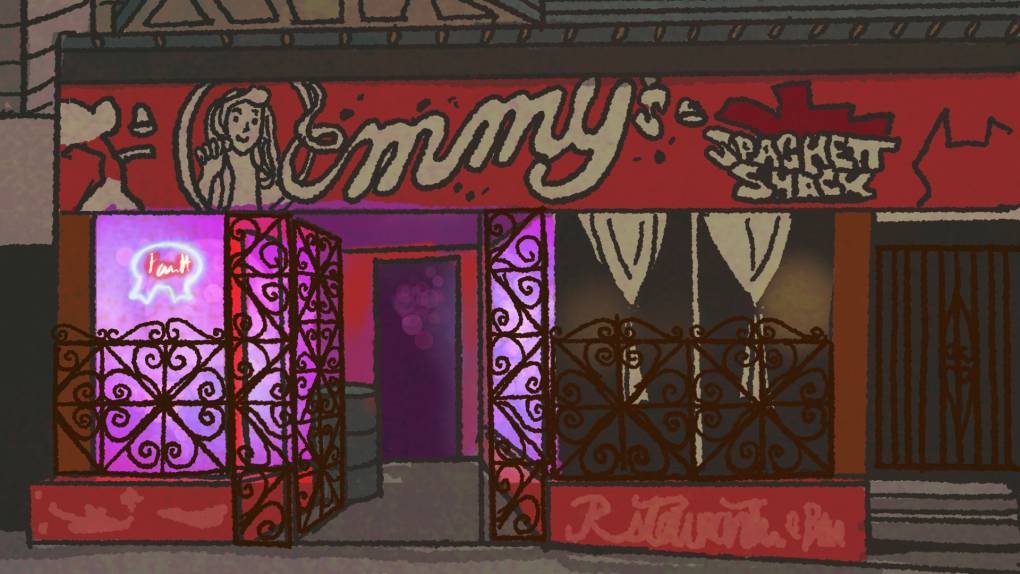
}
},
"audioPlayerReducer": {
"postId": "stream_live",
"isPaused": true,
"isPlaying": false,
"pfsActive": false,
"pledgeModalIsOpen": true,
"playerDrawerIsOpen": false,
"liveAudioPlayStartedAt": 0,
"liveAudioPlayContext": ""
},
"authorsReducer": {
"byline_arts_13982831": {
"type": "authors",
"id": "byline_arts_13982831",
"meta": {
"override": true
},
"slug": "byline_arts_13982831",
"name": "Adrian Spinelli",
"isLoading": false
},
"gmeline": {
"type": "authors",
"id": "185",
"meta": {
"index": "authors_1716337520",
"id": "185",
"found": true
},
"name": "Gabe Meline",
"firstName": "Gabe",
"lastName": "Meline",
"slug": "gmeline",
"email": "gmeline@kqed.org",
"display_author_email": true,
"staff_mastheads": [
"arts"
],
"title": "Senior Editor, KQED Arts & Culture",
"bio": "Gabe Meline entered journalism at age 15 making photocopied zines, and has since earned awards from the Edward R. Murrow Awards, the Society for Professional Journalists, the Online Journalism Awards, the Association of Alternative Newsweeklies and the California Newspaper Publishers Association. Prior to KQED, he was the editor of the \u003cem>North Bay Bohemian\u003c/em> and a touring musician. He lives with his wife and daughter in his hometown of Santa Rosa, CA.",
"avatar": "https://secure.gravatar.com/avatar/5bebe57be0d8bc2dd318934feb47299e2d2d10cba28d09d8d7afb389a2ce2bdd?s=600&d=blank&r=g",
"twitter": null,
"bluesky": null,
"facebook": null,
"instagram": null,
"linkedin": null,
"sites": [
{
"site": "",
"roles": [
"editor"
]
},
{
"site": "arts",
"roles": [
"administrator"
]
},
{
"site": "artschool",
"roles": [
"editor"
]
},
{
"site": "news",
"roles": [
"author"
]
},
{
"site": "pop",
"roles": [
"editor"
]
},
{
"site": "bayareabites",
"roles": [
"editor"
]
},
{
"site": "food",
"roles": [
"editor"
]
},
{
"site": "forum",
"roles": [
"administrator"
]
},
{
"site": "liveblog",
"roles": [
"editor"
]
},
{
"site": "hiphop",
"roles": [
"editor"
]
}
],
"headData": {
"title": "Gabe Meline | KQED",
"description": "Senior Editor, KQED Arts & Culture",
"ogImgSrc": "https://secure.gravatar.com/avatar/5bebe57be0d8bc2dd318934feb47299e2d2d10cba28d09d8d7afb389a2ce2bdd?s=600&d=blank&r=g",
"twImgSrc": "https://secure.gravatar.com/avatar/5bebe57be0d8bc2dd318934feb47299e2d2d10cba28d09d8d7afb389a2ce2bdd?s=600&d=blank&r=g"
},
"isLoading": false,
"link": "/author/gmeline"
},
"esilvers": {
"type": "authors",
"id": "7237",
"meta": {
"index": "authors_1716337520",
"id": "7237",
"found": true
},
"name": "Emma Silvers",
"firstName": "Emma",
"lastName": "Silvers",
"slug": "esilvers",
"email": "esilvers@kqed.org",
"display_author_email": false,
"staff_mastheads": [],
"title": "KQED Contributor",
"bio": "Emma Silvers is an editor at KQED Arts and a former digital producer at KQED News. Born and raised in the Bay Area, she has previously been an arts and entertainment editor at the \u003cem>San Francisco Chronicle\u003c/em>, \u003cem>SF Weekly\u003c/em> and the \u003cem>San Francisco Bay Guardian.\u003c/em> \u003ca href=\"https://www.emmasilvers.com\">Her work\u003c/a> has also appeared in \u003cem>Rolling Stone\u003c/em>, Pitchfork and \u003cem>Mother Jones\u003c/em>. In 2017 she was the recipient of the Society of Professional Journalists-Northern California's award for arts and culture reporting. In 1993 she \u003ca href=\"https://www.kqed.org/pop/16759/wait-what-my-coworker-was-a-voice-over-hyperventilator-for-jurassic-park\">hyperventilated in \u003cem>Jurassic Park\u003c/em>\u003c/a>.",
"avatar": "https://secure.gravatar.com/avatar/247beada39b88ea5759db1f51dba05cf?s=600&d=blank&r=g",
"twitter": "emmaruthless",
"facebook": null,
"instagram": null,
"linkedin": null,
"sites": [
{
"site": "arts",
"roles": [
"editor"
]
},
{
"site": "news",
"roles": [
"editor"
]
},
{
"site": "pop",
"roles": [
"contributor"
]
},
{
"site": "bayareabites",
"roles": [
"editor"
]
},
{
"site": "food",
"roles": [
"contributor"
]
},
{
"site": "liveblog",
"roles": [
"editor"
]
}
],
"headData": {
"title": "Emma Silvers | KQED",
"description": "KQED Contributor",
"ogImgSrc": "https://secure.gravatar.com/avatar/247beada39b88ea5759db1f51dba05cf?s=600&d=blank&r=g",
"twImgSrc": "https://secure.gravatar.com/avatar/247beada39b88ea5759db1f51dba05cf?s=600&d=blank&r=g"
},
"isLoading": false,
"link": "/author/esilvers"
},
"ralexandra": {
"type": "authors",
"id": "11242",
"meta": {
"index": "authors_1716337520",
"id": "11242",
"found": true
},
"name": "Rae Alexandra",
"firstName": "Rae",
"lastName": "Alexandra",
"slug": "ralexandra",
"email": "ralexandra@kqed.org",
"display_author_email": true,
"staff_mastheads": [],
"title": "Reporter/Producer",
"bio": "Rae Alexandra is a Reporter/Producer for KQED Arts & Culture, and the creator/author of the \u003ca href=\"https://www.kqed.org/arts/program/rebel-girls-from-bay-area-history\">Rebel Girls From Bay Area History\u003c/a> and \u003ca href=\"https://www.kqed.org/bizarrebayarea\">Bizarre Bay Area\u003c/a> series. Her debut book, \u003ca href=\"https://citylights.com/politics-current-events-history/unsung-heroines35-women-who-changed/\">Unsung Heroines: 35 Women Who Changed the Bay Area\u003c/a> was published by City Lights in March 2026. In 2023, Rae was awarded an SPJ Excellence in Journalism Award for Arts & Culture. Rae was born and raised in Wales and subsequently — even after two decades in Northern California — still uses phrases that regularly baffle her coworkers.",
"avatar": "https://secure.gravatar.com/avatar/edfee8176c80cc0a382b051190f5341997df378a934a5774dcb0977732dfd401?s=600&d=blank&r=g",
"twitter": null,
"bluesky": null,
"facebook": null,
"instagram": null,
"linkedin": null,
"sites": [
{
"site": "arts",
"roles": [
"subscriber"
]
},
{
"site": "news",
"roles": [
"subscriber"
]
},
{
"site": "pop",
"roles": [
"subscriber"
]
},
{
"site": "bayareabites",
"roles": [
"subscriber"
]
},
{
"site": "science",
"roles": [
"subscriber"
]
}
],
"headData": {
"title": "Rae Alexandra | KQED",
"description": "Reporter/Producer",
"ogImgSrc": "https://secure.gravatar.com/avatar/edfee8176c80cc0a382b051190f5341997df378a934a5774dcb0977732dfd401?s=600&d=blank&r=g",
"twImgSrc": "https://secure.gravatar.com/avatar/edfee8176c80cc0a382b051190f5341997df378a934a5774dcb0977732dfd401?s=600&d=blank&r=g"
},
"isLoading": false,
"link": "/author/ralexandra"
},
"nvoynovskaya": {
"type": "authors",
"id": "11387",
"meta": {
"index": "authors_1716337520",
"id": "11387",
"found": true
},
"name": "Nastia Voynovskaya",
"firstName": "Nastia",
"lastName": "Voynovskaya",
"slug": "nvoynovskaya",
"email": "nvoynovskaya@kqed.org",
"display_author_email": false,
"staff_mastheads": [
"arts"
],
"title": "Editor and reporter",
"bio": "Nastia Voynovskaya is a reporter, editor and host at KQED Arts & Culture. She's been covering the arts in the Bay Area for over a decade, with a focus on music, queer culture, labor issues and grassroots organizing. She has edited KQED story series such as Trans Bay: A History of San Francisco's Gender-Diverse Community, and co-created KQED's Bay Area hip-hop history project, That's My Word. Nastia's work has been recognized by the Society of Professional Journalists and San Francisco Press Club. She regularly appears on podcasts and radio programs, including NPR's All Songs Considered, and hosts live events where music, culture and conversation meet.",
"avatar": "https://secure.gravatar.com/avatar/5025ee460e5a85d69ca20ea6c6f2f80d7e17795c828f61ea3aecfcd924e9042e?s=600&d=blank&r=g",
"twitter": null,
"bluesky": null,
"facebook": null,
"instagram": "https://www.instagram.com/nananastia/",
"linkedin": null,
"sites": [
{
"site": "",
"roles": [
"editor"
]
},
{
"site": "arts",
"roles": [
"administrator"
]
},
{
"site": "news",
"roles": [
"editor"
]
},
{
"site": "pop",
"roles": [
"administrator"
]
},
{
"site": "bayareabites",
"roles": [
"editor"
]
},
{
"site": "podcasts",
"roles": [
"editor"
]
},
{
"site": "hiphop",
"roles": [
"editor"
]
}
],
"headData": {
"title": "Nastia Voynovskaya | KQED",
"description": "Editor and reporter",
"ogImgSrc": "https://secure.gravatar.com/avatar/5025ee460e5a85d69ca20ea6c6f2f80d7e17795c828f61ea3aecfcd924e9042e?s=600&d=blank&r=g",
"twImgSrc": "https://secure.gravatar.com/avatar/5025ee460e5a85d69ca20ea6c6f2f80d7e17795c828f61ea3aecfcd924e9042e?s=600&d=blank&r=g"
},
"isLoading": false,
"link": "/author/nvoynovskaya"
},
"ogpenn": {
"type": "authors",
"id": "11491",
"meta": {
"index": "authors_1716337520",
"id": "11491",
"found": true
},
"name": "Pendarvis Harshaw",
"firstName": "Pendarvis",
"lastName": "Harshaw",
"slug": "ogpenn",
"email": "ogpenn@gmail.com",
"display_author_email": false,
"staff_mastheads": [
"arts"
],
"title": "Community Engagement Reporter",
"bio": "Pendarvis Harshaw is an educator, host and writer with KQED Arts.",
"avatar": "https://secure.gravatar.com/avatar/972b77ee8e3f346ae2b00622661187fbfabd059b5693bbdc1475ea7a722fd4cd?s=600&d=blank&r=g",
"twitter": null,
"bluesky": null,
"facebook": null,
"instagram": "ogpenn",
"linkedin": null,
"sites": [
{
"site": "arts",
"roles": [
"administrator"
]
},
{
"site": "news",
"roles": [
"editor"
]
},
{
"site": "bayareabites",
"roles": [
"author"
]
},
{
"site": "hiphop",
"roles": [
"editor"
]
}
],
"headData": {
"title": "Pendarvis Harshaw | KQED",
"description": "Community Engagement Reporter",
"ogImgSrc": "https://secure.gravatar.com/avatar/972b77ee8e3f346ae2b00622661187fbfabd059b5693bbdc1475ea7a722fd4cd?s=600&d=blank&r=g",
"twImgSrc": "https://secure.gravatar.com/avatar/972b77ee8e3f346ae2b00622661187fbfabd059b5693bbdc1475ea7a722fd4cd?s=600&d=blank&r=g"
},
"isLoading": false,
"link": "/author/ogpenn"
},
"ccabreralomeli": {
"type": "authors",
"id": "11708",
"meta": {
"index": "authors_1716337520",
"id": "11708",
"found": true
},
"name": "Carlos Cabrera-Lomelí",
"firstName": "Carlos",
"lastName": "Cabrera-Lomelí",
"slug": "ccabreralomeli",
"email": "ccabreralomeli@KQED.org",
"display_author_email": true,
"staff_mastheads": [
"news"
],
"title": "Community Reporter",
"bio": "Carlos Cabrera-Lomelí is a community reporter with KQED's digital engagement team. He also reports and co-produces for KQED's bilingual news hub KQED en Español. He grew up in San Francisco's Mission District and has previously worked with Univision, 48 Hills and REFORMA in Mexico City.",
"avatar": "https://secure.gravatar.com/avatar/c309be9665e484f887b818c89e273ecc673004f426f36b24d00a4d813a2e0518?s=600&d=blank&r=g",
"twitter": "@LomeliCabrera",
"bluesky": null,
"facebook": null,
"instagram": null,
"linkedin": null,
"sites": [
{
"site": "arts",
"roles": [
"editor"
]
},
{
"site": "news",
"roles": [
"editor"
]
},
{
"site": "about",
"roles": [
"editor"
]
},
{
"site": "science",
"roles": [
"editor"
]
},
{
"site": "perspectives",
"roles": [
"editor"
]
},
{
"site": "elections",
"roles": [
"editor"
]
},
{
"site": "liveblog",
"roles": [
"contributor"
]
}
],
"headData": {
"title": "Carlos Cabrera-Lomelí | KQED",
"description": "Community Reporter",
"ogImgSrc": "https://secure.gravatar.com/avatar/c309be9665e484f887b818c89e273ecc673004f426f36b24d00a4d813a2e0518?s=600&d=blank&r=g",
"twImgSrc": "https://secure.gravatar.com/avatar/c309be9665e484f887b818c89e273ecc673004f426f36b24d00a4d813a2e0518?s=600&d=blank&r=g"
},
"isLoading": false,
"link": "/author/ccabreralomeli"
},
"ltsai": {
"type": "authors",
"id": "11743",
"meta": {
"index": "authors_1716337520",
"id": "11743",
"found": true
},
"name": "Luke Tsai",
"firstName": "Luke",
"lastName": "Tsai",
"slug": "ltsai",
"email": "ltsai@kqed.org",
"display_author_email": true,
"staff_mastheads": [
"arts"
],
"title": "Food Editor",
"bio": "Luke Tsai is KQED's food editor and resident stinky tofu connoisseur. Prior to KQED, he was an editor at Eater SF, \u003cem>San Francisco \u003c/em>magazine, and the \u003cem>East Bay Express\u003c/em>, and his work has also appeared in TASTE, the \u003cem>San Francisco Chronicle\u003c/em>, and the \u003cem>Best Food Writing\u003c/em> anthology. When he isn't writing or editing, you'll find him eating most everything he can get his hands on.",
"avatar": "https://secure.gravatar.com/avatar/1e59b45bf191526e7339d6ba46e33a57b2030d25c27660ecc64ea3cb863e34f7?s=600&d=blank&r=g",
"twitter": "theluketsai",
"bluesky": null,
"facebook": null,
"instagram": null,
"linkedin": null,
"sites": [
{
"site": "",
"roles": [
"editor"
]
},
{
"site": "arts",
"roles": [
"administrator"
]
},
{
"site": "news",
"roles": [
"editor",
"contributor"
]
},
{
"site": "bayareabites",
"roles": [
"editor"
]
},
{
"site": "food",
"roles": [
"editor"
]
}
],
"headData": {
"title": "Luke Tsai | KQED",
"description": "Food Editor",
"ogImgSrc": "https://secure.gravatar.com/avatar/1e59b45bf191526e7339d6ba46e33a57b2030d25c27660ecc64ea3cb863e34f7?s=600&d=blank&r=g",
"twImgSrc": "https://secure.gravatar.com/avatar/1e59b45bf191526e7339d6ba46e33a57b2030d25c27660ecc64ea3cb863e34f7?s=600&d=blank&r=g"
},
"isLoading": false,
"link": "/author/ltsai"
},
"tpham": {
"type": "authors",
"id": "11753",
"meta": {
"index": "authors_1716337520",
"id": "11753",
"found": true
},
"name": "Thien Pham",
"firstName": "Thien",
"lastName": "Pham",
"slug": "tpham",
"email": "thiendog@gmail.com",
"display_author_email": false,
"staff_mastheads": [],
"title": "KQED Contributor",
"bio": null,
"avatar": "https://secure.gravatar.com/avatar/a5b4729969ad46d88e7b9ec9dd4f3fa6af84dd0fa8fa91f01d8d9481694999bc?s=600&d=blank&r=g",
"twitter": null,
"bluesky": null,
"facebook": null,
"instagram": null,
"linkedin": null,
"sites": [
{
"site": "arts",
"roles": [
"contributor"
]
}
],
"headData": {
"title": "Thien Pham | KQED",
"description": "KQED Contributor",
"ogImgSrc": "https://secure.gravatar.com/avatar/a5b4729969ad46d88e7b9ec9dd4f3fa6af84dd0fa8fa91f01d8d9481694999bc?s=600&d=blank&r=g",
"twImgSrc": "https://secure.gravatar.com/avatar/a5b4729969ad46d88e7b9ec9dd4f3fa6af84dd0fa8fa91f01d8d9481694999bc?s=600&d=blank&r=g"
},
"isLoading": false,
"link": "/author/tpham"
}
},
"pagesReducer": {
"arts_tag_mission-district": {
"type": "terms",
"id": "arts_1257",
"meta": {
"index": "terms_1716263798",
"site": "arts",
"id": "1257",
"score": 8.669338
},
"featImg": null,
"name": "Mission District",
"description": null,
"taxonomy": "tag",
"headData": {
"twImgId": null,
"twTitle": null,
"ogTitle": null,
"ogImgId": null,
"twDescription": null,
"description": null,
"title": "Mission District Archives | KQED Arts",
"ogDescription": null
},
"ttid": 1269,
"slug": "mission-district",
"isLoading": false,
"title": "Mission District",
"pageMeta": {
"site": "arts",
"WpPageTemplate": "page-topic-editorial",
"currentPage": 2
},
"blocks": [
{
"blockName": "kqed/post-list",
"attrs": {
"layout": "cardArticle2",
"query": "posts/arts?tag=mission-district",
"seeMore": false,
"paginated": true,
"page": 2
}
},
{
"blockName": "kqed/ad"
}
]
}
},
"pfsSessionReducer": {},
"postsReducer": {
"stream_live": {
"type": "live",
"id": "stream_live",
"audioUrl": "https://streams.kqed.org/kqedradio",
"title": "Live Stream",
"excerpt": "Live Stream information currently unavailable.",
"link": "/radio",
"featImg": "",
"label": {
"name": "KQED Live",
"link": "/"
}
},
"stream_kqedNewscast": {
"type": "posts",
"id": "stream_kqedNewscast",
"audioUrl": "https://www.kqed.org/.stream/anon/radio/RDnews/newscast.mp3?_=1",
"title": "KQED Newscast",
"featImg": "",
"label": {
"name": "88.5 FM",
"link": "/"
}
},
"arts_13985494": {
"type": "posts",
"id": "arts_13985494",
"meta": {
"index": "posts_1716263798",
"site": "arts",
"id": "13985494",
"score": null,
"sort": [
1768572059000
]
},
"guestAuthors": [],
"slug": "melt-the-ice-el-rio-fundraiser-dance-party-mission-sf",
"title": "A Mission District Dance Party Wants to ‘Melt the ICE’",
"publishDate": 1768572059,
"format": "standard",
"headTitle": "A Mission District Dance Party Wants to ‘Melt the ICE’ | KQED",
"labelTerm": {},
"content": "\u003cp>This Sunday, like so many other nights at the \u003ca href=\"https://www.kqed.org/arts/tag/mission-district\">Mission District\u003c/a> queer bar \u003ca href=\"https://www.elriosf.com/\">El Rio\u003c/a>, the dance floor will fill up with partygoers getting down to a live set of Latin fusion beats. There will be a full lineup of all trans DJs. There will be homemade tamales.\u003c/p>\n\u003cp>But the goal of this dance party won’t \u003cem>only \u003c/em>be for everyone to have a good time. Organized by the queer mutual aid collective \u003ca href=\"https://www.instagram.com/abundancealchemy_bayarea/\">Abundance Alchemy\u003c/a>, the Jan. 18 event will double as a fundraiser to support Bay Area families impacted by the recent spate of ICE deportation crackdowns — and as a form of grassroots resistance, its organizers say.\u003c/p>\n\u003cp>The name of the party? The \u003ca href=\"https://www.instagram.com/abundancealchemy_bayarea/\">Melt the ICE Fest\u003c/a>.\u003c/p>\n\u003cp>Collective member Yara, an Oakland-based visual artist, explains that Abundance Alchemy formed in late in 2023 in response to the widespread death and destruction happening in Gaza, as well as the police crackdowns on protests right here in the Bay Area. The idea, Yara says, was to figure out how folks could mobilize to help ease some of the suffering they were witnessing.\u003c/p>\n\u003cp>The collective’s first action was an art raffle in early 2024 that wound up raising $2,000 for organizations doing on-the-ground work to support victims in Palestine, Congo and Sudan. “That made us realize, ‘Oh, we can do something!'” Yara says.\u003c/p>\n\u003cp>[ad fullwidth]\u003c/p>\n\u003cp>Since then, the collective has mostly focused on distributing food, clothing and other supplies to unhoused communities in Oakland and San Francisco. It now has 25 to 30 active members, most of them queer, spread all over the Bay Area.\u003c/p>\n\u003cfigure id=\"attachment_13985527\" class=\"wp-caption alignnone\" style=\"max-width: 2000px\">\u003cimg loading=\"lazy\" decoding=\"async\" class=\"size-full wp-image-13985527\" src=\"https://cdn.kqed.org/wp-content/uploads/sites/2/2026/01/abundance-alchemy-food-distro.jpg\" alt=\"People pass out food in grocery bags from the trunk of a car.\" width=\"2000\" height=\"1500\" srcset=\"https://cdn.kqed.org/wp-content/uploads/sites/2/2026/01/abundance-alchemy-food-distro.jpg 2000w, https://cdn.kqed.org/wp-content/uploads/sites/2/2026/01/abundance-alchemy-food-distro-160x120.jpg 160w, https://cdn.kqed.org/wp-content/uploads/sites/2/2026/01/abundance-alchemy-food-distro-768x576.jpg 768w, https://cdn.kqed.org/wp-content/uploads/sites/2/2026/01/abundance-alchemy-food-distro-1536x1152.jpg 1536w\" sizes=\"auto, (max-width: 2000px) 100vw, 2000px\">\u003cfigcaption class=\"wp-caption-text\">Members of Abundance Alchemy passing out food. \u003ccite>(Courtesy of Abundance Alchemy)\u003c/cite>\u003c/figcaption>\u003c/figure>\n\u003cp>Sunday’s “Melt the ICE” event comes at a time when ICE’s aggressive, often violent deportation campaigns have sparked outrage nationwide, especially in the wake of an federal immigration agent’s \u003ca href=\"https://www.kqed.org/news/12069104/bay-area-immigrant-defense-groups-report-surge-in-support-after-minneapolis-ice-killing\">fatal shooting of Minneapolis mother Renee Good\u003c/a> last week. “\u003cspan style=\"font-weight: 400\">It’s heartbreaking what’s happening ,” Yara says. “The way they’re just killing people in the street is disgusting.”\u003c/span>\u003c/p>\n\u003cp>That said, Yara notes that the fundraising event has been in the works ever since ICE agents started \u003ca href=\"https://www.vox.com/policy/474842/ice-enforcement-operation-culture-violence-minneapolis-border\">ramping up the aggressiveness\u003c/a> of their on-the-ground tactics \u003ca href=\"https://www.kqed.org/news/12057190/fear-of-ice-raids-drains-sales-for-businesses-in-oaklands-fruitvale\">this past fall\u003c/a>. Members of Abundance Alchemy wanted to raise money to support local immigrant communities, but they also wanted do something fun and celebratory.\u003c/p>\n\u003cp>“\u003cspan style=\"font-weight: 400\">In this world we live in where everything can feel so bleak, sometimes we need to make things that will make us happy and make us come together in joy — to not only cry together but dance together, and share in this trauma together,” Yara says.\u003c/span>\u003c/p>\n\u003cp>\u003cspan style=\"color: #2b2b2b;font-weight: 400\">\u003cb>\u003cstrong>\u003cspan style=\"font-weight: 400\">[aside postID='news_12069590,arts_13953497']\u003c/span>\u003c/strong>\u003c/b>\u003c/span>Slowly, the different elements of the event came together: El Rio was an obvious fit to host because of how queer-friendly it is — and the bar was even willing to waive its usual fees for the fundraiser. A local cook, \u003ca href=\"https://www.instagram.com/veritas_cooking/\">Verita\u003c/a>, volunteered to make tamales to sell at the event. A ceramicist will also have a table set up.\u003c/p>\n\u003cp>Meanwhile, the fact that the DJ lineup is all trans wasn’t something they planned on purpose, Yara says. Those were just the DJs who responded to their call for volunteers. “They were the people who stepped up,” Yara says.\u003c/p>\n\u003cp>According to Yara, the bulk of the money raised at Sunday’s event will be distributed directly to a handful of Bay Area families who have been impacted by the ICE crackdowns. If there are extra funds, they’ll be donated to the Oakland Education Alliance’s \u003ca href=\"https://www.instagram.com/oea_rapidresponse/\">Rapid Response Team\u003c/a>, which provides legal services to immigrant families facing deportation.\u003c/p>\n\u003chr>\n\u003cp>\u003c/p>\n\u003cp>\u003cem>\u003ca href=\"https://www.instagram.com/p/DTG7HGbEoZS/\">Melt the Ice Fest\u003c/a>, featuring DeAlma, Tranzmutation, DJMJ and Maryama, will take place at El Rio (3158 Mission St., San Francisco) on Sunday, Jan. 18, 3–8 p.m. The door fee will be a sliding scale of $10–$20. \u003c/em>\u003c/p>\n\n",
"blocks": [],
"excerpt": "Proceeds from the Jan. 18 fundraiser at El Rio will support Bay Area families affected by ICE.",
"status": "publish",
"parent": 0,
"modified": 1768585517,
"stats": {
"hasAudio": false,
"hasVideo": false,
"hasChartOrMap": false,
"iframeSrcs": [],
"hasGoogleForm": false,
"hasGallery": false,
"hasHearkenModule": false,
"hasPolis": false,
"paragraphCount": 15,
"wordCount": 678
},
"headData": {
"title": "A Mission District Dance Party Wants to ‘Melt the ICE’ | KQED",
"description": "Proceeds from the Jan. 18 fundraiser at El Rio will support Bay Area families affected by ICE.",
"ogTitle": "",
"ogDescription": "",
"ogImgId": "",
"twTitle": "",
"twDescription": "",
"twImgId": "",
"schema": {
"@context": "https://schema.org",
"@type": "Article",
"headline": "A Mission District Dance Party Wants to ‘Melt the ICE’",
"datePublished": "2026-01-16T06:00:59-08:00",
"dateModified": "2026-01-16T09:45:17-08:00",
"image": "https://cdn.kqed.org/wp-content/uploads/2020/02/KQED-OG-Image@1x.png"
}
},
"primaryCategory": {
"termId": 1,
"slug": "arts",
"name": "Arts"
},
"source": "The Do List",
"sourceUrl": "https://www.kqed.org/thedolist",
"sticky": false,
"nprStoryId": "kqed-13985494",
"templateType": "standard",
"featuredImageType": "standard",
"excludeFromSiteSearch": "Include",
"articleAge": "0",
"path": "/arts/13985494/melt-the-ice-el-rio-fundraiser-dance-party-mission-sf",
"audioTrackLength": null,
"parsedContent": [
{
"type": "contentString",
"content": "\u003cdiv class=\"post-body\">\u003cp>\u003cp>This Sunday, like so many other nights at the \u003ca href=\"https://www.kqed.org/arts/tag/mission-district\">Mission District\u003c/a> queer bar \u003ca href=\"https://www.elriosf.com/\">El Rio\u003c/a>, the dance floor will fill up with partygoers getting down to a live set of Latin fusion beats. There will be a full lineup of all trans DJs. There will be homemade tamales.\u003c/p>\n\u003cp>But the goal of this dance party won’t \u003cem>only \u003c/em>be for everyone to have a good time. Organized by the queer mutual aid collective \u003ca href=\"https://www.instagram.com/abundancealchemy_bayarea/\">Abundance Alchemy\u003c/a>, the Jan. 18 event will double as a fundraiser to support Bay Area families impacted by the recent spate of ICE deportation crackdowns — and as a form of grassroots resistance, its organizers say.\u003c/p>\n\u003cp>The name of the party? The \u003ca href=\"https://www.instagram.com/abundancealchemy_bayarea/\">Melt the ICE Fest\u003c/a>.\u003c/p>\n\u003cp>Collective member Yara, an Oakland-based visual artist, explains that Abundance Alchemy formed in late in 2023 in response to the widespread death and destruction happening in Gaza, as well as the police crackdowns on protests right here in the Bay Area. The idea, Yara says, was to figure out how folks could mobilize to help ease some of the suffering they were witnessing.\u003c/p>\n\u003cp>The collective’s first action was an art raffle in early 2024 that wound up raising $2,000 for organizations doing on-the-ground work to support victims in Palestine, Congo and Sudan. “That made us realize, ‘Oh, we can do something!'” Yara says.\u003c/p>\n\u003cp>\u003c/p>\u003c/div>",
"attributes": {
"named": {},
"numeric": []
}
},
{
"type": "component",
"content": "",
"name": "ad",
"attributes": {
"named": {
"label": "fullwidth"
},
"numeric": [
"fullwidth"
]
}
},
{
"type": "contentString",
"content": "\u003cdiv class=\"post-body\">\u003cp>\u003c/p>\n\u003cp>Since then, the collective has mostly focused on distributing food, clothing and other supplies to unhoused communities in Oakland and San Francisco. It now has 25 to 30 active members, most of them queer, spread all over the Bay Area.\u003c/p>\n\u003cfigure id=\"attachment_13985527\" class=\"wp-caption alignnone\" style=\"max-width: 2000px\">\u003cimg loading=\"lazy\" decoding=\"async\" class=\"size-full wp-image-13985527\" src=\"https://cdn.kqed.org/wp-content/uploads/sites/2/2026/01/abundance-alchemy-food-distro.jpg\" alt=\"People pass out food in grocery bags from the trunk of a car.\" width=\"2000\" height=\"1500\" srcset=\"https://cdn.kqed.org/wp-content/uploads/sites/2/2026/01/abundance-alchemy-food-distro.jpg 2000w, https://cdn.kqed.org/wp-content/uploads/sites/2/2026/01/abundance-alchemy-food-distro-160x120.jpg 160w, https://cdn.kqed.org/wp-content/uploads/sites/2/2026/01/abundance-alchemy-food-distro-768x576.jpg 768w, https://cdn.kqed.org/wp-content/uploads/sites/2/2026/01/abundance-alchemy-food-distro-1536x1152.jpg 1536w\" sizes=\"auto, (max-width: 2000px) 100vw, 2000px\">\u003cfigcaption class=\"wp-caption-text\">Members of Abundance Alchemy passing out food. \u003ccite>(Courtesy of Abundance Alchemy)\u003c/cite>\u003c/figcaption>\u003c/figure>\n\u003cp>Sunday’s “Melt the ICE” event comes at a time when ICE’s aggressive, often violent deportation campaigns have sparked outrage nationwide, especially in the wake of an federal immigration agent’s \u003ca href=\"https://www.kqed.org/news/12069104/bay-area-immigrant-defense-groups-report-surge-in-support-after-minneapolis-ice-killing\">fatal shooting of Minneapolis mother Renee Good\u003c/a> last week. “\u003cspan style=\"font-weight: 400\">It’s heartbreaking what’s happening ,” Yara says. “The way they’re just killing people in the street is disgusting.”\u003c/span>\u003c/p>\n\u003cp>That said, Yara notes that the fundraising event has been in the works ever since ICE agents started \u003ca href=\"https://www.vox.com/policy/474842/ice-enforcement-operation-culture-violence-minneapolis-border\">ramping up the aggressiveness\u003c/a> of their on-the-ground tactics \u003ca href=\"https://www.kqed.org/news/12057190/fear-of-ice-raids-drains-sales-for-businesses-in-oaklands-fruitvale\">this past fall\u003c/a>. Members of Abundance Alchemy wanted to raise money to support local immigrant communities, but they also wanted do something fun and celebratory.\u003c/p>\n\u003cp>“\u003cspan style=\"font-weight: 400\">In this world we live in where everything can feel so bleak, sometimes we need to make things that will make us happy and make us come together in joy — to not only cry together but dance together, and share in this trauma together,” Yara says.\u003c/span>\u003c/p>\n\u003cp>\u003cspan style=\"color: #2b2b2b;font-weight: 400\">\u003cb>\u003cstrong>\u003cspan style=\"font-weight: 400\">\u003c/p>\u003c/div>",
"attributes": {
"named": {},
"numeric": []
}
},
{
"type": "component",
"content": "",
"name": "aside",
"attributes": {
"named": {
"postid": "news_12069590,arts_13953497",
"label": ""
},
"numeric": []
}
},
{
"type": "contentString",
"content": "\u003cdiv class=\"post-body\">\u003cp>\u003c/span>\u003c/strong>\u003c/b>\u003c/span>Slowly, the different elements of the event came together: El Rio was an obvious fit to host because of how queer-friendly it is — and the bar was even willing to waive its usual fees for the fundraiser. A local cook, \u003ca href=\"https://www.instagram.com/veritas_cooking/\">Verita\u003c/a>, volunteered to make tamales to sell at the event. A ceramicist will also have a table set up.\u003c/p>\n\u003cp>Meanwhile, the fact that the DJ lineup is all trans wasn’t something they planned on purpose, Yara says. Those were just the DJs who responded to their call for volunteers. “They were the people who stepped up,” Yara says.\u003c/p>\n\u003cp>According to Yara, the bulk of the money raised at Sunday’s event will be distributed directly to a handful of Bay Area families who have been impacted by the ICE crackdowns. If there are extra funds, they’ll be donated to the Oakland Education Alliance’s \u003ca href=\"https://www.instagram.com/oea_rapidresponse/\">Rapid Response Team\u003c/a>, which provides legal services to immigrant families facing deportation.\u003c/p>\n\u003chr>\n\u003cp>\u003c/p>\n\u003cp>\u003cem>\u003ca href=\"https://www.instagram.com/p/DTG7HGbEoZS/\">Melt the Ice Fest\u003c/a>, featuring DeAlma, Tranzmutation, DJMJ and Maryama, will take place at El Rio (3158 Mission St., San Francisco) on Sunday, Jan. 18, 3–8 p.m. The door fee will be a sliding scale of $10–$20. \u003c/em>\u003c/p>\n\n\u003c/div>\u003c/p>",
"attributes": {
"named": {},
"numeric": []
}
}
],
"link": "/arts/13985494/melt-the-ice-el-rio-fundraiser-dance-party-mission-sf",
"authors": [
"11743"
],
"programs": [
"arts_140"
],
"categories": [
"arts_1",
"arts_12276",
"arts_22352",
"arts_69",
"arts_235",
"arts_22313"
],
"tags": [
"arts_10278",
"arts_3914",
"arts_1257",
"arts_10785",
"arts_1146",
"arts_585",
"arts_702"
],
"featImg": "arts_13985503",
"label": "source_arts_13985494"
},
"arts_13982831": {
"type": "posts",
"id": "arts_13982831",
"meta": {
"index": "posts_1716263798",
"site": "arts",
"id": "13982831",
"score": null,
"sort": [
1761263495000
]
},
"guestAuthors": [],
"slug": "spiritual-cramp-rude-san-francisco-punk-band",
"title": "Poised to Blow Up, Spiritual Cramp Is Bringing San Francisco Along for the Ride",
"publishDate": 1761263495,
"format": "standard",
"headTitle": "Poised to Blow Up, Spiritual Cramp Is Bringing San Francisco Along for the Ride | KQED",
"labelTerm": {
"site": "arts"
},
"content": "\u003cp>If you watch one music video from a San Francisco band this year, make it Spiritual Cramp’s “\u003ca href=\"https://youtu.be/vd3FHvPtsRU?si=4_7yIt1tVbC74dgt\">At My Funeral\u003c/a>.” It begins with gold-toothed singer Michael Bingham strutting through Clarion Alley toting a block rocker boombox. He then hauls it along to dance his ass off with punk panache to frenetic riffs and sinister drums in front of the Painted Ladies, the Ocean Beach seawall, Bernal Hill, a wedding on the City Hall steps, Kilowatt, Green Apple Books and the Brian Wilson plaque at Oracle Park. \u003c/p>\n\u003cp>While the lyrics are self-deprecating (“At my funeral, nobody came / They all had plans, couldn’t remember my name”) the video resoundingly celebrates the city where the band was formed. San Francisco’s culture and soul are embedded in Bingham’s heart and exalted throughout the band’s new album, \u003cem>Rude\u003c/em>. \u003c/p>\n\u003cp>https://www.youtube.com/watch?v=vd3FHvPtsRU\u003c/p>\n\u003cp>But the thing is, Bingham has been living in Los Angeles since 2021, when his wife, who is a hairstylist, followed a big career opportunity. (“She’s hitting grand slams,” he says.) And while the move has also been a boon for the band, Bingham still grapples with impostor syndrome. “What if I went back home to the Bay where I belong?” he sings on “True Love (Is Hard To Find),” the key question to the album. \u003c/p>\n\u003cp>“That question plays in my head every day,” Bingham says on a Zoom call from his Los Angeles apartment. “Eventually I want to make my way back to Frisco, but everything’s going so good it’s infuriating. I have all these problems and they’re problems I begged to God for.”\u003c/p>\n\u003cp>[ad fullwidth]\u003c/p>\n\u003cp>Now on their second album (out Oct. 24), Spiritual Cramp have a lot of elements in place for a proper blow up. \u003cem>Rude\u003c/em> is produced by John Congleton, noted for his guiding hand on breakout records from the likes of St. Vincent, Thao & The Get Down Stay Down and Sharon Van Etten. The album is mixed by Paramore producer Carlos de La Garza, features a duet with Van Etten (“You’ve Got My Number”) and comes out on the Blue Grape Music label, founded by alums of trailblazing hard rock label Roadrunner Records. \u003c/p>\n\u003cp>Spiritual Cramp recently \u003ca href=\"https://www.altpress.com/spiritual-cramp-rude-interview/\">graced the cover\u003c/a> of Alternative Press magazine (who’ll be presenting the band’s U.S. tour in early 2026), and are co-managed by San Francisco’s Brilliant Corners, which also has Death Cab For Cutie and Toro y Moi on its roster. A few weeks after the album drops, the band is headed to Europe for a tour with decorated Swedish punk band The Hives. \u003c/p>\n\u003cp>It’s an impressive laundry list of accomplishments, especially for a band from San Francisco. \u003cem>Rude\u003c/em> is forged on elated new wave punk, with hardcore and dancehall brushstrokes — somewhere between The Clash and Turnstile. The album plays like a ride or die homage to SF and leaves no question what scene Bingham and company represent. “Just another warm San Francisco night, where every day is the best day of my life,” Bingham sings on “Young Offenders.”\u003c/p>\n\u003cfigure id=\"attachment_13982836\" class=\"wp-caption aligncenter\" style=\"max-width: 2000px\">\u003cimg loading=\"lazy\" decoding=\"async\" src=\"https://cdn.kqed.org/wp-content/uploads/sites/2/2025/10/Spiritual-Cramp-w-Daniel-lurie-_Sarah-Davis_2000.jpg\" alt=\"Mayor Daniel Lurie on cell phone looks at six-member band on steps\" width=\"2000\" height=\"1333\" class=\"size-full wp-image-13982836\" srcset=\"https://cdn.kqed.org/wp-content/uploads/sites/2/2025/10/Spiritual-Cramp-w-Daniel-lurie-_Sarah-Davis_2000.jpg 2000w, https://cdn.kqed.org/wp-content/uploads/sites/2/2025/10/Spiritual-Cramp-w-Daniel-lurie-_Sarah-Davis_2000-160x107.jpg 160w, https://cdn.kqed.org/wp-content/uploads/sites/2/2025/10/Spiritual-Cramp-w-Daniel-lurie-_Sarah-Davis_2000-768x512.jpg 768w, https://cdn.kqed.org/wp-content/uploads/sites/2/2025/10/Spiritual-Cramp-w-Daniel-lurie-_Sarah-Davis_2000-1536x1024.jpg 1536w\" sizes=\"auto, (max-width: 2000px) 100vw, 2000px\">\u003cfigcaption class=\"wp-caption-text\">Spiritual Cramp got a surprise visitor at their photoshoot on the steps of San Francisco’s City Hall. \u003ccite>(Sarah Davis)\u003c/cite>\u003c/figcaption>\u003c/figure>\n\u003cp>Often heard more frequently in hip-hop circles, the term “loyal to the soil” comes to mind when talking to Bingham. His allegiance isn’t much different from Pinole rapper \u003ca href=\"https://www.kqed.org/arts/tag/p-lo\">P-Lo\u003c/a>, who also calls LA home, but reps Bay Area culture everywhere he goes, Warriors games and concert appearances alike. \u003c/p>\n\u003cp>“I’d love to say that it hasn’t improved the business of the band,” Bingham says. “But it’s not true. Living in LA is good for business.” \u003c/p>\n\u003cp>The members of Spiritual Cramp met in and around the San Francisco punk scene in 2017, yet the six-piece is now fully spread out geographically. Drummer Julian Smith and guitarist Orville Neeley also live in Los Angeles, guitarist Nate Punty is in the Mission, bassist Nate Fenton is in Mendocino County, and percussionist Jose Luna lives in New York. Welcome to being in a band in 2025. \u003c/p>\n\u003cp>Sessions with Congleton happened at the producer’s studio in LA. Bingham had acted as the band’s producer until this point, but he credits Congleton’s “any idea is worth exploring” approach. “He challenged me in every way and forced me to stand by my decisions,” Bingham says.\u003c/p>\n\u003cp>Bingham and Van Etten forged a friendship in LA over the years that led to her appearance on “You’ve Got My Number,” a pop-polished waxing on constantly being on the road and incessantly missing someone. Rhythmically, it’s a dynamic foil to “Violence In The Supermarket,” which calls to mind The Specials’ ska-dub classic “Ghost Town” and rings in disgust at yuppies on a shopping run complaining about minutiae — one of the album’s many not-so-subtle jabs at certain LA denizens. \u003c/p>\n\u003cp>https://www.youtube.com/watch?v=mVBpaXiH1RY\u003c/p>\n\u003cp>There’s a palpable push-pull on \u003cem>Rude\u003c/em>; San Francisco tugs at Bingham’s heartstrings even as he and the band experience growth (amid his own discomfort) in LA. Sometimes, he gets the best of both worlds. He describes being in his element on sunny walks through the Mission from his friend’s apartment above Kilowatt to Different Fur Studios for \u003cem>Rude\u003c/em>’s pre-production sessions. Then back in LA, he bumped into Tim Armstrong at an LA coffee shop, where the Rancid frontman commended Spiritual Cramp’s recent success. \u003c/p>\n\u003cp>The balance of it all never escapes him. Still, it’s clear to Bingham which city is truly fueling the band’s ascent. \u003c/p>\n\u003cp>\u003c/p>\n\u003cp>“When we started the band, everyone lived here and we came together in the punk scene in the most SF way,” Bingham says. “We practiced at Polk and Bush, our first show was at the Hemlock. I want to project images of that place that’s still in my heart.” \u003c/p>\n\n",
"blocks": [],
"excerpt": "With the new album ‘Rude,’ the punk band makes it clear which city is fueling their ascent.",
"status": "publish",
"parent": 0,
"modified": 1761411980,
"stats": {
"hasAudio": false,
"hasVideo": true,
"hasChartOrMap": false,
"iframeSrcs": [],
"hasGoogleForm": false,
"hasGallery": false,
"hasHearkenModule": false,
"hasPolis": false,
"paragraphCount": 17,
"wordCount": 1067
},
"headData": {
"title": "Spiritual Cramp’s ‘Rude’ Is a Love Letter to San Francisco | KQED",
"description": "With the new album ‘Rude,’ the punk band makes it clear which city is fueling their ascent.",
"ogTitle": "Poised to Blow Up, Spiritual Cramp Is Bringing San Francisco Along for the Ride",
"ogDescription": "",
"ogImgId": "",
"twTitle": "Poised to Blow Up, Spiritual Cramp Is Bringing San Francisco Along for the Ride",
"twDescription": "",
"twImgId": "",
"socialTitle": "Spiritual Cramp’s ‘Rude’ Is a Love Letter to San Francisco %%page%% %%sep%% KQED",
"schema": {
"@context": "https://schema.org",
"@type": "Article",
"headline": "Poised to Blow Up, Spiritual Cramp Is Bringing San Francisco Along for the Ride",
"datePublished": "2025-10-23T16:51:35-07:00",
"dateModified": "2025-10-25T10:06:20-07:00",
"image": "https://cdn.kqed.org/wp-content/uploads/2020/02/KQED-OG-Image@1x.png"
}
},
"primaryCategory": {
"termId": 1,
"slug": "arts",
"name": "Arts"
},
"sticky": false,
"nprByline": "Adrian Spinelli",
"nprStoryId": "kqed-13982831",
"templateType": "standard",
"featuredImageType": "standard",
"excludeFromSiteSearch": "Include",
"showOnAuthorArchivePages": "No",
"articleAge": "0",
"path": "/arts/13982831/spiritual-cramp-rude-san-francisco-punk-band",
"audioTrackLength": null,
"parsedContent": [
{
"type": "contentString",
"content": "\u003cdiv class=\"post-body\">\u003cp>\u003cp>If you watch one music video from a San Francisco band this year, make it Spiritual Cramp’s “\u003ca href=\"https://youtu.be/vd3FHvPtsRU?si=4_7yIt1tVbC74dgt\">At My Funeral\u003c/a>.” It begins with gold-toothed singer Michael Bingham strutting through Clarion Alley toting a block rocker boombox. He then hauls it along to dance his ass off with punk panache to frenetic riffs and sinister drums in front of the Painted Ladies, the Ocean Beach seawall, Bernal Hill, a wedding on the City Hall steps, Kilowatt, Green Apple Books and the Brian Wilson plaque at Oracle Park. \u003c/p>\n\u003cp>While the lyrics are self-deprecating (“At my funeral, nobody came / They all had plans, couldn’t remember my name”) the video resoundingly celebrates the city where the band was formed. San Francisco’s culture and soul are embedded in Bingham’s heart and exalted throughout the band’s new album, \u003cem>Rude\u003c/em>. \u003c/p>\u003c/p>\u003cp>\u003cspan class='utils-parseShortcode-shortcodes-__youtubeShortcode__embedYoutube'>\n \u003cspan class='utils-parseShortcode-shortcodes-__youtubeShortcode__embedYoutubeInside'>\n \u003ciframe\n loading='lazy'\n class='utils-parseShortcode-shortcodes-__youtubeShortcode__youtubePlayer'\n type='text/html'\n src='//www.youtube.com/embed/vd3FHvPtsRU'\n title='//www.youtube.com/embed/vd3FHvPtsRU'\n allowfullscreen='true'\n style='border:0;'>\u003c/iframe>\n \u003c/span>\n \u003c/span>\u003c/p>\u003cp>\u003cp>But the thing is, Bingham has been living in Los Angeles since 2021, when his wife, who is a hairstylist, followed a big career opportunity. (“She’s hitting grand slams,” he says.) And while the move has also been a boon for the band, Bingham still grapples with impostor syndrome. “What if I went back home to the Bay where I belong?” he sings on “True Love (Is Hard To Find),” the key question to the album. \u003c/p>\n\u003cp>“That question plays in my head every day,” Bingham says on a Zoom call from his Los Angeles apartment. “Eventually I want to make my way back to Frisco, but everything’s going so good it’s infuriating. I have all these problems and they’re problems I begged to God for.”\u003c/p>\n\u003cp>\u003c/p>\u003c/div>",
"attributes": {
"named": {},
"numeric": []
}
},
{
"type": "component",
"content": "",
"name": "ad",
"attributes": {
"named": {
"label": "fullwidth"
},
"numeric": [
"fullwidth"
]
}
},
{
"type": "contentString",
"content": "\u003cdiv class=\"post-body\">\u003cp>\u003c/p>\n\u003cp>Now on their second album (out Oct. 24), Spiritual Cramp have a lot of elements in place for a proper blow up. \u003cem>Rude\u003c/em> is produced by John Congleton, noted for his guiding hand on breakout records from the likes of St. Vincent, Thao & The Get Down Stay Down and Sharon Van Etten. The album is mixed by Paramore producer Carlos de La Garza, features a duet with Van Etten (“You’ve Got My Number”) and comes out on the Blue Grape Music label, founded by alums of trailblazing hard rock label Roadrunner Records. \u003c/p>\n\u003cp>Spiritual Cramp recently \u003ca href=\"https://www.altpress.com/spiritual-cramp-rude-interview/\">graced the cover\u003c/a> of Alternative Press magazine (who’ll be presenting the band’s U.S. tour in early 2026), and are co-managed by San Francisco’s Brilliant Corners, which also has Death Cab For Cutie and Toro y Moi on its roster. A few weeks after the album drops, the band is headed to Europe for a tour with decorated Swedish punk band The Hives. \u003c/p>\n\u003cp>It’s an impressive laundry list of accomplishments, especially for a band from San Francisco. \u003cem>Rude\u003c/em> is forged on elated new wave punk, with hardcore and dancehall brushstrokes — somewhere between The Clash and Turnstile. The album plays like a ride or die homage to SF and leaves no question what scene Bingham and company represent. “Just another warm San Francisco night, where every day is the best day of my life,” Bingham sings on “Young Offenders.”\u003c/p>\n\u003cfigure id=\"attachment_13982836\" class=\"wp-caption aligncenter\" style=\"max-width: 2000px\">\u003cimg loading=\"lazy\" decoding=\"async\" src=\"https://cdn.kqed.org/wp-content/uploads/sites/2/2025/10/Spiritual-Cramp-w-Daniel-lurie-_Sarah-Davis_2000.jpg\" alt=\"Mayor Daniel Lurie on cell phone looks at six-member band on steps\" width=\"2000\" height=\"1333\" class=\"size-full wp-image-13982836\" srcset=\"https://cdn.kqed.org/wp-content/uploads/sites/2/2025/10/Spiritual-Cramp-w-Daniel-lurie-_Sarah-Davis_2000.jpg 2000w, https://cdn.kqed.org/wp-content/uploads/sites/2/2025/10/Spiritual-Cramp-w-Daniel-lurie-_Sarah-Davis_2000-160x107.jpg 160w, https://cdn.kqed.org/wp-content/uploads/sites/2/2025/10/Spiritual-Cramp-w-Daniel-lurie-_Sarah-Davis_2000-768x512.jpg 768w, https://cdn.kqed.org/wp-content/uploads/sites/2/2025/10/Spiritual-Cramp-w-Daniel-lurie-_Sarah-Davis_2000-1536x1024.jpg 1536w\" sizes=\"auto, (max-width: 2000px) 100vw, 2000px\">\u003cfigcaption class=\"wp-caption-text\">Spiritual Cramp got a surprise visitor at their photoshoot on the steps of San Francisco’s City Hall. \u003ccite>(Sarah Davis)\u003c/cite>\u003c/figcaption>\u003c/figure>\n\u003cp>Often heard more frequently in hip-hop circles, the term “loyal to the soil” comes to mind when talking to Bingham. His allegiance isn’t much different from Pinole rapper \u003ca href=\"https://www.kqed.org/arts/tag/p-lo\">P-Lo\u003c/a>, who also calls LA home, but reps Bay Area culture everywhere he goes, Warriors games and concert appearances alike. \u003c/p>\n\u003cp>“I’d love to say that it hasn’t improved the business of the band,” Bingham says. “But it’s not true. Living in LA is good for business.” \u003c/p>\n\u003cp>The members of Spiritual Cramp met in and around the San Francisco punk scene in 2017, yet the six-piece is now fully spread out geographically. Drummer Julian Smith and guitarist Orville Neeley also live in Los Angeles, guitarist Nate Punty is in the Mission, bassist Nate Fenton is in Mendocino County, and percussionist Jose Luna lives in New York. Welcome to being in a band in 2025. \u003c/p>\n\u003cp>Sessions with Congleton happened at the producer’s studio in LA. Bingham had acted as the band’s producer until this point, but he credits Congleton’s “any idea is worth exploring” approach. “He challenged me in every way and forced me to stand by my decisions,” Bingham says.\u003c/p>\n\u003cp>Bingham and Van Etten forged a friendship in LA over the years that led to her appearance on “You’ve Got My Number,” a pop-polished waxing on constantly being on the road and incessantly missing someone. Rhythmically, it’s a dynamic foil to “Violence In The Supermarket,” which calls to mind The Specials’ ska-dub classic “Ghost Town” and rings in disgust at yuppies on a shopping run complaining about minutiae — one of the album’s many not-so-subtle jabs at certain LA denizens. \u003c/p>\u003c/p>\u003cp>\u003cspan class='utils-parseShortcode-shortcodes-__youtubeShortcode__embedYoutube'>\n \u003cspan class='utils-parseShortcode-shortcodes-__youtubeShortcode__embedYoutubeInside'>\n \u003ciframe\n loading='lazy'\n class='utils-parseShortcode-shortcodes-__youtubeShortcode__youtubePlayer'\n type='text/html'\n src='//www.youtube.com/embed/mVBpaXiH1RY'\n title='//www.youtube.com/embed/mVBpaXiH1RY'\n allowfullscreen='true'\n style='border:0;'>\u003c/iframe>\n \u003c/span>\n \u003c/span>\u003c/p>\u003cp>\u003cp>There’s a palpable push-pull on \u003cem>Rude\u003c/em>; San Francisco tugs at Bingham’s heartstrings even as he and the band experience growth (amid his own discomfort) in LA. Sometimes, he gets the best of both worlds. He describes being in his element on sunny walks through the Mission from his friend’s apartment above Kilowatt to Different Fur Studios for \u003cem>Rude\u003c/em>’s pre-production sessions. Then back in LA, he bumped into Tim Armstrong at an LA coffee shop, where the Rancid frontman commended Spiritual Cramp’s recent success. \u003c/p>\n\u003cp>The balance of it all never escapes him. Still, it’s clear to Bingham which city is truly fueling the band’s ascent. \u003c/p>\n\u003cp>\u003c/p>\n\u003cp>“When we started the band, everyone lived here and we came together in the punk scene in the most SF way,” Bingham says. “We practiced at Polk and Bush, our first show was at the Hemlock. I want to project images of that place that’s still in my heart.” \u003c/p>\n\n\u003c/div>\u003c/p>",
"attributes": {
"named": {},
"numeric": []
}
}
],
"link": "/arts/13982831/spiritual-cramp-rude-san-francisco-punk-band",
"authors": [
"byline_arts_13982831"
],
"categories": [
"arts_1",
"arts_69"
],
"tags": [
"arts_4681",
"arts_1257",
"arts_913",
"arts_1146"
],
"featImg": "arts_13982833",
"label": "arts"
},
"arts_13981636": {
"type": "posts",
"id": "arts_13981636",
"meta": {
"index": "posts_1716263798",
"site": "arts",
"id": "13981636",
"score": null,
"sort": [
1758742436000
]
},
"guestAuthors": [],
"slug": "lowrider-exhibition-car-culture-corazon-y-vida-smithsonian",
"title": "Lowriders Cruise Onto the National Stage In Smithsonian Exhibition",
"publishDate": 1758742436,
"format": "standard",
"headTitle": "Lowriders Cruise Onto the National Stage In Smithsonian Exhibition | KQED",
"labelTerm": {
"site": "arts"
},
"content": "\u003cp>Lowriders — American-made muscle cars customized with chrome plates, glossy paint and pristine rims — comprise an art form that neatly represents the ideals of this country.\u003c/p>\n\u003cp>The cars are products of engineering and ingenuity, as well as community and culture. With candy paint and gold rims, the mobile masterpieces come from a long tradition that’s been stigmatized and even criminalized.\u003c/p>\n\u003cp>Now, lowriding culture is being celebrated on the highest national level.\u003c/p>\n\u003cp>On Friday, Sept. 26, the Smithsonian National Museum of American History in Washington D.C. will open the exhibition \u003ca href=\"https://americanhistory.si.edu/explore/exhibitions/corazon-y-vida-lowriding-culture\">\u003cem>Corazón y vida\u003c/em>\u003c/a>, honoring more than 80 years of lowriding culture.\u003c/p>\n\u003cfigure id=\"attachment_13981674\" class=\"wp-caption aligncenter\" style=\"max-width: 1600px\">\u003cimg loading=\"lazy\" decoding=\"async\" class=\"wp-image-13981674 size-full\" src=\"https://cdn.kqed.org/wp-content/uploads/sites/2/2025/09/iwJihpZQ.jpg\" alt=\"\" width=\"1600\" height=\"794\" srcset=\"https://cdn.kqed.org/wp-content/uploads/sites/2/2025/09/iwJihpZQ.jpg 1600w, https://cdn.kqed.org/wp-content/uploads/sites/2/2025/09/iwJihpZQ-160x79.jpg 160w, https://cdn.kqed.org/wp-content/uploads/sites/2/2025/09/iwJihpZQ-768x381.jpg 768w, https://cdn.kqed.org/wp-content/uploads/sites/2/2025/09/iwJihpZQ-1536x762.jpg 1536w\" sizes=\"auto, (max-width: 1600px) 100vw, 1600px\">\u003cfigcaption class=\"wp-caption-text\">El Rey, a vintage 1963 Chevrolet Impala, has been named Lowrider of the Year three times by Lowrider Magazine. \u003ccite>(National Musuem of American History)\u003c/cite>\u003c/figcaption>\u003c/figure>\n\u003cp>The exhibition includes photographs from artists like \u003ca href=\"https://www.sfmoma.org/artist/Lou_Dematteis/\">Lou Dematteis\u003c/a> and posters from the \u003ca href=\"https://library.harvard.edu/collections/royal-chicano-air-force-posters\">Royal Chicano Air Force\u003c/a>. Artifacts such as plaques, jackets, a tool box and a “No Cruising” sign from Sacramento help fill in important context.\u003c/p>\n\u003cp>[ad fullwidth]\u003c/p>\n\u003cp>And of course, there’s the legendary vehicles. Those include “\u003ca href=\"https://www.petersen.org/vehicle-spotlights/1963-chevrolet-impala-el-rey\">El Rey\u003c/a>,” Albert de Alba, Sr.’s 1963 cherry-and-sherbet-colored Chevrolet Impala, and “\u003ca href=\"https://www.petersen.org/vehicle-spotlights/1964-chevrolet-impala-gypsy-rose\">Gypsy Rose\u003c/a>,” a 1964 Chevrolet Impala hand-painted with a floral design by the late Jesse Valadez Sr..\u003c/p>\n\u003cp>“Yes, the car is the star,” exhibition curator Steve Velasquez tells me in a recent phone interview. “But it takes a community to build it. It takes a community to show it. It takes the community to really appreciate it.”\u003c/p>\n\u003cp>That community of lowrider lovers that Velasquez references is largely Latino. As the federal government makes it a point to accost, harass and deport immigrants — specifically Latino people — \u003ca href=\"https://www.npr.org/2025/09/23/nx-s1-5550915/trump-immigration-judges\">without due process\u003c/a>, \u003cem>Corazón y vida\u003c/em> comes at an interesting time, to say the least.\u003c/p>\n\u003cp>Add to that this administration’s \u003ca href=\"https://www.pbs.org/newshour/nation/trump-executive-order-to-force-changes-at-smithsonian-institution-targeting-funding-for-programs-with-improper-ideology\">meddling into the Smithsonian\u003c/a>, an institution under threat of a “\u003ca href=\"https://www.npr.org/2025/09/22/nx-s1-5517973/smithsonian-document-citizen-historians\">comprehensive internal review\u003c/a>” to weed out “improper ideology” and “divisive narratives.”\u003c/p>\n\u003cp>The exhibition has been in the works since the end of Trump’s first term, but it comes at the right time, says Velasquez, adding that it’s “the right thing to do” regardless of who’s in power.\u003c/p>\n\u003cp>Long before the current administration, lowriding and the culture from which it emerged faced harsh critiques, over-policing and biased legislation.\u003c/p>\n\u003cp>https://www.youtube.com/watch?v=9RAavisatXA\u003c/p>\n\u003cp>In January of last year, \u003ca href=\"https://lataco.com/california-cruising-law\">California’s Assembly Bill 436\u003c/a> took effect, ending a more than 25-year ban on “cruising zones” throughout the state. And while changing laws is a major accomplishment, changing people’s minds is a separate hurdle.\u003c/p>\n\u003cp>“It’s taken a lot of work, from a lot of people, to change the perception of lowriding as criminal and to make it more of an expression of culture,” says Velasquez.\u003c/p>\n\u003cp>Many car clubs serve the community by volunteering at hospitals, speaking to the incarcerated and organizing food drives, Velasquez says. Along with hanging fuzzy dice on the rear-view and installing hydraulics to make their cars hop, lowrider groups for years have filled the gaps created by a lack of city services and other social institutions.\u003c/p>\n\u003cp>\u003ca href=\"https://www.kqed.org/arts/13923205/best-of-roll-with-us-a-sisterhood-of-lowriding\">Dueñas\u003c/a>, an all-women, intergenerational collective from the South Bay led by Angel Romero, exemplifies the changing perception of lowriders.\u003c/p>\n\u003cp>Since their founding more than five years ago, the collective has turned heads at car shows, organized holiday toy drives for kids and performed philanthropic work throughout the South Bay.\u003c/p>\n\u003cfigure id=\"attachment_13981668\" class=\"wp-caption aligncenter\" style=\"max-width: 2560px\">\u003cimg loading=\"lazy\" decoding=\"async\" class=\"size-full wp-image-13981668\" src=\"https://cdn.kqed.org/wp-content/uploads/sites/2/2025/09/Duen%CC%81as_2-scaled.jpeg\" alt=\"An intergenerational group of Latina women pose for a photo.\" width=\"2560\" height=\"1707\" srcset=\"https://cdn.kqed.org/wp-content/uploads/sites/2/2025/09/Dueńas_2-scaled.jpeg 2560w, https://cdn.kqed.org/wp-content/uploads/sites/2/2025/09/Dueńas_2-2000x1333.jpeg 2000w, https://cdn.kqed.org/wp-content/uploads/sites/2/2025/09/Dueńas_2-160x107.jpeg 160w, https://cdn.kqed.org/wp-content/uploads/sites/2/2025/09/Dueńas_2-768x512.jpeg 768w, https://cdn.kqed.org/wp-content/uploads/sites/2/2025/09/Dueńas_2-1536x1024.jpeg 1536w, https://cdn.kqed.org/wp-content/uploads/sites/2/2025/09/Dueńas_2-2048x1365.jpeg 2048w\" sizes=\"auto, (max-width: 2560px) 100vw, 2560px\">\u003cfigcaption class=\"wp-caption-text\">Dueńas car club, pictured in 2021, is an intergenerational collective of women from the South Bay. \u003ccite>(Renée Lopez)\u003c/cite>\u003c/figcaption>\u003c/figure>\n\u003cp>Now, an image of Dueñas will be included in the Smithsonian exhibition.\u003c/p>\n\u003cp>“I never thought that lowriding, in general, would be this widely accepted,” says Romero. “Especially in times like this, where we’re facing a lot of different things going on in our communities.”\u003c/p>\n\u003cp>Those “different things” include a widespread federal crackdown on immigration, which sharply increased after Trump’s spending bill, approved in July, dedicated a staggering $75 billion to ICE enforcement over the next four years.\u003c/p>\n\u003cp>“To see our culture and our history highlighted in the Smithsonian,” Romero says, “it shows that no matter what, we will always be here.”\u003c/p>\n\u003cp>The image of Romero’s car club included in the Smithsonian exhibit was created by Northern California-based photographer \u003ca href=\"https://www.instagram.com/misslopezmedia/?hl=en\">Renée Lopez\u003c/a>.\u003c/p>\n\u003cp>When Lopez got final confirmation of the exhibition, she printed the image and hand-delivered it to the car club members. “I was like, ‘Hey, by the way, y’all are about to be in Smithsonian,’” Lopez says. “We all cried, it was amazing.”\u003c/p>\n\u003cfigure id=\"attachment_13981669\" class=\"wp-caption aligncenter\" style=\"max-width: 2000px\">\u003cimg loading=\"lazy\" decoding=\"async\" class=\"wp-image-13981669 size-medium\" src=\"https://cdn.kqed.org/wp-content/uploads/sites/2/2025/09/Miss-Lopez-2000x2667.jpg\" alt=\"\" width=\"2000\" height=\"2667\" srcset=\"https://cdn.kqed.org/wp-content/uploads/sites/2/2025/09/Miss-Lopez-2000x2667.jpg 2000w, https://cdn.kqed.org/wp-content/uploads/sites/2/2025/09/Miss-Lopez-160x213.jpg 160w, https://cdn.kqed.org/wp-content/uploads/sites/2/2025/09/Miss-Lopez-768x1024.jpg 768w, https://cdn.kqed.org/wp-content/uploads/sites/2/2025/09/Miss-Lopez-1152x1536.jpg 1152w, https://cdn.kqed.org/wp-content/uploads/sites/2/2025/09/Miss-Lopez-1536x2048.jpg 1536w, https://cdn.kqed.org/wp-content/uploads/sites/2/2025/09/Miss-Lopez-scaled.jpg 1920w\" sizes=\"auto, (max-width: 2000px) 100vw, 2000px\">\u003cfigcaption class=\"wp-caption-text\">Renée Lopez, seen here at work in Oakland, has documented lowrider culture for years, with a specific focus on women. \u003ccite>(Courtesy of Miss Lopez Media)\u003c/cite>\u003c/figcaption>\u003c/figure>\n\u003cp>\u003ca href=\"https://unscriptedphotographers.com/misslopezmedia\">A photographer\u003c/a> who’s spent the past six years documenting lowrider culture, specifically the women in the scene, Lopez says the inclusion in the exhibit is a huge honor, and something that she’s still trying to wrap her head around.\u003c/p>\n\u003cp>“I don’t get paid,” she says about her cultural documentation, “I do it out of love.”\u003c/p>\n\u003cp>Lopez’s mission to center women in lowriding underscores a significant shift within the culture. “We were really only allowed to be passengers,” Lopez says, in reference to older ways of thinking. “Now,” she says, “women have money to buy their own cars, they’re building their own cars and painting their own cars.” Two years ago, for the first time, she saw a woman compete in a hop contest.\u003c/p>\n\u003cp>“This is what I’ve been working for, to push the culture forward,” says Lopez. “For it to be at this time, with what’s happening in this country right now, it is so special. I can’t even explain it.”\u003c/p>\n\u003cp>Lopez, who is currently working on a documentary about women in lowriding, plans to make the trip to the nation’s capitol for this weekend’s opening.\u003c/p>\n\u003cp>“Lowriding has been happening for a long time, and it’s always about resistance and resilience, right?” she says.\u003c/p>\n\u003cp>“For it to be shown right now, I feel like the timing couldn’t have been better.”\u003c/p>\n\u003chr>\n\u003cp>[ad floatright]\u003c/p>\n\u003cp>\u003cem>‘Corazón y vida’ opens Friday, Sept. 26, at the Smithsonian National Museum of American History in Washington D.C. \u003ca href=\"https://americanhistory.si.edu/explore/exhibitions/corazon-y-vida-lowriding-culture\">Details and more information here\u003c/a>. The touring exhibition \u003ca href=\"https://www.sites.si.edu/s/tour-schedule?exhibit=Lowrider%20Culture%20in%20the%20United%20States%20%2F%20Cultura%20Lowrider%20en%20los%20Estados%20Unidos\">visits three cities in California\u003c/a>: Anaheim, Port Hueneme and Fresno. \u003c/em>\u003c/p>\n\n",
"blocks": [],
"excerpt": "Long criminalized, lowrider culture is now honored by the Smithsonian — a development that's long overdue.",
"status": "publish",
"parent": 0,
"modified": 1758742949,
"stats": {
"hasAudio": false,
"hasVideo": true,
"hasChartOrMap": false,
"iframeSrcs": [],
"hasGoogleForm": false,
"hasGallery": false,
"hasHearkenModule": false,
"hasPolis": false,
"paragraphCount": 32,
"wordCount": 1153
},
"headData": {
"title": "Lowriders Cruise Onto the National Stage In Smithsonian Exhibition | KQED",
"description": "Long criminalized, lowrider culture is now honored by the Smithsonian — a development that's long overdue.",
"ogTitle": "",
"ogDescription": "",
"ogImgId": "",
"twTitle": "",
"twDescription": "",
"twImgId": "",
"schema": {
"@context": "https://schema.org",
"@type": "Article",
"headline": "Lowriders Cruise Onto the National Stage In Smithsonian Exhibition",
"datePublished": "2025-09-24T12:33:56-07:00",
"dateModified": "2025-09-24T12:42:29-07:00",
"image": "https://cdn.kqed.org/wp-content/uploads/2020/02/KQED-OG-Image@1x.png"
}
},
"primaryCategory": {
"termId": 1,
"slug": "arts",
"name": "Arts"
},
"sticky": false,
"nprStoryId": "kqed-13981636",
"templateType": "standard",
"featuredImageType": "standard",
"subhead": "Latino culture is front and center, at an interesting time. ",
"excludeFromSiteSearch": "Include",
"articleAge": "0",
"path": "/arts/13981636/lowrider-exhibition-car-culture-corazon-y-vida-smithsonian",
"audioTrackLength": null,
"parsedContent": [
{
"type": "contentString",
"content": "\u003cdiv class=\"post-body\">\u003cp>\u003cp>Lowriders — American-made muscle cars customized with chrome plates, glossy paint and pristine rims — comprise an art form that neatly represents the ideals of this country.\u003c/p>\n\u003cp>The cars are products of engineering and ingenuity, as well as community and culture. With candy paint and gold rims, the mobile masterpieces come from a long tradition that’s been stigmatized and even criminalized.\u003c/p>\n\u003cp>Now, lowriding culture is being celebrated on the highest national level.\u003c/p>\n\u003cp>On Friday, Sept. 26, the Smithsonian National Museum of American History in Washington D.C. will open the exhibition \u003ca href=\"https://americanhistory.si.edu/explore/exhibitions/corazon-y-vida-lowriding-culture\">\u003cem>Corazón y vida\u003c/em>\u003c/a>, honoring more than 80 years of lowriding culture.\u003c/p>\n\u003cfigure id=\"attachment_13981674\" class=\"wp-caption aligncenter\" style=\"max-width: 1600px\">\u003cimg loading=\"lazy\" decoding=\"async\" class=\"wp-image-13981674 size-full\" src=\"https://cdn.kqed.org/wp-content/uploads/sites/2/2025/09/iwJihpZQ.jpg\" alt=\"\" width=\"1600\" height=\"794\" srcset=\"https://cdn.kqed.org/wp-content/uploads/sites/2/2025/09/iwJihpZQ.jpg 1600w, https://cdn.kqed.org/wp-content/uploads/sites/2/2025/09/iwJihpZQ-160x79.jpg 160w, https://cdn.kqed.org/wp-content/uploads/sites/2/2025/09/iwJihpZQ-768x381.jpg 768w, https://cdn.kqed.org/wp-content/uploads/sites/2/2025/09/iwJihpZQ-1536x762.jpg 1536w\" sizes=\"auto, (max-width: 1600px) 100vw, 1600px\">\u003cfigcaption class=\"wp-caption-text\">El Rey, a vintage 1963 Chevrolet Impala, has been named Lowrider of the Year three times by Lowrider Magazine. \u003ccite>(National Musuem of American History)\u003c/cite>\u003c/figcaption>\u003c/figure>\n\u003cp>The exhibition includes photographs from artists like \u003ca href=\"https://www.sfmoma.org/artist/Lou_Dematteis/\">Lou Dematteis\u003c/a> and posters from the \u003ca href=\"https://library.harvard.edu/collections/royal-chicano-air-force-posters\">Royal Chicano Air Force\u003c/a>. Artifacts such as plaques, jackets, a tool box and a “No Cruising” sign from Sacramento help fill in important context.\u003c/p>\n\u003cp>\u003c/p>\u003c/div>",
"attributes": {
"named": {},
"numeric": []
}
},
{
"type": "component",
"content": "",
"name": "ad",
"attributes": {
"named": {
"label": "fullwidth"
},
"numeric": [
"fullwidth"
]
}
},
{
"type": "contentString",
"content": "\u003cdiv class=\"post-body\">\u003cp>\u003c/p>\n\u003cp>And of course, there’s the legendary vehicles. Those include “\u003ca href=\"https://www.petersen.org/vehicle-spotlights/1963-chevrolet-impala-el-rey\">El Rey\u003c/a>,” Albert de Alba, Sr.’s 1963 cherry-and-sherbet-colored Chevrolet Impala, and “\u003ca href=\"https://www.petersen.org/vehicle-spotlights/1964-chevrolet-impala-gypsy-rose\">Gypsy Rose\u003c/a>,” a 1964 Chevrolet Impala hand-painted with a floral design by the late Jesse Valadez Sr..\u003c/p>\n\u003cp>“Yes, the car is the star,” exhibition curator Steve Velasquez tells me in a recent phone interview. “But it takes a community to build it. It takes a community to show it. It takes the community to really appreciate it.”\u003c/p>\n\u003cp>That community of lowrider lovers that Velasquez references is largely Latino. As the federal government makes it a point to accost, harass and deport immigrants — specifically Latino people — \u003ca href=\"https://www.npr.org/2025/09/23/nx-s1-5550915/trump-immigration-judges\">without due process\u003c/a>, \u003cem>Corazón y vida\u003c/em> comes at an interesting time, to say the least.\u003c/p>\n\u003cp>Add to that this administration’s \u003ca href=\"https://www.pbs.org/newshour/nation/trump-executive-order-to-force-changes-at-smithsonian-institution-targeting-funding-for-programs-with-improper-ideology\">meddling into the Smithsonian\u003c/a>, an institution under threat of a “\u003ca href=\"https://www.npr.org/2025/09/22/nx-s1-5517973/smithsonian-document-citizen-historians\">comprehensive internal review\u003c/a>” to weed out “improper ideology” and “divisive narratives.”\u003c/p>\n\u003cp>The exhibition has been in the works since the end of Trump’s first term, but it comes at the right time, says Velasquez, adding that it’s “the right thing to do” regardless of who’s in power.\u003c/p>\n\u003cp>Long before the current administration, lowriding and the culture from which it emerged faced harsh critiques, over-policing and biased legislation.\u003c/p>\u003c/p>\u003cp>\u003cspan class='utils-parseShortcode-shortcodes-__youtubeShortcode__embedYoutube'>\n \u003cspan class='utils-parseShortcode-shortcodes-__youtubeShortcode__embedYoutubeInside'>\n \u003ciframe\n loading='lazy'\n class='utils-parseShortcode-shortcodes-__youtubeShortcode__youtubePlayer'\n type='text/html'\n src='//www.youtube.com/embed/9RAavisatXA'\n title='//www.youtube.com/embed/9RAavisatXA'\n allowfullscreen='true'\n style='border:0;'>\u003c/iframe>\n \u003c/span>\n \u003c/span>\u003c/p>\u003cp>\u003cp>In January of last year, \u003ca href=\"https://lataco.com/california-cruising-law\">California’s Assembly Bill 436\u003c/a> took effect, ending a more than 25-year ban on “cruising zones” throughout the state. And while changing laws is a major accomplishment, changing people’s minds is a separate hurdle.\u003c/p>\n\u003cp>“It’s taken a lot of work, from a lot of people, to change the perception of lowriding as criminal and to make it more of an expression of culture,” says Velasquez.\u003c/p>\n\u003cp>Many car clubs serve the community by volunteering at hospitals, speaking to the incarcerated and organizing food drives, Velasquez says. Along with hanging fuzzy dice on the rear-view and installing hydraulics to make their cars hop, lowrider groups for years have filled the gaps created by a lack of city services and other social institutions.\u003c/p>\n\u003cp>\u003ca href=\"https://www.kqed.org/arts/13923205/best-of-roll-with-us-a-sisterhood-of-lowriding\">Dueñas\u003c/a>, an all-women, intergenerational collective from the South Bay led by Angel Romero, exemplifies the changing perception of lowriders.\u003c/p>\n\u003cp>Since their founding more than five years ago, the collective has turned heads at car shows, organized holiday toy drives for kids and performed philanthropic work throughout the South Bay.\u003c/p>\n\u003cfigure id=\"attachment_13981668\" class=\"wp-caption aligncenter\" style=\"max-width: 2560px\">\u003cimg loading=\"lazy\" decoding=\"async\" class=\"size-full wp-image-13981668\" src=\"https://cdn.kqed.org/wp-content/uploads/sites/2/2025/09/Duen%CC%81as_2-scaled.jpeg\" alt=\"An intergenerational group of Latina women pose for a photo.\" width=\"2560\" height=\"1707\" srcset=\"https://cdn.kqed.org/wp-content/uploads/sites/2/2025/09/Dueńas_2-scaled.jpeg 2560w, https://cdn.kqed.org/wp-content/uploads/sites/2/2025/09/Dueńas_2-2000x1333.jpeg 2000w, https://cdn.kqed.org/wp-content/uploads/sites/2/2025/09/Dueńas_2-160x107.jpeg 160w, https://cdn.kqed.org/wp-content/uploads/sites/2/2025/09/Dueńas_2-768x512.jpeg 768w, https://cdn.kqed.org/wp-content/uploads/sites/2/2025/09/Dueńas_2-1536x1024.jpeg 1536w, https://cdn.kqed.org/wp-content/uploads/sites/2/2025/09/Dueńas_2-2048x1365.jpeg 2048w\" sizes=\"auto, (max-width: 2560px) 100vw, 2560px\">\u003cfigcaption class=\"wp-caption-text\">Dueńas car club, pictured in 2021, is an intergenerational collective of women from the South Bay. \u003ccite>(Renée Lopez)\u003c/cite>\u003c/figcaption>\u003c/figure>\n\u003cp>Now, an image of Dueñas will be included in the Smithsonian exhibition.\u003c/p>\n\u003cp>“I never thought that lowriding, in general, would be this widely accepted,” says Romero. “Especially in times like this, where we’re facing a lot of different things going on in our communities.”\u003c/p>\n\u003cp>Those “different things” include a widespread federal crackdown on immigration, which sharply increased after Trump’s spending bill, approved in July, dedicated a staggering $75 billion to ICE enforcement over the next four years.\u003c/p>\n\u003cp>“To see our culture and our history highlighted in the Smithsonian,” Romero says, “it shows that no matter what, we will always be here.”\u003c/p>\n\u003cp>The image of Romero’s car club included in the Smithsonian exhibit was created by Northern California-based photographer \u003ca href=\"https://www.instagram.com/misslopezmedia/?hl=en\">Renée Lopez\u003c/a>.\u003c/p>\n\u003cp>When Lopez got final confirmation of the exhibition, she printed the image and hand-delivered it to the car club members. “I was like, ‘Hey, by the way, y’all are about to be in Smithsonian,’” Lopez says. “We all cried, it was amazing.”\u003c/p>\n\u003cfigure id=\"attachment_13981669\" class=\"wp-caption aligncenter\" style=\"max-width: 2000px\">\u003cimg loading=\"lazy\" decoding=\"async\" class=\"wp-image-13981669 size-medium\" src=\"https://cdn.kqed.org/wp-content/uploads/sites/2/2025/09/Miss-Lopez-2000x2667.jpg\" alt=\"\" width=\"2000\" height=\"2667\" srcset=\"https://cdn.kqed.org/wp-content/uploads/sites/2/2025/09/Miss-Lopez-2000x2667.jpg 2000w, https://cdn.kqed.org/wp-content/uploads/sites/2/2025/09/Miss-Lopez-160x213.jpg 160w, https://cdn.kqed.org/wp-content/uploads/sites/2/2025/09/Miss-Lopez-768x1024.jpg 768w, https://cdn.kqed.org/wp-content/uploads/sites/2/2025/09/Miss-Lopez-1152x1536.jpg 1152w, https://cdn.kqed.org/wp-content/uploads/sites/2/2025/09/Miss-Lopez-1536x2048.jpg 1536w, https://cdn.kqed.org/wp-content/uploads/sites/2/2025/09/Miss-Lopez-scaled.jpg 1920w\" sizes=\"auto, (max-width: 2000px) 100vw, 2000px\">\u003cfigcaption class=\"wp-caption-text\">Renée Lopez, seen here at work in Oakland, has documented lowrider culture for years, with a specific focus on women. \u003ccite>(Courtesy of Miss Lopez Media)\u003c/cite>\u003c/figcaption>\u003c/figure>\n\u003cp>\u003ca href=\"https://unscriptedphotographers.com/misslopezmedia\">A photographer\u003c/a> who’s spent the past six years documenting lowrider culture, specifically the women in the scene, Lopez says the inclusion in the exhibit is a huge honor, and something that she’s still trying to wrap her head around.\u003c/p>\n\u003cp>“I don’t get paid,” she says about her cultural documentation, “I do it out of love.”\u003c/p>\n\u003cp>Lopez’s mission to center women in lowriding underscores a significant shift within the culture. “We were really only allowed to be passengers,” Lopez says, in reference to older ways of thinking. “Now,” she says, “women have money to buy their own cars, they’re building their own cars and painting their own cars.” Two years ago, for the first time, she saw a woman compete in a hop contest.\u003c/p>\n\u003cp>“This is what I’ve been working for, to push the culture forward,” says Lopez. “For it to be at this time, with what’s happening in this country right now, it is so special. I can’t even explain it.”\u003c/p>\n\u003cp>Lopez, who is currently working on a documentary about women in lowriding, plans to make the trip to the nation’s capitol for this weekend’s opening.\u003c/p>\n\u003cp>“Lowriding has been happening for a long time, and it’s always about resistance and resilience, right?” she says.\u003c/p>\n\u003cp>“For it to be shown right now, I feel like the timing couldn’t have been better.”\u003c/p>\n\u003chr>\n\u003cp>\u003c/p>\u003c/div>",
"attributes": {
"named": {},
"numeric": []
}
},
{
"type": "component",
"content": "",
"name": "ad",
"attributes": {
"named": {
"label": "floatright"
},
"numeric": [
"floatright"
]
}
},
{
"type": "contentString",
"content": "\u003cdiv class=\"post-body\">\u003cp>\u003c/p>\n\u003cp>\u003cem>‘Corazón y vida’ opens Friday, Sept. 26, at the Smithsonian National Museum of American History in Washington D.C. \u003ca href=\"https://americanhistory.si.edu/explore/exhibitions/corazon-y-vida-lowriding-culture\">Details and more information here\u003c/a>. The touring exhibition \u003ca href=\"https://www.sites.si.edu/s/tour-schedule?exhibit=Lowrider%20Culture%20in%20the%20United%20States%20%2F%20Cultura%20Lowrider%20en%20los%20Estados%20Unidos\">visits three cities in California\u003c/a>: Anaheim, Port Hueneme and Fresno. \u003c/em>\u003c/p>\n\n\u003c/div>\u003c/p>",
"attributes": {
"named": {},
"numeric": []
}
}
],
"link": "/arts/13981636/lowrider-exhibition-car-culture-corazon-y-vida-smithsonian",
"authors": [
"11491"
],
"categories": [
"arts_1",
"arts_76",
"arts_70"
],
"tags": [
"arts_22093",
"arts_10278",
"arts_3914",
"arts_22092",
"arts_1257",
"arts_1084"
],
"featImg": "arts_13981673",
"label": "arts"
},
"arts_13980743": {
"type": "posts",
"id": "arts_13980743",
"meta": {
"index": "posts_1716263798",
"site": "arts",
"id": "13980743",
"score": null,
"sort": [
1756414268000
]
},
"guestAuthors": [],
"slug": "the-basement-tapes-book-vhs-4-star-theater",
"title": "Rewinding to the Age of VHS, in All Its Grainy, Clunky Glory",
"publishDate": 1756414268,
"format": "standard",
"headTitle": "Rewinding to the Age of VHS, in All Its Grainy, Clunky Glory | KQED",
"labelTerm": {},
"content": "\u003cp>If you’re at a garage sale, and you see a VHS tape of a McDonald’s training video, drop what you’re doing and call Mitsu Okubo.\u003c/p>\n\u003cp>Okubo is a VHS collector and co-founder of \u003ca href=\"https://www.instagram.com/basementvhs/\">Basement VHS\u003c/a>, a loose-knit collective that’s amassed a stockpile of more than 3,000 VHS tapes in a Mission District basement. And like most collectors, Okubo has a white whale.\u003c/p>\n\u003cp>“There’s a lot of McDonald’s employee training tapes out there, but there’s this one in particular, released to address the tragedy of 9/11 that was exclusively shown to their employees,” Okubo says, covetously. “It’s literally a Ronald McDonald, like, ‘This is how we deal with the tragedy of 9/11 with our employees and customers.’”\u003c/p>\n\u003cfigure id=\"attachment_13980798\" class=\"wp-caption aligncenter\" style=\"max-width: 2000px\">\u003cimg loading=\"lazy\" decoding=\"async\" class=\"size-full wp-image-13980798\" src=\"https://cdn.kqed.org/wp-content/uploads/sites/2/2025/08/The-Basement_Tapes_Front_2000.jpg\" alt=\"book cover with red, black and lime green design\" width=\"2000\" height=\"2000\" srcset=\"https://cdn.kqed.org/wp-content/uploads/sites/2/2025/08/The-Basement_Tapes_Front_2000.jpg 2000w, https://cdn.kqed.org/wp-content/uploads/sites/2/2025/08/The-Basement_Tapes_Front_2000-160x160.jpg 160w, https://cdn.kqed.org/wp-content/uploads/sites/2/2025/08/The-Basement_Tapes_Front_2000-768x768.jpg 768w, https://cdn.kqed.org/wp-content/uploads/sites/2/2025/08/The-Basement_Tapes_Front_2000-1536x1536.jpg 1536w\" sizes=\"auto, (max-width: 2000px) 100vw, 2000px\">\u003cfigcaption class=\"wp-caption-text\">‘The Basement Tapes,’ published by VS Press, presents a collection of VHS tapes in all their glory. \u003ccite>(Courtesy the Basement)\u003c/cite>\u003c/figcaption>\u003c/figure>\n\u003cp>Why would anyone seek such a bizarre cultural artifact? Helpfully, there’s an explanation: \u003cem>\u003ca href=\"https://www.instagram.com/p/DM0gYTpsjRF/\">The Basement Tapes\u003c/a>\u003c/em>, a full-color, 352-page book chock-full of the most perplexing titles from the Basement VHS collection, edited by Okubo and his Basement VHS co-conspirator Luca Antonucci. The book’s release is celebrated with a day of movie screenings at the 4 Star Theater on Saturday, Aug. 30.\u003c/p>\n\u003cp>This all-analog crew of VHS enthusiasts has been adjusting their tracking together since 2011 and \u003ca href=\"https://www.radiovalencia.fm/podcasts/?show=basement%20radio\">discussing movies each week on Radio Valencia\u003c/a> since 2023. At weekly screenings each Wednesday, they invite others to the Basement, where piles of videotapes tower above fuzzy, grainy — or, ahem, “warm” — screenings of arcane non-blockbusters like \u003ci>Frankenhooker\u003c/i>, \u003ci>C.H.U.D.\u003c/i> and \u003ci>The People Under the Stairs\u003c/i>.\u003c/p>\n\u003cp>[ad fullwidth]\u003c/p>\n\u003cp>[aside postID='arts_13979518']Not only are the movies typically so-bad-they’re-good-and-wait-a-sec-actually-they-might-just-be-great, the medium defies the dominant notion that streaming is something to be embraced. “Entertainment should require a certain level of inconvenience,” Okubo writes in a foreword for the book, noting that not long ago, “entertainment was an event we had to wait for, adding anticipation and value to the experience.”\u003c/p>\n\u003cp>Plus, in a city hypnotized by individualism and the ceaseless charge of technology, gathering with others to watch movies on VHS amounts to a subversive act. Spencer Kerber, a 32-year-old computer systems analyst, started coming to Basement VHS nights after he moved to San Francisco three years ago.\u003c/p>\n\u003cp>“They have searched and scavenged across the world to build this crazy video archive that is unlike anything I’ve ever seen,” Kerber says of Basement VHS. “Their love for film and accidental finds can’t be replaced by some abstracted algorithm-powered streaming service.”\u003c/p>\n\u003cfigure id=\"attachment_13980802\" class=\"wp-caption aligncenter\" style=\"max-width: 2000px\">\u003cimg loading=\"lazy\" decoding=\"async\" class=\"size-full wp-image-13980802\" src=\"https://cdn.kqed.org/wp-content/uploads/sites/2/2025/08/3covers_2000.jpg\" alt=\"VHS covers in a row\" width=\"2000\" height=\"1022\" srcset=\"https://cdn.kqed.org/wp-content/uploads/sites/2/2025/08/3covers_2000.jpg 2000w, https://cdn.kqed.org/wp-content/uploads/sites/2/2025/08/3covers_2000-160x82.jpg 160w, https://cdn.kqed.org/wp-content/uploads/sites/2/2025/08/3covers_2000-768x392.jpg 768w, https://cdn.kqed.org/wp-content/uploads/sites/2/2025/08/3covers_2000-1536x785.jpg 1536w\" sizes=\"auto, (max-width: 2000px) 100vw, 2000px\">\u003cfigcaption class=\"wp-caption-text\">Three titles featured in ‘The Basement Tapes.’ \u003ccite>(Courtesy the Basement)\u003c/cite>\u003c/figcaption>\u003c/figure>\n\u003cp>Those accidental finds are perhaps the most intriguing inclusions in \u003cem>The Basement Tapes\u003c/em>, which presents their front and back covers, price tags and video-rental stickers intact.\u003c/p>\n\u003cp>\u003cem>Tree Stand Safety\u003c/em> shows a hapless man falling upside-down from a tree, clearly having failed to watch the video within. A white-haired elderly woman smiles from the cover of \u003cem>Celebration of Jackets\u003c/em>, which promises “True sewing excitement!” Instantly intriguing titles like \u003cem>Santa Claus Defeats the Aliens\u003c/em>, \u003cem>How to Have Cybersex on the Internet\u003c/em> and \u003ci>Turkish Star Wars\u003c/i> are included throughout.\u003c/p>\n\u003cp>[aside postID='arts_13922351']It’s that sort of cultural short-circuitry which’ll be on full display Saturday at the 4 Star, where Basement VHS has hosted screenings (yes, projected from a VCR) for the past year. Between the films \u003cem>Demons 2\u003c/em> (1986), \u003cem>From Beyond\u003c/em> (1986) and \u003cem>Riki-Oh: The Story of Ricky\u003c/em> (1991), shorter oddities will be screened, Risographed film stills and handmade T-shirts will be sold, and like-minded weirdos will get to commune over their love of trashy American detritus and half-inch magnetic tape.\u003c/p>\n\u003cp>And even though the movies aren’t well known, Okubo says, “It’ll still have this sort of like wow factor, because they are so bizarre and over the top. And still on VHS, with the grain and the glow.”\u003c/p>\n\u003chr>\n\u003cp>\u003c/p>\n\u003cp>\u003cem>Basement VHS screens the movies ‘Demons 2,’ ‘From Beyond’ and ‘Riki-Oh: The Story of Ricky,’ interspersed with 1980s and 1990s oddities and music by Beau Wanzer, at the 4 Star Theater (2200 Clement St., San Francisco) on Saturday, Aug. 30. \u003ca href=\"https://www.4-star-movies.com/\">Tickets and details here\u003c/a>. \u003c/em>\u003c/p>\n\n",
"blocks": [],
"excerpt": "If ‘Santa Claus Defeats the Aliens’ doesn't pique your curiosity, perhaps you are beneath curiosity itself.",
"status": "publish",
"parent": 0,
"modified": 1756453358,
"stats": {
"hasAudio": false,
"hasVideo": false,
"hasChartOrMap": false,
"iframeSrcs": [],
"hasGoogleForm": false,
"hasGallery": false,
"hasHearkenModule": false,
"hasPolis": false,
"paragraphCount": 15,
"wordCount": 774
},
"headData": {
"title": "A New Book for VHS Obsessives: ‘The Basement Tapes’ | KQED",
"description": "At 352 pages, this book of bizarre VHS covers by San Francisco collective Basement VHS is a golden artifact of American cultural detritus.",
"ogTitle": "",
"ogDescription": "",
"ogImgId": "",
"twTitle": "",
"twDescription": "",
"twImgId": "",
"socialTitle": "A New Book for VHS Obsessives: ‘The Basement Tapes’ %%page%% %%sep%% KQED",
"socialDescription": "At 352 pages, this book of bizarre VHS covers by San Francisco collective Basement VHS is a golden artifact of American cultural detritus.",
"schema": {
"@context": "https://schema.org",
"@type": "Article",
"headline": "Rewinding to the Age of VHS, in All Its Grainy, Clunky Glory",
"datePublished": "2025-08-28T13:51:08-07:00",
"dateModified": "2025-08-29T00:42:38-07:00",
"image": "https://cdn.kqed.org/wp-content/uploads/2020/02/KQED-OG-Image@1x.png"
}
},
"primaryCategory": {
"termId": 1,
"slug": "arts",
"name": "Arts"
},
"source": "The Do List",
"sourceUrl": "https://www.kqed.org/thedolist",
"sticky": false,
"nprStoryId": "kqed-13980743",
"templateType": "standard",
"featuredImageType": "standard",
"excludeFromSiteSearch": "Include",
"articleAge": "0",
"path": "/arts/13980743/the-basement-tapes-book-vhs-4-star-theater",
"audioTrackLength": null,
"parsedContent": [
{
"type": "contentString",
"content": "\u003cdiv class=\"post-body\">\u003cp>\u003cp>If you’re at a garage sale, and you see a VHS tape of a McDonald’s training video, drop what you’re doing and call Mitsu Okubo.\u003c/p>\n\u003cp>Okubo is a VHS collector and co-founder of \u003ca href=\"https://www.instagram.com/basementvhs/\">Basement VHS\u003c/a>, a loose-knit collective that’s amassed a stockpile of more than 3,000 VHS tapes in a Mission District basement. And like most collectors, Okubo has a white whale.\u003c/p>\n\u003cp>“There’s a lot of McDonald’s employee training tapes out there, but there’s this one in particular, released to address the tragedy of 9/11 that was exclusively shown to their employees,” Okubo says, covetously. “It’s literally a Ronald McDonald, like, ‘This is how we deal with the tragedy of 9/11 with our employees and customers.’”\u003c/p>\n\u003cfigure id=\"attachment_13980798\" class=\"wp-caption aligncenter\" style=\"max-width: 2000px\">\u003cimg loading=\"lazy\" decoding=\"async\" class=\"size-full wp-image-13980798\" src=\"https://cdn.kqed.org/wp-content/uploads/sites/2/2025/08/The-Basement_Tapes_Front_2000.jpg\" alt=\"book cover with red, black and lime green design\" width=\"2000\" height=\"2000\" srcset=\"https://cdn.kqed.org/wp-content/uploads/sites/2/2025/08/The-Basement_Tapes_Front_2000.jpg 2000w, https://cdn.kqed.org/wp-content/uploads/sites/2/2025/08/The-Basement_Tapes_Front_2000-160x160.jpg 160w, https://cdn.kqed.org/wp-content/uploads/sites/2/2025/08/The-Basement_Tapes_Front_2000-768x768.jpg 768w, https://cdn.kqed.org/wp-content/uploads/sites/2/2025/08/The-Basement_Tapes_Front_2000-1536x1536.jpg 1536w\" sizes=\"auto, (max-width: 2000px) 100vw, 2000px\">\u003cfigcaption class=\"wp-caption-text\">‘The Basement Tapes,’ published by VS Press, presents a collection of VHS tapes in all their glory. \u003ccite>(Courtesy the Basement)\u003c/cite>\u003c/figcaption>\u003c/figure>\n\u003cp>Why would anyone seek such a bizarre cultural artifact? Helpfully, there’s an explanation: \u003cem>\u003ca href=\"https://www.instagram.com/p/DM0gYTpsjRF/\">The Basement Tapes\u003c/a>\u003c/em>, a full-color, 352-page book chock-full of the most perplexing titles from the Basement VHS collection, edited by Okubo and his Basement VHS co-conspirator Luca Antonucci. The book’s release is celebrated with a day of movie screenings at the 4 Star Theater on Saturday, Aug. 30.\u003c/p>\n\u003cp>This all-analog crew of VHS enthusiasts has been adjusting their tracking together since 2011 and \u003ca href=\"https://www.radiovalencia.fm/podcasts/?show=basement%20radio\">discussing movies each week on Radio Valencia\u003c/a> since 2023. At weekly screenings each Wednesday, they invite others to the Basement, where piles of videotapes tower above fuzzy, grainy — or, ahem, “warm” — screenings of arcane non-blockbusters like \u003ci>Frankenhooker\u003c/i>, \u003ci>C.H.U.D.\u003c/i> and \u003ci>The People Under the Stairs\u003c/i>.\u003c/p>\n\u003cp>\u003c/p>\u003c/div>",
"attributes": {
"named": {},
"numeric": []
}
},
{
"type": "component",
"content": "",
"name": "ad",
"attributes": {
"named": {
"label": "fullwidth"
},
"numeric": [
"fullwidth"
]
}
},
{
"type": "contentString",
"content": "\u003cdiv class=\"post-body\">\u003cp>\u003c/p>\n\u003cp>\u003c/p>\u003c/div>",
"attributes": {
"named": {},
"numeric": []
}
},
{
"type": "component",
"content": "",
"name": "aside",
"attributes": {
"named": {
"postid": "arts_13979518",
"label": ""
},
"numeric": []
}
},
{
"type": "contentString",
"content": "\u003cdiv class=\"post-body\">\u003cp>Not only are the movies typically so-bad-they’re-good-and-wait-a-sec-actually-they-might-just-be-great, the medium defies the dominant notion that streaming is something to be embraced. “Entertainment should require a certain level of inconvenience,” Okubo writes in a foreword for the book, noting that not long ago, “entertainment was an event we had to wait for, adding anticipation and value to the experience.”\u003c/p>\n\u003cp>Plus, in a city hypnotized by individualism and the ceaseless charge of technology, gathering with others to watch movies on VHS amounts to a subversive act. Spencer Kerber, a 32-year-old computer systems analyst, started coming to Basement VHS nights after he moved to San Francisco three years ago.\u003c/p>\n\u003cp>“They have searched and scavenged across the world to build this crazy video archive that is unlike anything I’ve ever seen,” Kerber says of Basement VHS. “Their love for film and accidental finds can’t be replaced by some abstracted algorithm-powered streaming service.”\u003c/p>\n\u003cfigure id=\"attachment_13980802\" class=\"wp-caption aligncenter\" style=\"max-width: 2000px\">\u003cimg loading=\"lazy\" decoding=\"async\" class=\"size-full wp-image-13980802\" src=\"https://cdn.kqed.org/wp-content/uploads/sites/2/2025/08/3covers_2000.jpg\" alt=\"VHS covers in a row\" width=\"2000\" height=\"1022\" srcset=\"https://cdn.kqed.org/wp-content/uploads/sites/2/2025/08/3covers_2000.jpg 2000w, https://cdn.kqed.org/wp-content/uploads/sites/2/2025/08/3covers_2000-160x82.jpg 160w, https://cdn.kqed.org/wp-content/uploads/sites/2/2025/08/3covers_2000-768x392.jpg 768w, https://cdn.kqed.org/wp-content/uploads/sites/2/2025/08/3covers_2000-1536x785.jpg 1536w\" sizes=\"auto, (max-width: 2000px) 100vw, 2000px\">\u003cfigcaption class=\"wp-caption-text\">Three titles featured in ‘The Basement Tapes.’ \u003ccite>(Courtesy the Basement)\u003c/cite>\u003c/figcaption>\u003c/figure>\n\u003cp>Those accidental finds are perhaps the most intriguing inclusions in \u003cem>The Basement Tapes\u003c/em>, which presents their front and back covers, price tags and video-rental stickers intact.\u003c/p>\n\u003cp>\u003cem>Tree Stand Safety\u003c/em> shows a hapless man falling upside-down from a tree, clearly having failed to watch the video within. A white-haired elderly woman smiles from the cover of \u003cem>Celebration of Jackets\u003c/em>, which promises “True sewing excitement!” Instantly intriguing titles like \u003cem>Santa Claus Defeats the Aliens\u003c/em>, \u003cem>How to Have Cybersex on the Internet\u003c/em> and \u003ci>Turkish Star Wars\u003c/i> are included throughout.\u003c/p>\n\u003cp>\u003c/p>\u003c/div>",
"attributes": {
"named": {},
"numeric": []
}
},
{
"type": "component",
"content": "",
"name": "aside",
"attributes": {
"named": {
"postid": "arts_13922351",
"label": ""
},
"numeric": []
}
},
{
"type": "contentString",
"content": "\u003cdiv class=\"post-body\">\u003cp>It’s that sort of cultural short-circuitry which’ll be on full display Saturday at the 4 Star, where Basement VHS has hosted screenings (yes, projected from a VCR) for the past year. Between the films \u003cem>Demons 2\u003c/em> (1986), \u003cem>From Beyond\u003c/em> (1986) and \u003cem>Riki-Oh: The Story of Ricky\u003c/em> (1991), shorter oddities will be screened, Risographed film stills and handmade T-shirts will be sold, and like-minded weirdos will get to commune over their love of trashy American detritus and half-inch magnetic tape.\u003c/p>\n\u003cp>And even though the movies aren’t well known, Okubo says, “It’ll still have this sort of like wow factor, because they are so bizarre and over the top. And still on VHS, with the grain and the glow.”\u003c/p>\n\u003chr>\n\u003cp>\u003c/p>\n\u003cp>\u003cem>Basement VHS screens the movies ‘Demons 2,’ ‘From Beyond’ and ‘Riki-Oh: The Story of Ricky,’ interspersed with 1980s and 1990s oddities and music by Beau Wanzer, at the 4 Star Theater (2200 Clement St., San Francisco) on Saturday, Aug. 30. \u003ca href=\"https://www.4-star-movies.com/\">Tickets and details here\u003c/a>. \u003c/em>\u003c/p>\n\n\u003c/div>\u003c/p>",
"attributes": {
"named": {},
"numeric": []
}
}
],
"link": "/arts/13980743/the-basement-tapes-book-vhs-4-star-theater",
"authors": [
"185"
],
"programs": [
"arts_140"
],
"categories": [
"arts_1",
"arts_74",
"arts_22313"
],
"tags": [
"arts_22557",
"arts_1257",
"arts_1146",
"arts_585"
],
"featImg": "arts_13980799",
"label": "source_arts_13980743"
},
"arts_13977374": {
"type": "posts",
"id": "arts_13977374",
"meta": {
"index": "posts_1716263798",
"site": "arts",
"id": "13977374",
"score": null,
"sort": [
1749571202000
]
},
"guestAuthors": [],
"slug": "proyecto-contrasida-san-francisco-hiv-aids-atredivas-teresita-la-campesina",
"title": "For Trans and Queer Divas in the Mission, HIV Prevention Was an Art",
"publishDate": 1749571202,
"format": "standard",
"headTitle": "For Trans and Queer Divas in the Mission, HIV Prevention Was an Art | KQED",
"labelTerm": {},
"content": "\u003cp>\u003cstrong>\u003cem>Editor’s note:\u003c/em>\u003c/strong>\u003cem> This story is part of ‘\u003ca href=\"https://www.kqed.org/transhistory\">Trans Bay: A History of San Francisco’s Gender-Diverse Community\u003c/a>.’ From June 9–19, we’re publishing stories about transgender artists and activists who shaped culture from the 1890s to today.\u003c/em>\u003c/p>\n\u003cp>When it opened its doors in 1979, \u003ca href=\"https://www.kqed.org/pop/11250/esta-noche-to-close-nothing-is-sacred-san-francisco\">Esta Noche\u003c/a> became a gathering place for queer Latinos in the Mission. As the sun went down in the San Francisco neighborhood, the small dive bar exploded with fabric and sequin. DJs spun Juan Gabriel records alongside house beats, and reinas cackled and cotorreaban on the street outside.\u003c/p>\n\u003cp>“It was a tumultuous and fabulous time. There was lots of loss and chaos,” says Tina Valentín Aguirre, who first came to 16th Street as a Stanford student in 1987 to meet other young, queer Latinos. Since Aguirre hadn’t turned 21 yet, they ended up making friends with folks hanging outside the bar.\u003c/p>\n\u003cp>“I quickly met some people who were doing HIV outreach there, distributing condoms, lube and bleach,” says Aguirre, now an artist and the director of the \u003ca href=\"https://castrolgbtq.org/cultural-districts/\">Castro LGBTQ Cultural District\u003c/a>. By then, HIV had already infected thousands of people in San Francisco, most of them gay men and trans women. [aside postid='arts_13977169']\u003c/p>\n\u003cp>“Even though we’re talking about people with AIDS dying, there were some traditional Latino organizations that did not feel comfortable in talking about queer and trans issues,” says Aguirre. In 1994, they partnered with filmmaker Augie Robles on the documentary \u003ca href=\"https://vimeo.com/342185138\">\u003cem>¡Viva 16!\u003c/em>\u003c/a>, which captures the places and people that made up queer Latino nightlife in the Mission District of the ’80s and ’90s.\u003c/p>\n\u003cp>[ad fullwidth]\u003c/p>\n\u003cp>Meanwhile, in the Castro, “there were white-serving, mostly gay organizations that really didn’t have any idea how to work with queer and transgender people,” Aguirre adds.\u003c/p>\n\u003cp>So on the corner of 16th and Valencia Streets — the place geographically and culturally between the “straight,” Latino Mission and the gay, predominantly white Castro — is where Aguirre met some of the people that shaped the community’s unique response to the HIV/AIDS crisis. These artists and organizers came together to create programs and spaces that centered the needs of queer and trans Latinos, a new way of thinking that would shape public health efforts for decades to come.\u003c/p>\n\u003cp>https://youtu.be/_rQV2hmCUN8?si=6mKqTklxK2ssNRHb\u003c/p>\n\u003cp>One influential artist in the 16th Street scene was the dynamic and charismatic ranchera singer Teresita La Campesina. “Campesina” in Spanish can translate to “farmworker,” but as Teresita once told Aguirre in a \u003ca href=\"https://vimeo.com/516881521\">videotaped interview\u003c/a> years later: “There’s nothing about me that’s a farmworker. They call me ‘Campesina’ because I sing music from the ranch, from the country.”\u003c/p>\n\u003cp>With a voice powerful enough to command even the rowdiest party, Teresita sang ballads of heartbreak, longing and desire all over the bars of 16th Street. “Once I was able to go into the bars, she would try to take my drink — she would try to take my man,” Aguirre recalls.\u003c/p>\n\u003cp>The two would go on to form a profound connection: In Aguirre’s chosen family, Teresita became their mother. “Us younger queens helped her with makeup and getting dressed,” Aguirre says. In turn, “she helped us understand how to take care of ourselves and how to be safe with some of the men who just wanted to have a good time.”\u003c/p>\n\u003cp>After contracting HIV in the early ’90s, Teresita became more vocal about HIV/AIDS, talking about prevention and available treatment during her performances. “We needed her as one of our elders to show up and tell her story,” Aguirre says. “She was a sex worker on top of being a singer and later an AIDS activist. … Her story was a political story.”\u003c/p>\n\u003ch2>Better understanding safe sex\u003c/h2>\n\u003cp>Throughout the ’90s, the HIV/AIDS crisis intensified among San Francisco’s queer Latino community. The city already had one of the highest rates of people living with AIDS in the country, and among different demographic groups nationwide, Latinos had some of the highest rates of HIV infection.\u003c/p>\n\u003cp>It was during this moment that Rafael Díaz, a developmental psychologist and clinical social worker, began to interview gay and bisexual Latino men living in San Francisco to better understand how this group was thinking about HIV and safe sex. He found that while many of these men knew that safe sex practices — like using a condom — can help prevent an HIV infection, they were still knowingly putting themselves at risk.\u003c/p>\n\u003cp>“Our safer sex intentions are too often weakened by strong factors in our culture such as machismo, homophobia, poverty, racism and sexual silence, to name a few,” Díaz later wrote in his 1998 book, \u003ca href=\"https://www.routledge.com/Latino-Gay-Men-and-HIV-Culture-Sexuality-and-Risk-Behavior/Diaz/p/book/9780415913881/\">\u003cem>Latino Gay Men and HIV: Culture, Sexuality and Risk Behavior\u003c/em>\u003c/a>. In order to better prevent and educate about HIV, care providers would have to take into account these cultural factors, he argued.\u003c/p>\n\u003cfigure id=\"attachment_13977383\" class=\"wp-caption aligncenter\" style=\"max-width: 1614px\">\u003cimg loading=\"lazy\" decoding=\"async\" class=\"size-full wp-image-13977383\" src=\"https://cdn.kqed.org/wp-content/uploads/sites/2/2025/06/IMG_20250512_165049-1.jpg\" alt=\"\" width=\"1614\" height=\"2048\" srcset=\"https://cdn.kqed.org/wp-content/uploads/sites/2/2025/06/IMG_20250512_165049-1.jpg 1614w, https://cdn.kqed.org/wp-content/uploads/sites/2/2025/06/IMG_20250512_165049-1-160x203.jpg 160w, https://cdn.kqed.org/wp-content/uploads/sites/2/2025/06/IMG_20250512_165049-1-768x975.jpg 768w, https://cdn.kqed.org/wp-content/uploads/sites/2/2025/06/IMG_20250512_165049-1-1211x1536.jpg 1211w\" sizes=\"auto, (max-width: 1614px) 100vw, 1614px\">\u003cfigcaption class=\"wp-caption-text\">Héctor León performed as La Condonera in the ’90s as part of the drag troupe Las AtreDivas, and handed out condoms to whoever needed them on the street. \u003ccite>(Courtesy of Héctor León)\u003c/cite>\u003c/figcaption>\u003c/figure>\n\u003cp>One of the people that Díaz spoke to as part of his research was artist and community organizer Héctor León, who in 1989 moved from Mexico City to San Francisco. Before coming to the U.S., León was already involved in HIV/AIDS activism as a member of \u003ca href=\"https://www.zocalopublicsquare.org/mexico-city-gay-pride-marches/\">Frente Homosexual de Acción Revolucionaria\u003c/a>, the collective that organized Mexico’s first-ever gay pride march in 1979. Once in San Francisco, León quickly got involved in volunteering efforts to care for those living with AIDS, and prevention work with Community United in Response to AIDS/SIDA (CURAS).\u003c/p>\n\u003cp>“[Díaz’s research] confirmed what some of us already knew. … One of the reasons that people were more vulnerable to contracting HIV is because they were alone and didn’t have a support network,” León says in Spanish. In the Mission District in the ’80s, León saw how transgender people and sex workers faced intense rejection from the rest of the community and had very limited access to healthcare services.\u003c/p>\n\u003cp>In response, León decided to put on a wig and a dress, and pick up a briefcase. They became “La Condonera,” a persona that walked the streets of the Mission District at night passing out condoms to the transgender sex workers and anyone else who might need them. “The girls didn’t like that a gay boy showed up to pass out condoms,” they explain. “But if I dressed up, it would be easier for me to approach them.”\u003c/p>\n\u003cp>La Condonera would also visit bars and clubs holding up their briefcase, a reinterpretation of a 1920s cigar girl. “At the time, you had to be discreet — even when talking about condoms,” they say. “So I would set up the condoms as if they were chocolates and would even ask people, ‘Would you like a chocolate?’”\u003c/p>\n\u003cp>“People would always welcome La Condonera,” León adds.\u003c/p>\n\u003cfigure id=\"attachment_13977385\" class=\"wp-caption aligncenter\" style=\"max-width: 2000px\">\u003cimg loading=\"lazy\" decoding=\"async\" class=\"size-full wp-image-13977385\" src=\"https://cdn.kqed.org/wp-content/uploads/sites/2/2025/06/glbths_GLBT-EPH_NTFAP_PCSPV_blackandwhiteparty.jpg\" alt=\"\" width=\"2000\" height=\"2545\" srcset=\"https://cdn.kqed.org/wp-content/uploads/sites/2/2025/06/glbths_GLBT-EPH_NTFAP_PCSPV_blackandwhiteparty.jpg 2000w, https://cdn.kqed.org/wp-content/uploads/sites/2/2025/06/glbths_GLBT-EPH_NTFAP_PCSPV_blackandwhiteparty-160x204.jpg 160w, https://cdn.kqed.org/wp-content/uploads/sites/2/2025/06/glbths_GLBT-EPH_NTFAP_PCSPV_blackandwhiteparty-768x977.jpg 768w, https://cdn.kqed.org/wp-content/uploads/sites/2/2025/06/glbths_GLBT-EPH_NTFAP_PCSPV_blackandwhiteparty-1207x1536.jpg 1207w, https://cdn.kqed.org/wp-content/uploads/sites/2/2025/06/glbths_GLBT-EPH_NTFAP_PCSPV_blackandwhiteparty-1609x2048.jpg 1609w\" sizes=\"auto, (max-width: 2000px) 100vw, 2000px\">\u003cfigcaption class=\"wp-caption-text\">A flyer from Proyecto ContraSIDa Por Vida. Ephemera collection, National Task Force on AIDS Prevention. \u003ccite>(Courtesy of Gay, Lesbian, Bisexual, Transgender Historical Society)\u003c/cite>\u003c/figcaption>\u003c/figure>\n\u003ch2>‘Different cuerpos, different deseos, different culturas’\u003c/h2>\n\u003cp>In 1993, León joined forces with legendary lesbian activist and DJ Diane Félix, National Task Force on AIDS Prevention director Reggie Williams, organizer Jesse Johnson and other community leaders to start Proyecto ContraSIDA Por Vida (PCPV) — Project Against AIDS and For Life. From the beginning, PCPV sought to provide HIV services that responded to the cultural and linguistic diversity of the Mission District.\u003c/p>\n\u003cp>First located at the corner of 16th and Mission Streets, PCPV was a space where anyone could come in and pick up condoms, and a hub for extensive artistic, athletic and cultural expression. “Las Diablitas,” a soccer team for young queer women; a hiking and meditation group for HIV-positive gay Latino men called “¡Adelante Caminante!”; “CuidaTe-Ta,” a monthly support group “for hermanas of all ethnic backgrounds and orientations.”\u003c/p>\n\u003cfigure id=\"attachment_13977384\" class=\"wp-caption aligncenter\" style=\"max-width: 2311px\">\u003cimg loading=\"lazy\" decoding=\"async\" class=\"size-full wp-image-13977384\" src=\"https://cdn.kqed.org/wp-content/uploads/sites/2/2025/06/glbths_GLBT-EPH_NTFAP_PCSPV_card2.jpg\" alt=\"\" width=\"2311\" height=\"1696\" srcset=\"https://cdn.kqed.org/wp-content/uploads/sites/2/2025/06/glbths_GLBT-EPH_NTFAP_PCSPV_card2.jpg 2311w, https://cdn.kqed.org/wp-content/uploads/sites/2/2025/06/glbths_GLBT-EPH_NTFAP_PCSPV_card2-2000x1468.jpg 2000w, https://cdn.kqed.org/wp-content/uploads/sites/2/2025/06/glbths_GLBT-EPH_NTFAP_PCSPV_card2-160x117.jpg 160w, https://cdn.kqed.org/wp-content/uploads/sites/2/2025/06/glbths_GLBT-EPH_NTFAP_PCSPV_card2-768x564.jpg 768w, https://cdn.kqed.org/wp-content/uploads/sites/2/2025/06/glbths_GLBT-EPH_NTFAP_PCSPV_card2-1536x1127.jpg 1536w, https://cdn.kqed.org/wp-content/uploads/sites/2/2025/06/glbths_GLBT-EPH_NTFAP_PCSPV_card2-2048x1503.jpg 2048w\" sizes=\"auto, (max-width: 2311px) 100vw, 2311px\">\u003cfigcaption class=\"wp-caption-text\">A flyer from Proyecto ContraSIDA Por Vida. Ephemera collection, National Task Force on AIDS Prevention. \u003ccite>(Courtesy of Gay, Lesbian, Bisexual, Transgender Historical Society)\u003c/cite>\u003c/figcaption>\u003c/figure>\n\u003cp>As he continued his research on HIV/AIDS prevention through the 1990s, Rafael Díaz confirmed that discrimination and sexual silence were putting the Latino community at greater risk of infection. PCPV’s mission statement spoke directly to these factors: “Different nombres, different cuerpos, different deseos, different culturas coming together to form a community dedicated to living, to fighting the spread of HIV disease and the other unnatural disasters of racism, sexism, homophobia, xenophobia and poverty,” declared the group’s mission statement.\u003c/p>\n\u003cp>“Proyecto challenged the assumption that everybody wanted to live,” says Juana María Rodríguez, professor of ethnic studies and performance studies at UC Berkeley. While working on her dissertation in the mid-’90s, Rodríguez started going to PCPV events, which were completely different from any type of HIV work she had seen before. “Creativity and art are life-affirming. … This gave these young queers a reason to want to take care of themselves.”\u003c/p>\n\u003cp>PCPV was also different from other organizations because of who led the programming, Rodríguez points out. “Many of the most vulnerable members of the community were immigrant trans women,” she says. “Proyecto, in some ways, had trans women at the very center of its vision.”\u003c/p>\n\u003cfigure id=\"attachment_13967307\" class=\"wp-caption aligncenter\" style=\"max-width: 604px\">\u003cimg loading=\"lazy\" decoding=\"async\" class=\"size-full wp-image-13967307\" src=\"https://cdn.kqed.org/wp-content/uploads/sites/2/2024/10/AtreDivas.jpg\" alt=\"\" width=\"604\" height=\"448\" srcset=\"https://cdn.kqed.org/wp-content/uploads/sites/2/2024/10/AtreDivas.jpg 604w, https://cdn.kqed.org/wp-content/uploads/sites/2/2024/10/AtreDivas-160x119.jpg 160w\" sizes=\"auto, (max-width: 604px) 100vw, 604px\">\u003cfigcaption class=\"wp-caption-text\">Las AtreDivas perform in the early ’90s. \u003ccite>(Wikimedia Commons)\u003c/cite>\u003c/figcaption>\u003c/figure>\n\u003cp>An old friend of León’s, legendary drag performer Adela Vázquez, soon joined PCPV, where they both ran the group’s AtreDivas collective (a play on words that combines “daring” and “divas”), that offered sewing and classes for trans Latinas. Las AtreDivas performed all over the Bay Area — including at Esta Noche — educating their audiences about HIV and safe sex while lip syncing until the early hours of the morning.\u003c/p>\n\u003cp>“What worked well for Proyecto was that there was a clear vision,” says León. “Through art, we could bring people together to create things, who wanted to design a shirt or write a poem … and that way make sure that no one had to talk about AIDS by themselves.”\u003c/p>\n\u003cp>https://www.youtube.com/watch?v=kDsPB8IfPzY\u003c/p>\n\u003ch2>‘Hablar del VIH es hablar de la vida’\u003c/h2>\n\u003cp>In 2005, PCPV transformed into \u003ca href=\"https://ellaparatranslatinas.org/\">El/La Para TransLatinas\u003c/a>, a nonprofit that focuses on serving immigrant trans women. After living with HIV for over a decade, Teresita La Campesina died in 2002. And more recently, \u003ca href=\"https://www.kqed.org/arts/13967317/remembering-adela-vazquez-beloved-trans-activist-and-performer\">Adela Vázquez\u003c/a> passed away from a heart attack at 66 years old last October. But the HIV work that came out from 16th Street during the height of the crisis is still felt both in the Mission District and among public health experts.\u003c/p>\n\u003cp>Only a few blocks away from where Esta Noche and PCPV used to be is Mission Neighborhood Health Center (MNHC), which serves thousands of families, most of them Spanish-speaking immigrants. In 1989, MNHC opened Clínica Esperanza, the first bilingual HIV clinic in the city, offering both medical services and support groups. Tina Aguirre helped design the clinic’s original programming, and Rafael Díaz’s research became the foundation for an intervention program for Spanish-speaking gay and bisexual men: Hermanos de Luna y Sol, which continues to operate after 30 years.\u003c/p>\n\u003cfigure id=\"attachment_13936482\" class=\"wp-caption aligncenter\" style=\"max-width: 1456px\">\u003cimg loading=\"lazy\" decoding=\"async\" class=\"size-full wp-image-13936482\" src=\"https://cdn.kqed.org/wp-content/uploads/sites/2/2023/10/Photo-by-Freddie-Niem.png\" alt=\"Flyer with event info, black text on cream paper, photos of three storytellers at top of page\" width=\"1456\" height=\"1928\" srcset=\"https://cdn.kqed.org/wp-content/uploads/sites/2/2023/10/Photo-by-Freddie-Niem.png 1456w, https://cdn.kqed.org/wp-content/uploads/sites/2/2023/10/Photo-by-Freddie-Niem-800x1059.png 800w, https://cdn.kqed.org/wp-content/uploads/sites/2/2023/10/Photo-by-Freddie-Niem-1020x1351.png 1020w, https://cdn.kqed.org/wp-content/uploads/sites/2/2023/10/Photo-by-Freddie-Niem-160x212.png 160w, https://cdn.kqed.org/wp-content/uploads/sites/2/2023/10/Photo-by-Freddie-Niem-768x1017.png 768w, https://cdn.kqed.org/wp-content/uploads/sites/2/2023/10/Photo-by-Freddie-Niem-1160x1536.png 1160w\" sizes=\"auto, (max-width: 1456px) 100vw, 1456px\">\u003cfigcaption class=\"wp-caption-text\">A 1997 flyer by Laylani Wong (photo by Freddie Niems) for Adela Vázquez, Tamara Ching and Connie Amarathithada’s live storytelling event promoting safe sex. \u003ccite>(Courtesy Adela Vázquez)\u003c/cite>\u003c/figcaption>\u003c/figure>\n\u003cp>Many of the men at Hermanos de Luna y Sol are living in the U.S. by themselves after being rejected by their biological families back in their countries of origin, says César Monroy, HIV and Prevention Wellness Manager at MNHC, who also runs the Hermanos de Luna y Sol meetings.\u003c/p>\n\u003cp>“In our countries, we don’t really have the chance to talk about our personal things … which sometimes makes us believe that no one else has experienced what we’re going through,” he says.\u003c/p>\n\u003cp>“If you’re worried about paying rent or not having a job, we’ll talk about that … as these are factors that may push you to make risky decisions,” he adds. “Hablar del VIH es hablar de la vida.” — “Talking about HIV is talking about life.”\u003c/p>\n\u003cp>At the height of the COVID-19 pandemic, public health experts in San Francisco partnered with community members to create a prevention and treatment strategy for the city’s Latino population that took into account unique cultural factors. Researchers with UCSF’s Unidos en Salud initiative confirmed that their COVID-19 strategy was partly informed by the impact of HIV/AIDS among the Latino community.\u003c/p>\n\u003cp>[ad floatright]\u003c/p>\n\u003cp>“We don’t have to imagine that this is the first time the community has ever faced oppression or exclusion,” says Aguirre, thinking back to what they learned from Teresita La Campesina and the other queens that formed their chosen family during those nights at Esta Noche. “We were not the first, and not only that, we had a lot to learn from people who have already been there.”\u003c/p>\n\n",
"blocks": [],
"excerpt": "In the ’90s, Las AtreDivas and Teresita La Campesina helped break stigmas around discussing safe sex in the Latinx community.",
"status": "publish",
"parent": 0,
"modified": 1750204235,
"stats": {
"hasAudio": false,
"hasVideo": true,
"hasChartOrMap": false,
"iframeSrcs": [],
"hasGoogleForm": false,
"hasGallery": false,
"hasHearkenModule": false,
"hasPolis": false,
"paragraphCount": 35,
"wordCount": 2352
},
"headData": {
"title": "For SF’s Trans Latinas, HIV Prevention Was an Art | KQED",
"description": "In the ’90s, Las AtreDivas and Teresita La Campesina helped break stigmas around discussing safe sex in the Latinx community.",
"ogTitle": "For Trans and Queer Divas in the Mission, HIV Prevention Was an Art",
"ogDescription": "",
"ogImgId": "",
"twTitle": "For Trans and Queer Divas in the Mission, HIV Prevention Was an Art",
"twDescription": "",
"twImgId": "",
"socialTitle": "For SF’s Trans Latinas, HIV Prevention Was an Art %%page%% %%sep%% KQED",
"schema": {
"@context": "https://schema.org",
"@type": "Article",
"headline": "For Trans and Queer Divas in the Mission, HIV Prevention Was an Art",
"datePublished": "2025-06-10T09:00:02-07:00",
"dateModified": "2025-06-17T16:50:35-07:00",
"image": "https://cdn.kqed.org/wp-content/uploads/2020/02/KQED-OG-Image@1x.png"
}
},
"source": "Trans Bay",
"sourceUrl": "https://www.kqed.org/transhistory",
"sticky": false,
"nprStoryId": "kqed-13977374",
"templateType": "standard",
"featuredImageType": "standard",
"excludeFromSiteSearch": "Include",
"articleAge": "0",
"path": "/arts/13977374/proyecto-contrasida-san-francisco-hiv-aids-atredivas-teresita-la-campesina",
"audioTrackLength": null,
"parsedContent": [
{
"type": "contentString",
"content": "\u003cdiv class=\"post-body\">\u003cp>\u003cp>\u003cstrong>\u003cem>Editor’s note:\u003c/em>\u003c/strong>\u003cem> This story is part of ‘\u003ca href=\"https://www.kqed.org/transhistory\">Trans Bay: A History of San Francisco’s Gender-Diverse Community\u003c/a>.’ From June 9–19, we’re publishing stories about transgender artists and activists who shaped culture from the 1890s to today.\u003c/em>\u003c/p>\n\u003cp>When it opened its doors in 1979, \u003ca href=\"https://www.kqed.org/pop/11250/esta-noche-to-close-nothing-is-sacred-san-francisco\">Esta Noche\u003c/a> became a gathering place for queer Latinos in the Mission. As the sun went down in the San Francisco neighborhood, the small dive bar exploded with fabric and sequin. DJs spun Juan Gabriel records alongside house beats, and reinas cackled and cotorreaban on the street outside.\u003c/p>\n\u003cp>“It was a tumultuous and fabulous time. There was lots of loss and chaos,” says Tina Valentín Aguirre, who first came to 16th Street as a Stanford student in 1987 to meet other young, queer Latinos. Since Aguirre hadn’t turned 21 yet, they ended up making friends with folks hanging outside the bar.\u003c/p>\n\u003cp>“I quickly met some people who were doing HIV outreach there, distributing condoms, lube and bleach,” says Aguirre, now an artist and the director of the \u003ca href=\"https://castrolgbtq.org/cultural-districts/\">Castro LGBTQ Cultural District\u003c/a>. By then, HIV had already infected thousands of people in San Francisco, most of them gay men and trans women. \u003c/p>\u003c/div>",
"attributes": {
"named": {},
"numeric": []
}
},
{
"type": "component",
"content": "",
"name": "aside",
"attributes": {
"named": {
"postid": "arts_13977169",
"label": ""
},
"numeric": []
}
},
{
"type": "contentString",
"content": "\u003cdiv class=\"post-body\">\u003cp>\u003c/p>\n\u003cp>“Even though we’re talking about people with AIDS dying, there were some traditional Latino organizations that did not feel comfortable in talking about queer and trans issues,” says Aguirre. In 1994, they partnered with filmmaker Augie Robles on the documentary \u003ca href=\"https://vimeo.com/342185138\">\u003cem>¡Viva 16!\u003c/em>\u003c/a>, which captures the places and people that made up queer Latino nightlife in the Mission District of the ’80s and ’90s.\u003c/p>\n\u003cp>\u003c/p>\u003c/div>",
"attributes": {
"named": {},
"numeric": []
}
},
{
"type": "component",
"content": "",
"name": "ad",
"attributes": {
"named": {
"label": "fullwidth"
},
"numeric": [
"fullwidth"
]
}
},
{
"type": "contentString",
"content": "\u003cdiv class=\"post-body\">\u003cp>\u003c/p>\n\u003cp>Meanwhile, in the Castro, “there were white-serving, mostly gay organizations that really didn’t have any idea how to work with queer and transgender people,” Aguirre adds.\u003c/p>\n\u003cp>So on the corner of 16th and Valencia Streets — the place geographically and culturally between the “straight,” Latino Mission and the gay, predominantly white Castro — is where Aguirre met some of the people that shaped the community’s unique response to the HIV/AIDS crisis. These artists and organizers came together to create programs and spaces that centered the needs of queer and trans Latinos, a new way of thinking that would shape public health efforts for decades to come.\u003c/p>\u003c/p>\u003cp>\u003cspan class='utils-parseShortcode-shortcodes-__youtubeShortcode__embedYoutube'>\n \u003cspan class='utils-parseShortcode-shortcodes-__youtubeShortcode__embedYoutubeInside'>\n \u003ciframe\n loading='lazy'\n class='utils-parseShortcode-shortcodes-__youtubeShortcode__youtubePlayer'\n type='text/html'\n src='//www.youtube.com/embed/_rQV2hmCUN8'\n title='//www.youtube.com/embed/_rQV2hmCUN8'\n allowfullscreen='true'\n style='border:0;'>\u003c/iframe>\n \u003c/span>\n \u003c/span>\u003c/p>\u003cp>\u003cp>One influential artist in the 16th Street scene was the dynamic and charismatic ranchera singer Teresita La Campesina. “Campesina” in Spanish can translate to “farmworker,” but as Teresita once told Aguirre in a \u003ca href=\"https://vimeo.com/516881521\">videotaped interview\u003c/a> years later: “There’s nothing about me that’s a farmworker. They call me ‘Campesina’ because I sing music from the ranch, from the country.”\u003c/p>\n\u003cp>With a voice powerful enough to command even the rowdiest party, Teresita sang ballads of heartbreak, longing and desire all over the bars of 16th Street. “Once I was able to go into the bars, she would try to take my drink — she would try to take my man,” Aguirre recalls.\u003c/p>\n\u003cp>The two would go on to form a profound connection: In Aguirre’s chosen family, Teresita became their mother. “Us younger queens helped her with makeup and getting dressed,” Aguirre says. In turn, “she helped us understand how to take care of ourselves and how to be safe with some of the men who just wanted to have a good time.”\u003c/p>\n\u003cp>After contracting HIV in the early ’90s, Teresita became more vocal about HIV/AIDS, talking about prevention and available treatment during her performances. “We needed her as one of our elders to show up and tell her story,” Aguirre says. “She was a sex worker on top of being a singer and later an AIDS activist. … Her story was a political story.”\u003c/p>\n\u003ch2>Better understanding safe sex\u003c/h2>\n\u003cp>Throughout the ’90s, the HIV/AIDS crisis intensified among San Francisco’s queer Latino community. The city already had one of the highest rates of people living with AIDS in the country, and among different demographic groups nationwide, Latinos had some of the highest rates of HIV infection.\u003c/p>\n\u003cp>It was during this moment that Rafael Díaz, a developmental psychologist and clinical social worker, began to interview gay and bisexual Latino men living in San Francisco to better understand how this group was thinking about HIV and safe sex. He found that while many of these men knew that safe sex practices — like using a condom — can help prevent an HIV infection, they were still knowingly putting themselves at risk.\u003c/p>\n\u003cp>“Our safer sex intentions are too often weakened by strong factors in our culture such as machismo, homophobia, poverty, racism and sexual silence, to name a few,” Díaz later wrote in his 1998 book, \u003ca href=\"https://www.routledge.com/Latino-Gay-Men-and-HIV-Culture-Sexuality-and-Risk-Behavior/Diaz/p/book/9780415913881/\">\u003cem>Latino Gay Men and HIV: Culture, Sexuality and Risk Behavior\u003c/em>\u003c/a>. In order to better prevent and educate about HIV, care providers would have to take into account these cultural factors, he argued.\u003c/p>\n\u003cfigure id=\"attachment_13977383\" class=\"wp-caption aligncenter\" style=\"max-width: 1614px\">\u003cimg loading=\"lazy\" decoding=\"async\" class=\"size-full wp-image-13977383\" src=\"https://cdn.kqed.org/wp-content/uploads/sites/2/2025/06/IMG_20250512_165049-1.jpg\" alt=\"\" width=\"1614\" height=\"2048\" srcset=\"https://cdn.kqed.org/wp-content/uploads/sites/2/2025/06/IMG_20250512_165049-1.jpg 1614w, https://cdn.kqed.org/wp-content/uploads/sites/2/2025/06/IMG_20250512_165049-1-160x203.jpg 160w, https://cdn.kqed.org/wp-content/uploads/sites/2/2025/06/IMG_20250512_165049-1-768x975.jpg 768w, https://cdn.kqed.org/wp-content/uploads/sites/2/2025/06/IMG_20250512_165049-1-1211x1536.jpg 1211w\" sizes=\"auto, (max-width: 1614px) 100vw, 1614px\">\u003cfigcaption class=\"wp-caption-text\">Héctor León performed as La Condonera in the ’90s as part of the drag troupe Las AtreDivas, and handed out condoms to whoever needed them on the street. \u003ccite>(Courtesy of Héctor León)\u003c/cite>\u003c/figcaption>\u003c/figure>\n\u003cp>One of the people that Díaz spoke to as part of his research was artist and community organizer Héctor León, who in 1989 moved from Mexico City to San Francisco. Before coming to the U.S., León was already involved in HIV/AIDS activism as a member of \u003ca href=\"https://www.zocalopublicsquare.org/mexico-city-gay-pride-marches/\">Frente Homosexual de Acción Revolucionaria\u003c/a>, the collective that organized Mexico’s first-ever gay pride march in 1979. Once in San Francisco, León quickly got involved in volunteering efforts to care for those living with AIDS, and prevention work with Community United in Response to AIDS/SIDA (CURAS).\u003c/p>\n\u003cp>“[Díaz’s research] confirmed what some of us already knew. … One of the reasons that people were more vulnerable to contracting HIV is because they were alone and didn’t have a support network,” León says in Spanish. In the Mission District in the ’80s, León saw how transgender people and sex workers faced intense rejection from the rest of the community and had very limited access to healthcare services.\u003c/p>\n\u003cp>In response, León decided to put on a wig and a dress, and pick up a briefcase. They became “La Condonera,” a persona that walked the streets of the Mission District at night passing out condoms to the transgender sex workers and anyone else who might need them. “The girls didn’t like that a gay boy showed up to pass out condoms,” they explain. “But if I dressed up, it would be easier for me to approach them.”\u003c/p>\n\u003cp>La Condonera would also visit bars and clubs holding up their briefcase, a reinterpretation of a 1920s cigar girl. “At the time, you had to be discreet — even when talking about condoms,” they say. “So I would set up the condoms as if they were chocolates and would even ask people, ‘Would you like a chocolate?’”\u003c/p>\n\u003cp>“People would always welcome La Condonera,” León adds.\u003c/p>\n\u003cfigure id=\"attachment_13977385\" class=\"wp-caption aligncenter\" style=\"max-width: 2000px\">\u003cimg loading=\"lazy\" decoding=\"async\" class=\"size-full wp-image-13977385\" src=\"https://cdn.kqed.org/wp-content/uploads/sites/2/2025/06/glbths_GLBT-EPH_NTFAP_PCSPV_blackandwhiteparty.jpg\" alt=\"\" width=\"2000\" height=\"2545\" srcset=\"https://cdn.kqed.org/wp-content/uploads/sites/2/2025/06/glbths_GLBT-EPH_NTFAP_PCSPV_blackandwhiteparty.jpg 2000w, https://cdn.kqed.org/wp-content/uploads/sites/2/2025/06/glbths_GLBT-EPH_NTFAP_PCSPV_blackandwhiteparty-160x204.jpg 160w, https://cdn.kqed.org/wp-content/uploads/sites/2/2025/06/glbths_GLBT-EPH_NTFAP_PCSPV_blackandwhiteparty-768x977.jpg 768w, https://cdn.kqed.org/wp-content/uploads/sites/2/2025/06/glbths_GLBT-EPH_NTFAP_PCSPV_blackandwhiteparty-1207x1536.jpg 1207w, https://cdn.kqed.org/wp-content/uploads/sites/2/2025/06/glbths_GLBT-EPH_NTFAP_PCSPV_blackandwhiteparty-1609x2048.jpg 1609w\" sizes=\"auto, (max-width: 2000px) 100vw, 2000px\">\u003cfigcaption class=\"wp-caption-text\">A flyer from Proyecto ContraSIDa Por Vida. Ephemera collection, National Task Force on AIDS Prevention. \u003ccite>(Courtesy of Gay, Lesbian, Bisexual, Transgender Historical Society)\u003c/cite>\u003c/figcaption>\u003c/figure>\n\u003ch2>‘Different cuerpos, different deseos, different culturas’\u003c/h2>\n\u003cp>In 1993, León joined forces with legendary lesbian activist and DJ Diane Félix, National Task Force on AIDS Prevention director Reggie Williams, organizer Jesse Johnson and other community leaders to start Proyecto ContraSIDA Por Vida (PCPV) — Project Against AIDS and For Life. From the beginning, PCPV sought to provide HIV services that responded to the cultural and linguistic diversity of the Mission District.\u003c/p>\n\u003cp>First located at the corner of 16th and Mission Streets, PCPV was a space where anyone could come in and pick up condoms, and a hub for extensive artistic, athletic and cultural expression. “Las Diablitas,” a soccer team for young queer women; a hiking and meditation group for HIV-positive gay Latino men called “¡Adelante Caminante!”; “CuidaTe-Ta,” a monthly support group “for hermanas of all ethnic backgrounds and orientations.”\u003c/p>\n\u003cfigure id=\"attachment_13977384\" class=\"wp-caption aligncenter\" style=\"max-width: 2311px\">\u003cimg loading=\"lazy\" decoding=\"async\" class=\"size-full wp-image-13977384\" src=\"https://cdn.kqed.org/wp-content/uploads/sites/2/2025/06/glbths_GLBT-EPH_NTFAP_PCSPV_card2.jpg\" alt=\"\" width=\"2311\" height=\"1696\" srcset=\"https://cdn.kqed.org/wp-content/uploads/sites/2/2025/06/glbths_GLBT-EPH_NTFAP_PCSPV_card2.jpg 2311w, https://cdn.kqed.org/wp-content/uploads/sites/2/2025/06/glbths_GLBT-EPH_NTFAP_PCSPV_card2-2000x1468.jpg 2000w, https://cdn.kqed.org/wp-content/uploads/sites/2/2025/06/glbths_GLBT-EPH_NTFAP_PCSPV_card2-160x117.jpg 160w, https://cdn.kqed.org/wp-content/uploads/sites/2/2025/06/glbths_GLBT-EPH_NTFAP_PCSPV_card2-768x564.jpg 768w, https://cdn.kqed.org/wp-content/uploads/sites/2/2025/06/glbths_GLBT-EPH_NTFAP_PCSPV_card2-1536x1127.jpg 1536w, https://cdn.kqed.org/wp-content/uploads/sites/2/2025/06/glbths_GLBT-EPH_NTFAP_PCSPV_card2-2048x1503.jpg 2048w\" sizes=\"auto, (max-width: 2311px) 100vw, 2311px\">\u003cfigcaption class=\"wp-caption-text\">A flyer from Proyecto ContraSIDA Por Vida. Ephemera collection, National Task Force on AIDS Prevention. \u003ccite>(Courtesy of Gay, Lesbian, Bisexual, Transgender Historical Society)\u003c/cite>\u003c/figcaption>\u003c/figure>\n\u003cp>As he continued his research on HIV/AIDS prevention through the 1990s, Rafael Díaz confirmed that discrimination and sexual silence were putting the Latino community at greater risk of infection. PCPV’s mission statement spoke directly to these factors: “Different nombres, different cuerpos, different deseos, different culturas coming together to form a community dedicated to living, to fighting the spread of HIV disease and the other unnatural disasters of racism, sexism, homophobia, xenophobia and poverty,” declared the group’s mission statement.\u003c/p>\n\u003cp>“Proyecto challenged the assumption that everybody wanted to live,” says Juana María Rodríguez, professor of ethnic studies and performance studies at UC Berkeley. While working on her dissertation in the mid-’90s, Rodríguez started going to PCPV events, which were completely different from any type of HIV work she had seen before. “Creativity and art are life-affirming. … This gave these young queers a reason to want to take care of themselves.”\u003c/p>\n\u003cp>PCPV was also different from other organizations because of who led the programming, Rodríguez points out. “Many of the most vulnerable members of the community were immigrant trans women,” she says. “Proyecto, in some ways, had trans women at the very center of its vision.”\u003c/p>\n\u003cfigure id=\"attachment_13967307\" class=\"wp-caption aligncenter\" style=\"max-width: 604px\">\u003cimg loading=\"lazy\" decoding=\"async\" class=\"size-full wp-image-13967307\" src=\"https://cdn.kqed.org/wp-content/uploads/sites/2/2024/10/AtreDivas.jpg\" alt=\"\" width=\"604\" height=\"448\" srcset=\"https://cdn.kqed.org/wp-content/uploads/sites/2/2024/10/AtreDivas.jpg 604w, https://cdn.kqed.org/wp-content/uploads/sites/2/2024/10/AtreDivas-160x119.jpg 160w\" sizes=\"auto, (max-width: 604px) 100vw, 604px\">\u003cfigcaption class=\"wp-caption-text\">Las AtreDivas perform in the early ’90s. \u003ccite>(Wikimedia Commons)\u003c/cite>\u003c/figcaption>\u003c/figure>\n\u003cp>An old friend of León’s, legendary drag performer Adela Vázquez, soon joined PCPV, where they both ran the group’s AtreDivas collective (a play on words that combines “daring” and “divas”), that offered sewing and classes for trans Latinas. Las AtreDivas performed all over the Bay Area — including at Esta Noche — educating their audiences about HIV and safe sex while lip syncing until the early hours of the morning.\u003c/p>\n\u003cp>“What worked well for Proyecto was that there was a clear vision,” says León. “Through art, we could bring people together to create things, who wanted to design a shirt or write a poem … and that way make sure that no one had to talk about AIDS by themselves.”\u003c/p>\u003c/p>\u003cp>\u003cspan class='utils-parseShortcode-shortcodes-__youtubeShortcode__embedYoutube'>\n \u003cspan class='utils-parseShortcode-shortcodes-__youtubeShortcode__embedYoutubeInside'>\n \u003ciframe\n loading='lazy'\n class='utils-parseShortcode-shortcodes-__youtubeShortcode__youtubePlayer'\n type='text/html'\n src='//www.youtube.com/embed/kDsPB8IfPzY'\n title='//www.youtube.com/embed/kDsPB8IfPzY'\n allowfullscreen='true'\n style='border:0;'>\u003c/iframe>\n \u003c/span>\n \u003c/span>\u003c/p>\u003cp>\u003ch2>‘Hablar del VIH es hablar de la vida’\u003c/h2>\n\u003cp>In 2005, PCPV transformed into \u003ca href=\"https://ellaparatranslatinas.org/\">El/La Para TransLatinas\u003c/a>, a nonprofit that focuses on serving immigrant trans women. After living with HIV for over a decade, Teresita La Campesina died in 2002. And more recently, \u003ca href=\"https://www.kqed.org/arts/13967317/remembering-adela-vazquez-beloved-trans-activist-and-performer\">Adela Vázquez\u003c/a> passed away from a heart attack at 66 years old last October. But the HIV work that came out from 16th Street during the height of the crisis is still felt both in the Mission District and among public health experts.\u003c/p>\n\u003cp>Only a few blocks away from where Esta Noche and PCPV used to be is Mission Neighborhood Health Center (MNHC), which serves thousands of families, most of them Spanish-speaking immigrants. In 1989, MNHC opened Clínica Esperanza, the first bilingual HIV clinic in the city, offering both medical services and support groups. Tina Aguirre helped design the clinic’s original programming, and Rafael Díaz’s research became the foundation for an intervention program for Spanish-speaking gay and bisexual men: Hermanos de Luna y Sol, which continues to operate after 30 years.\u003c/p>\n\u003cfigure id=\"attachment_13936482\" class=\"wp-caption aligncenter\" style=\"max-width: 1456px\">\u003cimg loading=\"lazy\" decoding=\"async\" class=\"size-full wp-image-13936482\" src=\"https://cdn.kqed.org/wp-content/uploads/sites/2/2023/10/Photo-by-Freddie-Niem.png\" alt=\"Flyer with event info, black text on cream paper, photos of three storytellers at top of page\" width=\"1456\" height=\"1928\" srcset=\"https://cdn.kqed.org/wp-content/uploads/sites/2/2023/10/Photo-by-Freddie-Niem.png 1456w, https://cdn.kqed.org/wp-content/uploads/sites/2/2023/10/Photo-by-Freddie-Niem-800x1059.png 800w, https://cdn.kqed.org/wp-content/uploads/sites/2/2023/10/Photo-by-Freddie-Niem-1020x1351.png 1020w, https://cdn.kqed.org/wp-content/uploads/sites/2/2023/10/Photo-by-Freddie-Niem-160x212.png 160w, https://cdn.kqed.org/wp-content/uploads/sites/2/2023/10/Photo-by-Freddie-Niem-768x1017.png 768w, https://cdn.kqed.org/wp-content/uploads/sites/2/2023/10/Photo-by-Freddie-Niem-1160x1536.png 1160w\" sizes=\"auto, (max-width: 1456px) 100vw, 1456px\">\u003cfigcaption class=\"wp-caption-text\">A 1997 flyer by Laylani Wong (photo by Freddie Niems) for Adela Vázquez, Tamara Ching and Connie Amarathithada’s live storytelling event promoting safe sex. \u003ccite>(Courtesy Adela Vázquez)\u003c/cite>\u003c/figcaption>\u003c/figure>\n\u003cp>Many of the men at Hermanos de Luna y Sol are living in the U.S. by themselves after being rejected by their biological families back in their countries of origin, says César Monroy, HIV and Prevention Wellness Manager at MNHC, who also runs the Hermanos de Luna y Sol meetings.\u003c/p>\n\u003cp>“In our countries, we don’t really have the chance to talk about our personal things … which sometimes makes us believe that no one else has experienced what we’re going through,” he says.\u003c/p>\n\u003cp>“If you’re worried about paying rent or not having a job, we’ll talk about that … as these are factors that may push you to make risky decisions,” he adds. “Hablar del VIH es hablar de la vida.” — “Talking about HIV is talking about life.”\u003c/p>\n\u003cp>At the height of the COVID-19 pandemic, public health experts in San Francisco partnered with community members to create a prevention and treatment strategy for the city’s Latino population that took into account unique cultural factors. Researchers with UCSF’s Unidos en Salud initiative confirmed that their COVID-19 strategy was partly informed by the impact of HIV/AIDS among the Latino community.\u003c/p>\n\u003cp>\u003c/p>\u003c/div>",
"attributes": {
"named": {},
"numeric": []
}
},
{
"type": "component",
"content": "",
"name": "ad",
"attributes": {
"named": {
"label": "floatright"
},
"numeric": [
"floatright"
]
}
},
{
"type": "contentString",
"content": "\u003cdiv class=\"post-body\">\u003cp>\u003c/p>\n\u003cp>“We don’t have to imagine that this is the first time the community has ever faced oppression or exclusion,” says Aguirre, thinking back to what they learned from Teresita La Campesina and the other queens that formed their chosen family during those nights at Esta Noche. “We were not the first, and not only that, we had a lot to learn from people who have already been there.”\u003c/p>\n\n\u003c/div>\u003c/p>",
"attributes": {
"named": {},
"numeric": []
}
}
],
"link": "/arts/13977374/proyecto-contrasida-san-francisco-hiv-aids-atredivas-teresita-la-campesina",
"authors": [
"11708"
],
"series": [
"arts_22492"
],
"categories": [
"arts_1",
"arts_7862",
"arts_235"
],
"tags": [
"arts_2449",
"arts_10278",
"arts_10422",
"arts_5747",
"arts_3226",
"arts_1257",
"arts_702"
],
"featImg": "arts_13977382",
"label": "source_arts_13977374"
},
"arts_13975248": {
"type": "posts",
"id": "arts_13975248",
"meta": {
"index": "posts_1716263798",
"site": "arts",
"id": "13975248",
"score": null,
"sort": [
1745504734000
]
},
"guestAuthors": [],
"slug": "mission-district-gallery-san-francisco-high-school-call-for-artists-high-school-exhibition-2025",
"title": "This Mission District Art Gallery Wants Submissions From High School Teens",
"publishDate": 1745504734,
"format": "standard",
"headTitle": "This Mission District Art Gallery Wants Submissions From High School Teens | KQED",
"labelTerm": {
"site": "arts"
},
"content": "\u003cp>The clock is ticking for \u003ca href=\"https://www.kqed.org/arts/13975081/art-school-degrees-bay-area-closures\">student artists\u003c/a> in San Francisco to submit their work for a major \u003ca href=\"https://www.kqed.org/arts/tag/mission-district\">Mission District\u003c/a> art show held in May and June.\u003c/p>\n\u003cp>For the past two weeks, the \u003ca href=\"https://drawingroominc.org/\">Drawing Room Annex\u003c/a> at 599 Valencia Street has been accepting submissions for its second-ever \u003cem>High School Art Show\u003c/em> in San Francisco. The deadline for submissions is this Sunday, April 27, at 6 p.m. Those unable to deliver art in person may also do so online via \u003ca href=\"https://drawingroominc.org/pages/the-high-school-art-show-2025?mc_cid=08997340b7&mc_eid=9f3df90253\">the Annex’s website\u003c/a>. The theme of the show is \u003cem>We Are/I Am: Art and Identity\u003c/em>.\u003c/p>\n\u003cp>[aside postid='arts_13972197']“We encourage students to submit a piece of work that best represents them,” the Annex states on its submissions page. “We have a very large space to fill with visual art, as well as space to host live performances in music and poetry/spoken word. We want people to see, hear and experience what you are creating!”\u003c/p>\n\u003cp>Photography, video and digital artworks are being accepted, in addition to more traditional formats like painting and sculpture. Members of the gallery will also be on hand to assist students with matting, framing and other art prep. Artists are asked to submit one piece of art only.\u003c/p>\n\u003cp>The Drawing Room Annex’s previous \u003cem>High School Art Show\u003c/em> took place in 2022, and exhibited the work of over 350 students from over 20 San Francisco schools.\u003c/p>\n\u003cp>[ad fullwidth]\u003c/p>\n\u003cp>https://www.youtube.com/watch?v=LJBc3Ic7mmo\u003c/p>\n\u003cp>This year’s opening reception will take place on May 3 from 4-9 p.m., and the exhibition will run through June 15, 2025.\u003c/p>\n\u003cp>\u003c/p>\n\u003cp>The Annex emphasizes to students: “We want to share this space with you and provide an opportunity to for you to show your artwork and creativity. This exhibition will demonstrate the importance of art in our daily lives and its critical role for teenagers — especially now.”\u003c/p>\n\n",
"blocks": [],
"excerpt": "The Drawing Room Annex is accepting artworks from San Francisco students for a special exhibition.",
"status": "publish",
"parent": 0,
"modified": 1745504926,
"stats": {
"hasAudio": false,
"hasVideo": true,
"hasChartOrMap": false,
"iframeSrcs": [],
"hasGoogleForm": false,
"hasGallery": false,
"hasHearkenModule": false,
"hasPolis": false,
"paragraphCount": 9,
"wordCount": 322
},
"headData": {
"title": "High School Artists Needed for San Francisco Exhibit | KQED",
"description": "The Drawing Room Annex is accepting artworks from San Francisco students for a special exhibition.",
"ogTitle": "This Mission District Art Gallery Wants Submissions From High School Teens",
"ogDescription": "",
"ogImgId": "",
"twTitle": "This Mission District Art Gallery Wants Submissions From High School Teens",
"twDescription": "",
"twImgId": "",
"socialTitle": "High School Artists Needed for San Francisco Exhibit %%page%% %%sep%% KQED",
"schema": {
"@context": "https://schema.org",
"@type": "Article",
"headline": "This Mission District Art Gallery Wants Submissions From High School Teens",
"datePublished": "2025-04-24T07:25:34-07:00",
"dateModified": "2025-04-24T07:28:46-07:00",
"image": "https://cdn.kqed.org/wp-content/uploads/2020/02/KQED-OG-Image@1x.png"
}
},
"sticky": false,
"nprStoryId": "kqed-13975248",
"templateType": "standard",
"featuredImageType": "standard",
"excludeFromSiteSearch": "Include",
"articleAge": "0",
"path": "/arts/13975248/mission-district-gallery-san-francisco-high-school-call-for-artists-high-school-exhibition-2025",
"audioTrackLength": null,
"parsedContent": [
{
"type": "contentString",
"content": "\u003cdiv class=\"post-body\">\u003cp>\u003cp>The clock is ticking for \u003ca href=\"https://www.kqed.org/arts/13975081/art-school-degrees-bay-area-closures\">student artists\u003c/a> in San Francisco to submit their work for a major \u003ca href=\"https://www.kqed.org/arts/tag/mission-district\">Mission District\u003c/a> art show held in May and June.\u003c/p>\n\u003cp>For the past two weeks, the \u003ca href=\"https://drawingroominc.org/\">Drawing Room Annex\u003c/a> at 599 Valencia Street has been accepting submissions for its second-ever \u003cem>High School Art Show\u003c/em> in San Francisco. The deadline for submissions is this Sunday, April 27, at 6 p.m. Those unable to deliver art in person may also do so online via \u003ca href=\"https://drawingroominc.org/pages/the-high-school-art-show-2025?mc_cid=08997340b7&mc_eid=9f3df90253\">the Annex’s website\u003c/a>. The theme of the show is \u003cem>We Are/I Am: Art and Identity\u003c/em>.\u003c/p>\n\u003cp>\u003c/p>\u003c/div>",
"attributes": {
"named": {},
"numeric": []
}
},
{
"type": "component",
"content": "",
"name": "aside",
"attributes": {
"named": {
"postid": "arts_13972197",
"label": ""
},
"numeric": []
}
},
{
"type": "contentString",
"content": "\u003cdiv class=\"post-body\">\u003cp>“We encourage students to submit a piece of work that best represents them,” the Annex states on its submissions page. “We have a very large space to fill with visual art, as well as space to host live performances in music and poetry/spoken word. We want people to see, hear and experience what you are creating!”\u003c/p>\n\u003cp>Photography, video and digital artworks are being accepted, in addition to more traditional formats like painting and sculpture. Members of the gallery will also be on hand to assist students with matting, framing and other art prep. Artists are asked to submit one piece of art only.\u003c/p>\n\u003cp>The Drawing Room Annex’s previous \u003cem>High School Art Show\u003c/em> took place in 2022, and exhibited the work of over 350 students from over 20 San Francisco schools.\u003c/p>\n\u003cp>\u003c/p>\u003c/div>",
"attributes": {
"named": {},
"numeric": []
}
},
{
"type": "component",
"content": "",
"name": "ad",
"attributes": {
"named": {
"label": "fullwidth"
},
"numeric": [
"fullwidth"
]
}
},
{
"type": "contentString",
"content": "\u003cdiv class=\"post-body\">\u003cp>\u003c/p>\u003c/p>\u003cp>\u003cspan class='utils-parseShortcode-shortcodes-__youtubeShortcode__embedYoutube'>\n \u003cspan class='utils-parseShortcode-shortcodes-__youtubeShortcode__embedYoutubeInside'>\n \u003ciframe\n loading='lazy'\n class='utils-parseShortcode-shortcodes-__youtubeShortcode__youtubePlayer'\n type='text/html'\n src='//www.youtube.com/embed/LJBc3Ic7mmo'\n title='//www.youtube.com/embed/LJBc3Ic7mmo'\n allowfullscreen='true'\n style='border:0;'>\u003c/iframe>\n \u003c/span>\n \u003c/span>\u003c/p>\u003cp>\u003cp>This year’s opening reception will take place on May 3 from 4-9 p.m., and the exhibition will run through June 15, 2025.\u003c/p>\n\u003cp>\u003c/p>\n\u003cp>The Annex emphasizes to students: “We want to share this space with you and provide an opportunity to for you to show your artwork and creativity. This exhibition will demonstrate the importance of art in our daily lives and its critical role for teenagers — especially now.”\u003c/p>\n\n\u003c/div>\u003c/p>",
"attributes": {
"named": {},
"numeric": []
}
}
],
"link": "/arts/13975248/mission-district-gallery-san-francisco-high-school-call-for-artists-high-school-exhibition-2025",
"authors": [
"11242"
],
"categories": [
"arts_1",
"arts_70"
],
"tags": [
"arts_3649",
"arts_930",
"arts_1257",
"arts_1146",
"arts_5658"
],
"featImg": "arts_13975254",
"label": "arts"
},
"arts_13974460": {
"type": "posts",
"id": "arts_13974460",
"meta": {
"index": "posts_1716263798",
"site": "arts",
"id": "13974460",
"score": null,
"sort": [
1744674960000
]
},
"guestAuthors": [],
"slug": "roxie-theater-buy-the-building-san-francisco",
"title": "San Francisco’s 112-Year-Old Roxie Theater to Buy Its Building",
"publishDate": 1744674960,
"format": "standard",
"headTitle": "San Francisco’s 112-Year-Old Roxie Theater to Buy Its Building | KQED",
"labelTerm": {
"site": "arts"
},
"content": "\u003cp>The nonprofit group that operates the \u003ca href=\"https://www.kqed.org/arts/tag/roxie-theater\">Roxie Theater\u003c/a>, the 112-year-old theater which for a half-century has shown arthouse and independent films in San Francisco, is on the verge of buying its \u003ca href=\"https://www.kqed.org/arts/tag/mission-district\">Mission District\u003c/a> building.\u003c/p>\n\u003cp>The Roxie entered into an agreement last year with its landlord of 45 years to purchase the 16th Street property, a sale which is expected to close in 2025. The sale would include the theater’s main auditorium, its smaller Little Roxie theater two doors down, and a space between the two currently home to cocktail bar Dalva.\u003c/p>\n\u003cp>“Nonprofits owning their own space is so critical to their sustainability. And I think we need a story of hope right now, for San Francisco, and for arts and culture,” said the Roxie’s executive director, Lex Sloan.\u003c/p>\n\u003cfigure id=\"attachment_13974550\" class=\"wp-caption aligncenter\" style=\"max-width: 2560px\">\u003cimg loading=\"lazy\" decoding=\"async\" class=\"size-full wp-image-13974550\" src=\"https://cdn.kqed.org/wp-content/uploads/sites/2/2025/04/Big-Roxie-empty-scaled.jpg\" alt=\"\" width=\"2560\" height=\"1708\" srcset=\"https://cdn.kqed.org/wp-content/uploads/sites/2/2025/04/Big-Roxie-empty-scaled.jpg 2560w, https://cdn.kqed.org/wp-content/uploads/sites/2/2025/04/Big-Roxie-empty-800x534.jpg 800w, https://cdn.kqed.org/wp-content/uploads/sites/2/2025/04/Big-Roxie-empty-1020x680.jpg 1020w, https://cdn.kqed.org/wp-content/uploads/sites/2/2025/04/Big-Roxie-empty-160x107.jpg 160w, https://cdn.kqed.org/wp-content/uploads/sites/2/2025/04/Big-Roxie-empty-768x512.jpg 768w, https://cdn.kqed.org/wp-content/uploads/sites/2/2025/04/Big-Roxie-empty-1536x1025.jpg 1536w, https://cdn.kqed.org/wp-content/uploads/sites/2/2025/04/Big-Roxie-empty-2048x1366.jpg 2048w, https://cdn.kqed.org/wp-content/uploads/sites/2/2025/04/Big-Roxie-empty-1920x1281.jpg 1920w\" sizes=\"auto, (max-width: 2560px) 100vw, 2560px\">\u003cfigcaption class=\"wp-caption-text\">The auditorium at the Roxie Theater. \u003ccite>(Courtesy Roxie Theater)\u003c/cite>\u003c/figcaption>\u003c/figure>\n\u003cp>Sloan said discussions between the Roxie and the owners about a potential sale have been ongoing for years. In 2022, the \u003ca href=\"https://www.kqed.org/arts/tag/san-francisco-arts-commission\">San Francisco Arts Commission\u003c/a> awarded the Roxie a $50,000 grant to create and implement a fundraising campaign toward the purchase.\u003c/p>\n\u003cp>That campaign’s “silent phase” has already raised nearly $5.5 million of the Roxie’s $7 million goal, with most coming from large donors, including a leading gift from the \u003ca href=\"https://www.kqed.org/arts/tag/rainin-foundation\">Kenneth Rainin Foundation\u003c/a>. Now, the Roxie is reaching out to the public to close the $1.5 million gap.\u003c/p>\n\u003cp>[ad fullwidth]\u003c/p>\n\u003cp>Sloan declined to reveal the purchase price for the property, although she conceded that it is lower than $7 million. The higher fundraising goal, she explained, will provide a comfortable pad for the future, and allow the theater to address deferred maintenance and expand its programming options.\u003c/p>\n\u003cfigure id=\"attachment_13974547\" class=\"wp-caption aligncenter\" style=\"max-width: 2560px\">\u003cimg loading=\"lazy\" decoding=\"async\" class=\"size-full wp-image-13974547\" src=\"https://cdn.kqed.org/wp-content/uploads/sites/2/2025/04/Old-Roxie-exterior-scaled.jpeg\" alt=\"\" width=\"2560\" height=\"1845\" srcset=\"https://cdn.kqed.org/wp-content/uploads/sites/2/2025/04/Old-Roxie-exterior-scaled.jpeg 2560w, https://cdn.kqed.org/wp-content/uploads/sites/2/2025/04/Old-Roxie-exterior-800x577.jpeg 800w, https://cdn.kqed.org/wp-content/uploads/sites/2/2025/04/Old-Roxie-exterior-1020x735.jpeg 1020w, https://cdn.kqed.org/wp-content/uploads/sites/2/2025/04/Old-Roxie-exterior-160x115.jpeg 160w, https://cdn.kqed.org/wp-content/uploads/sites/2/2025/04/Old-Roxie-exterior-768x554.jpeg 768w, https://cdn.kqed.org/wp-content/uploads/sites/2/2025/04/Old-Roxie-exterior-1536x1107.jpeg 1536w, https://cdn.kqed.org/wp-content/uploads/sites/2/2025/04/Old-Roxie-exterior-2048x1476.jpeg 2048w, https://cdn.kqed.org/wp-content/uploads/sites/2/2025/04/Old-Roxie-exterior-1920x1384.jpeg 1920w\" sizes=\"auto, (max-width: 2560px) 100vw, 2560px\">\u003cfigcaption class=\"wp-caption-text\">The Roxie Theater in the mid-19th century. \u003ccite>(Courtesy Roxie Theater)\u003c/cite>\u003c/figcaption>\u003c/figure>\n\u003cp>The theater currently starts most screenings at 6 p.m., Sloan said, and has slowly begun adding earlier shows, as well as thinking about off-site satellite events. Acknowledging that it may be a “dream,” Sloan even suggested: “What if there was a rooftop cinema?”\u003c/p>\n\u003cp>One thing the theater cannot do is expand physically beyond its current footprint. Sloan said there were no plans to knock down any walls, or take over the existing Dalva space. As part of the sale, the Roxie will become Dalva’s landlords.\u003c/p>\n\u003cp>The property is owned by the Abecassis family, whose patriarch Samuel Abecassis bought it in 1989. Samuel died in 2000, and the building has been owned ever since by the family, who understand the Roxie’s importance to the neighborhood, Sloan said.\u003c/p>\n\u003cfigure id=\"attachment_13974548\" class=\"wp-caption aligncenter\" style=\"max-width: 1708px\">\u003cimg loading=\"lazy\" decoding=\"async\" class=\"size-full wp-image-13974548\" src=\"https://cdn.kqed.org/wp-content/uploads/sites/2/2025/04/Academy-Award-winner-Ryusuke-Hamaguchi-with-DRIVE-MY-CAR-in-2022-photo-credit-Gene-X-Hwang-scaled.jpg\" alt=\"\" width=\"1708\" height=\"2560\" srcset=\"https://cdn.kqed.org/wp-content/uploads/sites/2/2025/04/Academy-Award-winner-Ryusuke-Hamaguchi-with-DRIVE-MY-CAR-in-2022-photo-credit-Gene-X-Hwang-scaled.jpg 1708w, https://cdn.kqed.org/wp-content/uploads/sites/2/2025/04/Academy-Award-winner-Ryusuke-Hamaguchi-with-DRIVE-MY-CAR-in-2022-photo-credit-Gene-X-Hwang-800x1199.jpg 800w, https://cdn.kqed.org/wp-content/uploads/sites/2/2025/04/Academy-Award-winner-Ryusuke-Hamaguchi-with-DRIVE-MY-CAR-in-2022-photo-credit-Gene-X-Hwang-1020x1529.jpg 1020w, https://cdn.kqed.org/wp-content/uploads/sites/2/2025/04/Academy-Award-winner-Ryusuke-Hamaguchi-with-DRIVE-MY-CAR-in-2022-photo-credit-Gene-X-Hwang-160x240.jpg 160w, https://cdn.kqed.org/wp-content/uploads/sites/2/2025/04/Academy-Award-winner-Ryusuke-Hamaguchi-with-DRIVE-MY-CAR-in-2022-photo-credit-Gene-X-Hwang-768x1151.jpg 768w, https://cdn.kqed.org/wp-content/uploads/sites/2/2025/04/Academy-Award-winner-Ryusuke-Hamaguchi-with-DRIVE-MY-CAR-in-2022-photo-credit-Gene-X-Hwang-1025x1536.jpg 1025w, https://cdn.kqed.org/wp-content/uploads/sites/2/2025/04/Academy-Award-winner-Ryusuke-Hamaguchi-with-DRIVE-MY-CAR-in-2022-photo-credit-Gene-X-Hwang-1366x2048.jpg 1366w, https://cdn.kqed.org/wp-content/uploads/sites/2/2025/04/Academy-Award-winner-Ryusuke-Hamaguchi-with-DRIVE-MY-CAR-in-2022-photo-credit-Gene-X-Hwang-1920x2879.jpg 1920w\" sizes=\"auto, (max-width: 1708px) 100vw, 1708px\">\u003cfigcaption class=\"wp-caption-text\">Academy Award winner Ryusuke Hamaguchi appears at a Roxie Theater screening of ‘Drive My Car’ in 2022. \u003ccite>(Gene X. Hwang)\u003c/cite>\u003c/figcaption>\u003c/figure>\n\u003cp>Sloan called the Abecassis family “incredible partners throughout the last 40 years,” noting that their rent was reduced by 50% when the theater was forced to close due to the COVID pandemic. (The Roxie also took that time to \u003ca href=\"https://www.kqed.org/arts/13899598/bay-area-historic-movie-theaters-move-towards-greater-accessibility\">upgrade its disability access\u003c/a>.)\u003c/p>\n\u003cp>Over the years, the Roxie has hosted a who’s who of figures from the film world, including Akira Kurosawa, Barry Jenkins, Errol Morris and film critics Gene Siskel and Roger Ebert. On April 21, body horror director David Cronenberg is a special guest.\u003c/p>\n\u003cp>And while movie theaters continue to close nationwide, support for the Roxie has been strong, Sloan said.\u003c/p>\n\u003cp>\u003c/p>\n\u003cp>“We’ve certainly seen, in the last year, audiences returning to the theater in ways that we didn’t even see before COVID. It gives me hope, every day, when I walk out and see the line around the block for a film.”\u003c/p>\n\n",
"blocks": [],
"excerpt": "The arthouse theater has launched a fundraising campaign to stay in the Mission District permanently.",
"status": "publish",
"parent": 0,
"modified": 1744674960,
"stats": {
"hasAudio": false,
"hasVideo": false,
"hasChartOrMap": false,
"iframeSrcs": [],
"hasGoogleForm": false,
"hasGallery": false,
"hasHearkenModule": false,
"hasPolis": false,
"paragraphCount": 15,
"wordCount": 614
},
"headData": {
"title": "San Francisco’s 112-Year-Old Roxie Theater to Buy Its Building | KQED",
"description": "The arthouse theater has launched a fundraising campaign to stay in the Mission District permanently.",
"ogTitle": "",
"ogDescription": "",
"ogImgId": "",
"twTitle": "",
"twDescription": "",
"twImgId": "",
"schema": {
"@context": "https://schema.org",
"@type": "Article",
"headline": "San Francisco’s 112-Year-Old Roxie Theater to Buy Its Building",
"datePublished": "2025-04-14T16:56:00-07:00",
"dateModified": "2025-04-14T16:56:00-07:00",
"image": "https://cdn.kqed.org/wp-content/uploads/2020/02/KQED-OG-Image@1x.png"
}
},
"sticky": false,
"nprStoryId": "kqed-13974460",
"templateType": "standard",
"featuredImageType": "standard",
"excludeFromSiteSearch": "Include",
"articleAge": "0",
"path": "/arts/13974460/roxie-theater-buy-the-building-san-francisco",
"audioTrackLength": null,
"parsedContent": [
{
"type": "contentString",
"content": "\u003cdiv class=\"post-body\">\u003cp>\u003cp>The nonprofit group that operates the \u003ca href=\"https://www.kqed.org/arts/tag/roxie-theater\">Roxie Theater\u003c/a>, the 112-year-old theater which for a half-century has shown arthouse and independent films in San Francisco, is on the verge of buying its \u003ca href=\"https://www.kqed.org/arts/tag/mission-district\">Mission District\u003c/a> building.\u003c/p>\n\u003cp>The Roxie entered into an agreement last year with its landlord of 45 years to purchase the 16th Street property, a sale which is expected to close in 2025. The sale would include the theater’s main auditorium, its smaller Little Roxie theater two doors down, and a space between the two currently home to cocktail bar Dalva.\u003c/p>\n\u003cp>“Nonprofits owning their own space is so critical to their sustainability. And I think we need a story of hope right now, for San Francisco, and for arts and culture,” said the Roxie’s executive director, Lex Sloan.\u003c/p>\n\u003cfigure id=\"attachment_13974550\" class=\"wp-caption aligncenter\" style=\"max-width: 2560px\">\u003cimg loading=\"lazy\" decoding=\"async\" class=\"size-full wp-image-13974550\" src=\"https://cdn.kqed.org/wp-content/uploads/sites/2/2025/04/Big-Roxie-empty-scaled.jpg\" alt=\"\" width=\"2560\" height=\"1708\" srcset=\"https://cdn.kqed.org/wp-content/uploads/sites/2/2025/04/Big-Roxie-empty-scaled.jpg 2560w, https://cdn.kqed.org/wp-content/uploads/sites/2/2025/04/Big-Roxie-empty-800x534.jpg 800w, https://cdn.kqed.org/wp-content/uploads/sites/2/2025/04/Big-Roxie-empty-1020x680.jpg 1020w, https://cdn.kqed.org/wp-content/uploads/sites/2/2025/04/Big-Roxie-empty-160x107.jpg 160w, https://cdn.kqed.org/wp-content/uploads/sites/2/2025/04/Big-Roxie-empty-768x512.jpg 768w, https://cdn.kqed.org/wp-content/uploads/sites/2/2025/04/Big-Roxie-empty-1536x1025.jpg 1536w, https://cdn.kqed.org/wp-content/uploads/sites/2/2025/04/Big-Roxie-empty-2048x1366.jpg 2048w, https://cdn.kqed.org/wp-content/uploads/sites/2/2025/04/Big-Roxie-empty-1920x1281.jpg 1920w\" sizes=\"auto, (max-width: 2560px) 100vw, 2560px\">\u003cfigcaption class=\"wp-caption-text\">The auditorium at the Roxie Theater. \u003ccite>(Courtesy Roxie Theater)\u003c/cite>\u003c/figcaption>\u003c/figure>\n\u003cp>Sloan said discussions between the Roxie and the owners about a potential sale have been ongoing for years. In 2022, the \u003ca href=\"https://www.kqed.org/arts/tag/san-francisco-arts-commission\">San Francisco Arts Commission\u003c/a> awarded the Roxie a $50,000 grant to create and implement a fundraising campaign toward the purchase.\u003c/p>\n\u003cp>That campaign’s “silent phase” has already raised nearly $5.5 million of the Roxie’s $7 million goal, with most coming from large donors, including a leading gift from the \u003ca href=\"https://www.kqed.org/arts/tag/rainin-foundation\">Kenneth Rainin Foundation\u003c/a>. Now, the Roxie is reaching out to the public to close the $1.5 million gap.\u003c/p>\n\u003cp>\u003c/p>\u003c/div>",
"attributes": {
"named": {},
"numeric": []
}
},
{
"type": "component",
"content": "",
"name": "ad",
"attributes": {
"named": {
"label": "fullwidth"
},
"numeric": [
"fullwidth"
]
}
},
{
"type": "contentString",
"content": "\u003cdiv class=\"post-body\">\u003cp>\u003c/p>\n\u003cp>Sloan declined to reveal the purchase price for the property, although she conceded that it is lower than $7 million. The higher fundraising goal, she explained, will provide a comfortable pad for the future, and allow the theater to address deferred maintenance and expand its programming options.\u003c/p>\n\u003cfigure id=\"attachment_13974547\" class=\"wp-caption aligncenter\" style=\"max-width: 2560px\">\u003cimg loading=\"lazy\" decoding=\"async\" class=\"size-full wp-image-13974547\" src=\"https://cdn.kqed.org/wp-content/uploads/sites/2/2025/04/Old-Roxie-exterior-scaled.jpeg\" alt=\"\" width=\"2560\" height=\"1845\" srcset=\"https://cdn.kqed.org/wp-content/uploads/sites/2/2025/04/Old-Roxie-exterior-scaled.jpeg 2560w, https://cdn.kqed.org/wp-content/uploads/sites/2/2025/04/Old-Roxie-exterior-800x577.jpeg 800w, https://cdn.kqed.org/wp-content/uploads/sites/2/2025/04/Old-Roxie-exterior-1020x735.jpeg 1020w, https://cdn.kqed.org/wp-content/uploads/sites/2/2025/04/Old-Roxie-exterior-160x115.jpeg 160w, https://cdn.kqed.org/wp-content/uploads/sites/2/2025/04/Old-Roxie-exterior-768x554.jpeg 768w, https://cdn.kqed.org/wp-content/uploads/sites/2/2025/04/Old-Roxie-exterior-1536x1107.jpeg 1536w, https://cdn.kqed.org/wp-content/uploads/sites/2/2025/04/Old-Roxie-exterior-2048x1476.jpeg 2048w, https://cdn.kqed.org/wp-content/uploads/sites/2/2025/04/Old-Roxie-exterior-1920x1384.jpeg 1920w\" sizes=\"auto, (max-width: 2560px) 100vw, 2560px\">\u003cfigcaption class=\"wp-caption-text\">The Roxie Theater in the mid-19th century. \u003ccite>(Courtesy Roxie Theater)\u003c/cite>\u003c/figcaption>\u003c/figure>\n\u003cp>The theater currently starts most screenings at 6 p.m., Sloan said, and has slowly begun adding earlier shows, as well as thinking about off-site satellite events. Acknowledging that it may be a “dream,” Sloan even suggested: “What if there was a rooftop cinema?”\u003c/p>\n\u003cp>One thing the theater cannot do is expand physically beyond its current footprint. Sloan said there were no plans to knock down any walls, or take over the existing Dalva space. As part of the sale, the Roxie will become Dalva’s landlords.\u003c/p>\n\u003cp>The property is owned by the Abecassis family, whose patriarch Samuel Abecassis bought it in 1989. Samuel died in 2000, and the building has been owned ever since by the family, who understand the Roxie’s importance to the neighborhood, Sloan said.\u003c/p>\n\u003cfigure id=\"attachment_13974548\" class=\"wp-caption aligncenter\" style=\"max-width: 1708px\">\u003cimg loading=\"lazy\" decoding=\"async\" class=\"size-full wp-image-13974548\" src=\"https://cdn.kqed.org/wp-content/uploads/sites/2/2025/04/Academy-Award-winner-Ryusuke-Hamaguchi-with-DRIVE-MY-CAR-in-2022-photo-credit-Gene-X-Hwang-scaled.jpg\" alt=\"\" width=\"1708\" height=\"2560\" srcset=\"https://cdn.kqed.org/wp-content/uploads/sites/2/2025/04/Academy-Award-winner-Ryusuke-Hamaguchi-with-DRIVE-MY-CAR-in-2022-photo-credit-Gene-X-Hwang-scaled.jpg 1708w, https://cdn.kqed.org/wp-content/uploads/sites/2/2025/04/Academy-Award-winner-Ryusuke-Hamaguchi-with-DRIVE-MY-CAR-in-2022-photo-credit-Gene-X-Hwang-800x1199.jpg 800w, https://cdn.kqed.org/wp-content/uploads/sites/2/2025/04/Academy-Award-winner-Ryusuke-Hamaguchi-with-DRIVE-MY-CAR-in-2022-photo-credit-Gene-X-Hwang-1020x1529.jpg 1020w, https://cdn.kqed.org/wp-content/uploads/sites/2/2025/04/Academy-Award-winner-Ryusuke-Hamaguchi-with-DRIVE-MY-CAR-in-2022-photo-credit-Gene-X-Hwang-160x240.jpg 160w, https://cdn.kqed.org/wp-content/uploads/sites/2/2025/04/Academy-Award-winner-Ryusuke-Hamaguchi-with-DRIVE-MY-CAR-in-2022-photo-credit-Gene-X-Hwang-768x1151.jpg 768w, https://cdn.kqed.org/wp-content/uploads/sites/2/2025/04/Academy-Award-winner-Ryusuke-Hamaguchi-with-DRIVE-MY-CAR-in-2022-photo-credit-Gene-X-Hwang-1025x1536.jpg 1025w, https://cdn.kqed.org/wp-content/uploads/sites/2/2025/04/Academy-Award-winner-Ryusuke-Hamaguchi-with-DRIVE-MY-CAR-in-2022-photo-credit-Gene-X-Hwang-1366x2048.jpg 1366w, https://cdn.kqed.org/wp-content/uploads/sites/2/2025/04/Academy-Award-winner-Ryusuke-Hamaguchi-with-DRIVE-MY-CAR-in-2022-photo-credit-Gene-X-Hwang-1920x2879.jpg 1920w\" sizes=\"auto, (max-width: 1708px) 100vw, 1708px\">\u003cfigcaption class=\"wp-caption-text\">Academy Award winner Ryusuke Hamaguchi appears at a Roxie Theater screening of ‘Drive My Car’ in 2022. \u003ccite>(Gene X. Hwang)\u003c/cite>\u003c/figcaption>\u003c/figure>\n\u003cp>Sloan called the Abecassis family “incredible partners throughout the last 40 years,” noting that their rent was reduced by 50% when the theater was forced to close due to the COVID pandemic. (The Roxie also took that time to \u003ca href=\"https://www.kqed.org/arts/13899598/bay-area-historic-movie-theaters-move-towards-greater-accessibility\">upgrade its disability access\u003c/a>.)\u003c/p>\n\u003cp>Over the years, the Roxie has hosted a who’s who of figures from the film world, including Akira Kurosawa, Barry Jenkins, Errol Morris and film critics Gene Siskel and Roger Ebert. On April 21, body horror director David Cronenberg is a special guest.\u003c/p>\n\u003cp>And while movie theaters continue to close nationwide, support for the Roxie has been strong, Sloan said.\u003c/p>\n\u003cp>\u003c/p>\n\u003cp>“We’ve certainly seen, in the last year, audiences returning to the theater in ways that we didn’t even see before COVID. It gives me hope, every day, when I walk out and see the line around the block for a film.”\u003c/p>\n\n\u003c/div>\u003c/p>",
"attributes": {
"named": {},
"numeric": []
}
}
],
"link": "/arts/13974460/roxie-theater-buy-the-building-san-francisco",
"authors": [
"185"
],
"categories": [
"arts_1",
"arts_74",
"arts_235"
],
"tags": [
"arts_10278",
"arts_1257",
"arts_5544",
"arts_3163",
"arts_1146"
],
"featImg": "arts_13974544",
"label": "arts"
},
"arts_13971508": {
"type": "posts",
"id": "arts_13971508",
"meta": {
"index": "posts_1716263798",
"site": "arts",
"id": "13971508",
"score": null,
"sort": [
1738952996000
]
},
"guestAuthors": [],
"slug": "lovers-lane-block-party-2025-mission-district-san-francisco",
"title": "At Lovers Lane, the Mission District Can Be Your Valentine",
"publishDate": 1738952996,
"format": "aside",
"headTitle": "At Lovers Lane, the Mission District Can Be Your Valentine | KQED",
"labelTerm": {
"term": 140,
"site": "arts"
},
"content": "\u003cfigure id=\"attachment_13971556\" class=\"wp-caption aligncenter\" style=\"max-width: 1703px\">\u003cimg loading=\"lazy\" decoding=\"async\" class=\"size-full wp-image-13971556\" src=\"https://cdn.kqed.org/wp-content/uploads/sites/2/2025/02/dsc_8385-scaled.jpg\" alt=\"\" width=\"1703\" height=\"2560\" srcset=\"https://cdn.kqed.org/wp-content/uploads/sites/2/2025/02/dsc_8385-scaled.jpg 1703w, https://cdn.kqed.org/wp-content/uploads/sites/2/2025/02/dsc_8385-800x1202.jpg 800w, https://cdn.kqed.org/wp-content/uploads/sites/2/2025/02/dsc_8385-1020x1533.jpg 1020w, https://cdn.kqed.org/wp-content/uploads/sites/2/2025/02/dsc_8385-160x240.jpg 160w, https://cdn.kqed.org/wp-content/uploads/sites/2/2025/02/dsc_8385-768x1154.jpg 768w, https://cdn.kqed.org/wp-content/uploads/sites/2/2025/02/dsc_8385-1022x1536.jpg 1022w, https://cdn.kqed.org/wp-content/uploads/sites/2/2025/02/dsc_8385-1363x2048.jpg 1363w, https://cdn.kqed.org/wp-content/uploads/sites/2/2025/02/dsc_8385-1920x2886.jpg 1920w\" sizes=\"auto, (max-width: 1703px) 100vw, 1703px\">\u003cfigcaption class=\"wp-caption-text\">Lovers Lane block party is a celebration of artists and activists in the Mission. \u003ccite>(Andrew Brobst)\u003c/cite>\u003c/figcaption>\u003c/figure>\n\u003cp>Valentine’s Day is around the corner, and whether or not you have a boo, don’t stress. On Feb. 8, the Mission District’s signature V-Day event, \u003ca href=\"https://loverslanesf.com/\">Lovers Lane\u003c/a>, returns to celebrate love for San Francisco and its creative community.\u003c/p>\n\u003cp>The free block party takes over Balmy Alley, plus 25th Street from Harrison to Treat, for a Saturday of performances, food, artist vendors, family-friendly activities, lowriders, wellness services like massage and other resources.\u003c/p>\n\u003cp>Lovers Lane was founded by artists Lucia Gonzalez Ippolito (whose work is currently featured in SOMArts’ Palestine solidarity show, \u003ca href=\"https://www.kqed.org/arts/13971380/muralist-chris-gazaleh-from-the-river-to-the-bay-somarts\">\u003cem>From the River to the Bay\u003c/em>\u003c/a>) and Alfredo Uribe. Grounded in Chicano culture, the event uplifts the many diverse creatives and community activists of the Mission.\u003c/p>\n\u003cfigure id=\"attachment_13971557\" class=\"wp-caption aligncenter\" style=\"max-width: 1703px\">\u003cimg loading=\"lazy\" decoding=\"async\" class=\"size-full wp-image-13971557\" src=\"https://cdn.kqed.org/wp-content/uploads/sites/2/2025/02/DSC_8258-1-scaled.jpg\" alt='A sign over Balmy Alley in San Francisco reads \"Loves Lane.\" Lowriders are parked at the entrance, and event-goers stroll around.' width=\"1703\" height=\"2560\" srcset=\"https://cdn.kqed.org/wp-content/uploads/sites/2/2025/02/DSC_8258-1-scaled.jpg 1703w, https://cdn.kqed.org/wp-content/uploads/sites/2/2025/02/DSC_8258-1-800x1202.jpg 800w, https://cdn.kqed.org/wp-content/uploads/sites/2/2025/02/DSC_8258-1-1020x1533.jpg 1020w, https://cdn.kqed.org/wp-content/uploads/sites/2/2025/02/DSC_8258-1-160x240.jpg 160w, https://cdn.kqed.org/wp-content/uploads/sites/2/2025/02/DSC_8258-1-768x1154.jpg 768w, https://cdn.kqed.org/wp-content/uploads/sites/2/2025/02/DSC_8258-1-1022x1536.jpg 1022w, https://cdn.kqed.org/wp-content/uploads/sites/2/2025/02/DSC_8258-1-1363x2048.jpg 1363w, https://cdn.kqed.org/wp-content/uploads/sites/2/2025/02/DSC_8258-1-1920x2886.jpg 1920w\" sizes=\"auto, (max-width: 1703px) 100vw, 1703px\">\u003cfigcaption class=\"wp-caption-text\">Lowriders at the Lovers Lane block party in 2024. \u003ccite>(Andrew Brobst)\u003c/cite>\u003c/figcaption>\u003c/figure>\n\u003cp>Performances on the main stage include danza azteca from Coyolxauqui SF; an oldies DJ set from Thee Homegirls of Soul; live hip-hop from Sin Fronteras Dreams, Diabbla and Afterthought and the Top Chefs; jazz and soul vocals by Lizzy Paris; live mariachi music from CMC Mariaci; son jarocho and Arabic folk music by Corazón de Cedro; and many more.\u003c/p>\n\u003cp>Artists Pancho Peskador, 357 Peps, Agana, Josue Rojas, B Fitz and Twick will paint live. And the kids zone offers plenty of activities for families, including a hip-hop bounce house, bubbles, live reptiles and face painting. Hungry party-goers, meanwhile, will have over a dozen food vendors to choose from, including Asúkar Palestinian Cuban Fusion, Cocina Nicaborriqua and Hyphy Iceez.\u003c/p>\n\u003chr>\n\u003cp>\u003cem>Lovers Lane takes over Balmy Alley and 25th Street between Harrison and Treat in San Francisco on Saturday, Feb. 8, from 11 a.m.–6 p.m. \u003ca href=\"https://www.instagram.com/loverslanesf/p/DFTKUqIS56X/\">Details here\u003c/a>.\u003c/em>\u003c/p>\n\u003cp>[ad fullwidth]\u003c/p>\u003cp>\u003c/p>\n",
"blocks": [],
"excerpt": "The free block party has a stacked lineup of performers and local vendors, family activities and more. ",
"status": "publish",
"parent": 0,
"modified": 1738952996,
"stats": {
"hasAudio": false,
"hasVideo": false,
"hasChartOrMap": false,
"iframeSrcs": [],
"hasGoogleForm": false,
"hasGallery": false,
"hasHearkenModule": false,
"hasPolis": false,
"paragraphCount": 8,
"wordCount": 309
},
"headData": {
"title": "At Lovers Lane, the Mission District Can Be Your Valentine | KQED",
"description": "The free block party has a stacked lineup of performers and local vendors, family activities and more. ",
"ogTitle": "",
"ogDescription": "",
"ogImgId": "",
"twTitle": "",
"twDescription": "",
"twImgId": "",
"schema": {
"@context": "https://schema.org",
"@type": "Article",
"headline": "At Lovers Lane, the Mission District Can Be Your Valentine",
"datePublished": "2025-02-07T10:29:56-08:00",
"dateModified": "2025-02-07T10:29:56-08:00",
"image": "https://cdn.kqed.org/wp-content/uploads/2020/02/KQED-OG-Image@1x.png"
}
},
"sticky": false,
"nprStoryId": "kqed-13971508",
"templateType": "standard",
"featuredImageType": "standard",
"excludeFromSiteSearch": "Include",
"articleAge": "0",
"path": "/arts/13971508/lovers-lane-block-party-2025-mission-district-san-francisco",
"audioTrackLength": null,
"parsedContent": [
{
"type": "contentString",
"content": "\u003cdiv class=\"post-body\">\u003cp>\u003cfigure id=\"attachment_13971556\" class=\"wp-caption aligncenter\" style=\"max-width: 1703px\">\u003cimg loading=\"lazy\" decoding=\"async\" class=\"size-full wp-image-13971556\" src=\"https://cdn.kqed.org/wp-content/uploads/sites/2/2025/02/dsc_8385-scaled.jpg\" alt=\"\" width=\"1703\" height=\"2560\" srcset=\"https://cdn.kqed.org/wp-content/uploads/sites/2/2025/02/dsc_8385-scaled.jpg 1703w, https://cdn.kqed.org/wp-content/uploads/sites/2/2025/02/dsc_8385-800x1202.jpg 800w, https://cdn.kqed.org/wp-content/uploads/sites/2/2025/02/dsc_8385-1020x1533.jpg 1020w, https://cdn.kqed.org/wp-content/uploads/sites/2/2025/02/dsc_8385-160x240.jpg 160w, https://cdn.kqed.org/wp-content/uploads/sites/2/2025/02/dsc_8385-768x1154.jpg 768w, https://cdn.kqed.org/wp-content/uploads/sites/2/2025/02/dsc_8385-1022x1536.jpg 1022w, https://cdn.kqed.org/wp-content/uploads/sites/2/2025/02/dsc_8385-1363x2048.jpg 1363w, https://cdn.kqed.org/wp-content/uploads/sites/2/2025/02/dsc_8385-1920x2886.jpg 1920w\" sizes=\"auto, (max-width: 1703px) 100vw, 1703px\">\u003cfigcaption class=\"wp-caption-text\">Lovers Lane block party is a celebration of artists and activists in the Mission. \u003ccite>(Andrew Brobst)\u003c/cite>\u003c/figcaption>\u003c/figure>\n\u003cp>Valentine’s Day is around the corner, and whether or not you have a boo, don’t stress. On Feb. 8, the Mission District’s signature V-Day event, \u003ca href=\"https://loverslanesf.com/\">Lovers Lane\u003c/a>, returns to celebrate love for San Francisco and its creative community.\u003c/p>\n\u003cp>The free block party takes over Balmy Alley, plus 25th Street from Harrison to Treat, for a Saturday of performances, food, artist vendors, family-friendly activities, lowriders, wellness services like massage and other resources.\u003c/p>\n\u003cp>Lovers Lane was founded by artists Lucia Gonzalez Ippolito (whose work is currently featured in SOMArts’ Palestine solidarity show, \u003ca href=\"https://www.kqed.org/arts/13971380/muralist-chris-gazaleh-from-the-river-to-the-bay-somarts\">\u003cem>From the River to the Bay\u003c/em>\u003c/a>) and Alfredo Uribe. Grounded in Chicano culture, the event uplifts the many diverse creatives and community activists of the Mission.\u003c/p>\n\u003cfigure id=\"attachment_13971557\" class=\"wp-caption aligncenter\" style=\"max-width: 1703px\">\u003cimg loading=\"lazy\" decoding=\"async\" class=\"size-full wp-image-13971557\" src=\"https://cdn.kqed.org/wp-content/uploads/sites/2/2025/02/DSC_8258-1-scaled.jpg\" alt='A sign over Balmy Alley in San Francisco reads \"Loves Lane.\" Lowriders are parked at the entrance, and event-goers stroll around.' width=\"1703\" height=\"2560\" srcset=\"https://cdn.kqed.org/wp-content/uploads/sites/2/2025/02/DSC_8258-1-scaled.jpg 1703w, https://cdn.kqed.org/wp-content/uploads/sites/2/2025/02/DSC_8258-1-800x1202.jpg 800w, https://cdn.kqed.org/wp-content/uploads/sites/2/2025/02/DSC_8258-1-1020x1533.jpg 1020w, https://cdn.kqed.org/wp-content/uploads/sites/2/2025/02/DSC_8258-1-160x240.jpg 160w, https://cdn.kqed.org/wp-content/uploads/sites/2/2025/02/DSC_8258-1-768x1154.jpg 768w, https://cdn.kqed.org/wp-content/uploads/sites/2/2025/02/DSC_8258-1-1022x1536.jpg 1022w, https://cdn.kqed.org/wp-content/uploads/sites/2/2025/02/DSC_8258-1-1363x2048.jpg 1363w, https://cdn.kqed.org/wp-content/uploads/sites/2/2025/02/DSC_8258-1-1920x2886.jpg 1920w\" sizes=\"auto, (max-width: 1703px) 100vw, 1703px\">\u003cfigcaption class=\"wp-caption-text\">Lowriders at the Lovers Lane block party in 2024. \u003ccite>(Andrew Brobst)\u003c/cite>\u003c/figcaption>\u003c/figure>\n\u003cp>Performances on the main stage include danza azteca from Coyolxauqui SF; an oldies DJ set from Thee Homegirls of Soul; live hip-hop from Sin Fronteras Dreams, Diabbla and Afterthought and the Top Chefs; jazz and soul vocals by Lizzy Paris; live mariachi music from CMC Mariaci; son jarocho and Arabic folk music by Corazón de Cedro; and many more.\u003c/p>\n\u003cp>Artists Pancho Peskador, 357 Peps, Agana, Josue Rojas, B Fitz and Twick will paint live. And the kids zone offers plenty of activities for families, including a hip-hop bounce house, bubbles, live reptiles and face painting. Hungry party-goers, meanwhile, will have over a dozen food vendors to choose from, including Asúkar Palestinian Cuban Fusion, Cocina Nicaborriqua and Hyphy Iceez.\u003c/p>\n\u003chr>\n\u003cp>\u003cem>Lovers Lane takes over Balmy Alley and 25th Street between Harrison and Treat in San Francisco on Saturday, Feb. 8, from 11 a.m.–6 p.m. \u003ca href=\"https://www.instagram.com/loverslanesf/p/DFTKUqIS56X/\">Details here\u003c/a>.\u003c/em>\u003c/p>\n\u003cp>\u003c/p>\u003c/div>",
"attributes": {
"named": {},
"numeric": []
}
},
{
"type": "component",
"content": "",
"name": "ad",
"attributes": {
"named": {
"label": "fullwidth"
},
"numeric": [
"fullwidth"
]
}
},
{
"type": "contentString",
"content": "\u003cdiv class=\"post-body\">\u003cp>\u003c/p>\u003cp>\u003c/p>\n\u003c/div>\u003c/p>",
"attributes": {
"named": {},
"numeric": []
}
}
],
"link": "/arts/13971508/lovers-lane-block-party-2025-mission-district-san-francisco",
"authors": [
"11387"
],
"programs": [
"arts_140"
],
"categories": [
"arts_1",
"arts_69",
"arts_22313",
"arts_70"
],
"tags": [
"arts_10278",
"arts_1257",
"arts_1146",
"arts_585",
"arts_3923"
],
"featImg": "arts_13971555",
"label": "arts_140"
},
"arts_13966868": {
"type": "posts",
"id": "arts_13966868",
"meta": {
"index": "posts_1716263798",
"site": "arts",
"id": "13966868",
"score": null,
"sort": [
1729602046000
]
},
"guestAuthors": [],
"slug": "chuck-prophet-and-his-cumbia-shoes-wake-the-dead",
"title": "Chuck Prophet’s Music Has Never Felt More Alive",
"publishDate": 1729602046,
"format": "standard",
"headTitle": "Chuck Prophet’s Music Has Never Felt More Alive | KQED",
"labelTerm": {
"term": 140,
"site": "arts"
},
"content": "\u003cp>For two weeks in March of 2022, \u003ca href=\"http://www.chuckprophet.com\">Chuck Prophet\u003c/a> didn’t know if he would live to see the end of the year.\u003c/p>\n\u003cp>Days earlier, the musician was gearing up for an international tour — one that had already been rescheduled three times due to COVID. He’d released a full-length in 2020, but hadn’t yet taken it on the road, and the acclaimed San Francisco rocker was excited to get out there.\u003c/p>\n\u003cp>Instead, after a routine checkup, doctors discovered a mass in his upper intestine. “Mr. Prophet, you’re not going anywhere,” he remembers one physician telling him. It was clearly cancer. But determining which kind required a type of scan that Kaiser couldn’t schedule for 12 long days.\u003c/p>\n\u003cp>[aside postID='arts_11428541']“It blindsided me,” says Prophet, 61. While he waited to learn his fate, he turned to music to distract him from fear. He’d been getting into Latin dance music for the last few years, so he listened to a lot of that. And then he wrote a song.\u003c/p>\n\u003cp>Two and a half years later, after surgery, chemotherapy and immunotherapy for stage-four lymphoma, Prophet is in full remission. Sitting at a Mission District coffee shop on a warm October afternoon, he is yet again gearing up for an international tour. “One Lie for Me, One for You,” the song he wrote during that two-week purgatory, is now a tender cowboy lullaby, undercut by both dread and acceptance, with lyrics about plunging into “dangerous waters” ahead.\u003c/p>\n\u003cp>It’s track 8 of 11 on Prophet’s new record \u003cem>Wake the Dead\u003c/em>, an album that drives headlong into the songwriter’s dark night of the soul with an unlikely companion riding shotgun: cumbia.\u003c/p>\n\u003cfigure id=\"attachment_13966904\" class=\"wp-caption aligncenter\" style=\"max-width: 2560px\">\u003ca href=\"https://cdn.kqed.org/wp-content/uploads/sites/2/2024/10/CD4T3830_Credit-Kory-Thibeault-scaled.jpg\">\u003cimg loading=\"lazy\" decoding=\"async\" class=\"size-full wp-image-13966904\" src=\"https://cdn.kqed.org/wp-content/uploads/sites/2/2024/10/CD4T3830_Credit-Kory-Thibeault-scaled.jpg\" alt=\"a band of six men wearing sunglasses posed for a portrait\" width=\"2560\" height=\"2367\" srcset=\"https://cdn.kqed.org/wp-content/uploads/sites/2/2024/10/CD4T3830_Credit-Kory-Thibeault-scaled.jpg 2560w, https://cdn.kqed.org/wp-content/uploads/sites/2/2024/10/CD4T3830_Credit-Kory-Thibeault-800x740.jpg 800w, https://cdn.kqed.org/wp-content/uploads/sites/2/2024/10/CD4T3830_Credit-Kory-Thibeault-1020x943.jpg 1020w, https://cdn.kqed.org/wp-content/uploads/sites/2/2024/10/CD4T3830_Credit-Kory-Thibeault-160x148.jpg 160w, https://cdn.kqed.org/wp-content/uploads/sites/2/2024/10/CD4T3830_Credit-Kory-Thibeault-768x710.jpg 768w, https://cdn.kqed.org/wp-content/uploads/sites/2/2024/10/CD4T3830_Credit-Kory-Thibeault-1536x1420.jpg 1536w, https://cdn.kqed.org/wp-content/uploads/sites/2/2024/10/CD4T3830_Credit-Kory-Thibeault-2048x1894.jpg 2048w, https://cdn.kqed.org/wp-content/uploads/sites/2/2024/10/CD4T3830_Credit-Kory-Thibeault-1920x1775.jpg 1920w\" sizes=\"(max-width: 2560px) 100vw, 2560px\">\u003c/a>\u003cfigcaption class=\"wp-caption-text\">Chuck Prophet and His Cumbia Shoes includes (left to right) James DePrato, Joaquin Zamudia Garcia, Alejandro Gomez, Chuck Prophet, Vicente Rodriguez and Mario Cortez. \u003ccite>(Kory Thibeault)\u003c/cite>\u003c/figcaption>\u003c/figure>\n\u003cp>The album, out Oct. 25, sees Prophet collaborating with \u003ca href=\"https://qiensavemusic.com/home/\">¿Qiensave?\u003c/a>, a Salinas-based band of brothers whose sound enchanted Prophet when he first heard them back in 2022. As soon as his health allowed, he began driving from his home in the Duboce Triangle to their place near Salinas to jam. Eventually, they all headed into an Oakland studio to record, intermingling with the usual suspects — including Prophet’s wife, keyboardist/vocalist Stephanie Finch — in his longtime band, the Mission Express.\u003c/p>\n\u003cp>The result is an adventurous, soulful project that deftly balances darkness and hope, shot through with the unmistakable energy of a veteran musician having more fun than he has in years. Longtime followers of Prophet’s work (his wide, loyal fanbase includes Bruce Springsteen, Lucinda Williams and Stephen King) will find plenty that’s familiar here. A storyteller at heart, he retains his usual dry wit and wistfulness over warm, jangly guitar, with tinges of rockabilly and surf punk.\u003c/p>\n\u003cp>But from the opening notes of the title track, clave rhythms, accordion and a Farfisa organ announce that this will not be your standard Americana record. “Gonna wake the dead, get ‘em on their feet,” Prophet sings slyly over rhythmic Latin percussion.\u003c/p>\n\u003cp>At the handful of live shows he’s played with this new band (“Chuck Prophet and His Cumbia Shoes”), people do something Prophet hasn’t always seen at his shows. They do get on their feet, immediately, and they dance.\u003c/p>\n\u003cp>https://www.youtube.com/watch?v=lmEpztGvPsY\u003c/p>\n\u003ch2>A different musical vocabulary\u003c/h2>\n\u003cp>The first time Prophet really “got” cumbia was around Hardly Strictly Bluegrass weekend, in October 2019. He and a few musicians who were in town for the festival played at the Make Out Room, and afterwards, a DJ started setting up for a staple at the tiny club. It was cumbia night.\u003c/p>\n\u003cp>“Me and the guys and Stephanie were all sitting in one of those Naugahyde booths, we’d stacked our stuff up, and they started playing this music — it was really loud with the subs and bass and everything,” he recalls. His drummer, Vicente Rodriguez, began showing Stephanie some dance moves. “I was watching them, listening to this music, and it was just one of those things, like: \u003cem>This is amazing.\u003c/em>”\u003c/p>\n\u003cp>Stuck at home during the early days of the pandemic, he threw himself into learning about the genre, but it was after his diagnosis that everything converged. He started collecting records, going to shows. He drove to Modesto to see the psych-punk-cumbia outfit \u003ca href=\"https://valleywolf.bandcamp.com/\">Valley Wolf,\u003c/a> and fell in love with the atmosphere.\u003c/p>\n\u003cfigure id=\"attachment_13966944\" class=\"wp-caption aligncenter\" style=\"max-width: 2560px\">\u003ca href=\"https://cdn.kqed.org/wp-content/uploads/sites/2/2024/10/20241006_203623-1-scaled.jpg\">\u003cimg loading=\"lazy\" decoding=\"async\" class=\"size-full wp-image-13966944\" src=\"https://cdn.kqed.org/wp-content/uploads/sites/2/2024/10/20241006_203623-1-scaled.jpg\" alt=\"a band performs onstage in pink and blue lighting\" width=\"2560\" height=\"2258\" srcset=\"https://cdn.kqed.org/wp-content/uploads/sites/2/2024/10/20241006_203623-1-scaled.jpg 2560w, https://cdn.kqed.org/wp-content/uploads/sites/2/2024/10/20241006_203623-1-800x706.jpg 800w, https://cdn.kqed.org/wp-content/uploads/sites/2/2024/10/20241006_203623-1-1020x900.jpg 1020w, https://cdn.kqed.org/wp-content/uploads/sites/2/2024/10/20241006_203623-1-160x141.jpg 160w, https://cdn.kqed.org/wp-content/uploads/sites/2/2024/10/20241006_203623-1-768x677.jpg 768w, https://cdn.kqed.org/wp-content/uploads/sites/2/2024/10/20241006_203623-1-1536x1355.jpg 1536w, https://cdn.kqed.org/wp-content/uploads/sites/2/2024/10/20241006_203623-1-2048x1806.jpg 2048w, https://cdn.kqed.org/wp-content/uploads/sites/2/2024/10/20241006_203623-1-1920x1694.jpg 1920w\" sizes=\"(max-width: 2560px) 100vw, 2560px\">\u003c/a>\u003cfigcaption class=\"wp-caption-text\">Chuck Prophet and His Cumbia Shoes perform at the Great American Music Hall on Oct. 6, 2024. \u003ccite>(Daniel Strickland)\u003c/cite>\u003c/figcaption>\u003c/figure>\n\u003cp>“The crowd is not just standing there, watching the band,” he says. “They’re not shoegazing. \u003cem>Everyone’s\u003c/em> dancing. They’re partying. It’s Miller time.” Like with punk rock, he says, the hijinks in the crowd are just as lively and important as what’s happening onstage. “It kind of erases the line between the stage and the audience.”\u003c/p>\n\u003cp>Enter ¿Qiensave?, a cumbia urbana group that’s built a following in the West Coast’s Latin music and festival circuit since 2009. Hearing from Prophet was initially a little surprising, says Alejandro “Flaco” Gomez, who plays lead guitar and sings in the band. But Prophet’s curiosity was genuine, and he had an obvious desire to learn. He shared some new songs he’d written, and asked if they wanted to jam.\u003c/p>\n\u003cp>“He’s a man who does his research,” says Gomez, recalling the first few times Prophet drove out to play with the band. “And I appreciated his enthusiasm. He was excited to hear our interpretation of his music, and to bring his songs somewhere they had never been before. I mean, that’s how you innovate.”\u003c/p>\n\u003cp>https://www.youtube.com/watch?v=edGzfjSBDks\u003c/p>\n\u003cp>A year later, the band was piling into 25th Street Recording in Oakland alongside the Mission Express. Gomez has been a working musician for over a decade; he releases his own music, which blends cumbia and boleros with more modern rock and pop sounds, under the name \u003ca href=\"https://www.flacoeljandro.com/\">Flaco el Jandro\u003c/a>. He’s no stranger to collaboration.\u003c/p>\n\u003cp>But “to have a collaboration where it was two groups of musicians that have never met or interacted, who come from completely different musical worlds and use different musical vocabulary?” says the musician. “That was exciting. I’ve never done anything like that in my life.”\u003c/p>\n\u003ch2>‘Cumbia is for everybody’\u003c/h2>\n\u003cp>It’s a week before his tour kicks off in Seattle, and Prophet is shopping at \u003ca href=\"https://www.kqed.org/arts/13931586/discodelic-brings-latin-vinyl-home-to-the-mission-district\">Discodelic\u003c/a>, the tiny Latin vinyl store on 24th street. He’s brought a list of Latin American psych-rock albums he wants to check out, like \u003cem>Rise of the Melted Eagle\u003c/em>, by Los Tabanos Experience, and \u003cem>Gran Muro de Coma\u003c/em>, by La Iglesia Atomica.\u003c/p>\n\u003cp>“This place is pretty hip,” he murmurs as he thumbs through records, eventually selecting a few to listen to on the store’s turntable. “Not a ton of reissues.”\u003c/p>\n\u003cfigure id=\"attachment_13966693\" class=\"wp-caption aligncenter\" style=\"max-width: 2000px\">\u003ca href=\"https://cdn.kqed.org/wp-content/uploads/sites/2/2024/10/241015-CHUCKPROPHET-12-BL-KQED.jpg\">\u003cimg loading=\"lazy\" decoding=\"async\" class=\"size-full wp-image-13966693\" src=\"https://cdn.kqed.org/wp-content/uploads/sites/2/2024/10/241015-CHUCKPROPHET-12-BL-KQED.jpg\" alt=\"\" width=\"2000\" height=\"1333\" srcset=\"https://cdn.kqed.org/wp-content/uploads/sites/2/2024/10/241015-CHUCKPROPHET-12-BL-KQED.jpg 2000w, https://cdn.kqed.org/wp-content/uploads/sites/2/2024/10/241015-CHUCKPROPHET-12-BL-KQED-800x533.jpg 800w, https://cdn.kqed.org/wp-content/uploads/sites/2/2024/10/241015-CHUCKPROPHET-12-BL-KQED-1020x680.jpg 1020w, https://cdn.kqed.org/wp-content/uploads/sites/2/2024/10/241015-CHUCKPROPHET-12-BL-KQED-160x107.jpg 160w, https://cdn.kqed.org/wp-content/uploads/sites/2/2024/10/241015-CHUCKPROPHET-12-BL-KQED-768x512.jpg 768w, https://cdn.kqed.org/wp-content/uploads/sites/2/2024/10/241015-CHUCKPROPHET-12-BL-KQED-1536x1024.jpg 1536w, https://cdn.kqed.org/wp-content/uploads/sites/2/2024/10/241015-CHUCKPROPHET-12-BL-KQED-1920x1280.jpg 1920w\" sizes=\"(max-width: 2000px) 100vw, 2000px\">\u003c/a>\u003cfigcaption class=\"wp-caption-text\">Musician Chuck Prophet shops for records at Discodelic in the Mission District of San Francisco on Oct. 15, 2024. \u003ccite>(Beth LaBerge/KQED)\u003c/cite>\u003c/figcaption>\u003c/figure>\n\u003cp>There is, of course, an elephant in the record shop: the question of when appreciation becomes appropriation.\u003c/p>\n\u003cp>¿Qiensave?’s Gomez says he knows what it’s like to feel tokenized in the music industry. But with Prophet, it’s been an ongoing conversation filled with respect: “To me, cumbia is for everybody,” he says. “Music is for everybody. So if you inject your respect and appreciation into it, and that shows through the art, then I don’t see anything wrong with it … cultural exchange, fusion, that’s how art and music grow and progress.”\u003c/p>\n\u003cp>Prophet reconciled any hesitation through enthusiastic co-signs from his collaborators. “There are always reasons not to do something,” he says, “but I know who I’m playing with.” On \u003cem>Wake the Dead\u003c/em>, that includes Prophet’s old friend \u003ca href=\"https://www.alejandroescovedo.com/\">Alejandro Escovedo\u003c/a>, formerly of groundbreaking San Francisco punk band the Nuns, who co-wrote and rips some beautiful guitar harmonies on “Sally Was a Cop.”\u003c/p>\n\u003cp>[ad fullwidth]\u003c/p>\n\u003cp>And Adrian Quesada of Black Pumas, who grew up steeped in Latin music, helped Prophet get over his sense that he wasn’t playing cumbia the right way.\u003c/p>\n\u003cp>“He said, ‘Pay no attention to the clave police.’ Which was his way of saying, if it feels good, it feels good, don’t worry about being correct,” says Prophet. He also looks to how the Clash incorporated reggae, which of course did not originate in their culture. “When I hear ‘Police and Thieves,’ I’m like, these guys don’t know what they’re doing. And it’s never bothered me!”\u003c/p>\n\u003cp>And then there’s this: When an art form helps comfort and guide you through the darkest time in your life, the suggestion that it’s problematic to practice that art might feel downright cruel.\u003c/p>\n\u003cfigure id=\"attachment_13966695\" class=\"wp-caption aligncenter\" style=\"max-width: 2000px\">\u003ca href=\"https://cdn.kqed.org/wp-content/uploads/sites/2/2024/10/241015-CHUCKPROPHET-36-BL-KQED.jpg\">\u003cimg loading=\"lazy\" decoding=\"async\" class=\"size-full wp-image-13966695\" src=\"https://cdn.kqed.org/wp-content/uploads/sites/2/2024/10/241015-CHUCKPROPHET-36-BL-KQED.jpg\" alt=\"\" width=\"2000\" height=\"1333\" srcset=\"https://cdn.kqed.org/wp-content/uploads/sites/2/2024/10/241015-CHUCKPROPHET-36-BL-KQED.jpg 2000w, https://cdn.kqed.org/wp-content/uploads/sites/2/2024/10/241015-CHUCKPROPHET-36-BL-KQED-800x533.jpg 800w, https://cdn.kqed.org/wp-content/uploads/sites/2/2024/10/241015-CHUCKPROPHET-36-BL-KQED-1020x680.jpg 1020w, https://cdn.kqed.org/wp-content/uploads/sites/2/2024/10/241015-CHUCKPROPHET-36-BL-KQED-160x107.jpg 160w, https://cdn.kqed.org/wp-content/uploads/sites/2/2024/10/241015-CHUCKPROPHET-36-BL-KQED-768x512.jpg 768w, https://cdn.kqed.org/wp-content/uploads/sites/2/2024/10/241015-CHUCKPROPHET-36-BL-KQED-1536x1024.jpg 1536w, https://cdn.kqed.org/wp-content/uploads/sites/2/2024/10/241015-CHUCKPROPHET-36-BL-KQED-1920x1280.jpg 1920w\" sizes=\"(max-width: 2000px) 100vw, 2000px\">\u003c/a>\u003cfigcaption class=\"wp-caption-text\">Musician Chuck Prophet stands on 24th Street in the Mission District of San Francisco on Oct. 15, 2024. \u003ccite>(Beth LaBerge/KQED)\u003c/cite>\u003c/figcaption>\u003c/figure>\n\u003cp>Sometimes, lately, Prophet forgets he even had cancer. He doesn’t identify as the kind of person who goes around with a cancer story. “I’m not that guy,” he says. He’s always been lucky, he adds with a smile.\u003c/p>\n\u003cp>He still feels that way. But it’s undeniable that there’s something weightier in his voice now.\u003c/p>\n\u003cp>“It’s a good day to walk on water,” he sings in the album’s final moments. “It’s a good day to swallow your pride. It’s a good day to call your mother. It’s a good day to be alive.”\u003c/p>\n\u003chr>\n\u003cp>\u003cem>‘Wake the Dead’ is released on Friday, Oct. 25. Chuck Prophet and His Cumbia Shoes play at 5 p.m. that day at \u003ca href=\"https://www.amoeba.com/live-shows/upcoming/detail-2926/\">Amoeba Music\u003c/a> in Berkeley. After a European tour, the band plays a homecoming show on Saturday, Dec. 28, at \u003ca href=\"https://wl.seetickets.us/event/chuck-prophet-and-his-cumbia-shoes/622284?afflky=TheChapel\">The Chapel\u003c/a> in San Francisco.\u003c/em>\u003c/p>\n\u003cp>[ad floatright]\u003c/p>\n",
"blocks": [],
"excerpt": "On ‘Wake the Dead,’ the prolific San Francisco rocker grapples with cancer and falls in love with cumbia.",
"status": "publish",
"parent": 0,
"modified": 1730129632,
"stats": {
"hasAudio": false,
"hasVideo": true,
"hasChartOrMap": false,
"iframeSrcs": [],
"hasGoogleForm": false,
"hasGallery": false,
"hasHearkenModule": false,
"hasPolis": false,
"paragraphCount": 32,
"wordCount": 1773
},
"headData": {
"title": "Chuck Prophet’s Music Has Never Felt More Alive | KQED",
"description": "On ‘Wake the Dead,’ the prolific San Francisco rocker grapples with cancer and falls in love with cumbia.",
"ogTitle": "",
"ogDescription": "",
"ogImgId": "",
"twTitle": "",
"twDescription": "",
"twImgId": "",
"schema": {
"@context": "https://schema.org",
"@type": "Article",
"headline": "Chuck Prophet’s Music Has Never Felt More Alive",
"datePublished": "2024-10-22T06:00:46-07:00",
"dateModified": "2024-10-28T08:33:52-07:00",
"image": "https://cdn.kqed.org/wp-content/uploads/2020/02/KQED-OG-Image@1x.png"
}
},
"sticky": false,
"nprStoryId": "kqed-13966868",
"templateType": "standard",
"featuredImageType": "standard",
"excludeFromSiteSearch": "Include",
"articleAge": "0",
"path": "/arts/13966868/chuck-prophet-and-his-cumbia-shoes-wake-the-dead",
"audioTrackLength": null,
"parsedContent": [
{
"type": "contentString",
"content": "\u003cdiv class=\"post-body\">\u003cp>\u003cp>For two weeks in March of 2022, \u003ca href=\"http://www.chuckprophet.com\">Chuck Prophet\u003c/a> didn’t know if he would live to see the end of the year.\u003c/p>\n\u003cp>Days earlier, the musician was gearing up for an international tour — one that had already been rescheduled three times due to COVID. He’d released a full-length in 2020, but hadn’t yet taken it on the road, and the acclaimed San Francisco rocker was excited to get out there.\u003c/p>\n\u003cp>Instead, after a routine checkup, doctors discovered a mass in his upper intestine. “Mr. Prophet, you’re not going anywhere,” he remembers one physician telling him. It was clearly cancer. But determining which kind required a type of scan that Kaiser couldn’t schedule for 12 long days.\u003c/p>\n\u003cp>\u003c/p>\u003c/div>",
"attributes": {
"named": {},
"numeric": []
}
},
{
"type": "component",
"content": "",
"name": "aside",
"attributes": {
"named": {
"postid": "arts_11428541",
"label": ""
},
"numeric": []
}
},
{
"type": "contentString",
"content": "\u003cdiv class=\"post-body\">\u003cp>“It blindsided me,” says Prophet, 61. While he waited to learn his fate, he turned to music to distract him from fear. He’d been getting into Latin dance music for the last few years, so he listened to a lot of that. And then he wrote a song.\u003c/p>\n\u003cp>Two and a half years later, after surgery, chemotherapy and immunotherapy for stage-four lymphoma, Prophet is in full remission. Sitting at a Mission District coffee shop on a warm October afternoon, he is yet again gearing up for an international tour. “One Lie for Me, One for You,” the song he wrote during that two-week purgatory, is now a tender cowboy lullaby, undercut by both dread and acceptance, with lyrics about plunging into “dangerous waters” ahead.\u003c/p>\n\u003cp>It’s track 8 of 11 on Prophet’s new record \u003cem>Wake the Dead\u003c/em>, an album that drives headlong into the songwriter’s dark night of the soul with an unlikely companion riding shotgun: cumbia.\u003c/p>\n\u003cfigure id=\"attachment_13966904\" class=\"wp-caption aligncenter\" style=\"max-width: 2560px\">\u003ca href=\"https://cdn.kqed.org/wp-content/uploads/sites/2/2024/10/CD4T3830_Credit-Kory-Thibeault-scaled.jpg\">\u003cimg loading=\"lazy\" decoding=\"async\" class=\"size-full wp-image-13966904\" src=\"https://cdn.kqed.org/wp-content/uploads/sites/2/2024/10/CD4T3830_Credit-Kory-Thibeault-scaled.jpg\" alt=\"a band of six men wearing sunglasses posed for a portrait\" width=\"2560\" height=\"2367\" srcset=\"https://cdn.kqed.org/wp-content/uploads/sites/2/2024/10/CD4T3830_Credit-Kory-Thibeault-scaled.jpg 2560w, https://cdn.kqed.org/wp-content/uploads/sites/2/2024/10/CD4T3830_Credit-Kory-Thibeault-800x740.jpg 800w, https://cdn.kqed.org/wp-content/uploads/sites/2/2024/10/CD4T3830_Credit-Kory-Thibeault-1020x943.jpg 1020w, https://cdn.kqed.org/wp-content/uploads/sites/2/2024/10/CD4T3830_Credit-Kory-Thibeault-160x148.jpg 160w, https://cdn.kqed.org/wp-content/uploads/sites/2/2024/10/CD4T3830_Credit-Kory-Thibeault-768x710.jpg 768w, https://cdn.kqed.org/wp-content/uploads/sites/2/2024/10/CD4T3830_Credit-Kory-Thibeault-1536x1420.jpg 1536w, https://cdn.kqed.org/wp-content/uploads/sites/2/2024/10/CD4T3830_Credit-Kory-Thibeault-2048x1894.jpg 2048w, https://cdn.kqed.org/wp-content/uploads/sites/2/2024/10/CD4T3830_Credit-Kory-Thibeault-1920x1775.jpg 1920w\" sizes=\"(max-width: 2560px) 100vw, 2560px\">\u003c/a>\u003cfigcaption class=\"wp-caption-text\">Chuck Prophet and His Cumbia Shoes includes (left to right) James DePrato, Joaquin Zamudia Garcia, Alejandro Gomez, Chuck Prophet, Vicente Rodriguez and Mario Cortez. \u003ccite>(Kory Thibeault)\u003c/cite>\u003c/figcaption>\u003c/figure>\n\u003cp>The album, out Oct. 25, sees Prophet collaborating with \u003ca href=\"https://qiensavemusic.com/home/\">¿Qiensave?\u003c/a>, a Salinas-based band of brothers whose sound enchanted Prophet when he first heard them back in 2022. As soon as his health allowed, he began driving from his home in the Duboce Triangle to their place near Salinas to jam. Eventually, they all headed into an Oakland studio to record, intermingling with the usual suspects — including Prophet’s wife, keyboardist/vocalist Stephanie Finch — in his longtime band, the Mission Express.\u003c/p>\n\u003cp>The result is an adventurous, soulful project that deftly balances darkness and hope, shot through with the unmistakable energy of a veteran musician having more fun than he has in years. Longtime followers of Prophet’s work (his wide, loyal fanbase includes Bruce Springsteen, Lucinda Williams and Stephen King) will find plenty that’s familiar here. A storyteller at heart, he retains his usual dry wit and wistfulness over warm, jangly guitar, with tinges of rockabilly and surf punk.\u003c/p>\n\u003cp>But from the opening notes of the title track, clave rhythms, accordion and a Farfisa organ announce that this will not be your standard Americana record. “Gonna wake the dead, get ‘em on their feet,” Prophet sings slyly over rhythmic Latin percussion.\u003c/p>\n\u003cp>At the handful of live shows he’s played with this new band (“Chuck Prophet and His Cumbia Shoes”), people do something Prophet hasn’t always seen at his shows. They do get on their feet, immediately, and they dance.\u003c/p>\u003c/p>\u003cp>\u003cspan class='utils-parseShortcode-shortcodes-__youtubeShortcode__embedYoutube'>\n \u003cspan class='utils-parseShortcode-shortcodes-__youtubeShortcode__embedYoutubeInside'>\n \u003ciframe\n loading='lazy'\n class='utils-parseShortcode-shortcodes-__youtubeShortcode__youtubePlayer'\n type='text/html'\n src='//www.youtube.com/embed/lmEpztGvPsY'\n title='//www.youtube.com/embed/lmEpztGvPsY'\n allowfullscreen='true'\n style='border:0;'>\u003c/iframe>\n \u003c/span>\n \u003c/span>\u003c/p>\u003cp>\u003ch2>A different musical vocabulary\u003c/h2>\n\u003cp>The first time Prophet really “got” cumbia was around Hardly Strictly Bluegrass weekend, in October 2019. He and a few musicians who were in town for the festival played at the Make Out Room, and afterwards, a DJ started setting up for a staple at the tiny club. It was cumbia night.\u003c/p>\n\u003cp>“Me and the guys and Stephanie were all sitting in one of those Naugahyde booths, we’d stacked our stuff up, and they started playing this music — it was really loud with the subs and bass and everything,” he recalls. His drummer, Vicente Rodriguez, began showing Stephanie some dance moves. “I was watching them, listening to this music, and it was just one of those things, like: \u003cem>This is amazing.\u003c/em>”\u003c/p>\n\u003cp>Stuck at home during the early days of the pandemic, he threw himself into learning about the genre, but it was after his diagnosis that everything converged. He started collecting records, going to shows. He drove to Modesto to see the psych-punk-cumbia outfit \u003ca href=\"https://valleywolf.bandcamp.com/\">Valley Wolf,\u003c/a> and fell in love with the atmosphere.\u003c/p>\n\u003cfigure id=\"attachment_13966944\" class=\"wp-caption aligncenter\" style=\"max-width: 2560px\">\u003ca href=\"https://cdn.kqed.org/wp-content/uploads/sites/2/2024/10/20241006_203623-1-scaled.jpg\">\u003cimg loading=\"lazy\" decoding=\"async\" class=\"size-full wp-image-13966944\" src=\"https://cdn.kqed.org/wp-content/uploads/sites/2/2024/10/20241006_203623-1-scaled.jpg\" alt=\"a band performs onstage in pink and blue lighting\" width=\"2560\" height=\"2258\" srcset=\"https://cdn.kqed.org/wp-content/uploads/sites/2/2024/10/20241006_203623-1-scaled.jpg 2560w, https://cdn.kqed.org/wp-content/uploads/sites/2/2024/10/20241006_203623-1-800x706.jpg 800w, https://cdn.kqed.org/wp-content/uploads/sites/2/2024/10/20241006_203623-1-1020x900.jpg 1020w, https://cdn.kqed.org/wp-content/uploads/sites/2/2024/10/20241006_203623-1-160x141.jpg 160w, https://cdn.kqed.org/wp-content/uploads/sites/2/2024/10/20241006_203623-1-768x677.jpg 768w, https://cdn.kqed.org/wp-content/uploads/sites/2/2024/10/20241006_203623-1-1536x1355.jpg 1536w, https://cdn.kqed.org/wp-content/uploads/sites/2/2024/10/20241006_203623-1-2048x1806.jpg 2048w, https://cdn.kqed.org/wp-content/uploads/sites/2/2024/10/20241006_203623-1-1920x1694.jpg 1920w\" sizes=\"(max-width: 2560px) 100vw, 2560px\">\u003c/a>\u003cfigcaption class=\"wp-caption-text\">Chuck Prophet and His Cumbia Shoes perform at the Great American Music Hall on Oct. 6, 2024. \u003ccite>(Daniel Strickland)\u003c/cite>\u003c/figcaption>\u003c/figure>\n\u003cp>“The crowd is not just standing there, watching the band,” he says. “They’re not shoegazing. \u003cem>Everyone’s\u003c/em> dancing. They’re partying. It’s Miller time.” Like with punk rock, he says, the hijinks in the crowd are just as lively and important as what’s happening onstage. “It kind of erases the line between the stage and the audience.”\u003c/p>\n\u003cp>Enter ¿Qiensave?, a cumbia urbana group that’s built a following in the West Coast’s Latin music and festival circuit since 2009. Hearing from Prophet was initially a little surprising, says Alejandro “Flaco” Gomez, who plays lead guitar and sings in the band. But Prophet’s curiosity was genuine, and he had an obvious desire to learn. He shared some new songs he’d written, and asked if they wanted to jam.\u003c/p>\n\u003cp>“He’s a man who does his research,” says Gomez, recalling the first few times Prophet drove out to play with the band. “And I appreciated his enthusiasm. He was excited to hear our interpretation of his music, and to bring his songs somewhere they had never been before. I mean, that’s how you innovate.”\u003c/p>\u003c/p>\u003cp>\u003cspan class='utils-parseShortcode-shortcodes-__youtubeShortcode__embedYoutube'>\n \u003cspan class='utils-parseShortcode-shortcodes-__youtubeShortcode__embedYoutubeInside'>\n \u003ciframe\n loading='lazy'\n class='utils-parseShortcode-shortcodes-__youtubeShortcode__youtubePlayer'\n type='text/html'\n src='//www.youtube.com/embed/edGzfjSBDks'\n title='//www.youtube.com/embed/edGzfjSBDks'\n allowfullscreen='true'\n style='border:0;'>\u003c/iframe>\n \u003c/span>\n \u003c/span>\u003c/p>\u003cp>\u003cp>A year later, the band was piling into 25th Street Recording in Oakland alongside the Mission Express. Gomez has been a working musician for over a decade; he releases his own music, which blends cumbia and boleros with more modern rock and pop sounds, under the name \u003ca href=\"https://www.flacoeljandro.com/\">Flaco el Jandro\u003c/a>. He’s no stranger to collaboration.\u003c/p>\n\u003cp>But “to have a collaboration where it was two groups of musicians that have never met or interacted, who come from completely different musical worlds and use different musical vocabulary?” says the musician. “That was exciting. I’ve never done anything like that in my life.”\u003c/p>\n\u003ch2>‘Cumbia is for everybody’\u003c/h2>\n\u003cp>It’s a week before his tour kicks off in Seattle, and Prophet is shopping at \u003ca href=\"https://www.kqed.org/arts/13931586/discodelic-brings-latin-vinyl-home-to-the-mission-district\">Discodelic\u003c/a>, the tiny Latin vinyl store on 24th street. He’s brought a list of Latin American psych-rock albums he wants to check out, like \u003cem>Rise of the Melted Eagle\u003c/em>, by Los Tabanos Experience, and \u003cem>Gran Muro de Coma\u003c/em>, by La Iglesia Atomica.\u003c/p>\n\u003cp>“This place is pretty hip,” he murmurs as he thumbs through records, eventually selecting a few to listen to on the store’s turntable. “Not a ton of reissues.”\u003c/p>\n\u003cfigure id=\"attachment_13966693\" class=\"wp-caption aligncenter\" style=\"max-width: 2000px\">\u003ca href=\"https://cdn.kqed.org/wp-content/uploads/sites/2/2024/10/241015-CHUCKPROPHET-12-BL-KQED.jpg\">\u003cimg loading=\"lazy\" decoding=\"async\" class=\"size-full wp-image-13966693\" src=\"https://cdn.kqed.org/wp-content/uploads/sites/2/2024/10/241015-CHUCKPROPHET-12-BL-KQED.jpg\" alt=\"\" width=\"2000\" height=\"1333\" srcset=\"https://cdn.kqed.org/wp-content/uploads/sites/2/2024/10/241015-CHUCKPROPHET-12-BL-KQED.jpg 2000w, https://cdn.kqed.org/wp-content/uploads/sites/2/2024/10/241015-CHUCKPROPHET-12-BL-KQED-800x533.jpg 800w, https://cdn.kqed.org/wp-content/uploads/sites/2/2024/10/241015-CHUCKPROPHET-12-BL-KQED-1020x680.jpg 1020w, https://cdn.kqed.org/wp-content/uploads/sites/2/2024/10/241015-CHUCKPROPHET-12-BL-KQED-160x107.jpg 160w, https://cdn.kqed.org/wp-content/uploads/sites/2/2024/10/241015-CHUCKPROPHET-12-BL-KQED-768x512.jpg 768w, https://cdn.kqed.org/wp-content/uploads/sites/2/2024/10/241015-CHUCKPROPHET-12-BL-KQED-1536x1024.jpg 1536w, https://cdn.kqed.org/wp-content/uploads/sites/2/2024/10/241015-CHUCKPROPHET-12-BL-KQED-1920x1280.jpg 1920w\" sizes=\"(max-width: 2000px) 100vw, 2000px\">\u003c/a>\u003cfigcaption class=\"wp-caption-text\">Musician Chuck Prophet shops for records at Discodelic in the Mission District of San Francisco on Oct. 15, 2024. \u003ccite>(Beth LaBerge/KQED)\u003c/cite>\u003c/figcaption>\u003c/figure>\n\u003cp>There is, of course, an elephant in the record shop: the question of when appreciation becomes appropriation.\u003c/p>\n\u003cp>¿Qiensave?’s Gomez says he knows what it’s like to feel tokenized in the music industry. But with Prophet, it’s been an ongoing conversation filled with respect: “To me, cumbia is for everybody,” he says. “Music is for everybody. So if you inject your respect and appreciation into it, and that shows through the art, then I don’t see anything wrong with it … cultural exchange, fusion, that’s how art and music grow and progress.”\u003c/p>\n\u003cp>Prophet reconciled any hesitation through enthusiastic co-signs from his collaborators. “There are always reasons not to do something,” he says, “but I know who I’m playing with.” On \u003cem>Wake the Dead\u003c/em>, that includes Prophet’s old friend \u003ca href=\"https://www.alejandroescovedo.com/\">Alejandro Escovedo\u003c/a>, formerly of groundbreaking San Francisco punk band the Nuns, who co-wrote and rips some beautiful guitar harmonies on “Sally Was a Cop.”\u003c/p>\n\u003cp>\u003c/p>\u003c/div>",
"attributes": {
"named": {},
"numeric": []
}
},
{
"type": "component",
"content": "",
"name": "ad",
"attributes": {
"named": {
"label": "fullwidth"
},
"numeric": [
"fullwidth"
]
}
},
{
"type": "contentString",
"content": "\u003cdiv class=\"post-body\">\u003cp>\u003c/p>\n\u003cp>And Adrian Quesada of Black Pumas, who grew up steeped in Latin music, helped Prophet get over his sense that he wasn’t playing cumbia the right way.\u003c/p>\n\u003cp>“He said, ‘Pay no attention to the clave police.’ Which was his way of saying, if it feels good, it feels good, don’t worry about being correct,” says Prophet. He also looks to how the Clash incorporated reggae, which of course did not originate in their culture. “When I hear ‘Police and Thieves,’ I’m like, these guys don’t know what they’re doing. And it’s never bothered me!”\u003c/p>\n\u003cp>And then there’s this: When an art form helps comfort and guide you through the darkest time in your life, the suggestion that it’s problematic to practice that art might feel downright cruel.\u003c/p>\n\u003cfigure id=\"attachment_13966695\" class=\"wp-caption aligncenter\" style=\"max-width: 2000px\">\u003ca href=\"https://cdn.kqed.org/wp-content/uploads/sites/2/2024/10/241015-CHUCKPROPHET-36-BL-KQED.jpg\">\u003cimg loading=\"lazy\" decoding=\"async\" class=\"size-full wp-image-13966695\" src=\"https://cdn.kqed.org/wp-content/uploads/sites/2/2024/10/241015-CHUCKPROPHET-36-BL-KQED.jpg\" alt=\"\" width=\"2000\" height=\"1333\" srcset=\"https://cdn.kqed.org/wp-content/uploads/sites/2/2024/10/241015-CHUCKPROPHET-36-BL-KQED.jpg 2000w, https://cdn.kqed.org/wp-content/uploads/sites/2/2024/10/241015-CHUCKPROPHET-36-BL-KQED-800x533.jpg 800w, https://cdn.kqed.org/wp-content/uploads/sites/2/2024/10/241015-CHUCKPROPHET-36-BL-KQED-1020x680.jpg 1020w, https://cdn.kqed.org/wp-content/uploads/sites/2/2024/10/241015-CHUCKPROPHET-36-BL-KQED-160x107.jpg 160w, https://cdn.kqed.org/wp-content/uploads/sites/2/2024/10/241015-CHUCKPROPHET-36-BL-KQED-768x512.jpg 768w, https://cdn.kqed.org/wp-content/uploads/sites/2/2024/10/241015-CHUCKPROPHET-36-BL-KQED-1536x1024.jpg 1536w, https://cdn.kqed.org/wp-content/uploads/sites/2/2024/10/241015-CHUCKPROPHET-36-BL-KQED-1920x1280.jpg 1920w\" sizes=\"(max-width: 2000px) 100vw, 2000px\">\u003c/a>\u003cfigcaption class=\"wp-caption-text\">Musician Chuck Prophet stands on 24th Street in the Mission District of San Francisco on Oct. 15, 2024. \u003ccite>(Beth LaBerge/KQED)\u003c/cite>\u003c/figcaption>\u003c/figure>\n\u003cp>Sometimes, lately, Prophet forgets he even had cancer. He doesn’t identify as the kind of person who goes around with a cancer story. “I’m not that guy,” he says. He’s always been lucky, he adds with a smile.\u003c/p>\n\u003cp>He still feels that way. But it’s undeniable that there’s something weightier in his voice now.\u003c/p>\n\u003cp>“It’s a good day to walk on water,” he sings in the album’s final moments. “It’s a good day to swallow your pride. It’s a good day to call your mother. It’s a good day to be alive.”\u003c/p>\n\u003chr>\n\u003cp>\u003cem>‘Wake the Dead’ is released on Friday, Oct. 25. Chuck Prophet and His Cumbia Shoes play at 5 p.m. that day at \u003ca href=\"https://www.amoeba.com/live-shows/upcoming/detail-2926/\">Amoeba Music\u003c/a> in Berkeley. After a European tour, the band plays a homecoming show on Saturday, Dec. 28, at \u003ca href=\"https://wl.seetickets.us/event/chuck-prophet-and-his-cumbia-shoes/622284?afflky=TheChapel\">The Chapel\u003c/a> in San Francisco.\u003c/em>\u003c/p>\n\u003cp>\u003c/p>\u003c/div>",
"attributes": {
"named": {},
"numeric": []
}
},
{
"type": "component",
"content": "",
"name": "ad",
"attributes": {
"named": {
"label": "floatright"
},
"numeric": [
"floatright"
]
}
},
{
"type": "contentString",
"content": "\u003cdiv class=\"post-body\">\u003cp>\u003c/p>\n\u003c/div>\u003c/p>",
"attributes": {
"named": {},
"numeric": []
}
}
],
"link": "/arts/13966868/chuck-prophet-and-his-cumbia-shoes-wake-the-dead",
"authors": [
"7237"
],
"programs": [
"arts_140"
],
"categories": [
"arts_1",
"arts_69"
],
"tags": [
"arts_22355",
"arts_10342",
"arts_10278",
"arts_2519",
"arts_1257",
"arts_585"
],
"featImg": "arts_13966906",
"label": "arts_140"
},
"arts_13966812": {
"type": "posts",
"id": "arts_13966812",
"meta": {
"index": "posts_1716263798",
"site": "arts",
"id": "13966812",
"score": null,
"sort": [
1729211396000
]
},
"guestAuthors": [],
"slug": "mitchells-ice-cream-san-francisco-mission-late-night-sundae-filipino",
"title": "In San Francisco, Mitchell’s Ice Cream Is the People’s Choice",
"publishDate": 1729211396,
"format": "aside",
"headTitle": "In San Francisco, Mitchell’s Ice Cream Is the People’s Choice | KQED",
"labelTerm": {},
"content": "\u003cfigure id=\"attachment_13966816\" class=\"wp-caption alignnone\" style=\"max-width: 1920px\">\u003cimg loading=\"lazy\" decoding=\"async\" class=\"size-full wp-image-13966816\" src=\"https://cdn.kqed.org/wp-content/uploads/sites/2/2024/10/Mitchells.jpg\" alt=\"Illustration: Two men eating ice cream outside an ice cream shop at night. The sign above reads, "Mitchell's Ice Cream."\" width=\"1920\" height=\"1920\" srcset=\"https://cdn.kqed.org/wp-content/uploads/sites/2/2024/10/Mitchells.jpg 1920w, https://cdn.kqed.org/wp-content/uploads/sites/2/2024/10/Mitchells-800x800.jpg 800w, https://cdn.kqed.org/wp-content/uploads/sites/2/2024/10/Mitchells-1020x1020.jpg 1020w, https://cdn.kqed.org/wp-content/uploads/sites/2/2024/10/Mitchells-160x160.jpg 160w, https://cdn.kqed.org/wp-content/uploads/sites/2/2024/10/Mitchells-768x768.jpg 768w, https://cdn.kqed.org/wp-content/uploads/sites/2/2024/10/Mitchells-1536x1536.jpg 1536w\" sizes=\"(max-width: 1920px) 100vw, 1920px\">\u003cfigcaption class=\"wp-caption-text\">A San Francisco classic since 1953, Mitchell’s Ice Cream’s Mission District shop is known for its tropical fruit flavors and its late-night hours. \u003ccite>(Thien Pham)\u003c/cite>\u003c/figcaption>\u003c/figure>\n\u003cp>\u003ca href=\"https://www.kqed.org/arts/tag/the-midnight-diners\">\u003ci>The Midnight Diners\u003c/i>\u003c/a>\u003ci> is a regular collaboration between KQED food editor Luke Tsai and graphic novelist \u003c/i>\u003ca href=\"https://www.instagram.com/thiendog/?hl=en\">\u003ci>Thien Pham\u003c/i>\u003c/a>\u003ci>. Follow them each week as they explore the hot pot restaurants, taco carts and 24-hour casino buffets that make up the Bay Area’s after-hours dining scene.\u003c/i>\u003c/p>\n\u003cp>If you wondered what everyone in San Francisco was doing at 10:30 on a Friday night during the \u003ca href=\"https://www.kqed.org/science/1994643/yes-these-california-heat-waves-are-connected-to-climate-change-heres-how\">hottest week\u003c/a> of the entire year, I can offer some insight: Almost all of them were standing in line outside \u003ca href=\"https://www.instagram.com/mitchellsicecreamsanfran/?hl=en\">Mitchell’s Ice Cream\u003c/a>.\u003c/p>\n\u003cp>That’s what it felt like, anyway, when we pulled up to the classic Mission District scoop shop, sticky with the sweat of yet \u003ci>another\u003c/i> 90-degree October day. Even half an hour before closing time, there were probably three dozen eager ice cream eaters gathered on the sidewalk and crammed inside the shop — a 20-minute wait at a minimum after you grab your number from the ticket machine inside. Go on a weekend, almost any time of day, and it’s always the same. This is an ice cream shop for people who don’t mind standing in line.\u003c/p>\n\u003cp>Anyway, Mitchell’s enduring popularity — \u003ca href=\"https://mitchellsicecream.com/celebrating-70-years/\">now going on 71 years\u003c/a> — speaks for itself. On the night of our recent visit, the chatty, upbeat crowd consisted of almost every imaginable demographic: flocks of teens, big, multigenerational immigrant families (Arab, South Asian and Filipino American), jocks, nerds, lovey-dovey young couples and at least a handful of solo middle-aged men treating themselves to a late-night sundae (because why not).\u003c/p>\n\u003cp>And that’s because in the Bay Area ice cream scene, Mitchell’s has long been the people’s choice — the big-name San Francisco ice cream brand that most resonates with so many of our region’s multicultural communities.\u003c/p>\n\u003cp>[ad fullwidth]\u003c/p>\n\u003cp>Some context: When it comes to ice cream, I’ve always been a texture snob, which means I usually gravitate toward newer-school shops that emphasize the extra-creaminess of their product — say, a \u003ca href=\"https://www.instagram.com/biritecreamery/\">Bi-Rite\u003c/a> or a \u003ca href=\"https://www.instagram.com/lushgelato\">Lush\u003c/a> \u003ca href=\"https://eastbayexpress.com/the-mad-science-of-gelato-1/\">Gelato\u003c/a>. Mitchell’s, on the other hand, makes pretty classic, old-fashioned hard scoop ice cream. What sets it apart is its near-encyclopedic selection of tropical fruit flavors you’d be hard-pressed to find anywhere else, at least in the same quality and sheer variety: mango, lychee, ube, avocado (treated properly here as a fruit, as it is throughout most of Asia), lucuma, coconut pineapple, jackfruit and more. Back in the ’60s and ’70s, it was the \u003ca href=\"https://www.sfgate.com/food/article/mitchells-ice-cream-has-Filipino-flavors-sf-16588683.php\">first ice cream shop to bring these tropical flavors to the Bay Area\u003c/a>, using fruit imported directly from Southeast Asia.\u003c/p>\n\u003cp>\u003cspan style=\"font-weight: 400\">\u003cspan style=\"color: #2b2b2b;font-weight: 400\">[aside postID='arts_13966030,arts_13959808,arts_13956683']\u003c/span>\u003c/span>It’s no wonder, then, that in my heavily Latino neighborhood in Richmond, there are only two ice cream shops — and both of them sell Mitchell’s exclusively. And no wonder that the Bay Area’s Filipino American community has largely adopted the brand as its own. After all, what other local ice cream shop sells buko (young coconut), macapuno (“sweet, meaty coconut”) \u003ci>and \u003c/i>vegan roasted coconut flavors — all made with coconuts imported from the Philippines? And that’s before we even get to Mitchell’s two most iconic Filipino flavors, its mango and ube ice creams. The shop even sells a version of halo-halo, as a “sundae,” that’s as well regarded as many of the ones sold at proper Filipino restaurants. (In fact, for many years I labored under the illusion that Mitchell’s was actually owned by Filipinos. It isn’t.)\u003c/p>\n\u003cp>So when I’m in the mood to travel to that particular island of frozen-dessert paradise, Mitchell’s Ice Cream hits the spot like no other shop in the Bay.\u003c/p>\n\u003cfigure id=\"attachment_13966817\" class=\"wp-caption alignnone\" style=\"max-width: 1920px\">\u003cimg loading=\"lazy\" decoding=\"async\" class=\"size-full wp-image-13966817\" src=\"https://cdn.kqed.org/wp-content/uploads/sites/2/2024/10/Mitchells-2.jpg\" alt=\"Illustration: Customers inside a busy ice cream shop.\" width=\"1920\" height=\"1920\" srcset=\"https://cdn.kqed.org/wp-content/uploads/sites/2/2024/10/Mitchells-2.jpg 1920w, https://cdn.kqed.org/wp-content/uploads/sites/2/2024/10/Mitchells-2-800x800.jpg 800w, https://cdn.kqed.org/wp-content/uploads/sites/2/2024/10/Mitchells-2-1020x1020.jpg 1020w, https://cdn.kqed.org/wp-content/uploads/sites/2/2024/10/Mitchells-2-160x160.jpg 160w, https://cdn.kqed.org/wp-content/uploads/sites/2/2024/10/Mitchells-2-768x768.jpg 768w, https://cdn.kqed.org/wp-content/uploads/sites/2/2024/10/Mitchells-2-1536x1536.jpg 1536w\" sizes=\"(max-width: 1920px) 100vw, 1920px\">\u003cfigcaption class=\"wp-caption-text\">Even at 10:30 p.m., you can expect long lines. \u003ccite>(Thien Pham)\u003c/cite>\u003c/figcaption>\u003c/figure>\n\u003cp>What we loved, too, was the controlled chaos of the place on a busy night — the patience with which the staff divvied out sample tastes to the crowd pressed up against the display case; the hulking Australian who marveled, as he watched his sundae getting made, “This guy’s a legend. Look at the size of that, it’s the size of a baby’s bottom!” This is the kind of place where a stranger will, unprompted, give you a glowing review of the lucuma ice cream — a butterscotch-like flavor made with a Peruvian fruit, the man explained. It’s next on my list to try.\u003c/p>\n\u003cp>This time, we stuck to the classics: a double scoop of avocado and ube, both luxurious in both their bright colors and the way the flavors were a true, sweet distillation of the original fruit. And then, because we were caught up in the whole celebratory spirit of the place, we got one of Mitchell’s exorbitantly sized banana split sundaes — something we hadn’t even thought about ordering in years.\u003c/p>\n\u003cp>What a joyous thing to eat! It came topped, old-school McDonald’s style, with strawberry sauce, peanuts and whipped cream, plus Maraschino cherries for good measure. For the ice cream, we’d chosen toasted almond (a more flavorful stand-in for vanilla) and mango (some of the best we’ve had in the States), adding a tropical twist to the all-American treat. And in the heat of the night, as we ate our sundae hunched over on the sidewalk, the strawberry sauce and the whipped cream and the melted parts of the ice cream slowly mixed together into the most delicious slurry.\u003c/p>\n\u003chr>\n\u003cp>\u003c/p>\n\u003cp>\u003ca href=\"https://www.instagram.com/mitchellsicecreamsanfran/?hl=en\">\u003ci>Mitchell’s Ice Cream\u003c/i>\u003c/a>\u003ci> is open 11 a.m.–11 p.m. daily at 688 San Jose Ave. in San Francisco. \u003c/i>\u003c/p>\n\n",
"blocks": [],
"excerpt": "The Mission District staple boasts long lines until 11 o’clock every night.",
"status": "publish",
"parent": 0,
"modified": 1729214246,
"stats": {
"hasAudio": false,
"hasVideo": false,
"hasChartOrMap": false,
"iframeSrcs": [],
"hasGoogleForm": false,
"hasGallery": false,
"hasHearkenModule": false,
"hasPolis": false,
"paragraphCount": 14,
"wordCount": 1019
},
"headData": {
"title": "Mitchell’s Is SF's Great Late-Night Ice Cream Shop | KQED",
"description": "The Mission District staple boasts long lines until 11 o’clock every night.",
"ogTitle": "In San Francisco, Mitchell’s Ice Cream Is the People’s Choice",
"ogDescription": "",
"ogImgId": "",
"twTitle": "In San Francisco, Mitchell’s Ice Cream Is the People’s Choice",
"twDescription": "",
"twImgId": "",
"socialTitle": "Mitchell’s Is SF's Great Late-Night Ice Cream Shop%%page%% %%sep%% KQED",
"schema": {
"@context": "https://schema.org",
"@type": "Article",
"headline": "In San Francisco, Mitchell’s Ice Cream Is the People’s Choice",
"datePublished": "2024-10-17T17:29:56-07:00",
"dateModified": "2024-10-17T18:17:26-07:00",
"image": "https://cdn.kqed.org/wp-content/uploads/2020/02/KQED-OG-Image@1x.png"
}
},
"source": "The Midnight Diners",
"sourceUrl": "https://www.kqed.org/arts/tag/the-midnight-diners",
"sticky": false,
"nprStoryId": "kqed-13966812",
"excludeFromSiteSearch": "Include",
"articleAge": "0",
"path": "/arts/13966812/mitchells-ice-cream-san-francisco-mission-late-night-sundae-filipino",
"audioTrackLength": null,
"parsedContent": [
{
"type": "contentString",
"content": "\u003cdiv class=\"post-body\">\u003cp>\u003cfigure id=\"attachment_13966816\" class=\"wp-caption alignnone\" style=\"max-width: 1920px\">\u003cimg loading=\"lazy\" decoding=\"async\" class=\"size-full wp-image-13966816\" src=\"https://cdn.kqed.org/wp-content/uploads/sites/2/2024/10/Mitchells.jpg\" alt=\"Illustration: Two men eating ice cream outside an ice cream shop at night. The sign above reads, "Mitchell's Ice Cream."\" width=\"1920\" height=\"1920\" srcset=\"https://cdn.kqed.org/wp-content/uploads/sites/2/2024/10/Mitchells.jpg 1920w, https://cdn.kqed.org/wp-content/uploads/sites/2/2024/10/Mitchells-800x800.jpg 800w, https://cdn.kqed.org/wp-content/uploads/sites/2/2024/10/Mitchells-1020x1020.jpg 1020w, https://cdn.kqed.org/wp-content/uploads/sites/2/2024/10/Mitchells-160x160.jpg 160w, https://cdn.kqed.org/wp-content/uploads/sites/2/2024/10/Mitchells-768x768.jpg 768w, https://cdn.kqed.org/wp-content/uploads/sites/2/2024/10/Mitchells-1536x1536.jpg 1536w\" sizes=\"(max-width: 1920px) 100vw, 1920px\">\u003cfigcaption class=\"wp-caption-text\">A San Francisco classic since 1953, Mitchell’s Ice Cream’s Mission District shop is known for its tropical fruit flavors and its late-night hours. \u003ccite>(Thien Pham)\u003c/cite>\u003c/figcaption>\u003c/figure>\n\u003cp>\u003ca href=\"https://www.kqed.org/arts/tag/the-midnight-diners\">\u003ci>The Midnight Diners\u003c/i>\u003c/a>\u003ci> is a regular collaboration between KQED food editor Luke Tsai and graphic novelist \u003c/i>\u003ca href=\"https://www.instagram.com/thiendog/?hl=en\">\u003ci>Thien Pham\u003c/i>\u003c/a>\u003ci>. Follow them each week as they explore the hot pot restaurants, taco carts and 24-hour casino buffets that make up the Bay Area’s after-hours dining scene.\u003c/i>\u003c/p>\n\u003cp>If you wondered what everyone in San Francisco was doing at 10:30 on a Friday night during the \u003ca href=\"https://www.kqed.org/science/1994643/yes-these-california-heat-waves-are-connected-to-climate-change-heres-how\">hottest week\u003c/a> of the entire year, I can offer some insight: Almost all of them were standing in line outside \u003ca href=\"https://www.instagram.com/mitchellsicecreamsanfran/?hl=en\">Mitchell’s Ice Cream\u003c/a>.\u003c/p>\n\u003cp>That’s what it felt like, anyway, when we pulled up to the classic Mission District scoop shop, sticky with the sweat of yet \u003ci>another\u003c/i> 90-degree October day. Even half an hour before closing time, there were probably three dozen eager ice cream eaters gathered on the sidewalk and crammed inside the shop — a 20-minute wait at a minimum after you grab your number from the ticket machine inside. Go on a weekend, almost any time of day, and it’s always the same. This is an ice cream shop for people who don’t mind standing in line.\u003c/p>\n\u003cp>Anyway, Mitchell’s enduring popularity — \u003ca href=\"https://mitchellsicecream.com/celebrating-70-years/\">now going on 71 years\u003c/a> — speaks for itself. On the night of our recent visit, the chatty, upbeat crowd consisted of almost every imaginable demographic: flocks of teens, big, multigenerational immigrant families (Arab, South Asian and Filipino American), jocks, nerds, lovey-dovey young couples and at least a handful of solo middle-aged men treating themselves to a late-night sundae (because why not).\u003c/p>\n\u003cp>And that’s because in the Bay Area ice cream scene, Mitchell’s has long been the people’s choice — the big-name San Francisco ice cream brand that most resonates with so many of our region’s multicultural communities.\u003c/p>\n\u003cp>\u003c/p>\u003c/div>",
"attributes": {
"named": {},
"numeric": []
}
},
{
"type": "component",
"content": "",
"name": "ad",
"attributes": {
"named": {
"label": "fullwidth"
},
"numeric": [
"fullwidth"
]
}
},
{
"type": "contentString",
"content": "\u003cdiv class=\"post-body\">\u003cp>\u003c/p>\n\u003cp>Some context: When it comes to ice cream, I’ve always been a texture snob, which means I usually gravitate toward newer-school shops that emphasize the extra-creaminess of their product — say, a \u003ca href=\"https://www.instagram.com/biritecreamery/\">Bi-Rite\u003c/a> or a \u003ca href=\"https://www.instagram.com/lushgelato\">Lush\u003c/a> \u003ca href=\"https://eastbayexpress.com/the-mad-science-of-gelato-1/\">Gelato\u003c/a>. Mitchell’s, on the other hand, makes pretty classic, old-fashioned hard scoop ice cream. What sets it apart is its near-encyclopedic selection of tropical fruit flavors you’d be hard-pressed to find anywhere else, at least in the same quality and sheer variety: mango, lychee, ube, avocado (treated properly here as a fruit, as it is throughout most of Asia), lucuma, coconut pineapple, jackfruit and more. Back in the ’60s and ’70s, it was the \u003ca href=\"https://www.sfgate.com/food/article/mitchells-ice-cream-has-Filipino-flavors-sf-16588683.php\">first ice cream shop to bring these tropical flavors to the Bay Area\u003c/a>, using fruit imported directly from Southeast Asia.\u003c/p>\n\u003cp>\u003cspan style=\"font-weight: 400\">\u003cspan style=\"color: #2b2b2b;font-weight: 400\">\u003c/p>\u003c/div>",
"attributes": {
"named": {},
"numeric": []
}
},
{
"type": "component",
"content": "",
"name": "aside",
"attributes": {
"named": {
"postid": "arts_13966030,arts_13959808,arts_13956683",
"label": ""
},
"numeric": []
}
},
{
"type": "contentString",
"content": "\u003cdiv class=\"post-body\">\u003cp>\u003c/span>\u003c/span>It’s no wonder, then, that in my heavily Latino neighborhood in Richmond, there are only two ice cream shops — and both of them sell Mitchell’s exclusively. And no wonder that the Bay Area’s Filipino American community has largely adopted the brand as its own. After all, what other local ice cream shop sells buko (young coconut), macapuno (“sweet, meaty coconut”) \u003ci>and \u003c/i>vegan roasted coconut flavors — all made with coconuts imported from the Philippines? And that’s before we even get to Mitchell’s two most iconic Filipino flavors, its mango and ube ice creams. The shop even sells a version of halo-halo, as a “sundae,” that’s as well regarded as many of the ones sold at proper Filipino restaurants. (In fact, for many years I labored under the illusion that Mitchell’s was actually owned by Filipinos. It isn’t.)\u003c/p>\n\u003cp>So when I’m in the mood to travel to that particular island of frozen-dessert paradise, Mitchell’s Ice Cream hits the spot like no other shop in the Bay.\u003c/p>\n\u003cfigure id=\"attachment_13966817\" class=\"wp-caption alignnone\" style=\"max-width: 1920px\">\u003cimg loading=\"lazy\" decoding=\"async\" class=\"size-full wp-image-13966817\" src=\"https://cdn.kqed.org/wp-content/uploads/sites/2/2024/10/Mitchells-2.jpg\" alt=\"Illustration: Customers inside a busy ice cream shop.\" width=\"1920\" height=\"1920\" srcset=\"https://cdn.kqed.org/wp-content/uploads/sites/2/2024/10/Mitchells-2.jpg 1920w, https://cdn.kqed.org/wp-content/uploads/sites/2/2024/10/Mitchells-2-800x800.jpg 800w, https://cdn.kqed.org/wp-content/uploads/sites/2/2024/10/Mitchells-2-1020x1020.jpg 1020w, https://cdn.kqed.org/wp-content/uploads/sites/2/2024/10/Mitchells-2-160x160.jpg 160w, https://cdn.kqed.org/wp-content/uploads/sites/2/2024/10/Mitchells-2-768x768.jpg 768w, https://cdn.kqed.org/wp-content/uploads/sites/2/2024/10/Mitchells-2-1536x1536.jpg 1536w\" sizes=\"(max-width: 1920px) 100vw, 1920px\">\u003cfigcaption class=\"wp-caption-text\">Even at 10:30 p.m., you can expect long lines. \u003ccite>(Thien Pham)\u003c/cite>\u003c/figcaption>\u003c/figure>\n\u003cp>What we loved, too, was the controlled chaos of the place on a busy night — the patience with which the staff divvied out sample tastes to the crowd pressed up against the display case; the hulking Australian who marveled, as he watched his sundae getting made, “This guy’s a legend. Look at the size of that, it’s the size of a baby’s bottom!” This is the kind of place where a stranger will, unprompted, give you a glowing review of the lucuma ice cream — a butterscotch-like flavor made with a Peruvian fruit, the man explained. It’s next on my list to try.\u003c/p>\n\u003cp>This time, we stuck to the classics: a double scoop of avocado and ube, both luxurious in both their bright colors and the way the flavors were a true, sweet distillation of the original fruit. And then, because we were caught up in the whole celebratory spirit of the place, we got one of Mitchell’s exorbitantly sized banana split sundaes — something we hadn’t even thought about ordering in years.\u003c/p>\n\u003cp>What a joyous thing to eat! It came topped, old-school McDonald’s style, with strawberry sauce, peanuts and whipped cream, plus Maraschino cherries for good measure. For the ice cream, we’d chosen toasted almond (a more flavorful stand-in for vanilla) and mango (some of the best we’ve had in the States), adding a tropical twist to the all-American treat. And in the heat of the night, as we ate our sundae hunched over on the sidewalk, the strawberry sauce and the whipped cream and the melted parts of the ice cream slowly mixed together into the most delicious slurry.\u003c/p>\n\u003chr>\n\u003cp>\u003c/p>\n\u003cp>\u003ca href=\"https://www.instagram.com/mitchellsicecreamsanfran/?hl=en\">\u003ci>Mitchell’s Ice Cream\u003c/i>\u003c/a>\u003ci> is open 11 a.m.–11 p.m. daily at 688 San Jose Ave. in San Francisco. \u003c/i>\u003c/p>\n\n\u003c/div>\u003c/p>",
"attributes": {
"named": {},
"numeric": []
}
}
],
"link": "/arts/13966812/mitchells-ice-cream-san-francisco-mission-late-night-sundae-filipino",
"authors": [
"11743",
"11753"
],
"series": [
"arts_22316"
],
"categories": [
"arts_1",
"arts_12276"
],
"tags": [
"arts_10278",
"arts_2855",
"arts_1297",
"arts_22078",
"arts_8805",
"arts_1257",
"arts_1146",
"arts_21928",
"arts_16240"
],
"featImg": "arts_13966815",
"label": "source_arts_13966812"
},
"arts_13966446": {
"type": "posts",
"id": "arts_13966446",
"meta": {
"index": "posts_1716263798",
"site": "arts",
"id": "13966446",
"score": null,
"sort": [
1728660607000
]
},
"guestAuthors": [],
"slug": "barry-mcgee-new-era-berggruen-interview",
"title": "Barry McGee Enters a New Era: ‘It’s a Rebirth, of Some Sort’",
"publishDate": 1728660607,
"format": "standard",
"headTitle": "Barry McGee Enters a New Era: ‘It’s a Rebirth, of Some Sort’ | KQED",
"labelTerm": {
"term": 140,
"site": "arts"
},
"content": "\u003cp>Inside Berggruen Gallery, at the opening of his first solo show in San Francisco since 2015, Barry McGee stood against the front wall, surrounded by a crush of 20 people. The gallery’s lights dimmed for closing time, but its large crowd stayed put: art renegades with skateboards, backpacks, sketchbooks and denim jackets, drinking Modelo and smoking blunts outside, and then another, far smaller contingent of obviously wealthy art-world people.\u003c/p>\n\u003cp>This is not a new dichotomy for Barry McGee. A globally known artist shown in major museums and biennials all over the world, McGee has retained the artistic approach that made him a key figure in the Mission School. His style has immediacy, and constancy; as a holdover from his graffiti days, he still prefers to work under pressure.\u003c/p>\n\u003cfigure id=\"attachment_13966457\" class=\"wp-caption aligncenter\" style=\"max-width: 2000px\">\u003cimg loading=\"lazy\" decoding=\"async\" class=\"size-full wp-image-13966457\" src=\"https://cdn.kqed.org/wp-content/uploads/sites/2/2024/10/IMG_8391.jpg\" alt=\"\" width=\"2000\" height=\"1500\" srcset=\"https://cdn.kqed.org/wp-content/uploads/sites/2/2024/10/IMG_8391.jpg 2000w, https://cdn.kqed.org/wp-content/uploads/sites/2/2024/10/IMG_8391-800x600.jpg 800w, https://cdn.kqed.org/wp-content/uploads/sites/2/2024/10/IMG_8391-1020x765.jpg 1020w, https://cdn.kqed.org/wp-content/uploads/sites/2/2024/10/IMG_8391-160x120.jpg 160w, https://cdn.kqed.org/wp-content/uploads/sites/2/2024/10/IMG_8391-768x576.jpg 768w, https://cdn.kqed.org/wp-content/uploads/sites/2/2024/10/IMG_8391-1536x1152.jpg 1536w, https://cdn.kqed.org/wp-content/uploads/sites/2/2024/10/IMG_8391-1920x1440.jpg 1920w\" sizes=\"(max-width: 2000px) 100vw, 2000px\">\u003cfigcaption class=\"wp-caption-text\">Barry McGee, at left, signs books for fans at the opening reception for ‘Barry McGee: Old Mystified’ on Sept. 27, 2024, at Berggruen Gallery in San Francisco. \u003ccite>(Courtesy Berggruen Gallery)\u003c/cite>\u003c/figcaption>\u003c/figure>\n\u003cp>It’s a pivotal time for McGee. Having left the gallery Ratio 3 — now \u003ca href=\"https://www.kqed.org/arts/13925929/ratio-3-san-francisco-gallery-closing-after-20-years\">closed\u003c/a> — and separated from his wife, he’s immersed himself in working, often until 4 a.m. “It’s one of my favorite places to go, and just get lost and in the work somehow,” he told me. “With this new independence, I have to ground myself every now and then, and know when to stop, or to go outside and breathe.”\u003c/p>\n\u003cp>At this moment, which, at age 58, he calls “a rebirth,” it was the right time to get McGee’s thoughts on the San Francisco underground, his unease at success in the art world, the current graffiti landscape and what his art practice looks like these days.\u003c/p>\n\u003cp>\u003cem>Interview has been edited for length and clarity.\u003c/em>\u003c/p>\n\u003cfigure id=\"attachment_13966065\" class=\"wp-caption aligncenter\" style=\"max-width: 2000px\">\u003cimg loading=\"lazy\" decoding=\"async\" class=\"size-full wp-image-13966065\" src=\"https://cdn.kqed.org/wp-content/uploads/sites/2/2024/10/241003-BARRY-MCGEE-MD-01-KQED.jpg\" alt=\"\" width=\"2000\" height=\"1333\" srcset=\"https://cdn.kqed.org/wp-content/uploads/sites/2/2024/10/241003-BARRY-MCGEE-MD-01-KQED.jpg 2000w, https://cdn.kqed.org/wp-content/uploads/sites/2/2024/10/241003-BARRY-MCGEE-MD-01-KQED-800x533.jpg 800w, https://cdn.kqed.org/wp-content/uploads/sites/2/2024/10/241003-BARRY-MCGEE-MD-01-KQED-1020x680.jpg 1020w, https://cdn.kqed.org/wp-content/uploads/sites/2/2024/10/241003-BARRY-MCGEE-MD-01-KQED-160x107.jpg 160w, https://cdn.kqed.org/wp-content/uploads/sites/2/2024/10/241003-BARRY-MCGEE-MD-01-KQED-768x512.jpg 768w, https://cdn.kqed.org/wp-content/uploads/sites/2/2024/10/241003-BARRY-MCGEE-MD-01-KQED-1536x1024.jpg 1536w, https://cdn.kqed.org/wp-content/uploads/sites/2/2024/10/241003-BARRY-MCGEE-MD-01-KQED-1920x1280.jpg 1920w\" sizes=\"(max-width: 2000px) 100vw, 2000px\">\u003cfigcaption class=\"wp-caption-text\">Barry McGee on KQED’s rooftop in San Francisco on Oct. 3, 2024, with the Mission District in the background. \u003ccite>(Martin do Nascimento/KQED)\u003c/cite>\u003c/figcaption>\u003c/figure>\n\u003cp>\u003cstrong>It’s been almost 10 years since your \u003ca href=\"https://www.sfgate.com/art/article/Barry-McGee-s-latest-exhibit-looks-at-his-Bay-6670485.php\">last big gallery show\u003c/a> here in San Francisco. Why has it been so long?\u003c/strong>\u003c/p>\n\u003cp>[ad fullwidth]\u003c/p>\n\u003cp>I’m not sure exactly why. I’ve done things in other places, like Los Angeles. The San Francisco gallery scene has done the shift where young galleries are artist-run spaces now, and there’s John Berggruen and maybe two or three others that are true San Francisco galleries, that are still kind of putting along.\u003c/p>\n\u003cp>Someone had dropped out of a slot at John Berggruen, and I could tell they were anxious to have it filled. And somehow, in the art circuit, people know I can do something within two weeks. I’m like the go-to when someone drops out. So it was about two and a half weeks, a quick turnaround.\u003c/p>\n\u003cp>Over 20 years ago, John and I had done a project. So it seemed like the right fit, and a nice time to do it.\u003c/p>\n\u003cp>\u003cstrong>I was really impressed by just how much work is in this show. What made this show so robust? Have you felt more productive lately?\u003c/strong>\u003c/p>\n\u003cp>I like making artwork. It’s what I do. And it comes pretty easy to me. I like the pressure, obviously. If someone needs something done within a week, or better yet, like three days, I can usually get something assembled pretty quickly.\u003c/p>\n\u003cfigure id=\"attachment_13966456\" class=\"wp-caption aligncenter\" style=\"max-width: 2000px\">\u003cimg loading=\"lazy\" decoding=\"async\" class=\"size-full wp-image-13966456\" src=\"https://cdn.kqed.org/wp-content/uploads/sites/2/2024/10/P1000636.jpg\" alt=\"\" width=\"2000\" height=\"1333\" srcset=\"https://cdn.kqed.org/wp-content/uploads/sites/2/2024/10/P1000636.jpg 2000w, https://cdn.kqed.org/wp-content/uploads/sites/2/2024/10/P1000636-800x533.jpg 800w, https://cdn.kqed.org/wp-content/uploads/sites/2/2024/10/P1000636-1020x680.jpg 1020w, https://cdn.kqed.org/wp-content/uploads/sites/2/2024/10/P1000636-160x107.jpg 160w, https://cdn.kqed.org/wp-content/uploads/sites/2/2024/10/P1000636-768x512.jpg 768w, https://cdn.kqed.org/wp-content/uploads/sites/2/2024/10/P1000636-1536x1024.jpg 1536w, https://cdn.kqed.org/wp-content/uploads/sites/2/2024/10/P1000636-1920x1280.jpg 1920w\" sizes=\"(max-width: 2000px) 100vw, 2000px\">\u003cfigcaption class=\"wp-caption-text\">The opening reception for ‘Barry McGee: Old Mystified’ on Sept. 27, 2024, at Berggruen Gallery in San Francisco. \u003ccite>(Courtesy Berggruen Gallery)\u003c/cite>\u003c/figcaption>\u003c/figure>\n\u003cp>\u003cstrong>I want to get your thoughts on the current state of the art scene here in San Francisco. Rents are insanely unaffordable. \u003ca href=\"https://www.kqed.org/arts/tag/sfai\">SFAI\u003c/a> has closed, and the only other art school here \u003ca href=\"https://www.sfchronicle.com/entertainment/article/sf-cca-art-college-19717095.php\">is struggling\u003c/a>. And the underground, from which you sprung, is still alive, but, I think, nowhere near as strong. Are you worried about the future for artists in San Francisco? \u003c/strong>\u003c/p>\n\u003cp>I used to be worried more, but I feel like the underground art scene is maybe the strongest I’ve ever seen it, right now. It feels diverse, and completely detached from the system that’s in place for artists. Even the nonprofits that I grew up on, like New Langton Arts, Southern Exposure, the Luggage Store — from art school, you’d get handed fairly softly to these nonprofits to show your work, or to help you develop your work, or write grants. But now it feels like that’s completely eliminated.\u003c/p>\n\u003cp>So from what I’ve seen, it’s just kids just having shows in garages, or in any space they can find. It feels good in the best way possible, like it’s not for the commerce. I mean, it’s always good to sell something, or for someone to love something enough to buy it. But it feels like it’s coming from a really honest place that I haven’t seen for a long time.\u003c/p>\n\u003cfigure id=\"attachment_13966460\" class=\"wp-caption aligncenter\" style=\"max-width: 2000px\">\u003cimg loading=\"lazy\" decoding=\"async\" class=\"size-full wp-image-13966460\" src=\"https://cdn.kqed.org/wp-content/uploads/sites/2/2024/10/roseskateboards.jpg\" alt=\"\" width=\"2000\" height=\"1333\" srcset=\"https://cdn.kqed.org/wp-content/uploads/sites/2/2024/10/roseskateboards.jpg 2000w, https://cdn.kqed.org/wp-content/uploads/sites/2/2024/10/roseskateboards-800x533.jpg 800w, https://cdn.kqed.org/wp-content/uploads/sites/2/2024/10/roseskateboards-1020x680.jpg 1020w, https://cdn.kqed.org/wp-content/uploads/sites/2/2024/10/roseskateboards-160x107.jpg 160w, https://cdn.kqed.org/wp-content/uploads/sites/2/2024/10/roseskateboards-768x512.jpg 768w, https://cdn.kqed.org/wp-content/uploads/sites/2/2024/10/roseskateboards-1536x1024.jpg 1536w, https://cdn.kqed.org/wp-content/uploads/sites/2/2024/10/roseskateboards-1920x1280.jpg 1920w\" sizes=\"(max-width: 2000px) 100vw, 2000px\">\u003cfigcaption class=\"wp-caption-text\">Skateboards were a common sight at the opening reception for ‘Barry McGee: Old Mystified’ on Sept. 27, 2024, at Berggruen Gallery in San Francisco. \u003ccite>(Courtesy Berggruen Gallery)\u003c/cite>\u003c/figcaption>\u003c/figure>\n\u003cp>\u003cstrong>It sounds like what you’re saying is, even in what was considered underground circles in the ’90s, there was an apparatus through smaller nonprofits to be in the system. And now people are saying, “We’re going to do our own thing, we don’t need you.”\u003c/strong>\u003c/p>\n\u003cp>Yeah, I come from the generation where there were still NEA grants. Like, you could write grants, and a lot of times you could get them. And now that’s not there anymore.\u003c/p>\n\u003cp>I see shows that are as good as any gallery at, like, Adobe Books, or garages in Daly City. I think artists always know how to get the work out there. When the system’s not in place, or if they never grew up with the system, the kids will just do it naturally. They’ll find the place for it. They’ll do it outdoors if they have to. Some of the best shows I’ve seen were in outdoor abandoned spaces, where they just do it for one night and bands play.\u003c/p>\n\u003cp>I think it’s going to be a great couple of years coming up. And in my honest opinion, it feels like nothing I’ve seen before. Which is always a good thing in the arts.\u003c/p>\n\u003cfigure id=\"attachment_13966455\" class=\"wp-caption aligncenter\" style=\"max-width: 2000px\">\u003cimg loading=\"lazy\" decoding=\"async\" class=\"size-full wp-image-13966455\" src=\"https://cdn.kqed.org/wp-content/uploads/sites/2/2024/10/P1000657.jpg\" alt=\"\" width=\"2000\" height=\"1333\" srcset=\"https://cdn.kqed.org/wp-content/uploads/sites/2/2024/10/P1000657.jpg 2000w, https://cdn.kqed.org/wp-content/uploads/sites/2/2024/10/P1000657-800x533.jpg 800w, https://cdn.kqed.org/wp-content/uploads/sites/2/2024/10/P1000657-1020x680.jpg 1020w, https://cdn.kqed.org/wp-content/uploads/sites/2/2024/10/P1000657-160x107.jpg 160w, https://cdn.kqed.org/wp-content/uploads/sites/2/2024/10/P1000657-768x512.jpg 768w, https://cdn.kqed.org/wp-content/uploads/sites/2/2024/10/P1000657-1536x1024.jpg 1536w, https://cdn.kqed.org/wp-content/uploads/sites/2/2024/10/P1000657-1920x1280.jpg 1920w\" sizes=\"(max-width: 2000px) 100vw, 2000px\">\u003cfigcaption class=\"wp-caption-text\">A crowd spills out onto Hawthorne Street at the opening reception for ‘Barry McGee: Old Mystified’ on Sept. 27, 2024, at Berggruen Gallery in San Francisco. \u003ccite>(Courtesy Berggruen Gallery)\u003c/cite>\u003c/figcaption>\u003c/figure>\n\u003cp>\u003cstrong>I walked to your opening past YBCA and SFMOMA, these giant institutions that have been criticized for being more about money than about presenting Bay Area art. And it was great to walk down the block and turn the corner, and see so many people spilling out on the sidewalk, and be like, “Yes! Look at this happening, in such close proximity!”\u003c/strong>\u003c/p>\n\u003cp>Yeah, that was nice. I mean, I think I understand the dilemma they’re in. They can’t be as spontaneous. Their decisions are like five years out that they’re making. So the art can be completely stale by the time it’s on the wall, or it’s not what kids are into. That’s how it was when I used to go to the museum, even when it was on Van Ness, in the old building. There was nothing that ever spoke to me, or connected. There’s fantastic museums in this country, but I feel like San Francisco’s a little bit still in New York or whatever the latest fashion is with artists.\u003c/p>\n\u003cp>\u003cstrong>You mean adhering to national trends rather than having a finger on the pulse of the Bay Area?\u003c/strong>\u003c/p>\n\u003cp>I feel like the Oakland Museum does a much better job being in touch and in tune with the community. I think SFMOMA’s gotten a lot better. But I don’t know. I’m not running that place. I know they’re trying.\u003c/p>\n\u003cfigure id=\"attachment_13966458\" class=\"wp-caption aligncenter\" style=\"max-width: 1333px\">\u003cimg loading=\"lazy\" decoding=\"async\" src=\"https://cdn.kqed.org/wp-content/uploads/sites/2/2024/10/cc7c58ff98749cc2cb61bd96b0bc984c.jpg\" alt=\"\" width=\"1333\" height=\"2000\" class=\"size-full wp-image-13966458\" srcset=\"https://cdn.kqed.org/wp-content/uploads/sites/2/2024/10/cc7c58ff98749cc2cb61bd96b0bc984c.jpg 1333w, https://cdn.kqed.org/wp-content/uploads/sites/2/2024/10/cc7c58ff98749cc2cb61bd96b0bc984c-800x1200.jpg 800w, https://cdn.kqed.org/wp-content/uploads/sites/2/2024/10/cc7c58ff98749cc2cb61bd96b0bc984c-1020x1530.jpg 1020w, https://cdn.kqed.org/wp-content/uploads/sites/2/2024/10/cc7c58ff98749cc2cb61bd96b0bc984c-160x240.jpg 160w, https://cdn.kqed.org/wp-content/uploads/sites/2/2024/10/cc7c58ff98749cc2cb61bd96b0bc984c-768x1152.jpg 768w, https://cdn.kqed.org/wp-content/uploads/sites/2/2024/10/cc7c58ff98749cc2cb61bd96b0bc984c-1024x1536.jpg 1024w\" sizes=\"(max-width: 1333px) 100vw, 1333px\">\u003cfigcaption class=\"wp-caption-text\">Barry McGee, ‘Untitled,’ 2023; acrylic and vinyl on panel. \u003ccite>(Courtesy the artist and Perrotin)\u003c/cite>\u003c/figcaption>\u003c/figure>\n\u003cp>\u003cstrong>At your opening, you were surrounded, filling sketchbooks and drawing on skateboards for fans and friends. And just 10 feet away was a price list that ranges from $6,000 to $250,000. I wondered: Do any of your old friends or people from the early Mission scene give you a hard time for essentially being too successful?\u003c/strong>\u003c/p>\n\u003cp>They should, for sure. I mean, I’ve had mild success. I’m aware of it. I know John Berggruen is a blue chip gallery. I know that they sell work that’s much more expensive, and historically sits in art history in a much cleaner way than my work would. So that’s part of the fun of it.\u003c/p>\n\u003cp>\u003cstrong>You mean people talking shit about your success is part of the fun of it? \u003c/strong>\u003c/p>\n\u003cp>No, there’s truth to that! I mean, the idea of success in America is a very, very peculiar thing. I’m super uncomfortable with it. I know what I need to get by, and to make everything happen to keep my studio afloat. I wish I had a little more success — it would make things easier at this age — but it is what it is.\u003c/p>\n\u003cp>Obviously you have to sell stuff to keep afloat, but success to me is not being a pig about it, and not screwing people over to get ahead. All the principles that were instilled in me at a younger age.\u003c/p>\n\u003cfigure id=\"attachment_13966454\" class=\"wp-caption aligncenter\" style=\"max-width: 1766px\">\u003cimg loading=\"lazy\" decoding=\"async\" src=\"https://cdn.kqed.org/wp-content/uploads/sites/2/2024/10/8186eeb5005d1c9744a75922c12618ef-scaled.jpg\" alt=\"\" width=\"1766\" height=\"2560\" class=\"size-full wp-image-13966454\" srcset=\"https://cdn.kqed.org/wp-content/uploads/sites/2/2024/10/8186eeb5005d1c9744a75922c12618ef-scaled.jpg 1766w, https://cdn.kqed.org/wp-content/uploads/sites/2/2024/10/8186eeb5005d1c9744a75922c12618ef-800x1160.jpg 800w, https://cdn.kqed.org/wp-content/uploads/sites/2/2024/10/8186eeb5005d1c9744a75922c12618ef-1020x1479.jpg 1020w, https://cdn.kqed.org/wp-content/uploads/sites/2/2024/10/8186eeb5005d1c9744a75922c12618ef-160x232.jpg 160w, https://cdn.kqed.org/wp-content/uploads/sites/2/2024/10/8186eeb5005d1c9744a75922c12618ef-768x1114.jpg 768w, https://cdn.kqed.org/wp-content/uploads/sites/2/2024/10/8186eeb5005d1c9744a75922c12618ef-1059x1536.jpg 1059w, https://cdn.kqed.org/wp-content/uploads/sites/2/2024/10/8186eeb5005d1c9744a75922c12618ef-1412x2048.jpg 1412w, https://cdn.kqed.org/wp-content/uploads/sites/2/2024/10/8186eeb5005d1c9744a75922c12618ef-1920x2784.jpg 1920w\" sizes=\"(max-width: 1766px) 100vw, 1766px\">\u003cfigcaption class=\"wp-caption-text\">Barry McGee, ‘Untitled,’ 2023; gouache on paper in artist frame. \u003ccite>(Courtesy the artist and Perrotin)\u003c/cite>\u003c/figcaption>\u003c/figure>\n\u003cp>\u003cstrong>You’re one of the few visual artists I’ve talked to who seems conflicted about it. It’s refreshing that you acknowledge that tension. \u003c/strong>\u003c/p>\n\u003cp>The idea of success in America is just insane. It’s like a successful war somewhere, you know, “a successful operation.” That idea is disgusting to me. I’m into the whole community rising up, ideally, in a perfect world. That’s what happened with graffiti. It started with a few thousand kids, and now it feels like 100,000 kids, worldwide, that are interested in having something to say, and doing it on their terms, for better or for worse. I’m not a big advocate for everything that’s out there, but it’s grown in this way that’s both beautiful and scary at the same time.\u003c/p>\n\u003cp>\u003cstrong>Why do you say it’s scary?\u003c/strong>\u003c/p>\n\u003cp>Sometimes I look at it and I’m just like, “This is insane, how kids are hanging off of buildings and rappelling off of upper decks of bridges just to get their name out there.” It’s daunting. That’s what you have to do today to get recognized. I mean, this is coming from someone that doesn’t even do graffiti anymore, but I still look at it all the time, and I’m still enamored by it. But you have to be rappelling off a building or hanging off a ledge, and making your final piece look like you’re not twitching or shaking.\u003c/p>\n\u003cfigure id=\"attachment_13966463\" class=\"wp-caption aligncenter\" style=\"max-width: 2000px\">\u003cimg loading=\"lazy\" decoding=\"async\" class=\"size-full wp-image-13966463\" src=\"https://cdn.kqed.org/wp-content/uploads/sites/2/2024/10/P1000608.jpg\" alt=\"\" width=\"2000\" height=\"1333\" srcset=\"https://cdn.kqed.org/wp-content/uploads/sites/2/2024/10/P1000608.jpg 2000w, https://cdn.kqed.org/wp-content/uploads/sites/2/2024/10/P1000608-800x533.jpg 800w, https://cdn.kqed.org/wp-content/uploads/sites/2/2024/10/P1000608-1020x680.jpg 1020w, https://cdn.kqed.org/wp-content/uploads/sites/2/2024/10/P1000608-160x107.jpg 160w, https://cdn.kqed.org/wp-content/uploads/sites/2/2024/10/P1000608-768x512.jpg 768w, https://cdn.kqed.org/wp-content/uploads/sites/2/2024/10/P1000608-1536x1024.jpg 1536w, https://cdn.kqed.org/wp-content/uploads/sites/2/2024/10/P1000608-1920x1280.jpg 1920w\" sizes=\"(max-width: 2000px) 100vw, 2000px\">\u003cfigcaption class=\"wp-caption-text\">The downstairs of Berggruen Gallery, showcasing the work of others, during the opening of ‘Barry McGee: Old Mystified’ on Sept. 27. 2024. \u003ccite>(Courtesy Berggruen Gallery)\u003c/cite>\u003c/figcaption>\u003c/figure>\n\u003cp>\u003cstrong>You mentioned lifting up the community, and it made me think of the act of giving over space in your exhibition to others, in the downstairs room, which seems to be a tradition for you. Why do you do that? Why do you say, “I’m going to cram this with hundreds of small framed works and photos by my friends?” \u003c/strong>\u003c/p>\n\u003cp>As I get older, a solo show is the epitome of the things that I don’t like in art. It doesn’t feel right to command that much space, or to have your name on that much square footage. My favorite shows are always group shows, or shows in a community center or bookstore, where it just looks good. And that’s one of the few things you can control in art, while you’re alive, is how you want your art to look. I like the way it looks when you have all that different visual energy in one room, sitting next to each other. I hate to say it in this way, but it feels healing to have that much visual information in a room. It feels warm, and inclusive. It feels the opposite of how the upstairs feels, with all the white walls and space, and the formula of selling artwork.\u003c/p>\n\u003cp>\u003cstrong>Is there a particular piece down there that you were especially happy to include? \u003c/strong>\u003c/p>\n\u003cp>John was kind enough to let us pull any of the artwork that he had in his inventory, which included these amazing Philip Gustons from the ’60s. There’s a Kiki Smith, who, when I was in art school, she was the blue chip artist at the time. And then there’s some Robert Crumbs in there that are two-sided, which I probably took out of a sketchbook, that are sitting next to some of my degenerate art friends. When I have the opportunity, it’s amazing to be able to put the work together like that, when it doesn’t belong, and when physically, it can’t happen in any other situation.\u003c/p>\n\u003cp>\u003cstrong>I like it as a sort of egalitarian equalizer. You have R. Crumb right next to Bozo Texino, you know? And, like, what really is the difference?\u003c/strong>\u003c/p>\n\u003cp>There’s no difference. They all hang equally in my world. I’ve studied line my entire life, and I like the Bozo Texino line just as much as Philip Guston’s. It’s just that one’s on a freight train, and one’s sitting in the vault of a museum for years and years, without people being able to see it.\u003c/p>\n\u003cfigure id=\"attachment_13966461\" class=\"wp-caption aligncenter\" style=\"max-width: 2000px\">\u003cimg loading=\"lazy\" decoding=\"async\" class=\"size-full wp-image-13966461\" src=\"https://cdn.kqed.org/wp-content/uploads/sites/2/2024/10/1152c3e1588d327899c433cd3b18e640.jpg\" alt=\"\" width=\"2000\" height=\"1346\" srcset=\"https://cdn.kqed.org/wp-content/uploads/sites/2/2024/10/1152c3e1588d327899c433cd3b18e640.jpg 2000w, https://cdn.kqed.org/wp-content/uploads/sites/2/2024/10/1152c3e1588d327899c433cd3b18e640-800x538.jpg 800w, https://cdn.kqed.org/wp-content/uploads/sites/2/2024/10/1152c3e1588d327899c433cd3b18e640-1020x686.jpg 1020w, https://cdn.kqed.org/wp-content/uploads/sites/2/2024/10/1152c3e1588d327899c433cd3b18e640-160x108.jpg 160w, https://cdn.kqed.org/wp-content/uploads/sites/2/2024/10/1152c3e1588d327899c433cd3b18e640-768x517.jpg 768w, https://cdn.kqed.org/wp-content/uploads/sites/2/2024/10/1152c3e1588d327899c433cd3b18e640-1536x1034.jpg 1536w, https://cdn.kqed.org/wp-content/uploads/sites/2/2024/10/1152c3e1588d327899c433cd3b18e640-1920x1292.jpg 1920w\" sizes=\"(max-width: 2000px) 100vw, 2000px\">\u003cfigcaption class=\"wp-caption-text\">Barry McGee, ‘Untitled,’ 2024; acrylic and gouache on panel. \u003ccite>(Courtesy Berggruen Gallery)\u003c/cite>\u003c/figcaption>\u003c/figure>\n\u003cp>\u003cstrong>There’s a story a lot of people have heard about you, about quietly slipping your art into the piles of amateur art at thrift stores around the Mission, so people who stumble upon it can buy it for, like, 50¢. Do you still do that at all?\u003c/strong>\u003c/p>\n\u003cp>I don’t do that anymore. But I do work under aliases, which is fun, to do something similar, under aliases. Where you just leave stuff, or have a cafe show — that style, where it feels more detached from myself.\u003c/p>\n\u003cp>\u003cstrong>Detached from Barry McGee, the personal brand that you probably never wanted to be a personal brand?\u003c/strong>\u003c/p>\n\u003cp>I definitely don’t want to be a personal brand, but yeah, it feels detached from that, which I like. That’s what graffiti is still good for. I like that you can still write a political statement about something, or about a shitty situation, along a wall, and nobody really knows who did it. Which I feel is one of the last great things. It’s amazing what a 99¢ can of spray paint can achieve still.\u003c/p>\n\u003cp>There’s someone close in my neighborhood in the Mission, an old anarchist type, that spray paints on bedsheets, ties shoes on the bottom and throws it over the freeway overpass. They get the message out there for the traffic coming into the city. And it looks good, it gets their point across, it gets you to think, and it sits there for a couple days before the city workers take it down. I like that crude, old-fashioned approach. It’s built into the DNA of San Francisco, a little bit. People in the Bay Area know how to get their point across, to get their dissatisfaction across in efficient ways. It’s better and faster than the internet, I feel like.\u003c/p>\n\u003cfigure id=\"attachment_13966464\" class=\"wp-caption aligncenter\" style=\"max-width: 2000px\">\u003cimg loading=\"lazy\" decoding=\"async\" class=\"size-full wp-image-13966464\" src=\"https://cdn.kqed.org/wp-content/uploads/sites/2/2024/10/3b0a3d750ff8476889489fb0097ed3fd.jpg\" alt=\"\" width=\"2000\" height=\"1333\" srcset=\"https://cdn.kqed.org/wp-content/uploads/sites/2/2024/10/3b0a3d750ff8476889489fb0097ed3fd.jpg 2000w, https://cdn.kqed.org/wp-content/uploads/sites/2/2024/10/3b0a3d750ff8476889489fb0097ed3fd-800x533.jpg 800w, https://cdn.kqed.org/wp-content/uploads/sites/2/2024/10/3b0a3d750ff8476889489fb0097ed3fd-1020x680.jpg 1020w, https://cdn.kqed.org/wp-content/uploads/sites/2/2024/10/3b0a3d750ff8476889489fb0097ed3fd-160x107.jpg 160w, https://cdn.kqed.org/wp-content/uploads/sites/2/2024/10/3b0a3d750ff8476889489fb0097ed3fd-768x512.jpg 768w, https://cdn.kqed.org/wp-content/uploads/sites/2/2024/10/3b0a3d750ff8476889489fb0097ed3fd-1536x1024.jpg 1536w, https://cdn.kqed.org/wp-content/uploads/sites/2/2024/10/3b0a3d750ff8476889489fb0097ed3fd-1920x1280.jpg 1920w\" sizes=\"(max-width: 2000px) 100vw, 2000px\">\u003cfigcaption class=\"wp-caption-text\">Barry McGee, ‘Untitled,’ 2024; acrylic, gouache, ink and aerosol on paper. In the background, at left, is a piece made on a circular tabletop, found discarded on the street in the Mission District. ‘Everyone knows San Francisco has the best trash,’ says McGee.\u003c/figcaption>\u003c/figure>\n\u003cp>\u003cstrong>It seems like you’re in a prolific stage — what’s next for you?\u003c/strong>\u003c/p>\n\u003cp>Probably some things that you wouldn’t know that I did, for sure. I feel like I’m an activist in that way. And I’m mad that I still am, at 58. Because from 17 ’til now, it’s been nonstop protests with very little change. I understand change takes a long time, but there’s nothing that I could gauge in my lifetime that was just like, “Wow, that worked. That changed something.” Which makes me think that history just completely repeats itself, and so you have to do it constantly.\u003c/p>\n\u003chr>\n\u003cp>[ad floatright]\u003c/p>\n\u003cp>\u003cem>‘Barry McGee: Old Mystified’ is on view through Nov. 7, 2024, at Berggruen Gallery in San Francisco. Details here.\u003c/em>\u003c/p>\n\n",
"blocks": [],
"excerpt": "Separated from his wife and immersed in working, McGee discusses his first major San Francisco solo show in nearly 10 years.",
"status": "publish",
"parent": 0,
"modified": 1729029540,
"stats": {
"hasAudio": false,
"hasVideo": false,
"hasChartOrMap": false,
"iframeSrcs": [],
"hasGoogleForm": false,
"hasGallery": false,
"hasHearkenModule": false,
"hasPolis": false,
"paragraphCount": 47,
"wordCount": 2924
},
"headData": {
"title": "Barry McGee Enters a New Era: ‘It’s a Rebirth, of Some Sort’ | KQED",
"description": "Separated from his wife and immersed in working, McGee discusses his first major San Francisco solo show in nearly 10 years.",
"ogTitle": "",
"ogDescription": "",
"ogImgId": "",
"twTitle": "",
"twDescription": "",
"twImgId": "",
"schema": {
"@context": "https://schema.org",
"@type": "Article",
"headline": "Barry McGee Enters a New Era: ‘It’s a Rebirth, of Some Sort’",
"datePublished": "2024-10-11T08:30:07-07:00",
"dateModified": "2024-10-15T14:59:00-07:00",
"image": "https://cdn.kqed.org/wp-content/uploads/2020/02/KQED-OG-Image@1x.png"
}
},
"sticky": false,
"nprStoryId": "kqed-13966446",
"templateType": "standard",
"featuredImageType": "standard",
"excludeFromSiteSearch": "Include",
"articleAge": "0",
"path": "/arts/13966446/barry-mcgee-new-era-berggruen-interview",
"audioTrackLength": null,
"parsedContent": [
{
"type": "contentString",
"content": "\u003cdiv class=\"post-body\">\u003cp>\u003cp>Inside Berggruen Gallery, at the opening of his first solo show in San Francisco since 2015, Barry McGee stood against the front wall, surrounded by a crush of 20 people. The gallery’s lights dimmed for closing time, but its large crowd stayed put: art renegades with skateboards, backpacks, sketchbooks and denim jackets, drinking Modelo and smoking blunts outside, and then another, far smaller contingent of obviously wealthy art-world people.\u003c/p>\n\u003cp>This is not a new dichotomy for Barry McGee. A globally known artist shown in major museums and biennials all over the world, McGee has retained the artistic approach that made him a key figure in the Mission School. His style has immediacy, and constancy; as a holdover from his graffiti days, he still prefers to work under pressure.\u003c/p>\n\u003cfigure id=\"attachment_13966457\" class=\"wp-caption aligncenter\" style=\"max-width: 2000px\">\u003cimg loading=\"lazy\" decoding=\"async\" class=\"size-full wp-image-13966457\" src=\"https://cdn.kqed.org/wp-content/uploads/sites/2/2024/10/IMG_8391.jpg\" alt=\"\" width=\"2000\" height=\"1500\" srcset=\"https://cdn.kqed.org/wp-content/uploads/sites/2/2024/10/IMG_8391.jpg 2000w, https://cdn.kqed.org/wp-content/uploads/sites/2/2024/10/IMG_8391-800x600.jpg 800w, https://cdn.kqed.org/wp-content/uploads/sites/2/2024/10/IMG_8391-1020x765.jpg 1020w, https://cdn.kqed.org/wp-content/uploads/sites/2/2024/10/IMG_8391-160x120.jpg 160w, https://cdn.kqed.org/wp-content/uploads/sites/2/2024/10/IMG_8391-768x576.jpg 768w, https://cdn.kqed.org/wp-content/uploads/sites/2/2024/10/IMG_8391-1536x1152.jpg 1536w, https://cdn.kqed.org/wp-content/uploads/sites/2/2024/10/IMG_8391-1920x1440.jpg 1920w\" sizes=\"(max-width: 2000px) 100vw, 2000px\">\u003cfigcaption class=\"wp-caption-text\">Barry McGee, at left, signs books for fans at the opening reception for ‘Barry McGee: Old Mystified’ on Sept. 27, 2024, at Berggruen Gallery in San Francisco. \u003ccite>(Courtesy Berggruen Gallery)\u003c/cite>\u003c/figcaption>\u003c/figure>\n\u003cp>It’s a pivotal time for McGee. Having left the gallery Ratio 3 — now \u003ca href=\"https://www.kqed.org/arts/13925929/ratio-3-san-francisco-gallery-closing-after-20-years\">closed\u003c/a> — and separated from his wife, he’s immersed himself in working, often until 4 a.m. “It’s one of my favorite places to go, and just get lost and in the work somehow,” he told me. “With this new independence, I have to ground myself every now and then, and know when to stop, or to go outside and breathe.”\u003c/p>\n\u003cp>At this moment, which, at age 58, he calls “a rebirth,” it was the right time to get McGee’s thoughts on the San Francisco underground, his unease at success in the art world, the current graffiti landscape and what his art practice looks like these days.\u003c/p>\n\u003cp>\u003cem>Interview has been edited for length and clarity.\u003c/em>\u003c/p>\n\u003cfigure id=\"attachment_13966065\" class=\"wp-caption aligncenter\" style=\"max-width: 2000px\">\u003cimg loading=\"lazy\" decoding=\"async\" class=\"size-full wp-image-13966065\" src=\"https://cdn.kqed.org/wp-content/uploads/sites/2/2024/10/241003-BARRY-MCGEE-MD-01-KQED.jpg\" alt=\"\" width=\"2000\" height=\"1333\" srcset=\"https://cdn.kqed.org/wp-content/uploads/sites/2/2024/10/241003-BARRY-MCGEE-MD-01-KQED.jpg 2000w, https://cdn.kqed.org/wp-content/uploads/sites/2/2024/10/241003-BARRY-MCGEE-MD-01-KQED-800x533.jpg 800w, https://cdn.kqed.org/wp-content/uploads/sites/2/2024/10/241003-BARRY-MCGEE-MD-01-KQED-1020x680.jpg 1020w, https://cdn.kqed.org/wp-content/uploads/sites/2/2024/10/241003-BARRY-MCGEE-MD-01-KQED-160x107.jpg 160w, https://cdn.kqed.org/wp-content/uploads/sites/2/2024/10/241003-BARRY-MCGEE-MD-01-KQED-768x512.jpg 768w, https://cdn.kqed.org/wp-content/uploads/sites/2/2024/10/241003-BARRY-MCGEE-MD-01-KQED-1536x1024.jpg 1536w, https://cdn.kqed.org/wp-content/uploads/sites/2/2024/10/241003-BARRY-MCGEE-MD-01-KQED-1920x1280.jpg 1920w\" sizes=\"(max-width: 2000px) 100vw, 2000px\">\u003cfigcaption class=\"wp-caption-text\">Barry McGee on KQED’s rooftop in San Francisco on Oct. 3, 2024, with the Mission District in the background. \u003ccite>(Martin do Nascimento/KQED)\u003c/cite>\u003c/figcaption>\u003c/figure>\n\u003cp>\u003cstrong>It’s been almost 10 years since your \u003ca href=\"https://www.sfgate.com/art/article/Barry-McGee-s-latest-exhibit-looks-at-his-Bay-6670485.php\">last big gallery show\u003c/a> here in San Francisco. Why has it been so long?\u003c/strong>\u003c/p>\n\u003cp>\u003c/p>\u003c/div>",
"attributes": {
"named": {},
"numeric": []
}
},
{
"type": "component",
"content": "",
"name": "ad",
"attributes": {
"named": {
"label": "fullwidth"
},
"numeric": [
"fullwidth"
]
}
},
{
"type": "contentString",
"content": "\u003cdiv class=\"post-body\">\u003cp>\u003c/p>\n\u003cp>I’m not sure exactly why. I’ve done things in other places, like Los Angeles. The San Francisco gallery scene has done the shift where young galleries are artist-run spaces now, and there’s John Berggruen and maybe two or three others that are true San Francisco galleries, that are still kind of putting along.\u003c/p>\n\u003cp>Someone had dropped out of a slot at John Berggruen, and I could tell they were anxious to have it filled. And somehow, in the art circuit, people know I can do something within two weeks. I’m like the go-to when someone drops out. So it was about two and a half weeks, a quick turnaround.\u003c/p>\n\u003cp>Over 20 years ago, John and I had done a project. So it seemed like the right fit, and a nice time to do it.\u003c/p>\n\u003cp>\u003cstrong>I was really impressed by just how much work is in this show. What made this show so robust? Have you felt more productive lately?\u003c/strong>\u003c/p>\n\u003cp>I like making artwork. It’s what I do. And it comes pretty easy to me. I like the pressure, obviously. If someone needs something done within a week, or better yet, like three days, I can usually get something assembled pretty quickly.\u003c/p>\n\u003cfigure id=\"attachment_13966456\" class=\"wp-caption aligncenter\" style=\"max-width: 2000px\">\u003cimg loading=\"lazy\" decoding=\"async\" class=\"size-full wp-image-13966456\" src=\"https://cdn.kqed.org/wp-content/uploads/sites/2/2024/10/P1000636.jpg\" alt=\"\" width=\"2000\" height=\"1333\" srcset=\"https://cdn.kqed.org/wp-content/uploads/sites/2/2024/10/P1000636.jpg 2000w, https://cdn.kqed.org/wp-content/uploads/sites/2/2024/10/P1000636-800x533.jpg 800w, https://cdn.kqed.org/wp-content/uploads/sites/2/2024/10/P1000636-1020x680.jpg 1020w, https://cdn.kqed.org/wp-content/uploads/sites/2/2024/10/P1000636-160x107.jpg 160w, https://cdn.kqed.org/wp-content/uploads/sites/2/2024/10/P1000636-768x512.jpg 768w, https://cdn.kqed.org/wp-content/uploads/sites/2/2024/10/P1000636-1536x1024.jpg 1536w, https://cdn.kqed.org/wp-content/uploads/sites/2/2024/10/P1000636-1920x1280.jpg 1920w\" sizes=\"(max-width: 2000px) 100vw, 2000px\">\u003cfigcaption class=\"wp-caption-text\">The opening reception for ‘Barry McGee: Old Mystified’ on Sept. 27, 2024, at Berggruen Gallery in San Francisco. \u003ccite>(Courtesy Berggruen Gallery)\u003c/cite>\u003c/figcaption>\u003c/figure>\n\u003cp>\u003cstrong>I want to get your thoughts on the current state of the art scene here in San Francisco. Rents are insanely unaffordable. \u003ca href=\"https://www.kqed.org/arts/tag/sfai\">SFAI\u003c/a> has closed, and the only other art school here \u003ca href=\"https://www.sfchronicle.com/entertainment/article/sf-cca-art-college-19717095.php\">is struggling\u003c/a>. And the underground, from which you sprung, is still alive, but, I think, nowhere near as strong. Are you worried about the future for artists in San Francisco? \u003c/strong>\u003c/p>\n\u003cp>I used to be worried more, but I feel like the underground art scene is maybe the strongest I’ve ever seen it, right now. It feels diverse, and completely detached from the system that’s in place for artists. Even the nonprofits that I grew up on, like New Langton Arts, Southern Exposure, the Luggage Store — from art school, you’d get handed fairly softly to these nonprofits to show your work, or to help you develop your work, or write grants. But now it feels like that’s completely eliminated.\u003c/p>\n\u003cp>So from what I’ve seen, it’s just kids just having shows in garages, or in any space they can find. It feels good in the best way possible, like it’s not for the commerce. I mean, it’s always good to sell something, or for someone to love something enough to buy it. But it feels like it’s coming from a really honest place that I haven’t seen for a long time.\u003c/p>\n\u003cfigure id=\"attachment_13966460\" class=\"wp-caption aligncenter\" style=\"max-width: 2000px\">\u003cimg loading=\"lazy\" decoding=\"async\" class=\"size-full wp-image-13966460\" src=\"https://cdn.kqed.org/wp-content/uploads/sites/2/2024/10/roseskateboards.jpg\" alt=\"\" width=\"2000\" height=\"1333\" srcset=\"https://cdn.kqed.org/wp-content/uploads/sites/2/2024/10/roseskateboards.jpg 2000w, https://cdn.kqed.org/wp-content/uploads/sites/2/2024/10/roseskateboards-800x533.jpg 800w, https://cdn.kqed.org/wp-content/uploads/sites/2/2024/10/roseskateboards-1020x680.jpg 1020w, https://cdn.kqed.org/wp-content/uploads/sites/2/2024/10/roseskateboards-160x107.jpg 160w, https://cdn.kqed.org/wp-content/uploads/sites/2/2024/10/roseskateboards-768x512.jpg 768w, https://cdn.kqed.org/wp-content/uploads/sites/2/2024/10/roseskateboards-1536x1024.jpg 1536w, https://cdn.kqed.org/wp-content/uploads/sites/2/2024/10/roseskateboards-1920x1280.jpg 1920w\" sizes=\"(max-width: 2000px) 100vw, 2000px\">\u003cfigcaption class=\"wp-caption-text\">Skateboards were a common sight at the opening reception for ‘Barry McGee: Old Mystified’ on Sept. 27, 2024, at Berggruen Gallery in San Francisco. \u003ccite>(Courtesy Berggruen Gallery)\u003c/cite>\u003c/figcaption>\u003c/figure>\n\u003cp>\u003cstrong>It sounds like what you’re saying is, even in what was considered underground circles in the ’90s, there was an apparatus through smaller nonprofits to be in the system. And now people are saying, “We’re going to do our own thing, we don’t need you.”\u003c/strong>\u003c/p>\n\u003cp>Yeah, I come from the generation where there were still NEA grants. Like, you could write grants, and a lot of times you could get them. And now that’s not there anymore.\u003c/p>\n\u003cp>I see shows that are as good as any gallery at, like, Adobe Books, or garages in Daly City. I think artists always know how to get the work out there. When the system’s not in place, or if they never grew up with the system, the kids will just do it naturally. They’ll find the place for it. They’ll do it outdoors if they have to. Some of the best shows I’ve seen were in outdoor abandoned spaces, where they just do it for one night and bands play.\u003c/p>\n\u003cp>I think it’s going to be a great couple of years coming up. And in my honest opinion, it feels like nothing I’ve seen before. Which is always a good thing in the arts.\u003c/p>\n\u003cfigure id=\"attachment_13966455\" class=\"wp-caption aligncenter\" style=\"max-width: 2000px\">\u003cimg loading=\"lazy\" decoding=\"async\" class=\"size-full wp-image-13966455\" src=\"https://cdn.kqed.org/wp-content/uploads/sites/2/2024/10/P1000657.jpg\" alt=\"\" width=\"2000\" height=\"1333\" srcset=\"https://cdn.kqed.org/wp-content/uploads/sites/2/2024/10/P1000657.jpg 2000w, https://cdn.kqed.org/wp-content/uploads/sites/2/2024/10/P1000657-800x533.jpg 800w, https://cdn.kqed.org/wp-content/uploads/sites/2/2024/10/P1000657-1020x680.jpg 1020w, https://cdn.kqed.org/wp-content/uploads/sites/2/2024/10/P1000657-160x107.jpg 160w, https://cdn.kqed.org/wp-content/uploads/sites/2/2024/10/P1000657-768x512.jpg 768w, https://cdn.kqed.org/wp-content/uploads/sites/2/2024/10/P1000657-1536x1024.jpg 1536w, https://cdn.kqed.org/wp-content/uploads/sites/2/2024/10/P1000657-1920x1280.jpg 1920w\" sizes=\"(max-width: 2000px) 100vw, 2000px\">\u003cfigcaption class=\"wp-caption-text\">A crowd spills out onto Hawthorne Street at the opening reception for ‘Barry McGee: Old Mystified’ on Sept. 27, 2024, at Berggruen Gallery in San Francisco. \u003ccite>(Courtesy Berggruen Gallery)\u003c/cite>\u003c/figcaption>\u003c/figure>\n\u003cp>\u003cstrong>I walked to your opening past YBCA and SFMOMA, these giant institutions that have been criticized for being more about money than about presenting Bay Area art. And it was great to walk down the block and turn the corner, and see so many people spilling out on the sidewalk, and be like, “Yes! Look at this happening, in such close proximity!”\u003c/strong>\u003c/p>\n\u003cp>Yeah, that was nice. I mean, I think I understand the dilemma they’re in. They can’t be as spontaneous. Their decisions are like five years out that they’re making. So the art can be completely stale by the time it’s on the wall, or it’s not what kids are into. That’s how it was when I used to go to the museum, even when it was on Van Ness, in the old building. There was nothing that ever spoke to me, or connected. There’s fantastic museums in this country, but I feel like San Francisco’s a little bit still in New York or whatever the latest fashion is with artists.\u003c/p>\n\u003cp>\u003cstrong>You mean adhering to national trends rather than having a finger on the pulse of the Bay Area?\u003c/strong>\u003c/p>\n\u003cp>I feel like the Oakland Museum does a much better job being in touch and in tune with the community. I think SFMOMA’s gotten a lot better. But I don’t know. I’m not running that place. I know they’re trying.\u003c/p>\n\u003cfigure id=\"attachment_13966458\" class=\"wp-caption aligncenter\" style=\"max-width: 1333px\">\u003cimg loading=\"lazy\" decoding=\"async\" src=\"https://cdn.kqed.org/wp-content/uploads/sites/2/2024/10/cc7c58ff98749cc2cb61bd96b0bc984c.jpg\" alt=\"\" width=\"1333\" height=\"2000\" class=\"size-full wp-image-13966458\" srcset=\"https://cdn.kqed.org/wp-content/uploads/sites/2/2024/10/cc7c58ff98749cc2cb61bd96b0bc984c.jpg 1333w, https://cdn.kqed.org/wp-content/uploads/sites/2/2024/10/cc7c58ff98749cc2cb61bd96b0bc984c-800x1200.jpg 800w, https://cdn.kqed.org/wp-content/uploads/sites/2/2024/10/cc7c58ff98749cc2cb61bd96b0bc984c-1020x1530.jpg 1020w, https://cdn.kqed.org/wp-content/uploads/sites/2/2024/10/cc7c58ff98749cc2cb61bd96b0bc984c-160x240.jpg 160w, https://cdn.kqed.org/wp-content/uploads/sites/2/2024/10/cc7c58ff98749cc2cb61bd96b0bc984c-768x1152.jpg 768w, https://cdn.kqed.org/wp-content/uploads/sites/2/2024/10/cc7c58ff98749cc2cb61bd96b0bc984c-1024x1536.jpg 1024w\" sizes=\"(max-width: 1333px) 100vw, 1333px\">\u003cfigcaption class=\"wp-caption-text\">Barry McGee, ‘Untitled,’ 2023; acrylic and vinyl on panel. \u003ccite>(Courtesy the artist and Perrotin)\u003c/cite>\u003c/figcaption>\u003c/figure>\n\u003cp>\u003cstrong>At your opening, you were surrounded, filling sketchbooks and drawing on skateboards for fans and friends. And just 10 feet away was a price list that ranges from $6,000 to $250,000. I wondered: Do any of your old friends or people from the early Mission scene give you a hard time for essentially being too successful?\u003c/strong>\u003c/p>\n\u003cp>They should, for sure. I mean, I’ve had mild success. I’m aware of it. I know John Berggruen is a blue chip gallery. I know that they sell work that’s much more expensive, and historically sits in art history in a much cleaner way than my work would. So that’s part of the fun of it.\u003c/p>\n\u003cp>\u003cstrong>You mean people talking shit about your success is part of the fun of it? \u003c/strong>\u003c/p>\n\u003cp>No, there’s truth to that! I mean, the idea of success in America is a very, very peculiar thing. I’m super uncomfortable with it. I know what I need to get by, and to make everything happen to keep my studio afloat. I wish I had a little more success — it would make things easier at this age — but it is what it is.\u003c/p>\n\u003cp>Obviously you have to sell stuff to keep afloat, but success to me is not being a pig about it, and not screwing people over to get ahead. All the principles that were instilled in me at a younger age.\u003c/p>\n\u003cfigure id=\"attachment_13966454\" class=\"wp-caption aligncenter\" style=\"max-width: 1766px\">\u003cimg loading=\"lazy\" decoding=\"async\" src=\"https://cdn.kqed.org/wp-content/uploads/sites/2/2024/10/8186eeb5005d1c9744a75922c12618ef-scaled.jpg\" alt=\"\" width=\"1766\" height=\"2560\" class=\"size-full wp-image-13966454\" srcset=\"https://cdn.kqed.org/wp-content/uploads/sites/2/2024/10/8186eeb5005d1c9744a75922c12618ef-scaled.jpg 1766w, https://cdn.kqed.org/wp-content/uploads/sites/2/2024/10/8186eeb5005d1c9744a75922c12618ef-800x1160.jpg 800w, https://cdn.kqed.org/wp-content/uploads/sites/2/2024/10/8186eeb5005d1c9744a75922c12618ef-1020x1479.jpg 1020w, https://cdn.kqed.org/wp-content/uploads/sites/2/2024/10/8186eeb5005d1c9744a75922c12618ef-160x232.jpg 160w, https://cdn.kqed.org/wp-content/uploads/sites/2/2024/10/8186eeb5005d1c9744a75922c12618ef-768x1114.jpg 768w, https://cdn.kqed.org/wp-content/uploads/sites/2/2024/10/8186eeb5005d1c9744a75922c12618ef-1059x1536.jpg 1059w, https://cdn.kqed.org/wp-content/uploads/sites/2/2024/10/8186eeb5005d1c9744a75922c12618ef-1412x2048.jpg 1412w, https://cdn.kqed.org/wp-content/uploads/sites/2/2024/10/8186eeb5005d1c9744a75922c12618ef-1920x2784.jpg 1920w\" sizes=\"(max-width: 1766px) 100vw, 1766px\">\u003cfigcaption class=\"wp-caption-text\">Barry McGee, ‘Untitled,’ 2023; gouache on paper in artist frame. \u003ccite>(Courtesy the artist and Perrotin)\u003c/cite>\u003c/figcaption>\u003c/figure>\n\u003cp>\u003cstrong>You’re one of the few visual artists I’ve talked to who seems conflicted about it. It’s refreshing that you acknowledge that tension. \u003c/strong>\u003c/p>\n\u003cp>The idea of success in America is just insane. It’s like a successful war somewhere, you know, “a successful operation.” That idea is disgusting to me. I’m into the whole community rising up, ideally, in a perfect world. That’s what happened with graffiti. It started with a few thousand kids, and now it feels like 100,000 kids, worldwide, that are interested in having something to say, and doing it on their terms, for better or for worse. I’m not a big advocate for everything that’s out there, but it’s grown in this way that’s both beautiful and scary at the same time.\u003c/p>\n\u003cp>\u003cstrong>Why do you say it’s scary?\u003c/strong>\u003c/p>\n\u003cp>Sometimes I look at it and I’m just like, “This is insane, how kids are hanging off of buildings and rappelling off of upper decks of bridges just to get their name out there.” It’s daunting. That’s what you have to do today to get recognized. I mean, this is coming from someone that doesn’t even do graffiti anymore, but I still look at it all the time, and I’m still enamored by it. But you have to be rappelling off a building or hanging off a ledge, and making your final piece look like you’re not twitching or shaking.\u003c/p>\n\u003cfigure id=\"attachment_13966463\" class=\"wp-caption aligncenter\" style=\"max-width: 2000px\">\u003cimg loading=\"lazy\" decoding=\"async\" class=\"size-full wp-image-13966463\" src=\"https://cdn.kqed.org/wp-content/uploads/sites/2/2024/10/P1000608.jpg\" alt=\"\" width=\"2000\" height=\"1333\" srcset=\"https://cdn.kqed.org/wp-content/uploads/sites/2/2024/10/P1000608.jpg 2000w, https://cdn.kqed.org/wp-content/uploads/sites/2/2024/10/P1000608-800x533.jpg 800w, https://cdn.kqed.org/wp-content/uploads/sites/2/2024/10/P1000608-1020x680.jpg 1020w, https://cdn.kqed.org/wp-content/uploads/sites/2/2024/10/P1000608-160x107.jpg 160w, https://cdn.kqed.org/wp-content/uploads/sites/2/2024/10/P1000608-768x512.jpg 768w, https://cdn.kqed.org/wp-content/uploads/sites/2/2024/10/P1000608-1536x1024.jpg 1536w, https://cdn.kqed.org/wp-content/uploads/sites/2/2024/10/P1000608-1920x1280.jpg 1920w\" sizes=\"(max-width: 2000px) 100vw, 2000px\">\u003cfigcaption class=\"wp-caption-text\">The downstairs of Berggruen Gallery, showcasing the work of others, during the opening of ‘Barry McGee: Old Mystified’ on Sept. 27. 2024. \u003ccite>(Courtesy Berggruen Gallery)\u003c/cite>\u003c/figcaption>\u003c/figure>\n\u003cp>\u003cstrong>You mentioned lifting up the community, and it made me think of the act of giving over space in your exhibition to others, in the downstairs room, which seems to be a tradition for you. Why do you do that? Why do you say, “I’m going to cram this with hundreds of small framed works and photos by my friends?” \u003c/strong>\u003c/p>\n\u003cp>As I get older, a solo show is the epitome of the things that I don’t like in art. It doesn’t feel right to command that much space, or to have your name on that much square footage. My favorite shows are always group shows, or shows in a community center or bookstore, where it just looks good. And that’s one of the few things you can control in art, while you’re alive, is how you want your art to look. I like the way it looks when you have all that different visual energy in one room, sitting next to each other. I hate to say it in this way, but it feels healing to have that much visual information in a room. It feels warm, and inclusive. It feels the opposite of how the upstairs feels, with all the white walls and space, and the formula of selling artwork.\u003c/p>\n\u003cp>\u003cstrong>Is there a particular piece down there that you were especially happy to include? \u003c/strong>\u003c/p>\n\u003cp>John was kind enough to let us pull any of the artwork that he had in his inventory, which included these amazing Philip Gustons from the ’60s. There’s a Kiki Smith, who, when I was in art school, she was the blue chip artist at the time. And then there’s some Robert Crumbs in there that are two-sided, which I probably took out of a sketchbook, that are sitting next to some of my degenerate art friends. When I have the opportunity, it’s amazing to be able to put the work together like that, when it doesn’t belong, and when physically, it can’t happen in any other situation.\u003c/p>\n\u003cp>\u003cstrong>I like it as a sort of egalitarian equalizer. You have R. Crumb right next to Bozo Texino, you know? And, like, what really is the difference?\u003c/strong>\u003c/p>\n\u003cp>There’s no difference. They all hang equally in my world. I’ve studied line my entire life, and I like the Bozo Texino line just as much as Philip Guston’s. It’s just that one’s on a freight train, and one’s sitting in the vault of a museum for years and years, without people being able to see it.\u003c/p>\n\u003cfigure id=\"attachment_13966461\" class=\"wp-caption aligncenter\" style=\"max-width: 2000px\">\u003cimg loading=\"lazy\" decoding=\"async\" class=\"size-full wp-image-13966461\" src=\"https://cdn.kqed.org/wp-content/uploads/sites/2/2024/10/1152c3e1588d327899c433cd3b18e640.jpg\" alt=\"\" width=\"2000\" height=\"1346\" srcset=\"https://cdn.kqed.org/wp-content/uploads/sites/2/2024/10/1152c3e1588d327899c433cd3b18e640.jpg 2000w, https://cdn.kqed.org/wp-content/uploads/sites/2/2024/10/1152c3e1588d327899c433cd3b18e640-800x538.jpg 800w, https://cdn.kqed.org/wp-content/uploads/sites/2/2024/10/1152c3e1588d327899c433cd3b18e640-1020x686.jpg 1020w, https://cdn.kqed.org/wp-content/uploads/sites/2/2024/10/1152c3e1588d327899c433cd3b18e640-160x108.jpg 160w, https://cdn.kqed.org/wp-content/uploads/sites/2/2024/10/1152c3e1588d327899c433cd3b18e640-768x517.jpg 768w, https://cdn.kqed.org/wp-content/uploads/sites/2/2024/10/1152c3e1588d327899c433cd3b18e640-1536x1034.jpg 1536w, https://cdn.kqed.org/wp-content/uploads/sites/2/2024/10/1152c3e1588d327899c433cd3b18e640-1920x1292.jpg 1920w\" sizes=\"(max-width: 2000px) 100vw, 2000px\">\u003cfigcaption class=\"wp-caption-text\">Barry McGee, ‘Untitled,’ 2024; acrylic and gouache on panel. \u003ccite>(Courtesy Berggruen Gallery)\u003c/cite>\u003c/figcaption>\u003c/figure>\n\u003cp>\u003cstrong>There’s a story a lot of people have heard about you, about quietly slipping your art into the piles of amateur art at thrift stores around the Mission, so people who stumble upon it can buy it for, like, 50¢. Do you still do that at all?\u003c/strong>\u003c/p>\n\u003cp>I don’t do that anymore. But I do work under aliases, which is fun, to do something similar, under aliases. Where you just leave stuff, or have a cafe show — that style, where it feels more detached from myself.\u003c/p>\n\u003cp>\u003cstrong>Detached from Barry McGee, the personal brand that you probably never wanted to be a personal brand?\u003c/strong>\u003c/p>\n\u003cp>I definitely don’t want to be a personal brand, but yeah, it feels detached from that, which I like. That’s what graffiti is still good for. I like that you can still write a political statement about something, or about a shitty situation, along a wall, and nobody really knows who did it. Which I feel is one of the last great things. It’s amazing what a 99¢ can of spray paint can achieve still.\u003c/p>\n\u003cp>There’s someone close in my neighborhood in the Mission, an old anarchist type, that spray paints on bedsheets, ties shoes on the bottom and throws it over the freeway overpass. They get the message out there for the traffic coming into the city. And it looks good, it gets their point across, it gets you to think, and it sits there for a couple days before the city workers take it down. I like that crude, old-fashioned approach. It’s built into the DNA of San Francisco, a little bit. People in the Bay Area know how to get their point across, to get their dissatisfaction across in efficient ways. It’s better and faster than the internet, I feel like.\u003c/p>\n\u003cfigure id=\"attachment_13966464\" class=\"wp-caption aligncenter\" style=\"max-width: 2000px\">\u003cimg loading=\"lazy\" decoding=\"async\" class=\"size-full wp-image-13966464\" src=\"https://cdn.kqed.org/wp-content/uploads/sites/2/2024/10/3b0a3d750ff8476889489fb0097ed3fd.jpg\" alt=\"\" width=\"2000\" height=\"1333\" srcset=\"https://cdn.kqed.org/wp-content/uploads/sites/2/2024/10/3b0a3d750ff8476889489fb0097ed3fd.jpg 2000w, https://cdn.kqed.org/wp-content/uploads/sites/2/2024/10/3b0a3d750ff8476889489fb0097ed3fd-800x533.jpg 800w, https://cdn.kqed.org/wp-content/uploads/sites/2/2024/10/3b0a3d750ff8476889489fb0097ed3fd-1020x680.jpg 1020w, https://cdn.kqed.org/wp-content/uploads/sites/2/2024/10/3b0a3d750ff8476889489fb0097ed3fd-160x107.jpg 160w, https://cdn.kqed.org/wp-content/uploads/sites/2/2024/10/3b0a3d750ff8476889489fb0097ed3fd-768x512.jpg 768w, https://cdn.kqed.org/wp-content/uploads/sites/2/2024/10/3b0a3d750ff8476889489fb0097ed3fd-1536x1024.jpg 1536w, https://cdn.kqed.org/wp-content/uploads/sites/2/2024/10/3b0a3d750ff8476889489fb0097ed3fd-1920x1280.jpg 1920w\" sizes=\"(max-width: 2000px) 100vw, 2000px\">\u003cfigcaption class=\"wp-caption-text\">Barry McGee, ‘Untitled,’ 2024; acrylic, gouache, ink and aerosol on paper. In the background, at left, is a piece made on a circular tabletop, found discarded on the street in the Mission District. ‘Everyone knows San Francisco has the best trash,’ says McGee.\u003c/figcaption>\u003c/figure>\n\u003cp>\u003cstrong>It seems like you’re in a prolific stage — what’s next for you?\u003c/strong>\u003c/p>\n\u003cp>Probably some things that you wouldn’t know that I did, for sure. I feel like I’m an activist in that way. And I’m mad that I still am, at 58. Because from 17 ’til now, it’s been nonstop protests with very little change. I understand change takes a long time, but there’s nothing that I could gauge in my lifetime that was just like, “Wow, that worked. That changed something.” Which makes me think that history just completely repeats itself, and so you have to do it constantly.\u003c/p>\n\u003chr>\n\u003cp>\u003c/p>\u003c/div>",
"attributes": {
"named": {},
"numeric": []
}
},
{
"type": "component",
"content": "",
"name": "ad",
"attributes": {
"named": {
"label": "floatright"
},
"numeric": [
"floatright"
]
}
},
{
"type": "contentString",
"content": "\u003cdiv class=\"post-body\">\u003cp>\u003c/p>\n\u003cp>\u003cem>‘Barry McGee: Old Mystified’ is on view through Nov. 7, 2024, at Berggruen Gallery in San Francisco. Details here.\u003c/em>\u003c/p>\n\n\u003c/div>\u003c/p>",
"attributes": {
"named": {},
"numeric": []
}
}
],
"link": "/arts/13966446/barry-mcgee-new-era-berggruen-interview",
"authors": [
"185"
],
"programs": [
"arts_140"
],
"categories": [
"arts_1",
"arts_22313",
"arts_70"
],
"tags": [
"arts_10342",
"arts_10278",
"arts_903",
"arts_1257",
"arts_1146"
],
"featImg": "arts_13966066",
"label": "arts_140"
},
"arts_13963437": {
"type": "posts",
"id": "arts_13963437",
"meta": {
"index": "posts_1716263798",
"site": "arts",
"id": "13963437",
"score": null,
"sort": [
1724976003000
]
},
"guestAuthors": [],
"slug": "emmys-spaghetti-shack-late-night-san-francisco-mission-bernal",
"title": "San Francisco’s Favorite Spaghetti Shack Has a New Late-Night Menu",
"publishDate": 1724976003,
"format": "aside",
"headTitle": "San Francisco’s Favorite Spaghetti Shack Has a New Late-Night Menu | KQED",
"labelTerm": {},
"content": "\u003cfigure id=\"attachment_13963442\" class=\"wp-caption alignnone\" style=\"max-width: 1920px\">\u003cimg loading=\"lazy\" decoding=\"async\" class=\"size-full wp-image-13963442\" src=\"https://cdn.kqed.org/wp-content/uploads/sites/2/2024/08/Emmys2.jpg\" alt=\"Illustration: Two men in a funkily decorated restaurant. They're devouring spaghetti, mozzarella balls, and a large meatball hero.\" width=\"1920\" height=\"1920\" srcset=\"https://cdn.kqed.org/wp-content/uploads/sites/2/2024/08/Emmys2.jpg 1920w, https://cdn.kqed.org/wp-content/uploads/sites/2/2024/08/Emmys2-800x800.jpg 800w, https://cdn.kqed.org/wp-content/uploads/sites/2/2024/08/Emmys2-1020x1020.jpg 1020w, https://cdn.kqed.org/wp-content/uploads/sites/2/2024/08/Emmys2-160x160.jpg 160w, https://cdn.kqed.org/wp-content/uploads/sites/2/2024/08/Emmys2-768x768.jpg 768w, https://cdn.kqed.org/wp-content/uploads/sites/2/2024/08/Emmys2-1536x1536.jpg 1536w\" sizes=\"(max-width: 1920px) 100vw, 1920px\">\u003cfigcaption class=\"wp-caption-text\">Highlights of the new late-night menu at Emmy’s Spaghetti Shack include $9 spaghetti and a spectacular meatball hero. \u003ccite>(Thien Pham)\u003c/cite>\u003c/figcaption>\u003c/figure>\n\u003cp>\u003ca href=\"https://www.kqed.org/arts/tag/the-midnight-diners\">\u003ci>The Midnight Diners\u003c/i>\u003c/a>\u003ci> is a regular collaboration between KQED food editor Luke Tsai and graphic novelist \u003c/i>\u003ca href=\"https://www.instagram.com/thiendog/?hl=en\">\u003ci>Thien Pham\u003c/i>\u003c/a>\u003ci>. Follow them each week as they explore the hot pot restaurants, taco carts and 24-hour casino buffets that make up the Bay Area’s after-hours dining scene.\u003c/i>\u003c/p>\n\u003cp>\u003ca href=\"https://www.instagram.com/emmysspaghettishack/\">Emmy’s Spaghetti Shack\u003c/a> certainly isn’t the only spot in San Francisco serving an old-school Italian American menu. But it might be the only one I would describe as a punk rock red-sauce Italian dive bar. With its rainbow disco lights and weird chandeliers, its pinball machines and shrine of framed Dolly Parton photographs, the restaurant has the eclectic, lived-in quality of a place where someone — say, a fun aunt — has collected all the things they love.\u003c/p>\n\u003cp>For more than 20 years, founder (and namesake) Emmy Kaplan \u003ci>was \u003c/i>that “fun aunt,” and under her warm-hearted watch, the restaurant played great music every night, sold probably a million plates of spaghetti and meatballs, and cemented its reputation as a quintessentially \u003ca href=\"https://www.sfgate.com/food/article/sf-emmys-spaghetti-shack-17632474.php\">fun and casual neighborhood joint\u003c/a> on the edge of the Mission and Bernal Heights. A legit San Francisco classic.\u003c/p>\n\u003cp>Then, a few weeks ago, Kaplan \u003ca href=\"https://brokeassstuart.com/2024/08/02/emmys-spaghetti-shack-is-being-sold-and-this-is-good-news/\">announced that she had sold Emmy’s\u003c/a> to Mike Irish, the restaurant’s bar manager for the past several years. To everyone’s great relief, the upshot of that sale appears to be that precisely nothing will change. Well, almost nothing. The menu has a few crowd-pleasing additions (lasagna! shrimp cocktail!). And, at least on Fridays and Saturdays, the restaurant now stays open until midnight — a throwback to the early-2000s incarnation of the spaghetti shack, when it was one of the only casual sit-down restaurants in the neighborhood that was open late.\u003c/p>\n\u003cp>More to the point: On those nights, starting at 9:30, the restaurant serves a special late-night menu, which includes a $9 plate of spaghetti and a meatball parm hero that — spoiler alert — immediately ranks among San Francisco’s most appealing late-night dishes.\u003c/p>\n\u003cp>[ad fullwidth]\u003c/p>\n\u003cp>Which is what brought us into Emmy’s sparkly, tinsel- and string light–bedecked dining room on a recent Friday night. The restaurant was only one or two weeks into its new late-night offerings, but the prospect of good red sauce Italian after 10 p.m. had a gravitational pull too heavy for us to resist.\u003c/p>\n\u003cp>Maybe the most impressive thing about Emmy’s is how the restaurant has been a master of capturing so many different demographics. We arrived a few minutes before it shifted over to the late-night menu, and the dining room was a multicultural mix of all different types of parties: young couples, older couples, families with exceptionally hungry teenagers, and swagged-out college kids pregaming on their way to the club.\u003c/p>\n\u003cp>Emmy’s is known as one of the city’s most family-friendly restaurants, with a longstanding “kids eat free” deal on Tuesdays. It’s also an enormously popular date-night spot — and just doubled down by \u003ca href=\"https://www.sfgate.com/food/article/offbeat-sf-restaurant-best-deal-19626297.php\">launching a $60 “Monday Is for Lovers” prix-fixe for two\u003c/a> that comes with a bottle of wine. In many ways, then, the new late-night hours are just the latest extension of the restaurant’s ongoing effort to provide things the community really wants — which, in this case, happens to be hearty red sauce Italian at midnight.\u003c/p>\n\u003cfigure id=\"attachment_13963444\" class=\"wp-caption alignnone\" style=\"max-width: 1920px\">\u003cimg loading=\"lazy\" decoding=\"async\" class=\"size-full wp-image-13963444\" src=\"https://cdn.kqed.org/wp-content/uploads/sites/2/2024/08/Emmys.jpg\" alt=\"Illustration: red and purple front facade of a restaurant at nighttime. The sign reads, "Emmy's" in cursive.\" width=\"1920\" height=\"1920\" srcset=\"https://cdn.kqed.org/wp-content/uploads/sites/2/2024/08/Emmys.jpg 1920w, https://cdn.kqed.org/wp-content/uploads/sites/2/2024/08/Emmys-800x800.jpg 800w, https://cdn.kqed.org/wp-content/uploads/sites/2/2024/08/Emmys-1020x1020.jpg 1020w, https://cdn.kqed.org/wp-content/uploads/sites/2/2024/08/Emmys-160x160.jpg 160w, https://cdn.kqed.org/wp-content/uploads/sites/2/2024/08/Emmys-768x768.jpg 768w, https://cdn.kqed.org/wp-content/uploads/sites/2/2024/08/Emmys-1536x1536.jpg 1536w\" sizes=\"(max-width: 1920px) 100vw, 1920px\">\u003cfigcaption class=\"wp-caption-text\">The restaurant has been open in San Francisco’s Mission Bernal neighborhood for more than 20 years. \u003ccite>(Thien Pham)\u003c/cite>\u003c/figcaption>\u003c/figure>\n\u003cp>Because we arrived a little early, we were able to try the new “Cadillac lasagna” from the regular dinner menu. It was kind of a “deconstructed” version, the pasta sheets arranged in a loose pile rather than cut into a neatly layered square. But the combination of flavors — the rich vodka meat sauce, dollops of sunflower seed pesto and cool ricotta — were just as homey and nostalgic as we’d hoped.\u003c/p>\n\u003cp>As it turns out, though, it’s easy enough to cobble together a delicious meal ordering exclusively off the new late-night menu, which offers a mix of new dishes and Emmy’s classics. We started with a standard (and perfectly satisfying) version of shrimp cocktail and the crowd favorite cauliflower balls — oozy, stretchy, spherical mozzarella sticks, essentially, with bits of cauliflower mixed in for health (?) and textural interest.\u003c/p>\n\u003cp>\u003cspan style=\"font-weight: 400\">\u003cspan style=\"color: #2b2b2b;font-weight: 400\">[aside postID='arts_13963093,arts_13961997,arts_13959808']\u003c/span>\u003c/span>While you can dine at Emmy’s at any time of night and find at least one massive plate of spaghetti and meatballs on every table, the late-night menu gives you the opportunity to order a smaller (but still not exactly petite) order of that red sauce spaghetti — for just $9, with the option to add on a meatball (or vegan meatball). It had been a number of years since I’d had a plate of Emmy’s spaghetti, but we were hooked from the first piping hot, eminently slurpable bite.\u003c/p>\n\u003cp>The showstopper is that new meatball hero, which repurposes several of the restaurant’s staple ingredients — vodka sauce, pesto, stretchy cheese and maybe the best meatballs in town — and serves them hot on a toasty sesame roll. The sandwich comes with a little squeeze bottle of Calabrian hot sauce, which you don’t really need. The real pro hack is to scoop some spaghetti into the hero so you get a bit of extra sauciness in every bite. This is it: the Platonic ideal of late-night drunk food.\u003c/p>\n\u003cp>Emmy’s hasn’t done a ton of advertising for the new late-night menu on its \u003ca href=\"https://www.instagram.com/emmysspaghettishack/\">social media\u003c/a>, and for a while it seemed like maybe we were the only ones who knew about it. But by the time we left, around 11 o’clock, they’d curtained off the front room and turned up the music, and the restaurant had once again started to fill up. The playlist shuffled from MF Doom to Bo Diddley to a plaintive country ballad, and the night owls sipped Cosmos and dug into their plates of spaghetti. And for at least one night, in this one spot, it felt like San Francisco’s late-night scene hadn’t ever died at all.\u003c/p>\n\u003chr>\n\u003cp>[ad floatright]\u003c/p>\n\u003cp>\u003ca href=\"https://sfspaghettishack.com/\">\u003ci>Emmy’s Spaghetti Shack\u003c/i>\u003c/a>\u003ci> is open Sun.–Thu. 5–9:30 p.m. and Fri.–Sat. 5 p.m.–midnight at 3230 Mission St. in San Francisco. On Fridays and Saturdays, it serves a special late-night menu starting at 9:30 p.m.\u003c/i>\u003c/p>\n\n",
"blocks": [],
"excerpt": "Emmy’s Spaghetti Shack now serves meatball heroes and red sauce spaghetti until midnight on weekends.",
"status": "publish",
"parent": 0,
"modified": 1726786278,
"stats": {
"hasAudio": false,
"hasVideo": false,
"hasChartOrMap": false,
"iframeSrcs": [],
"hasGoogleForm": false,
"hasGallery": false,
"hasHearkenModule": false,
"hasPolis": false,
"paragraphCount": 16,
"wordCount": 1152
},
"headData": {
"title": "Emmy's Spaghetti Shack Has One of SF's Best Late-Night Menus | KQED",
"description": "Emmy’s Spaghetti Shack now serves meatball heroes and red sauce spaghetti until midnight on weekends.",
"ogTitle": "San Francisco’s Favorite Spaghetti Shack Has a New Late-Night Menu",
"ogDescription": "",
"ogImgId": "",
"twTitle": "San Francisco’s Favorite Spaghetti Shack Has a New Late-Night Menu",
"twDescription": "",
"twImgId": "",
"socialTitle": "Emmy's Spaghetti Shack Has One of SF's Best Late-Night Menus %%page%% %%sep%% KQED",
"schema": {
"@context": "https://schema.org",
"@type": "Article",
"headline": "San Francisco’s Favorite Spaghetti Shack Has a New Late-Night Menu",
"datePublished": "2024-08-29T17:00:03-07:00",
"dateModified": "2024-09-19T15:51:18-07:00",
"image": "https://cdn.kqed.org/wp-content/uploads/2020/02/KQED-OG-Image@1x.png"
}
},
"source": "The Midnight Diners",
"sourceUrl": "https://www.kqed.org/arts/tag/the-midnight-diners",
"sticky": false,
"nprStoryId": "kqed-13963437",
"excludeFromSiteSearch": "Include",
"articleAge": "0",
"path": "/arts/13963437/emmys-spaghetti-shack-late-night-san-francisco-mission-bernal",
"audioTrackLength": null,
"parsedContent": [
{
"type": "contentString",
"content": "\u003cdiv class=\"post-body\">\u003cp>\u003cfigure id=\"attachment_13963442\" class=\"wp-caption alignnone\" style=\"max-width: 1920px\">\u003cimg loading=\"lazy\" decoding=\"async\" class=\"size-full wp-image-13963442\" src=\"https://cdn.kqed.org/wp-content/uploads/sites/2/2024/08/Emmys2.jpg\" alt=\"Illustration: Two men in a funkily decorated restaurant. They're devouring spaghetti, mozzarella balls, and a large meatball hero.\" width=\"1920\" height=\"1920\" srcset=\"https://cdn.kqed.org/wp-content/uploads/sites/2/2024/08/Emmys2.jpg 1920w, https://cdn.kqed.org/wp-content/uploads/sites/2/2024/08/Emmys2-800x800.jpg 800w, https://cdn.kqed.org/wp-content/uploads/sites/2/2024/08/Emmys2-1020x1020.jpg 1020w, https://cdn.kqed.org/wp-content/uploads/sites/2/2024/08/Emmys2-160x160.jpg 160w, https://cdn.kqed.org/wp-content/uploads/sites/2/2024/08/Emmys2-768x768.jpg 768w, https://cdn.kqed.org/wp-content/uploads/sites/2/2024/08/Emmys2-1536x1536.jpg 1536w\" sizes=\"(max-width: 1920px) 100vw, 1920px\">\u003cfigcaption class=\"wp-caption-text\">Highlights of the new late-night menu at Emmy’s Spaghetti Shack include $9 spaghetti and a spectacular meatball hero. \u003ccite>(Thien Pham)\u003c/cite>\u003c/figcaption>\u003c/figure>\n\u003cp>\u003ca href=\"https://www.kqed.org/arts/tag/the-midnight-diners\">\u003ci>The Midnight Diners\u003c/i>\u003c/a>\u003ci> is a regular collaboration between KQED food editor Luke Tsai and graphic novelist \u003c/i>\u003ca href=\"https://www.instagram.com/thiendog/?hl=en\">\u003ci>Thien Pham\u003c/i>\u003c/a>\u003ci>. Follow them each week as they explore the hot pot restaurants, taco carts and 24-hour casino buffets that make up the Bay Area’s after-hours dining scene.\u003c/i>\u003c/p>\n\u003cp>\u003ca href=\"https://www.instagram.com/emmysspaghettishack/\">Emmy’s Spaghetti Shack\u003c/a> certainly isn’t the only spot in San Francisco serving an old-school Italian American menu. But it might be the only one I would describe as a punk rock red-sauce Italian dive bar. With its rainbow disco lights and weird chandeliers, its pinball machines and shrine of framed Dolly Parton photographs, the restaurant has the eclectic, lived-in quality of a place where someone — say, a fun aunt — has collected all the things they love.\u003c/p>\n\u003cp>For more than 20 years, founder (and namesake) Emmy Kaplan \u003ci>was \u003c/i>that “fun aunt,” and under her warm-hearted watch, the restaurant played great music every night, sold probably a million plates of spaghetti and meatballs, and cemented its reputation as a quintessentially \u003ca href=\"https://www.sfgate.com/food/article/sf-emmys-spaghetti-shack-17632474.php\">fun and casual neighborhood joint\u003c/a> on the edge of the Mission and Bernal Heights. A legit San Francisco classic.\u003c/p>\n\u003cp>Then, a few weeks ago, Kaplan \u003ca href=\"https://brokeassstuart.com/2024/08/02/emmys-spaghetti-shack-is-being-sold-and-this-is-good-news/\">announced that she had sold Emmy’s\u003c/a> to Mike Irish, the restaurant’s bar manager for the past several years. To everyone’s great relief, the upshot of that sale appears to be that precisely nothing will change. Well, almost nothing. The menu has a few crowd-pleasing additions (lasagna! shrimp cocktail!). And, at least on Fridays and Saturdays, the restaurant now stays open until midnight — a throwback to the early-2000s incarnation of the spaghetti shack, when it was one of the only casual sit-down restaurants in the neighborhood that was open late.\u003c/p>\n\u003cp>More to the point: On those nights, starting at 9:30, the restaurant serves a special late-night menu, which includes a $9 plate of spaghetti and a meatball parm hero that — spoiler alert — immediately ranks among San Francisco’s most appealing late-night dishes.\u003c/p>\n\u003cp>\u003c/p>\u003c/div>",
"attributes": {
"named": {},
"numeric": []
}
},
{
"type": "component",
"content": "",
"name": "ad",
"attributes": {
"named": {
"label": "fullwidth"
},
"numeric": [
"fullwidth"
]
}
},
{
"type": "contentString",
"content": "\u003cdiv class=\"post-body\">\u003cp>\u003c/p>\n\u003cp>Which is what brought us into Emmy’s sparkly, tinsel- and string light–bedecked dining room on a recent Friday night. The restaurant was only one or two weeks into its new late-night offerings, but the prospect of good red sauce Italian after 10 p.m. had a gravitational pull too heavy for us to resist.\u003c/p>\n\u003cp>Maybe the most impressive thing about Emmy’s is how the restaurant has been a master of capturing so many different demographics. We arrived a few minutes before it shifted over to the late-night menu, and the dining room was a multicultural mix of all different types of parties: young couples, older couples, families with exceptionally hungry teenagers, and swagged-out college kids pregaming on their way to the club.\u003c/p>\n\u003cp>Emmy’s is known as one of the city’s most family-friendly restaurants, with a longstanding “kids eat free” deal on Tuesdays. It’s also an enormously popular date-night spot — and just doubled down by \u003ca href=\"https://www.sfgate.com/food/article/offbeat-sf-restaurant-best-deal-19626297.php\">launching a $60 “Monday Is for Lovers” prix-fixe for two\u003c/a> that comes with a bottle of wine. In many ways, then, the new late-night hours are just the latest extension of the restaurant’s ongoing effort to provide things the community really wants — which, in this case, happens to be hearty red sauce Italian at midnight.\u003c/p>\n\u003cfigure id=\"attachment_13963444\" class=\"wp-caption alignnone\" style=\"max-width: 1920px\">\u003cimg loading=\"lazy\" decoding=\"async\" class=\"size-full wp-image-13963444\" src=\"https://cdn.kqed.org/wp-content/uploads/sites/2/2024/08/Emmys.jpg\" alt=\"Illustration: red and purple front facade of a restaurant at nighttime. The sign reads, "Emmy's" in cursive.\" width=\"1920\" height=\"1920\" srcset=\"https://cdn.kqed.org/wp-content/uploads/sites/2/2024/08/Emmys.jpg 1920w, https://cdn.kqed.org/wp-content/uploads/sites/2/2024/08/Emmys-800x800.jpg 800w, https://cdn.kqed.org/wp-content/uploads/sites/2/2024/08/Emmys-1020x1020.jpg 1020w, https://cdn.kqed.org/wp-content/uploads/sites/2/2024/08/Emmys-160x160.jpg 160w, https://cdn.kqed.org/wp-content/uploads/sites/2/2024/08/Emmys-768x768.jpg 768w, https://cdn.kqed.org/wp-content/uploads/sites/2/2024/08/Emmys-1536x1536.jpg 1536w\" sizes=\"(max-width: 1920px) 100vw, 1920px\">\u003cfigcaption class=\"wp-caption-text\">The restaurant has been open in San Francisco’s Mission Bernal neighborhood for more than 20 years. \u003ccite>(Thien Pham)\u003c/cite>\u003c/figcaption>\u003c/figure>\n\u003cp>Because we arrived a little early, we were able to try the new “Cadillac lasagna” from the regular dinner menu. It was kind of a “deconstructed” version, the pasta sheets arranged in a loose pile rather than cut into a neatly layered square. But the combination of flavors — the rich vodka meat sauce, dollops of sunflower seed pesto and cool ricotta — were just as homey and nostalgic as we’d hoped.\u003c/p>\n\u003cp>As it turns out, though, it’s easy enough to cobble together a delicious meal ordering exclusively off the new late-night menu, which offers a mix of new dishes and Emmy’s classics. We started with a standard (and perfectly satisfying) version of shrimp cocktail and the crowd favorite cauliflower balls — oozy, stretchy, spherical mozzarella sticks, essentially, with bits of cauliflower mixed in for health (?) and textural interest.\u003c/p>\n\u003cp>\u003cspan style=\"font-weight: 400\">\u003cspan style=\"color: #2b2b2b;font-weight: 400\">\u003c/p>\u003c/div>",
"attributes": {
"named": {},
"numeric": []
}
},
{
"type": "component",
"content": "",
"name": "aside",
"attributes": {
"named": {
"postid": "arts_13963093,arts_13961997,arts_13959808",
"label": ""
},
"numeric": []
}
},
{
"type": "contentString",
"content": "\u003cdiv class=\"post-body\">\u003cp>\u003c/span>\u003c/span>While you can dine at Emmy’s at any time of night and find at least one massive plate of spaghetti and meatballs on every table, the late-night menu gives you the opportunity to order a smaller (but still not exactly petite) order of that red sauce spaghetti — for just $9, with the option to add on a meatball (or vegan meatball). It had been a number of years since I’d had a plate of Emmy’s spaghetti, but we were hooked from the first piping hot, eminently slurpable bite.\u003c/p>\n\u003cp>The showstopper is that new meatball hero, which repurposes several of the restaurant’s staple ingredients — vodka sauce, pesto, stretchy cheese and maybe the best meatballs in town — and serves them hot on a toasty sesame roll. The sandwich comes with a little squeeze bottle of Calabrian hot sauce, which you don’t really need. The real pro hack is to scoop some spaghetti into the hero so you get a bit of extra sauciness in every bite. This is it: the Platonic ideal of late-night drunk food.\u003c/p>\n\u003cp>Emmy’s hasn’t done a ton of advertising for the new late-night menu on its \u003ca href=\"https://www.instagram.com/emmysspaghettishack/\">social media\u003c/a>, and for a while it seemed like maybe we were the only ones who knew about it. But by the time we left, around 11 o’clock, they’d curtained off the front room and turned up the music, and the restaurant had once again started to fill up. The playlist shuffled from MF Doom to Bo Diddley to a plaintive country ballad, and the night owls sipped Cosmos and dug into their plates of spaghetti. And for at least one night, in this one spot, it felt like San Francisco’s late-night scene hadn’t ever died at all.\u003c/p>\n\u003chr>\n\u003cp>\u003c/p>\u003c/div>",
"attributes": {
"named": {},
"numeric": []
}
},
{
"type": "component",
"content": "",
"name": "ad",
"attributes": {
"named": {
"label": "floatright"
},
"numeric": [
"floatright"
]
}
},
{
"type": "contentString",
"content": "\u003cdiv class=\"post-body\">\u003cp>\u003c/p>\n\u003cp>\u003ca href=\"https://sfspaghettishack.com/\">\u003ci>Emmy’s Spaghetti Shack\u003c/i>\u003c/a>\u003ci> is open Sun.–Thu. 5–9:30 p.m. and Fri.–Sat. 5 p.m.–midnight at 3230 Mission St. in San Francisco. On Fridays and Saturdays, it serves a special late-night menu starting at 9:30 p.m.\u003c/i>\u003c/p>\n\n\u003c/div>\u003c/p>",
"attributes": {
"named": {},
"numeric": []
}
}
],
"link": "/arts/13963437/emmys-spaghetti-shack-late-night-san-francisco-mission-bernal",
"authors": [
"11743",
"11753"
],
"series": [
"arts_22316"
],
"categories": [
"arts_1",
"arts_12276"
],
"tags": [
"arts_22286",
"arts_10278",
"arts_1297",
"arts_8805",
"arts_1257",
"arts_1146",
"arts_21928"
],
"featImg": "arts_13963441",
"label": "source_arts_13963437"
}
},
"podcastsReducer": {
"isFetching": false,
"fetchFailed": false,
"hasFetched": false,
"podcasts": {}
},
"radioProgramsReducer": {
"isFetching": false,
"fetchFailed": false,
"hasFetched": false,
"radioPrograms": {}
},
"radioSearchSegmentsReducer": {},
"programsReducer": {
"all-things-considered": {
"id": "all-things-considered",
"title": "All Things Considered",
"info": "Every weekday, \u003cem>All Things Considered\u003c/em> hosts Robert Siegel, Audie Cornish, Ari Shapiro, and Kelly McEvers present the program's trademark mix of news, interviews, commentaries, reviews, and offbeat features. Michel Martin hosts on the weekends.",
"airtime": "MON-FRI 1pm-2pm, 4:30pm-6:30pm\u003cbr />SAT-SUN 5pm-6pm",
"imageSrc": "https://cdn.kqed.org/wp-content/uploads/2024/04/All-Things-Considered-Podcast-Tile-360x360-1.jpg",
"officialWebsiteLink": "https://www.npr.org/programs/all-things-considered/",
"meta": {
"site": "news",
"source": "npr"
},
"link": "/radio/program/all-things-considered"
},
"american-suburb-podcast": {
"id": "american-suburb-podcast",
"title": "American Suburb: The Podcast",
"tagline": "The flip side of gentrification, told through one town",
"info": "Gentrification is changing cities across America, forcing people from neighborhoods they have long called home. Call them the displaced. Now those priced out of the Bay Area are looking for a better life in an unlikely place. American Suburb follows this migration to one California town along the Delta, 45 miles from San Francisco. But is this once sleepy suburb ready for them?",
"imageSrc": "https://cdn.kqed.org/wp-content/uploads/2024/04/American-Suburb-Podcast-Tile-703x703-1.jpg",
"officialWebsiteLink": "/news/series/american-suburb-podcast",
"meta": {
"site": "news",
"source": "kqed",
"order": 19
},
"link": "/news/series/american-suburb-podcast/",
"subscribe": {
"npr": "https://rpb3r.app.goo.gl/RBrW",
"apple": "https://itunes.apple.com/WebObjects/MZStore.woa/wa/viewPodcast?mt=2&id=1287748328",
"tuneIn": "https://tunein.com/radio/American-Suburb-p1086805/",
"rss": "https://ww2.kqed.org/news/series/american-suburb-podcast/feed/podcast",
"google": "https://podcasts.google.com/feed/aHR0cHM6Ly9mZWVkcy5tZWdhcGhvbmUuZm0vS1FJTkMzMDExODgxNjA5"
}
},
"baycurious": {
"id": "baycurious",
"title": "Bay Curious",
"tagline": "Exploring the Bay Area, one question at a time",
"info": "KQED’s new podcast, Bay Curious, gets to the bottom of the mysteries — both profound and peculiar — that give the Bay Area its unique identity. And we’ll do it with your help! You ask the questions. You decide what Bay Curious investigates. And you join us on the journey to find the answers.",
"imageSrc": "https://cdn.kqed.org/wp-content/uploads/2024/04/Bay-Curious-Podcast-Tile-703x703-1.jpg",
"imageAlt": "KQED Bay Curious",
"officialWebsiteLink": "/news/series/baycurious",
"meta": {
"site": "news",
"source": "kqed",
"order": 3
},
"link": "/podcasts/baycurious",
"subscribe": {
"apple": "https://podcasts.apple.com/us/podcast/bay-curious/id1172473406",
"npr": "https://www.npr.org/podcasts/500557090/bay-curious",
"rss": "https://ww2.kqed.org/news/category/bay-curious-podcast/feed/podcast",
"amazon": "https://music.amazon.com/podcasts/9a90d476-aa04-455d-9a4c-0871ed6216d4/bay-curious",
"stitcher": "https://www.stitcher.com/podcast/kqed/bay-curious",
"spotify": "https://open.spotify.com/show/6O76IdmhixfijmhTZLIJ8k"
}
},
"bbc-world-service": {
"id": "bbc-world-service",
"title": "BBC World Service",
"info": "The day's top stories from BBC News compiled twice daily in the week, once at weekends.",
"airtime": "MON-FRI 9pm-10pm, TUE-FRI 1am-2am",
"imageSrc": "https://cdn.kqed.org/wp-content/uploads/2024/04/BBC-World-Service-Podcast-Tile-360x360-1.jpg",
"officialWebsiteLink": "https://www.bbc.co.uk/sounds/play/live:bbc_world_service",
"meta": {
"site": "news",
"source": "BBC World Service"
},
"link": "/radio/program/bbc-world-service",
"subscribe": {
"apple": "https://itunes.apple.com/us/podcast/global-news-podcast/id135067274?mt=2",
"tuneIn": "https://tunein.com/radio/BBC-World-Service-p455581/",
"rss": "https://podcasts.files.bbci.co.uk/p02nq0gn.rss"
}
},
"californiareport": {
"id": "californiareport",
"title": "The California Report",
"tagline": "California, day by day",
"info": "KQED’s statewide radio news program providing daily coverage of issues, trends and public policy decisions.",
"imageSrc": "https://cdn.kqed.org/wp-content/uploads/2024/04/The-California-Report-Podcast-Tile-703x703-1.jpg",
"imageAlt": "KQED The California Report",
"officialWebsiteLink": "/californiareport",
"meta": {
"site": "news",
"source": "kqed",
"order": 8
},
"link": "/californiareport",
"subscribe": {
"apple": "https://podcasts.apple.com/us/podcast/kqeds-the-california-report/id79681292",
"amazon": "https://music.amazon.com/podcasts/26099305-72af-4542-9dde-ac1807fe36d5/kqed-s-the-california-report",
"npr": "https://www.npr.org/podcasts/432285393/the-california-report",
"stitcher": "https://www.stitcher.com/podcast/kqedfm-kqeds-the-california-report-podcast-8838",
"rss": "https://ww2.kqed.org/news/tag/tcram/feed/podcast"
}
},
"californiareportmagazine": {
"id": "californiareportmagazine",
"title": "The California Report Magazine",
"tagline": "Your state, your stories",
"info": "Every week, The California Report Magazine takes you on a road trip for the ears: to visit the places and meet the people who make California unique. The in-depth storytelling podcast from the California Report.",
"airtime": "FRI 4:30pm-5pm, 6:30pm-7pm, 11pm-11:30pm",
"imageSrc": "https://cdn.kqed.org/wp-content/uploads/2024/04/The-California-Report-Magazine-Podcast-Tile-703x703-1.jpg",
"imageAlt": "KQED The California Report Magazine",
"officialWebsiteLink": "/californiareportmagazine",
"meta": {
"site": "news",
"source": "kqed",
"order": 10
},
"link": "/californiareportmagazine",
"subscribe": {
"apple": "https://podcasts.apple.com/us/podcast/the-california-report-magazine/id1314750545",
"google": "https://podcasts.google.com/feed/aHR0cHM6Ly9mZWVkcy5tZWdhcGhvbmUuZm0vS1FJTkM3NjkwNjk1OTAz",
"npr": "https://www.npr.org/podcasts/564733126/the-california-report-magazine",
"stitcher": "https://www.stitcher.com/podcast/kqed/the-california-report-magazine",
"rss": "https://ww2.kqed.org/news/tag/tcrmag/feed/podcast"
}
},
"city-arts": {
"id": "city-arts",
"title": "City Arts & Lectures",
"info": "A one-hour radio program to hear celebrated writers, artists and thinkers address contemporary ideas and values, often discussing the creative process. Please note: tapes or transcripts are not available",
"imageSrc": "https://ww2.kqed.org/radio/wp-content/uploads/sites/50/2018/05/cityartsandlecture-300x300.jpg",
"officialWebsiteLink": "https://www.cityarts.net/",
"airtime": "SUN 1pm-2pm, TUE 10pm, WED 1am",
"meta": {
"site": "news",
"source": "City Arts & Lectures"
},
"link": "https://www.cityarts.net",
"subscribe": {
"tuneIn": "https://tunein.com/radio/City-Arts-and-Lectures-p692/",
"rss": "https://www.cityarts.net/feed/"
}
},
"closealltabs": {
"id": "closealltabs",
"title": "Close All Tabs",
"tagline": "Your irreverent guide to the trends redefining our world",
"info": "Close All Tabs breaks down how digital culture shapes our world through thoughtful insights and irreverent humor.",
"imageSrc": "https://cdn.kqed.org/wp-content/uploads/2025/02/CAT_2_Tile-scaled.jpg",
"imageAlt": "KQED Close All Tabs",
"officialWebsiteLink": "/podcasts/closealltabs",
"meta": {
"site": "news",
"source": "kqed",
"order": 1
},
"link": "/podcasts/closealltabs",
"subscribe": {
"apple": "https://podcasts.apple.com/us/podcast/close-all-tabs/id214663465",
"rss": "https://feeds.megaphone.fm/KQINC6993880386",
"amazon": "https://music.amazon.com/podcasts/92d9d4ac-67a3-4eed-b10a-fb45d45b1ef2/close-all-tabs",
"spotify": "https://open.spotify.com/show/6LAJFHnGK1pYXYzv6SIol6?si=deb0cae19813417c"
}
},
"code-switch-life-kit": {
"id": "code-switch-life-kit",
"title": "Code Switch / Life Kit",
"info": "\u003cem>Code Switch\u003c/em>, which listeners will hear in the first part of the hour, has fearless and much-needed conversations about race. Hosted by journalists of color, the show tackles the subject of race head-on, exploring how it impacts every part of society — from politics and pop culture to history, sports and more.\u003cbr />\u003cbr />\u003cem>Life Kit\u003c/em>, which will be in the second part of the hour, guides you through spaces and feelings no one prepares you for — from finances to mental health, from workplace microaggressions to imposter syndrome, from relationships to parenting. The show features experts with real world experience and shares their knowledge. Because everyone needs a little help being human.\u003cbr />\u003cbr />\u003ca href=\"https://www.npr.org/podcasts/510312/codeswitch\">\u003cem>Code Switch\u003c/em> offical site and podcast\u003c/a>\u003cbr />\u003ca href=\"https://www.npr.org/lifekit\">\u003cem>Life Kit\u003c/em> offical site and podcast\u003c/a>\u003cbr />",
"airtime": "SUN 9pm-10pm",
"imageSrc": "https://cdn.kqed.org/wp-content/uploads/2024/04/Code-Switch-Life-Kit-Podcast-Tile-360x360-1.jpg",
"meta": {
"site": "radio",
"source": "npr"
},
"link": "/radio/program/code-switch-life-kit",
"subscribe": {
"apple": "https://podcasts.apple.com/podcast/1112190608?mt=2&at=11l79Y&ct=nprdirectory",
"google": "https://podcasts.google.com/feed/aHR0cHM6Ly93d3cubnByLm9yZy9yc3MvcG9kY2FzdC5waHA_aWQ9NTEwMzEy",
"spotify": "https://open.spotify.com/show/3bExJ9JQpkwNhoHvaIIuyV",
"rss": "https://feeds.npr.org/510312/podcast.xml"
}
},
"commonwealth-club": {
"id": "commonwealth-club",
"title": "Commonwealth Club of California Podcast",
"info": "The Commonwealth Club of California is the nation's oldest and largest public affairs forum. As a non-partisan forum, The Club brings to the public airwaves diverse viewpoints on important topics. The Club's weekly radio broadcast - the oldest in the U.S., dating back to 1924 - is carried across the nation on public radio stations and is now podcasting. Our website archive features audio of our recent programs, as well as selected speeches from our long and distinguished history. This podcast feed is usually updated twice a week and is always un-edited.",
"airtime": "THU 10pm, FRI 1am",
"imageSrc": "https://cdn.kqed.org/wp-content/uploads/2024/04/Commonwealth-Club-Podcast-Tile-360x360-1.jpg",
"officialWebsiteLink": "https://www.commonwealthclub.org/podcasts",
"meta": {
"site": "news",
"source": "Commonwealth Club of California"
},
"link": "/radio/program/commonwealth-club",
"subscribe": {
"apple": "https://itunes.apple.com/us/podcast/commonwealth-club-of-california-podcast/id976334034?mt=2",
"google": "https://podcasts.google.com/feed/aHR0cDovL3d3dy5jb21tb253ZWFsdGhjbHViLm9yZy9hdWRpby9wb2RjYXN0L3dlZWtseS54bWw",
"tuneIn": "https://tunein.com/radio/Commonwealth-Club-of-California-p1060/"
}
},
"forum": {
"id": "forum",
"title": "Forum",
"tagline": "The conversation starts here",
"info": "KQED’s live call-in program discussing local, state, national and international issues, as well as in-depth interviews.",
"airtime": "MON-FRI 9am-11am, 10pm-11pm",
"imageSrc": "https://cdn.kqed.org/wp-content/uploads/2024/04/Forum-Podcast-Tile-703x703-1.jpg",
"imageAlt": "KQED Forum with Mina Kim and Alexis Madrigal",
"officialWebsiteLink": "/forum",
"meta": {
"site": "news",
"source": "kqed",
"order": 9
},
"link": "/forum",
"subscribe": {
"apple": "https://podcasts.apple.com/us/podcast/kqeds-forum/id73329719",
"google": "https://podcasts.google.com/feed/aHR0cHM6Ly9mZWVkcy5tZWdhcGhvbmUuZm0vS1FJTkM5NTU3MzgxNjMz",
"npr": "https://www.npr.org/podcasts/432307980/forum",
"stitcher": "https://www.stitcher.com/podcast/kqedfm-kqeds-forum-podcast",
"rss": "https://feeds.megaphone.fm/KQINC9557381633"
}
},
"freakonomics-radio": {
"id": "freakonomics-radio",
"title": "Freakonomics Radio",
"info": "Freakonomics Radio is a one-hour award-winning podcast and public-radio project hosted by Stephen Dubner, with co-author Steve Levitt as a regular guest. It is produced in partnership with WNYC.",
"imageSrc": "https://ww2.kqed.org/news/wp-content/uploads/sites/10/2018/05/freakonomicsRadio.png",
"officialWebsiteLink": "http://freakonomics.com/",
"airtime": "SUN 1am-2am, SAT 3pm-4pm",
"meta": {
"site": "radio",
"source": "WNYC"
},
"link": "/radio/program/freakonomics-radio",
"subscribe": {
"npr": "https://rpb3r.app.goo.gl/4s8b",
"apple": "https://itunes.apple.com/us/podcast/freakonomics-radio/id354668519",
"tuneIn": "https://tunein.com/podcasts/WNYC-Podcasts/Freakonomics-Radio-p272293/",
"rss": "https://feeds.feedburner.com/freakonomicsradio"
}
},
"fresh-air": {
"id": "fresh-air",
"title": "Fresh Air",
"info": "Hosted by Terry Gross, \u003cem>Fresh Air from WHYY\u003c/em> is the Peabody Award-winning weekday magazine of contemporary arts and issues. One of public radio's most popular programs, Fresh Air features intimate conversations with today's biggest luminaries.",
"airtime": "MON-FRI 7pm-8pm",
"imageSrc": "https://cdn.kqed.org/wp-content/uploads/2024/04/Fresh-Air-Podcast-Tile-360x360-1.jpg",
"officialWebsiteLink": "https://www.npr.org/programs/fresh-air/",
"meta": {
"site": "radio",
"source": "npr"
},
"link": "/radio/program/fresh-air",
"subscribe": {
"npr": "https://rpb3r.app.goo.gl/4s8b",
"apple": "https://itunes.apple.com/WebObjects/MZStore.woa/wa/viewPodcast?s=143441&mt=2&id=214089682&at=11l79Y&ct=nprdirectory",
"tuneIn": "https://tunein.com/radio/Fresh-Air-p17/",
"rss": "https://feeds.npr.org/381444908/podcast.xml"
}
},
"here-and-now": {
"id": "here-and-now",
"title": "Here & Now",
"info": "A live production of NPR and WBUR Boston, in collaboration with stations across the country, Here & Now reflects the fluid world of news as it's happening in the middle of the day, with timely, in-depth news, interviews and conversation. Hosted by Robin Young, Jeremy Hobson and Tonya Mosley.",
"airtime": "MON-THU 11am-12pm",
"imageSrc": "https://cdn.kqed.org/wp-content/uploads/2024/04/Here-And-Now-Podcast-Tile-360x360-1.jpg",
"officialWebsiteLink": "http://www.wbur.org/hereandnow",
"meta": {
"site": "news",
"source": "npr"
},
"link": "/radio/program/here-and-now",
"subsdcribe": {
"apple": "https://itunes.apple.com/WebObjects/MZStore.woa/wa/viewPodcast?mt=2&id=426698661",
"tuneIn": "https://tunein.com/radio/Here--Now-p211/",
"rss": "https://feeds.npr.org/510051/podcast.xml"
}
},
"hidden-brain": {
"id": "hidden-brain",
"title": "Hidden Brain",
"info": "Shankar Vedantam uses science and storytelling to reveal the unconscious patterns that drive human behavior, shape our choices and direct our relationships.",
"imageSrc": "https://ww2.kqed.org/radio/wp-content/uploads/sites/50/2018/05/hiddenbrain.jpg",
"officialWebsiteLink": "https://www.npr.org/series/423302056/hidden-brain",
"airtime": "SUN 7pm-8pm",
"meta": {
"site": "news",
"source": "NPR"
},
"link": "/radio/program/hidden-brain",
"subscribe": {
"apple": "https://itunes.apple.com/us/podcast/hidden-brain/id1028908750?mt=2",
"tuneIn": "https://tunein.com/podcasts/Science-Podcasts/Hidden-Brain-p787503/",
"rss": "https://feeds.npr.org/510308/podcast.xml"
}
},
"how-i-built-this": {
"id": "how-i-built-this",
"title": "How I Built This with Guy Raz",
"info": "Guy Raz dives into the stories behind some of the world's best known companies. How I Built This weaves a narrative journey about innovators, entrepreneurs and idealists—and the movements they built.",
"imageSrc": "https://ww2.kqed.org/news/wp-content/uploads/sites/10/2018/05/howIBuiltThis.png",
"officialWebsiteLink": "https://www.npr.org/podcasts/510313/how-i-built-this",
"airtime": "SUN 7:30pm-8pm",
"meta": {
"site": "news",
"source": "npr"
},
"link": "/radio/program/how-i-built-this",
"subscribe": {
"npr": "https://rpb3r.app.goo.gl/3zxy",
"apple": "https://itunes.apple.com/us/podcast/how-i-built-this-with-guy-raz/id1150510297?mt=2",
"tuneIn": "https://tunein.com/podcasts/Arts--Culture-Podcasts/How-I-Built-This-p910896/",
"rss": "https://feeds.npr.org/510313/podcast.xml"
}
},
"hyphenacion": {
"id": "hyphenacion",
"title": "Hyphenación",
"tagline": "Where conversation and cultura meet",
"info": "What kind of no sabo word is Hyphenación? For us, it’s about living within a hyphenation. Like being a third-gen Mexican-American from the Texas border now living that Bay Area Chicano life. Like Xorje! Each week we bring together a couple of hyphenated Latinos to talk all about personal life choices: family, careers, relationships, belonging … everything is on the table. ",
"imageSrc": "https://cdn.kqed.org/wp-content/uploads/2025/03/Hyphenacion_FinalAssets_PodcastTile.png",
"imageAlt": "KQED Hyphenación",
"officialWebsiteLink": "/podcasts/hyphenacion",
"meta": {
"site": "news",
"source": "kqed",
"order": 15
},
"link": "/podcasts/hyphenacion",
"subscribe": {
"apple": "https://podcasts.apple.com/us/podcast/hyphenaci%C3%B3n/id1191591838",
"spotify": "https://open.spotify.com/show/2p3Fifq96nw9BPcmFdIq0o?si=39209f7b25774f38",
"youtube": "https://www.youtube.com/c/kqedarts",
"amazon": "https://music.amazon.com/podcasts/6c3dd23c-93fb-4aab-97ba-1725fa6315f1/hyphenaci%C3%B3n",
"rss": "https://feeds.megaphone.fm/KQINC2275451163"
}
},
"jerrybrown": {
"id": "jerrybrown",
"title": "The Political Mind of Jerry Brown",
"tagline": "Lessons from a lifetime in politics",
"info": "The Political Mind of Jerry Brown brings listeners the wisdom of the former Governor, Mayor, and presidential candidate. Scott Shafer interviewed Brown for more than 40 hours, covering the former governor's life and half-century in the political game – and Brown has some lessons he'd like to share. ",
"imageSrc": "https://cdn.kqed.org/wp-content/uploads/2024/04/The-Political-Mind-of-Jerry-Brown-Podcast-Tile-703x703-1.jpg",
"imageAlt": "KQED The Political Mind of Jerry Brown",
"officialWebsiteLink": "/podcasts/jerrybrown",
"meta": {
"site": "news",
"source": "kqed",
"order": 18
},
"link": "/podcasts/jerrybrown",
"subscribe": {
"npr": "https://www.npr.org/podcasts/790253322/the-political-mind-of-jerry-brown",
"apple": "https://itunes.apple.com/us/podcast/id1492194549",
"rss": "https://ww2.kqed.org/news/series/jerrybrown/feed/podcast/",
"tuneIn": "http://tun.in/pjGcK",
"stitcher": "https://www.stitcher.com/podcast/kqed/the-political-mind-of-jerry-brown",
"spotify": "https://open.spotify.com/show/54C1dmuyFyKMFttY6X2j6r?si=K8SgRCoISNK6ZbjpXrX5-w",
"amazon": "https://music.amazon.com/podcasts/44420f75-3b0e-4301-ab3b-16da6b09e543/the-political-mind-of-jerry-brown"
}
},
"latino-usa": {
"id": "latino-usa",
"title": "Latino USA",
"airtime": "MON 1am-2am, SUN 6pm-7pm",
"info": "Latino USA, the radio journal of news and culture, is the only national, English-language radio program produced from a Latino perspective.",
"imageSrc": "https://ww2.kqed.org/radio/wp-content/uploads/sites/50/2018/04/latinoUsa.jpg",
"officialWebsiteLink": "http://latinousa.org/",
"meta": {
"site": "news",
"source": "npr"
},
"link": "/radio/program/latino-usa",
"subscribe": {
"npr": "https://rpb3r.app.goo.gl/xtTd",
"apple": "https://itunes.apple.com/WebObjects/MZStore.woa/wa/viewPodcast?s=143441&mt=2&id=79681317&at=11l79Y&ct=nprdirectory",
"tuneIn": "https://tunein.com/radio/Latino-USA-p621/",
"rss": "https://feeds.npr.org/510016/podcast.xml"
}
},
"marketplace": {
"id": "marketplace",
"title": "Marketplace",
"info": "Our flagship program, helmed by Kai Ryssdal, examines what the day in money delivered, through stories, conversations, newsworthy numbers and more. Updated Monday through Friday at about 3:30 p.m. PT.",
"airtime": "MON-FRI 4pm-4:30pm, MON-WED 6:30pm-7pm",
"imageSrc": "https://cdn.kqed.org/wp-content/uploads/2024/04/Marketplace-Podcast-Tile-360x360-1.jpg",
"officialWebsiteLink": "https://www.marketplace.org/",
"meta": {
"site": "news",
"source": "American Public Media"
},
"link": "/radio/program/marketplace",
"subscribe": {
"apple": "https://itunes.apple.com/WebObjects/MZStore.woa/wa/viewPodcast?s=143441&mt=2&id=201853034&at=11l79Y&ct=nprdirectory",
"tuneIn": "https://tunein.com/radio/APM-Marketplace-p88/",
"rss": "https://feeds.publicradio.org/public_feeds/marketplace-pm/rss/rss"
}
},
"masters-of-scale": {
"id": "masters-of-scale",
"title": "Masters of Scale",
"info": "Masters of Scale is an original podcast in which LinkedIn co-founder and Greylock Partner Reid Hoffman sets out to describe and prove theories that explain how great entrepreneurs take their companies from zero to a gazillion in ingenious fashion.",
"airtime": "Every other Wednesday June 12 through October 16 at 8pm (repeats Thursdays at 2am)",
"imageSrc": "https://cdn.kqed.org/wp-content/uploads/2024/04/Masters-of-Scale-Podcast-Tile-360x360-1.jpg",
"officialWebsiteLink": "https://mastersofscale.com/",
"meta": {
"site": "radio",
"source": "WaitWhat"
},
"link": "/radio/program/masters-of-scale",
"subscribe": {
"apple": "http://mastersofscale.app.link/",
"rss": "https://rss.art19.com/masters-of-scale"
}
},
"mindshift": {
"id": "mindshift",
"title": "MindShift",
"tagline": "A podcast about the future of learning and how we raise our kids",
"info": "The MindShift podcast explores the innovations in education that are shaping how kids learn. Hosts Ki Sung and Katrina Schwartz introduce listeners to educators, researchers, parents and students who are developing effective ways to improve how kids learn. We cover topics like how fed-up administrators are developing surprising tactics to deal with classroom disruptions; how listening to podcasts are helping kids develop reading skills; the consequences of overparenting; and why interdisciplinary learning can engage students on all ends of the traditional achievement spectrum. This podcast is part of the MindShift education site, a division of KQED News. KQED is an NPR/PBS member station based in San Francisco. You can also visit the MindShift website for episodes and supplemental blog posts or tweet us \u003ca href=\"https://twitter.com/MindShiftKQED\">@MindShiftKQED\u003c/a> or visit us at \u003ca href=\"/mindshift\">MindShift.KQED.org\u003c/a>",
"imageSrc": "https://cdn.kqed.org/wp-content/uploads/2024/04/Mindshift-Podcast-Tile-703x703-1.jpg",
"imageAlt": "KQED MindShift: How We Will Learn",
"officialWebsiteLink": "/mindshift/",
"meta": {
"site": "news",
"source": "kqed",
"order": 12
},
"link": "/podcasts/mindshift",
"subscribe": {
"apple": "https://podcasts.apple.com/us/podcast/mindshift-podcast/id1078765985",
"google": "https://podcasts.google.com/feed/aHR0cHM6Ly9mZWVkcy5tZWdhcGhvbmUuZm0vS1FJTkM1NzY0NjAwNDI5",
"npr": "https://www.npr.org/podcasts/464615685/mind-shift-podcast",
"stitcher": "https://www.stitcher.com/podcast/kqed/stories-teachers-share",
"spotify": "https://open.spotify.com/show/0MxSpNYZKNprFLCl7eEtyx"
}
},
"morning-edition": {
"id": "morning-edition",
"title": "Morning Edition",
"info": "\u003cem>Morning Edition\u003c/em> takes listeners around the country and the world with multi-faceted stories and commentaries every weekday. Hosts Steve Inskeep, David Greene and Rachel Martin bring you the latest breaking news and features to prepare you for the day.",
"airtime": "MON-FRI 3am-9am",
"imageSrc": "https://cdn.kqed.org/wp-content/uploads/2024/04/Morning-Edition-Podcast-Tile-360x360-1.jpg",
"officialWebsiteLink": "https://www.npr.org/programs/morning-edition/",
"meta": {
"site": "news",
"source": "npr"
},
"link": "/radio/program/morning-edition"
},
"onourwatch": {
"id": "onourwatch",
"title": "On Our Watch",
"tagline": "Deeply-reported investigative journalism",
"info": "For decades, the process for how police police themselves has been inconsistent – if not opaque. In some states, like California, these proceedings were completely hidden. After a new police transparency law unsealed scores of internal affairs files, our reporters set out to examine these cases and the shadow world of police discipline. On Our Watch brings listeners into the rooms where officers are questioned and witnesses are interrogated to find out who this system is really protecting. Is it the officers, or the public they've sworn to serve?",
"imageSrc": "https://cdn.kqed.org/wp-content/uploads/2024/04/On-Our-Watch-Podcast-Tile-703x703-1.jpg",
"imageAlt": "On Our Watch from NPR and KQED",
"officialWebsiteLink": "/podcasts/onourwatch",
"meta": {
"site": "news",
"source": "kqed",
"order": 11
},
"link": "/podcasts/onourwatch",
"subscribe": {
"apple": "https://podcasts.apple.com/podcast/id1567098962",
"google": "https://podcasts.google.com/feed/aHR0cHM6Ly9mZWVkcy5ucHIub3JnLzUxMDM2MC9wb2RjYXN0LnhtbD9zYz1nb29nbGVwb2RjYXN0cw",
"npr": "https://rpb3r.app.goo.gl/onourwatch",
"spotify": "https://open.spotify.com/show/0OLWoyizopu6tY1XiuX70x",
"tuneIn": "https://tunein.com/radio/On-Our-Watch-p1436229/",
"stitcher": "https://www.stitcher.com/show/on-our-watch",
"rss": "https://feeds.npr.org/510360/podcast.xml"
}
},
"on-the-media": {
"id": "on-the-media",
"title": "On The Media",
"info": "Our weekly podcast explores how the media 'sausage' is made, casts an incisive eye on fluctuations in the marketplace of ideas, and examines threats to the freedom of information and expression in America and abroad. For one hour a week, the show tries to lift the veil from the process of \"making media,\" especially news media, because it's through that lens that we see the world and the world sees us",
"airtime": "SUN 2pm-3pm, MON 12am-1am",
"imageSrc": "https://ww2.kqed.org/radio/wp-content/uploads/sites/50/2018/04/onTheMedia.png",
"officialWebsiteLink": "https://www.wnycstudios.org/shows/otm",
"meta": {
"site": "news",
"source": "wnyc"
},
"link": "/radio/program/on-the-media",
"subscribe": {
"apple": "https://itunes.apple.com/us/podcast/on-the-media/id73330715?mt=2",
"tuneIn": "https://tunein.com/radio/On-the-Media-p69/",
"rss": "http://feeds.wnyc.org/onthemedia"
}
},
"pbs-newshour": {
"id": "pbs-newshour",
"title": "PBS NewsHour",
"info": "Analysis, background reports and updates from the PBS NewsHour putting today's news in context.",
"airtime": "MON-FRI 3pm-4pm",
"imageSrc": "https://cdn.kqed.org/wp-content/uploads/2024/04/PBS-News-Hour-Podcast-Tile-360x360-1.jpg",
"officialWebsiteLink": "https://www.pbs.org/newshour/",
"meta": {
"site": "news",
"source": "pbs"
},
"link": "/radio/program/pbs-newshour",
"subscribe": {
"apple": "https://itunes.apple.com/us/podcast/pbs-newshour-full-show/id394432287?mt=2",
"tuneIn": "https://tunein.com/radio/PBS-NewsHour---Full-Show-p425698/",
"rss": "https://www.pbs.org/newshour/feeds/rss/podcasts/show"
}
},
"perspectives": {
"id": "perspectives",
"title": "Perspectives",
"tagline": "KQED's series of daily listener commentaries since 1991",
"info": "KQED's series of daily listener commentaries since 1991.",
"imageSrc": "https://cdn.kqed.org/wp-content/uploads/2025/01/Perspectives_Tile_Final.jpg",
"imageAlt": "KQED Perspectives",
"officialWebsiteLink": "/perspectives/",
"meta": {
"site": "radio",
"source": "kqed",
"order": 14
},
"link": "/perspectives",
"subscribe": {
"apple": "https://podcasts.apple.com/us/podcast/id73801135",
"npr": "https://www.npr.org/podcasts/432309616/perspectives",
"rss": "https://ww2.kqed.org/perspectives/category/perspectives/feed/",
"google": "https://podcasts.google.com/feed/aHR0cHM6Ly93dzIua3FlZC5vcmcvcGVyc3BlY3RpdmVzL2NhdGVnb3J5L3BlcnNwZWN0aXZlcy9mZWVkLw"
}
},
"planet-money": {
"id": "planet-money",
"title": "Planet Money",
"info": "The economy explained. Imagine you could call up a friend and say, Meet me at the bar and tell me what's going on with the economy. Now imagine that's actually a fun evening.",
"airtime": "SUN 3pm-4pm",
"imageSrc": "https://ww2.kqed.org/radio/wp-content/uploads/sites/50/2018/04/planetmoney.jpg",
"officialWebsiteLink": "https://www.npr.org/sections/money/",
"meta": {
"site": "news",
"source": "npr"
},
"link": "/radio/program/planet-money",
"subscribe": {
"npr": "https://rpb3r.app.goo.gl/M4f5",
"apple": "https://itunes.apple.com/us/podcast/planet-money/id290783428?mt=2",
"tuneIn": "https://tunein.com/podcasts/Business--Economics-Podcasts/Planet-Money-p164680/",
"rss": "https://feeds.npr.org/510289/podcast.xml"
}
},
"politicalbreakdown": {
"id": "politicalbreakdown",
"title": "Political Breakdown",
"tagline": "Politics from a personal perspective",
"info": "Political Breakdown is a new series that explores the political intersection of California and the nation. Each week hosts Scott Shafer and Marisa Lagos are joined with a new special guest to unpack politics -- with personality — and offer an insider’s glimpse at how politics happens.",
"airtime": "THU 6:30pm-7pm",
"imageSrc": "https://cdn.kqed.org/wp-content/uploads/2024/04/Political-Breakdown-2024-Podcast-Tile-703x703-1.jpg",
"imageAlt": "KQED Political Breakdown",
"officialWebsiteLink": "/podcasts/politicalbreakdown",
"meta": {
"site": "radio",
"source": "kqed",
"order": 5
},
"link": "/podcasts/politicalbreakdown",
"subscribe": {
"apple": "https://podcasts.apple.com/us/podcast/political-breakdown/id1327641087",
"amazon": "https://music.amazon.com/podcasts/e0c2d153-ad36-4c8d-901d-f1da6a724824/political-breakdown",
"npr": "https://www.npr.org/podcasts/572155894/political-breakdown",
"stitcher": "https://www.stitcher.com/podcast/kqed/political-breakdown",
"spotify": "https://open.spotify.com/show/07RVyIjIdk2WDuVehvBMoN",
"rss": "https://ww2.kqed.org/news/tag/political-breakdown/feed/podcast"
}
},
"possible": {
"id": "possible",
"title": "Possible",
"info": "Possible is hosted by entrepreneur Reid Hoffman and writer Aria Finger. Together in Possible, Hoffman and Finger lead enlightening discussions about building a brighter collective future. The show features interviews with visionary guests like Trevor Noah, Sam Altman and Janette Sadik-Khan. Possible paints an optimistic portrait of the world we can create through science, policy, business, art and our shared humanity. It asks: What if everything goes right for once? How can we get there? Each episode also includes a short fiction story generated by advanced AI GPT-4, serving as a thought-provoking springboard to speculate how humanity could leverage technology for good.",
"airtime": "SUN 2pm",
"imageSrc": "https://cdn.kqed.org/wp-content/uploads/2024/04/Possible-Podcast-Tile-360x360-1.jpg",
"officialWebsiteLink": "https://www.possible.fm/",
"meta": {
"site": "news",
"source": "Possible"
},
"link": "/radio/program/possible",
"subscribe": {
"apple": "https://podcasts.apple.com/us/podcast/possible/id1677184070",
"spotify": "https://open.spotify.com/show/730YpdUSNlMyPQwNnyjp4k"
}
},
"pri-the-world": {
"id": "pri-the-world",
"title": "PRI's The World: Latest Edition",
"info": "Each weekday, host Marco Werman and his team of producers bring you the world's most interesting stories in an hour of radio that reminds us just how small our planet really is.",
"airtime": "MON-FRI 2pm-3pm",
"imageSrc": "https://cdn.kqed.org/wp-content/uploads/2024/04/The-World-Podcast-Tile-360x360-1.jpg",
"officialWebsiteLink": "https://www.pri.org/programs/the-world",
"meta": {
"site": "news",
"source": "PRI"
},
"link": "/radio/program/pri-the-world",
"subscribe": {
"apple": "https://itunes.apple.com/us/podcast/pris-the-world-latest-edition/id278196007?mt=2",
"tuneIn": "https://tunein.com/podcasts/News--Politics-Podcasts/PRIs-The-World-p24/",
"rss": "http://feeds.feedburner.com/pri/theworld"
}
},
"radiolab": {
"id": "radiolab",
"title": "Radiolab",
"info": "A two-time Peabody Award-winner, Radiolab is an investigation told through sounds and stories, and centered around one big idea. In the Radiolab world, information sounds like music and science and culture collide. Hosted by Jad Abumrad and Robert Krulwich, the show is designed for listeners who demand skepticism, but appreciate wonder. WNYC Studios is the producer of other leading podcasts including Freakonomics Radio, Death, Sex & Money, On the Media and many more.",
"airtime": "SUN 12am-1am, SAT 2pm-3pm",
"imageSrc": "https://ww2.kqed.org/radio/wp-content/uploads/sites/50/2018/04/radiolab1400.png",
"officialWebsiteLink": "https://www.wnycstudios.org/shows/radiolab/",
"meta": {
"site": "science",
"source": "WNYC"
},
"link": "/radio/program/radiolab",
"subscribe": {
"apple": "https://itunes.apple.com/us/podcast/radiolab/id152249110?mt=2",
"tuneIn": "https://tunein.com/radio/RadioLab-p68032/",
"rss": "https://feeds.wnyc.org/radiolab"
}
},
"reveal": {
"id": "reveal",
"title": "Reveal",
"info": "Created by The Center for Investigative Reporting and PRX, Reveal is public radios first one-hour weekly radio show and podcast dedicated to investigative reporting. Credible, fact based and without a partisan agenda, Reveal combines the power and artistry of driveway moment storytelling with data-rich reporting on critically important issues. The result is stories that inform and inspire, arming our listeners with information to right injustices, hold the powerful accountable and improve lives.Reveal is hosted by Al Letson and showcases the award-winning work of CIR and newsrooms large and small across the nation. In a radio and podcast market crowded with choices, Reveal focuses on important and often surprising stories that illuminate the world for our listeners.",
"airtime": "SAT 4pm-5pm",
"imageSrc": "https://ww2.kqed.org/radio/wp-content/uploads/sites/50/2018/04/reveal300px.png",
"officialWebsiteLink": "https://www.revealnews.org/episodes/",
"meta": {
"site": "news",
"source": "npr"
},
"link": "/radio/program/reveal",
"subscribe": {
"apple": "https://itunes.apple.com/us/podcast/reveal/id886009669",
"tuneIn": "https://tunein.com/radio/Reveal-p679597/",
"rss": "http://feeds.revealradio.org/revealpodcast"
}
},
"rightnowish": {
"id": "rightnowish",
"title": "Rightnowish",
"tagline": "Art is where you find it",
"info": "Rightnowish digs into life in the Bay Area right now… ish. Journalist Pendarvis Harshaw takes us to galleries painted on the sides of liquor stores in West Oakland. We'll dance in warehouses in the Bayview, make smoothies with kids in South Berkeley, and listen to classical music in a 1984 Cutlass Supreme in Richmond. Every week, Pen talks to movers and shakers about how the Bay Area shapes what they create, and how they shape the place we call home.",
"imageSrc": "https://cdn.kqed.org/wp-content/uploads/2024/04/Rightnowish-Podcast-Tile-500x500-1.jpg",
"imageAlt": "KQED Rightnowish with Pendarvis Harshaw",
"officialWebsiteLink": "/podcasts/rightnowish",
"meta": {
"site": "arts",
"source": "kqed",
"order": 16
},
"link": "/podcasts/rightnowish",
"subscribe": {
"npr": "https://www.npr.org/podcasts/721590300/rightnowish",
"rss": "https://ww2.kqed.org/arts/programs/rightnowish/feed/podcast",
"apple": "https://podcasts.apple.com/us/podcast/rightnowish/id1482187648",
"stitcher": "https://www.stitcher.com/podcast/kqed/rightnowish",
"google": "https://podcasts.google.com/feed/aHR0cHM6Ly9mZWVkcy5tZWdhcGhvbmUuZm0vS1FJTkMxMjU5MTY3NDc4",
"spotify": "https://open.spotify.com/show/7kEJuafTzTVan7B78ttz1I"
}
},
"science-friday": {
"id": "science-friday",
"title": "Science Friday",
"info": "Science Friday is a weekly science talk show, broadcast live over public radio stations nationwide. Each week, the show focuses on science topics that are in the news and tries to bring an educated, balanced discussion to bear on the scientific issues at hand. Panels of expert guests join host Ira Flatow, a veteran science journalist, to discuss science and to take questions from listeners during the call-in portion of the program.",
"airtime": "FRI 11am-1pm",
"imageSrc": "https://cdn.kqed.org/wp-content/uploads/2024/04/Science-Friday-Podcast-Tile-360x360-1.jpg",
"officialWebsiteLink": "https://www.wnycstudios.org/shows/science-friday",
"meta": {
"site": "news",
"source": "npr"
},
"link": "/radio/program/science-friday",
"subscribe": {
"apple": "https://itunes.apple.com/WebObjects/MZStore.woa/wa/viewPodcast?s=143441&mt=2&id=73329284&at=11l79Y&ct=nprdirectory",
"tuneIn": "https://tunein.com/radio/Science-Friday-p394/",
"rss": "http://feeds.wnyc.org/science-friday"
}
},
"snap-judgment": {
"id": "snap-judgment",
"title": "Snap Judgment",
"tagline": "Real stories with killer beats",
"info": "The Snap Judgment radio show and podcast mixes real stories with killer beats to produce cinematic, dramatic radio. Snap's musical brand of storytelling dares listeners to see the world through the eyes of another. This is storytelling... with a BEAT!! Snap first aired on public radio stations nationwide in July 2010. Today, Snap Judgment airs on over 450 public radio stations and is brought to the airwaves by KQED & PRX.",
"airtime": "SAT 1pm-2pm, 9pm-10pm",
"imageSrc": "https://cdn.kqed.org/wp-content/uploads/2024/05/Snap-Judgment-Podcast-Tile-703x703-1.jpg",
"imageAlt": "KQED Snap Judgment",
"officialWebsiteLink": "https://snapjudgment.org",
"meta": {
"site": "arts",
"source": "kqed",
"order": 4
},
"link": "https://snapjudgment.org",
"subscribe": {
"apple": "https://podcasts.apple.com/us/podcast/snap-judgment/id283657561",
"npr": "https://www.npr.org/podcasts/449018144/snap-judgment",
"stitcher": "https://www.pandora.com/podcast/snap-judgment/PC:241?source=stitcher-sunset",
"spotify": "https://open.spotify.com/show/3Cct7ZWmxHNAtLgBTqjC5v",
"rss": "https://snap.feed.snapjudgment.org/"
}
},
"soldout": {
"id": "soldout",
"title": "SOLD OUT: Rethinking Housing in America",
"tagline": "A new future for housing",
"info": "Sold Out: Rethinking Housing in America",
"imageSrc": "https://cdn.kqed.org/wp-content/uploads/2024/04/Sold-Out-Podcast-Tile-703x703-1.jpg",
"imageAlt": "KQED Sold Out: Rethinking Housing in America",
"officialWebsiteLink": "/podcasts/soldout",
"meta": {
"site": "news",
"source": "kqed",
"order": 13
},
"link": "/podcasts/soldout",
"subscribe": {
"npr": "https://www.npr.org/podcasts/911586047/s-o-l-d-o-u-t-a-new-future-for-housing",
"apple": "https://podcasts.apple.com/us/podcast/introducing-sold-out-rethinking-housing-in-america/id1531354937",
"rss": "https://feeds.megaphone.fm/soldout",
"spotify": "https://open.spotify.com/show/38dTBSk2ISFoPiyYNoKn1X",
"stitcher": "https://www.stitcher.com/podcast/kqed/sold-out-rethinking-housing-in-america",
"tunein": "https://tunein.com/radio/SOLD-OUT-Rethinking-Housing-in-America-p1365871/"
}
},
"spooked": {
"id": "spooked",
"title": "Spooked",
"tagline": "True-life supernatural stories",
"info": "",
"imageSrc": "https://cdn.kqed.org/wp-content/uploads/2024/10/Spooked-Podcast-Tile-703x703-1.jpg",
"imageAlt": "KQED Spooked",
"officialWebsiteLink": "https://spookedpodcast.org/",
"meta": {
"site": "news",
"source": "kqed",
"order": 7
},
"link": "https://spookedpodcast.org/",
"subscribe": {
"apple": "https://podcasts.apple.com/us/podcast/spooked/id1279361017",
"npr": "https://www.npr.org/podcasts/549547848/snap-judgment-presents-spooked",
"spotify": "https://open.spotify.com/show/76571Rfl3m7PLJQZKQIGCT",
"rss": "https://feeds.simplecast.com/TBotaapn"
}
},
"tech-nation": {
"id": "tech-nation",
"title": "Tech Nation Radio Podcast",
"info": "Tech Nation is a weekly public radio program, hosted by Dr. Moira Gunn. Founded in 1993, it has grown from a simple interview show to a multi-faceted production, featuring conversations with noted technology and science leaders, and a weekly science and technology-related commentary.",
"airtime": "FRI 10pm",
"imageSrc": "https://cdn.kqed.org/wp-content/uploads/2024/04/Tech-Nation-Radio-Podcast-Tile-360x360-1.jpg",
"officialWebsiteLink": "http://technation.podomatic.com/",
"meta": {
"site": "science",
"source": "Tech Nation Media"
},
"link": "/radio/program/tech-nation",
"subscribe": {
"rss": "https://technation.podomatic.com/rss2.xml"
}
},
"ted-radio-hour": {
"id": "ted-radio-hour",
"title": "TED Radio Hour",
"info": "The TED Radio Hour is a journey through fascinating ideas, astonishing inventions, fresh approaches to old problems, and new ways to think and create.",
"airtime": "SUN 3pm-4pm, SAT 10pm-11pm",
"imageSrc": "https://ww2.kqed.org/radio/wp-content/uploads/sites/50/2018/04/tedRadioHour.jpg",
"officialWebsiteLink": "https://www.npr.org/programs/ted-radio-hour/?showDate=2018-06-22",
"meta": {
"site": "news",
"source": "npr"
},
"link": "/radio/program/ted-radio-hour",
"subscribe": {
"npr": "https://rpb3r.app.goo.gl/8vsS",
"apple": "https://itunes.apple.com/WebObjects/MZStore.woa/wa/viewPodcast?s=143441&mt=2&id=523121474&at=11l79Y&ct=nprdirectory",
"tuneIn": "https://tunein.com/radio/TED-Radio-Hour-p418021/",
"rss": "https://feeds.npr.org/510298/podcast.xml"
}
},
"thebay": {
"id": "thebay",
"title": "The Bay",
"tagline": "Local news to keep you rooted",
"info": "Host Devin Katayama walks you through the biggest story of the day with reporters and newsmakers.",
"imageSrc": "https://cdn.kqed.org/wp-content/uploads/2024/04/The-Bay-Podcast-Tile-703x703-1.jpg",
"imageAlt": "KQED The Bay",
"officialWebsiteLink": "/podcasts/thebay",
"meta": {
"site": "radio",
"source": "kqed",
"order": 2
},
"link": "/podcasts/thebay",
"subscribe": {
"apple": "https://podcasts.apple.com/us/podcast/the-bay/id1350043452",
"amazon": "https://music.amazon.com/podcasts/d800ea4c-7a2c-42f2-b861-edaf78a5db0b/the-bay",
"npr": "https://www.npr.org/podcasts/586725995/the-bay",
"stitcher": "https://www.stitcher.com/podcast/kqed/the-bay",
"spotify": "https://open.spotify.com/show/4BIKBKIujizLHlIlBNaAqQ",
"rss": "https://feeds.megaphone.fm/KQINC8259786327"
}
},
"thelatest": {
"id": "thelatest",
"title": "The Latest",
"tagline": "Trusted local news in real time",
"info": "",
"imageSrc": "https://cdn.kqed.org/wp-content/uploads/2025/05/The-Latest-2025-Podcast-Tile-703x703-1.jpg",
"imageAlt": "KQED The Latest",
"officialWebsiteLink": "/thelatest",
"meta": {
"site": "news",
"source": "kqed",
"order": 6
},
"link": "/thelatest",
"subscribe": {
"apple": "https://podcasts.apple.com/us/podcast/the-latest-from-kqed/id1197721799",
"npr": "https://www.npr.org/podcasts/1257949365/the-latest-from-k-q-e-d",
"spotify": "https://open.spotify.com/show/5KIIXMgM9GTi5AepwOYvIZ?si=bd3053fec7244dba",
"rss": "https://feeds.megaphone.fm/KQINC9137121918"
}
},
"theleap": {
"id": "theleap",
"title": "The Leap",
"tagline": "What if you closed your eyes, and jumped?",
"info": "Stories about people making dramatic, risky changes, told by award-winning public radio reporter Judy Campbell.",
"imageSrc": "https://cdn.kqed.org/wp-content/uploads/2024/04/The-Leap-Podcast-Tile-703x703-1.jpg",
"imageAlt": "KQED The Leap",
"officialWebsiteLink": "/podcasts/theleap",
"meta": {
"site": "news",
"source": "kqed",
"order": 17
},
"link": "/podcasts/theleap",
"subscribe": {
"apple": "https://podcasts.apple.com/us/podcast/the-leap/id1046668171",
"npr": "https://www.npr.org/podcasts/447248267/the-leap",
"stitcher": "https://www.stitcher.com/podcast/kqed/the-leap",
"spotify": "https://open.spotify.com/show/3sSlVHHzU0ytLwuGs1SD1U",
"rss": "https://ww2.kqed.org/news/programs/the-leap/feed/podcast"
}
},
"the-moth-radio-hour": {
"id": "the-moth-radio-hour",
"title": "The Moth Radio Hour",
"info": "Since its launch in 1997, The Moth has presented thousands of true stories, told live and without notes, to standing-room-only crowds worldwide. Moth storytellers stand alone, under a spotlight, with only a microphone and a roomful of strangers. The storyteller and the audience embark on a high-wire act of shared experience which is both terrifying and exhilarating. Since 2008, The Moth podcast has featured many of our favorite stories told live on Moth stages around the country. For information on all of our programs and live events, visit themoth.org.",
"airtime": "SAT 8pm-9pm and SUN 11am-12pm",
"imageSrc": "https://ww2.kqed.org/radio/wp-content/uploads/sites/50/2018/04/theMoth.jpg",
"officialWebsiteLink": "https://themoth.org/",
"meta": {
"site": "arts",
"source": "prx"
},
"link": "/radio/program/the-moth-radio-hour",
"subscribe": {
"apple": "https://itunes.apple.com/us/podcast/the-moth-podcast/id275699983?mt=2",
"tuneIn": "https://tunein.com/radio/The-Moth-p273888/",
"rss": "http://feeds.themoth.org/themothpodcast"
}
},
"the-new-yorker-radio-hour": {
"id": "the-new-yorker-radio-hour",
"title": "The New Yorker Radio Hour",
"info": "The New Yorker Radio Hour is a weekly program presented by the magazine's editor, David Remnick, and produced by WNYC Studios and The New Yorker. Each episode features a diverse mix of interviews, profiles, storytelling, and an occasional burst of humor inspired by the magazine, and shaped by its writers, artists, and editors. This isn't a radio version of a magazine, but something all its own, reflecting the rich possibilities of audio storytelling and conversation. Theme music for the show was composed and performed by Merrill Garbus of tUnE-YArDs.",
"airtime": "SAT 10am-11am",
"imageSrc": "https://cdn.kqed.org/wp-content/uploads/2024/04/The-New-Yorker-Podcast-Tile-360x360-1.jpg",
"officialWebsiteLink": "https://www.wnycstudios.org/shows/tnyradiohour",
"meta": {
"site": "arts",
"source": "WNYC"
},
"link": "/radio/program/the-new-yorker-radio-hour",
"subscribe": {
"apple": "https://itunes.apple.com/us/podcast/id1050430296",
"tuneIn": "https://tunein.com/podcasts/WNYC-Podcasts/New-Yorker-Radio-Hour-p803804/",
"rss": "https://feeds.feedburner.com/newyorkerradiohour"
}
},
"the-sam-sanders-show": {
"id": "the-sam-sanders-show",
"title": "The Sam Sanders Show",
"info": "One of public radio's most dynamic voices, Sam Sanders helped launch The NPR Politics Podcast and hosted NPR's hit show It's Been A Minute. Now, the award-winning host returns with something brand new, The Sam Sanders Show. Every week, Sam Sanders and friends dig into the culture that shapes our lives: what's driving the biggest trends, how artists really think, and even the memes you can't stop scrolling past. Sam is beloved for his way of unpacking the world and bringing you up close to fresh currents and engaging conversations. The Sam Sanders Show is smart, funny and always a good time.",
"airtime": "FRI 12-1pm AND SAT 11am-12pm",
"imageSrc": "https://cdn.kqed.org/wp-content/uploads/2025/11/The-Sam-Sanders-Show-Podcast-Tile-400x400-1.jpg",
"officialWebsiteLink": "https://www.kcrw.com/shows/the-sam-sanders-show/latest",
"meta": {
"site": "arts",
"source": "KCRW"
},
"link": "https://www.kcrw.com/shows/the-sam-sanders-show/latest",
"subscribe": {
"rss": "https://feed.cdnstream1.com/zjb/feed/download/ac/28/59/ac28594c-e1d0-4231-8728-61865cdc80e8.xml"
}
},
"the-splendid-table": {
"id": "the-splendid-table",
"title": "The Splendid Table",
"info": "\u003cem>The Splendid Table\u003c/em> hosts our nation's conversations about cooking, sustainability and food culture.",
"imageSrc": "https://cdn.kqed.org/wp-content/uploads/2024/04/The-Splendid-Table-Podcast-Tile-360x360-1.jpg",
"officialWebsiteLink": "https://www.splendidtable.org/",
"airtime": "SUN 10-11 pm",
"meta": {
"site": "radio",
"source": "npr"
},
"link": "/radio/program/the-splendid-table"
},
"this-american-life": {
"id": "this-american-life",
"title": "This American Life",
"info": "This American Life is a weekly public radio show, heard by 2.2 million people on more than 500 stations. Another 2.5 million people download the weekly podcast. It is hosted by Ira Glass, produced in collaboration with Chicago Public Media, delivered to stations by PRX The Public Radio Exchange, and has won all of the major broadcasting awards.",
"airtime": "SAT 12pm-1pm, 7pm-8pm",
"imageSrc": "https://ww2.kqed.org/radio/wp-content/uploads/sites/50/2018/04/thisAmericanLife.png",
"officialWebsiteLink": "https://www.thisamericanlife.org/",
"meta": {
"site": "news",
"source": "wbez"
},
"link": "/radio/program/this-american-life",
"subscribe": {
"apple": "https://itunes.apple.com/WebObjects/MZStore.woa/wa/viewPodcast?s=143441&mt=2&id=201671138&at=11l79Y&ct=nprdirectory",
"rss": "https://www.thisamericanlife.org/podcast/rss.xml"
}
},
"tinydeskradio": {
"id": "tinydeskradio",
"title": "Tiny Desk Radio",
"info": "We're bringing the best of Tiny Desk to the airwaves, only on public radio.",
"airtime": "SUN 8pm and SAT 9pm",
"imageSrc": "https://cdn.kqed.org/wp-content/uploads/2025/04/300x300-For-Member-Station-Logo-Tiny-Desk-Radio-@2x.png",
"officialWebsiteLink": "https://www.npr.org/series/g-s1-52030/tiny-desk-radio",
"meta": {
"site": "news",
"source": "npr"
},
"link": "/radio/program/tinydeskradio",
"subscribe": {
"rss": "https://feeds.npr.org/g-s1-52030/rss.xml"
}
},
"wait-wait-dont-tell-me": {
"id": "wait-wait-dont-tell-me",
"title": "Wait Wait... Don't Tell Me!",
"info": "Peter Sagal and Bill Kurtis host the weekly NPR News quiz show alongside some of the best and brightest news and entertainment personalities.",
"airtime": "SUN 10am-11am, SAT 11am-12pm, SAT 6pm-7pm",
"imageSrc": "https://cdn.kqed.org/wp-content/uploads/2024/04/Wait-Wait-Podcast-Tile-300x300-1.jpg",
"officialWebsiteLink": "https://www.npr.org/programs/wait-wait-dont-tell-me/",
"meta": {
"site": "news",
"source": "npr"
},
"link": "/radio/program/wait-wait-dont-tell-me",
"subscribe": {
"npr": "https://rpb3r.app.goo.gl/Xogv",
"apple": "https://itunes.apple.com/WebObjects/MZStore.woa/wa/viewPodcast?s=143441&mt=2&id=121493804&at=11l79Y&ct=nprdirectory",
"tuneIn": "https://tunein.com/radio/Wait-Wait-Dont-Tell-Me-p46/",
"rss": "https://feeds.npr.org/344098539/podcast.xml"
}
},
"weekend-edition-saturday": {
"id": "weekend-edition-saturday",
"title": "Weekend Edition Saturday",
"info": "Weekend Edition Saturday wraps up the week's news and offers a mix of analysis and features on a wide range of topics, including arts, sports, entertainment, and human interest stories. The two-hour program is hosted by NPR's Peabody Award-winning Scott Simon.",
"airtime": "SAT 5am-10am",
"imageSrc": "https://cdn.kqed.org/wp-content/uploads/2024/04/Weekend-Edition-Podcast-Tile-360x360-1.jpg",
"officialWebsiteLink": "https://www.npr.org/programs/weekend-edition-saturday/",
"meta": {
"site": "news",
"source": "npr"
},
"link": "/radio/program/weekend-edition-saturday"
},
"weekend-edition-sunday": {
"id": "weekend-edition-sunday",
"title": "Weekend Edition Sunday",
"info": "Weekend Edition Sunday features interviews with newsmakers, artists, scientists, politicians, musicians, writers, theologians and historians. The program has covered news events from Nelson Mandela's 1990 release from a South African prison to the capture of Saddam Hussein.",
"airtime": "SUN 5am-10am",
"imageSrc": "https://cdn.kqed.org/wp-content/uploads/2024/04/Weekend-Edition-Podcast-Tile-360x360-1.jpg",
"officialWebsiteLink": "https://www.npr.org/programs/weekend-edition-sunday/",
"meta": {
"site": "news",
"source": "npr"
},
"link": "/radio/program/weekend-edition-sunday"
}
},
"racesReducer": {},
"racesGenElectionReducer": {},
"racesGenElection2026Reducer": {},
"radioSchedulesReducer": {},
"listsReducer": {
"posts/arts?tag=mission-district": {
"isFetching": false,
"latestQuery": {
"from": 12,
"size": 12
},
"vitalsOnly": false,
"totalRequested": 12,
"isLoading": false,
"isLoadingMore": true,
"total": {
"value": 70,
"relation": "eq"
},
"items": [
"arts_13985494",
"arts_13982831",
"arts_13981636",
"arts_13980743",
"arts_13977374",
"arts_13975248",
"arts_13974460",
"arts_13971508",
"arts_13966868",
"arts_13966812",
"arts_13966446",
"arts_13963437"
],
"complete": true
}
},
"recallGuideReducer": {
"intros": {},
"policy": {},
"candidates": {}
},
"savedArticleReducer": {
"articles": [],
"status": {}
},
"newslettersReducer": {
"isFetching": false,
"fetchFailed": false,
"hasFetched": false,
"newsletters": {},
"isSubscribing": false,
"isUnsubscribing": false,
"subscribedNewsletters": {}
},
"termsReducer": {
"about": {
"name": "About",
"type": "terms",
"id": "about",
"slug": "about",
"link": "/about",
"taxonomy": "site"
},
"arts": {
"name": "Arts & Culture",
"grouping": [
"arts",
"pop",
"trulyca"
],
"description": "KQED Arts provides daily in-depth coverage of the Bay Area's music, art, film, performing arts, literature and arts news, as well as cultural commentary and criticism.",
"type": "terms",
"id": "arts",
"slug": "arts",
"link": "/arts",
"taxonomy": "site"
},
"artschool": {
"name": "Art School",
"parent": "arts",
"type": "terms",
"id": "artschool",
"slug": "artschool",
"link": "/artschool",
"taxonomy": "site"
},
"bayareabites": {
"name": "KQED food",
"grouping": [
"food",
"bayareabites",
"checkplease"
],
"parent": "food",
"type": "terms",
"id": "bayareabites",
"slug": "bayareabites",
"link": "/food",
"taxonomy": "site"
},
"bayareahiphop": {
"name": "Bay Area Hiphop",
"type": "terms",
"id": "bayareahiphop",
"slug": "bayareahiphop",
"link": "/bayareahiphop",
"taxonomy": "site"
},
"campaign21": {
"name": "Campaign 21",
"type": "terms",
"id": "campaign21",
"slug": "campaign21",
"link": "/campaign21",
"taxonomy": "site"
},
"careers": {
"name": "Careers",
"type": "terms",
"id": "careers",
"slug": "careers",
"link": "/careers",
"taxonomy": "site"
},
"checkplease": {
"name": "KQED food",
"grouping": [
"food",
"bayareabites",
"checkplease"
],
"parent": "food",
"type": "terms",
"id": "checkplease",
"slug": "checkplease",
"link": "/food",
"taxonomy": "site"
},
"education": {
"name": "Education",
"grouping": [
"education"
],
"type": "terms",
"id": "education",
"slug": "education",
"link": "/education",
"taxonomy": "site"
},
"elections": {
"name": "Elections",
"type": "terms",
"id": "elections",
"slug": "elections",
"link": "/elections",
"taxonomy": "site"
},
"events": {
"name": "Events",
"type": "terms",
"id": "events",
"slug": "events",
"link": "/events",
"taxonomy": "site"
},
"event": {
"name": "Event",
"alias": "events",
"type": "terms",
"id": "event",
"slug": "event",
"link": "/event",
"taxonomy": "site"
},
"filmschoolshorts": {
"name": "Film School Shorts",
"type": "terms",
"id": "filmschoolshorts",
"slug": "filmschoolshorts",
"link": "/filmschoolshorts",
"taxonomy": "site"
},
"food": {
"name": "KQED food",
"grouping": [
"food",
"bayareabites",
"checkplease"
],
"type": "terms",
"id": "food",
"slug": "food",
"link": "/food",
"taxonomy": "site"
},
"forum": {
"name": "Forum",
"relatedContentQuery": "posts/forum?",
"parent": "news",
"type": "terms",
"id": "forum",
"slug": "forum",
"link": "/forum",
"taxonomy": "site"
},
"futureofyou": {
"name": "Future of You",
"grouping": [
"science",
"futureofyou"
],
"parent": "science",
"type": "terms",
"id": "futureofyou",
"slug": "futureofyou",
"link": "/futureofyou",
"taxonomy": "site"
},
"jpepinheart": {
"name": "KQED food",
"relatedContentQuery": "posts/food,bayareabites,checkplease",
"parent": "food",
"type": "terms",
"id": "jpepinheart",
"slug": "jpepinheart",
"link": "/food",
"taxonomy": "site"
},
"liveblog": {
"name": "Live Blog",
"type": "terms",
"id": "liveblog",
"slug": "liveblog",
"link": "/liveblog",
"taxonomy": "site"
},
"livetv": {
"name": "Live TV",
"parent": "tv",
"type": "terms",
"id": "livetv",
"slug": "livetv",
"link": "/livetv",
"taxonomy": "site"
},
"lowdown": {
"name": "The Lowdown",
"relatedContentQuery": "posts/lowdown?",
"parent": "news",
"type": "terms",
"id": "lowdown",
"slug": "lowdown",
"link": "/lowdown",
"taxonomy": "site"
},
"mindshift": {
"name": "Mindshift",
"parent": "news",
"description": "MindShift explores the future of education by highlighting the innovative – and sometimes counterintuitive – ways educators and parents are helping all children succeed.",
"type": "terms",
"id": "mindshift",
"slug": "mindshift",
"link": "/mindshift",
"taxonomy": "site"
},
"news": {
"name": "News",
"grouping": [
"news",
"forum"
],
"type": "terms",
"id": "news",
"slug": "news",
"link": "/news",
"taxonomy": "site"
},
"newsletters": {
"name": "newsletters",
"type": "terms",
"id": "newsletters",
"slug": "newsletters",
"link": "/newsletters",
"taxonomy": "site"
},
"perspectives": {
"name": "Perspectives",
"parent": "radio",
"type": "terms",
"id": "perspectives",
"slug": "perspectives",
"link": "/perspectives",
"taxonomy": "site"
},
"podcasts": {
"name": "Podcasts",
"type": "terms",
"id": "podcasts",
"slug": "podcasts",
"link": "/podcasts",
"taxonomy": "site"
},
"pop": {
"name": "Pop",
"parent": "arts",
"type": "terms",
"id": "pop",
"slug": "pop",
"link": "/pop",
"taxonomy": "site"
},
"pressroom": {
"name": "Pressroom",
"type": "terms",
"id": "pressroom",
"slug": "pressroom",
"link": "/pressroom",
"taxonomy": "site"
},
"quest": {
"name": "Quest",
"parent": "science",
"type": "terms",
"id": "quest",
"slug": "quest",
"link": "/quest",
"taxonomy": "site"
},
"radio": {
"name": "Radio",
"grouping": [
"forum",
"perspectives"
],
"description": "Listen to KQED Public Radio – home of Forum and The California Report – on 88.5 FM in San Francisco, 89.3 FM in Sacramento, 88.3 FM in Santa Rosa and 88.1 FM in Martinez.",
"type": "terms",
"id": "radio",
"slug": "radio",
"link": "/radio",
"taxonomy": "site"
},
"root": {
"name": "KQED",
"image": "https://ww2.kqed.org/app/uploads/2020/02/KQED-OG-Image@1x.png",
"imageWidth": 1200,
"imageHeight": 630,
"headData": {
"title": "KQED | News, Radio, Podcasts, TV | Public Media for Northern California",
"description": "KQED provides public radio, television, and independent reporting on issues that matter to the Bay Area. We’re the NPR and PBS member station for Northern California."
},
"type": "terms",
"id": "root",
"slug": "root",
"link": "/root",
"taxonomy": "site"
},
"science": {
"name": "Science",
"grouping": [
"science",
"futureofyou"
],
"description": "KQED Science brings you award-winning science and environment coverage from the Bay Area and beyond.",
"type": "terms",
"id": "science",
"slug": "science",
"link": "/science",
"taxonomy": "site"
},
"stateofhealth": {
"name": "State of Health",
"parent": "science",
"type": "terms",
"id": "stateofhealth",
"slug": "stateofhealth",
"link": "/stateofhealth",
"taxonomy": "site"
},
"support": {
"name": "Support",
"type": "terms",
"id": "support",
"slug": "support",
"link": "/support",
"taxonomy": "site"
},
"thedolist": {
"name": "The Do List",
"parent": "arts",
"type": "terms",
"id": "thedolist",
"slug": "thedolist",
"link": "/thedolist",
"taxonomy": "site"
},
"trulyca": {
"name": "Truly CA",
"grouping": [
"arts",
"pop",
"trulyca"
],
"parent": "arts",
"type": "terms",
"id": "trulyca",
"slug": "trulyca",
"link": "/trulyca",
"taxonomy": "site"
},
"tv": {
"name": "TV",
"type": "terms",
"id": "tv",
"slug": "tv",
"link": "/tv",
"taxonomy": "site"
},
"voterguide": {
"name": "Voter Guide",
"parent": "elections",
"alias": "elections",
"type": "terms",
"id": "voterguide",
"slug": "voterguide",
"link": "/voterguide",
"taxonomy": "site"
},
"guiaelectoral": {
"name": "Guia Electoral",
"parent": "elections",
"alias": "elections",
"type": "terms",
"id": "guiaelectoral",
"slug": "guiaelectoral",
"link": "/guiaelectoral",
"taxonomy": "site"
},
"arts_tag_mission-district": {
"isLoading": true
},
"arts_1257": {
"type": "terms",
"id": "arts_1257",
"meta": {
"index": "terms_1716263798",
"site": "arts",
"id": "1257",
"found": true
},
"relationships": {},
"featImg": null,
"name": "Mission District",
"description": null,
"taxonomy": "tag",
"headData": {
"twImgId": null,
"twTitle": null,
"ogTitle": null,
"ogImgId": null,
"twDescription": null,
"description": null,
"title": "Mission District Archives | KQED Arts",
"ogDescription": null
},
"ttid": 1269,
"slug": "mission-district",
"isLoading": false,
"link": "/arts/tag/mission-district"
},
"source_arts_13985494": {
"type": "terms",
"id": "source_arts_13985494",
"meta": {
"override": true
},
"name": "The Do List",
"link": "https://www.kqed.org/thedolist",
"isLoading": false
},
"source_arts_13980743": {
"type": "terms",
"id": "source_arts_13980743",
"meta": {
"override": true
},
"name": "The Do List",
"link": "https://www.kqed.org/thedolist",
"isLoading": false
},
"source_arts_13977374": {
"type": "terms",
"id": "source_arts_13977374",
"meta": {
"override": true
},
"name": "Trans Bay",
"link": "https://www.kqed.org/transhistory",
"isLoading": false
},
"source_arts_13966812": {
"type": "terms",
"id": "source_arts_13966812",
"meta": {
"override": true
},
"name": "The Midnight Diners",
"link": "https://www.kqed.org/arts/tag/the-midnight-diners",
"isLoading": false
},
"source_arts_13963437": {
"type": "terms",
"id": "source_arts_13963437",
"meta": {
"override": true
},
"name": "The Midnight Diners",
"link": "https://www.kqed.org/arts/tag/the-midnight-diners",
"isLoading": false
},
"arts_140": {
"type": "terms",
"id": "arts_140",
"meta": {
"index": "terms_1716263798",
"site": "arts",
"id": "140",
"found": true
},
"relationships": {},
"name": "The Do List",
"slug": "the-do-list",
"taxonomy": "program",
"description": null,
"featImg": "https://cdn.kqed.org/wp-content/uploads/sites/2/2015/11/The-Do-LIst-logo-2014-horizontal-015.png",
"headData": {
"title": "The Do List Archives | KQED Arts",
"description": null,
"ogTitle": null,
"ogDescription": null,
"ogImgId": null,
"twTitle": null,
"twDescription": null,
"twImgId": null
},
"ttid": 141,
"isLoading": false,
"link": "/arts/program/the-do-list"
},
"arts_1": {
"type": "terms",
"id": "arts_1",
"meta": {
"index": "terms_1716263798",
"site": "arts",
"id": "1",
"found": true
},
"relationships": {},
"featImg": null,
"name": "Arts",
"description": null,
"taxonomy": "category",
"headData": {
"twImgId": null,
"twTitle": null,
"ogTitle": null,
"ogImgId": null,
"twDescription": null,
"description": null,
"title": "Arts Archives | KQED Arts",
"ogDescription": null
},
"ttid": 1,
"slug": "arts",
"isLoading": false,
"link": "/arts/category/arts"
},
"arts_12276": {
"type": "terms",
"id": "arts_12276",
"meta": {
"index": "terms_1716263798",
"site": "arts",
"id": "12276",
"found": true
},
"relationships": {},
"featImg": null,
"name": "Food",
"description": null,
"taxonomy": "category",
"headData": {
"twImgId": null,
"twTitle": null,
"ogTitle": null,
"ogImgId": null,
"twDescription": null,
"description": "Explore the Bay Area culinary scene through KQED's food stories, recipes, dining experiences, and stories from the diverse tastemakers that define the Bay's cuisines.",
"title": "Bay Area Food Archives, Articles, News, and Reviews | KQED",
"ogDescription": null
},
"ttid": 12288,
"slug": "food",
"isLoading": false,
"link": "/arts/category/food"
},
"arts_22352": {
"type": "terms",
"id": "arts_22352",
"meta": {
"index": "terms_1716263798",
"site": "arts",
"id": "22352",
"found": true
},
"relationships": {},
"name": "Immigration",
"slug": "immigration",
"taxonomy": "category",
"description": null,
"featImg": null,
"headData": {
"title": "Immigration | KQED Arts",
"description": null,
"ogTitle": null,
"ogDescription": null,
"ogImgId": null,
"twTitle": null,
"twDescription": null,
"twImgId": null
},
"ttid": 22364,
"isLoading": false,
"link": "/arts/category/immigration"
},
"arts_69": {
"type": "terms",
"id": "arts_69",
"meta": {
"index": "terms_1716263798",
"site": "arts",
"id": "69",
"found": true
},
"relationships": {},
"featImg": null,
"name": "Music",
"description": null,
"taxonomy": "category",
"headData": {
"twImgId": null,
"twTitle": null,
"ogTitle": null,
"ogImgId": null,
"twDescription": null,
"description": null,
"title": "Music Archives | KQED Arts",
"ogDescription": null
},
"ttid": 70,
"slug": "music",
"isLoading": false,
"link": "/arts/category/music"
},
"arts_235": {
"type": "terms",
"id": "arts_235",
"meta": {
"index": "terms_1716263798",
"site": "arts",
"id": "235",
"found": true
},
"relationships": {},
"featImg": null,
"name": "News",
"description": null,
"taxonomy": "category",
"headData": {
"twImgId": null,
"twTitle": null,
"ogTitle": null,
"ogImgId": null,
"twDescription": null,
"description": null,
"title": "News Archives | KQED Arts",
"ogDescription": null
},
"ttid": 236,
"slug": "news",
"isLoading": false,
"link": "/arts/category/news"
},
"arts_22313": {
"type": "terms",
"id": "arts_22313",
"meta": {
"index": "terms_1716263798",
"site": "arts",
"id": "22313",
"found": true
},
"relationships": {},
"name": "The Do List",
"slug": "the-do-list",
"taxonomy": "category",
"description": null,
"featImg": null,
"headData": {
"title": "The Do List | KQED Arts",
"description": null,
"ogTitle": null,
"ogDescription": null,
"ogImgId": null,
"twTitle": null,
"twDescription": null,
"twImgId": null
},
"ttid": 22325,
"isLoading": false,
"link": "/arts/category/the-do-list"
},
"arts_10278": {
"type": "terms",
"id": "arts_10278",
"meta": {
"index": "terms_1716263798",
"site": "arts",
"id": "10278",
"found": true
},
"relationships": {},
"featImg": null,
"name": "featured-arts",
"description": null,
"taxonomy": "tag",
"headData": {
"twImgId": null,
"twTitle": null,
"ogTitle": null,
"ogImgId": null,
"twDescription": null,
"description": null,
"title": "featured-arts Archives | KQED Arts",
"ogDescription": null
},
"ttid": 10290,
"slug": "featured-arts",
"isLoading": false,
"link": "/arts/tag/featured-arts"
},
"arts_3914": {
"type": "terms",
"id": "arts_3914",
"meta": {
"index": "terms_1716263798",
"site": "arts",
"id": "3914",
"found": true
},
"relationships": {},
"featImg": null,
"name": "ICE",
"description": null,
"taxonomy": "tag",
"headData": {
"twImgId": null,
"twTitle": null,
"ogTitle": null,
"ogImgId": null,
"twDescription": null,
"description": null,
"title": "ICE Archives | KQED Arts",
"ogDescription": null
},
"ttid": 3926,
"slug": "ice",
"isLoading": false,
"link": "/arts/tag/ice"
},
"arts_10785": {
"type": "terms",
"id": "arts_10785",
"meta": {
"index": "terms_1716263798",
"site": "arts",
"id": "10785",
"found": true
},
"relationships": {},
"featImg": null,
"name": "mutual aid",
"description": null,
"taxonomy": "tag",
"headData": {
"twImgId": null,
"twTitle": null,
"ogTitle": null,
"ogImgId": null,
"twDescription": null,
"description": null,
"title": "mutual aid Archives | KQED Arts",
"ogDescription": null
},
"ttid": 10797,
"slug": "mutual-aid",
"isLoading": false,
"link": "/arts/tag/mutual-aid"
},
"arts_1146": {
"type": "terms",
"id": "arts_1146",
"meta": {
"index": "terms_1716263798",
"site": "arts",
"id": "1146",
"found": true
},
"relationships": {},
"featImg": null,
"name": "San Francisco",
"description": null,
"taxonomy": "tag",
"headData": {
"twImgId": null,
"twTitle": null,
"ogTitle": null,
"ogImgId": null,
"twDescription": null,
"description": null,
"title": "San Francisco Archives | KQED Arts",
"ogDescription": null
},
"ttid": 701,
"slug": "san-francisco",
"isLoading": false,
"link": "/arts/tag/san-francisco"
},
"arts_585": {
"type": "terms",
"id": "arts_585",
"meta": {
"index": "terms_1716263798",
"site": "arts",
"id": "585",
"found": true
},
"relationships": {},
"featImg": null,
"name": "thedolist",
"description": null,
"taxonomy": "tag",
"headData": {
"twImgId": null,
"twTitle": null,
"ogTitle": null,
"ogImgId": null,
"twDescription": null,
"description": null,
"title": "thedolist Archives | KQED Arts",
"ogDescription": null
},
"ttid": 590,
"slug": "thedolist",
"isLoading": false,
"link": "/arts/tag/thedolist"
},
"arts_702": {
"type": "terms",
"id": "arts_702",
"meta": {
"index": "terms_1716263798",
"site": "arts",
"id": "702",
"found": true
},
"relationships": {},
"featImg": null,
"name": "transgender",
"description": null,
"taxonomy": "tag",
"headData": {
"twImgId": null,
"twTitle": null,
"ogTitle": null,
"ogImgId": null,
"twDescription": null,
"description": null,
"title": "transgender Archives | KQED Arts",
"ogDescription": null
},
"ttid": 713,
"slug": "transgender",
"isLoading": false,
"link": "/arts/tag/transgender"
},
"arts_21866": {
"type": "terms",
"id": "arts_21866",
"meta": {
"index": "terms_1716263798",
"site": "arts",
"id": "21866",
"found": true
},
"relationships": {},
"featImg": null,
"name": "Arts and Culture",
"description": null,
"taxonomy": "interest",
"headData": {
"twImgId": null,
"twTitle": null,
"ogTitle": null,
"ogImgId": null,
"twDescription": null,
"description": null,
"title": "Arts and Culture Archives | KQED Arts",
"ogDescription": null
},
"ttid": 21878,
"slug": "arts-and-culture",
"isLoading": false,
"link": "/arts/interest/arts-and-culture"
},
"arts_21879": {
"type": "terms",
"id": "arts_21879",
"meta": {
"index": "terms_1716263798",
"site": "arts",
"id": "21879",
"found": true
},
"relationships": {},
"featImg": null,
"name": "Entertainment",
"description": null,
"taxonomy": "interest",
"headData": {
"twImgId": null,
"twTitle": null,
"ogTitle": null,
"ogImgId": null,
"twDescription": null,
"description": null,
"title": "Entertainment Archives | KQED Arts",
"ogDescription": null
},
"ttid": 21891,
"slug": "entertainment",
"isLoading": false,
"link": "/arts/interest/entertainment"
},
"arts_21870": {
"type": "terms",
"id": "arts_21870",
"meta": {
"index": "terms_1716263798",
"site": "arts",
"id": "21870",
"found": true
},
"relationships": {},
"featImg": null,
"name": "Events",
"description": null,
"taxonomy": "interest",
"headData": {
"twImgId": null,
"twTitle": null,
"ogTitle": null,
"ogImgId": null,
"twDescription": null,
"description": null,
"title": "Events Archives | KQED Arts",
"ogDescription": null
},
"ttid": 21882,
"slug": "events",
"isLoading": false,
"link": "/arts/interest/events"
},
"arts_21859": {
"type": "terms",
"id": "arts_21859",
"meta": {
"index": "terms_1716263798",
"site": "arts",
"id": "21859",
"found": true
},
"relationships": {},
"featImg": null,
"name": "San Francisco",
"description": null,
"taxonomy": "interest",
"headData": {
"twImgId": null,
"twTitle": null,
"ogTitle": null,
"ogImgId": null,
"twDescription": null,
"description": null,
"title": "San Francisco Archives | KQED Arts",
"ogDescription": null
},
"ttid": 21871,
"slug": "san-francisco",
"isLoading": false,
"link": "/arts/interest/san-francisco"
},
"arts_4681": {
"type": "terms",
"id": "arts_4681",
"meta": {
"index": "terms_1716263798",
"site": "arts",
"id": "4681",
"found": true
},
"relationships": {},
"featImg": null,
"name": "los angeles",
"description": null,
"taxonomy": "tag",
"headData": {
"twImgId": null,
"twTitle": null,
"ogTitle": null,
"ogImgId": null,
"twDescription": null,
"description": null,
"title": "los angeles Archives | KQED Arts",
"ogDescription": null
},
"ttid": 4693,
"slug": "los-angeles",
"isLoading": false,
"link": "/arts/tag/los-angeles"
},
"arts_913": {
"type": "terms",
"id": "arts_913",
"meta": {
"index": "terms_1716263798",
"site": "arts",
"id": "913",
"found": true
},
"relationships": {},
"featImg": null,
"name": "punk",
"description": null,
"taxonomy": "tag",
"headData": {
"twImgId": null,
"twTitle": null,
"ogTitle": null,
"ogImgId": null,
"twDescription": null,
"description": null,
"title": "punk Archives | KQED Arts",
"ogDescription": null
},
"ttid": 931,
"slug": "punk",
"isLoading": false,
"link": "/arts/tag/punk"
},
"arts_21868": {
"type": "terms",
"id": "arts_21868",
"meta": {
"index": "terms_1716263798",
"site": "arts",
"id": "21868",
"found": true
},
"relationships": {},
"featImg": null,
"name": "California",
"description": null,
"taxonomy": "interest",
"headData": {
"twImgId": null,
"twTitle": null,
"ogTitle": null,
"ogImgId": null,
"twDescription": null,
"description": null,
"title": "California Archives | KQED Arts",
"ogDescription": null
},
"ttid": 21880,
"slug": "california",
"isLoading": false,
"link": "/arts/interest/california"
},
"arts_76": {
"type": "terms",
"id": "arts_76",
"meta": {
"index": "terms_1716263798",
"site": "arts",
"id": "76",
"found": true
},
"relationships": {},
"featImg": null,
"name": "Fashion/Design",
"description": null,
"taxonomy": "category",
"headData": {
"twImgId": null,
"twTitle": null,
"ogTitle": null,
"ogImgId": null,
"twDescription": null,
"description": null,
"title": "Fashion/Design Archives | KQED Arts",
"ogDescription": null
},
"ttid": 77,
"slug": "design",
"isLoading": false,
"link": "/arts/category/design"
},
"arts_70": {
"type": "terms",
"id": "arts_70",
"meta": {
"index": "terms_1716263798",
"site": "arts",
"id": "70",
"found": true
},
"relationships": {},
"featImg": null,
"name": "Visual Arts",
"description": null,
"taxonomy": "category",
"headData": {
"twImgId": null,
"twTitle": null,
"ogTitle": null,
"ogImgId": null,
"twDescription": null,
"description": null,
"title": "Visual Arts Archives | KQED Arts",
"ogDescription": null
},
"ttid": 71,
"slug": "visualarts",
"isLoading": false,
"link": "/arts/category/visualarts"
},
"arts_22093": {
"type": "terms",
"id": "arts_22093",
"meta": {
"index": "terms_1716263798",
"site": "arts",
"id": "22093",
"found": true
},
"relationships": {},
"featImg": null,
"name": "car culture",
"description": null,
"taxonomy": "tag",
"headData": {
"twImgId": null,
"twTitle": null,
"ogTitle": null,
"ogImgId": null,
"twDescription": null,
"description": null,
"title": "car culture Archives | KQED Arts",
"ogDescription": null
},
"ttid": 22105,
"slug": "car-culture",
"isLoading": false,
"link": "/arts/tag/car-culture"
},
"arts_22092": {
"type": "terms",
"id": "arts_22092",
"meta": {
"index": "terms_1716263798",
"site": "arts",
"id": "22092",
"found": true
},
"relationships": {},
"featImg": null,
"name": "lowriders",
"description": null,
"taxonomy": "tag",
"headData": {
"twImgId": null,
"twTitle": null,
"ogTitle": null,
"ogImgId": null,
"twDescription": null,
"description": null,
"title": "lowriders Archives | KQED Arts",
"ogDescription": null
},
"ttid": 22104,
"slug": "lowriders",
"isLoading": false,
"link": "/arts/tag/lowriders"
},
"arts_1084": {
"type": "terms",
"id": "arts_1084",
"meta": {
"index": "terms_1716263798",
"site": "arts",
"id": "1084",
"found": true
},
"relationships": {},
"featImg": null,
"name": "San Jose",
"description": null,
"taxonomy": "tag",
"headData": {
"twImgId": null,
"twTitle": null,
"ogTitle": null,
"ogImgId": null,
"twDescription": null,
"description": null,
"title": "San Jose Archives | KQED Arts",
"ogDescription": null
},
"ttid": 1101,
"slug": "san-jose",
"isLoading": false,
"link": "/arts/tag/san-jose"
},
"arts_21861": {
"type": "terms",
"id": "arts_21861",
"meta": {
"index": "terms_1716263798",
"site": "arts",
"id": "21861",
"found": true
},
"relationships": {},
"featImg": null,
"name": "South Bay",
"description": null,
"taxonomy": "interest",
"headData": {
"twImgId": null,
"twTitle": null,
"ogTitle": null,
"ogImgId": null,
"twDescription": null,
"description": null,
"title": "South Bay Archives | KQED Arts",
"ogDescription": null
},
"ttid": 21873,
"slug": "south-bay",
"isLoading": false,
"link": "/arts/interest/south-bay"
},
"arts_74": {
"type": "terms",
"id": "arts_74",
"meta": {
"index": "terms_1716263798",
"site": "arts",
"id": "74",
"found": true
},
"relationships": {},
"featImg": null,
"name": "Movies",
"description": null,
"taxonomy": "category",
"headData": {
"twImgId": null,
"twTitle": null,
"ogTitle": null,
"ogImgId": null,
"twDescription": null,
"description": null,
"title": "Movies Archives | KQED Arts",
"ogDescription": null
},
"ttid": 75,
"slug": "movies",
"isLoading": false,
"link": "/arts/category/movies"
},
"arts_22557": {
"type": "terms",
"id": "arts_22557",
"meta": {
"index": "terms_1716263798",
"site": "arts",
"id": "22557",
"found": true
},
"relationships": {},
"name": "4 star theater",
"slug": "4-star-theater",
"taxonomy": "tag",
"description": null,
"featImg": null,
"headData": {
"title": "4 star theater | KQED Arts",
"description": null,
"ogTitle": null,
"ogDescription": null,
"ogImgId": null,
"twTitle": null,
"twDescription": null,
"twImgId": null
},
"ttid": 22569,
"isLoading": false,
"link": "/arts/tag/4-star-theater"
},
"arts_22492": {
"type": "terms",
"id": "arts_22492",
"meta": {
"index": "terms_1716263798",
"site": "arts",
"id": "22492",
"found": true
},
"relationships": {},
"name": "Trans Bay",
"slug": "trans-bay",
"taxonomy": "series",
"description": null,
"featImg": null,
"headData": {
"title": "Trans Bay | KQED Arts",
"description": null,
"ogTitle": null,
"ogDescription": null,
"ogImgId": null,
"twTitle": null,
"twDescription": null,
"twImgId": null
},
"ttid": 22504,
"isLoading": false,
"link": "/arts/series/trans-bay"
},
"arts_7862": {
"type": "terms",
"id": "arts_7862",
"meta": {
"index": "terms_1716263798",
"site": "arts",
"id": "7862",
"found": true
},
"relationships": {},
"featImg": null,
"name": "History",
"description": null,
"taxonomy": "category",
"headData": {
"twImgId": null,
"twTitle": null,
"ogTitle": null,
"ogImgId": null,
"twDescription": null,
"description": null,
"title": "History Archives | KQED Arts",
"ogDescription": null
},
"ttid": 7874,
"slug": "history",
"isLoading": false,
"link": "/arts/category/history"
},
"arts_2449": {
"type": "terms",
"id": "arts_2449",
"meta": {
"index": "terms_1716263798",
"site": "arts",
"id": "2449",
"found": true
},
"relationships": {},
"featImg": null,
"name": "AIDS",
"description": null,
"taxonomy": "tag",
"headData": {
"twImgId": null,
"twTitle": null,
"ogTitle": null,
"ogImgId": null,
"twDescription": null,
"description": null,
"title": "AIDS Archives | KQED Arts",
"ogDescription": null
},
"ttid": 2461,
"slug": "aids",
"isLoading": false,
"link": "/arts/tag/aids"
},
"arts_10422": {
"type": "terms",
"id": "arts_10422",
"meta": {
"index": "terms_1716263798",
"site": "arts",
"id": "10422",
"found": true
},
"relationships": {},
"featImg": null,
"name": "featured-news",
"description": null,
"taxonomy": "tag",
"headData": {
"twImgId": null,
"twTitle": null,
"ogTitle": null,
"ogImgId": null,
"twDescription": null,
"description": null,
"title": "featured-news Archives | KQED Arts",
"ogDescription": null
},
"ttid": 10434,
"slug": "featured-news",
"isLoading": false,
"link": "/arts/tag/featured-news"
},
"arts_5747": {
"type": "terms",
"id": "arts_5747",
"meta": {
"index": "terms_1716263798",
"site": "arts",
"id": "5747",
"found": true
},
"relationships": {},
"featImg": null,
"name": "latinx",
"description": null,
"taxonomy": "tag",
"headData": {
"twImgId": null,
"twTitle": null,
"ogTitle": null,
"ogImgId": null,
"twDescription": null,
"description": null,
"title": "latinx Archives | KQED Arts",
"ogDescription": null
},
"ttid": 5759,
"slug": "latinx",
"isLoading": false,
"link": "/arts/tag/latinx"
},
"arts_3226": {
"type": "terms",
"id": "arts_3226",
"meta": {
"index": "terms_1716263798",
"site": "arts",
"id": "3226",
"found": true
},
"relationships": {},
"name": "LGBTQ+",
"slug": "lgbtq",
"taxonomy": "tag",
"description": null,
"featImg": null,
"headData": {
"title": "LGBTQ+ | KQED Arts",
"description": null,
"ogTitle": null,
"ogDescription": null,
"ogImgId": null,
"twTitle": null,
"twDescription": null,
"twImgId": null
},
"ttid": 3238,
"isLoading": false,
"link": "/arts/tag/lgbtq"
},
"arts_21877": {
"type": "terms",
"id": "arts_21877",
"meta": {
"index": "terms_1716263798",
"site": "arts",
"id": "21877",
"found": true
},
"relationships": {},
"featImg": null,
"name": "Health",
"description": null,
"taxonomy": "interest",
"headData": {
"twImgId": null,
"twTitle": null,
"ogTitle": null,
"ogImgId": null,
"twDescription": null,
"description": null,
"title": "Health Archives | KQED Arts",
"ogDescription": null
},
"ttid": 21889,
"slug": "health",
"isLoading": false,
"link": "/arts/interest/health"
},
"arts_3649": {
"type": "terms",
"id": "arts_3649",
"meta": {
"index": "terms_1716263798",
"site": "arts",
"id": "3649",
"found": true
},
"relationships": {},
"featImg": null,
"name": "galleries",
"description": null,
"taxonomy": "tag",
"headData": {
"twImgId": null,
"twTitle": null,
"ogTitle": null,
"ogImgId": null,
"twDescription": null,
"description": null,
"title": "galleries Archives | KQED Arts",
"ogDescription": null
},
"ttid": 3661,
"slug": "galleries",
"isLoading": false,
"link": "/arts/tag/galleries"
},
"arts_930": {
"type": "terms",
"id": "arts_930",
"meta": {
"index": "terms_1716263798",
"site": "arts",
"id": "930",
"found": true
},
"relationships": {},
"featImg": null,
"name": "kids",
"description": null,
"taxonomy": "tag",
"headData": {
"twImgId": null,
"twTitle": null,
"ogTitle": null,
"ogImgId": null,
"twDescription": null,
"description": null,
"title": "kids Archives | KQED Arts",
"ogDescription": null
},
"ttid": 948,
"slug": "kids",
"isLoading": false,
"link": "/arts/tag/kids"
},
"arts_5658": {
"type": "terms",
"id": "arts_5658",
"meta": {
"index": "terms_1716263798",
"site": "arts",
"id": "5658",
"found": true
},
"relationships": {},
"featImg": null,
"name": "teenagers",
"description": null,
"taxonomy": "tag",
"headData": {
"twImgId": null,
"twTitle": null,
"ogTitle": null,
"ogImgId": null,
"twDescription": null,
"description": null,
"title": "teenagers Archives | KQED Arts",
"ogDescription": null
},
"ttid": 5670,
"slug": "teenagers",
"isLoading": false,
"link": "/arts/tag/teenagers"
},
"arts_5544": {
"type": "terms",
"id": "arts_5544",
"meta": {
"index": "terms_1716263798",
"site": "arts",
"id": "5544",
"found": true
},
"relationships": {},
"featImg": null,
"name": "movie theaters",
"description": null,
"taxonomy": "tag",
"headData": {
"twImgId": null,
"twTitle": null,
"ogTitle": null,
"ogImgId": null,
"twDescription": null,
"description": null,
"title": "movie theaters Archives | KQED Arts",
"ogDescription": null
},
"ttid": 5556,
"slug": "movie-theaters",
"isLoading": false,
"link": "/arts/tag/movie-theaters"
},
"arts_3163": {
"type": "terms",
"id": "arts_3163",
"meta": {
"index": "terms_1716263798",
"site": "arts",
"id": "3163",
"found": true
},
"relationships": {},
"featImg": null,
"name": "Roxie Theater",
"description": null,
"taxonomy": "tag",
"headData": {
"twImgId": null,
"twTitle": null,
"ogTitle": null,
"ogImgId": null,
"twDescription": null,
"description": null,
"title": "Roxie Theater Archives | KQED Arts",
"ogDescription": null
},
"ttid": 3175,
"slug": "roxie-theater",
"isLoading": false,
"link": "/arts/tag/roxie-theater"
},
"arts_21863": {
"type": "terms",
"id": "arts_21863",
"meta": {
"index": "terms_1716263798",
"site": "arts",
"id": "21863",
"found": true
},
"relationships": {},
"featImg": null,
"name": "News",
"description": null,
"taxonomy": "interest",
"headData": {
"twImgId": null,
"twTitle": null,
"ogTitle": null,
"ogImgId": null,
"twDescription": null,
"description": null,
"title": "News Archives | KQED Arts",
"ogDescription": null
},
"ttid": 21875,
"slug": "news",
"isLoading": false,
"link": "/arts/interest/news"
},
"arts_3923": {
"type": "terms",
"id": "arts_3923",
"meta": {
"index": "terms_1716263798",
"site": "arts",
"id": "3923",
"found": true
},
"relationships": {},
"featImg": null,
"name": "valentines day",
"description": null,
"taxonomy": "tag",
"headData": {
"twImgId": null,
"twTitle": null,
"ogTitle": null,
"ogImgId": null,
"twDescription": null,
"description": null,
"title": "valentines day Archives | KQED Arts",
"ogDescription": null
},
"ttid": 3935,
"slug": "valentines-day",
"isLoading": false,
"link": "/arts/tag/valentines-day"
},
"arts_22355": {
"type": "terms",
"id": "arts_22355",
"meta": {
"index": "terms_1716263798",
"site": "arts",
"id": "22355",
"found": true
},
"relationships": {},
"name": "cumbia",
"slug": "cumbia",
"taxonomy": "tag",
"description": null,
"featImg": null,
"headData": {
"title": "cumbia | KQED Arts",
"description": null,
"ogTitle": null,
"ogDescription": null,
"ogImgId": null,
"twTitle": null,
"twDescription": null,
"twImgId": null
},
"ttid": 22367,
"isLoading": false,
"link": "/arts/tag/cumbia"
},
"arts_10342": {
"type": "terms",
"id": "arts_10342",
"meta": {
"index": "terms_1716263798",
"site": "arts",
"id": "10342",
"found": true
},
"relationships": {},
"featImg": null,
"name": "editorspick",
"description": null,
"taxonomy": "tag",
"headData": {
"twImgId": null,
"twTitle": null,
"ogTitle": null,
"ogImgId": null,
"twDescription": null,
"description": null,
"title": "editorspick Archives | KQED Arts",
"ogDescription": null
},
"ttid": 10354,
"slug": "editorspick",
"isLoading": false,
"link": "/arts/tag/editorspick"
},
"arts_2519": {
"type": "terms",
"id": "arts_2519",
"meta": {
"index": "terms_1716263798",
"site": "arts",
"id": "2519",
"found": true
},
"relationships": {},
"featImg": null,
"name": "Latin music",
"description": null,
"taxonomy": "tag",
"headData": {
"twImgId": null,
"twTitle": null,
"ogTitle": null,
"ogImgId": null,
"twDescription": null,
"description": null,
"title": "Latin music Archives | KQED Arts",
"ogDescription": null
},
"ttid": 2531,
"slug": "latin-music",
"isLoading": false,
"link": "/arts/tag/latin-music"
},
"arts_22316": {
"type": "terms",
"id": "arts_22316",
"meta": {
"index": "terms_1716263798",
"site": "arts",
"id": "22316",
"found": true
},
"relationships": {},
"name": "The Midnight Diners",
"slug": "midnight-diners",
"taxonomy": "series",
"description": null,
"featImg": null,
"headData": {
"title": "The Midnight Diners | KQED Arts",
"description": null,
"ogTitle": null,
"ogDescription": null,
"ogImgId": null,
"twTitle": null,
"twDescription": null,
"twImgId": null
},
"ttid": 22328,
"isLoading": false,
"link": "/arts/series/midnight-diners"
},
"arts_2855": {
"type": "terms",
"id": "arts_2855",
"meta": {
"index": "terms_1716263798",
"site": "arts",
"id": "2855",
"found": true
},
"relationships": {},
"featImg": null,
"name": "Filipino",
"description": null,
"taxonomy": "tag",
"headData": {
"twImgId": null,
"twTitle": null,
"ogTitle": null,
"ogImgId": null,
"twDescription": null,
"description": null,
"title": "Filipino Archives | KQED Arts",
"ogDescription": null
},
"ttid": 2867,
"slug": "filipino",
"isLoading": false,
"link": "/arts/tag/filipino"
},
"arts_1297": {
"type": "terms",
"id": "arts_1297",
"meta": {
"index": "terms_1716263798",
"site": "arts",
"id": "1297",
"found": true
},
"relationships": {},
"featImg": null,
"name": "food",
"description": null,
"taxonomy": "tag",
"headData": {
"twImgId": null,
"twTitle": null,
"ogTitle": null,
"ogImgId": null,
"twDescription": null,
"description": null,
"title": "food Archives | KQED Arts",
"ogDescription": null
},
"ttid": 1309,
"slug": "food",
"isLoading": false,
"link": "/arts/tag/food"
},
"arts_22078": {
"type": "terms",
"id": "arts_22078",
"meta": {
"index": "terms_1716263798",
"site": "arts",
"id": "22078",
"found": true
},
"relationships": {},
"featImg": null,
"name": "ice cream",
"description": null,
"taxonomy": "tag",
"headData": {
"twImgId": null,
"twTitle": null,
"ogTitle": null,
"ogImgId": null,
"twDescription": null,
"description": null,
"title": "ice cream Archives | KQED Arts",
"ogDescription": null
},
"ttid": 22090,
"slug": "ice-cream",
"isLoading": false,
"link": "/arts/tag/ice-cream"
},
"arts_8805": {
"type": "terms",
"id": "arts_8805",
"meta": {
"index": "terms_1716263798",
"site": "arts",
"id": "8805",
"found": true
},
"relationships": {},
"featImg": null,
"name": "late night",
"description": null,
"taxonomy": "tag",
"headData": {
"twImgId": null,
"twTitle": null,
"ogTitle": null,
"ogImgId": null,
"twDescription": null,
"description": null,
"title": "late night Archives | KQED Arts",
"ogDescription": null
},
"ttid": 8817,
"slug": "late-night",
"isLoading": false,
"link": "/arts/tag/late-night"
},
"arts_21928": {
"type": "terms",
"id": "arts_21928",
"meta": {
"index": "terms_1716263798",
"site": "arts",
"id": "21928",
"found": true
},
"relationships": {},
"featImg": null,
"name": "The Midnight Diners",
"description": "The Midnight Diners is a regular collaboration between KQED food editor Luke Tsai and artist Thien Pham. Follow them each week as they explore the hot pot restaurants, taco carts and 24-hour casino buffets that make up the Bay Area’s after-hours dining scene.",
"taxonomy": "tag",
"headData": {
"twImgId": null,
"twTitle": null,
"ogTitle": null,
"ogImgId": null,
"twDescription": null,
"description": "The Midnight Diners is a regular collaboration between KQED food editor Luke Tsai and artist Thien Pham. Follow them each week as they explore the hot pot restaurants, taco carts and 24-hour casino buffets that make up the Bay Area’s after-hours dining scene.",
"title": "The Midnight Diners Archives | KQED Arts",
"ogDescription": null
},
"ttid": 21940,
"slug": "the-midnight-diners",
"isLoading": false,
"link": "/arts/tag/the-midnight-diners"
},
"arts_16240": {
"type": "terms",
"id": "arts_16240",
"meta": {
"index": "terms_1716263798",
"site": "arts",
"id": "16240",
"found": true
},
"relationships": {},
"featImg": null,
"name": "ube",
"description": null,
"taxonomy": "tag",
"headData": {
"twImgId": null,
"twTitle": null,
"ogTitle": null,
"ogImgId": null,
"twDescription": null,
"description": null,
"title": "ube Archives | KQED Arts",
"ogDescription": null
},
"ttid": 16252,
"slug": "ube",
"isLoading": false,
"link": "/arts/tag/ube"
},
"arts_21865": {
"type": "terms",
"id": "arts_21865",
"meta": {
"index": "terms_1716263798",
"site": "arts",
"id": "21865",
"found": true
},
"relationships": {},
"featImg": null,
"name": "Food and Drink",
"description": null,
"taxonomy": "interest",
"headData": {
"twImgId": null,
"twTitle": null,
"ogTitle": null,
"ogImgId": null,
"twDescription": null,
"description": null,
"title": "Food and Drink Archives | KQED Arts",
"ogDescription": null
},
"ttid": 21877,
"slug": "food-and-drink",
"isLoading": false,
"link": "/arts/interest/food-and-drink"
},
"arts_903": {
"type": "terms",
"id": "arts_903",
"meta": {
"index": "terms_1716263798",
"site": "arts",
"id": "903",
"found": true
},
"relationships": {},
"featImg": null,
"name": "graffiti",
"description": null,
"taxonomy": "tag",
"headData": {
"twImgId": null,
"twTitle": null,
"ogTitle": null,
"ogImgId": null,
"twDescription": null,
"description": null,
"title": "graffiti Archives | KQED Arts",
"ogDescription": null
},
"ttid": 921,
"slug": "graffiti",
"isLoading": false,
"link": "/arts/tag/graffiti"
},
"arts_22286": {
"type": "terms",
"id": "arts_22286",
"meta": {
"index": "terms_1716263798",
"site": "arts",
"id": "22286",
"found": true
},
"relationships": {},
"name": "Bernal Heights",
"slug": "bernal-heights",
"taxonomy": "tag",
"description": null,
"featImg": null,
"headData": {
"title": "Bernal Heights | KQED Arts",
"description": null,
"ogTitle": null,
"ogDescription": null,
"ogImgId": null,
"twTitle": null,
"twDescription": null,
"twImgId": null
},
"ttid": 22298,
"isLoading": false,
"link": "/arts/tag/bernal-heights"
}
},
"userPermissionsReducer": {
"wpLoggedIn": false
},
"eventsReducer": {},
"fssReducer": {},
"tvDailyScheduleReducer": {},
"tvWeeklyScheduleReducer": {},
"tvPrimetimeScheduleReducer": {},
"tvMonthlyScheduleReducer": {},
"userAccountReducer": {
"user": {
"email": null,
"emailStatus": "EMAIL_UNVALIDATED",
"loggedStatus": "LOGGED_OUT",
"loggingChecked": false,
"articles": [],
"firstName": null,
"lastName": null,
"phoneNumber": null,
"fetchingMembership": false,
"membershipError": false,
"memberships": [
{
"id": null,
"startDate": null,
"firstName": null,
"lastName": null,
"familyNumber": null,
"memberNumber": null,
"memberSince": null,
"expirationDate": null,
"pfsEligible": false,
"isSustaining": false,
"membershipLevel": "Prospect",
"membershipStatus": "Non Member",
"lastGiftDate": null,
"renewalDate": null,
"lastDonationAmount": null
}
]
},
"authModal": {
"isOpen": false,
"view": "LANDING_VIEW"
},
"error": null
},
"youthMediaReducer": {},
"checkPleaseReducer": {
"filterData": {
"region": {
"key": "Restaurant Region",
"filters": [
"Any Region"
]
},
"cuisine": {
"key": "Restaurant Cuisine",
"filters": [
"Any Cuisine"
]
}
},
"restaurantDataById": {},
"restaurantIdsSorted": [],
"error": null
},
"userAgentReducer": {
"userAgent": "Mozilla/5.0 AppleWebKit/537.36 (KHTML, like Gecko; compatible; ClaudeBot/1.0; +claudebot@anthropic.com)",
"isBot": true
},
"requestOutcomesReducer": {
"notFound": []
}
}