window.__IS_SSR__=true
window.__INITIAL_STATE__={
"attachmentsReducer": {
"audio_0": {
"type": "attachments",
"id": "audio_0",
"imgSizes": {
"kqedFullSize": {
"file": "https://ww2.kqed.org/news/wp-content/themes/KQED-unified/img/audio_bgs/background0.jpg"
}
}
},
"audio_1": {
"type": "attachments",
"id": "audio_1",
"imgSizes": {
"kqedFullSize": {
"file": "https://ww2.kqed.org/news/wp-content/themes/KQED-unified/img/audio_bgs/background1.jpg"
}
}
},
"audio_2": {
"type": "attachments",
"id": "audio_2",
"imgSizes": {
"kqedFullSize": {
"file": "https://ww2.kqed.org/news/wp-content/themes/KQED-unified/img/audio_bgs/background2.jpg"
}
}
},
"audio_3": {
"type": "attachments",
"id": "audio_3",
"imgSizes": {
"kqedFullSize": {
"file": "https://ww2.kqed.org/news/wp-content/themes/KQED-unified/img/audio_bgs/background3.jpg"
}
}
},
"audio_4": {
"type": "attachments",
"id": "audio_4",
"imgSizes": {
"kqedFullSize": {
"file": "https://ww2.kqed.org/news/wp-content/themes/KQED-unified/img/audio_bgs/background4.jpg"
}
}
},
"placeholder": {
"type": "attachments",
"id": "placeholder",
"imgSizes": {
"thumbnail": {
"file": "https://cdn.kqed.org/wp-content/uploads/2024/12/KQED-Default-Image-816638274-2000x1333-1-160x107.jpg",
"width": 160,
"height": 107,
"mimeType": "image/jpeg"
},
"medium": {
"file": "https://cdn.kqed.org/wp-content/uploads/2024/12/KQED-Default-Image-816638274-2000x1333-1-800x533.jpg",
"width": 800,
"height": 533,
"mimeType": "image/jpeg"
},
"medium_large": {
"file": "https://cdn.kqed.org/wp-content/uploads/2024/12/KQED-Default-Image-816638274-2000x1333-1-768x512.jpg",
"width": 768,
"height": 512,
"mimeType": "image/jpeg"
},
"large": {
"file": "https://cdn.kqed.org/wp-content/uploads/2024/12/KQED-Default-Image-816638274-2000x1333-1-1020x680.jpg",
"width": 1020,
"height": 680,
"mimeType": "image/jpeg"
},
"1536x1536": {
"file": "https://cdn.kqed.org/wp-content/uploads/2024/12/KQED-Default-Image-816638274-2000x1333-1-1536x1024.jpg",
"width": 1536,
"height": 1024,
"mimeType": "image/jpeg"
},
"fd-lrg": {
"file": "https://cdn.kqed.org/wp-content/uploads/2024/12/KQED-Default-Image-816638274-2000x1333-1-1536x1024.jpg",
"width": 1536,
"height": 1024,
"mimeType": "image/jpeg"
},
"fd-med": {
"file": "https://cdn.kqed.org/wp-content/uploads/2024/12/KQED-Default-Image-816638274-2000x1333-1-1020x680.jpg",
"width": 1020,
"height": 680,
"mimeType": "image/jpeg"
},
"fd-sm": {
"file": "https://cdn.kqed.org/wp-content/uploads/2024/12/KQED-Default-Image-816638274-2000x1333-1-800x533.jpg",
"width": 800,
"height": 533,
"mimeType": "image/jpeg"
},
"post-thumbnail": {
"file": "https://cdn.kqed.org/wp-content/uploads/2024/12/KQED-Default-Image-816638274-2000x1333-1-672x372.jpg",
"width": 672,
"height": 372,
"mimeType": "image/jpeg"
},
"twentyfourteen-full-width": {
"file": "https://cdn.kqed.org/wp-content/uploads/2024/12/KQED-Default-Image-816638274-2000x1333-1-1038x576.jpg",
"width": 1038,
"height": 576,
"mimeType": "image/jpeg"
},
"xxsmall": {
"file": "https://cdn.kqed.org/wp-content/uploads/2024/12/KQED-Default-Image-816638274-2000x1333-1-160x107.jpg",
"width": 160,
"height": 107,
"mimeType": "image/jpeg"
},
"xsmall": {
"file": "https://cdn.kqed.org/wp-content/uploads/2024/12/KQED-Default-Image-816638274-2000x1333-1-672x372.jpg",
"width": 672,
"height": 372,
"mimeType": "image/jpeg"
},
"small": {
"file": "https://cdn.kqed.org/wp-content/uploads/2024/12/KQED-Default-Image-816638274-2000x1333-1-672x372.jpg",
"width": 672,
"height": 372,
"mimeType": "image/jpeg"
},
"xlarge": {
"file": "https://cdn.kqed.org/wp-content/uploads/2024/12/KQED-Default-Image-816638274-2000x1333-1-1020x680.jpg",
"width": 1020,
"height": 680,
"mimeType": "image/jpeg"
},
"full-width": {
"file": "https://cdn.kqed.org/wp-content/uploads/2024/12/KQED-Default-Image-816638274-2000x1333-1-1920x1280.jpg",
"width": 1920,
"height": 1280,
"mimeType": "image/jpeg"
},
"guest-author-32": {
"file": "https://cdn.kqed.org/wp-content/uploads/2025/01/KQED-Default-Image-816638274-1333x1333-1-160x160.jpg",
"width": 32,
"height": 32,
"mimeType": "image/jpeg"
},
"guest-author-50": {
"file": "https://cdn.kqed.org/wp-content/uploads/2025/01/KQED-Default-Image-816638274-1333x1333-1-160x160.jpg",
"width": 50,
"height": 50,
"mimeType": "image/jpeg"
},
"guest-author-64": {
"file": "https://cdn.kqed.org/wp-content/uploads/2025/01/KQED-Default-Image-816638274-1333x1333-1-160x160.jpg",
"width": 64,
"height": 64,
"mimeType": "image/jpeg"
},
"guest-author-96": {
"file": "https://cdn.kqed.org/wp-content/uploads/2025/01/KQED-Default-Image-816638274-1333x1333-1-160x160.jpg",
"width": 96,
"height": 96,
"mimeType": "image/jpeg"
},
"guest-author-128": {
"file": "https://cdn.kqed.org/wp-content/uploads/2025/01/KQED-Default-Image-816638274-1333x1333-1-160x160.jpg",
"width": 128,
"height": 128,
"mimeType": "image/jpeg"
},
"detail": {
"file": "https://cdn.kqed.org/wp-content/uploads/2025/01/KQED-Default-Image-816638274-1333x1333-1-160x160.jpg",
"width": 160,
"height": 160,
"mimeType": "image/jpeg"
},
"kqedFullSize": {
"file": "https://cdn.kqed.org/wp-content/uploads/2024/12/KQED-Default-Image-816638274-2000x1333-1.jpg",
"width": 2000,
"height": 1333
}
}
},
"arts_13960628": {
"type": "attachments",
"id": "arts_13960628",
"meta": {
"index": "attachments_1716263798",
"site": "arts",
"id": "13960628",
"found": true
},
"title": "240701-THE COOKOUT-MD-02-KQED",
"publishDate": 1719937913,
"status": "inherit",
"parent": 0,
"modified": 1719937966,
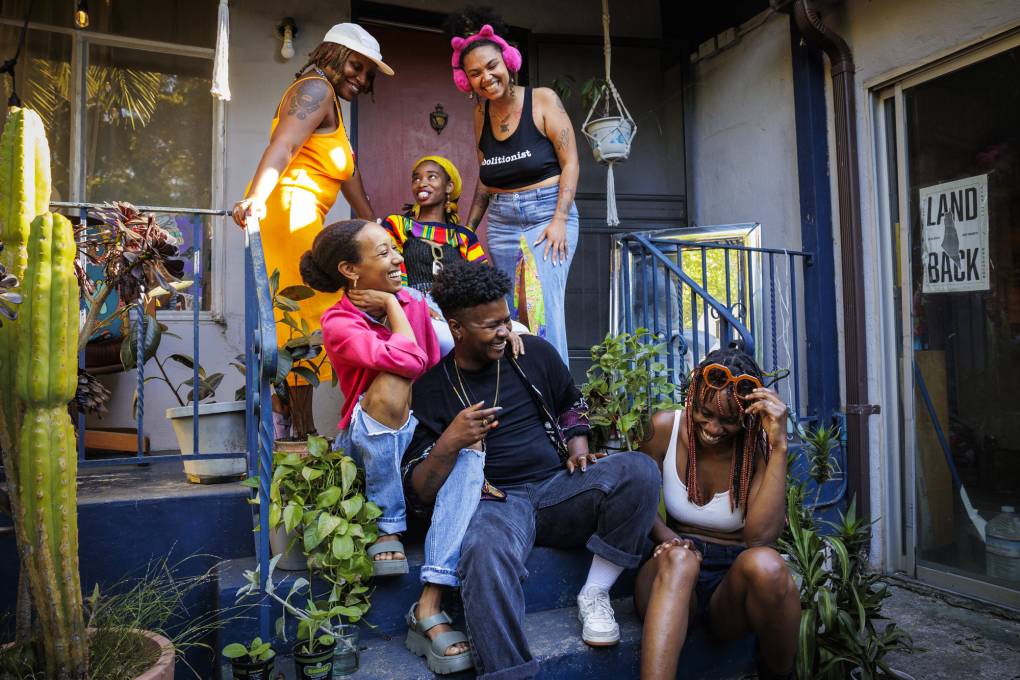
"caption": "(Clockwise from top left) KKINGBOO, Esora, Evin Glaude, Lalin St. Juste, B Dukes and Madre Guía, organizers of The Cookout, in Oakland on July 1, 2024.",
"credit": "Martin do Nascimento/KQED",
"altTag": null,
"description": null,
"imgSizes": {
"medium": {
"file": "https://cdn.kqed.org/wp-content/uploads/sites/2/2024/07/240701-THE-COOKOUT-MD-02-KQED-800x533.jpg",
"width": 800,
"height": 533,
"mimeType": "image/jpeg"
},
"large": {
"file": "https://cdn.kqed.org/wp-content/uploads/sites/2/2024/07/240701-THE-COOKOUT-MD-02-KQED-1020x680.jpg",
"width": 1020,
"height": 680,
"mimeType": "image/jpeg"
},
"thumbnail": {
"file": "https://cdn.kqed.org/wp-content/uploads/sites/2/2024/07/240701-THE-COOKOUT-MD-02-KQED-160x107.jpg",
"width": 160,
"height": 107,
"mimeType": "image/jpeg"
},
"medium_large": {
"file": "https://cdn.kqed.org/wp-content/uploads/sites/2/2024/07/240701-THE-COOKOUT-MD-02-KQED-768x512.jpg",
"width": 768,
"height": 512,
"mimeType": "image/jpeg"
},
"1536x1536": {
"file": "https://cdn.kqed.org/wp-content/uploads/sites/2/2024/07/240701-THE-COOKOUT-MD-02-KQED-1536x1024.jpg",
"width": 1536,
"height": 1024,
"mimeType": "image/jpeg"
},
"post-thumbnail": {
"file": "https://cdn.kqed.org/wp-content/uploads/sites/2/2024/07/240701-THE-COOKOUT-MD-02-KQED-672x372.jpg",
"width": 672,
"height": 372,
"mimeType": "image/jpeg"
},
"twentyfourteen-full-width": {
"file": "https://cdn.kqed.org/wp-content/uploads/sites/2/2024/07/240701-THE-COOKOUT-MD-02-KQED-1038x576.jpg",
"width": 1038,
"height": 576,
"mimeType": "image/jpeg"
},
"full-width": {
"file": "https://cdn.kqed.org/wp-content/uploads/sites/2/2024/07/240701-THE-COOKOUT-MD-02-KQED-1920x1280.jpg",
"width": 1920,
"height": 1280,
"mimeType": "image/jpeg"
},
"kqedFullSize": {
"file": "https://cdn.kqed.org/wp-content/uploads/sites/2/2024/07/240701-THE-COOKOUT-MD-02-KQED.jpg",
"width": 2000,
"height": 1333
}
},
"isLoading": false,
"fetchFailed": false
},
"arts_13960855": {
"type": "attachments",
"id": "arts_13960855",
"meta": {
"index": "attachments_1716263798",
"site": "arts",
"id": "13960855",
"found": true
},
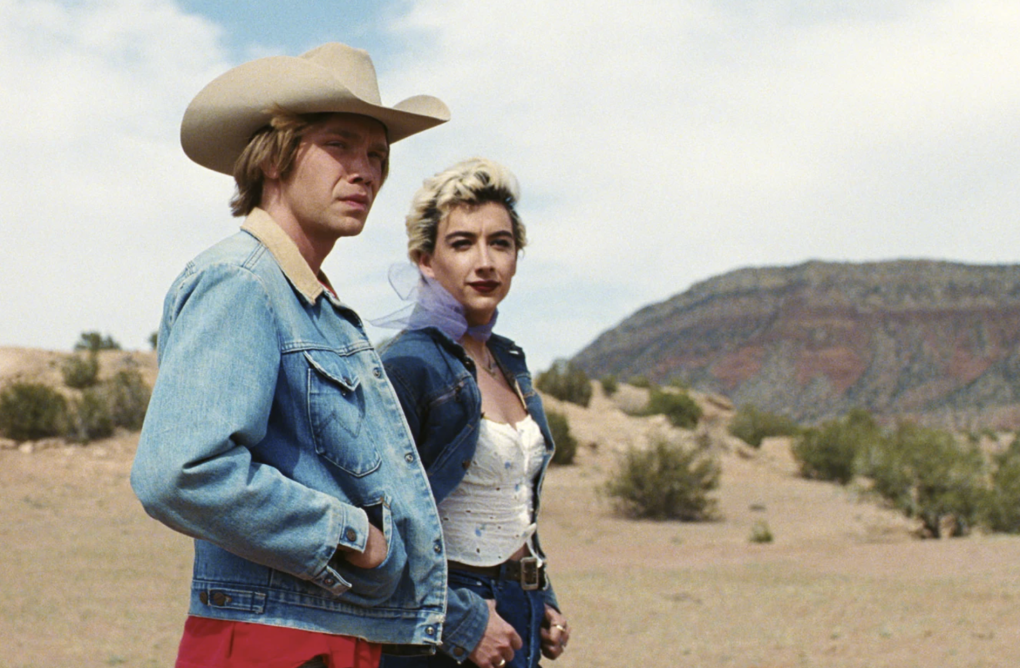
"title": "Charlie Plummer and Mason Alexander Park star in 'National Anthem.’",
"publishDate": 1720629298,
"status": "inherit",
"parent": 13960850,
"modified": 1720629452,
"caption": "Charlie Plummer and Mason Alexander Park star in 'National Anthem.’",
"credit": "Variance Films via AP",
"altTag": "A young man wearing blue denim and a cowboy hat stands out on a dirt road with a gender non-conforming person wearing short bleached hair and striking makeup.",
"description": null,
"imgSizes": {
"medium": {
"file": "https://cdn.kqed.org/wp-content/uploads/sites/2/2024/07/Screen-Shot-2024-07-10-at-9.33.54-AM-800x524.png",
"width": 800,
"height": 524,
"mimeType": "image/png"
},
"large": {
"file": "https://cdn.kqed.org/wp-content/uploads/sites/2/2024/07/Screen-Shot-2024-07-10-at-9.33.54-AM-1020x668.png",
"width": 1020,
"height": 668,
"mimeType": "image/png"
},
"thumbnail": {
"file": "https://cdn.kqed.org/wp-content/uploads/sites/2/2024/07/Screen-Shot-2024-07-10-at-9.33.54-AM-160x105.png",
"width": 160,
"height": 105,
"mimeType": "image/png"
},
"medium_large": {
"file": "https://cdn.kqed.org/wp-content/uploads/sites/2/2024/07/Screen-Shot-2024-07-10-at-9.33.54-AM-768x503.png",
"width": 768,
"height": 503,
"mimeType": "image/png"
},
"1536x1536": {
"file": "https://cdn.kqed.org/wp-content/uploads/sites/2/2024/07/Screen-Shot-2024-07-10-at-9.33.54-AM-1536x1006.png",
"width": 1536,
"height": 1006,
"mimeType": "image/png"
},
"post-thumbnail": {
"file": "https://cdn.kqed.org/wp-content/uploads/sites/2/2024/07/Screen-Shot-2024-07-10-at-9.33.54-AM-672x372.png",
"width": 672,
"height": 372,
"mimeType": "image/png"
},
"twentyfourteen-full-width": {
"file": "https://cdn.kqed.org/wp-content/uploads/sites/2/2024/07/Screen-Shot-2024-07-10-at-9.33.54-AM-1038x576.png",
"width": 1038,
"height": 576,
"mimeType": "image/png"
},
"kqedFullSize": {
"file": "https://cdn.kqed.org/wp-content/uploads/sites/2/2024/07/Screen-Shot-2024-07-10-at-9.33.54-AM.png",
"width": 1890,
"height": 1238
}
},
"isLoading": false,
"fetchFailed": false
},
"arts_13960492": {
"type": "attachments",
"id": "arts_13960492",
"meta": {
"index": "attachments_1716263798",
"site": "arts",
"id": "13960492",
"found": true
},
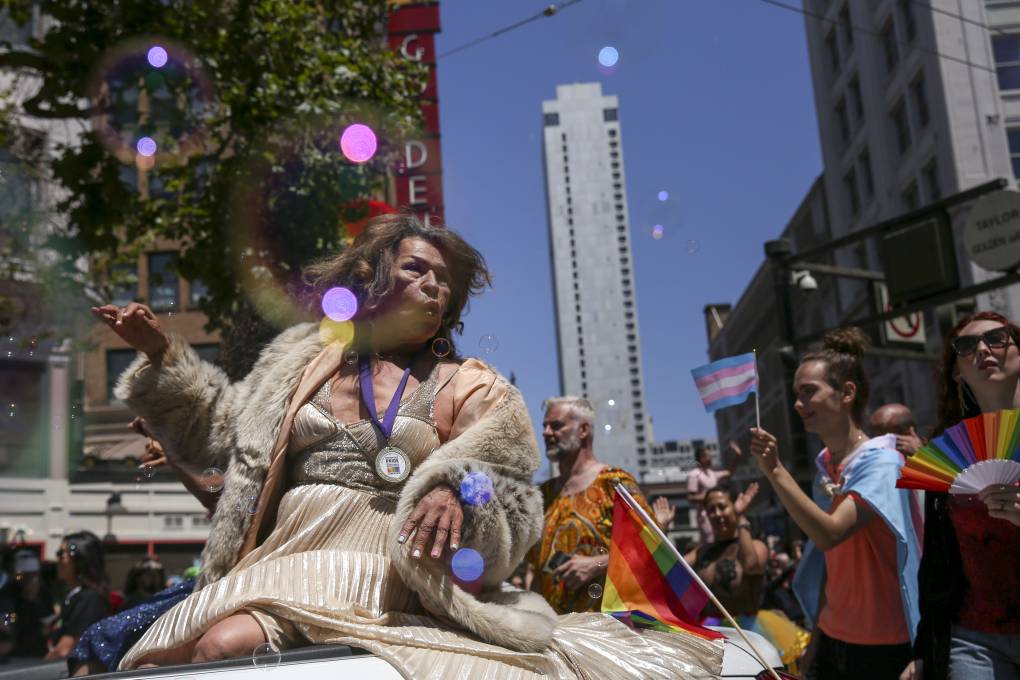
"title": "2019 San Francisco Pride Community Grand Marshal Donna Personna dances as they ride in the 2019 San Francisco Pride parade Sunday, June 30, 2019, in San Francisco, Calif.",
"publishDate": 1719601517,
"status": "inherit",
"parent": 13960471,
"modified": 1719601587,
"caption": "2019 San Francisco Pride Community Grand Marshal Donna Personna at the San Francisco Pride parade Sunday, June 30, 2019. ",
"credit": "Josie Norris/San Francisco Chronicle via Getty Images",
"altTag": null,
"description": null,
"imgSizes": {
"medium": {
"file": "https://cdn.kqed.org/wp-content/uploads/sites/2/2024/06/GettyImages-1298814070-800x533.jpg",
"width": 800,
"height": 533,
"mimeType": "image/jpeg"
},
"large": {
"file": "https://cdn.kqed.org/wp-content/uploads/sites/2/2024/06/GettyImages-1298814070-1020x680.jpg",
"width": 1020,
"height": 680,
"mimeType": "image/jpeg"
},
"thumbnail": {
"file": "https://cdn.kqed.org/wp-content/uploads/sites/2/2024/06/GettyImages-1298814070-160x107.jpg",
"width": 160,
"height": 107,
"mimeType": "image/jpeg"
},
"medium_large": {
"file": "https://cdn.kqed.org/wp-content/uploads/sites/2/2024/06/GettyImages-1298814070-768x512.jpg",
"width": 768,
"height": 512,
"mimeType": "image/jpeg"
},
"1536x1536": {
"file": "https://cdn.kqed.org/wp-content/uploads/sites/2/2024/06/GettyImages-1298814070-1536x1024.jpg",
"width": 1536,
"height": 1024,
"mimeType": "image/jpeg"
},
"2048x2048": {
"file": "https://cdn.kqed.org/wp-content/uploads/sites/2/2024/06/GettyImages-1298814070-2048x1365.jpg",
"width": 2048,
"height": 1365,
"mimeType": "image/jpeg"
},
"post-thumbnail": {
"file": "https://cdn.kqed.org/wp-content/uploads/sites/2/2024/06/GettyImages-1298814070-672x372.jpg",
"width": 672,
"height": 372,
"mimeType": "image/jpeg"
},
"twentyfourteen-full-width": {
"file": "https://cdn.kqed.org/wp-content/uploads/sites/2/2024/06/GettyImages-1298814070-1038x576.jpg",
"width": 1038,
"height": 576,
"mimeType": "image/jpeg"
},
"full-width": {
"file": "https://cdn.kqed.org/wp-content/uploads/sites/2/2024/06/GettyImages-1298814070-1920x1280.jpg",
"width": 1920,
"height": 1280,
"mimeType": "image/jpeg"
},
"kqedFullSize": {
"file": "https://cdn.kqed.org/wp-content/uploads/sites/2/2024/06/GettyImages-1298814070-scaled.jpg",
"width": 2560,
"height": 1707
}
},
"isLoading": false,
"fetchFailed": false
},
"arts_13915254": {
"type": "attachments",
"id": "arts_13915254",
"meta": {
"index": "attachments_1716263798",
"site": "arts",
"id": "13915254",
"found": true
},
"parent": 13915237,
"imgSizes": {
"twentyfourteen-full-width": {
"file": "https://ww2.kqed.org/app/uploads/sites/2/2022/06/RS56872_002_KQED_SFPrideParade_06262022-qut-1038x576.jpg",
"width": 1038,
"mimeType": "image/jpeg",
"height": 576
},
"thumbnail": {
"file": "https://ww2.kqed.org/app/uploads/sites/2/2022/06/RS56872_002_KQED_SFPrideParade_06262022-qut-160x107.jpg",
"width": 160,
"mimeType": "image/jpeg",
"height": 107
},
"post-thumbnail": {
"file": "https://ww2.kqed.org/app/uploads/sites/2/2022/06/RS56872_002_KQED_SFPrideParade_06262022-qut-672x372.jpg",
"width": 672,
"mimeType": "image/jpeg",
"height": 372
},
"kqedFullSize": {
"file": "https://ww2.kqed.org/app/uploads/sites/2/2022/06/RS56872_002_KQED_SFPrideParade_06262022-qut.jpg",
"width": 1920,
"height": 1280
},
"large": {
"file": "https://ww2.kqed.org/app/uploads/sites/2/2022/06/RS56872_002_KQED_SFPrideParade_06262022-qut-1020x680.jpg",
"width": 1020,
"mimeType": "image/jpeg",
"height": 680
},
"1536x1536": {
"file": "https://ww2.kqed.org/app/uploads/sites/2/2022/06/RS56872_002_KQED_SFPrideParade_06262022-qut-1536x1024.jpg",
"width": 1536,
"mimeType": "image/jpeg",
"height": 1024
},
"medium": {
"file": "https://ww2.kqed.org/app/uploads/sites/2/2022/06/RS56872_002_KQED_SFPrideParade_06262022-qut-800x533.jpg",
"width": 800,
"mimeType": "image/jpeg",
"height": 533
},
"medium_large": {
"file": "https://ww2.kqed.org/app/uploads/sites/2/2022/06/RS56872_002_KQED_SFPrideParade_06262022-qut-768x512.jpg",
"width": 768,
"mimeType": "image/jpeg",
"height": 512
}
},
"publishDate": 1656345045,
"modified": 1656349127,
"caption": "Kai'lee Luckey (left) and Kaleonna Vang, both visiting from Sacramento, watch the San Francisco Pride Parade on June 26, 2022.",
"description": null,
"title": "RS56872_002_KQED_SFPrideParade_06262022-qut",
"credit": "Beth LaBerge/KQED",
"status": "inherit",
"altTag": null,
"isLoading": false,
"fetchFailed": false
},
"arts_13960326": {
"type": "attachments",
"id": "arts_13960326",
"meta": {
"index": "attachments_1716263798",
"site": "arts",
"id": "13960326",
"found": true
},
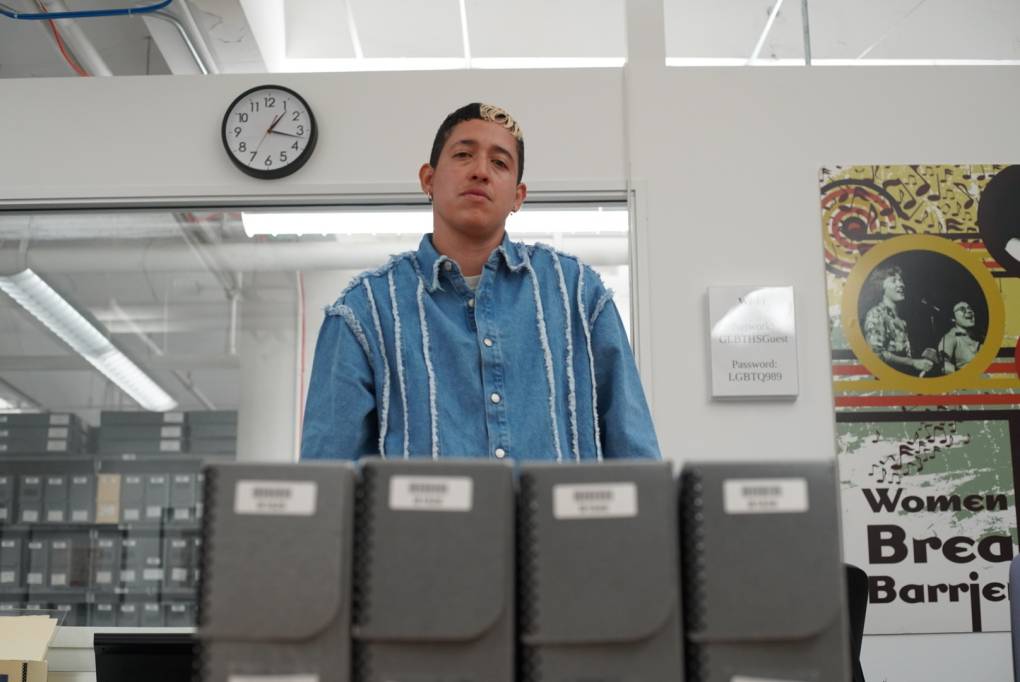
"title": "Artist and curator Marcel Pardo Ariza poses for a photo at San Francisco's GLBT Historical Society Museum.",
"publishDate": 1719413869,
"status": "inherit",
"parent": 13960325,
"modified": 1719426278,
"caption": "Artist and curator Marcel Pardo Ariza poses for a photo at the archvies of San Francisco's GLBT Historical Society.",
"credit": "Pendarvis Harshaw",
"altTag": "Artist and curator Marcel Pardo Ariza poses for a photo at the archives of San Francisco's GLBT Historical Society.",
"description": "Artist and archivist Marcel Pardo Ariza poses for a photo at San Francisco's GLBT Historical Society Museum.",
"imgSizes": {
"medium": {
"file": "https://cdn.kqed.org/wp-content/uploads/sites/2/2024/06/Marcel-Pardo-Ariza-by-Pendarvis-Harshaw-14-800x535.jpg",
"width": 800,
"height": 535,
"mimeType": "image/jpeg"
},
"large": {
"file": "https://cdn.kqed.org/wp-content/uploads/sites/2/2024/06/Marcel-Pardo-Ariza-by-Pendarvis-Harshaw-14-1020x682.jpg",
"width": 1020,
"height": 682,
"mimeType": "image/jpeg"
},
"thumbnail": {
"file": "https://cdn.kqed.org/wp-content/uploads/sites/2/2024/06/Marcel-Pardo-Ariza-by-Pendarvis-Harshaw-14-160x107.jpg",
"width": 160,
"height": 107,
"mimeType": "image/jpeg"
},
"medium_large": {
"file": "https://cdn.kqed.org/wp-content/uploads/sites/2/2024/06/Marcel-Pardo-Ariza-by-Pendarvis-Harshaw-14-768x513.jpg",
"width": 768,
"height": 513,
"mimeType": "image/jpeg"
},
"1536x1536": {
"file": "https://cdn.kqed.org/wp-content/uploads/sites/2/2024/06/Marcel-Pardo-Ariza-by-Pendarvis-Harshaw-14-1536x1027.jpg",
"width": 1536,
"height": 1027,
"mimeType": "image/jpeg"
},
"post-thumbnail": {
"file": "https://cdn.kqed.org/wp-content/uploads/sites/2/2024/06/Marcel-Pardo-Ariza-by-Pendarvis-Harshaw-14-672x372.jpg",
"width": 672,
"height": 372,
"mimeType": "image/jpeg"
},
"twentyfourteen-full-width": {
"file": "https://cdn.kqed.org/wp-content/uploads/sites/2/2024/06/Marcel-Pardo-Ariza-by-Pendarvis-Harshaw-14-1038x576.jpg",
"width": 1038,
"height": 576,
"mimeType": "image/jpeg"
},
"kqedFullSize": {
"file": "https://cdn.kqed.org/wp-content/uploads/sites/2/2024/06/Marcel-Pardo-Ariza-by-Pendarvis-Harshaw-14.jpg",
"width": 1616,
"height": 1080
}
},
"isLoading": false,
"fetchFailed": false
},
"arts_13960180": {
"type": "attachments",
"id": "arts_13960180",
"meta": {
"index": "attachments_1716263798",
"site": "arts",
"id": "13960180",
"found": true
},
"title": "‘The Lion’s Den’ by Iris Mwanza.",
"publishDate": 1719249850,
"status": "inherit",
"parent": 13960178,
"modified": 1719249887,
"caption": "‘The Lion’s Den’ by Iris Mwanza.",
"credit": "Graydon House Books via AP",
"altTag": null,
"description": null,
"imgSizes": {
"medium": {
"file": "https://cdn.kqed.org/wp-content/uploads/sites/2/2024/06/Screen-Shot-2024-06-24-at-10.23.47-AM-800x485.png",
"width": 800,
"height": 485,
"mimeType": "image/png"
},
"thumbnail": {
"file": "https://cdn.kqed.org/wp-content/uploads/sites/2/2024/06/Screen-Shot-2024-06-24-at-10.23.47-AM-160x97.png",
"width": 160,
"height": 97,
"mimeType": "image/png"
},
"medium_large": {
"file": "https://cdn.kqed.org/wp-content/uploads/sites/2/2024/06/Screen-Shot-2024-06-24-at-10.23.47-AM-768x466.png",
"width": 768,
"height": 466,
"mimeType": "image/png"
},
"post-thumbnail": {
"file": "https://cdn.kqed.org/wp-content/uploads/sites/2/2024/06/Screen-Shot-2024-06-24-at-10.23.47-AM-672x372.png",
"width": 672,
"height": 372,
"mimeType": "image/png"
},
"kqedFullSize": {
"file": "https://cdn.kqed.org/wp-content/uploads/sites/2/2024/06/Screen-Shot-2024-06-24-at-10.23.47-AM.png",
"width": 890,
"height": 540
}
},
"isLoading": false,
"fetchFailed": false
},
"arts_13959919": {
"type": "attachments",
"id": "arts_13959919",
"meta": {
"index": "attachments_1716263798",
"site": "arts",
"id": "13959919",
"found": true
},
"title": "‘Outstanding: A Comedy Revolution’ explores the history and current state of LGBTQ comedy. Above, Lily Tomlin, left, Wanda Sykes, Joel Kim Booster and Trixie Mattel.",
"publishDate": 1718658470,
"status": "inherit",
"parent": 13959918,
"modified": 1718658621,
"caption": "‘Outstanding: A Comedy Revolution’ explores the history and current state of LGBTQ comedy. Above, Lily Tomlin, left, Wanda Sykes, Joel Kim Booster and Trixie Mattel.",
"credit": "Netflix",
"altTag": "Photos of a white woman, a Black woman, an Asian man and a drag queen.",
"description": null,
"imgSizes": {
"medium": {
"file": "https://cdn.kqed.org/wp-content/uploads/sites/2/2024/06/4-images-vertical-800x450.jpeg",
"width": 800,
"height": 450,
"mimeType": "image/jpeg"
},
"large": {
"file": "https://cdn.kqed.org/wp-content/uploads/sites/2/2024/06/4-images-vertical-1020x574.jpeg",
"width": 1020,
"height": 574,
"mimeType": "image/jpeg"
},
"thumbnail": {
"file": "https://cdn.kqed.org/wp-content/uploads/sites/2/2024/06/4-images-vertical-160x90.jpeg",
"width": 160,
"height": 90,
"mimeType": "image/jpeg"
},
"medium_large": {
"file": "https://cdn.kqed.org/wp-content/uploads/sites/2/2024/06/4-images-vertical-768x432.jpeg",
"width": 768,
"height": 432,
"mimeType": "image/jpeg"
},
"1536x1536": {
"file": "https://cdn.kqed.org/wp-content/uploads/sites/2/2024/06/4-images-vertical-1536x864.jpeg",
"width": 1536,
"height": 864,
"mimeType": "image/jpeg"
},
"2048x2048": {
"file": "https://cdn.kqed.org/wp-content/uploads/sites/2/2024/06/4-images-vertical-2048x1152.jpeg",
"width": 2048,
"height": 1152,
"mimeType": "image/jpeg"
},
"post-thumbnail": {
"file": "https://cdn.kqed.org/wp-content/uploads/sites/2/2024/06/4-images-vertical-672x372.jpeg",
"width": 672,
"height": 372,
"mimeType": "image/jpeg"
},
"twentyfourteen-full-width": {
"file": "https://cdn.kqed.org/wp-content/uploads/sites/2/2024/06/4-images-vertical-1038x576.jpeg",
"width": 1038,
"height": 576,
"mimeType": "image/jpeg"
},
"full-width": {
"file": "https://cdn.kqed.org/wp-content/uploads/sites/2/2024/06/4-images-vertical-1920x1080.jpeg",
"width": 1920,
"height": 1080,
"mimeType": "image/jpeg"
},
"kqedFullSize": {
"file": "https://cdn.kqed.org/wp-content/uploads/sites/2/2024/06/4-images-vertical.jpeg",
"width": 2400,
"height": 1350
}
},
"isLoading": false,
"fetchFailed": false
},
"arts_13959839": {
"type": "attachments",
"id": "arts_13959839",
"meta": {
"index": "attachments_1716263798",
"site": "arts",
"id": "13959839",
"found": true
},
"title": "Manuel Paul_R.I.P",
"publishDate": 1718323953,
"status": "inherit",
"parent": 13959827,
"modified": 1718328642,
"caption": "'Calli: The Art of Xicanx Peoples' at the Oakland Museum of California presents the work of 53 diverse Xicanx artists, including this digital print on vinyl by Manuel Paul titled 'R.I.P—In Loving Memory.'",
"credit": "OMCA",
"altTag": "Image of two men kissing behind car with decals on windows",
"description": null,
"imgSizes": {
"medium": {
"file": "https://cdn.kqed.org/wp-content/uploads/sites/2/2024/06/Manuel-Paul_R.I.P-In-Loving-Memory-800x604.jpg",
"width": 800,
"height": 604,
"mimeType": "image/jpeg"
},
"large": {
"file": "https://cdn.kqed.org/wp-content/uploads/sites/2/2024/06/Manuel-Paul_R.I.P-In-Loving-Memory-1020x770.jpg",
"width": 1020,
"height": 770,
"mimeType": "image/jpeg"
},
"thumbnail": {
"file": "https://cdn.kqed.org/wp-content/uploads/sites/2/2024/06/Manuel-Paul_R.I.P-In-Loving-Memory-160x121.jpg",
"width": 160,
"height": 121,
"mimeType": "image/jpeg"
},
"medium_large": {
"file": "https://cdn.kqed.org/wp-content/uploads/sites/2/2024/06/Manuel-Paul_R.I.P-In-Loving-Memory-768x580.jpg",
"width": 768,
"height": 580,
"mimeType": "image/jpeg"
},
"1536x1536": {
"file": "https://cdn.kqed.org/wp-content/uploads/sites/2/2024/06/Manuel-Paul_R.I.P-In-Loving-Memory-1536x1159.jpg",
"width": 1536,
"height": 1159,
"mimeType": "image/jpeg"
},
"2048x2048": {
"file": "https://cdn.kqed.org/wp-content/uploads/sites/2/2024/06/Manuel-Paul_R.I.P-In-Loving-Memory-2048x1546.jpg",
"width": 2048,
"height": 1546,
"mimeType": "image/jpeg"
},
"post-thumbnail": {
"file": "https://cdn.kqed.org/wp-content/uploads/sites/2/2024/06/Manuel-Paul_R.I.P-In-Loving-Memory-672x372.jpg",
"width": 672,
"height": 372,
"mimeType": "image/jpeg"
},
"twentyfourteen-full-width": {
"file": "https://cdn.kqed.org/wp-content/uploads/sites/2/2024/06/Manuel-Paul_R.I.P-In-Loving-Memory-1038x576.jpg",
"width": 1038,
"height": 576,
"mimeType": "image/jpeg"
},
"full-width": {
"file": "https://cdn.kqed.org/wp-content/uploads/sites/2/2024/06/Manuel-Paul_R.I.P-In-Loving-Memory-1920x1449.jpg",
"width": 1920,
"height": 1449,
"mimeType": "image/jpeg"
},
"kqedFullSize": {
"file": "https://cdn.kqed.org/wp-content/uploads/sites/2/2024/06/Manuel-Paul_R.I.P-In-Loving-Memory.jpg",
"width": 2410,
"height": 1819
}
},
"isLoading": false,
"fetchFailed": false
},
"arts_13959629": {
"type": "attachments",
"id": "arts_13959629",
"meta": {
"index": "attachments_1716263798",
"site": "arts",
"id": "13959629",
"found": true
},
"title": "Isis Rodriguez — the self-described \"Zapatista Stripper\" — in 1998.",
"publishDate": 1718145594,
"status": "inherit",
"parent": 13959375,
"modified": 1718145625,
"caption": "Isis Rodriguez — the self-described \"Zapatista Stripper\" — in 1998.",
"credit": "Eugenio Castro/Courtesy of the GLBT Historical Museum",
"altTag": "A woman wearing a ski mask and a bikini kneels of the floor, one fist raised in defiance.",
"description": null,
"imgSizes": {
"medium": {
"file": "https://cdn.kqed.org/wp-content/uploads/sites/2/2024/06/Screen-Shot-2024-06-11-at-2.39.25-PM-800x457.png",
"width": 800,
"height": 457,
"mimeType": "image/png"
},
"thumbnail": {
"file": "https://cdn.kqed.org/wp-content/uploads/sites/2/2024/06/Screen-Shot-2024-06-11-at-2.39.25-PM-160x91.png",
"width": 160,
"height": 91,
"mimeType": "image/png"
},
"medium_large": {
"file": "https://cdn.kqed.org/wp-content/uploads/sites/2/2024/06/Screen-Shot-2024-06-11-at-2.39.25-PM-768x439.png",
"width": 768,
"height": 439,
"mimeType": "image/png"
},
"post-thumbnail": {
"file": "https://cdn.kqed.org/wp-content/uploads/sites/2/2024/06/Screen-Shot-2024-06-11-at-2.39.25-PM-672x372.png",
"width": 672,
"height": 372,
"mimeType": "image/png"
},
"kqedFullSize": {
"file": "https://cdn.kqed.org/wp-content/uploads/sites/2/2024/06/Screen-Shot-2024-06-11-at-2.39.25-PM.png",
"width": 976,
"height": 558
}
},
"isLoading": false,
"fetchFailed": false
},
"arts_13929354": {
"type": "attachments",
"id": "arts_13929354",
"meta": {
"index": "attachments_1716263798",
"site": "arts",
"id": "13929354",
"found": true
},
"parent": 13929331,
"imgSizes": {
"twentyfourteen-full-width": {
"file": "https://ww2.kqed.org/app/uploads/sites/2/2023/05/Sister-Roma-arrives-at-San-Francisco-City-Hall-for-the-Drag-Up-Fight-Back-march-on-Saturday-April-8-2023-1038x576.jpg",
"width": 1038,
"mimeType": "image/jpeg",
"height": 576
},
"thumbnail": {
"file": "https://ww2.kqed.org/app/uploads/sites/2/2023/05/Sister-Roma-arrives-at-San-Francisco-City-Hall-for-the-Drag-Up-Fight-Back-march-on-Saturday-April-8-2023-160x107.jpg",
"width": 160,
"mimeType": "image/jpeg",
"height": 107
},
"post-thumbnail": {
"file": "https://ww2.kqed.org/app/uploads/sites/2/2023/05/Sister-Roma-arrives-at-San-Francisco-City-Hall-for-the-Drag-Up-Fight-Back-march-on-Saturday-April-8-2023-672x372.jpg",
"width": 672,
"mimeType": "image/jpeg",
"height": 372
},
"kqedFullSize": {
"file": "https://ww2.kqed.org/app/uploads/sites/2/2023/05/Sister-Roma-arrives-at-San-Francisco-City-Hall-for-the-Drag-Up-Fight-Back-march-on-Saturday-April-8-2023.jpg",
"width": 1620,
"height": 1080
},
"large": {
"file": "https://ww2.kqed.org/app/uploads/sites/2/2023/05/Sister-Roma-arrives-at-San-Francisco-City-Hall-for-the-Drag-Up-Fight-Back-march-on-Saturday-April-8-2023-1020x680.jpg",
"width": 1020,
"mimeType": "image/jpeg",
"height": 680
},
"1536x1536": {
"file": "https://ww2.kqed.org/app/uploads/sites/2/2023/05/Sister-Roma-arrives-at-San-Francisco-City-Hall-for-the-Drag-Up-Fight-Back-march-on-Saturday-April-8-2023-1536x1024.jpg",
"width": 1536,
"mimeType": "image/jpeg",
"height": 1024
},
"medium": {
"file": "https://ww2.kqed.org/app/uploads/sites/2/2023/05/Sister-Roma-arrives-at-San-Francisco-City-Hall-for-the-Drag-Up-Fight-Back-march-on-Saturday-April-8-2023-800x533.jpg",
"width": 800,
"mimeType": "image/jpeg",
"height": 533
},
"medium_large": {
"file": "https://ww2.kqed.org/app/uploads/sites/2/2023/05/Sister-Roma-arrives-at-San-Francisco-City-Hall-for-the-Drag-Up-Fight-Back-march-on-Saturday-April-8-2023-768x512.jpg",
"width": 768,
"mimeType": "image/jpeg",
"height": 512
}
},
"publishDate": 1684447421,
"modified": 1684447744,
"caption": "Sister Roma at the Drag Up! Fight Back! march at San Francisco City Hall on April 8, 2023.",
"description": null,
"title": "Sister-Roma-arrives-at-San-Francisco-City-Hall-for-the-Drag-Up-Fight-Back-march-on-Saturday-April-8-2023",
"credit": "Estefany Gonzalez",
"status": "inherit",
"altTag": "A drag queen nun wears a feather boa and white makeup.",
"isLoading": false,
"fetchFailed": false
},
"arts_13958700": {
"type": "attachments",
"id": "arts_13958700",
"meta": {
"index": "attachments_1716263798",
"site": "arts",
"id": "13958700",
"found": true
},
"title": "jack turban free to be",
"publishDate": 1716920707,
"status": "inherit",
"parent": 13958699,
"modified": 1716920760,
"caption": "Dr. Jack Turban of UCSF references his research and first-hand work with patients in his new book about trans youth, 'Free to Be.'",
"credit": "Left: Simon & Schuster; right: University of California, San Francisco",
"altTag": null,
"description": null,
"imgSizes": {
"medium": {
"file": "https://cdn.kqed.org/wp-content/uploads/sites/2/2024/05/jack-turban-free-to-be-800x450.jpg",
"width": 800,
"height": 450,
"mimeType": "image/jpeg"
},
"large": {
"file": "https://cdn.kqed.org/wp-content/uploads/sites/2/2024/05/jack-turban-free-to-be-1020x574.jpg",
"width": 1020,
"height": 574,
"mimeType": "image/jpeg"
},
"thumbnail": {
"file": "https://cdn.kqed.org/wp-content/uploads/sites/2/2024/05/jack-turban-free-to-be-160x90.jpg",
"width": 160,
"height": 90,
"mimeType": "image/jpeg"
},
"medium_large": {
"file": "https://cdn.kqed.org/wp-content/uploads/sites/2/2024/05/jack-turban-free-to-be-768x432.jpg",
"width": 768,
"height": 432,
"mimeType": "image/jpeg"
},
"1536x1536": {
"file": "https://cdn.kqed.org/wp-content/uploads/sites/2/2024/05/jack-turban-free-to-be-1536x864.jpg",
"width": 1536,
"height": 864,
"mimeType": "image/jpeg"
},
"post-thumbnail": {
"file": "https://cdn.kqed.org/wp-content/uploads/sites/2/2024/05/jack-turban-free-to-be-672x372.jpg",
"width": 672,
"height": 372,
"mimeType": "image/jpeg"
},
"twentyfourteen-full-width": {
"file": "https://cdn.kqed.org/wp-content/uploads/sites/2/2024/05/jack-turban-free-to-be-1038x576.jpg",
"width": 1038,
"height": 576,
"mimeType": "image/jpeg"
},
"kqedFullSize": {
"file": "https://cdn.kqed.org/wp-content/uploads/sites/2/2024/05/jack-turban-free-to-be.jpg",
"width": 1920,
"height": 1080
}
},
"isLoading": false,
"fetchFailed": false
},
"arts_13958449": {
"type": "attachments",
"id": "arts_13958449",
"meta": {
"index": "attachments_1716263798",
"site": "arts",
"id": "13958449",
"found": true
},
"title": "KellyLovemonster_Jenn Wong_11",
"publishDate": 1716503829,
"status": "inherit",
"parent": 13958438,
"modified": 1716503870,
"caption": "Kelly Lovemonster at Swagger Like Us in 2018.",
"credit": "Jennifer Wong @takeover.tokyo",
"altTag": null,
"description": null,
"imgSizes": {
"medium": {
"file": "https://cdn.kqed.org/wp-content/uploads/sites/2/2024/05/KellyLovemonster_Jenn-Wong_11-800x533.jpg",
"width": 800,
"height": 533,
"mimeType": "image/jpeg"
},
"large": {
"file": "https://cdn.kqed.org/wp-content/uploads/sites/2/2024/05/KellyLovemonster_Jenn-Wong_11-1020x680.jpg",
"width": 1020,
"height": 680,
"mimeType": "image/jpeg"
},
"thumbnail": {
"file": "https://cdn.kqed.org/wp-content/uploads/sites/2/2024/05/KellyLovemonster_Jenn-Wong_11-160x107.jpg",
"width": 160,
"height": 107,
"mimeType": "image/jpeg"
},
"medium_large": {
"file": "https://cdn.kqed.org/wp-content/uploads/sites/2/2024/05/KellyLovemonster_Jenn-Wong_11-768x512.jpg",
"width": 768,
"height": 512,
"mimeType": "image/jpeg"
},
"1536x1536": {
"file": "https://cdn.kqed.org/wp-content/uploads/sites/2/2024/05/KellyLovemonster_Jenn-Wong_11-1536x1024.jpg",
"width": 1536,
"height": 1024,
"mimeType": "image/jpeg"
},
"2048x2048": {
"file": "https://cdn.kqed.org/wp-content/uploads/sites/2/2024/05/KellyLovemonster_Jenn-Wong_11-2048x1365.jpg",
"width": 2048,
"height": 1365,
"mimeType": "image/jpeg"
},
"post-thumbnail": {
"file": "https://cdn.kqed.org/wp-content/uploads/sites/2/2024/05/KellyLovemonster_Jenn-Wong_11-672x372.jpg",
"width": 672,
"height": 372,
"mimeType": "image/jpeg"
},
"twentyfourteen-full-width": {
"file": "https://cdn.kqed.org/wp-content/uploads/sites/2/2024/05/KellyLovemonster_Jenn-Wong_11-1038x576.jpg",
"width": 1038,
"height": 576,
"mimeType": "image/jpeg"
},
"full-width": {
"file": "https://cdn.kqed.org/wp-content/uploads/sites/2/2024/05/KellyLovemonster_Jenn-Wong_11-1920x1280.jpg",
"width": 1920,
"height": 1280,
"mimeType": "image/jpeg"
},
"kqedFullSize": {
"file": "https://cdn.kqed.org/wp-content/uploads/sites/2/2024/05/KellyLovemonster_Jenn-Wong_11-scaled.jpg",
"width": 2560,
"height": 1707
}
},
"isLoading": false,
"fetchFailed": false
}
},
"audioPlayerReducer": {
"postId": "stream_live",
"isPaused": true,
"isPlaying": false,
"pfsActive": false,
"pledgeModalIsOpen": true,
"playerDrawerIsOpen": false,
"liveAudioPlayStartedAt": 0,
"liveAudioPlayContext": ""
},
"authorsReducer": {
"byline_arts_13960850": {
"type": "authors",
"id": "byline_arts_13960850",
"meta": {
"override": true
},
"slug": "byline_arts_13960850",
"name": "Krysta Fauria, Associated Press",
"isLoading": false
},
"byline_arts_13960178": {
"type": "authors",
"id": "byline_arts_13960178",
"meta": {
"override": true
},
"slug": "byline_arts_13960178",
"name": "Donna Edwards, Associated Press",
"isLoading": false
},
"byline_arts_13959918": {
"type": "authors",
"id": "byline_arts_13959918",
"meta": {
"override": true
},
"slug": "byline_arts_13959918",
"name": "Elizabeth Blair, NPR",
"isLoading": false
},
"byline_arts_13958438": {
"type": "authors",
"id": "byline_arts_13958438",
"meta": {
"override": true
},
"slug": "byline_arts_13958438",
"name": "Caitlin Donohue",
"isLoading": false
},
"ralexandra": {
"type": "authors",
"id": "11242",
"meta": {
"index": "authors_1716337520",
"id": "11242",
"found": true
},
"name": "Rae Alexandra",
"firstName": "Rae",
"lastName": "Alexandra",
"slug": "ralexandra",
"email": "ralexandra@kqed.org",
"display_author_email": true,
"staff_mastheads": [],
"title": "Reporter/Producer",
"bio": "Rae Alexandra is a Reporter/Producer for KQED Arts & Culture, and the creator/author of the \u003ca href=\"https://www.kqed.org/arts/program/rebel-girls-from-bay-area-history\">Rebel Girls From Bay Area History\u003c/a> and \u003ca href=\"https://www.kqed.org/bizarrebayarea\">Bizarre Bay Area\u003c/a> series. Her debut book, \u003ca href=\"https://citylights.com/politics-current-events-history/unsung-heroines35-women-who-changed/\">Unsung Heroines: 35 Women Who Changed the Bay Area\u003c/a> was published by City Lights in March 2026. In 2023, Rae was awarded an SPJ Excellence in Journalism Award for Arts & Culture. Rae was born and raised in Wales and subsequently — even after two decades in Northern California — still uses phrases that regularly baffle her coworkers.",
"avatar": "https://secure.gravatar.com/avatar/edfee8176c80cc0a382b051190f5341997df378a934a5774dcb0977732dfd401?s=600&d=blank&r=g",
"twitter": null,
"bluesky": null,
"facebook": null,
"instagram": null,
"linkedin": null,
"sites": [
{
"site": "arts",
"roles": [
"subscriber"
]
},
{
"site": "news",
"roles": [
"subscriber"
]
},
{
"site": "pop",
"roles": [
"subscriber"
]
},
{
"site": "bayareabites",
"roles": [
"subscriber"
]
},
{
"site": "science",
"roles": [
"subscriber"
]
}
],
"headData": {
"title": "Rae Alexandra | KQED",
"description": "Reporter/Producer",
"ogImgSrc": "https://secure.gravatar.com/avatar/edfee8176c80cc0a382b051190f5341997df378a934a5774dcb0977732dfd401?s=600&d=blank&r=g",
"twImgSrc": "https://secure.gravatar.com/avatar/edfee8176c80cc0a382b051190f5341997df378a934a5774dcb0977732dfd401?s=600&d=blank&r=g"
},
"isLoading": false,
"link": "/author/ralexandra"
},
"aproehl": {
"type": "authors",
"id": "11296",
"meta": {
"index": "authors_1716337520",
"id": "11296",
"found": true
},
"name": "Ariana Proehl",
"firstName": "Ariana",
"lastName": "Proehl",
"slug": "aproehl",
"email": "aproehl@KQED.org",
"display_author_email": true,
"staff_mastheads": [
"news"
],
"title": "Culture Reporter, KQED",
"bio": "Ariana Proehl is a Culture Reporter and Host.",
"avatar": "https://secure.gravatar.com/avatar/c96b24567eb5bb3a4f8bb295ed53e232?s=600&d=blank&r=g",
"twitter": "ArianaProehl",
"facebook": null,
"instagram": null,
"linkedin": null,
"sites": [
{
"site": "arts",
"roles": []
},
{
"site": "news",
"roles": []
},
{
"site": "education",
"roles": []
},
{
"site": "forum",
"roles": []
}
],
"headData": {
"title": "Ariana Proehl | KQED",
"description": "Culture Reporter, KQED",
"ogImgSrc": "https://secure.gravatar.com/avatar/c96b24567eb5bb3a4f8bb295ed53e232?s=600&d=blank&r=g",
"twImgSrc": "https://secure.gravatar.com/avatar/c96b24567eb5bb3a4f8bb295ed53e232?s=600&d=blank&r=g"
},
"isLoading": false,
"link": "/author/aproehl"
},
"nvoynovskaya": {
"type": "authors",
"id": "11387",
"meta": {
"index": "authors_1716337520",
"id": "11387",
"found": true
},
"name": "Nastia Voynovskaya",
"firstName": "Nastia",
"lastName": "Voynovskaya",
"slug": "nvoynovskaya",
"email": "nvoynovskaya@kqed.org",
"display_author_email": false,
"staff_mastheads": [
"arts"
],
"title": "Editor and reporter",
"bio": "Nastia Voynovskaya is a reporter, editor and host at KQED Arts & Culture. She's been covering the arts in the Bay Area for over a decade, with a focus on music, queer culture, labor issues and grassroots organizing. She has edited KQED story series such as Trans Bay: A History of San Francisco's Gender-Diverse Community, and co-created KQED's Bay Area hip-hop history project, That's My Word. Nastia's work has been recognized by the Society of Professional Journalists and San Francisco Press Club. She regularly appears on podcasts and radio programs, including NPR's All Songs Considered, and hosts live events where music, culture and conversation meet.",
"avatar": "https://secure.gravatar.com/avatar/5025ee460e5a85d69ca20ea6c6f2f80d7e17795c828f61ea3aecfcd924e9042e?s=600&d=blank&r=g",
"twitter": null,
"bluesky": null,
"facebook": null,
"instagram": "https://www.instagram.com/nananastia/",
"linkedin": null,
"sites": [
{
"site": "",
"roles": [
"editor"
]
},
{
"site": "arts",
"roles": [
"administrator"
]
},
{
"site": "news",
"roles": [
"editor"
]
},
{
"site": "pop",
"roles": [
"administrator"
]
},
{
"site": "bayareabites",
"roles": [
"editor"
]
},
{
"site": "podcasts",
"roles": [
"editor"
]
},
{
"site": "hiphop",
"roles": [
"editor"
]
}
],
"headData": {
"title": "Nastia Voynovskaya | KQED",
"description": "Editor and reporter",
"ogImgSrc": "https://secure.gravatar.com/avatar/5025ee460e5a85d69ca20ea6c6f2f80d7e17795c828f61ea3aecfcd924e9042e?s=600&d=blank&r=g",
"twImgSrc": "https://secure.gravatar.com/avatar/5025ee460e5a85d69ca20ea6c6f2f80d7e17795c828f61ea3aecfcd924e9042e?s=600&d=blank&r=g"
},
"isLoading": false,
"link": "/author/nvoynovskaya"
},
"ogpenn": {
"type": "authors",
"id": "11491",
"meta": {
"index": "authors_1716337520",
"id": "11491",
"found": true
},
"name": "Pendarvis Harshaw",
"firstName": "Pendarvis",
"lastName": "Harshaw",
"slug": "ogpenn",
"email": "ogpenn@gmail.com",
"display_author_email": false,
"staff_mastheads": [
"arts"
],
"title": "Community Engagement Reporter",
"bio": "Pendarvis Harshaw is an educator, host and writer with KQED Arts.",
"avatar": "https://secure.gravatar.com/avatar/972b77ee8e3f346ae2b00622661187fbfabd059b5693bbdc1475ea7a722fd4cd?s=600&d=blank&r=g",
"twitter": null,
"bluesky": null,
"facebook": null,
"instagram": "ogpenn",
"linkedin": null,
"sites": [
{
"site": "arts",
"roles": [
"administrator"
]
},
{
"site": "news",
"roles": [
"editor"
]
},
{
"site": "bayareabites",
"roles": [
"author"
]
},
{
"site": "hiphop",
"roles": [
"editor"
]
}
],
"headData": {
"title": "Pendarvis Harshaw | KQED",
"description": "Community Engagement Reporter",
"ogImgSrc": "https://secure.gravatar.com/avatar/972b77ee8e3f346ae2b00622661187fbfabd059b5693bbdc1475ea7a722fd4cd?s=600&d=blank&r=g",
"twImgSrc": "https://secure.gravatar.com/avatar/972b77ee8e3f346ae2b00622661187fbfabd059b5693bbdc1475ea7a722fd4cd?s=600&d=blank&r=g"
},
"isLoading": false,
"link": "/author/ogpenn"
},
"mmedina": {
"type": "authors",
"id": "11528",
"meta": {
"index": "authors_1716337520",
"id": "11528",
"found": true
},
"name": "Marisol Medina-Cadena",
"firstName": "Marisol",
"lastName": "Medina-Cadena",
"slug": "mmedina",
"email": "mmedina@KQED.org",
"display_author_email": true,
"staff_mastheads": [],
"title": "Producer, Rightnowish Podcast",
"bio": "Marisol Medina-Cadena is a radio reporter and podcast producer. Before working at KQED, she produced for PBS member station, KCET, in Los Angeles. In 2017, Marisol won an Emmy Award for her work on the televised documentary, \u003cem>City Rising\u003c/em>, examining California's affordable housing crisis and the historical roots of gentrification.",
"avatar": "https://secure.gravatar.com/avatar/6c3db46a1cabb5e1fe9a365b5f4e681e?s=600&d=blank&r=g",
"twitter": "marisolreports",
"facebook": null,
"instagram": null,
"linkedin": null,
"sites": [
{
"site": "arts",
"roles": []
},
{
"site": "news",
"roles": [
"edit_others_posts"
]
}
],
"headData": {
"title": "Marisol Medina-Cadena | KQED",
"description": "Producer, Rightnowish Podcast",
"ogImgSrc": "https://secure.gravatar.com/avatar/6c3db46a1cabb5e1fe9a365b5f4e681e?s=600&d=blank&r=g",
"twImgSrc": "https://secure.gravatar.com/avatar/6c3db46a1cabb5e1fe9a365b5f4e681e?s=600&d=blank&r=g"
},
"isLoading": false,
"link": "/author/mmedina"
},
"achazaro": {
"type": "authors",
"id": "11748",
"meta": {
"index": "authors_1716337520",
"id": "11748",
"found": true
},
"name": "Alan Chazaro",
"firstName": "Alan",
"lastName": "Chazaro",
"slug": "achazaro",
"email": "agchazaro@gmail.com",
"display_author_email": true,
"staff_mastheads": [],
"title": "Food Writer and Reporter",
"bio": "Alan Chazaro is the author of \u003cem>This Is Not a Frank Ocean Cover Album\u003c/em> (Black Lawrence Press, 2019), \u003cem>Piñata Theory\u003c/em> (Black Lawrence Press, 2020), and \u003cem>Notes from the Eastern Span of the Bay Bridge\u003c/em> (Ghost City Press, 2021). He is a graduate of June Jordan’s Poetry for the People program at UC Berkeley and a former Lawrence Ferlinghetti Fellow at the University of San Francisco. He writes about sports, food, art, music, education, and culture while repping the Bay on \u003ca href=\"https://twitter.com/alan_chazaro\">Twitter\u003c/a> and \u003ca href=\"https://www.instagram.com/alan_chazaro/?hl=en\">Instagram\u003c/a> at @alan_chazaro.",
"avatar": "https://secure.gravatar.com/avatar/ea8b6dd970fc5c29e7a188e7d5861df7?s=600&d=blank&r=g",
"twitter": "alan_chazaro",
"facebook": null,
"instagram": null,
"linkedin": null,
"sites": [
{
"site": "arts",
"roles": [
"contributor"
]
},
{
"site": "news",
"roles": [
"editor"
]
}
],
"headData": {
"title": "Alan Chazaro | KQED",
"description": "Food Writer and Reporter",
"ogImgSrc": "https://secure.gravatar.com/avatar/ea8b6dd970fc5c29e7a188e7d5861df7?s=600&d=blank&r=g",
"twImgSrc": "https://secure.gravatar.com/avatar/ea8b6dd970fc5c29e7a188e7d5861df7?s=600&d=blank&r=g"
},
"isLoading": false,
"link": "/author/achazaro"
},
"vesposito": {
"type": "authors",
"id": "11934",
"meta": {
"index": "authors_1716337520",
"id": "11934",
"found": true
},
"name": "Veronica Esposito",
"firstName": "Veronica",
"lastName": "Esposito",
"slug": "vesposito",
"email": "ladoppiavitadinica@gmail.com",
"display_author_email": false,
"staff_mastheads": [],
"title": "KQED Contributor",
"bio": "Veronica Esposito is a Licensed Marriage and Family Therapist, as well as a freelance journalist covering the arts, lifestyle, and social justice for venues including The Guardian, KQED, World Literature Today, and many others. Her writing has appeared in dozens of venues, and she has published four books. As a therapist, she specializes in supporting and advocating for trans individuals, and more generally helps clients process and overcome traumatic histories, manage life transitions, and tell their own story.",
"avatar": "https://secure.gravatar.com/avatar/503a7126ebd8cb299fb632f755dac767?s=600&d=blank&r=g",
"twitter": null,
"facebook": null,
"instagram": null,
"linkedin": null,
"sites": [
{
"site": "arts",
"roles": [
"author"
]
}
],
"headData": {
"title": "Veronica Esposito | KQED",
"description": "KQED Contributor",
"ogImgSrc": "https://secure.gravatar.com/avatar/503a7126ebd8cb299fb632f755dac767?s=600&d=blank&r=g",
"twImgSrc": "https://secure.gravatar.com/avatar/503a7126ebd8cb299fb632f755dac767?s=600&d=blank&r=g"
},
"isLoading": false,
"link": "/author/vesposito"
}
},
"pagesReducer": {
"arts_tag_lgbtq": {
"type": "terms",
"id": "arts_3226",
"meta": {
"index": "terms_1716263798",
"site": "arts",
"id": "3226",
"score": 8.28313
},
"name": "LGBTQ+",
"slug": "lgbtq",
"taxonomy": "tag",
"description": null,
"featImg": null,
"headData": {
"title": "LGBTQ+ | KQED Arts",
"description": null,
"ogTitle": null,
"ogDescription": null,
"ogImgId": null,
"twTitle": null,
"twDescription": null,
"twImgId": null
},
"ttid": 3238,
"isLoading": false,
"title": "LGBTQ+",
"pageMeta": {
"site": "arts",
"WpPageTemplate": "page-topic-editorial",
"currentPage": 8
},
"blocks": [
{
"blockName": "kqed/post-list",
"attrs": {
"layout": "cardArticle2",
"query": "posts/arts?tag=lgbtq",
"seeMore": false,
"paginated": true,
"page": 8
}
},
{
"blockName": "kqed/ad"
}
]
}
},
"pfsSessionReducer": {},
"postsReducer": {
"stream_live": {
"type": "live",
"id": "stream_live",
"audioUrl": "https://streams.kqed.org/kqedradio",
"title": "Live Stream",
"excerpt": "Live Stream information currently unavailable.",
"link": "/radio",
"featImg": "",
"label": {
"name": "KQED Live",
"link": "/"
}
},
"stream_kqedNewscast": {
"type": "posts",
"id": "stream_kqedNewscast",
"audioUrl": "https://www.kqed.org/.stream/anon/radio/RDnews/newscast.mp3?_=1",
"title": "KQED Newscast",
"featImg": "",
"label": {
"name": "88.5 FM",
"link": "/"
}
},
"arts_13960838": {
"type": "posts",
"id": "arts_13960838",
"meta": {
"index": "posts_1716263798",
"site": "arts",
"id": "13960838",
"score": null,
"sort": [
1720717200000
]
},
"guestAuthors": [],
"slug": "the-cookout-oakland-black-queer-trans-community-events",
"title": "The Cookout Serves Up Joy, Healing for Black Queer and Trans Community",
"publishDate": 1720717200,
"format": "standard",
"headTitle": "The Cookout Serves Up Joy, Healing for Black Queer and Trans Community | KQED",
"labelTerm": {
"term": 140,
"site": "arts"
},
"content": "\u003cp>\u003cspan style=\"font-weight: 400\">The late novelist Toni Morrison once said, “If there’s a book that you want to read, but it hasn’t been written yet, then you must write it.” Similarly, if there’s a joy-filled, music-bumping, booty-shaking, spirit-healing, all Black, queer and trans gathering — with food — you’d like to attend, but no one’s throwing it: you gotta put it on. \u003c/span>\u003c/p>\n\u003cp>\u003cspan style=\"font-weight: 400\">That was the spirit behind two Oakland-based collectives, \u003c/span>\u003ca href=\"https://www.instagram.com/7000coils/\">\u003cspan style=\"font-weight: 400\">7000COILS\u003c/span>\u003c/a>\u003cspan style=\"font-weight: 400\"> and \u003c/span>\u003ca href=\"https://www.instagram.com/blkinmotion/\">\u003cspan style=\"font-weight: 400\">BLKINMOTION\u003c/span>\u003c/a>\u003cspan style=\"font-weight: 400\">, joining forces to create and host \u003c/span>\u003ca href=\"http://www.thecookoutparty.com\">\u003cspan style=\"font-weight: 400\">The Cookout\u003c/span>\u003c/a>\u003cspan style=\"font-weight: 400\">. \u003c/span>\u003c/p>\n\u003cp>\u003cspan style=\"font-weight: 400\">“We just noticed that there was a hole that needed to be filled in our community,” says \u003c/span>\u003ca href=\"https://www.instagram.com/kkingboo/\">\u003cspan style=\"font-weight: 400\">KKINGBOO\u003c/span>\u003c/a>\u003cspan style=\"font-weight: 400\">, a DJ and co-founder of the art house-slash-record label 7000COILS, and one of eleven organizers of The Cookout. “The need for Black queers to have an exclusively Black space to gather and play — so that they could feel safe, seen; sprawl out, unfurl.”\u003c/span>\u003c/p>\n\u003cfigure id=\"attachment_13960629\" class=\"wp-caption aligncenter\" style=\"max-width: 800px\">\u003cimg loading=\"lazy\" decoding=\"async\" class=\"wp-image-13960629 size-medium\" src=\"https://cdn.kqed.org/wp-content/uploads/sites/2/2024/07/240701-THE-COOKOUT-MD-03-KQED-800x533.jpg\" alt=\"\" width=\"800\" height=\"533\" srcset=\"https://cdn.kqed.org/wp-content/uploads/sites/2/2024/07/240701-THE-COOKOUT-MD-03-KQED-800x533.jpg 800w, https://cdn.kqed.org/wp-content/uploads/sites/2/2024/07/240701-THE-COOKOUT-MD-03-KQED-1020x680.jpg 1020w, https://cdn.kqed.org/wp-content/uploads/sites/2/2024/07/240701-THE-COOKOUT-MD-03-KQED-160x107.jpg 160w, https://cdn.kqed.org/wp-content/uploads/sites/2/2024/07/240701-THE-COOKOUT-MD-03-KQED-768x512.jpg 768w, https://cdn.kqed.org/wp-content/uploads/sites/2/2024/07/240701-THE-COOKOUT-MD-03-KQED-1536x1024.jpg 1536w, https://cdn.kqed.org/wp-content/uploads/sites/2/2024/07/240701-THE-COOKOUT-MD-03-KQED-1920x1280.jpg 1920w, https://cdn.kqed.org/wp-content/uploads/sites/2/2024/07/240701-THE-COOKOUT-MD-03-KQED.jpg 2000w\" sizes=\"(max-width: 800px) 100vw, 800px\">\u003cfigcaption class=\"wp-caption-text\">(Clockwise from top left) KKINGBOO, B Dukes, Madre Guía and Lalin St. Juste of 7000COILS at BlaQyard in Oakland on July 1, 2024. BlaQyard is a Black queer housing and land project, and the site of different events, including 2023’s The Cookout event. \u003ccite>(Martin do Nascimento/KQED)\u003c/cite>\u003c/figcaption>\u003c/figure>\n\u003cp>\u003cspan style=\"font-weight: 400\">Organizers say their first Cookout attracted over 300 people when it launched in 2022. But even with the large crowd, the feeling was familial. \u003c/span>\u003c/p>\n\u003cp>\u003cspan style=\"font-weight: 400\">“It was literally like your typical family cookout,” describes \u003c/span>\u003ca href=\"https://www.instagram.com/esora4u/\">\u003cspan style=\"font-weight: 400\">esora\u003c/span>\u003c/a>\u003cspan style=\"font-weight: 400\">, a founding member and current co-lead organizer of BLKINMOTION, a collective of Black queer and trans artists and changemakers. “The grill’s poppin’ in the back, and then we had this \u003c/span>\u003ca href=\"https://www.instagram.com/p/CuA6rIHoH-t/\">\u003cspan style=\"font-weight: 400\">blacktop space\u003c/span>\u003c/a>\u003cspan style=\"font-weight: 400\"> and we transformed it into what we had dreamed and imagined as kids — space that allows us to feel joy, to play with each other, to laugh with each other, but to also see each other fully.” \u003c/span>\u003c/p>\n\u003cp>[ad fullwidth]\u003c/p>\n\u003cp>\u003cspan style=\"font-weight: 400\">The event included spaces to dance, to sit and eat, as well as a dedicated healing and spiritual space set up with at least one altar, soft things to touch and tools for coloring. \u003c/span>\u003c/p>\n\u003cp>\u003cspan style=\"font-weight: 400\">“It’s not just about partying. It’s about offering opportunities for different sensory needs to be met,” says \u003c/span>\u003ca href=\"https://www.instagram.com/evinessence/?hl=en\">\u003cspan style=\"font-weight: 400\">Evin Glaude\u003c/span>\u003c/a>\u003cspan style=\"font-weight: 400\">, another founding member and co-lead organizer of BLKINMOTION. \u003c/span>\u003c/p>\n\u003cp>\u003cspan style=\"font-weight: 400\">There’s also a group of people dedicated to ensuring the vibe is respectful and consensual, and that attendees adhere to The Cookout’s \u003c/span>\u003ca href=\"https://www.instagram.com/p/CuFyQNly41v/?utm_source=ig_web_copy_link&igsh=MzRlODBiNWFlZA==\">\u003cspan style=\"font-weight: 400\">community guidelines\u003c/span>\u003c/a>,\u003cspan style=\"font-weight: 400\"> which are: Unity, Liberation, Love, Joy, Honor the Land and Security.\u003c/span>\u003c/p>\n\u003cfigure id=\"attachment_13960981\" class=\"wp-caption aligncenter\" style=\"max-width: 2000px\">\u003cimg loading=\"lazy\" decoding=\"async\" class=\"size-full wp-image-13960981\" src=\"https://cdn.kqed.org/wp-content/uploads/sites/2/2024/07/240701-THE-COOKOUT-MD-05-KQED.jpg\" alt=\"\" width=\"2000\" height=\"1333\" srcset=\"https://cdn.kqed.org/wp-content/uploads/sites/2/2024/07/240701-THE-COOKOUT-MD-05-KQED.jpg 2000w, https://cdn.kqed.org/wp-content/uploads/sites/2/2024/07/240701-THE-COOKOUT-MD-05-KQED-800x533.jpg 800w, https://cdn.kqed.org/wp-content/uploads/sites/2/2024/07/240701-THE-COOKOUT-MD-05-KQED-1020x680.jpg 1020w, https://cdn.kqed.org/wp-content/uploads/sites/2/2024/07/240701-THE-COOKOUT-MD-05-KQED-160x107.jpg 160w, https://cdn.kqed.org/wp-content/uploads/sites/2/2024/07/240701-THE-COOKOUT-MD-05-KQED-768x512.jpg 768w, https://cdn.kqed.org/wp-content/uploads/sites/2/2024/07/240701-THE-COOKOUT-MD-05-KQED-1536x1024.jpg 1536w, https://cdn.kqed.org/wp-content/uploads/sites/2/2024/07/240701-THE-COOKOUT-MD-05-KQED-1920x1280.jpg 1920w\" sizes=\"(max-width: 2000px) 100vw, 2000px\">\u003cfigcaption class=\"wp-caption-text\">Evin Glaude (left) and Esora of Black in Motion in Oakland on July 1, 2024. \u003ccite>(Martin do Nascimento/KQED)\u003c/cite>\u003c/figcaption>\u003c/figure>\n\u003cp>\u003cspan style=\"font-weight: 400\">Now in its third year, this summer’s gathering will be held on Aug. 24. Per The Cookout policy, the venue remains a secret until closer to the event, when it’s revealed only to those who’ve registered. Part of \u003c/span>\u003cspan style=\"font-weight: 400\">a\u003c/span>\u003cspan style=\"font-weight: 400\"> 2023 \u003c/span>\u003ca href=\"https://www.instagram.com/p/CtNIuq5A17n/\">\u003cspan style=\"font-weight: 400\">Instagram post\u003c/span>\u003c/a>\u003cspan style=\"font-weight: 400\"> invited “\u003c/span>\u003cspan style=\"font-weight: 400\">our queer non-Black, POC and white fam” to support through donating or gifting an event ticket to a Black queer and/or trans person.” \u003c/span>\u003c/p>\n\u003cp>\u003cspan style=\"font-weight: 400\">The Cookout organizers have more events on their summer calendar, too. It includes two Field Days featuring a kickball tournament (one held last month on Juneteenth and one coming up on July 14), plus a July 25 mixer featuring a panel discussion with Black queer and trans community organizers. [aside postid='arts_13903130']\u003c/span>\u003c/p>\n\u003cp>\u003cspan style=\"font-weight: 400\">“We want to tap into what is happening in our community and how we can continue to grow,” says \u003c/span>\u003ca href=\"https://www.instagram.com/lalin_music/?hl=en\">\u003cspan style=\"font-weight: 400\">Lalin St. Juste\u003c/span>\u003c/a>\u003cspan style=\"font-weight: 400\">, a singer, songwriter and producer who is a co-founder of the 7000COILS collective. “And so that’s why we’re developing these additional events — because there are so many needs that we have. We want to laugh, we want to play, and we also need to cry, and we need to grieve and we need to talk about things.” \u003c/span>\u003c/p>\n\u003cp>\u003cspan style=\"font-weight: 400\">Things like unpacking lessons from past events and other challenges that can come up when growing a new community experience — which is all being done against the backdrop of a wave of \u003c/span>\u003ca href=\"https://www.them.us/story/300-anti-lgbtq-bills-state-legislatures-aclu\">\u003cspan style=\"font-weight: 400\">anti-LGBTQ+ legislation\u003c/span>\u003c/a>\u003cspan style=\"font-weight: 400\"> in the U.S. and ongoing \u003c/span>\u003ca href=\"https://www.nbcnews.com/nbc-out/out-news/least-33-transgender-gender-nonconforming-people-killed-year-report-fi-rcna125783\">\u003cspan style=\"font-weight: 400\">violence against trans people\u003c/span>\u003c/a>\u003cspan style=\"font-weight: 400\">, especially Black trans women. [aside postid='arts_13960867']\u003c/span>\u003c/p>\n\u003cp>\u003cspan style=\"font-weight: 400\">“Being a black queer and/or trans person is a revolutionary act, every day you choose to live and be here,” Glaude says. “The Cookout is a plea for that to continue outside of just survival. If some of the most oppressed people are seeking liberation and able to celebrate and heal together, then there’s hope for us all.” \u003c/span>\u003c/p>\n\u003cp>\u003cspan style=\"font-weight: 400\">While the organizers’ current focus is on growing their local event offerings mindfully and intentionally, they also hold more expansive, long-term visions for The Cookout. [aside postid='arts_13960325']\u003c/span>\u003c/p>\n\u003cp>\u003cspan style=\"font-weight: 400\">If you ask KKINGBOO, that includes “the ultimate family reunion, worldwide” for Black queer and trans people — where pods form the way Burning Man has its camps, and everyone wears reunion T-shirts. “I just want people — especially those [who] have been estranged from family and are creating their own family now — to know that we’re creating that landing spot for you to find your fam.”\u003c/span>\u003c/p>\n\u003chr>\n\u003cp>\u003c/p>\n\u003cp>\u003cem>The Cookout Field Day takes place July 14, followed by a panel and mixer on July 25 and The Cookout itself on Aug. 24. Follow \u003ca href=\"https://www.instagram.com/p/C9A2msHSoeu/?img_index=1\">The Cookout on Instagram\u003c/a> for updates and registration information.\u003c/em>\u003c/p>\n\n",
"blocks": [],
"excerpt": "The Oakland gathering is all about a familial atmosphere of eating, dancing and playing together. ",
"status": "publish",
"parent": 0,
"modified": 1720717738,
"stats": {
"hasAudio": false,
"hasVideo": false,
"hasChartOrMap": false,
"iframeSrcs": [],
"hasGoogleForm": false,
"hasGallery": false,
"hasHearkenModule": false,
"hasPolis": false,
"paragraphCount": 18,
"wordCount": 942
},
"headData": {
"title": "The Cookout Invites Black Queer, Trans Community to Play | KQED",
"description": "The Oakland gathering is all about a familial atmosphere of eating, dancing and playing together. ",
"ogTitle": "The Cookout Serves Up Joy, Healing for Black Queer and Trans Community",
"ogDescription": "",
"ogImgId": "",
"twTitle": "The Cookout Serves Up Joy, Healing for Black Queer and Trans Community",
"twDescription": "",
"twImgId": "",
"socialTitle": "The Cookout Invites Black Queer, Trans Community to Play %%page%% %%sep%% KQED",
"schema": {
"@context": "https://schema.org",
"@type": "Article",
"headline": "The Cookout Serves Up Joy, Healing for Black Queer and Trans Community",
"datePublished": "2024-07-11T10:00:00-07:00",
"dateModified": "2024-07-11T10:08:58-07:00",
"image": "https://cdn.kqed.org/wp-content/uploads/2020/02/KQED-OG-Image@1x.png"
}
},
"sticky": false,
"nprStoryId": "kqed-13960838",
"templateType": "standard",
"featuredImageType": "standard",
"subhead": "The exclusive, grassroots event is in its third year.",
"excludeFromSiteSearch": "Include",
"articleAge": "0",
"path": "/arts/13960838/the-cookout-oakland-black-queer-trans-community-events",
"audioTrackLength": null,
"parsedContent": [
{
"type": "contentString",
"content": "\u003cdiv class=\"post-body\">\u003cp>\u003cp>\u003cspan style=\"font-weight: 400\">The late novelist Toni Morrison once said, “If there’s a book that you want to read, but it hasn’t been written yet, then you must write it.” Similarly, if there’s a joy-filled, music-bumping, booty-shaking, spirit-healing, all Black, queer and trans gathering — with food — you’d like to attend, but no one’s throwing it: you gotta put it on. \u003c/span>\u003c/p>\n\u003cp>\u003cspan style=\"font-weight: 400\">That was the spirit behind two Oakland-based collectives, \u003c/span>\u003ca href=\"https://www.instagram.com/7000coils/\">\u003cspan style=\"font-weight: 400\">7000COILS\u003c/span>\u003c/a>\u003cspan style=\"font-weight: 400\"> and \u003c/span>\u003ca href=\"https://www.instagram.com/blkinmotion/\">\u003cspan style=\"font-weight: 400\">BLKINMOTION\u003c/span>\u003c/a>\u003cspan style=\"font-weight: 400\">, joining forces to create and host \u003c/span>\u003ca href=\"http://www.thecookoutparty.com\">\u003cspan style=\"font-weight: 400\">The Cookout\u003c/span>\u003c/a>\u003cspan style=\"font-weight: 400\">. \u003c/span>\u003c/p>\n\u003cp>\u003cspan style=\"font-weight: 400\">“We just noticed that there was a hole that needed to be filled in our community,” says \u003c/span>\u003ca href=\"https://www.instagram.com/kkingboo/\">\u003cspan style=\"font-weight: 400\">KKINGBOO\u003c/span>\u003c/a>\u003cspan style=\"font-weight: 400\">, a DJ and co-founder of the art house-slash-record label 7000COILS, and one of eleven organizers of The Cookout. “The need for Black queers to have an exclusively Black space to gather and play — so that they could feel safe, seen; sprawl out, unfurl.”\u003c/span>\u003c/p>\n\u003cfigure id=\"attachment_13960629\" class=\"wp-caption aligncenter\" style=\"max-width: 800px\">\u003cimg loading=\"lazy\" decoding=\"async\" class=\"wp-image-13960629 size-medium\" src=\"https://cdn.kqed.org/wp-content/uploads/sites/2/2024/07/240701-THE-COOKOUT-MD-03-KQED-800x533.jpg\" alt=\"\" width=\"800\" height=\"533\" srcset=\"https://cdn.kqed.org/wp-content/uploads/sites/2/2024/07/240701-THE-COOKOUT-MD-03-KQED-800x533.jpg 800w, https://cdn.kqed.org/wp-content/uploads/sites/2/2024/07/240701-THE-COOKOUT-MD-03-KQED-1020x680.jpg 1020w, https://cdn.kqed.org/wp-content/uploads/sites/2/2024/07/240701-THE-COOKOUT-MD-03-KQED-160x107.jpg 160w, https://cdn.kqed.org/wp-content/uploads/sites/2/2024/07/240701-THE-COOKOUT-MD-03-KQED-768x512.jpg 768w, https://cdn.kqed.org/wp-content/uploads/sites/2/2024/07/240701-THE-COOKOUT-MD-03-KQED-1536x1024.jpg 1536w, https://cdn.kqed.org/wp-content/uploads/sites/2/2024/07/240701-THE-COOKOUT-MD-03-KQED-1920x1280.jpg 1920w, https://cdn.kqed.org/wp-content/uploads/sites/2/2024/07/240701-THE-COOKOUT-MD-03-KQED.jpg 2000w\" sizes=\"(max-width: 800px) 100vw, 800px\">\u003cfigcaption class=\"wp-caption-text\">(Clockwise from top left) KKINGBOO, B Dukes, Madre Guía and Lalin St. Juste of 7000COILS at BlaQyard in Oakland on July 1, 2024. BlaQyard is a Black queer housing and land project, and the site of different events, including 2023’s The Cookout event. \u003ccite>(Martin do Nascimento/KQED)\u003c/cite>\u003c/figcaption>\u003c/figure>\n\u003cp>\u003cspan style=\"font-weight: 400\">Organizers say their first Cookout attracted over 300 people when it launched in 2022. But even with the large crowd, the feeling was familial. \u003c/span>\u003c/p>\n\u003cp>\u003cspan style=\"font-weight: 400\">“It was literally like your typical family cookout,” describes \u003c/span>\u003ca href=\"https://www.instagram.com/esora4u/\">\u003cspan style=\"font-weight: 400\">esora\u003c/span>\u003c/a>\u003cspan style=\"font-weight: 400\">, a founding member and current co-lead organizer of BLKINMOTION, a collective of Black queer and trans artists and changemakers. “The grill’s poppin’ in the back, and then we had this \u003c/span>\u003ca href=\"https://www.instagram.com/p/CuA6rIHoH-t/\">\u003cspan style=\"font-weight: 400\">blacktop space\u003c/span>\u003c/a>\u003cspan style=\"font-weight: 400\"> and we transformed it into what we had dreamed and imagined as kids — space that allows us to feel joy, to play with each other, to laugh with each other, but to also see each other fully.” \u003c/span>\u003c/p>\n\u003cp>\u003c/p>\u003c/div>",
"attributes": {
"named": {},
"numeric": []
}
},
{
"type": "component",
"content": "",
"name": "ad",
"attributes": {
"named": {
"label": "fullwidth"
},
"numeric": [
"fullwidth"
]
}
},
{
"type": "contentString",
"content": "\u003cdiv class=\"post-body\">\u003cp>\u003c/p>\n\u003cp>\u003cspan style=\"font-weight: 400\">The event included spaces to dance, to sit and eat, as well as a dedicated healing and spiritual space set up with at least one altar, soft things to touch and tools for coloring. \u003c/span>\u003c/p>\n\u003cp>\u003cspan style=\"font-weight: 400\">“It’s not just about partying. It’s about offering opportunities for different sensory needs to be met,” says \u003c/span>\u003ca href=\"https://www.instagram.com/evinessence/?hl=en\">\u003cspan style=\"font-weight: 400\">Evin Glaude\u003c/span>\u003c/a>\u003cspan style=\"font-weight: 400\">, another founding member and co-lead organizer of BLKINMOTION. \u003c/span>\u003c/p>\n\u003cp>\u003cspan style=\"font-weight: 400\">There’s also a group of people dedicated to ensuring the vibe is respectful and consensual, and that attendees adhere to The Cookout’s \u003c/span>\u003ca href=\"https://www.instagram.com/p/CuFyQNly41v/?utm_source=ig_web_copy_link&igsh=MzRlODBiNWFlZA==\">\u003cspan style=\"font-weight: 400\">community guidelines\u003c/span>\u003c/a>,\u003cspan style=\"font-weight: 400\"> which are: Unity, Liberation, Love, Joy, Honor the Land and Security.\u003c/span>\u003c/p>\n\u003cfigure id=\"attachment_13960981\" class=\"wp-caption aligncenter\" style=\"max-width: 2000px\">\u003cimg loading=\"lazy\" decoding=\"async\" class=\"size-full wp-image-13960981\" src=\"https://cdn.kqed.org/wp-content/uploads/sites/2/2024/07/240701-THE-COOKOUT-MD-05-KQED.jpg\" alt=\"\" width=\"2000\" height=\"1333\" srcset=\"https://cdn.kqed.org/wp-content/uploads/sites/2/2024/07/240701-THE-COOKOUT-MD-05-KQED.jpg 2000w, https://cdn.kqed.org/wp-content/uploads/sites/2/2024/07/240701-THE-COOKOUT-MD-05-KQED-800x533.jpg 800w, https://cdn.kqed.org/wp-content/uploads/sites/2/2024/07/240701-THE-COOKOUT-MD-05-KQED-1020x680.jpg 1020w, https://cdn.kqed.org/wp-content/uploads/sites/2/2024/07/240701-THE-COOKOUT-MD-05-KQED-160x107.jpg 160w, https://cdn.kqed.org/wp-content/uploads/sites/2/2024/07/240701-THE-COOKOUT-MD-05-KQED-768x512.jpg 768w, https://cdn.kqed.org/wp-content/uploads/sites/2/2024/07/240701-THE-COOKOUT-MD-05-KQED-1536x1024.jpg 1536w, https://cdn.kqed.org/wp-content/uploads/sites/2/2024/07/240701-THE-COOKOUT-MD-05-KQED-1920x1280.jpg 1920w\" sizes=\"(max-width: 2000px) 100vw, 2000px\">\u003cfigcaption class=\"wp-caption-text\">Evin Glaude (left) and Esora of Black in Motion in Oakland on July 1, 2024. \u003ccite>(Martin do Nascimento/KQED)\u003c/cite>\u003c/figcaption>\u003c/figure>\n\u003cp>\u003cspan style=\"font-weight: 400\">Now in its third year, this summer’s gathering will be held on Aug. 24. Per The Cookout policy, the venue remains a secret until closer to the event, when it’s revealed only to those who’ve registered. Part of \u003c/span>\u003cspan style=\"font-weight: 400\">a\u003c/span>\u003cspan style=\"font-weight: 400\"> 2023 \u003c/span>\u003ca href=\"https://www.instagram.com/p/CtNIuq5A17n/\">\u003cspan style=\"font-weight: 400\">Instagram post\u003c/span>\u003c/a>\u003cspan style=\"font-weight: 400\"> invited “\u003c/span>\u003cspan style=\"font-weight: 400\">our queer non-Black, POC and white fam” to support through donating or gifting an event ticket to a Black queer and/or trans person.” \u003c/span>\u003c/p>\n\u003cp>\u003cspan style=\"font-weight: 400\">The Cookout organizers have more events on their summer calendar, too. It includes two Field Days featuring a kickball tournament (one held last month on Juneteenth and one coming up on July 14), plus a July 25 mixer featuring a panel discussion with Black queer and trans community organizers. \u003c/p>\u003c/div>",
"attributes": {
"named": {},
"numeric": []
}
},
{
"type": "component",
"content": "",
"name": "aside",
"attributes": {
"named": {
"postid": "arts_13903130",
"label": ""
},
"numeric": []
}
},
{
"type": "contentString",
"content": "\u003cdiv class=\"post-body\">\u003cp>\u003c/span>\u003c/p>\n\u003cp>\u003cspan style=\"font-weight: 400\">“We want to tap into what is happening in our community and how we can continue to grow,” says \u003c/span>\u003ca href=\"https://www.instagram.com/lalin_music/?hl=en\">\u003cspan style=\"font-weight: 400\">Lalin St. Juste\u003c/span>\u003c/a>\u003cspan style=\"font-weight: 400\">, a singer, songwriter and producer who is a co-founder of the 7000COILS collective. “And so that’s why we’re developing these additional events — because there are so many needs that we have. We want to laugh, we want to play, and we also need to cry, and we need to grieve and we need to talk about things.” \u003c/span>\u003c/p>\n\u003cp>\u003cspan style=\"font-weight: 400\">Things like unpacking lessons from past events and other challenges that can come up when growing a new community experience — which is all being done against the backdrop of a wave of \u003c/span>\u003ca href=\"https://www.them.us/story/300-anti-lgbtq-bills-state-legislatures-aclu\">\u003cspan style=\"font-weight: 400\">anti-LGBTQ+ legislation\u003c/span>\u003c/a>\u003cspan style=\"font-weight: 400\"> in the U.S. and ongoing \u003c/span>\u003ca href=\"https://www.nbcnews.com/nbc-out/out-news/least-33-transgender-gender-nonconforming-people-killed-year-report-fi-rcna125783\">\u003cspan style=\"font-weight: 400\">violence against trans people\u003c/span>\u003c/a>\u003cspan style=\"font-weight: 400\">, especially Black trans women. \u003c/p>\u003c/div>",
"attributes": {
"named": {},
"numeric": []
}
},
{
"type": "component",
"content": "",
"name": "aside",
"attributes": {
"named": {
"postid": "arts_13960867",
"label": ""
},
"numeric": []
}
},
{
"type": "contentString",
"content": "\u003cdiv class=\"post-body\">\u003cp>\u003c/span>\u003c/p>\n\u003cp>\u003cspan style=\"font-weight: 400\">“Being a black queer and/or trans person is a revolutionary act, every day you choose to live and be here,” Glaude says. “The Cookout is a plea for that to continue outside of just survival. If some of the most oppressed people are seeking liberation and able to celebrate and heal together, then there’s hope for us all.” \u003c/span>\u003c/p>\n\u003cp>\u003cspan style=\"font-weight: 400\">While the organizers’ current focus is on growing their local event offerings mindfully and intentionally, they also hold more expansive, long-term visions for The Cookout. \u003c/p>\u003c/div>",
"attributes": {
"named": {},
"numeric": []
}
},
{
"type": "component",
"content": "",
"name": "aside",
"attributes": {
"named": {
"postid": "arts_13960325",
"label": ""
},
"numeric": []
}
},
{
"type": "contentString",
"content": "\u003cdiv class=\"post-body\">\u003cp>\u003c/span>\u003c/p>\n\u003cp>\u003cspan style=\"font-weight: 400\">If you ask KKINGBOO, that includes “the ultimate family reunion, worldwide” for Black queer and trans people — where pods form the way Burning Man has its camps, and everyone wears reunion T-shirts. “I just want people — especially those [who] have been estranged from family and are creating their own family now — to know that we’re creating that landing spot for you to find your fam.”\u003c/span>\u003c/p>\n\u003chr>\n\u003cp>\u003c/p>\n\u003cp>\u003cem>The Cookout Field Day takes place July 14, followed by a panel and mixer on July 25 and The Cookout itself on Aug. 24. Follow \u003ca href=\"https://www.instagram.com/p/C9A2msHSoeu/?img_index=1\">The Cookout on Instagram\u003c/a> for updates and registration information.\u003c/em>\u003c/p>\n\n\u003c/div>\u003c/p>",
"attributes": {
"named": {},
"numeric": []
}
}
],
"link": "/arts/13960838/the-cookout-oakland-black-queer-trans-community-events",
"authors": [
"11296"
],
"programs": [
"arts_140"
],
"categories": [
"arts_1"
],
"tags": [
"arts_10278",
"arts_3226",
"arts_585"
],
"featImg": "arts_13960628",
"label": "arts_140"
},
"arts_13960850": {
"type": "posts",
"id": "arts_13960850",
"meta": {
"index": "posts_1716263798",
"site": "arts",
"id": "13960850",
"score": null,
"sort": [
1720636979000
]
},
"guestAuthors": [],
"slug": "luke-gilford-takes-you-on-a-journey-to-the-queer-rodeo-in-national-anthem",
"title": "Luke Gilford Takes You on a Journey to the Queer Rodeo in ‘National Anthem’",
"publishDate": 1720636979,
"format": "standard",
"headTitle": "Luke Gilford Takes You on a Journey to the Queer Rodeo in ‘National Anthem’ | KQED",
"labelTerm": {
"term": 140,
"site": "arts"
},
"content": "\u003cp>If \u003cem>Barbie\u003c/em> (and Cormac McCarthy) taught us anything, it’s that few symbols herald straight hypermasculinity quite like horses do.\u003c/p>\n\u003cp>Perhaps that’s why queer cowboy stories have endured in Hollywood — one way to make a love story interesting after all is by making it subversive or forbidden.\u003c/p>\n\u003cp>[aside postid='arts_13959918']Luke Gilford’s \u003cem>National Anthem\u003c/em> sits within that tradition of films. But it also doesn’t.\u003c/p>\n\u003cp>It’s true that 21-year-old Dylan (a phenomenal Charlie Plummer) has not been raised in an environment that celebrates or is even open to his sexuality. As a poor construction worker in the American Southwest and father figure to his younger brother, Dylan mostly stays quiet and keeps his head down when his mother (Robyn Lively) and co-workers scoff in disgust or make jokes about him being gay.\u003c/p>\n\u003cp>Although \u003cem>National Anthem\u003c/em> is indeed a story about star-crossed lovers, it is also, more importantly, a coming-of-age exploration of what it means for a person to find community and a place to belong. It also poignantly asks how much autonomy we have in that pursuit.\u003c/p>\n\u003cp>[ad fullwidth]\u003c/p>\n\u003cp>In it, Dylan is pressured by his mom to take on more work in order to support their cash-strapped family. He happens to find it at a ranch unlike anything he’s ever seen — a queer community of rodeo performers living together in what seems like an idyllic oasis free from the repressive constraints of the outside world.\u003c/p>\n\u003cp>Almost nothing is said about each person’s sexuality or gender identity — it doesn’t need to be in a place like this, where fluidity and a rejection of norms is assumed.\u003c/p>\n\u003cp>Dylan, perhaps for the first time, begins to consider what his own gender performance could look like if he were not inhibited by society’s expectations.\u003c/p>\n\u003cp>https://www.youtube.com/watch?v=oeGCjSOHfZ8&t=21s\u003c/p>\n\u003cp>The young construction worker is captivated by everyone’s strong sense of identity and the camaraderie that exists within the nameless group. He almost immediately sparks a romance with the enigmatic and free-spirited Sky (Eve Lindley), but their relationship is complicated by Sky’s existing open partnership with Pepe, the group’s leader.\u003c/p>\n\u003cp>[aside postid='arts_13960471']Cinematographer Katelin Arizmendi artfully cultivates a sense of wonder and awe at the landscape that’s almost its own character in the story. She also gives the film an inkling of surrealism, which heightens Dylan’s dreamlike stupor as he is swept up in this intoxicating romance.\u003c/p>\n\u003cp>When Dylan goes to his first rodeo with the group, a montage of majestic scenes that scream America — reminiscent of a Budweiser commercial — floods his gaze. But peppered in with the shots of bulls, horses and rugged landscapes are sights of queer romance, pride flags and drag queens touching up their makeup.\u003c/p>\n\u003cp>Although he finds a newfound freedom and acceptance here, the strain on his relationship with Sky forces Dylan to grapple with where he belongs — is it within the community or with his younger brother and struggling alcoholic mother?\u003c/p>\n\u003cp>Dylan’s family backstory is frustratingly under-developed, often relied on as a crutch to show that his life is difficult but never expounded upon or resolved in a satisfactory way. His absent father is referenced throughout, but it is unclear what impact, if any, this absence was meant to have had on him.\u003c/p>\n\u003cp>[aside postid='arts_13956604']Gilford, the son of a rodeo rider from Colorado, has a deep personal connection to his feature directorial debut. He had for much of his life an ambivalent relationship to his cowboy roots — until he found the International Gay Rodeo Association.\u003c/p>\n\u003cp>As both a participant and a researcher who conducted interviews and took photographs, Gilford observed that this was a way for members of the LGBTQ+ community to reclaim the idea of patriotism in a place where they traditionally are not welcome. \u003cem>National Anthem\u003c/em>, Gilford’s 2020 book of photography of the same name, documents scenes from these queer rodeos.\u003c/p>\n\u003cp>More than anything, Gilford’s film ought to be lauded for the way it continues telling a story about a subculture that few know exist.\u003c/p>\n\u003chr>\n\u003cp>\u003c/p>\n\u003cp>\u003cem>‘National Anthem’ is released nationwide on July 12, 2024.\u003c/em>\u003c/p>\n\n",
"blocks": [],
"excerpt": "Gilford, the son of a rodeo rider, has a deep personal connection to his thoughtful feature directorial debut.",
"status": "publish",
"parent": 0,
"modified": 1726701016,
"stats": {
"hasAudio": false,
"hasVideo": true,
"hasChartOrMap": false,
"iframeSrcs": [],
"hasGoogleForm": false,
"hasGallery": false,
"hasHearkenModule": false,
"hasPolis": false,
"paragraphCount": 19,
"wordCount": 726
},
"headData": {
"title": "‘National Anthem’ Is a Poignant Journey to the Gay Rodeo | KQED",
"description": "Gilford, the son of a rodeo rider, has a deep personal connection to his thoughtful feature directorial debut.",
"ogTitle": "Luke Gilford Takes You on a Trip to the Queer Rodeo in ‘National Anthem’",
"ogDescription": "",
"ogImgId": "",
"twTitle": "Luke Gilford Takes You on a Trip to the Queer Rodeo in ‘National Anthem’",
"twDescription": "",
"twImgId": "",
"socialTitle": "‘National Anthem’ Is a Poignant Journey to the Gay Rodeo %%page%% %%sep%% KQED",
"schema": {
"@context": "https://schema.org",
"@type": "Article",
"headline": "Luke Gilford Takes You on a Journey to the Queer Rodeo in ‘National Anthem’",
"datePublished": "2024-07-10T11:42:59-07:00",
"dateModified": "2024-09-18T16:10:16-07:00",
"image": "https://cdn.kqed.org/wp-content/uploads/2020/02/KQED-OG-Image@1x.png"
}
},
"sticky": false,
"nprByline": "Krysta Fauria, Associated Press",
"templateType": "standard",
"featuredImageType": "standard",
"excludeFromSiteSearch": "Include",
"showOnAuthorArchivePages": "No",
"articleAge": "0",
"path": "/arts/13960850/luke-gilford-takes-you-on-a-journey-to-the-queer-rodeo-in-national-anthem",
"audioTrackLength": null,
"parsedContent": [
{
"type": "contentString",
"content": "\u003cdiv class=\"post-body\">\u003cp>\u003cp>If \u003cem>Barbie\u003c/em> (and Cormac McCarthy) taught us anything, it’s that few symbols herald straight hypermasculinity quite like horses do.\u003c/p>\n\u003cp>Perhaps that’s why queer cowboy stories have endured in Hollywood — one way to make a love story interesting after all is by making it subversive or forbidden.\u003c/p>\n\u003cp>\u003c/p>\u003c/div>",
"attributes": {
"named": {},
"numeric": []
}
},
{
"type": "component",
"content": "",
"name": "aside",
"attributes": {
"named": {
"postid": "arts_13959918",
"label": ""
},
"numeric": []
}
},
{
"type": "contentString",
"content": "\u003cdiv class=\"post-body\">\u003cp>Luke Gilford’s \u003cem>National Anthem\u003c/em> sits within that tradition of films. But it also doesn’t.\u003c/p>\n\u003cp>It’s true that 21-year-old Dylan (a phenomenal Charlie Plummer) has not been raised in an environment that celebrates or is even open to his sexuality. As a poor construction worker in the American Southwest and father figure to his younger brother, Dylan mostly stays quiet and keeps his head down when his mother (Robyn Lively) and co-workers scoff in disgust or make jokes about him being gay.\u003c/p>\n\u003cp>Although \u003cem>National Anthem\u003c/em> is indeed a story about star-crossed lovers, it is also, more importantly, a coming-of-age exploration of what it means for a person to find community and a place to belong. It also poignantly asks how much autonomy we have in that pursuit.\u003c/p>\n\u003cp>\u003c/p>\u003c/div>",
"attributes": {
"named": {},
"numeric": []
}
},
{
"type": "component",
"content": "",
"name": "ad",
"attributes": {
"named": {
"label": "fullwidth"
},
"numeric": [
"fullwidth"
]
}
},
{
"type": "contentString",
"content": "\u003cdiv class=\"post-body\">\u003cp>\u003c/p>\n\u003cp>In it, Dylan is pressured by his mom to take on more work in order to support their cash-strapped family. He happens to find it at a ranch unlike anything he’s ever seen — a queer community of rodeo performers living together in what seems like an idyllic oasis free from the repressive constraints of the outside world.\u003c/p>\n\u003cp>Almost nothing is said about each person’s sexuality or gender identity — it doesn’t need to be in a place like this, where fluidity and a rejection of norms is assumed.\u003c/p>\n\u003cp>Dylan, perhaps for the first time, begins to consider what his own gender performance could look like if he were not inhibited by society’s expectations.\u003c/p>\u003c/p>\u003cp>\u003cspan class='utils-parseShortcode-shortcodes-__youtubeShortcode__embedYoutube'>\n \u003cspan class='utils-parseShortcode-shortcodes-__youtubeShortcode__embedYoutubeInside'>\n \u003ciframe\n loading='lazy'\n class='utils-parseShortcode-shortcodes-__youtubeShortcode__youtubePlayer'\n type='text/html'\n src='//www.youtube.com/embed/oeGCjSOHfZ8'\n title='//www.youtube.com/embed/oeGCjSOHfZ8'\n allowfullscreen='true'\n style='border:0;'>\u003c/iframe>\n \u003c/span>\n \u003c/span>\u003c/p>\u003cp>\u003cp>The young construction worker is captivated by everyone’s strong sense of identity and the camaraderie that exists within the nameless group. He almost immediately sparks a romance with the enigmatic and free-spirited Sky (Eve Lindley), but their relationship is complicated by Sky’s existing open partnership with Pepe, the group’s leader.\u003c/p>\n\u003cp>\u003c/p>\u003c/div>",
"attributes": {
"named": {},
"numeric": []
}
},
{
"type": "component",
"content": "",
"name": "aside",
"attributes": {
"named": {
"postid": "arts_13960471",
"label": ""
},
"numeric": []
}
},
{
"type": "contentString",
"content": "\u003cdiv class=\"post-body\">\u003cp>Cinematographer Katelin Arizmendi artfully cultivates a sense of wonder and awe at the landscape that’s almost its own character in the story. She also gives the film an inkling of surrealism, which heightens Dylan’s dreamlike stupor as he is swept up in this intoxicating romance.\u003c/p>\n\u003cp>When Dylan goes to his first rodeo with the group, a montage of majestic scenes that scream America — reminiscent of a Budweiser commercial — floods his gaze. But peppered in with the shots of bulls, horses and rugged landscapes are sights of queer romance, pride flags and drag queens touching up their makeup.\u003c/p>\n\u003cp>Although he finds a newfound freedom and acceptance here, the strain on his relationship with Sky forces Dylan to grapple with where he belongs — is it within the community or with his younger brother and struggling alcoholic mother?\u003c/p>\n\u003cp>Dylan’s family backstory is frustratingly under-developed, often relied on as a crutch to show that his life is difficult but never expounded upon or resolved in a satisfactory way. His absent father is referenced throughout, but it is unclear what impact, if any, this absence was meant to have had on him.\u003c/p>\n\u003cp>\u003c/p>\u003c/div>",
"attributes": {
"named": {},
"numeric": []
}
},
{
"type": "component",
"content": "",
"name": "aside",
"attributes": {
"named": {
"postid": "arts_13956604",
"label": ""
},
"numeric": []
}
},
{
"type": "contentString",
"content": "\u003cdiv class=\"post-body\">\u003cp>Gilford, the son of a rodeo rider from Colorado, has a deep personal connection to his feature directorial debut. He had for much of his life an ambivalent relationship to his cowboy roots — until he found the International Gay Rodeo Association.\u003c/p>\n\u003cp>As both a participant and a researcher who conducted interviews and took photographs, Gilford observed that this was a way for members of the LGBTQ+ community to reclaim the idea of patriotism in a place where they traditionally are not welcome. \u003cem>National Anthem\u003c/em>, Gilford’s 2020 book of photography of the same name, documents scenes from these queer rodeos.\u003c/p>\n\u003cp>More than anything, Gilford’s film ought to be lauded for the way it continues telling a story about a subculture that few know exist.\u003c/p>\n\u003chr>\n\u003cp>\u003c/p>\n\u003cp>\u003cem>‘National Anthem’ is released nationwide on July 12, 2024.\u003c/em>\u003c/p>\n\n\u003c/div>\u003c/p>",
"attributes": {
"named": {},
"numeric": []
}
}
],
"link": "/arts/13960850/luke-gilford-takes-you-on-a-journey-to-the-queer-rodeo-in-national-anthem",
"authors": [
"byline_arts_13960850"
],
"programs": [
"arts_140"
],
"categories": [
"arts_1",
"arts_74",
"arts_75"
],
"tags": [
"arts_3226",
"arts_769",
"arts_22111",
"arts_585"
],
"featImg": "arts_13960855",
"label": "arts_140"
},
"arts_13960471": {
"type": "posts",
"id": "arts_13960471",
"meta": {
"index": "posts_1716263798",
"site": "arts",
"id": "13960471",
"score": null,
"sort": [
1719605609000
]
},
"guestAuthors": [],
"slug": "donna-personna-interview-lgbtq-history",
"title": "Seeing Six Decades of LGBTQ+ History Through Donna Personna’s Eyes",
"publishDate": 1719605609,
"format": "standard",
"headTitle": "Seeing Six Decades of LGBTQ+ History Through Donna Personna’s Eyes | KQED",
"labelTerm": {},
"content": "\u003cp>\u003ca href=\"https://www.instagram.com/donnapersonna/?hl=en\">Donna Personna\u003c/a> is a San Francisco treasure. The 77-year-old transgender activist, playwright, drag performer and fine artist has borne witness to six decades of LGBTQ+ history, and made it her mission to pass its stories of resistance down to younger generations.\u003c/p>\n\u003cp>In 2018, the immersive play she co-wrote, \u003ca href=\"https://www.comptonscafeteriariot.com/\">\u003ci>Compton’s Cafeteria Riot\u003c/i>,\u003c/a> took viewers back to 1966, when San Francisco trans women fought back against police brutality in a landmark moment of rebellion. That was three years before a similar riot in New York City — Stonewall — kicked off the modern-day gay rights movement.\u003c/p>\n\u003cp>As a teenager, Personna hung out at Compton’s, where other trans women embraced her as family decades before she began living in her truth. At the time, things like dressing in women’s clothes were illegal for those assigned male at birth. And though the fight for trans rights is not over, the change Personna has witnessed and been a part of in her lifetime is nothing short of incredible. [aside postid='arts_13835520']As she prepares to bring \u003ci>Compton’s Cafeteria Riot\u003c/i> back to the stage this fall, Personna stopped by KQED headquarters to share her stories of queer history, from Compton’s to her hippie era with legendary drag troupe The Cockettes to her activism during the AIDS epidemic. And she did so with her signature verve, charisma and raunchy humor.\u003c/p>\n\u003cp>\u003cem>This conversation has been edited for length and clarity.\u003c/em>\u003c/p>\n\u003cp>\u003cb>Nastia Voynovskaya: What was San Francisco like for you in the ’60s? How was the scene and the community that you found there? \u003c/b>\u003c/p>\n\u003cp>[ad fullwidth]\u003c/p>\n\u003cp>\u003cb>Donna Personna:\u003c/b> As a child, I knew that I was different than all the rest. My father was a Baptist minister in San Jose, and my family was very religious. I looked at a medical book in our personal library and saw a chapter about homosexuality. One thing it said is that the child should be taken away from the family. From the age of 10 years old, I felt like I had the power to destroy my family, so I kept that a secret. But my father sometimes would come to San Francisco as a substitute preacher, so we’d all come here. I remember one time, looking through the window, I saw this guy who didn’t have any eyebrows because they were plucked. I said, “Oh, that resonates for me. That’s interesting. I’m going to come back here.” So that’s how I decided to come to San Francisco.\u003c/p>\n\u003cp>There weren’t technically gay bars. It was speakeasies. You had to know. I’d go into a dark alley that someone told me about. Then I’d knock on the door — “I’m looking for cross buns.” They open the door, and it was a gay bar with drag performances. [aside postid='arts_13960283']So I was here in San Francisco, looking for this faggot life that I wanted. And I came upon this diner at Turk and Taylor, and it reminds me of an Edward Hopper painting. It was nighttime, but it was lit up. And so I went there, and I saw beautiful women. It turned out that they were transgender women, some of them, and they were sex workers. I started sitting with them and made friends with them.\u003c/p>\n\u003cp>I feel like it wasn’t a coincidence. I was sent there by some divine power to witness this. One thing I learned there was they became family to one another. They were wonderful people, and they were good to me. And they took me on like a brother at that time.\u003c/p>\n\u003cp>I have to say this, and it’s the truth. They dealt in drugs. They had a criminal life. And, you know, never did they invite me to do drugs with them. So, I want to be able to tell that to the world, that they don’t recruit — I’m gonna talk dirty — like Christians do. They were wonderful human beings.\u003c/p>\n\u003cfigure id=\"attachment_13858702\" class=\"wp-caption aligncenter\" style=\"max-width: 1920px\">\u003cimg loading=\"lazy\" decoding=\"async\" class=\"size-full wp-image-13858702\" src=\"https://cdn.kqed.org/wp-content/uploads/sites/2/2019/05/MyPrideLooksLike_KQED_1920.jpg\" alt=\"Pleasure Bynight, Shane Zaldivar and Donna Personna (L to R) pose in front of San Francisco City Hall ahead of the 2018 play 'The Compton's Cafeteria Riot,' which commemorates the historic LGBTQ+ uprising against police brutality.\" width=\"1920\" height=\"1152\" srcset=\"https://cdn.kqed.org/wp-content/uploads/sites/2/2019/05/MyPrideLooksLike_KQED_1920.jpg 1920w, https://cdn.kqed.org/wp-content/uploads/sites/2/2019/05/MyPrideLooksLike_KQED_1920-160x96.jpg 160w, https://cdn.kqed.org/wp-content/uploads/sites/2/2019/05/MyPrideLooksLike_KQED_1920-800x480.jpg 800w, https://cdn.kqed.org/wp-content/uploads/sites/2/2019/05/MyPrideLooksLike_KQED_1920-768x461.jpg 768w, https://cdn.kqed.org/wp-content/uploads/sites/2/2019/05/MyPrideLooksLike_KQED_1920-1020x612.jpg 1020w, https://cdn.kqed.org/wp-content/uploads/sites/2/2019/05/MyPrideLooksLike_KQED_1920-1200x720.jpg 1200w\" sizes=\"auto, (max-width: 1920px) 100vw, 1920px\">\u003cfigcaption class=\"wp-caption-text\">Pleasure Bynight, Shane Zaldivar and Donna Personna (L to R) pose in front of San Francisco City Hall ahead of the 2018 play ‘Compton’s Cafeteria Riot,’ which commemorates the historic LGBTQ+ uprising against police brutality. \u003ccite>(Mike Seely)\u003c/cite>\u003c/figcaption>\u003c/figure>\n\u003cp>\u003cb>A big reason for that was because being trans or queer at the time was so stigmatized. There was rampant job and housing discrimination that pushed people into survival sex work. And not only that, but things like “impersonating a woman” were considered a crime. So there was a lot of police brutality against those women.\u003c/b>\u003c/p>\n\u003cp>Yes, there was. They’d say it was to “deceive a man.” They didn’t have to deceive a man. Men would deceive themselves, you know. They were looking at something they wanted.\u003c/p>\n\u003cp>The women had to wear a little piece of paper that said “I’m a boy” in case a cop pulled them over. And then they’d put an artificial flower over it and strut their stuff.\u003c/p>\n\u003cp>It was horrible, the treatment that they went through. And I witnessed this, the police did everything they could to traumatize them. The first thing they would do is cut all their hair off, throw them in jail. Things to make them feel less human.\u003c/p>\n\u003cfigure id=\"attachment_13960489\" class=\"wp-caption aligncenter\" style=\"max-width: 2121px\">\u003cimg loading=\"lazy\" decoding=\"async\" class=\"size-full wp-image-13960489\" src=\"https://cdn.kqed.org/wp-content/uploads/sites/2/2024/06/donna-personna-and-nastia-scaled.jpg\" alt=\"\" width=\"2121\" height=\"2560\" srcset=\"https://cdn.kqed.org/wp-content/uploads/sites/2/2024/06/donna-personna-and-nastia-scaled.jpg 2121w, https://cdn.kqed.org/wp-content/uploads/sites/2/2024/06/donna-personna-and-nastia-800x965.jpg 800w, https://cdn.kqed.org/wp-content/uploads/sites/2/2024/06/donna-personna-and-nastia-1020x1231.jpg 1020w, https://cdn.kqed.org/wp-content/uploads/sites/2/2024/06/donna-personna-and-nastia-160x193.jpg 160w, https://cdn.kqed.org/wp-content/uploads/sites/2/2024/06/donna-personna-and-nastia-768x927.jpg 768w, https://cdn.kqed.org/wp-content/uploads/sites/2/2024/06/donna-personna-and-nastia-1273x1536.jpg 1273w, https://cdn.kqed.org/wp-content/uploads/sites/2/2024/06/donna-personna-and-nastia-1697x2048.jpg 1697w, https://cdn.kqed.org/wp-content/uploads/sites/2/2024/06/donna-personna-and-nastia-1920x2317.jpg 1920w\" sizes=\"auto, (max-width: 2121px) 100vw, 2121px\">\u003cfigcaption class=\"wp-caption-text\">Donna Personna and KQED’s Nastia Voynovskaya at KQED headquarters in San Francisco. \u003ccite>(Christopher J. Beale)\u003c/cite>\u003c/figcaption>\u003c/figure>\n\u003cp>\u003cb>Why was it important for you to tell the story of Compton’s in your play?\u003c/b>\u003c/p>\n\u003cp>I spent a year or two going there every weekend, and I heard their stories. I knew that I didn’t want that for me. I didn’t want to go to prison. I didn’t want to sell my body. You know, I say it this way — I’m a cheap bitch, I give it away.\u003c/p>\n\u003cp>I wanted to go to college. I wanted to have a career. I wanted to live in peace. And so I stepped away from that. I left them, and I turned into a hippie. [aside postid='arts_11838357']But, then in 2005, a person named Susan Stryker made a documentary about this riot that happened in 1966 at Compton’s. And I went to the world premiere, and it came back to me. \u003ci>Oh my God, I used to go here.\u003c/i> That was not a coincidence.\u003c/p>\n\u003cp>Fast forward to another 10 years or so at the Tenderloin Museum, where I had made a movie called \u003ci>Beautiful By Night\u003c/i> about three aging drag queens from Aunt Charlie’s Lounge, where I’m a regular. I’m still there, a Hot Boxx Girl.\u003c/p>\n\u003cp>\u003c!-- iframe plugin v.4.3 wordpress.org/plugins/iframe/ -->\u003cbr>\n\u003ciframe loading=\"lazy\" src=\"https://player.vimeo.com/video/106252146?h=86944ee749&title=0&byline=0&portrait=0&badge=0\" width=\"640\" height=\"360\" frameborder=\"0\" allow=\"autoplay; fullscreen; picture-in-picture\" scrolling=\"yes\" class=\"iframe-class\">\u003c/iframe>\u003c/p>\n\u003cp>This man named Mark Nasser, who is a playwright himself, was there. He wrote a successful play called \u003ca href=\"https://www.tonylovestina.com/about-tony-n-tinas-wedding\">\u003ci>Tony ‘N Tina’s Wedding\u003c/i>\u003c/a>, which had a 15-year successful run in Los Angeles, San Francisco and New York City. He asked to speak to me, and he said that he wanted to write another play, and this time he wanted it to be of substance, and make a difference. I had a meeting with him, and the long and short of it is we decided to write a play about Compton’s Cafeteria.\u003c/p>\n\u003cp>It’s important to me because it happened three years before Stonewall, and it seems like everyone in the world knows about Stonewall. I want it to be known that transgender people were part of gaining justice and liberation for the entire LGBTQ community, and ultimately for human beings. Justice and liberation and rights are best gained by the demographics that needs them and wants them.\u003c/p>\n\u003cp>This story was hidden for over 50 years, and that’s one of my driving forces for everything I do today. Like, what if it had never been uncovered? I just break out in a sweat when I think about that. [aside postid='arts_13854644']\u003cb>In the ’70s you hung out with The Cockettes, who people have described as a hippie drag troupe on acid. What were you getting up to in that era?\u003c/b>\u003c/p>\n\u003cp>I wanted to be frivolous. So I kept coming to San Francisco. I’ll try to make it short — some man that was after this body, well, I met him in a club in North Beach. He was producing a movie with \u003ca href=\"https://www.kqed.org/arts/13910612/the-cockettes-san-francisco-public-library-fayette-hauser-scrumbly\">The Cockettes\u003c/a>. I started dating him, and he took me to the filming of \u003ca href=\"https://www.nypl.org/blog/2024/06/07/queer-artists-and-performance-dive-through-library-performing-arts-archives\">\u003ci>Elevator Girls in Bondage\u003c/i>\u003c/a>.\u003c/p>\n\u003cfigure id=\"attachment_13854808\" class=\"wp-caption aligncenter\" style=\"max-width: 1439px\">\u003cimg loading=\"lazy\" decoding=\"async\" class=\"size-full wp-image-13854808\" src=\"https://cdn.kqed.org/wp-content/uploads/sites/2/2019/04/CG3.jpg\" alt=\"Clay Geerdes, Cockettes go shopping, 1971.\" width=\"1439\" height=\"2048\" srcset=\"https://cdn.kqed.org/wp-content/uploads/sites/2/2019/04/CG3.jpg 1439w, https://cdn.kqed.org/wp-content/uploads/sites/2/2019/04/CG3-160x228.jpg 160w, https://cdn.kqed.org/wp-content/uploads/sites/2/2019/04/CG3-800x1139.jpg 800w, https://cdn.kqed.org/wp-content/uploads/sites/2/2019/04/CG3-768x1093.jpg 768w, https://cdn.kqed.org/wp-content/uploads/sites/2/2019/04/CG3-1020x1452.jpg 1020w, https://cdn.kqed.org/wp-content/uploads/sites/2/2019/04/CG3-843x1200.jpg 843w, https://cdn.kqed.org/wp-content/uploads/sites/2/2019/04/CG3-1920x2733.jpg 1920w\" sizes=\"auto, (max-width: 1439px) 100vw, 1439px\">\u003cfigcaption class=\"wp-caption-text\">Clay Geerdes, Cockettes go shopping, 1971. \u003ccite>(Courtesy of David Miller, from the estate of Clay Geerdes.)\u003c/cite>\u003c/figcaption>\u003c/figure>\n\u003cp>The Cockettes only lasted a couple years, but they’re world-famous and they’re San Francisco royalty. And LSD — I don’t know if it still does — but it opens up the doors of perception. It did that for this troupe, and they got really wild. They decided that having genitals of the male ilk was OK on stage. The name Cockettes, it’s derived from the New York Rockettes.\u003c/p>\n\u003cp>So I hung out with them, and I met Divine and Sylvester. It was a wonderful time. [aside postid='arts_13960094']\u003cb>So legendary. But of course, it was also a tumultuous time in the ’70s. The first gay elected official in California, Harvey Milk, was assassinated. And the community protested in response. Can you tell us about that?\u003c/b>\u003c/p>\n\u003cp>I think the whole community felt this way: I was absolutely devastated. He was a politician and an activist, and it looked like we were on our way to being normal human beings and getting what everybody deserves just by being alive and breathing. And so for him to be assassinated, I thought, OK, it’s all over. Everything that we gained is gone. I was there the night of the \u003ca href=\"https://www.history.com/news/what-were-the-white-night-riots\">White Nights\u003c/a>. I carried a little white water cup with a candle, and we walked from the Castro to City Hall. You could not see the street; it was full of people. There were people on the tops of cars. There were people hanging out of the buildings.\u003c/p>\n\u003cp>We were all heartbroken, but we wanted to do this to demonstrate how we felt and like, we’re not going to take this. We’re going to do something about this.\u003c/p>\n\u003cp>\u003cb>The ’80s brought the devastation of the AIDS crisis, which the federal government was ignoring and treating like a “gay disease.” How did you and other activists respond to that and rally around the people that were sick and dying? \u003c/b>[aside postid='arts_13859408']Ronald Reagan and the government were not speaking of it at all, and were doing nothing about it. And the consensus was, “They’re getting what they deserve.” To walk around like that, I want you to try to imagine — you feel like you’ve been doing something wrong.\u003c/p>\n\u003cp>I joined a couple of three groups, FOG (Friends of Gays), SIR (Society for Individual Rights) and something called ACT UP (AIDS Coalition To Unleash Power). And with those groups, we went to people suffering from AIDS, dying from AIDS, and helped them out. I personally would go to the hospitals and go into the rooms with them. At that time, everyone in the hospital had protective gear, and they gave me a mask and they said, if you want, you can go in there. I would go into this room and hold a guy’s hand, and I would do things for him, like help pay his bills, try to contact his family, things like that.\u003c/p>\n\u003cp>That’s at the same time that lesbians stepped in too and took care of them. That was a way for the community at large to all come together. At that time and before, lesbians and gay men did not like each other. But that’s when I believe that they kind of came together, and haven’t felt that way since.\u003c/p>\n\u003cfigure id=\"attachment_13960490\" class=\"wp-caption aligncenter\" style=\"max-width: 1706px\">\u003cimg loading=\"lazy\" decoding=\"async\" class=\"size-full wp-image-13960490\" src=\"https://cdn.kqed.org/wp-content/uploads/sites/2/2024/06/donna-film-poster-scaled.jpg\" alt=\"\" width=\"1706\" height=\"2560\" srcset=\"https://cdn.kqed.org/wp-content/uploads/sites/2/2024/06/donna-film-poster-scaled.jpg 1706w, https://cdn.kqed.org/wp-content/uploads/sites/2/2024/06/donna-film-poster-800x1200.jpg 800w, https://cdn.kqed.org/wp-content/uploads/sites/2/2024/06/donna-film-poster-1020x1530.jpg 1020w, https://cdn.kqed.org/wp-content/uploads/sites/2/2024/06/donna-film-poster-160x240.jpg 160w, https://cdn.kqed.org/wp-content/uploads/sites/2/2024/06/donna-film-poster-768x1152.jpg 768w, https://cdn.kqed.org/wp-content/uploads/sites/2/2024/06/donna-film-poster-1024x1536.jpg 1024w, https://cdn.kqed.org/wp-content/uploads/sites/2/2024/06/donna-film-poster-1365x2048.jpg 1365w, https://cdn.kqed.org/wp-content/uploads/sites/2/2024/06/donna-film-poster-1920x2880.jpg 1920w\" sizes=\"auto, (max-width: 1706px) 100vw, 1706px\">\u003cfigcaption class=\"wp-caption-text\">Donna Personna starred in a 2022 documentary about her life. \u003ccite>(Jay Bedwani)\u003c/cite>\u003c/figcaption>\u003c/figure>\n\u003cp>\u003cb>I also want to talk about your very accomplished career as an artist and as a performer. I was surprised to learn that you only began doing drag about 20 years ago, which coincided with your journey of coming out as a trans woman. Could you tell us about that journey?\u003c/b>\u003c/p>\n\u003cp>To circle back to the beginning, I was so fearful from the age of 10 years old that I could do harm to my family. So I never dressed up like a woman. And I had friends who did drag just for fun — I never did any of that.\u003c/p>\n\u003cp>But in 2005, I got back together with The Cockettes. Rumi Missabu, one of the founders, had what he called salons, like Gertrude Stein did in Paris, where he would have art in his apartment. And along with that, he would do something called the Blue Hour, where he would have the artists perform. So he let me show some of my art.\u003c/p>\n\u003cp>I was 60 years old when I started and I have now had over 20, 25 professional art exhibitions that I’m a part of. And I’m a performer. I waited a long time, but wow — I say that because I have performed in over 100 different venues in two different countries, so I’m proud.\u003c/p>\n\u003chr>\n\u003cp>[ad floatright]\u003c/p>\n\u003cp>\u003cem>Donna Personna performs at San Francisco City Hall on Sunday, June 30, during \u003ca href=\"https://sfpride.org/chp\">SF Pride\u003c/a>. On Saturdays, she lip syncs at Hot Boxxx Girls at \u003ca href=\"https://www.auntcharlieslounge.com/\">Aunt Charlie’s Lounge in San Francisco\u003c/a>. Her play ‘\u003ca href=\"https://www.comptonscafeteriariot.com/\">Compton’s Cafeteria Riot\u003c/a>\u003cb>’\u003c/b> returns to San Francisco this fall.\u003c/em>\u003c/p>\n\n",
"blocks": [],
"excerpt": "The legendary transgender activist and performer remembers Compton’s Cafeteria in the ’60s and more. ",
"status": "publish",
"parent": 0,
"modified": 1749500463,
"stats": {
"hasAudio": false,
"hasVideo": true,
"hasChartOrMap": false,
"iframeSrcs": [],
"hasGoogleForm": false,
"hasGallery": false,
"hasHearkenModule": false,
"hasPolis": false,
"paragraphCount": 36,
"wordCount": 2321
},
"headData": {
"title": "Seeing Six Decades of LGBTQ+ History Through Donna Personna’s Eyes | KQED",
"description": "The legendary transgender activist and performer remembers Compton’s Cafeteria in the ’60s and more. ",
"ogTitle": "",
"ogDescription": "",
"ogImgId": "",
"twTitle": "",
"twDescription": "",
"twImgId": "",
"schema": {
"@context": "https://schema.org",
"@type": "Article",
"headline": "Seeing Six Decades of LGBTQ+ History Through Donna Personna’s Eyes",
"datePublished": "2024-06-28T13:13:29-07:00",
"dateModified": "2025-06-09T13:21:03-07:00",
"image": "https://cdn.kqed.org/wp-content/uploads/2020/02/KQED-OG-Image@1x.png"
}
},
"source": "Arts & Culture",
"sourceUrl": "https://www.kqed.org/arts",
"sticky": false,
"nprStoryId": "kqed-13960471",
"templateType": "standard",
"featuredImageType": "standard",
"excludeFromSiteSearch": "Include",
"articleAge": "0",
"path": "/arts/13960471/donna-personna-interview-lgbtq-history",
"audioTrackLength": null,
"parsedContent": [
{
"type": "contentString",
"content": "\u003cdiv class=\"post-body\">\u003cp>\u003cp>\u003ca href=\"https://www.instagram.com/donnapersonna/?hl=en\">Donna Personna\u003c/a> is a San Francisco treasure. The 77-year-old transgender activist, playwright, drag performer and fine artist has borne witness to six decades of LGBTQ+ history, and made it her mission to pass its stories of resistance down to younger generations.\u003c/p>\n\u003cp>In 2018, the immersive play she co-wrote, \u003ca href=\"https://www.comptonscafeteriariot.com/\">\u003ci>Compton’s Cafeteria Riot\u003c/i>,\u003c/a> took viewers back to 1966, when San Francisco trans women fought back against police brutality in a landmark moment of rebellion. That was three years before a similar riot in New York City — Stonewall — kicked off the modern-day gay rights movement.\u003c/p>\n\u003cp>As a teenager, Personna hung out at Compton’s, where other trans women embraced her as family decades before she began living in her truth. At the time, things like dressing in women’s clothes were illegal for those assigned male at birth. And though the fight for trans rights is not over, the change Personna has witnessed and been a part of in her lifetime is nothing short of incredible. \u003c/p>\u003c/div>",
"attributes": {
"named": {},
"numeric": []
}
},
{
"type": "component",
"content": "",
"name": "aside",
"attributes": {
"named": {
"postid": "arts_13835520",
"label": ""
},
"numeric": []
}
},
{
"type": "contentString",
"content": "\u003cdiv class=\"post-body\">\u003cp>As she prepares to bring \u003ci>Compton’s Cafeteria Riot\u003c/i> back to the stage this fall, Personna stopped by KQED headquarters to share her stories of queer history, from Compton’s to her hippie era with legendary drag troupe The Cockettes to her activism during the AIDS epidemic. And she did so with her signature verve, charisma and raunchy humor.\u003c/p>\n\u003cp>\u003cem>This conversation has been edited for length and clarity.\u003c/em>\u003c/p>\n\u003cp>\u003cb>Nastia Voynovskaya: What was San Francisco like for you in the ’60s? How was the scene and the community that you found there? \u003c/b>\u003c/p>\n\u003cp>\u003c/p>\u003c/div>",
"attributes": {
"named": {},
"numeric": []
}
},
{
"type": "component",
"content": "",
"name": "ad",
"attributes": {
"named": {
"label": "fullwidth"
},
"numeric": [
"fullwidth"
]
}
},
{
"type": "contentString",
"content": "\u003cdiv class=\"post-body\">\u003cp>\u003c/p>\n\u003cp>\u003cb>Donna Personna:\u003c/b> As a child, I knew that I was different than all the rest. My father was a Baptist minister in San Jose, and my family was very religious. I looked at a medical book in our personal library and saw a chapter about homosexuality. One thing it said is that the child should be taken away from the family. From the age of 10 years old, I felt like I had the power to destroy my family, so I kept that a secret. But my father sometimes would come to San Francisco as a substitute preacher, so we’d all come here. I remember one time, looking through the window, I saw this guy who didn’t have any eyebrows because they were plucked. I said, “Oh, that resonates for me. That’s interesting. I’m going to come back here.” So that’s how I decided to come to San Francisco.\u003c/p>\n\u003cp>There weren’t technically gay bars. It was speakeasies. You had to know. I’d go into a dark alley that someone told me about. Then I’d knock on the door — “I’m looking for cross buns.” They open the door, and it was a gay bar with drag performances. \u003c/p>\u003c/div>",
"attributes": {
"named": {},
"numeric": []
}
},
{
"type": "component",
"content": "",
"name": "aside",
"attributes": {
"named": {
"postid": "arts_13960283",
"label": ""
},
"numeric": []
}
},
{
"type": "contentString",
"content": "\u003cdiv class=\"post-body\">\u003cp>So I was here in San Francisco, looking for this faggot life that I wanted. And I came upon this diner at Turk and Taylor, and it reminds me of an Edward Hopper painting. It was nighttime, but it was lit up. And so I went there, and I saw beautiful women. It turned out that they were transgender women, some of them, and they were sex workers. I started sitting with them and made friends with them.\u003c/p>\n\u003cp>I feel like it wasn’t a coincidence. I was sent there by some divine power to witness this. One thing I learned there was they became family to one another. They were wonderful people, and they were good to me. And they took me on like a brother at that time.\u003c/p>\n\u003cp>I have to say this, and it’s the truth. They dealt in drugs. They had a criminal life. And, you know, never did they invite me to do drugs with them. So, I want to be able to tell that to the world, that they don’t recruit — I’m gonna talk dirty — like Christians do. They were wonderful human beings.\u003c/p>\n\u003cfigure id=\"attachment_13858702\" class=\"wp-caption aligncenter\" style=\"max-width: 1920px\">\u003cimg loading=\"lazy\" decoding=\"async\" class=\"size-full wp-image-13858702\" src=\"https://cdn.kqed.org/wp-content/uploads/sites/2/2019/05/MyPrideLooksLike_KQED_1920.jpg\" alt=\"Pleasure Bynight, Shane Zaldivar and Donna Personna (L to R) pose in front of San Francisco City Hall ahead of the 2018 play 'The Compton's Cafeteria Riot,' which commemorates the historic LGBTQ+ uprising against police brutality.\" width=\"1920\" height=\"1152\" srcset=\"https://cdn.kqed.org/wp-content/uploads/sites/2/2019/05/MyPrideLooksLike_KQED_1920.jpg 1920w, https://cdn.kqed.org/wp-content/uploads/sites/2/2019/05/MyPrideLooksLike_KQED_1920-160x96.jpg 160w, https://cdn.kqed.org/wp-content/uploads/sites/2/2019/05/MyPrideLooksLike_KQED_1920-800x480.jpg 800w, https://cdn.kqed.org/wp-content/uploads/sites/2/2019/05/MyPrideLooksLike_KQED_1920-768x461.jpg 768w, https://cdn.kqed.org/wp-content/uploads/sites/2/2019/05/MyPrideLooksLike_KQED_1920-1020x612.jpg 1020w, https://cdn.kqed.org/wp-content/uploads/sites/2/2019/05/MyPrideLooksLike_KQED_1920-1200x720.jpg 1200w\" sizes=\"auto, (max-width: 1920px) 100vw, 1920px\">\u003cfigcaption class=\"wp-caption-text\">Pleasure Bynight, Shane Zaldivar and Donna Personna (L to R) pose in front of San Francisco City Hall ahead of the 2018 play ‘Compton’s Cafeteria Riot,’ which commemorates the historic LGBTQ+ uprising against police brutality. \u003ccite>(Mike Seely)\u003c/cite>\u003c/figcaption>\u003c/figure>\n\u003cp>\u003cb>A big reason for that was because being trans or queer at the time was so stigmatized. There was rampant job and housing discrimination that pushed people into survival sex work. And not only that, but things like “impersonating a woman” were considered a crime. So there was a lot of police brutality against those women.\u003c/b>\u003c/p>\n\u003cp>Yes, there was. They’d say it was to “deceive a man.” They didn’t have to deceive a man. Men would deceive themselves, you know. They were looking at something they wanted.\u003c/p>\n\u003cp>The women had to wear a little piece of paper that said “I’m a boy” in case a cop pulled them over. And then they’d put an artificial flower over it and strut their stuff.\u003c/p>\n\u003cp>It was horrible, the treatment that they went through. And I witnessed this, the police did everything they could to traumatize them. The first thing they would do is cut all their hair off, throw them in jail. Things to make them feel less human.\u003c/p>\n\u003cfigure id=\"attachment_13960489\" class=\"wp-caption aligncenter\" style=\"max-width: 2121px\">\u003cimg loading=\"lazy\" decoding=\"async\" class=\"size-full wp-image-13960489\" src=\"https://cdn.kqed.org/wp-content/uploads/sites/2/2024/06/donna-personna-and-nastia-scaled.jpg\" alt=\"\" width=\"2121\" height=\"2560\" srcset=\"https://cdn.kqed.org/wp-content/uploads/sites/2/2024/06/donna-personna-and-nastia-scaled.jpg 2121w, https://cdn.kqed.org/wp-content/uploads/sites/2/2024/06/donna-personna-and-nastia-800x965.jpg 800w, https://cdn.kqed.org/wp-content/uploads/sites/2/2024/06/donna-personna-and-nastia-1020x1231.jpg 1020w, https://cdn.kqed.org/wp-content/uploads/sites/2/2024/06/donna-personna-and-nastia-160x193.jpg 160w, https://cdn.kqed.org/wp-content/uploads/sites/2/2024/06/donna-personna-and-nastia-768x927.jpg 768w, https://cdn.kqed.org/wp-content/uploads/sites/2/2024/06/donna-personna-and-nastia-1273x1536.jpg 1273w, https://cdn.kqed.org/wp-content/uploads/sites/2/2024/06/donna-personna-and-nastia-1697x2048.jpg 1697w, https://cdn.kqed.org/wp-content/uploads/sites/2/2024/06/donna-personna-and-nastia-1920x2317.jpg 1920w\" sizes=\"auto, (max-width: 2121px) 100vw, 2121px\">\u003cfigcaption class=\"wp-caption-text\">Donna Personna and KQED’s Nastia Voynovskaya at KQED headquarters in San Francisco. \u003ccite>(Christopher J. Beale)\u003c/cite>\u003c/figcaption>\u003c/figure>\n\u003cp>\u003cb>Why was it important for you to tell the story of Compton’s in your play?\u003c/b>\u003c/p>\n\u003cp>I spent a year or two going there every weekend, and I heard their stories. I knew that I didn’t want that for me. I didn’t want to go to prison. I didn’t want to sell my body. You know, I say it this way — I’m a cheap bitch, I give it away.\u003c/p>\n\u003cp>I wanted to go to college. I wanted to have a career. I wanted to live in peace. And so I stepped away from that. I left them, and I turned into a hippie. \u003c/p>\u003c/div>",
"attributes": {
"named": {},
"numeric": []
}
},
{
"type": "component",
"content": "",
"name": "aside",
"attributes": {
"named": {
"postid": "arts_11838357",
"label": ""
},
"numeric": []
}
},
{
"type": "contentString",
"content": "\u003cdiv class=\"post-body\">\u003cp>But, then in 2005, a person named Susan Stryker made a documentary about this riot that happened in 1966 at Compton’s. And I went to the world premiere, and it came back to me. \u003ci>Oh my God, I used to go here.\u003c/i> That was not a coincidence.\u003c/p>\n\u003cp>Fast forward to another 10 years or so at the Tenderloin Museum, where I had made a movie called \u003ci>Beautiful By Night\u003c/i> about three aging drag queens from Aunt Charlie’s Lounge, where I’m a regular. I’m still there, a Hot Boxx Girl.\u003c/p>\n\u003cp>\u003c!-- iframe plugin v.4.3 wordpress.org/plugins/iframe/ -->\u003cbr>\n\u003ciframe loading=\"lazy\" src=\"https://player.vimeo.com/video/106252146?h=86944ee749&title=0&byline=0&portrait=0&badge=0\" width=\"640\" height=\"360\" frameborder=\"0\" allow=\"autoplay; fullscreen; picture-in-picture\" scrolling=\"yes\" class=\"iframe-class\">\u003c/iframe>\u003c/p>\n\u003cp>This man named Mark Nasser, who is a playwright himself, was there. He wrote a successful play called \u003ca href=\"https://www.tonylovestina.com/about-tony-n-tinas-wedding\">\u003ci>Tony ‘N Tina’s Wedding\u003c/i>\u003c/a>, which had a 15-year successful run in Los Angeles, San Francisco and New York City. He asked to speak to me, and he said that he wanted to write another play, and this time he wanted it to be of substance, and make a difference. I had a meeting with him, and the long and short of it is we decided to write a play about Compton’s Cafeteria.\u003c/p>\n\u003cp>It’s important to me because it happened three years before Stonewall, and it seems like everyone in the world knows about Stonewall. I want it to be known that transgender people were part of gaining justice and liberation for the entire LGBTQ community, and ultimately for human beings. Justice and liberation and rights are best gained by the demographics that needs them and wants them.\u003c/p>\n\u003cp>This story was hidden for over 50 years, and that’s one of my driving forces for everything I do today. Like, what if it had never been uncovered? I just break out in a sweat when I think about that. \u003c/p>\u003c/div>",
"attributes": {
"named": {},
"numeric": []
}
},
{
"type": "component",
"content": "",
"name": "aside",
"attributes": {
"named": {
"postid": "arts_13854644",
"label": ""
},
"numeric": []
}
},
{
"type": "contentString",
"content": "\u003cdiv class=\"post-body\">\u003cp>\u003cb>In the ’70s you hung out with The Cockettes, who people have described as a hippie drag troupe on acid. What were you getting up to in that era?\u003c/b>\u003c/p>\n\u003cp>I wanted to be frivolous. So I kept coming to San Francisco. I’ll try to make it short — some man that was after this body, well, I met him in a club in North Beach. He was producing a movie with \u003ca href=\"https://www.kqed.org/arts/13910612/the-cockettes-san-francisco-public-library-fayette-hauser-scrumbly\">The Cockettes\u003c/a>. I started dating him, and he took me to the filming of \u003ca href=\"https://www.nypl.org/blog/2024/06/07/queer-artists-and-performance-dive-through-library-performing-arts-archives\">\u003ci>Elevator Girls in Bondage\u003c/i>\u003c/a>.\u003c/p>\n\u003cfigure id=\"attachment_13854808\" class=\"wp-caption aligncenter\" style=\"max-width: 1439px\">\u003cimg loading=\"lazy\" decoding=\"async\" class=\"size-full wp-image-13854808\" src=\"https://cdn.kqed.org/wp-content/uploads/sites/2/2019/04/CG3.jpg\" alt=\"Clay Geerdes, Cockettes go shopping, 1971.\" width=\"1439\" height=\"2048\" srcset=\"https://cdn.kqed.org/wp-content/uploads/sites/2/2019/04/CG3.jpg 1439w, https://cdn.kqed.org/wp-content/uploads/sites/2/2019/04/CG3-160x228.jpg 160w, https://cdn.kqed.org/wp-content/uploads/sites/2/2019/04/CG3-800x1139.jpg 800w, https://cdn.kqed.org/wp-content/uploads/sites/2/2019/04/CG3-768x1093.jpg 768w, https://cdn.kqed.org/wp-content/uploads/sites/2/2019/04/CG3-1020x1452.jpg 1020w, https://cdn.kqed.org/wp-content/uploads/sites/2/2019/04/CG3-843x1200.jpg 843w, https://cdn.kqed.org/wp-content/uploads/sites/2/2019/04/CG3-1920x2733.jpg 1920w\" sizes=\"auto, (max-width: 1439px) 100vw, 1439px\">\u003cfigcaption class=\"wp-caption-text\">Clay Geerdes, Cockettes go shopping, 1971. \u003ccite>(Courtesy of David Miller, from the estate of Clay Geerdes.)\u003c/cite>\u003c/figcaption>\u003c/figure>\n\u003cp>The Cockettes only lasted a couple years, but they’re world-famous and they’re San Francisco royalty. And LSD — I don’t know if it still does — but it opens up the doors of perception. It did that for this troupe, and they got really wild. They decided that having genitals of the male ilk was OK on stage. The name Cockettes, it’s derived from the New York Rockettes.\u003c/p>\n\u003cp>So I hung out with them, and I met Divine and Sylvester. It was a wonderful time. \u003c/p>\u003c/div>",
"attributes": {
"named": {},
"numeric": []
}
},
{
"type": "component",
"content": "",
"name": "aside",
"attributes": {
"named": {
"postid": "arts_13960094",
"label": ""
},
"numeric": []
}
},
{
"type": "contentString",
"content": "\u003cdiv class=\"post-body\">\u003cp>\u003cb>So legendary. But of course, it was also a tumultuous time in the ’70s. The first gay elected official in California, Harvey Milk, was assassinated. And the community protested in response. Can you tell us about that?\u003c/b>\u003c/p>\n\u003cp>I think the whole community felt this way: I was absolutely devastated. He was a politician and an activist, and it looked like we were on our way to being normal human beings and getting what everybody deserves just by being alive and breathing. And so for him to be assassinated, I thought, OK, it’s all over. Everything that we gained is gone. I was there the night of the \u003ca href=\"https://www.history.com/news/what-were-the-white-night-riots\">White Nights\u003c/a>. I carried a little white water cup with a candle, and we walked from the Castro to City Hall. You could not see the street; it was full of people. There were people on the tops of cars. There were people hanging out of the buildings.\u003c/p>\n\u003cp>We were all heartbroken, but we wanted to do this to demonstrate how we felt and like, we’re not going to take this. We’re going to do something about this.\u003c/p>\n\u003cp>\u003cb>The ’80s brought the devastation of the AIDS crisis, which the federal government was ignoring and treating like a “gay disease.” How did you and other activists respond to that and rally around the people that were sick and dying? \u003c/b>\u003c/p>\u003c/div>",
"attributes": {
"named": {},
"numeric": []
}
},
{
"type": "component",
"content": "",
"name": "aside",
"attributes": {
"named": {
"postid": "arts_13859408",
"label": ""
},
"numeric": []
}
},
{
"type": "contentString",
"content": "\u003cdiv class=\"post-body\">\u003cp>Ronald Reagan and the government were not speaking of it at all, and were doing nothing about it. And the consensus was, “They’re getting what they deserve.” To walk around like that, I want you to try to imagine — you feel like you’ve been doing something wrong.\u003c/p>\n\u003cp>I joined a couple of three groups, FOG (Friends of Gays), SIR (Society for Individual Rights) and something called ACT UP (AIDS Coalition To Unleash Power). And with those groups, we went to people suffering from AIDS, dying from AIDS, and helped them out. I personally would go to the hospitals and go into the rooms with them. At that time, everyone in the hospital had protective gear, and they gave me a mask and they said, if you want, you can go in there. I would go into this room and hold a guy’s hand, and I would do things for him, like help pay his bills, try to contact his family, things like that.\u003c/p>\n\u003cp>That’s at the same time that lesbians stepped in too and took care of them. That was a way for the community at large to all come together. At that time and before, lesbians and gay men did not like each other. But that’s when I believe that they kind of came together, and haven’t felt that way since.\u003c/p>\n\u003cfigure id=\"attachment_13960490\" class=\"wp-caption aligncenter\" style=\"max-width: 1706px\">\u003cimg loading=\"lazy\" decoding=\"async\" class=\"size-full wp-image-13960490\" src=\"https://cdn.kqed.org/wp-content/uploads/sites/2/2024/06/donna-film-poster-scaled.jpg\" alt=\"\" width=\"1706\" height=\"2560\" srcset=\"https://cdn.kqed.org/wp-content/uploads/sites/2/2024/06/donna-film-poster-scaled.jpg 1706w, https://cdn.kqed.org/wp-content/uploads/sites/2/2024/06/donna-film-poster-800x1200.jpg 800w, https://cdn.kqed.org/wp-content/uploads/sites/2/2024/06/donna-film-poster-1020x1530.jpg 1020w, https://cdn.kqed.org/wp-content/uploads/sites/2/2024/06/donna-film-poster-160x240.jpg 160w, https://cdn.kqed.org/wp-content/uploads/sites/2/2024/06/donna-film-poster-768x1152.jpg 768w, https://cdn.kqed.org/wp-content/uploads/sites/2/2024/06/donna-film-poster-1024x1536.jpg 1024w, https://cdn.kqed.org/wp-content/uploads/sites/2/2024/06/donna-film-poster-1365x2048.jpg 1365w, https://cdn.kqed.org/wp-content/uploads/sites/2/2024/06/donna-film-poster-1920x2880.jpg 1920w\" sizes=\"auto, (max-width: 1706px) 100vw, 1706px\">\u003cfigcaption class=\"wp-caption-text\">Donna Personna starred in a 2022 documentary about her life. \u003ccite>(Jay Bedwani)\u003c/cite>\u003c/figcaption>\u003c/figure>\n\u003cp>\u003cb>I also want to talk about your very accomplished career as an artist and as a performer. I was surprised to learn that you only began doing drag about 20 years ago, which coincided with your journey of coming out as a trans woman. Could you tell us about that journey?\u003c/b>\u003c/p>\n\u003cp>To circle back to the beginning, I was so fearful from the age of 10 years old that I could do harm to my family. So I never dressed up like a woman. And I had friends who did drag just for fun — I never did any of that.\u003c/p>\n\u003cp>But in 2005, I got back together with The Cockettes. Rumi Missabu, one of the founders, had what he called salons, like Gertrude Stein did in Paris, where he would have art in his apartment. And along with that, he would do something called the Blue Hour, where he would have the artists perform. So he let me show some of my art.\u003c/p>\n\u003cp>I was 60 years old when I started and I have now had over 20, 25 professional art exhibitions that I’m a part of. And I’m a performer. I waited a long time, but wow — I say that because I have performed in over 100 different venues in two different countries, so I’m proud.\u003c/p>\n\u003chr>\n\u003cp>\u003c/p>\u003c/div>",
"attributes": {
"named": {},
"numeric": []
}
},
{
"type": "component",
"content": "",
"name": "ad",
"attributes": {
"named": {
"label": "floatright"
},
"numeric": [
"floatright"
]
}
},
{
"type": "contentString",
"content": "\u003cdiv class=\"post-body\">\u003cp>\u003c/p>\n\u003cp>\u003cem>Donna Personna performs at San Francisco City Hall on Sunday, June 30, during \u003ca href=\"https://sfpride.org/chp\">SF Pride\u003c/a>. On Saturdays, she lip syncs at Hot Boxxx Girls at \u003ca href=\"https://www.auntcharlieslounge.com/\">Aunt Charlie’s Lounge in San Francisco\u003c/a>. Her play ‘\u003ca href=\"https://www.comptonscafeteriariot.com/\">Compton’s Cafeteria Riot\u003c/a>\u003cb>’\u003c/b> returns to San Francisco this fall.\u003c/em>\u003c/p>\n\n\u003c/div>\u003c/p>",
"attributes": {
"named": {},
"numeric": []
}
}
],
"link": "/arts/13960471/donna-personna-interview-lgbtq-history",
"authors": [
"11387"
],
"series": [
"arts_22492"
],
"categories": [
"arts_1"
],
"tags": [
"arts_5142",
"arts_10278",
"arts_3226"
],
"featImg": "arts_13960492",
"label": "source_arts_13960471"
},
"arts_13960283": {
"type": "posts",
"id": "arts_13960283",
"meta": {
"index": "posts_1716263798",
"site": "arts",
"id": "13960283",
"score": null,
"sort": [
1719587853000
]
},
"guestAuthors": [],
"slug": "2024-san-francisco-pride-party-guide",
"title": "Your 2024 San Francisco Pride Party Guide",
"publishDate": 1719587853,
"format": "standard",
"headTitle": "Your 2024 San Francisco Pride Party Guide | KQED",
"labelTerm": {
"term": 140,
"site": "arts"
},
"content": "\u003cp>The gay high holy days are upon us as San Francisco prepares to host one of the biggest Pride celebrations on the globe. The draw for many is the star-studded, weekend-long \u003ca href=\"https://sfpride.org/\">SF Pride\u003c/a> celebration at Civic Center on June 29 and 30, which culminates in the parade on Sunday. For others, the highlight might be Friday’s more grassroots and protest-oriented \u003ca href=\"https://www.transmarch.org/\">Trans March\u003c/a> or Dyke Day at Dolores Park, where women and friends post up to picnic all afternoon. (Saturday’s official Dyke March is, unfortunately, \u003ca href=\"https://www.kqed.org/news/11992072/dyke-march-canceled-for-san-francisco-pride-organizers-say\">canceled this year\u003c/a>.) [aside postid='news_11991990,news_11992072,news_11990430']\u003c/p>\n\u003cp>Surrounding all these festivities are block parties, kickbacks, raves and ragers that literally go from morning to night throughout the weekend. To help you plan, here’s our handy guide of 10 parties you shouldn’t miss, with a mix of events catering to different music tastes, vibes and LGBTQ+ identities.\u003c/p>\n\u003cp>Keep in mind that each of the venues mentioned on this list has a stacked schedule all weekend long. If these parties aren’t your thing, check out the venues’ websites or your favorite DJ or drag queen’s Instagram for other events to choose from.\u003c/p>\n\u003cp>And word to the wise: Stay hydrated, \u003ca href=\"https://fentcheck.org/check-your-drugs-2\">test your party favors\u003c/a>, practice safer sex, take care of your friends and remember to have fun!\u003c/p>\n\u003cfigure id=\"attachment_13915276\" class=\"wp-caption aligncenter\" style=\"max-width: 1920px\">\u003cimg loading=\"lazy\" decoding=\"async\" class=\"size-full wp-image-13915276\" src=\"https://cdn.kqed.org/wp-content/uploads/sites/2/2022/06/RS56915_014_KQED_SFTransMarch_06242022-qut.jpg\" alt=\"\" width=\"1920\" height=\"1278\" srcset=\"https://cdn.kqed.org/wp-content/uploads/sites/2/2022/06/RS56915_014_KQED_SFTransMarch_06242022-qut.jpg 1920w, https://cdn.kqed.org/wp-content/uploads/sites/2/2022/06/RS56915_014_KQED_SFTransMarch_06242022-qut-800x533.jpg 800w, https://cdn.kqed.org/wp-content/uploads/sites/2/2022/06/RS56915_014_KQED_SFTransMarch_06242022-qut-1020x679.jpg 1020w, https://cdn.kqed.org/wp-content/uploads/sites/2/2022/06/RS56915_014_KQED_SFTransMarch_06242022-qut-160x107.jpg 160w, https://cdn.kqed.org/wp-content/uploads/sites/2/2022/06/RS56915_014_KQED_SFTransMarch_06242022-qut-768x511.jpg 768w, https://cdn.kqed.org/wp-content/uploads/sites/2/2022/06/RS56915_014_KQED_SFTransMarch_06242022-qut-1536x1022.jpg 1536w\" sizes=\"(max-width: 1920px) 100vw, 1920px\">\u003cfigcaption class=\"wp-caption-text\">The Trans March makes its way along Market Street to a rally on Turk and Taylor in San Francisco on June 24, 2022. \u003ccite>(Beth LaBerge/KQED)\u003c/cite>\u003c/figcaption>\u003c/figure>\n\u003ch2>\u003ca href=\"https://ticketstripe.com/bustinout24\">Bustin’ Out: Official Trans March After Party\u003c/a>\u003c/h2>\n\u003cp>\u003cem>Friday, June 28, 6 p.m.–Saturday, June 29, 1:30 a.m.\u003cbr>\nEl Rio, San Francisco\u003cbr>\n$25\u003c/em>\u003c/p>\n\u003cp>[ad fullwidth]\u003c/p>\n\u003cp>Friday’s annual Trans March feels like an organic gathering, true to Pride’s activist roots. With trans rights under attack nationwide, this pilgrimage from Dolores Park to the Tenderloin’s Transgender District is where gender-nonconforming people and allies take up space. Instead of corporate floats, you’ll find protest signs affirming the diversity of the gender spectrum and calling for equal rights to healthcare and housing. The annual Bustin’ Out afterparty at El Rio after the march is a benefit for Transgender Gender-Variant & Intersex Justice Project (TGIJP), an organization that fights prison abuses and supports formerly incarcerated trans people. DJ sets by Dreams, Succubus, Honeybear and Lady Ryan will turn up the energy, and there’ll be a designated chill zone next door at Mothership with music by Piano Rain and Del. San Francisco’s all-Black drag show, Reparations, will host performances. Presales have sold out, so getting there early to snag door tickets is a must.\u003c/p>\n\u003cfigure id=\"attachment_13936004\" class=\"wp-caption aligncenter\" style=\"max-width: 1288px\">\u003cimg loading=\"lazy\" decoding=\"async\" class=\"size-full wp-image-13936004\" src=\"https://cdn.kqed.org/wp-content/uploads/sites/2/2023/10/Cornelius.jpg\" alt=\"\" width=\"1288\" height=\"725\" srcset=\"https://cdn.kqed.org/wp-content/uploads/sites/2/2023/10/Cornelius.jpg 1288w, https://cdn.kqed.org/wp-content/uploads/sites/2/2023/10/Cornelius-800x450.jpg 800w, https://cdn.kqed.org/wp-content/uploads/sites/2/2023/10/Cornelius-1020x574.jpg 1020w, https://cdn.kqed.org/wp-content/uploads/sites/2/2023/10/Cornelius-160x90.jpg 160w, https://cdn.kqed.org/wp-content/uploads/sites/2/2023/10/Cornelius-768x432.jpg 768w\" sizes=\"(max-width: 1288px) 100vw, 1288px\">\u003cfigcaption class=\"wp-caption-text\">VivvyAnne ForeverMORE! \u003ccite>(Marcel Pardo Ariza)\u003c/cite>\u003c/figcaption>\u003c/figure>\n\u003ch2>\u003ca href=\"https://www.eventbrite.com/e/forever-queer-pride-dancing-and-drag-tickets-915617696177?\">Forever-Queer Pride Dancing and Drag\u003c/a>\u003c/h2>\n\u003cp>\u003cem>Friday, June 28, 9 p.m.–Saturday, June 29, 2 a.m.\u003cbr>\nThe Stud, San Francisco\u003cbr>\n$20\u003c/em>\u003c/p>\n\u003cp>Legendary queer bar The Stud recently reopened its doors in SoMa, and drag performer Vivvyanne ForeverMORE! is kicking off a new party during Pride weekend: Forever. With performances by Clutch the Pearls co-founder Churro Nomi, Princess co-host Lisa Frankenstein, Major Hammy, Hands and Britney Smearz, this event celebrates the experimental and off-kilter style of drag The Stud is known for. DJs Infinite Jess and JUMPR will keep the dance floor going all night.\u003c/p>\n\u003cfigure id=\"attachment_13960292\" class=\"wp-caption aligncenter\" style=\"max-width: 1024px\">\u003cimg loading=\"lazy\" decoding=\"async\" class=\"size-full wp-image-13960292\" src=\"https://cdn.kqed.org/wp-content/uploads/sites/2/2024/06/GettyImages-615333066.jpg\" alt=\"\" width=\"1024\" height=\"683\" srcset=\"https://cdn.kqed.org/wp-content/uploads/sites/2/2024/06/GettyImages-615333066.jpg 1024w, https://cdn.kqed.org/wp-content/uploads/sites/2/2024/06/GettyImages-615333066-800x534.jpg 800w, https://cdn.kqed.org/wp-content/uploads/sites/2/2024/06/GettyImages-615333066-1020x680.jpg 1020w, https://cdn.kqed.org/wp-content/uploads/sites/2/2024/06/GettyImages-615333066-160x107.jpg 160w, https://cdn.kqed.org/wp-content/uploads/sites/2/2024/06/GettyImages-615333066-768x512.jpg 768w\" sizes=\"(max-width: 1024px) 100vw, 1024px\">\u003cfigcaption class=\"wp-caption-text\">UNiiQU3 performs at Webster Hall Thursdays on March 24, 2016. \u003ccite>(Nicky Digital/Corbis via Getty Images)\u003c/cite>\u003c/figcaption>\u003c/figure>\n\u003ch2>\u003ca href=\"https://www.eventbrite.com/e/club-ablunt-presents-just-us-pride-2024-w-uniiqu3-tickets-912343874087?\">Club A.B.L.U.N.T. Presents: Pride with UNIIQU3\u003c/a>\u003c/h2>\n\u003cp>\u003cem>Friday, June 28, 10 p.m.–Saturday, June 29, 3 a.m.\u003cbr>\nMonarch, San Francisco\u003cbr>\n$20–$30\u003c/em>\u003c/p>\n\u003cp>UNIIQU3 has rocked massive festival stages, but CLUB A.B.L.U.N.T..’s pride party at Monarch offers the rare opportunity to experience her manic Jersey club beats in their optimal setting: while getting your life in a sweaty basement. This party’s stacked lineup features a dozen of the Bay’s top-tier DJs: experimental beatmaker Tomu DJ; Hard French founder Brown Amy; hyperpop connoisseur Freaky Emo; house music experts Charles Hawthorne and Floridawtr; and Black, who started A.B.L.U.N.T. (Asians, Blacks and Latins Uniting with Native Tribes), one of the first Bay Area parties to center queer people of color, back in the early ’90s. [aside postid='arts_13915614']\u003c/p>\n\u003ch2>\u003ca href=\"https://www.eventbrite.com/e/bearracuda-san-francisco-pride-2024-tickets-793750056787?\">Bearracuda\u003c/a>\u003c/h2>\n\u003cp>\u003cem>Friday, June 28, 9 p.m.–Saturday, June 29, 3 a.m.\u003cbr>\nPublic Works, San Francisco\u003cbr>\n$30–$60\u003c/em>\u003c/p>\n\u003cp>If you’re looking for a celebration of beefy and burly men, look no further than Bearracuda on Friday night. This bear-centric event will take over the 1,000-capacity nightclub Public Works — and it promises to be a full house. As far as dress code, underwear is encouraged, and there will be a place to check your clothes (not just your coat). DJs David Harness, Mateo Segade and Philip Grasso — plus go-go dancers — will keep the crowd moving to house beats all night. [aside postid='arts_13960094']\u003c/p>\n\u003ch2>\u003ca href=\"https://www.eventbrite.com/e/hella-gay-sf-pride-after-party-tickets-927530176727?\">Hella Gay Pride Dance Party\u003c/a>\u003c/h2>\n\u003cp>\u003ci>Saturday, June 29, 8 p.m.–Sunday, June 30, 2 a.m.\u003cbr>\nFirst Edition, Oakland\u003cbr>\n$10, $20\u003c/i>\u003c/p>\n\u003cp>Hella Gay was an Oakland queer party staple pre-pandemic, and it returns during Pride weekend at Oakland cocktail bar First Edition. East Bay dwellers now have a dance option that won’t have them scrambling to catch last BART or break the bank for an Uber from the City. DJs Homofongo, Kare Bear and Micahtron (who, full disclosure, booked me to DJ at First Edition once last year), will be spinning genre-bending sets of Afrobeats, dembow, house, hip-hop and more to get booties of all genders popping all night.\u003c/p>\n\u003cfigure id=\"attachment_13929153\" class=\"wp-caption aligncenter\" style=\"max-width: 2560px\">\u003cimg loading=\"lazy\" decoding=\"async\" class=\"size-full wp-image-13929153\" src=\"https://cdn.kqed.org/wp-content/uploads/sites/2/2023/05/Mahlae-Balenciaga-by-Fred-Rowe-Oaklash-2022-scaled.jpeg\" alt=\"a drag performer in high heel red boots laughs as she performs outside for a crowd\" width=\"2560\" height=\"1707\" srcset=\"https://cdn.kqed.org/wp-content/uploads/sites/2/2023/05/Mahlae-Balenciaga-by-Fred-Rowe-Oaklash-2022-scaled.jpeg 2560w, https://cdn.kqed.org/wp-content/uploads/sites/2/2023/05/Mahlae-Balenciaga-by-Fred-Rowe-Oaklash-2022-800x533.jpeg 800w, https://cdn.kqed.org/wp-content/uploads/sites/2/2023/05/Mahlae-Balenciaga-by-Fred-Rowe-Oaklash-2022-1020x680.jpeg 1020w, https://cdn.kqed.org/wp-content/uploads/sites/2/2023/05/Mahlae-Balenciaga-by-Fred-Rowe-Oaklash-2022-160x107.jpeg 160w, https://cdn.kqed.org/wp-content/uploads/sites/2/2023/05/Mahlae-Balenciaga-by-Fred-Rowe-Oaklash-2022-768x512.jpeg 768w, https://cdn.kqed.org/wp-content/uploads/sites/2/2023/05/Mahlae-Balenciaga-by-Fred-Rowe-Oaklash-2022-1536x1024.jpeg 1536w, https://cdn.kqed.org/wp-content/uploads/sites/2/2023/05/Mahlae-Balenciaga-by-Fred-Rowe-Oaklash-2022-2048x1365.jpeg 2048w, https://cdn.kqed.org/wp-content/uploads/sites/2/2023/05/Mahlae-Balenciaga-by-Fred-Rowe-Oaklash-2022-1920x1280.jpeg 1920w\" sizes=\"(max-width: 2560px) 100vw, 2560px\">\u003cfigcaption class=\"wp-caption-text\">Mahlae Balenciaga performs at Oaklash 2022. \u003ccite>(Fred Rowe)\u003c/cite>\u003c/figcaption>\u003c/figure>\n\u003ch2>\u003ca href=\"https://www.eventbrite.com/e/drag-vs-burlesque-pride-show-tickets-914988313677?aff=ebdssbdestsearch\">Drag vs. Burlesque\u003c/a>\u003c/h2>\n\u003cp>\u003cem>Saturday, June 29, 9 p.m.–Sunday, June 30, 2 a.m.\u003cbr>\nThe White Horse, Oakland\u003cbr>\nFree\u003c/em>\u003c/p>\n\u003cp>Helmed by Queer Fem Parties, Drag vs. Burlesque promises a night of pole dancing and drag with femme performers of color at the center, and a lineup that celebrates all shapes and sizes. Expect gravity-defying moves and lip sync numbers alike from Lici Louboutin Makaveli, Ashanti Altovese, Nani Panther, Mari V, Mahlae Balenciaga and Qozmo the Clown, plus music by DJ Fredie.\u003c/p>\n\u003cfigure id=\"attachment_13930600\" class=\"wp-caption aligncenter\" style=\"max-width: 1636px\">\u003cimg loading=\"lazy\" decoding=\"async\" class=\"size-full wp-image-13930600\" src=\"https://cdn.kqed.org/wp-content/uploads/sites/2/2023/06/Pink-Block-2022.png\" alt=\"a large street party with a pink stage and a crowd of people dancing in front of it\" width=\"1636\" height=\"1088\" srcset=\"https://cdn.kqed.org/wp-content/uploads/sites/2/2023/06/Pink-Block-2022.png 1636w, https://cdn.kqed.org/wp-content/uploads/sites/2/2023/06/Pink-Block-2022-800x532.png 800w, https://cdn.kqed.org/wp-content/uploads/sites/2/2023/06/Pink-Block-2022-1020x678.png 1020w, https://cdn.kqed.org/wp-content/uploads/sites/2/2023/06/Pink-Block-2022-160x106.png 160w, https://cdn.kqed.org/wp-content/uploads/sites/2/2023/06/Pink-Block-2022-768x511.png 768w, https://cdn.kqed.org/wp-content/uploads/sites/2/2023/06/Pink-Block-2022-1536x1021.png 1536w\" sizes=\"(max-width: 1636px) 100vw, 1636px\">\u003cfigcaption class=\"wp-caption-text\">The Pink Block party, 2022. \u003ccite>(Saylor Nedelman)\u003c/cite>\u003c/figcaption>\u003c/figure>\n\u003ch2>\u003ca href=\"https://www.eventbrite.com/e/polyglamorous-pink-block-2024-tickets-828178543317?\">Polyglamorous Pink Block Party\u003c/a>\u003c/h2>\n\u003cp>\u003cem>Saturday, June 29, 12 p.m.–Sunday, Jun3 30, 3 a.m.\u003cbr>\nThe Great Northern, San Francisco\u003cbr>\n$30–$110\u003c/em>\u003c/p>\n\u003cp>If you’re looking for rave vibes during Pride weekend, don’t sleep on the massive Polyglamorous block party. The all-day, all-night event boasts an enormous lineup of over 40 DJs and 12 drag performers. Daytime headliners include funky beat selector DJ Holographic, Scissor Sisters’ Ana Matronic and Olof Dreijer of The Knife; Massimiliano Pagliara — a driving force of Berlin’s disco revival — headlines after-dark festivities.\u003c/p>\n\u003cfigure id=\"attachment_13960303\" class=\"wp-caption aligncenter\" style=\"max-width: 1702px\">\u003cimg loading=\"lazy\" decoding=\"async\" class=\"size-full wp-image-13960303\" src=\"https://cdn.kqed.org/wp-content/uploads/sites/2/2024/06/GettyImages-923462530-scaled.jpg\" alt=\"\" width=\"1702\" height=\"2560\" srcset=\"https://cdn.kqed.org/wp-content/uploads/sites/2/2024/06/GettyImages-923462530-scaled.jpg 1702w, https://cdn.kqed.org/wp-content/uploads/sites/2/2024/06/GettyImages-923462530-800x1203.jpg 800w, https://cdn.kqed.org/wp-content/uploads/sites/2/2024/06/GettyImages-923462530-1020x1534.jpg 1020w, https://cdn.kqed.org/wp-content/uploads/sites/2/2024/06/GettyImages-923462530-160x241.jpg 160w, https://cdn.kqed.org/wp-content/uploads/sites/2/2024/06/GettyImages-923462530-768x1155.jpg 768w, https://cdn.kqed.org/wp-content/uploads/sites/2/2024/06/GettyImages-923462530-1021x1536.jpg 1021w, https://cdn.kqed.org/wp-content/uploads/sites/2/2024/06/GettyImages-923462530-1362x2048.jpg 1362w, https://cdn.kqed.org/wp-content/uploads/sites/2/2024/06/GettyImages-923462530-1920x2887.jpg 1920w\" sizes=\"(max-width: 1702px) 100vw, 1702px\">\u003cfigcaption class=\"wp-caption-text\">MTooray plays dhol at Central Park SummerStage during the Basement Bhangra 20th Anniversary celebration, New York, New York, August 6, 2017. \u003ccite>( Jack Vartoogian/Getty Images)\u003c/cite>\u003c/figcaption>\u003c/figure>\n\u003ch2>\u003ca href=\"https://www.tickettailor.com/events/soulovely/1230049\">Queer as in Uprising! Soulovely Pride Block Party\u003c/a>\u003c/h2>\n\u003cp>\u003cem>Sunday, June 30, 1–6 p.m.\u003cbr>\nVictory Hall & Parlor, San Francisco\u003cbr>\n$35–$45\u003c/em>\u003c/p>\n\u003cp>Oakland’s Soulovely crosses the bridge during Pride weekend for a daytime outdoor block party that centers queer and trans people of color. The theme? “Queer Liberation Combat Boots the House Down Drag.” That means boots, berets, shirts repping activist causes or dressing in whatever way speaks to your definition of queer resistance. Soulovely is known for a hyped dance floor and eclectic music selection, and headlining this event is DJ and percussionist MTOORAY of No Nazar, the touring party that highlights global beats of the Middle Eastern, South Asian and African diaspora. Charles Hawthorne and La Femme Papi round out the lineup with perreo, dembow, house and a spectrum of uplifting, rump-shaking sounds.\u003c/p>\n\u003cfigure id=\"attachment_13914979\" class=\"wp-caption aligncenter\" style=\"max-width: 1920px\">\u003cimg loading=\"lazy\" decoding=\"async\" class=\"size-full wp-image-13914979\" src=\"https://cdn.kqed.org/wp-content/uploads/sites/2/2022/06/178-JMPride21-PhotobyGooch_COVER.jpg\" alt=\"Crowd with drag queen and furry in dog costume at center\" width=\"1920\" height=\"1395\" srcset=\"https://cdn.kqed.org/wp-content/uploads/sites/2/2022/06/178-JMPride21-PhotobyGooch_COVER.jpg 1920w, https://cdn.kqed.org/wp-content/uploads/sites/2/2022/06/178-JMPride21-PhotobyGooch_COVER-800x581.jpg 800w, https://cdn.kqed.org/wp-content/uploads/sites/2/2022/06/178-JMPride21-PhotobyGooch_COVER-1020x741.jpg 1020w, https://cdn.kqed.org/wp-content/uploads/sites/2/2022/06/178-JMPride21-PhotobyGooch_COVER-160x116.jpg 160w, https://cdn.kqed.org/wp-content/uploads/sites/2/2022/06/178-JMPride21-PhotobyGooch_COVER-768x558.jpg 768w, https://cdn.kqed.org/wp-content/uploads/sites/2/2022/06/178-JMPride21-PhotobyGooch_COVER-1536x1116.jpg 1536w\" sizes=\"(max-width: 1920px) 100vw, 1920px\">\u003cfigcaption class=\"wp-caption-text\">Juanita MORE!’s Pride party in 2021. \u003ccite>(Gooch)\u003c/cite>\u003c/figcaption>\u003c/figure>\n\u003ch2>\u003ca href=\"https://www.eventbrite.com/e/juanita-more-pride-2024-celebrating-20-years-tickets-836331549177?\">Juanita MORE! Pride\u003c/a>\u003c/h2>\n\u003cp>\u003cem>Sunday, June 30, 12–7 p.m.\u003cbr>\n620 Jones, San Francisco\u003cbr>\n$60\u003c/em>\u003c/p>\n\u003cp>Local drag legend, DJ and activist Juanita MORE! knows how to throw a party with a purpose, and she’s personally raised more than a million dollars for local queer organizations with her events over the past three decades. This year, her annual Pride blowout benefits LYRIC Center for LGTBQQ+ Youth, which offers young people job and housing resources and social support. Expect a fabulous soiree with drag, drinks and dancing for a righteous cause. Online presales have ended but you can still grab tickets at the door or at these \u003ca href=\"https://www.instagram.com/p/C6y33BnxDgY/\">select San Francisco locations\u003c/a>.\u003c/p>\n\u003cfigure id=\"attachment_13960302\" class=\"wp-caption aligncenter\" style=\"max-width: 1024px\">\u003cimg loading=\"lazy\" decoding=\"async\" class=\"size-full wp-image-13960302\" src=\"https://cdn.kqed.org/wp-content/uploads/sites/2/2024/06/GettyImages-1909717219.jpg\" alt=\"\" width=\"1024\" height=\"682\" srcset=\"https://cdn.kqed.org/wp-content/uploads/sites/2/2024/06/GettyImages-1909717219.jpg 1024w, https://cdn.kqed.org/wp-content/uploads/sites/2/2024/06/GettyImages-1909717219-800x533.jpg 800w, https://cdn.kqed.org/wp-content/uploads/sites/2/2024/06/GettyImages-1909717219-1020x679.jpg 1020w, https://cdn.kqed.org/wp-content/uploads/sites/2/2024/06/GettyImages-1909717219-160x107.jpg 160w, https://cdn.kqed.org/wp-content/uploads/sites/2/2024/06/GettyImages-1909717219-768x512.jpg 768w\" sizes=\"(max-width: 1024px) 100vw, 1024px\">\u003cfigcaption class=\"wp-caption-text\">Amanda Tori Meating performs onstage during MTV RuPaul’s Drag Race Season 16 Premiere Extravaganza Presented by ViiV Healthcare at Hammerstein Ballroom on January 04, 2024 in New York City. \u003ccite>(Santiago Felipe/Getty Images for MTV)\u003c/cite>\u003c/figcaption>\u003c/figure>\n\u003ch2>\u003ca href=\"https://www.eventbrite.com/e/pride-sunday-w-amanda-tori-meating-hershii-liqcour-jete-tickets-913246223037?\">Pride Sunday with Amanda Tori Meating and Hershii Liqcour Jeté\u003c/a>\u003c/h2>\n\u003cp>\u003cem>Sunday, June 30, 8 p.m.–Monday, July 1, 2 a.m.\u003cbr>\nOasis, San Francisco\u003cbr>\n$20\u003c/em>\u003c/p>\n\u003cp>[ad floatright]\u003c/p>\n\u003cp>San Francisco’s premier drag club, Oasis, is doing it big on Pride Sunday. Whether you need an afterparty for the main celebration or a place to dance after sleeping off Saturday’s festivities, Oasis has a stacked lineup of drag performers lip syncing every half hour. The headliners are Amanda Tori Meating and Hershii Liqcour Jeté of \u003ci>RuPaul’s Drag Race\u003c/i> Season 16 fame, who’ll be heading to Oasis after they perform on the main SF Pride stage, plus local drags of all genders: Snaxx, Vera!, Kochina Rude, Lisa Frankenstein, Melanie Sparksss, Loma Prietta and Siri. Go-go dancers will shake it all night as DJ Rubella Spreads keeps the house and disco beats pumping.\u003c/p>\n\n",
"blocks": [],
"excerpt": "We’ve got 10 dance parties, drag shows and block parties for your weekend itinerary. ",
"status": "publish",
"parent": 0,
"modified": 1726701130,
"stats": {
"hasAudio": false,
"hasVideo": false,
"hasChartOrMap": false,
"iframeSrcs": [],
"hasGoogleForm": false,
"hasGallery": false,
"hasHearkenModule": false,
"hasPolis": false,
"paragraphCount": 26,
"wordCount": 1627
},
"headData": {
"title": "Your 2024 San Francisco Pride Party Guide | KQED",
"description": "We’ve got 10 dance parties, drag shows and block parties for your weekend itinerary. ",
"ogTitle": "",
"ogDescription": "",
"ogImgId": "",
"twTitle": "",
"twDescription": "",
"twImgId": "",
"schema": {
"@context": "https://schema.org",
"@type": "Article",
"headline": "Your 2024 San Francisco Pride Party Guide",
"datePublished": "2024-06-28T08:17:33-07:00",
"dateModified": "2024-09-18T16:12:10-07:00",
"image": "https://cdn.kqed.org/wp-content/uploads/2020/02/KQED-OG-Image@1x.png"
}
},
"sticky": false,
"nprStoryId": "kqed-13960283",
"templateType": "standard",
"featuredImageType": "standard",
"excludeFromSiteSearch": "Include",
"articleAge": "0",
"path": "/arts/13960283/2024-san-francisco-pride-party-guide",
"audioTrackLength": null,
"parsedContent": [
{
"type": "contentString",
"content": "\u003cdiv class=\"post-body\">\u003cp>\u003cp>The gay high holy days are upon us as San Francisco prepares to host one of the biggest Pride celebrations on the globe. The draw for many is the star-studded, weekend-long \u003ca href=\"https://sfpride.org/\">SF Pride\u003c/a> celebration at Civic Center on June 29 and 30, which culminates in the parade on Sunday. For others, the highlight might be Friday’s more grassroots and protest-oriented \u003ca href=\"https://www.transmarch.org/\">Trans March\u003c/a> or Dyke Day at Dolores Park, where women and friends post up to picnic all afternoon. (Saturday’s official Dyke March is, unfortunately, \u003ca href=\"https://www.kqed.org/news/11992072/dyke-march-canceled-for-san-francisco-pride-organizers-say\">canceled this year\u003c/a>.) \u003c/p>\u003c/div>",
"attributes": {
"named": {},
"numeric": []
}
},
{
"type": "component",
"content": "",
"name": "aside",
"attributes": {
"named": {
"postid": "news_11991990,news_11992072,news_11990430",
"label": ""
},
"numeric": []
}
},
{
"type": "contentString",
"content": "\u003cdiv class=\"post-body\">\u003cp>\u003c/p>\n\u003cp>Surrounding all these festivities are block parties, kickbacks, raves and ragers that literally go from morning to night throughout the weekend. To help you plan, here’s our handy guide of 10 parties you shouldn’t miss, with a mix of events catering to different music tastes, vibes and LGBTQ+ identities.\u003c/p>\n\u003cp>Keep in mind that each of the venues mentioned on this list has a stacked schedule all weekend long. If these parties aren’t your thing, check out the venues’ websites or your favorite DJ or drag queen’s Instagram for other events to choose from.\u003c/p>\n\u003cp>And word to the wise: Stay hydrated, \u003ca href=\"https://fentcheck.org/check-your-drugs-2\">test your party favors\u003c/a>, practice safer sex, take care of your friends and remember to have fun!\u003c/p>\n\u003cfigure id=\"attachment_13915276\" class=\"wp-caption aligncenter\" style=\"max-width: 1920px\">\u003cimg loading=\"lazy\" decoding=\"async\" class=\"size-full wp-image-13915276\" src=\"https://cdn.kqed.org/wp-content/uploads/sites/2/2022/06/RS56915_014_KQED_SFTransMarch_06242022-qut.jpg\" alt=\"\" width=\"1920\" height=\"1278\" srcset=\"https://cdn.kqed.org/wp-content/uploads/sites/2/2022/06/RS56915_014_KQED_SFTransMarch_06242022-qut.jpg 1920w, https://cdn.kqed.org/wp-content/uploads/sites/2/2022/06/RS56915_014_KQED_SFTransMarch_06242022-qut-800x533.jpg 800w, https://cdn.kqed.org/wp-content/uploads/sites/2/2022/06/RS56915_014_KQED_SFTransMarch_06242022-qut-1020x679.jpg 1020w, https://cdn.kqed.org/wp-content/uploads/sites/2/2022/06/RS56915_014_KQED_SFTransMarch_06242022-qut-160x107.jpg 160w, https://cdn.kqed.org/wp-content/uploads/sites/2/2022/06/RS56915_014_KQED_SFTransMarch_06242022-qut-768x511.jpg 768w, https://cdn.kqed.org/wp-content/uploads/sites/2/2022/06/RS56915_014_KQED_SFTransMarch_06242022-qut-1536x1022.jpg 1536w\" sizes=\"(max-width: 1920px) 100vw, 1920px\">\u003cfigcaption class=\"wp-caption-text\">The Trans March makes its way along Market Street to a rally on Turk and Taylor in San Francisco on June 24, 2022. \u003ccite>(Beth LaBerge/KQED)\u003c/cite>\u003c/figcaption>\u003c/figure>\n\u003ch2>\u003ca href=\"https://ticketstripe.com/bustinout24\">Bustin’ Out: Official Trans March After Party\u003c/a>\u003c/h2>\n\u003cp>\u003cem>Friday, June 28, 6 p.m.–Saturday, June 29, 1:30 a.m.\u003cbr>\nEl Rio, San Francisco\u003cbr>\n$25\u003c/em>\u003c/p>\n\u003cp>\u003c/p>\u003c/div>",
"attributes": {
"named": {},
"numeric": []
}
},
{
"type": "component",
"content": "",
"name": "ad",
"attributes": {
"named": {
"label": "fullwidth"
},
"numeric": [
"fullwidth"
]
}
},
{
"type": "contentString",
"content": "\u003cdiv class=\"post-body\">\u003cp>\u003c/p>\n\u003cp>Friday’s annual Trans March feels like an organic gathering, true to Pride’s activist roots. With trans rights under attack nationwide, this pilgrimage from Dolores Park to the Tenderloin’s Transgender District is where gender-nonconforming people and allies take up space. Instead of corporate floats, you’ll find protest signs affirming the diversity of the gender spectrum and calling for equal rights to healthcare and housing. The annual Bustin’ Out afterparty at El Rio after the march is a benefit for Transgender Gender-Variant & Intersex Justice Project (TGIJP), an organization that fights prison abuses and supports formerly incarcerated trans people. DJ sets by Dreams, Succubus, Honeybear and Lady Ryan will turn up the energy, and there’ll be a designated chill zone next door at Mothership with music by Piano Rain and Del. San Francisco’s all-Black drag show, Reparations, will host performances. Presales have sold out, so getting there early to snag door tickets is a must.\u003c/p>\n\u003cfigure id=\"attachment_13936004\" class=\"wp-caption aligncenter\" style=\"max-width: 1288px\">\u003cimg loading=\"lazy\" decoding=\"async\" class=\"size-full wp-image-13936004\" src=\"https://cdn.kqed.org/wp-content/uploads/sites/2/2023/10/Cornelius.jpg\" alt=\"\" width=\"1288\" height=\"725\" srcset=\"https://cdn.kqed.org/wp-content/uploads/sites/2/2023/10/Cornelius.jpg 1288w, https://cdn.kqed.org/wp-content/uploads/sites/2/2023/10/Cornelius-800x450.jpg 800w, https://cdn.kqed.org/wp-content/uploads/sites/2/2023/10/Cornelius-1020x574.jpg 1020w, https://cdn.kqed.org/wp-content/uploads/sites/2/2023/10/Cornelius-160x90.jpg 160w, https://cdn.kqed.org/wp-content/uploads/sites/2/2023/10/Cornelius-768x432.jpg 768w\" sizes=\"(max-width: 1288px) 100vw, 1288px\">\u003cfigcaption class=\"wp-caption-text\">VivvyAnne ForeverMORE! \u003ccite>(Marcel Pardo Ariza)\u003c/cite>\u003c/figcaption>\u003c/figure>\n\u003ch2>\u003ca href=\"https://www.eventbrite.com/e/forever-queer-pride-dancing-and-drag-tickets-915617696177?\">Forever-Queer Pride Dancing and Drag\u003c/a>\u003c/h2>\n\u003cp>\u003cem>Friday, June 28, 9 p.m.–Saturday, June 29, 2 a.m.\u003cbr>\nThe Stud, San Francisco\u003cbr>\n$20\u003c/em>\u003c/p>\n\u003cp>Legendary queer bar The Stud recently reopened its doors in SoMa, and drag performer Vivvyanne ForeverMORE! is kicking off a new party during Pride weekend: Forever. With performances by Clutch the Pearls co-founder Churro Nomi, Princess co-host Lisa Frankenstein, Major Hammy, Hands and Britney Smearz, this event celebrates the experimental and off-kilter style of drag The Stud is known for. DJs Infinite Jess and JUMPR will keep the dance floor going all night.\u003c/p>\n\u003cfigure id=\"attachment_13960292\" class=\"wp-caption aligncenter\" style=\"max-width: 1024px\">\u003cimg loading=\"lazy\" decoding=\"async\" class=\"size-full wp-image-13960292\" src=\"https://cdn.kqed.org/wp-content/uploads/sites/2/2024/06/GettyImages-615333066.jpg\" alt=\"\" width=\"1024\" height=\"683\" srcset=\"https://cdn.kqed.org/wp-content/uploads/sites/2/2024/06/GettyImages-615333066.jpg 1024w, https://cdn.kqed.org/wp-content/uploads/sites/2/2024/06/GettyImages-615333066-800x534.jpg 800w, https://cdn.kqed.org/wp-content/uploads/sites/2/2024/06/GettyImages-615333066-1020x680.jpg 1020w, https://cdn.kqed.org/wp-content/uploads/sites/2/2024/06/GettyImages-615333066-160x107.jpg 160w, https://cdn.kqed.org/wp-content/uploads/sites/2/2024/06/GettyImages-615333066-768x512.jpg 768w\" sizes=\"(max-width: 1024px) 100vw, 1024px\">\u003cfigcaption class=\"wp-caption-text\">UNiiQU3 performs at Webster Hall Thursdays on March 24, 2016. \u003ccite>(Nicky Digital/Corbis via Getty Images)\u003c/cite>\u003c/figcaption>\u003c/figure>\n\u003ch2>\u003ca href=\"https://www.eventbrite.com/e/club-ablunt-presents-just-us-pride-2024-w-uniiqu3-tickets-912343874087?\">Club A.B.L.U.N.T. Presents: Pride with UNIIQU3\u003c/a>\u003c/h2>\n\u003cp>\u003cem>Friday, June 28, 10 p.m.–Saturday, June 29, 3 a.m.\u003cbr>\nMonarch, San Francisco\u003cbr>\n$20–$30\u003c/em>\u003c/p>\n\u003cp>UNIIQU3 has rocked massive festival stages, but CLUB A.B.L.U.N.T..’s pride party at Monarch offers the rare opportunity to experience her manic Jersey club beats in their optimal setting: while getting your life in a sweaty basement. This party’s stacked lineup features a dozen of the Bay’s top-tier DJs: experimental beatmaker Tomu DJ; Hard French founder Brown Amy; hyperpop connoisseur Freaky Emo; house music experts Charles Hawthorne and Floridawtr; and Black, who started A.B.L.U.N.T. (Asians, Blacks and Latins Uniting with Native Tribes), one of the first Bay Area parties to center queer people of color, back in the early ’90s. \u003c/p>\u003c/div>",
"attributes": {
"named": {},
"numeric": []
}
},
{
"type": "component",
"content": "",
"name": "aside",
"attributes": {
"named": {
"postid": "arts_13915614",
"label": ""
},
"numeric": []
}
},
{
"type": "contentString",
"content": "\u003cdiv class=\"post-body\">\u003cp>\u003c/p>\n\u003ch2>\u003ca href=\"https://www.eventbrite.com/e/bearracuda-san-francisco-pride-2024-tickets-793750056787?\">Bearracuda\u003c/a>\u003c/h2>\n\u003cp>\u003cem>Friday, June 28, 9 p.m.–Saturday, June 29, 3 a.m.\u003cbr>\nPublic Works, San Francisco\u003cbr>\n$30–$60\u003c/em>\u003c/p>\n\u003cp>If you’re looking for a celebration of beefy and burly men, look no further than Bearracuda on Friday night. This bear-centric event will take over the 1,000-capacity nightclub Public Works — and it promises to be a full house. As far as dress code, underwear is encouraged, and there will be a place to check your clothes (not just your coat). DJs David Harness, Mateo Segade and Philip Grasso — plus go-go dancers — will keep the crowd moving to house beats all night. \u003c/p>\u003c/div>",
"attributes": {
"named": {},
"numeric": []
}
},
{
"type": "component",
"content": "",
"name": "aside",
"attributes": {
"named": {
"postid": "arts_13960094",
"label": ""
},
"numeric": []
}
},
{
"type": "contentString",
"content": "\u003cdiv class=\"post-body\">\u003cp>\u003c/p>\n\u003ch2>\u003ca href=\"https://www.eventbrite.com/e/hella-gay-sf-pride-after-party-tickets-927530176727?\">Hella Gay Pride Dance Party\u003c/a>\u003c/h2>\n\u003cp>\u003ci>Saturday, June 29, 8 p.m.–Sunday, June 30, 2 a.m.\u003cbr>\nFirst Edition, Oakland\u003cbr>\n$10, $20\u003c/i>\u003c/p>\n\u003cp>Hella Gay was an Oakland queer party staple pre-pandemic, and it returns during Pride weekend at Oakland cocktail bar First Edition. East Bay dwellers now have a dance option that won’t have them scrambling to catch last BART or break the bank for an Uber from the City. DJs Homofongo, Kare Bear and Micahtron (who, full disclosure, booked me to DJ at First Edition once last year), will be spinning genre-bending sets of Afrobeats, dembow, house, hip-hop and more to get booties of all genders popping all night.\u003c/p>\n\u003cfigure id=\"attachment_13929153\" class=\"wp-caption aligncenter\" style=\"max-width: 2560px\">\u003cimg loading=\"lazy\" decoding=\"async\" class=\"size-full wp-image-13929153\" src=\"https://cdn.kqed.org/wp-content/uploads/sites/2/2023/05/Mahlae-Balenciaga-by-Fred-Rowe-Oaklash-2022-scaled.jpeg\" alt=\"a drag performer in high heel red boots laughs as she performs outside for a crowd\" width=\"2560\" height=\"1707\" srcset=\"https://cdn.kqed.org/wp-content/uploads/sites/2/2023/05/Mahlae-Balenciaga-by-Fred-Rowe-Oaklash-2022-scaled.jpeg 2560w, https://cdn.kqed.org/wp-content/uploads/sites/2/2023/05/Mahlae-Balenciaga-by-Fred-Rowe-Oaklash-2022-800x533.jpeg 800w, https://cdn.kqed.org/wp-content/uploads/sites/2/2023/05/Mahlae-Balenciaga-by-Fred-Rowe-Oaklash-2022-1020x680.jpeg 1020w, https://cdn.kqed.org/wp-content/uploads/sites/2/2023/05/Mahlae-Balenciaga-by-Fred-Rowe-Oaklash-2022-160x107.jpeg 160w, https://cdn.kqed.org/wp-content/uploads/sites/2/2023/05/Mahlae-Balenciaga-by-Fred-Rowe-Oaklash-2022-768x512.jpeg 768w, https://cdn.kqed.org/wp-content/uploads/sites/2/2023/05/Mahlae-Balenciaga-by-Fred-Rowe-Oaklash-2022-1536x1024.jpeg 1536w, https://cdn.kqed.org/wp-content/uploads/sites/2/2023/05/Mahlae-Balenciaga-by-Fred-Rowe-Oaklash-2022-2048x1365.jpeg 2048w, https://cdn.kqed.org/wp-content/uploads/sites/2/2023/05/Mahlae-Balenciaga-by-Fred-Rowe-Oaklash-2022-1920x1280.jpeg 1920w\" sizes=\"(max-width: 2560px) 100vw, 2560px\">\u003cfigcaption class=\"wp-caption-text\">Mahlae Balenciaga performs at Oaklash 2022. \u003ccite>(Fred Rowe)\u003c/cite>\u003c/figcaption>\u003c/figure>\n\u003ch2>\u003ca href=\"https://www.eventbrite.com/e/drag-vs-burlesque-pride-show-tickets-914988313677?aff=ebdssbdestsearch\">Drag vs. Burlesque\u003c/a>\u003c/h2>\n\u003cp>\u003cem>Saturday, June 29, 9 p.m.–Sunday, June 30, 2 a.m.\u003cbr>\nThe White Horse, Oakland\u003cbr>\nFree\u003c/em>\u003c/p>\n\u003cp>Helmed by Queer Fem Parties, Drag vs. Burlesque promises a night of pole dancing and drag with femme performers of color at the center, and a lineup that celebrates all shapes and sizes. Expect gravity-defying moves and lip sync numbers alike from Lici Louboutin Makaveli, Ashanti Altovese, Nani Panther, Mari V, Mahlae Balenciaga and Qozmo the Clown, plus music by DJ Fredie.\u003c/p>\n\u003cfigure id=\"attachment_13930600\" class=\"wp-caption aligncenter\" style=\"max-width: 1636px\">\u003cimg loading=\"lazy\" decoding=\"async\" class=\"size-full wp-image-13930600\" src=\"https://cdn.kqed.org/wp-content/uploads/sites/2/2023/06/Pink-Block-2022.png\" alt=\"a large street party with a pink stage and a crowd of people dancing in front of it\" width=\"1636\" height=\"1088\" srcset=\"https://cdn.kqed.org/wp-content/uploads/sites/2/2023/06/Pink-Block-2022.png 1636w, https://cdn.kqed.org/wp-content/uploads/sites/2/2023/06/Pink-Block-2022-800x532.png 800w, https://cdn.kqed.org/wp-content/uploads/sites/2/2023/06/Pink-Block-2022-1020x678.png 1020w, https://cdn.kqed.org/wp-content/uploads/sites/2/2023/06/Pink-Block-2022-160x106.png 160w, https://cdn.kqed.org/wp-content/uploads/sites/2/2023/06/Pink-Block-2022-768x511.png 768w, https://cdn.kqed.org/wp-content/uploads/sites/2/2023/06/Pink-Block-2022-1536x1021.png 1536w\" sizes=\"(max-width: 1636px) 100vw, 1636px\">\u003cfigcaption class=\"wp-caption-text\">The Pink Block party, 2022. \u003ccite>(Saylor Nedelman)\u003c/cite>\u003c/figcaption>\u003c/figure>\n\u003ch2>\u003ca href=\"https://www.eventbrite.com/e/polyglamorous-pink-block-2024-tickets-828178543317?\">Polyglamorous Pink Block Party\u003c/a>\u003c/h2>\n\u003cp>\u003cem>Saturday, June 29, 12 p.m.–Sunday, Jun3 30, 3 a.m.\u003cbr>\nThe Great Northern, San Francisco\u003cbr>\n$30–$110\u003c/em>\u003c/p>\n\u003cp>If you’re looking for rave vibes during Pride weekend, don’t sleep on the massive Polyglamorous block party. The all-day, all-night event boasts an enormous lineup of over 40 DJs and 12 drag performers. Daytime headliners include funky beat selector DJ Holographic, Scissor Sisters’ Ana Matronic and Olof Dreijer of The Knife; Massimiliano Pagliara — a driving force of Berlin’s disco revival — headlines after-dark festivities.\u003c/p>\n\u003cfigure id=\"attachment_13960303\" class=\"wp-caption aligncenter\" style=\"max-width: 1702px\">\u003cimg loading=\"lazy\" decoding=\"async\" class=\"size-full wp-image-13960303\" src=\"https://cdn.kqed.org/wp-content/uploads/sites/2/2024/06/GettyImages-923462530-scaled.jpg\" alt=\"\" width=\"1702\" height=\"2560\" srcset=\"https://cdn.kqed.org/wp-content/uploads/sites/2/2024/06/GettyImages-923462530-scaled.jpg 1702w, https://cdn.kqed.org/wp-content/uploads/sites/2/2024/06/GettyImages-923462530-800x1203.jpg 800w, https://cdn.kqed.org/wp-content/uploads/sites/2/2024/06/GettyImages-923462530-1020x1534.jpg 1020w, https://cdn.kqed.org/wp-content/uploads/sites/2/2024/06/GettyImages-923462530-160x241.jpg 160w, https://cdn.kqed.org/wp-content/uploads/sites/2/2024/06/GettyImages-923462530-768x1155.jpg 768w, https://cdn.kqed.org/wp-content/uploads/sites/2/2024/06/GettyImages-923462530-1021x1536.jpg 1021w, https://cdn.kqed.org/wp-content/uploads/sites/2/2024/06/GettyImages-923462530-1362x2048.jpg 1362w, https://cdn.kqed.org/wp-content/uploads/sites/2/2024/06/GettyImages-923462530-1920x2887.jpg 1920w\" sizes=\"(max-width: 1702px) 100vw, 1702px\">\u003cfigcaption class=\"wp-caption-text\">MTooray plays dhol at Central Park SummerStage during the Basement Bhangra 20th Anniversary celebration, New York, New York, August 6, 2017. \u003ccite>( Jack Vartoogian/Getty Images)\u003c/cite>\u003c/figcaption>\u003c/figure>\n\u003ch2>\u003ca href=\"https://www.tickettailor.com/events/soulovely/1230049\">Queer as in Uprising! Soulovely Pride Block Party\u003c/a>\u003c/h2>\n\u003cp>\u003cem>Sunday, June 30, 1–6 p.m.\u003cbr>\nVictory Hall & Parlor, San Francisco\u003cbr>\n$35–$45\u003c/em>\u003c/p>\n\u003cp>Oakland’s Soulovely crosses the bridge during Pride weekend for a daytime outdoor block party that centers queer and trans people of color. The theme? “Queer Liberation Combat Boots the House Down Drag.” That means boots, berets, shirts repping activist causes or dressing in whatever way speaks to your definition of queer resistance. Soulovely is known for a hyped dance floor and eclectic music selection, and headlining this event is DJ and percussionist MTOORAY of No Nazar, the touring party that highlights global beats of the Middle Eastern, South Asian and African diaspora. Charles Hawthorne and La Femme Papi round out the lineup with perreo, dembow, house and a spectrum of uplifting, rump-shaking sounds.\u003c/p>\n\u003cfigure id=\"attachment_13914979\" class=\"wp-caption aligncenter\" style=\"max-width: 1920px\">\u003cimg loading=\"lazy\" decoding=\"async\" class=\"size-full wp-image-13914979\" src=\"https://cdn.kqed.org/wp-content/uploads/sites/2/2022/06/178-JMPride21-PhotobyGooch_COVER.jpg\" alt=\"Crowd with drag queen and furry in dog costume at center\" width=\"1920\" height=\"1395\" srcset=\"https://cdn.kqed.org/wp-content/uploads/sites/2/2022/06/178-JMPride21-PhotobyGooch_COVER.jpg 1920w, https://cdn.kqed.org/wp-content/uploads/sites/2/2022/06/178-JMPride21-PhotobyGooch_COVER-800x581.jpg 800w, https://cdn.kqed.org/wp-content/uploads/sites/2/2022/06/178-JMPride21-PhotobyGooch_COVER-1020x741.jpg 1020w, https://cdn.kqed.org/wp-content/uploads/sites/2/2022/06/178-JMPride21-PhotobyGooch_COVER-160x116.jpg 160w, https://cdn.kqed.org/wp-content/uploads/sites/2/2022/06/178-JMPride21-PhotobyGooch_COVER-768x558.jpg 768w, https://cdn.kqed.org/wp-content/uploads/sites/2/2022/06/178-JMPride21-PhotobyGooch_COVER-1536x1116.jpg 1536w\" sizes=\"(max-width: 1920px) 100vw, 1920px\">\u003cfigcaption class=\"wp-caption-text\">Juanita MORE!’s Pride party in 2021. \u003ccite>(Gooch)\u003c/cite>\u003c/figcaption>\u003c/figure>\n\u003ch2>\u003ca href=\"https://www.eventbrite.com/e/juanita-more-pride-2024-celebrating-20-years-tickets-836331549177?\">Juanita MORE! Pride\u003c/a>\u003c/h2>\n\u003cp>\u003cem>Sunday, June 30, 12–7 p.m.\u003cbr>\n620 Jones, San Francisco\u003cbr>\n$60\u003c/em>\u003c/p>\n\u003cp>Local drag legend, DJ and activist Juanita MORE! knows how to throw a party with a purpose, and she’s personally raised more than a million dollars for local queer organizations with her events over the past three decades. This year, her annual Pride blowout benefits LYRIC Center for LGTBQQ+ Youth, which offers young people job and housing resources and social support. Expect a fabulous soiree with drag, drinks and dancing for a righteous cause. Online presales have ended but you can still grab tickets at the door or at these \u003ca href=\"https://www.instagram.com/p/C6y33BnxDgY/\">select San Francisco locations\u003c/a>.\u003c/p>\n\u003cfigure id=\"attachment_13960302\" class=\"wp-caption aligncenter\" style=\"max-width: 1024px\">\u003cimg loading=\"lazy\" decoding=\"async\" class=\"size-full wp-image-13960302\" src=\"https://cdn.kqed.org/wp-content/uploads/sites/2/2024/06/GettyImages-1909717219.jpg\" alt=\"\" width=\"1024\" height=\"682\" srcset=\"https://cdn.kqed.org/wp-content/uploads/sites/2/2024/06/GettyImages-1909717219.jpg 1024w, https://cdn.kqed.org/wp-content/uploads/sites/2/2024/06/GettyImages-1909717219-800x533.jpg 800w, https://cdn.kqed.org/wp-content/uploads/sites/2/2024/06/GettyImages-1909717219-1020x679.jpg 1020w, https://cdn.kqed.org/wp-content/uploads/sites/2/2024/06/GettyImages-1909717219-160x107.jpg 160w, https://cdn.kqed.org/wp-content/uploads/sites/2/2024/06/GettyImages-1909717219-768x512.jpg 768w\" sizes=\"(max-width: 1024px) 100vw, 1024px\">\u003cfigcaption class=\"wp-caption-text\">Amanda Tori Meating performs onstage during MTV RuPaul’s Drag Race Season 16 Premiere Extravaganza Presented by ViiV Healthcare at Hammerstein Ballroom on January 04, 2024 in New York City. \u003ccite>(Santiago Felipe/Getty Images for MTV)\u003c/cite>\u003c/figcaption>\u003c/figure>\n\u003ch2>\u003ca href=\"https://www.eventbrite.com/e/pride-sunday-w-amanda-tori-meating-hershii-liqcour-jete-tickets-913246223037?\">Pride Sunday with Amanda Tori Meating and Hershii Liqcour Jeté\u003c/a>\u003c/h2>\n\u003cp>\u003cem>Sunday, June 30, 8 p.m.–Monday, July 1, 2 a.m.\u003cbr>\nOasis, San Francisco\u003cbr>\n$20\u003c/em>\u003c/p>\n\u003cp>\u003c/p>\u003c/div>",
"attributes": {
"named": {},
"numeric": []
}
},
{
"type": "component",
"content": "",
"name": "ad",
"attributes": {
"named": {
"label": "floatright"
},
"numeric": [
"floatright"
]
}
},
{
"type": "contentString",
"content": "\u003cdiv class=\"post-body\">\u003cp>\u003c/p>\n\u003cp>San Francisco’s premier drag club, Oasis, is doing it big on Pride Sunday. Whether you need an afterparty for the main celebration or a place to dance after sleeping off Saturday’s festivities, Oasis has a stacked lineup of drag performers lip syncing every half hour. The headliners are Amanda Tori Meating and Hershii Liqcour Jeté of \u003ci>RuPaul’s Drag Race\u003c/i> Season 16 fame, who’ll be heading to Oasis after they perform on the main SF Pride stage, plus local drags of all genders: Snaxx, Vera!, Kochina Rude, Lisa Frankenstein, Melanie Sparksss, Loma Prietta and Siri. Go-go dancers will shake it all night as DJ Rubella Spreads keeps the house and disco beats pumping.\u003c/p>\n\n\u003c/div>\u003c/p>",
"attributes": {
"named": {},
"numeric": []
}
}
],
"link": "/arts/13960283/2024-san-francisco-pride-party-guide",
"authors": [
"11387"
],
"programs": [
"arts_140"
],
"categories": [
"arts_1",
"arts_966",
"arts_69",
"arts_235"
],
"tags": [
"arts_10278",
"arts_3226",
"arts_5158",
"arts_7564",
"arts_585"
],
"featImg": "arts_13915254",
"label": "arts_140"
},
"arts_13960325": {
"type": "posts",
"id": "arts_13960325",
"meta": {
"index": "posts_1716263798",
"site": "arts",
"id": "13960325",
"score": null,
"sort": [
1719482400000
]
},
"guestAuthors": [],
"slug": "all-the-nights-we-got-to-dance-is-a-tribute-to-queer-nightlife-in-sf",
"title": "‘All The Nights We Got To Dance’ Is a Tribute to Queer Nightlife in SF",
"publishDate": 1719482400,
"format": "audio",
"headTitle": "‘All The Nights We Got To Dance’ Is a Tribute to Queer Nightlife in SF | KQED",
"labelTerm": {
"term": 8720,
"site": "arts"
},
"content": "\u003cp>Human memory can be triggered by certain smells, sounds or even a photo. It’s funny how the mind works; one small symbol can lead to the rehashing of feelings from years ago.\u003c/p>\n\u003cp>The latest work from artist \u003ca href=\"https://www.instagram.com/marcelpardoa/\" target=\"_blank\" rel=\"noopener\">Marcel Pardo Ariza\u003c/a> urges people to take a trip down memory lane by using images of gone-but-not-forgotten bar signs. Pardo Ariza is clear: these bars served more than booze. They were sanctuaries for folks from San Francisco’s queer and trans community, and should be celebrated as such.\u003c/p>\n\u003cfigure id=\"attachment_13960327\" class=\"wp-caption aligncenter\" style=\"max-width: 800px\">\u003cimg loading=\"lazy\" decoding=\"async\" class=\"wp-image-13960327 size-medium\" src=\"https://cdn.kqed.org/wp-content/uploads/sites/2/2024/06/Marcel-Pardo-Ariza-by-Pendarvis-Harshaw-2-800x535.jpg\" alt='Marcel Pardo Ariza wears a blue button-up shirt while standing in front of their latest work behind a windowfront, \"All The Nights We Got To Dance.\"' width=\"800\" height=\"535\" srcset=\"https://cdn.kqed.org/wp-content/uploads/sites/2/2024/06/Marcel-Pardo-Ariza-by-Pendarvis-Harshaw-2-800x535.jpg 800w, https://cdn.kqed.org/wp-content/uploads/sites/2/2024/06/Marcel-Pardo-Ariza-by-Pendarvis-Harshaw-2-1020x682.jpg 1020w, https://cdn.kqed.org/wp-content/uploads/sites/2/2024/06/Marcel-Pardo-Ariza-by-Pendarvis-Harshaw-2-160x107.jpg 160w, https://cdn.kqed.org/wp-content/uploads/sites/2/2024/06/Marcel-Pardo-Ariza-by-Pendarvis-Harshaw-2-768x513.jpg 768w, https://cdn.kqed.org/wp-content/uploads/sites/2/2024/06/Marcel-Pardo-Ariza-by-Pendarvis-Harshaw-2-1536x1027.jpg 1536w, https://cdn.kqed.org/wp-content/uploads/sites/2/2024/06/Marcel-Pardo-Ariza-by-Pendarvis-Harshaw-2.jpg 1616w\" sizes=\"auto, (max-width: 800px) 100vw, 800px\">\u003cfigcaption class=\"wp-caption-text\">Artist Marcel Pardo Ariza and their latest installation, ‘All The Nights We Got To Dance.’ \u003ccite>(Pendarvis Harshaw)\u003c/cite>\u003c/figcaption>\u003c/figure>\n\u003cfigure id=\"attachment_13960341\" class=\"wp-caption aligncenter\" style=\"max-width: 800px\">\u003cimg loading=\"lazy\" decoding=\"async\" class=\"wp-image-13960341 size-medium\" src=\"https://cdn.kqed.org/wp-content/uploads/sites/2/2024/06/All-The-Nights-copy-800x583.jpg\" alt=\"On a yellow background, are illustrations of historic Queer and Trans bar signs including Gene Compton’s Cafeteria, Esta Noche, Amelia’s, The Pendulum and more. \" width=\"800\" height=\"583\" srcset=\"https://cdn.kqed.org/wp-content/uploads/sites/2/2024/06/All-The-Nights-copy-800x583.jpg 800w, https://cdn.kqed.org/wp-content/uploads/sites/2/2024/06/All-The-Nights-copy-1020x743.jpg 1020w, https://cdn.kqed.org/wp-content/uploads/sites/2/2024/06/All-The-Nights-copy-160x117.jpg 160w, https://cdn.kqed.org/wp-content/uploads/sites/2/2024/06/All-The-Nights-copy-768x559.jpg 768w, https://cdn.kqed.org/wp-content/uploads/sites/2/2024/06/All-The-Nights-copy-1536x1119.jpg 1536w, https://cdn.kqed.org/wp-content/uploads/sites/2/2024/06/All-The-Nights-copy-2048x1491.jpg 2048w, https://cdn.kqed.org/wp-content/uploads/sites/2/2024/06/All-The-Nights-copy-1920x1398.jpg 1920w\" sizes=\"auto, (max-width: 800px) 100vw, 800px\">\u003cfigcaption class=\"wp-caption-text\">A mockup of the site specific installation ‘All The Nights We Got To Dance.’ \u003ccite>(courtesy of Marcel Pardo Ariza)\u003c/cite>\u003c/figcaption>\u003c/figure>\n\u003cp>\u003cem>All The Nights We Got To Dance\u003c/em> is a site-specific installation in the ground-floor window of The Line Hotel in San Francisco’s Transgender Cultural District. A sunset orange backdrop is covered in hand-painted wooden replicas of bar signs, such as The Lexington, Esta Noche and \u003ca href=\"https://www.glbthistory.org/primary-source-set-finocchios#:~:text=Finocchio's%20opened%20in%20the%20late,tourists%20and%20the%20queer%20community.\" target=\"_blank\" rel=\"noopener\">Finocchio’s\u003c/a> — a club credited as one of the earliest incubators of drag shows in the U.S.\u003c/p>\n\u003cp>[aside postID='arts_13936474']Born in Colombia and based in Oakland, Pardo Ariza worked closely with \u003ca href=\"https://www.glbthistory.org/\" target=\"_blank\" rel=\"noopener\">San Francisco’s GLBT Historical Society \u003c/a>for their latest project\u003ca href=\"https://www.glbthistory.org/\" target=\"_blank\" rel=\"noopener\">, \u003c/a>leveraging the center’s rich archives to inform their work.\u003c/p>\n\u003cp>This week on Rightnowish, we catch up with Pardo Ariza to take a look at their latest installation before heading over to the GLBT Historical Society’s \u003ca href=\"https://www.glbthistory.org/archives-about-visitor-info\">archives\u003c/a>. There, we meet up with Issac Fellman, the center’s managing reference archivist, who brings us files full of actual handbills, photos, flyers and ephemera from all the nights people danced.\u003c/p>\n\u003cp>\u003c!-- iframe plugin v.4.3 wordpress.org/plugins/iframe/ -->\u003cbr>\n\u003ciframe loading=\"lazy\" frameborder=\"0\" height=\"200\" scrolling=\"no\" src=\"https://playlist.megaphone.fm/?e=KQINC7628242492\" width=\"100%\" class=\"iframe-class\">\u003c/iframe>\u003c/p>\n\u003cp>\u003cimg loading=\"lazy\" decoding=\"async\" class=\"aligncenter size-full wp-image-12127869\" src=\"https://ww2.kqed.org/app/uploads/sites/2/2016/09/Q.Logo_.Break_.jpg\" alt=\"\" width=\"800\" height=\"78\" srcset=\"https://cdn.kqed.org/wp-content/uploads/sites/2/2016/09/Q.Logo_.Break_.jpg 800w, https://cdn.kqed.org/wp-content/uploads/sites/2/2016/09/Q.Logo_.Break_-400x39.jpg 400w, https://cdn.kqed.org/wp-content/uploads/sites/2/2016/09/Q.Logo_.Break_-768x75.jpg 768w\" sizes=\"auto, (max-width: 800px) 100vw, 800px\">\u003c/p>\n\u003cp>\u003cstrong>\u003cem>Rightnowish is an arts and culture podcast produced at KQED. Listen to it wherever you get your podcasts or click the play button at the top of this page and subscribe to the show on \u003ca href=\"https://www.npr.org/podcasts/721590300/rightnowish\">NPR One\u003c/a>, \u003ca href=\"https://open.spotify.com/show/7kEJuafTzTVan7B78ttz1I\">Spotify\u003c/a>, \u003ca href=\"https://podcasts.apple.com/us/podcast/rightnowish/id1482187648\">Apple Podcasts\u003c/a>, \u003ca href=\"https://tunein.com/podcasts/Arts--Culture-Podcasts/Rightnowish-p1258245/\">TuneIn\u003c/a>, \u003ca href=\"https://www.stitcher.com/podcast/kqed/rightnowish\">Stitcher\u003c/a> or wherever you get your podcasts. \u003c/em>\u003c/strong>\u003c/p>\n\u003cp>[ad fullwidth]\u003c/p>\n\u003cp>\u003c/p>\n",
"blocks": [],
"excerpt": "Marcel Pardo Ariza's latest art installation celebrates places in queer and trans nightlife.",
"status": "publish",
"parent": 0,
"modified": 1750117900,
"stats": {
"hasAudio": true,
"hasVideo": false,
"hasChartOrMap": false,
"iframeSrcs": [],
"hasGoogleForm": false,
"hasGallery": false,
"hasHearkenModule": false,
"hasPolis": false,
"paragraphCount": 10,
"wordCount": 349
},
"headData": {
"title": "‘All The Nights We Got To Dance’ Is a Tribute to Queer Nightlife in SF | KQED",
"description": "Marcel Pardo Ariza's latest work urges people to take a trip down memory lane through images of gone but not forgotten bar signs from San Francisco's queer and trans nightlife.",
"ogTitle": "",
"ogDescription": "",
"ogImgId": "",
"twTitle": "",
"twDescription": "",
"twImgId": "",
"socialDescription": "Marcel Pardo Ariza's latest work urges people to take a trip down memory lane through images of gone but not forgotten bar signs from San Francisco's queer and trans nightlife.",
"schema": {
"@context": "https://schema.org",
"@type": "Article",
"headline": "‘All The Nights We Got To Dance’ Is a Tribute to Queer Nightlife in SF",
"datePublished": "2024-06-27T03:00:00-07:00",
"dateModified": "2025-06-16T16:51:40-07:00",
"image": "https://cdn.kqed.org/wp-content/uploads/2020/02/KQED-OG-Image@1x.png"
}
},
"audioUrl": "https://www.podtrac.com/pts/redirect.mp3/chrt.fm/track/G6C7C3/traffic.megaphone.fm/KQINC7628242492.mp3?updated=1719449369",
"sticky": false,
"nprStoryId": "kqed-13960325",
"templateType": "standard",
"featuredImageType": "standard",
"excludeFromSiteSearch": "Include",
"articleAge": "0",
"path": "/arts/13960325/all-the-nights-we-got-to-dance-is-a-tribute-to-queer-nightlife-in-sf",
"audioTrackLength": null,
"parsedContent": [
{
"type": "contentString",
"content": "\u003cdiv class=\"post-body\">\u003cp>\u003cp>Human memory can be triggered by certain smells, sounds or even a photo. It’s funny how the mind works; one small symbol can lead to the rehashing of feelings from years ago.\u003c/p>\n\u003cp>The latest work from artist \u003ca href=\"https://www.instagram.com/marcelpardoa/\" target=\"_blank\" rel=\"noopener\">Marcel Pardo Ariza\u003c/a> urges people to take a trip down memory lane by using images of gone-but-not-forgotten bar signs. Pardo Ariza is clear: these bars served more than booze. They were sanctuaries for folks from San Francisco’s queer and trans community, and should be celebrated as such.\u003c/p>\n\u003cfigure id=\"attachment_13960327\" class=\"wp-caption aligncenter\" style=\"max-width: 800px\">\u003cimg loading=\"lazy\" decoding=\"async\" class=\"wp-image-13960327 size-medium\" src=\"https://cdn.kqed.org/wp-content/uploads/sites/2/2024/06/Marcel-Pardo-Ariza-by-Pendarvis-Harshaw-2-800x535.jpg\" alt='Marcel Pardo Ariza wears a blue button-up shirt while standing in front of their latest work behind a windowfront, \"All The Nights We Got To Dance.\"' width=\"800\" height=\"535\" srcset=\"https://cdn.kqed.org/wp-content/uploads/sites/2/2024/06/Marcel-Pardo-Ariza-by-Pendarvis-Harshaw-2-800x535.jpg 800w, https://cdn.kqed.org/wp-content/uploads/sites/2/2024/06/Marcel-Pardo-Ariza-by-Pendarvis-Harshaw-2-1020x682.jpg 1020w, https://cdn.kqed.org/wp-content/uploads/sites/2/2024/06/Marcel-Pardo-Ariza-by-Pendarvis-Harshaw-2-160x107.jpg 160w, https://cdn.kqed.org/wp-content/uploads/sites/2/2024/06/Marcel-Pardo-Ariza-by-Pendarvis-Harshaw-2-768x513.jpg 768w, https://cdn.kqed.org/wp-content/uploads/sites/2/2024/06/Marcel-Pardo-Ariza-by-Pendarvis-Harshaw-2-1536x1027.jpg 1536w, https://cdn.kqed.org/wp-content/uploads/sites/2/2024/06/Marcel-Pardo-Ariza-by-Pendarvis-Harshaw-2.jpg 1616w\" sizes=\"auto, (max-width: 800px) 100vw, 800px\">\u003cfigcaption class=\"wp-caption-text\">Artist Marcel Pardo Ariza and their latest installation, ‘All The Nights We Got To Dance.’ \u003ccite>(Pendarvis Harshaw)\u003c/cite>\u003c/figcaption>\u003c/figure>\n\u003cfigure id=\"attachment_13960341\" class=\"wp-caption aligncenter\" style=\"max-width: 800px\">\u003cimg loading=\"lazy\" decoding=\"async\" class=\"wp-image-13960341 size-medium\" src=\"https://cdn.kqed.org/wp-content/uploads/sites/2/2024/06/All-The-Nights-copy-800x583.jpg\" alt=\"On a yellow background, are illustrations of historic Queer and Trans bar signs including Gene Compton’s Cafeteria, Esta Noche, Amelia’s, The Pendulum and more. \" width=\"800\" height=\"583\" srcset=\"https://cdn.kqed.org/wp-content/uploads/sites/2/2024/06/All-The-Nights-copy-800x583.jpg 800w, https://cdn.kqed.org/wp-content/uploads/sites/2/2024/06/All-The-Nights-copy-1020x743.jpg 1020w, https://cdn.kqed.org/wp-content/uploads/sites/2/2024/06/All-The-Nights-copy-160x117.jpg 160w, https://cdn.kqed.org/wp-content/uploads/sites/2/2024/06/All-The-Nights-copy-768x559.jpg 768w, https://cdn.kqed.org/wp-content/uploads/sites/2/2024/06/All-The-Nights-copy-1536x1119.jpg 1536w, https://cdn.kqed.org/wp-content/uploads/sites/2/2024/06/All-The-Nights-copy-2048x1491.jpg 2048w, https://cdn.kqed.org/wp-content/uploads/sites/2/2024/06/All-The-Nights-copy-1920x1398.jpg 1920w\" sizes=\"auto, (max-width: 800px) 100vw, 800px\">\u003cfigcaption class=\"wp-caption-text\">A mockup of the site specific installation ‘All The Nights We Got To Dance.’ \u003ccite>(courtesy of Marcel Pardo Ariza)\u003c/cite>\u003c/figcaption>\u003c/figure>\n\u003cp>\u003cem>All The Nights We Got To Dance\u003c/em> is a site-specific installation in the ground-floor window of The Line Hotel in San Francisco’s Transgender Cultural District. A sunset orange backdrop is covered in hand-painted wooden replicas of bar signs, such as The Lexington, Esta Noche and \u003ca href=\"https://www.glbthistory.org/primary-source-set-finocchios#:~:text=Finocchio's%20opened%20in%20the%20late,tourists%20and%20the%20queer%20community.\" target=\"_blank\" rel=\"noopener\">Finocchio’s\u003c/a> — a club credited as one of the earliest incubators of drag shows in the U.S.\u003c/p>\n\u003cp>\u003c/p>\u003c/div>",
"attributes": {
"named": {},
"numeric": []
}
},
{
"type": "component",
"content": "",
"name": "aside",
"attributes": {
"named": {
"postid": "arts_13936474",
"label": ""
},
"numeric": []
}
},
{
"type": "contentString",
"content": "\u003cdiv class=\"post-body\">\u003cp>Born in Colombia and based in Oakland, Pardo Ariza worked closely with \u003ca href=\"https://www.glbthistory.org/\" target=\"_blank\" rel=\"noopener\">San Francisco’s GLBT Historical Society \u003c/a>for their latest project\u003ca href=\"https://www.glbthistory.org/\" target=\"_blank\" rel=\"noopener\">, \u003c/a>leveraging the center’s rich archives to inform their work.\u003c/p>\n\u003cp>This week on Rightnowish, we catch up with Pardo Ariza to take a look at their latest installation before heading over to the GLBT Historical Society’s \u003ca href=\"https://www.glbthistory.org/archives-about-visitor-info\">archives\u003c/a>. There, we meet up with Issac Fellman, the center’s managing reference archivist, who brings us files full of actual handbills, photos, flyers and ephemera from all the nights people danced.\u003c/p>\n\u003cp>\u003c!-- iframe plugin v.4.3 wordpress.org/plugins/iframe/ -->\u003cbr>\n\u003ciframe loading=\"lazy\" frameborder=\"0\" height=\"200\" scrolling=\"no\" src=\"https://playlist.megaphone.fm/?e=KQINC7628242492\" width=\"100%\" class=\"iframe-class\">\u003c/iframe>\u003c/p>\n\u003cp>\u003cimg loading=\"lazy\" decoding=\"async\" class=\"aligncenter size-full wp-image-12127869\" src=\"https://ww2.kqed.org/app/uploads/sites/2/2016/09/Q.Logo_.Break_.jpg\" alt=\"\" width=\"800\" height=\"78\" srcset=\"https://cdn.kqed.org/wp-content/uploads/sites/2/2016/09/Q.Logo_.Break_.jpg 800w, https://cdn.kqed.org/wp-content/uploads/sites/2/2016/09/Q.Logo_.Break_-400x39.jpg 400w, https://cdn.kqed.org/wp-content/uploads/sites/2/2016/09/Q.Logo_.Break_-768x75.jpg 768w\" sizes=\"auto, (max-width: 800px) 100vw, 800px\">\u003c/p>\n\u003cp>\u003cstrong>\u003cem>Rightnowish is an arts and culture podcast produced at KQED. Listen to it wherever you get your podcasts or click the play button at the top of this page and subscribe to the show on \u003ca href=\"https://www.npr.org/podcasts/721590300/rightnowish\">NPR One\u003c/a>, \u003ca href=\"https://open.spotify.com/show/7kEJuafTzTVan7B78ttz1I\">Spotify\u003c/a>, \u003ca href=\"https://podcasts.apple.com/us/podcast/rightnowish/id1482187648\">Apple Podcasts\u003c/a>, \u003ca href=\"https://tunein.com/podcasts/Arts--Culture-Podcasts/Rightnowish-p1258245/\">TuneIn\u003c/a>, \u003ca href=\"https://www.stitcher.com/podcast/kqed/rightnowish\">Stitcher\u003c/a> or wherever you get your podcasts. \u003c/em>\u003c/strong>\u003c/p>\n\u003cp>\u003c/p>\u003c/div>",
"attributes": {
"named": {},
"numeric": []
}
},
{
"type": "component",
"content": "",
"name": "ad",
"attributes": {
"named": {
"label": "fullwidth"
},
"numeric": [
"fullwidth"
]
}
},
{
"type": "contentString",
"content": "\u003cdiv class=\"post-body\">\u003cp>\u003c/p>\n\u003cp>\u003c/p>\n\u003c/div>\u003c/p>",
"attributes": {
"named": {},
"numeric": []
}
}
],
"link": "/arts/13960325/all-the-nights-we-got-to-dance-is-a-tribute-to-queer-nightlife-in-sf",
"authors": [
"11491",
"11528"
],
"programs": [
"arts_8720"
],
"categories": [
"arts_1",
"arts_21759"
],
"tags": [
"arts_7705",
"arts_5142",
"arts_22194",
"arts_3226",
"arts_18754",
"arts_4640",
"arts_22195"
],
"featImg": "arts_13960326",
"label": "arts_8720"
},
"arts_13960178": {
"type": "posts",
"id": "arts_13960178",
"meta": {
"index": "posts_1716263798",
"site": "arts",
"id": "13960178",
"score": null,
"sort": [
1719250364000
]
},
"guestAuthors": [],
"slug": "iris-mwanza-book-review-the-lions-den-lgbt-pride-novels-zambia",
"title": "Iris Mwanza Goes Into ‘The Lion’s Den’ With a Zealous, Timely Debut Novel for Pride",
"publishDate": 1719250364,
"format": "aside",
"headTitle": "Iris Mwanza Goes Into ‘The Lion’s Den’ With a Zealous, Timely Debut Novel for Pride | KQED",
"labelTerm": {
"term": 140,
"site": "arts"
},
"content": "\u003cfigure id=\"attachment_13960179\" class=\"wp-caption aligncenter\" style=\"max-width: 890px\">\u003cimg loading=\"lazy\" decoding=\"async\" class=\"size-full wp-image-13960179\" src=\"https://cdn.kqed.org/wp-content/uploads/sites/2/2024/06/Screen-Shot-2024-06-24-at-10.21.03-AM.png\" alt=\"A book cover with an illustrated split drawn down the center with a Black person's teary eye peering through.\" width=\"890\" height=\"1348\" srcset=\"https://cdn.kqed.org/wp-content/uploads/sites/2/2024/06/Screen-Shot-2024-06-24-at-10.21.03-AM.png 890w, https://cdn.kqed.org/wp-content/uploads/sites/2/2024/06/Screen-Shot-2024-06-24-at-10.21.03-AM-800x1212.png 800w, https://cdn.kqed.org/wp-content/uploads/sites/2/2024/06/Screen-Shot-2024-06-24-at-10.21.03-AM-160x242.png 160w, https://cdn.kqed.org/wp-content/uploads/sites/2/2024/06/Screen-Shot-2024-06-24-at-10.21.03-AM-768x1163.png 768w\" sizes=\"(max-width: 890px) 100vw, 890px\">\u003cfigcaption class=\"wp-caption-text\">‘The Lion’s Den’ by Iris Mwanza. \u003ccite>(Graydon House Books via AP)\u003c/cite>\u003c/figcaption>\u003c/figure>\n\u003cp>Grace Zulu clawed her way out of her village and into college to study law in the Zambian capital Lusaka. Now, at the end of 1990 and with AIDS running rampant, her first big case will test her personally and professionally: She must defend dancer Willbess “Bessy” Mulenga, who is accused of “committing acts against the order of nature.”\u003c/p>\n\u003cp>Iris Mwanza’s debut novel, \u003cem>The Lion’s Den\u003c/em>, is as zealous, smart and fresh as its main character.\u003c/p>\n\u003cp>[aside postid='arts_13959945']But, while Grace is a talented and hardworking lawyer, she’s also hot-headed and naive. She can’t see the forest for the trees beyond her own righteousness, and wouldn’t know diplomacy if it smacked her in the face — something that makes the character and the novel verge into frustrating and tiresome.\u003c/p>\n\u003cp>Fortunately, we have characters like Grace’s wise and eclectic landlady, Ms. Njavwa, who was a freedom fighter in Zambia’s struggle for independence. Ms. Njavwa and Grace’s discussions over dinner are punctuated by interruptions from her aptly named dogs David and Goliath, who eat better than Grace did in her home village growing up.\u003c/p>\n\u003cp>Food becomes a refrain in the novel, one of the many ways we see disparity in Zambia and between the characters, whether because they’re rural, gay, female, foreign, poor or some other “other.”\u003c/p>\n\u003cp>[ad fullwidth]\u003c/p>\n\u003cp>Yet the heavy topics come with bits of levity, which are sorely needed, especially when everything seems to be going wrong for Grace. Sometimes she only has herself to blame, but there’s no denying the odds are severely stacked against her in conservative Christian, early-1990s Zambia, when political unrest and government corruption festered after nearly 30 years of increasing authoritarianism under the country’s first President, Kenneth Kaunda. Grace must learn to work with people and navigate the system that has become riddled with bribes and favors if she has any hope of helping Bessy and holding police to account.\u003c/p>\n\u003cp>Alongside the history and politics embedded throughout the novel, religion also plays a huge role in the story, as the title implies. \u003cem>The\u003c/em> \u003cem>Lion’s Den\u003c/em> opens with the Biblical passage in which Daniel notes that he hasn’t done God nor the king any wrongs.\u003c/p>\n\u003cp>[aside postid='arts_13959775']Grace’s ally and mentor, Father Sebastian, provides one type of religious view of the issues. The Christian colonialism dictating the law and societal opinions of LGBTQ+ people and women provide another. And Grace challenges all of it.\u003c/p>\n\u003cp>Then, in the final stretch, we finally get into courtroom drama mode; the culmination of Grace’s efforts that could have far-reaching effects beyond Bessy and his family.\u003c/p>\n\u003cp>On her website, Mwanza — who herself has worked as a lawyer in Zambia — says her goal was “to write a page-turner that doesn’t shy away from big societal issues.” She’s off to a great start. Her writing is well-versed and skilled beyond what you’d expect in a debut. While the pacing didn’t hit quite right for me, the characters and subject matter are compelling enough to push through any snags. Particularly with the novel’s timely release as Pride month comes to a close, \u003cem>The Lion’s Den\u003c/em> is an important story told with nuance that makes it excellent for book clubs and sparking thoughtful discussion.\u003c/p>\n\u003chr>\n\u003cp>\u003c/p>\n\u003cp>\u003cem>‘The Lion’s Den’ by Iris Mwanza is out now via Graydon House Books.\u003c/em>\u003c/p>\n\n",
"blocks": [],
"excerpt": "In this new novel, a young lawyer defends a dancer in Zambia who is accused of ‘committing acts against the order of nature.’",
"status": "publish",
"parent": 0,
"modified": 1726701158,
"stats": {
"hasAudio": false,
"hasVideo": false,
"hasChartOrMap": false,
"iframeSrcs": [],
"hasGoogleForm": false,
"hasGallery": false,
"hasHearkenModule": false,
"hasPolis": false,
"paragraphCount": 13,
"wordCount": 621
},
"headData": {
"title": "Book Review: ‘The Lion’s Den’ by Iris Mwanza | KQED",
"description": "In this new novel, a young lawyer defends a dancer in Zambia who is accused of ‘committing acts against the order of nature.’",
"ogTitle": "Iris Mwanza Goes Into ‘The Lion’s Den’ With a Zealous, Timely Debut Novel for Pride",
"ogDescription": "",
"ogImgId": "",
"twTitle": "Iris Mwanza Goes Into ‘The Lion’s Den’ With a Zealous, Timely Debut Novel for Pride",
"twDescription": "",
"twImgId": "",
"socialTitle": "Book Review: ‘The Lion’s Den’ by Iris Mwanza %%page%% %%sep%% KQED",
"schema": {
"@context": "https://schema.org",
"@type": "Article",
"headline": "Iris Mwanza Goes Into ‘The Lion’s Den’ With a Zealous, Timely Debut Novel for Pride",
"datePublished": "2024-06-24T10:32:44-07:00",
"dateModified": "2024-09-18T16:12:38-07:00",
"image": "https://cdn.kqed.org/wp-content/uploads/2020/02/KQED-OG-Image@1x.png"
}
},
"sticky": false,
"nprByline": "Donna Edwards, Associated Press",
"nprStoryId": "kqed-13960178",
"templateType": "standard",
"featuredImageType": "standard",
"excludeFromSiteSearch": "Include",
"showOnAuthorArchivePages": "No",
"articleAge": "0",
"path": "/arts/13960178/iris-mwanza-book-review-the-lions-den-lgbt-pride-novels-zambia",
"audioTrackLength": null,
"parsedContent": [
{
"type": "contentString",
"content": "\u003cdiv class=\"post-body\">\u003cp>\u003cfigure id=\"attachment_13960179\" class=\"wp-caption aligncenter\" style=\"max-width: 890px\">\u003cimg loading=\"lazy\" decoding=\"async\" class=\"size-full wp-image-13960179\" src=\"https://cdn.kqed.org/wp-content/uploads/sites/2/2024/06/Screen-Shot-2024-06-24-at-10.21.03-AM.png\" alt=\"A book cover with an illustrated split drawn down the center with a Black person's teary eye peering through.\" width=\"890\" height=\"1348\" srcset=\"https://cdn.kqed.org/wp-content/uploads/sites/2/2024/06/Screen-Shot-2024-06-24-at-10.21.03-AM.png 890w, https://cdn.kqed.org/wp-content/uploads/sites/2/2024/06/Screen-Shot-2024-06-24-at-10.21.03-AM-800x1212.png 800w, https://cdn.kqed.org/wp-content/uploads/sites/2/2024/06/Screen-Shot-2024-06-24-at-10.21.03-AM-160x242.png 160w, https://cdn.kqed.org/wp-content/uploads/sites/2/2024/06/Screen-Shot-2024-06-24-at-10.21.03-AM-768x1163.png 768w\" sizes=\"(max-width: 890px) 100vw, 890px\">\u003cfigcaption class=\"wp-caption-text\">‘The Lion’s Den’ by Iris Mwanza. \u003ccite>(Graydon House Books via AP)\u003c/cite>\u003c/figcaption>\u003c/figure>\n\u003cp>Grace Zulu clawed her way out of her village and into college to study law in the Zambian capital Lusaka. Now, at the end of 1990 and with AIDS running rampant, her first big case will test her personally and professionally: She must defend dancer Willbess “Bessy” Mulenga, who is accused of “committing acts against the order of nature.”\u003c/p>\n\u003cp>Iris Mwanza’s debut novel, \u003cem>The Lion’s Den\u003c/em>, is as zealous, smart and fresh as its main character.\u003c/p>\n\u003cp>\u003c/p>\u003c/div>",
"attributes": {
"named": {},
"numeric": []
}
},
{
"type": "component",
"content": "",
"name": "aside",
"attributes": {
"named": {
"postid": "arts_13959945",
"label": ""
},
"numeric": []
}
},
{
"type": "contentString",
"content": "\u003cdiv class=\"post-body\">\u003cp>But, while Grace is a talented and hardworking lawyer, she’s also hot-headed and naive. She can’t see the forest for the trees beyond her own righteousness, and wouldn’t know diplomacy if it smacked her in the face — something that makes the character and the novel verge into frustrating and tiresome.\u003c/p>\n\u003cp>Fortunately, we have characters like Grace’s wise and eclectic landlady, Ms. Njavwa, who was a freedom fighter in Zambia’s struggle for independence. Ms. Njavwa and Grace’s discussions over dinner are punctuated by interruptions from her aptly named dogs David and Goliath, who eat better than Grace did in her home village growing up.\u003c/p>\n\u003cp>Food becomes a refrain in the novel, one of the many ways we see disparity in Zambia and between the characters, whether because they’re rural, gay, female, foreign, poor or some other “other.”\u003c/p>\n\u003cp>\u003c/p>\u003c/div>",
"attributes": {
"named": {},
"numeric": []
}
},
{
"type": "component",
"content": "",
"name": "ad",
"attributes": {
"named": {
"label": "fullwidth"
},
"numeric": [
"fullwidth"
]
}
},
{
"type": "contentString",
"content": "\u003cdiv class=\"post-body\">\u003cp>\u003c/p>\n\u003cp>Yet the heavy topics come with bits of levity, which are sorely needed, especially when everything seems to be going wrong for Grace. Sometimes she only has herself to blame, but there’s no denying the odds are severely stacked against her in conservative Christian, early-1990s Zambia, when political unrest and government corruption festered after nearly 30 years of increasing authoritarianism under the country’s first President, Kenneth Kaunda. Grace must learn to work with people and navigate the system that has become riddled with bribes and favors if she has any hope of helping Bessy and holding police to account.\u003c/p>\n\u003cp>Alongside the history and politics embedded throughout the novel, religion also plays a huge role in the story, as the title implies. \u003cem>The\u003c/em> \u003cem>Lion’s Den\u003c/em> opens with the Biblical passage in which Daniel notes that he hasn’t done God nor the king any wrongs.\u003c/p>\n\u003cp>\u003c/p>\u003c/div>",
"attributes": {
"named": {},
"numeric": []
}
},
{
"type": "component",
"content": "",
"name": "aside",
"attributes": {
"named": {
"postid": "arts_13959775",
"label": ""
},
"numeric": []
}
},
{
"type": "contentString",
"content": "\u003cdiv class=\"post-body\">\u003cp>Grace’s ally and mentor, Father Sebastian, provides one type of religious view of the issues. The Christian colonialism dictating the law and societal opinions of LGBTQ+ people and women provide another. And Grace challenges all of it.\u003c/p>\n\u003cp>Then, in the final stretch, we finally get into courtroom drama mode; the culmination of Grace’s efforts that could have far-reaching effects beyond Bessy and his family.\u003c/p>\n\u003cp>On her website, Mwanza — who herself has worked as a lawyer in Zambia — says her goal was “to write a page-turner that doesn’t shy away from big societal issues.” She’s off to a great start. Her writing is well-versed and skilled beyond what you’d expect in a debut. While the pacing didn’t hit quite right for me, the characters and subject matter are compelling enough to push through any snags. Particularly with the novel’s timely release as Pride month comes to a close, \u003cem>The Lion’s Den\u003c/em> is an important story told with nuance that makes it excellent for book clubs and sparking thoughtful discussion.\u003c/p>\n\u003chr>\n\u003cp>\u003c/p>\n\u003cp>\u003cem>‘The Lion’s Den’ by Iris Mwanza is out now via Graydon House Books.\u003c/em>\u003c/p>\n\n\u003c/div>\u003c/p>",
"attributes": {
"named": {},
"numeric": []
}
}
],
"link": "/arts/13960178/iris-mwanza-book-review-the-lions-den-lgbt-pride-novels-zambia",
"authors": [
"byline_arts_13960178"
],
"programs": [
"arts_140"
],
"categories": [
"arts_1",
"arts_73"
],
"tags": [
"arts_4976",
"arts_5221",
"arts_3226",
"arts_5158",
"arts_769",
"arts_585"
],
"featImg": "arts_13960180",
"label": "arts_140"
},
"arts_13959918": {
"type": "posts",
"id": "arts_13959918",
"meta": {
"index": "posts_1716263798",
"site": "arts",
"id": "13959918",
"score": null,
"sort": [
1718659876000
]
},
"guestAuthors": [],
"slug": "lgbtq-comedians-new-netflix-documentary-review-outstanding-comedy-revolution",
"title": "‘Laughter Is Disarming’: A New Documentary Traces Generations of LGBTQ Comedy",
"publishDate": 1718659876,
"format": "standard",
"headTitle": "‘Laughter Is Disarming’: A New Documentary Traces Generations of LGBTQ Comedy | KQED",
"labelTerm": {
"term": 137,
"site": "arts"
},
"content": "\u003cp>“Comedy’s always a reflection of the culture, good and bad,” says Page Hurwitz. Her new Netflix documentary about the history and current state of LGBTQ comedy is proof. Through archival footage, performances and interviews, \u003cem>Outstanding: A Comedy Revolution\u003c/em> spans nearly a century of LGBTQ comedy, including the milestones and setbacks for queer comedians pursuing careers making people laugh.\u003c/p>\n\u003cp>[aside postid='arts_13959601']A multigenerational who’s who of comedy fills this documentary. Lily Tomlin, Rosie O’Donnell, Eddie Izzard, Sandra Bernhard, Billy Eichner, Fortune Feimster, Tig Notaro and Solomon Georgio are among the many performers who recount their personal stories of developing their comedic styles and grappling with homophobia.\u003c/p>\n\u003cp>Hurwitz began her career doing stand-up in the late 1990s in San Francisco’s Castro district. Today, she writes, produces and directs comedy specials and TV series. When she started putting the documentary together, she knew there was something she had to get right: “We’re the gays, so I wanted to make it dynamic. There’s nothing worse you could be than banal.”\u003c/p>\n\u003cp>https://www.youtube.com/watch?v=dEZX9LNX3BA\u003c/p>\n\u003cp>To ensure her documentary had some dazzle, Hurwitz organized a massive event at the Greek Theatre in Los Angeles featuring a marquis lineup of LGBTQ comedians. She turned the event into its own \u003ca href=\"https://www.netflix.com/title/81170956\">special for Netflix\u003c/a> and interspersed footage from it throughout the documentary.\u003c/p>\n\u003cp>[ad fullwidth]\u003c/p>\n\u003cp>Among the revelatory moments in \u003cem>Outstanding\u003c/em> are interviews with comedians who might’ve been more famous had they not come out.\u003c/p>\n\u003cp>[aside postid='arts_13958101']Robin Tyler, one of the first comedians to come out on national television, says she was never in the closet. “Closets are vertical coffins,” she declares in the film. “All you do is suffocate to death.”\u003c/p>\n\u003cp>Tyler’s comedy career suffered when she included jokes about Anita Bryant in her act. Bryant, the former beauty pageant winner, singer and Christian, was one of the most active voices in the anti-gay crusade. One such joke declared that Bryant “is to Christianity what paint-by-numbers is to art.”\u003c/p>\n\u003cp>“That’s why no one knows her name,” says Hurwitz of Tyler, “And she should be a household name because she’s so funny and so talented.”\u003c/p>\n\u003cfigure id=\"attachment_13959921\" class=\"wp-caption aligncenter\" style=\"max-width: 1084px\">\u003cimg loading=\"lazy\" decoding=\"async\" class=\"size-full wp-image-13959921\" src=\"https://cdn.kqed.org/wp-content/uploads/sites/2/2024/06/Screen-Shot-2024-06-17-at-2.15.12-PM.png\" alt=\"An older woman is viewed in profile, sitting in a chair in a dimly lit room.\" width=\"1084\" height=\"722\" srcset=\"https://cdn.kqed.org/wp-content/uploads/sites/2/2024/06/Screen-Shot-2024-06-17-at-2.15.12-PM.png 1084w, https://cdn.kqed.org/wp-content/uploads/sites/2/2024/06/Screen-Shot-2024-06-17-at-2.15.12-PM-800x533.png 800w, https://cdn.kqed.org/wp-content/uploads/sites/2/2024/06/Screen-Shot-2024-06-17-at-2.15.12-PM-1020x679.png 1020w, https://cdn.kqed.org/wp-content/uploads/sites/2/2024/06/Screen-Shot-2024-06-17-at-2.15.12-PM-160x107.png 160w, https://cdn.kqed.org/wp-content/uploads/sites/2/2024/06/Screen-Shot-2024-06-17-at-2.15.12-PM-768x512.png 768w\" sizes=\"(max-width: 1084px) 100vw, 1084px\">\u003cfigcaption class=\"wp-caption-text\">Robin Tyler in ‘Outstanding: A Comedy Revolution.’ \u003ccite>(Netflix)\u003c/cite>\u003c/figcaption>\u003c/figure>\n\u003cp>Hurwitz and a small staff pored over hundreds of archival performances and news footage to show how, from one decade to the next, queer comedians either made strides or suffered, depending on the political and cultural climate of the day. There’s Moms Mabley playing an openly gay character in a movie from the 1930s and the so-called \u003ca href=\"https://www.nps.gov/articles/000/cold-war-lavender-scare-and-lgbtq-activism.htm#:~:text=In%201953%2C%20President%20Eisenhower%20signed,losing%20their%20jobs%20and%20reputations.&text=This%20is%20now%20known%20as%20the%20Lavender%20Scare.\">Lavender Scare\u003c/a> during the Cold War.\u003c/p>\n\u003cp>[aside postid='arts_13959827']As comedian Scott Thompson puts it in the documentary, “I just thought life can change on a dime and society can change on a dime.”\u003c/p>\n\u003cp>Thompson points to an “embrace” of gay culture in the 1970s — think disco and Village People — to a complete about-face in the 1980s with the AIDS epidemic.\u003c/p>\n\u003cp>“It went back 30, 40 years, instantly, almost overnight,” he says. “Gay men in those days were considered vile.”\u003c/p>\n\u003cfigure id=\"attachment_13959922\" class=\"wp-caption aligncenter\" style=\"max-width: 1130px\">\u003cimg loading=\"lazy\" decoding=\"async\" class=\"size-full wp-image-13959922\" src=\"https://cdn.kqed.org/wp-content/uploads/sites/2/2024/06/Screen-Shot-2024-06-17-at-2.19.24-PM.png\" alt=\"A dapper man sits in front of a purple curtain, smiling and raising a cocktail.\" width=\"1130\" height=\"792\" srcset=\"https://cdn.kqed.org/wp-content/uploads/sites/2/2024/06/Screen-Shot-2024-06-17-at-2.19.24-PM.png 1130w, https://cdn.kqed.org/wp-content/uploads/sites/2/2024/06/Screen-Shot-2024-06-17-at-2.19.24-PM-800x561.png 800w, https://cdn.kqed.org/wp-content/uploads/sites/2/2024/06/Screen-Shot-2024-06-17-at-2.19.24-PM-1020x715.png 1020w, https://cdn.kqed.org/wp-content/uploads/sites/2/2024/06/Screen-Shot-2024-06-17-at-2.19.24-PM-160x112.png 160w, https://cdn.kqed.org/wp-content/uploads/sites/2/2024/06/Screen-Shot-2024-06-17-at-2.19.24-PM-768x538.png 768w\" sizes=\"(max-width: 1130px) 100vw, 1130px\">\u003cfigcaption class=\"wp-caption-text\">Scott Thompson/Buddy Cole at The Greek Theatre for Netflix Is A Joke Fest. \u003ccite>(Beth Dubber/Netflix)\u003c/cite>\u003c/figcaption>\u003c/figure>\n\u003cp>“Comedy at that time was incredibly homophobic,” says Hurwitz, “and we had a lot of well-known comedians who were choosing to turn that tragedy into fodder for their hackneyed comedy acts. So, whether it was Andrew Dice Clay or Sam Kinison or frankly, for that matter, Eddie Murphy.”\u003c/p>\n\u003cp>But comedians know how to counterpunch and during the AIDS crisis, Sandra Bernhard’s politically charged, cabaret-style performances were a force. As she explains in the documentary, “This became like the next wave of having to be there and jump in full throttle.”\u003c/p>\n\u003cp>[aside postid='arts_13958734']Comedian and actor Joel Kim Booster, who’s interviewed in the documentary, says he was “floored” when he saw the final cut of \u003cem>Outstanding\u003c/em>. He says it made him grateful to all of the queer comedians who blazed a trail for his generation. “We were not the ones who busted down the door. We just walked through it,” he says.\u003c/p>\n\u003cp>\u003cem>Outstanding\u003c/em> shows how there are still challenges for gay performers, most significantly transphobic material by big-name comedians. But Page Hurwitz says that LGBTQ comedians will continue to take the stage, make people laugh and change the culture.\u003c/p>\n\u003cp>“You’re sharing who you are with the audience and it’s so powerful,” she says, “because laughter is disarming. You make the personal universal, so we can realize that actually, we’re more alike than we are different.”\u003c/p>\n\u003cfigure id=\"attachment_13959923\" class=\"wp-caption aligncenter\" style=\"max-width: 1172px\">\u003cimg loading=\"lazy\" decoding=\"async\" class=\"size-full wp-image-13959923\" src=\"https://cdn.kqed.org/wp-content/uploads/sites/2/2024/06/Screen-Shot-2024-06-17-at-2.21.41-PM.png\" alt=\"Two drag queens perform at the front of a stage, while a chorus sings behind them.\" width=\"1172\" height=\"790\" srcset=\"https://cdn.kqed.org/wp-content/uploads/sites/2/2024/06/Screen-Shot-2024-06-17-at-2.21.41-PM.png 1172w, https://cdn.kqed.org/wp-content/uploads/sites/2/2024/06/Screen-Shot-2024-06-17-at-2.21.41-PM-800x539.png 800w, https://cdn.kqed.org/wp-content/uploads/sites/2/2024/06/Screen-Shot-2024-06-17-at-2.21.41-PM-1020x688.png 1020w, https://cdn.kqed.org/wp-content/uploads/sites/2/2024/06/Screen-Shot-2024-06-17-at-2.21.41-PM-160x108.png 160w, https://cdn.kqed.org/wp-content/uploads/sites/2/2024/06/Screen-Shot-2024-06-17-at-2.21.41-PM-768x518.png 768w\" sizes=\"(max-width: 1172px) 100vw, 1172px\">\u003cfigcaption class=\"wp-caption-text\">Bob The Drag Queen, Trixie Mattel, Rosie O’Donnell at The Greek Theatre for Netflix Is A Joke Fest. \u003ccite>(Beth Dubber/Netflix)\u003c/cite>\u003c/figcaption>\u003c/figure>\n\u003cfigure class=\"wp-block-image size-large\">\u003c/figure>\n\u003cp>\u003c/p>\n\u003cp>\u003cem>The audio and digital versions of this story were edited by Ciera Crawford. The audio story was produced by Isabella Gomez-Sarmiento. The digital was produced by Beth Novey.\u003c/em>\u003c/p>\n\n",
"blocks": [],
"excerpt": "New Netflix documentary ‘Outstanding: A Comedy Revolution’ features interviews with dozens of gay and trans comics.",
"status": "publish",
"parent": 0,
"modified": 1718659876,
"stats": {
"hasAudio": false,
"hasVideo": true,
"hasChartOrMap": false,
"iframeSrcs": [],
"hasGoogleForm": false,
"hasGallery": false,
"hasHearkenModule": false,
"hasPolis": false,
"paragraphCount": 20,
"wordCount": 872
},
"headData": {
"title": "Movie Review: ‘Outstanding: A Comedy Revolution’ on Netflix | KQED",
"description": "New Netflix documentary ‘Outstanding: A Comedy Revolution’ features interviews with dozens of gay and trans comics.",
"ogTitle": "‘Laughter Is Disarming’: A New Documentary Traces Generations of LGBTQ Comedy",
"ogDescription": "",
"ogImgId": "",
"twTitle": "‘Laughter Is Disarming’: A New Documentary Traces Generations of LGBTQ Comedy",
"twDescription": "",
"twImgId": "",
"socialTitle": "Movie Review: ‘Outstanding: A Comedy Revolution’ on Netflix %%page%% %%sep%% KQED",
"schema": {
"@context": "https://schema.org",
"@type": "Article",
"headline": "‘Laughter Is Disarming’: A New Documentary Traces Generations of LGBTQ Comedy",
"datePublished": "2024-06-17T14:31:16-07:00",
"dateModified": "2024-06-17T14:31:16-07:00",
"image": "https://cdn.kqed.org/wp-content/uploads/2020/02/KQED-OG-Image@1x.png"
}
},
"sticky": false,
"nprByline": "Elizabeth Blair, NPR",
"nprStoryId": "nx-s1-4907292",
"nprHtmlLink": "https://www.npr.org/2024/06/04/nx-s1-4907292/outstanding-documentary-lgbtq-comedy",
"nprRetrievedStory": "1",
"nprPubDate": "2024-06-17T15:23:07.094-04:00",
"nprStoryDate": "2024-06-17T15:23:07.094-04:00",
"nprLastModifiedDate": "2024-06-17T16:18:21.93-04:00",
"templateType": "standard",
"featuredImageType": "standard",
"excludeFromSiteSearch": "Include",
"showOnAuthorArchivePages": "No",
"articleAge": "0",
"path": "/arts/13959918/lgbtq-comedians-new-netflix-documentary-review-outstanding-comedy-revolution",
"audioTrackLength": null,
"parsedContent": [
{
"type": "contentString",
"content": "\u003cdiv class=\"post-body\">\u003cp>\u003cp>“Comedy’s always a reflection of the culture, good and bad,” says Page Hurwitz. Her new Netflix documentary about the history and current state of LGBTQ comedy is proof. Through archival footage, performances and interviews, \u003cem>Outstanding: A Comedy Revolution\u003c/em> spans nearly a century of LGBTQ comedy, including the milestones and setbacks for queer comedians pursuing careers making people laugh.\u003c/p>\n\u003cp>\u003c/p>\u003c/div>",
"attributes": {
"named": {},
"numeric": []
}
},
{
"type": "component",
"content": "",
"name": "aside",
"attributes": {
"named": {
"postid": "arts_13959601",
"label": ""
},
"numeric": []
}
},
{
"type": "contentString",
"content": "\u003cdiv class=\"post-body\">\u003cp>A multigenerational who’s who of comedy fills this documentary. Lily Tomlin, Rosie O’Donnell, Eddie Izzard, Sandra Bernhard, Billy Eichner, Fortune Feimster, Tig Notaro and Solomon Georgio are among the many performers who recount their personal stories of developing their comedic styles and grappling with homophobia.\u003c/p>\n\u003cp>Hurwitz began her career doing stand-up in the late 1990s in San Francisco’s Castro district. Today, she writes, produces and directs comedy specials and TV series. When she started putting the documentary together, she knew there was something she had to get right: “We’re the gays, so I wanted to make it dynamic. There’s nothing worse you could be than banal.”\u003c/p>\u003c/p>\u003cp>\u003cspan class='utils-parseShortcode-shortcodes-__youtubeShortcode__embedYoutube'>\n \u003cspan class='utils-parseShortcode-shortcodes-__youtubeShortcode__embedYoutubeInside'>\n \u003ciframe\n loading='lazy'\n class='utils-parseShortcode-shortcodes-__youtubeShortcode__youtubePlayer'\n type='text/html'\n src='//www.youtube.com/embed/dEZX9LNX3BA'\n title='//www.youtube.com/embed/dEZX9LNX3BA'\n allowfullscreen='true'\n style='border:0;'>\u003c/iframe>\n \u003c/span>\n \u003c/span>\u003c/p>\u003cp>\u003cp>To ensure her documentary had some dazzle, Hurwitz organized a massive event at the Greek Theatre in Los Angeles featuring a marquis lineup of LGBTQ comedians. She turned the event into its own \u003ca href=\"https://www.netflix.com/title/81170956\">special for Netflix\u003c/a> and interspersed footage from it throughout the documentary.\u003c/p>\n\u003cp>\u003c/p>\u003c/div>",
"attributes": {
"named": {},
"numeric": []
}
},
{
"type": "component",
"content": "",
"name": "ad",
"attributes": {
"named": {
"label": "fullwidth"
},
"numeric": [
"fullwidth"
]
}
},
{
"type": "contentString",
"content": "\u003cdiv class=\"post-body\">\u003cp>\u003c/p>\n\u003cp>Among the revelatory moments in \u003cem>Outstanding\u003c/em> are interviews with comedians who might’ve been more famous had they not come out.\u003c/p>\n\u003cp>\u003c/p>\u003c/div>",
"attributes": {
"named": {},
"numeric": []
}
},
{
"type": "component",
"content": "",
"name": "aside",
"attributes": {
"named": {
"postid": "arts_13958101",
"label": ""
},
"numeric": []
}
},
{
"type": "contentString",
"content": "\u003cdiv class=\"post-body\">\u003cp>Robin Tyler, one of the first comedians to come out on national television, says she was never in the closet. “Closets are vertical coffins,” she declares in the film. “All you do is suffocate to death.”\u003c/p>\n\u003cp>Tyler’s comedy career suffered when she included jokes about Anita Bryant in her act. Bryant, the former beauty pageant winner, singer and Christian, was one of the most active voices in the anti-gay crusade. One such joke declared that Bryant “is to Christianity what paint-by-numbers is to art.”\u003c/p>\n\u003cp>“That’s why no one knows her name,” says Hurwitz of Tyler, “And she should be a household name because she’s so funny and so talented.”\u003c/p>\n\u003cfigure id=\"attachment_13959921\" class=\"wp-caption aligncenter\" style=\"max-width: 1084px\">\u003cimg loading=\"lazy\" decoding=\"async\" class=\"size-full wp-image-13959921\" src=\"https://cdn.kqed.org/wp-content/uploads/sites/2/2024/06/Screen-Shot-2024-06-17-at-2.15.12-PM.png\" alt=\"An older woman is viewed in profile, sitting in a chair in a dimly lit room.\" width=\"1084\" height=\"722\" srcset=\"https://cdn.kqed.org/wp-content/uploads/sites/2/2024/06/Screen-Shot-2024-06-17-at-2.15.12-PM.png 1084w, https://cdn.kqed.org/wp-content/uploads/sites/2/2024/06/Screen-Shot-2024-06-17-at-2.15.12-PM-800x533.png 800w, https://cdn.kqed.org/wp-content/uploads/sites/2/2024/06/Screen-Shot-2024-06-17-at-2.15.12-PM-1020x679.png 1020w, https://cdn.kqed.org/wp-content/uploads/sites/2/2024/06/Screen-Shot-2024-06-17-at-2.15.12-PM-160x107.png 160w, https://cdn.kqed.org/wp-content/uploads/sites/2/2024/06/Screen-Shot-2024-06-17-at-2.15.12-PM-768x512.png 768w\" sizes=\"(max-width: 1084px) 100vw, 1084px\">\u003cfigcaption class=\"wp-caption-text\">Robin Tyler in ‘Outstanding: A Comedy Revolution.’ \u003ccite>(Netflix)\u003c/cite>\u003c/figcaption>\u003c/figure>\n\u003cp>Hurwitz and a small staff pored over hundreds of archival performances and news footage to show how, from one decade to the next, queer comedians either made strides or suffered, depending on the political and cultural climate of the day. There’s Moms Mabley playing an openly gay character in a movie from the 1930s and the so-called \u003ca href=\"https://www.nps.gov/articles/000/cold-war-lavender-scare-and-lgbtq-activism.htm#:~:text=In%201953%2C%20President%20Eisenhower%20signed,losing%20their%20jobs%20and%20reputations.&text=This%20is%20now%20known%20as%20the%20Lavender%20Scare.\">Lavender Scare\u003c/a> during the Cold War.\u003c/p>\n\u003cp>\u003c/p>\u003c/div>",
"attributes": {
"named": {},
"numeric": []
}
},
{
"type": "component",
"content": "",
"name": "aside",
"attributes": {
"named": {
"postid": "arts_13959827",
"label": ""
},
"numeric": []
}
},
{
"type": "contentString",
"content": "\u003cdiv class=\"post-body\">\u003cp>As comedian Scott Thompson puts it in the documentary, “I just thought life can change on a dime and society can change on a dime.”\u003c/p>\n\u003cp>Thompson points to an “embrace” of gay culture in the 1970s — think disco and Village People — to a complete about-face in the 1980s with the AIDS epidemic.\u003c/p>\n\u003cp>“It went back 30, 40 years, instantly, almost overnight,” he says. “Gay men in those days were considered vile.”\u003c/p>\n\u003cfigure id=\"attachment_13959922\" class=\"wp-caption aligncenter\" style=\"max-width: 1130px\">\u003cimg loading=\"lazy\" decoding=\"async\" class=\"size-full wp-image-13959922\" src=\"https://cdn.kqed.org/wp-content/uploads/sites/2/2024/06/Screen-Shot-2024-06-17-at-2.19.24-PM.png\" alt=\"A dapper man sits in front of a purple curtain, smiling and raising a cocktail.\" width=\"1130\" height=\"792\" srcset=\"https://cdn.kqed.org/wp-content/uploads/sites/2/2024/06/Screen-Shot-2024-06-17-at-2.19.24-PM.png 1130w, https://cdn.kqed.org/wp-content/uploads/sites/2/2024/06/Screen-Shot-2024-06-17-at-2.19.24-PM-800x561.png 800w, https://cdn.kqed.org/wp-content/uploads/sites/2/2024/06/Screen-Shot-2024-06-17-at-2.19.24-PM-1020x715.png 1020w, https://cdn.kqed.org/wp-content/uploads/sites/2/2024/06/Screen-Shot-2024-06-17-at-2.19.24-PM-160x112.png 160w, https://cdn.kqed.org/wp-content/uploads/sites/2/2024/06/Screen-Shot-2024-06-17-at-2.19.24-PM-768x538.png 768w\" sizes=\"(max-width: 1130px) 100vw, 1130px\">\u003cfigcaption class=\"wp-caption-text\">Scott Thompson/Buddy Cole at The Greek Theatre for Netflix Is A Joke Fest. \u003ccite>(Beth Dubber/Netflix)\u003c/cite>\u003c/figcaption>\u003c/figure>\n\u003cp>“Comedy at that time was incredibly homophobic,” says Hurwitz, “and we had a lot of well-known comedians who were choosing to turn that tragedy into fodder for their hackneyed comedy acts. So, whether it was Andrew Dice Clay or Sam Kinison or frankly, for that matter, Eddie Murphy.”\u003c/p>\n\u003cp>But comedians know how to counterpunch and during the AIDS crisis, Sandra Bernhard’s politically charged, cabaret-style performances were a force. As she explains in the documentary, “This became like the next wave of having to be there and jump in full throttle.”\u003c/p>\n\u003cp>\u003c/p>\u003c/div>",
"attributes": {
"named": {},
"numeric": []
}
},
{
"type": "component",
"content": "",
"name": "aside",
"attributes": {
"named": {
"postid": "arts_13958734",
"label": ""
},
"numeric": []
}
},
{
"type": "contentString",
"content": "\u003cdiv class=\"post-body\">\u003cp>Comedian and actor Joel Kim Booster, who’s interviewed in the documentary, says he was “floored” when he saw the final cut of \u003cem>Outstanding\u003c/em>. He says it made him grateful to all of the queer comedians who blazed a trail for his generation. “We were not the ones who busted down the door. We just walked through it,” he says.\u003c/p>\n\u003cp>\u003cem>Outstanding\u003c/em> shows how there are still challenges for gay performers, most significantly transphobic material by big-name comedians. But Page Hurwitz says that LGBTQ comedians will continue to take the stage, make people laugh and change the culture.\u003c/p>\n\u003cp>“You’re sharing who you are with the audience and it’s so powerful,” she says, “because laughter is disarming. You make the personal universal, so we can realize that actually, we’re more alike than we are different.”\u003c/p>\n\u003cfigure id=\"attachment_13959923\" class=\"wp-caption aligncenter\" style=\"max-width: 1172px\">\u003cimg loading=\"lazy\" decoding=\"async\" class=\"size-full wp-image-13959923\" src=\"https://cdn.kqed.org/wp-content/uploads/sites/2/2024/06/Screen-Shot-2024-06-17-at-2.21.41-PM.png\" alt=\"Two drag queens perform at the front of a stage, while a chorus sings behind them.\" width=\"1172\" height=\"790\" srcset=\"https://cdn.kqed.org/wp-content/uploads/sites/2/2024/06/Screen-Shot-2024-06-17-at-2.21.41-PM.png 1172w, https://cdn.kqed.org/wp-content/uploads/sites/2/2024/06/Screen-Shot-2024-06-17-at-2.21.41-PM-800x539.png 800w, https://cdn.kqed.org/wp-content/uploads/sites/2/2024/06/Screen-Shot-2024-06-17-at-2.21.41-PM-1020x688.png 1020w, https://cdn.kqed.org/wp-content/uploads/sites/2/2024/06/Screen-Shot-2024-06-17-at-2.21.41-PM-160x108.png 160w, https://cdn.kqed.org/wp-content/uploads/sites/2/2024/06/Screen-Shot-2024-06-17-at-2.21.41-PM-768x518.png 768w\" sizes=\"(max-width: 1172px) 100vw, 1172px\">\u003cfigcaption class=\"wp-caption-text\">Bob The Drag Queen, Trixie Mattel, Rosie O’Donnell at The Greek Theatre for Netflix Is A Joke Fest. \u003ccite>(Beth Dubber/Netflix)\u003c/cite>\u003c/figcaption>\u003c/figure>\n\u003cfigure class=\"wp-block-image size-large\">\u003c/figure>\n\u003cp>\u003c/p>\n\u003cp>\u003cem>The audio and digital versions of this story were edited by Ciera Crawford. The audio story was produced by Isabella Gomez-Sarmiento. The digital was produced by Beth Novey.\u003c/em>\u003c/p>\n\n\u003c/div>\u003c/p>",
"attributes": {
"named": {},
"numeric": []
}
}
],
"link": "/arts/13959918/lgbtq-comedians-new-netflix-documentary-review-outstanding-comedy-revolution",
"authors": [
"byline_arts_13959918"
],
"categories": [
"arts_1",
"arts_968",
"arts_74",
"arts_75",
"arts_990"
],
"tags": [
"arts_13672",
"arts_3226",
"arts_769",
"arts_585"
],
"affiliates": [
"arts_137"
],
"featImg": "arts_13959919",
"label": "arts_137"
},
"arts_13959827": {
"type": "posts",
"id": "arts_13959827",
"meta": {
"index": "posts_1716263798",
"site": "arts",
"id": "13959827",
"score": null,
"sort": [
1718377230000
]
},
"guestAuthors": [],
"slug": "calli-the-art-of-xicanx-peoples-omca-latinx-review",
"title": "Xicanx Identities on Full Display in OMCA’s Ambitious Latinx Exhibit",
"publishDate": 1718377230,
"format": "standard",
"headTitle": "Xicanx Identities on Full Display in OMCA’s Ambitious Latinx Exhibit | KQED",
"labelTerm": {
"term": 140,
"site": "arts"
},
"content": "\u003cp>“Being a Mexican American is tough … we gotta prove to the Mexicans how Mexican we are, and we gotta prove to the Americans how American we are. We gotta be more Mexican than the Mexicans and more American than the Americans. It’s exhausting.”\u003c/p>\n\u003cp>So goes the ancient proverb shared in the Jennifer Lopez-starring, \u003ca href=\"https://remezcla.com/lists/film/selena-film-reviews-theatrical-release-1997/\">Chicanx cult classic film, \u003ci>Selena\u003c/i>\u003c/a>. In the scene, Selena (a young Lopez) listens as her dad (Edward James Olmos) explains how the border-schism proximity between the U.S. and Mexico make it nearly impossible for Mexican Americans — also known as Xicanx people — to feel fully grounded in either country. Exhausting, certainly. But also beautifully fractured.\u003c/p>\n\u003cp>From this glaring fault line, Xicanx people are born, and it’s where we breathe ourselves into our colorful, imaginative existences. Ever seen the murals in San Francisco’s Mission District, wandered past public art in East Los Angeles, or spent an afternoon in San Diego’s Chicano Park? Where else do you regularly experience that kind of public, communal catharsis through visual art?\u003c/p>\n\u003cp>\u003cspan style=\"font-weight: 400\">Rife with political and social resilience, gender fluid expressions and an ancestral sense of homeland, \u003c/span>\u003ca href=\"https://museumca.org/on-view/calli-the-art-of-xicanx-peoples/\">\u003ci>\u003cspan style=\"font-weight: 400\">Calli: The Art of Xicanx Peoples\u003c/span>\u003c/i>\u003c/a>\u003cspan style=\"font-weight: 400\"> — an ambitious, 53-artist exhibit opening June 14 at the Oakland Museum of California — invites audiences to embrace and navigate these multi-dimensional complexities of Xicanx communities up close.\u003c/span>\u003c/p>\n\u003cfigure id=\"attachment_13959840\" class=\"wp-caption alignleft\" style=\"max-width: 1920px\">\u003cimg loading=\"lazy\" decoding=\"async\" class=\"size-full wp-image-13959840\" src=\"https://cdn.kqed.org/wp-content/uploads/sites/2/2024/06/IMG_3709-scaled.jpg\" alt=\"an adobe-layered canvas with indigenous and contemporary designs painted on the surface\" width=\"1920\" height=\"2560\" srcset=\"https://cdn.kqed.org/wp-content/uploads/sites/2/2024/06/IMG_3709-scaled.jpg 1920w, https://cdn.kqed.org/wp-content/uploads/sites/2/2024/06/IMG_3709-800x1067.jpg 800w, https://cdn.kqed.org/wp-content/uploads/sites/2/2024/06/IMG_3709-1020x1360.jpg 1020w, https://cdn.kqed.org/wp-content/uploads/sites/2/2024/06/IMG_3709-160x213.jpg 160w, https://cdn.kqed.org/wp-content/uploads/sites/2/2024/06/IMG_3709-768x1024.jpg 768w, https://cdn.kqed.org/wp-content/uploads/sites/2/2024/06/IMG_3709-1152x1536.jpg 1152w, https://cdn.kqed.org/wp-content/uploads/sites/2/2024/06/IMG_3709-1536x2048.jpg 1536w\" sizes=\"(max-width: 1920px) 100vw, 1920px\">\u003cfigcaption class=\"wp-caption-text\">The Los Angeles artist rafa esparza learned how to use adobe from his brick-making immigrant father. His artwork opens the show. \u003ccite>(Alan Chazaro)\u003c/cite>\u003c/figcaption>\u003c/figure>\n\u003cp>Held in the museum’s spacious, multi-room Great Hall, \u003ci>\u003ca href=\"https://museumca.org/on-view/calli-the-art-of-xicanx-peoples/\">Calli\u003c/a>\u003c/i> — a Nahuatl word for home, family and lineage — opens with an adobe installation from Los Angeles artist \u003ca href=\"https://www.instagram.com/elrafaesparza/?hl=en\">rafa esparza\u003c/a> (most recently featured in SFMOMA’s \u003ca href=\"https://www.kqed.org/arts/13933658/sitting-on-chrome-sfmoma-review\">\u003ci>Sitting on Chrome\u003c/i>\u003c/a>). The piece serves as a portal for museum-goers, signaling a transformation of space, time and psychology as they enter the main showrooms. Titled \u003ci>Dispatches de Abajo\u003c/i>, it features hand-formed, Indigenous-styled adobe sculptures and an adobe floor.\u003c/p>\n\u003cp>And yet, references to the brutalism of our contemporary world are sprinkled on top of earth’s peaceful sediment: a series of adobe pit bulls wearing chain collars stare menacingly beneath images of Mesoamerican figures; an acrylic can of gun oil lube painted in the corner of an adobe block. esparaza’s immigrant father was a brick maker in Durango, Mexico who taught esparza and his siblings how to work with materials like adobe. It’s something that has gifted esparza a connection to the earth in an otherwise sharply concrete L.A. landscape.\u003c/p>\n\u003cp>Like esparza, many Xicanx artists have had to build their own mythologies, create their own paths and shape their own futures by calling up an ancestral past in a land that is neither here nor there. (Audio recordings of six year’s worth of California’s tectonic movements play softly from speakers as visitors walk through esparza’s womb-like installation.)\u003c/p>\n\u003cp>That search for an ethereal belonging is a central theme throughout \u003ci>Calli\u003c/i>. The exhibit is a healthy mix of contemporary works (kinetic papel picado, a mobile curandera station, a makeshift elote cart) and historical documents (archival posters, canonical prints, newspaper clippings, poems) that function as both an introduction to Xicanx history and an impressive Xicanx Hall of Fame for the already-initiated.\u003c/p>\n\u003cfigure id=\"attachment_13959830\" class=\"wp-caption alignright\" style=\"max-width: 1920px\">\u003cimg loading=\"lazy\" decoding=\"async\" class=\"size-full wp-image-13959830\" src=\"https://cdn.kqed.org/wp-content/uploads/sites/2/2024/06/La-Botanica-del-Barrio_Felicia-Montes-scaled.jpeg\" alt=\"a yellow push cart labeled as Botanica del Barrio is displayed outdoors near a garden\" width=\"1920\" height=\"2560\" srcset=\"https://cdn.kqed.org/wp-content/uploads/sites/2/2024/06/La-Botanica-del-Barrio_Felicia-Montes-scaled.jpeg 1920w, https://cdn.kqed.org/wp-content/uploads/sites/2/2024/06/La-Botanica-del-Barrio_Felicia-Montes-800x1067.jpeg 800w, https://cdn.kqed.org/wp-content/uploads/sites/2/2024/06/La-Botanica-del-Barrio_Felicia-Montes-1020x1360.jpeg 1020w, https://cdn.kqed.org/wp-content/uploads/sites/2/2024/06/La-Botanica-del-Barrio_Felicia-Montes-160x213.jpeg 160w, https://cdn.kqed.org/wp-content/uploads/sites/2/2024/06/La-Botanica-del-Barrio_Felicia-Montes-768x1024.jpeg 768w, https://cdn.kqed.org/wp-content/uploads/sites/2/2024/06/La-Botanica-del-Barrio_Felicia-Montes-1152x1536.jpeg 1152w, https://cdn.kqed.org/wp-content/uploads/sites/2/2024/06/La-Botanica-del-Barrio_Felicia-Montes-1536x2048.jpeg 1536w\" sizes=\"(max-width: 1920px) 100vw, 1920px\">\u003cfigcaption class=\"wp-caption-text\">Felicia Montes’ ‘Botanica del barrio’ is one of the most multi-dimensional representations of Xicanx healing presented in the exhibit. \u003ccite>(OMCA)\u003c/cite>\u003c/figcaption>\u003c/figure>\n\u003cp>The trove of historical material is largely thanks to the late Chicana queer activist and professor Margaret “Margie” Terrazas Santos, whose efforts to collect posters from the Third World Liberation Front and Chicano Rights Movement culminated in an expansive and iconic resource for the OMCA, who acquired her visual library from living family members.\u003c/p>\n\u003cp>An intergenerational array of artists — including esparza, \u003ca href=\"https://www.instagram.com/cju.art.threads/?hl=en\">Consuelo Jimenez Underwood\u003c/a>, Carlos Francisco Jackson and a legion of others — were invited to create works in response to the posters, depicting Xicanx lore as not just something of the past, but of the current moment and beyond.\u003c/p>\n\u003cp>Jimenez Underwood confronts borders, military violence, displacement, migration and territorial conflict with a massive, site-specific contribution that spans the entirety of the exhibit’s largest wall with a multimedia mural. Jackson revisits the violence of the National Chicano Moratorium in 1970 with a silkscreen print.\u003c/p>\n\u003cp>Nearby, an original prose excerpt from Luis Valdez — a pivotal Xicanx playwright who founded Teatro Campesino in 1965 during the rise of United Farm Workers — is displayed within a case. His words outline the dualities of Xicanismo: “sentimental and cynical, fierce and docile, faithful and treacherous, individualistic and herd-following, in love with life and obsessed with death.” \u003ci>Calli\u003c/i> is all of this, at once, in a swirl of mediums, fabrics, textures and generational perspectives.\u003c/p>\n\u003cp>One of the expansive show’s highlights is its emphasis on queer and feminist Xicanx perspectives. Through photography, digital prints and various installations (video, audio and otherwise) viewers are presented with an alternative lens through which to understand the Xicanx pursuit of place and comfort within the largely patriarchal culture of Mexican machismo.\u003c/p>\n\u003cfigure id=\"attachment_13959838\" class=\"wp-caption alignnone\" style=\"max-width: 1945px\">\u003cimg loading=\"lazy\" decoding=\"async\" class=\"size-full wp-image-13959838\" src=\"https://cdn.kqed.org/wp-content/uploads/sites/2/2024/06/Expresion-Chicana_Linda-Lucero-scaled.jpg\" alt=\"a Chicano Rights Movement poster features the faces of two women joined by a flower in the middle\" width=\"1945\" height=\"2560\" srcset=\"https://cdn.kqed.org/wp-content/uploads/sites/2/2024/06/Expresion-Chicana_Linda-Lucero-scaled.jpg 1945w, https://cdn.kqed.org/wp-content/uploads/sites/2/2024/06/Expresion-Chicana_Linda-Lucero-800x1053.jpg 800w, https://cdn.kqed.org/wp-content/uploads/sites/2/2024/06/Expresion-Chicana_Linda-Lucero-1020x1342.jpg 1020w, https://cdn.kqed.org/wp-content/uploads/sites/2/2024/06/Expresion-Chicana_Linda-Lucero-160x211.jpg 160w, https://cdn.kqed.org/wp-content/uploads/sites/2/2024/06/Expresion-Chicana_Linda-Lucero-768x1011.jpg 768w, https://cdn.kqed.org/wp-content/uploads/sites/2/2024/06/Expresion-Chicana_Linda-Lucero-1167x1536.jpg 1167w, https://cdn.kqed.org/wp-content/uploads/sites/2/2024/06/Expresion-Chicana_Linda-Lucero-1556x2048.jpg 1556w, https://cdn.kqed.org/wp-content/uploads/sites/2/2024/06/Expresion-Chicana_Linda-Lucero-1920x2527.jpg 1920w\" sizes=\"(max-width: 1945px) 100vw, 1945px\">\u003cfigcaption class=\"wp-caption-text\">A Chicano Rights Movement poster. \u003ccite>(OMCA)\u003c/cite>\u003c/figcaption>\u003c/figure>\n\u003cp>The “autodenominación” (or act of self-naming) is an intuitive, if not necessary survivalism, that many Xicanx folks have had to perfect in dealing with not only racism, but homophobia. In a stunning subversion of machismo, a large Manuel Paul print shows two Xicanx men wrapped around one another behind a pickup truck, lips touching lips, with the well-known iconography of Mexican masculinity surrounding them (such as a bootleg \u003ci>Calvin and Hobbes\u003c/i> sticker in which Calvin is wearing a cowboy hat and taking a piss — a classic Mexican pick-up truck adornment).\u003c/p>\n\u003cp>Like the very Xicanx people the galleries are attempting to present, however, it is impossible to express each singular experience in all of its fullness. Rather than dig deep into one particular iteration of Xicanismo, \u003ci>Calli\u003c/i> opts to widen the spectrum, and thus, visitors are more likely to miss a particular angle or texture on display.\u003c/p>\n\u003cp>[ad fullwidth]\u003c/p>\n\u003cp>But isn’t that how one always feels when walking away from the most captivating art spaces? With more questions and desires to know? \u003ci>Calli\u003c/i> is only a beginning point. At its best, it offers the biggest invitation into the chaotic, healing vortex of Xicanx consciousness that any local museum could hope for. Being Mexican American is tough; but it’s also endlessly freeing to examine.\u003c/p>\n\u003chr>\n\u003cp>\u003cem>‘\u003ca href=\"https://museumca.org/on-view/calli-the-art-of-xicanx-peoples/\">Calli: The Art of Xicanx Peoples\u003c/a>’ is on view June 14, 2024–Jan. 26, 2025 at the Oakland Museum of California.\u003c/em>\u003c/p>\n\u003cp>[ad floatright]\u003c/p>\n",
"blocks": [],
"excerpt": "One of the highlights of the large group show ‘Calli’ is its emphasis on queer and feminist perspectives.",
"status": "publish",
"parent": 0,
"modified": 1727111472,
"stats": {
"hasAudio": false,
"hasVideo": false,
"hasChartOrMap": false,
"iframeSrcs": [],
"hasGoogleForm": false,
"hasGallery": false,
"hasHearkenModule": false,
"hasPolis": false,
"paragraphCount": 19,
"wordCount": 1128
},
"headData": {
"title": "‘Calli: The Art of Xicanx Peopes’: OMCA’s Ambitious Latinx Exhibit | KQED",
"description": "One of the highlights of the large group show ‘Calli’ is its emphasis on queer and feminist perspectives.",
"ogTitle": "Xicanx Identities on Full Display in OMCA’s Ambitious Latinx Exhibit",
"ogDescription": "",
"ogImgId": "",
"twTitle": "Xicanx Identities on Full Display in OMCA’s Ambitious Latinx Exhibit",
"twDescription": "",
"twImgId": "",
"socialTitle": "‘Calli: The Art of Xicanx Peopes’: OMCA’s Ambitious Latinx Exhibit %%page%% %%sep%% KQED",
"schema": {
"@context": "https://schema.org",
"@type": "Article",
"headline": "Xicanx Identities on Full Display in OMCA’s Ambitious Latinx Exhibit",
"datePublished": "2024-06-14T08:00:30-07:00",
"dateModified": "2024-09-23T10:11:12-07:00",
"image": "https://cdn.kqed.org/wp-content/uploads/2020/02/KQED-OG-Image@1x.png"
}
},
"sticky": false,
"nprStoryId": "kqed-13959827",
"templateType": "standard",
"featuredImageType": "standard",
"excludeFromSiteSearch": "Include",
"articleAge": "0",
"path": "/arts/13959827/calli-the-art-of-xicanx-peoples-omca-latinx-review",
"audioTrackLength": null,
"parsedContent": [
{
"type": "contentString",
"content": "\u003cdiv class=\"post-body\">\u003cp>\u003cp>“Being a Mexican American is tough … we gotta prove to the Mexicans how Mexican we are, and we gotta prove to the Americans how American we are. We gotta be more Mexican than the Mexicans and more American than the Americans. It’s exhausting.”\u003c/p>\n\u003cp>So goes the ancient proverb shared in the Jennifer Lopez-starring, \u003ca href=\"https://remezcla.com/lists/film/selena-film-reviews-theatrical-release-1997/\">Chicanx cult classic film, \u003ci>Selena\u003c/i>\u003c/a>. In the scene, Selena (a young Lopez) listens as her dad (Edward James Olmos) explains how the border-schism proximity between the U.S. and Mexico make it nearly impossible for Mexican Americans — also known as Xicanx people — to feel fully grounded in either country. Exhausting, certainly. But also beautifully fractured.\u003c/p>\n\u003cp>From this glaring fault line, Xicanx people are born, and it’s where we breathe ourselves into our colorful, imaginative existences. Ever seen the murals in San Francisco’s Mission District, wandered past public art in East Los Angeles, or spent an afternoon in San Diego’s Chicano Park? Where else do you regularly experience that kind of public, communal catharsis through visual art?\u003c/p>\n\u003cp>\u003cspan style=\"font-weight: 400\">Rife with political and social resilience, gender fluid expressions and an ancestral sense of homeland, \u003c/span>\u003ca href=\"https://museumca.org/on-view/calli-the-art-of-xicanx-peoples/\">\u003ci>\u003cspan style=\"font-weight: 400\">Calli: The Art of Xicanx Peoples\u003c/span>\u003c/i>\u003c/a>\u003cspan style=\"font-weight: 400\"> — an ambitious, 53-artist exhibit opening June 14 at the Oakland Museum of California — invites audiences to embrace and navigate these multi-dimensional complexities of Xicanx communities up close.\u003c/span>\u003c/p>\n\u003cfigure id=\"attachment_13959840\" class=\"wp-caption alignleft\" style=\"max-width: 1920px\">\u003cimg loading=\"lazy\" decoding=\"async\" class=\"size-full wp-image-13959840\" src=\"https://cdn.kqed.org/wp-content/uploads/sites/2/2024/06/IMG_3709-scaled.jpg\" alt=\"an adobe-layered canvas with indigenous and contemporary designs painted on the surface\" width=\"1920\" height=\"2560\" srcset=\"https://cdn.kqed.org/wp-content/uploads/sites/2/2024/06/IMG_3709-scaled.jpg 1920w, https://cdn.kqed.org/wp-content/uploads/sites/2/2024/06/IMG_3709-800x1067.jpg 800w, https://cdn.kqed.org/wp-content/uploads/sites/2/2024/06/IMG_3709-1020x1360.jpg 1020w, https://cdn.kqed.org/wp-content/uploads/sites/2/2024/06/IMG_3709-160x213.jpg 160w, https://cdn.kqed.org/wp-content/uploads/sites/2/2024/06/IMG_3709-768x1024.jpg 768w, https://cdn.kqed.org/wp-content/uploads/sites/2/2024/06/IMG_3709-1152x1536.jpg 1152w, https://cdn.kqed.org/wp-content/uploads/sites/2/2024/06/IMG_3709-1536x2048.jpg 1536w\" sizes=\"(max-width: 1920px) 100vw, 1920px\">\u003cfigcaption class=\"wp-caption-text\">The Los Angeles artist rafa esparza learned how to use adobe from his brick-making immigrant father. His artwork opens the show. \u003ccite>(Alan Chazaro)\u003c/cite>\u003c/figcaption>\u003c/figure>\n\u003cp>Held in the museum’s spacious, multi-room Great Hall, \u003ci>\u003ca href=\"https://museumca.org/on-view/calli-the-art-of-xicanx-peoples/\">Calli\u003c/a>\u003c/i> — a Nahuatl word for home, family and lineage — opens with an adobe installation from Los Angeles artist \u003ca href=\"https://www.instagram.com/elrafaesparza/?hl=en\">rafa esparza\u003c/a> (most recently featured in SFMOMA’s \u003ca href=\"https://www.kqed.org/arts/13933658/sitting-on-chrome-sfmoma-review\">\u003ci>Sitting on Chrome\u003c/i>\u003c/a>). The piece serves as a portal for museum-goers, signaling a transformation of space, time and psychology as they enter the main showrooms. Titled \u003ci>Dispatches de Abajo\u003c/i>, it features hand-formed, Indigenous-styled adobe sculptures and an adobe floor.\u003c/p>\n\u003cp>And yet, references to the brutalism of our contemporary world are sprinkled on top of earth’s peaceful sediment: a series of adobe pit bulls wearing chain collars stare menacingly beneath images of Mesoamerican figures; an acrylic can of gun oil lube painted in the corner of an adobe block. esparaza’s immigrant father was a brick maker in Durango, Mexico who taught esparza and his siblings how to work with materials like adobe. It’s something that has gifted esparza a connection to the earth in an otherwise sharply concrete L.A. landscape.\u003c/p>\n\u003cp>Like esparza, many Xicanx artists have had to build their own mythologies, create their own paths and shape their own futures by calling up an ancestral past in a land that is neither here nor there. (Audio recordings of six year’s worth of California’s tectonic movements play softly from speakers as visitors walk through esparza’s womb-like installation.)\u003c/p>\n\u003cp>That search for an ethereal belonging is a central theme throughout \u003ci>Calli\u003c/i>. The exhibit is a healthy mix of contemporary works (kinetic papel picado, a mobile curandera station, a makeshift elote cart) and historical documents (archival posters, canonical prints, newspaper clippings, poems) that function as both an introduction to Xicanx history and an impressive Xicanx Hall of Fame for the already-initiated.\u003c/p>\n\u003cfigure id=\"attachment_13959830\" class=\"wp-caption alignright\" style=\"max-width: 1920px\">\u003cimg loading=\"lazy\" decoding=\"async\" class=\"size-full wp-image-13959830\" src=\"https://cdn.kqed.org/wp-content/uploads/sites/2/2024/06/La-Botanica-del-Barrio_Felicia-Montes-scaled.jpeg\" alt=\"a yellow push cart labeled as Botanica del Barrio is displayed outdoors near a garden\" width=\"1920\" height=\"2560\" srcset=\"https://cdn.kqed.org/wp-content/uploads/sites/2/2024/06/La-Botanica-del-Barrio_Felicia-Montes-scaled.jpeg 1920w, https://cdn.kqed.org/wp-content/uploads/sites/2/2024/06/La-Botanica-del-Barrio_Felicia-Montes-800x1067.jpeg 800w, https://cdn.kqed.org/wp-content/uploads/sites/2/2024/06/La-Botanica-del-Barrio_Felicia-Montes-1020x1360.jpeg 1020w, https://cdn.kqed.org/wp-content/uploads/sites/2/2024/06/La-Botanica-del-Barrio_Felicia-Montes-160x213.jpeg 160w, https://cdn.kqed.org/wp-content/uploads/sites/2/2024/06/La-Botanica-del-Barrio_Felicia-Montes-768x1024.jpeg 768w, https://cdn.kqed.org/wp-content/uploads/sites/2/2024/06/La-Botanica-del-Barrio_Felicia-Montes-1152x1536.jpeg 1152w, https://cdn.kqed.org/wp-content/uploads/sites/2/2024/06/La-Botanica-del-Barrio_Felicia-Montes-1536x2048.jpeg 1536w\" sizes=\"(max-width: 1920px) 100vw, 1920px\">\u003cfigcaption class=\"wp-caption-text\">Felicia Montes’ ‘Botanica del barrio’ is one of the most multi-dimensional representations of Xicanx healing presented in the exhibit. \u003ccite>(OMCA)\u003c/cite>\u003c/figcaption>\u003c/figure>\n\u003cp>The trove of historical material is largely thanks to the late Chicana queer activist and professor Margaret “Margie” Terrazas Santos, whose efforts to collect posters from the Third World Liberation Front and Chicano Rights Movement culminated in an expansive and iconic resource for the OMCA, who acquired her visual library from living family members.\u003c/p>\n\u003cp>An intergenerational array of artists — including esparza, \u003ca href=\"https://www.instagram.com/cju.art.threads/?hl=en\">Consuelo Jimenez Underwood\u003c/a>, Carlos Francisco Jackson and a legion of others — were invited to create works in response to the posters, depicting Xicanx lore as not just something of the past, but of the current moment and beyond.\u003c/p>\n\u003cp>Jimenez Underwood confronts borders, military violence, displacement, migration and territorial conflict with a massive, site-specific contribution that spans the entirety of the exhibit’s largest wall with a multimedia mural. Jackson revisits the violence of the National Chicano Moratorium in 1970 with a silkscreen print.\u003c/p>\n\u003cp>Nearby, an original prose excerpt from Luis Valdez — a pivotal Xicanx playwright who founded Teatro Campesino in 1965 during the rise of United Farm Workers — is displayed within a case. His words outline the dualities of Xicanismo: “sentimental and cynical, fierce and docile, faithful and treacherous, individualistic and herd-following, in love with life and obsessed with death.” \u003ci>Calli\u003c/i> is all of this, at once, in a swirl of mediums, fabrics, textures and generational perspectives.\u003c/p>\n\u003cp>One of the expansive show’s highlights is its emphasis on queer and feminist Xicanx perspectives. Through photography, digital prints and various installations (video, audio and otherwise) viewers are presented with an alternative lens through which to understand the Xicanx pursuit of place and comfort within the largely patriarchal culture of Mexican machismo.\u003c/p>\n\u003cfigure id=\"attachment_13959838\" class=\"wp-caption alignnone\" style=\"max-width: 1945px\">\u003cimg loading=\"lazy\" decoding=\"async\" class=\"size-full wp-image-13959838\" src=\"https://cdn.kqed.org/wp-content/uploads/sites/2/2024/06/Expresion-Chicana_Linda-Lucero-scaled.jpg\" alt=\"a Chicano Rights Movement poster features the faces of two women joined by a flower in the middle\" width=\"1945\" height=\"2560\" srcset=\"https://cdn.kqed.org/wp-content/uploads/sites/2/2024/06/Expresion-Chicana_Linda-Lucero-scaled.jpg 1945w, https://cdn.kqed.org/wp-content/uploads/sites/2/2024/06/Expresion-Chicana_Linda-Lucero-800x1053.jpg 800w, https://cdn.kqed.org/wp-content/uploads/sites/2/2024/06/Expresion-Chicana_Linda-Lucero-1020x1342.jpg 1020w, https://cdn.kqed.org/wp-content/uploads/sites/2/2024/06/Expresion-Chicana_Linda-Lucero-160x211.jpg 160w, https://cdn.kqed.org/wp-content/uploads/sites/2/2024/06/Expresion-Chicana_Linda-Lucero-768x1011.jpg 768w, https://cdn.kqed.org/wp-content/uploads/sites/2/2024/06/Expresion-Chicana_Linda-Lucero-1167x1536.jpg 1167w, https://cdn.kqed.org/wp-content/uploads/sites/2/2024/06/Expresion-Chicana_Linda-Lucero-1556x2048.jpg 1556w, https://cdn.kqed.org/wp-content/uploads/sites/2/2024/06/Expresion-Chicana_Linda-Lucero-1920x2527.jpg 1920w\" sizes=\"(max-width: 1945px) 100vw, 1945px\">\u003cfigcaption class=\"wp-caption-text\">A Chicano Rights Movement poster. \u003ccite>(OMCA)\u003c/cite>\u003c/figcaption>\u003c/figure>\n\u003cp>The “autodenominación” (or act of self-naming) is an intuitive, if not necessary survivalism, that many Xicanx folks have had to perfect in dealing with not only racism, but homophobia. In a stunning subversion of machismo, a large Manuel Paul print shows two Xicanx men wrapped around one another behind a pickup truck, lips touching lips, with the well-known iconography of Mexican masculinity surrounding them (such as a bootleg \u003ci>Calvin and Hobbes\u003c/i> sticker in which Calvin is wearing a cowboy hat and taking a piss — a classic Mexican pick-up truck adornment).\u003c/p>\n\u003cp>Like the very Xicanx people the galleries are attempting to present, however, it is impossible to express each singular experience in all of its fullness. Rather than dig deep into one particular iteration of Xicanismo, \u003ci>Calli\u003c/i> opts to widen the spectrum, and thus, visitors are more likely to miss a particular angle or texture on display.\u003c/p>\n\u003cp>\u003c/p>\u003c/div>",
"attributes": {
"named": {},
"numeric": []
}
},
{
"type": "component",
"content": "",
"name": "ad",
"attributes": {
"named": {
"label": "fullwidth"
},
"numeric": [
"fullwidth"
]
}
},
{
"type": "contentString",
"content": "\u003cdiv class=\"post-body\">\u003cp>\u003c/p>\n\u003cp>But isn’t that how one always feels when walking away from the most captivating art spaces? With more questions and desires to know? \u003ci>Calli\u003c/i> is only a beginning point. At its best, it offers the biggest invitation into the chaotic, healing vortex of Xicanx consciousness that any local museum could hope for. Being Mexican American is tough; but it’s also endlessly freeing to examine.\u003c/p>\n\u003chr>\n\u003cp>\u003cem>‘\u003ca href=\"https://museumca.org/on-view/calli-the-art-of-xicanx-peoples/\">Calli: The Art of Xicanx Peoples\u003c/a>’ is on view June 14, 2024–Jan. 26, 2025 at the Oakland Museum of California.\u003c/em>\u003c/p>\n\u003cp>\u003c/p>\u003c/div>",
"attributes": {
"named": {},
"numeric": []
}
},
{
"type": "component",
"content": "",
"name": "ad",
"attributes": {
"named": {
"label": "floatright"
},
"numeric": [
"floatright"
]
}
},
{
"type": "contentString",
"content": "\u003cdiv class=\"post-body\">\u003cp>\u003c/p>\n\u003c/div>\u003c/p>",
"attributes": {
"named": {},
"numeric": []
}
}
],
"link": "/arts/13959827/calli-the-art-of-xicanx-peoples-omca-latinx-review",
"authors": [
"11748"
],
"programs": [
"arts_140"
],
"categories": [
"arts_1",
"arts_70"
],
"tags": [
"arts_3419",
"arts_10342",
"arts_10278",
"arts_5747",
"arts_3226",
"arts_21830",
"arts_585"
],
"featImg": "arts_13959839",
"label": "arts_140"
},
"arts_13959375": {
"type": "posts",
"id": "arts_13959375",
"meta": {
"index": "posts_1716263798",
"site": "arts",
"id": "13959375",
"score": null,
"sort": [
1718148848000
]
},
"guestAuthors": [],
"slug": "erotic-resistance-glbt-historical-society-sex-work-exhibit",
"title": "‘Erotic Resistance’ Reveals the Historical Defiance of San Francisco Sex Workers",
"publishDate": 1718148848,
"format": "aside",
"headTitle": "‘Erotic Resistance’ Reveals the Historical Defiance of San Francisco Sex Workers | KQED",
"labelTerm": {
"term": 140,
"site": "arts"
},
"content": "\u003cfigure id=\"attachment_13959624\" class=\"wp-caption aligncenter\" style=\"max-width: 1295px\">\u003cimg loading=\"lazy\" decoding=\"async\" class=\"size-full wp-image-13959624\" src=\"https://cdn.kqed.org/wp-content/uploads/sites/2/2024/06/20240606_135010-e1718141927212.jpg\" alt=\"A woman wearing a ski mask and a bikini kneels of the floor, one fist raised in defiance.\" width=\"1295\" height=\"1920\">\u003cfigcaption class=\"wp-caption-text\">Isis Rodriguez — the self-described “Zapatista Stripper” — in 1998. \u003ccite>(Eugenio Castro/Courtesy of the GLBT Historical Museum)\u003c/cite>\u003c/figcaption>\u003c/figure>\n\u003cp>In 1967, Roxanne Alegria wrote an essay about her life as a topless dancer in San Francisco for \u003cem>Confidential\u003c/em> — a scandalous magazine that covered unabashedly taboo topics of the time.\u003c/p>\n\u003cp>[aside postid='arts_13958719']“The rage in San Francisco today is topless dancers,” Alegria wrote. “There are dozens of them, and \u003ca href=\"https://www.kqed.org/arts/13953248/topless-at-the-condor-movie-review-carol-doda-documentary-north-beach-history\">each one tries to be different\u003c/a> to the next … I do not have to worry about any of this, for I know I am truly different. I am the only topless dancer who was born a boy … If you come to the Off Broadway Club and watch me perform in the Topless Fashion Revue, you will find it hard to believe that I was ever anything but a girl.”\u003c/p>\n\u003cp>Between 1863 and 1974, it was illegal in California to wear clothing that didn’t belong to the gender you were assigned at birth. To be openly transgender in the 1960s didn’t just carry personal risks, it came with potential legal pitfalls as well. The frankness and openness with which Alegria talked about her gender was quite revolutionary — even if the exploitive framing of her story within the magazine would never fly today.\u003c/p>\n\u003cfigure id=\"attachment_13959626\" class=\"wp-caption aligncenter\" style=\"max-width: 2560px\">\u003cimg loading=\"lazy\" decoding=\"async\" class=\"size-full wp-image-13959626\" src=\"https://cdn.kqed.org/wp-content/uploads/sites/2/2024/06/20240606_134553-scaled.jpg\" alt=\"A tabloid spread featuring a topless person, a person in a suit and copies of a birth certificate.\" width=\"2560\" height=\"1793\" srcset=\"https://cdn.kqed.org/wp-content/uploads/sites/2/2024/06/20240606_134553-scaled.jpg 2560w, https://cdn.kqed.org/wp-content/uploads/sites/2/2024/06/20240606_134553-800x560.jpg 800w, https://cdn.kqed.org/wp-content/uploads/sites/2/2024/06/20240606_134553-1020x715.jpg 1020w, https://cdn.kqed.org/wp-content/uploads/sites/2/2024/06/20240606_134553-160x112.jpg 160w, https://cdn.kqed.org/wp-content/uploads/sites/2/2024/06/20240606_134553-768x538.jpg 768w, https://cdn.kqed.org/wp-content/uploads/sites/2/2024/06/20240606_134553-1536x1076.jpg 1536w, https://cdn.kqed.org/wp-content/uploads/sites/2/2024/06/20240606_134553-2048x1435.jpg 2048w, https://cdn.kqed.org/wp-content/uploads/sites/2/2024/06/20240606_134553-1920x1345.jpg 1920w\" sizes=\"(max-width: 2560px) 100vw, 2560px\">\u003cfigcaption class=\"wp-caption-text\">Roxanne Alegria tells her story in a 1967 issue of ‘Confidential,’ as seen in the ‘Erotic Resistance’ exhibit currently on display at San Francisco’s GLBT Historical Society. \u003ccite>(Courtesy of the GLBT Historical Museum)\u003c/cite>\u003c/figcaption>\u003c/figure>\n\u003cp>Alegria’s is just one of the stories featured in a new exhibit at the GLBT Historical Society in San Francisco’s Castro District. \u003cem>\u003ca href=\"https://www.glbthistory.org/events/2024/6/7/erotic-resistance-opening\">Erotic Resistance: Performance, Art, and Activism in San Francisco Strip Clubs (1960s–1990s)\u003c/a>\u003c/em> tracks LGBTQ+ performers around the city whose work — even if not respected by mainstream America — helped to educate the public in myriad ways.\u003c/p>\n\u003cp>[aside postid='arts_13894842']Items on display include personal photos, magazine clippings and even official paperwork. The exhibit begins with drag performers at the legendary Finnochio’s, covers trans dancers like Alegria and her close friend Vicki Starr, and gives an overview of the \u003ca href=\"https://www.kqed.org/news/109654/the-lusty-ladys-last-dance\">Lusty Lady dancers\u003c/a> who successfully unionized in the 1990s. The ephemera on view also gives props to Arlene Elster, one-time owner of the Sutter Street Cinema and a pornographer in her own right. Elster fought obscenity charges all the way to the Supreme Court in the 1970s before retiring with her girlfriend to Sonoma.\u003c/p>\n\u003cp>[ad fullwidth]\u003c/p>\n\u003cp>Curated by \u003ca href=\"https://www.gigiotalvaro.org/bio-cv/\">Gigi Otálvaro-Hormillosa\u003c/a>, and based on her new book \u003ca href=\"https://www.ucpress.edu/book/9780520398955/erotic-resistance\">\u003cem>Erotic Resistance: The Struggle for the Soul of San Francisco\u003c/em>\u003c/a>, the \u003cem>Erotic Resistance\u003c/em> exhibit is a testament to the ways in which folks living on society’s fringes can defiantly forge paths towards both wider recognition and better compensation. When they successfully do so, it’s a victory not just for them, but for future generations of sex workers. \u003cem>Erotic Resistance\u003c/em> allows us the privilege to spend some time in their gorgeously righteous company — a true and genuine pleasure.\u003c/p>\n\u003chr>\n\u003cp>\u003c/p>\n\u003cp>\u003cem>‘\u003ca href=\"https://www.glbthistory.org/events/2024/6/7/erotic-resistance-opening\">Erotic Resistance: Performance, Art, and Activism in San Francisco Strip Clubs (1960s–1990s)\u003c/a>’ is on display now at the GLBT Historical Society (4127 18th St., San Francisco).\u003c/em>\u003c/p>\n\n",
"blocks": [],
"excerpt": "An exhibit at the GLBT Historical Society shows how San Francisco’s topless performers fought for their rights.",
"status": "publish",
"parent": 0,
"modified": 1726770909,
"stats": {
"hasAudio": false,
"hasVideo": false,
"hasChartOrMap": false,
"iframeSrcs": [],
"hasGoogleForm": false,
"hasGallery": false,
"hasHearkenModule": false,
"hasPolis": false,
"paragraphCount": 9,
"wordCount": 555
},
"headData": {
"title": "‘Erotic Resistance’ Is a Thrill at SF’s GLBT Historical Society | KQED",
"description": "An exhibit at the GLBT Historical Society shows how San Francisco’s topless performers fought for their rights.",
"ogTitle": "‘Erotic Resistance’ Reveals the Historical Defiance of San Francisco Sex Workers",
"ogDescription": "",
"ogImgId": "",
"twTitle": "‘Erotic Resistance’ Reveals the Historical Defiance of San Francisco Sex Workers",
"twDescription": "",
"twImgId": "",
"socialTitle": "‘Erotic Resistance’ Is a Thrill at SF’s GLBT Historical Society %%page%% %%sep%% KQED",
"schema": {
"@context": "https://schema.org",
"@type": "Article",
"headline": "‘Erotic Resistance’ Reveals the Historical Defiance of San Francisco Sex Workers",
"datePublished": "2024-06-11T16:34:08-07:00",
"dateModified": "2024-09-19T11:35:09-07:00",
"image": "https://cdn.kqed.org/wp-content/uploads/2020/02/KQED-OG-Image@1x.png"
}
},
"sticky": false,
"nprStoryId": "kqed-13959375",
"templateType": "standard",
"featuredImageType": "standard",
"excludeFromSiteSearch": "Include",
"articleAge": "0",
"path": "/arts/13959375/erotic-resistance-glbt-historical-society-sex-work-exhibit",
"audioTrackLength": null,
"parsedContent": [
{
"type": "contentString",
"content": "\u003cdiv class=\"post-body\">\u003cp>\u003cfigure id=\"attachment_13959624\" class=\"wp-caption aligncenter\" style=\"max-width: 1295px\">\u003cimg loading=\"lazy\" decoding=\"async\" class=\"size-full wp-image-13959624\" src=\"https://cdn.kqed.org/wp-content/uploads/sites/2/2024/06/20240606_135010-e1718141927212.jpg\" alt=\"A woman wearing a ski mask and a bikini kneels of the floor, one fist raised in defiance.\" width=\"1295\" height=\"1920\">\u003cfigcaption class=\"wp-caption-text\">Isis Rodriguez — the self-described “Zapatista Stripper” — in 1998. \u003ccite>(Eugenio Castro/Courtesy of the GLBT Historical Museum)\u003c/cite>\u003c/figcaption>\u003c/figure>\n\u003cp>In 1967, Roxanne Alegria wrote an essay about her life as a topless dancer in San Francisco for \u003cem>Confidential\u003c/em> — a scandalous magazine that covered unabashedly taboo topics of the time.\u003c/p>\n\u003cp>\u003c/p>\u003c/div>",
"attributes": {
"named": {},
"numeric": []
}
},
{
"type": "component",
"content": "",
"name": "aside",
"attributes": {
"named": {
"postid": "arts_13958719",
"label": ""
},
"numeric": []
}
},
{
"type": "contentString",
"content": "\u003cdiv class=\"post-body\">\u003cp>“The rage in San Francisco today is topless dancers,” Alegria wrote. “There are dozens of them, and \u003ca href=\"https://www.kqed.org/arts/13953248/topless-at-the-condor-movie-review-carol-doda-documentary-north-beach-history\">each one tries to be different\u003c/a> to the next … I do not have to worry about any of this, for I know I am truly different. I am the only topless dancer who was born a boy … If you come to the Off Broadway Club and watch me perform in the Topless Fashion Revue, you will find it hard to believe that I was ever anything but a girl.”\u003c/p>\n\u003cp>Between 1863 and 1974, it was illegal in California to wear clothing that didn’t belong to the gender you were assigned at birth. To be openly transgender in the 1960s didn’t just carry personal risks, it came with potential legal pitfalls as well. The frankness and openness with which Alegria talked about her gender was quite revolutionary — even if the exploitive framing of her story within the magazine would never fly today.\u003c/p>\n\u003cfigure id=\"attachment_13959626\" class=\"wp-caption aligncenter\" style=\"max-width: 2560px\">\u003cimg loading=\"lazy\" decoding=\"async\" class=\"size-full wp-image-13959626\" src=\"https://cdn.kqed.org/wp-content/uploads/sites/2/2024/06/20240606_134553-scaled.jpg\" alt=\"A tabloid spread featuring a topless person, a person in a suit and copies of a birth certificate.\" width=\"2560\" height=\"1793\" srcset=\"https://cdn.kqed.org/wp-content/uploads/sites/2/2024/06/20240606_134553-scaled.jpg 2560w, https://cdn.kqed.org/wp-content/uploads/sites/2/2024/06/20240606_134553-800x560.jpg 800w, https://cdn.kqed.org/wp-content/uploads/sites/2/2024/06/20240606_134553-1020x715.jpg 1020w, https://cdn.kqed.org/wp-content/uploads/sites/2/2024/06/20240606_134553-160x112.jpg 160w, https://cdn.kqed.org/wp-content/uploads/sites/2/2024/06/20240606_134553-768x538.jpg 768w, https://cdn.kqed.org/wp-content/uploads/sites/2/2024/06/20240606_134553-1536x1076.jpg 1536w, https://cdn.kqed.org/wp-content/uploads/sites/2/2024/06/20240606_134553-2048x1435.jpg 2048w, https://cdn.kqed.org/wp-content/uploads/sites/2/2024/06/20240606_134553-1920x1345.jpg 1920w\" sizes=\"(max-width: 2560px) 100vw, 2560px\">\u003cfigcaption class=\"wp-caption-text\">Roxanne Alegria tells her story in a 1967 issue of ‘Confidential,’ as seen in the ‘Erotic Resistance’ exhibit currently on display at San Francisco’s GLBT Historical Society. \u003ccite>(Courtesy of the GLBT Historical Museum)\u003c/cite>\u003c/figcaption>\u003c/figure>\n\u003cp>Alegria’s is just one of the stories featured in a new exhibit at the GLBT Historical Society in San Francisco’s Castro District. \u003cem>\u003ca href=\"https://www.glbthistory.org/events/2024/6/7/erotic-resistance-opening\">Erotic Resistance: Performance, Art, and Activism in San Francisco Strip Clubs (1960s–1990s)\u003c/a>\u003c/em> tracks LGBTQ+ performers around the city whose work — even if not respected by mainstream America — helped to educate the public in myriad ways.\u003c/p>\n\u003cp>\u003c/p>\u003c/div>",
"attributes": {
"named": {},
"numeric": []
}
},
{
"type": "component",
"content": "",
"name": "aside",
"attributes": {
"named": {
"postid": "arts_13894842",
"label": ""
},
"numeric": []
}
},
{
"type": "contentString",
"content": "\u003cdiv class=\"post-body\">\u003cp>Items on display include personal photos, magazine clippings and even official paperwork. The exhibit begins with drag performers at the legendary Finnochio’s, covers trans dancers like Alegria and her close friend Vicki Starr, and gives an overview of the \u003ca href=\"https://www.kqed.org/news/109654/the-lusty-ladys-last-dance\">Lusty Lady dancers\u003c/a> who successfully unionized in the 1990s. The ephemera on view also gives props to Arlene Elster, one-time owner of the Sutter Street Cinema and a pornographer in her own right. Elster fought obscenity charges all the way to the Supreme Court in the 1970s before retiring with her girlfriend to Sonoma.\u003c/p>\n\u003cp>\u003c/p>\u003c/div>",
"attributes": {
"named": {},
"numeric": []
}
},
{
"type": "component",
"content": "",
"name": "ad",
"attributes": {
"named": {
"label": "fullwidth"
},
"numeric": [
"fullwidth"
]
}
},
{
"type": "contentString",
"content": "\u003cdiv class=\"post-body\">\u003cp>\u003c/p>\n\u003cp>Curated by \u003ca href=\"https://www.gigiotalvaro.org/bio-cv/\">Gigi Otálvaro-Hormillosa\u003c/a>, and based on her new book \u003ca href=\"https://www.ucpress.edu/book/9780520398955/erotic-resistance\">\u003cem>Erotic Resistance: The Struggle for the Soul of San Francisco\u003c/em>\u003c/a>, the \u003cem>Erotic Resistance\u003c/em> exhibit is a testament to the ways in which folks living on society’s fringes can defiantly forge paths towards both wider recognition and better compensation. When they successfully do so, it’s a victory not just for them, but for future generations of sex workers. \u003cem>Erotic Resistance\u003c/em> allows us the privilege to spend some time in their gorgeously righteous company — a true and genuine pleasure.\u003c/p>\n\u003chr>\n\u003cp>\u003c/p>\n\u003cp>\u003cem>‘\u003ca href=\"https://www.glbthistory.org/events/2024/6/7/erotic-resistance-opening\">Erotic Resistance: Performance, Art, and Activism in San Francisco Strip Clubs (1960s–1990s)\u003c/a>’ is on display now at the GLBT Historical Society (4127 18th St., San Francisco).\u003c/em>\u003c/p>\n\n\u003c/div>\u003c/p>",
"attributes": {
"named": {},
"numeric": []
}
}
],
"link": "/arts/13959375/erotic-resistance-glbt-historical-society-sex-work-exhibit",
"authors": [
"11242"
],
"programs": [
"arts_140"
],
"categories": [
"arts_1",
"arts_7862"
],
"tags": [
"arts_10278",
"arts_3226",
"arts_769",
"arts_4330",
"arts_585"
],
"featImg": "arts_13959629",
"label": "arts_140"
},
"arts_13958734": {
"type": "posts",
"id": "arts_13958734",
"meta": {
"index": "posts_1716263798",
"site": "arts",
"id": "13958734",
"score": null,
"sort": [
1716938872000
]
},
"guestAuthors": [],
"slug": "sister-roma-to-lead-san-francisco-queer-history-bus-tour-for-pride-month",
"title": "Sister Roma to Lead San Francisco Queer History Bus Tour for Pride Month",
"publishDate": 1716938872,
"format": "standard",
"headTitle": "Sister Roma to Lead San Francisco Queer History Bus Tour for Pride Month | KQED",
"labelTerm": {
"term": 140,
"site": "arts"
},
"content": "\u003cp dir=\"ltr\">Sister Roma will lead two queer history bus tours and singalongs on June 27 as part of a month-long series of drag events celebrating San Francisco Pride.\u003c/p>\n\u003cp dir=\"ltr\">The famed Sister of Perpetual Indulgence will guide attendees on a 90-minute journey around downtown landmarks that hold queer historical significance. Later that afternoon, \u003ca href=\"https://www.instagram.com/bobbyfriday/\">Bobby Friday\u003c/a> and \u003ca href=\"https://www.kqed.org/arts/13930404/drag-laureate-darcy-drollinger-pride-san-francisco-oasis-nightclub\">D’Arcy Drollinger\u003c/a> will present performances from \u003ca href=\"https://www.kqed.org/arts/13929138/in-oakland-a-drag-fest-for-the-community-by-the-community\">Mahlae Balenciaga\u003c/a> and \u003ca href=\"https://www.instagram.com/thecarnieasada/?hl=en\">Carnie Asada\u003c/a> at \u003ca href=\"https://onemarket.com/\">One Market\u003c/a>. (Attendees also have the option of sticking around for One Market’s own drag revue and \u003ca href=\"https://onemarket.com/wp-content/uploads/2024/05/Pride_menu_web.pdf\">Pride-themed dinner\u003c/a> that night.)\u003c/p>\n\u003cp dir=\"ltr\">The June 27 celebrations will mark the grand finale of \u003ca href=\"https://downtownsf.org/do/drag-me-downtown-2024\">Drag Me Downtown\u003c/a>, a series of pop-up drag performances every Thursday in June, presented by the \u003ca href=\"https://downtownsf.org/\">Downtown SF Partnership\u003c/a>. On June 6, Harrington’s Bar and Grill will host \u003ca href=\"https://www.instagram.com/afrikaamerica/?hl=en\">Afrika America\u003c/a> and \u003ca href=\"https://www.instagram.com/oliverbranchdrag/\">Oliver Branch\u003c/a>. On the 13th, \u003ca href=\"https://www.instagram.com/tito.so.to/\">Tito Soto\u003c/a> and \u003ca href=\"https://www.instagram.com/amourateese/?hl=en\">Amoura Teese\u003c/a> will perform at PABU Izakaya. And on the 20th, \u003ca href=\"https://www.sgtdiewies.com/tyson-check-in\">Tyson Check-in\u003c/a> and \u003ca href=\"https://www.eyezen.org/kipper-snacks\">Kipper Snacks\u003c/a> will put on a show for The Third Floor at The Jay Hotel. Each event is hosted by Bobby Friday.\u003c/p>\n\u003cp dir=\"ltr\">[aside postid='arts_13930404']Though Drag Me Downtown is free to attend, those wishing to get their hands on some Pride 2024 goodies can \u003ca href=\"https://www.eventbrite.com/e/drag-me-downtown-2024-tickets-902788975127?utm-campaign=social&utm-content=attendeeshare&utm-medium=discovery&utm-term=listing&utm-source=cp&aff=ebdsshcopyurl\">pre-register for $10\u003c/a>, the proceeds of which will be donated to San Francisco’s \u003ca href=\"https://www.transgenderdistrict.org/about\">Transgender District\u003c/a>. Since 2017, the cultural district has been taking steps to ensure tenant protections for Tenderloin residents, working with the city to preserve sites of LGBTQ historical significance and providing workforce development programs and other community-minded activities.\u003c/p>\n\u003cp dir=\"ltr\">“As a San Francisco native and the city’s first drag laureate,” Drollinger shared in a statement, “my goal is and will always be to celebrate and elevate the art of drag. I am thrilled that I was asked to participate in bringing some sparkle to this fabulous series.”\u003c/p>\n\u003cp>[ad fullwidth]\u003c/p>\n\u003cp dir=\"ltr\">Bobby Friday added: “I can think of no better way to celebrate Pride month by showcasing the talents of Bay Area drag performers at different venues around downtown, with its rich cultural history and beautiful spaces. Here’s to another fierce and fabulous Pride month celebrating what San Francisco has always been to me — a place that accepts and loves all!”\u003c/p>\n\u003chr>\n\u003cp>\u003c/p>\n\u003cp dir=\"ltr\">\u003cem>Sister Roma will host two bus tours on \u003ca href=\"https://www.eventbrite.com/e/drag-me-downtown-a-queer-history-bus-tour-and-sing-along-1-pm-tickets-912379831637?aff=erelexpmlt\">June 27, at 1 p.m\u003c/a>. and 3:30 p.m. Early bird tickets cost $17.85 while general admission is $23.18. The second tour of the day has sold out.\u003c/em>\u003c/p>\n\n",
"blocks": [],
"excerpt": "The June 27 tours are part of Drag Me Downtown, a series of pop-up drag performances happening throughout Pride month.",
"status": "publish",
"parent": 0,
"modified": 1726770931,
"stats": {
"hasAudio": false,
"hasVideo": false,
"hasChartOrMap": false,
"iframeSrcs": [],
"hasGoogleForm": false,
"hasGallery": false,
"hasHearkenModule": false,
"hasPolis": false,
"paragraphCount": 2,
"wordCount": 422
},
"headData": {
"title": "Sister Roma to Lead LGBTQ History Tour, Singalong for SF Pride | KQED",
"description": "The June 27 tours are part of Drag Me Downtown, a series of pop-up drag performances happening throughout Pride month.",
"ogTitle": "Sister Roma to Lead San Francisco Queer History Bus Tour for Pride Month",
"ogDescription": "",
"ogImgId": "",
"twTitle": "Sister Roma to Lead San Francisco Queer History Bus Tour for Pride Month",
"twDescription": "",
"twImgId": "",
"socialTitle": "Sister Roma to Lead LGBTQ History Tour, Singalong for SF Pride %%page%% %%sep%% KQED",
"schema": {
"@context": "https://schema.org",
"@type": "Article",
"headline": "Sister Roma to Lead San Francisco Queer History Bus Tour for Pride Month",
"datePublished": "2024-05-28T16:27:52-07:00",
"dateModified": "2024-09-19T11:35:31-07:00",
"image": "https://cdn.kqed.org/wp-content/uploads/2020/02/KQED-OG-Image@1x.png"
}
},
"sticky": false,
"nprStoryId": "kqed-13958734",
"templateType": "standard",
"featuredImageType": "standard",
"excludeFromSiteSearch": "Include",
"articleAge": "0",
"path": "/arts/13958734/sister-roma-to-lead-san-francisco-queer-history-bus-tour-for-pride-month",
"audioTrackLength": null,
"parsedContent": [
{
"type": "contentString",
"content": "\u003cdiv class=\"post-body\">\u003cp>\u003cp dir=\"ltr\">Sister Roma will lead two queer history bus tours and singalongs on June 27 as part of a month-long series of drag events celebrating San Francisco Pride.\u003c/p>\n\u003cp dir=\"ltr\">The famed Sister of Perpetual Indulgence will guide attendees on a 90-minute journey around downtown landmarks that hold queer historical significance. Later that afternoon, \u003ca href=\"https://www.instagram.com/bobbyfriday/\">Bobby Friday\u003c/a> and \u003ca href=\"https://www.kqed.org/arts/13930404/drag-laureate-darcy-drollinger-pride-san-francisco-oasis-nightclub\">D’Arcy Drollinger\u003c/a> will present performances from \u003ca href=\"https://www.kqed.org/arts/13929138/in-oakland-a-drag-fest-for-the-community-by-the-community\">Mahlae Balenciaga\u003c/a> and \u003ca href=\"https://www.instagram.com/thecarnieasada/?hl=en\">Carnie Asada\u003c/a> at \u003ca href=\"https://onemarket.com/\">One Market\u003c/a>. (Attendees also have the option of sticking around for One Market’s own drag revue and \u003ca href=\"https://onemarket.com/wp-content/uploads/2024/05/Pride_menu_web.pdf\">Pride-themed dinner\u003c/a> that night.)\u003c/p>\n\u003cp dir=\"ltr\">The June 27 celebrations will mark the grand finale of \u003ca href=\"https://downtownsf.org/do/drag-me-downtown-2024\">Drag Me Downtown\u003c/a>, a series of pop-up drag performances every Thursday in June, presented by the \u003ca href=\"https://downtownsf.org/\">Downtown SF Partnership\u003c/a>. On June 6, Harrington’s Bar and Grill will host \u003ca href=\"https://www.instagram.com/afrikaamerica/?hl=en\">Afrika America\u003c/a> and \u003ca href=\"https://www.instagram.com/oliverbranchdrag/\">Oliver Branch\u003c/a>. On the 13th, \u003ca href=\"https://www.instagram.com/tito.so.to/\">Tito Soto\u003c/a> and \u003ca href=\"https://www.instagram.com/amourateese/?hl=en\">Amoura Teese\u003c/a> will perform at PABU Izakaya. And on the 20th, \u003ca href=\"https://www.sgtdiewies.com/tyson-check-in\">Tyson Check-in\u003c/a> and \u003ca href=\"https://www.eyezen.org/kipper-snacks\">Kipper Snacks\u003c/a> will put on a show for The Third Floor at The Jay Hotel. Each event is hosted by Bobby Friday.\u003c/p>\n\u003cp dir=\"ltr\">\u003c/p>\u003c/div>",
"attributes": {
"named": {},
"numeric": []
}
},
{
"type": "component",
"content": "",
"name": "aside",
"attributes": {
"named": {
"postid": "arts_13930404",
"label": ""
},
"numeric": []
}
},
{
"type": "contentString",
"content": "\u003cdiv class=\"post-body\">\u003cp>Though Drag Me Downtown is free to attend, those wishing to get their hands on some Pride 2024 goodies can \u003ca href=\"https://www.eventbrite.com/e/drag-me-downtown-2024-tickets-902788975127?utm-campaign=social&utm-content=attendeeshare&utm-medium=discovery&utm-term=listing&utm-source=cp&aff=ebdsshcopyurl\">pre-register for $10\u003c/a>, the proceeds of which will be donated to San Francisco’s \u003ca href=\"https://www.transgenderdistrict.org/about\">Transgender District\u003c/a>. Since 2017, the cultural district has been taking steps to ensure tenant protections for Tenderloin residents, working with the city to preserve sites of LGBTQ historical significance and providing workforce development programs and other community-minded activities.\u003c/p>\n\u003cp dir=\"ltr\">“As a San Francisco native and the city’s first drag laureate,” Drollinger shared in a statement, “my goal is and will always be to celebrate and elevate the art of drag. I am thrilled that I was asked to participate in bringing some sparkle to this fabulous series.”\u003c/p>\n\u003cp>\u003c/p>\u003c/div>",
"attributes": {
"named": {},
"numeric": []
}
},
{
"type": "component",
"content": "",
"name": "ad",
"attributes": {
"named": {
"label": "fullwidth"
},
"numeric": [
"fullwidth"
]
}
},
{
"type": "contentString",
"content": "\u003cdiv class=\"post-body\">\u003cp>\u003c/p>\n\u003cp dir=\"ltr\">Bobby Friday added: “I can think of no better way to celebrate Pride month by showcasing the talents of Bay Area drag performers at different venues around downtown, with its rich cultural history and beautiful spaces. Here’s to another fierce and fabulous Pride month celebrating what San Francisco has always been to me — a place that accepts and loves all!”\u003c/p>\n\u003chr>\n\u003cp>\u003c/p>\n\u003cp dir=\"ltr\">\u003cem>Sister Roma will host two bus tours on \u003ca href=\"https://www.eventbrite.com/e/drag-me-downtown-a-queer-history-bus-tour-and-sing-along-1-pm-tickets-912379831637?aff=erelexpmlt\">June 27, at 1 p.m\u003c/a>. and 3:30 p.m. Early bird tickets cost $17.85 while general admission is $23.18. The second tour of the day has sold out.\u003c/em>\u003c/p>\n\n\u003c/div>\u003c/p>",
"attributes": {
"named": {},
"numeric": []
}
}
],
"link": "/arts/13958734/sister-roma-to-lead-san-francisco-queer-history-bus-tour-for-pride-month",
"authors": [
"11242"
],
"programs": [
"arts_140"
],
"categories": [
"arts_1",
"arts_75"
],
"tags": [
"arts_1556",
"arts_3226",
"arts_5158",
"arts_2200",
"arts_585"
],
"featImg": "arts_13929354",
"label": "arts_140"
},
"arts_13958699": {
"type": "posts",
"id": "arts_13958699",
"meta": {
"index": "posts_1716263798",
"site": "arts",
"id": "13958699",
"score": null,
"sort": [
1716923092000
]
},
"guestAuthors": [],
"slug": "dr-jack-turban-free-to-be-simon-schuster",
"title": "In ‘Free To Be,’ A UCSF Doctor Dispels Myths About Trans Youth",
"publishDate": 1716923092,
"format": "standard",
"headTitle": "In ‘Free To Be,’ A UCSF Doctor Dispels Myths About Trans Youth | KQED",
"labelTerm": {},
"content": "\u003cp>\u003ca href=\"https://www.jackturban.com/\">Dr. Jack Turban\u003c/a>, one of the nation’s most respected authorities on transgender youth, nearly missed this calling and became a dermatologist. A gay son of a strongly unaccepting father, he took the tried-and-true path of trying to win family love through perfection.\u003c/p>\n\u003cp>“There’s a lot of pressure to become a dermatologist in medical school,” he tells me via video interview. “People don’t realize that it’s considered a very prestigious thing. I think I also had ‘best little gay boy in the world syndrome’ — like where you grow up thinking this thing is so bad and wrong that you should be perfect in every other way.”\u003c/p>\n\u003cp>Turban’s ideas about his career prospects began to shift on a trip to Europe, as a part of a piece he was writing for \u003cem>The New York Times\u003c/em> on trans kids. “That trip changed everything,” he says. “It was the moment for me when it went from being this intellectualized discussion to the real-life kid in front of you.”\u003c/p>\n\u003cp>Turban saw the vast difference between the kids who were being affirmed and those who weren’t. After consulting with some colleagues and doing a child psychiatry rotation, he knew his future was working with transgender children and not, as he puts it, rolling mice to their tanning beds. [aside postid='arts_13926077']\u003c/p>\n\u003cp>Much of the work that Turban has done since then as a researcher and an advocate now culminates in the release of his first book, \u003ca href=\"https://www.harvard.com/book/free_to_be/\">\u003cem>Free to Be: Understanding Kids & Gender Identity\u003c/em>\u003c/a> (out June 4 via Simon & Schuster). Written specifically for parents — although also a wonderful read for anyone who wants to be more educated about the current political debates around trans people — the book is a readable, engaging and accessible introduction to the basics of what it means to be a transgender child, and the many options open to those who wish to transition. Turban admirably engages a lot of the misinformation circulating about this heavily marginalized demographic, and grounds research in firsthand stories from his own clinical work with kids.\u003c/p>\n\u003cp>[ad fullwidth]\u003c/p>\n\u003cp>Turban has spent much of his career in the \u003ca href=\"https://transcare.ucsf.edu/\">UCSF Gender Clinic\u003c/a>, one of the nation’s leading clinics serving transgender minors. During our interview, he noted that some states where he considered setting down roots — including Tennessee — have outlawed such care, meaning that if he had followed that path, his career would have been brought to an untimely halt by Republican legislators.\u003c/p>\n\u003cp>“It’s scary to think,” he says. [aside postid='arts_13957070']\u003c/p>\n\u003cp>In addition to serving trans kids as a medical provider, Turban has also produced a substantial body of research. One of his frequently cited papers found that when trans youth want puberty blockers and don’t have access to them, it is correlated with a substantial increase in suicidality across their entire lifespan, even if they later are able to get gender-affirming care as an adult. Among other things, this paper demonstrated how letting trans kids go through their natal puberty was not a neutral act, and could in fact have serious consequences.\u003c/p>\n\u003cp>Another paper of his found that those who realized their gender identity in childhood tended to wait over a decade before disclosing it to anyone. Turban believes that these findings help dispel one of the most widely promulgated myths about trans kids, that of so-called rapid onset gender dysphoria.\u003c/p>\n\u003cp>“Rapid onset gender dysphoria is just the thing that will not die,” he tells me. “This whole notion that when parents find out is when kids realized for the first time is clearly false. It’s heartbreaking that they have to wait so long before they even feel safe telling the people who are supposed to be the safest to talk to.” [aside postid='arts_13955066']\u003c/p>\n\u003cp>Turban shares his findings in ways that are vivid and easy to digest, which makes \u003cem>Free to Be\u003c/em> so valuable. Among other important topics, Turban examines in detail the ill-fated attempts to find a “cause” for being trans (theories include bad mothering, mental illness among mothers and sexual abuse). As Turban notes, these have all been discredited, and he presents strong evidence that transness is likely biological in nature. This would accord with the experience of the vast majority of trans people, and it would also explain why attempts at conversion therapy have been such abject failures. In fact, many studies (including Turban’s own research) have demonstrated that conversion therapy is incredibly harmful, greatly increasing suicidality and depression and failing to have any impact on identity.\u003c/p>\n\u003cp>In spite of all that, Turban does not argue that the “born this way” narrative is the best way to promote trans equality. What he argues for instead is just getting to know a trans person. “People have all these ideas and opinions about trans people, but when they finally go and meet a trans person, there’s a major ‘oh shit’ moment,” he says.\u003c/p>\n\u003cp>Turban described a presentation he gave to a group of medical students at Yale, using a pre-test and post-test to determine whether their attitudes shifted. He found that, even though the students left more informed, their beliefs about the ethics of trans medicine stayed the same.\u003c/p>\n\u003cp>After Turban arranged for a trans young person to speak about her experiences to the class, everything changed. “Major props to this girl, who did not have to do this,” he says. “She just sat down and answered questions, and all the medical students came up afterwards and said things like, ‘Oh my God, I can’t believe I ever considered taking medical care away from this kid, when it’s so clear how important this was.’” [aside postid='news_11966077']\u003c/p>\n\u003cp>In \u003cem>Free to Be\u003c/em>, Turban strikes a parallel between gay equality and trans equality, even discussing his interviews with Evan Wolfson, widely credited as an leading architect of marriage equality in the United States. As Turban notes, Wolfson has long argued that “born this way” might have played some role for the gay rights movement, but that the bigger gains were made when straight Americans interacted with gay ones as the latter became increasingly visible throughout society. Turban believes the same will hold true for trans equality.\u003c/p>\n\u003cp>Perhaps this is why Turban chooses to take so much space in \u003cem>Free to Be\u003c/em> to take us into the lives of the kids themselves, drawing on his own clinical work to compellingly share his clients’ searches for acceptance, bodily autonomy and safety.\u003c/p>\n\u003cp>In the book, we meet Sam, a seven-year-old nonbinary child. Early on in working with them, Turban explains to Sam what will soon happen when they go through their natal puberty. Turban then asks Sam what they want to do — experience that puberty or try to change it — and Sam says they’ll think about it. Turban ends up following Sam through an adolescence in which they choose not to intervene in their puberty, instead addressing their trans identity simply through things like clothing and haircuts. This episode gives the lie to prevailing myths about trans kids — that they are too young and naive to know what they want for their own bodies, and that maintaining a trans identity and a social transition will inevitably lead to medical interventions. [aside postid='arts_13858877']\u003c/p>\n\u003cp>Although Turban has had a very successful and rewarding career as an advocate for trans kids, it has not been without its share of difficulties. “For the last five, ten years, there’s been this constant stream of death threats,” he shares. “It’s become a lot scarier, especially with the political environment right now. It’s definitely something that I think about.”\u003c/p>\n\u003cp>Anti-trans hate campaigns also impact the kids he works with, especially when peers at school parrot hate speech. “It just makes me want to cry,” he says. “They hear things like being trans is a mental illness. Or the sports thing comes up, and they all want to quit sports or intentionally lose. Or when dating comes up, they’re really afraid of that.”\u003c/p>\n\u003cp>As someone who has spent years of my professional life supporting the mental health of trans people, as well as educating other clinicians about best practices for serving this demographic, Turban’s work has been absolutely essential. His research papers are among those that I most often quote and share with colleagues and parents of trans children. They are impactful and eye-opening, and really help those who are not trans better understand the experience.\u003c/p>\n\u003cp>\u003cem>Free to Be\u003c/em> is a wonderful distillation of years of Turban’s research, as well as his advocacy and countless hours of face-to-face work with these kids and their parents. I know it is something I will be reaching for often, and recommending to my clients for some time to come.\u003c/p>\n\u003chr>\n\u003cp>\u003cem>Jack Turban will discuss ‘Free to Be’ at\u003ca href=\"https://www.bookpassage.com/event/jack-turban-md-free-be-understanding-kids-gender-identity-corte-madera-store\"> Book Passage in Corte Madera on June 2\u003c/a>. \u003c/em>\u003c/p>\n\u003cp>[ad floatright]\u003c/p>\n\u003cp>\u003cem>Veronica Esposito is a writer, transgender advocate and associate marriage and family therapist specializing in supporting transgender clients. \u003c/em>\u003c/p>\n\n",
"blocks": [],
"excerpt": "Jack Turban cuts through the noise of anti-trans panic with research and real-life patient stories. ",
"status": "publish",
"parent": 0,
"modified": 1732568350,
"stats": {
"hasAudio": false,
"hasVideo": false,
"hasChartOrMap": false,
"iframeSrcs": [],
"hasGoogleForm": false,
"hasGallery": false,
"hasHearkenModule": false,
"hasPolis": false,
"paragraphCount": 25,
"wordCount": 1582
},
"headData": {
"title": "In ‘Free To Be,’ A UCSF Doctor Dispels Myths About Trans Youth | KQED",
"description": "Jack Turban cuts through the noise of anti-trans panic with research and real-life patient stories. ",
"ogTitle": "",
"ogDescription": "",
"ogImgId": "",
"twTitle": "",
"twDescription": "",
"twImgId": "",
"schema": {
"@context": "https://schema.org",
"@type": "Article",
"headline": "In ‘Free To Be,’ A UCSF Doctor Dispels Myths About Trans Youth",
"datePublished": "2024-05-28T12:04:52-07:00",
"dateModified": "2024-11-25T12:59:10-08:00",
"image": "https://cdn.kqed.org/wp-content/uploads/2020/02/KQED-OG-Image@1x.png"
}
},
"source": "Commentary ",
"sourceUrl": "https://www.kqed.org/arts/tag/commentary",
"sticky": false,
"nprStoryId": "kqed-13958699",
"templateType": "standard",
"featuredImageType": "standard",
"excludeFromSiteSearch": "Include",
"showOnAuthorArchivePages": "No",
"articleAge": "0",
"path": "/arts/13958699/dr-jack-turban-free-to-be-simon-schuster",
"audioTrackLength": null,
"parsedContent": [
{
"type": "contentString",
"content": "\u003cdiv class=\"post-body\">\u003cp>\u003cp>\u003ca href=\"https://www.jackturban.com/\">Dr. Jack Turban\u003c/a>, one of the nation’s most respected authorities on transgender youth, nearly missed this calling and became a dermatologist. A gay son of a strongly unaccepting father, he took the tried-and-true path of trying to win family love through perfection.\u003c/p>\n\u003cp>“There’s a lot of pressure to become a dermatologist in medical school,” he tells me via video interview. “People don’t realize that it’s considered a very prestigious thing. I think I also had ‘best little gay boy in the world syndrome’ — like where you grow up thinking this thing is so bad and wrong that you should be perfect in every other way.”\u003c/p>\n\u003cp>Turban’s ideas about his career prospects began to shift on a trip to Europe, as a part of a piece he was writing for \u003cem>The New York Times\u003c/em> on trans kids. “That trip changed everything,” he says. “It was the moment for me when it went from being this intellectualized discussion to the real-life kid in front of you.”\u003c/p>\n\u003cp>Turban saw the vast difference between the kids who were being affirmed and those who weren’t. After consulting with some colleagues and doing a child psychiatry rotation, he knew his future was working with transgender children and not, as he puts it, rolling mice to their tanning beds. \u003c/p>\u003c/div>",
"attributes": {
"named": {},
"numeric": []
}
},
{
"type": "component",
"content": "",
"name": "aside",
"attributes": {
"named": {
"postid": "arts_13926077",
"label": ""
},
"numeric": []
}
},
{
"type": "contentString",
"content": "\u003cdiv class=\"post-body\">\u003cp>\u003c/p>\n\u003cp>Much of the work that Turban has done since then as a researcher and an advocate now culminates in the release of his first book, \u003ca href=\"https://www.harvard.com/book/free_to_be/\">\u003cem>Free to Be: Understanding Kids & Gender Identity\u003c/em>\u003c/a> (out June 4 via Simon & Schuster). Written specifically for parents — although also a wonderful read for anyone who wants to be more educated about the current political debates around trans people — the book is a readable, engaging and accessible introduction to the basics of what it means to be a transgender child, and the many options open to those who wish to transition. Turban admirably engages a lot of the misinformation circulating about this heavily marginalized demographic, and grounds research in firsthand stories from his own clinical work with kids.\u003c/p>\n\u003cp>\u003c/p>\u003c/div>",
"attributes": {
"named": {},
"numeric": []
}
},
{
"type": "component",
"content": "",
"name": "ad",
"attributes": {
"named": {
"label": "fullwidth"
},
"numeric": [
"fullwidth"
]
}
},
{
"type": "contentString",
"content": "\u003cdiv class=\"post-body\">\u003cp>\u003c/p>\n\u003cp>Turban has spent much of his career in the \u003ca href=\"https://transcare.ucsf.edu/\">UCSF Gender Clinic\u003c/a>, one of the nation’s leading clinics serving transgender minors. During our interview, he noted that some states where he considered setting down roots — including Tennessee — have outlawed such care, meaning that if he had followed that path, his career would have been brought to an untimely halt by Republican legislators.\u003c/p>\n\u003cp>“It’s scary to think,” he says. \u003c/p>\u003c/div>",
"attributes": {
"named": {},
"numeric": []
}
},
{
"type": "component",
"content": "",
"name": "aside",
"attributes": {
"named": {
"postid": "arts_13957070",
"label": ""
},
"numeric": []
}
},
{
"type": "contentString",
"content": "\u003cdiv class=\"post-body\">\u003cp>\u003c/p>\n\u003cp>In addition to serving trans kids as a medical provider, Turban has also produced a substantial body of research. One of his frequently cited papers found that when trans youth want puberty blockers and don’t have access to them, it is correlated with a substantial increase in suicidality across their entire lifespan, even if they later are able to get gender-affirming care as an adult. Among other things, this paper demonstrated how letting trans kids go through their natal puberty was not a neutral act, and could in fact have serious consequences.\u003c/p>\n\u003cp>Another paper of his found that those who realized their gender identity in childhood tended to wait over a decade before disclosing it to anyone. Turban believes that these findings help dispel one of the most widely promulgated myths about trans kids, that of so-called rapid onset gender dysphoria.\u003c/p>\n\u003cp>“Rapid onset gender dysphoria is just the thing that will not die,” he tells me. “This whole notion that when parents find out is when kids realized for the first time is clearly false. It’s heartbreaking that they have to wait so long before they even feel safe telling the people who are supposed to be the safest to talk to.” \u003c/p>\u003c/div>",
"attributes": {
"named": {},
"numeric": []
}
},
{
"type": "component",
"content": "",
"name": "aside",
"attributes": {
"named": {
"postid": "arts_13955066",
"label": ""
},
"numeric": []
}
},
{
"type": "contentString",
"content": "\u003cdiv class=\"post-body\">\u003cp>\u003c/p>\n\u003cp>Turban shares his findings in ways that are vivid and easy to digest, which makes \u003cem>Free to Be\u003c/em> so valuable. Among other important topics, Turban examines in detail the ill-fated attempts to find a “cause” for being trans (theories include bad mothering, mental illness among mothers and sexual abuse). As Turban notes, these have all been discredited, and he presents strong evidence that transness is likely biological in nature. This would accord with the experience of the vast majority of trans people, and it would also explain why attempts at conversion therapy have been such abject failures. In fact, many studies (including Turban’s own research) have demonstrated that conversion therapy is incredibly harmful, greatly increasing suicidality and depression and failing to have any impact on identity.\u003c/p>\n\u003cp>In spite of all that, Turban does not argue that the “born this way” narrative is the best way to promote trans equality. What he argues for instead is just getting to know a trans person. “People have all these ideas and opinions about trans people, but when they finally go and meet a trans person, there’s a major ‘oh shit’ moment,” he says.\u003c/p>\n\u003cp>Turban described a presentation he gave to a group of medical students at Yale, using a pre-test and post-test to determine whether their attitudes shifted. He found that, even though the students left more informed, their beliefs about the ethics of trans medicine stayed the same.\u003c/p>\n\u003cp>After Turban arranged for a trans young person to speak about her experiences to the class, everything changed. “Major props to this girl, who did not have to do this,” he says. “She just sat down and answered questions, and all the medical students came up afterwards and said things like, ‘Oh my God, I can’t believe I ever considered taking medical care away from this kid, when it’s so clear how important this was.’” \u003c/p>\u003c/div>",
"attributes": {
"named": {},
"numeric": []
}
},
{
"type": "component",
"content": "",
"name": "aside",
"attributes": {
"named": {
"postid": "news_11966077",
"label": ""
},
"numeric": []
}
},
{
"type": "contentString",
"content": "\u003cdiv class=\"post-body\">\u003cp>\u003c/p>\n\u003cp>In \u003cem>Free to Be\u003c/em>, Turban strikes a parallel between gay equality and trans equality, even discussing his interviews with Evan Wolfson, widely credited as an leading architect of marriage equality in the United States. As Turban notes, Wolfson has long argued that “born this way” might have played some role for the gay rights movement, but that the bigger gains were made when straight Americans interacted with gay ones as the latter became increasingly visible throughout society. Turban believes the same will hold true for trans equality.\u003c/p>\n\u003cp>Perhaps this is why Turban chooses to take so much space in \u003cem>Free to Be\u003c/em> to take us into the lives of the kids themselves, drawing on his own clinical work to compellingly share his clients’ searches for acceptance, bodily autonomy and safety.\u003c/p>\n\u003cp>In the book, we meet Sam, a seven-year-old nonbinary child. Early on in working with them, Turban explains to Sam what will soon happen when they go through their natal puberty. Turban then asks Sam what they want to do — experience that puberty or try to change it — and Sam says they’ll think about it. Turban ends up following Sam through an adolescence in which they choose not to intervene in their puberty, instead addressing their trans identity simply through things like clothing and haircuts. This episode gives the lie to prevailing myths about trans kids — that they are too young and naive to know what they want for their own bodies, and that maintaining a trans identity and a social transition will inevitably lead to medical interventions. \u003c/p>\u003c/div>",
"attributes": {
"named": {},
"numeric": []
}
},
{
"type": "component",
"content": "",
"name": "aside",
"attributes": {
"named": {
"postid": "arts_13858877",
"label": ""
},
"numeric": []
}
},
{
"type": "contentString",
"content": "\u003cdiv class=\"post-body\">\u003cp>\u003c/p>\n\u003cp>Although Turban has had a very successful and rewarding career as an advocate for trans kids, it has not been without its share of difficulties. “For the last five, ten years, there’s been this constant stream of death threats,” he shares. “It’s become a lot scarier, especially with the political environment right now. It’s definitely something that I think about.”\u003c/p>\n\u003cp>Anti-trans hate campaigns also impact the kids he works with, especially when peers at school parrot hate speech. “It just makes me want to cry,” he says. “They hear things like being trans is a mental illness. Or the sports thing comes up, and they all want to quit sports or intentionally lose. Or when dating comes up, they’re really afraid of that.”\u003c/p>\n\u003cp>As someone who has spent years of my professional life supporting the mental health of trans people, as well as educating other clinicians about best practices for serving this demographic, Turban’s work has been absolutely essential. His research papers are among those that I most often quote and share with colleagues and parents of trans children. They are impactful and eye-opening, and really help those who are not trans better understand the experience.\u003c/p>\n\u003cp>\u003cem>Free to Be\u003c/em> is a wonderful distillation of years of Turban’s research, as well as his advocacy and countless hours of face-to-face work with these kids and their parents. I know it is something I will be reaching for often, and recommending to my clients for some time to come.\u003c/p>\n\u003chr>\n\u003cp>\u003cem>Jack Turban will discuss ‘Free to Be’ at\u003ca href=\"https://www.bookpassage.com/event/jack-turban-md-free-be-understanding-kids-gender-identity-corte-madera-store\"> Book Passage in Corte Madera on June 2\u003c/a>. \u003c/em>\u003c/p>\n\u003cp>\u003c/p>\u003c/div>",
"attributes": {
"named": {},
"numeric": []
}
},
{
"type": "component",
"content": "",
"name": "ad",
"attributes": {
"named": {
"label": "floatright"
},
"numeric": [
"floatright"
]
}
},
{
"type": "contentString",
"content": "\u003cdiv class=\"post-body\">\u003cp>\u003c/p>\n\u003cp>\u003cem>Veronica Esposito is a writer, transgender advocate and associate marriage and family therapist specializing in supporting transgender clients. \u003c/em>\u003c/p>\n\n\u003c/div>\u003c/p>",
"attributes": {
"named": {},
"numeric": []
}
}
],
"link": "/arts/13958699/dr-jack-turban-free-to-be-simon-schuster",
"authors": [
"11934"
],
"categories": [
"arts_1",
"arts_73",
"arts_2303"
],
"tags": [
"arts_14452",
"arts_2767",
"arts_10278",
"arts_3226",
"arts_702"
],
"featImg": "arts_13958700",
"label": "source_arts_13958699"
},
"arts_13958438": {
"type": "posts",
"id": "arts_13958438",
"meta": {
"index": "posts_1716263798",
"site": "arts",
"id": "13958438",
"score": null,
"sort": [
1716505164000
]
},
"guestAuthors": [],
"slug": "swagger-like-us-queer-hip-hop-nightlife-san-francisco",
"title": "How Swagger Like Us Pushed Queer Hip-Hop Forward in SF",
"publishDate": 1716505164,
"format": "standard",
"headTitle": "How Swagger Like Us Pushed Queer Hip-Hop Forward in SF | KQED",
"labelTerm": {
"site": "arts"
},
"content": "\u003cp>[dropcap]O[/dropcap]n July 29, 2012, a family function was born on the patio of San Francisco’s El Rio.\u003c/p>\n\u003cp>Rapper MicahTron, who grew up in Hunters Point, struck a pose onstage in a silk bomber jacket, encouraging an ecstatic queer crowd sporting shaved sides, crop tops and improbably tight denim to “\u003ca href=\"https://soundcloud.com/micahtron/use-it-like-a-bumper-2\">back it up, use it like a bumper\u003c/a>.” Her set followed a wraithlike performance by Tosh Basco, formerly known as boychild, an art star of the freak-drag movement that enraptured the city. Basco entranced the audience in a neon-green look consisting of little more than fishnets and happy face stickers. The event’s co-mastermind Kelly Lovemonster generously distributed hugs and booty pops, ensuring a certain atmosphere in their whisper of a gray tank top.\u003c/p>\n\u003cp>“We did this because we wanted to support our community,” says Lovemonster, who is now living on the other side of the world in Australia. “I helped run and produce \u003ca href=\"https://www.swaggersf.com/\">Swagger Like Us\u003c/a> because I really thought this was an important space to hold.”\u003c/p>\n\u003cp>DJs played a joyful, aerobic collection of beats: Club-remixed R&B divas rubbed up against queer artists from niche subgenres of the nationwide hip-hop diaspora. The event’s namesake, the chest-out line from M.I.A.’s “\u003ca href=\"https://www.youtube.com/watch?v=ewRjZoRtu0Y\">Paper Planes\u003c/a>” that \u003ca href=\"https://youtu.be/Im4tnRlJcXc?si=IHAkMCPr19JLJBwc\">Jay-Z and T.I. had spun into their own banger\u003c/a>, boomed out over the lemon trees that flanked the neighborhood bar’s dance floor. \u003cem>No one on the corner has swagger like us\u003c/em>, indeed.\u003c/p>\n\u003cp>Twelve years later, Swagger Like Us is now wrapping up its monthly format with a finale at El Rio on June 2. On a giggly, time-zone-spanning video call I had with the party’s two co-founders, Lovemonster brings up some thoughts occasioned by chapters on Black San Francisco in David Talbot’s history book \u003cem>Season of the Witch\u003c/em>. “I was thinking about places like the Fillmore and thinking of Swagger as a space for Black folks, and Black queer folks in particular, to say that we still exist,” they say.\u003c/p>\n\u003cfigure id=\"attachment_13958452\" class=\"wp-caption aligncenter\" style=\"max-width: 1500px\">\u003cimg loading=\"lazy\" decoding=\"async\" class=\"size-full wp-image-13958452\" src=\"https://cdn.kqed.org/wp-content/uploads/sites/2/2024/05/IMG_8657.jpg\" alt=\"\" width=\"1500\" height=\"1000\" srcset=\"https://cdn.kqed.org/wp-content/uploads/sites/2/2024/05/IMG_8657.jpg 1500w, https://cdn.kqed.org/wp-content/uploads/sites/2/2024/05/IMG_8657-800x533.jpg 800w, https://cdn.kqed.org/wp-content/uploads/sites/2/2024/05/IMG_8657-1020x680.jpg 1020w, https://cdn.kqed.org/wp-content/uploads/sites/2/2024/05/IMG_8657-160x107.jpg 160w, https://cdn.kqed.org/wp-content/uploads/sites/2/2024/05/IMG_8657-768x512.jpg 768w\" sizes=\"(max-width: 1500px) 100vw, 1500px\">\u003cfigcaption class=\"wp-caption-text\">The crowd at Swagger Like Us in May 2024. \u003ccite>(Jennifer Wong @takeover.tokyo)\u003c/cite>\u003c/figcaption>\u003c/figure>\n\u003cp>Aside from a truly significant decade-plus of supporting the financial viability of queer hip-hop artists, this may well be Swagger’s true legacy in a city that has largely failed to hold the line for its Black community. “A space for us to congregate, a space for us to celebrate,” they smile.\u003c/p>\n\u003cp>[ad fullwidth]\u003c/p>\n\u003cp>That long-ago debut twirl took place years before Swagger started selling out 1,000-person venues with indelible Pride events featuring larger-than-life allies like Trina and Leikeli47. But if you knew, you knew: Those of us who attended that first edition could absolutely clock a new chapter in queer San Francisco hip-hop history.\u003c/p>\n\u003cp>As Swagger’s finale approaches, it seems like a good moment to reflect on what the party has meant for its artists and attendees. (This may not mean goodbye forever: Organizers hint that they might be back in the future for special events.)\u003c/p>\n\u003cp>[dropcap]“T[/dropcap]he community that has formed around Swagger Like Us is nothing short of beautiful, vibrant, colorful and inclusive. It’s been a beautiful journey, and I feel incredibly humbled by the trust that David and Kelly have placed in me,” says acclaimed vogue dancer and queer socialite \u003ca href=\"https://www.instagram.com/sirjoq/?hl=en\">Jocquese Whitfield\u003c/a>, who has been hosting the party since that way-back first edition.\u003c/p>\n\u003cfigure id=\"attachment_13958450\" class=\"wp-caption aligncenter\" style=\"max-width: 2560px\">\u003cimg loading=\"lazy\" decoding=\"async\" class=\"size-full wp-image-13958450\" src=\"https://cdn.kqed.org/wp-content/uploads/sites/2/2024/05/SirJoQ_Jenn-Wong_12-scaled.jpg\" alt=\"\" width=\"2560\" height=\"1707\" srcset=\"https://cdn.kqed.org/wp-content/uploads/sites/2/2024/05/SirJoQ_Jenn-Wong_12-scaled.jpg 2560w, https://cdn.kqed.org/wp-content/uploads/sites/2/2024/05/SirJoQ_Jenn-Wong_12-800x533.jpg 800w, https://cdn.kqed.org/wp-content/uploads/sites/2/2024/05/SirJoQ_Jenn-Wong_12-1020x680.jpg 1020w, https://cdn.kqed.org/wp-content/uploads/sites/2/2024/05/SirJoQ_Jenn-Wong_12-160x107.jpg 160w, https://cdn.kqed.org/wp-content/uploads/sites/2/2024/05/SirJoQ_Jenn-Wong_12-768x512.jpg 768w, https://cdn.kqed.org/wp-content/uploads/sites/2/2024/05/SirJoQ_Jenn-Wong_12-1536x1024.jpg 1536w, https://cdn.kqed.org/wp-content/uploads/sites/2/2024/05/SirJoQ_Jenn-Wong_12-2048x1365.jpg 2048w, https://cdn.kqed.org/wp-content/uploads/sites/2/2024/05/SirJoQ_Jenn-Wong_12-1920x1280.jpg 1920w\" sizes=\"(max-width: 2560px) 100vw, 2560px\">\u003cfigcaption class=\"wp-caption-text\">Jocquese Whitfield at Swagger Like Us in 2018. \u003ccite>(Jennifer Wong @takeover.tokyo)\u003c/cite>\u003c/figcaption>\u003c/figure>\n\u003cp>The party’s debut came mere months after a little-known “\u003ca href=\"https://www.youtube.com/watch?v=bC6gTNKl-ak\">212\u003c/a>” ingénue named Azealia Banks nonchalantly told \u003cem>The New York Times\u003c/em> she was a bisexual. This was years before Lil Nas X came out with his 2019 track “\u003ca href=\"https://www.youtube.com/watch?v=eLgxYjZEflI\">C7osure\u003c/a>,” a release that arguably \u003ca href=\"https://www.revolt.tv/article/2019-07-05/93134/lil-nas-x-on-the-backlash-of-confirming-his-sexuality-im-not-angry-or-anything\">ushered in the era of the mainstream gay rapper\u003c/a>.\u003c/p>\n\u003cp>Nowadays, queer hip-hop has taken definite steps out of the underground. Streaming algorithms suggest \u003ca href=\"https://www.autostraddle.com/the-sounds-of-gen-z-five-queer-rappers-making-waves/\">LGBTQ+ performers\u003c/a> like Doechii and Ice Spice, and veteran MCs Queen Latifah and Da Brat have finally gone public with their decided lack of heterosexuality, to the delight of legions.\u003c/p>\n\u003cp>Swagger was born to book queer hip-hop’s rising stars long before the majors were ready. On national tours as one half of the queer electro-pop duo \u003ca href=\"https://www.instagram.com/doubleduchess/\">Double Duchess\u003c/a>, davOmakesbeats realized their home of San Francisco lacked inclusive, Black and Brown community functions that would “get” the lyrics and moves he and Krylon Superstar were delivering on stage. davO’s own Caucasity aside, the beats-obsessed, Maryland-born DJ wanted to feel that energy in his adopted City by the Bay.\u003c/p>\n\u003cp>“When I came to California, I would play Baltimore club tracks and no one would know what they were,” remembers davO, who was also the founder of the sweaty Chinatown basement party Blood Sweat and Queers. “I didn’t get it. I was like, ‘Not everybody listens to this?’”\u003c/p>\n\u003cfigure id=\"attachment_13958451\" class=\"wp-caption aligncenter\" style=\"max-width: 2560px\">\u003cimg loading=\"lazy\" decoding=\"async\" class=\"size-full wp-image-13958451\" src=\"https://cdn.kqed.org/wp-content/uploads/sites/2/2024/05/IndiaSky_Jenn-Wong_8-scaled.jpg\" alt=\"\" width=\"2560\" height=\"1707\" srcset=\"https://cdn.kqed.org/wp-content/uploads/sites/2/2024/05/IndiaSky_Jenn-Wong_8-scaled.jpg 2560w, https://cdn.kqed.org/wp-content/uploads/sites/2/2024/05/IndiaSky_Jenn-Wong_8-800x533.jpg 800w, https://cdn.kqed.org/wp-content/uploads/sites/2/2024/05/IndiaSky_Jenn-Wong_8-1020x680.jpg 1020w, https://cdn.kqed.org/wp-content/uploads/sites/2/2024/05/IndiaSky_Jenn-Wong_8-160x107.jpg 160w, https://cdn.kqed.org/wp-content/uploads/sites/2/2024/05/IndiaSky_Jenn-Wong_8-768x512.jpg 768w, https://cdn.kqed.org/wp-content/uploads/sites/2/2024/05/IndiaSky_Jenn-Wong_8-1536x1024.jpg 1536w, https://cdn.kqed.org/wp-content/uploads/sites/2/2024/05/IndiaSky_Jenn-Wong_8-2048x1365.jpg 2048w, https://cdn.kqed.org/wp-content/uploads/sites/2/2024/05/IndiaSky_Jenn-Wong_8-1920x1280.jpg 1920w\" sizes=\"(max-width: 2560px) 100vw, 2560px\">\u003cfigcaption class=\"wp-caption-text\">India Sky performs at Swagger Like Us in 2019. \u003ccite>(Jennifer Wong @takeover.tokyo)\u003c/cite>\u003c/figcaption>\u003c/figure>\n\u003cp>If it’s queer, immaculate vibes you’re looking for, you could do much worse than seek out davO’s eventual collaborator, Lovemonster. The multi-hyphenate creative with Haitian roots started producing events with their “Love canvases,” paint-spattered, clothing-optional performance-happenings they convened while attending their home state of New Jersey’s Rutgers University.\u003c/p>\n\u003cp>Today, they are successful curator and party producer in Sydney, Australia, where they live with their partner Spencer Dezart-Smith (a.k.a. boyfriend) — one of the founding DJs of Swagger Like Us — and their son. True to form, one of Lovemonster’s current events, Leak Your Own Nudes, is an underwear party. By the time they came together with davO over starting a new monthly function, Lovemonster was already a local nightlife heartthrob who curated the inclusive and foxy “go-go babes” at El Rio’s marquee soul music Saturday afternoon monthly, Hard French.\u003c/p>\n\u003cp>[dropcap]I[/dropcap] see now that this was one of the many golden ages of SF queer nightlife. In the early ’10s, you could drink affordably potent cocktails while grinding with sexy weirdos every night of the week: DJ Stanley Frank’s Viennetta Discotheque on Mondays, High Fantasy at Aunt Charlie’s on Tuesdays, Booty Call Wednesdays at Q Bar, Thursday nights at DJ Bus Station John’s Tubesteak Connection and avant-garde drag cabaret Club Something on Fridays at The Stud’s original location.\u003c/p>\n\u003cp>After a breakup, I wound up living with Lovemonster, Hard French promoter Tom Temprano and a passel of other sparkly queers and their pets in a ramshackle flat on South Van Ness Avenue. An easy drunken stumble from El Rio, our lair was the designated after for, uh, releasing the energy of the bar’s daylight-hour parties. Despite a preponderance of shenanigans, we all got along surprisingly lovingly. The last of us didn’t leave that house until many years later, when the front staircase collapsed.\u003c/p>\n\u003cp>[aside postid='arts_13938947']Even amid so much festivity, Swagger filled a void. Nearly every decade since hip-hop’s birth, Bay Area queers have made space in a genre that, much like the world at large, is all too often hampered by heteronormative rigidity. In the ’80s, Page Hodel’s The Box hosted Queen Latifah, over three decades before she came out officially. In the ’90s, DJ Olga T gave birth to the eternal (27+ years running!) Mango at El Rio. Juba Kalamka of Deep Dickollective produced the first edition of the PeaceOUT World Homo Hop Festival in 2001, and in 2003, Oakland’s electric fundraiser-dance-party Ships in the Night set sail.\u003c/p>\n\u003cp>Though Swagger is indubitably part of this proud legacy, its founders were more focused on creating a proper Bay Area stop for the countrywide queer hip-hop circuit. Their first edition featured local nightlife stars, but the crew was soon introducing growing crowds to their next Soundcloud addictions. Early lineups featured Nola bounce queens Katey Red and Sissy Nobby; UNIIQU3’s defiant Jersey club; NYC ballroom giants MikeQ and Byrell the Great; Baltimore rappers DDm and TT the Artist; and the cadre of brilliant queer hip-hop artists who at the time always seemed painfully close to breaking the genre’s glass ceiling: Le1f, Zebra Katz, Cakes Da Killa and even Princess Nokia, who delivered an early performance of “Tomboy” to the Swagger crowd at Oasis.\u003c/p>\n\u003cfigure id=\"attachment_13958453\" class=\"wp-caption aligncenter\" style=\"max-width: 1500px\">\u003cimg loading=\"lazy\" decoding=\"async\" class=\"size-full wp-image-13958453\" src=\"https://cdn.kqed.org/wp-content/uploads/sites/2/2024/05/IMG_9107.jpg\" alt=\"\" width=\"1500\" height=\"1000\" srcset=\"https://cdn.kqed.org/wp-content/uploads/sites/2/2024/05/IMG_9107.jpg 1500w, https://cdn.kqed.org/wp-content/uploads/sites/2/2024/05/IMG_9107-800x533.jpg 800w, https://cdn.kqed.org/wp-content/uploads/sites/2/2024/05/IMG_9107-1020x680.jpg 1020w, https://cdn.kqed.org/wp-content/uploads/sites/2/2024/05/IMG_9107-160x107.jpg 160w, https://cdn.kqed.org/wp-content/uploads/sites/2/2024/05/IMG_9107-768x512.jpg 768w\" sizes=\"(max-width: 1500px) 100vw, 1500px\">\u003cfigcaption class=\"wp-caption-text\">Dancers at Swagger Like Us in May 2024. \u003ccite>(Jennifer Wong @takeover.tokyo)\u003c/cite>\u003c/figcaption>\u003c/figure>\n\u003cp>Some of these names are now Bay Area party regulars. At least in part, that’s due to their initial Swagger bookings. Eventually, the sound expanded to run the gamut of Black-rooted genres, including baile funk, the reggaeton of Mexico City’s Rosa Pistola and Latin club. The CDMX party I hosted (I’m telling you, it runs in the family), Traición, came up for a Swagger crossover Folsom Street Fair afterparty in 2017.\u003c/p>\n\u003cp>“It was the first time that I had been welcomed by a space that was so queer and Black,” remembers Saturn Risin9. The Hercules-raised performer had come up through what she calls San Francisco’s “universal” nightlife spaces, all-comer dance parties like Lights Down Low and Blow Up. “But at that time, I needed to connect with people like me,” she continues.\u003c/p>\n\u003cp>Swagger was there at every shift in her career, providing a stage for Saturn’s early, elaborate choreographies and eventually, her sets of breathy, club-ready R&B tracks that davO produced on \u003ca href=\"https://www.sfchronicle.com/music/article/Molly-House-Records-aims-to-take-LGBTQ-artists-11100671.php\">Molly House Records\u003c/a>, founded in 2017 to provide yet more amplification for the party’s talented collaborators. “It was a beautiful space for me to find ways to nurture others, and find out how I needed to be nurtured,” she recalls.\u003c/p>\n\u003cp>“It felt amazing to be celebrated as a Black queer artist in the city that I was born in,” says self-proclaimed “hyphy spiritual” and second-generation San Francisco rapper A.M.K, who adds that her Swagger appearances netted her exposure that led to out-of-state gigs. “Swagger Like Us represents the diversity and the love of the Bay Area,” A.M.K concludes.[aside postid='arts_13928057']\u003c/p>\n\u003cp>But throwing a BIPOC hip-hop party in San Francisco has never been all positivity, as generations of promoters who’ve encountered manic police surveillance and hostile venue owners know. Lovemonster recalls an insurance company who jacked up rates for a major event when they found out Swagger’s genre of preference.\u003c/p>\n\u003cp>And the city’s evolution meant many from the event’s original crowd eventually moved out. “The only changes to the party have been by virtue of the city’s changes, which is to be expected,” says davO, who is now back in Maryland working as an addiction counselor and life coach. He left SF in 2018, the same year Lovemonster and boyfriend decamped to start their Australian family.\u003c/p>\n\u003cfigure id=\"attachment_13958454\" class=\"wp-caption aligncenter\" style=\"max-width: 1500px\">\u003cimg loading=\"lazy\" decoding=\"async\" class=\"size-full wp-image-13958454\" src=\"https://cdn.kqed.org/wp-content/uploads/sites/2/2024/05/IMG_6104.jpg\" alt=\"\" width=\"1500\" height=\"1000\" srcset=\"https://cdn.kqed.org/wp-content/uploads/sites/2/2024/05/IMG_6104.jpg 1500w, https://cdn.kqed.org/wp-content/uploads/sites/2/2024/05/IMG_6104-800x533.jpg 800w, https://cdn.kqed.org/wp-content/uploads/sites/2/2024/05/IMG_6104-1020x680.jpg 1020w, https://cdn.kqed.org/wp-content/uploads/sites/2/2024/05/IMG_6104-160x107.jpg 160w, https://cdn.kqed.org/wp-content/uploads/sites/2/2024/05/IMG_6104-768x512.jpg 768w\" sizes=\"(max-width: 1500px) 100vw, 1500px\">\u003cfigcaption class=\"wp-caption-text\">Dancers at Swagger Like Us in March 2024. \u003ccite>(Jennifer Wong @takeover.tokyo)\u003c/cite>\u003c/figcaption>\u003c/figure>\n\u003cp>Luckily, a younger generation carried on with the show, hosting and eventually becoming the new face of the party. “I think Jocquese and I were synonymous on the Swagger stage because we were its little siblings,” says Saturn. “Like, if davO and Kelly were the Kardashians, we were the Kendall and Kylie.” That they have given new life to Swagger over the last six years reminds me that as one person’s San Francisco recedes, another’s celebration of the city is just starting to pop.\u003c/p>\n\u003cp>But also: “There’s a beginning and end to everything,” says Lovemonster, explaining away the end of the 12-year monthly that provided a place to dance, flirt and link when it was needed most. “Like, it’s just literally the cycle of life.”\u003c/p>\n\u003cp>There are sure to be a few tears when davO spins his classic Swagger closer “Choose Me,” a sweet, sunny Cobra Krames remix of UGK and Outkast’s “Int’l Players Anthem.” (“I just chose everybody!” davO exclaims when asked how the track made it into his heavy rotation.) Still, don’t think the finale of Swagger’s last season at El Rio will have more sad than swag.\u003c/p>\n\u003cp>At least, not according to its headliner, Cakes Da Killa: “I’m honored to be in the mix for the last hurrah, and I hope everyone pulls up and shows out.”\u003c/p>\n\u003chr>\n\u003cp>[ad floatright]\u003c/p>\n\u003cp>\u003cem>\u003ca href=\"https://www.eventbrite.com/e/swagger-like-us-presents-tickets-845752437307\">Swagger Like Us\u003c/a> will host its final monthly edition at El Rio (3158 Mission, San Francisco) on Sunday, June 2, 3-8 p.m. Tickets will be available at the door for $25. There will be an after-party at The Stud (1123-1125 Folsom Street, San Francisco) from 8 p.m.-2 a.m. \u003ca href=\"https://www.eventbrite.com/e/swagger-like-us-presents-the-after-party-tickets-907486976977?aff=oddtdtcreator\">Tickets available online\u003c/a> for $20, $25 at the door. \u003c/em>\u003c/p>\n\n",
"blocks": [],
"excerpt": "As they wrap up a 12-year run, organizers look back a wild and expansive chapter in local nightlife.",
"status": "publish",
"parent": 0,
"modified": 1726701415,
"stats": {
"hasAudio": false,
"hasVideo": false,
"hasChartOrMap": false,
"iframeSrcs": [],
"hasGoogleForm": false,
"hasGallery": false,
"hasHearkenModule": false,
"hasPolis": false,
"paragraphCount": 32,
"wordCount": 2245
},
"headData": {
"title": "How Swagger Like Us Pushed Queer Hip-Hop Forward in SF | KQED",
"description": "As they wrap up a 12-year run, organizers look back a wild and expansive chapter in local nightlife.",
"ogTitle": "",
"ogDescription": "",
"ogImgId": "",
"twTitle": "",
"twDescription": "",
"twImgId": "",
"schema": {
"@context": "https://schema.org",
"@type": "Article",
"headline": "How Swagger Like Us Pushed Queer Hip-Hop Forward in SF",
"datePublished": "2024-05-23T15:59:24-07:00",
"dateModified": "2024-09-18T16:16:55-07:00",
"image": "https://cdn.kqed.org/wp-content/uploads/2020/02/KQED-OG-Image@1x.png"
}
},
"sticky": false,
"nprByline": "Caitlin Donohue",
"nprStoryId": "kqed-13958438",
"templateType": "standard",
"featuredImageType": "standard",
"excludeFromSiteSearch": "Include",
"showOnAuthorArchivePages": "No",
"articleAge": "0",
"path": "/arts/13958438/swagger-like-us-queer-hip-hop-nightlife-san-francisco",
"audioTrackLength": null,
"parsedContent": [
{
"type": "contentString",
"content": "\u003cdiv class=\"post-body\">\u003cp>\u003cp>\u003c/p>\u003cp>\u003cspan class=\"utils-parseShortcode-shortcodes-__dropcapShortcode__dropcap\">O\u003c/span>\u003c/p>\u003cp>n July 29, 2012, a family function was born on the patio of San Francisco’s El Rio.\u003c/p>\n\u003cp>Rapper MicahTron, who grew up in Hunters Point, struck a pose onstage in a silk bomber jacket, encouraging an ecstatic queer crowd sporting shaved sides, crop tops and improbably tight denim to “\u003ca href=\"https://soundcloud.com/micahtron/use-it-like-a-bumper-2\">back it up, use it like a bumper\u003c/a>.” Her set followed a wraithlike performance by Tosh Basco, formerly known as boychild, an art star of the freak-drag movement that enraptured the city. Basco entranced the audience in a neon-green look consisting of little more than fishnets and happy face stickers. The event’s co-mastermind Kelly Lovemonster generously distributed hugs and booty pops, ensuring a certain atmosphere in their whisper of a gray tank top.\u003c/p>\n\u003cp>“We did this because we wanted to support our community,” says Lovemonster, who is now living on the other side of the world in Australia. “I helped run and produce \u003ca href=\"https://www.swaggersf.com/\">Swagger Like Us\u003c/a> because I really thought this was an important space to hold.”\u003c/p>\n\u003cp>DJs played a joyful, aerobic collection of beats: Club-remixed R&B divas rubbed up against queer artists from niche subgenres of the nationwide hip-hop diaspora. The event’s namesake, the chest-out line from M.I.A.’s “\u003ca href=\"https://www.youtube.com/watch?v=ewRjZoRtu0Y\">Paper Planes\u003c/a>” that \u003ca href=\"https://youtu.be/Im4tnRlJcXc?si=IHAkMCPr19JLJBwc\">Jay-Z and T.I. had spun into their own banger\u003c/a>, boomed out over the lemon trees that flanked the neighborhood bar’s dance floor. \u003cem>No one on the corner has swagger like us\u003c/em>, indeed.\u003c/p>\n\u003cp>Twelve years later, Swagger Like Us is now wrapping up its monthly format with a finale at El Rio on June 2. On a giggly, time-zone-spanning video call I had with the party’s two co-founders, Lovemonster brings up some thoughts occasioned by chapters on Black San Francisco in David Talbot’s history book \u003cem>Season of the Witch\u003c/em>. “I was thinking about places like the Fillmore and thinking of Swagger as a space for Black folks, and Black queer folks in particular, to say that we still exist,” they say.\u003c/p>\n\u003cfigure id=\"attachment_13958452\" class=\"wp-caption aligncenter\" style=\"max-width: 1500px\">\u003cimg loading=\"lazy\" decoding=\"async\" class=\"size-full wp-image-13958452\" src=\"https://cdn.kqed.org/wp-content/uploads/sites/2/2024/05/IMG_8657.jpg\" alt=\"\" width=\"1500\" height=\"1000\" srcset=\"https://cdn.kqed.org/wp-content/uploads/sites/2/2024/05/IMG_8657.jpg 1500w, https://cdn.kqed.org/wp-content/uploads/sites/2/2024/05/IMG_8657-800x533.jpg 800w, https://cdn.kqed.org/wp-content/uploads/sites/2/2024/05/IMG_8657-1020x680.jpg 1020w, https://cdn.kqed.org/wp-content/uploads/sites/2/2024/05/IMG_8657-160x107.jpg 160w, https://cdn.kqed.org/wp-content/uploads/sites/2/2024/05/IMG_8657-768x512.jpg 768w\" sizes=\"(max-width: 1500px) 100vw, 1500px\">\u003cfigcaption class=\"wp-caption-text\">The crowd at Swagger Like Us in May 2024. \u003ccite>(Jennifer Wong @takeover.tokyo)\u003c/cite>\u003c/figcaption>\u003c/figure>\n\u003cp>Aside from a truly significant decade-plus of supporting the financial viability of queer hip-hop artists, this may well be Swagger’s true legacy in a city that has largely failed to hold the line for its Black community. “A space for us to congregate, a space for us to celebrate,” they smile.\u003c/p>\n\u003cp>\u003c/p>\u003c/div>",
"attributes": {
"named": {},
"numeric": []
}
},
{
"type": "component",
"content": "",
"name": "ad",
"attributes": {
"named": {
"label": "fullwidth"
},
"numeric": [
"fullwidth"
]
}
},
{
"type": "contentString",
"content": "\u003cdiv class=\"post-body\">\u003cp>\u003c/p>\n\u003cp>That long-ago debut twirl took place years before Swagger started selling out 1,000-person venues with indelible Pride events featuring larger-than-life allies like Trina and Leikeli47. But if you knew, you knew: Those of us who attended that first edition could absolutely clock a new chapter in queer San Francisco hip-hop history.\u003c/p>\n\u003cp>As Swagger’s finale approaches, it seems like a good moment to reflect on what the party has meant for its artists and attendees. (This may not mean goodbye forever: Organizers hint that they might be back in the future for special events.)\u003c/p>\n\u003cp>\u003c/p>\u003cp>\u003cspan class=\"utils-parseShortcode-shortcodes-__dropcapShortcode__dropcap\">“T\u003c/span>\u003c/p>\u003cp>he community that has formed around Swagger Like Us is nothing short of beautiful, vibrant, colorful and inclusive. It’s been a beautiful journey, and I feel incredibly humbled by the trust that David and Kelly have placed in me,” says acclaimed vogue dancer and queer socialite \u003ca href=\"https://www.instagram.com/sirjoq/?hl=en\">Jocquese Whitfield\u003c/a>, who has been hosting the party since that way-back first edition.\u003c/p>\n\u003cfigure id=\"attachment_13958450\" class=\"wp-caption aligncenter\" style=\"max-width: 2560px\">\u003cimg loading=\"lazy\" decoding=\"async\" class=\"size-full wp-image-13958450\" src=\"https://cdn.kqed.org/wp-content/uploads/sites/2/2024/05/SirJoQ_Jenn-Wong_12-scaled.jpg\" alt=\"\" width=\"2560\" height=\"1707\" srcset=\"https://cdn.kqed.org/wp-content/uploads/sites/2/2024/05/SirJoQ_Jenn-Wong_12-scaled.jpg 2560w, https://cdn.kqed.org/wp-content/uploads/sites/2/2024/05/SirJoQ_Jenn-Wong_12-800x533.jpg 800w, https://cdn.kqed.org/wp-content/uploads/sites/2/2024/05/SirJoQ_Jenn-Wong_12-1020x680.jpg 1020w, https://cdn.kqed.org/wp-content/uploads/sites/2/2024/05/SirJoQ_Jenn-Wong_12-160x107.jpg 160w, https://cdn.kqed.org/wp-content/uploads/sites/2/2024/05/SirJoQ_Jenn-Wong_12-768x512.jpg 768w, https://cdn.kqed.org/wp-content/uploads/sites/2/2024/05/SirJoQ_Jenn-Wong_12-1536x1024.jpg 1536w, https://cdn.kqed.org/wp-content/uploads/sites/2/2024/05/SirJoQ_Jenn-Wong_12-2048x1365.jpg 2048w, https://cdn.kqed.org/wp-content/uploads/sites/2/2024/05/SirJoQ_Jenn-Wong_12-1920x1280.jpg 1920w\" sizes=\"(max-width: 2560px) 100vw, 2560px\">\u003cfigcaption class=\"wp-caption-text\">Jocquese Whitfield at Swagger Like Us in 2018. \u003ccite>(Jennifer Wong @takeover.tokyo)\u003c/cite>\u003c/figcaption>\u003c/figure>\n\u003cp>The party’s debut came mere months after a little-known “\u003ca href=\"https://www.youtube.com/watch?v=bC6gTNKl-ak\">212\u003c/a>” ingénue named Azealia Banks nonchalantly told \u003cem>The New York Times\u003c/em> she was a bisexual. This was years before Lil Nas X came out with his 2019 track “\u003ca href=\"https://www.youtube.com/watch?v=eLgxYjZEflI\">C7osure\u003c/a>,” a release that arguably \u003ca href=\"https://www.revolt.tv/article/2019-07-05/93134/lil-nas-x-on-the-backlash-of-confirming-his-sexuality-im-not-angry-or-anything\">ushered in the era of the mainstream gay rapper\u003c/a>.\u003c/p>\n\u003cp>Nowadays, queer hip-hop has taken definite steps out of the underground. Streaming algorithms suggest \u003ca href=\"https://www.autostraddle.com/the-sounds-of-gen-z-five-queer-rappers-making-waves/\">LGBTQ+ performers\u003c/a> like Doechii and Ice Spice, and veteran MCs Queen Latifah and Da Brat have finally gone public with their decided lack of heterosexuality, to the delight of legions.\u003c/p>\n\u003cp>Swagger was born to book queer hip-hop’s rising stars long before the majors were ready. On national tours as one half of the queer electro-pop duo \u003ca href=\"https://www.instagram.com/doubleduchess/\">Double Duchess\u003c/a>, davOmakesbeats realized their home of San Francisco lacked inclusive, Black and Brown community functions that would “get” the lyrics and moves he and Krylon Superstar were delivering on stage. davO’s own Caucasity aside, the beats-obsessed, Maryland-born DJ wanted to feel that energy in his adopted City by the Bay.\u003c/p>\n\u003cp>“When I came to California, I would play Baltimore club tracks and no one would know what they were,” remembers davO, who was also the founder of the sweaty Chinatown basement party Blood Sweat and Queers. “I didn’t get it. I was like, ‘Not everybody listens to this?’”\u003c/p>\n\u003cfigure id=\"attachment_13958451\" class=\"wp-caption aligncenter\" style=\"max-width: 2560px\">\u003cimg loading=\"lazy\" decoding=\"async\" class=\"size-full wp-image-13958451\" src=\"https://cdn.kqed.org/wp-content/uploads/sites/2/2024/05/IndiaSky_Jenn-Wong_8-scaled.jpg\" alt=\"\" width=\"2560\" height=\"1707\" srcset=\"https://cdn.kqed.org/wp-content/uploads/sites/2/2024/05/IndiaSky_Jenn-Wong_8-scaled.jpg 2560w, https://cdn.kqed.org/wp-content/uploads/sites/2/2024/05/IndiaSky_Jenn-Wong_8-800x533.jpg 800w, https://cdn.kqed.org/wp-content/uploads/sites/2/2024/05/IndiaSky_Jenn-Wong_8-1020x680.jpg 1020w, https://cdn.kqed.org/wp-content/uploads/sites/2/2024/05/IndiaSky_Jenn-Wong_8-160x107.jpg 160w, https://cdn.kqed.org/wp-content/uploads/sites/2/2024/05/IndiaSky_Jenn-Wong_8-768x512.jpg 768w, https://cdn.kqed.org/wp-content/uploads/sites/2/2024/05/IndiaSky_Jenn-Wong_8-1536x1024.jpg 1536w, https://cdn.kqed.org/wp-content/uploads/sites/2/2024/05/IndiaSky_Jenn-Wong_8-2048x1365.jpg 2048w, https://cdn.kqed.org/wp-content/uploads/sites/2/2024/05/IndiaSky_Jenn-Wong_8-1920x1280.jpg 1920w\" sizes=\"(max-width: 2560px) 100vw, 2560px\">\u003cfigcaption class=\"wp-caption-text\">India Sky performs at Swagger Like Us in 2019. \u003ccite>(Jennifer Wong @takeover.tokyo)\u003c/cite>\u003c/figcaption>\u003c/figure>\n\u003cp>If it’s queer, immaculate vibes you’re looking for, you could do much worse than seek out davO’s eventual collaborator, Lovemonster. The multi-hyphenate creative with Haitian roots started producing events with their “Love canvases,” paint-spattered, clothing-optional performance-happenings they convened while attending their home state of New Jersey’s Rutgers University.\u003c/p>\n\u003cp>Today, they are successful curator and party producer in Sydney, Australia, where they live with their partner Spencer Dezart-Smith (a.k.a. boyfriend) — one of the founding DJs of Swagger Like Us — and their son. True to form, one of Lovemonster’s current events, Leak Your Own Nudes, is an underwear party. By the time they came together with davO over starting a new monthly function, Lovemonster was already a local nightlife heartthrob who curated the inclusive and foxy “go-go babes” at El Rio’s marquee soul music Saturday afternoon monthly, Hard French.\u003c/p>\n\u003cp>\u003c/p>\u003cp>\u003cspan class=\"utils-parseShortcode-shortcodes-__dropcapShortcode__dropcap\">I\u003c/span>\u003c/p>\u003cp> see now that this was one of the many golden ages of SF queer nightlife. In the early ’10s, you could drink affordably potent cocktails while grinding with sexy weirdos every night of the week: DJ Stanley Frank’s Viennetta Discotheque on Mondays, High Fantasy at Aunt Charlie’s on Tuesdays, Booty Call Wednesdays at Q Bar, Thursday nights at DJ Bus Station John’s Tubesteak Connection and avant-garde drag cabaret Club Something on Fridays at The Stud’s original location.\u003c/p>\n\u003cp>After a breakup, I wound up living with Lovemonster, Hard French promoter Tom Temprano and a passel of other sparkly queers and their pets in a ramshackle flat on South Van Ness Avenue. An easy drunken stumble from El Rio, our lair was the designated after for, uh, releasing the energy of the bar’s daylight-hour parties. Despite a preponderance of shenanigans, we all got along surprisingly lovingly. The last of us didn’t leave that house until many years later, when the front staircase collapsed.\u003c/p>\n\u003cp>\u003c/p>\u003c/div>",
"attributes": {
"named": {},
"numeric": []
}
},
{
"type": "component",
"content": "",
"name": "aside",
"attributes": {
"named": {
"postid": "arts_13938947",
"label": ""
},
"numeric": []
}
},
{
"type": "contentString",
"content": "\u003cdiv class=\"post-body\">\u003cp>Even amid so much festivity, Swagger filled a void. Nearly every decade since hip-hop’s birth, Bay Area queers have made space in a genre that, much like the world at large, is all too often hampered by heteronormative rigidity. In the ’80s, Page Hodel’s The Box hosted Queen Latifah, over three decades before she came out officially. In the ’90s, DJ Olga T gave birth to the eternal (27+ years running!) Mango at El Rio. Juba Kalamka of Deep Dickollective produced the first edition of the PeaceOUT World Homo Hop Festival in 2001, and in 2003, Oakland’s electric fundraiser-dance-party Ships in the Night set sail.\u003c/p>\n\u003cp>Though Swagger is indubitably part of this proud legacy, its founders were more focused on creating a proper Bay Area stop for the countrywide queer hip-hop circuit. Their first edition featured local nightlife stars, but the crew was soon introducing growing crowds to their next Soundcloud addictions. Early lineups featured Nola bounce queens Katey Red and Sissy Nobby; UNIIQU3’s defiant Jersey club; NYC ballroom giants MikeQ and Byrell the Great; Baltimore rappers DDm and TT the Artist; and the cadre of brilliant queer hip-hop artists who at the time always seemed painfully close to breaking the genre’s glass ceiling: Le1f, Zebra Katz, Cakes Da Killa and even Princess Nokia, who delivered an early performance of “Tomboy” to the Swagger crowd at Oasis.\u003c/p>\n\u003cfigure id=\"attachment_13958453\" class=\"wp-caption aligncenter\" style=\"max-width: 1500px\">\u003cimg loading=\"lazy\" decoding=\"async\" class=\"size-full wp-image-13958453\" src=\"https://cdn.kqed.org/wp-content/uploads/sites/2/2024/05/IMG_9107.jpg\" alt=\"\" width=\"1500\" height=\"1000\" srcset=\"https://cdn.kqed.org/wp-content/uploads/sites/2/2024/05/IMG_9107.jpg 1500w, https://cdn.kqed.org/wp-content/uploads/sites/2/2024/05/IMG_9107-800x533.jpg 800w, https://cdn.kqed.org/wp-content/uploads/sites/2/2024/05/IMG_9107-1020x680.jpg 1020w, https://cdn.kqed.org/wp-content/uploads/sites/2/2024/05/IMG_9107-160x107.jpg 160w, https://cdn.kqed.org/wp-content/uploads/sites/2/2024/05/IMG_9107-768x512.jpg 768w\" sizes=\"(max-width: 1500px) 100vw, 1500px\">\u003cfigcaption class=\"wp-caption-text\">Dancers at Swagger Like Us in May 2024. \u003ccite>(Jennifer Wong @takeover.tokyo)\u003c/cite>\u003c/figcaption>\u003c/figure>\n\u003cp>Some of these names are now Bay Area party regulars. At least in part, that’s due to their initial Swagger bookings. Eventually, the sound expanded to run the gamut of Black-rooted genres, including baile funk, the reggaeton of Mexico City’s Rosa Pistola and Latin club. The CDMX party I hosted (I’m telling you, it runs in the family), Traición, came up for a Swagger crossover Folsom Street Fair afterparty in 2017.\u003c/p>\n\u003cp>“It was the first time that I had been welcomed by a space that was so queer and Black,” remembers Saturn Risin9. The Hercules-raised performer had come up through what she calls San Francisco’s “universal” nightlife spaces, all-comer dance parties like Lights Down Low and Blow Up. “But at that time, I needed to connect with people like me,” she continues.\u003c/p>\n\u003cp>Swagger was there at every shift in her career, providing a stage for Saturn’s early, elaborate choreographies and eventually, her sets of breathy, club-ready R&B tracks that davO produced on \u003ca href=\"https://www.sfchronicle.com/music/article/Molly-House-Records-aims-to-take-LGBTQ-artists-11100671.php\">Molly House Records\u003c/a>, founded in 2017 to provide yet more amplification for the party’s talented collaborators. “It was a beautiful space for me to find ways to nurture others, and find out how I needed to be nurtured,” she recalls.\u003c/p>\n\u003cp>“It felt amazing to be celebrated as a Black queer artist in the city that I was born in,” says self-proclaimed “hyphy spiritual” and second-generation San Francisco rapper A.M.K, who adds that her Swagger appearances netted her exposure that led to out-of-state gigs. “Swagger Like Us represents the diversity and the love of the Bay Area,” A.M.K concludes.\u003c/p>\u003c/div>",
"attributes": {
"named": {},
"numeric": []
}
},
{
"type": "component",
"content": "",
"name": "aside",
"attributes": {
"named": {
"postid": "arts_13928057",
"label": ""
},
"numeric": []
}
},
{
"type": "contentString",
"content": "\u003cdiv class=\"post-body\">\u003cp>\u003c/p>\n\u003cp>But throwing a BIPOC hip-hop party in San Francisco has never been all positivity, as generations of promoters who’ve encountered manic police surveillance and hostile venue owners know. Lovemonster recalls an insurance company who jacked up rates for a major event when they found out Swagger’s genre of preference.\u003c/p>\n\u003cp>And the city’s evolution meant many from the event’s original crowd eventually moved out. “The only changes to the party have been by virtue of the city’s changes, which is to be expected,” says davO, who is now back in Maryland working as an addiction counselor and life coach. He left SF in 2018, the same year Lovemonster and boyfriend decamped to start their Australian family.\u003c/p>\n\u003cfigure id=\"attachment_13958454\" class=\"wp-caption aligncenter\" style=\"max-width: 1500px\">\u003cimg loading=\"lazy\" decoding=\"async\" class=\"size-full wp-image-13958454\" src=\"https://cdn.kqed.org/wp-content/uploads/sites/2/2024/05/IMG_6104.jpg\" alt=\"\" width=\"1500\" height=\"1000\" srcset=\"https://cdn.kqed.org/wp-content/uploads/sites/2/2024/05/IMG_6104.jpg 1500w, https://cdn.kqed.org/wp-content/uploads/sites/2/2024/05/IMG_6104-800x533.jpg 800w, https://cdn.kqed.org/wp-content/uploads/sites/2/2024/05/IMG_6104-1020x680.jpg 1020w, https://cdn.kqed.org/wp-content/uploads/sites/2/2024/05/IMG_6104-160x107.jpg 160w, https://cdn.kqed.org/wp-content/uploads/sites/2/2024/05/IMG_6104-768x512.jpg 768w\" sizes=\"(max-width: 1500px) 100vw, 1500px\">\u003cfigcaption class=\"wp-caption-text\">Dancers at Swagger Like Us in March 2024. \u003ccite>(Jennifer Wong @takeover.tokyo)\u003c/cite>\u003c/figcaption>\u003c/figure>\n\u003cp>Luckily, a younger generation carried on with the show, hosting and eventually becoming the new face of the party. “I think Jocquese and I were synonymous on the Swagger stage because we were its little siblings,” says Saturn. “Like, if davO and Kelly were the Kardashians, we were the Kendall and Kylie.” That they have given new life to Swagger over the last six years reminds me that as one person’s San Francisco recedes, another’s celebration of the city is just starting to pop.\u003c/p>\n\u003cp>But also: “There’s a beginning and end to everything,” says Lovemonster, explaining away the end of the 12-year monthly that provided a place to dance, flirt and link when it was needed most. “Like, it’s just literally the cycle of life.”\u003c/p>\n\u003cp>There are sure to be a few tears when davO spins his classic Swagger closer “Choose Me,” a sweet, sunny Cobra Krames remix of UGK and Outkast’s “Int’l Players Anthem.” (“I just chose everybody!” davO exclaims when asked how the track made it into his heavy rotation.) Still, don’t think the finale of Swagger’s last season at El Rio will have more sad than swag.\u003c/p>\n\u003cp>At least, not according to its headliner, Cakes Da Killa: “I’m honored to be in the mix for the last hurrah, and I hope everyone pulls up and shows out.”\u003c/p>\n\u003chr>\n\u003cp>\u003c/p>\u003c/div>",
"attributes": {
"named": {},
"numeric": []
}
},
{
"type": "component",
"content": "",
"name": "ad",
"attributes": {
"named": {
"label": "floatright"
},
"numeric": [
"floatright"
]
}
},
{
"type": "contentString",
"content": "\u003cdiv class=\"post-body\">\u003cp>\u003c/p>\n\u003cp>\u003cem>\u003ca href=\"https://www.eventbrite.com/e/swagger-like-us-presents-tickets-845752437307\">Swagger Like Us\u003c/a> will host its final monthly edition at El Rio (3158 Mission, San Francisco) on Sunday, June 2, 3-8 p.m. Tickets will be available at the door for $25. There will be an after-party at The Stud (1123-1125 Folsom Street, San Francisco) from 8 p.m.-2 a.m. \u003ca href=\"https://www.eventbrite.com/e/swagger-like-us-presents-the-after-party-tickets-907486976977?aff=oddtdtcreator\">Tickets available online\u003c/a> for $20, $25 at the door. \u003c/em>\u003c/p>\n\n\u003c/div>\u003c/p>",
"attributes": {
"named": {},
"numeric": []
}
}
],
"link": "/arts/13958438/swagger-like-us-queer-hip-hop-nightlife-san-francisco",
"authors": [
"byline_arts_13958438"
],
"categories": [
"arts_1",
"arts_69"
],
"tags": [
"arts_8505",
"arts_10342",
"arts_10278",
"arts_3226",
"arts_4640",
"arts_12080",
"arts_1146"
],
"featImg": "arts_13958449",
"label": "arts"
}
},
"podcastsReducer": {
"isFetching": false,
"fetchFailed": false,
"hasFetched": false,
"podcasts": {}
},
"radioProgramsReducer": {
"isFetching": false,
"fetchFailed": false,
"hasFetched": false,
"radioPrograms": {}
},
"radioSearchSegmentsReducer": {},
"programsReducer": {
"all-things-considered": {
"id": "all-things-considered",
"title": "All Things Considered",
"info": "Every weekday, \u003cem>All Things Considered\u003c/em> hosts Robert Siegel, Audie Cornish, Ari Shapiro, and Kelly McEvers present the program's trademark mix of news, interviews, commentaries, reviews, and offbeat features. Michel Martin hosts on the weekends.",
"airtime": "MON-FRI 1pm-2pm, 4:30pm-6:30pm\u003cbr />SAT-SUN 5pm-6pm",
"imageSrc": "https://cdn.kqed.org/wp-content/uploads/2024/04/All-Things-Considered-Podcast-Tile-360x360-1.jpg",
"officialWebsiteLink": "https://www.npr.org/programs/all-things-considered/",
"meta": {
"site": "news",
"source": "npr"
},
"link": "/radio/program/all-things-considered"
},
"american-suburb-podcast": {
"id": "american-suburb-podcast",
"title": "American Suburb: The Podcast",
"tagline": "The flip side of gentrification, told through one town",
"info": "Gentrification is changing cities across America, forcing people from neighborhoods they have long called home. Call them the displaced. Now those priced out of the Bay Area are looking for a better life in an unlikely place. American Suburb follows this migration to one California town along the Delta, 45 miles from San Francisco. But is this once sleepy suburb ready for them?",
"imageSrc": "https://cdn.kqed.org/wp-content/uploads/2024/04/American-Suburb-Podcast-Tile-703x703-1.jpg",
"officialWebsiteLink": "/news/series/american-suburb-podcast",
"meta": {
"site": "news",
"source": "kqed",
"order": 19
},
"link": "/news/series/american-suburb-podcast/",
"subscribe": {
"npr": "https://rpb3r.app.goo.gl/RBrW",
"apple": "https://itunes.apple.com/WebObjects/MZStore.woa/wa/viewPodcast?mt=2&id=1287748328",
"tuneIn": "https://tunein.com/radio/American-Suburb-p1086805/",
"rss": "https://ww2.kqed.org/news/series/american-suburb-podcast/feed/podcast",
"google": "https://podcasts.google.com/feed/aHR0cHM6Ly9mZWVkcy5tZWdhcGhvbmUuZm0vS1FJTkMzMDExODgxNjA5"
}
},
"baycurious": {
"id": "baycurious",
"title": "Bay Curious",
"tagline": "Exploring the Bay Area, one question at a time",
"info": "KQED’s new podcast, Bay Curious, gets to the bottom of the mysteries — both profound and peculiar — that give the Bay Area its unique identity. And we’ll do it with your help! You ask the questions. You decide what Bay Curious investigates. And you join us on the journey to find the answers.",
"imageSrc": "https://cdn.kqed.org/wp-content/uploads/2024/04/Bay-Curious-Podcast-Tile-703x703-1.jpg",
"imageAlt": "KQED Bay Curious",
"officialWebsiteLink": "/news/series/baycurious",
"meta": {
"site": "news",
"source": "kqed",
"order": 3
},
"link": "/podcasts/baycurious",
"subscribe": {
"apple": "https://podcasts.apple.com/us/podcast/bay-curious/id1172473406",
"npr": "https://www.npr.org/podcasts/500557090/bay-curious",
"rss": "https://ww2.kqed.org/news/category/bay-curious-podcast/feed/podcast",
"amazon": "https://music.amazon.com/podcasts/9a90d476-aa04-455d-9a4c-0871ed6216d4/bay-curious",
"stitcher": "https://www.stitcher.com/podcast/kqed/bay-curious",
"spotify": "https://open.spotify.com/show/6O76IdmhixfijmhTZLIJ8k"
}
},
"bbc-world-service": {
"id": "bbc-world-service",
"title": "BBC World Service",
"info": "The day's top stories from BBC News compiled twice daily in the week, once at weekends.",
"airtime": "MON-FRI 9pm-10pm, TUE-FRI 1am-2am",
"imageSrc": "https://cdn.kqed.org/wp-content/uploads/2024/04/BBC-World-Service-Podcast-Tile-360x360-1.jpg",
"officialWebsiteLink": "https://www.bbc.co.uk/sounds/play/live:bbc_world_service",
"meta": {
"site": "news",
"source": "BBC World Service"
},
"link": "/radio/program/bbc-world-service",
"subscribe": {
"apple": "https://itunes.apple.com/us/podcast/global-news-podcast/id135067274?mt=2",
"tuneIn": "https://tunein.com/radio/BBC-World-Service-p455581/",
"rss": "https://podcasts.files.bbci.co.uk/p02nq0gn.rss"
}
},
"californiareport": {
"id": "californiareport",
"title": "The California Report",
"tagline": "California, day by day",
"info": "KQED’s statewide radio news program providing daily coverage of issues, trends and public policy decisions.",
"imageSrc": "https://cdn.kqed.org/wp-content/uploads/2024/04/The-California-Report-Podcast-Tile-703x703-1.jpg",
"imageAlt": "KQED The California Report",
"officialWebsiteLink": "/californiareport",
"meta": {
"site": "news",
"source": "kqed",
"order": 8
},
"link": "/californiareport",
"subscribe": {
"apple": "https://podcasts.apple.com/us/podcast/kqeds-the-california-report/id79681292",
"amazon": "https://music.amazon.com/podcasts/26099305-72af-4542-9dde-ac1807fe36d5/kqed-s-the-california-report",
"npr": "https://www.npr.org/podcasts/432285393/the-california-report",
"stitcher": "https://www.stitcher.com/podcast/kqedfm-kqeds-the-california-report-podcast-8838",
"rss": "https://ww2.kqed.org/news/tag/tcram/feed/podcast"
}
},
"californiareportmagazine": {
"id": "californiareportmagazine",
"title": "The California Report Magazine",
"tagline": "Your state, your stories",
"info": "Every week, The California Report Magazine takes you on a road trip for the ears: to visit the places and meet the people who make California unique. The in-depth storytelling podcast from the California Report.",
"airtime": "FRI 4:30pm-5pm, 6:30pm-7pm, 11pm-11:30pm",
"imageSrc": "https://cdn.kqed.org/wp-content/uploads/2024/04/The-California-Report-Magazine-Podcast-Tile-703x703-1.jpg",
"imageAlt": "KQED The California Report Magazine",
"officialWebsiteLink": "/californiareportmagazine",
"meta": {
"site": "news",
"source": "kqed",
"order": 10
},
"link": "/californiareportmagazine",
"subscribe": {
"apple": "https://podcasts.apple.com/us/podcast/the-california-report-magazine/id1314750545",
"google": "https://podcasts.google.com/feed/aHR0cHM6Ly9mZWVkcy5tZWdhcGhvbmUuZm0vS1FJTkM3NjkwNjk1OTAz",
"npr": "https://www.npr.org/podcasts/564733126/the-california-report-magazine",
"stitcher": "https://www.stitcher.com/podcast/kqed/the-california-report-magazine",
"rss": "https://ww2.kqed.org/news/tag/tcrmag/feed/podcast"
}
},
"city-arts": {
"id": "city-arts",
"title": "City Arts & Lectures",
"info": "A one-hour radio program to hear celebrated writers, artists and thinkers address contemporary ideas and values, often discussing the creative process. Please note: tapes or transcripts are not available",
"imageSrc": "https://ww2.kqed.org/radio/wp-content/uploads/sites/50/2018/05/cityartsandlecture-300x300.jpg",
"officialWebsiteLink": "https://www.cityarts.net/",
"airtime": "SUN 1pm-2pm, TUE 10pm, WED 1am",
"meta": {
"site": "news",
"source": "City Arts & Lectures"
},
"link": "https://www.cityarts.net",
"subscribe": {
"tuneIn": "https://tunein.com/radio/City-Arts-and-Lectures-p692/",
"rss": "https://www.cityarts.net/feed/"
}
},
"closealltabs": {
"id": "closealltabs",
"title": "Close All Tabs",
"tagline": "Your irreverent guide to the trends redefining our world",
"info": "Close All Tabs breaks down how digital culture shapes our world through thoughtful insights and irreverent humor.",
"imageSrc": "https://cdn.kqed.org/wp-content/uploads/2025/02/CAT_2_Tile-scaled.jpg",
"imageAlt": "KQED Close All Tabs",
"officialWebsiteLink": "/podcasts/closealltabs",
"meta": {
"site": "news",
"source": "kqed",
"order": 1
},
"link": "/podcasts/closealltabs",
"subscribe": {
"apple": "https://podcasts.apple.com/us/podcast/close-all-tabs/id214663465",
"rss": "https://feeds.megaphone.fm/KQINC6993880386",
"amazon": "https://music.amazon.com/podcasts/92d9d4ac-67a3-4eed-b10a-fb45d45b1ef2/close-all-tabs",
"spotify": "https://open.spotify.com/show/6LAJFHnGK1pYXYzv6SIol6?si=deb0cae19813417c"
}
},
"code-switch-life-kit": {
"id": "code-switch-life-kit",
"title": "Code Switch / Life Kit",
"info": "\u003cem>Code Switch\u003c/em>, which listeners will hear in the first part of the hour, has fearless and much-needed conversations about race. Hosted by journalists of color, the show tackles the subject of race head-on, exploring how it impacts every part of society — from politics and pop culture to history, sports and more.\u003cbr />\u003cbr />\u003cem>Life Kit\u003c/em>, which will be in the second part of the hour, guides you through spaces and feelings no one prepares you for — from finances to mental health, from workplace microaggressions to imposter syndrome, from relationships to parenting. The show features experts with real world experience and shares their knowledge. Because everyone needs a little help being human.\u003cbr />\u003cbr />\u003ca href=\"https://www.npr.org/podcasts/510312/codeswitch\">\u003cem>Code Switch\u003c/em> offical site and podcast\u003c/a>\u003cbr />\u003ca href=\"https://www.npr.org/lifekit\">\u003cem>Life Kit\u003c/em> offical site and podcast\u003c/a>\u003cbr />",
"airtime": "SUN 9pm-10pm",
"imageSrc": "https://cdn.kqed.org/wp-content/uploads/2024/04/Code-Switch-Life-Kit-Podcast-Tile-360x360-1.jpg",
"meta": {
"site": "radio",
"source": "npr"
},
"link": "/radio/program/code-switch-life-kit",
"subscribe": {
"apple": "https://podcasts.apple.com/podcast/1112190608?mt=2&at=11l79Y&ct=nprdirectory",
"google": "https://podcasts.google.com/feed/aHR0cHM6Ly93d3cubnByLm9yZy9yc3MvcG9kY2FzdC5waHA_aWQ9NTEwMzEy",
"spotify": "https://open.spotify.com/show/3bExJ9JQpkwNhoHvaIIuyV",
"rss": "https://feeds.npr.org/510312/podcast.xml"
}
},
"commonwealth-club": {
"id": "commonwealth-club",
"title": "Commonwealth Club of California Podcast",
"info": "The Commonwealth Club of California is the nation's oldest and largest public affairs forum. As a non-partisan forum, The Club brings to the public airwaves diverse viewpoints on important topics. The Club's weekly radio broadcast - the oldest in the U.S., dating back to 1924 - is carried across the nation on public radio stations and is now podcasting. Our website archive features audio of our recent programs, as well as selected speeches from our long and distinguished history. This podcast feed is usually updated twice a week and is always un-edited.",
"airtime": "THU 10pm, FRI 1am",
"imageSrc": "https://cdn.kqed.org/wp-content/uploads/2024/04/Commonwealth-Club-Podcast-Tile-360x360-1.jpg",
"officialWebsiteLink": "https://www.commonwealthclub.org/podcasts",
"meta": {
"site": "news",
"source": "Commonwealth Club of California"
},
"link": "/radio/program/commonwealth-club",
"subscribe": {
"apple": "https://itunes.apple.com/us/podcast/commonwealth-club-of-california-podcast/id976334034?mt=2",
"google": "https://podcasts.google.com/feed/aHR0cDovL3d3dy5jb21tb253ZWFsdGhjbHViLm9yZy9hdWRpby9wb2RjYXN0L3dlZWtseS54bWw",
"tuneIn": "https://tunein.com/radio/Commonwealth-Club-of-California-p1060/"
}
},
"forum": {
"id": "forum",
"title": "Forum",
"tagline": "The conversation starts here",
"info": "KQED’s live call-in program discussing local, state, national and international issues, as well as in-depth interviews.",
"airtime": "MON-FRI 9am-11am, 10pm-11pm",
"imageSrc": "https://cdn.kqed.org/wp-content/uploads/2024/04/Forum-Podcast-Tile-703x703-1.jpg",
"imageAlt": "KQED Forum with Mina Kim and Alexis Madrigal",
"officialWebsiteLink": "/forum",
"meta": {
"site": "news",
"source": "kqed",
"order": 9
},
"link": "/forum",
"subscribe": {
"apple": "https://podcasts.apple.com/us/podcast/kqeds-forum/id73329719",
"google": "https://podcasts.google.com/feed/aHR0cHM6Ly9mZWVkcy5tZWdhcGhvbmUuZm0vS1FJTkM5NTU3MzgxNjMz",
"npr": "https://www.npr.org/podcasts/432307980/forum",
"stitcher": "https://www.stitcher.com/podcast/kqedfm-kqeds-forum-podcast",
"rss": "https://feeds.megaphone.fm/KQINC9557381633"
}
},
"freakonomics-radio": {
"id": "freakonomics-radio",
"title": "Freakonomics Radio",
"info": "Freakonomics Radio is a one-hour award-winning podcast and public-radio project hosted by Stephen Dubner, with co-author Steve Levitt as a regular guest. It is produced in partnership with WNYC.",
"imageSrc": "https://ww2.kqed.org/news/wp-content/uploads/sites/10/2018/05/freakonomicsRadio.png",
"officialWebsiteLink": "http://freakonomics.com/",
"airtime": "SUN 1am-2am, SAT 3pm-4pm",
"meta": {
"site": "radio",
"source": "WNYC"
},
"link": "/radio/program/freakonomics-radio",
"subscribe": {
"npr": "https://rpb3r.app.goo.gl/4s8b",
"apple": "https://itunes.apple.com/us/podcast/freakonomics-radio/id354668519",
"tuneIn": "https://tunein.com/podcasts/WNYC-Podcasts/Freakonomics-Radio-p272293/",
"rss": "https://feeds.feedburner.com/freakonomicsradio"
}
},
"fresh-air": {
"id": "fresh-air",
"title": "Fresh Air",
"info": "Hosted by Terry Gross, \u003cem>Fresh Air from WHYY\u003c/em> is the Peabody Award-winning weekday magazine of contemporary arts and issues. One of public radio's most popular programs, Fresh Air features intimate conversations with today's biggest luminaries.",
"airtime": "MON-FRI 7pm-8pm",
"imageSrc": "https://cdn.kqed.org/wp-content/uploads/2024/04/Fresh-Air-Podcast-Tile-360x360-1.jpg",
"officialWebsiteLink": "https://www.npr.org/programs/fresh-air/",
"meta": {
"site": "radio",
"source": "npr"
},
"link": "/radio/program/fresh-air",
"subscribe": {
"npr": "https://rpb3r.app.goo.gl/4s8b",
"apple": "https://itunes.apple.com/WebObjects/MZStore.woa/wa/viewPodcast?s=143441&mt=2&id=214089682&at=11l79Y&ct=nprdirectory",
"tuneIn": "https://tunein.com/radio/Fresh-Air-p17/",
"rss": "https://feeds.npr.org/381444908/podcast.xml"
}
},
"here-and-now": {
"id": "here-and-now",
"title": "Here & Now",
"info": "A live production of NPR and WBUR Boston, in collaboration with stations across the country, Here & Now reflects the fluid world of news as it's happening in the middle of the day, with timely, in-depth news, interviews and conversation. Hosted by Robin Young, Jeremy Hobson and Tonya Mosley.",
"airtime": "MON-THU 11am-12pm",
"imageSrc": "https://cdn.kqed.org/wp-content/uploads/2024/04/Here-And-Now-Podcast-Tile-360x360-1.jpg",
"officialWebsiteLink": "http://www.wbur.org/hereandnow",
"meta": {
"site": "news",
"source": "npr"
},
"link": "/radio/program/here-and-now",
"subsdcribe": {
"apple": "https://itunes.apple.com/WebObjects/MZStore.woa/wa/viewPodcast?mt=2&id=426698661",
"tuneIn": "https://tunein.com/radio/Here--Now-p211/",
"rss": "https://feeds.npr.org/510051/podcast.xml"
}
},
"hidden-brain": {
"id": "hidden-brain",
"title": "Hidden Brain",
"info": "Shankar Vedantam uses science and storytelling to reveal the unconscious patterns that drive human behavior, shape our choices and direct our relationships.",
"imageSrc": "https://ww2.kqed.org/radio/wp-content/uploads/sites/50/2018/05/hiddenbrain.jpg",
"officialWebsiteLink": "https://www.npr.org/series/423302056/hidden-brain",
"airtime": "SUN 7pm-8pm",
"meta": {
"site": "news",
"source": "NPR"
},
"link": "/radio/program/hidden-brain",
"subscribe": {
"apple": "https://itunes.apple.com/us/podcast/hidden-brain/id1028908750?mt=2",
"tuneIn": "https://tunein.com/podcasts/Science-Podcasts/Hidden-Brain-p787503/",
"rss": "https://feeds.npr.org/510308/podcast.xml"
}
},
"how-i-built-this": {
"id": "how-i-built-this",
"title": "How I Built This with Guy Raz",
"info": "Guy Raz dives into the stories behind some of the world's best known companies. How I Built This weaves a narrative journey about innovators, entrepreneurs and idealists—and the movements they built.",
"imageSrc": "https://ww2.kqed.org/news/wp-content/uploads/sites/10/2018/05/howIBuiltThis.png",
"officialWebsiteLink": "https://www.npr.org/podcasts/510313/how-i-built-this",
"airtime": "SUN 7:30pm-8pm",
"meta": {
"site": "news",
"source": "npr"
},
"link": "/radio/program/how-i-built-this",
"subscribe": {
"npr": "https://rpb3r.app.goo.gl/3zxy",
"apple": "https://itunes.apple.com/us/podcast/how-i-built-this-with-guy-raz/id1150510297?mt=2",
"tuneIn": "https://tunein.com/podcasts/Arts--Culture-Podcasts/How-I-Built-This-p910896/",
"rss": "https://feeds.npr.org/510313/podcast.xml"
}
},
"hyphenacion": {
"id": "hyphenacion",
"title": "Hyphenación",
"tagline": "Where conversation and cultura meet",
"info": "What kind of no sabo word is Hyphenación? For us, it’s about living within a hyphenation. Like being a third-gen Mexican-American from the Texas border now living that Bay Area Chicano life. Like Xorje! Each week we bring together a couple of hyphenated Latinos to talk all about personal life choices: family, careers, relationships, belonging … everything is on the table. ",
"imageSrc": "https://cdn.kqed.org/wp-content/uploads/2025/03/Hyphenacion_FinalAssets_PodcastTile.png",
"imageAlt": "KQED Hyphenación",
"officialWebsiteLink": "/podcasts/hyphenacion",
"meta": {
"site": "news",
"source": "kqed",
"order": 15
},
"link": "/podcasts/hyphenacion",
"subscribe": {
"apple": "https://podcasts.apple.com/us/podcast/hyphenaci%C3%B3n/id1191591838",
"spotify": "https://open.spotify.com/show/2p3Fifq96nw9BPcmFdIq0o?si=39209f7b25774f38",
"youtube": "https://www.youtube.com/c/kqedarts",
"amazon": "https://music.amazon.com/podcasts/6c3dd23c-93fb-4aab-97ba-1725fa6315f1/hyphenaci%C3%B3n",
"rss": "https://feeds.megaphone.fm/KQINC2275451163"
}
},
"jerrybrown": {
"id": "jerrybrown",
"title": "The Political Mind of Jerry Brown",
"tagline": "Lessons from a lifetime in politics",
"info": "The Political Mind of Jerry Brown brings listeners the wisdom of the former Governor, Mayor, and presidential candidate. Scott Shafer interviewed Brown for more than 40 hours, covering the former governor's life and half-century in the political game – and Brown has some lessons he'd like to share. ",
"imageSrc": "https://cdn.kqed.org/wp-content/uploads/2024/04/The-Political-Mind-of-Jerry-Brown-Podcast-Tile-703x703-1.jpg",
"imageAlt": "KQED The Political Mind of Jerry Brown",
"officialWebsiteLink": "/podcasts/jerrybrown",
"meta": {
"site": "news",
"source": "kqed",
"order": 18
},
"link": "/podcasts/jerrybrown",
"subscribe": {
"npr": "https://www.npr.org/podcasts/790253322/the-political-mind-of-jerry-brown",
"apple": "https://itunes.apple.com/us/podcast/id1492194549",
"rss": "https://ww2.kqed.org/news/series/jerrybrown/feed/podcast/",
"tuneIn": "http://tun.in/pjGcK",
"stitcher": "https://www.stitcher.com/podcast/kqed/the-political-mind-of-jerry-brown",
"spotify": "https://open.spotify.com/show/54C1dmuyFyKMFttY6X2j6r?si=K8SgRCoISNK6ZbjpXrX5-w",
"amazon": "https://music.amazon.com/podcasts/44420f75-3b0e-4301-ab3b-16da6b09e543/the-political-mind-of-jerry-brown"
}
},
"latino-usa": {
"id": "latino-usa",
"title": "Latino USA",
"airtime": "MON 1am-2am, SUN 6pm-7pm",
"info": "Latino USA, the radio journal of news and culture, is the only national, English-language radio program produced from a Latino perspective.",
"imageSrc": "https://ww2.kqed.org/radio/wp-content/uploads/sites/50/2018/04/latinoUsa.jpg",
"officialWebsiteLink": "http://latinousa.org/",
"meta": {
"site": "news",
"source": "npr"
},
"link": "/radio/program/latino-usa",
"subscribe": {
"npr": "https://rpb3r.app.goo.gl/xtTd",
"apple": "https://itunes.apple.com/WebObjects/MZStore.woa/wa/viewPodcast?s=143441&mt=2&id=79681317&at=11l79Y&ct=nprdirectory",
"tuneIn": "https://tunein.com/radio/Latino-USA-p621/",
"rss": "https://feeds.npr.org/510016/podcast.xml"
}
},
"marketplace": {
"id": "marketplace",
"title": "Marketplace",
"info": "Our flagship program, helmed by Kai Ryssdal, examines what the day in money delivered, through stories, conversations, newsworthy numbers and more. Updated Monday through Friday at about 3:30 p.m. PT.",
"airtime": "MON-FRI 4pm-4:30pm, MON-WED 6:30pm-7pm",
"imageSrc": "https://cdn.kqed.org/wp-content/uploads/2024/04/Marketplace-Podcast-Tile-360x360-1.jpg",
"officialWebsiteLink": "https://www.marketplace.org/",
"meta": {
"site": "news",
"source": "American Public Media"
},
"link": "/radio/program/marketplace",
"subscribe": {
"apple": "https://itunes.apple.com/WebObjects/MZStore.woa/wa/viewPodcast?s=143441&mt=2&id=201853034&at=11l79Y&ct=nprdirectory",
"tuneIn": "https://tunein.com/radio/APM-Marketplace-p88/",
"rss": "https://feeds.publicradio.org/public_feeds/marketplace-pm/rss/rss"
}
},
"masters-of-scale": {
"id": "masters-of-scale",
"title": "Masters of Scale",
"info": "Masters of Scale is an original podcast in which LinkedIn co-founder and Greylock Partner Reid Hoffman sets out to describe and prove theories that explain how great entrepreneurs take their companies from zero to a gazillion in ingenious fashion.",
"airtime": "Every other Wednesday June 12 through October 16 at 8pm (repeats Thursdays at 2am)",
"imageSrc": "https://cdn.kqed.org/wp-content/uploads/2024/04/Masters-of-Scale-Podcast-Tile-360x360-1.jpg",
"officialWebsiteLink": "https://mastersofscale.com/",
"meta": {
"site": "radio",
"source": "WaitWhat"
},
"link": "/radio/program/masters-of-scale",
"subscribe": {
"apple": "http://mastersofscale.app.link/",
"rss": "https://rss.art19.com/masters-of-scale"
}
},
"mindshift": {
"id": "mindshift",
"title": "MindShift",
"tagline": "A podcast about the future of learning and how we raise our kids",
"info": "The MindShift podcast explores the innovations in education that are shaping how kids learn. Hosts Ki Sung and Katrina Schwartz introduce listeners to educators, researchers, parents and students who are developing effective ways to improve how kids learn. We cover topics like how fed-up administrators are developing surprising tactics to deal with classroom disruptions; how listening to podcasts are helping kids develop reading skills; the consequences of overparenting; and why interdisciplinary learning can engage students on all ends of the traditional achievement spectrum. This podcast is part of the MindShift education site, a division of KQED News. KQED is an NPR/PBS member station based in San Francisco. You can also visit the MindShift website for episodes and supplemental blog posts or tweet us \u003ca href=\"https://twitter.com/MindShiftKQED\">@MindShiftKQED\u003c/a> or visit us at \u003ca href=\"/mindshift\">MindShift.KQED.org\u003c/a>",
"imageSrc": "https://cdn.kqed.org/wp-content/uploads/2024/04/Mindshift-Podcast-Tile-703x703-1.jpg",
"imageAlt": "KQED MindShift: How We Will Learn",
"officialWebsiteLink": "/mindshift/",
"meta": {
"site": "news",
"source": "kqed",
"order": 12
},
"link": "/podcasts/mindshift",
"subscribe": {
"apple": "https://podcasts.apple.com/us/podcast/mindshift-podcast/id1078765985",
"google": "https://podcasts.google.com/feed/aHR0cHM6Ly9mZWVkcy5tZWdhcGhvbmUuZm0vS1FJTkM1NzY0NjAwNDI5",
"npr": "https://www.npr.org/podcasts/464615685/mind-shift-podcast",
"stitcher": "https://www.stitcher.com/podcast/kqed/stories-teachers-share",
"spotify": "https://open.spotify.com/show/0MxSpNYZKNprFLCl7eEtyx"
}
},
"morning-edition": {
"id": "morning-edition",
"title": "Morning Edition",
"info": "\u003cem>Morning Edition\u003c/em> takes listeners around the country and the world with multi-faceted stories and commentaries every weekday. Hosts Steve Inskeep, David Greene and Rachel Martin bring you the latest breaking news and features to prepare you for the day.",
"airtime": "MON-FRI 3am-9am",
"imageSrc": "https://cdn.kqed.org/wp-content/uploads/2024/04/Morning-Edition-Podcast-Tile-360x360-1.jpg",
"officialWebsiteLink": "https://www.npr.org/programs/morning-edition/",
"meta": {
"site": "news",
"source": "npr"
},
"link": "/radio/program/morning-edition"
},
"onourwatch": {
"id": "onourwatch",
"title": "On Our Watch",
"tagline": "Deeply-reported investigative journalism",
"info": "For decades, the process for how police police themselves has been inconsistent – if not opaque. In some states, like California, these proceedings were completely hidden. After a new police transparency law unsealed scores of internal affairs files, our reporters set out to examine these cases and the shadow world of police discipline. On Our Watch brings listeners into the rooms where officers are questioned and witnesses are interrogated to find out who this system is really protecting. Is it the officers, or the public they've sworn to serve?",
"imageSrc": "https://cdn.kqed.org/wp-content/uploads/2024/04/On-Our-Watch-Podcast-Tile-703x703-1.jpg",
"imageAlt": "On Our Watch from NPR and KQED",
"officialWebsiteLink": "/podcasts/onourwatch",
"meta": {
"site": "news",
"source": "kqed",
"order": 11
},
"link": "/podcasts/onourwatch",
"subscribe": {
"apple": "https://podcasts.apple.com/podcast/id1567098962",
"google": "https://podcasts.google.com/feed/aHR0cHM6Ly9mZWVkcy5ucHIub3JnLzUxMDM2MC9wb2RjYXN0LnhtbD9zYz1nb29nbGVwb2RjYXN0cw",
"npr": "https://rpb3r.app.goo.gl/onourwatch",
"spotify": "https://open.spotify.com/show/0OLWoyizopu6tY1XiuX70x",
"tuneIn": "https://tunein.com/radio/On-Our-Watch-p1436229/",
"stitcher": "https://www.stitcher.com/show/on-our-watch",
"rss": "https://feeds.npr.org/510360/podcast.xml"
}
},
"on-the-media": {
"id": "on-the-media",
"title": "On The Media",
"info": "Our weekly podcast explores how the media 'sausage' is made, casts an incisive eye on fluctuations in the marketplace of ideas, and examines threats to the freedom of information and expression in America and abroad. For one hour a week, the show tries to lift the veil from the process of \"making media,\" especially news media, because it's through that lens that we see the world and the world sees us",
"airtime": "SUN 2pm-3pm, MON 12am-1am",
"imageSrc": "https://ww2.kqed.org/radio/wp-content/uploads/sites/50/2018/04/onTheMedia.png",
"officialWebsiteLink": "https://www.wnycstudios.org/shows/otm",
"meta": {
"site": "news",
"source": "wnyc"
},
"link": "/radio/program/on-the-media",
"subscribe": {
"apple": "https://itunes.apple.com/us/podcast/on-the-media/id73330715?mt=2",
"tuneIn": "https://tunein.com/radio/On-the-Media-p69/",
"rss": "http://feeds.wnyc.org/onthemedia"
}
},
"pbs-newshour": {
"id": "pbs-newshour",
"title": "PBS NewsHour",
"info": "Analysis, background reports and updates from the PBS NewsHour putting today's news in context.",
"airtime": "MON-FRI 3pm-4pm",
"imageSrc": "https://cdn.kqed.org/wp-content/uploads/2024/04/PBS-News-Hour-Podcast-Tile-360x360-1.jpg",
"officialWebsiteLink": "https://www.pbs.org/newshour/",
"meta": {
"site": "news",
"source": "pbs"
},
"link": "/radio/program/pbs-newshour",
"subscribe": {
"apple": "https://itunes.apple.com/us/podcast/pbs-newshour-full-show/id394432287?mt=2",
"tuneIn": "https://tunein.com/radio/PBS-NewsHour---Full-Show-p425698/",
"rss": "https://www.pbs.org/newshour/feeds/rss/podcasts/show"
}
},
"perspectives": {
"id": "perspectives",
"title": "Perspectives",
"tagline": "KQED's series of daily listener commentaries since 1991",
"info": "KQED's series of daily listener commentaries since 1991.",
"imageSrc": "https://cdn.kqed.org/wp-content/uploads/2025/01/Perspectives_Tile_Final.jpg",
"imageAlt": "KQED Perspectives",
"officialWebsiteLink": "/perspectives/",
"meta": {
"site": "radio",
"source": "kqed",
"order": 14
},
"link": "/perspectives",
"subscribe": {
"apple": "https://podcasts.apple.com/us/podcast/id73801135",
"npr": "https://www.npr.org/podcasts/432309616/perspectives",
"rss": "https://ww2.kqed.org/perspectives/category/perspectives/feed/",
"google": "https://podcasts.google.com/feed/aHR0cHM6Ly93dzIua3FlZC5vcmcvcGVyc3BlY3RpdmVzL2NhdGVnb3J5L3BlcnNwZWN0aXZlcy9mZWVkLw"
}
},
"planet-money": {
"id": "planet-money",
"title": "Planet Money",
"info": "The economy explained. Imagine you could call up a friend and say, Meet me at the bar and tell me what's going on with the economy. Now imagine that's actually a fun evening.",
"airtime": "SUN 3pm-4pm",
"imageSrc": "https://ww2.kqed.org/radio/wp-content/uploads/sites/50/2018/04/planetmoney.jpg",
"officialWebsiteLink": "https://www.npr.org/sections/money/",
"meta": {
"site": "news",
"source": "npr"
},
"link": "/radio/program/planet-money",
"subscribe": {
"npr": "https://rpb3r.app.goo.gl/M4f5",
"apple": "https://itunes.apple.com/us/podcast/planet-money/id290783428?mt=2",
"tuneIn": "https://tunein.com/podcasts/Business--Economics-Podcasts/Planet-Money-p164680/",
"rss": "https://feeds.npr.org/510289/podcast.xml"
}
},
"politicalbreakdown": {
"id": "politicalbreakdown",
"title": "Political Breakdown",
"tagline": "Politics from a personal perspective",
"info": "Political Breakdown is a new series that explores the political intersection of California and the nation. Each week hosts Scott Shafer and Marisa Lagos are joined with a new special guest to unpack politics -- with personality — and offer an insider’s glimpse at how politics happens.",
"airtime": "THU 6:30pm-7pm",
"imageSrc": "https://cdn.kqed.org/wp-content/uploads/2024/04/Political-Breakdown-2024-Podcast-Tile-703x703-1.jpg",
"imageAlt": "KQED Political Breakdown",
"officialWebsiteLink": "/podcasts/politicalbreakdown",
"meta": {
"site": "radio",
"source": "kqed",
"order": 5
},
"link": "/podcasts/politicalbreakdown",
"subscribe": {
"apple": "https://podcasts.apple.com/us/podcast/political-breakdown/id1327641087",
"amazon": "https://music.amazon.com/podcasts/e0c2d153-ad36-4c8d-901d-f1da6a724824/political-breakdown",
"npr": "https://www.npr.org/podcasts/572155894/political-breakdown",
"stitcher": "https://www.stitcher.com/podcast/kqed/political-breakdown",
"spotify": "https://open.spotify.com/show/07RVyIjIdk2WDuVehvBMoN",
"rss": "https://ww2.kqed.org/news/tag/political-breakdown/feed/podcast"
}
},
"possible": {
"id": "possible",
"title": "Possible",
"info": "Possible is hosted by entrepreneur Reid Hoffman and writer Aria Finger. Together in Possible, Hoffman and Finger lead enlightening discussions about building a brighter collective future. The show features interviews with visionary guests like Trevor Noah, Sam Altman and Janette Sadik-Khan. Possible paints an optimistic portrait of the world we can create through science, policy, business, art and our shared humanity. It asks: What if everything goes right for once? How can we get there? Each episode also includes a short fiction story generated by advanced AI GPT-4, serving as a thought-provoking springboard to speculate how humanity could leverage technology for good.",
"airtime": "SUN 2pm",
"imageSrc": "https://cdn.kqed.org/wp-content/uploads/2024/04/Possible-Podcast-Tile-360x360-1.jpg",
"officialWebsiteLink": "https://www.possible.fm/",
"meta": {
"site": "news",
"source": "Possible"
},
"link": "/radio/program/possible",
"subscribe": {
"apple": "https://podcasts.apple.com/us/podcast/possible/id1677184070",
"spotify": "https://open.spotify.com/show/730YpdUSNlMyPQwNnyjp4k"
}
},
"pri-the-world": {
"id": "pri-the-world",
"title": "PRI's The World: Latest Edition",
"info": "Each weekday, host Marco Werman and his team of producers bring you the world's most interesting stories in an hour of radio that reminds us just how small our planet really is.",
"airtime": "MON-FRI 2pm-3pm",
"imageSrc": "https://cdn.kqed.org/wp-content/uploads/2024/04/The-World-Podcast-Tile-360x360-1.jpg",
"officialWebsiteLink": "https://www.pri.org/programs/the-world",
"meta": {
"site": "news",
"source": "PRI"
},
"link": "/radio/program/pri-the-world",
"subscribe": {
"apple": "https://itunes.apple.com/us/podcast/pris-the-world-latest-edition/id278196007?mt=2",
"tuneIn": "https://tunein.com/podcasts/News--Politics-Podcasts/PRIs-The-World-p24/",
"rss": "http://feeds.feedburner.com/pri/theworld"
}
},
"radiolab": {
"id": "radiolab",
"title": "Radiolab",
"info": "A two-time Peabody Award-winner, Radiolab is an investigation told through sounds and stories, and centered around one big idea. In the Radiolab world, information sounds like music and science and culture collide. Hosted by Jad Abumrad and Robert Krulwich, the show is designed for listeners who demand skepticism, but appreciate wonder. WNYC Studios is the producer of other leading podcasts including Freakonomics Radio, Death, Sex & Money, On the Media and many more.",
"airtime": "SUN 12am-1am, SAT 2pm-3pm",
"imageSrc": "https://ww2.kqed.org/radio/wp-content/uploads/sites/50/2018/04/radiolab1400.png",
"officialWebsiteLink": "https://www.wnycstudios.org/shows/radiolab/",
"meta": {
"site": "science",
"source": "WNYC"
},
"link": "/radio/program/radiolab",
"subscribe": {
"apple": "https://itunes.apple.com/us/podcast/radiolab/id152249110?mt=2",
"tuneIn": "https://tunein.com/radio/RadioLab-p68032/",
"rss": "https://feeds.wnyc.org/radiolab"
}
},
"reveal": {
"id": "reveal",
"title": "Reveal",
"info": "Created by The Center for Investigative Reporting and PRX, Reveal is public radios first one-hour weekly radio show and podcast dedicated to investigative reporting. Credible, fact based and without a partisan agenda, Reveal combines the power and artistry of driveway moment storytelling with data-rich reporting on critically important issues. The result is stories that inform and inspire, arming our listeners with information to right injustices, hold the powerful accountable and improve lives.Reveal is hosted by Al Letson and showcases the award-winning work of CIR and newsrooms large and small across the nation. In a radio and podcast market crowded with choices, Reveal focuses on important and often surprising stories that illuminate the world for our listeners.",
"airtime": "SAT 4pm-5pm",
"imageSrc": "https://ww2.kqed.org/radio/wp-content/uploads/sites/50/2018/04/reveal300px.png",
"officialWebsiteLink": "https://www.revealnews.org/episodes/",
"meta": {
"site": "news",
"source": "npr"
},
"link": "/radio/program/reveal",
"subscribe": {
"apple": "https://itunes.apple.com/us/podcast/reveal/id886009669",
"tuneIn": "https://tunein.com/radio/Reveal-p679597/",
"rss": "http://feeds.revealradio.org/revealpodcast"
}
},
"rightnowish": {
"id": "rightnowish",
"title": "Rightnowish",
"tagline": "Art is where you find it",
"info": "Rightnowish digs into life in the Bay Area right now… ish. Journalist Pendarvis Harshaw takes us to galleries painted on the sides of liquor stores in West Oakland. We'll dance in warehouses in the Bayview, make smoothies with kids in South Berkeley, and listen to classical music in a 1984 Cutlass Supreme in Richmond. Every week, Pen talks to movers and shakers about how the Bay Area shapes what they create, and how they shape the place we call home.",
"imageSrc": "https://cdn.kqed.org/wp-content/uploads/2024/04/Rightnowish-Podcast-Tile-500x500-1.jpg",
"imageAlt": "KQED Rightnowish with Pendarvis Harshaw",
"officialWebsiteLink": "/podcasts/rightnowish",
"meta": {
"site": "arts",
"source": "kqed",
"order": 16
},
"link": "/podcasts/rightnowish",
"subscribe": {
"npr": "https://www.npr.org/podcasts/721590300/rightnowish",
"rss": "https://ww2.kqed.org/arts/programs/rightnowish/feed/podcast",
"apple": "https://podcasts.apple.com/us/podcast/rightnowish/id1482187648",
"stitcher": "https://www.stitcher.com/podcast/kqed/rightnowish",
"google": "https://podcasts.google.com/feed/aHR0cHM6Ly9mZWVkcy5tZWdhcGhvbmUuZm0vS1FJTkMxMjU5MTY3NDc4",
"spotify": "https://open.spotify.com/show/7kEJuafTzTVan7B78ttz1I"
}
},
"science-friday": {
"id": "science-friday",
"title": "Science Friday",
"info": "Science Friday is a weekly science talk show, broadcast live over public radio stations nationwide. Each week, the show focuses on science topics that are in the news and tries to bring an educated, balanced discussion to bear on the scientific issues at hand. Panels of expert guests join host Ira Flatow, a veteran science journalist, to discuss science and to take questions from listeners during the call-in portion of the program.",
"airtime": "FRI 11am-1pm",
"imageSrc": "https://cdn.kqed.org/wp-content/uploads/2024/04/Science-Friday-Podcast-Tile-360x360-1.jpg",
"officialWebsiteLink": "https://www.wnycstudios.org/shows/science-friday",
"meta": {
"site": "news",
"source": "npr"
},
"link": "/radio/program/science-friday",
"subscribe": {
"apple": "https://itunes.apple.com/WebObjects/MZStore.woa/wa/viewPodcast?s=143441&mt=2&id=73329284&at=11l79Y&ct=nprdirectory",
"tuneIn": "https://tunein.com/radio/Science-Friday-p394/",
"rss": "http://feeds.wnyc.org/science-friday"
}
},
"snap-judgment": {
"id": "snap-judgment",
"title": "Snap Judgment",
"tagline": "Real stories with killer beats",
"info": "The Snap Judgment radio show and podcast mixes real stories with killer beats to produce cinematic, dramatic radio. Snap's musical brand of storytelling dares listeners to see the world through the eyes of another. This is storytelling... with a BEAT!! Snap first aired on public radio stations nationwide in July 2010. Today, Snap Judgment airs on over 450 public radio stations and is brought to the airwaves by KQED & PRX.",
"airtime": "SAT 1pm-2pm, 9pm-10pm",
"imageSrc": "https://cdn.kqed.org/wp-content/uploads/2024/05/Snap-Judgment-Podcast-Tile-703x703-1.jpg",
"imageAlt": "KQED Snap Judgment",
"officialWebsiteLink": "https://snapjudgment.org",
"meta": {
"site": "arts",
"source": "kqed",
"order": 4
},
"link": "https://snapjudgment.org",
"subscribe": {
"apple": "https://podcasts.apple.com/us/podcast/snap-judgment/id283657561",
"npr": "https://www.npr.org/podcasts/449018144/snap-judgment",
"stitcher": "https://www.pandora.com/podcast/snap-judgment/PC:241?source=stitcher-sunset",
"spotify": "https://open.spotify.com/show/3Cct7ZWmxHNAtLgBTqjC5v",
"rss": "https://snap.feed.snapjudgment.org/"
}
},
"soldout": {
"id": "soldout",
"title": "SOLD OUT: Rethinking Housing in America",
"tagline": "A new future for housing",
"info": "Sold Out: Rethinking Housing in America",
"imageSrc": "https://cdn.kqed.org/wp-content/uploads/2024/04/Sold-Out-Podcast-Tile-703x703-1.jpg",
"imageAlt": "KQED Sold Out: Rethinking Housing in America",
"officialWebsiteLink": "/podcasts/soldout",
"meta": {
"site": "news",
"source": "kqed",
"order": 13
},
"link": "/podcasts/soldout",
"subscribe": {
"npr": "https://www.npr.org/podcasts/911586047/s-o-l-d-o-u-t-a-new-future-for-housing",
"apple": "https://podcasts.apple.com/us/podcast/introducing-sold-out-rethinking-housing-in-america/id1531354937",
"rss": "https://feeds.megaphone.fm/soldout",
"spotify": "https://open.spotify.com/show/38dTBSk2ISFoPiyYNoKn1X",
"stitcher": "https://www.stitcher.com/podcast/kqed/sold-out-rethinking-housing-in-america",
"tunein": "https://tunein.com/radio/SOLD-OUT-Rethinking-Housing-in-America-p1365871/"
}
},
"spooked": {
"id": "spooked",
"title": "Spooked",
"tagline": "True-life supernatural stories",
"info": "",
"imageSrc": "https://cdn.kqed.org/wp-content/uploads/2024/10/Spooked-Podcast-Tile-703x703-1.jpg",
"imageAlt": "KQED Spooked",
"officialWebsiteLink": "https://spookedpodcast.org/",
"meta": {
"site": "news",
"source": "kqed",
"order": 7
},
"link": "https://spookedpodcast.org/",
"subscribe": {
"apple": "https://podcasts.apple.com/us/podcast/spooked/id1279361017",
"npr": "https://www.npr.org/podcasts/549547848/snap-judgment-presents-spooked",
"spotify": "https://open.spotify.com/show/76571Rfl3m7PLJQZKQIGCT",
"rss": "https://feeds.simplecast.com/TBotaapn"
}
},
"tech-nation": {
"id": "tech-nation",
"title": "Tech Nation Radio Podcast",
"info": "Tech Nation is a weekly public radio program, hosted by Dr. Moira Gunn. Founded in 1993, it has grown from a simple interview show to a multi-faceted production, featuring conversations with noted technology and science leaders, and a weekly science and technology-related commentary.",
"airtime": "FRI 10pm",
"imageSrc": "https://cdn.kqed.org/wp-content/uploads/2024/04/Tech-Nation-Radio-Podcast-Tile-360x360-1.jpg",
"officialWebsiteLink": "http://technation.podomatic.com/",
"meta": {
"site": "science",
"source": "Tech Nation Media"
},
"link": "/radio/program/tech-nation",
"subscribe": {
"rss": "https://technation.podomatic.com/rss2.xml"
}
},
"ted-radio-hour": {
"id": "ted-radio-hour",
"title": "TED Radio Hour",
"info": "The TED Radio Hour is a journey through fascinating ideas, astonishing inventions, fresh approaches to old problems, and new ways to think and create.",
"airtime": "SUN 3pm-4pm, SAT 10pm-11pm",
"imageSrc": "https://ww2.kqed.org/radio/wp-content/uploads/sites/50/2018/04/tedRadioHour.jpg",
"officialWebsiteLink": "https://www.npr.org/programs/ted-radio-hour/?showDate=2018-06-22",
"meta": {
"site": "news",
"source": "npr"
},
"link": "/radio/program/ted-radio-hour",
"subscribe": {
"npr": "https://rpb3r.app.goo.gl/8vsS",
"apple": "https://itunes.apple.com/WebObjects/MZStore.woa/wa/viewPodcast?s=143441&mt=2&id=523121474&at=11l79Y&ct=nprdirectory",
"tuneIn": "https://tunein.com/radio/TED-Radio-Hour-p418021/",
"rss": "https://feeds.npr.org/510298/podcast.xml"
}
},
"thebay": {
"id": "thebay",
"title": "The Bay",
"tagline": "Local news to keep you rooted",
"info": "Host Devin Katayama walks you through the biggest story of the day with reporters and newsmakers.",
"imageSrc": "https://cdn.kqed.org/wp-content/uploads/2024/04/The-Bay-Podcast-Tile-703x703-1.jpg",
"imageAlt": "KQED The Bay",
"officialWebsiteLink": "/podcasts/thebay",
"meta": {
"site": "radio",
"source": "kqed",
"order": 2
},
"link": "/podcasts/thebay",
"subscribe": {
"apple": "https://podcasts.apple.com/us/podcast/the-bay/id1350043452",
"amazon": "https://music.amazon.com/podcasts/d800ea4c-7a2c-42f2-b861-edaf78a5db0b/the-bay",
"npr": "https://www.npr.org/podcasts/586725995/the-bay",
"stitcher": "https://www.stitcher.com/podcast/kqed/the-bay",
"spotify": "https://open.spotify.com/show/4BIKBKIujizLHlIlBNaAqQ",
"rss": "https://feeds.megaphone.fm/KQINC8259786327"
}
},
"thelatest": {
"id": "thelatest",
"title": "The Latest",
"tagline": "Trusted local news in real time",
"info": "",
"imageSrc": "https://cdn.kqed.org/wp-content/uploads/2025/05/The-Latest-2025-Podcast-Tile-703x703-1.jpg",
"imageAlt": "KQED The Latest",
"officialWebsiteLink": "/thelatest",
"meta": {
"site": "news",
"source": "kqed",
"order": 6
},
"link": "/thelatest",
"subscribe": {
"apple": "https://podcasts.apple.com/us/podcast/the-latest-from-kqed/id1197721799",
"npr": "https://www.npr.org/podcasts/1257949365/the-latest-from-k-q-e-d",
"spotify": "https://open.spotify.com/show/5KIIXMgM9GTi5AepwOYvIZ?si=bd3053fec7244dba",
"rss": "https://feeds.megaphone.fm/KQINC9137121918"
}
},
"theleap": {
"id": "theleap",
"title": "The Leap",
"tagline": "What if you closed your eyes, and jumped?",
"info": "Stories about people making dramatic, risky changes, told by award-winning public radio reporter Judy Campbell.",
"imageSrc": "https://cdn.kqed.org/wp-content/uploads/2024/04/The-Leap-Podcast-Tile-703x703-1.jpg",
"imageAlt": "KQED The Leap",
"officialWebsiteLink": "/podcasts/theleap",
"meta": {
"site": "news",
"source": "kqed",
"order": 17
},
"link": "/podcasts/theleap",
"subscribe": {
"apple": "https://podcasts.apple.com/us/podcast/the-leap/id1046668171",
"npr": "https://www.npr.org/podcasts/447248267/the-leap",
"stitcher": "https://www.stitcher.com/podcast/kqed/the-leap",
"spotify": "https://open.spotify.com/show/3sSlVHHzU0ytLwuGs1SD1U",
"rss": "https://ww2.kqed.org/news/programs/the-leap/feed/podcast"
}
},
"the-moth-radio-hour": {
"id": "the-moth-radio-hour",
"title": "The Moth Radio Hour",
"info": "Since its launch in 1997, The Moth has presented thousands of true stories, told live and without notes, to standing-room-only crowds worldwide. Moth storytellers stand alone, under a spotlight, with only a microphone and a roomful of strangers. The storyteller and the audience embark on a high-wire act of shared experience which is both terrifying and exhilarating. Since 2008, The Moth podcast has featured many of our favorite stories told live on Moth stages around the country. For information on all of our programs and live events, visit themoth.org.",
"airtime": "SAT 8pm-9pm and SUN 11am-12pm",
"imageSrc": "https://ww2.kqed.org/radio/wp-content/uploads/sites/50/2018/04/theMoth.jpg",
"officialWebsiteLink": "https://themoth.org/",
"meta": {
"site": "arts",
"source": "prx"
},
"link": "/radio/program/the-moth-radio-hour",
"subscribe": {
"apple": "https://itunes.apple.com/us/podcast/the-moth-podcast/id275699983?mt=2",
"tuneIn": "https://tunein.com/radio/The-Moth-p273888/",
"rss": "http://feeds.themoth.org/themothpodcast"
}
},
"the-new-yorker-radio-hour": {
"id": "the-new-yorker-radio-hour",
"title": "The New Yorker Radio Hour",
"info": "The New Yorker Radio Hour is a weekly program presented by the magazine's editor, David Remnick, and produced by WNYC Studios and The New Yorker. Each episode features a diverse mix of interviews, profiles, storytelling, and an occasional burst of humor inspired by the magazine, and shaped by its writers, artists, and editors. This isn't a radio version of a magazine, but something all its own, reflecting the rich possibilities of audio storytelling and conversation. Theme music for the show was composed and performed by Merrill Garbus of tUnE-YArDs.",
"airtime": "SAT 10am-11am",
"imageSrc": "https://cdn.kqed.org/wp-content/uploads/2024/04/The-New-Yorker-Podcast-Tile-360x360-1.jpg",
"officialWebsiteLink": "https://www.wnycstudios.org/shows/tnyradiohour",
"meta": {
"site": "arts",
"source": "WNYC"
},
"link": "/radio/program/the-new-yorker-radio-hour",
"subscribe": {
"apple": "https://itunes.apple.com/us/podcast/id1050430296",
"tuneIn": "https://tunein.com/podcasts/WNYC-Podcasts/New-Yorker-Radio-Hour-p803804/",
"rss": "https://feeds.feedburner.com/newyorkerradiohour"
}
},
"the-sam-sanders-show": {
"id": "the-sam-sanders-show",
"title": "The Sam Sanders Show",
"info": "One of public radio's most dynamic voices, Sam Sanders helped launch The NPR Politics Podcast and hosted NPR's hit show It's Been A Minute. Now, the award-winning host returns with something brand new, The Sam Sanders Show. Every week, Sam Sanders and friends dig into the culture that shapes our lives: what's driving the biggest trends, how artists really think, and even the memes you can't stop scrolling past. Sam is beloved for his way of unpacking the world and bringing you up close to fresh currents and engaging conversations. The Sam Sanders Show is smart, funny and always a good time.",
"airtime": "FRI 12-1pm AND SAT 11am-12pm",
"imageSrc": "https://cdn.kqed.org/wp-content/uploads/2025/11/The-Sam-Sanders-Show-Podcast-Tile-400x400-1.jpg",
"officialWebsiteLink": "https://www.kcrw.com/shows/the-sam-sanders-show/latest",
"meta": {
"site": "arts",
"source": "KCRW"
},
"link": "https://www.kcrw.com/shows/the-sam-sanders-show/latest",
"subscribe": {
"rss": "https://feed.cdnstream1.com/zjb/feed/download/ac/28/59/ac28594c-e1d0-4231-8728-61865cdc80e8.xml"
}
},
"the-splendid-table": {
"id": "the-splendid-table",
"title": "The Splendid Table",
"info": "\u003cem>The Splendid Table\u003c/em> hosts our nation's conversations about cooking, sustainability and food culture.",
"imageSrc": "https://cdn.kqed.org/wp-content/uploads/2024/04/The-Splendid-Table-Podcast-Tile-360x360-1.jpg",
"officialWebsiteLink": "https://www.splendidtable.org/",
"airtime": "SUN 10-11 pm",
"meta": {
"site": "radio",
"source": "npr"
},
"link": "/radio/program/the-splendid-table"
},
"this-american-life": {
"id": "this-american-life",
"title": "This American Life",
"info": "This American Life is a weekly public radio show, heard by 2.2 million people on more than 500 stations. Another 2.5 million people download the weekly podcast. It is hosted by Ira Glass, produced in collaboration with Chicago Public Media, delivered to stations by PRX The Public Radio Exchange, and has won all of the major broadcasting awards.",
"airtime": "SAT 12pm-1pm, 7pm-8pm",
"imageSrc": "https://ww2.kqed.org/radio/wp-content/uploads/sites/50/2018/04/thisAmericanLife.png",
"officialWebsiteLink": "https://www.thisamericanlife.org/",
"meta": {
"site": "news",
"source": "wbez"
},
"link": "/radio/program/this-american-life",
"subscribe": {
"apple": "https://itunes.apple.com/WebObjects/MZStore.woa/wa/viewPodcast?s=143441&mt=2&id=201671138&at=11l79Y&ct=nprdirectory",
"rss": "https://www.thisamericanlife.org/podcast/rss.xml"
}
},
"tinydeskradio": {
"id": "tinydeskradio",
"title": "Tiny Desk Radio",
"info": "We're bringing the best of Tiny Desk to the airwaves, only on public radio.",
"airtime": "SUN 8pm and SAT 9pm",
"imageSrc": "https://cdn.kqed.org/wp-content/uploads/2025/04/300x300-For-Member-Station-Logo-Tiny-Desk-Radio-@2x.png",
"officialWebsiteLink": "https://www.npr.org/series/g-s1-52030/tiny-desk-radio",
"meta": {
"site": "news",
"source": "npr"
},
"link": "/radio/program/tinydeskradio",
"subscribe": {
"rss": "https://feeds.npr.org/g-s1-52030/rss.xml"
}
},
"wait-wait-dont-tell-me": {
"id": "wait-wait-dont-tell-me",
"title": "Wait Wait... Don't Tell Me!",
"info": "Peter Sagal and Bill Kurtis host the weekly NPR News quiz show alongside some of the best and brightest news and entertainment personalities.",
"airtime": "SUN 10am-11am, SAT 11am-12pm, SAT 6pm-7pm",
"imageSrc": "https://cdn.kqed.org/wp-content/uploads/2024/04/Wait-Wait-Podcast-Tile-300x300-1.jpg",
"officialWebsiteLink": "https://www.npr.org/programs/wait-wait-dont-tell-me/",
"meta": {
"site": "news",
"source": "npr"
},
"link": "/radio/program/wait-wait-dont-tell-me",
"subscribe": {
"npr": "https://rpb3r.app.goo.gl/Xogv",
"apple": "https://itunes.apple.com/WebObjects/MZStore.woa/wa/viewPodcast?s=143441&mt=2&id=121493804&at=11l79Y&ct=nprdirectory",
"tuneIn": "https://tunein.com/radio/Wait-Wait-Dont-Tell-Me-p46/",
"rss": "https://feeds.npr.org/344098539/podcast.xml"
}
},
"weekend-edition-saturday": {
"id": "weekend-edition-saturday",
"title": "Weekend Edition Saturday",
"info": "Weekend Edition Saturday wraps up the week's news and offers a mix of analysis and features on a wide range of topics, including arts, sports, entertainment, and human interest stories. The two-hour program is hosted by NPR's Peabody Award-winning Scott Simon.",
"airtime": "SAT 5am-10am",
"imageSrc": "https://cdn.kqed.org/wp-content/uploads/2024/04/Weekend-Edition-Podcast-Tile-360x360-1.jpg",
"officialWebsiteLink": "https://www.npr.org/programs/weekend-edition-saturday/",
"meta": {
"site": "news",
"source": "npr"
},
"link": "/radio/program/weekend-edition-saturday"
},
"weekend-edition-sunday": {
"id": "weekend-edition-sunday",
"title": "Weekend Edition Sunday",
"info": "Weekend Edition Sunday features interviews with newsmakers, artists, scientists, politicians, musicians, writers, theologians and historians. The program has covered news events from Nelson Mandela's 1990 release from a South African prison to the capture of Saddam Hussein.",
"airtime": "SUN 5am-10am",
"imageSrc": "https://cdn.kqed.org/wp-content/uploads/2024/04/Weekend-Edition-Podcast-Tile-360x360-1.jpg",
"officialWebsiteLink": "https://www.npr.org/programs/weekend-edition-sunday/",
"meta": {
"site": "news",
"source": "npr"
},
"link": "/radio/program/weekend-edition-sunday"
}
},
"racesReducer": {},
"racesGenElectionReducer": {},
"racesGenElection2026Reducer": {},
"radioSchedulesReducer": {},
"listsReducer": {
"posts/arts?tag=lgbtq": {
"isFetching": false,
"latestQuery": {
"from": 84,
"size": 12
},
"vitalsOnly": false,
"totalRequested": 12,
"isLoading": false,
"isLoadingMore": true,
"total": {
"value": 307,
"relation": "eq"
},
"items": [
"arts_13960838",
"arts_13960850",
"arts_13960471",
"arts_13960283",
"arts_13960325",
"arts_13960178",
"arts_13959918",
"arts_13959827",
"arts_13959375",
"arts_13958734",
"arts_13958699",
"arts_13958438"
],
"complete": true
}
},
"recallGuideReducer": {
"intros": {},
"policy": {},
"candidates": {}
},
"savedArticleReducer": {
"articles": [],
"status": {}
},
"newslettersReducer": {
"isFetching": false,
"fetchFailed": false,
"hasFetched": false,
"newsletters": {},
"isSubscribing": false,
"isUnsubscribing": false,
"subscribedNewsletters": {}
},
"termsReducer": {
"about": {
"name": "About",
"type": "terms",
"id": "about",
"slug": "about",
"link": "/about",
"taxonomy": "site"
},
"arts": {
"name": "Arts & Culture",
"grouping": [
"arts",
"pop",
"trulyca"
],
"description": "KQED Arts provides daily in-depth coverage of the Bay Area's music, art, film, performing arts, literature and arts news, as well as cultural commentary and criticism.",
"type": "terms",
"id": "arts",
"slug": "arts",
"link": "/arts",
"taxonomy": "site"
},
"artschool": {
"name": "Art School",
"parent": "arts",
"type": "terms",
"id": "artschool",
"slug": "artschool",
"link": "/artschool",
"taxonomy": "site"
},
"bayareabites": {
"name": "KQED food",
"grouping": [
"food",
"bayareabites",
"checkplease"
],
"parent": "food",
"type": "terms",
"id": "bayareabites",
"slug": "bayareabites",
"link": "/food",
"taxonomy": "site"
},
"bayareahiphop": {
"name": "Bay Area Hiphop",
"type": "terms",
"id": "bayareahiphop",
"slug": "bayareahiphop",
"link": "/bayareahiphop",
"taxonomy": "site"
},
"campaign21": {
"name": "Campaign 21",
"type": "terms",
"id": "campaign21",
"slug": "campaign21",
"link": "/campaign21",
"taxonomy": "site"
},
"careers": {
"name": "Careers",
"type": "terms",
"id": "careers",
"slug": "careers",
"link": "/careers",
"taxonomy": "site"
},
"checkplease": {
"name": "KQED food",
"grouping": [
"food",
"bayareabites",
"checkplease"
],
"parent": "food",
"type": "terms",
"id": "checkplease",
"slug": "checkplease",
"link": "/food",
"taxonomy": "site"
},
"education": {
"name": "Education",
"grouping": [
"education"
],
"type": "terms",
"id": "education",
"slug": "education",
"link": "/education",
"taxonomy": "site"
},
"elections": {
"name": "Elections",
"type": "terms",
"id": "elections",
"slug": "elections",
"link": "/elections",
"taxonomy": "site"
},
"events": {
"name": "Events",
"type": "terms",
"id": "events",
"slug": "events",
"link": "/events",
"taxonomy": "site"
},
"event": {
"name": "Event",
"alias": "events",
"type": "terms",
"id": "event",
"slug": "event",
"link": "/event",
"taxonomy": "site"
},
"filmschoolshorts": {
"name": "Film School Shorts",
"type": "terms",
"id": "filmschoolshorts",
"slug": "filmschoolshorts",
"link": "/filmschoolshorts",
"taxonomy": "site"
},
"food": {
"name": "KQED food",
"grouping": [
"food",
"bayareabites",
"checkplease"
],
"type": "terms",
"id": "food",
"slug": "food",
"link": "/food",
"taxonomy": "site"
},
"forum": {
"name": "Forum",
"relatedContentQuery": "posts/forum?",
"parent": "news",
"type": "terms",
"id": "forum",
"slug": "forum",
"link": "/forum",
"taxonomy": "site"
},
"futureofyou": {
"name": "Future of You",
"grouping": [
"science",
"futureofyou"
],
"parent": "science",
"type": "terms",
"id": "futureofyou",
"slug": "futureofyou",
"link": "/futureofyou",
"taxonomy": "site"
},
"jpepinheart": {
"name": "KQED food",
"relatedContentQuery": "posts/food,bayareabites,checkplease",
"parent": "food",
"type": "terms",
"id": "jpepinheart",
"slug": "jpepinheart",
"link": "/food",
"taxonomy": "site"
},
"liveblog": {
"name": "Live Blog",
"type": "terms",
"id": "liveblog",
"slug": "liveblog",
"link": "/liveblog",
"taxonomy": "site"
},
"livetv": {
"name": "Live TV",
"parent": "tv",
"type": "terms",
"id": "livetv",
"slug": "livetv",
"link": "/livetv",
"taxonomy": "site"
},
"lowdown": {
"name": "The Lowdown",
"relatedContentQuery": "posts/lowdown?",
"parent": "news",
"type": "terms",
"id": "lowdown",
"slug": "lowdown",
"link": "/lowdown",
"taxonomy": "site"
},
"mindshift": {
"name": "Mindshift",
"parent": "news",
"description": "MindShift explores the future of education by highlighting the innovative – and sometimes counterintuitive – ways educators and parents are helping all children succeed.",
"type": "terms",
"id": "mindshift",
"slug": "mindshift",
"link": "/mindshift",
"taxonomy": "site"
},
"news": {
"name": "News",
"grouping": [
"news",
"forum"
],
"type": "terms",
"id": "news",
"slug": "news",
"link": "/news",
"taxonomy": "site"
},
"newsletters": {
"name": "newsletters",
"type": "terms",
"id": "newsletters",
"slug": "newsletters",
"link": "/newsletters",
"taxonomy": "site"
},
"perspectives": {
"name": "Perspectives",
"parent": "radio",
"type": "terms",
"id": "perspectives",
"slug": "perspectives",
"link": "/perspectives",
"taxonomy": "site"
},
"podcasts": {
"name": "Podcasts",
"type": "terms",
"id": "podcasts",
"slug": "podcasts",
"link": "/podcasts",
"taxonomy": "site"
},
"pop": {
"name": "Pop",
"parent": "arts",
"type": "terms",
"id": "pop",
"slug": "pop",
"link": "/pop",
"taxonomy": "site"
},
"pressroom": {
"name": "Pressroom",
"type": "terms",
"id": "pressroom",
"slug": "pressroom",
"link": "/pressroom",
"taxonomy": "site"
},
"quest": {
"name": "Quest",
"parent": "science",
"type": "terms",
"id": "quest",
"slug": "quest",
"link": "/quest",
"taxonomy": "site"
},
"radio": {
"name": "Radio",
"grouping": [
"forum",
"perspectives"
],
"description": "Listen to KQED Public Radio – home of Forum and The California Report – on 88.5 FM in San Francisco, 89.3 FM in Sacramento, 88.3 FM in Santa Rosa and 88.1 FM in Martinez.",
"type": "terms",
"id": "radio",
"slug": "radio",
"link": "/radio",
"taxonomy": "site"
},
"root": {
"name": "KQED",
"image": "https://ww2.kqed.org/app/uploads/2020/02/KQED-OG-Image@1x.png",
"imageWidth": 1200,
"imageHeight": 630,
"headData": {
"title": "KQED | News, Radio, Podcasts, TV | Public Media for Northern California",
"description": "KQED provides public radio, television, and independent reporting on issues that matter to the Bay Area. We’re the NPR and PBS member station for Northern California."
},
"type": "terms",
"id": "root",
"slug": "root",
"link": "/root",
"taxonomy": "site"
},
"science": {
"name": "Science",
"grouping": [
"science",
"futureofyou"
],
"description": "KQED Science brings you award-winning science and environment coverage from the Bay Area and beyond.",
"type": "terms",
"id": "science",
"slug": "science",
"link": "/science",
"taxonomy": "site"
},
"stateofhealth": {
"name": "State of Health",
"parent": "science",
"type": "terms",
"id": "stateofhealth",
"slug": "stateofhealth",
"link": "/stateofhealth",
"taxonomy": "site"
},
"support": {
"name": "Support",
"type": "terms",
"id": "support",
"slug": "support",
"link": "/support",
"taxonomy": "site"
},
"thedolist": {
"name": "The Do List",
"parent": "arts",
"type": "terms",
"id": "thedolist",
"slug": "thedolist",
"link": "/thedolist",
"taxonomy": "site"
},
"trulyca": {
"name": "Truly CA",
"grouping": [
"arts",
"pop",
"trulyca"
],
"parent": "arts",
"type": "terms",
"id": "trulyca",
"slug": "trulyca",
"link": "/trulyca",
"taxonomy": "site"
},
"tv": {
"name": "TV",
"type": "terms",
"id": "tv",
"slug": "tv",
"link": "/tv",
"taxonomy": "site"
},
"voterguide": {
"name": "Voter Guide",
"parent": "elections",
"alias": "elections",
"type": "terms",
"id": "voterguide",
"slug": "voterguide",
"link": "/voterguide",
"taxonomy": "site"
},
"guiaelectoral": {
"name": "Guia Electoral",
"parent": "elections",
"alias": "elections",
"type": "terms",
"id": "guiaelectoral",
"slug": "guiaelectoral",
"link": "/guiaelectoral",
"taxonomy": "site"
},
"arts_tag_lgbtq": {
"isLoading": true
},
"arts_3226": {
"type": "terms",
"id": "arts_3226",
"meta": {
"index": "terms_1716263798",
"site": "arts",
"id": "3226",
"found": true
},
"relationships": {},
"name": "LGBTQ+",
"slug": "lgbtq",
"taxonomy": "tag",
"description": null,
"featImg": null,
"headData": {
"title": "LGBTQ+ | KQED Arts",
"description": null,
"ogTitle": null,
"ogDescription": null,
"ogImgId": null,
"twTitle": null,
"twDescription": null,
"twImgId": null
},
"ttid": 3238,
"isLoading": false,
"link": "/arts/tag/lgbtq"
},
"source_arts_13960471": {
"type": "terms",
"id": "source_arts_13960471",
"meta": {
"override": true
},
"name": "Arts & Culture",
"link": "https://www.kqed.org/arts",
"isLoading": false
},
"source_arts_13958699": {
"type": "terms",
"id": "source_arts_13958699",
"meta": {
"override": true
},
"name": "Commentary ",
"link": "https://www.kqed.org/arts/tag/commentary",
"isLoading": false
},
"arts_140": {
"type": "terms",
"id": "arts_140",
"meta": {
"index": "terms_1716263798",
"site": "arts",
"id": "140",
"found": true
},
"relationships": {},
"name": "The Do List",
"slug": "the-do-list",
"taxonomy": "program",
"description": null,
"featImg": "https://cdn.kqed.org/wp-content/uploads/sites/2/2015/11/The-Do-LIst-logo-2014-horizontal-015.png",
"headData": {
"title": "The Do List Archives | KQED Arts",
"description": null,
"ogTitle": null,
"ogDescription": null,
"ogImgId": null,
"twTitle": null,
"twDescription": null,
"twImgId": null
},
"ttid": 141,
"isLoading": false,
"link": "/arts/program/the-do-list"
},
"arts_1": {
"type": "terms",
"id": "arts_1",
"meta": {
"index": "terms_1716263798",
"site": "arts",
"id": "1",
"found": true
},
"relationships": {},
"featImg": null,
"name": "Arts",
"description": null,
"taxonomy": "category",
"headData": {
"twImgId": null,
"twTitle": null,
"ogTitle": null,
"ogImgId": null,
"twDescription": null,
"description": null,
"title": "Arts Archives | KQED Arts",
"ogDescription": null
},
"ttid": 1,
"slug": "arts",
"isLoading": false,
"link": "/arts/category/arts"
},
"arts_10278": {
"type": "terms",
"id": "arts_10278",
"meta": {
"index": "terms_1716263798",
"site": "arts",
"id": "10278",
"found": true
},
"relationships": {},
"featImg": null,
"name": "featured-arts",
"description": null,
"taxonomy": "tag",
"headData": {
"twImgId": null,
"twTitle": null,
"ogTitle": null,
"ogImgId": null,
"twDescription": null,
"description": null,
"title": "featured-arts Archives | KQED Arts",
"ogDescription": null
},
"ttid": 10290,
"slug": "featured-arts",
"isLoading": false,
"link": "/arts/tag/featured-arts"
},
"arts_585": {
"type": "terms",
"id": "arts_585",
"meta": {
"index": "terms_1716263798",
"site": "arts",
"id": "585",
"found": true
},
"relationships": {},
"featImg": null,
"name": "thedolist",
"description": null,
"taxonomy": "tag",
"headData": {
"twImgId": null,
"twTitle": null,
"ogTitle": null,
"ogImgId": null,
"twDescription": null,
"description": null,
"title": "thedolist Archives | KQED Arts",
"ogDescription": null
},
"ttid": 590,
"slug": "thedolist",
"isLoading": false,
"link": "/arts/tag/thedolist"
},
"arts_74": {
"type": "terms",
"id": "arts_74",
"meta": {
"index": "terms_1716263798",
"site": "arts",
"id": "74",
"found": true
},
"relationships": {},
"featImg": null,
"name": "Movies",
"description": null,
"taxonomy": "category",
"headData": {
"twImgId": null,
"twTitle": null,
"ogTitle": null,
"ogImgId": null,
"twDescription": null,
"description": null,
"title": "Movies Archives | KQED Arts",
"ogDescription": null
},
"ttid": 75,
"slug": "movies",
"isLoading": false,
"link": "/arts/category/movies"
},
"arts_75": {
"type": "terms",
"id": "arts_75",
"meta": {
"index": "terms_1716263798",
"site": "arts",
"id": "75",
"found": true
},
"relationships": {},
"featImg": null,
"name": "Pop Culture",
"description": null,
"taxonomy": "category",
"headData": {
"twImgId": null,
"twTitle": null,
"ogTitle": null,
"ogImgId": null,
"twDescription": null,
"description": null,
"title": "Pop Culture Archives | KQED Arts",
"ogDescription": null
},
"ttid": 76,
"slug": "popculture",
"isLoading": false,
"link": "/arts/category/popculture"
},
"arts_769": {
"type": "terms",
"id": "arts_769",
"meta": {
"index": "terms_1716263798",
"site": "arts",
"id": "769",
"found": true
},
"relationships": {},
"featImg": null,
"name": "review",
"description": null,
"taxonomy": "tag",
"headData": {
"twImgId": null,
"twTitle": null,
"ogTitle": null,
"ogImgId": null,
"twDescription": null,
"description": null,
"title": "review Archives | KQED Arts",
"ogDescription": null
},
"ttid": 787,
"slug": "review",
"isLoading": false,
"link": "/arts/tag/review"
},
"arts_22111": {
"type": "terms",
"id": "arts_22111",
"meta": {
"index": "terms_1716263798",
"site": "arts",
"id": "22111",
"found": true
},
"relationships": {},
"featImg": null,
"name": "rodeo",
"description": null,
"taxonomy": "tag",
"headData": {
"twImgId": null,
"twTitle": null,
"ogTitle": null,
"ogImgId": null,
"twDescription": null,
"description": null,
"title": "rodeo Archives | KQED Arts",
"ogDescription": null
},
"ttid": 22123,
"slug": "rodeo",
"isLoading": false,
"link": "/arts/tag/rodeo"
},
"arts_21866": {
"type": "terms",
"id": "arts_21866",
"meta": {
"index": "terms_1716263798",
"site": "arts",
"id": "21866",
"found": true
},
"relationships": {},
"featImg": null,
"name": "Arts and Culture",
"description": null,
"taxonomy": "interest",
"headData": {
"twImgId": null,
"twTitle": null,
"ogTitle": null,
"ogImgId": null,
"twDescription": null,
"description": null,
"title": "Arts and Culture Archives | KQED Arts",
"ogDescription": null
},
"ttid": 21878,
"slug": "arts-and-culture",
"isLoading": false,
"link": "/arts/interest/arts-and-culture"
},
"arts_21879": {
"type": "terms",
"id": "arts_21879",
"meta": {
"index": "terms_1716263798",
"site": "arts",
"id": "21879",
"found": true
},
"relationships": {},
"featImg": null,
"name": "Entertainment",
"description": null,
"taxonomy": "interest",
"headData": {
"twImgId": null,
"twTitle": null,
"ogTitle": null,
"ogImgId": null,
"twDescription": null,
"description": null,
"title": "Entertainment Archives | KQED Arts",
"ogDescription": null
},
"ttid": 21891,
"slug": "entertainment",
"isLoading": false,
"link": "/arts/interest/entertainment"
},
"arts_22492": {
"type": "terms",
"id": "arts_22492",
"meta": {
"index": "terms_1716263798",
"site": "arts",
"id": "22492",
"found": true
},
"relationships": {},
"name": "Trans Bay",
"slug": "trans-bay",
"taxonomy": "series",
"description": null,
"featImg": null,
"headData": {
"title": "Trans Bay | KQED Arts",
"description": null,
"ogTitle": null,
"ogDescription": null,
"ogImgId": null,
"twTitle": null,
"twDescription": null,
"twImgId": null
},
"ttid": 22504,
"isLoading": false,
"link": "/arts/series/trans-bay"
},
"arts_5142": {
"type": "terms",
"id": "arts_5142",
"meta": {
"index": "terms_1716263798",
"site": "arts",
"id": "5142",
"found": true
},
"relationships": {},
"featImg": null,
"name": "compton's cafeteria riot",
"description": null,
"taxonomy": "tag",
"headData": {
"twImgId": null,
"twTitle": null,
"ogTitle": null,
"ogImgId": null,
"twDescription": null,
"description": null,
"title": "compton's cafeteria riot Archives | KQED Arts",
"ogDescription": null
},
"ttid": 5154,
"slug": "comptons-cafeteria-riot",
"isLoading": false,
"link": "/arts/tag/comptons-cafeteria-riot"
},
"arts_21859": {
"type": "terms",
"id": "arts_21859",
"meta": {
"index": "terms_1716263798",
"site": "arts",
"id": "21859",
"found": true
},
"relationships": {},
"featImg": null,
"name": "San Francisco",
"description": null,
"taxonomy": "interest",
"headData": {
"twImgId": null,
"twTitle": null,
"ogTitle": null,
"ogImgId": null,
"twDescription": null,
"description": null,
"title": "San Francisco Archives | KQED Arts",
"ogDescription": null
},
"ttid": 21871,
"slug": "san-francisco",
"isLoading": false,
"link": "/arts/interest/san-francisco"
},
"arts_966": {
"type": "terms",
"id": "arts_966",
"meta": {
"index": "terms_1716263798",
"site": "arts",
"id": "966",
"found": true
},
"relationships": {},
"featImg": null,
"name": "Dance",
"description": null,
"taxonomy": "category",
"headData": {
"twImgId": null,
"twTitle": null,
"ogTitle": null,
"ogImgId": null,
"twDescription": null,
"description": null,
"title": "Dance Archives | KQED Arts",
"ogDescription": null
},
"ttid": 984,
"slug": "dance",
"isLoading": false,
"link": "/arts/category/dance"
},
"arts_69": {
"type": "terms",
"id": "arts_69",
"meta": {
"index": "terms_1716263798",
"site": "arts",
"id": "69",
"found": true
},
"relationships": {},
"featImg": null,
"name": "Music",
"description": null,
"taxonomy": "category",
"headData": {
"twImgId": null,
"twTitle": null,
"ogTitle": null,
"ogImgId": null,
"twDescription": null,
"description": null,
"title": "Music Archives | KQED Arts",
"ogDescription": null
},
"ttid": 70,
"slug": "music",
"isLoading": false,
"link": "/arts/category/music"
},
"arts_235": {
"type": "terms",
"id": "arts_235",
"meta": {
"index": "terms_1716263798",
"site": "arts",
"id": "235",
"found": true
},
"relationships": {},
"featImg": null,
"name": "News",
"description": null,
"taxonomy": "category",
"headData": {
"twImgId": null,
"twTitle": null,
"ogTitle": null,
"ogImgId": null,
"twDescription": null,
"description": null,
"title": "News Archives | KQED Arts",
"ogDescription": null
},
"ttid": 236,
"slug": "news",
"isLoading": false,
"link": "/arts/category/news"
},
"arts_5158": {
"type": "terms",
"id": "arts_5158",
"meta": {
"index": "terms_1716263798",
"site": "arts",
"id": "5158",
"found": true
},
"relationships": {},
"name": "Pride",
"slug": "pride",
"taxonomy": "tag",
"description": null,
"featImg": null,
"headData": {
"title": "Pride | KQED Arts",
"description": null,
"ogTitle": null,
"ogDescription": null,
"ogImgId": null,
"twTitle": null,
"twDescription": null,
"twImgId": null
},
"ttid": 5170,
"isLoading": false,
"link": "/arts/tag/pride"
},
"arts_7564": {
"type": "terms",
"id": "arts_7564",
"meta": {
"index": "terms_1716263798",
"site": "arts",
"id": "7564",
"found": true
},
"relationships": {},
"name": "SF Pride",
"slug": "sf-pride",
"taxonomy": "tag",
"description": null,
"featImg": null,
"headData": {
"title": "SF Pride | KQED Arts",
"description": null,
"ogTitle": null,
"ogDescription": null,
"ogImgId": null,
"twTitle": null,
"twDescription": null,
"twImgId": null
},
"ttid": 7576,
"isLoading": false,
"link": "/arts/tag/sf-pride"
},
"arts_21870": {
"type": "terms",
"id": "arts_21870",
"meta": {
"index": "terms_1716263798",
"site": "arts",
"id": "21870",
"found": true
},
"relationships": {},
"featImg": null,
"name": "Events",
"description": null,
"taxonomy": "interest",
"headData": {
"twImgId": null,
"twTitle": null,
"ogTitle": null,
"ogImgId": null,
"twDescription": null,
"description": null,
"title": "Events Archives | KQED Arts",
"ogDescription": null
},
"ttid": 21882,
"slug": "events",
"isLoading": false,
"link": "/arts/interest/events"
},
"arts_21860": {
"type": "terms",
"id": "arts_21860",
"meta": {
"index": "terms_1716263798",
"site": "arts",
"id": "21860",
"found": true
},
"relationships": {},
"featImg": null,
"name": "Oakland",
"description": null,
"taxonomy": "interest",
"headData": {
"twImgId": null,
"twTitle": null,
"ogTitle": null,
"ogImgId": null,
"twDescription": null,
"description": null,
"title": "Oakland Archives | KQED Arts",
"ogDescription": null
},
"ttid": 21872,
"slug": "oakland",
"isLoading": false,
"link": "/arts/interest/oakland"
},
"arts_8720": {
"type": "terms",
"id": "arts_8720",
"meta": {
"index": "terms_1716263798",
"site": "arts",
"id": "8720",
"found": true
},
"relationships": {},
"featImg": null,
"name": "Rightnowish",
"description": null,
"taxonomy": "program",
"headData": {
"twImgId": null,
"twTitle": null,
"ogTitle": null,
"ogImgId": null,
"twDescription": null,
"description": null,
"title": "Rightnowish Archives | KQED Arts",
"ogDescription": null
},
"ttid": 8732,
"slug": "rightnowish",
"isLoading": false,
"link": "/arts/program/rightnowish"
},
"arts_21759": {
"type": "terms",
"id": "arts_21759",
"meta": {
"index": "terms_1716263798",
"site": "arts",
"id": "21759",
"found": true
},
"relationships": {},
"featImg": null,
"name": "Podcast",
"description": null,
"taxonomy": "category",
"headData": {
"twImgId": null,
"twTitle": null,
"ogTitle": null,
"ogImgId": null,
"twDescription": null,
"description": null,
"title": "Podcast Archives | KQED Arts",
"ogDescription": null
},
"ttid": 21771,
"slug": "podcast",
"isLoading": false,
"link": "/arts/category/podcast"
},
"arts_7705": {
"type": "terms",
"id": "arts_7705",
"meta": {
"index": "terms_1716263798",
"site": "arts",
"id": "7705",
"found": true
},
"relationships": {},
"featImg": null,
"name": "archives",
"description": null,
"taxonomy": "tag",
"headData": {
"twImgId": null,
"twTitle": null,
"ogTitle": null,
"ogImgId": null,
"twDescription": null,
"description": null,
"title": "archives Archives | KQED Arts",
"ogDescription": null
},
"ttid": 7717,
"slug": "archives",
"isLoading": false,
"link": "/arts/tag/archives"
},
"arts_22194": {
"type": "terms",
"id": "arts_22194",
"meta": {
"index": "terms_1716263798",
"site": "arts",
"id": "22194",
"found": true
},
"relationships": {},
"name": "esta noche bar",
"slug": "esta-noche-bar",
"taxonomy": "tag",
"description": null,
"featImg": null,
"headData": {
"title": "esta noche bar Archives | KQED Arts",
"description": null,
"ogTitle": null,
"ogDescription": null,
"ogImgId": null,
"twTitle": null,
"twDescription": null,
"twImgId": null
},
"ttid": 22206,
"isLoading": false,
"link": "/arts/tag/esta-noche-bar"
},
"arts_18754": {
"type": "terms",
"id": "arts_18754",
"meta": {
"index": "terms_1716263798",
"site": "arts",
"id": "18754",
"found": true
},
"relationships": {},
"featImg": null,
"name": "Marcel Pardo Ariza",
"description": null,
"taxonomy": "tag",
"headData": {
"twImgId": null,
"twTitle": null,
"ogTitle": null,
"ogImgId": null,
"twDescription": null,
"description": null,
"title": "Marcel Pardo Ariza Archives | KQED Arts",
"ogDescription": null
},
"ttid": 18766,
"slug": "marcel-pardo-ariza",
"isLoading": false,
"link": "/arts/tag/marcel-pardo-ariza"
},
"arts_4640": {
"type": "terms",
"id": "arts_4640",
"meta": {
"index": "terms_1716263798",
"site": "arts",
"id": "4640",
"found": true
},
"relationships": {},
"featImg": null,
"name": "queer",
"description": null,
"taxonomy": "tag",
"headData": {
"twImgId": null,
"twTitle": null,
"ogTitle": null,
"ogImgId": null,
"twDescription": null,
"description": null,
"title": "queer Archives | KQED Arts",
"ogDescription": null
},
"ttid": 4652,
"slug": "queer",
"isLoading": false,
"link": "/arts/tag/queer"
},
"arts_22195": {
"type": "terms",
"id": "arts_22195",
"meta": {
"index": "terms_1716263798",
"site": "arts",
"id": "22195",
"found": true
},
"relationships": {},
"name": "transgender cultural district",
"slug": "transgender-cultural-district",
"taxonomy": "tag",
"description": null,
"featImg": null,
"headData": {
"title": "transgender cultural district Archives | KQED Arts",
"description": null,
"ogTitle": null,
"ogDescription": null,
"ogImgId": null,
"twTitle": null,
"twDescription": null,
"twImgId": null
},
"ttid": 22207,
"isLoading": false,
"link": "/arts/tag/transgender-cultural-district"
},
"arts_73": {
"type": "terms",
"id": "arts_73",
"meta": {
"index": "terms_1716263798",
"site": "arts",
"id": "73",
"found": true
},
"relationships": {},
"featImg": null,
"name": "Books",
"description": null,
"taxonomy": "category",
"headData": {
"twImgId": null,
"twTitle": null,
"ogTitle": null,
"ogImgId": null,
"twDescription": null,
"description": null,
"title": "Books Archives | KQED Arts",
"ogDescription": null
},
"ttid": 74,
"slug": "literature",
"isLoading": false,
"link": "/arts/category/literature"
},
"arts_4976": {
"type": "terms",
"id": "arts_4976",
"meta": {
"index": "terms_1716263798",
"site": "arts",
"id": "4976",
"found": true
},
"relationships": {},
"featImg": null,
"name": "africa",
"description": null,
"taxonomy": "tag",
"headData": {
"twImgId": null,
"twTitle": null,
"ogTitle": null,
"ogImgId": null,
"twDescription": null,
"description": null,
"title": "africa Archives | KQED Arts",
"ogDescription": null
},
"ttid": 4988,
"slug": "africa",
"isLoading": false,
"link": "/arts/tag/africa"
},
"arts_5221": {
"type": "terms",
"id": "arts_5221",
"meta": {
"index": "terms_1716263798",
"site": "arts",
"id": "5221",
"found": true
},
"relationships": {},
"featImg": null,
"name": "fiction",
"description": null,
"taxonomy": "tag",
"headData": {
"twImgId": null,
"twTitle": null,
"ogTitle": null,
"ogImgId": null,
"twDescription": null,
"description": null,
"title": "fiction Archives | KQED Arts",
"ogDescription": null
},
"ttid": 5233,
"slug": "fiction",
"isLoading": false,
"link": "/arts/tag/fiction"
},
"arts_968": {
"type": "terms",
"id": "arts_968",
"meta": {
"index": "terms_1716263798",
"site": "arts",
"id": "968",
"found": true
},
"relationships": {},
"featImg": null,
"name": "Comedy",
"description": null,
"taxonomy": "category",
"headData": {
"twImgId": null,
"twTitle": null,
"ogTitle": null,
"ogImgId": null,
"twDescription": null,
"description": null,
"title": "Comedy Archives | KQED Arts",
"ogDescription": null
},
"ttid": 986,
"slug": "comedy",
"isLoading": false,
"link": "/arts/category/comedy"
},
"arts_990": {
"type": "terms",
"id": "arts_990",
"meta": {
"index": "terms_1716263798",
"site": "arts",
"id": "990",
"found": true
},
"relationships": {},
"featImg": null,
"name": "TV",
"description": null,
"taxonomy": "category",
"headData": {
"twImgId": null,
"twTitle": null,
"ogTitle": null,
"ogImgId": null,
"twDescription": null,
"description": null,
"title": "TV Archives | KQED Arts",
"ogDescription": null
},
"ttid": 1008,
"slug": "tv",
"isLoading": false,
"link": "/arts/category/tv"
},
"arts_13672": {
"type": "terms",
"id": "arts_13672",
"meta": {
"index": "terms_1716263798",
"site": "arts",
"id": "13672",
"found": true
},
"relationships": {},
"name": "Documentaries",
"slug": "documentaries",
"taxonomy": "tag",
"description": null,
"featImg": null,
"headData": {
"title": "Documentaries | KQED Arts",
"description": null,
"ogTitle": null,
"ogDescription": null,
"ogImgId": null,
"twTitle": null,
"twDescription": null,
"twImgId": null
},
"ttid": 13684,
"isLoading": false,
"link": "/arts/tag/documentaries"
},
"arts_137": {
"type": "terms",
"id": "arts_137",
"meta": {
"index": "terms_1716263798",
"site": "arts",
"id": "137",
"found": true
},
"relationships": {},
"featImg": "https://ww2.kqed.org/app/uploads/sites/2/2014/04/logo-npr-lg1.png",
"name": "NPR",
"description": null,
"taxonomy": "affiliate",
"headData": {
"twImgId": null,
"twTitle": null,
"ogTitle": null,
"ogImgId": null,
"twDescription": null,
"description": null,
"title": "NPR Archives | KQED Arts",
"ogDescription": null
},
"ttid": 138,
"slug": "npr",
"isLoading": false,
"link": "/arts/affiliate/npr"
},
"arts_70": {
"type": "terms",
"id": "arts_70",
"meta": {
"index": "terms_1716263798",
"site": "arts",
"id": "70",
"found": true
},
"relationships": {},
"featImg": null,
"name": "Visual Arts",
"description": null,
"taxonomy": "category",
"headData": {
"twImgId": null,
"twTitle": null,
"ogTitle": null,
"ogImgId": null,
"twDescription": null,
"description": null,
"title": "Visual Arts Archives | KQED Arts",
"ogDescription": null
},
"ttid": 71,
"slug": "visualarts",
"isLoading": false,
"link": "/arts/category/visualarts"
},
"arts_3419": {
"type": "terms",
"id": "arts_3419",
"meta": {
"index": "terms_1716263798",
"site": "arts",
"id": "3419",
"found": true
},
"relationships": {},
"featImg": null,
"name": "Chicano",
"description": null,
"taxonomy": "tag",
"headData": {
"twImgId": null,
"twTitle": null,
"ogTitle": null,
"ogImgId": null,
"twDescription": null,
"description": null,
"title": "Chicano Archives | KQED Arts",
"ogDescription": null
},
"ttid": 3431,
"slug": "chicano",
"isLoading": false,
"link": "/arts/tag/chicano"
},
"arts_10342": {
"type": "terms",
"id": "arts_10342",
"meta": {
"index": "terms_1716263798",
"site": "arts",
"id": "10342",
"found": true
},
"relationships": {},
"featImg": null,
"name": "editorspick",
"description": null,
"taxonomy": "tag",
"headData": {
"twImgId": null,
"twTitle": null,
"ogTitle": null,
"ogImgId": null,
"twDescription": null,
"description": null,
"title": "editorspick Archives | KQED Arts",
"ogDescription": null
},
"ttid": 10354,
"slug": "editorspick",
"isLoading": false,
"link": "/arts/tag/editorspick"
},
"arts_5747": {
"type": "terms",
"id": "arts_5747",
"meta": {
"index": "terms_1716263798",
"site": "arts",
"id": "5747",
"found": true
},
"relationships": {},
"featImg": null,
"name": "latinx",
"description": null,
"taxonomy": "tag",
"headData": {
"twImgId": null,
"twTitle": null,
"ogTitle": null,
"ogImgId": null,
"twDescription": null,
"description": null,
"title": "latinx Archives | KQED Arts",
"ogDescription": null
},
"ttid": 5759,
"slug": "latinx",
"isLoading": false,
"link": "/arts/tag/latinx"
},
"arts_21830": {
"type": "terms",
"id": "arts_21830",
"meta": {
"index": "terms_1716263798",
"site": "arts",
"id": "21830",
"found": true
},
"relationships": {},
"featImg": null,
"name": "OMCA",
"description": null,
"taxonomy": "tag",
"headData": {
"twImgId": null,
"twTitle": null,
"ogTitle": null,
"ogImgId": null,
"twDescription": null,
"description": null,
"title": "OMCA Archives | KQED Arts",
"ogDescription": null
},
"ttid": 21842,
"slug": "omca",
"isLoading": false,
"link": "/arts/tag/omca"
},
"arts_21871": {
"type": "terms",
"id": "arts_21871",
"meta": {
"index": "terms_1716263798",
"site": "arts",
"id": "21871",
"found": true
},
"relationships": {},
"featImg": null,
"name": "East Bay",
"description": null,
"taxonomy": "interest",
"headData": {
"twImgId": null,
"twTitle": null,
"ogTitle": null,
"ogImgId": null,
"twDescription": null,
"description": null,
"title": "East Bay Archives | KQED Arts",
"ogDescription": null
},
"ttid": 21883,
"slug": "east-bay",
"isLoading": false,
"link": "/arts/interest/east-bay"
},
"arts_7862": {
"type": "terms",
"id": "arts_7862",
"meta": {
"index": "terms_1716263798",
"site": "arts",
"id": "7862",
"found": true
},
"relationships": {},
"featImg": null,
"name": "History",
"description": null,
"taxonomy": "category",
"headData": {
"twImgId": null,
"twTitle": null,
"ogTitle": null,
"ogImgId": null,
"twDescription": null,
"description": null,
"title": "History Archives | KQED Arts",
"ogDescription": null
},
"ttid": 7874,
"slug": "history",
"isLoading": false,
"link": "/arts/category/history"
},
"arts_4330": {
"type": "terms",
"id": "arts_4330",
"meta": {
"index": "terms_1716263798",
"site": "arts",
"id": "4330",
"found": true
},
"relationships": {},
"featImg": null,
"name": "sex work",
"description": null,
"taxonomy": "tag",
"headData": {
"twImgId": null,
"twTitle": null,
"ogTitle": null,
"ogImgId": null,
"twDescription": null,
"description": null,
"title": "sex work Archives | KQED Arts",
"ogDescription": null
},
"ttid": 4342,
"slug": "sex-work",
"isLoading": false,
"link": "/arts/tag/sex-work"
},
"arts_1556": {
"type": "terms",
"id": "arts_1556",
"meta": {
"index": "terms_1716263798",
"site": "arts",
"id": "1556",
"found": true
},
"relationships": {},
"featImg": null,
"name": "drag",
"description": null,
"taxonomy": "tag",
"headData": {
"twImgId": null,
"twTitle": null,
"ogTitle": null,
"ogImgId": null,
"twDescription": null,
"description": null,
"title": "drag Archives | KQED Arts",
"ogDescription": null
},
"ttid": 1568,
"slug": "drag",
"isLoading": false,
"link": "/arts/tag/drag"
},
"arts_2200": {
"type": "terms",
"id": "arts_2200",
"meta": {
"index": "terms_1716263798",
"site": "arts",
"id": "2200",
"found": true
},
"relationships": {},
"featImg": null,
"name": "sisters of perpetual indulgence",
"description": null,
"taxonomy": "tag",
"headData": {
"twImgId": null,
"twTitle": null,
"ogTitle": null,
"ogImgId": null,
"twDescription": null,
"description": null,
"title": "sisters of perpetual indulgence Archives | KQED Arts",
"ogDescription": null
},
"ttid": 2212,
"slug": "sisters-of-perpetual-indulgence",
"isLoading": false,
"link": "/arts/tag/sisters-of-perpetual-indulgence"
},
"arts_2303": {
"type": "terms",
"id": "arts_2303",
"meta": {
"index": "terms_1716263798",
"site": "arts",
"id": "2303",
"found": true
},
"relationships": {},
"featImg": null,
"name": "Commentary",
"description": null,
"taxonomy": "category",
"headData": {
"twImgId": null,
"twTitle": null,
"ogTitle": null,
"ogImgId": null,
"twDescription": null,
"description": null,
"title": "Commentary Archives | KQED Arts",
"ogDescription": null
},
"ttid": 2315,
"slug": "commentary",
"isLoading": false,
"link": "/arts/category/commentary"
},
"arts_14452": {
"type": "terms",
"id": "arts_14452",
"meta": {
"index": "terms_1716263798",
"site": "arts",
"id": "14452",
"found": true
},
"relationships": {},
"featImg": null,
"name": "artscommentary",
"description": null,
"taxonomy": "tag",
"headData": {
"twImgId": null,
"twTitle": null,
"ogTitle": null,
"ogImgId": null,
"twDescription": null,
"description": null,
"title": "artscommentary Archives | KQED Arts",
"ogDescription": null
},
"ttid": 14464,
"slug": "artscommentary",
"isLoading": false,
"link": "/arts/tag/artscommentary"
},
"arts_2767": {
"type": "terms",
"id": "arts_2767",
"meta": {
"index": "terms_1716263798",
"site": "arts",
"id": "2767",
"found": true
},
"relationships": {},
"featImg": null,
"name": "commentary",
"description": null,
"taxonomy": "tag",
"headData": {
"twImgId": null,
"twTitle": null,
"ogTitle": null,
"ogImgId": null,
"twDescription": null,
"description": null,
"title": "commentary Archives | KQED Arts",
"ogDescription": null
},
"ttid": 2779,
"slug": "commentary",
"isLoading": false,
"link": "/arts/tag/commentary"
},
"arts_702": {
"type": "terms",
"id": "arts_702",
"meta": {
"index": "terms_1716263798",
"site": "arts",
"id": "702",
"found": true
},
"relationships": {},
"featImg": null,
"name": "transgender",
"description": null,
"taxonomy": "tag",
"headData": {
"twImgId": null,
"twTitle": null,
"ogTitle": null,
"ogImgId": null,
"twDescription": null,
"description": null,
"title": "transgender Archives | KQED Arts",
"ogDescription": null
},
"ttid": 713,
"slug": "transgender",
"isLoading": false,
"link": "/arts/tag/transgender"
},
"arts_8505": {
"type": "terms",
"id": "arts_8505",
"meta": {
"index": "terms_1716263798",
"site": "arts",
"id": "8505",
"found": true
},
"relationships": {},
"featImg": null,
"name": "bay area hip-hop",
"description": null,
"taxonomy": "tag",
"headData": {
"twImgId": null,
"twTitle": null,
"ogTitle": null,
"ogImgId": null,
"twDescription": null,
"description": null,
"title": "bay area hip-hop Archives | KQED Arts",
"ogDescription": null
},
"ttid": 8517,
"slug": "bay-area-hip-hop",
"isLoading": false,
"link": "/arts/tag/bay-area-hip-hop"
},
"arts_12080": {
"type": "terms",
"id": "arts_12080",
"meta": {
"index": "terms_1716263798",
"site": "arts",
"id": "12080",
"found": true
},
"relationships": {},
"featImg": null,
"name": "queer culture",
"description": null,
"taxonomy": "tag",
"headData": {
"twImgId": null,
"twTitle": null,
"ogTitle": null,
"ogImgId": null,
"twDescription": null,
"description": null,
"title": "queer culture Archives | KQED Arts",
"ogDescription": null
},
"ttid": 12092,
"slug": "queer-culture",
"isLoading": false,
"link": "/arts/tag/queer-culture"
},
"arts_1146": {
"type": "terms",
"id": "arts_1146",
"meta": {
"index": "terms_1716263798",
"site": "arts",
"id": "1146",
"found": true
},
"relationships": {},
"featImg": null,
"name": "San Francisco",
"description": null,
"taxonomy": "tag",
"headData": {
"twImgId": null,
"twTitle": null,
"ogTitle": null,
"ogImgId": null,
"twDescription": null,
"description": null,
"title": "San Francisco Archives | KQED Arts",
"ogDescription": null
},
"ttid": 701,
"slug": "san-francisco",
"isLoading": false,
"link": "/arts/tag/san-francisco"
}
},
"userPermissionsReducer": {
"wpLoggedIn": false
},
"eventsReducer": {},
"fssReducer": {},
"tvDailyScheduleReducer": {},
"tvWeeklyScheduleReducer": {},
"tvPrimetimeScheduleReducer": {},
"tvMonthlyScheduleReducer": {},
"userAccountReducer": {
"user": {
"email": null,
"emailStatus": "EMAIL_UNVALIDATED",
"loggedStatus": "LOGGED_OUT",
"loggingChecked": false,
"articles": [],
"firstName": null,
"lastName": null,
"phoneNumber": null,
"fetchingMembership": false,
"membershipError": false,
"memberships": [
{
"id": null,
"startDate": null,
"firstName": null,
"lastName": null,
"familyNumber": null,
"memberNumber": null,
"memberSince": null,
"expirationDate": null,
"pfsEligible": false,
"isSustaining": false,
"membershipLevel": "Prospect",
"membershipStatus": "Non Member",
"lastGiftDate": null,
"renewalDate": null,
"lastDonationAmount": null
}
]
},
"authModal": {
"isOpen": false,
"view": "LANDING_VIEW"
},
"error": null
},
"youthMediaReducer": {},
"checkPleaseReducer": {
"filterData": {
"region": {
"key": "Restaurant Region",
"filters": [
"Any Region"
]
},
"cuisine": {
"key": "Restaurant Cuisine",
"filters": [
"Any Cuisine"
]
}
},
"restaurantDataById": {},
"restaurantIdsSorted": [],
"error": null
},
"userAgentReducer": {
"userAgent": "Mozilla/5.0 AppleWebKit/537.36 (KHTML, like Gecko; compatible; ClaudeBot/1.0; +claudebot@anthropic.com)",
"isBot": true
},
"requestOutcomesReducer": {
"notFound": []
}
}