window.__IS_SSR__=true
window.__INITIAL_STATE__={
"attachmentsReducer": {
"audio_0": {
"type": "attachments",
"id": "audio_0",
"imgSizes": {
"kqedFullSize": {
"file": "https://ww2.kqed.org/news/wp-content/themes/KQED-unified/img/audio_bgs/background0.jpg"
}
}
},
"audio_1": {
"type": "attachments",
"id": "audio_1",
"imgSizes": {
"kqedFullSize": {
"file": "https://ww2.kqed.org/news/wp-content/themes/KQED-unified/img/audio_bgs/background1.jpg"
}
}
},
"audio_2": {
"type": "attachments",
"id": "audio_2",
"imgSizes": {
"kqedFullSize": {
"file": "https://ww2.kqed.org/news/wp-content/themes/KQED-unified/img/audio_bgs/background2.jpg"
}
}
},
"audio_3": {
"type": "attachments",
"id": "audio_3",
"imgSizes": {
"kqedFullSize": {
"file": "https://ww2.kqed.org/news/wp-content/themes/KQED-unified/img/audio_bgs/background3.jpg"
}
}
},
"audio_4": {
"type": "attachments",
"id": "audio_4",
"imgSizes": {
"kqedFullSize": {
"file": "https://ww2.kqed.org/news/wp-content/themes/KQED-unified/img/audio_bgs/background4.jpg"
}
}
},
"placeholder": {
"type": "attachments",
"id": "placeholder",
"imgSizes": {
"thumbnail": {
"file": "https://cdn.kqed.org/wp-content/uploads/2024/12/KQED-Default-Image-816638274-2000x1333-1-160x107.jpg",
"width": 160,
"height": 107,
"mimeType": "image/jpeg"
},
"medium": {
"file": "https://cdn.kqed.org/wp-content/uploads/2024/12/KQED-Default-Image-816638274-2000x1333-1-800x533.jpg",
"width": 800,
"height": 533,
"mimeType": "image/jpeg"
},
"medium_large": {
"file": "https://cdn.kqed.org/wp-content/uploads/2024/12/KQED-Default-Image-816638274-2000x1333-1-768x512.jpg",
"width": 768,
"height": 512,
"mimeType": "image/jpeg"
},
"large": {
"file": "https://cdn.kqed.org/wp-content/uploads/2024/12/KQED-Default-Image-816638274-2000x1333-1-1020x680.jpg",
"width": 1020,
"height": 680,
"mimeType": "image/jpeg"
},
"1536x1536": {
"file": "https://cdn.kqed.org/wp-content/uploads/2024/12/KQED-Default-Image-816638274-2000x1333-1-1536x1024.jpg",
"width": 1536,
"height": 1024,
"mimeType": "image/jpeg"
},
"fd-lrg": {
"file": "https://cdn.kqed.org/wp-content/uploads/2024/12/KQED-Default-Image-816638274-2000x1333-1-1536x1024.jpg",
"width": 1536,
"height": 1024,
"mimeType": "image/jpeg"
},
"fd-med": {
"file": "https://cdn.kqed.org/wp-content/uploads/2024/12/KQED-Default-Image-816638274-2000x1333-1-1020x680.jpg",
"width": 1020,
"height": 680,
"mimeType": "image/jpeg"
},
"fd-sm": {
"file": "https://cdn.kqed.org/wp-content/uploads/2024/12/KQED-Default-Image-816638274-2000x1333-1-800x533.jpg",
"width": 800,
"height": 533,
"mimeType": "image/jpeg"
},
"post-thumbnail": {
"file": "https://cdn.kqed.org/wp-content/uploads/2024/12/KQED-Default-Image-816638274-2000x1333-1-672x372.jpg",
"width": 672,
"height": 372,
"mimeType": "image/jpeg"
},
"twentyfourteen-full-width": {
"file": "https://cdn.kqed.org/wp-content/uploads/2024/12/KQED-Default-Image-816638274-2000x1333-1-1038x576.jpg",
"width": 1038,
"height": 576,
"mimeType": "image/jpeg"
},
"xxsmall": {
"file": "https://cdn.kqed.org/wp-content/uploads/2024/12/KQED-Default-Image-816638274-2000x1333-1-160x107.jpg",
"width": 160,
"height": 107,
"mimeType": "image/jpeg"
},
"xsmall": {
"file": "https://cdn.kqed.org/wp-content/uploads/2024/12/KQED-Default-Image-816638274-2000x1333-1-672x372.jpg",
"width": 672,
"height": 372,
"mimeType": "image/jpeg"
},
"small": {
"file": "https://cdn.kqed.org/wp-content/uploads/2024/12/KQED-Default-Image-816638274-2000x1333-1-672x372.jpg",
"width": 672,
"height": 372,
"mimeType": "image/jpeg"
},
"xlarge": {
"file": "https://cdn.kqed.org/wp-content/uploads/2024/12/KQED-Default-Image-816638274-2000x1333-1-1020x680.jpg",
"width": 1020,
"height": 680,
"mimeType": "image/jpeg"
},
"full-width": {
"file": "https://cdn.kqed.org/wp-content/uploads/2024/12/KQED-Default-Image-816638274-2000x1333-1-1920x1280.jpg",
"width": 1920,
"height": 1280,
"mimeType": "image/jpeg"
},
"guest-author-32": {
"file": "https://cdn.kqed.org/wp-content/uploads/2025/01/KQED-Default-Image-816638274-1333x1333-1-160x160.jpg",
"width": 32,
"height": 32,
"mimeType": "image/jpeg"
},
"guest-author-50": {
"file": "https://cdn.kqed.org/wp-content/uploads/2025/01/KQED-Default-Image-816638274-1333x1333-1-160x160.jpg",
"width": 50,
"height": 50,
"mimeType": "image/jpeg"
},
"guest-author-64": {
"file": "https://cdn.kqed.org/wp-content/uploads/2025/01/KQED-Default-Image-816638274-1333x1333-1-160x160.jpg",
"width": 64,
"height": 64,
"mimeType": "image/jpeg"
},
"guest-author-96": {
"file": "https://cdn.kqed.org/wp-content/uploads/2025/01/KQED-Default-Image-816638274-1333x1333-1-160x160.jpg",
"width": 96,
"height": 96,
"mimeType": "image/jpeg"
},
"guest-author-128": {
"file": "https://cdn.kqed.org/wp-content/uploads/2025/01/KQED-Default-Image-816638274-1333x1333-1-160x160.jpg",
"width": 128,
"height": 128,
"mimeType": "image/jpeg"
},
"detail": {
"file": "https://cdn.kqed.org/wp-content/uploads/2025/01/KQED-Default-Image-816638274-1333x1333-1-160x160.jpg",
"width": 160,
"height": 160,
"mimeType": "image/jpeg"
},
"kqedFullSize": {
"file": "https://cdn.kqed.org/wp-content/uploads/2024/12/KQED-Default-Image-816638274-2000x1333-1.jpg",
"width": 2000,
"height": 1333
}
}
},
"arts_13935220": {
"type": "attachments",
"id": "arts_13935220",
"meta": {
"index": "attachments_1716263798",
"site": "arts",
"id": "13935220",
"found": true
},
"parent": 13935175,
"imgSizes": {
"twentyfourteen-full-width": {
"file": "https://ww2.kqed.org/app/uploads/sites/2/2023/09/23.02.02-IridiaFest-Keith-Lamar-by-Marta-Vilardell-52-1038x576.jpg",
"width": 1038,
"mimeType": "image/jpeg",
"height": 576
},
"thumbnail": {
"file": "https://ww2.kqed.org/app/uploads/sites/2/2023/09/23.02.02-IridiaFest-Keith-Lamar-by-Marta-Vilardell-52-160x107.jpg",
"width": 160,
"mimeType": "image/jpeg",
"height": 107
},
"post-thumbnail": {
"file": "https://ww2.kqed.org/app/uploads/sites/2/2023/09/23.02.02-IridiaFest-Keith-Lamar-by-Marta-Vilardell-52-672x372.jpg",
"width": 672,
"mimeType": "image/jpeg",
"height": 372
},
"kqedFullSize": {
"file": "https://ww2.kqed.org/app/uploads/sites/2/2023/09/23.02.02-IridiaFest-Keith-Lamar-by-Marta-Vilardell-52.jpg",
"width": 1920,
"height": 1280
},
"large": {
"file": "https://ww2.kqed.org/app/uploads/sites/2/2023/09/23.02.02-IridiaFest-Keith-Lamar-by-Marta-Vilardell-52-1020x680.jpg",
"width": 1020,
"mimeType": "image/jpeg",
"height": 680
},
"1536x1536": {
"file": "https://ww2.kqed.org/app/uploads/sites/2/2023/09/23.02.02-IridiaFest-Keith-Lamar-by-Marta-Vilardell-52-1536x1024.jpg",
"width": 1536,
"mimeType": "image/jpeg",
"height": 1024
},
"medium": {
"file": "https://ww2.kqed.org/app/uploads/sites/2/2023/09/23.02.02-IridiaFest-Keith-Lamar-by-Marta-Vilardell-52-800x533.jpg",
"width": 800,
"mimeType": "image/jpeg",
"height": 533
},
"medium_large": {
"file": "https://ww2.kqed.org/app/uploads/sites/2/2023/09/23.02.02-IridiaFest-Keith-Lamar-by-Marta-Vilardell-52-768x512.jpg",
"width": 768,
"mimeType": "image/jpeg",
"height": 512
}
},
"publishDate": 1695335042,
"modified": 1695335355,
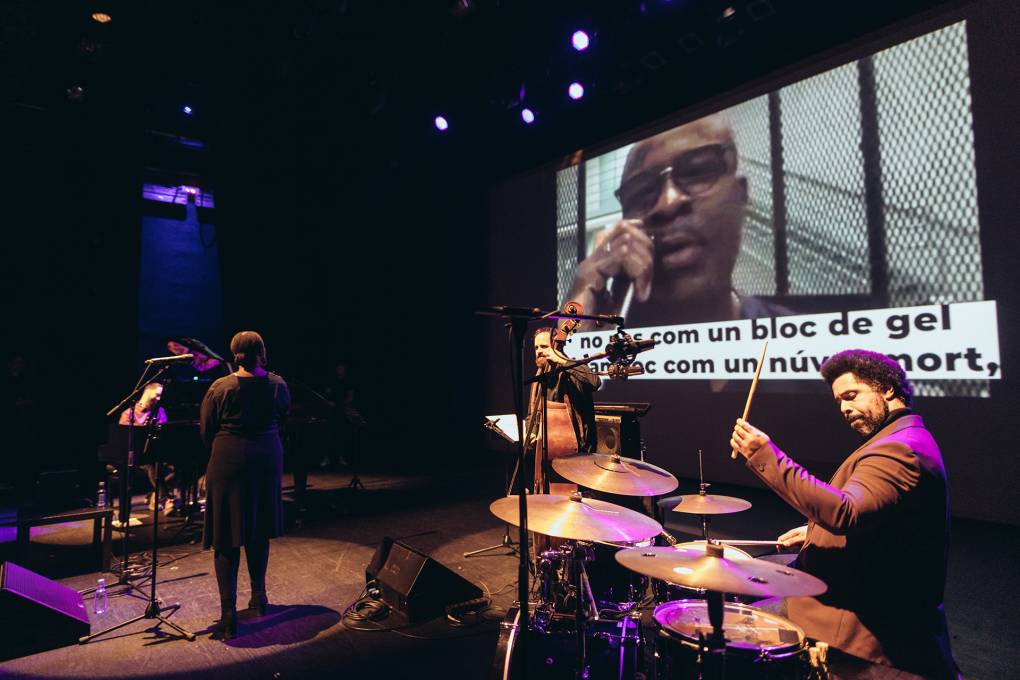
"caption": "Freedom First performs at the Iridia Festival for human rights in Barcelona in February 2023. ",
"description": null,
"title": "23.02.02 IridiaFest-Keith Lamar by Marta Vilardell-52",
"credit": "Marta Vilardell",
"status": "inherit",
"altTag": "A jazz band plays live on stage while a video projection shows Keith LaMar reading spoken-word poetry from prison.",
"isLoading": false,
"fetchFailed": false
},
"arts_13935191": {
"type": "attachments",
"id": "arts_13935191",
"meta": {
"index": "attachments_1716263798",
"site": "arts",
"id": "13935191",
"found": true
},
"parent": 13935159,
"imgSizes": {
"twentyfourteen-full-width": {
"file": "https://ww2.kqed.org/app/uploads/sites/2/2023/09/8-Over-80-—-Thumbnail-1920-x-1080-1-2-1038x576.png",
"width": 1038,
"mimeType": "image/png",
"height": 576
},
"thumbnail": {
"file": "https://ww2.kqed.org/app/uploads/sites/2/2023/09/8-Over-80-—-Thumbnail-1920-x-1080-1-2-160x90.png",
"width": 160,
"mimeType": "image/png",
"height": 90
},
"post-thumbnail": {
"file": "https://ww2.kqed.org/app/uploads/sites/2/2023/09/8-Over-80-—-Thumbnail-1920-x-1080-1-2-672x372.png",
"width": 672,
"mimeType": "image/png",
"height": 372
},
"kqedFullSize": {
"file": "https://ww2.kqed.org/app/uploads/sites/2/2023/09/8-Over-80-—-Thumbnail-1920-x-1080-1-2.png",
"width": 1920,
"height": 1080
},
"large": {
"file": "https://ww2.kqed.org/app/uploads/sites/2/2023/09/8-Over-80-—-Thumbnail-1920-x-1080-1-2-1020x574.png",
"width": 1020,
"mimeType": "image/png",
"height": 574
},
"1536x1536": {
"file": "https://ww2.kqed.org/app/uploads/sites/2/2023/09/8-Over-80-—-Thumbnail-1920-x-1080-1-2-1536x864.png",
"width": 1536,
"mimeType": "image/png",
"height": 864
},
"medium": {
"file": "https://ww2.kqed.org/app/uploads/sites/2/2023/09/8-Over-80-—-Thumbnail-1920-x-1080-1-2-800x450.png",
"width": 800,
"mimeType": "image/png",
"height": 450
},
"medium_large": {
"file": "https://ww2.kqed.org/app/uploads/sites/2/2023/09/8-Over-80-—-Thumbnail-1920-x-1080-1-2-768x432.png",
"width": 768,
"mimeType": "image/png",
"height": 432
}
},
"publishDate": 1695274842,
"modified": 1695274875,
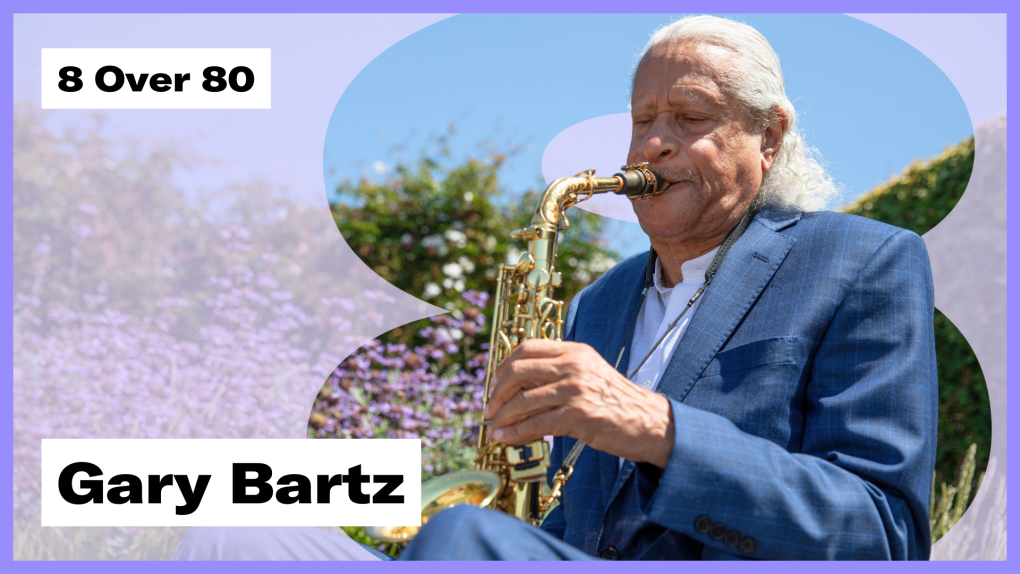
"caption": "Gary Bartz plays saxophone on the rooftop of KQED in San Francisco, Aug. 13, 2023. The recently named NEA Jazz Master has just finished recording three new projects, due to be released in 2024. ",
"description": null,
"title": "8 Over 80 — Thumbnail (1920 x 1080) (1)",
"credit": "Juliana Yamada/KQED",
"status": "inherit",
"altTag": "A man with white hair and a blue suit plays alto saxophone with foliage in the background.",
"isLoading": false,
"fetchFailed": false
},
"arts_13935187": {
"type": "attachments",
"id": "arts_13935187",
"meta": {
"index": "attachments_1716263798",
"site": "arts",
"id": "13935187",
"found": true
},
"parent": 13935159,
"imgSizes": {
"twentyfourteen-full-width": {
"file": "https://ww2.kqed.org/app/uploads/sites/2/2023/09/Bartz.Rooftop.MAIN_-1038x576.jpg",
"width": 1038,
"mimeType": "image/jpeg",
"height": 576
},
"thumbnail": {
"file": "https://ww2.kqed.org/app/uploads/sites/2/2023/09/Bartz.Rooftop.MAIN_-160x107.jpg",
"width": 160,
"mimeType": "image/jpeg",
"height": 107
},
"post-thumbnail": {
"file": "https://ww2.kqed.org/app/uploads/sites/2/2023/09/Bartz.Rooftop.MAIN_-672x372.jpg",
"width": 672,
"mimeType": "image/jpeg",
"height": 372
},
"kqedFullSize": {
"file": "https://ww2.kqed.org/app/uploads/sites/2/2023/09/Bartz.Rooftop.MAIN_.jpg",
"width": 1920,
"height": 1280
},
"large": {
"file": "https://ww2.kqed.org/app/uploads/sites/2/2023/09/Bartz.Rooftop.MAIN_-1020x680.jpg",
"width": 1020,
"mimeType": "image/jpeg",
"height": 680
},
"1536x1536": {
"file": "https://ww2.kqed.org/app/uploads/sites/2/2023/09/Bartz.Rooftop.MAIN_-1536x1024.jpg",
"width": 1536,
"mimeType": "image/jpeg",
"height": 1024
},
"medium": {
"file": "https://ww2.kqed.org/app/uploads/sites/2/2023/09/Bartz.Rooftop.MAIN_-800x533.jpg",
"width": 800,
"mimeType": "image/jpeg",
"height": 533
},
"medium_large": {
"file": "https://ww2.kqed.org/app/uploads/sites/2/2023/09/Bartz.Rooftop.MAIN_-768x512.jpg",
"width": 768,
"mimeType": "image/jpeg",
"height": 512
}
},
"publishDate": 1695269541,
"modified": 1695269658,
"caption": "Gary Bartz plays saxophone on the rooftop of KQED in San Francisco, Aug. 13, 2023. The recently named NEA Jazz Master has just finished recording three new projects, due to be released in 2024. ",
"description": null,
"title": "Bartz.Rooftop.MAIN",
"credit": "Juliana Yamada/KQED",
"status": "inherit",
"altTag": "A man with white hair and a blue suit plays alto saxophone with foliage in the background.",
"isLoading": false,
"fetchFailed": false
},
"arts_13935162": {
"type": "attachments",
"id": "arts_13935162",
"meta": {
"index": "attachments_1716263798",
"site": "arts",
"id": "13935162",
"found": true
},
"parent": 13932120,
"imgSizes": {
"thumbnail": {
"file": "https://ww2.kqed.org/app/uploads/sites/2/2023/09/31240_128704903824715_6362977_n-1-160x90.jpg",
"width": 160,
"mimeType": "image/jpeg",
"height": 90
},
"post-thumbnail": {
"file": "https://ww2.kqed.org/app/uploads/sites/2/2023/09/31240_128704903824715_6362977_n-1-672x372.jpg",
"width": 672,
"mimeType": "image/jpeg",
"height": 372
},
"kqedFullSize": {
"file": "https://ww2.kqed.org/app/uploads/sites/2/2023/09/31240_128704903824715_6362977_n-1.jpg",
"width": 720,
"height": 405
}
},
"publishDate": 1695255221,
"modified": 1695403007,
"caption": "Alphabet Soup's blend of acid jazz and hip-hop took them to big stages, including the legendary Monterey Jazz Festival.",
"description": null,
"title": "31240_128704903824715_6362977_n",
"credit": "Dan Burger",
"status": "inherit",
"altTag": "Alphabet Soup, composed of five musicians and an MC, pose in front of a marquee with their band name on it.",
"isLoading": false,
"fetchFailed": false
},
"arts_13932763": {
"type": "attachments",
"id": "arts_13932763",
"meta": {
"index": "attachments_1716263798",
"site": "arts",
"id": "13932763",
"found": true
},
"parent": 13932753,
"imgSizes": {
"twentyfourteen-full-width": {
"file": "https://ww2.kqed.org/app/uploads/sites/2/2023/08/Screen-Shot-2023-08-07-at-3.44.19-PM-1038x576.png",
"width": 1038,
"mimeType": "image/png",
"height": 576
},
"thumbnail": {
"file": "https://ww2.kqed.org/app/uploads/sites/2/2023/08/Screen-Shot-2023-08-07-at-3.44.19-PM-160x103.png",
"width": 160,
"mimeType": "image/png",
"height": 103
},
"post-thumbnail": {
"file": "https://ww2.kqed.org/app/uploads/sites/2/2023/08/Screen-Shot-2023-08-07-at-3.44.19-PM-672x372.png",
"width": 672,
"mimeType": "image/png",
"height": 372
},
"kqedFullSize": {
"file": "https://ww2.kqed.org/app/uploads/sites/2/2023/08/Screen-Shot-2023-08-07-at-3.44.19-PM.png",
"width": 1808,
"height": 1164
},
"large": {
"file": "https://ww2.kqed.org/app/uploads/sites/2/2023/08/Screen-Shot-2023-08-07-at-3.44.19-PM-1020x657.png",
"width": 1020,
"mimeType": "image/png",
"height": 657
},
"1536x1536": {
"file": "https://ww2.kqed.org/app/uploads/sites/2/2023/08/Screen-Shot-2023-08-07-at-3.44.19-PM-1536x989.png",
"width": 1536,
"mimeType": "image/png",
"height": 989
},
"medium": {
"file": "https://ww2.kqed.org/app/uploads/sites/2/2023/08/Screen-Shot-2023-08-07-at-3.44.19-PM-800x515.png",
"width": 800,
"mimeType": "image/png",
"height": 515
},
"medium_large": {
"file": "https://ww2.kqed.org/app/uploads/sites/2/2023/08/Screen-Shot-2023-08-07-at-3.44.19-PM-768x494.png",
"width": 768,
"mimeType": "image/png",
"height": 494
}
},
"publishDate": 1691448288,
"modified": 1691448498,
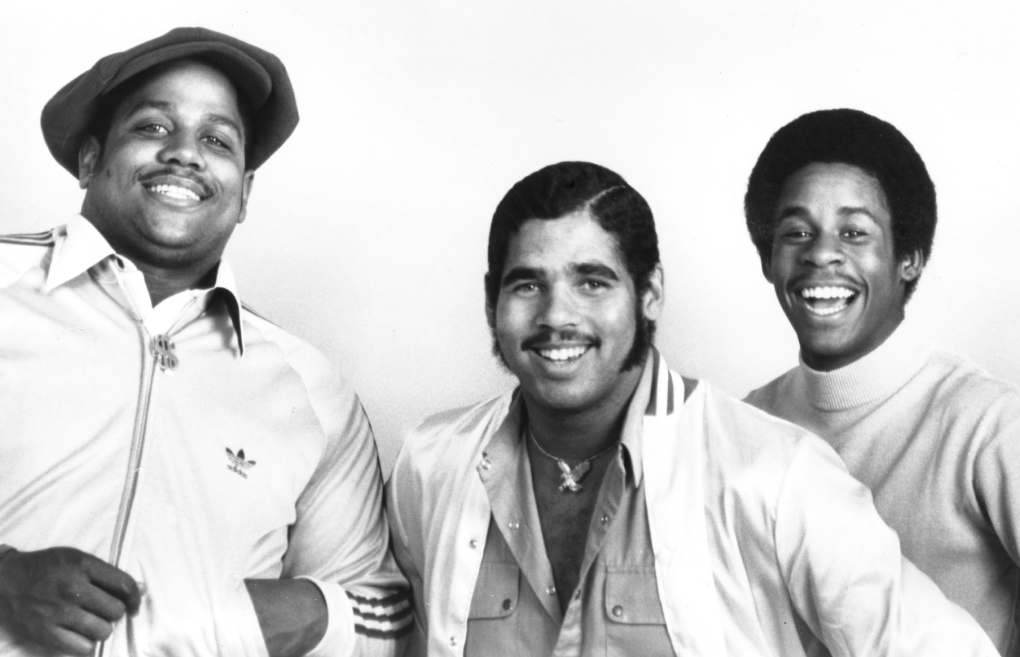
"caption": "Rap pioneers, The Sugar Hill Gang (L-R: Big Bank Hank, Wonder Mike and Master G) in all of their 1979 glory.",
"description": null,
"title": "Rap pioneers, The Sugar Hill Gang (L-R: Big Bank Hank, Wonder Mike and Master G) in all of their 1979 glory.",
"credit": "Michael Ochs Archives/ Getty Images",
"status": "inherit",
"altTag": "Three Black men stand together smiling. The first wears an Adidas jacket and a peasant hat, the second wears a sports jacket, open shirt and gold necklace, the third is wearing a sweater.",
"isLoading": false,
"fetchFailed": false
},
"arts_13931948": {
"type": "attachments",
"id": "arts_13931948",
"meta": {
"index": "attachments_1716263798",
"site": "arts",
"id": "13931948",
"found": true
},
"parent": 13931922,
"imgSizes": {
"twentyfourteen-full-width": {
"file": "https://ww2.kqed.org/app/uploads/sites/2/2023/07/Tony.16.9.thumb_-1038x576.jpg",
"width": 1038,
"mimeType": "image/jpeg",
"height": 576
},
"thumbnail": {
"file": "https://ww2.kqed.org/app/uploads/sites/2/2023/07/Tony.16.9.thumb_-160x90.jpg",
"width": 160,
"mimeType": "image/jpeg",
"height": 90
},
"post-thumbnail": {
"file": "https://ww2.kqed.org/app/uploads/sites/2/2023/07/Tony.16.9.thumb_-672x372.jpg",
"width": 672,
"mimeType": "image/jpeg",
"height": 372
},
"kqedFullSize": {
"file": "https://ww2.kqed.org/app/uploads/sites/2/2023/07/Tony.16.9.thumb_.jpg",
"width": 1469,
"height": 826
},
"large": {
"file": "https://ww2.kqed.org/app/uploads/sites/2/2023/07/Tony.16.9.thumb_-1020x574.jpg",
"width": 1020,
"mimeType": "image/jpeg",
"height": 574
},
"medium": {
"file": "https://ww2.kqed.org/app/uploads/sites/2/2023/07/Tony.16.9.thumb_-800x450.jpg",
"width": 800,
"mimeType": "image/jpeg",
"height": 450
},
"medium_large": {
"file": "https://ww2.kqed.org/app/uploads/sites/2/2023/07/Tony.16.9.thumb_-768x432.jpg",
"width": 768,
"mimeType": "image/jpeg",
"height": 432
}
},
"publishDate": 1689964166,
"modified": 1689964392,
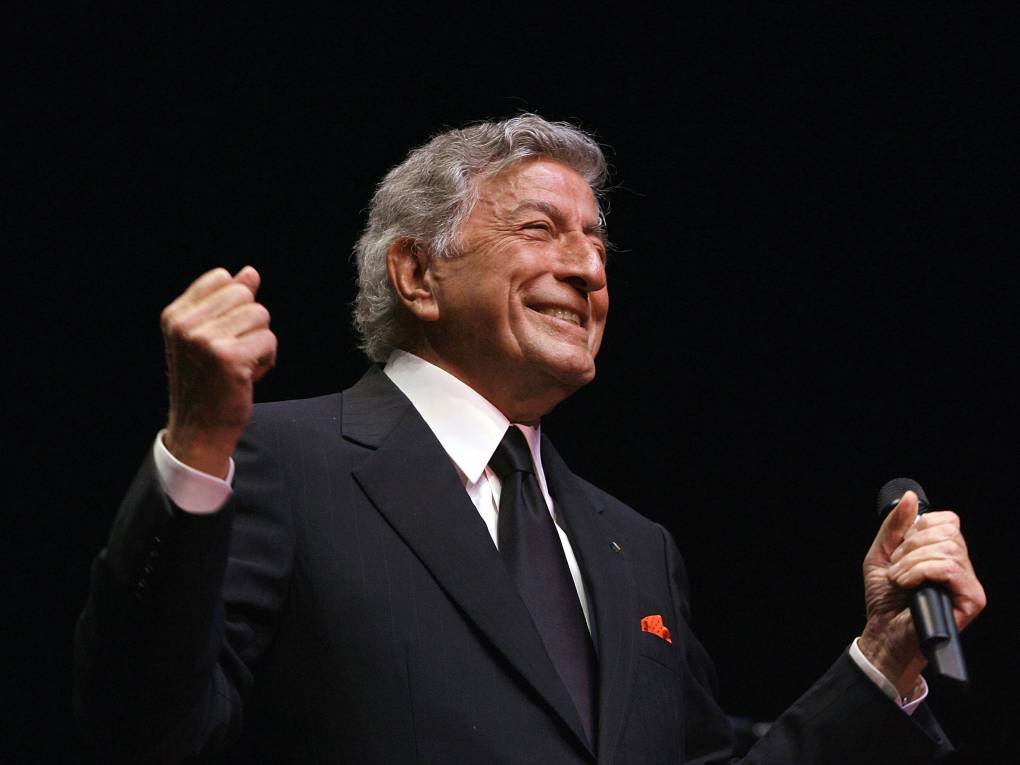
"caption": "Tony Bennett performs at the Hyatt Regency in San Francisco in February, 2000. ",
"description": null,
"title": "Tony.16.9.thumb",
"credit": "Lea Suzuki / San Francisco Chronicle via Getty Images",
"status": "inherit",
"altTag": null,
"isLoading": false,
"fetchFailed": false
},
"arts_13892049": {
"type": "attachments",
"id": "arts_13892049",
"meta": {
"index": "attachments_1716263798",
"site": "arts",
"id": "13892049",
"found": true
},
"parent": 13892048,
"imgSizes": {
"twentyfourteen-full-width": {
"file": "https://ww2.kqed.org/app/uploads/sites/2/2021/02/gettyimages-74023239-00e2b7f5589f5dfd8d5f40f7d7f3dabc565ce86b-1038x576.jpg",
"width": 1038,
"mimeType": "image/jpeg",
"height": 576
},
"thumbnail": {
"file": "https://ww2.kqed.org/app/uploads/sites/2/2021/02/gettyimages-74023239-00e2b7f5589f5dfd8d5f40f7d7f3dabc565ce86b-160x120.jpg",
"width": 160,
"mimeType": "image/jpeg",
"height": 120
},
"post-thumbnail": {
"file": "https://ww2.kqed.org/app/uploads/sites/2/2021/02/gettyimages-74023239-00e2b7f5589f5dfd8d5f40f7d7f3dabc565ce86b-672x372.jpg",
"width": 672,
"mimeType": "image/jpeg",
"height": 372
},
"kqedFullSize": {
"file": "https://ww2.kqed.org/app/uploads/sites/2/2021/02/gettyimages-74023239-00e2b7f5589f5dfd8d5f40f7d7f3dabc565ce86b-scaled-e1612204615104.jpg",
"width": 1920,
"height": 1439
},
"2048x2048": {
"file": "https://ww2.kqed.org/app/uploads/sites/2/2021/02/gettyimages-74023239-00e2b7f5589f5dfd8d5f40f7d7f3dabc565ce86b-2048x1535.jpg",
"width": 2048,
"mimeType": "image/jpeg",
"height": 1535
},
"large": {
"file": "https://ww2.kqed.org/app/uploads/sites/2/2021/02/gettyimages-74023239-00e2b7f5589f5dfd8d5f40f7d7f3dabc565ce86b-1020x765.jpg",
"width": 1020,
"mimeType": "image/jpeg",
"height": 765
},
"1536x1536": {
"file": "https://ww2.kqed.org/app/uploads/sites/2/2021/02/gettyimages-74023239-00e2b7f5589f5dfd8d5f40f7d7f3dabc565ce86b-1536x1152.jpg",
"width": 1536,
"mimeType": "image/jpeg",
"height": 1152
},
"full-width": {
"file": "https://ww2.kqed.org/app/uploads/sites/2/2021/02/gettyimages-74023239-00e2b7f5589f5dfd8d5f40f7d7f3dabc565ce86b-1920x1439.jpg",
"width": 1920,
"mimeType": "image/jpeg",
"height": 1439
},
"medium": {
"file": "https://ww2.kqed.org/app/uploads/sites/2/2021/02/gettyimages-74023239-00e2b7f5589f5dfd8d5f40f7d7f3dabc565ce86b-800x600.jpg",
"width": 800,
"mimeType": "image/jpeg",
"height": 600
},
"medium_large": {
"file": "https://ww2.kqed.org/app/uploads/sites/2/2021/02/gettyimages-74023239-00e2b7f5589f5dfd8d5f40f7d7f3dabc565ce86b-768x576.jpg",
"width": 768,
"mimeType": "image/jpeg",
"height": 576
}
},
"publishDate": 1612204244,
"modified": 1612204645,
"caption": "Singer Tony Bennett performing at the Royal Albert Hall in London in 2007.",
"description": "Singer Tony Bennett performing at the Royal Albert Hall in London in 2007.",
"title": "Singer Tony Bennett performing at the Royal Albert Hall in London in 2007.",
"credit": "Jo Hale/Getty Images",
"status": "inherit",
"altTag": "Singer Tony Bennett performing at the Royal Albert Hall in London in 2007.",
"isLoading": false,
"fetchFailed": false
},
"arts_13931738": {
"type": "attachments",
"id": "arts_13931738",
"meta": {
"index": "attachments_1716263798",
"site": "arts",
"id": "13931738",
"found": true
},
"title": "SunRa.Detroit.THUMB",
"publishDate": 1689624925,
"status": "inherit",
"parent": 13931735,
"modified": 1718640788,
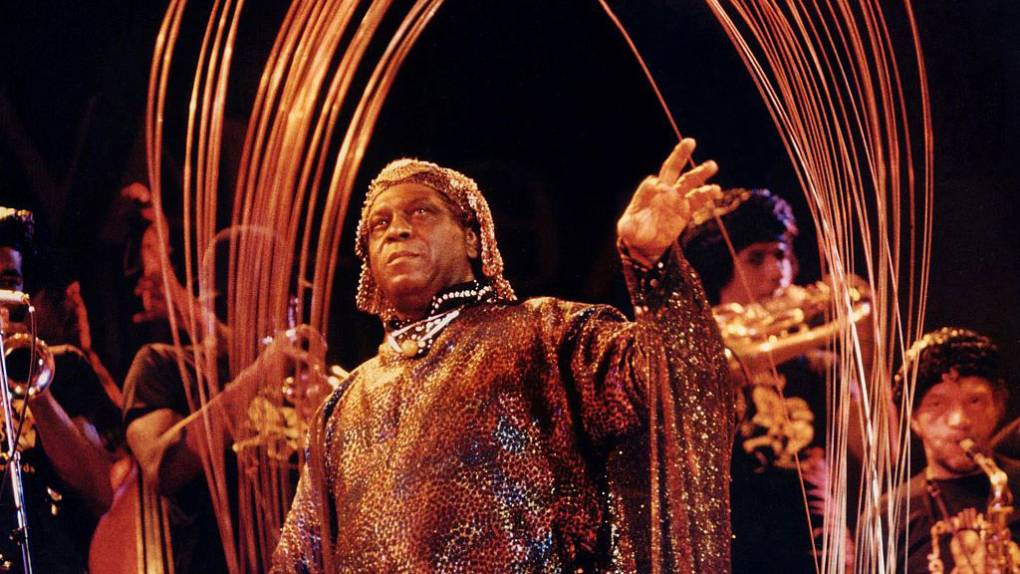
"caption": "Sun Ra and his Sun Ra Archestra performing on September 23, 1978, at Hill Auditorium in Ann Arbor, Michigan.",
"credit": "Leni Sinclair/Getty Images",
"altTag": "A Black man in a loose-fitting, glittery wardrobe motions with his left hand while looking into the distance, beneath an arch-shaped, gold-hued sculpture",
"description": null,
"imgSizes": {
"medium": {
"file": "https://cdn.kqed.org/wp-content/uploads/sites/2/2023/07/SunRa.Detroit.THUMB_-800x450.jpg",
"width": 800,
"height": 450,
"mimeType": "image/jpeg"
},
"large": {
"file": "https://cdn.kqed.org/wp-content/uploads/sites/2/2023/07/SunRa.Detroit.THUMB_-1020x574.jpg",
"width": 1020,
"height": 574,
"mimeType": "image/jpeg"
},
"thumbnail": {
"file": "https://cdn.kqed.org/wp-content/uploads/sites/2/2023/07/SunRa.Detroit.THUMB_-160x90.jpg",
"width": 160,
"height": 90,
"mimeType": "image/jpeg"
},
"medium_large": {
"file": "https://cdn.kqed.org/wp-content/uploads/sites/2/2023/07/SunRa.Detroit.THUMB_-768x432.jpg",
"width": 768,
"height": 432,
"mimeType": "image/jpeg"
},
"post-thumbnail": {
"file": "https://cdn.kqed.org/wp-content/uploads/sites/2/2023/07/SunRa.Detroit.THUMB_-672x372.jpg",
"width": 672,
"height": 372,
"mimeType": "image/jpeg"
},
"kqedFullSize": {
"file": "https://cdn.kqed.org/wp-content/uploads/sites/2/2023/07/SunRa.Detroit.THUMB_.jpg",
"width": 1024,
"height": 576
}
},
"isLoading": false,
"fetchFailed": false
},
"arts_13931659": {
"type": "attachments",
"id": "arts_13931659",
"meta": {
"index": "attachments_1716263798",
"site": "arts",
"id": "13931659",
"found": true
},
"parent": 13931600,
"imgSizes": {
"twentyfourteen-full-width": {
"file": "https://ww2.kqed.org/app/uploads/sites/2/2023/07/Robert_Glasper.MAIN_-1038x576.jpg",
"width": 1038,
"mimeType": "image/jpeg",
"height": 576
},
"thumbnail": {
"file": "https://ww2.kqed.org/app/uploads/sites/2/2023/07/Robert_Glasper.MAIN_-160x97.jpg",
"width": 160,
"mimeType": "image/jpeg",
"height": 97
},
"post-thumbnail": {
"file": "https://ww2.kqed.org/app/uploads/sites/2/2023/07/Robert_Glasper.MAIN_-672x372.jpg",
"width": 672,
"mimeType": "image/jpeg",
"height": 372
},
"kqedFullSize": {
"file": "https://ww2.kqed.org/app/uploads/sites/2/2023/07/Robert_Glasper.MAIN_.jpg",
"width": 1920,
"height": 1166
},
"large": {
"file": "https://ww2.kqed.org/app/uploads/sites/2/2023/07/Robert_Glasper.MAIN_-1020x619.jpg",
"width": 1020,
"mimeType": "image/jpeg",
"height": 619
},
"1536x1536": {
"file": "https://ww2.kqed.org/app/uploads/sites/2/2023/07/Robert_Glasper.MAIN_-1536x933.jpg",
"width": 1536,
"mimeType": "image/jpeg",
"height": 933
},
"medium": {
"file": "https://ww2.kqed.org/app/uploads/sites/2/2023/07/Robert_Glasper.MAIN_-800x486.jpg",
"width": 800,
"mimeType": "image/jpeg",
"height": 486
},
"medium_large": {
"file": "https://ww2.kqed.org/app/uploads/sites/2/2023/07/Robert_Glasper.MAIN_-768x466.jpg",
"width": 768,
"mimeType": "image/jpeg",
"height": 466
}
},
"publishDate": 1689359066,
"modified": 1689359250,
"caption": "Robert Glasper brings a philosophy of pastiche to the lineup of the Blue Note Jazz Festival, which fluidly blends jazz, R&B and hip-hop.",
"description": null,
"title": "Robert_Glasper.MAIN",
"credit": "Courtesy Blue Note Jazz Festival",
"status": "inherit",
"altTag": "A man in sunglasses holds the frames, fingers aloft",
"isLoading": false,
"fetchFailed": false
},
"arts_13930309": {
"type": "attachments",
"id": "arts_13930309",
"meta": {
"index": "attachments_1716263798",
"site": "arts",
"id": "13930309",
"found": true
},
"parent": 13930249,
"imgSizes": {
"twentyfourteen-full-width": {
"file": "https://ww2.kqed.org/app/uploads/sites/2/2023/06/Elena-3-1038x576.jpg",
"width": 1038,
"mimeType": "image/jpeg",
"height": 576
},
"thumbnail": {
"file": "https://ww2.kqed.org/app/uploads/sites/2/2023/06/Elena-3-160x160.jpg",
"width": 160,
"mimeType": "image/jpeg",
"height": 160
},
"post-thumbnail": {
"file": "https://ww2.kqed.org/app/uploads/sites/2/2023/06/Elena-3-672x372.jpg",
"width": 672,
"mimeType": "image/jpeg",
"height": 372
},
"kqedFullSize": {
"file": "https://ww2.kqed.org/app/uploads/sites/2/2023/06/Elena-3-scaled.jpg",
"width": 2560,
"height": 2560
},
"2048x2048": {
"file": "https://ww2.kqed.org/app/uploads/sites/2/2023/06/Elena-3-2048x2048.jpg",
"width": 2048,
"mimeType": "image/jpeg",
"height": 2048
},
"large": {
"file": "https://ww2.kqed.org/app/uploads/sites/2/2023/06/Elena-3-1020x1020.jpg",
"width": 1020,
"mimeType": "image/jpeg",
"height": 1020
},
"1536x1536": {
"file": "https://ww2.kqed.org/app/uploads/sites/2/2023/06/Elena-3-1536x1536.jpg",
"width": 1536,
"mimeType": "image/jpeg",
"height": 1536
},
"full-width": {
"file": "https://ww2.kqed.org/app/uploads/sites/2/2023/06/Elena-3-1920x1920.jpg",
"width": 1920,
"mimeType": "image/jpeg",
"height": 1920
},
"medium": {
"file": "https://ww2.kqed.org/app/uploads/sites/2/2023/06/Elena-3-800x800.jpg",
"width": 800,
"mimeType": "image/jpeg",
"height": 800
},
"medium_large": {
"file": "https://ww2.kqed.org/app/uploads/sites/2/2023/06/Elena-3-768x768.jpg",
"width": 768,
"mimeType": "image/jpeg",
"height": 768
}
},
"publishDate": 1686252101,
"modified": 1686266331,
"caption": "Elena Pinderhughes is an extremely talented flutist and vocalist from Berkeley. ",
"description": "Elena Pinderhughes is an extremely talented flutist and vocalist from Berkeley. ",
"title": "Elena Pinderhughes is an extremely talented flutist and vocalist from Berkeley.",
"credit": "Darrin Baldridge",
"status": "inherit",
"altTag": "Elena Pinderhughes is an extremely talented flutist and vocalist from Berkeley.",
"isLoading": false,
"fetchFailed": false
},
"arts_13931051": {
"type": "attachments",
"id": "arts_13931051",
"meta": {
"index": "attachments_1716263798",
"site": "arts",
"id": "13931051",
"found": true
},
"parent": 13931047,
"imgSizes": {
"twentyfourteen-full-width": {
"file": "https://ww2.kqed.org/app/uploads/sites/2/2023/06/photo-by-ivan-noble-1038x576.png",
"width": 1038,
"mimeType": "image/png",
"height": 576
},
"thumbnail": {
"file": "https://ww2.kqed.org/app/uploads/sites/2/2023/06/photo-by-ivan-noble-160x172.png",
"width": 160,
"mimeType": "image/png",
"height": 172
},
"post-thumbnail": {
"file": "https://ww2.kqed.org/app/uploads/sites/2/2023/06/photo-by-ivan-noble-672x372.png",
"width": 672,
"mimeType": "image/png",
"height": 372
},
"kqedFullSize": {
"file": "https://ww2.kqed.org/app/uploads/sites/2/2023/06/photo-by-ivan-noble.png",
"width": 1156,
"height": 1245
},
"large": {
"file": "https://ww2.kqed.org/app/uploads/sites/2/2023/06/photo-by-ivan-noble-1020x1099.png",
"width": 1020,
"mimeType": "image/png",
"height": 1099
},
"medium": {
"file": "https://ww2.kqed.org/app/uploads/sites/2/2023/06/photo-by-ivan-noble-800x862.png",
"width": 800,
"mimeType": "image/png",
"height": 862
},
"medium_large": {
"file": "https://ww2.kqed.org/app/uploads/sites/2/2023/06/photo-by-ivan-noble-768x827.png",
"width": 768,
"mimeType": "image/png",
"height": 827
}
},
"publishDate": 1688067849,
"modified": 1688067972,
"caption": "Giulio Xavier Cetto is influenced by his Venezuelan-Italian heritage, Bay Area rap music, and his jazz and classically-trained family. ",
"description": null,
"title": "photo by ivan noble",
"credit": "Ivan Noble",
"status": "inherit",
"altTag": "A black and white photo of Giulio Xavier Cetto playing the upright bass.",
"isLoading": false,
"fetchFailed": false
},
"arts_13930819": {
"type": "attachments",
"id": "arts_13930819",
"meta": {
"index": "attachments_1716263798",
"site": "arts",
"id": "13930819",
"found": true
},
"parent": 13930747,
"imgSizes": {
"twentyfourteen-full-width": {
"file": "https://ww2.kqed.org/app/uploads/sites/2/2023/06/AMW-bone-down-809x576.jpg",
"width": 809,
"mimeType": "image/jpeg",
"height": 576
},
"thumbnail": {
"file": "https://ww2.kqed.org/app/uploads/sites/2/2023/06/AMW-bone-down-160x157.jpg",
"width": 160,
"mimeType": "image/jpeg",
"height": 157
},
"post-thumbnail": {
"file": "https://ww2.kqed.org/app/uploads/sites/2/2023/06/AMW-bone-down-672x372.jpg",
"width": 672,
"mimeType": "image/jpeg",
"height": 372
},
"kqedFullSize": {
"file": "https://ww2.kqed.org/app/uploads/sites/2/2023/06/AMW-bone-down.jpg",
"width": 809,
"height": 794
},
"medium": {
"file": "https://ww2.kqed.org/app/uploads/sites/2/2023/06/AMW-bone-down-800x785.jpg",
"width": 800,
"mimeType": "image/jpeg",
"height": 785
},
"medium_large": {
"file": "https://ww2.kqed.org/app/uploads/sites/2/2023/06/AMW-bone-down-768x754.jpg",
"width": 768,
"mimeType": "image/jpeg",
"height": 754
}
},
"publishDate": 1687470101,
"modified": 1687470348,
"caption": "Dr. Angela Wellman looks directly into the camera as she plays her trombone.",
"description": "Dr. Angela Wellman looks directly into the camera as she plays her trombone. ",
"title": "Dr. Angela Wellman looks directly into the camera as she plays her trombone.",
"credit": "Via Dr. Angela Wellman",
"status": "inherit",
"altTag": "Dr. Angela Wellman looks directly into the camera as she plays her trombone.",
"isLoading": false,
"fetchFailed": false
},
"arts_13930575": {
"type": "attachments",
"id": "arts_13930575",
"meta": {
"index": "attachments_1716263798",
"site": "arts",
"id": "13930575",
"found": true
},
"parent": 13930574,
"imgSizes": {
"twentyfourteen-full-width": {
"file": "https://ww2.kqed.org/app/uploads/sites/2/2023/06/Photo-2-by-Andrew-Peralta-@xt3chniqs-1038x576.jpeg",
"width": 1038,
"mimeType": "image/jpeg",
"height": 576
},
"thumbnail": {
"file": "https://ww2.kqed.org/app/uploads/sites/2/2023/06/Photo-2-by-Andrew-Peralta-@xt3chniqs-160x131.jpeg",
"width": 160,
"mimeType": "image/jpeg",
"height": 131
},
"post-thumbnail": {
"file": "https://ww2.kqed.org/app/uploads/sites/2/2023/06/Photo-2-by-Andrew-Peralta-@xt3chniqs-672x372.jpeg",
"width": 672,
"mimeType": "image/jpeg",
"height": 372
},
"kqedFullSize": {
"file": "https://ww2.kqed.org/app/uploads/sites/2/2023/06/Photo-2-by-Andrew-Peralta-@xt3chniqs-scaled.jpeg",
"width": 2560,
"height": 2091
},
"2048x2048": {
"file": "https://ww2.kqed.org/app/uploads/sites/2/2023/06/Photo-2-by-Andrew-Peralta-@xt3chniqs-2048x1673.jpeg",
"width": 2048,
"mimeType": "image/jpeg",
"height": 1673
},
"large": {
"file": "https://ww2.kqed.org/app/uploads/sites/2/2023/06/Photo-2-by-Andrew-Peralta-@xt3chniqs-1020x833.jpeg",
"width": 1020,
"mimeType": "image/jpeg",
"height": 833
},
"1536x1536": {
"file": "https://ww2.kqed.org/app/uploads/sites/2/2023/06/Photo-2-by-Andrew-Peralta-@xt3chniqs-1536x1255.jpeg",
"width": 1536,
"mimeType": "image/jpeg",
"height": 1255
},
"full-width": {
"file": "https://ww2.kqed.org/app/uploads/sites/2/2023/06/Photo-2-by-Andrew-Peralta-@xt3chniqs-1920x1568.jpeg",
"width": 1920,
"mimeType": "image/jpeg",
"height": 1568
},
"medium": {
"file": "https://ww2.kqed.org/app/uploads/sites/2/2023/06/Photo-2-by-Andrew-Peralta-@xt3chniqs-800x653.jpeg",
"width": 800,
"mimeType": "image/jpeg",
"height": 653
},
"medium_large": {
"file": "https://ww2.kqed.org/app/uploads/sites/2/2023/06/Photo-2-by-Andrew-Peralta-@xt3chniqs-768x627.jpeg",
"width": 768,
"mimeType": "image/jpeg",
"height": 627
}
},
"publishDate": 1686861590,
"modified": 1686861713,
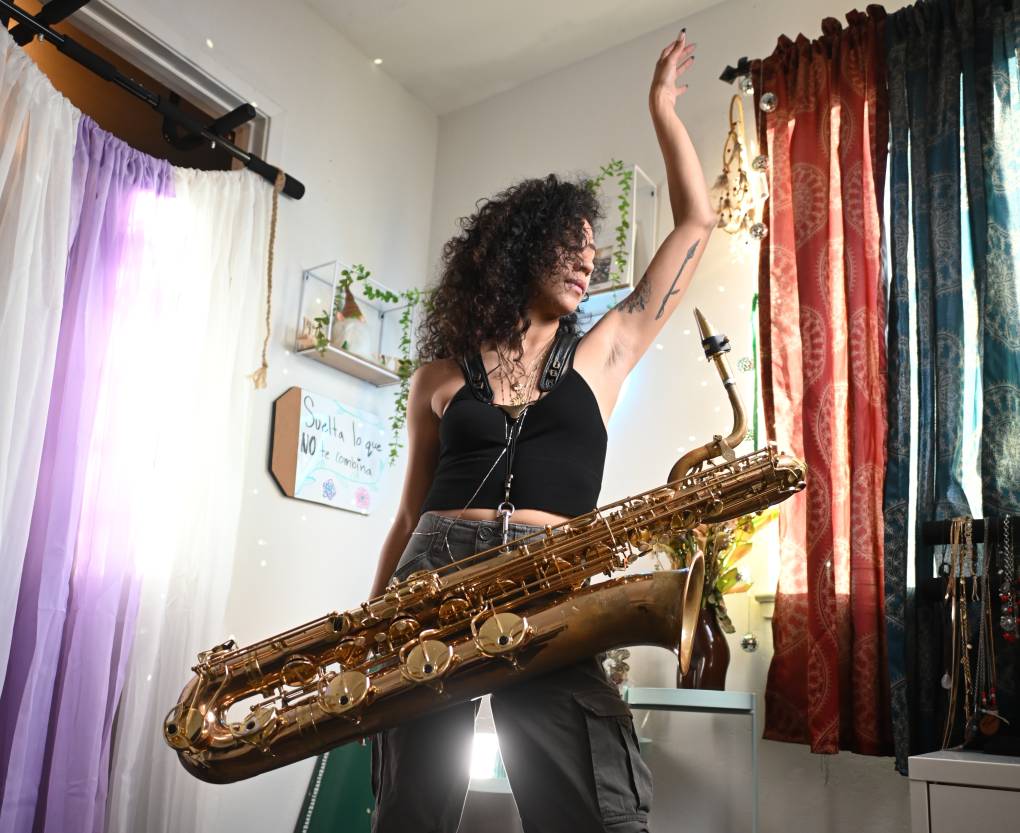
"caption": "Lidia Rodriguez is a premiere baritone saxophonist based in San Jose by way of Stockton. ",
"description": null,
"title": "Photo 2 by Andrew Peralta @xt3chniqs",
"credit": "Andrew Peralta ",
"status": "inherit",
"altTag": "Lidia rodriguez poses with her baritone saxaphone hanging off her neck. Her right hand is raised and she looks off camera.",
"isLoading": false,
"fetchFailed": false
}
},
"audioPlayerReducer": {
"postId": "stream_live",
"isPaused": true,
"isPlaying": false,
"pfsActive": false,
"pledgeModalIsOpen": true,
"playerDrawerIsOpen": false,
"liveAudioPlayStartedAt": 0,
"liveAudioPlayContext": ""
},
"authorsReducer": {
"byline_arts_13932753": {
"type": "authors",
"id": "byline_arts_13932753",
"meta": {
"override": true
},
"slug": "byline_arts_13932753",
"name": "Jonathan Landrum Jr., Gary Gerard Hamilton ",
"isLoading": false
},
"byline_arts_13931917": {
"type": "authors",
"id": "byline_arts_13931917",
"meta": {
"override": true
},
"slug": "byline_arts_13931917",
"name": "Charles J. Gans",
"isLoading": false
},
"agilbert": {
"type": "authors",
"id": "86",
"meta": {
"index": "authors_1716337520",
"id": "86",
"found": true
},
"name": "Andrew Gilbert",
"firstName": "Andrew",
"lastName": "Gilbert",
"slug": "agilbert",
"email": "jazzscribe@aol.com",
"display_author_email": false,
"staff_mastheads": [],
"title": "KQED Contributor",
"bio": "A Los Angeles native based in the Berkeley area since 1996, Andrew Gilbert covers jazz, international music and dance for KQED's \u003ci>California Report, \u003c/i>the\u003ci> Mercury News\u003c/i>, \u003ci>San Francisco Chronicle\u003c/i>, \u003ci>Berkeleyside.com\u003c/i>, and other publications. He is available for weddings and bar and bat mitzvahs. #jazzscribe",
"avatar": "https://secure.gravatar.com/avatar/d7bcafdbefdd39e9a68f88724ca616eb4e7a5a6bff9cdfb62de652a1e1751471?s=600&d=blank&r=g",
"twitter": null,
"bluesky": null,
"facebook": null,
"instagram": null,
"linkedin": null,
"sites": [
{
"site": "arts",
"roles": [
"Contributor",
"author"
]
},
{
"site": "news",
"roles": [
"author"
]
}
],
"headData": {
"title": "Andrew Gilbert | KQED",
"description": "KQED Contributor",
"ogImgSrc": "https://secure.gravatar.com/avatar/d7bcafdbefdd39e9a68f88724ca616eb4e7a5a6bff9cdfb62de652a1e1751471?s=600&d=blank&r=g",
"twImgSrc": "https://secure.gravatar.com/avatar/d7bcafdbefdd39e9a68f88724ca616eb4e7a5a6bff9cdfb62de652a1e1751471?s=600&d=blank&r=g"
},
"isLoading": false,
"link": "/author/agilbert"
},
"gmeline": {
"type": "authors",
"id": "185",
"meta": {
"index": "authors_1716337520",
"id": "185",
"found": true
},
"name": "Gabe Meline",
"firstName": "Gabe",
"lastName": "Meline",
"slug": "gmeline",
"email": "gmeline@kqed.org",
"display_author_email": true,
"staff_mastheads": [
"arts"
],
"title": "Senior Editor, KQED Arts & Culture",
"bio": "Gabe Meline entered journalism at age 15 making photocopied zines, and has since earned awards from the Edward R. Murrow Awards, the Society for Professional Journalists, the Online Journalism Awards, the Association of Alternative Newsweeklies and the California Newspaper Publishers Association. Prior to KQED, he was the editor of the \u003cem>North Bay Bohemian\u003c/em> and a touring musician. He lives with his wife and daughter in his hometown of Santa Rosa, CA.",
"avatar": "https://secure.gravatar.com/avatar/5bebe57be0d8bc2dd318934feb47299e2d2d10cba28d09d8d7afb389a2ce2bdd?s=600&d=blank&r=g",
"twitter": null,
"bluesky": null,
"facebook": null,
"instagram": null,
"linkedin": null,
"sites": [
{
"site": "",
"roles": [
"editor"
]
},
{
"site": "arts",
"roles": [
"administrator"
]
},
{
"site": "artschool",
"roles": [
"editor"
]
},
{
"site": "news",
"roles": [
"author"
]
},
{
"site": "pop",
"roles": [
"editor"
]
},
{
"site": "bayareabites",
"roles": [
"editor"
]
},
{
"site": "food",
"roles": [
"editor"
]
},
{
"site": "forum",
"roles": [
"administrator"
]
},
{
"site": "liveblog",
"roles": [
"editor"
]
},
{
"site": "hiphop",
"roles": [
"editor"
]
}
],
"headData": {
"title": "Gabe Meline | KQED",
"description": "Senior Editor, KQED Arts & Culture",
"ogImgSrc": "https://secure.gravatar.com/avatar/5bebe57be0d8bc2dd318934feb47299e2d2d10cba28d09d8d7afb389a2ce2bdd?s=600&d=blank&r=g",
"twImgSrc": "https://secure.gravatar.com/avatar/5bebe57be0d8bc2dd318934feb47299e2d2d10cba28d09d8d7afb389a2ce2bdd?s=600&d=blank&r=g"
},
"isLoading": false,
"link": "/author/gmeline"
},
"ogpenn": {
"type": "authors",
"id": "11491",
"meta": {
"index": "authors_1716337520",
"id": "11491",
"found": true
},
"name": "Pendarvis Harshaw",
"firstName": "Pendarvis",
"lastName": "Harshaw",
"slug": "ogpenn",
"email": "ogpenn@gmail.com",
"display_author_email": false,
"staff_mastheads": [
"arts"
],
"title": "Community Engagement Reporter",
"bio": "Pendarvis Harshaw is an educator, host and writer with KQED Arts.",
"avatar": "https://secure.gravatar.com/avatar/972b77ee8e3f346ae2b00622661187fbfabd059b5693bbdc1475ea7a722fd4cd?s=600&d=blank&r=g",
"twitter": null,
"bluesky": null,
"facebook": null,
"instagram": "ogpenn",
"linkedin": null,
"sites": [
{
"site": "arts",
"roles": [
"administrator"
]
},
{
"site": "news",
"roles": [
"editor"
]
},
{
"site": "bayareabites",
"roles": [
"author"
]
},
{
"site": "hiphop",
"roles": [
"editor"
]
}
],
"headData": {
"title": "Pendarvis Harshaw | KQED",
"description": "Community Engagement Reporter",
"ogImgSrc": "https://secure.gravatar.com/avatar/972b77ee8e3f346ae2b00622661187fbfabd059b5693bbdc1475ea7a722fd4cd?s=600&d=blank&r=g",
"twImgSrc": "https://secure.gravatar.com/avatar/972b77ee8e3f346ae2b00622661187fbfabd059b5693bbdc1475ea7a722fd4cd?s=600&d=blank&r=g"
},
"isLoading": false,
"link": "/author/ogpenn"
},
"mmedina": {
"type": "authors",
"id": "11528",
"meta": {
"index": "authors_1716337520",
"id": "11528",
"found": true
},
"name": "Marisol Medina-Cadena",
"firstName": "Marisol",
"lastName": "Medina-Cadena",
"slug": "mmedina",
"email": "mmedina@KQED.org",
"display_author_email": true,
"staff_mastheads": [],
"title": "Producer, Rightnowish Podcast",
"bio": "Marisol Medina-Cadena is a radio reporter and podcast producer. Before working at KQED, she produced for PBS member station, KCET, in Los Angeles. In 2017, Marisol won an Emmy Award for her work on the televised documentary, \u003cem>City Rising\u003c/em>, examining California's affordable housing crisis and the historical roots of gentrification.",
"avatar": "https://secure.gravatar.com/avatar/6c3db46a1cabb5e1fe9a365b5f4e681e?s=600&d=blank&r=g",
"twitter": "marisolreports",
"facebook": null,
"instagram": null,
"linkedin": null,
"sites": [
{
"site": "arts",
"roles": []
},
{
"site": "news",
"roles": [
"edit_others_posts"
]
}
],
"headData": {
"title": "Marisol Medina-Cadena | KQED",
"description": "Producer, Rightnowish Podcast",
"ogImgSrc": "https://secure.gravatar.com/avatar/6c3db46a1cabb5e1fe9a365b5f4e681e?s=600&d=blank&r=g",
"twImgSrc": "https://secure.gravatar.com/avatar/6c3db46a1cabb5e1fe9a365b5f4e681e?s=600&d=blank&r=g"
},
"isLoading": false,
"link": "/author/mmedina"
},
"earnold": {
"type": "authors",
"id": "11839",
"meta": {
"index": "authors_1716337520",
"id": "11839",
"found": true
},
"name": "Eric Arnold",
"firstName": "Eric",
"lastName": "Arnold",
"slug": "earnold",
"email": "earnold@kqed.org",
"display_author_email": false,
"staff_mastheads": [],
"title": "Contributing Editor, 'That's My Word'",
"bio": "Eric Arnold has covered hip-hop locally and nationally for over 30 years. Formerly the managing editor of \u003cem>4080\u003c/em> and columnist for \u003cem>The Source\u003c/em>, he chronicled hyphy’s rise and fall, co-curated the Oakland Museum of California’s first hip-hop exhibit in 2018 and won a 2022 Northern California Emmy Award for a mini-documentary on Oakland’s Boogaloo dance culture. He is a contributing editor for \u003cem>That’s My Word\u003c/em>, KQED's series on the history of Bay Area hip-hop.",
"avatar": "https://secure.gravatar.com/avatar/ede45b04898456ad0893a2811e78b0a2?s=600&d=blank&r=g",
"twitter": null,
"facebook": null,
"instagram": null,
"linkedin": null,
"sites": [
{
"site": "arts",
"roles": [
"contributor"
]
},
{
"site": "news",
"roles": [
"contributor"
]
},
{
"site": "hiphop",
"roles": [
"contributor"
]
}
],
"headData": {
"title": "Eric Arnold | KQED",
"description": "Contributing Editor, 'That's My Word'",
"ogImgSrc": "https://secure.gravatar.com/avatar/ede45b04898456ad0893a2811e78b0a2?s=600&d=blank&r=g",
"twImgSrc": "https://secure.gravatar.com/avatar/ede45b04898456ad0893a2811e78b0a2?s=600&d=blank&r=g"
},
"isLoading": false,
"link": "/author/earnold"
}
},
"pagesReducer": {
"arts_tag_jazz": {
"type": "terms",
"id": "arts_1420",
"meta": {
"index": "terms_1716263798",
"site": "arts",
"id": "1420",
"score": 9.104777
},
"featImg": null,
"name": "jazz",
"description": null,
"taxonomy": "tag",
"headData": {
"twImgId": null,
"twTitle": null,
"ogTitle": null,
"ogImgId": null,
"twDescription": null,
"description": null,
"title": "jazz Archives | KQED Arts",
"ogDescription": null
},
"ttid": 1432,
"slug": "jazz",
"isLoading": false,
"title": "jazz",
"pageMeta": {
"site": "arts",
"WpPageTemplate": "page-topic-editorial",
"currentPage": 5
},
"blocks": [
{
"blockName": "kqed/post-list",
"attrs": {
"layout": "cardArticle2",
"query": "posts/arts?tag=jazz",
"seeMore": false,
"paginated": true,
"page": 5
}
},
{
"blockName": "kqed/ad"
}
]
}
},
"pfsSessionReducer": {},
"postsReducer": {
"stream_live": {
"type": "live",
"id": "stream_live",
"audioUrl": "https://streams.kqed.org/kqedradio",
"title": "Live Stream",
"excerpt": "Live Stream information currently unavailable.",
"link": "/radio",
"featImg": "",
"label": {
"name": "KQED Live",
"link": "/"
}
},
"stream_kqedNewscast": {
"type": "posts",
"id": "stream_kqedNewscast",
"audioUrl": "https://www.kqed.org/.stream/anon/radio/RDnews/newscast.mp3?_=1",
"title": "KQED Newscast",
"featImg": "",
"label": {
"name": "88.5 FM",
"link": "/"
}
},
"arts_13935175": {
"type": "posts",
"id": "arts_13935175",
"meta": {
"index": "posts_1716263798",
"site": "arts",
"id": "13935175",
"score": null,
"sort": [
1695657618000
]
},
"parent": 0,
"labelTerm": {
"site": "arts"
},
"blocks": [],
"publishDate": 1695657618,
"format": "standard",
"title": "Live from Death Row, Keith LaMar Performs Freedom Songs in SF",
"headTitle": "Live from Death Row, Keith LaMar Performs Freedom Songs in SF | KQED",
"content": "\u003cp>When Jay Bordeleau booked Freedom First, a singular collaboration between pianist Albert Marquès and spoken word artist \u003ca href=\"https://www.keithlamar.org/\">Keith LaMar\u003c/a>, the \u003ca href=\"https://mrtipplessf.com/calendar/albert-marques-and-keith-lamar-freedom-first/\">Oct. 3-4 engagement\u003c/a> was marked by an urgency unlike any other at his jazz club, Mr. Tipple’s — or any other venue in the city for that matter.\u003c/p>\n\u003cp>After 29 years on death row, LaMar was scheduled for execution at Ohio State Penitentiary on Nov. 16, 2023 for what he’s always insisted was a wrongful conviction. In recent years, Marquès and a dedicated cadre of jazz musicians have championed his cause through international performances and the 2022 album \u003cem>\u003ca href=\"https://sayitloudrecords.bandcamp.com/album/freedom-first\">Freedom First\u003c/a>\u003c/em>, where LaMar skillfully recites his work via telephone from prison.\u003c/p>\n\u003cp>Along with ongoing efforts to secure a new trial, the attention from Freedom First may have helped induce Ohio Governor Mike DeWine to issue a \u003ca href=\"https://governor.ohio.gov/media/news-and-media/governor-dewine-issues-reprieve\">four-year reprieve for LaMar\u003c/a>, though the stated cause was “ongoing problems involving the willingness of pharmaceutical suppliers to provide drugs to the Ohio Department of Rehabilitation.”\u003c/p>\n\u003cp>The governor’s July decree moved his execution date to Jan. 13, 2027, “a mixed bag,” says LaMar in a recent phone conversation. “More time means more opportunity to right the wrong. But it also means more time. It’s bittersweet. I’m trying to hold on.”\u003c/p>\n\u003cp>https://www.youtube.com/watch?v=AZiCHpQpaxs\u003c/p>\n\u003cp>[ad fullwidth]\u003c/p>\n\u003cp> \u003c/p>\n\u003cp>LaMar was serving 15 years to life at the Southern Ohio Correctional Facility for a 1989 murder when riots broke out in April 1993. At the end of the 11-day standoff, nine inmates and a prison guard were dead, and in 1995 LaMar was convicted for murdering five prisoners. He’s steadfastly maintained his innocence, and it was only in the aftermath of George Floyd’s death in 2020 that Marquès came into the picture.\u003c/p>\n\u003cp>Born and raised in an industrial town outside of Barcelona, Marquès has long drawn inspiration from Catalonia’s heritage of radical politics. He and his wife, sculptor Mia Pearlman, happened to live in the same Brooklyn building as Brian Jackson, the keyboardist and composer best known for his prolific creative partnership with the late Gil Scott-Heron.\u003c/p>\n\u003cp>As Black Lives Matter demonstrations swept the nation, “we had lots of conversations around the George Floyd protests,” Marquès recalls. “The question kept coming up, ‘Why don’t we do something before the government kills [people]?’ Brian’s wife had read Keith’s book and that made connections. Keith loves jazz and John Coltrane, and he knows so much about it.”\u003c/p>\n\u003cp>https://www.youtube.com/watch?v=L8b3ZMwA9Qc\u003c/p>\n\u003cp> \u003c/p>\n\u003cp>Talking to LaMar is a bracing experience. People often describe music as a lifeline, but in his case it provides a soul-bearing creative outlet, essential emotional sustenance and a direct connection to fellow jazz devotees. He grew up in Cleveland surrounded by sacred and secular Black popular music, and didn’t really discover jazz until he was years into his sentence. On death row, he immersed himself in the music of Thelonious Monk, Nat “King” Cole and, particularly, John Coltrane, “all these people who created this canon of creativity,” he says.\u003c/p>\n\u003cp>“I started reading history books, learning and growing. My loyalty to this art form grew along with my knowledge of this art form. It’s an integral part of my life. I start listening when I wake up and throughout the day it helps me stay focused.”\u003c/p>\n\u003cp>\u003c!-- iframe plugin v.4.3 wordpress.org/plugins/iframe/ -->\u003cbr>\n\u003ciframe loading=\"lazy\" style=\"border: 0; width: 100%; height: 120px;\" src=\"https://bandcamp.com/EmbeddedPlayer/album=2002727958/size=large/bgcol=ffffff/linkcol=0687f5/tracklist=false/artwork=small/transparent=true/\" width=\"100%\" height=\"500\" scrolling=\"yes\" class=\"iframe-class\" frameborder=\"0\">\u003c/iframe>\u003c/p>\n\u003cp>He’s all too aware of the tension between his incarceration and jazz’s liberatory impulse, though he echoes the epiphany of Albert Camus’ Meursault in \u003cem>The Stranger\u003c/em> in describing his mindset. LaMar celebrates the music as a vehicle for freedom, but it’s the embrace of a man who has liberated himself.\u003c/p>\n\u003cp>“I’m already free,” he says. “I just happen to be in this place, death row. But we’re all leaving this planet. What are you going to do between now and then?”\u003c/p>\n\u003cfigure id=\"attachment_13935221\" class=\"wp-caption aligncenter\" style=\"max-width: 1663px\">\u003cimg loading=\"lazy\" decoding=\"async\" class=\"size-full wp-image-13935221\" src=\"https://ww2.kqed.org/app/uploads/sites/2/2023/09/processed-55849b59-9acf-4916-8780-769392acade4_YqdYR55a-scaled.jpeg\" alt=\"A musician visiting from the outside and an incarcerated poet hug inside a prison.\" width=\"1663\" height=\"2560\" srcset=\"https://cdn.kqed.org/wp-content/uploads/sites/2/2023/09/processed-55849b59-9acf-4916-8780-769392acade4_YqdYR55a-scaled.jpeg 1663w, https://cdn.kqed.org/wp-content/uploads/sites/2/2023/09/processed-55849b59-9acf-4916-8780-769392acade4_YqdYR55a-800x1232.jpeg 800w, https://cdn.kqed.org/wp-content/uploads/sites/2/2023/09/processed-55849b59-9acf-4916-8780-769392acade4_YqdYR55a-1020x1570.jpeg 1020w, https://cdn.kqed.org/wp-content/uploads/sites/2/2023/09/processed-55849b59-9acf-4916-8780-769392acade4_YqdYR55a-160x246.jpeg 160w, https://cdn.kqed.org/wp-content/uploads/sites/2/2023/09/processed-55849b59-9acf-4916-8780-769392acade4_YqdYR55a-768x1182.jpeg 768w, https://cdn.kqed.org/wp-content/uploads/sites/2/2023/09/processed-55849b59-9acf-4916-8780-769392acade4_YqdYR55a-998x1536.jpeg 998w, https://cdn.kqed.org/wp-content/uploads/sites/2/2023/09/processed-55849b59-9acf-4916-8780-769392acade4_YqdYR55a-1330x2048.jpeg 1330w\" sizes=\"(max-width: 1663px) 100vw, 1663px\">\u003cfigcaption class=\"wp-caption-text\">Pianist Albert Marquès and poet Keith LaMar in 2022. \u003ccite>(Courtesy of Albert Marquès)\u003c/cite>\u003c/figcaption>\u003c/figure>\n\u003cp>For the Oct. 3-4 performances at Mr. Tipple’s, which are fundraisers for the legal campaign to overturn his sentence, LaMar will be reciting pieces from \u003cem>Freedom First\u003c/em> via phone from death row as Marquès leads a quartet featuring bassist Joshua Thurston-Milgrom, drummer Zack O’Farrill and tenor saxophonist Kazemde George.\u003c/p>\n\u003cp>O’Farrill, the third generation of an illustrious jazz clan, and the Berkeley-reared George have been working with Marquès since he first assembled some 30 musicians for performance protests in 2020. Since then, more than 70 musicians have participated in the project, including Berkeley-raised pianist-composer Samora Pinderhughes, who conducted a public conversation with LaMar last year as part of \u003ca href=\"https://ybca.org/event/transformation-music-and-healing-with-keith-lamar-and-samora-pinderhughes/\">\u003cem>The Healing Project\u003c/em>\u003c/a>, an extensive installation at Yerba Buena Center for the Arts. [aside postid='arts_13911226']\u003c/p>\n\u003cp>For George, who returns to the Bay Area to perform at the \u003ca href=\"https://blackcatsf.turntabletickets.com/shows/1487/?date=2023-11-24\">Black Cat Nov. 24-26\u003c/a> with vocalist Sami Stevens, the attraction to playing in Freedom First is both political and aesthetic. “First of all, we’re playing really good music, Albert’s originals, gospel and John Coltrane, all stuff I’m really into interpreting from a musical standpoint,” he says. “And we play some Trane I wouldn’t normally play, like ‘Alabama,’ a really heavy tune that I’m not going to call on a regular gig for a Saturday night crowd. The purpose of this music is different. This feels like we’re serving a bigger purpose.”\u003c/p>\n\u003cp>Mr. Tipples, a chatty supper club that’s been a jazz hot spot since 2016, isn’t an obvious venue for Freedom First, unless you know that its owner, Bordeleau, spent his college years in Ann Arbor giving music workshops in Michigan prisons.\u003c/p>\n\u003cp>“The idea was to create art and joy in the prison system, so I jumped at this when I heard about LaMar,” he says. “Those experiences made me really interested in not just serving cocktails to fancy people. This is much more interesting and impactful.”[aside postid='arts_13883580']\u003c/p>\n\u003cp>Part of Freedom First’s impact flows from LaMar’s musical commitment. He can’t hear much of what the musicians are playing to accompany him in the moment, but he listens back to recordings to study how they respond to his voice. And he’s constantly absorbing new sounds and songs. He listens mostly to jazz, but lately he’s been checking out Elvis Costello and he’s been obsessed with a song by Mercury Prize-winning British singer-songwriter Benjamin Clementine, “\u003ca href=\"https://www.youtube.com/watch?v=6DU6lDPs-AQ\">Condolence\u003c/a>.”\u003c/p>\n\u003cp>“Some of what music does for me as a person, it immerses and envelopes me in my significance as a human being,” he says. “It lets me feel I’m a member of this thing called humanity.”\u003c/p>\n\u003cp>\u003cimg loading=\"lazy\" decoding=\"async\" class=\"aligncenter size-full wp-image-12127869\" src=\"https://ww2.kqed.org/app/uploads/sites/2/2016/09/Q.Logo_.Break_.jpg\" alt=\"\" width=\"800\" height=\"78\" srcset=\"https://cdn.kqed.org/wp-content/uploads/sites/2/2016/09/Q.Logo_.Break_.jpg 800w, https://cdn.kqed.org/wp-content/uploads/sites/2/2016/09/Q.Logo_.Break_-400x39.jpg 400w, https://cdn.kqed.org/wp-content/uploads/sites/2/2016/09/Q.Logo_.Break_-768x75.jpg 768w\" sizes=\"(max-width: 800px) 100vw, 800px\">\u003c/p>\n\u003cp>[ad floatright]\u003c/p>\n\u003cp>\u003cem>Freedom First performs at \u003ca href=\"https://mrtipplessf.com/calendar/albert-marques-and-keith-lamar-freedom-first/\">Mr. Tipple’s on Oct. 3-4, 2023\u003c/a>.\u003c/em>\u003c/p>\n\n",
"stats": {
"hasVideo": true,
"hasChartOrMap": true,
"hasAudio": false,
"hasPolis": false,
"wordCount": 1225,
"hasGoogleForm": false,
"hasGallery": false,
"hasHearkenModule": false,
"iframeSrcs": [
"https://bandcamp.com/EmbeddedPlayer/album=2002727958/size=large/bgcol=ffffff/linkcol=0687f5/tracklist=false/artwork=small/transparent=true/"
],
"paragraphCount": 23
},
"modified": 1705003332,
"excerpt": "The incarcerated spoken word artist will recite his work via telephone at a live jazz concert at Mr. Tipple's.",
"headData": {
"twImgId": "",
"twTitle": "",
"ogTitle": "",
"ogImgId": "",
"twDescription": "",
"description": "The incarcerated spoken word artist will recite his work via telephone at a live jazz concert at Mr. Tipple's.",
"title": "Live from Death Row, Keith LaMar Performs Freedom Songs in SF | KQED",
"ogDescription": "",
"schema": {
"@context": "https://schema.org",
"@type": "Article",
"headline": "Live from Death Row, Keith LaMar Performs Freedom Songs in SF",
"datePublished": "2023-09-25T09:00:18-07:00",
"dateModified": "2024-01-11T12:02:12-08:00",
"image": "https://cdn.kqed.org/wp-content/uploads/2020/02/KQED-OG-Image@1x.png"
}
},
"guestAuthors": [],
"slug": "keith-lamar-albert-marques-freedom-first-mr-tipples-jazz",
"status": "publish",
"templateType": "standard",
"excludeFromSiteSearch": "Include",
"featuredImageType": "standard",
"sticky": false,
"articleAge": "0",
"path": "/arts/13935175/keith-lamar-albert-marques-freedom-first-mr-tipples-jazz",
"audioTrackLength": null,
"parsedContent": [
{
"type": "contentString",
"content": "\u003cdiv class=\"post-body\">\u003cp>\u003cp>When Jay Bordeleau booked Freedom First, a singular collaboration between pianist Albert Marquès and spoken word artist \u003ca href=\"https://www.keithlamar.org/\">Keith LaMar\u003c/a>, the \u003ca href=\"https://mrtipplessf.com/calendar/albert-marques-and-keith-lamar-freedom-first/\">Oct. 3-4 engagement\u003c/a> was marked by an urgency unlike any other at his jazz club, Mr. Tipple’s — or any other venue in the city for that matter.\u003c/p>\n\u003cp>After 29 years on death row, LaMar was scheduled for execution at Ohio State Penitentiary on Nov. 16, 2023 for what he’s always insisted was a wrongful conviction. In recent years, Marquès and a dedicated cadre of jazz musicians have championed his cause through international performances and the 2022 album \u003cem>\u003ca href=\"https://sayitloudrecords.bandcamp.com/album/freedom-first\">Freedom First\u003c/a>\u003c/em>, where LaMar skillfully recites his work via telephone from prison.\u003c/p>\n\u003cp>Along with ongoing efforts to secure a new trial, the attention from Freedom First may have helped induce Ohio Governor Mike DeWine to issue a \u003ca href=\"https://governor.ohio.gov/media/news-and-media/governor-dewine-issues-reprieve\">four-year reprieve for LaMar\u003c/a>, though the stated cause was “ongoing problems involving the willingness of pharmaceutical suppliers to provide drugs to the Ohio Department of Rehabilitation.”\u003c/p>\n\u003cp>The governor’s July decree moved his execution date to Jan. 13, 2027, “a mixed bag,” says LaMar in a recent phone conversation. “More time means more opportunity to right the wrong. But it also means more time. It’s bittersweet. I’m trying to hold on.”\u003c/p>\u003c/p>\u003cp>\u003cspan class='utils-parseShortcode-shortcodes-__youtubeShortcode__embedYoutube'>\n \u003cspan class='utils-parseShortcode-shortcodes-__youtubeShortcode__embedYoutubeInside'>\n \u003ciframe\n loading='lazy'\n class='utils-parseShortcode-shortcodes-__youtubeShortcode__youtubePlayer'\n type='text/html'\n src='//www.youtube.com/embed/AZiCHpQpaxs'\n title='//www.youtube.com/embed/AZiCHpQpaxs'\n allowfullscreen='true'\n style='border:0;'>\u003c/iframe>\n \u003c/span>\n \u003c/span>\u003c/p>\u003cp>\u003cp>\u003c/p>\u003c/div>",
"attributes": {
"named": {},
"numeric": []
}
},
{
"type": "component",
"content": "",
"name": "ad",
"attributes": {
"named": {
"label": "fullwidth"
},
"numeric": [
"fullwidth"
]
}
},
{
"type": "contentString",
"content": "\u003cdiv class=\"post-body\">\u003cp>\u003c/p>\n\u003cp> \u003c/p>\n\u003cp>LaMar was serving 15 years to life at the Southern Ohio Correctional Facility for a 1989 murder when riots broke out in April 1993. At the end of the 11-day standoff, nine inmates and a prison guard were dead, and in 1995 LaMar was convicted for murdering five prisoners. He’s steadfastly maintained his innocence, and it was only in the aftermath of George Floyd’s death in 2020 that Marquès came into the picture.\u003c/p>\n\u003cp>Born and raised in an industrial town outside of Barcelona, Marquès has long drawn inspiration from Catalonia’s heritage of radical politics. He and his wife, sculptor Mia Pearlman, happened to live in the same Brooklyn building as Brian Jackson, the keyboardist and composer best known for his prolific creative partnership with the late Gil Scott-Heron.\u003c/p>\n\u003cp>As Black Lives Matter demonstrations swept the nation, “we had lots of conversations around the George Floyd protests,” Marquès recalls. “The question kept coming up, ‘Why don’t we do something before the government kills [people]?’ Brian’s wife had read Keith’s book and that made connections. Keith loves jazz and John Coltrane, and he knows so much about it.”\u003c/p>\u003c/p>\u003cp>\u003cspan class='utils-parseShortcode-shortcodes-__youtubeShortcode__embedYoutube'>\n \u003cspan class='utils-parseShortcode-shortcodes-__youtubeShortcode__embedYoutubeInside'>\n \u003ciframe\n loading='lazy'\n class='utils-parseShortcode-shortcodes-__youtubeShortcode__youtubePlayer'\n type='text/html'\n src='//www.youtube.com/embed/L8b3ZMwA9Qc'\n title='//www.youtube.com/embed/L8b3ZMwA9Qc'\n allowfullscreen='true'\n style='border:0;'>\u003c/iframe>\n \u003c/span>\n \u003c/span>\u003c/p>\u003cp>\u003cp> \u003c/p>\n\u003cp>Talking to LaMar is a bracing experience. People often describe music as a lifeline, but in his case it provides a soul-bearing creative outlet, essential emotional sustenance and a direct connection to fellow jazz devotees. He grew up in Cleveland surrounded by sacred and secular Black popular music, and didn’t really discover jazz until he was years into his sentence. On death row, he immersed himself in the music of Thelonious Monk, Nat “King” Cole and, particularly, John Coltrane, “all these people who created this canon of creativity,” he says.\u003c/p>\n\u003cp>“I started reading history books, learning and growing. My loyalty to this art form grew along with my knowledge of this art form. It’s an integral part of my life. I start listening when I wake up and throughout the day it helps me stay focused.”\u003c/p>\n\u003cp>\u003c!-- iframe plugin v.4.3 wordpress.org/plugins/iframe/ -->\u003cbr>\n\u003ciframe loading=\"lazy\" style=\"border: 0; width: 100%; height: 120px;\" src=\"https://bandcamp.com/EmbeddedPlayer/album=2002727958/size=large/bgcol=ffffff/linkcol=0687f5/tracklist=false/artwork=small/transparent=true/\" width=\"100%\" height=\"500\" scrolling=\"yes\" class=\"iframe-class\" frameborder=\"0\">\u003c/iframe>\u003c/p>\n\u003cp>He’s all too aware of the tension between his incarceration and jazz’s liberatory impulse, though he echoes the epiphany of Albert Camus’ Meursault in \u003cem>The Stranger\u003c/em> in describing his mindset. LaMar celebrates the music as a vehicle for freedom, but it’s the embrace of a man who has liberated himself.\u003c/p>\n\u003cp>“I’m already free,” he says. “I just happen to be in this place, death row. But we’re all leaving this planet. What are you going to do between now and then?”\u003c/p>\n\u003cfigure id=\"attachment_13935221\" class=\"wp-caption aligncenter\" style=\"max-width: 1663px\">\u003cimg loading=\"lazy\" decoding=\"async\" class=\"size-full wp-image-13935221\" src=\"https://ww2.kqed.org/app/uploads/sites/2/2023/09/processed-55849b59-9acf-4916-8780-769392acade4_YqdYR55a-scaled.jpeg\" alt=\"A musician visiting from the outside and an incarcerated poet hug inside a prison.\" width=\"1663\" height=\"2560\" srcset=\"https://cdn.kqed.org/wp-content/uploads/sites/2/2023/09/processed-55849b59-9acf-4916-8780-769392acade4_YqdYR55a-scaled.jpeg 1663w, https://cdn.kqed.org/wp-content/uploads/sites/2/2023/09/processed-55849b59-9acf-4916-8780-769392acade4_YqdYR55a-800x1232.jpeg 800w, https://cdn.kqed.org/wp-content/uploads/sites/2/2023/09/processed-55849b59-9acf-4916-8780-769392acade4_YqdYR55a-1020x1570.jpeg 1020w, https://cdn.kqed.org/wp-content/uploads/sites/2/2023/09/processed-55849b59-9acf-4916-8780-769392acade4_YqdYR55a-160x246.jpeg 160w, https://cdn.kqed.org/wp-content/uploads/sites/2/2023/09/processed-55849b59-9acf-4916-8780-769392acade4_YqdYR55a-768x1182.jpeg 768w, https://cdn.kqed.org/wp-content/uploads/sites/2/2023/09/processed-55849b59-9acf-4916-8780-769392acade4_YqdYR55a-998x1536.jpeg 998w, https://cdn.kqed.org/wp-content/uploads/sites/2/2023/09/processed-55849b59-9acf-4916-8780-769392acade4_YqdYR55a-1330x2048.jpeg 1330w\" sizes=\"(max-width: 1663px) 100vw, 1663px\">\u003cfigcaption class=\"wp-caption-text\">Pianist Albert Marquès and poet Keith LaMar in 2022. \u003ccite>(Courtesy of Albert Marquès)\u003c/cite>\u003c/figcaption>\u003c/figure>\n\u003cp>For the Oct. 3-4 performances at Mr. Tipple’s, which are fundraisers for the legal campaign to overturn his sentence, LaMar will be reciting pieces from \u003cem>Freedom First\u003c/em> via phone from death row as Marquès leads a quartet featuring bassist Joshua Thurston-Milgrom, drummer Zack O’Farrill and tenor saxophonist Kazemde George.\u003c/p>\n\u003cp>O’Farrill, the third generation of an illustrious jazz clan, and the Berkeley-reared George have been working with Marquès since he first assembled some 30 musicians for performance protests in 2020. Since then, more than 70 musicians have participated in the project, including Berkeley-raised pianist-composer Samora Pinderhughes, who conducted a public conversation with LaMar last year as part of \u003ca href=\"https://ybca.org/event/transformation-music-and-healing-with-keith-lamar-and-samora-pinderhughes/\">\u003cem>The Healing Project\u003c/em>\u003c/a>, an extensive installation at Yerba Buena Center for the Arts. \u003c/p>\u003c/div>",
"attributes": {
"named": {},
"numeric": []
}
},
{
"type": "component",
"content": "",
"name": "aside",
"attributes": {
"named": {
"postid": "arts_13911226",
"label": ""
},
"numeric": []
}
},
{
"type": "contentString",
"content": "\u003cdiv class=\"post-body\">\u003cp>\u003c/p>\n\u003cp>For George, who returns to the Bay Area to perform at the \u003ca href=\"https://blackcatsf.turntabletickets.com/shows/1487/?date=2023-11-24\">Black Cat Nov. 24-26\u003c/a> with vocalist Sami Stevens, the attraction to playing in Freedom First is both political and aesthetic. “First of all, we’re playing really good music, Albert’s originals, gospel and John Coltrane, all stuff I’m really into interpreting from a musical standpoint,” he says. “And we play some Trane I wouldn’t normally play, like ‘Alabama,’ a really heavy tune that I’m not going to call on a regular gig for a Saturday night crowd. The purpose of this music is different. This feels like we’re serving a bigger purpose.”\u003c/p>\n\u003cp>Mr. Tipples, a chatty supper club that’s been a jazz hot spot since 2016, isn’t an obvious venue for Freedom First, unless you know that its owner, Bordeleau, spent his college years in Ann Arbor giving music workshops in Michigan prisons.\u003c/p>\n\u003cp>“The idea was to create art and joy in the prison system, so I jumped at this when I heard about LaMar,” he says. “Those experiences made me really interested in not just serving cocktails to fancy people. This is much more interesting and impactful.”\u003c/p>\u003c/div>",
"attributes": {
"named": {},
"numeric": []
}
},
{
"type": "component",
"content": "",
"name": "aside",
"attributes": {
"named": {
"postid": "arts_13883580",
"label": ""
},
"numeric": []
}
},
{
"type": "contentString",
"content": "\u003cdiv class=\"post-body\">\u003cp>\u003c/p>\n\u003cp>Part of Freedom First’s impact flows from LaMar’s musical commitment. He can’t hear much of what the musicians are playing to accompany him in the moment, but he listens back to recordings to study how they respond to his voice. And he’s constantly absorbing new sounds and songs. He listens mostly to jazz, but lately he’s been checking out Elvis Costello and he’s been obsessed with a song by Mercury Prize-winning British singer-songwriter Benjamin Clementine, “\u003ca href=\"https://www.youtube.com/watch?v=6DU6lDPs-AQ\">Condolence\u003c/a>.”\u003c/p>\n\u003cp>“Some of what music does for me as a person, it immerses and envelopes me in my significance as a human being,” he says. “It lets me feel I’m a member of this thing called humanity.”\u003c/p>\n\u003cp>\u003cimg loading=\"lazy\" decoding=\"async\" class=\"aligncenter size-full wp-image-12127869\" src=\"https://ww2.kqed.org/app/uploads/sites/2/2016/09/Q.Logo_.Break_.jpg\" alt=\"\" width=\"800\" height=\"78\" srcset=\"https://cdn.kqed.org/wp-content/uploads/sites/2/2016/09/Q.Logo_.Break_.jpg 800w, https://cdn.kqed.org/wp-content/uploads/sites/2/2016/09/Q.Logo_.Break_-400x39.jpg 400w, https://cdn.kqed.org/wp-content/uploads/sites/2/2016/09/Q.Logo_.Break_-768x75.jpg 768w\" sizes=\"(max-width: 800px) 100vw, 800px\">\u003c/p>\n\u003cp>\u003c/p>\u003c/div>",
"attributes": {
"named": {},
"numeric": []
}
},
{
"type": "component",
"content": "",
"name": "ad",
"attributes": {
"named": {
"label": "floatright"
},
"numeric": [
"floatright"
]
}
},
{
"type": "contentString",
"content": "\u003cdiv class=\"post-body\">\u003cp>\u003c/p>\n\u003cp>\u003cem>Freedom First performs at \u003ca href=\"https://mrtipplessf.com/calendar/albert-marques-and-keith-lamar-freedom-first/\">Mr. Tipple’s on Oct. 3-4, 2023\u003c/a>.\u003c/em>\u003c/p>\n\n\u003c/div>\u003c/p>",
"attributes": {
"named": {},
"numeric": []
}
}
],
"link": "/arts/13935175/keith-lamar-albert-marques-freedom-first-mr-tipples-jazz",
"authors": [
"86"
],
"categories": [
"arts_1",
"arts_69"
],
"tags": [
"arts_10278",
"arts_1420",
"arts_1526",
"arts_7530"
],
"featImg": "arts_13935220",
"label": "arts"
},
"arts_13935159": {
"type": "posts",
"id": "arts_13935159",
"meta": {
"index": "posts_1716263798",
"site": "arts",
"id": "13935159",
"score": null,
"sort": [
1695304817000
]
},
"guestAuthors": [],
"slug": "8-over-80-gary-bartz",
"title": "For 82-Year-Old Jazz Saxophonist Gary Bartz, ‘Music Is My Religion’",
"publishDate": 1695304817,
"format": "aside",
"headTitle": "For 82-Year-Old Jazz Saxophonist Gary Bartz, ‘Music Is My Religion’ | KQED",
"labelTerm": {},
"content": "\u003cfigure id=\"attachment_13935187\" class=\"wp-caption aligncenter\" style=\"max-width: 1920px\">\u003cimg loading=\"lazy\" decoding=\"async\" class=\"size-full wp-image-13935187\" src=\"https://ww2.kqed.org/app/uploads/sites/2/2023/09/Bartz.Rooftop.MAIN_.jpg\" alt=\"A man with white hair and a blue suit plays alto saxophone with foliage in the background.\" width=\"1920\" height=\"1280\" srcset=\"https://cdn.kqed.org/wp-content/uploads/sites/2/2023/09/Bartz.Rooftop.MAIN_.jpg 1920w, https://cdn.kqed.org/wp-content/uploads/sites/2/2023/09/Bartz.Rooftop.MAIN_-800x533.jpg 800w, https://cdn.kqed.org/wp-content/uploads/sites/2/2023/09/Bartz.Rooftop.MAIN_-1020x680.jpg 1020w, https://cdn.kqed.org/wp-content/uploads/sites/2/2023/09/Bartz.Rooftop.MAIN_-160x107.jpg 160w, https://cdn.kqed.org/wp-content/uploads/sites/2/2023/09/Bartz.Rooftop.MAIN_-768x512.jpg 768w, https://cdn.kqed.org/wp-content/uploads/sites/2/2023/09/Bartz.Rooftop.MAIN_-1536x1024.jpg 1536w\" sizes=\"(max-width: 1920px) 100vw, 1920px\">\u003cfigcaption class=\"wp-caption-text\">Gary Bartz plays saxophone on the rooftop of KQED in San Francisco, Aug. 13, 2023. The recently named NEA Jazz Master has just finished recording three new projects, due to be released in 2024. \u003ccite>(Juliana Yamada/KQED)\u003c/cite>\u003c/figcaption>\u003c/figure>\n\u003cp>\u003ci>This story is part of the series \u003ca href=\"http://kqed.org/8over80\">8 Over 80\u003c/a>, celebrating artists and cultural figures over the age of 80 who continue to shape the greater Bay Area.\u003c/i>\u003c/p>\n\u003cp>[dropcap]G[/dropcap]ary Bartz wants to go to the playground. Walking along 17th Street in San Francisco, he spies a swing set in Franklin Square and clambers up the park stairs, carrying his saxophone.\u003c/p>\n\u003cp>In his 82 years, Bartz has released dozens of albums under his own name, and hundreds more as a sideman. He’s performed thousands of concerts with jazz luminaries like Miles Davis, Pharoah Sanders and Art Blakey, all over the globe. In August, three weeks before we meet, the \u003ca href=\"https://www.npr.org/2023/07/12/1187199875/nea-jazz-masters\">NEA named him a 2024 Jazz Master\u003c/a>, a prestigious national honor.\u003c/p>\n\u003cp>But today, he’s just returned from a marathon three-week recording session in Los Angeles, and he’s ready to unwind. At the playground, he hops on a swing, throws his head back with a wide smile and starts singing: “Fairy tales can come true / It can happen to you / If you’re young at heart…”\u003c/p>\n\u003cp>The passage of time, this inevitable thing that might nag at other octogenarians, comes to a halt. For a moment, singing of love and life and dreams, Bartz is a kid again, transported back to his childhood in Baltimore. When he reaches the end of the song, he stands up, brushes the dirt from the swing’s chains off his hands, and asks out loud to no one in particular:\u003c/p>\n\u003cp>“Who’s 82 \u003cem>now\u003c/em>?!”\u003c/p>\n\u003cfigure id=\"attachment_13933561\" class=\"wp-caption aligncenter\" style=\"max-width: 2000px\">\u003cimg loading=\"lazy\" decoding=\"async\" class=\"size-full wp-image-13933561\" src=\"https://ww2.kqed.org/app/uploads/sites/2/2023/08/RS68139_20230818-GaryBartz-23-JY-KQED.jpg\" alt=\"Gary Bartz swings at the playground at Franklin Square in San Francisco\" width=\"2000\" height=\"1333\" srcset=\"https://cdn.kqed.org/wp-content/uploads/sites/2/2023/08/RS68139_20230818-GaryBartz-23-JY-KQED.jpg 2000w, https://cdn.kqed.org/wp-content/uploads/sites/2/2023/08/RS68139_20230818-GaryBartz-23-JY-KQED-800x533.jpg 800w, https://cdn.kqed.org/wp-content/uploads/sites/2/2023/08/RS68139_20230818-GaryBartz-23-JY-KQED-1020x680.jpg 1020w, https://cdn.kqed.org/wp-content/uploads/sites/2/2023/08/RS68139_20230818-GaryBartz-23-JY-KQED-160x107.jpg 160w, https://cdn.kqed.org/wp-content/uploads/sites/2/2023/08/RS68139_20230818-GaryBartz-23-JY-KQED-768x512.jpg 768w, https://cdn.kqed.org/wp-content/uploads/sites/2/2023/08/RS68139_20230818-GaryBartz-23-JY-KQED-1536x1024.jpg 1536w, https://cdn.kqed.org/wp-content/uploads/sites/2/2023/08/RS68139_20230818-GaryBartz-23-JY-KQED-1920x1280.jpg 1920w\" sizes=\"(max-width: 2000px) 100vw, 2000px\">\u003cfigcaption class=\"wp-caption-text\">Gary Bartz swings at the playground at San Francisco’s Franklin Square. \u003ccite>(Juliana Yamada/KQED)\u003c/cite>\u003c/figcaption>\u003c/figure>\n\u003cp>There may be a reason for Bartz’s carefree mood these days. In addition to the NEA honor, which comes with a $25,000 grant, his music is undergoing a renaissance among younger listeners. Part of it is his recent collaboration with Adrian Younge and Ali Shaheed Muhammad (from A Tribe Called Quest) in their \u003cem>Jazz Is Dead\u003c/em> series, which introduced Bartz to a new audience amidst a growing crossover of jazz and hip-hop.\u003c/p>\n\u003cp>But mainly, it’s that Bartz has always made music that reflects the emotional, spiritual and political realms of the world. Everyone else is just catching up, is all.\u003c/p>\n\u003cp>[ad fullwidth]\u003c/p>\n\u003ch2>‘Spontaneous composition’ in the Bay Area\u003c/h2>\n\u003cp>For a college professor — he’s taught at Oberlin for over two decades — Bartz is quicker to admit what he doesn’t know than what he does. He says he can’t define love, exactly. He doesn’t know what happens to us in the afterlife, only that man-made religions exist to console those who refuse to see reality. As for music, this thing he’s spent his life studying, “we don’t know where it comes from, and we don’t know where it goes.”\u003c/p>\n\u003cp>He does know about the things he can control, though. On his days at home, Bartz sometimes runs or bikes around Lake Merritt or Lafayette Reservoir. He tries to stay on his diet, and listens to Frank Sinatra “about every day.” Most of the time, he practices his horn: running through his compositions, or spontaneously creating new ones. Other people, he says, foolishly call it “improvising.”\u003c/p>\n\u003cp>“But we’re not improvising. We’re composing, all the time,” he says about soloing. “Improvising means you’re making stuff up. You don’t study something for 50 years just to go make stuff up.”\u003c/p>\n\u003cfigure id=\"attachment_13933558\" class=\"wp-caption aligncenter\" style=\"max-width: 2000px\">\u003cimg loading=\"lazy\" decoding=\"async\" class=\"size-full wp-image-13933558\" src=\"https://ww2.kqed.org/app/uploads/sites/2/2023/08/RS68119_20230818-GaryBartz-04-JY-KQED.jpg\" alt=\"Gary Bartz poses for a portrait with his saxophone\" width=\"2000\" height=\"1333\" srcset=\"https://cdn.kqed.org/wp-content/uploads/sites/2/2023/08/RS68119_20230818-GaryBartz-04-JY-KQED.jpg 2000w, https://cdn.kqed.org/wp-content/uploads/sites/2/2023/08/RS68119_20230818-GaryBartz-04-JY-KQED-800x533.jpg 800w, https://cdn.kqed.org/wp-content/uploads/sites/2/2023/08/RS68119_20230818-GaryBartz-04-JY-KQED-1020x680.jpg 1020w, https://cdn.kqed.org/wp-content/uploads/sites/2/2023/08/RS68119_20230818-GaryBartz-04-JY-KQED-160x107.jpg 160w, https://cdn.kqed.org/wp-content/uploads/sites/2/2023/08/RS68119_20230818-GaryBartz-04-JY-KQED-768x512.jpg 768w, https://cdn.kqed.org/wp-content/uploads/sites/2/2023/08/RS68119_20230818-GaryBartz-04-JY-KQED-1536x1024.jpg 1536w, https://cdn.kqed.org/wp-content/uploads/sites/2/2023/08/RS68119_20230818-GaryBartz-04-JY-KQED-1920x1280.jpg 1920w\" sizes=\"(max-width: 2000px) 100vw, 2000px\">\u003cfigcaption class=\"wp-caption-text\">Gary Bartz poses for a portrait with his saxophone at KQED. \u003ccite>(Juliana Yamada/KQED)\u003c/cite>\u003c/figcaption>\u003c/figure>\n\u003cp>In those 50 years, Bartz kept being drawn to the Bay Area. He closed out the final show at the old Yoshi’s in North Oakland, appeared regularly at the Keystone Korner in San Francisco, and recorded prolifically at Fantasy Studios in Berkeley. He even tells a story of crossing paths with Bob Marley at a live radio broadcast session in Sausalito. “There’s so much great music that has come out of here,” he says. “It’s always been a very fertile place for me.”\u003c/p>\n\u003cp>Six years ago, Bartz moved to a house on the border of Oakland and Emeryville to be closer to family. He admits to a touch of nomadism, suggesting he may not stay forever. But in his time living in the Bay Area, he’s become part of the scene on major stages like the Kuumbwa Jazz Center and the San Jose Jazz Festival.\u003c/p>\n\u003cp>[aside tag='8over80' label='More 8 Over 80']At the SFJAZZ Center in January, Bartz appeared at a tribute to the late pianist McCoy Tyner, in whose band he performed for many years. (“He was composing music at the highest level,” Bartz says.) On tunes like “Contemplation,” Bartz soloed on stage — or rather, spontaneously composed — with more imagination, technique and spirit than many musicians half his age.\u003c/p>\n\u003cp>In June of this year, Bartz again paid tribute to a recently departed friend, who he calls “my brother”: the saxophone giant Pharoah Sanders. At the Healdsburg Jazz Festival, Bartz performed Sanders landmarks like “The Creator Has a Master Plan,” and stepped to the microphone to sing the pensive “Colors,” with its poetic lyrics about pushing aside the misery of life, and inviting happiness and joy.\u003c/p>\n\u003ch2>Hearing the future\u003c/h2>\n\u003cp>Bartz was just six when he heard Charlie Parker for the first time, and “it was the most beautiful thing I’d ever heard,” he says. He remembers thinking to himself: \u003cem>that’s what I want to do with my life\u003c/em>.\u003c/p>\n\u003cp>Five years later, during which he listened studiously to the jazz greats of the day, his parents bought him an alto saxophone. (His life goal was aided by the fact that his father, Floyd, ran a jazz club in Baltimore.) After attending Juilliard, he packed off to New York, where he hooked up with jazz drum giant Max Roach and, at age 24, joined Art Blakey’s Jazz Messengers. While stringing gigs together, he sometimes slept on the subway.\u003c/p>\n\u003cfigure id=\"attachment_13933560\" class=\"wp-caption aligncenter\" style=\"max-width: 2000px\">\u003cimg loading=\"lazy\" decoding=\"async\" class=\"size-full wp-image-13933560\" src=\"https://ww2.kqed.org/app/uploads/sites/2/2023/08/RS68136_20230818-GaryBartz-21-JY-KQED.jpg\" alt=\"A man in a blue suit looks determinedly into the camera\" width=\"2000\" height=\"1333\" srcset=\"https://cdn.kqed.org/wp-content/uploads/sites/2/2023/08/RS68136_20230818-GaryBartz-21-JY-KQED.jpg 2000w, https://cdn.kqed.org/wp-content/uploads/sites/2/2023/08/RS68136_20230818-GaryBartz-21-JY-KQED-800x533.jpg 800w, https://cdn.kqed.org/wp-content/uploads/sites/2/2023/08/RS68136_20230818-GaryBartz-21-JY-KQED-1020x680.jpg 1020w, https://cdn.kqed.org/wp-content/uploads/sites/2/2023/08/RS68136_20230818-GaryBartz-21-JY-KQED-160x107.jpg 160w, https://cdn.kqed.org/wp-content/uploads/sites/2/2023/08/RS68136_20230818-GaryBartz-21-JY-KQED-768x512.jpg 768w, https://cdn.kqed.org/wp-content/uploads/sites/2/2023/08/RS68136_20230818-GaryBartz-21-JY-KQED-1536x1024.jpg 1536w, https://cdn.kqed.org/wp-content/uploads/sites/2/2023/08/RS68136_20230818-GaryBartz-21-JY-KQED-1920x1280.jpg 1920w\" sizes=\"(max-width: 2000px) 100vw, 2000px\">\u003cfigcaption class=\"wp-caption-text\">Gary Bartz poses for a portrait on San Francisco’s Bryant Street. \u003ccite>(Juliana Yamada/KQED)\u003c/cite>\u003c/figcaption>\u003c/figure>\n\u003cp>By the time Miles Davis asked Bartz to join his band, in 1970, he’d already played with the likes of Charles Mingus, Roy Ayers, Eric Dolphy and Woody Shaw. But his time with Miles, captured on records like \u003cem>Live-Evil\u003c/em> and \u003cem>The Cellar Door Sessions\u003c/em>, was an experience like no other.\u003c/p>\n\u003cp>“Miles could hear the future,” Bartz says. “That’s the job of any artist, to be able to see or hear the future. Something that’s never been heard before. That’s what we’re all looking for.”\u003c/p>\n\u003cp>[aside postID='arts_13927947']Listening to Bartz’s own albums from the early 1970s, one gets a glimpse of his version of the future. On 1971’s \u003cem>Harlem Bush Music—Uhuru\u003c/em>, made with his group NTU Troop, blues and ramshackle proto-funk mix with avant-garde jazz and the music of Central and West Africa. Lyrics sung plainly by either Bartz or vocalist Andy Bey cover topics like Vietnam (“Vietcong”), life in the cosmos (“Celestial Blues”), conscientious objection to war (“Uhuru Sasa”), and the emotional abrasion of being Black in America (“Blue (A Folk Tale)”).\u003c/p>\n\u003cp>At the same time, Bartz also conveyed a playful side, as heard on the later tracks “Whasaname” and “Dozens (The Sounding Song),” which refers to the \u003ca href=\"https://www.elijahwald.com/dozens.html\">one-upping game of insults\u003c/a> which strongly influenced early hip-hop. (Rap is often a dividing line among generations, but Bartz understood it immediately: “When they asked Rakim where he got his flow, he said ‘I got my flow from listening to John Coltrane.’ So that should tell you something right there.”)\u003c/p>\n\u003cp>Bartz has also drawn on the words of poets, like Paul Laurence Dunbar for “\u003ca href=\"https://youtu.be/5uYVxQKLtVc?si=xYZq7titrr5KPQL0&t=1795\">Parted\u003c/a>,” and Langston Hughes for the rhythmic, reflective “\u003ca href=\"https://www.youtube.com/watch?v=l9WCFQzznC4\">I’ve Known Rivers\u003c/a>.” The latter is a highlight in Bartz’s catalog, and an ode to a community of people that spans the Congo to the Mississippi. Its final line is a meditation on age and experience: “My soul has grown deep like the rivers.”\u003c/p>\n\u003cp>https://www.youtube.com/watch?v=l9WCFQzznC4\u003c/p>\n\u003cp> \u003c/p>\n\u003cp>The world is still catching up to Gary Bartz, but to write so soulfully, so young, I gather Bartz was also catching up to himself. He first recorded “I’ve Known Rivers” in France when he was 33 years old. Almost 50 years later, after living in New York, Italy, Spain, and Los Angeles, I ask how he views modern-day America.\u003c/p>\n\u003cp>“Well, our laws are based on a false premise, which is that color of your skin makes a race. That’s a dumb premise,” he says. “There’s only one human race. I mean, I’ve never seen a different one. Little kids know it. They have to be taught different, either on purpose, or just by society. I found out by growing up in a segregated city.”\u003c/p>\n\u003cp>With so much lived experience, I wonder: Does he feel 82?\u003c/p>\n\u003cp>“Physically, I do, sometimes,” Bartz says. “Mentally, I see myself the same as I’ve always seen myself. But when I look in the mirror, I say, ‘Who is he?’”\u003c/p>\n\u003cfigure id=\"attachment_13933559\" class=\"wp-caption aligncenter\" style=\"max-width: 2000px\">\u003cimg loading=\"lazy\" decoding=\"async\" class=\"size-full wp-image-13933559\" src=\"https://ww2.kqed.org/app/uploads/sites/2/2023/08/RS68129_20230818-GaryBartz-13-JY-KQED.jpg\" alt=\"Gary Bartz plays his saxophone on the rooftop of KQED\" width=\"2000\" height=\"1333\" srcset=\"https://cdn.kqed.org/wp-content/uploads/sites/2/2023/08/RS68129_20230818-GaryBartz-13-JY-KQED.jpg 2000w, https://cdn.kqed.org/wp-content/uploads/sites/2/2023/08/RS68129_20230818-GaryBartz-13-JY-KQED-800x533.jpg 800w, https://cdn.kqed.org/wp-content/uploads/sites/2/2023/08/RS68129_20230818-GaryBartz-13-JY-KQED-1020x680.jpg 1020w, https://cdn.kqed.org/wp-content/uploads/sites/2/2023/08/RS68129_20230818-GaryBartz-13-JY-KQED-160x107.jpg 160w, https://cdn.kqed.org/wp-content/uploads/sites/2/2023/08/RS68129_20230818-GaryBartz-13-JY-KQED-768x512.jpg 768w, https://cdn.kqed.org/wp-content/uploads/sites/2/2023/08/RS68129_20230818-GaryBartz-13-JY-KQED-1536x1024.jpg 1536w, https://cdn.kqed.org/wp-content/uploads/sites/2/2023/08/RS68129_20230818-GaryBartz-13-JY-KQED-1920x1280.jpg 1920w\" sizes=\"(max-width: 2000px) 100vw, 2000px\">\u003cfigcaption class=\"wp-caption-text\">Gary Bartz plays his saxophone on the rooftop of KQED. ‘Listening is more important than playing,’ he often says. \u003ccite>(Juliana Yamada/KQED)\u003c/cite>\u003c/figcaption>\u003c/figure>\n\u003ch2>Staying devout\u003c/h2>\n\u003cp>A British reporter once asked Charlie Parker for his religious affiliation. “I am a devout musician,” Parker replied. Bartz likes that concept, and calls himself a born-again musician, “because there were times that I forsook music, and didn’t realize how important it really was.”\u003c/p>\n\u003cp>Bartz tells me if he could go back in time and give advice to himself at age 20, he’d say: “Be careful.”\u003c/p>\n\u003cp>Drugs were rampant in New York jazz circles at the time. Heroin, especially. If you did it, you were immediately connected to other musicians who did it too; people like Art Blakey, Kenny Dorham and Philly Joe Jones. Bartz did it, and naturally got hooked. It lasted on and off for years. “I endangered myself,” Bartz says.\u003c/p>\n\u003cfigure id=\"attachment_13935188\" class=\"wp-caption aligncenter\" style=\"max-width: 1920px\">\u003cimg loading=\"lazy\" decoding=\"async\" class=\"size-full wp-image-13935188\" src=\"https://ww2.kqed.org/app/uploads/sites/2/2023/09/BartzStage.72dpi.jpg\" alt=\"A man in long pants and yellow shit plays saxophone under stage lights \" width=\"1920\" height=\"1257\" srcset=\"https://cdn.kqed.org/wp-content/uploads/sites/2/2023/09/BartzStage.72dpi.jpg 1920w, https://cdn.kqed.org/wp-content/uploads/sites/2/2023/09/BartzStage.72dpi-800x524.jpg 800w, https://cdn.kqed.org/wp-content/uploads/sites/2/2023/09/BartzStage.72dpi-1020x668.jpg 1020w, https://cdn.kqed.org/wp-content/uploads/sites/2/2023/09/BartzStage.72dpi-160x105.jpg 160w, https://cdn.kqed.org/wp-content/uploads/sites/2/2023/09/BartzStage.72dpi-768x503.jpg 768w, https://cdn.kqed.org/wp-content/uploads/sites/2/2023/09/BartzStage.72dpi-1536x1006.jpg 1536w\" sizes=\"(max-width: 1920px) 100vw, 1920px\">\u003cfigcaption class=\"wp-caption-text\">Gary Bartz onstage with NTU Troop at the Montreux Jazz Festival in 1973. \u003ccite>(Tony Lane/Prestige Records)\u003c/cite>\u003c/figcaption>\u003c/figure>\n\u003cp>Once, a friend asked Bartz, “Who do you play music for?” “It was like a koan,” he says. “It took me a while to understand even the question: Who do I play music for?”\u003c/p>\n\u003cp>He says he spent much of the 1970s trying to answer the question. He got close to an answer in 1977, when he switched gears stylistically and recorded the song “\u003ca href=\"https://www.youtube.com/watch?v=RfiEkI3Z0ig\">Music is My Sanctuary\u003c/a>.” Released on Capitol Records, it became one of his better known commercial singles. But originally, it had a different title.\u003c/p>\n\u003cp>“For me,” Bartz says, “music is my \u003cem>religion\u003c/em>.”\u003c/p>\n\u003cp>[ad floatright]\u003c/p>\n",
"blocks": [],
"excerpt": "Why the recently named NEA Jazz Master, with multiple lifetimes of experience, still feels young at heart.",
"status": "publish",
"parent": 0,
"modified": 1726766099,
"stats": {
"hasAudio": false,
"hasVideo": true,
"hasChartOrMap": false,
"iframeSrcs": [],
"hasGoogleForm": false,
"hasGallery": false,
"hasHearkenModule": false,
"hasPolis": false,
"paragraphCount": 34,
"wordCount": 1957
},
"headData": {
"title": "For Jazz Saxophonist Gary Bartz, ‘Music is My Religion’ | KQED",
"description": "Why the recently named NEA Jazz Master, with multiple lifetimes of experience, still feels young at heart.",
"ogTitle": "For 82-Year-Old Jazz Saxophonist Gary Bartz, ‘Music Is My Religion’",
"ogDescription": "",
"ogImgId": "arts_13935187",
"twTitle": "For 82-Year-Old Jazz Saxophonist Gary Bartz, ‘Music Is My Religion’",
"twDescription": "",
"twImgId": "arts_13935187",
"socialTitle": "For Jazz Saxophonist Gary Bartz, ‘Music is My Religion’ %%page%% %%sep%% KQED",
"schema": {
"@context": "https://schema.org",
"@type": "Article",
"headline": "For 82-Year-Old Jazz Saxophonist Gary Bartz, ‘Music Is My Religion’",
"datePublished": "2023-09-21T07:00:17-07:00",
"dateModified": "2024-09-19T10:14:59-07:00",
"image": "https://cdn.kqed.org/wp-content/uploads/2020/02/KQED-OG-Image@1x.png"
}
},
"source": "8 Over 80",
"sourceUrl": "https://www.kqed.org/8over80",
"sticky": false,
"templateType": "standard",
"featuredImageType": "standard",
"excludeFromSiteSearch": "Include",
"articleAge": "0",
"path": "/arts/13935159/8-over-80-gary-bartz",
"audioTrackLength": null,
"parsedContent": [
{
"type": "contentString",
"content": "\u003cdiv class=\"post-body\">\u003cp>\u003cfigure id=\"attachment_13935187\" class=\"wp-caption aligncenter\" style=\"max-width: 1920px\">\u003cimg loading=\"lazy\" decoding=\"async\" class=\"size-full wp-image-13935187\" src=\"https://ww2.kqed.org/app/uploads/sites/2/2023/09/Bartz.Rooftop.MAIN_.jpg\" alt=\"A man with white hair and a blue suit plays alto saxophone with foliage in the background.\" width=\"1920\" height=\"1280\" srcset=\"https://cdn.kqed.org/wp-content/uploads/sites/2/2023/09/Bartz.Rooftop.MAIN_.jpg 1920w, https://cdn.kqed.org/wp-content/uploads/sites/2/2023/09/Bartz.Rooftop.MAIN_-800x533.jpg 800w, https://cdn.kqed.org/wp-content/uploads/sites/2/2023/09/Bartz.Rooftop.MAIN_-1020x680.jpg 1020w, https://cdn.kqed.org/wp-content/uploads/sites/2/2023/09/Bartz.Rooftop.MAIN_-160x107.jpg 160w, https://cdn.kqed.org/wp-content/uploads/sites/2/2023/09/Bartz.Rooftop.MAIN_-768x512.jpg 768w, https://cdn.kqed.org/wp-content/uploads/sites/2/2023/09/Bartz.Rooftop.MAIN_-1536x1024.jpg 1536w\" sizes=\"(max-width: 1920px) 100vw, 1920px\">\u003cfigcaption class=\"wp-caption-text\">Gary Bartz plays saxophone on the rooftop of KQED in San Francisco, Aug. 13, 2023. The recently named NEA Jazz Master has just finished recording three new projects, due to be released in 2024. \u003ccite>(Juliana Yamada/KQED)\u003c/cite>\u003c/figcaption>\u003c/figure>\n\u003cp>\u003ci>This story is part of the series \u003ca href=\"http://kqed.org/8over80\">8 Over 80\u003c/a>, celebrating artists and cultural figures over the age of 80 who continue to shape the greater Bay Area.\u003c/i>\u003c/p>\n\u003cp>\u003c/p>\u003cp>\u003cspan class=\"utils-parseShortcode-shortcodes-__dropcapShortcode__dropcap\">G\u003c/span>\u003c/p>\u003cp>ary Bartz wants to go to the playground. Walking along 17th Street in San Francisco, he spies a swing set in Franklin Square and clambers up the park stairs, carrying his saxophone.\u003c/p>\n\u003cp>In his 82 years, Bartz has released dozens of albums under his own name, and hundreds more as a sideman. He’s performed thousands of concerts with jazz luminaries like Miles Davis, Pharoah Sanders and Art Blakey, all over the globe. In August, three weeks before we meet, the \u003ca href=\"https://www.npr.org/2023/07/12/1187199875/nea-jazz-masters\">NEA named him a 2024 Jazz Master\u003c/a>, a prestigious national honor.\u003c/p>\n\u003cp>But today, he’s just returned from a marathon three-week recording session in Los Angeles, and he’s ready to unwind. At the playground, he hops on a swing, throws his head back with a wide smile and starts singing: “Fairy tales can come true / It can happen to you / If you’re young at heart…”\u003c/p>\n\u003cp>The passage of time, this inevitable thing that might nag at other octogenarians, comes to a halt. For a moment, singing of love and life and dreams, Bartz is a kid again, transported back to his childhood in Baltimore. When he reaches the end of the song, he stands up, brushes the dirt from the swing’s chains off his hands, and asks out loud to no one in particular:\u003c/p>\n\u003cp>“Who’s 82 \u003cem>now\u003c/em>?!”\u003c/p>\n\u003cfigure id=\"attachment_13933561\" class=\"wp-caption aligncenter\" style=\"max-width: 2000px\">\u003cimg loading=\"lazy\" decoding=\"async\" class=\"size-full wp-image-13933561\" src=\"https://ww2.kqed.org/app/uploads/sites/2/2023/08/RS68139_20230818-GaryBartz-23-JY-KQED.jpg\" alt=\"Gary Bartz swings at the playground at Franklin Square in San Francisco\" width=\"2000\" height=\"1333\" srcset=\"https://cdn.kqed.org/wp-content/uploads/sites/2/2023/08/RS68139_20230818-GaryBartz-23-JY-KQED.jpg 2000w, https://cdn.kqed.org/wp-content/uploads/sites/2/2023/08/RS68139_20230818-GaryBartz-23-JY-KQED-800x533.jpg 800w, https://cdn.kqed.org/wp-content/uploads/sites/2/2023/08/RS68139_20230818-GaryBartz-23-JY-KQED-1020x680.jpg 1020w, https://cdn.kqed.org/wp-content/uploads/sites/2/2023/08/RS68139_20230818-GaryBartz-23-JY-KQED-160x107.jpg 160w, https://cdn.kqed.org/wp-content/uploads/sites/2/2023/08/RS68139_20230818-GaryBartz-23-JY-KQED-768x512.jpg 768w, https://cdn.kqed.org/wp-content/uploads/sites/2/2023/08/RS68139_20230818-GaryBartz-23-JY-KQED-1536x1024.jpg 1536w, https://cdn.kqed.org/wp-content/uploads/sites/2/2023/08/RS68139_20230818-GaryBartz-23-JY-KQED-1920x1280.jpg 1920w\" sizes=\"(max-width: 2000px) 100vw, 2000px\">\u003cfigcaption class=\"wp-caption-text\">Gary Bartz swings at the playground at San Francisco’s Franklin Square. \u003ccite>(Juliana Yamada/KQED)\u003c/cite>\u003c/figcaption>\u003c/figure>\n\u003cp>There may be a reason for Bartz’s carefree mood these days. In addition to the NEA honor, which comes with a $25,000 grant, his music is undergoing a renaissance among younger listeners. Part of it is his recent collaboration with Adrian Younge and Ali Shaheed Muhammad (from A Tribe Called Quest) in their \u003cem>Jazz Is Dead\u003c/em> series, which introduced Bartz to a new audience amidst a growing crossover of jazz and hip-hop.\u003c/p>\n\u003cp>But mainly, it’s that Bartz has always made music that reflects the emotional, spiritual and political realms of the world. Everyone else is just catching up, is all.\u003c/p>\n\u003cp>\u003c/p>\u003c/div>",
"attributes": {
"named": {},
"numeric": []
}
},
{
"type": "component",
"content": "",
"name": "ad",
"attributes": {
"named": {
"label": "fullwidth"
},
"numeric": [
"fullwidth"
]
}
},
{
"type": "contentString",
"content": "\u003cdiv class=\"post-body\">\u003cp>\u003c/p>\n\u003ch2>‘Spontaneous composition’ in the Bay Area\u003c/h2>\n\u003cp>For a college professor — he’s taught at Oberlin for over two decades — Bartz is quicker to admit what he doesn’t know than what he does. He says he can’t define love, exactly. He doesn’t know what happens to us in the afterlife, only that man-made religions exist to console those who refuse to see reality. As for music, this thing he’s spent his life studying, “we don’t know where it comes from, and we don’t know where it goes.”\u003c/p>\n\u003cp>He does know about the things he can control, though. On his days at home, Bartz sometimes runs or bikes around Lake Merritt or Lafayette Reservoir. He tries to stay on his diet, and listens to Frank Sinatra “about every day.” Most of the time, he practices his horn: running through his compositions, or spontaneously creating new ones. Other people, he says, foolishly call it “improvising.”\u003c/p>\n\u003cp>“But we’re not improvising. We’re composing, all the time,” he says about soloing. “Improvising means you’re making stuff up. You don’t study something for 50 years just to go make stuff up.”\u003c/p>\n\u003cfigure id=\"attachment_13933558\" class=\"wp-caption aligncenter\" style=\"max-width: 2000px\">\u003cimg loading=\"lazy\" decoding=\"async\" class=\"size-full wp-image-13933558\" src=\"https://ww2.kqed.org/app/uploads/sites/2/2023/08/RS68119_20230818-GaryBartz-04-JY-KQED.jpg\" alt=\"Gary Bartz poses for a portrait with his saxophone\" width=\"2000\" height=\"1333\" srcset=\"https://cdn.kqed.org/wp-content/uploads/sites/2/2023/08/RS68119_20230818-GaryBartz-04-JY-KQED.jpg 2000w, https://cdn.kqed.org/wp-content/uploads/sites/2/2023/08/RS68119_20230818-GaryBartz-04-JY-KQED-800x533.jpg 800w, https://cdn.kqed.org/wp-content/uploads/sites/2/2023/08/RS68119_20230818-GaryBartz-04-JY-KQED-1020x680.jpg 1020w, https://cdn.kqed.org/wp-content/uploads/sites/2/2023/08/RS68119_20230818-GaryBartz-04-JY-KQED-160x107.jpg 160w, https://cdn.kqed.org/wp-content/uploads/sites/2/2023/08/RS68119_20230818-GaryBartz-04-JY-KQED-768x512.jpg 768w, https://cdn.kqed.org/wp-content/uploads/sites/2/2023/08/RS68119_20230818-GaryBartz-04-JY-KQED-1536x1024.jpg 1536w, https://cdn.kqed.org/wp-content/uploads/sites/2/2023/08/RS68119_20230818-GaryBartz-04-JY-KQED-1920x1280.jpg 1920w\" sizes=\"(max-width: 2000px) 100vw, 2000px\">\u003cfigcaption class=\"wp-caption-text\">Gary Bartz poses for a portrait with his saxophone at KQED. \u003ccite>(Juliana Yamada/KQED)\u003c/cite>\u003c/figcaption>\u003c/figure>\n\u003cp>In those 50 years, Bartz kept being drawn to the Bay Area. He closed out the final show at the old Yoshi’s in North Oakland, appeared regularly at the Keystone Korner in San Francisco, and recorded prolifically at Fantasy Studios in Berkeley. He even tells a story of crossing paths with Bob Marley at a live radio broadcast session in Sausalito. “There’s so much great music that has come out of here,” he says. “It’s always been a very fertile place for me.”\u003c/p>\n\u003cp>Six years ago, Bartz moved to a house on the border of Oakland and Emeryville to be closer to family. He admits to a touch of nomadism, suggesting he may not stay forever. But in his time living in the Bay Area, he’s become part of the scene on major stages like the Kuumbwa Jazz Center and the San Jose Jazz Festival.\u003c/p>\n\u003cp>\u003c/p>\u003c/div>",
"attributes": {
"named": {},
"numeric": []
}
},
{
"type": "component",
"content": "",
"name": "aside",
"attributes": {
"named": {
"tag": "8over80",
"label": "More 8 Over 80 "
},
"numeric": []
}
},
{
"type": "contentString",
"content": "\u003cdiv class=\"post-body\">\u003cp>At the SFJAZZ Center in January, Bartz appeared at a tribute to the late pianist McCoy Tyner, in whose band he performed for many years. (“He was composing music at the highest level,” Bartz says.) On tunes like “Contemplation,” Bartz soloed on stage — or rather, spontaneously composed — with more imagination, technique and spirit than many musicians half his age.\u003c/p>\n\u003cp>In June of this year, Bartz again paid tribute to a recently departed friend, who he calls “my brother”: the saxophone giant Pharoah Sanders. At the Healdsburg Jazz Festival, Bartz performed Sanders landmarks like “The Creator Has a Master Plan,” and stepped to the microphone to sing the pensive “Colors,” with its poetic lyrics about pushing aside the misery of life, and inviting happiness and joy.\u003c/p>\n\u003ch2>Hearing the future\u003c/h2>\n\u003cp>Bartz was just six when he heard Charlie Parker for the first time, and “it was the most beautiful thing I’d ever heard,” he says. He remembers thinking to himself: \u003cem>that’s what I want to do with my life\u003c/em>.\u003c/p>\n\u003cp>Five years later, during which he listened studiously to the jazz greats of the day, his parents bought him an alto saxophone. (His life goal was aided by the fact that his father, Floyd, ran a jazz club in Baltimore.) After attending Juilliard, he packed off to New York, where he hooked up with jazz drum giant Max Roach and, at age 24, joined Art Blakey’s Jazz Messengers. While stringing gigs together, he sometimes slept on the subway.\u003c/p>\n\u003cfigure id=\"attachment_13933560\" class=\"wp-caption aligncenter\" style=\"max-width: 2000px\">\u003cimg loading=\"lazy\" decoding=\"async\" class=\"size-full wp-image-13933560\" src=\"https://ww2.kqed.org/app/uploads/sites/2/2023/08/RS68136_20230818-GaryBartz-21-JY-KQED.jpg\" alt=\"A man in a blue suit looks determinedly into the camera\" width=\"2000\" height=\"1333\" srcset=\"https://cdn.kqed.org/wp-content/uploads/sites/2/2023/08/RS68136_20230818-GaryBartz-21-JY-KQED.jpg 2000w, https://cdn.kqed.org/wp-content/uploads/sites/2/2023/08/RS68136_20230818-GaryBartz-21-JY-KQED-800x533.jpg 800w, https://cdn.kqed.org/wp-content/uploads/sites/2/2023/08/RS68136_20230818-GaryBartz-21-JY-KQED-1020x680.jpg 1020w, https://cdn.kqed.org/wp-content/uploads/sites/2/2023/08/RS68136_20230818-GaryBartz-21-JY-KQED-160x107.jpg 160w, https://cdn.kqed.org/wp-content/uploads/sites/2/2023/08/RS68136_20230818-GaryBartz-21-JY-KQED-768x512.jpg 768w, https://cdn.kqed.org/wp-content/uploads/sites/2/2023/08/RS68136_20230818-GaryBartz-21-JY-KQED-1536x1024.jpg 1536w, https://cdn.kqed.org/wp-content/uploads/sites/2/2023/08/RS68136_20230818-GaryBartz-21-JY-KQED-1920x1280.jpg 1920w\" sizes=\"(max-width: 2000px) 100vw, 2000px\">\u003cfigcaption class=\"wp-caption-text\">Gary Bartz poses for a portrait on San Francisco’s Bryant Street. \u003ccite>(Juliana Yamada/KQED)\u003c/cite>\u003c/figcaption>\u003c/figure>\n\u003cp>By the time Miles Davis asked Bartz to join his band, in 1970, he’d already played with the likes of Charles Mingus, Roy Ayers, Eric Dolphy and Woody Shaw. But his time with Miles, captured on records like \u003cem>Live-Evil\u003c/em> and \u003cem>The Cellar Door Sessions\u003c/em>, was an experience like no other.\u003c/p>\n\u003cp>“Miles could hear the future,” Bartz says. “That’s the job of any artist, to be able to see or hear the future. Something that’s never been heard before. That’s what we’re all looking for.”\u003c/p>\n\u003cp>\u003c/p>\u003c/div>",
"attributes": {
"named": {},
"numeric": []
}
},
{
"type": "component",
"content": "",
"name": "aside",
"attributes": {
"named": {
"postid": "arts_13927947",
"label": ""
},
"numeric": []
}
},
{
"type": "contentString",
"content": "\u003cdiv class=\"post-body\">\u003cp>Listening to Bartz’s own albums from the early 1970s, one gets a glimpse of his version of the future. On 1971’s \u003cem>Harlem Bush Music—Uhuru\u003c/em>, made with his group NTU Troop, blues and ramshackle proto-funk mix with avant-garde jazz and the music of Central and West Africa. Lyrics sung plainly by either Bartz or vocalist Andy Bey cover topics like Vietnam (“Vietcong”), life in the cosmos (“Celestial Blues”), conscientious objection to war (“Uhuru Sasa”), and the emotional abrasion of being Black in America (“Blue (A Folk Tale)”).\u003c/p>\n\u003cp>At the same time, Bartz also conveyed a playful side, as heard on the later tracks “Whasaname” and “Dozens (The Sounding Song),” which refers to the \u003ca href=\"https://www.elijahwald.com/dozens.html\">one-upping game of insults\u003c/a> which strongly influenced early hip-hop. (Rap is often a dividing line among generations, but Bartz understood it immediately: “When they asked Rakim where he got his flow, he said ‘I got my flow from listening to John Coltrane.’ So that should tell you something right there.”)\u003c/p>\n\u003cp>Bartz has also drawn on the words of poets, like Paul Laurence Dunbar for “\u003ca href=\"https://youtu.be/5uYVxQKLtVc?si=xYZq7titrr5KPQL0&t=1795\">Parted\u003c/a>,” and Langston Hughes for the rhythmic, reflective “\u003ca href=\"https://www.youtube.com/watch?v=l9WCFQzznC4\">I’ve Known Rivers\u003c/a>.” The latter is a highlight in Bartz’s catalog, and an ode to a community of people that spans the Congo to the Mississippi. Its final line is a meditation on age and experience: “My soul has grown deep like the rivers.”\u003c/p>\u003c/p>\u003cp>\u003cspan class='utils-parseShortcode-shortcodes-__youtubeShortcode__embedYoutube'>\n \u003cspan class='utils-parseShortcode-shortcodes-__youtubeShortcode__embedYoutubeInside'>\n \u003ciframe\n loading='lazy'\n class='utils-parseShortcode-shortcodes-__youtubeShortcode__youtubePlayer'\n type='text/html'\n src='//www.youtube.com/embed/l9WCFQzznC4'\n title='//www.youtube.com/embed/l9WCFQzznC4'\n allowfullscreen='true'\n style='border:0;'>\u003c/iframe>\n \u003c/span>\n \u003c/span>\u003c/p>\u003cp>\u003cp> \u003c/p>\n\u003cp>The world is still catching up to Gary Bartz, but to write so soulfully, so young, I gather Bartz was also catching up to himself. He first recorded “I’ve Known Rivers” in France when he was 33 years old. Almost 50 years later, after living in New York, Italy, Spain, and Los Angeles, I ask how he views modern-day America.\u003c/p>\n\u003cp>“Well, our laws are based on a false premise, which is that color of your skin makes a race. That’s a dumb premise,” he says. “There’s only one human race. I mean, I’ve never seen a different one. Little kids know it. They have to be taught different, either on purpose, or just by society. I found out by growing up in a segregated city.”\u003c/p>\n\u003cp>With so much lived experience, I wonder: Does he feel 82?\u003c/p>\n\u003cp>“Physically, I do, sometimes,” Bartz says. “Mentally, I see myself the same as I’ve always seen myself. But when I look in the mirror, I say, ‘Who is he?’”\u003c/p>\n\u003cfigure id=\"attachment_13933559\" class=\"wp-caption aligncenter\" style=\"max-width: 2000px\">\u003cimg loading=\"lazy\" decoding=\"async\" class=\"size-full wp-image-13933559\" src=\"https://ww2.kqed.org/app/uploads/sites/2/2023/08/RS68129_20230818-GaryBartz-13-JY-KQED.jpg\" alt=\"Gary Bartz plays his saxophone on the rooftop of KQED\" width=\"2000\" height=\"1333\" srcset=\"https://cdn.kqed.org/wp-content/uploads/sites/2/2023/08/RS68129_20230818-GaryBartz-13-JY-KQED.jpg 2000w, https://cdn.kqed.org/wp-content/uploads/sites/2/2023/08/RS68129_20230818-GaryBartz-13-JY-KQED-800x533.jpg 800w, https://cdn.kqed.org/wp-content/uploads/sites/2/2023/08/RS68129_20230818-GaryBartz-13-JY-KQED-1020x680.jpg 1020w, https://cdn.kqed.org/wp-content/uploads/sites/2/2023/08/RS68129_20230818-GaryBartz-13-JY-KQED-160x107.jpg 160w, https://cdn.kqed.org/wp-content/uploads/sites/2/2023/08/RS68129_20230818-GaryBartz-13-JY-KQED-768x512.jpg 768w, https://cdn.kqed.org/wp-content/uploads/sites/2/2023/08/RS68129_20230818-GaryBartz-13-JY-KQED-1536x1024.jpg 1536w, https://cdn.kqed.org/wp-content/uploads/sites/2/2023/08/RS68129_20230818-GaryBartz-13-JY-KQED-1920x1280.jpg 1920w\" sizes=\"(max-width: 2000px) 100vw, 2000px\">\u003cfigcaption class=\"wp-caption-text\">Gary Bartz plays his saxophone on the rooftop of KQED. ‘Listening is more important than playing,’ he often says. \u003ccite>(Juliana Yamada/KQED)\u003c/cite>\u003c/figcaption>\u003c/figure>\n\u003ch2>Staying devout\u003c/h2>\n\u003cp>A British reporter once asked Charlie Parker for his religious affiliation. “I am a devout musician,” Parker replied. Bartz likes that concept, and calls himself a born-again musician, “because there were times that I forsook music, and didn’t realize how important it really was.”\u003c/p>\n\u003cp>Bartz tells me if he could go back in time and give advice to himself at age 20, he’d say: “Be careful.”\u003c/p>\n\u003cp>Drugs were rampant in New York jazz circles at the time. Heroin, especially. If you did it, you were immediately connected to other musicians who did it too; people like Art Blakey, Kenny Dorham and Philly Joe Jones. Bartz did it, and naturally got hooked. It lasted on and off for years. “I endangered myself,” Bartz says.\u003c/p>\n\u003cfigure id=\"attachment_13935188\" class=\"wp-caption aligncenter\" style=\"max-width: 1920px\">\u003cimg loading=\"lazy\" decoding=\"async\" class=\"size-full wp-image-13935188\" src=\"https://ww2.kqed.org/app/uploads/sites/2/2023/09/BartzStage.72dpi.jpg\" alt=\"A man in long pants and yellow shit plays saxophone under stage lights \" width=\"1920\" height=\"1257\" srcset=\"https://cdn.kqed.org/wp-content/uploads/sites/2/2023/09/BartzStage.72dpi.jpg 1920w, https://cdn.kqed.org/wp-content/uploads/sites/2/2023/09/BartzStage.72dpi-800x524.jpg 800w, https://cdn.kqed.org/wp-content/uploads/sites/2/2023/09/BartzStage.72dpi-1020x668.jpg 1020w, https://cdn.kqed.org/wp-content/uploads/sites/2/2023/09/BartzStage.72dpi-160x105.jpg 160w, https://cdn.kqed.org/wp-content/uploads/sites/2/2023/09/BartzStage.72dpi-768x503.jpg 768w, https://cdn.kqed.org/wp-content/uploads/sites/2/2023/09/BartzStage.72dpi-1536x1006.jpg 1536w\" sizes=\"(max-width: 1920px) 100vw, 1920px\">\u003cfigcaption class=\"wp-caption-text\">Gary Bartz onstage with NTU Troop at the Montreux Jazz Festival in 1973. \u003ccite>(Tony Lane/Prestige Records)\u003c/cite>\u003c/figcaption>\u003c/figure>\n\u003cp>Once, a friend asked Bartz, “Who do you play music for?” “It was like a koan,” he says. “It took me a while to understand even the question: Who do I play music for?”\u003c/p>\n\u003cp>He says he spent much of the 1970s trying to answer the question. He got close to an answer in 1977, when he switched gears stylistically and recorded the song “\u003ca href=\"https://www.youtube.com/watch?v=RfiEkI3Z0ig\">Music is My Sanctuary\u003c/a>.” Released on Capitol Records, it became one of his better known commercial singles. But originally, it had a different title.\u003c/p>\n\u003cp>“For me,” Bartz says, “music is my \u003cem>religion\u003c/em>.”\u003c/p>\n\u003cp>\u003c/p>\u003c/div>",
"attributes": {
"named": {},
"numeric": []
}
},
{
"type": "component",
"content": "",
"name": "ad",
"attributes": {
"named": {
"label": "floatright"
},
"numeric": [
"floatright"
]
}
},
{
"type": "contentString",
"content": "\u003cdiv class=\"post-body\">\u003cp>\u003c/p>\n\u003c/div>\u003c/p>",
"attributes": {
"named": {},
"numeric": []
}
}
],
"link": "/arts/13935159/8-over-80-gary-bartz",
"authors": [
"185"
],
"series": [
"arts_22317"
],
"categories": [
"arts_1",
"arts_69",
"arts_235"
],
"tags": [
"arts_21553",
"arts_1420",
"arts_2078",
"arts_2048",
"arts_4107"
],
"featImg": "arts_13935191",
"label": "source_arts_13935159"
},
"arts_13932120": {
"type": "posts",
"id": "arts_13932120",
"meta": {
"index": "posts_1716263798",
"site": "arts",
"id": "13932120",
"score": null,
"sort": [
1695255303000
]
},
"guestAuthors": [],
"slug": "alphabet-soup-spelled-out-jazz-and-hip-hop-fusion-in-the-90s",
"title": "Alphabet Soup Spelled Out Jazz and Hip-Hop Fusion in the ’90s",
"publishDate": 1695255303,
"format": "aside",
"headTitle": "Alphabet Soup Spelled Out Jazz and Hip-Hop Fusion in the ’90s | KQED",
"labelTerm": {},
"content": "\u003cfigure id=\"attachment_13935133\" class=\"wp-caption aligncenter\" style=\"max-width: 720px\">\u003cimg loading=\"lazy\" decoding=\"async\" class=\"wp-image-13935133 size-full\" src=\"https://ww2.kqed.org/app/uploads/sites/2/2023/09/31240_128704903824715_6362977_n.jpg\" alt=\"Alphabet Soup, composed of five musicians and an MC, pose in front of a marquee with their band name on it.\" width=\"720\" height=\"540\" srcset=\"https://cdn.kqed.org/wp-content/uploads/sites/2/2023/09/31240_128704903824715_6362977_n.jpg 720w, https://cdn.kqed.org/wp-content/uploads/sites/2/2023/09/31240_128704903824715_6362977_n-160x120.jpg 160w\" sizes=\"(max-width: 720px) 100vw, 720px\">\u003cfigcaption class=\"wp-caption-text\">Alphabet Soup’s blend of acid jazz and hip-hop took them to big stages, including the legendary Monterey Jazz Festival. \u003ccite>(Dan Burger)\u003c/cite>\u003c/figcaption>\u003c/figure>\n\u003cp>\u003cem>\u003cstrong>Editor’s note:\u003c/strong> This story is part of \u003c/em>\u003ca href=\"https://www.kqed.org/bayareahiphop\">That’s My Word\u003c/a>\u003cem>, KQED’s year-long exploration of \u003ca href=\"https://www.kqed.org/bayareahiphop\">Bay Area hip-hop\u003c/a> history.\u003c/em>\u003c/p>\n\u003cp>[dropcap]U[/dropcap]C Berkeley’s \u003ca href=\"https://www.kqed.org/arts/13923978/davey-d-hip-hop-1984\">Sproul Plaza\u003c/a> doesn’t figure prominently into the advent of the Bay Area’s hip-hop scene. But it was the initial proving ground for Alphabet Soup, one of the first groups to build live instrumental performances around a rapper.\u003c/p>\n\u003cp>In the first half of the ’90s, the Bay Area nurtured a burgeoning acid jazz scene, a creative cauldron fueled by vinylphiles rediscovering 1960s organ-driven jazz funk. One of its key players, Alphabet Soup, ushered hip-hop into realms where it had never before tread \u003cspan style=\"font-weight: 400\">—\u003c/span> including the legendary Monterey Jazz Festival.\u003c/p>\n\u003cp>Launched in 1991 by saxophonist Kenny Brooks, pianist Dred Scott, rapper Chris Burger and drummer Jay Lane, the group was at the center of the Bay Area’s roiling ’90s scene, even winning best urban contemporary album at the BAMMIE (Bay Area Music) Awards for their 1995 debut, \u003cem>Layin’ Low In The Cut\u003c/em>.\u003c/p>\n\u003cfigure id=\"attachment_13935134\" class=\"wp-caption aligncenter\" style=\"max-width: 567px\">\u003cimg loading=\"lazy\" decoding=\"async\" class=\"size-full wp-image-13935134\" src=\"https://ww2.kqed.org/app/uploads/sites/2/2023/09/R-523901-1466034123-4501.jpg\" alt=\"A collage-like image with a photo of a man eating soup at a diner counter superimposed over a photo of a radio. \" width=\"567\" height=\"599\" srcset=\"https://cdn.kqed.org/wp-content/uploads/sites/2/2023/09/R-523901-1466034123-4501.jpg 567w, https://cdn.kqed.org/wp-content/uploads/sites/2/2023/09/R-523901-1466034123-4501-160x169.jpg 160w\" sizes=\"(max-width: 567px) 100vw, 567px\">\u003cfigcaption class=\"wp-caption-text\">The cover of Alphabet Soup’s ‘Layin’ Low in the Cut.’ \u003ccite>(Courtesy of the artists)\u003c/cite>\u003c/figcaption>\u003c/figure>\n\u003cp>The initial spark ignited on the Cal campus in 1991. “Kenny and I would play drum-sax duets at Sproul,” says Scott, whose drum work never threatened to overshadow his far more formidable skills as a pianist and keyboardist. “He was living in the rectory of a church on Durant Avenue where his mom was a minister. We’d hang there and smoke weed. Sometimes go down and play outside BART, but Sproul was our main spot, and one day this guy came by and said, ‘I’m friends with this rapper and we’re having a party. Would you guys like to play beats?’”\u003c/p>\n\u003cp>[ad fullwidth]\u003c/p>\n\u003cp>That guy was budding Berkeley impresario Gary Jones, who played an essential role in the formation and rise of Alphabet Soup. The group began to coalesce at a West Oakland gathering that brought Scott and Brooks together with Chris Burger, an omnivorously creative musician who’d been a track star at Berkeley High.\u003c/p>\n\u003cp>Rather than shedding influences as he rolled along in life, Burger added new sounds to his love of Jimi Hendrix and his infatuation with heavy metal. He’d caught the hip-hop bug seeing Run DMC on the 1984 Fresh Fest Tour at the Oakland Coliseum, and with his literary bent, he took to writing and honing his own rap verses.\u003c/p>\n\u003cp>https://www.youtube.com/watch?v=-QBKEkePOVc\u003c/p>\n\u003cp>The youngest of 10 kids with an older brother in and out of jail, Burger saw music as a path to avoid trouble. He started a rap group called Death Court at Berkeley High, “but my identity was a runner,” he says. “Thinking beats and rhythm helped me when I was running. It was really about pouring energy into rhythm.”\u003c/p>\n\u003cp>Burger’s manic intensity made that first encounter with Scott and Brooks potent, and the group’s early gigs brought bassist Arlington Houston and drummer Jay Lane into the Alphabet Soup pot. Scott soon realized his love of P-Funk drummer Jerome “Bigfoot” Brailey wasn’t what the situation called for, and Brooks supplied Scott with mixtapes to get him up to speed on hip-hop. As the group cohered, it rapidly established its innovative jazz and hip-hop-meets-East-Bay-grease sound on the burgeoning Mission District club scene.\u003c/p>\n\u003cp>Alphabet Soup wasn’t the only hip-hop group drawing on live jazz; A Tribe Called Quest set the standard for sampling jazz and deploying Ron Carter’s live bass with 1991’s \u003cem>The Low End Theory\u003c/em>. But when Alphabet Soup shared bills with Us3, the British rap group known for sampling classic hard bop Blue Note tracks, they weren’t impressed. “We were like, you don’t have a band, you suck,” Scott says. “About that time, The Roots started to be known in Philly. They’d come out west and we’d get on bills with them, and that was cool.”\u003c/p>\n\u003cp>[dropcap]I[/dropcap]t was a heady time in San Francisco for a multiplicity of acts who reconfigured old and new idioms of Black American music. With labels like Ubiquity and its reissue-driven imprint Luv N’ Haight putting out tracks and albums, the overlapping groove scenes gained national traction.\u003c/p>\n\u003cp>In the Bay Area, the Mo’Fessionals earned an avid following by blending hip-hop, funk and R&B (featuring Chris Burger’s raps). But the 13-piece horn-driven combo made a bigger impression on the punk and new wave scene than in jazz and hip-hop.\u003c/p>\n\u003cp>https://www.youtube.com/watch?v=UoRHsto3XZs\u003c/p>\n\u003cp>Vocalist Lavay Smith and Her Red Hot Skillet Lickers turned Café du Nord into a jump blues joint, while guitarist Charlie Hunter brought low-down funk to the Elbo Room. Pianist Graham Connah turned Bruno’s into a protean jazz workshop with an array of ensembles, while vocalist Paula West started her rise to national prominence. Drummer Josh Jones brought a vivifying jolt of Afro-Cuban beats to the Up & Down Club on Folsom Street, which became ground zero for many of the era’s most exciting acts.\u003c/p>\n\u003cp>Two 1995 compilation albums released by Mammoth Records, \u003cem>Up & Down Club Sessions Vol. 1 & 2\u003c/em>, captured this creative frisson with tracks by Alphabet Soup, Charlie Hunter, Kenny Brooks, Will Bernard, Josh Jones, Scheherazade Stone’s Hueman Flavor and the Eddie Marshall Hip-Hop Jazz Band, a group led by the veteran jazz drummer who’d played in the influential fusion band the Fourth Way a quarter century earlier (and served as unofficial house drummer at the 1970s North Beach jazz mecca Keystone Korner). Several members of the San Francisco 49ers frequented the club, which cross-pollinated its audiences as well as its musicians.\u003c/p>\n\u003cp>“I always thought that the hip-hop element turned that generation on to the jazz element,” says J.J. Morgan, who owned and ran the Up & Down Club from when it opened in 1992 until he sold it in 1997. “The hip-hop element made it the cool thing. With Alphabet Soup, the rapper didn’t come on until the second or third set. The first set was instrumental, so these 20-something kids are basically listening to this high-energy jazz. It was seven nights a week, but when you’re in it you don’t realize it’s special.” [aside postid='arts_13934676']\u003c/p>\n\u003cp>As Alphabet Soup’s personnel evolved through the ’90s, Burger often shared MC duties with Michael Blake, a laconic rapper with a Snoop Dogg-like drawl that often became indecipherable. “We called him Captain Cryptic, and he made for a good contrast with Chris,” who combined trenchant commentary and brilliant wordplay, says Scott.\u003c/p>\n\u003cp>“He was electrifying, and you could understand every fucking word,” he continues. “Didn’t matter the PA or the monitor. He connected with people, every single song, with some erudite, funny rapping. If you’ve got something to say, this is a good art form. When other rappers would come up, we’d tell them do \u003cem>not\u003c/em> do that cliched shit. Do not tell people to put their hands in the air like they just don’t care.”\u003c/p>\n\u003cp>While Alphabet Soup maintained a steady core of players for several years, everyone maintained other bands and projects. The Soup’s drum seat saw some heavy hitters. Deszon Claiborne took care of business much of the time, but Mike Clark, who made funk history with Herbie Hancock’s Headhunters band, filled in several nights, as did Journey’s Steve Smith and even Meters legend Zigaboo Modeliste. (“Not a great fit,” Scott says. “It got pretty swampy.”)\u003c/p>\n\u003cfigure id=\"attachment_13935135\" class=\"wp-caption aligncenter\" style=\"max-width: 2464px\">\u003cimg loading=\"lazy\" decoding=\"async\" class=\"size-full wp-image-13935135\" src=\"https://ww2.kqed.org/app/uploads/sites/2/2023/09/GettyImages-1321530121.jpg\" alt=\"A dynamic performance photo featuring two rappers jamming out with a jazz band.\" width=\"2464\" height=\"1648\" srcset=\"https://cdn.kqed.org/wp-content/uploads/sites/2/2023/09/GettyImages-1321530121.jpg 2464w, https://cdn.kqed.org/wp-content/uploads/sites/2/2023/09/GettyImages-1321530121-800x535.jpg 800w, https://cdn.kqed.org/wp-content/uploads/sites/2/2023/09/GettyImages-1321530121-1020x682.jpg 1020w, https://cdn.kqed.org/wp-content/uploads/sites/2/2023/09/GettyImages-1321530121-160x107.jpg 160w, https://cdn.kqed.org/wp-content/uploads/sites/2/2023/09/GettyImages-1321530121-768x514.jpg 768w, https://cdn.kqed.org/wp-content/uploads/sites/2/2023/09/GettyImages-1321530121-1536x1027.jpg 1536w, https://cdn.kqed.org/wp-content/uploads/sites/2/2023/09/GettyImages-1321530121-2048x1370.jpg 2048w, https://cdn.kqed.org/wp-content/uploads/sites/2/2023/09/GettyImages-1321530121-1920x1284.jpg 1920w\" sizes=\"(max-width: 2464px) 100vw, 2464px\">\u003cfigcaption class=\"wp-caption-text\">From left to right: Rapper C.B. (short sleeve button-up shirt), rapper Lexxx Luthor (A’s hat), 6 string bass player Troy Lampkin (behind), and saxophonist Kenny Brooks (right, front) perform with Alphabet Soup at Bruno’s in San Francisco in 2007. \u003ccite>( Photo By Liz Hafalia/The San Francisco Chronicle via Getty Images)\u003c/cite>\u003c/figcaption>\u003c/figure>\n\u003cp>[dropcap]T[/dropcap]im Jackson was just two years into his three-decade tenure running the Monterey Jazz Festival when he started to hear about Alphabet Soup and San Francisco’s acid jazz scene. The festival had become depressingly predictable when he came on board in 1991, and by adding more stages Jackson significantly expanded the sounds heard on the fairgrounds. Raising eyebrows among longtime festivalgoers, he booked Alphabet Soup for an opening set on the outdoor Garden Stage in 1993.\u003c/p>\n\u003cp>“I don’t remember how I first heard about Alphabet Soup, but I did my best to stay in tune with what was happening,” Jackson says. “I think the festival has always looked to what was going on in San Francisco and the whole Bay Area, and Alphabet Soup was doing something new.”\u003c/p>\n\u003cp>He didn’t get many complaints about the set, (“People knew the festival needed to be updated,” Jackson says), which turned the oak-shaded outdoor venue into an afternoon party. But it didn’t usher in a new era either.\u003c/p>\n\u003cp>While hip-hop is now a major part of other jazz festivals, such as \u003ca href=\"https://www.kqed.org/arts/13932390/blue-note-robert-glasper-rakim-chance-nas-mary-j-blige\">Blue Note\u003c/a>, it hasn’t become a regular presence on the Monterey County Fairgrounds, though countless artists who came of age after the 1970s have presented music inspired by rap and hip-hop beats. Oakland-based Puerto Rican MC Rico Pabón has performed with John Santos’s Latin jazz group, and Common headlined in 2017. [aside postid='arts_13931735']\u003c/p>\n\u003cp>As for Alphabet Soup, the group never did break through, and largely stopped performing after the turn of the century. “My sense was nobody knew what the fuck we were doing,” Scott says. “Jay Lane thought it was because we were a mixed band. And we were a pretty hard-partying band, but that’s never stopped certain bands for blowing up. Eventually it’ll catch up with you, but not from breaking big.”\u003c/p>\n\u003cp>So where are they now? Jay Lane just finished the final tour with Dead & Company, playing tandem drums with Mickey Hart. [aside postid='arts_13933590']\u003c/p>\n\u003cp>Dred Scott is a supremely versatile New York pianist and keyboardist. Chris Burger continues to work as a rapper and songwriter via his project Luv Phenomena, and serves as technology program manager at an affordable housing organization. Kenny Brooks is a New York City saxophonist who spent years touring with Bob Weir’s Ratdog, and J.J. Morgan owns and runs Moody’s Bistro Bar & Beats in Truckee, and he still looks back on those years as a remarkable era.\u003c/p>\n\u003cp>“At the time it seemed like Alphabet Soup was going to blow up and become a success story, become a famous band,” he says. “There were a of couple bands you felt that about, that would have Charlie Hunter success. And of all the groups, Alphabet Soup live was the special part.”\u003c/p>\n\u003cp>\u003cimg loading=\"lazy\" decoding=\"async\" class=\"aligncenter size-full wp-image-12127869\" src=\"https://ww2.kqed.org/app/uploads/sites/2/2016/09/Q.Logo_.Break_.jpg\" alt=\"\" width=\"800\" height=\"78\" srcset=\"https://cdn.kqed.org/wp-content/uploads/sites/2/2016/09/Q.Logo_.Break_.jpg 800w, https://cdn.kqed.org/wp-content/uploads/sites/2/2016/09/Q.Logo_.Break_-400x39.jpg 400w, https://cdn.kqed.org/wp-content/uploads/sites/2/2016/09/Q.Logo_.Break_-768x75.jpg 768w\" sizes=\"(max-width: 800px) 100vw, 800px\">\u003c/p>\n\u003cp>[ad floatright]\u003c/p>\n\u003cp>\u003cem>The \u003ca href=\"https://montereyjazzfestival.org/\">Monterey Jazz Festival\u003c/a> takes place Sept. 22-24, with Herbie Hancock, Thundercat and more. \u003c/em>\u003c/p>\n\n",
"blocks": [],
"excerpt": "The band came out of the acid jazz scene, and ushered hip-hop onto the Monterrey Jazz Festival stage.",
"status": "publish",
"parent": 0,
"modified": 1726790657,
"stats": {
"hasAudio": false,
"hasVideo": true,
"hasChartOrMap": false,
"iframeSrcs": [],
"hasGoogleForm": false,
"hasGallery": false,
"hasHearkenModule": false,
"hasPolis": false,
"paragraphCount": 30,
"wordCount": 1970
},
"headData": {
"title": "Alphabet Soup Spelled Out Jazz and Hip-Hop Fusion in the ’90s | KQED",
"description": "The band came out of the acid jazz scene, and ushered hip-hop onto the Monterrey Jazz Festival stage.",
"ogTitle": "",
"ogDescription": "",
"ogImgId": "",
"twTitle": "",
"twDescription": "",
"twImgId": "",
"schema": {
"@context": "https://schema.org",
"@type": "Article",
"headline": "Alphabet Soup Spelled Out Jazz and Hip-Hop Fusion in the ’90s",
"datePublished": "2023-09-20T17:15:03-07:00",
"dateModified": "2024-09-19T17:04:17-07:00",
"image": "https://cdn.kqed.org/wp-content/uploads/2020/02/KQED-OG-Image@1x.png"
}
},
"source": "That's My Word",
"sourceUrl": "https://www.kqed.org/bayareahiphop",
"sticky": false,
"templateType": "standard",
"featuredImageType": "standard",
"excludeFromSiteSearch": "Include",
"articleAge": "0",
"path": "/arts/13932120/alphabet-soup-spelled-out-jazz-and-hip-hop-fusion-in-the-90s",
"audioTrackLength": null,
"parsedContent": [
{
"type": "contentString",
"content": "\u003cdiv class=\"post-body\">\u003cp>\u003cfigure id=\"attachment_13935133\" class=\"wp-caption aligncenter\" style=\"max-width: 720px\">\u003cimg loading=\"lazy\" decoding=\"async\" class=\"wp-image-13935133 size-full\" src=\"https://ww2.kqed.org/app/uploads/sites/2/2023/09/31240_128704903824715_6362977_n.jpg\" alt=\"Alphabet Soup, composed of five musicians and an MC, pose in front of a marquee with their band name on it.\" width=\"720\" height=\"540\" srcset=\"https://cdn.kqed.org/wp-content/uploads/sites/2/2023/09/31240_128704903824715_6362977_n.jpg 720w, https://cdn.kqed.org/wp-content/uploads/sites/2/2023/09/31240_128704903824715_6362977_n-160x120.jpg 160w\" sizes=\"(max-width: 720px) 100vw, 720px\">\u003cfigcaption class=\"wp-caption-text\">Alphabet Soup’s blend of acid jazz and hip-hop took them to big stages, including the legendary Monterey Jazz Festival. \u003ccite>(Dan Burger)\u003c/cite>\u003c/figcaption>\u003c/figure>\n\u003cp>\u003cem>\u003cstrong>Editor’s note:\u003c/strong> This story is part of \u003c/em>\u003ca href=\"https://www.kqed.org/bayareahiphop\">That’s My Word\u003c/a>\u003cem>, KQED’s year-long exploration of \u003ca href=\"https://www.kqed.org/bayareahiphop\">Bay Area hip-hop\u003c/a> history.\u003c/em>\u003c/p>\n\u003cp>\u003c/p>\u003cp>\u003cspan class=\"utils-parseShortcode-shortcodes-__dropcapShortcode__dropcap\">U\u003c/span>\u003c/p>\u003cp>C Berkeley’s \u003ca href=\"https://www.kqed.org/arts/13923978/davey-d-hip-hop-1984\">Sproul Plaza\u003c/a> doesn’t figure prominently into the advent of the Bay Area’s hip-hop scene. But it was the initial proving ground for Alphabet Soup, one of the first groups to build live instrumental performances around a rapper.\u003c/p>\n\u003cp>In the first half of the ’90s, the Bay Area nurtured a burgeoning acid jazz scene, a creative cauldron fueled by vinylphiles rediscovering 1960s organ-driven jazz funk. One of its key players, Alphabet Soup, ushered hip-hop into realms where it had never before tread \u003cspan style=\"font-weight: 400\">—\u003c/span> including the legendary Monterey Jazz Festival.\u003c/p>\n\u003cp>Launched in 1991 by saxophonist Kenny Brooks, pianist Dred Scott, rapper Chris Burger and drummer Jay Lane, the group was at the center of the Bay Area’s roiling ’90s scene, even winning best urban contemporary album at the BAMMIE (Bay Area Music) Awards for their 1995 debut, \u003cem>Layin’ Low In The Cut\u003c/em>.\u003c/p>\n\u003cfigure id=\"attachment_13935134\" class=\"wp-caption aligncenter\" style=\"max-width: 567px\">\u003cimg loading=\"lazy\" decoding=\"async\" class=\"size-full wp-image-13935134\" src=\"https://ww2.kqed.org/app/uploads/sites/2/2023/09/R-523901-1466034123-4501.jpg\" alt=\"A collage-like image with a photo of a man eating soup at a diner counter superimposed over a photo of a radio. \" width=\"567\" height=\"599\" srcset=\"https://cdn.kqed.org/wp-content/uploads/sites/2/2023/09/R-523901-1466034123-4501.jpg 567w, https://cdn.kqed.org/wp-content/uploads/sites/2/2023/09/R-523901-1466034123-4501-160x169.jpg 160w\" sizes=\"(max-width: 567px) 100vw, 567px\">\u003cfigcaption class=\"wp-caption-text\">The cover of Alphabet Soup’s ‘Layin’ Low in the Cut.’ \u003ccite>(Courtesy of the artists)\u003c/cite>\u003c/figcaption>\u003c/figure>\n\u003cp>The initial spark ignited on the Cal campus in 1991. “Kenny and I would play drum-sax duets at Sproul,” says Scott, whose drum work never threatened to overshadow his far more formidable skills as a pianist and keyboardist. “He was living in the rectory of a church on Durant Avenue where his mom was a minister. We’d hang there and smoke weed. Sometimes go down and play outside BART, but Sproul was our main spot, and one day this guy came by and said, ‘I’m friends with this rapper and we’re having a party. Would you guys like to play beats?’”\u003c/p>\n\u003cp>\u003c/p>\u003c/div>",
"attributes": {
"named": {},
"numeric": []
}
},
{
"type": "component",
"content": "",
"name": "ad",
"attributes": {
"named": {
"label": "fullwidth"
},
"numeric": [
"fullwidth"
]
}
},
{
"type": "contentString",
"content": "\u003cdiv class=\"post-body\">\u003cp>\u003c/p>\n\u003cp>That guy was budding Berkeley impresario Gary Jones, who played an essential role in the formation and rise of Alphabet Soup. The group began to coalesce at a West Oakland gathering that brought Scott and Brooks together with Chris Burger, an omnivorously creative musician who’d been a track star at Berkeley High.\u003c/p>\n\u003cp>Rather than shedding influences as he rolled along in life, Burger added new sounds to his love of Jimi Hendrix and his infatuation with heavy metal. He’d caught the hip-hop bug seeing Run DMC on the 1984 Fresh Fest Tour at the Oakland Coliseum, and with his literary bent, he took to writing and honing his own rap verses.\u003c/p>\u003c/p>\u003cp>\u003cspan class='utils-parseShortcode-shortcodes-__youtubeShortcode__embedYoutube'>\n \u003cspan class='utils-parseShortcode-shortcodes-__youtubeShortcode__embedYoutubeInside'>\n \u003ciframe\n loading='lazy'\n class='utils-parseShortcode-shortcodes-__youtubeShortcode__youtubePlayer'\n type='text/html'\n src='//www.youtube.com/embed/-QBKEkePOVc'\n title='//www.youtube.com/embed/-QBKEkePOVc'\n allowfullscreen='true'\n style='border:0;'>\u003c/iframe>\n \u003c/span>\n \u003c/span>\u003c/p>\u003cp>\u003cp>The youngest of 10 kids with an older brother in and out of jail, Burger saw music as a path to avoid trouble. He started a rap group called Death Court at Berkeley High, “but my identity was a runner,” he says. “Thinking beats and rhythm helped me when I was running. It was really about pouring energy into rhythm.”\u003c/p>\n\u003cp>Burger’s manic intensity made that first encounter with Scott and Brooks potent, and the group’s early gigs brought bassist Arlington Houston and drummer Jay Lane into the Alphabet Soup pot. Scott soon realized his love of P-Funk drummer Jerome “Bigfoot” Brailey wasn’t what the situation called for, and Brooks supplied Scott with mixtapes to get him up to speed on hip-hop. As the group cohered, it rapidly established its innovative jazz and hip-hop-meets-East-Bay-grease sound on the burgeoning Mission District club scene.\u003c/p>\n\u003cp>Alphabet Soup wasn’t the only hip-hop group drawing on live jazz; A Tribe Called Quest set the standard for sampling jazz and deploying Ron Carter’s live bass with 1991’s \u003cem>The Low End Theory\u003c/em>. But when Alphabet Soup shared bills with Us3, the British rap group known for sampling classic hard bop Blue Note tracks, they weren’t impressed. “We were like, you don’t have a band, you suck,” Scott says. “About that time, The Roots started to be known in Philly. They’d come out west and we’d get on bills with them, and that was cool.”\u003c/p>\n\u003cp>\u003c/p>\u003cp>\u003cspan class=\"utils-parseShortcode-shortcodes-__dropcapShortcode__dropcap\">I\u003c/span>\u003c/p>\u003cp>t was a heady time in San Francisco for a multiplicity of acts who reconfigured old and new idioms of Black American music. With labels like Ubiquity and its reissue-driven imprint Luv N’ Haight putting out tracks and albums, the overlapping groove scenes gained national traction.\u003c/p>\n\u003cp>In the Bay Area, the Mo’Fessionals earned an avid following by blending hip-hop, funk and R&B (featuring Chris Burger’s raps). But the 13-piece horn-driven combo made a bigger impression on the punk and new wave scene than in jazz and hip-hop.\u003c/p>\u003c/p>\u003cp>\u003cspan class='utils-parseShortcode-shortcodes-__youtubeShortcode__embedYoutube'>\n \u003cspan class='utils-parseShortcode-shortcodes-__youtubeShortcode__embedYoutubeInside'>\n \u003ciframe\n loading='lazy'\n class='utils-parseShortcode-shortcodes-__youtubeShortcode__youtubePlayer'\n type='text/html'\n src='//www.youtube.com/embed/UoRHsto3XZs'\n title='//www.youtube.com/embed/UoRHsto3XZs'\n allowfullscreen='true'\n style='border:0;'>\u003c/iframe>\n \u003c/span>\n \u003c/span>\u003c/p>\u003cp>\u003cp>Vocalist Lavay Smith and Her Red Hot Skillet Lickers turned Café du Nord into a jump blues joint, while guitarist Charlie Hunter brought low-down funk to the Elbo Room. Pianist Graham Connah turned Bruno’s into a protean jazz workshop with an array of ensembles, while vocalist Paula West started her rise to national prominence. Drummer Josh Jones brought a vivifying jolt of Afro-Cuban beats to the Up & Down Club on Folsom Street, which became ground zero for many of the era’s most exciting acts.\u003c/p>\n\u003cp>Two 1995 compilation albums released by Mammoth Records, \u003cem>Up & Down Club Sessions Vol. 1 & 2\u003c/em>, captured this creative frisson with tracks by Alphabet Soup, Charlie Hunter, Kenny Brooks, Will Bernard, Josh Jones, Scheherazade Stone’s Hueman Flavor and the Eddie Marshall Hip-Hop Jazz Band, a group led by the veteran jazz drummer who’d played in the influential fusion band the Fourth Way a quarter century earlier (and served as unofficial house drummer at the 1970s North Beach jazz mecca Keystone Korner). Several members of the San Francisco 49ers frequented the club, which cross-pollinated its audiences as well as its musicians.\u003c/p>\n\u003cp>“I always thought that the hip-hop element turned that generation on to the jazz element,” says J.J. Morgan, who owned and ran the Up & Down Club from when it opened in 1992 until he sold it in 1997. “The hip-hop element made it the cool thing. With Alphabet Soup, the rapper didn’t come on until the second or third set. The first set was instrumental, so these 20-something kids are basically listening to this high-energy jazz. It was seven nights a week, but when you’re in it you don’t realize it’s special.” \u003c/p>\u003c/div>",
"attributes": {
"named": {},
"numeric": []
}
},
{
"type": "component",
"content": "",
"name": "aside",
"attributes": {
"named": {
"postid": "arts_13934676",
"label": ""
},
"numeric": []
}
},
{
"type": "contentString",
"content": "\u003cdiv class=\"post-body\">\u003cp>\u003c/p>\n\u003cp>As Alphabet Soup’s personnel evolved through the ’90s, Burger often shared MC duties with Michael Blake, a laconic rapper with a Snoop Dogg-like drawl that often became indecipherable. “We called him Captain Cryptic, and he made for a good contrast with Chris,” who combined trenchant commentary and brilliant wordplay, says Scott.\u003c/p>\n\u003cp>“He was electrifying, and you could understand every fucking word,” he continues. “Didn’t matter the PA or the monitor. He connected with people, every single song, with some erudite, funny rapping. If you’ve got something to say, this is a good art form. When other rappers would come up, we’d tell them do \u003cem>not\u003c/em> do that cliched shit. Do not tell people to put their hands in the air like they just don’t care.”\u003c/p>\n\u003cp>While Alphabet Soup maintained a steady core of players for several years, everyone maintained other bands and projects. The Soup’s drum seat saw some heavy hitters. Deszon Claiborne took care of business much of the time, but Mike Clark, who made funk history with Herbie Hancock’s Headhunters band, filled in several nights, as did Journey’s Steve Smith and even Meters legend Zigaboo Modeliste. (“Not a great fit,” Scott says. “It got pretty swampy.”)\u003c/p>\n\u003cfigure id=\"attachment_13935135\" class=\"wp-caption aligncenter\" style=\"max-width: 2464px\">\u003cimg loading=\"lazy\" decoding=\"async\" class=\"size-full wp-image-13935135\" src=\"https://ww2.kqed.org/app/uploads/sites/2/2023/09/GettyImages-1321530121.jpg\" alt=\"A dynamic performance photo featuring two rappers jamming out with a jazz band.\" width=\"2464\" height=\"1648\" srcset=\"https://cdn.kqed.org/wp-content/uploads/sites/2/2023/09/GettyImages-1321530121.jpg 2464w, https://cdn.kqed.org/wp-content/uploads/sites/2/2023/09/GettyImages-1321530121-800x535.jpg 800w, https://cdn.kqed.org/wp-content/uploads/sites/2/2023/09/GettyImages-1321530121-1020x682.jpg 1020w, https://cdn.kqed.org/wp-content/uploads/sites/2/2023/09/GettyImages-1321530121-160x107.jpg 160w, https://cdn.kqed.org/wp-content/uploads/sites/2/2023/09/GettyImages-1321530121-768x514.jpg 768w, https://cdn.kqed.org/wp-content/uploads/sites/2/2023/09/GettyImages-1321530121-1536x1027.jpg 1536w, https://cdn.kqed.org/wp-content/uploads/sites/2/2023/09/GettyImages-1321530121-2048x1370.jpg 2048w, https://cdn.kqed.org/wp-content/uploads/sites/2/2023/09/GettyImages-1321530121-1920x1284.jpg 1920w\" sizes=\"(max-width: 2464px) 100vw, 2464px\">\u003cfigcaption class=\"wp-caption-text\">From left to right: Rapper C.B. (short sleeve button-up shirt), rapper Lexxx Luthor (A’s hat), 6 string bass player Troy Lampkin (behind), and saxophonist Kenny Brooks (right, front) perform with Alphabet Soup at Bruno’s in San Francisco in 2007. \u003ccite>( Photo By Liz Hafalia/The San Francisco Chronicle via Getty Images)\u003c/cite>\u003c/figcaption>\u003c/figure>\n\u003cp>\u003c/p>\u003cp>\u003cspan class=\"utils-parseShortcode-shortcodes-__dropcapShortcode__dropcap\">T\u003c/span>\u003c/p>\u003cp>im Jackson was just two years into his three-decade tenure running the Monterey Jazz Festival when he started to hear about Alphabet Soup and San Francisco’s acid jazz scene. The festival had become depressingly predictable when he came on board in 1991, and by adding more stages Jackson significantly expanded the sounds heard on the fairgrounds. Raising eyebrows among longtime festivalgoers, he booked Alphabet Soup for an opening set on the outdoor Garden Stage in 1993.\u003c/p>\n\u003cp>“I don’t remember how I first heard about Alphabet Soup, but I did my best to stay in tune with what was happening,” Jackson says. “I think the festival has always looked to what was going on in San Francisco and the whole Bay Area, and Alphabet Soup was doing something new.”\u003c/p>\n\u003cp>He didn’t get many complaints about the set, (“People knew the festival needed to be updated,” Jackson says), which turned the oak-shaded outdoor venue into an afternoon party. But it didn’t usher in a new era either.\u003c/p>\n\u003cp>While hip-hop is now a major part of other jazz festivals, such as \u003ca href=\"https://www.kqed.org/arts/13932390/blue-note-robert-glasper-rakim-chance-nas-mary-j-blige\">Blue Note\u003c/a>, it hasn’t become a regular presence on the Monterey County Fairgrounds, though countless artists who came of age after the 1970s have presented music inspired by rap and hip-hop beats. Oakland-based Puerto Rican MC Rico Pabón has performed with John Santos’s Latin jazz group, and Common headlined in 2017. \u003c/p>\u003c/div>",
"attributes": {
"named": {},
"numeric": []
}
},
{
"type": "component",
"content": "",
"name": "aside",
"attributes": {
"named": {
"postid": "arts_13931735",
"label": ""
},
"numeric": []
}
},
{
"type": "contentString",
"content": "\u003cdiv class=\"post-body\">\u003cp>\u003c/p>\n\u003cp>As for Alphabet Soup, the group never did break through, and largely stopped performing after the turn of the century. “My sense was nobody knew what the fuck we were doing,” Scott says. “Jay Lane thought it was because we were a mixed band. And we were a pretty hard-partying band, but that’s never stopped certain bands for blowing up. Eventually it’ll catch up with you, but not from breaking big.”\u003c/p>\n\u003cp>So where are they now? Jay Lane just finished the final tour with Dead & Company, playing tandem drums with Mickey Hart. \u003c/p>\u003c/div>",
"attributes": {
"named": {},
"numeric": []
}
},
{
"type": "component",
"content": "",
"name": "aside",
"attributes": {
"named": {
"postid": "arts_13933590",
"label": ""
},
"numeric": []
}
},
{
"type": "contentString",
"content": "\u003cdiv class=\"post-body\">\u003cp>\u003c/p>\n\u003cp>Dred Scott is a supremely versatile New York pianist and keyboardist. Chris Burger continues to work as a rapper and songwriter via his project Luv Phenomena, and serves as technology program manager at an affordable housing organization. Kenny Brooks is a New York City saxophonist who spent years touring with Bob Weir’s Ratdog, and J.J. Morgan owns and runs Moody’s Bistro Bar & Beats in Truckee, and he still looks back on those years as a remarkable era.\u003c/p>\n\u003cp>“At the time it seemed like Alphabet Soup was going to blow up and become a success story, become a famous band,” he says. “There were a of couple bands you felt that about, that would have Charlie Hunter success. And of all the groups, Alphabet Soup live was the special part.”\u003c/p>\n\u003cp>\u003cimg loading=\"lazy\" decoding=\"async\" class=\"aligncenter size-full wp-image-12127869\" src=\"https://ww2.kqed.org/app/uploads/sites/2/2016/09/Q.Logo_.Break_.jpg\" alt=\"\" width=\"800\" height=\"78\" srcset=\"https://cdn.kqed.org/wp-content/uploads/sites/2/2016/09/Q.Logo_.Break_.jpg 800w, https://cdn.kqed.org/wp-content/uploads/sites/2/2016/09/Q.Logo_.Break_-400x39.jpg 400w, https://cdn.kqed.org/wp-content/uploads/sites/2/2016/09/Q.Logo_.Break_-768x75.jpg 768w\" sizes=\"(max-width: 800px) 100vw, 800px\">\u003c/p>\n\u003cp>\u003c/p>\u003c/div>",
"attributes": {
"named": {},
"numeric": []
}
},
{
"type": "component",
"content": "",
"name": "ad",
"attributes": {
"named": {
"label": "floatright"
},
"numeric": [
"floatright"
]
}
},
{
"type": "contentString",
"content": "\u003cdiv class=\"post-body\">\u003cp>\u003c/p>\n\u003cp>\u003cem>The \u003ca href=\"https://montereyjazzfestival.org/\">Monterey Jazz Festival\u003c/a> takes place Sept. 22-24, with Herbie Hancock, Thundercat and more. \u003c/em>\u003c/p>\n\n\u003c/div>\u003c/p>",
"attributes": {
"named": {},
"numeric": []
}
}
],
"link": "/arts/13932120/alphabet-soup-spelled-out-jazz-and-hip-hop-fusion-in-the-90s",
"authors": [
"86"
],
"series": [
"arts_22314"
],
"categories": [
"arts_1"
],
"tags": [
"arts_8505",
"arts_10278",
"arts_1420",
"arts_19347"
],
"featImg": "arts_13935162",
"label": "source_arts_13932120"
},
"arts_13932753": {
"type": "posts",
"id": "arts_13932753",
"meta": {
"index": "posts_1716263798",
"site": "arts",
"id": "13932753",
"score": null,
"sort": [
1691506112000
]
},
"parent": 0,
"labelTerm": {
"site": "arts"
},
"blocks": [],
"publishDate": 1691506112,
"format": "standard",
"title": "E-40, Too Short, Chuck D and More Rap Legends on Their Early Hip-Hop Influences",
"headTitle": "E-40, Too Short, Chuck D and More Rap Legends on Their Early Hip-Hop Influences | KQED",
"content": "\u003cp>Remember the first rap song you heard? Some of your favorite rappers and DJs certainly do. While hip-hop celebrates 50 years of life, The Associated Press asked some of the genre’s most popular artists to recall their first memory of hearing rap and how the moment resonated with them.\u003c/p>\n\u003cp>In interviews with more than two dozen hip-hop legends, Queen Latifah, Chuck D, Method Man, E-40 and eight others cited The Sugarhill Gang’s “Rapper’s Delight” as the first rap song they heard. But not all were hooked on the new musical style by that track, and their answers reveal the sense of discovery that marked rap’s early years. (Watch videos of the \u003ca href=\"https://projects.apnews.com/features/2023/hip-hop-50th-in-their-own-words/index.html\">artists describing their early hip-hop influences here\u003c/a>.)\u003c/p>\n\u003cp>Hip-hops roots are traced to 1973 in the Bronx and it took a few years before rap records emerged — “Rapper’s Delight” was a major catalyst for introducing rap music to a much broader audience.\u003c/p>\n\u003cp>Here are the stories of a dozen hip-hop stars who got hooked on the genre around the time “Rapper’s Delight” ruled.\u003c/p>\n\u003ch2>Chuck D\u003c/h2>\n\u003cfigure id=\"attachment_13932754\" class=\"wp-caption aligncenter\" style=\"max-width: 800px\">\u003cimg loading=\"lazy\" decoding=\"async\" class=\"size-medium wp-image-13932754\" src=\"https://ww2.kqed.org/app/uploads/sites/2/2023/08/GettyImages-1144886924-scaled-e1691443762805-800x533.jpg\" alt=\"A middle aged Black man clutches a microphone and mic stand and smiles on stage. He is wearing a black t-shirt and black baseball cap.\" width=\"800\" height=\"533\" srcset=\"https://cdn.kqed.org/wp-content/uploads/sites/2/2023/08/GettyImages-1144886924-scaled-e1691443762805-800x533.jpg 800w, https://cdn.kqed.org/wp-content/uploads/sites/2/2023/08/GettyImages-1144886924-scaled-e1691443762805-1020x680.jpg 1020w, https://cdn.kqed.org/wp-content/uploads/sites/2/2023/08/GettyImages-1144886924-scaled-e1691443762805-160x107.jpg 160w, https://cdn.kqed.org/wp-content/uploads/sites/2/2023/08/GettyImages-1144886924-scaled-e1691443762805-768x512.jpg 768w, https://cdn.kqed.org/wp-content/uploads/sites/2/2023/08/GettyImages-1144886924-scaled-e1691443762805-1536x1024.jpg 1536w, https://cdn.kqed.org/wp-content/uploads/sites/2/2023/08/GettyImages-1144886924-scaled-e1691443762805.jpg 1920w\" sizes=\"(max-width: 800px) 100vw, 800px\">\u003cfigcaption class=\"wp-caption-text\">Public Enemy’s Chuck D performs in Berlin in 2019. \u003ccite>(Frank Hoensch/ Redferns)\u003c/cite>\u003c/figcaption>\u003c/figure>\n\u003cp>As a sophomore at Adelphi University, Chuck D was about to hit the stage to perform over the melody of Chic’s “Good Times” at a party in October 1979.\u003c/p>\n\u003cp>[ad fullwidth]\u003c/p>\n\u003cp>At least, that’s what he thought.\u003c/p>\n\u003cp>When he stepped behind the microphone, Chuck D heard a different version of the song. It kept going and going for — 15 minutes straight.\u003c/p>\n\u003cp>[aside postid='arts_13925958']“I get on the mic to rock the house. Then all of a sudden, I hear words behind me as I’m rockin’. I lipsync. The words keep going. (Expletive) are rockin’ for like 20 minutes,” said Chuck D, a member of the rap group Public Enemy who created “ Fight the Power,” one of hip-hop’s most iconic and important anthems.\u003c/p>\n\u003cp>“After it’s all over, cats are giving me high pounds like ‘You went on and on to the break of dawn dawg,’” he continued. “Back then, it’s about how long you can rap. I went and turned to the DJ and looked at the red label that said ‘Sugarhill Gang ‘Rapper’s Delight.’’ I was like ’Oh, they finally did it.’ They were talking all summer long that rap records were going to happen.”\u003c/p>\n\u003cp>He was stunned: “I was, like, ’It’s inconceivable. How could a rap be a record?′ I couldn’t see it. Nobody could see it. And then when it happened, boom.”\u003c/p>\n\u003ch2>Queen Latifah\u003c/h2>\n\u003cfigure id=\"attachment_13932755\" class=\"wp-caption aligncenter\" style=\"max-width: 800px\">\u003cimg loading=\"lazy\" decoding=\"async\" class=\"size-medium wp-image-13932755\" src=\"https://ww2.kqed.org/app/uploads/sites/2/2023/08/GettyImages-1206547466-scaled-e1691444156901-800x563.jpg\" alt=\"A Black woman in an olive green jumpsuit performs on stage. She is holding a microphone up to her mouth.\" width=\"800\" height=\"563\" srcset=\"https://cdn.kqed.org/wp-content/uploads/sites/2/2023/08/GettyImages-1206547466-scaled-e1691444156901-800x563.jpg 800w, https://cdn.kqed.org/wp-content/uploads/sites/2/2023/08/GettyImages-1206547466-scaled-e1691444156901-1020x718.jpg 1020w, https://cdn.kqed.org/wp-content/uploads/sites/2/2023/08/GettyImages-1206547466-scaled-e1691444156901-160x113.jpg 160w, https://cdn.kqed.org/wp-content/uploads/sites/2/2023/08/GettyImages-1206547466-scaled-e1691444156901-768x540.jpg 768w, https://cdn.kqed.org/wp-content/uploads/sites/2/2023/08/GettyImages-1206547466-scaled-e1691444156901-1536x1081.jpg 1536w, https://cdn.kqed.org/wp-content/uploads/sites/2/2023/08/GettyImages-1206547466-scaled-e1691444156901.jpg 1920w\" sizes=\"(max-width: 800px) 100vw, 800px\">\u003cfigcaption class=\"wp-caption-text\">Queen Latifah performing in Chicago in 2020. \u003ccite>(Kevin Mazur/Getty Images)\u003c/cite>\u003c/figcaption>\u003c/figure>\n\u003cp>For Queen Latifah, “Rapper’s Delight” was the first rap song she and a lot of others heard and memorized where she grew up in Newark, New Jersey. But the biggest record in her world as a kid was Afrika Bambaattaa and the Soul Sonic Force’s 1982 song “ Planet Rock. ”\u003c/p>\n\u003cp>While the Oscar-nominated actor can be seen chasing bad guys on CBS’ \u003cem>The Equalizer\u003c/em>, many forget her roots as a rapper, with hits like “U.N.I.T.Y.” and “Just Another Day.”\u003c/p>\n\u003cp>“It changed the sound,” she said. “It’s more of a synthesized, 808s, hi-hats. The whole sound of it was different. Some of hip-hop in the original days was live music. It was live bands playing break records. Like ‘Good Times’ was the beat to ‘Rapper’s Delight.’ Some of those records took actual disco records, played the music and rhymed to them.”\u003c/p>\n\u003ch2>E-40\u003c/h2>\n\u003cfigure id=\"attachment_13840957\" class=\"wp-caption aligncenter\" style=\"max-width: 800px\">\u003cimg loading=\"lazy\" decoding=\"async\" class=\"size-medium wp-image-13840957\" src=\"https://ww2.kqed.org/app/uploads/sites/2/2018/09/MG_0970-1-800x533.jpg\" alt=\"E-40 plays Rolling Loud Bay Area on Sunday, September 16, 2018.\" width=\"800\" height=\"533\" srcset=\"https://cdn.kqed.org/wp-content/uploads/sites/2/2018/09/MG_0970-1-800x533.jpg 800w, https://cdn.kqed.org/wp-content/uploads/sites/2/2018/09/MG_0970-1-160x107.jpg 160w, https://cdn.kqed.org/wp-content/uploads/sites/2/2018/09/MG_0970-1-768x512.jpg 768w, https://cdn.kqed.org/wp-content/uploads/sites/2/2018/09/MG_0970-1-1020x680.jpg 1020w, https://cdn.kqed.org/wp-content/uploads/sites/2/2018/09/MG_0970-1-1200x800.jpg 1200w, https://cdn.kqed.org/wp-content/uploads/sites/2/2018/09/MG_0970-1.jpg 1920w, https://cdn.kqed.org/wp-content/uploads/sites/2/2018/09/MG_0970-1-1180x787.jpg 1180w, https://cdn.kqed.org/wp-content/uploads/sites/2/2018/09/MG_0970-1-960x640.jpg 960w, https://cdn.kqed.org/wp-content/uploads/sites/2/2018/09/MG_0970-1-240x160.jpg 240w, https://cdn.kqed.org/wp-content/uploads/sites/2/2018/09/MG_0970-1-375x250.jpg 375w, https://cdn.kqed.org/wp-content/uploads/sites/2/2018/09/MG_0970-1-520x347.jpg 520w\" sizes=\"(max-width: 800px) 100vw, 800px\">\u003cfigcaption class=\"wp-caption-text\">E-40 plays Rolling Loud Bay Area on Sunday, September 16, 2018. \u003ccite>(Estefany Gonzalez)\u003c/cite>\u003c/figcaption>\u003c/figure>\n\u003cp>While heading to school as a seventh grader in 1979, E-40 heard a new rap tune on a local radio station that normally played R&B and soul music in Northern California.\u003c/p>\n\u003cp>[aside postid='arts_13932488']It was “Rapper’s Delight,” which interpolated Chic’s hit “Good Times.” That’s when he knew hip-hop was going to be a part of his life forever.\u003c/p>\n\u003cp>“I was like ‘Ohh, this is hard. I’m hooked,’” said E-40, who recalled the moment while driving to Franklin Middle School in Vallejo, California. He and fellow rapper B-Legit used to sport the same kind of fedora hats and big gold rope chains Run-D.M.C. performed in.\u003c/p>\n\u003cp>“From then on, I loved rap. In 1979, when I first heard The Sugarhill Gang, I wanted to be a rapper. I would play around with it … We grew up on New York rap. All of us did. We wanted to be hip-hop. We wanted to breakdance. We did it all.\u003c/p>\n\u003cp>“But that changed everything after we heard Sugarhill Gang. Next thing you know, you’re hearing Grandmaster Flash and the Furious Five, Kurtis Blow and ‘Roxannne, Roxanne.’”\u003c/p>\n\u003ch2>Lil Jon\u003c/h2>\n\u003cfigure id=\"attachment_13932756\" class=\"wp-caption aligncenter\" style=\"max-width: 800px\">\u003cimg loading=\"lazy\" decoding=\"async\" class=\"size-medium wp-image-13932756\" src=\"https://ww2.kqed.org/app/uploads/sites/2/2023/08/GettyImages-509006782-scaled-e1691444783893-800x533.jpg\" alt=\"A smiling Black man wearing sunglasses, a grey hoodie and blue jeans sits on a couch next to a black wall.\" width=\"800\" height=\"533\" srcset=\"https://cdn.kqed.org/wp-content/uploads/sites/2/2023/08/GettyImages-509006782-scaled-e1691444783893-800x533.jpg 800w, https://cdn.kqed.org/wp-content/uploads/sites/2/2023/08/GettyImages-509006782-scaled-e1691444783893-1020x680.jpg 1020w, https://cdn.kqed.org/wp-content/uploads/sites/2/2023/08/GettyImages-509006782-scaled-e1691444783893-160x107.jpg 160w, https://cdn.kqed.org/wp-content/uploads/sites/2/2023/08/GettyImages-509006782-scaled-e1691444783893-768x512.jpg 768w, https://cdn.kqed.org/wp-content/uploads/sites/2/2023/08/GettyImages-509006782-scaled-e1691444783893-1536x1024.jpg 1536w, https://cdn.kqed.org/wp-content/uploads/sites/2/2023/08/GettyImages-509006782-scaled-e1691444783893.jpg 1920w\" sizes=\"(max-width: 800px) 100vw, 800px\">\u003cfigcaption class=\"wp-caption-text\">Lil Jon backstage before a DJ set at Temple Nightclub in San Francisco, 2016. \u003ccite>(Kelly Sullivan/ Getty Images)\u003c/cite>\u003c/figcaption>\u003c/figure>\n\u003cp>“Rapper’s Delight” was probably the first hip-hop song Lil Jon heard. But he became a “super fan” of the genre as a middle schooler in Atlanta after seeing rap groups the Fat Boys and Whodini. It was his first time seeing professional rappers onstage.\u003c/p>\n\u003cp>“I might have been a fan of rap before, but I had never been to a rap concert. I’ve never seen rappers in person,” he said. “Maybe just in the magazines. That turned me into like … a super fan of hip-hop.”\u003c/p>\n\u003cp>The first hip-hop record Lil-Jon bought was Run D.M.C.’s “Sucker M.C.’s (Krush-Groove 1).”\u003c/p>\n\u003cp>“I remembered my homeboy that lived in the neighborhood. I had to go through some woods to his house with the album,” he said. “We put the album on at his house. We were going crazy over listening to lyrics and beats.”\u003c/p>\n\u003ch2>Roxanne Shante\u003c/h2>\n\u003cfigure id=\"attachment_13930911\" class=\"wp-caption aligncenter\" style=\"max-width: 800px\">\u003cimg loading=\"lazy\" decoding=\"async\" class=\"size-medium wp-image-13930911\" src=\"https://ww2.kqed.org/app/uploads/sites/2/2023/06/GettyImages-1491748126-scaled-e1687807323886-800x533.jpg\" alt=\"A Black woman stands onstage smiling broadly. She is wearing an off the shoulder red gown and holding her hands out in a half shrug.\" width=\"800\" height=\"533\" srcset=\"https://cdn.kqed.org/wp-content/uploads/sites/2/2023/06/GettyImages-1491748126-scaled-e1687807323886-800x533.jpg 800w, https://cdn.kqed.org/wp-content/uploads/sites/2/2023/06/GettyImages-1491748126-scaled-e1687807323886-1020x680.jpg 1020w, https://cdn.kqed.org/wp-content/uploads/sites/2/2023/06/GettyImages-1491748126-scaled-e1687807323886-160x107.jpg 160w, https://cdn.kqed.org/wp-content/uploads/sites/2/2023/06/GettyImages-1491748126-scaled-e1687807323886-768x512.jpg 768w, https://cdn.kqed.org/wp-content/uploads/sites/2/2023/06/GettyImages-1491748126-scaled-e1687807323886-1536x1024.jpg 1536w, https://cdn.kqed.org/wp-content/uploads/sites/2/2023/06/GettyImages-1491748126-scaled-e1687807323886.jpg 1920w\" sizes=\"(max-width: 800px) 100vw, 800px\">\u003cfigcaption class=\"wp-caption-text\">Roxanne Shante at the 2023 Black Music Honors in Atlanta, Georgia. \u003ccite>(Nykieria Chaney/ Getty Images)\u003c/cite>\u003c/figcaption>\u003c/figure>\n\u003cp>Roxanne Shante’s first rap experience didn’t come in song form. She was introduced to hip-hop through the late comedian-poet Nipsey Russell.\u003c/p>\n\u003cp>[aside postid='arts_13931795']“He had the ability to rhyme at any time,” said Shante, a host for SiriusXM’s Rock the Bells Radio. At age 14, she became one of the first female rappers to become popular after her song “Roxanne’s Revenge” and gained more notoriety as a member of the Juice Crew. She also took part in \u003cem>Roxanne Wars\u003c/em>, which was a series of hip-hop rivalries in the mid-1980s.\u003c/p>\n\u003cp>Shante said “Rapper’s Delight” was the record most parents brought into their home as the “party song.” But in her mind, Russell had just as much of an impact.\u003c/p>\n\u003cp>“That would be my first encounter with loving what would become hip-hop,” she continued. “This way of having a certain cadence, this way of being able to do these certain rhymes was just incredible to me … He was able to freestyle all day, every day. And that’s who I am. That’s what I still do today.”\u003c/p>\n\u003ch2>Too Short\u003c/h2>\n\u003cfigure id=\"attachment_13922549\" class=\"wp-caption aligncenter\" style=\"max-width: 800px\">\u003cimg loading=\"lazy\" decoding=\"async\" class=\"size-medium wp-image-13922549\" src=\"https://ww2.kqed.org/app/uploads/sites/2/2022/12/GettyImages-1143940667-1-800x545.jpg\" alt=\"a Black man raps into a microphone on a stage with the words 'Too $hort' behind him in blue lights\" width=\"800\" height=\"545\" srcset=\"https://cdn.kqed.org/wp-content/uploads/sites/2/2022/12/GettyImages-1143940667-1-800x545.jpg 800w, https://cdn.kqed.org/wp-content/uploads/sites/2/2022/12/GettyImages-1143940667-1-1020x695.jpg 1020w, https://cdn.kqed.org/wp-content/uploads/sites/2/2022/12/GettyImages-1143940667-1-160x109.jpg 160w, https://cdn.kqed.org/wp-content/uploads/sites/2/2022/12/GettyImages-1143940667-1-768x523.jpg 768w, https://cdn.kqed.org/wp-content/uploads/sites/2/2022/12/GettyImages-1143940667-1-1536x1047.jpg 1536w, https://cdn.kqed.org/wp-content/uploads/sites/2/2022/12/GettyImages-1143940667-1-2048x1395.jpg 2048w, https://cdn.kqed.org/wp-content/uploads/sites/2/2022/12/GettyImages-1143940667-1-1920x1308.jpg 1920w\" sizes=\"(max-width: 800px) 100vw, 800px\">\u003cfigcaption class=\"wp-caption-text\">Too Short performs during the ‘25th Anniversary of Doggystyle’ tour at Oracle Arena, Oakland. \u003ccite>(Tim Mosenfelder/Getty Images)\u003c/cite>\u003c/figcaption>\u003c/figure>\n\u003cp>It’s 1979. Too Short was around 13 years old. He normally listened to a variety of funk songs ranging from the Ohio Players’ “Love Rollercoaster” and Funkadelic’s “Knee Deep.” Then one day at his father’s house, he heard “Rapper’s Delight” blaring through a stereo system.\u003c/p>\n\u003cp>[aside postid='arts_13927349']“I was on my funk stuff, then this ‘Rapper’s Delight’ record came out and it was like 15 minutes long,” he recalled. “I’d be at my pop’s house just bumping the loud stereo.”\u003c/p>\n\u003cp>As “Rapper’s Delight” gained momentum in 1980, Too Short gravitated more toward beatboxing. That led him to hit up the local record store where he would buy the latest hip-hop album then blasted it on his radio for anyone to hear in Oakland.\u003c/p>\n\u003cp>“I had to get a radio with two speakers. That was mandatory,” he said. “I was the guy with the radio who was hitting play going ‘You ain’t never heard that before’ … I had the whole room, the whole bus jumping.”\u003c/p>\n\u003ch2>Doug E. Fresh\u003c/h2>\n\u003cfigure id=\"attachment_13932758\" class=\"wp-caption aligncenter\" style=\"max-width: 800px\">\u003cimg loading=\"lazy\" decoding=\"async\" class=\"size-medium wp-image-13932758\" src=\"https://ww2.kqed.org/app/uploads/sites/2/2023/08/GettyImages-1563180184-scaled-e1691445859451-800x553.jpg\" alt=\"A Black man raises both his arms in the air and strides forward on stage. He is wearing a white t-shirt, black jacket and black pants. Stage lights beam all around him.\" width=\"800\" height=\"553\" srcset=\"https://cdn.kqed.org/wp-content/uploads/sites/2/2023/08/GettyImages-1563180184-scaled-e1691445859451-800x553.jpg 800w, https://cdn.kqed.org/wp-content/uploads/sites/2/2023/08/GettyImages-1563180184-scaled-e1691445859451-1020x705.jpg 1020w, https://cdn.kqed.org/wp-content/uploads/sites/2/2023/08/GettyImages-1563180184-scaled-e1691445859451-160x111.jpg 160w, https://cdn.kqed.org/wp-content/uploads/sites/2/2023/08/GettyImages-1563180184-scaled-e1691445859451-768x531.jpg 768w, https://cdn.kqed.org/wp-content/uploads/sites/2/2023/08/GettyImages-1563180184-scaled-e1691445859451-1536x1062.jpg 1536w, https://cdn.kqed.org/wp-content/uploads/sites/2/2023/08/GettyImages-1563180184-scaled-e1691445859451.jpg 1920w\" sizes=\"(max-width: 800px) 100vw, 800px\">\u003cfigcaption class=\"wp-caption-text\">Doug E. Fresh onstage in New York City in 2023. \u003ccite>(Johnny Nunez/ WireImage)\u003c/cite>\u003c/figcaption>\u003c/figure>\n\u003cp>Hearing “Rapper’s Delight” for the first time changed the trajectory of Doug E. Fresh’s life.\u003c/p>\n\u003cp>“I remember when my sister came home and told me about a guy named D.J. Hollywood, who we considered the first real M.C.,” he said. “She came home and told me about a rap he had. And the rap went, ‘Ding, ding, ding, ding, dong, dong, dong the dang, the dang, dang, dang, the ding dong dong. To the hip hop…’”\u003c/p>\n\u003cp>Fresh then added: “I turned around and said, ‘Teach me that, show me.’ And after that, it’s been me and hip-hop since that point.”\u003c/p>\n\u003ch2>DJ Kid Capri\u003c/h2>\n\u003cfigure id=\"attachment_13932759\" class=\"wp-caption aligncenter\" style=\"max-width: 800px\">\u003cimg loading=\"lazy\" decoding=\"async\" class=\"size-medium wp-image-13932759\" src=\"https://ww2.kqed.org/app/uploads/sites/2/2023/08/GettyImages-1576356953-scaled-e1691446543374-800x533.jpg\" alt=\"A mixed race man wearing a black Givenchy t-shirt smiles from behind DJ decks, holding one side of a set of headphones on his head.\" width=\"800\" height=\"533\" srcset=\"https://cdn.kqed.org/wp-content/uploads/sites/2/2023/08/GettyImages-1576356953-scaled-e1691446543374-800x533.jpg 800w, https://cdn.kqed.org/wp-content/uploads/sites/2/2023/08/GettyImages-1576356953-scaled-e1691446543374-1020x679.jpg 1020w, https://cdn.kqed.org/wp-content/uploads/sites/2/2023/08/GettyImages-1576356953-scaled-e1691446543374-160x107.jpg 160w, https://cdn.kqed.org/wp-content/uploads/sites/2/2023/08/GettyImages-1576356953-scaled-e1691446543374-768x512.jpg 768w, https://cdn.kqed.org/wp-content/uploads/sites/2/2023/08/GettyImages-1576356953-scaled-e1691446543374-1536x1023.jpg 1536w, https://cdn.kqed.org/wp-content/uploads/sites/2/2023/08/GettyImages-1576356953-scaled-e1691446543374.jpg 1920w\" sizes=\"(max-width: 800px) 100vw, 800px\">\u003cfigcaption class=\"wp-caption-text\">Kid Capri DJing in Houston in 2023. \u003ccite>(Marcus Ingram/ Getty Images)\u003c/cite>\u003c/figcaption>\u003c/figure>\n\u003cp>DJ Kid Capri, arguably one of hip-hop’s most famous DJs in the ‘90s, grew up on soul music. His father was a soul singer. His grandfather played the trumpet. And his uncle, Bill Curtis, was the leader of the Fatback Band — which he says made the first hip-hop single “King Tim III (Personality Jock) ” before “Rapper’s Delight” was released a few months later in 1979.\u003c/p>\n\u003cp>[aside postid='arts_13932030']Capri’s uncle gave him the opportunity to hear a rap song for the first time.\u003c/p>\n\u003cp>“I was right there,” Capri said about the Fatback Band, a funk and disco ensemble who became known for their R&B hits including “(Do the) Spanish Hustle,” “I Like Girls” and “I Found Lovin’.” But it was “King Tim III” that had a strong influence on him — especially since it came from family.\u003c/p>\n\u003cp>“The world thinks ‘Rapper’s Delight’ was the first rap record, but it was ‘Personality Jock,’” he said. “My uncle, he’s my family. He’s the one that did it. So, I’ve always been around it. That’s what made me be so infectious in it, because I’ve seen every level to where I’m at right now. I took all those things important to me on stage right now. When you see me on stage, you can see all those things wrapped up in me.”\u003c/p>\n\u003ch2>Method Man\u003c/h2>\n\u003cfigure id=\"attachment_13932760\" class=\"wp-caption aligncenter\" style=\"max-width: 800px\">\u003cimg loading=\"lazy\" decoding=\"async\" class=\"size-medium wp-image-13932760\" src=\"https://ww2.kqed.org/app/uploads/sites/2/2023/08/GettyImages-1490509176-scaled-e1691446704452-800x543.jpg\" alt=\"A muscular Black man, wearing an NY baseball cap, white t-shirt and blue jeans strides across a stage, microphone held up to his open mouth.\" width=\"800\" height=\"543\" srcset=\"https://cdn.kqed.org/wp-content/uploads/sites/2/2023/08/GettyImages-1490509176-scaled-e1691446704452-800x543.jpg 800w, https://cdn.kqed.org/wp-content/uploads/sites/2/2023/08/GettyImages-1490509176-scaled-e1691446704452-1020x692.jpg 1020w, https://cdn.kqed.org/wp-content/uploads/sites/2/2023/08/GettyImages-1490509176-scaled-e1691446704452-160x109.jpg 160w, https://cdn.kqed.org/wp-content/uploads/sites/2/2023/08/GettyImages-1490509176-scaled-e1691446704452-768x521.jpg 768w, https://cdn.kqed.org/wp-content/uploads/sites/2/2023/08/GettyImages-1490509176-scaled-e1691446704452-1536x1042.jpg 1536w, https://cdn.kqed.org/wp-content/uploads/sites/2/2023/08/GettyImages-1490509176-scaled-e1691446704452.jpg 1920w\" sizes=\"(max-width: 800px) 100vw, 800px\">\u003cfigcaption class=\"wp-caption-text\">Method Man performing in Atlanta in 2023. \u003ccite>(Prince Williams/ WireImage)\u003c/cite>\u003c/figcaption>\u003c/figure>\n\u003cp>Yes, “Rapper’s Delight” was the first-ever rap song Method Man ever heard. But the first hip-hop song that really resonated with him was Run-D.M.C.’s “ Sucker MCs (Krush-Groove 1 ).”\u003c/p>\n\u003cp>“I had never heard this record and I thought I was up on everything at the time,” Method Man said of the 1983 song, which proceeded Run-D.M.C.’s first single “It’s Like That” from their self-titled album. He said “Sucker MCs” helped pave a way to usher in a new school of hip-hop artists.\u003c/p>\n\u003cp>“We were on a sixth-grade class trip to Long Island, and everybody was singing it word-for-word,” the \u003cem>Power Book II: Ghost\u003c/em> actor remembered. “They must have played that record 24 times on our class trip.”\u003c/p>\n\u003ch2>Big Daddy Kane\u003c/h2>\n\u003cfigure id=\"attachment_13932671\" class=\"wp-caption aligncenter\" style=\"max-width: 800px\">\u003cimg loading=\"lazy\" decoding=\"async\" class=\"size-medium wp-image-13932671\" src=\"https://ww2.kqed.org/app/uploads/sites/2/2023/08/GettyImages-482124030-800x598.jpg\" alt=\"Close-up image of a Black man wearing a white shirt and rapping into a microphone on stage.\" width=\"800\" height=\"598\" srcset=\"https://cdn.kqed.org/wp-content/uploads/sites/2/2023/08/GettyImages-482124030-800x598.jpg 800w, https://cdn.kqed.org/wp-content/uploads/sites/2/2023/08/GettyImages-482124030-1020x762.jpg 1020w, https://cdn.kqed.org/wp-content/uploads/sites/2/2023/08/GettyImages-482124030-160x120.jpg 160w, https://cdn.kqed.org/wp-content/uploads/sites/2/2023/08/GettyImages-482124030-768x574.jpg 768w, https://cdn.kqed.org/wp-content/uploads/sites/2/2023/08/GettyImages-482124030.jpg 1024w\" sizes=\"(max-width: 800px) 100vw, 800px\">\u003cfigcaption class=\"wp-caption-text\">Big Daddy Kane performing in 2015. \u003ccite>(Donna Ward/ Getty Images)\u003c/cite>\u003c/figcaption>\u003c/figure>\n\u003cp>Around age 12, Big Daddy Kane might not have remembered all of his homework assignments, but he certainly could recite every lyric to the late Jimmy Spicer’s 1980 song “Adventures of Super Rhymes,” one of hip-hop’s first songs recorded in a studio.\u003c/p>\n\u003cp>Kane heard “Rapper’s Delight” first, but Spicer’s storytelling on the 15-minute song resonated with him the most.\u003c/p>\n\u003cp>“When this song came out, just the way Jimmy Spicer was styling on them and telling the story about Dracula and a story about Aladdin, I thought it was real slick,” he said.\u003c/p>\n\u003ch2>DJ Jazzy Jeff\u003c/h2>\n\u003cfigure id=\"attachment_13932448\" class=\"wp-caption aligncenter\" style=\"max-width: 800px\">\u003cimg loading=\"lazy\" decoding=\"async\" class=\"size-medium wp-image-13932448\" src=\"https://ww2.kqed.org/app/uploads/sites/2/2023/07/DJ-Jazzy-Jeff-2-1-scaled-e1691447337494-800x600.jpg\" alt=\"A Black man wearing a white t-shirt and gold and white striped hat.\" width=\"800\" height=\"600\" srcset=\"https://cdn.kqed.org/wp-content/uploads/sites/2/2023/07/DJ-Jazzy-Jeff-2-1-scaled-e1691447337494-800x600.jpg 800w, https://cdn.kqed.org/wp-content/uploads/sites/2/2023/07/DJ-Jazzy-Jeff-2-1-scaled-e1691447337494-1020x765.jpg 1020w, https://cdn.kqed.org/wp-content/uploads/sites/2/2023/07/DJ-Jazzy-Jeff-2-1-scaled-e1691447337494-160x120.jpg 160w, https://cdn.kqed.org/wp-content/uploads/sites/2/2023/07/DJ-Jazzy-Jeff-2-1-scaled-e1691447337494-768x576.jpg 768w, https://cdn.kqed.org/wp-content/uploads/sites/2/2023/07/DJ-Jazzy-Jeff-2-1-scaled-e1691447337494-1536x1152.jpg 1536w, https://cdn.kqed.org/wp-content/uploads/sites/2/2023/07/DJ-Jazzy-Jeff-2-1-scaled-e1691447337494.jpg 1920w\" sizes=\"(max-width: 800px) 100vw, 800px\">\u003cfigcaption class=\"wp-caption-text\">Jazzy Jeff DJs on stage.\u003c/figcaption>\u003c/figure>\n\u003cp>DJ Jazzy Jeff always had an affinity for music. But when the \u003cem>Fresh Prince of Bel-Air\u003c/em> star heard “Rapper’s Delight” for the first time, he felt like the song spoke to him like no other.\u003c/p>\n\u003cp>“I think that was the first time I felt like the music was mine,” he said. “Before then, I loved the music, but the music was kind of my older brothers and sisters, and I just liked it because it was theirs. This was the one that somebody made just for me.”\u003c/p>\n\u003ch2>Jermaine Dupri\u003c/h2>\n\u003cfigure id=\"attachment_13835189\" class=\"wp-caption aligncenter\" style=\"max-width: 800px\">\u003cimg loading=\"lazy\" decoding=\"async\" class=\"size-medium wp-image-13835189\" src=\"https://ww2.kqed.org/app/uploads/sites/2/2018/06/gettyimages-974991902_wide-00a7268466f1d74f29c7c836e83219f92b347249-800x450.jpg\" alt=\"A Black man with a bald head wears sunglasses and a tuxedo on a red carpet. He is holding an award and smiling.\" width=\"800\" height=\"450\" srcset=\"https://cdn.kqed.org/wp-content/uploads/sites/2/2018/06/gettyimages-974991902_wide-00a7268466f1d74f29c7c836e83219f92b347249-800x450.jpg 800w, https://cdn.kqed.org/wp-content/uploads/sites/2/2018/06/gettyimages-974991902_wide-00a7268466f1d74f29c7c836e83219f92b347249-160x90.jpg 160w, https://cdn.kqed.org/wp-content/uploads/sites/2/2018/06/gettyimages-974991902_wide-00a7268466f1d74f29c7c836e83219f92b347249-768x432.jpg 768w, https://cdn.kqed.org/wp-content/uploads/sites/2/2018/06/gettyimages-974991902_wide-00a7268466f1d74f29c7c836e83219f92b347249-1020x574.jpg 1020w, https://cdn.kqed.org/wp-content/uploads/sites/2/2018/06/gettyimages-974991902_wide-00a7268466f1d74f29c7c836e83219f92b347249-1200x675.jpg 1200w, https://cdn.kqed.org/wp-content/uploads/sites/2/2018/06/gettyimages-974991902_wide-00a7268466f1d74f29c7c836e83219f92b347249-1920x1080.jpg 1920w, https://cdn.kqed.org/wp-content/uploads/sites/2/2018/06/gettyimages-974991902_wide-00a7268466f1d74f29c7c836e83219f92b347249-1180x664.jpg 1180w, https://cdn.kqed.org/wp-content/uploads/sites/2/2018/06/gettyimages-974991902_wide-00a7268466f1d74f29c7c836e83219f92b347249-960x540.jpg 960w, https://cdn.kqed.org/wp-content/uploads/sites/2/2018/06/gettyimages-974991902_wide-00a7268466f1d74f29c7c836e83219f92b347249-240x135.jpg 240w, https://cdn.kqed.org/wp-content/uploads/sites/2/2018/06/gettyimages-974991902_wide-00a7268466f1d74f29c7c836e83219f92b347249-375x211.jpg 375w, https://cdn.kqed.org/wp-content/uploads/sites/2/2018/06/gettyimages-974991902_wide-00a7268466f1d74f29c7c836e83219f92b347249-520x292.jpg 520w, https://cdn.kqed.org/wp-content/uploads/sites/2/2018/06/gettyimages-974991902_wide-00a7268466f1d74f29c7c836e83219f92b347249.jpg 2048w\" sizes=\"(max-width: 800px) 100vw, 800px\">\u003cfigcaption class=\"wp-caption-text\">Jermaine Dupri at the Songwriters Hall of Fame 49th Annual Induction and Awards Dinner on June 14, 2018 in New York City. \u003ccite>(Gary Gershoff/Getty Images)\u003c/cite>\u003c/figcaption>\u003c/figure>\n\u003cp>Jermaine Dupri couldn’t have envisioned his successful career without listening to “Rapper’s Delight” around the age of 10.\u003c/p>\n\u003cp>“I remember the lyrics of the song. I remember it like it was yesterday,” said Dupri, a rap mogul who was inducted into the Songwriters Hall of Fame in 2018. “I just started learning the song. I never knew it was going to take me on this journey.”\u003c/p>\n\u003cp>\u003cimg loading=\"lazy\" decoding=\"async\" class=\"aligncenter size-medium wp-image-12127869\" src=\"https://ww2.kqed.org/arts/wp-content/uploads/sites/2/2016/09/Q.Logo_.Break_-800x78.jpg\" alt=\"\" width=\"800\" height=\"78\" srcset=\"https://cdn.kqed.org/wp-content/uploads/sites/2/2016/09/Q.Logo_.Break_.jpg 800w, https://cdn.kqed.org/wp-content/uploads/sites/2/2016/09/Q.Logo_.Break_-400x39.jpg 400w, https://cdn.kqed.org/wp-content/uploads/sites/2/2016/09/Q.Logo_.Break_-768x75.jpg 768w\" sizes=\"(max-width: 800px) 100vw, 800px\">\u003c/p>\n\u003cp>[ad floatright]\u003c/p>\n\u003cp>\u003cem>Find out more about hip-hop history with \u003ca href=\"https://www.kqed.org/bayareahiphop\">That’s My Word\u003c/a>, a KQED Arts & Culture series about the underrecognized influence and background of Bay Area rap.\u003c/em>\u003c/p>\n\n",
"stats": {
"hasVideo": false,
"hasChartOrMap": false,
"hasAudio": false,
"hasPolis": false,
"wordCount": 2486,
"hasGoogleForm": false,
"hasGallery": false,
"hasHearkenModule": false,
"iframeSrcs": [],
"paragraphCount": 51
},
"modified": 1705005179,
"excerpt": "The Sugarhill Gang’s “Rapper’s Delight” looms large as an influence, but it's not the only place these icons found inspiration.",
"headData": {
"twImgId": "",
"twTitle": "",
"ogTitle": "",
"ogImgId": "",
"twDescription": "",
"description": "The Sugarhill Gang’s “Rapper’s Delight” looms large as an influence, but it's not the only place these icons found inspiration.",
"title": "E-40, Too Short, Chuck D and More Rap Legends on Their Early Hip-Hop Influences | KQED",
"ogDescription": "",
"schema": {
"@context": "https://schema.org",
"@type": "Article",
"headline": "E-40, Too Short, Chuck D and More Rap Legends on Their Early Hip-Hop Influences",
"datePublished": "2023-08-08T07:48:32-07:00",
"dateModified": "2024-01-11T12:32:59-08:00",
"image": "https://cdn.kqed.org/wp-content/uploads/2020/02/KQED-OG-Image@1x.png"
}
},
"guestAuthors": [],
"slug": "e-40-too-short-chuck-d-and-more-rap-legends-on-their-early-hip-hop-influences",
"status": "publish",
"templateType": "standard",
"nprByline": "Jonathan Landrum Jr., Gary Gerard Hamilton ",
"excludeFromSiteSearch": "Include",
"featuredImageType": "standard",
"sticky": false,
"showOnAuthorArchivePages": "No",
"articleAge": "0",
"path": "/arts/13932753/e-40-too-short-chuck-d-and-more-rap-legends-on-their-early-hip-hop-influences",
"audioTrackLength": null,
"parsedContent": [
{
"type": "contentString",
"content": "\u003cdiv class=\"post-body\">\u003cp>\u003cp>Remember the first rap song you heard? Some of your favorite rappers and DJs certainly do. While hip-hop celebrates 50 years of life, The Associated Press asked some of the genre’s most popular artists to recall their first memory of hearing rap and how the moment resonated with them.\u003c/p>\n\u003cp>In interviews with more than two dozen hip-hop legends, Queen Latifah, Chuck D, Method Man, E-40 and eight others cited The Sugarhill Gang’s “Rapper’s Delight” as the first rap song they heard. But not all were hooked on the new musical style by that track, and their answers reveal the sense of discovery that marked rap’s early years. (Watch videos of the \u003ca href=\"https://projects.apnews.com/features/2023/hip-hop-50th-in-their-own-words/index.html\">artists describing their early hip-hop influences here\u003c/a>.)\u003c/p>\n\u003cp>Hip-hops roots are traced to 1973 in the Bronx and it took a few years before rap records emerged — “Rapper’s Delight” was a major catalyst for introducing rap music to a much broader audience.\u003c/p>\n\u003cp>Here are the stories of a dozen hip-hop stars who got hooked on the genre around the time “Rapper’s Delight” ruled.\u003c/p>\n\u003ch2>Chuck D\u003c/h2>\n\u003cfigure id=\"attachment_13932754\" class=\"wp-caption aligncenter\" style=\"max-width: 800px\">\u003cimg loading=\"lazy\" decoding=\"async\" class=\"size-medium wp-image-13932754\" src=\"https://ww2.kqed.org/app/uploads/sites/2/2023/08/GettyImages-1144886924-scaled-e1691443762805-800x533.jpg\" alt=\"A middle aged Black man clutches a microphone and mic stand and smiles on stage. He is wearing a black t-shirt and black baseball cap.\" width=\"800\" height=\"533\" srcset=\"https://cdn.kqed.org/wp-content/uploads/sites/2/2023/08/GettyImages-1144886924-scaled-e1691443762805-800x533.jpg 800w, https://cdn.kqed.org/wp-content/uploads/sites/2/2023/08/GettyImages-1144886924-scaled-e1691443762805-1020x680.jpg 1020w, https://cdn.kqed.org/wp-content/uploads/sites/2/2023/08/GettyImages-1144886924-scaled-e1691443762805-160x107.jpg 160w, https://cdn.kqed.org/wp-content/uploads/sites/2/2023/08/GettyImages-1144886924-scaled-e1691443762805-768x512.jpg 768w, https://cdn.kqed.org/wp-content/uploads/sites/2/2023/08/GettyImages-1144886924-scaled-e1691443762805-1536x1024.jpg 1536w, https://cdn.kqed.org/wp-content/uploads/sites/2/2023/08/GettyImages-1144886924-scaled-e1691443762805.jpg 1920w\" sizes=\"(max-width: 800px) 100vw, 800px\">\u003cfigcaption class=\"wp-caption-text\">Public Enemy’s Chuck D performs in Berlin in 2019. \u003ccite>(Frank Hoensch/ Redferns)\u003c/cite>\u003c/figcaption>\u003c/figure>\n\u003cp>As a sophomore at Adelphi University, Chuck D was about to hit the stage to perform over the melody of Chic’s “Good Times” at a party in October 1979.\u003c/p>\n\u003cp>\u003c/p>\u003c/div>",
"attributes": {
"named": {},
"numeric": []
}
},
{
"type": "component",
"content": "",
"name": "ad",
"attributes": {
"named": {
"label": "fullwidth"
},
"numeric": [
"fullwidth"
]
}
},
{
"type": "contentString",
"content": "\u003cdiv class=\"post-body\">\u003cp>\u003c/p>\n\u003cp>At least, that’s what he thought.\u003c/p>\n\u003cp>When he stepped behind the microphone, Chuck D heard a different version of the song. It kept going and going for — 15 minutes straight.\u003c/p>\n\u003cp>\u003c/p>\u003c/div>",
"attributes": {
"named": {},
"numeric": []
}
},
{
"type": "component",
"content": "",
"name": "aside",
"attributes": {
"named": {
"postid": "arts_13925958",
"label": ""
},
"numeric": []
}
},
{
"type": "contentString",
"content": "\u003cdiv class=\"post-body\">\u003cp>“I get on the mic to rock the house. Then all of a sudden, I hear words behind me as I’m rockin’. I lipsync. The words keep going. (Expletive) are rockin’ for like 20 minutes,” said Chuck D, a member of the rap group Public Enemy who created “ Fight the Power,” one of hip-hop’s most iconic and important anthems.\u003c/p>\n\u003cp>“After it’s all over, cats are giving me high pounds like ‘You went on and on to the break of dawn dawg,’” he continued. “Back then, it’s about how long you can rap. I went and turned to the DJ and looked at the red label that said ‘Sugarhill Gang ‘Rapper’s Delight.’’ I was like ’Oh, they finally did it.’ They were talking all summer long that rap records were going to happen.”\u003c/p>\n\u003cp>He was stunned: “I was, like, ’It’s inconceivable. How could a rap be a record?′ I couldn’t see it. Nobody could see it. And then when it happened, boom.”\u003c/p>\n\u003ch2>Queen Latifah\u003c/h2>\n\u003cfigure id=\"attachment_13932755\" class=\"wp-caption aligncenter\" style=\"max-width: 800px\">\u003cimg loading=\"lazy\" decoding=\"async\" class=\"size-medium wp-image-13932755\" src=\"https://ww2.kqed.org/app/uploads/sites/2/2023/08/GettyImages-1206547466-scaled-e1691444156901-800x563.jpg\" alt=\"A Black woman in an olive green jumpsuit performs on stage. She is holding a microphone up to her mouth.\" width=\"800\" height=\"563\" srcset=\"https://cdn.kqed.org/wp-content/uploads/sites/2/2023/08/GettyImages-1206547466-scaled-e1691444156901-800x563.jpg 800w, https://cdn.kqed.org/wp-content/uploads/sites/2/2023/08/GettyImages-1206547466-scaled-e1691444156901-1020x718.jpg 1020w, https://cdn.kqed.org/wp-content/uploads/sites/2/2023/08/GettyImages-1206547466-scaled-e1691444156901-160x113.jpg 160w, https://cdn.kqed.org/wp-content/uploads/sites/2/2023/08/GettyImages-1206547466-scaled-e1691444156901-768x540.jpg 768w, https://cdn.kqed.org/wp-content/uploads/sites/2/2023/08/GettyImages-1206547466-scaled-e1691444156901-1536x1081.jpg 1536w, https://cdn.kqed.org/wp-content/uploads/sites/2/2023/08/GettyImages-1206547466-scaled-e1691444156901.jpg 1920w\" sizes=\"(max-width: 800px) 100vw, 800px\">\u003cfigcaption class=\"wp-caption-text\">Queen Latifah performing in Chicago in 2020. \u003ccite>(Kevin Mazur/Getty Images)\u003c/cite>\u003c/figcaption>\u003c/figure>\n\u003cp>For Queen Latifah, “Rapper’s Delight” was the first rap song she and a lot of others heard and memorized where she grew up in Newark, New Jersey. But the biggest record in her world as a kid was Afrika Bambaattaa and the Soul Sonic Force’s 1982 song “ Planet Rock. ”\u003c/p>\n\u003cp>While the Oscar-nominated actor can be seen chasing bad guys on CBS’ \u003cem>The Equalizer\u003c/em>, many forget her roots as a rapper, with hits like “U.N.I.T.Y.” and “Just Another Day.”\u003c/p>\n\u003cp>“It changed the sound,” she said. “It’s more of a synthesized, 808s, hi-hats. The whole sound of it was different. Some of hip-hop in the original days was live music. It was live bands playing break records. Like ‘Good Times’ was the beat to ‘Rapper’s Delight.’ Some of those records took actual disco records, played the music and rhymed to them.”\u003c/p>\n\u003ch2>E-40\u003c/h2>\n\u003cfigure id=\"attachment_13840957\" class=\"wp-caption aligncenter\" style=\"max-width: 800px\">\u003cimg loading=\"lazy\" decoding=\"async\" class=\"size-medium wp-image-13840957\" src=\"https://ww2.kqed.org/app/uploads/sites/2/2018/09/MG_0970-1-800x533.jpg\" alt=\"E-40 plays Rolling Loud Bay Area on Sunday, September 16, 2018.\" width=\"800\" height=\"533\" srcset=\"https://cdn.kqed.org/wp-content/uploads/sites/2/2018/09/MG_0970-1-800x533.jpg 800w, https://cdn.kqed.org/wp-content/uploads/sites/2/2018/09/MG_0970-1-160x107.jpg 160w, https://cdn.kqed.org/wp-content/uploads/sites/2/2018/09/MG_0970-1-768x512.jpg 768w, https://cdn.kqed.org/wp-content/uploads/sites/2/2018/09/MG_0970-1-1020x680.jpg 1020w, https://cdn.kqed.org/wp-content/uploads/sites/2/2018/09/MG_0970-1-1200x800.jpg 1200w, https://cdn.kqed.org/wp-content/uploads/sites/2/2018/09/MG_0970-1.jpg 1920w, https://cdn.kqed.org/wp-content/uploads/sites/2/2018/09/MG_0970-1-1180x787.jpg 1180w, https://cdn.kqed.org/wp-content/uploads/sites/2/2018/09/MG_0970-1-960x640.jpg 960w, https://cdn.kqed.org/wp-content/uploads/sites/2/2018/09/MG_0970-1-240x160.jpg 240w, https://cdn.kqed.org/wp-content/uploads/sites/2/2018/09/MG_0970-1-375x250.jpg 375w, https://cdn.kqed.org/wp-content/uploads/sites/2/2018/09/MG_0970-1-520x347.jpg 520w\" sizes=\"(max-width: 800px) 100vw, 800px\">\u003cfigcaption class=\"wp-caption-text\">E-40 plays Rolling Loud Bay Area on Sunday, September 16, 2018. \u003ccite>(Estefany Gonzalez)\u003c/cite>\u003c/figcaption>\u003c/figure>\n\u003cp>While heading to school as a seventh grader in 1979, E-40 heard a new rap tune on a local radio station that normally played R&B and soul music in Northern California.\u003c/p>\n\u003cp>\u003c/p>\u003c/div>",
"attributes": {
"named": {},
"numeric": []
}
},
{
"type": "component",
"content": "",
"name": "aside",
"attributes": {
"named": {
"postid": "arts_13932488",
"label": ""
},
"numeric": []
}
},
{
"type": "contentString",
"content": "\u003cdiv class=\"post-body\">\u003cp>It was “Rapper’s Delight,” which interpolated Chic’s hit “Good Times.” That’s when he knew hip-hop was going to be a part of his life forever.\u003c/p>\n\u003cp>“I was like ‘Ohh, this is hard. I’m hooked,’” said E-40, who recalled the moment while driving to Franklin Middle School in Vallejo, California. He and fellow rapper B-Legit used to sport the same kind of fedora hats and big gold rope chains Run-D.M.C. performed in.\u003c/p>\n\u003cp>“From then on, I loved rap. In 1979, when I first heard The Sugarhill Gang, I wanted to be a rapper. I would play around with it … We grew up on New York rap. All of us did. We wanted to be hip-hop. We wanted to breakdance. We did it all.\u003c/p>\n\u003cp>“But that changed everything after we heard Sugarhill Gang. Next thing you know, you’re hearing Grandmaster Flash and the Furious Five, Kurtis Blow and ‘Roxannne, Roxanne.’”\u003c/p>\n\u003ch2>Lil Jon\u003c/h2>\n\u003cfigure id=\"attachment_13932756\" class=\"wp-caption aligncenter\" style=\"max-width: 800px\">\u003cimg loading=\"lazy\" decoding=\"async\" class=\"size-medium wp-image-13932756\" src=\"https://ww2.kqed.org/app/uploads/sites/2/2023/08/GettyImages-509006782-scaled-e1691444783893-800x533.jpg\" alt=\"A smiling Black man wearing sunglasses, a grey hoodie and blue jeans sits on a couch next to a black wall.\" width=\"800\" height=\"533\" srcset=\"https://cdn.kqed.org/wp-content/uploads/sites/2/2023/08/GettyImages-509006782-scaled-e1691444783893-800x533.jpg 800w, https://cdn.kqed.org/wp-content/uploads/sites/2/2023/08/GettyImages-509006782-scaled-e1691444783893-1020x680.jpg 1020w, https://cdn.kqed.org/wp-content/uploads/sites/2/2023/08/GettyImages-509006782-scaled-e1691444783893-160x107.jpg 160w, https://cdn.kqed.org/wp-content/uploads/sites/2/2023/08/GettyImages-509006782-scaled-e1691444783893-768x512.jpg 768w, https://cdn.kqed.org/wp-content/uploads/sites/2/2023/08/GettyImages-509006782-scaled-e1691444783893-1536x1024.jpg 1536w, https://cdn.kqed.org/wp-content/uploads/sites/2/2023/08/GettyImages-509006782-scaled-e1691444783893.jpg 1920w\" sizes=\"(max-width: 800px) 100vw, 800px\">\u003cfigcaption class=\"wp-caption-text\">Lil Jon backstage before a DJ set at Temple Nightclub in San Francisco, 2016. \u003ccite>(Kelly Sullivan/ Getty Images)\u003c/cite>\u003c/figcaption>\u003c/figure>\n\u003cp>“Rapper’s Delight” was probably the first hip-hop song Lil Jon heard. But he became a “super fan” of the genre as a middle schooler in Atlanta after seeing rap groups the Fat Boys and Whodini. It was his first time seeing professional rappers onstage.\u003c/p>\n\u003cp>“I might have been a fan of rap before, but I had never been to a rap concert. I’ve never seen rappers in person,” he said. “Maybe just in the magazines. That turned me into like … a super fan of hip-hop.”\u003c/p>\n\u003cp>The first hip-hop record Lil-Jon bought was Run D.M.C.’s “Sucker M.C.’s (Krush-Groove 1).”\u003c/p>\n\u003cp>“I remembered my homeboy that lived in the neighborhood. I had to go through some woods to his house with the album,” he said. “We put the album on at his house. We were going crazy over listening to lyrics and beats.”\u003c/p>\n\u003ch2>Roxanne Shante\u003c/h2>\n\u003cfigure id=\"attachment_13930911\" class=\"wp-caption aligncenter\" style=\"max-width: 800px\">\u003cimg loading=\"lazy\" decoding=\"async\" class=\"size-medium wp-image-13930911\" src=\"https://ww2.kqed.org/app/uploads/sites/2/2023/06/GettyImages-1491748126-scaled-e1687807323886-800x533.jpg\" alt=\"A Black woman stands onstage smiling broadly. She is wearing an off the shoulder red gown and holding her hands out in a half shrug.\" width=\"800\" height=\"533\" srcset=\"https://cdn.kqed.org/wp-content/uploads/sites/2/2023/06/GettyImages-1491748126-scaled-e1687807323886-800x533.jpg 800w, https://cdn.kqed.org/wp-content/uploads/sites/2/2023/06/GettyImages-1491748126-scaled-e1687807323886-1020x680.jpg 1020w, https://cdn.kqed.org/wp-content/uploads/sites/2/2023/06/GettyImages-1491748126-scaled-e1687807323886-160x107.jpg 160w, https://cdn.kqed.org/wp-content/uploads/sites/2/2023/06/GettyImages-1491748126-scaled-e1687807323886-768x512.jpg 768w, https://cdn.kqed.org/wp-content/uploads/sites/2/2023/06/GettyImages-1491748126-scaled-e1687807323886-1536x1024.jpg 1536w, https://cdn.kqed.org/wp-content/uploads/sites/2/2023/06/GettyImages-1491748126-scaled-e1687807323886.jpg 1920w\" sizes=\"(max-width: 800px) 100vw, 800px\">\u003cfigcaption class=\"wp-caption-text\">Roxanne Shante at the 2023 Black Music Honors in Atlanta, Georgia. \u003ccite>(Nykieria Chaney/ Getty Images)\u003c/cite>\u003c/figcaption>\u003c/figure>\n\u003cp>Roxanne Shante’s first rap experience didn’t come in song form. She was introduced to hip-hop through the late comedian-poet Nipsey Russell.\u003c/p>\n\u003cp>\u003c/p>\u003c/div>",
"attributes": {
"named": {},
"numeric": []
}
},
{
"type": "component",
"content": "",
"name": "aside",
"attributes": {
"named": {
"postid": "arts_13931795",
"label": ""
},
"numeric": []
}
},
{
"type": "contentString",
"content": "\u003cdiv class=\"post-body\">\u003cp>“He had the ability to rhyme at any time,” said Shante, a host for SiriusXM’s Rock the Bells Radio. At age 14, she became one of the first female rappers to become popular after her song “Roxanne’s Revenge” and gained more notoriety as a member of the Juice Crew. She also took part in \u003cem>Roxanne Wars\u003c/em>, which was a series of hip-hop rivalries in the mid-1980s.\u003c/p>\n\u003cp>Shante said “Rapper’s Delight” was the record most parents brought into their home as the “party song.” But in her mind, Russell had just as much of an impact.\u003c/p>\n\u003cp>“That would be my first encounter with loving what would become hip-hop,” she continued. “This way of having a certain cadence, this way of being able to do these certain rhymes was just incredible to me … He was able to freestyle all day, every day. And that’s who I am. That’s what I still do today.”\u003c/p>\n\u003ch2>Too Short\u003c/h2>\n\u003cfigure id=\"attachment_13922549\" class=\"wp-caption aligncenter\" style=\"max-width: 800px\">\u003cimg loading=\"lazy\" decoding=\"async\" class=\"size-medium wp-image-13922549\" src=\"https://ww2.kqed.org/app/uploads/sites/2/2022/12/GettyImages-1143940667-1-800x545.jpg\" alt=\"a Black man raps into a microphone on a stage with the words 'Too $hort' behind him in blue lights\" width=\"800\" height=\"545\" srcset=\"https://cdn.kqed.org/wp-content/uploads/sites/2/2022/12/GettyImages-1143940667-1-800x545.jpg 800w, https://cdn.kqed.org/wp-content/uploads/sites/2/2022/12/GettyImages-1143940667-1-1020x695.jpg 1020w, https://cdn.kqed.org/wp-content/uploads/sites/2/2022/12/GettyImages-1143940667-1-160x109.jpg 160w, https://cdn.kqed.org/wp-content/uploads/sites/2/2022/12/GettyImages-1143940667-1-768x523.jpg 768w, https://cdn.kqed.org/wp-content/uploads/sites/2/2022/12/GettyImages-1143940667-1-1536x1047.jpg 1536w, https://cdn.kqed.org/wp-content/uploads/sites/2/2022/12/GettyImages-1143940667-1-2048x1395.jpg 2048w, https://cdn.kqed.org/wp-content/uploads/sites/2/2022/12/GettyImages-1143940667-1-1920x1308.jpg 1920w\" sizes=\"(max-width: 800px) 100vw, 800px\">\u003cfigcaption class=\"wp-caption-text\">Too Short performs during the ‘25th Anniversary of Doggystyle’ tour at Oracle Arena, Oakland. \u003ccite>(Tim Mosenfelder/Getty Images)\u003c/cite>\u003c/figcaption>\u003c/figure>\n\u003cp>It’s 1979. Too Short was around 13 years old. He normally listened to a variety of funk songs ranging from the Ohio Players’ “Love Rollercoaster” and Funkadelic’s “Knee Deep.” Then one day at his father’s house, he heard “Rapper’s Delight” blaring through a stereo system.\u003c/p>\n\u003cp>\u003c/p>\u003c/div>",
"attributes": {
"named": {},
"numeric": []
}
},
{
"type": "component",
"content": "",
"name": "aside",
"attributes": {
"named": {
"postid": "arts_13927349",
"label": ""
},
"numeric": []
}
},
{
"type": "contentString",
"content": "\u003cdiv class=\"post-body\">\u003cp>“I was on my funk stuff, then this ‘Rapper’s Delight’ record came out and it was like 15 minutes long,” he recalled. “I’d be at my pop’s house just bumping the loud stereo.”\u003c/p>\n\u003cp>As “Rapper’s Delight” gained momentum in 1980, Too Short gravitated more toward beatboxing. That led him to hit up the local record store where he would buy the latest hip-hop album then blasted it on his radio for anyone to hear in Oakland.\u003c/p>\n\u003cp>“I had to get a radio with two speakers. That was mandatory,” he said. “I was the guy with the radio who was hitting play going ‘You ain’t never heard that before’ … I had the whole room, the whole bus jumping.”\u003c/p>\n\u003ch2>Doug E. Fresh\u003c/h2>\n\u003cfigure id=\"attachment_13932758\" class=\"wp-caption aligncenter\" style=\"max-width: 800px\">\u003cimg loading=\"lazy\" decoding=\"async\" class=\"size-medium wp-image-13932758\" src=\"https://ww2.kqed.org/app/uploads/sites/2/2023/08/GettyImages-1563180184-scaled-e1691445859451-800x553.jpg\" alt=\"A Black man raises both his arms in the air and strides forward on stage. He is wearing a white t-shirt, black jacket and black pants. Stage lights beam all around him.\" width=\"800\" height=\"553\" srcset=\"https://cdn.kqed.org/wp-content/uploads/sites/2/2023/08/GettyImages-1563180184-scaled-e1691445859451-800x553.jpg 800w, https://cdn.kqed.org/wp-content/uploads/sites/2/2023/08/GettyImages-1563180184-scaled-e1691445859451-1020x705.jpg 1020w, https://cdn.kqed.org/wp-content/uploads/sites/2/2023/08/GettyImages-1563180184-scaled-e1691445859451-160x111.jpg 160w, https://cdn.kqed.org/wp-content/uploads/sites/2/2023/08/GettyImages-1563180184-scaled-e1691445859451-768x531.jpg 768w, https://cdn.kqed.org/wp-content/uploads/sites/2/2023/08/GettyImages-1563180184-scaled-e1691445859451-1536x1062.jpg 1536w, https://cdn.kqed.org/wp-content/uploads/sites/2/2023/08/GettyImages-1563180184-scaled-e1691445859451.jpg 1920w\" sizes=\"(max-width: 800px) 100vw, 800px\">\u003cfigcaption class=\"wp-caption-text\">Doug E. Fresh onstage in New York City in 2023. \u003ccite>(Johnny Nunez/ WireImage)\u003c/cite>\u003c/figcaption>\u003c/figure>\n\u003cp>Hearing “Rapper’s Delight” for the first time changed the trajectory of Doug E. Fresh’s life.\u003c/p>\n\u003cp>“I remember when my sister came home and told me about a guy named D.J. Hollywood, who we considered the first real M.C.,” he said. “She came home and told me about a rap he had. And the rap went, ‘Ding, ding, ding, ding, dong, dong, dong the dang, the dang, dang, dang, the ding dong dong. To the hip hop…’”\u003c/p>\n\u003cp>Fresh then added: “I turned around and said, ‘Teach me that, show me.’ And after that, it’s been me and hip-hop since that point.”\u003c/p>\n\u003ch2>DJ Kid Capri\u003c/h2>\n\u003cfigure id=\"attachment_13932759\" class=\"wp-caption aligncenter\" style=\"max-width: 800px\">\u003cimg loading=\"lazy\" decoding=\"async\" class=\"size-medium wp-image-13932759\" src=\"https://ww2.kqed.org/app/uploads/sites/2/2023/08/GettyImages-1576356953-scaled-e1691446543374-800x533.jpg\" alt=\"A mixed race man wearing a black Givenchy t-shirt smiles from behind DJ decks, holding one side of a set of headphones on his head.\" width=\"800\" height=\"533\" srcset=\"https://cdn.kqed.org/wp-content/uploads/sites/2/2023/08/GettyImages-1576356953-scaled-e1691446543374-800x533.jpg 800w, https://cdn.kqed.org/wp-content/uploads/sites/2/2023/08/GettyImages-1576356953-scaled-e1691446543374-1020x679.jpg 1020w, https://cdn.kqed.org/wp-content/uploads/sites/2/2023/08/GettyImages-1576356953-scaled-e1691446543374-160x107.jpg 160w, https://cdn.kqed.org/wp-content/uploads/sites/2/2023/08/GettyImages-1576356953-scaled-e1691446543374-768x512.jpg 768w, https://cdn.kqed.org/wp-content/uploads/sites/2/2023/08/GettyImages-1576356953-scaled-e1691446543374-1536x1023.jpg 1536w, https://cdn.kqed.org/wp-content/uploads/sites/2/2023/08/GettyImages-1576356953-scaled-e1691446543374.jpg 1920w\" sizes=\"(max-width: 800px) 100vw, 800px\">\u003cfigcaption class=\"wp-caption-text\">Kid Capri DJing in Houston in 2023. \u003ccite>(Marcus Ingram/ Getty Images)\u003c/cite>\u003c/figcaption>\u003c/figure>\n\u003cp>DJ Kid Capri, arguably one of hip-hop’s most famous DJs in the ‘90s, grew up on soul music. His father was a soul singer. His grandfather played the trumpet. And his uncle, Bill Curtis, was the leader of the Fatback Band — which he says made the first hip-hop single “King Tim III (Personality Jock) ” before “Rapper’s Delight” was released a few months later in 1979.\u003c/p>\n\u003cp>\u003c/p>\u003c/div>",
"attributes": {
"named": {},
"numeric": []
}
},
{
"type": "component",
"content": "",
"name": "aside",
"attributes": {
"named": {
"postid": "arts_13932030",
"label": ""
},
"numeric": []
}
},
{
"type": "contentString",
"content": "\u003cdiv class=\"post-body\">\u003cp>Capri’s uncle gave him the opportunity to hear a rap song for the first time.\u003c/p>\n\u003cp>“I was right there,” Capri said about the Fatback Band, a funk and disco ensemble who became known for their R&B hits including “(Do the) Spanish Hustle,” “I Like Girls” and “I Found Lovin’.” But it was “King Tim III” that had a strong influence on him — especially since it came from family.\u003c/p>\n\u003cp>“The world thinks ‘Rapper’s Delight’ was the first rap record, but it was ‘Personality Jock,’” he said. “My uncle, he’s my family. He’s the one that did it. So, I’ve always been around it. That’s what made me be so infectious in it, because I’ve seen every level to where I’m at right now. I took all those things important to me on stage right now. When you see me on stage, you can see all those things wrapped up in me.”\u003c/p>\n\u003ch2>Method Man\u003c/h2>\n\u003cfigure id=\"attachment_13932760\" class=\"wp-caption aligncenter\" style=\"max-width: 800px\">\u003cimg loading=\"lazy\" decoding=\"async\" class=\"size-medium wp-image-13932760\" src=\"https://ww2.kqed.org/app/uploads/sites/2/2023/08/GettyImages-1490509176-scaled-e1691446704452-800x543.jpg\" alt=\"A muscular Black man, wearing an NY baseball cap, white t-shirt and blue jeans strides across a stage, microphone held up to his open mouth.\" width=\"800\" height=\"543\" srcset=\"https://cdn.kqed.org/wp-content/uploads/sites/2/2023/08/GettyImages-1490509176-scaled-e1691446704452-800x543.jpg 800w, https://cdn.kqed.org/wp-content/uploads/sites/2/2023/08/GettyImages-1490509176-scaled-e1691446704452-1020x692.jpg 1020w, https://cdn.kqed.org/wp-content/uploads/sites/2/2023/08/GettyImages-1490509176-scaled-e1691446704452-160x109.jpg 160w, https://cdn.kqed.org/wp-content/uploads/sites/2/2023/08/GettyImages-1490509176-scaled-e1691446704452-768x521.jpg 768w, https://cdn.kqed.org/wp-content/uploads/sites/2/2023/08/GettyImages-1490509176-scaled-e1691446704452-1536x1042.jpg 1536w, https://cdn.kqed.org/wp-content/uploads/sites/2/2023/08/GettyImages-1490509176-scaled-e1691446704452.jpg 1920w\" sizes=\"(max-width: 800px) 100vw, 800px\">\u003cfigcaption class=\"wp-caption-text\">Method Man performing in Atlanta in 2023. \u003ccite>(Prince Williams/ WireImage)\u003c/cite>\u003c/figcaption>\u003c/figure>\n\u003cp>Yes, “Rapper’s Delight” was the first-ever rap song Method Man ever heard. But the first hip-hop song that really resonated with him was Run-D.M.C.’s “ Sucker MCs (Krush-Groove 1 ).”\u003c/p>\n\u003cp>“I had never heard this record and I thought I was up on everything at the time,” Method Man said of the 1983 song, which proceeded Run-D.M.C.’s first single “It’s Like That” from their self-titled album. He said “Sucker MCs” helped pave a way to usher in a new school of hip-hop artists.\u003c/p>\n\u003cp>“We were on a sixth-grade class trip to Long Island, and everybody was singing it word-for-word,” the \u003cem>Power Book II: Ghost\u003c/em> actor remembered. “They must have played that record 24 times on our class trip.”\u003c/p>\n\u003ch2>Big Daddy Kane\u003c/h2>\n\u003cfigure id=\"attachment_13932671\" class=\"wp-caption aligncenter\" style=\"max-width: 800px\">\u003cimg loading=\"lazy\" decoding=\"async\" class=\"size-medium wp-image-13932671\" src=\"https://ww2.kqed.org/app/uploads/sites/2/2023/08/GettyImages-482124030-800x598.jpg\" alt=\"Close-up image of a Black man wearing a white shirt and rapping into a microphone on stage.\" width=\"800\" height=\"598\" srcset=\"https://cdn.kqed.org/wp-content/uploads/sites/2/2023/08/GettyImages-482124030-800x598.jpg 800w, https://cdn.kqed.org/wp-content/uploads/sites/2/2023/08/GettyImages-482124030-1020x762.jpg 1020w, https://cdn.kqed.org/wp-content/uploads/sites/2/2023/08/GettyImages-482124030-160x120.jpg 160w, https://cdn.kqed.org/wp-content/uploads/sites/2/2023/08/GettyImages-482124030-768x574.jpg 768w, https://cdn.kqed.org/wp-content/uploads/sites/2/2023/08/GettyImages-482124030.jpg 1024w\" sizes=\"(max-width: 800px) 100vw, 800px\">\u003cfigcaption class=\"wp-caption-text\">Big Daddy Kane performing in 2015. \u003ccite>(Donna Ward/ Getty Images)\u003c/cite>\u003c/figcaption>\u003c/figure>\n\u003cp>Around age 12, Big Daddy Kane might not have remembered all of his homework assignments, but he certainly could recite every lyric to the late Jimmy Spicer’s 1980 song “Adventures of Super Rhymes,” one of hip-hop’s first songs recorded in a studio.\u003c/p>\n\u003cp>Kane heard “Rapper’s Delight” first, but Spicer’s storytelling on the 15-minute song resonated with him the most.\u003c/p>\n\u003cp>“When this song came out, just the way Jimmy Spicer was styling on them and telling the story about Dracula and a story about Aladdin, I thought it was real slick,” he said.\u003c/p>\n\u003ch2>DJ Jazzy Jeff\u003c/h2>\n\u003cfigure id=\"attachment_13932448\" class=\"wp-caption aligncenter\" style=\"max-width: 800px\">\u003cimg loading=\"lazy\" decoding=\"async\" class=\"size-medium wp-image-13932448\" src=\"https://ww2.kqed.org/app/uploads/sites/2/2023/07/DJ-Jazzy-Jeff-2-1-scaled-e1691447337494-800x600.jpg\" alt=\"A Black man wearing a white t-shirt and gold and white striped hat.\" width=\"800\" height=\"600\" srcset=\"https://cdn.kqed.org/wp-content/uploads/sites/2/2023/07/DJ-Jazzy-Jeff-2-1-scaled-e1691447337494-800x600.jpg 800w, https://cdn.kqed.org/wp-content/uploads/sites/2/2023/07/DJ-Jazzy-Jeff-2-1-scaled-e1691447337494-1020x765.jpg 1020w, https://cdn.kqed.org/wp-content/uploads/sites/2/2023/07/DJ-Jazzy-Jeff-2-1-scaled-e1691447337494-160x120.jpg 160w, https://cdn.kqed.org/wp-content/uploads/sites/2/2023/07/DJ-Jazzy-Jeff-2-1-scaled-e1691447337494-768x576.jpg 768w, https://cdn.kqed.org/wp-content/uploads/sites/2/2023/07/DJ-Jazzy-Jeff-2-1-scaled-e1691447337494-1536x1152.jpg 1536w, https://cdn.kqed.org/wp-content/uploads/sites/2/2023/07/DJ-Jazzy-Jeff-2-1-scaled-e1691447337494.jpg 1920w\" sizes=\"(max-width: 800px) 100vw, 800px\">\u003cfigcaption class=\"wp-caption-text\">Jazzy Jeff DJs on stage.\u003c/figcaption>\u003c/figure>\n\u003cp>DJ Jazzy Jeff always had an affinity for music. But when the \u003cem>Fresh Prince of Bel-Air\u003c/em> star heard “Rapper’s Delight” for the first time, he felt like the song spoke to him like no other.\u003c/p>\n\u003cp>“I think that was the first time I felt like the music was mine,” he said. “Before then, I loved the music, but the music was kind of my older brothers and sisters, and I just liked it because it was theirs. This was the one that somebody made just for me.”\u003c/p>\n\u003ch2>Jermaine Dupri\u003c/h2>\n\u003cfigure id=\"attachment_13835189\" class=\"wp-caption aligncenter\" style=\"max-width: 800px\">\u003cimg loading=\"lazy\" decoding=\"async\" class=\"size-medium wp-image-13835189\" src=\"https://ww2.kqed.org/app/uploads/sites/2/2018/06/gettyimages-974991902_wide-00a7268466f1d74f29c7c836e83219f92b347249-800x450.jpg\" alt=\"A Black man with a bald head wears sunglasses and a tuxedo on a red carpet. He is holding an award and smiling.\" width=\"800\" height=\"450\" srcset=\"https://cdn.kqed.org/wp-content/uploads/sites/2/2018/06/gettyimages-974991902_wide-00a7268466f1d74f29c7c836e83219f92b347249-800x450.jpg 800w, https://cdn.kqed.org/wp-content/uploads/sites/2/2018/06/gettyimages-974991902_wide-00a7268466f1d74f29c7c836e83219f92b347249-160x90.jpg 160w, https://cdn.kqed.org/wp-content/uploads/sites/2/2018/06/gettyimages-974991902_wide-00a7268466f1d74f29c7c836e83219f92b347249-768x432.jpg 768w, https://cdn.kqed.org/wp-content/uploads/sites/2/2018/06/gettyimages-974991902_wide-00a7268466f1d74f29c7c836e83219f92b347249-1020x574.jpg 1020w, https://cdn.kqed.org/wp-content/uploads/sites/2/2018/06/gettyimages-974991902_wide-00a7268466f1d74f29c7c836e83219f92b347249-1200x675.jpg 1200w, https://cdn.kqed.org/wp-content/uploads/sites/2/2018/06/gettyimages-974991902_wide-00a7268466f1d74f29c7c836e83219f92b347249-1920x1080.jpg 1920w, https://cdn.kqed.org/wp-content/uploads/sites/2/2018/06/gettyimages-974991902_wide-00a7268466f1d74f29c7c836e83219f92b347249-1180x664.jpg 1180w, https://cdn.kqed.org/wp-content/uploads/sites/2/2018/06/gettyimages-974991902_wide-00a7268466f1d74f29c7c836e83219f92b347249-960x540.jpg 960w, https://cdn.kqed.org/wp-content/uploads/sites/2/2018/06/gettyimages-974991902_wide-00a7268466f1d74f29c7c836e83219f92b347249-240x135.jpg 240w, https://cdn.kqed.org/wp-content/uploads/sites/2/2018/06/gettyimages-974991902_wide-00a7268466f1d74f29c7c836e83219f92b347249-375x211.jpg 375w, https://cdn.kqed.org/wp-content/uploads/sites/2/2018/06/gettyimages-974991902_wide-00a7268466f1d74f29c7c836e83219f92b347249-520x292.jpg 520w, https://cdn.kqed.org/wp-content/uploads/sites/2/2018/06/gettyimages-974991902_wide-00a7268466f1d74f29c7c836e83219f92b347249.jpg 2048w\" sizes=\"(max-width: 800px) 100vw, 800px\">\u003cfigcaption class=\"wp-caption-text\">Jermaine Dupri at the Songwriters Hall of Fame 49th Annual Induction and Awards Dinner on June 14, 2018 in New York City. \u003ccite>(Gary Gershoff/Getty Images)\u003c/cite>\u003c/figcaption>\u003c/figure>\n\u003cp>Jermaine Dupri couldn’t have envisioned his successful career without listening to “Rapper’s Delight” around the age of 10.\u003c/p>\n\u003cp>“I remember the lyrics of the song. I remember it like it was yesterday,” said Dupri, a rap mogul who was inducted into the Songwriters Hall of Fame in 2018. “I just started learning the song. I never knew it was going to take me on this journey.”\u003c/p>\n\u003cp>\u003cimg loading=\"lazy\" decoding=\"async\" class=\"aligncenter size-medium wp-image-12127869\" src=\"https://ww2.kqed.org/arts/wp-content/uploads/sites/2/2016/09/Q.Logo_.Break_-800x78.jpg\" alt=\"\" width=\"800\" height=\"78\" srcset=\"https://cdn.kqed.org/wp-content/uploads/sites/2/2016/09/Q.Logo_.Break_.jpg 800w, https://cdn.kqed.org/wp-content/uploads/sites/2/2016/09/Q.Logo_.Break_-400x39.jpg 400w, https://cdn.kqed.org/wp-content/uploads/sites/2/2016/09/Q.Logo_.Break_-768x75.jpg 768w\" sizes=\"(max-width: 800px) 100vw, 800px\">\u003c/p>\n\u003cp>\u003c/p>\u003c/div>",
"attributes": {
"named": {},
"numeric": []
}
},
{
"type": "component",
"content": "",
"name": "ad",
"attributes": {
"named": {
"label": "floatright"
},
"numeric": [
"floatright"
]
}
},
{
"type": "contentString",
"content": "\u003cdiv class=\"post-body\">\u003cp>\u003c/p>\n\u003cp>\u003cem>Find out more about hip-hop history with \u003ca href=\"https://www.kqed.org/bayareahiphop\">That’s My Word\u003c/a>, a KQED Arts & Culture series about the underrecognized influence and background of Bay Area rap.\u003c/em>\u003c/p>\n\n\u003c/div>\u003c/p>",
"attributes": {
"named": {},
"numeric": []
}
}
],
"link": "/arts/13932753/e-40-too-short-chuck-d-and-more-rap-legends-on-their-early-hip-hop-influences",
"authors": [
"byline_arts_13932753"
],
"categories": [
"arts_1",
"arts_7862",
"arts_69",
"arts_75"
],
"tags": [
"arts_21384",
"arts_10659",
"arts_1601",
"arts_10278",
"arts_831",
"arts_1420",
"arts_20994",
"arts_3478",
"arts_3800"
],
"featImg": "arts_13932763",
"label": "arts"
},
"arts_13931922": {
"type": "posts",
"id": "arts_13931922",
"meta": {
"index": "posts_1716263798",
"site": "arts",
"id": "13931922",
"score": null,
"sort": [
1689966728000
]
},
"parent": 0,
"labelTerm": {
"site": "arts"
},
"blocks": [],
"publishDate": 1689966728,
"format": "aside",
"title": "San Francisco Loved Tony Bennett Right Back",
"headTitle": "San Francisco Loved Tony Bennett Right Back | KQED",
"content": "\u003cfigure id=\"attachment_13931947\" class=\"wp-caption aligncenter\" style=\"max-width: 1480px\">\u003cimg loading=\"lazy\" decoding=\"async\" class=\"size-full wp-image-13931947\" src=\"https://ww2.kqed.org/app/uploads/sites/2/2023/07/TonyBennett.MAIN_.jpg\" alt=\"\" width=\"1480\" height=\"973\" srcset=\"https://cdn.kqed.org/wp-content/uploads/sites/2/2023/07/TonyBennett.MAIN_.jpg 1480w, https://cdn.kqed.org/wp-content/uploads/sites/2/2023/07/TonyBennett.MAIN_-800x526.jpg 800w, https://cdn.kqed.org/wp-content/uploads/sites/2/2023/07/TonyBennett.MAIN_-1020x671.jpg 1020w, https://cdn.kqed.org/wp-content/uploads/sites/2/2023/07/TonyBennett.MAIN_-160x105.jpg 160w, https://cdn.kqed.org/wp-content/uploads/sites/2/2023/07/TonyBennett.MAIN_-768x505.jpg 768w\" sizes=\"(max-width: 1480px) 100vw, 1480px\">\u003cfigcaption class=\"wp-caption-text\">Tony Bennett performs at the Hyatt Regency in San Francisco in February, 2000. \u003ccite>(Lea Suzuki / San Francisco Chronicle via Getty Images)\u003c/cite>\u003c/figcaption>\u003c/figure>\n\u003cp>[dropcap]T[/dropcap]he first time I ever saw Tony Bennett was in 1995, for a free noontime show in Union Square. In San Francisco. Naturally.\u003c/p>\n\u003cp>After proclamations by various city figures — I distinctly remember Angela Alioto got booed — Bennett took the stage with his trio of piano, bass and drums, and went right into what he did so well, over and over. What he was unquestionably born to do, really, until his \u003ca href=\"https://www.kqed.org/arts/13931917/tony-bennett-dies-at-96\">death this week at age 96\u003c/a>.\u003c/p>\n\u003cp>My friend Kim and I stood in the large crowd with a sense of awe. There we were, seeing a legend, Tony Bennett, for free, singing timeless numbers like “Fascinatin’ Rhythm” and “Fly Me to the Moon” with elegant grace. All around the square, the city seemed to grind to a halt. Cabbies on Geary Street leaned their heads out to listen. Hotel guests in the upper floors of the St. Francis watched out of their windows.\u003c/p>\n\u003cp>And then, in the heart of the city with which he’d be forever associated, Tony Bennett started singing “I Left My Heart in San Francisco.” The crowd collectively sighed — a good sigh — as Bennett settled into the familiar verse about going home to his city by the Bay.\u003c/p>\n\u003cp>Right then and there, in the middle of Tony Bennett singing “I Left My Heart in San Francisco,” a cable car rattled up Powell Street behind the stage, piercing the hushed city quiet. In a moment I’ll never forget, right on time with the song, it rang its bell.\u003c/p>\n\u003cfigure id=\"attachment_13931943\" class=\"wp-caption aligncenter\" style=\"max-width: 2560px\">\u003cimg loading=\"lazy\" decoding=\"async\" class=\"size-full wp-image-13931943\" src=\"https://ww2.kqed.org/app/uploads/sites/2/2023/07/GettyImages-1298825223-scaled.jpg\" alt=\"\" width=\"2560\" height=\"1963\" srcset=\"https://cdn.kqed.org/wp-content/uploads/sites/2/2023/07/GettyImages-1298825223-scaled.jpg 2560w, https://cdn.kqed.org/wp-content/uploads/sites/2/2023/07/GettyImages-1298825223-800x614.jpg 800w, https://cdn.kqed.org/wp-content/uploads/sites/2/2023/07/GettyImages-1298825223-1020x782.jpg 1020w, https://cdn.kqed.org/wp-content/uploads/sites/2/2023/07/GettyImages-1298825223-160x123.jpg 160w, https://cdn.kqed.org/wp-content/uploads/sites/2/2023/07/GettyImages-1298825223-768x589.jpg 768w, https://cdn.kqed.org/wp-content/uploads/sites/2/2023/07/GettyImages-1298825223-1536x1178.jpg 1536w, https://cdn.kqed.org/wp-content/uploads/sites/2/2023/07/GettyImages-1298825223-2048x1571.jpg 2048w, https://cdn.kqed.org/wp-content/uploads/sites/2/2023/07/GettyImages-1298825223-1920x1473.jpg 1920w\" sizes=\"(max-width: 2560px) 100vw, 2560px\">\u003cfigcaption class=\"wp-caption-text\">San Francisco Mayor Dianne Feinstein rides a cable car with Tony Bennett. June 22, 1984. \u003ccite>(Frederic Larson/San Francisco Chronicle via Getty Images)\u003c/cite>\u003c/figcaption>\u003c/figure>\n\u003cp>There was no singer in the world like Tony Bennett. Or, I should say, there were many singers \u003cem>like\u003c/em> Bennett, tons of Steve Lawrences and Vic Damones and Al Martinos. But none on his level of seemingly effortless technique, nor his gift of interpretation. As Frank Sinatra once said, in his famous quote to \u003cem>Life\u003c/em> magazine about Bennett being “the best singer in the business”: “He’s the singer who gets across what the composer has in mind, and probably a little more.”\u003c/p>\n\u003cp>[ad fullwidth]\u003c/p>\n\u003cp>How Bennett came to record the defining song about San Francisco is a story \u003ca href=\"https://web.archive.org/web/20160807090410/http://www.sfweekly.com/sanfrancisco/where-the-heart-is-the-story-behind-san-franciscos-official-ballad-tony-bennett-george-cory-the-fairmont-hotel-i-left-my-heart-in-san-fra/Content?oid=4814656&showFullText=true\">full of improbable twists and turns\u003c/a>, ending with the city adopting it as \u003ca href=\"https://sfmuseum.org/hist1/song.html\">one of two official songs\u003c/a>, artist-painted \u003ca href=\"https://sfghf.org/hearts-in-san-francisco/\">hearts all over the city\u003c/a>, a \u003ca href=\"https://www.billboard.com/music/music-news/tony-bennett-honored-with-statue-for-90th-birthday-in-san-francisco-7480167/\">statue in front of the Fairmont Hotel\u003c/a>, and the ceremonial \u003ca href=\"https://www.youtube.com/watch?v=YC-vb76c30g\">playing of the song at the ballpark after Giants games\u003c/a>. (Or, occasionally, Bennett \u003ca href=\"https://www.youtube.com/watch?v=fB5WJsaOM7Q\">waltzing onto the field and singing it live\u003c/a>.)\u003c/p>\n\u003cfigure id=\"attachment_13931964\" class=\"wp-caption aligncenter\" style=\"max-width: 2560px\">\u003cimg loading=\"lazy\" decoding=\"async\" src=\"https://ww2.kqed.org/app/uploads/sites/2/2023/07/GettyImages-595239568-scaled.jpg\" alt=\"\" width=\"2560\" height=\"1728\" class=\"size-full wp-image-13931964\" srcset=\"https://cdn.kqed.org/wp-content/uploads/sites/2/2023/07/GettyImages-595239568-scaled.jpg 2560w, https://cdn.kqed.org/wp-content/uploads/sites/2/2023/07/GettyImages-595239568-800x540.jpg 800w, https://cdn.kqed.org/wp-content/uploads/sites/2/2023/07/GettyImages-595239568-1020x689.jpg 1020w, https://cdn.kqed.org/wp-content/uploads/sites/2/2023/07/GettyImages-595239568-160x108.jpg 160w, https://cdn.kqed.org/wp-content/uploads/sites/2/2023/07/GettyImages-595239568-768x518.jpg 768w, https://cdn.kqed.org/wp-content/uploads/sites/2/2023/07/GettyImages-595239568-1536x1037.jpg 1536w, https://cdn.kqed.org/wp-content/uploads/sites/2/2023/07/GettyImages-595239568-2048x1382.jpg 2048w, https://cdn.kqed.org/wp-content/uploads/sites/2/2023/07/GettyImages-595239568-1920x1296.jpg 1920w\" sizes=\"(max-width: 2560px) 100vw, 2560px\">\u003cfigcaption class=\"wp-caption-text\">Former San Francisco Giants Willie Mays (L) stands with singer Tony Bennett (R) as the San Francisco Giants honor Bennett for his 90th birthday prior to the start of the game against the New York Mets at AT&T Park on August 19, 2016 in San Francisco. \u003ccite>(Thearon W. Henderson/Getty Images)\u003c/cite>\u003c/figcaption>\u003c/figure>\n\u003cp>Written by George Cory and Douglass Cross, a gay couple then living in Lake County, “I Left My Heart in San Francisco” was recorded almost on a fluke. In 1959, Cory and Cross had run into Bennett’s pianist Ralph Sharon on the street in New York and handed him the sheet music. Two whole years later, before going on the road out West, Sharon tossed it into his suitcase on a whim.\u003c/p>\n\u003cp>After trying the song out in after-hours sessions, Bennett premiered it at the Venetian Room of the Fairmont Hotel in 1961; the applause was so great he was forced to turn right around and sing it again.\u003c/p>\n\u003cp>Not everyone liked “I Left My Heart in San Francisco.” Herb Caen once called it “a travel poster, and just as two-dimensional.” Bob Grimes, a San Francisco store proprietor who built one of the largest private collections of sheet music in the country, said to the \u003cem>San Francisco Chronicle\u003c/em> that it was “saccharine, soporific and focuses on people who are out of the city rather than its residents.”\u003c/p>\n\u003cp>Plus, Bennett had \u003cem>so many other songs\u003c/em>. Hundreds. “Just In Time.” “Boulevard of Broken Dreams.” “The Good Life.” “Because of You.” “For Once in My Life.” The list goes \u003ca href=\"https://twitter.com/gmeline/status/1072910960245977089\">on and on\u003c/a>. All indelible reminders that love and sincerity are more valuable than jadedness and irony. All sung in thousands of concerts all over the globe, and punctuated on the final downbeat by Bennett’s signature pose: outstretching his arms to the audience and smiling wide.\u003c/p>\n\u003cfigure id=\"attachment_13931932\" class=\"wp-caption aligncenter\" style=\"max-width: 2560px\">\u003cimg loading=\"lazy\" decoding=\"async\" class=\"size-full wp-image-13931932\" src=\"https://ww2.kqed.org/app/uploads/sites/2/2023/07/GettyImages-1160447812-scaled.jpg\" alt=\"\" width=\"2560\" height=\"1704\" srcset=\"https://cdn.kqed.org/wp-content/uploads/sites/2/2023/07/GettyImages-1160447812-scaled.jpg 2560w, https://cdn.kqed.org/wp-content/uploads/sites/2/2023/07/GettyImages-1160447812-800x532.jpg 800w, https://cdn.kqed.org/wp-content/uploads/sites/2/2023/07/GettyImages-1160447812-1020x679.jpg 1020w, https://cdn.kqed.org/wp-content/uploads/sites/2/2023/07/GettyImages-1160447812-160x106.jpg 160w, https://cdn.kqed.org/wp-content/uploads/sites/2/2023/07/GettyImages-1160447812-768x511.jpg 768w, https://cdn.kqed.org/wp-content/uploads/sites/2/2023/07/GettyImages-1160447812-1536x1022.jpg 1536w, https://cdn.kqed.org/wp-content/uploads/sites/2/2023/07/GettyImages-1160447812-2048x1363.jpg 2048w, https://cdn.kqed.org/wp-content/uploads/sites/2/2023/07/GettyImages-1160447812-1920x1278.jpg 1920w\" sizes=\"(max-width: 2560px) 100vw, 2560px\">\u003cfigcaption class=\"wp-caption-text\">Tony Bennett performs on stage during a concert in Everett, Massachusetts in 2019. \u003ccite>(JOSEPH PREZIOSO/AFP via Getty Images)\u003c/cite>\u003c/figcaption>\u003c/figure>\n\u003cp>I was lucky to have seen Bennett six or seven times over the years. One time I paid $125 for a ticket; another time, I snuck in for free. Yet another time I hung around the backstage door afterward to watch him emerge, flanked by two large Italian bodyguards, and got to shake his hand.\u003c/p>\n\u003cp>The last time he came around was in 2018, two years into his Alzheimer’s diagnosis. I had made an unusual habit of bringing tattooed friends from the punk scene to see Tony Bennett with me, but this time was special: I went with my 9-year-old daughter.\u003c/p>\n\u003cp>At an incredible 92 years old, he sang 24 songs. And then, at the end of the night, came another Tony Bennett moment I’ll never forget: he set the microphone down, walked to the front of the stage, and, unamplified, sang “Fly Me to the Moon” to the rafters.\u003c/p>\n\u003cp>https://www.youtube.com/watch?v=sP9skLqKQ2c\u003c/p>\n\u003cp> \u003c/p>\n\u003cp>It brought the house down.\u003c/p>\n\u003cp>\u003c/p>\n\u003cp>It’s true that Tony Bennett genuinely loved San Francisco. But San Francisco loved him right back, tenfold. Wherever he is now, he’s left much more than his heart here. Indeed, a giant piece of him is woven into this city — and me — forever.\u003c/p>\n\n",
"stats": {
"hasVideo": true,
"hasChartOrMap": false,
"hasAudio": false,
"hasPolis": false,
"wordCount": 1043,
"hasGoogleForm": false,
"hasGallery": false,
"hasHearkenModule": false,
"iframeSrcs": [],
"paragraphCount": 18
},
"modified": 1705005244,
"excerpt": "Remembering the matchless song stylist and his indelible impact on the city.",
"headData": {
"twImgId": "",
"twTitle": "",
"ogTitle": "",
"ogImgId": "",
"twDescription": "",
"description": "Remembering the matchless song stylist and his indelible impact on the city.",
"title": "San Francisco Loved Tony Bennett Right Back | KQED",
"ogDescription": "",
"schema": {
"@context": "https://schema.org",
"@type": "Article",
"headline": "San Francisco Loved Tony Bennett Right Back",
"datePublished": "2023-07-21T12:12:08-07:00",
"dateModified": "2024-01-11T12:34:04-08:00",
"image": "https://cdn.kqed.org/wp-content/uploads/2020/02/KQED-OG-Image@1x.png"
}
},
"guestAuthors": [],
"slug": "tony-bennett-san-francisco-remembrance",
"status": "publish",
"templateType": "standard",
"excludeFromSiteSearch": "Include",
"featuredImageType": "standard",
"sticky": false,
"WpOldSlug": "san-francisco-loved-tony-bennett-right-back",
"articleAge": "0",
"path": "/arts/13931922/tony-bennett-san-francisco-remembrance",
"audioTrackLength": null,
"parsedContent": [
{
"type": "contentString",
"content": "\u003cdiv class=\"post-body\">\u003cp>\u003cfigure id=\"attachment_13931947\" class=\"wp-caption aligncenter\" style=\"max-width: 1480px\">\u003cimg loading=\"lazy\" decoding=\"async\" class=\"size-full wp-image-13931947\" src=\"https://ww2.kqed.org/app/uploads/sites/2/2023/07/TonyBennett.MAIN_.jpg\" alt=\"\" width=\"1480\" height=\"973\" srcset=\"https://cdn.kqed.org/wp-content/uploads/sites/2/2023/07/TonyBennett.MAIN_.jpg 1480w, https://cdn.kqed.org/wp-content/uploads/sites/2/2023/07/TonyBennett.MAIN_-800x526.jpg 800w, https://cdn.kqed.org/wp-content/uploads/sites/2/2023/07/TonyBennett.MAIN_-1020x671.jpg 1020w, https://cdn.kqed.org/wp-content/uploads/sites/2/2023/07/TonyBennett.MAIN_-160x105.jpg 160w, https://cdn.kqed.org/wp-content/uploads/sites/2/2023/07/TonyBennett.MAIN_-768x505.jpg 768w\" sizes=\"(max-width: 1480px) 100vw, 1480px\">\u003cfigcaption class=\"wp-caption-text\">Tony Bennett performs at the Hyatt Regency in San Francisco in February, 2000. \u003ccite>(Lea Suzuki / San Francisco Chronicle via Getty Images)\u003c/cite>\u003c/figcaption>\u003c/figure>\n\u003cp>\u003c/p>\u003cp>\u003cspan class=\"utils-parseShortcode-shortcodes-__dropcapShortcode__dropcap\">T\u003c/span>\u003c/p>\u003cp>he first time I ever saw Tony Bennett was in 1995, for a free noontime show in Union Square. In San Francisco. Naturally.\u003c/p>\n\u003cp>After proclamations by various city figures — I distinctly remember Angela Alioto got booed — Bennett took the stage with his trio of piano, bass and drums, and went right into what he did so well, over and over. What he was unquestionably born to do, really, until his \u003ca href=\"https://www.kqed.org/arts/13931917/tony-bennett-dies-at-96\">death this week at age 96\u003c/a>.\u003c/p>\n\u003cp>My friend Kim and I stood in the large crowd with a sense of awe. There we were, seeing a legend, Tony Bennett, for free, singing timeless numbers like “Fascinatin’ Rhythm” and “Fly Me to the Moon” with elegant grace. All around the square, the city seemed to grind to a halt. Cabbies on Geary Street leaned their heads out to listen. Hotel guests in the upper floors of the St. Francis watched out of their windows.\u003c/p>\n\u003cp>And then, in the heart of the city with which he’d be forever associated, Tony Bennett started singing “I Left My Heart in San Francisco.” The crowd collectively sighed — a good sigh — as Bennett settled into the familiar verse about going home to his city by the Bay.\u003c/p>\n\u003cp>Right then and there, in the middle of Tony Bennett singing “I Left My Heart in San Francisco,” a cable car rattled up Powell Street behind the stage, piercing the hushed city quiet. In a moment I’ll never forget, right on time with the song, it rang its bell.\u003c/p>\n\u003cfigure id=\"attachment_13931943\" class=\"wp-caption aligncenter\" style=\"max-width: 2560px\">\u003cimg loading=\"lazy\" decoding=\"async\" class=\"size-full wp-image-13931943\" src=\"https://ww2.kqed.org/app/uploads/sites/2/2023/07/GettyImages-1298825223-scaled.jpg\" alt=\"\" width=\"2560\" height=\"1963\" srcset=\"https://cdn.kqed.org/wp-content/uploads/sites/2/2023/07/GettyImages-1298825223-scaled.jpg 2560w, https://cdn.kqed.org/wp-content/uploads/sites/2/2023/07/GettyImages-1298825223-800x614.jpg 800w, https://cdn.kqed.org/wp-content/uploads/sites/2/2023/07/GettyImages-1298825223-1020x782.jpg 1020w, https://cdn.kqed.org/wp-content/uploads/sites/2/2023/07/GettyImages-1298825223-160x123.jpg 160w, https://cdn.kqed.org/wp-content/uploads/sites/2/2023/07/GettyImages-1298825223-768x589.jpg 768w, https://cdn.kqed.org/wp-content/uploads/sites/2/2023/07/GettyImages-1298825223-1536x1178.jpg 1536w, https://cdn.kqed.org/wp-content/uploads/sites/2/2023/07/GettyImages-1298825223-2048x1571.jpg 2048w, https://cdn.kqed.org/wp-content/uploads/sites/2/2023/07/GettyImages-1298825223-1920x1473.jpg 1920w\" sizes=\"(max-width: 2560px) 100vw, 2560px\">\u003cfigcaption class=\"wp-caption-text\">San Francisco Mayor Dianne Feinstein rides a cable car with Tony Bennett. June 22, 1984. \u003ccite>(Frederic Larson/San Francisco Chronicle via Getty Images)\u003c/cite>\u003c/figcaption>\u003c/figure>\n\u003cp>There was no singer in the world like Tony Bennett. Or, I should say, there were many singers \u003cem>like\u003c/em> Bennett, tons of Steve Lawrences and Vic Damones and Al Martinos. But none on his level of seemingly effortless technique, nor his gift of interpretation. As Frank Sinatra once said, in his famous quote to \u003cem>Life\u003c/em> magazine about Bennett being “the best singer in the business”: “He’s the singer who gets across what the composer has in mind, and probably a little more.”\u003c/p>\n\u003cp>\u003c/p>\u003c/div>",
"attributes": {
"named": {},
"numeric": []
}
},
{
"type": "component",
"content": "",
"name": "ad",
"attributes": {
"named": {
"label": "fullwidth"
},
"numeric": [
"fullwidth"
]
}
},
{
"type": "contentString",
"content": "\u003cdiv class=\"post-body\">\u003cp>\u003c/p>\n\u003cp>How Bennett came to record the defining song about San Francisco is a story \u003ca href=\"https://web.archive.org/web/20160807090410/http://www.sfweekly.com/sanfrancisco/where-the-heart-is-the-story-behind-san-franciscos-official-ballad-tony-bennett-george-cory-the-fairmont-hotel-i-left-my-heart-in-san-fra/Content?oid=4814656&showFullText=true\">full of improbable twists and turns\u003c/a>, ending with the city adopting it as \u003ca href=\"https://sfmuseum.org/hist1/song.html\">one of two official songs\u003c/a>, artist-painted \u003ca href=\"https://sfghf.org/hearts-in-san-francisco/\">hearts all over the city\u003c/a>, a \u003ca href=\"https://www.billboard.com/music/music-news/tony-bennett-honored-with-statue-for-90th-birthday-in-san-francisco-7480167/\">statue in front of the Fairmont Hotel\u003c/a>, and the ceremonial \u003ca href=\"https://www.youtube.com/watch?v=YC-vb76c30g\">playing of the song at the ballpark after Giants games\u003c/a>. (Or, occasionally, Bennett \u003ca href=\"https://www.youtube.com/watch?v=fB5WJsaOM7Q\">waltzing onto the field and singing it live\u003c/a>.)\u003c/p>\n\u003cfigure id=\"attachment_13931964\" class=\"wp-caption aligncenter\" style=\"max-width: 2560px\">\u003cimg loading=\"lazy\" decoding=\"async\" src=\"https://ww2.kqed.org/app/uploads/sites/2/2023/07/GettyImages-595239568-scaled.jpg\" alt=\"\" width=\"2560\" height=\"1728\" class=\"size-full wp-image-13931964\" srcset=\"https://cdn.kqed.org/wp-content/uploads/sites/2/2023/07/GettyImages-595239568-scaled.jpg 2560w, https://cdn.kqed.org/wp-content/uploads/sites/2/2023/07/GettyImages-595239568-800x540.jpg 800w, https://cdn.kqed.org/wp-content/uploads/sites/2/2023/07/GettyImages-595239568-1020x689.jpg 1020w, https://cdn.kqed.org/wp-content/uploads/sites/2/2023/07/GettyImages-595239568-160x108.jpg 160w, https://cdn.kqed.org/wp-content/uploads/sites/2/2023/07/GettyImages-595239568-768x518.jpg 768w, https://cdn.kqed.org/wp-content/uploads/sites/2/2023/07/GettyImages-595239568-1536x1037.jpg 1536w, https://cdn.kqed.org/wp-content/uploads/sites/2/2023/07/GettyImages-595239568-2048x1382.jpg 2048w, https://cdn.kqed.org/wp-content/uploads/sites/2/2023/07/GettyImages-595239568-1920x1296.jpg 1920w\" sizes=\"(max-width: 2560px) 100vw, 2560px\">\u003cfigcaption class=\"wp-caption-text\">Former San Francisco Giants Willie Mays (L) stands with singer Tony Bennett (R) as the San Francisco Giants honor Bennett for his 90th birthday prior to the start of the game against the New York Mets at AT&T Park on August 19, 2016 in San Francisco. \u003ccite>(Thearon W. Henderson/Getty Images)\u003c/cite>\u003c/figcaption>\u003c/figure>\n\u003cp>Written by George Cory and Douglass Cross, a gay couple then living in Lake County, “I Left My Heart in San Francisco” was recorded almost on a fluke. In 1959, Cory and Cross had run into Bennett’s pianist Ralph Sharon on the street in New York and handed him the sheet music. Two whole years later, before going on the road out West, Sharon tossed it into his suitcase on a whim.\u003c/p>\n\u003cp>After trying the song out in after-hours sessions, Bennett premiered it at the Venetian Room of the Fairmont Hotel in 1961; the applause was so great he was forced to turn right around and sing it again.\u003c/p>\n\u003cp>Not everyone liked “I Left My Heart in San Francisco.” Herb Caen once called it “a travel poster, and just as two-dimensional.” Bob Grimes, a San Francisco store proprietor who built one of the largest private collections of sheet music in the country, said to the \u003cem>San Francisco Chronicle\u003c/em> that it was “saccharine, soporific and focuses on people who are out of the city rather than its residents.”\u003c/p>\n\u003cp>Plus, Bennett had \u003cem>so many other songs\u003c/em>. Hundreds. “Just In Time.” “Boulevard of Broken Dreams.” “The Good Life.” “Because of You.” “For Once in My Life.” The list goes \u003ca href=\"https://twitter.com/gmeline/status/1072910960245977089\">on and on\u003c/a>. All indelible reminders that love and sincerity are more valuable than jadedness and irony. All sung in thousands of concerts all over the globe, and punctuated on the final downbeat by Bennett’s signature pose: outstretching his arms to the audience and smiling wide.\u003c/p>\n\u003cfigure id=\"attachment_13931932\" class=\"wp-caption aligncenter\" style=\"max-width: 2560px\">\u003cimg loading=\"lazy\" decoding=\"async\" class=\"size-full wp-image-13931932\" src=\"https://ww2.kqed.org/app/uploads/sites/2/2023/07/GettyImages-1160447812-scaled.jpg\" alt=\"\" width=\"2560\" height=\"1704\" srcset=\"https://cdn.kqed.org/wp-content/uploads/sites/2/2023/07/GettyImages-1160447812-scaled.jpg 2560w, https://cdn.kqed.org/wp-content/uploads/sites/2/2023/07/GettyImages-1160447812-800x532.jpg 800w, https://cdn.kqed.org/wp-content/uploads/sites/2/2023/07/GettyImages-1160447812-1020x679.jpg 1020w, https://cdn.kqed.org/wp-content/uploads/sites/2/2023/07/GettyImages-1160447812-160x106.jpg 160w, https://cdn.kqed.org/wp-content/uploads/sites/2/2023/07/GettyImages-1160447812-768x511.jpg 768w, https://cdn.kqed.org/wp-content/uploads/sites/2/2023/07/GettyImages-1160447812-1536x1022.jpg 1536w, https://cdn.kqed.org/wp-content/uploads/sites/2/2023/07/GettyImages-1160447812-2048x1363.jpg 2048w, https://cdn.kqed.org/wp-content/uploads/sites/2/2023/07/GettyImages-1160447812-1920x1278.jpg 1920w\" sizes=\"(max-width: 2560px) 100vw, 2560px\">\u003cfigcaption class=\"wp-caption-text\">Tony Bennett performs on stage during a concert in Everett, Massachusetts in 2019. \u003ccite>(JOSEPH PREZIOSO/AFP via Getty Images)\u003c/cite>\u003c/figcaption>\u003c/figure>\n\u003cp>I was lucky to have seen Bennett six or seven times over the years. One time I paid $125 for a ticket; another time, I snuck in for free. Yet another time I hung around the backstage door afterward to watch him emerge, flanked by two large Italian bodyguards, and got to shake his hand.\u003c/p>\n\u003cp>The last time he came around was in 2018, two years into his Alzheimer’s diagnosis. I had made an unusual habit of bringing tattooed friends from the punk scene to see Tony Bennett with me, but this time was special: I went with my 9-year-old daughter.\u003c/p>\n\u003cp>At an incredible 92 years old, he sang 24 songs. And then, at the end of the night, came another Tony Bennett moment I’ll never forget: he set the microphone down, walked to the front of the stage, and, unamplified, sang “Fly Me to the Moon” to the rafters.\u003c/p>\u003c/p>\u003cp>\u003cspan class='utils-parseShortcode-shortcodes-__youtubeShortcode__embedYoutube'>\n \u003cspan class='utils-parseShortcode-shortcodes-__youtubeShortcode__embedYoutubeInside'>\n \u003ciframe\n loading='lazy'\n class='utils-parseShortcode-shortcodes-__youtubeShortcode__youtubePlayer'\n type='text/html'\n src='//www.youtube.com/embed/sP9skLqKQ2c'\n title='//www.youtube.com/embed/sP9skLqKQ2c'\n allowfullscreen='true'\n style='border:0;'>\u003c/iframe>\n \u003c/span>\n \u003c/span>\u003c/p>\u003cp>\u003cp> \u003c/p>\n\u003cp>It brought the house down.\u003c/p>\n\u003cp>\u003c/p>\n\u003cp>It’s true that Tony Bennett genuinely loved San Francisco. But San Francisco loved him right back, tenfold. Wherever he is now, he’s left much more than his heart here. Indeed, a giant piece of him is woven into this city — and me — forever.\u003c/p>\n\n\u003c/div>\u003c/p>",
"attributes": {
"named": {},
"numeric": []
}
}
],
"link": "/arts/13931922/tony-bennett-san-francisco-remembrance",
"authors": [
"185"
],
"categories": [
"arts_1",
"arts_69",
"arts_235",
"arts_1564"
],
"tags": [
"arts_11374",
"arts_10278",
"arts_10781",
"arts_1420"
],
"featImg": "arts_13931948",
"label": "arts"
},
"arts_13931917": {
"type": "posts",
"id": "arts_13931917",
"meta": {
"index": "posts_1716263798",
"site": "arts",
"id": "13931917",
"score": null,
"sort": [
1689950330000
]
},
"parent": 0,
"labelTerm": {
"site": "arts"
},
"blocks": [],
"publishDate": 1689950330,
"format": "standard",
"title": "Tony Bennett, Masterful Stylist of American Song, Dies at 96",
"headTitle": "Tony Bennett, Masterful Stylist of American Song, Dies at 96 | KQED",
"content": "\u003cp>Tony Bennett, the eminent and timeless stylist whose devotion to classic American songs and knack for creating new standards such as “I Left My Heart In San Francisco” graced a decadeslong career that brought him admirers from Frank Sinatra to Lady Gaga, died Friday. He was 96, just two weeks short of his birthday.\u003c/p>\n\u003cp>Publicist Sylvia Weiner confirmed Bennett’s death to The Associated Press, saying he died in his hometown of New York. There was no specific cause, but Bennett had been diagnosed with Alzheimer’s disease in 2016.\u003c/p>\n\u003cp>The last of the great saloon singers of the mid-20th century, Bennett often said his lifelong ambition was to create “a hit catalog rather than hit records.” He released more than 70 albums, bringing him 19 competitive Grammys — all but two after he reached his 60s — and enjoyed deep and lasting affection from fans and fellow artists.\u003c/p>\n\u003cfigure id=\"attachment_13879120\" class=\"wp-caption aligncenter\" style=\"max-width: 1920px\">\u003cimg loading=\"lazy\" decoding=\"async\" src=\"https://ww2.kqed.org/app/uploads/sites/2/2020/04/GettyImages-106373428-e1587583661461.jpg\" alt=\"Tony Bennett performing in 2010.\" width=\"1920\" height=\"1217\" class=\"size-full wp-image-13879120\">\u003cfigcaption class=\"wp-caption-text\">Tony Bennett performing in 2010. \u003ccite>(BRENDAN SMIALOWSKI/AFP via Getty Images)\u003c/cite>\u003c/figcaption>\u003c/figure>\n\u003cp>Bennett didn’t tell his own story when performing; he let the music speak instead — the Gershwins and Cole Porter, Irving Berlin and Jerome Kern. Unlike his friend and mentor Sinatra, he would interpret a song rather than embody it.\u003c/p>\n\u003cp>If his singing and public life lacked the high drama of Sinatra’s, Bennett appealed with an easy, courtly manner and an uncommonly rich and durable voice — “A tenor who sings like a baritone,” he called himself — that made him a master of caressing a ballad or brightening an up-tempo number.\u003c/p>\n\u003cp>[ad fullwidth]\u003c/p>\n\u003cp>“I enjoy entertaining the audience, making them forget their problems,” he told The Associated Press in 2006. “I think people … are touched if they hear something that’s sincere and honest and maybe has a little sense of humor. … I just like to make people feel good when I perform.”\u003c/p>\n\u003cp>Bennett was praised often by his peers, but never more meaningfully than by what Sinatra said in a 1965 Life magazine interview: “For my money, Tony Bennett is the best singer in the business. He excites me when I watch him. He moves me. He’s the singer who gets across what the composer has in mind, and probably a little more.”\u003c/p>\n\u003cfigure id=\"attachment_11936142\" class=\"wp-caption aligncenter\" style=\"max-width: 800px\">\u003cimg loading=\"lazy\" decoding=\"async\" src=\"https://ww2.kqed.org/app/uploads/sites/2/2016/08/Bennett-Statue-IMG_3350-e1471283958629-800x486.jpg\" alt=\"Sculptor Bruce Wolfe and his model, singer Tony Bennett in Wolfe's Piedmont studio\" width=\"800\" height=\"486\" class=\"size-medium wp-image-11936142\" srcset=\"https://cdn.kqed.org/wp-content/uploads/sites/2/2016/08/Bennett-Statue-IMG_3350-e1471283958629-800x486.jpg 800w, https://cdn.kqed.org/wp-content/uploads/sites/2/2016/08/Bennett-Statue-IMG_3350-e1471283958629-400x243.jpg 400w, https://cdn.kqed.org/wp-content/uploads/sites/2/2016/08/Bennett-Statue-IMG_3350-e1471283958629-768x466.jpg 768w, https://cdn.kqed.org/wp-content/uploads/sites/2/2016/08/Bennett-Statue-IMG_3350-e1471283958629-1180x717.jpg 1180w, https://cdn.kqed.org/wp-content/uploads/sites/2/2016/08/Bennett-Statue-IMG_3350-e1471283958629-1920x1166.jpg 1920w, https://cdn.kqed.org/wp-content/uploads/sites/2/2016/08/Bennett-Statue-IMG_3350-e1471283958629-960x583.jpg 960w\" sizes=\"(max-width: 800px) 100vw, 800px\">\u003cfigcaption class=\"wp-caption-text\">Sculptor Bruce Wolfe and his model, singer Tony Bennett, in Wolfe’s Piedmont studio. Wolfe created a statue to honor Tony Bennett in San Francisco. \u003ccite>(Courtesy of Bruce Wolfe)\u003c/cite>\u003c/figcaption>\u003c/figure>\n\u003cp>He not only survived the rise of rock music but endured so long and so well that he gained new fans and collaborators, some young enough to be his grandchildren. In 2014, at age 88, Bennett broke his own record as the oldest living performer with a No. 1 album on the Billboard 200 chart for “Cheek to Cheek,” his duets project with Lady Gaga. Three years earlier, he topped the charts with “Duets II,” featuring such contemporary stars as Gaga, Carrie Underwood and Amy Winehouse, in her last studio recording. His rapport with Winehouse was captured in the Oscar-nominated documentary “Amy,” which showed Bennett patiently encouraging the insecure young singer through a performance of “Body and Soul.”\u003c/p>\n\u003cp>His final album, the 2021 release “Love for Sale,” featured duets with Lady Gaga on the title track, “Night and Day” and other Porter songs.\u003c/p>\n\u003cp>For Bennett, one of the few performers to move easily between pop and jazz, such collaborations were part of his crusade to expose new audiences to what he called the Great American Songbook.\u003c/p>\n\u003cp>“No country has given the world such great music,” Bennett said in a 2015 interview with Downbeat Magazine. “Cole Porter, Irving Berlin, George Gershwin, Jerome Kern. Those songs will never die.”\u003c/p>\n\u003cp>[aside postID='arts_11928855']Ironically, his most famous contribution came through two unknowns, George Cory and Douglass Cross, who in the early ’60s provided Bennett with his signature song at a time his career was in a lull. They gave Bennett’s musical director, pianist Ralph Sharon, some sheet music that he stuck in a dresser drawer and forgot about until he was packing for a tour that included a stop in San Francisco.\u003c/p>\n\u003cp>“Ralph saw some sheet music in his shirt drawer … and on top of the pile was a song called ‘I Left My Heart In San Francisco.’ Ralph thought it would be good material for San Francisco,” Bennett said. “We were rehearsing and the bartender in the club in Little Rock, Arkansas, said, ‘If you record that song, I’m going to be the first to buy it.'”\u003c/p>\n\u003cp>Released in 1962 as the B-side of the single “Once Upon a Time,” the reflective ballad became a grassroots phenomenon staying on the charts for more than two years and earning Bennett his first two Grammys, including record of the year.\u003c/p>\n\u003cp>https://www.youtube.com/watch?v=YSIF3KtwGUA\u003c/p>\n\u003cp>By his early 40s, he was seemingly out of fashion. But after turning 60, an age when even the most popular artists often settle for just pleasing their older fans, Bennett and his son and manager, Danny, found creative ways to market the singer to the MTV Generation. He made guest appearances on “Late Night with David Letterman” and became a celebrity guest artist on “The Simpsons.” He wore a black T-shirt and sunglasses as a presenter with the Red Hot Chili Peppers at the 1993 MTV Music Video Awards, and his own video of “Steppin’ Out With My Baby” from his Grammy-winning Fred Astaire tribute album ended up on MTV’s hip “Buzz Bin.”\u003c/p>\n\u003cp>That led to an offer in 1994 to do an episode of “MTV Unplugged” with special guests Elvis Costello and k.d. lang. The evening’s performance resulted in the album, “Tony Bennett: MTV Unplugged,” which won two Grammys, including album of the year.\u003c/p>\n\u003cp>Bennett would win Grammys for his tributes to female vocalists (“Here’s to the Ladies”), Billie Holiday (“Tony Bennett on Holiday”), and Duke Ellington (“Bennett Sings Ellington — Hot & Cool”). He also won Grammys for his collaborations with other singers: “Playin’ With My Friends — Bennett Sings the Blues,” and his Louis Armstrong tribute, “A Wonderful World” with lang, the first full album he had ever recorded with another singer. He celebrated his 80th birthday with “Duets: An American Classic,” featuring Barbra Streisand, Paul McCartney and Stevie Wonder among others.\u003c/p>\n\u003cp>“They’re all giants in the industry, and all of a sudden they’re saying to me ‘You’re the master,'” Bennett told the AP in 2006.\u003c/p>\n\u003cp>https://www.youtube.com/watch?v=VLjXbkSm8B4\u003c/p>\n\u003cp>Long associated with San Francisco, Bennett would note that his true home was Astoria, the working-class community in the New York City borough of Queens, where he grew up during the Great Depression. The singer chose his old neighborhood as the site for the “Fame”-style public high school, the Frank Sinatra School of the Arts, that he and his third wife, Susan Crow Benedetto, a former teacher, helped found in 2001.\u003c/p>\n\u003cp>The school is not far from the birthplace of the man who was once Anthony Dominick Benedetto. His father was an Italian immigrant who inspired his love of singing, but he died when Anthony was 10. Bennett credited his mother, Anna, with teaching him a valuable lesson as he watched her working at home, supporting her three children as a seamstress doing piecework after his father died.\u003c/p>\n\u003cp>“We were very impoverished,” Bennett said in a 2016 AP interview. “I saw her working and every once in a while she’d take a dress and throw it over her shoulder and she’d say, ‘Don’t have me work on a bad dress. I’ll only work on good dresses.'”\u003c/p>\n\u003cfigure id=\"attachment_13931920\" class=\"wp-caption aligncenter\" style=\"max-width: 800px\">\u003cimg loading=\"lazy\" decoding=\"async\" src=\"https://ww2.kqed.org/app/uploads/sites/2/2023/07/TonyBennett.astoria-800x800.jpg\" alt=\"\" width=\"800\" height=\"800\" class=\"size-medium wp-image-13931920\" srcset=\"https://cdn.kqed.org/wp-content/uploads/sites/2/2023/07/TonyBennett.astoria-800x800.jpg 800w, https://cdn.kqed.org/wp-content/uploads/sites/2/2023/07/TonyBennett.astoria-160x160.jpg 160w, https://cdn.kqed.org/wp-content/uploads/sites/2/2023/07/TonyBennett.astoria-768x768.jpg 768w, https://cdn.kqed.org/wp-content/uploads/sites/2/2023/07/TonyBennett.astoria.jpg 1000w\" sizes=\"(max-width: 800px) 100vw, 800px\">\u003cfigcaption class=\"wp-caption-text\">The cover of Tony Bennett’s album ‘Astoria: Portrait of the Artist,’ picturing the singer as a young man in front of his childhood home. \u003ccite>(Columbia Records)\u003c/cite>\u003c/figcaption>\u003c/figure>\n\u003cp>He studied commercial art in high school, but had to drop out to help support his family. The teenager got a job as a copy boy for the AP, performed as a singing waiter and competed in amateur shows. A combat infantryman during World War II, he served as a librarian for the Armed Forces Network after the war and sang with an army big band in occupied Germany. His earliest recording is a 1946 air check from Armed Forces Radio of the blues “St. James Infirmary.”\u003c/p>\n\u003cp>Bennett took advantage of the GI Bill to attend the American Theater Wing, which later became The Actors Studio. His acting lessons helped him develop his phrasing and learn how to tell a story. He learned the more intimate Bel Canto vocal technique which helped him sustain and extend the expressive range of his voice. And he took to heart the advice of his vocal coach, Miriam Spier.\u003c/p>\n\u003cp>“She said please don’t imitate other singers because you’ll just be one of the chorus whoever you imitate whether it’s Bing Crosby or Frank Sinatra and won’t develop an original sound,” Bennett recalled in the 2006 AP interview. “She said imitate musicians that you like, find out how they phrase. I was particularly influenced by the jazz musicians like (pianist) Art Tatum and (saxophonists) Lester Young and Stan Getz.”\u003c/p>\n\u003cp>https://www.youtube.com/watch?v=I5f-e3Wajq4\u003c/p>\n\u003cp>In 1947, Bennett made his first recording, the Gershwins’ standard “Fascinatin’ Rhythm” for a small label under the stage name Joe Bari. The following year he gained notice when he finished behind Rosemary Clooney on the radio show “Arthur Godfrey’s Talent Scouts.” Bennett’s big break came in 1949 when singer Pearl Bailey invited him to join her revue at a Greenwich Village club. Bob Hope dropped by one night and was so impressed that he offered the young singer a spot opening his shows at the famed Paramount Theater, where teens had swooned for Sinatra. But the comedian didn’t care for his stage name and thought his real name was too long for the marquee.\u003c/p>\n\u003cp>“He thought for a moment, then he said, ‘We’ll call you Tony Bennett,'” the singer wrote in his autobiography, “The Good Life,” published in 1998.\u003c/p>\n\u003cp>In 1950, Mitch Miller, the head of Columbia Records’ pop singles division, signed Bennett and released the single, “The Boulevard of Broken Dreams,” a semi-hit. Bennett was on the verge of being dropped from the label in 1951 when he had his first No. 1 on the pop charts with “Because of You.” More hits followed, including “Rags to Riches,” “Blue Velvet,” and Hank Williams’ “Cold, Cold Heart,” the first country song to become an international pop hit.\u003c/p>\n\u003cp>Bennett found himself frequently clashing with Miller, who pushed him to sing Sinatra-style ballads and gimmicky novelty songs. But Bennett took advantage of the young LP album format, starting in 1955 with “Cloud 7,” featuring a small jazz combo led by guitarist Chuck Wayne. Bennett reached out to the jazz audience with such innovative albums as the 1957 “The Beat of My Heart,” an album of standards that paired him with such jazz percussion masters as Chico Hamilton, and Art Blakey. He also became the first white male singer to record with the Count Basie Orchestra, releasing two albums in 1958. Sinatra would later do the same.\u003c/p>\n\u003cp>https://www.youtube.com/watch?v=Ll1cmbBrvlM\u003c/p>\n\u003cp>Bennett’s friendship with Black musicians and his disgust at the racial prejudice he encountered in the Army led him to become an active supporter of the Civil Rights Movement. He answered Harry Belafonte’s call to join Martin Luther King Jr.’s 1965 Selma-to-Montgomery voting rights march and perform for the protesters.\u003c/p>\n\u003cp>Bennett’s early career peaked in the 1960s as he topped the charts with “San Francisco” and became the first male pop solo performer to headline at Carnegie Hall, releasing a live album of the 1962 concert.\u003c/p>\n\u003cp>In 1966, he released “The Movie Song Album,” a personal favorite which featured Johnny Mandel’s Oscar-winning song “The Shadow of Your Smile” and “Maybe September,” the theme from the epic flop “The Oscar,” noteworthy because it marked Bennett’s first and only big-screen acting role.\u003c/p>\n\u003cp>But as rock continued to overtake traditional pop, he clashed with Columbia label head Clive Davis, who insisted that the singer do the 1970 album “Tony Sings the Great Hits of Today,” with such songs as “MacArthur Park” and “Little Green Apples.” Bennett left Columbia in 1972, and went on to form his own record label, Improv, which in 1975-76 produced two duet albums with the impressionistic pianist Bill Evans now considered jazz classics.\u003c/p>\n\u003cp>https://www.youtube.com/watch?v=7LIW7q_cFeA\u003c/p>\n\u003cp>Despite artistic successes, Improv proved a financial disaster for Bennett, who also faced difficulties in his personal life. His marriage to artist Patricia Beech collapsed in 1971. He wed actress Sandra Grant the same year, but that marriage ended in 1984. With no recording deals, his debts brought him close to bankruptcy and the IRS was trying to seize his house in Los Angeles. After a near-fatal drug overdose in 1979, he turned to his son, Danny, who eventually signed on as his manager. Bennett kicked his drug habit and got his finances in order, moved back to New York and resumed doing more than 200 shows a year.\u003c/p>\n\u003cp>He is survived by his wife Susan, daughters Johanna and Antonia, sons Danny and Dae and nine grandchildren.\u003c/p>\n\u003cp>Bennett was named a Kennedy Center Honoree in 2005 and a National Endowment for the Arts Jazz Master in 2006. He also won two Emmy Awards — for “Tony Bennett Live By Request: A Valentine Special” (1996) and “Tony Bennett: An American Classic” (2007).\u003c/p>\n\u003cp>Besides singing, Bennett pursued his lifelong passion for painting by taking art lessons and bringing his sketchbook on the road. His paintings, signed with his family name Benedetto — including portraits of his musician friends and Central Park landscapes — were displayed in public and private collections, including the Smithsonian Museum of American Art.\u003c/p>\n\u003cp>“I love to paint as much as I love to sing,” Bennett told the AP in 2006. “It worked out to be such a blessing in my life because if I started getting burnt-out singing … I would go to my painting and that’s a big lift. … So I stay in this creative zone all the time.”\u003c/p>\n\u003cp>[ad floatright]\u003c/p>\n\u003cp>\u003cem>AP National Writer Hillel Italie contributed to this story.\u003c/em>\u003c/p>\n\n",
"stats": {
"hasVideo": true,
"hasChartOrMap": false,
"hasAudio": false,
"hasPolis": false,
"wordCount": 2565,
"hasGoogleForm": false,
"hasGallery": false,
"hasHearkenModule": false,
"iframeSrcs": [],
"paragraphCount": 40
},
"modified": 1705005249,
"excerpt": "The matchless interpreter of jazz standards that Frank Sinatra called 'the best singer in the business' died in New York.",
"headData": {
"twImgId": "",
"twTitle": "",
"ogTitle": "",
"ogImgId": "",
"twDescription": "",
"description": "The matchless interpreter of jazz standards that Frank Sinatra called 'the best singer in the business' died in New York.",
"title": "Tony Bennett, Masterful Stylist of American Song, Dies at 96 | KQED",
"ogDescription": "",
"schema": {
"@context": "https://schema.org",
"@type": "Article",
"headline": "Tony Bennett, Masterful Stylist of American Song, Dies at 96",
"datePublished": "2023-07-21T07:38:50-07:00",
"dateModified": "2024-01-11T12:34:09-08:00",
"image": "https://cdn.kqed.org/wp-content/uploads/2020/02/KQED-OG-Image@1x.png"
}
},
"guestAuthors": [],
"slug": "tony-bennett-dies-at-96",
"status": "publish",
"templateType": "standard",
"nprByline": "Charles J. Gans",
"excludeFromSiteSearch": "Include",
"featuredImageType": "standard",
"sticky": false,
"showOnAuthorArchivePages": "No",
"articleAge": "0",
"path": "/arts/13931917/tony-bennett-dies-at-96",
"audioTrackLength": null,
"parsedContent": [
{
"type": "contentString",
"content": "\u003cdiv class=\"post-body\">\u003cp>\u003cp>Tony Bennett, the eminent and timeless stylist whose devotion to classic American songs and knack for creating new standards such as “I Left My Heart In San Francisco” graced a decadeslong career that brought him admirers from Frank Sinatra to Lady Gaga, died Friday. He was 96, just two weeks short of his birthday.\u003c/p>\n\u003cp>Publicist Sylvia Weiner confirmed Bennett’s death to The Associated Press, saying he died in his hometown of New York. There was no specific cause, but Bennett had been diagnosed with Alzheimer’s disease in 2016.\u003c/p>\n\u003cp>The last of the great saloon singers of the mid-20th century, Bennett often said his lifelong ambition was to create “a hit catalog rather than hit records.” He released more than 70 albums, bringing him 19 competitive Grammys — all but two after he reached his 60s — and enjoyed deep and lasting affection from fans and fellow artists.\u003c/p>\n\u003cfigure id=\"attachment_13879120\" class=\"wp-caption aligncenter\" style=\"max-width: 1920px\">\u003cimg loading=\"lazy\" decoding=\"async\" src=\"https://ww2.kqed.org/app/uploads/sites/2/2020/04/GettyImages-106373428-e1587583661461.jpg\" alt=\"Tony Bennett performing in 2010.\" width=\"1920\" height=\"1217\" class=\"size-full wp-image-13879120\">\u003cfigcaption class=\"wp-caption-text\">Tony Bennett performing in 2010. \u003ccite>(BRENDAN SMIALOWSKI/AFP via Getty Images)\u003c/cite>\u003c/figcaption>\u003c/figure>\n\u003cp>Bennett didn’t tell his own story when performing; he let the music speak instead — the Gershwins and Cole Porter, Irving Berlin and Jerome Kern. Unlike his friend and mentor Sinatra, he would interpret a song rather than embody it.\u003c/p>\n\u003cp>If his singing and public life lacked the high drama of Sinatra’s, Bennett appealed with an easy, courtly manner and an uncommonly rich and durable voice — “A tenor who sings like a baritone,” he called himself — that made him a master of caressing a ballad or brightening an up-tempo number.\u003c/p>\n\u003cp>\u003c/p>\u003c/div>",
"attributes": {
"named": {},
"numeric": []
}
},
{
"type": "component",
"content": "",
"name": "ad",
"attributes": {
"named": {
"label": "fullwidth"
},
"numeric": [
"fullwidth"
]
}
},
{
"type": "contentString",
"content": "\u003cdiv class=\"post-body\">\u003cp>\u003c/p>\n\u003cp>“I enjoy entertaining the audience, making them forget their problems,” he told The Associated Press in 2006. “I think people … are touched if they hear something that’s sincere and honest and maybe has a little sense of humor. … I just like to make people feel good when I perform.”\u003c/p>\n\u003cp>Bennett was praised often by his peers, but never more meaningfully than by what Sinatra said in a 1965 Life magazine interview: “For my money, Tony Bennett is the best singer in the business. He excites me when I watch him. He moves me. He’s the singer who gets across what the composer has in mind, and probably a little more.”\u003c/p>\n\u003cfigure id=\"attachment_11936142\" class=\"wp-caption aligncenter\" style=\"max-width: 800px\">\u003cimg loading=\"lazy\" decoding=\"async\" src=\"https://ww2.kqed.org/app/uploads/sites/2/2016/08/Bennett-Statue-IMG_3350-e1471283958629-800x486.jpg\" alt=\"Sculptor Bruce Wolfe and his model, singer Tony Bennett in Wolfe's Piedmont studio\" width=\"800\" height=\"486\" class=\"size-medium wp-image-11936142\" srcset=\"https://cdn.kqed.org/wp-content/uploads/sites/2/2016/08/Bennett-Statue-IMG_3350-e1471283958629-800x486.jpg 800w, https://cdn.kqed.org/wp-content/uploads/sites/2/2016/08/Bennett-Statue-IMG_3350-e1471283958629-400x243.jpg 400w, https://cdn.kqed.org/wp-content/uploads/sites/2/2016/08/Bennett-Statue-IMG_3350-e1471283958629-768x466.jpg 768w, https://cdn.kqed.org/wp-content/uploads/sites/2/2016/08/Bennett-Statue-IMG_3350-e1471283958629-1180x717.jpg 1180w, https://cdn.kqed.org/wp-content/uploads/sites/2/2016/08/Bennett-Statue-IMG_3350-e1471283958629-1920x1166.jpg 1920w, https://cdn.kqed.org/wp-content/uploads/sites/2/2016/08/Bennett-Statue-IMG_3350-e1471283958629-960x583.jpg 960w\" sizes=\"(max-width: 800px) 100vw, 800px\">\u003cfigcaption class=\"wp-caption-text\">Sculptor Bruce Wolfe and his model, singer Tony Bennett, in Wolfe’s Piedmont studio. Wolfe created a statue to honor Tony Bennett in San Francisco. \u003ccite>(Courtesy of Bruce Wolfe)\u003c/cite>\u003c/figcaption>\u003c/figure>\n\u003cp>He not only survived the rise of rock music but endured so long and so well that he gained new fans and collaborators, some young enough to be his grandchildren. In 2014, at age 88, Bennett broke his own record as the oldest living performer with a No. 1 album on the Billboard 200 chart for “Cheek to Cheek,” his duets project with Lady Gaga. Three years earlier, he topped the charts with “Duets II,” featuring such contemporary stars as Gaga, Carrie Underwood and Amy Winehouse, in her last studio recording. His rapport with Winehouse was captured in the Oscar-nominated documentary “Amy,” which showed Bennett patiently encouraging the insecure young singer through a performance of “Body and Soul.”\u003c/p>\n\u003cp>His final album, the 2021 release “Love for Sale,” featured duets with Lady Gaga on the title track, “Night and Day” and other Porter songs.\u003c/p>\n\u003cp>For Bennett, one of the few performers to move easily between pop and jazz, such collaborations were part of his crusade to expose new audiences to what he called the Great American Songbook.\u003c/p>\n\u003cp>“No country has given the world such great music,” Bennett said in a 2015 interview with Downbeat Magazine. “Cole Porter, Irving Berlin, George Gershwin, Jerome Kern. Those songs will never die.”\u003c/p>\n\u003cp>\u003c/p>\u003c/div>",
"attributes": {
"named": {},
"numeric": []
}
},
{
"type": "component",
"content": "",
"name": "aside",
"attributes": {
"named": {
"postid": "arts_11928855",
"label": ""
},
"numeric": []
}
},
{
"type": "contentString",
"content": "\u003cdiv class=\"post-body\">\u003cp>Ironically, his most famous contribution came through two unknowns, George Cory and Douglass Cross, who in the early ’60s provided Bennett with his signature song at a time his career was in a lull. They gave Bennett’s musical director, pianist Ralph Sharon, some sheet music that he stuck in a dresser drawer and forgot about until he was packing for a tour that included a stop in San Francisco.\u003c/p>\n\u003cp>“Ralph saw some sheet music in his shirt drawer … and on top of the pile was a song called ‘I Left My Heart In San Francisco.’ Ralph thought it would be good material for San Francisco,” Bennett said. “We were rehearsing and the bartender in the club in Little Rock, Arkansas, said, ‘If you record that song, I’m going to be the first to buy it.'”\u003c/p>\n\u003cp>Released in 1962 as the B-side of the single “Once Upon a Time,” the reflective ballad became a grassroots phenomenon staying on the charts for more than two years and earning Bennett his first two Grammys, including record of the year.\u003c/p>\u003c/p>\u003cp>\u003cspan class='utils-parseShortcode-shortcodes-__youtubeShortcode__embedYoutube'>\n \u003cspan class='utils-parseShortcode-shortcodes-__youtubeShortcode__embedYoutubeInside'>\n \u003ciframe\n loading='lazy'\n class='utils-parseShortcode-shortcodes-__youtubeShortcode__youtubePlayer'\n type='text/html'\n src='//www.youtube.com/embed/YSIF3KtwGUA'\n title='//www.youtube.com/embed/YSIF3KtwGUA'\n allowfullscreen='true'\n style='border:0;'>\u003c/iframe>\n \u003c/span>\n \u003c/span>\u003c/p>\u003cp>\u003cp>By his early 40s, he was seemingly out of fashion. But after turning 60, an age when even the most popular artists often settle for just pleasing their older fans, Bennett and his son and manager, Danny, found creative ways to market the singer to the MTV Generation. He made guest appearances on “Late Night with David Letterman” and became a celebrity guest artist on “The Simpsons.” He wore a black T-shirt and sunglasses as a presenter with the Red Hot Chili Peppers at the 1993 MTV Music Video Awards, and his own video of “Steppin’ Out With My Baby” from his Grammy-winning Fred Astaire tribute album ended up on MTV’s hip “Buzz Bin.”\u003c/p>\n\u003cp>That led to an offer in 1994 to do an episode of “MTV Unplugged” with special guests Elvis Costello and k.d. lang. The evening’s performance resulted in the album, “Tony Bennett: MTV Unplugged,” which won two Grammys, including album of the year.\u003c/p>\n\u003cp>Bennett would win Grammys for his tributes to female vocalists (“Here’s to the Ladies”), Billie Holiday (“Tony Bennett on Holiday”), and Duke Ellington (“Bennett Sings Ellington — Hot & Cool”). He also won Grammys for his collaborations with other singers: “Playin’ With My Friends — Bennett Sings the Blues,” and his Louis Armstrong tribute, “A Wonderful World” with lang, the first full album he had ever recorded with another singer. He celebrated his 80th birthday with “Duets: An American Classic,” featuring Barbra Streisand, Paul McCartney and Stevie Wonder among others.\u003c/p>\n\u003cp>“They’re all giants in the industry, and all of a sudden they’re saying to me ‘You’re the master,'” Bennett told the AP in 2006.\u003c/p>\u003c/p>\u003cp>\u003cspan class='utils-parseShortcode-shortcodes-__youtubeShortcode__embedYoutube'>\n \u003cspan class='utils-parseShortcode-shortcodes-__youtubeShortcode__embedYoutubeInside'>\n \u003ciframe\n loading='lazy'\n class='utils-parseShortcode-shortcodes-__youtubeShortcode__youtubePlayer'\n type='text/html'\n src='//www.youtube.com/embed/VLjXbkSm8B4'\n title='//www.youtube.com/embed/VLjXbkSm8B4'\n allowfullscreen='true'\n style='border:0;'>\u003c/iframe>\n \u003c/span>\n \u003c/span>\u003c/p>\u003cp>\u003cp>Long associated with San Francisco, Bennett would note that his true home was Astoria, the working-class community in the New York City borough of Queens, where he grew up during the Great Depression. The singer chose his old neighborhood as the site for the “Fame”-style public high school, the Frank Sinatra School of the Arts, that he and his third wife, Susan Crow Benedetto, a former teacher, helped found in 2001.\u003c/p>\n\u003cp>The school is not far from the birthplace of the man who was once Anthony Dominick Benedetto. His father was an Italian immigrant who inspired his love of singing, but he died when Anthony was 10. Bennett credited his mother, Anna, with teaching him a valuable lesson as he watched her working at home, supporting her three children as a seamstress doing piecework after his father died.\u003c/p>\n\u003cp>“We were very impoverished,” Bennett said in a 2016 AP interview. “I saw her working and every once in a while she’d take a dress and throw it over her shoulder and she’d say, ‘Don’t have me work on a bad dress. I’ll only work on good dresses.'”\u003c/p>\n\u003cfigure id=\"attachment_13931920\" class=\"wp-caption aligncenter\" style=\"max-width: 800px\">\u003cimg loading=\"lazy\" decoding=\"async\" src=\"https://ww2.kqed.org/app/uploads/sites/2/2023/07/TonyBennett.astoria-800x800.jpg\" alt=\"\" width=\"800\" height=\"800\" class=\"size-medium wp-image-13931920\" srcset=\"https://cdn.kqed.org/wp-content/uploads/sites/2/2023/07/TonyBennett.astoria-800x800.jpg 800w, https://cdn.kqed.org/wp-content/uploads/sites/2/2023/07/TonyBennett.astoria-160x160.jpg 160w, https://cdn.kqed.org/wp-content/uploads/sites/2/2023/07/TonyBennett.astoria-768x768.jpg 768w, https://cdn.kqed.org/wp-content/uploads/sites/2/2023/07/TonyBennett.astoria.jpg 1000w\" sizes=\"(max-width: 800px) 100vw, 800px\">\u003cfigcaption class=\"wp-caption-text\">The cover of Tony Bennett’s album ‘Astoria: Portrait of the Artist,’ picturing the singer as a young man in front of his childhood home. \u003ccite>(Columbia Records)\u003c/cite>\u003c/figcaption>\u003c/figure>\n\u003cp>He studied commercial art in high school, but had to drop out to help support his family. The teenager got a job as a copy boy for the AP, performed as a singing waiter and competed in amateur shows. A combat infantryman during World War II, he served as a librarian for the Armed Forces Network after the war and sang with an army big band in occupied Germany. His earliest recording is a 1946 air check from Armed Forces Radio of the blues “St. James Infirmary.”\u003c/p>\n\u003cp>Bennett took advantage of the GI Bill to attend the American Theater Wing, which later became The Actors Studio. His acting lessons helped him develop his phrasing and learn how to tell a story. He learned the more intimate Bel Canto vocal technique which helped him sustain and extend the expressive range of his voice. And he took to heart the advice of his vocal coach, Miriam Spier.\u003c/p>\n\u003cp>“She said please don’t imitate other singers because you’ll just be one of the chorus whoever you imitate whether it’s Bing Crosby or Frank Sinatra and won’t develop an original sound,” Bennett recalled in the 2006 AP interview. “She said imitate musicians that you like, find out how they phrase. I was particularly influenced by the jazz musicians like (pianist) Art Tatum and (saxophonists) Lester Young and Stan Getz.”\u003c/p>\u003c/p>\u003cp>\u003cspan class='utils-parseShortcode-shortcodes-__youtubeShortcode__embedYoutube'>\n \u003cspan class='utils-parseShortcode-shortcodes-__youtubeShortcode__embedYoutubeInside'>\n \u003ciframe\n loading='lazy'\n class='utils-parseShortcode-shortcodes-__youtubeShortcode__youtubePlayer'\n type='text/html'\n src='//www.youtube.com/embed/I5f-e3Wajq4'\n title='//www.youtube.com/embed/I5f-e3Wajq4'\n allowfullscreen='true'\n style='border:0;'>\u003c/iframe>\n \u003c/span>\n \u003c/span>\u003c/p>\u003cp>\u003cp>In 1947, Bennett made his first recording, the Gershwins’ standard “Fascinatin’ Rhythm” for a small label under the stage name Joe Bari. The following year he gained notice when he finished behind Rosemary Clooney on the radio show “Arthur Godfrey’s Talent Scouts.” Bennett’s big break came in 1949 when singer Pearl Bailey invited him to join her revue at a Greenwich Village club. Bob Hope dropped by one night and was so impressed that he offered the young singer a spot opening his shows at the famed Paramount Theater, where teens had swooned for Sinatra. But the comedian didn’t care for his stage name and thought his real name was too long for the marquee.\u003c/p>\n\u003cp>“He thought for a moment, then he said, ‘We’ll call you Tony Bennett,'” the singer wrote in his autobiography, “The Good Life,” published in 1998.\u003c/p>\n\u003cp>In 1950, Mitch Miller, the head of Columbia Records’ pop singles division, signed Bennett and released the single, “The Boulevard of Broken Dreams,” a semi-hit. Bennett was on the verge of being dropped from the label in 1951 when he had his first No. 1 on the pop charts with “Because of You.” More hits followed, including “Rags to Riches,” “Blue Velvet,” and Hank Williams’ “Cold, Cold Heart,” the first country song to become an international pop hit.\u003c/p>\n\u003cp>Bennett found himself frequently clashing with Miller, who pushed him to sing Sinatra-style ballads and gimmicky novelty songs. But Bennett took advantage of the young LP album format, starting in 1955 with “Cloud 7,” featuring a small jazz combo led by guitarist Chuck Wayne. Bennett reached out to the jazz audience with such innovative albums as the 1957 “The Beat of My Heart,” an album of standards that paired him with such jazz percussion masters as Chico Hamilton, and Art Blakey. He also became the first white male singer to record with the Count Basie Orchestra, releasing two albums in 1958. Sinatra would later do the same.\u003c/p>\u003c/p>\u003cp>\u003cspan class='utils-parseShortcode-shortcodes-__youtubeShortcode__embedYoutube'>\n \u003cspan class='utils-parseShortcode-shortcodes-__youtubeShortcode__embedYoutubeInside'>\n \u003ciframe\n loading='lazy'\n class='utils-parseShortcode-shortcodes-__youtubeShortcode__youtubePlayer'\n type='text/html'\n src='//www.youtube.com/embed/Ll1cmbBrvlM'\n title='//www.youtube.com/embed/Ll1cmbBrvlM'\n allowfullscreen='true'\n style='border:0;'>\u003c/iframe>\n \u003c/span>\n \u003c/span>\u003c/p>\u003cp>\u003cp>Bennett’s friendship with Black musicians and his disgust at the racial prejudice he encountered in the Army led him to become an active supporter of the Civil Rights Movement. He answered Harry Belafonte’s call to join Martin Luther King Jr.’s 1965 Selma-to-Montgomery voting rights march and perform for the protesters.\u003c/p>\n\u003cp>Bennett’s early career peaked in the 1960s as he topped the charts with “San Francisco” and became the first male pop solo performer to headline at Carnegie Hall, releasing a live album of the 1962 concert.\u003c/p>\n\u003cp>In 1966, he released “The Movie Song Album,” a personal favorite which featured Johnny Mandel’s Oscar-winning song “The Shadow of Your Smile” and “Maybe September,” the theme from the epic flop “The Oscar,” noteworthy because it marked Bennett’s first and only big-screen acting role.\u003c/p>\n\u003cp>But as rock continued to overtake traditional pop, he clashed with Columbia label head Clive Davis, who insisted that the singer do the 1970 album “Tony Sings the Great Hits of Today,” with such songs as “MacArthur Park” and “Little Green Apples.” Bennett left Columbia in 1972, and went on to form his own record label, Improv, which in 1975-76 produced two duet albums with the impressionistic pianist Bill Evans now considered jazz classics.\u003c/p>\u003c/p>\u003cp>\u003cspan class='utils-parseShortcode-shortcodes-__youtubeShortcode__embedYoutube'>\n \u003cspan class='utils-parseShortcode-shortcodes-__youtubeShortcode__embedYoutubeInside'>\n \u003ciframe\n loading='lazy'\n class='utils-parseShortcode-shortcodes-__youtubeShortcode__youtubePlayer'\n type='text/html'\n src='//www.youtube.com/embed/7LIW7q_cFeA'\n title='//www.youtube.com/embed/7LIW7q_cFeA'\n allowfullscreen='true'\n style='border:0;'>\u003c/iframe>\n \u003c/span>\n \u003c/span>\u003c/p>\u003cp>\u003cp>Despite artistic successes, Improv proved a financial disaster for Bennett, who also faced difficulties in his personal life. His marriage to artist Patricia Beech collapsed in 1971. He wed actress Sandra Grant the same year, but that marriage ended in 1984. With no recording deals, his debts brought him close to bankruptcy and the IRS was trying to seize his house in Los Angeles. After a near-fatal drug overdose in 1979, he turned to his son, Danny, who eventually signed on as his manager. Bennett kicked his drug habit and got his finances in order, moved back to New York and resumed doing more than 200 shows a year.\u003c/p>\n\u003cp>He is survived by his wife Susan, daughters Johanna and Antonia, sons Danny and Dae and nine grandchildren.\u003c/p>\n\u003cp>Bennett was named a Kennedy Center Honoree in 2005 and a National Endowment for the Arts Jazz Master in 2006. He also won two Emmy Awards — for “Tony Bennett Live By Request: A Valentine Special” (1996) and “Tony Bennett: An American Classic” (2007).\u003c/p>\n\u003cp>Besides singing, Bennett pursued his lifelong passion for painting by taking art lessons and bringing his sketchbook on the road. His paintings, signed with his family name Benedetto — including portraits of his musician friends and Central Park landscapes — were displayed in public and private collections, including the Smithsonian Museum of American Art.\u003c/p>\n\u003cp>“I love to paint as much as I love to sing,” Bennett told the AP in 2006. “It worked out to be such a blessing in my life because if I started getting burnt-out singing … I would go to my painting and that’s a big lift. … So I stay in this creative zone all the time.”\u003c/p>\n\u003cp>\u003c/p>\u003c/div>",
"attributes": {
"named": {},
"numeric": []
}
},
{
"type": "component",
"content": "",
"name": "ad",
"attributes": {
"named": {
"label": "floatright"
},
"numeric": [
"floatright"
]
}
},
{
"type": "contentString",
"content": "\u003cdiv class=\"post-body\">\u003cp>\u003c/p>\n\u003cp>\u003cem>AP National Writer Hillel Italie contributed to this story.\u003c/em>\u003c/p>\n\n\u003c/div>\u003c/p>",
"attributes": {
"named": {},
"numeric": []
}
}
],
"link": "/arts/13931917/tony-bennett-dies-at-96",
"authors": [
"byline_arts_13931917"
],
"categories": [
"arts_1",
"arts_69",
"arts_235"
],
"tags": [
"arts_11374",
"arts_10278",
"arts_10422",
"arts_1420",
"arts_746",
"arts_1091"
],
"featImg": "arts_13892049",
"label": "arts"
},
"arts_13931735": {
"type": "posts",
"id": "arts_13931735",
"meta": {
"index": "posts_1716263798",
"site": "arts",
"id": "13931735",
"score": null,
"sort": [
1689625967000
]
},
"guestAuthors": [],
"slug": "sun-ra-where-to-begin",
"title": "A Beginner's Guide to Sun Ra",
"publishDate": 1689625967,
"format": "aside",
"headTitle": "A Beginner’s Guide to Sun Ra | KQED",
"labelTerm": {
"term": 140,
"site": "arts"
},
"content": "\u003cfigure id=\"attachment_13924298\" class=\"wp-caption aligncenter\" style=\"max-width: 1024px\">\u003cimg loading=\"lazy\" decoding=\"async\" src=\"https://ww2.kqed.org/app/uploads/sites/2/2023/01/GettyImages-486166770.jpg\" alt=\"\" width=\"1024\" height=\"660\" class=\"size-full wp-image-13924298\" srcset=\"https://cdn.kqed.org/wp-content/uploads/sites/2/2023/01/GettyImages-486166770.jpg 1024w, https://cdn.kqed.org/wp-content/uploads/sites/2/2023/01/GettyImages-486166770-800x516.jpg 800w, https://cdn.kqed.org/wp-content/uploads/sites/2/2023/01/GettyImages-486166770-1020x657.jpg 1020w, https://cdn.kqed.org/wp-content/uploads/sites/2/2023/01/GettyImages-486166770-160x103.jpg 160w, https://cdn.kqed.org/wp-content/uploads/sites/2/2023/01/GettyImages-486166770-768x495.jpg 768w\" sizes=\"auto, (max-width: 1024px) 100vw, 1024px\">\u003cfigcaption class=\"wp-caption-text\">Sun Ra and his Arkestra perform with a steel sculpture on September 23, 1978, at Hill Auditorium in Ann Arbor, Michigan. \u003ccite>(Leni Sinclair/Getty Images)\u003c/cite>\u003c/figcaption>\u003c/figure>\n\u003cp>The Sun Ra Arkestra comes to San Francisco this week, and if you’re like most people, \u003ca href=\"https://en.wikipedia.org/wiki/Sun_Ra_discography\">you probably find his discography overwhelming\u003c/a>. Even diehard fans of Sun Ra, the pianist and bandleader who departed this Earthly plane 30 years ago, regularly discover new material spread across hundreds of releases.\u003c/p>\n\u003cp>The vast world of Sun Ra’s spaceways is unlike anything in the history of recorded American music. Spanning over four decades, it keeps one foot in the big-band stylings of major figures like Fletcher Henderson and Duke Ellington, and one in the infinite universe of free jazz and electronic synthesizers.\u003c/p>\n\u003cp>[aside postID='arts_13931138']The band’s shows in San Francisco, in fact, are split along these lines: two nights of the “exploratory side of Sun Ra,” and two nights of a more traditional big-band sound. And while 99-year-old bandleader Marshall Allen won’t be on the stand (he recently stopped touring outside the Philadelphia area), the spirit of refined exploration should be wholly present.\u003c/p>\n\u003cp>For a newcomer, where to start? Below are five landmark Sun Ra compositions to start you on your journey.\u003c/p>\n\u003cp>https://www.youtube.com/watch?v=OK9CHK4Qmsw\u003c/p>\n\u003ch2>‘Sunology’\u003c/h2>\n\u003cp>An early tune that wouldn’t be out of place at the Savoy Ballroom in the late 1940s, Sun Ra referred to this as “a different kind of blues.” Note the Eastern influence and the wordplay of the title (“Sun-knowledge-y”), common markers in Sun Ra’s work.\u003c/p>\n\u003cp>[ad fullwidth]\u003c/p>\n\u003cp>https://www.youtube.com/watch?v=-cta8Jr2flk\u003c/p>\n\u003ch2>‘Fate in a Pleasant Mood’\u003c/h2>\n\u003cp>Another one of Sun Ra’s more big-band numbers, with traditional horn voicings that bend just a \u003cem>little\u003c/em> oblong. Imagine that it’s 1:49 a.m., the supper club’s about to close, and the couples on the dance floor are just as sleepy as the band. (A \u003ca href=\"https://www.youtube.com/watch?v=ZVn3wNFmXwQ\">1985 version\u003c/a> is more upbeat — and out there.)\u003c/p>\n\u003cp>https://www.youtube.com/watch?v=wUr2PoGa5Yc\u003c/p>\n\u003ch2>‘Interplanetary Music’\u003c/h2>\n\u003cp>Recorded in 1960, this shows the shape of Sun Ra’s music to come. Unusual instruments, rhythm and atmosphere over melody, and a repeating chant. In later live performances, this pivotal track would get a full workout.\u003c/p>\n\u003cp>https://www.youtube.com/watch?v=tfdORV1-qYI\u003c/p>\n\u003ch2>‘Strange Strings’\u003c/h2>\n\u003cp>Issued in 1967, \u003cem>Strange Strings\u003c/em> is the result of Sun Ra giving his band instruments they did not know how to play, rolling tape, and seeing what would happen. Echo effects and a giant pane of sheet metal round out the wild, improvised piece. \u003c/p>\n\u003cp>https://www.youtube.com/watch?v=CmY72PYQXek\u003c/p>\n\u003ch2>‘Space Is the Place’\u003c/h2>\n\u003cp>Sun Ra’s signature song, used in the 1974 film of the same name (\u003ca href=\"http://www.kqed.org/bayareahiphop/timeline#sun-ra-films-space-is-the-place-in-oakland\">filmed in Oakland\u003c/a>), also contains his defining ethos: “There is no limit to the things that you can do.” At Sun Ra’s funeral, mourners sang this song on the way out of the church, the melodic lines overlapping with one another to create a vision of infinity. \u003c/p>\n\u003cp>\u003cimg loading=\"lazy\" decoding=\"async\" src=\"https://ww2.kqed.org/app/uploads/sites/2/2016/09/Q.Logo_.Break_.jpg\" alt=\"\" width=\"800\" height=\"78\" class=\"aligncenter size-full wp-image-12127869\" srcset=\"https://cdn.kqed.org/wp-content/uploads/sites/2/2016/09/Q.Logo_.Break_.jpg 800w, https://cdn.kqed.org/wp-content/uploads/sites/2/2016/09/Q.Logo_.Break_-400x39.jpg 400w, https://cdn.kqed.org/wp-content/uploads/sites/2/2016/09/Q.Logo_.Break_-768x75.jpg 768w\" sizes=\"auto, (max-width: 800px) 100vw, 800px\">\u003c/p>\n\u003cp>\u003c/p>\n\u003cp>\u003cem>The Sun Ra Arkestra performs July 20–23 at SFJAZZ in San Francisco. \u003ca href=\"https://www.sfjazz.org/calendar/?month=7.2023&series=56108\">Details here\u003c/a>. \u003c/em>\u003c/p>\n\n",
"blocks": [],
"excerpt": "5 songs to know from the visionary of the outer spaceways.",
"status": "publish",
"parent": 0,
"modified": 1743093795,
"stats": {
"hasAudio": false,
"hasVideo": true,
"hasChartOrMap": false,
"iframeSrcs": [],
"hasGoogleForm": false,
"hasGallery": false,
"hasHearkenModule": false,
"hasPolis": false,
"paragraphCount": 13,
"wordCount": 562
},
"headData": {
"title": "A Beginner's Guide to Sun Ra | KQED",
"description": "5 songs to know from the visionary of the outer spaceways.",
"ogTitle": "",
"ogDescription": "",
"ogImgId": "",
"twTitle": "",
"twDescription": "",
"twImgId": "",
"schema": {
"@context": "https://schema.org",
"@type": "Article",
"headline": "A Beginner's Guide to Sun Ra",
"datePublished": "2023-07-17T13:32:47-07:00",
"dateModified": "2025-03-27T09:43:15-07:00",
"image": "https://cdn.kqed.org/wp-content/uploads/2020/02/KQED-OG-Image@1x.png"
}
},
"sticky": false,
"templateType": "standard",
"featuredImageType": "standard",
"excludeFromSiteSearch": "Include",
"articleAge": "0",
"path": "/arts/13931735/sun-ra-where-to-begin",
"audioTrackLength": null,
"parsedContent": [
{
"type": "contentString",
"content": "\u003cdiv class=\"post-body\">\u003cp>\u003cfigure id=\"attachment_13924298\" class=\"wp-caption aligncenter\" style=\"max-width: 1024px\">\u003cimg loading=\"lazy\" decoding=\"async\" src=\"https://ww2.kqed.org/app/uploads/sites/2/2023/01/GettyImages-486166770.jpg\" alt=\"\" width=\"1024\" height=\"660\" class=\"size-full wp-image-13924298\" srcset=\"https://cdn.kqed.org/wp-content/uploads/sites/2/2023/01/GettyImages-486166770.jpg 1024w, https://cdn.kqed.org/wp-content/uploads/sites/2/2023/01/GettyImages-486166770-800x516.jpg 800w, https://cdn.kqed.org/wp-content/uploads/sites/2/2023/01/GettyImages-486166770-1020x657.jpg 1020w, https://cdn.kqed.org/wp-content/uploads/sites/2/2023/01/GettyImages-486166770-160x103.jpg 160w, https://cdn.kqed.org/wp-content/uploads/sites/2/2023/01/GettyImages-486166770-768x495.jpg 768w\" sizes=\"auto, (max-width: 1024px) 100vw, 1024px\">\u003cfigcaption class=\"wp-caption-text\">Sun Ra and his Arkestra perform with a steel sculpture on September 23, 1978, at Hill Auditorium in Ann Arbor, Michigan. \u003ccite>(Leni Sinclair/Getty Images)\u003c/cite>\u003c/figcaption>\u003c/figure>\n\u003cp>The Sun Ra Arkestra comes to San Francisco this week, and if you’re like most people, \u003ca href=\"https://en.wikipedia.org/wiki/Sun_Ra_discography\">you probably find his discography overwhelming\u003c/a>. Even diehard fans of Sun Ra, the pianist and bandleader who departed this Earthly plane 30 years ago, regularly discover new material spread across hundreds of releases.\u003c/p>\n\u003cp>The vast world of Sun Ra’s spaceways is unlike anything in the history of recorded American music. Spanning over four decades, it keeps one foot in the big-band stylings of major figures like Fletcher Henderson and Duke Ellington, and one in the infinite universe of free jazz and electronic synthesizers.\u003c/p>\n\u003cp>\u003c/p>\u003c/div>",
"attributes": {
"named": {},
"numeric": []
}
},
{
"type": "component",
"content": "",
"name": "aside",
"attributes": {
"named": {
"postid": "arts_13931138",
"label": ""
},
"numeric": []
}
},
{
"type": "contentString",
"content": "\u003cdiv class=\"post-body\">\u003cp>The band’s shows in San Francisco, in fact, are split along these lines: two nights of the “exploratory side of Sun Ra,” and two nights of a more traditional big-band sound. And while 99-year-old bandleader Marshall Allen won’t be on the stand (he recently stopped touring outside the Philadelphia area), the spirit of refined exploration should be wholly present.\u003c/p>\n\u003cp>For a newcomer, where to start? Below are five landmark Sun Ra compositions to start you on your journey.\u003c/p>\u003c/p>\u003cp>\u003cspan class='utils-parseShortcode-shortcodes-__youtubeShortcode__embedYoutube'>\n \u003cspan class='utils-parseShortcode-shortcodes-__youtubeShortcode__embedYoutubeInside'>\n \u003ciframe\n loading='lazy'\n class='utils-parseShortcode-shortcodes-__youtubeShortcode__youtubePlayer'\n type='text/html'\n src='//www.youtube.com/embed/OK9CHK4Qmsw'\n title='//www.youtube.com/embed/OK9CHK4Qmsw'\n allowfullscreen='true'\n style='border:0;'>\u003c/iframe>\n \u003c/span>\n \u003c/span>\u003c/p>\u003cp>\u003ch2>‘Sunology’\u003c/h2>\n\u003cp>An early tune that wouldn’t be out of place at the Savoy Ballroom in the late 1940s, Sun Ra referred to this as “a different kind of blues.” Note the Eastern influence and the wordplay of the title (“Sun-knowledge-y”), common markers in Sun Ra’s work.\u003c/p>\n\u003cp>\u003c/p>\u003c/div>",
"attributes": {
"named": {},
"numeric": []
}
},
{
"type": "component",
"content": "",
"name": "ad",
"attributes": {
"named": {
"label": "fullwidth"
},
"numeric": [
"fullwidth"
]
}
},
{
"type": "contentString",
"content": "\u003cdiv class=\"post-body\">\u003cp>\u003c/p>\u003c/p>\u003cp>\u003cspan class='utils-parseShortcode-shortcodes-__youtubeShortcode__embedYoutube'>\n \u003cspan class='utils-parseShortcode-shortcodes-__youtubeShortcode__embedYoutubeInside'>\n \u003ciframe\n loading='lazy'\n class='utils-parseShortcode-shortcodes-__youtubeShortcode__youtubePlayer'\n type='text/html'\n src='//www.youtube.com/embed/-cta8Jr2flk'\n title='//www.youtube.com/embed/-cta8Jr2flk'\n allowfullscreen='true'\n style='border:0;'>\u003c/iframe>\n \u003c/span>\n \u003c/span>\u003c/p>\u003cp>\u003ch2>‘Fate in a Pleasant Mood’\u003c/h2>\n\u003cp>Another one of Sun Ra’s more big-band numbers, with traditional horn voicings that bend just a \u003cem>little\u003c/em> oblong. Imagine that it’s 1:49 a.m., the supper club’s about to close, and the couples on the dance floor are just as sleepy as the band. (A \u003ca href=\"https://www.youtube.com/watch?v=ZVn3wNFmXwQ\">1985 version\u003c/a> is more upbeat — and out there.)\u003c/p>\u003c/p>\u003cp>\u003cspan class='utils-parseShortcode-shortcodes-__youtubeShortcode__embedYoutube'>\n \u003cspan class='utils-parseShortcode-shortcodes-__youtubeShortcode__embedYoutubeInside'>\n \u003ciframe\n loading='lazy'\n class='utils-parseShortcode-shortcodes-__youtubeShortcode__youtubePlayer'\n type='text/html'\n src='//www.youtube.com/embed/wUr2PoGa5Yc'\n title='//www.youtube.com/embed/wUr2PoGa5Yc'\n allowfullscreen='true'\n style='border:0;'>\u003c/iframe>\n \u003c/span>\n \u003c/span>\u003c/p>\u003cp>\u003ch2>‘Interplanetary Music’\u003c/h2>\n\u003cp>Recorded in 1960, this shows the shape of Sun Ra’s music to come. Unusual instruments, rhythm and atmosphere over melody, and a repeating chant. In later live performances, this pivotal track would get a full workout.\u003c/p>\u003c/p>\u003cp>\u003cspan class='utils-parseShortcode-shortcodes-__youtubeShortcode__embedYoutube'>\n \u003cspan class='utils-parseShortcode-shortcodes-__youtubeShortcode__embedYoutubeInside'>\n \u003ciframe\n loading='lazy'\n class='utils-parseShortcode-shortcodes-__youtubeShortcode__youtubePlayer'\n type='text/html'\n src='//www.youtube.com/embed/tfdORV1-qYI'\n title='//www.youtube.com/embed/tfdORV1-qYI'\n allowfullscreen='true'\n style='border:0;'>\u003c/iframe>\n \u003c/span>\n \u003c/span>\u003c/p>\u003cp>\u003ch2>‘Strange Strings’\u003c/h2>\n\u003cp>Issued in 1967, \u003cem>Strange Strings\u003c/em> is the result of Sun Ra giving his band instruments they did not know how to play, rolling tape, and seeing what would happen. Echo effects and a giant pane of sheet metal round out the wild, improvised piece. \u003c/p>\u003c/p>\u003cp>\u003cspan class='utils-parseShortcode-shortcodes-__youtubeShortcode__embedYoutube'>\n \u003cspan class='utils-parseShortcode-shortcodes-__youtubeShortcode__embedYoutubeInside'>\n \u003ciframe\n loading='lazy'\n class='utils-parseShortcode-shortcodes-__youtubeShortcode__youtubePlayer'\n type='text/html'\n src='//www.youtube.com/embed/CmY72PYQXek'\n title='//www.youtube.com/embed/CmY72PYQXek'\n allowfullscreen='true'\n style='border:0;'>\u003c/iframe>\n \u003c/span>\n \u003c/span>\u003c/p>\u003cp>\u003ch2>‘Space Is the Place’\u003c/h2>\n\u003cp>Sun Ra’s signature song, used in the 1974 film of the same name (\u003ca href=\"http://www.kqed.org/bayareahiphop/timeline#sun-ra-films-space-is-the-place-in-oakland\">filmed in Oakland\u003c/a>), also contains his defining ethos: “There is no limit to the things that you can do.” At Sun Ra’s funeral, mourners sang this song on the way out of the church, the melodic lines overlapping with one another to create a vision of infinity. \u003c/p>\n\u003cp>\u003cimg loading=\"lazy\" decoding=\"async\" src=\"https://ww2.kqed.org/app/uploads/sites/2/2016/09/Q.Logo_.Break_.jpg\" alt=\"\" width=\"800\" height=\"78\" class=\"aligncenter size-full wp-image-12127869\" srcset=\"https://cdn.kqed.org/wp-content/uploads/sites/2/2016/09/Q.Logo_.Break_.jpg 800w, https://cdn.kqed.org/wp-content/uploads/sites/2/2016/09/Q.Logo_.Break_-400x39.jpg 400w, https://cdn.kqed.org/wp-content/uploads/sites/2/2016/09/Q.Logo_.Break_-768x75.jpg 768w\" sizes=\"auto, (max-width: 800px) 100vw, 800px\">\u003c/p>\n\u003cp>\u003c/p>\n\u003cp>\u003cem>The Sun Ra Arkestra performs July 20–23 at SFJAZZ in San Francisco. \u003ca href=\"https://www.sfjazz.org/calendar/?month=7.2023&series=56108\">Details here\u003c/a>. \u003c/em>\u003c/p>\n\n\u003c/div>\u003c/p>",
"attributes": {
"named": {},
"numeric": []
}
}
],
"link": "/arts/13931735/sun-ra-where-to-begin",
"authors": [
"185"
],
"programs": [
"arts_140"
],
"categories": [
"arts_1",
"arts_69"
],
"tags": [
"arts_11374",
"arts_10278",
"arts_1420",
"arts_7833",
"arts_1146",
"arts_2048",
"arts_22188",
"arts_585"
],
"featImg": "arts_13931738",
"label": "arts_140"
},
"arts_13931600": {
"type": "posts",
"id": "arts_13931600",
"meta": {
"index": "posts_1716263798",
"site": "arts",
"id": "13931600",
"score": null,
"sort": [
1689361174000
]
},
"parent": 0,
"labelTerm": {
"site": "arts"
},
"blocks": [],
"publishDate": 1689361174,
"format": "standard",
"title": "Robert Glasper Carries Black Music Into A Post-Hip-Hop World",
"headTitle": "Robert Glasper Carries Black Music Into A Post-Hip-Hop World | KQED",
"content": "\u003cp>[dropcap]“B[/dropcap]lack music is a big house with a lot of rooms,” says pianist, composer, and producer Robert Glasper.\u003c/p>\n\u003cp>A musical unicorn who has crystallized multiple genres into his own distinct brand, Glasper’s genius lays not only in his technical ability and musical acumen, but his willingness to embrace crossover as a necessary – and not unprecedented – aspect of Black music’s evolution and survival. While he prefers the term “musician” to “jazz musician,” he is profoundly aware of jazz’s role as canon, foundation, and inspiration for today’s musical movements — notably hip-hop. \u003c/p>\n\u003cp>Whether it’s Abbey Lincoln and Max Roach on 1960’s “Freedom Dance” foreshadowing Public Enemy’s sociopolitical creed, or jazz samples and breakbeats becoming part of hip-hop’s DNA, “jazz and hip-hop belong together,” Glasper says. “Jazz and hip-hop were born out of necessity. They both were born out of the struggle.”\u003c/p>\n\u003cp>https://www.youtube.com/embed/_PRfWgpsjyw\u003c/p>\n\u003cp>Case in point: “In Tune,” from Glasper’s latest album \u003cem>Black Radio III\u003c/em>. Amir Suleiman’s impassioned spoken-words are elegy, tribute, mourning, and resilience, a callback to the field hollers of pre-emancipation Afro-America. And, by extension, the radical truth of the Last Poets, the Black Arts Movement-identified “godfathers of rap” who developed a poetic style called “spoagraphics” to describe their visual imagery. Instead of conga drums, the heartbeat is Glasper’s piano; past the halfway mark, the song fills out with wafting horns and snare drum hits, becoming transformative and therapeutic.\u003c/p>\n\u003cp>[ad fullwidth]\u003c/p>\n\u003cp>It’s not a hip-hop track per se — there are no 808 beats, no machete-like scratches, no call-and-response chants. But “In Tune” is everything hip-hop ever aspired to be artistically: a marriage of traditional folkloric culture and contemporary relevance.\u003c/p>\n\u003cp>[aside postID='arts_10759782']As the artist-in-residence and co-curator of the annual \u003ca href=\"https://www.bluenotejazz.com/jazz-festival-napa/\">Blue Note Jazz Festival in Napa, running July 28–30\u003c/a>, Glasper has assembled a lineup based on this philosophy of pastiche, bridging the worlds of hip-hop and jazz. Headliners include the “queen of hip-hop soul” Mary J. Blige, Queensbridge emcee Nas, and Chicago’s Chance the Rapper. Glasper plays live sets each of the three days, with special guests De La Soul, Lalah Hathaway, Terrace Martin and Bilal. The undercard is further saturated with the likes of Rakim and DJ Jazzy Jeff, Talib Kweli and Madlib, Digable Planets, Cordae, and host Dave Chappele. \u003c/p>\n\u003cp>In 2023 – a year deemed hip-hop’s 50th anniversary – Glasper knows the culture has become impossible to ignore. “Hip-hop is in itself so huge. It’s like the most global music in the world; every country has hip-hop. It’s been the leading thing in culture – not just in music, but in fashion, in sports. And it’s just so many things, and influenced so many people.”\u003c/p>\n\u003cfigure id=\"attachment_13931658\" class=\"wp-caption aligncenter\" style=\"max-width: 600px\">\u003cimg loading=\"lazy\" decoding=\"async\" src=\"https://ww2.kqed.org/app/uploads/sites/2/2023/07/Glasper.car_.jpg\" alt=\"A man in a brown jacket, patterned shirt and jeans leans against a luxury sportscar\" width=\"600\" height=\"900\" class=\"size-full wp-image-13931658\" srcset=\"https://cdn.kqed.org/wp-content/uploads/sites/2/2023/07/Glasper.car_.jpg 600w, https://cdn.kqed.org/wp-content/uploads/sites/2/2023/07/Glasper.car_-160x240.jpg 160w\" sizes=\"(max-width: 600px) 100vw, 600px\">\u003cfigcaption class=\"wp-caption-text\">Glasper’s informal education included sessions with Questlove and J. Dilla: ‘I literally learned from the greatest.’ \u003ccite>(Courtesy Blue Note Jazz Festival)\u003c/cite>\u003c/figcaption>\u003c/figure>\n\u003cp>In a live setting, Glasper says, “some hip hop artists are like having another horn in a jazz band. They’re really able to be in the moment and be able to really empathize with you, but using words, and go wherever you want to go. And that’s an art. That’s a true art.”\u003c/p>\n\u003cp>Rapping skillfully over live music and maintaining the flow of the groove is where the artistry shines, he says. “A lot of cats freestyle, (but) they’re just freestyling to a beat that’s just there, or no beat at all. You’re not freestyling to a band that could change at any moment and go different places and add elements in and out of all these different things.”\u003c/p>\n\u003cp>Glasper points out that seminal hip-hop songs by De La Soul (“Stakes Is High”) and Nas (“The World Is Yours”) both sampled jazz pianist Ahmad Jamal. Chance The Rapper and Cordae are also heavily jazz-influenced, he adds. And not only has Madlib repurposed hundreds if not thousands of jazz records as sample loops, but DJ Jazzy Jeff’s pioneering turntablist track “A Touch of Jazz” includes elements of Marvin Gaye’s “T Plays It Cool,” Bob James’ “Westchester Lady,” and Donald Byrd’s “Change (Makes You Want to Hustle),” alongside booming drums and expressive scratch cuts. \u003c/p>\n\u003cp>https://www.youtube.com/embed/RWJWKcUooTA\u003c/p>\n\u003cp>The Napa festival further accentuates the evolution of jazz culture in the Bay Area, whose history includes a San Francisco residency by New Orleans legend King Oliver in 1921, and excursions into Healdsburg by the San Francisco-based So Different jazz band during the 1920s – a time when jazz embodied the cultural leading edge of social integration efforts. Holding a major Black cultural festival in the heart of California’s wine country represents another giant step, so to speak, towards social equity.\u003c/p>\n\u003cp>“That’s literally what (the Blue Note Jazz Festival) is, the history of jazz, mixing it with all styles of music, and mixing the styles that jazz has influenced. And the big part of this year is 50 years of hip-hop.”\u003c/p>\n\u003ch2>Steeped in Black music’s evolution\u003c/h2>\n\u003cp>Glasper’s history in some ways reflects the history of jazz itself. His musical education began as a young child in Texas, where his mother, a blues and jazz singer and musical director for a Baptist church, brought him along to club dates. His first public performances were in the Black church, where he became steeped in gospel and began to develop his own style of playing. A musical prodigy, he performed with a university jazz band while still in high school.\u003c/p>\n\u003cp>[aside postID='arts_13929248']An early flashpoint was seeing Roy Hargrove freely mix jazz with contemporary genres. When he first saw the trumpeter play live, “I was in high school,” he recalls. “I was like, ‘Oh, man, you could be young, Black, wear sneakers and look like that — and play jazz?’ And then I was like, ‘Oh, you can play jazz \u003cem>and\u003c/em> you could play with D’Angelo? And you can play with Common?’ I saw that in real time in real life. That inspired me.”\u003c/p>\n\u003cp>As a student of the New School for Jazz and Contemporary Music in New York during the late ’90s, he met singer Bilal – who would become a regular collaborator – and became enmeshed the East Coast’s burgeoning neo-soul and hip-hop scenes, which frequently intersected through now-legendary production teams like the Ummah and the Soulquarians.\u003c/p>\n\u003cp>https://www.youtube.com/embed/GcPjI9c8kxY\u003c/p>\n\u003cp>“In college, that’s what was happening around ’97, the neo-soul movement and specifically J. Dilla-infused R&B. So I was really in that scene a lot, working with Bilal, opening up for Erykah Badu and Common, and seeing people like James Poyser, who is one of the big influences on my playing.”\u003c/p>\n\u003cp>Glasper waxes poetically over producers like J. Dilla and Q-Tip, who brought a jazz sensibility to hip-hop tracks like A Tribe Called Quest’s “Lyrics to Go” and Busta Rhymes’ “Still Shining.” “They’re both jazz lovers. Coming from the jazz world, I immediately heard the jazz nuances they would put in their music, in their beats.”\u003c/p>\n\u003cp>[aside postID='arts_13931138']Glasper considers himself fortunate to have witnessed Dilla and Q-Tip’s creative process in intimate settings. “I used to go over Tip’s house and replay samples when I was in college all the time.” His first gigs playing hip-hop were with the Roots, who worked frequently with Dilla at the time. “Literally, the Roots and Dilla pretty much raised me.” \u003c/p>\n\u003cp>From the Philadelphia hip-hop collective, “I learned how to stay in a pocket, and understand how to play (piano) like a sample, by playing with Questlove.” Sometimes, Dilla would be present during these woodshedding sessions. “Me being able to sit across the room with Dilla, him on the MPC, I’m on the keys — I literally learned from the greatest how to do that.”\u003c/p>\n\u003cp>https://www.youtube.com/embed/feNYt7B237M\u003c/p>\n\u003cp>In 2004, he released \u003cem>Mood\u003c/em>, his first album as a bandleader, a fairly traditional jazz trio album of standards and original compositions. The following year, he began his long association with Blue Note Records with the trio album \u003cem>Canvas\u003c/em>. His music began to veer toward fusion with 2007’s \u003cem>In My Element\u003c/em>, which included a cover of Radiohead’s “Everything In Its Right Place.” A 2009 offering, \u003cem>Double Booked\u003c/em>, balanced acoustic trio material with his electric band, The Robert Glasper Experiment, including a track with emcee Yasiin Bey (then known as Mos Def).\u003c/p>\n\u003cp>Then came his 2012 breakthrough \u003cem>Black Radio\u003c/em>, which featured guests Lupe Fiasco, Bilal, Lalah Hathaway, Erykah Badu and Yasiin Bey. Highlights included a Badu-ized version of the jazz standard “Afro Blue” and a decidedly non-grunge take on Nirvana’s “Smells Like Teen Spirit.” The album established Glasper as a commercially successful, forward-thinking artist who could lead jazz music in new directions, engage non-traditional jazz audiences, and do it all in a way that wasn’t cringeworthy. \u003c/p>\n\u003cp>“Here’s the thing, though. Rock is Black music. Hello!,” Glasper proclaims. “A lot of people still to this day don’t understand that (“Teen Spirit”), that’s a song that I’ve always loved. But I also know the roots of that song came from us. That was my reasoning for that and kind of doing it in a more urban way. So then, it speaks to more Black folk that way also.”\u003c/p>\n\u003cp>https://www.youtube.com/embed/KdgWiWrtMZo\u003c/p>\n\u003cp>The tradition of jazz, he says, is rife with artists who expanded the genre by refusing to be pigeonholed, from John Coltrane interpreting “My Favorite Things” and Carmen McRae reimagining The Beatles to Donald Byrd, Herbie Hancock, Roy Ayers and Ramsey Lewis mixing jazz, funk, and R&B. To him, it’s all Black music, which he sees as “a lot of clay” that can be shaped and reformed infinitely. Ultimately, he says, “it all comes from Africa.”\u003c/p>\n\u003ch2>Awards, Tours, and the Festival\u003c/h2>\n\u003cp>Glasper’s stratospheric ascension in recent years has included releasing two more volumes of \u003cem>Black Radio\u003c/em>, along with more straightforward jazz projects, scoring films and documentaries, and collaborating with a host of hip-hop and soul artists – Kendrick Lamar, Mac Miller, Anderson .Paak, Maxwell, Big K.R.I.T., Q-Tip, Talib Kweli, Denzel Curry, Jill Scott, Snoop Dogg, and Common, to name a few.\u003c/p>\n\u003cp>[aside postID='arts_13916940']Along the way, he’s collected all kinds of accolades, including an Emmy and five Grammys, and served as the artist-in-residence at the Blue Note Jazz Festival even before its original New York edition expanded to Napa in 2022.\u003c/p>\n\u003cp>Through it all, he says he feels a sense of responsibility for maintaining jazz’s relevance in a post-hip-hop landscape, where technology has become a cultural driver and true musicianship is undervalued. Music isn’t a program in many schools anymore, he notes, and most music is made on a computer or iPhone.\u003c/p>\n\u003cp>“I feel like I’m a torchbearer, and I’ve got to survive and teach as much as I can and not feel like I’m teaching and not sound like I’m teaching,” he says. “There’s a certain way you got to do it. You just got to do stuff that speaks to people.”\u003c/p>\n\u003cp>\u003cimg loading=\"lazy\" decoding=\"async\" src=\"https://ww2.kqed.org/app/uploads/sites/2/2016/09/Q.Logo_.Break_.jpg\" alt=\"\" width=\"800\" height=\"78\" class=\"aligncenter size-full wp-image-12127869\" srcset=\"https://cdn.kqed.org/wp-content/uploads/sites/2/2016/09/Q.Logo_.Break_.jpg 800w, https://cdn.kqed.org/wp-content/uploads/sites/2/2016/09/Q.Logo_.Break_-400x39.jpg 400w, https://cdn.kqed.org/wp-content/uploads/sites/2/2016/09/Q.Logo_.Break_-768x75.jpg 768w\" sizes=\"(max-width: 800px) 100vw, 800px\">\u003c/p>\n\u003cp>[ad floatright]\u003c/p>\n\u003cp>\u003cem>The Blue Note Jazz Festival runs July 28–30 at Silverado Resort in Napa. \u003ca href=\"https://www.bluenotejazz.com/jazz-festival-napa/\">Details here\u003c/a>.\u003c/em> \u003c/p>\n\n",
"stats": {
"hasVideo": true,
"hasChartOrMap": false,
"hasAudio": false,
"hasPolis": false,
"wordCount": 2083,
"hasGoogleForm": false,
"hasGallery": false,
"hasHearkenModule": false,
"iframeSrcs": [],
"paragraphCount": 31
},
"modified": 1705005271,
"excerpt": "The jazz pianist and artist-in-residence at the Blue Note Jazz Festival plays jazz and hip-hop as a continuum.",
"headData": {
"twImgId": "",
"twTitle": "",
"ogTitle": "",
"ogImgId": "",
"twDescription": "",
"description": "The jazz pianist and artist-in-residence at the Blue Note Jazz Festival plays jazz and hip-hop as a continuum.",
"title": "Robert Glasper Carries Black Music Into A Post-Hip-Hop World | KQED",
"ogDescription": "",
"schema": {
"@context": "https://schema.org",
"@type": "Article",
"headline": "Robert Glasper Carries Black Music Into A Post-Hip-Hop World",
"datePublished": "2023-07-14T11:59:34-07:00",
"dateModified": "2024-01-11T12:34:31-08:00",
"image": "https://cdn.kqed.org/wp-content/uploads/2020/02/KQED-OG-Image@1x.png"
}
},
"guestAuthors": [],
"slug": "robert-glasper-blue-note-jazz-festival",
"status": "publish",
"templateType": "standard",
"excludeFromSiteSearch": "Include",
"featuredImageType": "standard",
"sticky": false,
"articleAge": "0",
"path": "/arts/13931600/robert-glasper-blue-note-jazz-festival",
"audioTrackLength": null,
"parsedContent": [
{
"type": "contentString",
"content": "\u003cdiv class=\"post-body\">\u003cp>\u003cp>\u003c/p>\u003cp>\u003cspan class=\"utils-parseShortcode-shortcodes-__dropcapShortcode__dropcap\">“B\u003c/span>\u003c/p>\u003cp>lack music is a big house with a lot of rooms,” says pianist, composer, and producer Robert Glasper.\u003c/p>\n\u003cp>A musical unicorn who has crystallized multiple genres into his own distinct brand, Glasper’s genius lays not only in his technical ability and musical acumen, but his willingness to embrace crossover as a necessary – and not unprecedented – aspect of Black music’s evolution and survival. While he prefers the term “musician” to “jazz musician,” he is profoundly aware of jazz’s role as canon, foundation, and inspiration for today’s musical movements — notably hip-hop. \u003c/p>\n\u003cp>Whether it’s Abbey Lincoln and Max Roach on 1960’s “Freedom Dance” foreshadowing Public Enemy’s sociopolitical creed, or jazz samples and breakbeats becoming part of hip-hop’s DNA, “jazz and hip-hop belong together,” Glasper says. “Jazz and hip-hop were born out of necessity. They both were born out of the struggle.”\u003c/p>\u003c/p>\u003cp>\u003cspan class='utils-parseShortcode-shortcodes-__youtubeShortcode__embedYoutube'>\n \u003cspan class='utils-parseShortcode-shortcodes-__youtubeShortcode__embedYoutubeInside'>\n \u003ciframe\n loading='lazy'\n class='utils-parseShortcode-shortcodes-__youtubeShortcode__youtubePlayer'\n type='text/html'\n src='//www.youtube.com/embed/_PRfWgpsjyw'\n title='//www.youtube.com/embed/_PRfWgpsjyw'\n allowfullscreen='true'\n style='border:0;'>\u003c/iframe>\n \u003c/span>\n \u003c/span>\u003c/p>\u003cp>\u003cp>Case in point: “In Tune,” from Glasper’s latest album \u003cem>Black Radio III\u003c/em>. Amir Suleiman’s impassioned spoken-words are elegy, tribute, mourning, and resilience, a callback to the field hollers of pre-emancipation Afro-America. And, by extension, the radical truth of the Last Poets, the Black Arts Movement-identified “godfathers of rap” who developed a poetic style called “spoagraphics” to describe their visual imagery. Instead of conga drums, the heartbeat is Glasper’s piano; past the halfway mark, the song fills out with wafting horns and snare drum hits, becoming transformative and therapeutic.\u003c/p>\n\u003cp>\u003c/p>\u003c/div>",
"attributes": {
"named": {},
"numeric": []
}
},
{
"type": "component",
"content": "",
"name": "ad",
"attributes": {
"named": {
"label": "fullwidth"
},
"numeric": [
"fullwidth"
]
}
},
{
"type": "contentString",
"content": "\u003cdiv class=\"post-body\">\u003cp>\u003c/p>\n\u003cp>It’s not a hip-hop track per se — there are no 808 beats, no machete-like scratches, no call-and-response chants. But “In Tune” is everything hip-hop ever aspired to be artistically: a marriage of traditional folkloric culture and contemporary relevance.\u003c/p>\n\u003cp>\u003c/p>\u003c/div>",
"attributes": {
"named": {},
"numeric": []
}
},
{
"type": "component",
"content": "",
"name": "aside",
"attributes": {
"named": {
"postid": "arts_10759782",
"label": ""
},
"numeric": []
}
},
{
"type": "contentString",
"content": "\u003cdiv class=\"post-body\">\u003cp>As the artist-in-residence and co-curator of the annual \u003ca href=\"https://www.bluenotejazz.com/jazz-festival-napa/\">Blue Note Jazz Festival in Napa, running July 28–30\u003c/a>, Glasper has assembled a lineup based on this philosophy of pastiche, bridging the worlds of hip-hop and jazz. Headliners include the “queen of hip-hop soul” Mary J. Blige, Queensbridge emcee Nas, and Chicago’s Chance the Rapper. Glasper plays live sets each of the three days, with special guests De La Soul, Lalah Hathaway, Terrace Martin and Bilal. The undercard is further saturated with the likes of Rakim and DJ Jazzy Jeff, Talib Kweli and Madlib, Digable Planets, Cordae, and host Dave Chappele. \u003c/p>\n\u003cp>In 2023 – a year deemed hip-hop’s 50th anniversary – Glasper knows the culture has become impossible to ignore. “Hip-hop is in itself so huge. It’s like the most global music in the world; every country has hip-hop. It’s been the leading thing in culture – not just in music, but in fashion, in sports. And it’s just so many things, and influenced so many people.”\u003c/p>\n\u003cfigure id=\"attachment_13931658\" class=\"wp-caption aligncenter\" style=\"max-width: 600px\">\u003cimg loading=\"lazy\" decoding=\"async\" src=\"https://ww2.kqed.org/app/uploads/sites/2/2023/07/Glasper.car_.jpg\" alt=\"A man in a brown jacket, patterned shirt and jeans leans against a luxury sportscar\" width=\"600\" height=\"900\" class=\"size-full wp-image-13931658\" srcset=\"https://cdn.kqed.org/wp-content/uploads/sites/2/2023/07/Glasper.car_.jpg 600w, https://cdn.kqed.org/wp-content/uploads/sites/2/2023/07/Glasper.car_-160x240.jpg 160w\" sizes=\"(max-width: 600px) 100vw, 600px\">\u003cfigcaption class=\"wp-caption-text\">Glasper’s informal education included sessions with Questlove and J. Dilla: ‘I literally learned from the greatest.’ \u003ccite>(Courtesy Blue Note Jazz Festival)\u003c/cite>\u003c/figcaption>\u003c/figure>\n\u003cp>In a live setting, Glasper says, “some hip hop artists are like having another horn in a jazz band. They’re really able to be in the moment and be able to really empathize with you, but using words, and go wherever you want to go. And that’s an art. That’s a true art.”\u003c/p>\n\u003cp>Rapping skillfully over live music and maintaining the flow of the groove is where the artistry shines, he says. “A lot of cats freestyle, (but) they’re just freestyling to a beat that’s just there, or no beat at all. You’re not freestyling to a band that could change at any moment and go different places and add elements in and out of all these different things.”\u003c/p>\n\u003cp>Glasper points out that seminal hip-hop songs by De La Soul (“Stakes Is High”) and Nas (“The World Is Yours”) both sampled jazz pianist Ahmad Jamal. Chance The Rapper and Cordae are also heavily jazz-influenced, he adds. And not only has Madlib repurposed hundreds if not thousands of jazz records as sample loops, but DJ Jazzy Jeff’s pioneering turntablist track “A Touch of Jazz” includes elements of Marvin Gaye’s “T Plays It Cool,” Bob James’ “Westchester Lady,” and Donald Byrd’s “Change (Makes You Want to Hustle),” alongside booming drums and expressive scratch cuts. \u003c/p>\u003c/p>\u003cp>\u003cspan class='utils-parseShortcode-shortcodes-__youtubeShortcode__embedYoutube'>\n \u003cspan class='utils-parseShortcode-shortcodes-__youtubeShortcode__embedYoutubeInside'>\n \u003ciframe\n loading='lazy'\n class='utils-parseShortcode-shortcodes-__youtubeShortcode__youtubePlayer'\n type='text/html'\n src='//www.youtube.com/embed/RWJWKcUooTA'\n title='//www.youtube.com/embed/RWJWKcUooTA'\n allowfullscreen='true'\n style='border:0;'>\u003c/iframe>\n \u003c/span>\n \u003c/span>\u003c/p>\u003cp>\u003cp>The Napa festival further accentuates the evolution of jazz culture in the Bay Area, whose history includes a San Francisco residency by New Orleans legend King Oliver in 1921, and excursions into Healdsburg by the San Francisco-based So Different jazz band during the 1920s – a time when jazz embodied the cultural leading edge of social integration efforts. Holding a major Black cultural festival in the heart of California’s wine country represents another giant step, so to speak, towards social equity.\u003c/p>\n\u003cp>“That’s literally what (the Blue Note Jazz Festival) is, the history of jazz, mixing it with all styles of music, and mixing the styles that jazz has influenced. And the big part of this year is 50 years of hip-hop.”\u003c/p>\n\u003ch2>Steeped in Black music’s evolution\u003c/h2>\n\u003cp>Glasper’s history in some ways reflects the history of jazz itself. His musical education began as a young child in Texas, where his mother, a blues and jazz singer and musical director for a Baptist church, brought him along to club dates. His first public performances were in the Black church, where he became steeped in gospel and began to develop his own style of playing. A musical prodigy, he performed with a university jazz band while still in high school.\u003c/p>\n\u003cp>\u003c/p>\u003c/div>",
"attributes": {
"named": {},
"numeric": []
}
},
{
"type": "component",
"content": "",
"name": "aside",
"attributes": {
"named": {
"postid": "arts_13929248",
"label": ""
},
"numeric": []
}
},
{
"type": "contentString",
"content": "\u003cdiv class=\"post-body\">\u003cp>An early flashpoint was seeing Roy Hargrove freely mix jazz with contemporary genres. When he first saw the trumpeter play live, “I was in high school,” he recalls. “I was like, ‘Oh, man, you could be young, Black, wear sneakers and look like that — and play jazz?’ And then I was like, ‘Oh, you can play jazz \u003cem>and\u003c/em> you could play with D’Angelo? And you can play with Common?’ I saw that in real time in real life. That inspired me.”\u003c/p>\n\u003cp>As a student of the New School for Jazz and Contemporary Music in New York during the late ’90s, he met singer Bilal – who would become a regular collaborator – and became enmeshed the East Coast’s burgeoning neo-soul and hip-hop scenes, which frequently intersected through now-legendary production teams like the Ummah and the Soulquarians.\u003c/p>\u003c/p>\u003cp>\u003cspan class='utils-parseShortcode-shortcodes-__youtubeShortcode__embedYoutube'>\n \u003cspan class='utils-parseShortcode-shortcodes-__youtubeShortcode__embedYoutubeInside'>\n \u003ciframe\n loading='lazy'\n class='utils-parseShortcode-shortcodes-__youtubeShortcode__youtubePlayer'\n type='text/html'\n src='//www.youtube.com/embed/GcPjI9c8kxY'\n title='//www.youtube.com/embed/GcPjI9c8kxY'\n allowfullscreen='true'\n style='border:0;'>\u003c/iframe>\n \u003c/span>\n \u003c/span>\u003c/p>\u003cp>\u003cp>“In college, that’s what was happening around ’97, the neo-soul movement and specifically J. Dilla-infused R&B. So I was really in that scene a lot, working with Bilal, opening up for Erykah Badu and Common, and seeing people like James Poyser, who is one of the big influences on my playing.”\u003c/p>\n\u003cp>Glasper waxes poetically over producers like J. Dilla and Q-Tip, who brought a jazz sensibility to hip-hop tracks like A Tribe Called Quest’s “Lyrics to Go” and Busta Rhymes’ “Still Shining.” “They’re both jazz lovers. Coming from the jazz world, I immediately heard the jazz nuances they would put in their music, in their beats.”\u003c/p>\n\u003cp>\u003c/p>\u003c/div>",
"attributes": {
"named": {},
"numeric": []
}
},
{
"type": "component",
"content": "",
"name": "aside",
"attributes": {
"named": {
"postid": "arts_13931138",
"label": ""
},
"numeric": []
}
},
{
"type": "contentString",
"content": "\u003cdiv class=\"post-body\">\u003cp>Glasper considers himself fortunate to have witnessed Dilla and Q-Tip’s creative process in intimate settings. “I used to go over Tip’s house and replay samples when I was in college all the time.” His first gigs playing hip-hop were with the Roots, who worked frequently with Dilla at the time. “Literally, the Roots and Dilla pretty much raised me.” \u003c/p>\n\u003cp>From the Philadelphia hip-hop collective, “I learned how to stay in a pocket, and understand how to play (piano) like a sample, by playing with Questlove.” Sometimes, Dilla would be present during these woodshedding sessions. “Me being able to sit across the room with Dilla, him on the MPC, I’m on the keys — I literally learned from the greatest how to do that.”\u003c/p>\u003c/p>\u003cp>\u003cspan class='utils-parseShortcode-shortcodes-__youtubeShortcode__embedYoutube'>\n \u003cspan class='utils-parseShortcode-shortcodes-__youtubeShortcode__embedYoutubeInside'>\n \u003ciframe\n loading='lazy'\n class='utils-parseShortcode-shortcodes-__youtubeShortcode__youtubePlayer'\n type='text/html'\n src='//www.youtube.com/embed/feNYt7B237M'\n title='//www.youtube.com/embed/feNYt7B237M'\n allowfullscreen='true'\n style='border:0;'>\u003c/iframe>\n \u003c/span>\n \u003c/span>\u003c/p>\u003cp>\u003cp>In 2004, he released \u003cem>Mood\u003c/em>, his first album as a bandleader, a fairly traditional jazz trio album of standards and original compositions. The following year, he began his long association with Blue Note Records with the trio album \u003cem>Canvas\u003c/em>. His music began to veer toward fusion with 2007’s \u003cem>In My Element\u003c/em>, which included a cover of Radiohead’s “Everything In Its Right Place.” A 2009 offering, \u003cem>Double Booked\u003c/em>, balanced acoustic trio material with his electric band, The Robert Glasper Experiment, including a track with emcee Yasiin Bey (then known as Mos Def).\u003c/p>\n\u003cp>Then came his 2012 breakthrough \u003cem>Black Radio\u003c/em>, which featured guests Lupe Fiasco, Bilal, Lalah Hathaway, Erykah Badu and Yasiin Bey. Highlights included a Badu-ized version of the jazz standard “Afro Blue” and a decidedly non-grunge take on Nirvana’s “Smells Like Teen Spirit.” The album established Glasper as a commercially successful, forward-thinking artist who could lead jazz music in new directions, engage non-traditional jazz audiences, and do it all in a way that wasn’t cringeworthy. \u003c/p>\n\u003cp>“Here’s the thing, though. Rock is Black music. Hello!,” Glasper proclaims. “A lot of people still to this day don’t understand that (“Teen Spirit”), that’s a song that I’ve always loved. But I also know the roots of that song came from us. That was my reasoning for that and kind of doing it in a more urban way. So then, it speaks to more Black folk that way also.”\u003c/p>\u003c/p>\u003cp>\u003cspan class='utils-parseShortcode-shortcodes-__youtubeShortcode__embedYoutube'>\n \u003cspan class='utils-parseShortcode-shortcodes-__youtubeShortcode__embedYoutubeInside'>\n \u003ciframe\n loading='lazy'\n class='utils-parseShortcode-shortcodes-__youtubeShortcode__youtubePlayer'\n type='text/html'\n src='//www.youtube.com/embed/KdgWiWrtMZo'\n title='//www.youtube.com/embed/KdgWiWrtMZo'\n allowfullscreen='true'\n style='border:0;'>\u003c/iframe>\n \u003c/span>\n \u003c/span>\u003c/p>\u003cp>\u003cp>The tradition of jazz, he says, is rife with artists who expanded the genre by refusing to be pigeonholed, from John Coltrane interpreting “My Favorite Things” and Carmen McRae reimagining The Beatles to Donald Byrd, Herbie Hancock, Roy Ayers and Ramsey Lewis mixing jazz, funk, and R&B. To him, it’s all Black music, which he sees as “a lot of clay” that can be shaped and reformed infinitely. Ultimately, he says, “it all comes from Africa.”\u003c/p>\n\u003ch2>Awards, Tours, and the Festival\u003c/h2>\n\u003cp>Glasper’s stratospheric ascension in recent years has included releasing two more volumes of \u003cem>Black Radio\u003c/em>, along with more straightforward jazz projects, scoring films and documentaries, and collaborating with a host of hip-hop and soul artists – Kendrick Lamar, Mac Miller, Anderson .Paak, Maxwell, Big K.R.I.T., Q-Tip, Talib Kweli, Denzel Curry, Jill Scott, Snoop Dogg, and Common, to name a few.\u003c/p>\n\u003cp>\u003c/p>\u003c/div>",
"attributes": {
"named": {},
"numeric": []
}
},
{
"type": "component",
"content": "",
"name": "aside",
"attributes": {
"named": {
"postid": "arts_13916940",
"label": ""
},
"numeric": []
}
},
{
"type": "contentString",
"content": "\u003cdiv class=\"post-body\">\u003cp>Along the way, he’s collected all kinds of accolades, including an Emmy and five Grammys, and served as the artist-in-residence at the Blue Note Jazz Festival even before its original New York edition expanded to Napa in 2022.\u003c/p>\n\u003cp>Through it all, he says he feels a sense of responsibility for maintaining jazz’s relevance in a post-hip-hop landscape, where technology has become a cultural driver and true musicianship is undervalued. Music isn’t a program in many schools anymore, he notes, and most music is made on a computer or iPhone.\u003c/p>\n\u003cp>“I feel like I’m a torchbearer, and I’ve got to survive and teach as much as I can and not feel like I’m teaching and not sound like I’m teaching,” he says. “There’s a certain way you got to do it. You just got to do stuff that speaks to people.”\u003c/p>\n\u003cp>\u003cimg loading=\"lazy\" decoding=\"async\" src=\"https://ww2.kqed.org/app/uploads/sites/2/2016/09/Q.Logo_.Break_.jpg\" alt=\"\" width=\"800\" height=\"78\" class=\"aligncenter size-full wp-image-12127869\" srcset=\"https://cdn.kqed.org/wp-content/uploads/sites/2/2016/09/Q.Logo_.Break_.jpg 800w, https://cdn.kqed.org/wp-content/uploads/sites/2/2016/09/Q.Logo_.Break_-400x39.jpg 400w, https://cdn.kqed.org/wp-content/uploads/sites/2/2016/09/Q.Logo_.Break_-768x75.jpg 768w\" sizes=\"(max-width: 800px) 100vw, 800px\">\u003c/p>\n\u003cp>\u003c/p>\u003c/div>",
"attributes": {
"named": {},
"numeric": []
}
},
{
"type": "component",
"content": "",
"name": "ad",
"attributes": {
"named": {
"label": "floatright"
},
"numeric": [
"floatright"
]
}
},
{
"type": "contentString",
"content": "\u003cdiv class=\"post-body\">\u003cp>\u003c/p>\n\u003cp>\u003cem>The Blue Note Jazz Festival runs July 28–30 at Silverado Resort in Napa. \u003ca href=\"https://www.bluenotejazz.com/jazz-festival-napa/\">Details here\u003c/a>.\u003c/em> \u003c/p>\n\n\u003c/div>\u003c/p>",
"attributes": {
"named": {},
"numeric": []
}
}
],
"link": "/arts/13931600/robert-glasper-blue-note-jazz-festival",
"authors": [
"11839"
],
"categories": [
"arts_1",
"arts_69"
],
"tags": [
"arts_831",
"arts_14412",
"arts_1420",
"arts_1694",
"arts_1855",
"arts_585"
],
"featImg": "arts_13931659",
"label": "arts"
},
"arts_13931138": {
"type": "posts",
"id": "arts_13931138",
"meta": {
"index": "posts_1716263798",
"site": "arts",
"id": "13931138",
"score": null,
"sort": [
1688724034000
]
},
"parent": 0,
"labelTerm": {
"site": "arts",
"term": 8720
},
"blocks": [],
"publishDate": 1688724034,
"format": "audio",
"title": "Liner Notes: Flutist and Vocalist Elena Pinderhughes is Limitless",
"headTitle": "Liner Notes: Flutist and Vocalist Elena Pinderhughes is Limitless | KQED",
"content": "\u003cp>\u003ca href=\"https://www.instagram.com/iamelena/\" target=\"_blank\" rel=\"noopener\">Elena Pinderhughes\u003c/a> has been around the East Bay music scene since before she learned how to walk.\u003c/p>\n\u003cp>She recorded her first published work before the age of 10, and has gone on to share stages with Herbie Hancock, and work with Carlos Santana. She’s also played NPR’s Tiny Desk with Chief Xian aTunde Adjuah (formerly Christian Scott) and even played a set at Coachella with Future.\u003c/p>\n\u003cp>But Elena says she wouldn’t be where she is today without family support and the musical institutions of the East Bay. Working with her brother, pianist and vocalist Samora Pinderhughes, assisted her growth at home, while organizations like the \u003ca href=\"https://www.youngmusiciansco.org/\" target=\"_blank\" rel=\"noopener\">Young Musicians Choral Orchestra\u003c/a> aided her progress in the community.\u003c/p>\n\u003cp>As she learned more about music, she learned about the world around her and within herself. Her travels helped her realize the value of the diversity in her community back home. Through playing the flute in male-dominated bands, she gained a deeper understanding of the power she wields as a woman.\u003c/p>\n\u003cp>Now Elena is preparing for the next iteration of her career. She’s relying on the tools given to her by the Bay Area’s multi-talented musical community as she moves into the world of scoring films, making R&B music and more.\u003c/p>\n\u003cp>This week she tells us all about the depths of family bonds, and how jazz is conversation in musical form.\u003c/p>\n\u003ch5 id=\"embed-code\" class=\"inconsolata\">\n\u003c!-- iframe plugin v.4.3 wordpress.org/plugins/iframe/ -->\u003cbr>\n\u003ciframe loading=\"lazy\" frameborder=\"0\" height=\"200\" scrolling=\"no\" src=\"https://playlist.megaphone.fm/?e=KQINC9039639824&light=true\" width=\"100%\" class=\"iframe-class\">\u003c/iframe>\u003cbr>\n\u003c/h5>\n\u003cp> \u003c/p>\n\u003cp>\u003ca href=\"https://bit.ly/3NvYMuh\">Read the transcript\u003c/a>\u003c/p>\n\u003cp>Below are lightly edited excerpts of my conversation with Elena Pinderhughes\u003c/p>\n\u003cp>\u003cb>HARSHAW:\u003c/b>\u003cspan style=\"font-weight: 400\"> What do you define as jazz? \u003c/span>\u003c/p>\n\u003cp>\u003cb>PINDERHUGHES:\u003c/b>\u003cspan style=\"font-weight: 400\"> I don’t know if I have a short answer to that, but I think there’s a couple of parts of it that are really important. \u003c/span>\u003cspan style=\"font-weight: 400\">It’s creativity. It’s freedom. Its legacy. It’s music that stems from the Black experience. I think it’s really a Black cultural expression that stretches and changes with people’s experiences but is rooted in different things like call and response and different harmonic traditions that we’re all familiar with, but have been stretched and changed as the times and different generations have come through. \u003c/span>\u003c/p>\n\u003cp>\u003cspan style=\"font-weight: 400\">At its core I think it’s communication. Because when you’re playing jazz, the biggest thing is you’re listening to everybody around you, reacting. You’re communicating. \u003c/span>\u003c/p>\n\u003cp>[aside tag ='liner-notes' label= 'More From the Liner Notes Series' num='5']\u003c/p>\n\u003cp>\u003cb>HARSHAW: \u003c/b>\u003cspan style=\"font-weight: 400\">What makes the jazz scene in the Bay Area unique? \u003c/span>\u003c/p>\n\u003cp>\u003cb>PINDERHUGHES: \u003c/b>\u003cspan style=\"font-weight: 400\">I think, for me, community. I wouldn’t be who I am without that community, that mentorship, that love. The Bay Area just has this incredible group of people, musicians that lead with love. Everybody’s a mentor. Like you’d never find in the Bay Area that people aren’t willing to teach you and I think that’s unique.\u003c/span>\u003c/p>\n\u003cp>\u003cspan style=\"font-weight: 400\">No one’s going to turn you away for asking questions. They’re going to be like ‘Oh, let me let me bring you to this thing’ or ‘Let me show you where you can get this giant community of people that are just so loving, so special’ and that comes out in the music. \u003c/span>\u003c/p>\n\u003cp>\u003cimg loading=\"lazy\" decoding=\"async\" class=\"aligncenter size-full wp-image-12127869\" src=\"https://ww2.kqed.org/app/uploads/sites/2/2016/09/Q.Logo_.Break_.jpg\" alt=\"\" width=\"800\" height=\"78\" srcset=\"https://cdn.kqed.org/wp-content/uploads/sites/2/2016/09/Q.Logo_.Break_.jpg 800w, https://cdn.kqed.org/wp-content/uploads/sites/2/2016/09/Q.Logo_.Break_-400x39.jpg 400w, https://cdn.kqed.org/wp-content/uploads/sites/2/2016/09/Q.Logo_.Break_-768x75.jpg 768w\" sizes=\"(max-width: 800px) 100vw, 800px\">\u003c/p>\n\u003cp>\u003cstrong>\u003cem>Rightnowish is an arts and culture podcast produced at KQED. Listen to it wherever you get your podcasts or click the play button at the top of this page and subscribe to the show on \u003ca href=\"https://www.npr.org/podcasts/721590300/rightnowish\">NPR One\u003c/a>, \u003ca href=\"https://open.spotify.com/show/7kEJuafTzTVan7B78ttz1I\">Spotify\u003c/a>, \u003ca href=\"https://podcasts.apple.com/us/podcast/rightnowish/id1482187648\">Apple Podcasts\u003c/a>, \u003ca href=\"https://tunein.com/podcasts/Arts--Culture-Podcasts/Rightnowish-p1258245/\">TuneIn\u003c/a>, \u003ca href=\"https://www.stitcher.com/podcast/kqed/rightnowish\">Stitcher\u003c/a> or wherever you get your podcasts. \u003c/em>\u003c/strong>\u003c/p>\n\u003cp>[ad fullwidth]=\u003c/p>\n\u003cp>\u003c/p>\n",
"stats": {
"hasVideo": false,
"hasChartOrMap": false,
"hasAudio": true,
"hasPolis": false,
"wordCount": 609,
"hasGoogleForm": false,
"hasGallery": false,
"hasHearkenModule": false,
"iframeSrcs": [],
"paragraphCount": 19
},
"modified": 1710986556,
"excerpt": "Elena Pinderhughes talks about the depths of family bonds, and how jazz is conversation in musical form.",
"headData": {
"twImgId": "",
"twTitle": "",
"ogTitle": "",
"ogImgId": "",
"twDescription": "",
"description": "Elena Pinderhughes tells us all about the depths of family bonds, how jazz is conversation in musical form, and more.",
"socialDescription": "Elena Pinderhughes tells us all about the depths of family bonds, how jazz is conversation in musical form, and more.",
"title": "Liner Notes: Flutist and Vocalist Elena Pinderhughes is Limitless | KQED",
"ogDescription": "",
"schema": {
"@context": "https://schema.org",
"@type": "Article",
"headline": "Liner Notes: Flutist and Vocalist Elena Pinderhughes is Limitless",
"datePublished": "2023-07-07T03:00:34-07:00",
"dateModified": "2024-03-20T19:02:36-07:00",
"image": "https://cdn.kqed.org/wp-content/uploads/2020/02/KQED-OG-Image@1x.png"
}
},
"guestAuthors": [],
"slug": "liner-notes-flutist-and-vocalist-elena-pinderhughes-is-limitless",
"status": "publish",
"audioUrl": "https://www.podtrac.com/pts/redirect.mp3/chrt.fm/track/G6C7C3/traffic.megaphone.fm/KQINC9039639824.mp3?updated=1688686141",
"excludeFromSiteSearch": "Include",
"sticky": false,
"articleAge": "0",
"path": "/arts/13931138/liner-notes-flutist-and-vocalist-elena-pinderhughes-is-limitless",
"audioTrackLength": null,
"parsedContent": [
{
"type": "contentString",
"content": "\u003cdiv class=\"post-body\">\u003cp>\u003cp>\u003ca href=\"https://www.instagram.com/iamelena/\" target=\"_blank\" rel=\"noopener\">Elena Pinderhughes\u003c/a> has been around the East Bay music scene since before she learned how to walk.\u003c/p>\n\u003cp>She recorded her first published work before the age of 10, and has gone on to share stages with Herbie Hancock, and work with Carlos Santana. She’s also played NPR’s Tiny Desk with Chief Xian aTunde Adjuah (formerly Christian Scott) and even played a set at Coachella with Future.\u003c/p>\n\u003cp>But Elena says she wouldn’t be where she is today without family support and the musical institutions of the East Bay. Working with her brother, pianist and vocalist Samora Pinderhughes, assisted her growth at home, while organizations like the \u003ca href=\"https://www.youngmusiciansco.org/\" target=\"_blank\" rel=\"noopener\">Young Musicians Choral Orchestra\u003c/a> aided her progress in the community.\u003c/p>\n\u003cp>As she learned more about music, she learned about the world around her and within herself. Her travels helped her realize the value of the diversity in her community back home. Through playing the flute in male-dominated bands, she gained a deeper understanding of the power she wields as a woman.\u003c/p>\n\u003cp>Now Elena is preparing for the next iteration of her career. She’s relying on the tools given to her by the Bay Area’s multi-talented musical community as she moves into the world of scoring films, making R&B music and more.\u003c/p>\n\u003cp>This week she tells us all about the depths of family bonds, and how jazz is conversation in musical form.\u003c/p>\n\u003ch5 id=\"embed-code\" class=\"inconsolata\">\n\u003c!-- iframe plugin v.4.3 wordpress.org/plugins/iframe/ -->\u003cbr>\n\u003ciframe loading=\"lazy\" frameborder=\"0\" height=\"200\" scrolling=\"no\" src=\"https://playlist.megaphone.fm/?e=KQINC9039639824&light=true\" width=\"100%\" class=\"iframe-class\">\u003c/iframe>\u003cbr>\n\u003c/h5>\n\u003cp> \u003c/p>\n\u003cp>\u003ca href=\"https://bit.ly/3NvYMuh\">Read the transcript\u003c/a>\u003c/p>\n\u003cp>Below are lightly edited excerpts of my conversation with Elena Pinderhughes\u003c/p>\n\u003cp>\u003cb>HARSHAW:\u003c/b>\u003cspan style=\"font-weight: 400\"> What do you define as jazz? \u003c/span>\u003c/p>\n\u003cp>\u003cb>PINDERHUGHES:\u003c/b>\u003cspan style=\"font-weight: 400\"> I don’t know if I have a short answer to that, but I think there’s a couple of parts of it that are really important. \u003c/span>\u003cspan style=\"font-weight: 400\">It’s creativity. It’s freedom. Its legacy. It’s music that stems from the Black experience. I think it’s really a Black cultural expression that stretches and changes with people’s experiences but is rooted in different things like call and response and different harmonic traditions that we’re all familiar with, but have been stretched and changed as the times and different generations have come through. \u003c/span>\u003c/p>\n\u003cp>\u003cspan style=\"font-weight: 400\">At its core I think it’s communication. Because when you’re playing jazz, the biggest thing is you’re listening to everybody around you, reacting. You’re communicating. \u003c/span>\u003c/p>\n\u003cp>\u003c/p>\u003c/div>",
"attributes": {
"named": {},
"numeric": []
}
},
{
"type": "component",
"content": "",
"name": "aside",
"attributes": {
"named": {
"tag": "liner-notes",
"label": "More From the Liner Notes Series ",
"num": "5"
},
"numeric": []
}
},
{
"type": "contentString",
"content": "\u003cdiv class=\"post-body\">\u003cp>\u003c/p>\n\u003cp>\u003cb>HARSHAW: \u003c/b>\u003cspan style=\"font-weight: 400\">What makes the jazz scene in the Bay Area unique? \u003c/span>\u003c/p>\n\u003cp>\u003cb>PINDERHUGHES: \u003c/b>\u003cspan style=\"font-weight: 400\">I think, for me, community. I wouldn’t be who I am without that community, that mentorship, that love. The Bay Area just has this incredible group of people, musicians that lead with love. Everybody’s a mentor. Like you’d never find in the Bay Area that people aren’t willing to teach you and I think that’s unique.\u003c/span>\u003c/p>\n\u003cp>\u003cspan style=\"font-weight: 400\">No one’s going to turn you away for asking questions. They’re going to be like ‘Oh, let me let me bring you to this thing’ or ‘Let me show you where you can get this giant community of people that are just so loving, so special’ and that comes out in the music. \u003c/span>\u003c/p>\n\u003cp>\u003cimg loading=\"lazy\" decoding=\"async\" class=\"aligncenter size-full wp-image-12127869\" src=\"https://ww2.kqed.org/app/uploads/sites/2/2016/09/Q.Logo_.Break_.jpg\" alt=\"\" width=\"800\" height=\"78\" srcset=\"https://cdn.kqed.org/wp-content/uploads/sites/2/2016/09/Q.Logo_.Break_.jpg 800w, https://cdn.kqed.org/wp-content/uploads/sites/2/2016/09/Q.Logo_.Break_-400x39.jpg 400w, https://cdn.kqed.org/wp-content/uploads/sites/2/2016/09/Q.Logo_.Break_-768x75.jpg 768w\" sizes=\"(max-width: 800px) 100vw, 800px\">\u003c/p>\n\u003cp>\u003cstrong>\u003cem>Rightnowish is an arts and culture podcast produced at KQED. Listen to it wherever you get your podcasts or click the play button at the top of this page and subscribe to the show on \u003ca href=\"https://www.npr.org/podcasts/721590300/rightnowish\">NPR One\u003c/a>, \u003ca href=\"https://open.spotify.com/show/7kEJuafTzTVan7B78ttz1I\">Spotify\u003c/a>, \u003ca href=\"https://podcasts.apple.com/us/podcast/rightnowish/id1482187648\">Apple Podcasts\u003c/a>, \u003ca href=\"https://tunein.com/podcasts/Arts--Culture-Podcasts/Rightnowish-p1258245/\">TuneIn\u003c/a>, \u003ca href=\"https://www.stitcher.com/podcast/kqed/rightnowish\">Stitcher\u003c/a> or wherever you get your podcasts. \u003c/em>\u003c/strong>\u003c/p>\n\u003cp>\u003c/p>\u003c/div>",
"attributes": {
"named": {},
"numeric": []
}
},
{
"type": "component",
"content": "",
"name": "ad",
"attributes": {
"named": {
"label": "fullwidth"
},
"numeric": [
"fullwidth"
]
}
},
{
"type": "contentString",
"content": "\u003cdiv class=\"post-body\">\u003cp>=\u003c/p>\n\u003cp>\u003c/p>\n\u003c/div>\u003c/p>",
"attributes": {
"named": {},
"numeric": []
}
}
],
"link": "/arts/13931138/liner-notes-flutist-and-vocalist-elena-pinderhughes-is-limitless",
"authors": [
"11491",
"11528"
],
"programs": [
"arts_8720"
],
"categories": [
"arts_1",
"arts_69",
"arts_21759"
],
"tags": [
"arts_1270",
"arts_1420",
"arts_22035",
"arts_1143"
],
"featImg": "arts_13930309",
"label": "arts_8720"
},
"arts_13931047": {
"type": "posts",
"id": "arts_13931047",
"meta": {
"index": "posts_1716263798",
"site": "arts",
"id": "13931047",
"score": null,
"sort": [
1688119217000
]
},
"parent": 0,
"labelTerm": {
"site": "arts",
"term": 8720
},
"blocks": [],
"publishDate": 1688119217,
"format": "audio",
"title": "Liner Notes: Big Vibin' with Bassist Giulio Xavier Cetto",
"headTitle": "Liner Notes: Big Vibin’ with Bassist Giulio Xavier Cetto | KQED",
"content": "\u003cp>When bassist and composer \u003ca href=\"https://www.giulioxaviercetto.com/\">Giulio Xavier Cetto\u003c/a> hears jazz, he instinctually hears hip-hop. The same way he hears hip-hop when he hears jazz. There are no divisions between the two genres, each compliment and mirror the other.\u003c/p>\n\u003cp>The synergy between the styles permeate Giulio’s sound. Take for instance, the recent \u003ca href=\"https://www.youtube.com/watch?v=0kKct_AKz8s\">NPR Tiny Desk\u003c/a> show he performed with \u003ca href=\"https://www.kassaoverall.com/\">Kassa Overall\u003c/a> or the \u003ca href=\"https://blackcatsf.turntabletickets.com/shows/1074/?date=2023-07-09\">sundaySlap!\u003c/a>, a jazz infused hip hop jam session he regularly leads at the famed Black Cat Jazz Supper Club.\u003c/p>\n\u003cp>Drawing from his Venezuelan-Italian heritage, the San Francisco based musician has studied a range of music and can adapt with ease to any musical scenario on the upright bass and electric bass. He brings an energetic vibe to his performance style that beckons audiences to move.\u003c/p>\n\u003cp>“My main goal is to support as a bass player. I want to be like the floor for someone to stand on. I want to be the rock. So I’m going to just listen as best as I can, and be super honest with what I think the music needs best. Sometimes I need to go into a situation and kind of try to be a blank slate. Not think too much. Just kind of be a vessel.”\u003c/p>\n\u003cfigure id=\"attachment_13931053\" class=\"wp-caption aligncenter\" style=\"max-width: 769px\">\u003cimg loading=\"lazy\" decoding=\"async\" class=\"size-full wp-image-13931053\" src=\"https://ww2.kqed.org/app/uploads/sites/2/2023/06/photo-by-Donovan-Washington-1.jpg\" alt=\"In a black and white photo, Giulio Xavier Cetto holds his upright bass. The lighting casts a shadow over his face and arms. \" width=\"769\" height=\"1024\" srcset=\"https://cdn.kqed.org/wp-content/uploads/sites/2/2023/06/photo-by-Donovan-Washington-1.jpg 769w, https://cdn.kqed.org/wp-content/uploads/sites/2/2023/06/photo-by-Donovan-Washington-1-160x213.jpg 160w\" sizes=\"(max-width: 769px) 100vw, 769px\">\u003cfigcaption class=\"wp-caption-text\">Giulio Xavier Cetto curates weekly jazz shows at the Stow Lake Boathouse in Golden Gate Park. \u003ccite>(Donovan Washington)\u003c/cite>\u003c/figcaption>\u003c/figure>\n\u003cp>On this week’s Rightnowish, Giulio sits down to talk about his craft, his favorite bay area venue to play in, and what it’s like leading his band \u003ca href=\"https://www.instagram.com/bigtrippin__/\">Big Trippin\u003c/a> with former Mars Volta drummer Thomas Pridgen, saxophonist John Palowitch and pianist Javier Santiago.\u003c/p>\n\u003cp>\u003c!-- iframe plugin v.4.3 wordpress.org/plugins/iframe/ -->\u003cbr>\n\u003ciframe loading=\"lazy\" frameborder=\"0\" height=\"200\" scrolling=\"no\" src=\"https://playlist.megaphone.fm/?e=KQINC3420729776&light=true\" width=\"100%\" class=\"iframe-class\">\u003c/iframe>\u003c/p>\n\u003cp>\u003ca href=\"https://bit.ly/3r9uaHt\">Read the podcast transcript\u003c/a>\u003c/p>\n\u003cp>Below are lightly edited excerpts of my conversation with Giulio Xavier Cetto. Listen to the podcast for the full conversation.\u003c/p>\n\u003cp>MEDINA-CADENA: I first saw you two years ago perform. And I remember going up to and being like, “How can I keep up with you?” And you were like, “I’m on the Instagram, I’m at @thejazzthug.”\u003c/p>\n\u003cp>GIULIO XAVIER CETTO, GUEST: The jazz thug that’s my, my alias.\u003c/p>\n\u003cp>MEDINA-CADENA: Yeah. What’s the story behind the alias?\u003c/p>\n\u003cp>CETTO: It kind of just speaks on my love for hip hop and jazz music. My friend actually made it up one time, he said it and I was like, I like that. I want to go with it. It stuck. And people like it more than I do now. I get called that. I’ll see a flyer and they won’t even put my name. They put the jazz thug. And I’m like, well, I still want my name on there. But yeah, I thought about changing it recently and a bunch of people were like, No, don’t change it.\u003c/p>\n\u003cp>[aside tag ='liner-notes' label= 'More From the Liner Notes Series' num='5']\u003c/p>\n\u003cp>MEDINA-CADENA: A reoccurring show you sometimes lead at The Black Cat is called sundaySlap! It’s described as Dilla meets Coltrane.\u003c/p>\n\u003cp>CETTO: There’s a good chance we’re going to play some Dilla and a good chance we might do some Coltrane. But yeah, I’m constantly featuring different emcees, rappers, singers.\u003c/p>\n\u003cp>CETTO: We’ll play a jazz song and make it hip hop. We’ll do a hip hop song and make it jazz. Okay, we’re going to take the feel from this song, the bass line from this other song, and we get to play this jazz standard over it until it’s unrecognizable. We’ll do all that stuff and we’ll cover a lot of ground in sundaySlap! It’s usually with my band Big Trippin, and we can do anything.\u003c/p>\n\u003cp>MEDINA-CADENA: You play the upright bass and the electric bass. So like when folks approach you [to collaborate] how do you make that judgment call? Like, Oh, I think upright would\u003cbr>\ndo better or…\u003c/p>\n\u003cp>CETTO: Yeah, I’ll get asked just to play a gig and, they won’t say which one they want. They are just like, “Can you do this?'”And I’ll show up with both basses and then see what the music tells me to do. It’s usually clear to me like, this is this is an upright song or this is an electric song.\u003c/p>\n\u003cp>CETTO: Super different energies to both. One is just the sound of wood and has all that percussion behind it to the upright. Then with the electric bass, I hit one note that lasts for thirty seconds and just has that big, powerful guitar player kind of energy. It’s such an important part of the music that is easily looked over.\u003c/p>\n\u003cp>CETTO: I get people telling me all the time that, “Oh, I didn’t even think about the bass until I saw you play. Then I realize how much I like the bass and how important that is to the music.” I’m like yeah, it’s the heart of the music! It’s the dance floor!\u003cbr>\n\u003cimg loading=\"lazy\" decoding=\"async\" class=\"aligncenter size-full wp-image-12127869\" src=\"https://ww2.kqed.org/app/uploads/sites/2/2016/09/Q.Logo_.Break_.jpg\" alt=\"\" width=\"800\" height=\"78\" srcset=\"https://cdn.kqed.org/wp-content/uploads/sites/2/2016/09/Q.Logo_.Break_.jpg 800w, https://cdn.kqed.org/wp-content/uploads/sites/2/2016/09/Q.Logo_.Break_-400x39.jpg 400w, https://cdn.kqed.org/wp-content/uploads/sites/2/2016/09/Q.Logo_.Break_-768x75.jpg 768w\" sizes=\"(max-width: 800px) 100vw, 800px\">\u003c/p>\n\u003cp>\u003cstrong>\u003cem>Rightnowish is an arts and culture podcast produced at KQED. Listen to it wherever you get your podcasts or click the play button at the top of this page and subscribe to the show on \u003ca href=\"https://www.npr.org/podcasts/721590300/rightnowish\">NPR One\u003c/a>, \u003ca href=\"https://open.spotify.com/show/7kEJuafTzTVan7B78ttz1I\">Spotify\u003c/a>, \u003ca href=\"https://podcasts.apple.com/us/podcast/rightnowish/id1482187648\">Apple Podcasts\u003c/a>, \u003ca href=\"https://tunein.com/podcasts/Arts--Culture-Podcasts/Rightnowish-p1258245/\">TuneIn\u003c/a>, \u003ca href=\"https://www.stitcher.com/podcast/kqed/rightnowish\">Stitcher\u003c/a> or wherever you get your podcasts. \u003c/em>\u003c/strong>\u003c/p>\n\u003cp>[ad fullwidth]=\u003c/p>\n\u003cp>\u003c/p>\n",
"stats": {
"hasVideo": false,
"hasChartOrMap": false,
"hasAudio": true,
"hasPolis": false,
"wordCount": 936,
"hasGoogleForm": false,
"hasGallery": false,
"hasHearkenModule": false,
"iframeSrcs": [],
"paragraphCount": 23
},
"modified": 1710986497,
"excerpt": "Cetto talks about his craft, playing at Stow Lake, and leading his band Big Trippin from the bass chair. ",
"headData": {
"twImgId": "",
"twTitle": "",
"ogTitle": "",
"ogImgId": "",
"twDescription": "",
"description": "Giulio talks about his craft, his favorite bay area venue to play in, and what it's like leading his band Big Trippin from the bass chair.",
"socialDescription": "Giulio talks about his craft, his favorite bay area venue to play in, and what it's like leading his band Big Trippin from the bass chair.",
"title": "Liner Notes: Big Vibin' with Bassist Giulio Xavier Cetto | KQED",
"ogDescription": "",
"schema": {
"@context": "https://schema.org",
"@type": "Article",
"headline": "Liner Notes: Big Vibin' with Bassist Giulio Xavier Cetto",
"datePublished": "2023-06-30T03:00:17-07:00",
"dateModified": "2024-03-20T19:01:37-07:00",
"image": "https://cdn.kqed.org/wp-content/uploads/2020/02/KQED-OG-Image@1x.png"
}
},
"guestAuthors": [],
"slug": "liner-notes-big-vibin-with-bassist-giulio-xavier-cetto",
"status": "publish",
"audioUrl": "https://www.podtrac.com/pts/redirect.mp3/chrt.fm/track/G6C7C3/traffic.megaphone.fm/KQINC3420729776.mp3?updated=1688081708",
"excludeFromSiteSearch": "Include",
"sticky": false,
"articleAge": "0",
"path": "/arts/13931047/liner-notes-big-vibin-with-bassist-giulio-xavier-cetto",
"audioTrackLength": null,
"parsedContent": [
{
"type": "contentString",
"content": "\u003cdiv class=\"post-body\">\u003cp>\u003cp>When bassist and composer \u003ca href=\"https://www.giulioxaviercetto.com/\">Giulio Xavier Cetto\u003c/a> hears jazz, he instinctually hears hip-hop. The same way he hears hip-hop when he hears jazz. There are no divisions between the two genres, each compliment and mirror the other.\u003c/p>\n\u003cp>The synergy between the styles permeate Giulio’s sound. Take for instance, the recent \u003ca href=\"https://www.youtube.com/watch?v=0kKct_AKz8s\">NPR Tiny Desk\u003c/a> show he performed with \u003ca href=\"https://www.kassaoverall.com/\">Kassa Overall\u003c/a> or the \u003ca href=\"https://blackcatsf.turntabletickets.com/shows/1074/?date=2023-07-09\">sundaySlap!\u003c/a>, a jazz infused hip hop jam session he regularly leads at the famed Black Cat Jazz Supper Club.\u003c/p>\n\u003cp>Drawing from his Venezuelan-Italian heritage, the San Francisco based musician has studied a range of music and can adapt with ease to any musical scenario on the upright bass and electric bass. He brings an energetic vibe to his performance style that beckons audiences to move.\u003c/p>\n\u003cp>“My main goal is to support as a bass player. I want to be like the floor for someone to stand on. I want to be the rock. So I’m going to just listen as best as I can, and be super honest with what I think the music needs best. Sometimes I need to go into a situation and kind of try to be a blank slate. Not think too much. Just kind of be a vessel.”\u003c/p>\n\u003cfigure id=\"attachment_13931053\" class=\"wp-caption aligncenter\" style=\"max-width: 769px\">\u003cimg loading=\"lazy\" decoding=\"async\" class=\"size-full wp-image-13931053\" src=\"https://ww2.kqed.org/app/uploads/sites/2/2023/06/photo-by-Donovan-Washington-1.jpg\" alt=\"In a black and white photo, Giulio Xavier Cetto holds his upright bass. The lighting casts a shadow over his face and arms. \" width=\"769\" height=\"1024\" srcset=\"https://cdn.kqed.org/wp-content/uploads/sites/2/2023/06/photo-by-Donovan-Washington-1.jpg 769w, https://cdn.kqed.org/wp-content/uploads/sites/2/2023/06/photo-by-Donovan-Washington-1-160x213.jpg 160w\" sizes=\"(max-width: 769px) 100vw, 769px\">\u003cfigcaption class=\"wp-caption-text\">Giulio Xavier Cetto curates weekly jazz shows at the Stow Lake Boathouse in Golden Gate Park. \u003ccite>(Donovan Washington)\u003c/cite>\u003c/figcaption>\u003c/figure>\n\u003cp>On this week’s Rightnowish, Giulio sits down to talk about his craft, his favorite bay area venue to play in, and what it’s like leading his band \u003ca href=\"https://www.instagram.com/bigtrippin__/\">Big Trippin\u003c/a> with former Mars Volta drummer Thomas Pridgen, saxophonist John Palowitch and pianist Javier Santiago.\u003c/p>\n\u003cp>\u003c!-- iframe plugin v.4.3 wordpress.org/plugins/iframe/ -->\u003cbr>\n\u003ciframe loading=\"lazy\" frameborder=\"0\" height=\"200\" scrolling=\"no\" src=\"https://playlist.megaphone.fm/?e=KQINC3420729776&light=true\" width=\"100%\" class=\"iframe-class\">\u003c/iframe>\u003c/p>\n\u003cp>\u003ca href=\"https://bit.ly/3r9uaHt\">Read the podcast transcript\u003c/a>\u003c/p>\n\u003cp>Below are lightly edited excerpts of my conversation with Giulio Xavier Cetto. Listen to the podcast for the full conversation.\u003c/p>\n\u003cp>MEDINA-CADENA: I first saw you two years ago perform. And I remember going up to and being like, “How can I keep up with you?” And you were like, “I’m on the Instagram, I’m at @thejazzthug.”\u003c/p>\n\u003cp>GIULIO XAVIER CETTO, GUEST: The jazz thug that’s my, my alias.\u003c/p>\n\u003cp>MEDINA-CADENA: Yeah. What’s the story behind the alias?\u003c/p>\n\u003cp>CETTO: It kind of just speaks on my love for hip hop and jazz music. My friend actually made it up one time, he said it and I was like, I like that. I want to go with it. It stuck. And people like it more than I do now. I get called that. I’ll see a flyer and they won’t even put my name. They put the jazz thug. And I’m like, well, I still want my name on there. But yeah, I thought about changing it recently and a bunch of people were like, No, don’t change it.\u003c/p>\n\u003cp>\u003c/p>\u003c/div>",
"attributes": {
"named": {},
"numeric": []
}
},
{
"type": "component",
"content": "",
"name": "aside",
"attributes": {
"named": {
"tag": "liner-notes",
"label": "More From the Liner Notes Series ",
"num": "5"
},
"numeric": []
}
},
{
"type": "contentString",
"content": "\u003cdiv class=\"post-body\">\u003cp>\u003c/p>\n\u003cp>MEDINA-CADENA: A reoccurring show you sometimes lead at The Black Cat is called sundaySlap! It’s described as Dilla meets Coltrane.\u003c/p>\n\u003cp>CETTO: There’s a good chance we’re going to play some Dilla and a good chance we might do some Coltrane. But yeah, I’m constantly featuring different emcees, rappers, singers.\u003c/p>\n\u003cp>CETTO: We’ll play a jazz song and make it hip hop. We’ll do a hip hop song and make it jazz. Okay, we’re going to take the feel from this song, the bass line from this other song, and we get to play this jazz standard over it until it’s unrecognizable. We’ll do all that stuff and we’ll cover a lot of ground in sundaySlap! It’s usually with my band Big Trippin, and we can do anything.\u003c/p>\n\u003cp>MEDINA-CADENA: You play the upright bass and the electric bass. So like when folks approach you [to collaborate] how do you make that judgment call? Like, Oh, I think upright would\u003cbr>\ndo better or…\u003c/p>\n\u003cp>CETTO: Yeah, I’ll get asked just to play a gig and, they won’t say which one they want. They are just like, “Can you do this?'”And I’ll show up with both basses and then see what the music tells me to do. It’s usually clear to me like, this is this is an upright song or this is an electric song.\u003c/p>\n\u003cp>CETTO: Super different energies to both. One is just the sound of wood and has all that percussion behind it to the upright. Then with the electric bass, I hit one note that lasts for thirty seconds and just has that big, powerful guitar player kind of energy. It’s such an important part of the music that is easily looked over.\u003c/p>\n\u003cp>CETTO: I get people telling me all the time that, “Oh, I didn’t even think about the bass until I saw you play. Then I realize how much I like the bass and how important that is to the music.” I’m like yeah, it’s the heart of the music! It’s the dance floor!\u003cbr>\n\u003cimg loading=\"lazy\" decoding=\"async\" class=\"aligncenter size-full wp-image-12127869\" src=\"https://ww2.kqed.org/app/uploads/sites/2/2016/09/Q.Logo_.Break_.jpg\" alt=\"\" width=\"800\" height=\"78\" srcset=\"https://cdn.kqed.org/wp-content/uploads/sites/2/2016/09/Q.Logo_.Break_.jpg 800w, https://cdn.kqed.org/wp-content/uploads/sites/2/2016/09/Q.Logo_.Break_-400x39.jpg 400w, https://cdn.kqed.org/wp-content/uploads/sites/2/2016/09/Q.Logo_.Break_-768x75.jpg 768w\" sizes=\"(max-width: 800px) 100vw, 800px\">\u003c/p>\n\u003cp>\u003cstrong>\u003cem>Rightnowish is an arts and culture podcast produced at KQED. Listen to it wherever you get your podcasts or click the play button at the top of this page and subscribe to the show on \u003ca href=\"https://www.npr.org/podcasts/721590300/rightnowish\">NPR One\u003c/a>, \u003ca href=\"https://open.spotify.com/show/7kEJuafTzTVan7B78ttz1I\">Spotify\u003c/a>, \u003ca href=\"https://podcasts.apple.com/us/podcast/rightnowish/id1482187648\">Apple Podcasts\u003c/a>, \u003ca href=\"https://tunein.com/podcasts/Arts--Culture-Podcasts/Rightnowish-p1258245/\">TuneIn\u003c/a>, \u003ca href=\"https://www.stitcher.com/podcast/kqed/rightnowish\">Stitcher\u003c/a> or wherever you get your podcasts. \u003c/em>\u003c/strong>\u003c/p>\n\u003cp>\u003c/p>\u003c/div>",
"attributes": {
"named": {},
"numeric": []
}
},
{
"type": "component",
"content": "",
"name": "ad",
"attributes": {
"named": {
"label": "fullwidth"
},
"numeric": [
"fullwidth"
]
}
},
{
"type": "contentString",
"content": "\u003cdiv class=\"post-body\">\u003cp>=\u003c/p>\n\u003cp>\u003c/p>\n\u003c/div>\u003c/p>",
"attributes": {
"named": {},
"numeric": []
}
}
],
"link": "/arts/13931047/liner-notes-big-vibin-with-bassist-giulio-xavier-cetto",
"authors": [
"11528"
],
"programs": [
"arts_8720"
],
"categories": [
"arts_1",
"arts_21759"
],
"tags": [
"arts_8355",
"arts_1420",
"arts_22035",
"arts_1377"
],
"featImg": "arts_13931051",
"label": "arts_8720"
},
"arts_13930747": {
"type": "posts",
"id": "arts_13930747",
"meta": {
"index": "posts_1716263798",
"site": "arts",
"id": "13930747",
"score": null,
"sort": [
1687514425000
]
},
"parent": 0,
"labelTerm": {
"site": "arts",
"term": 8720
},
"blocks": [],
"publishDate": 1687514425,
"format": "audio",
"title": "Liner Notes: Dr. Angela Wellman and Music Of The Highest Order",
"headTitle": "Liner Notes: Dr. Angela Wellman and Music Of The Highest Order | KQED",
"content": "\u003cp>In 2005, \u003ca style=\"color: #41a62a\" href=\"https://www.instagram.com/wellmanangela/\" target=\"_blank\" rel=\"noopener\">Dr. Angela Wellman\u003c/a>, an acclaimed trombonist, founded the \u003ca href=\"https://opcclasses.squarespace.com/\" target=\"_blank\" rel=\"noopener\">Oakland Public Conservatory of Music\u003c/a>. For nearly 20 years, the institution has provided musical lessons for people of all backgrounds, with a specific aim at teaching young African American students.\u003c/p>\n\u003cp>Earlier this year, Dr. Wellman earned her PhD from the University of Wisconsin-Madison. Her dissertation focused on the work of the institution she founded two decades ago, diving deep into the ways racism impedes music education for Black students.\u003c/p>\n\u003cfigure id=\"attachment_13930820\" class=\"wp-caption aligncenter\" style=\"max-width: 800px\">\u003cimg loading=\"lazy\" decoding=\"async\" class=\"wp-image-13930820 size-medium\" src=\"https://ww2.kqed.org/app/uploads/sites/2/2023/06/AMW-graduation-2-800x1531.jpg\" alt=\"Dr. Angela Wellman\" width=\"800\" height=\"1531\" srcset=\"https://cdn.kqed.org/wp-content/uploads/sites/2/2023/06/AMW-graduation-2-800x1531.jpg 800w, https://cdn.kqed.org/wp-content/uploads/sites/2/2023/06/AMW-graduation-2-1020x1952.jpg 1020w, https://cdn.kqed.org/wp-content/uploads/sites/2/2023/06/AMW-graduation-2-160x306.jpg 160w, https://cdn.kqed.org/wp-content/uploads/sites/2/2023/06/AMW-graduation-2-768x1470.jpg 768w, https://cdn.kqed.org/wp-content/uploads/sites/2/2023/06/AMW-graduation-2-803x1536.jpg 803w, https://cdn.kqed.org/wp-content/uploads/sites/2/2023/06/AMW-graduation-2.jpg 1070w\" sizes=\"(max-width: 800px) 100vw, 800px\">\u003cfigcaption class=\"wp-caption-text\">Dr. Angela Wellman, pictured in her doctoral tam and gown, earned her PhD from the University of Wisconsin-Madison in May, 2023. \u003ccite>(Via Dr. Angela Wellman )\u003c/cite>\u003c/figcaption>\u003c/figure>\n\u003cp>Dr. Wellman, a “\u003cspan style=\"font-weight: 400\">music education activist,” has a highly decorated resume. She’s a former recipient of the National Endowment for the Arts Jazz Study Fellowship. She’s been honored with the Cultural Key to the City of Oakland, and earlier this year she was inducted into the\u003c/span> \u003ca href=\"https://www.acgov.org/whof/inductees/2023/Wellman.htm\" target=\"_blank\" rel=\"noopener\">Alameda County Women’s Hall of Fame\u003c/a>.\u003c/p>\n\u003cp>But before all of that, she was a 6th grader in Kansas City, Missouri, learning about an instrument called a trombone. The seeds planted during grade school sprouted while she was a junior college student, as she got paid opportunities to play music in her community through the \u003cspan style=\"font-weight: 400\">\u003ca href=\"https://www.congress.gov/bill/93rd-congress/house-bill/17526?s=1&r=5\" target=\"_blank\" rel=\"noopener\">Comprehensive Employment Training Act\u003c/a> (CETA).\u003c/span>\u003c/p>\n\u003cfigure id=\"attachment_13930825\" class=\"wp-caption aligncenter\" style=\"max-width: 300px\">\u003cimg loading=\"lazy\" decoding=\"async\" class=\"size-full wp-image-13930825\" src=\"https://ww2.kqed.org/app/uploads/sites/2/2023/06/Angie-Young-KC-New-Breed-Orchestra-1.jpg\" alt=\"Archival photo of Dr. Angela Wellman playing the trombone in Kansas City's New Breed Orchestra.\" width=\"300\" height=\"441\" srcset=\"https://cdn.kqed.org/wp-content/uploads/sites/2/2023/06/Angie-Young-KC-New-Breed-Orchestra-1.jpg 300w, https://cdn.kqed.org/wp-content/uploads/sites/2/2023/06/Angie-Young-KC-New-Breed-Orchestra-1-160x235.jpg 160w\" sizes=\"(max-width: 300px) 100vw, 300px\">\u003cfigcaption class=\"wp-caption-text\">Archival photo of Dr. Angela Wellman playing the trombone in Kansas City’s New Breed Orchestra. \u003ccite>(Via Dr. Angela Wellman)\u003c/cite>\u003c/figcaption>\u003c/figure>\n\u003cp>\u003cspan style=\"font-weight: 400\">Reflecting on what she has accomplished and how she got to where she is today, she can clearly see how it all started with access. \u003c/span>\u003cspan style=\"font-weight: 400\">This week on Rightnowish, Dr. Wellman shares with us some wisdom from her travels as a musician, a touch of family history and her definition of jazz– music of the highest order. \u003c/span>\u003c/p>\n\u003cp>\u003c!-- iframe plugin v.4.3 wordpress.org/plugins/iframe/ -->\u003cbr>\n\u003ciframe loading=\"lazy\" frameborder=\"0\" height=\"200\" scrolling=\"no\" src=\"https://playlist.megaphone.fm/?e=KQINC8994929597&light=true\" width=\"100%\" class=\"iframe-class\">\u003c/iframe>\u003c/p>\n\u003cp>\u003ca href=\"https://bit.ly/46kvuqR\">Read the transcript\u003c/a>\u003c/p>\n\u003cp>Lightly edited excerpts of my conversation with Dr. Angela Wellman\u003c/p>\n\u003cp>\u003cstrong>HARSHAW:\u003c/strong> As an activist and music educator, you founded the Oakland Public Conservatory of Music. Can you talk to me about what it is?\u003c/p>\n\u003cp>\u003cstrong>WELLMAN:\u003c/strong> People have thought that the Public Conservatory is a jazz school, but it isn’t. It is a school of music of the people. When I founded the Oakland Public Conservatory of Music, it was really to lift up the musical practices and traditions that are eons old that exist here in the Bay Area.\u003c/p>\n\u003cp>This thing called jazz is an important tradition in the Bay Area. I also saw a real lack of opportunities for young people, particularly to study with master musicians. So that’s what I was interested in and continue to be interested in, really just supplying an access to music to underserved people, particularly Black and brown people.\u003c/p>\n\u003cp>[aside tag ='liner-notes' label= 'More From the Liner Notes Series' num='5']\u003c/p>\n\u003cp>\u003cstrong>HARSHAW:\u003c/strong> You threw something out there and I’m gonna follow up on it. You said, “this thing we call jazz” and I need to know your definition of the word. What do you define as jazz ?\u003c/p>\n\u003cp>\u003cstrong>WELLMAN:\u003c/strong> I really don’t like to use that term and I only use it because that’s the term of the marketplace. It’s just another way of saying a certain kind of, you know, Black music.\u003c/p>\n\u003cp>Jazz is a particular kind of groove. If I’m going to think about it in terms of how we understand it, it is a very high order music. It’s not for the faint of heart, if you’re going to really be a jazz musician. It is to me the highest musical form that exists in our country.\u003c/p>\n\u003cp>To really excel and master this thing called jazz, one has to go into very deep study, the same kind of years and deep study as a doctor or surgeon. A surgeon has to really be precise and clear and careful, same way with a jazz musician who’s up on stage.\u003c/p>\n\u003cp>Your technique has to be solid. You also have to have really well developed knowledge and understanding of harmony and theory in order to be able to, in the moment, communicate effectively, clearly, beautifully, melodically, lyrically, rhythmically, and democratically with all of the musicians that you are playing with. Jazz to me is a very high order, scientific almost, methodology of expression of blackness in music.\u003c/p>\n\u003cp>\u003cimg loading=\"lazy\" decoding=\"async\" class=\"aligncenter size-full wp-image-12127869\" src=\"https://ww2.kqed.org/app/uploads/sites/2/2016/09/Q.Logo_.Break_.jpg\" alt=\"\" width=\"800\" height=\"78\" srcset=\"https://cdn.kqed.org/wp-content/uploads/sites/2/2016/09/Q.Logo_.Break_.jpg 800w, https://cdn.kqed.org/wp-content/uploads/sites/2/2016/09/Q.Logo_.Break_-400x39.jpg 400w, https://cdn.kqed.org/wp-content/uploads/sites/2/2016/09/Q.Logo_.Break_-768x75.jpg 768w\" sizes=\"(max-width: 800px) 100vw, 800px\">\u003c/p>\n\u003cp>\u003cstrong>\u003cem>Rightnowish is an arts and culture podcast produced at KQED. Listen to it wherever you get your podcasts or click the play button at the top of this page and subscribe to the show on \u003ca href=\"https://www.npr.org/podcasts/721590300/rightnowish\">NPR One\u003c/a>, \u003ca href=\"https://open.spotify.com/show/7kEJuafTzTVan7B78ttz1I\">Spotify\u003c/a>, \u003ca href=\"https://podcasts.apple.com/us/podcast/rightnowish/id1482187648\">Apple Podcasts\u003c/a>, \u003ca href=\"https://tunein.com/podcasts/Arts--Culture-Podcasts/Rightnowish-p1258245/\">TuneIn\u003c/a>, \u003ca href=\"https://www.stitcher.com/podcast/kqed/rightnowish\">Stitcher\u003c/a> or wherever you get your podcasts. \u003c/em>\u003c/strong>\u003c/p>\n\u003cp>[ad fullwidth]=\u003c/p>\n\u003cp>\u003c/p>\n",
"stats": {
"hasVideo": false,
"hasChartOrMap": false,
"hasAudio": true,
"hasPolis": false,
"wordCount": 780,
"hasGoogleForm": false,
"hasGallery": false,
"hasHearkenModule": false,
"iframeSrcs": [],
"paragraphCount": 21
},
"modified": 1710986670,
"excerpt": "Trombonist Dr. Angela Wellman increases access to musical education with the Oakland Public Conservatory of Music. ",
"headData": {
"twImgId": "",
"twTitle": "",
"ogTitle": "",
"ogImgId": "",
"twDescription": "",
"description": "Trombonist and activist, Dr. Angela Wellman, founded the Oakland Public Conservatory of Music to increase access to musical education for Black and brown children.",
"socialDescription": "Trombonist and activist, Dr. Angela Wellman, founded the Oakland Public Conservatory of Music to increase access to musical education for Black and brown children.",
"title": "Liner Notes: Dr. Angela Wellman and Music Of The Highest Order | KQED",
"ogDescription": "",
"schema": {
"@context": "https://schema.org",
"@type": "Article",
"headline": "Liner Notes: Dr. Angela Wellman and Music Of The Highest Order",
"datePublished": "2023-06-23T03:00:25-07:00",
"dateModified": "2024-03-20T19:04:30-07:00",
"image": "https://cdn.kqed.org/wp-content/uploads/2020/02/KQED-OG-Image@1x.png"
}
},
"guestAuthors": [],
"slug": "liner-notes-dr-angela-wellman-and-music-of-the-highest-order",
"status": "publish",
"audioUrl": "https://www.podtrac.com/pts/redirect.mp3/chrt.fm/track/G6C7C3/traffic.megaphone.fm/KQINC8994929597.mp3?updated=1687474301",
"excludeFromSiteSearch": "Include",
"sticky": false,
"articleAge": "0",
"path": "/arts/13930747/liner-notes-dr-angela-wellman-and-music-of-the-highest-order",
"audioTrackLength": null,
"parsedContent": [
{
"type": "contentString",
"content": "\u003cdiv class=\"post-body\">\u003cp>\u003cp>In 2005, \u003ca style=\"color: #41a62a\" href=\"https://www.instagram.com/wellmanangela/\" target=\"_blank\" rel=\"noopener\">Dr. Angela Wellman\u003c/a>, an acclaimed trombonist, founded the \u003ca href=\"https://opcclasses.squarespace.com/\" target=\"_blank\" rel=\"noopener\">Oakland Public Conservatory of Music\u003c/a>. For nearly 20 years, the institution has provided musical lessons for people of all backgrounds, with a specific aim at teaching young African American students.\u003c/p>\n\u003cp>Earlier this year, Dr. Wellman earned her PhD from the University of Wisconsin-Madison. Her dissertation focused on the work of the institution she founded two decades ago, diving deep into the ways racism impedes music education for Black students.\u003c/p>\n\u003cfigure id=\"attachment_13930820\" class=\"wp-caption aligncenter\" style=\"max-width: 800px\">\u003cimg loading=\"lazy\" decoding=\"async\" class=\"wp-image-13930820 size-medium\" src=\"https://ww2.kqed.org/app/uploads/sites/2/2023/06/AMW-graduation-2-800x1531.jpg\" alt=\"Dr. Angela Wellman\" width=\"800\" height=\"1531\" srcset=\"https://cdn.kqed.org/wp-content/uploads/sites/2/2023/06/AMW-graduation-2-800x1531.jpg 800w, https://cdn.kqed.org/wp-content/uploads/sites/2/2023/06/AMW-graduation-2-1020x1952.jpg 1020w, https://cdn.kqed.org/wp-content/uploads/sites/2/2023/06/AMW-graduation-2-160x306.jpg 160w, https://cdn.kqed.org/wp-content/uploads/sites/2/2023/06/AMW-graduation-2-768x1470.jpg 768w, https://cdn.kqed.org/wp-content/uploads/sites/2/2023/06/AMW-graduation-2-803x1536.jpg 803w, https://cdn.kqed.org/wp-content/uploads/sites/2/2023/06/AMW-graduation-2.jpg 1070w\" sizes=\"(max-width: 800px) 100vw, 800px\">\u003cfigcaption class=\"wp-caption-text\">Dr. Angela Wellman, pictured in her doctoral tam and gown, earned her PhD from the University of Wisconsin-Madison in May, 2023. \u003ccite>(Via Dr. Angela Wellman )\u003c/cite>\u003c/figcaption>\u003c/figure>\n\u003cp>Dr. Wellman, a “\u003cspan style=\"font-weight: 400\">music education activist,” has a highly decorated resume. She’s a former recipient of the National Endowment for the Arts Jazz Study Fellowship. She’s been honored with the Cultural Key to the City of Oakland, and earlier this year she was inducted into the\u003c/span> \u003ca href=\"https://www.acgov.org/whof/inductees/2023/Wellman.htm\" target=\"_blank\" rel=\"noopener\">Alameda County Women’s Hall of Fame\u003c/a>.\u003c/p>\n\u003cp>But before all of that, she was a 6th grader in Kansas City, Missouri, learning about an instrument called a trombone. The seeds planted during grade school sprouted while she was a junior college student, as she got paid opportunities to play music in her community through the \u003cspan style=\"font-weight: 400\">\u003ca href=\"https://www.congress.gov/bill/93rd-congress/house-bill/17526?s=1&r=5\" target=\"_blank\" rel=\"noopener\">Comprehensive Employment Training Act\u003c/a> (CETA).\u003c/span>\u003c/p>\n\u003cfigure id=\"attachment_13930825\" class=\"wp-caption aligncenter\" style=\"max-width: 300px\">\u003cimg loading=\"lazy\" decoding=\"async\" class=\"size-full wp-image-13930825\" src=\"https://ww2.kqed.org/app/uploads/sites/2/2023/06/Angie-Young-KC-New-Breed-Orchestra-1.jpg\" alt=\"Archival photo of Dr. Angela Wellman playing the trombone in Kansas City's New Breed Orchestra.\" width=\"300\" height=\"441\" srcset=\"https://cdn.kqed.org/wp-content/uploads/sites/2/2023/06/Angie-Young-KC-New-Breed-Orchestra-1.jpg 300w, https://cdn.kqed.org/wp-content/uploads/sites/2/2023/06/Angie-Young-KC-New-Breed-Orchestra-1-160x235.jpg 160w\" sizes=\"(max-width: 300px) 100vw, 300px\">\u003cfigcaption class=\"wp-caption-text\">Archival photo of Dr. Angela Wellman playing the trombone in Kansas City’s New Breed Orchestra. \u003ccite>(Via Dr. Angela Wellman)\u003c/cite>\u003c/figcaption>\u003c/figure>\n\u003cp>\u003cspan style=\"font-weight: 400\">Reflecting on what she has accomplished and how she got to where she is today, she can clearly see how it all started with access. \u003c/span>\u003cspan style=\"font-weight: 400\">This week on Rightnowish, Dr. Wellman shares with us some wisdom from her travels as a musician, a touch of family history and her definition of jazz– music of the highest order. \u003c/span>\u003c/p>\n\u003cp>\u003c!-- iframe plugin v.4.3 wordpress.org/plugins/iframe/ -->\u003cbr>\n\u003ciframe loading=\"lazy\" frameborder=\"0\" height=\"200\" scrolling=\"no\" src=\"https://playlist.megaphone.fm/?e=KQINC8994929597&light=true\" width=\"100%\" class=\"iframe-class\">\u003c/iframe>\u003c/p>\n\u003cp>\u003ca href=\"https://bit.ly/46kvuqR\">Read the transcript\u003c/a>\u003c/p>\n\u003cp>Lightly edited excerpts of my conversation with Dr. Angela Wellman\u003c/p>\n\u003cp>\u003cstrong>HARSHAW:\u003c/strong> As an activist and music educator, you founded the Oakland Public Conservatory of Music. Can you talk to me about what it is?\u003c/p>\n\u003cp>\u003cstrong>WELLMAN:\u003c/strong> People have thought that the Public Conservatory is a jazz school, but it isn’t. It is a school of music of the people. When I founded the Oakland Public Conservatory of Music, it was really to lift up the musical practices and traditions that are eons old that exist here in the Bay Area.\u003c/p>\n\u003cp>This thing called jazz is an important tradition in the Bay Area. I also saw a real lack of opportunities for young people, particularly to study with master musicians. So that’s what I was interested in and continue to be interested in, really just supplying an access to music to underserved people, particularly Black and brown people.\u003c/p>\n\u003cp>\u003c/p>\u003c/div>",
"attributes": {
"named": {},
"numeric": []
}
},
{
"type": "component",
"content": "",
"name": "aside",
"attributes": {
"named": {
"tag": "liner-notes",
"label": "More From the Liner Notes Series ",
"num": "5"
},
"numeric": []
}
},
{
"type": "contentString",
"content": "\u003cdiv class=\"post-body\">\u003cp>\u003c/p>\n\u003cp>\u003cstrong>HARSHAW:\u003c/strong> You threw something out there and I’m gonna follow up on it. You said, “this thing we call jazz” and I need to know your definition of the word. What do you define as jazz ?\u003c/p>\n\u003cp>\u003cstrong>WELLMAN:\u003c/strong> I really don’t like to use that term and I only use it because that’s the term of the marketplace. It’s just another way of saying a certain kind of, you know, Black music.\u003c/p>\n\u003cp>Jazz is a particular kind of groove. If I’m going to think about it in terms of how we understand it, it is a very high order music. It’s not for the faint of heart, if you’re going to really be a jazz musician. It is to me the highest musical form that exists in our country.\u003c/p>\n\u003cp>To really excel and master this thing called jazz, one has to go into very deep study, the same kind of years and deep study as a doctor or surgeon. A surgeon has to really be precise and clear and careful, same way with a jazz musician who’s up on stage.\u003c/p>\n\u003cp>Your technique has to be solid. You also have to have really well developed knowledge and understanding of harmony and theory in order to be able to, in the moment, communicate effectively, clearly, beautifully, melodically, lyrically, rhythmically, and democratically with all of the musicians that you are playing with. Jazz to me is a very high order, scientific almost, methodology of expression of blackness in music.\u003c/p>\n\u003cp>\u003cimg loading=\"lazy\" decoding=\"async\" class=\"aligncenter size-full wp-image-12127869\" src=\"https://ww2.kqed.org/app/uploads/sites/2/2016/09/Q.Logo_.Break_.jpg\" alt=\"\" width=\"800\" height=\"78\" srcset=\"https://cdn.kqed.org/wp-content/uploads/sites/2/2016/09/Q.Logo_.Break_.jpg 800w, https://cdn.kqed.org/wp-content/uploads/sites/2/2016/09/Q.Logo_.Break_-400x39.jpg 400w, https://cdn.kqed.org/wp-content/uploads/sites/2/2016/09/Q.Logo_.Break_-768x75.jpg 768w\" sizes=\"(max-width: 800px) 100vw, 800px\">\u003c/p>\n\u003cp>\u003cstrong>\u003cem>Rightnowish is an arts and culture podcast produced at KQED. Listen to it wherever you get your podcasts or click the play button at the top of this page and subscribe to the show on \u003ca href=\"https://www.npr.org/podcasts/721590300/rightnowish\">NPR One\u003c/a>, \u003ca href=\"https://open.spotify.com/show/7kEJuafTzTVan7B78ttz1I\">Spotify\u003c/a>, \u003ca href=\"https://podcasts.apple.com/us/podcast/rightnowish/id1482187648\">Apple Podcasts\u003c/a>, \u003ca href=\"https://tunein.com/podcasts/Arts--Culture-Podcasts/Rightnowish-p1258245/\">TuneIn\u003c/a>, \u003ca href=\"https://www.stitcher.com/podcast/kqed/rightnowish\">Stitcher\u003c/a> or wherever you get your podcasts. \u003c/em>\u003c/strong>\u003c/p>\n\u003cp>\u003c/p>\u003c/div>",
"attributes": {
"named": {},
"numeric": []
}
},
{
"type": "component",
"content": "",
"name": "ad",
"attributes": {
"named": {
"label": "fullwidth"
},
"numeric": [
"fullwidth"
]
}
},
{
"type": "contentString",
"content": "\u003cdiv class=\"post-body\">\u003cp>=\u003c/p>\n\u003cp>\u003c/p>\n\u003c/div>\u003c/p>",
"attributes": {
"named": {},
"numeric": []
}
}
],
"link": "/arts/13930747/liner-notes-dr-angela-wellman-and-music-of-the-highest-order",
"authors": [
"11491"
],
"programs": [
"arts_8720"
],
"categories": [
"arts_1",
"arts_69",
"arts_21759"
],
"tags": [
"arts_1420",
"arts_22035",
"arts_1143",
"arts_6764"
],
"featImg": "arts_13930819",
"label": "arts_8720"
},
"arts_13930574": {
"type": "posts",
"id": "arts_13930574",
"meta": {
"index": "posts_1716263798",
"site": "arts",
"id": "13930574",
"score": null,
"sort": [
1686909632000
]
},
"parent": 0,
"labelTerm": {
"site": "arts",
"term": 8720
},
"blocks": [],
"publishDate": 1686909632,
"format": "audio",
"title": "Liner Notes: Peace, Love, and Sax With Lidia Rodriguez",
"headTitle": "Liner Notes: Peace, Love, and Sax With Lidia Rodriguez | KQED",
"content": "\u003cp>Dimming one’s light in the face of haters is not something \u003ca href=\"https://www.lidiapeacelovesax.com/\">Lidia Rodriguez\u003c/a> knows how to do. Whenever she gets comments from guys about her size or gender, the baritone player is quick to clap back with a joke and prove them wrong. \u003cspan style=\"font-weight: 400\">“When I’m playing my bari sax, I feel huge. I feel powerful. I feel seven feet tall. I feel like no one could tell me s**t. Like I feel so good about myself.”\u003c/span>\u003c/p>\n\u003cp>Lidia Rodriguez is a musical force performing and recording across genre. She gets down playing cumbia with \u003ca href=\"http://lamisanegra.squarespace.com/\">La Misa Negra\u003c/a>, rocks stages with electronic group \u003ca href=\"https://www.madamegandhi.com/\">Madame Gandhi\u003c/a>, and even goes dumb while performing with the Golden State Warriors brass band, the \u003ca href=\"https://www.instagram.com/baybluenotes/?hl=en\">Bay Blue Notes\u003c/a>.\u003c/p>\n\u003cp>Growing up in Mudville a.k.a Stockton, and later attending San Jose State, Lidia says she is a product of public music education. Now, as an educator herself, teaching bilingual music lessons, Lidia is not only training the next generation of musicians but also nurturing students to be self compassionate and authentically themselves.\u003c/p>\n\u003cp>On this week’s Rightnowish, Lidia Rodriguez talks about the power of showing up as her full self (a queer and Latina saxophonist) in music spaces and her mission to spread the power of “peace, love and sax.”\u003c/p>\n\u003cfigure id=\"attachment_13930578\" class=\"wp-caption alignnone\" style=\"max-width: 685px\">\u003cimg loading=\"lazy\" decoding=\"async\" class=\"wp-image-13930578 size-full\" style=\"background-color: transparent;font-weight: bold;color: #767676\" src=\"https://ww2.kqed.org/app/uploads/sites/2/2023/06/Photo-by-Patric-Carver-@pc.photo_.rock_.jpeg\" alt=\"Lidia is on stage in front of a mic stand with her flute and baritone saxophone on stands. Green stage light reflects off her curly hair\" width=\"685\" height=\"1023\" srcset=\"https://cdn.kqed.org/wp-content/uploads/sites/2/2023/06/Photo-by-Patric-Carver-@pc.photo_.rock_.jpeg 685w, https://cdn.kqed.org/wp-content/uploads/sites/2/2023/06/Photo-by-Patric-Carver-@pc.photo_.rock_-160x239.jpeg 160w\" sizes=\"(max-width: 685px) 100vw, 685px\">\u003cfigcaption class=\"wp-caption-text\">Lidia Rodriguez on stage performing with the band, Madame Gandhi. \u003ccite>(Patric Carver)\u003c/cite>\u003c/figcaption>\u003c/figure>\n\u003cp>\u003c!-- iframe plugin v.4.3 wordpress.org/plugins/iframe/ -->\u003cbr>\n\u003ciframe loading=\"lazy\" frameborder=\"0\" height=\"200\" scrolling=\"no\" src=\"https://playlist.megaphone.fm/?e=KQINC2510938176&light=true\" width=\"100%\" class=\"iframe-class\">\u003c/iframe>\u003c/p>\n\u003cp>\u003ca href=\"https://bit.ly/3Xi0oMz\">Read the transcript\u003c/a>\u003c/p>\n\u003cp>Below are lightly edited excerpts of my conversation with Lidia Rodriguez.\u003c/p>\n\u003cp>\u003cb>MEDINA-CADENA:\u003c/b>\u003cspan style=\"font-weight: 400\"> Yeah, the baritone sax is like such a unique instrument. For people who don’t know, it’s the biggest of all the saxophones. It’s like… plays the lower notes and it’s actually the heaviest. So like, why were you called to the baritone saxophone? \u003c/span>\u003c/p>\n\u003cp>\u003cb>RODRIGUEZ:\u003c/b>\u003cspan style=\"font-weight: 400\"> I can remember wanting to play it because I actually saw another female. She was playing bari sax while my sister was in a jazz band. And I always thought, Wow, she just sounds so big. Her sound is just so amazing. I always wanted to sound really big. So that was my first inspiration. \u003c/span>\u003c/p>\n\u003cp>\u003cb>MEDINA-CADENA:\u003c/b>\u003cspan style=\"font-weight: 400\"> Is that common within saxophone players to call the baritone, “bari?” I just think that’s such a cute nickname. \u003c/span>\u003c/p>\n\u003cp>\u003cb>RODRIGUEZ:\u003c/b> \u003cb> “\u003c/b>\u003cspan style=\"font-weight: 400\">Bari” sax is super common. And in high school, there was like actually a few of us, a few female bari sax players, and we call ourselves the ‘Bari Babes.’ Which I thought was super cute because it wasn’t very common to have female bari players, but in that one section of our city, of those high schools, it was pretty much only female bari sax players. \u003c/span>\u003c/p>\n\u003cp>\u003cspan style=\"font-weight: 400\">I had never seen a male bari sax player in a high school until I started to go to other high schools, like competitions and stuff. So it was almost kind of a club of us until I started to see the real world and notice there’s not a lot of us out there, actually. \u003c/span>\u003c/p>\n\u003cp>\u003cb>RODRIGUEZ:\u003c/b>\u003cspan style=\"font-weight: 400\"> For me, what makes you a bari sax player or what makes you a tenor and alto player if you choose to specialize in one, is the instrument that makes you feel the happiest. It’s the one that you feel like you can produce the best sound, the most controlled sound, the biggest, and even control it as much to get the smallest sound possible. And I just had the biggest skill set in my bari sax.\u003c/span>\u003cbr>\n[aside tag ='liner-notes' label= 'More From the Liner Notes Series' num='5']\u003c/p>\n\u003cp>\u003cb>MEDINA-CADENA: \u003c/b>\u003cspan style=\"font-weight: 400\">What it’s like to play for The Warriors and for a crowd like that? \u003c/span>\u003c/p>\n\u003cp>\u003cb>RODRIGUEZ:\u003c/b>\u003cspan style=\"font-weight: 400\"> Playing for The Warriors is just the funnest time! I actually broke my neck strap, the thing that holds your saxophone up around your neck. I was jumping around, playing my saxophone way too hard that I broke my neck strap twice. That’s how fun that gig is. Like, they let us jump, yell. They can we can literally yell “warriorsssss” like, as loud as we want to and it’s just the most beautiful energy. \u003c/span>\u003cspan style=\"font-weight: 400\">They have us playing Mac Dre. We play E-40. Like they have a really lovely repertoire that they give to us. \u003c/span>\u003c/p>\n\u003cp>\u003cb>MEDINA-CADENA\u003c/b>\u003cspan style=\"font-weight: 400\">: Outside of playing and recording and collaborating, you are teaching music as well to K through to 5th grade students. And I saw this like really sweet TikTok video you made and the caption said, “When you become the queer androgynous Latina teacher you needed as a kid,” and then like, you’re in the background just like rocking and like your curls are just like, shaking. Can you say more about this? \u003c/span>\u003c/p>\n\u003cp>\u003cb>RODRIGUEZ:\u003c/b>\u003cspan style=\"font-weight: 400\"> Yeah, so it was like a day where I was like, wow, you really have to take a step back and realize what you’re actually giving to the kids besides music, you know?\u003c/span> \u003cspan style=\"font-weight: 400\">One of the first classes I taught, I remember I went around in the name game was like, What’s your first name? And what is something you like about yourself? And I don’t I don’t actually remember anyone ever asking me that when I was little, “What’s something you love about yourself that you just, like, really dig? \u003c/span>\u003c/p>\n\u003cp>\u003cspan style=\"font-weight: 400\">So what I love about myself is I love that I am very kind and I love my big, messy hair. And then it’s kinda the way I teach, and kind of just give that positivity everywhere else. like once you grow that seed of self esteem, they’ll get a branch, and then later on, they’ll actually have a full tree of self-esteem instead of adults constantly cutting them down. And I feel like for me, I just want to have a whole, you know, generation of trees because I’ve been teaching since 2016.\u003c/span>\u003c/p>\n\u003cp>\u003cb>MEDINA-CADENA\u003c/b>\u003cspan style=\"font-weight: 400\">: What message are you communicating through the music you’re performing? \u003c/span>\u003c/p>\n\u003cp>\u003cb>RODRIGUEZ:\u003c/b>\u003cspan style=\"font-weight: 400\"> There is not a lot of bari sax players so I feel even more special and rare that I’m a female bari sax player. So that in itself gives me a lot of power and I feel like that’s what I like to exude when I’m playing. That’s the message is the power of being yourself so genuinely that it’s almost an act of revolution.\u003c/span>\u003c/p>\n\u003cp>\u003cimg loading=\"lazy\" decoding=\"async\" class=\"aligncenter size-full wp-image-12127869\" src=\"https://ww2.kqed.org/app/uploads/sites/2/2016/09/Q.Logo_.Break_.jpg\" alt=\"\" width=\"800\" height=\"78\" srcset=\"https://cdn.kqed.org/wp-content/uploads/sites/2/2016/09/Q.Logo_.Break_.jpg 800w, https://cdn.kqed.org/wp-content/uploads/sites/2/2016/09/Q.Logo_.Break_-400x39.jpg 400w, https://cdn.kqed.org/wp-content/uploads/sites/2/2016/09/Q.Logo_.Break_-768x75.jpg 768w\" sizes=\"(max-width: 800px) 100vw, 800px\">\u003c/p>\n\u003cp>\u003cstrong>\u003cem>Rightnowish is an arts and culture podcast produced at KQED. Listen to it wherever you get your podcasts or click the play button at the top of this page and subscribe to the show on \u003ca href=\"https://www.npr.org/podcasts/721590300/rightnowish\">NPR One\u003c/a>, \u003ca href=\"https://open.spotify.com/show/7kEJuafTzTVan7B78ttz1I\">Spotify\u003c/a>, \u003ca href=\"https://podcasts.apple.com/us/podcast/rightnowish/id1482187648\">Apple Podcasts\u003c/a>, \u003ca href=\"https://tunein.com/podcasts/Arts--Culture-Podcasts/Rightnowish-p1258245/\">TuneIn\u003c/a>, \u003ca href=\"https://www.stitcher.com/podcast/kqed/rightnowish\">Stitcher\u003c/a> or wherever you get your podcasts. \u003c/em>\u003c/strong>\u003c/p>\n\u003cp>[ad fullwidth]=\u003c/p>\n\u003cp>[ad floatright]\u003c/p>\n",
"stats": {
"hasVideo": false,
"hasChartOrMap": false,
"hasAudio": true,
"hasPolis": false,
"wordCount": 1176,
"hasGoogleForm": false,
"hasGallery": false,
"hasHearkenModule": false,
"iframeSrcs": [],
"paragraphCount": 24
},
"modified": 1710986612,
"excerpt": "Lidia Rodriguez is a baritone saxophonist and music educator who spreads peace and love through her sax.",
"headData": {
"twImgId": "",
"twTitle": "",
"ogTitle": "",
"ogImgId": "",
"twDescription": "",
"description": "Lidia Rodriguez talks about the power of showing up as her full self (a queer and Latina saxophonist) in music spaces and her mission to spread the power of "peace, love and sax."",
"socialDescription": "Lidia Rodriguez talks about the power of showing up as her full self (a queer and Latina saxophonist) in music spaces and her mission to spread the power of "peace, love and sax."",
"title": "Liner Notes: Peace, Love, and Sax With Lidia Rodriguez | KQED",
"ogDescription": "",
"schema": {
"@context": "https://schema.org",
"@type": "Article",
"headline": "Liner Notes: Peace, Love, and Sax With Lidia Rodriguez",
"datePublished": "2023-06-16T03:00:32-07:00",
"dateModified": "2024-03-20T19:03:32-07:00",
"image": "https://cdn.kqed.org/wp-content/uploads/2020/02/KQED-OG-Image@1x.png"
}
},
"guestAuthors": [],
"slug": "liner-notes-peace-love-and-sax-with-lidia-rodriguez",
"status": "publish",
"audioUrl": "https://www.podtrac.com/pts/redirect.mp3/chrt.fm/track/G6C7C3/traffic.megaphone.fm/KQINC2510938176.mp3?updated=1686879623",
"excludeFromSiteSearch": "Include",
"sticky": false,
"articleAge": "0",
"path": "/arts/13930574/liner-notes-peace-love-and-sax-with-lidia-rodriguez",
"audioTrackLength": null,
"parsedContent": [
{
"type": "contentString",
"content": "\u003cdiv class=\"post-body\">\u003cp>\u003cp>Dimming one’s light in the face of haters is not something \u003ca href=\"https://www.lidiapeacelovesax.com/\">Lidia Rodriguez\u003c/a> knows how to do. Whenever she gets comments from guys about her size or gender, the baritone player is quick to clap back with a joke and prove them wrong. \u003cspan style=\"font-weight: 400\">“When I’m playing my bari sax, I feel huge. I feel powerful. I feel seven feet tall. I feel like no one could tell me s**t. Like I feel so good about myself.”\u003c/span>\u003c/p>\n\u003cp>Lidia Rodriguez is a musical force performing and recording across genre. She gets down playing cumbia with \u003ca href=\"http://lamisanegra.squarespace.com/\">La Misa Negra\u003c/a>, rocks stages with electronic group \u003ca href=\"https://www.madamegandhi.com/\">Madame Gandhi\u003c/a>, and even goes dumb while performing with the Golden State Warriors brass band, the \u003ca href=\"https://www.instagram.com/baybluenotes/?hl=en\">Bay Blue Notes\u003c/a>.\u003c/p>\n\u003cp>Growing up in Mudville a.k.a Stockton, and later attending San Jose State, Lidia says she is a product of public music education. Now, as an educator herself, teaching bilingual music lessons, Lidia is not only training the next generation of musicians but also nurturing students to be self compassionate and authentically themselves.\u003c/p>\n\u003cp>On this week’s Rightnowish, Lidia Rodriguez talks about the power of showing up as her full self (a queer and Latina saxophonist) in music spaces and her mission to spread the power of “peace, love and sax.”\u003c/p>\n\u003cfigure id=\"attachment_13930578\" class=\"wp-caption alignnone\" style=\"max-width: 685px\">\u003cimg loading=\"lazy\" decoding=\"async\" class=\"wp-image-13930578 size-full\" style=\"background-color: transparent;font-weight: bold;color: #767676\" src=\"https://ww2.kqed.org/app/uploads/sites/2/2023/06/Photo-by-Patric-Carver-@pc.photo_.rock_.jpeg\" alt=\"Lidia is on stage in front of a mic stand with her flute and baritone saxophone on stands. Green stage light reflects off her curly hair\" width=\"685\" height=\"1023\" srcset=\"https://cdn.kqed.org/wp-content/uploads/sites/2/2023/06/Photo-by-Patric-Carver-@pc.photo_.rock_.jpeg 685w, https://cdn.kqed.org/wp-content/uploads/sites/2/2023/06/Photo-by-Patric-Carver-@pc.photo_.rock_-160x239.jpeg 160w\" sizes=\"(max-width: 685px) 100vw, 685px\">\u003cfigcaption class=\"wp-caption-text\">Lidia Rodriguez on stage performing with the band, Madame Gandhi. \u003ccite>(Patric Carver)\u003c/cite>\u003c/figcaption>\u003c/figure>\n\u003cp>\u003c!-- iframe plugin v.4.3 wordpress.org/plugins/iframe/ -->\u003cbr>\n\u003ciframe loading=\"lazy\" frameborder=\"0\" height=\"200\" scrolling=\"no\" src=\"https://playlist.megaphone.fm/?e=KQINC2510938176&light=true\" width=\"100%\" class=\"iframe-class\">\u003c/iframe>\u003c/p>\n\u003cp>\u003ca href=\"https://bit.ly/3Xi0oMz\">Read the transcript\u003c/a>\u003c/p>\n\u003cp>Below are lightly edited excerpts of my conversation with Lidia Rodriguez.\u003c/p>\n\u003cp>\u003cb>MEDINA-CADENA:\u003c/b>\u003cspan style=\"font-weight: 400\"> Yeah, the baritone sax is like such a unique instrument. For people who don’t know, it’s the biggest of all the saxophones. It’s like… plays the lower notes and it’s actually the heaviest. So like, why were you called to the baritone saxophone? \u003c/span>\u003c/p>\n\u003cp>\u003cb>RODRIGUEZ:\u003c/b>\u003cspan style=\"font-weight: 400\"> I can remember wanting to play it because I actually saw another female. She was playing bari sax while my sister was in a jazz band. And I always thought, Wow, she just sounds so big. Her sound is just so amazing. I always wanted to sound really big. So that was my first inspiration. \u003c/span>\u003c/p>\n\u003cp>\u003cb>MEDINA-CADENA:\u003c/b>\u003cspan style=\"font-weight: 400\"> Is that common within saxophone players to call the baritone, “bari?” I just think that’s such a cute nickname. \u003c/span>\u003c/p>\n\u003cp>\u003cb>RODRIGUEZ:\u003c/b> \u003cb> “\u003c/b>\u003cspan style=\"font-weight: 400\">Bari” sax is super common. And in high school, there was like actually a few of us, a few female bari sax players, and we call ourselves the ‘Bari Babes.’ Which I thought was super cute because it wasn’t very common to have female bari players, but in that one section of our city, of those high schools, it was pretty much only female bari sax players. \u003c/span>\u003c/p>\n\u003cp>\u003cspan style=\"font-weight: 400\">I had never seen a male bari sax player in a high school until I started to go to other high schools, like competitions and stuff. So it was almost kind of a club of us until I started to see the real world and notice there’s not a lot of us out there, actually. \u003c/span>\u003c/p>\n\u003cp>\u003cb>RODRIGUEZ:\u003c/b>\u003cspan style=\"font-weight: 400\"> For me, what makes you a bari sax player or what makes you a tenor and alto player if you choose to specialize in one, is the instrument that makes you feel the happiest. It’s the one that you feel like you can produce the best sound, the most controlled sound, the biggest, and even control it as much to get the smallest sound possible. And I just had the biggest skill set in my bari sax.\u003c/span>\u003cbr>\n\u003c/p>\u003c/div>",
"attributes": {
"named": {},
"numeric": []
}
},
{
"type": "component",
"content": "",
"name": "aside",
"attributes": {
"named": {
"tag": "liner-notes",
"label": "More From the Liner Notes Series ",
"num": "5"
},
"numeric": []
}
},
{
"type": "contentString",
"content": "\u003cdiv class=\"post-body\">\u003cp>\u003c/p>\n\u003cp>\u003cb>MEDINA-CADENA: \u003c/b>\u003cspan style=\"font-weight: 400\">What it’s like to play for The Warriors and for a crowd like that? \u003c/span>\u003c/p>\n\u003cp>\u003cb>RODRIGUEZ:\u003c/b>\u003cspan style=\"font-weight: 400\"> Playing for The Warriors is just the funnest time! I actually broke my neck strap, the thing that holds your saxophone up around your neck. I was jumping around, playing my saxophone way too hard that I broke my neck strap twice. That’s how fun that gig is. Like, they let us jump, yell. They can we can literally yell “warriorsssss” like, as loud as we want to and it’s just the most beautiful energy. \u003c/span>\u003cspan style=\"font-weight: 400\">They have us playing Mac Dre. We play E-40. Like they have a really lovely repertoire that they give to us. \u003c/span>\u003c/p>\n\u003cp>\u003cb>MEDINA-CADENA\u003c/b>\u003cspan style=\"font-weight: 400\">: Outside of playing and recording and collaborating, you are teaching music as well to K through to 5th grade students. And I saw this like really sweet TikTok video you made and the caption said, “When you become the queer androgynous Latina teacher you needed as a kid,” and then like, you’re in the background just like rocking and like your curls are just like, shaking. Can you say more about this? \u003c/span>\u003c/p>\n\u003cp>\u003cb>RODRIGUEZ:\u003c/b>\u003cspan style=\"font-weight: 400\"> Yeah, so it was like a day where I was like, wow, you really have to take a step back and realize what you’re actually giving to the kids besides music, you know?\u003c/span> \u003cspan style=\"font-weight: 400\">One of the first classes I taught, I remember I went around in the name game was like, What’s your first name? And what is something you like about yourself? And I don’t I don’t actually remember anyone ever asking me that when I was little, “What’s something you love about yourself that you just, like, really dig? \u003c/span>\u003c/p>\n\u003cp>\u003cspan style=\"font-weight: 400\">So what I love about myself is I love that I am very kind and I love my big, messy hair. And then it’s kinda the way I teach, and kind of just give that positivity everywhere else. like once you grow that seed of self esteem, they’ll get a branch, and then later on, they’ll actually have a full tree of self-esteem instead of adults constantly cutting them down. And I feel like for me, I just want to have a whole, you know, generation of trees because I’ve been teaching since 2016.\u003c/span>\u003c/p>\n\u003cp>\u003cb>MEDINA-CADENA\u003c/b>\u003cspan style=\"font-weight: 400\">: What message are you communicating through the music you’re performing? \u003c/span>\u003c/p>\n\u003cp>\u003cb>RODRIGUEZ:\u003c/b>\u003cspan style=\"font-weight: 400\"> There is not a lot of bari sax players so I feel even more special and rare that I’m a female bari sax player. So that in itself gives me a lot of power and I feel like that’s what I like to exude when I’m playing. That’s the message is the power of being yourself so genuinely that it’s almost an act of revolution.\u003c/span>\u003c/p>\n\u003cp>\u003cimg loading=\"lazy\" decoding=\"async\" class=\"aligncenter size-full wp-image-12127869\" src=\"https://ww2.kqed.org/app/uploads/sites/2/2016/09/Q.Logo_.Break_.jpg\" alt=\"\" width=\"800\" height=\"78\" srcset=\"https://cdn.kqed.org/wp-content/uploads/sites/2/2016/09/Q.Logo_.Break_.jpg 800w, https://cdn.kqed.org/wp-content/uploads/sites/2/2016/09/Q.Logo_.Break_-400x39.jpg 400w, https://cdn.kqed.org/wp-content/uploads/sites/2/2016/09/Q.Logo_.Break_-768x75.jpg 768w\" sizes=\"(max-width: 800px) 100vw, 800px\">\u003c/p>\n\u003cp>\u003cstrong>\u003cem>Rightnowish is an arts and culture podcast produced at KQED. Listen to it wherever you get your podcasts or click the play button at the top of this page and subscribe to the show on \u003ca href=\"https://www.npr.org/podcasts/721590300/rightnowish\">NPR One\u003c/a>, \u003ca href=\"https://open.spotify.com/show/7kEJuafTzTVan7B78ttz1I\">Spotify\u003c/a>, \u003ca href=\"https://podcasts.apple.com/us/podcast/rightnowish/id1482187648\">Apple Podcasts\u003c/a>, \u003ca href=\"https://tunein.com/podcasts/Arts--Culture-Podcasts/Rightnowish-p1258245/\">TuneIn\u003c/a>, \u003ca href=\"https://www.stitcher.com/podcast/kqed/rightnowish\">Stitcher\u003c/a> or wherever you get your podcasts. \u003c/em>\u003c/strong>\u003c/p>\n\u003cp>\u003c/p>\u003c/div>",
"attributes": {
"named": {},
"numeric": []
}
},
{
"type": "component",
"content": "",
"name": "ad",
"attributes": {
"named": {
"label": "fullwidth"
},
"numeric": [
"fullwidth"
]
}
},
{
"type": "contentString",
"content": "\u003cdiv class=\"post-body\">\u003cp>=\u003c/p>\n\u003cp>\u003c/p>\u003c/div>",
"attributes": {
"named": {},
"numeric": []
}
},
{
"type": "component",
"content": "",
"name": "ad",
"attributes": {
"named": {
"label": "floatright"
},
"numeric": [
"floatright"
]
}
},
{
"type": "contentString",
"content": "\u003cdiv class=\"post-body\">\u003cp>\u003c/p>\n\u003c/div>\u003c/p>",
"attributes": {
"named": {},
"numeric": []
}
}
],
"link": "/arts/13930574/liner-notes-peace-love-and-sax-with-lidia-rodriguez",
"authors": [
"11528"
],
"programs": [
"arts_8720"
],
"categories": [
"arts_1",
"arts_69",
"arts_21759"
],
"tags": [
"arts_8355",
"arts_1420",
"arts_2519",
"arts_5747",
"arts_22035",
"arts_4640",
"arts_1084"
],
"featImg": "arts_13930575",
"label": "arts_8720"
}
},
"podcastsReducer": {
"isFetching": false,
"fetchFailed": false,
"hasFetched": false,
"podcasts": {}
},
"radioProgramsReducer": {
"isFetching": false,
"fetchFailed": false,
"hasFetched": false,
"radioPrograms": {}
},
"radioSearchSegmentsReducer": {},
"programsReducer": {
"all-things-considered": {
"id": "all-things-considered",
"title": "All Things Considered",
"info": "Every weekday, \u003cem>All Things Considered\u003c/em> hosts Robert Siegel, Audie Cornish, Ari Shapiro, and Kelly McEvers present the program's trademark mix of news, interviews, commentaries, reviews, and offbeat features. Michel Martin hosts on the weekends.",
"airtime": "MON-FRI 1pm-2pm, 4:30pm-6:30pm\u003cbr />SAT-SUN 5pm-6pm",
"imageSrc": "https://cdn.kqed.org/wp-content/uploads/2024/04/All-Things-Considered-Podcast-Tile-360x360-1.jpg",
"officialWebsiteLink": "https://www.npr.org/programs/all-things-considered/",
"meta": {
"site": "news",
"source": "npr"
},
"link": "/radio/program/all-things-considered"
},
"american-suburb-podcast": {
"id": "american-suburb-podcast",
"title": "American Suburb: The Podcast",
"tagline": "The flip side of gentrification, told through one town",
"info": "Gentrification is changing cities across America, forcing people from neighborhoods they have long called home. Call them the displaced. Now those priced out of the Bay Area are looking for a better life in an unlikely place. American Suburb follows this migration to one California town along the Delta, 45 miles from San Francisco. But is this once sleepy suburb ready for them?",
"imageSrc": "https://cdn.kqed.org/wp-content/uploads/2024/04/American-Suburb-Podcast-Tile-703x703-1.jpg",
"officialWebsiteLink": "/news/series/american-suburb-podcast",
"meta": {
"site": "news",
"source": "kqed",
"order": 19
},
"link": "/news/series/american-suburb-podcast/",
"subscribe": {
"npr": "https://rpb3r.app.goo.gl/RBrW",
"apple": "https://itunes.apple.com/WebObjects/MZStore.woa/wa/viewPodcast?mt=2&id=1287748328",
"tuneIn": "https://tunein.com/radio/American-Suburb-p1086805/",
"rss": "https://ww2.kqed.org/news/series/american-suburb-podcast/feed/podcast",
"google": "https://podcasts.google.com/feed/aHR0cHM6Ly9mZWVkcy5tZWdhcGhvbmUuZm0vS1FJTkMzMDExODgxNjA5"
}
},
"baycurious": {
"id": "baycurious",
"title": "Bay Curious",
"tagline": "Exploring the Bay Area, one question at a time",
"info": "KQED’s new podcast, Bay Curious, gets to the bottom of the mysteries — both profound and peculiar — that give the Bay Area its unique identity. And we’ll do it with your help! You ask the questions. You decide what Bay Curious investigates. And you join us on the journey to find the answers.",
"imageSrc": "https://cdn.kqed.org/wp-content/uploads/2024/04/Bay-Curious-Podcast-Tile-703x703-1.jpg",
"imageAlt": "KQED Bay Curious",
"officialWebsiteLink": "/news/series/baycurious",
"meta": {
"site": "news",
"source": "kqed",
"order": 3
},
"link": "/podcasts/baycurious",
"subscribe": {
"apple": "https://podcasts.apple.com/us/podcast/bay-curious/id1172473406",
"npr": "https://www.npr.org/podcasts/500557090/bay-curious",
"rss": "https://ww2.kqed.org/news/category/bay-curious-podcast/feed/podcast",
"amazon": "https://music.amazon.com/podcasts/9a90d476-aa04-455d-9a4c-0871ed6216d4/bay-curious",
"stitcher": "https://www.stitcher.com/podcast/kqed/bay-curious",
"spotify": "https://open.spotify.com/show/6O76IdmhixfijmhTZLIJ8k"
}
},
"bbc-world-service": {
"id": "bbc-world-service",
"title": "BBC World Service",
"info": "The day's top stories from BBC News compiled twice daily in the week, once at weekends.",
"airtime": "MON-FRI 9pm-10pm, TUE-FRI 1am-2am",
"imageSrc": "https://cdn.kqed.org/wp-content/uploads/2024/04/BBC-World-Service-Podcast-Tile-360x360-1.jpg",
"officialWebsiteLink": "https://www.bbc.co.uk/sounds/play/live:bbc_world_service",
"meta": {
"site": "news",
"source": "BBC World Service"
},
"link": "/radio/program/bbc-world-service",
"subscribe": {
"apple": "https://itunes.apple.com/us/podcast/global-news-podcast/id135067274?mt=2",
"tuneIn": "https://tunein.com/radio/BBC-World-Service-p455581/",
"rss": "https://podcasts.files.bbci.co.uk/p02nq0gn.rss"
}
},
"californiareport": {
"id": "californiareport",
"title": "The California Report",
"tagline": "California, day by day",
"info": "KQED’s statewide radio news program providing daily coverage of issues, trends and public policy decisions.",
"imageSrc": "https://cdn.kqed.org/wp-content/uploads/2024/04/The-California-Report-Podcast-Tile-703x703-1.jpg",
"imageAlt": "KQED The California Report",
"officialWebsiteLink": "/californiareport",
"meta": {
"site": "news",
"source": "kqed",
"order": 8
},
"link": "/californiareport",
"subscribe": {
"apple": "https://podcasts.apple.com/us/podcast/kqeds-the-california-report/id79681292",
"amazon": "https://music.amazon.com/podcasts/26099305-72af-4542-9dde-ac1807fe36d5/kqed-s-the-california-report",
"npr": "https://www.npr.org/podcasts/432285393/the-california-report",
"stitcher": "https://www.stitcher.com/podcast/kqedfm-kqeds-the-california-report-podcast-8838",
"rss": "https://ww2.kqed.org/news/tag/tcram/feed/podcast"
}
},
"californiareportmagazine": {
"id": "californiareportmagazine",
"title": "The California Report Magazine",
"tagline": "Your state, your stories",
"info": "Every week, The California Report Magazine takes you on a road trip for the ears: to visit the places and meet the people who make California unique. The in-depth storytelling podcast from the California Report.",
"airtime": "FRI 4:30pm-5pm, 6:30pm-7pm, 11pm-11:30pm",
"imageSrc": "https://cdn.kqed.org/wp-content/uploads/2024/04/The-California-Report-Magazine-Podcast-Tile-703x703-1.jpg",
"imageAlt": "KQED The California Report Magazine",
"officialWebsiteLink": "/californiareportmagazine",
"meta": {
"site": "news",
"source": "kqed",
"order": 10
},
"link": "/californiareportmagazine",
"subscribe": {
"apple": "https://podcasts.apple.com/us/podcast/the-california-report-magazine/id1314750545",
"google": "https://podcasts.google.com/feed/aHR0cHM6Ly9mZWVkcy5tZWdhcGhvbmUuZm0vS1FJTkM3NjkwNjk1OTAz",
"npr": "https://www.npr.org/podcasts/564733126/the-california-report-magazine",
"stitcher": "https://www.stitcher.com/podcast/kqed/the-california-report-magazine",
"rss": "https://ww2.kqed.org/news/tag/tcrmag/feed/podcast"
}
},
"city-arts": {
"id": "city-arts",
"title": "City Arts & Lectures",
"info": "A one-hour radio program to hear celebrated writers, artists and thinkers address contemporary ideas and values, often discussing the creative process. Please note: tapes or transcripts are not available",
"imageSrc": "https://ww2.kqed.org/radio/wp-content/uploads/sites/50/2018/05/cityartsandlecture-300x300.jpg",
"officialWebsiteLink": "https://www.cityarts.net/",
"airtime": "SUN 1pm-2pm, TUE 10pm, WED 1am",
"meta": {
"site": "news",
"source": "City Arts & Lectures"
},
"link": "https://www.cityarts.net",
"subscribe": {
"tuneIn": "https://tunein.com/radio/City-Arts-and-Lectures-p692/",
"rss": "https://www.cityarts.net/feed/"
}
},
"closealltabs": {
"id": "closealltabs",
"title": "Close All Tabs",
"tagline": "Your irreverent guide to the trends redefining our world",
"info": "Close All Tabs breaks down how digital culture shapes our world through thoughtful insights and irreverent humor.",
"imageSrc": "https://cdn.kqed.org/wp-content/uploads/2025/02/CAT_2_Tile-scaled.jpg",
"imageAlt": "KQED Close All Tabs",
"officialWebsiteLink": "/podcasts/closealltabs",
"meta": {
"site": "news",
"source": "kqed",
"order": 1
},
"link": "/podcasts/closealltabs",
"subscribe": {
"apple": "https://podcasts.apple.com/us/podcast/close-all-tabs/id214663465",
"rss": "https://feeds.megaphone.fm/KQINC6993880386",
"amazon": "https://music.amazon.com/podcasts/92d9d4ac-67a3-4eed-b10a-fb45d45b1ef2/close-all-tabs",
"spotify": "https://open.spotify.com/show/6LAJFHnGK1pYXYzv6SIol6?si=deb0cae19813417c"
}
},
"code-switch-life-kit": {
"id": "code-switch-life-kit",
"title": "Code Switch / Life Kit",
"info": "\u003cem>Code Switch\u003c/em>, which listeners will hear in the first part of the hour, has fearless and much-needed conversations about race. Hosted by journalists of color, the show tackles the subject of race head-on, exploring how it impacts every part of society — from politics and pop culture to history, sports and more.\u003cbr />\u003cbr />\u003cem>Life Kit\u003c/em>, which will be in the second part of the hour, guides you through spaces and feelings no one prepares you for — from finances to mental health, from workplace microaggressions to imposter syndrome, from relationships to parenting. The show features experts with real world experience and shares their knowledge. Because everyone needs a little help being human.\u003cbr />\u003cbr />\u003ca href=\"https://www.npr.org/podcasts/510312/codeswitch\">\u003cem>Code Switch\u003c/em> offical site and podcast\u003c/a>\u003cbr />\u003ca href=\"https://www.npr.org/lifekit\">\u003cem>Life Kit\u003c/em> offical site and podcast\u003c/a>\u003cbr />",
"airtime": "SUN 9pm-10pm",
"imageSrc": "https://cdn.kqed.org/wp-content/uploads/2024/04/Code-Switch-Life-Kit-Podcast-Tile-360x360-1.jpg",
"meta": {
"site": "radio",
"source": "npr"
},
"link": "/radio/program/code-switch-life-kit",
"subscribe": {
"apple": "https://podcasts.apple.com/podcast/1112190608?mt=2&at=11l79Y&ct=nprdirectory",
"google": "https://podcasts.google.com/feed/aHR0cHM6Ly93d3cubnByLm9yZy9yc3MvcG9kY2FzdC5waHA_aWQ9NTEwMzEy",
"spotify": "https://open.spotify.com/show/3bExJ9JQpkwNhoHvaIIuyV",
"rss": "https://feeds.npr.org/510312/podcast.xml"
}
},
"commonwealth-club": {
"id": "commonwealth-club",
"title": "Commonwealth Club of California Podcast",
"info": "The Commonwealth Club of California is the nation's oldest and largest public affairs forum. As a non-partisan forum, The Club brings to the public airwaves diverse viewpoints on important topics. The Club's weekly radio broadcast - the oldest in the U.S., dating back to 1924 - is carried across the nation on public radio stations and is now podcasting. Our website archive features audio of our recent programs, as well as selected speeches from our long and distinguished history. This podcast feed is usually updated twice a week and is always un-edited.",
"airtime": "THU 10pm, FRI 1am",
"imageSrc": "https://cdn.kqed.org/wp-content/uploads/2024/04/Commonwealth-Club-Podcast-Tile-360x360-1.jpg",
"officialWebsiteLink": "https://www.commonwealthclub.org/podcasts",
"meta": {
"site": "news",
"source": "Commonwealth Club of California"
},
"link": "/radio/program/commonwealth-club",
"subscribe": {
"apple": "https://itunes.apple.com/us/podcast/commonwealth-club-of-california-podcast/id976334034?mt=2",
"google": "https://podcasts.google.com/feed/aHR0cDovL3d3dy5jb21tb253ZWFsdGhjbHViLm9yZy9hdWRpby9wb2RjYXN0L3dlZWtseS54bWw",
"tuneIn": "https://tunein.com/radio/Commonwealth-Club-of-California-p1060/"
}
},
"forum": {
"id": "forum",
"title": "Forum",
"tagline": "The conversation starts here",
"info": "KQED’s live call-in program discussing local, state, national and international issues, as well as in-depth interviews.",
"airtime": "MON-FRI 9am-11am, 10pm-11pm",
"imageSrc": "https://cdn.kqed.org/wp-content/uploads/2024/04/Forum-Podcast-Tile-703x703-1.jpg",
"imageAlt": "KQED Forum with Mina Kim and Alexis Madrigal",
"officialWebsiteLink": "/forum",
"meta": {
"site": "news",
"source": "kqed",
"order": 9
},
"link": "/forum",
"subscribe": {
"apple": "https://podcasts.apple.com/us/podcast/kqeds-forum/id73329719",
"google": "https://podcasts.google.com/feed/aHR0cHM6Ly9mZWVkcy5tZWdhcGhvbmUuZm0vS1FJTkM5NTU3MzgxNjMz",
"npr": "https://www.npr.org/podcasts/432307980/forum",
"stitcher": "https://www.stitcher.com/podcast/kqedfm-kqeds-forum-podcast",
"rss": "https://feeds.megaphone.fm/KQINC9557381633"
}
},
"freakonomics-radio": {
"id": "freakonomics-radio",
"title": "Freakonomics Radio",
"info": "Freakonomics Radio is a one-hour award-winning podcast and public-radio project hosted by Stephen Dubner, with co-author Steve Levitt as a regular guest. It is produced in partnership with WNYC.",
"imageSrc": "https://ww2.kqed.org/news/wp-content/uploads/sites/10/2018/05/freakonomicsRadio.png",
"officialWebsiteLink": "http://freakonomics.com/",
"airtime": "SUN 1am-2am, SAT 3pm-4pm",
"meta": {
"site": "radio",
"source": "WNYC"
},
"link": "/radio/program/freakonomics-radio",
"subscribe": {
"npr": "https://rpb3r.app.goo.gl/4s8b",
"apple": "https://itunes.apple.com/us/podcast/freakonomics-radio/id354668519",
"tuneIn": "https://tunein.com/podcasts/WNYC-Podcasts/Freakonomics-Radio-p272293/",
"rss": "https://feeds.feedburner.com/freakonomicsradio"
}
},
"fresh-air": {
"id": "fresh-air",
"title": "Fresh Air",
"info": "Hosted by Terry Gross, \u003cem>Fresh Air from WHYY\u003c/em> is the Peabody Award-winning weekday magazine of contemporary arts and issues. One of public radio's most popular programs, Fresh Air features intimate conversations with today's biggest luminaries.",
"airtime": "MON-FRI 7pm-8pm",
"imageSrc": "https://cdn.kqed.org/wp-content/uploads/2024/04/Fresh-Air-Podcast-Tile-360x360-1.jpg",
"officialWebsiteLink": "https://www.npr.org/programs/fresh-air/",
"meta": {
"site": "radio",
"source": "npr"
},
"link": "/radio/program/fresh-air",
"subscribe": {
"npr": "https://rpb3r.app.goo.gl/4s8b",
"apple": "https://itunes.apple.com/WebObjects/MZStore.woa/wa/viewPodcast?s=143441&mt=2&id=214089682&at=11l79Y&ct=nprdirectory",
"tuneIn": "https://tunein.com/radio/Fresh-Air-p17/",
"rss": "https://feeds.npr.org/381444908/podcast.xml"
}
},
"here-and-now": {
"id": "here-and-now",
"title": "Here & Now",
"info": "A live production of NPR and WBUR Boston, in collaboration with stations across the country, Here & Now reflects the fluid world of news as it's happening in the middle of the day, with timely, in-depth news, interviews and conversation. Hosted by Robin Young, Jeremy Hobson and Tonya Mosley.",
"airtime": "MON-THU 11am-12pm",
"imageSrc": "https://cdn.kqed.org/wp-content/uploads/2024/04/Here-And-Now-Podcast-Tile-360x360-1.jpg",
"officialWebsiteLink": "http://www.wbur.org/hereandnow",
"meta": {
"site": "news",
"source": "npr"
},
"link": "/radio/program/here-and-now",
"subsdcribe": {
"apple": "https://itunes.apple.com/WebObjects/MZStore.woa/wa/viewPodcast?mt=2&id=426698661",
"tuneIn": "https://tunein.com/radio/Here--Now-p211/",
"rss": "https://feeds.npr.org/510051/podcast.xml"
}
},
"hidden-brain": {
"id": "hidden-brain",
"title": "Hidden Brain",
"info": "Shankar Vedantam uses science and storytelling to reveal the unconscious patterns that drive human behavior, shape our choices and direct our relationships.",
"imageSrc": "https://ww2.kqed.org/radio/wp-content/uploads/sites/50/2018/05/hiddenbrain.jpg",
"officialWebsiteLink": "https://www.npr.org/series/423302056/hidden-brain",
"airtime": "SUN 7pm-8pm",
"meta": {
"site": "news",
"source": "NPR"
},
"link": "/radio/program/hidden-brain",
"subscribe": {
"apple": "https://itunes.apple.com/us/podcast/hidden-brain/id1028908750?mt=2",
"tuneIn": "https://tunein.com/podcasts/Science-Podcasts/Hidden-Brain-p787503/",
"rss": "https://feeds.npr.org/510308/podcast.xml"
}
},
"how-i-built-this": {
"id": "how-i-built-this",
"title": "How I Built This with Guy Raz",
"info": "Guy Raz dives into the stories behind some of the world's best known companies. How I Built This weaves a narrative journey about innovators, entrepreneurs and idealists—and the movements they built.",
"imageSrc": "https://ww2.kqed.org/news/wp-content/uploads/sites/10/2018/05/howIBuiltThis.png",
"officialWebsiteLink": "https://www.npr.org/podcasts/510313/how-i-built-this",
"airtime": "SUN 7:30pm-8pm",
"meta": {
"site": "news",
"source": "npr"
},
"link": "/radio/program/how-i-built-this",
"subscribe": {
"npr": "https://rpb3r.app.goo.gl/3zxy",
"apple": "https://itunes.apple.com/us/podcast/how-i-built-this-with-guy-raz/id1150510297?mt=2",
"tuneIn": "https://tunein.com/podcasts/Arts--Culture-Podcasts/How-I-Built-This-p910896/",
"rss": "https://feeds.npr.org/510313/podcast.xml"
}
},
"hyphenacion": {
"id": "hyphenacion",
"title": "Hyphenación",
"tagline": "Where conversation and cultura meet",
"info": "What kind of no sabo word is Hyphenación? For us, it’s about living within a hyphenation. Like being a third-gen Mexican-American from the Texas border now living that Bay Area Chicano life. Like Xorje! Each week we bring together a couple of hyphenated Latinos to talk all about personal life choices: family, careers, relationships, belonging … everything is on the table. ",
"imageSrc": "https://cdn.kqed.org/wp-content/uploads/2025/03/Hyphenacion_FinalAssets_PodcastTile.png",
"imageAlt": "KQED Hyphenación",
"officialWebsiteLink": "/podcasts/hyphenacion",
"meta": {
"site": "news",
"source": "kqed",
"order": 15
},
"link": "/podcasts/hyphenacion",
"subscribe": {
"apple": "https://podcasts.apple.com/us/podcast/hyphenaci%C3%B3n/id1191591838",
"spotify": "https://open.spotify.com/show/2p3Fifq96nw9BPcmFdIq0o?si=39209f7b25774f38",
"youtube": "https://www.youtube.com/c/kqedarts",
"amazon": "https://music.amazon.com/podcasts/6c3dd23c-93fb-4aab-97ba-1725fa6315f1/hyphenaci%C3%B3n",
"rss": "https://feeds.megaphone.fm/KQINC2275451163"
}
},
"jerrybrown": {
"id": "jerrybrown",
"title": "The Political Mind of Jerry Brown",
"tagline": "Lessons from a lifetime in politics",
"info": "The Political Mind of Jerry Brown brings listeners the wisdom of the former Governor, Mayor, and presidential candidate. Scott Shafer interviewed Brown for more than 40 hours, covering the former governor's life and half-century in the political game – and Brown has some lessons he'd like to share. ",
"imageSrc": "https://cdn.kqed.org/wp-content/uploads/2024/04/The-Political-Mind-of-Jerry-Brown-Podcast-Tile-703x703-1.jpg",
"imageAlt": "KQED The Political Mind of Jerry Brown",
"officialWebsiteLink": "/podcasts/jerrybrown",
"meta": {
"site": "news",
"source": "kqed",
"order": 18
},
"link": "/podcasts/jerrybrown",
"subscribe": {
"npr": "https://www.npr.org/podcasts/790253322/the-political-mind-of-jerry-brown",
"apple": "https://itunes.apple.com/us/podcast/id1492194549",
"rss": "https://ww2.kqed.org/news/series/jerrybrown/feed/podcast/",
"tuneIn": "http://tun.in/pjGcK",
"stitcher": "https://www.stitcher.com/podcast/kqed/the-political-mind-of-jerry-brown",
"spotify": "https://open.spotify.com/show/54C1dmuyFyKMFttY6X2j6r?si=K8SgRCoISNK6ZbjpXrX5-w",
"amazon": "https://music.amazon.com/podcasts/44420f75-3b0e-4301-ab3b-16da6b09e543/the-political-mind-of-jerry-brown"
}
},
"latino-usa": {
"id": "latino-usa",
"title": "Latino USA",
"airtime": "MON 1am-2am, SUN 6pm-7pm",
"info": "Latino USA, the radio journal of news and culture, is the only national, English-language radio program produced from a Latino perspective.",
"imageSrc": "https://ww2.kqed.org/radio/wp-content/uploads/sites/50/2018/04/latinoUsa.jpg",
"officialWebsiteLink": "http://latinousa.org/",
"meta": {
"site": "news",
"source": "npr"
},
"link": "/radio/program/latino-usa",
"subscribe": {
"npr": "https://rpb3r.app.goo.gl/xtTd",
"apple": "https://itunes.apple.com/WebObjects/MZStore.woa/wa/viewPodcast?s=143441&mt=2&id=79681317&at=11l79Y&ct=nprdirectory",
"tuneIn": "https://tunein.com/radio/Latino-USA-p621/",
"rss": "https://feeds.npr.org/510016/podcast.xml"
}
},
"marketplace": {
"id": "marketplace",
"title": "Marketplace",
"info": "Our flagship program, helmed by Kai Ryssdal, examines what the day in money delivered, through stories, conversations, newsworthy numbers and more. Updated Monday through Friday at about 3:30 p.m. PT.",
"airtime": "MON-FRI 4pm-4:30pm, MON-WED 6:30pm-7pm",
"imageSrc": "https://cdn.kqed.org/wp-content/uploads/2024/04/Marketplace-Podcast-Tile-360x360-1.jpg",
"officialWebsiteLink": "https://www.marketplace.org/",
"meta": {
"site": "news",
"source": "American Public Media"
},
"link": "/radio/program/marketplace",
"subscribe": {
"apple": "https://itunes.apple.com/WebObjects/MZStore.woa/wa/viewPodcast?s=143441&mt=2&id=201853034&at=11l79Y&ct=nprdirectory",
"tuneIn": "https://tunein.com/radio/APM-Marketplace-p88/",
"rss": "https://feeds.publicradio.org/public_feeds/marketplace-pm/rss/rss"
}
},
"masters-of-scale": {
"id": "masters-of-scale",
"title": "Masters of Scale",
"info": "Masters of Scale is an original podcast in which LinkedIn co-founder and Greylock Partner Reid Hoffman sets out to describe and prove theories that explain how great entrepreneurs take their companies from zero to a gazillion in ingenious fashion.",
"airtime": "Every other Wednesday June 12 through October 16 at 8pm (repeats Thursdays at 2am)",
"imageSrc": "https://cdn.kqed.org/wp-content/uploads/2024/04/Masters-of-Scale-Podcast-Tile-360x360-1.jpg",
"officialWebsiteLink": "https://mastersofscale.com/",
"meta": {
"site": "radio",
"source": "WaitWhat"
},
"link": "/radio/program/masters-of-scale",
"subscribe": {
"apple": "http://mastersofscale.app.link/",
"rss": "https://rss.art19.com/masters-of-scale"
}
},
"mindshift": {
"id": "mindshift",
"title": "MindShift",
"tagline": "A podcast about the future of learning and how we raise our kids",
"info": "The MindShift podcast explores the innovations in education that are shaping how kids learn. Hosts Ki Sung and Katrina Schwartz introduce listeners to educators, researchers, parents and students who are developing effective ways to improve how kids learn. We cover topics like how fed-up administrators are developing surprising tactics to deal with classroom disruptions; how listening to podcasts are helping kids develop reading skills; the consequences of overparenting; and why interdisciplinary learning can engage students on all ends of the traditional achievement spectrum. This podcast is part of the MindShift education site, a division of KQED News. KQED is an NPR/PBS member station based in San Francisco. You can also visit the MindShift website for episodes and supplemental blog posts or tweet us \u003ca href=\"https://twitter.com/MindShiftKQED\">@MindShiftKQED\u003c/a> or visit us at \u003ca href=\"/mindshift\">MindShift.KQED.org\u003c/a>",
"imageSrc": "https://cdn.kqed.org/wp-content/uploads/2024/04/Mindshift-Podcast-Tile-703x703-1.jpg",
"imageAlt": "KQED MindShift: How We Will Learn",
"officialWebsiteLink": "/mindshift/",
"meta": {
"site": "news",
"source": "kqed",
"order": 12
},
"link": "/podcasts/mindshift",
"subscribe": {
"apple": "https://podcasts.apple.com/us/podcast/mindshift-podcast/id1078765985",
"google": "https://podcasts.google.com/feed/aHR0cHM6Ly9mZWVkcy5tZWdhcGhvbmUuZm0vS1FJTkM1NzY0NjAwNDI5",
"npr": "https://www.npr.org/podcasts/464615685/mind-shift-podcast",
"stitcher": "https://www.stitcher.com/podcast/kqed/stories-teachers-share",
"spotify": "https://open.spotify.com/show/0MxSpNYZKNprFLCl7eEtyx"
}
},
"morning-edition": {
"id": "morning-edition",
"title": "Morning Edition",
"info": "\u003cem>Morning Edition\u003c/em> takes listeners around the country and the world with multi-faceted stories and commentaries every weekday. Hosts Steve Inskeep, David Greene and Rachel Martin bring you the latest breaking news and features to prepare you for the day.",
"airtime": "MON-FRI 3am-9am",
"imageSrc": "https://cdn.kqed.org/wp-content/uploads/2024/04/Morning-Edition-Podcast-Tile-360x360-1.jpg",
"officialWebsiteLink": "https://www.npr.org/programs/morning-edition/",
"meta": {
"site": "news",
"source": "npr"
},
"link": "/radio/program/morning-edition"
},
"onourwatch": {
"id": "onourwatch",
"title": "On Our Watch",
"tagline": "Deeply-reported investigative journalism",
"info": "For decades, the process for how police police themselves has been inconsistent – if not opaque. In some states, like California, these proceedings were completely hidden. After a new police transparency law unsealed scores of internal affairs files, our reporters set out to examine these cases and the shadow world of police discipline. On Our Watch brings listeners into the rooms where officers are questioned and witnesses are interrogated to find out who this system is really protecting. Is it the officers, or the public they've sworn to serve?",
"imageSrc": "https://cdn.kqed.org/wp-content/uploads/2024/04/On-Our-Watch-Podcast-Tile-703x703-1.jpg",
"imageAlt": "On Our Watch from NPR and KQED",
"officialWebsiteLink": "/podcasts/onourwatch",
"meta": {
"site": "news",
"source": "kqed",
"order": 11
},
"link": "/podcasts/onourwatch",
"subscribe": {
"apple": "https://podcasts.apple.com/podcast/id1567098962",
"google": "https://podcasts.google.com/feed/aHR0cHM6Ly9mZWVkcy5ucHIub3JnLzUxMDM2MC9wb2RjYXN0LnhtbD9zYz1nb29nbGVwb2RjYXN0cw",
"npr": "https://rpb3r.app.goo.gl/onourwatch",
"spotify": "https://open.spotify.com/show/0OLWoyizopu6tY1XiuX70x",
"tuneIn": "https://tunein.com/radio/On-Our-Watch-p1436229/",
"stitcher": "https://www.stitcher.com/show/on-our-watch",
"rss": "https://feeds.npr.org/510360/podcast.xml"
}
},
"on-the-media": {
"id": "on-the-media",
"title": "On The Media",
"info": "Our weekly podcast explores how the media 'sausage' is made, casts an incisive eye on fluctuations in the marketplace of ideas, and examines threats to the freedom of information and expression in America and abroad. For one hour a week, the show tries to lift the veil from the process of \"making media,\" especially news media, because it's through that lens that we see the world and the world sees us",
"airtime": "SUN 2pm-3pm, MON 12am-1am",
"imageSrc": "https://ww2.kqed.org/radio/wp-content/uploads/sites/50/2018/04/onTheMedia.png",
"officialWebsiteLink": "https://www.wnycstudios.org/shows/otm",
"meta": {
"site": "news",
"source": "wnyc"
},
"link": "/radio/program/on-the-media",
"subscribe": {
"apple": "https://itunes.apple.com/us/podcast/on-the-media/id73330715?mt=2",
"tuneIn": "https://tunein.com/radio/On-the-Media-p69/",
"rss": "http://feeds.wnyc.org/onthemedia"
}
},
"pbs-newshour": {
"id": "pbs-newshour",
"title": "PBS NewsHour",
"info": "Analysis, background reports and updates from the PBS NewsHour putting today's news in context.",
"airtime": "MON-FRI 3pm-4pm",
"imageSrc": "https://cdn.kqed.org/wp-content/uploads/2024/04/PBS-News-Hour-Podcast-Tile-360x360-1.jpg",
"officialWebsiteLink": "https://www.pbs.org/newshour/",
"meta": {
"site": "news",
"source": "pbs"
},
"link": "/radio/program/pbs-newshour",
"subscribe": {
"apple": "https://itunes.apple.com/us/podcast/pbs-newshour-full-show/id394432287?mt=2",
"tuneIn": "https://tunein.com/radio/PBS-NewsHour---Full-Show-p425698/",
"rss": "https://www.pbs.org/newshour/feeds/rss/podcasts/show"
}
},
"perspectives": {
"id": "perspectives",
"title": "Perspectives",
"tagline": "KQED's series of daily listener commentaries since 1991",
"info": "KQED's series of daily listener commentaries since 1991.",
"imageSrc": "https://cdn.kqed.org/wp-content/uploads/2025/01/Perspectives_Tile_Final.jpg",
"imageAlt": "KQED Perspectives",
"officialWebsiteLink": "/perspectives/",
"meta": {
"site": "radio",
"source": "kqed",
"order": 14
},
"link": "/perspectives",
"subscribe": {
"apple": "https://podcasts.apple.com/us/podcast/id73801135",
"npr": "https://www.npr.org/podcasts/432309616/perspectives",
"rss": "https://ww2.kqed.org/perspectives/category/perspectives/feed/",
"google": "https://podcasts.google.com/feed/aHR0cHM6Ly93dzIua3FlZC5vcmcvcGVyc3BlY3RpdmVzL2NhdGVnb3J5L3BlcnNwZWN0aXZlcy9mZWVkLw"
}
},
"planet-money": {
"id": "planet-money",
"title": "Planet Money",
"info": "The economy explained. Imagine you could call up a friend and say, Meet me at the bar and tell me what's going on with the economy. Now imagine that's actually a fun evening.",
"airtime": "SUN 3pm-4pm",
"imageSrc": "https://ww2.kqed.org/radio/wp-content/uploads/sites/50/2018/04/planetmoney.jpg",
"officialWebsiteLink": "https://www.npr.org/sections/money/",
"meta": {
"site": "news",
"source": "npr"
},
"link": "/radio/program/planet-money",
"subscribe": {
"npr": "https://rpb3r.app.goo.gl/M4f5",
"apple": "https://itunes.apple.com/us/podcast/planet-money/id290783428?mt=2",
"tuneIn": "https://tunein.com/podcasts/Business--Economics-Podcasts/Planet-Money-p164680/",
"rss": "https://feeds.npr.org/510289/podcast.xml"
}
},
"politicalbreakdown": {
"id": "politicalbreakdown",
"title": "Political Breakdown",
"tagline": "Politics from a personal perspective",
"info": "Political Breakdown is a new series that explores the political intersection of California and the nation. Each week hosts Scott Shafer and Marisa Lagos are joined with a new special guest to unpack politics -- with personality — and offer an insider’s glimpse at how politics happens.",
"airtime": "THU 6:30pm-7pm",
"imageSrc": "https://cdn.kqed.org/wp-content/uploads/2024/04/Political-Breakdown-2024-Podcast-Tile-703x703-1.jpg",
"imageAlt": "KQED Political Breakdown",
"officialWebsiteLink": "/podcasts/politicalbreakdown",
"meta": {
"site": "radio",
"source": "kqed",
"order": 5
},
"link": "/podcasts/politicalbreakdown",
"subscribe": {
"apple": "https://podcasts.apple.com/us/podcast/political-breakdown/id1327641087",
"amazon": "https://music.amazon.com/podcasts/e0c2d153-ad36-4c8d-901d-f1da6a724824/political-breakdown",
"npr": "https://www.npr.org/podcasts/572155894/political-breakdown",
"stitcher": "https://www.stitcher.com/podcast/kqed/political-breakdown",
"spotify": "https://open.spotify.com/show/07RVyIjIdk2WDuVehvBMoN",
"rss": "https://ww2.kqed.org/news/tag/political-breakdown/feed/podcast"
}
},
"possible": {
"id": "possible",
"title": "Possible",
"info": "Possible is hosted by entrepreneur Reid Hoffman and writer Aria Finger. Together in Possible, Hoffman and Finger lead enlightening discussions about building a brighter collective future. The show features interviews with visionary guests like Trevor Noah, Sam Altman and Janette Sadik-Khan. Possible paints an optimistic portrait of the world we can create through science, policy, business, art and our shared humanity. It asks: What if everything goes right for once? How can we get there? Each episode also includes a short fiction story generated by advanced AI GPT-4, serving as a thought-provoking springboard to speculate how humanity could leverage technology for good.",
"airtime": "SUN 2pm",
"imageSrc": "https://cdn.kqed.org/wp-content/uploads/2024/04/Possible-Podcast-Tile-360x360-1.jpg",
"officialWebsiteLink": "https://www.possible.fm/",
"meta": {
"site": "news",
"source": "Possible"
},
"link": "/radio/program/possible",
"subscribe": {
"apple": "https://podcasts.apple.com/us/podcast/possible/id1677184070",
"spotify": "https://open.spotify.com/show/730YpdUSNlMyPQwNnyjp4k"
}
},
"pri-the-world": {
"id": "pri-the-world",
"title": "PRI's The World: Latest Edition",
"info": "Each weekday, host Marco Werman and his team of producers bring you the world's most interesting stories in an hour of radio that reminds us just how small our planet really is.",
"airtime": "MON-FRI 2pm-3pm",
"imageSrc": "https://cdn.kqed.org/wp-content/uploads/2024/04/The-World-Podcast-Tile-360x360-1.jpg",
"officialWebsiteLink": "https://www.pri.org/programs/the-world",
"meta": {
"site": "news",
"source": "PRI"
},
"link": "/radio/program/pri-the-world",
"subscribe": {
"apple": "https://itunes.apple.com/us/podcast/pris-the-world-latest-edition/id278196007?mt=2",
"tuneIn": "https://tunein.com/podcasts/News--Politics-Podcasts/PRIs-The-World-p24/",
"rss": "http://feeds.feedburner.com/pri/theworld"
}
},
"radiolab": {
"id": "radiolab",
"title": "Radiolab",
"info": "A two-time Peabody Award-winner, Radiolab is an investigation told through sounds and stories, and centered around one big idea. In the Radiolab world, information sounds like music and science and culture collide. Hosted by Jad Abumrad and Robert Krulwich, the show is designed for listeners who demand skepticism, but appreciate wonder. WNYC Studios is the producer of other leading podcasts including Freakonomics Radio, Death, Sex & Money, On the Media and many more.",
"airtime": "SUN 12am-1am, SAT 2pm-3pm",
"imageSrc": "https://ww2.kqed.org/radio/wp-content/uploads/sites/50/2018/04/radiolab1400.png",
"officialWebsiteLink": "https://www.wnycstudios.org/shows/radiolab/",
"meta": {
"site": "science",
"source": "WNYC"
},
"link": "/radio/program/radiolab",
"subscribe": {
"apple": "https://itunes.apple.com/us/podcast/radiolab/id152249110?mt=2",
"tuneIn": "https://tunein.com/radio/RadioLab-p68032/",
"rss": "https://feeds.wnyc.org/radiolab"
}
},
"reveal": {
"id": "reveal",
"title": "Reveal",
"info": "Created by The Center for Investigative Reporting and PRX, Reveal is public radios first one-hour weekly radio show and podcast dedicated to investigative reporting. Credible, fact based and without a partisan agenda, Reveal combines the power and artistry of driveway moment storytelling with data-rich reporting on critically important issues. The result is stories that inform and inspire, arming our listeners with information to right injustices, hold the powerful accountable and improve lives.Reveal is hosted by Al Letson and showcases the award-winning work of CIR and newsrooms large and small across the nation. In a radio and podcast market crowded with choices, Reveal focuses on important and often surprising stories that illuminate the world for our listeners.",
"airtime": "SAT 4pm-5pm",
"imageSrc": "https://ww2.kqed.org/radio/wp-content/uploads/sites/50/2018/04/reveal300px.png",
"officialWebsiteLink": "https://www.revealnews.org/episodes/",
"meta": {
"site": "news",
"source": "npr"
},
"link": "/radio/program/reveal",
"subscribe": {
"apple": "https://itunes.apple.com/us/podcast/reveal/id886009669",
"tuneIn": "https://tunein.com/radio/Reveal-p679597/",
"rss": "http://feeds.revealradio.org/revealpodcast"
}
},
"rightnowish": {
"id": "rightnowish",
"title": "Rightnowish",
"tagline": "Art is where you find it",
"info": "Rightnowish digs into life in the Bay Area right now… ish. Journalist Pendarvis Harshaw takes us to galleries painted on the sides of liquor stores in West Oakland. We'll dance in warehouses in the Bayview, make smoothies with kids in South Berkeley, and listen to classical music in a 1984 Cutlass Supreme in Richmond. Every week, Pen talks to movers and shakers about how the Bay Area shapes what they create, and how they shape the place we call home.",
"imageSrc": "https://cdn.kqed.org/wp-content/uploads/2024/04/Rightnowish-Podcast-Tile-500x500-1.jpg",
"imageAlt": "KQED Rightnowish with Pendarvis Harshaw",
"officialWebsiteLink": "/podcasts/rightnowish",
"meta": {
"site": "arts",
"source": "kqed",
"order": 16
},
"link": "/podcasts/rightnowish",
"subscribe": {
"npr": "https://www.npr.org/podcasts/721590300/rightnowish",
"rss": "https://ww2.kqed.org/arts/programs/rightnowish/feed/podcast",
"apple": "https://podcasts.apple.com/us/podcast/rightnowish/id1482187648",
"stitcher": "https://www.stitcher.com/podcast/kqed/rightnowish",
"google": "https://podcasts.google.com/feed/aHR0cHM6Ly9mZWVkcy5tZWdhcGhvbmUuZm0vS1FJTkMxMjU5MTY3NDc4",
"spotify": "https://open.spotify.com/show/7kEJuafTzTVan7B78ttz1I"
}
},
"science-friday": {
"id": "science-friday",
"title": "Science Friday",
"info": "Science Friday is a weekly science talk show, broadcast live over public radio stations nationwide. Each week, the show focuses on science topics that are in the news and tries to bring an educated, balanced discussion to bear on the scientific issues at hand. Panels of expert guests join host Ira Flatow, a veteran science journalist, to discuss science and to take questions from listeners during the call-in portion of the program.",
"airtime": "FRI 11am-1pm",
"imageSrc": "https://cdn.kqed.org/wp-content/uploads/2024/04/Science-Friday-Podcast-Tile-360x360-1.jpg",
"officialWebsiteLink": "https://www.wnycstudios.org/shows/science-friday",
"meta": {
"site": "news",
"source": "npr"
},
"link": "/radio/program/science-friday",
"subscribe": {
"apple": "https://itunes.apple.com/WebObjects/MZStore.woa/wa/viewPodcast?s=143441&mt=2&id=73329284&at=11l79Y&ct=nprdirectory",
"tuneIn": "https://tunein.com/radio/Science-Friday-p394/",
"rss": "http://feeds.wnyc.org/science-friday"
}
},
"snap-judgment": {
"id": "snap-judgment",
"title": "Snap Judgment",
"tagline": "Real stories with killer beats",
"info": "The Snap Judgment radio show and podcast mixes real stories with killer beats to produce cinematic, dramatic radio. Snap's musical brand of storytelling dares listeners to see the world through the eyes of another. This is storytelling... with a BEAT!! Snap first aired on public radio stations nationwide in July 2010. Today, Snap Judgment airs on over 450 public radio stations and is brought to the airwaves by KQED & PRX.",
"airtime": "SAT 1pm-2pm, 9pm-10pm",
"imageSrc": "https://cdn.kqed.org/wp-content/uploads/2024/05/Snap-Judgment-Podcast-Tile-703x703-1.jpg",
"imageAlt": "KQED Snap Judgment",
"officialWebsiteLink": "https://snapjudgment.org",
"meta": {
"site": "arts",
"source": "kqed",
"order": 4
},
"link": "https://snapjudgment.org",
"subscribe": {
"apple": "https://podcasts.apple.com/us/podcast/snap-judgment/id283657561",
"npr": "https://www.npr.org/podcasts/449018144/snap-judgment",
"stitcher": "https://www.pandora.com/podcast/snap-judgment/PC:241?source=stitcher-sunset",
"spotify": "https://open.spotify.com/show/3Cct7ZWmxHNAtLgBTqjC5v",
"rss": "https://snap.feed.snapjudgment.org/"
}
},
"soldout": {
"id": "soldout",
"title": "SOLD OUT: Rethinking Housing in America",
"tagline": "A new future for housing",
"info": "Sold Out: Rethinking Housing in America",
"imageSrc": "https://cdn.kqed.org/wp-content/uploads/2024/04/Sold-Out-Podcast-Tile-703x703-1.jpg",
"imageAlt": "KQED Sold Out: Rethinking Housing in America",
"officialWebsiteLink": "/podcasts/soldout",
"meta": {
"site": "news",
"source": "kqed",
"order": 13
},
"link": "/podcasts/soldout",
"subscribe": {
"npr": "https://www.npr.org/podcasts/911586047/s-o-l-d-o-u-t-a-new-future-for-housing",
"apple": "https://podcasts.apple.com/us/podcast/introducing-sold-out-rethinking-housing-in-america/id1531354937",
"rss": "https://feeds.megaphone.fm/soldout",
"spotify": "https://open.spotify.com/show/38dTBSk2ISFoPiyYNoKn1X",
"stitcher": "https://www.stitcher.com/podcast/kqed/sold-out-rethinking-housing-in-america",
"tunein": "https://tunein.com/radio/SOLD-OUT-Rethinking-Housing-in-America-p1365871/"
}
},
"spooked": {
"id": "spooked",
"title": "Spooked",
"tagline": "True-life supernatural stories",
"info": "",
"imageSrc": "https://cdn.kqed.org/wp-content/uploads/2024/10/Spooked-Podcast-Tile-703x703-1.jpg",
"imageAlt": "KQED Spooked",
"officialWebsiteLink": "https://spookedpodcast.org/",
"meta": {
"site": "news",
"source": "kqed",
"order": 7
},
"link": "https://spookedpodcast.org/",
"subscribe": {
"apple": "https://podcasts.apple.com/us/podcast/spooked/id1279361017",
"npr": "https://www.npr.org/podcasts/549547848/snap-judgment-presents-spooked",
"spotify": "https://open.spotify.com/show/76571Rfl3m7PLJQZKQIGCT",
"rss": "https://feeds.simplecast.com/TBotaapn"
}
},
"tech-nation": {
"id": "tech-nation",
"title": "Tech Nation Radio Podcast",
"info": "Tech Nation is a weekly public radio program, hosted by Dr. Moira Gunn. Founded in 1993, it has grown from a simple interview show to a multi-faceted production, featuring conversations with noted technology and science leaders, and a weekly science and technology-related commentary.",
"airtime": "FRI 10pm",
"imageSrc": "https://cdn.kqed.org/wp-content/uploads/2024/04/Tech-Nation-Radio-Podcast-Tile-360x360-1.jpg",
"officialWebsiteLink": "http://technation.podomatic.com/",
"meta": {
"site": "science",
"source": "Tech Nation Media"
},
"link": "/radio/program/tech-nation",
"subscribe": {
"rss": "https://technation.podomatic.com/rss2.xml"
}
},
"ted-radio-hour": {
"id": "ted-radio-hour",
"title": "TED Radio Hour",
"info": "The TED Radio Hour is a journey through fascinating ideas, astonishing inventions, fresh approaches to old problems, and new ways to think and create.",
"airtime": "SUN 3pm-4pm, SAT 10pm-11pm",
"imageSrc": "https://ww2.kqed.org/radio/wp-content/uploads/sites/50/2018/04/tedRadioHour.jpg",
"officialWebsiteLink": "https://www.npr.org/programs/ted-radio-hour/?showDate=2018-06-22",
"meta": {
"site": "news",
"source": "npr"
},
"link": "/radio/program/ted-radio-hour",
"subscribe": {
"npr": "https://rpb3r.app.goo.gl/8vsS",
"apple": "https://itunes.apple.com/WebObjects/MZStore.woa/wa/viewPodcast?s=143441&mt=2&id=523121474&at=11l79Y&ct=nprdirectory",
"tuneIn": "https://tunein.com/radio/TED-Radio-Hour-p418021/",
"rss": "https://feeds.npr.org/510298/podcast.xml"
}
},
"thebay": {
"id": "thebay",
"title": "The Bay",
"tagline": "Local news to keep you rooted",
"info": "Host Devin Katayama walks you through the biggest story of the day with reporters and newsmakers.",
"imageSrc": "https://cdn.kqed.org/wp-content/uploads/2024/04/The-Bay-Podcast-Tile-703x703-1.jpg",
"imageAlt": "KQED The Bay",
"officialWebsiteLink": "/podcasts/thebay",
"meta": {
"site": "radio",
"source": "kqed",
"order": 2
},
"link": "/podcasts/thebay",
"subscribe": {
"apple": "https://podcasts.apple.com/us/podcast/the-bay/id1350043452",
"amazon": "https://music.amazon.com/podcasts/d800ea4c-7a2c-42f2-b861-edaf78a5db0b/the-bay",
"npr": "https://www.npr.org/podcasts/586725995/the-bay",
"stitcher": "https://www.stitcher.com/podcast/kqed/the-bay",
"spotify": "https://open.spotify.com/show/4BIKBKIujizLHlIlBNaAqQ",
"rss": "https://feeds.megaphone.fm/KQINC8259786327"
}
},
"thelatest": {
"id": "thelatest",
"title": "The Latest",
"tagline": "Trusted local news in real time",
"info": "",
"imageSrc": "https://cdn.kqed.org/wp-content/uploads/2025/05/The-Latest-2025-Podcast-Tile-703x703-1.jpg",
"imageAlt": "KQED The Latest",
"officialWebsiteLink": "/thelatest",
"meta": {
"site": "news",
"source": "kqed",
"order": 6
},
"link": "/thelatest",
"subscribe": {
"apple": "https://podcasts.apple.com/us/podcast/the-latest-from-kqed/id1197721799",
"npr": "https://www.npr.org/podcasts/1257949365/the-latest-from-k-q-e-d",
"spotify": "https://open.spotify.com/show/5KIIXMgM9GTi5AepwOYvIZ?si=bd3053fec7244dba",
"rss": "https://feeds.megaphone.fm/KQINC9137121918"
}
},
"theleap": {
"id": "theleap",
"title": "The Leap",
"tagline": "What if you closed your eyes, and jumped?",
"info": "Stories about people making dramatic, risky changes, told by award-winning public radio reporter Judy Campbell.",
"imageSrc": "https://cdn.kqed.org/wp-content/uploads/2024/04/The-Leap-Podcast-Tile-703x703-1.jpg",
"imageAlt": "KQED The Leap",
"officialWebsiteLink": "/podcasts/theleap",
"meta": {
"site": "news",
"source": "kqed",
"order": 17
},
"link": "/podcasts/theleap",
"subscribe": {
"apple": "https://podcasts.apple.com/us/podcast/the-leap/id1046668171",
"npr": "https://www.npr.org/podcasts/447248267/the-leap",
"stitcher": "https://www.stitcher.com/podcast/kqed/the-leap",
"spotify": "https://open.spotify.com/show/3sSlVHHzU0ytLwuGs1SD1U",
"rss": "https://ww2.kqed.org/news/programs/the-leap/feed/podcast"
}
},
"the-moth-radio-hour": {
"id": "the-moth-radio-hour",
"title": "The Moth Radio Hour",
"info": "Since its launch in 1997, The Moth has presented thousands of true stories, told live and without notes, to standing-room-only crowds worldwide. Moth storytellers stand alone, under a spotlight, with only a microphone and a roomful of strangers. The storyteller and the audience embark on a high-wire act of shared experience which is both terrifying and exhilarating. Since 2008, The Moth podcast has featured many of our favorite stories told live on Moth stages around the country. For information on all of our programs and live events, visit themoth.org.",
"airtime": "SAT 8pm-9pm and SUN 11am-12pm",
"imageSrc": "https://ww2.kqed.org/radio/wp-content/uploads/sites/50/2018/04/theMoth.jpg",
"officialWebsiteLink": "https://themoth.org/",
"meta": {
"site": "arts",
"source": "prx"
},
"link": "/radio/program/the-moth-radio-hour",
"subscribe": {
"apple": "https://itunes.apple.com/us/podcast/the-moth-podcast/id275699983?mt=2",
"tuneIn": "https://tunein.com/radio/The-Moth-p273888/",
"rss": "http://feeds.themoth.org/themothpodcast"
}
},
"the-new-yorker-radio-hour": {
"id": "the-new-yorker-radio-hour",
"title": "The New Yorker Radio Hour",
"info": "The New Yorker Radio Hour is a weekly program presented by the magazine's editor, David Remnick, and produced by WNYC Studios and The New Yorker. Each episode features a diverse mix of interviews, profiles, storytelling, and an occasional burst of humor inspired by the magazine, and shaped by its writers, artists, and editors. This isn't a radio version of a magazine, but something all its own, reflecting the rich possibilities of audio storytelling and conversation. Theme music for the show was composed and performed by Merrill Garbus of tUnE-YArDs.",
"airtime": "SAT 10am-11am",
"imageSrc": "https://cdn.kqed.org/wp-content/uploads/2024/04/The-New-Yorker-Podcast-Tile-360x360-1.jpg",
"officialWebsiteLink": "https://www.wnycstudios.org/shows/tnyradiohour",
"meta": {
"site": "arts",
"source": "WNYC"
},
"link": "/radio/program/the-new-yorker-radio-hour",
"subscribe": {
"apple": "https://itunes.apple.com/us/podcast/id1050430296",
"tuneIn": "https://tunein.com/podcasts/WNYC-Podcasts/New-Yorker-Radio-Hour-p803804/",
"rss": "https://feeds.feedburner.com/newyorkerradiohour"
}
},
"the-sam-sanders-show": {
"id": "the-sam-sanders-show",
"title": "The Sam Sanders Show",
"info": "One of public radio's most dynamic voices, Sam Sanders helped launch The NPR Politics Podcast and hosted NPR's hit show It's Been A Minute. Now, the award-winning host returns with something brand new, The Sam Sanders Show. Every week, Sam Sanders and friends dig into the culture that shapes our lives: what's driving the biggest trends, how artists really think, and even the memes you can't stop scrolling past. Sam is beloved for his way of unpacking the world and bringing you up close to fresh currents and engaging conversations. The Sam Sanders Show is smart, funny and always a good time.",
"airtime": "FRI 12-1pm AND SAT 11am-12pm",
"imageSrc": "https://cdn.kqed.org/wp-content/uploads/2025/11/The-Sam-Sanders-Show-Podcast-Tile-400x400-1.jpg",
"officialWebsiteLink": "https://www.kcrw.com/shows/the-sam-sanders-show/latest",
"meta": {
"site": "arts",
"source": "KCRW"
},
"link": "https://www.kcrw.com/shows/the-sam-sanders-show/latest",
"subscribe": {
"rss": "https://feed.cdnstream1.com/zjb/feed/download/ac/28/59/ac28594c-e1d0-4231-8728-61865cdc80e8.xml"
}
},
"the-splendid-table": {
"id": "the-splendid-table",
"title": "The Splendid Table",
"info": "\u003cem>The Splendid Table\u003c/em> hosts our nation's conversations about cooking, sustainability and food culture.",
"imageSrc": "https://cdn.kqed.org/wp-content/uploads/2024/04/The-Splendid-Table-Podcast-Tile-360x360-1.jpg",
"officialWebsiteLink": "https://www.splendidtable.org/",
"airtime": "SUN 10-11 pm",
"meta": {
"site": "radio",
"source": "npr"
},
"link": "/radio/program/the-splendid-table"
},
"this-american-life": {
"id": "this-american-life",
"title": "This American Life",
"info": "This American Life is a weekly public radio show, heard by 2.2 million people on more than 500 stations. Another 2.5 million people download the weekly podcast. It is hosted by Ira Glass, produced in collaboration with Chicago Public Media, delivered to stations by PRX The Public Radio Exchange, and has won all of the major broadcasting awards.",
"airtime": "SAT 12pm-1pm, 7pm-8pm",
"imageSrc": "https://ww2.kqed.org/radio/wp-content/uploads/sites/50/2018/04/thisAmericanLife.png",
"officialWebsiteLink": "https://www.thisamericanlife.org/",
"meta": {
"site": "news",
"source": "wbez"
},
"link": "/radio/program/this-american-life",
"subscribe": {
"apple": "https://itunes.apple.com/WebObjects/MZStore.woa/wa/viewPodcast?s=143441&mt=2&id=201671138&at=11l79Y&ct=nprdirectory",
"rss": "https://www.thisamericanlife.org/podcast/rss.xml"
}
},
"tinydeskradio": {
"id": "tinydeskradio",
"title": "Tiny Desk Radio",
"info": "We're bringing the best of Tiny Desk to the airwaves, only on public radio.",
"airtime": "SUN 8pm and SAT 9pm",
"imageSrc": "https://cdn.kqed.org/wp-content/uploads/2025/04/300x300-For-Member-Station-Logo-Tiny-Desk-Radio-@2x.png",
"officialWebsiteLink": "https://www.npr.org/series/g-s1-52030/tiny-desk-radio",
"meta": {
"site": "news",
"source": "npr"
},
"link": "/radio/program/tinydeskradio",
"subscribe": {
"rss": "https://feeds.npr.org/g-s1-52030/rss.xml"
}
},
"wait-wait-dont-tell-me": {
"id": "wait-wait-dont-tell-me",
"title": "Wait Wait... Don't Tell Me!",
"info": "Peter Sagal and Bill Kurtis host the weekly NPR News quiz show alongside some of the best and brightest news and entertainment personalities.",
"airtime": "SUN 10am-11am, SAT 11am-12pm, SAT 6pm-7pm",
"imageSrc": "https://cdn.kqed.org/wp-content/uploads/2024/04/Wait-Wait-Podcast-Tile-300x300-1.jpg",
"officialWebsiteLink": "https://www.npr.org/programs/wait-wait-dont-tell-me/",
"meta": {
"site": "news",
"source": "npr"
},
"link": "/radio/program/wait-wait-dont-tell-me",
"subscribe": {
"npr": "https://rpb3r.app.goo.gl/Xogv",
"apple": "https://itunes.apple.com/WebObjects/MZStore.woa/wa/viewPodcast?s=143441&mt=2&id=121493804&at=11l79Y&ct=nprdirectory",
"tuneIn": "https://tunein.com/radio/Wait-Wait-Dont-Tell-Me-p46/",
"rss": "https://feeds.npr.org/344098539/podcast.xml"
}
},
"weekend-edition-saturday": {
"id": "weekend-edition-saturday",
"title": "Weekend Edition Saturday",
"info": "Weekend Edition Saturday wraps up the week's news and offers a mix of analysis and features on a wide range of topics, including arts, sports, entertainment, and human interest stories. The two-hour program is hosted by NPR's Peabody Award-winning Scott Simon.",
"airtime": "SAT 5am-10am",
"imageSrc": "https://cdn.kqed.org/wp-content/uploads/2024/04/Weekend-Edition-Podcast-Tile-360x360-1.jpg",
"officialWebsiteLink": "https://www.npr.org/programs/weekend-edition-saturday/",
"meta": {
"site": "news",
"source": "npr"
},
"link": "/radio/program/weekend-edition-saturday"
},
"weekend-edition-sunday": {
"id": "weekend-edition-sunday",
"title": "Weekend Edition Sunday",
"info": "Weekend Edition Sunday features interviews with newsmakers, artists, scientists, politicians, musicians, writers, theologians and historians. The program has covered news events from Nelson Mandela's 1990 release from a South African prison to the capture of Saddam Hussein.",
"airtime": "SUN 5am-10am",
"imageSrc": "https://cdn.kqed.org/wp-content/uploads/2024/04/Weekend-Edition-Podcast-Tile-360x360-1.jpg",
"officialWebsiteLink": "https://www.npr.org/programs/weekend-edition-sunday/",
"meta": {
"site": "news",
"source": "npr"
},
"link": "/radio/program/weekend-edition-sunday"
}
},
"racesReducer": {},
"racesGenElectionReducer": {},
"racesGenElection2026Reducer": {},
"radioSchedulesReducer": {},
"listsReducer": {
"posts/arts?tag=jazz": {
"isFetching": false,
"latestQuery": {
"from": 48,
"size": 12
},
"vitalsOnly": false,
"totalRequested": 12,
"isLoading": false,
"isLoadingMore": true,
"total": {
"value": 236,
"relation": "eq"
},
"items": [
"arts_13935175",
"arts_13935159",
"arts_13932120",
"arts_13932753",
"arts_13931922",
"arts_13931917",
"arts_13931735",
"arts_13931600",
"arts_13931138",
"arts_13931047",
"arts_13930747",
"arts_13930574"
],
"complete": true
}
},
"recallGuideReducer": {
"intros": {},
"policy": {},
"candidates": {}
},
"savedArticleReducer": {
"articles": [],
"status": {}
},
"newslettersReducer": {
"isFetching": false,
"fetchFailed": false,
"hasFetched": false,
"newsletters": {},
"isSubscribing": false,
"isUnsubscribing": false,
"subscribedNewsletters": {}
},
"termsReducer": {
"about": {
"name": "About",
"type": "terms",
"id": "about",
"slug": "about",
"link": "/about",
"taxonomy": "site"
},
"arts": {
"name": "Arts & Culture",
"grouping": [
"arts",
"pop",
"trulyca"
],
"description": "KQED Arts provides daily in-depth coverage of the Bay Area's music, art, film, performing arts, literature and arts news, as well as cultural commentary and criticism.",
"type": "terms",
"id": "arts",
"slug": "arts",
"link": "/arts",
"taxonomy": "site"
},
"artschool": {
"name": "Art School",
"parent": "arts",
"type": "terms",
"id": "artschool",
"slug": "artschool",
"link": "/artschool",
"taxonomy": "site"
},
"bayareabites": {
"name": "KQED food",
"grouping": [
"food",
"bayareabites",
"checkplease"
],
"parent": "food",
"type": "terms",
"id": "bayareabites",
"slug": "bayareabites",
"link": "/food",
"taxonomy": "site"
},
"bayareahiphop": {
"name": "Bay Area Hiphop",
"type": "terms",
"id": "bayareahiphop",
"slug": "bayareahiphop",
"link": "/bayareahiphop",
"taxonomy": "site"
},
"campaign21": {
"name": "Campaign 21",
"type": "terms",
"id": "campaign21",
"slug": "campaign21",
"link": "/campaign21",
"taxonomy": "site"
},
"careers": {
"name": "Careers",
"type": "terms",
"id": "careers",
"slug": "careers",
"link": "/careers",
"taxonomy": "site"
},
"checkplease": {
"name": "KQED food",
"grouping": [
"food",
"bayareabites",
"checkplease"
],
"parent": "food",
"type": "terms",
"id": "checkplease",
"slug": "checkplease",
"link": "/food",
"taxonomy": "site"
},
"education": {
"name": "Education",
"grouping": [
"education"
],
"type": "terms",
"id": "education",
"slug": "education",
"link": "/education",
"taxonomy": "site"
},
"elections": {
"name": "Elections",
"type": "terms",
"id": "elections",
"slug": "elections",
"link": "/elections",
"taxonomy": "site"
},
"events": {
"name": "Events",
"type": "terms",
"id": "events",
"slug": "events",
"link": "/events",
"taxonomy": "site"
},
"event": {
"name": "Event",
"alias": "events",
"type": "terms",
"id": "event",
"slug": "event",
"link": "/event",
"taxonomy": "site"
},
"filmschoolshorts": {
"name": "Film School Shorts",
"type": "terms",
"id": "filmschoolshorts",
"slug": "filmschoolshorts",
"link": "/filmschoolshorts",
"taxonomy": "site"
},
"food": {
"name": "KQED food",
"grouping": [
"food",
"bayareabites",
"checkplease"
],
"type": "terms",
"id": "food",
"slug": "food",
"link": "/food",
"taxonomy": "site"
},
"forum": {
"name": "Forum",
"relatedContentQuery": "posts/forum?",
"parent": "news",
"type": "terms",
"id": "forum",
"slug": "forum",
"link": "/forum",
"taxonomy": "site"
},
"futureofyou": {
"name": "Future of You",
"grouping": [
"science",
"futureofyou"
],
"parent": "science",
"type": "terms",
"id": "futureofyou",
"slug": "futureofyou",
"link": "/futureofyou",
"taxonomy": "site"
},
"jpepinheart": {
"name": "KQED food",
"relatedContentQuery": "posts/food,bayareabites,checkplease",
"parent": "food",
"type": "terms",
"id": "jpepinheart",
"slug": "jpepinheart",
"link": "/food",
"taxonomy": "site"
},
"liveblog": {
"name": "Live Blog",
"type": "terms",
"id": "liveblog",
"slug": "liveblog",
"link": "/liveblog",
"taxonomy": "site"
},
"livetv": {
"name": "Live TV",
"parent": "tv",
"type": "terms",
"id": "livetv",
"slug": "livetv",
"link": "/livetv",
"taxonomy": "site"
},
"lowdown": {
"name": "The Lowdown",
"relatedContentQuery": "posts/lowdown?",
"parent": "news",
"type": "terms",
"id": "lowdown",
"slug": "lowdown",
"link": "/lowdown",
"taxonomy": "site"
},
"mindshift": {
"name": "Mindshift",
"parent": "news",
"description": "MindShift explores the future of education by highlighting the innovative – and sometimes counterintuitive – ways educators and parents are helping all children succeed.",
"type": "terms",
"id": "mindshift",
"slug": "mindshift",
"link": "/mindshift",
"taxonomy": "site"
},
"news": {
"name": "News",
"grouping": [
"news",
"forum"
],
"type": "terms",
"id": "news",
"slug": "news",
"link": "/news",
"taxonomy": "site"
},
"newsletters": {
"name": "newsletters",
"type": "terms",
"id": "newsletters",
"slug": "newsletters",
"link": "/newsletters",
"taxonomy": "site"
},
"perspectives": {
"name": "Perspectives",
"parent": "radio",
"type": "terms",
"id": "perspectives",
"slug": "perspectives",
"link": "/perspectives",
"taxonomy": "site"
},
"podcasts": {
"name": "Podcasts",
"type": "terms",
"id": "podcasts",
"slug": "podcasts",
"link": "/podcasts",
"taxonomy": "site"
},
"pop": {
"name": "Pop",
"parent": "arts",
"type": "terms",
"id": "pop",
"slug": "pop",
"link": "/pop",
"taxonomy": "site"
},
"pressroom": {
"name": "Pressroom",
"type": "terms",
"id": "pressroom",
"slug": "pressroom",
"link": "/pressroom",
"taxonomy": "site"
},
"quest": {
"name": "Quest",
"parent": "science",
"type": "terms",
"id": "quest",
"slug": "quest",
"link": "/quest",
"taxonomy": "site"
},
"radio": {
"name": "Radio",
"grouping": [
"forum",
"perspectives"
],
"description": "Listen to KQED Public Radio – home of Forum and The California Report – on 88.5 FM in San Francisco, 89.3 FM in Sacramento, 88.3 FM in Santa Rosa and 88.1 FM in Martinez.",
"type": "terms",
"id": "radio",
"slug": "radio",
"link": "/radio",
"taxonomy": "site"
},
"root": {
"name": "KQED",
"image": "https://ww2.kqed.org/app/uploads/2020/02/KQED-OG-Image@1x.png",
"imageWidth": 1200,
"imageHeight": 630,
"headData": {
"title": "KQED | News, Radio, Podcasts, TV | Public Media for Northern California",
"description": "KQED provides public radio, television, and independent reporting on issues that matter to the Bay Area. We’re the NPR and PBS member station for Northern California."
},
"type": "terms",
"id": "root",
"slug": "root",
"link": "/root",
"taxonomy": "site"
},
"science": {
"name": "Science",
"grouping": [
"science",
"futureofyou"
],
"description": "KQED Science brings you award-winning science and environment coverage from the Bay Area and beyond.",
"type": "terms",
"id": "science",
"slug": "science",
"link": "/science",
"taxonomy": "site"
},
"stateofhealth": {
"name": "State of Health",
"parent": "science",
"type": "terms",
"id": "stateofhealth",
"slug": "stateofhealth",
"link": "/stateofhealth",
"taxonomy": "site"
},
"support": {
"name": "Support",
"type": "terms",
"id": "support",
"slug": "support",
"link": "/support",
"taxonomy": "site"
},
"thedolist": {
"name": "The Do List",
"parent": "arts",
"type": "terms",
"id": "thedolist",
"slug": "thedolist",
"link": "/thedolist",
"taxonomy": "site"
},
"trulyca": {
"name": "Truly CA",
"grouping": [
"arts",
"pop",
"trulyca"
],
"parent": "arts",
"type": "terms",
"id": "trulyca",
"slug": "trulyca",
"link": "/trulyca",
"taxonomy": "site"
},
"tv": {
"name": "TV",
"type": "terms",
"id": "tv",
"slug": "tv",
"link": "/tv",
"taxonomy": "site"
},
"voterguide": {
"name": "Voter Guide",
"parent": "elections",
"alias": "elections",
"type": "terms",
"id": "voterguide",
"slug": "voterguide",
"link": "/voterguide",
"taxonomy": "site"
},
"guiaelectoral": {
"name": "Guia Electoral",
"parent": "elections",
"alias": "elections",
"type": "terms",
"id": "guiaelectoral",
"slug": "guiaelectoral",
"link": "/guiaelectoral",
"taxonomy": "site"
},
"arts_tag_jazz": {
"isLoading": true
},
"arts_1420": {
"type": "terms",
"id": "arts_1420",
"meta": {
"index": "terms_1716263798",
"site": "arts",
"id": "1420",
"found": true
},
"relationships": {},
"featImg": null,
"name": "jazz",
"description": null,
"taxonomy": "tag",
"headData": {
"twImgId": null,
"twTitle": null,
"ogTitle": null,
"ogImgId": null,
"twDescription": null,
"description": null,
"title": "jazz Archives | KQED Arts",
"ogDescription": null
},
"ttid": 1432,
"slug": "jazz",
"isLoading": false,
"link": "/arts/tag/jazz"
},
"source_arts_13935159": {
"type": "terms",
"id": "source_arts_13935159",
"meta": {
"override": true
},
"name": "8 Over 80",
"link": "https://www.kqed.org/8over80",
"isLoading": false
},
"source_arts_13932120": {
"type": "terms",
"id": "source_arts_13932120",
"meta": {
"override": true
},
"name": "That's My Word",
"link": "https://www.kqed.org/bayareahiphop",
"isLoading": false
},
"arts_1": {
"type": "terms",
"id": "arts_1",
"meta": {
"index": "terms_1716263798",
"site": "arts",
"id": "1",
"found": true
},
"relationships": {},
"featImg": null,
"name": "Arts",
"description": null,
"taxonomy": "category",
"headData": {
"twImgId": null,
"twTitle": null,
"ogTitle": null,
"ogImgId": null,
"twDescription": null,
"description": null,
"title": "Arts Archives | KQED Arts",
"ogDescription": null
},
"ttid": 1,
"slug": "arts",
"isLoading": false,
"link": "/arts/category/arts"
},
"arts_69": {
"type": "terms",
"id": "arts_69",
"meta": {
"index": "terms_1716263798",
"site": "arts",
"id": "69",
"found": true
},
"relationships": {},
"featImg": null,
"name": "Music",
"description": null,
"taxonomy": "category",
"headData": {
"twImgId": null,
"twTitle": null,
"ogTitle": null,
"ogImgId": null,
"twDescription": null,
"description": null,
"title": "Music Archives | KQED Arts",
"ogDescription": null
},
"ttid": 70,
"slug": "music",
"isLoading": false,
"link": "/arts/category/music"
},
"arts_10278": {
"type": "terms",
"id": "arts_10278",
"meta": {
"index": "terms_1716263798",
"site": "arts",
"id": "10278",
"found": true
},
"relationships": {},
"featImg": null,
"name": "featured-arts",
"description": null,
"taxonomy": "tag",
"headData": {
"twImgId": null,
"twTitle": null,
"ogTitle": null,
"ogImgId": null,
"twDescription": null,
"description": null,
"title": "featured-arts Archives | KQED Arts",
"ogDescription": null
},
"ttid": 10290,
"slug": "featured-arts",
"isLoading": false,
"link": "/arts/tag/featured-arts"
},
"arts_1526": {
"type": "terms",
"id": "arts_1526",
"meta": {
"index": "terms_1716263798",
"site": "arts",
"id": "1526",
"found": true
},
"relationships": {},
"featImg": null,
"name": "prison",
"description": null,
"taxonomy": "tag",
"headData": {
"twImgId": null,
"twTitle": null,
"ogTitle": null,
"ogImgId": null,
"twDescription": null,
"description": null,
"title": "prison Archives | KQED Arts",
"ogDescription": null
},
"ttid": 1538,
"slug": "prison",
"isLoading": false,
"link": "/arts/tag/prison"
},
"arts_7530": {
"type": "terms",
"id": "arts_7530",
"meta": {
"index": "terms_1716263798",
"site": "arts",
"id": "7530",
"found": true
},
"relationships": {},
"featImg": null,
"name": "prison abolition",
"description": null,
"taxonomy": "tag",
"headData": {
"twImgId": null,
"twTitle": null,
"ogTitle": null,
"ogImgId": null,
"twDescription": null,
"description": null,
"title": "prison abolition Archives | KQED Arts",
"ogDescription": null
},
"ttid": 7542,
"slug": "prison-abolition",
"isLoading": false,
"link": "/arts/tag/prison-abolition"
},
"arts_22317": {
"type": "terms",
"id": "arts_22317",
"meta": {
"index": "terms_1716263798",
"site": "arts",
"id": "22317",
"found": true
},
"relationships": {},
"name": "8 Over 80",
"slug": "8-over-80",
"taxonomy": "series",
"description": null,
"featImg": null,
"headData": {
"title": "8 Over 80 | KQED Arts",
"description": null,
"ogTitle": null,
"ogDescription": null,
"ogImgId": null,
"twTitle": null,
"twDescription": null,
"twImgId": null
},
"ttid": 22329,
"isLoading": false,
"link": "/arts/series/8-over-80"
},
"arts_235": {
"type": "terms",
"id": "arts_235",
"meta": {
"index": "terms_1716263798",
"site": "arts",
"id": "235",
"found": true
},
"relationships": {},
"featImg": null,
"name": "News",
"description": null,
"taxonomy": "category",
"headData": {
"twImgId": null,
"twTitle": null,
"ogTitle": null,
"ogImgId": null,
"twDescription": null,
"description": null,
"title": "News Archives | KQED Arts",
"ogDescription": null
},
"ttid": 236,
"slug": "news",
"isLoading": false,
"link": "/arts/category/news"
},
"arts_21553": {
"type": "terms",
"id": "arts_21553",
"meta": {
"index": "terms_1716263798",
"site": "arts",
"id": "21553",
"found": true
},
"relationships": {},
"featImg": null,
"name": "8over80",
"description": null,
"taxonomy": "tag",
"headData": {
"twImgId": null,
"twTitle": null,
"ogTitle": null,
"ogImgId": null,
"twDescription": null,
"description": null,
"title": "8over80 Archives | KQED Arts",
"ogDescription": null
},
"ttid": 21565,
"slug": "8over80",
"isLoading": false,
"link": "/arts/tag/8over80"
},
"arts_2078": {
"type": "terms",
"id": "arts_2078",
"meta": {
"index": "terms_1716263798",
"site": "arts",
"id": "2078",
"found": true
},
"relationships": {},
"featImg": null,
"name": "san jose jazz",
"description": null,
"taxonomy": "tag",
"headData": {
"twImgId": null,
"twTitle": null,
"ogTitle": null,
"ogImgId": null,
"twDescription": null,
"description": null,
"title": "san jose jazz Archives | KQED Arts",
"ogDescription": null
},
"ttid": 2090,
"slug": "san-jose-jazz",
"isLoading": false,
"link": "/arts/tag/san-jose-jazz"
},
"arts_2048": {
"type": "terms",
"id": "arts_2048",
"meta": {
"index": "terms_1716263798",
"site": "arts",
"id": "2048",
"found": true
},
"relationships": {},
"featImg": null,
"name": "SFJAZZ",
"description": null,
"taxonomy": "tag",
"headData": {
"twImgId": null,
"twTitle": null,
"ogTitle": null,
"ogImgId": null,
"twDescription": null,
"description": null,
"title": "SFJAZZ Archives | KQED Arts",
"ogDescription": null
},
"ttid": 2060,
"slug": "sfjazz",
"isLoading": false,
"link": "/arts/tag/sfjazz"
},
"arts_4107": {
"type": "terms",
"id": "arts_4107",
"meta": {
"index": "terms_1716263798",
"site": "arts",
"id": "4107",
"found": true
},
"relationships": {},
"featImg": null,
"name": "Yoshis",
"description": null,
"taxonomy": "tag",
"headData": {
"twImgId": null,
"twTitle": null,
"ogTitle": null,
"ogImgId": null,
"twDescription": null,
"description": null,
"title": "Yoshis Archives | KQED Arts",
"ogDescription": null
},
"ttid": 4119,
"slug": "yoshis",
"isLoading": false,
"link": "/arts/tag/yoshis"
},
"arts_22314": {
"type": "terms",
"id": "arts_22314",
"meta": {
"index": "terms_1716263798",
"site": "arts",
"id": "22314",
"found": true
},
"relationships": {},
"name": "That’s My Word",
"slug": "thats-my-word",
"taxonomy": "series",
"description": null,
"featImg": null,
"headData": {
"title": "That’s My Word | KQED Arts",
"description": null,
"ogTitle": null,
"ogDescription": null,
"ogImgId": null,
"twTitle": null,
"twDescription": null,
"twImgId": null
},
"ttid": 22326,
"isLoading": false,
"link": "/arts/series/thats-my-word"
},
"arts_8505": {
"type": "terms",
"id": "arts_8505",
"meta": {
"index": "terms_1716263798",
"site": "arts",
"id": "8505",
"found": true
},
"relationships": {},
"featImg": null,
"name": "bay area hip-hop",
"description": null,
"taxonomy": "tag",
"headData": {
"twImgId": null,
"twTitle": null,
"ogTitle": null,
"ogImgId": null,
"twDescription": null,
"description": null,
"title": "bay area hip-hop Archives | KQED Arts",
"ogDescription": null
},
"ttid": 8517,
"slug": "bay-area-hip-hop",
"isLoading": false,
"link": "/arts/tag/bay-area-hip-hop"
},
"arts_19347": {
"type": "terms",
"id": "arts_19347",
"meta": {
"index": "terms_1716263798",
"site": "arts",
"id": "19347",
"found": true
},
"relationships": {},
"featImg": null,
"name": "tmw-latest",
"description": null,
"taxonomy": "tag",
"headData": {
"twImgId": null,
"twTitle": null,
"ogTitle": null,
"ogImgId": null,
"twDescription": null,
"description": null,
"title": "tmw-latest Archives | KQED Arts",
"ogDescription": null
},
"ttid": 19359,
"slug": "tmw-latest",
"isLoading": false,
"link": "/arts/tag/tmw-latest"
},
"arts_7862": {
"type": "terms",
"id": "arts_7862",
"meta": {
"index": "terms_1716263798",
"site": "arts",
"id": "7862",
"found": true
},
"relationships": {},
"featImg": null,
"name": "History",
"description": null,
"taxonomy": "category",
"headData": {
"twImgId": null,
"twTitle": null,
"ogTitle": null,
"ogImgId": null,
"twDescription": null,
"description": null,
"title": "History Archives | KQED Arts",
"ogDescription": null
},
"ttid": 7874,
"slug": "history",
"isLoading": false,
"link": "/arts/category/history"
},
"arts_75": {
"type": "terms",
"id": "arts_75",
"meta": {
"index": "terms_1716263798",
"site": "arts",
"id": "75",
"found": true
},
"relationships": {},
"featImg": null,
"name": "Pop Culture",
"description": null,
"taxonomy": "category",
"headData": {
"twImgId": null,
"twTitle": null,
"ogTitle": null,
"ogImgId": null,
"twDescription": null,
"description": null,
"title": "Pop Culture Archives | KQED Arts",
"ogDescription": null
},
"ttid": 76,
"slug": "popculture",
"isLoading": false,
"link": "/arts/category/popculture"
},
"arts_21384": {
"type": "terms",
"id": "arts_21384",
"meta": {
"index": "terms_1716263798",
"site": "arts",
"id": "21384",
"found": true
},
"relationships": {},
"featImg": null,
"name": "Chuck D",
"description": null,
"taxonomy": "tag",
"headData": {
"twImgId": null,
"twTitle": null,
"ogTitle": null,
"ogImgId": null,
"twDescription": null,
"description": null,
"title": "Chuck D Archives | KQED Arts",
"ogDescription": null
},
"ttid": 21396,
"slug": "chuck-d",
"isLoading": false,
"link": "/arts/tag/chuck-d"
},
"arts_10659": {
"type": "terms",
"id": "arts_10659",
"meta": {
"index": "terms_1716263798",
"site": "arts",
"id": "10659",
"found": true
},
"relationships": {},
"featImg": null,
"name": "Doug E. Fresh",
"description": null,
"taxonomy": "tag",
"headData": {
"twImgId": null,
"twTitle": null,
"ogTitle": null,
"ogImgId": null,
"twDescription": null,
"description": null,
"title": "Doug E. Fresh Archives | KQED Arts",
"ogDescription": null
},
"ttid": 10671,
"slug": "doug-e-fresh",
"isLoading": false,
"link": "/arts/tag/doug-e-fresh"
},
"arts_1601": {
"type": "terms",
"id": "arts_1601",
"meta": {
"index": "terms_1716263798",
"site": "arts",
"id": "1601",
"found": true
},
"relationships": {},
"featImg": null,
"name": "E-40",
"description": null,
"taxonomy": "tag",
"headData": {
"twImgId": null,
"twTitle": null,
"ogTitle": null,
"ogImgId": null,
"twDescription": null,
"description": null,
"title": "E-40 Archives | KQED Arts",
"ogDescription": null
},
"ttid": 1613,
"slug": "e-40",
"isLoading": false,
"link": "/arts/tag/e-40"
},
"arts_831": {
"type": "terms",
"id": "arts_831",
"meta": {
"index": "terms_1716263798",
"site": "arts",
"id": "831",
"found": true
},
"relationships": {},
"featImg": null,
"name": "Hip Hop",
"description": null,
"taxonomy": "tag",
"headData": {
"twImgId": null,
"twTitle": null,
"socialTitle": "Fresh Off the Streets: Get Amped by the Bay's Hottest Hip-Hop Stories",
"ogTitle": null,
"ogImgId": null,
"twDescription": null,
"description": "Discover rising stars, hidden gems, and live events that'll keep your head nodding. Find your next favorite local hip hop artist right here.",
"metaRobotsNoIndex": "index",
"title": "Fresh Off the Streets: Get Amped by the Bay's Hottest Hip-Hop Stories",
"ogDescription": null
},
"ttid": 849,
"slug": "hip-hop",
"isLoading": false,
"link": "/arts/tag/hip-hop"
},
"arts_20994": {
"type": "terms",
"id": "arts_20994",
"meta": {
"index": "terms_1716263798",
"site": "arts",
"id": "20994",
"found": true
},
"relationships": {},
"featImg": null,
"name": "Roxanne Shante",
"description": null,
"taxonomy": "tag",
"headData": {
"twImgId": null,
"twTitle": null,
"ogTitle": null,
"ogImgId": null,
"twDescription": null,
"description": null,
"title": "Roxanne Shante Archives | KQED Arts",
"ogDescription": null
},
"ttid": 21006,
"slug": "roxanne-shante",
"isLoading": false,
"link": "/arts/tag/roxanne-shante"
},
"arts_3478": {
"type": "terms",
"id": "arts_3478",
"meta": {
"index": "terms_1716263798",
"site": "arts",
"id": "3478",
"found": true
},
"relationships": {},
"featImg": null,
"name": "Too Short",
"description": null,
"taxonomy": "tag",
"headData": {
"twImgId": null,
"twTitle": null,
"ogTitle": null,
"ogImgId": null,
"twDescription": null,
"description": null,
"title": "Too Short Archives | KQED Arts",
"ogDescription": null
},
"ttid": 3490,
"slug": "too-short",
"isLoading": false,
"link": "/arts/tag/too-short"
},
"arts_3800": {
"type": "terms",
"id": "arts_3800",
"meta": {
"index": "terms_1716263798",
"site": "arts",
"id": "3800",
"found": true
},
"relationships": {},
"featImg": null,
"name": "vallejo",
"description": null,
"taxonomy": "tag",
"headData": {
"twImgId": null,
"twTitle": null,
"ogTitle": null,
"ogImgId": null,
"twDescription": null,
"description": null,
"title": "vallejo Archives | KQED Arts",
"ogDescription": null
},
"ttid": 3812,
"slug": "vallejo",
"isLoading": false,
"link": "/arts/tag/vallejo"
},
"arts_1564": {
"type": "terms",
"id": "arts_1564",
"meta": {
"index": "terms_1716263798",
"site": "arts",
"id": "1564",
"found": true
},
"relationships": {},
"featImg": null,
"name": "Remembrance",
"description": null,
"taxonomy": "category",
"headData": {
"twImgId": null,
"twTitle": null,
"ogTitle": null,
"ogImgId": null,
"twDescription": null,
"description": null,
"title": "Remembrance Archives | KQED Arts",
"ogDescription": null
},
"ttid": 1576,
"slug": "remembrance",
"isLoading": false,
"link": "/arts/category/remembrance"
},
"arts_11374": {
"type": "terms",
"id": "arts_11374",
"meta": {
"index": "terms_1716263798",
"site": "arts",
"id": "11374",
"found": true
},
"relationships": {},
"featImg": null,
"name": "arts-featured",
"description": null,
"taxonomy": "tag",
"headData": {
"twImgId": null,
"twTitle": null,
"ogTitle": null,
"ogImgId": null,
"twDescription": null,
"description": null,
"title": "arts-featured Archives | KQED Arts",
"ogDescription": null
},
"ttid": 11386,
"slug": "arts-featured",
"isLoading": false,
"link": "/arts/tag/arts-featured"
},
"arts_10781": {
"type": "terms",
"id": "arts_10781",
"meta": {
"index": "terms_1716263798",
"site": "arts",
"id": "10781",
"found": true
},
"relationships": {},
"featImg": null,
"name": "I Left My Heart in San Francisco",
"description": null,
"taxonomy": "tag",
"headData": {
"twImgId": null,
"twTitle": null,
"ogTitle": null,
"ogImgId": null,
"twDescription": null,
"description": null,
"title": "I Left My Heart in San Francisco Archives | KQED Arts",
"ogDescription": null
},
"ttid": 10793,
"slug": "i-left-my-heart-in-san-francisco",
"isLoading": false,
"link": "/arts/tag/i-left-my-heart-in-san-francisco"
},
"arts_10422": {
"type": "terms",
"id": "arts_10422",
"meta": {
"index": "terms_1716263798",
"site": "arts",
"id": "10422",
"found": true
},
"relationships": {},
"featImg": null,
"name": "featured-news",
"description": null,
"taxonomy": "tag",
"headData": {
"twImgId": null,
"twTitle": null,
"ogTitle": null,
"ogImgId": null,
"twDescription": null,
"description": null,
"title": "featured-news Archives | KQED Arts",
"ogDescription": null
},
"ttid": 10434,
"slug": "featured-news",
"isLoading": false,
"link": "/arts/tag/featured-news"
},
"arts_746": {
"type": "terms",
"id": "arts_746",
"meta": {
"index": "terms_1716263798",
"site": "arts",
"id": "746",
"found": true
},
"relationships": {},
"featImg": null,
"name": "news",
"description": null,
"taxonomy": "tag",
"headData": {
"twImgId": null,
"twTitle": null,
"ogTitle": null,
"ogImgId": null,
"twDescription": null,
"description": null,
"title": "news Archives | KQED Arts",
"ogDescription": null
},
"ttid": 764,
"slug": "news-2",
"isLoading": false,
"link": "/arts/tag/news-2"
},
"arts_1091": {
"type": "terms",
"id": "arts_1091",
"meta": {
"index": "terms_1716263798",
"site": "arts",
"id": "1091",
"found": true
},
"relationships": {},
"featImg": null,
"name": "obit",
"description": null,
"taxonomy": "tag",
"headData": {
"twImgId": null,
"twTitle": null,
"ogTitle": null,
"ogImgId": null,
"twDescription": null,
"description": null,
"title": "obit Archives | KQED Arts",
"ogDescription": null
},
"ttid": 1108,
"slug": "obit",
"isLoading": false,
"link": "/arts/tag/obit"
},
"arts_140": {
"type": "terms",
"id": "arts_140",
"meta": {
"index": "terms_1716263798",
"site": "arts",
"id": "140",
"found": true
},
"relationships": {},
"name": "The Do List",
"slug": "the-do-list",
"taxonomy": "program",
"description": null,
"featImg": "https://cdn.kqed.org/wp-content/uploads/sites/2/2015/11/The-Do-LIst-logo-2014-horizontal-015.png",
"headData": {
"title": "The Do List Archives | KQED Arts",
"description": null,
"ogTitle": null,
"ogDescription": null,
"ogImgId": null,
"twTitle": null,
"twDescription": null,
"twImgId": null
},
"ttid": 141,
"isLoading": false,
"link": "/arts/program/the-do-list"
},
"arts_7833": {
"type": "terms",
"id": "arts_7833",
"meta": {
"index": "terms_1716263798",
"site": "arts",
"id": "7833",
"found": true
},
"relationships": {},
"featImg": null,
"name": "marshall allen",
"description": null,
"taxonomy": "tag",
"headData": {
"twImgId": null,
"twTitle": null,
"ogTitle": null,
"ogImgId": null,
"twDescription": null,
"description": null,
"title": "marshall allen Archives | KQED Arts",
"ogDescription": null
},
"ttid": 7845,
"slug": "marshall-allen",
"isLoading": false,
"link": "/arts/tag/marshall-allen"
},
"arts_1146": {
"type": "terms",
"id": "arts_1146",
"meta": {
"index": "terms_1716263798",
"site": "arts",
"id": "1146",
"found": true
},
"relationships": {},
"featImg": null,
"name": "San Francisco",
"description": null,
"taxonomy": "tag",
"headData": {
"twImgId": null,
"twTitle": null,
"ogTitle": null,
"ogImgId": null,
"twDescription": null,
"description": null,
"title": "San Francisco Archives | KQED Arts",
"ogDescription": null
},
"ttid": 701,
"slug": "san-francisco",
"isLoading": false,
"link": "/arts/tag/san-francisco"
},
"arts_22188": {
"type": "terms",
"id": "arts_22188",
"meta": {
"index": "terms_1716263798",
"site": "arts",
"id": "22188",
"found": true
},
"relationships": {},
"name": "sun ra",
"slug": "sun-ra",
"taxonomy": "tag",
"description": null,
"featImg": null,
"headData": {
"title": "sun ra Archives | KQED Arts",
"description": null,
"ogTitle": null,
"ogDescription": null,
"ogImgId": null,
"twTitle": null,
"twDescription": null,
"twImgId": null
},
"ttid": 22200,
"isLoading": false,
"link": "/arts/tag/sun-ra"
},
"arts_585": {
"type": "terms",
"id": "arts_585",
"meta": {
"index": "terms_1716263798",
"site": "arts",
"id": "585",
"found": true
},
"relationships": {},
"featImg": null,
"name": "thedolist",
"description": null,
"taxonomy": "tag",
"headData": {
"twImgId": null,
"twTitle": null,
"ogTitle": null,
"ogImgId": null,
"twDescription": null,
"description": null,
"title": "thedolist Archives | KQED Arts",
"ogDescription": null
},
"ttid": 590,
"slug": "thedolist",
"isLoading": false,
"link": "/arts/tag/thedolist"
},
"arts_14412": {
"type": "terms",
"id": "arts_14412",
"meta": {
"index": "terms_1716263798",
"site": "arts",
"id": "14412",
"found": true
},
"relationships": {},
"featImg": null,
"name": "J Dilla",
"description": null,
"taxonomy": "tag",
"headData": {
"twImgId": null,
"twTitle": null,
"ogTitle": null,
"ogImgId": null,
"twDescription": null,
"description": null,
"title": "J Dilla Archives | KQED Arts",
"ogDescription": null
},
"ttid": 14424,
"slug": "j-dilla",
"isLoading": false,
"link": "/arts/tag/j-dilla"
},
"arts_1694": {
"type": "terms",
"id": "arts_1694",
"meta": {
"index": "terms_1716263798",
"site": "arts",
"id": "1694",
"found": true
},
"relationships": {},
"featImg": null,
"name": "music festivals",
"description": null,
"taxonomy": "tag",
"headData": {
"twImgId": null,
"twTitle": null,
"ogTitle": null,
"ogImgId": null,
"twDescription": null,
"description": null,
"title": "music festivals Archives | KQED Arts",
"ogDescription": null
},
"ttid": 1706,
"slug": "music-festivals",
"isLoading": false,
"link": "/arts/tag/music-festivals"
},
"arts_1855": {
"type": "terms",
"id": "arts_1855",
"meta": {
"index": "terms_1716263798",
"site": "arts",
"id": "1855",
"found": true
},
"relationships": {},
"featImg": null,
"name": "napa",
"description": null,
"taxonomy": "tag",
"headData": {
"twImgId": null,
"twTitle": null,
"ogTitle": null,
"ogImgId": null,
"twDescription": null,
"description": null,
"title": "napa Archives | KQED Arts",
"ogDescription": null
},
"ttid": 1867,
"slug": "napa",
"isLoading": false,
"link": "/arts/tag/napa"
},
"arts_8720": {
"type": "terms",
"id": "arts_8720",
"meta": {
"index": "terms_1716263798",
"site": "arts",
"id": "8720",
"found": true
},
"relationships": {},
"featImg": null,
"name": "Rightnowish",
"description": null,
"taxonomy": "program",
"headData": {
"twImgId": null,
"twTitle": null,
"ogTitle": null,
"ogImgId": null,
"twDescription": null,
"description": null,
"title": "Rightnowish Archives | KQED Arts",
"ogDescription": null
},
"ttid": 8732,
"slug": "rightnowish",
"isLoading": false,
"link": "/arts/program/rightnowish"
},
"arts_21759": {
"type": "terms",
"id": "arts_21759",
"meta": {
"index": "terms_1716263798",
"site": "arts",
"id": "21759",
"found": true
},
"relationships": {},
"featImg": null,
"name": "Podcast",
"description": null,
"taxonomy": "category",
"headData": {
"twImgId": null,
"twTitle": null,
"ogTitle": null,
"ogImgId": null,
"twDescription": null,
"description": null,
"title": "Podcast Archives | KQED Arts",
"ogDescription": null
},
"ttid": 21771,
"slug": "podcast",
"isLoading": false,
"link": "/arts/category/podcast"
},
"arts_1270": {
"type": "terms",
"id": "arts_1270",
"meta": {
"index": "terms_1716263798",
"site": "arts",
"id": "1270",
"found": true
},
"relationships": {},
"featImg": null,
"name": "Berkeley",
"description": null,
"taxonomy": "tag",
"headData": {
"twImgId": null,
"twTitle": null,
"ogTitle": null,
"ogImgId": null,
"twDescription": null,
"description": null,
"title": "Berkeley Archives | KQED Arts",
"ogDescription": null
},
"ttid": 1282,
"slug": "berkeley",
"isLoading": false,
"link": "/arts/tag/berkeley"
},
"arts_22035": {
"type": "terms",
"id": "arts_22035",
"meta": {
"index": "terms_1716263798",
"site": "arts",
"id": "22035",
"found": true
},
"relationships": {},
"featImg": null,
"name": "liner-notes",
"description": null,
"taxonomy": "tag",
"headData": {
"twImgId": null,
"twTitle": null,
"ogTitle": null,
"ogImgId": null,
"twDescription": null,
"description": null,
"title": "liner-notes Archives | KQED Arts",
"ogDescription": null
},
"ttid": 22047,
"slug": "liner-notes",
"isLoading": false,
"link": "/arts/tag/liner-notes"
},
"arts_1143": {
"type": "terms",
"id": "arts_1143",
"meta": {
"index": "terms_1716263798",
"site": "arts",
"id": "1143",
"found": true
},
"relationships": {},
"featImg": null,
"name": "Oakland",
"description": null,
"taxonomy": "tag",
"headData": {
"twImgId": null,
"twTitle": null,
"ogTitle": null,
"ogImgId": null,
"twDescription": null,
"description": null,
"title": "Oakland Archives | KQED Arts",
"ogDescription": null
},
"ttid": 692,
"slug": "oakland",
"isLoading": false,
"link": "/arts/tag/oakland"
},
"arts_8355": {
"type": "terms",
"id": "arts_8355",
"meta": {
"index": "terms_1716263798",
"site": "arts",
"id": "8355",
"found": true
},
"relationships": {},
"featImg": null,
"name": "bay area jazz",
"description": null,
"taxonomy": "tag",
"headData": {
"twImgId": null,
"twTitle": null,
"ogTitle": null,
"ogImgId": null,
"twDescription": null,
"description": null,
"title": "bay area jazz Archives | KQED Arts",
"ogDescription": null
},
"ttid": 8367,
"slug": "bay-area-jazz",
"isLoading": false,
"link": "/arts/tag/bay-area-jazz"
},
"arts_1377": {
"type": "terms",
"id": "arts_1377",
"meta": {
"index": "terms_1716263798",
"site": "arts",
"id": "1377",
"found": true
},
"relationships": {},
"featImg": null,
"name": "NPR",
"description": null,
"taxonomy": "tag",
"headData": {
"twImgId": null,
"twTitle": null,
"ogTitle": null,
"ogImgId": null,
"twDescription": null,
"description": null,
"title": "NPR Archives | KQED Arts",
"ogDescription": null
},
"ttid": 1389,
"slug": "npr",
"isLoading": false,
"link": "/arts/tag/npr"
},
"arts_6764": {
"type": "terms",
"id": "arts_6764",
"meta": {
"index": "terms_1716263798",
"site": "arts",
"id": "6764",
"found": true
},
"relationships": {},
"featImg": "https://ww2.kqed.org/app/uploads/sites/2/2019/02/Rightnowish-Link-for-Social.jpg",
"name": "Rightnowish",
"description": "Art is where you find it. Each week, follow lifelong Oaklander, Pendarvis Harshaw, on a brief but memorable trip through the Bay Area’s creative hubs. ",
"taxonomy": "tag",
"headData": {
"twImgId": null,
"twTitle": null,
"ogTitle": null,
"ogImgId": null,
"twDescription": null,
"description": "Art is where you find it. Each week, follow lifelong Oaklander, Pendarvis Harshaw, on a brief but memorable trip through the Bay Area’s creative hubs.",
"title": "Rightnowish Archives | KQED Arts",
"ogDescription": null
},
"ttid": 6776,
"slug": "rightnowish",
"isLoading": false,
"link": "/arts/tag/rightnowish"
},
"arts_2519": {
"type": "terms",
"id": "arts_2519",
"meta": {
"index": "terms_1716263798",
"site": "arts",
"id": "2519",
"found": true
},
"relationships": {},
"featImg": null,
"name": "Latin music",
"description": null,
"taxonomy": "tag",
"headData": {
"twImgId": null,
"twTitle": null,
"ogTitle": null,
"ogImgId": null,
"twDescription": null,
"description": null,
"title": "Latin music Archives | KQED Arts",
"ogDescription": null
},
"ttid": 2531,
"slug": "latin-music",
"isLoading": false,
"link": "/arts/tag/latin-music"
},
"arts_5747": {
"type": "terms",
"id": "arts_5747",
"meta": {
"index": "terms_1716263798",
"site": "arts",
"id": "5747",
"found": true
},
"relationships": {},
"featImg": null,
"name": "latinx",
"description": null,
"taxonomy": "tag",
"headData": {
"twImgId": null,
"twTitle": null,
"ogTitle": null,
"ogImgId": null,
"twDescription": null,
"description": null,
"title": "latinx Archives | KQED Arts",
"ogDescription": null
},
"ttid": 5759,
"slug": "latinx",
"isLoading": false,
"link": "/arts/tag/latinx"
},
"arts_4640": {
"type": "terms",
"id": "arts_4640",
"meta": {
"index": "terms_1716263798",
"site": "arts",
"id": "4640",
"found": true
},
"relationships": {},
"featImg": null,
"name": "queer",
"description": null,
"taxonomy": "tag",
"headData": {
"twImgId": null,
"twTitle": null,
"ogTitle": null,
"ogImgId": null,
"twDescription": null,
"description": null,
"title": "queer Archives | KQED Arts",
"ogDescription": null
},
"ttid": 4652,
"slug": "queer",
"isLoading": false,
"link": "/arts/tag/queer"
},
"arts_1084": {
"type": "terms",
"id": "arts_1084",
"meta": {
"index": "terms_1716263798",
"site": "arts",
"id": "1084",
"found": true
},
"relationships": {},
"featImg": null,
"name": "San Jose",
"description": null,
"taxonomy": "tag",
"headData": {
"twImgId": null,
"twTitle": null,
"ogTitle": null,
"ogImgId": null,
"twDescription": null,
"description": null,
"title": "San Jose Archives | KQED Arts",
"ogDescription": null
},
"ttid": 1101,
"slug": "san-jose",
"isLoading": false,
"link": "/arts/tag/san-jose"
}
},
"userPermissionsReducer": {
"wpLoggedIn": false
},
"eventsReducer": {},
"fssReducer": {},
"tvDailyScheduleReducer": {},
"tvWeeklyScheduleReducer": {},
"tvPrimetimeScheduleReducer": {},
"tvMonthlyScheduleReducer": {},
"userAccountReducer": {
"user": {
"email": null,
"emailStatus": "EMAIL_UNVALIDATED",
"loggedStatus": "LOGGED_OUT",
"loggingChecked": false,
"articles": [],
"firstName": null,
"lastName": null,
"phoneNumber": null,
"fetchingMembership": false,
"membershipError": false,
"memberships": [
{
"id": null,
"startDate": null,
"firstName": null,
"lastName": null,
"familyNumber": null,
"memberNumber": null,
"memberSince": null,
"expirationDate": null,
"pfsEligible": false,
"isSustaining": false,
"membershipLevel": "Prospect",
"membershipStatus": "Non Member",
"lastGiftDate": null,
"renewalDate": null,
"lastDonationAmount": null
}
]
},
"authModal": {
"isOpen": false,
"view": "LANDING_VIEW"
},
"error": null
},
"youthMediaReducer": {},
"checkPleaseReducer": {
"filterData": {
"region": {
"key": "Restaurant Region",
"filters": [
"Any Region"
]
},
"cuisine": {
"key": "Restaurant Cuisine",
"filters": [
"Any Cuisine"
]
}
},
"restaurantDataById": {},
"restaurantIdsSorted": [],
"error": null
},
"userAgentReducer": {
"userAgent": "Mozilla/5.0 AppleWebKit/537.36 (KHTML, like Gecko; compatible; ClaudeBot/1.0; +claudebot@anthropic.com)",
"isBot": true
},
"requestOutcomesReducer": {
"notFound": []
}
}