window.__IS_SSR__=true
window.__INITIAL_STATE__={
"attachmentsReducer": {
"audio_0": {
"type": "attachments",
"id": "audio_0",
"imgSizes": {
"kqedFullSize": {
"file": "https://ww2.kqed.org/news/wp-content/themes/KQED-unified/img/audio_bgs/background0.jpg"
}
}
},
"audio_1": {
"type": "attachments",
"id": "audio_1",
"imgSizes": {
"kqedFullSize": {
"file": "https://ww2.kqed.org/news/wp-content/themes/KQED-unified/img/audio_bgs/background1.jpg"
}
}
},
"audio_2": {
"type": "attachments",
"id": "audio_2",
"imgSizes": {
"kqedFullSize": {
"file": "https://ww2.kqed.org/news/wp-content/themes/KQED-unified/img/audio_bgs/background2.jpg"
}
}
},
"audio_3": {
"type": "attachments",
"id": "audio_3",
"imgSizes": {
"kqedFullSize": {
"file": "https://ww2.kqed.org/news/wp-content/themes/KQED-unified/img/audio_bgs/background3.jpg"
}
}
},
"audio_4": {
"type": "attachments",
"id": "audio_4",
"imgSizes": {
"kqedFullSize": {
"file": "https://ww2.kqed.org/news/wp-content/themes/KQED-unified/img/audio_bgs/background4.jpg"
}
}
},
"placeholder": {
"type": "attachments",
"id": "placeholder",
"imgSizes": {
"thumbnail": {
"file": "https://cdn.kqed.org/wp-content/uploads/2024/12/KQED-Default-Image-816638274-2000x1333-1-160x107.jpg",
"width": 160,
"height": 107,
"mimeType": "image/jpeg"
},
"medium": {
"file": "https://cdn.kqed.org/wp-content/uploads/2024/12/KQED-Default-Image-816638274-2000x1333-1-800x533.jpg",
"width": 800,
"height": 533,
"mimeType": "image/jpeg"
},
"medium_large": {
"file": "https://cdn.kqed.org/wp-content/uploads/2024/12/KQED-Default-Image-816638274-2000x1333-1-768x512.jpg",
"width": 768,
"height": 512,
"mimeType": "image/jpeg"
},
"large": {
"file": "https://cdn.kqed.org/wp-content/uploads/2024/12/KQED-Default-Image-816638274-2000x1333-1-1020x680.jpg",
"width": 1020,
"height": 680,
"mimeType": "image/jpeg"
},
"1536x1536": {
"file": "https://cdn.kqed.org/wp-content/uploads/2024/12/KQED-Default-Image-816638274-2000x1333-1-1536x1024.jpg",
"width": 1536,
"height": 1024,
"mimeType": "image/jpeg"
},
"fd-lrg": {
"file": "https://cdn.kqed.org/wp-content/uploads/2024/12/KQED-Default-Image-816638274-2000x1333-1-1536x1024.jpg",
"width": 1536,
"height": 1024,
"mimeType": "image/jpeg"
},
"fd-med": {
"file": "https://cdn.kqed.org/wp-content/uploads/2024/12/KQED-Default-Image-816638274-2000x1333-1-1020x680.jpg",
"width": 1020,
"height": 680,
"mimeType": "image/jpeg"
},
"fd-sm": {
"file": "https://cdn.kqed.org/wp-content/uploads/2024/12/KQED-Default-Image-816638274-2000x1333-1-800x533.jpg",
"width": 800,
"height": 533,
"mimeType": "image/jpeg"
},
"post-thumbnail": {
"file": "https://cdn.kqed.org/wp-content/uploads/2024/12/KQED-Default-Image-816638274-2000x1333-1-672x372.jpg",
"width": 672,
"height": 372,
"mimeType": "image/jpeg"
},
"twentyfourteen-full-width": {
"file": "https://cdn.kqed.org/wp-content/uploads/2024/12/KQED-Default-Image-816638274-2000x1333-1-1038x576.jpg",
"width": 1038,
"height": 576,
"mimeType": "image/jpeg"
},
"xxsmall": {
"file": "https://cdn.kqed.org/wp-content/uploads/2024/12/KQED-Default-Image-816638274-2000x1333-1-160x107.jpg",
"width": 160,
"height": 107,
"mimeType": "image/jpeg"
},
"xsmall": {
"file": "https://cdn.kqed.org/wp-content/uploads/2024/12/KQED-Default-Image-816638274-2000x1333-1-672x372.jpg",
"width": 672,
"height": 372,
"mimeType": "image/jpeg"
},
"small": {
"file": "https://cdn.kqed.org/wp-content/uploads/2024/12/KQED-Default-Image-816638274-2000x1333-1-672x372.jpg",
"width": 672,
"height": 372,
"mimeType": "image/jpeg"
},
"xlarge": {
"file": "https://cdn.kqed.org/wp-content/uploads/2024/12/KQED-Default-Image-816638274-2000x1333-1-1020x680.jpg",
"width": 1020,
"height": 680,
"mimeType": "image/jpeg"
},
"full-width": {
"file": "https://cdn.kqed.org/wp-content/uploads/2024/12/KQED-Default-Image-816638274-2000x1333-1-1920x1280.jpg",
"width": 1920,
"height": 1280,
"mimeType": "image/jpeg"
},
"guest-author-32": {
"file": "https://cdn.kqed.org/wp-content/uploads/2025/01/KQED-Default-Image-816638274-1333x1333-1-160x160.jpg",
"width": 32,
"height": 32,
"mimeType": "image/jpeg"
},
"guest-author-50": {
"file": "https://cdn.kqed.org/wp-content/uploads/2025/01/KQED-Default-Image-816638274-1333x1333-1-160x160.jpg",
"width": 50,
"height": 50,
"mimeType": "image/jpeg"
},
"guest-author-64": {
"file": "https://cdn.kqed.org/wp-content/uploads/2025/01/KQED-Default-Image-816638274-1333x1333-1-160x160.jpg",
"width": 64,
"height": 64,
"mimeType": "image/jpeg"
},
"guest-author-96": {
"file": "https://cdn.kqed.org/wp-content/uploads/2025/01/KQED-Default-Image-816638274-1333x1333-1-160x160.jpg",
"width": 96,
"height": 96,
"mimeType": "image/jpeg"
},
"guest-author-128": {
"file": "https://cdn.kqed.org/wp-content/uploads/2025/01/KQED-Default-Image-816638274-1333x1333-1-160x160.jpg",
"width": 128,
"height": 128,
"mimeType": "image/jpeg"
},
"detail": {
"file": "https://cdn.kqed.org/wp-content/uploads/2025/01/KQED-Default-Image-816638274-1333x1333-1-160x160.jpg",
"width": 160,
"height": 160,
"mimeType": "image/jpeg"
},
"kqedFullSize": {
"file": "https://cdn.kqed.org/wp-content/uploads/2024/12/KQED-Default-Image-816638274-2000x1333-1.jpg",
"width": 2000,
"height": 1333
}
}
},
"arts_13924556": {
"type": "attachments",
"id": "arts_13924556",
"meta": {
"index": "attachments_1716263798",
"site": "arts",
"id": "13924556",
"found": true
},
"title": "MacDre.chez.featured",
"publishDate": 1675236609,
"status": "inherit",
"parent": 13924109,
"modified": 1730330549,
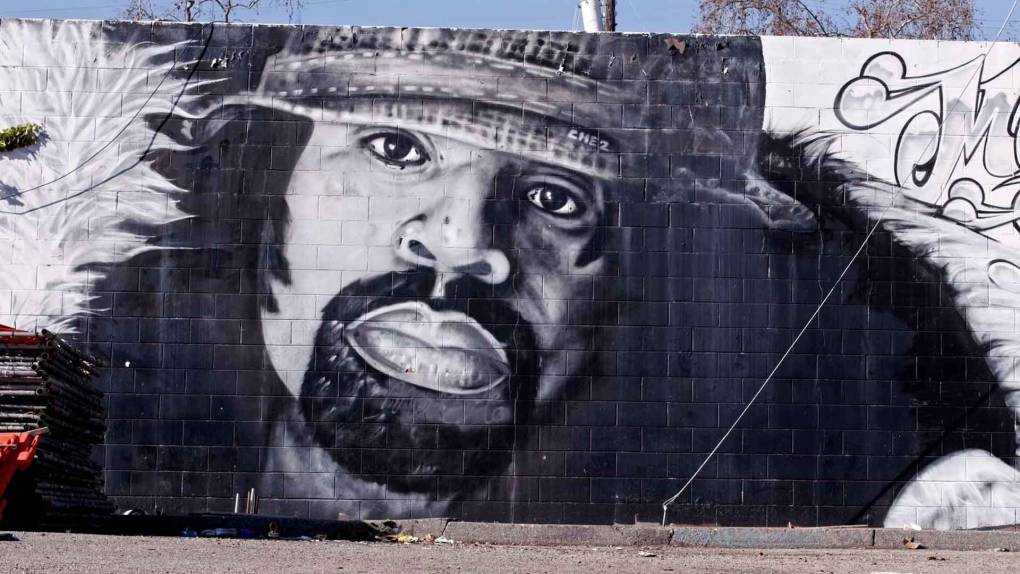
"caption": "A Mac Dre mural on Foothill Boulevard in Oakland by artist Chez.",
"credit": "Laurence Madrigal/We Were Hyphy",
"altTag": "a spraypainted mural of the rap artist mac dre",
"description": null,
"imgSizes": {
"medium": {
"file": "https://cdn.kqed.org/wp-content/uploads/sites/2/2023/01/MacDre.chez_.featured-800x450.jpg",
"width": 800,
"height": 450,
"mimeType": "image/jpeg"
},
"large": {
"file": "https://cdn.kqed.org/wp-content/uploads/sites/2/2023/01/MacDre.chez_.featured-1020x574.jpg",
"width": 1020,
"height": 574,
"mimeType": "image/jpeg"
},
"thumbnail": {
"file": "https://cdn.kqed.org/wp-content/uploads/sites/2/2023/01/MacDre.chez_.featured-160x90.jpg",
"width": 160,
"height": 90,
"mimeType": "image/jpeg"
},
"medium_large": {
"file": "https://cdn.kqed.org/wp-content/uploads/sites/2/2023/01/MacDre.chez_.featured-768x432.jpg",
"width": 768,
"height": 432,
"mimeType": "image/jpeg"
},
"1536x1536": {
"file": "https://cdn.kqed.org/wp-content/uploads/sites/2/2023/01/MacDre.chez_.featured-1536x864.jpg",
"width": 1536,
"height": 864,
"mimeType": "image/jpeg"
},
"post-thumbnail": {
"file": "https://cdn.kqed.org/wp-content/uploads/sites/2/2023/01/MacDre.chez_.featured-672x372.jpg",
"width": 672,
"height": 372,
"mimeType": "image/jpeg"
},
"twentyfourteen-full-width": {
"file": "https://cdn.kqed.org/wp-content/uploads/sites/2/2023/01/MacDre.chez_.featured-1038x576.jpg",
"width": 1038,
"height": 576,
"mimeType": "image/jpeg"
},
"kqedFullSize": {
"file": "https://cdn.kqed.org/wp-content/uploads/sites/2/2023/01/MacDre.chez_.featured.jpg",
"width": 1920,
"height": 1080
}
},
"isLoading": false,
"fetchFailed": false
},
"arts_13924226": {
"type": "attachments",
"id": "arts_13924226",
"meta": {
"index": "attachments_1716263798",
"site": "arts",
"id": "13924226",
"found": true
},
"parent": 13924224,
"imgSizes": {
"twentyfourteen-full-width": {
"file": "https://ww2.kqed.org/app/uploads/sites/2/2023/01/PLAYLISTS.featuredimage-1038x576.jpg",
"width": 1038,
"mimeType": "image/jpeg",
"height": 576
},
"thumbnail": {
"file": "https://ww2.kqed.org/app/uploads/sites/2/2023/01/PLAYLISTS.featuredimage-160x90.jpg",
"width": 160,
"mimeType": "image/jpeg",
"height": 90
},
"post-thumbnail": {
"file": "https://ww2.kqed.org/app/uploads/sites/2/2023/01/PLAYLISTS.featuredimage-672x372.jpg",
"width": 672,
"mimeType": "image/jpeg",
"height": 372
},
"kqedFullSize": {
"file": "https://ww2.kqed.org/app/uploads/sites/2/2023/01/PLAYLISTS.featuredimage.jpg",
"width": 1920,
"height": 1080
},
"large": {
"file": "https://ww2.kqed.org/app/uploads/sites/2/2023/01/PLAYLISTS.featuredimage-1020x574.jpg",
"width": 1020,
"mimeType": "image/jpeg",
"height": 574
},
"1536x1536": {
"file": "https://ww2.kqed.org/app/uploads/sites/2/2023/01/PLAYLISTS.featuredimage-1536x864.jpg",
"width": 1536,
"mimeType": "image/jpeg",
"height": 864
},
"medium": {
"file": "https://ww2.kqed.org/app/uploads/sites/2/2023/01/PLAYLISTS.featuredimage-800x450.jpg",
"width": 800,
"mimeType": "image/jpeg",
"height": 450
},
"medium_large": {
"file": "https://ww2.kqed.org/app/uploads/sites/2/2023/01/PLAYLISTS.featuredimage-768x432.jpg",
"width": 768,
"mimeType": "image/jpeg",
"height": 432
}
},
"publishDate": 1674689944,
"modified": 1675234978,
"caption": null,
"description": null,
"title": "PLAYLISTS.featuredimage",
"credit": null,
"status": "inherit",
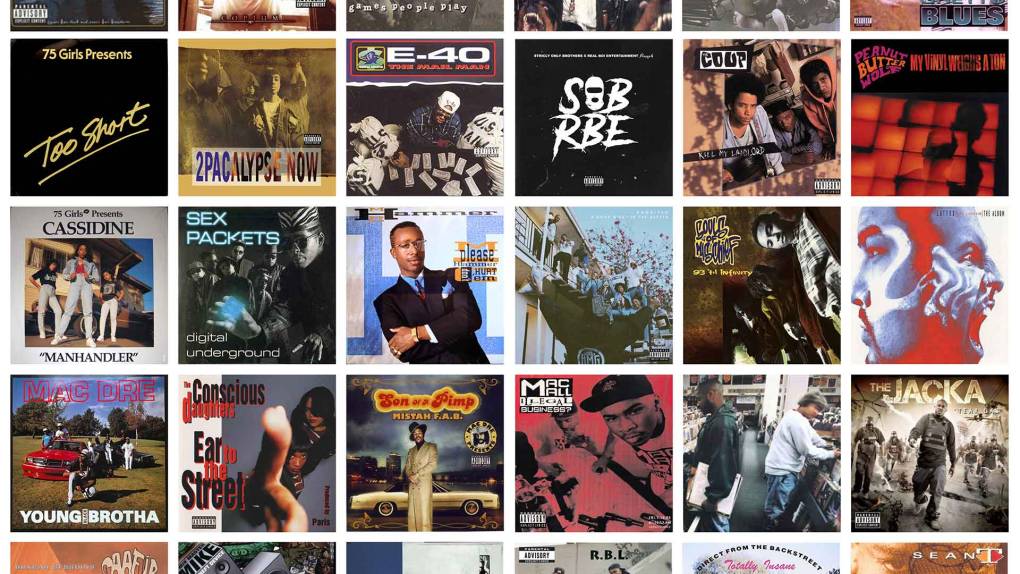
"altTag": "A grid of 18 album covers spanning bay area hip-hop history",
"isLoading": false,
"fetchFailed": false
},
"arts_13924086": {
"type": "attachments",
"id": "arts_13924086",
"meta": {
"index": "attachments_1716263798",
"site": "arts",
"id": "13924086",
"found": true
},
"parent": 13924042,
"imgSizes": {
"twentyfourteen-full-width": {
"file": "https://ww2.kqed.org/app/uploads/sites/2/2023/01/c29a97dd-d8ee-4fa3-aa1a-cb0d4798fc62-929x576.jpg",
"width": 929,
"mimeType": "image/jpeg",
"height": 576
},
"thumbnail": {
"file": "https://ww2.kqed.org/app/uploads/sites/2/2023/01/c29a97dd-d8ee-4fa3-aa1a-cb0d4798fc62-160x160.jpg",
"width": 160,
"mimeType": "image/jpeg",
"height": 160
},
"post-thumbnail": {
"file": "https://ww2.kqed.org/app/uploads/sites/2/2023/01/c29a97dd-d8ee-4fa3-aa1a-cb0d4798fc62-672x372.jpg",
"width": 672,
"mimeType": "image/jpeg",
"height": 372
},
"kqedFullSize": {
"file": "https://ww2.kqed.org/app/uploads/sites/2/2023/01/c29a97dd-d8ee-4fa3-aa1a-cb0d4798fc62.jpg",
"width": 929,
"height": 929
},
"medium": {
"file": "https://ww2.kqed.org/app/uploads/sites/2/2023/01/c29a97dd-d8ee-4fa3-aa1a-cb0d4798fc62-800x800.jpg",
"width": 800,
"mimeType": "image/jpeg",
"height": 800
},
"medium_large": {
"file": "https://ww2.kqed.org/app/uploads/sites/2/2023/01/c29a97dd-d8ee-4fa3-aa1a-cb0d4798fc62-768x768.jpg",
"width": 768,
"mimeType": "image/jpeg",
"height": 768
}
},
"publishDate": 1674583331,
"modified": 1674583377,
"caption": "Before his hit \"I Gott Grapes,\" Nump had a major hand in the hyphy movement, engineering tracks by The Federation, E-40, Mac Dre and Messy Marv. ",
"description": null,
"title": "c29a97dd-d8ee-4fa3-aa1a-cb0d4798fc62",
"credit": "Courtesy of Nump",
"status": "inherit",
"altTag": null,
"isLoading": false,
"fetchFailed": false
},
"arts_13924049": {
"type": "attachments",
"id": "arts_13924049",
"meta": {
"index": "attachments_1716263798",
"site": "arts",
"id": "13924049",
"found": true
},
"parent": 13924014,
"imgSizes": {
"twentyfourteen-full-width": {
"file": "https://ww2.kqed.org/app/uploads/sites/2/2023/01/46-1038x576.png",
"width": 1038,
"mimeType": "image/png",
"height": 576
},
"thumbnail": {
"file": "https://ww2.kqed.org/app/uploads/sites/2/2023/01/46-160x90.png",
"width": 160,
"mimeType": "image/png",
"height": 90
},
"post-thumbnail": {
"file": "https://ww2.kqed.org/app/uploads/sites/2/2023/01/46-672x372.png",
"width": 672,
"mimeType": "image/png",
"height": 372
},
"kqedFullSize": {
"file": "https://ww2.kqed.org/app/uploads/sites/2/2023/01/46.png",
"width": 1920,
"height": 1080
},
"large": {
"file": "https://ww2.kqed.org/app/uploads/sites/2/2023/01/46-1020x574.png",
"width": 1020,
"mimeType": "image/png",
"height": 574
},
"1536x1536": {
"file": "https://ww2.kqed.org/app/uploads/sites/2/2023/01/46-1536x864.png",
"width": 1536,
"mimeType": "image/png",
"height": 864
},
"medium": {
"file": "https://ww2.kqed.org/app/uploads/sites/2/2023/01/46-800x450.png",
"width": 800,
"mimeType": "image/png",
"height": 450
},
"medium_large": {
"file": "https://ww2.kqed.org/app/uploads/sites/2/2023/01/46-768x432.png",
"width": 768,
"mimeType": "image/png",
"height": 432
}
},
"publishDate": 1674518887,
"modified": 1674519816,
"caption": "Seiji Oda is proud to represent a fusion of influences in his music.",
"description": null,
"title": "46",
"credit": "theclaydoe / Instagram",
"status": "inherit",
"altTag": "a young Asian-American presenting man in a yellow shirt and brown pants poses against a wall",
"isLoading": false,
"fetchFailed": false
},
"arts_13922776": {
"type": "attachments",
"id": "arts_13922776",
"meta": {
"index": "attachments_1716263798",
"site": "arts",
"id": "13922776",
"found": true
},
"parent": 13922774,
"imgSizes": {
"thumbnail": {
"file": "https://ww2.kqed.org/app/uploads/sites/2/2022/12/Quesabirria-160x90.jpg",
"width": 160,
"mimeType": "image/jpeg",
"height": 90
},
"post-thumbnail": {
"file": "https://ww2.kqed.org/app/uploads/sites/2/2022/12/Quesabirria-672x372.jpg",
"width": 672,
"mimeType": "image/jpeg",
"height": 372
},
"kqedFullSize": {
"file": "https://ww2.kqed.org/app/uploads/sites/2/2022/12/Quesabirria.jpg",
"width": 800,
"height": 450
},
"medium_large": {
"file": "https://ww2.kqed.org/app/uploads/sites/2/2022/12/Quesabirria-768x432.jpg",
"width": 768,
"mimeType": "image/jpeg",
"height": 432
}
},
"publishDate": 1671145359,
"modified": 1671145409,
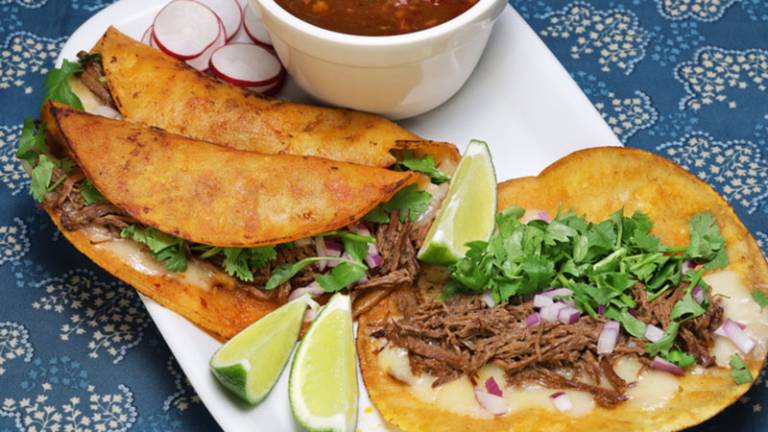
"caption": "We know those quesabirria tacos you ordered are good. But are you really gonna try to tell us they slap?",
"description": "We know those quesabirria tacos you ordered are good. But are you really gonna try to tell us they slap?",
"title": "We know those quesabirria tacos you ordered are good. But are you really gonna try to tell us they slap?",
"credit": "(iStock)",
"status": "inherit",
"altTag": "We know those quesabirria tacos you ordered are good. But are you really gonna try to tell us they slap?",
"isLoading": false,
"fetchFailed": false
},
"arts_13922557": {
"type": "attachments",
"id": "arts_13922557",
"meta": {
"index": "attachments_1716263798",
"site": "arts",
"id": "13922557",
"found": true
},
"parent": 13922548,
"imgSizes": {
"twentyfourteen-full-width": {
"file": "https://ww2.kqed.org/app/uploads/sites/2/2022/12/GettyImages-1143940667-1-1-1038x576.jpg",
"width": 1038,
"mimeType": "image/jpeg",
"height": 576
},
"thumbnail": {
"file": "https://ww2.kqed.org/app/uploads/sites/2/2022/12/GettyImages-1143940667-1-1-160x88.jpg",
"width": 160,
"mimeType": "image/jpeg",
"height": 88
},
"post-thumbnail": {
"file": "https://ww2.kqed.org/app/uploads/sites/2/2022/12/GettyImages-1143940667-1-1-672x372.jpg",
"width": 672,
"mimeType": "image/jpeg",
"height": 372
},
"kqedFullSize": {
"file": "https://ww2.kqed.org/app/uploads/sites/2/2022/12/GettyImages-1143940667-1-1-scaled.jpg",
"width": 2560,
"height": 1414
},
"2048x2048": {
"file": "https://ww2.kqed.org/app/uploads/sites/2/2022/12/GettyImages-1143940667-1-1-2048x1131.jpg",
"width": 2048,
"mimeType": "image/jpeg",
"height": 1131
},
"large": {
"file": "https://ww2.kqed.org/app/uploads/sites/2/2022/12/GettyImages-1143940667-1-1-1020x563.jpg",
"width": 1020,
"mimeType": "image/jpeg",
"height": 563
},
"1536x1536": {
"file": "https://ww2.kqed.org/app/uploads/sites/2/2022/12/GettyImages-1143940667-1-1-1536x848.jpg",
"width": 1536,
"mimeType": "image/jpeg",
"height": 848
},
"full-width": {
"file": "https://ww2.kqed.org/app/uploads/sites/2/2022/12/GettyImages-1143940667-1-1-1920x1061.jpg",
"width": 1920,
"mimeType": "image/jpeg",
"height": 1061
},
"medium": {
"file": "https://ww2.kqed.org/app/uploads/sites/2/2022/12/GettyImages-1143940667-1-1-800x442.jpg",
"width": 800,
"mimeType": "image/jpeg",
"height": 442
},
"medium_large": {
"file": "https://ww2.kqed.org/app/uploads/sites/2/2022/12/GettyImages-1143940667-1-1-768x424.jpg",
"width": 768,
"mimeType": "image/jpeg",
"height": 424
}
},
"publishDate": 1670554455,
"modified": 1670611425,
"caption": "Too Short performs during the '25th Anniversary of Doggystyle' tour at ORACLE Arena in Oakland.",
"description": null,
"title": "Snoop Dogg With E40 And Too Short In Concert - Oakland, CA",
"credit": "Tim Mosenfelder/Getty Images",
"status": "inherit",
"altTag": "a Black man raps into a microphone on a stage with the words 'Too $hort' behind him in blue lights",
"isLoading": false,
"fetchFailed": false
},
"arts_13920621": {
"type": "attachments",
"id": "arts_13920621",
"meta": {
"index": "attachments_1716263798",
"site": "arts",
"id": "13920621",
"found": true
},
"parent": 13920620,
"imgSizes": {
"twentyfourteen-full-width": {
"file": "https://ww2.kqed.org/app/uploads/sites/2/2022/10/0-1018x576.jpg",
"width": 1018,
"mimeType": "image/jpeg",
"height": 576
},
"thumbnail": {
"file": "https://ww2.kqed.org/app/uploads/sites/2/2022/10/0-160x214.jpg",
"width": 160,
"mimeType": "image/jpeg",
"height": 214
},
"post-thumbnail": {
"file": "https://ww2.kqed.org/app/uploads/sites/2/2022/10/0-672x372.jpg",
"width": 672,
"mimeType": "image/jpeg",
"height": 372
},
"kqedFullSize": {
"file": "https://ww2.kqed.org/app/uploads/sites/2/2022/10/0.jpg",
"width": 1018,
"height": 1359
},
"medium": {
"file": "https://ww2.kqed.org/app/uploads/sites/2/2022/10/0-800x1068.jpg",
"width": 800,
"mimeType": "image/jpeg",
"height": 1068
},
"medium_large": {
"file": "https://ww2.kqed.org/app/uploads/sites/2/2022/10/0-768x1025.jpg",
"width": 768,
"mimeType": "image/jpeg",
"height": 1025
}
},
"publishDate": 1666293726,
"modified": 1666293764,
"caption": "Music producer Trackademicks poses for a photo. ",
"description": "Music producer Trackademicks poses for a photo. ",
"title": "Music producer Trackademicks poses for a photo.",
"credit": "Trackademicks",
"status": "inherit",
"altTag": "Music producer Trackademicks poses for a photo.",
"isLoading": false,
"fetchFailed": false
},
"arts_13913213": {
"type": "attachments",
"id": "arts_13913213",
"meta": {
"index": "attachments_1716263798",
"site": "arts",
"id": "13913213",
"found": true
},
"parent": 0,
"imgSizes": {
"twentyfourteen-full-width": {
"file": "https://ww2.kqed.org/app/uploads/sites/2/2022/05/SideshowKitchen_burger_crop-1-1038x576.jpg",
"width": 1038,
"mimeType": "image/jpeg",
"height": 576
},
"thumbnail": {
"file": "https://ww2.kqed.org/app/uploads/sites/2/2022/05/SideshowKitchen_burger_crop-1-160x100.jpg",
"width": 160,
"mimeType": "image/jpeg",
"height": 100
},
"post-thumbnail": {
"file": "https://ww2.kqed.org/app/uploads/sites/2/2022/05/SideshowKitchen_burger_crop-1-672x372.jpg",
"width": 672,
"mimeType": "image/jpeg",
"height": 372
},
"kqedFullSize": {
"file": "https://ww2.kqed.org/app/uploads/sites/2/2022/05/SideshowKitchen_burger_crop-1.jpg",
"width": 1920,
"height": 1200
},
"large": {
"file": "https://ww2.kqed.org/app/uploads/sites/2/2022/05/SideshowKitchen_burger_crop-1-1020x638.jpg",
"width": 1020,
"mimeType": "image/jpeg",
"height": 638
},
"1536x1536": {
"file": "https://ww2.kqed.org/app/uploads/sites/2/2022/05/SideshowKitchen_burger_crop-1-1536x960.jpg",
"width": 1536,
"mimeType": "image/jpeg",
"height": 960
},
"medium": {
"file": "https://ww2.kqed.org/app/uploads/sites/2/2022/05/SideshowKitchen_burger_crop-1-800x500.jpg",
"width": 800,
"mimeType": "image/jpeg",
"height": 500
},
"medium_large": {
"file": "https://ww2.kqed.org/app/uploads/sites/2/2022/05/SideshowKitchen_burger_crop-1-768x480.jpg",
"width": 768,
"mimeType": "image/jpeg",
"height": 480
}
},
"publishDate": 1652304720,
"modified": 1652304812,
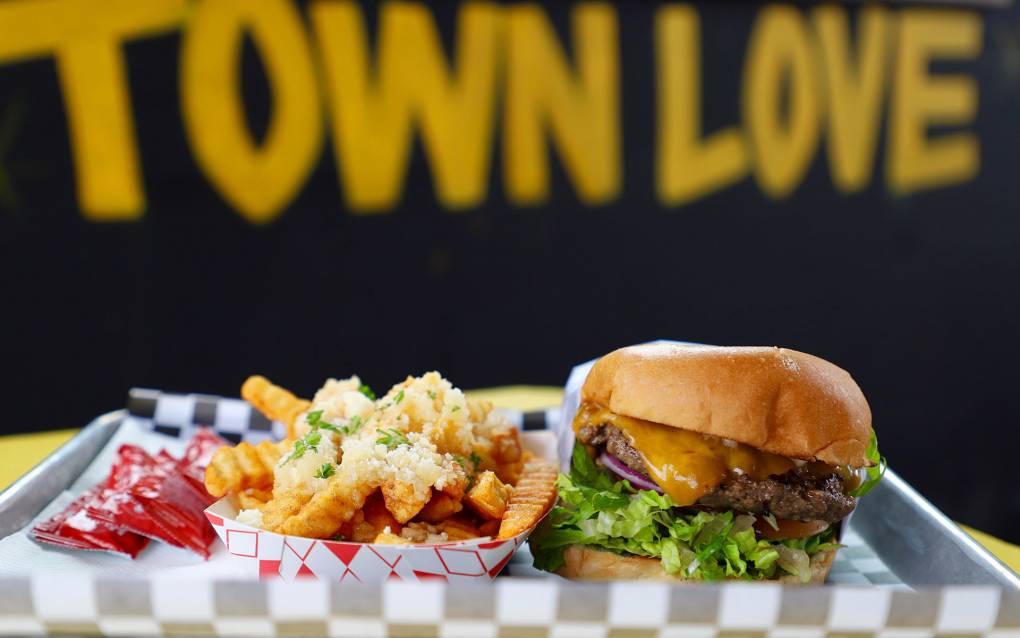
"caption": "One of the most popular menu items is the Sideshow Burger, shown here with a side of garlic fries.",
"description": null,
"title": "SideshowKitchen_burger_crop",
"credit": "Alan Chazaro",
"status": "inherit",
"altTag": "Cheeseburger and garlic crinkle fries on a metal tray; background reads \"Town Love.\"",
"isLoading": false,
"fetchFailed": false
},
"arts_13911502": {
"type": "attachments",
"id": "arts_13911502",
"meta": {
"index": "attachments_1716263798",
"site": "arts",
"id": "13911502",
"found": true
},
"parent": 0,
"imgSizes": {
"twentyfourteen-full-width": {
"file": "https://ww2.kqed.org/app/uploads/sites/2/2022/04/we-were-hyphy-still-2-1038x576.jpg",
"width": 1038,
"mimeType": "image/jpeg",
"height": 576
},
"thumbnail": {
"file": "https://ww2.kqed.org/app/uploads/sites/2/2022/04/we-were-hyphy-still-2-160x90.jpg",
"width": 160,
"mimeType": "image/jpeg",
"height": 90
},
"post-thumbnail": {
"file": "https://ww2.kqed.org/app/uploads/sites/2/2022/04/we-were-hyphy-still-2-672x372.jpg",
"width": 672,
"mimeType": "image/jpeg",
"height": 372
},
"kqedFullSize": {
"file": "https://ww2.kqed.org/app/uploads/sites/2/2022/04/we-were-hyphy-still-2.jpg",
"width": 1513,
"height": 851
},
"large": {
"file": "https://ww2.kqed.org/app/uploads/sites/2/2022/04/we-were-hyphy-still-2-1020x574.jpg",
"width": 1020,
"mimeType": "image/jpeg",
"height": 574
},
"medium": {
"file": "https://ww2.kqed.org/app/uploads/sites/2/2022/04/we-were-hyphy-still-2-800x450.jpg",
"width": 800,
"mimeType": "image/jpeg",
"height": 450
},
"medium_large": {
"file": "https://ww2.kqed.org/app/uploads/sites/2/2022/04/we-were-hyphy-still-2-768x432.jpg",
"width": 768,
"mimeType": "image/jpeg",
"height": 432
}
},
"publishDate": 1648842024,
"modified": 1648842091,
"caption": "A still from 'We Were Hyphy,' a new documentary from Laurence Madrigal.",
"description": null,
"title": "we were hyphy still",
"credit": "We Were Hyphy",
"status": "inherit",
"altTag": null,
"isLoading": false,
"fetchFailed": false
},
"arts_13840220": {
"type": "attachments",
"id": "arts_13840220",
"meta": {
"index": "attachments_1716263798",
"site": "arts",
"id": "13840220",
"found": true
},
"parent": 13840194,
"imgSizes": {
"small": {
"file": "https://ww2.kqed.org/app/uploads/sites/2/2018/09/MG_9390-520x346.jpg",
"width": 520,
"mimeType": "image/jpeg",
"height": 346
},
"thumbnail": {
"file": "https://ww2.kqed.org/app/uploads/sites/2/2018/09/MG_9390-160x107.jpg",
"width": 160,
"mimeType": "image/jpeg",
"height": 107
},
"post-thumbnail": {
"file": "https://ww2.kqed.org/app/uploads/sites/2/2018/09/MG_9390-672x372.jpg",
"width": 672,
"mimeType": "image/jpeg",
"height": 372
},
"xsmall": {
"file": "https://ww2.kqed.org/app/uploads/sites/2/2018/09/MG_9390-375x250.jpg",
"width": 375,
"mimeType": "image/jpeg",
"height": 250
},
"kqedFullSize": {
"file": "https://ww2.kqed.org/app/uploads/sites/2/2018/09/MG_9390.jpg",
"width": 800,
"height": 533
},
"guest-author-50": {
"file": "https://ww2.kqed.org/app/uploads/sites/2/2018/09/MG_9390-50x50.jpg",
"width": 50,
"mimeType": "image/jpeg",
"height": 50
},
"guest-author-96": {
"file": "https://ww2.kqed.org/app/uploads/sites/2/2018/09/MG_9390-96x96.jpg",
"width": 96,
"mimeType": "image/jpeg",
"height": 96
},
"medium": {
"file": "https://ww2.kqed.org/app/uploads/sites/2/2018/09/MG_9390-800x533.jpg",
"width": 800,
"mimeType": "image/jpeg",
"height": 533
},
"guest-author-64": {
"file": "https://ww2.kqed.org/app/uploads/sites/2/2018/09/MG_9390-64x64.jpg",
"width": 64,
"mimeType": "image/jpeg",
"height": 64
},
"guest-author-32": {
"file": "https://ww2.kqed.org/app/uploads/sites/2/2018/09/MG_9390-32x32.jpg",
"width": 32,
"mimeType": "image/jpeg",
"height": 32
},
"detail": {
"file": "https://ww2.kqed.org/app/uploads/sites/2/2018/09/MG_9390-150x150.jpg",
"width": 150,
"mimeType": "image/jpeg",
"height": 150
},
"medium_large": {
"file": "https://ww2.kqed.org/app/uploads/sites/2/2018/09/MG_9390-768x512.jpg",
"width": 768,
"mimeType": "image/jpeg",
"height": 512
},
"guest-author-128": {
"file": "https://ww2.kqed.org/app/uploads/sites/2/2018/09/MG_9390-128x128.jpg",
"width": 128,
"mimeType": "image/jpeg",
"height": 128
},
"xxsmall": {
"file": "https://ww2.kqed.org/app/uploads/sites/2/2018/09/MG_9390-240x160.jpg",
"width": 240,
"mimeType": "image/jpeg",
"height": 160
}
},
"publishDate": 1536032715,
"modified": 1641407406,
"caption": "Traxamillion performs at Hiero Day in Oakland on Monday, September 3, 2018.",
"description": "Dj Fresh vs Traxamillion play Hiero Day in Oakland on Monday, September 3, 2018.",
"title": "Dj Fresh vs Traxamillion play Hiero Day in Oakland on Monday, September 3, 2018.",
"credit": "Estefany Gonzalez ",
"status": "inherit",
"altTag": "Dj Fresh vs Traxamillion play Hiero Day in Oakland on Monday, September 3, 2018.",
"isLoading": false,
"fetchFailed": false
},
"arts_13900231": {
"type": "attachments",
"id": "arts_13900231",
"meta": {
"index": "attachments_1716263798",
"site": "arts",
"id": "13900231",
"found": true
},
"parent": 13900205,
"imgSizes": {
"twentyfourteen-full-width": {
"file": "https://ww2.kqed.org/app/uploads/sites/2/2021/07/PhotoCredit_Maria-Gates-1038x576.jpg",
"width": 1038,
"mimeType": "image/jpeg",
"height": 576
},
"thumbnail": {
"file": "https://ww2.kqed.org/app/uploads/sites/2/2021/07/PhotoCredit_Maria-Gates-160x160.jpg",
"width": 160,
"mimeType": "image/jpeg",
"height": 160
},
"post-thumbnail": {
"file": "https://ww2.kqed.org/app/uploads/sites/2/2021/07/PhotoCredit_Maria-Gates-672x372.jpg",
"width": 672,
"mimeType": "image/jpeg",
"height": 372
},
"kqedFullSize": {
"file": "https://ww2.kqed.org/app/uploads/sites/2/2021/07/PhotoCredit_Maria-Gates.jpg",
"width": 1125,
"height": 1125
},
"large": {
"file": "https://ww2.kqed.org/app/uploads/sites/2/2021/07/PhotoCredit_Maria-Gates-1020x1020.jpg",
"width": 1020,
"mimeType": "image/jpeg",
"height": 1020
},
"medium": {
"file": "https://ww2.kqed.org/app/uploads/sites/2/2021/07/PhotoCredit_Maria-Gates-800x800.jpg",
"width": 800,
"mimeType": "image/jpeg",
"height": 800
},
"medium_large": {
"file": "https://ww2.kqed.org/app/uploads/sites/2/2021/07/PhotoCredit_Maria-Gates-768x768.jpg",
"width": 768,
"mimeType": "image/jpeg",
"height": 768
}
},
"publishDate": 1626993163,
"modified": 1626993563,
"caption": "Trackademicks stands in a white jacket with black sunglasses, posing for the camera. ",
"description": "Trackademicks stands in a white jacket with black sunglasses, posing for the camera. ",
"title": "Trackademicks stands in a white jacket with black sunglasses, posing for the camera.",
"credit": "Maria Gates",
"status": "inherit",
"altTag": "Trackademicks stands in a white jacket with black sunglasses, posing for the camera.",
"isLoading": false,
"fetchFailed": false
},
"arts_13853541": {
"type": "attachments",
"id": "arts_13853541",
"meta": {
"index": "attachments_1716263798",
"site": "arts",
"id": "13853541",
"found": true
},
"parent": 13853514,
"imgSizes": {
"twentyfourteen-full-width": {
"file": "https://ww2.kqed.org/app/uploads/sites/2/2019/03/HoneyGoldJasmine.MAIN_-1038x576.jpg",
"width": 1038,
"mimeType": "image/jpeg",
"height": 576
},
"thumbnail": {
"file": "https://ww2.kqed.org/app/uploads/sites/2/2019/03/HoneyGoldJasmine.MAIN_-160x90.jpg",
"width": 160,
"mimeType": "image/jpeg",
"height": 90
},
"post-thumbnail": {
"file": "https://ww2.kqed.org/app/uploads/sites/2/2019/03/HoneyGoldJasmine.MAIN_-672x372.jpg",
"width": 672,
"mimeType": "image/jpeg",
"height": 372
},
"kqedFullSize": {
"file": "https://ww2.kqed.org/app/uploads/sites/2/2019/03/HoneyGoldJasmine.MAIN_.jpg",
"width": 1400,
"height": 787
},
"large": {
"file": "https://ww2.kqed.org/app/uploads/sites/2/2019/03/HoneyGoldJasmine.MAIN_-1020x573.jpg",
"width": 1020,
"mimeType": "image/jpeg",
"height": 573
},
"complete_open_graph": {
"file": "https://ww2.kqed.org/app/uploads/sites/2/2019/03/HoneyGoldJasmine.MAIN_-1200x675.jpg",
"width": 1200,
"mimeType": "image/jpeg",
"height": 675
},
"guest-author-50": {
"file": "https://ww2.kqed.org/app/uploads/sites/2/2019/03/HoneyGoldJasmine.MAIN_-50x50.jpg",
"width": 50,
"mimeType": "image/jpeg",
"height": 50
},
"guest-author-96": {
"file": "https://ww2.kqed.org/app/uploads/sites/2/2019/03/HoneyGoldJasmine.MAIN_-96x96.jpg",
"width": 96,
"mimeType": "image/jpeg",
"height": 96
},
"medium": {
"file": "https://ww2.kqed.org/app/uploads/sites/2/2019/03/HoneyGoldJasmine.MAIN_-800x450.jpg",
"width": 800,
"mimeType": "image/jpeg",
"height": 450
},
"guest-author-64": {
"file": "https://ww2.kqed.org/app/uploads/sites/2/2019/03/HoneyGoldJasmine.MAIN_-64x64.jpg",
"width": 64,
"mimeType": "image/jpeg",
"height": 64
},
"guest-author-32": {
"file": "https://ww2.kqed.org/app/uploads/sites/2/2019/03/HoneyGoldJasmine.MAIN_-32x32.jpg",
"width": 32,
"mimeType": "image/jpeg",
"height": 32
},
"medium_large": {
"file": "https://ww2.kqed.org/app/uploads/sites/2/2019/03/HoneyGoldJasmine.MAIN_-768x432.jpg",
"width": 768,
"mimeType": "image/jpeg",
"height": 432
},
"guest-author-128": {
"file": "https://ww2.kqed.org/app/uploads/sites/2/2019/03/HoneyGoldJasmine.MAIN_-128x128.jpg",
"width": 128,
"mimeType": "image/jpeg",
"height": 128
}
},
"publishDate": 1553282712,
"modified": 1553282736,
"caption": "Honey Gold Jasmine at Alena Museum in West Oakland.",
"description": "Honey Gold Jasmine at Alena Museum in West Oakland.",
"title": "HoneyGoldJasmine.MAIN",
"credit": "Pendarvis Harshaw/KQED",
"status": "inherit",
"isLoading": false,
"fetchFailed": false
}
},
"audioPlayerReducer": {
"postId": "stream_live",
"isPaused": true,
"isPlaying": false,
"pfsActive": false,
"pledgeModalIsOpen": true,
"playerDrawerIsOpen": false,
"liveAudioPlayStartedAt": 0,
"liveAudioPlayContext": ""
},
"authorsReducer": {
"byline_arts_13924224": {
"type": "authors",
"id": "byline_arts_13924224",
"meta": {
"override": true
},
"slug": "byline_arts_13924224",
"name": "That's My Word ",
"isLoading": false
},
"gmeline": {
"type": "authors",
"id": "185",
"meta": {
"index": "authors_1716337520",
"id": "185",
"found": true
},
"name": "Gabe Meline",
"firstName": "Gabe",
"lastName": "Meline",
"slug": "gmeline",
"email": "gmeline@kqed.org",
"display_author_email": true,
"staff_mastheads": [
"arts"
],
"title": "Senior Editor, KQED Arts & Culture",
"bio": "Gabe Meline entered journalism at age 15 making photocopied zines, and has since earned awards from the Edward R. Murrow Awards, the Society for Professional Journalists, the Online Journalism Awards, the Association of Alternative Newsweeklies and the California Newspaper Publishers Association. Prior to KQED, he was the editor of the \u003cem>North Bay Bohemian\u003c/em> and a touring musician. He lives with his wife and daughter in his hometown of Santa Rosa, CA.",
"avatar": "https://secure.gravatar.com/avatar/5bebe57be0d8bc2dd318934feb47299e2d2d10cba28d09d8d7afb389a2ce2bdd?s=600&d=blank&r=g",
"twitter": null,
"bluesky": null,
"facebook": null,
"instagram": null,
"linkedin": null,
"sites": [
{
"site": "",
"roles": [
"editor"
]
},
{
"site": "arts",
"roles": [
"administrator"
]
},
{
"site": "artschool",
"roles": [
"editor"
]
},
{
"site": "news",
"roles": [
"author"
]
},
{
"site": "pop",
"roles": [
"editor"
]
},
{
"site": "bayareabites",
"roles": [
"editor"
]
},
{
"site": "food",
"roles": [
"editor"
]
},
{
"site": "forum",
"roles": [
"administrator"
]
},
{
"site": "liveblog",
"roles": [
"editor"
]
},
{
"site": "hiphop",
"roles": [
"editor"
]
}
],
"headData": {
"title": "Gabe Meline | KQED",
"description": "Senior Editor, KQED Arts & Culture",
"ogImgSrc": "https://secure.gravatar.com/avatar/5bebe57be0d8bc2dd318934feb47299e2d2d10cba28d09d8d7afb389a2ce2bdd?s=600&d=blank&r=g",
"twImgSrc": "https://secure.gravatar.com/avatar/5bebe57be0d8bc2dd318934feb47299e2d2d10cba28d09d8d7afb389a2ce2bdd?s=600&d=blank&r=g"
},
"isLoading": false,
"link": "/author/gmeline"
},
"nvoynovskaya": {
"type": "authors",
"id": "11387",
"meta": {
"index": "authors_1716337520",
"id": "11387",
"found": true
},
"name": "Nastia Voynovskaya",
"firstName": "Nastia",
"lastName": "Voynovskaya",
"slug": "nvoynovskaya",
"email": "nvoynovskaya@kqed.org",
"display_author_email": false,
"staff_mastheads": [
"arts"
],
"title": "Editor and reporter",
"bio": "Nastia Voynovskaya is a reporter, editor and host at KQED Arts & Culture. She's been covering the arts in the Bay Area for over a decade, with a focus on music, queer culture, labor issues and grassroots organizing. She has edited KQED story series such as Trans Bay: A History of San Francisco's Gender-Diverse Community, and co-created KQED's Bay Area hip-hop history project, That's My Word. Nastia's work has been recognized by the Society of Professional Journalists and San Francisco Press Club. She regularly appears on podcasts and radio programs, including NPR's All Songs Considered, and hosts live events where music, culture and conversation meet.",
"avatar": "https://secure.gravatar.com/avatar/5025ee460e5a85d69ca20ea6c6f2f80d7e17795c828f61ea3aecfcd924e9042e?s=600&d=blank&r=g",
"twitter": null,
"bluesky": null,
"facebook": null,
"instagram": "https://www.instagram.com/nananastia/",
"linkedin": null,
"sites": [
{
"site": "",
"roles": [
"editor"
]
},
{
"site": "arts",
"roles": [
"administrator"
]
},
{
"site": "news",
"roles": [
"editor"
]
},
{
"site": "pop",
"roles": [
"administrator"
]
},
{
"site": "bayareabites",
"roles": [
"editor"
]
},
{
"site": "podcasts",
"roles": [
"editor"
]
},
{
"site": "hiphop",
"roles": [
"editor"
]
}
],
"headData": {
"title": "Nastia Voynovskaya | KQED",
"description": "Editor and reporter",
"ogImgSrc": "https://secure.gravatar.com/avatar/5025ee460e5a85d69ca20ea6c6f2f80d7e17795c828f61ea3aecfcd924e9042e?s=600&d=blank&r=g",
"twImgSrc": "https://secure.gravatar.com/avatar/5025ee460e5a85d69ca20ea6c6f2f80d7e17795c828f61ea3aecfcd924e9042e?s=600&d=blank&r=g"
},
"isLoading": false,
"link": "/author/nvoynovskaya"
},
"ogpenn": {
"type": "authors",
"id": "11491",
"meta": {
"index": "authors_1716337520",
"id": "11491",
"found": true
},
"name": "Pendarvis Harshaw",
"firstName": "Pendarvis",
"lastName": "Harshaw",
"slug": "ogpenn",
"email": "ogpenn@gmail.com",
"display_author_email": false,
"staff_mastheads": [
"arts"
],
"title": "Community Engagement Reporter",
"bio": "Pendarvis Harshaw is an educator, host and writer with KQED Arts.",
"avatar": "https://secure.gravatar.com/avatar/972b77ee8e3f346ae2b00622661187fbfabd059b5693bbdc1475ea7a722fd4cd?s=600&d=blank&r=g",
"twitter": null,
"bluesky": null,
"facebook": null,
"instagram": "ogpenn",
"linkedin": null,
"sites": [
{
"site": "arts",
"roles": [
"administrator"
]
},
{
"site": "news",
"roles": [
"editor"
]
},
{
"site": "bayareabites",
"roles": [
"author"
]
},
{
"site": "hiphop",
"roles": [
"editor"
]
}
],
"headData": {
"title": "Pendarvis Harshaw | KQED",
"description": "Community Engagement Reporter",
"ogImgSrc": "https://secure.gravatar.com/avatar/972b77ee8e3f346ae2b00622661187fbfabd059b5693bbdc1475ea7a722fd4cd?s=600&d=blank&r=g",
"twImgSrc": "https://secure.gravatar.com/avatar/972b77ee8e3f346ae2b00622661187fbfabd059b5693bbdc1475ea7a722fd4cd?s=600&d=blank&r=g"
},
"isLoading": false,
"link": "/author/ogpenn"
},
"mmedina": {
"type": "authors",
"id": "11528",
"meta": {
"index": "authors_1716337520",
"id": "11528",
"found": true
},
"name": "Marisol Medina-Cadena",
"firstName": "Marisol",
"lastName": "Medina-Cadena",
"slug": "mmedina",
"email": "mmedina@KQED.org",
"display_author_email": true,
"staff_mastheads": [],
"title": "Producer, Rightnowish Podcast",
"bio": "Marisol Medina-Cadena is a radio reporter and podcast producer. Before working at KQED, she produced for PBS member station, KCET, in Los Angeles. In 2017, Marisol won an Emmy Award for her work on the televised documentary, \u003cem>City Rising\u003c/em>, examining California's affordable housing crisis and the historical roots of gentrification.",
"avatar": "https://secure.gravatar.com/avatar/6c3db46a1cabb5e1fe9a365b5f4e681e?s=600&d=blank&r=g",
"twitter": "marisolreports",
"facebook": null,
"instagram": null,
"linkedin": null,
"sites": [
{
"site": "arts",
"roles": []
},
{
"site": "news",
"roles": [
"edit_others_posts"
]
}
],
"headData": {
"title": "Marisol Medina-Cadena | KQED",
"description": "Producer, Rightnowish Podcast",
"ogImgSrc": "https://secure.gravatar.com/avatar/6c3db46a1cabb5e1fe9a365b5f4e681e?s=600&d=blank&r=g",
"twImgSrc": "https://secure.gravatar.com/avatar/6c3db46a1cabb5e1fe9a365b5f4e681e?s=600&d=blank&r=g"
},
"isLoading": false,
"link": "/author/mmedina"
},
"achazaro": {
"type": "authors",
"id": "11748",
"meta": {
"index": "authors_1716337520",
"id": "11748",
"found": true
},
"name": "Alan Chazaro",
"firstName": "Alan",
"lastName": "Chazaro",
"slug": "achazaro",
"email": "agchazaro@gmail.com",
"display_author_email": true,
"staff_mastheads": [],
"title": "Food Writer and Reporter",
"bio": "Alan Chazaro is the author of \u003cem>This Is Not a Frank Ocean Cover Album\u003c/em> (Black Lawrence Press, 2019), \u003cem>Piñata Theory\u003c/em> (Black Lawrence Press, 2020), and \u003cem>Notes from the Eastern Span of the Bay Bridge\u003c/em> (Ghost City Press, 2021). He is a graduate of June Jordan’s Poetry for the People program at UC Berkeley and a former Lawrence Ferlinghetti Fellow at the University of San Francisco. He writes about sports, food, art, music, education, and culture while repping the Bay on \u003ca href=\"https://twitter.com/alan_chazaro\">Twitter\u003c/a> and \u003ca href=\"https://www.instagram.com/alan_chazaro/?hl=en\">Instagram\u003c/a> at @alan_chazaro.",
"avatar": "https://secure.gravatar.com/avatar/ea8b6dd970fc5c29e7a188e7d5861df7?s=600&d=blank&r=g",
"twitter": "alan_chazaro",
"facebook": null,
"instagram": null,
"linkedin": null,
"sites": [
{
"site": "arts",
"roles": [
"contributor"
]
},
{
"site": "news",
"roles": [
"editor"
]
}
],
"headData": {
"title": "Alan Chazaro | KQED",
"description": "Food Writer and Reporter",
"ogImgSrc": "https://secure.gravatar.com/avatar/ea8b6dd970fc5c29e7a188e7d5861df7?s=600&d=blank&r=g",
"twImgSrc": "https://secure.gravatar.com/avatar/ea8b6dd970fc5c29e7a188e7d5861df7?s=600&d=blank&r=g"
},
"isLoading": false,
"link": "/author/achazaro"
},
"ksong": {
"type": "authors",
"id": "11813",
"meta": {
"index": "authors_1716337520",
"id": "11813",
"found": true
},
"name": "Kristie Song",
"firstName": "Kristie",
"lastName": "Song",
"slug": "ksong",
"email": "ksong@kqed.org",
"display_author_email": false,
"staff_mastheads": [],
"title": "Editorial Intern ",
"bio": "Kristie Song is an Arts & Culture Intern at KQED. She is currently a graduate student at UC Berkeley, where she studies audio and multimedia journalism. Previously, she covered the local community for Oakland North, produced episodes for The Science of Happiness, and served as news director for KUCI, UC Irvine’s radio station. Outside of reporting, she likes drawing comics, listening to angsty rock, and practicing the guitar.",
"avatar": "https://secure.gravatar.com/avatar/c1149e78c3c44f92d4945a8ab0711af6?s=600&d=blank&r=g",
"twitter": null,
"facebook": null,
"instagram": null,
"linkedin": null,
"sites": [
{
"site": "arts",
"roles": [
"editor"
]
}
],
"headData": {
"title": "Kristie Song | KQED",
"description": "Editorial Intern ",
"ogImgSrc": "https://secure.gravatar.com/avatar/c1149e78c3c44f92d4945a8ab0711af6?s=600&d=blank&r=g",
"twImgSrc": "https://secure.gravatar.com/avatar/c1149e78c3c44f92d4945a8ab0711af6?s=600&d=blank&r=g"
},
"isLoading": false,
"link": "/author/ksong"
}
},
"pagesReducer": {
"arts_tag_hyphy": {
"type": "terms",
"id": "arts_6975",
"meta": {
"index": "terms_1716263798",
"site": "arts",
"id": "6975",
"score": 9.557208
},
"featImg": null,
"name": "Hyphy",
"description": null,
"taxonomy": "tag",
"headData": {
"twImgId": null,
"twTitle": null,
"ogTitle": null,
"ogImgId": null,
"twDescription": null,
"description": null,
"title": "Hyphy Archives | KQED Arts",
"ogDescription": null
},
"ttid": 6987,
"slug": "hyphy",
"isLoading": false,
"title": "Hyphy",
"pageMeta": {
"site": "arts",
"WpPageTemplate": "page-topic-editorial",
"currentPage": 3
},
"blocks": [
{
"blockName": "kqed/post-list",
"attrs": {
"layout": "cardArticle2",
"query": "posts/arts?tag=hyphy",
"seeMore": false,
"paginated": true,
"page": 3
}
},
{
"blockName": "kqed/ad"
}
]
}
},
"pfsSessionReducer": {},
"postsReducer": {
"stream_live": {
"type": "live",
"id": "stream_live",
"audioUrl": "https://streams.kqed.org/kqedradio",
"title": "Live Stream",
"excerpt": "Live Stream information currently unavailable.",
"link": "/radio",
"featImg": "",
"label": {
"name": "KQED Live",
"link": "/"
}
},
"stream_kqedNewscast": {
"type": "posts",
"id": "stream_kqedNewscast",
"audioUrl": "https://www.kqed.org/.stream/anon/radio/RDnews/newscast.mp3?_=1",
"title": "KQED Newscast",
"featImg": "",
"label": {
"name": "88.5 FM",
"link": "/"
}
},
"arts_13924109": {
"type": "posts",
"id": "arts_13924109",
"meta": {
"index": "posts_1716263798",
"site": "arts",
"id": "13924109",
"score": null,
"sort": [
1675281895000
]
},
"guestAuthors": [],
"slug": "stream-we-were-hyphy-documentary",
"title": "Watch: ‘We Were Hyphy’ Celebrates the Bay’s Innovative 2000s Rap Subculture",
"publishDate": 1675281895,
"format": "video",
"headTitle": "Watch: ‘We Were Hyphy’ Celebrates the Bay’s Innovative 2000s Rap Subculture | KQED",
"labelTerm": {},
"content": "\u003cp>\u003cb>\u003ci>Editor’s note:\u003c/i>\u003c/b>\u003ci>\u003cspan style=\"font-weight: 400\"> This story is part of\u003c/span>\u003c/i>\u003ca href=\"http://kqed.org/bayareahiphop\"> \u003cspan style=\"font-weight: 400\">That’s My Word\u003c/span>\u003c/a>\u003ci>\u003cspan style=\"font-weight: 400\">, KQED’s year-long exploration of Bay Area hip-hop history, with new content dropping all throughout 2023.\u003c/span>\u003c/i>\u003c/p>\n\u003cp>The hyphy movement looms large in the Bay Area. Its trunk-rattling beats, high-energy dance moves and flamboyant fashion still sit at the core of local culture over a decade since its peak in the mid-2000s. But there’s a lot more to hyphy than going dumb. For a generation that came up in the aftermath of the crack epidemic and mass incarceration, the subculture’s wild expressions of joy also made room for catharsis, protest and liberation.\u003c/p>\n\u003cp>Laurence Madrigal’s feature documentary \u003ca href=\"https://www.wewerehyphy.com/\" target=\"_blank\" rel=\"noopener\">\u003ci>We Were Hyphy\u003c/i>\u003c/a> puts the movement in this larger social context. The director enlisted an expert team of executive producers: “I Gott Grapes” hitmaker \u003ca href=\"https://www.instagram.com/ceo_nump_beastmobile/\" target=\"_blank\" rel=\"noopener\">Nump\u003c/a>, Thizz Nation photographer \u003ca href=\"https://www.instagram.com/isawdray/\" target=\"_blank\" rel=\"noopener\">D-Ray\u003c/a>, \u003ca href=\"https://www.thizzler.com/\" target=\"_blank\" rel=\"noopener\">Thizzler\u003c/a> founder Matt Werner and \u003ca href=\"https://www.imdb.com/title/tt7242142/\" target=\"_blank\" rel=\"noopener\">\u003ci>Blindspotting\u003c/i>\u003c/a>’s Rafael Casal, all of whom except Werner appear as commentators in the film. [aside postid='arts_13924042']\u003c/p>\n\u003cp>\u003ci>We Were Hyphy\u003c/i> celebrates big hits like E-40’s “Tell Me When To Go,” but it doesn’t miss the deep cuts. We hear from artists like Mistah F.A.B. and Keak Da Sneak — the latter of whom introduced the word “hyphy” to the masses — as well as the turf dancers, independent label bosses and sideshow drivers at the heart of the grassroots subculture. Interviews with Sacramento State University’s Dr. Andrea Moore and \u003ca href=\"https://www.kqed.org/podcasts/rightnowish\" target=\"_blank\" rel=\"noopener\">KQED’s Pendarvis Harshaw\u003c/a> take the narrative a layer deeper, showing how creative innovation thrived in spite of oppressive circumstances. And testimonies from big-name artists raised on the hyphy movement, including G-Eazy and Kamaiyah, create a throughline to its enduring influence.\u003c/p>\n\u003cp>\u003ci>We Were Hyphy\u003c/i> is not the first hyphy film. In the 2000s, while the movement was ongoing, Mac Dre’s \u003ci>Treal TV\u003c/i> and the sideshow doc \u003ci>Go Dumb USA\u003c/i> captured the good times. Madrigal was a teenager in Antioch in those days, when hyphy made its way from inner cities to the suburbs, and onto the radio and MTV. Now, with the gift of hindsight, he and his collaborators evolve the conversation.\u003c/p>\n\u003cp>[ad fullwidth]\u003c/p>\n\u003cp>After making its premiere at Cinequest Film & Creativity Festival in San Jose in 2022, \u003ci>We Were Hyphy\u003c/i> is now available for streaming on KQED and the PBS app. It will also \u003ca href=\"https://www.kqed.org/tv/schedules/weekly?date=2023-02-05&channel=KQED-HD\" target=\"_blank\" rel=\"noopener\">broadcast on PBS stations\u003c/a> nationwide (Feb. 5 at 9 p.m. on KQED PLUS, and Feb. 7 at 9 p.m. for KQED Channel 9). As you watch it, don’t be surprised if you find yourself dancing in your seat one minute and wiping a tear the next. [aside postid='arts_13900205']\u003c/p>\n\u003cp>As Madrigal says, “Let’s just be wowed about how this community of people made something so beautiful out of nothing. It’s the classic story, [similar to] the birth of hip-hop.”\u003c/p>\n\u003cp>\u003c/p>\n\u003cp>\u003cimg loading=\"lazy\" decoding=\"async\" class=\"aligncenter size-medium wp-image-11687704\" src=\"https://ww2.kqed.org/app/uploads/sites/2/2016/06/Turntable.Break_-800x60.jpg\" alt=\"\" width=\"800\" height=\"60\" srcset=\"https://cdn.kqed.org/wp-content/uploads/sites/2/2016/06/Turntable.Break_.jpg 800w, https://cdn.kqed.org/wp-content/uploads/sites/2/2016/06/Turntable.Break_-400x30.jpg 400w, https://cdn.kqed.org/wp-content/uploads/sites/2/2016/06/Turntable.Break_-768x58.jpg 768w\" sizes=\"(max-width: 800px) 100vw, 800px\">\u003c/p>\n\n",
"blocks": [],
"excerpt": "The documentary, streaming on KQED, goes beyond stunna shades and sideshows to tell hyphy's deeper story.",
"status": "publish",
"parent": 0,
"modified": 1726791210,
"stats": {
"hasAudio": false,
"hasVideo": false,
"hasChartOrMap": false,
"iframeSrcs": [],
"hasGoogleForm": false,
"hasGallery": false,
"hasHearkenModule": false,
"hasPolis": false,
"paragraphCount": 10,
"wordCount": 503
},
"headData": {
"title": "Watch: ‘We Were Hyphy’ Celebrates the Bay’s Innovative 2000s Rap Subculture | KQED",
"description": "The documentary, streaming on KQED, goes beyond stunna shades and sideshows to tell hyphy's deeper story.",
"ogTitle": "",
"ogDescription": "",
"ogImgId": "",
"twTitle": "",
"twDescription": "",
"twImgId": "",
"schema": {
"@context": "https://schema.org",
"@type": "Article",
"headline": "Watch: ‘We Were Hyphy’ Celebrates the Bay’s Innovative 2000s Rap Subculture",
"datePublished": "2023-02-01T12:04:55-08:00",
"dateModified": "2024-09-19T17:13:30-07:00",
"image": "https://cdn.kqed.org/wp-content/uploads/2020/02/KQED-OG-Image@1x.png"
}
},
"pbsMediaId": "3076673253",
"source": "That's My Word",
"sourceUrl": "http://kqed.org/bayareahiphop",
"sticky": false,
"templateType": "standard",
"featuredImageType": "standard",
"excludeFromSiteSearch": "Include",
"articleAge": "0",
"path": "/arts/13924109/stream-we-were-hyphy-documentary",
"audioTrackLength": null,
"parsedContent": [
{
"type": "contentString",
"content": "\u003cdiv class=\"post-body\">\u003cp>\u003cp>\u003cb>\u003ci>Editor’s note:\u003c/i>\u003c/b>\u003ci>\u003cspan style=\"font-weight: 400\"> This story is part of\u003c/span>\u003c/i>\u003ca href=\"http://kqed.org/bayareahiphop\"> \u003cspan style=\"font-weight: 400\">That’s My Word\u003c/span>\u003c/a>\u003ci>\u003cspan style=\"font-weight: 400\">, KQED’s year-long exploration of Bay Area hip-hop history, with new content dropping all throughout 2023.\u003c/span>\u003c/i>\u003c/p>\n\u003cp>The hyphy movement looms large in the Bay Area. Its trunk-rattling beats, high-energy dance moves and flamboyant fashion still sit at the core of local culture over a decade since its peak in the mid-2000s. But there’s a lot more to hyphy than going dumb. For a generation that came up in the aftermath of the crack epidemic and mass incarceration, the subculture’s wild expressions of joy also made room for catharsis, protest and liberation.\u003c/p>\n\u003cp>Laurence Madrigal’s feature documentary \u003ca href=\"https://www.wewerehyphy.com/\" target=\"_blank\" rel=\"noopener\">\u003ci>We Were Hyphy\u003c/i>\u003c/a> puts the movement in this larger social context. The director enlisted an expert team of executive producers: “I Gott Grapes” hitmaker \u003ca href=\"https://www.instagram.com/ceo_nump_beastmobile/\" target=\"_blank\" rel=\"noopener\">Nump\u003c/a>, Thizz Nation photographer \u003ca href=\"https://www.instagram.com/isawdray/\" target=\"_blank\" rel=\"noopener\">D-Ray\u003c/a>, \u003ca href=\"https://www.thizzler.com/\" target=\"_blank\" rel=\"noopener\">Thizzler\u003c/a> founder Matt Werner and \u003ca href=\"https://www.imdb.com/title/tt7242142/\" target=\"_blank\" rel=\"noopener\">\u003ci>Blindspotting\u003c/i>\u003c/a>’s Rafael Casal, all of whom except Werner appear as commentators in the film. \u003c/p>\u003c/div>",
"attributes": {
"named": {},
"numeric": []
}
},
{
"type": "component",
"content": "",
"name": "aside",
"attributes": {
"named": {
"postid": "arts_13924042",
"label": ""
},
"numeric": []
}
},
{
"type": "contentString",
"content": "\u003cdiv class=\"post-body\">\u003cp>\u003c/p>\n\u003cp>\u003ci>We Were Hyphy\u003c/i> celebrates big hits like E-40’s “Tell Me When To Go,” but it doesn’t miss the deep cuts. We hear from artists like Mistah F.A.B. and Keak Da Sneak — the latter of whom introduced the word “hyphy” to the masses — as well as the turf dancers, independent label bosses and sideshow drivers at the heart of the grassroots subculture. Interviews with Sacramento State University’s Dr. Andrea Moore and \u003ca href=\"https://www.kqed.org/podcasts/rightnowish\" target=\"_blank\" rel=\"noopener\">KQED’s Pendarvis Harshaw\u003c/a> take the narrative a layer deeper, showing how creative innovation thrived in spite of oppressive circumstances. And testimonies from big-name artists raised on the hyphy movement, including G-Eazy and Kamaiyah, create a throughline to its enduring influence.\u003c/p>\n\u003cp>\u003ci>We Were Hyphy\u003c/i> is not the first hyphy film. In the 2000s, while the movement was ongoing, Mac Dre’s \u003ci>Treal TV\u003c/i> and the sideshow doc \u003ci>Go Dumb USA\u003c/i> captured the good times. Madrigal was a teenager in Antioch in those days, when hyphy made its way from inner cities to the suburbs, and onto the radio and MTV. Now, with the gift of hindsight, he and his collaborators evolve the conversation.\u003c/p>\n\u003cp>\u003c/p>\u003c/div>",
"attributes": {
"named": {},
"numeric": []
}
},
{
"type": "component",
"content": "",
"name": "ad",
"attributes": {
"named": {
"label": "fullwidth"
},
"numeric": [
"fullwidth"
]
}
},
{
"type": "contentString",
"content": "\u003cdiv class=\"post-body\">\u003cp>\u003c/p>\n\u003cp>After making its premiere at Cinequest Film & Creativity Festival in San Jose in 2022, \u003ci>We Were Hyphy\u003c/i> is now available for streaming on KQED and the PBS app. It will also \u003ca href=\"https://www.kqed.org/tv/schedules/weekly?date=2023-02-05&channel=KQED-HD\" target=\"_blank\" rel=\"noopener\">broadcast on PBS stations\u003c/a> nationwide (Feb. 5 at 9 p.m. on KQED PLUS, and Feb. 7 at 9 p.m. for KQED Channel 9). As you watch it, don’t be surprised if you find yourself dancing in your seat one minute and wiping a tear the next. \u003c/p>\u003c/div>",
"attributes": {
"named": {},
"numeric": []
}
},
{
"type": "component",
"content": "",
"name": "aside",
"attributes": {
"named": {
"postid": "arts_13900205",
"label": ""
},
"numeric": []
}
},
{
"type": "contentString",
"content": "\u003cdiv class=\"post-body\">\u003cp>\u003c/p>\n\u003cp>As Madrigal says, “Let’s just be wowed about how this community of people made something so beautiful out of nothing. It’s the classic story, [similar to] the birth of hip-hop.”\u003c/p>\n\u003cp>\u003c/p>\n\u003cp>\u003cimg loading=\"lazy\" decoding=\"async\" class=\"aligncenter size-medium wp-image-11687704\" src=\"https://ww2.kqed.org/app/uploads/sites/2/2016/06/Turntable.Break_-800x60.jpg\" alt=\"\" width=\"800\" height=\"60\" srcset=\"https://cdn.kqed.org/wp-content/uploads/sites/2/2016/06/Turntable.Break_.jpg 800w, https://cdn.kqed.org/wp-content/uploads/sites/2/2016/06/Turntable.Break_-400x30.jpg 400w, https://cdn.kqed.org/wp-content/uploads/sites/2/2016/06/Turntable.Break_-768x58.jpg 768w\" sizes=\"(max-width: 800px) 100vw, 800px\">\u003c/p>\n\n\u003c/div>\u003c/p>",
"attributes": {
"named": {},
"numeric": []
}
}
],
"link": "/arts/13924109/stream-we-were-hyphy-documentary",
"authors": [
"11387"
],
"series": [
"arts_22314"
],
"categories": [
"arts_1",
"arts_69"
],
"tags": [
"arts_19561",
"arts_831",
"arts_6975",
"arts_4814",
"arts_19347"
],
"featImg": "arts_13924556",
"label": "source_arts_13924109"
},
"arts_13924224": {
"type": "posts",
"id": "arts_13924224",
"meta": {
"index": "posts_1716263798",
"site": "arts",
"id": "13924224",
"score": null,
"sort": [
1675281709000
]
},
"guestAuthors": [],
"slug": "playlists-bay-area-hip-hop",
"title": "Playlists: Dive Into Bay Area Hip-Hop Across the Decades",
"publishDate": 1675281709,
"format": "standard",
"headTitle": "Playlists: Dive Into Bay Area Hip-Hop Across the Decades | KQED",
"labelTerm": {},
"content": "\u003cp>As we kick off \u003ca href=\"http://kqed.org/bayareahiphop\">\u003cem>That’s My Word\u003c/em>\u003c/a>, a year-long exploration of Bay Area hip-hop history, it’s only right to include playlists of each decade’s music.\u003c/p>\n\u003ch2>1960s–1970s\u003c/h2>\n\u003cp>\u003c!-- iframe plugin v.4.3 wordpress.org/plugins/iframe/ -->\u003cbr>\n\u003ciframe style=\"border-radius:12px\" src=\"https://open.spotify.com/embed/playlist/6QO0SJgNdiPaDRpwHMPySi?utm_source=generator\" width=\"100%\" height=\"352\" frameborder=\"0\" allowfullscreen allow=\"autoplay; clipboard-write; encrypted-media; fullscreen; picture-in-picture\" loading=\"lazy\" scrolling=\"yes\" class=\"iframe-class\">\u003c/iframe>\u003c/p>\n\u003cp>The 1960s and ’70s are what one could call hip-hop’s “preschool” era — the era \u003cem>before\u003c/em> the old school. This was a time when the Black Panthers created a blueprint for hip-hop’s early ideology, and blaxploitation films like \u003ci>The Mack\u003c/i> fascinated America with larger-than-life heroes who later inspired rappers’ personas. Vallejo’s Sly Stone changed the sound and substance of Black music; Oakland’s Pointer Sisters made funky hits; and greats like Herbie Hancock and Betty Davis recorded in San Francisco. Hip-hop’s pioneers came of age during this dynamic era.\u003c/p>\n\u003cp>Listen on \u003ca href=\"https://open.spotify.com/playlist/6QO0SJgNdiPaDRpwHMPySi?si=879d429190394352\" target=\"_blank\" rel=\"noopener\">Spotify\u003c/a> and \u003ca href=\"https://youtube.com/playlist?list=PLeGdTT0--8KhFudHq4ubwy3biwplEwlfN\" target=\"_blank\" rel=\"noopener\">YouTube\u003c/a>.\u003c/p>\n\u003ch2>1980s\u003c/h2>\n\u003cp>\u003c!-- iframe plugin v.4.3 wordpress.org/plugins/iframe/ -->\u003cbr>\n\u003ciframe style=\"border-radius:12px\" src=\"https://open.spotify.com/embed/playlist/5Qh4JQ3yYUFhaC8t49NZnx?utm_source=generator\" width=\"100%\" height=\"352\" frameborder=\"0\" allowfullscreen allow=\"autoplay; clipboard-write; encrypted-media; fullscreen; picture-in-picture\" loading=\"lazy\" scrolling=\"yes\" class=\"iframe-class\">\u003c/iframe>\u003c/p>\n\u003cp>[ad fullwidth]\u003c/p>\n\u003cp>In the 1980s, Bay Area hip-hop grew from an underground youth subculture to a commercial force. A teenage Too Short, who began selling custom tapes out of his trunk, set a precedent for Bay Area rappers’ independent hustle and released his first major-label album by the end of the decade. MC Hammer went platinum and kicked off the career of hitmaking female rap group Oaktown 3.5.7. By 1989, a teenage Mac Dre, the multifaceted Digital Underground collective and the staunchly political rapper Paris all made their debuts. The ’80s show that Bay Area rap has never been just one thing — it has contained street, commercial, experimental and revolutionary elements from the beginning.\u003c/p>\n\u003cp>Listen on \u003ca href=\"https://open.spotify.com/playlist/5Qh4JQ3yYUFhaC8t49NZnx?si=60ee48b59ede433a\" target=\"_blank\" rel=\"noopener\">Spotify\u003c/a> and \u003ca href=\"https://youtube.com/playlist?list=PLeGdTT0--8Kj4L0_4wmYuJuxcu3cnriRk\" target=\"_blank\" rel=\"noopener\">YouTube\u003c/a>.\u003c/p>\n\u003ch2>1990s\u003c/h2>\n\u003cp>\u003c!-- iframe plugin v.4.3 wordpress.org/plugins/iframe/ -->\u003cbr>\n\u003ciframe style=\"border-radius:12px\" src=\"https://open.spotify.com/embed/playlist/0qR8qB6JbTVhK2HDodBv4b?utm_source=generator\" width=\"100%\" height=\"352\" frameborder=\"0\" allowfullscreen allow=\"autoplay; clipboard-write; encrypted-media; fullscreen; picture-in-picture\" loading=\"lazy\" scrolling=\"yes\" class=\"iframe-class\">\u003c/iframe>\u003c/p>\n\u003cp>Often referred to as the golden age of hip-hop, the 1990s saw the solo debuts of foundational Bay Area figures, including E-40, who has made hits in every decade since. Major labels took an interest in mobb music with artists like Spice 1 and Keak Da Sneak’s 3X Krazy. 2pac soaked up game from the Bay’s rap hustle and revolutionary politics. Conscious Daughters and Female Fonk paved the way for streetwise women who followed. And the Bay Area fostered a thriving alternative and conscious hip-hop scene that included The Coup, Hieroglyphics, Blackalicious and Mystik Journeymen.\u003c/p>\n\u003cp>Listen on \u003ca href=\"https://open.spotify.com/playlist/0qR8qB6JbTVhK2HDodBv4b?si=a45ebe28f4f34264\" target=\"_blank\" rel=\"noopener\">Spotify\u003c/a> and \u003ca href=\"https://youtube.com/playlist?list=PLeGdTT0--8KiylrEs49IVOGMDBAAxTyCj\" target=\"_blank\" rel=\"noopener\">YouTube\u003c/a>.\u003c/p>\n\u003ch2>2000s\u003c/h2>\n\u003cp>\u003c!-- iframe plugin v.4.3 wordpress.org/plugins/iframe/ -->\u003cbr>\n\u003ciframe style=\"border-radius:12px\" src=\"https://open.spotify.com/embed/playlist/24nGNva2CJnP8gBDYmJwXK?utm_source=generator\" width=\"100%\" height=\"352\" frameborder=\"0\" allowfullscreen allow=\"autoplay; clipboard-write; encrypted-media; fullscreen; picture-in-picture\" loading=\"lazy\" scrolling=\"yes\" class=\"iframe-class\">\u003c/iframe>\u003c/p>\n\u003cp>The first word that comes to mind to describe the 2000s in the Bay Area is “hyphy.” What began in the streets turned into a musical movement fueled by eccentric self-expression, rebelliousness and hard partying. Keak Da Sneak gave hyphy its name; Mac Dre encouraged people to embrace their inner weirdness; and E-40, Mistah F.A.B., the Pack, the Federation and many others made music to go dumb to. But the aughts were more than just hyphy — Mystic and Zion I put poetry to personal and societal struggles, Goapele and Keyshia Cole made R&B classics and Deep Dickollective unapologetically rhymed about their queer, Black experience.\u003c/p>\n\u003cp>Listen on \u003ca href=\"https://open.spotify.com/playlist/24nGNva2CJnP8gBDYmJwXK?si=06579db2baeb44e3\" target=\"_blank\" rel=\"noopener\">Spotify\u003c/a> and \u003ca href=\"https://youtube.com/playlist?list=PLeGdTT0--8KiyTww7LhwKGSiqsN40rJFf\" target=\"_blank\" rel=\"noopener\">YouTube\u003c/a>.\u003c/p>\n\u003ch2>2010s\u003c/h2>\n\u003cp>\u003c!-- iframe plugin v.4.3 wordpress.org/plugins/iframe/ -->\u003cbr>\n\u003ciframe style=\"border-radius:12px\" src=\"https://open.spotify.com/embed/playlist/5hVOob5M93yPwp8rVK257S?utm_source=generator\" width=\"100%\" height=\"352\" frameborder=\"0\" allowfullscreen allow=\"autoplay; clipboard-write; encrypted-media; fullscreen; picture-in-picture\" loading=\"lazy\" scrolling=\"yes\" class=\"iframe-class\">\u003c/iframe>\u003c/p>\n\u003cp>The beginning of the 2010s was sort of a comedown from the hyphy movement with hits like Clyde Carson’s “Slow Down” and D-Lo’s “No Hoe.” A new generation found its voice with the emergence of new artists like the party-centric HBK Gang, streetwise SOB x RBE, mobby Kamaiyah and thoughtful Rexx Life Raj. G-Eazy and Saweetie made big, hyphy-inspired commercial hits. And Kehlani, who got her start with HBK, emerged as a savvy R&B songwriter.\u003c/p>\n\u003cp>\u003c/p>\n\u003cp>Listen on \u003ca href=\"https://open.spotify.com/playlist/5hVOob5M93yPwp8rVK257S?si=566f406e8bce4c10\" target=\"_blank\" rel=\"noopener\">Spotify\u003c/a> and \u003ca href=\"https://youtube.com/playlist?list=PLeGdTT0--8Ki8-y0PrRxuFLm3smb496RO\" target=\"_blank\" rel=\"noopener\">YouTube\u003c/a>.\u003c/p>\n\n",
"blocks": [],
"excerpt": "Listen to the roots of Bay Area hip-hop, as well as old-school, golden era and hyphy classics. ",
"status": "publish",
"parent": 0,
"modified": 1726791230,
"stats": {
"hasAudio": false,
"hasVideo": false,
"hasChartOrMap": false,
"iframeSrcs": [],
"hasGoogleForm": false,
"hasGallery": false,
"hasHearkenModule": false,
"hasPolis": false,
"paragraphCount": 18,
"wordCount": 597
},
"headData": {
"title": "Playlists: Dive Into Bay Area Hip-Hop Across the Decades | KQED",
"description": "Listen to the roots of Bay Area hip-hop, as well as old-school, golden era and hyphy classics. ",
"ogTitle": "",
"ogDescription": "",
"ogImgId": "",
"twTitle": "",
"twDescription": "",
"twImgId": "",
"schema": {
"@context": "https://schema.org",
"@type": "Article",
"headline": "Playlists: Dive Into Bay Area Hip-Hop Across the Decades",
"datePublished": "2023-02-01T12:01:49-08:00",
"dateModified": "2024-09-19T17:13:50-07:00",
"image": "https://cdn.kqed.org/wp-content/uploads/2020/02/KQED-OG-Image@1x.png"
}
},
"source": "That's My Word",
"sourceUrl": "http://kqed.org/bayareahiphop",
"sticky": false,
"nprByline": "That's My Word ",
"templateType": "standard",
"featuredImageType": "standard",
"excludeFromSiteSearch": "Include",
"showOnAuthorArchivePages": "No",
"articleAge": "0",
"path": "/arts/13924224/playlists-bay-area-hip-hop",
"audioTrackLength": null,
"parsedContent": [
{
"type": "contentString",
"content": "\u003cdiv class=\"post-body\">\u003cp>\u003cp>As we kick off \u003ca href=\"http://kqed.org/bayareahiphop\">\u003cem>That’s My Word\u003c/em>\u003c/a>, a year-long exploration of Bay Area hip-hop history, it’s only right to include playlists of each decade’s music.\u003c/p>\n\u003ch2>1960s–1970s\u003c/h2>\n\u003cp>\u003c!-- iframe plugin v.4.3 wordpress.org/plugins/iframe/ -->\u003cbr>\n\u003ciframe style=\"border-radius:12px\" src=\"https://open.spotify.com/embed/playlist/6QO0SJgNdiPaDRpwHMPySi?utm_source=generator\" width=\"100%\" height=\"352\" frameborder=\"0\" allowfullscreen allow=\"autoplay; clipboard-write; encrypted-media; fullscreen; picture-in-picture\" loading=\"lazy\" scrolling=\"yes\" class=\"iframe-class\">\u003c/iframe>\u003c/p>\n\u003cp>The 1960s and ’70s are what one could call hip-hop’s “preschool” era — the era \u003cem>before\u003c/em> the old school. This was a time when the Black Panthers created a blueprint for hip-hop’s early ideology, and blaxploitation films like \u003ci>The Mack\u003c/i> fascinated America with larger-than-life heroes who later inspired rappers’ personas. Vallejo’s Sly Stone changed the sound and substance of Black music; Oakland’s Pointer Sisters made funky hits; and greats like Herbie Hancock and Betty Davis recorded in San Francisco. Hip-hop’s pioneers came of age during this dynamic era.\u003c/p>\n\u003cp>Listen on \u003ca href=\"https://open.spotify.com/playlist/6QO0SJgNdiPaDRpwHMPySi?si=879d429190394352\" target=\"_blank\" rel=\"noopener\">Spotify\u003c/a> and \u003ca href=\"https://youtube.com/playlist?list=PLeGdTT0--8KhFudHq4ubwy3biwplEwlfN\" target=\"_blank\" rel=\"noopener\">YouTube\u003c/a>.\u003c/p>\n\u003ch2>1980s\u003c/h2>\n\u003cp>\u003c!-- iframe plugin v.4.3 wordpress.org/plugins/iframe/ -->\u003cbr>\n\u003ciframe style=\"border-radius:12px\" src=\"https://open.spotify.com/embed/playlist/5Qh4JQ3yYUFhaC8t49NZnx?utm_source=generator\" width=\"100%\" height=\"352\" frameborder=\"0\" allowfullscreen allow=\"autoplay; clipboard-write; encrypted-media; fullscreen; picture-in-picture\" loading=\"lazy\" scrolling=\"yes\" class=\"iframe-class\">\u003c/iframe>\u003c/p>\n\u003cp>\u003c/p>\u003c/div>",
"attributes": {
"named": {},
"numeric": []
}
},
{
"type": "component",
"content": "",
"name": "ad",
"attributes": {
"named": {
"label": "fullwidth"
},
"numeric": [
"fullwidth"
]
}
},
{
"type": "contentString",
"content": "\u003cdiv class=\"post-body\">\u003cp>\u003c/p>\n\u003cp>In the 1980s, Bay Area hip-hop grew from an underground youth subculture to a commercial force. A teenage Too Short, who began selling custom tapes out of his trunk, set a precedent for Bay Area rappers’ independent hustle and released his first major-label album by the end of the decade. MC Hammer went platinum and kicked off the career of hitmaking female rap group Oaktown 3.5.7. By 1989, a teenage Mac Dre, the multifaceted Digital Underground collective and the staunchly political rapper Paris all made their debuts. The ’80s show that Bay Area rap has never been just one thing — it has contained street, commercial, experimental and revolutionary elements from the beginning.\u003c/p>\n\u003cp>Listen on \u003ca href=\"https://open.spotify.com/playlist/5Qh4JQ3yYUFhaC8t49NZnx?si=60ee48b59ede433a\" target=\"_blank\" rel=\"noopener\">Spotify\u003c/a> and \u003ca href=\"https://youtube.com/playlist?list=PLeGdTT0--8Kj4L0_4wmYuJuxcu3cnriRk\" target=\"_blank\" rel=\"noopener\">YouTube\u003c/a>.\u003c/p>\n\u003ch2>1990s\u003c/h2>\n\u003cp>\u003c!-- iframe plugin v.4.3 wordpress.org/plugins/iframe/ -->\u003cbr>\n\u003ciframe style=\"border-radius:12px\" src=\"https://open.spotify.com/embed/playlist/0qR8qB6JbTVhK2HDodBv4b?utm_source=generator\" width=\"100%\" height=\"352\" frameborder=\"0\" allowfullscreen allow=\"autoplay; clipboard-write; encrypted-media; fullscreen; picture-in-picture\" loading=\"lazy\" scrolling=\"yes\" class=\"iframe-class\">\u003c/iframe>\u003c/p>\n\u003cp>Often referred to as the golden age of hip-hop, the 1990s saw the solo debuts of foundational Bay Area figures, including E-40, who has made hits in every decade since. Major labels took an interest in mobb music with artists like Spice 1 and Keak Da Sneak’s 3X Krazy. 2pac soaked up game from the Bay’s rap hustle and revolutionary politics. Conscious Daughters and Female Fonk paved the way for streetwise women who followed. And the Bay Area fostered a thriving alternative and conscious hip-hop scene that included The Coup, Hieroglyphics, Blackalicious and Mystik Journeymen.\u003c/p>\n\u003cp>Listen on \u003ca href=\"https://open.spotify.com/playlist/0qR8qB6JbTVhK2HDodBv4b?si=a45ebe28f4f34264\" target=\"_blank\" rel=\"noopener\">Spotify\u003c/a> and \u003ca href=\"https://youtube.com/playlist?list=PLeGdTT0--8KiylrEs49IVOGMDBAAxTyCj\" target=\"_blank\" rel=\"noopener\">YouTube\u003c/a>.\u003c/p>\n\u003ch2>2000s\u003c/h2>\n\u003cp>\u003c!-- iframe plugin v.4.3 wordpress.org/plugins/iframe/ -->\u003cbr>\n\u003ciframe style=\"border-radius:12px\" src=\"https://open.spotify.com/embed/playlist/24nGNva2CJnP8gBDYmJwXK?utm_source=generator\" width=\"100%\" height=\"352\" frameborder=\"0\" allowfullscreen allow=\"autoplay; clipboard-write; encrypted-media; fullscreen; picture-in-picture\" loading=\"lazy\" scrolling=\"yes\" class=\"iframe-class\">\u003c/iframe>\u003c/p>\n\u003cp>The first word that comes to mind to describe the 2000s in the Bay Area is “hyphy.” What began in the streets turned into a musical movement fueled by eccentric self-expression, rebelliousness and hard partying. Keak Da Sneak gave hyphy its name; Mac Dre encouraged people to embrace their inner weirdness; and E-40, Mistah F.A.B., the Pack, the Federation and many others made music to go dumb to. But the aughts were more than just hyphy — Mystic and Zion I put poetry to personal and societal struggles, Goapele and Keyshia Cole made R&B classics and Deep Dickollective unapologetically rhymed about their queer, Black experience.\u003c/p>\n\u003cp>Listen on \u003ca href=\"https://open.spotify.com/playlist/24nGNva2CJnP8gBDYmJwXK?si=06579db2baeb44e3\" target=\"_blank\" rel=\"noopener\">Spotify\u003c/a> and \u003ca href=\"https://youtube.com/playlist?list=PLeGdTT0--8KiyTww7LhwKGSiqsN40rJFf\" target=\"_blank\" rel=\"noopener\">YouTube\u003c/a>.\u003c/p>\n\u003ch2>2010s\u003c/h2>\n\u003cp>\u003c!-- iframe plugin v.4.3 wordpress.org/plugins/iframe/ -->\u003cbr>\n\u003ciframe style=\"border-radius:12px\" src=\"https://open.spotify.com/embed/playlist/5hVOob5M93yPwp8rVK257S?utm_source=generator\" width=\"100%\" height=\"352\" frameborder=\"0\" allowfullscreen allow=\"autoplay; clipboard-write; encrypted-media; fullscreen; picture-in-picture\" loading=\"lazy\" scrolling=\"yes\" class=\"iframe-class\">\u003c/iframe>\u003c/p>\n\u003cp>The beginning of the 2010s was sort of a comedown from the hyphy movement with hits like Clyde Carson’s “Slow Down” and D-Lo’s “No Hoe.” A new generation found its voice with the emergence of new artists like the party-centric HBK Gang, streetwise SOB x RBE, mobby Kamaiyah and thoughtful Rexx Life Raj. G-Eazy and Saweetie made big, hyphy-inspired commercial hits. And Kehlani, who got her start with HBK, emerged as a savvy R&B songwriter.\u003c/p>\n\u003cp>\u003c/p>\n\u003cp>Listen on \u003ca href=\"https://open.spotify.com/playlist/5hVOob5M93yPwp8rVK257S?si=566f406e8bce4c10\" target=\"_blank\" rel=\"noopener\">Spotify\u003c/a> and \u003ca href=\"https://youtube.com/playlist?list=PLeGdTT0--8Ki8-y0PrRxuFLm3smb496RO\" target=\"_blank\" rel=\"noopener\">YouTube\u003c/a>.\u003c/p>\n\n\u003c/div>\u003c/p>",
"attributes": {
"named": {},
"numeric": []
}
}
],
"link": "/arts/13924224/playlists-bay-area-hip-hop",
"authors": [
"byline_arts_13924224"
],
"series": [
"arts_22314"
],
"categories": [
"arts_1",
"arts_69"
],
"tags": [
"arts_8505",
"arts_831",
"arts_6975",
"arts_19347"
],
"featImg": "arts_13924226",
"label": "source_arts_13924224"
},
"arts_13924042": {
"type": "posts",
"id": "arts_13924042",
"meta": {
"index": "posts_1716263798",
"site": "arts",
"id": "13924042",
"score": null,
"sort": [
1675281586000
]
},
"guestAuthors": [],
"slug": "nump-hyphy-i-gott-grapes-interview",
"title": "Before ‘I Gott Grapes,’ Nump Engineered Some of Hyphy’s Biggest Hits",
"publishDate": 1675281586,
"format": "standard",
"headTitle": "Before ‘I Gott Grapes,’ Nump Engineered Some of Hyphy’s Biggest Hits | KQED",
"labelTerm": {},
"content": "\u003cp>\u003ci>\u003cb>Editor’s note:\u003c/b> This story is part of \u003c/i>\u003ca href=\"http://kqed.org/bayareahiphop\" target=\"_blank\" rel=\"noopener noreferrer\">That’s My Word\u003c/a>\u003ci>, KQED’s year-long exploration of Bay Area hip-hop history, with new content dropping all throughout 2023.\u003c/i>\u003c/p>\n\u003cp>If you were into Bay Area hip-hop in the mid-2000s, you probably know the answer to the question, “Who got purple?” With “I Gott Grapes,” Nump made a hit that helped take the hyphy movement across the world.\u003c/p>\n\u003cp>Beyond his classic track, Nump has a solid body of work as a rapper and an audio engineer. But his journey in the music industry wasn’t easy. A true \u003ci>Student ov da Game\u003c/i>, as E-40 dubbed him on his 2009 sophomore album, he had to climb his way up — literally, as his first gig was “sniping” flyers onto telephone poles. [pullquote citation='Nump' align='right' size='medium']‘I’m still hyphy, and my kids is too. It ain’t just an era, it’s an expression.’[/pullquote]\u003c/p>\n\u003cp>After he graduated from the Conservatory of Recording Arts and Sciences in Arizona in the early 2000s, Nump hustled his way through unpaid internships, first at Green Day’s Studio 880 in Oakland’s Jingletown, where he alphabetized records for \u003ca href=\"https://www.kqed.org/arts/13899416/the-gift-of-gab-5-songs-to-know-by-the-blackalicious-legend\" target=\"_blank\" rel=\"noopener\">Blackalicious\u003c/a>’ Chief Xcel after hours. Later, at \u003ca href=\"https://www.discogs.com/artist/174134-Michael-Denten\" target=\"_blank\" rel=\"noopener\">Michael Denton\u003c/a>’s \u003ca href=\"https://www.infinitestudios.com/\" target=\"_blank\" rel=\"noopener\">Infinite Studios\u003c/a> in Nump’s hometown of Alameda, he ascended to house engineer. As the hyphy movement began to take off, Nump worked on some of the Bay Area’s most beloved songs, including Keak Da Sneak’s “White T-Shirt, Blue Jeans and Nikes” and The Federation’s “Hyphy.”\u003c/p>\n\u003cp>“That was my dream. And it all happened. Until I became Nump the touring artist, that was the best ‘the grit don’t quit’ story,” Nump says.\u003c/p>\n\u003cp>[ad fullwidth]\u003c/p>\n\u003cp>It was at Infinite Studios that Nump met E-40 — a relationship that would change his life forever. Nump has credits on some of E-40’s best-known albums, including \u003ca href=\"https://www.youtube.com/playlist?list=PL_UQr4mEaiZZMBHoFhb256C8mMhELh6yR\" target=\"_blank\" rel=\"noopener\">\u003ci>My Ghetto Report Card\u003c/i>\u003c/a>, and Forty Water equipped him with the connections and experience that turned “I Gott Grapes” into a hit. “Once E-40 met me, we had a bromance,” Nump says. “I showed him hard work ethic, and we got along great.”\u003c/p>\n\u003cp>https://youtu.be/1lV34zt_9Wk\u003c/p>\n\u003cp>When we meet for lunch in the East Bay suburbs on a recent rainy afternoon, Nump is in dad mode, with his three elementary school-aged children in tow. But a Sick Wid It Records forearm tattoo, iced-out chains and a neon-orange beanie embroidered with his \u003ca href=\"https://open.spotify.com/album/3aTLwvvyQUAipmwaWgrrEe\" target=\"_blank\" rel=\"noopener\">\u003ci>Lapu Lapu\u003c/i> album\u003c/a> signal that he’s still hyphy — just grown up.\u003c/p>\n\u003cp>Now, Nump is helping preserve the Bay Area’s hip-hop legacy for generations to come. In addition to his \u003ca href=\"https://eastbayexpress.com/its-easy-filipino-rapper-nump-enters-cannabis-delivery-service/\" target=\"_blank\" rel=\"noopener\">many entrepreneurial ventures\u003c/a>, he’s an executive producer of Laurence Madrigal’s documentary \u003ca href=\"https://www.wewerehyphy.com/\" target=\"_blank\" rel=\"noopener\">\u003ci>We Were Hyphy\u003c/i>\u003c/a>, which makes its \u003ca href=\"http://kqed.org/arts/13924109/stream-we-were-hyphy-documentary\">global streaming premiere today on KQED\u003c/a>. Here, he shares some incredible stories about the musical movement that came to define Bay Area rap in the aughts and beyond.\u003c/p>\n\u003cp>\u003ci>This conversation was edited for length and clarity.\u003c/i>\u003c/p>\n\u003cfigure id=\"attachment_13924087\" class=\"wp-caption aligncenter\" style=\"max-width: 800px\">\u003cimg loading=\"lazy\" decoding=\"async\" class=\"size-medium wp-image-13924087\" src=\"https://ww2.kqed.org/app/uploads/sites/2/2023/01/Nump-3-square-scaled-e1674583437718-800x800.jpg\" alt=\"\" width=\"800\" height=\"800\" srcset=\"https://cdn.kqed.org/wp-content/uploads/sites/2/2023/01/Nump-3-square-scaled-e1674583437718-800x800.jpg 800w, https://cdn.kqed.org/wp-content/uploads/sites/2/2023/01/Nump-3-square-scaled-e1674583437718-1020x1020.jpg 1020w, https://cdn.kqed.org/wp-content/uploads/sites/2/2023/01/Nump-3-square-scaled-e1674583437718-160x160.jpg 160w, https://cdn.kqed.org/wp-content/uploads/sites/2/2023/01/Nump-3-square-scaled-e1674583437718-768x768.jpg 768w, https://cdn.kqed.org/wp-content/uploads/sites/2/2023/01/Nump-3-square-scaled-e1674583437718-1536x1536.jpg 1536w, https://cdn.kqed.org/wp-content/uploads/sites/2/2023/01/Nump-3-square-scaled-e1674583437718.jpg 1920w\" sizes=\"(max-width: 800px) 100vw, 800px\">\u003cfigcaption class=\"wp-caption-text\">Nump with his family. \u003ccite>(Nastia Voynovskaya/KQED)\u003c/cite>\u003c/figcaption>\u003c/figure>\n\u003cp>\u003cb>NASTIA VOYNOVSKAYA: \u003c/b>Can you tell me about those \u003ci>My Ghetto Report Card\u003c/i> sessions with E-40? Those had to be legendary.\u003c/p>\n\u003cp>\u003cb>NUMP: \u003c/b>Are you ready for this? So, the song “\u003ca href=\"https://youtu.be/luzJj7eFPPY\" target=\"_blank\" rel=\"noopener\">Gouda\u003c/a>,” where he’s counting his money. He had just come up with the word “gouda.” We were recording this shit and he was like, “Five, ten, 15, gouda / 20, 25, 30, chalupa.” That wasn’t something he planned to say, he just ended up going off top. And that ended up being the hardest part of the hook.\u003c/p>\n\u003cp>I remember going to Atlanta to do some sessions with Lil Jon [who produced \u003cem>My Ghetto Report Card\u003c/em> with Rick Rock], and we go to the studio and Crime Mob pulls up, David Banner pulls up — all these South legends. My first time ever in the South, first time ever in Atlanta. And yeah, man, he was just making hit after hit. [aside postid='arts_13924109']\u003c/p>\n\u003cp>\u003cb>Were Rick Rock and Lil Jon in the studio together making beats?\u003c/b>\u003c/p>\n\u003cp>I don’t remember those sessions, but I worked a whole shit ton with Rick Rock. Not only helping him with the E-40 shit — I did the whole Federation project from head to toe, even the skits. We’re like this [\u003ci>crosses fingers\u003c/i>].\u003c/p>\n\u003cp>So that’s how I got Stresmatic and Doonie [of the Federation] on “I Gott Grapes.” We were hanging out so much, one day I was like, “Hey, I got the studio to myself.” Just using them opportunities. I told Mike [Denton], I’ll run all your studio sessions, but please let me just work after, and I’ll take care of your shit. That’s the reason why I’m here today. I always gotta show love to Mike Denton.\u003c/p>\n\u003cp>\u003c!-- iframe plugin v.4.3 wordpress.org/plugins/iframe/ -->\u003cbr>\n\u003ciframe style=\"border-radius:12px\" src=\"https://open.spotify.com/embed/playlist/24nGNva2CJnP8gBDYmJwXK?utm_source=generator\" width=\"100%\" height=\"352\" frameborder=\"0\" allowfullscreen allow=\"autoplay; clipboard-write; encrypted-media; fullscreen; picture-in-picture\" loading=\"lazy\" scrolling=\"yes\" class=\"iframe-class\">\u003c/iframe>\u003c/p>\n\u003cp>\u003cb>So that album you worked on with the Federation was what broke them — especially the song “Hyphy.”\u003c/b>\u003c/p>\n\u003cp>“\u003ca href=\"https://youtu.be/sfb6N9nSFpQ\" target=\"_blank\" rel=\"noopener\">Hyphy\u003c/a>” was crazy. I remember when they made that remix and they had San Quinn and Keak da Sneak on that shit, and they started adding the “White T-shirt, Blue Jeans and Nikes” beat behind Keak’s verse. I remember editing all that with them.\u003c/p>\n\u003cp>And working with Rick Rock off top — this fool is a genius. Maybe back in the day, like a Beethoven, you smell me? He could be on the MPC working on a slap, hear a sound, switch, turn that one off, go now make a whole new blap. The first song I got to work on [with him] was “White T-shirt, Blue Jeans and Nikes.” I sat in on that session and was like, “Oh my God, this that new Keak Da Sneak shit!” Imagine me, I’m a fan. I’m a Baydestrian. And now I’m behind the scenes doing what I love and engineering.\u003c/p>\n\u003cp>https://youtu.be/BcOzQ-SKlH0\u003c/p>\n\u003cp>Seeing how Rick Rock works actually evolved my style because I was blessed to be around these great motherfuckers. And when they would leave, I’m cleaning up, and now I’m messing around trying to make my own shit. I just saw Bruce Lee fight and train, but I saw what he did to do that high kick. Now he left the dojo — let me practice.\u003c/p>\n\u003cp>\u003cb>So tell me about how “I Gott Grapes” became a hit.\u003c/b>\u003c/p>\n\u003cp>We made the song that night. It was me, Doonie Baby and Stresmatic, [the producer] D1 and myself. So the song is done, and that night we’re all turnt. We go straight to the club — Ibiza in Oakland, it was hella poppin’ at the time. I give DJ E Rock the CD, he plays it, and it’s like a real-life movie scene. Everyone was singing the hook by the second time they heard it. He ran it back and played it again and they still wouldn’t stop. And that’s when we knew we made a banger.\u003c/p>\n\u003cp>That night I remember E Rock trying to take the CD from me, and I was like, “Nah, bruh, I can’t do it. It’s not done yet.” And he was like, “Nah, I already got it anyways.” But he was drunk, slippin’. I took the CD out of his backpack.\u003c/p>\n\u003cp>A lot of people really wanted to — not take my song, but at least use it because they knew it was so good. But I believed in it so much, like, “Nah, the only one who gonna put it out is me.”\u003c/p>\n\u003cp>So fast forward, I finally get an engineering session with E-40. It was probably five in the morning. We were probably on one or whatever, it’s been a long night. And I was like, “40, before we wrap it up, can I get you on this song? It’s already ready.”\u003c/p>\n\u003cp>So he did it. We’re recording it, you know, all he had to do was say, “I got grapes” like four, five, six times. I’m an engineer, so I’m layering this shit. And I’m hearing him go, “ough” or “yee.” He’s feeling himself. So I would take them little soundbites and I had it sprinkled all through the track. D1 did what he had to do with the beat, and that’s how we made “I Gott Grapes” featuring E-40 and the Federation.\u003c/p>\n\u003cfigure id=\"attachment_13924088\" class=\"wp-caption aligncenter\" style=\"max-width: 800px\">\u003cimg loading=\"lazy\" decoding=\"async\" class=\"size-medium wp-image-13924088\" src=\"https://ww2.kqed.org/app/uploads/sites/2/2023/01/b196f9d6-8ead-4914-9e3b-808ea08ba1b1-800x503.jpg\" alt=\"\" width=\"800\" height=\"503\" srcset=\"https://cdn.kqed.org/wp-content/uploads/sites/2/2023/01/b196f9d6-8ead-4914-9e3b-808ea08ba1b1-800x503.jpg 800w, https://cdn.kqed.org/wp-content/uploads/sites/2/2023/01/b196f9d6-8ead-4914-9e3b-808ea08ba1b1-1020x642.jpg 1020w, https://cdn.kqed.org/wp-content/uploads/sites/2/2023/01/b196f9d6-8ead-4914-9e3b-808ea08ba1b1-160x101.jpg 160w, https://cdn.kqed.org/wp-content/uploads/sites/2/2023/01/b196f9d6-8ead-4914-9e3b-808ea08ba1b1-768x483.jpg 768w, https://cdn.kqed.org/wp-content/uploads/sites/2/2023/01/b196f9d6-8ead-4914-9e3b-808ea08ba1b1.jpg 1125w\" sizes=\"(max-width: 800px) 100vw, 800px\">\u003cfigcaption class=\"wp-caption-text\">Nump looked up to E-40 growing up, and eventually became one of his go-to engineers during the hyphy movement. \u003ccite>(Courtesy of Nump)\u003c/cite>\u003c/figcaption>\u003c/figure>\n\u003cp>And then we would go to the club. At that time, E-40 had a nightclub called the Ambassador’s Lounge.\u003c/p>\n\u003cp>\u003cb>San Jose, right?\u003c/b>\u003c/p>\n\u003cp>San Jose, which was yankin’. Every Friday, there was a celebrity guest. Before Uber, 40 would call a limo, and if I’m the engineer, “Come on, you want to roll with me?” Katt Williams came with us one time. But the big memory was Nate Dogg. My patna was giggin’ — you know how they did it on \u003ci>Treal TV\u003c/i> — gig so hard your pants fall down. Nate Dogg was like, “What the fuck is this?” That’s how we dance out here, man. So RIP Nate Dogg. I’m just blessed to say I got to work with him and he was dope as fuck.\u003c/p>\n\u003cp>\u003cb>How did your life change after “I Gott Grapes”?\u003c/b>\u003c/p>\n\u003cp>Shout out to Big Von and Scotty Fox, they had \u003ci>On the Block\u003c/i> on KMEL. And at that time if you was a local Bay Area artist, that was the biggest platform to get your music heard. And they would always show me fuckin’ love.\u003c/p>\n\u003cp>After “I Gott Grapes” started poppin’ and I started doing shows, people were fuckin’ with me because of my energy. When I would do the concerts, they were like, “Bruh, this fool is lit. This fool is hyphy, going dumb, all that.” And I dressed the part too. I always had my stunna shades on, baggy clothes. I used to wear size 42 Girbauds, 4XL tall tees all the time.\u003c/p>\n\u003cp>https://youtu.be/jGoUezD5CxE\u003c/p>\n\u003cp>Then I got on MTV \u003ci>My Block\u003c/i>, Bay Area. And once that happened, my whole shit spiraled to the roof, to the moon, you feel me? I booked to go on DJ Shadow’s European tour with Mistah F.A.B. He wanted to show Europe how the hyphy movement was poppin’. We all bonded so well, we went to like eight countries. I mean, Lisbon, Portugal; Brussels, Belgium; Leeds; London; Barcelona, Spain and a couple of other ones.\u003c/p>\n\u003cp>And once I got back from Europe, I booked a Philippines and Asia tour. Then my shit kept going. I had my sophomore album \u003ca href=\"https://open.spotify.com/album/1PNXaz0wpnhYVi0qUMtIvR\" target=\"_blank\" rel=\"noopener\">\u003ci>Student ov da Game\u003c/i>\u003c/a>. The first single was called “Legalize My Medicine.”\u003c/p>\n\u003cp>\u003cb>With M.I.A.?\u003c/b>\u003c/p>\n\u003cp>Funny story about M.I.A. She hit us up. She liked the song “I Gott Grapes.” We finally connected. She talked to my brother D1, she talked to me. The next thing you know, the label calls. “Hey, we got your fuckin’ front-row tickets to go see M.I.A. It’s her last day on tour, she wants to meet y’all.” She’s playing at the Coliseum opening for Gwen Stefani, and this is when she dropped that “it’s bananas.” So we’re at this whole weird little youngster concert. M.I.A. is performing, it’s dope — I don’t know any of her music. But in the middle of her set she goes, “Hey, who got purple? I got grapes!” Swear to god. I wish I had IG back then or even a camera phone.\u003c/p>\n\u003cp>https://youtu.be/iMwM8EjebKY\u003c/p>\n\u003cp>We all hang out backstage. M.I.A. hangs out with us for a whole week and a half and basically stays in San Jose, works with D1 and they just make slaps. And it’s funny because we were at our aunty house doing the beat in the laundry room. When she got there, she’s like, “Where’s the studio?” We’re like, “This is the studio.” She’s like, “How do you listen to it? “Right here, put the headphones on.” She was like, “Oh, hell nah.” She went to Guitar Center and bought us speakers.\u003c/p>\n\u003cp>So after that happened, we built a cool little relationship.\u003c/p>\n\u003cp>\u003cb>You worked with Messy Marv pretty extensively too. Tell me about that.\u003c/b>\u003c/p>\n\u003cp>I really got a lot of respect for Messy Marv. He was the first person to call me Nump. When I met him, I was already a house engineer at Mike Denton’s, I was super excited. It was like right before [Messy Marv’s 2004] \u003ca href=\"https://open.spotify.com/album/6LWdXPpdVShQI8Sp6bryhW\" target=\"_blank\" rel=\"noopener\">\u003ci>Disobayish\u003c/i>\u003c/a> album — classic. I did that whole album from head to toe. No one would work like Mess. I was there when he was trying to shop a deal for Warner Brothers, when hyphy was at its peak, when all these labels was really looking at us.\u003c/p>\n\u003cfigure id=\"attachment_13924090\" class=\"wp-caption aligncenter\" style=\"max-width: 800px\">\u003cimg loading=\"lazy\" decoding=\"async\" class=\"size-medium wp-image-13924090\" src=\"https://ww2.kqed.org/app/uploads/sites/2/2023/01/1b391526-3797-4371-acff-a39092a7d871-800x756.jpg\" alt=\"\" width=\"800\" height=\"756\" srcset=\"https://cdn.kqed.org/wp-content/uploads/sites/2/2023/01/1b391526-3797-4371-acff-a39092a7d871-800x756.jpg 800w, https://cdn.kqed.org/wp-content/uploads/sites/2/2023/01/1b391526-3797-4371-acff-a39092a7d871-1020x964.jpg 1020w, https://cdn.kqed.org/wp-content/uploads/sites/2/2023/01/1b391526-3797-4371-acff-a39092a7d871-160x151.jpg 160w, https://cdn.kqed.org/wp-content/uploads/sites/2/2023/01/1b391526-3797-4371-acff-a39092a7d871-768x726.jpg 768w, https://cdn.kqed.org/wp-content/uploads/sites/2/2023/01/1b391526-3797-4371-acff-a39092a7d871.jpg 1125w\" sizes=\"(max-width: 800px) 100vw, 800px\">\u003cfigcaption class=\"wp-caption-text\">Nump with Messy Marv. \u003ccite>(Courtesy of Nump)\u003c/cite>\u003c/figcaption>\u003c/figure>\n\u003cp>\u003cb> What do you remember about working with Mac Dre?\u003c/b>\u003c/p>\n\u003cp>So Mac Dre came to the studio, shout out to Jonas [Teele]. He brings Mac Dre, and this is the time where \u003ca href=\"https://youtu.be/3SFLEJqzEJQ\" target=\"_blank\" rel=\"noopener\">\u003ci>Treal TV\u003c/i>\u003c/a> is the most popular DVD. We’re watching that DVD on loop every day, morning, noon and night. So this fool comes to the studio and I’m slightweight — I’m starstruck.\u003c/p>\n\u003cp>There’s a glass door right by the studio with a reflection, and he just giggin’ to the beat, looking at himself. And I’ll never forget, he had Vans on. Just real proper. He has some kind of Lacoste collared shirt on. He was business casual in my book.\u003c/p>\n\u003cp>So the rule at Infinite Studios is no smoking in the studio, and Mac Dre lit a Wood up. I was like, “Oh my God.” And I remembered in the DVD he was like, “Man, the engineer didn’t let me smoke in the studio, man. I had to take his top off, man.” And it showed him kneeing his head, right? So I’m like, “What do I do?” So my engineering brain starts troubleshooting. I open up all the doors, light hella incense. He’s in and out. Mac Dre could write his verse, lay it down and have it sound perfect in 30 minutes.\u003c/p>\n\u003cp>\u003cb>When you toured, what cities did you really see resonating with the hyphy movement?\u003c/b>\u003c/p>\n\u003cp>Hawaii loved the hyphy shit. Las Vegas. Seattle. A lot of the West Coast was really tapped in with the hyphy shit. But in the Philippines, they was really on me. They was on the \u003ci>Treal TV\u003c/i>, watching the shit. [aside postid='arts_13924126']\u003c/p>\n\u003cp>\u003cb>Was that your first time in the Philippines?\u003c/b>\u003c/p>\n\u003cp>It was my first time. I call it the motherland. It was a blessing because it showed me that I really need to be with my culture more. At that time, I really wasn’t tapped in how I should have been, even though I represented the \u003ca href=\"https://open.spotify.com/album/2zNP0qUityo240VXX1bN48\" target=\"_blank\" rel=\"noopener\">Gorillapino\u003c/a> side. They call us Fil-Am because we’re Filipino American. So what I learned from that was like, man, let me step it up. Let me learn this Tagalog, and from there [I started] learning the stories. And that’s what really got me excited about my culture, knowing that like a guy like \u003ca href=\"https://theculturetrip.com/asia/philippines/articles/the-story-of-lapu-lapu-the-legendary-filipino-hero/\" target=\"_blank\" rel=\"noopener\">Lapu Lapu\u003c/a> — Magellan tried to take over the Philippines, and Lapu Lapu was there ready to slice his head off. They had to run back to the boat and go with a plan B because they don’t expect us Filipinos to be savages like that. I teach it to the kids to this day.\u003c/p>\n\u003cp>That is actually one of my future goals in 2023, 2024, to curate and create more content for my Filipino people in the culture.\u003c/p>\n\u003cp>https://youtu.be/TdEaQwVvnNs\u003c/p>\n\u003cp>\u003cb>And there are a lot of \u003ca href=\"https://www.kqed.org/arts/13905208/a-new-generation-of-filipino-hip-hop-builds-on-a-deep-bay-area-legacy\" target=\"_blank\" rel=\"noopener\">influential Filipinos in Bay Area hip-hop\u003c/a>. Were you inspired by the ones who came before?\u003c/b>\u003c/p>\n\u003cp>Mine was KNT out of the City, they had the song with San Quinn, “Come See Us,” and they had that song “\u003ca href=\"https://youtu.be/m0-vvM0wJ2g\" target=\"_blank\" rel=\"noopener\">Cutty Bang\u003c/a>.” I was inspired by DJs, QBert and DJ Shortkut. It wasn’t a lot of us. But now, in 2023, from P-Lo to Guapdad to Ruby Ibarra to Saweetie to Bambu to H.E.R. It’s very inspiring. And it’s just dope to see H.E.R. on a fucking huge platform like Disney and my kids could see that and go, “She’s Filipino too.”\u003c/p>\n\u003cfigure id=\"attachment_13924091\" class=\"wp-caption aligncenter\" style=\"max-width: 800px\">\u003cimg loading=\"lazy\" decoding=\"async\" class=\"size-medium wp-image-13924091\" src=\"https://ww2.kqed.org/app/uploads/sites/2/2023/01/98f13f72-62e7-470f-847a-bf0255abdb05-800x589.jpg\" alt=\"\" width=\"800\" height=\"589\" srcset=\"https://cdn.kqed.org/wp-content/uploads/sites/2/2023/01/98f13f72-62e7-470f-847a-bf0255abdb05-800x589.jpg 800w, https://cdn.kqed.org/wp-content/uploads/sites/2/2023/01/98f13f72-62e7-470f-847a-bf0255abdb05-1020x751.jpg 1020w, https://cdn.kqed.org/wp-content/uploads/sites/2/2023/01/98f13f72-62e7-470f-847a-bf0255abdb05-160x118.jpg 160w, https://cdn.kqed.org/wp-content/uploads/sites/2/2023/01/98f13f72-62e7-470f-847a-bf0255abdb05-768x565.jpg 768w, https://cdn.kqed.org/wp-content/uploads/sites/2/2023/01/98f13f72-62e7-470f-847a-bf0255abdb05.jpg 1125w\" sizes=\"(max-width: 800px) 100vw, 800px\">\u003cfigcaption class=\"wp-caption-text\">Nump and Mike Dream’s friends, family and members of the TDK graffiti crew on the set of Nump’s ‘Be Like Mike Dream’ music video. \u003ccite>(Courtesy of Nump)\u003c/cite>\u003c/figcaption>\u003c/figure>\n\u003cp>\u003cb>You have a track dedicated to the graffiti artist \u003ca href=\"https://www.kqed.org/arts/10141391/dream-but-dont-sleep-remembering-mike-dream-francisco\" target=\"_blank\" rel=\"noopener\">Mike Dream\u003c/a>. Can you talk about why he’s important?\u003c/b>\u003c/p>\n\u003cp>Thank you for asking this question. My kids are heavily into graffiti, it’s a blessing. So the story is I was at Street Jam in San Jose, this Filipino festival. And I just remember that these fools were giving tattoos outside, and back then that was rare. So I was just watching what they doing, being curious, admiring it. I saw this literature they had, and it was all about “RIP Mike Dream.” And I just collected it all and saved it. I used to have a cubicle job — I put that up in my cubicle. That’s actually what paid for my school.\u003c/p>\n\u003cp>Fast forward, I made that song called “Be Like Mike Dream” — be like Mike, but not Michael Jordan. I was just so infatuated and inspired, and I had no clue. I just saw his style of graffiti, I really didn’t know no stories of how great he was for the community. Not until I met everybody. After I made the song, I was at Infinite Studios, and one of my brothers there, Jonas, was tapped in with Mike Dream[’s family]. So he brought the brother and a cousin through, and they all gave me my blessing. They all did my video shoot, and the rest is history. His son Akil is in there with my daughter, Trinity. Now they’re in their early 20s — back then, they’re like five. So that song meant more to me because, not just that I paid homage to a Filipino legend, but I also got to make a whole new family with that whole graffiti side, with the TDK crew and all them.\u003c/p>\n\u003cp>https://youtu.be/HDs0cvGS9Fs\u003c/p>\n\u003cp>\u003cb>OK, hyphy nostalgia lightning round. Where were some of your favorite places to perform in the Bay?\u003c/b>\u003c/p>\n\u003cp>Santa Cruz, the Catalyst. And in Petaluma, DJ Amen would do the “Super Hyphys” at Phoenix Theatre. I did a show there when “I Gott Grapes” was at its peak. I always used to do this fuckin’ skit, right? I’m an entertainer. I stop the record — “Hey, hold on, man. I want y’all to know real quick, we shootin’ the video for ‘I Gott Grapes.’ So if you see the camera, turn the fuck up.” And I’d do that everywhere. But at this particular time, it must have been the energy — these motherfuckers was going stuey.\u003c/p>\n\u003cp>And in the Town, On Broadway was the one, that was the spot. If you ever could perform over there or just pull up after the club was over, we would parking-lot all day over there, right across from Nation’s. And then San Jose, of course, the Ambassador’s Lounge.\u003c/p>\n\u003cp>But I used to do all the open mics, like every night of the week if I could — before I was even Nump and I was just trying to rap with my patnas, I would go to Club 510 in Fremont and all the San Jose open mics. And I always had my CDs, my merch and was always outside. And my friends were doing the same shit, until the point that we was outside at Berkeley, Rasputin’s, and we would all have some type of mixtape or album out. We were collecting our bread like a real job.\u003c/p>\n\u003cp>\u003cb>Do you remember your first sideshow?\u003c/b> [aside postid='arts_13924167']\u003c/p>\n\u003cp>Hell nah, that shit happened all the time. I just remember that shit be lit.\u003c/p>\n\u003cp>\u003cb>Do you remember your favorite tall tee?\u003c/b>\u003c/p>\n\u003cp>I had an “I Gott Grapes” one that I’d always wear. I had a Mac Dre airbrush one that I was really excited about, and I had one of Carlos Rossi Rhine. I used to always drink Carlos Rossi like E-40. I looked up to him so much, so whatever he did, I wanted to do just like him. And actually my patnas, we used to make our own tall tees until we met Prospect, the airbrush guy, and he was doing everything. Shout out to Filthy Dripped on Telegraph in Berkeley.\u003c/p>\n\u003cp>\u003cb>So what was it like when the hyphy movement started to end?\u003c/b>\u003c/p>\n\u003cp>Everything started sounding more like R&B radio style. Atlanta was kind of taking over with their sound. Nothing really changed with me. I was still dressing baggy, and I had to not get into a couple of clubs [because of dress code] and really start realizing, “Bro, I’ve got to transition. I gotta stop thinking that I’m in this era.” There were a few moments of that.\u003c/p>\n\u003cfigure id=\"attachment_13924089\" class=\"wp-caption aligncenter\" style=\"max-width: 800px\">\u003cimg loading=\"lazy\" decoding=\"async\" class=\"size-medium wp-image-13924089\" src=\"https://ww2.kqed.org/app/uploads/sites/2/2023/01/257fe056-0668-40b9-b124-40986b7a32ad-800x512.jpg\" alt=\"\" width=\"800\" height=\"512\" srcset=\"https://cdn.kqed.org/wp-content/uploads/sites/2/2023/01/257fe056-0668-40b9-b124-40986b7a32ad-800x512.jpg 800w, https://cdn.kqed.org/wp-content/uploads/sites/2/2023/01/257fe056-0668-40b9-b124-40986b7a32ad-160x102.jpg 160w, https://cdn.kqed.org/wp-content/uploads/sites/2/2023/01/257fe056-0668-40b9-b124-40986b7a32ad-768x492.jpg 768w, https://cdn.kqed.org/wp-content/uploads/sites/2/2023/01/257fe056-0668-40b9-b124-40986b7a32ad.jpg 946w\" sizes=\"(max-width: 800px) 100vw, 800px\">\u003cfigcaption class=\"wp-caption-text\">Nump and The Jacka. \u003ccite>(Courtesy of Nump)\u003c/cite>\u003c/figcaption>\u003c/figure>\n\u003cp>\u003cb>Now that we’re looking back on the hyphy movement as a piece of history, how do you want people to remember it?\u003c/b>\u003c/p>\n\u003cp>Positivity. Number one, bringing everybody together of all different cultures, all different colors, all different sizes, all different ages. Outside, just moving as one, ’cause the energy is there — no matter if you’re offbeat dancing, jumping around, going crazy or just laidback, bobbing your head, you could feel that hyphy spirit, and it’s still out there.\u003c/p>\n\u003cp>[ad floatright]\u003c/p>\n\u003cp>And I want to say, because everybody be online like, “Aw, why you call the movie \u003ci>We Were Hyphy\u003c/i>? I’m still hyphy.” No, fam, I’m not saying we \u003ci>aren’t\u003c/i> hyphy anymore. This is just an era when we were \u003ci>all\u003c/i> hyphy, and we’re trying to document it and show you guys what it was like. I’m still hyphy, and my kids is too. It ain’t just an era, it’s an expression.\u003c/p>\n\n",
"blocks": [],
"excerpt": "The artist shares incredible stories from studio sessions with Mac Dre, E-40, the Federation and M.I.A.",
"status": "publish",
"parent": 0,
"modified": 1726791235,
"stats": {
"hasAudio": false,
"hasVideo": false,
"hasChartOrMap": false,
"iframeSrcs": [],
"hasGoogleForm": false,
"hasGallery": false,
"hasHearkenModule": false,
"hasPolis": false,
"paragraphCount": 69,
"wordCount": 3990
},
"headData": {
"title": "Before ‘I Gott Grapes,’ Nump Engineered Some of Hyphy’s Biggest Hits | KQED",
"description": "The artist shares incredible stories from studio sessions with Mac Dre, E-40, the Federation and M.I.A.",
"ogTitle": "",
"ogDescription": "",
"ogImgId": "",
"twTitle": "",
"twDescription": "",
"twImgId": "",
"schema": {
"@context": "https://schema.org",
"@type": "Article",
"headline": "Before ‘I Gott Grapes,’ Nump Engineered Some of Hyphy’s Biggest Hits",
"datePublished": "2023-02-01T11:59:46-08:00",
"dateModified": "2024-09-19T17:13:55-07:00",
"image": "https://cdn.kqed.org/wp-content/uploads/2020/02/KQED-OG-Image@1x.png"
}
},
"source": "That's My Word",
"sourceUrl": "http://kqed.org/bayareahiphop",
"sticky": false,
"templateType": "standard",
"featuredImageType": "standard",
"excludeFromSiteSearch": "Include",
"articleAge": "0",
"path": "/arts/13924042/nump-hyphy-i-gott-grapes-interview",
"audioTrackLength": null,
"parsedContent": [
{
"type": "contentString",
"content": "\u003cdiv class=\"post-body\">\u003cp>\u003cp>\u003ci>\u003cb>Editor’s note:\u003c/b> This story is part of \u003c/i>\u003ca href=\"http://kqed.org/bayareahiphop\" target=\"_blank\" rel=\"noopener noreferrer\">That’s My Word\u003c/a>\u003ci>, KQED’s year-long exploration of Bay Area hip-hop history, with new content dropping all throughout 2023.\u003c/i>\u003c/p>\n\u003cp>If you were into Bay Area hip-hop in the mid-2000s, you probably know the answer to the question, “Who got purple?” With “I Gott Grapes,” Nump made a hit that helped take the hyphy movement across the world.\u003c/p>\n\u003cp>Beyond his classic track, Nump has a solid body of work as a rapper and an audio engineer. But his journey in the music industry wasn’t easy. A true \u003ci>Student ov da Game\u003c/i>, as E-40 dubbed him on his 2009 sophomore album, he had to climb his way up — literally, as his first gig was “sniping” flyers onto telephone poles. \u003c/p>\u003c/div>",
"attributes": {
"named": {},
"numeric": []
}
},
{
"type": "component",
"content": "‘I’m still hyphy, and my kids is too. It ain’t just an era, it’s an expression.’",
"name": "pullquote",
"attributes": {
"named": {
"citation": "Nump",
"align": "right",
"size": "medium",
"label": ""
},
"numeric": []
}
},
{
"type": "contentString",
"content": "\u003cdiv class=\"post-body\">\u003cp>\u003c/p>\n\u003cp>After he graduated from the Conservatory of Recording Arts and Sciences in Arizona in the early 2000s, Nump hustled his way through unpaid internships, first at Green Day’s Studio 880 in Oakland’s Jingletown, where he alphabetized records for \u003ca href=\"https://www.kqed.org/arts/13899416/the-gift-of-gab-5-songs-to-know-by-the-blackalicious-legend\" target=\"_blank\" rel=\"noopener\">Blackalicious\u003c/a>’ Chief Xcel after hours. Later, at \u003ca href=\"https://www.discogs.com/artist/174134-Michael-Denten\" target=\"_blank\" rel=\"noopener\">Michael Denton\u003c/a>’s \u003ca href=\"https://www.infinitestudios.com/\" target=\"_blank\" rel=\"noopener\">Infinite Studios\u003c/a> in Nump’s hometown of Alameda, he ascended to house engineer. As the hyphy movement began to take off, Nump worked on some of the Bay Area’s most beloved songs, including Keak Da Sneak’s “White T-Shirt, Blue Jeans and Nikes” and The Federation’s “Hyphy.”\u003c/p>\n\u003cp>“That was my dream. And it all happened. Until I became Nump the touring artist, that was the best ‘the grit don’t quit’ story,” Nump says.\u003c/p>\n\u003cp>\u003c/p>\u003c/div>",
"attributes": {
"named": {},
"numeric": []
}
},
{
"type": "component",
"content": "",
"name": "ad",
"attributes": {
"named": {
"label": "fullwidth"
},
"numeric": [
"fullwidth"
]
}
},
{
"type": "contentString",
"content": "\u003cdiv class=\"post-body\">\u003cp>\u003c/p>\n\u003cp>It was at Infinite Studios that Nump met E-40 — a relationship that would change his life forever. Nump has credits on some of E-40’s best-known albums, including \u003ca href=\"https://www.youtube.com/playlist?list=PL_UQr4mEaiZZMBHoFhb256C8mMhELh6yR\" target=\"_blank\" rel=\"noopener\">\u003ci>My Ghetto Report Card\u003c/i>\u003c/a>, and Forty Water equipped him with the connections and experience that turned “I Gott Grapes” into a hit. “Once E-40 met me, we had a bromance,” Nump says. “I showed him hard work ethic, and we got along great.”\u003c/p>\u003c/p>\u003cp>\u003cspan class='utils-parseShortcode-shortcodes-__youtubeShortcode__embedYoutube'>\n \u003cspan class='utils-parseShortcode-shortcodes-__youtubeShortcode__embedYoutubeInside'>\n \u003ciframe\n loading='lazy'\n class='utils-parseShortcode-shortcodes-__youtubeShortcode__youtubePlayer'\n type='text/html'\n src='//www.youtube.com/embed/1lV34zt_9Wk'\n title='//www.youtube.com/embed/1lV34zt_9Wk'\n allowfullscreen='true'\n style='border:0;'>\u003c/iframe>\n \u003c/span>\n \u003c/span>\u003c/p>\u003cp>\u003cp>When we meet for lunch in the East Bay suburbs on a recent rainy afternoon, Nump is in dad mode, with his three elementary school-aged children in tow. But a Sick Wid It Records forearm tattoo, iced-out chains and a neon-orange beanie embroidered with his \u003ca href=\"https://open.spotify.com/album/3aTLwvvyQUAipmwaWgrrEe\" target=\"_blank\" rel=\"noopener\">\u003ci>Lapu Lapu\u003c/i> album\u003c/a> signal that he’s still hyphy — just grown up.\u003c/p>\n\u003cp>Now, Nump is helping preserve the Bay Area’s hip-hop legacy for generations to come. In addition to his \u003ca href=\"https://eastbayexpress.com/its-easy-filipino-rapper-nump-enters-cannabis-delivery-service/\" target=\"_blank\" rel=\"noopener\">many entrepreneurial ventures\u003c/a>, he’s an executive producer of Laurence Madrigal’s documentary \u003ca href=\"https://www.wewerehyphy.com/\" target=\"_blank\" rel=\"noopener\">\u003ci>We Were Hyphy\u003c/i>\u003c/a>, which makes its \u003ca href=\"http://kqed.org/arts/13924109/stream-we-were-hyphy-documentary\">global streaming premiere today on KQED\u003c/a>. Here, he shares some incredible stories about the musical movement that came to define Bay Area rap in the aughts and beyond.\u003c/p>\n\u003cp>\u003ci>This conversation was edited for length and clarity.\u003c/i>\u003c/p>\n\u003cfigure id=\"attachment_13924087\" class=\"wp-caption aligncenter\" style=\"max-width: 800px\">\u003cimg loading=\"lazy\" decoding=\"async\" class=\"size-medium wp-image-13924087\" src=\"https://ww2.kqed.org/app/uploads/sites/2/2023/01/Nump-3-square-scaled-e1674583437718-800x800.jpg\" alt=\"\" width=\"800\" height=\"800\" srcset=\"https://cdn.kqed.org/wp-content/uploads/sites/2/2023/01/Nump-3-square-scaled-e1674583437718-800x800.jpg 800w, https://cdn.kqed.org/wp-content/uploads/sites/2/2023/01/Nump-3-square-scaled-e1674583437718-1020x1020.jpg 1020w, https://cdn.kqed.org/wp-content/uploads/sites/2/2023/01/Nump-3-square-scaled-e1674583437718-160x160.jpg 160w, https://cdn.kqed.org/wp-content/uploads/sites/2/2023/01/Nump-3-square-scaled-e1674583437718-768x768.jpg 768w, https://cdn.kqed.org/wp-content/uploads/sites/2/2023/01/Nump-3-square-scaled-e1674583437718-1536x1536.jpg 1536w, https://cdn.kqed.org/wp-content/uploads/sites/2/2023/01/Nump-3-square-scaled-e1674583437718.jpg 1920w\" sizes=\"(max-width: 800px) 100vw, 800px\">\u003cfigcaption class=\"wp-caption-text\">Nump with his family. \u003ccite>(Nastia Voynovskaya/KQED)\u003c/cite>\u003c/figcaption>\u003c/figure>\n\u003cp>\u003cb>NASTIA VOYNOVSKAYA: \u003c/b>Can you tell me about those \u003ci>My Ghetto Report Card\u003c/i> sessions with E-40? Those had to be legendary.\u003c/p>\n\u003cp>\u003cb>NUMP: \u003c/b>Are you ready for this? So, the song “\u003ca href=\"https://youtu.be/luzJj7eFPPY\" target=\"_blank\" rel=\"noopener\">Gouda\u003c/a>,” where he’s counting his money. He had just come up with the word “gouda.” We were recording this shit and he was like, “Five, ten, 15, gouda / 20, 25, 30, chalupa.” That wasn’t something he planned to say, he just ended up going off top. And that ended up being the hardest part of the hook.\u003c/p>\n\u003cp>I remember going to Atlanta to do some sessions with Lil Jon [who produced \u003cem>My Ghetto Report Card\u003c/em> with Rick Rock], and we go to the studio and Crime Mob pulls up, David Banner pulls up — all these South legends. My first time ever in the South, first time ever in Atlanta. And yeah, man, he was just making hit after hit. \u003c/p>\u003c/div>",
"attributes": {
"named": {},
"numeric": []
}
},
{
"type": "component",
"content": "",
"name": "aside",
"attributes": {
"named": {
"postid": "arts_13924109",
"label": ""
},
"numeric": []
}
},
{
"type": "contentString",
"content": "\u003cdiv class=\"post-body\">\u003cp>\u003c/p>\n\u003cp>\u003cb>Were Rick Rock and Lil Jon in the studio together making beats?\u003c/b>\u003c/p>\n\u003cp>I don’t remember those sessions, but I worked a whole shit ton with Rick Rock. Not only helping him with the E-40 shit — I did the whole Federation project from head to toe, even the skits. We’re like this [\u003ci>crosses fingers\u003c/i>].\u003c/p>\n\u003cp>So that’s how I got Stresmatic and Doonie [of the Federation] on “I Gott Grapes.” We were hanging out so much, one day I was like, “Hey, I got the studio to myself.” Just using them opportunities. I told Mike [Denton], I’ll run all your studio sessions, but please let me just work after, and I’ll take care of your shit. That’s the reason why I’m here today. I always gotta show love to Mike Denton.\u003c/p>\n\u003cp>\u003c!-- iframe plugin v.4.3 wordpress.org/plugins/iframe/ -->\u003cbr>\n\u003ciframe style=\"border-radius:12px\" src=\"https://open.spotify.com/embed/playlist/24nGNva2CJnP8gBDYmJwXK?utm_source=generator\" width=\"100%\" height=\"352\" frameborder=\"0\" allowfullscreen allow=\"autoplay; clipboard-write; encrypted-media; fullscreen; picture-in-picture\" loading=\"lazy\" scrolling=\"yes\" class=\"iframe-class\">\u003c/iframe>\u003c/p>\n\u003cp>\u003cb>So that album you worked on with the Federation was what broke them — especially the song “Hyphy.”\u003c/b>\u003c/p>\n\u003cp>“\u003ca href=\"https://youtu.be/sfb6N9nSFpQ\" target=\"_blank\" rel=\"noopener\">Hyphy\u003c/a>” was crazy. I remember when they made that remix and they had San Quinn and Keak da Sneak on that shit, and they started adding the “White T-shirt, Blue Jeans and Nikes” beat behind Keak’s verse. I remember editing all that with them.\u003c/p>\n\u003cp>And working with Rick Rock off top — this fool is a genius. Maybe back in the day, like a Beethoven, you smell me? He could be on the MPC working on a slap, hear a sound, switch, turn that one off, go now make a whole new blap. The first song I got to work on [with him] was “White T-shirt, Blue Jeans and Nikes.” I sat in on that session and was like, “Oh my God, this that new Keak Da Sneak shit!” Imagine me, I’m a fan. I’m a Baydestrian. And now I’m behind the scenes doing what I love and engineering.\u003c/p>\u003c/p>\u003cp>\u003cspan class='utils-parseShortcode-shortcodes-__youtubeShortcode__embedYoutube'>\n \u003cspan class='utils-parseShortcode-shortcodes-__youtubeShortcode__embedYoutubeInside'>\n \u003ciframe\n loading='lazy'\n class='utils-parseShortcode-shortcodes-__youtubeShortcode__youtubePlayer'\n type='text/html'\n src='//www.youtube.com/embed/BcOzQ-SKlH0'\n title='//www.youtube.com/embed/BcOzQ-SKlH0'\n allowfullscreen='true'\n style='border:0;'>\u003c/iframe>\n \u003c/span>\n \u003c/span>\u003c/p>\u003cp>\u003cp>Seeing how Rick Rock works actually evolved my style because I was blessed to be around these great motherfuckers. And when they would leave, I’m cleaning up, and now I’m messing around trying to make my own shit. I just saw Bruce Lee fight and train, but I saw what he did to do that high kick. Now he left the dojo — let me practice.\u003c/p>\n\u003cp>\u003cb>So tell me about how “I Gott Grapes” became a hit.\u003c/b>\u003c/p>\n\u003cp>We made the song that night. It was me, Doonie Baby and Stresmatic, [the producer] D1 and myself. So the song is done, and that night we’re all turnt. We go straight to the club — Ibiza in Oakland, it was hella poppin’ at the time. I give DJ E Rock the CD, he plays it, and it’s like a real-life movie scene. Everyone was singing the hook by the second time they heard it. He ran it back and played it again and they still wouldn’t stop. And that’s when we knew we made a banger.\u003c/p>\n\u003cp>That night I remember E Rock trying to take the CD from me, and I was like, “Nah, bruh, I can’t do it. It’s not done yet.” And he was like, “Nah, I already got it anyways.” But he was drunk, slippin’. I took the CD out of his backpack.\u003c/p>\n\u003cp>A lot of people really wanted to — not take my song, but at least use it because they knew it was so good. But I believed in it so much, like, “Nah, the only one who gonna put it out is me.”\u003c/p>\n\u003cp>So fast forward, I finally get an engineering session with E-40. It was probably five in the morning. We were probably on one or whatever, it’s been a long night. And I was like, “40, before we wrap it up, can I get you on this song? It’s already ready.”\u003c/p>\n\u003cp>So he did it. We’re recording it, you know, all he had to do was say, “I got grapes” like four, five, six times. I’m an engineer, so I’m layering this shit. And I’m hearing him go, “ough” or “yee.” He’s feeling himself. So I would take them little soundbites and I had it sprinkled all through the track. D1 did what he had to do with the beat, and that’s how we made “I Gott Grapes” featuring E-40 and the Federation.\u003c/p>\n\u003cfigure id=\"attachment_13924088\" class=\"wp-caption aligncenter\" style=\"max-width: 800px\">\u003cimg loading=\"lazy\" decoding=\"async\" class=\"size-medium wp-image-13924088\" src=\"https://ww2.kqed.org/app/uploads/sites/2/2023/01/b196f9d6-8ead-4914-9e3b-808ea08ba1b1-800x503.jpg\" alt=\"\" width=\"800\" height=\"503\" srcset=\"https://cdn.kqed.org/wp-content/uploads/sites/2/2023/01/b196f9d6-8ead-4914-9e3b-808ea08ba1b1-800x503.jpg 800w, https://cdn.kqed.org/wp-content/uploads/sites/2/2023/01/b196f9d6-8ead-4914-9e3b-808ea08ba1b1-1020x642.jpg 1020w, https://cdn.kqed.org/wp-content/uploads/sites/2/2023/01/b196f9d6-8ead-4914-9e3b-808ea08ba1b1-160x101.jpg 160w, https://cdn.kqed.org/wp-content/uploads/sites/2/2023/01/b196f9d6-8ead-4914-9e3b-808ea08ba1b1-768x483.jpg 768w, https://cdn.kqed.org/wp-content/uploads/sites/2/2023/01/b196f9d6-8ead-4914-9e3b-808ea08ba1b1.jpg 1125w\" sizes=\"(max-width: 800px) 100vw, 800px\">\u003cfigcaption class=\"wp-caption-text\">Nump looked up to E-40 growing up, and eventually became one of his go-to engineers during the hyphy movement. \u003ccite>(Courtesy of Nump)\u003c/cite>\u003c/figcaption>\u003c/figure>\n\u003cp>And then we would go to the club. At that time, E-40 had a nightclub called the Ambassador’s Lounge.\u003c/p>\n\u003cp>\u003cb>San Jose, right?\u003c/b>\u003c/p>\n\u003cp>San Jose, which was yankin’. Every Friday, there was a celebrity guest. Before Uber, 40 would call a limo, and if I’m the engineer, “Come on, you want to roll with me?” Katt Williams came with us one time. But the big memory was Nate Dogg. My patna was giggin’ — you know how they did it on \u003ci>Treal TV\u003c/i> — gig so hard your pants fall down. Nate Dogg was like, “What the fuck is this?” That’s how we dance out here, man. So RIP Nate Dogg. I’m just blessed to say I got to work with him and he was dope as fuck.\u003c/p>\n\u003cp>\u003cb>How did your life change after “I Gott Grapes”?\u003c/b>\u003c/p>\n\u003cp>Shout out to Big Von and Scotty Fox, they had \u003ci>On the Block\u003c/i> on KMEL. And at that time if you was a local Bay Area artist, that was the biggest platform to get your music heard. And they would always show me fuckin’ love.\u003c/p>\n\u003cp>After “I Gott Grapes” started poppin’ and I started doing shows, people were fuckin’ with me because of my energy. When I would do the concerts, they were like, “Bruh, this fool is lit. This fool is hyphy, going dumb, all that.” And I dressed the part too. I always had my stunna shades on, baggy clothes. I used to wear size 42 Girbauds, 4XL tall tees all the time.\u003c/p>\u003c/p>\u003cp>\u003cspan class='utils-parseShortcode-shortcodes-__youtubeShortcode__embedYoutube'>\n \u003cspan class='utils-parseShortcode-shortcodes-__youtubeShortcode__embedYoutubeInside'>\n \u003ciframe\n loading='lazy'\n class='utils-parseShortcode-shortcodes-__youtubeShortcode__youtubePlayer'\n type='text/html'\n src='//www.youtube.com/embed/jGoUezD5CxE'\n title='//www.youtube.com/embed/jGoUezD5CxE'\n allowfullscreen='true'\n style='border:0;'>\u003c/iframe>\n \u003c/span>\n \u003c/span>\u003c/p>\u003cp>\u003cp>Then I got on MTV \u003ci>My Block\u003c/i>, Bay Area. And once that happened, my whole shit spiraled to the roof, to the moon, you feel me? I booked to go on DJ Shadow’s European tour with Mistah F.A.B. He wanted to show Europe how the hyphy movement was poppin’. We all bonded so well, we went to like eight countries. I mean, Lisbon, Portugal; Brussels, Belgium; Leeds; London; Barcelona, Spain and a couple of other ones.\u003c/p>\n\u003cp>And once I got back from Europe, I booked a Philippines and Asia tour. Then my shit kept going. I had my sophomore album \u003ca href=\"https://open.spotify.com/album/1PNXaz0wpnhYVi0qUMtIvR\" target=\"_blank\" rel=\"noopener\">\u003ci>Student ov da Game\u003c/i>\u003c/a>. The first single was called “Legalize My Medicine.”\u003c/p>\n\u003cp>\u003cb>With M.I.A.?\u003c/b>\u003c/p>\n\u003cp>Funny story about M.I.A. She hit us up. She liked the song “I Gott Grapes.” We finally connected. She talked to my brother D1, she talked to me. The next thing you know, the label calls. “Hey, we got your fuckin’ front-row tickets to go see M.I.A. It’s her last day on tour, she wants to meet y’all.” She’s playing at the Coliseum opening for Gwen Stefani, and this is when she dropped that “it’s bananas.” So we’re at this whole weird little youngster concert. M.I.A. is performing, it’s dope — I don’t know any of her music. But in the middle of her set she goes, “Hey, who got purple? I got grapes!” Swear to god. I wish I had IG back then or even a camera phone.\u003c/p>\u003c/p>\u003cp>\u003cspan class='utils-parseShortcode-shortcodes-__youtubeShortcode__embedYoutube'>\n \u003cspan class='utils-parseShortcode-shortcodes-__youtubeShortcode__embedYoutubeInside'>\n \u003ciframe\n loading='lazy'\n class='utils-parseShortcode-shortcodes-__youtubeShortcode__youtubePlayer'\n type='text/html'\n src='//www.youtube.com/embed/iMwM8EjebKY'\n title='//www.youtube.com/embed/iMwM8EjebKY'\n allowfullscreen='true'\n style='border:0;'>\u003c/iframe>\n \u003c/span>\n \u003c/span>\u003c/p>\u003cp>\u003cp>We all hang out backstage. M.I.A. hangs out with us for a whole week and a half and basically stays in San Jose, works with D1 and they just make slaps. And it’s funny because we were at our aunty house doing the beat in the laundry room. When she got there, she’s like, “Where’s the studio?” We’re like, “This is the studio.” She’s like, “How do you listen to it? “Right here, put the headphones on.” She was like, “Oh, hell nah.” She went to Guitar Center and bought us speakers.\u003c/p>\n\u003cp>So after that happened, we built a cool little relationship.\u003c/p>\n\u003cp>\u003cb>You worked with Messy Marv pretty extensively too. Tell me about that.\u003c/b>\u003c/p>\n\u003cp>I really got a lot of respect for Messy Marv. He was the first person to call me Nump. When I met him, I was already a house engineer at Mike Denton’s, I was super excited. It was like right before [Messy Marv’s 2004] \u003ca href=\"https://open.spotify.com/album/6LWdXPpdVShQI8Sp6bryhW\" target=\"_blank\" rel=\"noopener\">\u003ci>Disobayish\u003c/i>\u003c/a> album — classic. I did that whole album from head to toe. No one would work like Mess. I was there when he was trying to shop a deal for Warner Brothers, when hyphy was at its peak, when all these labels was really looking at us.\u003c/p>\n\u003cfigure id=\"attachment_13924090\" class=\"wp-caption aligncenter\" style=\"max-width: 800px\">\u003cimg loading=\"lazy\" decoding=\"async\" class=\"size-medium wp-image-13924090\" src=\"https://ww2.kqed.org/app/uploads/sites/2/2023/01/1b391526-3797-4371-acff-a39092a7d871-800x756.jpg\" alt=\"\" width=\"800\" height=\"756\" srcset=\"https://cdn.kqed.org/wp-content/uploads/sites/2/2023/01/1b391526-3797-4371-acff-a39092a7d871-800x756.jpg 800w, https://cdn.kqed.org/wp-content/uploads/sites/2/2023/01/1b391526-3797-4371-acff-a39092a7d871-1020x964.jpg 1020w, https://cdn.kqed.org/wp-content/uploads/sites/2/2023/01/1b391526-3797-4371-acff-a39092a7d871-160x151.jpg 160w, https://cdn.kqed.org/wp-content/uploads/sites/2/2023/01/1b391526-3797-4371-acff-a39092a7d871-768x726.jpg 768w, https://cdn.kqed.org/wp-content/uploads/sites/2/2023/01/1b391526-3797-4371-acff-a39092a7d871.jpg 1125w\" sizes=\"(max-width: 800px) 100vw, 800px\">\u003cfigcaption class=\"wp-caption-text\">Nump with Messy Marv. \u003ccite>(Courtesy of Nump)\u003c/cite>\u003c/figcaption>\u003c/figure>\n\u003cp>\u003cb> What do you remember about working with Mac Dre?\u003c/b>\u003c/p>\n\u003cp>So Mac Dre came to the studio, shout out to Jonas [Teele]. He brings Mac Dre, and this is the time where \u003ca href=\"https://youtu.be/3SFLEJqzEJQ\" target=\"_blank\" rel=\"noopener\">\u003ci>Treal TV\u003c/i>\u003c/a> is the most popular DVD. We’re watching that DVD on loop every day, morning, noon and night. So this fool comes to the studio and I’m slightweight — I’m starstruck.\u003c/p>\n\u003cp>There’s a glass door right by the studio with a reflection, and he just giggin’ to the beat, looking at himself. And I’ll never forget, he had Vans on. Just real proper. He has some kind of Lacoste collared shirt on. He was business casual in my book.\u003c/p>\n\u003cp>So the rule at Infinite Studios is no smoking in the studio, and Mac Dre lit a Wood up. I was like, “Oh my God.” And I remembered in the DVD he was like, “Man, the engineer didn’t let me smoke in the studio, man. I had to take his top off, man.” And it showed him kneeing his head, right? So I’m like, “What do I do?” So my engineering brain starts troubleshooting. I open up all the doors, light hella incense. He’s in and out. Mac Dre could write his verse, lay it down and have it sound perfect in 30 minutes.\u003c/p>\n\u003cp>\u003cb>When you toured, what cities did you really see resonating with the hyphy movement?\u003c/b>\u003c/p>\n\u003cp>Hawaii loved the hyphy shit. Las Vegas. Seattle. A lot of the West Coast was really tapped in with the hyphy shit. But in the Philippines, they was really on me. They was on the \u003ci>Treal TV\u003c/i>, watching the shit. \u003c/p>\u003c/div>",
"attributes": {
"named": {},
"numeric": []
}
},
{
"type": "component",
"content": "",
"name": "aside",
"attributes": {
"named": {
"postid": "arts_13924126",
"label": ""
},
"numeric": []
}
},
{
"type": "contentString",
"content": "\u003cdiv class=\"post-body\">\u003cp>\u003c/p>\n\u003cp>\u003cb>Was that your first time in the Philippines?\u003c/b>\u003c/p>\n\u003cp>It was my first time. I call it the motherland. It was a blessing because it showed me that I really need to be with my culture more. At that time, I really wasn’t tapped in how I should have been, even though I represented the \u003ca href=\"https://open.spotify.com/album/2zNP0qUityo240VXX1bN48\" target=\"_blank\" rel=\"noopener\">Gorillapino\u003c/a> side. They call us Fil-Am because we’re Filipino American. So what I learned from that was like, man, let me step it up. Let me learn this Tagalog, and from there [I started] learning the stories. And that’s what really got me excited about my culture, knowing that like a guy like \u003ca href=\"https://theculturetrip.com/asia/philippines/articles/the-story-of-lapu-lapu-the-legendary-filipino-hero/\" target=\"_blank\" rel=\"noopener\">Lapu Lapu\u003c/a> — Magellan tried to take over the Philippines, and Lapu Lapu was there ready to slice his head off. They had to run back to the boat and go with a plan B because they don’t expect us Filipinos to be savages like that. I teach it to the kids to this day.\u003c/p>\n\u003cp>That is actually one of my future goals in 2023, 2024, to curate and create more content for my Filipino people in the culture.\u003c/p>\u003c/p>\u003cp>\u003cspan class='utils-parseShortcode-shortcodes-__youtubeShortcode__embedYoutube'>\n \u003cspan class='utils-parseShortcode-shortcodes-__youtubeShortcode__embedYoutubeInside'>\n \u003ciframe\n loading='lazy'\n class='utils-parseShortcode-shortcodes-__youtubeShortcode__youtubePlayer'\n type='text/html'\n src='//www.youtube.com/embed/TdEaQwVvnNs'\n title='//www.youtube.com/embed/TdEaQwVvnNs'\n allowfullscreen='true'\n style='border:0;'>\u003c/iframe>\n \u003c/span>\n \u003c/span>\u003c/p>\u003cp>\u003cp>\u003cb>And there are a lot of \u003ca href=\"https://www.kqed.org/arts/13905208/a-new-generation-of-filipino-hip-hop-builds-on-a-deep-bay-area-legacy\" target=\"_blank\" rel=\"noopener\">influential Filipinos in Bay Area hip-hop\u003c/a>. Were you inspired by the ones who came before?\u003c/b>\u003c/p>\n\u003cp>Mine was KNT out of the City, they had the song with San Quinn, “Come See Us,” and they had that song “\u003ca href=\"https://youtu.be/m0-vvM0wJ2g\" target=\"_blank\" rel=\"noopener\">Cutty Bang\u003c/a>.” I was inspired by DJs, QBert and DJ Shortkut. It wasn’t a lot of us. But now, in 2023, from P-Lo to Guapdad to Ruby Ibarra to Saweetie to Bambu to H.E.R. It’s very inspiring. And it’s just dope to see H.E.R. on a fucking huge platform like Disney and my kids could see that and go, “She’s Filipino too.”\u003c/p>\n\u003cfigure id=\"attachment_13924091\" class=\"wp-caption aligncenter\" style=\"max-width: 800px\">\u003cimg loading=\"lazy\" decoding=\"async\" class=\"size-medium wp-image-13924091\" src=\"https://ww2.kqed.org/app/uploads/sites/2/2023/01/98f13f72-62e7-470f-847a-bf0255abdb05-800x589.jpg\" alt=\"\" width=\"800\" height=\"589\" srcset=\"https://cdn.kqed.org/wp-content/uploads/sites/2/2023/01/98f13f72-62e7-470f-847a-bf0255abdb05-800x589.jpg 800w, https://cdn.kqed.org/wp-content/uploads/sites/2/2023/01/98f13f72-62e7-470f-847a-bf0255abdb05-1020x751.jpg 1020w, https://cdn.kqed.org/wp-content/uploads/sites/2/2023/01/98f13f72-62e7-470f-847a-bf0255abdb05-160x118.jpg 160w, https://cdn.kqed.org/wp-content/uploads/sites/2/2023/01/98f13f72-62e7-470f-847a-bf0255abdb05-768x565.jpg 768w, https://cdn.kqed.org/wp-content/uploads/sites/2/2023/01/98f13f72-62e7-470f-847a-bf0255abdb05.jpg 1125w\" sizes=\"(max-width: 800px) 100vw, 800px\">\u003cfigcaption class=\"wp-caption-text\">Nump and Mike Dream’s friends, family and members of the TDK graffiti crew on the set of Nump’s ‘Be Like Mike Dream’ music video. \u003ccite>(Courtesy of Nump)\u003c/cite>\u003c/figcaption>\u003c/figure>\n\u003cp>\u003cb>You have a track dedicated to the graffiti artist \u003ca href=\"https://www.kqed.org/arts/10141391/dream-but-dont-sleep-remembering-mike-dream-francisco\" target=\"_blank\" rel=\"noopener\">Mike Dream\u003c/a>. Can you talk about why he’s important?\u003c/b>\u003c/p>\n\u003cp>Thank you for asking this question. My kids are heavily into graffiti, it’s a blessing. So the story is I was at Street Jam in San Jose, this Filipino festival. And I just remember that these fools were giving tattoos outside, and back then that was rare. So I was just watching what they doing, being curious, admiring it. I saw this literature they had, and it was all about “RIP Mike Dream.” And I just collected it all and saved it. I used to have a cubicle job — I put that up in my cubicle. That’s actually what paid for my school.\u003c/p>\n\u003cp>Fast forward, I made that song called “Be Like Mike Dream” — be like Mike, but not Michael Jordan. I was just so infatuated and inspired, and I had no clue. I just saw his style of graffiti, I really didn’t know no stories of how great he was for the community. Not until I met everybody. After I made the song, I was at Infinite Studios, and one of my brothers there, Jonas, was tapped in with Mike Dream[’s family]. So he brought the brother and a cousin through, and they all gave me my blessing. They all did my video shoot, and the rest is history. His son Akil is in there with my daughter, Trinity. Now they’re in their early 20s — back then, they’re like five. So that song meant more to me because, not just that I paid homage to a Filipino legend, but I also got to make a whole new family with that whole graffiti side, with the TDK crew and all them.\u003c/p>\u003c/p>\u003cp>\u003cspan class='utils-parseShortcode-shortcodes-__youtubeShortcode__embedYoutube'>\n \u003cspan class='utils-parseShortcode-shortcodes-__youtubeShortcode__embedYoutubeInside'>\n \u003ciframe\n loading='lazy'\n class='utils-parseShortcode-shortcodes-__youtubeShortcode__youtubePlayer'\n type='text/html'\n src='//www.youtube.com/embed/HDs0cvGS9Fs'\n title='//www.youtube.com/embed/HDs0cvGS9Fs'\n allowfullscreen='true'\n style='border:0;'>\u003c/iframe>\n \u003c/span>\n \u003c/span>\u003c/p>\u003cp>\u003cp>\u003cb>OK, hyphy nostalgia lightning round. Where were some of your favorite places to perform in the Bay?\u003c/b>\u003c/p>\n\u003cp>Santa Cruz, the Catalyst. And in Petaluma, DJ Amen would do the “Super Hyphys” at Phoenix Theatre. I did a show there when “I Gott Grapes” was at its peak. I always used to do this fuckin’ skit, right? I’m an entertainer. I stop the record — “Hey, hold on, man. I want y’all to know real quick, we shootin’ the video for ‘I Gott Grapes.’ So if you see the camera, turn the fuck up.” And I’d do that everywhere. But at this particular time, it must have been the energy — these motherfuckers was going stuey.\u003c/p>\n\u003cp>And in the Town, On Broadway was the one, that was the spot. If you ever could perform over there or just pull up after the club was over, we would parking-lot all day over there, right across from Nation’s. And then San Jose, of course, the Ambassador’s Lounge.\u003c/p>\n\u003cp>But I used to do all the open mics, like every night of the week if I could — before I was even Nump and I was just trying to rap with my patnas, I would go to Club 510 in Fremont and all the San Jose open mics. And I always had my CDs, my merch and was always outside. And my friends were doing the same shit, until the point that we was outside at Berkeley, Rasputin’s, and we would all have some type of mixtape or album out. We were collecting our bread like a real job.\u003c/p>\n\u003cp>\u003cb>Do you remember your first sideshow?\u003c/b> \u003c/p>\u003c/div>",
"attributes": {
"named": {},
"numeric": []
}
},
{
"type": "component",
"content": "",
"name": "aside",
"attributes": {
"named": {
"postid": "arts_13924167",
"label": ""
},
"numeric": []
}
},
{
"type": "contentString",
"content": "\u003cdiv class=\"post-body\">\u003cp>\u003c/p>\n\u003cp>Hell nah, that shit happened all the time. I just remember that shit be lit.\u003c/p>\n\u003cp>\u003cb>Do you remember your favorite tall tee?\u003c/b>\u003c/p>\n\u003cp>I had an “I Gott Grapes” one that I’d always wear. I had a Mac Dre airbrush one that I was really excited about, and I had one of Carlos Rossi Rhine. I used to always drink Carlos Rossi like E-40. I looked up to him so much, so whatever he did, I wanted to do just like him. And actually my patnas, we used to make our own tall tees until we met Prospect, the airbrush guy, and he was doing everything. Shout out to Filthy Dripped on Telegraph in Berkeley.\u003c/p>\n\u003cp>\u003cb>So what was it like when the hyphy movement started to end?\u003c/b>\u003c/p>\n\u003cp>Everything started sounding more like R&B radio style. Atlanta was kind of taking over with their sound. Nothing really changed with me. I was still dressing baggy, and I had to not get into a couple of clubs [because of dress code] and really start realizing, “Bro, I’ve got to transition. I gotta stop thinking that I’m in this era.” There were a few moments of that.\u003c/p>\n\u003cfigure id=\"attachment_13924089\" class=\"wp-caption aligncenter\" style=\"max-width: 800px\">\u003cimg loading=\"lazy\" decoding=\"async\" class=\"size-medium wp-image-13924089\" src=\"https://ww2.kqed.org/app/uploads/sites/2/2023/01/257fe056-0668-40b9-b124-40986b7a32ad-800x512.jpg\" alt=\"\" width=\"800\" height=\"512\" srcset=\"https://cdn.kqed.org/wp-content/uploads/sites/2/2023/01/257fe056-0668-40b9-b124-40986b7a32ad-800x512.jpg 800w, https://cdn.kqed.org/wp-content/uploads/sites/2/2023/01/257fe056-0668-40b9-b124-40986b7a32ad-160x102.jpg 160w, https://cdn.kqed.org/wp-content/uploads/sites/2/2023/01/257fe056-0668-40b9-b124-40986b7a32ad-768x492.jpg 768w, https://cdn.kqed.org/wp-content/uploads/sites/2/2023/01/257fe056-0668-40b9-b124-40986b7a32ad.jpg 946w\" sizes=\"(max-width: 800px) 100vw, 800px\">\u003cfigcaption class=\"wp-caption-text\">Nump and The Jacka. \u003ccite>(Courtesy of Nump)\u003c/cite>\u003c/figcaption>\u003c/figure>\n\u003cp>\u003cb>Now that we’re looking back on the hyphy movement as a piece of history, how do you want people to remember it?\u003c/b>\u003c/p>\n\u003cp>Positivity. Number one, bringing everybody together of all different cultures, all different colors, all different sizes, all different ages. Outside, just moving as one, ’cause the energy is there — no matter if you’re offbeat dancing, jumping around, going crazy or just laidback, bobbing your head, you could feel that hyphy spirit, and it’s still out there.\u003c/p>\n\u003cp>\u003c/p>\u003c/div>",
"attributes": {
"named": {},
"numeric": []
}
},
{
"type": "component",
"content": "",
"name": "ad",
"attributes": {
"named": {
"label": "floatright"
},
"numeric": [
"floatright"
]
}
},
{
"type": "contentString",
"content": "\u003cdiv class=\"post-body\">\u003cp>\u003c/p>\n\u003cp>And I want to say, because everybody be online like, “Aw, why you call the movie \u003ci>We Were Hyphy\u003c/i>? I’m still hyphy.” No, fam, I’m not saying we \u003ci>aren’t\u003c/i> hyphy anymore. This is just an era when we were \u003ci>all\u003c/i> hyphy, and we’re trying to document it and show you guys what it was like. I’m still hyphy, and my kids is too. It ain’t just an era, it’s an expression.\u003c/p>\n\n\u003c/div>\u003c/p>",
"attributes": {
"named": {},
"numeric": []
}
}
],
"link": "/arts/13924042/nump-hyphy-i-gott-grapes-interview",
"authors": [
"11387"
],
"series": [
"arts_22314"
],
"categories": [
"arts_1",
"arts_69"
],
"tags": [
"arts_8505",
"arts_1601",
"arts_831",
"arts_6975",
"arts_2173",
"arts_19347"
],
"featImg": "arts_13924086",
"label": "source_arts_13924042"
},
"arts_13924014": {
"type": "posts",
"id": "arts_13924014",
"meta": {
"index": "posts_1716263798",
"site": "arts",
"id": "13924014",
"score": null,
"sort": [
1674576035000
]
},
"guestAuthors": [],
"slug": "seiji-odas-anri-city-pop-003-celebrates-lunar-new-year-with-a-ride-through-japantown",
"title": "Seiji Oda Celebrates the Lunar New Year With a Ride Through Japantown",
"publishDate": 1674576035,
"format": "standard",
"headTitle": "Seiji Oda Celebrates the Lunar New Year With a Ride Through Japantown | KQED",
"labelTerm": {},
"content": "\u003cp>\u003cem>Welcome to Pass the Aux, where KQED Arts & Culture brings you our favorite new tracks by Bay Area artists. \u003ca href=\"https://www.kqed.org/arts/tag/pass-the-aux\" target=\"_blank\" rel=\"noopener noreferrer\">Check out past entries and submit a song for future coverage\u003c/a>.\u003c/em>\u003c/p>\n\u003cp>Of all the music genres associated with the Bay Area, \u003ca href=\"https://pitchfork.com/features/article/the-endless-life-cycle-of-japanese-city-pop/\">Japanese “city pop” might not be one that comes to mind for most. \u003c/a>Yet for Oakland rapper \u003ca href=\"https://www.instagram.com/seijioda/?hl=en\">Seiji Oda\u003c/a>, the internet-influenced style was the driving inspiration for his latest single, “ANRI (city pop 003).”\u003c/p>\n\u003cp>“The reason I started including [the city pop label] in my music was because I got into it and I loved it, and I wanted to share that with others,” he says. “City pop sounds to me like a combination of Bay slaps and tempo with an anime vibe.”\u003c/p>\n\u003cp>The emerging artist released his newest track — which pays homage to Anri, a Japanese vocalist whom he credits with introducing him to the genre — on Lunar New Year. Oda says he chose the day of Asian American celebration because it represents the heritage and traditions that have allowed him to become the artist he is today.\u003c/p>\n\u003cp>“It’s a way for me to show my appreciation for the culture, really,” he says. “Without that, I don’t have shit.”\u003c/p>\n\u003cp>https://youtu.be/v7h_QDXezKM\u003c/p>\n\u003cp>Having grown up reading manga and watching animes like \u003ci>Samurai Champloo\u003c/i> — \u003ca href=\"https://www.youtube.com/watch?v=Eq6EYcpWB_c\">famous for its Nujuabes-produced score\u003c/a> — Oda makes music with a soundscape that is at once familiar and fresh. His exposure to a variety of influences and flavors emerges naturally on the upbeat single, with references that range from Vietnamese sandwiches to Japanese singers from the ’80s: “Yeah I need my bread, baby, bánh mì, sliding through Japantown slappin’ Anri.”\u003c/p>\n\u003cp>Filmed in San Francisco’s Japantown, the video features Oda rocking an A’s dad hat while wandering around clothing shops like \u003ca href=\"https://www.instagram.com/chameleonvtg/?hl=en\">Chameleon Vintage\u003c/a>, dapping up his folks and rap-singing about childhood summers, family and remaining true to his roots: “I always do my own thing I never assimilate… I’m from the soil so you know I gotta innovate.”\u003c/p>\n\u003cp>The catchy hook, melodic delivery and hints of Japanese pop mixed with sprinkles of Bay Area funk are trademark textures for Oda, whose recent projects include \u003ca href=\"https://www.youtube.com/watch?v=yBJkcxcKYkM\">\u003ci>lofi // HYPHY\u003c/i>\u003c/a>. Oda credits local influences like P-Lo, HBK’s \u003ca href=\"https://www.instagram.com/azuresworld/?hl=en\">Azure\u003c/a>, \u003ca href=\"https://www.instagram.com/hokagesimon/?hl=en\">Hokage Simon\u003c/a> and \u003ca href=\"https://www.instagram.com/_futurejames/?hl=en\">Future James as multi-talented artists who are shaping the scene.\u003c/a>\u003c/p>\n\u003cp>“Asian Americans aren’t always seen as creative people. But it’s important for us to see we are setting that example and being outside the box and just doing what we want to do,” he says. “I’m also not trying to be anything other than myself. I’m just showing the regular-ness of my life.”\u003c/p>\n\u003cp>\u003cimg loading=\"lazy\" decoding=\"async\" class=\"aligncenter size-full wp-image-12127869\" src=\"https://ww2.kqed.org/app/uploads/sites/2/2016/09/Q.Logo_.Break_.jpg\" alt=\"\" width=\"800\" height=\"78\" srcset=\"https://cdn.kqed.org/wp-content/uploads/sites/2/2016/09/Q.Logo_.Break_.jpg 800w, https://cdn.kqed.org/wp-content/uploads/sites/2/2016/09/Q.Logo_.Break_-400x39.jpg 400w, https://cdn.kqed.org/wp-content/uploads/sites/2/2016/09/Q.Logo_.Break_-768x75.jpg 768w\" sizes=\"(max-width: 800px) 100vw, 800px\">\u003c/p>\n\u003cp>\u003cem>Seiji Oda’s EP ‘wading in shallow water’ is\u003c/em> \u003ca href=\"https://seijioda.bandcamp.com/album/wading-in-shallow-water\">\u003ci>available now\u003c/i>\u003c/a>\u003ci>. You can also catch him giving \u003c/i>\u003ca href=\"https://www.youtube.com/watch?v=sPkgBf6Mk8Y\">\u003ci>ramen tutorials on YouTube\u003c/i>\u003c/a>\u003ci>. For information about upcoming Lunar New Year events and resources for addressing anti-Asian hate, visit the \u003c/i>\u003ca href=\"https://ccsjsf.org/\">\u003ci>Coalition for Community Safety and Justice\u003c/i>\u003c/a>.\u003c/p>\n\u003cp>[ad fullwidth]\u003c/p>\n\u003cp>\u003c/p>\n",
"blocks": [],
"excerpt": "'It’s a way for me to show my appreciation for the culture,' says the Oakland artist of his latest single.",
"status": "publish",
"parent": 0,
"modified": 1726759103,
"stats": {
"hasAudio": false,
"hasVideo": false,
"hasChartOrMap": false,
"iframeSrcs": [],
"hasGoogleForm": false,
"hasGallery": false,
"hasHearkenModule": false,
"hasPolis": false,
"paragraphCount": 13,
"wordCount": 541
},
"headData": {
"title": "Seiji Oda Celebrates the Lunar New Year With a Ride Through Japantown | KQED",
"description": "'It’s a way for me to show my appreciation for the culture,' says the Oakland artist of his latest single.",
"ogTitle": "",
"ogDescription": "",
"ogImgId": "",
"twTitle": "",
"twDescription": "",
"twImgId": "",
"schema": {
"@context": "https://schema.org",
"@type": "Article",
"headline": "Seiji Oda Celebrates the Lunar New Year With a Ride Through Japantown",
"datePublished": "2023-01-24T08:00:35-08:00",
"dateModified": "2024-09-19T08:18:23-07:00",
"image": "https://cdn.kqed.org/wp-content/uploads/2020/02/KQED-OG-Image@1x.png"
}
},
"source": "Pass the Aux",
"sourceUrl": "https://www.kqed.org/passtheaux",
"sticky": false,
"excludeFromSiteSearch": "Include",
"articleAge": "0",
"path": "/arts/13924014/seiji-odas-anri-city-pop-003-celebrates-lunar-new-year-with-a-ride-through-japantown",
"audioTrackLength": null,
"parsedContent": [
{
"type": "contentString",
"content": "\u003cdiv class=\"post-body\">\u003cp>\u003cp>\u003cem>Welcome to Pass the Aux, where KQED Arts & Culture brings you our favorite new tracks by Bay Area artists. \u003ca href=\"https://www.kqed.org/arts/tag/pass-the-aux\" target=\"_blank\" rel=\"noopener noreferrer\">Check out past entries and submit a song for future coverage\u003c/a>.\u003c/em>\u003c/p>\n\u003cp>Of all the music genres associated with the Bay Area, \u003ca href=\"https://pitchfork.com/features/article/the-endless-life-cycle-of-japanese-city-pop/\">Japanese “city pop” might not be one that comes to mind for most. \u003c/a>Yet for Oakland rapper \u003ca href=\"https://www.instagram.com/seijioda/?hl=en\">Seiji Oda\u003c/a>, the internet-influenced style was the driving inspiration for his latest single, “ANRI (city pop 003).”\u003c/p>\n\u003cp>“The reason I started including [the city pop label] in my music was because I got into it and I loved it, and I wanted to share that with others,” he says. “City pop sounds to me like a combination of Bay slaps and tempo with an anime vibe.”\u003c/p>\n\u003cp>The emerging artist released his newest track — which pays homage to Anri, a Japanese vocalist whom he credits with introducing him to the genre — on Lunar New Year. Oda says he chose the day of Asian American celebration because it represents the heritage and traditions that have allowed him to become the artist he is today.\u003c/p>\n\u003cp>“It’s a way for me to show my appreciation for the culture, really,” he says. “Without that, I don’t have shit.”\u003c/p>\u003c/p>\u003cp>\u003cspan class='utils-parseShortcode-shortcodes-__youtubeShortcode__embedYoutube'>\n \u003cspan class='utils-parseShortcode-shortcodes-__youtubeShortcode__embedYoutubeInside'>\n \u003ciframe\n loading='lazy'\n class='utils-parseShortcode-shortcodes-__youtubeShortcode__youtubePlayer'\n type='text/html'\n src='//www.youtube.com/embed/v7h_QDXezKM'\n title='//www.youtube.com/embed/v7h_QDXezKM'\n allowfullscreen='true'\n style='border:0;'>\u003c/iframe>\n \u003c/span>\n \u003c/span>\u003c/p>\u003cp>\u003cp>Having grown up reading manga and watching animes like \u003ci>Samurai Champloo\u003c/i> — \u003ca href=\"https://www.youtube.com/watch?v=Eq6EYcpWB_c\">famous for its Nujuabes-produced score\u003c/a> — Oda makes music with a soundscape that is at once familiar and fresh. His exposure to a variety of influences and flavors emerges naturally on the upbeat single, with references that range from Vietnamese sandwiches to Japanese singers from the ’80s: “Yeah I need my bread, baby, bánh mì, sliding through Japantown slappin’ Anri.”\u003c/p>\n\u003cp>Filmed in San Francisco’s Japantown, the video features Oda rocking an A’s dad hat while wandering around clothing shops like \u003ca href=\"https://www.instagram.com/chameleonvtg/?hl=en\">Chameleon Vintage\u003c/a>, dapping up his folks and rap-singing about childhood summers, family and remaining true to his roots: “I always do my own thing I never assimilate… I’m from the soil so you know I gotta innovate.”\u003c/p>\n\u003cp>The catchy hook, melodic delivery and hints of Japanese pop mixed with sprinkles of Bay Area funk are trademark textures for Oda, whose recent projects include \u003ca href=\"https://www.youtube.com/watch?v=yBJkcxcKYkM\">\u003ci>lofi // HYPHY\u003c/i>\u003c/a>. Oda credits local influences like P-Lo, HBK’s \u003ca href=\"https://www.instagram.com/azuresworld/?hl=en\">Azure\u003c/a>, \u003ca href=\"https://www.instagram.com/hokagesimon/?hl=en\">Hokage Simon\u003c/a> and \u003ca href=\"https://www.instagram.com/_futurejames/?hl=en\">Future James as multi-talented artists who are shaping the scene.\u003c/a>\u003c/p>\n\u003cp>“Asian Americans aren’t always seen as creative people. But it’s important for us to see we are setting that example and being outside the box and just doing what we want to do,” he says. “I’m also not trying to be anything other than myself. I’m just showing the regular-ness of my life.”\u003c/p>\n\u003cp>\u003cimg loading=\"lazy\" decoding=\"async\" class=\"aligncenter size-full wp-image-12127869\" src=\"https://ww2.kqed.org/app/uploads/sites/2/2016/09/Q.Logo_.Break_.jpg\" alt=\"\" width=\"800\" height=\"78\" srcset=\"https://cdn.kqed.org/wp-content/uploads/sites/2/2016/09/Q.Logo_.Break_.jpg 800w, https://cdn.kqed.org/wp-content/uploads/sites/2/2016/09/Q.Logo_.Break_-400x39.jpg 400w, https://cdn.kqed.org/wp-content/uploads/sites/2/2016/09/Q.Logo_.Break_-768x75.jpg 768w\" sizes=\"(max-width: 800px) 100vw, 800px\">\u003c/p>\n\u003cp>\u003cem>Seiji Oda’s EP ‘wading in shallow water’ is\u003c/em> \u003ca href=\"https://seijioda.bandcamp.com/album/wading-in-shallow-water\">\u003ci>available now\u003c/i>\u003c/a>\u003ci>. You can also catch him giving \u003c/i>\u003ca href=\"https://www.youtube.com/watch?v=sPkgBf6Mk8Y\">\u003ci>ramen tutorials on YouTube\u003c/i>\u003c/a>\u003ci>. For information about upcoming Lunar New Year events and resources for addressing anti-Asian hate, visit the \u003c/i>\u003ca href=\"https://ccsjsf.org/\">\u003ci>Coalition for Community Safety and Justice\u003c/i>\u003c/a>.\u003c/p>\n\u003cp>\u003c/p>\u003c/div>",
"attributes": {
"named": {},
"numeric": []
}
},
{
"type": "component",
"content": "",
"name": "ad",
"attributes": {
"named": {
"label": "fullwidth"
},
"numeric": [
"fullwidth"
]
}
},
{
"type": "contentString",
"content": "\u003cdiv class=\"post-body\">\u003cp>\u003c/p>\n\u003cp>\u003c/p>\n\u003c/div>\u003c/p>",
"attributes": {
"named": {},
"numeric": []
}
}
],
"link": "/arts/13924014/seiji-odas-anri-city-pop-003-celebrates-lunar-new-year-with-a-ride-through-japantown",
"authors": [
"11748"
],
"categories": [
"arts_1",
"arts_69"
],
"tags": [
"arts_11374",
"arts_10278",
"arts_831",
"arts_6975",
"arts_2627",
"arts_14294",
"arts_13164",
"arts_2624",
"arts_1143",
"arts_13240"
],
"featImg": "arts_13924049",
"label": "source_arts_13924014"
},
"arts_13922774": {
"type": "posts",
"id": "arts_13922774",
"meta": {
"index": "posts_1716263798",
"site": "arts",
"id": "13922774",
"score": null,
"sort": [
1671188409000
]
},
"guestAuthors": [],
"slug": "food-still-dont-slap",
"title": "Food (Still) Don't Slap",
"publishDate": 1671188409,
"format": "audio",
"headTitle": "Food (Still) Don’t Slap | KQED",
"labelTerm": {},
"content": "\u003cp>If you’re going to use Bay Area slang, use it right.\u003c/p>\n\u003cp>“Slap” is a term used in this region since the early 2000s to describe the sound of music laden with hard-hitting 808 drum machine beats and heavy bass lines. It’s not a word to describe a quality sandwich.\u003c/p>\n\u003cp>While language, especially slang, is full of words with multiple meanings, many folks from the soil have been on a mission to set the record straight on how the lingo should be used.\u003c/p>\n\u003cp>This week on Rightnowish, we’re diving deep into the etymology of the term and clarifying how it’s best applied.\u003c/p>\n\u003cp>\u003c!-- iframe plugin v.4.3 wordpress.org/plugins/iframe/ -->\u003cbr>\n\u003ciframe loading=\"lazy\" frameborder=\"0\" height=\"200\" scrolling=\"no\" src=\"https://playlist.megaphone.fm/?e=KQINC7779286777\" width=\"100%\" class=\"iframe-class\">\u003c/iframe>\u003c/p>\n\u003cp>This piece was originally published as a written article in January 2022, you can find that \u003ca href=\"https://www.kqed.org/arts/13908052/food-doesnt-slap\" target=\"_blank\" rel=\"noopener noreferrer\">by clicking here\u003c/a>.\u003c/p>\n\u003cp>\u003cimg loading=\"lazy\" decoding=\"async\" class=\"aligncenter size-full wp-image-12127869\" src=\"https://ww2.kqed.org/app/uploads/sites/2/2016/09/Q.Logo_.Break_.jpg\" alt=\"\" width=\"800\" height=\"78\" srcset=\"https://cdn.kqed.org/wp-content/uploads/sites/2/2016/09/Q.Logo_.Break_.jpg 800w, https://cdn.kqed.org/wp-content/uploads/sites/2/2016/09/Q.Logo_.Break_-400x39.jpg 400w, https://cdn.kqed.org/wp-content/uploads/sites/2/2016/09/Q.Logo_.Break_-768x75.jpg 768w\" sizes=\"(max-width: 800px) 100vw, 800px\">\u003c/p>\n\u003cp>\u003cstrong>\u003cem>Rightnowish is an arts and culture podcast produced at KQED. Listen to it wherever you get your podcasts or click the play button at the top of this page and subscribe to the show on \u003ca href=\"https://www.npr.org/podcasts/721590300/rightnowish\">NPR One\u003c/a>, \u003ca href=\"https://open.spotify.com/show/7kEJuafTzTVan7B78ttz1I\">Spotify\u003c/a>, \u003ca href=\"https://podcasts.apple.com/us/podcast/rightnowish/id1482187648\">Apple Podcasts\u003c/a>, \u003ca href=\"https://tunein.com/podcasts/Arts--Culture-Podcasts/Rightnowish-p1258245/\">TuneIn\u003c/a>, \u003ca href=\"https://www.stitcher.com/podcast/kqed/rightnowish\">Stitcher\u003c/a> or wherever you get your podcasts. \u003c/em>\u003c/strong>\u003c/p>\n\u003cp>[ad fullwidth]=\u003c/p>\n\u003cp>\u003c/p>\n",
"blocks": [],
"excerpt": null,
"status": "publish",
"parent": 0,
"modified": 1726759169,
"stats": {
"hasAudio": true,
"hasVideo": false,
"hasChartOrMap": false,
"iframeSrcs": [],
"hasGoogleForm": false,
"hasGallery": false,
"hasHearkenModule": false,
"hasPolis": false,
"paragraphCount": 10,
"wordCount": 181
},
"headData": {
"title": "Food (Still) Don't Slap | KQED",
"description": "If you're going to use Bay Area slang, use it right. "Slap" is a term used in this region since the early 2000s to describe the sound of music laden with hard-hitting 808 drum machine beats and heavy bass lines. It's not a word to describe a quality sandwich. While language, especially slang, is full of words with multiple meanings, many folks from the soil have been on a mission to set the record straight on how the lingo should be used. This week on Rightnowish, we're diving deep into the etymology of the term and clarifying how it's best",
"ogTitle": "",
"ogDescription": "",
"ogImgId": "",
"twTitle": "",
"twDescription": "",
"twImgId": "",
"schema": {
"@context": "https://schema.org",
"@type": "Article",
"headline": "Food (Still) Don't Slap",
"datePublished": "2022-12-16T03:00:09-08:00",
"dateModified": "2024-09-19T08:19:29-07:00",
"image": "https://cdn.kqed.org/wp-content/uploads/2020/02/KQED-OG-Image@1x.png"
}
},
"source": "Rightnowish",
"sourceUrl": "https://www.kqed.org/rightnowish",
"audioUrl": "https://www.podtrac.com/pts/redirect.mp3/chrt.fm/track/A511B8/traffic.megaphone.fm/KQINC7779286777.mp3?updated=1671175753",
"sticky": false,
"templateType": "standard",
"featuredImageType": "standard",
"excludeFromSiteSearch": "Include",
"articleAge": "0",
"path": "/arts/13922774/food-still-dont-slap",
"audioTrackLength": null,
"parsedContent": [
{
"type": "contentString",
"content": "\u003cdiv class=\"post-body\">\u003cp>\u003cp>If you’re going to use Bay Area slang, use it right.\u003c/p>\n\u003cp>“Slap” is a term used in this region since the early 2000s to describe the sound of music laden with hard-hitting 808 drum machine beats and heavy bass lines. It’s not a word to describe a quality sandwich.\u003c/p>\n\u003cp>While language, especially slang, is full of words with multiple meanings, many folks from the soil have been on a mission to set the record straight on how the lingo should be used.\u003c/p>\n\u003cp>This week on Rightnowish, we’re diving deep into the etymology of the term and clarifying how it’s best applied.\u003c/p>\n\u003cp>\u003c!-- iframe plugin v.4.3 wordpress.org/plugins/iframe/ -->\u003cbr>\n\u003ciframe loading=\"lazy\" frameborder=\"0\" height=\"200\" scrolling=\"no\" src=\"https://playlist.megaphone.fm/?e=KQINC7779286777\" width=\"100%\" class=\"iframe-class\">\u003c/iframe>\u003c/p>\n\u003cp>This piece was originally published as a written article in January 2022, you can find that \u003ca href=\"https://www.kqed.org/arts/13908052/food-doesnt-slap\" target=\"_blank\" rel=\"noopener noreferrer\">by clicking here\u003c/a>.\u003c/p>\n\u003cp>\u003cimg loading=\"lazy\" decoding=\"async\" class=\"aligncenter size-full wp-image-12127869\" src=\"https://ww2.kqed.org/app/uploads/sites/2/2016/09/Q.Logo_.Break_.jpg\" alt=\"\" width=\"800\" height=\"78\" srcset=\"https://cdn.kqed.org/wp-content/uploads/sites/2/2016/09/Q.Logo_.Break_.jpg 800w, https://cdn.kqed.org/wp-content/uploads/sites/2/2016/09/Q.Logo_.Break_-400x39.jpg 400w, https://cdn.kqed.org/wp-content/uploads/sites/2/2016/09/Q.Logo_.Break_-768x75.jpg 768w\" sizes=\"(max-width: 800px) 100vw, 800px\">\u003c/p>\n\u003cp>\u003cstrong>\u003cem>Rightnowish is an arts and culture podcast produced at KQED. Listen to it wherever you get your podcasts or click the play button at the top of this page and subscribe to the show on \u003ca href=\"https://www.npr.org/podcasts/721590300/rightnowish\">NPR One\u003c/a>, \u003ca href=\"https://open.spotify.com/show/7kEJuafTzTVan7B78ttz1I\">Spotify\u003c/a>, \u003ca href=\"https://podcasts.apple.com/us/podcast/rightnowish/id1482187648\">Apple Podcasts\u003c/a>, \u003ca href=\"https://tunein.com/podcasts/Arts--Culture-Podcasts/Rightnowish-p1258245/\">TuneIn\u003c/a>, \u003ca href=\"https://www.stitcher.com/podcast/kqed/rightnowish\">Stitcher\u003c/a> or wherever you get your podcasts. \u003c/em>\u003c/strong>\u003c/p>\n\u003cp>\u003c/p>\u003c/div>",
"attributes": {
"named": {},
"numeric": []
}
},
{
"type": "component",
"content": "",
"name": "ad",
"attributes": {
"named": {
"label": "fullwidth"
},
"numeric": [
"fullwidth"
]
}
},
{
"type": "contentString",
"content": "\u003cdiv class=\"post-body\">\u003cp>=\u003c/p>\n\u003cp>\u003c/p>\n\u003c/div>\u003c/p>",
"attributes": {
"named": {},
"numeric": []
}
}
],
"link": "/arts/13922774/food-still-dont-slap",
"authors": [
"11491",
"11528"
],
"programs": [
"arts_8720"
],
"categories": [
"arts_1",
"arts_2303",
"arts_12276",
"arts_21759"
],
"tags": [
"arts_1331",
"arts_2767",
"arts_6975",
"arts_1143"
],
"featImg": "arts_13922776",
"label": "source_arts_13922774"
},
"arts_13922548": {
"type": "posts",
"id": "arts_13922548",
"meta": {
"index": "posts_1716263798",
"site": "arts",
"id": "13922548",
"score": null,
"sort": [
1670601638000
]
},
"guestAuthors": [],
"slug": "too-short-way-oakland-street-renamed",
"title": "Too $hort Paved the Way for Oakland Hip-Hop — and Now He's Getting His Own Street",
"publishDate": 1670601638,
"format": "standard",
"headTitle": "Too $hort Paved the Way for Oakland Hip-Hop — and Now He’s Getting His Own Street | KQED",
"labelTerm": {},
"content": "\u003cp>It’s been a big few weeks for Too $hort. The prolific rapper — real name Todd Anthony Shaw — helped put West Coast hip-hop on the map in the 1980s with his slow, funky and braggadocious raps about life on the Oakland streets. And now he’s getting a street of his own: On Dec. 6, Oakland City Council members voted in favor of \u003ca href=\"https://ww2.kqed.org/app/uploads/sites/2/2022/12/View-Legislation.pdf\">a resolution [PDF]\u003c/a> to rename Foothill Blvd. between High Street and 47th Avenue “Too $hort Way.” The stretch of road sits alongside Fremont High School, which the rapper attended as a teenager while beginning to produce music.\u003c/p>\n\u003cp>The resolution cites the far-reaching impact of Too $hort’s nearly 40-year career, which includes six platinum albums, numerous collaborations with fellow hip-hop legends and a continuing dedication to his craft. Importantly, Too $hort doesn’t shy away from his roots — he makes it loud and clear where he’s from, often name-checking and embodying the spirit of Oakland in his lyrics.\u003c/p>\n\u003cp>“His career blazed a path that opened the door for Bay Area artists to pursue their dreams,” reads the resolution, which was introduced by Oakland mayor Libby Schaaf and councilmember Noel Gallo. “It’s important that Oakland give him his flowers now, while he is here and can appreciate the ‘thank you’ from his hometown.” (This love affair between Too $hort and city officials, Bay Area hip-hop heads will note, would have been all but unimaginable when the MC was coming up 30 years ago, as local government responded to a rise in violence by cracking down on rap shows.)\u003c/p>\n\u003cp>The hip-hop veteran also appears to be headed for the big screen: Too $hort is set to executive-produce the upcoming film \u003cem>Freaky Tales\u003c/em>, named after his 1987 song. Set in that year, the film will feature stories inspired by director Ryan Fleck’s upbringing in the East Bay. The project, which has actors Pedro Pascal and Ben Mendelsohn attached, \u003ca href=\"https://twitter.com/jemmawei/status/1592971050899292162\">gained attention on Twitter\u003c/a> in mid-November, when residents began to notice crew filming in downtown Oakland.\u003c/p>\n\u003cp>Dec. 9 will see the release of the new record \u003cem>Snoop, Cube, 40, $hort\u003c/em> from Too $hort’s West Coast rap supergroup Mount Westmore. And on Dec. 10, fellow Oakland rapper and collaborator Mistah F.A.B. hosts a celebratory night for Too $hort at his club Dezi’s, playing Too $hort’s hits all night. “Let’s celebrate the icon and living legend,” said Mistah F.A.B. in a \u003ca href=\"https://www.instagram.com/p/ClzfILYPpZ4/?hl=en\">recent Instagram post\u003c/a>. Tickets start at $30; \u003ca href=\"https://clubdezis.square.site/\">more info here\u003c/a>.\u003c/p>\n\u003cp>[ad fullwidth]\u003c/p>\u003cp>\u003c/p>\n",
"blocks": [],
"excerpt": "Too $hort Way will run alongside Oakland's Fremont High School, which the veteran rapper attended.",
"status": "publish",
"parent": 0,
"modified": 1726759174,
"stats": {
"hasAudio": false,
"hasVideo": false,
"hasChartOrMap": false,
"iframeSrcs": [],
"hasGoogleForm": false,
"hasGallery": false,
"hasHearkenModule": false,
"hasPolis": false,
"paragraphCount": 7,
"wordCount": 454
},
"headData": {
"title": "Too $hort Paved the Way for Oakland Hip-Hop — and Now He's Getting His Own Street | KQED",
"description": "Too $hort Way will run alongside Oakland's Fremont High School, which the veteran rapper attended.",
"ogTitle": "",
"ogDescription": "",
"ogImgId": "",
"twTitle": "",
"twDescription": "",
"twImgId": "",
"schema": {
"@context": "https://schema.org",
"@type": "Article",
"headline": "Too $hort Paved the Way for Oakland Hip-Hop — and Now He's Getting His Own Street",
"datePublished": "2022-12-09T08:00:38-08:00",
"dateModified": "2024-09-19T08:19:34-07:00",
"image": "https://cdn.kqed.org/wp-content/uploads/2020/02/KQED-OG-Image@1x.png"
}
},
"source": "Food",
"sourceUrl": "https://www.kqed.org/food",
"sticky": false,
"WpOldSlug": "too-hort-paved-the-way-for-oakland-hip-hop-and-now-hes-getting-his-own-street",
"templateType": "standard",
"featuredImageType": "standard",
"excludeFromSiteSearch": "Include",
"path": "/arts/13922548/too-short-way-oakland-street-renamed",
"audioTrackLength": null,
"parsedContent": [
{
"type": "contentString",
"content": "\u003cdiv class=\"post-body\">\u003cp>\u003cp>It’s been a big few weeks for Too $hort. The prolific rapper — real name Todd Anthony Shaw — helped put West Coast hip-hop on the map in the 1980s with his slow, funky and braggadocious raps about life on the Oakland streets. And now he’s getting a street of his own: On Dec. 6, Oakland City Council members voted in favor of \u003ca href=\"https://ww2.kqed.org/app/uploads/sites/2/2022/12/View-Legislation.pdf\">a resolution [PDF]\u003c/a> to rename Foothill Blvd. between High Street and 47th Avenue “Too $hort Way.” The stretch of road sits alongside Fremont High School, which the rapper attended as a teenager while beginning to produce music.\u003c/p>\n\u003cp>The resolution cites the far-reaching impact of Too $hort’s nearly 40-year career, which includes six platinum albums, numerous collaborations with fellow hip-hop legends and a continuing dedication to his craft. Importantly, Too $hort doesn’t shy away from his roots — he makes it loud and clear where he’s from, often name-checking and embodying the spirit of Oakland in his lyrics.\u003c/p>\n\u003cp>“His career blazed a path that opened the door for Bay Area artists to pursue their dreams,” reads the resolution, which was introduced by Oakland mayor Libby Schaaf and councilmember Noel Gallo. “It’s important that Oakland give him his flowers now, while he is here and can appreciate the ‘thank you’ from his hometown.” (This love affair between Too $hort and city officials, Bay Area hip-hop heads will note, would have been all but unimaginable when the MC was coming up 30 years ago, as local government responded to a rise in violence by cracking down on rap shows.)\u003c/p>\n\u003cp>The hip-hop veteran also appears to be headed for the big screen: Too $hort is set to executive-produce the upcoming film \u003cem>Freaky Tales\u003c/em>, named after his 1987 song. Set in that year, the film will feature stories inspired by director Ryan Fleck’s upbringing in the East Bay. The project, which has actors Pedro Pascal and Ben Mendelsohn attached, \u003ca href=\"https://twitter.com/jemmawei/status/1592971050899292162\">gained attention on Twitter\u003c/a> in mid-November, when residents began to notice crew filming in downtown Oakland.\u003c/p>\n\u003cp>Dec. 9 will see the release of the new record \u003cem>Snoop, Cube, 40, $hort\u003c/em> from Too $hort’s West Coast rap supergroup Mount Westmore. And on Dec. 10, fellow Oakland rapper and collaborator Mistah F.A.B. hosts a celebratory night for Too $hort at his club Dezi’s, playing Too $hort’s hits all night. “Let’s celebrate the icon and living legend,” said Mistah F.A.B. in a \u003ca href=\"https://www.instagram.com/p/ClzfILYPpZ4/?hl=en\">recent Instagram post\u003c/a>. Tickets start at $30; \u003ca href=\"https://clubdezis.square.site/\">more info here\u003c/a>.\u003c/p>\n\u003cp>\u003c/p>\u003c/div>",
"attributes": {
"named": {},
"numeric": []
}
},
{
"type": "component",
"content": "",
"name": "ad",
"attributes": {
"named": {
"label": "fullwidth"
},
"numeric": [
"fullwidth"
]
}
},
{
"type": "contentString",
"content": "\u003cdiv class=\"post-body\">\u003cp>\u003c/p>\u003cp>\u003c/p>\n\u003c/div>\u003c/p>",
"attributes": {
"named": {},
"numeric": []
}
}
],
"link": "/arts/13922548/too-short-way-oakland-street-renamed",
"authors": [
"11813"
],
"categories": [
"arts_1",
"arts_74",
"arts_69"
],
"tags": [
"arts_8505",
"arts_10278",
"arts_3852",
"arts_6975",
"arts_1143",
"arts_7827",
"arts_9159",
"arts_3478"
],
"featImg": "arts_13922557",
"label": "source_arts_13922548"
},
"arts_13920620": {
"type": "posts",
"id": "arts_13920620",
"meta": {
"index": "posts_1716263798",
"site": "arts",
"id": "13920620",
"score": null,
"sort": [
1666346409000
]
},
"guestAuthors": [],
"slug": "a-hyphy-history-with-producer-trackademicks-revisited",
"title": "A Hyphy History with Producer Trackademicks, Revisited",
"publishDate": 1666346409,
"format": "audio",
"headTitle": "A Hyphy History with Producer Trackademicks, Revisited | KQED",
"labelTerm": {
"term": 8720,
"site": "arts"
},
"content": "\u003cp>October 25, 2022 marks the third anniversary of the launch of the Rightnowish podcast!\u003c/p>\n\u003cp>First formed as a radio show in early 2019, Rightnowish, the podcast launched in late October of the same year. Since then we’ve been churning out stories just about every week: Rain, shine, pandemic or protests, we’ve been talking to artists, activists, actors and academics about this thing called life in the Bay Area.\u003c/p>\n\u003cp>This week, we’re revisiting an episode that’s emblematic of this show’s ethos.\u003c/p>\n\u003cp>In July of 2021 we published \u003ca href=\"https://www.kqed.org/arts/13900205/rightnowish-trackademicks\" target=\"_blank\" rel=\"noopener noreferrer\">an episode\u003c/a> featuring Alameda’s own producer and DJ, \u003ca href=\"https://www.instagram.com/trackademicks/?hl=en\">Trackademicks\u003c/a>. Known as the “cool collar scholar” from the \u003ca href=\"https://twitter.com/HNRLcrew\" target=\"_blank\" rel=\"noopener noreferrer\">HNRL collective\u003c/a>, Trackademicks is a music producer who makes original songs and has a knack for remixing popular tracks, and adding that Bay Area flavor. In the early 2000s, his “\u003ca href=\"https://www.youtube.com/watch?v=ii7QSbxg88w\" target=\"_blank\" rel=\"noopener noreferrer\">Tell Me When To Go\u003c/a>” remix cemented his name in the Bay Area musical history books.\u003c/p>\n\u003cp>https://www.youtube.com/watch?v=ii7QSbxg88w\u003c/p>\n\u003cp>When we talked last year, we discussed the history of Hyphy music and how he, as a Black and Filipino person, sees remixing as a part of his DNA. Since then, he’s DJ’d at functions in LA, and he’s produced more music including some forthcoming remix projects, like this mashup of\u003ca href=\"https://www.instagram.com/p/Cjt00PsvKX0/\"> Janet Jackson and Andre 3000\u003c/a>. Check it out.\u003c/p>\n\u003cp>Annnnndddddd…Trackademicks has recently gotten married! Congrats to him and his partner!\u003c/p>\n\u003ch5 id=\"embed-code\" class=\"inconsolata\">\u003c/h5>\n\u003cp>\u003c!-- iframe plugin v.4.3 wordpress.org/plugins/iframe/ -->\u003cbr>\n\u003ciframe loading=\"lazy\" frameborder=\"0\" height=\"200\" scrolling=\"no\" src=\"https://playlist.megaphone.fm?e=KQINC2929807156\" width=\"100%\" class=\"iframe-class\">\u003c/iframe>\u003c/p>\n\u003cp>\u003ca href=\"https://bit.ly/3MR9RVL\">Read the transcript\u003c/a>.\u003c/p>\n\u003cp> \u003c/p>\n\u003cp>\u003cb>Below are lightly edited excerpts of our episode on Hyphy history with Trackademicks. Listen to get the full experience and to hear more about how Trackademicks remixed a classic and worked with artists like Mistah F.A.B. \u003c/b>\u003c/p>\n\u003cp>\u003cstrong>Pendarvis:\u003c/strong> I think it’s time for a Bay Area history lesson on hyphy music, and who better to talk to than the cool collar scholar himself, the HNRL producer who has worked with J. Stalin, Kamaiyah, Mistah F.A.B. and more. His name is Trackademicks, and he knows a thing or two about hip-hop history in this region.\u003c/p>\n\u003cp>\u003cstrong>Pendarvis:\u003c/strong> What’s the first hyphy song you ever heard?\u003c/p>\n\u003cp>\u003cstrong>Trackademicks:\u003c/strong> I’d have to say that E-40 album … it had the song “Gasoline” with Turf Talk. That’s when I first started hearing like, ‘oh, this is an actual crazy sound.’ The hyphy sound. Turf Talk’s voice next to E-40’s voice, it just kind of created this crazy tone where it’s just unruly. It was in your face.\u003c/p>\n\u003cp>https://www.youtube.com/watch?v=ySel0OB-TDw\u003c/p>\n\u003cp>\u003cstrong>Trackademicks:\u003c/strong> The beat’s by Rick Rock.\u003c/p>\n\u003cp>\u003cstrong>Pendarvis:\u003c/strong> Rick Rock was the Northern California producer behind classic old-school songs, contemporary hits, and a ton of songs from major hip-hop artists, like Tupac, Jay-Z … even \u003ca href=\"https://www.youtube.com/watch?v=WDaNJW_jEBo\">Busta Rhymes and Mariah Carey\u003c/a>. Rick Rock was one of the producers who laid the cornerstone to the hyphy sound — producing songs like \u003ca href=\"https://www.youtube.com/watch?v=oe7ohnlZhBc\">“Hyphy”\u003c/a> and \u003ca href=\"https://www.youtube.com/watch?v=0vtZ0bYEW28\">“Go Dumb”\u003c/a> by The Federation, as well as E-40’s “Yay Area.”\u003c/p>\n\u003cp>https://www.youtube.com/watch?v=K71IXLQpGss\u003c/p>\n\u003cp>\u003cstrong>Trackademicks:\u003c/strong> Rick Rock was making crazy beats. He was making more uptempo songs with wacky, wacky sounds and crazy percussion. This is something different, it’s hyphy. I mean, we didn’t have the terminology yet. But it slapped.\u003c/p>\n\u003ch3>Where Did the Word “Hyphy” Come From?\u003c/h3>\n\u003cp>\u003cstrong>Pendarvis:\u003c/strong> “Hyphy” the word was first said on record by East Oakland’s Keak Da Sneak in the mid-’90s. It gained popularity in the early 2000s. But in the early days when Keak started using it, “hyphy” didn’t mean what it means now.\u003c/p>\n\u003cp>\u003cstrong>Trackademicks:\u003c/strong> He’s the one who created the hyphy terminology. In Oakland, hyphy … didn’t mean fun. Hyphy meant … “They hyphy over there.” Like I’m not trying to go over there. They might rob you. You never know what’s going on.\u003c/p>\n\u003cp>\u003cstrong>Pendarvis:\u003c/strong> But, as language does, the term evolved to mean hyperactive — in a good way. Full of exuberant energy, the life of the party.\u003c/p>\n\u003cp>\u003cstrong>Trackademicks:\u003c/strong> Hyphy is pure energy. It’s not a clap sound or ghostriding whips and all that … it’s pure energy.\u003c/p>\n\u003ch3>The Musical Lineage that Created Hyphy\u003c/h3>\n\u003cp>\u003cstrong>Pendarvis:\u003c/strong> The hyphy sound in the mid-2000s didn’t come out of nowhere; it was a combination of the energy of the people and the evolution of music styles happening locally. To start us off, back in the day, there was funk music…\u003c/p>\n\u003cp>https://www.youtube.com/watch?v=AoQ4AtsFWVM\u003c/p>\n\u003cp>\u003cstrong>Pendarvis:\u003c/strong> The heavy bass and synthesizers from funk shifted into a darker tone… becoming \u003ca href=\"https://www.criticalminded.com/2016/11/27/bay-area-mobb-music/\" target=\"_blank\" rel=\"noopener noreferrer\">mobb music\u003c/a>.\u003c/p>\n\u003cp>\u003cstrong>Trackademicks:\u003c/strong> In the ’80s, you had prehistoric mobb music. I call it prehistoric, Cro-Magnon mobb music, where it was influenced by East Coast rap like Whodini.\u003c/p>\n\u003cp>https://www.youtube.com/watch?v=qMnTawcUZLQ\u003c/p>\n\u003cp>\u003cstrong>Trackademicks:\u003c/strong> Specifically here, it’s just the bass lines, and the ominous sounds … the Moog synths, and the different synthesizers that they were using back then. So that’s the first iteration, like that mobb, that ’80s, you know, Too Short.\u003c/p>\n\u003cp>https://www.youtube.com/watch?v=1b8kTV4VtKA\u003c/p>\n\u003cp>\u003cstrong>Pendarvis:\u003c/strong> Everyone knows Short sampled Parliament Funkadelic and James Brown, but it’s the deep cuts that show how foundational the funk was. Tracks like the Conscious Daughters’ “\u003ca href=\"https://www.youtube.com/watch?v=p8KZ2CIpjto\">Somethin’ to Ride To (Fonky Expedition)\u003c/a>”. That song is built off a sample of the S.O.S. Band’s “\u003ca href=\"https://www.youtube.com/watch?v=JSEbDN49bYM\">No One’s Going to Love You\u003c/a>.”\u003c/p>\n\u003cp>\u003cstrong>Trackademicks:\u003c/strong> As it went through the late ’90s, mobb music started re-interpolating a lot of things. Musicians like Ant Banks and Khayree were producing very lavish productions.\u003c/p>\n\u003cp>https://www.youtube.com/watch?v=v2QjOclOzkU\u003c/p>\n\u003cp>\u003cstrong>Pendarvis: \u003c/strong>That sound got juiced up and grew into what we know as hyphy — same bass, more tempo, not as dark, and a lot more fun. The mobb era came with different flavors from all across Northern California. Similarly, the hyphy movement had different flavors from different towns too. There was \u003ca href=\"https://www.youtube.com/watch?v=mLRCIja0Eb4\">Dem Hoodstarz\u003c/a> out of East Palo Alto. \u003ca href=\"https://www.youtube.com/watch?v=o6FDYlpKek0\">J. Stalin and Livewire Records\u003c/a> out of West Oakland, and \u003ca href=\"https://www.youtube.com/watch?v=oe7ohnlZhBc\">The Federation\u003c/a> out of Fairfield, to name a few. And many artists had careers that spanned both mobb music and the hyphy movement — like Too Short, E-40, and this one guy whose birth name is Andre Hicks. But you might know him as the Furly Ghost, Ronald Dregan, Thizzelle Washington, Andre Macassi, the Cold Crest Creeper, or simply: Mac Dre.\u003c/p>\n\u003cp>\u003cstrong>Trackademicks:\u003c/strong> The thing that Mac Dre brought was the energy of hyphy, the caricature, the character of hyphy. He kind of set the groundwork of the fun aspect of it. And as the music started to catch up, with Rick Rock and E-40 bringing that actual sonic sound of hyphy, that connected with the characters that Mac Dre gave F.A.B in the 2000s. The baton from Mac Dre was kind of passed to Mistah F.A.B, and in that regard, everybody else.\u003c/p>\n\u003cp>https://www.youtube.com/watch?v=v37_C3WaTNk\u003c/p>\n\u003ch3>Music Today\u003c/h3>\n\u003cp>\u003cstrong>Pendarvis:\u003c/strong> What’s going on right now in terms of the Bay Area sound?\u003c/p>\n\u003cp>\u003cstrong>Trackademicks:\u003c/strong> It’s all like a post-mobb and hyphy sound kind of mixed together. So you have a lot of the slap and kind of the general rhythmic disposition. We’re back to the ominous chords and the pianos. It’s undeniable that the sonic backdrop of it all is a direct descendant of the older Bay Area music. Even someone like Rexx Life Raj, where it’s almost like soulful mobb or soulful hyphy. It amazes me how much it stays ingrained in our music. And I believe that it’s going to stay, because it actually has influenced the whole landscape of music.\u003c/p>\n\u003cp>\u003cimg loading=\"lazy\" decoding=\"async\" class=\"aligncenter size-full wp-image-12127869\" src=\"https://ww2.kqed.org/app/uploads/sites/2/2016/09/Q.Logo_.Break_.jpg\" alt=\"\" width=\"800\" height=\"78\" srcset=\"https://cdn.kqed.org/wp-content/uploads/sites/2/2016/09/Q.Logo_.Break_.jpg 800w, https://cdn.kqed.org/wp-content/uploads/sites/2/2016/09/Q.Logo_.Break_-400x39.jpg 400w, https://cdn.kqed.org/wp-content/uploads/sites/2/2016/09/Q.Logo_.Break_-768x75.jpg 768w\" sizes=\"(max-width: 800px) 100vw, 800px\">\u003c/p>\n\u003cp>\u003cstrong>\u003cem>Rightnowish is an arts and culture podcast produced at KQED. Listen to it wherever you get your podcasts or click the play button at the top of this page and subscribe to the show on \u003ca href=\"https://www.npr.org/podcasts/721590300/rightnowish\">NPR One\u003c/a>, \u003ca href=\"https://open.spotify.com/show/7kEJuafTzTVan7B78ttz1I\">Spotify\u003c/a>, \u003ca href=\"https://podcasts.apple.com/us/podcast/rightnowish/id1482187648\">Apple Podcasts\u003c/a>, \u003ca href=\"https://tunein.com/podcasts/Arts--Culture-Podcasts/Rightnowish-p1258245/\">TuneIn\u003c/a>, \u003ca href=\"https://www.stitcher.com/podcast/kqed/rightnowish\">Stitcher\u003c/a> or wherever you get your podcasts. \u003c/em>\u003c/strong>\u003c/p>\n\u003cp>[ad fullwidth]\u003c/p>\n\u003cp>[ad floatright]\u003c/p>\n",
"blocks": [],
"excerpt": "In the early 2000s, Trackademicks \"Tell Me When To Go\" remix cemented his name in the Bay Area musical history books.",
"status": "publish",
"parent": 0,
"modified": 1726759239,
"stats": {
"hasAudio": true,
"hasVideo": true,
"hasChartOrMap": false,
"iframeSrcs": [],
"hasGoogleForm": false,
"hasGallery": false,
"hasHearkenModule": false,
"hasPolis": false,
"paragraphCount": 33,
"wordCount": 1409
},
"headData": {
"title": "A Hyphy History with Producer Trackademicks, Revisited | KQED",
"description": "In the early 2000s, Trackademicks "Tell Me When To Go" remix cemented his name in the Bay Area musical history books.",
"ogTitle": "",
"ogDescription": "",
"ogImgId": "",
"twTitle": "",
"twDescription": "",
"twImgId": "",
"schema": {
"@context": "https://schema.org",
"@type": "Article",
"headline": "A Hyphy History with Producer Trackademicks, Revisited",
"datePublished": "2022-10-21T03:00:09-07:00",
"dateModified": "2024-09-19T08:20:39-07:00",
"image": "https://cdn.kqed.org/wp-content/uploads/2020/02/KQED-OG-Image@1x.png"
}
},
"audioUrl": "https://www.podtrac.com/pts/redirect.mp3/traffic.megaphone.fm/KQINC2929807156.mp3?updated=1666314028",
"sticky": false,
"excludeFromSiteSearch": "Include",
"path": "/arts/13920620/a-hyphy-history-with-producer-trackademicks-revisited",
"audioTrackLength": null,
"parsedContent": [
{
"type": "contentString",
"content": "\u003cdiv class=\"post-body\">\u003cp>\u003cp>October 25, 2022 marks the third anniversary of the launch of the Rightnowish podcast!\u003c/p>\n\u003cp>First formed as a radio show in early 2019, Rightnowish, the podcast launched in late October of the same year. Since then we’ve been churning out stories just about every week: Rain, shine, pandemic or protests, we’ve been talking to artists, activists, actors and academics about this thing called life in the Bay Area.\u003c/p>\n\u003cp>This week, we’re revisiting an episode that’s emblematic of this show’s ethos.\u003c/p>\n\u003cp>In July of 2021 we published \u003ca href=\"https://www.kqed.org/arts/13900205/rightnowish-trackademicks\" target=\"_blank\" rel=\"noopener noreferrer\">an episode\u003c/a> featuring Alameda’s own producer and DJ, \u003ca href=\"https://www.instagram.com/trackademicks/?hl=en\">Trackademicks\u003c/a>. Known as the “cool collar scholar” from the \u003ca href=\"https://twitter.com/HNRLcrew\" target=\"_blank\" rel=\"noopener noreferrer\">HNRL collective\u003c/a>, Trackademicks is a music producer who makes original songs and has a knack for remixing popular tracks, and adding that Bay Area flavor. In the early 2000s, his “\u003ca href=\"https://www.youtube.com/watch?v=ii7QSbxg88w\" target=\"_blank\" rel=\"noopener noreferrer\">Tell Me When To Go\u003c/a>” remix cemented his name in the Bay Area musical history books.\u003c/p>\u003c/p>\u003cp>\u003cspan class='utils-parseShortcode-shortcodes-__youtubeShortcode__embedYoutube'>\n \u003cspan class='utils-parseShortcode-shortcodes-__youtubeShortcode__embedYoutubeInside'>\n \u003ciframe\n loading='lazy'\n class='utils-parseShortcode-shortcodes-__youtubeShortcode__youtubePlayer'\n type='text/html'\n src='//www.youtube.com/embed/ii7QSbxg88w'\n title='//www.youtube.com/embed/ii7QSbxg88w'\n allowfullscreen='true'\n style='border:0;'>\u003c/iframe>\n \u003c/span>\n \u003c/span>\u003c/p>\u003cp>\u003cp>When we talked last year, we discussed the history of Hyphy music and how he, as a Black and Filipino person, sees remixing as a part of his DNA. Since then, he’s DJ’d at functions in LA, and he’s produced more music including some forthcoming remix projects, like this mashup of\u003ca href=\"https://www.instagram.com/p/Cjt00PsvKX0/\"> Janet Jackson and Andre 3000\u003c/a>. Check it out.\u003c/p>\n\u003cp>Annnnndddddd…Trackademicks has recently gotten married! Congrats to him and his partner!\u003c/p>\n\u003ch5 id=\"embed-code\" class=\"inconsolata\">\u003c/h5>\n\u003cp>\u003c!-- iframe plugin v.4.3 wordpress.org/plugins/iframe/ -->\u003cbr>\n\u003ciframe loading=\"lazy\" frameborder=\"0\" height=\"200\" scrolling=\"no\" src=\"https://playlist.megaphone.fm?e=KQINC2929807156\" width=\"100%\" class=\"iframe-class\">\u003c/iframe>\u003c/p>\n\u003cp>\u003ca href=\"https://bit.ly/3MR9RVL\">Read the transcript\u003c/a>.\u003c/p>\n\u003cp> \u003c/p>\n\u003cp>\u003cb>Below are lightly edited excerpts of our episode on Hyphy history with Trackademicks. Listen to get the full experience and to hear more about how Trackademicks remixed a classic and worked with artists like Mistah F.A.B. \u003c/b>\u003c/p>\n\u003cp>\u003cstrong>Pendarvis:\u003c/strong> I think it’s time for a Bay Area history lesson on hyphy music, and who better to talk to than the cool collar scholar himself, the HNRL producer who has worked with J. Stalin, Kamaiyah, Mistah F.A.B. and more. His name is Trackademicks, and he knows a thing or two about hip-hop history in this region.\u003c/p>\n\u003cp>\u003cstrong>Pendarvis:\u003c/strong> What’s the first hyphy song you ever heard?\u003c/p>\n\u003cp>\u003cstrong>Trackademicks:\u003c/strong> I’d have to say that E-40 album … it had the song “Gasoline” with Turf Talk. That’s when I first started hearing like, ‘oh, this is an actual crazy sound.’ The hyphy sound. Turf Talk’s voice next to E-40’s voice, it just kind of created this crazy tone where it’s just unruly. It was in your face.\u003c/p>\u003c/p>\u003cp>\u003cspan class='utils-parseShortcode-shortcodes-__youtubeShortcode__embedYoutube'>\n \u003cspan class='utils-parseShortcode-shortcodes-__youtubeShortcode__embedYoutubeInside'>\n \u003ciframe\n loading='lazy'\n class='utils-parseShortcode-shortcodes-__youtubeShortcode__youtubePlayer'\n type='text/html'\n src='//www.youtube.com/embed/ySel0OB-TDw'\n title='//www.youtube.com/embed/ySel0OB-TDw'\n allowfullscreen='true'\n style='border:0;'>\u003c/iframe>\n \u003c/span>\n \u003c/span>\u003c/p>\u003cp>\u003cp>\u003cstrong>Trackademicks:\u003c/strong> The beat’s by Rick Rock.\u003c/p>\n\u003cp>\u003cstrong>Pendarvis:\u003c/strong> Rick Rock was the Northern California producer behind classic old-school songs, contemporary hits, and a ton of songs from major hip-hop artists, like Tupac, Jay-Z … even \u003ca href=\"https://www.youtube.com/watch?v=WDaNJW_jEBo\">Busta Rhymes and Mariah Carey\u003c/a>. Rick Rock was one of the producers who laid the cornerstone to the hyphy sound — producing songs like \u003ca href=\"https://www.youtube.com/watch?v=oe7ohnlZhBc\">“Hyphy”\u003c/a> and \u003ca href=\"https://www.youtube.com/watch?v=0vtZ0bYEW28\">“Go Dumb”\u003c/a> by The Federation, as well as E-40’s “Yay Area.”\u003c/p>\u003c/p>\u003cp>\u003cspan class='utils-parseShortcode-shortcodes-__youtubeShortcode__embedYoutube'>\n \u003cspan class='utils-parseShortcode-shortcodes-__youtubeShortcode__embedYoutubeInside'>\n \u003ciframe\n loading='lazy'\n class='utils-parseShortcode-shortcodes-__youtubeShortcode__youtubePlayer'\n type='text/html'\n src='//www.youtube.com/embed/K71IXLQpGss'\n title='//www.youtube.com/embed/K71IXLQpGss'\n allowfullscreen='true'\n style='border:0;'>\u003c/iframe>\n \u003c/span>\n \u003c/span>\u003c/p>\u003cp>\u003cp>\u003cstrong>Trackademicks:\u003c/strong> Rick Rock was making crazy beats. He was making more uptempo songs with wacky, wacky sounds and crazy percussion. This is something different, it’s hyphy. I mean, we didn’t have the terminology yet. But it slapped.\u003c/p>\n\u003ch3>Where Did the Word “Hyphy” Come From?\u003c/h3>\n\u003cp>\u003cstrong>Pendarvis:\u003c/strong> “Hyphy” the word was first said on record by East Oakland’s Keak Da Sneak in the mid-’90s. It gained popularity in the early 2000s. But in the early days when Keak started using it, “hyphy” didn’t mean what it means now.\u003c/p>\n\u003cp>\u003cstrong>Trackademicks:\u003c/strong> He’s the one who created the hyphy terminology. In Oakland, hyphy … didn’t mean fun. Hyphy meant … “They hyphy over there.” Like I’m not trying to go over there. They might rob you. You never know what’s going on.\u003c/p>\n\u003cp>\u003cstrong>Pendarvis:\u003c/strong> But, as language does, the term evolved to mean hyperactive — in a good way. Full of exuberant energy, the life of the party.\u003c/p>\n\u003cp>\u003cstrong>Trackademicks:\u003c/strong> Hyphy is pure energy. It’s not a clap sound or ghostriding whips and all that … it’s pure energy.\u003c/p>\n\u003ch3>The Musical Lineage that Created Hyphy\u003c/h3>\n\u003cp>\u003cstrong>Pendarvis:\u003c/strong> The hyphy sound in the mid-2000s didn’t come out of nowhere; it was a combination of the energy of the people and the evolution of music styles happening locally. To start us off, back in the day, there was funk music…\u003c/p>\u003c/p>\u003cp>\u003cspan class='utils-parseShortcode-shortcodes-__youtubeShortcode__embedYoutube'>\n \u003cspan class='utils-parseShortcode-shortcodes-__youtubeShortcode__embedYoutubeInside'>\n \u003ciframe\n loading='lazy'\n class='utils-parseShortcode-shortcodes-__youtubeShortcode__youtubePlayer'\n type='text/html'\n src='//www.youtube.com/embed/AoQ4AtsFWVM'\n title='//www.youtube.com/embed/AoQ4AtsFWVM'\n allowfullscreen='true'\n style='border:0;'>\u003c/iframe>\n \u003c/span>\n \u003c/span>\u003c/p>\u003cp>\u003cp>\u003cstrong>Pendarvis:\u003c/strong> The heavy bass and synthesizers from funk shifted into a darker tone… becoming \u003ca href=\"https://www.criticalminded.com/2016/11/27/bay-area-mobb-music/\" target=\"_blank\" rel=\"noopener noreferrer\">mobb music\u003c/a>.\u003c/p>\n\u003cp>\u003cstrong>Trackademicks:\u003c/strong> In the ’80s, you had prehistoric mobb music. I call it prehistoric, Cro-Magnon mobb music, where it was influenced by East Coast rap like Whodini.\u003c/p>\u003c/p>\u003cp>\u003cspan class='utils-parseShortcode-shortcodes-__youtubeShortcode__embedYoutube'>\n \u003cspan class='utils-parseShortcode-shortcodes-__youtubeShortcode__embedYoutubeInside'>\n \u003ciframe\n loading='lazy'\n class='utils-parseShortcode-shortcodes-__youtubeShortcode__youtubePlayer'\n type='text/html'\n src='//www.youtube.com/embed/qMnTawcUZLQ'\n title='//www.youtube.com/embed/qMnTawcUZLQ'\n allowfullscreen='true'\n style='border:0;'>\u003c/iframe>\n \u003c/span>\n \u003c/span>\u003c/p>\u003cp>\u003cp>\u003cstrong>Trackademicks:\u003c/strong> Specifically here, it’s just the bass lines, and the ominous sounds … the Moog synths, and the different synthesizers that they were using back then. So that’s the first iteration, like that mobb, that ’80s, you know, Too Short.\u003c/p>\u003c/p>\u003cp>\u003cspan class='utils-parseShortcode-shortcodes-__youtubeShortcode__embedYoutube'>\n \u003cspan class='utils-parseShortcode-shortcodes-__youtubeShortcode__embedYoutubeInside'>\n \u003ciframe\n loading='lazy'\n class='utils-parseShortcode-shortcodes-__youtubeShortcode__youtubePlayer'\n type='text/html'\n src='//www.youtube.com/embed/1b8kTV4VtKA'\n title='//www.youtube.com/embed/1b8kTV4VtKA'\n allowfullscreen='true'\n style='border:0;'>\u003c/iframe>\n \u003c/span>\n \u003c/span>\u003c/p>\u003cp>\u003cp>\u003cstrong>Pendarvis:\u003c/strong> Everyone knows Short sampled Parliament Funkadelic and James Brown, but it’s the deep cuts that show how foundational the funk was. Tracks like the Conscious Daughters’ “\u003ca href=\"https://www.youtube.com/watch?v=p8KZ2CIpjto\">Somethin’ to Ride To (Fonky Expedition)\u003c/a>”. That song is built off a sample of the S.O.S. Band’s “\u003ca href=\"https://www.youtube.com/watch?v=JSEbDN49bYM\">No One’s Going to Love You\u003c/a>.”\u003c/p>\n\u003cp>\u003cstrong>Trackademicks:\u003c/strong> As it went through the late ’90s, mobb music started re-interpolating a lot of things. Musicians like Ant Banks and Khayree were producing very lavish productions.\u003c/p>\u003c/p>\u003cp>\u003cspan class='utils-parseShortcode-shortcodes-__youtubeShortcode__embedYoutube'>\n \u003cspan class='utils-parseShortcode-shortcodes-__youtubeShortcode__embedYoutubeInside'>\n \u003ciframe\n loading='lazy'\n class='utils-parseShortcode-shortcodes-__youtubeShortcode__youtubePlayer'\n type='text/html'\n src='//www.youtube.com/embed/v2QjOclOzkU'\n title='//www.youtube.com/embed/v2QjOclOzkU'\n allowfullscreen='true'\n style='border:0;'>\u003c/iframe>\n \u003c/span>\n \u003c/span>\u003c/p>\u003cp>\u003cp>\u003cstrong>Pendarvis: \u003c/strong>That sound got juiced up and grew into what we know as hyphy — same bass, more tempo, not as dark, and a lot more fun. The mobb era came with different flavors from all across Northern California. Similarly, the hyphy movement had different flavors from different towns too. There was \u003ca href=\"https://www.youtube.com/watch?v=mLRCIja0Eb4\">Dem Hoodstarz\u003c/a> out of East Palo Alto. \u003ca href=\"https://www.youtube.com/watch?v=o6FDYlpKek0\">J. Stalin and Livewire Records\u003c/a> out of West Oakland, and \u003ca href=\"https://www.youtube.com/watch?v=oe7ohnlZhBc\">The Federation\u003c/a> out of Fairfield, to name a few. And many artists had careers that spanned both mobb music and the hyphy movement — like Too Short, E-40, and this one guy whose birth name is Andre Hicks. But you might know him as the Furly Ghost, Ronald Dregan, Thizzelle Washington, Andre Macassi, the Cold Crest Creeper, or simply: Mac Dre.\u003c/p>\n\u003cp>\u003cstrong>Trackademicks:\u003c/strong> The thing that Mac Dre brought was the energy of hyphy, the caricature, the character of hyphy. He kind of set the groundwork of the fun aspect of it. And as the music started to catch up, with Rick Rock and E-40 bringing that actual sonic sound of hyphy, that connected with the characters that Mac Dre gave F.A.B in the 2000s. The baton from Mac Dre was kind of passed to Mistah F.A.B, and in that regard, everybody else.\u003c/p>\u003c/p>\u003cp>\u003cspan class='utils-parseShortcode-shortcodes-__youtubeShortcode__embedYoutube'>\n \u003cspan class='utils-parseShortcode-shortcodes-__youtubeShortcode__embedYoutubeInside'>\n \u003ciframe\n loading='lazy'\n class='utils-parseShortcode-shortcodes-__youtubeShortcode__youtubePlayer'\n type='text/html'\n src='//www.youtube.com/embed/v37_C3WaTNk'\n title='//www.youtube.com/embed/v37_C3WaTNk'\n allowfullscreen='true'\n style='border:0;'>\u003c/iframe>\n \u003c/span>\n \u003c/span>\u003c/p>\u003cp>\u003ch3>Music Today\u003c/h3>\n\u003cp>\u003cstrong>Pendarvis:\u003c/strong> What’s going on right now in terms of the Bay Area sound?\u003c/p>\n\u003cp>\u003cstrong>Trackademicks:\u003c/strong> It’s all like a post-mobb and hyphy sound kind of mixed together. So you have a lot of the slap and kind of the general rhythmic disposition. We’re back to the ominous chords and the pianos. It’s undeniable that the sonic backdrop of it all is a direct descendant of the older Bay Area music. Even someone like Rexx Life Raj, where it’s almost like soulful mobb or soulful hyphy. It amazes me how much it stays ingrained in our music. And I believe that it’s going to stay, because it actually has influenced the whole landscape of music.\u003c/p>\n\u003cp>\u003cimg loading=\"lazy\" decoding=\"async\" class=\"aligncenter size-full wp-image-12127869\" src=\"https://ww2.kqed.org/app/uploads/sites/2/2016/09/Q.Logo_.Break_.jpg\" alt=\"\" width=\"800\" height=\"78\" srcset=\"https://cdn.kqed.org/wp-content/uploads/sites/2/2016/09/Q.Logo_.Break_.jpg 800w, https://cdn.kqed.org/wp-content/uploads/sites/2/2016/09/Q.Logo_.Break_-400x39.jpg 400w, https://cdn.kqed.org/wp-content/uploads/sites/2/2016/09/Q.Logo_.Break_-768x75.jpg 768w\" sizes=\"(max-width: 800px) 100vw, 800px\">\u003c/p>\n\u003cp>\u003cstrong>\u003cem>Rightnowish is an arts and culture podcast produced at KQED. Listen to it wherever you get your podcasts or click the play button at the top of this page and subscribe to the show on \u003ca href=\"https://www.npr.org/podcasts/721590300/rightnowish\">NPR One\u003c/a>, \u003ca href=\"https://open.spotify.com/show/7kEJuafTzTVan7B78ttz1I\">Spotify\u003c/a>, \u003ca href=\"https://podcasts.apple.com/us/podcast/rightnowish/id1482187648\">Apple Podcasts\u003c/a>, \u003ca href=\"https://tunein.com/podcasts/Arts--Culture-Podcasts/Rightnowish-p1258245/\">TuneIn\u003c/a>, \u003ca href=\"https://www.stitcher.com/podcast/kqed/rightnowish\">Stitcher\u003c/a> or wherever you get your podcasts. \u003c/em>\u003c/strong>\u003c/p>\n\u003cp>\u003c/p>\u003c/div>",
"attributes": {
"named": {},
"numeric": []
}
},
{
"type": "component",
"content": "",
"name": "ad",
"attributes": {
"named": {
"label": "fullwidth"
},
"numeric": [
"fullwidth"
]
}
},
{
"type": "contentString",
"content": "\u003cdiv class=\"post-body\">\u003cp>\u003c/p>\n\u003cp>\u003c/p>\u003c/div>",
"attributes": {
"named": {},
"numeric": []
}
},
{
"type": "component",
"content": "",
"name": "ad",
"attributes": {
"named": {
"label": "floatright"
},
"numeric": [
"floatright"
]
}
},
{
"type": "contentString",
"content": "\u003cdiv class=\"post-body\">\u003cp>\u003c/p>\n\u003c/div>\u003c/p>",
"attributes": {
"named": {},
"numeric": []
}
}
],
"link": "/arts/13920620/a-hyphy-history-with-producer-trackademicks-revisited",
"authors": [
"11491",
"11528"
],
"programs": [
"arts_8720"
],
"categories": [
"arts_1",
"arts_69",
"arts_21759"
],
"tags": [
"arts_14987",
"arts_1331",
"arts_831",
"arts_6975",
"arts_1143"
],
"featImg": "arts_13920621",
"label": "arts_8720"
},
"arts_13913201": {
"type": "posts",
"id": "arts_13913201",
"meta": {
"index": "posts_1716263798",
"site": "arts",
"id": "13913201",
"score": null,
"sort": [
1652382164000
]
},
"parent": 0,
"labelTerm": {},
"blocks": [],
"publishDate": 1652382164,
"format": "standard",
"title": "Hyphy Meets Hot Wings at Sideshow Kitchen",
"headTitle": "Hyphy Meets Hot Wings at Sideshow Kitchen | KQED",
"content": "\u003cp>\u003cb>\u003ci>¡Hella Hungry! is a column about Bay Area foodmakers, exploring the region’s culinary cultures through the mouth of a first-generation local.\u003c/i>\u003c/b>\u003c/p>\n\u003cp>\u003cspan style=\"font-weight: 400\">When you order at \u003c/span>\u003ca href=\"https://www.sideshowkitchen.com/\">\u003cspan style=\"font-weight: 400\">Sideshow Kitchen’s\u003c/span>\u003c/a>\u003cspan style=\"font-weight: 400\"> street-facing window in North Oakland, you might hear Larry June’s “Smoothies in 1991” lazily playing in the background. Above the counter, a collection of old-school Mac Dre, Spice 1 and Tupac albums overlook the cash register like a holy trinity of Bay Area saints. \u003c/span>\u003c/p>\n\u003cp>\u003cspan style=\"font-weight: 400\">The workers move rhythmically—cranking out burgers, frying fish and tossing fries—while the owner, Mike Beatrice, pours draft beers and takes orders with the collected coolness of someone accustomed to swinging a V8-powered machine.\u003c/span>\u003c/p>\n\u003cp>\u003cspan style=\"font-weight: 400\">At this neighborhood kickback, you can grub on the popular Sideshow Burger, a double beef patty with all the fixings. Or you can mess around and get the 12-piece Hyphy Hot Wings, which come dolloped with their housemade “Hyphy Hot Sauce” of mild peppers, smoky Jamaican jerk seasoning and other spices. Or you can try my personal favorite, the Hella Hyphy Fried Chicken Sandwich—a heavenly stack of fried chicken, jalapeño-infused coleslaw, honey mustard and, of course, more of that saucy Hyphyness, all piled on a soft La Jolla bun. You’ll definitely want a side of the paprika-dusted crinkle-cut garlic fries, too. \u003c/span>\u003c/p>\n\u003cp>\u003cspan style=\"font-weight: 400\">No matter what you decide, the choices at Sideshow are aplenty (yup), so it’s impossible to leave the place feeling empty-stomached (nope).\u003c/span>\u003c/p>\n\u003cp>[ad fullwidth]\u003c/p>\n\u003cp>\u003cspan style=\"font-weight: 400\">[pullquote size=\"large\" align=\"right\" citation=\"Mike Beatrice\"]“I want to preserve that [spirit]. This is for the community, the people who deserve it and have been here for a long time. This is for the real Town people.”[/pullquote]The restaurant’s hyphy-era vibes are unmistakable, and they’re as flavorfully sprinkled with Bay Area culture as \u003c/span>\u003ca href=\"https://www.kqed.org/arts/13907726/e-40-goon-with-the-spoon-bay-area-rappers-food-entrepreneurs-hustle\">\u003cspan style=\"font-weight: 400\">E-40’s ice cream\u003c/span>\u003c/a>\u003cspan style=\"font-weight: 400\"> brand—a dessert option that Beatrice hopes to offer soon. \u003c/span>\u003c/p>\n\u003cp>\u003cspan style=\"font-weight: 400\">Recently celebrating its five-year anniversary—and having just signed a new five-year lease—the spot feels authentic and lively, with an aim to not only serve smackin’ plates, but to represent the local community.\u003c/span>\u003c/p>\n\u003cfigure id=\"attachment_13913216\" class=\"wp-caption alignnone\" style=\"max-width: 800px\">\u003cimg loading=\"lazy\" decoding=\"async\" class=\"size-medium wp-image-13913216\" src=\"https://ww2.kqed.org/app/uploads/sites/2/2022/05/SideshowKitchen_Mike-800x533.jpg\" alt=\"Man holds up two peace signs while standing in front of his restaurant named Sideshow, with hand painted sign behind him that says hot food\" width=\"800\" height=\"533\" srcset=\"https://cdn.kqed.org/wp-content/uploads/sites/2/2022/05/SideshowKitchen_Mike-800x533.jpg 800w, https://cdn.kqed.org/wp-content/uploads/sites/2/2022/05/SideshowKitchen_Mike-1020x680.jpg 1020w, https://cdn.kqed.org/wp-content/uploads/sites/2/2022/05/SideshowKitchen_Mike-160x107.jpg 160w, https://cdn.kqed.org/wp-content/uploads/sites/2/2022/05/SideshowKitchen_Mike-768x512.jpg 768w, https://cdn.kqed.org/wp-content/uploads/sites/2/2022/05/SideshowKitchen_Mike-1536x1024.jpg 1536w, https://cdn.kqed.org/wp-content/uploads/sites/2/2022/05/SideshowKitchen_Mike.jpg 1920w\" sizes=\"(max-width: 800px) 100vw, 800px\">\u003cfigcaption class=\"wp-caption-text\">Sideshow Kitchen founder Mike Beatrice has been a North Oakland resident and business owner for the past 15 years. \u003ccite>(Alan Chazaro)\u003c/cite>\u003c/figcaption>\u003c/figure>\n\u003cp>\u003cspan style=\"font-weight: 400\">“Over the years, more commercialized shit has popped up around here and Emeryville, and it loses the Bay Area spirit,” says Beatrice, who runs the restaurant with his wife Salma and best friend Jose Luis Leon, who functions as the head chef. “I want to preserve that [spirit]. This is for the community, the people who deserve it and have been here for a long time. This is for the real Town people.”\u003c/span>\u003c/p>\n\u003cp>\u003cspan style=\"font-weight: 400\">I sat down with Beatrice to get a sense of what makes his restaurant worth a trip to the North Pole.\u003c/span>\u003c/p>\n\u003cp>\u003ci>\u003cspan style=\"font-weight: 400\">This interview has been edited for length and clarity.\u003c/span>\u003c/i>\u003c/p>\n\u003cp style=\"text-align: center\">********\u003c/p>\n\u003cp>\u003cb>KQED: Tell us about yourself and your history with food. What inspired you to get into the culinary arts? \u003c/b>\u003c/p>\n\u003cp>\u003cspan style=\"font-weight: 400\">I grew up with my pops in the restaurant business. I’m originally from the East Coast, and my first experience was working in [my dad’s] restaurant when I would get in trouble at school. I’d get suspended and have to wash dishes and do grunt work, cleaning bathrooms. The chef would bring his son, too, and I saw that that kid got paid, but since I was on punishment, I wasn’t getting paid. So I wanted to get money and started taking it more seriously. After that, I always kept a restaurant job growing up. I’ve also worked night clubs, bartending, fine dining. From 2016 to 2020, I ran \u003ca href=\"https://www.facebook.com/oakalndhomegrown/\">Homegrown Oakland\u003c/a> as a smoothie and salad shop. I decided to close that during the pandemic and focus on Sideshow. Now I’m here everyday.\u003c/span>\u003c/p>\n\u003cp>\u003cb>What’s your connection to the Bay Area? When did you arrive here, and what’s your favorite thing about the Bay’s culinary scene?\u003c/b>\u003c/p>\n\u003cp>\u003cspan style=\"font-weight: 400\">I moved to San Francisco from East Boston when I was younger. Fifteen years ago I settled into this specific neighborhood. I live right down the street and have been here for hella long. At first I felt a little lost in California coming from the East Coast. But as soon as I pulled up in Oakland, I felt like it was home. It felt like what I grew up around—independent people just hustling and grinding. It felt natural to me.\u003c/span>\u003c/p>\n\u003cp>\u003cspan style=\"font-weight: 400\">In terms of food, the Bay has lots of folks who aren’t classically trained chefs, and I appreciate that. That creates a rawness from the heart and soul. The people here are cooking what they grew up with, maybe something their grandmothers would cook. It’s also just so diverse and competitive. There are lots of people making burgers and fried chicken everywhere, so you have to figure out what sets you apart. It’s a hybridization of many things.\u003c/span>\u003c/p>\n\u003cp>https://www.instagram.com/p/CHHb-VjgVxQ/\u003c/p>\n\u003cp>\u003cb>As an Italian American from the East Coast, has anyone ever questioned the name choice behind your restaurant?\u003c/b>\u003c/p>\n\u003cp>\u003cspan style=\"font-weight: 400\">To keep it simple, no. I lived and breathed all the culture I’m portraying. I grew up driving a [Mustang] 5.0 and my brother had a [Camaro] Z-28. We rode motorcycles and dirt bikes. We had a studio growing up and used to rap, and I always listened to Bay music. It’s a natural representation of myself. Even though I moved here from the East Coast as a teen, I still grew up in this lifestyle and would always go to sideshows, drove the cars, was at the events. To me, this is normal life. \u003c/span>\u003c/p>\n\u003cp>\u003cspan style=\"font-weight: 400\">While we were [building out the restaurant], people were always slapping music outside, and we were thinking of a name at the time, and since there was basically just a sideshow happening right there in front of us, the idea was super organic and natural and on the fly. We rolled with it, and we haven’t stopped. I know it’s a bold name, but ever since we started out, local people pull up on us to see if we check out. Sideshow is a neighborhood spot. We’re preserving the culture, not erasing it. \u003c/span>\u003c/p>\n\u003cp>\u003cb>What has been a highlight for you during your time at Sideshow Kitchen?\u003c/b>\u003c/p>\n\u003cp>\u003cspan style=\"font-weight: 400\">Just knowing that we made it through COVID and made it even better than before. We went from nothing happening at all to finding a way to build it back ten times stronger. We built a camaraderie and trust that helped push our business forward. We had a no-quit attitude. \u003c/span>\u003c/p>\n\u003cp>\u003cspan style=\"font-weight: 400\">This is the beginning of year six now. It was an interesting road because we built this place with our bare hands, me and my brother. My brother has a business called Sons of Salvage. We demolitioned this place together and rebuilt it from scratch. The tables, the walls—we made all that.\u003c/span>\u003c/p>\n\u003cfigure id=\"attachment_13913217\" class=\"wp-caption alignnone\" style=\"max-width: 800px\">\u003cimg loading=\"lazy\" decoding=\"async\" class=\"size-medium wp-image-13913217\" src=\"https://ww2.kqed.org/app/uploads/sites/2/2022/05/SideshowKitchen_spice1-800x533.jpg\" alt=\"Two music album covers are displayed on a shelf inside the restaurant. One album is of Spice 1, the other is of Mac Dre.\" width=\"800\" height=\"533\" srcset=\"https://cdn.kqed.org/wp-content/uploads/sites/2/2022/05/SideshowKitchen_spice1-800x533.jpg 800w, https://cdn.kqed.org/wp-content/uploads/sites/2/2022/05/SideshowKitchen_spice1-1020x680.jpg 1020w, https://cdn.kqed.org/wp-content/uploads/sites/2/2022/05/SideshowKitchen_spice1-160x107.jpg 160w, https://cdn.kqed.org/wp-content/uploads/sites/2/2022/05/SideshowKitchen_spice1-768x512.jpg 768w, https://cdn.kqed.org/wp-content/uploads/sites/2/2022/05/SideshowKitchen_spice1-1536x1024.jpg 1536w, https://cdn.kqed.org/wp-content/uploads/sites/2/2022/05/SideshowKitchen_spice1.jpg 1920w\" sizes=\"(max-width: 800px) 100vw, 800px\">\u003cfigcaption class=\"wp-caption-text\">Bay Area hip-hop legends, Spice 1 and Mac Dre, overlook the restaurant. \u003ccite>(Alan Chazaro)\u003c/cite>\u003c/figcaption>\u003c/figure>\n\u003cp>\u003cb>What Bay Area rappers do you listen to who have influenced your culinary craft?\u003c/b>\u003c/p>\n\u003cp>\u003cspan style=\"font-weight: 400\">[aside postID='arts_13907726,arts_13908052']Shit. Mac Dre, J Stalin, Yukmouth, Fab, Keak da Sneak, those are the pillars. Nowadays, I like Offset Jim [now 22nd Jim], AllBlack, G Pop. G is a local dude, lives right in the neighborhood. I listen to him a lot. Depending on my mood I might be slapping Luniz or Berner. Also Pac, let’s claim that. And The Jacka, RIP. \u003c/span>\u003c/p>\n\u003cp>\u003cspan style=\"font-weight: 400\">I like the vision and hustle of all those artists. I love watching anyone go from something small to something huge. That’s why I always fuck with Bay Area rap. I grew up in the East, and it’s more industry—more rappers are signed to major record labels. But in the Bay, \u003c/span>\u003ca href=\"https://www.kqed.org/arts/13907726/e-40-goon-with-the-spoon-bay-area-rappers-food-entrepreneurs-hustle\">\u003cspan style=\"font-weight: 400\">people are independent and selling out the trunk\u003c/span>\u003c/a>\u003cspan style=\"font-weight: 400\">. Everyone bites that style now, but it started out here.\u003c/span>\u003c/p>\n\u003cp>\u003cspan style=\"font-weight: 400\">Oh, and Larry June. I fuck with Larry June.\u003c/span>\u003c/p>\n\u003cfigure id=\"attachment_13913225\" class=\"wp-caption alignnone\" style=\"max-width: 800px\">\u003cimg loading=\"lazy\" decoding=\"async\" class=\"wp-image-13913225 size-medium\" src=\"https://ww2.kqed.org/app/uploads/sites/2/2022/05/sideshowkitchen_chickensandwich-800x533.jpg\" alt=\"a friend chicken sandwich with crinkle-cut fries and ketchup, served on a metal tray, with a beer on the table\" width=\"800\" height=\"533\" srcset=\"https://cdn.kqed.org/wp-content/uploads/sites/2/2022/05/sideshowkitchen_chickensandwich-800x533.jpg 800w, https://cdn.kqed.org/wp-content/uploads/sites/2/2022/05/sideshowkitchen_chickensandwich-1020x680.jpg 1020w, https://cdn.kqed.org/wp-content/uploads/sites/2/2022/05/sideshowkitchen_chickensandwich-160x107.jpg 160w, https://cdn.kqed.org/wp-content/uploads/sites/2/2022/05/sideshowkitchen_chickensandwich-768x512.jpg 768w, https://cdn.kqed.org/wp-content/uploads/sites/2/2022/05/sideshowkitchen_chickensandwich-1536x1024.jpg 1536w, https://cdn.kqed.org/wp-content/uploads/sites/2/2022/05/sideshowkitchen_chickensandwich.jpg 1920w\" sizes=\"(max-width: 800px) 100vw, 800px\">\u003cfigcaption class=\"wp-caption-text\">The Hyphy Fried Chicken Sandwich with a hazy IPA and a side of fries.\u003c/figcaption>\u003c/figure>\n\u003cp>\u003cimg loading=\"lazy\" decoding=\"async\" class=\"aligncenter size-full wp-image-12904247\" src=\"https://ww2.kqed.org/app/uploads/sites/2/2017/03/Q.Logo_.Break_-400x39.jpg\" alt=\"\" width=\"400\" height=\"39\" srcset=\"https://cdn.kqed.org/wp-content/uploads/sites/2/2017/03/Q.Logo_.Break_-400x39.jpg 400w, https://cdn.kqed.org/wp-content/uploads/sites/2/2017/03/Q.Logo_.Break_-400x39-160x16.jpg 160w, https://cdn.kqed.org/wp-content/uploads/sites/2/2017/03/Q.Logo_.Break_-400x39-240x23.jpg 240w, https://cdn.kqed.org/wp-content/uploads/sites/2/2017/03/Q.Logo_.Break_-400x39-375x37.jpg 375w\" sizes=\"(max-width: 400px) 100vw, 400px\">\u003c/p>\n\u003cp>[ad floatright]\u003c/p>\n\u003cp>\u003cem>\u003ca href=\"https://www.sideshowkitchen.com/\">Sideshow Kitchen\u003c/a> is open Tuesday–Saturday, noon to 6 pm (Thursday through Saturday, they close at 7 pm) at 942 Stanford Ave. in Oakland.\u003c/em>\u003c/p>\n\n",
"stats": {
"hasVideo": false,
"hasChartOrMap": false,
"hasAudio": false,
"hasPolis": false,
"wordCount": 1439,
"hasGoogleForm": false,
"hasGallery": false,
"hasHearkenModule": false,
"iframeSrcs": [],
"paragraphCount": 29
},
"modified": 1705006856,
"excerpt": "The North Oakland neighborhood restaurant serves hyphy food with local flavor.",
"headData": {
"twImgId": "",
"twTitle": "Hyphy Meets Hot Wings at Sideshow Kitchen",
"socialTitle": "Sideshow Kitchen in Oakland Is Where Hyphy Meets Hot Wings %%page%% %%sep%% KQED",
"ogTitle": "Hyphy Meets Hot Wings at Sideshow Kitchen",
"ogImgId": "",
"twDescription": "",
"description": "The North Oakland neighborhood restaurant serves hyphy food with local flavor.",
"title": "Sideshow Kitchen in Oakland Is Where Hyphy Meets Hot Wings | KQED",
"ogDescription": "",
"schema": {
"@context": "https://schema.org",
"@type": "Article",
"headline": "Hyphy Meets Hot Wings at Sideshow Kitchen",
"datePublished": "2022-05-12T12:02:44-07:00",
"dateModified": "2024-01-11T13:00:56-08:00",
"image": "https://cdn.kqed.org/wp-content/uploads/2020/02/KQED-OG-Image@1x.png"
}
},
"guestAuthors": [],
"slug": "sideshow-kitchen-hyphy-north-oakland-hella-hungry",
"status": "publish",
"sourceUrl": "https://www.kqed.org/arts/tag/hella-hungry",
"excludeFromSiteSearch": "Include",
"sticky": false,
"source": "¡Hella Hungry!",
"articleAge": "0",
"path": "/arts/13913201/sideshow-kitchen-hyphy-north-oakland-hella-hungry",
"audioTrackLength": null,
"parsedContent": [
{
"type": "contentString",
"content": "\u003cdiv class=\"post-body\">\u003cp>\u003cp>\u003cb>\u003ci>¡Hella Hungry! is a column about Bay Area foodmakers, exploring the region’s culinary cultures through the mouth of a first-generation local.\u003c/i>\u003c/b>\u003c/p>\n\u003cp>\u003cspan style=\"font-weight: 400\">When you order at \u003c/span>\u003ca href=\"https://www.sideshowkitchen.com/\">\u003cspan style=\"font-weight: 400\">Sideshow Kitchen’s\u003c/span>\u003c/a>\u003cspan style=\"font-weight: 400\"> street-facing window in North Oakland, you might hear Larry June’s “Smoothies in 1991” lazily playing in the background. Above the counter, a collection of old-school Mac Dre, Spice 1 and Tupac albums overlook the cash register like a holy trinity of Bay Area saints. \u003c/span>\u003c/p>\n\u003cp>\u003cspan style=\"font-weight: 400\">The workers move rhythmically—cranking out burgers, frying fish and tossing fries—while the owner, Mike Beatrice, pours draft beers and takes orders with the collected coolness of someone accustomed to swinging a V8-powered machine.\u003c/span>\u003c/p>\n\u003cp>\u003cspan style=\"font-weight: 400\">At this neighborhood kickback, you can grub on the popular Sideshow Burger, a double beef patty with all the fixings. Or you can mess around and get the 12-piece Hyphy Hot Wings, which come dolloped with their housemade “Hyphy Hot Sauce” of mild peppers, smoky Jamaican jerk seasoning and other spices. Or you can try my personal favorite, the Hella Hyphy Fried Chicken Sandwich—a heavenly stack of fried chicken, jalapeño-infused coleslaw, honey mustard and, of course, more of that saucy Hyphyness, all piled on a soft La Jolla bun. You’ll definitely want a side of the paprika-dusted crinkle-cut garlic fries, too. \u003c/span>\u003c/p>\n\u003cp>\u003cspan style=\"font-weight: 400\">No matter what you decide, the choices at Sideshow are aplenty (yup), so it’s impossible to leave the place feeling empty-stomached (nope).\u003c/span>\u003c/p>\n\u003cp>\u003c/p>\u003c/div>",
"attributes": {
"named": {},
"numeric": []
}
},
{
"type": "component",
"content": "",
"name": "ad",
"attributes": {
"named": {
"label": "fullwidth"
},
"numeric": [
"fullwidth"
]
}
},
{
"type": "contentString",
"content": "\u003cdiv class=\"post-body\">\u003cp>\u003c/p>\n\u003cp>\u003cspan style=\"font-weight: 400\">\u003c/p>\u003c/div>",
"attributes": {
"named": {},
"numeric": []
}
},
{
"type": "component",
"content": "“I want to preserve that [spirit]. This is for the community, the people who deserve it and have been here for a long time. This is for the real Town people.”",
"name": "pullquote",
"attributes": {
"named": {
"size": "large",
"align": "right",
"citation": "Mike Beatrice",
"label": ""
},
"numeric": []
}
},
{
"type": "contentString",
"content": "\u003cdiv class=\"post-body\">\u003cp>The restaurant’s hyphy-era vibes are unmistakable, and they’re as flavorfully sprinkled with Bay Area culture as \u003c/span>\u003ca href=\"https://www.kqed.org/arts/13907726/e-40-goon-with-the-spoon-bay-area-rappers-food-entrepreneurs-hustle\">\u003cspan style=\"font-weight: 400\">E-40’s ice cream\u003c/span>\u003c/a>\u003cspan style=\"font-weight: 400\"> brand—a dessert option that Beatrice hopes to offer soon. \u003c/span>\u003c/p>\n\u003cp>\u003cspan style=\"font-weight: 400\">Recently celebrating its five-year anniversary—and having just signed a new five-year lease—the spot feels authentic and lively, with an aim to not only serve smackin’ plates, but to represent the local community.\u003c/span>\u003c/p>\n\u003cfigure id=\"attachment_13913216\" class=\"wp-caption alignnone\" style=\"max-width: 800px\">\u003cimg loading=\"lazy\" decoding=\"async\" class=\"size-medium wp-image-13913216\" src=\"https://ww2.kqed.org/app/uploads/sites/2/2022/05/SideshowKitchen_Mike-800x533.jpg\" alt=\"Man holds up two peace signs while standing in front of his restaurant named Sideshow, with hand painted sign behind him that says hot food\" width=\"800\" height=\"533\" srcset=\"https://cdn.kqed.org/wp-content/uploads/sites/2/2022/05/SideshowKitchen_Mike-800x533.jpg 800w, https://cdn.kqed.org/wp-content/uploads/sites/2/2022/05/SideshowKitchen_Mike-1020x680.jpg 1020w, https://cdn.kqed.org/wp-content/uploads/sites/2/2022/05/SideshowKitchen_Mike-160x107.jpg 160w, https://cdn.kqed.org/wp-content/uploads/sites/2/2022/05/SideshowKitchen_Mike-768x512.jpg 768w, https://cdn.kqed.org/wp-content/uploads/sites/2/2022/05/SideshowKitchen_Mike-1536x1024.jpg 1536w, https://cdn.kqed.org/wp-content/uploads/sites/2/2022/05/SideshowKitchen_Mike.jpg 1920w\" sizes=\"(max-width: 800px) 100vw, 800px\">\u003cfigcaption class=\"wp-caption-text\">Sideshow Kitchen founder Mike Beatrice has been a North Oakland resident and business owner for the past 15 years. \u003ccite>(Alan Chazaro)\u003c/cite>\u003c/figcaption>\u003c/figure>\n\u003cp>\u003cspan style=\"font-weight: 400\">“Over the years, more commercialized shit has popped up around here and Emeryville, and it loses the Bay Area spirit,” says Beatrice, who runs the restaurant with his wife Salma and best friend Jose Luis Leon, who functions as the head chef. “I want to preserve that [spirit]. This is for the community, the people who deserve it and have been here for a long time. This is for the real Town people.”\u003c/span>\u003c/p>\n\u003cp>\u003cspan style=\"font-weight: 400\">I sat down with Beatrice to get a sense of what makes his restaurant worth a trip to the North Pole.\u003c/span>\u003c/p>\n\u003cp>\u003ci>\u003cspan style=\"font-weight: 400\">This interview has been edited for length and clarity.\u003c/span>\u003c/i>\u003c/p>\n\u003cp style=\"text-align: center\">********\u003c/p>\n\u003cp>\u003cb>KQED: Tell us about yourself and your history with food. What inspired you to get into the culinary arts? \u003c/b>\u003c/p>\n\u003cp>\u003cspan style=\"font-weight: 400\">I grew up with my pops in the restaurant business. I’m originally from the East Coast, and my first experience was working in [my dad’s] restaurant when I would get in trouble at school. I’d get suspended and have to wash dishes and do grunt work, cleaning bathrooms. The chef would bring his son, too, and I saw that that kid got paid, but since I was on punishment, I wasn’t getting paid. So I wanted to get money and started taking it more seriously. After that, I always kept a restaurant job growing up. I’ve also worked night clubs, bartending, fine dining. From 2016 to 2020, I ran \u003ca href=\"https://www.facebook.com/oakalndhomegrown/\">Homegrown Oakland\u003c/a> as a smoothie and salad shop. I decided to close that during the pandemic and focus on Sideshow. Now I’m here everyday.\u003c/span>\u003c/p>\n\u003cp>\u003cb>What’s your connection to the Bay Area? When did you arrive here, and what’s your favorite thing about the Bay’s culinary scene?\u003c/b>\u003c/p>\n\u003cp>\u003cspan style=\"font-weight: 400\">I moved to San Francisco from East Boston when I was younger. Fifteen years ago I settled into this specific neighborhood. I live right down the street and have been here for hella long. At first I felt a little lost in California coming from the East Coast. But as soon as I pulled up in Oakland, I felt like it was home. It felt like what I grew up around—independent people just hustling and grinding. It felt natural to me.\u003c/span>\u003c/p>\n\u003cp>\u003cspan style=\"font-weight: 400\">In terms of food, the Bay has lots of folks who aren’t classically trained chefs, and I appreciate that. That creates a rawness from the heart and soul. The people here are cooking what they grew up with, maybe something their grandmothers would cook. It’s also just so diverse and competitive. There are lots of people making burgers and fried chicken everywhere, so you have to figure out what sets you apart. It’s a hybridization of many things.\u003c/span>\u003c/p>\u003c/p>\u003c/div>",
"attributes": {
"named": {},
"numeric": []
}
},
{
"type": "component",
"content": "",
"name": "instagramLink",
"attributes": {
"named": {
"instagramUrl": "https://www.instagram.com/p/CHHb-VjgVxQ/"
},
"numeric": []
}
},
{
"type": "contentString",
"content": "\u003cdiv class=\"post-body\">\u003cp>\u003cp>\u003cb>As an Italian American from the East Coast, has anyone ever questioned the name choice behind your restaurant?\u003c/b>\u003c/p>\n\u003cp>\u003cspan style=\"font-weight: 400\">To keep it simple, no. I lived and breathed all the culture I’m portraying. I grew up driving a [Mustang] 5.0 and my brother had a [Camaro] Z-28. We rode motorcycles and dirt bikes. We had a studio growing up and used to rap, and I always listened to Bay music. It’s a natural representation of myself. Even though I moved here from the East Coast as a teen, I still grew up in this lifestyle and would always go to sideshows, drove the cars, was at the events. To me, this is normal life. \u003c/span>\u003c/p>\n\u003cp>\u003cspan style=\"font-weight: 400\">While we were [building out the restaurant], people were always slapping music outside, and we were thinking of a name at the time, and since there was basically just a sideshow happening right there in front of us, the idea was super organic and natural and on the fly. We rolled with it, and we haven’t stopped. I know it’s a bold name, but ever since we started out, local people pull up on us to see if we check out. Sideshow is a neighborhood spot. We’re preserving the culture, not erasing it. \u003c/span>\u003c/p>\n\u003cp>\u003cb>What has been a highlight for you during your time at Sideshow Kitchen?\u003c/b>\u003c/p>\n\u003cp>\u003cspan style=\"font-weight: 400\">Just knowing that we made it through COVID and made it even better than before. We went from nothing happening at all to finding a way to build it back ten times stronger. We built a camaraderie and trust that helped push our business forward. We had a no-quit attitude. \u003c/span>\u003c/p>\n\u003cp>\u003cspan style=\"font-weight: 400\">This is the beginning of year six now. It was an interesting road because we built this place with our bare hands, me and my brother. My brother has a business called Sons of Salvage. We demolitioned this place together and rebuilt it from scratch. The tables, the walls—we made all that.\u003c/span>\u003c/p>\n\u003cfigure id=\"attachment_13913217\" class=\"wp-caption alignnone\" style=\"max-width: 800px\">\u003cimg loading=\"lazy\" decoding=\"async\" class=\"size-medium wp-image-13913217\" src=\"https://ww2.kqed.org/app/uploads/sites/2/2022/05/SideshowKitchen_spice1-800x533.jpg\" alt=\"Two music album covers are displayed on a shelf inside the restaurant. One album is of Spice 1, the other is of Mac Dre.\" width=\"800\" height=\"533\" srcset=\"https://cdn.kqed.org/wp-content/uploads/sites/2/2022/05/SideshowKitchen_spice1-800x533.jpg 800w, https://cdn.kqed.org/wp-content/uploads/sites/2/2022/05/SideshowKitchen_spice1-1020x680.jpg 1020w, https://cdn.kqed.org/wp-content/uploads/sites/2/2022/05/SideshowKitchen_spice1-160x107.jpg 160w, https://cdn.kqed.org/wp-content/uploads/sites/2/2022/05/SideshowKitchen_spice1-768x512.jpg 768w, https://cdn.kqed.org/wp-content/uploads/sites/2/2022/05/SideshowKitchen_spice1-1536x1024.jpg 1536w, https://cdn.kqed.org/wp-content/uploads/sites/2/2022/05/SideshowKitchen_spice1.jpg 1920w\" sizes=\"(max-width: 800px) 100vw, 800px\">\u003cfigcaption class=\"wp-caption-text\">Bay Area hip-hop legends, Spice 1 and Mac Dre, overlook the restaurant. \u003ccite>(Alan Chazaro)\u003c/cite>\u003c/figcaption>\u003c/figure>\n\u003cp>\u003cb>What Bay Area rappers do you listen to who have influenced your culinary craft?\u003c/b>\u003c/p>\n\u003cp>\u003cspan style=\"font-weight: 400\">\u003c/p>\u003c/div>",
"attributes": {
"named": {},
"numeric": []
}
},
{
"type": "component",
"content": "",
"name": "aside",
"attributes": {
"named": {
"postid": "arts_13907726,arts_13908052",
"label": ""
},
"numeric": []
}
},
{
"type": "contentString",
"content": "\u003cdiv class=\"post-body\">\u003cp>Shit. Mac Dre, J Stalin, Yukmouth, Fab, Keak da Sneak, those are the pillars. Nowadays, I like Offset Jim [now 22nd Jim], AllBlack, G Pop. G is a local dude, lives right in the neighborhood. I listen to him a lot. Depending on my mood I might be slapping Luniz or Berner. Also Pac, let’s claim that. And The Jacka, RIP. \u003c/span>\u003c/p>\n\u003cp>\u003cspan style=\"font-weight: 400\">I like the vision and hustle of all those artists. I love watching anyone go from something small to something huge. That’s why I always fuck with Bay Area rap. I grew up in the East, and it’s more industry—more rappers are signed to major record labels. But in the Bay, \u003c/span>\u003ca href=\"https://www.kqed.org/arts/13907726/e-40-goon-with-the-spoon-bay-area-rappers-food-entrepreneurs-hustle\">\u003cspan style=\"font-weight: 400\">people are independent and selling out the trunk\u003c/span>\u003c/a>\u003cspan style=\"font-weight: 400\">. Everyone bites that style now, but it started out here.\u003c/span>\u003c/p>\n\u003cp>\u003cspan style=\"font-weight: 400\">Oh, and Larry June. I fuck with Larry June.\u003c/span>\u003c/p>\n\u003cfigure id=\"attachment_13913225\" class=\"wp-caption alignnone\" style=\"max-width: 800px\">\u003cimg loading=\"lazy\" decoding=\"async\" class=\"wp-image-13913225 size-medium\" src=\"https://ww2.kqed.org/app/uploads/sites/2/2022/05/sideshowkitchen_chickensandwich-800x533.jpg\" alt=\"a friend chicken sandwich with crinkle-cut fries and ketchup, served on a metal tray, with a beer on the table\" width=\"800\" height=\"533\" srcset=\"https://cdn.kqed.org/wp-content/uploads/sites/2/2022/05/sideshowkitchen_chickensandwich-800x533.jpg 800w, https://cdn.kqed.org/wp-content/uploads/sites/2/2022/05/sideshowkitchen_chickensandwich-1020x680.jpg 1020w, https://cdn.kqed.org/wp-content/uploads/sites/2/2022/05/sideshowkitchen_chickensandwich-160x107.jpg 160w, https://cdn.kqed.org/wp-content/uploads/sites/2/2022/05/sideshowkitchen_chickensandwich-768x512.jpg 768w, https://cdn.kqed.org/wp-content/uploads/sites/2/2022/05/sideshowkitchen_chickensandwich-1536x1024.jpg 1536w, https://cdn.kqed.org/wp-content/uploads/sites/2/2022/05/sideshowkitchen_chickensandwich.jpg 1920w\" sizes=\"(max-width: 800px) 100vw, 800px\">\u003cfigcaption class=\"wp-caption-text\">The Hyphy Fried Chicken Sandwich with a hazy IPA and a side of fries.\u003c/figcaption>\u003c/figure>\n\u003cp>\u003cimg loading=\"lazy\" decoding=\"async\" class=\"aligncenter size-full wp-image-12904247\" src=\"https://ww2.kqed.org/app/uploads/sites/2/2017/03/Q.Logo_.Break_-400x39.jpg\" alt=\"\" width=\"400\" height=\"39\" srcset=\"https://cdn.kqed.org/wp-content/uploads/sites/2/2017/03/Q.Logo_.Break_-400x39.jpg 400w, https://cdn.kqed.org/wp-content/uploads/sites/2/2017/03/Q.Logo_.Break_-400x39-160x16.jpg 160w, https://cdn.kqed.org/wp-content/uploads/sites/2/2017/03/Q.Logo_.Break_-400x39-240x23.jpg 240w, https://cdn.kqed.org/wp-content/uploads/sites/2/2017/03/Q.Logo_.Break_-400x39-375x37.jpg 375w\" sizes=\"(max-width: 400px) 100vw, 400px\">\u003c/p>\n\u003cp>\u003c/p>\u003c/div>",
"attributes": {
"named": {},
"numeric": []
}
},
{
"type": "component",
"content": "",
"name": "ad",
"attributes": {
"named": {
"label": "floatright"
},
"numeric": [
"floatright"
]
}
},
{
"type": "contentString",
"content": "\u003cdiv class=\"post-body\">\u003cp>\u003c/p>\n\u003cp>\u003cem>\u003ca href=\"https://www.sideshowkitchen.com/\">Sideshow Kitchen\u003c/a> is open Tuesday–Saturday, noon to 6 pm (Thursday through Saturday, they close at 7 pm) at 942 Stanford Ave. in Oakland.\u003c/em>\u003c/p>\n\n\u003c/div>\u003c/p>",
"attributes": {
"named": {},
"numeric": []
}
}
],
"link": "/arts/13913201/sideshow-kitchen-hyphy-north-oakland-hella-hungry",
"authors": [
"11748"
],
"categories": [
"arts_1",
"arts_12276"
],
"tags": [
"arts_1601",
"arts_10278",
"arts_6975",
"arts_9337",
"arts_17464",
"arts_1143",
"arts_3965"
],
"featImg": "arts_13913213",
"label": "source_arts_13913201"
},
"arts_13911492": {
"type": "posts",
"id": "arts_13911492",
"meta": {
"index": "posts_1716263798",
"site": "arts",
"id": "13911492",
"score": null,
"sort": [
1648844456000
]
},
"parent": 0,
"labelTerm": {
"site": "arts",
"term": 140
},
"blocks": [],
"publishDate": 1648844456,
"format": "standard",
"title": "‘We Were Hyphy’ Documentary Remembers the Bay Area’s Iconic Rap Subculture",
"headTitle": "‘We Were Hyphy’ Documentary Remembers the Bay Area’s Iconic Rap Subculture | KQED",
"content": "\u003cp>Just about any casual Bay Area hip-hop fan remembers 2000s touchstones like \u003ca href=\"https://www.youtube.com/watch?v=SEpAeSj504c\" target=\"_blank\" rel=\"noopener noreferrer\">stunna shades\u003c/a>, \u003ca href=\"https://youtu.be/lhPUi_RbFwU\" target=\"_blank\" rel=\"noopener noreferrer\">thizz pills\u003c/a> and \u003ca href=\"https://youtu.be/xLvlGVNInw4\" target=\"_blank\" rel=\"noopener noreferrer\">ghostriding the whip\u003c/a>. But the new documentary \u003ca href=\"https://www.wewerehyphy.com/\" target=\"_blank\" rel=\"noopener noreferrer\">\u003ci>We Were Hyphy\u003c/i>\u003c/a> makes the case that the colorful, flamboyant hyphy movement meant something much deeper.\u003c/p>\n\u003cp>For young people born in the years after the war on drugs devastated the Bay Area’s working class communities of color, going dumb was a search for a near-spiritual ecstasy—an escape from oppressive social conditions. And in a region that never quite got its shine in the mainstream music industry, hyphy became an emblem of the Bay Area’s homegrown ingenuity and countercultural spirit.\u003c/p>\n\u003cp>https://vimeo.com/685602124\u003c/p>\n\u003cp>\u003ci>We Were Hyphy\u003c/i> explores this era through firsthand accounts of originators like Nump, Rick Rock and \u003ca href=\"https://www.kqed.org/arts/13908484/mistah-fab-week-dope-era-academy-dezis-oakland\" target=\"_blank\" rel=\"noopener noreferrer\">Mistah F.A.B.\u003c/a>; the younger artists who inherited their legacy, including Droop-E, G-Eazy and Kamaiyah; and chroniclers of the scene, including photographer \u003ca href=\"https://www.instagram.com/isawdray/?hl=en\" target=\"_blank\" rel=\"noopener noreferrer\">D-Ray\u003c/a>, Sacramento State University professor Andrea L.S. Moore and KQED’s own columnist and \u003ca href=\"https://www.kqed.org/podcasts/rightnowish\" target=\"_blank\" rel=\"noopener noreferrer\">\u003ci>Rightnowish\u003c/i>\u003c/a> host Pendarvis Harshaw. Archival footage from Mac Dre’s \u003ca href=\"https://www.youtube.com/watch?v=3SFLEJqzEJQ\" target=\"_blank\" rel=\"noopener noreferrer\">\u003ci>Treal TV\u003c/i>\u003c/a> DVDs and local newscasts, and a brief Zoom appearance from elder statesmen E-40 and Too $hort, help round out the story. [aside postid='arts_13908484']\u003c/p>\n\u003cp>The film is \u003ca href=\"https://creatics.org/cinejoy/showcase#!/movies/category/nil/length/Features/select/Features\" target=\"_blank\" rel=\"noopener noreferrer\">available for streaming\u003c/a> April 1–17 through \u003ca href=\"https://www.cinequest.org/\" target=\"_blank\" rel=\"noopener noreferrer\">Cinequest\u003c/a>’s Cinejoy online film festival, as well as in person on \u003ca href=\"https://sfdocfest2022.eventive.org/welcome\" rel=\"noopener noreferrer\" target=\"_blank\">Saturday, June 4 at the Roxie Theater\u003c/a> as part of the San Francisco Documentary Festival, and marks the debut feature by director \u003ca href=\"https://www.larrymadrigalfilms.com/\" target=\"_blank\" rel=\"noopener noreferrer\">Laurence Madrigal\u003c/a>, a 33-year-old Antioch native and San Francisco State University film grad. In addition to D-Ray and Nump, executive producers include \u003ci>Blindspotting\u003c/i> co-creator Rafael Casal and \u003ca href=\"https://www.thizzler.com/\" target=\"_blank\" rel=\"noopener noreferrer\">Thizzler\u003c/a> rap site founder Matt Werner.\u003c/p>\n\u003cp>[ad fullwidth]\u003c/p>\n\u003cp>\u003ci>We Were Hyphy\u003c/i> is a solid 101 course in the genre and subculture—beyond the life and death of hyphy’s patron saint, Mac Dre, and its big hits, like E-40 and Keak Da Sneak’s “Tell Me When To Go.” Bay Area viewers who were there for the parties, dance battles, concerts and sideshows will feel a sense of pride to see lesser-known sculptors of local culture get their shine on screen. And for a national audience, and even the up-and-coming generation in the Bay who didn’t witness it firsthand, \u003ci>We Were Hyphy\u003c/i> makes for a good introduction.\u003c/p>\n\u003cp>We get to hear from turf dancers like \u003ca href=\"https://www.instagram.com/icecold3000/\" target=\"_blank\" rel=\"noopener noreferrer\">Ice Cold 3000\u003c/a>, and people behind the scenes, including \u003ca href=\"https://www.instagram.com/thizznationbiz/\" target=\"_blank\" rel=\"noopener noreferrer\">Thizz Nation\u003c/a> CEO Kilo Curt and \u003ca href=\"https://www.instagram.com/sideshowtone/\" target=\"_blank\" rel=\"noopener noreferrer\">Sideshow Tone\u003c/a>, a keeper of Oakland car culture. With their interviews, the film paints a fuller picture of hyphy as more than just a musical style, but rather a youthful, grassroots movement that came from the streets and became a commercial export. [aside postid='arts_13890570']\u003c/p>\n\u003cp>At times in the film, people who’ve been close to hyphy and Bay Area hip-hop since the 2000s or earlier might yearn for the story to go deeper—especially when it comes to that connection between street culture and mass entertainment. Gender issues also go largely unexplored, and the film only briefly mentions pimp culture as an influence before quickly moving on. Giving a bit more air time to some of these sticky, uncomfortable subjects, and treating them with empathy, could have made the film that much richer.\u003c/p>\n\u003cp>But a documentary about this influential period in Bay Area music and cultural identity is long overdue. And \u003ci>We Were Hyphy\u003c/i> is just one hyphy history, not \u003ci>the\u003c/i> hyphy history. Could a completely thorough, definitive documentary about such an explosive, chaotic movement even exist? \u003ci>We Were Hyphy\u003c/i> is a good starting point of a conversation on screen.\u003c/p>\n\u003cp>\u003cimg loading=\"lazy\" decoding=\"async\" class=\"aligncenter size-full wp-image-12904247\" src=\"https://ww2.kqed.org/app/uploads/sites/2/2017/03/Q.Logo_.Break_-400x39.jpg\" alt=\"\" width=\"400\" height=\"39\" srcset=\"https://cdn.kqed.org/wp-content/uploads/sites/2/2017/03/Q.Logo_.Break_-400x39.jpg 400w, https://cdn.kqed.org/wp-content/uploads/sites/2/2017/03/Q.Logo_.Break_-400x39-160x16.jpg 160w, https://cdn.kqed.org/wp-content/uploads/sites/2/2017/03/Q.Logo_.Break_-400x39-240x23.jpg 240w, https://cdn.kqed.org/wp-content/uploads/sites/2/2017/03/Q.Logo_.Break_-400x39-375x37.jpg 375w\" sizes=\"(max-width: 400px) 100vw, 400px\">\u003c/p>\n\u003cp>\u003c/p>\n\u003cp>\u003cem>‘We Were Hyphy’ is \u003ca href=\"https://creatics.org/cinejoy/showcase#!/movies/category/nil/length/Features/select/Features\" target=\"_blank\" rel=\"noopener noreferrer\">streaming now through April 17 via Cinequest\u003c/a>; details \u003ca href=\"https://creatics.org/cinejoy/showcase#!/movies/category/nil/length/Features/select/Features\" target=\"_blank\" rel=\"noopener noreferrer\">here\u003c/a>. It also screens Saturday, June 4, at the Roxie Theater in San Francisco as part of the San Francisco Documentary Festival; \u003ca href=\"https://sfdocfest2022.eventive.org/welcome\" rel=\"noopener noreferrer\" target=\"_blank\">details here\u003c/a>.\u003c/em>\u003c/p>\n\n",
"stats": {
"hasVideo": false,
"hasChartOrMap": false,
"hasAudio": false,
"hasPolis": false,
"wordCount": 661,
"hasGoogleForm": false,
"hasGallery": false,
"hasHearkenModule": false,
"iframeSrcs": [],
"paragraphCount": 12
},
"modified": 1705007010,
"excerpt": "The first film of its kind is a Hyphy 101 course on why the Bay Area dances a little different. ",
"headData": {
"twImgId": "",
"twTitle": "",
"ogTitle": "",
"ogImgId": "",
"twDescription": "",
"description": "The first film of its kind is a Hyphy 101 course on why the Bay Area dances a little different. ",
"title": "‘We Were Hyphy’ Documentary Remembers the Bay Area’s Iconic Rap Subculture | KQED",
"ogDescription": "",
"schema": {
"@context": "https://schema.org",
"@type": "Article",
"headline": "‘We Were Hyphy’ Documentary Remembers the Bay Area’s Iconic Rap Subculture",
"datePublished": "2022-04-01T13:20:56-07:00",
"dateModified": "2024-01-11T13:03:30-08:00",
"image": "https://cdn.kqed.org/wp-content/uploads/2020/02/KQED-OG-Image@1x.png"
}
},
"guestAuthors": [],
"slug": "we-were-hyphy-documentary-cinequest-laurence-madrigal",
"status": "publish",
"templateType": "standard",
"excludeFromSiteSearch": "Include",
"featuredImageType": "standard",
"sticky": false,
"articleAge": "0",
"path": "/arts/13911492/we-were-hyphy-documentary-cinequest-laurence-madrigal",
"audioTrackLength": null,
"parsedContent": [
{
"type": "contentString",
"content": "\u003cdiv class=\"post-body\">\u003cp>\u003cp>Just about any casual Bay Area hip-hop fan remembers 2000s touchstones like \u003ca href=\"https://www.youtube.com/watch?v=SEpAeSj504c\" target=\"_blank\" rel=\"noopener noreferrer\">stunna shades\u003c/a>, \u003ca href=\"https://youtu.be/lhPUi_RbFwU\" target=\"_blank\" rel=\"noopener noreferrer\">thizz pills\u003c/a> and \u003ca href=\"https://youtu.be/xLvlGVNInw4\" target=\"_blank\" rel=\"noopener noreferrer\">ghostriding the whip\u003c/a>. But the new documentary \u003ca href=\"https://www.wewerehyphy.com/\" target=\"_blank\" rel=\"noopener noreferrer\">\u003ci>We Were Hyphy\u003c/i>\u003c/a> makes the case that the colorful, flamboyant hyphy movement meant something much deeper.\u003c/p>\n\u003cp>For young people born in the years after the war on drugs devastated the Bay Area’s working class communities of color, going dumb was a search for a near-spiritual ecstasy—an escape from oppressive social conditions. And in a region that never quite got its shine in the mainstream music industry, hyphy became an emblem of the Bay Area’s homegrown ingenuity and countercultural spirit.\u003c/p>\u003c/p>\u003c/div>",
"attributes": {
"named": {},
"numeric": []
}
},
{
"type": "component",
"content": "",
"name": "vimeoLink",
"attributes": {
"named": {
"vimeoId": "685602124"
},
"numeric": []
}
},
{
"type": "contentString",
"content": "\u003cdiv class=\"post-body\">\u003cp>\u003cp>\u003ci>We Were Hyphy\u003c/i> explores this era through firsthand accounts of originators like Nump, Rick Rock and \u003ca href=\"https://www.kqed.org/arts/13908484/mistah-fab-week-dope-era-academy-dezis-oakland\" target=\"_blank\" rel=\"noopener noreferrer\">Mistah F.A.B.\u003c/a>; the younger artists who inherited their legacy, including Droop-E, G-Eazy and Kamaiyah; and chroniclers of the scene, including photographer \u003ca href=\"https://www.instagram.com/isawdray/?hl=en\" target=\"_blank\" rel=\"noopener noreferrer\">D-Ray\u003c/a>, Sacramento State University professor Andrea L.S. Moore and KQED’s own columnist and \u003ca href=\"https://www.kqed.org/podcasts/rightnowish\" target=\"_blank\" rel=\"noopener noreferrer\">\u003ci>Rightnowish\u003c/i>\u003c/a> host Pendarvis Harshaw. Archival footage from Mac Dre’s \u003ca href=\"https://www.youtube.com/watch?v=3SFLEJqzEJQ\" target=\"_blank\" rel=\"noopener noreferrer\">\u003ci>Treal TV\u003c/i>\u003c/a> DVDs and local newscasts, and a brief Zoom appearance from elder statesmen E-40 and Too $hort, help round out the story. \u003c/p>\u003c/div>",
"attributes": {
"named": {},
"numeric": []
}
},
{
"type": "component",
"content": "",
"name": "aside",
"attributes": {
"named": {
"postid": "arts_13908484",
"label": ""
},
"numeric": []
}
},
{
"type": "contentString",
"content": "\u003cdiv class=\"post-body\">\u003cp>\u003c/p>\n\u003cp>The film is \u003ca href=\"https://creatics.org/cinejoy/showcase#!/movies/category/nil/length/Features/select/Features\" target=\"_blank\" rel=\"noopener noreferrer\">available for streaming\u003c/a> April 1–17 through \u003ca href=\"https://www.cinequest.org/\" target=\"_blank\" rel=\"noopener noreferrer\">Cinequest\u003c/a>’s Cinejoy online film festival, as well as in person on \u003ca href=\"https://sfdocfest2022.eventive.org/welcome\" rel=\"noopener noreferrer\" target=\"_blank\">Saturday, June 4 at the Roxie Theater\u003c/a> as part of the San Francisco Documentary Festival, and marks the debut feature by director \u003ca href=\"https://www.larrymadrigalfilms.com/\" target=\"_blank\" rel=\"noopener noreferrer\">Laurence Madrigal\u003c/a>, a 33-year-old Antioch native and San Francisco State University film grad. In addition to D-Ray and Nump, executive producers include \u003ci>Blindspotting\u003c/i> co-creator Rafael Casal and \u003ca href=\"https://www.thizzler.com/\" target=\"_blank\" rel=\"noopener noreferrer\">Thizzler\u003c/a> rap site founder Matt Werner.\u003c/p>\n\u003cp>\u003c/p>\u003c/div>",
"attributes": {
"named": {},
"numeric": []
}
},
{
"type": "component",
"content": "",
"name": "ad",
"attributes": {
"named": {
"label": "fullwidth"
},
"numeric": [
"fullwidth"
]
}
},
{
"type": "contentString",
"content": "\u003cdiv class=\"post-body\">\u003cp>\u003c/p>\n\u003cp>\u003ci>We Were Hyphy\u003c/i> is a solid 101 course in the genre and subculture—beyond the life and death of hyphy’s patron saint, Mac Dre, and its big hits, like E-40 and Keak Da Sneak’s “Tell Me When To Go.” Bay Area viewers who were there for the parties, dance battles, concerts and sideshows will feel a sense of pride to see lesser-known sculptors of local culture get their shine on screen. And for a national audience, and even the up-and-coming generation in the Bay who didn’t witness it firsthand, \u003ci>We Were Hyphy\u003c/i> makes for a good introduction.\u003c/p>\n\u003cp>We get to hear from turf dancers like \u003ca href=\"https://www.instagram.com/icecold3000/\" target=\"_blank\" rel=\"noopener noreferrer\">Ice Cold 3000\u003c/a>, and people behind the scenes, including \u003ca href=\"https://www.instagram.com/thizznationbiz/\" target=\"_blank\" rel=\"noopener noreferrer\">Thizz Nation\u003c/a> CEO Kilo Curt and \u003ca href=\"https://www.instagram.com/sideshowtone/\" target=\"_blank\" rel=\"noopener noreferrer\">Sideshow Tone\u003c/a>, a keeper of Oakland car culture. With their interviews, the film paints a fuller picture of hyphy as more than just a musical style, but rather a youthful, grassroots movement that came from the streets and became a commercial export. \u003c/p>\u003c/div>",
"attributes": {
"named": {},
"numeric": []
}
},
{
"type": "component",
"content": "",
"name": "aside",
"attributes": {
"named": {
"postid": "arts_13890570",
"label": ""
},
"numeric": []
}
},
{
"type": "contentString",
"content": "\u003cdiv class=\"post-body\">\u003cp>\u003c/p>\n\u003cp>At times in the film, people who’ve been close to hyphy and Bay Area hip-hop since the 2000s or earlier might yearn for the story to go deeper—especially when it comes to that connection between street culture and mass entertainment. Gender issues also go largely unexplored, and the film only briefly mentions pimp culture as an influence before quickly moving on. Giving a bit more air time to some of these sticky, uncomfortable subjects, and treating them with empathy, could have made the film that much richer.\u003c/p>\n\u003cp>But a documentary about this influential period in Bay Area music and cultural identity is long overdue. And \u003ci>We Were Hyphy\u003c/i> is just one hyphy history, not \u003ci>the\u003c/i> hyphy history. Could a completely thorough, definitive documentary about such an explosive, chaotic movement even exist? \u003ci>We Were Hyphy\u003c/i> is a good starting point of a conversation on screen.\u003c/p>\n\u003cp>\u003cimg loading=\"lazy\" decoding=\"async\" class=\"aligncenter size-full wp-image-12904247\" src=\"https://ww2.kqed.org/app/uploads/sites/2/2017/03/Q.Logo_.Break_-400x39.jpg\" alt=\"\" width=\"400\" height=\"39\" srcset=\"https://cdn.kqed.org/wp-content/uploads/sites/2/2017/03/Q.Logo_.Break_-400x39.jpg 400w, https://cdn.kqed.org/wp-content/uploads/sites/2/2017/03/Q.Logo_.Break_-400x39-160x16.jpg 160w, https://cdn.kqed.org/wp-content/uploads/sites/2/2017/03/Q.Logo_.Break_-400x39-240x23.jpg 240w, https://cdn.kqed.org/wp-content/uploads/sites/2/2017/03/Q.Logo_.Break_-400x39-375x37.jpg 375w\" sizes=\"(max-width: 400px) 100vw, 400px\">\u003c/p>\n\u003cp>\u003c/p>\n\u003cp>\u003cem>‘We Were Hyphy’ is \u003ca href=\"https://creatics.org/cinejoy/showcase#!/movies/category/nil/length/Features/select/Features\" target=\"_blank\" rel=\"noopener noreferrer\">streaming now through April 17 via Cinequest\u003c/a>; details \u003ca href=\"https://creatics.org/cinejoy/showcase#!/movies/category/nil/length/Features/select/Features\" target=\"_blank\" rel=\"noopener noreferrer\">here\u003c/a>. It also screens Saturday, June 4, at the Roxie Theater in San Francisco as part of the San Francisco Documentary Festival; \u003ca href=\"https://sfdocfest2022.eventive.org/welcome\" rel=\"noopener noreferrer\" target=\"_blank\">details here\u003c/a>.\u003c/em>\u003c/p>\n\n\u003c/div>\u003c/p>",
"attributes": {
"named": {},
"numeric": []
}
}
],
"link": "/arts/13911492/we-were-hyphy-documentary-cinequest-laurence-madrigal",
"authors": [
"11387"
],
"programs": [
"arts_140"
],
"categories": [
"arts_1",
"arts_74",
"arts_69"
],
"tags": [
"arts_8505",
"arts_4033",
"arts_10278",
"arts_6975",
"arts_13352",
"arts_5308",
"arts_585"
],
"featImg": "arts_13911502",
"label": "arts_140"
},
"arts_13907735": {
"type": "posts",
"id": "arts_13907735",
"meta": {
"index": "posts_1716263798",
"site": "arts",
"id": "13907735",
"score": null,
"sort": [
1641410161000
]
},
"guestAuthors": [],
"slug": "remembering-traxamillion-whose-beats-defined-the-bay-area-sound",
"title": "Remembering Traxamillion, Whose Beats Defined the Bay Area Sound",
"publishDate": 1641410161,
"format": "standard",
"headTitle": "Remembering Traxamillion, Whose Beats Defined the Bay Area Sound | KQED",
"labelTerm": {
"term": 22314,
"site": "arts"
},
"content": "\u003cp>In Bay Area hip-hop, where San Francisco, Oakland, Richmond and Vallejo reign supreme, a producer from San Jose united the region and became a key architect of one of its most notable musical movements: hyphy. The party-centric subgenre became the Bay Area’s signature sound in the 2000s, and wouldn’t have been possible without Traxamillion’s uptempo, bass-heavy production on essential tracks like Keak Da Sneak’s “Super Hyphy,” The Jacka’s “Glamorous Lifestyle” and Traxamillion’s own “Sideshow,” featuring Too $hort and Mistah F.A.B. \u003c/p>\n\u003cp>Traxamillion, born Sultan Banks, died at the age of 42 on Jan. 2 at his aunt’s home in Santa Clara, where he was receiving in-home care for nasopharyngeal cancer. He is survived by his 19-year-old son Elijah Banks, his father Darryl Cudgel and countless friends and collaborators from the Bay Area hip-hop community, where he was a key figure. \u003c/p>\n\u003cp>“It’s my loss—it’s every rapper, it’s everybody in the Bay—it’s all our loss,” says Too $hort. “It’s a family, it goes generations. And he was a real member of that family.”\u003c/p>\n\u003cp>“He really left his impact on the culture, on the music we listen to, what we like, our style of music. You know, the whole hyphy movement,” says Keak Da Sneak.\u003c/p>\n\u003cp>“Rest in heaven, man, Trax, we love you,” he continues. “You’ll always be in our hearts, you’ll never be forgotten. We made history together.”\u003c/p>\n\u003cfigure id=\"attachment_13907708\" class=\"wp-caption alignright\" style=\"max-width: 800px\">\u003cimg loading=\"lazy\" decoding=\"async\" src=\"https://ww2.kqed.org/app/uploads/sites/2/2022/01/IMG_1281-800x1200.jpeg\" alt=\"Portrait of hip-hop producer Traxamillion, who died Jan. 2, 2022 at 42 years old.\" width=\"800\" height=\"1200\" class=\"size-medium wp-image-13907708\" srcset=\"https://cdn.kqed.org/wp-content/uploads/sites/2/2022/01/IMG_1281-800x1200.jpeg 800w, https://cdn.kqed.org/wp-content/uploads/sites/2/2022/01/IMG_1281-1020x1530.jpeg 1020w, https://cdn.kqed.org/wp-content/uploads/sites/2/2022/01/IMG_1281-160x240.jpeg 160w, https://cdn.kqed.org/wp-content/uploads/sites/2/2022/01/IMG_1281-768x1152.jpeg 768w, https://cdn.kqed.org/wp-content/uploads/sites/2/2022/01/IMG_1281-1024x1536.jpeg 1024w, https://cdn.kqed.org/wp-content/uploads/sites/2/2022/01/IMG_1281-1365x2048.jpeg 1365w, https://cdn.kqed.org/wp-content/uploads/sites/2/2022/01/IMG_1281-1920x2880.jpeg 1920w, https://cdn.kqed.org/wp-content/uploads/sites/2/2022/01/IMG_1281-scaled.jpeg 1707w\" sizes=\"(max-width: 800px) 100vw, 800px\">\u003cfigcaption class=\"wp-caption-text\">Traxamillion. \u003ccite>(Kevin Allen)\u003c/cite>\u003c/figcaption>\u003c/figure>\n\u003ch2>A San Jose prodigy\u003c/h2>\n\u003cp>Born in Newark, New Jersey and raised in San Jose from the age of nine, Traxamillion began making beats at 12 years old on a keyboard his grandmother gave him for Christmas. “I used to listen to the radio all the time and just play the songs on the radio,” he said in 2016 during a \u003ca href=\"https://www.youtube.com/watch?v=e-_ZsLFIwmM\" rel=\"noopener noreferrer\" target=\"_blank\">music workshop for youth at the San Jose Public Library\u003c/a>. “That’s how I really learned how to make beats. I felt like I was able to get a peek inside [the artists’] mind and how they did this.” \u003c/p>\n\u003cp>Traxamillion was just 14 when he showed up to a backyard MC battle in San Jose and promptly blew away the competition, according to Demone Carter, now a co-host of the rap podcast \u003cem>Dad Bod Rap Pod\u003c/em>. Soon after, Traxamillion recorded a diss track in his bedroom to another rapper in town, then showed up to school with hand-dubbed cassette tapes of the song, and handed all 20 or 30 of them out to fellow classmates.\u003c/p>\n\u003cp>“I know he is renowned as a producer, but his rap chops are fuckin’ incredible. He had the rhythm, and the cadence, and the voice,” says Carter. “You could hear the musicality in his raps.”\u003c/p>\n\u003cp>Before long, Traxamillion was producing and rapping alongside Carter and Jesse Jones in a group called Lackadaisical, heavily inspired by Oakland’s Souls of Mischief and fellow San Jose crew The Dereliks. One of the few hip-hop groups in San Jose at the time, Lackadaisical played pep rallies, art galleries and downtown clubs, and recorded an EP that Traxamillion co-produced.\u003c/p>\n\u003cp>“We were super young, didn’t have any production equipment, and he was making pause-loop tapes that we would rap to,” says Carter. “Even then, he had a vision. He wanted to go somewhere with the music—as we all did at that time, but you could tell, internally, he had it, and he wasn’t afraid to own it.” \u003c/p>\n\u003cp>https://youtu.be/eumCos1fh5Y\u003c/p>\n\u003cp>After Lackadaisical disbanded, Traxamillion set his sights beyond the underground scene. With an eye toward the millennial success of producers like The Neptunes, Traxamillion bought new equipment and evolved his production style, combining the high-energy Latin freestyle he’d heard growing up among San Jose’s immigrant communities with the futuristic knock of Timbaland.\u003c/p>\n\u003cp>“Back in the hyphy movement, one of the main conversations going on was, ‘We need to be able to compete on a national level.’ A lot of other regions had their producers, and we had ours, but there had been a lull in the Bay Area,” remembers fellow hip-hop producer Trackademicks, who came up with Traxamillion in the early 2000s. “It was time for new folks. … Traxamillion was kind of the big breakout for the hyphy movement.” \u003c/p>\n\u003ch2>A key architect of hyphy\u003c/h2>\n\u003cp>One night at a party in San Jose, Traxamillion watched people doing a new dance with a particular manic energy. “So I was tryin’ to figure out a beat that went with that while they was in the room dancin’,” \u003ca href=\"https://podcasts.apple.com/mu/podcast/episode-30-super-hyphy-with-guest-traxamillion/id1369624840?i=1000416187793\" rel=\"noopener noreferrer\" target=\"_blank\">Traxamillion told \u003cem>Dad Bod Rap Pod\u003c/em>\u003c/a> podcast in 2018.\u003c/p>\n\u003cp>[pullquote size='large' citation='Keak Da Sneak']“He really left his impact on the culture, on the music we listen to, what we like, our style of music. You know, the whole hyphy movement.”[/pullquote]\u003c/p>\n\u003cp>He knew the beat was special, so he waited outside the stage door after a Keak da Sneak show and passed him a CD. Keak nodded and continued to his van. A few months later, in 2005, Keak’s recording of “Super Hyphy” became Traxamillion’s first hit—and a tectonic shift for Bay Area hip-hop. The song not only coalesced new, frenetic musical ideas bubbling in the region, it coined an entire era.\u003c/p>\n\u003cp>“When I first met Keak, he told me, ‘Man, your beats and my voice—it’s a marriage,’” \u003ca href=\"https://48hills.org/2022/01/rip-bay-genius-producer-traxamillion-read-our-profile-from-2006/\" rel=\"noopener noreferrer\" target=\"_blank\">Traxamillion told \u003cem>San Francisco Bay Guardian\u003c/em>\u003c/a> in 2006. \u003c/p>\n\u003cp>https://youtu.be/w7zd6fVCORE\u003c/p>\n\u003cp>“Super Hyphy” hit No. 40 on Billboard’s Rhythmic Top 40 chart, and took a local movement to the national stage. Propelled by Traxamillion’s production–along with that of Rick Rock, The Mekanix, Droop-E, Sean T and others–hyphy became the West Coast’s answer to Atlanta’s crunk sound that dominated the airwaves at the time. \u003c/p>\n\u003cp>The hyphy movement birthed huge songs—E-40’s “Tell Me When To Go,” Mac Dre’s “Feelin’ Myself,” Mistah F.A.B.’s “N.E.W. Oakland”—but “Super Hyphy” was, indisputably, its namesake anthem.\u003c/p>\n\u003cp>“The impact of that song—that song will never die,” says Keak Da Sneak, adding that he and Traxamillion continued to work together throughout the years and have unreleased music in the pipeline. \u003c/p>\n\u003cp>“We always had fun doing music,” he says. “We would get in there and it would turn into something, you know what I mean. A lot of people don’t just got that ability to always come up with something good. This is a chemistry.”\u003c/p>\n\u003cp>“Traxamillion the composer created sonic adventures that exemplified Bay Area culture,” Mistah F.A.B. says via text message. “I will forever be in debt for what he did, not only for me personally but his role in the elevation and recognition of my region. Stanley to Sultan, thank you for being a friend … way deeper than music.” \u003c/p>\n\u003cp>https://youtu.be/h4d7UwaNrIQ\u003c/p>\n\u003ch2>A lasting legacy\u003c/h2>\n\u003cp>Traxamillion’s mid-2000s reign continued with The Jacka’s “Glamorous Lifestyle,” and his 2006 album \u003cem>The Slapp Addict\u003c/em>—with vocals from Turf Talk, Zion I, Too $hort, Keak Da Sneak, Mistah F.A.B. and his own raps—is considered hyphy music canon. But his output never slowed. His 2016 album, \u003cem>The Tech Boom\u003c/em>, put the spotlight on his hometown, San Jose. \u003c/p>\n\u003cp>“He was a legend in San Jose,” says friend and former manager Kevin “K9” Pringle, adding that Traxamillion would also make sure people outside of the city knew where he was from. “During the hyphy days everyone assumed he was from Oakland, and he would always correct them. ‘No, I’m from San Jose.’”\u003c/p>\n\u003cp>https://youtu.be/bPbgNHDpgAY\u003c/p>\n\u003cp>Through that connection to Pringle, a bond that formed around 2002, Traxamillion met Kevin Allen, formerly known as Erk Tha Jerk. “I called him the Timbaland of the Bay,” says Allen, explaining that Traxamillion was someone who could add a certain sauce to any given project.\u003c/p>\n\u003cp>While recording his 2009 hit “Right Here,” Allen says Traxamillion engineered the session and contributed additional vocals. “We turned a joke into a song,” Allen reflects. “I came back the next day and he added so many layers and textures and harmonies to it, it was like OK—it’s a hit.”\u003c/p>\n\u003cp>Traxamillion was an organized and professional producer who worked on everything from R&B tracks to an album inspired by video game sounds, but nothing spoke more to his brand than the slaps he made during the hyphy movement.\u003c/p>\n\u003cp>[pullquote size='large' citation='Mistah F.A.B.']“I will forever be in debt for what he did, not only for me personally but his role in the elevation and recognition of my region.”[/pullquote]\u003c/p>\n\u003cp>“If you’re from the Bay, Trax probably did one of the biggest songs for your city,” says manager PK, noting how impressive that was for anyone—let alone someone from San Jose. Listing popular songs Traxamillion produced for The Jacka, Dem Hoodstarz and San Quinn, PK says, “There weren’t a lot of songs on the radio from the Bay before he started doing what he was doing. It was like, if you want to get on the radio, ‘I need to get with Trax, I need to make a slap.’”\u003c/p>\n\u003cp>Traxamillion’s last release was his 2021 album \u003cem>Sirens\u003c/em>, which featured over a dozen up-and-coming women rappers and singers. “He spoke about how women are kind of dominating rap music right now, really doing our thing,” says Qing Qi, one of the featured artists on the album. “He was like, ‘I need to get all the talented women from the Bay Area and put them together.’”\u003c/p>\n\u003cp>Qing Qi grew up listening to Traxamillion’s productions, and was nervous when she got to the studio. But she quickly found that he was a generous collaborator. “After I was done [recording], he was going crazy,” she says of their song together, “Big D.” “He was like, ‘Play it back, play it back! That’s a hit!’”\u003c/p>\n\u003cp>https://youtu.be/rsMhenbNtjE\u003c/p>\n\u003cp>In a male-dominated rap scene, Qing Qi appreciated the way Traxamillion used his influence to break down gender barriers. It was an endeavor he wanted to continue. “It’s just so much more of a lane that he could have curated,” she says. \u003c/p>\n\u003cp>Traxamillion continued to branch out and work with national acts. In 2020 he produced City Girls’ “Broke N—-s” featuring Yo Gotti, and last year he was the maestro on E-40’s track “I Stand On That” featuring Joyner Lucas and T.I. PK says that Houston’s Paul Wall also has a forthcoming project entirely produced by Traxamillion and well-known Bay Area producer RobLo.\u003c/p>\n\u003cp>And though his profile continued to grow, over the years Traxamillion kept one foot rooted in his community, working as a mentor to younger artists and high school students. “People were drawn to him and loved his music,” says PK. “He was really a better person than a producer.”\u003c/p>\n\u003cp>With Traxamillion’s passing, the Bay Area mourns the loss of a great. But Traxamillion’s music and influence will endure well beyond this region for years to come. “The hyphy movement will never die if you dissect and listen to the beats,” says Too $hort. “And Trax was instrumental to that evolution. I don’t know who turned me on to Traxamillion, but once they did there was no turning back.”\u003c/p>\n\u003cp>[ad fullwidth]\u003c/p>\n\u003cp>[ad floatright]\u003c/p>\n",
"blocks": [],
"excerpt": "Too $hort, Mistah F.A.B., Keak Da Sneak and more reflect on the late producer’s lasting legacy, from hyphy and beyond. ",
"status": "publish",
"parent": 0,
"modified": 1726791247,
"stats": {
"hasAudio": false,
"hasVideo": false,
"hasChartOrMap": false,
"iframeSrcs": [],
"hasGoogleForm": false,
"hasGallery": false,
"hasHearkenModule": false,
"hasPolis": false,
"paragraphCount": 36,
"wordCount": 2096
},
"headData": {
"title": "Remembering Traxamillion, Whose Beats Defined the Bay Area Sound | KQED",
"description": "Too $hort, Mistah F.A.B., Keak Da Sneak and more reflect on the late producer’s lasting legacy, from hyphy and beyond. ",
"ogTitle": "",
"ogDescription": "",
"ogImgId": "",
"twTitle": "",
"twDescription": "",
"twImgId": "",
"schema": {
"@context": "https://schema.org",
"@type": "Article",
"headline": "Remembering Traxamillion, Whose Beats Defined the Bay Area Sound",
"datePublished": "2022-01-05T11:16:01-08:00",
"dateModified": "2024-09-19T17:14:07-07:00",
"image": "https://cdn.kqed.org/wp-content/uploads/2020/02/KQED-OG-Image@1x.png"
}
},
"sticky": false,
"templateType": "standard",
"featuredImageType": "standard",
"excludeFromSiteSearch": "Include",
"articleAge": "0",
"path": "/arts/13907735/remembering-traxamillion-whose-beats-defined-the-bay-area-sound",
"audioTrackLength": null,
"parsedContent": [
{
"type": "contentString",
"content": "\u003cdiv class=\"post-body\">\u003cp>\u003cp>In Bay Area hip-hop, where San Francisco, Oakland, Richmond and Vallejo reign supreme, a producer from San Jose united the region and became a key architect of one of its most notable musical movements: hyphy. The party-centric subgenre became the Bay Area’s signature sound in the 2000s, and wouldn’t have been possible without Traxamillion’s uptempo, bass-heavy production on essential tracks like Keak Da Sneak’s “Super Hyphy,” The Jacka’s “Glamorous Lifestyle” and Traxamillion’s own “Sideshow,” featuring Too $hort and Mistah F.A.B. \u003c/p>\n\u003cp>Traxamillion, born Sultan Banks, died at the age of 42 on Jan. 2 at his aunt’s home in Santa Clara, where he was receiving in-home care for nasopharyngeal cancer. He is survived by his 19-year-old son Elijah Banks, his father Darryl Cudgel and countless friends and collaborators from the Bay Area hip-hop community, where he was a key figure. \u003c/p>\n\u003cp>“It’s my loss—it’s every rapper, it’s everybody in the Bay—it’s all our loss,” says Too $hort. “It’s a family, it goes generations. And he was a real member of that family.”\u003c/p>\n\u003cp>“He really left his impact on the culture, on the music we listen to, what we like, our style of music. You know, the whole hyphy movement,” says Keak Da Sneak.\u003c/p>\n\u003cp>“Rest in heaven, man, Trax, we love you,” he continues. “You’ll always be in our hearts, you’ll never be forgotten. We made history together.”\u003c/p>\n\u003cfigure id=\"attachment_13907708\" class=\"wp-caption alignright\" style=\"max-width: 800px\">\u003cimg loading=\"lazy\" decoding=\"async\" src=\"https://ww2.kqed.org/app/uploads/sites/2/2022/01/IMG_1281-800x1200.jpeg\" alt=\"Portrait of hip-hop producer Traxamillion, who died Jan. 2, 2022 at 42 years old.\" width=\"800\" height=\"1200\" class=\"size-medium wp-image-13907708\" srcset=\"https://cdn.kqed.org/wp-content/uploads/sites/2/2022/01/IMG_1281-800x1200.jpeg 800w, https://cdn.kqed.org/wp-content/uploads/sites/2/2022/01/IMG_1281-1020x1530.jpeg 1020w, https://cdn.kqed.org/wp-content/uploads/sites/2/2022/01/IMG_1281-160x240.jpeg 160w, https://cdn.kqed.org/wp-content/uploads/sites/2/2022/01/IMG_1281-768x1152.jpeg 768w, https://cdn.kqed.org/wp-content/uploads/sites/2/2022/01/IMG_1281-1024x1536.jpeg 1024w, https://cdn.kqed.org/wp-content/uploads/sites/2/2022/01/IMG_1281-1365x2048.jpeg 1365w, https://cdn.kqed.org/wp-content/uploads/sites/2/2022/01/IMG_1281-1920x2880.jpeg 1920w, https://cdn.kqed.org/wp-content/uploads/sites/2/2022/01/IMG_1281-scaled.jpeg 1707w\" sizes=\"(max-width: 800px) 100vw, 800px\">\u003cfigcaption class=\"wp-caption-text\">Traxamillion. \u003ccite>(Kevin Allen)\u003c/cite>\u003c/figcaption>\u003c/figure>\n\u003ch2>A San Jose prodigy\u003c/h2>\n\u003cp>Born in Newark, New Jersey and raised in San Jose from the age of nine, Traxamillion began making beats at 12 years old on a keyboard his grandmother gave him for Christmas. “I used to listen to the radio all the time and just play the songs on the radio,” he said in 2016 during a \u003ca href=\"https://www.youtube.com/watch?v=e-_ZsLFIwmM\" rel=\"noopener noreferrer\" target=\"_blank\">music workshop for youth at the San Jose Public Library\u003c/a>. “That’s how I really learned how to make beats. I felt like I was able to get a peek inside [the artists’] mind and how they did this.” \u003c/p>\n\u003cp>Traxamillion was just 14 when he showed up to a backyard MC battle in San Jose and promptly blew away the competition, according to Demone Carter, now a co-host of the rap podcast \u003cem>Dad Bod Rap Pod\u003c/em>. Soon after, Traxamillion recorded a diss track in his bedroom to another rapper in town, then showed up to school with hand-dubbed cassette tapes of the song, and handed all 20 or 30 of them out to fellow classmates.\u003c/p>\n\u003cp>“I know he is renowned as a producer, but his rap chops are fuckin’ incredible. He had the rhythm, and the cadence, and the voice,” says Carter. “You could hear the musicality in his raps.”\u003c/p>\n\u003cp>Before long, Traxamillion was producing and rapping alongside Carter and Jesse Jones in a group called Lackadaisical, heavily inspired by Oakland’s Souls of Mischief and fellow San Jose crew The Dereliks. One of the few hip-hop groups in San Jose at the time, Lackadaisical played pep rallies, art galleries and downtown clubs, and recorded an EP that Traxamillion co-produced.\u003c/p>\n\u003cp>“We were super young, didn’t have any production equipment, and he was making pause-loop tapes that we would rap to,” says Carter. “Even then, he had a vision. He wanted to go somewhere with the music—as we all did at that time, but you could tell, internally, he had it, and he wasn’t afraid to own it.” \u003c/p>\u003c/p>\u003cp>\u003cspan class='utils-parseShortcode-shortcodes-__youtubeShortcode__embedYoutube'>\n \u003cspan class='utils-parseShortcode-shortcodes-__youtubeShortcode__embedYoutubeInside'>\n \u003ciframe\n loading='lazy'\n class='utils-parseShortcode-shortcodes-__youtubeShortcode__youtubePlayer'\n type='text/html'\n src='//www.youtube.com/embed/eumCos1fh5Y'\n title='//www.youtube.com/embed/eumCos1fh5Y'\n allowfullscreen='true'\n style='border:0;'>\u003c/iframe>\n \u003c/span>\n \u003c/span>\u003c/p>\u003cp>\u003cp>After Lackadaisical disbanded, Traxamillion set his sights beyond the underground scene. With an eye toward the millennial success of producers like The Neptunes, Traxamillion bought new equipment and evolved his production style, combining the high-energy Latin freestyle he’d heard growing up among San Jose’s immigrant communities with the futuristic knock of Timbaland.\u003c/p>\n\u003cp>“Back in the hyphy movement, one of the main conversations going on was, ‘We need to be able to compete on a national level.’ A lot of other regions had their producers, and we had ours, but there had been a lull in the Bay Area,” remembers fellow hip-hop producer Trackademicks, who came up with Traxamillion in the early 2000s. “It was time for new folks. … Traxamillion was kind of the big breakout for the hyphy movement.” \u003c/p>\n\u003ch2>A key architect of hyphy\u003c/h2>\n\u003cp>One night at a party in San Jose, Traxamillion watched people doing a new dance with a particular manic energy. “So I was tryin’ to figure out a beat that went with that while they was in the room dancin’,” \u003ca href=\"https://podcasts.apple.com/mu/podcast/episode-30-super-hyphy-with-guest-traxamillion/id1369624840?i=1000416187793\" rel=\"noopener noreferrer\" target=\"_blank\">Traxamillion told \u003cem>Dad Bod Rap Pod\u003c/em>\u003c/a> podcast in 2018.\u003c/p>\n\u003cp>\u003c/p>\u003c/div>",
"attributes": {
"named": {},
"numeric": []
}
},
{
"type": "component",
"content": "“He really left his impact on the culture, on the music we listen to, what we like, our style of music. You know, the whole hyphy movement.”",
"name": "pullquote",
"attributes": {
"named": {
"size": "large",
"citation": "Keak Da Sneak",
"label": ""
},
"numeric": []
}
},
{
"type": "contentString",
"content": "\u003cdiv class=\"post-body\">\u003cp>\u003c/p>\n\u003cp>He knew the beat was special, so he waited outside the stage door after a Keak da Sneak show and passed him a CD. Keak nodded and continued to his van. A few months later, in 2005, Keak’s recording of “Super Hyphy” became Traxamillion’s first hit—and a tectonic shift for Bay Area hip-hop. The song not only coalesced new, frenetic musical ideas bubbling in the region, it coined an entire era.\u003c/p>\n\u003cp>“When I first met Keak, he told me, ‘Man, your beats and my voice—it’s a marriage,’” \u003ca href=\"https://48hills.org/2022/01/rip-bay-genius-producer-traxamillion-read-our-profile-from-2006/\" rel=\"noopener noreferrer\" target=\"_blank\">Traxamillion told \u003cem>San Francisco Bay Guardian\u003c/em>\u003c/a> in 2006. \u003c/p>\u003c/p>\u003cp>\u003cspan class='utils-parseShortcode-shortcodes-__youtubeShortcode__embedYoutube'>\n \u003cspan class='utils-parseShortcode-shortcodes-__youtubeShortcode__embedYoutubeInside'>\n \u003ciframe\n loading='lazy'\n class='utils-parseShortcode-shortcodes-__youtubeShortcode__youtubePlayer'\n type='text/html'\n src='//www.youtube.com/embed/w7zd6fVCORE'\n title='//www.youtube.com/embed/w7zd6fVCORE'\n allowfullscreen='true'\n style='border:0;'>\u003c/iframe>\n \u003c/span>\n \u003c/span>\u003c/p>\u003cp>\u003cp>“Super Hyphy” hit No. 40 on Billboard’s Rhythmic Top 40 chart, and took a local movement to the national stage. Propelled by Traxamillion’s production–along with that of Rick Rock, The Mekanix, Droop-E, Sean T and others–hyphy became the West Coast’s answer to Atlanta’s crunk sound that dominated the airwaves at the time. \u003c/p>\n\u003cp>The hyphy movement birthed huge songs—E-40’s “Tell Me When To Go,” Mac Dre’s “Feelin’ Myself,” Mistah F.A.B.’s “N.E.W. Oakland”—but “Super Hyphy” was, indisputably, its namesake anthem.\u003c/p>\n\u003cp>“The impact of that song—that song will never die,” says Keak Da Sneak, adding that he and Traxamillion continued to work together throughout the years and have unreleased music in the pipeline. \u003c/p>\n\u003cp>“We always had fun doing music,” he says. “We would get in there and it would turn into something, you know what I mean. A lot of people don’t just got that ability to always come up with something good. This is a chemistry.”\u003c/p>\n\u003cp>“Traxamillion the composer created sonic adventures that exemplified Bay Area culture,” Mistah F.A.B. says via text message. “I will forever be in debt for what he did, not only for me personally but his role in the elevation and recognition of my region. Stanley to Sultan, thank you for being a friend … way deeper than music.” \u003c/p>\u003c/p>\u003cp>\u003cspan class='utils-parseShortcode-shortcodes-__youtubeShortcode__embedYoutube'>\n \u003cspan class='utils-parseShortcode-shortcodes-__youtubeShortcode__embedYoutubeInside'>\n \u003ciframe\n loading='lazy'\n class='utils-parseShortcode-shortcodes-__youtubeShortcode__youtubePlayer'\n type='text/html'\n src='//www.youtube.com/embed/h4d7UwaNrIQ'\n title='//www.youtube.com/embed/h4d7UwaNrIQ'\n allowfullscreen='true'\n style='border:0;'>\u003c/iframe>\n \u003c/span>\n \u003c/span>\u003c/p>\u003cp>\u003ch2>A lasting legacy\u003c/h2>\n\u003cp>Traxamillion’s mid-2000s reign continued with The Jacka’s “Glamorous Lifestyle,” and his 2006 album \u003cem>The Slapp Addict\u003c/em>—with vocals from Turf Talk, Zion I, Too $hort, Keak Da Sneak, Mistah F.A.B. and his own raps—is considered hyphy music canon. But his output never slowed. His 2016 album, \u003cem>The Tech Boom\u003c/em>, put the spotlight on his hometown, San Jose. \u003c/p>\n\u003cp>“He was a legend in San Jose,” says friend and former manager Kevin “K9” Pringle, adding that Traxamillion would also make sure people outside of the city knew where he was from. “During the hyphy days everyone assumed he was from Oakland, and he would always correct them. ‘No, I’m from San Jose.’”\u003c/p>\u003c/p>\u003cp>\u003cspan class='utils-parseShortcode-shortcodes-__youtubeShortcode__embedYoutube'>\n \u003cspan class='utils-parseShortcode-shortcodes-__youtubeShortcode__embedYoutubeInside'>\n \u003ciframe\n loading='lazy'\n class='utils-parseShortcode-shortcodes-__youtubeShortcode__youtubePlayer'\n type='text/html'\n src='//www.youtube.com/embed/bPbgNHDpgAY'\n title='//www.youtube.com/embed/bPbgNHDpgAY'\n allowfullscreen='true'\n style='border:0;'>\u003c/iframe>\n \u003c/span>\n \u003c/span>\u003c/p>\u003cp>\u003cp>Through that connection to Pringle, a bond that formed around 2002, Traxamillion met Kevin Allen, formerly known as Erk Tha Jerk. “I called him the Timbaland of the Bay,” says Allen, explaining that Traxamillion was someone who could add a certain sauce to any given project.\u003c/p>\n\u003cp>While recording his 2009 hit “Right Here,” Allen says Traxamillion engineered the session and contributed additional vocals. “We turned a joke into a song,” Allen reflects. “I came back the next day and he added so many layers and textures and harmonies to it, it was like OK—it’s a hit.”\u003c/p>\n\u003cp>Traxamillion was an organized and professional producer who worked on everything from R&B tracks to an album inspired by video game sounds, but nothing spoke more to his brand than the slaps he made during the hyphy movement.\u003c/p>\n\u003cp>\u003c/p>\u003c/div>",
"attributes": {
"named": {},
"numeric": []
}
},
{
"type": "component",
"content": "“I will forever be in debt for what he did, not only for me personally but his role in the elevation and recognition of my region.”",
"name": "pullquote",
"attributes": {
"named": {
"size": "large",
"citation": "Mistah F.A.B.",
"label": ""
},
"numeric": []
}
},
{
"type": "contentString",
"content": "\u003cdiv class=\"post-body\">\u003cp>\u003c/p>\n\u003cp>“If you’re from the Bay, Trax probably did one of the biggest songs for your city,” says manager PK, noting how impressive that was for anyone—let alone someone from San Jose. Listing popular songs Traxamillion produced for The Jacka, Dem Hoodstarz and San Quinn, PK says, “There weren’t a lot of songs on the radio from the Bay before he started doing what he was doing. It was like, if you want to get on the radio, ‘I need to get with Trax, I need to make a slap.’”\u003c/p>\n\u003cp>Traxamillion’s last release was his 2021 album \u003cem>Sirens\u003c/em>, which featured over a dozen up-and-coming women rappers and singers. “He spoke about how women are kind of dominating rap music right now, really doing our thing,” says Qing Qi, one of the featured artists on the album. “He was like, ‘I need to get all the talented women from the Bay Area and put them together.’”\u003c/p>\n\u003cp>Qing Qi grew up listening to Traxamillion’s productions, and was nervous when she got to the studio. But she quickly found that he was a generous collaborator. “After I was done [recording], he was going crazy,” she says of their song together, “Big D.” “He was like, ‘Play it back, play it back! That’s a hit!’”\u003c/p>\u003c/p>\u003cp>\u003cspan class='utils-parseShortcode-shortcodes-__youtubeShortcode__embedYoutube'>\n \u003cspan class='utils-parseShortcode-shortcodes-__youtubeShortcode__embedYoutubeInside'>\n \u003ciframe\n loading='lazy'\n class='utils-parseShortcode-shortcodes-__youtubeShortcode__youtubePlayer'\n type='text/html'\n src='//www.youtube.com/embed/rsMhenbNtjE'\n title='//www.youtube.com/embed/rsMhenbNtjE'\n allowfullscreen='true'\n style='border:0;'>\u003c/iframe>\n \u003c/span>\n \u003c/span>\u003c/p>\u003cp>\u003cp>In a male-dominated rap scene, Qing Qi appreciated the way Traxamillion used his influence to break down gender barriers. It was an endeavor he wanted to continue. “It’s just so much more of a lane that he could have curated,” she says. \u003c/p>\n\u003cp>Traxamillion continued to branch out and work with national acts. In 2020 he produced City Girls’ “Broke N—-s” featuring Yo Gotti, and last year he was the maestro on E-40’s track “I Stand On That” featuring Joyner Lucas and T.I. PK says that Houston’s Paul Wall also has a forthcoming project entirely produced by Traxamillion and well-known Bay Area producer RobLo.\u003c/p>\n\u003cp>And though his profile continued to grow, over the years Traxamillion kept one foot rooted in his community, working as a mentor to younger artists and high school students. “People were drawn to him and loved his music,” says PK. “He was really a better person than a producer.”\u003c/p>\n\u003cp>With Traxamillion’s passing, the Bay Area mourns the loss of a great. But Traxamillion’s music and influence will endure well beyond this region for years to come. “The hyphy movement will never die if you dissect and listen to the beats,” says Too $hort. “And Trax was instrumental to that evolution. I don’t know who turned me on to Traxamillion, but once they did there was no turning back.”\u003c/p>\n\u003cp>\u003c/p>\u003c/div>",
"attributes": {
"named": {},
"numeric": []
}
},
{
"type": "component",
"content": "",
"name": "ad",
"attributes": {
"named": {
"label": "fullwidth"
},
"numeric": [
"fullwidth"
]
}
},
{
"type": "contentString",
"content": "\u003cdiv class=\"post-body\">\u003cp>\u003c/p>\n\u003cp>\u003c/p>\u003c/div>",
"attributes": {
"named": {},
"numeric": []
}
},
{
"type": "component",
"content": "",
"name": "ad",
"attributes": {
"named": {
"label": "floatright"
},
"numeric": [
"floatright"
]
}
},
{
"type": "contentString",
"content": "\u003cdiv class=\"post-body\">\u003cp>\u003c/p>\n\u003c/div>\u003c/p>",
"attributes": {
"named": {},
"numeric": []
}
}
],
"link": "/arts/13907735/remembering-traxamillion-whose-beats-defined-the-bay-area-sound",
"authors": [
"11387",
"185",
"11491"
],
"series": [
"arts_22314"
],
"categories": [
"arts_1",
"arts_69",
"arts_235",
"arts_1564"
],
"tags": [
"arts_8505",
"arts_5397",
"arts_10342",
"arts_10278",
"arts_831",
"arts_6975",
"arts_2173",
"arts_13352",
"arts_19347",
"arts_9963"
],
"featImg": "arts_13840220",
"label": "arts_22314"
},
"arts_13900205": {
"type": "posts",
"id": "arts_13900205",
"meta": {
"index": "posts_1716263798",
"site": "arts",
"id": "13900205",
"score": null,
"sort": [
1627034446000
]
},
"guestAuthors": [],
"slug": "rightnowish-trackademicks",
"title": "A Hyphy History with Producer Trackademicks",
"publishDate": 1627034446,
"format": "standard",
"headTitle": "A Hyphy History with Producer Trackademicks | KQED",
"labelTerm": {},
"content": "\u003cp>In 2006, when music producer \u003ca href=\"https://www.instagram.com/trackademicks/\" target=\"_blank\" rel=\"noopener noreferrer\">Trackademicks\u003c/a> remixed the smash hit by E-40 and Keak Da Sneak, “Tell Me When To Go,” \u003ca href=\"https://www.youtube.com/watch?v=ii7QSbxg88w\" target=\"_blank\" rel=\"noopener noreferrer\">he created a cultural jewel\u003c/a> that sent waves throughout the Yay. The remix took a seminal song from the Hyphy Movement, added a unique wrinkle, and then proceeded to make faces melt.\u003c/p>\n\u003cp>https://www.youtube.com/watch?v=ii7QSbxg88w\u003c/p>\n\u003cp>The track could be heard at pep rallies in the valley, in nightclubs in San Francisco and blasting out of the front grill speakers of Chevy vans as they smashed through Deep East Oakland.\u003c/p>\n\u003cp>Trackademicks, a half-Black and half-Filipino guy who was raised in Alameda, looks at his own lineage and says remixing things is in his DNA, literally.\u003c/p>\n\u003cp>It was already in the music too. The Hyphy movement has its own history of mixing genres, which allowed it to birth something unique in The Bay.\u003c/p>\n\u003cp>Now, as a number of rappers (\u003ca href=\"https://www.youtube.com/watch?v=Cc8oGJNUh2o&list=OLAK5uy_kS656OLwsYU_0N1YsfmLkv5bA3pQjr6Sc\" target=\"_blank\" rel=\"noopener noreferrer\">including Trackademicks\u003c/a>) make music that harkens back to that era, we thought it’d be a good time to discuss how the big sun glasses, fun dances, and uptempo music of the Hyphy Movement came to be.\u003c/p>\n\u003cp>\u003c!-- iframe plugin v.4.3 wordpress.org/plugins/iframe/ -->\u003cbr>\n\u003ciframe loading=\"lazy\" frameborder=\"0\" height=\"200\" scrolling=\"no\" src=\"https://playlist.megaphone.fm?e=KQINC9687019930\" width=\"100%\" class=\"iframe-class\">\u003c/iframe>\u003c/p>\n\u003cp>\u003cb>Below are lightly edited excerpts of our episode on Hyphy history with Trackademicks. Listen to get the full experience and to hear more about how Trackademicks remixed a classic and worked with artists like Mistah F.A.B. \u003c/b>\u003c/p>\n\u003cp>\u003cstrong>Pendarvis:\u003c/strong> I think it’s time for a Bay Area history lesson on hyphy music, and who better to talk to than the cool collar scholar himself, the HNRL producer who has worked with J. Stalin, Kamaiyah, Mistah F.A.B. and more. His name is Trackademicks, and he knows a thing or two about hip-hop history in this region.\u003c/p>\n\u003cp>\u003cstrong>Pendarvis:\u003c/strong> What’s the first hyphy song you ever heard?\u003c/p>\n\u003cp>\u003cstrong>Trackademicks:\u003c/strong> I’d have to say that E-40 album … it had the song “Gasoline” with Turf Talk. That’s when I first started hearing like, ‘oh, this is an actual crazy sound.’ The hyphy sound. Turf Talk’s voice next to E-40’s voice, it just kind of created this crazy tone where it’s just unruly. It was in your face.\u003c/p>\n\u003cp>https://www.youtube.com/watch?v=ySel0OB-TDw\u003c/p>\n\u003cp>\u003cstrong>Trackademicks:\u003c/strong> The beat’s by Rick Rock.\u003c/p>\n\u003cp>\u003cstrong>Pendarvis:\u003c/strong> Rick Rock was the Northern California producer behind classic old-school songs, contemporary hits, and a ton of songs from major hip-hop artists, like Tupac, Jay-Z … even \u003ca href=\"https://www.youtube.com/watch?v=WDaNJW_jEBo\">Busta Rhymes and Mariah Carey\u003c/a>. Rick Rock was one of the producers who laid the cornerstone to the hyphy sound — producing songs like \u003ca href=\"https://www.youtube.com/watch?v=oe7ohnlZhBc\">“Hyphy”\u003c/a> and \u003ca href=\"https://www.youtube.com/watch?v=0vtZ0bYEW28\">“Go Dumb”\u003c/a> by The Federation, as well as E-40’s “Yay Area.”\u003c/p>\n\u003cp>https://www.youtube.com/watch?v=K71IXLQpGss\u003c/p>\n\u003cp>\u003cstrong>Trackademicks:\u003c/strong> Rick Rock was making crazy beats. He was making more uptempo songs with wacky, wacky sounds and crazy percussion. This is something different, it’s hyphy. I mean, we didn’t have the terminology yet. But it slapped.\u003c/p>\n\u003ch3>Where Did the Word “Hyphy” Come From?\u003c/h3>\n\u003cp>\u003cstrong>Pendarvis:\u003c/strong> “Hyphy” the word was first said on record by East Oakland’s Keak Da Sneak in the mid-’90s. It gained popularity in the early 2000s. But in the early days when Keak started using it, “hyphy” didn’t mean what it means now.\u003c/p>\n\u003cp>\u003cstrong>Trackademicks:\u003c/strong> He’s the one who created the hyphy terminology. In Oakland, hyphy … didn’t mean fun. Hyphy meant … “They hyphy over there.” Like I’m not trying to go over there. They might rob you. You never know what’s going on.\u003c/p>\n\u003cp>\u003cstrong>Pendarvis:\u003c/strong> But, as language does, the term evolved to mean hyperactive — in a good way. Full of exuberant energy, the life of the party.\u003c/p>\n\u003cp>\u003cstrong>Trackademicks:\u003c/strong> Hyphy is pure energy. It’s not a clap sound or ghostriding whips and all that … it’s pure energy.\u003c/p>\n\u003ch3>The Musical Lineage that Created Hyphy\u003c/h3>\n\u003cp>\u003cstrong>Pendarvis:\u003c/strong> The hyphy sound in the mid-2000s didn’t come out of nowhere; it was a combination of the energy of the people and the evolution of music styles happening locally. To start us off, back in the day, there was funk music…\u003c/p>\n\u003cp>https://www.youtube.com/watch?v=AoQ4AtsFWVM\u003c/p>\n\u003cp>\u003cstrong>Pendarvis:\u003c/strong> The heavy bass and synthesizers from funk shifted into a darker tone… becoming \u003ca href=\"https://www.criticalminded.com/2016/11/27/bay-area-mobb-music/\" target=\"_blank\" rel=\"noopener noreferrer\">mobb music\u003c/a>.\u003c/p>\n\u003cp>\u003cstrong>Trackademicks:\u003c/strong> In the ’80s, you had prehistoric mobb music. I call it prehistoric, Cro-Magnon mobb music, where it was influenced by East Coast rap like Whodini.\u003c/p>\n\u003cp>https://www.youtube.com/watch?v=qMnTawcUZLQ\u003c/p>\n\u003cp>\u003cstrong>Trackademicks:\u003c/strong> Specifically here, it’s just the bass lines, and the ominous sounds … the Moog synths, and the different synthesizers that they were using back then. So that’s the first iteration, like that mobb, that ’80s, you know, Too Short.\u003c/p>\n\u003cp>https://www.youtube.com/watch?v=1b8kTV4VtKA\u003c/p>\n\u003cp>\u003cstrong>Pendarvis:\u003c/strong> Everyone knows Short sampled Parliament Funkadelic and James Brown, but it’s the deep cuts that show how foundational the funk was. Tracks like the Conscious Daughters’ “\u003ca href=\"https://www.youtube.com/watch?v=p8KZ2CIpjto\">Somethin’ to Ride To (Fonky Expedition)\u003c/a>”. That song is built off a sample of the S.O.S. Band’s “\u003ca href=\"https://www.youtube.com/watch?v=JSEbDN49bYM\">No One’s Going to Love You\u003c/a>.”\u003c/p>\n\u003cp>\u003cstrong>Trackademicks:\u003c/strong> As it went through the late ’90s, mobb music started re-interpolating a lot of things. Musicians like Ant Banks and Khayree were producing very lavish productions.\u003c/p>\n\u003cp>https://www.youtube.com/watch?v=v2QjOclOzkU\u003c/p>\n\u003cp>\u003cstrong>Pendarvis: \u003c/strong>That sound got juiced up and grew into what we know as hyphy — same bass, more tempo, not as dark, and a lot more fun. The mobb era came with different flavors from all across Northern California. Similarly, the hyphy movement had different flavors from different towns too. There was \u003ca href=\"https://www.youtube.com/watch?v=mLRCIja0Eb4\">Dem Hoodstarz\u003c/a> out of East Palo Alto. \u003ca href=\"https://www.youtube.com/watch?v=o6FDYlpKek0\">J. Stalin and Livewire Records\u003c/a> out of West Oakland, and \u003ca href=\"https://www.youtube.com/watch?v=oe7ohnlZhBc\">The Federation\u003c/a> out of Fairfield, to name a few. And many artists had careers that spanned both mobb music and the hyphy movement — like Too Short, E-40, and this one guy whose birth name is Andre Hicks. But you might know him as the Furly Ghost, Ronald Dregan, Thizzelle Washington, Andre Macassi, the Cold Crest Creeper, or simply: Mac Dre.\u003c/p>\n\u003cp>\u003cstrong>Trackademicks:\u003c/strong> The thing that Mac Dre brought was the energy of hyphy, the caricature, the character of hyphy. He kind of set the groundwork of the fun aspect of it. And as the music started to catch up, with Rick Rock and E-40 bringing that actual sonic sound of hyphy, that connected with the characters that Mac Dre gave F.A.B in the 2000s. The baton from Mac Dre was kind of passed to Mistah F.A.B, and in that regard, everybody else.\u003c/p>\n\u003cp>https://www.youtube.com/watch?v=v37_C3WaTNk\u003c/p>\n\u003ch3>Music Today\u003c/h3>\n\u003cp>\u003cstrong>Pendarvis:\u003c/strong> What’s going on right now in terms of the Bay Area sound?\u003c/p>\n\u003cp>\u003cstrong>Trackademicks:\u003c/strong> It’s all like a post-mobb and hyphy sound kind of mixed together. So you have a lot of the slap and kind of the general rhythmic disposition. We’re back to the ominous chords and the pianos. It’s undeniable that the sonic backdrop of it all is a direct descendant of the older Bay Area music. Even someone like Rexx Life Raj, where it’s almost like soulful mobb or soulful hyphy. It amazes me how much it stays ingrained in our music. And I believe that it’s going to stay, because it actually has influenced the whole landscape of music.\u003c/p>\n\u003cp>\u003cimg loading=\"lazy\" decoding=\"async\" class=\"aligncenter size-full wp-image-12127869\" src=\"https://ww2.kqed.org/app/uploads/sites/2/2016/09/Q.Logo_.Break_.jpg\" alt=\"\" width=\"800\" height=\"78\" srcset=\"https://cdn.kqed.org/wp-content/uploads/sites/2/2016/09/Q.Logo_.Break_.jpg 800w, https://cdn.kqed.org/wp-content/uploads/sites/2/2016/09/Q.Logo_.Break_-400x39.jpg 400w, https://cdn.kqed.org/wp-content/uploads/sites/2/2016/09/Q.Logo_.Break_-768x75.jpg 768w\" sizes=\"(max-width: 800px) 100vw, 800px\">\u003c/p>\n\u003cp>\u003cstrong>\u003cem>Rightnowish is an arts and culture podcast produced at KQED. Listen to it wherever you get your podcasts or click the play button at the top of this page and subscribe to the show on \u003ca href=\"https://www.npr.org/podcasts/721590300/rightnowish\">NPR One\u003c/a>, \u003ca href=\"https://open.spotify.com/show/7kEJuafTzTVan7B78ttz1I\">Spotify\u003c/a>, \u003ca href=\"https://podcasts.apple.com/us/podcast/rightnowish/id1482187648\">Apple Podcasts\u003c/a>, \u003ca href=\"https://tunein.com/podcasts/Arts--Culture-Podcasts/Rightnowish-p1258245/\">TuneIn\u003c/a>, \u003ca href=\"https://www.stitcher.com/podcast/kqed/rightnowish\">Stitcher\u003c/a> or wherever you get your podcasts. \u003c/em>\u003c/strong>\u003c/p>\n\u003cp>[ad fullwidth]\u003c/p>\n\u003cp>[ad floatright]\u003c/p>\n",
"blocks": [],
"excerpt": "Before Hyphy Music there was Mobb Music, but Funk Music laid the foundation. ",
"status": "publish",
"parent": 0,
"modified": 1726791253,
"stats": {
"hasAudio": true,
"hasVideo": true,
"hasChartOrMap": false,
"iframeSrcs": [],
"hasGoogleForm": false,
"hasGallery": false,
"hasHearkenModule": false,
"hasPolis": false,
"paragraphCount": 31,
"wordCount": 1350
},
"headData": {
"title": "A Hyphy History with Producer Trackademicks | KQED",
"description": "Before Hyphy Music there was Mobb Music, but Funk Music laid the foundation. ",
"ogTitle": "",
"ogDescription": "",
"ogImgId": "",
"twTitle": "",
"twDescription": "",
"twImgId": "",
"schema": {
"@context": "https://schema.org",
"@type": "Article",
"headline": "A Hyphy History with Producer Trackademicks",
"datePublished": "2021-07-23T03:00:46-07:00",
"dateModified": "2024-09-19T17:14:13-07:00",
"image": "https://cdn.kqed.org/wp-content/uploads/2020/02/KQED-OG-Image@1x.png"
}
},
"source": "Rightnowish",
"sourceUrl": "https://www.kqed.org/podcasts/rightnowish",
"audioUrl": "https://www.podtrac.com/pts/redirect.mp3/traffic.megaphone.fm/KQINC9687019930.mp3?updated=1626997850",
"sticky": false,
"WpOldSlug": "a-hyphy-history-with-producer-trackademics",
"templateType": "standard",
"featuredImageType": "standard",
"excludeFromSiteSearch": "Include",
"articleAge": "0",
"path": "/arts/13900205/rightnowish-trackademicks",
"audioTrackLength": null,
"parsedContent": [
{
"type": "contentString",
"content": "\u003cdiv class=\"post-body\">\u003cp>\u003cp>In 2006, when music producer \u003ca href=\"https://www.instagram.com/trackademicks/\" target=\"_blank\" rel=\"noopener noreferrer\">Trackademicks\u003c/a> remixed the smash hit by E-40 and Keak Da Sneak, “Tell Me When To Go,” \u003ca href=\"https://www.youtube.com/watch?v=ii7QSbxg88w\" target=\"_blank\" rel=\"noopener noreferrer\">he created a cultural jewel\u003c/a> that sent waves throughout the Yay. The remix took a seminal song from the Hyphy Movement, added a unique wrinkle, and then proceeded to make faces melt.\u003c/p>\u003c/p>\u003cp>\u003cspan class='utils-parseShortcode-shortcodes-__youtubeShortcode__embedYoutube'>\n \u003cspan class='utils-parseShortcode-shortcodes-__youtubeShortcode__embedYoutubeInside'>\n \u003ciframe\n loading='lazy'\n class='utils-parseShortcode-shortcodes-__youtubeShortcode__youtubePlayer'\n type='text/html'\n src='//www.youtube.com/embed/ii7QSbxg88w'\n title='//www.youtube.com/embed/ii7QSbxg88w'\n allowfullscreen='true'\n style='border:0;'>\u003c/iframe>\n \u003c/span>\n \u003c/span>\u003c/p>\u003cp>\u003cp>The track could be heard at pep rallies in the valley, in nightclubs in San Francisco and blasting out of the front grill speakers of Chevy vans as they smashed through Deep East Oakland.\u003c/p>\n\u003cp>Trackademicks, a half-Black and half-Filipino guy who was raised in Alameda, looks at his own lineage and says remixing things is in his DNA, literally.\u003c/p>\n\u003cp>It was already in the music too. The Hyphy movement has its own history of mixing genres, which allowed it to birth something unique in The Bay.\u003c/p>\n\u003cp>Now, as a number of rappers (\u003ca href=\"https://www.youtube.com/watch?v=Cc8oGJNUh2o&list=OLAK5uy_kS656OLwsYU_0N1YsfmLkv5bA3pQjr6Sc\" target=\"_blank\" rel=\"noopener noreferrer\">including Trackademicks\u003c/a>) make music that harkens back to that era, we thought it’d be a good time to discuss how the big sun glasses, fun dances, and uptempo music of the Hyphy Movement came to be.\u003c/p>\n\u003cp>\u003c!-- iframe plugin v.4.3 wordpress.org/plugins/iframe/ -->\u003cbr>\n\u003ciframe loading=\"lazy\" frameborder=\"0\" height=\"200\" scrolling=\"no\" src=\"https://playlist.megaphone.fm?e=KQINC9687019930\" width=\"100%\" class=\"iframe-class\">\u003c/iframe>\u003c/p>\n\u003cp>\u003cb>Below are lightly edited excerpts of our episode on Hyphy history with Trackademicks. Listen to get the full experience and to hear more about how Trackademicks remixed a classic and worked with artists like Mistah F.A.B. \u003c/b>\u003c/p>\n\u003cp>\u003cstrong>Pendarvis:\u003c/strong> I think it’s time for a Bay Area history lesson on hyphy music, and who better to talk to than the cool collar scholar himself, the HNRL producer who has worked with J. Stalin, Kamaiyah, Mistah F.A.B. and more. His name is Trackademicks, and he knows a thing or two about hip-hop history in this region.\u003c/p>\n\u003cp>\u003cstrong>Pendarvis:\u003c/strong> What’s the first hyphy song you ever heard?\u003c/p>\n\u003cp>\u003cstrong>Trackademicks:\u003c/strong> I’d have to say that E-40 album … it had the song “Gasoline” with Turf Talk. That’s when I first started hearing like, ‘oh, this is an actual crazy sound.’ The hyphy sound. Turf Talk’s voice next to E-40’s voice, it just kind of created this crazy tone where it’s just unruly. It was in your face.\u003c/p>\u003c/p>\u003cp>\u003cspan class='utils-parseShortcode-shortcodes-__youtubeShortcode__embedYoutube'>\n \u003cspan class='utils-parseShortcode-shortcodes-__youtubeShortcode__embedYoutubeInside'>\n \u003ciframe\n loading='lazy'\n class='utils-parseShortcode-shortcodes-__youtubeShortcode__youtubePlayer'\n type='text/html'\n src='//www.youtube.com/embed/ySel0OB-TDw'\n title='//www.youtube.com/embed/ySel0OB-TDw'\n allowfullscreen='true'\n style='border:0;'>\u003c/iframe>\n \u003c/span>\n \u003c/span>\u003c/p>\u003cp>\u003cp>\u003cstrong>Trackademicks:\u003c/strong> The beat’s by Rick Rock.\u003c/p>\n\u003cp>\u003cstrong>Pendarvis:\u003c/strong> Rick Rock was the Northern California producer behind classic old-school songs, contemporary hits, and a ton of songs from major hip-hop artists, like Tupac, Jay-Z … even \u003ca href=\"https://www.youtube.com/watch?v=WDaNJW_jEBo\">Busta Rhymes and Mariah Carey\u003c/a>. Rick Rock was one of the producers who laid the cornerstone to the hyphy sound — producing songs like \u003ca href=\"https://www.youtube.com/watch?v=oe7ohnlZhBc\">“Hyphy”\u003c/a> and \u003ca href=\"https://www.youtube.com/watch?v=0vtZ0bYEW28\">“Go Dumb”\u003c/a> by The Federation, as well as E-40’s “Yay Area.”\u003c/p>\u003c/p>\u003cp>\u003cspan class='utils-parseShortcode-shortcodes-__youtubeShortcode__embedYoutube'>\n \u003cspan class='utils-parseShortcode-shortcodes-__youtubeShortcode__embedYoutubeInside'>\n \u003ciframe\n loading='lazy'\n class='utils-parseShortcode-shortcodes-__youtubeShortcode__youtubePlayer'\n type='text/html'\n src='//www.youtube.com/embed/K71IXLQpGss'\n title='//www.youtube.com/embed/K71IXLQpGss'\n allowfullscreen='true'\n style='border:0;'>\u003c/iframe>\n \u003c/span>\n \u003c/span>\u003c/p>\u003cp>\u003cp>\u003cstrong>Trackademicks:\u003c/strong> Rick Rock was making crazy beats. He was making more uptempo songs with wacky, wacky sounds and crazy percussion. This is something different, it’s hyphy. I mean, we didn’t have the terminology yet. But it slapped.\u003c/p>\n\u003ch3>Where Did the Word “Hyphy” Come From?\u003c/h3>\n\u003cp>\u003cstrong>Pendarvis:\u003c/strong> “Hyphy” the word was first said on record by East Oakland’s Keak Da Sneak in the mid-’90s. It gained popularity in the early 2000s. But in the early days when Keak started using it, “hyphy” didn’t mean what it means now.\u003c/p>\n\u003cp>\u003cstrong>Trackademicks:\u003c/strong> He’s the one who created the hyphy terminology. In Oakland, hyphy … didn’t mean fun. Hyphy meant … “They hyphy over there.” Like I’m not trying to go over there. They might rob you. You never know what’s going on.\u003c/p>\n\u003cp>\u003cstrong>Pendarvis:\u003c/strong> But, as language does, the term evolved to mean hyperactive — in a good way. Full of exuberant energy, the life of the party.\u003c/p>\n\u003cp>\u003cstrong>Trackademicks:\u003c/strong> Hyphy is pure energy. It’s not a clap sound or ghostriding whips and all that … it’s pure energy.\u003c/p>\n\u003ch3>The Musical Lineage that Created Hyphy\u003c/h3>\n\u003cp>\u003cstrong>Pendarvis:\u003c/strong> The hyphy sound in the mid-2000s didn’t come out of nowhere; it was a combination of the energy of the people and the evolution of music styles happening locally. To start us off, back in the day, there was funk music…\u003c/p>\u003c/p>\u003cp>\u003cspan class='utils-parseShortcode-shortcodes-__youtubeShortcode__embedYoutube'>\n \u003cspan class='utils-parseShortcode-shortcodes-__youtubeShortcode__embedYoutubeInside'>\n \u003ciframe\n loading='lazy'\n class='utils-parseShortcode-shortcodes-__youtubeShortcode__youtubePlayer'\n type='text/html'\n src='//www.youtube.com/embed/AoQ4AtsFWVM'\n title='//www.youtube.com/embed/AoQ4AtsFWVM'\n allowfullscreen='true'\n style='border:0;'>\u003c/iframe>\n \u003c/span>\n \u003c/span>\u003c/p>\u003cp>\u003cp>\u003cstrong>Pendarvis:\u003c/strong> The heavy bass and synthesizers from funk shifted into a darker tone… becoming \u003ca href=\"https://www.criticalminded.com/2016/11/27/bay-area-mobb-music/\" target=\"_blank\" rel=\"noopener noreferrer\">mobb music\u003c/a>.\u003c/p>\n\u003cp>\u003cstrong>Trackademicks:\u003c/strong> In the ’80s, you had prehistoric mobb music. I call it prehistoric, Cro-Magnon mobb music, where it was influenced by East Coast rap like Whodini.\u003c/p>\u003c/p>\u003cp>\u003cspan class='utils-parseShortcode-shortcodes-__youtubeShortcode__embedYoutube'>\n \u003cspan class='utils-parseShortcode-shortcodes-__youtubeShortcode__embedYoutubeInside'>\n \u003ciframe\n loading='lazy'\n class='utils-parseShortcode-shortcodes-__youtubeShortcode__youtubePlayer'\n type='text/html'\n src='//www.youtube.com/embed/qMnTawcUZLQ'\n title='//www.youtube.com/embed/qMnTawcUZLQ'\n allowfullscreen='true'\n style='border:0;'>\u003c/iframe>\n \u003c/span>\n \u003c/span>\u003c/p>\u003cp>\u003cp>\u003cstrong>Trackademicks:\u003c/strong> Specifically here, it’s just the bass lines, and the ominous sounds … the Moog synths, and the different synthesizers that they were using back then. So that’s the first iteration, like that mobb, that ’80s, you know, Too Short.\u003c/p>\u003c/p>\u003cp>\u003cspan class='utils-parseShortcode-shortcodes-__youtubeShortcode__embedYoutube'>\n \u003cspan class='utils-parseShortcode-shortcodes-__youtubeShortcode__embedYoutubeInside'>\n \u003ciframe\n loading='lazy'\n class='utils-parseShortcode-shortcodes-__youtubeShortcode__youtubePlayer'\n type='text/html'\n src='//www.youtube.com/embed/1b8kTV4VtKA'\n title='//www.youtube.com/embed/1b8kTV4VtKA'\n allowfullscreen='true'\n style='border:0;'>\u003c/iframe>\n \u003c/span>\n \u003c/span>\u003c/p>\u003cp>\u003cp>\u003cstrong>Pendarvis:\u003c/strong> Everyone knows Short sampled Parliament Funkadelic and James Brown, but it’s the deep cuts that show how foundational the funk was. Tracks like the Conscious Daughters’ “\u003ca href=\"https://www.youtube.com/watch?v=p8KZ2CIpjto\">Somethin’ to Ride To (Fonky Expedition)\u003c/a>”. That song is built off a sample of the S.O.S. Band’s “\u003ca href=\"https://www.youtube.com/watch?v=JSEbDN49bYM\">No One’s Going to Love You\u003c/a>.”\u003c/p>\n\u003cp>\u003cstrong>Trackademicks:\u003c/strong> As it went through the late ’90s, mobb music started re-interpolating a lot of things. Musicians like Ant Banks and Khayree were producing very lavish productions.\u003c/p>\u003c/p>\u003cp>\u003cspan class='utils-parseShortcode-shortcodes-__youtubeShortcode__embedYoutube'>\n \u003cspan class='utils-parseShortcode-shortcodes-__youtubeShortcode__embedYoutubeInside'>\n \u003ciframe\n loading='lazy'\n class='utils-parseShortcode-shortcodes-__youtubeShortcode__youtubePlayer'\n type='text/html'\n src='//www.youtube.com/embed/v2QjOclOzkU'\n title='//www.youtube.com/embed/v2QjOclOzkU'\n allowfullscreen='true'\n style='border:0;'>\u003c/iframe>\n \u003c/span>\n \u003c/span>\u003c/p>\u003cp>\u003cp>\u003cstrong>Pendarvis: \u003c/strong>That sound got juiced up and grew into what we know as hyphy — same bass, more tempo, not as dark, and a lot more fun. The mobb era came with different flavors from all across Northern California. Similarly, the hyphy movement had different flavors from different towns too. There was \u003ca href=\"https://www.youtube.com/watch?v=mLRCIja0Eb4\">Dem Hoodstarz\u003c/a> out of East Palo Alto. \u003ca href=\"https://www.youtube.com/watch?v=o6FDYlpKek0\">J. Stalin and Livewire Records\u003c/a> out of West Oakland, and \u003ca href=\"https://www.youtube.com/watch?v=oe7ohnlZhBc\">The Federation\u003c/a> out of Fairfield, to name a few. And many artists had careers that spanned both mobb music and the hyphy movement — like Too Short, E-40, and this one guy whose birth name is Andre Hicks. But you might know him as the Furly Ghost, Ronald Dregan, Thizzelle Washington, Andre Macassi, the Cold Crest Creeper, or simply: Mac Dre.\u003c/p>\n\u003cp>\u003cstrong>Trackademicks:\u003c/strong> The thing that Mac Dre brought was the energy of hyphy, the caricature, the character of hyphy. He kind of set the groundwork of the fun aspect of it. And as the music started to catch up, with Rick Rock and E-40 bringing that actual sonic sound of hyphy, that connected with the characters that Mac Dre gave F.A.B in the 2000s. The baton from Mac Dre was kind of passed to Mistah F.A.B, and in that regard, everybody else.\u003c/p>\u003c/p>\u003cp>\u003cspan class='utils-parseShortcode-shortcodes-__youtubeShortcode__embedYoutube'>\n \u003cspan class='utils-parseShortcode-shortcodes-__youtubeShortcode__embedYoutubeInside'>\n \u003ciframe\n loading='lazy'\n class='utils-parseShortcode-shortcodes-__youtubeShortcode__youtubePlayer'\n type='text/html'\n src='//www.youtube.com/embed/v37_C3WaTNk'\n title='//www.youtube.com/embed/v37_C3WaTNk'\n allowfullscreen='true'\n style='border:0;'>\u003c/iframe>\n \u003c/span>\n \u003c/span>\u003c/p>\u003cp>\u003ch3>Music Today\u003c/h3>\n\u003cp>\u003cstrong>Pendarvis:\u003c/strong> What’s going on right now in terms of the Bay Area sound?\u003c/p>\n\u003cp>\u003cstrong>Trackademicks:\u003c/strong> It’s all like a post-mobb and hyphy sound kind of mixed together. So you have a lot of the slap and kind of the general rhythmic disposition. We’re back to the ominous chords and the pianos. It’s undeniable that the sonic backdrop of it all is a direct descendant of the older Bay Area music. Even someone like Rexx Life Raj, where it’s almost like soulful mobb or soulful hyphy. It amazes me how much it stays ingrained in our music. And I believe that it’s going to stay, because it actually has influenced the whole landscape of music.\u003c/p>\n\u003cp>\u003cimg loading=\"lazy\" decoding=\"async\" class=\"aligncenter size-full wp-image-12127869\" src=\"https://ww2.kqed.org/app/uploads/sites/2/2016/09/Q.Logo_.Break_.jpg\" alt=\"\" width=\"800\" height=\"78\" srcset=\"https://cdn.kqed.org/wp-content/uploads/sites/2/2016/09/Q.Logo_.Break_.jpg 800w, https://cdn.kqed.org/wp-content/uploads/sites/2/2016/09/Q.Logo_.Break_-400x39.jpg 400w, https://cdn.kqed.org/wp-content/uploads/sites/2/2016/09/Q.Logo_.Break_-768x75.jpg 768w\" sizes=\"(max-width: 800px) 100vw, 800px\">\u003c/p>\n\u003cp>\u003cstrong>\u003cem>Rightnowish is an arts and culture podcast produced at KQED. Listen to it wherever you get your podcasts or click the play button at the top of this page and subscribe to the show on \u003ca href=\"https://www.npr.org/podcasts/721590300/rightnowish\">NPR One\u003c/a>, \u003ca href=\"https://open.spotify.com/show/7kEJuafTzTVan7B78ttz1I\">Spotify\u003c/a>, \u003ca href=\"https://podcasts.apple.com/us/podcast/rightnowish/id1482187648\">Apple Podcasts\u003c/a>, \u003ca href=\"https://tunein.com/podcasts/Arts--Culture-Podcasts/Rightnowish-p1258245/\">TuneIn\u003c/a>, \u003ca href=\"https://www.stitcher.com/podcast/kqed/rightnowish\">Stitcher\u003c/a> or wherever you get your podcasts. \u003c/em>\u003c/strong>\u003c/p>\n\u003cp>\u003c/p>\u003c/div>",
"attributes": {
"named": {},
"numeric": []
}
},
{
"type": "component",
"content": "",
"name": "ad",
"attributes": {
"named": {
"label": "fullwidth"
},
"numeric": [
"fullwidth"
]
}
},
{
"type": "contentString",
"content": "\u003cdiv class=\"post-body\">\u003cp>\u003c/p>\n\u003cp>\u003c/p>\u003c/div>",
"attributes": {
"named": {},
"numeric": []
}
},
{
"type": "component",
"content": "",
"name": "ad",
"attributes": {
"named": {
"label": "floatright"
},
"numeric": [
"floatright"
]
}
},
{
"type": "contentString",
"content": "\u003cdiv class=\"post-body\">\u003cp>\u003c/p>\n\u003c/div>\u003c/p>",
"attributes": {
"named": {},
"numeric": []
}
}
],
"link": "/arts/13900205/rightnowish-trackademicks",
"authors": [
"11491",
"11528"
],
"programs": [
"arts_8720"
],
"series": [
"arts_22314"
],
"categories": [
"arts_69",
"arts_21759"
],
"tags": [
"arts_14987",
"arts_1601",
"arts_1118",
"arts_831",
"arts_6975",
"arts_2173",
"arts_6764",
"arts_19347"
],
"featImg": "arts_13900231",
"label": "source_arts_13900205"
},
"arts_13853514": {
"type": "posts",
"id": "arts_13853514",
"meta": {
"index": "posts_1716263798",
"site": "arts",
"id": "13853514",
"score": null,
"sort": [
1571425202000
]
},
"guestAuthors": [],
"slug": "rightnowish-honey-gold-jasmines-superpowers-of-balance",
"title": "Rightnowish: Honey Gold Jasmine's Superpowers of Balance",
"publishDate": 1571425202,
"format": "audio",
"headTitle": "Rightnowish: Honey Gold Jasmine’s Superpowers of Balance | KQED",
"labelTerm": {
"term": 8720,
"site": "arts"
},
"content": "\u003cp>\u003cem>Note: This episode originally aired March 24, 2019\u003c/em>\u003c/p>\n\u003cp>When I met emcee and educator \u003ca href=\"https://www.officialhoneygold.com/\" target=\"_blank\" rel=\"noopener noreferrer\">Honey Gold Jasmine\u003c/a> last summer, she told me she was about to drop an unusual project: an album combined with a digital comic book.\u003c/p>\n\u003cp>But when I saw her a few weeks later and asked about it, she showed me a teeny-tiny translucent jar. Inside of the jar there was a thin metal necklace with a precious stone attached. Atop the jar was a cork that had a USB device adorned to the bottom. I thought: \u003cem>What?\u003c/em>\u003c/p>\n\u003cp>It turned out that this was the project Honey Gold had told me about, \u003cem>Supanova 7: Gold Soil\u003c/em>, the tale of a heroine set to save the world through the power of music. But it didn’t look like I expected it to look.\u003c/p>\n\u003cfigure id=\"attachment_13853545\" class=\"wp-caption aligncenter\" style=\"max-width: 800px\">\u003cimg loading=\"lazy\" decoding=\"async\" class=\"size-medium wp-image-13853545\" src=\"https://ww2.kqed.org/arts/wp-content/uploads/sites/2/2019/03/Supanova7-800x417.jpg\" alt=\"Honey Gold Jasmine's 'Supanova 7: Gold Soil' EP and a page from its accompanying graphic novel.\" width=\"800\" height=\"417\" srcset=\"https://cdn.kqed.org/wp-content/uploads/sites/2/2019/03/Supanova7-800x417.jpg 800w, https://cdn.kqed.org/wp-content/uploads/sites/2/2019/03/Supanova7-160x83.jpg 160w, https://cdn.kqed.org/wp-content/uploads/sites/2/2019/03/Supanova7-768x401.jpg 768w, https://cdn.kqed.org/wp-content/uploads/sites/2/2019/03/Supanova7-1020x532.jpg 1020w, https://cdn.kqed.org/wp-content/uploads/sites/2/2019/03/Supanova7.jpg 1100w\" sizes=\"auto, (max-width: 800px) 100vw, 800px\">\u003cfigcaption class=\"wp-caption-text\">Honey Gold Jasmine’s ‘Supanova 7: Gold Soil’ EP and a page from its accompanying graphic novel. \u003ccite>(Honey Gold Jasmine)\u003c/cite>\u003c/figcaption>\u003c/figure>\n\u003cp>After reading the comic and hearing her music, I noticed a trend: there was balance.\u003c/p>\n\u003cp>[ad fullwidth]\u003c/p>\n\u003cp>That was on full display the first time I saw Honey Gold perform at the Alena Museum in West Oakland. The Vallejo native took to the stage to perform some uptempo tracks that toed the line of hyphy music—and then doubled back with some sultry tunes that made me want to burn incense.\u003c/p>\n\u003cp>With the combination of crystals, comics and community empowerment, Honey Gold is a true Bay Area-based Libra. And on top of her stories about heroines saving the world and working as an educator at Bay Area based nonprofits, Honey Gold is a mother, as well—something she says provides her with personal superpowers, especially after being raised without a fruitful relationship with her own mom.\u003c/p>\n\u003cp>Hear my interview with the super-heroine herself at the audio link above.\u003c/p>\n\u003cp> \u003c/p>\n\u003cp>\u003c/p>\n\u003cp>\u003cem>Honey Gold Jasmine performs at the Alena Museum on March 30, and at San Francisco State on April 9–10. \u003ca href=\"https://www.officialhoneygold.com/\" target=\"_blank\" rel=\"noopener noreferrer\">Details here\u003c/a>.\u003c/em>\u003c/p>\n\n",
"blocks": [],
"excerpt": "Honey Gold Jasmine is a Vallejo-raised singer, illustrator, storyteller and educator — but it's being a mother, she says, that provides her superpowers.",
"status": "publish",
"parent": 0,
"modified": 1769638191,
"stats": {
"hasAudio": false,
"hasVideo": false,
"hasChartOrMap": false,
"iframeSrcs": [],
"hasGoogleForm": false,
"hasGallery": false,
"hasHearkenModule": false,
"hasPolis": false,
"paragraphCount": 11,
"wordCount": 336
},
"headData": {
"title": "Rightnowish: Honey Gold Jasmine's Superpowers of Balance | KQED",
"description": "Honey Gold Jasmine is a Vallejo-raised singer, illustrator, storyteller and educator — but it's being a mother, she says, that provides her superpowers.",
"ogTitle": "",
"ogDescription": "",
"ogImgId": "",
"twTitle": "",
"twDescription": "",
"twImgId": "",
"schema": {
"@context": "https://schema.org",
"@type": "Article",
"headline": "Rightnowish: Honey Gold Jasmine's Superpowers of Balance",
"datePublished": "2019-10-18T12:00:02-07:00",
"dateModified": "2026-01-28T14:09:51-08:00",
"image": "https://cdn.kqed.org/wp-content/uploads/2020/02/KQED-OG-Image@1x.png"
}
},
"primaryCategory": {
"termId": 69,
"slug": "music",
"name": "Music"
},
"audioUrl": "https://www.kqed.org/.stream/anon/radio/rightnowish/2019/06/RightnowishEp5HoneyGoldJasmineWeb.mp3",
"sticky": false,
"audioTrackLength": 239,
"excludeFromSiteSearch": "Include",
"path": "/arts/13853514/rightnowish-honey-gold-jasmines-superpowers-of-balance",
"parsedContent": [
{
"type": "contentString",
"content": "\u003cdiv class=\"post-body\">\u003cp>\u003cp>\u003cem>Note: This episode originally aired March 24, 2019\u003c/em>\u003c/p>\n\u003cp>When I met emcee and educator \u003ca href=\"https://www.officialhoneygold.com/\" target=\"_blank\" rel=\"noopener noreferrer\">Honey Gold Jasmine\u003c/a> last summer, she told me she was about to drop an unusual project: an album combined with a digital comic book.\u003c/p>\n\u003cp>But when I saw her a few weeks later and asked about it, she showed me a teeny-tiny translucent jar. Inside of the jar there was a thin metal necklace with a precious stone attached. Atop the jar was a cork that had a USB device adorned to the bottom. I thought: \u003cem>What?\u003c/em>\u003c/p>\n\u003cp>It turned out that this was the project Honey Gold had told me about, \u003cem>Supanova 7: Gold Soil\u003c/em>, the tale of a heroine set to save the world through the power of music. But it didn’t look like I expected it to look.\u003c/p>\n\u003cfigure id=\"attachment_13853545\" class=\"wp-caption aligncenter\" style=\"max-width: 800px\">\u003cimg loading=\"lazy\" decoding=\"async\" class=\"size-medium wp-image-13853545\" src=\"https://ww2.kqed.org/arts/wp-content/uploads/sites/2/2019/03/Supanova7-800x417.jpg\" alt=\"Honey Gold Jasmine's 'Supanova 7: Gold Soil' EP and a page from its accompanying graphic novel.\" width=\"800\" height=\"417\" srcset=\"https://cdn.kqed.org/wp-content/uploads/sites/2/2019/03/Supanova7-800x417.jpg 800w, https://cdn.kqed.org/wp-content/uploads/sites/2/2019/03/Supanova7-160x83.jpg 160w, https://cdn.kqed.org/wp-content/uploads/sites/2/2019/03/Supanova7-768x401.jpg 768w, https://cdn.kqed.org/wp-content/uploads/sites/2/2019/03/Supanova7-1020x532.jpg 1020w, https://cdn.kqed.org/wp-content/uploads/sites/2/2019/03/Supanova7.jpg 1100w\" sizes=\"auto, (max-width: 800px) 100vw, 800px\">\u003cfigcaption class=\"wp-caption-text\">Honey Gold Jasmine’s ‘Supanova 7: Gold Soil’ EP and a page from its accompanying graphic novel. \u003ccite>(Honey Gold Jasmine)\u003c/cite>\u003c/figcaption>\u003c/figure>\n\u003cp>After reading the comic and hearing her music, I noticed a trend: there was balance.\u003c/p>\n\u003cp>\u003c/p>\u003c/div>",
"attributes": {
"named": {},
"numeric": []
}
},
{
"type": "component",
"content": "",
"name": "ad",
"attributes": {
"named": {
"label": "fullwidth"
},
"numeric": [
"fullwidth"
]
}
},
{
"type": "contentString",
"content": "\u003cdiv class=\"post-body\">\u003cp>\u003c/p>\n\u003cp>That was on full display the first time I saw Honey Gold perform at the Alena Museum in West Oakland. The Vallejo native took to the stage to perform some uptempo tracks that toed the line of hyphy music—and then doubled back with some sultry tunes that made me want to burn incense.\u003c/p>\n\u003cp>With the combination of crystals, comics and community empowerment, Honey Gold is a true Bay Area-based Libra. And on top of her stories about heroines saving the world and working as an educator at Bay Area based nonprofits, Honey Gold is a mother, as well—something she says provides her with personal superpowers, especially after being raised without a fruitful relationship with her own mom.\u003c/p>\n\u003cp>Hear my interview with the super-heroine herself at the audio link above.\u003c/p>\n\u003cp> \u003c/p>\n\u003cp>\u003c/p>\n\u003cp>\u003cem>Honey Gold Jasmine performs at the Alena Museum on March 30, and at San Francisco State on April 9–10. \u003ca href=\"https://www.officialhoneygold.com/\" target=\"_blank\" rel=\"noopener noreferrer\">Details here\u003c/a>.\u003c/em>\u003c/p>\n\n\u003c/div>\u003c/p>",
"attributes": {
"named": {},
"numeric": []
}
}
],
"link": "/arts/13853514/rightnowish-honey-gold-jasmines-superpowers-of-balance",
"authors": [
"11491"
],
"programs": [
"arts_8720"
],
"categories": [
"arts_69",
"arts_21759"
],
"tags": [
"arts_1118",
"arts_10629",
"arts_6975",
"arts_596",
"arts_2356",
"arts_924",
"arts_6764",
"arts_3800"
],
"featImg": "arts_13853541",
"label": "arts_8720"
}
},
"podcastsReducer": {
"isFetching": false,
"fetchFailed": false,
"hasFetched": false,
"podcasts": {}
},
"radioProgramsReducer": {
"isFetching": false,
"fetchFailed": false,
"hasFetched": false,
"radioPrograms": {}
},
"radioSearchSegmentsReducer": {},
"programsReducer": {
"all-things-considered": {
"id": "all-things-considered",
"title": "All Things Considered",
"info": "Every weekday, \u003cem>All Things Considered\u003c/em> hosts Robert Siegel, Audie Cornish, Ari Shapiro, and Kelly McEvers present the program's trademark mix of news, interviews, commentaries, reviews, and offbeat features. Michel Martin hosts on the weekends.",
"airtime": "MON-FRI 1pm-2pm, 4:30pm-6:30pm\u003cbr />SAT-SUN 5pm-6pm",
"imageSrc": "https://cdn.kqed.org/wp-content/uploads/2024/04/All-Things-Considered-Podcast-Tile-360x360-1.jpg",
"officialWebsiteLink": "https://www.npr.org/programs/all-things-considered/",
"meta": {
"site": "news",
"source": "npr"
},
"link": "/radio/program/all-things-considered"
},
"american-suburb-podcast": {
"id": "american-suburb-podcast",
"title": "American Suburb: The Podcast",
"tagline": "The flip side of gentrification, told through one town",
"info": "Gentrification is changing cities across America, forcing people from neighborhoods they have long called home. Call them the displaced. Now those priced out of the Bay Area are looking for a better life in an unlikely place. American Suburb follows this migration to one California town along the Delta, 45 miles from San Francisco. But is this once sleepy suburb ready for them?",
"imageSrc": "https://cdn.kqed.org/wp-content/uploads/2024/04/American-Suburb-Podcast-Tile-703x703-1.jpg",
"officialWebsiteLink": "/news/series/american-suburb-podcast",
"meta": {
"site": "news",
"source": "kqed",
"order": 19
},
"link": "/news/series/american-suburb-podcast/",
"subscribe": {
"npr": "https://rpb3r.app.goo.gl/RBrW",
"apple": "https://itunes.apple.com/WebObjects/MZStore.woa/wa/viewPodcast?mt=2&id=1287748328",
"tuneIn": "https://tunein.com/radio/American-Suburb-p1086805/",
"rss": "https://ww2.kqed.org/news/series/american-suburb-podcast/feed/podcast",
"google": "https://podcasts.google.com/feed/aHR0cHM6Ly9mZWVkcy5tZWdhcGhvbmUuZm0vS1FJTkMzMDExODgxNjA5"
}
},
"baycurious": {
"id": "baycurious",
"title": "Bay Curious",
"tagline": "Exploring the Bay Area, one question at a time",
"info": "KQED’s new podcast, Bay Curious, gets to the bottom of the mysteries — both profound and peculiar — that give the Bay Area its unique identity. And we’ll do it with your help! You ask the questions. You decide what Bay Curious investigates. And you join us on the journey to find the answers.",
"imageSrc": "https://cdn.kqed.org/wp-content/uploads/2024/04/Bay-Curious-Podcast-Tile-703x703-1.jpg",
"imageAlt": "KQED Bay Curious",
"officialWebsiteLink": "/news/series/baycurious",
"meta": {
"site": "news",
"source": "kqed",
"order": 3
},
"link": "/podcasts/baycurious",
"subscribe": {
"apple": "https://podcasts.apple.com/us/podcast/bay-curious/id1172473406",
"npr": "https://www.npr.org/podcasts/500557090/bay-curious",
"rss": "https://ww2.kqed.org/news/category/bay-curious-podcast/feed/podcast",
"amazon": "https://music.amazon.com/podcasts/9a90d476-aa04-455d-9a4c-0871ed6216d4/bay-curious",
"stitcher": "https://www.stitcher.com/podcast/kqed/bay-curious",
"spotify": "https://open.spotify.com/show/6O76IdmhixfijmhTZLIJ8k"
}
},
"bbc-world-service": {
"id": "bbc-world-service",
"title": "BBC World Service",
"info": "The day's top stories from BBC News compiled twice daily in the week, once at weekends.",
"airtime": "MON-FRI 9pm-10pm, TUE-FRI 1am-2am",
"imageSrc": "https://cdn.kqed.org/wp-content/uploads/2024/04/BBC-World-Service-Podcast-Tile-360x360-1.jpg",
"officialWebsiteLink": "https://www.bbc.co.uk/sounds/play/live:bbc_world_service",
"meta": {
"site": "news",
"source": "BBC World Service"
},
"link": "/radio/program/bbc-world-service",
"subscribe": {
"apple": "https://itunes.apple.com/us/podcast/global-news-podcast/id135067274?mt=2",
"tuneIn": "https://tunein.com/radio/BBC-World-Service-p455581/",
"rss": "https://podcasts.files.bbci.co.uk/p02nq0gn.rss"
}
},
"californiareport": {
"id": "californiareport",
"title": "The California Report",
"tagline": "California, day by day",
"info": "KQED’s statewide radio news program providing daily coverage of issues, trends and public policy decisions.",
"imageSrc": "https://cdn.kqed.org/wp-content/uploads/2024/04/The-California-Report-Podcast-Tile-703x703-1.jpg",
"imageAlt": "KQED The California Report",
"officialWebsiteLink": "/californiareport",
"meta": {
"site": "news",
"source": "kqed",
"order": 8
},
"link": "/californiareport",
"subscribe": {
"apple": "https://podcasts.apple.com/us/podcast/kqeds-the-california-report/id79681292",
"amazon": "https://music.amazon.com/podcasts/26099305-72af-4542-9dde-ac1807fe36d5/kqed-s-the-california-report",
"npr": "https://www.npr.org/podcasts/432285393/the-california-report",
"stitcher": "https://www.stitcher.com/podcast/kqedfm-kqeds-the-california-report-podcast-8838",
"rss": "https://ww2.kqed.org/news/tag/tcram/feed/podcast"
}
},
"californiareportmagazine": {
"id": "californiareportmagazine",
"title": "The California Report Magazine",
"tagline": "Your state, your stories",
"info": "Every week, The California Report Magazine takes you on a road trip for the ears: to visit the places and meet the people who make California unique. The in-depth storytelling podcast from the California Report.",
"airtime": "FRI 4:30pm-5pm, 6:30pm-7pm, 11pm-11:30pm",
"imageSrc": "https://cdn.kqed.org/wp-content/uploads/2024/04/The-California-Report-Magazine-Podcast-Tile-703x703-1.jpg",
"imageAlt": "KQED The California Report Magazine",
"officialWebsiteLink": "/californiareportmagazine",
"meta": {
"site": "news",
"source": "kqed",
"order": 10
},
"link": "/californiareportmagazine",
"subscribe": {
"apple": "https://podcasts.apple.com/us/podcast/the-california-report-magazine/id1314750545",
"google": "https://podcasts.google.com/feed/aHR0cHM6Ly9mZWVkcy5tZWdhcGhvbmUuZm0vS1FJTkM3NjkwNjk1OTAz",
"npr": "https://www.npr.org/podcasts/564733126/the-california-report-magazine",
"stitcher": "https://www.stitcher.com/podcast/kqed/the-california-report-magazine",
"rss": "https://ww2.kqed.org/news/tag/tcrmag/feed/podcast"
}
},
"city-arts": {
"id": "city-arts",
"title": "City Arts & Lectures",
"info": "A one-hour radio program to hear celebrated writers, artists and thinkers address contemporary ideas and values, often discussing the creative process. Please note: tapes or transcripts are not available",
"imageSrc": "https://ww2.kqed.org/radio/wp-content/uploads/sites/50/2018/05/cityartsandlecture-300x300.jpg",
"officialWebsiteLink": "https://www.cityarts.net/",
"airtime": "SUN 1pm-2pm, TUE 10pm, WED 1am",
"meta": {
"site": "news",
"source": "City Arts & Lectures"
},
"link": "https://www.cityarts.net",
"subscribe": {
"tuneIn": "https://tunein.com/radio/City-Arts-and-Lectures-p692/",
"rss": "https://www.cityarts.net/feed/"
}
},
"closealltabs": {
"id": "closealltabs",
"title": "Close All Tabs",
"tagline": "Your irreverent guide to the trends redefining our world",
"info": "Close All Tabs breaks down how digital culture shapes our world through thoughtful insights and irreverent humor.",
"imageSrc": "https://cdn.kqed.org/wp-content/uploads/2025/02/CAT_2_Tile-scaled.jpg",
"imageAlt": "KQED Close All Tabs",
"officialWebsiteLink": "/podcasts/closealltabs",
"meta": {
"site": "news",
"source": "kqed",
"order": 1
},
"link": "/podcasts/closealltabs",
"subscribe": {
"apple": "https://podcasts.apple.com/us/podcast/close-all-tabs/id214663465",
"rss": "https://feeds.megaphone.fm/KQINC6993880386",
"amazon": "https://music.amazon.com/podcasts/92d9d4ac-67a3-4eed-b10a-fb45d45b1ef2/close-all-tabs",
"spotify": "https://open.spotify.com/show/6LAJFHnGK1pYXYzv6SIol6?si=deb0cae19813417c"
}
},
"code-switch-life-kit": {
"id": "code-switch-life-kit",
"title": "Code Switch / Life Kit",
"info": "\u003cem>Code Switch\u003c/em>, which listeners will hear in the first part of the hour, has fearless and much-needed conversations about race. Hosted by journalists of color, the show tackles the subject of race head-on, exploring how it impacts every part of society — from politics and pop culture to history, sports and more.\u003cbr />\u003cbr />\u003cem>Life Kit\u003c/em>, which will be in the second part of the hour, guides you through spaces and feelings no one prepares you for — from finances to mental health, from workplace microaggressions to imposter syndrome, from relationships to parenting. The show features experts with real world experience and shares their knowledge. Because everyone needs a little help being human.\u003cbr />\u003cbr />\u003ca href=\"https://www.npr.org/podcasts/510312/codeswitch\">\u003cem>Code Switch\u003c/em> offical site and podcast\u003c/a>\u003cbr />\u003ca href=\"https://www.npr.org/lifekit\">\u003cem>Life Kit\u003c/em> offical site and podcast\u003c/a>\u003cbr />",
"airtime": "SUN 9pm-10pm",
"imageSrc": "https://cdn.kqed.org/wp-content/uploads/2024/04/Code-Switch-Life-Kit-Podcast-Tile-360x360-1.jpg",
"meta": {
"site": "radio",
"source": "npr"
},
"link": "/radio/program/code-switch-life-kit",
"subscribe": {
"apple": "https://podcasts.apple.com/podcast/1112190608?mt=2&at=11l79Y&ct=nprdirectory",
"google": "https://podcasts.google.com/feed/aHR0cHM6Ly93d3cubnByLm9yZy9yc3MvcG9kY2FzdC5waHA_aWQ9NTEwMzEy",
"spotify": "https://open.spotify.com/show/3bExJ9JQpkwNhoHvaIIuyV",
"rss": "https://feeds.npr.org/510312/podcast.xml"
}
},
"commonwealth-club": {
"id": "commonwealth-club",
"title": "Commonwealth Club of California Podcast",
"info": "The Commonwealth Club of California is the nation's oldest and largest public affairs forum. As a non-partisan forum, The Club brings to the public airwaves diverse viewpoints on important topics. The Club's weekly radio broadcast - the oldest in the U.S., dating back to 1924 - is carried across the nation on public radio stations and is now podcasting. Our website archive features audio of our recent programs, as well as selected speeches from our long and distinguished history. This podcast feed is usually updated twice a week and is always un-edited.",
"airtime": "THU 10pm, FRI 1am",
"imageSrc": "https://cdn.kqed.org/wp-content/uploads/2024/04/Commonwealth-Club-Podcast-Tile-360x360-1.jpg",
"officialWebsiteLink": "https://www.commonwealthclub.org/podcasts",
"meta": {
"site": "news",
"source": "Commonwealth Club of California"
},
"link": "/radio/program/commonwealth-club",
"subscribe": {
"apple": "https://itunes.apple.com/us/podcast/commonwealth-club-of-california-podcast/id976334034?mt=2",
"google": "https://podcasts.google.com/feed/aHR0cDovL3d3dy5jb21tb253ZWFsdGhjbHViLm9yZy9hdWRpby9wb2RjYXN0L3dlZWtseS54bWw",
"tuneIn": "https://tunein.com/radio/Commonwealth-Club-of-California-p1060/"
}
},
"forum": {
"id": "forum",
"title": "Forum",
"tagline": "The conversation starts here",
"info": "KQED’s live call-in program discussing local, state, national and international issues, as well as in-depth interviews.",
"airtime": "MON-FRI 9am-11am, 10pm-11pm",
"imageSrc": "https://cdn.kqed.org/wp-content/uploads/2024/04/Forum-Podcast-Tile-703x703-1.jpg",
"imageAlt": "KQED Forum with Mina Kim and Alexis Madrigal",
"officialWebsiteLink": "/forum",
"meta": {
"site": "news",
"source": "kqed",
"order": 9
},
"link": "/forum",
"subscribe": {
"apple": "https://podcasts.apple.com/us/podcast/kqeds-forum/id73329719",
"google": "https://podcasts.google.com/feed/aHR0cHM6Ly9mZWVkcy5tZWdhcGhvbmUuZm0vS1FJTkM5NTU3MzgxNjMz",
"npr": "https://www.npr.org/podcasts/432307980/forum",
"stitcher": "https://www.stitcher.com/podcast/kqedfm-kqeds-forum-podcast",
"rss": "https://feeds.megaphone.fm/KQINC9557381633"
}
},
"freakonomics-radio": {
"id": "freakonomics-radio",
"title": "Freakonomics Radio",
"info": "Freakonomics Radio is a one-hour award-winning podcast and public-radio project hosted by Stephen Dubner, with co-author Steve Levitt as a regular guest. It is produced in partnership with WNYC.",
"imageSrc": "https://ww2.kqed.org/news/wp-content/uploads/sites/10/2018/05/freakonomicsRadio.png",
"officialWebsiteLink": "http://freakonomics.com/",
"airtime": "SUN 1am-2am, SAT 3pm-4pm",
"meta": {
"site": "radio",
"source": "WNYC"
},
"link": "/radio/program/freakonomics-radio",
"subscribe": {
"npr": "https://rpb3r.app.goo.gl/4s8b",
"apple": "https://itunes.apple.com/us/podcast/freakonomics-radio/id354668519",
"tuneIn": "https://tunein.com/podcasts/WNYC-Podcasts/Freakonomics-Radio-p272293/",
"rss": "https://feeds.feedburner.com/freakonomicsradio"
}
},
"fresh-air": {
"id": "fresh-air",
"title": "Fresh Air",
"info": "Hosted by Terry Gross, \u003cem>Fresh Air from WHYY\u003c/em> is the Peabody Award-winning weekday magazine of contemporary arts and issues. One of public radio's most popular programs, Fresh Air features intimate conversations with today's biggest luminaries.",
"airtime": "MON-FRI 7pm-8pm",
"imageSrc": "https://cdn.kqed.org/wp-content/uploads/2024/04/Fresh-Air-Podcast-Tile-360x360-1.jpg",
"officialWebsiteLink": "https://www.npr.org/programs/fresh-air/",
"meta": {
"site": "radio",
"source": "npr"
},
"link": "/radio/program/fresh-air",
"subscribe": {
"npr": "https://rpb3r.app.goo.gl/4s8b",
"apple": "https://itunes.apple.com/WebObjects/MZStore.woa/wa/viewPodcast?s=143441&mt=2&id=214089682&at=11l79Y&ct=nprdirectory",
"tuneIn": "https://tunein.com/radio/Fresh-Air-p17/",
"rss": "https://feeds.npr.org/381444908/podcast.xml"
}
},
"here-and-now": {
"id": "here-and-now",
"title": "Here & Now",
"info": "A live production of NPR and WBUR Boston, in collaboration with stations across the country, Here & Now reflects the fluid world of news as it's happening in the middle of the day, with timely, in-depth news, interviews and conversation. Hosted by Robin Young, Jeremy Hobson and Tonya Mosley.",
"airtime": "MON-THU 11am-12pm",
"imageSrc": "https://cdn.kqed.org/wp-content/uploads/2024/04/Here-And-Now-Podcast-Tile-360x360-1.jpg",
"officialWebsiteLink": "http://www.wbur.org/hereandnow",
"meta": {
"site": "news",
"source": "npr"
},
"link": "/radio/program/here-and-now",
"subsdcribe": {
"apple": "https://itunes.apple.com/WebObjects/MZStore.woa/wa/viewPodcast?mt=2&id=426698661",
"tuneIn": "https://tunein.com/radio/Here--Now-p211/",
"rss": "https://feeds.npr.org/510051/podcast.xml"
}
},
"hidden-brain": {
"id": "hidden-brain",
"title": "Hidden Brain",
"info": "Shankar Vedantam uses science and storytelling to reveal the unconscious patterns that drive human behavior, shape our choices and direct our relationships.",
"imageSrc": "https://ww2.kqed.org/radio/wp-content/uploads/sites/50/2018/05/hiddenbrain.jpg",
"officialWebsiteLink": "https://www.npr.org/series/423302056/hidden-brain",
"airtime": "SUN 7pm-8pm",
"meta": {
"site": "news",
"source": "NPR"
},
"link": "/radio/program/hidden-brain",
"subscribe": {
"apple": "https://itunes.apple.com/us/podcast/hidden-brain/id1028908750?mt=2",
"tuneIn": "https://tunein.com/podcasts/Science-Podcasts/Hidden-Brain-p787503/",
"rss": "https://feeds.npr.org/510308/podcast.xml"
}
},
"how-i-built-this": {
"id": "how-i-built-this",
"title": "How I Built This with Guy Raz",
"info": "Guy Raz dives into the stories behind some of the world's best known companies. How I Built This weaves a narrative journey about innovators, entrepreneurs and idealists—and the movements they built.",
"imageSrc": "https://ww2.kqed.org/news/wp-content/uploads/sites/10/2018/05/howIBuiltThis.png",
"officialWebsiteLink": "https://www.npr.org/podcasts/510313/how-i-built-this",
"airtime": "SUN 7:30pm-8pm",
"meta": {
"site": "news",
"source": "npr"
},
"link": "/radio/program/how-i-built-this",
"subscribe": {
"npr": "https://rpb3r.app.goo.gl/3zxy",
"apple": "https://itunes.apple.com/us/podcast/how-i-built-this-with-guy-raz/id1150510297?mt=2",
"tuneIn": "https://tunein.com/podcasts/Arts--Culture-Podcasts/How-I-Built-This-p910896/",
"rss": "https://feeds.npr.org/510313/podcast.xml"
}
},
"hyphenacion": {
"id": "hyphenacion",
"title": "Hyphenación",
"tagline": "Where conversation and cultura meet",
"info": "What kind of no sabo word is Hyphenación? For us, it’s about living within a hyphenation. Like being a third-gen Mexican-American from the Texas border now living that Bay Area Chicano life. Like Xorje! Each week we bring together a couple of hyphenated Latinos to talk all about personal life choices: family, careers, relationships, belonging … everything is on the table. ",
"imageSrc": "https://cdn.kqed.org/wp-content/uploads/2025/03/Hyphenacion_FinalAssets_PodcastTile.png",
"imageAlt": "KQED Hyphenación",
"officialWebsiteLink": "/podcasts/hyphenacion",
"meta": {
"site": "news",
"source": "kqed",
"order": 15
},
"link": "/podcasts/hyphenacion",
"subscribe": {
"apple": "https://podcasts.apple.com/us/podcast/hyphenaci%C3%B3n/id1191591838",
"spotify": "https://open.spotify.com/show/2p3Fifq96nw9BPcmFdIq0o?si=39209f7b25774f38",
"youtube": "https://www.youtube.com/c/kqedarts",
"amazon": "https://music.amazon.com/podcasts/6c3dd23c-93fb-4aab-97ba-1725fa6315f1/hyphenaci%C3%B3n",
"rss": "https://feeds.megaphone.fm/KQINC2275451163"
}
},
"jerrybrown": {
"id": "jerrybrown",
"title": "The Political Mind of Jerry Brown",
"tagline": "Lessons from a lifetime in politics",
"info": "The Political Mind of Jerry Brown brings listeners the wisdom of the former Governor, Mayor, and presidential candidate. Scott Shafer interviewed Brown for more than 40 hours, covering the former governor's life and half-century in the political game – and Brown has some lessons he'd like to share. ",
"imageSrc": "https://cdn.kqed.org/wp-content/uploads/2024/04/The-Political-Mind-of-Jerry-Brown-Podcast-Tile-703x703-1.jpg",
"imageAlt": "KQED The Political Mind of Jerry Brown",
"officialWebsiteLink": "/podcasts/jerrybrown",
"meta": {
"site": "news",
"source": "kqed",
"order": 18
},
"link": "/podcasts/jerrybrown",
"subscribe": {
"npr": "https://www.npr.org/podcasts/790253322/the-political-mind-of-jerry-brown",
"apple": "https://itunes.apple.com/us/podcast/id1492194549",
"rss": "https://ww2.kqed.org/news/series/jerrybrown/feed/podcast/",
"tuneIn": "http://tun.in/pjGcK",
"stitcher": "https://www.stitcher.com/podcast/kqed/the-political-mind-of-jerry-brown",
"spotify": "https://open.spotify.com/show/54C1dmuyFyKMFttY6X2j6r?si=K8SgRCoISNK6ZbjpXrX5-w",
"amazon": "https://music.amazon.com/podcasts/44420f75-3b0e-4301-ab3b-16da6b09e543/the-political-mind-of-jerry-brown"
}
},
"latino-usa": {
"id": "latino-usa",
"title": "Latino USA",
"airtime": "MON 1am-2am, SUN 6pm-7pm",
"info": "Latino USA, the radio journal of news and culture, is the only national, English-language radio program produced from a Latino perspective.",
"imageSrc": "https://ww2.kqed.org/radio/wp-content/uploads/sites/50/2018/04/latinoUsa.jpg",
"officialWebsiteLink": "http://latinousa.org/",
"meta": {
"site": "news",
"source": "npr"
},
"link": "/radio/program/latino-usa",
"subscribe": {
"npr": "https://rpb3r.app.goo.gl/xtTd",
"apple": "https://itunes.apple.com/WebObjects/MZStore.woa/wa/viewPodcast?s=143441&mt=2&id=79681317&at=11l79Y&ct=nprdirectory",
"tuneIn": "https://tunein.com/radio/Latino-USA-p621/",
"rss": "https://feeds.npr.org/510016/podcast.xml"
}
},
"marketplace": {
"id": "marketplace",
"title": "Marketplace",
"info": "Our flagship program, helmed by Kai Ryssdal, examines what the day in money delivered, through stories, conversations, newsworthy numbers and more. Updated Monday through Friday at about 3:30 p.m. PT.",
"airtime": "MON-FRI 4pm-4:30pm, MON-WED 6:30pm-7pm",
"imageSrc": "https://cdn.kqed.org/wp-content/uploads/2024/04/Marketplace-Podcast-Tile-360x360-1.jpg",
"officialWebsiteLink": "https://www.marketplace.org/",
"meta": {
"site": "news",
"source": "American Public Media"
},
"link": "/radio/program/marketplace",
"subscribe": {
"apple": "https://itunes.apple.com/WebObjects/MZStore.woa/wa/viewPodcast?s=143441&mt=2&id=201853034&at=11l79Y&ct=nprdirectory",
"tuneIn": "https://tunein.com/radio/APM-Marketplace-p88/",
"rss": "https://feeds.publicradio.org/public_feeds/marketplace-pm/rss/rss"
}
},
"masters-of-scale": {
"id": "masters-of-scale",
"title": "Masters of Scale",
"info": "Masters of Scale is an original podcast in which LinkedIn co-founder and Greylock Partner Reid Hoffman sets out to describe and prove theories that explain how great entrepreneurs take their companies from zero to a gazillion in ingenious fashion.",
"airtime": "Every other Wednesday June 12 through October 16 at 8pm (repeats Thursdays at 2am)",
"imageSrc": "https://cdn.kqed.org/wp-content/uploads/2024/04/Masters-of-Scale-Podcast-Tile-360x360-1.jpg",
"officialWebsiteLink": "https://mastersofscale.com/",
"meta": {
"site": "radio",
"source": "WaitWhat"
},
"link": "/radio/program/masters-of-scale",
"subscribe": {
"apple": "http://mastersofscale.app.link/",
"rss": "https://rss.art19.com/masters-of-scale"
}
},
"mindshift": {
"id": "mindshift",
"title": "MindShift",
"tagline": "A podcast about the future of learning and how we raise our kids",
"info": "The MindShift podcast explores the innovations in education that are shaping how kids learn. Hosts Ki Sung and Katrina Schwartz introduce listeners to educators, researchers, parents and students who are developing effective ways to improve how kids learn. We cover topics like how fed-up administrators are developing surprising tactics to deal with classroom disruptions; how listening to podcasts are helping kids develop reading skills; the consequences of overparenting; and why interdisciplinary learning can engage students on all ends of the traditional achievement spectrum. This podcast is part of the MindShift education site, a division of KQED News. KQED is an NPR/PBS member station based in San Francisco. You can also visit the MindShift website for episodes and supplemental blog posts or tweet us \u003ca href=\"https://twitter.com/MindShiftKQED\">@MindShiftKQED\u003c/a> or visit us at \u003ca href=\"/mindshift\">MindShift.KQED.org\u003c/a>",
"imageSrc": "https://cdn.kqed.org/wp-content/uploads/2024/04/Mindshift-Podcast-Tile-703x703-1.jpg",
"imageAlt": "KQED MindShift: How We Will Learn",
"officialWebsiteLink": "/mindshift/",
"meta": {
"site": "news",
"source": "kqed",
"order": 12
},
"link": "/podcasts/mindshift",
"subscribe": {
"apple": "https://podcasts.apple.com/us/podcast/mindshift-podcast/id1078765985",
"google": "https://podcasts.google.com/feed/aHR0cHM6Ly9mZWVkcy5tZWdhcGhvbmUuZm0vS1FJTkM1NzY0NjAwNDI5",
"npr": "https://www.npr.org/podcasts/464615685/mind-shift-podcast",
"stitcher": "https://www.stitcher.com/podcast/kqed/stories-teachers-share",
"spotify": "https://open.spotify.com/show/0MxSpNYZKNprFLCl7eEtyx"
}
},
"morning-edition": {
"id": "morning-edition",
"title": "Morning Edition",
"info": "\u003cem>Morning Edition\u003c/em> takes listeners around the country and the world with multi-faceted stories and commentaries every weekday. Hosts Steve Inskeep, David Greene and Rachel Martin bring you the latest breaking news and features to prepare you for the day.",
"airtime": "MON-FRI 3am-9am",
"imageSrc": "https://cdn.kqed.org/wp-content/uploads/2024/04/Morning-Edition-Podcast-Tile-360x360-1.jpg",
"officialWebsiteLink": "https://www.npr.org/programs/morning-edition/",
"meta": {
"site": "news",
"source": "npr"
},
"link": "/radio/program/morning-edition"
},
"onourwatch": {
"id": "onourwatch",
"title": "On Our Watch",
"tagline": "Deeply-reported investigative journalism",
"info": "For decades, the process for how police police themselves has been inconsistent – if not opaque. In some states, like California, these proceedings were completely hidden. After a new police transparency law unsealed scores of internal affairs files, our reporters set out to examine these cases and the shadow world of police discipline. On Our Watch brings listeners into the rooms where officers are questioned and witnesses are interrogated to find out who this system is really protecting. Is it the officers, or the public they've sworn to serve?",
"imageSrc": "https://cdn.kqed.org/wp-content/uploads/2024/04/On-Our-Watch-Podcast-Tile-703x703-1.jpg",
"imageAlt": "On Our Watch from NPR and KQED",
"officialWebsiteLink": "/podcasts/onourwatch",
"meta": {
"site": "news",
"source": "kqed",
"order": 11
},
"link": "/podcasts/onourwatch",
"subscribe": {
"apple": "https://podcasts.apple.com/podcast/id1567098962",
"google": "https://podcasts.google.com/feed/aHR0cHM6Ly9mZWVkcy5ucHIub3JnLzUxMDM2MC9wb2RjYXN0LnhtbD9zYz1nb29nbGVwb2RjYXN0cw",
"npr": "https://rpb3r.app.goo.gl/onourwatch",
"spotify": "https://open.spotify.com/show/0OLWoyizopu6tY1XiuX70x",
"tuneIn": "https://tunein.com/radio/On-Our-Watch-p1436229/",
"stitcher": "https://www.stitcher.com/show/on-our-watch",
"rss": "https://feeds.npr.org/510360/podcast.xml"
}
},
"on-the-media": {
"id": "on-the-media",
"title": "On The Media",
"info": "Our weekly podcast explores how the media 'sausage' is made, casts an incisive eye on fluctuations in the marketplace of ideas, and examines threats to the freedom of information and expression in America and abroad. For one hour a week, the show tries to lift the veil from the process of \"making media,\" especially news media, because it's through that lens that we see the world and the world sees us",
"airtime": "SUN 2pm-3pm, MON 12am-1am",
"imageSrc": "https://ww2.kqed.org/radio/wp-content/uploads/sites/50/2018/04/onTheMedia.png",
"officialWebsiteLink": "https://www.wnycstudios.org/shows/otm",
"meta": {
"site": "news",
"source": "wnyc"
},
"link": "/radio/program/on-the-media",
"subscribe": {
"apple": "https://itunes.apple.com/us/podcast/on-the-media/id73330715?mt=2",
"tuneIn": "https://tunein.com/radio/On-the-Media-p69/",
"rss": "http://feeds.wnyc.org/onthemedia"
}
},
"pbs-newshour": {
"id": "pbs-newshour",
"title": "PBS NewsHour",
"info": "Analysis, background reports and updates from the PBS NewsHour putting today's news in context.",
"airtime": "MON-FRI 3pm-4pm",
"imageSrc": "https://cdn.kqed.org/wp-content/uploads/2024/04/PBS-News-Hour-Podcast-Tile-360x360-1.jpg",
"officialWebsiteLink": "https://www.pbs.org/newshour/",
"meta": {
"site": "news",
"source": "pbs"
},
"link": "/radio/program/pbs-newshour",
"subscribe": {
"apple": "https://itunes.apple.com/us/podcast/pbs-newshour-full-show/id394432287?mt=2",
"tuneIn": "https://tunein.com/radio/PBS-NewsHour---Full-Show-p425698/",
"rss": "https://www.pbs.org/newshour/feeds/rss/podcasts/show"
}
},
"perspectives": {
"id": "perspectives",
"title": "Perspectives",
"tagline": "KQED's series of daily listener commentaries since 1991",
"info": "KQED's series of daily listener commentaries since 1991.",
"imageSrc": "https://cdn.kqed.org/wp-content/uploads/2025/01/Perspectives_Tile_Final.jpg",
"imageAlt": "KQED Perspectives",
"officialWebsiteLink": "/perspectives/",
"meta": {
"site": "radio",
"source": "kqed",
"order": 14
},
"link": "/perspectives",
"subscribe": {
"apple": "https://podcasts.apple.com/us/podcast/id73801135",
"npr": "https://www.npr.org/podcasts/432309616/perspectives",
"rss": "https://ww2.kqed.org/perspectives/category/perspectives/feed/",
"google": "https://podcasts.google.com/feed/aHR0cHM6Ly93dzIua3FlZC5vcmcvcGVyc3BlY3RpdmVzL2NhdGVnb3J5L3BlcnNwZWN0aXZlcy9mZWVkLw"
}
},
"planet-money": {
"id": "planet-money",
"title": "Planet Money",
"info": "The economy explained. Imagine you could call up a friend and say, Meet me at the bar and tell me what's going on with the economy. Now imagine that's actually a fun evening.",
"airtime": "SUN 3pm-4pm",
"imageSrc": "https://ww2.kqed.org/radio/wp-content/uploads/sites/50/2018/04/planetmoney.jpg",
"officialWebsiteLink": "https://www.npr.org/sections/money/",
"meta": {
"site": "news",
"source": "npr"
},
"link": "/radio/program/planet-money",
"subscribe": {
"npr": "https://rpb3r.app.goo.gl/M4f5",
"apple": "https://itunes.apple.com/us/podcast/planet-money/id290783428?mt=2",
"tuneIn": "https://tunein.com/podcasts/Business--Economics-Podcasts/Planet-Money-p164680/",
"rss": "https://feeds.npr.org/510289/podcast.xml"
}
},
"politicalbreakdown": {
"id": "politicalbreakdown",
"title": "Political Breakdown",
"tagline": "Politics from a personal perspective",
"info": "Political Breakdown is a new series that explores the political intersection of California and the nation. Each week hosts Scott Shafer and Marisa Lagos are joined with a new special guest to unpack politics -- with personality — and offer an insider’s glimpse at how politics happens.",
"airtime": "THU 6:30pm-7pm",
"imageSrc": "https://cdn.kqed.org/wp-content/uploads/2024/04/Political-Breakdown-2024-Podcast-Tile-703x703-1.jpg",
"imageAlt": "KQED Political Breakdown",
"officialWebsiteLink": "/podcasts/politicalbreakdown",
"meta": {
"site": "radio",
"source": "kqed",
"order": 5
},
"link": "/podcasts/politicalbreakdown",
"subscribe": {
"apple": "https://podcasts.apple.com/us/podcast/political-breakdown/id1327641087",
"amazon": "https://music.amazon.com/podcasts/e0c2d153-ad36-4c8d-901d-f1da6a724824/political-breakdown",
"npr": "https://www.npr.org/podcasts/572155894/political-breakdown",
"stitcher": "https://www.stitcher.com/podcast/kqed/political-breakdown",
"spotify": "https://open.spotify.com/show/07RVyIjIdk2WDuVehvBMoN",
"rss": "https://ww2.kqed.org/news/tag/political-breakdown/feed/podcast"
}
},
"possible": {
"id": "possible",
"title": "Possible",
"info": "Possible is hosted by entrepreneur Reid Hoffman and writer Aria Finger. Together in Possible, Hoffman and Finger lead enlightening discussions about building a brighter collective future. The show features interviews with visionary guests like Trevor Noah, Sam Altman and Janette Sadik-Khan. Possible paints an optimistic portrait of the world we can create through science, policy, business, art and our shared humanity. It asks: What if everything goes right for once? How can we get there? Each episode also includes a short fiction story generated by advanced AI GPT-4, serving as a thought-provoking springboard to speculate how humanity could leverage technology for good.",
"airtime": "SUN 2pm",
"imageSrc": "https://cdn.kqed.org/wp-content/uploads/2024/04/Possible-Podcast-Tile-360x360-1.jpg",
"officialWebsiteLink": "https://www.possible.fm/",
"meta": {
"site": "news",
"source": "Possible"
},
"link": "/radio/program/possible",
"subscribe": {
"apple": "https://podcasts.apple.com/us/podcast/possible/id1677184070",
"spotify": "https://open.spotify.com/show/730YpdUSNlMyPQwNnyjp4k"
}
},
"pri-the-world": {
"id": "pri-the-world",
"title": "PRI's The World: Latest Edition",
"info": "Each weekday, host Marco Werman and his team of producers bring you the world's most interesting stories in an hour of radio that reminds us just how small our planet really is.",
"airtime": "MON-FRI 2pm-3pm",
"imageSrc": "https://cdn.kqed.org/wp-content/uploads/2024/04/The-World-Podcast-Tile-360x360-1.jpg",
"officialWebsiteLink": "https://www.pri.org/programs/the-world",
"meta": {
"site": "news",
"source": "PRI"
},
"link": "/radio/program/pri-the-world",
"subscribe": {
"apple": "https://itunes.apple.com/us/podcast/pris-the-world-latest-edition/id278196007?mt=2",
"tuneIn": "https://tunein.com/podcasts/News--Politics-Podcasts/PRIs-The-World-p24/",
"rss": "http://feeds.feedburner.com/pri/theworld"
}
},
"radiolab": {
"id": "radiolab",
"title": "Radiolab",
"info": "A two-time Peabody Award-winner, Radiolab is an investigation told through sounds and stories, and centered around one big idea. In the Radiolab world, information sounds like music and science and culture collide. Hosted by Jad Abumrad and Robert Krulwich, the show is designed for listeners who demand skepticism, but appreciate wonder. WNYC Studios is the producer of other leading podcasts including Freakonomics Radio, Death, Sex & Money, On the Media and many more.",
"airtime": "SUN 12am-1am, SAT 2pm-3pm",
"imageSrc": "https://ww2.kqed.org/radio/wp-content/uploads/sites/50/2018/04/radiolab1400.png",
"officialWebsiteLink": "https://www.wnycstudios.org/shows/radiolab/",
"meta": {
"site": "science",
"source": "WNYC"
},
"link": "/radio/program/radiolab",
"subscribe": {
"apple": "https://itunes.apple.com/us/podcast/radiolab/id152249110?mt=2",
"tuneIn": "https://tunein.com/radio/RadioLab-p68032/",
"rss": "https://feeds.wnyc.org/radiolab"
}
},
"reveal": {
"id": "reveal",
"title": "Reveal",
"info": "Created by The Center for Investigative Reporting and PRX, Reveal is public radios first one-hour weekly radio show and podcast dedicated to investigative reporting. Credible, fact based and without a partisan agenda, Reveal combines the power and artistry of driveway moment storytelling with data-rich reporting on critically important issues. The result is stories that inform and inspire, arming our listeners with information to right injustices, hold the powerful accountable and improve lives.Reveal is hosted by Al Letson and showcases the award-winning work of CIR and newsrooms large and small across the nation. In a radio and podcast market crowded with choices, Reveal focuses on important and often surprising stories that illuminate the world for our listeners.",
"airtime": "SAT 4pm-5pm",
"imageSrc": "https://ww2.kqed.org/radio/wp-content/uploads/sites/50/2018/04/reveal300px.png",
"officialWebsiteLink": "https://www.revealnews.org/episodes/",
"meta": {
"site": "news",
"source": "npr"
},
"link": "/radio/program/reveal",
"subscribe": {
"apple": "https://itunes.apple.com/us/podcast/reveal/id886009669",
"tuneIn": "https://tunein.com/radio/Reveal-p679597/",
"rss": "http://feeds.revealradio.org/revealpodcast"
}
},
"rightnowish": {
"id": "rightnowish",
"title": "Rightnowish",
"tagline": "Art is where you find it",
"info": "Rightnowish digs into life in the Bay Area right now… ish. Journalist Pendarvis Harshaw takes us to galleries painted on the sides of liquor stores in West Oakland. We'll dance in warehouses in the Bayview, make smoothies with kids in South Berkeley, and listen to classical music in a 1984 Cutlass Supreme in Richmond. Every week, Pen talks to movers and shakers about how the Bay Area shapes what they create, and how they shape the place we call home.",
"imageSrc": "https://cdn.kqed.org/wp-content/uploads/2024/04/Rightnowish-Podcast-Tile-500x500-1.jpg",
"imageAlt": "KQED Rightnowish with Pendarvis Harshaw",
"officialWebsiteLink": "/podcasts/rightnowish",
"meta": {
"site": "arts",
"source": "kqed",
"order": 16
},
"link": "/podcasts/rightnowish",
"subscribe": {
"npr": "https://www.npr.org/podcasts/721590300/rightnowish",
"rss": "https://ww2.kqed.org/arts/programs/rightnowish/feed/podcast",
"apple": "https://podcasts.apple.com/us/podcast/rightnowish/id1482187648",
"stitcher": "https://www.stitcher.com/podcast/kqed/rightnowish",
"google": "https://podcasts.google.com/feed/aHR0cHM6Ly9mZWVkcy5tZWdhcGhvbmUuZm0vS1FJTkMxMjU5MTY3NDc4",
"spotify": "https://open.spotify.com/show/7kEJuafTzTVan7B78ttz1I"
}
},
"science-friday": {
"id": "science-friday",
"title": "Science Friday",
"info": "Science Friday is a weekly science talk show, broadcast live over public radio stations nationwide. Each week, the show focuses on science topics that are in the news and tries to bring an educated, balanced discussion to bear on the scientific issues at hand. Panels of expert guests join host Ira Flatow, a veteran science journalist, to discuss science and to take questions from listeners during the call-in portion of the program.",
"airtime": "FRI 11am-1pm",
"imageSrc": "https://cdn.kqed.org/wp-content/uploads/2024/04/Science-Friday-Podcast-Tile-360x360-1.jpg",
"officialWebsiteLink": "https://www.wnycstudios.org/shows/science-friday",
"meta": {
"site": "news",
"source": "npr"
},
"link": "/radio/program/science-friday",
"subscribe": {
"apple": "https://itunes.apple.com/WebObjects/MZStore.woa/wa/viewPodcast?s=143441&mt=2&id=73329284&at=11l79Y&ct=nprdirectory",
"tuneIn": "https://tunein.com/radio/Science-Friday-p394/",
"rss": "http://feeds.wnyc.org/science-friday"
}
},
"snap-judgment": {
"id": "snap-judgment",
"title": "Snap Judgment",
"tagline": "Real stories with killer beats",
"info": "The Snap Judgment radio show and podcast mixes real stories with killer beats to produce cinematic, dramatic radio. Snap's musical brand of storytelling dares listeners to see the world through the eyes of another. This is storytelling... with a BEAT!! Snap first aired on public radio stations nationwide in July 2010. Today, Snap Judgment airs on over 450 public radio stations and is brought to the airwaves by KQED & PRX.",
"airtime": "SAT 1pm-2pm, 9pm-10pm",
"imageSrc": "https://cdn.kqed.org/wp-content/uploads/2024/05/Snap-Judgment-Podcast-Tile-703x703-1.jpg",
"imageAlt": "KQED Snap Judgment",
"officialWebsiteLink": "https://snapjudgment.org",
"meta": {
"site": "arts",
"source": "kqed",
"order": 4
},
"link": "https://snapjudgment.org",
"subscribe": {
"apple": "https://podcasts.apple.com/us/podcast/snap-judgment/id283657561",
"npr": "https://www.npr.org/podcasts/449018144/snap-judgment",
"stitcher": "https://www.pandora.com/podcast/snap-judgment/PC:241?source=stitcher-sunset",
"spotify": "https://open.spotify.com/show/3Cct7ZWmxHNAtLgBTqjC5v",
"rss": "https://snap.feed.snapjudgment.org/"
}
},
"soldout": {
"id": "soldout",
"title": "SOLD OUT: Rethinking Housing in America",
"tagline": "A new future for housing",
"info": "Sold Out: Rethinking Housing in America",
"imageSrc": "https://cdn.kqed.org/wp-content/uploads/2024/04/Sold-Out-Podcast-Tile-703x703-1.jpg",
"imageAlt": "KQED Sold Out: Rethinking Housing in America",
"officialWebsiteLink": "/podcasts/soldout",
"meta": {
"site": "news",
"source": "kqed",
"order": 13
},
"link": "/podcasts/soldout",
"subscribe": {
"npr": "https://www.npr.org/podcasts/911586047/s-o-l-d-o-u-t-a-new-future-for-housing",
"apple": "https://podcasts.apple.com/us/podcast/introducing-sold-out-rethinking-housing-in-america/id1531354937",
"rss": "https://feeds.megaphone.fm/soldout",
"spotify": "https://open.spotify.com/show/38dTBSk2ISFoPiyYNoKn1X",
"stitcher": "https://www.stitcher.com/podcast/kqed/sold-out-rethinking-housing-in-america",
"tunein": "https://tunein.com/radio/SOLD-OUT-Rethinking-Housing-in-America-p1365871/"
}
},
"spooked": {
"id": "spooked",
"title": "Spooked",
"tagline": "True-life supernatural stories",
"info": "",
"imageSrc": "https://cdn.kqed.org/wp-content/uploads/2024/10/Spooked-Podcast-Tile-703x703-1.jpg",
"imageAlt": "KQED Spooked",
"officialWebsiteLink": "https://spookedpodcast.org/",
"meta": {
"site": "news",
"source": "kqed",
"order": 7
},
"link": "https://spookedpodcast.org/",
"subscribe": {
"apple": "https://podcasts.apple.com/us/podcast/spooked/id1279361017",
"npr": "https://www.npr.org/podcasts/549547848/snap-judgment-presents-spooked",
"spotify": "https://open.spotify.com/show/76571Rfl3m7PLJQZKQIGCT",
"rss": "https://feeds.simplecast.com/TBotaapn"
}
},
"tech-nation": {
"id": "tech-nation",
"title": "Tech Nation Radio Podcast",
"info": "Tech Nation is a weekly public radio program, hosted by Dr. Moira Gunn. Founded in 1993, it has grown from a simple interview show to a multi-faceted production, featuring conversations with noted technology and science leaders, and a weekly science and technology-related commentary.",
"airtime": "FRI 10pm",
"imageSrc": "https://cdn.kqed.org/wp-content/uploads/2024/04/Tech-Nation-Radio-Podcast-Tile-360x360-1.jpg",
"officialWebsiteLink": "http://technation.podomatic.com/",
"meta": {
"site": "science",
"source": "Tech Nation Media"
},
"link": "/radio/program/tech-nation",
"subscribe": {
"rss": "https://technation.podomatic.com/rss2.xml"
}
},
"ted-radio-hour": {
"id": "ted-radio-hour",
"title": "TED Radio Hour",
"info": "The TED Radio Hour is a journey through fascinating ideas, astonishing inventions, fresh approaches to old problems, and new ways to think and create.",
"airtime": "SUN 3pm-4pm, SAT 10pm-11pm",
"imageSrc": "https://ww2.kqed.org/radio/wp-content/uploads/sites/50/2018/04/tedRadioHour.jpg",
"officialWebsiteLink": "https://www.npr.org/programs/ted-radio-hour/?showDate=2018-06-22",
"meta": {
"site": "news",
"source": "npr"
},
"link": "/radio/program/ted-radio-hour",
"subscribe": {
"npr": "https://rpb3r.app.goo.gl/8vsS",
"apple": "https://itunes.apple.com/WebObjects/MZStore.woa/wa/viewPodcast?s=143441&mt=2&id=523121474&at=11l79Y&ct=nprdirectory",
"tuneIn": "https://tunein.com/radio/TED-Radio-Hour-p418021/",
"rss": "https://feeds.npr.org/510298/podcast.xml"
}
},
"thebay": {
"id": "thebay",
"title": "The Bay",
"tagline": "Local news to keep you rooted",
"info": "Host Devin Katayama walks you through the biggest story of the day with reporters and newsmakers.",
"imageSrc": "https://cdn.kqed.org/wp-content/uploads/2024/04/The-Bay-Podcast-Tile-703x703-1.jpg",
"imageAlt": "KQED The Bay",
"officialWebsiteLink": "/podcasts/thebay",
"meta": {
"site": "radio",
"source": "kqed",
"order": 2
},
"link": "/podcasts/thebay",
"subscribe": {
"apple": "https://podcasts.apple.com/us/podcast/the-bay/id1350043452",
"amazon": "https://music.amazon.com/podcasts/d800ea4c-7a2c-42f2-b861-edaf78a5db0b/the-bay",
"npr": "https://www.npr.org/podcasts/586725995/the-bay",
"stitcher": "https://www.stitcher.com/podcast/kqed/the-bay",
"spotify": "https://open.spotify.com/show/4BIKBKIujizLHlIlBNaAqQ",
"rss": "https://feeds.megaphone.fm/KQINC8259786327"
}
},
"thelatest": {
"id": "thelatest",
"title": "The Latest",
"tagline": "Trusted local news in real time",
"info": "",
"imageSrc": "https://cdn.kqed.org/wp-content/uploads/2025/05/The-Latest-2025-Podcast-Tile-703x703-1.jpg",
"imageAlt": "KQED The Latest",
"officialWebsiteLink": "/thelatest",
"meta": {
"site": "news",
"source": "kqed",
"order": 6
},
"link": "/thelatest",
"subscribe": {
"apple": "https://podcasts.apple.com/us/podcast/the-latest-from-kqed/id1197721799",
"npr": "https://www.npr.org/podcasts/1257949365/the-latest-from-k-q-e-d",
"spotify": "https://open.spotify.com/show/5KIIXMgM9GTi5AepwOYvIZ?si=bd3053fec7244dba",
"rss": "https://feeds.megaphone.fm/KQINC9137121918"
}
},
"theleap": {
"id": "theleap",
"title": "The Leap",
"tagline": "What if you closed your eyes, and jumped?",
"info": "Stories about people making dramatic, risky changes, told by award-winning public radio reporter Judy Campbell.",
"imageSrc": "https://cdn.kqed.org/wp-content/uploads/2024/04/The-Leap-Podcast-Tile-703x703-1.jpg",
"imageAlt": "KQED The Leap",
"officialWebsiteLink": "/podcasts/theleap",
"meta": {
"site": "news",
"source": "kqed",
"order": 17
},
"link": "/podcasts/theleap",
"subscribe": {
"apple": "https://podcasts.apple.com/us/podcast/the-leap/id1046668171",
"npr": "https://www.npr.org/podcasts/447248267/the-leap",
"stitcher": "https://www.stitcher.com/podcast/kqed/the-leap",
"spotify": "https://open.spotify.com/show/3sSlVHHzU0ytLwuGs1SD1U",
"rss": "https://ww2.kqed.org/news/programs/the-leap/feed/podcast"
}
},
"the-moth-radio-hour": {
"id": "the-moth-radio-hour",
"title": "The Moth Radio Hour",
"info": "Since its launch in 1997, The Moth has presented thousands of true stories, told live and without notes, to standing-room-only crowds worldwide. Moth storytellers stand alone, under a spotlight, with only a microphone and a roomful of strangers. The storyteller and the audience embark on a high-wire act of shared experience which is both terrifying and exhilarating. Since 2008, The Moth podcast has featured many of our favorite stories told live on Moth stages around the country. For information on all of our programs and live events, visit themoth.org.",
"airtime": "SAT 8pm-9pm and SUN 11am-12pm",
"imageSrc": "https://ww2.kqed.org/radio/wp-content/uploads/sites/50/2018/04/theMoth.jpg",
"officialWebsiteLink": "https://themoth.org/",
"meta": {
"site": "arts",
"source": "prx"
},
"link": "/radio/program/the-moth-radio-hour",
"subscribe": {
"apple": "https://itunes.apple.com/us/podcast/the-moth-podcast/id275699983?mt=2",
"tuneIn": "https://tunein.com/radio/The-Moth-p273888/",
"rss": "http://feeds.themoth.org/themothpodcast"
}
},
"the-new-yorker-radio-hour": {
"id": "the-new-yorker-radio-hour",
"title": "The New Yorker Radio Hour",
"info": "The New Yorker Radio Hour is a weekly program presented by the magazine's editor, David Remnick, and produced by WNYC Studios and The New Yorker. Each episode features a diverse mix of interviews, profiles, storytelling, and an occasional burst of humor inspired by the magazine, and shaped by its writers, artists, and editors. This isn't a radio version of a magazine, but something all its own, reflecting the rich possibilities of audio storytelling and conversation. Theme music for the show was composed and performed by Merrill Garbus of tUnE-YArDs.",
"airtime": "SAT 10am-11am",
"imageSrc": "https://cdn.kqed.org/wp-content/uploads/2024/04/The-New-Yorker-Podcast-Tile-360x360-1.jpg",
"officialWebsiteLink": "https://www.wnycstudios.org/shows/tnyradiohour",
"meta": {
"site": "arts",
"source": "WNYC"
},
"link": "/radio/program/the-new-yorker-radio-hour",
"subscribe": {
"apple": "https://itunes.apple.com/us/podcast/id1050430296",
"tuneIn": "https://tunein.com/podcasts/WNYC-Podcasts/New-Yorker-Radio-Hour-p803804/",
"rss": "https://feeds.feedburner.com/newyorkerradiohour"
}
},
"the-sam-sanders-show": {
"id": "the-sam-sanders-show",
"title": "The Sam Sanders Show",
"info": "One of public radio's most dynamic voices, Sam Sanders helped launch The NPR Politics Podcast and hosted NPR's hit show It's Been A Minute. Now, the award-winning host returns with something brand new, The Sam Sanders Show. Every week, Sam Sanders and friends dig into the culture that shapes our lives: what's driving the biggest trends, how artists really think, and even the memes you can't stop scrolling past. Sam is beloved for his way of unpacking the world and bringing you up close to fresh currents and engaging conversations. The Sam Sanders Show is smart, funny and always a good time.",
"airtime": "FRI 12-1pm AND SAT 11am-12pm",
"imageSrc": "https://cdn.kqed.org/wp-content/uploads/2025/11/The-Sam-Sanders-Show-Podcast-Tile-400x400-1.jpg",
"officialWebsiteLink": "https://www.kcrw.com/shows/the-sam-sanders-show/latest",
"meta": {
"site": "arts",
"source": "KCRW"
},
"link": "https://www.kcrw.com/shows/the-sam-sanders-show/latest",
"subscribe": {
"rss": "https://feed.cdnstream1.com/zjb/feed/download/ac/28/59/ac28594c-e1d0-4231-8728-61865cdc80e8.xml"
}
},
"the-splendid-table": {
"id": "the-splendid-table",
"title": "The Splendid Table",
"info": "\u003cem>The Splendid Table\u003c/em> hosts our nation's conversations about cooking, sustainability and food culture.",
"imageSrc": "https://cdn.kqed.org/wp-content/uploads/2024/04/The-Splendid-Table-Podcast-Tile-360x360-1.jpg",
"officialWebsiteLink": "https://www.splendidtable.org/",
"airtime": "SUN 10-11 pm",
"meta": {
"site": "radio",
"source": "npr"
},
"link": "/radio/program/the-splendid-table"
},
"this-american-life": {
"id": "this-american-life",
"title": "This American Life",
"info": "This American Life is a weekly public radio show, heard by 2.2 million people on more than 500 stations. Another 2.5 million people download the weekly podcast. It is hosted by Ira Glass, produced in collaboration with Chicago Public Media, delivered to stations by PRX The Public Radio Exchange, and has won all of the major broadcasting awards.",
"airtime": "SAT 12pm-1pm, 7pm-8pm",
"imageSrc": "https://ww2.kqed.org/radio/wp-content/uploads/sites/50/2018/04/thisAmericanLife.png",
"officialWebsiteLink": "https://www.thisamericanlife.org/",
"meta": {
"site": "news",
"source": "wbez"
},
"link": "/radio/program/this-american-life",
"subscribe": {
"apple": "https://itunes.apple.com/WebObjects/MZStore.woa/wa/viewPodcast?s=143441&mt=2&id=201671138&at=11l79Y&ct=nprdirectory",
"rss": "https://www.thisamericanlife.org/podcast/rss.xml"
}
},
"tinydeskradio": {
"id": "tinydeskradio",
"title": "Tiny Desk Radio",
"info": "We're bringing the best of Tiny Desk to the airwaves, only on public radio.",
"airtime": "SUN 8pm and SAT 9pm",
"imageSrc": "https://cdn.kqed.org/wp-content/uploads/2025/04/300x300-For-Member-Station-Logo-Tiny-Desk-Radio-@2x.png",
"officialWebsiteLink": "https://www.npr.org/series/g-s1-52030/tiny-desk-radio",
"meta": {
"site": "news",
"source": "npr"
},
"link": "/radio/program/tinydeskradio",
"subscribe": {
"rss": "https://feeds.npr.org/g-s1-52030/rss.xml"
}
},
"wait-wait-dont-tell-me": {
"id": "wait-wait-dont-tell-me",
"title": "Wait Wait... Don't Tell Me!",
"info": "Peter Sagal and Bill Kurtis host the weekly NPR News quiz show alongside some of the best and brightest news and entertainment personalities.",
"airtime": "SUN 10am-11am, SAT 11am-12pm, SAT 6pm-7pm",
"imageSrc": "https://cdn.kqed.org/wp-content/uploads/2024/04/Wait-Wait-Podcast-Tile-300x300-1.jpg",
"officialWebsiteLink": "https://www.npr.org/programs/wait-wait-dont-tell-me/",
"meta": {
"site": "news",
"source": "npr"
},
"link": "/radio/program/wait-wait-dont-tell-me",
"subscribe": {
"npr": "https://rpb3r.app.goo.gl/Xogv",
"apple": "https://itunes.apple.com/WebObjects/MZStore.woa/wa/viewPodcast?s=143441&mt=2&id=121493804&at=11l79Y&ct=nprdirectory",
"tuneIn": "https://tunein.com/radio/Wait-Wait-Dont-Tell-Me-p46/",
"rss": "https://feeds.npr.org/344098539/podcast.xml"
}
},
"weekend-edition-saturday": {
"id": "weekend-edition-saturday",
"title": "Weekend Edition Saturday",
"info": "Weekend Edition Saturday wraps up the week's news and offers a mix of analysis and features on a wide range of topics, including arts, sports, entertainment, and human interest stories. The two-hour program is hosted by NPR's Peabody Award-winning Scott Simon.",
"airtime": "SAT 5am-10am",
"imageSrc": "https://cdn.kqed.org/wp-content/uploads/2024/04/Weekend-Edition-Podcast-Tile-360x360-1.jpg",
"officialWebsiteLink": "https://www.npr.org/programs/weekend-edition-saturday/",
"meta": {
"site": "news",
"source": "npr"
},
"link": "/radio/program/weekend-edition-saturday"
},
"weekend-edition-sunday": {
"id": "weekend-edition-sunday",
"title": "Weekend Edition Sunday",
"info": "Weekend Edition Sunday features interviews with newsmakers, artists, scientists, politicians, musicians, writers, theologians and historians. The program has covered news events from Nelson Mandela's 1990 release from a South African prison to the capture of Saddam Hussein.",
"airtime": "SUN 5am-10am",
"imageSrc": "https://cdn.kqed.org/wp-content/uploads/2024/04/Weekend-Edition-Podcast-Tile-360x360-1.jpg",
"officialWebsiteLink": "https://www.npr.org/programs/weekend-edition-sunday/",
"meta": {
"site": "news",
"source": "npr"
},
"link": "/radio/program/weekend-edition-sunday"
}
},
"racesReducer": {},
"racesGenElectionReducer": {},
"racesGenElection2026Reducer": {},
"racesGenElection2026PresidentialReducer": {},
"radioSchedulesReducer": {},
"listsReducer": {
"posts/arts?tag=hyphy": {
"isFetching": false,
"latestQuery": {
"from": 24,
"size": 12
},
"vitalsOnly": false,
"totalRequested": 12,
"isLoading": false,
"isLoadingMore": true,
"total": {
"value": 36,
"relation": "eq"
},
"items": [
"arts_13924109",
"arts_13924224",
"arts_13924042",
"arts_13924014",
"arts_13922774",
"arts_13922548",
"arts_13920620",
"arts_13913201",
"arts_13911492",
"arts_13907735",
"arts_13900205",
"arts_13853514"
],
"complete": true
}
},
"recallGuideReducer": {
"intros": {},
"policy": {},
"candidates": {}
},
"savedArticleReducer": {
"articles": [],
"status": {}
},
"newslettersReducer": {
"isFetching": false,
"fetchFailed": false,
"hasFetched": false,
"newsletters": {},
"isSubscribing": false,
"isUnsubscribing": false,
"subscribedNewsletters": {}
},
"termsReducer": {
"about": {
"name": "About",
"type": "terms",
"id": "about",
"slug": "about",
"link": "/about",
"taxonomy": "site"
},
"arts": {
"name": "Arts & Culture",
"grouping": [
"arts",
"pop",
"trulyca"
],
"description": "KQED Arts provides daily in-depth coverage of the Bay Area's music, art, film, performing arts, literature and arts news, as well as cultural commentary and criticism.",
"type": "terms",
"id": "arts",
"slug": "arts",
"link": "/arts",
"taxonomy": "site"
},
"artschool": {
"name": "Art School",
"parent": "arts",
"type": "terms",
"id": "artschool",
"slug": "artschool",
"link": "/artschool",
"taxonomy": "site"
},
"bayareabites": {
"name": "KQED food",
"grouping": [
"food",
"bayareabites",
"checkplease"
],
"parent": "food",
"type": "terms",
"id": "bayareabites",
"slug": "bayareabites",
"link": "/food",
"taxonomy": "site"
},
"bayareahiphop": {
"name": "Bay Area Hiphop",
"type": "terms",
"id": "bayareahiphop",
"slug": "bayareahiphop",
"link": "/bayareahiphop",
"taxonomy": "site"
},
"campaign21": {
"name": "Campaign 21",
"type": "terms",
"id": "campaign21",
"slug": "campaign21",
"link": "/campaign21",
"taxonomy": "site"
},
"careers": {
"name": "Careers",
"type": "terms",
"id": "careers",
"slug": "careers",
"link": "/careers",
"taxonomy": "site"
},
"checkplease": {
"name": "KQED food",
"grouping": [
"food",
"bayareabites",
"checkplease"
],
"parent": "food",
"type": "terms",
"id": "checkplease",
"slug": "checkplease",
"link": "/food",
"taxonomy": "site"
},
"education": {
"name": "Education",
"grouping": [
"education"
],
"type": "terms",
"id": "education",
"slug": "education",
"link": "/education",
"taxonomy": "site"
},
"elections": {
"name": "Elections",
"type": "terms",
"id": "elections",
"slug": "elections",
"link": "/elections",
"taxonomy": "site"
},
"events": {
"name": "Events",
"type": "terms",
"id": "events",
"slug": "events",
"link": "/events",
"taxonomy": "site"
},
"event": {
"name": "Event",
"alias": "events",
"type": "terms",
"id": "event",
"slug": "event",
"link": "/event",
"taxonomy": "site"
},
"filmschoolshorts": {
"name": "Film School Shorts",
"type": "terms",
"id": "filmschoolshorts",
"slug": "filmschoolshorts",
"link": "/filmschoolshorts",
"taxonomy": "site"
},
"food": {
"name": "KQED food",
"grouping": [
"food",
"bayareabites",
"checkplease"
],
"type": "terms",
"id": "food",
"slug": "food",
"link": "/food",
"taxonomy": "site"
},
"forum": {
"name": "Forum",
"relatedContentQuery": "posts/forum?",
"parent": "news",
"type": "terms",
"id": "forum",
"slug": "forum",
"link": "/forum",
"taxonomy": "site"
},
"futureofyou": {
"name": "Future of You",
"grouping": [
"science",
"futureofyou"
],
"parent": "science",
"type": "terms",
"id": "futureofyou",
"slug": "futureofyou",
"link": "/futureofyou",
"taxonomy": "site"
},
"jpepinheart": {
"name": "KQED food",
"relatedContentQuery": "posts/food,bayareabites,checkplease",
"parent": "food",
"type": "terms",
"id": "jpepinheart",
"slug": "jpepinheart",
"link": "/food",
"taxonomy": "site"
},
"liveblog": {
"name": "Live Blog",
"type": "terms",
"id": "liveblog",
"slug": "liveblog",
"link": "/liveblog",
"taxonomy": "site"
},
"livetv": {
"name": "Live TV",
"parent": "tv",
"type": "terms",
"id": "livetv",
"slug": "livetv",
"link": "/livetv",
"taxonomy": "site"
},
"lowdown": {
"name": "The Lowdown",
"relatedContentQuery": "posts/lowdown?",
"parent": "news",
"type": "terms",
"id": "lowdown",
"slug": "lowdown",
"link": "/lowdown",
"taxonomy": "site"
},
"mindshift": {
"name": "Mindshift",
"parent": "news",
"description": "MindShift explores the future of education by highlighting the innovative – and sometimes counterintuitive – ways educators and parents are helping all children succeed.",
"type": "terms",
"id": "mindshift",
"slug": "mindshift",
"link": "/mindshift",
"taxonomy": "site"
},
"news": {
"name": "News",
"grouping": [
"news",
"forum"
],
"type": "terms",
"id": "news",
"slug": "news",
"link": "/news",
"taxonomy": "site"
},
"newsletters": {
"name": "newsletters",
"type": "terms",
"id": "newsletters",
"slug": "newsletters",
"link": "/newsletters",
"taxonomy": "site"
},
"perspectives": {
"name": "Perspectives",
"parent": "radio",
"type": "terms",
"id": "perspectives",
"slug": "perspectives",
"link": "/perspectives",
"taxonomy": "site"
},
"podcasts": {
"name": "Podcasts",
"type": "terms",
"id": "podcasts",
"slug": "podcasts",
"link": "/podcasts",
"taxonomy": "site"
},
"pop": {
"name": "Pop",
"parent": "arts",
"type": "terms",
"id": "pop",
"slug": "pop",
"link": "/pop",
"taxonomy": "site"
},
"pressroom": {
"name": "Pressroom",
"type": "terms",
"id": "pressroom",
"slug": "pressroom",
"link": "/pressroom",
"taxonomy": "site"
},
"quest": {
"name": "Quest",
"parent": "science",
"type": "terms",
"id": "quest",
"slug": "quest",
"link": "/quest",
"taxonomy": "site"
},
"radio": {
"name": "Radio",
"grouping": [
"forum",
"perspectives"
],
"description": "Listen to KQED Public Radio – home of Forum and The California Report – on 88.5 FM in San Francisco, 89.3 FM in Sacramento, 88.3 FM in Santa Rosa and 88.1 FM in Martinez.",
"type": "terms",
"id": "radio",
"slug": "radio",
"link": "/radio",
"taxonomy": "site"
},
"root": {
"name": "KQED",
"image": "https://ww2.kqed.org/app/uploads/2020/02/KQED-OG-Image@1x.png",
"imageWidth": 1200,
"imageHeight": 630,
"headData": {
"title": "KQED | News, Radio, Podcasts, TV | Public Media for Northern California",
"description": "KQED provides public radio, television, and independent reporting on issues that matter to the Bay Area. We’re the NPR and PBS member station for Northern California."
},
"type": "terms",
"id": "root",
"slug": "root",
"link": "/root",
"taxonomy": "site"
},
"science": {
"name": "Science",
"grouping": [
"science",
"futureofyou"
],
"description": "KQED Science brings you award-winning science and environment coverage from the Bay Area and beyond.",
"type": "terms",
"id": "science",
"slug": "science",
"link": "/science",
"taxonomy": "site"
},
"stateofhealth": {
"name": "State of Health",
"parent": "science",
"type": "terms",
"id": "stateofhealth",
"slug": "stateofhealth",
"link": "/stateofhealth",
"taxonomy": "site"
},
"support": {
"name": "Support",
"type": "terms",
"id": "support",
"slug": "support",
"link": "/support",
"taxonomy": "site"
},
"thedolist": {
"name": "The Do List",
"parent": "arts",
"type": "terms",
"id": "thedolist",
"slug": "thedolist",
"link": "/thedolist",
"taxonomy": "site"
},
"trulyca": {
"name": "Truly CA",
"grouping": [
"arts",
"pop",
"trulyca"
],
"parent": "arts",
"type": "terms",
"id": "trulyca",
"slug": "trulyca",
"link": "/trulyca",
"taxonomy": "site"
},
"tv": {
"name": "TV",
"type": "terms",
"id": "tv",
"slug": "tv",
"link": "/tv",
"taxonomy": "site"
},
"voterguide": {
"name": "Voter Guide",
"parent": "elections",
"alias": "elections",
"type": "terms",
"id": "voterguide",
"slug": "voterguide",
"link": "/voterguide",
"taxonomy": "site"
},
"guiaelectoral": {
"name": "Guia Electoral",
"parent": "elections",
"alias": "elections",
"type": "terms",
"id": "guiaelectoral",
"slug": "guiaelectoral",
"link": "/guiaelectoral",
"taxonomy": "site"
},
"arts_tag_hyphy": {
"isLoading": true
},
"arts_6975": {
"type": "terms",
"id": "arts_6975",
"meta": {
"index": "terms_1716263798",
"site": "arts",
"id": "6975",
"found": true
},
"relationships": {},
"featImg": null,
"name": "Hyphy",
"description": null,
"taxonomy": "tag",
"headData": {
"twImgId": null,
"twTitle": null,
"ogTitle": null,
"ogImgId": null,
"twDescription": null,
"description": null,
"title": "Hyphy Archives | KQED Arts",
"ogDescription": null
},
"ttid": 6987,
"slug": "hyphy",
"isLoading": false,
"link": "/arts/tag/hyphy"
},
"source_arts_13924109": {
"type": "terms",
"id": "source_arts_13924109",
"meta": {
"override": true
},
"name": "That's My Word",
"link": "http://kqed.org/bayareahiphop",
"isLoading": false
},
"source_arts_13924224": {
"type": "terms",
"id": "source_arts_13924224",
"meta": {
"override": true
},
"name": "That's My Word",
"link": "http://kqed.org/bayareahiphop",
"isLoading": false
},
"source_arts_13924042": {
"type": "terms",
"id": "source_arts_13924042",
"meta": {
"override": true
},
"name": "That's My Word",
"link": "http://kqed.org/bayareahiphop",
"isLoading": false
},
"source_arts_13924014": {
"type": "terms",
"id": "source_arts_13924014",
"meta": {
"override": true
},
"name": "Pass the Aux",
"link": "https://www.kqed.org/passtheaux",
"isLoading": false
},
"source_arts_13922774": {
"type": "terms",
"id": "source_arts_13922774",
"meta": {
"override": true
},
"name": "Rightnowish",
"link": "https://www.kqed.org/rightnowish",
"isLoading": false
},
"source_arts_13922548": {
"type": "terms",
"id": "source_arts_13922548",
"meta": {
"override": true
},
"name": "Food",
"link": "https://www.kqed.org/food",
"isLoading": false
},
"source_arts_13913201": {
"type": "terms",
"id": "source_arts_13913201",
"meta": {
"override": true
},
"name": "¡Hella Hungry!",
"link": "https://www.kqed.org/arts/tag/hella-hungry",
"isLoading": false
},
"source_arts_13900205": {
"type": "terms",
"id": "source_arts_13900205",
"meta": {
"override": true
},
"name": "Rightnowish",
"link": "https://www.kqed.org/podcasts/rightnowish",
"isLoading": false
},
"arts_22314": {
"type": "terms",
"id": "arts_22314",
"meta": {
"index": "terms_1716263798",
"site": "arts",
"id": "22314",
"found": true
},
"relationships": {},
"name": "That’s My Word",
"slug": "thats-my-word",
"taxonomy": "series",
"description": null,
"featImg": null,
"headData": {
"title": "That’s My Word | KQED Arts",
"description": null,
"ogTitle": null,
"ogDescription": null,
"ogImgId": null,
"twTitle": null,
"twDescription": null,
"twImgId": null
},
"ttid": 22326,
"isLoading": false,
"link": "/arts/series/thats-my-word"
},
"arts_1": {
"type": "terms",
"id": "arts_1",
"meta": {
"index": "terms_1716263798",
"site": "arts",
"id": "1",
"found": true
},
"relationships": {},
"featImg": null,
"name": "Arts",
"description": null,
"taxonomy": "category",
"headData": {
"twImgId": null,
"twTitle": null,
"ogTitle": null,
"ogImgId": null,
"twDescription": null,
"description": null,
"title": "Arts Archives | KQED Arts",
"ogDescription": null
},
"ttid": 1,
"slug": "arts",
"isLoading": false,
"link": "/arts/category/arts"
},
"arts_69": {
"type": "terms",
"id": "arts_69",
"meta": {
"index": "terms_1716263798",
"site": "arts",
"id": "69",
"found": true
},
"relationships": {},
"featImg": null,
"name": "Music",
"description": null,
"taxonomy": "category",
"headData": {
"twImgId": null,
"twTitle": null,
"ogTitle": null,
"ogImgId": null,
"twDescription": null,
"description": null,
"title": "Music Archives | KQED Arts",
"ogDescription": null
},
"ttid": 70,
"slug": "music",
"isLoading": false,
"link": "/arts/category/music"
},
"arts_19561": {
"type": "terms",
"id": "arts_19561",
"meta": {
"index": "terms_1716263798",
"site": "arts",
"id": "19561",
"found": true
},
"relationships": {},
"featImg": null,
"name": "D-Ray",
"description": null,
"taxonomy": "tag",
"headData": {
"twImgId": null,
"twTitle": null,
"ogTitle": null,
"ogImgId": null,
"twDescription": null,
"description": null,
"title": "D-Ray Archives | KQED Arts",
"ogDescription": null
},
"ttid": 19573,
"slug": "d-ray",
"isLoading": false,
"link": "/arts/tag/d-ray"
},
"arts_831": {
"type": "terms",
"id": "arts_831",
"meta": {
"index": "terms_1716263798",
"site": "arts",
"id": "831",
"found": true
},
"relationships": {},
"featImg": null,
"name": "Hip Hop",
"description": null,
"taxonomy": "tag",
"headData": {
"twImgId": null,
"twTitle": null,
"socialTitle": "Fresh Off the Streets: Get Amped by the Bay's Hottest Hip-Hop Stories",
"ogTitle": null,
"ogImgId": null,
"twDescription": null,
"description": "Discover rising stars, hidden gems, and live events that'll keep your head nodding. Find your next favorite local hip hop artist right here.",
"metaRobotsNoIndex": "index",
"title": "Fresh Off the Streets: Get Amped by the Bay's Hottest Hip-Hop Stories",
"ogDescription": null
},
"ttid": 849,
"slug": "hip-hop",
"isLoading": false,
"link": "/arts/tag/hip-hop"
},
"arts_4814": {
"type": "terms",
"id": "arts_4814",
"meta": {
"index": "terms_1716263798",
"site": "arts",
"id": "4814",
"found": true
},
"relationships": {},
"featImg": null,
"name": "pendarvis harshaw",
"description": null,
"taxonomy": "tag",
"headData": {
"twImgId": null,
"twTitle": null,
"ogTitle": null,
"ogImgId": null,
"twDescription": null,
"description": null,
"title": "pendarvis harshaw Archives | KQED Arts",
"ogDescription": null
},
"ttid": 4826,
"slug": "pendarvis-harshaw",
"isLoading": false,
"link": "/arts/tag/pendarvis-harshaw"
},
"arts_19347": {
"type": "terms",
"id": "arts_19347",
"meta": {
"index": "terms_1716263798",
"site": "arts",
"id": "19347",
"found": true
},
"relationships": {},
"featImg": null,
"name": "tmw-latest",
"description": null,
"taxonomy": "tag",
"headData": {
"twImgId": null,
"twTitle": null,
"ogTitle": null,
"ogImgId": null,
"twDescription": null,
"description": null,
"title": "tmw-latest Archives | KQED Arts",
"ogDescription": null
},
"ttid": 19359,
"slug": "tmw-latest",
"isLoading": false,
"link": "/arts/tag/tmw-latest"
},
"arts_8505": {
"type": "terms",
"id": "arts_8505",
"meta": {
"index": "terms_1716263798",
"site": "arts",
"id": "8505",
"found": true
},
"relationships": {},
"featImg": null,
"name": "bay area hip-hop",
"description": null,
"taxonomy": "tag",
"headData": {
"twImgId": null,
"twTitle": null,
"ogTitle": null,
"ogImgId": null,
"twDescription": null,
"description": null,
"title": "bay area hip-hop Archives | KQED Arts",
"ogDescription": null
},
"ttid": 8517,
"slug": "bay-area-hip-hop",
"isLoading": false,
"link": "/arts/tag/bay-area-hip-hop"
},
"arts_1601": {
"type": "terms",
"id": "arts_1601",
"meta": {
"index": "terms_1716263798",
"site": "arts",
"id": "1601",
"found": true
},
"relationships": {},
"featImg": null,
"name": "E-40",
"description": null,
"taxonomy": "tag",
"headData": {
"twImgId": null,
"twTitle": null,
"ogTitle": null,
"ogImgId": null,
"twDescription": null,
"description": null,
"title": "E-40 Archives | KQED Arts",
"ogDescription": null
},
"ttid": 1613,
"slug": "e-40",
"isLoading": false,
"link": "/arts/tag/e-40"
},
"arts_2173": {
"type": "terms",
"id": "arts_2173",
"meta": {
"index": "terms_1716263798",
"site": "arts",
"id": "2173",
"found": true
},
"relationships": {},
"featImg": null,
"name": "keak da sneak",
"description": null,
"taxonomy": "tag",
"headData": {
"twImgId": null,
"twTitle": null,
"ogTitle": null,
"ogImgId": null,
"twDescription": null,
"description": null,
"title": "keak da sneak Archives | KQED Arts",
"ogDescription": null
},
"ttid": 2185,
"slug": "keak-da-sneak",
"isLoading": false,
"link": "/arts/tag/keak-da-sneak"
},
"arts_11374": {
"type": "terms",
"id": "arts_11374",
"meta": {
"index": "terms_1716263798",
"site": "arts",
"id": "11374",
"found": true
},
"relationships": {},
"featImg": null,
"name": "arts-featured",
"description": null,
"taxonomy": "tag",
"headData": {
"twImgId": null,
"twTitle": null,
"ogTitle": null,
"ogImgId": null,
"twDescription": null,
"description": null,
"title": "arts-featured Archives | KQED Arts",
"ogDescription": null
},
"ttid": 11386,
"slug": "arts-featured",
"isLoading": false,
"link": "/arts/tag/arts-featured"
},
"arts_10278": {
"type": "terms",
"id": "arts_10278",
"meta": {
"index": "terms_1716263798",
"site": "arts",
"id": "10278",
"found": true
},
"relationships": {},
"featImg": null,
"name": "featured-arts",
"description": null,
"taxonomy": "tag",
"headData": {
"twImgId": null,
"twTitle": null,
"ogTitle": null,
"ogImgId": null,
"twDescription": null,
"description": null,
"title": "featured-arts Archives | KQED Arts",
"ogDescription": null
},
"ttid": 10290,
"slug": "featured-arts",
"isLoading": false,
"link": "/arts/tag/featured-arts"
},
"arts_2627": {
"type": "terms",
"id": "arts_2627",
"meta": {
"index": "terms_1716263798",
"site": "arts",
"id": "2627",
"found": true
},
"relationships": {},
"featImg": null,
"name": "japan",
"description": null,
"taxonomy": "tag",
"headData": {
"twImgId": null,
"twTitle": null,
"ogTitle": null,
"ogImgId": null,
"twDescription": null,
"description": null,
"title": "japan Archives | KQED Arts",
"ogDescription": null
},
"ttid": 2639,
"slug": "japan",
"isLoading": false,
"link": "/arts/tag/japan"
},
"arts_14294": {
"type": "terms",
"id": "arts_14294",
"meta": {
"index": "terms_1716263798",
"site": "arts",
"id": "14294",
"found": true
},
"relationships": {},
"featImg": null,
"name": "japantown",
"description": null,
"taxonomy": "tag",
"headData": {
"twImgId": null,
"twTitle": null,
"ogTitle": null,
"ogImgId": null,
"twDescription": null,
"description": null,
"title": "japantown Archives | KQED Arts",
"ogDescription": null
},
"ttid": 14306,
"slug": "japantown",
"isLoading": false,
"link": "/arts/tag/japantown"
},
"arts_13164": {
"type": "terms",
"id": "arts_13164",
"meta": {
"index": "terms_1716263798",
"site": "arts",
"id": "13164",
"found": true
},
"relationships": {},
"featImg": null,
"name": "Lunar New Year",
"description": null,
"taxonomy": "tag",
"headData": {
"twImgId": null,
"twTitle": null,
"ogTitle": null,
"ogImgId": null,
"twDescription": null,
"description": null,
"title": "Lunar New Year Archives | KQED Arts",
"ogDescription": null
},
"ttid": 13176,
"slug": "lunar-new-year",
"isLoading": false,
"link": "/arts/tag/lunar-new-year"
},
"arts_2624": {
"type": "terms",
"id": "arts_2624",
"meta": {
"index": "terms_1716263798",
"site": "arts",
"id": "2624",
"found": true
},
"relationships": {},
"featImg": null,
"name": "new music",
"description": null,
"taxonomy": "tag",
"headData": {
"twImgId": null,
"twTitle": null,
"ogTitle": null,
"ogImgId": null,
"twDescription": null,
"description": null,
"title": "new music Archives | KQED Arts",
"ogDescription": null
},
"ttid": 2636,
"slug": "new-music",
"isLoading": false,
"link": "/arts/tag/new-music"
},
"arts_1143": {
"type": "terms",
"id": "arts_1143",
"meta": {
"index": "terms_1716263798",
"site": "arts",
"id": "1143",
"found": true
},
"relationships": {},
"featImg": null,
"name": "Oakland",
"description": null,
"taxonomy": "tag",
"headData": {
"twImgId": null,
"twTitle": null,
"ogTitle": null,
"ogImgId": null,
"twDescription": null,
"description": null,
"title": "Oakland Archives | KQED Arts",
"ogDescription": null
},
"ttid": 692,
"slug": "oakland",
"isLoading": false,
"link": "/arts/tag/oakland"
},
"arts_13240": {
"type": "terms",
"id": "arts_13240",
"meta": {
"index": "terms_1716263798",
"site": "arts",
"id": "13240",
"found": true
},
"relationships": {},
"featImg": null,
"name": "Pass the Aux",
"description": null,
"taxonomy": "tag",
"headData": {
"twImgId": null,
"twTitle": null,
"socialTitle": "Bay Area Beats: Discover New Music with KQED's Pass the Aux",
"ogTitle": null,
"ogImgId": null,
"twDescription": null,
"description": "Discover rising stars, genre-bending gems, and local legends recommended by our music experts. Tune in, crank it up, and find your next musical obsession.",
"metaRobotsNoIndex": "index",
"title": "Bay Area Beats: Discover New Music with KQED's Pass the Aux",
"ogDescription": null
},
"ttid": 13252,
"slug": "pass-the-aux",
"isLoading": false,
"link": "/arts/tag/pass-the-aux"
},
"arts_8720": {
"type": "terms",
"id": "arts_8720",
"meta": {
"index": "terms_1716263798",
"site": "arts",
"id": "8720",
"found": true
},
"relationships": {},
"featImg": null,
"name": "Rightnowish",
"description": null,
"taxonomy": "program",
"headData": {
"twImgId": null,
"twTitle": null,
"ogTitle": null,
"ogImgId": null,
"twDescription": null,
"description": null,
"title": "Rightnowish Archives | KQED Arts",
"ogDescription": null
},
"ttid": 8732,
"slug": "rightnowish",
"isLoading": false,
"link": "/arts/program/rightnowish"
},
"arts_2303": {
"type": "terms",
"id": "arts_2303",
"meta": {
"index": "terms_1716263798",
"site": "arts",
"id": "2303",
"found": true
},
"relationships": {},
"featImg": null,
"name": "Commentary",
"description": null,
"taxonomy": "category",
"headData": {
"twImgId": null,
"twTitle": null,
"ogTitle": null,
"ogImgId": null,
"twDescription": null,
"description": null,
"title": "Commentary Archives | KQED Arts",
"ogDescription": null
},
"ttid": 2315,
"slug": "commentary",
"isLoading": false,
"link": "/arts/category/commentary"
},
"arts_12276": {
"type": "terms",
"id": "arts_12276",
"meta": {
"index": "terms_1716263798",
"site": "arts",
"id": "12276",
"found": true
},
"relationships": {},
"featImg": null,
"name": "Food",
"description": null,
"taxonomy": "category",
"headData": {
"twImgId": null,
"twTitle": null,
"ogTitle": null,
"ogImgId": null,
"twDescription": null,
"description": "Explore the Bay Area culinary scene through KQED's food stories, recipes, dining experiences, and stories from the diverse tastemakers that define the Bay's cuisines.",
"title": "Bay Area Food Archives, Articles, News, and Reviews | KQED",
"ogDescription": null
},
"ttid": 12288,
"slug": "food",
"isLoading": false,
"link": "/arts/category/food"
},
"arts_21759": {
"type": "terms",
"id": "arts_21759",
"meta": {
"index": "terms_1716263798",
"site": "arts",
"id": "21759",
"found": true
},
"relationships": {},
"featImg": null,
"name": "Podcast",
"description": null,
"taxonomy": "category",
"headData": {
"twImgId": null,
"twTitle": null,
"ogTitle": null,
"ogImgId": null,
"twDescription": null,
"description": null,
"title": "Podcast Archives | KQED Arts",
"ogDescription": null
},
"ttid": 21771,
"slug": "podcast",
"isLoading": false,
"link": "/arts/category/podcast"
},
"arts_1331": {
"type": "terms",
"id": "arts_1331",
"meta": {
"index": "terms_1716263798",
"site": "arts",
"id": "1331",
"found": true
},
"relationships": {},
"featImg": null,
"name": "bay area",
"description": null,
"taxonomy": "tag",
"headData": {
"twImgId": null,
"twTitle": null,
"ogTitle": null,
"ogImgId": null,
"twDescription": null,
"description": null,
"title": "bay area Archives | KQED Arts",
"ogDescription": null
},
"ttid": 1343,
"slug": "bay-area",
"isLoading": false,
"link": "/arts/tag/bay-area"
},
"arts_2767": {
"type": "terms",
"id": "arts_2767",
"meta": {
"index": "terms_1716263798",
"site": "arts",
"id": "2767",
"found": true
},
"relationships": {},
"featImg": null,
"name": "commentary",
"description": null,
"taxonomy": "tag",
"headData": {
"twImgId": null,
"twTitle": null,
"ogTitle": null,
"ogImgId": null,
"twDescription": null,
"description": null,
"title": "commentary Archives | KQED Arts",
"ogDescription": null
},
"ttid": 2779,
"slug": "commentary",
"isLoading": false,
"link": "/arts/tag/commentary"
},
"arts_74": {
"type": "terms",
"id": "arts_74",
"meta": {
"index": "terms_1716263798",
"site": "arts",
"id": "74",
"found": true
},
"relationships": {},
"featImg": null,
"name": "Movies",
"description": null,
"taxonomy": "category",
"headData": {
"twImgId": null,
"twTitle": null,
"ogTitle": null,
"ogImgId": null,
"twDescription": null,
"description": null,
"title": "Movies Archives | KQED Arts",
"ogDescription": null
},
"ttid": 75,
"slug": "movies",
"isLoading": false,
"link": "/arts/category/movies"
},
"arts_3852": {
"type": "terms",
"id": "arts_3852",
"meta": {
"index": "terms_1716263798",
"site": "arts",
"id": "3852",
"found": true
},
"relationships": {},
"featImg": null,
"name": "filmmaking",
"description": null,
"taxonomy": "tag",
"headData": {
"twImgId": null,
"twTitle": null,
"ogTitle": null,
"ogImgId": null,
"twDescription": null,
"description": null,
"title": "filmmaking Archives | KQED Arts",
"ogDescription": null
},
"ttid": 3864,
"slug": "filmmaking",
"isLoading": false,
"link": "/arts/tag/filmmaking"
},
"arts_7827": {
"type": "terms",
"id": "arts_7827",
"meta": {
"index": "terms_1716263798",
"site": "arts",
"id": "7827",
"found": true
},
"relationships": {},
"featImg": null,
"name": "oakland hip-hop",
"description": null,
"taxonomy": "tag",
"headData": {
"twImgId": null,
"twTitle": null,
"ogTitle": null,
"ogImgId": null,
"twDescription": null,
"description": null,
"title": "oakland hip-hop Archives | KQED Arts",
"ogDescription": null
},
"ttid": 7839,
"slug": "oakland-hip-hop",
"isLoading": false,
"link": "/arts/tag/oakland-hip-hop"
},
"arts_9159": {
"type": "terms",
"id": "arts_9159",
"meta": {
"index": "terms_1716263798",
"site": "arts",
"id": "9159",
"found": true
},
"relationships": {},
"featImg": null,
"name": "schools",
"description": null,
"taxonomy": "tag",
"headData": {
"twImgId": null,
"twTitle": null,
"ogTitle": null,
"ogImgId": null,
"twDescription": null,
"description": null,
"title": "schools Archives | KQED Arts",
"ogDescription": null
},
"ttid": 9171,
"slug": "schools",
"isLoading": false,
"link": "/arts/tag/schools"
},
"arts_3478": {
"type": "terms",
"id": "arts_3478",
"meta": {
"index": "terms_1716263798",
"site": "arts",
"id": "3478",
"found": true
},
"relationships": {},
"featImg": null,
"name": "Too Short",
"description": null,
"taxonomy": "tag",
"headData": {
"twImgId": null,
"twTitle": null,
"ogTitle": null,
"ogImgId": null,
"twDescription": null,
"description": null,
"title": "Too Short Archives | KQED Arts",
"ogDescription": null
},
"ttid": 3490,
"slug": "too-short",
"isLoading": false,
"link": "/arts/tag/too-short"
},
"arts_14987": {
"type": "terms",
"id": "arts_14987",
"meta": {
"index": "terms_1716263798",
"site": "arts",
"id": "14987",
"found": true
},
"relationships": {},
"featImg": null,
"name": "Alameda",
"description": null,
"taxonomy": "tag",
"headData": {
"twImgId": null,
"twTitle": null,
"ogTitle": null,
"ogImgId": null,
"twDescription": null,
"description": null,
"title": "Alameda Archives | KQED Arts",
"ogDescription": null
},
"ttid": 14999,
"slug": "alameda",
"isLoading": false,
"link": "/arts/tag/alameda"
},
"arts_9337": {
"type": "terms",
"id": "arts_9337",
"meta": {
"index": "terms_1716263798",
"site": "arts",
"id": "9337",
"found": true
},
"relationships": {},
"featImg": null,
"name": "larry june",
"description": null,
"taxonomy": "tag",
"headData": {
"twImgId": null,
"twTitle": null,
"ogTitle": null,
"ogImgId": null,
"twDescription": null,
"description": null,
"title": "larry june Archives | KQED Arts",
"ogDescription": null
},
"ttid": 9349,
"slug": "larry-june",
"isLoading": false,
"link": "/arts/tag/larry-june"
},
"arts_17464": {
"type": "terms",
"id": "arts_17464",
"meta": {
"index": "terms_1716263798",
"site": "arts",
"id": "17464",
"found": true
},
"relationships": {},
"featImg": null,
"name": "Mac Dre",
"description": null,
"taxonomy": "tag",
"headData": {
"twImgId": null,
"twTitle": null,
"ogTitle": null,
"ogImgId": null,
"twDescription": null,
"description": null,
"title": "Mac Dre Archives | KQED Arts",
"ogDescription": null
},
"ttid": 17476,
"slug": "mac-dre",
"isLoading": false,
"link": "/arts/tag/mac-dre"
},
"arts_3965": {
"type": "terms",
"id": "arts_3965",
"meta": {
"index": "terms_1716263798",
"site": "arts",
"id": "3965",
"found": true
},
"relationships": {},
"featImg": null,
"name": "sideshows",
"description": null,
"taxonomy": "tag",
"headData": {
"twImgId": null,
"twTitle": null,
"ogTitle": null,
"ogImgId": null,
"twDescription": null,
"description": null,
"title": "sideshows Archives | KQED Arts",
"ogDescription": null
},
"ttid": 3977,
"slug": "sideshows",
"isLoading": false,
"link": "/arts/tag/sideshows"
},
"arts_140": {
"type": "terms",
"id": "arts_140",
"meta": {
"index": "terms_1716263798",
"site": "arts",
"id": "140",
"found": true
},
"relationships": {},
"name": "The Do List",
"slug": "the-do-list",
"taxonomy": "program",
"description": null,
"featImg": "https://cdn.kqed.org/wp-content/uploads/sites/2/2015/11/The-Do-LIst-logo-2014-horizontal-015.png",
"headData": {
"title": "The Do List Archives | KQED Arts",
"description": null,
"ogTitle": null,
"ogDescription": null,
"ogImgId": null,
"twTitle": null,
"twDescription": null,
"twImgId": null
},
"ttid": 141,
"isLoading": false,
"link": "/arts/program/the-do-list"
},
"arts_4033": {
"type": "terms",
"id": "arts_4033",
"meta": {
"index": "terms_1716263798",
"site": "arts",
"id": "4033",
"found": true
},
"relationships": {},
"featImg": null,
"name": "Cinequest",
"description": null,
"taxonomy": "tag",
"headData": {
"twImgId": null,
"twTitle": null,
"ogTitle": null,
"ogImgId": null,
"twDescription": null,
"description": null,
"title": "Cinequest Archives | KQED Arts",
"ogDescription": null
},
"ttid": 4045,
"slug": "cinequest",
"isLoading": false,
"link": "/arts/tag/cinequest"
},
"arts_13352": {
"type": "terms",
"id": "arts_13352",
"meta": {
"index": "terms_1716263798",
"site": "arts",
"id": "13352",
"found": true
},
"relationships": {},
"featImg": null,
"name": "Mistah F.A.B.",
"description": null,
"taxonomy": "tag",
"headData": {
"twImgId": null,
"twTitle": null,
"ogTitle": null,
"ogImgId": null,
"twDescription": null,
"description": null,
"title": "Mistah F.A.B. Archives | KQED Arts",
"ogDescription": null
},
"ttid": 13364,
"slug": "mistah-f-a-b",
"isLoading": false,
"link": "/arts/tag/mistah-f-a-b"
},
"arts_5308": {
"type": "terms",
"id": "arts_5308",
"meta": {
"index": "terms_1716263798",
"site": "arts",
"id": "5308",
"found": true
},
"relationships": {},
"featImg": null,
"name": "rafael casal",
"description": null,
"taxonomy": "tag",
"headData": {
"twImgId": null,
"twTitle": null,
"ogTitle": null,
"ogImgId": null,
"twDescription": null,
"description": null,
"title": "rafael casal Archives | KQED Arts",
"ogDescription": null
},
"ttid": 5320,
"slug": "rafael-casal",
"isLoading": false,
"link": "/arts/tag/rafael-casal"
},
"arts_585": {
"type": "terms",
"id": "arts_585",
"meta": {
"index": "terms_1716263798",
"site": "arts",
"id": "585",
"found": true
},
"relationships": {},
"featImg": null,
"name": "thedolist",
"description": null,
"taxonomy": "tag",
"headData": {
"twImgId": null,
"twTitle": null,
"ogTitle": null,
"ogImgId": null,
"twDescription": null,
"description": null,
"title": "thedolist Archives | KQED Arts",
"ogDescription": null
},
"ttid": 590,
"slug": "thedolist",
"isLoading": false,
"link": "/arts/tag/thedolist"
},
"arts_235": {
"type": "terms",
"id": "arts_235",
"meta": {
"index": "terms_1716263798",
"site": "arts",
"id": "235",
"found": true
},
"relationships": {},
"featImg": null,
"name": "News",
"description": null,
"taxonomy": "category",
"headData": {
"twImgId": null,
"twTitle": null,
"ogTitle": null,
"ogImgId": null,
"twDescription": null,
"description": null,
"title": "News Archives | KQED Arts",
"ogDescription": null
},
"ttid": 236,
"slug": "news",
"isLoading": false,
"link": "/arts/category/news"
},
"arts_1564": {
"type": "terms",
"id": "arts_1564",
"meta": {
"index": "terms_1716263798",
"site": "arts",
"id": "1564",
"found": true
},
"relationships": {},
"featImg": null,
"name": "Remembrance",
"description": null,
"taxonomy": "category",
"headData": {
"twImgId": null,
"twTitle": null,
"ogTitle": null,
"ogImgId": null,
"twDescription": null,
"description": null,
"title": "Remembrance Archives | KQED Arts",
"ogDescription": null
},
"ttid": 1576,
"slug": "remembrance",
"isLoading": false,
"link": "/arts/category/remembrance"
},
"arts_5397": {
"type": "terms",
"id": "arts_5397",
"meta": {
"index": "terms_1716263798",
"site": "arts",
"id": "5397",
"found": true
},
"relationships": {},
"featImg": null,
"name": "bay area rap",
"description": null,
"taxonomy": "tag",
"headData": {
"twImgId": null,
"twTitle": null,
"ogTitle": null,
"ogImgId": null,
"twDescription": null,
"description": null,
"title": "bay area rap Archives | KQED Arts",
"ogDescription": null
},
"ttid": 5409,
"slug": "bay-area-rap",
"isLoading": false,
"link": "/arts/tag/bay-area-rap"
},
"arts_10342": {
"type": "terms",
"id": "arts_10342",
"meta": {
"index": "terms_1716263798",
"site": "arts",
"id": "10342",
"found": true
},
"relationships": {},
"featImg": null,
"name": "editorspick",
"description": null,
"taxonomy": "tag",
"headData": {
"twImgId": null,
"twTitle": null,
"ogTitle": null,
"ogImgId": null,
"twDescription": null,
"description": null,
"title": "editorspick Archives | KQED Arts",
"ogDescription": null
},
"ttid": 10354,
"slug": "editorspick",
"isLoading": false,
"link": "/arts/tag/editorspick"
},
"arts_9963": {
"type": "terms",
"id": "arts_9963",
"meta": {
"index": "terms_1716263798",
"site": "arts",
"id": "9963",
"found": true
},
"relationships": {},
"featImg": null,
"name": "Too $hort",
"description": null,
"taxonomy": "tag",
"headData": {
"twImgId": null,
"twTitle": null,
"ogTitle": null,
"ogImgId": null,
"twDescription": null,
"description": null,
"title": "Too $hort Archives | KQED Arts",
"ogDescription": null
},
"ttid": 9975,
"slug": "too-hort",
"isLoading": false,
"link": "/arts/tag/too-hort"
},
"arts_1118": {
"type": "terms",
"id": "arts_1118",
"meta": {
"index": "terms_1716263798",
"site": "arts",
"id": "1118",
"found": true
},
"relationships": {},
"featImg": null,
"name": "featured",
"description": null,
"taxonomy": "tag",
"headData": {
"twImgId": null,
"twTitle": null,
"ogTitle": null,
"ogImgId": null,
"twDescription": null,
"description": null,
"title": "featured Archives | KQED Arts",
"ogDescription": null
},
"ttid": 1135,
"slug": "featured",
"isLoading": false,
"link": "/arts/tag/featured"
},
"arts_6764": {
"type": "terms",
"id": "arts_6764",
"meta": {
"index": "terms_1716263798",
"site": "arts",
"id": "6764",
"found": true
},
"relationships": {},
"featImg": "https://ww2.kqed.org/app/uploads/sites/2/2019/02/Rightnowish-Link-for-Social.jpg",
"name": "Rightnowish",
"description": "Art is where you find it. Each week, follow lifelong Oaklander, Pendarvis Harshaw, on a brief but memorable trip through the Bay Area’s creative hubs. ",
"taxonomy": "tag",
"headData": {
"twImgId": null,
"twTitle": null,
"ogTitle": null,
"ogImgId": null,
"twDescription": null,
"description": "Art is where you find it. Each week, follow lifelong Oaklander, Pendarvis Harshaw, on a brief but memorable trip through the Bay Area’s creative hubs.",
"title": "Rightnowish Archives | KQED Arts",
"ogDescription": null
},
"ttid": 6776,
"slug": "rightnowish",
"isLoading": false,
"link": "/arts/tag/rightnowish"
},
"arts_10629": {
"type": "terms",
"id": "arts_10629",
"meta": {
"index": "terms_1716263798",
"site": "arts",
"id": "10629",
"found": true
},
"relationships": {},
"name": "Graphic Novels",
"slug": "graphic-novels",
"taxonomy": "tag",
"description": null,
"featImg": null,
"headData": {
"title": "Graphic Novels | KQED Arts",
"description": null,
"ogTitle": null,
"ogDescription": null,
"ogImgId": null,
"twTitle": null,
"twDescription": null,
"twImgId": null
},
"ttid": 10641,
"isLoading": false,
"link": "/arts/tag/graphic-novels"
},
"arts_596": {
"type": "terms",
"id": "arts_596",
"meta": {
"index": "terms_1716263798",
"site": "arts",
"id": "596",
"found": true
},
"relationships": {},
"featImg": null,
"name": "ntv",
"description": null,
"taxonomy": "tag",
"headData": {
"twImgId": null,
"twTitle": null,
"ogTitle": null,
"ogImgId": null,
"twDescription": null,
"description": null,
"title": "ntv Archives | KQED Arts",
"ogDescription": null
},
"ttid": 602,
"slug": "ntv",
"isLoading": false,
"link": "/arts/tag/ntv"
},
"arts_2356": {
"type": "terms",
"id": "arts_2356",
"meta": {
"index": "terms_1716263798",
"site": "arts",
"id": "2356",
"found": true
},
"relationships": {},
"featImg": null,
"name": "ogpenn",
"description": null,
"taxonomy": "tag",
"headData": {
"twImgId": null,
"twTitle": null,
"ogTitle": null,
"ogImgId": null,
"twDescription": null,
"description": null,
"title": "ogpenn Archives | KQED Arts",
"ogDescription": null
},
"ttid": 2368,
"slug": "ogpenn",
"isLoading": false,
"link": "/arts/tag/ogpenn"
},
"arts_924": {
"type": "terms",
"id": "arts_924",
"meta": {
"index": "terms_1716263798",
"site": "arts",
"id": "924",
"found": true
},
"relationships": {},
"featImg": null,
"name": "R&B",
"description": null,
"taxonomy": "tag",
"headData": {
"twImgId": null,
"twTitle": null,
"ogTitle": null,
"ogImgId": null,
"twDescription": null,
"description": null,
"title": "R&B Archives | KQED Arts",
"ogDescription": null
},
"ttid": 942,
"slug": "rb",
"isLoading": false,
"link": "/arts/tag/rb"
},
"arts_3800": {
"type": "terms",
"id": "arts_3800",
"meta": {
"index": "terms_1716263798",
"site": "arts",
"id": "3800",
"found": true
},
"relationships": {},
"featImg": null,
"name": "vallejo",
"description": null,
"taxonomy": "tag",
"headData": {
"twImgId": null,
"twTitle": null,
"ogTitle": null,
"ogImgId": null,
"twDescription": null,
"description": null,
"title": "vallejo Archives | KQED Arts",
"ogDescription": null
},
"ttid": 3812,
"slug": "vallejo",
"isLoading": false,
"link": "/arts/tag/vallejo"
}
},
"userPermissionsReducer": {
"wpLoggedIn": false
},
"eventsReducer": {},
"fssReducer": {},
"tvDailyScheduleReducer": {},
"tvWeeklyScheduleReducer": {},
"tvPrimetimeScheduleReducer": {},
"tvMonthlyScheduleReducer": {},
"userAccountReducer": {
"user": {
"email": null,
"emailStatus": "EMAIL_UNVALIDATED",
"loggedStatus": "LOGGED_OUT",
"loggingChecked": false,
"articles": [],
"firstName": null,
"lastName": null,
"phoneNumber": null,
"fetchingMembership": false,
"membershipError": false,
"memberships": [
{
"id": null,
"startDate": null,
"firstName": null,
"lastName": null,
"familyNumber": null,
"memberNumber": null,
"memberSince": null,
"expirationDate": null,
"pfsEligible": false,
"isSustaining": false,
"membershipLevel": "Prospect",
"membershipStatus": "Non Member",
"lastGiftDate": null,
"renewalDate": null,
"lastDonationAmount": null
}
]
},
"authModal": {
"isOpen": false,
"view": "LANDING_VIEW"
},
"error": null
},
"youthMediaReducer": {},
"checkPleaseReducer": {
"filterData": {
"region": {
"key": "Restaurant Region",
"filters": [
"Any Region"
]
},
"cuisine": {
"key": "Restaurant Cuisine",
"filters": [
"Any Cuisine"
]
}
},
"restaurantDataById": {},
"restaurantIdsSorted": [],
"error": null
},
"userAgentReducer": {
"userAgent": "Mozilla/5.0 AppleWebKit/537.36 (KHTML, like Gecko; compatible; ClaudeBot/1.0; +claudebot@anthropic.com)",
"isBot": true
},
"requestOutcomesReducer": {
"notFound": []
}
}