window.__IS_SSR__=true
window.__INITIAL_STATE__={
"attachmentsReducer": {
"audio_0": {
"type": "attachments",
"id": "audio_0",
"imgSizes": {
"kqedFullSize": {
"file": "https://ww2.kqed.org/news/wp-content/themes/KQED-unified/img/audio_bgs/background0.jpg"
}
}
},
"audio_1": {
"type": "attachments",
"id": "audio_1",
"imgSizes": {
"kqedFullSize": {
"file": "https://ww2.kqed.org/news/wp-content/themes/KQED-unified/img/audio_bgs/background1.jpg"
}
}
},
"audio_2": {
"type": "attachments",
"id": "audio_2",
"imgSizes": {
"kqedFullSize": {
"file": "https://ww2.kqed.org/news/wp-content/themes/KQED-unified/img/audio_bgs/background2.jpg"
}
}
},
"audio_3": {
"type": "attachments",
"id": "audio_3",
"imgSizes": {
"kqedFullSize": {
"file": "https://ww2.kqed.org/news/wp-content/themes/KQED-unified/img/audio_bgs/background3.jpg"
}
}
},
"audio_4": {
"type": "attachments",
"id": "audio_4",
"imgSizes": {
"kqedFullSize": {
"file": "https://ww2.kqed.org/news/wp-content/themes/KQED-unified/img/audio_bgs/background4.jpg"
}
}
},
"placeholder": {
"type": "attachments",
"id": "placeholder",
"imgSizes": {
"thumbnail": {
"file": "https://cdn.kqed.org/wp-content/uploads/2024/12/KQED-Default-Image-816638274-2000x1333-1-160x107.jpg",
"width": 160,
"height": 107,
"mimeType": "image/jpeg"
},
"medium": {
"file": "https://cdn.kqed.org/wp-content/uploads/2024/12/KQED-Default-Image-816638274-2000x1333-1-800x533.jpg",
"width": 800,
"height": 533,
"mimeType": "image/jpeg"
},
"medium_large": {
"file": "https://cdn.kqed.org/wp-content/uploads/2024/12/KQED-Default-Image-816638274-2000x1333-1-768x512.jpg",
"width": 768,
"height": 512,
"mimeType": "image/jpeg"
},
"large": {
"file": "https://cdn.kqed.org/wp-content/uploads/2024/12/KQED-Default-Image-816638274-2000x1333-1-1020x680.jpg",
"width": 1020,
"height": 680,
"mimeType": "image/jpeg"
},
"1536x1536": {
"file": "https://cdn.kqed.org/wp-content/uploads/2024/12/KQED-Default-Image-816638274-2000x1333-1-1536x1024.jpg",
"width": 1536,
"height": 1024,
"mimeType": "image/jpeg"
},
"fd-lrg": {
"file": "https://cdn.kqed.org/wp-content/uploads/2024/12/KQED-Default-Image-816638274-2000x1333-1-1536x1024.jpg",
"width": 1536,
"height": 1024,
"mimeType": "image/jpeg"
},
"fd-med": {
"file": "https://cdn.kqed.org/wp-content/uploads/2024/12/KQED-Default-Image-816638274-2000x1333-1-1020x680.jpg",
"width": 1020,
"height": 680,
"mimeType": "image/jpeg"
},
"fd-sm": {
"file": "https://cdn.kqed.org/wp-content/uploads/2024/12/KQED-Default-Image-816638274-2000x1333-1-800x533.jpg",
"width": 800,
"height": 533,
"mimeType": "image/jpeg"
},
"post-thumbnail": {
"file": "https://cdn.kqed.org/wp-content/uploads/2024/12/KQED-Default-Image-816638274-2000x1333-1-672x372.jpg",
"width": 672,
"height": 372,
"mimeType": "image/jpeg"
},
"twentyfourteen-full-width": {
"file": "https://cdn.kqed.org/wp-content/uploads/2024/12/KQED-Default-Image-816638274-2000x1333-1-1038x576.jpg",
"width": 1038,
"height": 576,
"mimeType": "image/jpeg"
},
"xxsmall": {
"file": "https://cdn.kqed.org/wp-content/uploads/2024/12/KQED-Default-Image-816638274-2000x1333-1-160x107.jpg",
"width": 160,
"height": 107,
"mimeType": "image/jpeg"
},
"xsmall": {
"file": "https://cdn.kqed.org/wp-content/uploads/2024/12/KQED-Default-Image-816638274-2000x1333-1-672x372.jpg",
"width": 672,
"height": 372,
"mimeType": "image/jpeg"
},
"small": {
"file": "https://cdn.kqed.org/wp-content/uploads/2024/12/KQED-Default-Image-816638274-2000x1333-1-672x372.jpg",
"width": 672,
"height": 372,
"mimeType": "image/jpeg"
},
"xlarge": {
"file": "https://cdn.kqed.org/wp-content/uploads/2024/12/KQED-Default-Image-816638274-2000x1333-1-1020x680.jpg",
"width": 1020,
"height": 680,
"mimeType": "image/jpeg"
},
"full-width": {
"file": "https://cdn.kqed.org/wp-content/uploads/2024/12/KQED-Default-Image-816638274-2000x1333-1-1920x1280.jpg",
"width": 1920,
"height": 1280,
"mimeType": "image/jpeg"
},
"guest-author-32": {
"file": "https://cdn.kqed.org/wp-content/uploads/2025/01/KQED-Default-Image-816638274-1333x1333-1-160x160.jpg",
"width": 32,
"height": 32,
"mimeType": "image/jpeg"
},
"guest-author-50": {
"file": "https://cdn.kqed.org/wp-content/uploads/2025/01/KQED-Default-Image-816638274-1333x1333-1-160x160.jpg",
"width": 50,
"height": 50,
"mimeType": "image/jpeg"
},
"guest-author-64": {
"file": "https://cdn.kqed.org/wp-content/uploads/2025/01/KQED-Default-Image-816638274-1333x1333-1-160x160.jpg",
"width": 64,
"height": 64,
"mimeType": "image/jpeg"
},
"guest-author-96": {
"file": "https://cdn.kqed.org/wp-content/uploads/2025/01/KQED-Default-Image-816638274-1333x1333-1-160x160.jpg",
"width": 96,
"height": 96,
"mimeType": "image/jpeg"
},
"guest-author-128": {
"file": "https://cdn.kqed.org/wp-content/uploads/2025/01/KQED-Default-Image-816638274-1333x1333-1-160x160.jpg",
"width": 128,
"height": 128,
"mimeType": "image/jpeg"
},
"detail": {
"file": "https://cdn.kqed.org/wp-content/uploads/2025/01/KQED-Default-Image-816638274-1333x1333-1-160x160.jpg",
"width": 160,
"height": 160,
"mimeType": "image/jpeg"
},
"kqedFullSize": {
"file": "https://cdn.kqed.org/wp-content/uploads/2024/12/KQED-Default-Image-816638274-2000x1333-1.jpg",
"width": 2000,
"height": 1333
}
}
},
"arts_13936281": {
"type": "attachments",
"id": "arts_13936281",
"meta": {
"index": "attachments_1716263798",
"site": "arts",
"id": "13936281",
"found": true
},
"parent": 13936224,
"imgSizes": {
"twentyfourteen-full-width": {
"file": "https://ww2.kqed.org/app/uploads/sites/2/2023/10/Light-Photograph-8-1038x576.png",
"width": 1038,
"mimeType": "image/png",
"height": 576
},
"thumbnail": {
"file": "https://ww2.kqed.org/app/uploads/sites/2/2023/10/Light-Photograph-8-160x90.png",
"width": 160,
"mimeType": "image/png",
"height": 90
},
"post-thumbnail": {
"file": "https://ww2.kqed.org/app/uploads/sites/2/2023/10/Light-Photograph-8-672x372.png",
"width": 672,
"mimeType": "image/png",
"height": 372
},
"kqedFullSize": {
"file": "https://ww2.kqed.org/app/uploads/sites/2/2023/10/Light-Photograph-8.png",
"width": 1920,
"height": 1080
},
"large": {
"file": "https://ww2.kqed.org/app/uploads/sites/2/2023/10/Light-Photograph-8-1020x574.png",
"width": 1020,
"mimeType": "image/png",
"height": 574
},
"1536x1536": {
"file": "https://ww2.kqed.org/app/uploads/sites/2/2023/10/Light-Photograph-8-1536x864.png",
"width": 1536,
"mimeType": "image/png",
"height": 864
},
"medium": {
"file": "https://ww2.kqed.org/app/uploads/sites/2/2023/10/Light-Photograph-8-800x450.png",
"width": 800,
"mimeType": "image/png",
"height": 450
},
"medium_large": {
"file": "https://ww2.kqed.org/app/uploads/sites/2/2023/10/Light-Photograph-8-768x432.png",
"width": 768,
"mimeType": "image/png",
"height": 432
}
},
"publishDate": 1697066140,
"modified": 1697066885,
"caption": "Tyrone “Baybe Champ” Stevenson, scraper bike king. ",
"description": "Man wearing blue jeans and long sleeved shirt, faces the camera while riding a light blue and purple colored, adult tricycle, with a large speaker in its cargo rack.",
"title": "Light Photograph (8)",
"credit": " D-Ray.",
"status": "inherit",
"altTag": "Man wearing blue jeans and long sleeved shirt, faces the camera while riding a light blue and purple colored, adult tricycle, with a large speaker in its cargo rack.",
"isLoading": false,
"fetchFailed": false
},
"arts_13935866": {
"type": "attachments",
"id": "arts_13935866",
"meta": {
"index": "attachments_1716263798",
"site": "arts",
"id": "13935866",
"found": true
},
"parent": 13935842,
"imgSizes": {
"twentyfourteen-full-width": {
"file": "https://ww2.kqed.org/app/uploads/sites/2/2023/10/Dark-Photograph-7-1038x576.png",
"width": 1038,
"mimeType": "image/png",
"height": 576
},
"thumbnail": {
"file": "https://ww2.kqed.org/app/uploads/sites/2/2023/10/Dark-Photograph-7-160x90.png",
"width": 160,
"mimeType": "image/png",
"height": 90
},
"post-thumbnail": {
"file": "https://ww2.kqed.org/app/uploads/sites/2/2023/10/Dark-Photograph-7-672x372.png",
"width": 672,
"mimeType": "image/png",
"height": 372
},
"kqedFullSize": {
"file": "https://ww2.kqed.org/app/uploads/sites/2/2023/10/Dark-Photograph-7.png",
"width": 1920,
"height": 1080
},
"large": {
"file": "https://ww2.kqed.org/app/uploads/sites/2/2023/10/Dark-Photograph-7-1020x574.png",
"width": 1020,
"mimeType": "image/png",
"height": 574
},
"1536x1536": {
"file": "https://ww2.kqed.org/app/uploads/sites/2/2023/10/Dark-Photograph-7-1536x864.png",
"width": 1536,
"mimeType": "image/png",
"height": 864
},
"medium": {
"file": "https://ww2.kqed.org/app/uploads/sites/2/2023/10/Dark-Photograph-7-800x450.png",
"width": 800,
"mimeType": "image/png",
"height": 450
},
"medium_large": {
"file": "https://ww2.kqed.org/app/uploads/sites/2/2023/10/Dark-Photograph-7-768x432.png",
"width": 768,
"mimeType": "image/png",
"height": 432
}
},
"publishDate": 1696461771,
"modified": 1696476620,
"caption": "Rapper Too $hort drives a drop-top old school car as MTV host Sway Calloway sits in the passenger seat and a film crew sits in the back recording an episode of MTV My Block: The Bay in 2006.",
"description": "Rapper Too $hort drives a drop-top old school car as MTV host Sway Calloway sits in the passenger seat and a film crew sits in the back recording an episode of MTV My Block: The Bay in 2006.",
"title": "Rapper Too $hort drives a drop-top old school car as MTV host Sway Calloway sits in the passenger seat and a film crew sits in the back recording an episode of MTV My Block: The Bay in 2006.",
"credit": "D-Ray",
"status": "inherit",
"altTag": "Rapper Too $hort drives a drop-top old school car as MTV host Sway Calloway sits in the passenger seat and a film crew sits in the back recording an episode of MTV My Block: The Bay in 2006.",
"isLoading": false,
"fetchFailed": false
},
"arts_13935477": {
"type": "attachments",
"id": "arts_13935477",
"meta": {
"index": "attachments_1716263798",
"site": "arts",
"id": "13935477",
"found": true
},
"parent": 13935408,
"imgSizes": {
"twentyfourteen-full-width": {
"file": "https://ww2.kqed.org/app/uploads/sites/2/2023/09/HKGT-part-2-web-image-1038x576.png",
"width": 1038,
"mimeType": "image/png",
"height": 576
},
"thumbnail": {
"file": "https://ww2.kqed.org/app/uploads/sites/2/2023/09/HKGT-part-2-web-image-160x90.png",
"width": 160,
"mimeType": "image/png",
"height": 90
},
"post-thumbnail": {
"file": "https://ww2.kqed.org/app/uploads/sites/2/2023/09/HKGT-part-2-web-image-672x372.png",
"width": 672,
"mimeType": "image/png",
"height": 372
},
"kqedFullSize": {
"file": "https://ww2.kqed.org/app/uploads/sites/2/2023/09/HKGT-part-2-web-image.png",
"width": 1920,
"height": 1080
},
"large": {
"file": "https://ww2.kqed.org/app/uploads/sites/2/2023/09/HKGT-part-2-web-image-1020x574.png",
"width": 1020,
"mimeType": "image/png",
"height": 574
},
"1536x1536": {
"file": "https://ww2.kqed.org/app/uploads/sites/2/2023/09/HKGT-part-2-web-image-1536x864.png",
"width": 1536,
"mimeType": "image/png",
"height": 864
},
"medium": {
"file": "https://ww2.kqed.org/app/uploads/sites/2/2023/09/HKGT-part-2-web-image-800x450.png",
"width": 800,
"mimeType": "image/png",
"height": 450
},
"medium_large": {
"file": "https://ww2.kqed.org/app/uploads/sites/2/2023/09/HKGT-part-2-web-image-768x432.png",
"width": 768,
"mimeType": "image/png",
"height": 432
}
},
"publishDate": 1695857676,
"modified": 1695917028,
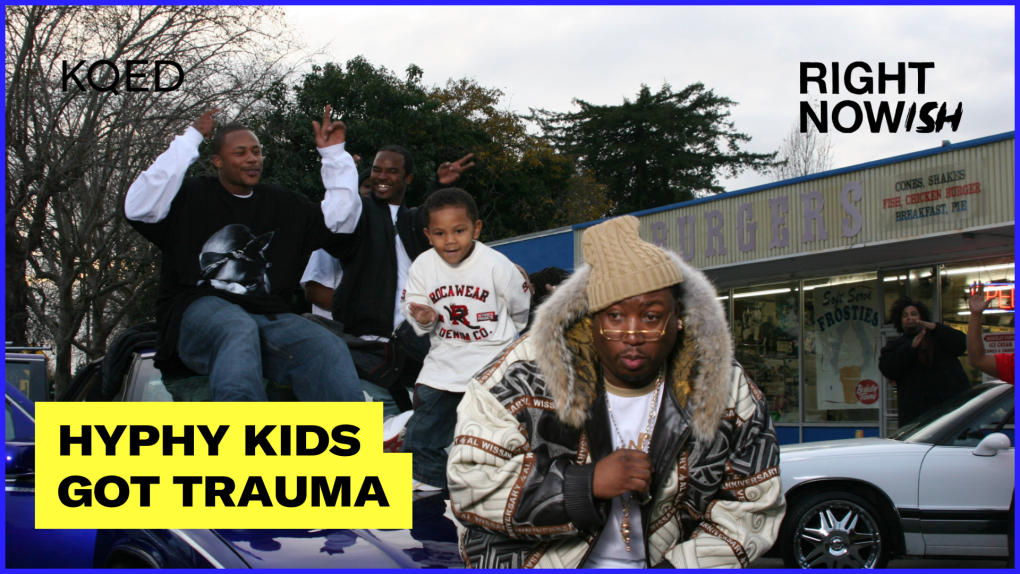
"caption": "Legendary Vallejo rapper E-40 with three dancers on a purple Buick 'scraper' during the filming of the 'Tell Me When To Go' music video in Deep East Oakland, circa 2006.",
"description": "Legendary Vallejo rapper E-40 stands in front of a purple Buick \"scraper\" as three young folks dance atop the vehicle during the filming of the video for the song, \"Tell Me When To Go\" in Deep East Oakland back in 2006.",
"title": "Legendary Vallejo rapper E-40 stands in front of a purple Buick \"scraper\" as three young folks dance atop the vehicle during the filming of the video for the song, \"Tell Me When To Go\" in Deep East Oakland back in 2006.",
"credit": "D-Ray",
"status": "inherit",
"altTag": "Legendary Vallejo rapper E-40 stands in front of a purple Buick \"scraper\" as three young folks dance atop the vehicle during the filming of the video for the song, \"Tell Me When To Go\" in Deep East Oakland back in 2006.",
"isLoading": false,
"fetchFailed": false
},
"arts_13935514": {
"type": "attachments",
"id": "arts_13935514",
"meta": {
"index": "attachments_1716263798",
"site": "arts",
"id": "13935514",
"found": true
},
"parent": 13935052,
"imgSizes": {
"twentyfourteen-full-width": {
"file": "https://ww2.kqed.org/app/uploads/sites/2/2023/09/Light-Photograph-7-1038x576.png",
"width": 1038,
"mimeType": "image/png",
"height": 576
},
"thumbnail": {
"file": "https://ww2.kqed.org/app/uploads/sites/2/2023/09/Light-Photograph-7-160x90.png",
"width": 160,
"mimeType": "image/png",
"height": 90
},
"post-thumbnail": {
"file": "https://ww2.kqed.org/app/uploads/sites/2/2023/09/Light-Photograph-7-672x372.png",
"width": 672,
"mimeType": "image/png",
"height": 372
},
"kqedFullSize": {
"file": "https://ww2.kqed.org/app/uploads/sites/2/2023/09/Light-Photograph-7.png",
"width": 1920,
"height": 1080
},
"large": {
"file": "https://ww2.kqed.org/app/uploads/sites/2/2023/09/Light-Photograph-7-1020x574.png",
"width": 1020,
"mimeType": "image/png",
"height": 574
},
"1536x1536": {
"file": "https://ww2.kqed.org/app/uploads/sites/2/2023/09/Light-Photograph-7-1536x864.png",
"width": 1536,
"mimeType": "image/png",
"height": 864
},
"medium": {
"file": "https://ww2.kqed.org/app/uploads/sites/2/2023/09/Light-Photograph-7-800x450.png",
"width": 800,
"mimeType": "image/png",
"height": 450
},
"medium_large": {
"file": "https://ww2.kqed.org/app/uploads/sites/2/2023/09/Light-Photograph-7-768x432.png",
"width": 768,
"mimeType": "image/png",
"height": 432
}
},
"publishDate": 1695934108,
"modified": 1695934220,
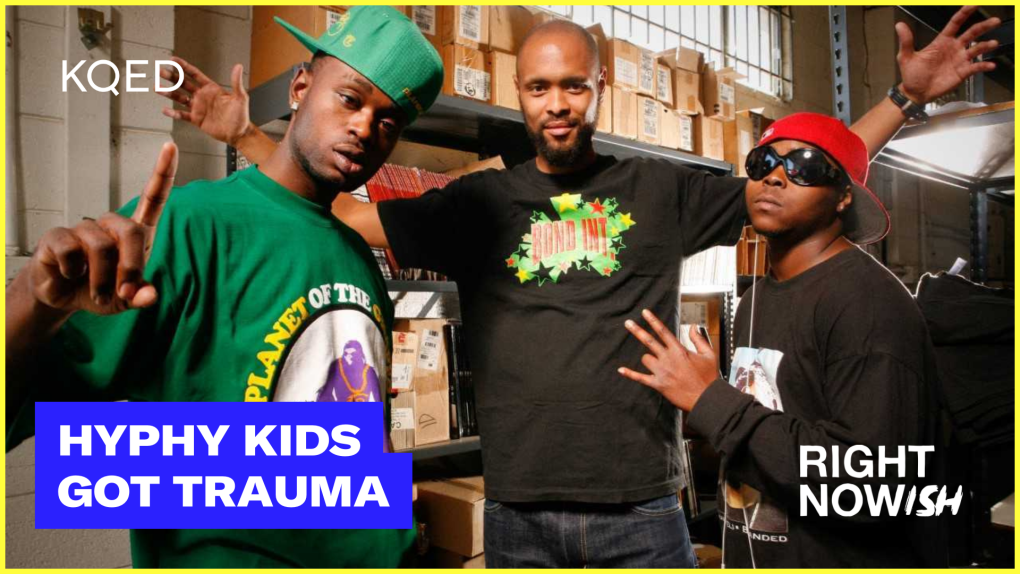
"caption": "East Oakland's Beeda Weeda and Tajai Massey stand alongside West Oakland's J-Stalin, posing for a photo in the warehouse of a building owned by the legendary Hieroglyphics hip-hop crew.",
"description": "Rapper Beeda Weeda wears a green baseball hat turned backwards and a matching green shirt, as he stands alongside Tajai Massey who is wearing a black shirt. On the far right is J-Stalin, wearing a red baseball hat, dark sunglasses and a black shirt.",
"title": "East Oakland's Beeda Weeda and Tajai Massey stand alongside West Oakland's J-Stalin, posing for a photo in the warehouse of a building owned by the legendary Hieroglyphics hip-hop crew.",
"credit": "Alexander Warnow",
"status": "inherit",
"altTag": "East Oakland's Beeda Weeda and Tajai Massey stand alongside West Oakland's J-Stalin, posing for a photo in the warehouse of a building owned by the legendary Hieroglyphics hip-hop crew.",
"isLoading": false,
"fetchFailed": false
},
"arts_13935132": {
"type": "attachments",
"id": "arts_13935132",
"meta": {
"index": "attachments_1716263798",
"site": "arts",
"id": "13935132",
"found": true
},
"parent": 13934874,
"imgSizes": {
"twentyfourteen-full-width": {
"file": "https://ww2.kqed.org/app/uploads/sites/2/2023/09/HKGT.16x9-1038x576.jpg",
"width": 1038,
"mimeType": "image/jpeg",
"height": 576
},
"thumbnail": {
"file": "https://ww2.kqed.org/app/uploads/sites/2/2023/09/HKGT.16x9-160x90.jpg",
"width": 160,
"mimeType": "image/jpeg",
"height": 90
},
"post-thumbnail": {
"file": "https://ww2.kqed.org/app/uploads/sites/2/2023/09/HKGT.16x9-672x372.jpg",
"width": 672,
"mimeType": "image/jpeg",
"height": 372
},
"kqedFullSize": {
"file": "https://ww2.kqed.org/app/uploads/sites/2/2023/09/HKGT.16x9-scaled.jpg",
"width": 2560,
"height": 1440
},
"2048x2048": {
"file": "https://ww2.kqed.org/app/uploads/sites/2/2023/09/HKGT.16x9-2048x1152.jpg",
"width": 2048,
"mimeType": "image/jpeg",
"height": 1152
},
"large": {
"file": "https://ww2.kqed.org/app/uploads/sites/2/2023/09/HKGT.16x9-1020x574.jpg",
"width": 1020,
"mimeType": "image/jpeg",
"height": 574
},
"1536x1536": {
"file": "https://ww2.kqed.org/app/uploads/sites/2/2023/09/HKGT.16x9-1536x864.jpg",
"width": 1536,
"mimeType": "image/jpeg",
"height": 864
},
"full-width": {
"file": "https://ww2.kqed.org/app/uploads/sites/2/2023/09/HKGT.16x9-1920x1080.jpg",
"width": 1920,
"mimeType": "image/jpeg",
"height": 1080
},
"medium": {
"file": "https://ww2.kqed.org/app/uploads/sites/2/2023/09/HKGT.16x9-800x450.jpg",
"width": 800,
"mimeType": "image/jpeg",
"height": 450
},
"medium_large": {
"file": "https://ww2.kqed.org/app/uploads/sites/2/2023/09/HKGT.16x9-768x432.jpg",
"width": 768,
"mimeType": "image/jpeg",
"height": 432
}
},
"publishDate": 1695251125,
"modified": 1695251186,
"caption": null,
"description": "Hyphy Kids Got Trauma, the podcast series from Rightnowish.",
"title": "HKGT.16x9",
"credit": null,
"status": "inherit",
"altTag": "The words Rightnowish Presents Hyphy Kids Got Trauma are airbrushed on a white t-shirt over a yellow background.",
"isLoading": false,
"fetchFailed": false
},
"arts_13933526": {
"type": "attachments",
"id": "arts_13933526",
"meta": {
"index": "attachments_1716263798",
"site": "arts",
"id": "13933526",
"found": true
},
"parent": 13933525,
"imgSizes": {
"twentyfourteen-full-width": {
"file": "https://ww2.kqed.org/app/uploads/sites/2/2023/08/Chelsea_COVER-1038x576.jpg",
"width": 1038,
"mimeType": "image/jpeg",
"height": 576
},
"thumbnail": {
"file": "https://ww2.kqed.org/app/uploads/sites/2/2023/08/Chelsea_COVER-160x111.jpg",
"width": 160,
"mimeType": "image/jpeg",
"height": 111
},
"post-thumbnail": {
"file": "https://ww2.kqed.org/app/uploads/sites/2/2023/08/Chelsea_COVER-672x372.jpg",
"width": 672,
"mimeType": "image/jpeg",
"height": 372
},
"kqedFullSize": {
"file": "https://ww2.kqed.org/app/uploads/sites/2/2023/08/Chelsea_COVER.jpg",
"width": 1473,
"height": 1024
},
"large": {
"file": "https://ww2.kqed.org/app/uploads/sites/2/2023/08/Chelsea_COVER-1020x709.jpg",
"width": 1020,
"mimeType": "image/jpeg",
"height": 709
},
"medium": {
"file": "https://ww2.kqed.org/app/uploads/sites/2/2023/08/Chelsea_COVER-800x556.jpg",
"width": 800,
"mimeType": "image/jpeg",
"height": 556
},
"medium_large": {
"file": "https://ww2.kqed.org/app/uploads/sites/2/2023/08/Chelsea_COVER-768x534.jpg",
"width": 768,
"mimeType": "image/jpeg",
"height": 534
}
},
"publishDate": 1692641267,
"modified": 1692985600,
"caption": "Chelsea Macalino-Calalay makes custom jewelry for clients, including this one pictured on the right that she made for cookbook writer Abi Balingit. With colorful beads strung into letters, it spells \"Mahal\" which means beloved in Tagalog. \n\n\n",
"description": null,
"title": "Chelsea_COVER",
"credit": "left image by Misa Rasmussen, right image by Chelsea Macalino-Calalay",
"status": "inherit",
"altTag": "Chelsea poses for the camera wearing an orange jacket and pants. A picture of a chained necklace with beaded letters reads MAHAL.",
"isLoading": false,
"fetchFailed": false
},
"arts_13932908": {
"type": "attachments",
"id": "arts_13932908",
"meta": {
"index": "attachments_1716263798",
"site": "arts",
"id": "13932908",
"found": true
},
"parent": 0,
"imgSizes": {
"twentyfourteen-full-width": {
"file": "https://ww2.kqed.org/app/uploads/sites/2/2023/08/Gary_6.SQUARE-1038x576.jpg",
"width": 1038,
"mimeType": "image/jpeg",
"height": 576
},
"thumbnail": {
"file": "https://ww2.kqed.org/app/uploads/sites/2/2023/08/Gary_6.SQUARE-160x160.jpg",
"width": 160,
"mimeType": "image/jpeg",
"height": 160
},
"post-thumbnail": {
"file": "https://ww2.kqed.org/app/uploads/sites/2/2023/08/Gary_6.SQUARE-672x372.jpg",
"width": 672,
"mimeType": "image/jpeg",
"height": 372
},
"kqedFullSize": {
"file": "https://ww2.kqed.org/app/uploads/sites/2/2023/08/Gary_6.SQUARE.jpg",
"width": 1080,
"height": 1080
},
"large": {
"file": "https://ww2.kqed.org/app/uploads/sites/2/2023/08/Gary_6.SQUARE-1020x1020.jpg",
"width": 1020,
"mimeType": "image/jpeg",
"height": 1020
},
"medium": {
"file": "https://ww2.kqed.org/app/uploads/sites/2/2023/08/Gary_6.SQUARE-800x800.jpg",
"width": 800,
"mimeType": "image/jpeg",
"height": 800
},
"medium_large": {
"file": "https://ww2.kqed.org/app/uploads/sites/2/2023/08/Gary_6.SQUARE-768x768.jpg",
"width": 768,
"mimeType": "image/jpeg",
"height": 768
}
},
"publishDate": 1691645109,
"modified": 1691646646,
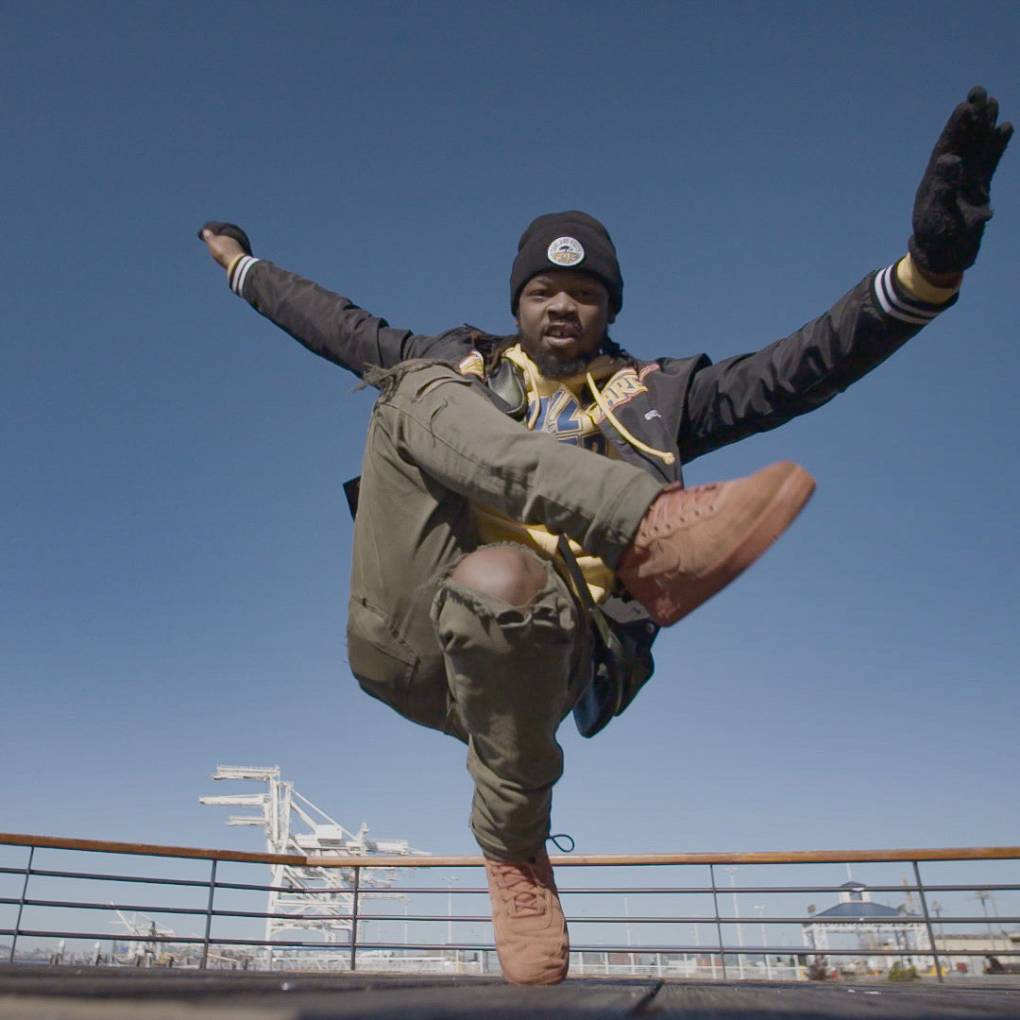
"caption": "Icecold 3000 of the Turf Fienz dances with the Port of Oakland in the background. ",
"description": null,
"title": "Gary_6.SQUARE",
"credit": "Elie M. Khadra",
"status": "inherit",
"altTag": null,
"isLoading": false,
"fetchFailed": false
},
"arts_13932907": {
"type": "attachments",
"id": "arts_13932907",
"meta": {
"index": "attachments_1716263798",
"site": "arts",
"id": "13932907",
"found": true
},
"parent": 13932887,
"imgSizes": {
"twentyfourteen-full-width": {
"file": "https://ww2.kqed.org/app/uploads/sites/2/2023/08/Gary_6-1038x576.jpg",
"width": 1038,
"mimeType": "image/jpeg",
"height": 576
},
"thumbnail": {
"file": "https://ww2.kqed.org/app/uploads/sites/2/2023/08/Gary_6-160x90.jpg",
"width": 160,
"mimeType": "image/jpeg",
"height": 90
},
"post-thumbnail": {
"file": "https://ww2.kqed.org/app/uploads/sites/2/2023/08/Gary_6-672x372.jpg",
"width": 672,
"mimeType": "image/jpeg",
"height": 372
},
"kqedFullSize": {
"file": "https://ww2.kqed.org/app/uploads/sites/2/2023/08/Gary_6.jpg",
"width": 1920,
"height": 1080
},
"large": {
"file": "https://ww2.kqed.org/app/uploads/sites/2/2023/08/Gary_6-1020x574.jpg",
"width": 1020,
"mimeType": "image/jpeg",
"height": 574
},
"1536x1536": {
"file": "https://ww2.kqed.org/app/uploads/sites/2/2023/08/Gary_6-1536x864.jpg",
"width": 1536,
"mimeType": "image/jpeg",
"height": 864
},
"medium": {
"file": "https://ww2.kqed.org/app/uploads/sites/2/2023/08/Gary_6-800x450.jpg",
"width": 800,
"mimeType": "image/jpeg",
"height": 450
},
"medium_large": {
"file": "https://ww2.kqed.org/app/uploads/sites/2/2023/08/Gary_6-768x432.jpg",
"width": 768,
"mimeType": "image/jpeg",
"height": 432
}
},
"publishDate": 1691645102,
"modified": 1691647336,
"caption": "Garion Morgan, a.k.a. Icecold 3000 of the Turf Fienz, dancing near the Port of Oakland in 2019. ",
"description": null,
"title": "Gary_6",
"credit": "Elie M. Khadra",
"status": "inherit",
"altTag": "Garion Morgan, a.k.a. Icecold 3000 of the Turf Fienz, dancing near the Port of Oakland in 2019.",
"isLoading": false,
"fetchFailed": false
},
"arts_13932084": {
"type": "attachments",
"id": "arts_13932084",
"meta": {
"index": "attachments_1716263798",
"site": "arts",
"id": "13932084",
"found": true
},
"parent": 13932030,
"imgSizes": {
"twentyfourteen-full-width": {
"file": "https://ww2.kqed.org/app/uploads/sites/2/2023/07/dregs-panel-square-1038x576.jpg",
"width": 1038,
"mimeType": "image/jpeg",
"height": 576
},
"thumbnail": {
"file": "https://ww2.kqed.org/app/uploads/sites/2/2023/07/dregs-panel-square-160x160.jpg",
"width": 160,
"mimeType": "image/jpeg",
"height": 160
},
"post-thumbnail": {
"file": "https://ww2.kqed.org/app/uploads/sites/2/2023/07/dregs-panel-square-672x372.jpg",
"width": 672,
"mimeType": "image/jpeg",
"height": 372
},
"kqedFullSize": {
"file": "https://ww2.kqed.org/app/uploads/sites/2/2023/07/dregs-panel-square.jpg",
"width": 1920,
"height": 1920
},
"large": {
"file": "https://ww2.kqed.org/app/uploads/sites/2/2023/07/dregs-panel-square-1020x1020.jpg",
"width": 1020,
"mimeType": "image/jpeg",
"height": 1020
},
"1536x1536": {
"file": "https://ww2.kqed.org/app/uploads/sites/2/2023/07/dregs-panel-square-1536x1536.jpg",
"width": 1536,
"mimeType": "image/jpeg",
"height": 1536
},
"medium": {
"file": "https://ww2.kqed.org/app/uploads/sites/2/2023/07/dregs-panel-square-800x800.jpg",
"width": 800,
"mimeType": "image/jpeg",
"height": 800
},
"medium_large": {
"file": "https://ww2.kqed.org/app/uploads/sites/2/2023/07/dregs-panel-square-768x768.jpg",
"width": 768,
"mimeType": "image/jpeg",
"height": 768
}
},
"publishDate": 1690393988,
"modified": 1690394299,
"caption": "The Conscious Daughters' CMG, KQED's Nastia Voynovskaya, photographer D-Ray, graffiti artist Dime and Dregs One pose together at Dregs' History of the Bay Day Party at the Midway in San Francisco on July 9, 2023. ",
"description": null,
"title": "dregs-panel-square",
"credit": "\u003ca href='https://www.instagram.com/b707__/>@b707__\u003c/a>",
"status": "inherit",
"altTag": "A Black woman in her 50s, a white woman in her 30s, a mixed-race woman in her 40s, a Latina in her 40s and a Black man in his 30s pose together on a stage after filming a live podcast episode.",
"isLoading": false,
"fetchFailed": false
},
"arts_13932087": {
"type": "attachments",
"id": "arts_13932087",
"meta": {
"index": "attachments_1716263798",
"site": "arts",
"id": "13932087",
"found": true
},
"parent": 13932030,
"imgSizes": {
"twentyfourteen-full-width": {
"file": "https://ww2.kqed.org/app/uploads/sites/2/2023/07/dregs-pabel-16x9-1-1038x576.jpg",
"width": 1038,
"mimeType": "image/jpeg",
"height": 576
},
"thumbnail": {
"file": "https://ww2.kqed.org/app/uploads/sites/2/2023/07/dregs-pabel-16x9-1-160x90.jpg",
"width": 160,
"mimeType": "image/jpeg",
"height": 90
},
"post-thumbnail": {
"file": "https://ww2.kqed.org/app/uploads/sites/2/2023/07/dregs-pabel-16x9-1-672x372.jpg",
"width": 672,
"mimeType": "image/jpeg",
"height": 372
},
"kqedFullSize": {
"file": "https://ww2.kqed.org/app/uploads/sites/2/2023/07/dregs-pabel-16x9-1.jpg",
"width": 1920,
"height": 1080
},
"large": {
"file": "https://ww2.kqed.org/app/uploads/sites/2/2023/07/dregs-pabel-16x9-1-1020x574.jpg",
"width": 1020,
"mimeType": "image/jpeg",
"height": 574
},
"1536x1536": {
"file": "https://ww2.kqed.org/app/uploads/sites/2/2023/07/dregs-pabel-16x9-1-1536x864.jpg",
"width": 1536,
"mimeType": "image/jpeg",
"height": 864
},
"medium": {
"file": "https://ww2.kqed.org/app/uploads/sites/2/2023/07/dregs-pabel-16x9-1-800x450.jpg",
"width": 800,
"mimeType": "image/jpeg",
"height": 450
},
"medium_large": {
"file": "https://ww2.kqed.org/app/uploads/sites/2/2023/07/dregs-pabel-16x9-1-768x432.jpg",
"width": 768,
"mimeType": "image/jpeg",
"height": 432
}
},
"publishDate": 1690394316,
"modified": 1690394353,
"caption": "The Conscious Daughters' CMG, KQED's Nastia Voynovskaya, photographer D-Ray, graffiti artist Dime and Dregs One pose together at Dregs' History of the Bay Day Party at the Midway in San Francisco on July 9, 2023. ",
"description": null,
"title": "dregs-pabel-16x9",
"credit": "\u003ca href='https://www.instagram.com/b707__/>@b707__\u003c/a>",
"status": "inherit",
"altTag": null,
"isLoading": false,
"fetchFailed": false
},
"arts_13929466": {
"type": "attachments",
"id": "arts_13929466",
"meta": {
"index": "attachments_1716263798",
"site": "arts",
"id": "13929466",
"found": true
},
"parent": 13929461,
"imgSizes": {
"twentyfourteen-full-width": {
"file": "https://ww2.kqed.org/app/uploads/sites/2/2023/05/IMG_5427-1038x576.jpg",
"width": 1038,
"mimeType": "image/jpeg",
"height": 576
},
"thumbnail": {
"file": "https://ww2.kqed.org/app/uploads/sites/2/2023/05/IMG_5427-160x90.jpg",
"width": 160,
"mimeType": "image/jpeg",
"height": 90
},
"post-thumbnail": {
"file": "https://ww2.kqed.org/app/uploads/sites/2/2023/05/IMG_5427-672x372.jpg",
"width": 672,
"mimeType": "image/jpeg",
"height": 372
},
"kqedFullSize": {
"file": "https://ww2.kqed.org/app/uploads/sites/2/2023/05/IMG_5427.jpg",
"width": 1920,
"height": 1080
},
"large": {
"file": "https://ww2.kqed.org/app/uploads/sites/2/2023/05/IMG_5427-1020x574.jpg",
"width": 1020,
"mimeType": "image/jpeg",
"height": 574
},
"1536x1536": {
"file": "https://ww2.kqed.org/app/uploads/sites/2/2023/05/IMG_5427-1536x864.jpg",
"width": 1536,
"mimeType": "image/jpeg",
"height": 864
},
"medium": {
"file": "https://ww2.kqed.org/app/uploads/sites/2/2023/05/IMG_5427-800x450.jpg",
"width": 800,
"mimeType": "image/jpeg",
"height": 450
},
"medium_large": {
"file": "https://ww2.kqed.org/app/uploads/sites/2/2023/05/IMG_5427-768x432.jpg",
"width": 768,
"mimeType": "image/jpeg",
"height": 432
}
},
"publishDate": 1684774791,
"modified": 1684774977,
"caption": "Mistah F.A.B. performs during the Hyphy Era Tour at the New Parish in Oakland on May 18, 2023.",
"description": null,
"title": "IMG_5427",
"credit": "\u003ca href='https://www.isawdray.com/'>D-Ray\u003c/a>",
"status": "inherit",
"altTag": null,
"isLoading": false,
"fetchFailed": false
},
"arts_13918700": {
"type": "attachments",
"id": "arts_13918700",
"meta": {
"index": "attachments_1716263798",
"site": "arts",
"id": "13918700",
"found": true
},
"parent": 13918720,
"imgSizes": {
"twentyfourteen-full-width": {
"file": "https://ww2.kqed.org/app/uploads/sites/2/2022/09/Mistah-F.A.B.-at-Hiero-Day-in-Oakland-on-Monday-Sept.-6-2022.-002-Estefany-Gonzalez-1038x576.jpg",
"width": 1038,
"mimeType": "image/jpeg",
"height": 576
},
"thumbnail": {
"file": "https://ww2.kqed.org/app/uploads/sites/2/2022/09/Mistah-F.A.B.-at-Hiero-Day-in-Oakland-on-Monday-Sept.-6-2022.-002-Estefany-Gonzalez-160x107.jpg",
"width": 160,
"mimeType": "image/jpeg",
"height": 107
},
"post-thumbnail": {
"file": "https://ww2.kqed.org/app/uploads/sites/2/2022/09/Mistah-F.A.B.-at-Hiero-Day-in-Oakland-on-Monday-Sept.-6-2022.-002-Estefany-Gonzalez-672x372.jpg",
"width": 672,
"mimeType": "image/jpeg",
"height": 372
},
"kqedFullSize": {
"file": "https://ww2.kqed.org/app/uploads/sites/2/2022/09/Mistah-F.A.B.-at-Hiero-Day-in-Oakland-on-Monday-Sept.-6-2022.-002-Estefany-Gonzalez.jpg",
"width": 1920,
"height": 1280
},
"large": {
"file": "https://ww2.kqed.org/app/uploads/sites/2/2022/09/Mistah-F.A.B.-at-Hiero-Day-in-Oakland-on-Monday-Sept.-6-2022.-002-Estefany-Gonzalez-1020x680.jpg",
"width": 1020,
"mimeType": "image/jpeg",
"height": 680
},
"1536x1536": {
"file": "https://ww2.kqed.org/app/uploads/sites/2/2022/09/Mistah-F.A.B.-at-Hiero-Day-in-Oakland-on-Monday-Sept.-6-2022.-002-Estefany-Gonzalez-1536x1024.jpg",
"width": 1536,
"mimeType": "image/jpeg",
"height": 1024
},
"medium": {
"file": "https://ww2.kqed.org/app/uploads/sites/2/2022/09/Mistah-F.A.B.-at-Hiero-Day-in-Oakland-on-Monday-Sept.-6-2022.-002-Estefany-Gonzalez-800x533.jpg",
"width": 800,
"mimeType": "image/jpeg",
"height": 533
},
"medium_large": {
"file": "https://ww2.kqed.org/app/uploads/sites/2/2022/09/Mistah-F.A.B.-at-Hiero-Day-in-Oakland-on-Monday-Sept.-6-2022.-002-Estefany-Gonzalez-768x512.jpg",
"width": 768,
"mimeType": "image/jpeg",
"height": 512
}
},
"publishDate": 1662456029,
"modified": 1692039040,
"caption": "Mistah F.A.B. at Hiero Day in Oakland on Monday, Sept. 5, 2022. ",
"description": "Mistah F.A.B. at Hiero Day in Oakland on Monday, Sept. 5, 2022. ",
"title": "Mistah F.A.B. at Hiero Day in Oakland on Monday, Sept. 5, 2022.",
"credit": "Estefany Gonzalez for KQED",
"status": "inherit",
"altTag": null,
"isLoading": false,
"fetchFailed": false
},
"arts_13928813": {
"type": "attachments",
"id": "arts_13928813",
"meta": {
"index": "attachments_1716263798",
"site": "arts",
"id": "13928813",
"found": true
},
"parent": 13928804,
"imgSizes": {
"twentyfourteen-full-width": {
"file": "https://ww2.kqed.org/app/uploads/sites/2/2023/05/hyphy_iceez_portrait_lead-1038x576.jpg",
"width": 1038,
"mimeType": "image/jpeg",
"height": 576
},
"thumbnail": {
"file": "https://ww2.kqed.org/app/uploads/sites/2/2023/05/hyphy_iceez_portrait_lead-160x100.jpg",
"width": 160,
"mimeType": "image/jpeg",
"height": 100
},
"post-thumbnail": {
"file": "https://ww2.kqed.org/app/uploads/sites/2/2023/05/hyphy_iceez_portrait_lead-672x372.jpg",
"width": 672,
"mimeType": "image/jpeg",
"height": 372
},
"kqedFullSize": {
"file": "https://ww2.kqed.org/app/uploads/sites/2/2023/05/hyphy_iceez_portrait_lead.jpg",
"width": 1920,
"height": 1200
},
"large": {
"file": "https://ww2.kqed.org/app/uploads/sites/2/2023/05/hyphy_iceez_portrait_lead-1020x638.jpg",
"width": 1020,
"mimeType": "image/jpeg",
"height": 638
},
"1536x1536": {
"file": "https://ww2.kqed.org/app/uploads/sites/2/2023/05/hyphy_iceez_portrait_lead-1536x960.jpg",
"width": 1536,
"mimeType": "image/jpeg",
"height": 960
},
"medium": {
"file": "https://ww2.kqed.org/app/uploads/sites/2/2023/05/hyphy_iceez_portrait_lead-800x500.jpg",
"width": 800,
"mimeType": "image/jpeg",
"height": 500
},
"medium_large": {
"file": "https://ww2.kqed.org/app/uploads/sites/2/2023/05/hyphy_iceez_portrait_lead-768x480.jpg",
"width": 768,
"mimeType": "image/jpeg",
"height": 480
}
},
"publishDate": 1683577351,
"modified": 1683577498,
"caption": "Jonathan Toledo, owner of Hyphy Iceez, serves cold slushies in his San Francisco neighborhood.",
"description": null,
"title": "hyphy_iceez_portrait_lead",
"credit": "Alan Chazaro",
"status": "inherit",
"altTag": "a foodmaker from San Francisco wears a Giants t-shirt and holds up a cup of his speciality beverage, Hyphy Iceez",
"isLoading": false,
"fetchFailed": false
},
"arts_13924838": {
"type": "attachments",
"id": "arts_13924838",
"meta": {
"index": "attachments_1716263798",
"site": "arts",
"id": "13924838",
"found": true
},
"parent": 13924828,
"imgSizes": {
"twentyfourteen-full-width": {
"file": "https://ww2.kqed.org/app/uploads/sites/2/2023/02/aRUCKUSEDITOR-square-1024x576.jpg",
"width": 1024,
"mimeType": "image/jpeg",
"height": 576
},
"thumbnail": {
"file": "https://ww2.kqed.org/app/uploads/sites/2/2023/02/aRUCKUSEDITOR-square-160x160.jpg",
"width": 160,
"mimeType": "image/jpeg",
"height": 160
},
"post-thumbnail": {
"file": "https://ww2.kqed.org/app/uploads/sites/2/2023/02/aRUCKUSEDITOR-square-672x372.jpg",
"width": 672,
"mimeType": "image/jpeg",
"height": 372
},
"kqedFullSize": {
"file": "https://ww2.kqed.org/app/uploads/sites/2/2023/02/aRUCKUSEDITOR-square.jpg",
"width": 1024,
"height": 1024
},
"large": {
"file": "https://ww2.kqed.org/app/uploads/sites/2/2023/02/aRUCKUSEDITOR-square-1020x1020.jpg",
"width": 1020,
"mimeType": "image/jpeg",
"height": 1020
},
"medium": {
"file": "https://ww2.kqed.org/app/uploads/sites/2/2023/02/aRUCKUSEDITOR-square-800x800.jpg",
"width": 800,
"mimeType": "image/jpeg",
"height": 800
},
"medium_large": {
"file": "https://ww2.kqed.org/app/uploads/sites/2/2023/02/aRUCKUSEDITOR-square-768x768.jpg",
"width": 768,
"mimeType": "image/jpeg",
"height": 768
}
},
"publishDate": 1675810627,
"modified": 1675810686,
"caption": "Before her rap career took off, Rocky Rivera was the 22-year-old editor-in-chief of Ruckus Magazine. ",
"description": null,
"title": "aRUCKUSEDITOR-square",
"credit": "Vivian Chen",
"status": "inherit",
"altTag": null,
"isLoading": false,
"fetchFailed": false
}
},
"audioPlayerReducer": {
"postId": "stream_live",
"isPaused": true,
"isPlaying": false,
"pfsActive": false,
"pledgeModalIsOpen": true,
"playerDrawerIsOpen": false,
"liveAudioPlayStartedAt": 0,
"liveAudioPlayContext": ""
},
"authorsReducer": {
"nvoynovskaya": {
"type": "authors",
"id": "11387",
"meta": {
"index": "authors_1716337520",
"id": "11387",
"found": true
},
"name": "Nastia Voynovskaya",
"firstName": "Nastia",
"lastName": "Voynovskaya",
"slug": "nvoynovskaya",
"email": "nvoynovskaya@kqed.org",
"display_author_email": false,
"staff_mastheads": [
"arts"
],
"title": "Editor and reporter",
"bio": "Nastia Voynovskaya is a reporter, editor and host at KQED Arts & Culture. She's been covering the arts in the Bay Area for over a decade, with a focus on music, queer culture, labor issues and grassroots organizing. She has edited KQED story series such as Trans Bay: A History of San Francisco's Gender-Diverse Community, and co-created KQED's Bay Area hip-hop history project, That's My Word. Nastia's work has been recognized by the Society of Professional Journalists and San Francisco Press Club. She regularly appears on podcasts and radio programs, including NPR's All Songs Considered, and hosts live events where music, culture and conversation meet.",
"avatar": "https://secure.gravatar.com/avatar/5025ee460e5a85d69ca20ea6c6f2f80d7e17795c828f61ea3aecfcd924e9042e?s=600&d=blank&r=g",
"twitter": null,
"bluesky": null,
"facebook": null,
"instagram": "https://www.instagram.com/nananastia/",
"linkedin": null,
"sites": [
{
"site": "",
"roles": [
"editor"
]
},
{
"site": "arts",
"roles": [
"administrator"
]
},
{
"site": "news",
"roles": [
"editor"
]
},
{
"site": "pop",
"roles": [
"administrator"
]
},
{
"site": "bayareabites",
"roles": [
"editor"
]
},
{
"site": "podcasts",
"roles": [
"editor"
]
},
{
"site": "hiphop",
"roles": [
"editor"
]
}
],
"headData": {
"title": "Nastia Voynovskaya | KQED",
"description": "Editor and reporter",
"ogImgSrc": "https://secure.gravatar.com/avatar/5025ee460e5a85d69ca20ea6c6f2f80d7e17795c828f61ea3aecfcd924e9042e?s=600&d=blank&r=g",
"twImgSrc": "https://secure.gravatar.com/avatar/5025ee460e5a85d69ca20ea6c6f2f80d7e17795c828f61ea3aecfcd924e9042e?s=600&d=blank&r=g"
},
"isLoading": false,
"link": "/author/nvoynovskaya"
},
"ogpenn": {
"type": "authors",
"id": "11491",
"meta": {
"index": "authors_1716337520",
"id": "11491",
"found": true
},
"name": "Pendarvis Harshaw",
"firstName": "Pendarvis",
"lastName": "Harshaw",
"slug": "ogpenn",
"email": "ogpenn@gmail.com",
"display_author_email": false,
"staff_mastheads": [
"arts"
],
"title": "Community Engagement Reporter",
"bio": "Pendarvis Harshaw is an educator, host and writer with KQED Arts.",
"avatar": "https://secure.gravatar.com/avatar/972b77ee8e3f346ae2b00622661187fbfabd059b5693bbdc1475ea7a722fd4cd?s=600&d=blank&r=g",
"twitter": null,
"bluesky": null,
"facebook": null,
"instagram": "ogpenn",
"linkedin": null,
"sites": [
{
"site": "arts",
"roles": [
"administrator"
]
},
{
"site": "news",
"roles": [
"editor"
]
},
{
"site": "bayareabites",
"roles": [
"author"
]
},
{
"site": "hiphop",
"roles": [
"editor"
]
}
],
"headData": {
"title": "Pendarvis Harshaw | KQED",
"description": "Community Engagement Reporter",
"ogImgSrc": "https://secure.gravatar.com/avatar/972b77ee8e3f346ae2b00622661187fbfabd059b5693bbdc1475ea7a722fd4cd?s=600&d=blank&r=g",
"twImgSrc": "https://secure.gravatar.com/avatar/972b77ee8e3f346ae2b00622661187fbfabd059b5693bbdc1475ea7a722fd4cd?s=600&d=blank&r=g"
},
"isLoading": false,
"link": "/author/ogpenn"
},
"mmedina": {
"type": "authors",
"id": "11528",
"meta": {
"index": "authors_1716337520",
"id": "11528",
"found": true
},
"name": "Marisol Medina-Cadena",
"firstName": "Marisol",
"lastName": "Medina-Cadena",
"slug": "mmedina",
"email": "mmedina@KQED.org",
"display_author_email": true,
"staff_mastheads": [],
"title": "Producer, Rightnowish Podcast",
"bio": "Marisol Medina-Cadena is a radio reporter and podcast producer. Before working at KQED, she produced for PBS member station, KCET, in Los Angeles. In 2017, Marisol won an Emmy Award for her work on the televised documentary, \u003cem>City Rising\u003c/em>, examining California's affordable housing crisis and the historical roots of gentrification.",
"avatar": "https://secure.gravatar.com/avatar/6c3db46a1cabb5e1fe9a365b5f4e681e?s=600&d=blank&r=g",
"twitter": "marisolreports",
"facebook": null,
"instagram": null,
"linkedin": null,
"sites": [
{
"site": "arts",
"roles": []
},
{
"site": "news",
"roles": [
"edit_others_posts"
]
}
],
"headData": {
"title": "Marisol Medina-Cadena | KQED",
"description": "Producer, Rightnowish Podcast",
"ogImgSrc": "https://secure.gravatar.com/avatar/6c3db46a1cabb5e1fe9a365b5f4e681e?s=600&d=blank&r=g",
"twImgSrc": "https://secure.gravatar.com/avatar/6c3db46a1cabb5e1fe9a365b5f4e681e?s=600&d=blank&r=g"
},
"isLoading": false,
"link": "/author/mmedina"
},
"achazaro": {
"type": "authors",
"id": "11748",
"meta": {
"index": "authors_1716337520",
"id": "11748",
"found": true
},
"name": "Alan Chazaro",
"firstName": "Alan",
"lastName": "Chazaro",
"slug": "achazaro",
"email": "agchazaro@gmail.com",
"display_author_email": true,
"staff_mastheads": [],
"title": "Food Writer and Reporter",
"bio": "Alan Chazaro is the author of \u003cem>This Is Not a Frank Ocean Cover Album\u003c/em> (Black Lawrence Press, 2019), \u003cem>Piñata Theory\u003c/em> (Black Lawrence Press, 2020), and \u003cem>Notes from the Eastern Span of the Bay Bridge\u003c/em> (Ghost City Press, 2021). He is a graduate of June Jordan’s Poetry for the People program at UC Berkeley and a former Lawrence Ferlinghetti Fellow at the University of San Francisco. He writes about sports, food, art, music, education, and culture while repping the Bay on \u003ca href=\"https://twitter.com/alan_chazaro\">Twitter\u003c/a> and \u003ca href=\"https://www.instagram.com/alan_chazaro/?hl=en\">Instagram\u003c/a> at @alan_chazaro.",
"avatar": "https://secure.gravatar.com/avatar/ea8b6dd970fc5c29e7a188e7d5861df7?s=600&d=blank&r=g",
"twitter": "alan_chazaro",
"facebook": null,
"instagram": null,
"linkedin": null,
"sites": [
{
"site": "arts",
"roles": [
"contributor"
]
},
{
"site": "news",
"roles": [
"editor"
]
}
],
"headData": {
"title": "Alan Chazaro | KQED",
"description": "Food Writer and Reporter",
"ogImgSrc": "https://secure.gravatar.com/avatar/ea8b6dd970fc5c29e7a188e7d5861df7?s=600&d=blank&r=g",
"twImgSrc": "https://secure.gravatar.com/avatar/ea8b6dd970fc5c29e7a188e7d5861df7?s=600&d=blank&r=g"
},
"isLoading": false,
"link": "/author/achazaro"
},
"earnold": {
"type": "authors",
"id": "11839",
"meta": {
"index": "authors_1716337520",
"id": "11839",
"found": true
},
"name": "Eric Arnold",
"firstName": "Eric",
"lastName": "Arnold",
"slug": "earnold",
"email": "earnold@kqed.org",
"display_author_email": false,
"staff_mastheads": [],
"title": "Contributing Editor, 'That's My Word'",
"bio": "Eric Arnold has covered hip-hop locally and nationally for over 30 years. Formerly the managing editor of \u003cem>4080\u003c/em> and columnist for \u003cem>The Source\u003c/em>, he chronicled hyphy’s rise and fall, co-curated the Oakland Museum of California’s first hip-hop exhibit in 2018 and won a 2022 Northern California Emmy Award for a mini-documentary on Oakland’s Boogaloo dance culture. He is a contributing editor for \u003cem>That’s My Word\u003c/em>, KQED's series on the history of Bay Area hip-hop.",
"avatar": "https://secure.gravatar.com/avatar/ede45b04898456ad0893a2811e78b0a2?s=600&d=blank&r=g",
"twitter": null,
"facebook": null,
"instagram": null,
"linkedin": null,
"sites": [
{
"site": "arts",
"roles": [
"contributor"
]
},
{
"site": "news",
"roles": [
"contributor"
]
},
{
"site": "hiphop",
"roles": [
"contributor"
]
}
],
"headData": {
"title": "Eric Arnold | KQED",
"description": "Contributing Editor, 'That's My Word'",
"ogImgSrc": "https://secure.gravatar.com/avatar/ede45b04898456ad0893a2811e78b0a2?s=600&d=blank&r=g",
"twImgSrc": "https://secure.gravatar.com/avatar/ede45b04898456ad0893a2811e78b0a2?s=600&d=blank&r=g"
},
"isLoading": false,
"link": "/author/earnold"
},
"rockyrivera": {
"type": "authors",
"id": "11846",
"meta": {
"index": "authors_1716337520",
"id": "11846",
"found": true
},
"name": "Rocky Rivera",
"firstName": "Rocky",
"lastName": "Rivera",
"slug": "rockyrivera",
"email": "ms.rocky.rivera@gmail.com",
"display_author_email": false,
"staff_mastheads": [],
"title": "KQED Contributor",
"bio": "Rocky Rivera is a journalist, emcee, author and activist from San Francisco. She has released four albums through her label, Beatrock Music, and a ten-volume mixtape series with DJ Roza. She released her first book in 2021, entitled \u003cem>Snakeskin: Essays by Rocky Rivera\u003c/em>. Her latest album dropped in September 2024 and is called \"Long Kiss Goodnight\" with emcee/producer Otayo Dubb. She currently writes the Frisco Foodies column as a love letter to her hometown.",
"avatar": "https://secure.gravatar.com/avatar/946241ee2c59e6040607dfc75240d91b?s=600&d=blank&r=g",
"twitter": null,
"facebook": "https://m.facebook.com/rockyriveramusic",
"instagram": "https://instagram.com/rockyrivera",
"linkedin": "https://www.linkedin.com/in/krishtinedeleon/",
"sites": [
{
"site": "arts",
"roles": [
"author"
]
}
],
"headData": {
"title": "Rocky Rivera | KQED",
"description": "KQED Contributor",
"ogImgSrc": "https://secure.gravatar.com/avatar/946241ee2c59e6040607dfc75240d91b?s=600&d=blank&r=g",
"twImgSrc": "https://secure.gravatar.com/avatar/946241ee2c59e6040607dfc75240d91b?s=600&d=blank&r=g"
},
"isLoading": false,
"link": "/author/rockyrivera"
},
"xolivares": {
"type": "authors",
"id": "11874",
"meta": {
"index": "authors_1716337520",
"id": "11874",
"found": true
},
"name": "Xorje Olivares",
"firstName": "Xorje",
"lastName": "Olivares",
"slug": "xolivares",
"email": "xolivares@kqed.org",
"display_author_email": false,
"staff_mastheads": [],
"title": "KQED Contributor",
"bio": "Xorje Olivares is KQED's senior producer/editor for podcast development. He previously was a supervising producer at Lemonada Media and also spent 10 years as both an on-air personality and live producer for SiriusXM Radio. His written work has been published in Vice, Rolling Stone and Teen Vogue, among others. You can find him on Twitter and Instagram at @xorjeo.",
"avatar": "https://secure.gravatar.com/avatar/46b74ed252c58ca227b0f680d27b3731?s=600&d=blank&r=g",
"twitter": null,
"facebook": null,
"instagram": null,
"linkedin": null,
"sites": [
{
"site": "arts",
"roles": []
}
],
"headData": {
"title": "Xorje Olivares | KQED",
"description": "KQED Contributor",
"ogImgSrc": "https://secure.gravatar.com/avatar/46b74ed252c58ca227b0f680d27b3731?s=600&d=blank&r=g",
"twImgSrc": "https://secure.gravatar.com/avatar/46b74ed252c58ca227b0f680d27b3731?s=600&d=blank&r=g"
},
"isLoading": false,
"link": "/author/xolivares"
}
},
"pagesReducer": {
"arts_tag_hyphy": {
"type": "terms",
"id": "arts_6975",
"meta": {
"index": "terms_1716263798",
"site": "arts",
"id": "6975",
"score": 9.557208
},
"featImg": null,
"name": "Hyphy",
"description": null,
"taxonomy": "tag",
"headData": {
"twImgId": null,
"twTitle": null,
"ogTitle": null,
"ogImgId": null,
"twDescription": null,
"description": null,
"title": "Hyphy Archives | KQED Arts",
"ogDescription": null
},
"ttid": 6987,
"slug": "hyphy",
"isLoading": false,
"title": "Hyphy",
"pageMeta": {
"site": "arts",
"WpPageTemplate": "page-topic-editorial",
"currentPage": 2
},
"blocks": [
{
"blockName": "kqed/post-list",
"attrs": {
"layout": "cardArticle2",
"query": "posts/arts?tag=hyphy",
"seeMore": false,
"paginated": true,
"page": 2
}
},
{
"blockName": "kqed/ad"
}
]
}
},
"pfsSessionReducer": {},
"postsReducer": {
"stream_live": {
"type": "live",
"id": "stream_live",
"audioUrl": "https://streams.kqed.org/kqedradio",
"title": "Live Stream",
"excerpt": "Live Stream information currently unavailable.",
"link": "/radio",
"featImg": "",
"label": {
"name": "KQED Live",
"link": "/"
}
},
"stream_kqedNewscast": {
"type": "posts",
"id": "stream_kqedNewscast",
"audioUrl": "https://www.kqed.org/.stream/anon/radio/RDnews/newscast.mp3?_=1",
"title": "KQED Newscast",
"featImg": "",
"label": {
"name": "88.5 FM",
"link": "/"
}
},
"arts_13936224": {
"type": "posts",
"id": "arts_13936224",
"meta": {
"index": "posts_1716263798",
"site": "arts",
"id": "13936224",
"score": null,
"sort": [
1697104832000
]
},
"guestAuthors": [],
"slug": "hyphy-kids-got-trauma-pt-4-my-generations-report-card",
"title": "Hyphy Kids Got Trauma Pt. 4, ‘My Generation's Report Card’",
"publishDate": 1697104832,
"format": "audio",
"headTitle": "Hyphy Kids Got Trauma Pt. 4, ‘My Generation’s Report Card’ | KQED",
"labelTerm": {
"term": 8720,
"site": "arts"
},
"content": "\u003cp style=\"text-align: left\">\u003ca href=\"#episode-transcript\">View the full episode transcript.\u003c/a>\u003c/p>\n\u003cp style=\"text-align: left\">Despite the uptempo party music and the perception of free-spirited fun, it’s clear that 2006 was a violent year in my Northern Californian community. But until recently, I hadn’t stopped to consider the bigger picture.\u003c/p>\n\u003cp>By stepping back and looking at the issues impacting the kids of the Bay Area in the early 2000s, during the hyphy movement, I realized two things:\u003c/p>\n\u003cp>First, those issues– violence and crime, as well as poverty, sexism, racism, and other forms of discrimination– are no different from the issues we’re facing today. Secondly, if you look closely enough, you’ll see that these issues are rooted in capitalism and imperialism.\u003c/p>\n\u003cp>In this episode we talk to \u003ca href=\"https://lee.house.gov/\" target=\"_blank\" rel=\"noopener\">Congresswoman Barbara Lee\u003c/a>, who represents the East Bay, about her history of dealing with these issues while serving this community for the past 25 years.\u003c/p>\n\u003cp>We hear from \u003ca href=\"https://www.instagram.com/rich_iyala/?hl=en\" target=\"_blank\" rel=\"noopener\">Rich Iyala,\u003c/a> a younger San Francisco based artist who grew up in the shadow of the hyphy movement and wrote a song that inspired multiple aerosol artists to write tags that read, “\u003ca href=\"https://www.instagram.com/p/BhDq8RwhU7z/?utm_source=ig_web_copy_link\" target=\"_blank\" rel=\"noopener\">hyphy children got trauma(s)\u003c/a>” and “\u003ca href=\"https://www.instagram.com/p/BwkH97cH-nZ/\" target=\"_blank\" rel=\"noopener\">hyphy kids got trauma\u003c/a>.”\u003c/p>\n\u003cp>We also hear from a senior at Oakland’s Fremont High school, T’Jon, who was born in 2006. During a recent interview with filmmaker Boots Riley for KDOL’s show \u003ca href=\"https://www.instagram.com/thetowntalks/\" target=\"_blank\" rel=\"noopener\">The Town Talks\u003c/a>, T’Jon shares his thoughts about the power of art, culture and community, as exemplified by the hyphy movement.\u003c/p>\n\u003cp>\u003c!-- iframe plugin v.4.3 wordpress.org/plugins/iframe/ -->\u003cbr>\n\u003ciframe loading=\"lazy\" frameborder=\"0\" height=\"200\" scrolling=\"no\" src=\"https://playlist.megaphone.fm/?e=KQINC6098869655&light=true\" width=\"100%\" class=\"iframe-class\">\u003c/iframe>\u003c/p>\n\u003ch2 id=\"episode-transcript\">Episode Transcript\u003c/h2>\n\u003cp>\u003cb>Pendarvis Harshaw, host:\u003c/b>\u003cspan style=\"font-weight: 400\"> Heads up, this podcast contains explicit language.\u003c/span>\u003c/p>\n\u003cp>\u003ci>\u003cspan style=\"font-weight: 400\">[Music]\u003c/span>\u003c/i>\u003c/p>\n\u003cp>\u003cb>Pendarvis Harshaw: \u003c/b>\u003cspan style=\"font-weight: 400\">All throughout my life, even before becoming a journalist, I’ve kept a journal. I still have every single notebook, and there’s over 60 of ‘em. Hella chicken scratch on yellow legal pads, little windows into my mindstate and notes on what was going on around me. \u003c/span>\u003c/p>\n\u003cp>\u003cspan style=\"font-weight: 400\">While working on this project, I looked back a few from 2006. An entry from July of that year reads,\u003c/span>\u003c/p>\n\u003cp>\u003cspan style=\"font-weight: 400\">“Hyphy/ Metros/ Purple/ Jordans/ And Bathing Ape Hoodies/ Bootleg movies/ Turf Dancers/ speakers in the grill of scrapers/ cut the dreads off/ return to fading/ faded. Dark liquor and shit/ bus fare is $1.10/ and that 10 cents kills it/ Rather do it that way/ than to put $3.00 a gallon/ in the tank/ unless you got candy paint and dubs on yo thang/ don’t even come out to play/ I mean I mean, the word is geese/ geeks/ smirkish streets/ clean = wet/ O.G. thers = Vet/ stay safe = you blessed/ So many laid to rest, I done seen RIP on every piece of clothing except a prom dress…”\u003c/span>\u003c/p>\n\u003cp>\u003cspan style=\"font-weight: 400\">Between these little scribbles were phone numbers and doodles– a bunch of crude self portraits drawn in pen. And there’s even a “To Do list” I wrote just before leaving Oakland, for Howard University. \u003c/span>\u003c/p>\n\u003cp>\u003ci>\u003cspan style=\"font-weight: 400\">[Muffled sounds of shuffling paper] “\u003c/span>\u003c/i>\u003cspan style=\"font-weight: 400\">Before I leave for Washington, D.C: Finish the Zeus DVD, go to a baseball game, get three fitted caps, two pair of jeans…”\u003c/span>\u003c/p>\n\u003cp>\u003ci>\u003cspan style=\"font-weight: 400\">[sounds of distant and lively chatter outdoors]\u003c/span>\u003c/i>\u003c/p>\n\u003cp>\u003ci>\u003cspan style=\"font-weight: 400\">[Music]\u003c/span>\u003c/i>\u003c/p>\n\u003cp>\u003cb>Pendarvis Harshaw:\u003c/b>\u003cspan style=\"font-weight: 400\"> I spent the fall of 2006 in Washington D.C., adjusting to the weather and the social climate of the east coast. \u003c/span>\u003c/p>\n\u003cp>\u003cspan style=\"font-weight: 400\">I loved the diversity within the Black community on campus. There’s nothing like attending an HBCU. Dudes with gold ones and locs, pursuing their PhDs. Women in business suits, with Wall Street connections and fly hairdos. Weedheads who didn’t do anything but sit on the same bench stoned every day. \u003c/span>\u003c/p>\n\u003cp>\u003cspan style=\"font-weight: 400\">I was cool with em all, as well as the Cali club crew, a few D.C. folks and the poets, but I was still going through culture shock. I was hella far away from the Bay. \u003c/span>\u003c/p>\n\u003cp>\u003cspan style=\"font-weight: 400\">At one party I got laughed at for wearing glasses with no lenses, and in class, folks looked at me weird for rocking a hoodie with a picture of my deceased friend’s face on it. I grew homesick, and I left school and took an extended Thanksgiving break back in the Bay. \u003c/span>\u003c/p>\n\u003cp>\u003cspan style=\"font-weight: 400\">Covered in hugs from the people I love, I was happy to be home. But toward the end of my trip, I was walking out of my mom’s house, as I closed the gate, looked down the street, and saw police lights and yellow tape. \u003c/span>\u003c/p>\n\u003cp>\u003cspan style=\"font-weight: 400\">By the time I got to my cousin’s house, a five minute drive if you catch every green light, word had spread: Marcel Campbell, a friend who we called Cell, had been killed.\u003c/span>\u003c/p>\n\u003cp>\u003ci>\u003cspan style=\"font-weight: 400\">[Music]\u003c/span>\u003c/i>\u003c/p>\n\u003cp>\u003cb>Pendarvis Harshaw: \u003c/b>\u003cspan style=\"font-weight: 400\">Considered a young OG, Cell was more mature than his age,\u003c/span>\u003cspan style=\"font-weight: 400\"> both through his fashion – peacoats and casual shoes, as well as through his temperament – ever cool. A short brotha with long locs, he’d share wisdom through jokes, shaking your hand while talking to you — simultaneous conversation and affirmation. He was yet another young person gone too soon. \u003c/span>\u003c/p>\n\u003cp>\u003cspan style=\"font-weight: 400\">I didn’t get to attend Cell’s memorial. I had to head back to school soon after we got the news of his passing. \u003c/span>\u003c/p>\n\u003cp>\u003cspan style=\"font-weight: 400\">I left the streets of the East Bay, headed back to the east coast for those final weeks of 2006. Looking out the airplane window and scribbling in my journal, I wrote a poem using the idea of a bridge as a metaphor for the shaky grounds my community was standing on. \u003c/span>\u003c/p>\n\u003cp>\u003ci>\u003cspan style=\"font-weight: 400\">[Music]\u003c/span>\u003c/i>\u003c/p>\n\u003cp>\u003cb>Pendarvis Harshaw:\u003c/b>\u003c/p>\n\u003cp>\u003cspan style=\"font-weight: 400\">Some would say never burn a bridge\u003c/span>\u003c/p>\n\u003cp>\u003cspan style=\"font-weight: 400\">But they never tell you to check on it/ make sure that it holds\u003c/span>\u003c/p>\n\u003cp>\u003cspan style=\"font-weight: 400\">The wind, the rain/ the heat and the snow\u003c/span>\u003c/p>\n\u003cp>\u003cspan style=\"font-weight: 400\">The moment I know\u003c/span>\u003c/p>\n\u003cp>\u003cspan style=\"font-weight: 400\">This infrastructure isn’t conducting\u003c/span>\u003c/p>\n\u003cp>\u003cspan style=\"font-weight: 400\">The reason why it was constructed\u003c/span>\u003c/p>\n\u003cp>\u003cspan style=\"font-weight: 400\">The bolts loosen/ the poles start to rust and\u003c/span>\u003c/p>\n\u003cp>\u003cspan style=\"font-weight: 400\">Weak links in the chain\u003c/span>\u003c/p>\n\u003cp>\u003cspan style=\"font-weight: 400\">The bridge ain’t standing the same\u003c/span>\u003c/p>\n\u003cp>\u003cspan style=\"font-weight: 400\">Lord forbid/ this bridge/ fall back into the Bay\u003c/span>\u003c/p>\n\u003cp> \u003c/p>\n\u003cp>\u003cspan style=\"font-weight: 400\">I’m Pendarvis Harshaw, and this is \u003c/span>\u003ci>\u003cspan style=\"font-weight: 400\">Hyphy Kids Got Trauma\u003c/span>\u003c/i>\u003cspan style=\"font-weight: 400\">. \u003c/span>\u003c/p>\n\u003cp>\u003cspan style=\"font-weight: 400\">While taking classes at Howard, I saw that Washington D.C. – almost three-thousand miles away from Oakland – was a world removed from scraper bikes and hyphy trains. By stepping outside of my Bay Area bubble, I was exposed to broader issues impacting the world. \u003c/span>\u003c/p>\n\u003cp>\u003cspan style=\"font-weight: 400\">And being in the nation’s capital, I was also closer to the elected officials who are in the seat of power in this country.\u003c/span>\u003c/p>\n\u003cp>\u003cspan style=\"font-weight: 400\">Not far from my dorm room there was someone else from Oakland who was also thinking about the bigger issues impacting this \u003c/span>\u003cspan style=\"font-weight: 400\">\u003cbr>\n\u003c/span>\u003cspan style=\"font-weight: 400\">generation, with a special focus on the people from the East Bay… \u003c/span>\u003c/p>\n\u003cp>\u003ci>\u003cspan style=\"font-weight: 400\">[Music]\u003c/span>\u003c/i>\u003c/p>\n\u003cp>\u003cb>Congresswoman Barbara Lee, guest:\u003c/b>\u003cspan style=\"font-weight: 400\"> I am Congresswoman Barbara Lee and I represent the 12th Congressional District.\u003c/span>\u003ci>\u003cspan style=\"font-weight: 400\"> \u003c/span>\u003c/i>\u003c/p>\n\u003cp>\u003cb>Pendarvis Harshaw: \u003c/b>\u003cspan style=\"font-weight: 400\">Rep. Lee’s district is in Alameda county, which includes the East Bay cities of Oakland, Berkeley, and more. She tells me that she appreciates what hip-hop artists have done for the region. \u003c/span>\u003c/p>\n\u003cp>\u003cb>Rep. Barbara Lee: \u003c/b>\u003cspan style=\"font-weight: 400\">It’s a really cool culture in Oakland\u003c/span>\u003ci>\u003cspan style=\"font-weight: 400\">… \u003c/span>\u003c/i>\u003c/p>\n\u003cp>\u003cb>Pendarvis Harshaw: \u003c/b>\u003cspan style=\"font-weight: 400\">And she sees how legislation has impacted the way of life for a generation of kids from the region she represents. \u003c/span>\u003c/p>\n\u003cp>\u003cb>Rep. Barbara Lee:\u003c/b>\u003cspan style=\"font-weight: 400\"> It’s really sad because this is the Bay Area and we shouldn’t have policies that allow for gentrification, but that… that happened.\u003c/span>\u003ci>\u003cspan style=\"font-weight: 400\"> \u003c/span>\u003c/i>\u003c/p>\n\u003cp>\u003cb>Pendarvis Harshaw: \u003c/b>\u003cspan style=\"font-weight: 400\">When Congresswoman Lee entered office in April of 1998, Black folks accounted for \u003c/span>\u003ca href=\"http://www.bayareacensus.ca.gov/cities/Oakland.htm\">\u003cspan style=\"font-weight: 400\">nearly 40% of Oakland’s population\u003c/span>\u003c/a>\u003cspan style=\"font-weight: 400\">. The most recent Census reports that Oakland’s Black population is down to about 20%. \u003c/span>\u003c/p>\n\u003cp>\u003cspan style=\"font-weight: 400\">Back at the turn of the millennium, when I was a teen living in the wake of the 9/11 attacks on the U.S., it was Representative Lee’s vote – the sole ballot cast against going to war in Afghanistan – that introduced me to her work.\u003c/span>\u003c/p>\n\u003cp>\u003cspan style=\"font-weight: 400\">Over the years, I’ve watched as she’s championed reproductive health and combated racism. She’s fought for the rights of Black folks here and abroad, and represented her region at every turn. \u003c/span>\u003c/p>\n\u003cp>\u003cspan style=\"font-weight: 400\">While no person – especially a politician – is perfect, I’ve appreciated how she’s been critical of systemic racism and imperialism. She’s pushed for low-income housing, organized against air pollutants, and fought against the hyper-policing of Black people. \u003c/span>\u003c/p>\n\u003cp>\u003cspan style=\"font-weight: 400\">And even with these efforts over the years, Rep. Lee realizes that all of these layers of issues created a world where it’s damn near impossible for people to walk around unscathed. \u003c/span>\u003c/p>\n\u003cp>\u003cb>Rep. Barbara Lee:\u003c/b>\u003cspan style=\"font-weight: 400\"> I can understand the environment and the context of what was taking place during that time. In terms of the political environment, that causes a lot of anxiety. And a lot of, I don’t want to say depression, but quite a bit of pessimism, and uncertainty about where this country and where the world is going. Just like now.\u003c/span>\u003c/p>\n\u003cp>\u003cb>Pendarvis Harshaw: \u003c/b>\u003cspan style=\"font-weight: 400\">Before even considering stats and numerical breakdowns of crime, poverty and the like, we have to start with the mindstate of folks at the time we’re talking about, 2006. \u003c/span>\u003c/p>\n\u003cp>\u003cspan style=\"font-weight: 400\">These hyphy teenagers, myself included, we were stepping into the world with so much pessimism that it toed the line of nihilism. \u003c/span>\u003c/p>\n\u003cp>\u003cspan style=\"font-weight: 400\">We were told to go out there and make a living while the unemployment rate was soaring. It jumped from \u003c/span>\u003cspan style=\"font-weight: 400\">about \u003c/span>\u003ca href=\"https://www.cdc.gov/mmwr/preview/mmwrhtml/su6203a5.htm#:~:text=According%20to%20the%20Bureau%20of,million%20unemployed%20persons%20(11).\">\u003cspan style=\"font-weight: 400\">5% in the year 2006 to nearly 10% in the year 2010\u003c/span>\u003c/a>\u003cspan style=\"font-weight: 400\">. \u003c/span>\u003c/p>\n\u003cp>\u003cspan style=\"font-weight: 400\">No wonder after years of a downward trend, national crime reportedly had an uptick around that same period. \u003c/span>\u003cspan style=\"font-weight: 400\">To be clear, I’m not blaming the unemployed, not even the small-time criminals. Nah, I’m looking at the system that creates this environment. \u003c/span>\u003c/p>\n\u003cp>\u003cspan style=\"font-weight: 400\">Congresswoman Barbara Lee says that this country’s philosophy on violence has laid the foundation for my generation – and many generations of Americans. A lot of us think that violence is how we should solve our problems.\u003c/span>\u003c/p>\n\u003cp>\u003ci>\u003cspan style=\"font-weight: 400\">[Music]\u003c/span>\u003c/i>\u003c/p>\n\u003cp>\u003cb>Rep. Barbara Lee: \u003c/b>\u003cspan style=\"font-weight: 400\">I’ve been very involved in trying to prevent wars and trying to hold these presidents accountable for starting wars. And what the impact has been, I think, especially on young people, maybe like violence, you know, the government uses violence, so what’s the problem? You know, when I said the violence should not be an option, well, why does the government engage in violence? Why are there so many guns on the street? Why can’t you do something about stopping this kind of violence? \u003c/span>\u003c/p>\n\u003cp>\u003cb>Pendarvis Harshaw: \u003c/b>\u003cspan style=\"font-weight: 400\">Stop the violence? Yeah right. Despite the many anti-violence initiatives and peace movements I’ve seen, this country is entrenched in violence. \u003c/span>\u003c/p>\n\u003cp>\u003cspan style=\"font-weight: 400\">I’ve gotten used to mass shootings happening on the regular, and videos of police killings circulate with the morning news. It’s a common thing, unfortunately. \u003c/span>\u003c/p>\n\u003cp>\u003cb>Rep. Barbara Lee: \u003c/b>\u003cspan style=\"font-weight: 400\">I think the trauma and some of the political aspects of that time and now are very concerning to me \u003c/span>\u003c/p>\n\u003cp>\u003cb>Pendarvis Harshaw: \u003c/b>\u003cspan style=\"font-weight: 400\">Man, I was concerned too, but most of my focus was on the issue of homicides, and other blatant examples of violence. I hadn’t stepped back and looked at the bigger picture of this nation. How violence is at its core; that’s how we’re governed.\u003c/span>\u003c/p>\n\u003cp>\u003cspan style=\"font-weight: 400\">Prisons are violent and oppressive by nature. And that’s only compounded when you consider the inadequate living conditions behind bars, and the unjust system that lands folks there in the first place. \u003c/span>\u003c/p>\n\u003cp>\u003cspan style=\"font-weight: 400\">Schools, through racist curriculum and social hierarchies, can be both emotionally and physically violent.\u003c/span>\u003c/p>\n\u003cp>\u003cspan style=\"font-weight: 400\">Housing – from redlining to gentrification – violent. As a person who faced a few evictions and stints of homelessness as a kid, I can tell you, there are few things more violent than losing your home.\u003c/span>\u003c/p>\n\u003cp>\u003cspan style=\"font-weight: 400\">Even our relationships with one another – especially those that are thought to be romantic – they have issues with violence being intertwined in everything from the way we communicate to the way we treat each other sexually. \u003c/span>\u003c/p>\n\u003cp>\u003cspan style=\"font-weight: 400\">And, if you look close enough, at the root of many of the issues I’ve mentioned are violent systems of capitalism and imperialism.\u003c/span>\u003c/p>\n\u003cp>\u003cspan style=\"font-weight: 400\">Here’s Congresswoman Lee again. \u003c/span>\u003c/p>\n\u003cp>\u003cb>Rep. Barbara Lee: \u003c/b>\u003cspan style=\"font-weight: 400\">To sort through all of this, is- is pretty difficult when you’re just trying to survive and make ends meet and trying to make a life for yourself and your family.\u003c/span>\u003c/p>\n\u003cp>\u003cb>Pendarvis Harshaw: \u003c/b>\u003cspan style=\"font-weight: 400\">We’re a generation who was constantly shown that violence \u003c/span>\u003ci>\u003cspan style=\"font-weight: 400\">is\u003c/span>\u003c/i>\u003cspan style=\"font-weight: 400\"> the answer, it’s no wonder that we’d find it completely rational to choose malicious ways to solve our problems. It provides a release. And back then, in 2006, that was just part of the culture.\u003c/span>\u003c/p>\n\u003cp>\u003cb>Rich Iyala, guest: \u003c/b>\u003cspan style=\"font-weight: 400\">At that time, our particular generation, we would stomp your hood and we would fuck your car up and do all kind of crazy shit because we wanted to. \u003c/span>\u003c/p>\n\u003cp>\u003cb>Pendarvis Harshaw: \u003c/b>\u003cspan style=\"font-weight: 400\">That’s Rich Iyala, a San Francisco-bred hip-hop artist who has been making music for over a decade. He can make hyphy blaps, political tracks or use agile lyrics over funky horns and cool drum patterns. \u003c/span>\u003c/p>\n\u003cp>\u003cspan style=\"font-weight: 400\">At the start of this podcast, I mentioned a piece of graffiti I saw on a wall near an underpass, on 27th street in West Oakland that read, “Hyphy Kids Got Trauma” \u003c/span>\u003c/p>\n\u003cp>\u003cspan style=\"font-weight: 400\">Those words were inspired by a more recent song from Rich Iyala, the lyrics went a little something like this:\u003c/span>\u003c/p>\n\u003cp>\u003cb>Rich Iyala: \u003c/b>\u003cspan style=\"font-weight: 400\">Hyphy children got trauma and I put that on mommas. Hyphy children got trauma and I put that on mommas… It turned into a chant. \u003c/span>\u003c/p>\n\u003cp>\u003cb>Pendarvis Harshaw: \u003c/b>\u003cspan style=\"font-weight: 400\">The song, in its entirety, is about kids going to school and having to step over drug-addicted adults who are laid out on the street. \u003c/span>\u003c/p>\n\u003cp>\u003cb>Rich Iyala\u003c/b>\u003cb>:\u003c/b> \u003cspan style=\"font-weight: 400\">PTSD from the choppa got me shaking like maracas. Thought my patna went to college. Why I seen him on the block again?\u003c/span>\u003c/p>\n\u003cp>\u003cb>Pendarvis Harshaw: \u003c/b>\u003cspan style=\"font-weight: 400\">Rich has never recorded the song, he’s only done live performances of it. And evidently it resonates with folks.\u003c/span>\u003c/p>\n\u003cp>\u003cb>Rich Iyala:\u003c/b>\u003cspan style=\"font-weight: 400\"> It’s kind of like very sad. And I cracked my voice intentionally to kind of show pain. And that’s like a thing I do in a lot of my other songs to, like, convey a very close, raw emotion, like emotionality hyphy children got trauma, you know, kind of like I cry it out and I always see that it has people have a reaction, like all throughout the crowd.\u003c/span>\u003c/p>\n\u003cp>\u003cb>Pendarvis Harshaw: \u003c/b>\u003cspan style=\"font-weight: 400\">Even with seeing how people reacted to it, Rich was completely blown away when he saw his words in graffiti written on a wall in West Oakland.\u003c/span>\u003cspan style=\"font-weight: 400\"> \u003c/span>\u003c/p>\n\u003cp>\u003cb>Rich Iyala: \u003c/b>\u003cspan style=\"font-weight: 400\">It was news to me, as much as it was to anybody else, for a while I was like, Wow. Like, what is this? Or why is why is this happening? \u003c/span>\u003c/p>\n\u003cp>\u003cb>Pendarvis Harshaw: \u003c/b>\u003cspan style=\"font-weight: 400\">He knew why: people were feeling it. But the thing is, he didn’t know how many people were feeling it.\u003c/span>\u003c/p>\n\u003cp>\u003cspan style=\"font-weight: 400\">At the time, I saw a few posts on different social media platforms, photos taken of the words scrawled in different locations around town.\u003c/span>\u003c/p>\n\u003cp>\u003cspan style=\"font-weight: 400\">The artist who painted the one I saw, a graffiti writer who goes by Nasty, told me that Rich’s lyrics were the inspiration. And Nasty, he did a few tags, but he didn’t do all of ‘em. Others followed. \u003c/span>\u003c/p>\n\u003cp>\u003cspan style=\"font-weight: 400\">And Rich saw it spread. \u003c/span>\u003c/p>\n\u003cp>\u003ci>\u003cspan style=\"font-weight: 400\">[Music]\u003c/span>\u003c/i>\u003c/p>\n\u003cp>\u003cb>Rich Iyala:\u003c/b> \u003cspan style=\"font-weight: 400\">It was funny because I looked up and I was like, What the hell is this? And then I went downtown and somebody else tagged it there. They were taking up whole walls. They were taking up like bus stops. Like trash cans, all kind of shit\u003c/span>\u003ci>\u003cspan style=\"font-weight: 400\">.\u003c/span>\u003c/i>\u003c/p>\n\u003cp>\u003cb>Pendarvis Harshaw: \u003c/b>\u003cspan style=\"font-weight: 400\">Four simple words that eloquently and succinctly speak to a wave of folks from West Oakland to East Palo Alto, the north side of Vallejo to South San Francisco. Ask anyone, who was in the Bay Area in 2006 and was into hip-hop–a fan of hyphy music or not– I bet you they’ll have a story to tell. And many folks are just now finding the words to tell it. \u003c/span>\u003c/p>\n\u003cp>\u003cb>Rich Iyala:\u003c/b> \u003cspan style=\"font-weight: 400\">we’re a generation now where a lot of us, we were able to look back now and Iike, see traumas, and we’re able to articulate traumas\u003c/span>\u003c/p>\n\u003cp>\u003cb>Pendarvis Harshaw: \u003c/b>\u003cspan style=\"font-weight: 400\">Adults now, the kids who grew up in that era, might’ve metaphorically burned some rubber [tires screech] while trying to gain traction on the road of life, but eventually a lot of us got around that learning curve.\u003c/span>\u003c/p>\n\u003cp>\u003cspan style=\"font-weight: 400\">I know I had to crashout a few times before I learned. It took years to process the idea that constantly smoking and drinking was my way of masking pain, and that “we ain’t listening” mentality isn’t always the way.\u003c/span>\u003c/p>\n\u003cp>\u003cspan style=\"font-weight: 400\">I had to unlearn habits that were personally abusive in order to be in better community, and relationship with others. Misogynistic ideas of what male/ female interactions look like had to be processed. And I had to learn self-worth outside of a job or accomplishments, but just for simply being human. \u003c/span>\u003c/p>\n\u003cp>\u003cspan style=\"font-weight: 400\">Shit, I had to dig deep to even appreciate my culture as a reputable part of this thing we call hip-hop. If I didn’t, I wouldn’t have been able to make this podcast. And still, there’s more work to do… Lots more. \u003c/span>\u003c/p>\n\u003cp>\u003cspan style=\"font-weight: 400\">But I’ll admit, it’s wild seeing the kids who used to dance on top of cars, now running non-profit organizations. Much respect to the folks who’ve been intentional about working through their traumas. \u003c/span>\u003c/p>\n\u003cp>\u003cspan style=\"font-weight: 400\">Here’s Rich again. \u003c/span>\u003c/p>\n\u003cp>\u003cb>Rich Iyala: \u003c/b>\u003cspan style=\"font-weight: 400\">There is a dope resurgence of like Black therapy popping off in the Bay, you know, and like ask, you know, I’m sure a lot of Black therapists in the Bay, they’ll tell you in a minute that hyphy shit it was crazy.\u003c/span>\u003c/p>\n\u003cp>\u003ci>\u003cspan style=\"font-weight: 400\">[Music]\u003c/span>\u003c/i>\u003c/p>\n\u003cp>\u003cb>Pendarvis Harshaw: \u003c/b>\u003cspan style=\"font-weight: 400\">You don’t need to be a licensed mental health professional to look back at that time period in this region, and know that the kids of the era were heavily impacted by what was going on. And in response, we made art that helped us deal with it all. \u003c/span>\u003c/p>\n\u003cp>\u003cspan style=\"font-weight: 400\"> \u003c/span>\u003cspan style=\"font-weight: 400\">But, c’mon man, we’re talking about Black folks, Brown folks, Children of immigrants and working class folks in the United States. There’s nothing new about making art to overcome hard times.\u003c/span>\u003c/p>\n\u003cp>\u003cspan style=\"font-weight: 400\">Today in the Town the same issues exist: there’s still community violence and economic disparities. Problems with the police, schools, the media, and elected officials. As of right now, in Oakland this year, \u003c/span>\u003ca href=\"https://cityofoakland2.app.box.com/s/sjiq7usfy27gy9dfe51hp8arz5l1ixad/file/1317068327070\">\u003cspan style=\"font-weight: 400\">over 90\u003c/span>\u003c/a>\u003cspan style=\"font-weight: 400\"> people have been killed. \u003c/span>\u003c/p>\n\u003cp>\u003cspan style=\"font-weight: 400\">And, if we were to step back and look at the bigger picture, we’d see that the issues we’re facing are very much bred from capitalist exploitation, imperialism, and systemic racism that have been fueling this country, the same issues, just remixed for today’s environment. And just like us, young folks today are finding ways of dealing with it all, while enjoying art, culture and community. \u003c/span>\u003c/p>\n\u003cp>\u003cspan style=\"font-weight: 400\">Just days before this podcast series dropped, I stopped by Oakland’s Fremont High School. Inside of a studio in the school’s media center, a handful of students were on stage, as they were in conversation with filmmaker and hip-hop artist, Boots Riley. This was for a video series produced by KDOL called \u003c/span>\u003cspan style=\"font-weight: 400\">The Town Talks\u003c/span>\u003cspan style=\"font-weight: 400\">.\u003c/span>\u003c/p>\n\u003cp>\u003cspan style=\"font-weight: 400\">My ears perked up and I sat forward in my seat, listening to the second question of the evening come in from a young man wearing a Bathing Ape shirt, stylish ripped jeans and some black Jordans: \u003c/span>\u003c/p>\n\u003cp>\u003cb>T’Jon: \u003c/b>Hello, m\u003cspan style=\"font-weight: 400\">y name is T’Jon, and my question is, what excites you about music?\u003c/span>\u003c/p>\n\u003cp>\u003cb>Pendarvis Harshaw: \u003c/b>\u003cspan style=\"font-weight: 400\">Boots Riley, wearing red jogger sweats and a green jacket, as his trademark porkchop sideburns poked out of hat, responded. \u003c/span>\u003c/p>\n\u003cp>\u003cb>Boots Riley: \u003c/b>\u003cspan style=\"font-weight: 400\">Mmmm. There’s an energy… you know, I like music that makes you feel alive, and um, you know, makes you feel the contradictions of the world around you, like there’s something pressing against the way things are. There’s nothing wrong with it, but I’m not necessarily a fan of music that’s supposed to be in the background. \u003c/span>\u003c/p>\n\u003cp>\u003cb>Pendarvis Harshaw: \u003c/b>\u003cspan style=\"font-weight: 400\">At that point, my head nearly exploded. For the past year I’d been writing about the contradictions of art and society, as well as music that can’t be relegated to the background. Boots wasn’t talking specifically about hyphy music, but when the question was turned around, and T’Jon was asked what he likes about music– the teenager with the fresh outfit mentioned the hyphy era. \u003c/span>\u003c/p>\n\u003cp>\u003cb>T’Jon:\u003c/b>\u003cspan style=\"font-weight: 400\"> It gets everybody together, like, everybody has the energy. Just like, like the hyphy movement, like everybody, it was a whole movement- like everybody in the whole city just felt it, you just could feel the vibe. It’s like, when you vibe to music it’s good. Like, you can tell it’s good. Good energy and stuff.\u003c/span>\u003c/p>\n\u003cp>\u003cb>Pendarvis Harshaw: \u003c/b>\u003cspan style=\"font-weight: 400\">T’Jon was born on April 20th of 2006 – a 4/20 I’ll never forget. His dad is one of my best friends, we’ve known each other since the age of four. I was at the hospital to greet the family just after T’Jon was born.\u003c/span>\u003c/p>\n\u003cp>\u003cspan style=\"font-weight: 400\">Now, nearly 18 years later, this young man was reminding me about the power of the music that came out when I was his age. \u003c/span>\u003c/p>\n\u003cp>\u003ci>\u003cspan style=\"font-weight: 400\">[Music]\u003c/span>\u003c/i>\u003c/p>\n\u003cp>\u003cb>Pendarvis Harshaw: \u003c/b>\u003cspan style=\"font-weight: 400\">My generation of Bay Area folks had so little, and literally did the most. We took empty parking lots where grocery stores once fed our families, and used the pavement to feed our need for entertainment. We took our trauma, put it on 22 inch rims and covered it with candy paint jobs. \u003c/span>\u003c/p>\n\u003cp>\u003cspan style=\"font-weight: 400\">The hip-hop scene went years without getting national media attention, and when the cameras came we didn’t smile. Nope, we hit ‘em with a Thizz Face and showed ‘em a dance they’d never seen. \u003c/span>\u003c/p>\n\u003cp>\u003cspan style=\"font-weight: 400\">The Bay Area created something significant out of nothing, and did so in the face of adversity – and we made it look fun. \u003c/span>\u003c/p>\n\u003cp>\u003cb>Pendarvis Harshaw: \u003c/b>\u003cspan style=\"font-weight: 400\">After hearing T’Jon’s reflections, I walked away thinking about the actual hyphy kids – the babies. The young folks born in that era who are teenagers now. How can we assist them as they navigate today’s climate? \u003c/span>\u003c/p>\n\u003cp>\u003cspan style=\"font-weight: 400\">Beyond fighting for systemic changes and holding elected officials accountable, there’s a few simple things we can do. \u003c/span>\u003c/p>\n\u003cp>\u003cspan style=\"font-weight: 400\">First and foremost: listen to the young folks. Slap their music, read their poetry, appreciate their art. It’ll do wonders in uplifting their spirits, and it’ll assist us older folks in understanding their plight. \u003c/span>\u003c/p>\n\u003cp>\u003cspan style=\"font-weight: 400\">Secondly, give them space to vent. It’s hard out here for all of us, and room to process things– safe spaces– are hard to come by. \u003c/span>\u003c/p>\n\u003cp>\u003cspan style=\"font-weight: 400\">Lastly, as adults, it’s on us to work as hard as we can on ourselves, so we don’t pass down our trauma to the next generation.\u003c/span>\u003c/p>\n\u003cp>\u003cspan style=\"font-weight: 400\">And if all else fails, when the world doesn’t make sense, show ‘em how to go dumb wit it, yeah.\u003c/span>\u003c/p>\n\u003cp>\u003cspan style=\"font-weight: 400\">This is Hyphy kids Got Trauma. \u003c/span>\u003c/p>\n\u003cp>\u003cspan style=\"font-weight: 400\">Hosted by me, Pendarvis Harshaw\u003c/span>\u003c/p>\n\u003cp>\u003cspan style=\"font-weight: 400\">Produced by Maya Cueva\u003c/span>\u003c/p>\n\u003cp>\u003cspan style=\"font-weight: 400\">Edited by Chris Hambrick\u003c/span>\u003c/p>\n\u003cp>\u003cspan style=\"font-weight: 400\">Sound design and original music by\u003c/span>\u003cspan style=\"font-weight: 400\"> Trackademics\u003c/span>\u003c/p>\n\u003cp>\u003cspan style=\"font-weight: 400\">With support from \u003c/span>\u003cspan style=\"font-weight: 400\">Eric Arnold, \u003c/span>\u003cspan style=\"font-weight: 400\">Sheree Bishop, \u003c/span>\u003cspan style=\"font-weight: 400\">Jen Chien, \u003c/span>\u003cspan style=\"font-weight: 400\">Holly Kernan, \u003c/span>\u003cspan style=\"font-weight: 400\">Victoria Mauleon, \u003c/span>\u003cspan style=\"font-weight: 400\">Marisol Medina-Cadena, \u003c/span>\u003cspan style=\"font-weight: 400\">Gabe Meline, \u003c/span>\u003cspan style=\"font-weight: 400\">Xorje Olivares, \u003c/span>\u003cspan style=\"font-weight: 400\">Delency Parham, \u003c/span>\u003cspan style=\"font-weight: 400\">Cesar Saldaña, \u003c/span>\u003cspan style=\"font-weight: 400\">Sayre Quevedo, \u003c/span>\u003cspan style=\"font-weight: 400\">Katie Sprenger, \u003c/span>\u003cspan style=\"font-weight: 400\">Nastia Voynovskaya, \u003c/span>\u003cspan style=\"font-weight: 400\">and Ryce Stoughtenborough. \u003c/span>\u003c/p>\n\u003cp>\u003cspan style=\"font-weight: 400\">This project was produced with support from PRX and is made possible, in part, by a grant from the John S. and James L. Knight Foundation. \u003c/span>\u003c/p>\n\u003cp>\u003cspan style=\"font-weight: 400\">And this is a part of KQED’s That’s My Word project, a year-long exploration of Bay Area Hip-Hop history. Find more at \u003ca href=\"https://www.kqed.org/bayareahiphop\">BayAreaHipHop.com\u003c/a>\u003c/span>\u003c/p>\n\u003cp>\u003cspan style=\"font-weight: 400\">RIP to Marcel Campbell, and so many more. \u003c/span>\u003c/p>\n\u003cp>\u003cspan style=\"font-weight: 400\">Until next time, peace. \u003c/span>\u003c/p>\n\u003cp>\u003cimg loading=\"lazy\" decoding=\"async\" class=\"aligncenter size-full wp-image-12127869\" src=\"https://ww2.kqed.org/app/uploads/sites/2/2016/09/Q.Logo_.Break_.jpg\" alt=\"\" width=\"800\" height=\"78\" srcset=\"https://cdn.kqed.org/wp-content/uploads/sites/2/2016/09/Q.Logo_.Break_.jpg 800w, https://cdn.kqed.org/wp-content/uploads/sites/2/2016/09/Q.Logo_.Break_-400x39.jpg 400w, https://cdn.kqed.org/wp-content/uploads/sites/2/2016/09/Q.Logo_.Break_-768x75.jpg 768w\" sizes=\"(max-width: 800px) 100vw, 800px\">\u003c/p>\n\u003cp>\u003cstrong>\u003cem>Rightnowish is an arts and culture podcast produced at KQED. Listen to it wherever you get your podcasts or click the play button at the top of this page and subscribe to the show on \u003ca href=\"https://www.npr.org/podcasts/721590300/rightnowish\">NPR One\u003c/a>, \u003ca href=\"https://open.spotify.com/show/7kEJuafTzTVan7B78ttz1I\">Spotify\u003c/a>, \u003ca href=\"https://podcasts.apple.com/us/podcast/rightnowish/id1482187648\">Apple Podcasts\u003c/a>, \u003ca href=\"https://tunein.com/podcasts/Arts--Culture-Podcasts/Rightnowish-p1258245/\">TuneIn\u003c/a>, \u003ca href=\"https://www.stitcher.com/podcast/kqed/rightnowish\">Stitcher\u003c/a> or wherever you get your podcasts. \u003c/em>\u003c/strong>\u003c/p>\n\u003cp>[ad fullwidth]=\u003c/p>\n\u003cp>[ad floatright]\u003c/p>\n",
"blocks": [],
"excerpt": "Looking at the bigger picture of the issues impacting the kids of the Bay Area during the hyphy movement.",
"status": "publish",
"parent": 0,
"modified": 1726790371,
"stats": {
"hasAudio": true,
"hasVideo": false,
"hasChartOrMap": false,
"iframeSrcs": [],
"hasGoogleForm": false,
"hasGallery": false,
"hasHearkenModule": false,
"hasPolis": false,
"paragraphCount": 135,
"wordCount": 4304
},
"headData": {
"title": "Hyphy Kids Got Trauma Pt. 4, ‘My Generation's Report Card’ | KQED",
"description": "In the final episode of the podcast series, host Pendarvis Harshaw considers the bigger picture of the issues impacting kids growing up in the Bay Area in the early 2000s, during the hyphy movement.",
"ogTitle": "",
"ogDescription": "",
"ogImgId": "",
"twTitle": "",
"twDescription": "",
"twImgId": "",
"socialDescription": "In the final episode of the podcast series, host Pendarvis Harshaw considers the bigger picture of the issues impacting kids growing up in the Bay Area in the early 2000s, during the hyphy movement.",
"schema": {
"@context": "https://schema.org",
"@type": "Article",
"headline": "Hyphy Kids Got Trauma Pt. 4, ‘My Generation's Report Card’",
"datePublished": "2023-10-12T03:00:32-07:00",
"dateModified": "2024-09-19T16:59:31-07:00",
"image": "https://cdn.kqed.org/wp-content/uploads/2020/02/KQED-OG-Image@1x.png"
}
},
"audioUrl": "https://www.podtrac.com/pts/redirect.mp3/chrt.fm/track/G6C7C3/traffic.megaphone.fm/KQINC6098869655.mp3?updated=1697094395",
"sticky": false,
"templateType": "standard",
"featuredImageType": "standard",
"excludeFromSiteSearch": "Include",
"articleAge": "0",
"path": "/arts/13936224/hyphy-kids-got-trauma-pt-4-my-generations-report-card",
"audioTrackLength": null,
"parsedContent": [
{
"type": "contentString",
"content": "\u003cdiv class=\"post-body\">\u003cp>\u003cp style=\"text-align: left\">\u003ca href=\"#episode-transcript\">View the full episode transcript.\u003c/a>\u003c/p>\n\u003cp style=\"text-align: left\">Despite the uptempo party music and the perception of free-spirited fun, it’s clear that 2006 was a violent year in my Northern Californian community. But until recently, I hadn’t stopped to consider the bigger picture.\u003c/p>\n\u003cp>By stepping back and looking at the issues impacting the kids of the Bay Area in the early 2000s, during the hyphy movement, I realized two things:\u003c/p>\n\u003cp>First, those issues– violence and crime, as well as poverty, sexism, racism, and other forms of discrimination– are no different from the issues we’re facing today. Secondly, if you look closely enough, you’ll see that these issues are rooted in capitalism and imperialism.\u003c/p>\n\u003cp>In this episode we talk to \u003ca href=\"https://lee.house.gov/\" target=\"_blank\" rel=\"noopener\">Congresswoman Barbara Lee\u003c/a>, who represents the East Bay, about her history of dealing with these issues while serving this community for the past 25 years.\u003c/p>\n\u003cp>We hear from \u003ca href=\"https://www.instagram.com/rich_iyala/?hl=en\" target=\"_blank\" rel=\"noopener\">Rich Iyala,\u003c/a> a younger San Francisco based artist who grew up in the shadow of the hyphy movement and wrote a song that inspired multiple aerosol artists to write tags that read, “\u003ca href=\"https://www.instagram.com/p/BhDq8RwhU7z/?utm_source=ig_web_copy_link\" target=\"_blank\" rel=\"noopener\">hyphy children got trauma(s)\u003c/a>” and “\u003ca href=\"https://www.instagram.com/p/BwkH97cH-nZ/\" target=\"_blank\" rel=\"noopener\">hyphy kids got trauma\u003c/a>.”\u003c/p>\n\u003cp>We also hear from a senior at Oakland’s Fremont High school, T’Jon, who was born in 2006. During a recent interview with filmmaker Boots Riley for KDOL’s show \u003ca href=\"https://www.instagram.com/thetowntalks/\" target=\"_blank\" rel=\"noopener\">The Town Talks\u003c/a>, T’Jon shares his thoughts about the power of art, culture and community, as exemplified by the hyphy movement.\u003c/p>\n\u003cp>\u003c!-- iframe plugin v.4.3 wordpress.org/plugins/iframe/ -->\u003cbr>\n\u003ciframe loading=\"lazy\" frameborder=\"0\" height=\"200\" scrolling=\"no\" src=\"https://playlist.megaphone.fm/?e=KQINC6098869655&light=true\" width=\"100%\" class=\"iframe-class\">\u003c/iframe>\u003c/div>",
"attributes": {
"named": {},
"numeric": []
}
},
{
"type": "contentString",
"content": "\u003cdiv class=\"post-content post-body\">\u003ch2 id=\"episode-transcript\">Episode Transcript\u003c/h2>\n\u003cp>\u003cb>Pendarvis Harshaw, host:\u003c/b>\u003cspan style=\"font-weight: 400\"> Heads up, this podcast contains explicit language.\u003c/span>\u003c/p>\n\u003cp>\u003ci>\u003cspan style=\"font-weight: 400\">[Music]\u003c/span>\u003c/i>\u003c/p>\n\u003cp>\u003cb>Pendarvis Harshaw: \u003c/b>\u003cspan style=\"font-weight: 400\">All throughout my life, even before becoming a journalist, I’ve kept a journal. I still have every single notebook, and there’s over 60 of ‘em. Hella chicken scratch on yellow legal pads, little windows into my mindstate and notes on what was going on around me. \u003c/span>\u003c/p>\n\u003cp>\u003cspan style=\"font-weight: 400\">While working on this project, I looked back a few from 2006. An entry from July of that year reads,\u003c/span>\u003c/p>\n\u003cp>\u003cspan style=\"font-weight: 400\">“Hyphy/ Metros/ Purple/ Jordans/ And Bathing Ape Hoodies/ Bootleg movies/ Turf Dancers/ speakers in the grill of scrapers/ cut the dreads off/ return to fading/ faded. Dark liquor and shit/ bus fare is $1.10/ and that 10 cents kills it/ Rather do it that way/ than to put $3.00 a gallon/ in the tank/ unless you got candy paint and dubs on yo thang/ don’t even come out to play/ I mean I mean, the word is geese/ geeks/ smirkish streets/ clean = wet/ O.G. thers = Vet/ stay safe = you blessed/ So many laid to rest, I done seen RIP on every piece of clothing except a prom dress…”\u003c/span>\u003c/p>\n\u003cp>\u003cspan style=\"font-weight: 400\">Between these little scribbles were phone numbers and doodles– a bunch of crude self portraits drawn in pen. And there’s even a “To Do list” I wrote just before leaving Oakland, for Howard University. \u003c/span>\u003c/p>\n\u003cp>\u003ci>\u003cspan style=\"font-weight: 400\">[Muffled sounds of shuffling paper] “\u003c/span>\u003c/i>\u003cspan style=\"font-weight: 400\">Before I leave for Washington, D.C: Finish the Zeus DVD, go to a baseball game, get three fitted caps, two pair of jeans…”\u003c/span>\u003c/p>\n\u003cp>\u003ci>\u003cspan style=\"font-weight: 400\">[sounds of distant and lively chatter outdoors]\u003c/span>\u003c/i>\u003c/p>\n\u003cp>\u003ci>\u003cspan style=\"font-weight: 400\">[Music]\u003c/span>\u003c/i>\u003c/p>\n\u003cp>\u003cb>Pendarvis Harshaw:\u003c/b>\u003cspan style=\"font-weight: 400\"> I spent the fall of 2006 in Washington D.C., adjusting to the weather and the social climate of the east coast. \u003c/span>\u003c/p>\n\u003cp>\u003cspan style=\"font-weight: 400\">I loved the diversity within the Black community on campus. There’s nothing like attending an HBCU. Dudes with gold ones and locs, pursuing their PhDs. Women in business suits, with Wall Street connections and fly hairdos. Weedheads who didn’t do anything but sit on the same bench stoned every day. \u003c/span>\u003c/p>\n\u003cp>\u003cspan style=\"font-weight: 400\">I was cool with em all, as well as the Cali club crew, a few D.C. folks and the poets, but I was still going through culture shock. I was hella far away from the Bay. \u003c/span>\u003c/p>\n\u003cp>\u003cspan style=\"font-weight: 400\">At one party I got laughed at for wearing glasses with no lenses, and in class, folks looked at me weird for rocking a hoodie with a picture of my deceased friend’s face on it. I grew homesick, and I left school and took an extended Thanksgiving break back in the Bay. \u003c/span>\u003c/p>\n\u003cp>\u003cspan style=\"font-weight: 400\">Covered in hugs from the people I love, I was happy to be home. But toward the end of my trip, I was walking out of my mom’s house, as I closed the gate, looked down the street, and saw police lights and yellow tape. \u003c/span>\u003c/p>\n\u003cp>\u003cspan style=\"font-weight: 400\">By the time I got to my cousin’s house, a five minute drive if you catch every green light, word had spread: Marcel Campbell, a friend who we called Cell, had been killed.\u003c/span>\u003c/p>\n\u003cp>\u003ci>\u003cspan style=\"font-weight: 400\">[Music]\u003c/span>\u003c/i>\u003c/p>\n\u003cp>\u003cb>Pendarvis Harshaw: \u003c/b>\u003cspan style=\"font-weight: 400\">Considered a young OG, Cell was more mature than his age,\u003c/span>\u003cspan style=\"font-weight: 400\"> both through his fashion – peacoats and casual shoes, as well as through his temperament – ever cool. A short brotha with long locs, he’d share wisdom through jokes, shaking your hand while talking to you — simultaneous conversation and affirmation. He was yet another young person gone too soon. \u003c/span>\u003c/p>\n\u003cp>\u003cspan style=\"font-weight: 400\">I didn’t get to attend Cell’s memorial. I had to head back to school soon after we got the news of his passing. \u003c/span>\u003c/p>\n\u003cp>\u003cspan style=\"font-weight: 400\">I left the streets of the East Bay, headed back to the east coast for those final weeks of 2006. Looking out the airplane window and scribbling in my journal, I wrote a poem using the idea of a bridge as a metaphor for the shaky grounds my community was standing on. \u003c/span>\u003c/p>\n\u003cp>\u003ci>\u003cspan style=\"font-weight: 400\">[Music]\u003c/span>\u003c/i>\u003c/p>\n\u003cp>\u003cb>Pendarvis Harshaw:\u003c/b>\u003c/p>\n\u003cp>\u003cspan style=\"font-weight: 400\">Some would say never burn a bridge\u003c/span>\u003c/p>\n\u003cp>\u003cspan style=\"font-weight: 400\">But they never tell you to check on it/ make sure that it holds\u003c/span>\u003c/p>\n\u003cp>\u003cspan style=\"font-weight: 400\">The wind, the rain/ the heat and the snow\u003c/span>\u003c/p>\n\u003cp>\u003cspan style=\"font-weight: 400\">The moment I know\u003c/span>\u003c/p>\n\u003cp>\u003cspan style=\"font-weight: 400\">This infrastructure isn’t conducting\u003c/span>\u003c/p>\n\u003cp>\u003cspan style=\"font-weight: 400\">The reason why it was constructed\u003c/span>\u003c/p>\n\u003cp>\u003cspan style=\"font-weight: 400\">The bolts loosen/ the poles start to rust and\u003c/span>\u003c/p>\n\u003cp>\u003cspan style=\"font-weight: 400\">Weak links in the chain\u003c/span>\u003c/p>\n\u003cp>\u003cspan style=\"font-weight: 400\">The bridge ain’t standing the same\u003c/span>\u003c/p>\n\u003cp>\u003cspan style=\"font-weight: 400\">Lord forbid/ this bridge/ fall back into the Bay\u003c/span>\u003c/p>\n\u003cp> \u003c/p>\n\u003cp>\u003cspan style=\"font-weight: 400\">I’m Pendarvis Harshaw, and this is \u003c/span>\u003ci>\u003cspan style=\"font-weight: 400\">Hyphy Kids Got Trauma\u003c/span>\u003c/i>\u003cspan style=\"font-weight: 400\">. \u003c/span>\u003c/p>\n\u003cp>\u003cspan style=\"font-weight: 400\">While taking classes at Howard, I saw that Washington D.C. – almost three-thousand miles away from Oakland – was a world removed from scraper bikes and hyphy trains. By stepping outside of my Bay Area bubble, I was exposed to broader issues impacting the world. \u003c/span>\u003c/p>\n\u003cp>\u003cspan style=\"font-weight: 400\">And being in the nation’s capital, I was also closer to the elected officials who are in the seat of power in this country.\u003c/span>\u003c/p>\n\u003cp>\u003cspan style=\"font-weight: 400\">Not far from my dorm room there was someone else from Oakland who was also thinking about the bigger issues impacting this \u003c/span>\u003cspan style=\"font-weight: 400\">\u003cbr>\n\u003c/span>\u003cspan style=\"font-weight: 400\">generation, with a special focus on the people from the East Bay… \u003c/span>\u003c/p>\n\u003cp>\u003ci>\u003cspan style=\"font-weight: 400\">[Music]\u003c/span>\u003c/i>\u003c/p>\n\u003cp>\u003cb>Congresswoman Barbara Lee, guest:\u003c/b>\u003cspan style=\"font-weight: 400\"> I am Congresswoman Barbara Lee and I represent the 12th Congressional District.\u003c/span>\u003ci>\u003cspan style=\"font-weight: 400\"> \u003c/span>\u003c/i>\u003c/p>\n\u003cp>\u003cb>Pendarvis Harshaw: \u003c/b>\u003cspan style=\"font-weight: 400\">Rep. Lee’s district is in Alameda county, which includes the East Bay cities of Oakland, Berkeley, and more. She tells me that she appreciates what hip-hop artists have done for the region. \u003c/span>\u003c/p>\n\u003cp>\u003cb>Rep. Barbara Lee: \u003c/b>\u003cspan style=\"font-weight: 400\">It’s a really cool culture in Oakland\u003c/span>\u003ci>\u003cspan style=\"font-weight: 400\">… \u003c/span>\u003c/i>\u003c/p>\n\u003cp>\u003cb>Pendarvis Harshaw: \u003c/b>\u003cspan style=\"font-weight: 400\">And she sees how legislation has impacted the way of life for a generation of kids from the region she represents. \u003c/span>\u003c/p>\n\u003cp>\u003cb>Rep. Barbara Lee:\u003c/b>\u003cspan style=\"font-weight: 400\"> It’s really sad because this is the Bay Area and we shouldn’t have policies that allow for gentrification, but that… that happened.\u003c/span>\u003ci>\u003cspan style=\"font-weight: 400\"> \u003c/span>\u003c/i>\u003c/p>\n\u003cp>\u003cb>Pendarvis Harshaw: \u003c/b>\u003cspan style=\"font-weight: 400\">When Congresswoman Lee entered office in April of 1998, Black folks accounted for \u003c/span>\u003ca href=\"http://www.bayareacensus.ca.gov/cities/Oakland.htm\">\u003cspan style=\"font-weight: 400\">nearly 40% of Oakland’s population\u003c/span>\u003c/a>\u003cspan style=\"font-weight: 400\">. The most recent Census reports that Oakland’s Black population is down to about 20%. \u003c/span>\u003c/p>\n\u003cp>\u003cspan style=\"font-weight: 400\">Back at the turn of the millennium, when I was a teen living in the wake of the 9/11 attacks on the U.S., it was Representative Lee’s vote – the sole ballot cast against going to war in Afghanistan – that introduced me to her work.\u003c/span>\u003c/p>\n\u003cp>\u003cspan style=\"font-weight: 400\">Over the years, I’ve watched as she’s championed reproductive health and combated racism. She’s fought for the rights of Black folks here and abroad, and represented her region at every turn. \u003c/span>\u003c/p>\n\u003cp>\u003cspan style=\"font-weight: 400\">While no person – especially a politician – is perfect, I’ve appreciated how she’s been critical of systemic racism and imperialism. She’s pushed for low-income housing, organized against air pollutants, and fought against the hyper-policing of Black people. \u003c/span>\u003c/p>\n\u003cp>\u003cspan style=\"font-weight: 400\">And even with these efforts over the years, Rep. Lee realizes that all of these layers of issues created a world where it’s damn near impossible for people to walk around unscathed. \u003c/span>\u003c/p>\n\u003cp>\u003cb>Rep. Barbara Lee:\u003c/b>\u003cspan style=\"font-weight: 400\"> I can understand the environment and the context of what was taking place during that time. In terms of the political environment, that causes a lot of anxiety. And a lot of, I don’t want to say depression, but quite a bit of pessimism, and uncertainty about where this country and where the world is going. Just like now.\u003c/span>\u003c/p>\n\u003cp>\u003cb>Pendarvis Harshaw: \u003c/b>\u003cspan style=\"font-weight: 400\">Before even considering stats and numerical breakdowns of crime, poverty and the like, we have to start with the mindstate of folks at the time we’re talking about, 2006. \u003c/span>\u003c/p>\n\u003cp>\u003cspan style=\"font-weight: 400\">These hyphy teenagers, myself included, we were stepping into the world with so much pessimism that it toed the line of nihilism. \u003c/span>\u003c/p>\n\u003cp>\u003cspan style=\"font-weight: 400\">We were told to go out there and make a living while the unemployment rate was soaring. It jumped from \u003c/span>\u003cspan style=\"font-weight: 400\">about \u003c/span>\u003ca href=\"https://www.cdc.gov/mmwr/preview/mmwrhtml/su6203a5.htm#:~:text=According%20to%20the%20Bureau%20of,million%20unemployed%20persons%20(11).\">\u003cspan style=\"font-weight: 400\">5% in the year 2006 to nearly 10% in the year 2010\u003c/span>\u003c/a>\u003cspan style=\"font-weight: 400\">. \u003c/span>\u003c/p>\n\u003cp>\u003cspan style=\"font-weight: 400\">No wonder after years of a downward trend, national crime reportedly had an uptick around that same period. \u003c/span>\u003cspan style=\"font-weight: 400\">To be clear, I’m not blaming the unemployed, not even the small-time criminals. Nah, I’m looking at the system that creates this environment. \u003c/span>\u003c/p>\n\u003cp>\u003cspan style=\"font-weight: 400\">Congresswoman Barbara Lee says that this country’s philosophy on violence has laid the foundation for my generation – and many generations of Americans. A lot of us think that violence is how we should solve our problems.\u003c/span>\u003c/p>\n\u003cp>\u003ci>\u003cspan style=\"font-weight: 400\">[Music]\u003c/span>\u003c/i>\u003c/p>\n\u003cp>\u003cb>Rep. Barbara Lee: \u003c/b>\u003cspan style=\"font-weight: 400\">I’ve been very involved in trying to prevent wars and trying to hold these presidents accountable for starting wars. And what the impact has been, I think, especially on young people, maybe like violence, you know, the government uses violence, so what’s the problem? You know, when I said the violence should not be an option, well, why does the government engage in violence? Why are there so many guns on the street? Why can’t you do something about stopping this kind of violence? \u003c/span>\u003c/p>\n\u003cp>\u003cb>Pendarvis Harshaw: \u003c/b>\u003cspan style=\"font-weight: 400\">Stop the violence? Yeah right. Despite the many anti-violence initiatives and peace movements I’ve seen, this country is entrenched in violence. \u003c/span>\u003c/p>\n\u003cp>\u003cspan style=\"font-weight: 400\">I’ve gotten used to mass shootings happening on the regular, and videos of police killings circulate with the morning news. It’s a common thing, unfortunately. \u003c/span>\u003c/p>\n\u003cp>\u003cb>Rep. Barbara Lee: \u003c/b>\u003cspan style=\"font-weight: 400\">I think the trauma and some of the political aspects of that time and now are very concerning to me \u003c/span>\u003c/p>\n\u003cp>\u003cb>Pendarvis Harshaw: \u003c/b>\u003cspan style=\"font-weight: 400\">Man, I was concerned too, but most of my focus was on the issue of homicides, and other blatant examples of violence. I hadn’t stepped back and looked at the bigger picture of this nation. How violence is at its core; that’s how we’re governed.\u003c/span>\u003c/p>\n\u003cp>\u003cspan style=\"font-weight: 400\">Prisons are violent and oppressive by nature. And that’s only compounded when you consider the inadequate living conditions behind bars, and the unjust system that lands folks there in the first place. \u003c/span>\u003c/p>\n\u003cp>\u003cspan style=\"font-weight: 400\">Schools, through racist curriculum and social hierarchies, can be both emotionally and physically violent.\u003c/span>\u003c/p>\n\u003cp>\u003cspan style=\"font-weight: 400\">Housing – from redlining to gentrification – violent. As a person who faced a few evictions and stints of homelessness as a kid, I can tell you, there are few things more violent than losing your home.\u003c/span>\u003c/p>\n\u003cp>\u003cspan style=\"font-weight: 400\">Even our relationships with one another – especially those that are thought to be romantic – they have issues with violence being intertwined in everything from the way we communicate to the way we treat each other sexually. \u003c/span>\u003c/p>\n\u003cp>\u003cspan style=\"font-weight: 400\">And, if you look close enough, at the root of many of the issues I’ve mentioned are violent systems of capitalism and imperialism.\u003c/span>\u003c/p>\n\u003cp>\u003cspan style=\"font-weight: 400\">Here’s Congresswoman Lee again. \u003c/span>\u003c/p>\n\u003cp>\u003cb>Rep. Barbara Lee: \u003c/b>\u003cspan style=\"font-weight: 400\">To sort through all of this, is- is pretty difficult when you’re just trying to survive and make ends meet and trying to make a life for yourself and your family.\u003c/span>\u003c/p>\n\u003cp>\u003cb>Pendarvis Harshaw: \u003c/b>\u003cspan style=\"font-weight: 400\">We’re a generation who was constantly shown that violence \u003c/span>\u003ci>\u003cspan style=\"font-weight: 400\">is\u003c/span>\u003c/i>\u003cspan style=\"font-weight: 400\"> the answer, it’s no wonder that we’d find it completely rational to choose malicious ways to solve our problems. It provides a release. And back then, in 2006, that was just part of the culture.\u003c/span>\u003c/p>\n\u003cp>\u003cb>Rich Iyala, guest: \u003c/b>\u003cspan style=\"font-weight: 400\">At that time, our particular generation, we would stomp your hood and we would fuck your car up and do all kind of crazy shit because we wanted to. \u003c/span>\u003c/p>\n\u003cp>\u003cb>Pendarvis Harshaw: \u003c/b>\u003cspan style=\"font-weight: 400\">That’s Rich Iyala, a San Francisco-bred hip-hop artist who has been making music for over a decade. He can make hyphy blaps, political tracks or use agile lyrics over funky horns and cool drum patterns. \u003c/span>\u003c/p>\n\u003cp>\u003cspan style=\"font-weight: 400\">At the start of this podcast, I mentioned a piece of graffiti I saw on a wall near an underpass, on 27th street in West Oakland that read, “Hyphy Kids Got Trauma” \u003c/span>\u003c/p>\n\u003cp>\u003cspan style=\"font-weight: 400\">Those words were inspired by a more recent song from Rich Iyala, the lyrics went a little something like this:\u003c/span>\u003c/p>\n\u003cp>\u003cb>Rich Iyala: \u003c/b>\u003cspan style=\"font-weight: 400\">Hyphy children got trauma and I put that on mommas. Hyphy children got trauma and I put that on mommas… It turned into a chant. \u003c/span>\u003c/p>\n\u003cp>\u003cb>Pendarvis Harshaw: \u003c/b>\u003cspan style=\"font-weight: 400\">The song, in its entirety, is about kids going to school and having to step over drug-addicted adults who are laid out on the street. \u003c/span>\u003c/p>\n\u003cp>\u003cb>Rich Iyala\u003c/b>\u003cb>:\u003c/b> \u003cspan style=\"font-weight: 400\">PTSD from the choppa got me shaking like maracas. Thought my patna went to college. Why I seen him on the block again?\u003c/span>\u003c/p>\n\u003cp>\u003cb>Pendarvis Harshaw: \u003c/b>\u003cspan style=\"font-weight: 400\">Rich has never recorded the song, he’s only done live performances of it. And evidently it resonates with folks.\u003c/span>\u003c/p>\n\u003cp>\u003cb>Rich Iyala:\u003c/b>\u003cspan style=\"font-weight: 400\"> It’s kind of like very sad. And I cracked my voice intentionally to kind of show pain. And that’s like a thing I do in a lot of my other songs to, like, convey a very close, raw emotion, like emotionality hyphy children got trauma, you know, kind of like I cry it out and I always see that it has people have a reaction, like all throughout the crowd.\u003c/span>\u003c/p>\n\u003cp>\u003cb>Pendarvis Harshaw: \u003c/b>\u003cspan style=\"font-weight: 400\">Even with seeing how people reacted to it, Rich was completely blown away when he saw his words in graffiti written on a wall in West Oakland.\u003c/span>\u003cspan style=\"font-weight: 400\"> \u003c/span>\u003c/p>\n\u003cp>\u003cb>Rich Iyala: \u003c/b>\u003cspan style=\"font-weight: 400\">It was news to me, as much as it was to anybody else, for a while I was like, Wow. Like, what is this? Or why is why is this happening? \u003c/span>\u003c/p>\n\u003cp>\u003cb>Pendarvis Harshaw: \u003c/b>\u003cspan style=\"font-weight: 400\">He knew why: people were feeling it. But the thing is, he didn’t know how many people were feeling it.\u003c/span>\u003c/p>\n\u003cp>\u003cspan style=\"font-weight: 400\">At the time, I saw a few posts on different social media platforms, photos taken of the words scrawled in different locations around town.\u003c/span>\u003c/p>\n\u003cp>\u003cspan style=\"font-weight: 400\">The artist who painted the one I saw, a graffiti writer who goes by Nasty, told me that Rich’s lyrics were the inspiration. And Nasty, he did a few tags, but he didn’t do all of ‘em. Others followed. \u003c/span>\u003c/p>\n\u003cp>\u003cspan style=\"font-weight: 400\">And Rich saw it spread. \u003c/span>\u003c/p>\n\u003cp>\u003ci>\u003cspan style=\"font-weight: 400\">[Music]\u003c/span>\u003c/i>\u003c/p>\n\u003cp>\u003cb>Rich Iyala:\u003c/b> \u003cspan style=\"font-weight: 400\">It was funny because I looked up and I was like, What the hell is this? And then I went downtown and somebody else tagged it there. They were taking up whole walls. They were taking up like bus stops. Like trash cans, all kind of shit\u003c/span>\u003ci>\u003cspan style=\"font-weight: 400\">.\u003c/span>\u003c/i>\u003c/p>\n\u003cp>\u003cb>Pendarvis Harshaw: \u003c/b>\u003cspan style=\"font-weight: 400\">Four simple words that eloquently and succinctly speak to a wave of folks from West Oakland to East Palo Alto, the north side of Vallejo to South San Francisco. Ask anyone, who was in the Bay Area in 2006 and was into hip-hop–a fan of hyphy music or not– I bet you they’ll have a story to tell. And many folks are just now finding the words to tell it. \u003c/span>\u003c/p>\n\u003cp>\u003cb>Rich Iyala:\u003c/b> \u003cspan style=\"font-weight: 400\">we’re a generation now where a lot of us, we were able to look back now and Iike, see traumas, and we’re able to articulate traumas\u003c/span>\u003c/p>\n\u003cp>\u003cb>Pendarvis Harshaw: \u003c/b>\u003cspan style=\"font-weight: 400\">Adults now, the kids who grew up in that era, might’ve metaphorically burned some rubber [tires screech] while trying to gain traction on the road of life, but eventually a lot of us got around that learning curve.\u003c/span>\u003c/p>\n\u003cp>\u003cspan style=\"font-weight: 400\">I know I had to crashout a few times before I learned. It took years to process the idea that constantly smoking and drinking was my way of masking pain, and that “we ain’t listening” mentality isn’t always the way.\u003c/span>\u003c/p>\n\u003cp>\u003cspan style=\"font-weight: 400\">I had to unlearn habits that were personally abusive in order to be in better community, and relationship with others. Misogynistic ideas of what male/ female interactions look like had to be processed. And I had to learn self-worth outside of a job or accomplishments, but just for simply being human. \u003c/span>\u003c/p>\n\u003cp>\u003cspan style=\"font-weight: 400\">Shit, I had to dig deep to even appreciate my culture as a reputable part of this thing we call hip-hop. If I didn’t, I wouldn’t have been able to make this podcast. And still, there’s more work to do… Lots more. \u003c/span>\u003c/p>\n\u003cp>\u003cspan style=\"font-weight: 400\">But I’ll admit, it’s wild seeing the kids who used to dance on top of cars, now running non-profit organizations. Much respect to the folks who’ve been intentional about working through their traumas. \u003c/span>\u003c/p>\n\u003cp>\u003cspan style=\"font-weight: 400\">Here’s Rich again. \u003c/span>\u003c/p>\n\u003cp>\u003cb>Rich Iyala: \u003c/b>\u003cspan style=\"font-weight: 400\">There is a dope resurgence of like Black therapy popping off in the Bay, you know, and like ask, you know, I’m sure a lot of Black therapists in the Bay, they’ll tell you in a minute that hyphy shit it was crazy.\u003c/span>\u003c/p>\n\u003cp>\u003ci>\u003cspan style=\"font-weight: 400\">[Music]\u003c/span>\u003c/i>\u003c/p>\n\u003cp>\u003cb>Pendarvis Harshaw: \u003c/b>\u003cspan style=\"font-weight: 400\">You don’t need to be a licensed mental health professional to look back at that time period in this region, and know that the kids of the era were heavily impacted by what was going on. And in response, we made art that helped us deal with it all. \u003c/span>\u003c/p>\n\u003cp>\u003cspan style=\"font-weight: 400\"> \u003c/span>\u003cspan style=\"font-weight: 400\">But, c’mon man, we’re talking about Black folks, Brown folks, Children of immigrants and working class folks in the United States. There’s nothing new about making art to overcome hard times.\u003c/span>\u003c/p>\n\u003cp>\u003cspan style=\"font-weight: 400\">Today in the Town the same issues exist: there’s still community violence and economic disparities. Problems with the police, schools, the media, and elected officials. As of right now, in Oakland this year, \u003c/span>\u003ca href=\"https://cityofoakland2.app.box.com/s/sjiq7usfy27gy9dfe51hp8arz5l1ixad/file/1317068327070\">\u003cspan style=\"font-weight: 400\">over 90\u003c/span>\u003c/a>\u003cspan style=\"font-weight: 400\"> people have been killed. \u003c/span>\u003c/p>\n\u003cp>\u003cspan style=\"font-weight: 400\">And, if we were to step back and look at the bigger picture, we’d see that the issues we’re facing are very much bred from capitalist exploitation, imperialism, and systemic racism that have been fueling this country, the same issues, just remixed for today’s environment. And just like us, young folks today are finding ways of dealing with it all, while enjoying art, culture and community. \u003c/span>\u003c/p>\n\u003cp>\u003cspan style=\"font-weight: 400\">Just days before this podcast series dropped, I stopped by Oakland’s Fremont High School. Inside of a studio in the school’s media center, a handful of students were on stage, as they were in conversation with filmmaker and hip-hop artist, Boots Riley. This was for a video series produced by KDOL called \u003c/span>\u003cspan style=\"font-weight: 400\">The Town Talks\u003c/span>\u003cspan style=\"font-weight: 400\">.\u003c/span>\u003c/p>\n\u003cp>\u003cspan style=\"font-weight: 400\">My ears perked up and I sat forward in my seat, listening to the second question of the evening come in from a young man wearing a Bathing Ape shirt, stylish ripped jeans and some black Jordans: \u003c/span>\u003c/p>\n\u003cp>\u003cb>T’Jon: \u003c/b>Hello, m\u003cspan style=\"font-weight: 400\">y name is T’Jon, and my question is, what excites you about music?\u003c/span>\u003c/p>\n\u003cp>\u003cb>Pendarvis Harshaw: \u003c/b>\u003cspan style=\"font-weight: 400\">Boots Riley, wearing red jogger sweats and a green jacket, as his trademark porkchop sideburns poked out of hat, responded. \u003c/span>\u003c/p>\n\u003cp>\u003cb>Boots Riley: \u003c/b>\u003cspan style=\"font-weight: 400\">Mmmm. There’s an energy… you know, I like music that makes you feel alive, and um, you know, makes you feel the contradictions of the world around you, like there’s something pressing against the way things are. There’s nothing wrong with it, but I’m not necessarily a fan of music that’s supposed to be in the background. \u003c/span>\u003c/p>\n\u003cp>\u003cb>Pendarvis Harshaw: \u003c/b>\u003cspan style=\"font-weight: 400\">At that point, my head nearly exploded. For the past year I’d been writing about the contradictions of art and society, as well as music that can’t be relegated to the background. Boots wasn’t talking specifically about hyphy music, but when the question was turned around, and T’Jon was asked what he likes about music– the teenager with the fresh outfit mentioned the hyphy era. \u003c/span>\u003c/p>\n\u003cp>\u003cb>T’Jon:\u003c/b>\u003cspan style=\"font-weight: 400\"> It gets everybody together, like, everybody has the energy. Just like, like the hyphy movement, like everybody, it was a whole movement- like everybody in the whole city just felt it, you just could feel the vibe. It’s like, when you vibe to music it’s good. Like, you can tell it’s good. Good energy and stuff.\u003c/span>\u003c/p>\n\u003cp>\u003cb>Pendarvis Harshaw: \u003c/b>\u003cspan style=\"font-weight: 400\">T’Jon was born on April 20th of 2006 – a 4/20 I’ll never forget. His dad is one of my best friends, we’ve known each other since the age of four. I was at the hospital to greet the family just after T’Jon was born.\u003c/span>\u003c/p>\n\u003cp>\u003cspan style=\"font-weight: 400\">Now, nearly 18 years later, this young man was reminding me about the power of the music that came out when I was his age. \u003c/span>\u003c/p>\n\u003cp>\u003ci>\u003cspan style=\"font-weight: 400\">[Music]\u003c/span>\u003c/i>\u003c/p>\n\u003cp>\u003cb>Pendarvis Harshaw: \u003c/b>\u003cspan style=\"font-weight: 400\">My generation of Bay Area folks had so little, and literally did the most. We took empty parking lots where grocery stores once fed our families, and used the pavement to feed our need for entertainment. We took our trauma, put it on 22 inch rims and covered it with candy paint jobs. \u003c/span>\u003c/p>\n\u003cp>\u003cspan style=\"font-weight: 400\">The hip-hop scene went years without getting national media attention, and when the cameras came we didn’t smile. Nope, we hit ‘em with a Thizz Face and showed ‘em a dance they’d never seen. \u003c/span>\u003c/p>\n\u003cp>\u003cspan style=\"font-weight: 400\">The Bay Area created something significant out of nothing, and did so in the face of adversity – and we made it look fun. \u003c/span>\u003c/p>\n\u003cp>\u003cb>Pendarvis Harshaw: \u003c/b>\u003cspan style=\"font-weight: 400\">After hearing T’Jon’s reflections, I walked away thinking about the actual hyphy kids – the babies. The young folks born in that era who are teenagers now. How can we assist them as they navigate today’s climate? \u003c/span>\u003c/p>\n\u003cp>\u003cspan style=\"font-weight: 400\">Beyond fighting for systemic changes and holding elected officials accountable, there’s a few simple things we can do. \u003c/span>\u003c/p>\n\u003cp>\u003cspan style=\"font-weight: 400\">First and foremost: listen to the young folks. Slap their music, read their poetry, appreciate their art. It’ll do wonders in uplifting their spirits, and it’ll assist us older folks in understanding their plight. \u003c/span>\u003c/p>\n\u003cp>\u003cspan style=\"font-weight: 400\">Secondly, give them space to vent. It’s hard out here for all of us, and room to process things– safe spaces– are hard to come by. \u003c/span>\u003c/p>\n\u003cp>\u003cspan style=\"font-weight: 400\">Lastly, as adults, it’s on us to work as hard as we can on ourselves, so we don’t pass down our trauma to the next generation.\u003c/span>\u003c/p>\n\u003cp>\u003cspan style=\"font-weight: 400\">And if all else fails, when the world doesn’t make sense, show ‘em how to go dumb wit it, yeah.\u003c/span>\u003c/p>\n\u003cp>\u003cspan style=\"font-weight: 400\">This is Hyphy kids Got Trauma. \u003c/span>\u003c/p>\n\u003cp>\u003cspan style=\"font-weight: 400\">Hosted by me, Pendarvis Harshaw\u003c/span>\u003c/p>\n\u003cp>\u003cspan style=\"font-weight: 400\">Produced by Maya Cueva\u003c/span>\u003c/p>\n\u003cp>\u003cspan style=\"font-weight: 400\">Edited by Chris Hambrick\u003c/span>\u003c/p>\n\u003cp>\u003cspan style=\"font-weight: 400\">Sound design and original music by\u003c/span>\u003cspan style=\"font-weight: 400\"> Trackademics\u003c/span>\u003c/p>\n\u003cp>\u003cspan style=\"font-weight: 400\">With support from \u003c/span>\u003cspan style=\"font-weight: 400\">Eric Arnold, \u003c/span>\u003cspan style=\"font-weight: 400\">Sheree Bishop, \u003c/span>\u003cspan style=\"font-weight: 400\">Jen Chien, \u003c/span>\u003cspan style=\"font-weight: 400\">Holly Kernan, \u003c/span>\u003cspan style=\"font-weight: 400\">Victoria Mauleon, \u003c/span>\u003cspan style=\"font-weight: 400\">Marisol Medina-Cadena, \u003c/span>\u003cspan style=\"font-weight: 400\">Gabe Meline, \u003c/span>\u003cspan style=\"font-weight: 400\">Xorje Olivares, \u003c/span>\u003cspan style=\"font-weight: 400\">Delency Parham, \u003c/span>\u003cspan style=\"font-weight: 400\">Cesar Saldaña, \u003c/span>\u003cspan style=\"font-weight: 400\">Sayre Quevedo, \u003c/span>\u003cspan style=\"font-weight: 400\">Katie Sprenger, \u003c/span>\u003cspan style=\"font-weight: 400\">Nastia Voynovskaya, \u003c/span>\u003cspan style=\"font-weight: 400\">and Ryce Stoughtenborough. \u003c/span>\u003c/p>\n\u003cp>\u003cspan style=\"font-weight: 400\">This project was produced with support from PRX and is made possible, in part, by a grant from the John S. and James L. Knight Foundation. \u003c/span>\u003c/p>\n\u003cp>\u003cspan style=\"font-weight: 400\">And this is a part of KQED’s That’s My Word project, a year-long exploration of Bay Area Hip-Hop history. Find more at \u003ca href=\"https://www.kqed.org/bayareahiphop\">BayAreaHipHop.com\u003c/a>\u003c/span>\u003c/p>\n\u003cp>\u003cspan style=\"font-weight: 400\">RIP to Marcel Campbell, and so many more. \u003c/span>\u003c/p>\n\u003cp>\u003cspan style=\"font-weight: 400\">Until next time, peace. \u003c/span>\u003c/p>\n\u003cp>\u003cimg loading=\"lazy\" decoding=\"async\" class=\"aligncenter size-full wp-image-12127869\" src=\"https://ww2.kqed.org/app/uploads/sites/2/2016/09/Q.Logo_.Break_.jpg\" alt=\"\" width=\"800\" height=\"78\" srcset=\"https://cdn.kqed.org/wp-content/uploads/sites/2/2016/09/Q.Logo_.Break_.jpg 800w, https://cdn.kqed.org/wp-content/uploads/sites/2/2016/09/Q.Logo_.Break_-400x39.jpg 400w, https://cdn.kqed.org/wp-content/uploads/sites/2/2016/09/Q.Logo_.Break_-768x75.jpg 768w\" sizes=\"(max-width: 800px) 100vw, 800px\">\u003c/p>\n\u003cp>\u003cstrong>\u003cem>Rightnowish is an arts and culture podcast produced at KQED. Listen to it wherever you get your podcasts or click the play button at the top of this page and subscribe to the show on \u003ca href=\"https://www.npr.org/podcasts/721590300/rightnowish\">NPR One\u003c/a>, \u003ca href=\"https://open.spotify.com/show/7kEJuafTzTVan7B78ttz1I\">Spotify\u003c/a>, \u003ca href=\"https://podcasts.apple.com/us/podcast/rightnowish/id1482187648\">Apple Podcasts\u003c/a>, \u003ca href=\"https://tunein.com/podcasts/Arts--Culture-Podcasts/Rightnowish-p1258245/\">TuneIn\u003c/a>, \u003ca href=\"https://www.stitcher.com/podcast/kqed/rightnowish\">Stitcher\u003c/a> or wherever you get your podcasts. \u003c/em>\u003c/strong>\u003c/p>\n\u003cp>=\u003c/p>\n\u003cp>\u003c/p>\n\u003c/div>"
}
],
"link": "/arts/13936224/hyphy-kids-got-trauma-pt-4-my-generations-report-card",
"authors": [
"11491"
],
"programs": [
"arts_8720"
],
"series": [
"arts_22314"
],
"categories": [
"arts_1",
"arts_69",
"arts_21759"
],
"tags": [
"arts_10278",
"arts_6975",
"arts_21568",
"arts_5826",
"arts_19347"
],
"featImg": "arts_13936281",
"label": "arts_8720"
},
"arts_13935842": {
"type": "posts",
"id": "arts_13935842",
"meta": {
"index": "posts_1716263798",
"site": "arts",
"id": "13935842",
"score": null,
"sort": [
1696500013000
]
},
"guestAuthors": [],
"slug": "hyphy-kids-got-trauma-pt-3-from-dvds-to-mtv",
"title": "Hyphy Kids Got Trauma Pt. 3, ‘From DVDs to MTV’",
"publishDate": 1696500013,
"format": "audio",
"headTitle": "Hyphy Kids Got Trauma Pt. 3, ‘From DVDs to MTV’ | KQED",
"labelTerm": {
"term": 8720,
"site": "arts"
},
"content": "\u003cp>\u003ca href=\"#episode-transcript\">\u003ci>\u003cspan style=\"font-weight: 400\">View the full episode transcript.\u003c/span>\u003c/i>\u003c/a>\u003c/p>\n\u003cp>\u003cspan style=\"font-weight: 400\">In the early 2000s, the underground DVD business was a major conduit of culture. Through films I purchased from my neighborhood independent DVD retailer, I got insight into the backstory of hip-hop artists and street culture all across the United States.\u003c/span>\u003c/p>\n\u003cp>\u003cspan style=\"font-weight: 400\">One of the films that showcased some of the overlooked inner-city Black communities of this country during that time period, \u003cem>\u003ca href=\"https://www.imdb.com/title/tt3952526/\" target=\"_blank\" rel=\"noopener\">Hood 2 Hood: The Blockumentary\u003c/a>\u003c/em>, also included an early depiction of hyphy culture as I knew it to be — hyper aggressive.\u003c/span>\u003c/p>\n\u003cp>As the “hyphy movement” spread in years to come, the way the culture was shown deviated drastically from the origins of the term. It was made palatable for mainstream audiences and sellable for record labels. A lot of people outside of the region, and even people within the Bay Area, grew to think of hyphy as more comical than militant. And with that, some of the artists began to cater to that image, almost becoming caricatures themselves.\u003c/p>\n\u003cp>As an avid Bay Area hip-hop consumer, this impacted me directly. But the people who were working behind the scenes, making media and contributing to the culture, were hit even harder.\u003c/p>\n\u003cp>In this episode, filmmaker \u003ca href=\"https://www.instagram.com/cashoutrichkid/\" target=\"_blank\" rel=\"noopener\">Aquis “Cash Out Quis” Bryant\u003c/a> discusses the era before hyphy went nationwide. Mac Dre’s former manager \u003ca href=\"https://www.instagram.com/seasidestretch/\" target=\"_blank\" rel=\"noopener\">Chioke “Seaside Stretch” McCoy\u003c/a> shares insight on how Dre’s murder pushed the culture into the spotlight; and how the industry subsequently took the “hyphy movement” and ran with it. And \u003ca href=\"https://www.instagram.com/ritaforte/\" target=\"_blank\" rel=\"noopener\">Rita Forte\u003c/a>, a former radio host known as DJ Backside, opens up about the highs of taking the hyphy sound around the world, and the lows of seeing her DJ career come crashing down after a bad experience working for a local radio station.\u003c/p>\n\u003cp>\u003c!-- iframe plugin v.4.3 wordpress.org/plugins/iframe/ -->\u003cbr>\n\u003ciframe loading=\"lazy\" frameborder=\"0\" height=\"200\" scrolling=\"no\" src=\"https://playlist.megaphone.fm/?e=KQINC3978396932&light=true\" width=\"100%\" class=\"iframe-class\">\u003c/iframe>\u003cbr>\n \u003c/p>\n\u003ch2 id=\"episode-transcript\">Episode Transcript\u003c/h2>\n\u003cp>\u003cb>Pendarvis Harshaw, host: \u003c/b>\u003cspan style=\"font-weight: 400\">Heads up, this podcast contains explicit language.\u003c/span>\u003c/p>\n\u003cp>\u003ci>\u003cspan style=\"font-weight: 400\">[Music]\u003c/span>\u003c/i>\u003c/p>\n\u003cp>\u003cb>Pendarvis Harshaw: \u003c/b>\u003cspan style=\"font-weight: 400\">Back in the early 2000s, the “Independent” DVD business was booming, discs were being sold in barbershops and train stations around the country. I’d get mine from a set of twin brothers who used to slang burnt CDs and DVDs on the corner of Alcatraz and Market street in North Oakland.\u003c/span>\u003c/p>\n\u003cp>\u003cspan style=\"font-weight: 400\">All I needed was a few bucks and I could purchase anything they had– animated children’s movies, raunchy adult flicks or even blockbuster films. But what caught my attention were the underground documentaries about hip-hop and the streets of America. \u003c/span>\u003c/p>\n\u003cp>\u003cspan style=\"font-weight: 400\">Locally, there were joints like Go Dumb USA, Oakland Gone Wild, and High Side’N 1 & 2. These films took viewers to a world not readily shown in the mainstream or silver screen, which gave insight to stories of street culture in America. I loved that kind of media. \u003c/span>\u003c/p>\n\u003cp>\u003cspan style=\"font-weight: 400\">But, as a young journalist, that wasn’t the kind of media I was making. \u003c/span>\u003cspan style=\"font-weight: 400\">Even if I was talking about similar topics, my work was a little more, um, mainstream. \u003c/span>\u003c/p>\n\u003cp>In 2006, through Oakland’s Youth Radio, I wrote and published an audio commentary for National Public Radio. It was about the cycle of birth and death.\u003c/p>\n\u003cp>\u003cb>Radio Announcer:\u003c/b>\u003cspan style=\"font-weight: 400\"> Youth Radio’s Pendarvis Harshaw says the problems are all related.\u003c/span>\u003c/p>\n\u003cp>\u003cb>Pendarvis Harshaw: \u003c/b>\u003cspan style=\"font-weight: 400\">My commentary was partially inspired by my friend Willie Clay, who had been killed in January of that year. \u003c/span>\u003c/p>\n\u003cp>\u003cb>Clip of Pendarvis Harshaw:\u003c/b>\u003cspan style=\"font-weight: 400\"> Will was my boy, and to be putting on a button-up and these hard-bottom shoes to put him in a casket, it just didn’t seem real.\u003c/span>\u003c/p>\n\u003cp>\u003cspan style=\"font-weight: 400\">\u003cb>Pendarvis Harshaw: \u003c/b>I was proud to honor a friend’s story on national airwaves. And, at the same time, I was hella frustrated: none of the homies were going to hear it. You’d be farfetched to find a group of teenage Black men riding around slappin’ their local NPR station. I felt confined. \u003c/span>\u003c/p>\n\u003cp>\u003ci>\u003cspan style=\"font-weight: 400\">[Music]\u003c/span>\u003c/i>\u003c/p>\n\u003cp>\u003cb>Pendarvis Harshaw: \u003c/b>\u003cspan style=\"font-weight: 400\">I was doing stories about my community, but they were being made palatable for predominantly white middle class audiences. I wanted to tell stories that would be on the local hip-hop radio station, or on BET. I wanted to make a hood classic, like the bootleg DVDs people were selling. \u003c/span>\u003c/p>\n\u003cp>\u003cspan style=\"font-weight: 400\">But, I didn’t have a lane for that. So, I was using what channels I had to tell stories of what I was experiencing. And I was just one of the many folks in my circle trying to make note of what was happening around us. \u003c/span>\u003c/p>\n\u003cp>\u003cspan style=\"font-weight: 400\">Back then some of my Youth Radio folks did a piece for NPR all about the Hyphy Movement. This one featured my longtime friend, well-known Oakland-based educator and event host, Leon Sykes:\u003c/span>\u003c/p>\n\u003cp>\u003cb>Leon Sykes, in clip\u003c/b>\u003cspan style=\"font-weight: 400\">: The hyphy movement is an act of free living. It’s like having the Holy Ghost. Something just comes over you. \u003c/span>\u003c/p>\n\u003cp>\u003cb>Pendarvis Harshaw: \u003c/b>\u003cspan style=\"font-weight: 400\">Yeah, Leon talked about the spirit and… some of that goofy stuff too. \u003c/span>\u003c/p>\n\u003cp>\u003cb>Leon Sykes, in clip: \u003c/b>\u003cspan style=\"font-weight: 400\">You can’t stop, you hear a song, we get hyphy to Mary Had a Little Lamb,\u003c/span>\u003c/p>\n\u003cp>\u003ci>\u003cspan style=\"font-weight: 400\">[Mary Had a Little Lamb plays for a few seconds, before being interrupted by a record scratch]\u003c/span>\u003c/i>\u003c/p>\n\u003cp>\u003cb>Pendarvis Harshaw: \u003c/b>\u003cspan style=\"font-weight: 400\">Yeah, a lil comical. But it was dope to hear my patnas talk about an aspect of our region’s hip-hop culture on a national program. \u003c/span>\u003c/p>\n\u003cp>\u003cspan style=\"font-weight: 400\">And that story was one of a handful of pieces that came from national outlets– from your MTVs and BETs, to print publications like XXL, USA Today, The Los Angeles Times and The Guardian– they all did specials on the hyphy movement. \u003c/span>\u003c/p>\n\u003cp>\u003ci>\u003cspan style=\"font-weight: 400\">[Music]\u003c/span>\u003c/i>\u003c/p>\n\u003cp>\u003cb>Pendarvis Harshaw: \u003c/b>\u003cspan style=\"font-weight: 400\">After years of neglect and underreporting from major media platforms, the Bay Area’s hip-hop scene was once again in the limelight. \u003c/span>\u003c/p>\n\u003cp>\u003cspan style=\"font-weight: 400\">But when the hyphy movement went mainstream, it changed things. \u003c/span>\u003cspan style=\"font-weight: 400\">And that’s what capitalism does to culture, right? \u003c/span>\u003c/p>\n\u003cp>\u003cspan style=\"font-weight: 400\">I’m Pendarvis Harshaw, and this is Hyphy Kids Got Trauma. \u003c/span>\u003c/p>\n\u003cp>\u003ci>\u003cspan style=\"font-weight: 400\">[Music]\u003c/span>\u003c/i>\u003c/p>\n\u003cp>\u003cb>Pendarvis Harshaw:\u003c/b>\u003cspan style=\"font-weight: 400\"> First time I saw “hyphy” in the media was on those hood DVDs from the early 2000s, and it looked a lot different than the national depiction. There was a film series that originally debuted in 2004 named Hood 2 Hood: The Blockumentary. \u003c/span>\u003c/p>\n\u003cp>\u003ci>\u003cspan style=\"font-weight: 400\">[Clip from \u003c/span>\u003c/i>\u003ca href=\"https://www.youtube.com/watch?v=ez2F9H0Vrcs&t=4648s\">\u003ci>\u003cspan style=\"font-weight: 400\">Hood 2 Hood\u003c/span>\u003c/i>\u003c/a>\u003ci>\u003cspan style=\"font-weight: 400\"> plays]\u003c/span>\u003c/i>\u003c/p>\n\u003cp>\u003cb>Quis Bryant, in clip: \u003c/b>\u003cspan style=\"font-weight: 400\">America is a cold place, everywhere you go, it’s the same. The only thing that changes is the slang a muthafucka talks and the weather a muthafucka’s getting money in. Coast to coast, street to street, projects to projects. War to war, zone to zone, side to side, hood to hood this is the blockumentary.”\u003c/span>\u003c/p>\n\u003cp>\u003ci>\u003cspan style=\"font-weight: 400\">[Music]\u003c/span>\u003c/i>\u003c/p>\n\u003cp>\u003cb>Pendarvis Harshaw: \u003c/b>\u003cspan style=\"font-weight: 400\">The movies featured the grimiest hoods, the biggest guns, and the heaviest regional accents. There was rapping, fashion, cars, drugs, and more.\u003c/span>\u003c/p>\n\u003cp>\u003cspan style=\"font-weight: 400\">Hood 2 Hood changed everything for me. \u003c/span>\u003c/p>\n\u003cp>\u003cspan style=\"font-weight: 400\">In addition to showing me what was happening in the neighborhoods all around this country, the footage on the double disc DVD showed the streets of the Bay Area as I knew them to be: fast, hyperactive, and enticingly dangerous.\u003c/span>\u003c/p>\n\u003cp>\u003cspan style=\"font-weight: 400\">I was so juiced when I found out this film, a portal into what was going on in pockets of Milwaukee, Baltimore, Memphis and more, was created by someone from the Bay Area. \u003c/span>\u003c/p>\n\u003cp>\u003cb>Quis Bryant, guest:\u003c/b>\u003cspan style=\"font-weight: 400\"> I was going to Black neighborhoods. I was going to low income neighborhoods. I was going to the highest crime rated neighborhoods.\u003c/span>\u003c/p>\n\u003cp>\u003cb>Pendarvis Harshaw: \u003c/b>\u003cspan style=\"font-weight: 400\">That’s filmmaker Aquis Bryant, aka Cash Out Quis.\u003c/span>\u003c/p>\n\u003cp>\u003cspan style=\"font-weight: 400\">He’s a stocky brown brotha, who’s bald with low-cut facial hair, raised on the west coast of the United States in the mighty town of Vallejo, California.\u003c/span>\u003c/p>\n\u003cp>\u003cspan style=\"font-weight: 400\"> \u003c/span>\u003cspan style=\"font-weight: 400\">Quis tells me during a recent phone call, that back in the day when he was making this film, he didn’t really have a goal beyond just trying to see how people were \u003c/span>\u003ci>\u003cspan style=\"font-weight: 400\">getting it\u003c/span>\u003c/i>\u003cspan style=\"font-weight: 400\"> all across the United States. \u003c/span>\u003c/p>\n\u003cp>\u003cb>Quis Bryant:\u003c/b>\u003cspan style=\"font-weight: 400\"> The only way you could see how a person was living was to actually go there and see with your own two eyes. It was where, back then, you know, each different region, each different city, everybody had their own particular fashion and slang because the Internet wasn’t merging things. \u003c/span>\u003c/p>\n\u003cp>\u003cb>Pendarvis Harshaw: \u003c/b>\u003cspan style=\"font-weight: 400\">So Quis left Northern California to document what was really happening in working class Black communities around the country. And people let their guard down and showed him things that were going on in their hoods, And Quis captured it on camera,while carrying our region with him.\u003c/span>\u003c/p>\n\u003cp>\u003cb>Quis Bryant:\u003c/b>\u003cspan style=\"font-weight: 400\"> Man bringing that Bay Area flag, I was received well, for the simple fact that, you know, the Bay Area is one of the only, like regions in the United States of America that’s not gang banging, as far as like Bloods and Crips.\u003c/span>\u003c/p>\n\u003cp>\u003cspan style=\"font-weight: 400\">I slid around the country neutral, you know what I’m saying. I didn’t have any ties to anything that could have been opposing. You know what I mean? Then on top of that, I kept me a nice sized sack of that California weed, that was, you know what I’m saying, is a plus\u003c/span>\u003c/p>\n\u003cp>\u003cspan style=\"font-weight: 400\">At that time, you know, purple was hot. \u003c/span>\u003c/p>\n\u003cp>\u003cb>Pendarvis Harshaw: \u003c/b>\u003cspan style=\"font-weight: 400\">Yeah, speaking of weed, the content of the films: drugs, guns and all of that, it toed the line of self incrimination. But in reality, Quis was simply going to places where cameras aren’t often rolling, and people were eager to show him how they were living. \u003c/span>\u003cb> \u003c/b>\u003c/p>\n\u003cp>\u003ci>\u003cspan style=\"font-weight: 400\">[Clip from Hood 2 Hood]\u003c/span>\u003c/i>\u003c/p>\n\u003cp>\u003cb>Quis Bryant, in clip: \u003c/b>\u003cspan style=\"font-weight: 400\">Hell yeah, here ya’ll from man?\u003c/span>\u003c/p>\n\u003cp>\u003cb>Person 1, in clip: \u003c/b>\u003cspan style=\"font-weight: 400\">Check this out mayne, this is yo number one player, Ed Lover from Milton Street. \u003c/span>\u003c/p>\n\u003cp>\u003cb>Person 2, in clip: \u003c/b>\u003cspan style=\"font-weight: 400\">Respect it or accept it, cause you ain’t gon’ check it. On my momma. Three fingers. You see it. \u003c/span>\u003cb> \u003c/b>\u003c/p>\n\u003cp>\u003cb>Quis Bryant: \u003c/b>\u003cspan style=\"font-weight: 400\">It was like a first of its kind since it was pre YouTube. It was like a whole, like, generation of people that that was their first time traveling out of their areas \u003c/span>\u003c/p>\n\u003cp>\u003cb>Pendarvis Harshaw: \u003c/b>\u003cspan style=\"font-weight: 400\">I personally needed to see those other neighborhoods. Through this documentary I saw glimpses of spots like Little Rock, Omaha and Gary, Indiana, locations I’d heard about, but I couldn’t tell you anything about. It made me feel connected. Like, their hood is just like our hood. And their stories aren’t getting widely told either. And the Bay isn’t the only slept on region. \u003c/span>\u003c/p>\n\u003cp>\u003cspan style=\"font-weight: 400\">Even if it was a bit sensational, it was dope to see my area mentioned as a part of this bigger story of hip-hop and street culture in America. \u003c/span>\u003c/p>\n\u003cp>\u003ci>\u003cspan style=\"font-weight: 400\">[Music]\u003c/span>\u003c/i>\u003c/p>\n\u003cp>\u003cb>Pendarvis Harshaw: \u003c/b>\u003cspan style=\"font-weight: 400\">The first of Quis’ three-part Hood 2 Hood documentary series was filmed a few years prior to the explosion of the quote “hyphy movement.” \u003c/span>\u003c/p>\n\u003cp>\u003cspan style=\"font-weight: 400\">It shows what “hyphy” was before it became mainstream enough to be mentioned on NPR. And unfortunately, like many things in popular culture, it took a tragic incident to get the hyphy movement on the national map… \u003c/span>\u003c/p>\n\u003cp>\u003cspan style=\"font-weight: 400\">On Halloween night 2004, Andre Hicks, beloved rapper known to fans and loved ones as Mac Dre, was killed after performing at a show in Kansas City, Missouri. \u003c/span>\u003c/p>\n\u003cp>\u003cspan style=\"font-weight: 400\">His death led to him becoming the patron saint of the hyphy movement.\u003c/span>\u003c/p>\n\u003cp>\u003ci>\u003cspan style=\"font-weight: 400\">[Music – Thizzle Dance by Mac Dre]\u003c/span>\u003c/i>\u003c/p>\n\u003cp>\u003cspan style=\"font-weight: 400\">To this day, when his music comes on, people turn hands to form T’s and Thizz dance in his honor. “Do it for Mac Dre,” is a battle cry.\u003c/span>\u003c/p>\n\u003cp>\u003cspan style=\"font-weight: 400\">His life’s story is legendary: after achieving early stardom as a rapper in the late 80s and early 90s, he was sent to prison for conspiracy to rob a bank. He didn’t budge when pushed to snitch on his comrades. And after he was released, he reinvented himself and made music that impacted a generation of kids of all races from this region. \u003c/span>\u003c/p>\n\u003cp>\u003cspan style=\"font-weight: 400\">Quis says Dre’s passing kicked off a new chapter in the story of the Bay. \u003c/span>\u003c/p>\n\u003cp>\u003cb>Quis Bryant:\u003c/b>\u003cspan style=\"font-weight: 400\"> The hyphy stuff really starts like we had been doing it, but it didn’t really get on like a national, national scene until like after Dre died, it was picking up steam… \u003c/span>\u003c/p>\n\u003cp>\u003cb>Pendarvis Harshaw: \u003c/b>\u003cspan style=\"font-weight: 400\">Mac Dre’s music was foundational. And the photos and videos his Thizz Nation camp produced gave visuals to culture of the Bay Area. \u003c/span>\u003c/p>\n\u003cp>\u003cspan style=\"font-weight: 400\">Quis looks at Mac Dre’s Treal TV 1 and Treal TV 2 as landmark films of that era.\u003c/span>\u003c/p>\n\u003cp>\u003cb>Quis Bryant: \u003c/b>\u003cspan style=\"font-weight: 400\">Yeah man, it was just a build up and then, you know, it start like, bringing our culture to, like, the forefront.you know what I mean?\u003c/span>\u003c/p>\n\u003cp>\u003ci>\u003cspan style=\"font-weight: 400\">[Music]\u003c/span>\u003c/i>\u003c/p>\n\u003cp>\u003cb>Pendarvis Harshaw: \u003c/b>\u003cspan style=\"font-weight: 400\">The news of Mac Dre’s death sent a wave of grief through the Bay, but no one felt it like the folks inside of Dre’s camp. \u003c/span>\u003c/p>\n\u003cp>\u003cb>Seaside Stretch, guest:\u003c/b>\u003cspan style=\"font-weight: 400\"> Mac Dre, before his passing, it was just– he was, he was releasing music at a different pace than everybody else.\u003c/span>\u003c/p>\n\u003cp>\u003cb>Pendarvis Harshaw: \u003c/b>\u003cspan style=\"font-weight: 400\">That’s Chioke McCoy, aka Seaside Stretch, a promoter and manager who’s worked with a little bit of everybody, from San Francisco’s pop star 24k Goldn to one of Atlanta’s coldest lyricists and political activists, Killer Mike. \u003c/span>\u003c/p>\n\u003cp>\u003cspan style=\"font-weight: 400\">But Stretch started off working with Mac Dre after a chance meeting on a flight from Vegas back to the Bay. The two linked there, but didn’t become formal partners until a few years later. \u003c/span>\u003c/p>\n\u003cp>\u003cb>Seaside Stretch: \u003c/b>\u003cspan style=\"font-weight: 400\">It was literally when Thizz entertainment started. So that was somewhere around – formerly working with him – somewhere around like 2002, 2003.\u003c/span>\u003c/p>\n\u003cp>\u003cb>Pendarvis Harshaw: \u003c/b>\u003cspan style=\"font-weight: 400\">Stretch started with promoting for Mac Dre, and over the years he’s worked with the motherload of artists from Northern California. In 2006, Stretch was focused on working with North Oakland’s Mistah F.A.B. \u003c/span>\u003c/p>\n\u003cp>\u003cspan style=\"font-weight: 400\">Things were active in the Bay musically back then, but Stretch says the culture didn’t make sense to outsiders. \u003c/span>\u003c/p>\n\u003cp>\u003cb>Seaside Stretch:\u003c/b>\u003cspan style=\"font-weight: 400\"> I think that at the time everybody felt as if the bay was being ignored, blackballed, hated on, or whatever. But in reality, the Bay Area was just going to its own beat of its own drum, didn’t play by anybody else’s rules, didn’t kiss no ass, didn’t do any of the things that other people would do to get on. Meaning that like Bay artists weren’t moving to New York or moving to L.A. or like Atlanta. They wasn’t doing none of that. They was waiting for people to come to the Bay. And I think that at the time it was like, ‘well, if they don’t fuck with us, then we’ll just do our own thing.’ So I think the 2006 was a culmination of doing your own thing and it paying off where you were not not concerned with what was going on on the outside.\u003c/span>\u003c/p>\n\u003cp>\u003cb>Pendarvis Harshaw: \u003c/b>\u003cspan style=\"font-weight: 400\">But Stretch says that the term “hyphy”, commercially, wasn’t reflective of what was happening in neighborhoods across Northern California. \u003c/span>\u003c/p>\n\u003cp>\u003cb>Seaside Stretch:\u003c/b>\u003cspan style=\"font-weight: 400\"> It was presented in a way that would be more friendly to everybody. You know what I mean? Just the term “hyphy,” was, it meant something completely different than what it was commercialized as. You know what I mean? It it wasn’t a good thing, you know what I’m saying? Like, they didn’t say like, ‘Oh, them kids is hyphy, and that meant that they were just dancing around having a good time.’ No, that meant that they were destructive and violent, you know what I am saying? So, I think that, you know, it was marketed in the way that, you know, that corporations do to sell a product, which was the music so… That’s the results of what people seen and what people lived were two different things. But I think it became a self-fulfilling prophecy where the people who were a part of the culture ended up changing things to fit what was sellable.\u003c/span>\u003c/p>\n\u003cp>\u003cb>Pendarvis Harshaw: \u003c/b>\u003cspan style=\"font-weight: 400\">Stretch says the first time he even heard the term “hyphy movement” was through a marketing scheme Warner Brothers put together for the Fairfield-based group, The Federation. And the next time Stretch heard the term was also through the media.\u003c/span>\u003c/p>\n\u003cp>\u003cb>Seaside Stretch:\u003c/b>\u003cspan style=\"font-weight: 400\"> It was like a little doc called \u003c/span>\u003ci>\u003cspan style=\"font-weight: 400\">The Hype on Hyphy\u003c/span>\u003c/i>\u003cspan style=\"font-weight: 400\">. And it was dubbed “the Hyphy movement” and they were trying to put it in context. I think it was on BET or something to kind of show everybody what this new big thing is, because at the time there was also the snap movement that was going on in Atlanta, which was very successful and very commercially successful. And you can kind of, you know, that was being exposed to the world already. You also had what was going on in Houston, which was being exposed to the world already. So this was, oh a prepackaged, another movement we can put together and get behind, show the world, you know what I’m saying, and capitalize off. And that’s the first time I heard the term “hyphy movement.” You know what I mean?\u003c/span>\u003c/p>\n\u003cp>\u003ci>\u003cspan style=\"font-weight: 400\">[Music]\u003c/span>\u003c/i>\u003c/p>\n\u003cp>\u003cb>Pendarvis Harshaw: \u003c/b>\u003cspan style=\"font-weight: 400\">“Prepackaged movement.” “Capitalize off it.” Yeah. \u003c/span>\u003c/p>\n\u003cp>\u003cspan style=\"font-weight: 400\">I recall the BET documentary, as well as the Rap City series BET did, where they highlighted Hyphy for a week. Mixed emotions: while our lifestyle was in the limelight, the story wasn’t quite right. \u003c/span>\u003c/p>\n\u003cp>\u003cspan style=\"font-weight: 400\">A more accurate depiction came from Oakland’s Sway Calloway, as he hosted a special on the Bay for MTV’s My Block.\u003c/span>\u003c/p>\n\u003cp>\u003cspan style=\"font-weight: 400\">The episode starts with a nod to historical hip-hop figures, with cameos from MC Hammer and members of the Almighty Hieroglyphics. They were posted in the Dubs, a couple blocks from where my friend Will was killed. \u003c/span>\u003c/p>\n\u003cp>\u003cb>Clip of Sway Calloway: \u003c/b>\u003cspan style=\"font-weight: 400\">What’s up world, welcome to My Block: The Bay, now this show is extremely important to me because this is literally my block, East Oakland 23rd Ave. \u003c/span>\u003c/p>\n\u003cp>\u003cb>Pendarvis Harshaw: \u003c/b>\u003cspan style=\"font-weight: 400\">They do segments with E-40 and Too Short, as well as Zion-I and Nump. At one point, San Francisco’s San Quinn tells Sway, “I’m part of the hyphy movement, but my raps ain’t funny.” \u003c/span>\u003c/p>\n\u003cp>\u003cspan style=\"font-weight: 400\">In another segment Keak Da Sneak explains how Hyphy is another way of saying hyperactive. Stretch, who had seen “hyphy” become commodified, also looked to Keak for the origins of the term.\u003c/span>\u003c/p>\n\u003cp>\u003ci>\u003cspan style=\"font-weight: 400\">[Music – That’s My Word by Keak Da Sneak]\u003c/span>\u003c/i>\u003c/p>\n\u003cp>\u003ci>\u003cspan style=\"font-weight: 400\">“…doing hella shit at one time,\u003c/span>\u003c/i>\u003c/p>\n\u003cp>\u003ci>\u003cspan style=\"font-weight: 400\">my definition of hyphy is Thizzing and sniffing lines.” \u003c/span>\u003c/i>\u003c/p>\n\u003cp>\u003cb>Seaside Stretch:\u003c/b>\u003cspan style=\"font-weight: 400\"> Arguably one of the biggest hyphy songs, That’s My Word, he says, “doing hella shit at one time. My definition of hyphy is Thizzing and sniffing lines.” [laugh] \u003c/span>\u003c/p>\n\u003cp>\u003cspan style=\"font-weight: 400\">So the Godfather of hyphy, gave you his definition of what it was. As somebody from East Oakland, I think that he would probably be qualified to define what hyphy was. \u003c/span>\u003c/p>\n\u003cp>\u003ci>\u003cspan style=\"font-weight: 400\">[Music – T-shirts, Blue Jeans, and Nikes by Keak Da Sneak]\u003c/span>\u003c/i>\u003c/p>\n\u003cp>\u003cb>Pendarvis Harshaw: \u003c/b>\u003cspan style=\"font-weight: 400\">On a sunny Saturday afternoon in the early 2000s, you could drive through East Oakland, bank a right on Bancroft and hear this Keak Da Sneak song blappin’ out of the speakers in front of a record store and cultural hub, named Moses Music.\u003c/span>\u003c/p>\n\u003cp>\u003cspan style=\"font-weight: 400\">And the person on the ones and twos was probably Rita Forte– formerly known as DJ Backside. \u003c/span>\u003c/p>\n\u003cp>\u003cb>Rita Forte, guest: \u003c/b>\u003cspan style=\"font-weight: 400\">I literally asked the owner, who’s- his name was Moses, could I set up my turntables and just come on a Saturday and just DJ right outside, like for the public, just for free. Just so that people can see me. \u003c/span>\u003c/p>\n\u003cp>\u003cb>Pendarvis Harshaw: \u003c/b>\u003cspan style=\"font-weight: 400\">In addition to spinning at the record store and breaking local artists’ records, Rita used to spin at parties and functions I attended. \u003c/span>\u003c/p>\n\u003cp>\u003cspan style=\"font-weight: 400\">She has locs now, but back then Rita, a taller brown-skinned sista would often wear her hair straightened to shoulder length or rock a baseball hat. She’d also wear these shirts that read “Got Bay?” with a question mark, a play off the old school Got Milk? Commercial. And she had a mixtape series of the same name.\u003c/span>\u003c/p>\n\u003cp>\u003cspan style=\"font-weight: 400\">Back then Rita was also traveling around the country, taking the Town with her. \u003c/span>\u003c/p>\n\u003cp>\u003ci>\u003cspan style=\"font-weight: 400\">[Music]\u003c/span>\u003c/i>\u003c/p>\n\u003cp>\u003cb>Rita Forte:\u003c/b>\u003cspan style=\"font-weight: 400\"> Different cities would want me to come to their city and play a Hyphy set. You know, at first I didn’t catch on. I thought they just wanted to hire me. I don’t know, sometimes I’m that naive, but when they sent me the flier, it would say like Hyphy set by DJ Backside. I was like, Oh, you know.\u003c/span>\u003c/p>\n\u003cp>\u003cb>Pendarvis Harshaw: \u003c/b>\u003cspan style=\"font-weight: 400\">And it worked for her, taking Rita from spinning records in East Oakland to spinning the globe. \u003c/span>\u003cb> \u003c/b>\u003c/p>\n\u003cp>\u003cb>Rita Forte: \u003c/b>\u003cspan style=\"font-weight: 400\">I got to travel internationally. I got to travel to Taiwan and to Germany, and those gigs definitely, they wanted me to play the Hyphy set. \u003c/span>\u003c/p>\n\u003cp>\u003cb>Pendarvis Harshaw: \u003c/b>\u003cspan style=\"font-weight: 400\">So when you went to Germany and you were playing like white Ts, blue jeans and Nike’s.\u003c/span>\u003c/p>\n\u003cp>\u003cb>Rita Forte:\u003c/b>\u003cspan style=\"font-weight: 400\"> Yeah it was great.\u003c/span>\u003c/p>\n\u003cp>\u003cb>Pendarvis Harshaw:\u003c/b>\u003cspan style=\"font-weight: 400\"> What was that like? \u003c/span>\u003c/p>\n\u003cp>\u003cb>Rita Forte: \u003c/b>\u003cspan style=\"font-weight: 400\">They were rocking to it. I mean, they knew that what I was coming to play. So there was definitely people in the crowd who knew it. There were people in the crowd who were, as I remember, you know, requesting certain songs, ‘Play that um E-40’ or whatever. You know, sometimes it would be a song that I would just be like, ‘For real? You know that?’ I mean, Hyphy– it stretched. \u003c/span>\u003c/p>\n\u003cp>\u003cb>Pendarvis Harshaw: \u003c/b>\u003cspan style=\"font-weight: 400\">Hyphy stretched but it was also confining. Through her travels, Rita saw the limitations as it was a regional sound that was different than most other hip-hop at the time, especially on the East Coast. \u003c/span>\u003c/p>\n\u003cp>\u003cb>Rita Forte: \u003c/b>\u003cspan style=\"font-weight: 400\">Anytime I would go to New York, I would like drop by like probably at least five or six different record labels. It was a lot of kind of executives that I think we’re kind of like, you know, I don’t know if I would say hating, but just like being ‘what is this hyphy thing?’ And to be honest, I still think a lot of them still, you know, wonder what hyphy was, to this day. I feel like I had a recent conversation with someone and they were like,\u003c/span>\u003c/p>\n\u003cp>\u003cspan style=\"font-weight: 400\">‘Yeah, I never really understood it. I mean, are you guys still hyphy?’\u003c/span>\u003c/p>\n\u003cp>\u003cspan style=\"font-weight: 400\">‘Yeah’\u003c/span>\u003c/p>\n\u003cp>\u003cspan style=\"font-weight: 400\">‘Never really got it,’ \u003c/span>\u003c/p>\n\u003cp>\u003cspan style=\"font-weight: 400\">You know? So when I hear that, I’m not too surprised because I don’t think we were the best translators of the movement.\u003c/span>\u003c/p>\n\u003cp>\u003cb>Pendarvis Harshaw: \u003c/b>\u003cspan style=\"font-weight: 400\">So Rita, she tried taking that into her own hands.\u003c/span>\u003c/p>\n\u003cp>\u003cb>Rita Forte: \u003c/b>\u003cspan style=\"font-weight: 400\">I would come back to the Bay, I’d be like, ‘Yo, Keak, this is what you know, you need to do this in your video,’ or FAB or, you know, Too $hort, whatever. Just any time I could have like, \u003c/span>\u003cspan style=\"font-weight: 400\">a little word or conversation with any of the artists, I’m like, ‘You need to make a video for this.’ You know what I mean? ‘You need to show.’ There’s so many hyphy songs that did not get videos, that was hugely a downfall.\u003c/span>\u003c/p>\n\u003cp>\u003ci>\u003cspan style=\"font-weight: 400\">[Music]\u003c/span>\u003c/i>\u003c/p>\n\u003cp>\u003cb>Pendarvis Harshaw: \u003c/b>\u003cspan style=\"font-weight: 400\">Rita’s efforts to push the Bay’s culture also led to her getting a show on air as a DJ and host with 106.1 KMEL, the Bay Area’s leading hip-hop station. \u003c/span>\u003c/p>\n\u003cp>\u003cspan style=\"font-weight: 400\">Having her own slot as a DJ and host on KMEL was huge for Rita’s career. \u003c/span>\u003cspan style=\"font-weight: 400\">But she felt like they were short-changing her with the time slot they offered. \u003c/span>\u003c/p>\n\u003cp>\u003cb>Rita Forte: \u003c/b>\u003cspan style=\"font-weight: 400\">I thought that was kind of odd uh just hearing it. I was like 12 to 2 am, who am I gonna– on a Friday night? Like, what? Y’all can’t give me something, you know, in the daytime or something? You know that’s, that’s definitely what I was thinking.\u003c/span>\u003c/p>\n\u003cp>\u003cb>Pendarvis Harshaw: \u003c/b>\u003cspan style=\"font-weight: 400\">Rita eventually took the gig, working from midnight Friday night until 2am Saturday morning. And it worked for her. \u003c/span>\u003c/p>\n\u003cp>\u003cb>Rita Forte:\u003c/b>\u003cspan style=\"font-weight: 400\"> I was on there every week, you know, at that time slot. And it turned out to be a cool timeslot, to be honest with you. People was getting out the club on a Friday night and they was turning me on, you know? So it was good. So I don’t know if they thought about that or what, but like it turned out to be an excellent timeslot.\u003c/span>\u003c/p>\n\u003cp>\u003cspan style=\"font-weight: 400\">And so KMEL definitely did that for me. It definitely elevated my career as a DJ, my success. I got opportunities, like I was saying, traveling, being on BET, working with all the artists in the Bay, working with artists outside of the Bay. And my show, not only was I a DJ, I was also an on air personality, so I also got to speak. So I would do interviews and everything like that. And I mean, that is some… that is some power. \u003c/span>\u003c/p>\n\u003cp>\u003cb>Pendarvis Harshaw: \u003c/b>\u003cspan style=\"font-weight: 400\">When Rita joined KMEL, the station was going through some \u003c/span>\u003ca href=\"http://www.daveyd.com/articleradiosucks.html\">\u003cspan style=\"font-weight: 400\">turbulent times.\u003c/span>\u003c/a>\u003cspan style=\"font-weight: 400\"> In the years prior, it had been absorbed by the major media conglomerate, Clear Channel. Then, Management fired some very well-liked on-air hosts. Local artists were upset that the place known as “The People’s Station” wasn’t playing local music as much anymore. And\u003c/span>\u003ca href=\"https://www.sfgate.com/bayarea/article/kmel-tunes-into-cry-for-community-input-2677235.php\">\u003cspan style=\"font-weight: 400\"> community organizers\u003c/span>\u003c/a> \u003cspan style=\"font-weight: 400\">met with station reps to discuss the station’s content, amongst other things. Plus, there were competing hip-hop stations in the same market that were growing in popularity.\u003c/span>\u003c/p>\n\u003cp>\u003cb>Rita Forte:\u003c/b>\u003cspan style=\"font-weight: 400\"> I didn’t really understand that whole thing to the depth that I think I should have. Umm, You know, I’ll say the word, you know, cause eventually, maybe like six or eight months later, you know, I think someone said the word to me. They were like, yeah, like ‘You were like a pawn. You know, you were a chess piece.’ You know, you know, ‘You were used in this situation” and really, like putting it that clear to me. I was like, Ohhhhhh.\u003c/span>\u003c/p>\n\u003cp>\u003ci>\u003cspan style=\"font-weight: 400\">[Music]\u003c/span>\u003c/i>\u003c/p>\n\u003cp>\u003cb>Pendarvis Harshaw: \u003c/b>\u003cspan style=\"font-weight: 400\">Rita felt like her hiring was a part of the station’s attempt to show the community’s involvement. And then when she wasn’t needed anymore, things shifted. \u003c/span>\u003c/p>\n\u003cp>\u003cspan style=\"font-weight: 400\">Rita’s timeslot got moved back one hour and shortened. She was now on from 2am-3am on Saturday mornings, a relatively dead time. She took the change in stride, even took to Myspace to encourage her followers to tune in to her new and improved time of 2am. \u003c/span>\u003c/p>\n\u003cp>\u003cspan style=\"font-weight: 400\">She also changed her personal schedule, she’d go to clubs or events before her radio show. Or sometimes just pull up to the station and sleep out front in her car until it was time to go on air.\u003c/span>\u003c/p>\n\u003cp>\u003cb>Rita Forte: \u003c/b>\u003cspan style=\"font-weight: 400\">One night I was in my car, sleeping, and I overslept. And I woke up, I remember, I woke up at three, at three, like on the dot, right after when my show was ending. And I was just like, [sigh] I just, I just knew it. I was like, that’s it. They’re going to use this. This is the end. And that’s exactly what happened.\u003c/span>\u003c/p>\n\u003cp>\u003cb>Pendarvis Harshaw: \u003c/b>\u003cspan style=\"font-weight: 400\">Rita was let go from KMEL after she missed her DJ slot, and she never worked in radio again. She feels like she was blackballed back then, and to this day she still feels the weight of that time. After all that she did for the hyphy movement, she didn’t really get that in return. \u003c/span>\u003c/p>\n\u003cp>\u003cb>Rita Forte:\u003c/b>\u003cspan style=\"font-weight: 400\"> The fact that I was one of the biggest proponents of the hyphy movement. Again, I was traveling, I was getting hired outside. You know, I was one of the very few DJs doing that, like on large scales, like BET, like wearing my “Got bay?” shirt, you know, on TV, you know, shouting out these artists. Turf Talk, I remember when I came back from BET, Turf Talk was like, ‘Man, you shouted me out on BET!’ Like it was a big deal, you know. So I was out there campaigning for hyphy. \u003c/span>\u003cspan style=\"font-weight: 400\">It was just hard to really figure out like, what was real and what wasn’t and who had my back and who didn’t. \u003c/span>\u003c/p>\n\u003cp>\u003cb>Pendarvis Harshaw: \u003c/b>\u003cspan style=\"font-weight: 400\">As an avid consumer of Bay Area hip-hop, man, I had no idea this was happening behind the scenes. But As I talk to folks about this era, it’s clear Rita’s story of the highs and lows of that period aren’t rare. Lots of people had career changing experiences back then. Numerous artists had projects shelved and contracts fall through. Clubs where shootings occurred were shut down. Rappers, dancers and models got caught up in fast money and drugs, things that didn’t last long. But for some folks like Rita, the dreams that didn’t pan out then, led to new opportunities today. \u003c/span>\u003c/p>\n\u003cp>\u003cspan style=\"font-weight: 400\">Looking back at it now, do you feel like that incident led to your career trajectory changing? \u003c/span>\u003c/p>\n\u003cp>\u003cb>Rita Forte: \u003c/b>\u003cspan style=\"font-weight: 400\"> Absolutely. I mean, we’re sitting in the career trajectory change right now. \u003c/span>\u003c/p>\n\u003cp>\u003cb>Pendarvis Harshaw: \u003c/b>\u003cspan style=\"font-weight: 400\">We were sitting in the office of her graphic design and T-shirt printing company, The Olive Street Agency. \u003c/span>\u003c/p>\n\u003cp>\u003cb>Rita Forte: \u003c/b>\u003cspan style=\"font-weight: 400\">After being DJ Backside for for 10-11 years, I learned a lot about choosing a name because that name was ooh spicy! So I really wanted to take the time of choosing a name for this next endeavor, the Olive Street Agency. \u003c/span>\u003c/p>\n\u003cp>\u003cb>Pendarvis Harshaw:\u003c/b>\u003cspan style=\"font-weight: 400\"> Olive Street in East Oakland is where Rita’s family has owned property for three generartions.And through her family, Rita’s developed a deep religious devotion and a sincere appreciation for the stories in the Bible. \u003c/span>\u003c/p>\n\u003cp>\u003cb>Rita Forte: \u003c/b>\u003cspan style=\"font-weight: 400\">One of my faves, though, of course, is the story of Noah and the Arc, and specifically the part of that story where, you know, they’re out there, it’s raining, pouring, and Noah sends out a dove and the dove comes back with a olive branch in it’s mouth signifying that there’s hope, there’s land out there, there’s a tree out there, and to keep going.\u003c/span>\u003c/p>\n\u003cp>\u003cb>Pendarvis Harshaw: \u003c/b>\u003cspan style=\"font-weight: 400\">Even though Rita is no longer spinning records or interviewing hip-hop artists live on the radio, some of the people she met back then are clients of her printing company. They use shirts to campaign for office, memorialize loved ones, or promote an upcoming project – I guess that’s storytelling on a different scale.\u003c/span>\u003c/p>\n\u003cp>\u003cspan style=\"font-weight: 400\">And Rita herself is still channeling the spirit of the soil and telling the story of a kid from East Oakland. But now it’s through an entity that she owns.\u003c/span>\u003c/p>\n\u003cp>\u003cspan style=\"font-weight: 400\">While capitalism can corrupt culture, you’re never gonna stop the independent entrepreneurs from telling their story. Especially out here, the home of slangin’ tapes out the trunk. \u003c/span>\u003c/p>\n\u003cp>\u003ci>\u003cspan style=\"font-weight: 400\">[Music]\u003c/span>\u003c/i>\u003c/p>\n\u003cp>\u003cb>Pendarvis Harshaw:\u003c/b>\u003cspan style=\"font-weight: 400\"> Next time, on the final episode of Hyphy Kids Got Trauma, we discuss this generation as a whole, and the philosophy written in graffiti that inspired this project:\u003c/span>\u003c/p>\n\u003cp>\u003cb>Rich Iyala, guest:\u003c/b>\u003cspan style=\"font-weight: 400\"> Hyphy children got trauma and I put that on mommas. Hyphy children got trauma and I put that on mommas… Pretty much, it turned into a chant. \u003c/span>\u003c/p>\n\u003cp>\u003cb>Pendarvis Harshaw:\u003c/b>\u003cspan style=\"font-weight: 400\"> This is Hyphy Kids Got Trauma. Hosted by me, Pendarvis Harshaw\u003c/span>\u003c/p>\n\u003cp>\u003cspan style=\"font-weight: 400\">Produced by Maya Cueva\u003c/span>\u003c/p>\n\u003cp>\u003cspan style=\"font-weight: 400\">Edited by Chris Hambrick\u003c/span>\u003c/p>\n\u003cp>\u003cspan style=\"font-weight: 400\">Sound design and original music by Trackademics\u003c/span>\u003c/p>\n\u003cp>\u003cspan style=\"font-weight: 400\">With support from Eric Arnold, Sheree Bishop, Jen Chien, Holly Kernan, Victoria Mauleon, Marisol Medina-Cadena, Gabe Meline, Xorje Olivares, Delency Parham, \u003c/span>\u003c/p>\n\u003cp>\u003cspan style=\"font-weight: 400\">Sayre Quevedo, Cesar Saldaña, Katie Sprenger, Ryce Stoughtenborough and Nastia Voynovskaya. \u003c/span>\u003c/p>\n\u003cp>\u003cspan style=\"font-weight: 400\">This project was produced with support from PRX and is made possible in part by a grant from the John S. and James L. Knight Foundation. \u003c/span>\u003c/p>\n\u003cp>\u003cspan style=\"font-weight: 400\">And it’s a part of KQED’s That’s My Word project, a year-long exploration of Bay Area Hip-Hop history. Find more at BayAreaHipHop.com\u003c/span>\u003c/p>\n\u003cp>\u003cspan style=\"font-weight: 400\">RIP Andre “Mac Dre” Hicks, and so many more. Keep it lit, peace. \u003c/span>\u003cimg loading=\"lazy\" decoding=\"async\" class=\"aligncenter size-full wp-image-12127869\" src=\"https://ww2.kqed.org/app/uploads/sites/2/2016/09/Q.Logo_.Break_.jpg\" alt=\"\" width=\"800\" height=\"78\" srcset=\"https://cdn.kqed.org/wp-content/uploads/sites/2/2016/09/Q.Logo_.Break_.jpg 800w, https://cdn.kqed.org/wp-content/uploads/sites/2/2016/09/Q.Logo_.Break_-400x39.jpg 400w, https://cdn.kqed.org/wp-content/uploads/sites/2/2016/09/Q.Logo_.Break_-768x75.jpg 768w\" sizes=\"(max-width: 800px) 100vw, 800px\">\u003c/p>\n\u003cp>\u003cstrong>\u003cem>Rightnowish is an arts and culture podcast produced at KQED. Listen to it wherever you get your podcasts or click the play button at the top of this page and subscribe to the show on \u003ca href=\"https://www.npr.org/podcasts/721590300/rightnowish\">NPR One\u003c/a>, \u003ca href=\"https://open.spotify.com/show/7kEJuafTzTVan7B78ttz1I\">Spotify\u003c/a>, \u003ca href=\"https://podcasts.apple.com/us/podcast/rightnowish/id1482187648\">Apple Podcasts\u003c/a>, \u003ca href=\"https://tunein.com/podcasts/Arts--Culture-Podcasts/Rightnowish-p1258245/\">TuneIn\u003c/a>, \u003ca href=\"https://www.stitcher.com/podcast/kqed/rightnowish\">Stitcher\u003c/a> or wherever you get your podcasts. \u003c/em>\u003c/strong>\u003c/p>\n\u003cp>[ad fullwidth]=\u003c/p>\n\u003cp>[ad floatright]\u003c/p>\n",
"blocks": [],
"excerpt": "With filmmaker Aquis Bryant, Mac Dre's former manager Chioke McCoy, and Rita Forte (DJ Backside).",
"status": "publish",
"parent": 0,
"modified": 1726790373,
"stats": {
"hasAudio": true,
"hasVideo": false,
"hasChartOrMap": false,
"iframeSrcs": [],
"hasGoogleForm": false,
"hasGallery": false,
"hasHearkenModule": false,
"hasPolis": false,
"paragraphCount": 160,
"wordCount": 5746
},
"headData": {
"title": "Hyphy Kids Got Trauma Pt. 3, ‘From DVDs to MTV’ | KQED",
"description": "In this episode, filmmaker Aquis "Cash Out Quis" Bryant discusses the era before hyphy went nationwide. Mac Dre's former manager, Chioke "Seaside Stretch" McCoy shares insight on how Dre's murder pushed the culture into the spotlight; and how the industry subsequently took the "hyphy movement" and ran with it. And Rita Forte, a former radio host known as DJ Backside, opens up about the highs of taking the hyphy sound around the world, and the lows of seeing her DJ career come crashing down after bad experience while working for a local radio station.",
"ogTitle": "",
"ogDescription": "",
"ogImgId": "",
"twTitle": "",
"twDescription": "",
"twImgId": "",
"socialDescription": "In this episode, filmmaker Aquis "Cash Out Quis" Bryant discusses the era before hyphy went nationwide. Mac Dre's former manager, Chioke "Seaside Stretch" McCoy shares insight on how Dre's murder pushed the culture into the spotlight; and how the industry subsequently took the "hyphy movement" and ran with it. And Rita Forte, a former radio host known as DJ Backside, opens up about the highs of taking the hyphy sound around the world, and the lows of seeing her DJ career come crashing down after bad experience while working for a local radio station.",
"schema": {
"@context": "https://schema.org",
"@type": "Article",
"headline": "Hyphy Kids Got Trauma Pt. 3, ‘From DVDs to MTV’",
"datePublished": "2023-10-05T03:00:13-07:00",
"dateModified": "2024-09-19T16:59:33-07:00",
"image": "https://cdn.kqed.org/wp-content/uploads/2020/02/KQED-OG-Image@1x.png"
}
},
"audioUrl": "https://www.podtrac.com/pts/redirect.mp3/chrt.fm/track/G6C7C3/traffic.megaphone.fm/KQINC3978396932.mp3?updated=1696479925",
"sticky": false,
"templateType": "standard",
"featuredImageType": "standard",
"excludeFromSiteSearch": "Include",
"articleAge": "0",
"path": "/arts/13935842/hyphy-kids-got-trauma-pt-3-from-dvds-to-mtv",
"audioTrackLength": null,
"parsedContent": [
{
"type": "contentString",
"content": "\u003cdiv class=\"post-body\">\u003cp>\u003cp>\u003ca href=\"#episode-transcript\">\u003ci>\u003cspan style=\"font-weight: 400\">View the full episode transcript.\u003c/span>\u003c/i>\u003c/a>\u003c/p>\n\u003cp>\u003cspan style=\"font-weight: 400\">In the early 2000s, the underground DVD business was a major conduit of culture. Through films I purchased from my neighborhood independent DVD retailer, I got insight into the backstory of hip-hop artists and street culture all across the United States.\u003c/span>\u003c/p>\n\u003cp>\u003cspan style=\"font-weight: 400\">One of the films that showcased some of the overlooked inner-city Black communities of this country during that time period, \u003cem>\u003ca href=\"https://www.imdb.com/title/tt3952526/\" target=\"_blank\" rel=\"noopener\">Hood 2 Hood: The Blockumentary\u003c/a>\u003c/em>, also included an early depiction of hyphy culture as I knew it to be — hyper aggressive.\u003c/span>\u003c/p>\n\u003cp>As the “hyphy movement” spread in years to come, the way the culture was shown deviated drastically from the origins of the term. It was made palatable for mainstream audiences and sellable for record labels. A lot of people outside of the region, and even people within the Bay Area, grew to think of hyphy as more comical than militant. And with that, some of the artists began to cater to that image, almost becoming caricatures themselves.\u003c/p>\n\u003cp>As an avid Bay Area hip-hop consumer, this impacted me directly. But the people who were working behind the scenes, making media and contributing to the culture, were hit even harder.\u003c/p>\n\u003cp>In this episode, filmmaker \u003ca href=\"https://www.instagram.com/cashoutrichkid/\" target=\"_blank\" rel=\"noopener\">Aquis “Cash Out Quis” Bryant\u003c/a> discusses the era before hyphy went nationwide. Mac Dre’s former manager \u003ca href=\"https://www.instagram.com/seasidestretch/\" target=\"_blank\" rel=\"noopener\">Chioke “Seaside Stretch” McCoy\u003c/a> shares insight on how Dre’s murder pushed the culture into the spotlight; and how the industry subsequently took the “hyphy movement” and ran with it. And \u003ca href=\"https://www.instagram.com/ritaforte/\" target=\"_blank\" rel=\"noopener\">Rita Forte\u003c/a>, a former radio host known as DJ Backside, opens up about the highs of taking the hyphy sound around the world, and the lows of seeing her DJ career come crashing down after a bad experience working for a local radio station.\u003c/p>\n\u003cp>\u003c!-- iframe plugin v.4.3 wordpress.org/plugins/iframe/ -->\u003cbr>\n\u003ciframe loading=\"lazy\" frameborder=\"0\" height=\"200\" scrolling=\"no\" src=\"https://playlist.megaphone.fm/?e=KQINC3978396932&light=true\" width=\"100%\" class=\"iframe-class\">\u003c/iframe>\u003cbr>\n \u003c/div>",
"attributes": {
"named": {},
"numeric": []
}
},
{
"type": "contentString",
"content": "\u003cdiv class=\"post-content post-body\">\u003ch2 id=\"episode-transcript\">Episode Transcript\u003c/h2>\n\u003cp>\u003cb>Pendarvis Harshaw, host: \u003c/b>\u003cspan style=\"font-weight: 400\">Heads up, this podcast contains explicit language.\u003c/span>\u003c/p>\n\u003cp>\u003ci>\u003cspan style=\"font-weight: 400\">[Music]\u003c/span>\u003c/i>\u003c/p>\n\u003cp>\u003cb>Pendarvis Harshaw: \u003c/b>\u003cspan style=\"font-weight: 400\">Back in the early 2000s, the “Independent” DVD business was booming, discs were being sold in barbershops and train stations around the country. I’d get mine from a set of twin brothers who used to slang burnt CDs and DVDs on the corner of Alcatraz and Market street in North Oakland.\u003c/span>\u003c/p>\n\u003cp>\u003cspan style=\"font-weight: 400\">All I needed was a few bucks and I could purchase anything they had– animated children’s movies, raunchy adult flicks or even blockbuster films. But what caught my attention were the underground documentaries about hip-hop and the streets of America. \u003c/span>\u003c/p>\n\u003cp>\u003cspan style=\"font-weight: 400\">Locally, there were joints like Go Dumb USA, Oakland Gone Wild, and High Side’N 1 & 2. These films took viewers to a world not readily shown in the mainstream or silver screen, which gave insight to stories of street culture in America. I loved that kind of media. \u003c/span>\u003c/p>\n\u003cp>\u003cspan style=\"font-weight: 400\">But, as a young journalist, that wasn’t the kind of media I was making. \u003c/span>\u003cspan style=\"font-weight: 400\">Even if I was talking about similar topics, my work was a little more, um, mainstream. \u003c/span>\u003c/p>\n\u003cp>In 2006, through Oakland’s Youth Radio, I wrote and published an audio commentary for National Public Radio. It was about the cycle of birth and death.\u003c/p>\n\u003cp>\u003cb>Radio Announcer:\u003c/b>\u003cspan style=\"font-weight: 400\"> Youth Radio’s Pendarvis Harshaw says the problems are all related.\u003c/span>\u003c/p>\n\u003cp>\u003cb>Pendarvis Harshaw: \u003c/b>\u003cspan style=\"font-weight: 400\">My commentary was partially inspired by my friend Willie Clay, who had been killed in January of that year. \u003c/span>\u003c/p>\n\u003cp>\u003cb>Clip of Pendarvis Harshaw:\u003c/b>\u003cspan style=\"font-weight: 400\"> Will was my boy, and to be putting on a button-up and these hard-bottom shoes to put him in a casket, it just didn’t seem real.\u003c/span>\u003c/p>\n\u003cp>\u003cspan style=\"font-weight: 400\">\u003cb>Pendarvis Harshaw: \u003c/b>I was proud to honor a friend’s story on national airwaves. And, at the same time, I was hella frustrated: none of the homies were going to hear it. You’d be farfetched to find a group of teenage Black men riding around slappin’ their local NPR station. I felt confined. \u003c/span>\u003c/p>\n\u003cp>\u003ci>\u003cspan style=\"font-weight: 400\">[Music]\u003c/span>\u003c/i>\u003c/p>\n\u003cp>\u003cb>Pendarvis Harshaw: \u003c/b>\u003cspan style=\"font-weight: 400\">I was doing stories about my community, but they were being made palatable for predominantly white middle class audiences. I wanted to tell stories that would be on the local hip-hop radio station, or on BET. I wanted to make a hood classic, like the bootleg DVDs people were selling. \u003c/span>\u003c/p>\n\u003cp>\u003cspan style=\"font-weight: 400\">But, I didn’t have a lane for that. So, I was using what channels I had to tell stories of what I was experiencing. And I was just one of the many folks in my circle trying to make note of what was happening around us. \u003c/span>\u003c/p>\n\u003cp>\u003cspan style=\"font-weight: 400\">Back then some of my Youth Radio folks did a piece for NPR all about the Hyphy Movement. This one featured my longtime friend, well-known Oakland-based educator and event host, Leon Sykes:\u003c/span>\u003c/p>\n\u003cp>\u003cb>Leon Sykes, in clip\u003c/b>\u003cspan style=\"font-weight: 400\">: The hyphy movement is an act of free living. It’s like having the Holy Ghost. Something just comes over you. \u003c/span>\u003c/p>\n\u003cp>\u003cb>Pendarvis Harshaw: \u003c/b>\u003cspan style=\"font-weight: 400\">Yeah, Leon talked about the spirit and… some of that goofy stuff too. \u003c/span>\u003c/p>\n\u003cp>\u003cb>Leon Sykes, in clip: \u003c/b>\u003cspan style=\"font-weight: 400\">You can’t stop, you hear a song, we get hyphy to Mary Had a Little Lamb,\u003c/span>\u003c/p>\n\u003cp>\u003ci>\u003cspan style=\"font-weight: 400\">[Mary Had a Little Lamb plays for a few seconds, before being interrupted by a record scratch]\u003c/span>\u003c/i>\u003c/p>\n\u003cp>\u003cb>Pendarvis Harshaw: \u003c/b>\u003cspan style=\"font-weight: 400\">Yeah, a lil comical. But it was dope to hear my patnas talk about an aspect of our region’s hip-hop culture on a national program. \u003c/span>\u003c/p>\n\u003cp>\u003cspan style=\"font-weight: 400\">And that story was one of a handful of pieces that came from national outlets– from your MTVs and BETs, to print publications like XXL, USA Today, The Los Angeles Times and The Guardian– they all did specials on the hyphy movement. \u003c/span>\u003c/p>\n\u003cp>\u003ci>\u003cspan style=\"font-weight: 400\">[Music]\u003c/span>\u003c/i>\u003c/p>\n\u003cp>\u003cb>Pendarvis Harshaw: \u003c/b>\u003cspan style=\"font-weight: 400\">After years of neglect and underreporting from major media platforms, the Bay Area’s hip-hop scene was once again in the limelight. \u003c/span>\u003c/p>\n\u003cp>\u003cspan style=\"font-weight: 400\">But when the hyphy movement went mainstream, it changed things. \u003c/span>\u003cspan style=\"font-weight: 400\">And that’s what capitalism does to culture, right? \u003c/span>\u003c/p>\n\u003cp>\u003cspan style=\"font-weight: 400\">I’m Pendarvis Harshaw, and this is Hyphy Kids Got Trauma. \u003c/span>\u003c/p>\n\u003cp>\u003ci>\u003cspan style=\"font-weight: 400\">[Music]\u003c/span>\u003c/i>\u003c/p>\n\u003cp>\u003cb>Pendarvis Harshaw:\u003c/b>\u003cspan style=\"font-weight: 400\"> First time I saw “hyphy” in the media was on those hood DVDs from the early 2000s, and it looked a lot different than the national depiction. There was a film series that originally debuted in 2004 named Hood 2 Hood: The Blockumentary. \u003c/span>\u003c/p>\n\u003cp>\u003ci>\u003cspan style=\"font-weight: 400\">[Clip from \u003c/span>\u003c/i>\u003ca href=\"https://www.youtube.com/watch?v=ez2F9H0Vrcs&t=4648s\">\u003ci>\u003cspan style=\"font-weight: 400\">Hood 2 Hood\u003c/span>\u003c/i>\u003c/a>\u003ci>\u003cspan style=\"font-weight: 400\"> plays]\u003c/span>\u003c/i>\u003c/p>\n\u003cp>\u003cb>Quis Bryant, in clip: \u003c/b>\u003cspan style=\"font-weight: 400\">America is a cold place, everywhere you go, it’s the same. The only thing that changes is the slang a muthafucka talks and the weather a muthafucka’s getting money in. Coast to coast, street to street, projects to projects. War to war, zone to zone, side to side, hood to hood this is the blockumentary.”\u003c/span>\u003c/p>\n\u003cp>\u003ci>\u003cspan style=\"font-weight: 400\">[Music]\u003c/span>\u003c/i>\u003c/p>\n\u003cp>\u003cb>Pendarvis Harshaw: \u003c/b>\u003cspan style=\"font-weight: 400\">The movies featured the grimiest hoods, the biggest guns, and the heaviest regional accents. There was rapping, fashion, cars, drugs, and more.\u003c/span>\u003c/p>\n\u003cp>\u003cspan style=\"font-weight: 400\">Hood 2 Hood changed everything for me. \u003c/span>\u003c/p>\n\u003cp>\u003cspan style=\"font-weight: 400\">In addition to showing me what was happening in the neighborhoods all around this country, the footage on the double disc DVD showed the streets of the Bay Area as I knew them to be: fast, hyperactive, and enticingly dangerous.\u003c/span>\u003c/p>\n\u003cp>\u003cspan style=\"font-weight: 400\">I was so juiced when I found out this film, a portal into what was going on in pockets of Milwaukee, Baltimore, Memphis and more, was created by someone from the Bay Area. \u003c/span>\u003c/p>\n\u003cp>\u003cb>Quis Bryant, guest:\u003c/b>\u003cspan style=\"font-weight: 400\"> I was going to Black neighborhoods. I was going to low income neighborhoods. I was going to the highest crime rated neighborhoods.\u003c/span>\u003c/p>\n\u003cp>\u003cb>Pendarvis Harshaw: \u003c/b>\u003cspan style=\"font-weight: 400\">That’s filmmaker Aquis Bryant, aka Cash Out Quis.\u003c/span>\u003c/p>\n\u003cp>\u003cspan style=\"font-weight: 400\">He’s a stocky brown brotha, who’s bald with low-cut facial hair, raised on the west coast of the United States in the mighty town of Vallejo, California.\u003c/span>\u003c/p>\n\u003cp>\u003cspan style=\"font-weight: 400\"> \u003c/span>\u003cspan style=\"font-weight: 400\">Quis tells me during a recent phone call, that back in the day when he was making this film, he didn’t really have a goal beyond just trying to see how people were \u003c/span>\u003ci>\u003cspan style=\"font-weight: 400\">getting it\u003c/span>\u003c/i>\u003cspan style=\"font-weight: 400\"> all across the United States. \u003c/span>\u003c/p>\n\u003cp>\u003cb>Quis Bryant:\u003c/b>\u003cspan style=\"font-weight: 400\"> The only way you could see how a person was living was to actually go there and see with your own two eyes. It was where, back then, you know, each different region, each different city, everybody had their own particular fashion and slang because the Internet wasn’t merging things. \u003c/span>\u003c/p>\n\u003cp>\u003cb>Pendarvis Harshaw: \u003c/b>\u003cspan style=\"font-weight: 400\">So Quis left Northern California to document what was really happening in working class Black communities around the country. And people let their guard down and showed him things that were going on in their hoods, And Quis captured it on camera,while carrying our region with him.\u003c/span>\u003c/p>\n\u003cp>\u003cb>Quis Bryant:\u003c/b>\u003cspan style=\"font-weight: 400\"> Man bringing that Bay Area flag, I was received well, for the simple fact that, you know, the Bay Area is one of the only, like regions in the United States of America that’s not gang banging, as far as like Bloods and Crips.\u003c/span>\u003c/p>\n\u003cp>\u003cspan style=\"font-weight: 400\">I slid around the country neutral, you know what I’m saying. I didn’t have any ties to anything that could have been opposing. You know what I mean? Then on top of that, I kept me a nice sized sack of that California weed, that was, you know what I’m saying, is a plus\u003c/span>\u003c/p>\n\u003cp>\u003cspan style=\"font-weight: 400\">At that time, you know, purple was hot. \u003c/span>\u003c/p>\n\u003cp>\u003cb>Pendarvis Harshaw: \u003c/b>\u003cspan style=\"font-weight: 400\">Yeah, speaking of weed, the content of the films: drugs, guns and all of that, it toed the line of self incrimination. But in reality, Quis was simply going to places where cameras aren’t often rolling, and people were eager to show him how they were living. \u003c/span>\u003cb> \u003c/b>\u003c/p>\n\u003cp>\u003ci>\u003cspan style=\"font-weight: 400\">[Clip from Hood 2 Hood]\u003c/span>\u003c/i>\u003c/p>\n\u003cp>\u003cb>Quis Bryant, in clip: \u003c/b>\u003cspan style=\"font-weight: 400\">Hell yeah, here ya’ll from man?\u003c/span>\u003c/p>\n\u003cp>\u003cb>Person 1, in clip: \u003c/b>\u003cspan style=\"font-weight: 400\">Check this out mayne, this is yo number one player, Ed Lover from Milton Street. \u003c/span>\u003c/p>\n\u003cp>\u003cb>Person 2, in clip: \u003c/b>\u003cspan style=\"font-weight: 400\">Respect it or accept it, cause you ain’t gon’ check it. On my momma. Three fingers. You see it. \u003c/span>\u003cb> \u003c/b>\u003c/p>\n\u003cp>\u003cb>Quis Bryant: \u003c/b>\u003cspan style=\"font-weight: 400\">It was like a first of its kind since it was pre YouTube. It was like a whole, like, generation of people that that was their first time traveling out of their areas \u003c/span>\u003c/p>\n\u003cp>\u003cb>Pendarvis Harshaw: \u003c/b>\u003cspan style=\"font-weight: 400\">I personally needed to see those other neighborhoods. Through this documentary I saw glimpses of spots like Little Rock, Omaha and Gary, Indiana, locations I’d heard about, but I couldn’t tell you anything about. It made me feel connected. Like, their hood is just like our hood. And their stories aren’t getting widely told either. And the Bay isn’t the only slept on region. \u003c/span>\u003c/p>\n\u003cp>\u003cspan style=\"font-weight: 400\">Even if it was a bit sensational, it was dope to see my area mentioned as a part of this bigger story of hip-hop and street culture in America. \u003c/span>\u003c/p>\n\u003cp>\u003ci>\u003cspan style=\"font-weight: 400\">[Music]\u003c/span>\u003c/i>\u003c/p>\n\u003cp>\u003cb>Pendarvis Harshaw: \u003c/b>\u003cspan style=\"font-weight: 400\">The first of Quis’ three-part Hood 2 Hood documentary series was filmed a few years prior to the explosion of the quote “hyphy movement.” \u003c/span>\u003c/p>\n\u003cp>\u003cspan style=\"font-weight: 400\">It shows what “hyphy” was before it became mainstream enough to be mentioned on NPR. And unfortunately, like many things in popular culture, it took a tragic incident to get the hyphy movement on the national map… \u003c/span>\u003c/p>\n\u003cp>\u003cspan style=\"font-weight: 400\">On Halloween night 2004, Andre Hicks, beloved rapper known to fans and loved ones as Mac Dre, was killed after performing at a show in Kansas City, Missouri. \u003c/span>\u003c/p>\n\u003cp>\u003cspan style=\"font-weight: 400\">His death led to him becoming the patron saint of the hyphy movement.\u003c/span>\u003c/p>\n\u003cp>\u003ci>\u003cspan style=\"font-weight: 400\">[Music – Thizzle Dance by Mac Dre]\u003c/span>\u003c/i>\u003c/p>\n\u003cp>\u003cspan style=\"font-weight: 400\">To this day, when his music comes on, people turn hands to form T’s and Thizz dance in his honor. “Do it for Mac Dre,” is a battle cry.\u003c/span>\u003c/p>\n\u003cp>\u003cspan style=\"font-weight: 400\">His life’s story is legendary: after achieving early stardom as a rapper in the late 80s and early 90s, he was sent to prison for conspiracy to rob a bank. He didn’t budge when pushed to snitch on his comrades. And after he was released, he reinvented himself and made music that impacted a generation of kids of all races from this region. \u003c/span>\u003c/p>\n\u003cp>\u003cspan style=\"font-weight: 400\">Quis says Dre’s passing kicked off a new chapter in the story of the Bay. \u003c/span>\u003c/p>\n\u003cp>\u003cb>Quis Bryant:\u003c/b>\u003cspan style=\"font-weight: 400\"> The hyphy stuff really starts like we had been doing it, but it didn’t really get on like a national, national scene until like after Dre died, it was picking up steam… \u003c/span>\u003c/p>\n\u003cp>\u003cb>Pendarvis Harshaw: \u003c/b>\u003cspan style=\"font-weight: 400\">Mac Dre’s music was foundational. And the photos and videos his Thizz Nation camp produced gave visuals to culture of the Bay Area. \u003c/span>\u003c/p>\n\u003cp>\u003cspan style=\"font-weight: 400\">Quis looks at Mac Dre’s Treal TV 1 and Treal TV 2 as landmark films of that era.\u003c/span>\u003c/p>\n\u003cp>\u003cb>Quis Bryant: \u003c/b>\u003cspan style=\"font-weight: 400\">Yeah man, it was just a build up and then, you know, it start like, bringing our culture to, like, the forefront.you know what I mean?\u003c/span>\u003c/p>\n\u003cp>\u003ci>\u003cspan style=\"font-weight: 400\">[Music]\u003c/span>\u003c/i>\u003c/p>\n\u003cp>\u003cb>Pendarvis Harshaw: \u003c/b>\u003cspan style=\"font-weight: 400\">The news of Mac Dre’s death sent a wave of grief through the Bay, but no one felt it like the folks inside of Dre’s camp. \u003c/span>\u003c/p>\n\u003cp>\u003cb>Seaside Stretch, guest:\u003c/b>\u003cspan style=\"font-weight: 400\"> Mac Dre, before his passing, it was just– he was, he was releasing music at a different pace than everybody else.\u003c/span>\u003c/p>\n\u003cp>\u003cb>Pendarvis Harshaw: \u003c/b>\u003cspan style=\"font-weight: 400\">That’s Chioke McCoy, aka Seaside Stretch, a promoter and manager who’s worked with a little bit of everybody, from San Francisco’s pop star 24k Goldn to one of Atlanta’s coldest lyricists and political activists, Killer Mike. \u003c/span>\u003c/p>\n\u003cp>\u003cspan style=\"font-weight: 400\">But Stretch started off working with Mac Dre after a chance meeting on a flight from Vegas back to the Bay. The two linked there, but didn’t become formal partners until a few years later. \u003c/span>\u003c/p>\n\u003cp>\u003cb>Seaside Stretch: \u003c/b>\u003cspan style=\"font-weight: 400\">It was literally when Thizz entertainment started. So that was somewhere around – formerly working with him – somewhere around like 2002, 2003.\u003c/span>\u003c/p>\n\u003cp>\u003cb>Pendarvis Harshaw: \u003c/b>\u003cspan style=\"font-weight: 400\">Stretch started with promoting for Mac Dre, and over the years he’s worked with the motherload of artists from Northern California. In 2006, Stretch was focused on working with North Oakland’s Mistah F.A.B. \u003c/span>\u003c/p>\n\u003cp>\u003cspan style=\"font-weight: 400\">Things were active in the Bay musically back then, but Stretch says the culture didn’t make sense to outsiders. \u003c/span>\u003c/p>\n\u003cp>\u003cb>Seaside Stretch:\u003c/b>\u003cspan style=\"font-weight: 400\"> I think that at the time everybody felt as if the bay was being ignored, blackballed, hated on, or whatever. But in reality, the Bay Area was just going to its own beat of its own drum, didn’t play by anybody else’s rules, didn’t kiss no ass, didn’t do any of the things that other people would do to get on. Meaning that like Bay artists weren’t moving to New York or moving to L.A. or like Atlanta. They wasn’t doing none of that. They was waiting for people to come to the Bay. And I think that at the time it was like, ‘well, if they don’t fuck with us, then we’ll just do our own thing.’ So I think the 2006 was a culmination of doing your own thing and it paying off where you were not not concerned with what was going on on the outside.\u003c/span>\u003c/p>\n\u003cp>\u003cb>Pendarvis Harshaw: \u003c/b>\u003cspan style=\"font-weight: 400\">But Stretch says that the term “hyphy”, commercially, wasn’t reflective of what was happening in neighborhoods across Northern California. \u003c/span>\u003c/p>\n\u003cp>\u003cb>Seaside Stretch:\u003c/b>\u003cspan style=\"font-weight: 400\"> It was presented in a way that would be more friendly to everybody. You know what I mean? Just the term “hyphy,” was, it meant something completely different than what it was commercialized as. You know what I mean? It it wasn’t a good thing, you know what I’m saying? Like, they didn’t say like, ‘Oh, them kids is hyphy, and that meant that they were just dancing around having a good time.’ No, that meant that they were destructive and violent, you know what I am saying? So, I think that, you know, it was marketed in the way that, you know, that corporations do to sell a product, which was the music so… That’s the results of what people seen and what people lived were two different things. But I think it became a self-fulfilling prophecy where the people who were a part of the culture ended up changing things to fit what was sellable.\u003c/span>\u003c/p>\n\u003cp>\u003cb>Pendarvis Harshaw: \u003c/b>\u003cspan style=\"font-weight: 400\">Stretch says the first time he even heard the term “hyphy movement” was through a marketing scheme Warner Brothers put together for the Fairfield-based group, The Federation. And the next time Stretch heard the term was also through the media.\u003c/span>\u003c/p>\n\u003cp>\u003cb>Seaside Stretch:\u003c/b>\u003cspan style=\"font-weight: 400\"> It was like a little doc called \u003c/span>\u003ci>\u003cspan style=\"font-weight: 400\">The Hype on Hyphy\u003c/span>\u003c/i>\u003cspan style=\"font-weight: 400\">. And it was dubbed “the Hyphy movement” and they were trying to put it in context. I think it was on BET or something to kind of show everybody what this new big thing is, because at the time there was also the snap movement that was going on in Atlanta, which was very successful and very commercially successful. And you can kind of, you know, that was being exposed to the world already. You also had what was going on in Houston, which was being exposed to the world already. So this was, oh a prepackaged, another movement we can put together and get behind, show the world, you know what I’m saying, and capitalize off. And that’s the first time I heard the term “hyphy movement.” You know what I mean?\u003c/span>\u003c/p>\n\u003cp>\u003ci>\u003cspan style=\"font-weight: 400\">[Music]\u003c/span>\u003c/i>\u003c/p>\n\u003cp>\u003cb>Pendarvis Harshaw: \u003c/b>\u003cspan style=\"font-weight: 400\">“Prepackaged movement.” “Capitalize off it.” Yeah. \u003c/span>\u003c/p>\n\u003cp>\u003cspan style=\"font-weight: 400\">I recall the BET documentary, as well as the Rap City series BET did, where they highlighted Hyphy for a week. Mixed emotions: while our lifestyle was in the limelight, the story wasn’t quite right. \u003c/span>\u003c/p>\n\u003cp>\u003cspan style=\"font-weight: 400\">A more accurate depiction came from Oakland’s Sway Calloway, as he hosted a special on the Bay for MTV’s My Block.\u003c/span>\u003c/p>\n\u003cp>\u003cspan style=\"font-weight: 400\">The episode starts with a nod to historical hip-hop figures, with cameos from MC Hammer and members of the Almighty Hieroglyphics. They were posted in the Dubs, a couple blocks from where my friend Will was killed. \u003c/span>\u003c/p>\n\u003cp>\u003cb>Clip of Sway Calloway: \u003c/b>\u003cspan style=\"font-weight: 400\">What’s up world, welcome to My Block: The Bay, now this show is extremely important to me because this is literally my block, East Oakland 23rd Ave. \u003c/span>\u003c/p>\n\u003cp>\u003cb>Pendarvis Harshaw: \u003c/b>\u003cspan style=\"font-weight: 400\">They do segments with E-40 and Too Short, as well as Zion-I and Nump. At one point, San Francisco’s San Quinn tells Sway, “I’m part of the hyphy movement, but my raps ain’t funny.” \u003c/span>\u003c/p>\n\u003cp>\u003cspan style=\"font-weight: 400\">In another segment Keak Da Sneak explains how Hyphy is another way of saying hyperactive. Stretch, who had seen “hyphy” become commodified, also looked to Keak for the origins of the term.\u003c/span>\u003c/p>\n\u003cp>\u003ci>\u003cspan style=\"font-weight: 400\">[Music – That’s My Word by Keak Da Sneak]\u003c/span>\u003c/i>\u003c/p>\n\u003cp>\u003ci>\u003cspan style=\"font-weight: 400\">“…doing hella shit at one time,\u003c/span>\u003c/i>\u003c/p>\n\u003cp>\u003ci>\u003cspan style=\"font-weight: 400\">my definition of hyphy is Thizzing and sniffing lines.” \u003c/span>\u003c/i>\u003c/p>\n\u003cp>\u003cb>Seaside Stretch:\u003c/b>\u003cspan style=\"font-weight: 400\"> Arguably one of the biggest hyphy songs, That’s My Word, he says, “doing hella shit at one time. My definition of hyphy is Thizzing and sniffing lines.” [laugh] \u003c/span>\u003c/p>\n\u003cp>\u003cspan style=\"font-weight: 400\">So the Godfather of hyphy, gave you his definition of what it was. As somebody from East Oakland, I think that he would probably be qualified to define what hyphy was. \u003c/span>\u003c/p>\n\u003cp>\u003ci>\u003cspan style=\"font-weight: 400\">[Music – T-shirts, Blue Jeans, and Nikes by Keak Da Sneak]\u003c/span>\u003c/i>\u003c/p>\n\u003cp>\u003cb>Pendarvis Harshaw: \u003c/b>\u003cspan style=\"font-weight: 400\">On a sunny Saturday afternoon in the early 2000s, you could drive through East Oakland, bank a right on Bancroft and hear this Keak Da Sneak song blappin’ out of the speakers in front of a record store and cultural hub, named Moses Music.\u003c/span>\u003c/p>\n\u003cp>\u003cspan style=\"font-weight: 400\">And the person on the ones and twos was probably Rita Forte– formerly known as DJ Backside. \u003c/span>\u003c/p>\n\u003cp>\u003cb>Rita Forte, guest: \u003c/b>\u003cspan style=\"font-weight: 400\">I literally asked the owner, who’s- his name was Moses, could I set up my turntables and just come on a Saturday and just DJ right outside, like for the public, just for free. Just so that people can see me. \u003c/span>\u003c/p>\n\u003cp>\u003cb>Pendarvis Harshaw: \u003c/b>\u003cspan style=\"font-weight: 400\">In addition to spinning at the record store and breaking local artists’ records, Rita used to spin at parties and functions I attended. \u003c/span>\u003c/p>\n\u003cp>\u003cspan style=\"font-weight: 400\">She has locs now, but back then Rita, a taller brown-skinned sista would often wear her hair straightened to shoulder length or rock a baseball hat. She’d also wear these shirts that read “Got Bay?” with a question mark, a play off the old school Got Milk? Commercial. And she had a mixtape series of the same name.\u003c/span>\u003c/p>\n\u003cp>\u003cspan style=\"font-weight: 400\">Back then Rita was also traveling around the country, taking the Town with her. \u003c/span>\u003c/p>\n\u003cp>\u003ci>\u003cspan style=\"font-weight: 400\">[Music]\u003c/span>\u003c/i>\u003c/p>\n\u003cp>\u003cb>Rita Forte:\u003c/b>\u003cspan style=\"font-weight: 400\"> Different cities would want me to come to their city and play a Hyphy set. You know, at first I didn’t catch on. I thought they just wanted to hire me. I don’t know, sometimes I’m that naive, but when they sent me the flier, it would say like Hyphy set by DJ Backside. I was like, Oh, you know.\u003c/span>\u003c/p>\n\u003cp>\u003cb>Pendarvis Harshaw: \u003c/b>\u003cspan style=\"font-weight: 400\">And it worked for her, taking Rita from spinning records in East Oakland to spinning the globe. \u003c/span>\u003cb> \u003c/b>\u003c/p>\n\u003cp>\u003cb>Rita Forte: \u003c/b>\u003cspan style=\"font-weight: 400\">I got to travel internationally. I got to travel to Taiwan and to Germany, and those gigs definitely, they wanted me to play the Hyphy set. \u003c/span>\u003c/p>\n\u003cp>\u003cb>Pendarvis Harshaw: \u003c/b>\u003cspan style=\"font-weight: 400\">So when you went to Germany and you were playing like white Ts, blue jeans and Nike’s.\u003c/span>\u003c/p>\n\u003cp>\u003cb>Rita Forte:\u003c/b>\u003cspan style=\"font-weight: 400\"> Yeah it was great.\u003c/span>\u003c/p>\n\u003cp>\u003cb>Pendarvis Harshaw:\u003c/b>\u003cspan style=\"font-weight: 400\"> What was that like? \u003c/span>\u003c/p>\n\u003cp>\u003cb>Rita Forte: \u003c/b>\u003cspan style=\"font-weight: 400\">They were rocking to it. I mean, they knew that what I was coming to play. So there was definitely people in the crowd who knew it. There were people in the crowd who were, as I remember, you know, requesting certain songs, ‘Play that um E-40’ or whatever. You know, sometimes it would be a song that I would just be like, ‘For real? You know that?’ I mean, Hyphy– it stretched. \u003c/span>\u003c/p>\n\u003cp>\u003cb>Pendarvis Harshaw: \u003c/b>\u003cspan style=\"font-weight: 400\">Hyphy stretched but it was also confining. Through her travels, Rita saw the limitations as it was a regional sound that was different than most other hip-hop at the time, especially on the East Coast. \u003c/span>\u003c/p>\n\u003cp>\u003cb>Rita Forte: \u003c/b>\u003cspan style=\"font-weight: 400\">Anytime I would go to New York, I would like drop by like probably at least five or six different record labels. It was a lot of kind of executives that I think we’re kind of like, you know, I don’t know if I would say hating, but just like being ‘what is this hyphy thing?’ And to be honest, I still think a lot of them still, you know, wonder what hyphy was, to this day. I feel like I had a recent conversation with someone and they were like,\u003c/span>\u003c/p>\n\u003cp>\u003cspan style=\"font-weight: 400\">‘Yeah, I never really understood it. I mean, are you guys still hyphy?’\u003c/span>\u003c/p>\n\u003cp>\u003cspan style=\"font-weight: 400\">‘Yeah’\u003c/span>\u003c/p>\n\u003cp>\u003cspan style=\"font-weight: 400\">‘Never really got it,’ \u003c/span>\u003c/p>\n\u003cp>\u003cspan style=\"font-weight: 400\">You know? So when I hear that, I’m not too surprised because I don’t think we were the best translators of the movement.\u003c/span>\u003c/p>\n\u003cp>\u003cb>Pendarvis Harshaw: \u003c/b>\u003cspan style=\"font-weight: 400\">So Rita, she tried taking that into her own hands.\u003c/span>\u003c/p>\n\u003cp>\u003cb>Rita Forte: \u003c/b>\u003cspan style=\"font-weight: 400\">I would come back to the Bay, I’d be like, ‘Yo, Keak, this is what you know, you need to do this in your video,’ or FAB or, you know, Too $hort, whatever. Just any time I could have like, \u003c/span>\u003cspan style=\"font-weight: 400\">a little word or conversation with any of the artists, I’m like, ‘You need to make a video for this.’ You know what I mean? ‘You need to show.’ There’s so many hyphy songs that did not get videos, that was hugely a downfall.\u003c/span>\u003c/p>\n\u003cp>\u003ci>\u003cspan style=\"font-weight: 400\">[Music]\u003c/span>\u003c/i>\u003c/p>\n\u003cp>\u003cb>Pendarvis Harshaw: \u003c/b>\u003cspan style=\"font-weight: 400\">Rita’s efforts to push the Bay’s culture also led to her getting a show on air as a DJ and host with 106.1 KMEL, the Bay Area’s leading hip-hop station. \u003c/span>\u003c/p>\n\u003cp>\u003cspan style=\"font-weight: 400\">Having her own slot as a DJ and host on KMEL was huge for Rita’s career. \u003c/span>\u003cspan style=\"font-weight: 400\">But she felt like they were short-changing her with the time slot they offered. \u003c/span>\u003c/p>\n\u003cp>\u003cb>Rita Forte: \u003c/b>\u003cspan style=\"font-weight: 400\">I thought that was kind of odd uh just hearing it. I was like 12 to 2 am, who am I gonna– on a Friday night? Like, what? Y’all can’t give me something, you know, in the daytime or something? You know that’s, that’s definitely what I was thinking.\u003c/span>\u003c/p>\n\u003cp>\u003cb>Pendarvis Harshaw: \u003c/b>\u003cspan style=\"font-weight: 400\">Rita eventually took the gig, working from midnight Friday night until 2am Saturday morning. And it worked for her. \u003c/span>\u003c/p>\n\u003cp>\u003cb>Rita Forte:\u003c/b>\u003cspan style=\"font-weight: 400\"> I was on there every week, you know, at that time slot. And it turned out to be a cool timeslot, to be honest with you. People was getting out the club on a Friday night and they was turning me on, you know? So it was good. So I don’t know if they thought about that or what, but like it turned out to be an excellent timeslot.\u003c/span>\u003c/p>\n\u003cp>\u003cspan style=\"font-weight: 400\">And so KMEL definitely did that for me. It definitely elevated my career as a DJ, my success. I got opportunities, like I was saying, traveling, being on BET, working with all the artists in the Bay, working with artists outside of the Bay. And my show, not only was I a DJ, I was also an on air personality, so I also got to speak. So I would do interviews and everything like that. And I mean, that is some… that is some power. \u003c/span>\u003c/p>\n\u003cp>\u003cb>Pendarvis Harshaw: \u003c/b>\u003cspan style=\"font-weight: 400\">When Rita joined KMEL, the station was going through some \u003c/span>\u003ca href=\"http://www.daveyd.com/articleradiosucks.html\">\u003cspan style=\"font-weight: 400\">turbulent times.\u003c/span>\u003c/a>\u003cspan style=\"font-weight: 400\"> In the years prior, it had been absorbed by the major media conglomerate, Clear Channel. Then, Management fired some very well-liked on-air hosts. Local artists were upset that the place known as “The People’s Station” wasn’t playing local music as much anymore. And\u003c/span>\u003ca href=\"https://www.sfgate.com/bayarea/article/kmel-tunes-into-cry-for-community-input-2677235.php\">\u003cspan style=\"font-weight: 400\"> community organizers\u003c/span>\u003c/a> \u003cspan style=\"font-weight: 400\">met with station reps to discuss the station’s content, amongst other things. Plus, there were competing hip-hop stations in the same market that were growing in popularity.\u003c/span>\u003c/p>\n\u003cp>\u003cb>Rita Forte:\u003c/b>\u003cspan style=\"font-weight: 400\"> I didn’t really understand that whole thing to the depth that I think I should have. Umm, You know, I’ll say the word, you know, cause eventually, maybe like six or eight months later, you know, I think someone said the word to me. They were like, yeah, like ‘You were like a pawn. You know, you were a chess piece.’ You know, you know, ‘You were used in this situation” and really, like putting it that clear to me. I was like, Ohhhhhh.\u003c/span>\u003c/p>\n\u003cp>\u003ci>\u003cspan style=\"font-weight: 400\">[Music]\u003c/span>\u003c/i>\u003c/p>\n\u003cp>\u003cb>Pendarvis Harshaw: \u003c/b>\u003cspan style=\"font-weight: 400\">Rita felt like her hiring was a part of the station’s attempt to show the community’s involvement. And then when she wasn’t needed anymore, things shifted. \u003c/span>\u003c/p>\n\u003cp>\u003cspan style=\"font-weight: 400\">Rita’s timeslot got moved back one hour and shortened. She was now on from 2am-3am on Saturday mornings, a relatively dead time. She took the change in stride, even took to Myspace to encourage her followers to tune in to her new and improved time of 2am. \u003c/span>\u003c/p>\n\u003cp>\u003cspan style=\"font-weight: 400\">She also changed her personal schedule, she’d go to clubs or events before her radio show. Or sometimes just pull up to the station and sleep out front in her car until it was time to go on air.\u003c/span>\u003c/p>\n\u003cp>\u003cb>Rita Forte: \u003c/b>\u003cspan style=\"font-weight: 400\">One night I was in my car, sleeping, and I overslept. And I woke up, I remember, I woke up at three, at three, like on the dot, right after when my show was ending. And I was just like, [sigh] I just, I just knew it. I was like, that’s it. They’re going to use this. This is the end. And that’s exactly what happened.\u003c/span>\u003c/p>\n\u003cp>\u003cb>Pendarvis Harshaw: \u003c/b>\u003cspan style=\"font-weight: 400\">Rita was let go from KMEL after she missed her DJ slot, and she never worked in radio again. She feels like she was blackballed back then, and to this day she still feels the weight of that time. After all that she did for the hyphy movement, she didn’t really get that in return. \u003c/span>\u003c/p>\n\u003cp>\u003cb>Rita Forte:\u003c/b>\u003cspan style=\"font-weight: 400\"> The fact that I was one of the biggest proponents of the hyphy movement. Again, I was traveling, I was getting hired outside. You know, I was one of the very few DJs doing that, like on large scales, like BET, like wearing my “Got bay?” shirt, you know, on TV, you know, shouting out these artists. Turf Talk, I remember when I came back from BET, Turf Talk was like, ‘Man, you shouted me out on BET!’ Like it was a big deal, you know. So I was out there campaigning for hyphy. \u003c/span>\u003cspan style=\"font-weight: 400\">It was just hard to really figure out like, what was real and what wasn’t and who had my back and who didn’t. \u003c/span>\u003c/p>\n\u003cp>\u003cb>Pendarvis Harshaw: \u003c/b>\u003cspan style=\"font-weight: 400\">As an avid consumer of Bay Area hip-hop, man, I had no idea this was happening behind the scenes. But As I talk to folks about this era, it’s clear Rita’s story of the highs and lows of that period aren’t rare. Lots of people had career changing experiences back then. Numerous artists had projects shelved and contracts fall through. Clubs where shootings occurred were shut down. Rappers, dancers and models got caught up in fast money and drugs, things that didn’t last long. But for some folks like Rita, the dreams that didn’t pan out then, led to new opportunities today. \u003c/span>\u003c/p>\n\u003cp>\u003cspan style=\"font-weight: 400\">Looking back at it now, do you feel like that incident led to your career trajectory changing? \u003c/span>\u003c/p>\n\u003cp>\u003cb>Rita Forte: \u003c/b>\u003cspan style=\"font-weight: 400\"> Absolutely. I mean, we’re sitting in the career trajectory change right now. \u003c/span>\u003c/p>\n\u003cp>\u003cb>Pendarvis Harshaw: \u003c/b>\u003cspan style=\"font-weight: 400\">We were sitting in the office of her graphic design and T-shirt printing company, The Olive Street Agency. \u003c/span>\u003c/p>\n\u003cp>\u003cb>Rita Forte: \u003c/b>\u003cspan style=\"font-weight: 400\">After being DJ Backside for for 10-11 years, I learned a lot about choosing a name because that name was ooh spicy! So I really wanted to take the time of choosing a name for this next endeavor, the Olive Street Agency. \u003c/span>\u003c/p>\n\u003cp>\u003cb>Pendarvis Harshaw:\u003c/b>\u003cspan style=\"font-weight: 400\"> Olive Street in East Oakland is where Rita’s family has owned property for three generartions.And through her family, Rita’s developed a deep religious devotion and a sincere appreciation for the stories in the Bible. \u003c/span>\u003c/p>\n\u003cp>\u003cb>Rita Forte: \u003c/b>\u003cspan style=\"font-weight: 400\">One of my faves, though, of course, is the story of Noah and the Arc, and specifically the part of that story where, you know, they’re out there, it’s raining, pouring, and Noah sends out a dove and the dove comes back with a olive branch in it’s mouth signifying that there’s hope, there’s land out there, there’s a tree out there, and to keep going.\u003c/span>\u003c/p>\n\u003cp>\u003cb>Pendarvis Harshaw: \u003c/b>\u003cspan style=\"font-weight: 400\">Even though Rita is no longer spinning records or interviewing hip-hop artists live on the radio, some of the people she met back then are clients of her printing company. They use shirts to campaign for office, memorialize loved ones, or promote an upcoming project – I guess that’s storytelling on a different scale.\u003c/span>\u003c/p>\n\u003cp>\u003cspan style=\"font-weight: 400\">And Rita herself is still channeling the spirit of the soil and telling the story of a kid from East Oakland. But now it’s through an entity that she owns.\u003c/span>\u003c/p>\n\u003cp>\u003cspan style=\"font-weight: 400\">While capitalism can corrupt culture, you’re never gonna stop the independent entrepreneurs from telling their story. Especially out here, the home of slangin’ tapes out the trunk. \u003c/span>\u003c/p>\n\u003cp>\u003ci>\u003cspan style=\"font-weight: 400\">[Music]\u003c/span>\u003c/i>\u003c/p>\n\u003cp>\u003cb>Pendarvis Harshaw:\u003c/b>\u003cspan style=\"font-weight: 400\"> Next time, on the final episode of Hyphy Kids Got Trauma, we discuss this generation as a whole, and the philosophy written in graffiti that inspired this project:\u003c/span>\u003c/p>\n\u003cp>\u003cb>Rich Iyala, guest:\u003c/b>\u003cspan style=\"font-weight: 400\"> Hyphy children got trauma and I put that on mommas. Hyphy children got trauma and I put that on mommas… Pretty much, it turned into a chant. \u003c/span>\u003c/p>\n\u003cp>\u003cb>Pendarvis Harshaw:\u003c/b>\u003cspan style=\"font-weight: 400\"> This is Hyphy Kids Got Trauma. Hosted by me, Pendarvis Harshaw\u003c/span>\u003c/p>\n\u003cp>\u003cspan style=\"font-weight: 400\">Produced by Maya Cueva\u003c/span>\u003c/p>\n\u003cp>\u003cspan style=\"font-weight: 400\">Edited by Chris Hambrick\u003c/span>\u003c/p>\n\u003cp>\u003cspan style=\"font-weight: 400\">Sound design and original music by Trackademics\u003c/span>\u003c/p>\n\u003cp>\u003cspan style=\"font-weight: 400\">With support from Eric Arnold, Sheree Bishop, Jen Chien, Holly Kernan, Victoria Mauleon, Marisol Medina-Cadena, Gabe Meline, Xorje Olivares, Delency Parham, \u003c/span>\u003c/p>\n\u003cp>\u003cspan style=\"font-weight: 400\">Sayre Quevedo, Cesar Saldaña, Katie Sprenger, Ryce Stoughtenborough and Nastia Voynovskaya. \u003c/span>\u003c/p>\n\u003cp>\u003cspan style=\"font-weight: 400\">This project was produced with support from PRX and is made possible in part by a grant from the John S. and James L. Knight Foundation. \u003c/span>\u003c/p>\n\u003cp>\u003cspan style=\"font-weight: 400\">And it’s a part of KQED’s That’s My Word project, a year-long exploration of Bay Area Hip-Hop history. Find more at BayAreaHipHop.com\u003c/span>\u003c/p>\n\u003cp>\u003cspan style=\"font-weight: 400\">RIP Andre “Mac Dre” Hicks, and so many more. Keep it lit, peace. \u003c/span>\u003cimg loading=\"lazy\" decoding=\"async\" class=\"aligncenter size-full wp-image-12127869\" src=\"https://ww2.kqed.org/app/uploads/sites/2/2016/09/Q.Logo_.Break_.jpg\" alt=\"\" width=\"800\" height=\"78\" srcset=\"https://cdn.kqed.org/wp-content/uploads/sites/2/2016/09/Q.Logo_.Break_.jpg 800w, https://cdn.kqed.org/wp-content/uploads/sites/2/2016/09/Q.Logo_.Break_-400x39.jpg 400w, https://cdn.kqed.org/wp-content/uploads/sites/2/2016/09/Q.Logo_.Break_-768x75.jpg 768w\" sizes=\"(max-width: 800px) 100vw, 800px\">\u003c/p>\n\u003cp>\u003cstrong>\u003cem>Rightnowish is an arts and culture podcast produced at KQED. Listen to it wherever you get your podcasts or click the play button at the top of this page and subscribe to the show on \u003ca href=\"https://www.npr.org/podcasts/721590300/rightnowish\">NPR One\u003c/a>, \u003ca href=\"https://open.spotify.com/show/7kEJuafTzTVan7B78ttz1I\">Spotify\u003c/a>, \u003ca href=\"https://podcasts.apple.com/us/podcast/rightnowish/id1482187648\">Apple Podcasts\u003c/a>, \u003ca href=\"https://tunein.com/podcasts/Arts--Culture-Podcasts/Rightnowish-p1258245/\">TuneIn\u003c/a>, \u003ca href=\"https://www.stitcher.com/podcast/kqed/rightnowish\">Stitcher\u003c/a> or wherever you get your podcasts. \u003c/em>\u003c/strong>\u003c/p>\n\u003cp>=\u003c/p>\n\u003cp>\u003c/p>\n\u003c/div>"
}
],
"link": "/arts/13935842/hyphy-kids-got-trauma-pt-3-from-dvds-to-mtv",
"authors": [
"11491"
],
"programs": [
"arts_8720"
],
"series": [
"arts_22314"
],
"categories": [
"arts_1",
"arts_21759"
],
"tags": [
"arts_1331",
"arts_19561",
"arts_10278",
"arts_6975",
"arts_21568",
"arts_1377",
"arts_1143",
"arts_7899",
"arts_19347"
],
"featImg": "arts_13935866",
"label": "arts_8720"
},
"arts_13935408": {
"type": "posts",
"id": "arts_13935408",
"meta": {
"index": "posts_1716263798",
"site": "arts",
"id": "13935408",
"score": null,
"sort": [
1695895252000
]
},
"guestAuthors": [],
"slug": "hyphy-kids-got-trauma-pt-2-we-dance-different",
"title": "Hyphy Kids Got Trauma Pt. 2, ‘We Dance Different’",
"publishDate": 1695895252,
"format": "audio",
"headTitle": "Hyphy Kids Got Trauma Pt. 2, ‘We Dance Different’ | KQED",
"labelTerm": {
"term": 8720,
"site": "arts"
},
"content": "\u003cp>\u003ca href=\"#episode-transcript\">\u003cspan style=\"font-weight: 400\">\u003ci>View the full episode transcript.\u003c/i>\u003c/span>\u003c/a>\u003c/p>\n\u003cp>\u003cspan style=\"font-weight: 400\">In the spring of 2006, I filmed and posted a video to Youth Radio’s YouTube page titled “\u003ca href=\"https://www.youtube.com/watch?v=zdst63FWSCs\">Stomper Go Dumb\u003c/a>.”\u003c/span>\u003c/p>\n\u003cp>\u003cspan style=\"font-weight: 400\">The video shows the Oakland A’s mascot, a big plush elephant in a baseball jersey and hat, dancing to a song titled “Happy To Be Here,” off of E-40’s \u003c/span>\u003ci>\u003cspan style=\"font-weight: 400\">My Ghetto Report Card\u003c/span>\u003c/i>\u003cspan style=\"font-weight: 400\"> album. \u003c/span>\u003c/p>\n\u003cp>\u003cspan style=\"font-weight: 400\">E-40 delivers lyrics that speak of surviving hard times and losing loved ones along the way. As the music plays, Stomper glides through the parking lot, dancing with the people, one with the letters “RIP” airbrushed on their shirt. A few folks hug each other and smile. This video clip, only a minute in length, is a window into a world where dance and jubilation meet mourning and sadness.\u003c/span>\u003c/p>\n\u003cp>\u003ciframe loading=\"lazy\" title='Youth Radio: Stomper \"Go Dumb\"' width=\"640\" height=\"480\" src=\"https://www.youtube.com/embed/zdst63FWSCs?feature=oembed\" frameborder=\"0\" allow=\"accelerometer; autoplay; clipboard-write; encrypted-media; gyroscope; picture-in-picture; web-share\" referrerpolicy=\"strict-origin-when-cross-origin\" allowfullscreen>\u003c/iframe>\u003c/p>\n\u003cp> \u003c/p>\n\u003cp>\u003cspan style=\"font-weight: 400\">Before the “hyphy movement,” and even prior to having its own name, the style of dance now commonly known as turfin’ or\u003c/span>\u003ca href=\"https://www.kqed.org/arts/13932887/turf-dancing-oakland-street-dance\"> \u003cspan style=\"font-weight: 400\">turf dancing\u003c/span>\u003c/a>\u003cspan style=\"font-weight: 400\"> provided an outlet for young folks in Oakland. They could party to their favorite music, have fun by physically telling stories, and express themselves while\u003c/span>\u003ci>\u003cspan style=\"font-weight: 400\"> taking up room on the floor\u003c/span>\u003c/i>\u003cspan style=\"font-weight: 400\">.\u003c/span>\u003c/p>\n\u003cp>\u003cspan style=\"font-weight: 400\">Through appearances in big-time music videos and participation in dance battles at places like Deep East Oakland’s Youth Uprising Center, young folks not only got to show their moves — they were also able to honor their deceased loved ones.\u003c/span>\u003c/p>\n\u003cp>\u003cspan style=\"font-weight: 400\">In this episode, we talk to \u003ca href=\"https://www.instagram.com/turfinentertainment/?igshid=MzRlODBiNWFlZA%3D%3D\" target=\"_blank\" rel=\"noopener\">Jeriel Bey\u003c/a>, the person credited with coining the term “turfin’,” \u003ca href=\"https://www.instagram.com/jackyj510/\" target=\"_blank\" rel=\"noopener\">Jacky Johnson\u003c/a>, a founding Youth Uprising staff member, and \u003ca href=\"https://www.instagram.com/zeusdadunka/\" target=\"_blank\" rel=\"noopener\">Jesus El, \u003c/a>my longtime friend and a well-known turf dancer. \u003c/span>\u003c/p>\n\u003cfigure id=\"attachment_13935479\" class=\"wp-caption aligncenter\" style=\"max-width: 800px\">\u003cimg loading=\"lazy\" decoding=\"async\" class=\"size-medium wp-image-13935479\" src=\"https://ww2.kqed.org/app/uploads/sites/2/2023/09/GettyImages-1408863565-scaled-1-800x623.jpg\" alt=\"Jeriel Bey teaches Turf Dancing classes at Berkeley High School in 2007.\" width=\"800\" height=\"623\" srcset=\"https://cdn.kqed.org/wp-content/uploads/sites/2/2023/09/GettyImages-1408863565-scaled-1-800x623.jpg 800w, https://cdn.kqed.org/wp-content/uploads/sites/2/2023/09/GettyImages-1408863565-scaled-1-1020x795.jpg 1020w, https://cdn.kqed.org/wp-content/uploads/sites/2/2023/09/GettyImages-1408863565-scaled-1-160x125.jpg 160w, https://cdn.kqed.org/wp-content/uploads/sites/2/2023/09/GettyImages-1408863565-scaled-1-768x599.jpg 768w, https://cdn.kqed.org/wp-content/uploads/sites/2/2023/09/GettyImages-1408863565-scaled-1-1536x1197.jpg 1536w, https://cdn.kqed.org/wp-content/uploads/sites/2/2023/09/GettyImages-1408863565-scaled-1-2048x1596.jpg 2048w, https://cdn.kqed.org/wp-content/uploads/sites/2/2023/09/GettyImages-1408863565-scaled-1-1920x1496.jpg 1920w\" sizes=\"(max-width: 800px) 100vw, 800px\">\u003cfigcaption class=\"wp-caption-text\">Jeriel Bey teaches turf dancing classes at Berkeley High School in 2007. \u003ccite>(Carlos Avila Gonzalez/San Francisco Chronicle/Getty Images )\u003c/cite>\u003c/figcaption>\u003c/figure>\n\u003cp>\u003c!-- iframe plugin v.4.3 wordpress.org/plugins/iframe/ -->\u003cbr>\n\u003ciframe loading=\"lazy\" frameborder=\"0\" height=\"200\" scrolling=\"no\" src=\"https://playlist.megaphone.fm/?e=KQINC4775019711&light=true\" width=\"100%\" class=\"iframe-class\">\u003c/iframe>\u003c/p>\n\u003ch2 id=\"episode-transcript\">Episode Transcript\u003c/h2>\n\u003cp>\u003cb>Pendarvis Harshaw, Host: \u003c/b>\u003cspan style=\"font-weight: 400\">Heads up, this podcast contains explicit language.\u003c/span>\u003c/p>\n\u003cp>\u003cspan style=\"font-weight: 400\">In the spring of 2006, there was this video posted on Youtube titled “Stomper Go Dumb.” \u003c/span>\u003c/p>\n\u003cp>\u003cspan style=\"font-weight: 400\">[chatter, shouting, and cheering from the Stomper Go Dumb video]\u003c/span>\u003c/p>\n\u003cp>\u003cspan style=\"font-weight: 400\">The clip is less than a minute long, but it shows something that’s really important. It’s shot in a parking lot. It’s Stomper, the Oakland A’s mascot– a big gray plush elephant in white pants and a forest green and gold baseball jersey. And he’s out there giggin’ to an E-40 song. Ears flapping, feet sliding, arms waving, Stomper is in full party mode, and so are the folks around him. \u003c/span>\u003c/p>\n\u003cp>\u003cspan style=\"font-weight: 400\">Behind the camera is me. In the footage, Stomper gets close to the camera, daps me up, then he proceeds to glide across the pavement, pausing momentarily to act as if he’s ghostriding the whip, and then he thizz dances. Another guy in an airbrushed white-t stands next to him, giggin’ as well. \u003c/span>\u003c/p>\n\u003cp>\u003cspan style=\"font-weight: 400\">The guy’s shirt has the letters RIP boldly written next to an illegible name. And they’re all dancing to E-40’s “Happy to Be Here.” \u003c/span>\u003c/p>\n\u003cp>\u003ci>\u003cspan style=\"font-weight: 400\">[Happy to be Here by E-40 plays]\u003c/span>\u003c/i>\u003c/p>\n\u003cp>\u003cb>Pendarvis Harshaw: \u003c/b>\u003cspan style=\"font-weight: 400\">The track is off of 40’s \u003c/span>\u003ci>\u003cspan style=\"font-weight: 400\">My Ghetto Report Card \u003c/span>\u003c/i>\u003cspan style=\"font-weight: 400\">album, one of the few slower tracks off of his landmark project, which is chock full of high energy party anthems. \u003c/span>\u003c/p>\n\u003cp>\u003cspan style=\"font-weight: 400\">But in that moment, as we’re posted in front of E-40’s album release party at Tower Records, it’s this song that plays as the A’s mascot is showing off his gigs. \u003c/span>\u003c/p>\n\u003cp>\u003cspan style=\"font-weight: 400\">People are dancing and laughing, embracing each other and celebrating, despite having the letters RIP and their friends’ names written across their chest. \u003c/span>\u003c/p>\n\u003cp>\u003ci>\u003cspan style=\"font-weight: 400\">[Happy to be Here by E-40 fades in]\u003c/span>\u003c/i>\u003c/p>\n\u003cp>\u003ci>\u003cspan style=\"font-weight: 400\">“Oooh; it’s gloomy out here, dark days ahead\u003c/span>\u003c/i>\u003c/p>\n\u003cp>\u003ci>\u003cspan style=\"font-weight: 400\">God got my back but the devil he want my head”\u003c/span>\u003c/i>\u003c/p>\n\u003cp> \u003c/p>\n\u003cp>\u003cb>Pendarvis Harshaw: \u003c/b>\u003cspan style=\"font-weight: 400\">After I shot the video, I posted it to the YouTube page for Youth Radio, now known as YR Media. I was a baby reporter working with them at the time.\u003c/span>\u003c/p>\n\u003cp> \u003c/p>\n\u003cp>\u003cspan style=\"font-weight: 400\">And with this video racking up half a million views, and hella people using this footage as GIFs on social media platforms, it was clear that I’d documented something significant. \u003c/span>\u003c/p>\n\u003cp> \u003c/p>\n\u003cp>\u003cspan style=\"font-weight: 400\">Deeper than a dancing elephant, it was a window into the culture. I’m Pendarvis Harshaw, and this is Hyphy Kids Got Trauma. \u003c/span>\u003c/p>\n\u003cp> \u003c/p>\n\u003cp>\u003ci>\u003cspan style=\"font-weight: 400\">[Music]\u003c/span>\u003c/i>\u003c/p>\n\u003cp> \u003c/p>\n\u003cp>\u003cb>Pendarvis Harshaw: \u003c/b>\u003cspan style=\"font-weight: 400\">In that video of Stomper dancing to an E-40 song, the mascot does a few more dance moves, and then gives an extended embrace to a brotha with cornrows in a black leather jacket. The person inside the Stomper mascot outfit is saying what’s up to my right hand man, Jesus El, Zeus as we call him.\u003c/span>\u003c/p>\n\u003cp> \u003c/p>\n\u003cp>\u003cspan style=\"font-weight: 400\">He’s just a couple inches taller than me, born exactly three weeks before me, and we’re a lot alike. We’re socialites; neither of us can stay away from a party. Oakland proud, we both love the town and constantly get caught up in our own thoughts about how to save it – and the world, for that matter.\u003c/span>\u003c/p>\n\u003cp> \u003c/p>\n\u003cp>\u003cspan style=\"font-weight: 400\">While I chose to sit down and write for a living, Zeus chose to fly. A trained gymnast, for over a decade he worked for the NBA, majority of that time was with the Golden State Warriors as an acro-dunker. \u003c/span>\u003c/p>\n\u003cp> \u003c/p>\n\u003cp>\u003ci>\u003cspan style=\"font-weight: 400\">[hip-hop music echoes inside of stadium with a cheering crowd]\u003c/span>\u003c/i>\u003c/p>\n\u003cp> \u003c/p>\n\u003cp>\u003cb>Pendarvis Harshaw: \u003c/b>\u003cspan style=\"font-weight: 400\">That means that at halftime of a game he’d come out with his crew – the Warriors’ Team Thunder dunk team – and run across the court, bounce off a trampoline, elevate higher than the rim, catch the ball mid-air, wink at the camera, and then dunk the ball before safely returning to earth. Outside of that, he’s also a well-known dancer from West Oakland. \u003c/span>\u003c/p>\n\u003cp> \u003c/p>\n\u003cp>\u003ci>\u003cspan style=\"font-weight: 400\">[Music]\u003c/span>\u003c/i>\u003c/p>\n\u003cp> \u003c/p>\n\u003cp>\u003cb>Pendarvis Harshaw:\u003c/b>\u003cspan style=\"font-weight: 400\"> I got this photo in my text message today. What’s going on here?\u003c/span>\u003c/p>\n\u003cp>\u003cb>Jesus El, guest: \u003c/b>\u003cspan style=\"font-weight: 400\">Oh, man, that’s crazy. That’s a throwback. So this photo is of me dancing at Youth Uprising in a dance battle. Uh, and I look super young and skinny.\u003c/span>\u003c/p>\n\u003cp>\u003cb>Pendarvis Harshaw: \u003c/b>\u003cspan style=\"font-weight: 400\">We grew up in different parts of the Town, and met during a 7th grade summer program– cracking jokes on the back of the bus. And after twenty-plus years, we haven’t stopped cracking jokes since. \u003c/span>\u003c/p>\n\u003cp>\u003cb>Pendarvis Harshaw: \u003c/b>\u003cspan style=\"font-weight: 400\">The jordans – are those the fake Jordans we got? \u003c/span>\u003c/p>\n\u003cp>\u003cb>Jesus El: \u003c/b>\u003cspan style=\"font-weight: 400\">I think those was the fake Jordans.\u003c/span>\u003c/p>\n\u003cp>\u003cb>Pendarvis Harshaw: \u003c/b>\u003cspan style=\"font-weight: 400\">The fake Jordans.\u003c/span>\u003c/p>\n\u003cp>\u003cb>Jesus El:\u003c/b>\u003cspan style=\"font-weight: 400\"> Yours was fakers than mine though.\u003c/span>\u003c/p>\n\u003cp>\u003cb>Pendarvis Harshaw: \u003c/b>\u003cspan style=\"font-weight: 400\">Faker? How they– if they fake, they fake. \u003c/span>\u003c/p>\n\u003cp>\u003cb>Jesus El: \u003c/b>\u003cspan style=\"font-weight: 400\">If they fake they fake, but yours… your Jordan had buttcheeks. Remember that?\u003c/span>\u003c/p>\n\u003cp>\u003cb>Pendarvis Harshaw: \u003c/b>\u003cspan style=\"font-weight: 400\">He was facing the wrong way.\u003c/span>\u003c/p>\n\u003cp>\u003cb>Jesus El: \u003c/b>\u003cspan style=\"font-weight: 400\">He was facing the wrong way and he had the buttcheeks showing. Mine, I could at least, you know, well I was getting away with it.\u003c/span>\u003c/p>\n\u003cp>\u003cb>Pendarvis Harshaw: \u003c/b>\u003cspan style=\"font-weight: 400\">You just gotta pull the jeans down.\u003c/span>\u003c/p>\n\u003cp>\u003cb>Jesus El: \u003c/b>\u003cspan style=\"font-weight: 400\">I had to pull the jeans– yeah, I had to wear the big jeans over him.\u003c/span>\u003c/p>\n\u003cp>\u003ci>\u003cspan style=\"font-weight: 400\">[Music]\u003c/span>\u003c/i>\u003cb>\u003ci> \u003c/i>\u003c/b>\u003c/p>\n\u003cp> \u003c/p>\n\u003cp>\u003cb>Pendarvis Harshaw: \u003c/b>\u003cspan style=\"font-weight: 400\">Back in ‘06 we were broke community college students taking classes at Laney in Oakland. \u003c/span>\u003c/p>\n\u003cp> \u003c/p>\n\u003cp>\u003cspan style=\"font-weight: 400\">Zeus had dreams of becoming an NBA mascot, and was simultaneously developing his own acro-dunking team. I was focused on doing journalism, and had just got accepted to Howard University. \u003c/span>\u003c/p>\n\u003cp> \u003c/p>\n\u003cp>\u003cspan style=\"font-weight: 400\">So while I was spending the year getting ready for college on the east coast and getting my journalism chops up, Zeus was building his own legacy, both in the Town and around the globe. \u003c/span>\u003c/p>\n\u003cp>\u003cb>Jesus El: \u003c/b>\u003cspan style=\"font-weight: 400\">I’ve been to China ten times, been to Italy, um, Rome, Japan, Dubai, Abu Dhabi, Mexico…\u003c/span>\u003c/p>\n\u003cp>\u003cb>Pendarvis Harshaw: \u003c/b>\u003cspan style=\"font-weight: 400\">He adds England, Budapest, and all of North America. He’s performed for Ripley’s Believe It or Not, holds a couple Guinness World Records, and in 2005 he performed in front of some of the biggest names in the business at the NBA All Star game in Denver, Colorado.\u003c/span>\u003c/p>\n\u003cp>\u003cb>Jesus El: \u003c/b>\u003cspan style=\"font-weight: 400\">I met Destiny’s Child. They like, room was right next door to ours. Jay-Z, Chris Tucker, we met so many different people…\u003c/span>\u003c/p>\n\u003cp>\u003cb>Pendarvis Harshaw: \u003c/b>\u003cspan style=\"font-weight: 400\">Zeus got his start after being mentored by the late Sadiki Fuller, the guy who wore the Thunder mascot costume for the Golden State Warriors. And that’s how Zeus got to know other mascots– like Stomper. \u003c/span>\u003c/p>\n\u003cp>\u003cspan style=\"font-weight: 400\">But Zeus’ main inspiration came from superheroes in movies and television shows. In his own way, Zeus was a superhero when he was on the court. And just like any superhero, he’d be treated differently when he took the cape, or um, uniform off. He would leave the old Warriors arena in East Oakland and he’d transition, like Superman to Clark Kent. \u003c/span>\u003c/p>\n\u003cp>\u003cb>Jesus El:\u003c/b>\u003cspan style=\"font-weight: 400\"> I had times where I’m having the day of my life. Like, I just did a new dunk, I’m the first person to do it. I do it in front of people. I make it. I’m feeling like on cloud nine…\u003c/span>\u003c/p>\n\u003cp>\u003ci>\u003cspan style=\"font-weight: 400\">[Music]\u003c/span>\u003c/i>\u003c/p>\n\u003cp>\u003cb>Jesus El:\u003c/b>\u003cspan style=\"font-weight: 400\"> …and then I get back, you know everybody leaving the BART, and uh people don’t have to notice me—I’m not tripping off of that. But then, you know, people clutching they purse or, you know, like, just trying to, like, stand away from me, you know what I mean. I’m like, bruh, you was just clapping for me.\u003c/span>\u003c/p>\n\u003cp>\u003cb>Pendarvis Harshaw:\u003c/b>\u003cspan style=\"font-weight: 400\"> Yeah\u003c/span>\u003c/p>\n\u003cp>\u003cb>Jesus El:\u003c/b>\u003cspan style=\"font-weight: 400\"> Just like that, you was just clapping for me, and now I’m just another nigga that may bring harm your way and that’s trauma within itself.\u003c/span>\u003c/p>\n\u003cp>\u003cb>Pendarvis Harshaw: \u003c/b>\u003cspan style=\"font-weight: 400\">There’s trauma in that duality of physically showing joy, and being celebrated and then getting hit with the weight of reality. \u003c/span>\u003c/p>\n\u003cp>\u003cspan style=\"font-weight: 400\">In order to escape it, Zeus would literally leave. He found solace in seeing the world. But despite the freedom he felt traveling back then, Zeus knew he had to keep his stories close to the chest because of how smirkish people can be. \u003c/span>\u003c/p>\n\u003cp>\u003cb>Jesus El: \u003c/b>\u003cspan style=\"font-weight: 400\">I remember just traveling like, I mean, soon as, aw man, soon as I touch that airplane: Oakland is in Oakland. I’m going global, I’m out. Right?\u003c/span> \u003cspan style=\"font-weight: 400\">And then when I come home, I have to pretend like I’m not that person.\u003c/span>\u003cb> \u003c/b>\u003c/p>\n\u003cp>\u003cb>Pendarvis Harshaw: \u003c/b>\u003cspan style=\"font-weight: 400\">You gotta dumb it down? \u003c/span>\u003c/p>\n\u003cp>\u003cb>Jesus El: \u003c/b>\u003cspan style=\"font-weight: 400\">I gotta dumb it down all the time. Because, one, people… people who speak too highly of themselves are typically the ones who end up shot first, right? \u003c/span>\u003c/p>\n\u003cp>\u003cspan style=\"font-weight: 400\">They typically the ones that people target. It could be jealousy. It could be hate. It could be all kind of stuff. But people who… sometimes you got to just stay under the radar to survive. That’s how we survived this long.\u003c/span>\u003c/p>\n\u003cp>\u003cb>Pendarvis Harshaw:\u003c/b>\u003cspan style=\"font-weight: 400\"> As confining as that might seem, it was kind of the code, still is. The Town is a place where you gotta stay low even as you come up. \u003c/span>\u003c/p>\n\u003cp> \u003c/p>\n\u003cp>\u003cspan style=\"font-weight: 400\">But on the contrary, Zeus was getting his limelight on the hoop courts. And outside of that, he was cutting up on the dancefloor– that’s where he really escaped, specifically, through the art of turf dancing.\u003c/span>\u003c/p>\n\u003cp>\u003cb>Jesus El:\u003c/b>\u003cspan style=\"font-weight: 400\"> Turf Dancing is an acronym called Taking Up Room on the Floor that was coined by Jeriel Bey. \u003c/span>\u003c/p>\n\u003cp>\u003cspan style=\"font-weight: 400\">So turf dancing, it’s a style of dance that derives from Oakland. And it’s storytelling and it’s certain moves that you do, but it’s storytelling. It’s waving, gliding, all of that but it’s a certain swag that comes with it.\u003c/span>\u003c/p>\n\u003cp>\u003cspan style=\"font-weight: 400\">But before it was even called turfing, it was called hitting it or touching it or fucking wit it. Like, ‘fuck wit it bruh’, ya know what im saying? \u003c/span>\u003c/p>\n\u003cp>\u003ci>\u003cspan style=\"font-weight: 400\">[Music]\u003c/span>\u003c/i>\u003c/p>\n\u003cp>\u003cb>Pendarvis Harshaw: \u003c/b>\u003cspan style=\"font-weight: 400\">Jeriel Bey, raised between Oakland and LA, is a marketing minded brother who had turf dancing, lightweight, land on his doorstep.\u003c/span>\u003c/p>\n\u003cp>\u003cb>Jeriel Bey, guest: \u003c/b>\u003cspan style=\"font-weight: 400\">They know me as the godfather of turf dancing. I coined the phrase, a lot of people are like ‘you didn’t coin the phrase!’ But you know coining is something you use before anybody else use it. So I used it in both, in print and on my fliers, you know, my events, you know, just… I knew long ago just from having a lot of internships that, you know, you brand yourself, you know how to brand myself. So I definitely am known for that.\u003c/span>\u003c/p>\n\u003cp>\u003cb>Pendarvis Harshaw: \u003c/b>\u003cspan style=\"font-weight: 400\">Jeriel was a party promoter, who was living in West Oakland and that’s where, two young dudes from the neighborhood, Demtrius Zeigler and Cory Johnson AKA Scooby, would hang around his house.\u003c/span>\u003cb> \u003c/b>\u003c/p>\n\u003cp>\u003cb>Jeriel Bey:\u003c/b>\u003cspan style=\"font-weight: 400\"> Those are the two first kids I met and then those two kids brought every other kid around me. You know, these kids, like, 14, 15, with sawed off shotguns in their backpacks. Like, bad but good kids, they just needed some focus. And the only thing they all knew that they all knew how to do was dance. Guns, and money, drugs and all, they all was coming in front of the house, dancing with me. And so my thing was like, okay, I got to give back and give ’em something to do.\u003c/span>\u003c/p>\n\u003cp>\u003cb>Pendarvis Harshaw: \u003c/b>\u003cspan style=\"font-weight: 400\">The dance sessions brought about dope moves, clean gigs and hyped reactions. The problem was: the dance they were doing didn’t really have a name. There were notable moves: the drop, the airwalk, the old school Brookfield. But the overall dance style was kinda just a part of Oakland culture. That’s how we moved. \u003c/span>\u003c/p>\n\u003cp>\u003cspan style=\"font-weight: 400\">And, at the same time, the terms folks were using to describe the dance style weren’t exactly marketable to the venues Jeriel was looking to work with. \u003c/span>\u003c/p>\n\u003cp>\u003cb>Jeriel Bey: \u003c/b>\u003cspan style=\"font-weight: 400\">I was like man, I can’t sell this as ‘fucking with it’ or ‘giggin’. \u003c/span>\u003c/p>\n\u003cp>\u003cb>Pendarvis Harshaw: \u003c/b>\u003cspan style=\"font-weight: 400\">So Jeriel started brainstorming, and during a conversation with one of his cousins, it all clicked. \u003c/span>\u003c/p>\n\u003cp>\u003cb>Jeriel Bey: \u003c/b>\u003cspan style=\"font-weight: 400\">Man, I got these youngstas in front of the house, you remember Demetrius and Scooby? They be ‘fuckin wit it’ and shit, you know, they all be dance differently: the East Oakland, the West Oakland, you know? They all dance different. Like I said, like different turfs and they all dance different…Man, how does turf dancing sound? He was like, ‘Oh, yeah, that’s it. That’s, that’s it right there!’ \u003c/span>\u003c/p>\n\u003cp>\u003cspan style=\"font-weight: 400\">And so that’s what it was. Everywhere the little homies was going, ‘What ya’ll doing?’ We turf dancing, we turf dancing. And that’s how it stuck. Even when I did community events in the City, I made sure they put it on the fliers, we turf dancing. We’re not “hyphy dancers,” hyphy was kind of like the energy, the spirit, the movement. But, you know, turfing is how we was able to separate ourselves from the energy, you know, we was turf dancing. We wasn’t hyphy dancing. \u003c/span>\u003c/p>\n\u003cp>\u003cb>Pendarvis Harshaw: \u003c/b>\u003cspan style=\"font-weight: 400\">Turf dancing – a mixture of boogaloo, poplock, pantomime, and being player while moving on beat – was something different than just going 18 dummy like some might imagine when we’re talking “hyphy” dancing. I mean, that was a part of it, but it was deeper than just shaking yo’ dreads. \u003c/span>\u003c/p>\n\u003cp>\u003ci>\u003cspan style=\"font-weight: 400\">[Echo of E-40 saying “Shake them dreads.”]\u003c/span>\u003c/i>\u003c/p>\n\u003cp>\u003ci>\u003cspan style=\"font-weight: 400\">[Music]\u003c/span>\u003c/i>\u003c/p>\n\u003cp>\u003cb>Pendarvis Harshaw:\u003c/b>\u003cspan style=\"font-weight: 400\"> It was a world of Bay Area storytelling through dance, complete with signature moves from certain neighborhoods. Hence the name “turf” dancing. \u003c/span>\u003c/p>\n\u003cp>\u003cspan style=\"font-weight: 400\">And people would dance everywhere, at the bus stop, the house party, The candy shop – which was this fake-teenager-club-function thing that didn’t serve alcohol but was somehow still full of faded teenagers. \u003c/span>\u003c/p>\n\u003cp>\u003cspan style=\"font-weight: 400\">We hit it at the sideshow, on a car, in a car. In the school hallway, acting as if you were a car. And, at your local community center, specifically this one called Youth Uprising. \u003c/span>\u003c/p>\n\u003cp>\u003cspan style=\"font-weight: 400\">When Youth Uprising opened in 2005, it was this sleek looking youth center located on 87th and MacArthur in East Oakland. \u003c/span>\u003c/p>\n\u003cp>\u003ci>\u003cspan style=\"font-weight: 400\">[Music]\u003c/span>\u003c/i>\u003c/p>\n\u003cp>\u003cb>Pendarvis Harshaw: \u003c/b>\u003cspan style=\"font-weight: 400\">A huge-freshly painted state of the art building with bright colors that stood in contrast to the surrounding apartment buildings and the adjacent school – Castlemont High School– an institution that had been under-resourced for years, and it showed. \u003c/span>\u003c/p>\n\u003cp>\u003cspan style=\"font-weight: 400\">Inside of Youth Uprising, the building was well-decorated with artwork and photos. They offered healthy meals to teenagers who came from the surrounding community, as well as employment and educational resources. \u003c/span>\u003c/p>\n\u003cp>\u003cspan style=\"font-weight: 400\">I’d go up there and kick it in the music studios or attend discussions about the state of the community. And I’d also hit the dance battles they threw– turf dance battles. Here’s founding Youth Uprising staff member Jacky Johnson. \u003c/span>\u003c/p>\n\u003cp>\u003cspan style=\"font-weight: 400\">[Music]\u003c/span>\u003c/p>\n\u003cp>\u003cb>Jacky Johnson, guest:\u003c/b>\u003cspan style=\"font-weight: 400\"> We stopped publicizing them after a while. We would just like announce the day of we were gonna do it because they would just get so like crazy. Like, our little amphitheater would just be packed. And we would see, like, young people running down the hill across MacArthur from, um, up the hill just run cutting through like, backyards to run over to the center.\u003c/span>\u003c/p>\n\u003cp>\u003cb>Pendarvis Harshaw: \u003c/b>\u003cspan style=\"font-weight: 400\">Jacky is a longtime community advocate who works at the intersection of social justice and entertainment. \u003c/span>\u003c/p>\n\u003cp>\u003cspan style=\"font-weight: 400\">Back in the day, she got her start as a young adult on the staff of Youth Uprising. One of her tasks was to organize and promote the turf dance battle events. And through that, she saw how important dancing was to the culture. \u003c/span>\u003c/p>\n\u003cp>\u003cb>Jacky Johnson:\u003c/b>\u003cspan style=\"font-weight: 400\"> The crowd fueled the dancers. The dancers fueled the crowd. Like it was just this perfect mixture of just a showing of what, um, Oakland, of what the Bay Area’s energy is about. And I just think of that time, I always reflect on, you can’t, you know, I, I hope that young people or, you know, other generations, they’ll have their own moments like that, but that, to me, that just feels like a moment that couldn’t… couldn’t be duplicated.\u003c/span>\u003c/p>\n\u003cp>\u003cb>Pendarvis Harshaw: \u003c/b>\u003cspan style=\"font-weight: 400\">The dance battles would be roughly once a month, and they’d garner all kinds of attention. Makes sense, we didn’t have much else to do. \u003c/span>\u003c/p>\n\u003cp>\u003cspan style=\"font-weight: 400\">A lot of this culture was born out of a void. There weren’t many places in Oakland where folks could congregate for large scale-hip-hop events, and it had been that way. Because of previous conflicts and altercations at shows, hip-hop concerts were constantly under threat of being banned or over-policed in Oakland. \u003c/span>\u003c/p>\n\u003cp>\u003cspan style=\"font-weight: 400\">A lot of artists and promoters would turn to the Bay Area suburbs and central valley to do hip-hop events. But Youth Uprising was one of the venues in Oakland working to connect young fans to the local stars. \u003c/span>\u003c/p>\n\u003cp>\u003cb>Jacky Johnson:\u003c/b>\u003cspan style=\"font-weight: 400\"> A lot of artists would stop through and perform, and I think they loved being able to connect with the young people and be a source of inspiration. And then the young people were excited because they never knew who was gonna stop by and what was gonna happen next.\u003c/span>\u003c/p>\n\u003cp>\u003ci>\u003cspan style=\"font-weight: 400\">[Music]\u003c/span>\u003c/i>\u003c/p>\n\u003cp>\u003cb>Pendarvis Harshaw: \u003c/b>\u003cspan style=\"font-weight: 400\">Yeah, that was me, one of the young folks juiced to be at the center. \u003c/span>\u003c/p>\n\u003cp>\u003cspan style=\"font-weight: 400\">I initially started by catching the bus up there after hearing about it from friends. But when I got my car, this plum colored Chrysler Sebring with a functional sunroof and dysfunctional sound system, I was there. Well, until the transmission died, then I was back on the bus. But either way, I was fasho pulling up. \u003c/span>\u003c/p>\n\u003cp>\u003cspan style=\"font-weight: 400\">And I’d bounce out with the same camcorder I filmed Stomper going dumb with, show love to the security guards, and then, as a young journalist trying to get on, I’d find my way to interviewing folks like E-40, Mistah FAB, Vidal White, Too $hort, The Husalah, The Jacka and later, Oakland Mayor Ron Dellums. I have a few photos from back then, not much video. \u003c/span>\u003c/p>\n\u003cp>\u003cspan style=\"font-weight: 400\">When I look back at the few photos I have of myself from back then? Man, I was in it! \u003c/span>\u003c/p>\n\u003cp>\u003cspan style=\"font-weight: 400\">Specifically this one photo of me sitting in the audience of a dance battle, wearing an oversized t-shirt, baggy jeans, and those knock off Jordans that Zeus roasted me about, while holding on to that camcorder. \u003c/span>\u003c/p>\n\u003cp>\u003cspan style=\"font-weight: 400\">Yeah, I was in it. \u003c/span>\u003c/p>\n\u003cp>\u003cspan style=\"font-weight: 400\">I was one of the many young folks who ascribed to a culture that was having its moment in the sun, despite the ever-present dark clouds. \u003c/span>\u003c/p>\n\u003cp>\u003cspan style=\"font-weight: 400\">Back in the day, Jeriel Bey taught classes at Youth Uprising. In addition to that, he choreographed dances for music videos and performances. He also threw dance events–including battles between cities. \u003c/span>\u003c/p>\n\u003cp>\u003cspan style=\"font-weight: 400\">Right before one event in Los Angeles, Demetrius Zigler, who used to hang out in front of Jeriel’s house, was killed. In response, Jeriel and his dance team, the Architeckz, danced in the battle in Demetrius’ honor. \u003c/span>\u003c/p>\n\u003cp>\u003ci>\u003cspan style=\"font-weight: 400\">[Music]\u003c/span>\u003c/i>\u003c/p>\n\u003cp>\u003cb>Jeriel Bey:\u003c/b>\u003cspan style=\"font-weight: 400\"> I remember us all having this sweater, his picture, like, you know, on the hoodies, which is synonymous with losing someone on the street. So we had him on our hoodies. We drove down to L.A.\u003c/span>\u003c/p>\n\u003cp>\u003cb>Pendarvis Harshaw: \u003c/b>\u003cspan style=\"font-weight: 400\">Jeriel and his team won the battle, but they did so while mourning their friend. Full of mixed emotions, they made the drive back to Northern California.\u003c/span>\u003c/p>\n\u003cp>\u003cb>Jeriel Bey:\u003c/b>\u003cspan style=\"font-weight: 400\"> I’m tired, everybody is sleep in the van. I get a call, I think, from Jacky Johnson. She’s like, ‘Yeah, you know, E-40 heard about your guy being killed, and um and they want to put you on this video called, Tell Me When to Go.’\u003c/span>\u003c/p>\n\u003cp>\u003ci>\u003cspan style=\"font-weight: 400\">[Record scratch]\u003c/span>\u003c/i>\u003c/p>\n\u003cp>\u003cb>Jeriel Bey: \u003c/b>\u003cspan style=\"font-weight: 400\">I said, the song I’d been hearing on the Radio? She goes ‘Yeah. They’re shooting in West Oakland right now.’ I’m like, damn, I live in West Oakland like we’re all by the train station. What? That’s three blocks away from me.\u003c/span>\u003c/p>\n\u003cp>\u003ci>\u003cspan style=\"font-weight: 400\">[Music] \u003c/span>\u003c/i>\u003c/p>\n\u003cp>\u003cb>Jeriel Bey:\u003c/b>\u003cspan style=\"font-weight: 400\"> Cool. I wake up everybody, I’m like a man we finna go shoot a video. ‘What video?’ Tell Me When to Go. ‘What?!’ We smash to West Oakland, we pull up to the house, we take a little hoe baths and shit, wash our faces and shit.\u003c/span>\u003c/p>\n\u003cp>\u003cb>Pendarvis Harshaw: \u003c/b>\u003cspan style=\"font-weight: 400\">They get to the set, and 40, Lil Jon and the production team are moving through scenes. The iconic opening of the video, with a circle of folks going dumb on the ground shaking their dreads? That’s not them. That’s another dance crew. \u003c/span>\u003c/p>\n\u003cp>\u003cspan style=\"font-weight: 400\">After rushing to the set, rehearsing an impromptu routine and getting ready for their light, Jeriel and the Architeckz almost get skipped over. \u003c/span>\u003c/p>\n\u003cp>\u003cb>Jeriel Bey: \u003c/b>\u003cspan style=\"font-weight: 400\">And they was like ‘We gon’ give you one shot, let me see what y’all got.’ And then the rest is history. \u003c/span>\u003c/p>\n\u003cp>\u003cb>Pendarvis Harshaw: \u003c/b>\u003cspan style=\"font-weight: 400\">The black and white footage from the video shows the group forming a semicircle, with the opening facing the camera. They dance aggressively, hittin’ signature turf dance moves as well as shaking their dreads. The majority of them are wearing the hoodies dedicated to Demetrius. Dancing in his honor, they left an impression on the filmmakers. \u003c/span>\u003c/p>\n\u003cp>\u003cb>Jeriel Bey:\u003c/b>\u003cspan style=\"font-weight: 400\"> We shot like three more times after that. And before the video came out, it was, ‘Oh, good job, Architects,’ oh, E-40, people loved us, ‘Oh, ‘Demetrius, rest in peace, Demetrius, aww community community,’ but as soon as that muthafucka hit MTV, it was like, ‘Man them niggas ain’t really from Oakland tho.’ It’s all the hate and then the bullshit came.\u003c/span>\u003c/p>\n\u003cp>\u003cb>Pendarvis Harshaw: \u003c/b>\u003cspan style=\"font-weight: 400\">People were congratulating them on the video set, but were critical once the video came out. Jeriel says that other artists, dancers and people from the Bay Area hip-hop community made comments about the fact that Jeriel is originally from LA, or that the Architeckz weren’t that tight. Jeriel was shocked.\u003c/span>\u003c/p>\n\u003cp>\u003cb>Jeriel Bey: \u003c/b>\u003cspan style=\"font-weight: 400\">That’s when I realized, like, yo, people can love you on the way up, but the envy is a muthafucka. Envy will get you killed out here when people feel like they deserve more than you and I experienced all that shit.\u003c/span>\u003c/p>\n\u003cp>\u003cb>Pendarvis Harshaw: \u003c/b>\u003cspan style=\"font-weight: 400\">Jeriel says people were envious of the Architeckz success. \u003c/span>\u003c/p>\n\u003cp>\u003cspan style=\"font-weight: 400\">And, really it was misguided anger – a byproduct of the lack of resources. If there were more limelight, everyone could shine. \u003c/span>\u003c/p>\n\u003cp>\u003ci>\u003cspan style=\"font-weight: 400\">[Music]\u003c/span>\u003c/i>\u003c/p>\n\u003cp>\u003cb>Pendarvis Harshaw: \u003c/b>\u003cspan style=\"font-weight: 400\">But that video being on MTV, and the media attention that was focused on the hoods of the Bay Area during the Hyphy Movement came on the heels of years of media neglect. So folks were hungry, vying for an opening. \u003c/span>\u003c/p>\n\u003cp>\u003cspan style=\"font-weight: 400\">Some artists were over-promoting this hyphy thing. A few big media platforms, clothing lines, club promoters, even community centers were selling it.\u003c/span>\u003c/p>\n\u003cp>\u003cspan style=\"font-weight: 400\">Here’s Zeus.\u003c/span>\u003c/p>\n\u003cp>\u003cb>Jesus El:\u003c/b>\u003cspan style=\"font-weight: 400\"> Man, to be honest with you, I don’t think Youth Uprising would have been that impactful if it wasn’t for the dance culture, because a lot of people were showing up for the dance culture and staying for the resources, you know what I mean?\u003c/span> \u003cspan style=\"font-weight: 400\"> \u003c/span>\u003c/p>\n\u003cp>\u003cb>Pendarvis Harshaw: \u003c/b>\u003cspan style=\"font-weight: 400\">Jacky saw it differently, and has the same sentiments as Zeus. After the dance battles, how do you connect folks with counseling, healthcare and other resources? \u003c/span>\u003c/p>\n\u003cp>\u003cb>Jacky Johnson:\u003c/b>\u003cspan style=\"font-weight: 400\"> We’re like, okay, well how do we move these young people into our programming? And that would sometimes be a challenge because I think sometimes we felt really- I felt for sure stressed out about like, okay, like are we doing enough if they’re coming here and they’re not going into a, you know, career and education program.\u003c/span>\u003c/p>\n\u003cp>\u003cb>Pendarvis Harshaw: \u003c/b>\u003cspan style=\"font-weight: 400\">The whole situation made Jacky frustrated. \u003c/span>\u003c/p>\n\u003cp>\u003cb>Jacky Johnson: \u003c/b>\u003cspan style=\"font-weight: 400\">You have to hit these deliverables. It’s like, how do you, like, okay, you get this amount of money now go and transform somebody’s life as they’ve, yeah, experienced all this trauma and need all of the- these things, or the fact that we all are going through our own shit.\u003c/span>\u003c/p>\n\u003cp>\u003cb>Pendarvis Harshaw: \u003c/b>\u003cspan style=\"font-weight: 400\">The Youth Uprising center has gone through its ups and downs, but it still stands today. And back when it first opened, even with all of the elements at play, the center was a beacon for kids like me and Zeus.\u003c/span>\u003c/p>\n\u003cp>\u003ci>\u003cspan style=\"font-weight: 400\">[Music]\u003c/span>\u003c/i>\u003c/p>\n\u003cp>\u003ci>\u003cspan style=\"font-weight: 400\">[crowd cheering]\u003c/span>\u003c/i>\u003c/p>\n\u003cp>\u003cb>Jesus El:\u003c/b>\u003cspan style=\"font-weight: 400\"> We on the bus, catching the 57 from West Oakland all the way to 88 and MacArthur, and this is when it was super turfed out. I’m talking about real hood, so we up there battling cats, Like around the stage it was like 300 people, like hanging over, just having hella fun tho. But you would have different people from different sides of the city come out and battle each other. And that’s how you earned your respect. Like with dancing, you earn your respect because you’re \u003c/span>\u003ci>\u003cspan style=\"font-weight: 400\">way\u003c/span>\u003c/i>\u003cspan style=\"font-weight: 400\"> somewhere in somebody else’s hood, and you could be battling they friend. But if you raw, they gon be like you raw bruh. Like I still know people to this day from me meeting them at Youth Uprising.\u003c/span>\u003c/p>\n\u003cp>\u003cb>Pendarvis Harshaw: \u003c/b>\u003cspan style=\"font-weight: 400\">Those experiences. That community. Those intangibles. They don’t show up in a fiscal report. They show up in people’s memories. \u003c/span>\u003c/p>\n\u003cp>\u003cspan style=\"font-weight: 400\">I have mental pictures of audiences going wild after someone hit a backflip during a dance battle, fond memories of meeting a new crush after the conclusion of an event. And I even have one picture from that day that E-40 pulled up for a photo shoot. \u003c/span>\u003c/p>\n\u003cp>\u003cb>Jacky Johnson:\u003c/b>\u003cspan style=\"font-weight: 400\"> We really wanted to create a safe space from the violence, safe space from the police, um, where we kind of held it down and it was just this raw energy. \u003c/span>\u003c/p>\n\u003cp>\u003ci>\u003cspan style=\"font-weight: 400\">[Music]\u003c/span>\u003c/i>\u003c/p>\n\u003cp>\u003cb>Pendarvis Harshaw:\u003c/b>\u003cspan style=\"font-weight: 400\"> Youth Uprising was one of the many nonprofits that both invested in, and benefited from the culture. \u003c/span>\u003c/p>\n\u003cp>\u003cspan style=\"font-weight: 400\">Its location, resources, and connections to big name-artists made it significant. But the youth programs, they were just a Band-Aid in the face of generations of neglected neighborhoods and people living in poverty. \u003c/span>\u003c/p>\n\u003cp>\u003cspan style=\"font-weight: 400\">The trauma that we inherited existed long before we did, and still, we found joy in the middle of all that. Some of the moments turned into photos, others are invisible memories that are stories waiting to be told. \u003c/span>\u003c/p>\n\u003cp>\u003cspan style=\"font-weight: 400\">And the stories – the way they were told, who told them and what stories were not told – well that’s another layer to the trauma. We’ll get into all of that in the next episode.\u003c/span>\u003c/p>\n\u003cp>\u003cb>Seaside Stretch, guest: \u003c/b>\u003cspan style=\"font-weight: 400\">Just the term “hyphy,” was, it meant something completely different to what it was commercialized as. You know what I mean? It it wasn’t a good thing, you know what I’m saying? Like, they didn’t say like, Oh, them kids is hyphy, and that meant that they were just dancing around having a good time. No, that means that they were destructive and violent, you know? \u003c/span>\u003c/p>\n\u003cp>\u003cb>Pendarvis Harshaw: \u003c/b>\u003cspan style=\"font-weight: 400\">This is Hyphy kids Got Trauma. \u003c/span>\u003c/p>\n\u003cp>\u003cspan style=\"font-weight: 400\">Hosted by me, Pendarvis Harshaw\u003c/span>\u003c/p>\n\u003cp>\u003cspan style=\"font-weight: 400\">Produced by Maya Cueva\u003c/span>\u003c/p>\n\u003cp>\u003cspan style=\"font-weight: 400\">Edited by Chris Hambrick\u003c/span>\u003c/p>\n\u003cp>\u003cspan style=\"font-weight: 400\">Sound design and original music by\u003c/span>\u003cspan style=\"font-weight: 400\"> Trackademics\u003c/span>\u003c/p>\n\u003cp>\u003cspan style=\"font-weight: 400\">With support from Eric Arnold, Jen Chien, Holly Kernan, Victoria Mauleon, Marisol Medina-Cadena, Gabe Meline, Xorje Olivares, Delency Parham, Cesar Saldaña, Sayre Quevedo, Katie Sprenger, Nastia Voynovskaya, and Ryce Stoughtenborough. \u003c/span>\u003c/p>\n\u003cp>\u003cspan style=\"font-weight: 400\">This project was produced with support from PRX and is made possible, in part, by a grant from the John S. and James L. Knight Foundation. \u003c/span>\u003c/p>\n\u003cp>\u003cspan style=\"font-weight: 400\">And this is a part of KQED’s That’s My Word project, a year-long exploration of Bay Area Hip-Hop history. Find more at \u003c/span>\u003ca href=\"https://bayareahiphop.com/\">\u003cspan style=\"font-weight: 400\">BayAreaHipHop.Com\u003c/span>\u003c/a>\u003c/p>\n\u003cp>\u003cspan style=\"font-weight: 400\">RIP Demtrius Zigler, and so many more. \u003c/span>\u003c/p>\n\u003cp>\u003cspan style=\"font-weight: 400\">Until next time, peace. \u003c/span>\u003c/p>\n\u003cp>\u003cimg loading=\"lazy\" decoding=\"async\" class=\"aligncenter size-full wp-image-12127869\" src=\"https://ww2.kqed.org/app/uploads/sites/2/2016/09/Q.Logo_.Break_.jpg\" alt=\"\" width=\"800\" height=\"78\" srcset=\"https://cdn.kqed.org/wp-content/uploads/sites/2/2016/09/Q.Logo_.Break_.jpg 800w, https://cdn.kqed.org/wp-content/uploads/sites/2/2016/09/Q.Logo_.Break_-400x39.jpg 400w, https://cdn.kqed.org/wp-content/uploads/sites/2/2016/09/Q.Logo_.Break_-768x75.jpg 768w\" sizes=\"(max-width: 800px) 100vw, 800px\">\u003c/p>\n\u003cp>\u003cstrong>\u003cem>Rightnowish is an arts and culture podcast produced at KQED. Listen to it wherever you get your podcasts or click the play button at the top of this page and subscribe to the show on \u003ca href=\"https://www.npr.org/podcasts/721590300/rightnowish\">NPR One\u003c/a>, \u003ca href=\"https://open.spotify.com/show/7kEJuafTzTVan7B78ttz1I\">Spotify\u003c/a>, \u003ca href=\"https://podcasts.apple.com/us/podcast/rightnowish/id1482187648\">Apple Podcasts\u003c/a>, \u003ca href=\"https://tunein.com/podcasts/Arts--Culture-Podcasts/Rightnowish-p1258245/\">TuneIn\u003c/a>, \u003ca href=\"https://www.stitcher.com/podcast/kqed/rightnowish\">Stitcher\u003c/a> or wherever you get your podcasts. \u003c/em>\u003c/strong>\u003c/p>\n\u003cp>[ad fullwidth]=\u003c/p>\n\u003cp>[ad floatright]\u003c/p>\n",
"blocks": [],
"excerpt": "Host Pendarvis Harshaw takes a look at Turfin' with Jeriel Bey, Jacky Johnson, and Jesus El.",
"status": "publish",
"parent": 0,
"modified": 1726790652,
"stats": {
"hasAudio": true,
"hasVideo": true,
"hasChartOrMap": false,
"iframeSrcs": [],
"hasGoogleForm": false,
"hasGallery": false,
"hasHearkenModule": false,
"hasPolis": false,
"paragraphCount": 164,
"wordCount": 5330
},
"headData": {
"title": "Hyphy Kids Got Trauma Pt. 2, ‘We Dance Different’ | KQED",
"description": "In this episode, we talk to Jeriel Bey, the person credited with coining the term, "Turfin'," Jacky Johnson, a founding Youth Uprising staff member, and Jesus El, my longtime friend and a well-known turf dancer. ",
"ogTitle": "",
"ogDescription": "",
"ogImgId": "",
"twTitle": "",
"twDescription": "",
"twImgId": "",
"socialDescription": "In this episode, we talk to Jeriel Bey, the person credited with coining the term, "Turfin'," Jacky Johnson, a founding Youth Uprising staff member, and Jesus El, my longtime friend and a well-known turf dancer. ",
"schema": {
"@context": "https://schema.org",
"@type": "Article",
"headline": "Hyphy Kids Got Trauma Pt. 2, ‘We Dance Different’",
"datePublished": "2023-09-28T03:00:52-07:00",
"dateModified": "2024-09-19T17:04:12-07:00",
"image": "https://cdn.kqed.org/wp-content/uploads/2020/02/KQED-OG-Image@1x.png"
}
},
"audioUrl": "https://www.podtrac.com/pts/redirect.mp3/chrt.fm/track/G6C7C3/traffic.megaphone.fm/KQINC4775019711.mp3?updated=1695860136",
"sticky": false,
"templateType": "standard",
"featuredImageType": "standard",
"excludeFromSiteSearch": "Include",
"articleAge": "0",
"path": "/arts/13935408/hyphy-kids-got-trauma-pt-2-we-dance-different",
"audioTrackLength": null,
"parsedContent": [
{
"type": "contentString",
"content": "\u003cdiv class=\"post-body\">\u003cp>\u003cp>\u003ca href=\"#episode-transcript\">\u003cspan style=\"font-weight: 400\">\u003ci>View the full episode transcript.\u003c/i>\u003c/span>\u003c/a>\u003c/p>\n\u003cp>\u003cspan style=\"font-weight: 400\">In the spring of 2006, I filmed and posted a video to Youth Radio’s YouTube page titled “\u003ca href=\"https://www.youtube.com/watch?v=zdst63FWSCs\">Stomper Go Dumb\u003c/a>.”\u003c/span>\u003c/p>\n\u003cp>\u003cspan style=\"font-weight: 400\">The video shows the Oakland A’s mascot, a big plush elephant in a baseball jersey and hat, dancing to a song titled “Happy To Be Here,” off of E-40’s \u003c/span>\u003ci>\u003cspan style=\"font-weight: 400\">My Ghetto Report Card\u003c/span>\u003c/i>\u003cspan style=\"font-weight: 400\"> album. \u003c/span>\u003c/p>\n\u003cp>\u003cspan style=\"font-weight: 400\">E-40 delivers lyrics that speak of surviving hard times and losing loved ones along the way. As the music plays, Stomper glides through the parking lot, dancing with the people, one with the letters “RIP” airbrushed on their shirt. A few folks hug each other and smile. This video clip, only a minute in length, is a window into a world where dance and jubilation meet mourning and sadness.\u003c/span>\u003c/p>\n\u003cp>\u003ciframe loading=\"lazy\" title='Youth Radio: Stomper \"Go Dumb\"' width=\"640\" height=\"480\" src=\"https://www.youtube.com/embed/zdst63FWSCs?feature=oembed\" frameborder=\"0\" allow=\"accelerometer; autoplay; clipboard-write; encrypted-media; gyroscope; picture-in-picture; web-share\" referrerpolicy=\"strict-origin-when-cross-origin\" allowfullscreen>\u003c/iframe>\u003c/p>\n\u003cp> \u003c/p>\n\u003cp>\u003cspan style=\"font-weight: 400\">Before the “hyphy movement,” and even prior to having its own name, the style of dance now commonly known as turfin’ or\u003c/span>\u003ca href=\"https://www.kqed.org/arts/13932887/turf-dancing-oakland-street-dance\"> \u003cspan style=\"font-weight: 400\">turf dancing\u003c/span>\u003c/a>\u003cspan style=\"font-weight: 400\"> provided an outlet for young folks in Oakland. They could party to their favorite music, have fun by physically telling stories, and express themselves while\u003c/span>\u003ci>\u003cspan style=\"font-weight: 400\"> taking up room on the floor\u003c/span>\u003c/i>\u003cspan style=\"font-weight: 400\">.\u003c/span>\u003c/p>\n\u003cp>\u003cspan style=\"font-weight: 400\">Through appearances in big-time music videos and participation in dance battles at places like Deep East Oakland’s Youth Uprising Center, young folks not only got to show their moves — they were also able to honor their deceased loved ones.\u003c/span>\u003c/p>\n\u003cp>\u003cspan style=\"font-weight: 400\">In this episode, we talk to \u003ca href=\"https://www.instagram.com/turfinentertainment/?igshid=MzRlODBiNWFlZA%3D%3D\" target=\"_blank\" rel=\"noopener\">Jeriel Bey\u003c/a>, the person credited with coining the term “turfin’,” \u003ca href=\"https://www.instagram.com/jackyj510/\" target=\"_blank\" rel=\"noopener\">Jacky Johnson\u003c/a>, a founding Youth Uprising staff member, and \u003ca href=\"https://www.instagram.com/zeusdadunka/\" target=\"_blank\" rel=\"noopener\">Jesus El, \u003c/a>my longtime friend and a well-known turf dancer. \u003c/span>\u003c/p>\n\u003cfigure id=\"attachment_13935479\" class=\"wp-caption aligncenter\" style=\"max-width: 800px\">\u003cimg loading=\"lazy\" decoding=\"async\" class=\"size-medium wp-image-13935479\" src=\"https://ww2.kqed.org/app/uploads/sites/2/2023/09/GettyImages-1408863565-scaled-1-800x623.jpg\" alt=\"Jeriel Bey teaches Turf Dancing classes at Berkeley High School in 2007.\" width=\"800\" height=\"623\" srcset=\"https://cdn.kqed.org/wp-content/uploads/sites/2/2023/09/GettyImages-1408863565-scaled-1-800x623.jpg 800w, https://cdn.kqed.org/wp-content/uploads/sites/2/2023/09/GettyImages-1408863565-scaled-1-1020x795.jpg 1020w, https://cdn.kqed.org/wp-content/uploads/sites/2/2023/09/GettyImages-1408863565-scaled-1-160x125.jpg 160w, https://cdn.kqed.org/wp-content/uploads/sites/2/2023/09/GettyImages-1408863565-scaled-1-768x599.jpg 768w, https://cdn.kqed.org/wp-content/uploads/sites/2/2023/09/GettyImages-1408863565-scaled-1-1536x1197.jpg 1536w, https://cdn.kqed.org/wp-content/uploads/sites/2/2023/09/GettyImages-1408863565-scaled-1-2048x1596.jpg 2048w, https://cdn.kqed.org/wp-content/uploads/sites/2/2023/09/GettyImages-1408863565-scaled-1-1920x1496.jpg 1920w\" sizes=\"(max-width: 800px) 100vw, 800px\">\u003cfigcaption class=\"wp-caption-text\">Jeriel Bey teaches turf dancing classes at Berkeley High School in 2007. \u003ccite>(Carlos Avila Gonzalez/San Francisco Chronicle/Getty Images )\u003c/cite>\u003c/figcaption>\u003c/figure>\n\u003cp>\u003c!-- iframe plugin v.4.3 wordpress.org/plugins/iframe/ -->\u003cbr>\n\u003ciframe loading=\"lazy\" frameborder=\"0\" height=\"200\" scrolling=\"no\" src=\"https://playlist.megaphone.fm/?e=KQINC4775019711&light=true\" width=\"100%\" class=\"iframe-class\">\u003c/iframe>\u003c/div>",
"attributes": {
"named": {},
"numeric": []
}
},
{
"type": "contentString",
"content": "\u003cdiv class=\"post-content post-body\">\u003ch2 id=\"episode-transcript\">Episode Transcript\u003c/h2>\n\u003cp>\u003cb>Pendarvis Harshaw, Host: \u003c/b>\u003cspan style=\"font-weight: 400\">Heads up, this podcast contains explicit language.\u003c/span>\u003c/p>\n\u003cp>\u003cspan style=\"font-weight: 400\">In the spring of 2006, there was this video posted on Youtube titled “Stomper Go Dumb.” \u003c/span>\u003c/p>\n\u003cp>\u003cspan style=\"font-weight: 400\">[chatter, shouting, and cheering from the Stomper Go Dumb video]\u003c/span>\u003c/p>\n\u003cp>\u003cspan style=\"font-weight: 400\">The clip is less than a minute long, but it shows something that’s really important. It’s shot in a parking lot. It’s Stomper, the Oakland A’s mascot– a big gray plush elephant in white pants and a forest green and gold baseball jersey. And he’s out there giggin’ to an E-40 song. Ears flapping, feet sliding, arms waving, Stomper is in full party mode, and so are the folks around him. \u003c/span>\u003c/p>\n\u003cp>\u003cspan style=\"font-weight: 400\">Behind the camera is me. In the footage, Stomper gets close to the camera, daps me up, then he proceeds to glide across the pavement, pausing momentarily to act as if he’s ghostriding the whip, and then he thizz dances. Another guy in an airbrushed white-t stands next to him, giggin’ as well. \u003c/span>\u003c/p>\n\u003cp>\u003cspan style=\"font-weight: 400\">The guy’s shirt has the letters RIP boldly written next to an illegible name. And they’re all dancing to E-40’s “Happy to Be Here.” \u003c/span>\u003c/p>\n\u003cp>\u003ci>\u003cspan style=\"font-weight: 400\">[Happy to be Here by E-40 plays]\u003c/span>\u003c/i>\u003c/p>\n\u003cp>\u003cb>Pendarvis Harshaw: \u003c/b>\u003cspan style=\"font-weight: 400\">The track is off of 40’s \u003c/span>\u003ci>\u003cspan style=\"font-weight: 400\">My Ghetto Report Card \u003c/span>\u003c/i>\u003cspan style=\"font-weight: 400\">album, one of the few slower tracks off of his landmark project, which is chock full of high energy party anthems. \u003c/span>\u003c/p>\n\u003cp>\u003cspan style=\"font-weight: 400\">But in that moment, as we’re posted in front of E-40’s album release party at Tower Records, it’s this song that plays as the A’s mascot is showing off his gigs. \u003c/span>\u003c/p>\n\u003cp>\u003cspan style=\"font-weight: 400\">People are dancing and laughing, embracing each other and celebrating, despite having the letters RIP and their friends’ names written across their chest. \u003c/span>\u003c/p>\n\u003cp>\u003ci>\u003cspan style=\"font-weight: 400\">[Happy to be Here by E-40 fades in]\u003c/span>\u003c/i>\u003c/p>\n\u003cp>\u003ci>\u003cspan style=\"font-weight: 400\">“Oooh; it’s gloomy out here, dark days ahead\u003c/span>\u003c/i>\u003c/p>\n\u003cp>\u003ci>\u003cspan style=\"font-weight: 400\">God got my back but the devil he want my head”\u003c/span>\u003c/i>\u003c/p>\n\u003cp> \u003c/p>\n\u003cp>\u003cb>Pendarvis Harshaw: \u003c/b>\u003cspan style=\"font-weight: 400\">After I shot the video, I posted it to the YouTube page for Youth Radio, now known as YR Media. I was a baby reporter working with them at the time.\u003c/span>\u003c/p>\n\u003cp> \u003c/p>\n\u003cp>\u003cspan style=\"font-weight: 400\">And with this video racking up half a million views, and hella people using this footage as GIFs on social media platforms, it was clear that I’d documented something significant. \u003c/span>\u003c/p>\n\u003cp> \u003c/p>\n\u003cp>\u003cspan style=\"font-weight: 400\">Deeper than a dancing elephant, it was a window into the culture. I’m Pendarvis Harshaw, and this is Hyphy Kids Got Trauma. \u003c/span>\u003c/p>\n\u003cp> \u003c/p>\n\u003cp>\u003ci>\u003cspan style=\"font-weight: 400\">[Music]\u003c/span>\u003c/i>\u003c/p>\n\u003cp> \u003c/p>\n\u003cp>\u003cb>Pendarvis Harshaw: \u003c/b>\u003cspan style=\"font-weight: 400\">In that video of Stomper dancing to an E-40 song, the mascot does a few more dance moves, and then gives an extended embrace to a brotha with cornrows in a black leather jacket. The person inside the Stomper mascot outfit is saying what’s up to my right hand man, Jesus El, Zeus as we call him.\u003c/span>\u003c/p>\n\u003cp> \u003c/p>\n\u003cp>\u003cspan style=\"font-weight: 400\">He’s just a couple inches taller than me, born exactly three weeks before me, and we’re a lot alike. We’re socialites; neither of us can stay away from a party. Oakland proud, we both love the town and constantly get caught up in our own thoughts about how to save it – and the world, for that matter.\u003c/span>\u003c/p>\n\u003cp> \u003c/p>\n\u003cp>\u003cspan style=\"font-weight: 400\">While I chose to sit down and write for a living, Zeus chose to fly. A trained gymnast, for over a decade he worked for the NBA, majority of that time was with the Golden State Warriors as an acro-dunker. \u003c/span>\u003c/p>\n\u003cp> \u003c/p>\n\u003cp>\u003ci>\u003cspan style=\"font-weight: 400\">[hip-hop music echoes inside of stadium with a cheering crowd]\u003c/span>\u003c/i>\u003c/p>\n\u003cp> \u003c/p>\n\u003cp>\u003cb>Pendarvis Harshaw: \u003c/b>\u003cspan style=\"font-weight: 400\">That means that at halftime of a game he’d come out with his crew – the Warriors’ Team Thunder dunk team – and run across the court, bounce off a trampoline, elevate higher than the rim, catch the ball mid-air, wink at the camera, and then dunk the ball before safely returning to earth. Outside of that, he’s also a well-known dancer from West Oakland. \u003c/span>\u003c/p>\n\u003cp> \u003c/p>\n\u003cp>\u003ci>\u003cspan style=\"font-weight: 400\">[Music]\u003c/span>\u003c/i>\u003c/p>\n\u003cp> \u003c/p>\n\u003cp>\u003cb>Pendarvis Harshaw:\u003c/b>\u003cspan style=\"font-weight: 400\"> I got this photo in my text message today. What’s going on here?\u003c/span>\u003c/p>\n\u003cp>\u003cb>Jesus El, guest: \u003c/b>\u003cspan style=\"font-weight: 400\">Oh, man, that’s crazy. That’s a throwback. So this photo is of me dancing at Youth Uprising in a dance battle. Uh, and I look super young and skinny.\u003c/span>\u003c/p>\n\u003cp>\u003cb>Pendarvis Harshaw: \u003c/b>\u003cspan style=\"font-weight: 400\">We grew up in different parts of the Town, and met during a 7th grade summer program– cracking jokes on the back of the bus. And after twenty-plus years, we haven’t stopped cracking jokes since. \u003c/span>\u003c/p>\n\u003cp>\u003cb>Pendarvis Harshaw: \u003c/b>\u003cspan style=\"font-weight: 400\">The jordans – are those the fake Jordans we got? \u003c/span>\u003c/p>\n\u003cp>\u003cb>Jesus El: \u003c/b>\u003cspan style=\"font-weight: 400\">I think those was the fake Jordans.\u003c/span>\u003c/p>\n\u003cp>\u003cb>Pendarvis Harshaw: \u003c/b>\u003cspan style=\"font-weight: 400\">The fake Jordans.\u003c/span>\u003c/p>\n\u003cp>\u003cb>Jesus El:\u003c/b>\u003cspan style=\"font-weight: 400\"> Yours was fakers than mine though.\u003c/span>\u003c/p>\n\u003cp>\u003cb>Pendarvis Harshaw: \u003c/b>\u003cspan style=\"font-weight: 400\">Faker? How they– if they fake, they fake. \u003c/span>\u003c/p>\n\u003cp>\u003cb>Jesus El: \u003c/b>\u003cspan style=\"font-weight: 400\">If they fake they fake, but yours… your Jordan had buttcheeks. Remember that?\u003c/span>\u003c/p>\n\u003cp>\u003cb>Pendarvis Harshaw: \u003c/b>\u003cspan style=\"font-weight: 400\">He was facing the wrong way.\u003c/span>\u003c/p>\n\u003cp>\u003cb>Jesus El: \u003c/b>\u003cspan style=\"font-weight: 400\">He was facing the wrong way and he had the buttcheeks showing. Mine, I could at least, you know, well I was getting away with it.\u003c/span>\u003c/p>\n\u003cp>\u003cb>Pendarvis Harshaw: \u003c/b>\u003cspan style=\"font-weight: 400\">You just gotta pull the jeans down.\u003c/span>\u003c/p>\n\u003cp>\u003cb>Jesus El: \u003c/b>\u003cspan style=\"font-weight: 400\">I had to pull the jeans– yeah, I had to wear the big jeans over him.\u003c/span>\u003c/p>\n\u003cp>\u003ci>\u003cspan style=\"font-weight: 400\">[Music]\u003c/span>\u003c/i>\u003cb>\u003ci> \u003c/i>\u003c/b>\u003c/p>\n\u003cp> \u003c/p>\n\u003cp>\u003cb>Pendarvis Harshaw: \u003c/b>\u003cspan style=\"font-weight: 400\">Back in ‘06 we were broke community college students taking classes at Laney in Oakland. \u003c/span>\u003c/p>\n\u003cp> \u003c/p>\n\u003cp>\u003cspan style=\"font-weight: 400\">Zeus had dreams of becoming an NBA mascot, and was simultaneously developing his own acro-dunking team. I was focused on doing journalism, and had just got accepted to Howard University. \u003c/span>\u003c/p>\n\u003cp> \u003c/p>\n\u003cp>\u003cspan style=\"font-weight: 400\">So while I was spending the year getting ready for college on the east coast and getting my journalism chops up, Zeus was building his own legacy, both in the Town and around the globe. \u003c/span>\u003c/p>\n\u003cp>\u003cb>Jesus El: \u003c/b>\u003cspan style=\"font-weight: 400\">I’ve been to China ten times, been to Italy, um, Rome, Japan, Dubai, Abu Dhabi, Mexico…\u003c/span>\u003c/p>\n\u003cp>\u003cb>Pendarvis Harshaw: \u003c/b>\u003cspan style=\"font-weight: 400\">He adds England, Budapest, and all of North America. He’s performed for Ripley’s Believe It or Not, holds a couple Guinness World Records, and in 2005 he performed in front of some of the biggest names in the business at the NBA All Star game in Denver, Colorado.\u003c/span>\u003c/p>\n\u003cp>\u003cb>Jesus El: \u003c/b>\u003cspan style=\"font-weight: 400\">I met Destiny’s Child. They like, room was right next door to ours. Jay-Z, Chris Tucker, we met so many different people…\u003c/span>\u003c/p>\n\u003cp>\u003cb>Pendarvis Harshaw: \u003c/b>\u003cspan style=\"font-weight: 400\">Zeus got his start after being mentored by the late Sadiki Fuller, the guy who wore the Thunder mascot costume for the Golden State Warriors. And that’s how Zeus got to know other mascots– like Stomper. \u003c/span>\u003c/p>\n\u003cp>\u003cspan style=\"font-weight: 400\">But Zeus’ main inspiration came from superheroes in movies and television shows. In his own way, Zeus was a superhero when he was on the court. And just like any superhero, he’d be treated differently when he took the cape, or um, uniform off. He would leave the old Warriors arena in East Oakland and he’d transition, like Superman to Clark Kent. \u003c/span>\u003c/p>\n\u003cp>\u003cb>Jesus El:\u003c/b>\u003cspan style=\"font-weight: 400\"> I had times where I’m having the day of my life. Like, I just did a new dunk, I’m the first person to do it. I do it in front of people. I make it. I’m feeling like on cloud nine…\u003c/span>\u003c/p>\n\u003cp>\u003ci>\u003cspan style=\"font-weight: 400\">[Music]\u003c/span>\u003c/i>\u003c/p>\n\u003cp>\u003cb>Jesus El:\u003c/b>\u003cspan style=\"font-weight: 400\"> …and then I get back, you know everybody leaving the BART, and uh people don’t have to notice me—I’m not tripping off of that. But then, you know, people clutching they purse or, you know, like, just trying to, like, stand away from me, you know what I mean. I’m like, bruh, you was just clapping for me.\u003c/span>\u003c/p>\n\u003cp>\u003cb>Pendarvis Harshaw:\u003c/b>\u003cspan style=\"font-weight: 400\"> Yeah\u003c/span>\u003c/p>\n\u003cp>\u003cb>Jesus El:\u003c/b>\u003cspan style=\"font-weight: 400\"> Just like that, you was just clapping for me, and now I’m just another nigga that may bring harm your way and that’s trauma within itself.\u003c/span>\u003c/p>\n\u003cp>\u003cb>Pendarvis Harshaw: \u003c/b>\u003cspan style=\"font-weight: 400\">There’s trauma in that duality of physically showing joy, and being celebrated and then getting hit with the weight of reality. \u003c/span>\u003c/p>\n\u003cp>\u003cspan style=\"font-weight: 400\">In order to escape it, Zeus would literally leave. He found solace in seeing the world. But despite the freedom he felt traveling back then, Zeus knew he had to keep his stories close to the chest because of how smirkish people can be. \u003c/span>\u003c/p>\n\u003cp>\u003cb>Jesus El: \u003c/b>\u003cspan style=\"font-weight: 400\">I remember just traveling like, I mean, soon as, aw man, soon as I touch that airplane: Oakland is in Oakland. I’m going global, I’m out. Right?\u003c/span> \u003cspan style=\"font-weight: 400\">And then when I come home, I have to pretend like I’m not that person.\u003c/span>\u003cb> \u003c/b>\u003c/p>\n\u003cp>\u003cb>Pendarvis Harshaw: \u003c/b>\u003cspan style=\"font-weight: 400\">You gotta dumb it down? \u003c/span>\u003c/p>\n\u003cp>\u003cb>Jesus El: \u003c/b>\u003cspan style=\"font-weight: 400\">I gotta dumb it down all the time. Because, one, people… people who speak too highly of themselves are typically the ones who end up shot first, right? \u003c/span>\u003c/p>\n\u003cp>\u003cspan style=\"font-weight: 400\">They typically the ones that people target. It could be jealousy. It could be hate. It could be all kind of stuff. But people who… sometimes you got to just stay under the radar to survive. That’s how we survived this long.\u003c/span>\u003c/p>\n\u003cp>\u003cb>Pendarvis Harshaw:\u003c/b>\u003cspan style=\"font-weight: 400\"> As confining as that might seem, it was kind of the code, still is. The Town is a place where you gotta stay low even as you come up. \u003c/span>\u003c/p>\n\u003cp> \u003c/p>\n\u003cp>\u003cspan style=\"font-weight: 400\">But on the contrary, Zeus was getting his limelight on the hoop courts. And outside of that, he was cutting up on the dancefloor– that’s where he really escaped, specifically, through the art of turf dancing.\u003c/span>\u003c/p>\n\u003cp>\u003cb>Jesus El:\u003c/b>\u003cspan style=\"font-weight: 400\"> Turf Dancing is an acronym called Taking Up Room on the Floor that was coined by Jeriel Bey. \u003c/span>\u003c/p>\n\u003cp>\u003cspan style=\"font-weight: 400\">So turf dancing, it’s a style of dance that derives from Oakland. And it’s storytelling and it’s certain moves that you do, but it’s storytelling. It’s waving, gliding, all of that but it’s a certain swag that comes with it.\u003c/span>\u003c/p>\n\u003cp>\u003cspan style=\"font-weight: 400\">But before it was even called turfing, it was called hitting it or touching it or fucking wit it. Like, ‘fuck wit it bruh’, ya know what im saying? \u003c/span>\u003c/p>\n\u003cp>\u003ci>\u003cspan style=\"font-weight: 400\">[Music]\u003c/span>\u003c/i>\u003c/p>\n\u003cp>\u003cb>Pendarvis Harshaw: \u003c/b>\u003cspan style=\"font-weight: 400\">Jeriel Bey, raised between Oakland and LA, is a marketing minded brother who had turf dancing, lightweight, land on his doorstep.\u003c/span>\u003c/p>\n\u003cp>\u003cb>Jeriel Bey, guest: \u003c/b>\u003cspan style=\"font-weight: 400\">They know me as the godfather of turf dancing. I coined the phrase, a lot of people are like ‘you didn’t coin the phrase!’ But you know coining is something you use before anybody else use it. So I used it in both, in print and on my fliers, you know, my events, you know, just… I knew long ago just from having a lot of internships that, you know, you brand yourself, you know how to brand myself. So I definitely am known for that.\u003c/span>\u003c/p>\n\u003cp>\u003cb>Pendarvis Harshaw: \u003c/b>\u003cspan style=\"font-weight: 400\">Jeriel was a party promoter, who was living in West Oakland and that’s where, two young dudes from the neighborhood, Demtrius Zeigler and Cory Johnson AKA Scooby, would hang around his house.\u003c/span>\u003cb> \u003c/b>\u003c/p>\n\u003cp>\u003cb>Jeriel Bey:\u003c/b>\u003cspan style=\"font-weight: 400\"> Those are the two first kids I met and then those two kids brought every other kid around me. You know, these kids, like, 14, 15, with sawed off shotguns in their backpacks. Like, bad but good kids, they just needed some focus. And the only thing they all knew that they all knew how to do was dance. Guns, and money, drugs and all, they all was coming in front of the house, dancing with me. And so my thing was like, okay, I got to give back and give ’em something to do.\u003c/span>\u003c/p>\n\u003cp>\u003cb>Pendarvis Harshaw: \u003c/b>\u003cspan style=\"font-weight: 400\">The dance sessions brought about dope moves, clean gigs and hyped reactions. The problem was: the dance they were doing didn’t really have a name. There were notable moves: the drop, the airwalk, the old school Brookfield. But the overall dance style was kinda just a part of Oakland culture. That’s how we moved. \u003c/span>\u003c/p>\n\u003cp>\u003cspan style=\"font-weight: 400\">And, at the same time, the terms folks were using to describe the dance style weren’t exactly marketable to the venues Jeriel was looking to work with. \u003c/span>\u003c/p>\n\u003cp>\u003cb>Jeriel Bey: \u003c/b>\u003cspan style=\"font-weight: 400\">I was like man, I can’t sell this as ‘fucking with it’ or ‘giggin’. \u003c/span>\u003c/p>\n\u003cp>\u003cb>Pendarvis Harshaw: \u003c/b>\u003cspan style=\"font-weight: 400\">So Jeriel started brainstorming, and during a conversation with one of his cousins, it all clicked. \u003c/span>\u003c/p>\n\u003cp>\u003cb>Jeriel Bey: \u003c/b>\u003cspan style=\"font-weight: 400\">Man, I got these youngstas in front of the house, you remember Demetrius and Scooby? They be ‘fuckin wit it’ and shit, you know, they all be dance differently: the East Oakland, the West Oakland, you know? They all dance different. Like I said, like different turfs and they all dance different…Man, how does turf dancing sound? He was like, ‘Oh, yeah, that’s it. That’s, that’s it right there!’ \u003c/span>\u003c/p>\n\u003cp>\u003cspan style=\"font-weight: 400\">And so that’s what it was. Everywhere the little homies was going, ‘What ya’ll doing?’ We turf dancing, we turf dancing. And that’s how it stuck. Even when I did community events in the City, I made sure they put it on the fliers, we turf dancing. We’re not “hyphy dancers,” hyphy was kind of like the energy, the spirit, the movement. But, you know, turfing is how we was able to separate ourselves from the energy, you know, we was turf dancing. We wasn’t hyphy dancing. \u003c/span>\u003c/p>\n\u003cp>\u003cb>Pendarvis Harshaw: \u003c/b>\u003cspan style=\"font-weight: 400\">Turf dancing – a mixture of boogaloo, poplock, pantomime, and being player while moving on beat – was something different than just going 18 dummy like some might imagine when we’re talking “hyphy” dancing. I mean, that was a part of it, but it was deeper than just shaking yo’ dreads. \u003c/span>\u003c/p>\n\u003cp>\u003ci>\u003cspan style=\"font-weight: 400\">[Echo of E-40 saying “Shake them dreads.”]\u003c/span>\u003c/i>\u003c/p>\n\u003cp>\u003ci>\u003cspan style=\"font-weight: 400\">[Music]\u003c/span>\u003c/i>\u003c/p>\n\u003cp>\u003cb>Pendarvis Harshaw:\u003c/b>\u003cspan style=\"font-weight: 400\"> It was a world of Bay Area storytelling through dance, complete with signature moves from certain neighborhoods. Hence the name “turf” dancing. \u003c/span>\u003c/p>\n\u003cp>\u003cspan style=\"font-weight: 400\">And people would dance everywhere, at the bus stop, the house party, The candy shop – which was this fake-teenager-club-function thing that didn’t serve alcohol but was somehow still full of faded teenagers. \u003c/span>\u003c/p>\n\u003cp>\u003cspan style=\"font-weight: 400\">We hit it at the sideshow, on a car, in a car. In the school hallway, acting as if you were a car. And, at your local community center, specifically this one called Youth Uprising. \u003c/span>\u003c/p>\n\u003cp>\u003cspan style=\"font-weight: 400\">When Youth Uprising opened in 2005, it was this sleek looking youth center located on 87th and MacArthur in East Oakland. \u003c/span>\u003c/p>\n\u003cp>\u003ci>\u003cspan style=\"font-weight: 400\">[Music]\u003c/span>\u003c/i>\u003c/p>\n\u003cp>\u003cb>Pendarvis Harshaw: \u003c/b>\u003cspan style=\"font-weight: 400\">A huge-freshly painted state of the art building with bright colors that stood in contrast to the surrounding apartment buildings and the adjacent school – Castlemont High School– an institution that had been under-resourced for years, and it showed. \u003c/span>\u003c/p>\n\u003cp>\u003cspan style=\"font-weight: 400\">Inside of Youth Uprising, the building was well-decorated with artwork and photos. They offered healthy meals to teenagers who came from the surrounding community, as well as employment and educational resources. \u003c/span>\u003c/p>\n\u003cp>\u003cspan style=\"font-weight: 400\">I’d go up there and kick it in the music studios or attend discussions about the state of the community. And I’d also hit the dance battles they threw– turf dance battles. Here’s founding Youth Uprising staff member Jacky Johnson. \u003c/span>\u003c/p>\n\u003cp>\u003cspan style=\"font-weight: 400\">[Music]\u003c/span>\u003c/p>\n\u003cp>\u003cb>Jacky Johnson, guest:\u003c/b>\u003cspan style=\"font-weight: 400\"> We stopped publicizing them after a while. We would just like announce the day of we were gonna do it because they would just get so like crazy. Like, our little amphitheater would just be packed. And we would see, like, young people running down the hill across MacArthur from, um, up the hill just run cutting through like, backyards to run over to the center.\u003c/span>\u003c/p>\n\u003cp>\u003cb>Pendarvis Harshaw: \u003c/b>\u003cspan style=\"font-weight: 400\">Jacky is a longtime community advocate who works at the intersection of social justice and entertainment. \u003c/span>\u003c/p>\n\u003cp>\u003cspan style=\"font-weight: 400\">Back in the day, she got her start as a young adult on the staff of Youth Uprising. One of her tasks was to organize and promote the turf dance battle events. And through that, she saw how important dancing was to the culture. \u003c/span>\u003c/p>\n\u003cp>\u003cb>Jacky Johnson:\u003c/b>\u003cspan style=\"font-weight: 400\"> The crowd fueled the dancers. The dancers fueled the crowd. Like it was just this perfect mixture of just a showing of what, um, Oakland, of what the Bay Area’s energy is about. And I just think of that time, I always reflect on, you can’t, you know, I, I hope that young people or, you know, other generations, they’ll have their own moments like that, but that, to me, that just feels like a moment that couldn’t… couldn’t be duplicated.\u003c/span>\u003c/p>\n\u003cp>\u003cb>Pendarvis Harshaw: \u003c/b>\u003cspan style=\"font-weight: 400\">The dance battles would be roughly once a month, and they’d garner all kinds of attention. Makes sense, we didn’t have much else to do. \u003c/span>\u003c/p>\n\u003cp>\u003cspan style=\"font-weight: 400\">A lot of this culture was born out of a void. There weren’t many places in Oakland where folks could congregate for large scale-hip-hop events, and it had been that way. Because of previous conflicts and altercations at shows, hip-hop concerts were constantly under threat of being banned or over-policed in Oakland. \u003c/span>\u003c/p>\n\u003cp>\u003cspan style=\"font-weight: 400\">A lot of artists and promoters would turn to the Bay Area suburbs and central valley to do hip-hop events. But Youth Uprising was one of the venues in Oakland working to connect young fans to the local stars. \u003c/span>\u003c/p>\n\u003cp>\u003cb>Jacky Johnson:\u003c/b>\u003cspan style=\"font-weight: 400\"> A lot of artists would stop through and perform, and I think they loved being able to connect with the young people and be a source of inspiration. And then the young people were excited because they never knew who was gonna stop by and what was gonna happen next.\u003c/span>\u003c/p>\n\u003cp>\u003ci>\u003cspan style=\"font-weight: 400\">[Music]\u003c/span>\u003c/i>\u003c/p>\n\u003cp>\u003cb>Pendarvis Harshaw: \u003c/b>\u003cspan style=\"font-weight: 400\">Yeah, that was me, one of the young folks juiced to be at the center. \u003c/span>\u003c/p>\n\u003cp>\u003cspan style=\"font-weight: 400\">I initially started by catching the bus up there after hearing about it from friends. But when I got my car, this plum colored Chrysler Sebring with a functional sunroof and dysfunctional sound system, I was there. Well, until the transmission died, then I was back on the bus. But either way, I was fasho pulling up. \u003c/span>\u003c/p>\n\u003cp>\u003cspan style=\"font-weight: 400\">And I’d bounce out with the same camcorder I filmed Stomper going dumb with, show love to the security guards, and then, as a young journalist trying to get on, I’d find my way to interviewing folks like E-40, Mistah FAB, Vidal White, Too $hort, The Husalah, The Jacka and later, Oakland Mayor Ron Dellums. I have a few photos from back then, not much video. \u003c/span>\u003c/p>\n\u003cp>\u003cspan style=\"font-weight: 400\">When I look back at the few photos I have of myself from back then? Man, I was in it! \u003c/span>\u003c/p>\n\u003cp>\u003cspan style=\"font-weight: 400\">Specifically this one photo of me sitting in the audience of a dance battle, wearing an oversized t-shirt, baggy jeans, and those knock off Jordans that Zeus roasted me about, while holding on to that camcorder. \u003c/span>\u003c/p>\n\u003cp>\u003cspan style=\"font-weight: 400\">Yeah, I was in it. \u003c/span>\u003c/p>\n\u003cp>\u003cspan style=\"font-weight: 400\">I was one of the many young folks who ascribed to a culture that was having its moment in the sun, despite the ever-present dark clouds. \u003c/span>\u003c/p>\n\u003cp>\u003cspan style=\"font-weight: 400\">Back in the day, Jeriel Bey taught classes at Youth Uprising. In addition to that, he choreographed dances for music videos and performances. He also threw dance events–including battles between cities. \u003c/span>\u003c/p>\n\u003cp>\u003cspan style=\"font-weight: 400\">Right before one event in Los Angeles, Demetrius Zigler, who used to hang out in front of Jeriel’s house, was killed. In response, Jeriel and his dance team, the Architeckz, danced in the battle in Demetrius’ honor. \u003c/span>\u003c/p>\n\u003cp>\u003ci>\u003cspan style=\"font-weight: 400\">[Music]\u003c/span>\u003c/i>\u003c/p>\n\u003cp>\u003cb>Jeriel Bey:\u003c/b>\u003cspan style=\"font-weight: 400\"> I remember us all having this sweater, his picture, like, you know, on the hoodies, which is synonymous with losing someone on the street. So we had him on our hoodies. We drove down to L.A.\u003c/span>\u003c/p>\n\u003cp>\u003cb>Pendarvis Harshaw: \u003c/b>\u003cspan style=\"font-weight: 400\">Jeriel and his team won the battle, but they did so while mourning their friend. Full of mixed emotions, they made the drive back to Northern California.\u003c/span>\u003c/p>\n\u003cp>\u003cb>Jeriel Bey:\u003c/b>\u003cspan style=\"font-weight: 400\"> I’m tired, everybody is sleep in the van. I get a call, I think, from Jacky Johnson. She’s like, ‘Yeah, you know, E-40 heard about your guy being killed, and um and they want to put you on this video called, Tell Me When to Go.’\u003c/span>\u003c/p>\n\u003cp>\u003ci>\u003cspan style=\"font-weight: 400\">[Record scratch]\u003c/span>\u003c/i>\u003c/p>\n\u003cp>\u003cb>Jeriel Bey: \u003c/b>\u003cspan style=\"font-weight: 400\">I said, the song I’d been hearing on the Radio? She goes ‘Yeah. They’re shooting in West Oakland right now.’ I’m like, damn, I live in West Oakland like we’re all by the train station. What? That’s three blocks away from me.\u003c/span>\u003c/p>\n\u003cp>\u003ci>\u003cspan style=\"font-weight: 400\">[Music] \u003c/span>\u003c/i>\u003c/p>\n\u003cp>\u003cb>Jeriel Bey:\u003c/b>\u003cspan style=\"font-weight: 400\"> Cool. I wake up everybody, I’m like a man we finna go shoot a video. ‘What video?’ Tell Me When to Go. ‘What?!’ We smash to West Oakland, we pull up to the house, we take a little hoe baths and shit, wash our faces and shit.\u003c/span>\u003c/p>\n\u003cp>\u003cb>Pendarvis Harshaw: \u003c/b>\u003cspan style=\"font-weight: 400\">They get to the set, and 40, Lil Jon and the production team are moving through scenes. The iconic opening of the video, with a circle of folks going dumb on the ground shaking their dreads? That’s not them. That’s another dance crew. \u003c/span>\u003c/p>\n\u003cp>\u003cspan style=\"font-weight: 400\">After rushing to the set, rehearsing an impromptu routine and getting ready for their light, Jeriel and the Architeckz almost get skipped over. \u003c/span>\u003c/p>\n\u003cp>\u003cb>Jeriel Bey: \u003c/b>\u003cspan style=\"font-weight: 400\">And they was like ‘We gon’ give you one shot, let me see what y’all got.’ And then the rest is history. \u003c/span>\u003c/p>\n\u003cp>\u003cb>Pendarvis Harshaw: \u003c/b>\u003cspan style=\"font-weight: 400\">The black and white footage from the video shows the group forming a semicircle, with the opening facing the camera. They dance aggressively, hittin’ signature turf dance moves as well as shaking their dreads. The majority of them are wearing the hoodies dedicated to Demetrius. Dancing in his honor, they left an impression on the filmmakers. \u003c/span>\u003c/p>\n\u003cp>\u003cb>Jeriel Bey:\u003c/b>\u003cspan style=\"font-weight: 400\"> We shot like three more times after that. And before the video came out, it was, ‘Oh, good job, Architects,’ oh, E-40, people loved us, ‘Oh, ‘Demetrius, rest in peace, Demetrius, aww community community,’ but as soon as that muthafucka hit MTV, it was like, ‘Man them niggas ain’t really from Oakland tho.’ It’s all the hate and then the bullshit came.\u003c/span>\u003c/p>\n\u003cp>\u003cb>Pendarvis Harshaw: \u003c/b>\u003cspan style=\"font-weight: 400\">People were congratulating them on the video set, but were critical once the video came out. Jeriel says that other artists, dancers and people from the Bay Area hip-hop community made comments about the fact that Jeriel is originally from LA, or that the Architeckz weren’t that tight. Jeriel was shocked.\u003c/span>\u003c/p>\n\u003cp>\u003cb>Jeriel Bey: \u003c/b>\u003cspan style=\"font-weight: 400\">That’s when I realized, like, yo, people can love you on the way up, but the envy is a muthafucka. Envy will get you killed out here when people feel like they deserve more than you and I experienced all that shit.\u003c/span>\u003c/p>\n\u003cp>\u003cb>Pendarvis Harshaw: \u003c/b>\u003cspan style=\"font-weight: 400\">Jeriel says people were envious of the Architeckz success. \u003c/span>\u003c/p>\n\u003cp>\u003cspan style=\"font-weight: 400\">And, really it was misguided anger – a byproduct of the lack of resources. If there were more limelight, everyone could shine. \u003c/span>\u003c/p>\n\u003cp>\u003ci>\u003cspan style=\"font-weight: 400\">[Music]\u003c/span>\u003c/i>\u003c/p>\n\u003cp>\u003cb>Pendarvis Harshaw: \u003c/b>\u003cspan style=\"font-weight: 400\">But that video being on MTV, and the media attention that was focused on the hoods of the Bay Area during the Hyphy Movement came on the heels of years of media neglect. So folks were hungry, vying for an opening. \u003c/span>\u003c/p>\n\u003cp>\u003cspan style=\"font-weight: 400\">Some artists were over-promoting this hyphy thing. A few big media platforms, clothing lines, club promoters, even community centers were selling it.\u003c/span>\u003c/p>\n\u003cp>\u003cspan style=\"font-weight: 400\">Here’s Zeus.\u003c/span>\u003c/p>\n\u003cp>\u003cb>Jesus El:\u003c/b>\u003cspan style=\"font-weight: 400\"> Man, to be honest with you, I don’t think Youth Uprising would have been that impactful if it wasn’t for the dance culture, because a lot of people were showing up for the dance culture and staying for the resources, you know what I mean?\u003c/span> \u003cspan style=\"font-weight: 400\"> \u003c/span>\u003c/p>\n\u003cp>\u003cb>Pendarvis Harshaw: \u003c/b>\u003cspan style=\"font-weight: 400\">Jacky saw it differently, and has the same sentiments as Zeus. After the dance battles, how do you connect folks with counseling, healthcare and other resources? \u003c/span>\u003c/p>\n\u003cp>\u003cb>Jacky Johnson:\u003c/b>\u003cspan style=\"font-weight: 400\"> We’re like, okay, well how do we move these young people into our programming? And that would sometimes be a challenge because I think sometimes we felt really- I felt for sure stressed out about like, okay, like are we doing enough if they’re coming here and they’re not going into a, you know, career and education program.\u003c/span>\u003c/p>\n\u003cp>\u003cb>Pendarvis Harshaw: \u003c/b>\u003cspan style=\"font-weight: 400\">The whole situation made Jacky frustrated. \u003c/span>\u003c/p>\n\u003cp>\u003cb>Jacky Johnson: \u003c/b>\u003cspan style=\"font-weight: 400\">You have to hit these deliverables. It’s like, how do you, like, okay, you get this amount of money now go and transform somebody’s life as they’ve, yeah, experienced all this trauma and need all of the- these things, or the fact that we all are going through our own shit.\u003c/span>\u003c/p>\n\u003cp>\u003cb>Pendarvis Harshaw: \u003c/b>\u003cspan style=\"font-weight: 400\">The Youth Uprising center has gone through its ups and downs, but it still stands today. And back when it first opened, even with all of the elements at play, the center was a beacon for kids like me and Zeus.\u003c/span>\u003c/p>\n\u003cp>\u003ci>\u003cspan style=\"font-weight: 400\">[Music]\u003c/span>\u003c/i>\u003c/p>\n\u003cp>\u003ci>\u003cspan style=\"font-weight: 400\">[crowd cheering]\u003c/span>\u003c/i>\u003c/p>\n\u003cp>\u003cb>Jesus El:\u003c/b>\u003cspan style=\"font-weight: 400\"> We on the bus, catching the 57 from West Oakland all the way to 88 and MacArthur, and this is when it was super turfed out. I’m talking about real hood, so we up there battling cats, Like around the stage it was like 300 people, like hanging over, just having hella fun tho. But you would have different people from different sides of the city come out and battle each other. And that’s how you earned your respect. Like with dancing, you earn your respect because you’re \u003c/span>\u003ci>\u003cspan style=\"font-weight: 400\">way\u003c/span>\u003c/i>\u003cspan style=\"font-weight: 400\"> somewhere in somebody else’s hood, and you could be battling they friend. But if you raw, they gon be like you raw bruh. Like I still know people to this day from me meeting them at Youth Uprising.\u003c/span>\u003c/p>\n\u003cp>\u003cb>Pendarvis Harshaw: \u003c/b>\u003cspan style=\"font-weight: 400\">Those experiences. That community. Those intangibles. They don’t show up in a fiscal report. They show up in people’s memories. \u003c/span>\u003c/p>\n\u003cp>\u003cspan style=\"font-weight: 400\">I have mental pictures of audiences going wild after someone hit a backflip during a dance battle, fond memories of meeting a new crush after the conclusion of an event. And I even have one picture from that day that E-40 pulled up for a photo shoot. \u003c/span>\u003c/p>\n\u003cp>\u003cb>Jacky Johnson:\u003c/b>\u003cspan style=\"font-weight: 400\"> We really wanted to create a safe space from the violence, safe space from the police, um, where we kind of held it down and it was just this raw energy. \u003c/span>\u003c/p>\n\u003cp>\u003ci>\u003cspan style=\"font-weight: 400\">[Music]\u003c/span>\u003c/i>\u003c/p>\n\u003cp>\u003cb>Pendarvis Harshaw:\u003c/b>\u003cspan style=\"font-weight: 400\"> Youth Uprising was one of the many nonprofits that both invested in, and benefited from the culture. \u003c/span>\u003c/p>\n\u003cp>\u003cspan style=\"font-weight: 400\">Its location, resources, and connections to big name-artists made it significant. But the youth programs, they were just a Band-Aid in the face of generations of neglected neighborhoods and people living in poverty. \u003c/span>\u003c/p>\n\u003cp>\u003cspan style=\"font-weight: 400\">The trauma that we inherited existed long before we did, and still, we found joy in the middle of all that. Some of the moments turned into photos, others are invisible memories that are stories waiting to be told. \u003c/span>\u003c/p>\n\u003cp>\u003cspan style=\"font-weight: 400\">And the stories – the way they were told, who told them and what stories were not told – well that’s another layer to the trauma. We’ll get into all of that in the next episode.\u003c/span>\u003c/p>\n\u003cp>\u003cb>Seaside Stretch, guest: \u003c/b>\u003cspan style=\"font-weight: 400\">Just the term “hyphy,” was, it meant something completely different to what it was commercialized as. You know what I mean? It it wasn’t a good thing, you know what I’m saying? Like, they didn’t say like, Oh, them kids is hyphy, and that meant that they were just dancing around having a good time. No, that means that they were destructive and violent, you know? \u003c/span>\u003c/p>\n\u003cp>\u003cb>Pendarvis Harshaw: \u003c/b>\u003cspan style=\"font-weight: 400\">This is Hyphy kids Got Trauma. \u003c/span>\u003c/p>\n\u003cp>\u003cspan style=\"font-weight: 400\">Hosted by me, Pendarvis Harshaw\u003c/span>\u003c/p>\n\u003cp>\u003cspan style=\"font-weight: 400\">Produced by Maya Cueva\u003c/span>\u003c/p>\n\u003cp>\u003cspan style=\"font-weight: 400\">Edited by Chris Hambrick\u003c/span>\u003c/p>\n\u003cp>\u003cspan style=\"font-weight: 400\">Sound design and original music by\u003c/span>\u003cspan style=\"font-weight: 400\"> Trackademics\u003c/span>\u003c/p>\n\u003cp>\u003cspan style=\"font-weight: 400\">With support from Eric Arnold, Jen Chien, Holly Kernan, Victoria Mauleon, Marisol Medina-Cadena, Gabe Meline, Xorje Olivares, Delency Parham, Cesar Saldaña, Sayre Quevedo, Katie Sprenger, Nastia Voynovskaya, and Ryce Stoughtenborough. \u003c/span>\u003c/p>\n\u003cp>\u003cspan style=\"font-weight: 400\">This project was produced with support from PRX and is made possible, in part, by a grant from the John S. and James L. Knight Foundation. \u003c/span>\u003c/p>\n\u003cp>\u003cspan style=\"font-weight: 400\">And this is a part of KQED’s That’s My Word project, a year-long exploration of Bay Area Hip-Hop history. Find more at \u003c/span>\u003ca href=\"https://bayareahiphop.com/\">\u003cspan style=\"font-weight: 400\">BayAreaHipHop.Com\u003c/span>\u003c/a>\u003c/p>\n\u003cp>\u003cspan style=\"font-weight: 400\">RIP Demtrius Zigler, and so many more. \u003c/span>\u003c/p>\n\u003cp>\u003cspan style=\"font-weight: 400\">Until next time, peace. \u003c/span>\u003c/p>\n\u003cp>\u003cimg loading=\"lazy\" decoding=\"async\" class=\"aligncenter size-full wp-image-12127869\" src=\"https://ww2.kqed.org/app/uploads/sites/2/2016/09/Q.Logo_.Break_.jpg\" alt=\"\" width=\"800\" height=\"78\" srcset=\"https://cdn.kqed.org/wp-content/uploads/sites/2/2016/09/Q.Logo_.Break_.jpg 800w, https://cdn.kqed.org/wp-content/uploads/sites/2/2016/09/Q.Logo_.Break_-400x39.jpg 400w, https://cdn.kqed.org/wp-content/uploads/sites/2/2016/09/Q.Logo_.Break_-768x75.jpg 768w\" sizes=\"(max-width: 800px) 100vw, 800px\">\u003c/p>\n\u003cp>\u003cstrong>\u003cem>Rightnowish is an arts and culture podcast produced at KQED. Listen to it wherever you get your podcasts or click the play button at the top of this page and subscribe to the show on \u003ca href=\"https://www.npr.org/podcasts/721590300/rightnowish\">NPR One\u003c/a>, \u003ca href=\"https://open.spotify.com/show/7kEJuafTzTVan7B78ttz1I\">Spotify\u003c/a>, \u003ca href=\"https://podcasts.apple.com/us/podcast/rightnowish/id1482187648\">Apple Podcasts\u003c/a>, \u003ca href=\"https://tunein.com/podcasts/Arts--Culture-Podcasts/Rightnowish-p1258245/\">TuneIn\u003c/a>, \u003ca href=\"https://www.stitcher.com/podcast/kqed/rightnowish\">Stitcher\u003c/a> or wherever you get your podcasts. \u003c/em>\u003c/strong>\u003c/p>\n\u003cp>=\u003c/p>\n\u003cp>\u003c/p>\n\u003c/div>"
}
],
"link": "/arts/13935408/hyphy-kids-got-trauma-pt-2-we-dance-different",
"authors": [
"11491"
],
"programs": [
"arts_8720"
],
"series": [
"arts_22314"
],
"categories": [
"arts_1",
"arts_966",
"arts_21759"
],
"tags": [
"arts_879",
"arts_1601",
"arts_6975",
"arts_21568",
"arts_21424",
"arts_1143",
"arts_19347"
],
"featImg": "arts_13935477",
"label": "arts_8720"
},
"arts_13935052": {
"type": "posts",
"id": "arts_13935052",
"meta": {
"index": "posts_1716263798",
"site": "arts",
"id": "13935052",
"score": null,
"sort": [
1695290459000
]
},
"guestAuthors": [],
"slug": "hyphy-kids-got-trauma-pt-1-in-the-building",
"title": "Hyphy Kids Got Trauma Pt. 1, ‘In the Building’",
"publishDate": 1695290459,
"format": "audio",
"headTitle": "Hyphy Kids Got Trauma Pt. 1, ‘In the Building’ | KQED",
"labelTerm": {
"term": 8720,
"site": "arts"
},
"content": "\u003cp>\u003ca href=\"#episode-transcript\">\u003cspan style=\"font-weight: 400\">\u003ci>View the full episode transcript.\u003c/i>\u003c/span>\u003c/a>\u003c/p>\n\u003cp>\u003cspan style=\"font-weight: 400\">Welcome to \u003ca href=\"https://www.kqed.org/arts/13934874\">Hyphy Kids Got Trauma\u003c/a>, a four-part series about the Bay Area, hip-hop culture and the significance of the year 2006. \u003c/span>\u003c/p>\n\u003cp>\u003cspan style=\"font-weight: 400\">Back then I was a baby journalist, laying the foundation for my career path and getting ready for college. I was also trying to stay out of the way of the drama, while moving in and out of traffic with my patnas. \u003c/span>\u003c/p>\n\u003cp>\u003cspan style=\"font-weight: 400\">We stayed out late, smoking, drinking and partying to no end. We found fun during hard times, and celebrated everyday as if it were our last– and honestly, it very well could’ve been.\u003c/span>\u003c/p>\n\u003cp>\u003cspan style=\"font-weight: 400\">In January of that year, an unfortunate chain of events in the neighborhood I hung out in led to a friend, Willie Clay, losing his life to gun violence.\u003c/span>\u003c/p>\n\u003cp>\u003cspan style=\"font-weight: 400\">Around that same time, a neighborhood rap star on the rise by the name of Beeda Weeda released two projects that I listened to as a reprieve from the stress of the world. And as his music helped me to cope, it did the same for Beeda, as he not only knew Will, he was one of the last people to see him alive. \u003c/span>\u003c/p>\n\u003cp>\u003cspan style=\"font-weight: 400\">As Beeda’s stock was rising, another shooting led to him relocating his studio, working with Tajai Massey of Souls of Mischief/ Hieroglyphics and opening a door to the Hiero building, a place that would allow a new generation of hip-hop artists from the community to make music. \u003c/span>\u003c/p>\n\u003cp>\u003cspan style=\"font-weight: 400\">“You hear about how the murder rate was so high, how that was like one of the worst years of Oakland,” says Beeda Weeda. “But, bruh, I had so much fun.”\u003c/span>\u003c/p>\n\u003cp>\u003cspan style=\"font-weight: 400\">If you ask anyone who was in the Bay Area and into hip-hop in 2006, I’m sure they’ll have a story for you. As Beeda Weeda told me, “‘06 was very special, bro.”\u003c/span>\u003c/p>\n\u003cfigure id=\"attachment_13935062\" class=\"wp-caption aligncenter\" style=\"max-width: 800px\">\u003cimg loading=\"lazy\" decoding=\"async\" class=\"size-medium wp-image-13935062\" src=\"https://ww2.kqed.org/app/uploads/sites/2/2023/09/dscf1186-800x533.jpg\" alt=\"A picnic table outside of the Manzanita Youth Center in East Oakland, inscribed with the names of people from the community who've passed. \" width=\"800\" height=\"533\" srcset=\"https://cdn.kqed.org/wp-content/uploads/sites/2/2023/09/dscf1186-800x533.jpg 800w, https://cdn.kqed.org/wp-content/uploads/sites/2/2023/09/dscf1186-1020x680.jpg 1020w, https://cdn.kqed.org/wp-content/uploads/sites/2/2023/09/dscf1186-160x107.jpg 160w, https://cdn.kqed.org/wp-content/uploads/sites/2/2023/09/dscf1186-768x512.jpg 768w, https://cdn.kqed.org/wp-content/uploads/sites/2/2023/09/dscf1186-1536x1024.jpg 1536w, https://cdn.kqed.org/wp-content/uploads/sites/2/2023/09/dscf1186-2048x1365.jpg 2048w, https://cdn.kqed.org/wp-content/uploads/sites/2/2023/09/dscf1186-1920x1280.jpg 1920w\" sizes=\"(max-width: 800px) 100vw, 800px\">\u003cfigcaption class=\"wp-caption-text\">A picnic table outside of the Manzanita Youth Center in East Oakland, inscribed with the names of people from the community who’ve passed. \u003ccite>(Pendarvis Harshaw)\u003c/cite>\u003c/figcaption>\u003c/figure>\n\u003cp>\u003c!-- iframe plugin v.4.3 wordpress.org/plugins/iframe/ -->\u003cbr>\n\u003ciframe loading=\"lazy\" frameborder=\"0\" height=\"200\" scrolling=\"no\" src=\"https://playlist.megaphone.fm/?e=KQINC3485225341&light=true\" width=\"100%\" class=\"iframe-class\">\u003c/iframe>\u003c/p>\n\u003ch2 id=\"episode-transcript\">Episode Transcript\u003c/h2>\n\u003cp>\u003cb>Pendarvis Harshaw, host: \u003c/b>\u003cspan style=\"font-weight: 400\">Heads up, this podcast contains explicit language. \u003c/span>\u003c/p>\n\u003cp>\u003ci>\u003cspan style=\"font-weight: 400\">[Music] \u003c/span>\u003c/i>\u003c/p>\n\u003cp>\u003cb>Pendarvis Harshaw:\u003c/b>\u003cspan style=\"font-weight: 400\"> In 2006, \u003c/span>\u003cspan style=\"font-weight: 400\">I was 18 going on 19, one year removed from high school. And\u003c/span>\u003cspan style=\"font-weight: 400\"> I had a front row seat to one of the most notable times in Bay Area hip-hop history– a period often referred to as “the hyphy movement”. \u003c/span>\u003c/p>\n\u003cp>\u003cspan style=\"font-weight: 400\">It was an era of uptempo-bass-heavy music, oversized airbrushed white t-shirts, candy painted cars and big-ass sunglasses — stunna shades. There was exuberant dancing, extravagant slang, and goofy party antics. \u003c/span>\u003c/p>\n\u003cp>\u003ci>\u003cspan style=\"font-weight: 400\">[crowd cheering]\u003c/span>\u003c/i>\u003c/p>\n\u003cp>\u003cb>Pendarvis Harshaw:\u003c/b>\u003cspan style=\"font-weight: 400\"> The grand daddy was purple, the incredible hulk was green and the pills came in every color that Crayola has ever seen. \u003c/span>\u003c/p>\n\u003cp>\u003cspan style=\"font-weight: 400\">While it’s easy to get all nostalgic about the music and partying as a time of celebration and bliss, I’m here to discuss how the culture was fueled by pain. That year a reported \u003c/span>\u003ca href=\"https://www.sfgate.com/bayarea/article/most-oakland-homicides-in-2006-were-shootings-2659579.php\">\u003cspan style=\"font-weight: 400\">148 people\u003c/span>\u003c/a>\u003cspan style=\"font-weight: 400\"> were killed in Oakland. It’s the second highest annual homicide total the town has ever seen. And nationally it was much the same, as crime– specifically robberies in big cities– increased significantly from the year prior. \u003c/span>\u003c/p>\n\u003cp>\u003ci>\u003cspan style=\"font-weight: 400\">[ambient music]\u003c/span>\u003c/i>\u003c/p>\n\u003cp>\u003cspan style=\"font-weight: 400\">I think about that, in addition to the folks who I knew who were lost to substance abuse, people who were sent to jail or prison, families who lost homes, careers that were ended, and lives that were forever changed. Yeah, there’s more to the story of “the hyphy movement” than just going stupid.\u003c/span>\u003c/p>\n\u003cp>\u003cspan style=\"font-weight: 400\"> \u003c/span>\u003cspan style=\"font-weight: 400\">I should know, I was there. \u003c/span>\u003c/p>\n\u003cp>\u003ci>\u003cspan style=\"font-weight: 400\">[chatter of voices]\u003c/span>\u003c/i>\u003c/p>\n\u003cp>\u003cb>Pendarvis Harshaw: \u003c/b>\u003cspan style=\"font-weight: 400\">The date on my LG flip phone reads January 26, 2006. I’m staring at the digital screen, posted in the lobby of this fancy-ass hotel in downtown San Jose. Business casual attire means that I’m sporting the same button-up collared shirt, baggy khakis and Steve Madden shoes that I wear to funerals and club functions. But today, I’m at a journalism gala. \u003c/span>\u003c/p>\n\u003cp>\u003cspan style=\"font-weight: 400\">I’m a baby reporter, 18 years-old. The beard hasn’t connected and the hairline hasn’t receded. Folks are all dressed fancy and eating tiny sandwiches. \u003c/span>\u003ci>\u003cspan style=\"font-weight: 400\">This is journalism? \u003c/span>\u003c/i>\u003cspan style=\"font-weight: 400\">I’m with my folks from New America Media’s Youth Outlook publication, a nonprofit that helps young writers get their foot into the journalism world. \u003c/span>\u003c/p>\n\u003cp>\u003cspan style=\"font-weight: 400\">I’m in the right place to be, but still kind of nervous. So in the middle of all the lobby chatter, I’m tucked off, hiding behind my illuminated screen of my phone. No games on that joint, no social media or internet browser either. I’m just messing with the ringtones and reading old text messages. And then— \u003c/span>\u003ci>\u003cspan style=\"font-weight: 400\">[phone vibrates]\u003c/span>\u003c/i> \u003cspan style=\"font-weight: 400\">A new message from my patna Malcolm.\u003c/span>\u003c/p>\n\u003cp>\u003cspan style=\"font-weight: 400\">“They killed Will.” \u003c/span>\u003c/p>\n\u003cp>\u003cspan style=\"font-weight: 400\">After a quick call for further clarification, I hang up and I throw \u003c/span>\u003ci>\u003cspan style=\"font-weight: 400\">[phone cracks] \u003c/span>\u003c/i>\u003cspan style=\"font-weight: 400\">my phone, quarterback Hail Mary style– chuck that muthaf—a smooth across the room. The phone was ok. I broke.\u003c/span>\u003c/p>\n\u003cp>\u003ci>\u003cspan style=\"font-weight: 400\">[car door slams, engine rumbles as car drives off]\u003c/span>\u003c/i>\u003c/p>\n\u003cp>\u003ci>\u003cspan style=\"font-weight: 400\">[Music]\u003c/span>\u003c/i>\u003c/p>\n\u003cp>\u003cb>Pendarvis Harshaw: \u003c/b>\u003cspan style=\"font-weight: 400\">I leave the event in a drunken blur, and get a ride back to Oakland with some co-workers. Yeah, drunk at 18. But what does that mean? \u003c/span>\u003c/p>\n\u003cp>\u003cspan style=\"font-weight: 400\">I mean I’d been smoking and drinking since middle school– around the same time I met Willie Clay. We were classmates, and outside of school we kicked it at the Manzanita Center – a youth center on East 28th street in East Oakland, in a neighborhood we call the Dubs – or Murder Dubs.\u003c/span>\u003c/p>\n\u003cp>\u003cspan style=\"font-weight: 400\">Will was part of a circle of folks who hung out there, played basketball, rode scooters. Y’all remember those Razor joints? He loved those and the motorized ones, too. We used to smoke, shoot dice, rap, crack jokes. He was a funny dude who loved the neighborhood. And last we talked, he had a baby on the way. \u003c/span>\u003c/p>\n\u003cp>\u003cspan style=\"font-weight: 400\">Life changed that day, for me, and a lot of folks in my circle. And that was just\u003c/span> \u003cspan style=\"font-weight: 400\">one day,\u003c/span> \u003cspan style=\"font-weight: 400\">in the midst of a year that would bring my friends and I some of the highest highs and the lowest lows, leaving magnificent memories and deep seated scars. \u003c/span>\u003c/p>\n\u003cp>\u003ci>\u003cspan style=\"font-weight: 400\">[Music]\u003c/span>\u003c/i>\u003c/p>\n\u003cp>\u003ci>\u003cspan style=\"font-weight: 400\">[Car engine rumbles]\u003c/span>\u003c/i>\u003c/p>\n\u003cp>\u003cb>Pendarvis Harshaw: \u003c/b>\u003cspan style=\"font-weight: 400\">A few years ago, I was bending corners around town, when I saw a couple of words written in aerosol spray on a wall underneath an overpass: “Hyphy Kids Got Trauma.” Bingo. Say less.\u003c/span>\u003c/p>\n\u003cp>\u003cspan style=\"font-weight: 400\">That’s the untold story. Our story. My story. There was a lot of pain and grief intertwined in that era. It was the catalyst for the exuberant lifestyle. \u003c/span>\u003c/p>\n\u003cp>\u003ci>\u003cspan style=\"font-weight: 400\">[Music]\u003c/span>\u003c/i>\u003c/p>\n\u003cp>\u003cb>Pendarvis Harshaw:\u003c/b>\u003cspan style=\"font-weight: 400\"> It made us party more aggressively, gig harder, roll fatter blunts, buy bigger bottles, stunt with all four car doors open with a RIP memorial pamphlet on the dashboard of the Buick. Ecstasy pills were popped like vitamins. And goofy glasses – they masked the weight of the reality we were facing. And somehow, that’s all the outside world saw—that goofy shit. \u003c/span>\u003c/p>\n\u003cp>\u003cspan style=\"font-weight: 400\">So in this podcast, I’m going to bring you into the real meaning of the word “hyphy” and why we dance a little different. We’ll talk about where the media failed us and we’ll show you what grew out of the pain. \u003c/span>\u003c/p>\n\u003cp>\u003cspan style=\"font-weight: 400\">I’m Pendarvis Harshaw, and this is \u003c/span>\u003ci>\u003cspan style=\"font-weight: 400\">Hyphy Kids Got Trauma\u003c/span>\u003c/i>\u003cspan style=\"font-weight: 400\">. \u003c/span>\u003c/p>\n\u003cp>\u003ci>\u003cspan style=\"font-weight: 400\">[Music]\u003c/span>\u003c/i>\u003c/p>\n\u003cp>\u003cb>Pendarvis Harshaw: \u003c/b>\u003cspan style=\"font-weight: 400\">On \u003c/span>\u003ca href=\"https://www.complex.com/music/a/david-drake/how-did-blow-the-whistle-become-hyphys-biggest-anthem\">\u003cspan style=\"font-weight: 400\">March 7th, 2006\u003c/span>\u003c/a>\u003cspan style=\"font-weight: 400\"> legendary Oakland rapper Too $hort teamed up with super producer Lil Jon to drop the hit song, “Blow The Whistle.” \u003c/span>\u003c/p>\n\u003cp>\u003ci>\u003cspan style=\"font-weight: 400\">[Blow The Whistle by Too Short plays]\u003c/span>\u003c/i>\u003c/p>\n\u003cp>\u003cb>Pendarvis Harshaw: \u003c/b>\u003cspan style=\"font-weight: 400\">Stupid slap, a bass line that could awaken gargoyles, with energetic drums and a catchy hook, it was a union of Atlanta’s popular krunk sound with the Bay Area’s hyphy wave. \u003c/span>\u003c/p>\n\u003cp>\u003ci>\u003cspan style=\"font-weight: 400\">[Tell Me When To Go by E-40 plays]\u003c/span>\u003c/i>\u003c/p>\n\u003cp>\u003cb>Pendarvis Harshaw:\u003c/b>\u003cspan style=\"font-weight: 400\"> The very next week, on \u003c/span>\u003ca href=\"https://www.discogs.com/release/1629312-E-40-My-Ghetto-Report-Card\">\u003cspan style=\"font-weight: 400\">March 14, 2006\u003c/span>\u003c/a>\u003cspan style=\"font-weight: 400\"> legendary Vallejo rapper E-40 dropped his album, \u003c/span>\u003ci>\u003cspan style=\"font-weight: 400\">My Ghetto Report Card\u003c/span>\u003c/i>\u003cspan style=\"font-weight: 400\">. The lead single, “Tell Me When to Go,” was also produced by Lil Jon and featured fan favorite, East Oakland rapper Keak Da Sneak. \u003c/span>\u003c/p>\n\u003cp>\u003cspan style=\"font-weight: 400\">The drums sounded like two kangaroos kicking the trunk of your car—the hook, simple, catchy and cool. The beat was another uptempo marriage of krunk and hyphy, and it also made for a classic track. \u003c/span>\u003c/p>\n\u003cp>\u003ci>\u003cspan style=\"font-weight: 400\">[Music]\u003c/span>\u003c/i>\u003c/p>\n\u003cp>\u003cb>Pendarvis Harshaw: \u003c/b>\u003cspan style=\"font-weight: 400\">Those releases were just the tip of the iceberg in a year that brought about some of the most notable hip-hop and R&B songs from my region. On a given day, I’d ride shotgun in my friend’s scraper, blasting San Francisco rappers Messy Marv or San Quinn. \u003c/span>\u003c/p>\n\u003cp>\u003cspan style=\"font-weight: 400\">We’d pull up next to a Classic Chevy van, custom designed with flatscreens in the headrests, sound system knockin’ East Bay rappers The Jacka or Bavgate, E-A-Ski or Mistah FAB. We’d pull up to an event and the DJ would be spinning one of the mega hits by The Pack or Keyshia Cole. I’d dip out early, hop the BART turnstile and put my headphones on, listening to Zion-I or Goapele. \u003c/span>\u003c/p>\n\u003cp>\u003cspan style=\"font-weight: 400\">There was a bunch of music to pull from. But for me, the track that kicked things off in 2006 was a song called “Turf’s Up” by an artist named Beeda Weeda.\u003c/span>\u003c/p>\n\u003cp>\u003ci>\u003cspan style=\"font-weight: 400\">[Turfs Up by Beeda Weeda plays]\u003c/span>\u003c/i>\u003c/p>\n\u003cp>\u003cb>Pendarvis Harshaw: \u003c/b>\u003cspan style=\"font-weight: 400\">Beeda Weeda is a neighborhood star, a fly dresser, but not overly flashy, a dark-skinned brotha with deep waves who knows a little bit of everybody. He’s a rapper and a producer, as well as an owner of a clothing brand and a line of cannabis. \u003c/span>\u003c/p>\n\u003cp>\u003cspan style=\"font-weight: 400\">Back in 2006, he had just released his first studio mixtape, called\u003c/span>\u003ci>\u003cspan style=\"font-weight: 400\"> Homework,\u003c/span>\u003c/i>\u003cspan style=\"font-weight: 400\"> and a subsequent album, \u003c/span>\u003ci>\u003cspan style=\"font-weight: 400\">Turfology 101\u003c/span>\u003c/i>\u003cspan style=\"font-weight: 400\">. \u003c/span>\u003c/p>\n\u003cp>\u003cspan style=\"font-weight: 400\">The album’s lead single, “Turfs Up” got radio play and the video had a slew of cameos. The remix featured an all star line-up from that era, including Too Short and E-40.\u003c/span> \u003cspan style=\"font-weight: 400\">The song is an uptempo, braggadocious track—something to dance to, ride to, throw your neighborhood up to. For Beeda, he was simply putting his real life on wax.\u003c/span>\u003c/p>\n\u003cp>\u003cb>Beeda Weeda, guest:\u003c/b>\u003cspan style=\"font-weight: 400\"> We was youngstas, we couldn’t get into the club and shit like that. So like, we would just get in the car, get alcohol, just ride through the East all day trying to knock bitches, you know what I’m saying? And just, the East was our playground. We turned it to like a club on wheels, you know what I’m saying? So that’s basically what the song was just about. I was just talking about the shit that we be doing out here. And, you know, the shit just like, took off, bro. \u003c/span>\u003c/p>\n\u003cp>\u003cb>Pendarvis Harshaw: \u003c/b>\u003cspan style=\"font-weight: 400\">The album also featured a few songs that spoke to trends of the time, like rippa slippas.\u003c/span>\u003c/p>\n\u003cp>\u003cspan style=\"font-weight: 400\"> \u003c/span>\u003ci>\u003cspan style=\"font-weight: 400\">[Rippa Slippas by Beeda Weeda plays]\u003c/span>\u003c/i>\u003c/p>\n\u003cp>\u003cb>Beeda Weeda:\u003c/b>\u003cspan style=\"font-weight: 400\"> You remember the rippa slippas? That was the shoes that all the little females would get from the uh, beauty supply shit, the Chinese slippers, you know, I’m saying. So it was just like everything that literally was going on in the culture, I was just explaining shit, just you know, letting people know how we was getting down out here. You know what I mean?\u003c/span>\u003c/p>\n\u003cp>\u003cb>Pendarvis Harshaw: \u003c/b>\u003cspan style=\"font-weight: 400\">Beeda was painting pictures of how folks were living, from partying to pimpin’, and even the more militant mindset. On his \u003c/span>\u003ci>\u003cspan style=\"font-weight: 400\">Homework\u003c/span>\u003c/i>\u003cspan style=\"font-weight: 400\"> mixtape Beeda Weeda dropped this one song that spoke directly to that radical ideology that so many young folks have here in the Bay. The track was simply called “We Ain’t Listening.” \u003c/span>\u003c/p>\n\u003cp>\u003ci>\u003cspan style=\"font-weight: 400\">[We Ain’t Listening by Beeda Weeda plays]\u003c/span>\u003c/i>\u003c/p>\n\u003cp>\u003cb>Beeda Weeda:\u003c/b>\u003cspan style=\"font-weight: 400\"> That was just the energy of Oakland. Like we was the young niggas. That’s what… what our whole mentality was. We weren’t listening to shit. \u003c/span>\u003c/p>\n\u003cp>\u003cb>Pendarvis Harshaw: \u003c/b>\u003cspan style=\"font-weight: 400\">A mixture of revolutionary spirit, cool player shit and mob mentality, the track exemplifies a lot of the elements that were going on at the time. \u003c/span>\u003c/p>\n\u003cp>\u003cb>Beeda Weeda:\u003c/b>\u003cspan style=\"font-weight: 400\"> I was just expressing, you know, what we were going through and just giving the world a light on what we got going on. Because I always felt like Oakland was different. We was different, you know what I’m saying? I knew it was something different about us. You feel me? And I kind of just wanted to share that with the world, you know what I’m saying?\u003c/span>\u003ci>\u003cspan style=\"font-weight: 400\"> \u003c/span>\u003c/i>\u003c/p>\n\u003cp>\u003cb>Pendarvis Harshaw: \u003c/b>\u003cspan style=\"font-weight: 400\">He’s right, Oakland \u003c/span>\u003ci>\u003cspan style=\"font-weight: 400\">was\u003c/span>\u003c/i>\u003cspan style=\"font-weight: 400\"> different. It was an epicenter of culture, caught in an upwind of creativity. And in 2006, at the same time, there were plenty of reasons for young folks in the Town to ignore every single word from authority figures. \u003c/span>\u003c/p>\n\u003cp>\u003cspan style=\"font-weight: 400\">Oakland had long been under-resourced and over-policed. Families were facing predatory housing loans and rising rents. After decades of constant growth, the 2000 Census marked the last time the Black population in Oakland increased. \u003c/span>\u003c/p>\n\u003cp>\u003ci>\u003cspan style=\"font-weight: 400\">[Music]\u003c/span>\u003c/i>\u003c/p>\n\u003cp>\u003cb>Pendarvis Harshaw: \u003c/b>\u003cspan style=\"font-weight: 400\">I had homies move to Antioch, Las Vegas and Texas. I started seeing more white folks jogging through the hood. It was the onset of gentrification. \u003c/span>\u003c/p>\n\u003cp>\u003cspan style=\"font-weight: 400\">Mayor Jerry Brown was focused on redeveloping downtown, adding thousands of new residents and cracking down on sideshows– the illegal car shows native to the Bay Area.\u003c/span>\u003c/p>\n\u003cp>\u003ci>\u003cspan style=\"font-weight: 400\">[car engine rumbles and wheels screech]\u003c/span>\u003c/i>\u003c/p>\n\u003cp>\u003cb>Pendarvis Harshaw: \u003c/b>\u003cspan style=\"font-weight: 400\">I watched as downtown changed and new people came. Things shifted, but the sideshows remained. The police department, then entering the third year of a mandatory federal oversight, had its own issues. \u003c/span>\u003c/p>\n\u003cp>\u003cspan style=\"font-weight: 400\">I saw conflicts of all types: people in my family struggling financially, and people close to me going to fight in the War on Terror overseas. \u003c/span>\u003c/p>\n\u003cp>\u003ci>\u003cspan style=\"font-weight: 400\">[police sirens]\u003c/span>\u003c/i>\u003c/p>\n\u003cp>\u003cb>Pendarvis Harshaw:\u003c/b>\u003cspan style=\"font-weight: 400\"> And personally, for me, the biggest conflict was the community violence– that left the deepest wounds. Just weeks after my friend Will was killed, Beeda Weeda released his first project and his music helped me get through that hard time—hard for me, and arguably harder for Beeda, as he not only knew Will, he was one of the last people to see him alive.\u003c/span>\u003c/p>\n\u003cp>\u003cb>Beeda Weeda:\u003c/b>\u003cspan style=\"font-weight: 400\"> Man, you know, I always say bro, what’s crazy is bro… I was supposed to be dead, bro.\u003c/span>\u003c/p>\n\u003cp>\u003ci>\u003cspan style=\"font-weight: 400\">[Music]\u003c/span>\u003c/i>\u003c/p>\n\u003cp>\u003cb>Pendarvis Harshaw: \u003c/b>\u003cspan style=\"font-weight: 400\">That day, Beeda Weeda and a crew of folks were coming back from a performance at a party in Chico, a small town about three and a half hours north of Oakland. Rich in agriculture and full of nature, it’s a college town that sits at the northern end of the Sacramento Valley, a drastic difference from Oakland. \u003c/span>\u003c/p>\n\u003cp>\u003cb>Beeda Weeda:\u003c/b>\u003cspan style=\"font-weight: 400\"> So we slide out there. We had hella fun, did hella promoting. And I’ll never forget how it was, like because it was hella of us from the hood that went out there… just how much fun we had, bro. We didn’t have to look over our shoulders, uh, none of that shit. You know what I’m saying?\u003c/span>\u003c/p>\n\u003cp>\u003cb>Pendarvis Harshaw: \u003c/b>\u003cspan style=\"font-weight: 400\">But Beeda says that after they left and made their way back to Oakland, that energy shifted. \u003c/span>\u003c/p>\n\u003cp>\u003ci>\u003cspan style=\"font-weight: 400\">[Music]\u003c/span>\u003c/i>\u003c/p>\n\u003cp>\u003cb>Beeda Weeda: \u003c/b>\u003cspan style=\"font-weight: 400\">Bro, it was just like a dark ass cloud. It just got dark. And then I never forget like my um my big bro, he was in the front. He’s like, “alright, we back in the shit. You know, y’all keep ya’ll, put your head on a swivel. You know what I’m saying? Ya’ll know what time it is, you feel me?” \u003c/span>\u003c/p>\n\u003cp>\u003cb>Pendarvis Harshaw: \u003c/b>\u003cspan style=\"font-weight: 400\">The crew pulled back into Oakland and Beeda kicked up at a spot in the Dubs. He gave a friend a haircut, and then he realized it was getting late and he didn’t have his car, so he called another friend to give him a ride across town to his lady’s crib.\u003c/span>\u003c/p>\n\u003cp>\u003cb>Beeda Weeda:\u003c/b>\u003cspan style=\"font-weight: 400\"> So my homie come pick me up. Boom, he come pick me up, take me to the West. I’m hella tired cause we were just doing hella shit, I had been up all night from being in Chico and shit, instantly pass out, right? My phone die. You feel me? So my phone go off. You know what I’m saying? I wake up in the morning, I turn my phone on. Soon as I turn my phone on my shit ringing, you feel me? [phone vibrates]\u003c/span>\u003c/p>\n\u003cp>\u003cspan style=\"font-weight: 400\">I answer it. You feel me? Like, “nigga where you at? Whoop, whoop, whoop”\u003c/span>\u003c/p>\n\u003cp>\u003cspan style=\"font-weight: 400\">I’m like, “Bro, I’m good.” And I just remember the nigga was like, “everybody dead”. I’m like, “huh, everybody dead?” \u003c/span>\u003c/p>\n\u003cp>\u003cb>Pendarvis Harshaw: \u003c/b>\u003cspan style=\"font-weight: 400\">A short period after Beeda left the neighborhood, someone came to a main intersection and started spraying bullets. Five people were hit in total. Will and another brother by the name of J-Black died. Before the shooting happened, and before Beeda left the ‘hood, he saw Will on the block.\u003c/span>\u003c/p>\n\u003cp>\u003cb>Beeda Weeda:\u003c/b>\u003cspan style=\"font-weight: 400\"> And I’ll never forget the look on Willie’s face when I drove… like, I just looked at him. You feel me? Like I never forget that shit, you know what I’m saying? He was just standing on the corner. I don’t know, I just looked at him, you know what I’m saying, we looked at each other. I don’t know, it was weird bro. But I’ll never forget that shit. And you know, I just be trippin’ off that shit. Like you feel me? Like I coulda been– if I would’ve been up there a little bit longer, ain’t no tellin’… you know what I’m sayin’? \u003c/span>\u003c/p>\n\u003cp>\u003cb>Pendarvis Harshaw: \u003c/b>\u003cspan style=\"font-weight: 400\">As all of this was happening, Beeda’s music was blowing up. \u003c/span>\u003c/p>\n\u003cp>\u003cspan style=\"font-weight: 400\">Behind the scenes he was working with Tajai of the legendary Souls of Mischief hip-hop group. \u003c/span>\u003c/p>\n\u003cp>\u003ci>\u003cspan style=\"font-weight: 400\">[Music]\u003c/span>\u003c/i>\u003c/p>\n\u003cp>\u003cb>Pendarvis Harshaw: \u003c/b>\u003cspan style=\"font-weight: 400\">They’re a branch of the Almighty Hieroglyphics crew– the folks who brought you the song ‘93 Til Infinity and one of the most well-known logos in hip-hop.\u003c/span>\u003c/p>\n\u003cp>\u003cspan style=\"font-weight: 400\">Tajai is a slim brown-skinned brother from East Oakland, who can get loud when it’s time. And, most times, he has a calm aura that makes sense once you learn that he’s trained in martial arts and is a full-time architectural designer. \u003c/span>\u003c/p>\n\u003cp>\u003cspan style=\"font-weight: 400\">Back in 2006, he had been in the rap game for over a decade, and was looking to put other artists on. \u003c/span>\u003c/p>\n\u003cp>\u003cspan style=\"font-weight: 400\">Beeda Weeda’s music — specifically the song, “We Ain’t Listening” — caught Tajai’s ear. \u003c/span>\u003c/p>\n\u003cp>\u003cb>Tajai Massey, guest:\u003c/b> \u003cspan style=\"font-weight: 400\">It just sounded scary, like, man, oh, wow. This is… this sounds like um like, if you listen to this song, it sounds very tribal, like, hey, hey. It’s just like um when you think about rap music and you think about the stereotypes about it, it’s scary Negro music from the inner city, that song exemplified that. \u003c/span>\u003c/p>\n\u003cp>\u003cb>Pendarvis Harshaw: \u003c/b>\u003cspan style=\"font-weight: 400\">Tajai says that fear factor was a driving force that made the song powerful. \u003c/span>\u003c/p>\n\u003cp>\u003cb>Tajai Massey: \u003c/b>\u003cspan style=\"font-weight: 400\">Like, like obviously it was music, but it was scary. And that’s, I think, what I liked about it. You know, I’m saying I felt like a suburban kid, almost like, “what is this? Oooooooh! This is what those Negroes are talking about in the… in the inner city.”\u003c/span> \u003cspan style=\"font-weight: 400\">You know what I mean though? \u003c/span>\u003c/p>\n\u003cp>\u003cb>Pendarvis Harshaw:\u003c/b> \u003cspan style=\"font-weight: 400\">You say scary, but you say it with a smile on your face. \u003c/span>\u003c/p>\n\u003cp>\u003cb>Tajai Massey: \u003c/b>\u003cspan style=\"font-weight: 400\">Oh, yeah, I mean because I’m, I’m Black and I’m from the inner city like, so I know it’s just young niggas letting off steam musically. You feel what I’m saying though? But that’s really what Hip Hop is in general, rapping, like we just rapping, you know what I’m saying? So to me, it exemplified the same… the same feeling that maybe, you know, Raising Hell or Rock Box or something, “dun, nuh-nuh-nuh,” you know, or uh it’s “like a jungle sometimes.” Like, it exemplified that spirit of there’s a whole other world out here that you are not being exposed to, and we’re going to make it sound beautiful over music\u003c/span>\u003ci>\u003cspan style=\"font-weight: 400\">.\u003c/span>\u003c/i>\u003c/p>\n\u003cp>\u003cb>Pendarvis Harshaw: \u003c/b>\u003cspan style=\"font-weight: 400\">A few weeks after the release of Beeda’s first project, there was another shooting in the Dubs. Bullet holes rattled Beeda’s custom designed van. No one was injured, but the shooting left holes in the image of Beeda’s album cover that wrapped the vehicle. \u003c/span>\u003c/p>\n\u003cp>\u003cspan style=\"font-weight: 400\">The incident pushed Beeda, Tajai, and Beeda’s manager, J.Moe, to put a plan into play.\u003c/span>\u003c/p>\n\u003cp>\u003cspan style=\"font-weight: 400\">Tajai and the Hieroglyphics crew own a building in East Oakland, a few miles from the Dubs. Tajai invited Beeda to start using that space as his homebase, and once Beeda had a foot in the door, he started bringing in other artists from the community. \u003c/span>\u003c/p>\n\u003cp>\u003cb>Beeda Weeda: \u003c/b>\u003cspan style=\"font-weight: 400\">Once Tajai started seeing the talent, he coulda been on some like ‘nah Beeda you doing too much,’ you feel me, ‘like, just you.’ He opened up the whole motherf—-n’ downstairs for us and was like f— it, ya’ll can have this shit down here, you know what I’m saying? And, like, that whole situation, like, basically sparked a lot of careers.\u003c/span>\u003c/p>\n\u003cp>\u003cb>Pendarvis Harshaw: \u003c/b>\u003cspan style=\"font-weight: 400\">Tajai saw the Hiero building as more than just a recording studio for the East Bay’s emerging talent. It was almost like an anti-violence initiative. \u003c/span>\u003c/p>\n\u003cp>\u003cb>Tajai Massey: \u003c/b>\u003cspan style=\"font-weight: 400\">I mean, literally, this place was so active that crime went down in the Dubs. You feel what I’m saying though, because all the criminals was here recording records, you know what I’m saying though? Like forreal though, you know what I’m saying though? I mean you know, all the factors was in here making music you know what I’m saying though?\u003c/span>\u003c/p>\n\u003cp>\u003cb>Pendarvis Harshaw:\u003c/b>\u003cspan style=\"font-weight: 400\"> The roster of folks who came through those doors and made music and or contributed to the culture included Philthy Rich and DJ Fresh, Moses Music, Big Hongry, and J. Stalin. \u003c/span>\u003c/p>\n\u003cp>\u003cspan style=\"font-weight: 400\">Shady Nate, Tower, and the late Zoe Tha Roasta. It’s where a few years later D-LO would record and film the video for his anthem, “No Hoe.” \u003c/span>\u003c/p>\n\u003cp>\u003cspan style=\"font-weight: 400\">It’s where I would eventually work with Jamon Dru and Young Gully to record the Grant Station Project, dedicated to Oscar Grant. \u003c/span>\u003c/p>\n\u003cp>\u003cspan style=\"font-weight: 400\">It was these artists who’d contribute to Bay Area hip-hop for the next decade-plus, making hyphy songs as well as mobb music, underground hits, selling thousands of records and rocking shows across the country. These were dudes from the neighborhood, making music to express pain, celebrate life and document culture. \u003c/span>\u003c/p>\n\u003cp> \u003c/p>\n\u003cp>\u003cspan style=\"font-weight: 400\">But nationally, that wasn’t the narrative. The way the Bay Area culture was being depicted wasn’t exactly what was really happening on the streets. Yes, there were some goofy dances and some funny fashion. But man, it was so much deeper than just going dumb on top of cars. \u003c/span>\u003c/p>\n\u003cp> \u003c/p>\n\u003cp>\u003cspan style=\"font-weight: 400\">If you ask Tajai, that rebellious hyperactive energy is really in our DNA. \u003c/span>\u003cb> \u003c/b>\u003c/p>\n\u003cp>\u003cb>Tajai Massey: \u003c/b>\u003cspan style=\"font-weight: 400\">Mean mugging and all that kind of stuff and you know what I’m saying shaking your dreads and all that. \u003c/span>\u003c/p>\n\u003cp>\u003cspan style=\"font-weight: 400\">To me it was a very African vibe, you know, I’m saying though? Dancing hard, you know what I’m saying though? Very, very within the lineage of the diaspora, like you know what I’m saying though?\u003c/span>\u003c/p>\n\u003cp>\u003cb>Pendarvis Harshaw: \u003c/b>\u003cspan style=\"font-weight: 400\">I could see that. I could see that.\u003c/span>\u003c/p>\n\u003cp>\u003cb>Tajai Massey: \u003c/b>\u003cspan style=\"font-weight: 400\">Kind of like how breakdancing is or popping or all that kind of stuff, right?\u003c/span>\u003c/p>\n\u003cp>\u003cb>Pendarvis Harshaw: \u003c/b>\u003cspan style=\"font-weight: 400\">Yeah. \u003c/span>\u003c/p>\n\u003cp>\u003cb>Tajai Massey:\u003c/b>\u003cspan style=\"font-weight: 400\"> So to me it was more tribal like and this how our, these are tribal dances that we do out here in the Bay where we are the hyphy tribe.\u003c/span>\u003c/p>\n\u003cp>\u003cb>Pendarvis Harshaw: \u003c/b>\u003cspan style=\"font-weight: 400\">And the people of that “hyphy tribe,” we were at war, fighting against club security and local police, fighting against East Coast hip-hop biases, and corporate run-radio stations and culture vultures, fighting against other community members, and sometimes even fighting against ourselves.\u003c/span>\u003c/p>\n\u003cp>\u003cspan style=\"font-weight: 400\">We’re talking about a generation of kids who were born into the crack-cocaine induced era of the War on Drugs, and raised by people who saw Civil Rights leaders slain. There were already issues here, as Tajai reminds us:\u003c/span>\u003c/p>\n\u003cp>\u003cb>Tajai Massey: \u003c/b>\u003cspan style=\"font-weight: 400\">The trauma pre-existed the hyphy movement, and I think the hyphy movement helped to free up and help people to unpack or at least evade a little bit of the trauma.\u003c/span>\u003cb> \u003c/b>\u003c/p>\n\u003cp>\u003ci>\u003cspan style=\"font-weight: 400\">[Music]\u003c/span>\u003c/i>\u003c/p>\n\u003cp>\u003cb>Pendarvis Harshaw: \u003c/b>\u003cspan style=\"font-weight: 400\">We didn’t know it at the time, but that “unpacking” of generational trauma, was unfettered joy while dancing off a pill at a gas station, or driving on the wrong side of the road while listening to your favorite song at a high volume. \u003c/span>\u003c/p>\n\u003cp>\u003cspan style=\"font-weight: 400\">For me, it was smoking and drinking as if everyday were the weekend. It was pills and syrup. It was parties. It was riding around with my patnas, hanging out of the sunroof of this plum colored Sebring that I got from an auction–having fun, despite all of the danger and despair. \u003c/span>\u003c/p>\n\u003cp>\u003cspan style=\"font-weight: 400\">Maybe we were numbing ourselves to get through the trauma. Maybe the hyphy movement kept us alive. Whatever the case, the dichotomy of that era, specifically the year 2006, left a mark that I can never erase. And I’m not the only one, just ask Beeda.\u003c/span>\u003c/p>\n\u003cp>\u003cb>Beeda Weeda: \u003c/b>\u003cspan style=\"font-weight: 400\">You hear about how the murder rate was so high, how that was like one of the worst years of Oakland but, bruh, I had so much fun. Like, like it didn’t seem like that, you know what I’m saying? It didn’t seem like I was around all that. You know what I mean? It just seemed like a lot of love. Like, yeah, we had our ups and downs, we was broke you know what I’m saying? But we didn’t care. We all took care of each other. ‘06 was very special, bro. \u003c/span>\u003c/p>\n\u003cp>\u003cb>Pendarvis Harshaw:\u003c/b>\u003cspan style=\"font-weight: 400\"> Maybe it was that contrast that created the fun, how life and death happened all at once. It made it memorable for us. And unfortunately, only a portion of the story was told, until now. \u003c/span>\u003c/p>\n\u003cp>\u003cspan style=\"font-weight: 400\">On the next episode, we go deeper into community and culture, the year ‘06, and why we dance a little different.\u003c/span>\u003c/p>\n\u003cp>\u003cb>Jeriel Bay: \u003c/b>\u003cspan style=\"font-weight: 400\">We’re not Hyphy dancers. Hyphy was kind of like the energy, the… the spirit, the movement. But, you know , turfing is how we was able to separate ourselves from the energy, you know, we was turf dancing. We wasn’t hyphy dancing.\u003c/span>\u003c/p>\n\u003cp>\u003cb>Pendarvis Harshaw: \u003c/b>\u003cspan style=\"font-weight: 400\">This is Hyphy kids Got Trauma.\u003c/span>\u003cb> \u003c/b>\u003c/p>\n\u003cp>\u003cspan style=\"font-weight: 400\">Hosted by me, Pendarvis Harshaw\u003c/span>\u003c/p>\n\u003cp>\u003cspan style=\"font-weight: 400\">Produced by Maya Cueva\u003c/span>\u003c/p>\n\u003cp>\u003cspan style=\"font-weight: 400\">Edited by Chris Hambrick\u003c/span>\u003c/p>\n\u003cp>\u003cspan style=\"font-weight: 400\">Sound designed and mixed by Trackademics\u003c/span>\u003c/p>\n\u003cp>\u003cspan style=\"font-weight: 400\">With support from \u003c/span>\u003c/p>\n\u003cp>\u003cspan style=\"font-weight: 400\">Eric Arnold, Jen Chien, Holly Kernan, Victoria Mauleon, Marisol Medina-Cadena, Gabe Meline, Xorje Olivares, Delency Parham, Cesar Saldaña, Sayre Quevedo, Katie Sprenger, Nastia Voynovskaya, and Ryce Stoughtenborough. \u003c/span>\u003c/p>\n\u003cp>\u003cspan style=\"font-weight: 400\">This project was produced with support from PRX and is made possible, in part, by a grant from the John S. and James L. Knight Foundation. \u003c/span>\u003c/p>\n\u003cp>\u003cspan style=\"font-weight: 400\">And this is a part of KQED’s That’s My Word project, a year-long exploration of Bay Area Hip-Hop history. Find more at \u003ca href=\"https://www.kqed.org/bayareahiphop\">BayAreaHipHop.Com\u003c/a>\u003c/span>\u003c/p>\n\u003cp>\u003cspan style=\"font-weight: 400\">RIP Will, J-Black and so many more. \u003c/span>\u003c/p>\n\u003cp>\u003cspan style=\"font-weight: 400\">Until next time, peace. \u003c/span>\u003c/p>\n\u003cp>\u003cimg loading=\"lazy\" decoding=\"async\" class=\"aligncenter size-full wp-image-12127869\" src=\"https://ww2.kqed.org/app/uploads/sites/2/2016/09/Q.Logo_.Break_.jpg\" alt=\"\" width=\"800\" height=\"78\" srcset=\"https://cdn.kqed.org/wp-content/uploads/sites/2/2016/09/Q.Logo_.Break_.jpg 800w, https://cdn.kqed.org/wp-content/uploads/sites/2/2016/09/Q.Logo_.Break_-400x39.jpg 400w, https://cdn.kqed.org/wp-content/uploads/sites/2/2016/09/Q.Logo_.Break_-768x75.jpg 768w\" sizes=\"(max-width: 800px) 100vw, 800px\">\u003c/p>\n\u003cp>\u003cstrong>\u003cem>Rightnowish is an arts and culture podcast produced at KQED. Listen to it wherever you get your podcasts or click the play button at the top of this page and subscribe to the show on \u003ca href=\"https://www.npr.org/podcasts/721590300/rightnowish\">NPR One\u003c/a>, \u003ca href=\"https://open.spotify.com/show/7kEJuafTzTVan7B78ttz1I\">Spotify\u003c/a>, \u003ca href=\"https://podcasts.apple.com/us/podcast/rightnowish/id1482187648\">Apple Podcasts\u003c/a>, \u003ca href=\"https://tunein.com/podcasts/Arts--Culture-Podcasts/Rightnowish-p1258245/\">TuneIn\u003c/a>, \u003ca href=\"https://www.stitcher.com/podcast/kqed/rightnowish\">Stitcher\u003c/a> or wherever you get your podcasts. \u003c/em>\u003c/strong>\u003c/p>\n\u003cp>[ad fullwidth]=\u003c/p>\n\u003cp>[ad floatright]\u003c/p>\n",
"blocks": [],
"excerpt": "A four-part series about the Bay Area, hip-hop culture and the significance of the year 2006.\r\n",
"status": "publish",
"parent": 0,
"modified": 1726790654,
"stats": {
"hasAudio": true,
"hasVideo": false,
"hasChartOrMap": false,
"iframeSrcs": [],
"hasGoogleForm": false,
"hasGallery": false,
"hasHearkenModule": false,
"hasPolis": false,
"paragraphCount": 141,
"wordCount": 4968
},
"headData": {
"title": "Hyphy Kids Got Trauma Pt. 1, ‘In the Building’ | KQED",
"description": "In part one of Hyphy Kids Got Trauma, we land in Oakland and meet host Pendarvis Harshaw, a budding journalist at 18 years old. We see the highs and lows, the songs and scars, of the year 2006 through his eyes, and meet a few of the artists behind the music in San Francisco Bay Area hip-hop culture.",
"ogTitle": "",
"ogDescription": "",
"ogImgId": "",
"twTitle": "",
"twDescription": "",
"twImgId": "",
"socialDescription": "In part one of Hyphy Kids Got Trauma, we land in Oakland and meet host Pendarvis Harshaw, a budding journalist at 18 years old. We see the highs and lows, the songs and scars, of the year 2006 through his eyes, and meet a few of the artists behind the music in San Francisco Bay Area hip-hop culture.",
"schema": {
"@context": "https://schema.org",
"@type": "Article",
"headline": "Hyphy Kids Got Trauma Pt. 1, ‘In the Building’",
"datePublished": "2023-09-21T03:00:59-07:00",
"dateModified": "2024-09-19T17:04:14-07:00",
"image": "https://cdn.kqed.org/wp-content/uploads/2020/02/KQED-OG-Image@1x.png"
}
},
"audioUrl": "https://www.podtrac.com/pts/redirect.mp3/chrt.fm/track/G6C7C3/traffic.megaphone.fm/KQINC3485225341.mp3?updated=1695249942",
"sticky": false,
"templateType": "standard",
"featuredImageType": "standard",
"excludeFromSiteSearch": "Include",
"articleAge": "0",
"path": "/arts/13935052/hyphy-kids-got-trauma-pt-1-in-the-building",
"audioTrackLength": null,
"parsedContent": [
{
"type": "contentString",
"content": "\u003cdiv class=\"post-body\">\u003cp>\u003cp>\u003ca href=\"#episode-transcript\">\u003cspan style=\"font-weight: 400\">\u003ci>View the full episode transcript.\u003c/i>\u003c/span>\u003c/a>\u003c/p>\n\u003cp>\u003cspan style=\"font-weight: 400\">Welcome to \u003ca href=\"https://www.kqed.org/arts/13934874\">Hyphy Kids Got Trauma\u003c/a>, a four-part series about the Bay Area, hip-hop culture and the significance of the year 2006. \u003c/span>\u003c/p>\n\u003cp>\u003cspan style=\"font-weight: 400\">Back then I was a baby journalist, laying the foundation for my career path and getting ready for college. I was also trying to stay out of the way of the drama, while moving in and out of traffic with my patnas. \u003c/span>\u003c/p>\n\u003cp>\u003cspan style=\"font-weight: 400\">We stayed out late, smoking, drinking and partying to no end. We found fun during hard times, and celebrated everyday as if it were our last– and honestly, it very well could’ve been.\u003c/span>\u003c/p>\n\u003cp>\u003cspan style=\"font-weight: 400\">In January of that year, an unfortunate chain of events in the neighborhood I hung out in led to a friend, Willie Clay, losing his life to gun violence.\u003c/span>\u003c/p>\n\u003cp>\u003cspan style=\"font-weight: 400\">Around that same time, a neighborhood rap star on the rise by the name of Beeda Weeda released two projects that I listened to as a reprieve from the stress of the world. And as his music helped me to cope, it did the same for Beeda, as he not only knew Will, he was one of the last people to see him alive. \u003c/span>\u003c/p>\n\u003cp>\u003cspan style=\"font-weight: 400\">As Beeda’s stock was rising, another shooting led to him relocating his studio, working with Tajai Massey of Souls of Mischief/ Hieroglyphics and opening a door to the Hiero building, a place that would allow a new generation of hip-hop artists from the community to make music. \u003c/span>\u003c/p>\n\u003cp>\u003cspan style=\"font-weight: 400\">“You hear about how the murder rate was so high, how that was like one of the worst years of Oakland,” says Beeda Weeda. “But, bruh, I had so much fun.”\u003c/span>\u003c/p>\n\u003cp>\u003cspan style=\"font-weight: 400\">If you ask anyone who was in the Bay Area and into hip-hop in 2006, I’m sure they’ll have a story for you. As Beeda Weeda told me, “‘06 was very special, bro.”\u003c/span>\u003c/p>\n\u003cfigure id=\"attachment_13935062\" class=\"wp-caption aligncenter\" style=\"max-width: 800px\">\u003cimg loading=\"lazy\" decoding=\"async\" class=\"size-medium wp-image-13935062\" src=\"https://ww2.kqed.org/app/uploads/sites/2/2023/09/dscf1186-800x533.jpg\" alt=\"A picnic table outside of the Manzanita Youth Center in East Oakland, inscribed with the names of people from the community who've passed. \" width=\"800\" height=\"533\" srcset=\"https://cdn.kqed.org/wp-content/uploads/sites/2/2023/09/dscf1186-800x533.jpg 800w, https://cdn.kqed.org/wp-content/uploads/sites/2/2023/09/dscf1186-1020x680.jpg 1020w, https://cdn.kqed.org/wp-content/uploads/sites/2/2023/09/dscf1186-160x107.jpg 160w, https://cdn.kqed.org/wp-content/uploads/sites/2/2023/09/dscf1186-768x512.jpg 768w, https://cdn.kqed.org/wp-content/uploads/sites/2/2023/09/dscf1186-1536x1024.jpg 1536w, https://cdn.kqed.org/wp-content/uploads/sites/2/2023/09/dscf1186-2048x1365.jpg 2048w, https://cdn.kqed.org/wp-content/uploads/sites/2/2023/09/dscf1186-1920x1280.jpg 1920w\" sizes=\"(max-width: 800px) 100vw, 800px\">\u003cfigcaption class=\"wp-caption-text\">A picnic table outside of the Manzanita Youth Center in East Oakland, inscribed with the names of people from the community who’ve passed. \u003ccite>(Pendarvis Harshaw)\u003c/cite>\u003c/figcaption>\u003c/figure>\n\u003cp>\u003c!-- iframe plugin v.4.3 wordpress.org/plugins/iframe/ -->\u003cbr>\n\u003ciframe loading=\"lazy\" frameborder=\"0\" height=\"200\" scrolling=\"no\" src=\"https://playlist.megaphone.fm/?e=KQINC3485225341&light=true\" width=\"100%\" class=\"iframe-class\">\u003c/iframe>\u003c/div>",
"attributes": {
"named": {},
"numeric": []
}
},
{
"type": "contentString",
"content": "\u003cdiv class=\"post-content post-body\">\u003ch2 id=\"episode-transcript\">Episode Transcript\u003c/h2>\n\u003cp>\u003cb>Pendarvis Harshaw, host: \u003c/b>\u003cspan style=\"font-weight: 400\">Heads up, this podcast contains explicit language. \u003c/span>\u003c/p>\n\u003cp>\u003ci>\u003cspan style=\"font-weight: 400\">[Music] \u003c/span>\u003c/i>\u003c/p>\n\u003cp>\u003cb>Pendarvis Harshaw:\u003c/b>\u003cspan style=\"font-weight: 400\"> In 2006, \u003c/span>\u003cspan style=\"font-weight: 400\">I was 18 going on 19, one year removed from high school. And\u003c/span>\u003cspan style=\"font-weight: 400\"> I had a front row seat to one of the most notable times in Bay Area hip-hop history– a period often referred to as “the hyphy movement”. \u003c/span>\u003c/p>\n\u003cp>\u003cspan style=\"font-weight: 400\">It was an era of uptempo-bass-heavy music, oversized airbrushed white t-shirts, candy painted cars and big-ass sunglasses — stunna shades. There was exuberant dancing, extravagant slang, and goofy party antics. \u003c/span>\u003c/p>\n\u003cp>\u003ci>\u003cspan style=\"font-weight: 400\">[crowd cheering]\u003c/span>\u003c/i>\u003c/p>\n\u003cp>\u003cb>Pendarvis Harshaw:\u003c/b>\u003cspan style=\"font-weight: 400\"> The grand daddy was purple, the incredible hulk was green and the pills came in every color that Crayola has ever seen. \u003c/span>\u003c/p>\n\u003cp>\u003cspan style=\"font-weight: 400\">While it’s easy to get all nostalgic about the music and partying as a time of celebration and bliss, I’m here to discuss how the culture was fueled by pain. That year a reported \u003c/span>\u003ca href=\"https://www.sfgate.com/bayarea/article/most-oakland-homicides-in-2006-were-shootings-2659579.php\">\u003cspan style=\"font-weight: 400\">148 people\u003c/span>\u003c/a>\u003cspan style=\"font-weight: 400\"> were killed in Oakland. It’s the second highest annual homicide total the town has ever seen. And nationally it was much the same, as crime– specifically robberies in big cities– increased significantly from the year prior. \u003c/span>\u003c/p>\n\u003cp>\u003ci>\u003cspan style=\"font-weight: 400\">[ambient music]\u003c/span>\u003c/i>\u003c/p>\n\u003cp>\u003cspan style=\"font-weight: 400\">I think about that, in addition to the folks who I knew who were lost to substance abuse, people who were sent to jail or prison, families who lost homes, careers that were ended, and lives that were forever changed. Yeah, there’s more to the story of “the hyphy movement” than just going stupid.\u003c/span>\u003c/p>\n\u003cp>\u003cspan style=\"font-weight: 400\"> \u003c/span>\u003cspan style=\"font-weight: 400\">I should know, I was there. \u003c/span>\u003c/p>\n\u003cp>\u003ci>\u003cspan style=\"font-weight: 400\">[chatter of voices]\u003c/span>\u003c/i>\u003c/p>\n\u003cp>\u003cb>Pendarvis Harshaw: \u003c/b>\u003cspan style=\"font-weight: 400\">The date on my LG flip phone reads January 26, 2006. I’m staring at the digital screen, posted in the lobby of this fancy-ass hotel in downtown San Jose. Business casual attire means that I’m sporting the same button-up collared shirt, baggy khakis and Steve Madden shoes that I wear to funerals and club functions. But today, I’m at a journalism gala. \u003c/span>\u003c/p>\n\u003cp>\u003cspan style=\"font-weight: 400\">I’m a baby reporter, 18 years-old. The beard hasn’t connected and the hairline hasn’t receded. Folks are all dressed fancy and eating tiny sandwiches. \u003c/span>\u003ci>\u003cspan style=\"font-weight: 400\">This is journalism? \u003c/span>\u003c/i>\u003cspan style=\"font-weight: 400\">I’m with my folks from New America Media’s Youth Outlook publication, a nonprofit that helps young writers get their foot into the journalism world. \u003c/span>\u003c/p>\n\u003cp>\u003cspan style=\"font-weight: 400\">I’m in the right place to be, but still kind of nervous. So in the middle of all the lobby chatter, I’m tucked off, hiding behind my illuminated screen of my phone. No games on that joint, no social media or internet browser either. I’m just messing with the ringtones and reading old text messages. And then— \u003c/span>\u003ci>\u003cspan style=\"font-weight: 400\">[phone vibrates]\u003c/span>\u003c/i> \u003cspan style=\"font-weight: 400\">A new message from my patna Malcolm.\u003c/span>\u003c/p>\n\u003cp>\u003cspan style=\"font-weight: 400\">“They killed Will.” \u003c/span>\u003c/p>\n\u003cp>\u003cspan style=\"font-weight: 400\">After a quick call for further clarification, I hang up and I throw \u003c/span>\u003ci>\u003cspan style=\"font-weight: 400\">[phone cracks] \u003c/span>\u003c/i>\u003cspan style=\"font-weight: 400\">my phone, quarterback Hail Mary style– chuck that muthaf—a smooth across the room. The phone was ok. I broke.\u003c/span>\u003c/p>\n\u003cp>\u003ci>\u003cspan style=\"font-weight: 400\">[car door slams, engine rumbles as car drives off]\u003c/span>\u003c/i>\u003c/p>\n\u003cp>\u003ci>\u003cspan style=\"font-weight: 400\">[Music]\u003c/span>\u003c/i>\u003c/p>\n\u003cp>\u003cb>Pendarvis Harshaw: \u003c/b>\u003cspan style=\"font-weight: 400\">I leave the event in a drunken blur, and get a ride back to Oakland with some co-workers. Yeah, drunk at 18. But what does that mean? \u003c/span>\u003c/p>\n\u003cp>\u003cspan style=\"font-weight: 400\">I mean I’d been smoking and drinking since middle school– around the same time I met Willie Clay. We were classmates, and outside of school we kicked it at the Manzanita Center – a youth center on East 28th street in East Oakland, in a neighborhood we call the Dubs – or Murder Dubs.\u003c/span>\u003c/p>\n\u003cp>\u003cspan style=\"font-weight: 400\">Will was part of a circle of folks who hung out there, played basketball, rode scooters. Y’all remember those Razor joints? He loved those and the motorized ones, too. We used to smoke, shoot dice, rap, crack jokes. He was a funny dude who loved the neighborhood. And last we talked, he had a baby on the way. \u003c/span>\u003c/p>\n\u003cp>\u003cspan style=\"font-weight: 400\">Life changed that day, for me, and a lot of folks in my circle. And that was just\u003c/span> \u003cspan style=\"font-weight: 400\">one day,\u003c/span> \u003cspan style=\"font-weight: 400\">in the midst of a year that would bring my friends and I some of the highest highs and the lowest lows, leaving magnificent memories and deep seated scars. \u003c/span>\u003c/p>\n\u003cp>\u003ci>\u003cspan style=\"font-weight: 400\">[Music]\u003c/span>\u003c/i>\u003c/p>\n\u003cp>\u003ci>\u003cspan style=\"font-weight: 400\">[Car engine rumbles]\u003c/span>\u003c/i>\u003c/p>\n\u003cp>\u003cb>Pendarvis Harshaw: \u003c/b>\u003cspan style=\"font-weight: 400\">A few years ago, I was bending corners around town, when I saw a couple of words written in aerosol spray on a wall underneath an overpass: “Hyphy Kids Got Trauma.” Bingo. Say less.\u003c/span>\u003c/p>\n\u003cp>\u003cspan style=\"font-weight: 400\">That’s the untold story. Our story. My story. There was a lot of pain and grief intertwined in that era. It was the catalyst for the exuberant lifestyle. \u003c/span>\u003c/p>\n\u003cp>\u003ci>\u003cspan style=\"font-weight: 400\">[Music]\u003c/span>\u003c/i>\u003c/p>\n\u003cp>\u003cb>Pendarvis Harshaw:\u003c/b>\u003cspan style=\"font-weight: 400\"> It made us party more aggressively, gig harder, roll fatter blunts, buy bigger bottles, stunt with all four car doors open with a RIP memorial pamphlet on the dashboard of the Buick. Ecstasy pills were popped like vitamins. And goofy glasses – they masked the weight of the reality we were facing. And somehow, that’s all the outside world saw—that goofy shit. \u003c/span>\u003c/p>\n\u003cp>\u003cspan style=\"font-weight: 400\">So in this podcast, I’m going to bring you into the real meaning of the word “hyphy” and why we dance a little different. We’ll talk about where the media failed us and we’ll show you what grew out of the pain. \u003c/span>\u003c/p>\n\u003cp>\u003cspan style=\"font-weight: 400\">I’m Pendarvis Harshaw, and this is \u003c/span>\u003ci>\u003cspan style=\"font-weight: 400\">Hyphy Kids Got Trauma\u003c/span>\u003c/i>\u003cspan style=\"font-weight: 400\">. \u003c/span>\u003c/p>\n\u003cp>\u003ci>\u003cspan style=\"font-weight: 400\">[Music]\u003c/span>\u003c/i>\u003c/p>\n\u003cp>\u003cb>Pendarvis Harshaw: \u003c/b>\u003cspan style=\"font-weight: 400\">On \u003c/span>\u003ca href=\"https://www.complex.com/music/a/david-drake/how-did-blow-the-whistle-become-hyphys-biggest-anthem\">\u003cspan style=\"font-weight: 400\">March 7th, 2006\u003c/span>\u003c/a>\u003cspan style=\"font-weight: 400\"> legendary Oakland rapper Too $hort teamed up with super producer Lil Jon to drop the hit song, “Blow The Whistle.” \u003c/span>\u003c/p>\n\u003cp>\u003ci>\u003cspan style=\"font-weight: 400\">[Blow The Whistle by Too Short plays]\u003c/span>\u003c/i>\u003c/p>\n\u003cp>\u003cb>Pendarvis Harshaw: \u003c/b>\u003cspan style=\"font-weight: 400\">Stupid slap, a bass line that could awaken gargoyles, with energetic drums and a catchy hook, it was a union of Atlanta’s popular krunk sound with the Bay Area’s hyphy wave. \u003c/span>\u003c/p>\n\u003cp>\u003ci>\u003cspan style=\"font-weight: 400\">[Tell Me When To Go by E-40 plays]\u003c/span>\u003c/i>\u003c/p>\n\u003cp>\u003cb>Pendarvis Harshaw:\u003c/b>\u003cspan style=\"font-weight: 400\"> The very next week, on \u003c/span>\u003ca href=\"https://www.discogs.com/release/1629312-E-40-My-Ghetto-Report-Card\">\u003cspan style=\"font-weight: 400\">March 14, 2006\u003c/span>\u003c/a>\u003cspan style=\"font-weight: 400\"> legendary Vallejo rapper E-40 dropped his album, \u003c/span>\u003ci>\u003cspan style=\"font-weight: 400\">My Ghetto Report Card\u003c/span>\u003c/i>\u003cspan style=\"font-weight: 400\">. The lead single, “Tell Me When to Go,” was also produced by Lil Jon and featured fan favorite, East Oakland rapper Keak Da Sneak. \u003c/span>\u003c/p>\n\u003cp>\u003cspan style=\"font-weight: 400\">The drums sounded like two kangaroos kicking the trunk of your car—the hook, simple, catchy and cool. The beat was another uptempo marriage of krunk and hyphy, and it also made for a classic track. \u003c/span>\u003c/p>\n\u003cp>\u003ci>\u003cspan style=\"font-weight: 400\">[Music]\u003c/span>\u003c/i>\u003c/p>\n\u003cp>\u003cb>Pendarvis Harshaw: \u003c/b>\u003cspan style=\"font-weight: 400\">Those releases were just the tip of the iceberg in a year that brought about some of the most notable hip-hop and R&B songs from my region. On a given day, I’d ride shotgun in my friend’s scraper, blasting San Francisco rappers Messy Marv or San Quinn. \u003c/span>\u003c/p>\n\u003cp>\u003cspan style=\"font-weight: 400\">We’d pull up next to a Classic Chevy van, custom designed with flatscreens in the headrests, sound system knockin’ East Bay rappers The Jacka or Bavgate, E-A-Ski or Mistah FAB. We’d pull up to an event and the DJ would be spinning one of the mega hits by The Pack or Keyshia Cole. I’d dip out early, hop the BART turnstile and put my headphones on, listening to Zion-I or Goapele. \u003c/span>\u003c/p>\n\u003cp>\u003cspan style=\"font-weight: 400\">There was a bunch of music to pull from. But for me, the track that kicked things off in 2006 was a song called “Turf’s Up” by an artist named Beeda Weeda.\u003c/span>\u003c/p>\n\u003cp>\u003ci>\u003cspan style=\"font-weight: 400\">[Turfs Up by Beeda Weeda plays]\u003c/span>\u003c/i>\u003c/p>\n\u003cp>\u003cb>Pendarvis Harshaw: \u003c/b>\u003cspan style=\"font-weight: 400\">Beeda Weeda is a neighborhood star, a fly dresser, but not overly flashy, a dark-skinned brotha with deep waves who knows a little bit of everybody. He’s a rapper and a producer, as well as an owner of a clothing brand and a line of cannabis. \u003c/span>\u003c/p>\n\u003cp>\u003cspan style=\"font-weight: 400\">Back in 2006, he had just released his first studio mixtape, called\u003c/span>\u003ci>\u003cspan style=\"font-weight: 400\"> Homework,\u003c/span>\u003c/i>\u003cspan style=\"font-weight: 400\"> and a subsequent album, \u003c/span>\u003ci>\u003cspan style=\"font-weight: 400\">Turfology 101\u003c/span>\u003c/i>\u003cspan style=\"font-weight: 400\">. \u003c/span>\u003c/p>\n\u003cp>\u003cspan style=\"font-weight: 400\">The album’s lead single, “Turfs Up” got radio play and the video had a slew of cameos. The remix featured an all star line-up from that era, including Too Short and E-40.\u003c/span> \u003cspan style=\"font-weight: 400\">The song is an uptempo, braggadocious track—something to dance to, ride to, throw your neighborhood up to. For Beeda, he was simply putting his real life on wax.\u003c/span>\u003c/p>\n\u003cp>\u003cb>Beeda Weeda, guest:\u003c/b>\u003cspan style=\"font-weight: 400\"> We was youngstas, we couldn’t get into the club and shit like that. So like, we would just get in the car, get alcohol, just ride through the East all day trying to knock bitches, you know what I’m saying? And just, the East was our playground. We turned it to like a club on wheels, you know what I’m saying? So that’s basically what the song was just about. I was just talking about the shit that we be doing out here. And, you know, the shit just like, took off, bro. \u003c/span>\u003c/p>\n\u003cp>\u003cb>Pendarvis Harshaw: \u003c/b>\u003cspan style=\"font-weight: 400\">The album also featured a few songs that spoke to trends of the time, like rippa slippas.\u003c/span>\u003c/p>\n\u003cp>\u003cspan style=\"font-weight: 400\"> \u003c/span>\u003ci>\u003cspan style=\"font-weight: 400\">[Rippa Slippas by Beeda Weeda plays]\u003c/span>\u003c/i>\u003c/p>\n\u003cp>\u003cb>Beeda Weeda:\u003c/b>\u003cspan style=\"font-weight: 400\"> You remember the rippa slippas? That was the shoes that all the little females would get from the uh, beauty supply shit, the Chinese slippers, you know, I’m saying. So it was just like everything that literally was going on in the culture, I was just explaining shit, just you know, letting people know how we was getting down out here. You know what I mean?\u003c/span>\u003c/p>\n\u003cp>\u003cb>Pendarvis Harshaw: \u003c/b>\u003cspan style=\"font-weight: 400\">Beeda was painting pictures of how folks were living, from partying to pimpin’, and even the more militant mindset. On his \u003c/span>\u003ci>\u003cspan style=\"font-weight: 400\">Homework\u003c/span>\u003c/i>\u003cspan style=\"font-weight: 400\"> mixtape Beeda Weeda dropped this one song that spoke directly to that radical ideology that so many young folks have here in the Bay. The track was simply called “We Ain’t Listening.” \u003c/span>\u003c/p>\n\u003cp>\u003ci>\u003cspan style=\"font-weight: 400\">[We Ain’t Listening by Beeda Weeda plays]\u003c/span>\u003c/i>\u003c/p>\n\u003cp>\u003cb>Beeda Weeda:\u003c/b>\u003cspan style=\"font-weight: 400\"> That was just the energy of Oakland. Like we was the young niggas. That’s what… what our whole mentality was. We weren’t listening to shit. \u003c/span>\u003c/p>\n\u003cp>\u003cb>Pendarvis Harshaw: \u003c/b>\u003cspan style=\"font-weight: 400\">A mixture of revolutionary spirit, cool player shit and mob mentality, the track exemplifies a lot of the elements that were going on at the time. \u003c/span>\u003c/p>\n\u003cp>\u003cb>Beeda Weeda:\u003c/b>\u003cspan style=\"font-weight: 400\"> I was just expressing, you know, what we were going through and just giving the world a light on what we got going on. Because I always felt like Oakland was different. We was different, you know what I’m saying? I knew it was something different about us. You feel me? And I kind of just wanted to share that with the world, you know what I’m saying?\u003c/span>\u003ci>\u003cspan style=\"font-weight: 400\"> \u003c/span>\u003c/i>\u003c/p>\n\u003cp>\u003cb>Pendarvis Harshaw: \u003c/b>\u003cspan style=\"font-weight: 400\">He’s right, Oakland \u003c/span>\u003ci>\u003cspan style=\"font-weight: 400\">was\u003c/span>\u003c/i>\u003cspan style=\"font-weight: 400\"> different. It was an epicenter of culture, caught in an upwind of creativity. And in 2006, at the same time, there were plenty of reasons for young folks in the Town to ignore every single word from authority figures. \u003c/span>\u003c/p>\n\u003cp>\u003cspan style=\"font-weight: 400\">Oakland had long been under-resourced and over-policed. Families were facing predatory housing loans and rising rents. After decades of constant growth, the 2000 Census marked the last time the Black population in Oakland increased. \u003c/span>\u003c/p>\n\u003cp>\u003ci>\u003cspan style=\"font-weight: 400\">[Music]\u003c/span>\u003c/i>\u003c/p>\n\u003cp>\u003cb>Pendarvis Harshaw: \u003c/b>\u003cspan style=\"font-weight: 400\">I had homies move to Antioch, Las Vegas and Texas. I started seeing more white folks jogging through the hood. It was the onset of gentrification. \u003c/span>\u003c/p>\n\u003cp>\u003cspan style=\"font-weight: 400\">Mayor Jerry Brown was focused on redeveloping downtown, adding thousands of new residents and cracking down on sideshows– the illegal car shows native to the Bay Area.\u003c/span>\u003c/p>\n\u003cp>\u003ci>\u003cspan style=\"font-weight: 400\">[car engine rumbles and wheels screech]\u003c/span>\u003c/i>\u003c/p>\n\u003cp>\u003cb>Pendarvis Harshaw: \u003c/b>\u003cspan style=\"font-weight: 400\">I watched as downtown changed and new people came. Things shifted, but the sideshows remained. The police department, then entering the third year of a mandatory federal oversight, had its own issues. \u003c/span>\u003c/p>\n\u003cp>\u003cspan style=\"font-weight: 400\">I saw conflicts of all types: people in my family struggling financially, and people close to me going to fight in the War on Terror overseas. \u003c/span>\u003c/p>\n\u003cp>\u003ci>\u003cspan style=\"font-weight: 400\">[police sirens]\u003c/span>\u003c/i>\u003c/p>\n\u003cp>\u003cb>Pendarvis Harshaw:\u003c/b>\u003cspan style=\"font-weight: 400\"> And personally, for me, the biggest conflict was the community violence– that left the deepest wounds. Just weeks after my friend Will was killed, Beeda Weeda released his first project and his music helped me get through that hard time—hard for me, and arguably harder for Beeda, as he not only knew Will, he was one of the last people to see him alive.\u003c/span>\u003c/p>\n\u003cp>\u003cb>Beeda Weeda:\u003c/b>\u003cspan style=\"font-weight: 400\"> Man, you know, I always say bro, what’s crazy is bro… I was supposed to be dead, bro.\u003c/span>\u003c/p>\n\u003cp>\u003ci>\u003cspan style=\"font-weight: 400\">[Music]\u003c/span>\u003c/i>\u003c/p>\n\u003cp>\u003cb>Pendarvis Harshaw: \u003c/b>\u003cspan style=\"font-weight: 400\">That day, Beeda Weeda and a crew of folks were coming back from a performance at a party in Chico, a small town about three and a half hours north of Oakland. Rich in agriculture and full of nature, it’s a college town that sits at the northern end of the Sacramento Valley, a drastic difference from Oakland. \u003c/span>\u003c/p>\n\u003cp>\u003cb>Beeda Weeda:\u003c/b>\u003cspan style=\"font-weight: 400\"> So we slide out there. We had hella fun, did hella promoting. And I’ll never forget how it was, like because it was hella of us from the hood that went out there… just how much fun we had, bro. We didn’t have to look over our shoulders, uh, none of that shit. You know what I’m saying?\u003c/span>\u003c/p>\n\u003cp>\u003cb>Pendarvis Harshaw: \u003c/b>\u003cspan style=\"font-weight: 400\">But Beeda says that after they left and made their way back to Oakland, that energy shifted. \u003c/span>\u003c/p>\n\u003cp>\u003ci>\u003cspan style=\"font-weight: 400\">[Music]\u003c/span>\u003c/i>\u003c/p>\n\u003cp>\u003cb>Beeda Weeda: \u003c/b>\u003cspan style=\"font-weight: 400\">Bro, it was just like a dark ass cloud. It just got dark. And then I never forget like my um my big bro, he was in the front. He’s like, “alright, we back in the shit. You know, y’all keep ya’ll, put your head on a swivel. You know what I’m saying? Ya’ll know what time it is, you feel me?” \u003c/span>\u003c/p>\n\u003cp>\u003cb>Pendarvis Harshaw: \u003c/b>\u003cspan style=\"font-weight: 400\">The crew pulled back into Oakland and Beeda kicked up at a spot in the Dubs. He gave a friend a haircut, and then he realized it was getting late and he didn’t have his car, so he called another friend to give him a ride across town to his lady’s crib.\u003c/span>\u003c/p>\n\u003cp>\u003cb>Beeda Weeda:\u003c/b>\u003cspan style=\"font-weight: 400\"> So my homie come pick me up. Boom, he come pick me up, take me to the West. I’m hella tired cause we were just doing hella shit, I had been up all night from being in Chico and shit, instantly pass out, right? My phone die. You feel me? So my phone go off. You know what I’m saying? I wake up in the morning, I turn my phone on. Soon as I turn my phone on my shit ringing, you feel me? [phone vibrates]\u003c/span>\u003c/p>\n\u003cp>\u003cspan style=\"font-weight: 400\">I answer it. You feel me? Like, “nigga where you at? Whoop, whoop, whoop”\u003c/span>\u003c/p>\n\u003cp>\u003cspan style=\"font-weight: 400\">I’m like, “Bro, I’m good.” And I just remember the nigga was like, “everybody dead”. I’m like, “huh, everybody dead?” \u003c/span>\u003c/p>\n\u003cp>\u003cb>Pendarvis Harshaw: \u003c/b>\u003cspan style=\"font-weight: 400\">A short period after Beeda left the neighborhood, someone came to a main intersection and started spraying bullets. Five people were hit in total. Will and another brother by the name of J-Black died. Before the shooting happened, and before Beeda left the ‘hood, he saw Will on the block.\u003c/span>\u003c/p>\n\u003cp>\u003cb>Beeda Weeda:\u003c/b>\u003cspan style=\"font-weight: 400\"> And I’ll never forget the look on Willie’s face when I drove… like, I just looked at him. You feel me? Like I never forget that shit, you know what I’m saying? He was just standing on the corner. I don’t know, I just looked at him, you know what I’m saying, we looked at each other. I don’t know, it was weird bro. But I’ll never forget that shit. And you know, I just be trippin’ off that shit. Like you feel me? Like I coulda been– if I would’ve been up there a little bit longer, ain’t no tellin’… you know what I’m sayin’? \u003c/span>\u003c/p>\n\u003cp>\u003cb>Pendarvis Harshaw: \u003c/b>\u003cspan style=\"font-weight: 400\">As all of this was happening, Beeda’s music was blowing up. \u003c/span>\u003c/p>\n\u003cp>\u003cspan style=\"font-weight: 400\">Behind the scenes he was working with Tajai of the legendary Souls of Mischief hip-hop group. \u003c/span>\u003c/p>\n\u003cp>\u003ci>\u003cspan style=\"font-weight: 400\">[Music]\u003c/span>\u003c/i>\u003c/p>\n\u003cp>\u003cb>Pendarvis Harshaw: \u003c/b>\u003cspan style=\"font-weight: 400\">They’re a branch of the Almighty Hieroglyphics crew– the folks who brought you the song ‘93 Til Infinity and one of the most well-known logos in hip-hop.\u003c/span>\u003c/p>\n\u003cp>\u003cspan style=\"font-weight: 400\">Tajai is a slim brown-skinned brother from East Oakland, who can get loud when it’s time. And, most times, he has a calm aura that makes sense once you learn that he’s trained in martial arts and is a full-time architectural designer. \u003c/span>\u003c/p>\n\u003cp>\u003cspan style=\"font-weight: 400\">Back in 2006, he had been in the rap game for over a decade, and was looking to put other artists on. \u003c/span>\u003c/p>\n\u003cp>\u003cspan style=\"font-weight: 400\">Beeda Weeda’s music — specifically the song, “We Ain’t Listening” — caught Tajai’s ear. \u003c/span>\u003c/p>\n\u003cp>\u003cb>Tajai Massey, guest:\u003c/b> \u003cspan style=\"font-weight: 400\">It just sounded scary, like, man, oh, wow. This is… this sounds like um like, if you listen to this song, it sounds very tribal, like, hey, hey. It’s just like um when you think about rap music and you think about the stereotypes about it, it’s scary Negro music from the inner city, that song exemplified that. \u003c/span>\u003c/p>\n\u003cp>\u003cb>Pendarvis Harshaw: \u003c/b>\u003cspan style=\"font-weight: 400\">Tajai says that fear factor was a driving force that made the song powerful. \u003c/span>\u003c/p>\n\u003cp>\u003cb>Tajai Massey: \u003c/b>\u003cspan style=\"font-weight: 400\">Like, like obviously it was music, but it was scary. And that’s, I think, what I liked about it. You know, I’m saying I felt like a suburban kid, almost like, “what is this? Oooooooh! This is what those Negroes are talking about in the… in the inner city.”\u003c/span> \u003cspan style=\"font-weight: 400\">You know what I mean though? \u003c/span>\u003c/p>\n\u003cp>\u003cb>Pendarvis Harshaw:\u003c/b> \u003cspan style=\"font-weight: 400\">You say scary, but you say it with a smile on your face. \u003c/span>\u003c/p>\n\u003cp>\u003cb>Tajai Massey: \u003c/b>\u003cspan style=\"font-weight: 400\">Oh, yeah, I mean because I’m, I’m Black and I’m from the inner city like, so I know it’s just young niggas letting off steam musically. You feel what I’m saying though? But that’s really what Hip Hop is in general, rapping, like we just rapping, you know what I’m saying? So to me, it exemplified the same… the same feeling that maybe, you know, Raising Hell or Rock Box or something, “dun, nuh-nuh-nuh,” you know, or uh it’s “like a jungle sometimes.” Like, it exemplified that spirit of there’s a whole other world out here that you are not being exposed to, and we’re going to make it sound beautiful over music\u003c/span>\u003ci>\u003cspan style=\"font-weight: 400\">.\u003c/span>\u003c/i>\u003c/p>\n\u003cp>\u003cb>Pendarvis Harshaw: \u003c/b>\u003cspan style=\"font-weight: 400\">A few weeks after the release of Beeda’s first project, there was another shooting in the Dubs. Bullet holes rattled Beeda’s custom designed van. No one was injured, but the shooting left holes in the image of Beeda’s album cover that wrapped the vehicle. \u003c/span>\u003c/p>\n\u003cp>\u003cspan style=\"font-weight: 400\">The incident pushed Beeda, Tajai, and Beeda’s manager, J.Moe, to put a plan into play.\u003c/span>\u003c/p>\n\u003cp>\u003cspan style=\"font-weight: 400\">Tajai and the Hieroglyphics crew own a building in East Oakland, a few miles from the Dubs. Tajai invited Beeda to start using that space as his homebase, and once Beeda had a foot in the door, he started bringing in other artists from the community. \u003c/span>\u003c/p>\n\u003cp>\u003cb>Beeda Weeda: \u003c/b>\u003cspan style=\"font-weight: 400\">Once Tajai started seeing the talent, he coulda been on some like ‘nah Beeda you doing too much,’ you feel me, ‘like, just you.’ He opened up the whole motherf—-n’ downstairs for us and was like f— it, ya’ll can have this shit down here, you know what I’m saying? And, like, that whole situation, like, basically sparked a lot of careers.\u003c/span>\u003c/p>\n\u003cp>\u003cb>Pendarvis Harshaw: \u003c/b>\u003cspan style=\"font-weight: 400\">Tajai saw the Hiero building as more than just a recording studio for the East Bay’s emerging talent. It was almost like an anti-violence initiative. \u003c/span>\u003c/p>\n\u003cp>\u003cb>Tajai Massey: \u003c/b>\u003cspan style=\"font-weight: 400\">I mean, literally, this place was so active that crime went down in the Dubs. You feel what I’m saying though, because all the criminals was here recording records, you know what I’m saying though? Like forreal though, you know what I’m saying though? I mean you know, all the factors was in here making music you know what I’m saying though?\u003c/span>\u003c/p>\n\u003cp>\u003cb>Pendarvis Harshaw:\u003c/b>\u003cspan style=\"font-weight: 400\"> The roster of folks who came through those doors and made music and or contributed to the culture included Philthy Rich and DJ Fresh, Moses Music, Big Hongry, and J. Stalin. \u003c/span>\u003c/p>\n\u003cp>\u003cspan style=\"font-weight: 400\">Shady Nate, Tower, and the late Zoe Tha Roasta. It’s where a few years later D-LO would record and film the video for his anthem, “No Hoe.” \u003c/span>\u003c/p>\n\u003cp>\u003cspan style=\"font-weight: 400\">It’s where I would eventually work with Jamon Dru and Young Gully to record the Grant Station Project, dedicated to Oscar Grant. \u003c/span>\u003c/p>\n\u003cp>\u003cspan style=\"font-weight: 400\">It was these artists who’d contribute to Bay Area hip-hop for the next decade-plus, making hyphy songs as well as mobb music, underground hits, selling thousands of records and rocking shows across the country. These were dudes from the neighborhood, making music to express pain, celebrate life and document culture. \u003c/span>\u003c/p>\n\u003cp> \u003c/p>\n\u003cp>\u003cspan style=\"font-weight: 400\">But nationally, that wasn’t the narrative. The way the Bay Area culture was being depicted wasn’t exactly what was really happening on the streets. Yes, there were some goofy dances and some funny fashion. But man, it was so much deeper than just going dumb on top of cars. \u003c/span>\u003c/p>\n\u003cp> \u003c/p>\n\u003cp>\u003cspan style=\"font-weight: 400\">If you ask Tajai, that rebellious hyperactive energy is really in our DNA. \u003c/span>\u003cb> \u003c/b>\u003c/p>\n\u003cp>\u003cb>Tajai Massey: \u003c/b>\u003cspan style=\"font-weight: 400\">Mean mugging and all that kind of stuff and you know what I’m saying shaking your dreads and all that. \u003c/span>\u003c/p>\n\u003cp>\u003cspan style=\"font-weight: 400\">To me it was a very African vibe, you know, I’m saying though? Dancing hard, you know what I’m saying though? Very, very within the lineage of the diaspora, like you know what I’m saying though?\u003c/span>\u003c/p>\n\u003cp>\u003cb>Pendarvis Harshaw: \u003c/b>\u003cspan style=\"font-weight: 400\">I could see that. I could see that.\u003c/span>\u003c/p>\n\u003cp>\u003cb>Tajai Massey: \u003c/b>\u003cspan style=\"font-weight: 400\">Kind of like how breakdancing is or popping or all that kind of stuff, right?\u003c/span>\u003c/p>\n\u003cp>\u003cb>Pendarvis Harshaw: \u003c/b>\u003cspan style=\"font-weight: 400\">Yeah. \u003c/span>\u003c/p>\n\u003cp>\u003cb>Tajai Massey:\u003c/b>\u003cspan style=\"font-weight: 400\"> So to me it was more tribal like and this how our, these are tribal dances that we do out here in the Bay where we are the hyphy tribe.\u003c/span>\u003c/p>\n\u003cp>\u003cb>Pendarvis Harshaw: \u003c/b>\u003cspan style=\"font-weight: 400\">And the people of that “hyphy tribe,” we were at war, fighting against club security and local police, fighting against East Coast hip-hop biases, and corporate run-radio stations and culture vultures, fighting against other community members, and sometimes even fighting against ourselves.\u003c/span>\u003c/p>\n\u003cp>\u003cspan style=\"font-weight: 400\">We’re talking about a generation of kids who were born into the crack-cocaine induced era of the War on Drugs, and raised by people who saw Civil Rights leaders slain. There were already issues here, as Tajai reminds us:\u003c/span>\u003c/p>\n\u003cp>\u003cb>Tajai Massey: \u003c/b>\u003cspan style=\"font-weight: 400\">The trauma pre-existed the hyphy movement, and I think the hyphy movement helped to free up and help people to unpack or at least evade a little bit of the trauma.\u003c/span>\u003cb> \u003c/b>\u003c/p>\n\u003cp>\u003ci>\u003cspan style=\"font-weight: 400\">[Music]\u003c/span>\u003c/i>\u003c/p>\n\u003cp>\u003cb>Pendarvis Harshaw: \u003c/b>\u003cspan style=\"font-weight: 400\">We didn’t know it at the time, but that “unpacking” of generational trauma, was unfettered joy while dancing off a pill at a gas station, or driving on the wrong side of the road while listening to your favorite song at a high volume. \u003c/span>\u003c/p>\n\u003cp>\u003cspan style=\"font-weight: 400\">For me, it was smoking and drinking as if everyday were the weekend. It was pills and syrup. It was parties. It was riding around with my patnas, hanging out of the sunroof of this plum colored Sebring that I got from an auction–having fun, despite all of the danger and despair. \u003c/span>\u003c/p>\n\u003cp>\u003cspan style=\"font-weight: 400\">Maybe we were numbing ourselves to get through the trauma. Maybe the hyphy movement kept us alive. Whatever the case, the dichotomy of that era, specifically the year 2006, left a mark that I can never erase. And I’m not the only one, just ask Beeda.\u003c/span>\u003c/p>\n\u003cp>\u003cb>Beeda Weeda: \u003c/b>\u003cspan style=\"font-weight: 400\">You hear about how the murder rate was so high, how that was like one of the worst years of Oakland but, bruh, I had so much fun. Like, like it didn’t seem like that, you know what I’m saying? It didn’t seem like I was around all that. You know what I mean? It just seemed like a lot of love. Like, yeah, we had our ups and downs, we was broke you know what I’m saying? But we didn’t care. We all took care of each other. ‘06 was very special, bro. \u003c/span>\u003c/p>\n\u003cp>\u003cb>Pendarvis Harshaw:\u003c/b>\u003cspan style=\"font-weight: 400\"> Maybe it was that contrast that created the fun, how life and death happened all at once. It made it memorable for us. And unfortunately, only a portion of the story was told, until now. \u003c/span>\u003c/p>\n\u003cp>\u003cspan style=\"font-weight: 400\">On the next episode, we go deeper into community and culture, the year ‘06, and why we dance a little different.\u003c/span>\u003c/p>\n\u003cp>\u003cb>Jeriel Bay: \u003c/b>\u003cspan style=\"font-weight: 400\">We’re not Hyphy dancers. Hyphy was kind of like the energy, the… the spirit, the movement. But, you know , turfing is how we was able to separate ourselves from the energy, you know, we was turf dancing. We wasn’t hyphy dancing.\u003c/span>\u003c/p>\n\u003cp>\u003cb>Pendarvis Harshaw: \u003c/b>\u003cspan style=\"font-weight: 400\">This is Hyphy kids Got Trauma.\u003c/span>\u003cb> \u003c/b>\u003c/p>\n\u003cp>\u003cspan style=\"font-weight: 400\">Hosted by me, Pendarvis Harshaw\u003c/span>\u003c/p>\n\u003cp>\u003cspan style=\"font-weight: 400\">Produced by Maya Cueva\u003c/span>\u003c/p>\n\u003cp>\u003cspan style=\"font-weight: 400\">Edited by Chris Hambrick\u003c/span>\u003c/p>\n\u003cp>\u003cspan style=\"font-weight: 400\">Sound designed and mixed by Trackademics\u003c/span>\u003c/p>\n\u003cp>\u003cspan style=\"font-weight: 400\">With support from \u003c/span>\u003c/p>\n\u003cp>\u003cspan style=\"font-weight: 400\">Eric Arnold, Jen Chien, Holly Kernan, Victoria Mauleon, Marisol Medina-Cadena, Gabe Meline, Xorje Olivares, Delency Parham, Cesar Saldaña, Sayre Quevedo, Katie Sprenger, Nastia Voynovskaya, and Ryce Stoughtenborough. \u003c/span>\u003c/p>\n\u003cp>\u003cspan style=\"font-weight: 400\">This project was produced with support from PRX and is made possible, in part, by a grant from the John S. and James L. Knight Foundation. \u003c/span>\u003c/p>\n\u003cp>\u003cspan style=\"font-weight: 400\">And this is a part of KQED’s That’s My Word project, a year-long exploration of Bay Area Hip-Hop history. Find more at \u003ca href=\"https://www.kqed.org/bayareahiphop\">BayAreaHipHop.Com\u003c/a>\u003c/span>\u003c/p>\n\u003cp>\u003cspan style=\"font-weight: 400\">RIP Will, J-Black and so many more. \u003c/span>\u003c/p>\n\u003cp>\u003cspan style=\"font-weight: 400\">Until next time, peace. \u003c/span>\u003c/p>\n\u003cp>\u003cimg loading=\"lazy\" decoding=\"async\" class=\"aligncenter size-full wp-image-12127869\" src=\"https://ww2.kqed.org/app/uploads/sites/2/2016/09/Q.Logo_.Break_.jpg\" alt=\"\" width=\"800\" height=\"78\" srcset=\"https://cdn.kqed.org/wp-content/uploads/sites/2/2016/09/Q.Logo_.Break_.jpg 800w, https://cdn.kqed.org/wp-content/uploads/sites/2/2016/09/Q.Logo_.Break_-400x39.jpg 400w, https://cdn.kqed.org/wp-content/uploads/sites/2/2016/09/Q.Logo_.Break_-768x75.jpg 768w\" sizes=\"(max-width: 800px) 100vw, 800px\">\u003c/p>\n\u003cp>\u003cstrong>\u003cem>Rightnowish is an arts and culture podcast produced at KQED. Listen to it wherever you get your podcasts or click the play button at the top of this page and subscribe to the show on \u003ca href=\"https://www.npr.org/podcasts/721590300/rightnowish\">NPR One\u003c/a>, \u003ca href=\"https://open.spotify.com/show/7kEJuafTzTVan7B78ttz1I\">Spotify\u003c/a>, \u003ca href=\"https://podcasts.apple.com/us/podcast/rightnowish/id1482187648\">Apple Podcasts\u003c/a>, \u003ca href=\"https://tunein.com/podcasts/Arts--Culture-Podcasts/Rightnowish-p1258245/\">TuneIn\u003c/a>, \u003ca href=\"https://www.stitcher.com/podcast/kqed/rightnowish\">Stitcher\u003c/a> or wherever you get your podcasts. \u003c/em>\u003c/strong>\u003c/p>\n\u003cp>=\u003c/p>\n\u003cp>\u003c/p>\n\u003c/div>"
}
],
"link": "/arts/13935052/hyphy-kids-got-trauma-pt-1-in-the-building",
"authors": [
"11491"
],
"programs": [
"arts_8720"
],
"series": [
"arts_22314"
],
"categories": [
"arts_1",
"arts_21759"
],
"tags": [
"arts_13815",
"arts_2284",
"arts_6975",
"arts_21568",
"arts_1143",
"arts_6764",
"arts_15379",
"arts_19347"
],
"featImg": "arts_13935514",
"label": "arts_8720"
},
"arts_13934874": {
"type": "posts",
"id": "arts_13934874",
"meta": {
"index": "posts_1716263798",
"site": "arts",
"id": "13934874",
"score": null,
"sort": [
1695286815000
]
},
"guestAuthors": [],
"slug": "hyphy-kids-got-trauma",
"title": "Hyphy Kids Got Trauma: A Rightnowish Podcast Series",
"publishDate": 1695286815,
"format": "aside",
"headTitle": "Hyphy Kids Got Trauma: A Rightnowish Podcast Series | KQED",
"labelTerm": {
"term": 8720,
"site": "arts"
},
"content": "\u003cfigure id=\"attachment_13935051\" class=\"wp-caption aligncenter\" style=\"max-width: 3000px\">\u003cimg loading=\"lazy\" decoding=\"async\" class=\"size-full wp-image-13935051\" src=\"https://ww2.kqed.org/app/uploads/sites/2/2023/09/HKGTFinalTile_Hyphy-Kids-Got-Trauma-1.png\" alt=\"The words Rightnowish Presents Hyphy Kids Got Trauma are airbrushed on a white t-shirt over a yellow background.\" width=\"3000\" height=\"3000\" srcset=\"https://cdn.kqed.org/wp-content/uploads/sites/2/2023/09/HKGTFinalTile_Hyphy-Kids-Got-Trauma-1.png 3000w, https://cdn.kqed.org/wp-content/uploads/sites/2/2023/09/HKGTFinalTile_Hyphy-Kids-Got-Trauma-1-800x800.png 800w, https://cdn.kqed.org/wp-content/uploads/sites/2/2023/09/HKGTFinalTile_Hyphy-Kids-Got-Trauma-1-1020x1020.png 1020w, https://cdn.kqed.org/wp-content/uploads/sites/2/2023/09/HKGTFinalTile_Hyphy-Kids-Got-Trauma-1-160x160.png 160w, https://cdn.kqed.org/wp-content/uploads/sites/2/2023/09/HKGTFinalTile_Hyphy-Kids-Got-Trauma-1-768x768.png 768w, https://cdn.kqed.org/wp-content/uploads/sites/2/2023/09/HKGTFinalTile_Hyphy-Kids-Got-Trauma-1-1536x1536.png 1536w, https://cdn.kqed.org/wp-content/uploads/sites/2/2023/09/HKGTFinalTile_Hyphy-Kids-Got-Trauma-1-2048x2048.png 2048w, https://cdn.kqed.org/wp-content/uploads/sites/2/2023/09/HKGTFinalTile_Hyphy-Kids-Got-Trauma-1-1920x1920.png 1920w\" sizes=\"(max-width: 3000px) 100vw, 3000px\">\u003cfigcaption class=\"wp-caption-text\">Hyphy Kids Got Trauma, the podcast series from Rightnowish. \u003ccite>(Rebecca Kao)\u003c/cite>\u003c/figcaption>\u003c/figure>\n\u003cp>[dropcap]T[/dropcap]he year 2006 was a wild one in the Bay Area, especially if, like me, you were into hip-hop.\u003c/p>\n\u003cp>The scene was dominated by the \u003ca href=\"https://www.kqed.org/news/11881696/how-hyphy-came-to-define-bay-area-hip-hop\">hyphy movement\u003c/a>, a youth culture driven by uptempo music, oversized airbrushed white T-shirts, big-ass sunglasses called stunna shades and candy painted cars doing donuts in intersections. Music blasted out of speakers lodged in the cars’ front grills as crowds of people gathered around, screaming “swang that shit.”\u003c/p>\n\u003cp>The people fueled the music, and in turn, the music moved the people. It was unbridled energy, livewire behavior, and communal celebration.\u003c/p>\n\u003cp>But beneath it all? That’s where it gets real — and why we’re calling this special Rightnowish podcast series Hyphy Kids Got Trauma.\u003c/p>\n\u003cp>\u003c!-- iframe plugin v.4.3 wordpress.org/plugins/iframe/ -->\u003cbr>\n\u003ciframe loading=\"lazy\" frameborder=\"0\" height=\"200\" scrolling=\"no\" src=\"https://playlist.megaphone.fm/?e=KQINC3485225341&light=true\" width=\"100%\" class=\"iframe-class\">\u003c/iframe>\u003c/p>\n\u003cfigure id=\"attachment_13932929\" class=\"wp-caption aligncenter\" style=\"max-width: 2560px\">\u003cimg loading=\"lazy\" decoding=\"async\" class=\"size-full wp-image-13932929\" src=\"https://ww2.kqed.org/app/uploads/sites/2/2023/08/HyphyKids.Dray_-scaled.jpg\" alt=\"\" width=\"2560\" height=\"1707\" srcset=\"https://cdn.kqed.org/wp-content/uploads/sites/2/2023/08/HyphyKids.Dray_-scaled.jpg 2560w, https://cdn.kqed.org/wp-content/uploads/sites/2/2023/08/HyphyKids.Dray_-800x533.jpg 800w, https://cdn.kqed.org/wp-content/uploads/sites/2/2023/08/HyphyKids.Dray_-1020x680.jpg 1020w, https://cdn.kqed.org/wp-content/uploads/sites/2/2023/08/HyphyKids.Dray_-160x107.jpg 160w, https://cdn.kqed.org/wp-content/uploads/sites/2/2023/08/HyphyKids.Dray_-768x512.jpg 768w, https://cdn.kqed.org/wp-content/uploads/sites/2/2023/08/HyphyKids.Dray_-1536x1024.jpg 1536w, https://cdn.kqed.org/wp-content/uploads/sites/2/2023/08/HyphyKids.Dray_-2048x1365.jpg 2048w, https://cdn.kqed.org/wp-content/uploads/sites/2/2023/08/HyphyKids.Dray_-1920x1280.jpg 1920w\" sizes=\"(max-width: 2560px) 100vw, 2560px\">\u003cfigcaption class=\"wp-caption-text\">Hyphy was known as a high-energy, flamboyant movement, but layered beneath it surface was no small amount of pain. \u003ccite>(D-Ray)\u003c/cite>\u003c/figcaption>\u003c/figure>\n\u003cp>[dropcap]O[/dropcap]n March 7, 2006, Oakland rapper Too Short dropped the single “Blow The Whistle.” Produced by one of Atlanta’s most acclaimed artists, Lil Jon, it perfectly married the energy of hyphy music with the power of crunk music. With a sinister bass line, energetic drums, a simple hook and Too Short’s cocky flow, the song was a smash, and still gets present-day crowds turnt.\u003c/p>\n\u003cp>[ad fullwidth]\u003c/p>\n\u003cp>The very next week, on March 14, Vallejo’s legendary lyricist and esteemed entrepreneur E-40 released \u003cem>My Ghetto Report Card\u003c/em>, a landmark project that featured the hit song “Tell Me When to Go.” Also produced by Lil Jon, and featuring fan favorite Keak Da Sneak from East Oakland, the song and accompanying video caused a cultural earthquake, the aftershocks of which are felt to this day.\u003c/p>\n\u003cp>\u003c!-- iframe plugin v.4.3 wordpress.org/plugins/iframe/ -->\u003cbr>\n\u003ciframe loading=\"lazy\" frameborder=\"0\" height=\"200\" scrolling=\"no\" src=\"https://playlist.megaphone.fm/?e=KQINC4775019711&light=true\" width=\"100%\" class=\"iframe-class\">\u003c/iframe>\u003c/p>\n\u003cfigure id=\"attachment_13935137\" class=\"wp-caption aligncenter\" style=\"max-width: 2560px\">\u003cimg loading=\"lazy\" decoding=\"async\" class=\"size-full wp-image-13935137\" src=\"https://ww2.kqed.org/app/uploads/sites/2/2023/09/e-40_video_photo_s_by_dray_keak_da_sneak___e-40-scaled.jpg\" alt=\"(L–R) Keak da Sneak and E-40 on the set of the music video for 'Tell Me When To Go' in 2006. \" width=\"2560\" height=\"1707\" srcset=\"https://cdn.kqed.org/wp-content/uploads/sites/2/2023/09/e-40_video_photo_s_by_dray_keak_da_sneak___e-40-scaled.jpg 2560w, https://cdn.kqed.org/wp-content/uploads/sites/2/2023/09/e-40_video_photo_s_by_dray_keak_da_sneak___e-40-800x533.jpg 800w, https://cdn.kqed.org/wp-content/uploads/sites/2/2023/09/e-40_video_photo_s_by_dray_keak_da_sneak___e-40-1020x680.jpg 1020w, https://cdn.kqed.org/wp-content/uploads/sites/2/2023/09/e-40_video_photo_s_by_dray_keak_da_sneak___e-40-160x107.jpg 160w, https://cdn.kqed.org/wp-content/uploads/sites/2/2023/09/e-40_video_photo_s_by_dray_keak_da_sneak___e-40-768x512.jpg 768w, https://cdn.kqed.org/wp-content/uploads/sites/2/2023/09/e-40_video_photo_s_by_dray_keak_da_sneak___e-40-1536x1024.jpg 1536w, https://cdn.kqed.org/wp-content/uploads/sites/2/2023/09/e-40_video_photo_s_by_dray_keak_da_sneak___e-40-2048x1365.jpg 2048w, https://cdn.kqed.org/wp-content/uploads/sites/2/2023/09/e-40_video_photo_s_by_dray_keak_da_sneak___e-40-1920x1280.jpg 1920w\" sizes=\"(max-width: 2560px) 100vw, 2560px\">\u003cfigcaption class=\"wp-caption-text\">(L–R) Keak da Sneak and E-40 on the set of the music video for ‘Tell Me When To Go’ in 2006. \u003ccite>(D-Ray)\u003c/cite>\u003c/figcaption>\u003c/figure>\n\u003cp>That year also brought about landmark projects from San Francisco’s San Quinn, Big Rich, and Messy Marv. West Oakland’s J-Stalin teamed up with DJ Fresh for a banger. North Oakland’s Mistah F.A.B. and Pittsburg’s late lyricist The Jacka both rode the wave of big projects they individually dropped the year prior. And at the end of 2006, Berkeley’s The Pack stepped into the rap game with the hit song “Vans.”\u003c/p>\n\u003cp>There was this one artist, Beeda Weeda, from a neighborhood in East Oakland known as the Dubs — or Murder Dubs — who made this one song I couldn’t stop slappin’.\u003c/p>\n\u003cp>[aside postID='arts_13923938']The track was simply titled “\u003ca href=\"https://www.youtube.com/watch?v=lXx3oATdjeg\">We Ain’t Listening\u003c/a>,” and it was pure youth rebellion over drums and synths. The lyrics provided a vent for me, a frustrated teenager. I was one of the many young adults who’d consumed too much dark liquor while celebrating each drug-induced day as if it were my last. Maybe because it very well could’ve been.\u003c/p>\n\u003cp>Almost 20 years later, with the benefit of hindsight and the language to express it, I can see how I was partying while simultaneously mourning, and living in a constant, traumatic state of fear.\u003c/p>\n\u003cp>In January of 2006, my friend Willie Clay, who I’d known since middle school, was shot and killed in the Dubs. Multiple people were hit; one other person died. That year, 148 people were killed in Oakland, one of the Town’s highest homicide totals ever recorded.\u003c/p>\n\u003cfigure id=\"attachment_13935136\" class=\"wp-caption aligncenter\" style=\"max-width: 2560px\">\u003cimg loading=\"lazy\" decoding=\"async\" class=\"size-full wp-image-13935136\" src=\"https://ww2.kqed.org/app/uploads/sites/2/2023/09/Dubs.ParkBench.2011.CredPEN-scaled.jpg\" alt=\"A park bench in the Dubs, pictured in 2011, memorializes loved ones from the neighborhood.\" width=\"2560\" height=\"1707\" srcset=\"https://cdn.kqed.org/wp-content/uploads/sites/2/2023/09/Dubs.ParkBench.2011.CredPEN-scaled.jpg 2560w, https://cdn.kqed.org/wp-content/uploads/sites/2/2023/09/Dubs.ParkBench.2011.CredPEN-800x533.jpg 800w, https://cdn.kqed.org/wp-content/uploads/sites/2/2023/09/Dubs.ParkBench.2011.CredPEN-1020x680.jpg 1020w, https://cdn.kqed.org/wp-content/uploads/sites/2/2023/09/Dubs.ParkBench.2011.CredPEN-160x107.jpg 160w, https://cdn.kqed.org/wp-content/uploads/sites/2/2023/09/Dubs.ParkBench.2011.CredPEN-768x512.jpg 768w, https://cdn.kqed.org/wp-content/uploads/sites/2/2023/09/Dubs.ParkBench.2011.CredPEN-1536x1024.jpg 1536w, https://cdn.kqed.org/wp-content/uploads/sites/2/2023/09/Dubs.ParkBench.2011.CredPEN-2048x1365.jpg 2048w, https://cdn.kqed.org/wp-content/uploads/sites/2/2023/09/Dubs.ParkBench.2011.CredPEN-1920x1280.jpg 1920w\" sizes=\"(max-width: 2560px) 100vw, 2560px\">\u003cfigcaption class=\"wp-caption-text\">A park bench in the Dubs, pictured in 2011, memorializes loved ones from the neighborhood. \u003ccite>(Pendarvis Harshaw)\u003c/cite>\u003c/figcaption>\u003c/figure>\n\u003cp>[dropcap]W[/dropcap]hen people talk about the hyphy movement, it’s often remembered as fun-loving and goofy. And while there were definitely some comical dances and corny songs, the origins of hyphy are far from funny.\u003c/p>\n\u003cp>“Hyphy” originally meant hyperactive, and not in a good way. Like an aggressive loose dog, a driver speeding on the wrong side of the street, or rebellious teenagers who tell oppressive authority figures “we ain’t listening” without giving it a second thought.\u003c/p>\n\u003cp>As the culture grew, though, the term got watered down. There was actually a lot of pain in that era. Some of the scars were specific to that year, while others were the latest incarnation of larger societal issues (systemic racism, sexism, capitalism and imperialism, to name a few) that have oppressed folks in this country for centuries. But no matter what the cause was, the pain gave us a reason to party.\u003c/p>\n\u003cp>The music was an outlet; a salve for the wounds caused by the world.\u003c/p>\n\u003cp>\u003c!-- iframe plugin v.4.3 wordpress.org/plugins/iframe/ -->\u003cbr>\n\u003ciframe loading=\"lazy\" frameborder=\"0\" height=\"200\" scrolling=\"no\" src=\"https://playlist.megaphone.fm/?e=KQINC3978396932&light=true\" width=\"100%\" class=\"iframe-class\">\u003c/iframe>\u003c/p>\n\u003cfigure id=\"attachment_13935139\" class=\"wp-caption aligncenter\" style=\"max-width: 1280px\">\u003cimg loading=\"lazy\" decoding=\"async\" class=\"size-full wp-image-13935139\" src=\"https://ww2.kqed.org/app/uploads/sites/2/2023/09/CRED.AlexanderWarnow.jpg\" alt=\"Beeda Weeda, Tajai from Souls of Mischief, and J. Stalin.\" width=\"1280\" height=\"853\" srcset=\"https://cdn.kqed.org/wp-content/uploads/sites/2/2023/09/CRED.AlexanderWarnow.jpg 1280w, https://cdn.kqed.org/wp-content/uploads/sites/2/2023/09/CRED.AlexanderWarnow-800x533.jpg 800w, https://cdn.kqed.org/wp-content/uploads/sites/2/2023/09/CRED.AlexanderWarnow-1020x680.jpg 1020w, https://cdn.kqed.org/wp-content/uploads/sites/2/2023/09/CRED.AlexanderWarnow-160x107.jpg 160w, https://cdn.kqed.org/wp-content/uploads/sites/2/2023/09/CRED.AlexanderWarnow-768x512.jpg 768w\" sizes=\"(max-width: 1280px) 100vw, 1280px\">\u003cfigcaption class=\"wp-caption-text\">(L–R) Beeda Weeda, Tajai from Souls of Mischief, and J. Stalin. \u003ccite>(Alexander Warnow)\u003c/cite>\u003c/figcaption>\u003c/figure>\n\u003cp>In addition to festering neighborhood beefs and unfortunate acts of community violence, we were facing the onset of gentrification. Banks were handing out predatory housing loans, rents were increasing and \u003ca href=\"https://www.nytimes.com/2010/09/03/us/politics/03bcbrown.html\" target=\"_blank\" rel=\"noopener\">former Oakland Mayor Jerry Brown laid out a plan\u003c/a> to redevelop downtown and usher in thousands of new residents. \u003ca href=\"https://www.theguardian.com/us-news/2018/jun/01/from-black-panthers-to-bbq-becky-the-displacement-of-black-oakland\" target=\"_blank\" rel=\"noopener\">Black folks were pushed out of Oakland in droves\u003c/a>, relocating to California’s Central Valley, Nevada, Arizona or one of the southern states. We were also dealing with over-policing from a corrupt Oakland Police Department that had entered its third year of federal oversight.\u003c/p>\n\u003cp>At the same time, the unjust system of mass incarceration in California hit its peak. In 2006, the state’s prisons operated at \u003ca href=\"https://www.library.ca.gov/wp-content/uploads/GovernmentPublications/executive-order-proclamation/38-Proc-2006-93.pdf\" target=\"_blank\" rel=\"noopener\">200% of their capacity\u003c/a>.\u003c/p>\n\u003cp>And nationally, as the United States hurtled toward its worst economic downturn since the Great Depression, the military was sending my peers to Afghanistan to fight the War on Terror, a conflict that would eventually become the longest war this country has ever seen.\u003c/p>\n\u003cp>Yeah, we were dealing with a lot.\u003c/p>\n\u003cp>How did we cope? We went stupid. We shook dreads. We dodged cops. We smoked grapes, sipped drank and shoved pills in our faces. We turned up the music, revved engines and screamed “Yee!” ’til our voices shook the concrete, causing the nation to take note of us. \u003cem>That’s\u003c/em> how we dealt with pain.\u003c/p>\n\u003cp>\u003c!-- iframe plugin v.4.3 wordpress.org/plugins/iframe/ -->\u003cbr>\n\u003ciframe loading=\"lazy\" frameborder=\"0\" height=\"200\" scrolling=\"no\" src=\"https://playlist.megaphone.fm/?e=KQINC6098869655&light=true\" width=\"100%\" class=\"iframe-class\">\u003c/iframe>\u003c/p>\n\u003cfigure id=\"attachment_13935138\" class=\"wp-caption aligncenter\" style=\"max-width: 2560px\">\u003cimg loading=\"lazy\" decoding=\"async\" class=\"size-full wp-image-13935138\" src=\"https://ww2.kqed.org/app/uploads/sites/2/2023/09/FabVideoShoot.Scraper.Dray_-scaled.jpg\" alt=\"A scraper bike on the set of E-40's music video 'Tell Me When to Go' in 2006.\" width=\"2560\" height=\"1700\" srcset=\"https://cdn.kqed.org/wp-content/uploads/sites/2/2023/09/FabVideoShoot.Scraper.Dray_-scaled.jpg 2560w, https://cdn.kqed.org/wp-content/uploads/sites/2/2023/09/FabVideoShoot.Scraper.Dray_-800x531.jpg 800w, https://cdn.kqed.org/wp-content/uploads/sites/2/2023/09/FabVideoShoot.Scraper.Dray_-1020x677.jpg 1020w, https://cdn.kqed.org/wp-content/uploads/sites/2/2023/09/FabVideoShoot.Scraper.Dray_-160x106.jpg 160w, https://cdn.kqed.org/wp-content/uploads/sites/2/2023/09/FabVideoShoot.Scraper.Dray_-768x510.jpg 768w, https://cdn.kqed.org/wp-content/uploads/sites/2/2023/09/FabVideoShoot.Scraper.Dray_-1536x1020.jpg 1536w, https://cdn.kqed.org/wp-content/uploads/sites/2/2023/09/FabVideoShoot.Scraper.Dray_-2048x1360.jpg 2048w, https://cdn.kqed.org/wp-content/uploads/sites/2/2023/09/FabVideoShoot.Scraper.Dray_-1920x1275.jpg 1920w\" sizes=\"(max-width: 2560px) 100vw, 2560px\">\u003cfigcaption class=\"wp-caption-text\">A scraper bike on the set of E-40’s music video ‘Tell Me When to Go’ in 2006. \u003ccite>(D-Ray)\u003c/cite>\u003c/figcaption>\u003c/figure>\n\u003cp>[dropcap]A[/dropcap] few years ago I was bending corners around West Oakland and saw some graffiti on an underpass that stuck with me. The words were simple: “hyphy kids got trauma.”\u003c/p>\n\u003cp>The piece I saw, inspired by lyrics from San Francisco’s \u003ca href=\"https://www.textmerecords.com/rich-iyala\" target=\"_blank\" rel=\"noopener\">Rich Iyala\u003c/a>, was by a graffiti writer named Nasty. But then I saw it in a few other places too, by different writers.\u003c/p>\n\u003cp>Evidently the idea resonated with folks. I wasn’t the only one.\u003c/p>\n\u003cp>I have fond memories of watching cars dance at sideshows, and seeing homies gig during turf dance battles at East Oakland’s Youth Uprising Center. But those sweet reflections, of kicking it with my friends at the teenage club — the Candy Shop, or hotboxing with the homies in the parking lot — are met with the unsavory realities of the the hyphy movement. It wasn’t all fun and games. There were a lot of people with the letters RIP airbrushed on their white t-shirts, and folks with funeral pamphlets on the front dashboard of their Buick scrapers. Evidence of the pain.\u003c/p>\n\u003cp>As a hip-hop loving, budding journalist, laying the foundation for my career path while trying to stay out of harm’s way, I took note of it all. Now, as an adult, I see it with a new perspective.\u003c/p>\n\u003cp>[ad floatright]\u003c/p>\n\u003cp>The year 2006 truly was a wild year for the Bay Area. I’m still healing from it, and I’m not the only one.\u003c/p>\n\n",
"blocks": [],
"excerpt": "In 2006, unbridled young energy fueled the hyphy movement. But beneath it all? That's where it gets real.",
"status": "publish",
"parent": 0,
"modified": 1726790656,
"stats": {
"hasAudio": true,
"hasVideo": false,
"hasChartOrMap": false,
"iframeSrcs": [],
"hasGoogleForm": false,
"hasGallery": false,
"hasHearkenModule": false,
"hasPolis": false,
"paragraphCount": 32,
"wordCount": 1336
},
"headData": {
"title": "Hyphy Kids Got Trauma: A Rightnowish Podcast Series | KQED",
"description": "In 2006, unbridled young energy fueled the hyphy movement. But beneath it all? That's where it gets real.",
"ogTitle": "",
"ogDescription": "",
"ogImgId": "",
"twTitle": "",
"twDescription": "",
"twImgId": "",
"schema": {
"@context": "https://schema.org",
"@type": "Article",
"headline": "Hyphy Kids Got Trauma: A Rightnowish Podcast Series",
"datePublished": "2023-09-21T02:00:15-07:00",
"dateModified": "2024-09-19T17:04:16-07:00",
"image": "https://cdn.kqed.org/wp-content/uploads/2020/02/KQED-OG-Image@1x.png"
}
},
"sticky": false,
"templateType": "standard",
"featuredImageType": "standard",
"excludeFromSiteSearch": "Include",
"articleAge": "0",
"path": "/arts/13934874/hyphy-kids-got-trauma",
"audioTrackLength": null,
"parsedContent": [
{
"type": "contentString",
"content": "\u003cdiv class=\"post-body\">\u003cp>\u003cfigure id=\"attachment_13935051\" class=\"wp-caption aligncenter\" style=\"max-width: 3000px\">\u003cimg loading=\"lazy\" decoding=\"async\" class=\"size-full wp-image-13935051\" src=\"https://ww2.kqed.org/app/uploads/sites/2/2023/09/HKGTFinalTile_Hyphy-Kids-Got-Trauma-1.png\" alt=\"The words Rightnowish Presents Hyphy Kids Got Trauma are airbrushed on a white t-shirt over a yellow background.\" width=\"3000\" height=\"3000\" srcset=\"https://cdn.kqed.org/wp-content/uploads/sites/2/2023/09/HKGTFinalTile_Hyphy-Kids-Got-Trauma-1.png 3000w, https://cdn.kqed.org/wp-content/uploads/sites/2/2023/09/HKGTFinalTile_Hyphy-Kids-Got-Trauma-1-800x800.png 800w, https://cdn.kqed.org/wp-content/uploads/sites/2/2023/09/HKGTFinalTile_Hyphy-Kids-Got-Trauma-1-1020x1020.png 1020w, https://cdn.kqed.org/wp-content/uploads/sites/2/2023/09/HKGTFinalTile_Hyphy-Kids-Got-Trauma-1-160x160.png 160w, https://cdn.kqed.org/wp-content/uploads/sites/2/2023/09/HKGTFinalTile_Hyphy-Kids-Got-Trauma-1-768x768.png 768w, https://cdn.kqed.org/wp-content/uploads/sites/2/2023/09/HKGTFinalTile_Hyphy-Kids-Got-Trauma-1-1536x1536.png 1536w, https://cdn.kqed.org/wp-content/uploads/sites/2/2023/09/HKGTFinalTile_Hyphy-Kids-Got-Trauma-1-2048x2048.png 2048w, https://cdn.kqed.org/wp-content/uploads/sites/2/2023/09/HKGTFinalTile_Hyphy-Kids-Got-Trauma-1-1920x1920.png 1920w\" sizes=\"(max-width: 3000px) 100vw, 3000px\">\u003cfigcaption class=\"wp-caption-text\">Hyphy Kids Got Trauma, the podcast series from Rightnowish. \u003ccite>(Rebecca Kao)\u003c/cite>\u003c/figcaption>\u003c/figure>\n\u003cp>\u003c/p>\u003cp>\u003cspan class=\"utils-parseShortcode-shortcodes-__dropcapShortcode__dropcap\">T\u003c/span>\u003c/p>\u003cp>he year 2006 was a wild one in the Bay Area, especially if, like me, you were into hip-hop.\u003c/p>\n\u003cp>The scene was dominated by the \u003ca href=\"https://www.kqed.org/news/11881696/how-hyphy-came-to-define-bay-area-hip-hop\">hyphy movement\u003c/a>, a youth culture driven by uptempo music, oversized airbrushed white T-shirts, big-ass sunglasses called stunna shades and candy painted cars doing donuts in intersections. Music blasted out of speakers lodged in the cars’ front grills as crowds of people gathered around, screaming “swang that shit.”\u003c/p>\n\u003cp>The people fueled the music, and in turn, the music moved the people. It was unbridled energy, livewire behavior, and communal celebration.\u003c/p>\n\u003cp>But beneath it all? That’s where it gets real — and why we’re calling this special Rightnowish podcast series Hyphy Kids Got Trauma.\u003c/p>\n\u003cp>\u003c!-- iframe plugin v.4.3 wordpress.org/plugins/iframe/ -->\u003cbr>\n\u003ciframe loading=\"lazy\" frameborder=\"0\" height=\"200\" scrolling=\"no\" src=\"https://playlist.megaphone.fm/?e=KQINC3485225341&light=true\" width=\"100%\" class=\"iframe-class\">\u003c/iframe>\u003c/p>\n\u003cfigure id=\"attachment_13932929\" class=\"wp-caption aligncenter\" style=\"max-width: 2560px\">\u003cimg loading=\"lazy\" decoding=\"async\" class=\"size-full wp-image-13932929\" src=\"https://ww2.kqed.org/app/uploads/sites/2/2023/08/HyphyKids.Dray_-scaled.jpg\" alt=\"\" width=\"2560\" height=\"1707\" srcset=\"https://cdn.kqed.org/wp-content/uploads/sites/2/2023/08/HyphyKids.Dray_-scaled.jpg 2560w, https://cdn.kqed.org/wp-content/uploads/sites/2/2023/08/HyphyKids.Dray_-800x533.jpg 800w, https://cdn.kqed.org/wp-content/uploads/sites/2/2023/08/HyphyKids.Dray_-1020x680.jpg 1020w, https://cdn.kqed.org/wp-content/uploads/sites/2/2023/08/HyphyKids.Dray_-160x107.jpg 160w, https://cdn.kqed.org/wp-content/uploads/sites/2/2023/08/HyphyKids.Dray_-768x512.jpg 768w, https://cdn.kqed.org/wp-content/uploads/sites/2/2023/08/HyphyKids.Dray_-1536x1024.jpg 1536w, https://cdn.kqed.org/wp-content/uploads/sites/2/2023/08/HyphyKids.Dray_-2048x1365.jpg 2048w, https://cdn.kqed.org/wp-content/uploads/sites/2/2023/08/HyphyKids.Dray_-1920x1280.jpg 1920w\" sizes=\"(max-width: 2560px) 100vw, 2560px\">\u003cfigcaption class=\"wp-caption-text\">Hyphy was known as a high-energy, flamboyant movement, but layered beneath it surface was no small amount of pain. \u003ccite>(D-Ray)\u003c/cite>\u003c/figcaption>\u003c/figure>\n\u003cp>\u003c/p>\u003cp>\u003cspan class=\"utils-parseShortcode-shortcodes-__dropcapShortcode__dropcap\">O\u003c/span>\u003c/p>\u003cp>n March 7, 2006, Oakland rapper Too Short dropped the single “Blow The Whistle.” Produced by one of Atlanta’s most acclaimed artists, Lil Jon, it perfectly married the energy of hyphy music with the power of crunk music. With a sinister bass line, energetic drums, a simple hook and Too Short’s cocky flow, the song was a smash, and still gets present-day crowds turnt.\u003c/p>\n\u003cp>\u003c/p>\u003c/div>",
"attributes": {
"named": {},
"numeric": []
}
},
{
"type": "component",
"content": "",
"name": "ad",
"attributes": {
"named": {
"label": "fullwidth"
},
"numeric": [
"fullwidth"
]
}
},
{
"type": "contentString",
"content": "\u003cdiv class=\"post-body\">\u003cp>\u003c/p>\n\u003cp>The very next week, on March 14, Vallejo’s legendary lyricist and esteemed entrepreneur E-40 released \u003cem>My Ghetto Report Card\u003c/em>, a landmark project that featured the hit song “Tell Me When to Go.” Also produced by Lil Jon, and featuring fan favorite Keak Da Sneak from East Oakland, the song and accompanying video caused a cultural earthquake, the aftershocks of which are felt to this day.\u003c/p>\n\u003cp>\u003c!-- iframe plugin v.4.3 wordpress.org/plugins/iframe/ -->\u003cbr>\n\u003ciframe loading=\"lazy\" frameborder=\"0\" height=\"200\" scrolling=\"no\" src=\"https://playlist.megaphone.fm/?e=KQINC4775019711&light=true\" width=\"100%\" class=\"iframe-class\">\u003c/iframe>\u003c/p>\n\u003cfigure id=\"attachment_13935137\" class=\"wp-caption aligncenter\" style=\"max-width: 2560px\">\u003cimg loading=\"lazy\" decoding=\"async\" class=\"size-full wp-image-13935137\" src=\"https://ww2.kqed.org/app/uploads/sites/2/2023/09/e-40_video_photo_s_by_dray_keak_da_sneak___e-40-scaled.jpg\" alt=\"(L–R) Keak da Sneak and E-40 on the set of the music video for 'Tell Me When To Go' in 2006. \" width=\"2560\" height=\"1707\" srcset=\"https://cdn.kqed.org/wp-content/uploads/sites/2/2023/09/e-40_video_photo_s_by_dray_keak_da_sneak___e-40-scaled.jpg 2560w, https://cdn.kqed.org/wp-content/uploads/sites/2/2023/09/e-40_video_photo_s_by_dray_keak_da_sneak___e-40-800x533.jpg 800w, https://cdn.kqed.org/wp-content/uploads/sites/2/2023/09/e-40_video_photo_s_by_dray_keak_da_sneak___e-40-1020x680.jpg 1020w, https://cdn.kqed.org/wp-content/uploads/sites/2/2023/09/e-40_video_photo_s_by_dray_keak_da_sneak___e-40-160x107.jpg 160w, https://cdn.kqed.org/wp-content/uploads/sites/2/2023/09/e-40_video_photo_s_by_dray_keak_da_sneak___e-40-768x512.jpg 768w, https://cdn.kqed.org/wp-content/uploads/sites/2/2023/09/e-40_video_photo_s_by_dray_keak_da_sneak___e-40-1536x1024.jpg 1536w, https://cdn.kqed.org/wp-content/uploads/sites/2/2023/09/e-40_video_photo_s_by_dray_keak_da_sneak___e-40-2048x1365.jpg 2048w, https://cdn.kqed.org/wp-content/uploads/sites/2/2023/09/e-40_video_photo_s_by_dray_keak_da_sneak___e-40-1920x1280.jpg 1920w\" sizes=\"(max-width: 2560px) 100vw, 2560px\">\u003cfigcaption class=\"wp-caption-text\">(L–R) Keak da Sneak and E-40 on the set of the music video for ‘Tell Me When To Go’ in 2006. \u003ccite>(D-Ray)\u003c/cite>\u003c/figcaption>\u003c/figure>\n\u003cp>That year also brought about landmark projects from San Francisco’s San Quinn, Big Rich, and Messy Marv. West Oakland’s J-Stalin teamed up with DJ Fresh for a banger. North Oakland’s Mistah F.A.B. and Pittsburg’s late lyricist The Jacka both rode the wave of big projects they individually dropped the year prior. And at the end of 2006, Berkeley’s The Pack stepped into the rap game with the hit song “Vans.”\u003c/p>\n\u003cp>There was this one artist, Beeda Weeda, from a neighborhood in East Oakland known as the Dubs — or Murder Dubs — who made this one song I couldn’t stop slappin’.\u003c/p>\n\u003cp>\u003c/p>\u003c/div>",
"attributes": {
"named": {},
"numeric": []
}
},
{
"type": "component",
"content": "",
"name": "aside",
"attributes": {
"named": {
"postid": "arts_13923938",
"label": ""
},
"numeric": []
}
},
{
"type": "contentString",
"content": "\u003cdiv class=\"post-body\">\u003cp>The track was simply titled “\u003ca href=\"https://www.youtube.com/watch?v=lXx3oATdjeg\">We Ain’t Listening\u003c/a>,” and it was pure youth rebellion over drums and synths. The lyrics provided a vent for me, a frustrated teenager. I was one of the many young adults who’d consumed too much dark liquor while celebrating each drug-induced day as if it were my last. Maybe because it very well could’ve been.\u003c/p>\n\u003cp>Almost 20 years later, with the benefit of hindsight and the language to express it, I can see how I was partying while simultaneously mourning, and living in a constant, traumatic state of fear.\u003c/p>\n\u003cp>In January of 2006, my friend Willie Clay, who I’d known since middle school, was shot and killed in the Dubs. Multiple people were hit; one other person died. That year, 148 people were killed in Oakland, one of the Town’s highest homicide totals ever recorded.\u003c/p>\n\u003cfigure id=\"attachment_13935136\" class=\"wp-caption aligncenter\" style=\"max-width: 2560px\">\u003cimg loading=\"lazy\" decoding=\"async\" class=\"size-full wp-image-13935136\" src=\"https://ww2.kqed.org/app/uploads/sites/2/2023/09/Dubs.ParkBench.2011.CredPEN-scaled.jpg\" alt=\"A park bench in the Dubs, pictured in 2011, memorializes loved ones from the neighborhood.\" width=\"2560\" height=\"1707\" srcset=\"https://cdn.kqed.org/wp-content/uploads/sites/2/2023/09/Dubs.ParkBench.2011.CredPEN-scaled.jpg 2560w, https://cdn.kqed.org/wp-content/uploads/sites/2/2023/09/Dubs.ParkBench.2011.CredPEN-800x533.jpg 800w, https://cdn.kqed.org/wp-content/uploads/sites/2/2023/09/Dubs.ParkBench.2011.CredPEN-1020x680.jpg 1020w, https://cdn.kqed.org/wp-content/uploads/sites/2/2023/09/Dubs.ParkBench.2011.CredPEN-160x107.jpg 160w, https://cdn.kqed.org/wp-content/uploads/sites/2/2023/09/Dubs.ParkBench.2011.CredPEN-768x512.jpg 768w, https://cdn.kqed.org/wp-content/uploads/sites/2/2023/09/Dubs.ParkBench.2011.CredPEN-1536x1024.jpg 1536w, https://cdn.kqed.org/wp-content/uploads/sites/2/2023/09/Dubs.ParkBench.2011.CredPEN-2048x1365.jpg 2048w, https://cdn.kqed.org/wp-content/uploads/sites/2/2023/09/Dubs.ParkBench.2011.CredPEN-1920x1280.jpg 1920w\" sizes=\"(max-width: 2560px) 100vw, 2560px\">\u003cfigcaption class=\"wp-caption-text\">A park bench in the Dubs, pictured in 2011, memorializes loved ones from the neighborhood. \u003ccite>(Pendarvis Harshaw)\u003c/cite>\u003c/figcaption>\u003c/figure>\n\u003cp>\u003c/p>\u003cp>\u003cspan class=\"utils-parseShortcode-shortcodes-__dropcapShortcode__dropcap\">W\u003c/span>\u003c/p>\u003cp>hen people talk about the hyphy movement, it’s often remembered as fun-loving and goofy. And while there were definitely some comical dances and corny songs, the origins of hyphy are far from funny.\u003c/p>\n\u003cp>“Hyphy” originally meant hyperactive, and not in a good way. Like an aggressive loose dog, a driver speeding on the wrong side of the street, or rebellious teenagers who tell oppressive authority figures “we ain’t listening” without giving it a second thought.\u003c/p>\n\u003cp>As the culture grew, though, the term got watered down. There was actually a lot of pain in that era. Some of the scars were specific to that year, while others were the latest incarnation of larger societal issues (systemic racism, sexism, capitalism and imperialism, to name a few) that have oppressed folks in this country for centuries. But no matter what the cause was, the pain gave us a reason to party.\u003c/p>\n\u003cp>The music was an outlet; a salve for the wounds caused by the world.\u003c/p>\n\u003cp>\u003c!-- iframe plugin v.4.3 wordpress.org/plugins/iframe/ -->\u003cbr>\n\u003ciframe loading=\"lazy\" frameborder=\"0\" height=\"200\" scrolling=\"no\" src=\"https://playlist.megaphone.fm/?e=KQINC3978396932&light=true\" width=\"100%\" class=\"iframe-class\">\u003c/iframe>\u003c/p>\n\u003cfigure id=\"attachment_13935139\" class=\"wp-caption aligncenter\" style=\"max-width: 1280px\">\u003cimg loading=\"lazy\" decoding=\"async\" class=\"size-full wp-image-13935139\" src=\"https://ww2.kqed.org/app/uploads/sites/2/2023/09/CRED.AlexanderWarnow.jpg\" alt=\"Beeda Weeda, Tajai from Souls of Mischief, and J. Stalin.\" width=\"1280\" height=\"853\" srcset=\"https://cdn.kqed.org/wp-content/uploads/sites/2/2023/09/CRED.AlexanderWarnow.jpg 1280w, https://cdn.kqed.org/wp-content/uploads/sites/2/2023/09/CRED.AlexanderWarnow-800x533.jpg 800w, https://cdn.kqed.org/wp-content/uploads/sites/2/2023/09/CRED.AlexanderWarnow-1020x680.jpg 1020w, https://cdn.kqed.org/wp-content/uploads/sites/2/2023/09/CRED.AlexanderWarnow-160x107.jpg 160w, https://cdn.kqed.org/wp-content/uploads/sites/2/2023/09/CRED.AlexanderWarnow-768x512.jpg 768w\" sizes=\"(max-width: 1280px) 100vw, 1280px\">\u003cfigcaption class=\"wp-caption-text\">(L–R) Beeda Weeda, Tajai from Souls of Mischief, and J. Stalin. \u003ccite>(Alexander Warnow)\u003c/cite>\u003c/figcaption>\u003c/figure>\n\u003cp>In addition to festering neighborhood beefs and unfortunate acts of community violence, we were facing the onset of gentrification. Banks were handing out predatory housing loans, rents were increasing and \u003ca href=\"https://www.nytimes.com/2010/09/03/us/politics/03bcbrown.html\" target=\"_blank\" rel=\"noopener\">former Oakland Mayor Jerry Brown laid out a plan\u003c/a> to redevelop downtown and usher in thousands of new residents. \u003ca href=\"https://www.theguardian.com/us-news/2018/jun/01/from-black-panthers-to-bbq-becky-the-displacement-of-black-oakland\" target=\"_blank\" rel=\"noopener\">Black folks were pushed out of Oakland in droves\u003c/a>, relocating to California’s Central Valley, Nevada, Arizona or one of the southern states. We were also dealing with over-policing from a corrupt Oakland Police Department that had entered its third year of federal oversight.\u003c/p>\n\u003cp>At the same time, the unjust system of mass incarceration in California hit its peak. In 2006, the state’s prisons operated at \u003ca href=\"https://www.library.ca.gov/wp-content/uploads/GovernmentPublications/executive-order-proclamation/38-Proc-2006-93.pdf\" target=\"_blank\" rel=\"noopener\">200% of their capacity\u003c/a>.\u003c/p>\n\u003cp>And nationally, as the United States hurtled toward its worst economic downturn since the Great Depression, the military was sending my peers to Afghanistan to fight the War on Terror, a conflict that would eventually become the longest war this country has ever seen.\u003c/p>\n\u003cp>Yeah, we were dealing with a lot.\u003c/p>\n\u003cp>How did we cope? We went stupid. We shook dreads. We dodged cops. We smoked grapes, sipped drank and shoved pills in our faces. We turned up the music, revved engines and screamed “Yee!” ’til our voices shook the concrete, causing the nation to take note of us. \u003cem>That’s\u003c/em> how we dealt with pain.\u003c/p>\n\u003cp>\u003c!-- iframe plugin v.4.3 wordpress.org/plugins/iframe/ -->\u003cbr>\n\u003ciframe loading=\"lazy\" frameborder=\"0\" height=\"200\" scrolling=\"no\" src=\"https://playlist.megaphone.fm/?e=KQINC6098869655&light=true\" width=\"100%\" class=\"iframe-class\">\u003c/iframe>\u003c/p>\n\u003cfigure id=\"attachment_13935138\" class=\"wp-caption aligncenter\" style=\"max-width: 2560px\">\u003cimg loading=\"lazy\" decoding=\"async\" class=\"size-full wp-image-13935138\" src=\"https://ww2.kqed.org/app/uploads/sites/2/2023/09/FabVideoShoot.Scraper.Dray_-scaled.jpg\" alt=\"A scraper bike on the set of E-40's music video 'Tell Me When to Go' in 2006.\" width=\"2560\" height=\"1700\" srcset=\"https://cdn.kqed.org/wp-content/uploads/sites/2/2023/09/FabVideoShoot.Scraper.Dray_-scaled.jpg 2560w, https://cdn.kqed.org/wp-content/uploads/sites/2/2023/09/FabVideoShoot.Scraper.Dray_-800x531.jpg 800w, https://cdn.kqed.org/wp-content/uploads/sites/2/2023/09/FabVideoShoot.Scraper.Dray_-1020x677.jpg 1020w, https://cdn.kqed.org/wp-content/uploads/sites/2/2023/09/FabVideoShoot.Scraper.Dray_-160x106.jpg 160w, https://cdn.kqed.org/wp-content/uploads/sites/2/2023/09/FabVideoShoot.Scraper.Dray_-768x510.jpg 768w, https://cdn.kqed.org/wp-content/uploads/sites/2/2023/09/FabVideoShoot.Scraper.Dray_-1536x1020.jpg 1536w, https://cdn.kqed.org/wp-content/uploads/sites/2/2023/09/FabVideoShoot.Scraper.Dray_-2048x1360.jpg 2048w, https://cdn.kqed.org/wp-content/uploads/sites/2/2023/09/FabVideoShoot.Scraper.Dray_-1920x1275.jpg 1920w\" sizes=\"(max-width: 2560px) 100vw, 2560px\">\u003cfigcaption class=\"wp-caption-text\">A scraper bike on the set of E-40’s music video ‘Tell Me When to Go’ in 2006. \u003ccite>(D-Ray)\u003c/cite>\u003c/figcaption>\u003c/figure>\n\u003cp>\u003c/p>\u003cp>\u003cspan class=\"utils-parseShortcode-shortcodes-__dropcapShortcode__dropcap\">A\u003c/span>\u003c/p>\u003cp> few years ago I was bending corners around West Oakland and saw some graffiti on an underpass that stuck with me. The words were simple: “hyphy kids got trauma.”\u003c/p>\n\u003cp>The piece I saw, inspired by lyrics from San Francisco’s \u003ca href=\"https://www.textmerecords.com/rich-iyala\" target=\"_blank\" rel=\"noopener\">Rich Iyala\u003c/a>, was by a graffiti writer named Nasty. But then I saw it in a few other places too, by different writers.\u003c/p>\n\u003cp>Evidently the idea resonated with folks. I wasn’t the only one.\u003c/p>\n\u003cp>I have fond memories of watching cars dance at sideshows, and seeing homies gig during turf dance battles at East Oakland’s Youth Uprising Center. But those sweet reflections, of kicking it with my friends at the teenage club — the Candy Shop, or hotboxing with the homies in the parking lot — are met with the unsavory realities of the the hyphy movement. It wasn’t all fun and games. There were a lot of people with the letters RIP airbrushed on their white t-shirts, and folks with funeral pamphlets on the front dashboard of their Buick scrapers. Evidence of the pain.\u003c/p>\n\u003cp>As a hip-hop loving, budding journalist, laying the foundation for my career path while trying to stay out of harm’s way, I took note of it all. Now, as an adult, I see it with a new perspective.\u003c/p>\n\u003cp>\u003c/p>\u003c/div>",
"attributes": {
"named": {},
"numeric": []
}
},
{
"type": "component",
"content": "",
"name": "ad",
"attributes": {
"named": {
"label": "floatright"
},
"numeric": [
"floatright"
]
}
},
{
"type": "contentString",
"content": "\u003cdiv class=\"post-body\">\u003cp>\u003c/p>\n\u003cp>The year 2006 truly was a wild year for the Bay Area. I’m still healing from it, and I’m not the only one.\u003c/p>\n\n\u003c/div>\u003c/p>",
"attributes": {
"named": {},
"numeric": []
}
}
],
"link": "/arts/13934874/hyphy-kids-got-trauma",
"authors": [
"11491"
],
"programs": [
"arts_8720"
],
"series": [
"arts_22314"
],
"categories": [
"arts_1",
"arts_69",
"arts_235",
"arts_21759"
],
"tags": [
"arts_1601",
"arts_10342",
"arts_10278",
"arts_6975",
"arts_21568",
"arts_1143",
"arts_19347",
"arts_3478"
],
"featImg": "arts_13935132",
"label": "arts_8720"
},
"arts_13933833": {
"type": "posts",
"id": "arts_13933833",
"meta": {
"index": "posts_1716263798",
"site": "arts",
"id": "13933833",
"score": null,
"sort": [
1692957617000
]
},
"parent": 0,
"labelTerm": {
"site": "arts",
"term": 8720
},
"blocks": [],
"publishDate": 1692957617,
"format": "audio",
"title": "Adorned: Chelsea Macalino-Calalay Makes the Bling of Your Dreams",
"headTitle": "Adorned: Chelsea Macalino-Calalay Makes the Bling of Your Dreams | KQED",
"content": "\u003cp>\u003ca href=\"#episode-transcript\">\u003ci>\u003cspan style=\"font-weight: 400\">View the full episode transcript.\u003c/span>\u003c/i>\u003c/a>\u003c/p>\n\u003cp>\u003cspan style=\"font-weight: 400\">Jewelry designer and brand creator of \u003ca href=\"https://wyphys.com/\">Wyphys\u003c/a>, Chelsea Macalino-Calalay exudes fierceness, but also serenity. Rocking bleached brows that match her shag-mullet, a crystal blue gem on her canine tooth, delicate rings, and a gold heart pendant choker, that was inherited from her auntie, Macalino-Calalay’s style is all encompassing. If her style and brand aesthetic was personified in a doll, it’d be more akin to Bratz then Barbie, because her custom jewelry pieces are about making statements, not meant to take the backseat to the wardrobe. \u003c/span>\u003c/p>\n\u003cp>\u003cspan style=\"font-weight: 400\">Macalino-Calalay cites her strong sense of style to her fashion-forward family. She tells me that her grandparents who migrated from the Philippines to San Francisco’s SOMA neighborhood in the 1970s, are some of the flyest dressers she knows. “My grandpa was like jerry-curled out with matching suits. My grandma was in platforms and baby doll dresses on the weekends.” \u003c/span>\u003cspan style=\"font-weight: 400\">[aside tag ='adorned' label= 'More From the Adorned Series' num='3']Wearing their flyest threads, Macalino-Calalay’s grandparents, aunties, and parents would go all out for church— and the afterparties that would go down in the basement of St. Patricks. (The church has been a stronghold for the Filipino community in SOMA). There, the DJ would regularly blast popular songs from the Philippines.\u003c/span>\u003c/p>\n\u003cfigure id=\"attachment_13933866\" class=\"wp-caption aligncenter\" style=\"max-width: 640px\">\u003cimg loading=\"lazy\" decoding=\"async\" class=\"wp-image-13933866 size-large\" src=\"https://ww2.kqed.org/app/uploads/sites/2/2023/08/IMG_2315-1020x1360.jpg\" alt=\"\" width=\"640\" height=\"853\" srcset=\"https://cdn.kqed.org/wp-content/uploads/sites/2/2023/08/IMG_2315-1020x1360.jpg 1020w, https://cdn.kqed.org/wp-content/uploads/sites/2/2023/08/IMG_2315-800x1067.jpg 800w, https://cdn.kqed.org/wp-content/uploads/sites/2/2023/08/IMG_2315-160x213.jpg 160w, https://cdn.kqed.org/wp-content/uploads/sites/2/2023/08/IMG_2315-768x1024.jpg 768w, https://cdn.kqed.org/wp-content/uploads/sites/2/2023/08/IMG_2315-1152x1536.jpg 1152w, https://cdn.kqed.org/wp-content/uploads/sites/2/2023/08/IMG_2315.jpg 1512w\" sizes=\"(max-width: 640px) 100vw, 640px\">\u003cfigcaption class=\"wp-caption-text\">Wyphys jewelry features gold plated pieces with spunky charms and one of a kind vintage beads. \u003ccite>(Photo by Chelsea Macalino-Calalay)\u003c/cite>\u003c/figcaption>\u003c/figure>\n\u003cp>\u003cspan style=\"font-weight: 400\">Maintaining a relationship to the homeland is also a big part of Macalino-Calalay’s craft and reflected in her Wyphys jewelry. Take her recent collection, \u003ca href=\"https://wyphys.com/ready2wear/the-palengke-collection\">Palengke\u003c/a>, named after the wet markets in the Philippines. The beaded earrings and charm necklaces pay tribute to the ingredients and foods she’d see while visiting. \u003c/span>\u003cspan style=\"font-weight: 400\">One pair of \u003ca href=\"https://wyphys.com/ready2wear/p/sapin-sapin-earrings\">dangly earrings\u003c/a> is made up of peach quartz, a green glass bead, and dalmatian jasper to replicate the layered, multicolored rice cake snack sapin-sapin. \u003c/span>\u003c/p>\n\u003cp> \u003c/p>\n\u003cp> \u003c/p>\n\u003cp> \u003c/p>\n\u003cfigure id=\"attachment_13933868\" class=\"wp-caption aligncenter\" style=\"max-width: 640px\">\u003cimg loading=\"lazy\" decoding=\"async\" class=\"wp-image-13933868 size-large\" src=\"https://ww2.kqed.org/app/uploads/sites/2/2023/08/IMG_2254-1020x1360.jpg\" alt=\"\" width=\"640\" height=\"853\" srcset=\"https://cdn.kqed.org/wp-content/uploads/sites/2/2023/08/IMG_2254-1020x1360.jpg 1020w, https://cdn.kqed.org/wp-content/uploads/sites/2/2023/08/IMG_2254-800x1067.jpg 800w, https://cdn.kqed.org/wp-content/uploads/sites/2/2023/08/IMG_2254-160x213.jpg 160w, https://cdn.kqed.org/wp-content/uploads/sites/2/2023/08/IMG_2254-768x1024.jpg 768w, https://cdn.kqed.org/wp-content/uploads/sites/2/2023/08/IMG_2254-1152x1536.jpg 1152w, https://cdn.kqed.org/wp-content/uploads/sites/2/2023/08/IMG_2254.jpg 1379w\" sizes=\"(max-width: 640px) 100vw, 640px\">\u003cfigcaption class=\"wp-caption-text\">The Wyphys brand is a celebration of the Filipino diaspora. \u003ccite>(Photo by Chelsea Macalino-Calalay)\u003c/cite>\u003c/figcaption>\u003c/figure>\n\u003cp>\u003cspan style=\"font-weight: 400\">Macalino-Calalay\u003c/span>’s gold plated Wyphys jewelry is colorful, spunky, and perfectly suited for all the occasions \u003cspan style=\"font-weight: 400\">— \u003c/span>stunting at the workplace, hanging with the homies, even hittin’ up the skateparks. \u003cspan style=\"font-weight: 400\">Macalino-Calalay\u003c/span> actually beta tests the durability of her bling by roller skating with it because as she says, she makes accessories for the “sweaty girlies” and “active people” who don’t sacrifice comfort for fashion.\u003c/p>\n\u003cp>\u003cspan style=\"font-weight: 400\">On this week’s episode of Rightnowish, Chelsea Macalino-Calalay talks about adornment with custom bling, the historical significance of gold for Pinoy folks, and how her Wyphys creations are a celebration of friendship, queerness and the hyphy state of mind. \u003c/span>\u003c/p>\n\u003cp>\u003c!-- iframe plugin v.4.3 wordpress.org/plugins/iframe/ -->\u003cbr>\n\u003ciframe loading=\"lazy\" frameborder=\"0\" height=\"200\" scrolling=\"no\" src=\"https://playlist.megaphone.fm/?e=KQINC5108830999&light=true\" width=\"100%\" class=\"iframe-class\">\u003c/iframe>\u003c/p>\n\u003ch2 id=\"episode-transcript\">Episode Transcript\u003c/h2>\n\u003cp>\u003ci>\u003cspan style=\"font-weight: 400\">[sounds of sorting through beads and charms]\u003c/span>\u003c/i>\u003c/p>\n\u003cp>\u003cb>Chelsea Macalino-Calalay, Guest: \u003c/b>\u003cspan style=\"font-weight: 400\">Jewelry making to me is like playtime. My studio’s the one place where I’m like, Don’t talk to me. Don’t call me. My phone’s on DND for the next 7 hours. I have to, like, focus and really, like, hone in all the artistry that’s calling to me right now and get it out of my body before I forget it.\u003c/span>\u003c/p>\n\u003cp>\u003ci>\u003cspan style=\"font-weight: 400\">[Music] \u003c/span>\u003c/i>\u003c/p>\n\u003cp>\u003cb>Marisol Medina-Cadena, Host: \u003c/b>\u003cspan style=\"font-weight: 400\">Hey Rightnowish listeners, welcome to another episode of our “Adorned” series. Today, we’re getting blinged out with Bay Area jewelry designer Chelsea Macalino Calalay. \u003c/span>\u003cspan style=\"font-weight: 400\">\u003cbr>\n\u003c/span>\u003cspan style=\"font-weight: 400\">\u003cbr>\n\u003c/span>\u003cspan style=\"font-weight: 400\">Her jewelry line, \u003c/span>\u003ca href=\"https://wyphys.com/words-w-wyphys\">\u003cspan style=\"font-weight: 400\">Wyphys\u003c/span>\u003c/a>\u003cspan style=\"font-weight: 400\">, features gold plated chain necklaces and bracelets with bright whimsical beads and charms. These adornments are cheeky, bold, and hella cute! And also deeply inspired by her Filipino heritage. \u003c/span>\u003c/p>\n\u003cp>\u003cb>Chelsea Macalino-Calalay: \u003c/b>\u003cspan style=\"font-weight: 400\">I think the part of what makes you like a good jewelry designer, though, is having a strong design aesthetic. So anyone can do what I do. But I feel like not everyone can design from the same place as I do. And I take a lot of pride in that. \u003c/span>\u003c/p>\n\u003cp>\u003cb>Marisol Medina-Cadena: \u003c/b>\u003cspan style=\"font-weight: 400\">As a proud queer Filipina-American who grew up in San Francisco’s SOMA neighborhood, Chelsea is making waves in the accessories world with her custom jewelry. \u003c/span>\u003c/p>\n\u003cp>\u003ci>\u003cspan style=\"font-weight: 400\">[Music] \u003c/span>\u003c/i>\u003c/p>\n\u003cp>\u003cspan style=\"font-weight: 400\">Marisol Medina-Cadena: In this episode, Chelsea talks to me about the historical significance of gold in her community, how our jewelry can act as armor and why sometimes, you just gotta have pearls! \u003c/span>\u003c/p>\n\u003cp>\u003cspan style=\"font-weight: 400\">I’m your host Marisol Medina-Cadena. Stay with us.\u003c/span>\u003c/p>\n\u003cp>\u003cb>Marisol\u003c/b> \u003cb>Medina-Cadena:\u003c/b>\u003cspan style=\"font-weight: 400\"> Well we’re going to be talking about jewelry, so why don’t we start with how you’re adorning yourself today. You’re got these fly rings, necklaces… jewelry. Let’s talk about it. \u003c/span>\u003c/p>\n\u003cp>\u003cb>Chelsea Macalino-Calalay: \u003c/b>\u003cspan style=\"font-weight: 400\">Thank you. So, today I’m wearing a lot of heirloom jewelry on my hands. All of the jewelry on my hands is actually given to me by my grandparents or my parents. I’m wearing my mom’s wedding band when my parents were still married. It’s flashy, it’s cute. My bangles are heirlooms from my grandpa. My necklace is from my Auntie Leah. And then I got these earrings from a local market here. I just put a charm on it from a local maker, too.\u003c/span>\u003c/p>\n\u003cp>\u003cb>Marisol Medina-Cadena: \u003c/b>\u003cspan style=\"font-weight: 400\">And what about the waist beads you’re wearing?\u003c/span>\u003c/p>\n\u003cp>\u003cb>Chelsea Macalino-Calalay: \u003c/b>\u003cspan style=\"font-weight: 400\">Oh!\u003c/span> \u003cspan style=\"font-weight: 400\">My waist chain I made, actually. I made it out of freshwater pearls and some biwa pearls that are from the Philippines. I also put a bunch of vintage beads on it. Some of them are like glass beads. Some of them are just local charms that I bought from the Mission. \u003c/span>\u003cb> \u003c/b>\u003c/p>\n\u003cp>\u003cb>[Music] \u003c/b>\u003c/p>\n\u003cp>\u003cb>Marisol Medina-Cadena: \u003c/b>\u003cspan style=\"font-weight: 400\">It’s like you still got to have the bling be the main thing. \u003c/span>\u003c/p>\n\u003cp>\u003cb>Chelsea Macalino-Calalay:\u003c/b> \u003cspan style=\"font-weight: 400\">Yeah. I think also because I grew up a little bit more on like the tomboyish side. I mean, I never compromise like the femme side of me, but I definitely find that the most comfortable versions of myself is the girl in the baggy clothes and cargos and like, sneakers. But I still want to feel cute. I still want, like, my jewelry to speak for me. And I feel like when I design, I really try to pull from that version of myself, that space in my inner child wonder and stuff. \u003c/span>\u003c/p>\n\u003cp>\u003cb>Marisol Medina-Cadena: \u003c/b>\u003cspan style=\"font-weight: 400\">I feel like for me, stepping out, the house is like a lot. You’re kind of stepping into a lot of energy and so, like, putting on earrings is kind of like my armor. Like I’m kind of bracing myself with this form of protection. Does it feel similar to you when you put on jewelry? \u003c/span>\u003c/p>\n\u003cp>\u003cb>Chelsea Macalino-Calalay:\u003c/b> \u003cspan style=\"font-weight: 400\">Oh, yeah. I always find that the jewelry aspect actually takes me about 10 minutes to, like, put on because I’m sorting through different layers. But I am mostly a gold girl, and gold makes me feel powerful. Also the Philippines, like we’re really good craftsmen when it comes to gold. \u003c/span>\u003cspan style=\"font-weight: 400\">\u003cbr>\n\u003c/span>\u003cspan style=\"font-weight: 400\">\u003cbr>\n\u003c/span> \u003ci>\u003cspan style=\"font-weight: 400\">[Music] \u003c/span>\u003c/i>\u003c/p>\n\u003cp>\u003cb>Chelsea Macalino-Calalay: \u003c/b>\u003cspan style=\"font-weight: 400\">I know that I absorb a lot of energy, so the jewelry makes me feel protected, safe and grounded. Um, and I try to wear, like, jewelry that reminds me of my grandma. So that always makes me feel like there’s an extra layer of protection with me. Yeah. So it makes me feel prepared for the day. \u003c/span>\u003c/p>\n\u003cp>\u003cb>Marisol Medina-Cadena: \u003c/b>\u003ci>\u003cspan style=\"font-weight: 400\"> \u003c/span>\u003c/i>\u003cspan style=\"font-weight: 400\">Like for me, I put the earrings on after I pick out what I wear because it’s like, complementing, but because you’re a jewelry maker is jewelry the \u003c/span>\u003ci>\u003cspan style=\"font-weight: 400\">first\u003c/span>\u003c/i>\u003cspan style=\"font-weight: 400\"> thing and then you put your clothes on around that?\u003c/span>\u003c/p>\n\u003cp>\u003cb>Chelsea Macalino-Calalay:\u003c/b> \u003cspan style=\"font-weight: 400\">It depends but sometimes when I’m super excited about something I make, I will base my entire outfit on the jewelry I just made. It’s also a way for me to beta test the design too. I’ll make, like, a pair of statement earrings based on that color palette. I’ll pull clothes from that, and then…\u003c/span>\u003c/p>\n\u003cp>\u003ci>\u003cspan style=\"font-weight: 400\">[sounds of traffic]\u003c/span>\u003c/i>\u003c/p>\n\u003cp>\u003ci>\u003cspan style=\"font-weight: 400\">[Music]\u003c/span>\u003c/i>\u003c/p>\n\u003cp>\u003cb>Chelsea Macalino-Calalay: \u003c/b>\u003cspan style=\"font-weight: 400\">if it’s like a nice sunny day in Oakland, I’ll take the bus downtown and just walk around, say hi to a bunch of people. Occasionally I will skate with them to see how durable they really are. \u003c/span>\u003c/p>\n\u003cp>\u003cb>Marisol: \u003c/b>\u003cspan style=\"font-weight: 400\">I love this image of you skating as a beta test, like you’re making jewelry for the active girlies. \u003c/span>\u003c/p>\n\u003cp>\u003cb>Chelsea Macalino-Calalay: \u003c/b>\u003cspan style=\"font-weight: 400\">Mhmm!\u003c/span> \u003cspan style=\"font-weight: 400\">The sweaty girlies. The active girlies because I’m that person. I, I don’t drive, so I tend to like BMW everywhere. Bart Muni Walk.\u003c/span>\u003c/p>\n\u003cp>\u003cb>Marisol Medina-Cadena:\u003c/b>\u003cspan style=\"font-weight: 400\"> [laughs]\u003c/span>\u003c/p>\n\u003cp>\u003cb>Chelsea\u003c/b> \u003cb>Macalino-Calalay\u003c/b>\u003cspan style=\"font-weight: 400\">: That’s like the running joke for Frisco kids like yeah I got a Beemer, a BMW I Bart, Muni, walked here. But yeah, I make it for the active girlies. The active people. The people who want to not compromise comfort for fashion. I love seeing people like that. It just makes me feel good. \u003c/span>\u003c/p>\n\u003cp>\u003cspan style=\"font-weight: 400\">And it’s also just… I’m like, collecting pieces for inspiration. So when I see other femmes or other folks that that look like that and that embody that kind of energy, it gets me all boosted and ready to like, design some more. That’s the part that I feel like heals a part of me when I’m not feeling like myself. Just being out in community and like doing my best to show up as the best version of myself in that moment and in that space. Good community will always take you as you are, though.\u003c/span>\u003c/p>\n\u003cp>\u003cb>Marisol Medina-Cadena: \u003c/b>\u003cspan style=\"font-weight: 400\">Although Chelsea was born here in San Francisco, she spent a good portion of her youth with her grandmother back in the Philippines. And coincidentally in a town \u003c/span>\u003ci>\u003cspan style=\"font-weight: 400\">also\u003c/span>\u003c/i>\u003cspan style=\"font-weight: 400\"> called San Francisco, located just outside of Metro Manila. It was there that she \u003c/span>\u003ci>\u003cspan style=\"font-weight: 400\">absorbed\u003c/span>\u003c/i>\u003cspan style=\"font-weight: 400\"> the culture that is reflected in her jewelry work today. \u003c/span>\u003c/p>\n\u003cp>\u003cspan style=\"font-weight: 400\">I noticed on your website where you sell a lot of your jewelry you have different collections and one is called the Palengke Collection. And in Tagalog, that means marketplace. \u003c/span>\u003c/p>\n\u003cp>\u003cb>Chelsea Macalino-Calalay: \u003c/b>\u003cspan style=\"font-weight: 400\">Yeah, “wet market.” So my recent collection is all about, like, wet markets. My love letter to wet markets. The one thing that we did regularly with my grandmother was go to the wet market, which we call \u003c/span>\u003cspan style=\"font-weight: 400\">Palengke\u003c/span>\u003cspan style=\"font-weight: 400\">. \u003c/span>\u003c/p>\n\u003cp>\u003ci>\u003cspan style=\"font-weight: 400\">[sounds of wet markets, people talking, farm animals, traffic]\u003c/span>\u003c/i>\u003c/p>\n\u003cp>\u003cspan style=\"font-weight: 400\">But other than buying, like, your fresh food, your vegetables, all that stuff for the day at the wet market, you can also buy clothes. You can buy anything there…buy anything. And I even made some earrings that remind me of like, the cleaning materials you’d find in the Philippines. So we have what we call walis tingting and walis tambo. One is made out of like a bunch of sticks that you tie together. It’s more of like an outdoor broom. And then the other one is like an indoor broom that’s made with like coconut husk, I think, and like palm dry palm branches that are tied together. \u003c/span>\u003c/p>\n\u003cp>\u003cb>Marisol Medina-Cadena: \u003c/b>\u003cspan style=\"font-weight: 400\">What material did you use to replicate that? \u003c/span>\u003ci>\u003cspan style=\"font-weight: 400\"> \u003c/span>\u003c/i>\u003c/p>\n\u003cp>\u003cb>Chelsea Macalino-Calalay: \u003c/b>\u003cspan style=\"font-weight: 400\">So for the actual pile of sticks, I just took pin needles and I would arrange different colored beads and then I tied them together so that they would look like a little broomstick. And I’d hung them as a drop earring. And then for the walis tambo, I took a bunch of different beads that were semi-precious stones, everything from like aventurine to like amethyst. I linked them together and on the bottom I added a pom pom for the little brush part. So yeah, they were really fun. They’re very statement, they’re long, they’re big and they’re colorful.\u003c/span>\u003c/p>\n\u003cp>\u003ci>\u003cspan style=\"font-weight: 400\">[sounds of traffic, car horn, distant chatter]\u003c/span>\u003c/i>\u003c/p>\n\u003cp>\u003cb>Chelsea Macalino-Calalay: \u003c/b>\u003cspan style=\"font-weight: 400\">I did a few different like designs. I did some that were like charm necklaces. And that one is mostly based on the color palette of what I see when you walk into the wet market, especially the areas where you’d buy agar agar, which is super common in the Philippines. We make a lot of our drinks with agar agar. We make like this sweet drink called sago’t gulaman. I actually made a necklace called Sago’t Gulaman, that was based on that drink. It’s like cola colored and it has tapioca, agar agar and brown sugar. It’s really just a sugar drink with gelatin in it. \u003c/span>\u003c/p>\n\u003cp>\u003cb>Marisol Medina-Cadena: \u003c/b>\u003cspan style=\"font-weight: 400\">So was the necklace like brown, shades of brown?\u003c/span>\u003c/p>\n\u003cp>\u003cb>Chelsea Macalino-Calalay: \u003c/b>\u003cspan style=\"font-weight: 400\">Yeah, like Tiger’s Eye with a bunch of pearls to signify the tapioca that’s made of agar um and a few little charms thrown in there just for some flair and it was really cute. It was super fun. Being able to make charms, charm necklaces and being able to make them one of one is part of what keeps me being able to make more designs too.\u003c/span>\u003c/p>\n\u003cp>\u003ci>\u003cspan style=\"font-weight: 400\">[Music] \u003c/span>\u003c/i>\u003c/p>\n\u003cp>\u003cb>Marisol Medina-Cadena: \u003c/b>\u003cspan style=\"font-weight: 400\">It’s also interesting to think about, like, this jewelry as a means of sharing that history of the Philippines. Like, I had no idea gold was so present and important. And so just like that information, learning through this piece of jewelry, like who would have thought. \u003c/span>\u003c/p>\n\u003cp>\u003cb>Chelsea Macalino-Calalay: \u003c/b>\u003cspan style=\"font-weight: 400\">A lot of colonizers, pillagers would come to the Philippines to actually take gold. To occupy, and to essentially ravage a place because we were a society that really was abundant with gold. So everyone from the datus, the kings and the queens would wear gold. Countrymen would wear gold. Soldiers wore gold, even slaves and serfs wore gold. It just was a normal thing to have, and it was a way to adorn yourself.\u003c/span>\u003c/p>\n\u003cp>\u003cspan style=\"font-weight: 400\">I like to design, like, almost like, in a, like, nerdy way. Like, I love to think about design concepts based around, like, history and mythology, historical events. And also just from, like, my own family and my own personal experience. I find that my peoples, my diasporic peoples, a lot of us struggle with connecting to our roots. Making jewelry has been a way for me to, like, really reconnect with that and also find a way to connect my community together. \u003c/span>\u003c/p>\n\u003cp>\u003cspan style=\"font-weight: 400\">Being that I am Filipino. I also understand that, like, not a lot of us see eye to eye. You know, a lot of us, like, have very different opinions, have very different upbringings. And that also spills towards like my own design too. My parents come from like two neighboring tribes that don’t like each other. But my parents loved each other at one point. \u003c/span>\u003c/p>\n\u003cp>\u003cspan style=\"font-weight: 400\">I even made a piece all about that, like all about how my mom comes from Pampanga. My dad is a Manilueño, but is ethnically Ilocano and historically they don’t like each other. It’s almost like forbidden love. I did it like half and half. One was like representing my dad and one was representing my mom. And in the middle there was a rose and how they come together. It was really cute. So being able to geek out and design from like that personal experience has been really cool too.\u003c/span>\u003c/p>\n\u003cp>\u003cb>Marisol Medina-Cadena\u003c/b>\u003cspan style=\"font-weight: 400\">: You actually started jewelry making as a young person, beading specifically because that was their way of disciplining you.\u003c/span>\u003c/p>\n\u003cp>\u003cb>Chelsea Macalino-Calalay: \u003c/b>\u003cspan style=\"font-weight: 400\">Yeah. \u003c/span>\u003c/p>\n\u003cp>\u003cb>Marisol Medina-Cadena: \u003c/b>\u003cspan style=\"font-weight: 400\">Talk to me about that. \u003c/span>\u003c/p>\n\u003cp>\u003cb>Chelsea Macalino-Calalay: \u003c/b>\u003cspan style=\"font-weight: 400\">So arts and crafts has always been a part of our home but you know when my mom would get sick of me and my sister fighting, she would just sit down and make us craft together, be like, Here you go. Here is yellows and whites. You’re going to make like 17 daisy chains. And before you can get up, I need to see 17 or else you can’t go and watch TV. \u003c/span>\u003c/p>\n\u003cp>\u003cspan style=\"font-weight: 400\">When I was young and like, looking for different outlets to explore crafting and jewelry making and stuff like that, I recall a lot on the daisy chains. But really, I just I like to pull from all the tools that my parents were able to like, provide for me when I was young, just allowing me to explore and play when they were together and, you know, when I had time with them.\u003c/span>\u003c/p>\n\u003cp>\u003cb>Marisol Medina-Cadena: \u003c/b>\u003cspan style=\"font-weight: 400\">This activity that really started as something to kind of teach you to calm down and patience… now is your business\u003c/span>\u003c/p>\n\u003cp>\u003cb>Chelsea Macalino-Calalay:\u003c/b>\u003cspan style=\"font-weight: 400\"> Yeah. \u003c/span>\u003c/p>\n\u003cp>\u003cb>Marisol Medina-Cadena: \u003c/b>\u003cspan style=\"font-weight: 400\">And the name of your business is Wyphys. Talk to me about the name and why that is the brand of your creations.\u003c/span>\u003c/p>\n\u003cp>\u003cb>Chelsea Macalino-Calalay: \u003c/b>\u003cspan style=\"font-weight: 400\">So I’ve been going under the moniker Hyphy Wyphy since I think I was like freshly 22 years old. I was going through a lot during that age and I just wanted to, like, rebrand. Like I, I knew that I wanted to make art for the rest of my life and I want to continue working retail. \u003c/span>\u003c/p>\n\u003cp>\u003cspan style=\"font-weight: 400\">But I also felt such ownership to the Bay Area. I felt such ownership to like San Francisco and the culture that like raised me. So when I started my business, I really wanted a way to tie it back to the moniker that really made me and my online presence who I am, but also pay tribute to my friends and my community that really shaped that that version of me. \u003c/span>\u003ci>\u003cspan style=\"font-weight: 400\">\u003cbr>\n\u003c/span>\u003c/i>\u003ci>\u003cspan style=\"font-weight: 400\">\u003cbr>\n\u003c/span>\u003c/i> \u003ci>\u003cspan style=\"font-weight: 400\">[Music]\u003c/span>\u003c/i>\u003c/p>\n\u003cp>\u003cb>Chelsea Macalino-Calalay: \u003c/b>\u003cspan style=\"font-weight: 400\">So the W in wyphy stands for the word wifeys, but it also stands for like community, friendship. Because my friends are the backbone of my business. I am like a one woman business. But if it weren’t for my friends that showed up to my pop ups, that pull me out of bed for those days, that like check in on me to ask me about, like, what I’m doing today, I wouldn’t have the brand that I have. So yeah, we’re hyphy. It’s all about the Bay Area. It’s all about like, community and diaspora. But it’s a big thank you to my family and my friends. That’s why the name Wyphys is still intact and it just sounds cute. It’s like it’s cute, but it’s like spelled like wifey. Like you’re my girl. But also, I know you’re hyphy.\u003c/span>\u003c/p>\n\u003cp>\u003cb>Marisol Medina-Cadena: \u003c/b>\u003cspan style=\"font-weight: 400\">And talk to me about what the aesthetic of your line is. \u003c/span>\u003c/p>\n\u003cp>\u003cb>Chelsea Macalino-Calalay: \u003c/b>\u003cspan style=\"font-weight: 400\">My jewelry really embodies that spirit of community and fun and loudness. I want it to not only compliment me, but for it to be the thing that introduces me to people. You know, I want it to be a conversation. So when I design, I design thinking for the person who, like, wants to be that and they don’t have to be like that all the time, but when you put it on, like it makes you feel that way. That to me is like, I know I’ve done my job, I’m doing it right. \u003c/span>\u003c/p>\n\u003cp>\u003cspan style=\"font-weight: 400\">So my design aesthetic, I would say, is playful. It’s fun, it’s unique and one of a kind, which is why I only like to design one of one pieces too. And honestly, it makes you feel at home. I think that’s what it is for me. Like it makes you feel like this body is mine, this autonomy is mine, and the way I want to be perceived as all under my control. \u003c/span>\u003c/p>\n\u003cp>\u003cb>Marisol Medina-Cadena: \u003c/b>\u003cspan style=\"font-weight: 400\">It sounds like you get a lot of pleasure and joy, satisfaction out of like seeing folks adorn themselves with… with your with your custom jewelry.\u003c/span>\u003c/p>\n\u003cp>\u003cb>Chelsea Macalino-Calalay: \u003c/b>\u003cspan style=\"font-weight: 400\">Yeah. It’s like my life is one big art show. You know, like, I get to walk down the street and see all these people who I think are so cool, who I admire and who I respect, and they’re wearing my stuff. It’s like, I don’t know, I get a little… I get a little, like, butterflies in my stomach every time I see it. It makes me feel good. Um, yeah. It’s a simple pleasure. Honestly. It makes me feel like I’m doing my job. I’m doing what my ancestors want me to do. \u003c/span>\u003cspan style=\"font-weight: 400\">\u003cbr>\n\u003c/span>\u003cspan style=\"font-weight: 400\">\u003cbr>\n\u003c/span> \u003ci>\u003cspan style=\"font-weight: 400\">[Music] \u003c/span>\u003c/i>\u003c/p>\n\u003cp>\u003cb>Marisol Medina-Cadena:\u003c/b>\u003cspan style=\"font-weight: 400\"> Do you have any advice for how I can think about jewelry as a way to, like, tap into that self-love or call in energy that just will help me feel kind of more confident? \u003c/span>\u003c/p>\n\u003cp>\u003cb>Chelsea Macalino-Calalay: \u003c/b>\u003cspan style=\"font-weight: 400\">I honestly, I struggle with those feelings, too. And on the days when I don’t feel like myself, I do find myself reverting to the ancestral jewelry that I have and the heirlooms that I have. However, on the days where I just feel like I need a little bit more, I just look for the lightest piece that I can move around and dance a little bit, you know, get all that funky energy out. But also the most obnoxiously, like, loud piece I have too, and I put it on. \u003c/span>\u003c/p>\n\u003cp>\u003cspan style=\"font-weight: 400\">I think that my design aesthetic and how I design, I pull a lot from like just everyday life too. So being out and like, sharing space with people who I know will like, cleanse my energy, but also like with whatever I have to give. It’ll be like… it’ll be reciprocated. That feels really good. And I feel like that always grounds me back to where I need to be. And the loud jewelry, like the funky jewelry just like helps with the “faking it until you make it” part.\u003c/span>\u003c/p>\n\u003cp>\u003cb>Marisol Medina-Cadena: \u003c/b>\u003cspan style=\"font-weight: 400\">I know that making custom pieces is… is really big for your brand. And like, a lot of people reach out to you and you work with them and finding this, like, sweet spot of something that will, you know, celebrate themselves or fulfill their intentions. And I’m wondering if maybe we could do that together. Yeah. Knowing that, like, I’m trying to stand out and feel embodied! \u003c/span>\u003c/p>\n\u003cp>\u003cb>Chelsea Macalino-Calalay: \u003c/b>\u003cspan style=\"font-weight: 400\">Yeah, I love that. Can we make something that matches your outfit? \u003c/span>\u003c/p>\n\u003cp>\u003cb>Marisol Medina-Cadena: \u003c/b>\u003cspan style=\"font-weight: 400\">Okay. \u003c/span>\u003c/p>\n\u003cp>\u003cb>Chelsea Macalino-Calalay: \u003c/b>\u003cspan style=\"font-weight: 400\">Yeah, I love that. Okay, let’s make some earrings. \u003c/span>\u003c/p>\n\u003cp>\u003cb>Marisol Medina-Cadena:\u003c/b> \u003cspan style=\"font-weight: 400\">Okay. \u003c/span>\u003c/p>\n\u003cp>\u003cb>Chelsea Macalino-Calalay: \u003c/b>\u003cspan style=\"font-weight: 400\">Okay. \u003c/span>\u003c/p>\n\u003cp>\u003ci>\u003cspan style=\"font-weight: 400\">[Music] \u003c/span>\u003c/i>\u003c/p>\n\u003cp>\u003cb>Marisol Medina-Cadena: \u003c/b>\u003cspan style=\"font-weight: 400\">Chelsea takes out her tools and two plastic containers full of organized beads and charms that she’s collected over the years. Together we look for beads to compliment my funky cropped sweater, which is fuschia with cherry and gold colored swirls. \u003c/span>\u003c/p>\n\u003cp>\u003cb>Chelsea Macalino-Calalay: \u003c/b>\u003cspan style=\"font-weight: 400\">How do you feel about these? \u003c/span>\u003c/p>\n\u003cp>\u003ci>\u003cspan style=\"font-weight: 400\">[sounds of rustling through beads] \u003c/span>\u003c/i>\u003c/p>\n\u003cp>\u003cb>Chelsea Macalino-Calalay: \u003c/b>\u003cspan style=\"font-weight: 400\">These are vintage glass beads from Italy, I believe 1970. I bought them at the Alameda flea market. They’ve got flowers on them, too. It’s like a cute little floral motif. \u003c/span>\u003c/p>\n\u003cp>\u003cb>Marisol Medina-Cadena:\u003c/b>\u003cspan style=\"font-weight: 400\"> Oooh.\u003c/span>\u003c/p>\n\u003cp>\u003ci>\u003cspan style=\"font-weight: 400\">[sounds of rustling through beads] \u003c/span>\u003c/i>\u003c/p>\n\u003cp>\u003cb>Chelsea Macalino-Calalay: \u003c/b>\u003cspan style=\"font-weight: 400\">And then I’ve got these really cool peach agate stone beads. We can do, like, a drop down effect, you know? \u003c/span>\u003c/p>\n\u003cp>\u003cb>Marisol:\u003c/b>\u003cspan style=\"font-weight: 400\">Yeah, I love that there like\u003c/span>\u003c/p>\n\u003cp>\u003cb>Chelsea Macalino-Calalay:\u003c/b> \u003cspan style=\"font-weight: 400\">It’s like a pumpkin. \u003c/span>\u003c/p>\n\u003cp>\u003cb>Marisol: \u003c/b>\u003cspan style=\"font-weight: 400\">Like a pumpkin. \u003c/span>\u003c/p>\n\u003cp>\u003cb>Chelsea Macalino-Calalay: \u003c/b>\u003cspan style=\"font-weight: 400\">They look like pumpkins to me, I love them. \u003c/span>\u003c/p>\n\u003cp>\u003cb>Marisol: \u003c/b>\u003cspan style=\"font-weight: 400\">But like, soft pink pumpkin.\u003c/span>\u003c/p>\n\u003cp>\u003cb>Chelsea Macalino-Calalay: \u003c/b>\u003ci>\u003cspan style=\"font-weight: 400\"> \u003c/span>\u003c/i>\u003cspan style=\"font-weight: 400\">Mhm.\u003c/span>\u003c/p>\n\u003cp>\u003cb>Marisol: \u003c/b>\u003cspan style=\"font-weight: 400\">Okay. I’m definitely liking that. \u003c/span>\u003c/p>\n\u003cp>\u003cb>Chelsea Macalino-Calalay: \u003c/b>\u003cspan style=\"font-weight: 400\">I also have pearls. Pearls are like the signature Wyphys thing, too. I have these really cool brown pearls that I feel like would complement this very well. \u003c/span>\u003c/p>\n\u003cp>\u003cb>Marisol:\u003c/b>\u003ci>\u003cspan style=\"font-weight: 400\"> Oh \u003c/span>\u003c/i>\u003cspan style=\"font-weight: 400\">I love brown. \u003c/span>\u003c/p>\n\u003cp>\u003cb>Chelsea Macalino-Calalay: \u003c/b>\u003cspan style=\"font-weight: 400\">It’s like bronzy Brown, you know?\u003c/span> \u003cspan style=\"font-weight: 400\">Yeah, very pretty. I have two of them. \u003c/span>\u003c/p>\n\u003cp>\u003ci>\u003cspan style=\"font-weight: 400\">…\u003c/span>\u003c/i>\u003cspan style=\"font-weight: 400\">Okay. I think we’ve got all the pieces and now we can connect them. \u003c/span>\u003c/p>\n\u003cp>\u003cb>Marisol Medina-Cadena:\u003c/b>\u003cspan style=\"font-weight: 400\"> Chelsea wraps each bead with wire and then connects all the pieces together into one dangly earring. Each bead really shimmers. \u003c/span>\u003c/p>\n\u003cp>\u003cb>Chelsea Macalino-Calalay: \u003c/b>\u003cspan style=\"font-weight: 400\">Here’s the first earring. \u003c/span>\u003c/p>\n\u003cp>\u003cb>Marisol: \u003c/b>\u003cspan style=\"font-weight: 400\">Oh, my God!\u003c/span>\u003cspan style=\"font-weight: 400\">\u003cbr>\n\u003c/span>\u003cspan style=\"font-weight: 400\">\u003cbr>\n\u003c/span> \u003ci>\u003cspan style=\"font-weight: 400\">[Music] \u003c/span>\u003c/i>\u003c/p>\n\u003cp>\u003cb>Marisol: \u003c/b>\u003cspan style=\"font-weight: 400\">I love it. It’s like 5 beads!\u003c/span>\u003c/p>\n\u003cp>\u003cb>Chelsea Macalino-Calalay: \u003c/b>\u003cspan style=\"font-weight: 400\">They’re like chakras.\u003c/span>\u003c/p>\n\u003cp>\u003cb>Marisol: \u003c/b>\u003cspan style=\"font-weight: 400\">A charm of a strawberry at the end. And like the shades go from, like, red to pink to bronze to moon white to like this glass clear bead. Aww… It’s fun. \u003c/span>\u003c/p>\n\u003cp>\u003cb>Chelsea Macalino-Calalay: \u003c/b>\u003cspan style=\"font-weight: 400\">It’s cute. It’s unique to you too, and unique to your current outfit. Which is what makes this even more fun. I’m like, oh, it matches the outfit you’re wearing right now. \u003c/span>\u003c/p>\n\u003cp>\u003cb>Marisol Medina-Cadena: \u003c/b>\u003cspan style=\"font-weight: 400\">How do I look? \u003c/span>\u003c/p>\n\u003cp>\u003cb>Chelsea Macalino-Calalay: \u003c/b>\u003cspan style=\"font-weight: 400\">It’s cute! And it goes with your sweater really well. \u003c/span>\u003c/p>\n\u003cp>\u003cb>Marisol Medina-Cadena: \u003c/b>\u003cspan style=\"font-weight: 400\">I feel very hyphy wyphy with these on. \u003c/span>\u003c/p>\n\u003cp>\u003cb>Chelsea Macalino-Calalay: \u003c/b>\u003cspan style=\"font-weight: 400\">I’m glad…you feel like you?\u003c/span>\u003c/p>\n\u003cp>\u003cb>Marisol Medina-Cadena:\u003c/b>\u003cspan style=\"font-weight: 400\"> Yeah\u003c/span>\u003c/p>\n\u003cp>\u003cb>Chelsea Macalino-Calalay: \u003c/b>\u003cspan style=\"font-weight: 400\">That’s good.\u003c/span>\u003cb>\u003cbr>\n\u003c/b>\u003cb>\u003cbr>\n\u003c/b>\u003cb>Marisol Medina-Cadena: \u003c/b>\u003cspan style=\"font-weight: 400\">Thank you so much\u003c/span>\u003c/p>\n\u003cp>\u003cb>Chelsea Macalino-Calalay: \u003c/b>\u003cspan style=\"font-weight: 400\">Of course. I’m so happy. \u003c/span>\u003c/p>\n\u003cp>\u003ci>\u003cspan style=\"font-weight: 400\">[Music]\u003c/span>\u003c/i>\u003c/p>\n\u003cp>\u003cb>Marisol Medina-Cadena: \u003c/b>\u003cspan style=\"font-weight: 400\">Honestly I consider the jewelry I wear as protection pieces – something that helps makes me feel grounded and supported… Like Chelsea, my jewelry is also a way to honor my \u003c/span>\u003ci>\u003cspan style=\"font-weight: 400\">own\u003c/span>\u003c/i>\u003cspan style=\"font-weight: 400\"> cultural heritage. So, its dope and affirming to see the ways we women of color rep our lineage through jewelry. \u003c/span>\u003c/p>\n\u003cp>\u003cspan style=\"font-weight: 400\">I’m so stoked to now have these Wyphys originals in my regular earring rotation. \u003c/span>\u003c/p>\n\u003cp>\u003cspan style=\"font-weight: 400\">Huge thanks to Chelsea Macalino-Calalay for making me such beautiful bespoke earrings. Watching you work in person was incredibly fun and fascinating!\u003c/span>\u003c/p>\n\u003cp>\u003cspan style=\"font-weight: 400\">If you’d like your own custom bling, you can visit Chelsea’s brand on Instagram at \u003c/span>\u003ca href=\"https://www.instagram.com/wyphys/\">\u003cspan style=\"font-weight: 400\">Wyphys\u003c/span>\u003c/a>\u003cspan style=\"font-weight: 400\">…spelled w-y-p-h-y-s or go to wyphys-dot-com. You can also catch her vending at\u003c/span> \u003cspan style=\"font-weight: 400\">the Sucka Flea Market in the Mission or purchase her bling at Mira Flores in Oakland’s Temescal neighborhood. Thanks again, Chelsea!\u003c/span>\u003c/p>\n\u003cp>\u003ci>\u003cspan style=\"font-weight: 400\">[Music] \u003c/span>\u003c/i>\u003c/p>\n\u003cp>\u003cspan style=\"font-weight: 400\">Time to give credit to the whole squad that makes this podcast happen. \u003c/span>\u003c/p>\n\u003cp>\u003cspan style=\"font-weight: 400\">Xorje Olivares produced this episode. \u003c/span>\u003cspan style=\"font-weight: 400\">Chris Hambrick is our editor. \u003c/span>\u003cspan style=\"font-weight: 400\">Our engineer is Christopher Beale. \u003c/span>\u003c/p>\n\u003cp>\u003cspan style=\"font-weight: 400\">The Rightnowish team also includes Pendarvis Harshaw, Sheree Bishop, and Ryce Stoughtenborough. \u003c/span>\u003cspan style=\"font-weight: 400\">Additional support from Jen Chien, Katie Sprenger, Cesar Saldaña, and Holly Kernan.\u003c/span>\u003c/p>\n\u003cp>\u003cspan style=\"font-weight: 400\">I’m your host Marisol Medina-Cadena. Thanks so much for listening. If you enjoyed it, share the episode with a friend, word of mouth is the best way to help us. \u003c/span>\u003c/p>\n\u003cp>\u003cspan style=\"font-weight: 400\">Be easy y’all. \u003c/span>\u003c/p>\n\u003cp>\u003cspan style=\"font-weight: 400\">Rightnowish is a KQED production. \u003c/span>\u003cbr>\n\u003cimg loading=\"lazy\" decoding=\"async\" class=\"aligncenter size-full wp-image-12127869\" src=\"https://ww2.kqed.org/app/uploads/sites/2/2016/09/Q.Logo_.Break_.jpg\" alt=\"\" width=\"800\" height=\"78\" srcset=\"https://cdn.kqed.org/wp-content/uploads/sites/2/2016/09/Q.Logo_.Break_.jpg 800w, https://cdn.kqed.org/wp-content/uploads/sites/2/2016/09/Q.Logo_.Break_-400x39.jpg 400w, https://cdn.kqed.org/wp-content/uploads/sites/2/2016/09/Q.Logo_.Break_-768x75.jpg 768w\" sizes=\"(max-width: 800px) 100vw, 800px\">\u003c/p>\n\u003cp>\u003cstrong>\u003cem>Rightnowish is an arts and culture podcast produced at KQED. Listen to it wherever you get your podcasts or click the play button at the top of this page and subscribe to the show on \u003ca href=\"https://www.npr.org/podcasts/721590300/rightnowish\">NPR One\u003c/a>, \u003ca href=\"https://open.spotify.com/show/7kEJuafTzTVan7B78ttz1I\">Spotify\u003c/a>, \u003ca href=\"https://podcasts.apple.com/us/podcast/rightnowish/id1482187648\">Apple Podcasts\u003c/a>, \u003ca href=\"https://tunein.com/podcasts/Arts--Culture-Podcasts/Rightnowish-p1258245/\">TuneIn\u003c/a>, \u003ca href=\"https://www.stitcher.com/podcast/kqed/rightnowish\">Stitcher\u003c/a> or wherever you get your podcasts. \u003c/em>\u003c/strong>\u003c/p>\n\u003cp>[ad fullwidth]=\u003c/p>\n\u003cp>[ad floatright]\u003c/p>\n",
"stats": {
"hasVideo": false,
"hasChartOrMap": false,
"hasAudio": true,
"hasPolis": false,
"wordCount": 4735,
"hasGoogleForm": false,
"hasGallery": false,
"hasHearkenModule": false,
"iframeSrcs": [],
"paragraphCount": 126
},
"modified": 1705005099,
"excerpt": "Chelsea Macalino-Calalay's jewelry is a celebration of friendship, queerness and a hyphy state of mind. ",
"headData": {
"twImgId": "",
"twTitle": "",
"ogTitle": "",
"ogImgId": "",
"twDescription": "",
"description": "Chelsea Macalino-Calalay talks about adornment with bling, the historical significance of gold for Pinoy folks, and how her Wyphy creations are a celebration of friendship, queerness and the hyphy state of mind. ",
"socialDescription": "Chelsea Macalino-Calalay talks about adornment with bling, the historical significance of gold for Pinoy folks, and how her Wyphy creations are a celebration of friendship, queerness and the hyphy state of mind. ",
"title": "Adorned: Chelsea Macalino-Calalay Makes the Bling of Your Dreams | KQED",
"ogDescription": "",
"schema": {
"@context": "https://schema.org",
"@type": "Article",
"headline": "Adorned: Chelsea Macalino-Calalay Makes the Bling of Your Dreams",
"datePublished": "2023-08-25T03:00:17-07:00",
"dateModified": "2024-01-11T12:31:39-08:00",
"image": "https://cdn.kqed.org/wp-content/uploads/2020/02/KQED-OG-Image@1x.png"
}
},
"guestAuthors": [],
"slug": "adorned-chelsea-macalino-calalay-makes-the-bling-of-your-dreams",
"status": "publish",
"audioUrl": "https://www.podtrac.com/pts/redirect.mp3/chrt.fm/track/G6C7C3/traffic.megaphone.fm/KQINC5108830999.mp3?updated=1692921232",
"excludeFromSiteSearch": "Include",
"sticky": false,
"articleAge": "0",
"path": "/arts/13933833/adorned-chelsea-macalino-calalay-makes-the-bling-of-your-dreams",
"audioTrackLength": null,
"parsedContent": [
{
"type": "contentString",
"content": "\u003cdiv class=\"post-body\">\u003cp>\u003cp>\u003ca href=\"#episode-transcript\">\u003ci>\u003cspan style=\"font-weight: 400\">View the full episode transcript.\u003c/span>\u003c/i>\u003c/a>\u003c/p>\n\u003cp>\u003cspan style=\"font-weight: 400\">Jewelry designer and brand creator of \u003ca href=\"https://wyphys.com/\">Wyphys\u003c/a>, Chelsea Macalino-Calalay exudes fierceness, but also serenity. Rocking bleached brows that match her shag-mullet, a crystal blue gem on her canine tooth, delicate rings, and a gold heart pendant choker, that was inherited from her auntie, Macalino-Calalay’s style is all encompassing. If her style and brand aesthetic was personified in a doll, it’d be more akin to Bratz then Barbie, because her custom jewelry pieces are about making statements, not meant to take the backseat to the wardrobe. \u003c/span>\u003c/p>\n\u003cp>\u003cspan style=\"font-weight: 400\">Macalino-Calalay cites her strong sense of style to her fashion-forward family. She tells me that her grandparents who migrated from the Philippines to San Francisco’s SOMA neighborhood in the 1970s, are some of the flyest dressers she knows. “My grandpa was like jerry-curled out with matching suits. My grandma was in platforms and baby doll dresses on the weekends.” \u003c/span>\u003cspan style=\"font-weight: 400\">\u003c/p>\u003c/div>",
"attributes": {
"named": {},
"numeric": []
}
},
{
"type": "component",
"content": "",
"name": "aside",
"attributes": {
"named": {
"tag": "adorned",
"label": "More From the Adorned Series ",
"num": "3"
},
"numeric": []
}
},
{
"type": "contentString",
"content": "\u003cdiv class=\"post-body\">\u003cp>Wearing their flyest threads, Macalino-Calalay’s grandparents, aunties, and parents would go all out for church— and the afterparties that would go down in the basement of St. Patricks. (The church has been a stronghold for the Filipino community in SOMA). There, the DJ would regularly blast popular songs from the Philippines.\u003c/span>\u003c/p>\n\u003cfigure id=\"attachment_13933866\" class=\"wp-caption aligncenter\" style=\"max-width: 640px\">\u003cimg loading=\"lazy\" decoding=\"async\" class=\"wp-image-13933866 size-large\" src=\"https://ww2.kqed.org/app/uploads/sites/2/2023/08/IMG_2315-1020x1360.jpg\" alt=\"\" width=\"640\" height=\"853\" srcset=\"https://cdn.kqed.org/wp-content/uploads/sites/2/2023/08/IMG_2315-1020x1360.jpg 1020w, https://cdn.kqed.org/wp-content/uploads/sites/2/2023/08/IMG_2315-800x1067.jpg 800w, https://cdn.kqed.org/wp-content/uploads/sites/2/2023/08/IMG_2315-160x213.jpg 160w, https://cdn.kqed.org/wp-content/uploads/sites/2/2023/08/IMG_2315-768x1024.jpg 768w, https://cdn.kqed.org/wp-content/uploads/sites/2/2023/08/IMG_2315-1152x1536.jpg 1152w, https://cdn.kqed.org/wp-content/uploads/sites/2/2023/08/IMG_2315.jpg 1512w\" sizes=\"(max-width: 640px) 100vw, 640px\">\u003cfigcaption class=\"wp-caption-text\">Wyphys jewelry features gold plated pieces with spunky charms and one of a kind vintage beads. \u003ccite>(Photo by Chelsea Macalino-Calalay)\u003c/cite>\u003c/figcaption>\u003c/figure>\n\u003cp>\u003cspan style=\"font-weight: 400\">Maintaining a relationship to the homeland is also a big part of Macalino-Calalay’s craft and reflected in her Wyphys jewelry. Take her recent collection, \u003ca href=\"https://wyphys.com/ready2wear/the-palengke-collection\">Palengke\u003c/a>, named after the wet markets in the Philippines. The beaded earrings and charm necklaces pay tribute to the ingredients and foods she’d see while visiting. \u003c/span>\u003cspan style=\"font-weight: 400\">One pair of \u003ca href=\"https://wyphys.com/ready2wear/p/sapin-sapin-earrings\">dangly earrings\u003c/a> is made up of peach quartz, a green glass bead, and dalmatian jasper to replicate the layered, multicolored rice cake snack sapin-sapin. \u003c/span>\u003c/p>\n\u003cp> \u003c/p>\n\u003cp> \u003c/p>\n\u003cp> \u003c/p>\n\u003cfigure id=\"attachment_13933868\" class=\"wp-caption aligncenter\" style=\"max-width: 640px\">\u003cimg loading=\"lazy\" decoding=\"async\" class=\"wp-image-13933868 size-large\" src=\"https://ww2.kqed.org/app/uploads/sites/2/2023/08/IMG_2254-1020x1360.jpg\" alt=\"\" width=\"640\" height=\"853\" srcset=\"https://cdn.kqed.org/wp-content/uploads/sites/2/2023/08/IMG_2254-1020x1360.jpg 1020w, https://cdn.kqed.org/wp-content/uploads/sites/2/2023/08/IMG_2254-800x1067.jpg 800w, https://cdn.kqed.org/wp-content/uploads/sites/2/2023/08/IMG_2254-160x213.jpg 160w, https://cdn.kqed.org/wp-content/uploads/sites/2/2023/08/IMG_2254-768x1024.jpg 768w, https://cdn.kqed.org/wp-content/uploads/sites/2/2023/08/IMG_2254-1152x1536.jpg 1152w, https://cdn.kqed.org/wp-content/uploads/sites/2/2023/08/IMG_2254.jpg 1379w\" sizes=\"(max-width: 640px) 100vw, 640px\">\u003cfigcaption class=\"wp-caption-text\">The Wyphys brand is a celebration of the Filipino diaspora. \u003ccite>(Photo by Chelsea Macalino-Calalay)\u003c/cite>\u003c/figcaption>\u003c/figure>\n\u003cp>\u003cspan style=\"font-weight: 400\">Macalino-Calalay\u003c/span>’s gold plated Wyphys jewelry is colorful, spunky, and perfectly suited for all the occasions \u003cspan style=\"font-weight: 400\">— \u003c/span>stunting at the workplace, hanging with the homies, even hittin’ up the skateparks. \u003cspan style=\"font-weight: 400\">Macalino-Calalay\u003c/span> actually beta tests the durability of her bling by roller skating with it because as she says, she makes accessories for the “sweaty girlies” and “active people” who don’t sacrifice comfort for fashion.\u003c/p>\n\u003cp>\u003cspan style=\"font-weight: 400\">On this week’s episode of Rightnowish, Chelsea Macalino-Calalay talks about adornment with custom bling, the historical significance of gold for Pinoy folks, and how her Wyphys creations are a celebration of friendship, queerness and the hyphy state of mind. \u003c/span>\u003c/p>\n\u003cp>\u003c!-- iframe plugin v.4.3 wordpress.org/plugins/iframe/ -->\u003cbr>\n\u003ciframe loading=\"lazy\" frameborder=\"0\" height=\"200\" scrolling=\"no\" src=\"https://playlist.megaphone.fm/?e=KQINC5108830999&light=true\" width=\"100%\" class=\"iframe-class\">\u003c/iframe>\u003c/div>",
"attributes": {
"named": {},
"numeric": []
}
},
{
"type": "contentString",
"content": "\u003cdiv class=\"post-content post-body\">\u003ch2 id=\"episode-transcript\">Episode Transcript\u003c/h2>\n\u003cp>\u003ci>\u003cspan style=\"font-weight: 400\">[sounds of sorting through beads and charms]\u003c/span>\u003c/i>\u003c/p>\n\u003cp>\u003cb>Chelsea Macalino-Calalay, Guest: \u003c/b>\u003cspan style=\"font-weight: 400\">Jewelry making to me is like playtime. My studio’s the one place where I’m like, Don’t talk to me. Don’t call me. My phone’s on DND for the next 7 hours. I have to, like, focus and really, like, hone in all the artistry that’s calling to me right now and get it out of my body before I forget it.\u003c/span>\u003c/p>\n\u003cp>\u003ci>\u003cspan style=\"font-weight: 400\">[Music] \u003c/span>\u003c/i>\u003c/p>\n\u003cp>\u003cb>Marisol Medina-Cadena, Host: \u003c/b>\u003cspan style=\"font-weight: 400\">Hey Rightnowish listeners, welcome to another episode of our “Adorned” series. Today, we’re getting blinged out with Bay Area jewelry designer Chelsea Macalino Calalay. \u003c/span>\u003cspan style=\"font-weight: 400\">\u003cbr>\n\u003c/span>\u003cspan style=\"font-weight: 400\">\u003cbr>\n\u003c/span>\u003cspan style=\"font-weight: 400\">Her jewelry line, \u003c/span>\u003ca href=\"https://wyphys.com/words-w-wyphys\">\u003cspan style=\"font-weight: 400\">Wyphys\u003c/span>\u003c/a>\u003cspan style=\"font-weight: 400\">, features gold plated chain necklaces and bracelets with bright whimsical beads and charms. These adornments are cheeky, bold, and hella cute! And also deeply inspired by her Filipino heritage. \u003c/span>\u003c/p>\n\u003cp>\u003cb>Chelsea Macalino-Calalay: \u003c/b>\u003cspan style=\"font-weight: 400\">I think the part of what makes you like a good jewelry designer, though, is having a strong design aesthetic. So anyone can do what I do. But I feel like not everyone can design from the same place as I do. And I take a lot of pride in that. \u003c/span>\u003c/p>\n\u003cp>\u003cb>Marisol Medina-Cadena: \u003c/b>\u003cspan style=\"font-weight: 400\">As a proud queer Filipina-American who grew up in San Francisco’s SOMA neighborhood, Chelsea is making waves in the accessories world with her custom jewelry. \u003c/span>\u003c/p>\n\u003cp>\u003ci>\u003cspan style=\"font-weight: 400\">[Music] \u003c/span>\u003c/i>\u003c/p>\n\u003cp>\u003cspan style=\"font-weight: 400\">Marisol Medina-Cadena: In this episode, Chelsea talks to me about the historical significance of gold in her community, how our jewelry can act as armor and why sometimes, you just gotta have pearls! \u003c/span>\u003c/p>\n\u003cp>\u003cspan style=\"font-weight: 400\">I’m your host Marisol Medina-Cadena. Stay with us.\u003c/span>\u003c/p>\n\u003cp>\u003cb>Marisol\u003c/b> \u003cb>Medina-Cadena:\u003c/b>\u003cspan style=\"font-weight: 400\"> Well we’re going to be talking about jewelry, so why don’t we start with how you’re adorning yourself today. You’re got these fly rings, necklaces… jewelry. Let’s talk about it. \u003c/span>\u003c/p>\n\u003cp>\u003cb>Chelsea Macalino-Calalay: \u003c/b>\u003cspan style=\"font-weight: 400\">Thank you. So, today I’m wearing a lot of heirloom jewelry on my hands. All of the jewelry on my hands is actually given to me by my grandparents or my parents. I’m wearing my mom’s wedding band when my parents were still married. It’s flashy, it’s cute. My bangles are heirlooms from my grandpa. My necklace is from my Auntie Leah. And then I got these earrings from a local market here. I just put a charm on it from a local maker, too.\u003c/span>\u003c/p>\n\u003cp>\u003cb>Marisol Medina-Cadena: \u003c/b>\u003cspan style=\"font-weight: 400\">And what about the waist beads you’re wearing?\u003c/span>\u003c/p>\n\u003cp>\u003cb>Chelsea Macalino-Calalay: \u003c/b>\u003cspan style=\"font-weight: 400\">Oh!\u003c/span> \u003cspan style=\"font-weight: 400\">My waist chain I made, actually. I made it out of freshwater pearls and some biwa pearls that are from the Philippines. I also put a bunch of vintage beads on it. Some of them are like glass beads. Some of them are just local charms that I bought from the Mission. \u003c/span>\u003cb> \u003c/b>\u003c/p>\n\u003cp>\u003cb>[Music] \u003c/b>\u003c/p>\n\u003cp>\u003cb>Marisol Medina-Cadena: \u003c/b>\u003cspan style=\"font-weight: 400\">It’s like you still got to have the bling be the main thing. \u003c/span>\u003c/p>\n\u003cp>\u003cb>Chelsea Macalino-Calalay:\u003c/b> \u003cspan style=\"font-weight: 400\">Yeah. I think also because I grew up a little bit more on like the tomboyish side. I mean, I never compromise like the femme side of me, but I definitely find that the most comfortable versions of myself is the girl in the baggy clothes and cargos and like, sneakers. But I still want to feel cute. I still want, like, my jewelry to speak for me. And I feel like when I design, I really try to pull from that version of myself, that space in my inner child wonder and stuff. \u003c/span>\u003c/p>\n\u003cp>\u003cb>Marisol Medina-Cadena: \u003c/b>\u003cspan style=\"font-weight: 400\">I feel like for me, stepping out, the house is like a lot. You’re kind of stepping into a lot of energy and so, like, putting on earrings is kind of like my armor. Like I’m kind of bracing myself with this form of protection. Does it feel similar to you when you put on jewelry? \u003c/span>\u003c/p>\n\u003cp>\u003cb>Chelsea Macalino-Calalay:\u003c/b> \u003cspan style=\"font-weight: 400\">Oh, yeah. I always find that the jewelry aspect actually takes me about 10 minutes to, like, put on because I’m sorting through different layers. But I am mostly a gold girl, and gold makes me feel powerful. Also the Philippines, like we’re really good craftsmen when it comes to gold. \u003c/span>\u003cspan style=\"font-weight: 400\">\u003cbr>\n\u003c/span>\u003cspan style=\"font-weight: 400\">\u003cbr>\n\u003c/span> \u003ci>\u003cspan style=\"font-weight: 400\">[Music] \u003c/span>\u003c/i>\u003c/p>\n\u003cp>\u003cb>Chelsea Macalino-Calalay: \u003c/b>\u003cspan style=\"font-weight: 400\">I know that I absorb a lot of energy, so the jewelry makes me feel protected, safe and grounded. Um, and I try to wear, like, jewelry that reminds me of my grandma. So that always makes me feel like there’s an extra layer of protection with me. Yeah. So it makes me feel prepared for the day. \u003c/span>\u003c/p>\n\u003cp>\u003cb>Marisol Medina-Cadena: \u003c/b>\u003ci>\u003cspan style=\"font-weight: 400\"> \u003c/span>\u003c/i>\u003cspan style=\"font-weight: 400\">Like for me, I put the earrings on after I pick out what I wear because it’s like, complementing, but because you’re a jewelry maker is jewelry the \u003c/span>\u003ci>\u003cspan style=\"font-weight: 400\">first\u003c/span>\u003c/i>\u003cspan style=\"font-weight: 400\"> thing and then you put your clothes on around that?\u003c/span>\u003c/p>\n\u003cp>\u003cb>Chelsea Macalino-Calalay:\u003c/b> \u003cspan style=\"font-weight: 400\">It depends but sometimes when I’m super excited about something I make, I will base my entire outfit on the jewelry I just made. It’s also a way for me to beta test the design too. I’ll make, like, a pair of statement earrings based on that color palette. I’ll pull clothes from that, and then…\u003c/span>\u003c/p>\n\u003cp>\u003ci>\u003cspan style=\"font-weight: 400\">[sounds of traffic]\u003c/span>\u003c/i>\u003c/p>\n\u003cp>\u003ci>\u003cspan style=\"font-weight: 400\">[Music]\u003c/span>\u003c/i>\u003c/p>\n\u003cp>\u003cb>Chelsea Macalino-Calalay: \u003c/b>\u003cspan style=\"font-weight: 400\">if it’s like a nice sunny day in Oakland, I’ll take the bus downtown and just walk around, say hi to a bunch of people. Occasionally I will skate with them to see how durable they really are. \u003c/span>\u003c/p>\n\u003cp>\u003cb>Marisol: \u003c/b>\u003cspan style=\"font-weight: 400\">I love this image of you skating as a beta test, like you’re making jewelry for the active girlies. \u003c/span>\u003c/p>\n\u003cp>\u003cb>Chelsea Macalino-Calalay: \u003c/b>\u003cspan style=\"font-weight: 400\">Mhmm!\u003c/span> \u003cspan style=\"font-weight: 400\">The sweaty girlies. The active girlies because I’m that person. I, I don’t drive, so I tend to like BMW everywhere. Bart Muni Walk.\u003c/span>\u003c/p>\n\u003cp>\u003cb>Marisol Medina-Cadena:\u003c/b>\u003cspan style=\"font-weight: 400\"> [laughs]\u003c/span>\u003c/p>\n\u003cp>\u003cb>Chelsea\u003c/b> \u003cb>Macalino-Calalay\u003c/b>\u003cspan style=\"font-weight: 400\">: That’s like the running joke for Frisco kids like yeah I got a Beemer, a BMW I Bart, Muni, walked here. But yeah, I make it for the active girlies. The active people. The people who want to not compromise comfort for fashion. I love seeing people like that. It just makes me feel good. \u003c/span>\u003c/p>\n\u003cp>\u003cspan style=\"font-weight: 400\">And it’s also just… I’m like, collecting pieces for inspiration. So when I see other femmes or other folks that that look like that and that embody that kind of energy, it gets me all boosted and ready to like, design some more. That’s the part that I feel like heals a part of me when I’m not feeling like myself. Just being out in community and like doing my best to show up as the best version of myself in that moment and in that space. Good community will always take you as you are, though.\u003c/span>\u003c/p>\n\u003cp>\u003cb>Marisol Medina-Cadena: \u003c/b>\u003cspan style=\"font-weight: 400\">Although Chelsea was born here in San Francisco, she spent a good portion of her youth with her grandmother back in the Philippines. And coincidentally in a town \u003c/span>\u003ci>\u003cspan style=\"font-weight: 400\">also\u003c/span>\u003c/i>\u003cspan style=\"font-weight: 400\"> called San Francisco, located just outside of Metro Manila. It was there that she \u003c/span>\u003ci>\u003cspan style=\"font-weight: 400\">absorbed\u003c/span>\u003c/i>\u003cspan style=\"font-weight: 400\"> the culture that is reflected in her jewelry work today. \u003c/span>\u003c/p>\n\u003cp>\u003cspan style=\"font-weight: 400\">I noticed on your website where you sell a lot of your jewelry you have different collections and one is called the Palengke Collection. And in Tagalog, that means marketplace. \u003c/span>\u003c/p>\n\u003cp>\u003cb>Chelsea Macalino-Calalay: \u003c/b>\u003cspan style=\"font-weight: 400\">Yeah, “wet market.” So my recent collection is all about, like, wet markets. My love letter to wet markets. The one thing that we did regularly with my grandmother was go to the wet market, which we call \u003c/span>\u003cspan style=\"font-weight: 400\">Palengke\u003c/span>\u003cspan style=\"font-weight: 400\">. \u003c/span>\u003c/p>\n\u003cp>\u003ci>\u003cspan style=\"font-weight: 400\">[sounds of wet markets, people talking, farm animals, traffic]\u003c/span>\u003c/i>\u003c/p>\n\u003cp>\u003cspan style=\"font-weight: 400\">But other than buying, like, your fresh food, your vegetables, all that stuff for the day at the wet market, you can also buy clothes. You can buy anything there…buy anything. And I even made some earrings that remind me of like, the cleaning materials you’d find in the Philippines. So we have what we call walis tingting and walis tambo. One is made out of like a bunch of sticks that you tie together. It’s more of like an outdoor broom. And then the other one is like an indoor broom that’s made with like coconut husk, I think, and like palm dry palm branches that are tied together. \u003c/span>\u003c/p>\n\u003cp>\u003cb>Marisol Medina-Cadena: \u003c/b>\u003cspan style=\"font-weight: 400\">What material did you use to replicate that? \u003c/span>\u003ci>\u003cspan style=\"font-weight: 400\"> \u003c/span>\u003c/i>\u003c/p>\n\u003cp>\u003cb>Chelsea Macalino-Calalay: \u003c/b>\u003cspan style=\"font-weight: 400\">So for the actual pile of sticks, I just took pin needles and I would arrange different colored beads and then I tied them together so that they would look like a little broomstick. And I’d hung them as a drop earring. And then for the walis tambo, I took a bunch of different beads that were semi-precious stones, everything from like aventurine to like amethyst. I linked them together and on the bottom I added a pom pom for the little brush part. So yeah, they were really fun. They’re very statement, they’re long, they’re big and they’re colorful.\u003c/span>\u003c/p>\n\u003cp>\u003ci>\u003cspan style=\"font-weight: 400\">[sounds of traffic, car horn, distant chatter]\u003c/span>\u003c/i>\u003c/p>\n\u003cp>\u003cb>Chelsea Macalino-Calalay: \u003c/b>\u003cspan style=\"font-weight: 400\">I did a few different like designs. I did some that were like charm necklaces. And that one is mostly based on the color palette of what I see when you walk into the wet market, especially the areas where you’d buy agar agar, which is super common in the Philippines. We make a lot of our drinks with agar agar. We make like this sweet drink called sago’t gulaman. I actually made a necklace called Sago’t Gulaman, that was based on that drink. It’s like cola colored and it has tapioca, agar agar and brown sugar. It’s really just a sugar drink with gelatin in it. \u003c/span>\u003c/p>\n\u003cp>\u003cb>Marisol Medina-Cadena: \u003c/b>\u003cspan style=\"font-weight: 400\">So was the necklace like brown, shades of brown?\u003c/span>\u003c/p>\n\u003cp>\u003cb>Chelsea Macalino-Calalay: \u003c/b>\u003cspan style=\"font-weight: 400\">Yeah, like Tiger’s Eye with a bunch of pearls to signify the tapioca that’s made of agar um and a few little charms thrown in there just for some flair and it was really cute. It was super fun. Being able to make charms, charm necklaces and being able to make them one of one is part of what keeps me being able to make more designs too.\u003c/span>\u003c/p>\n\u003cp>\u003ci>\u003cspan style=\"font-weight: 400\">[Music] \u003c/span>\u003c/i>\u003c/p>\n\u003cp>\u003cb>Marisol Medina-Cadena: \u003c/b>\u003cspan style=\"font-weight: 400\">It’s also interesting to think about, like, this jewelry as a means of sharing that history of the Philippines. Like, I had no idea gold was so present and important. And so just like that information, learning through this piece of jewelry, like who would have thought. \u003c/span>\u003c/p>\n\u003cp>\u003cb>Chelsea Macalino-Calalay: \u003c/b>\u003cspan style=\"font-weight: 400\">A lot of colonizers, pillagers would come to the Philippines to actually take gold. To occupy, and to essentially ravage a place because we were a society that really was abundant with gold. So everyone from the datus, the kings and the queens would wear gold. Countrymen would wear gold. Soldiers wore gold, even slaves and serfs wore gold. It just was a normal thing to have, and it was a way to adorn yourself.\u003c/span>\u003c/p>\n\u003cp>\u003cspan style=\"font-weight: 400\">I like to design, like, almost like, in a, like, nerdy way. Like, I love to think about design concepts based around, like, history and mythology, historical events. And also just from, like, my own family and my own personal experience. I find that my peoples, my diasporic peoples, a lot of us struggle with connecting to our roots. Making jewelry has been a way for me to, like, really reconnect with that and also find a way to connect my community together. \u003c/span>\u003c/p>\n\u003cp>\u003cspan style=\"font-weight: 400\">Being that I am Filipino. I also understand that, like, not a lot of us see eye to eye. You know, a lot of us, like, have very different opinions, have very different upbringings. And that also spills towards like my own design too. My parents come from like two neighboring tribes that don’t like each other. But my parents loved each other at one point. \u003c/span>\u003c/p>\n\u003cp>\u003cspan style=\"font-weight: 400\">I even made a piece all about that, like all about how my mom comes from Pampanga. My dad is a Manilueño, but is ethnically Ilocano and historically they don’t like each other. It’s almost like forbidden love. I did it like half and half. One was like representing my dad and one was representing my mom. And in the middle there was a rose and how they come together. It was really cute. So being able to geek out and design from like that personal experience has been really cool too.\u003c/span>\u003c/p>\n\u003cp>\u003cb>Marisol Medina-Cadena\u003c/b>\u003cspan style=\"font-weight: 400\">: You actually started jewelry making as a young person, beading specifically because that was their way of disciplining you.\u003c/span>\u003c/p>\n\u003cp>\u003cb>Chelsea Macalino-Calalay: \u003c/b>\u003cspan style=\"font-weight: 400\">Yeah. \u003c/span>\u003c/p>\n\u003cp>\u003cb>Marisol Medina-Cadena: \u003c/b>\u003cspan style=\"font-weight: 400\">Talk to me about that. \u003c/span>\u003c/p>\n\u003cp>\u003cb>Chelsea Macalino-Calalay: \u003c/b>\u003cspan style=\"font-weight: 400\">So arts and crafts has always been a part of our home but you know when my mom would get sick of me and my sister fighting, she would just sit down and make us craft together, be like, Here you go. Here is yellows and whites. You’re going to make like 17 daisy chains. And before you can get up, I need to see 17 or else you can’t go and watch TV. \u003c/span>\u003c/p>\n\u003cp>\u003cspan style=\"font-weight: 400\">When I was young and like, looking for different outlets to explore crafting and jewelry making and stuff like that, I recall a lot on the daisy chains. But really, I just I like to pull from all the tools that my parents were able to like, provide for me when I was young, just allowing me to explore and play when they were together and, you know, when I had time with them.\u003c/span>\u003c/p>\n\u003cp>\u003cb>Marisol Medina-Cadena: \u003c/b>\u003cspan style=\"font-weight: 400\">This activity that really started as something to kind of teach you to calm down and patience… now is your business\u003c/span>\u003c/p>\n\u003cp>\u003cb>Chelsea Macalino-Calalay:\u003c/b>\u003cspan style=\"font-weight: 400\"> Yeah. \u003c/span>\u003c/p>\n\u003cp>\u003cb>Marisol Medina-Cadena: \u003c/b>\u003cspan style=\"font-weight: 400\">And the name of your business is Wyphys. Talk to me about the name and why that is the brand of your creations.\u003c/span>\u003c/p>\n\u003cp>\u003cb>Chelsea Macalino-Calalay: \u003c/b>\u003cspan style=\"font-weight: 400\">So I’ve been going under the moniker Hyphy Wyphy since I think I was like freshly 22 years old. I was going through a lot during that age and I just wanted to, like, rebrand. Like I, I knew that I wanted to make art for the rest of my life and I want to continue working retail. \u003c/span>\u003c/p>\n\u003cp>\u003cspan style=\"font-weight: 400\">But I also felt such ownership to the Bay Area. I felt such ownership to like San Francisco and the culture that like raised me. So when I started my business, I really wanted a way to tie it back to the moniker that really made me and my online presence who I am, but also pay tribute to my friends and my community that really shaped that that version of me. \u003c/span>\u003ci>\u003cspan style=\"font-weight: 400\">\u003cbr>\n\u003c/span>\u003c/i>\u003ci>\u003cspan style=\"font-weight: 400\">\u003cbr>\n\u003c/span>\u003c/i> \u003ci>\u003cspan style=\"font-weight: 400\">[Music]\u003c/span>\u003c/i>\u003c/p>\n\u003cp>\u003cb>Chelsea Macalino-Calalay: \u003c/b>\u003cspan style=\"font-weight: 400\">So the W in wyphy stands for the word wifeys, but it also stands for like community, friendship. Because my friends are the backbone of my business. I am like a one woman business. But if it weren’t for my friends that showed up to my pop ups, that pull me out of bed for those days, that like check in on me to ask me about, like, what I’m doing today, I wouldn’t have the brand that I have. So yeah, we’re hyphy. It’s all about the Bay Area. It’s all about like, community and diaspora. But it’s a big thank you to my family and my friends. That’s why the name Wyphys is still intact and it just sounds cute. It’s like it’s cute, but it’s like spelled like wifey. Like you’re my girl. But also, I know you’re hyphy.\u003c/span>\u003c/p>\n\u003cp>\u003cb>Marisol Medina-Cadena: \u003c/b>\u003cspan style=\"font-weight: 400\">And talk to me about what the aesthetic of your line is. \u003c/span>\u003c/p>\n\u003cp>\u003cb>Chelsea Macalino-Calalay: \u003c/b>\u003cspan style=\"font-weight: 400\">My jewelry really embodies that spirit of community and fun and loudness. I want it to not only compliment me, but for it to be the thing that introduces me to people. You know, I want it to be a conversation. So when I design, I design thinking for the person who, like, wants to be that and they don’t have to be like that all the time, but when you put it on, like it makes you feel that way. That to me is like, I know I’ve done my job, I’m doing it right. \u003c/span>\u003c/p>\n\u003cp>\u003cspan style=\"font-weight: 400\">So my design aesthetic, I would say, is playful. It’s fun, it’s unique and one of a kind, which is why I only like to design one of one pieces too. And honestly, it makes you feel at home. I think that’s what it is for me. Like it makes you feel like this body is mine, this autonomy is mine, and the way I want to be perceived as all under my control. \u003c/span>\u003c/p>\n\u003cp>\u003cb>Marisol Medina-Cadena: \u003c/b>\u003cspan style=\"font-weight: 400\">It sounds like you get a lot of pleasure and joy, satisfaction out of like seeing folks adorn themselves with… with your with your custom jewelry.\u003c/span>\u003c/p>\n\u003cp>\u003cb>Chelsea Macalino-Calalay: \u003c/b>\u003cspan style=\"font-weight: 400\">Yeah. It’s like my life is one big art show. You know, like, I get to walk down the street and see all these people who I think are so cool, who I admire and who I respect, and they’re wearing my stuff. It’s like, I don’t know, I get a little… I get a little, like, butterflies in my stomach every time I see it. It makes me feel good. Um, yeah. It’s a simple pleasure. Honestly. It makes me feel like I’m doing my job. I’m doing what my ancestors want me to do. \u003c/span>\u003cspan style=\"font-weight: 400\">\u003cbr>\n\u003c/span>\u003cspan style=\"font-weight: 400\">\u003cbr>\n\u003c/span> \u003ci>\u003cspan style=\"font-weight: 400\">[Music] \u003c/span>\u003c/i>\u003c/p>\n\u003cp>\u003cb>Marisol Medina-Cadena:\u003c/b>\u003cspan style=\"font-weight: 400\"> Do you have any advice for how I can think about jewelry as a way to, like, tap into that self-love or call in energy that just will help me feel kind of more confident? \u003c/span>\u003c/p>\n\u003cp>\u003cb>Chelsea Macalino-Calalay: \u003c/b>\u003cspan style=\"font-weight: 400\">I honestly, I struggle with those feelings, too. And on the days when I don’t feel like myself, I do find myself reverting to the ancestral jewelry that I have and the heirlooms that I have. However, on the days where I just feel like I need a little bit more, I just look for the lightest piece that I can move around and dance a little bit, you know, get all that funky energy out. But also the most obnoxiously, like, loud piece I have too, and I put it on. \u003c/span>\u003c/p>\n\u003cp>\u003cspan style=\"font-weight: 400\">I think that my design aesthetic and how I design, I pull a lot from like just everyday life too. So being out and like, sharing space with people who I know will like, cleanse my energy, but also like with whatever I have to give. It’ll be like… it’ll be reciprocated. That feels really good. And I feel like that always grounds me back to where I need to be. And the loud jewelry, like the funky jewelry just like helps with the “faking it until you make it” part.\u003c/span>\u003c/p>\n\u003cp>\u003cb>Marisol Medina-Cadena: \u003c/b>\u003cspan style=\"font-weight: 400\">I know that making custom pieces is… is really big for your brand. And like, a lot of people reach out to you and you work with them and finding this, like, sweet spot of something that will, you know, celebrate themselves or fulfill their intentions. And I’m wondering if maybe we could do that together. Yeah. Knowing that, like, I’m trying to stand out and feel embodied! \u003c/span>\u003c/p>\n\u003cp>\u003cb>Chelsea Macalino-Calalay: \u003c/b>\u003cspan style=\"font-weight: 400\">Yeah, I love that. Can we make something that matches your outfit? \u003c/span>\u003c/p>\n\u003cp>\u003cb>Marisol Medina-Cadena: \u003c/b>\u003cspan style=\"font-weight: 400\">Okay. \u003c/span>\u003c/p>\n\u003cp>\u003cb>Chelsea Macalino-Calalay: \u003c/b>\u003cspan style=\"font-weight: 400\">Yeah, I love that. Okay, let’s make some earrings. \u003c/span>\u003c/p>\n\u003cp>\u003cb>Marisol Medina-Cadena:\u003c/b> \u003cspan style=\"font-weight: 400\">Okay. \u003c/span>\u003c/p>\n\u003cp>\u003cb>Chelsea Macalino-Calalay: \u003c/b>\u003cspan style=\"font-weight: 400\">Okay. \u003c/span>\u003c/p>\n\u003cp>\u003ci>\u003cspan style=\"font-weight: 400\">[Music] \u003c/span>\u003c/i>\u003c/p>\n\u003cp>\u003cb>Marisol Medina-Cadena: \u003c/b>\u003cspan style=\"font-weight: 400\">Chelsea takes out her tools and two plastic containers full of organized beads and charms that she’s collected over the years. Together we look for beads to compliment my funky cropped sweater, which is fuschia with cherry and gold colored swirls. \u003c/span>\u003c/p>\n\u003cp>\u003cb>Chelsea Macalino-Calalay: \u003c/b>\u003cspan style=\"font-weight: 400\">How do you feel about these? \u003c/span>\u003c/p>\n\u003cp>\u003ci>\u003cspan style=\"font-weight: 400\">[sounds of rustling through beads] \u003c/span>\u003c/i>\u003c/p>\n\u003cp>\u003cb>Chelsea Macalino-Calalay: \u003c/b>\u003cspan style=\"font-weight: 400\">These are vintage glass beads from Italy, I believe 1970. I bought them at the Alameda flea market. They’ve got flowers on them, too. It’s like a cute little floral motif. \u003c/span>\u003c/p>\n\u003cp>\u003cb>Marisol Medina-Cadena:\u003c/b>\u003cspan style=\"font-weight: 400\"> Oooh.\u003c/span>\u003c/p>\n\u003cp>\u003ci>\u003cspan style=\"font-weight: 400\">[sounds of rustling through beads] \u003c/span>\u003c/i>\u003c/p>\n\u003cp>\u003cb>Chelsea Macalino-Calalay: \u003c/b>\u003cspan style=\"font-weight: 400\">And then I’ve got these really cool peach agate stone beads. We can do, like, a drop down effect, you know? \u003c/span>\u003c/p>\n\u003cp>\u003cb>Marisol:\u003c/b>\u003cspan style=\"font-weight: 400\">Yeah, I love that there like\u003c/span>\u003c/p>\n\u003cp>\u003cb>Chelsea Macalino-Calalay:\u003c/b> \u003cspan style=\"font-weight: 400\">It’s like a pumpkin. \u003c/span>\u003c/p>\n\u003cp>\u003cb>Marisol: \u003c/b>\u003cspan style=\"font-weight: 400\">Like a pumpkin. \u003c/span>\u003c/p>\n\u003cp>\u003cb>Chelsea Macalino-Calalay: \u003c/b>\u003cspan style=\"font-weight: 400\">They look like pumpkins to me, I love them. \u003c/span>\u003c/p>\n\u003cp>\u003cb>Marisol: \u003c/b>\u003cspan style=\"font-weight: 400\">But like, soft pink pumpkin.\u003c/span>\u003c/p>\n\u003cp>\u003cb>Chelsea Macalino-Calalay: \u003c/b>\u003ci>\u003cspan style=\"font-weight: 400\"> \u003c/span>\u003c/i>\u003cspan style=\"font-weight: 400\">Mhm.\u003c/span>\u003c/p>\n\u003cp>\u003cb>Marisol: \u003c/b>\u003cspan style=\"font-weight: 400\">Okay. I’m definitely liking that. \u003c/span>\u003c/p>\n\u003cp>\u003cb>Chelsea Macalino-Calalay: \u003c/b>\u003cspan style=\"font-weight: 400\">I also have pearls. Pearls are like the signature Wyphys thing, too. I have these really cool brown pearls that I feel like would complement this very well. \u003c/span>\u003c/p>\n\u003cp>\u003cb>Marisol:\u003c/b>\u003ci>\u003cspan style=\"font-weight: 400\"> Oh \u003c/span>\u003c/i>\u003cspan style=\"font-weight: 400\">I love brown. \u003c/span>\u003c/p>\n\u003cp>\u003cb>Chelsea Macalino-Calalay: \u003c/b>\u003cspan style=\"font-weight: 400\">It’s like bronzy Brown, you know?\u003c/span> \u003cspan style=\"font-weight: 400\">Yeah, very pretty. I have two of them. \u003c/span>\u003c/p>\n\u003cp>\u003ci>\u003cspan style=\"font-weight: 400\">…\u003c/span>\u003c/i>\u003cspan style=\"font-weight: 400\">Okay. I think we’ve got all the pieces and now we can connect them. \u003c/span>\u003c/p>\n\u003cp>\u003cb>Marisol Medina-Cadena:\u003c/b>\u003cspan style=\"font-weight: 400\"> Chelsea wraps each bead with wire and then connects all the pieces together into one dangly earring. Each bead really shimmers. \u003c/span>\u003c/p>\n\u003cp>\u003cb>Chelsea Macalino-Calalay: \u003c/b>\u003cspan style=\"font-weight: 400\">Here’s the first earring. \u003c/span>\u003c/p>\n\u003cp>\u003cb>Marisol: \u003c/b>\u003cspan style=\"font-weight: 400\">Oh, my God!\u003c/span>\u003cspan style=\"font-weight: 400\">\u003cbr>\n\u003c/span>\u003cspan style=\"font-weight: 400\">\u003cbr>\n\u003c/span> \u003ci>\u003cspan style=\"font-weight: 400\">[Music] \u003c/span>\u003c/i>\u003c/p>\n\u003cp>\u003cb>Marisol: \u003c/b>\u003cspan style=\"font-weight: 400\">I love it. It’s like 5 beads!\u003c/span>\u003c/p>\n\u003cp>\u003cb>Chelsea Macalino-Calalay: \u003c/b>\u003cspan style=\"font-weight: 400\">They’re like chakras.\u003c/span>\u003c/p>\n\u003cp>\u003cb>Marisol: \u003c/b>\u003cspan style=\"font-weight: 400\">A charm of a strawberry at the end. And like the shades go from, like, red to pink to bronze to moon white to like this glass clear bead. Aww… It’s fun. \u003c/span>\u003c/p>\n\u003cp>\u003cb>Chelsea Macalino-Calalay: \u003c/b>\u003cspan style=\"font-weight: 400\">It’s cute. It’s unique to you too, and unique to your current outfit. Which is what makes this even more fun. I’m like, oh, it matches the outfit you’re wearing right now. \u003c/span>\u003c/p>\n\u003cp>\u003cb>Marisol Medina-Cadena: \u003c/b>\u003cspan style=\"font-weight: 400\">How do I look? \u003c/span>\u003c/p>\n\u003cp>\u003cb>Chelsea Macalino-Calalay: \u003c/b>\u003cspan style=\"font-weight: 400\">It’s cute! And it goes with your sweater really well. \u003c/span>\u003c/p>\n\u003cp>\u003cb>Marisol Medina-Cadena: \u003c/b>\u003cspan style=\"font-weight: 400\">I feel very hyphy wyphy with these on. \u003c/span>\u003c/p>\n\u003cp>\u003cb>Chelsea Macalino-Calalay: \u003c/b>\u003cspan style=\"font-weight: 400\">I’m glad…you feel like you?\u003c/span>\u003c/p>\n\u003cp>\u003cb>Marisol Medina-Cadena:\u003c/b>\u003cspan style=\"font-weight: 400\"> Yeah\u003c/span>\u003c/p>\n\u003cp>\u003cb>Chelsea Macalino-Calalay: \u003c/b>\u003cspan style=\"font-weight: 400\">That’s good.\u003c/span>\u003cb>\u003cbr>\n\u003c/b>\u003cb>\u003cbr>\n\u003c/b>\u003cb>Marisol Medina-Cadena: \u003c/b>\u003cspan style=\"font-weight: 400\">Thank you so much\u003c/span>\u003c/p>\n\u003cp>\u003cb>Chelsea Macalino-Calalay: \u003c/b>\u003cspan style=\"font-weight: 400\">Of course. I’m so happy. \u003c/span>\u003c/p>\n\u003cp>\u003ci>\u003cspan style=\"font-weight: 400\">[Music]\u003c/span>\u003c/i>\u003c/p>\n\u003cp>\u003cb>Marisol Medina-Cadena: \u003c/b>\u003cspan style=\"font-weight: 400\">Honestly I consider the jewelry I wear as protection pieces – something that helps makes me feel grounded and supported… Like Chelsea, my jewelry is also a way to honor my \u003c/span>\u003ci>\u003cspan style=\"font-weight: 400\">own\u003c/span>\u003c/i>\u003cspan style=\"font-weight: 400\"> cultural heritage. So, its dope and affirming to see the ways we women of color rep our lineage through jewelry. \u003c/span>\u003c/p>\n\u003cp>\u003cspan style=\"font-weight: 400\">I’m so stoked to now have these Wyphys originals in my regular earring rotation. \u003c/span>\u003c/p>\n\u003cp>\u003cspan style=\"font-weight: 400\">Huge thanks to Chelsea Macalino-Calalay for making me such beautiful bespoke earrings. Watching you work in person was incredibly fun and fascinating!\u003c/span>\u003c/p>\n\u003cp>\u003cspan style=\"font-weight: 400\">If you’d like your own custom bling, you can visit Chelsea’s brand on Instagram at \u003c/span>\u003ca href=\"https://www.instagram.com/wyphys/\">\u003cspan style=\"font-weight: 400\">Wyphys\u003c/span>\u003c/a>\u003cspan style=\"font-weight: 400\">…spelled w-y-p-h-y-s or go to wyphys-dot-com. You can also catch her vending at\u003c/span> \u003cspan style=\"font-weight: 400\">the Sucka Flea Market in the Mission or purchase her bling at Mira Flores in Oakland’s Temescal neighborhood. Thanks again, Chelsea!\u003c/span>\u003c/p>\n\u003cp>\u003ci>\u003cspan style=\"font-weight: 400\">[Music] \u003c/span>\u003c/i>\u003c/p>\n\u003cp>\u003cspan style=\"font-weight: 400\">Time to give credit to the whole squad that makes this podcast happen. \u003c/span>\u003c/p>\n\u003cp>\u003cspan style=\"font-weight: 400\">Xorje Olivares produced this episode. \u003c/span>\u003cspan style=\"font-weight: 400\">Chris Hambrick is our editor. \u003c/span>\u003cspan style=\"font-weight: 400\">Our engineer is Christopher Beale. \u003c/span>\u003c/p>\n\u003cp>\u003cspan style=\"font-weight: 400\">The Rightnowish team also includes Pendarvis Harshaw, Sheree Bishop, and Ryce Stoughtenborough. \u003c/span>\u003cspan style=\"font-weight: 400\">Additional support from Jen Chien, Katie Sprenger, Cesar Saldaña, and Holly Kernan.\u003c/span>\u003c/p>\n\u003cp>\u003cspan style=\"font-weight: 400\">I’m your host Marisol Medina-Cadena. Thanks so much for listening. If you enjoyed it, share the episode with a friend, word of mouth is the best way to help us. \u003c/span>\u003c/p>\n\u003cp>\u003cspan style=\"font-weight: 400\">Be easy y’all. \u003c/span>\u003c/p>\n\u003cp>\u003cspan style=\"font-weight: 400\">Rightnowish is a KQED production. \u003c/span>\u003cbr>\n\u003cimg loading=\"lazy\" decoding=\"async\" class=\"aligncenter size-full wp-image-12127869\" src=\"https://ww2.kqed.org/app/uploads/sites/2/2016/09/Q.Logo_.Break_.jpg\" alt=\"\" width=\"800\" height=\"78\" srcset=\"https://cdn.kqed.org/wp-content/uploads/sites/2/2016/09/Q.Logo_.Break_.jpg 800w, https://cdn.kqed.org/wp-content/uploads/sites/2/2016/09/Q.Logo_.Break_-400x39.jpg 400w, https://cdn.kqed.org/wp-content/uploads/sites/2/2016/09/Q.Logo_.Break_-768x75.jpg 768w\" sizes=\"(max-width: 800px) 100vw, 800px\">\u003c/p>\n\u003cp>\u003cstrong>\u003cem>Rightnowish is an arts and culture podcast produced at KQED. Listen to it wherever you get your podcasts or click the play button at the top of this page and subscribe to the show on \u003ca href=\"https://www.npr.org/podcasts/721590300/rightnowish\">NPR One\u003c/a>, \u003ca href=\"https://open.spotify.com/show/7kEJuafTzTVan7B78ttz1I\">Spotify\u003c/a>, \u003ca href=\"https://podcasts.apple.com/us/podcast/rightnowish/id1482187648\">Apple Podcasts\u003c/a>, \u003ca href=\"https://tunein.com/podcasts/Arts--Culture-Podcasts/Rightnowish-p1258245/\">TuneIn\u003c/a>, \u003ca href=\"https://www.stitcher.com/podcast/kqed/rightnowish\">Stitcher\u003c/a> or wherever you get your podcasts. \u003c/em>\u003c/strong>\u003c/p>\n\u003cp>=\u003c/p>\n\u003cp>\u003c/p>\n\u003c/div>"
}
],
"link": "/arts/13933833/adorned-chelsea-macalino-calalay-makes-the-bling-of-your-dreams",
"authors": [
"11528",
"11874"
],
"programs": [
"arts_8720"
],
"categories": [
"arts_1",
"arts_21759"
],
"tags": [
"arts_21358",
"arts_21380",
"arts_2855",
"arts_6975",
"arts_15280",
"arts_8208"
],
"featImg": "arts_13933526",
"label": "arts_8720"
},
"arts_13932887": {
"type": "posts",
"id": "arts_13932887",
"meta": {
"index": "posts_1716263798",
"site": "arts",
"id": "13932887",
"score": null,
"sort": [
1691688631000
]
},
"guestAuthors": [],
"slug": "turf-dancing-oakland-street-dance",
"title": "How Turf Dancing Came to Define Oakland Street Dance",
"publishDate": 1691688631,
"format": "aside",
"headTitle": "How Turf Dancing Came to Define Oakland Street Dance | KQED",
"labelTerm": {},
"content": "\u003cfigure id=\"attachment_13932907\" class=\"wp-caption aligncenter\" style=\"max-width: 1920px\">\u003cimg loading=\"lazy\" decoding=\"async\" src=\"https://ww2.kqed.org/app/uploads/sites/2/2023/08/Gary_6.jpg\" alt=\"Garion Morgan, a.k.a. Icecold 3000 of the Turf Fienz, dancing near the Port of Oakland in 2019.\" width=\"1920\" height=\"1080\" class=\"size-full wp-image-13932907\" srcset=\"https://cdn.kqed.org/wp-content/uploads/sites/2/2023/08/Gary_6.jpg 1920w, https://cdn.kqed.org/wp-content/uploads/sites/2/2023/08/Gary_6-800x450.jpg 800w, https://cdn.kqed.org/wp-content/uploads/sites/2/2023/08/Gary_6-1020x574.jpg 1020w, https://cdn.kqed.org/wp-content/uploads/sites/2/2023/08/Gary_6-160x90.jpg 160w, https://cdn.kqed.org/wp-content/uploads/sites/2/2023/08/Gary_6-768x432.jpg 768w, https://cdn.kqed.org/wp-content/uploads/sites/2/2023/08/Gary_6-1536x864.jpg 1536w\" sizes=\"(max-width: 1920px) 100vw, 1920px\">\u003cfigcaption class=\"wp-caption-text\">Garion Morgan, a.k.a. Icecold 3000 of the Turf Fienz, dancing near the Port of Oakland in 2019. In recent years, turf dancing has undergone a revival, extending and building upon its hyphy-era origins. \u003ccite>(Elie M. Khadra)\u003c/cite>\u003c/figcaption>\u003c/figure>\n\u003cp>\u003cem>Editor’s note: This story is part of \u003c/em>\u003ca href=\"https://www.kqed.org/bayareahiphop\">That’s My Word\u003c/a>\u003cem>, KQED’s year-long exploration of \u003ca href=\"https://www.kqed.org/bayareahiphop\">Bay Area hip-hop\u003c/a> history.\u003c/em>\u003c/p>\n\u003cp>[dropcap]I[/dropcap]t was a hard-fought dance battle in front of a live audience, with some of the region’s top turfers competing against an array of styles, from popping to fusion. After a rained-out Oakland contest, Red Bull’s Dance Your Style had reconvened in San Jose, and turf dancing — the Oakland-originated street dance form integral to Bay Area hyphy culture — took center stage. \u003c/p>\n\u003cp>When the smoke cleared, Oakland’s rising star Hector “Intricate” Ascencio stood alone at the top. With a flurry of Wing Chun-esque hand motions, floor drops, pantomimed gut punches, and expressive footwork, Intricate earned the right to compete in the National Finals, held in Chicago on May 20. Though he didn’t win, owing to tough competition and a song selected by the DJ that wasn’t especially turf-friendly (Ghost Town DJ’s “My Boo”), he represented the Bay to the fullest.\u003c/p>\n\u003cp>“Just winning for Oakland and in the Bay Area in general means so much, because we deserve to get put on the map,” Intricate said, a few days after his victory. “It’s a very rich culture in the Bay Area that obviously needs to be exposed more to the nation and to the world.”\u003c/p>\n\u003cfigure id=\"attachment_13932912\" class=\"wp-caption aligncenter\" style=\"max-width: 1920px\">\u003cimg loading=\"lazy\" decoding=\"async\" src=\"https://ww2.kqed.org/app/uploads/sites/2/2023/08/Hector-Intricate-Ascencio-wins-the-Red-Bull-Dance-Your-Style-competition-on-Friday-May-12-2023.-Estefany-Gonzalez002.jpg\" alt=\"\" width=\"1920\" height=\"1280\" class=\"size-full wp-image-13932912\" srcset=\"https://cdn.kqed.org/wp-content/uploads/sites/2/2023/08/Hector-Intricate-Ascencio-wins-the-Red-Bull-Dance-Your-Style-competition-on-Friday-May-12-2023.-Estefany-Gonzalez002.jpg 1920w, https://cdn.kqed.org/wp-content/uploads/sites/2/2023/08/Hector-Intricate-Ascencio-wins-the-Red-Bull-Dance-Your-Style-competition-on-Friday-May-12-2023.-Estefany-Gonzalez002-800x533.jpg 800w, https://cdn.kqed.org/wp-content/uploads/sites/2/2023/08/Hector-Intricate-Ascencio-wins-the-Red-Bull-Dance-Your-Style-competition-on-Friday-May-12-2023.-Estefany-Gonzalez002-1020x680.jpg 1020w, https://cdn.kqed.org/wp-content/uploads/sites/2/2023/08/Hector-Intricate-Ascencio-wins-the-Red-Bull-Dance-Your-Style-competition-on-Friday-May-12-2023.-Estefany-Gonzalez002-160x107.jpg 160w, https://cdn.kqed.org/wp-content/uploads/sites/2/2023/08/Hector-Intricate-Ascencio-wins-the-Red-Bull-Dance-Your-Style-competition-on-Friday-May-12-2023.-Estefany-Gonzalez002-768x512.jpg 768w, https://cdn.kqed.org/wp-content/uploads/sites/2/2023/08/Hector-Intricate-Ascencio-wins-the-Red-Bull-Dance-Your-Style-competition-on-Friday-May-12-2023.-Estefany-Gonzalez002-1536x1024.jpg 1536w\" sizes=\"(max-width: 1920px) 100vw, 1920px\">\u003cfigcaption class=\"wp-caption-text\">Hector ‘Intricate’ Ascencio wins the Red Bull Dance Your Style competition on Friday, May 12, 2023. \u003ccite>(Estefany Gonzalez for KQED)\u003c/cite>\u003c/figcaption>\u003c/figure>\n\u003cp>Indeed, turf dancing has undergone a resurgence, returning to local repute and national stages in the past few years. For the second year in a row, Red Bull’s Dance Your Style has chosen Oakland as one of its host cities around the globe. Platforms like TikTok have introduced turfing to a new generation, and this month, E-40 — who included turfing in his landmark “Tell Me When to Go” video — brought back turf dancers for his newest video, “\u003ca href=\"https://www.youtube.com/watch?v=HW1Xxbalqh4\">The Bay\u003c/a>.”\u003c/p>\n\u003cp>[ad fullwidth]\u003c/p>\n\u003cp>Red Bull has also named Turf Inc. founder Johnny “Johnny 5” Lopez a cultural ambassador, and spotlighted Oakland turfer \u003ca href=\"https://www.youtube.com/watch?v=pcsqyp85HmY\">Yung Phil in a mini-documentary\u003c/a>. In 2020, GoDaddy produced a \u003ca href=\"https://www.youtube.com/watch?v=N8IDHKWepzQ\">mini-doc on turfing\u003c/a>, featuring Ice Cold 3000 and T7, founding members of iconic Oakland crew the Turf Feinz. And this year, the Oakland Museum of California featured turf dancing as part of its 2023 Black History Month events. \u003c/p>\n\u003cp>With renewed attention on the culture coming from multiple sources, “I feel like turf dancing is at a renaissance point right now,” says Intricate. “Actually, it’s at a point of reviving, and keeping itself alive. The dancers in my generation, right now, are bringing it back to the people.”\u003c/p>\n\u003cp>https://www.youtube.com/watch?v=x2rYCB-DszM\u003c/p>\n\u003cp>\u003cspan style=\"color: #ffffff\">p\u003c/span>\u003c/p>\n\u003ch2>Street Origins and Early Battles\u003c/h2>\n\u003cp>Oakland’s street dance culture started with boogaloo in the 1960s, and predates the emergence of hip-hop dance by almost a decade. And yet its influential history – which includes turfing – is frequently overlooked. Media reports have mistakenly pegged turf dancing as a derivative of breakdancing, and until recently, many in the dance community assumed popping originated in Los Angeles, not Oakland. \u003c/p>\n\u003cp>The exact origin point of turf dancing is unknown. Some accounts date it back as far as the mid-’90s, as an improvisational, informal neighborhood dance that started in West Oakland’s Lower Bottoms and adapted stylistically as it spread to other parts of the city. But its cultural roots date back to the boogaloo era, which introduced now-ubiquitous moves like creeping, tutting, ticking, animation, and “the Oakland hit” (which became known as “the pop” when it traveled down to Southern California during the 1970s).\u003c/p>\n\u003cp>[aside postID='arts_13923938']Turfing added its own moves and aesthetic of expressive storytelling to the boogaloo blueprint – free-form Brookfield glides, buoyant West Oakland bounces, backflips, ballet-like jetes and \u003cem>en pointe\u003c/em> maneuvers, as well as “bone-breaking,” or disarticulation of limbs. It was more balanced than boogaloo in terms of upper- and lower-body movements, and typically didn’t incorporate breaking’s established footwork routines or power moves like windmills or headspins.\u003c/p>\n\u003cp>Originally, turfing was known as gigging, and was practiced by inner-city youth and even some adults as a form or creative expression — and a way to resolve hood disputes without resorting to violence. \u003c/p>\n\u003cfigure id=\"attachment_13932910\" class=\"wp-caption aligncenter\" style=\"max-width: 2264px\">\u003cimg loading=\"lazy\" decoding=\"async\" src=\"https://ww2.kqed.org/app/uploads/sites/2/2023/08/GettyImages-1408863528.jpg\" alt=\"\" width=\"2264\" height=\"2336\" class=\"size-full wp-image-13932910\" srcset=\"https://cdn.kqed.org/wp-content/uploads/sites/2/2023/08/GettyImages-1408863528.jpg 2264w, https://cdn.kqed.org/wp-content/uploads/sites/2/2023/08/GettyImages-1408863528-800x825.jpg 800w, https://cdn.kqed.org/wp-content/uploads/sites/2/2023/08/GettyImages-1408863528-1020x1052.jpg 1020w, https://cdn.kqed.org/wp-content/uploads/sites/2/2023/08/GettyImages-1408863528-160x165.jpg 160w, https://cdn.kqed.org/wp-content/uploads/sites/2/2023/08/GettyImages-1408863528-768x792.jpg 768w, https://cdn.kqed.org/wp-content/uploads/sites/2/2023/08/GettyImages-1408863528-1489x1536.jpg 1489w, https://cdn.kqed.org/wp-content/uploads/sites/2/2023/08/GettyImages-1408863528-1985x2048.jpg 1985w, https://cdn.kqed.org/wp-content/uploads/sites/2/2023/08/GettyImages-1408863528-1920x1981.jpg 1920w\" sizes=\"(max-width: 2264px) 100vw, 2264px\">\u003cfigcaption class=\"wp-caption-text\">Jeriel Bey teaches dance techniques to Toby Hall at Berkeley High School in 2007. \u003ccite>(Carlos Avila Gonzalez/San Francisco Chronicle/Getty Images )\u003c/cite>\u003c/figcaption>\u003c/figure>\n\u003cp>In 2000, Jeriel Bey, a dancer, educator and promoter originally from L.A., moved to West Oakland, next door to the Wood Street studio of musician D’Wayne Wiggins’ (of Tony Toni Toné). Bey had linked up with Richmond dance group Housing Authority, and was taking classes at Oakland’s Alice Arts Center. One day he was in his driveway practicing his steps when a neighborhood youth, Demetrius Zigler, rode up on his bike. \u003c/p>\n\u003cp>“Man, I’ll chew you,” Bey recalls Zigler saying, adding confidently. “I be fucking with it.” As the two began to show off their dance moves, Zigler danced in a way Bey had never seen. “What is that?” Bey said. “Man, I don’t know, I just be gigging,” Zigler replied. \u003c/p>\n\u003cp>“That turned into an everyday thing,” Bey says. “He’d come by the house and we’d be dancing.” Soon Zigler would bring other neighborhood kids to Bey, and they would all jump into Wiggins’ minivan and dance at birthday parties. Bey saw the potential to market the dance. But first it needed a name.\u003c/p>\n\u003cp>[aside postID='arts_13891300']Bey went to visit his cousin in San Diego, and that’s when the lightbulb moment happened. “I was like, I got these kids that come to my apartment all the time. They all be dancing. They say they be fucking with it, but I cant really market that. It’s like turf dancing, they all be turfing, but I can’t sell that either, because white people gonna look at that and think it’s some kind of gang shit. So I came up with the acronym Taking Up Room on the Floor. When I came back to Oakland, I said, look, when people ask what we’re doing next time we do these birthday parties, we tell them we’re turf dancing, and it stands for taking up room on the floor. The name kinda stuck.”\u003c/p>\n\u003cp>Bey organized the first turf dance competition in late 2004, held at Laney College. “For the first hour, no one showed up,” he recalls. “Maybe like 30 minutes later, two thousand people hit the corner. Boom! I didn’t have no security or nothing. I had kids from South Central L.A., some krump dancers, and I had some kids from West Oakland, some turf dancers, you know what I’m saying?”\u003c/p>\n\u003cp>A month later, the wide-release movie \u003cem>Rize\u003c/em> featured some L.A. dancers from the Laney battle. Word on the streets was “some little kids from West Oakland beat the kids from this movie,” Bey says with a laugh. “After that it just kind of took off from there.”\u003c/p>\n\u003cfigure id=\"attachment_13932911\" class=\"wp-caption aligncenter\" style=\"max-width: 2560px\">\u003cimg loading=\"lazy\" decoding=\"async\" src=\"https://ww2.kqed.org/app/uploads/sites/2/2023/08/GettyImages-1408863565-scaled.jpg\" alt=\"\" width=\"2560\" height=\"1995\" class=\"size-full wp-image-13932911\" srcset=\"https://cdn.kqed.org/wp-content/uploads/sites/2/2023/08/GettyImages-1408863565-scaled.jpg 2560w, https://cdn.kqed.org/wp-content/uploads/sites/2/2023/08/GettyImages-1408863565-800x623.jpg 800w, https://cdn.kqed.org/wp-content/uploads/sites/2/2023/08/GettyImages-1408863565-1020x795.jpg 1020w, https://cdn.kqed.org/wp-content/uploads/sites/2/2023/08/GettyImages-1408863565-160x125.jpg 160w, https://cdn.kqed.org/wp-content/uploads/sites/2/2023/08/GettyImages-1408863565-768x598.jpg 768w, https://cdn.kqed.org/wp-content/uploads/sites/2/2023/08/GettyImages-1408863565-1536x1197.jpg 1536w, https://cdn.kqed.org/wp-content/uploads/sites/2/2023/08/GettyImages-1408863565-2048x1596.jpg 2048w, https://cdn.kqed.org/wp-content/uploads/sites/2/2023/08/GettyImages-1408863565-1920x1496.jpg 1920w\" sizes=\"(max-width: 2560px) 100vw, 2560px\">\u003cfigcaption class=\"wp-caption-text\">Jeriel Bey teaches turf dance techniques to students at Berkeley High School in 2007. \u003ccite>(Carlos Avila Gonzalez/San Francisco Chronicle/Getty Images )\u003c/cite>\u003c/figcaption>\u003c/figure>\n\u003cp>In November 2005, Bey was preparing for a rehearsal when he got the news that Zigler had been shot and killed right down the street. In his honor, Bey says, “I made a promise to myself that no matter what happens, I’m gonna keep promoting the culture.” He continued to organize street dance battles between turfers and dancers from Los Angeles and Memphis. \u003c/p>\n\u003cp>“City-to-city hood dance battles is what I’m known for,” Bey says, noting that his events were “something different” from what had been done before. “I didn’t come up with the \u003cem>dance\u003c/em> turf dancing, but I coined the term, to give it some life and bring attention to it.”\u003c/p>\n\u003cp>Turf dancing, he says, “is a way of telling a story. It’s an attitude.”\u003c/p>\n\u003cp>At that time, he says, “There wasn’t really a lot of people doing what I was doing in the community.” Back in the day, he continues, “there was the Black Resurgents, Gentlemen of Production, Demons of the Mind – a lot of the founding fathers of the Bay Area, strutters, robotters, breakdancers – set the precedent for us. So now we’re able to look at that, and add to it.”\u003c/p>\n\u003cfigure id=\"attachment_13932906\" class=\"wp-caption aligncenter\" style=\"max-width: 1920px\">\u003cimg loading=\"lazy\" decoding=\"async\" src=\"https://ww2.kqed.org/app/uploads/sites/2/2023/08/Dopey-Fresh-competes-at-the-Red-Bull-Dance-Your-Style-event-on-Friday-May-12-2023.-Estefany-Gonzalez001.jpg\" alt=\"\" width=\"1920\" height=\"1280\" class=\"size-full wp-image-13932906\" srcset=\"https://cdn.kqed.org/wp-content/uploads/sites/2/2023/08/Dopey-Fresh-competes-at-the-Red-Bull-Dance-Your-Style-event-on-Friday-May-12-2023.-Estefany-Gonzalez001.jpg 1920w, https://cdn.kqed.org/wp-content/uploads/sites/2/2023/08/Dopey-Fresh-competes-at-the-Red-Bull-Dance-Your-Style-event-on-Friday-May-12-2023.-Estefany-Gonzalez001-800x533.jpg 800w, https://cdn.kqed.org/wp-content/uploads/sites/2/2023/08/Dopey-Fresh-competes-at-the-Red-Bull-Dance-Your-Style-event-on-Friday-May-12-2023.-Estefany-Gonzalez001-1020x680.jpg 1020w, https://cdn.kqed.org/wp-content/uploads/sites/2/2023/08/Dopey-Fresh-competes-at-the-Red-Bull-Dance-Your-Style-event-on-Friday-May-12-2023.-Estefany-Gonzalez001-160x107.jpg 160w, https://cdn.kqed.org/wp-content/uploads/sites/2/2023/08/Dopey-Fresh-competes-at-the-Red-Bull-Dance-Your-Style-event-on-Friday-May-12-2023.-Estefany-Gonzalez001-768x512.jpg 768w, https://cdn.kqed.org/wp-content/uploads/sites/2/2023/08/Dopey-Fresh-competes-at-the-Red-Bull-Dance-Your-Style-event-on-Friday-May-12-2023.-Estefany-Gonzalez001-1536x1024.jpg 1536w\" sizes=\"(max-width: 1920px) 100vw, 1920px\">\u003cfigcaption class=\"wp-caption-text\">Dopey Fresh competes at the Red Bull Dance Your Style event on Friday, May 12, 2023. \u003ccite>(Estefany Gonzalez for KQED)\u003c/cite>\u003c/figcaption>\u003c/figure>\n\u003cp>Bey eventually formed the pioneering turf dance crew the Architectz with the kids from his West Oakland neighborhood, and used his music industry connections to get the crew featured in the original video for Keak Da Sneak’s iconic song “Super Hyphy.” (Bey himself is the one saying “fa sho” and “fa sheezy” on the song’s hook.)\u003c/p>\n\u003cp>By that time, some older turf dancers had already appeared in music videos by Baby Bash and the Federation, and as the hyphy movement unfolded, turfing became its unofficial dance. As a street-bred phenomenon, turf dancing wasn’t initially regarded as a legitimate art form; Bey had championed the dance as part of a community health initiative, but that view wasn’t shared by the city of Oakland.\u003c/p>\n\u003cp>“We were a little too street for the Art & Soul festival,” he says. \u003c/p>\n\u003ch2>The Hyphy Explosion Meets the Youth Center\u003c/h2>\n\u003cp>Other institutions, however, welcomed turfers. In 2005, Bey recalls organizing turf dance battles at East Oakland youth development center Youth UpRising, a one-stop shop that offered wraparound services including music and video production, academic preparedness, job training, teenage pregnancy services and mental health counseling.\u003c/p>\n\u003cp>Bey remembers Wiggins telling him about the center and suggesting he do events there. So he went down to meet with the staff and said, “If I throw battles here, a whole lot of kids are going to show up.” Which was exactly what the center – part of a multi-agency initiative aimed at curbing violence and improving academic performance – wanted to happen.\u003c/p>\n\u003cfigure id=\"attachment_13932915\" class=\"wp-caption aligncenter\" style=\"max-width: 2560px\">\u003cimg loading=\"lazy\" decoding=\"async\" src=\"https://ww2.kqed.org/app/uploads/sites/2/2023/08/Oakland_Turfing_Still_2-scaled.jpg\" alt=\"\" width=\"2560\" height=\"1441\" class=\"size-full wp-image-13932915\" srcset=\"https://cdn.kqed.org/wp-content/uploads/sites/2/2023/08/Oakland_Turfing_Still_2-scaled.jpg 2560w, https://cdn.kqed.org/wp-content/uploads/sites/2/2023/08/Oakland_Turfing_Still_2-800x450.jpg 800w, https://cdn.kqed.org/wp-content/uploads/sites/2/2023/08/Oakland_Turfing_Still_2-1020x574.jpg 1020w, https://cdn.kqed.org/wp-content/uploads/sites/2/2023/08/Oakland_Turfing_Still_2-160x90.jpg 160w, https://cdn.kqed.org/wp-content/uploads/sites/2/2023/08/Oakland_Turfing_Still_2-768x432.jpg 768w, https://cdn.kqed.org/wp-content/uploads/sites/2/2023/08/Oakland_Turfing_Still_2-1536x865.jpg 1536w, https://cdn.kqed.org/wp-content/uploads/sites/2/2023/08/Oakland_Turfing_Still_2-2048x1153.jpg 2048w, https://cdn.kqed.org/wp-content/uploads/sites/2/2023/08/Oakland_Turfing_Still_2-1920x1081.jpg 1920w\" sizes=\"(max-width: 2560px) 100vw, 2560px\">\u003cfigcaption class=\"wp-caption-text\">(L-R) Zel Koozi, Tee Seven, Yung Phil and Icecold 3000 of the Turf Fienz in 2019. \u003ccite>(Elie M. Khadra)\u003c/cite>\u003c/figcaption>\u003c/figure>\n\u003cp>Jacky Johnson, currently Digital Services and Events Manager for Oakland non-profit Urban Peace Movement, recalls, “When I started at Youth UpRising, we were trying to figure out how we were going to get young people into the center. We had this big 25,000-square-foot space, programming was free, it was for 13- to 24-year-olds, and we were a very small staff.”\u003c/p>\n\u003cp>The turf battles started out small and informal, but soon ballooned to hundreds of kids, Johnson recalls. The Architectz were involved early on, as were offshoots like the Animaniaks. “Some of the Turf Fienz were affiliated with a group called the Goon Stars, and there were dancers in our battles that weren’t affiliated with any of the groups.” \u003c/p>\n\u003cp>Youth UpRising also hosted turf dancing classes and, combined with the ongoing battles, shifted turfing culture’s epicenter from West Oakland to the Eastside. According to Johnson, “There definitely has always been a void for safe spaces that the culture can be celebrated and housed in. And I think that it was just a lot of energy around the center.”\u003c/p>\n\u003cp>https://www.youtube.com/watch?v=2GZbaXdK8Js\u003c/p>\n\u003cp>\u003cspan style=\"color: #ffffff\">p\u003c/span>\u003cbr>\nAfter E-40’s representatives called Johnson to organize a music video shoot at the location, Bey was asked to choreograph turfers for what became the national hit “Tell Me When to Go.” Following this, the Architectz were featured in the Federation’s “18 Dummy” video and went on tour with E-40. Bey later choreographed music videos for artists like Snoop Dogg, while the Amimaniaks added vocals to DJ Shadow’s 2006 single “Turf Dancing” (which, curiously, did not have a video).\u003c/p>\n\u003cp>Now 27, Intricate began turf dancing at 12 years old. He was in the sixth grade when a friend, Raymond Silviera, whose turf name is Nemesis, showed him some moves in the school library. Later, they watched turfing videos on YouTube. “It got addictive, like a good drug,” he says. \u003c/p>\n\u003cp>Intricate recalls turf dancing’s prominence in the hyphy movement. “It was just such a big inspiration in the Bay Area and the culture, within the turf dancing (community), it was just beautiful. It was the main dance for that movement, you know, just being hyphy, going dumb, going stupid, going to the sideshows in Oakland, and just going crazy.”\u003c/p>\n\u003cfigure id=\"attachment_13932905\" class=\"wp-caption aligncenter\" style=\"max-width: 1920px\">\u003cimg loading=\"lazy\" decoding=\"async\" src=\"https://ww2.kqed.org/app/uploads/sites/2/2023/08/Intricate-competes-at-the-Red-Bull-Dance-Your-Style-event-on-Friday-May-12-2023.-Estefany-Gonzalez003.jpg\" alt=\"\" width=\"1920\" height=\"1280\" class=\"size-full wp-image-13932905\" srcset=\"https://cdn.kqed.org/wp-content/uploads/sites/2/2023/08/Intricate-competes-at-the-Red-Bull-Dance-Your-Style-event-on-Friday-May-12-2023.-Estefany-Gonzalez003.jpg 1920w, https://cdn.kqed.org/wp-content/uploads/sites/2/2023/08/Intricate-competes-at-the-Red-Bull-Dance-Your-Style-event-on-Friday-May-12-2023.-Estefany-Gonzalez003-800x533.jpg 800w, https://cdn.kqed.org/wp-content/uploads/sites/2/2023/08/Intricate-competes-at-the-Red-Bull-Dance-Your-Style-event-on-Friday-May-12-2023.-Estefany-Gonzalez003-1020x680.jpg 1020w, https://cdn.kqed.org/wp-content/uploads/sites/2/2023/08/Intricate-competes-at-the-Red-Bull-Dance-Your-Style-event-on-Friday-May-12-2023.-Estefany-Gonzalez003-160x107.jpg 160w, https://cdn.kqed.org/wp-content/uploads/sites/2/2023/08/Intricate-competes-at-the-Red-Bull-Dance-Your-Style-event-on-Friday-May-12-2023.-Estefany-Gonzalez003-768x512.jpg 768w, https://cdn.kqed.org/wp-content/uploads/sites/2/2023/08/Intricate-competes-at-the-Red-Bull-Dance-Your-Style-event-on-Friday-May-12-2023.-Estefany-Gonzalez003-1536x1024.jpg 1536w\" sizes=\"(max-width: 1920px) 100vw, 1920px\">\u003cfigcaption class=\"wp-caption-text\">Hector ‘Intricate’ Ascencio competes at the Red Bull Dance Your Style event on Friday, May 12, 2023. \u003ccite>(Estefany Gonzalez for KQED)\u003c/cite>\u003c/figcaption>\u003c/figure>\n\u003cp>Jesus “Zeus” El, a former member of the Architectz and the Anamaniaks, has been turf dancing since the age of 10. Now 35, he says turfing is “something that you didn’t even have to really be a dancer to know how to interpret. It’s just part of the culture and atmosphere. I got involved just being in West Oakland in the neighborhood.”\u003c/p>\n\u003cp>Turf dance, he says, is “definitely a style with its own swag, it kind of encompasses Bay Area type of energy, the culture we all share already. It’s that energy mixed with animation and popping and different breakdown moves that we’ve had, as our foundational moves. But mainly, it’s a feeling. Like in the hyphy era, the feeling we had around rebelliousness and self-expression and movement and creativity.”\u003c/p>\n\u003cp>https://www.youtube.com/watch?v=bD42PYx5hdM\u003c/p>\n\u003cp>\u003cspan style=\"color: #ffffff\">p\u003c/span>\u003cbr>\nFor Zeus, turf dancing is a way to tell stories, but also a spiritual practice. When he’s dancing, he says, he forgets about stress and trauma, and enters a zone of blissful joy. He’s able to communicate non-verbally through movement and miming with unhoused people on his block; he fondly remembers the rapport he shared with his former neighbor \u003ca href=\"https://www.kqed.org/arts/13920198/zumbi-zion-i-improper-restraint-at-hospital\">Zumbi of Zion-I\u003c/a>, who used to watch the turfer freestyle dance moves from outside his window.\u003c/p>\n\u003cp>Turf dancing’s raw energy often comes from deeply-rooted emotions. In “Liquid Flow,” a 2019 mini-documentary produced for the Oakland Museum of California (OMCA) featuring the Turf Fienz and directed by YAK Films, Darrell “D-Real” Amstead says, “Oakland is a city of artists. Layer on layer. That pressure, the need to express yourself? It’s everywhere. Homicide. Housing. Money flowing out but never in. Somebody you know dead. Some people say all this, that we do now, came from all that.”\u003c/p>\n\u003ch2>A Viral Moment, Born From Grief\u003c/h2>\n\u003cp>Yoram Savion, founder and principal of YAK Films, was born in France but grew up in East Oakland and attended Castlemont High School. In 2006, while an undergrad at UC Berkeley, working as a teacher at San Quentin State Prison and a multimedia instructor at Youth UpRising, he shifted from digital photography to video production. In 2008, he began documenting turf dancers as part of OMCA’s “Cool Remixed” project. This led to him befriending the Turf Feinz, and to one of turf dancing’s most high-visibility moments, filmed on a Monday morning on the corner of MacArthur and 90th.\u003c/p>\n\u003cp>https://www.youtube.com/watch?v=JQRRnAhmB58\u003c/p>\n\u003cp>\u003cspan style=\"color: #ffffff\">p\u003c/span>\u003cbr>\n“RIP Rich D” is a dance suite in memory of Rich D., the brother of one of the dancers. “It was a rainy morning,” Savion says. “D-Real’s brother had just passed away in a car accident on MacArthur, and we all felt very emotional and needed to save some of those emotions.”\u003c/p>\n\u003cp>The video, sometimes known as “Dancing in the Rain,” is a haunting, poetic demonstration of street ballet. Shot handheld in a cinema verite style complete with cars passing by, the Turf Fienz met the moment with glides, pirouettes, head-to-toe animation, freezes, handspins, splits, reverse somersaults, backflips, and handstands – all set to a slow-rolling, hypnotic hip-hop beat by Yung FX, Erk tha Jerk & COOP.\u003c/p>\n\u003cp>[aside postID='arts_13924109']The video went viral on multiple online platforms, ultimately notching more than eight million views on YouTube alone. “That kind of made everything take off,” Savion says. \u003c/p>\n\u003cp>For many, “RIP Rich D” was their first exposure to turf dancing. Many of the views, Savion says, came from outside the United States. “I heard Jay-Z being interviewed by a famous DJ in London at the time, and he brought it up as a cultural reference,” Savion says. “Pretty much everybody in England has heard or seen it, and it was in an exhibit at the Oakland Museum that retraced the history of hyphy or turf. It’s often included when people are doing, you know, an homage to the Oakland cultural legacy.”\u003c/p>\n\u003cfigure id=\"attachment_13932929\" class=\"wp-caption aligncenter\" style=\"max-width: 2560px\">\u003cimg loading=\"lazy\" decoding=\"async\" src=\"https://ww2.kqed.org/app/uploads/sites/2/2023/08/HyphyKids.Dray_-scaled.jpg\" alt=\"\" width=\"2560\" height=\"1707\" class=\"size-full wp-image-13932929\" srcset=\"https://cdn.kqed.org/wp-content/uploads/sites/2/2023/08/HyphyKids.Dray_-scaled.jpg 2560w, https://cdn.kqed.org/wp-content/uploads/sites/2/2023/08/HyphyKids.Dray_-800x533.jpg 800w, https://cdn.kqed.org/wp-content/uploads/sites/2/2023/08/HyphyKids.Dray_-1020x680.jpg 1020w, https://cdn.kqed.org/wp-content/uploads/sites/2/2023/08/HyphyKids.Dray_-160x107.jpg 160w, https://cdn.kqed.org/wp-content/uploads/sites/2/2023/08/HyphyKids.Dray_-768x512.jpg 768w, https://cdn.kqed.org/wp-content/uploads/sites/2/2023/08/HyphyKids.Dray_-1536x1024.jpg 1536w, https://cdn.kqed.org/wp-content/uploads/sites/2/2023/08/HyphyKids.Dray_-2048x1365.jpg 2048w, https://cdn.kqed.org/wp-content/uploads/sites/2/2023/08/HyphyKids.Dray_-1920x1280.jpg 1920w\" sizes=\"(max-width: 2560px) 100vw, 2560px\">\u003cfigcaption class=\"wp-caption-text\">Hyphy was known as a high-energy, flamboyant movement, but layered beneath its Bay Area traditions was no small amount of trauma. \u003ccite>(D-Ray)\u003c/cite>\u003c/figcaption>\u003c/figure>\n\u003cp>But, Savion emphasizes, “it’s very important to remember where that video came from.”\u003c/p>\n\u003cp>It’s not just entertainment for entertainment’s sake, he says. “The video came from loss and grief, and a celebration of life. And so its purpose is very deep and meaningful for us who were involved in making it. The music is from the Town. We made it right there in Oakland. All the dancers are from Oakland.” The emotion in the dancing is immediately felt, Savion adds. “It also speaks on a lot of the things we were talking about at the time – criminalization and mass incarceration.”\u003c/p>\n\u003cp>Savion went on to make dozens of videos of the Turf Fienz and other dancers with the same stripped-down aesthetic. By going viral online, he bypassed many of the media gatekeepers who had overlooked Oakland in the past, while opening doors to others. “At the time,” Savion says, “we really felt there was an alternative to the mainstream. It was very noticeable to us when these videos started going viral and we got more fame online. A lot of the local news stations hit us; we even were on ABC’s \u003cem>Nightline\u003c/em>.”\u003c/p>\n\u003cp>https://www.youtube.com/watch?v=K_Vc4HXqM8E\u003c/p>\n\u003cp>\u003cspan style=\"color: #ffffff\">p\u003c/span>\u003cbr>\nThese interactions, though, revealed a sociocultural dynamic not uncommon in mainstream news reporting: inherent bias. “To see the reactions of these TV crews when they would come to the neighborhood — these are places that we were at every day, with cameras in hand. And I never felt threatened or in danger in that way. And to see how their news crews were reacting, you could tell that there was this real sense of fear.”\u003c/p>\n\u003cp>To Savion, the hood documentarian and former prison educator, “That fear is something that comes through in a lot of the social interactions with people in neighborhoods that have been overly policed, or where people have been sent to mass incarceration in disproportionate rates,” leading to what he terms “a changing of the culture.”\u003c/p>\n\u003cp>The politics of gentrification aside, YAK Films helped make inner-city Oakland culture attractive to mainstream media outlets, while also creating opportunities for crews like the Turf Fienz and dancers like Zeus to travel and to work overseas. Perhaps most importantly, this exposure created renewed interest in turf dancing among the younger generation.\u003c/p>\n\u003cp>This became especially critical as hyphy’s hot streak cooled off in the 2010s. \u003c/p>\n\u003cfigure id=\"attachment_13932916\" class=\"wp-caption aligncenter\" style=\"max-width: 1920px\">\u003cimg loading=\"lazy\" decoding=\"async\" src=\"https://ww2.kqed.org/app/uploads/sites/2/2023/08/Oakland_Turfing_Still_3.jpg\" alt=\"\" width=\"1920\" height=\"1080\" class=\"size-full wp-image-13932916\" srcset=\"https://cdn.kqed.org/wp-content/uploads/sites/2/2023/08/Oakland_Turfing_Still_3.jpg 1920w, https://cdn.kqed.org/wp-content/uploads/sites/2/2023/08/Oakland_Turfing_Still_3-800x450.jpg 800w, https://cdn.kqed.org/wp-content/uploads/sites/2/2023/08/Oakland_Turfing_Still_3-1020x574.jpg 1020w, https://cdn.kqed.org/wp-content/uploads/sites/2/2023/08/Oakland_Turfing_Still_3-160x90.jpg 160w, https://cdn.kqed.org/wp-content/uploads/sites/2/2023/08/Oakland_Turfing_Still_3-768x432.jpg 768w, https://cdn.kqed.org/wp-content/uploads/sites/2/2023/08/Oakland_Turfing_Still_3-1536x864.jpg 1536w\" sizes=\"(max-width: 1920px) 100vw, 1920px\">\u003cfigcaption class=\"wp-caption-text\">Yung Phil dances at MacArthur BART in 2019. \u003ccite>(Elie M. Khadra)\u003c/cite>\u003c/figcaption>\u003c/figure>\n\u003ch2>For Some, a Bittersweet Return to the Limelight \u003c/h2>\n\u003cp>In 2012, Turf Fienz member Johnny “Johnny 5” Lopez founded his own production company, Turf Inc., and began producing turf battles in conjunction with event producer Sarah Sexton’s Oakland Indie Mayhem. The events soon widened to include boogaloo demonstrations by Oakland dance OGs and “all-styles” battles open to poppers, krumpers, and breakers.\u003c/p>\n\u003cp>In the mid-2010s, Turf Inc. began producing events on its own and organized a turf dance battle produced by YAK Films and held during the Art & Soul festival in Oakland’s Ogawa Plaza – keeping the dance visible, engaging veteran dancers like iDummy and Krow the God, and drawing a rapt audience of kids, teenagers and young adults. \u003c/p>\n\u003cp>That wave of momentum has continued through the present day, as Turf Inc. has grown into the Bay Area turf dance production company of record, producing larger and larger events and eventually getting Red Bull to come on board.\u003c/p>\n\u003cfigure id=\"attachment_13932914\" class=\"wp-caption aligncenter\" style=\"max-width: 1920px\">\u003cimg loading=\"lazy\" decoding=\"async\" src=\"https://ww2.kqed.org/app/uploads/sites/2/2023/08/Johnny-5-dances-in-front-of-Guildhouse-in-San-Jose-on-Friday-May-12-2023.-Estefany-Gonzalez001.jpg\" alt=\"\" width=\"1920\" height=\"1280\" class=\"size-full wp-image-13932914\" srcset=\"https://cdn.kqed.org/wp-content/uploads/sites/2/2023/08/Johnny-5-dances-in-front-of-Guildhouse-in-San-Jose-on-Friday-May-12-2023.-Estefany-Gonzalez001.jpg 1920w, https://cdn.kqed.org/wp-content/uploads/sites/2/2023/08/Johnny-5-dances-in-front-of-Guildhouse-in-San-Jose-on-Friday-May-12-2023.-Estefany-Gonzalez001-800x533.jpg 800w, https://cdn.kqed.org/wp-content/uploads/sites/2/2023/08/Johnny-5-dances-in-front-of-Guildhouse-in-San-Jose-on-Friday-May-12-2023.-Estefany-Gonzalez001-1020x680.jpg 1020w, https://cdn.kqed.org/wp-content/uploads/sites/2/2023/08/Johnny-5-dances-in-front-of-Guildhouse-in-San-Jose-on-Friday-May-12-2023.-Estefany-Gonzalez001-160x107.jpg 160w, https://cdn.kqed.org/wp-content/uploads/sites/2/2023/08/Johnny-5-dances-in-front-of-Guildhouse-in-San-Jose-on-Friday-May-12-2023.-Estefany-Gonzalez001-768x512.jpg 768w, https://cdn.kqed.org/wp-content/uploads/sites/2/2023/08/Johnny-5-dances-in-front-of-Guildhouse-in-San-Jose-on-Friday-May-12-2023.-Estefany-Gonzalez001-1536x1024.jpg 1536w\" sizes=\"(max-width: 1920px) 100vw, 1920px\">\u003cfigcaption class=\"wp-caption-text\">Johnny 5 of Turf Inc. dances on the sidewalk in San Jose on Friday, May 12, 2023. \u003ccite>(Estefany Gonzalez for KQED)\u003c/cite>\u003c/figcaption>\u003c/figure>\n\u003cp>Lopez was first exposed to turfing as a youngster in the 2000s during a sideshow in his East Oakland neighborhood. Now he’s one of the culture’s most prominent faces, having been involved with music videos for Kanye West, Kendrick Lamar and Britney Spears. In the past year, he’s hosted an international delegation of Oakland turfers traveling to South America; and produced local events at San Francisco’s Westfield Center and Oakland nightclubs Complex and the New Parish.\u003c/p>\n\u003cp>Possessed of an ostentatious sense of style – he’s been known to sport a slicked-up flattop in various shades of neon – with acrobatic moves to match, Lopez has at times turf danced while wearing cowboy boots, a maneuver not recommended for folks at home.\u003c/p>\n\u003cp>[aside postID='arts_13924126']Two things he doesn’t lack are confidence and a belief in himself. As he says, “Almost every major thing that I’ve done in my life, I manifested.”\u003c/p>\n\u003cp>Dance Your Style debuted in Oakland in 2022; in the process, Lopez became a producer and consultant for Red Bull. The first event was a pilot, “but I knew it was going to work.” Afterward, he says, “the whole Global (Red Bull network) was talking about the Oakland event, and that’s how they got more information about hyphy and boogaloo.” \u003c/p>\n\u003cfigure id=\"attachment_13932918\" class=\"wp-caption aligncenter\" style=\"max-width: 1920px\">\u003cimg loading=\"lazy\" decoding=\"async\" src=\"https://ww2.kqed.org/app/uploads/sites/2/2023/08/Telice-Summerfield-at-Guildhouse-in-San-Jose-on-Friday-May-12-2023.-Estefany-Gonzalez003.jpg\" alt=\"\" width=\"1920\" height=\"1280\" class=\"size-full wp-image-13932918\" srcset=\"https://cdn.kqed.org/wp-content/uploads/sites/2/2023/08/Telice-Summerfield-at-Guildhouse-in-San-Jose-on-Friday-May-12-2023.-Estefany-Gonzalez003.jpg 1920w, https://cdn.kqed.org/wp-content/uploads/sites/2/2023/08/Telice-Summerfield-at-Guildhouse-in-San-Jose-on-Friday-May-12-2023.-Estefany-Gonzalez003-800x533.jpg 800w, https://cdn.kqed.org/wp-content/uploads/sites/2/2023/08/Telice-Summerfield-at-Guildhouse-in-San-Jose-on-Friday-May-12-2023.-Estefany-Gonzalez003-1020x680.jpg 1020w, https://cdn.kqed.org/wp-content/uploads/sites/2/2023/08/Telice-Summerfield-at-Guildhouse-in-San-Jose-on-Friday-May-12-2023.-Estefany-Gonzalez003-160x107.jpg 160w, https://cdn.kqed.org/wp-content/uploads/sites/2/2023/08/Telice-Summerfield-at-Guildhouse-in-San-Jose-on-Friday-May-12-2023.-Estefany-Gonzalez003-768x512.jpg 768w, https://cdn.kqed.org/wp-content/uploads/sites/2/2023/08/Telice-Summerfield-at-Guildhouse-in-San-Jose-on-Friday-May-12-2023.-Estefany-Gonzalez003-1536x1024.jpg 1536w\" sizes=\"(max-width: 1920px) 100vw, 1920px\">\u003cfigcaption class=\"wp-caption-text\">Telice Summerfield at Guildhouse in San Jose on Friday, May 12, 2023. \u003ccite>(Estefany Gonzalez for KQED)\u003c/cite>\u003c/figcaption>\u003c/figure>\n\u003cp>For Intricate, the 2023 Oakland champion, opportunities abound, and being on a big stage only makes him want to compete more. “It could be a very well-known dancer with a big name, and I know a lot of dancers outside of our community who tend to just submit to that dancer. I love turf dancers because if we see even a bigger name against us, we’re going to go for it.”\u003c/p>\n\u003cp>Turf dancing’s future appears to be so bright, it’ll need to keep its stunna shades on. But to some veterans, the shinier lights offer bittersweet feelings and cautionary tales.\u003c/p>\n\u003cp>Savion readily admits he’s more into the artistically pure aspect of the culture. He’s discovered he doesn’t really enjoy producing events, except for the annual Life is Living festival, held at Oakland’s DeFremery Park. He views big corporate sponsors with a bit of a side-eye: in his estimation, they see the dance as a product to be marketed, and their involvement can dilute the grassroots aspects of the culture without creating true sustainability for its practitioners. \u003c/p>\n\u003cp>[aside postID='news_11954252']For Zeus, who built a side career as an \u003ca href=\"https://www.kqed.org/arts/13832672/remembering-a-warriors-superhero-on-and-off-the-court\">acrobatic dunker for the Golden State Warriors\u003c/a> and other NBA teams, and now works with restorative justice youth programs, turf dancing is “sacred.” Despite being seen by younger turfers as a legendary figure, and still occasionally getting flown to cities like L.A. to perform, he likens the current state of turfing to an ex-girlfriend: “You still love her, but you gonna give her some static.” \u003c/p>\n\u003cp>Apologizing during a long interview – the recent death of his brother weighing heavily on his mind – he collects his thoughts for a moment of clarity: “What turf dancing means to me is the ability to express yourself. Without worry, without judgment, and you’re able to create the pictures and paint the pictures that you like the most. Good or bad.”\u003c/p>\n\u003cp>Bey, the originator of the acronym T.U.R.F., worries he will be forgotten by history. He admits to making mistakes as a younger person, and blames “Oakland politics” for his work not being as accepted or revered as it deserves. Although born in L.A., he reiterates that he was back and forth between the two regions in his youth; the “not from Oakland” tag has left him admittedly hurt, although he refuses to be bitter. \u003c/p>\n\u003cp>“For me, the brand turfing was something I coined, something I wanted to protect. Because of a student who inspired me, who got murdered many years ago. And now, so much has happened.” \u003c/p>\n\u003cp>[ad floatright]\u003c/p>\n\u003cp>\u003cimg loading=\"lazy\" decoding=\"async\" src=\"https://ww2.kqed.org/app/uploads/sites/2/2016/06/Turntable.Break_.jpg\" alt=\"\" width=\"800\" height=\"60\" class=\"aligncenter size-full wp-image-11687704\" srcset=\"https://cdn.kqed.org/wp-content/uploads/sites/2/2016/06/Turntable.Break_.jpg 800w, https://cdn.kqed.org/wp-content/uploads/sites/2/2016/06/Turntable.Break_-400x30.jpg 400w, https://cdn.kqed.org/wp-content/uploads/sites/2/2016/06/Turntable.Break_-768x58.jpg 768w\" sizes=\"(max-width: 800px) 100vw, 800px\">\u003c/p>\n\n",
"blocks": [],
"excerpt": "Hyphy videos, youth centers and street battles all propelled Oakland's 'street ballet' of turfing, now known around the world. ",
"status": "publish",
"parent": 0,
"modified": 1726790279,
"stats": {
"hasAudio": false,
"hasVideo": true,
"hasChartOrMap": false,
"iframeSrcs": [],
"hasGoogleForm": false,
"hasGallery": false,
"hasHearkenModule": false,
"hasPolis": false,
"paragraphCount": 66,
"wordCount": 4373
},
"headData": {
"title": "How Turf Dancing Came to Define Oakland Street Dance | KQED",
"description": "Hyphy videos, youth centers and street battles all propelled Oakland's 'street ballet' of turfing, now known around the world. ",
"ogTitle": "How Turf Dancing Came to Define Oakland Street Dance",
"ogDescription": "Hyphy videos, youth centers and street battles all cultivated Oakland's 'street ballet' of turfing, now known around the world.",
"ogImgId": "arts_13932907",
"twTitle": "How Turf Dancing Came to Define Oakland Street Dance",
"twDescription": "Hyphy videos, youth centers and street battles all cultivated Oakland's 'street ballet' of turfing, now known around the world.",
"twImgId": "arts_13932907",
"schema": {
"@context": "https://schema.org",
"@type": "Article",
"headline": "How Turf Dancing Came to Define Oakland Street Dance",
"datePublished": "2023-08-10T10:30:31-07:00",
"dateModified": "2024-09-19T16:57:59-07:00",
"image": "https://cdn.kqed.org/wp-content/uploads/2020/02/KQED-OG-Image@1x.png"
}
},
"source": "That's My Word",
"sourceUrl": "https://www.kqed.org/bayareahiphop",
"sticky": false,
"WpOldSlug": "how-turf-dancing-came-to-define-oakland-street-dance",
"templateType": "standard",
"featuredImageType": "standard",
"excludeFromSiteSearch": "Include",
"articleAge": "0",
"path": "/arts/13932887/turf-dancing-oakland-street-dance",
"audioTrackLength": null,
"parsedContent": [
{
"type": "contentString",
"content": "\u003cdiv class=\"post-body\">\u003cp>\u003cfigure id=\"attachment_13932907\" class=\"wp-caption aligncenter\" style=\"max-width: 1920px\">\u003cimg loading=\"lazy\" decoding=\"async\" src=\"https://ww2.kqed.org/app/uploads/sites/2/2023/08/Gary_6.jpg\" alt=\"Garion Morgan, a.k.a. Icecold 3000 of the Turf Fienz, dancing near the Port of Oakland in 2019.\" width=\"1920\" height=\"1080\" class=\"size-full wp-image-13932907\" srcset=\"https://cdn.kqed.org/wp-content/uploads/sites/2/2023/08/Gary_6.jpg 1920w, https://cdn.kqed.org/wp-content/uploads/sites/2/2023/08/Gary_6-800x450.jpg 800w, https://cdn.kqed.org/wp-content/uploads/sites/2/2023/08/Gary_6-1020x574.jpg 1020w, https://cdn.kqed.org/wp-content/uploads/sites/2/2023/08/Gary_6-160x90.jpg 160w, https://cdn.kqed.org/wp-content/uploads/sites/2/2023/08/Gary_6-768x432.jpg 768w, https://cdn.kqed.org/wp-content/uploads/sites/2/2023/08/Gary_6-1536x864.jpg 1536w\" sizes=\"(max-width: 1920px) 100vw, 1920px\">\u003cfigcaption class=\"wp-caption-text\">Garion Morgan, a.k.a. Icecold 3000 of the Turf Fienz, dancing near the Port of Oakland in 2019. In recent years, turf dancing has undergone a revival, extending and building upon its hyphy-era origins. \u003ccite>(Elie M. Khadra)\u003c/cite>\u003c/figcaption>\u003c/figure>\n\u003cp>\u003cem>Editor’s note: This story is part of \u003c/em>\u003ca href=\"https://www.kqed.org/bayareahiphop\">That’s My Word\u003c/a>\u003cem>, KQED’s year-long exploration of \u003ca href=\"https://www.kqed.org/bayareahiphop\">Bay Area hip-hop\u003c/a> history.\u003c/em>\u003c/p>\n\u003cp>\u003c/p>\u003cp>\u003cspan class=\"utils-parseShortcode-shortcodes-__dropcapShortcode__dropcap\">I\u003c/span>\u003c/p>\u003cp>t was a hard-fought dance battle in front of a live audience, with some of the region’s top turfers competing against an array of styles, from popping to fusion. After a rained-out Oakland contest, Red Bull’s Dance Your Style had reconvened in San Jose, and turf dancing — the Oakland-originated street dance form integral to Bay Area hyphy culture — took center stage. \u003c/p>\n\u003cp>When the smoke cleared, Oakland’s rising star Hector “Intricate” Ascencio stood alone at the top. With a flurry of Wing Chun-esque hand motions, floor drops, pantomimed gut punches, and expressive footwork, Intricate earned the right to compete in the National Finals, held in Chicago on May 20. Though he didn’t win, owing to tough competition and a song selected by the DJ that wasn’t especially turf-friendly (Ghost Town DJ’s “My Boo”), he represented the Bay to the fullest.\u003c/p>\n\u003cp>“Just winning for Oakland and in the Bay Area in general means so much, because we deserve to get put on the map,” Intricate said, a few days after his victory. “It’s a very rich culture in the Bay Area that obviously needs to be exposed more to the nation and to the world.”\u003c/p>\n\u003cfigure id=\"attachment_13932912\" class=\"wp-caption aligncenter\" style=\"max-width: 1920px\">\u003cimg loading=\"lazy\" decoding=\"async\" src=\"https://ww2.kqed.org/app/uploads/sites/2/2023/08/Hector-Intricate-Ascencio-wins-the-Red-Bull-Dance-Your-Style-competition-on-Friday-May-12-2023.-Estefany-Gonzalez002.jpg\" alt=\"\" width=\"1920\" height=\"1280\" class=\"size-full wp-image-13932912\" srcset=\"https://cdn.kqed.org/wp-content/uploads/sites/2/2023/08/Hector-Intricate-Ascencio-wins-the-Red-Bull-Dance-Your-Style-competition-on-Friday-May-12-2023.-Estefany-Gonzalez002.jpg 1920w, https://cdn.kqed.org/wp-content/uploads/sites/2/2023/08/Hector-Intricate-Ascencio-wins-the-Red-Bull-Dance-Your-Style-competition-on-Friday-May-12-2023.-Estefany-Gonzalez002-800x533.jpg 800w, https://cdn.kqed.org/wp-content/uploads/sites/2/2023/08/Hector-Intricate-Ascencio-wins-the-Red-Bull-Dance-Your-Style-competition-on-Friday-May-12-2023.-Estefany-Gonzalez002-1020x680.jpg 1020w, https://cdn.kqed.org/wp-content/uploads/sites/2/2023/08/Hector-Intricate-Ascencio-wins-the-Red-Bull-Dance-Your-Style-competition-on-Friday-May-12-2023.-Estefany-Gonzalez002-160x107.jpg 160w, https://cdn.kqed.org/wp-content/uploads/sites/2/2023/08/Hector-Intricate-Ascencio-wins-the-Red-Bull-Dance-Your-Style-competition-on-Friday-May-12-2023.-Estefany-Gonzalez002-768x512.jpg 768w, https://cdn.kqed.org/wp-content/uploads/sites/2/2023/08/Hector-Intricate-Ascencio-wins-the-Red-Bull-Dance-Your-Style-competition-on-Friday-May-12-2023.-Estefany-Gonzalez002-1536x1024.jpg 1536w\" sizes=\"(max-width: 1920px) 100vw, 1920px\">\u003cfigcaption class=\"wp-caption-text\">Hector ‘Intricate’ Ascencio wins the Red Bull Dance Your Style competition on Friday, May 12, 2023. \u003ccite>(Estefany Gonzalez for KQED)\u003c/cite>\u003c/figcaption>\u003c/figure>\n\u003cp>Indeed, turf dancing has undergone a resurgence, returning to local repute and national stages in the past few years. For the second year in a row, Red Bull’s Dance Your Style has chosen Oakland as one of its host cities around the globe. Platforms like TikTok have introduced turfing to a new generation, and this month, E-40 — who included turfing in his landmark “Tell Me When to Go” video — brought back turf dancers for his newest video, “\u003ca href=\"https://www.youtube.com/watch?v=HW1Xxbalqh4\">The Bay\u003c/a>.”\u003c/p>\n\u003cp>\u003c/p>\u003c/div>",
"attributes": {
"named": {},
"numeric": []
}
},
{
"type": "component",
"content": "",
"name": "ad",
"attributes": {
"named": {
"label": "fullwidth"
},
"numeric": [
"fullwidth"
]
}
},
{
"type": "contentString",
"content": "\u003cdiv class=\"post-body\">\u003cp>\u003c/p>\n\u003cp>Red Bull has also named Turf Inc. founder Johnny “Johnny 5” Lopez a cultural ambassador, and spotlighted Oakland turfer \u003ca href=\"https://www.youtube.com/watch?v=pcsqyp85HmY\">Yung Phil in a mini-documentary\u003c/a>. In 2020, GoDaddy produced a \u003ca href=\"https://www.youtube.com/watch?v=N8IDHKWepzQ\">mini-doc on turfing\u003c/a>, featuring Ice Cold 3000 and T7, founding members of iconic Oakland crew the Turf Feinz. And this year, the Oakland Museum of California featured turf dancing as part of its 2023 Black History Month events. \u003c/p>\n\u003cp>With renewed attention on the culture coming from multiple sources, “I feel like turf dancing is at a renaissance point right now,” says Intricate. “Actually, it’s at a point of reviving, and keeping itself alive. The dancers in my generation, right now, are bringing it back to the people.”\u003c/p>\u003c/p>\u003cp>\u003cspan class='utils-parseShortcode-shortcodes-__youtubeShortcode__embedYoutube'>\n \u003cspan class='utils-parseShortcode-shortcodes-__youtubeShortcode__embedYoutubeInside'>\n \u003ciframe\n loading='lazy'\n class='utils-parseShortcode-shortcodes-__youtubeShortcode__youtubePlayer'\n type='text/html'\n src='//www.youtube.com/embed/x2rYCB-DszM'\n title='//www.youtube.com/embed/x2rYCB-DszM'\n allowfullscreen='true'\n style='border:0;'>\u003c/iframe>\n \u003c/span>\n \u003c/span>\u003c/p>\u003cp>\u003cp>\u003cspan style=\"color: #ffffff\">p\u003c/span>\u003c/p>\n\u003ch2>Street Origins and Early Battles\u003c/h2>\n\u003cp>Oakland’s street dance culture started with boogaloo in the 1960s, and predates the emergence of hip-hop dance by almost a decade. And yet its influential history – which includes turfing – is frequently overlooked. Media reports have mistakenly pegged turf dancing as a derivative of breakdancing, and until recently, many in the dance community assumed popping originated in Los Angeles, not Oakland. \u003c/p>\n\u003cp>The exact origin point of turf dancing is unknown. Some accounts date it back as far as the mid-’90s, as an improvisational, informal neighborhood dance that started in West Oakland’s Lower Bottoms and adapted stylistically as it spread to other parts of the city. But its cultural roots date back to the boogaloo era, which introduced now-ubiquitous moves like creeping, tutting, ticking, animation, and “the Oakland hit” (which became known as “the pop” when it traveled down to Southern California during the 1970s).\u003c/p>\n\u003cp>\u003c/p>\u003c/div>",
"attributes": {
"named": {},
"numeric": []
}
},
{
"type": "component",
"content": "",
"name": "aside",
"attributes": {
"named": {
"postid": "arts_13923938",
"label": ""
},
"numeric": []
}
},
{
"type": "contentString",
"content": "\u003cdiv class=\"post-body\">\u003cp>Turfing added its own moves and aesthetic of expressive storytelling to the boogaloo blueprint – free-form Brookfield glides, buoyant West Oakland bounces, backflips, ballet-like jetes and \u003cem>en pointe\u003c/em> maneuvers, as well as “bone-breaking,” or disarticulation of limbs. It was more balanced than boogaloo in terms of upper- and lower-body movements, and typically didn’t incorporate breaking’s established footwork routines or power moves like windmills or headspins.\u003c/p>\n\u003cp>Originally, turfing was known as gigging, and was practiced by inner-city youth and even some adults as a form or creative expression — and a way to resolve hood disputes without resorting to violence. \u003c/p>\n\u003cfigure id=\"attachment_13932910\" class=\"wp-caption aligncenter\" style=\"max-width: 2264px\">\u003cimg loading=\"lazy\" decoding=\"async\" src=\"https://ww2.kqed.org/app/uploads/sites/2/2023/08/GettyImages-1408863528.jpg\" alt=\"\" width=\"2264\" height=\"2336\" class=\"size-full wp-image-13932910\" srcset=\"https://cdn.kqed.org/wp-content/uploads/sites/2/2023/08/GettyImages-1408863528.jpg 2264w, https://cdn.kqed.org/wp-content/uploads/sites/2/2023/08/GettyImages-1408863528-800x825.jpg 800w, https://cdn.kqed.org/wp-content/uploads/sites/2/2023/08/GettyImages-1408863528-1020x1052.jpg 1020w, https://cdn.kqed.org/wp-content/uploads/sites/2/2023/08/GettyImages-1408863528-160x165.jpg 160w, https://cdn.kqed.org/wp-content/uploads/sites/2/2023/08/GettyImages-1408863528-768x792.jpg 768w, https://cdn.kqed.org/wp-content/uploads/sites/2/2023/08/GettyImages-1408863528-1489x1536.jpg 1489w, https://cdn.kqed.org/wp-content/uploads/sites/2/2023/08/GettyImages-1408863528-1985x2048.jpg 1985w, https://cdn.kqed.org/wp-content/uploads/sites/2/2023/08/GettyImages-1408863528-1920x1981.jpg 1920w\" sizes=\"(max-width: 2264px) 100vw, 2264px\">\u003cfigcaption class=\"wp-caption-text\">Jeriel Bey teaches dance techniques to Toby Hall at Berkeley High School in 2007. \u003ccite>(Carlos Avila Gonzalez/San Francisco Chronicle/Getty Images )\u003c/cite>\u003c/figcaption>\u003c/figure>\n\u003cp>In 2000, Jeriel Bey, a dancer, educator and promoter originally from L.A., moved to West Oakland, next door to the Wood Street studio of musician D’Wayne Wiggins’ (of Tony Toni Toné). Bey had linked up with Richmond dance group Housing Authority, and was taking classes at Oakland’s Alice Arts Center. One day he was in his driveway practicing his steps when a neighborhood youth, Demetrius Zigler, rode up on his bike. \u003c/p>\n\u003cp>“Man, I’ll chew you,” Bey recalls Zigler saying, adding confidently. “I be fucking with it.” As the two began to show off their dance moves, Zigler danced in a way Bey had never seen. “What is that?” Bey said. “Man, I don’t know, I just be gigging,” Zigler replied. \u003c/p>\n\u003cp>“That turned into an everyday thing,” Bey says. “He’d come by the house and we’d be dancing.” Soon Zigler would bring other neighborhood kids to Bey, and they would all jump into Wiggins’ minivan and dance at birthday parties. Bey saw the potential to market the dance. But first it needed a name.\u003c/p>\n\u003cp>\u003c/p>\u003c/div>",
"attributes": {
"named": {},
"numeric": []
}
},
{
"type": "component",
"content": "",
"name": "aside",
"attributes": {
"named": {
"postid": "arts_13891300",
"label": ""
},
"numeric": []
}
},
{
"type": "contentString",
"content": "\u003cdiv class=\"post-body\">\u003cp>Bey went to visit his cousin in San Diego, and that’s when the lightbulb moment happened. “I was like, I got these kids that come to my apartment all the time. They all be dancing. They say they be fucking with it, but I cant really market that. It’s like turf dancing, they all be turfing, but I can’t sell that either, because white people gonna look at that and think it’s some kind of gang shit. So I came up with the acronym Taking Up Room on the Floor. When I came back to Oakland, I said, look, when people ask what we’re doing next time we do these birthday parties, we tell them we’re turf dancing, and it stands for taking up room on the floor. The name kinda stuck.”\u003c/p>\n\u003cp>Bey organized the first turf dance competition in late 2004, held at Laney College. “For the first hour, no one showed up,” he recalls. “Maybe like 30 minutes later, two thousand people hit the corner. Boom! I didn’t have no security or nothing. I had kids from South Central L.A., some krump dancers, and I had some kids from West Oakland, some turf dancers, you know what I’m saying?”\u003c/p>\n\u003cp>A month later, the wide-release movie \u003cem>Rize\u003c/em> featured some L.A. dancers from the Laney battle. Word on the streets was “some little kids from West Oakland beat the kids from this movie,” Bey says with a laugh. “After that it just kind of took off from there.”\u003c/p>\n\u003cfigure id=\"attachment_13932911\" class=\"wp-caption aligncenter\" style=\"max-width: 2560px\">\u003cimg loading=\"lazy\" decoding=\"async\" src=\"https://ww2.kqed.org/app/uploads/sites/2/2023/08/GettyImages-1408863565-scaled.jpg\" alt=\"\" width=\"2560\" height=\"1995\" class=\"size-full wp-image-13932911\" srcset=\"https://cdn.kqed.org/wp-content/uploads/sites/2/2023/08/GettyImages-1408863565-scaled.jpg 2560w, https://cdn.kqed.org/wp-content/uploads/sites/2/2023/08/GettyImages-1408863565-800x623.jpg 800w, https://cdn.kqed.org/wp-content/uploads/sites/2/2023/08/GettyImages-1408863565-1020x795.jpg 1020w, https://cdn.kqed.org/wp-content/uploads/sites/2/2023/08/GettyImages-1408863565-160x125.jpg 160w, https://cdn.kqed.org/wp-content/uploads/sites/2/2023/08/GettyImages-1408863565-768x598.jpg 768w, https://cdn.kqed.org/wp-content/uploads/sites/2/2023/08/GettyImages-1408863565-1536x1197.jpg 1536w, https://cdn.kqed.org/wp-content/uploads/sites/2/2023/08/GettyImages-1408863565-2048x1596.jpg 2048w, https://cdn.kqed.org/wp-content/uploads/sites/2/2023/08/GettyImages-1408863565-1920x1496.jpg 1920w\" sizes=\"(max-width: 2560px) 100vw, 2560px\">\u003cfigcaption class=\"wp-caption-text\">Jeriel Bey teaches turf dance techniques to students at Berkeley High School in 2007. \u003ccite>(Carlos Avila Gonzalez/San Francisco Chronicle/Getty Images )\u003c/cite>\u003c/figcaption>\u003c/figure>\n\u003cp>In November 2005, Bey was preparing for a rehearsal when he got the news that Zigler had been shot and killed right down the street. In his honor, Bey says, “I made a promise to myself that no matter what happens, I’m gonna keep promoting the culture.” He continued to organize street dance battles between turfers and dancers from Los Angeles and Memphis. \u003c/p>\n\u003cp>“City-to-city hood dance battles is what I’m known for,” Bey says, noting that his events were “something different” from what had been done before. “I didn’t come up with the \u003cem>dance\u003c/em> turf dancing, but I coined the term, to give it some life and bring attention to it.”\u003c/p>\n\u003cp>Turf dancing, he says, “is a way of telling a story. It’s an attitude.”\u003c/p>\n\u003cp>At that time, he says, “There wasn’t really a lot of people doing what I was doing in the community.” Back in the day, he continues, “there was the Black Resurgents, Gentlemen of Production, Demons of the Mind – a lot of the founding fathers of the Bay Area, strutters, robotters, breakdancers – set the precedent for us. So now we’re able to look at that, and add to it.”\u003c/p>\n\u003cfigure id=\"attachment_13932906\" class=\"wp-caption aligncenter\" style=\"max-width: 1920px\">\u003cimg loading=\"lazy\" decoding=\"async\" src=\"https://ww2.kqed.org/app/uploads/sites/2/2023/08/Dopey-Fresh-competes-at-the-Red-Bull-Dance-Your-Style-event-on-Friday-May-12-2023.-Estefany-Gonzalez001.jpg\" alt=\"\" width=\"1920\" height=\"1280\" class=\"size-full wp-image-13932906\" srcset=\"https://cdn.kqed.org/wp-content/uploads/sites/2/2023/08/Dopey-Fresh-competes-at-the-Red-Bull-Dance-Your-Style-event-on-Friday-May-12-2023.-Estefany-Gonzalez001.jpg 1920w, https://cdn.kqed.org/wp-content/uploads/sites/2/2023/08/Dopey-Fresh-competes-at-the-Red-Bull-Dance-Your-Style-event-on-Friday-May-12-2023.-Estefany-Gonzalez001-800x533.jpg 800w, https://cdn.kqed.org/wp-content/uploads/sites/2/2023/08/Dopey-Fresh-competes-at-the-Red-Bull-Dance-Your-Style-event-on-Friday-May-12-2023.-Estefany-Gonzalez001-1020x680.jpg 1020w, https://cdn.kqed.org/wp-content/uploads/sites/2/2023/08/Dopey-Fresh-competes-at-the-Red-Bull-Dance-Your-Style-event-on-Friday-May-12-2023.-Estefany-Gonzalez001-160x107.jpg 160w, https://cdn.kqed.org/wp-content/uploads/sites/2/2023/08/Dopey-Fresh-competes-at-the-Red-Bull-Dance-Your-Style-event-on-Friday-May-12-2023.-Estefany-Gonzalez001-768x512.jpg 768w, https://cdn.kqed.org/wp-content/uploads/sites/2/2023/08/Dopey-Fresh-competes-at-the-Red-Bull-Dance-Your-Style-event-on-Friday-May-12-2023.-Estefany-Gonzalez001-1536x1024.jpg 1536w\" sizes=\"(max-width: 1920px) 100vw, 1920px\">\u003cfigcaption class=\"wp-caption-text\">Dopey Fresh competes at the Red Bull Dance Your Style event on Friday, May 12, 2023. \u003ccite>(Estefany Gonzalez for KQED)\u003c/cite>\u003c/figcaption>\u003c/figure>\n\u003cp>Bey eventually formed the pioneering turf dance crew the Architectz with the kids from his West Oakland neighborhood, and used his music industry connections to get the crew featured in the original video for Keak Da Sneak’s iconic song “Super Hyphy.” (Bey himself is the one saying “fa sho” and “fa sheezy” on the song’s hook.)\u003c/p>\n\u003cp>By that time, some older turf dancers had already appeared in music videos by Baby Bash and the Federation, and as the hyphy movement unfolded, turfing became its unofficial dance. As a street-bred phenomenon, turf dancing wasn’t initially regarded as a legitimate art form; Bey had championed the dance as part of a community health initiative, but that view wasn’t shared by the city of Oakland.\u003c/p>\n\u003cp>“We were a little too street for the Art & Soul festival,” he says. \u003c/p>\n\u003ch2>The Hyphy Explosion Meets the Youth Center\u003c/h2>\n\u003cp>Other institutions, however, welcomed turfers. In 2005, Bey recalls organizing turf dance battles at East Oakland youth development center Youth UpRising, a one-stop shop that offered wraparound services including music and video production, academic preparedness, job training, teenage pregnancy services and mental health counseling.\u003c/p>\n\u003cp>Bey remembers Wiggins telling him about the center and suggesting he do events there. So he went down to meet with the staff and said, “If I throw battles here, a whole lot of kids are going to show up.” Which was exactly what the center – part of a multi-agency initiative aimed at curbing violence and improving academic performance – wanted to happen.\u003c/p>\n\u003cfigure id=\"attachment_13932915\" class=\"wp-caption aligncenter\" style=\"max-width: 2560px\">\u003cimg loading=\"lazy\" decoding=\"async\" src=\"https://ww2.kqed.org/app/uploads/sites/2/2023/08/Oakland_Turfing_Still_2-scaled.jpg\" alt=\"\" width=\"2560\" height=\"1441\" class=\"size-full wp-image-13932915\" srcset=\"https://cdn.kqed.org/wp-content/uploads/sites/2/2023/08/Oakland_Turfing_Still_2-scaled.jpg 2560w, https://cdn.kqed.org/wp-content/uploads/sites/2/2023/08/Oakland_Turfing_Still_2-800x450.jpg 800w, https://cdn.kqed.org/wp-content/uploads/sites/2/2023/08/Oakland_Turfing_Still_2-1020x574.jpg 1020w, https://cdn.kqed.org/wp-content/uploads/sites/2/2023/08/Oakland_Turfing_Still_2-160x90.jpg 160w, https://cdn.kqed.org/wp-content/uploads/sites/2/2023/08/Oakland_Turfing_Still_2-768x432.jpg 768w, https://cdn.kqed.org/wp-content/uploads/sites/2/2023/08/Oakland_Turfing_Still_2-1536x865.jpg 1536w, https://cdn.kqed.org/wp-content/uploads/sites/2/2023/08/Oakland_Turfing_Still_2-2048x1153.jpg 2048w, https://cdn.kqed.org/wp-content/uploads/sites/2/2023/08/Oakland_Turfing_Still_2-1920x1081.jpg 1920w\" sizes=\"(max-width: 2560px) 100vw, 2560px\">\u003cfigcaption class=\"wp-caption-text\">(L-R) Zel Koozi, Tee Seven, Yung Phil and Icecold 3000 of the Turf Fienz in 2019. \u003ccite>(Elie M. Khadra)\u003c/cite>\u003c/figcaption>\u003c/figure>\n\u003cp>Jacky Johnson, currently Digital Services and Events Manager for Oakland non-profit Urban Peace Movement, recalls, “When I started at Youth UpRising, we were trying to figure out how we were going to get young people into the center. We had this big 25,000-square-foot space, programming was free, it was for 13- to 24-year-olds, and we were a very small staff.”\u003c/p>\n\u003cp>The turf battles started out small and informal, but soon ballooned to hundreds of kids, Johnson recalls. The Architectz were involved early on, as were offshoots like the Animaniaks. “Some of the Turf Fienz were affiliated with a group called the Goon Stars, and there were dancers in our battles that weren’t affiliated with any of the groups.” \u003c/p>\n\u003cp>Youth UpRising also hosted turf dancing classes and, combined with the ongoing battles, shifted turfing culture’s epicenter from West Oakland to the Eastside. According to Johnson, “There definitely has always been a void for safe spaces that the culture can be celebrated and housed in. And I think that it was just a lot of energy around the center.”\u003c/p>\u003c/p>\u003cp>\u003cspan class='utils-parseShortcode-shortcodes-__youtubeShortcode__embedYoutube'>\n \u003cspan class='utils-parseShortcode-shortcodes-__youtubeShortcode__embedYoutubeInside'>\n \u003ciframe\n loading='lazy'\n class='utils-parseShortcode-shortcodes-__youtubeShortcode__youtubePlayer'\n type='text/html'\n src='//www.youtube.com/embed/2GZbaXdK8Js'\n title='//www.youtube.com/embed/2GZbaXdK8Js'\n allowfullscreen='true'\n style='border:0;'>\u003c/iframe>\n \u003c/span>\n \u003c/span>\u003c/p>\u003cp>\u003cp>\u003cspan style=\"color: #ffffff\">p\u003c/span>\u003cbr>\nAfter E-40’s representatives called Johnson to organize a music video shoot at the location, Bey was asked to choreograph turfers for what became the national hit “Tell Me When to Go.” Following this, the Architectz were featured in the Federation’s “18 Dummy” video and went on tour with E-40. Bey later choreographed music videos for artists like Snoop Dogg, while the Amimaniaks added vocals to DJ Shadow’s 2006 single “Turf Dancing” (which, curiously, did not have a video).\u003c/p>\n\u003cp>Now 27, Intricate began turf dancing at 12 years old. He was in the sixth grade when a friend, Raymond Silviera, whose turf name is Nemesis, showed him some moves in the school library. Later, they watched turfing videos on YouTube. “It got addictive, like a good drug,” he says. \u003c/p>\n\u003cp>Intricate recalls turf dancing’s prominence in the hyphy movement. “It was just such a big inspiration in the Bay Area and the culture, within the turf dancing (community), it was just beautiful. It was the main dance for that movement, you know, just being hyphy, going dumb, going stupid, going to the sideshows in Oakland, and just going crazy.”\u003c/p>\n\u003cfigure id=\"attachment_13932905\" class=\"wp-caption aligncenter\" style=\"max-width: 1920px\">\u003cimg loading=\"lazy\" decoding=\"async\" src=\"https://ww2.kqed.org/app/uploads/sites/2/2023/08/Intricate-competes-at-the-Red-Bull-Dance-Your-Style-event-on-Friday-May-12-2023.-Estefany-Gonzalez003.jpg\" alt=\"\" width=\"1920\" height=\"1280\" class=\"size-full wp-image-13932905\" srcset=\"https://cdn.kqed.org/wp-content/uploads/sites/2/2023/08/Intricate-competes-at-the-Red-Bull-Dance-Your-Style-event-on-Friday-May-12-2023.-Estefany-Gonzalez003.jpg 1920w, https://cdn.kqed.org/wp-content/uploads/sites/2/2023/08/Intricate-competes-at-the-Red-Bull-Dance-Your-Style-event-on-Friday-May-12-2023.-Estefany-Gonzalez003-800x533.jpg 800w, https://cdn.kqed.org/wp-content/uploads/sites/2/2023/08/Intricate-competes-at-the-Red-Bull-Dance-Your-Style-event-on-Friday-May-12-2023.-Estefany-Gonzalez003-1020x680.jpg 1020w, https://cdn.kqed.org/wp-content/uploads/sites/2/2023/08/Intricate-competes-at-the-Red-Bull-Dance-Your-Style-event-on-Friday-May-12-2023.-Estefany-Gonzalez003-160x107.jpg 160w, https://cdn.kqed.org/wp-content/uploads/sites/2/2023/08/Intricate-competes-at-the-Red-Bull-Dance-Your-Style-event-on-Friday-May-12-2023.-Estefany-Gonzalez003-768x512.jpg 768w, https://cdn.kqed.org/wp-content/uploads/sites/2/2023/08/Intricate-competes-at-the-Red-Bull-Dance-Your-Style-event-on-Friday-May-12-2023.-Estefany-Gonzalez003-1536x1024.jpg 1536w\" sizes=\"(max-width: 1920px) 100vw, 1920px\">\u003cfigcaption class=\"wp-caption-text\">Hector ‘Intricate’ Ascencio competes at the Red Bull Dance Your Style event on Friday, May 12, 2023. \u003ccite>(Estefany Gonzalez for KQED)\u003c/cite>\u003c/figcaption>\u003c/figure>\n\u003cp>Jesus “Zeus” El, a former member of the Architectz and the Anamaniaks, has been turf dancing since the age of 10. Now 35, he says turfing is “something that you didn’t even have to really be a dancer to know how to interpret. It’s just part of the culture and atmosphere. I got involved just being in West Oakland in the neighborhood.”\u003c/p>\n\u003cp>Turf dance, he says, is “definitely a style with its own swag, it kind of encompasses Bay Area type of energy, the culture we all share already. It’s that energy mixed with animation and popping and different breakdown moves that we’ve had, as our foundational moves. But mainly, it’s a feeling. Like in the hyphy era, the feeling we had around rebelliousness and self-expression and movement and creativity.”\u003c/p>\u003c/p>\u003cp>\u003cspan class='utils-parseShortcode-shortcodes-__youtubeShortcode__embedYoutube'>\n \u003cspan class='utils-parseShortcode-shortcodes-__youtubeShortcode__embedYoutubeInside'>\n \u003ciframe\n loading='lazy'\n class='utils-parseShortcode-shortcodes-__youtubeShortcode__youtubePlayer'\n type='text/html'\n src='//www.youtube.com/embed/bD42PYx5hdM'\n title='//www.youtube.com/embed/bD42PYx5hdM'\n allowfullscreen='true'\n style='border:0;'>\u003c/iframe>\n \u003c/span>\n \u003c/span>\u003c/p>\u003cp>\u003cp>\u003cspan style=\"color: #ffffff\">p\u003c/span>\u003cbr>\nFor Zeus, turf dancing is a way to tell stories, but also a spiritual practice. When he’s dancing, he says, he forgets about stress and trauma, and enters a zone of blissful joy. He’s able to communicate non-verbally through movement and miming with unhoused people on his block; he fondly remembers the rapport he shared with his former neighbor \u003ca href=\"https://www.kqed.org/arts/13920198/zumbi-zion-i-improper-restraint-at-hospital\">Zumbi of Zion-I\u003c/a>, who used to watch the turfer freestyle dance moves from outside his window.\u003c/p>\n\u003cp>Turf dancing’s raw energy often comes from deeply-rooted emotions. In “Liquid Flow,” a 2019 mini-documentary produced for the Oakland Museum of California (OMCA) featuring the Turf Fienz and directed by YAK Films, Darrell “D-Real” Amstead says, “Oakland is a city of artists. Layer on layer. That pressure, the need to express yourself? It’s everywhere. Homicide. Housing. Money flowing out but never in. Somebody you know dead. Some people say all this, that we do now, came from all that.”\u003c/p>\n\u003ch2>A Viral Moment, Born From Grief\u003c/h2>\n\u003cp>Yoram Savion, founder and principal of YAK Films, was born in France but grew up in East Oakland and attended Castlemont High School. In 2006, while an undergrad at UC Berkeley, working as a teacher at San Quentin State Prison and a multimedia instructor at Youth UpRising, he shifted from digital photography to video production. In 2008, he began documenting turf dancers as part of OMCA’s “Cool Remixed” project. This led to him befriending the Turf Feinz, and to one of turf dancing’s most high-visibility moments, filmed on a Monday morning on the corner of MacArthur and 90th.\u003c/p>\u003c/p>\u003cp>\u003cspan class='utils-parseShortcode-shortcodes-__youtubeShortcode__embedYoutube'>\n \u003cspan class='utils-parseShortcode-shortcodes-__youtubeShortcode__embedYoutubeInside'>\n \u003ciframe\n loading='lazy'\n class='utils-parseShortcode-shortcodes-__youtubeShortcode__youtubePlayer'\n type='text/html'\n src='//www.youtube.com/embed/JQRRnAhmB58'\n title='//www.youtube.com/embed/JQRRnAhmB58'\n allowfullscreen='true'\n style='border:0;'>\u003c/iframe>\n \u003c/span>\n \u003c/span>\u003c/p>\u003cp>\u003cp>\u003cspan style=\"color: #ffffff\">p\u003c/span>\u003cbr>\n“RIP Rich D” is a dance suite in memory of Rich D., the brother of one of the dancers. “It was a rainy morning,” Savion says. “D-Real’s brother had just passed away in a car accident on MacArthur, and we all felt very emotional and needed to save some of those emotions.”\u003c/p>\n\u003cp>The video, sometimes known as “Dancing in the Rain,” is a haunting, poetic demonstration of street ballet. Shot handheld in a cinema verite style complete with cars passing by, the Turf Fienz met the moment with glides, pirouettes, head-to-toe animation, freezes, handspins, splits, reverse somersaults, backflips, and handstands – all set to a slow-rolling, hypnotic hip-hop beat by Yung FX, Erk tha Jerk & COOP.\u003c/p>\n\u003cp>\u003c/p>\u003c/div>",
"attributes": {
"named": {},
"numeric": []
}
},
{
"type": "component",
"content": "",
"name": "aside",
"attributes": {
"named": {
"postid": "arts_13924109",
"label": ""
},
"numeric": []
}
},
{
"type": "contentString",
"content": "\u003cdiv class=\"post-body\">\u003cp>The video went viral on multiple online platforms, ultimately notching more than eight million views on YouTube alone. “That kind of made everything take off,” Savion says. \u003c/p>\n\u003cp>For many, “RIP Rich D” was their first exposure to turf dancing. Many of the views, Savion says, came from outside the United States. “I heard Jay-Z being interviewed by a famous DJ in London at the time, and he brought it up as a cultural reference,” Savion says. “Pretty much everybody in England has heard or seen it, and it was in an exhibit at the Oakland Museum that retraced the history of hyphy or turf. It’s often included when people are doing, you know, an homage to the Oakland cultural legacy.”\u003c/p>\n\u003cfigure id=\"attachment_13932929\" class=\"wp-caption aligncenter\" style=\"max-width: 2560px\">\u003cimg loading=\"lazy\" decoding=\"async\" src=\"https://ww2.kqed.org/app/uploads/sites/2/2023/08/HyphyKids.Dray_-scaled.jpg\" alt=\"\" width=\"2560\" height=\"1707\" class=\"size-full wp-image-13932929\" srcset=\"https://cdn.kqed.org/wp-content/uploads/sites/2/2023/08/HyphyKids.Dray_-scaled.jpg 2560w, https://cdn.kqed.org/wp-content/uploads/sites/2/2023/08/HyphyKids.Dray_-800x533.jpg 800w, https://cdn.kqed.org/wp-content/uploads/sites/2/2023/08/HyphyKids.Dray_-1020x680.jpg 1020w, https://cdn.kqed.org/wp-content/uploads/sites/2/2023/08/HyphyKids.Dray_-160x107.jpg 160w, https://cdn.kqed.org/wp-content/uploads/sites/2/2023/08/HyphyKids.Dray_-768x512.jpg 768w, https://cdn.kqed.org/wp-content/uploads/sites/2/2023/08/HyphyKids.Dray_-1536x1024.jpg 1536w, https://cdn.kqed.org/wp-content/uploads/sites/2/2023/08/HyphyKids.Dray_-2048x1365.jpg 2048w, https://cdn.kqed.org/wp-content/uploads/sites/2/2023/08/HyphyKids.Dray_-1920x1280.jpg 1920w\" sizes=\"(max-width: 2560px) 100vw, 2560px\">\u003cfigcaption class=\"wp-caption-text\">Hyphy was known as a high-energy, flamboyant movement, but layered beneath its Bay Area traditions was no small amount of trauma. \u003ccite>(D-Ray)\u003c/cite>\u003c/figcaption>\u003c/figure>\n\u003cp>But, Savion emphasizes, “it’s very important to remember where that video came from.”\u003c/p>\n\u003cp>It’s not just entertainment for entertainment’s sake, he says. “The video came from loss and grief, and a celebration of life. And so its purpose is very deep and meaningful for us who were involved in making it. The music is from the Town. We made it right there in Oakland. All the dancers are from Oakland.” The emotion in the dancing is immediately felt, Savion adds. “It also speaks on a lot of the things we were talking about at the time – criminalization and mass incarceration.”\u003c/p>\n\u003cp>Savion went on to make dozens of videos of the Turf Fienz and other dancers with the same stripped-down aesthetic. By going viral online, he bypassed many of the media gatekeepers who had overlooked Oakland in the past, while opening doors to others. “At the time,” Savion says, “we really felt there was an alternative to the mainstream. It was very noticeable to us when these videos started going viral and we got more fame online. A lot of the local news stations hit us; we even were on ABC’s \u003cem>Nightline\u003c/em>.”\u003c/p>\u003c/p>\u003cp>\u003cspan class='utils-parseShortcode-shortcodes-__youtubeShortcode__embedYoutube'>\n \u003cspan class='utils-parseShortcode-shortcodes-__youtubeShortcode__embedYoutubeInside'>\n \u003ciframe\n loading='lazy'\n class='utils-parseShortcode-shortcodes-__youtubeShortcode__youtubePlayer'\n type='text/html'\n src='//www.youtube.com/embed/K_Vc4HXqM8E'\n title='//www.youtube.com/embed/K_Vc4HXqM8E'\n allowfullscreen='true'\n style='border:0;'>\u003c/iframe>\n \u003c/span>\n \u003c/span>\u003c/p>\u003cp>\u003cp>\u003cspan style=\"color: #ffffff\">p\u003c/span>\u003cbr>\nThese interactions, though, revealed a sociocultural dynamic not uncommon in mainstream news reporting: inherent bias. “To see the reactions of these TV crews when they would come to the neighborhood — these are places that we were at every day, with cameras in hand. And I never felt threatened or in danger in that way. And to see how their news crews were reacting, you could tell that there was this real sense of fear.”\u003c/p>\n\u003cp>To Savion, the hood documentarian and former prison educator, “That fear is something that comes through in a lot of the social interactions with people in neighborhoods that have been overly policed, or where people have been sent to mass incarceration in disproportionate rates,” leading to what he terms “a changing of the culture.”\u003c/p>\n\u003cp>The politics of gentrification aside, YAK Films helped make inner-city Oakland culture attractive to mainstream media outlets, while also creating opportunities for crews like the Turf Fienz and dancers like Zeus to travel and to work overseas. Perhaps most importantly, this exposure created renewed interest in turf dancing among the younger generation.\u003c/p>\n\u003cp>This became especially critical as hyphy’s hot streak cooled off in the 2010s. \u003c/p>\n\u003cfigure id=\"attachment_13932916\" class=\"wp-caption aligncenter\" style=\"max-width: 1920px\">\u003cimg loading=\"lazy\" decoding=\"async\" src=\"https://ww2.kqed.org/app/uploads/sites/2/2023/08/Oakland_Turfing_Still_3.jpg\" alt=\"\" width=\"1920\" height=\"1080\" class=\"size-full wp-image-13932916\" srcset=\"https://cdn.kqed.org/wp-content/uploads/sites/2/2023/08/Oakland_Turfing_Still_3.jpg 1920w, https://cdn.kqed.org/wp-content/uploads/sites/2/2023/08/Oakland_Turfing_Still_3-800x450.jpg 800w, https://cdn.kqed.org/wp-content/uploads/sites/2/2023/08/Oakland_Turfing_Still_3-1020x574.jpg 1020w, https://cdn.kqed.org/wp-content/uploads/sites/2/2023/08/Oakland_Turfing_Still_3-160x90.jpg 160w, https://cdn.kqed.org/wp-content/uploads/sites/2/2023/08/Oakland_Turfing_Still_3-768x432.jpg 768w, https://cdn.kqed.org/wp-content/uploads/sites/2/2023/08/Oakland_Turfing_Still_3-1536x864.jpg 1536w\" sizes=\"(max-width: 1920px) 100vw, 1920px\">\u003cfigcaption class=\"wp-caption-text\">Yung Phil dances at MacArthur BART in 2019. \u003ccite>(Elie M. Khadra)\u003c/cite>\u003c/figcaption>\u003c/figure>\n\u003ch2>For Some, a Bittersweet Return to the Limelight \u003c/h2>\n\u003cp>In 2012, Turf Fienz member Johnny “Johnny 5” Lopez founded his own production company, Turf Inc., and began producing turf battles in conjunction with event producer Sarah Sexton’s Oakland Indie Mayhem. The events soon widened to include boogaloo demonstrations by Oakland dance OGs and “all-styles” battles open to poppers, krumpers, and breakers.\u003c/p>\n\u003cp>In the mid-2010s, Turf Inc. began producing events on its own and organized a turf dance battle produced by YAK Films and held during the Art & Soul festival in Oakland’s Ogawa Plaza – keeping the dance visible, engaging veteran dancers like iDummy and Krow the God, and drawing a rapt audience of kids, teenagers and young adults. \u003c/p>\n\u003cp>That wave of momentum has continued through the present day, as Turf Inc. has grown into the Bay Area turf dance production company of record, producing larger and larger events and eventually getting Red Bull to come on board.\u003c/p>\n\u003cfigure id=\"attachment_13932914\" class=\"wp-caption aligncenter\" style=\"max-width: 1920px\">\u003cimg loading=\"lazy\" decoding=\"async\" src=\"https://ww2.kqed.org/app/uploads/sites/2/2023/08/Johnny-5-dances-in-front-of-Guildhouse-in-San-Jose-on-Friday-May-12-2023.-Estefany-Gonzalez001.jpg\" alt=\"\" width=\"1920\" height=\"1280\" class=\"size-full wp-image-13932914\" srcset=\"https://cdn.kqed.org/wp-content/uploads/sites/2/2023/08/Johnny-5-dances-in-front-of-Guildhouse-in-San-Jose-on-Friday-May-12-2023.-Estefany-Gonzalez001.jpg 1920w, https://cdn.kqed.org/wp-content/uploads/sites/2/2023/08/Johnny-5-dances-in-front-of-Guildhouse-in-San-Jose-on-Friday-May-12-2023.-Estefany-Gonzalez001-800x533.jpg 800w, https://cdn.kqed.org/wp-content/uploads/sites/2/2023/08/Johnny-5-dances-in-front-of-Guildhouse-in-San-Jose-on-Friday-May-12-2023.-Estefany-Gonzalez001-1020x680.jpg 1020w, https://cdn.kqed.org/wp-content/uploads/sites/2/2023/08/Johnny-5-dances-in-front-of-Guildhouse-in-San-Jose-on-Friday-May-12-2023.-Estefany-Gonzalez001-160x107.jpg 160w, https://cdn.kqed.org/wp-content/uploads/sites/2/2023/08/Johnny-5-dances-in-front-of-Guildhouse-in-San-Jose-on-Friday-May-12-2023.-Estefany-Gonzalez001-768x512.jpg 768w, https://cdn.kqed.org/wp-content/uploads/sites/2/2023/08/Johnny-5-dances-in-front-of-Guildhouse-in-San-Jose-on-Friday-May-12-2023.-Estefany-Gonzalez001-1536x1024.jpg 1536w\" sizes=\"(max-width: 1920px) 100vw, 1920px\">\u003cfigcaption class=\"wp-caption-text\">Johnny 5 of Turf Inc. dances on the sidewalk in San Jose on Friday, May 12, 2023. \u003ccite>(Estefany Gonzalez for KQED)\u003c/cite>\u003c/figcaption>\u003c/figure>\n\u003cp>Lopez was first exposed to turfing as a youngster in the 2000s during a sideshow in his East Oakland neighborhood. Now he’s one of the culture’s most prominent faces, having been involved with music videos for Kanye West, Kendrick Lamar and Britney Spears. In the past year, he’s hosted an international delegation of Oakland turfers traveling to South America; and produced local events at San Francisco’s Westfield Center and Oakland nightclubs Complex and the New Parish.\u003c/p>\n\u003cp>Possessed of an ostentatious sense of style – he’s been known to sport a slicked-up flattop in various shades of neon – with acrobatic moves to match, Lopez has at times turf danced while wearing cowboy boots, a maneuver not recommended for folks at home.\u003c/p>\n\u003cp>\u003c/p>\u003c/div>",
"attributes": {
"named": {},
"numeric": []
}
},
{
"type": "component",
"content": "",
"name": "aside",
"attributes": {
"named": {
"postid": "arts_13924126",
"label": ""
},
"numeric": []
}
},
{
"type": "contentString",
"content": "\u003cdiv class=\"post-body\">\u003cp>Two things he doesn’t lack are confidence and a belief in himself. As he says, “Almost every major thing that I’ve done in my life, I manifested.”\u003c/p>\n\u003cp>Dance Your Style debuted in Oakland in 2022; in the process, Lopez became a producer and consultant for Red Bull. The first event was a pilot, “but I knew it was going to work.” Afterward, he says, “the whole Global (Red Bull network) was talking about the Oakland event, and that’s how they got more information about hyphy and boogaloo.” \u003c/p>\n\u003cfigure id=\"attachment_13932918\" class=\"wp-caption aligncenter\" style=\"max-width: 1920px\">\u003cimg loading=\"lazy\" decoding=\"async\" src=\"https://ww2.kqed.org/app/uploads/sites/2/2023/08/Telice-Summerfield-at-Guildhouse-in-San-Jose-on-Friday-May-12-2023.-Estefany-Gonzalez003.jpg\" alt=\"\" width=\"1920\" height=\"1280\" class=\"size-full wp-image-13932918\" srcset=\"https://cdn.kqed.org/wp-content/uploads/sites/2/2023/08/Telice-Summerfield-at-Guildhouse-in-San-Jose-on-Friday-May-12-2023.-Estefany-Gonzalez003.jpg 1920w, https://cdn.kqed.org/wp-content/uploads/sites/2/2023/08/Telice-Summerfield-at-Guildhouse-in-San-Jose-on-Friday-May-12-2023.-Estefany-Gonzalez003-800x533.jpg 800w, https://cdn.kqed.org/wp-content/uploads/sites/2/2023/08/Telice-Summerfield-at-Guildhouse-in-San-Jose-on-Friday-May-12-2023.-Estefany-Gonzalez003-1020x680.jpg 1020w, https://cdn.kqed.org/wp-content/uploads/sites/2/2023/08/Telice-Summerfield-at-Guildhouse-in-San-Jose-on-Friday-May-12-2023.-Estefany-Gonzalez003-160x107.jpg 160w, https://cdn.kqed.org/wp-content/uploads/sites/2/2023/08/Telice-Summerfield-at-Guildhouse-in-San-Jose-on-Friday-May-12-2023.-Estefany-Gonzalez003-768x512.jpg 768w, https://cdn.kqed.org/wp-content/uploads/sites/2/2023/08/Telice-Summerfield-at-Guildhouse-in-San-Jose-on-Friday-May-12-2023.-Estefany-Gonzalez003-1536x1024.jpg 1536w\" sizes=\"(max-width: 1920px) 100vw, 1920px\">\u003cfigcaption class=\"wp-caption-text\">Telice Summerfield at Guildhouse in San Jose on Friday, May 12, 2023. \u003ccite>(Estefany Gonzalez for KQED)\u003c/cite>\u003c/figcaption>\u003c/figure>\n\u003cp>For Intricate, the 2023 Oakland champion, opportunities abound, and being on a big stage only makes him want to compete more. “It could be a very well-known dancer with a big name, and I know a lot of dancers outside of our community who tend to just submit to that dancer. I love turf dancers because if we see even a bigger name against us, we’re going to go for it.”\u003c/p>\n\u003cp>Turf dancing’s future appears to be so bright, it’ll need to keep its stunna shades on. But to some veterans, the shinier lights offer bittersweet feelings and cautionary tales.\u003c/p>\n\u003cp>Savion readily admits he’s more into the artistically pure aspect of the culture. He’s discovered he doesn’t really enjoy producing events, except for the annual Life is Living festival, held at Oakland’s DeFremery Park. He views big corporate sponsors with a bit of a side-eye: in his estimation, they see the dance as a product to be marketed, and their involvement can dilute the grassroots aspects of the culture without creating true sustainability for its practitioners. \u003c/p>\n\u003cp>\u003c/p>\u003c/div>",
"attributes": {
"named": {},
"numeric": []
}
},
{
"type": "component",
"content": "",
"name": "aside",
"attributes": {
"named": {
"postid": "news_11954252",
"label": ""
},
"numeric": []
}
},
{
"type": "contentString",
"content": "\u003cdiv class=\"post-body\">\u003cp>For Zeus, who built a side career as an \u003ca href=\"https://www.kqed.org/arts/13832672/remembering-a-warriors-superhero-on-and-off-the-court\">acrobatic dunker for the Golden State Warriors\u003c/a> and other NBA teams, and now works with restorative justice youth programs, turf dancing is “sacred.” Despite being seen by younger turfers as a legendary figure, and still occasionally getting flown to cities like L.A. to perform, he likens the current state of turfing to an ex-girlfriend: “You still love her, but you gonna give her some static.” \u003c/p>\n\u003cp>Apologizing during a long interview – the recent death of his brother weighing heavily on his mind – he collects his thoughts for a moment of clarity: “What turf dancing means to me is the ability to express yourself. Without worry, without judgment, and you’re able to create the pictures and paint the pictures that you like the most. Good or bad.”\u003c/p>\n\u003cp>Bey, the originator of the acronym T.U.R.F., worries he will be forgotten by history. He admits to making mistakes as a younger person, and blames “Oakland politics” for his work not being as accepted or revered as it deserves. Although born in L.A., he reiterates that he was back and forth between the two regions in his youth; the “not from Oakland” tag has left him admittedly hurt, although he refuses to be bitter. \u003c/p>\n\u003cp>“For me, the brand turfing was something I coined, something I wanted to protect. Because of a student who inspired me, who got murdered many years ago. And now, so much has happened.” \u003c/p>\n\u003cp>\u003c/p>\u003c/div>",
"attributes": {
"named": {},
"numeric": []
}
},
{
"type": "component",
"content": "",
"name": "ad",
"attributes": {
"named": {
"label": "floatright"
},
"numeric": [
"floatright"
]
}
},
{
"type": "contentString",
"content": "\u003cdiv class=\"post-body\">\u003cp>\u003c/p>\n\u003cp>\u003cimg loading=\"lazy\" decoding=\"async\" src=\"https://ww2.kqed.org/app/uploads/sites/2/2016/06/Turntable.Break_.jpg\" alt=\"\" width=\"800\" height=\"60\" class=\"aligncenter size-full wp-image-11687704\" srcset=\"https://cdn.kqed.org/wp-content/uploads/sites/2/2016/06/Turntable.Break_.jpg 800w, https://cdn.kqed.org/wp-content/uploads/sites/2/2016/06/Turntable.Break_-400x30.jpg 400w, https://cdn.kqed.org/wp-content/uploads/sites/2/2016/06/Turntable.Break_-768x58.jpg 768w\" sizes=\"(max-width: 800px) 100vw, 800px\">\u003c/p>\n\n\u003c/div>\u003c/p>",
"attributes": {
"named": {},
"numeric": []
}
}
],
"link": "/arts/13932887/turf-dancing-oakland-street-dance",
"authors": [
"11839"
],
"series": [
"arts_22314"
],
"categories": [
"arts_1",
"arts_966",
"arts_69",
"arts_235"
],
"tags": [
"arts_879",
"arts_10342",
"arts_10278",
"arts_6975",
"arts_21424",
"arts_19346",
"arts_7046"
],
"featImg": "arts_13932908",
"label": "source_arts_13932887"
},
"arts_13932030": {
"type": "posts",
"id": "arts_13932030",
"meta": {
"index": "posts_1716263798",
"site": "arts",
"id": "13932030",
"score": null,
"sort": [
1690406668000
]
},
"guestAuthors": [],
"slug": "womens-panel-cmg-dray-dime-history-bay-area-dregs",
"title": "Watch: How Women Shaped Bay Area Hip-Hop With D-Ray, Dime and CMG",
"publishDate": 1690406668,
"format": "video",
"headTitle": "Watch: How Women Shaped Bay Area Hip-Hop With D-Ray, Dime and CMG | KQED",
"labelTerm": {},
"content": "\u003cp>\u003cb>\u003ci>Editor’s note:\u003c/i>\u003c/b>\u003ci> This story is part of \u003c/i>\u003ca href=\"http://kqed.org/bayareahiphop\">That’s My Word\u003c/a>\u003ci>, KQED’s year-long exploration of \u003ca href=\"https://www.kqed.org/bayareahiphop\">Bay Area hip-hop history\u003c/a>, with new content dropping all throughout 2023.\u003c/i>\u003c/p>\n\u003cp>Much has been said about the post-Nicki Minaj tidal wave of chart-topping female rappers, but the truth is that women have been essential to hip-hop since its birth.\u003c/p>\n\u003cp>Fifty years ago, on August 11, 1973, DJ Kool Herc spun records at a Bronx back-to-school party that became known as the genesis of hip-hop culture. But a lesser-known detail of this origin story is that Kool Herc’s sister Cindy Campbell organized the party, and hand-drew and passed out flyers to spread the word, making her hip-hop’s first promoter.\u003c/p>\n\u003cp>As hip-hop entered the mainstream in the ’80s, female rappers, DJs, graffiti writers, dancers and photographers perfected their crafts, laying the foundation for a global culture that flourished in the following decades. But their stories have often gone untold. Historically, women have been pitted against each other, cut out of crucial deals and punished for speaking out about their experiences. And because of the pressure to be a ride-or-die chick, or the cool girl who can hang with the guys, many of their stories are \u003ca href=\"https://www.npr.org/podcasts/510357/louder-than-a-riot\">only recently starting to emerge\u003c/a>.\u003c/p>\n\u003cp>That’s why, as part of our coverage celebrating \u003ca href=\"https://www.kqed.org/bayareahiphop\">Bay Area hip-hop history\u003c/a>, we’ve made it a priority to highlight the women who’ve helped make this region a center of originality and independence. At Dregs One’s recent \u003ca href=\"https://www.kqed.org/arts/13931387/photos-history-of-the-bay-day-party-dregs-one-review\">History of the Bay Day Party\u003c/a> at the Midway in San Francisco, I had the honor of moderating a panel with three of these influential women: \u003ca href=\"https://www.instagram.com/cmgflowz/?hl=en\">Carla “CMG” Green\u003c/a> of \u003ca href=\"https://www.kqed.org/arts/13925177/the-conscious-daughters-raps-sucka-free-thelma-and-louise-rewrote-the-rules\">The Conscious Daughters\u003c/a>; graffiti artist and \u003ca href=\"https://www.eastsideartsalliance.org/\">EastSide Arts Alliance\u003c/a> visual arts director \u003ca href=\"https://www.instagram.com/ladimeuna/?hl=en\">Dime\u003c/a>, also of the collective \u003ca href=\"https://www.instagram.com/fewandfarwomen/?hl=en\">Few and Far Women\u003c/a>; and \u003ca href=\"https://www.instagram.com/isawdray/?hl=en\">D-Ray\u003c/a>, the Thizz Nation photographer who documented the hyphy movement’s rise and later served as the West Coast editor of \u003cem>Ozone Magazine\u003c/em>.\u003c/p>\n\u003cp>[ad fullwidth]\u003c/p>\n\u003cp>Watch the full conversation above, and read an edited excerpt from our interview below.\u003c/p>\n\u003cfigure id=\"attachment_13932122\" class=\"wp-caption aligncenter\" style=\"max-width: 800px\">\u003cimg loading=\"lazy\" decoding=\"async\" class=\"size-medium wp-image-13932122\" src=\"https://ww2.kqed.org/app/uploads/sites/2/2023/07/panel2-800x535.jpg\" alt=\"A white, female journalist in her 30s interviews a Latina artist in her 40s, a Black rapper in her 50s and a mixed-race photographer in her 40s. \" width=\"800\" height=\"535\" srcset=\"https://cdn.kqed.org/wp-content/uploads/sites/2/2023/07/panel2-800x535.jpg 800w, https://cdn.kqed.org/wp-content/uploads/sites/2/2023/07/panel2-1020x682.jpg 1020w, https://cdn.kqed.org/wp-content/uploads/sites/2/2023/07/panel2-160x107.jpg 160w, https://cdn.kqed.org/wp-content/uploads/sites/2/2023/07/panel2-768x513.jpg 768w, https://cdn.kqed.org/wp-content/uploads/sites/2/2023/07/panel2-1536x1026.jpg 1536w, https://cdn.kqed.org/wp-content/uploads/sites/2/2023/07/panel2.jpg 1920w\" sizes=\"(max-width: 800px) 100vw, 800px\">\u003cfigcaption class=\"wp-caption-text\">From left to right: KQED Arts & Culture’s Nastia Voynovskaya, graffiti artist Dime, The Conscious Daughters’ CMG and photographer D-Ray at Dregs One’s History of the Bay Day Party at the Midway in San Francisco on July 9, 2023. \u003ccite>(Milly Millions @millavellz )\u003c/cite>\u003c/figcaption>\u003c/figure>\n\u003cp>\u003cb>Nastia Voynovskaya: My first question is for you, Carla. For a long time, there has been this narrative that there can only be one queen of rap. But as The Conscious Daughters were coming up in the ’90s, making hit singles and touring the country, you were also \u003ca href=\"https://www.kqed.org/forum/2010101892837/how-women-pioneers-of-bay-area-hip-hop-made-their-own-rules\">building a sisterhood of Bay Area rappers\u003c/a> that included Suga-T and Mystic. Tell us about those days and the camaraderie among female artists.\u003c/b>\u003c/p>\n\u003cp>\u003cb>Carla Green:\u003c/b> You know, it was just a good time back in the ’90s. I remember those days when we used to hit the club and we had those cyphers, and at the same time we were all coming up together. The Luniz, Digital Underground, Conscious Daughters, Forte, San Quinn, Souls of Mischief, E-40 and The Click. It was like the melting pot of the up-and-coming rappers of the ’90s, and we were all really good friends. So every time we would go out, even though Suga-T would be with The Click, but she would hang out with us because we were the only two girls, right? So this has been my sister now at this point for over 30-some years. [aside postid='arts_13925177']\u003c/p>\n\u003cp>I met Mystic at a club also. You know, we all started hanging out together because we were the women who were at these venues, at these clubs, gettin’ on these mics, getting in these cyphers. And so it’s very unique. You know, you go to New York, you don’t see that kind of stuff in New York. I mean, I know that the ladies know each other, but I don’t think they have a sisterhood — like we would literally spend holidays and stuff together. We know each other’s families and kids.\u003c/p>\n\u003cp>\u003cb>Dime, I want to hear from you. Graffiti can be this hyper-competitive, male-dominated scene. You started in it when you were just 12 years old. What were your early experiences like in graffiti? And what led you to eventually becoming a founding member of Few and Far? \u003c/b>\u003c/p>\n\u003cp>\u003cb>Dime:\u003c/b> It was so fun. We were kids, like literally kids. I grew up in East Oakland, down the street from the train yard. There was no art school around. The streets were our classrooms, the yards were our classrooms. I was really fortunate — the foundation of my values as a woman writer really came from painting with my brother and really close friends and family. That taught me respect is number one. [aside postid='arts_13930886']\u003c/p>\n\u003cp>So as I wanted to really make a name for myself and I wanted to go bigger and learn my style and do my own shit, I really set values for myself as a woman artist and I wanted to follow that. It was always painting my own shit. It was always drawing my own style. It was always never letting nobody fill in my stuff, and really doing my own stunts. Really getting chased and fucking climbing buildings and shit. It was an adrenaline rush. And I was right there with the fellas doing what I had to do.\u003c/p>\n\u003cp>I was lucky, I was a tomboy too. So that kind of helped me be a little under, because as women in this field we’re faced with so much shit on the street. We got the people living on the tracks, to the women working on the tracks, to the pimps that are constantly harassing us for painting, to the cops that are harassing us for painting.\u003c/p>\n\u003cp>And I really wanted to gain my own shit from myself. You know, I didn’t want nobody to say, “Oh, that’s so-and-so’s girlfriend.” I was never going to be so-and-so’s anything. So that was really a way that I wanted to carry myself as an artist. And that’s how I survived, finding my own haven in my secret backyard. [aside postid='arts_13924109']\u003c/p>\n\u003cp>\u003cb>D-Ray, you’ve been a bit more behind the scenes. In fact, you told me you don’t really do interviews, so it’s a rare treat to have you on this stage. You came up with Thizz Nation when the hyphy movement was taking off, and you were the woman in that boys’ club. What was that experience like?\u003c/b>\u003c/p>\n\u003cp>\u003cstrong>D-Ray:\u003c/strong> Coming up with Thizz Nation was very challenging in the beginning. It was multiple personalities. But lucky them, I grew up with all boys, was able to take that and just be their sister, and so it was really a family. So the highlights, I mean, to be honest with you, is just being able to watch the boys grow, just seeing every state, every city just love them, like show them real energy of, “I love what you guys are doing. I love this movement.” You know, go to other states and they’re doing sideshows. It’s what, 24 years later and \u003ca href=\"https://www.kqed.org/arts/13929461/at-mistah-f-a-b-s-hyphy-tour-going-dumb-was-spiritual\">people are still excited to go do hyphy shit\u003c/a>, you know what I mean? Hyphy was an energy, and the boys had it.\u003c/p>\n\u003cp>And when Dre had this dream to do that with the boys, and we followed through with the dream of Dre after he passed away, it was a beautiful thing because it was the whole Bay. It was everybody. I was the only female in the actual machine running it. So did I feel awkward? No. Nobody messed with me. My brothers never let nothing bad happen to me. I’ll say this, I won’t say who, but I’ve socked two dudes in the chest for being disrespectful.\u003c/p>\n\u003cp>[ad floatright]\u003c/p>\n\u003cp>\u003cimg loading=\"lazy\" decoding=\"async\" class=\"aligncenter size-medium wp-image-11687704\" src=\"https://ww2.kqed.org/app/uploads/sites/2/2016/06/Turntable.Break_-800x60.jpg\" alt=\"\" width=\"800\" height=\"60\" srcset=\"https://cdn.kqed.org/wp-content/uploads/sites/2/2016/06/Turntable.Break_.jpg 800w, https://cdn.kqed.org/wp-content/uploads/sites/2/2016/06/Turntable.Break_-400x30.jpg 400w, https://cdn.kqed.org/wp-content/uploads/sites/2/2016/06/Turntable.Break_-768x58.jpg 768w\" sizes=\"(max-width: 800px) 100vw, 800px\">\u003c/p>\n\n",
"blocks": [],
"excerpt": "The photographer, graffiti artist and MC trade stories about their hard-won come-ups in their fields.",
"status": "publish",
"parent": 0,
"modified": 1726790672,
"stats": {
"hasAudio": false,
"hasVideo": false,
"hasChartOrMap": false,
"iframeSrcs": [],
"hasGoogleForm": false,
"hasGallery": false,
"hasHearkenModule": false,
"hasPolis": false,
"paragraphCount": 20,
"wordCount": 1391
},
"headData": {
"title": "Watch: How Women Shaped Bay Area Hip-Hop With D-Ray, Dime and CMG | KQED",
"description": "The photographer, graffiti artist and MC trade stories about their hard-won come-ups in their fields.",
"ogTitle": "",
"ogDescription": "",
"ogImgId": "arts_13932087",
"twTitle": "",
"twDescription": "",
"twImgId": "arts_13932087",
"schema": {
"@context": "https://schema.org",
"@type": "Article",
"headline": "Watch: How Women Shaped Bay Area Hip-Hop With D-Ray, Dime and CMG",
"datePublished": "2023-07-26T14:24:28-07:00",
"dateModified": "2024-09-19T17:04:32-07:00",
"image": "https://cdn.kqed.org/wp-content/uploads/2020/02/KQED-OG-Image@1x.png"
}
},
"videoEmbed": "https://youtu.be/ILYY4wuPIAU",
"source": "That's My Word",
"sourceUrl": "https://www.kqed.org/bayareahiphop",
"sticky": false,
"templateType": "standard",
"featuredImageType": "standard",
"excludeFromSiteSearch": "Include",
"articleAge": "0",
"path": "/arts/13932030/womens-panel-cmg-dray-dime-history-bay-area-dregs",
"audioTrackLength": null,
"parsedContent": [
{
"type": "contentString",
"content": "\u003cdiv class=\"post-body\">\u003cp>\u003cp>\u003cb>\u003ci>Editor’s note:\u003c/i>\u003c/b>\u003ci> This story is part of \u003c/i>\u003ca href=\"http://kqed.org/bayareahiphop\">That’s My Word\u003c/a>\u003ci>, KQED’s year-long exploration of \u003ca href=\"https://www.kqed.org/bayareahiphop\">Bay Area hip-hop history\u003c/a>, with new content dropping all throughout 2023.\u003c/i>\u003c/p>\n\u003cp>Much has been said about the post-Nicki Minaj tidal wave of chart-topping female rappers, but the truth is that women have been essential to hip-hop since its birth.\u003c/p>\n\u003cp>Fifty years ago, on August 11, 1973, DJ Kool Herc spun records at a Bronx back-to-school party that became known as the genesis of hip-hop culture. But a lesser-known detail of this origin story is that Kool Herc’s sister Cindy Campbell organized the party, and hand-drew and passed out flyers to spread the word, making her hip-hop’s first promoter.\u003c/p>\n\u003cp>As hip-hop entered the mainstream in the ’80s, female rappers, DJs, graffiti writers, dancers and photographers perfected their crafts, laying the foundation for a global culture that flourished in the following decades. But their stories have often gone untold. Historically, women have been pitted against each other, cut out of crucial deals and punished for speaking out about their experiences. And because of the pressure to be a ride-or-die chick, or the cool girl who can hang with the guys, many of their stories are \u003ca href=\"https://www.npr.org/podcasts/510357/louder-than-a-riot\">only recently starting to emerge\u003c/a>.\u003c/p>\n\u003cp>That’s why, as part of our coverage celebrating \u003ca href=\"https://www.kqed.org/bayareahiphop\">Bay Area hip-hop history\u003c/a>, we’ve made it a priority to highlight the women who’ve helped make this region a center of originality and independence. At Dregs One’s recent \u003ca href=\"https://www.kqed.org/arts/13931387/photos-history-of-the-bay-day-party-dregs-one-review\">History of the Bay Day Party\u003c/a> at the Midway in San Francisco, I had the honor of moderating a panel with three of these influential women: \u003ca href=\"https://www.instagram.com/cmgflowz/?hl=en\">Carla “CMG” Green\u003c/a> of \u003ca href=\"https://www.kqed.org/arts/13925177/the-conscious-daughters-raps-sucka-free-thelma-and-louise-rewrote-the-rules\">The Conscious Daughters\u003c/a>; graffiti artist and \u003ca href=\"https://www.eastsideartsalliance.org/\">EastSide Arts Alliance\u003c/a> visual arts director \u003ca href=\"https://www.instagram.com/ladimeuna/?hl=en\">Dime\u003c/a>, also of the collective \u003ca href=\"https://www.instagram.com/fewandfarwomen/?hl=en\">Few and Far Women\u003c/a>; and \u003ca href=\"https://www.instagram.com/isawdray/?hl=en\">D-Ray\u003c/a>, the Thizz Nation photographer who documented the hyphy movement’s rise and later served as the West Coast editor of \u003cem>Ozone Magazine\u003c/em>.\u003c/p>\n\u003cp>\u003c/p>\u003c/div>",
"attributes": {
"named": {},
"numeric": []
}
},
{
"type": "component",
"content": "",
"name": "ad",
"attributes": {
"named": {
"label": "fullwidth"
},
"numeric": [
"fullwidth"
]
}
},
{
"type": "contentString",
"content": "\u003cdiv class=\"post-body\">\u003cp>\u003c/p>\n\u003cp>Watch the full conversation above, and read an edited excerpt from our interview below.\u003c/p>\n\u003cfigure id=\"attachment_13932122\" class=\"wp-caption aligncenter\" style=\"max-width: 800px\">\u003cimg loading=\"lazy\" decoding=\"async\" class=\"size-medium wp-image-13932122\" src=\"https://ww2.kqed.org/app/uploads/sites/2/2023/07/panel2-800x535.jpg\" alt=\"A white, female journalist in her 30s interviews a Latina artist in her 40s, a Black rapper in her 50s and a mixed-race photographer in her 40s. \" width=\"800\" height=\"535\" srcset=\"https://cdn.kqed.org/wp-content/uploads/sites/2/2023/07/panel2-800x535.jpg 800w, https://cdn.kqed.org/wp-content/uploads/sites/2/2023/07/panel2-1020x682.jpg 1020w, https://cdn.kqed.org/wp-content/uploads/sites/2/2023/07/panel2-160x107.jpg 160w, https://cdn.kqed.org/wp-content/uploads/sites/2/2023/07/panel2-768x513.jpg 768w, https://cdn.kqed.org/wp-content/uploads/sites/2/2023/07/panel2-1536x1026.jpg 1536w, https://cdn.kqed.org/wp-content/uploads/sites/2/2023/07/panel2.jpg 1920w\" sizes=\"(max-width: 800px) 100vw, 800px\">\u003cfigcaption class=\"wp-caption-text\">From left to right: KQED Arts & Culture’s Nastia Voynovskaya, graffiti artist Dime, The Conscious Daughters’ CMG and photographer D-Ray at Dregs One’s History of the Bay Day Party at the Midway in San Francisco on July 9, 2023. \u003ccite>(Milly Millions @millavellz )\u003c/cite>\u003c/figcaption>\u003c/figure>\n\u003cp>\u003cb>Nastia Voynovskaya: My first question is for you, Carla. For a long time, there has been this narrative that there can only be one queen of rap. But as The Conscious Daughters were coming up in the ’90s, making hit singles and touring the country, you were also \u003ca href=\"https://www.kqed.org/forum/2010101892837/how-women-pioneers-of-bay-area-hip-hop-made-their-own-rules\">building a sisterhood of Bay Area rappers\u003c/a> that included Suga-T and Mystic. Tell us about those days and the camaraderie among female artists.\u003c/b>\u003c/p>\n\u003cp>\u003cb>Carla Green:\u003c/b> You know, it was just a good time back in the ’90s. I remember those days when we used to hit the club and we had those cyphers, and at the same time we were all coming up together. The Luniz, Digital Underground, Conscious Daughters, Forte, San Quinn, Souls of Mischief, E-40 and The Click. It was like the melting pot of the up-and-coming rappers of the ’90s, and we were all really good friends. So every time we would go out, even though Suga-T would be with The Click, but she would hang out with us because we were the only two girls, right? So this has been my sister now at this point for over 30-some years. \u003c/p>\u003c/div>",
"attributes": {
"named": {},
"numeric": []
}
},
{
"type": "component",
"content": "",
"name": "aside",
"attributes": {
"named": {
"postid": "arts_13925177",
"label": ""
},
"numeric": []
}
},
{
"type": "contentString",
"content": "\u003cdiv class=\"post-body\">\u003cp>\u003c/p>\n\u003cp>I met Mystic at a club also. You know, we all started hanging out together because we were the women who were at these venues, at these clubs, gettin’ on these mics, getting in these cyphers. And so it’s very unique. You know, you go to New York, you don’t see that kind of stuff in New York. I mean, I know that the ladies know each other, but I don’t think they have a sisterhood — like we would literally spend holidays and stuff together. We know each other’s families and kids.\u003c/p>\n\u003cp>\u003cb>Dime, I want to hear from you. Graffiti can be this hyper-competitive, male-dominated scene. You started in it when you were just 12 years old. What were your early experiences like in graffiti? And what led you to eventually becoming a founding member of Few and Far? \u003c/b>\u003c/p>\n\u003cp>\u003cb>Dime:\u003c/b> It was so fun. We were kids, like literally kids. I grew up in East Oakland, down the street from the train yard. There was no art school around. The streets were our classrooms, the yards were our classrooms. I was really fortunate — the foundation of my values as a woman writer really came from painting with my brother and really close friends and family. That taught me respect is number one. \u003c/p>\u003c/div>",
"attributes": {
"named": {},
"numeric": []
}
},
{
"type": "component",
"content": "",
"name": "aside",
"attributes": {
"named": {
"postid": "arts_13930886",
"label": ""
},
"numeric": []
}
},
{
"type": "contentString",
"content": "\u003cdiv class=\"post-body\">\u003cp>\u003c/p>\n\u003cp>So as I wanted to really make a name for myself and I wanted to go bigger and learn my style and do my own shit, I really set values for myself as a woman artist and I wanted to follow that. It was always painting my own shit. It was always drawing my own style. It was always never letting nobody fill in my stuff, and really doing my own stunts. Really getting chased and fucking climbing buildings and shit. It was an adrenaline rush. And I was right there with the fellas doing what I had to do.\u003c/p>\n\u003cp>I was lucky, I was a tomboy too. So that kind of helped me be a little under, because as women in this field we’re faced with so much shit on the street. We got the people living on the tracks, to the women working on the tracks, to the pimps that are constantly harassing us for painting, to the cops that are harassing us for painting.\u003c/p>\n\u003cp>And I really wanted to gain my own shit from myself. You know, I didn’t want nobody to say, “Oh, that’s so-and-so’s girlfriend.” I was never going to be so-and-so’s anything. So that was really a way that I wanted to carry myself as an artist. And that’s how I survived, finding my own haven in my secret backyard. \u003c/p>\u003c/div>",
"attributes": {
"named": {},
"numeric": []
}
},
{
"type": "component",
"content": "",
"name": "aside",
"attributes": {
"named": {
"postid": "arts_13924109",
"label": ""
},
"numeric": []
}
},
{
"type": "contentString",
"content": "\u003cdiv class=\"post-body\">\u003cp>\u003c/p>\n\u003cp>\u003cb>D-Ray, you’ve been a bit more behind the scenes. In fact, you told me you don’t really do interviews, so it’s a rare treat to have you on this stage. You came up with Thizz Nation when the hyphy movement was taking off, and you were the woman in that boys’ club. What was that experience like?\u003c/b>\u003c/p>\n\u003cp>\u003cstrong>D-Ray:\u003c/strong> Coming up with Thizz Nation was very challenging in the beginning. It was multiple personalities. But lucky them, I grew up with all boys, was able to take that and just be their sister, and so it was really a family. So the highlights, I mean, to be honest with you, is just being able to watch the boys grow, just seeing every state, every city just love them, like show them real energy of, “I love what you guys are doing. I love this movement.” You know, go to other states and they’re doing sideshows. It’s what, 24 years later and \u003ca href=\"https://www.kqed.org/arts/13929461/at-mistah-f-a-b-s-hyphy-tour-going-dumb-was-spiritual\">people are still excited to go do hyphy shit\u003c/a>, you know what I mean? Hyphy was an energy, and the boys had it.\u003c/p>\n\u003cp>And when Dre had this dream to do that with the boys, and we followed through with the dream of Dre after he passed away, it was a beautiful thing because it was the whole Bay. It was everybody. I was the only female in the actual machine running it. So did I feel awkward? No. Nobody messed with me. My brothers never let nothing bad happen to me. I’ll say this, I won’t say who, but I’ve socked two dudes in the chest for being disrespectful.\u003c/p>\n\u003cp>\u003c/p>\u003c/div>",
"attributes": {
"named": {},
"numeric": []
}
},
{
"type": "component",
"content": "",
"name": "ad",
"attributes": {
"named": {
"label": "floatright"
},
"numeric": [
"floatright"
]
}
},
{
"type": "contentString",
"content": "\u003cdiv class=\"post-body\">\u003cp>\u003c/p>\n\u003cp>\u003cimg loading=\"lazy\" decoding=\"async\" class=\"aligncenter size-medium wp-image-11687704\" src=\"https://ww2.kqed.org/app/uploads/sites/2/2016/06/Turntable.Break_-800x60.jpg\" alt=\"\" width=\"800\" height=\"60\" srcset=\"https://cdn.kqed.org/wp-content/uploads/sites/2/2016/06/Turntable.Break_.jpg 800w, https://cdn.kqed.org/wp-content/uploads/sites/2/2016/06/Turntable.Break_-400x30.jpg 400w, https://cdn.kqed.org/wp-content/uploads/sites/2/2016/06/Turntable.Break_-768x58.jpg 768w\" sizes=\"(max-width: 800px) 100vw, 800px\">\u003c/p>\n\n\u003c/div>\u003c/p>",
"attributes": {
"named": {},
"numeric": []
}
}
],
"link": "/arts/13932030/womens-panel-cmg-dray-dime-history-bay-area-dregs",
"authors": [
"11387"
],
"series": [
"arts_22314"
],
"categories": [
"arts_1",
"arts_69"
],
"tags": [
"arts_8505",
"arts_19561",
"arts_10278",
"arts_10836",
"arts_831",
"arts_6975",
"arts_19347"
],
"featImg": "arts_13932084",
"label": "source_arts_13932030"
},
"arts_13929461": {
"type": "posts",
"id": "arts_13929461",
"meta": {
"index": "posts_1716263798",
"site": "arts",
"id": "13929461",
"score": null,
"sort": [
1684776464000
]
},
"guestAuthors": [],
"slug": "at-mistah-f-a-b-s-hyphy-tour-going-dumb-was-spiritual",
"title": "At Mistah F.A.B.’s Hyphy Tour, Going Dumb Was Spiritual",
"publishDate": 1684776464,
"format": "standard",
"headTitle": "At Mistah F.A.B.’s Hyphy Tour, Going Dumb Was Spiritual | KQED",
"labelTerm": {},
"content": "\u003cp>Electricity filled the New Parish on May 18 as The Hyphy Era Tour, led by Mistah F.A.B., touched down in Oakland after a successful run up and down the West Coast. But something deeper was evident in the sold-out crowd — and felt by one of hyphy’s figureheads.\u003c/p>\n\u003cp>“This is a real spiritual journey right here, man,” said \u003ca href=\"https://www.instagram.com/officialkeakdasneak/?hl=en\">Keak Da Sneak\u003c/a> backstage before taking the stage. “The hyphy movement is spiritual.”\u003c/p>\n\u003cp>It’s been almost two decades since the hyphy movement exploded from the Bay Area’s inner cities to its suburbs and the rest of the country: Mac Dre laid the foundation for its bombastic self-expression with “\u003ca href=\"https://youtu.be/BbdpEPoN9Kw\">Thizzelle Dance\u003c/a>” in 2002. The Federation’s 2003 “\u003ca href=\"https://youtu.be/zwztQ1TWwLE\">Hyphy\u003c/a>” and Keak’s 2005 “\u003ca href=\"https://youtu.be/KrH-VKYY3nw\">Super Hyphy\u003c/a>” crystalised the movement; F.A.B.’s “\u003ca href=\"https://youtu.be/fRqtmCvWXFs\">Super Sick Wid It\u003c/a>” and “\u003ca href=\"https://youtu.be/vJbNS9T5WWY\">N.E.W. Oakland\u003c/a>” united turfs from Oakland to Vallejo; and hyphy finally hit its national peak in 2006 with Too Short’s “\u003ca href=\"https://youtu.be/CBJtzEKetBM\">Blow the Whistle\u003c/a>” and E-40 and Keak’s “\u003ca href=\"https://youtu.be/2GZbaXdK8Js\">Tell Me When to Go\u003c/a>.”\u003c/p>\n\u003cp>These songs burst with ecstatic, joyful chaos, and, for Baydestrians, going dumb to them is a ritual of catharsis — an energetic release from life’s troubles and traumas. At 8 p.m., when the doors were set to open, a multigenerational, multiracial line of fans — rocking tie-dye, neon, crisp white tees, shades and \u003ca href=\"https://www.instagram.com/explore/locations/1894876794120846/dope-era-clothing-co/?hl=en\">Dope Era\u003c/a> clothes — was already wrapped around the block, ready for that spiritual communion and a mega-dose of Bay Area nostalgia.\u003c/p>\n\u003cfigure id=\"attachment_13929468\" class=\"wp-caption aligncenter\" style=\"max-width: 800px\">\u003cimg loading=\"lazy\" decoding=\"async\" class=\"size-medium wp-image-13929468\" src=\"https://ww2.kqed.org/app/uploads/sites/2/2023/05/keak-800x852.jpg\" alt=\"\" width=\"800\" height=\"852\" srcset=\"https://cdn.kqed.org/wp-content/uploads/sites/2/2023/05/keak-800x852.jpg 800w, https://cdn.kqed.org/wp-content/uploads/sites/2/2023/05/keak-1020x1086.jpg 1020w, https://cdn.kqed.org/wp-content/uploads/sites/2/2023/05/keak-160x170.jpg 160w, https://cdn.kqed.org/wp-content/uploads/sites/2/2023/05/keak-768x818.jpg 768w, https://cdn.kqed.org/wp-content/uploads/sites/2/2023/05/keak-1443x1536.jpg 1443w, https://cdn.kqed.org/wp-content/uploads/sites/2/2023/05/keak.jpg 1920w\" sizes=\"(max-width: 800px) 100vw, 800px\">\u003cfigcaption class=\"wp-caption-text\">Keak Da Sneak performs during the Hyphy Era Tour at the New Parish in Oakland on May 18, 2023. \u003ccite>(Eric Arnold)\u003c/cite>\u003c/figcaption>\u003c/figure>\n\u003cp>“The hyphy movement was the era I was in my 20s, I had the best time. Like, you had to be there,” said a woman wearing lime green spandex and purple lipstick named Mo, from Oakland. “Sideshows were better than they are now.”\u003c/p>\n\u003cp>[ad fullwidth]\u003c/p>\n\u003cp>“Middle school, going stupid dumb,” reminisced a fan in a red snapback named Alex from Antioch. “At least one person would have a car where their parents let you ghost ride it. We were always hoppin’ out, doors open, mayne.”\u003c/p>\n\u003cp>Inside at show time, blunt smoke filled the air, and that ecstatic energy began to swirl through the room, picking up speed when D-Lo performed his sad-player slap “\u003ca href=\"https://youtu.be/gZdUHNl6BwQ\">You Played Me\u003c/a>.” The crowd began to coalesce into a congregation, shouting the lyrics, making thizz faces, throwing up T’s and vibrating to the rhythm in collective feeling.\u003c/p>\n\u003cfigure id=\"attachment_13929470\" class=\"wp-caption aligncenter\" style=\"max-width: 800px\">\u003cimg loading=\"lazy\" decoding=\"async\" class=\"size-medium wp-image-13929470\" src=\"https://ww2.kqed.org/app/uploads/sites/2/2023/05/IMG_5325-800x600.jpg\" alt=\"\" width=\"800\" height=\"600\" srcset=\"https://cdn.kqed.org/wp-content/uploads/sites/2/2023/05/IMG_5325-800x600.jpg 800w, https://cdn.kqed.org/wp-content/uploads/sites/2/2023/05/IMG_5325-1020x765.jpg 1020w, https://cdn.kqed.org/wp-content/uploads/sites/2/2023/05/IMG_5325-160x120.jpg 160w, https://cdn.kqed.org/wp-content/uploads/sites/2/2023/05/IMG_5325-768x576.jpg 768w, https://cdn.kqed.org/wp-content/uploads/sites/2/2023/05/IMG_5325-1536x1152.jpg 1536w, https://cdn.kqed.org/wp-content/uploads/sites/2/2023/05/IMG_5325.jpg 1920w\" sizes=\"(max-width: 800px) 100vw, 800px\">\u003cfigcaption class=\"wp-caption-text\">D-Lo performs during the Hyphy Era Tour at the New Parish in Oakland on May 18, 2023. \u003ccite>(\u003ca href=\"https://www.isawdray.com/\">D-Ray\u003c/a>)\u003c/cite>\u003c/figcaption>\u003c/figure>\n\u003cp>The Team, The Federation, Turf Talk, \u003ca href=\"https://www.kqed.org/arts/13924042/nump-hyphy-i-gott-grapes-interview\">Nump\u003c/a> and numerous special guests lit up the room, and the energy carried throughout the night until 2 a.m. When Mistah F.A.B. finally took the stage — in a total 2004 throwback, wearing Girbaud jeans and an air-brushed tall tee with his own portrait — he expertly rocked the mic, living up to his “freestyle king” nickname with crisply delivered bars on “Sideshow” and “Ghost Ride It.”\u003c/p>\n\u003cp>One of hyphy’s missed opportunities was that there was no national hyphy tour when the subgenre was at its peak. Backstage at the New Parish, F.A.B. — now a successful \u003ca href=\"https://www.kqed.org/arts/13908484/mistah-fab-week-dope-era-academy-dezis-oakland\">entrepreneur and philanthropist\u003c/a> — reflected with gratitude on the opportunity to finally take his heroes and peers on the road, and to unite multiple generations of Bay Area hip-hop.\u003c/p>\n\u003cp>“We’re on God’s timing, man, and I’m a big fan of that,” F.A.B. said. “What better time to do it now? To be able to be still in the energy, to receive these flowers and be able to provide these roses.”\u003c/p>\n\u003cfigure id=\"attachment_13929469\" class=\"wp-caption aligncenter\" style=\"max-width: 800px\">\u003cimg loading=\"lazy\" decoding=\"async\" class=\"size-medium wp-image-13929469\" src=\"https://ww2.kqed.org/app/uploads/sites/2/2023/05/FAB-crowd-800x600.jpg\" alt=\"\" width=\"800\" height=\"600\" srcset=\"https://cdn.kqed.org/wp-content/uploads/sites/2/2023/05/FAB-crowd-800x600.jpg 800w, https://cdn.kqed.org/wp-content/uploads/sites/2/2023/05/FAB-crowd-1020x765.jpg 1020w, https://cdn.kqed.org/wp-content/uploads/sites/2/2023/05/FAB-crowd-160x120.jpg 160w, https://cdn.kqed.org/wp-content/uploads/sites/2/2023/05/FAB-crowd-768x576.jpg 768w, https://cdn.kqed.org/wp-content/uploads/sites/2/2023/05/FAB-crowd-1536x1152.jpg 1536w, https://cdn.kqed.org/wp-content/uploads/sites/2/2023/05/FAB-crowd.jpg 1920w\" sizes=\"(max-width: 800px) 100vw, 800px\">\u003cfigcaption class=\"wp-caption-text\">Mistah F.A.B. brings out special guest Tajai of Souls of Mischief during the hyphy era tour. \u003ccite>(Eric Arnold)\u003c/cite>\u003c/figcaption>\u003c/figure>\n\u003cp>For Mistah F.A.B. and others in the hyphy generation, the reunion tour is deeper than having a good time — it’s also about coming out on the other side of trauma and thriving. “It’s the struggles of what we’ve all been through over these years, you know. \u003ca href=\"https://www.kqed.org/arts/13849409/keak-da-sneak-heads-to-prison-no-compassion-for-disabilities-he-says\">Keak Da Sneak had a life-altering situation\u003c/a> where many people would have gave up,” he said, referring to a 2017 shooting that left Keak Da Sneak no longer able to walk. Keak served a prison term for a gun charge while still recuperating from serious injuries, and has fortunately made a strong return to performing since \u003ca href=\"https://www.kqed.org/arts/13867431/it-made-me-appreciate-life-keak-da-sneak-celebrates-prison-release-at-rolling-loud\">his release in 2019\u003c/a>.\u003c/p>\n\u003cfigure id=\"attachment_13929471\" class=\"wp-caption aligncenter\" style=\"max-width: 800px\">\u003cimg loading=\"lazy\" decoding=\"async\" class=\"size-medium wp-image-13929471\" src=\"https://ww2.kqed.org/app/uploads/sites/2/2023/05/IMG_5374-800x450.jpg\" alt=\"\" width=\"800\" height=\"450\" srcset=\"https://cdn.kqed.org/wp-content/uploads/sites/2/2023/05/IMG_5374-800x450.jpg 800w, https://cdn.kqed.org/wp-content/uploads/sites/2/2023/05/IMG_5374-1020x574.jpg 1020w, https://cdn.kqed.org/wp-content/uploads/sites/2/2023/05/IMG_5374-160x90.jpg 160w, https://cdn.kqed.org/wp-content/uploads/sites/2/2023/05/IMG_5374-768x432.jpg 768w, https://cdn.kqed.org/wp-content/uploads/sites/2/2023/05/IMG_5374-1536x864.jpg 1536w, https://cdn.kqed.org/wp-content/uploads/sites/2/2023/05/IMG_5374.jpg 1920w\" sizes=\"(max-width: 800px) 100vw, 800px\">\u003cfigcaption class=\"wp-caption-text\">Mistah F.A.B. watches from the audience during The Hyphy Era tour at the New Parish on May 18, 2023. \u003ccite>(\u003ca href=\"https://www.isawdray.com/\">D-Ray\u003c/a>)\u003c/cite>\u003c/figcaption>\u003c/figure>\n\u003cp>“He’s still the most stand-up guy that I know because of his willpower and his courage — for him to get up, and still show face every night, and go out and give it 110%, that alone is why we do it,” F.A.B. added.\u003c/p>\n\u003cp>As he spoke, \u003ca href=\"https://www.instagram.com/billybavgate/?hl=en\">Bavgate\u003c/a> — who performed “N.E.W. Oakland” with Mistah F.A.B. and G-Stack for the first time since 2006 — lifted his shirt to reveal a torso marked by bullet and surgery scars, a testament to his own miraculous perseverance. Fans routinely tell F.A.B. stories along similar lines. For many who’ve come to see The Hyphy Era Tour, from Seattle to Humboldt, the music evokes happy memories that can feel like medicine: “This was the time where people was like, ‘Damn, I remember that my mama was still alive. My brother was still alive, and that’s before my cousin went to jail,’” F.A.B. said. [aside postid='arts_13924109']\u003c/p>\n\u003cp>When it came time for Keak Da Sneak to close out the show, the room enveloped him in love. F.A.B., Turf Talk, D-Lo and Bavgate looked on in admiration as he rapped his “Tell Me When to Go” verse, “Fast (Like a Nascar)” and other turnup classics. The room chanted his name, and voices yelled “we love you” from the crowd. It was a well deserved reception for a legend finally getting his due.\u003c/p>\n\u003cp>Hyphy “won’t die, it can’t die,” Keak said backstage. “I’m just glad to be here, man, to witness, to be a part of it, to be one of the founders.”\u003c/p>\n\u003cfigure id=\"attachment_13929472\" class=\"wp-caption aligncenter\" style=\"max-width: 800px\">\u003cimg loading=\"lazy\" decoding=\"async\" class=\"size-medium wp-image-13929472\" src=\"https://ww2.kqed.org/app/uploads/sites/2/2023/05/san-quinn-800x600.jpg\" alt=\"\" width=\"800\" height=\"600\" srcset=\"https://cdn.kqed.org/wp-content/uploads/sites/2/2023/05/san-quinn-800x600.jpg 800w, https://cdn.kqed.org/wp-content/uploads/sites/2/2023/05/san-quinn-1020x765.jpg 1020w, https://cdn.kqed.org/wp-content/uploads/sites/2/2023/05/san-quinn-160x120.jpg 160w, https://cdn.kqed.org/wp-content/uploads/sites/2/2023/05/san-quinn-768x576.jpg 768w, https://cdn.kqed.org/wp-content/uploads/sites/2/2023/05/san-quinn-1536x1152.jpg 1536w, https://cdn.kqed.org/wp-content/uploads/sites/2/2023/05/san-quinn.jpg 1920w\" sizes=\"(max-width: 800px) 100vw, 800px\">\u003cfigcaption class=\"wp-caption-text\">Special guest San Quinn makes an appearance on stage during The Hyphy Era Tour at the New Parish on May 18, 2023. \u003ccite>(Eric Arnold)\u003c/cite>\u003c/figcaption>\u003c/figure>\n\u003cp>\u003cimg loading=\"lazy\" decoding=\"async\" class=\"aligncenter size-medium wp-image-11687704\" src=\"https://ww2.kqed.org/app/uploads/sites/2/2016/06/Turntable.Break_-800x60.jpg\" alt=\"\" width=\"800\" height=\"60\" srcset=\"https://cdn.kqed.org/wp-content/uploads/sites/2/2016/06/Turntable.Break_.jpg 800w, https://cdn.kqed.org/wp-content/uploads/sites/2/2016/06/Turntable.Break_-400x30.jpg 400w, https://cdn.kqed.org/wp-content/uploads/sites/2/2016/06/Turntable.Break_-768x58.jpg 768w\" sizes=\"(max-width: 800px) 100vw, 800px\">\u003c/p>\n\u003cp>[ad floatright]\u003c/p>\n\u003cp>\u003cem>Mistah F.A.B. hosts the public health fair \u003ca href=\"https://www.instagram.com/p/CsR90UYsV6N/\">Oakland Drinks Water\u003c/a> on June 3, 12-4 p.m. at Verdese Carter Park. \u003ca href=\"https://www.instagram.com/fabbydavisjr1/\">Follow Mistah F.A.B.\u003c/a> for more Hyphy Era Tour date announcements. \u003c/em>\u003c/p>\n\n",
"blocks": [],
"excerpt": "For many fans and artists, hyphy is about community, celebration and coming out on the other side of trauma. ",
"status": "publish",
"parent": 0,
"modified": 1726791177,
"stats": {
"hasAudio": false,
"hasVideo": false,
"hasChartOrMap": false,
"iframeSrcs": [],
"hasGoogleForm": false,
"hasGallery": false,
"hasHearkenModule": false,
"hasPolis": false,
"paragraphCount": 19,
"wordCount": 1203
},
"headData": {
"title": "At Mistah F.A.B.’s Hyphy Tour, Going Dumb Was Spiritual | KQED",
"description": "For many fans and artists, hyphy is about community, celebration and coming out on the other side of trauma. ",
"ogTitle": "",
"ogDescription": "",
"ogImgId": "",
"twTitle": "",
"twDescription": "",
"twImgId": "",
"schema": {
"@context": "https://schema.org",
"@type": "Article",
"headline": "At Mistah F.A.B.’s Hyphy Tour, Going Dumb Was Spiritual",
"datePublished": "2023-05-22T10:27:44-07:00",
"dateModified": "2024-09-19T17:12:57-07:00",
"image": "https://cdn.kqed.org/wp-content/uploads/2020/02/KQED-OG-Image@1x.png"
}
},
"source": "That's My Word",
"sourceUrl": "kqed.org/bayareahiphop",
"sticky": false,
"templateType": "standard",
"featuredImageType": "standard",
"excludeFromSiteSearch": "Include",
"articleAge": "0",
"path": "/arts/13929461/at-mistah-f-a-b-s-hyphy-tour-going-dumb-was-spiritual",
"audioTrackLength": null,
"parsedContent": [
{
"type": "contentString",
"content": "\u003cdiv class=\"post-body\">\u003cp>\u003cp>Electricity filled the New Parish on May 18 as The Hyphy Era Tour, led by Mistah F.A.B., touched down in Oakland after a successful run up and down the West Coast. But something deeper was evident in the sold-out crowd — and felt by one of hyphy’s figureheads.\u003c/p>\n\u003cp>“This is a real spiritual journey right here, man,” said \u003ca href=\"https://www.instagram.com/officialkeakdasneak/?hl=en\">Keak Da Sneak\u003c/a> backstage before taking the stage. “The hyphy movement is spiritual.”\u003c/p>\n\u003cp>It’s been almost two decades since the hyphy movement exploded from the Bay Area’s inner cities to its suburbs and the rest of the country: Mac Dre laid the foundation for its bombastic self-expression with “\u003ca href=\"https://youtu.be/BbdpEPoN9Kw\">Thizzelle Dance\u003c/a>” in 2002. The Federation’s 2003 “\u003ca href=\"https://youtu.be/zwztQ1TWwLE\">Hyphy\u003c/a>” and Keak’s 2005 “\u003ca href=\"https://youtu.be/KrH-VKYY3nw\">Super Hyphy\u003c/a>” crystalised the movement; F.A.B.’s “\u003ca href=\"https://youtu.be/fRqtmCvWXFs\">Super Sick Wid It\u003c/a>” and “\u003ca href=\"https://youtu.be/vJbNS9T5WWY\">N.E.W. Oakland\u003c/a>” united turfs from Oakland to Vallejo; and hyphy finally hit its national peak in 2006 with Too Short’s “\u003ca href=\"https://youtu.be/CBJtzEKetBM\">Blow the Whistle\u003c/a>” and E-40 and Keak’s “\u003ca href=\"https://youtu.be/2GZbaXdK8Js\">Tell Me When to Go\u003c/a>.”\u003c/p>\n\u003cp>These songs burst with ecstatic, joyful chaos, and, for Baydestrians, going dumb to them is a ritual of catharsis — an energetic release from life’s troubles and traumas. At 8 p.m., when the doors were set to open, a multigenerational, multiracial line of fans — rocking tie-dye, neon, crisp white tees, shades and \u003ca href=\"https://www.instagram.com/explore/locations/1894876794120846/dope-era-clothing-co/?hl=en\">Dope Era\u003c/a> clothes — was already wrapped around the block, ready for that spiritual communion and a mega-dose of Bay Area nostalgia.\u003c/p>\n\u003cfigure id=\"attachment_13929468\" class=\"wp-caption aligncenter\" style=\"max-width: 800px\">\u003cimg loading=\"lazy\" decoding=\"async\" class=\"size-medium wp-image-13929468\" src=\"https://ww2.kqed.org/app/uploads/sites/2/2023/05/keak-800x852.jpg\" alt=\"\" width=\"800\" height=\"852\" srcset=\"https://cdn.kqed.org/wp-content/uploads/sites/2/2023/05/keak-800x852.jpg 800w, https://cdn.kqed.org/wp-content/uploads/sites/2/2023/05/keak-1020x1086.jpg 1020w, https://cdn.kqed.org/wp-content/uploads/sites/2/2023/05/keak-160x170.jpg 160w, https://cdn.kqed.org/wp-content/uploads/sites/2/2023/05/keak-768x818.jpg 768w, https://cdn.kqed.org/wp-content/uploads/sites/2/2023/05/keak-1443x1536.jpg 1443w, https://cdn.kqed.org/wp-content/uploads/sites/2/2023/05/keak.jpg 1920w\" sizes=\"(max-width: 800px) 100vw, 800px\">\u003cfigcaption class=\"wp-caption-text\">Keak Da Sneak performs during the Hyphy Era Tour at the New Parish in Oakland on May 18, 2023. \u003ccite>(Eric Arnold)\u003c/cite>\u003c/figcaption>\u003c/figure>\n\u003cp>“The hyphy movement was the era I was in my 20s, I had the best time. Like, you had to be there,” said a woman wearing lime green spandex and purple lipstick named Mo, from Oakland. “Sideshows were better than they are now.”\u003c/p>\n\u003cp>\u003c/p>\u003c/div>",
"attributes": {
"named": {},
"numeric": []
}
},
{
"type": "component",
"content": "",
"name": "ad",
"attributes": {
"named": {
"label": "fullwidth"
},
"numeric": [
"fullwidth"
]
}
},
{
"type": "contentString",
"content": "\u003cdiv class=\"post-body\">\u003cp>\u003c/p>\n\u003cp>“Middle school, going stupid dumb,” reminisced a fan in a red snapback named Alex from Antioch. “At least one person would have a car where their parents let you ghost ride it. We were always hoppin’ out, doors open, mayne.”\u003c/p>\n\u003cp>Inside at show time, blunt smoke filled the air, and that ecstatic energy began to swirl through the room, picking up speed when D-Lo performed his sad-player slap “\u003ca href=\"https://youtu.be/gZdUHNl6BwQ\">You Played Me\u003c/a>.” The crowd began to coalesce into a congregation, shouting the lyrics, making thizz faces, throwing up T’s and vibrating to the rhythm in collective feeling.\u003c/p>\n\u003cfigure id=\"attachment_13929470\" class=\"wp-caption aligncenter\" style=\"max-width: 800px\">\u003cimg loading=\"lazy\" decoding=\"async\" class=\"size-medium wp-image-13929470\" src=\"https://ww2.kqed.org/app/uploads/sites/2/2023/05/IMG_5325-800x600.jpg\" alt=\"\" width=\"800\" height=\"600\" srcset=\"https://cdn.kqed.org/wp-content/uploads/sites/2/2023/05/IMG_5325-800x600.jpg 800w, https://cdn.kqed.org/wp-content/uploads/sites/2/2023/05/IMG_5325-1020x765.jpg 1020w, https://cdn.kqed.org/wp-content/uploads/sites/2/2023/05/IMG_5325-160x120.jpg 160w, https://cdn.kqed.org/wp-content/uploads/sites/2/2023/05/IMG_5325-768x576.jpg 768w, https://cdn.kqed.org/wp-content/uploads/sites/2/2023/05/IMG_5325-1536x1152.jpg 1536w, https://cdn.kqed.org/wp-content/uploads/sites/2/2023/05/IMG_5325.jpg 1920w\" sizes=\"(max-width: 800px) 100vw, 800px\">\u003cfigcaption class=\"wp-caption-text\">D-Lo performs during the Hyphy Era Tour at the New Parish in Oakland on May 18, 2023. \u003ccite>(\u003ca href=\"https://www.isawdray.com/\">D-Ray\u003c/a>)\u003c/cite>\u003c/figcaption>\u003c/figure>\n\u003cp>The Team, The Federation, Turf Talk, \u003ca href=\"https://www.kqed.org/arts/13924042/nump-hyphy-i-gott-grapes-interview\">Nump\u003c/a> and numerous special guests lit up the room, and the energy carried throughout the night until 2 a.m. When Mistah F.A.B. finally took the stage — in a total 2004 throwback, wearing Girbaud jeans and an air-brushed tall tee with his own portrait — he expertly rocked the mic, living up to his “freestyle king” nickname with crisply delivered bars on “Sideshow” and “Ghost Ride It.”\u003c/p>\n\u003cp>One of hyphy’s missed opportunities was that there was no national hyphy tour when the subgenre was at its peak. Backstage at the New Parish, F.A.B. — now a successful \u003ca href=\"https://www.kqed.org/arts/13908484/mistah-fab-week-dope-era-academy-dezis-oakland\">entrepreneur and philanthropist\u003c/a> — reflected with gratitude on the opportunity to finally take his heroes and peers on the road, and to unite multiple generations of Bay Area hip-hop.\u003c/p>\n\u003cp>“We’re on God’s timing, man, and I’m a big fan of that,” F.A.B. said. “What better time to do it now? To be able to be still in the energy, to receive these flowers and be able to provide these roses.”\u003c/p>\n\u003cfigure id=\"attachment_13929469\" class=\"wp-caption aligncenter\" style=\"max-width: 800px\">\u003cimg loading=\"lazy\" decoding=\"async\" class=\"size-medium wp-image-13929469\" src=\"https://ww2.kqed.org/app/uploads/sites/2/2023/05/FAB-crowd-800x600.jpg\" alt=\"\" width=\"800\" height=\"600\" srcset=\"https://cdn.kqed.org/wp-content/uploads/sites/2/2023/05/FAB-crowd-800x600.jpg 800w, https://cdn.kqed.org/wp-content/uploads/sites/2/2023/05/FAB-crowd-1020x765.jpg 1020w, https://cdn.kqed.org/wp-content/uploads/sites/2/2023/05/FAB-crowd-160x120.jpg 160w, https://cdn.kqed.org/wp-content/uploads/sites/2/2023/05/FAB-crowd-768x576.jpg 768w, https://cdn.kqed.org/wp-content/uploads/sites/2/2023/05/FAB-crowd-1536x1152.jpg 1536w, https://cdn.kqed.org/wp-content/uploads/sites/2/2023/05/FAB-crowd.jpg 1920w\" sizes=\"(max-width: 800px) 100vw, 800px\">\u003cfigcaption class=\"wp-caption-text\">Mistah F.A.B. brings out special guest Tajai of Souls of Mischief during the hyphy era tour. \u003ccite>(Eric Arnold)\u003c/cite>\u003c/figcaption>\u003c/figure>\n\u003cp>For Mistah F.A.B. and others in the hyphy generation, the reunion tour is deeper than having a good time — it’s also about coming out on the other side of trauma and thriving. “It’s the struggles of what we’ve all been through over these years, you know. \u003ca href=\"https://www.kqed.org/arts/13849409/keak-da-sneak-heads-to-prison-no-compassion-for-disabilities-he-says\">Keak Da Sneak had a life-altering situation\u003c/a> where many people would have gave up,” he said, referring to a 2017 shooting that left Keak Da Sneak no longer able to walk. Keak served a prison term for a gun charge while still recuperating from serious injuries, and has fortunately made a strong return to performing since \u003ca href=\"https://www.kqed.org/arts/13867431/it-made-me-appreciate-life-keak-da-sneak-celebrates-prison-release-at-rolling-loud\">his release in 2019\u003c/a>.\u003c/p>\n\u003cfigure id=\"attachment_13929471\" class=\"wp-caption aligncenter\" style=\"max-width: 800px\">\u003cimg loading=\"lazy\" decoding=\"async\" class=\"size-medium wp-image-13929471\" src=\"https://ww2.kqed.org/app/uploads/sites/2/2023/05/IMG_5374-800x450.jpg\" alt=\"\" width=\"800\" height=\"450\" srcset=\"https://cdn.kqed.org/wp-content/uploads/sites/2/2023/05/IMG_5374-800x450.jpg 800w, https://cdn.kqed.org/wp-content/uploads/sites/2/2023/05/IMG_5374-1020x574.jpg 1020w, https://cdn.kqed.org/wp-content/uploads/sites/2/2023/05/IMG_5374-160x90.jpg 160w, https://cdn.kqed.org/wp-content/uploads/sites/2/2023/05/IMG_5374-768x432.jpg 768w, https://cdn.kqed.org/wp-content/uploads/sites/2/2023/05/IMG_5374-1536x864.jpg 1536w, https://cdn.kqed.org/wp-content/uploads/sites/2/2023/05/IMG_5374.jpg 1920w\" sizes=\"(max-width: 800px) 100vw, 800px\">\u003cfigcaption class=\"wp-caption-text\">Mistah F.A.B. watches from the audience during The Hyphy Era tour at the New Parish on May 18, 2023. \u003ccite>(\u003ca href=\"https://www.isawdray.com/\">D-Ray\u003c/a>)\u003c/cite>\u003c/figcaption>\u003c/figure>\n\u003cp>“He’s still the most stand-up guy that I know because of his willpower and his courage — for him to get up, and still show face every night, and go out and give it 110%, that alone is why we do it,” F.A.B. added.\u003c/p>\n\u003cp>As he spoke, \u003ca href=\"https://www.instagram.com/billybavgate/?hl=en\">Bavgate\u003c/a> — who performed “N.E.W. Oakland” with Mistah F.A.B. and G-Stack for the first time since 2006 — lifted his shirt to reveal a torso marked by bullet and surgery scars, a testament to his own miraculous perseverance. Fans routinely tell F.A.B. stories along similar lines. For many who’ve come to see The Hyphy Era Tour, from Seattle to Humboldt, the music evokes happy memories that can feel like medicine: “This was the time where people was like, ‘Damn, I remember that my mama was still alive. My brother was still alive, and that’s before my cousin went to jail,’” F.A.B. said. \u003c/p>\u003c/div>",
"attributes": {
"named": {},
"numeric": []
}
},
{
"type": "component",
"content": "",
"name": "aside",
"attributes": {
"named": {
"postid": "arts_13924109",
"label": ""
},
"numeric": []
}
},
{
"type": "contentString",
"content": "\u003cdiv class=\"post-body\">\u003cp>\u003c/p>\n\u003cp>When it came time for Keak Da Sneak to close out the show, the room enveloped him in love. F.A.B., Turf Talk, D-Lo and Bavgate looked on in admiration as he rapped his “Tell Me When to Go” verse, “Fast (Like a Nascar)” and other turnup classics. The room chanted his name, and voices yelled “we love you” from the crowd. It was a well deserved reception for a legend finally getting his due.\u003c/p>\n\u003cp>Hyphy “won’t die, it can’t die,” Keak said backstage. “I’m just glad to be here, man, to witness, to be a part of it, to be one of the founders.”\u003c/p>\n\u003cfigure id=\"attachment_13929472\" class=\"wp-caption aligncenter\" style=\"max-width: 800px\">\u003cimg loading=\"lazy\" decoding=\"async\" class=\"size-medium wp-image-13929472\" src=\"https://ww2.kqed.org/app/uploads/sites/2/2023/05/san-quinn-800x600.jpg\" alt=\"\" width=\"800\" height=\"600\" srcset=\"https://cdn.kqed.org/wp-content/uploads/sites/2/2023/05/san-quinn-800x600.jpg 800w, https://cdn.kqed.org/wp-content/uploads/sites/2/2023/05/san-quinn-1020x765.jpg 1020w, https://cdn.kqed.org/wp-content/uploads/sites/2/2023/05/san-quinn-160x120.jpg 160w, https://cdn.kqed.org/wp-content/uploads/sites/2/2023/05/san-quinn-768x576.jpg 768w, https://cdn.kqed.org/wp-content/uploads/sites/2/2023/05/san-quinn-1536x1152.jpg 1536w, https://cdn.kqed.org/wp-content/uploads/sites/2/2023/05/san-quinn.jpg 1920w\" sizes=\"(max-width: 800px) 100vw, 800px\">\u003cfigcaption class=\"wp-caption-text\">Special guest San Quinn makes an appearance on stage during The Hyphy Era Tour at the New Parish on May 18, 2023. \u003ccite>(Eric Arnold)\u003c/cite>\u003c/figcaption>\u003c/figure>\n\u003cp>\u003cimg loading=\"lazy\" decoding=\"async\" class=\"aligncenter size-medium wp-image-11687704\" src=\"https://ww2.kqed.org/app/uploads/sites/2/2016/06/Turntable.Break_-800x60.jpg\" alt=\"\" width=\"800\" height=\"60\" srcset=\"https://cdn.kqed.org/wp-content/uploads/sites/2/2016/06/Turntable.Break_.jpg 800w, https://cdn.kqed.org/wp-content/uploads/sites/2/2016/06/Turntable.Break_-400x30.jpg 400w, https://cdn.kqed.org/wp-content/uploads/sites/2/2016/06/Turntable.Break_-768x58.jpg 768w\" sizes=\"(max-width: 800px) 100vw, 800px\">\u003c/p>\n\u003cp>\u003c/p>\u003c/div>",
"attributes": {
"named": {},
"numeric": []
}
},
{
"type": "component",
"content": "",
"name": "ad",
"attributes": {
"named": {
"label": "floatright"
},
"numeric": [
"floatright"
]
}
},
{
"type": "contentString",
"content": "\u003cdiv class=\"post-body\">\u003cp>\u003c/p>\n\u003cp>\u003cem>Mistah F.A.B. hosts the public health fair \u003ca href=\"https://www.instagram.com/p/CsR90UYsV6N/\">Oakland Drinks Water\u003c/a> on June 3, 12-4 p.m. at Verdese Carter Park. \u003ca href=\"https://www.instagram.com/fabbydavisjr1/\">Follow Mistah F.A.B.\u003c/a> for more Hyphy Era Tour date announcements. \u003c/em>\u003c/p>\n\n\u003c/div>\u003c/p>",
"attributes": {
"named": {},
"numeric": []
}
}
],
"link": "/arts/13929461/at-mistah-f-a-b-s-hyphy-tour-going-dumb-was-spiritual",
"authors": [
"11387"
],
"series": [
"arts_22314"
],
"categories": [
"arts_1"
],
"tags": [
"arts_8505",
"arts_10278",
"arts_6975",
"arts_2173",
"arts_13352",
"arts_19347"
],
"featImg": "arts_13929466",
"label": "source_arts_13929461"
},
"arts_13929161": {
"type": "posts",
"id": "arts_13929161",
"meta": {
"index": "posts_1716263798",
"site": "arts",
"id": "13929161",
"score": null,
"sort": [
1684187461000
]
},
"parent": 0,
"labelTerm": {
"site": "arts",
"term": 140
},
"blocks": [],
"publishDate": 1684187461,
"format": "standard",
"title": "Hyphy’s Mid-Aughts Glory Lives on at Two Oakland Celebrations",
"headTitle": "Hyphy’s Mid-Aughts Glory Lives on at Two Oakland Celebrations | KQED",
"content": "\u003cp>It’s been almost 20 years since The Federation dropped “\u003ca href=\"https://youtu.be/zwztQ1TWwLE\">Hyphy\u003c/a>,” the high-octane track that catalyzed an entire rap subgenre, and became the first local rap song to receive significant commercial radio play in many a moon.\u003c/p>\n\u003cp>The hyphy movement briefly united the Bay Area in the mid-aughts with its crunk-on-thizz signature sound, equally appropriate for going dumb in the club or at a sideshow. It saw the emergence of artists like \u003ca href=\"https://www.kqed.org/arts/13908484/mistah-fab-week-dope-era-academy-dezis-oakland\">Mistah F.A.B.\u003c/a>, The Team, and \u003ca href=\"https://www.kqed.org/arts/13907735/remembering-traxamillion-whose-beats-defined-the-bay-area-sound\">Traxamillion\u003c/a> (R.I.P.), as well as second acts for veterans like E-40, Too Short, Keak Da Sneak, The Jacka and San Quinn. It added considerably to the local slang lexicon with phrases like “ghost ride the whip” and “purple scrapers,” and popularized bold fashion statements such as multicolored hoodies, oversized “stunna shades,” white Ts and Nikes. During hyphy’s peak, audiences from the 707 to the 408 area codes participated in the most expressive youth cultural movement in ages, and it even got some national attention via MTV and mainstream media coverage. [aside postid='arts_13929461']\u003c/p>\n\u003cp>Two upcoming hyphy-themed Oakland events offer the opportunity for Bay Area clubbers to feel themselves all over again \u003cspan style=\"font-weight: 400\">—\u003c/span> or, for younger folks, to see what all the hype was about. On May 18, F.A.B.’s West Coast \u003ca href=\"https://thenewparish.com/event-details/13161598/mistah-f-a-b-keak-da-sneak-d-lo-the-team-the-federation-turf-talk/\">Hyphy Era Tour\u003c/a> comes to the New Parish, featuring live performances by the Dope Era entrepreneur himself, The Federation, The Team, Keak Da Sneak, Turf Talk and D-Lo.\u003c/p>\n\u003cp>On May 28, Cream of Beat presents \u003ca href=\"https://crybaby.live/event-details/13165588/cream-of-beat-presents-hyphy-2007-w-goldie-nump-rick-rock-more-/\">Hyphy 2007\u003c/a> at Crybaby, with DJs Mind Motion, Ivan, Fuze and Tito Bell playing “hyphy anthems and Bay Area classics.” Goldie of The Federation and “I Gott Grapes” rapper \u003ca href=\"https://www.kqed.org/arts/13924042/nump-hyphy-i-gott-grapes-interview\">Nump\u003c/a> will perform live, plus a rare DJ set by Rick Rock, producer of “Hyphy” and E-40’s call for regional representation, “Yay Area.”\u003c/p>\n\u003cp>There may not be any better occasions to dust off that airbrushed Mac Dre hoodie and throw on the ice-white Air Force Ones.\u003c/p>\n\u003cp>[ad fullwidth]\u003c/p>\n\u003cp>\u003cimg loading=\"lazy\" decoding=\"async\" class=\"aligncenter size-medium wp-image-11687704\" src=\"https://ww2.kqed.org/app/uploads/sites/2/2016/06/Turntable.Break_-800x60.jpg\" alt=\"\" width=\"800\" height=\"60\" srcset=\"https://cdn.kqed.org/wp-content/uploads/sites/2/2016/06/Turntable.Break_.jpg 800w, https://cdn.kqed.org/wp-content/uploads/sites/2/2016/06/Turntable.Break_-400x30.jpg 400w, https://cdn.kqed.org/wp-content/uploads/sites/2/2016/06/Turntable.Break_-768x58.jpg 768w\" sizes=\"(max-width: 800px) 100vw, 800px\">\u003c/p>\n\u003cp>\u003c/p>\n\u003cp>\u003cem>\u003ca href=\"https://thenewparish.com/event-details/13161598/mistah-f-a-b-keak-da-sneak-d-lo-the-team-the-federation-turf-talk/\">The Hyphy Era Tour\u003c/a> takes place at the New Parish on May 18, 8 p.m. \u003ca href=\"https://crybaby.live/event-details/13165588/cream-of-beat-presents-hyphy-2007-w-goldie-nump-rick-rock-more-/\">Hyphy 2007\u003c/a> takes place at Crybaby on May 28, 10 p.m.\u003c/em>\u003c/p>\n\n",
"stats": {
"hasVideo": false,
"hasChartOrMap": false,
"hasAudio": false,
"hasPolis": false,
"wordCount": 386,
"hasGoogleForm": false,
"hasGallery": false,
"hasHearkenModule": false,
"iframeSrcs": [],
"paragraphCount": 9
},
"modified": 1705005496,
"excerpt": "Mistah F.A.B. and friends go dumb at the New Parish, and Rick Rock makes a rare Crybaby appearance. ",
"headData": {
"twImgId": "",
"twTitle": "",
"ogTitle": "",
"ogImgId": "",
"twDescription": "",
"description": "Mistah F.A.B. and friends go dumb at the New Parish, and Rick Rock makes a rare Crybaby appearance. ",
"title": "Hyphy’s Mid-Aughts Glory Lives on at Two Oakland Celebrations | KQED",
"ogDescription": "",
"schema": {
"@context": "https://schema.org",
"@type": "Article",
"headline": "Hyphy’s Mid-Aughts Glory Lives on at Two Oakland Celebrations",
"datePublished": "2023-05-15T14:51:01-07:00",
"dateModified": "2024-01-11T12:38:16-08:00",
"image": "https://cdn.kqed.org/wp-content/uploads/2020/02/KQED-OG-Image@1x.png"
}
},
"guestAuthors": [],
"slug": "hyphy-mistah-fab-rick-rock-new-parish-crybaby",
"status": "publish",
"templateType": "standard",
"excludeFromSiteSearch": "Include",
"featuredImageType": "standard",
"sticky": false,
"articleAge": "0",
"path": "/arts/13929161/hyphy-mistah-fab-rick-rock-new-parish-crybaby",
"audioTrackLength": null,
"parsedContent": [
{
"type": "contentString",
"content": "\u003cdiv class=\"post-body\">\u003cp>\u003cp>It’s been almost 20 years since The Federation dropped “\u003ca href=\"https://youtu.be/zwztQ1TWwLE\">Hyphy\u003c/a>,” the high-octane track that catalyzed an entire rap subgenre, and became the first local rap song to receive significant commercial radio play in many a moon.\u003c/p>\n\u003cp>The hyphy movement briefly united the Bay Area in the mid-aughts with its crunk-on-thizz signature sound, equally appropriate for going dumb in the club or at a sideshow. It saw the emergence of artists like \u003ca href=\"https://www.kqed.org/arts/13908484/mistah-fab-week-dope-era-academy-dezis-oakland\">Mistah F.A.B.\u003c/a>, The Team, and \u003ca href=\"https://www.kqed.org/arts/13907735/remembering-traxamillion-whose-beats-defined-the-bay-area-sound\">Traxamillion\u003c/a> (R.I.P.), as well as second acts for veterans like E-40, Too Short, Keak Da Sneak, The Jacka and San Quinn. It added considerably to the local slang lexicon with phrases like “ghost ride the whip” and “purple scrapers,” and popularized bold fashion statements such as multicolored hoodies, oversized “stunna shades,” white Ts and Nikes. During hyphy’s peak, audiences from the 707 to the 408 area codes participated in the most expressive youth cultural movement in ages, and it even got some national attention via MTV and mainstream media coverage. \u003c/p>\u003c/div>",
"attributes": {
"named": {},
"numeric": []
}
},
{
"type": "component",
"content": "",
"name": "aside",
"attributes": {
"named": {
"postid": "arts_13929461",
"label": ""
},
"numeric": []
}
},
{
"type": "contentString",
"content": "\u003cdiv class=\"post-body\">\u003cp>\u003c/p>\n\u003cp>Two upcoming hyphy-themed Oakland events offer the opportunity for Bay Area clubbers to feel themselves all over again \u003cspan style=\"font-weight: 400\">—\u003c/span> or, for younger folks, to see what all the hype was about. On May 18, F.A.B.’s West Coast \u003ca href=\"https://thenewparish.com/event-details/13161598/mistah-f-a-b-keak-da-sneak-d-lo-the-team-the-federation-turf-talk/\">Hyphy Era Tour\u003c/a> comes to the New Parish, featuring live performances by the Dope Era entrepreneur himself, The Federation, The Team, Keak Da Sneak, Turf Talk and D-Lo.\u003c/p>\n\u003cp>On May 28, Cream of Beat presents \u003ca href=\"https://crybaby.live/event-details/13165588/cream-of-beat-presents-hyphy-2007-w-goldie-nump-rick-rock-more-/\">Hyphy 2007\u003c/a> at Crybaby, with DJs Mind Motion, Ivan, Fuze and Tito Bell playing “hyphy anthems and Bay Area classics.” Goldie of The Federation and “I Gott Grapes” rapper \u003ca href=\"https://www.kqed.org/arts/13924042/nump-hyphy-i-gott-grapes-interview\">Nump\u003c/a> will perform live, plus a rare DJ set by Rick Rock, producer of “Hyphy” and E-40’s call for regional representation, “Yay Area.”\u003c/p>\n\u003cp>There may not be any better occasions to dust off that airbrushed Mac Dre hoodie and throw on the ice-white Air Force Ones.\u003c/p>\n\u003cp>\u003c/p>\u003c/div>",
"attributes": {
"named": {},
"numeric": []
}
},
{
"type": "component",
"content": "",
"name": "ad",
"attributes": {
"named": {
"label": "fullwidth"
},
"numeric": [
"fullwidth"
]
}
},
{
"type": "contentString",
"content": "\u003cdiv class=\"post-body\">\u003cp>\u003c/p>\n\u003cp>\u003cimg loading=\"lazy\" decoding=\"async\" class=\"aligncenter size-medium wp-image-11687704\" src=\"https://ww2.kqed.org/app/uploads/sites/2/2016/06/Turntable.Break_-800x60.jpg\" alt=\"\" width=\"800\" height=\"60\" srcset=\"https://cdn.kqed.org/wp-content/uploads/sites/2/2016/06/Turntable.Break_.jpg 800w, https://cdn.kqed.org/wp-content/uploads/sites/2/2016/06/Turntable.Break_-400x30.jpg 400w, https://cdn.kqed.org/wp-content/uploads/sites/2/2016/06/Turntable.Break_-768x58.jpg 768w\" sizes=\"(max-width: 800px) 100vw, 800px\">\u003c/p>\n\u003cp>\u003c/p>\n\u003cp>\u003cem>\u003ca href=\"https://thenewparish.com/event-details/13161598/mistah-f-a-b-keak-da-sneak-d-lo-the-team-the-federation-turf-talk/\">The Hyphy Era Tour\u003c/a> takes place at the New Parish on May 18, 8 p.m. \u003ca href=\"https://crybaby.live/event-details/13165588/cream-of-beat-presents-hyphy-2007-w-goldie-nump-rick-rock-more-/\">Hyphy 2007\u003c/a> takes place at Crybaby on May 28, 10 p.m.\u003c/em>\u003c/p>\n\n\u003c/div>\u003c/p>",
"attributes": {
"named": {},
"numeric": []
}
}
],
"link": "/arts/13929161/hyphy-mistah-fab-rick-rock-new-parish-crybaby",
"authors": [
"11839"
],
"programs": [
"arts_140"
],
"categories": [
"arts_1",
"arts_69"
],
"tags": [
"arts_10278",
"arts_6975",
"arts_2173",
"arts_13352",
"arts_585"
],
"featImg": "arts_13918700",
"label": "arts_140"
},
"arts_13928804": {
"type": "posts",
"id": "arts_13928804",
"meta": {
"index": "posts_1716263798",
"site": "arts",
"id": "13928804",
"score": null,
"sort": [
1683738040000
]
},
"guestAuthors": [],
"slug": "hyphy-iceez-icee-slushy-filipino-hip-hop-mission-district-sf",
"title": "\"Tell Me When To Mango\": Hyphy Iceez Pours Nostalgia in a Cup",
"publishDate": 1683738040,
"format": "standard",
"headTitle": "“Tell Me When To Mango”: Hyphy Iceez Pours Nostalgia in a Cup | KQED",
"labelTerm": {},
"content": "\u003cp>\u003cstrong>\u003ci>¡Hella Hungry! is a column about Bay Area foodmakers, exploring the region’s culinary cultures through the mouth of a first-generation local.\u003c/i>\u003c/strong>\u003c/p>\n\u003cp>I first heard the hyphy anthem “Tell Me When to Go” in 2006.\u003c/p>\n\u003cp>Back then, I was a freshman in community college and an active member of L.U.C.H.A., a student-led group for first-generation youth who organized protests and cultural events around campus and in surrounding Bay Area communities. After one late-night session, we all packed into the kitchen of a friend’s house in Redwood City for what quickly turned into a house party. \u003ca href=\"https://genius.com/E-40-tell-me-when-to-go-lyrics\">The moon was out with dark clouds\u003c/a>. One group member was wearing a luchador mask, shaking his skull and going wild to the bass, and somewhere there were bottles of \u003ca href=\"https://genius.com/E-40-tell-me-when-to-go-lyrics\">Jose Cuervo and 1800\u003c/a>.\u003c/p>\n\u003cp>Then, E-40’s ambassadorial voice: “I’m from the Bay where we hyphy and go dumb. From the soil where them rappers be getting their lingo from.”\u003c/p>\n\u003cp>https://www.youtube.com/watch?v=2GZbaXdK8Js\u003c/p>\n\u003cp>[ad fullwidth]\u003c/p>\n\u003cp>I wasn’t the same person after that. My generation was shaped by Keak da Sneak and 40 Water’s declarations of vices and partying on \u003ci>My Ghetto Report Card\u003c/i>. It defined an upbeat tempo for our region and instilled a pride we haven’t let go of since.\u003c/p>\n\u003cp>Very few Baydestrians represent that intersection in time more than Jonathan Toledo. Born in 1989, he is — in his own words — “the last of a dying breed.” A San Francisco-raised Filipino Mexican, the dude is a full-time father and Goodwill employee by day, and a creative foodmaker who supplies the vibes by night. Though I didn’t know Toledo growing up, he feels like a familiar soul — someone who could’ve been involved in my fledgling circle of friends.\u003c/p>\n\u003cp>Like so many of us during that time, Toledo grew up under the trunk-rattling guidance of the hyphy gods, learning how to maneuver his way through a ruthlessly gentrifying Bay Area landscape while still cultivating his roots. Now, he’s flipping his life experiences into a side business: \u003ca href=\"https://www.instagram.com/hyphyiceez/?hl=en\">Hyphy Iceez\u003c/a>.\u003c/p>\n\u003cp>With homemade flavors like “Tell Me When to Mango,” “Mainey Manzana” and “The Lemon Ayyyyye,” the bootstrap operation has been popping up at various rec centers, family events and markets around the 415, 510 and 408 with Toledo’s signature “Iceez.”\u003c/p>\n\u003cp>As warm weather (theoretically) approaches our foggy horizon, Toledo will be outside serving up cold, slushy treats for kids and adults alike. Catch him pouring up his own variation of 18 dummy juice and handing out life lessons about the only place he’s ever called home: The Bay.\u003c/p>\n\u003cp>\u003ci>This interview has been edited for length and clarity.\u003c/i>\u003c/p>\n\u003cp style=\"text-align: center\">\u003ci>********\u003c/i>\u003c/p>\n\u003cp>\u003cb>Alan Chazaro: Where did you get the idea for Hyphy Iceez, and when did it launch?\u003c/b>\u003c/p>\n\u003cp>\u003cb>Jonathan Toledo: \u003c/b>Really, I started my first business in 2018 — \u003ca href=\"https://www.instagram.com/thehiphopbouncehouse/\">The Hip Hop Bounce House\u003c/a>. It’s a jumper with a bluetooth speaker and disco lights, a turn-up jumper (laughs). My first year was just about learning everything, and my second year I had plans to grow. But the pandemic hit, and that put a stop to it all. Throughout that time I started thinking about what else I could do business-wise. One day, I was kicking it at Dolores Park with my girl. It was warm outside and vendors were walking around selling coconuts and hella other things, and I was thinking it could be dope to have Icees out here — you know, frozen drinks. From there I applied my experience [gained] from the first business. Within four months of that moment, I had my very first [Icee] machine.\u003c/p>\n\u003cfigure id=\"attachment_13928812\" class=\"wp-caption alignnone\" style=\"max-width: 800px\">\u003cimg loading=\"lazy\" decoding=\"async\" class=\"wp-image-13928812 size-medium\" src=\"https://ww2.kqed.org/app/uploads/sites/2/2023/05/hyphy_iceez_machine-800x1200.jpg\" alt='a slushy machine used for making \"Hyphy Iceez\" ' width=\"800\" height=\"1200\" srcset=\"https://cdn.kqed.org/wp-content/uploads/sites/2/2023/05/hyphy_iceez_machine-800x1200.jpg 800w, https://cdn.kqed.org/wp-content/uploads/sites/2/2023/05/hyphy_iceez_machine-1020x1530.jpg 1020w, https://cdn.kqed.org/wp-content/uploads/sites/2/2023/05/hyphy_iceez_machine-160x240.jpg 160w, https://cdn.kqed.org/wp-content/uploads/sites/2/2023/05/hyphy_iceez_machine-768x1152.jpg 768w, https://cdn.kqed.org/wp-content/uploads/sites/2/2023/05/hyphy_iceez_machine-1024x1536.jpg 1024w, https://cdn.kqed.org/wp-content/uploads/sites/2/2023/05/hyphy_iceez_machine-1365x2048.jpg 1365w, https://cdn.kqed.org/wp-content/uploads/sites/2/2023/05/hyphy_iceez_machine-scaled.jpg 1707w\" sizes=\"(max-width: 800px) 100vw, 800px\">\u003cfigcaption class=\"wp-caption-text\">Hyphy Iceez started in the summer of 2020 with nothing more than a slushy machine. \u003ccite>(Alan Chazaro)\u003c/cite>\u003c/figcaption>\u003c/figure>\n\u003cp>\u003cb>It sounds like you really had to pivot from your original plans. Where did it go from there, and how did you turn that into something bigger?\u003c/b>\u003c/p>\n\u003cp>Around that time I was really on the drawing board with coming up with my new business name. I had some ideas, but when I thought of Hyphy Iceez, that was it. For me, it’s nostalgic. It’s about putting my twist on a classic, making it my own by adding a childhood staple to Bay Area culture. That’s how I got the business running and started. Then it was really just putting myself out there, doing pop-ups. I wouldn’t always be able to set up at an event, but I would sell outside on the sidewalks. Sometimes, they would invite me in because they would see people coming in with my drinks. I was consistent and persistent. From there my connection really built with different community organizations in San Francisco. It’s the biggest blessing to have that resource.\u003c/p>\n\u003cp>There’s always a lot of love. It’s not always about the sales, but just about the experience and making the most out of it. It’s always well received. It’s the Bay. We know hyphy. It’s a household name. It’s just about building unity regardless of what city or area you’re from. We just know how to turn it into a good time and create a positive experience. With everything in close proximity and accessible around the Bay — you got AC Transit, MUNI, BART — it’s important to get out and realize we’re all the same and the culture is everywhere.\u003c/p>\n\u003cp>\u003cb>Are there any community orgs who were particularly influential?\u003c/b>\u003c/p>\n\u003cp>The \u003ca href=\"https://www.kidsclub.org/\">Boys and Girls Club of SF\u003c/a>. The \u003ca href=\"https://www.ltfrespuestalatina.com/\">Latino Task Force\u003c/a>. Those are the two that were consistently big supporters. I’m always trying to give back when I can. I’ve had other nonprofits reach out to me and ask me to donate my services. Bro, I’m a super small business. That would be breaking the bank for me, I can’t even do that (laughs). But when I can, I try to hook them up in other ways. I’m a Director of Operations at Goodwill, so I can connect them and create opportunities, help them set up tables, provide job resources, things like that. If it doesn’t work out with the Iceez, the bigger picture is still to support the community.\u003c/p>\n\u003cp>\u003cb>You grew up in the Mission. How has that shaped you and your business ideas?\u003c/b>\u003c/p>\n\u003cp>Growing up here, \u003ca href=\"https://www.kqed.org/arts/13907726/e-40-goon-with-the-spoon-bay-area-rappers-food-entrepreneurs-hustle\">it’s full of hustlers\u003c/a>. By hustlers I mean people who are going to go out and get it by any means, regardless. Find a way. Make it happen. Before I did any of this, when I was a teenager, I was stealing car radios, car speakers, and that was one of my first hustles. Selling bootleg CDs. Downloading everything off Limewire. If a CD came out, I’d write down the track list at Target and then go home and download it and sell it. That’s a hustler culture, a mentality. Seeing that in the Bay, and from my family, I had to find a way to apply that to something bigger. That was a large influence.\u003c/p>\n\u003cp>The other aspect is about remixing things and making it your own. The Bay been doing that. A lot of people have pulled inspiration out of Bay culture, right? Through that, you learn how to align yourself and keep it authentic. It’s how we grew up — being able to keep it going and lit for future generations. One of my ultimate goals, bro, is to open up a storefront with a whole hyphy theme. But realistically that might not happen in California.\u003c/p>\n\u003cfigure id=\"attachment_13928811\" class=\"wp-caption alignnone\" style=\"max-width: 800px\">\u003cimg loading=\"lazy\" decoding=\"async\" class=\"wp-image-13928811 size-medium\" src=\"https://ww2.kqed.org/app/uploads/sites/2/2023/05/hyphy_iceez_kids-800x533.jpg\" alt=\"A foodmaker serves cold slushies to a group of young children at an outdoor cultural event in San Francisco\" width=\"800\" height=\"533\" srcset=\"https://cdn.kqed.org/wp-content/uploads/sites/2/2023/05/hyphy_iceez_kids-800x533.jpg 800w, https://cdn.kqed.org/wp-content/uploads/sites/2/2023/05/hyphy_iceez_kids-1020x680.jpg 1020w, https://cdn.kqed.org/wp-content/uploads/sites/2/2023/05/hyphy_iceez_kids-160x107.jpg 160w, https://cdn.kqed.org/wp-content/uploads/sites/2/2023/05/hyphy_iceez_kids-768x512.jpg 768w, https://cdn.kqed.org/wp-content/uploads/sites/2/2023/05/hyphy_iceez_kids-1536x1024.jpg 1536w, https://cdn.kqed.org/wp-content/uploads/sites/2/2023/05/hyphy_iceez_kids.jpg 1920w\" sizes=\"(max-width: 800px) 100vw, 800px\">\u003cfigcaption class=\"wp-caption-text\">Toledo serves a group of children in the Mission District during a free cultural event in October. \u003ccite>(Alan Chazaro)\u003c/cite>\u003c/figcaption>\u003c/figure>\n\u003cp>\u003cb>You went from stealing car radios as a youth to becoming a regional director for Goodwill? That’s major. What’s your blueprint for success?\u003c/b>\u003c/p>\n\u003cp>Right now, I oversee the main warehouse and transportation fleets all over the Bay Area’s [nine] counties. That’s 169 employees who report to me. But I started with Goodwill in a program for at-risk youth 12 years ago and got an entry level position in the warehouse. At that time, the program was called RAMP, and it was a job readiness program. It was dope. They helped to prepare me how to apply for jobs, how to interview, stuff like that. They provided professional attire, mock interviews, the basic fundamentals of communication. They taught me the importance of accountability and punctuality.[pullquote size=\"large\" align=\"right\" citation=\"Jonathan Toledo\"]‘In the Bay, it’s all about making it your own … by creating your own remix.’[/pullquote]\u003c/p>\n\u003cp>If you weren’t brought up with those skill sets, you don’t really think about it. That’s kind of what helped me start up my first business, to be honest. Going through the program and learning about the store, becoming a manager. I realized if I can help run another person’s business, I can run my own.\u003c/p>\n\u003cp>\u003cb>What was your biggest challenge during that transition?\u003c/b>\u003c/p>\n\u003cp>Not really having that financial literacy. I’ve learned — over years — I’ve learned through lessons. Originally, I would self-fund everything out-of-pocket with cash and not really think about building up my credit or looking into business credit cards. Things like that. The other night I was checking my emails and I saw a deadline for a small business grant, and the deadline was the next day. So I said fuck that and stayed up all night to apply. I might not get it, but I [filled out the application].\u003c/p>\n\u003cp>Finding and knowing about those resources is important. Every event, I learn more about being efficient, about presentation. I’m always open to learning and adapting, making changes and improving.\u003c/p>\n\u003cfigure id=\"attachment_13928810\" class=\"wp-caption alignnone\" style=\"max-width: 800px\">\u003cimg loading=\"lazy\" decoding=\"async\" class=\"size-medium wp-image-13928810\" src=\"https://ww2.kqed.org/app/uploads/sites/2/2023/05/hyphy_iceez_close-up-800x1200.jpg\" alt=\"A close up photo of a green slushy treat in a cup\" width=\"800\" height=\"1200\" srcset=\"https://cdn.kqed.org/wp-content/uploads/sites/2/2023/05/hyphy_iceez_close-up-800x1200.jpg 800w, https://cdn.kqed.org/wp-content/uploads/sites/2/2023/05/hyphy_iceez_close-up-1020x1530.jpg 1020w, https://cdn.kqed.org/wp-content/uploads/sites/2/2023/05/hyphy_iceez_close-up-160x240.jpg 160w, https://cdn.kqed.org/wp-content/uploads/sites/2/2023/05/hyphy_iceez_close-up-768x1152.jpg 768w, https://cdn.kqed.org/wp-content/uploads/sites/2/2023/05/hyphy_iceez_close-up-1024x1536.jpg 1024w, https://cdn.kqed.org/wp-content/uploads/sites/2/2023/05/hyphy_iceez_close-up-1365x2048.jpg 1365w, https://cdn.kqed.org/wp-content/uploads/sites/2/2023/05/hyphy_iceez_close-up-scaled.jpg 1707w\" sizes=\"(max-width: 800px) 100vw, 800px\">\u003cfigcaption class=\"wp-caption-text\">Toledo takes his inspiration from a lifetime of Bay Area memories, including his mom’s graduation from UC Berkeley, which has a bear as a mascot. \u003ccite>(Alan Chazaro)\u003c/cite>\u003c/figcaption>\u003c/figure>\n\u003cp>\u003cb>I can’t end this interview without asking the main question: Who are your favorite hyphy rappers, and do you still listen to them? Why is it important to keep that alive?\u003c/b>\u003c/p>\n\u003cp>\u003cspan style=\"font-weight: 400\">[aside postID='arts_13907726,arts_13922141,arts_13913201']\u003c/span>Of course. Keak da Sneak, E-40, Too Short, Mistah F.A.B., Mac Dre. San Quinn, for sure, in that era especially. The 2000s, he was coming consistent, non-stop. Yaddamean. There’s so many rappers and Bay artists, the list goes on and on. My kids listen to it through me, but I got a wide range of music that I mess with. I can go from oldies to R&B to rap to hyphy. It’s old-school player shit. We’ll be listening to Spanish music, too.\u003c/p>\n\u003cp>Hyphy is still going on, but it’s not as prominent. Did you see Mistah F.A.B. and them are throwing \u003ca href=\"https://www.youtube.com/watch?v=86UW5FKUSDc\">The Hyphy Era Tour\u003c/a>? There’s also a cat on IG, \u003ca href=\"https://www.instagram.com/bigfolkspop/\">BigFolksPop\u003c/a>, we just chop it up, and I appreciate all his skits. They’re basically from the hyphy era, like waiting at the bus stop and seeing a Lightning McQueen backpack or [stoned] Spongebob shirt. The gangsta Spongebob. In the Bay, it’s all about making it your own. It goes back to that idea of making things unique by creating your own remix.\u003c/p>\n\u003cp>Have you looked at our logo for Hyphy Iceez? It’s made by my friend, a local graphic designer, \u003ca href=\"https://www.instagram.com/chrystianguillermo/\">Chrystian Guillermo\u003c/a>, but it’s inspired by Cal Berkeley. My mom is an alumni from UC Berkeley. That’s a big part of the Bay, just like hyphy. It’s about making those connections and keeping that representation. So people see it and they know.\u003c/p>\n\u003cp>\u003cimg loading=\"lazy\" decoding=\"async\" class=\"alignnone size-medium wp-image-12127869\" src=\"https://ww2.kqed.org/app/uploads/sites/2/2016/09/Q.Logo_.Break_-800x78.jpg\" alt=\"\" width=\"800\" height=\"78\" srcset=\"https://cdn.kqed.org/wp-content/uploads/sites/2/2016/09/Q.Logo_.Break_.jpg 800w, https://cdn.kqed.org/wp-content/uploads/sites/2/2016/09/Q.Logo_.Break_-400x39.jpg 400w, https://cdn.kqed.org/wp-content/uploads/sites/2/2016/09/Q.Logo_.Break_-768x75.jpg 768w\" sizes=\"(max-width: 800px) 100vw, 800px\">\u003c/p>\n\u003cp>[ad floatright]\u003c/p>\n\u003cp>\u003ca href=\"https://www.instagram.com/hyphyiceez/\">\u003ci>Hyphy Iceez\u003c/i>\u003c/a>\u003ci> is available for private events and can be found serving various community orgs around the Bay Area. Currently, they are part of Frisco Fridays in partnership with \u003c/i>\u003ca href=\"https://www.instagram.com/_city_chopped_/\">\u003ci>City Chopped\u003c/i>\u003c/a>\u003ci> and \u003c/i>\u003ca href=\"https://www.instagram.com/made.in.the.city/\">\u003ci>Made in the City\u003c/i>\u003c/a>\u003ci>. Check their pages for listings on where and when they will be serving food and hyphy-themed drinks one Friday per month.\u003c/i>\u003c/p>\n\n",
"blocks": [],
"excerpt": "Refreshing frozen drinks, remixed for the hyphy generation.",
"status": "publish",
"parent": 0,
"modified": 1727131865,
"stats": {
"hasAudio": false,
"hasVideo": true,
"hasChartOrMap": false,
"iframeSrcs": [],
"hasGoogleForm": false,
"hasGallery": false,
"hasHearkenModule": false,
"hasPolis": false,
"paragraphCount": 34,
"wordCount": 2096
},
"headData": {
"title": "Hyphy Iceez Pours Frozen Slushy Drinks Inspired by the Bay Area Hyphy Movement | KQED",
"description": "Refreshing frozen drinks, remixed for the hyphy generation.",
"ogTitle": "‘Tell Me When to Mango’: Hyphy Iceez Pours Nostalgia in a Cup",
"ogDescription": "",
"ogImgId": "",
"twTitle": "‘Tell Me When to Mango’: Hyphy Iceez Pours Nostalgia in a Cup",
"twDescription": "",
"twImgId": "",
"socialTitle": "Hyphy Iceez Pours Frozen Slushy Drinks Inspired by the Bay Area Hyphy Movement %%page%% %%sep%% KQED",
"schema": {
"@context": "https://schema.org",
"@type": "Article",
"headline": "\"Tell Me When To Mango\": Hyphy Iceez Pours Nostalgia in a Cup",
"datePublished": "2023-05-10T10:00:40-07:00",
"dateModified": "2024-09-23T15:51:05-07:00",
"image": "https://cdn.kqed.org/wp-content/uploads/2020/02/KQED-OG-Image@1x.png"
}
},
"source": "Food",
"sourceUrl": "https://www.kqed.org/food",
"sticky": false,
"templateType": "standard",
"featuredImageType": "standard",
"excludeFromSiteSearch": "Include",
"articleAge": "0",
"path": "/arts/13928804/hyphy-iceez-icee-slushy-filipino-hip-hop-mission-district-sf",
"audioTrackLength": null,
"parsedContent": [
{
"type": "contentString",
"content": "\u003cdiv class=\"post-body\">\u003cp>\u003cp>\u003cstrong>\u003ci>¡Hella Hungry! is a column about Bay Area foodmakers, exploring the region’s culinary cultures through the mouth of a first-generation local.\u003c/i>\u003c/strong>\u003c/p>\n\u003cp>I first heard the hyphy anthem “Tell Me When to Go” in 2006.\u003c/p>\n\u003cp>Back then, I was a freshman in community college and an active member of L.U.C.H.A., a student-led group for first-generation youth who organized protests and cultural events around campus and in surrounding Bay Area communities. After one late-night session, we all packed into the kitchen of a friend’s house in Redwood City for what quickly turned into a house party. \u003ca href=\"https://genius.com/E-40-tell-me-when-to-go-lyrics\">The moon was out with dark clouds\u003c/a>. One group member was wearing a luchador mask, shaking his skull and going wild to the bass, and somewhere there were bottles of \u003ca href=\"https://genius.com/E-40-tell-me-when-to-go-lyrics\">Jose Cuervo and 1800\u003c/a>.\u003c/p>\n\u003cp>Then, E-40’s ambassadorial voice: “I’m from the Bay where we hyphy and go dumb. From the soil where them rappers be getting their lingo from.”\u003c/p>\u003c/p>\u003cp>\u003cspan class='utils-parseShortcode-shortcodes-__youtubeShortcode__embedYoutube'>\n \u003cspan class='utils-parseShortcode-shortcodes-__youtubeShortcode__embedYoutubeInside'>\n \u003ciframe\n loading='lazy'\n class='utils-parseShortcode-shortcodes-__youtubeShortcode__youtubePlayer'\n type='text/html'\n src='//www.youtube.com/embed/2GZbaXdK8Js'\n title='//www.youtube.com/embed/2GZbaXdK8Js'\n allowfullscreen='true'\n style='border:0;'>\u003c/iframe>\n \u003c/span>\n \u003c/span>\u003c/p>\u003cp>\u003cp>\u003c/p>\u003c/div>",
"attributes": {
"named": {},
"numeric": []
}
},
{
"type": "component",
"content": "",
"name": "ad",
"attributes": {
"named": {
"label": "fullwidth"
},
"numeric": [
"fullwidth"
]
}
},
{
"type": "contentString",
"content": "\u003cdiv class=\"post-body\">\u003cp>\u003c/p>\n\u003cp>I wasn’t the same person after that. My generation was shaped by Keak da Sneak and 40 Water’s declarations of vices and partying on \u003ci>My Ghetto Report Card\u003c/i>. It defined an upbeat tempo for our region and instilled a pride we haven’t let go of since.\u003c/p>\n\u003cp>Very few Baydestrians represent that intersection in time more than Jonathan Toledo. Born in 1989, he is — in his own words — “the last of a dying breed.” A San Francisco-raised Filipino Mexican, the dude is a full-time father and Goodwill employee by day, and a creative foodmaker who supplies the vibes by night. Though I didn’t know Toledo growing up, he feels like a familiar soul — someone who could’ve been involved in my fledgling circle of friends.\u003c/p>\n\u003cp>Like so many of us during that time, Toledo grew up under the trunk-rattling guidance of the hyphy gods, learning how to maneuver his way through a ruthlessly gentrifying Bay Area landscape while still cultivating his roots. Now, he’s flipping his life experiences into a side business: \u003ca href=\"https://www.instagram.com/hyphyiceez/?hl=en\">Hyphy Iceez\u003c/a>.\u003c/p>\n\u003cp>With homemade flavors like “Tell Me When to Mango,” “Mainey Manzana” and “The Lemon Ayyyyye,” the bootstrap operation has been popping up at various rec centers, family events and markets around the 415, 510 and 408 with Toledo’s signature “Iceez.”\u003c/p>\n\u003cp>As warm weather (theoretically) approaches our foggy horizon, Toledo will be outside serving up cold, slushy treats for kids and adults alike. Catch him pouring up his own variation of 18 dummy juice and handing out life lessons about the only place he’s ever called home: The Bay.\u003c/p>\n\u003cp>\u003ci>This interview has been edited for length and clarity.\u003c/i>\u003c/p>\n\u003cp style=\"text-align: center\">\u003ci>********\u003c/i>\u003c/p>\n\u003cp>\u003cb>Alan Chazaro: Where did you get the idea for Hyphy Iceez, and when did it launch?\u003c/b>\u003c/p>\n\u003cp>\u003cb>Jonathan Toledo: \u003c/b>Really, I started my first business in 2018 — \u003ca href=\"https://www.instagram.com/thehiphopbouncehouse/\">The Hip Hop Bounce House\u003c/a>. It’s a jumper with a bluetooth speaker and disco lights, a turn-up jumper (laughs). My first year was just about learning everything, and my second year I had plans to grow. But the pandemic hit, and that put a stop to it all. Throughout that time I started thinking about what else I could do business-wise. One day, I was kicking it at Dolores Park with my girl. It was warm outside and vendors were walking around selling coconuts and hella other things, and I was thinking it could be dope to have Icees out here — you know, frozen drinks. From there I applied my experience [gained] from the first business. Within four months of that moment, I had my very first [Icee] machine.\u003c/p>\n\u003cfigure id=\"attachment_13928812\" class=\"wp-caption alignnone\" style=\"max-width: 800px\">\u003cimg loading=\"lazy\" decoding=\"async\" class=\"wp-image-13928812 size-medium\" src=\"https://ww2.kqed.org/app/uploads/sites/2/2023/05/hyphy_iceez_machine-800x1200.jpg\" alt='a slushy machine used for making \"Hyphy Iceez\" ' width=\"800\" height=\"1200\" srcset=\"https://cdn.kqed.org/wp-content/uploads/sites/2/2023/05/hyphy_iceez_machine-800x1200.jpg 800w, https://cdn.kqed.org/wp-content/uploads/sites/2/2023/05/hyphy_iceez_machine-1020x1530.jpg 1020w, https://cdn.kqed.org/wp-content/uploads/sites/2/2023/05/hyphy_iceez_machine-160x240.jpg 160w, https://cdn.kqed.org/wp-content/uploads/sites/2/2023/05/hyphy_iceez_machine-768x1152.jpg 768w, https://cdn.kqed.org/wp-content/uploads/sites/2/2023/05/hyphy_iceez_machine-1024x1536.jpg 1024w, https://cdn.kqed.org/wp-content/uploads/sites/2/2023/05/hyphy_iceez_machine-1365x2048.jpg 1365w, https://cdn.kqed.org/wp-content/uploads/sites/2/2023/05/hyphy_iceez_machine-scaled.jpg 1707w\" sizes=\"(max-width: 800px) 100vw, 800px\">\u003cfigcaption class=\"wp-caption-text\">Hyphy Iceez started in the summer of 2020 with nothing more than a slushy machine. \u003ccite>(Alan Chazaro)\u003c/cite>\u003c/figcaption>\u003c/figure>\n\u003cp>\u003cb>It sounds like you really had to pivot from your original plans. Where did it go from there, and how did you turn that into something bigger?\u003c/b>\u003c/p>\n\u003cp>Around that time I was really on the drawing board with coming up with my new business name. I had some ideas, but when I thought of Hyphy Iceez, that was it. For me, it’s nostalgic. It’s about putting my twist on a classic, making it my own by adding a childhood staple to Bay Area culture. That’s how I got the business running and started. Then it was really just putting myself out there, doing pop-ups. I wouldn’t always be able to set up at an event, but I would sell outside on the sidewalks. Sometimes, they would invite me in because they would see people coming in with my drinks. I was consistent and persistent. From there my connection really built with different community organizations in San Francisco. It’s the biggest blessing to have that resource.\u003c/p>\n\u003cp>There’s always a lot of love. It’s not always about the sales, but just about the experience and making the most out of it. It’s always well received. It’s the Bay. We know hyphy. It’s a household name. It’s just about building unity regardless of what city or area you’re from. We just know how to turn it into a good time and create a positive experience. With everything in close proximity and accessible around the Bay — you got AC Transit, MUNI, BART — it’s important to get out and realize we’re all the same and the culture is everywhere.\u003c/p>\n\u003cp>\u003cb>Are there any community orgs who were particularly influential?\u003c/b>\u003c/p>\n\u003cp>The \u003ca href=\"https://www.kidsclub.org/\">Boys and Girls Club of SF\u003c/a>. The \u003ca href=\"https://www.ltfrespuestalatina.com/\">Latino Task Force\u003c/a>. Those are the two that were consistently big supporters. I’m always trying to give back when I can. I’ve had other nonprofits reach out to me and ask me to donate my services. Bro, I’m a super small business. That would be breaking the bank for me, I can’t even do that (laughs). But when I can, I try to hook them up in other ways. I’m a Director of Operations at Goodwill, so I can connect them and create opportunities, help them set up tables, provide job resources, things like that. If it doesn’t work out with the Iceez, the bigger picture is still to support the community.\u003c/p>\n\u003cp>\u003cb>You grew up in the Mission. How has that shaped you and your business ideas?\u003c/b>\u003c/p>\n\u003cp>Growing up here, \u003ca href=\"https://www.kqed.org/arts/13907726/e-40-goon-with-the-spoon-bay-area-rappers-food-entrepreneurs-hustle\">it’s full of hustlers\u003c/a>. By hustlers I mean people who are going to go out and get it by any means, regardless. Find a way. Make it happen. Before I did any of this, when I was a teenager, I was stealing car radios, car speakers, and that was one of my first hustles. Selling bootleg CDs. Downloading everything off Limewire. If a CD came out, I’d write down the track list at Target and then go home and download it and sell it. That’s a hustler culture, a mentality. Seeing that in the Bay, and from my family, I had to find a way to apply that to something bigger. That was a large influence.\u003c/p>\n\u003cp>The other aspect is about remixing things and making it your own. The Bay been doing that. A lot of people have pulled inspiration out of Bay culture, right? Through that, you learn how to align yourself and keep it authentic. It’s how we grew up — being able to keep it going and lit for future generations. One of my ultimate goals, bro, is to open up a storefront with a whole hyphy theme. But realistically that might not happen in California.\u003c/p>\n\u003cfigure id=\"attachment_13928811\" class=\"wp-caption alignnone\" style=\"max-width: 800px\">\u003cimg loading=\"lazy\" decoding=\"async\" class=\"wp-image-13928811 size-medium\" src=\"https://ww2.kqed.org/app/uploads/sites/2/2023/05/hyphy_iceez_kids-800x533.jpg\" alt=\"A foodmaker serves cold slushies to a group of young children at an outdoor cultural event in San Francisco\" width=\"800\" height=\"533\" srcset=\"https://cdn.kqed.org/wp-content/uploads/sites/2/2023/05/hyphy_iceez_kids-800x533.jpg 800w, https://cdn.kqed.org/wp-content/uploads/sites/2/2023/05/hyphy_iceez_kids-1020x680.jpg 1020w, https://cdn.kqed.org/wp-content/uploads/sites/2/2023/05/hyphy_iceez_kids-160x107.jpg 160w, https://cdn.kqed.org/wp-content/uploads/sites/2/2023/05/hyphy_iceez_kids-768x512.jpg 768w, https://cdn.kqed.org/wp-content/uploads/sites/2/2023/05/hyphy_iceez_kids-1536x1024.jpg 1536w, https://cdn.kqed.org/wp-content/uploads/sites/2/2023/05/hyphy_iceez_kids.jpg 1920w\" sizes=\"(max-width: 800px) 100vw, 800px\">\u003cfigcaption class=\"wp-caption-text\">Toledo serves a group of children in the Mission District during a free cultural event in October. \u003ccite>(Alan Chazaro)\u003c/cite>\u003c/figcaption>\u003c/figure>\n\u003cp>\u003cb>You went from stealing car radios as a youth to becoming a regional director for Goodwill? That’s major. What’s your blueprint for success?\u003c/b>\u003c/p>\n\u003cp>Right now, I oversee the main warehouse and transportation fleets all over the Bay Area’s [nine] counties. That’s 169 employees who report to me. But I started with Goodwill in a program for at-risk youth 12 years ago and got an entry level position in the warehouse. At that time, the program was called RAMP, and it was a job readiness program. It was dope. They helped to prepare me how to apply for jobs, how to interview, stuff like that. They provided professional attire, mock interviews, the basic fundamentals of communication. They taught me the importance of accountability and punctuality.\u003c/p>\u003c/div>",
"attributes": {
"named": {},
"numeric": []
}
},
{
"type": "component",
"content": "‘In the Bay, it’s all about making it your own … by creating your own remix.’",
"name": "pullquote",
"attributes": {
"named": {
"size": "large",
"align": "right",
"citation": "Jonathan Toledo",
"label": ""
},
"numeric": []
}
},
{
"type": "contentString",
"content": "\u003cdiv class=\"post-body\">\u003cp>\u003c/p>\n\u003cp>If you weren’t brought up with those skill sets, you don’t really think about it. That’s kind of what helped me start up my first business, to be honest. Going through the program and learning about the store, becoming a manager. I realized if I can help run another person’s business, I can run my own.\u003c/p>\n\u003cp>\u003cb>What was your biggest challenge during that transition?\u003c/b>\u003c/p>\n\u003cp>Not really having that financial literacy. I’ve learned — over years — I’ve learned through lessons. Originally, I would self-fund everything out-of-pocket with cash and not really think about building up my credit or looking into business credit cards. Things like that. The other night I was checking my emails and I saw a deadline for a small business grant, and the deadline was the next day. So I said fuck that and stayed up all night to apply. I might not get it, but I [filled out the application].\u003c/p>\n\u003cp>Finding and knowing about those resources is important. Every event, I learn more about being efficient, about presentation. I’m always open to learning and adapting, making changes and improving.\u003c/p>\n\u003cfigure id=\"attachment_13928810\" class=\"wp-caption alignnone\" style=\"max-width: 800px\">\u003cimg loading=\"lazy\" decoding=\"async\" class=\"size-medium wp-image-13928810\" src=\"https://ww2.kqed.org/app/uploads/sites/2/2023/05/hyphy_iceez_close-up-800x1200.jpg\" alt=\"A close up photo of a green slushy treat in a cup\" width=\"800\" height=\"1200\" srcset=\"https://cdn.kqed.org/wp-content/uploads/sites/2/2023/05/hyphy_iceez_close-up-800x1200.jpg 800w, https://cdn.kqed.org/wp-content/uploads/sites/2/2023/05/hyphy_iceez_close-up-1020x1530.jpg 1020w, https://cdn.kqed.org/wp-content/uploads/sites/2/2023/05/hyphy_iceez_close-up-160x240.jpg 160w, https://cdn.kqed.org/wp-content/uploads/sites/2/2023/05/hyphy_iceez_close-up-768x1152.jpg 768w, https://cdn.kqed.org/wp-content/uploads/sites/2/2023/05/hyphy_iceez_close-up-1024x1536.jpg 1024w, https://cdn.kqed.org/wp-content/uploads/sites/2/2023/05/hyphy_iceez_close-up-1365x2048.jpg 1365w, https://cdn.kqed.org/wp-content/uploads/sites/2/2023/05/hyphy_iceez_close-up-scaled.jpg 1707w\" sizes=\"(max-width: 800px) 100vw, 800px\">\u003cfigcaption class=\"wp-caption-text\">Toledo takes his inspiration from a lifetime of Bay Area memories, including his mom’s graduation from UC Berkeley, which has a bear as a mascot. \u003ccite>(Alan Chazaro)\u003c/cite>\u003c/figcaption>\u003c/figure>\n\u003cp>\u003cb>I can’t end this interview without asking the main question: Who are your favorite hyphy rappers, and do you still listen to them? Why is it important to keep that alive?\u003c/b>\u003c/p>\n\u003cp>\u003cspan style=\"font-weight: 400\">\u003c/p>\u003c/div>",
"attributes": {
"named": {},
"numeric": []
}
},
{
"type": "component",
"content": "",
"name": "aside",
"attributes": {
"named": {
"postid": "arts_13907726,arts_13922141,arts_13913201",
"label": ""
},
"numeric": []
}
},
{
"type": "contentString",
"content": "\u003cdiv class=\"post-body\">\u003cp>\u003c/span>Of course. Keak da Sneak, E-40, Too Short, Mistah F.A.B., Mac Dre. San Quinn, for sure, in that era especially. The 2000s, he was coming consistent, non-stop. Yaddamean. There’s so many rappers and Bay artists, the list goes on and on. My kids listen to it through me, but I got a wide range of music that I mess with. I can go from oldies to R&B to rap to hyphy. It’s old-school player shit. We’ll be listening to Spanish music, too.\u003c/p>\n\u003cp>Hyphy is still going on, but it’s not as prominent. Did you see Mistah F.A.B. and them are throwing \u003ca href=\"https://www.youtube.com/watch?v=86UW5FKUSDc\">The Hyphy Era Tour\u003c/a>? There’s also a cat on IG, \u003ca href=\"https://www.instagram.com/bigfolkspop/\">BigFolksPop\u003c/a>, we just chop it up, and I appreciate all his skits. They’re basically from the hyphy era, like waiting at the bus stop and seeing a Lightning McQueen backpack or [stoned] Spongebob shirt. The gangsta Spongebob. In the Bay, it’s all about making it your own. It goes back to that idea of making things unique by creating your own remix.\u003c/p>\n\u003cp>Have you looked at our logo for Hyphy Iceez? It’s made by my friend, a local graphic designer, \u003ca href=\"https://www.instagram.com/chrystianguillermo/\">Chrystian Guillermo\u003c/a>, but it’s inspired by Cal Berkeley. My mom is an alumni from UC Berkeley. That’s a big part of the Bay, just like hyphy. It’s about making those connections and keeping that representation. So people see it and they know.\u003c/p>\n\u003cp>\u003cimg loading=\"lazy\" decoding=\"async\" class=\"alignnone size-medium wp-image-12127869\" src=\"https://ww2.kqed.org/app/uploads/sites/2/2016/09/Q.Logo_.Break_-800x78.jpg\" alt=\"\" width=\"800\" height=\"78\" srcset=\"https://cdn.kqed.org/wp-content/uploads/sites/2/2016/09/Q.Logo_.Break_.jpg 800w, https://cdn.kqed.org/wp-content/uploads/sites/2/2016/09/Q.Logo_.Break_-400x39.jpg 400w, https://cdn.kqed.org/wp-content/uploads/sites/2/2016/09/Q.Logo_.Break_-768x75.jpg 768w\" sizes=\"(max-width: 800px) 100vw, 800px\">\u003c/p>\n\u003cp>\u003c/p>\u003c/div>",
"attributes": {
"named": {},
"numeric": []
}
},
{
"type": "component",
"content": "",
"name": "ad",
"attributes": {
"named": {
"label": "floatright"
},
"numeric": [
"floatright"
]
}
},
{
"type": "contentString",
"content": "\u003cdiv class=\"post-body\">\u003cp>\u003c/p>\n\u003cp>\u003ca href=\"https://www.instagram.com/hyphyiceez/\">\u003ci>Hyphy Iceez\u003c/i>\u003c/a>\u003ci> is available for private events and can be found serving various community orgs around the Bay Area. Currently, they are part of Frisco Fridays in partnership with \u003c/i>\u003ca href=\"https://www.instagram.com/_city_chopped_/\">\u003ci>City Chopped\u003c/i>\u003c/a>\u003ci> and \u003c/i>\u003ca href=\"https://www.instagram.com/made.in.the.city/\">\u003ci>Made in the City\u003c/i>\u003c/a>\u003ci>. Check their pages for listings on where and when they will be serving food and hyphy-themed drinks one Friday per month.\u003c/i>\u003c/p>\n\n\u003c/div>\u003c/p>",
"attributes": {
"named": {},
"numeric": []
}
}
],
"link": "/arts/13928804/hyphy-iceez-icee-slushy-filipino-hip-hop-mission-district-sf",
"authors": [
"11748"
],
"series": [
"arts_22307"
],
"categories": [
"arts_1",
"arts_12276"
],
"tags": [
"arts_8505",
"arts_22144",
"arts_1601",
"arts_10278",
"arts_2855",
"arts_1297",
"arts_17573",
"arts_6975",
"arts_2173",
"arts_1256",
"arts_1257",
"arts_14089",
"arts_1146"
],
"featImg": "arts_13928813",
"label": "source_arts_13928804"
},
"arts_13924828": {
"type": "posts",
"id": "arts_13924828",
"meta": {
"index": "posts_1716263798",
"site": "arts",
"id": "13924828",
"score": null,
"sort": [
1675875606000
]
},
"guestAuthors": [],
"slug": "rocky-rivera-ruckus-magazine-hyphy-movement-hip-hop",
"title": "How a Small, Mighty Independent Magazine Propelled the Hyphy Movement",
"publishDate": 1675875606,
"format": "aside",
"headTitle": "How a Small, Mighty Independent Magazine Propelled the Hyphy Movement | KQED",
"labelTerm": {},
"content": "\u003cfigure id=\"attachment_13924839\" class=\"wp-caption aligncenter\" style=\"max-width: 800px\">\u003cimg loading=\"lazy\" decoding=\"async\" class=\"size-medium wp-image-13924839\" src=\"https://ww2.kqed.org/app/uploads/sites/2/2023/02/aRUCKUSEDITOR-800x533.jpg\" alt=\"\" width=\"800\" height=\"533\" srcset=\"https://cdn.kqed.org/wp-content/uploads/sites/2/2023/02/aRUCKUSEDITOR-800x533.jpg 800w, https://cdn.kqed.org/wp-content/uploads/sites/2/2023/02/aRUCKUSEDITOR-1020x680.jpg 1020w, https://cdn.kqed.org/wp-content/uploads/sites/2/2023/02/aRUCKUSEDITOR-160x107.jpg 160w, https://cdn.kqed.org/wp-content/uploads/sites/2/2023/02/aRUCKUSEDITOR-768x512.jpg 768w, https://cdn.kqed.org/wp-content/uploads/sites/2/2023/02/aRUCKUSEDITOR.jpg 1536w\" sizes=\"(max-width: 800px) 100vw, 800px\">\u003cfigcaption class=\"wp-caption-text\">Before her rap career took off, Rocky Rivera was the 22-year-old editor-in-chief of ‘Ruckus Magazine.’ Here, she poses with the January/February 2006 issue featuring E-40 on the cover. \u003ccite>(Vivian Chen)\u003c/cite>\u003c/figcaption>\u003c/figure>\n\u003cp>\u003cem>\u003cstrong>Editor’s note:\u003c/strong> This story is part of \u003c/em>\u003ca href=\"https://www.kqed.org/bayareahiphop\" target=\"_blank\" rel=\"noopener\">That’s My Word\u003c/a>\u003cem>, KQED’s year-long exploration of Bay Area hip-hop history, with new content all throughout 2023.\u003c/em>\u003c/p>\n\u003cp>In 2005, Keak Da Sneak dropped “Super Hyphy,” and encapsulated an entire Bay Area movement.\u003c/p>\n\u003cp>The region’s homegrown rap style had broken into the mainstream that year, and the Oakland rapper took credit for coining its name. The music video starts with him competing at a spelling bee, defining “hyphy” for the masses. (“Me and my homies popped purple pills and went hyphy at the sideshow,” the pronouncer reads when Keak asks him to use the word in a sentence.) As Keak raps with boundless energy, bursting with pride, he stands in front of a magazine cover with his face on it. [aside postid='arts_13924109']\u003c/p>\n\u003cp>That magazine was \u003ci>Ruckus\u003c/i>, and I was its 22-year-old editor-in-chief. At the time, I was a journalism student at San Francisco State University, itching to graduate because I was already doing what I loved: interviewing my hometown heroes and breaking new artists. I knew I was on the verge of something bigger than myself, and my timing couldn’t have been more perfect. Among labels, artists and local media, there was a crescendo of efforts to take hyphy nationwide.\u003c/p>\n\u003cp>https://youtu.be/KrH-VKYY3nw\u003c/p>\n\u003cp>[ad fullwidth]\u003c/p>\n\u003cp>After a successful September/October 2005 cover story, Keak asked us to produce his music video, and references to our mag were sprinkled throughout it like little Bay Area Easter eggs.\u003c/p>\n\u003cp>\u003ci>Ruckus\u003c/i>’ “Dime of the Month,” Veronica from San Jose, was cast as the “naughty teacher” vixen. And with a cameo from Oakland’s Keyshia Cole, the hottest R&B artist to break that year, and turfing crew The Animaniakz, “Super Hyphy” became a primer on how folks in the Bay got down. It was just one example of how our magazine influenced the hyphy movement and taught the rest of the country on our lingo, our unique local customs. [pullquote size='large']Among labels, artists and local media, there was a crescendo of efforts to take hyphy nationwide.[/pullquote]\u003c/p>\n\u003cp>The mid-2000s were a time of major shifts for the Bay Area rap scene. Just months prior to the “Super Hyphy” video release, one of the Bay’s biggest rap stars, Mac Dre, was gunned down on tour in Kansas City, Missouri. His death galvanized unity between long-squabbling turfs in his hometown of Vallejo, and the rest of the Bay followed suit. Mac Dre’s famous “thizz face” and throwing up “T’s” became part of the movement’s lexicon. And even as creative energy bubbled, there was a sense of grief. A lot of us were determined to carry Mac Dre’s torch forward into an unsteady future for Bay Area hip-hop.\u003c/p>\n\u003cp>\u003cem>Ruckus\u003c/em> was embedded in the culture. Our photographer, Vivian Chen, shot the Hyphy Juice ads for Clyde Carson of The Team, and I was slanging biographies for artists’ press kits on the side. Ruckus was an incubator of talent, a staunch advocate for independent artists and a foreshadowing of how music media would be consumed in the future.\u003c/p>\n\u003cfigure id=\"attachment_13924840\" class=\"wp-caption aligncenter\" style=\"max-width: 429px\">\u003cimg loading=\"lazy\" decoding=\"async\" class=\"size-full wp-image-13924840\" src=\"https://ww2.kqed.org/app/uploads/sites/2/2023/02/aDSC_1066-vivianchen.jpg\" alt=\"\" width=\"429\" height=\"630\" srcset=\"https://cdn.kqed.org/wp-content/uploads/sites/2/2023/02/aDSC_1066-vivianchen.jpg 429w, https://cdn.kqed.org/wp-content/uploads/sites/2/2023/02/aDSC_1066-vivianchen-160x235.jpg 160w\" sizes=\"(max-width: 429px) 100vw, 429px\">\u003cfigcaption class=\"wp-caption-text\">Rocky Rivera and San Francisco rapper Cellski during a photoshoot in 2006. \u003ccite>(Vivian Chen)\u003c/cite>\u003c/figcaption>\u003c/figure>\n\u003cp>At its best, \u003ci>Ruckus Magazine\u003c/i> was a scrappy outlier in the publishing world, an independent magazine not tied to Manhattan-based record labels or media empires. Following in the footsteps of local rap publications like \u003ci>4080\u003c/i> and \u003ci>Murder Dog\u003c/i>, which both launched in the early ’90s, it understood the importance of underground artists, and of balancing the scales in a way that included regional sounds. Our stories covered Zion I, DJ Shadow and QBert, and we didn’t shy away from mobb music artists like \u003ca href=\"https://www.kqed.org/arts/13874024/five-years-after-his-death-the-jackas-collaborators-remember-his-complex-legacy\" target=\"_blank\" rel=\"noopener\">The Jacka\u003c/a>, \u003ca href=\"https://www.kqed.org/arts/13922141/cellskis-big-mafi-burgers-come-with-a-side-of-sf-rap-history\" target=\"_blank\" rel=\"noopener\">Cellski\u003c/a> and Pretty Black. We even featured mainstream artists like Damian Marley and Ghostface Killah. With two Asian Americans, William Htun and Collin Lam, as the co-founders, \u003ci>Ruckus\u003c/i> represented a diversity in the hip-hop publishing world that was rarely seen. And its shrunken size fit perfectly in your back pocket. [aside postid='arts_13924042']\u003c/p>\n\u003cp>But at its worst, \u003ci>Ruckus\u003c/i> perpetuated misogynistic portrayals of women, and barely scratched the surface of the Bay Area’s progressive politics and deep history of racial solidarity. Though I loved hip-hop, it was difficult to reconcile the sexism I witnessed and experienced as a writer with newfound visibility and power. I pushed for women to be featured on the covers of the six issues I edited in 2005 and ’06, but never succeeded. And I constantly deflected rappers who came on to me during interviews and cornered me in dark clubs.\u003c/p>\n\u003cp>I saw how other women in the scene, the ones called “groupies,” were treated as less than human. But I convinced myself that I had a loftier purpose and was different. Even though the top three positions on \u003ci>Ruckus\u003c/i>’ masthead were filled by women, that didn’t protect us from misogyny that permeated hip-hop to the core. When one of my bosses said I reminded them of Kim Osorio of \u003ci>The Source\u003c/i>, they didn’t seem to refer to her skills as an editor-in-chief. I understood the comparison to mean a pretty face, a hired gun, who served the purposes of the men in the room.\u003c/p>\n\u003cp>The idealistic euphoria of the first three issues of \u003ci>Ruckus\u003c/i> eventually transitioned into the need to keep up with the other hip-hop magazines we considered our competition. The co-founders flexed their industry plugs and put established rappers like Cam’ron and Nas on the cover, while I was still trying to prioritize local artists and women like Keyshia Cole.\u003c/p>\n\u003cfigure id=\"attachment_13924843\" class=\"wp-caption aligncenter\" style=\"max-width: 630px\">\u003cimg loading=\"lazy\" decoding=\"async\" class=\"size-full wp-image-13924843\" src=\"https://ww2.kqed.org/app/uploads/sites/2/2023/02/tooshort01-vivianchen.jpg\" alt=\"\" width=\"630\" height=\"429\" srcset=\"https://cdn.kqed.org/wp-content/uploads/sites/2/2023/02/tooshort01-vivianchen.jpg 630w, https://cdn.kqed.org/wp-content/uploads/sites/2/2023/02/tooshort01-vivianchen-160x109.jpg 160w\" sizes=\"(max-width: 630px) 100vw, 630px\">\u003cfigcaption class=\"wp-caption-text\">Back, left to right: Rocky Rivera and Too $hort. Front, right to left: ‘Ruckus’ photographer Vivian Chen and advertising salesperson Arlene Romana. \u003ccite>(Vivian Chen)\u003c/cite>\u003c/figcaption>\u003c/figure>\n\u003cp>The magazine had a “Dime of the Month” section to objectify — I mean, highlight — sexy women. I protested silently by editing everything except that segment. I felt like the sore thumb, the nail that needed to be hammered down to make way for more advertising dollars.\u003c/p>\n\u003cp>Eventually, I “quietly quit” by applying for the MTV reality competition \u003ci>I’m From Rolling Stone\u003c/i> after seeing a MySpace bulletin for auditions. With my airbrushed face on my hoodie, a clip of me interviewing Too $hort and, of course, my gold bottoms, I secured the audition, and eventually won the \u003ci>Rolling Stone\u003c/i> contributing editor position that was the show’s prize. \u003ci>Ruckus\u003c/i> folded while MTV filmed me interviewing DMX in Harlem and dancing on stage with George Clinton in Denmark.\u003c/p>\n\u003cp>Many magazines also didn’t make it in the years leading up to the 2008 recession. By the time we went from Friendster to MySpace, every major publication was on the chopping block. And with social media’s explosion in the 2010s, artists gained the power to control their narratives, and the role of independent magazines inevitably diminished. Even \u003ci>Rolling Stone\u003c/i> took a hit when its large format shrunk down to a standard size.\u003c/p>\n\u003cfigure id=\"attachment_13924844\" class=\"wp-caption aligncenter\" style=\"max-width: 800px\">\u003cimg loading=\"lazy\" decoding=\"async\" class=\"size-medium wp-image-13924844\" src=\"https://ww2.kqed.org/app/uploads/sites/2/2023/02/DSC_1830-vivianchen-800x532.jpg\" alt=\"\" width=\"800\" height=\"532\" srcset=\"https://cdn.kqed.org/wp-content/uploads/sites/2/2023/02/DSC_1830-vivianchen-800x532.jpg 800w, https://cdn.kqed.org/wp-content/uploads/sites/2/2023/02/DSC_1830-vivianchen-1020x678.jpg 1020w, https://cdn.kqed.org/wp-content/uploads/sites/2/2023/02/DSC_1830-vivianchen-160x106.jpg 160w, https://cdn.kqed.org/wp-content/uploads/sites/2/2023/02/DSC_1830-vivianchen-768x511.jpg 768w, https://cdn.kqed.org/wp-content/uploads/sites/2/2023/02/DSC_1830-vivianchen-1536x1021.jpg 1536w, https://cdn.kqed.org/wp-content/uploads/sites/2/2023/02/DSC_1830-vivianchen-2048x1362.jpg 2048w, https://cdn.kqed.org/wp-content/uploads/sites/2/2023/02/DSC_1830-vivianchen-1920x1277.jpg 1920w\" sizes=\"(max-width: 800px) 100vw, 800px\">\u003cfigcaption class=\"wp-caption-text\">Rocky Rivera and Mistah F.A.B. show off their grills in 2006. \u003ccite>(Vivian Chen)\u003c/cite>\u003c/figcaption>\u003c/figure>\n\u003cp>Hyphy never truly popped off like it could have with more industry support, and eventually it fizzled out. But in the back of my closet, I still have my airbrushed Vans and matching T-shirt with Mac Dre’s face, along with my gold bottoms and several archived copies of the little magazine that launched my journalism career. I break them out every once in a while to remember the days of hip-hop before social media, and to remind my high school-aged son where these relics came from. It’s all documented right there, in Keak’s video, and among the treasured keepsakes dear to those of us born in the analog age.\u003c/p>\n\u003cp>And me? I switched careers and became the \u003ca href=\"https://www.youtube.com/@RockyRivera415\" target=\"_blank\" rel=\"noopener\">progressive feminist rap artist known as Rocky Rivera\u003c/a>. I took every lesson I learned, every door slammed in my face and every sexist rumor about how I “got the story,” and put these experiences into verses that eviscerated my critics. In my rap career, I’ve written from a perspective that never was prioritized: my own. Though I’m grateful for the part \u003cem>Ruckus\u003c/em> and I played in Bay Area hip-hop history, writing my own story became my biggest success.\u003c/p>\n\u003cp>[ad floatright]\u003c/p>\n\u003cp>\u003cimg loading=\"lazy\" decoding=\"async\" class=\"aligncenter size-medium wp-image-11687704\" src=\"https://ww2.kqed.org/app/uploads/sites/2/2016/06/Turntable.Break_-800x60.jpg\" alt=\"\" width=\"800\" height=\"60\" srcset=\"https://cdn.kqed.org/wp-content/uploads/sites/2/2016/06/Turntable.Break_.jpg 800w, https://cdn.kqed.org/wp-content/uploads/sites/2/2016/06/Turntable.Break_-400x30.jpg 400w, https://cdn.kqed.org/wp-content/uploads/sites/2/2016/06/Turntable.Break_-768x58.jpg 768w\" sizes=\"(max-width: 800px) 100vw, 800px\">\u003c/p>\n\n",
"blocks": [],
"excerpt": "Rocky Rivera reflects on her time as the taste-making editor-in-chief of 'Ruckus' in the mid-2000s. ",
"status": "publish",
"parent": 0,
"modified": 1726791203,
"stats": {
"hasAudio": false,
"hasVideo": false,
"hasChartOrMap": false,
"iframeSrcs": [],
"hasGoogleForm": false,
"hasGallery": false,
"hasHearkenModule": false,
"hasPolis": false,
"paragraphCount": 20,
"wordCount": 1493
},
"headData": {
"title": "How a Small, Mighty Independent Magazine Propelled the Hyphy Movement | KQED",
"description": "Rocky Rivera reflects on her time as the taste-making editor-in-chief of 'Ruckus' in the mid-2000s. ",
"ogTitle": "",
"ogDescription": "",
"ogImgId": "",
"twTitle": "",
"twDescription": "",
"twImgId": "",
"schema": {
"@context": "https://schema.org",
"@type": "Article",
"headline": "How a Small, Mighty Independent Magazine Propelled the Hyphy Movement",
"datePublished": "2023-02-08T09:00:06-08:00",
"dateModified": "2024-09-19T17:13:23-07:00",
"image": "https://cdn.kqed.org/wp-content/uploads/2020/02/KQED-OG-Image@1x.png"
}
},
"source": "That's My Word",
"sourceUrl": "http://kqed.org/bayareahiphop",
"sticky": false,
"templateType": "standard",
"featuredImageType": "standard",
"excludeFromSiteSearch": "Include",
"showOnAuthorArchivePages": "No",
"articleAge": "0",
"path": "/arts/13924828/rocky-rivera-ruckus-magazine-hyphy-movement-hip-hop",
"audioTrackLength": null,
"parsedContent": [
{
"type": "contentString",
"content": "\u003cdiv class=\"post-body\">\u003cp>\u003cfigure id=\"attachment_13924839\" class=\"wp-caption aligncenter\" style=\"max-width: 800px\">\u003cimg loading=\"lazy\" decoding=\"async\" class=\"size-medium wp-image-13924839\" src=\"https://ww2.kqed.org/app/uploads/sites/2/2023/02/aRUCKUSEDITOR-800x533.jpg\" alt=\"\" width=\"800\" height=\"533\" srcset=\"https://cdn.kqed.org/wp-content/uploads/sites/2/2023/02/aRUCKUSEDITOR-800x533.jpg 800w, https://cdn.kqed.org/wp-content/uploads/sites/2/2023/02/aRUCKUSEDITOR-1020x680.jpg 1020w, https://cdn.kqed.org/wp-content/uploads/sites/2/2023/02/aRUCKUSEDITOR-160x107.jpg 160w, https://cdn.kqed.org/wp-content/uploads/sites/2/2023/02/aRUCKUSEDITOR-768x512.jpg 768w, https://cdn.kqed.org/wp-content/uploads/sites/2/2023/02/aRUCKUSEDITOR.jpg 1536w\" sizes=\"(max-width: 800px) 100vw, 800px\">\u003cfigcaption class=\"wp-caption-text\">Before her rap career took off, Rocky Rivera was the 22-year-old editor-in-chief of ‘Ruckus Magazine.’ Here, she poses with the January/February 2006 issue featuring E-40 on the cover. \u003ccite>(Vivian Chen)\u003c/cite>\u003c/figcaption>\u003c/figure>\n\u003cp>\u003cem>\u003cstrong>Editor’s note:\u003c/strong> This story is part of \u003c/em>\u003ca href=\"https://www.kqed.org/bayareahiphop\" target=\"_blank\" rel=\"noopener\">That’s My Word\u003c/a>\u003cem>, KQED’s year-long exploration of Bay Area hip-hop history, with new content all throughout 2023.\u003c/em>\u003c/p>\n\u003cp>In 2005, Keak Da Sneak dropped “Super Hyphy,” and encapsulated an entire Bay Area movement.\u003c/p>\n\u003cp>The region’s homegrown rap style had broken into the mainstream that year, and the Oakland rapper took credit for coining its name. The music video starts with him competing at a spelling bee, defining “hyphy” for the masses. (“Me and my homies popped purple pills and went hyphy at the sideshow,” the pronouncer reads when Keak asks him to use the word in a sentence.) As Keak raps with boundless energy, bursting with pride, he stands in front of a magazine cover with his face on it. \u003c/p>\u003c/div>",
"attributes": {
"named": {},
"numeric": []
}
},
{
"type": "component",
"content": "",
"name": "aside",
"attributes": {
"named": {
"postid": "arts_13924109",
"label": ""
},
"numeric": []
}
},
{
"type": "contentString",
"content": "\u003cdiv class=\"post-body\">\u003cp>\u003c/p>\n\u003cp>That magazine was \u003ci>Ruckus\u003c/i>, and I was its 22-year-old editor-in-chief. At the time, I was a journalism student at San Francisco State University, itching to graduate because I was already doing what I loved: interviewing my hometown heroes and breaking new artists. I knew I was on the verge of something bigger than myself, and my timing couldn’t have been more perfect. Among labels, artists and local media, there was a crescendo of efforts to take hyphy nationwide.\u003c/p>\u003c/p>\u003cp>\u003cspan class='utils-parseShortcode-shortcodes-__youtubeShortcode__embedYoutube'>\n \u003cspan class='utils-parseShortcode-shortcodes-__youtubeShortcode__embedYoutubeInside'>\n \u003ciframe\n loading='lazy'\n class='utils-parseShortcode-shortcodes-__youtubeShortcode__youtubePlayer'\n type='text/html'\n src='//www.youtube.com/embed/KrH-VKYY3nw'\n title='//www.youtube.com/embed/KrH-VKYY3nw'\n allowfullscreen='true'\n style='border:0;'>\u003c/iframe>\n \u003c/span>\n \u003c/span>\u003c/p>\u003cp>\u003cp>\u003c/p>\u003c/div>",
"attributes": {
"named": {},
"numeric": []
}
},
{
"type": "component",
"content": "",
"name": "ad",
"attributes": {
"named": {
"label": "fullwidth"
},
"numeric": [
"fullwidth"
]
}
},
{
"type": "contentString",
"content": "\u003cdiv class=\"post-body\">\u003cp>\u003c/p>\n\u003cp>After a successful September/October 2005 cover story, Keak asked us to produce his music video, and references to our mag were sprinkled throughout it like little Bay Area Easter eggs.\u003c/p>\n\u003cp>\u003ci>Ruckus\u003c/i>’ “Dime of the Month,” Veronica from San Jose, was cast as the “naughty teacher” vixen. And with a cameo from Oakland’s Keyshia Cole, the hottest R&B artist to break that year, and turfing crew The Animaniakz, “Super Hyphy” became a primer on how folks in the Bay got down. It was just one example of how our magazine influenced the hyphy movement and taught the rest of the country on our lingo, our unique local customs. \u003c/p>\u003c/div>",
"attributes": {
"named": {},
"numeric": []
}
},
{
"type": "component",
"content": "Among labels, artists and local media, there was a crescendo of efforts to take hyphy nationwide.",
"name": "pullquote",
"attributes": {
"named": {
"size": "large",
"label": ""
},
"numeric": []
}
},
{
"type": "contentString",
"content": "\u003cdiv class=\"post-body\">\u003cp>\u003c/p>\n\u003cp>The mid-2000s were a time of major shifts for the Bay Area rap scene. Just months prior to the “Super Hyphy” video release, one of the Bay’s biggest rap stars, Mac Dre, was gunned down on tour in Kansas City, Missouri. His death galvanized unity between long-squabbling turfs in his hometown of Vallejo, and the rest of the Bay followed suit. Mac Dre’s famous “thizz face” and throwing up “T’s” became part of the movement’s lexicon. And even as creative energy bubbled, there was a sense of grief. A lot of us were determined to carry Mac Dre’s torch forward into an unsteady future for Bay Area hip-hop.\u003c/p>\n\u003cp>\u003cem>Ruckus\u003c/em> was embedded in the culture. Our photographer, Vivian Chen, shot the Hyphy Juice ads for Clyde Carson of The Team, and I was slanging biographies for artists’ press kits on the side. Ruckus was an incubator of talent, a staunch advocate for independent artists and a foreshadowing of how music media would be consumed in the future.\u003c/p>\n\u003cfigure id=\"attachment_13924840\" class=\"wp-caption aligncenter\" style=\"max-width: 429px\">\u003cimg loading=\"lazy\" decoding=\"async\" class=\"size-full wp-image-13924840\" src=\"https://ww2.kqed.org/app/uploads/sites/2/2023/02/aDSC_1066-vivianchen.jpg\" alt=\"\" width=\"429\" height=\"630\" srcset=\"https://cdn.kqed.org/wp-content/uploads/sites/2/2023/02/aDSC_1066-vivianchen.jpg 429w, https://cdn.kqed.org/wp-content/uploads/sites/2/2023/02/aDSC_1066-vivianchen-160x235.jpg 160w\" sizes=\"(max-width: 429px) 100vw, 429px\">\u003cfigcaption class=\"wp-caption-text\">Rocky Rivera and San Francisco rapper Cellski during a photoshoot in 2006. \u003ccite>(Vivian Chen)\u003c/cite>\u003c/figcaption>\u003c/figure>\n\u003cp>At its best, \u003ci>Ruckus Magazine\u003c/i> was a scrappy outlier in the publishing world, an independent magazine not tied to Manhattan-based record labels or media empires. Following in the footsteps of local rap publications like \u003ci>4080\u003c/i> and \u003ci>Murder Dog\u003c/i>, which both launched in the early ’90s, it understood the importance of underground artists, and of balancing the scales in a way that included regional sounds. Our stories covered Zion I, DJ Shadow and QBert, and we didn’t shy away from mobb music artists like \u003ca href=\"https://www.kqed.org/arts/13874024/five-years-after-his-death-the-jackas-collaborators-remember-his-complex-legacy\" target=\"_blank\" rel=\"noopener\">The Jacka\u003c/a>, \u003ca href=\"https://www.kqed.org/arts/13922141/cellskis-big-mafi-burgers-come-with-a-side-of-sf-rap-history\" target=\"_blank\" rel=\"noopener\">Cellski\u003c/a> and Pretty Black. We even featured mainstream artists like Damian Marley and Ghostface Killah. With two Asian Americans, William Htun and Collin Lam, as the co-founders, \u003ci>Ruckus\u003c/i> represented a diversity in the hip-hop publishing world that was rarely seen. And its shrunken size fit perfectly in your back pocket. \u003c/p>\u003c/div>",
"attributes": {
"named": {},
"numeric": []
}
},
{
"type": "component",
"content": "",
"name": "aside",
"attributes": {
"named": {
"postid": "arts_13924042",
"label": ""
},
"numeric": []
}
},
{
"type": "contentString",
"content": "\u003cdiv class=\"post-body\">\u003cp>\u003c/p>\n\u003cp>But at its worst, \u003ci>Ruckus\u003c/i> perpetuated misogynistic portrayals of women, and barely scratched the surface of the Bay Area’s progressive politics and deep history of racial solidarity. Though I loved hip-hop, it was difficult to reconcile the sexism I witnessed and experienced as a writer with newfound visibility and power. I pushed for women to be featured on the covers of the six issues I edited in 2005 and ’06, but never succeeded. And I constantly deflected rappers who came on to me during interviews and cornered me in dark clubs.\u003c/p>\n\u003cp>I saw how other women in the scene, the ones called “groupies,” were treated as less than human. But I convinced myself that I had a loftier purpose and was different. Even though the top three positions on \u003ci>Ruckus\u003c/i>’ masthead were filled by women, that didn’t protect us from misogyny that permeated hip-hop to the core. When one of my bosses said I reminded them of Kim Osorio of \u003ci>The Source\u003c/i>, they didn’t seem to refer to her skills as an editor-in-chief. I understood the comparison to mean a pretty face, a hired gun, who served the purposes of the men in the room.\u003c/p>\n\u003cp>The idealistic euphoria of the first three issues of \u003ci>Ruckus\u003c/i> eventually transitioned into the need to keep up with the other hip-hop magazines we considered our competition. The co-founders flexed their industry plugs and put established rappers like Cam’ron and Nas on the cover, while I was still trying to prioritize local artists and women like Keyshia Cole.\u003c/p>\n\u003cfigure id=\"attachment_13924843\" class=\"wp-caption aligncenter\" style=\"max-width: 630px\">\u003cimg loading=\"lazy\" decoding=\"async\" class=\"size-full wp-image-13924843\" src=\"https://ww2.kqed.org/app/uploads/sites/2/2023/02/tooshort01-vivianchen.jpg\" alt=\"\" width=\"630\" height=\"429\" srcset=\"https://cdn.kqed.org/wp-content/uploads/sites/2/2023/02/tooshort01-vivianchen.jpg 630w, https://cdn.kqed.org/wp-content/uploads/sites/2/2023/02/tooshort01-vivianchen-160x109.jpg 160w\" sizes=\"(max-width: 630px) 100vw, 630px\">\u003cfigcaption class=\"wp-caption-text\">Back, left to right: Rocky Rivera and Too $hort. Front, right to left: ‘Ruckus’ photographer Vivian Chen and advertising salesperson Arlene Romana. \u003ccite>(Vivian Chen)\u003c/cite>\u003c/figcaption>\u003c/figure>\n\u003cp>The magazine had a “Dime of the Month” section to objectify — I mean, highlight — sexy women. I protested silently by editing everything except that segment. I felt like the sore thumb, the nail that needed to be hammered down to make way for more advertising dollars.\u003c/p>\n\u003cp>Eventually, I “quietly quit” by applying for the MTV reality competition \u003ci>I’m From Rolling Stone\u003c/i> after seeing a MySpace bulletin for auditions. With my airbrushed face on my hoodie, a clip of me interviewing Too $hort and, of course, my gold bottoms, I secured the audition, and eventually won the \u003ci>Rolling Stone\u003c/i> contributing editor position that was the show’s prize. \u003ci>Ruckus\u003c/i> folded while MTV filmed me interviewing DMX in Harlem and dancing on stage with George Clinton in Denmark.\u003c/p>\n\u003cp>Many magazines also didn’t make it in the years leading up to the 2008 recession. By the time we went from Friendster to MySpace, every major publication was on the chopping block. And with social media’s explosion in the 2010s, artists gained the power to control their narratives, and the role of independent magazines inevitably diminished. Even \u003ci>Rolling Stone\u003c/i> took a hit when its large format shrunk down to a standard size.\u003c/p>\n\u003cfigure id=\"attachment_13924844\" class=\"wp-caption aligncenter\" style=\"max-width: 800px\">\u003cimg loading=\"lazy\" decoding=\"async\" class=\"size-medium wp-image-13924844\" src=\"https://ww2.kqed.org/app/uploads/sites/2/2023/02/DSC_1830-vivianchen-800x532.jpg\" alt=\"\" width=\"800\" height=\"532\" srcset=\"https://cdn.kqed.org/wp-content/uploads/sites/2/2023/02/DSC_1830-vivianchen-800x532.jpg 800w, https://cdn.kqed.org/wp-content/uploads/sites/2/2023/02/DSC_1830-vivianchen-1020x678.jpg 1020w, https://cdn.kqed.org/wp-content/uploads/sites/2/2023/02/DSC_1830-vivianchen-160x106.jpg 160w, https://cdn.kqed.org/wp-content/uploads/sites/2/2023/02/DSC_1830-vivianchen-768x511.jpg 768w, https://cdn.kqed.org/wp-content/uploads/sites/2/2023/02/DSC_1830-vivianchen-1536x1021.jpg 1536w, https://cdn.kqed.org/wp-content/uploads/sites/2/2023/02/DSC_1830-vivianchen-2048x1362.jpg 2048w, https://cdn.kqed.org/wp-content/uploads/sites/2/2023/02/DSC_1830-vivianchen-1920x1277.jpg 1920w\" sizes=\"(max-width: 800px) 100vw, 800px\">\u003cfigcaption class=\"wp-caption-text\">Rocky Rivera and Mistah F.A.B. show off their grills in 2006. \u003ccite>(Vivian Chen)\u003c/cite>\u003c/figcaption>\u003c/figure>\n\u003cp>Hyphy never truly popped off like it could have with more industry support, and eventually it fizzled out. But in the back of my closet, I still have my airbrushed Vans and matching T-shirt with Mac Dre’s face, along with my gold bottoms and several archived copies of the little magazine that launched my journalism career. I break them out every once in a while to remember the days of hip-hop before social media, and to remind my high school-aged son where these relics came from. It’s all documented right there, in Keak’s video, and among the treasured keepsakes dear to those of us born in the analog age.\u003c/p>\n\u003cp>And me? I switched careers and became the \u003ca href=\"https://www.youtube.com/@RockyRivera415\" target=\"_blank\" rel=\"noopener\">progressive feminist rap artist known as Rocky Rivera\u003c/a>. I took every lesson I learned, every door slammed in my face and every sexist rumor about how I “got the story,” and put these experiences into verses that eviscerated my critics. In my rap career, I’ve written from a perspective that never was prioritized: my own. Though I’m grateful for the part \u003cem>Ruckus\u003c/em> and I played in Bay Area hip-hop history, writing my own story became my biggest success.\u003c/p>\n\u003cp>\u003c/p>\u003c/div>",
"attributes": {
"named": {},
"numeric": []
}
},
{
"type": "component",
"content": "",
"name": "ad",
"attributes": {
"named": {
"label": "floatright"
},
"numeric": [
"floatright"
]
}
},
{
"type": "contentString",
"content": "\u003cdiv class=\"post-body\">\u003cp>\u003c/p>\n\u003cp>\u003cimg loading=\"lazy\" decoding=\"async\" class=\"aligncenter size-medium wp-image-11687704\" src=\"https://ww2.kqed.org/app/uploads/sites/2/2016/06/Turntable.Break_-800x60.jpg\" alt=\"\" width=\"800\" height=\"60\" srcset=\"https://cdn.kqed.org/wp-content/uploads/sites/2/2016/06/Turntable.Break_.jpg 800w, https://cdn.kqed.org/wp-content/uploads/sites/2/2016/06/Turntable.Break_-400x30.jpg 400w, https://cdn.kqed.org/wp-content/uploads/sites/2/2016/06/Turntable.Break_-768x58.jpg 768w\" sizes=\"(max-width: 800px) 100vw, 800px\">\u003c/p>\n\n\u003c/div>\u003c/p>",
"attributes": {
"named": {},
"numeric": []
}
}
],
"link": "/arts/13924828/rocky-rivera-ruckus-magazine-hyphy-movement-hip-hop",
"authors": [
"11846"
],
"series": [
"arts_22314"
],
"categories": [
"arts_1",
"arts_69"
],
"tags": [
"arts_8505",
"arts_10278",
"arts_10422",
"arts_6975",
"arts_2173",
"arts_4219",
"arts_19347"
],
"featImg": "arts_13924838",
"label": "source_arts_13924828"
}
},
"podcastsReducer": {
"isFetching": false,
"fetchFailed": false,
"hasFetched": false,
"podcasts": {}
},
"radioProgramsReducer": {
"isFetching": false,
"fetchFailed": false,
"hasFetched": false,
"radioPrograms": {}
},
"radioSearchSegmentsReducer": {},
"programsReducer": {
"all-things-considered": {
"id": "all-things-considered",
"title": "All Things Considered",
"info": "Every weekday, \u003cem>All Things Considered\u003c/em> hosts Robert Siegel, Audie Cornish, Ari Shapiro, and Kelly McEvers present the program's trademark mix of news, interviews, commentaries, reviews, and offbeat features. Michel Martin hosts on the weekends.",
"airtime": "MON-FRI 1pm-2pm, 4:30pm-6:30pm\u003cbr />SAT-SUN 5pm-6pm",
"imageSrc": "https://cdn.kqed.org/wp-content/uploads/2024/04/All-Things-Considered-Podcast-Tile-360x360-1.jpg",
"officialWebsiteLink": "https://www.npr.org/programs/all-things-considered/",
"meta": {
"site": "news",
"source": "npr"
},
"link": "/radio/program/all-things-considered"
},
"american-suburb-podcast": {
"id": "american-suburb-podcast",
"title": "American Suburb: The Podcast",
"tagline": "The flip side of gentrification, told through one town",
"info": "Gentrification is changing cities across America, forcing people from neighborhoods they have long called home. Call them the displaced. Now those priced out of the Bay Area are looking for a better life in an unlikely place. American Suburb follows this migration to one California town along the Delta, 45 miles from San Francisco. But is this once sleepy suburb ready for them?",
"imageSrc": "https://cdn.kqed.org/wp-content/uploads/2024/04/American-Suburb-Podcast-Tile-703x703-1.jpg",
"officialWebsiteLink": "/news/series/american-suburb-podcast",
"meta": {
"site": "news",
"source": "kqed",
"order": 19
},
"link": "/news/series/american-suburb-podcast/",
"subscribe": {
"npr": "https://rpb3r.app.goo.gl/RBrW",
"apple": "https://itunes.apple.com/WebObjects/MZStore.woa/wa/viewPodcast?mt=2&id=1287748328",
"tuneIn": "https://tunein.com/radio/American-Suburb-p1086805/",
"rss": "https://ww2.kqed.org/news/series/american-suburb-podcast/feed/podcast",
"google": "https://podcasts.google.com/feed/aHR0cHM6Ly9mZWVkcy5tZWdhcGhvbmUuZm0vS1FJTkMzMDExODgxNjA5"
}
},
"baycurious": {
"id": "baycurious",
"title": "Bay Curious",
"tagline": "Exploring the Bay Area, one question at a time",
"info": "KQED’s new podcast, Bay Curious, gets to the bottom of the mysteries — both profound and peculiar — that give the Bay Area its unique identity. And we’ll do it with your help! You ask the questions. You decide what Bay Curious investigates. And you join us on the journey to find the answers.",
"imageSrc": "https://cdn.kqed.org/wp-content/uploads/2024/04/Bay-Curious-Podcast-Tile-703x703-1.jpg",
"imageAlt": "KQED Bay Curious",
"officialWebsiteLink": "/news/series/baycurious",
"meta": {
"site": "news",
"source": "kqed",
"order": 3
},
"link": "/podcasts/baycurious",
"subscribe": {
"apple": "https://podcasts.apple.com/us/podcast/bay-curious/id1172473406",
"npr": "https://www.npr.org/podcasts/500557090/bay-curious",
"rss": "https://ww2.kqed.org/news/category/bay-curious-podcast/feed/podcast",
"amazon": "https://music.amazon.com/podcasts/9a90d476-aa04-455d-9a4c-0871ed6216d4/bay-curious",
"stitcher": "https://www.stitcher.com/podcast/kqed/bay-curious",
"spotify": "https://open.spotify.com/show/6O76IdmhixfijmhTZLIJ8k"
}
},
"bbc-world-service": {
"id": "bbc-world-service",
"title": "BBC World Service",
"info": "The day's top stories from BBC News compiled twice daily in the week, once at weekends.",
"airtime": "MON-FRI 9pm-10pm, TUE-FRI 1am-2am",
"imageSrc": "https://cdn.kqed.org/wp-content/uploads/2024/04/BBC-World-Service-Podcast-Tile-360x360-1.jpg",
"officialWebsiteLink": "https://www.bbc.co.uk/sounds/play/live:bbc_world_service",
"meta": {
"site": "news",
"source": "BBC World Service"
},
"link": "/radio/program/bbc-world-service",
"subscribe": {
"apple": "https://itunes.apple.com/us/podcast/global-news-podcast/id135067274?mt=2",
"tuneIn": "https://tunein.com/radio/BBC-World-Service-p455581/",
"rss": "https://podcasts.files.bbci.co.uk/p02nq0gn.rss"
}
},
"californiareport": {
"id": "californiareport",
"title": "The California Report",
"tagline": "California, day by day",
"info": "KQED’s statewide radio news program providing daily coverage of issues, trends and public policy decisions.",
"imageSrc": "https://cdn.kqed.org/wp-content/uploads/2024/04/The-California-Report-Podcast-Tile-703x703-1.jpg",
"imageAlt": "KQED The California Report",
"officialWebsiteLink": "/californiareport",
"meta": {
"site": "news",
"source": "kqed",
"order": 8
},
"link": "/californiareport",
"subscribe": {
"apple": "https://podcasts.apple.com/us/podcast/kqeds-the-california-report/id79681292",
"amazon": "https://music.amazon.com/podcasts/26099305-72af-4542-9dde-ac1807fe36d5/kqed-s-the-california-report",
"npr": "https://www.npr.org/podcasts/432285393/the-california-report",
"stitcher": "https://www.stitcher.com/podcast/kqedfm-kqeds-the-california-report-podcast-8838",
"rss": "https://ww2.kqed.org/news/tag/tcram/feed/podcast"
}
},
"californiareportmagazine": {
"id": "californiareportmagazine",
"title": "The California Report Magazine",
"tagline": "Your state, your stories",
"info": "Every week, The California Report Magazine takes you on a road trip for the ears: to visit the places and meet the people who make California unique. The in-depth storytelling podcast from the California Report.",
"airtime": "FRI 4:30pm-5pm, 6:30pm-7pm, 11pm-11:30pm",
"imageSrc": "https://cdn.kqed.org/wp-content/uploads/2024/04/The-California-Report-Magazine-Podcast-Tile-703x703-1.jpg",
"imageAlt": "KQED The California Report Magazine",
"officialWebsiteLink": "/californiareportmagazine",
"meta": {
"site": "news",
"source": "kqed",
"order": 10
},
"link": "/californiareportmagazine",
"subscribe": {
"apple": "https://podcasts.apple.com/us/podcast/the-california-report-magazine/id1314750545",
"google": "https://podcasts.google.com/feed/aHR0cHM6Ly9mZWVkcy5tZWdhcGhvbmUuZm0vS1FJTkM3NjkwNjk1OTAz",
"npr": "https://www.npr.org/podcasts/564733126/the-california-report-magazine",
"stitcher": "https://www.stitcher.com/podcast/kqed/the-california-report-magazine",
"rss": "https://ww2.kqed.org/news/tag/tcrmag/feed/podcast"
}
},
"city-arts": {
"id": "city-arts",
"title": "City Arts & Lectures",
"info": "A one-hour radio program to hear celebrated writers, artists and thinkers address contemporary ideas and values, often discussing the creative process. Please note: tapes or transcripts are not available",
"imageSrc": "https://ww2.kqed.org/radio/wp-content/uploads/sites/50/2018/05/cityartsandlecture-300x300.jpg",
"officialWebsiteLink": "https://www.cityarts.net/",
"airtime": "SUN 1pm-2pm, TUE 10pm, WED 1am",
"meta": {
"site": "news",
"source": "City Arts & Lectures"
},
"link": "https://www.cityarts.net",
"subscribe": {
"tuneIn": "https://tunein.com/radio/City-Arts-and-Lectures-p692/",
"rss": "https://www.cityarts.net/feed/"
}
},
"closealltabs": {
"id": "closealltabs",
"title": "Close All Tabs",
"tagline": "Your irreverent guide to the trends redefining our world",
"info": "Close All Tabs breaks down how digital culture shapes our world through thoughtful insights and irreverent humor.",
"imageSrc": "https://cdn.kqed.org/wp-content/uploads/2025/02/CAT_2_Tile-scaled.jpg",
"imageAlt": "KQED Close All Tabs",
"officialWebsiteLink": "/podcasts/closealltabs",
"meta": {
"site": "news",
"source": "kqed",
"order": 1
},
"link": "/podcasts/closealltabs",
"subscribe": {
"apple": "https://podcasts.apple.com/us/podcast/close-all-tabs/id214663465",
"rss": "https://feeds.megaphone.fm/KQINC6993880386",
"amazon": "https://music.amazon.com/podcasts/92d9d4ac-67a3-4eed-b10a-fb45d45b1ef2/close-all-tabs",
"spotify": "https://open.spotify.com/show/6LAJFHnGK1pYXYzv6SIol6?si=deb0cae19813417c"
}
},
"code-switch-life-kit": {
"id": "code-switch-life-kit",
"title": "Code Switch / Life Kit",
"info": "\u003cem>Code Switch\u003c/em>, which listeners will hear in the first part of the hour, has fearless and much-needed conversations about race. Hosted by journalists of color, the show tackles the subject of race head-on, exploring how it impacts every part of society — from politics and pop culture to history, sports and more.\u003cbr />\u003cbr />\u003cem>Life Kit\u003c/em>, which will be in the second part of the hour, guides you through spaces and feelings no one prepares you for — from finances to mental health, from workplace microaggressions to imposter syndrome, from relationships to parenting. The show features experts with real world experience and shares their knowledge. Because everyone needs a little help being human.\u003cbr />\u003cbr />\u003ca href=\"https://www.npr.org/podcasts/510312/codeswitch\">\u003cem>Code Switch\u003c/em> offical site and podcast\u003c/a>\u003cbr />\u003ca href=\"https://www.npr.org/lifekit\">\u003cem>Life Kit\u003c/em> offical site and podcast\u003c/a>\u003cbr />",
"airtime": "SUN 9pm-10pm",
"imageSrc": "https://cdn.kqed.org/wp-content/uploads/2024/04/Code-Switch-Life-Kit-Podcast-Tile-360x360-1.jpg",
"meta": {
"site": "radio",
"source": "npr"
},
"link": "/radio/program/code-switch-life-kit",
"subscribe": {
"apple": "https://podcasts.apple.com/podcast/1112190608?mt=2&at=11l79Y&ct=nprdirectory",
"google": "https://podcasts.google.com/feed/aHR0cHM6Ly93d3cubnByLm9yZy9yc3MvcG9kY2FzdC5waHA_aWQ9NTEwMzEy",
"spotify": "https://open.spotify.com/show/3bExJ9JQpkwNhoHvaIIuyV",
"rss": "https://feeds.npr.org/510312/podcast.xml"
}
},
"commonwealth-club": {
"id": "commonwealth-club",
"title": "Commonwealth Club of California Podcast",
"info": "The Commonwealth Club of California is the nation's oldest and largest public affairs forum. As a non-partisan forum, The Club brings to the public airwaves diverse viewpoints on important topics. The Club's weekly radio broadcast - the oldest in the U.S., dating back to 1924 - is carried across the nation on public radio stations and is now podcasting. Our website archive features audio of our recent programs, as well as selected speeches from our long and distinguished history. This podcast feed is usually updated twice a week and is always un-edited.",
"airtime": "THU 10pm, FRI 1am",
"imageSrc": "https://cdn.kqed.org/wp-content/uploads/2024/04/Commonwealth-Club-Podcast-Tile-360x360-1.jpg",
"officialWebsiteLink": "https://www.commonwealthclub.org/podcasts",
"meta": {
"site": "news",
"source": "Commonwealth Club of California"
},
"link": "/radio/program/commonwealth-club",
"subscribe": {
"apple": "https://itunes.apple.com/us/podcast/commonwealth-club-of-california-podcast/id976334034?mt=2",
"google": "https://podcasts.google.com/feed/aHR0cDovL3d3dy5jb21tb253ZWFsdGhjbHViLm9yZy9hdWRpby9wb2RjYXN0L3dlZWtseS54bWw",
"tuneIn": "https://tunein.com/radio/Commonwealth-Club-of-California-p1060/"
}
},
"forum": {
"id": "forum",
"title": "Forum",
"tagline": "The conversation starts here",
"info": "KQED’s live call-in program discussing local, state, national and international issues, as well as in-depth interviews.",
"airtime": "MON-FRI 9am-11am, 10pm-11pm",
"imageSrc": "https://cdn.kqed.org/wp-content/uploads/2024/04/Forum-Podcast-Tile-703x703-1.jpg",
"imageAlt": "KQED Forum with Mina Kim and Alexis Madrigal",
"officialWebsiteLink": "/forum",
"meta": {
"site": "news",
"source": "kqed",
"order": 9
},
"link": "/forum",
"subscribe": {
"apple": "https://podcasts.apple.com/us/podcast/kqeds-forum/id73329719",
"google": "https://podcasts.google.com/feed/aHR0cHM6Ly9mZWVkcy5tZWdhcGhvbmUuZm0vS1FJTkM5NTU3MzgxNjMz",
"npr": "https://www.npr.org/podcasts/432307980/forum",
"stitcher": "https://www.stitcher.com/podcast/kqedfm-kqeds-forum-podcast",
"rss": "https://feeds.megaphone.fm/KQINC9557381633"
}
},
"freakonomics-radio": {
"id": "freakonomics-radio",
"title": "Freakonomics Radio",
"info": "Freakonomics Radio is a one-hour award-winning podcast and public-radio project hosted by Stephen Dubner, with co-author Steve Levitt as a regular guest. It is produced in partnership with WNYC.",
"imageSrc": "https://ww2.kqed.org/news/wp-content/uploads/sites/10/2018/05/freakonomicsRadio.png",
"officialWebsiteLink": "http://freakonomics.com/",
"airtime": "SUN 1am-2am, SAT 3pm-4pm",
"meta": {
"site": "radio",
"source": "WNYC"
},
"link": "/radio/program/freakonomics-radio",
"subscribe": {
"npr": "https://rpb3r.app.goo.gl/4s8b",
"apple": "https://itunes.apple.com/us/podcast/freakonomics-radio/id354668519",
"tuneIn": "https://tunein.com/podcasts/WNYC-Podcasts/Freakonomics-Radio-p272293/",
"rss": "https://feeds.feedburner.com/freakonomicsradio"
}
},
"fresh-air": {
"id": "fresh-air",
"title": "Fresh Air",
"info": "Hosted by Terry Gross, \u003cem>Fresh Air from WHYY\u003c/em> is the Peabody Award-winning weekday magazine of contemporary arts and issues. One of public radio's most popular programs, Fresh Air features intimate conversations with today's biggest luminaries.",
"airtime": "MON-FRI 7pm-8pm",
"imageSrc": "https://cdn.kqed.org/wp-content/uploads/2024/04/Fresh-Air-Podcast-Tile-360x360-1.jpg",
"officialWebsiteLink": "https://www.npr.org/programs/fresh-air/",
"meta": {
"site": "radio",
"source": "npr"
},
"link": "/radio/program/fresh-air",
"subscribe": {
"npr": "https://rpb3r.app.goo.gl/4s8b",
"apple": "https://itunes.apple.com/WebObjects/MZStore.woa/wa/viewPodcast?s=143441&mt=2&id=214089682&at=11l79Y&ct=nprdirectory",
"tuneIn": "https://tunein.com/radio/Fresh-Air-p17/",
"rss": "https://feeds.npr.org/381444908/podcast.xml"
}
},
"here-and-now": {
"id": "here-and-now",
"title": "Here & Now",
"info": "A live production of NPR and WBUR Boston, in collaboration with stations across the country, Here & Now reflects the fluid world of news as it's happening in the middle of the day, with timely, in-depth news, interviews and conversation. Hosted by Robin Young, Jeremy Hobson and Tonya Mosley.",
"airtime": "MON-THU 11am-12pm",
"imageSrc": "https://cdn.kqed.org/wp-content/uploads/2024/04/Here-And-Now-Podcast-Tile-360x360-1.jpg",
"officialWebsiteLink": "http://www.wbur.org/hereandnow",
"meta": {
"site": "news",
"source": "npr"
},
"link": "/radio/program/here-and-now",
"subsdcribe": {
"apple": "https://itunes.apple.com/WebObjects/MZStore.woa/wa/viewPodcast?mt=2&id=426698661",
"tuneIn": "https://tunein.com/radio/Here--Now-p211/",
"rss": "https://feeds.npr.org/510051/podcast.xml"
}
},
"hidden-brain": {
"id": "hidden-brain",
"title": "Hidden Brain",
"info": "Shankar Vedantam uses science and storytelling to reveal the unconscious patterns that drive human behavior, shape our choices and direct our relationships.",
"imageSrc": "https://ww2.kqed.org/radio/wp-content/uploads/sites/50/2018/05/hiddenbrain.jpg",
"officialWebsiteLink": "https://www.npr.org/series/423302056/hidden-brain",
"airtime": "SUN 7pm-8pm",
"meta": {
"site": "news",
"source": "NPR"
},
"link": "/radio/program/hidden-brain",
"subscribe": {
"apple": "https://itunes.apple.com/us/podcast/hidden-brain/id1028908750?mt=2",
"tuneIn": "https://tunein.com/podcasts/Science-Podcasts/Hidden-Brain-p787503/",
"rss": "https://feeds.npr.org/510308/podcast.xml"
}
},
"how-i-built-this": {
"id": "how-i-built-this",
"title": "How I Built This with Guy Raz",
"info": "Guy Raz dives into the stories behind some of the world's best known companies. How I Built This weaves a narrative journey about innovators, entrepreneurs and idealists—and the movements they built.",
"imageSrc": "https://ww2.kqed.org/news/wp-content/uploads/sites/10/2018/05/howIBuiltThis.png",
"officialWebsiteLink": "https://www.npr.org/podcasts/510313/how-i-built-this",
"airtime": "SUN 7:30pm-8pm",
"meta": {
"site": "news",
"source": "npr"
},
"link": "/radio/program/how-i-built-this",
"subscribe": {
"npr": "https://rpb3r.app.goo.gl/3zxy",
"apple": "https://itunes.apple.com/us/podcast/how-i-built-this-with-guy-raz/id1150510297?mt=2",
"tuneIn": "https://tunein.com/podcasts/Arts--Culture-Podcasts/How-I-Built-This-p910896/",
"rss": "https://feeds.npr.org/510313/podcast.xml"
}
},
"hyphenacion": {
"id": "hyphenacion",
"title": "Hyphenación",
"tagline": "Where conversation and cultura meet",
"info": "What kind of no sabo word is Hyphenación? For us, it’s about living within a hyphenation. Like being a third-gen Mexican-American from the Texas border now living that Bay Area Chicano life. Like Xorje! Each week we bring together a couple of hyphenated Latinos to talk all about personal life choices: family, careers, relationships, belonging … everything is on the table. ",
"imageSrc": "https://cdn.kqed.org/wp-content/uploads/2025/03/Hyphenacion_FinalAssets_PodcastTile.png",
"imageAlt": "KQED Hyphenación",
"officialWebsiteLink": "/podcasts/hyphenacion",
"meta": {
"site": "news",
"source": "kqed",
"order": 15
},
"link": "/podcasts/hyphenacion",
"subscribe": {
"apple": "https://podcasts.apple.com/us/podcast/hyphenaci%C3%B3n/id1191591838",
"spotify": "https://open.spotify.com/show/2p3Fifq96nw9BPcmFdIq0o?si=39209f7b25774f38",
"youtube": "https://www.youtube.com/c/kqedarts",
"amazon": "https://music.amazon.com/podcasts/6c3dd23c-93fb-4aab-97ba-1725fa6315f1/hyphenaci%C3%B3n",
"rss": "https://feeds.megaphone.fm/KQINC2275451163"
}
},
"jerrybrown": {
"id": "jerrybrown",
"title": "The Political Mind of Jerry Brown",
"tagline": "Lessons from a lifetime in politics",
"info": "The Political Mind of Jerry Brown brings listeners the wisdom of the former Governor, Mayor, and presidential candidate. Scott Shafer interviewed Brown for more than 40 hours, covering the former governor's life and half-century in the political game – and Brown has some lessons he'd like to share. ",
"imageSrc": "https://cdn.kqed.org/wp-content/uploads/2024/04/The-Political-Mind-of-Jerry-Brown-Podcast-Tile-703x703-1.jpg",
"imageAlt": "KQED The Political Mind of Jerry Brown",
"officialWebsiteLink": "/podcasts/jerrybrown",
"meta": {
"site": "news",
"source": "kqed",
"order": 18
},
"link": "/podcasts/jerrybrown",
"subscribe": {
"npr": "https://www.npr.org/podcasts/790253322/the-political-mind-of-jerry-brown",
"apple": "https://itunes.apple.com/us/podcast/id1492194549",
"rss": "https://ww2.kqed.org/news/series/jerrybrown/feed/podcast/",
"tuneIn": "http://tun.in/pjGcK",
"stitcher": "https://www.stitcher.com/podcast/kqed/the-political-mind-of-jerry-brown",
"spotify": "https://open.spotify.com/show/54C1dmuyFyKMFttY6X2j6r?si=K8SgRCoISNK6ZbjpXrX5-w",
"amazon": "https://music.amazon.com/podcasts/44420f75-3b0e-4301-ab3b-16da6b09e543/the-political-mind-of-jerry-brown"
}
},
"latino-usa": {
"id": "latino-usa",
"title": "Latino USA",
"airtime": "MON 1am-2am, SUN 6pm-7pm",
"info": "Latino USA, the radio journal of news and culture, is the only national, English-language radio program produced from a Latino perspective.",
"imageSrc": "https://ww2.kqed.org/radio/wp-content/uploads/sites/50/2018/04/latinoUsa.jpg",
"officialWebsiteLink": "http://latinousa.org/",
"meta": {
"site": "news",
"source": "npr"
},
"link": "/radio/program/latino-usa",
"subscribe": {
"npr": "https://rpb3r.app.goo.gl/xtTd",
"apple": "https://itunes.apple.com/WebObjects/MZStore.woa/wa/viewPodcast?s=143441&mt=2&id=79681317&at=11l79Y&ct=nprdirectory",
"tuneIn": "https://tunein.com/radio/Latino-USA-p621/",
"rss": "https://feeds.npr.org/510016/podcast.xml"
}
},
"marketplace": {
"id": "marketplace",
"title": "Marketplace",
"info": "Our flagship program, helmed by Kai Ryssdal, examines what the day in money delivered, through stories, conversations, newsworthy numbers and more. Updated Monday through Friday at about 3:30 p.m. PT.",
"airtime": "MON-FRI 4pm-4:30pm, MON-WED 6:30pm-7pm",
"imageSrc": "https://cdn.kqed.org/wp-content/uploads/2024/04/Marketplace-Podcast-Tile-360x360-1.jpg",
"officialWebsiteLink": "https://www.marketplace.org/",
"meta": {
"site": "news",
"source": "American Public Media"
},
"link": "/radio/program/marketplace",
"subscribe": {
"apple": "https://itunes.apple.com/WebObjects/MZStore.woa/wa/viewPodcast?s=143441&mt=2&id=201853034&at=11l79Y&ct=nprdirectory",
"tuneIn": "https://tunein.com/radio/APM-Marketplace-p88/",
"rss": "https://feeds.publicradio.org/public_feeds/marketplace-pm/rss/rss"
}
},
"masters-of-scale": {
"id": "masters-of-scale",
"title": "Masters of Scale",
"info": "Masters of Scale is an original podcast in which LinkedIn co-founder and Greylock Partner Reid Hoffman sets out to describe and prove theories that explain how great entrepreneurs take their companies from zero to a gazillion in ingenious fashion.",
"airtime": "Every other Wednesday June 12 through October 16 at 8pm (repeats Thursdays at 2am)",
"imageSrc": "https://cdn.kqed.org/wp-content/uploads/2024/04/Masters-of-Scale-Podcast-Tile-360x360-1.jpg",
"officialWebsiteLink": "https://mastersofscale.com/",
"meta": {
"site": "radio",
"source": "WaitWhat"
},
"link": "/radio/program/masters-of-scale",
"subscribe": {
"apple": "http://mastersofscale.app.link/",
"rss": "https://rss.art19.com/masters-of-scale"
}
},
"mindshift": {
"id": "mindshift",
"title": "MindShift",
"tagline": "A podcast about the future of learning and how we raise our kids",
"info": "The MindShift podcast explores the innovations in education that are shaping how kids learn. Hosts Ki Sung and Katrina Schwartz introduce listeners to educators, researchers, parents and students who are developing effective ways to improve how kids learn. We cover topics like how fed-up administrators are developing surprising tactics to deal with classroom disruptions; how listening to podcasts are helping kids develop reading skills; the consequences of overparenting; and why interdisciplinary learning can engage students on all ends of the traditional achievement spectrum. This podcast is part of the MindShift education site, a division of KQED News. KQED is an NPR/PBS member station based in San Francisco. You can also visit the MindShift website for episodes and supplemental blog posts or tweet us \u003ca href=\"https://twitter.com/MindShiftKQED\">@MindShiftKQED\u003c/a> or visit us at \u003ca href=\"/mindshift\">MindShift.KQED.org\u003c/a>",
"imageSrc": "https://cdn.kqed.org/wp-content/uploads/2024/04/Mindshift-Podcast-Tile-703x703-1.jpg",
"imageAlt": "KQED MindShift: How We Will Learn",
"officialWebsiteLink": "/mindshift/",
"meta": {
"site": "news",
"source": "kqed",
"order": 12
},
"link": "/podcasts/mindshift",
"subscribe": {
"apple": "https://podcasts.apple.com/us/podcast/mindshift-podcast/id1078765985",
"google": "https://podcasts.google.com/feed/aHR0cHM6Ly9mZWVkcy5tZWdhcGhvbmUuZm0vS1FJTkM1NzY0NjAwNDI5",
"npr": "https://www.npr.org/podcasts/464615685/mind-shift-podcast",
"stitcher": "https://www.stitcher.com/podcast/kqed/stories-teachers-share",
"spotify": "https://open.spotify.com/show/0MxSpNYZKNprFLCl7eEtyx"
}
},
"morning-edition": {
"id": "morning-edition",
"title": "Morning Edition",
"info": "\u003cem>Morning Edition\u003c/em> takes listeners around the country and the world with multi-faceted stories and commentaries every weekday. Hosts Steve Inskeep, David Greene and Rachel Martin bring you the latest breaking news and features to prepare you for the day.",
"airtime": "MON-FRI 3am-9am",
"imageSrc": "https://cdn.kqed.org/wp-content/uploads/2024/04/Morning-Edition-Podcast-Tile-360x360-1.jpg",
"officialWebsiteLink": "https://www.npr.org/programs/morning-edition/",
"meta": {
"site": "news",
"source": "npr"
},
"link": "/radio/program/morning-edition"
},
"onourwatch": {
"id": "onourwatch",
"title": "On Our Watch",
"tagline": "Deeply-reported investigative journalism",
"info": "For decades, the process for how police police themselves has been inconsistent – if not opaque. In some states, like California, these proceedings were completely hidden. After a new police transparency law unsealed scores of internal affairs files, our reporters set out to examine these cases and the shadow world of police discipline. On Our Watch brings listeners into the rooms where officers are questioned and witnesses are interrogated to find out who this system is really protecting. Is it the officers, or the public they've sworn to serve?",
"imageSrc": "https://cdn.kqed.org/wp-content/uploads/2024/04/On-Our-Watch-Podcast-Tile-703x703-1.jpg",
"imageAlt": "On Our Watch from NPR and KQED",
"officialWebsiteLink": "/podcasts/onourwatch",
"meta": {
"site": "news",
"source": "kqed",
"order": 11
},
"link": "/podcasts/onourwatch",
"subscribe": {
"apple": "https://podcasts.apple.com/podcast/id1567098962",
"google": "https://podcasts.google.com/feed/aHR0cHM6Ly9mZWVkcy5ucHIub3JnLzUxMDM2MC9wb2RjYXN0LnhtbD9zYz1nb29nbGVwb2RjYXN0cw",
"npr": "https://rpb3r.app.goo.gl/onourwatch",
"spotify": "https://open.spotify.com/show/0OLWoyizopu6tY1XiuX70x",
"tuneIn": "https://tunein.com/radio/On-Our-Watch-p1436229/",
"stitcher": "https://www.stitcher.com/show/on-our-watch",
"rss": "https://feeds.npr.org/510360/podcast.xml"
}
},
"on-the-media": {
"id": "on-the-media",
"title": "On The Media",
"info": "Our weekly podcast explores how the media 'sausage' is made, casts an incisive eye on fluctuations in the marketplace of ideas, and examines threats to the freedom of information and expression in America and abroad. For one hour a week, the show tries to lift the veil from the process of \"making media,\" especially news media, because it's through that lens that we see the world and the world sees us",
"airtime": "SUN 2pm-3pm, MON 12am-1am",
"imageSrc": "https://ww2.kqed.org/radio/wp-content/uploads/sites/50/2018/04/onTheMedia.png",
"officialWebsiteLink": "https://www.wnycstudios.org/shows/otm",
"meta": {
"site": "news",
"source": "wnyc"
},
"link": "/radio/program/on-the-media",
"subscribe": {
"apple": "https://itunes.apple.com/us/podcast/on-the-media/id73330715?mt=2",
"tuneIn": "https://tunein.com/radio/On-the-Media-p69/",
"rss": "http://feeds.wnyc.org/onthemedia"
}
},
"pbs-newshour": {
"id": "pbs-newshour",
"title": "PBS NewsHour",
"info": "Analysis, background reports and updates from the PBS NewsHour putting today's news in context.",
"airtime": "MON-FRI 3pm-4pm",
"imageSrc": "https://cdn.kqed.org/wp-content/uploads/2024/04/PBS-News-Hour-Podcast-Tile-360x360-1.jpg",
"officialWebsiteLink": "https://www.pbs.org/newshour/",
"meta": {
"site": "news",
"source": "pbs"
},
"link": "/radio/program/pbs-newshour",
"subscribe": {
"apple": "https://itunes.apple.com/us/podcast/pbs-newshour-full-show/id394432287?mt=2",
"tuneIn": "https://tunein.com/radio/PBS-NewsHour---Full-Show-p425698/",
"rss": "https://www.pbs.org/newshour/feeds/rss/podcasts/show"
}
},
"perspectives": {
"id": "perspectives",
"title": "Perspectives",
"tagline": "KQED's series of daily listener commentaries since 1991",
"info": "KQED's series of daily listener commentaries since 1991.",
"imageSrc": "https://cdn.kqed.org/wp-content/uploads/2025/01/Perspectives_Tile_Final.jpg",
"imageAlt": "KQED Perspectives",
"officialWebsiteLink": "/perspectives/",
"meta": {
"site": "radio",
"source": "kqed",
"order": 14
},
"link": "/perspectives",
"subscribe": {
"apple": "https://podcasts.apple.com/us/podcast/id73801135",
"npr": "https://www.npr.org/podcasts/432309616/perspectives",
"rss": "https://ww2.kqed.org/perspectives/category/perspectives/feed/",
"google": "https://podcasts.google.com/feed/aHR0cHM6Ly93dzIua3FlZC5vcmcvcGVyc3BlY3RpdmVzL2NhdGVnb3J5L3BlcnNwZWN0aXZlcy9mZWVkLw"
}
},
"planet-money": {
"id": "planet-money",
"title": "Planet Money",
"info": "The economy explained. Imagine you could call up a friend and say, Meet me at the bar and tell me what's going on with the economy. Now imagine that's actually a fun evening.",
"airtime": "SUN 3pm-4pm",
"imageSrc": "https://ww2.kqed.org/radio/wp-content/uploads/sites/50/2018/04/planetmoney.jpg",
"officialWebsiteLink": "https://www.npr.org/sections/money/",
"meta": {
"site": "news",
"source": "npr"
},
"link": "/radio/program/planet-money",
"subscribe": {
"npr": "https://rpb3r.app.goo.gl/M4f5",
"apple": "https://itunes.apple.com/us/podcast/planet-money/id290783428?mt=2",
"tuneIn": "https://tunein.com/podcasts/Business--Economics-Podcasts/Planet-Money-p164680/",
"rss": "https://feeds.npr.org/510289/podcast.xml"
}
},
"politicalbreakdown": {
"id": "politicalbreakdown",
"title": "Political Breakdown",
"tagline": "Politics from a personal perspective",
"info": "Political Breakdown is a new series that explores the political intersection of California and the nation. Each week hosts Scott Shafer and Marisa Lagos are joined with a new special guest to unpack politics -- with personality — and offer an insider’s glimpse at how politics happens.",
"airtime": "THU 6:30pm-7pm",
"imageSrc": "https://cdn.kqed.org/wp-content/uploads/2024/04/Political-Breakdown-2024-Podcast-Tile-703x703-1.jpg",
"imageAlt": "KQED Political Breakdown",
"officialWebsiteLink": "/podcasts/politicalbreakdown",
"meta": {
"site": "radio",
"source": "kqed",
"order": 5
},
"link": "/podcasts/politicalbreakdown",
"subscribe": {
"apple": "https://podcasts.apple.com/us/podcast/political-breakdown/id1327641087",
"amazon": "https://music.amazon.com/podcasts/e0c2d153-ad36-4c8d-901d-f1da6a724824/political-breakdown",
"npr": "https://www.npr.org/podcasts/572155894/political-breakdown",
"stitcher": "https://www.stitcher.com/podcast/kqed/political-breakdown",
"spotify": "https://open.spotify.com/show/07RVyIjIdk2WDuVehvBMoN",
"rss": "https://ww2.kqed.org/news/tag/political-breakdown/feed/podcast"
}
},
"possible": {
"id": "possible",
"title": "Possible",
"info": "Possible is hosted by entrepreneur Reid Hoffman and writer Aria Finger. Together in Possible, Hoffman and Finger lead enlightening discussions about building a brighter collective future. The show features interviews with visionary guests like Trevor Noah, Sam Altman and Janette Sadik-Khan. Possible paints an optimistic portrait of the world we can create through science, policy, business, art and our shared humanity. It asks: What if everything goes right for once? How can we get there? Each episode also includes a short fiction story generated by advanced AI GPT-4, serving as a thought-provoking springboard to speculate how humanity could leverage technology for good.",
"airtime": "SUN 2pm",
"imageSrc": "https://cdn.kqed.org/wp-content/uploads/2024/04/Possible-Podcast-Tile-360x360-1.jpg",
"officialWebsiteLink": "https://www.possible.fm/",
"meta": {
"site": "news",
"source": "Possible"
},
"link": "/radio/program/possible",
"subscribe": {
"apple": "https://podcasts.apple.com/us/podcast/possible/id1677184070",
"spotify": "https://open.spotify.com/show/730YpdUSNlMyPQwNnyjp4k"
}
},
"pri-the-world": {
"id": "pri-the-world",
"title": "PRI's The World: Latest Edition",
"info": "Each weekday, host Marco Werman and his team of producers bring you the world's most interesting stories in an hour of radio that reminds us just how small our planet really is.",
"airtime": "MON-FRI 2pm-3pm",
"imageSrc": "https://cdn.kqed.org/wp-content/uploads/2024/04/The-World-Podcast-Tile-360x360-1.jpg",
"officialWebsiteLink": "https://www.pri.org/programs/the-world",
"meta": {
"site": "news",
"source": "PRI"
},
"link": "/radio/program/pri-the-world",
"subscribe": {
"apple": "https://itunes.apple.com/us/podcast/pris-the-world-latest-edition/id278196007?mt=2",
"tuneIn": "https://tunein.com/podcasts/News--Politics-Podcasts/PRIs-The-World-p24/",
"rss": "http://feeds.feedburner.com/pri/theworld"
}
},
"radiolab": {
"id": "radiolab",
"title": "Radiolab",
"info": "A two-time Peabody Award-winner, Radiolab is an investigation told through sounds and stories, and centered around one big idea. In the Radiolab world, information sounds like music and science and culture collide. Hosted by Jad Abumrad and Robert Krulwich, the show is designed for listeners who demand skepticism, but appreciate wonder. WNYC Studios is the producer of other leading podcasts including Freakonomics Radio, Death, Sex & Money, On the Media and many more.",
"airtime": "SUN 12am-1am, SAT 2pm-3pm",
"imageSrc": "https://ww2.kqed.org/radio/wp-content/uploads/sites/50/2018/04/radiolab1400.png",
"officialWebsiteLink": "https://www.wnycstudios.org/shows/radiolab/",
"meta": {
"site": "science",
"source": "WNYC"
},
"link": "/radio/program/radiolab",
"subscribe": {
"apple": "https://itunes.apple.com/us/podcast/radiolab/id152249110?mt=2",
"tuneIn": "https://tunein.com/radio/RadioLab-p68032/",
"rss": "https://feeds.wnyc.org/radiolab"
}
},
"reveal": {
"id": "reveal",
"title": "Reveal",
"info": "Created by The Center for Investigative Reporting and PRX, Reveal is public radios first one-hour weekly radio show and podcast dedicated to investigative reporting. Credible, fact based and without a partisan agenda, Reveal combines the power and artistry of driveway moment storytelling with data-rich reporting on critically important issues. The result is stories that inform and inspire, arming our listeners with information to right injustices, hold the powerful accountable and improve lives.Reveal is hosted by Al Letson and showcases the award-winning work of CIR and newsrooms large and small across the nation. In a radio and podcast market crowded with choices, Reveal focuses on important and often surprising stories that illuminate the world for our listeners.",
"airtime": "SAT 4pm-5pm",
"imageSrc": "https://ww2.kqed.org/radio/wp-content/uploads/sites/50/2018/04/reveal300px.png",
"officialWebsiteLink": "https://www.revealnews.org/episodes/",
"meta": {
"site": "news",
"source": "npr"
},
"link": "/radio/program/reveal",
"subscribe": {
"apple": "https://itunes.apple.com/us/podcast/reveal/id886009669",
"tuneIn": "https://tunein.com/radio/Reveal-p679597/",
"rss": "http://feeds.revealradio.org/revealpodcast"
}
},
"rightnowish": {
"id": "rightnowish",
"title": "Rightnowish",
"tagline": "Art is where you find it",
"info": "Rightnowish digs into life in the Bay Area right now… ish. Journalist Pendarvis Harshaw takes us to galleries painted on the sides of liquor stores in West Oakland. We'll dance in warehouses in the Bayview, make smoothies with kids in South Berkeley, and listen to classical music in a 1984 Cutlass Supreme in Richmond. Every week, Pen talks to movers and shakers about how the Bay Area shapes what they create, and how they shape the place we call home.",
"imageSrc": "https://cdn.kqed.org/wp-content/uploads/2024/04/Rightnowish-Podcast-Tile-500x500-1.jpg",
"imageAlt": "KQED Rightnowish with Pendarvis Harshaw",
"officialWebsiteLink": "/podcasts/rightnowish",
"meta": {
"site": "arts",
"source": "kqed",
"order": 16
},
"link": "/podcasts/rightnowish",
"subscribe": {
"npr": "https://www.npr.org/podcasts/721590300/rightnowish",
"rss": "https://ww2.kqed.org/arts/programs/rightnowish/feed/podcast",
"apple": "https://podcasts.apple.com/us/podcast/rightnowish/id1482187648",
"stitcher": "https://www.stitcher.com/podcast/kqed/rightnowish",
"google": "https://podcasts.google.com/feed/aHR0cHM6Ly9mZWVkcy5tZWdhcGhvbmUuZm0vS1FJTkMxMjU5MTY3NDc4",
"spotify": "https://open.spotify.com/show/7kEJuafTzTVan7B78ttz1I"
}
},
"science-friday": {
"id": "science-friday",
"title": "Science Friday",
"info": "Science Friday is a weekly science talk show, broadcast live over public radio stations nationwide. Each week, the show focuses on science topics that are in the news and tries to bring an educated, balanced discussion to bear on the scientific issues at hand. Panels of expert guests join host Ira Flatow, a veteran science journalist, to discuss science and to take questions from listeners during the call-in portion of the program.",
"airtime": "FRI 11am-1pm",
"imageSrc": "https://cdn.kqed.org/wp-content/uploads/2024/04/Science-Friday-Podcast-Tile-360x360-1.jpg",
"officialWebsiteLink": "https://www.wnycstudios.org/shows/science-friday",
"meta": {
"site": "news",
"source": "npr"
},
"link": "/radio/program/science-friday",
"subscribe": {
"apple": "https://itunes.apple.com/WebObjects/MZStore.woa/wa/viewPodcast?s=143441&mt=2&id=73329284&at=11l79Y&ct=nprdirectory",
"tuneIn": "https://tunein.com/radio/Science-Friday-p394/",
"rss": "http://feeds.wnyc.org/science-friday"
}
},
"snap-judgment": {
"id": "snap-judgment",
"title": "Snap Judgment",
"tagline": "Real stories with killer beats",
"info": "The Snap Judgment radio show and podcast mixes real stories with killer beats to produce cinematic, dramatic radio. Snap's musical brand of storytelling dares listeners to see the world through the eyes of another. This is storytelling... with a BEAT!! Snap first aired on public radio stations nationwide in July 2010. Today, Snap Judgment airs on over 450 public radio stations and is brought to the airwaves by KQED & PRX.",
"airtime": "SAT 1pm-2pm, 9pm-10pm",
"imageSrc": "https://cdn.kqed.org/wp-content/uploads/2024/05/Snap-Judgment-Podcast-Tile-703x703-1.jpg",
"imageAlt": "KQED Snap Judgment",
"officialWebsiteLink": "https://snapjudgment.org",
"meta": {
"site": "arts",
"source": "kqed",
"order": 4
},
"link": "https://snapjudgment.org",
"subscribe": {
"apple": "https://podcasts.apple.com/us/podcast/snap-judgment/id283657561",
"npr": "https://www.npr.org/podcasts/449018144/snap-judgment",
"stitcher": "https://www.pandora.com/podcast/snap-judgment/PC:241?source=stitcher-sunset",
"spotify": "https://open.spotify.com/show/3Cct7ZWmxHNAtLgBTqjC5v",
"rss": "https://snap.feed.snapjudgment.org/"
}
},
"soldout": {
"id": "soldout",
"title": "SOLD OUT: Rethinking Housing in America",
"tagline": "A new future for housing",
"info": "Sold Out: Rethinking Housing in America",
"imageSrc": "https://cdn.kqed.org/wp-content/uploads/2024/04/Sold-Out-Podcast-Tile-703x703-1.jpg",
"imageAlt": "KQED Sold Out: Rethinking Housing in America",
"officialWebsiteLink": "/podcasts/soldout",
"meta": {
"site": "news",
"source": "kqed",
"order": 13
},
"link": "/podcasts/soldout",
"subscribe": {
"npr": "https://www.npr.org/podcasts/911586047/s-o-l-d-o-u-t-a-new-future-for-housing",
"apple": "https://podcasts.apple.com/us/podcast/introducing-sold-out-rethinking-housing-in-america/id1531354937",
"rss": "https://feeds.megaphone.fm/soldout",
"spotify": "https://open.spotify.com/show/38dTBSk2ISFoPiyYNoKn1X",
"stitcher": "https://www.stitcher.com/podcast/kqed/sold-out-rethinking-housing-in-america",
"tunein": "https://tunein.com/radio/SOLD-OUT-Rethinking-Housing-in-America-p1365871/"
}
},
"spooked": {
"id": "spooked",
"title": "Spooked",
"tagline": "True-life supernatural stories",
"info": "",
"imageSrc": "https://cdn.kqed.org/wp-content/uploads/2024/10/Spooked-Podcast-Tile-703x703-1.jpg",
"imageAlt": "KQED Spooked",
"officialWebsiteLink": "https://spookedpodcast.org/",
"meta": {
"site": "news",
"source": "kqed",
"order": 7
},
"link": "https://spookedpodcast.org/",
"subscribe": {
"apple": "https://podcasts.apple.com/us/podcast/spooked/id1279361017",
"npr": "https://www.npr.org/podcasts/549547848/snap-judgment-presents-spooked",
"spotify": "https://open.spotify.com/show/76571Rfl3m7PLJQZKQIGCT",
"rss": "https://feeds.simplecast.com/TBotaapn"
}
},
"tech-nation": {
"id": "tech-nation",
"title": "Tech Nation Radio Podcast",
"info": "Tech Nation is a weekly public radio program, hosted by Dr. Moira Gunn. Founded in 1993, it has grown from a simple interview show to a multi-faceted production, featuring conversations with noted technology and science leaders, and a weekly science and technology-related commentary.",
"airtime": "FRI 10pm",
"imageSrc": "https://cdn.kqed.org/wp-content/uploads/2024/04/Tech-Nation-Radio-Podcast-Tile-360x360-1.jpg",
"officialWebsiteLink": "http://technation.podomatic.com/",
"meta": {
"site": "science",
"source": "Tech Nation Media"
},
"link": "/radio/program/tech-nation",
"subscribe": {
"rss": "https://technation.podomatic.com/rss2.xml"
}
},
"ted-radio-hour": {
"id": "ted-radio-hour",
"title": "TED Radio Hour",
"info": "The TED Radio Hour is a journey through fascinating ideas, astonishing inventions, fresh approaches to old problems, and new ways to think and create.",
"airtime": "SUN 3pm-4pm, SAT 10pm-11pm",
"imageSrc": "https://ww2.kqed.org/radio/wp-content/uploads/sites/50/2018/04/tedRadioHour.jpg",
"officialWebsiteLink": "https://www.npr.org/programs/ted-radio-hour/?showDate=2018-06-22",
"meta": {
"site": "news",
"source": "npr"
},
"link": "/radio/program/ted-radio-hour",
"subscribe": {
"npr": "https://rpb3r.app.goo.gl/8vsS",
"apple": "https://itunes.apple.com/WebObjects/MZStore.woa/wa/viewPodcast?s=143441&mt=2&id=523121474&at=11l79Y&ct=nprdirectory",
"tuneIn": "https://tunein.com/radio/TED-Radio-Hour-p418021/",
"rss": "https://feeds.npr.org/510298/podcast.xml"
}
},
"thebay": {
"id": "thebay",
"title": "The Bay",
"tagline": "Local news to keep you rooted",
"info": "Host Devin Katayama walks you through the biggest story of the day with reporters and newsmakers.",
"imageSrc": "https://cdn.kqed.org/wp-content/uploads/2024/04/The-Bay-Podcast-Tile-703x703-1.jpg",
"imageAlt": "KQED The Bay",
"officialWebsiteLink": "/podcasts/thebay",
"meta": {
"site": "radio",
"source": "kqed",
"order": 2
},
"link": "/podcasts/thebay",
"subscribe": {
"apple": "https://podcasts.apple.com/us/podcast/the-bay/id1350043452",
"amazon": "https://music.amazon.com/podcasts/d800ea4c-7a2c-42f2-b861-edaf78a5db0b/the-bay",
"npr": "https://www.npr.org/podcasts/586725995/the-bay",
"stitcher": "https://www.stitcher.com/podcast/kqed/the-bay",
"spotify": "https://open.spotify.com/show/4BIKBKIujizLHlIlBNaAqQ",
"rss": "https://feeds.megaphone.fm/KQINC8259786327"
}
},
"thelatest": {
"id": "thelatest",
"title": "The Latest",
"tagline": "Trusted local news in real time",
"info": "",
"imageSrc": "https://cdn.kqed.org/wp-content/uploads/2025/05/The-Latest-2025-Podcast-Tile-703x703-1.jpg",
"imageAlt": "KQED The Latest",
"officialWebsiteLink": "/thelatest",
"meta": {
"site": "news",
"source": "kqed",
"order": 6
},
"link": "/thelatest",
"subscribe": {
"apple": "https://podcasts.apple.com/us/podcast/the-latest-from-kqed/id1197721799",
"npr": "https://www.npr.org/podcasts/1257949365/the-latest-from-k-q-e-d",
"spotify": "https://open.spotify.com/show/5KIIXMgM9GTi5AepwOYvIZ?si=bd3053fec7244dba",
"rss": "https://feeds.megaphone.fm/KQINC9137121918"
}
},
"theleap": {
"id": "theleap",
"title": "The Leap",
"tagline": "What if you closed your eyes, and jumped?",
"info": "Stories about people making dramatic, risky changes, told by award-winning public radio reporter Judy Campbell.",
"imageSrc": "https://cdn.kqed.org/wp-content/uploads/2024/04/The-Leap-Podcast-Tile-703x703-1.jpg",
"imageAlt": "KQED The Leap",
"officialWebsiteLink": "/podcasts/theleap",
"meta": {
"site": "news",
"source": "kqed",
"order": 17
},
"link": "/podcasts/theleap",
"subscribe": {
"apple": "https://podcasts.apple.com/us/podcast/the-leap/id1046668171",
"npr": "https://www.npr.org/podcasts/447248267/the-leap",
"stitcher": "https://www.stitcher.com/podcast/kqed/the-leap",
"spotify": "https://open.spotify.com/show/3sSlVHHzU0ytLwuGs1SD1U",
"rss": "https://ww2.kqed.org/news/programs/the-leap/feed/podcast"
}
},
"the-moth-radio-hour": {
"id": "the-moth-radio-hour",
"title": "The Moth Radio Hour",
"info": "Since its launch in 1997, The Moth has presented thousands of true stories, told live and without notes, to standing-room-only crowds worldwide. Moth storytellers stand alone, under a spotlight, with only a microphone and a roomful of strangers. The storyteller and the audience embark on a high-wire act of shared experience which is both terrifying and exhilarating. Since 2008, The Moth podcast has featured many of our favorite stories told live on Moth stages around the country. For information on all of our programs and live events, visit themoth.org.",
"airtime": "SAT 8pm-9pm and SUN 11am-12pm",
"imageSrc": "https://ww2.kqed.org/radio/wp-content/uploads/sites/50/2018/04/theMoth.jpg",
"officialWebsiteLink": "https://themoth.org/",
"meta": {
"site": "arts",
"source": "prx"
},
"link": "/radio/program/the-moth-radio-hour",
"subscribe": {
"apple": "https://itunes.apple.com/us/podcast/the-moth-podcast/id275699983?mt=2",
"tuneIn": "https://tunein.com/radio/The-Moth-p273888/",
"rss": "http://feeds.themoth.org/themothpodcast"
}
},
"the-new-yorker-radio-hour": {
"id": "the-new-yorker-radio-hour",
"title": "The New Yorker Radio Hour",
"info": "The New Yorker Radio Hour is a weekly program presented by the magazine's editor, David Remnick, and produced by WNYC Studios and The New Yorker. Each episode features a diverse mix of interviews, profiles, storytelling, and an occasional burst of humor inspired by the magazine, and shaped by its writers, artists, and editors. This isn't a radio version of a magazine, but something all its own, reflecting the rich possibilities of audio storytelling and conversation. Theme music for the show was composed and performed by Merrill Garbus of tUnE-YArDs.",
"airtime": "SAT 10am-11am",
"imageSrc": "https://cdn.kqed.org/wp-content/uploads/2024/04/The-New-Yorker-Podcast-Tile-360x360-1.jpg",
"officialWebsiteLink": "https://www.wnycstudios.org/shows/tnyradiohour",
"meta": {
"site": "arts",
"source": "WNYC"
},
"link": "/radio/program/the-new-yorker-radio-hour",
"subscribe": {
"apple": "https://itunes.apple.com/us/podcast/id1050430296",
"tuneIn": "https://tunein.com/podcasts/WNYC-Podcasts/New-Yorker-Radio-Hour-p803804/",
"rss": "https://feeds.feedburner.com/newyorkerradiohour"
}
},
"the-sam-sanders-show": {
"id": "the-sam-sanders-show",
"title": "The Sam Sanders Show",
"info": "One of public radio's most dynamic voices, Sam Sanders helped launch The NPR Politics Podcast and hosted NPR's hit show It's Been A Minute. Now, the award-winning host returns with something brand new, The Sam Sanders Show. Every week, Sam Sanders and friends dig into the culture that shapes our lives: what's driving the biggest trends, how artists really think, and even the memes you can't stop scrolling past. Sam is beloved for his way of unpacking the world and bringing you up close to fresh currents and engaging conversations. The Sam Sanders Show is smart, funny and always a good time.",
"airtime": "FRI 12-1pm AND SAT 11am-12pm",
"imageSrc": "https://cdn.kqed.org/wp-content/uploads/2025/11/The-Sam-Sanders-Show-Podcast-Tile-400x400-1.jpg",
"officialWebsiteLink": "https://www.kcrw.com/shows/the-sam-sanders-show/latest",
"meta": {
"site": "arts",
"source": "KCRW"
},
"link": "https://www.kcrw.com/shows/the-sam-sanders-show/latest",
"subscribe": {
"rss": "https://feed.cdnstream1.com/zjb/feed/download/ac/28/59/ac28594c-e1d0-4231-8728-61865cdc80e8.xml"
}
},
"the-splendid-table": {
"id": "the-splendid-table",
"title": "The Splendid Table",
"info": "\u003cem>The Splendid Table\u003c/em> hosts our nation's conversations about cooking, sustainability and food culture.",
"imageSrc": "https://cdn.kqed.org/wp-content/uploads/2024/04/The-Splendid-Table-Podcast-Tile-360x360-1.jpg",
"officialWebsiteLink": "https://www.splendidtable.org/",
"airtime": "SUN 10-11 pm",
"meta": {
"site": "radio",
"source": "npr"
},
"link": "/radio/program/the-splendid-table"
},
"this-american-life": {
"id": "this-american-life",
"title": "This American Life",
"info": "This American Life is a weekly public radio show, heard by 2.2 million people on more than 500 stations. Another 2.5 million people download the weekly podcast. It is hosted by Ira Glass, produced in collaboration with Chicago Public Media, delivered to stations by PRX The Public Radio Exchange, and has won all of the major broadcasting awards.",
"airtime": "SAT 12pm-1pm, 7pm-8pm",
"imageSrc": "https://ww2.kqed.org/radio/wp-content/uploads/sites/50/2018/04/thisAmericanLife.png",
"officialWebsiteLink": "https://www.thisamericanlife.org/",
"meta": {
"site": "news",
"source": "wbez"
},
"link": "/radio/program/this-american-life",
"subscribe": {
"apple": "https://itunes.apple.com/WebObjects/MZStore.woa/wa/viewPodcast?s=143441&mt=2&id=201671138&at=11l79Y&ct=nprdirectory",
"rss": "https://www.thisamericanlife.org/podcast/rss.xml"
}
},
"tinydeskradio": {
"id": "tinydeskradio",
"title": "Tiny Desk Radio",
"info": "We're bringing the best of Tiny Desk to the airwaves, only on public radio.",
"airtime": "SUN 8pm and SAT 9pm",
"imageSrc": "https://cdn.kqed.org/wp-content/uploads/2025/04/300x300-For-Member-Station-Logo-Tiny-Desk-Radio-@2x.png",
"officialWebsiteLink": "https://www.npr.org/series/g-s1-52030/tiny-desk-radio",
"meta": {
"site": "news",
"source": "npr"
},
"link": "/radio/program/tinydeskradio",
"subscribe": {
"rss": "https://feeds.npr.org/g-s1-52030/rss.xml"
}
},
"wait-wait-dont-tell-me": {
"id": "wait-wait-dont-tell-me",
"title": "Wait Wait... Don't Tell Me!",
"info": "Peter Sagal and Bill Kurtis host the weekly NPR News quiz show alongside some of the best and brightest news and entertainment personalities.",
"airtime": "SUN 10am-11am, SAT 11am-12pm, SAT 6pm-7pm",
"imageSrc": "https://cdn.kqed.org/wp-content/uploads/2024/04/Wait-Wait-Podcast-Tile-300x300-1.jpg",
"officialWebsiteLink": "https://www.npr.org/programs/wait-wait-dont-tell-me/",
"meta": {
"site": "news",
"source": "npr"
},
"link": "/radio/program/wait-wait-dont-tell-me",
"subscribe": {
"npr": "https://rpb3r.app.goo.gl/Xogv",
"apple": "https://itunes.apple.com/WebObjects/MZStore.woa/wa/viewPodcast?s=143441&mt=2&id=121493804&at=11l79Y&ct=nprdirectory",
"tuneIn": "https://tunein.com/radio/Wait-Wait-Dont-Tell-Me-p46/",
"rss": "https://feeds.npr.org/344098539/podcast.xml"
}
},
"weekend-edition-saturday": {
"id": "weekend-edition-saturday",
"title": "Weekend Edition Saturday",
"info": "Weekend Edition Saturday wraps up the week's news and offers a mix of analysis and features on a wide range of topics, including arts, sports, entertainment, and human interest stories. The two-hour program is hosted by NPR's Peabody Award-winning Scott Simon.",
"airtime": "SAT 5am-10am",
"imageSrc": "https://cdn.kqed.org/wp-content/uploads/2024/04/Weekend-Edition-Podcast-Tile-360x360-1.jpg",
"officialWebsiteLink": "https://www.npr.org/programs/weekend-edition-saturday/",
"meta": {
"site": "news",
"source": "npr"
},
"link": "/radio/program/weekend-edition-saturday"
},
"weekend-edition-sunday": {
"id": "weekend-edition-sunday",
"title": "Weekend Edition Sunday",
"info": "Weekend Edition Sunday features interviews with newsmakers, artists, scientists, politicians, musicians, writers, theologians and historians. The program has covered news events from Nelson Mandela's 1990 release from a South African prison to the capture of Saddam Hussein.",
"airtime": "SUN 5am-10am",
"imageSrc": "https://cdn.kqed.org/wp-content/uploads/2024/04/Weekend-Edition-Podcast-Tile-360x360-1.jpg",
"officialWebsiteLink": "https://www.npr.org/programs/weekend-edition-sunday/",
"meta": {
"site": "news",
"source": "npr"
},
"link": "/radio/program/weekend-edition-sunday"
}
},
"racesReducer": {},
"racesGenElectionReducer": {},
"racesGenElection2026Reducer": {},
"racesGenElection2026PresidentialReducer": {},
"radioSchedulesReducer": {},
"listsReducer": {
"posts/arts?tag=hyphy": {
"isFetching": false,
"latestQuery": {
"from": 12,
"size": 12
},
"vitalsOnly": false,
"totalRequested": 12,
"isLoading": false,
"isLoadingMore": true,
"total": {
"value": 36,
"relation": "eq"
},
"items": [
"arts_13936224",
"arts_13935842",
"arts_13935408",
"arts_13935052",
"arts_13934874",
"arts_13933833",
"arts_13932887",
"arts_13932030",
"arts_13929461",
"arts_13929161",
"arts_13928804",
"arts_13924828"
],
"complete": true
}
},
"recallGuideReducer": {
"intros": {},
"policy": {},
"candidates": {}
},
"savedArticleReducer": {
"articles": [],
"status": {}
},
"newslettersReducer": {
"isFetching": false,
"fetchFailed": false,
"hasFetched": false,
"newsletters": {},
"isSubscribing": false,
"isUnsubscribing": false,
"subscribedNewsletters": {}
},
"termsReducer": {
"about": {
"name": "About",
"type": "terms",
"id": "about",
"slug": "about",
"link": "/about",
"taxonomy": "site"
},
"arts": {
"name": "Arts & Culture",
"grouping": [
"arts",
"pop",
"trulyca"
],
"description": "KQED Arts provides daily in-depth coverage of the Bay Area's music, art, film, performing arts, literature and arts news, as well as cultural commentary and criticism.",
"type": "terms",
"id": "arts",
"slug": "arts",
"link": "/arts",
"taxonomy": "site"
},
"artschool": {
"name": "Art School",
"parent": "arts",
"type": "terms",
"id": "artschool",
"slug": "artschool",
"link": "/artschool",
"taxonomy": "site"
},
"bayareabites": {
"name": "KQED food",
"grouping": [
"food",
"bayareabites",
"checkplease"
],
"parent": "food",
"type": "terms",
"id": "bayareabites",
"slug": "bayareabites",
"link": "/food",
"taxonomy": "site"
},
"bayareahiphop": {
"name": "Bay Area Hiphop",
"type": "terms",
"id": "bayareahiphop",
"slug": "bayareahiphop",
"link": "/bayareahiphop",
"taxonomy": "site"
},
"campaign21": {
"name": "Campaign 21",
"type": "terms",
"id": "campaign21",
"slug": "campaign21",
"link": "/campaign21",
"taxonomy": "site"
},
"careers": {
"name": "Careers",
"type": "terms",
"id": "careers",
"slug": "careers",
"link": "/careers",
"taxonomy": "site"
},
"checkplease": {
"name": "KQED food",
"grouping": [
"food",
"bayareabites",
"checkplease"
],
"parent": "food",
"type": "terms",
"id": "checkplease",
"slug": "checkplease",
"link": "/food",
"taxonomy": "site"
},
"education": {
"name": "Education",
"grouping": [
"education"
],
"type": "terms",
"id": "education",
"slug": "education",
"link": "/education",
"taxonomy": "site"
},
"elections": {
"name": "Elections",
"type": "terms",
"id": "elections",
"slug": "elections",
"link": "/elections",
"taxonomy": "site"
},
"events": {
"name": "Events",
"type": "terms",
"id": "events",
"slug": "events",
"link": "/events",
"taxonomy": "site"
},
"event": {
"name": "Event",
"alias": "events",
"type": "terms",
"id": "event",
"slug": "event",
"link": "/event",
"taxonomy": "site"
},
"filmschoolshorts": {
"name": "Film School Shorts",
"type": "terms",
"id": "filmschoolshorts",
"slug": "filmschoolshorts",
"link": "/filmschoolshorts",
"taxonomy": "site"
},
"food": {
"name": "KQED food",
"grouping": [
"food",
"bayareabites",
"checkplease"
],
"type": "terms",
"id": "food",
"slug": "food",
"link": "/food",
"taxonomy": "site"
},
"forum": {
"name": "Forum",
"relatedContentQuery": "posts/forum?",
"parent": "news",
"type": "terms",
"id": "forum",
"slug": "forum",
"link": "/forum",
"taxonomy": "site"
},
"futureofyou": {
"name": "Future of You",
"grouping": [
"science",
"futureofyou"
],
"parent": "science",
"type": "terms",
"id": "futureofyou",
"slug": "futureofyou",
"link": "/futureofyou",
"taxonomy": "site"
},
"jpepinheart": {
"name": "KQED food",
"relatedContentQuery": "posts/food,bayareabites,checkplease",
"parent": "food",
"type": "terms",
"id": "jpepinheart",
"slug": "jpepinheart",
"link": "/food",
"taxonomy": "site"
},
"liveblog": {
"name": "Live Blog",
"type": "terms",
"id": "liveblog",
"slug": "liveblog",
"link": "/liveblog",
"taxonomy": "site"
},
"livetv": {
"name": "Live TV",
"parent": "tv",
"type": "terms",
"id": "livetv",
"slug": "livetv",
"link": "/livetv",
"taxonomy": "site"
},
"lowdown": {
"name": "The Lowdown",
"relatedContentQuery": "posts/lowdown?",
"parent": "news",
"type": "terms",
"id": "lowdown",
"slug": "lowdown",
"link": "/lowdown",
"taxonomy": "site"
},
"mindshift": {
"name": "Mindshift",
"parent": "news",
"description": "MindShift explores the future of education by highlighting the innovative – and sometimes counterintuitive – ways educators and parents are helping all children succeed.",
"type": "terms",
"id": "mindshift",
"slug": "mindshift",
"link": "/mindshift",
"taxonomy": "site"
},
"news": {
"name": "News",
"grouping": [
"news",
"forum"
],
"type": "terms",
"id": "news",
"slug": "news",
"link": "/news",
"taxonomy": "site"
},
"newsletters": {
"name": "newsletters",
"type": "terms",
"id": "newsletters",
"slug": "newsletters",
"link": "/newsletters",
"taxonomy": "site"
},
"perspectives": {
"name": "Perspectives",
"parent": "radio",
"type": "terms",
"id": "perspectives",
"slug": "perspectives",
"link": "/perspectives",
"taxonomy": "site"
},
"podcasts": {
"name": "Podcasts",
"type": "terms",
"id": "podcasts",
"slug": "podcasts",
"link": "/podcasts",
"taxonomy": "site"
},
"pop": {
"name": "Pop",
"parent": "arts",
"type": "terms",
"id": "pop",
"slug": "pop",
"link": "/pop",
"taxonomy": "site"
},
"pressroom": {
"name": "Pressroom",
"type": "terms",
"id": "pressroom",
"slug": "pressroom",
"link": "/pressroom",
"taxonomy": "site"
},
"quest": {
"name": "Quest",
"parent": "science",
"type": "terms",
"id": "quest",
"slug": "quest",
"link": "/quest",
"taxonomy": "site"
},
"radio": {
"name": "Radio",
"grouping": [
"forum",
"perspectives"
],
"description": "Listen to KQED Public Radio – home of Forum and The California Report – on 88.5 FM in San Francisco, 89.3 FM in Sacramento, 88.3 FM in Santa Rosa and 88.1 FM in Martinez.",
"type": "terms",
"id": "radio",
"slug": "radio",
"link": "/radio",
"taxonomy": "site"
},
"root": {
"name": "KQED",
"image": "https://ww2.kqed.org/app/uploads/2020/02/KQED-OG-Image@1x.png",
"imageWidth": 1200,
"imageHeight": 630,
"headData": {
"title": "KQED | News, Radio, Podcasts, TV | Public Media for Northern California",
"description": "KQED provides public radio, television, and independent reporting on issues that matter to the Bay Area. We’re the NPR and PBS member station for Northern California."
},
"type": "terms",
"id": "root",
"slug": "root",
"link": "/root",
"taxonomy": "site"
},
"science": {
"name": "Science",
"grouping": [
"science",
"futureofyou"
],
"description": "KQED Science brings you award-winning science and environment coverage from the Bay Area and beyond.",
"type": "terms",
"id": "science",
"slug": "science",
"link": "/science",
"taxonomy": "site"
},
"stateofhealth": {
"name": "State of Health",
"parent": "science",
"type": "terms",
"id": "stateofhealth",
"slug": "stateofhealth",
"link": "/stateofhealth",
"taxonomy": "site"
},
"support": {
"name": "Support",
"type": "terms",
"id": "support",
"slug": "support",
"link": "/support",
"taxonomy": "site"
},
"thedolist": {
"name": "The Do List",
"parent": "arts",
"type": "terms",
"id": "thedolist",
"slug": "thedolist",
"link": "/thedolist",
"taxonomy": "site"
},
"trulyca": {
"name": "Truly CA",
"grouping": [
"arts",
"pop",
"trulyca"
],
"parent": "arts",
"type": "terms",
"id": "trulyca",
"slug": "trulyca",
"link": "/trulyca",
"taxonomy": "site"
},
"tv": {
"name": "TV",
"type": "terms",
"id": "tv",
"slug": "tv",
"link": "/tv",
"taxonomy": "site"
},
"voterguide": {
"name": "Voter Guide",
"parent": "elections",
"alias": "elections",
"type": "terms",
"id": "voterguide",
"slug": "voterguide",
"link": "/voterguide",
"taxonomy": "site"
},
"guiaelectoral": {
"name": "Guia Electoral",
"parent": "elections",
"alias": "elections",
"type": "terms",
"id": "guiaelectoral",
"slug": "guiaelectoral",
"link": "/guiaelectoral",
"taxonomy": "site"
},
"arts_tag_hyphy": {
"isLoading": true
},
"arts_6975": {
"type": "terms",
"id": "arts_6975",
"meta": {
"index": "terms_1716263798",
"site": "arts",
"id": "6975",
"found": true
},
"relationships": {},
"featImg": null,
"name": "Hyphy",
"description": null,
"taxonomy": "tag",
"headData": {
"twImgId": null,
"twTitle": null,
"ogTitle": null,
"ogImgId": null,
"twDescription": null,
"description": null,
"title": "Hyphy Archives | KQED Arts",
"ogDescription": null
},
"ttid": 6987,
"slug": "hyphy",
"isLoading": false,
"link": "/arts/tag/hyphy"
},
"source_arts_13932887": {
"type": "terms",
"id": "source_arts_13932887",
"meta": {
"override": true
},
"name": "That's My Word",
"link": "https://www.kqed.org/bayareahiphop",
"isLoading": false
},
"source_arts_13932030": {
"type": "terms",
"id": "source_arts_13932030",
"meta": {
"override": true
},
"name": "That's My Word",
"link": "https://www.kqed.org/bayareahiphop",
"isLoading": false
},
"source_arts_13929461": {
"type": "terms",
"id": "source_arts_13929461",
"meta": {
"override": true
},
"name": "That's My Word",
"link": "kqed.org/bayareahiphop",
"isLoading": false
},
"source_arts_13928804": {
"type": "terms",
"id": "source_arts_13928804",
"meta": {
"override": true
},
"name": "Food",
"link": "https://www.kqed.org/food",
"isLoading": false
},
"source_arts_13924828": {
"type": "terms",
"id": "source_arts_13924828",
"meta": {
"override": true
},
"name": "That's My Word",
"link": "http://kqed.org/bayareahiphop",
"isLoading": false
},
"arts_8720": {
"type": "terms",
"id": "arts_8720",
"meta": {
"index": "terms_1716263798",
"site": "arts",
"id": "8720",
"found": true
},
"relationships": {},
"featImg": null,
"name": "Rightnowish",
"description": null,
"taxonomy": "program",
"headData": {
"twImgId": null,
"twTitle": null,
"ogTitle": null,
"ogImgId": null,
"twDescription": null,
"description": null,
"title": "Rightnowish Archives | KQED Arts",
"ogDescription": null
},
"ttid": 8732,
"slug": "rightnowish",
"isLoading": false,
"link": "/arts/program/rightnowish"
},
"arts_22314": {
"type": "terms",
"id": "arts_22314",
"meta": {
"index": "terms_1716263798",
"site": "arts",
"id": "22314",
"found": true
},
"relationships": {},
"name": "That’s My Word",
"slug": "thats-my-word",
"taxonomy": "series",
"description": null,
"featImg": null,
"headData": {
"title": "That’s My Word | KQED Arts",
"description": null,
"ogTitle": null,
"ogDescription": null,
"ogImgId": null,
"twTitle": null,
"twDescription": null,
"twImgId": null
},
"ttid": 22326,
"isLoading": false,
"link": "/arts/series/thats-my-word"
},
"arts_1": {
"type": "terms",
"id": "arts_1",
"meta": {
"index": "terms_1716263798",
"site": "arts",
"id": "1",
"found": true
},
"relationships": {},
"featImg": null,
"name": "Arts",
"description": null,
"taxonomy": "category",
"headData": {
"twImgId": null,
"twTitle": null,
"ogTitle": null,
"ogImgId": null,
"twDescription": null,
"description": null,
"title": "Arts Archives | KQED Arts",
"ogDescription": null
},
"ttid": 1,
"slug": "arts",
"isLoading": false,
"link": "/arts/category/arts"
},
"arts_69": {
"type": "terms",
"id": "arts_69",
"meta": {
"index": "terms_1716263798",
"site": "arts",
"id": "69",
"found": true
},
"relationships": {},
"featImg": null,
"name": "Music",
"description": null,
"taxonomy": "category",
"headData": {
"twImgId": null,
"twTitle": null,
"ogTitle": null,
"ogImgId": null,
"twDescription": null,
"description": null,
"title": "Music Archives | KQED Arts",
"ogDescription": null
},
"ttid": 70,
"slug": "music",
"isLoading": false,
"link": "/arts/category/music"
},
"arts_21759": {
"type": "terms",
"id": "arts_21759",
"meta": {
"index": "terms_1716263798",
"site": "arts",
"id": "21759",
"found": true
},
"relationships": {},
"featImg": null,
"name": "Podcast",
"description": null,
"taxonomy": "category",
"headData": {
"twImgId": null,
"twTitle": null,
"ogTitle": null,
"ogImgId": null,
"twDescription": null,
"description": null,
"title": "Podcast Archives | KQED Arts",
"ogDescription": null
},
"ttid": 21771,
"slug": "podcast",
"isLoading": false,
"link": "/arts/category/podcast"
},
"arts_10278": {
"type": "terms",
"id": "arts_10278",
"meta": {
"index": "terms_1716263798",
"site": "arts",
"id": "10278",
"found": true
},
"relationships": {},
"featImg": null,
"name": "featured-arts",
"description": null,
"taxonomy": "tag",
"headData": {
"twImgId": null,
"twTitle": null,
"ogTitle": null,
"ogImgId": null,
"twDescription": null,
"description": null,
"title": "featured-arts Archives | KQED Arts",
"ogDescription": null
},
"ttid": 10290,
"slug": "featured-arts",
"isLoading": false,
"link": "/arts/tag/featured-arts"
},
"arts_21568": {
"type": "terms",
"id": "arts_21568",
"meta": {
"index": "terms_1716263798",
"site": "arts",
"id": "21568",
"found": true
},
"relationships": {},
"featImg": null,
"name": "Hyphy Kids Got Trauma",
"description": null,
"taxonomy": "tag",
"headData": {
"twImgId": null,
"twTitle": null,
"ogTitle": null,
"ogImgId": null,
"twDescription": null,
"description": null,
"title": "Hyphy Kids Got Trauma Archives | KQED Arts",
"ogDescription": null
},
"ttid": 21580,
"slug": "hyphy-kids-got-trauma",
"isLoading": false,
"link": "/arts/tag/hyphy-kids-got-trauma"
},
"arts_5826": {
"type": "terms",
"id": "arts_5826",
"meta": {
"index": "terms_1716263798",
"site": "arts",
"id": "5826",
"found": true
},
"relationships": {},
"featImg": null,
"name": "politics",
"description": null,
"taxonomy": "tag",
"headData": {
"twImgId": null,
"twTitle": null,
"ogTitle": null,
"ogImgId": null,
"twDescription": null,
"description": null,
"title": "politics Archives | KQED Arts",
"ogDescription": null
},
"ttid": 5838,
"slug": "politics",
"isLoading": false,
"link": "/arts/tag/politics"
},
"arts_19347": {
"type": "terms",
"id": "arts_19347",
"meta": {
"index": "terms_1716263798",
"site": "arts",
"id": "19347",
"found": true
},
"relationships": {},
"featImg": null,
"name": "tmw-latest",
"description": null,
"taxonomy": "tag",
"headData": {
"twImgId": null,
"twTitle": null,
"ogTitle": null,
"ogImgId": null,
"twDescription": null,
"description": null,
"title": "tmw-latest Archives | KQED Arts",
"ogDescription": null
},
"ttid": 19359,
"slug": "tmw-latest",
"isLoading": false,
"link": "/arts/tag/tmw-latest"
},
"arts_1331": {
"type": "terms",
"id": "arts_1331",
"meta": {
"index": "terms_1716263798",
"site": "arts",
"id": "1331",
"found": true
},
"relationships": {},
"featImg": null,
"name": "bay area",
"description": null,
"taxonomy": "tag",
"headData": {
"twImgId": null,
"twTitle": null,
"ogTitle": null,
"ogImgId": null,
"twDescription": null,
"description": null,
"title": "bay area Archives | KQED Arts",
"ogDescription": null
},
"ttid": 1343,
"slug": "bay-area",
"isLoading": false,
"link": "/arts/tag/bay-area"
},
"arts_19561": {
"type": "terms",
"id": "arts_19561",
"meta": {
"index": "terms_1716263798",
"site": "arts",
"id": "19561",
"found": true
},
"relationships": {},
"featImg": null,
"name": "D-Ray",
"description": null,
"taxonomy": "tag",
"headData": {
"twImgId": null,
"twTitle": null,
"ogTitle": null,
"ogImgId": null,
"twDescription": null,
"description": null,
"title": "D-Ray Archives | KQED Arts",
"ogDescription": null
},
"ttid": 19573,
"slug": "d-ray",
"isLoading": false,
"link": "/arts/tag/d-ray"
},
"arts_1377": {
"type": "terms",
"id": "arts_1377",
"meta": {
"index": "terms_1716263798",
"site": "arts",
"id": "1377",
"found": true
},
"relationships": {},
"featImg": null,
"name": "NPR",
"description": null,
"taxonomy": "tag",
"headData": {
"twImgId": null,
"twTitle": null,
"ogTitle": null,
"ogImgId": null,
"twDescription": null,
"description": null,
"title": "NPR Archives | KQED Arts",
"ogDescription": null
},
"ttid": 1389,
"slug": "npr",
"isLoading": false,
"link": "/arts/tag/npr"
},
"arts_1143": {
"type": "terms",
"id": "arts_1143",
"meta": {
"index": "terms_1716263798",
"site": "arts",
"id": "1143",
"found": true
},
"relationships": {},
"featImg": null,
"name": "Oakland",
"description": null,
"taxonomy": "tag",
"headData": {
"twImgId": null,
"twTitle": null,
"ogTitle": null,
"ogImgId": null,
"twDescription": null,
"description": null,
"title": "Oakland Archives | KQED Arts",
"ogDescription": null
},
"ttid": 692,
"slug": "oakland",
"isLoading": false,
"link": "/arts/tag/oakland"
},
"arts_7899": {
"type": "terms",
"id": "arts_7899",
"meta": {
"index": "terms_1716263798",
"site": "arts",
"id": "7899",
"found": true
},
"relationships": {},
"featImg": null,
"name": "Rita Forte",
"description": null,
"taxonomy": "tag",
"headData": {
"twImgId": null,
"twTitle": null,
"ogTitle": null,
"ogImgId": null,
"twDescription": null,
"description": null,
"title": "Rita Forte Archives | KQED Arts",
"ogDescription": null
},
"ttid": 7911,
"slug": "rita-forte",
"isLoading": false,
"link": "/arts/tag/rita-forte"
},
"arts_966": {
"type": "terms",
"id": "arts_966",
"meta": {
"index": "terms_1716263798",
"site": "arts",
"id": "966",
"found": true
},
"relationships": {},
"featImg": null,
"name": "Dance",
"description": null,
"taxonomy": "category",
"headData": {
"twImgId": null,
"twTitle": null,
"ogTitle": null,
"ogImgId": null,
"twDescription": null,
"description": null,
"title": "Dance Archives | KQED Arts",
"ogDescription": null
},
"ttid": 984,
"slug": "dance",
"isLoading": false,
"link": "/arts/category/dance"
},
"arts_879": {
"type": "terms",
"id": "arts_879",
"meta": {
"index": "terms_1716263798",
"site": "arts",
"id": "879",
"found": true
},
"relationships": {},
"featImg": null,
"name": "dance",
"description": "Covering dance events in the Bay Area and more.",
"taxonomy": "tag",
"headData": {
"twImgId": null,
"twTitle": null,
"ogTitle": null,
"ogImgId": null,
"twDescription": null,
"description": "Covering dance events in the Bay Area and more.",
"title": "dance Archives | KQED Arts",
"ogDescription": null
},
"ttid": 897,
"slug": "dance",
"isLoading": false,
"link": "/arts/tag/dance"
},
"arts_1601": {
"type": "terms",
"id": "arts_1601",
"meta": {
"index": "terms_1716263798",
"site": "arts",
"id": "1601",
"found": true
},
"relationships": {},
"featImg": null,
"name": "E-40",
"description": null,
"taxonomy": "tag",
"headData": {
"twImgId": null,
"twTitle": null,
"ogTitle": null,
"ogImgId": null,
"twDescription": null,
"description": null,
"title": "E-40 Archives | KQED Arts",
"ogDescription": null
},
"ttid": 1613,
"slug": "e-40",
"isLoading": false,
"link": "/arts/tag/e-40"
},
"arts_21424": {
"type": "terms",
"id": "arts_21424",
"meta": {
"index": "terms_1716263798",
"site": "arts",
"id": "21424",
"found": true
},
"relationships": {},
"featImg": null,
"name": "jeriel bey",
"description": null,
"taxonomy": "tag",
"headData": {
"twImgId": null,
"twTitle": null,
"ogTitle": null,
"ogImgId": null,
"twDescription": null,
"description": null,
"title": "jeriel bey Archives | KQED Arts",
"ogDescription": null
},
"ttid": 21436,
"slug": "jeriel-bey",
"isLoading": false,
"link": "/arts/tag/jeriel-bey"
},
"arts_13815": {
"type": "terms",
"id": "arts_13815",
"meta": {
"index": "terms_1716263798",
"site": "arts",
"id": "13815",
"found": true
},
"relationships": {},
"featImg": null,
"name": "Beeda Weeda",
"description": null,
"taxonomy": "tag",
"headData": {
"twImgId": null,
"twTitle": null,
"ogTitle": null,
"ogImgId": null,
"twDescription": null,
"description": null,
"title": "Beeda Weeda Archives | KQED Arts",
"ogDescription": null
},
"ttid": 13827,
"slug": "beeda-weeda",
"isLoading": false,
"link": "/arts/tag/beeda-weeda"
},
"arts_2284": {
"type": "terms",
"id": "arts_2284",
"meta": {
"index": "terms_1716263798",
"site": "arts",
"id": "2284",
"found": true
},
"relationships": {},
"featImg": null,
"name": "Hieroglyphics",
"description": null,
"taxonomy": "tag",
"headData": {
"twImgId": null,
"twTitle": null,
"ogTitle": null,
"ogImgId": null,
"twDescription": null,
"description": null,
"title": "Hieroglyphics Archives | KQED Arts",
"ogDescription": null
},
"ttid": 2296,
"slug": "hieroglyphics",
"isLoading": false,
"link": "/arts/tag/hieroglyphics"
},
"arts_6764": {
"type": "terms",
"id": "arts_6764",
"meta": {
"index": "terms_1716263798",
"site": "arts",
"id": "6764",
"found": true
},
"relationships": {},
"featImg": "https://ww2.kqed.org/app/uploads/sites/2/2019/02/Rightnowish-Link-for-Social.jpg",
"name": "Rightnowish",
"description": "Art is where you find it. Each week, follow lifelong Oaklander, Pendarvis Harshaw, on a brief but memorable trip through the Bay Area’s creative hubs. ",
"taxonomy": "tag",
"headData": {
"twImgId": null,
"twTitle": null,
"ogTitle": null,
"ogImgId": null,
"twDescription": null,
"description": "Art is where you find it. Each week, follow lifelong Oaklander, Pendarvis Harshaw, on a brief but memorable trip through the Bay Area’s creative hubs.",
"title": "Rightnowish Archives | KQED Arts",
"ogDescription": null
},
"ttid": 6776,
"slug": "rightnowish",
"isLoading": false,
"link": "/arts/tag/rightnowish"
},
"arts_15379": {
"type": "terms",
"id": "arts_15379",
"meta": {
"index": "terms_1716263798",
"site": "arts",
"id": "15379",
"found": true
},
"relationships": {},
"featImg": null,
"name": "Tajai Massey",
"description": null,
"taxonomy": "tag",
"headData": {
"twImgId": null,
"twTitle": null,
"ogTitle": null,
"ogImgId": null,
"twDescription": null,
"description": null,
"title": "Tajai Massey Archives | KQED Arts",
"ogDescription": null
},
"ttid": 15391,
"slug": "tajai-massey",
"isLoading": false,
"link": "/arts/tag/tajai-massey"
},
"arts_235": {
"type": "terms",
"id": "arts_235",
"meta": {
"index": "terms_1716263798",
"site": "arts",
"id": "235",
"found": true
},
"relationships": {},
"featImg": null,
"name": "News",
"description": null,
"taxonomy": "category",
"headData": {
"twImgId": null,
"twTitle": null,
"ogTitle": null,
"ogImgId": null,
"twDescription": null,
"description": null,
"title": "News Archives | KQED Arts",
"ogDescription": null
},
"ttid": 236,
"slug": "news",
"isLoading": false,
"link": "/arts/category/news"
},
"arts_10342": {
"type": "terms",
"id": "arts_10342",
"meta": {
"index": "terms_1716263798",
"site": "arts",
"id": "10342",
"found": true
},
"relationships": {},
"featImg": null,
"name": "editorspick",
"description": null,
"taxonomy": "tag",
"headData": {
"twImgId": null,
"twTitle": null,
"ogTitle": null,
"ogImgId": null,
"twDescription": null,
"description": null,
"title": "editorspick Archives | KQED Arts",
"ogDescription": null
},
"ttid": 10354,
"slug": "editorspick",
"isLoading": false,
"link": "/arts/tag/editorspick"
},
"arts_3478": {
"type": "terms",
"id": "arts_3478",
"meta": {
"index": "terms_1716263798",
"site": "arts",
"id": "3478",
"found": true
},
"relationships": {},
"featImg": null,
"name": "Too Short",
"description": null,
"taxonomy": "tag",
"headData": {
"twImgId": null,
"twTitle": null,
"ogTitle": null,
"ogImgId": null,
"twDescription": null,
"description": null,
"title": "Too Short Archives | KQED Arts",
"ogDescription": null
},
"ttid": 3490,
"slug": "too-short",
"isLoading": false,
"link": "/arts/tag/too-short"
},
"arts_21358": {
"type": "terms",
"id": "arts_21358",
"meta": {
"index": "terms_1716263798",
"site": "arts",
"id": "21358",
"found": true
},
"relationships": {},
"featImg": null,
"name": "#adorned",
"description": null,
"taxonomy": "tag",
"headData": {
"twImgId": null,
"twTitle": null,
"ogTitle": null,
"ogImgId": null,
"twDescription": null,
"description": null,
"title": "#adorned Archives | KQED Arts",
"ogDescription": null
},
"ttid": 21370,
"slug": "adorned",
"isLoading": false,
"link": "/arts/tag/adorned"
},
"arts_21380": {
"type": "terms",
"id": "arts_21380",
"meta": {
"index": "terms_1716263798",
"site": "arts",
"id": "21380",
"found": true
},
"relationships": {},
"featImg": null,
"name": "Chelsea Macalino-Calalay",
"description": null,
"taxonomy": "tag",
"headData": {
"twImgId": null,
"twTitle": null,
"ogTitle": null,
"ogImgId": null,
"twDescription": null,
"description": null,
"title": "Chelsea Macalino-Calalay Archives | KQED Arts",
"ogDescription": null
},
"ttid": 21392,
"slug": "chelsea-macalino-calalay",
"isLoading": false,
"link": "/arts/tag/chelsea-macalino-calalay"
},
"arts_2855": {
"type": "terms",
"id": "arts_2855",
"meta": {
"index": "terms_1716263798",
"site": "arts",
"id": "2855",
"found": true
},
"relationships": {},
"featImg": null,
"name": "Filipino",
"description": null,
"taxonomy": "tag",
"headData": {
"twImgId": null,
"twTitle": null,
"ogTitle": null,
"ogImgId": null,
"twDescription": null,
"description": null,
"title": "Filipino Archives | KQED Arts",
"ogDescription": null
},
"ttid": 2867,
"slug": "filipino",
"isLoading": false,
"link": "/arts/tag/filipino"
},
"arts_15280": {
"type": "terms",
"id": "arts_15280",
"meta": {
"index": "terms_1716263798",
"site": "arts",
"id": "15280",
"found": true
},
"relationships": {},
"featImg": null,
"name": "jewelry",
"description": null,
"taxonomy": "tag",
"headData": {
"twImgId": null,
"twTitle": null,
"ogTitle": null,
"ogImgId": null,
"twDescription": null,
"description": null,
"title": "jewelry Archives | KQED Arts",
"ogDescription": null
},
"ttid": 15292,
"slug": "jewelry",
"isLoading": false,
"link": "/arts/tag/jewelry"
},
"arts_8208": {
"type": "terms",
"id": "arts_8208",
"meta": {
"index": "terms_1716263798",
"site": "arts",
"id": "8208",
"found": true
},
"relationships": {},
"featImg": null,
"name": "pinoy",
"description": null,
"taxonomy": "tag",
"headData": {
"twImgId": null,
"twTitle": null,
"ogTitle": null,
"ogImgId": null,
"twDescription": null,
"description": null,
"title": "pinoy Archives | KQED Arts",
"ogDescription": null
},
"ttid": 8220,
"slug": "pinoy",
"isLoading": false,
"link": "/arts/tag/pinoy"
},
"arts_19346": {
"type": "terms",
"id": "arts_19346",
"meta": {
"index": "terms_1716263798",
"site": "arts",
"id": "19346",
"found": true
},
"relationships": {},
"featImg": null,
"name": "tmw-featured",
"description": null,
"taxonomy": "tag",
"headData": {
"twImgId": null,
"twTitle": null,
"ogTitle": null,
"ogImgId": null,
"twDescription": null,
"description": null,
"title": "tmw-featured Archives | KQED Arts",
"ogDescription": null
},
"ttid": 19358,
"slug": "tmw-featured",
"isLoading": false,
"link": "/arts/tag/tmw-featured"
},
"arts_7046": {
"type": "terms",
"id": "arts_7046",
"meta": {
"index": "terms_1716263798",
"site": "arts",
"id": "7046",
"found": true
},
"relationships": {},
"featImg": null,
"name": "Yung Phil",
"description": null,
"taxonomy": "tag",
"headData": {
"twImgId": null,
"twTitle": null,
"ogTitle": null,
"ogImgId": null,
"twDescription": null,
"description": null,
"title": "Yung Phil Archives | KQED Arts",
"ogDescription": null
},
"ttid": 7058,
"slug": "yung-phil",
"isLoading": false,
"link": "/arts/tag/yung-phil"
},
"arts_8505": {
"type": "terms",
"id": "arts_8505",
"meta": {
"index": "terms_1716263798",
"site": "arts",
"id": "8505",
"found": true
},
"relationships": {},
"featImg": null,
"name": "bay area hip-hop",
"description": null,
"taxonomy": "tag",
"headData": {
"twImgId": null,
"twTitle": null,
"ogTitle": null,
"ogImgId": null,
"twDescription": null,
"description": null,
"title": "bay area hip-hop Archives | KQED Arts",
"ogDescription": null
},
"ttid": 8517,
"slug": "bay-area-hip-hop",
"isLoading": false,
"link": "/arts/tag/bay-area-hip-hop"
},
"arts_10836": {
"type": "terms",
"id": "arts_10836",
"meta": {
"index": "terms_1716263798",
"site": "arts",
"id": "10836",
"found": true
},
"relationships": {},
"featImg": null,
"name": "few and far",
"description": null,
"taxonomy": "tag",
"headData": {
"twImgId": null,
"twTitle": null,
"ogTitle": null,
"ogImgId": null,
"twDescription": null,
"description": null,
"title": "few and far Archives | KQED Arts",
"ogDescription": null
},
"ttid": 10848,
"slug": "few-and-far",
"isLoading": false,
"link": "/arts/tag/few-and-far"
},
"arts_831": {
"type": "terms",
"id": "arts_831",
"meta": {
"index": "terms_1716263798",
"site": "arts",
"id": "831",
"found": true
},
"relationships": {},
"featImg": null,
"name": "Hip Hop",
"description": null,
"taxonomy": "tag",
"headData": {
"twImgId": null,
"twTitle": null,
"socialTitle": "Fresh Off the Streets: Get Amped by the Bay's Hottest Hip-Hop Stories",
"ogTitle": null,
"ogImgId": null,
"twDescription": null,
"description": "Discover rising stars, hidden gems, and live events that'll keep your head nodding. Find your next favorite local hip hop artist right here.",
"metaRobotsNoIndex": "index",
"title": "Fresh Off the Streets: Get Amped by the Bay's Hottest Hip-Hop Stories",
"ogDescription": null
},
"ttid": 849,
"slug": "hip-hop",
"isLoading": false,
"link": "/arts/tag/hip-hop"
},
"arts_2173": {
"type": "terms",
"id": "arts_2173",
"meta": {
"index": "terms_1716263798",
"site": "arts",
"id": "2173",
"found": true
},
"relationships": {},
"featImg": null,
"name": "keak da sneak",
"description": null,
"taxonomy": "tag",
"headData": {
"twImgId": null,
"twTitle": null,
"ogTitle": null,
"ogImgId": null,
"twDescription": null,
"description": null,
"title": "keak da sneak Archives | KQED Arts",
"ogDescription": null
},
"ttid": 2185,
"slug": "keak-da-sneak",
"isLoading": false,
"link": "/arts/tag/keak-da-sneak"
},
"arts_13352": {
"type": "terms",
"id": "arts_13352",
"meta": {
"index": "terms_1716263798",
"site": "arts",
"id": "13352",
"found": true
},
"relationships": {},
"featImg": null,
"name": "Mistah F.A.B.",
"description": null,
"taxonomy": "tag",
"headData": {
"twImgId": null,
"twTitle": null,
"ogTitle": null,
"ogImgId": null,
"twDescription": null,
"description": null,
"title": "Mistah F.A.B. Archives | KQED Arts",
"ogDescription": null
},
"ttid": 13364,
"slug": "mistah-f-a-b",
"isLoading": false,
"link": "/arts/tag/mistah-f-a-b"
},
"arts_140": {
"type": "terms",
"id": "arts_140",
"meta": {
"index": "terms_1716263798",
"site": "arts",
"id": "140",
"found": true
},
"relationships": {},
"name": "The Do List",
"slug": "the-do-list",
"taxonomy": "program",
"description": null,
"featImg": "https://cdn.kqed.org/wp-content/uploads/sites/2/2015/11/The-Do-LIst-logo-2014-horizontal-015.png",
"headData": {
"title": "The Do List Archives | KQED Arts",
"description": null,
"ogTitle": null,
"ogDescription": null,
"ogImgId": null,
"twTitle": null,
"twDescription": null,
"twImgId": null
},
"ttid": 141,
"isLoading": false,
"link": "/arts/program/the-do-list"
},
"arts_585": {
"type": "terms",
"id": "arts_585",
"meta": {
"index": "terms_1716263798",
"site": "arts",
"id": "585",
"found": true
},
"relationships": {},
"featImg": null,
"name": "thedolist",
"description": null,
"taxonomy": "tag",
"headData": {
"twImgId": null,
"twTitle": null,
"ogTitle": null,
"ogImgId": null,
"twDescription": null,
"description": null,
"title": "thedolist Archives | KQED Arts",
"ogDescription": null
},
"ttid": 590,
"slug": "thedolist",
"isLoading": false,
"link": "/arts/tag/thedolist"
},
"arts_22307": {
"type": "terms",
"id": "arts_22307",
"meta": {
"index": "terms_1716263798",
"site": "arts",
"id": "22307",
"found": true
},
"relationships": {},
"name": "¡Hella Hungry!",
"slug": "hella-hungry",
"taxonomy": "series",
"description": null,
"featImg": null,
"headData": {
"title": "¡Hella Hungry! | KQED Arts",
"description": null,
"ogTitle": null,
"ogDescription": null,
"ogImgId": null,
"twTitle": null,
"twDescription": null,
"twImgId": null
},
"ttid": 22319,
"isLoading": false,
"link": "/arts/series/hella-hungry"
},
"arts_12276": {
"type": "terms",
"id": "arts_12276",
"meta": {
"index": "terms_1716263798",
"site": "arts",
"id": "12276",
"found": true
},
"relationships": {},
"featImg": null,
"name": "Food",
"description": null,
"taxonomy": "category",
"headData": {
"twImgId": null,
"twTitle": null,
"ogTitle": null,
"ogImgId": null,
"twDescription": null,
"description": "Explore the Bay Area culinary scene through KQED's food stories, recipes, dining experiences, and stories from the diverse tastemakers that define the Bay's cuisines.",
"title": "Bay Area Food Archives, Articles, News, and Reviews | KQED",
"ogDescription": null
},
"ttid": 12288,
"slug": "food",
"isLoading": false,
"link": "/arts/category/food"
},
"arts_22144": {
"type": "terms",
"id": "arts_22144",
"meta": {
"index": "terms_1716263798",
"site": "arts",
"id": "22144",
"found": true
},
"relationships": {},
"featImg": null,
"name": "dessert",
"description": null,
"taxonomy": "tag",
"headData": {
"twImgId": null,
"twTitle": null,
"ogTitle": null,
"ogImgId": null,
"twDescription": null,
"description": null,
"title": "dessert Archives | KQED Arts",
"ogDescription": null
},
"ttid": 22156,
"slug": "dessert",
"isLoading": false,
"link": "/arts/tag/dessert"
},
"arts_1297": {
"type": "terms",
"id": "arts_1297",
"meta": {
"index": "terms_1716263798",
"site": "arts",
"id": "1297",
"found": true
},
"relationships": {},
"featImg": null,
"name": "food",
"description": null,
"taxonomy": "tag",
"headData": {
"twImgId": null,
"twTitle": null,
"ogTitle": null,
"ogImgId": null,
"twDescription": null,
"description": null,
"title": "food Archives | KQED Arts",
"ogDescription": null
},
"ttid": 1309,
"slug": "food",
"isLoading": false,
"link": "/arts/tag/food"
},
"arts_17573": {
"type": "terms",
"id": "arts_17573",
"meta": {
"index": "terms_1716263798",
"site": "arts",
"id": "17573",
"found": true
},
"relationships": {},
"featImg": null,
"name": "hella hungry",
"description": null,
"taxonomy": "tag",
"headData": {
"twImgId": null,
"twTitle": null,
"socialTitle": "From Tamales to Trendy Toasts: Hella Hungry Tours Bay Area Flavors",
"ogTitle": null,
"ogImgId": null,
"twDescription": null,
"description": "KQED's food blog, Hella Hungry, dives into the Bay Area's diverse culinary scene. Discover hidden gems, meet passionate chefs, and explore the stories behind the flavors.",
"metaRobotsNoIndex": "index",
"title": "From Tamales to Trendy Toasts: Hella Hungry Tours Bay Area Flavors",
"ogDescription": null
},
"ttid": 17585,
"slug": "hella-hungry",
"isLoading": false,
"link": "/arts/tag/hella-hungry"
},
"arts_1256": {
"type": "terms",
"id": "arts_1256",
"meta": {
"index": "terms_1716263798",
"site": "arts",
"id": "1256",
"found": true
},
"relationships": {},
"featImg": null,
"name": "Latino",
"description": null,
"taxonomy": "tag",
"headData": {
"twImgId": null,
"twTitle": null,
"ogTitle": null,
"ogImgId": null,
"twDescription": null,
"description": null,
"title": "Latino Archives | KQED Arts",
"ogDescription": null
},
"ttid": 1268,
"slug": "latino",
"isLoading": false,
"link": "/arts/tag/latino"
},
"arts_1257": {
"type": "terms",
"id": "arts_1257",
"meta": {
"index": "terms_1716263798",
"site": "arts",
"id": "1257",
"found": true
},
"relationships": {},
"featImg": null,
"name": "Mission District",
"description": null,
"taxonomy": "tag",
"headData": {
"twImgId": null,
"twTitle": null,
"ogTitle": null,
"ogImgId": null,
"twDescription": null,
"description": null,
"title": "Mission District Archives | KQED Arts",
"ogDescription": null
},
"ttid": 1269,
"slug": "mission-district",
"isLoading": false,
"link": "/arts/tag/mission-district"
},
"arts_14089": {
"type": "terms",
"id": "arts_14089",
"meta": {
"index": "terms_1716263798",
"site": "arts",
"id": "14089",
"found": true
},
"relationships": {},
"featImg": null,
"name": "pop-up",
"description": null,
"taxonomy": "tag",
"headData": {
"twImgId": null,
"twTitle": null,
"ogTitle": null,
"ogImgId": null,
"twDescription": null,
"description": null,
"title": "pop-up Archives | KQED Arts",
"ogDescription": null
},
"ttid": 14101,
"slug": "pop-up",
"isLoading": false,
"link": "/arts/tag/pop-up"
},
"arts_1146": {
"type": "terms",
"id": "arts_1146",
"meta": {
"index": "terms_1716263798",
"site": "arts",
"id": "1146",
"found": true
},
"relationships": {},
"featImg": null,
"name": "San Francisco",
"description": null,
"taxonomy": "tag",
"headData": {
"twImgId": null,
"twTitle": null,
"ogTitle": null,
"ogImgId": null,
"twDescription": null,
"description": null,
"title": "San Francisco Archives | KQED Arts",
"ogDescription": null
},
"ttid": 701,
"slug": "san-francisco",
"isLoading": false,
"link": "/arts/tag/san-francisco"
},
"arts_10422": {
"type": "terms",
"id": "arts_10422",
"meta": {
"index": "terms_1716263798",
"site": "arts",
"id": "10422",
"found": true
},
"relationships": {},
"featImg": null,
"name": "featured-news",
"description": null,
"taxonomy": "tag",
"headData": {
"twImgId": null,
"twTitle": null,
"ogTitle": null,
"ogImgId": null,
"twDescription": null,
"description": null,
"title": "featured-news Archives | KQED Arts",
"ogDescription": null
},
"ttid": 10434,
"slug": "featured-news",
"isLoading": false,
"link": "/arts/tag/featured-news"
},
"arts_4219": {
"type": "terms",
"id": "arts_4219",
"meta": {
"index": "terms_1716263798",
"site": "arts",
"id": "4219",
"found": true
},
"relationships": {},
"featImg": null,
"name": "rocky rivera",
"description": null,
"taxonomy": "tag",
"headData": {
"twImgId": null,
"twTitle": null,
"ogTitle": null,
"ogImgId": null,
"twDescription": null,
"description": null,
"title": "rocky rivera Archives | KQED Arts",
"ogDescription": null
},
"ttid": 4231,
"slug": "rocky-rivera",
"isLoading": false,
"link": "/arts/tag/rocky-rivera"
}
},
"userPermissionsReducer": {
"wpLoggedIn": false
},
"eventsReducer": {},
"fssReducer": {},
"tvDailyScheduleReducer": {},
"tvWeeklyScheduleReducer": {},
"tvPrimetimeScheduleReducer": {},
"tvMonthlyScheduleReducer": {},
"userAccountReducer": {
"user": {
"email": null,
"emailStatus": "EMAIL_UNVALIDATED",
"loggedStatus": "LOGGED_OUT",
"loggingChecked": false,
"articles": [],
"firstName": null,
"lastName": null,
"phoneNumber": null,
"fetchingMembership": false,
"membershipError": false,
"memberships": [
{
"id": null,
"startDate": null,
"firstName": null,
"lastName": null,
"familyNumber": null,
"memberNumber": null,
"memberSince": null,
"expirationDate": null,
"pfsEligible": false,
"isSustaining": false,
"membershipLevel": "Prospect",
"membershipStatus": "Non Member",
"lastGiftDate": null,
"renewalDate": null,
"lastDonationAmount": null
}
]
},
"authModal": {
"isOpen": false,
"view": "LANDING_VIEW"
},
"error": null
},
"youthMediaReducer": {},
"checkPleaseReducer": {
"filterData": {
"region": {
"key": "Restaurant Region",
"filters": [
"Any Region"
]
},
"cuisine": {
"key": "Restaurant Cuisine",
"filters": [
"Any Cuisine"
]
}
},
"restaurantDataById": {},
"restaurantIdsSorted": [],
"error": null
},
"userAgentReducer": {
"userAgent": "Mozilla/5.0 AppleWebKit/537.36 (KHTML, like Gecko; compatible; ClaudeBot/1.0; +claudebot@anthropic.com)",
"isBot": true
},
"requestOutcomesReducer": {
"notFound": []
}
}