window.__IS_SSR__=true
window.__INITIAL_STATE__={
"attachmentsReducer": {
"audio_0": {
"type": "attachments",
"id": "audio_0",
"imgSizes": {
"kqedFullSize": {
"file": "https://ww2.kqed.org/news/wp-content/themes/KQED-unified/img/audio_bgs/background0.jpg"
}
}
},
"audio_1": {
"type": "attachments",
"id": "audio_1",
"imgSizes": {
"kqedFullSize": {
"file": "https://ww2.kqed.org/news/wp-content/themes/KQED-unified/img/audio_bgs/background1.jpg"
}
}
},
"audio_2": {
"type": "attachments",
"id": "audio_2",
"imgSizes": {
"kqedFullSize": {
"file": "https://ww2.kqed.org/news/wp-content/themes/KQED-unified/img/audio_bgs/background2.jpg"
}
}
},
"audio_3": {
"type": "attachments",
"id": "audio_3",
"imgSizes": {
"kqedFullSize": {
"file": "https://ww2.kqed.org/news/wp-content/themes/KQED-unified/img/audio_bgs/background3.jpg"
}
}
},
"audio_4": {
"type": "attachments",
"id": "audio_4",
"imgSizes": {
"kqedFullSize": {
"file": "https://ww2.kqed.org/news/wp-content/themes/KQED-unified/img/audio_bgs/background4.jpg"
}
}
},
"placeholder": {
"type": "attachments",
"id": "placeholder",
"imgSizes": {
"thumbnail": {
"file": "https://cdn.kqed.org/wp-content/uploads/2024/12/KQED-Default-Image-816638274-2000x1333-1-160x107.jpg",
"width": 160,
"height": 107,
"mimeType": "image/jpeg"
},
"medium": {
"file": "https://cdn.kqed.org/wp-content/uploads/2024/12/KQED-Default-Image-816638274-2000x1333-1-800x533.jpg",
"width": 800,
"height": 533,
"mimeType": "image/jpeg"
},
"medium_large": {
"file": "https://cdn.kqed.org/wp-content/uploads/2024/12/KQED-Default-Image-816638274-2000x1333-1-768x512.jpg",
"width": 768,
"height": 512,
"mimeType": "image/jpeg"
},
"large": {
"file": "https://cdn.kqed.org/wp-content/uploads/2024/12/KQED-Default-Image-816638274-2000x1333-1-1020x680.jpg",
"width": 1020,
"height": 680,
"mimeType": "image/jpeg"
},
"1536x1536": {
"file": "https://cdn.kqed.org/wp-content/uploads/2024/12/KQED-Default-Image-816638274-2000x1333-1-1536x1024.jpg",
"width": 1536,
"height": 1024,
"mimeType": "image/jpeg"
},
"fd-lrg": {
"file": "https://cdn.kqed.org/wp-content/uploads/2024/12/KQED-Default-Image-816638274-2000x1333-1-1536x1024.jpg",
"width": 1536,
"height": 1024,
"mimeType": "image/jpeg"
},
"fd-med": {
"file": "https://cdn.kqed.org/wp-content/uploads/2024/12/KQED-Default-Image-816638274-2000x1333-1-1020x680.jpg",
"width": 1020,
"height": 680,
"mimeType": "image/jpeg"
},
"fd-sm": {
"file": "https://cdn.kqed.org/wp-content/uploads/2024/12/KQED-Default-Image-816638274-2000x1333-1-800x533.jpg",
"width": 800,
"height": 533,
"mimeType": "image/jpeg"
},
"post-thumbnail": {
"file": "https://cdn.kqed.org/wp-content/uploads/2024/12/KQED-Default-Image-816638274-2000x1333-1-672x372.jpg",
"width": 672,
"height": 372,
"mimeType": "image/jpeg"
},
"twentyfourteen-full-width": {
"file": "https://cdn.kqed.org/wp-content/uploads/2024/12/KQED-Default-Image-816638274-2000x1333-1-1038x576.jpg",
"width": 1038,
"height": 576,
"mimeType": "image/jpeg"
},
"xxsmall": {
"file": "https://cdn.kqed.org/wp-content/uploads/2024/12/KQED-Default-Image-816638274-2000x1333-1-160x107.jpg",
"width": 160,
"height": 107,
"mimeType": "image/jpeg"
},
"xsmall": {
"file": "https://cdn.kqed.org/wp-content/uploads/2024/12/KQED-Default-Image-816638274-2000x1333-1-672x372.jpg",
"width": 672,
"height": 372,
"mimeType": "image/jpeg"
},
"small": {
"file": "https://cdn.kqed.org/wp-content/uploads/2024/12/KQED-Default-Image-816638274-2000x1333-1-672x372.jpg",
"width": 672,
"height": 372,
"mimeType": "image/jpeg"
},
"xlarge": {
"file": "https://cdn.kqed.org/wp-content/uploads/2024/12/KQED-Default-Image-816638274-2000x1333-1-1020x680.jpg",
"width": 1020,
"height": 680,
"mimeType": "image/jpeg"
},
"full-width": {
"file": "https://cdn.kqed.org/wp-content/uploads/2024/12/KQED-Default-Image-816638274-2000x1333-1-1920x1280.jpg",
"width": 1920,
"height": 1280,
"mimeType": "image/jpeg"
},
"guest-author-32": {
"file": "https://cdn.kqed.org/wp-content/uploads/2025/01/KQED-Default-Image-816638274-1333x1333-1-160x160.jpg",
"width": 32,
"height": 32,
"mimeType": "image/jpeg"
},
"guest-author-50": {
"file": "https://cdn.kqed.org/wp-content/uploads/2025/01/KQED-Default-Image-816638274-1333x1333-1-160x160.jpg",
"width": 50,
"height": 50,
"mimeType": "image/jpeg"
},
"guest-author-64": {
"file": "https://cdn.kqed.org/wp-content/uploads/2025/01/KQED-Default-Image-816638274-1333x1333-1-160x160.jpg",
"width": 64,
"height": 64,
"mimeType": "image/jpeg"
},
"guest-author-96": {
"file": "https://cdn.kqed.org/wp-content/uploads/2025/01/KQED-Default-Image-816638274-1333x1333-1-160x160.jpg",
"width": 96,
"height": 96,
"mimeType": "image/jpeg"
},
"guest-author-128": {
"file": "https://cdn.kqed.org/wp-content/uploads/2025/01/KQED-Default-Image-816638274-1333x1333-1-160x160.jpg",
"width": 128,
"height": 128,
"mimeType": "image/jpeg"
},
"detail": {
"file": "https://cdn.kqed.org/wp-content/uploads/2025/01/KQED-Default-Image-816638274-1333x1333-1-160x160.jpg",
"width": 160,
"height": 160,
"mimeType": "image/jpeg"
},
"kqedFullSize": {
"file": "https://cdn.kqed.org/wp-content/uploads/2024/12/KQED-Default-Image-816638274-2000x1333-1.jpg",
"width": 2000,
"height": 1333
}
}
},
"arts_13964080": {
"type": "attachments",
"id": "arts_13964080",
"meta": {
"index": "attachments_1716263798",
"site": "arts",
"id": "13964080",
"found": true
},
"title": "James McAvoy at his sinister best in ‘Speak No Evil.’",
"publishDate": 1726080274,
"status": "inherit",
"parent": 13964075,
"modified": 1726080343,
"caption": "James McAvoy at his sinister best in ‘Speak No Evil.’",
"credit": "Universal Pictures via AP",
"altTag": "A bloodied, snarling man tries to force his way into a door.",
"description": null,
"imgSizes": {
"medium": {
"file": "https://cdn.kqed.org/wp-content/uploads/sites/2/2024/09/james-800x508.png",
"width": 800,
"height": 508,
"mimeType": "image/png"
},
"large": {
"file": "https://cdn.kqed.org/wp-content/uploads/sites/2/2024/09/james-1020x648.png",
"width": 1020,
"height": 648,
"mimeType": "image/png"
},
"thumbnail": {
"file": "https://cdn.kqed.org/wp-content/uploads/sites/2/2024/09/james-160x102.png",
"width": 160,
"height": 102,
"mimeType": "image/png"
},
"medium_large": {
"file": "https://cdn.kqed.org/wp-content/uploads/sites/2/2024/09/james-768x488.png",
"width": 768,
"height": 488,
"mimeType": "image/png"
},
"1536x1536": {
"file": "https://cdn.kqed.org/wp-content/uploads/sites/2/2024/09/james-1536x976.png",
"width": 1536,
"height": 976,
"mimeType": "image/png"
},
"post-thumbnail": {
"file": "https://cdn.kqed.org/wp-content/uploads/sites/2/2024/09/james-672x372.png",
"width": 672,
"height": 372,
"mimeType": "image/png"
},
"twentyfourteen-full-width": {
"file": "https://cdn.kqed.org/wp-content/uploads/sites/2/2024/09/james-1038x576.png",
"width": 1038,
"height": 576,
"mimeType": "image/png"
},
"full-width": {
"file": "https://cdn.kqed.org/wp-content/uploads/sites/2/2024/09/james-1920x1220.png",
"width": 1920,
"height": 1220,
"mimeType": "image/png"
},
"kqedFullSize": {
"file": "https://cdn.kqed.org/wp-content/uploads/sites/2/2024/09/james.png",
"width": 2000,
"height": 1271
}
},
"isLoading": false,
"fetchFailed": false
},
"arts_13962671": {
"type": "attachments",
"id": "arts_13962671",
"meta": {
"index": "attachments_1716263798",
"site": "arts",
"id": "13962671",
"found": true
},
"title": "Naomi Ackie starring in ‘Blink Twice.’",
"publishDate": 1723658144,
"status": "inherit",
"parent": 13962666,
"modified": 1723663415,
"caption": "Naomi Ackie starring in ‘Blink Twice.’",
"credit": "MGM",
"altTag": "A pensive looking woman props herself up on the side of a pool directly behind a glass of champagne. She is wearing a sun hat.",
"description": null,
"imgSizes": {
"medium": {
"file": "https://cdn.kqed.org/wp-content/uploads/sites/2/2024/08/Naomi-Ackie-800x530.png",
"width": 800,
"height": 530,
"mimeType": "image/png"
},
"large": {
"file": "https://cdn.kqed.org/wp-content/uploads/sites/2/2024/08/Naomi-Ackie-1020x676.png",
"width": 1020,
"height": 676,
"mimeType": "image/png"
},
"thumbnail": {
"file": "https://cdn.kqed.org/wp-content/uploads/sites/2/2024/08/Naomi-Ackie-160x106.png",
"width": 160,
"height": 106,
"mimeType": "image/png"
},
"medium_large": {
"file": "https://cdn.kqed.org/wp-content/uploads/sites/2/2024/08/Naomi-Ackie-768x509.png",
"width": 768,
"height": 509,
"mimeType": "image/png"
},
"1536x1536": {
"file": "https://cdn.kqed.org/wp-content/uploads/sites/2/2024/08/Naomi-Ackie-1536x1018.png",
"width": 1536,
"height": 1018,
"mimeType": "image/png"
},
"post-thumbnail": {
"file": "https://cdn.kqed.org/wp-content/uploads/sites/2/2024/08/Naomi-Ackie-672x372.png",
"width": 672,
"height": 372,
"mimeType": "image/png"
},
"twentyfourteen-full-width": {
"file": "https://cdn.kqed.org/wp-content/uploads/sites/2/2024/08/Naomi-Ackie-1038x576.png",
"width": 1038,
"height": 576,
"mimeType": "image/png"
},
"full-width": {
"file": "https://cdn.kqed.org/wp-content/uploads/sites/2/2024/08/Naomi-Ackie-1920x1273.png",
"width": 1920,
"height": 1273,
"mimeType": "image/png"
},
"kqedFullSize": {
"file": "https://cdn.kqed.org/wp-content/uploads/sites/2/2024/08/Naomi-Ackie.png",
"width": 1952,
"height": 1294
}
},
"isLoading": false,
"fetchFailed": false
},
"arts_13962188": {
"type": "attachments",
"id": "arts_13962188",
"meta": {
"index": "attachments_1716263798",
"site": "arts",
"id": "13962188",
"found": true
},
"title": "Greta Fernandez in a scene from ‘Cuckoo.’",
"publishDate": 1723014039,
"status": "inherit",
"parent": 13962187,
"modified": 1723014100,
"caption": "Greta Fernandez in a scene from ‘Cuckoo.’ ",
"credit": "Felix Dickinson/Neon via AP",
"altTag": "A white woman sits on a motel bed, a hairdryer held to the side of her head, screaming in terror. An old fashioned television broadcasts in the background.",
"description": null,
"imgSizes": {
"medium": {
"file": "https://cdn.kqed.org/wp-content/uploads/sites/2/2024/08/Screenshot-2024-08-06-at-11.59.44 PM-800x532.png",
"width": 800,
"height": 532,
"mimeType": "image/png"
},
"large": {
"file": "https://cdn.kqed.org/wp-content/uploads/sites/2/2024/08/Screenshot-2024-08-06-at-11.59.44 PM-1020x678.png",
"width": 1020,
"height": 678,
"mimeType": "image/png"
},
"thumbnail": {
"file": "https://cdn.kqed.org/wp-content/uploads/sites/2/2024/08/Screenshot-2024-08-06-at-11.59.44 PM-160x106.png",
"width": 160,
"height": 106,
"mimeType": "image/png"
},
"medium_large": {
"file": "https://cdn.kqed.org/wp-content/uploads/sites/2/2024/08/Screenshot-2024-08-06-at-11.59.44 PM-768x510.png",
"width": 768,
"height": 510,
"mimeType": "image/png"
},
"1536x1536": {
"file": "https://cdn.kqed.org/wp-content/uploads/sites/2/2024/08/Screenshot-2024-08-06-at-11.59.44 PM-1536x1021.png",
"width": 1536,
"height": 1021,
"mimeType": "image/png"
},
"post-thumbnail": {
"file": "https://cdn.kqed.org/wp-content/uploads/sites/2/2024/08/Screenshot-2024-08-06-at-11.59.44 PM-672x372.png",
"width": 672,
"height": 372,
"mimeType": "image/png"
},
"twentyfourteen-full-width": {
"file": "https://cdn.kqed.org/wp-content/uploads/sites/2/2024/08/Screenshot-2024-08-06-at-11.59.44 PM-1038x576.png",
"width": 1038,
"height": 576,
"mimeType": "image/png"
},
"kqedFullSize": {
"file": "https://cdn.kqed.org/wp-content/uploads/sites/2/2024/08/Screenshot-2024-08-06-at-11.59.44 PM.png",
"width": 1884,
"height": 1252
}
},
"isLoading": false,
"fetchFailed": false
},
"arts_13961084": {
"type": "attachments",
"id": "arts_13961084",
"meta": {
"index": "attachments_1716263798",
"site": "arts",
"id": "13961084",
"found": true
},
"title": "Maika Monroe stars in ‘Longlegs.’",
"publishDate": 1720754022,
"status": "inherit",
"parent": 13961083,
"modified": 1720754119,
"caption": "Maika Monroe stars in ‘Longlegs.’",
"credit": "Neon via AP",
"altTag": "A stunned white woman wearing a blouse and FBI badge stands in front of a blood-spattered wall.",
"description": null,
"imgSizes": {
"medium": {
"file": "https://cdn.kqed.org/wp-content/uploads/sites/2/2024/07/Screen-Shot-2024-07-11-at-8.13.13-PM-800x478.png",
"width": 800,
"height": 478,
"mimeType": "image/png"
},
"large": {
"file": "https://cdn.kqed.org/wp-content/uploads/sites/2/2024/07/Screen-Shot-2024-07-11-at-8.13.13-PM-1020x610.png",
"width": 1020,
"height": 610,
"mimeType": "image/png"
},
"thumbnail": {
"file": "https://cdn.kqed.org/wp-content/uploads/sites/2/2024/07/Screen-Shot-2024-07-11-at-8.13.13-PM-160x96.png",
"width": 160,
"height": 96,
"mimeType": "image/png"
},
"medium_large": {
"file": "https://cdn.kqed.org/wp-content/uploads/sites/2/2024/07/Screen-Shot-2024-07-11-at-8.13.13-PM-768x459.png",
"width": 768,
"height": 459,
"mimeType": "image/png"
},
"1536x1536": {
"file": "https://cdn.kqed.org/wp-content/uploads/sites/2/2024/07/Screen-Shot-2024-07-11-at-8.13.13-PM-1536x918.png",
"width": 1536,
"height": 918,
"mimeType": "image/png"
},
"post-thumbnail": {
"file": "https://cdn.kqed.org/wp-content/uploads/sites/2/2024/07/Screen-Shot-2024-07-11-at-8.13.13-PM-672x372.png",
"width": 672,
"height": 372,
"mimeType": "image/png"
},
"twentyfourteen-full-width": {
"file": "https://cdn.kqed.org/wp-content/uploads/sites/2/2024/07/Screen-Shot-2024-07-11-at-8.13.13-PM-1038x576.png",
"width": 1038,
"height": 576,
"mimeType": "image/png"
},
"full-width": {
"file": "https://cdn.kqed.org/wp-content/uploads/sites/2/2024/07/Screen-Shot-2024-07-11-at-8.13.13-PM-1920x1148.png",
"width": 1920,
"height": 1148,
"mimeType": "image/png"
},
"kqedFullSize": {
"file": "https://cdn.kqed.org/wp-content/uploads/sites/2/2024/07/Screen-Shot-2024-07-11-at-8.13.13-PM.png",
"width": 1940,
"height": 1160
}
},
"isLoading": false,
"fetchFailed": false
},
"arts_13960380": {
"type": "attachments",
"id": "arts_13960380",
"meta": {
"index": "attachments_1716263798",
"site": "arts",
"id": "13960380",
"found": true
},
"title": "Lupita Nyong'o and Djimon Hounsou in ‘A Quiet Place: Day One.’",
"publishDate": 1719509216,
"status": "inherit",
"parent": 13960378,
"modified": 1719509313,
"caption": "Lupita Nyong'o and Djimon Hounsou in ‘A Quiet Place: Day One.’",
"credit": "Gareth Gatrell/Paramount Pictures via AP",
"altTag": "A Black man crouches down with his finger to his lips. Hi hand is covering the mouth of a Black woman seated in front of him. They are both covered in white dust.",
"description": null,
"imgSizes": {
"medium": {
"file": "https://cdn.kqed.org/wp-content/uploads/sites/2/2024/06/Screen-Shot-2024-06-27-at-10.24.59-AM-800x516.png",
"width": 800,
"height": 516,
"mimeType": "image/png"
},
"large": {
"file": "https://cdn.kqed.org/wp-content/uploads/sites/2/2024/06/Screen-Shot-2024-06-27-at-10.24.59-AM-1020x658.png",
"width": 1020,
"height": 658,
"mimeType": "image/png"
},
"thumbnail": {
"file": "https://cdn.kqed.org/wp-content/uploads/sites/2/2024/06/Screen-Shot-2024-06-27-at-10.24.59-AM-160x103.png",
"width": 160,
"height": 103,
"mimeType": "image/png"
},
"medium_large": {
"file": "https://cdn.kqed.org/wp-content/uploads/sites/2/2024/06/Screen-Shot-2024-06-27-at-10.24.59-AM-768x495.png",
"width": 768,
"height": 495,
"mimeType": "image/png"
},
"1536x1536": {
"file": "https://cdn.kqed.org/wp-content/uploads/sites/2/2024/06/Screen-Shot-2024-06-27-at-10.24.59-AM-1536x991.png",
"width": 1536,
"height": 991,
"mimeType": "image/png"
},
"post-thumbnail": {
"file": "https://cdn.kqed.org/wp-content/uploads/sites/2/2024/06/Screen-Shot-2024-06-27-at-10.24.59-AM-672x372.png",
"width": 672,
"height": 372,
"mimeType": "image/png"
},
"twentyfourteen-full-width": {
"file": "https://cdn.kqed.org/wp-content/uploads/sites/2/2024/06/Screen-Shot-2024-06-27-at-10.24.59-AM-1038x576.png",
"width": 1038,
"height": 576,
"mimeType": "image/png"
},
"kqedFullSize": {
"file": "https://cdn.kqed.org/wp-content/uploads/sites/2/2024/06/Screen-Shot-2024-06-27-at-10.24.59-AM.png",
"width": 1774,
"height": 1144
}
},
"isLoading": false,
"fetchFailed": false
},
"arts_13959721": {
"type": "attachments",
"id": "arts_13959721",
"meta": {
"index": "attachments_1716263798",
"site": "arts",
"id": "13959721",
"found": true
},
"title": "‘Horror Movie: A Novel’ by Paul Tremblay.",
"publishDate": 1718228134,
"status": "inherit",
"parent": 13959693,
"modified": 1718228175,
"caption": "‘Horror Movie: A Novel’ by Paul Tremblay.",
"credit": "William Morrow",
"altTag": "A book cover depicting a smashed VHS tape against a black background.",
"description": null,
"imgSizes": {
"medium": {
"file": "https://cdn.kqed.org/wp-content/uploads/sites/2/2024/06/Screen-Shot-2024-06-12-at-2.21.00-PM-800x438.png",
"width": 800,
"height": 438,
"mimeType": "image/png"
},
"thumbnail": {
"file": "https://cdn.kqed.org/wp-content/uploads/sites/2/2024/06/Screen-Shot-2024-06-12-at-2.21.00-PM-160x88.png",
"width": 160,
"height": 88,
"mimeType": "image/png"
},
"medium_large": {
"file": "https://cdn.kqed.org/wp-content/uploads/sites/2/2024/06/Screen-Shot-2024-06-12-at-2.21.00-PM-768x421.png",
"width": 768,
"height": 421,
"mimeType": "image/png"
},
"post-thumbnail": {
"file": "https://cdn.kqed.org/wp-content/uploads/sites/2/2024/06/Screen-Shot-2024-06-12-at-2.21.00-PM-672x372.png",
"width": 672,
"height": 372,
"mimeType": "image/png"
},
"kqedFullSize": {
"file": "https://cdn.kqed.org/wp-content/uploads/sites/2/2024/06/Screen-Shot-2024-06-12-at-2.21.00-PM.png",
"width": 836,
"height": 458
}
},
"isLoading": false,
"fetchFailed": false
},
"arts_13958359": {
"type": "attachments",
"id": "arts_13958359",
"meta": {
"index": "attachments_1716263798",
"site": "arts",
"id": "13958359",
"found": true
},
"title": "SOROCHE KQED",
"publishDate": 1716410712,
"status": "inherit",
"parent": 13958337,
"modified": 1716489009,
"caption": "Monica Ojeda's short story, \"Soroche,\" was translated into English as part of 'Through the Night Like a Snake,' a Latin American horror story anthology. It has since been adapted for the stage by Cuentero Productions.",
"credit": "Giovanna Lomanto",
"altTag": "a collection of Latin American books are loosely scattered on a table",
"description": null,
"imgSizes": {
"medium": {
"file": "https://cdn.kqed.org/wp-content/uploads/sites/2/2024/05/SOROCHE-KQED-800x533.png",
"width": 800,
"height": 533,
"mimeType": "image/png"
},
"large": {
"file": "https://cdn.kqed.org/wp-content/uploads/sites/2/2024/05/SOROCHE-KQED-1020x680.png",
"width": 1020,
"height": 680,
"mimeType": "image/png"
},
"thumbnail": {
"file": "https://cdn.kqed.org/wp-content/uploads/sites/2/2024/05/SOROCHE-KQED-160x107.png",
"width": 160,
"height": 107,
"mimeType": "image/png"
},
"medium_large": {
"file": "https://cdn.kqed.org/wp-content/uploads/sites/2/2024/05/SOROCHE-KQED-768x512.png",
"width": 768,
"height": 512,
"mimeType": "image/png"
},
"1536x1536": {
"file": "https://cdn.kqed.org/wp-content/uploads/sites/2/2024/05/SOROCHE-KQED-1536x1024.png",
"width": 1536,
"height": 1024,
"mimeType": "image/png"
},
"2048x2048": {
"file": "https://cdn.kqed.org/wp-content/uploads/sites/2/2024/05/SOROCHE-KQED-2048x1365.png",
"width": 2048,
"height": 1365,
"mimeType": "image/png"
},
"post-thumbnail": {
"file": "https://cdn.kqed.org/wp-content/uploads/sites/2/2024/05/SOROCHE-KQED-672x372.png",
"width": 672,
"height": 372,
"mimeType": "image/png"
},
"twentyfourteen-full-width": {
"file": "https://cdn.kqed.org/wp-content/uploads/sites/2/2024/05/SOROCHE-KQED-1038x576.png",
"width": 1038,
"height": 576,
"mimeType": "image/png"
},
"full-width": {
"file": "https://cdn.kqed.org/wp-content/uploads/sites/2/2024/05/SOROCHE-KQED-1920x1280.png",
"width": 1920,
"height": 1280,
"mimeType": "image/png"
},
"kqedFullSize": {
"file": "https://cdn.kqed.org/wp-content/uploads/sites/2/2024/05/SOROCHE-KQED.png",
"width": 5184,
"height": 3456
}
},
"isLoading": false,
"fetchFailed": false
},
"arts_13958208": {
"type": "attachments",
"id": "arts_13958208",
"meta": {
"index": "attachments_1716263798",
"site": "arts",
"id": "13958208",
"found": true
},
"parent": 13958207,
"imgSizes": {
"thumbnail": {
"file": "https://cdn.kqed.org/wp-content/uploads/sites/2/2024/05/Screen-Shot-2024-05-20-at-7.50.46-PM-160x92.png",
"width": 160,
"mimeType": "image/png",
"height": 92
},
"post-thumbnail": {
"file": "https://cdn.kqed.org/wp-content/uploads/sites/2/2024/05/Screen-Shot-2024-05-20-at-7.50.46-PM-672x372.png",
"width": 672,
"mimeType": "image/png",
"height": 372
},
"kqedFullSize": {
"file": "https://cdn.kqed.org/wp-content/uploads/sites/2/2024/05/Screen-Shot-2024-05-20-at-7.50.46-PM.png",
"width": 890,
"height": 510
},
"medium": {
"file": "https://cdn.kqed.org/wp-content/uploads/sites/2/2024/05/Screen-Shot-2024-05-20-at-7.50.46-PM-800x458.png",
"width": 800,
"mimeType": "image/png",
"height": 458
},
"medium_large": {
"file": "https://cdn.kqed.org/wp-content/uploads/sites/2/2024/05/Screen-Shot-2024-05-20-at-7.50.46-PM-768x440.png",
"width": 768,
"mimeType": "image/png",
"height": 440
}
},
"publishDate": 1716259869,
"modified": 1716259958,
"caption": "'You Like it Darker' by Stephen King.",
"description": null,
"title": "'You Like it Darker' by Stephen King.",
"credit": "Scribner via AP",
"status": "inherit",
"altTag": "A book cover illustration of a coast line and a rocky outcrop that resembles an alligator head.",
"isLoading": false,
"fetchFailed": false
},
"arts_13955158": {
"type": "attachments",
"id": "arts_13955158",
"meta": {
"index": "attachments_1716263798",
"site": "arts",
"id": "13955158",
"found": true
},
"parent": 13955156,
"imgSizes": {
"twentyfourteen-full-width": {
"file": "https://cdn.kqed.org/wp-content/uploads/sites/2/2024/04/Screen-Shot-2024-04-01-at-2.43.31-PM-816x576.png",
"width": 816,
"mimeType": "image/png",
"height": 576
},
"thumbnail": {
"file": "https://cdn.kqed.org/wp-content/uploads/sites/2/2024/04/Screen-Shot-2024-04-01-at-2.43.31-PM-160x115.png",
"width": 160,
"mimeType": "image/png",
"height": 115
},
"post-thumbnail": {
"file": "https://cdn.kqed.org/wp-content/uploads/sites/2/2024/04/Screen-Shot-2024-04-01-at-2.43.31-PM-672x372.png",
"width": 672,
"mimeType": "image/png",
"height": 372
},
"kqedFullSize": {
"file": "https://cdn.kqed.org/wp-content/uploads/sites/2/2024/04/Screen-Shot-2024-04-01-at-2.43.31-PM.png",
"width": 816,
"height": 588
},
"medium": {
"file": "https://cdn.kqed.org/wp-content/uploads/sites/2/2024/04/Screen-Shot-2024-04-01-at-2.43.31-PM-800x576.png",
"width": 800,
"mimeType": "image/png",
"height": 576
},
"medium_large": {
"file": "https://cdn.kqed.org/wp-content/uploads/sites/2/2024/04/Screen-Shot-2024-04-01-at-2.43.31-PM-768x553.png",
"width": 768,
"mimeType": "image/png",
"height": 553
}
},
"publishDate": 1712008002,
"modified": 1712008042,
"caption": "‘The Black Girl Survives in This One’ by Desiree S. Evans and Saraciea J. Fennell.",
"description": null,
"title": "‘The Black Girl Survives in This One’ by Desiree S. Evans and Saraciea J. Fennell.",
"credit": "Flatiron Books",
"status": "inherit",
"altTag": "An illustration of a young Black woman with long braids holding her manicured hands up to her mouth in horror.",
"isLoading": false,
"fetchFailed": false
},
"arts_13954492": {
"type": "attachments",
"id": "arts_13954492",
"meta": {
"index": "attachments_1716263798",
"site": "arts",
"id": "13954492",
"found": true
},
"parent": 13954491,
"imgSizes": {
"twentyfourteen-full-width": {
"file": "https://cdn.kqed.org/wp-content/uploads/sites/2/2024/03/Screen-Shot-2024-03-20-at-3.26.52-PM-1038x576.png",
"width": 1038,
"mimeType": "image/png",
"height": 576
},
"thumbnail": {
"file": "https://cdn.kqed.org/wp-content/uploads/sites/2/2024/03/Screen-Shot-2024-03-20-at-3.26.52-PM-160x104.png",
"width": 160,
"mimeType": "image/png",
"height": 104
},
"post-thumbnail": {
"file": "https://cdn.kqed.org/wp-content/uploads/sites/2/2024/03/Screen-Shot-2024-03-20-at-3.26.52-PM-672x372.png",
"width": 672,
"mimeType": "image/png",
"height": 372
},
"kqedFullSize": {
"file": "https://cdn.kqed.org/wp-content/uploads/sites/2/2024/03/Screen-Shot-2024-03-20-at-3.26.52-PM.png",
"width": 1758,
"height": 1138
},
"large": {
"file": "https://cdn.kqed.org/wp-content/uploads/sites/2/2024/03/Screen-Shot-2024-03-20-at-3.26.52-PM-1020x660.png",
"width": 1020,
"mimeType": "image/png",
"height": 660
},
"1536x1536": {
"file": "https://cdn.kqed.org/wp-content/uploads/sites/2/2024/03/Screen-Shot-2024-03-20-at-3.26.52-PM-1536x994.png",
"width": 1536,
"mimeType": "image/png",
"height": 994
},
"medium": {
"file": "https://cdn.kqed.org/wp-content/uploads/sites/2/2024/03/Screen-Shot-2024-03-20-at-3.26.52-PM-800x518.png",
"width": 800,
"mimeType": "image/png",
"height": 518
},
"medium_large": {
"file": "https://cdn.kqed.org/wp-content/uploads/sites/2/2024/03/Screen-Shot-2024-03-20-at-3.26.52-PM-768x497.png",
"width": 768,
"mimeType": "image/png",
"height": 497
}
},
"publishDate": 1710973650,
"modified": 1710973764,
"caption": "Sydney Sweeney stars in ‘Immaculate.’",
"description": null,
"title": "Sydney Sweeney stars in ‘Immaculate.’",
"credit": "Neon via AP",
"status": "inherit",
"altTag": "A white woman with gold hair accessories looks sullen from beneath a thin white veil.",
"isLoading": false,
"fetchFailed": false
},
"arts_13939994": {
"type": "attachments",
"id": "arts_13939994",
"meta": {
"index": "attachments_1716263798",
"site": "arts",
"id": "13939994",
"found": true
},
"parent": 13939991,
"imgSizes": {
"twentyfourteen-full-width": {
"file": "https://cdn.kqed.org/wp-content/uploads/sites/2/2024/01/Screen-Shot-2024-01-03-at-12.17.51-PM-1038x576.png",
"width": 1038,
"mimeType": "image/png",
"height": 576
},
"thumbnail": {
"file": "https://cdn.kqed.org/wp-content/uploads/sites/2/2024/01/Screen-Shot-2024-01-03-at-12.17.51-PM-160x108.png",
"width": 160,
"mimeType": "image/png",
"height": 108
},
"post-thumbnail": {
"file": "https://cdn.kqed.org/wp-content/uploads/sites/2/2024/01/Screen-Shot-2024-01-03-at-12.17.51-PM-672x372.png",
"width": 672,
"mimeType": "image/png",
"height": 372
},
"kqedFullSize": {
"file": "https://cdn.kqed.org/wp-content/uploads/sites/2/2024/01/Screen-Shot-2024-01-03-at-12.17.51-PM.png",
"width": 1312,
"height": 884
},
"large": {
"file": "https://cdn.kqed.org/wp-content/uploads/sites/2/2024/01/Screen-Shot-2024-01-03-at-12.17.51-PM-1020x687.png",
"width": 1020,
"mimeType": "image/png",
"height": 687
},
"medium": {
"file": "https://cdn.kqed.org/wp-content/uploads/sites/2/2024/01/Screen-Shot-2024-01-03-at-12.17.51-PM-800x539.png",
"width": 800,
"mimeType": "image/png",
"height": 539
},
"medium_large": {
"file": "https://cdn.kqed.org/wp-content/uploads/sites/2/2024/01/Screen-Shot-2024-01-03-at-12.17.51-PM-768x517.png",
"width": 768,
"mimeType": "image/png",
"height": 517
}
},
"publishDate": 1704313117,
"modified": 1704313217,
"caption": "Steamboat Willie, an early version of Mickey Mouse, doing his thing back in the day.",
"description": null,
"title": "Steamboat Willie, an early version of Mickey Mouse, doing his thing back in the day.",
"credit": "Walt Disney",
"status": "inherit",
"altTag": "A black and white animation of a mouse wearing shorts and a hat and captaining a boat.",
"isLoading": false,
"fetchFailed": false
},
"arts_13939243": {
"type": "attachments",
"id": "arts_13939243",
"meta": {
"index": "attachments_1716263798",
"site": "arts",
"id": "13939243",
"found": true
},
"parent": 13939153,
"imgSizes": {
"twentyfourteen-full-width": {
"file": "https://cdn.kqed.org/wp-content/uploads/sites/2/2023/12/jack-frosts-1038x576.jpg",
"width": 1038,
"mimeType": "image/jpeg",
"height": 576
},
"thumbnail": {
"file": "https://cdn.kqed.org/wp-content/uploads/sites/2/2023/12/jack-frosts-160x99.jpg",
"width": 160,
"mimeType": "image/jpeg",
"height": 99
},
"post-thumbnail": {
"file": "https://cdn.kqed.org/wp-content/uploads/sites/2/2023/12/jack-frosts-672x372.jpg",
"width": 672,
"mimeType": "image/jpeg",
"height": 372
},
"kqedFullSize": {
"file": "https://cdn.kqed.org/wp-content/uploads/sites/2/2023/12/jack-frosts-scaled-e1702347702365.jpg",
"width": 1920,
"height": 1188
},
"2048x2048": {
"file": "https://cdn.kqed.org/wp-content/uploads/sites/2/2023/12/jack-frosts-2048x1267.jpg",
"width": 2048,
"mimeType": "image/jpeg",
"height": 1267
},
"large": {
"file": "https://cdn.kqed.org/wp-content/uploads/sites/2/2023/12/jack-frosts-1020x631.jpg",
"width": 1020,
"mimeType": "image/jpeg",
"height": 631
},
"1536x1536": {
"file": "https://cdn.kqed.org/wp-content/uploads/sites/2/2023/12/jack-frosts-1536x951.jpg",
"width": 1536,
"mimeType": "image/jpeg",
"height": 951
},
"full-width": {
"file": "https://cdn.kqed.org/wp-content/uploads/sites/2/2023/12/jack-frosts-1920x1188.jpg",
"width": 1920,
"mimeType": "image/jpeg",
"height": 1188
},
"medium": {
"file": "https://cdn.kqed.org/wp-content/uploads/sites/2/2023/12/jack-frosts-800x495.jpg",
"width": 800,
"mimeType": "image/jpeg",
"height": 495
},
"medium_large": {
"file": "https://cdn.kqed.org/wp-content/uploads/sites/2/2023/12/jack-frosts-768x475.jpg",
"width": 768,
"mimeType": "image/jpeg",
"height": 475
}
},
"publishDate": 1702347396,
"modified": 1703009780,
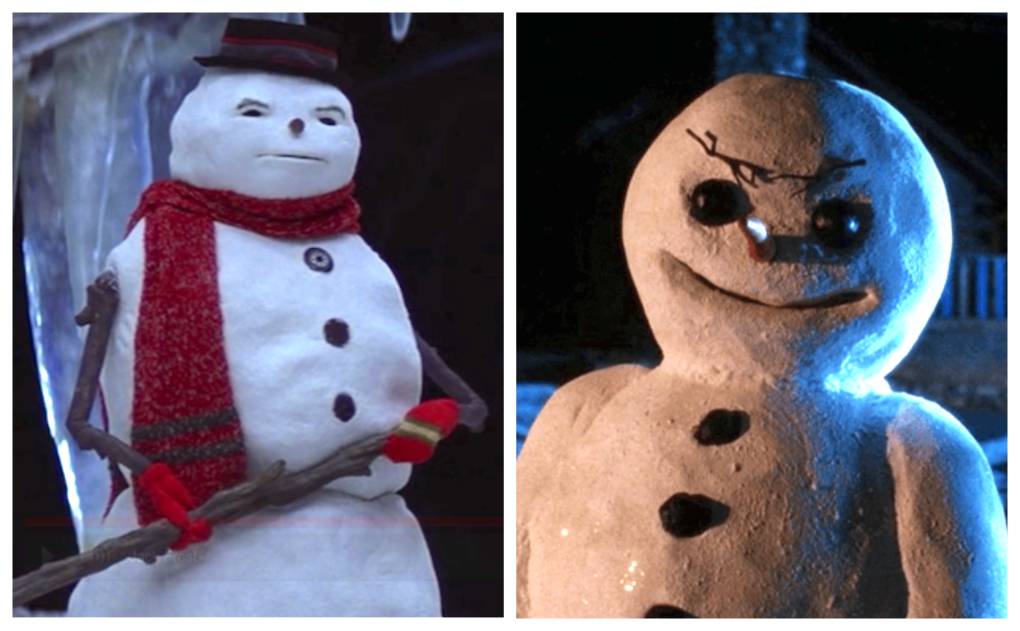
"caption": "It is remarkably difficult to tell which one is the evil Jack Frost here. Which tells you everything you need to know about why making a snowman a lead in your movie is a terrible, terrible idea.",
"description": null,
"title": "It is remarkably difficult to tell which one is the evil Jack Frost here. Which tells you everything you need to know about why making a snowman a lead in your movie is a terrible idea.",
"credit": "Warner Movies and Prism Pictures",
"status": "inherit",
"altTag": "Two images side-by-side. One is of a snowman wearing a tie and a hat. The other is a snowman with twig eyebrows.",
"isLoading": false,
"fetchFailed": false
}
},
"audioPlayerReducer": {
"postId": "stream_live",
"isPaused": true,
"isPlaying": false,
"pfsActive": false,
"pledgeModalIsOpen": true,
"playerDrawerIsOpen": false,
"liveAudioPlayStartedAt": 0,
"liveAudioPlayContext": ""
},
"authorsReducer": {
"byline_arts_13964075": {
"type": "authors",
"id": "byline_arts_13964075",
"meta": {
"override": true
},
"slug": "byline_arts_13964075",
"name": "Jocelyn Noveck, Associated Press",
"isLoading": false
},
"byline_arts_13962187": {
"type": "authors",
"id": "byline_arts_13962187",
"meta": {
"override": true
},
"slug": "byline_arts_13962187",
"name": "Lindsey Bahr, Associated Press",
"isLoading": false
},
"byline_arts_13961083": {
"type": "authors",
"id": "byline_arts_13961083",
"meta": {
"override": true
},
"slug": "byline_arts_13961083",
"name": "Jake Coyle, Associated Press",
"isLoading": false
},
"byline_arts_13960378": {
"type": "authors",
"id": "byline_arts_13960378",
"meta": {
"override": true
},
"slug": "byline_arts_13960378",
"name": "Lindsey Bahr, Associated Press",
"isLoading": false
},
"byline_arts_13959693": {
"type": "authors",
"id": "byline_arts_13959693",
"meta": {
"override": true
},
"slug": "byline_arts_13959693",
"name": "Gabino Iglesias",
"isLoading": false
},
"byline_arts_13958207": {
"type": "authors",
"id": "byline_arts_13958207",
"meta": {
"override": true
},
"slug": "byline_arts_13958207",
"name": "Rob Merrill, Associated Press",
"isLoading": false
},
"byline_arts_13955156": {
"type": "authors",
"id": "byline_arts_13955156",
"meta": {
"override": true
},
"slug": "byline_arts_13955156",
"name": "Donna Edwards, Associated Press",
"isLoading": false
},
"byline_arts_13954491": {
"type": "authors",
"id": "byline_arts_13954491",
"meta": {
"override": true
},
"slug": "byline_arts_13954491",
"name": "Lindsey Bahr, Associated Press",
"isLoading": false
},
"byline_arts_13939991": {
"type": "authors",
"id": "byline_arts_13939991",
"meta": {
"override": true
},
"slug": "byline_arts_13939991",
"name": "Associated Press",
"isLoading": false
},
"ralexandra": {
"type": "authors",
"id": "11242",
"meta": {
"index": "authors_1716337520",
"id": "11242",
"found": true
},
"name": "Rae Alexandra",
"firstName": "Rae",
"lastName": "Alexandra",
"slug": "ralexandra",
"email": "ralexandra@kqed.org",
"display_author_email": true,
"staff_mastheads": [],
"title": "Reporter/Producer",
"bio": "Rae Alexandra is a Reporter/Producer for KQED Arts & Culture, and the creator/author of the \u003ca href=\"https://www.kqed.org/arts/program/rebel-girls-from-bay-area-history\">Rebel Girls From Bay Area History\u003c/a> and \u003ca href=\"https://www.kqed.org/bizarrebayarea\">Bizarre Bay Area\u003c/a> series. Her debut book, \u003ca href=\"https://citylights.com/politics-current-events-history/unsung-heroines35-women-who-changed/\">Unsung Heroines: 35 Women Who Changed the Bay Area\u003c/a> was published by City Lights in March 2026. In 2023, Rae was awarded an SPJ Excellence in Journalism Award for Arts & Culture. Rae was born and raised in Wales and subsequently — even after two decades in Northern California — still uses phrases that regularly baffle her coworkers.",
"avatar": "https://secure.gravatar.com/avatar/edfee8176c80cc0a382b051190f5341997df378a934a5774dcb0977732dfd401?s=600&d=blank&r=g",
"twitter": null,
"bluesky": null,
"facebook": null,
"instagram": null,
"linkedin": null,
"sites": [
{
"site": "arts",
"roles": [
"subscriber"
]
},
{
"site": "news",
"roles": [
"subscriber"
]
},
{
"site": "pop",
"roles": [
"subscriber"
]
},
{
"site": "bayareabites",
"roles": [
"subscriber"
]
},
{
"site": "science",
"roles": [
"subscriber"
]
}
],
"headData": {
"title": "Rae Alexandra | KQED",
"description": "Reporter/Producer",
"ogImgSrc": "https://secure.gravatar.com/avatar/edfee8176c80cc0a382b051190f5341997df378a934a5774dcb0977732dfd401?s=600&d=blank&r=g",
"twImgSrc": "https://secure.gravatar.com/avatar/edfee8176c80cc0a382b051190f5341997df378a934a5774dcb0977732dfd401?s=600&d=blank&r=g"
},
"isLoading": false,
"link": "/author/ralexandra"
},
"achazaro": {
"type": "authors",
"id": "11748",
"meta": {
"index": "authors_1716337520",
"id": "11748",
"found": true
},
"name": "Alan Chazaro",
"firstName": "Alan",
"lastName": "Chazaro",
"slug": "achazaro",
"email": "agchazaro@gmail.com",
"display_author_email": true,
"staff_mastheads": [],
"title": "Food Writer and Reporter",
"bio": "Alan Chazaro is the author of \u003cem>This Is Not a Frank Ocean Cover Album\u003c/em> (Black Lawrence Press, 2019), \u003cem>Piñata Theory\u003c/em> (Black Lawrence Press, 2020), and \u003cem>Notes from the Eastern Span of the Bay Bridge\u003c/em> (Ghost City Press, 2021). He is a graduate of June Jordan’s Poetry for the People program at UC Berkeley and a former Lawrence Ferlinghetti Fellow at the University of San Francisco. He writes about sports, food, art, music, education, and culture while repping the Bay on \u003ca href=\"https://twitter.com/alan_chazaro\">Twitter\u003c/a> and \u003ca href=\"https://www.instagram.com/alan_chazaro/?hl=en\">Instagram\u003c/a> at @alan_chazaro.",
"avatar": "https://secure.gravatar.com/avatar/ea8b6dd970fc5c29e7a188e7d5861df7?s=600&d=blank&r=g",
"twitter": "alan_chazaro",
"facebook": null,
"instagram": null,
"linkedin": null,
"sites": [
{
"site": "arts",
"roles": [
"contributor"
]
},
{
"site": "news",
"roles": [
"editor"
]
}
],
"headData": {
"title": "Alan Chazaro | KQED",
"description": "Food Writer and Reporter",
"ogImgSrc": "https://secure.gravatar.com/avatar/ea8b6dd970fc5c29e7a188e7d5861df7?s=600&d=blank&r=g",
"twImgSrc": "https://secure.gravatar.com/avatar/ea8b6dd970fc5c29e7a188e7d5861df7?s=600&d=blank&r=g"
},
"isLoading": false,
"link": "/author/achazaro"
}
},
"pagesReducer": {
"arts_tag_horror": {
"type": "terms",
"id": "arts_5087",
"meta": {
"index": "terms_1716263798",
"site": "arts",
"id": "5087",
"score": 9.556763
},
"featImg": null,
"name": "horror",
"description": null,
"taxonomy": "tag",
"headData": {
"twImgId": null,
"twTitle": null,
"ogTitle": null,
"ogImgId": null,
"twDescription": null,
"description": null,
"title": "horror Archives | KQED Arts",
"ogDescription": null
},
"ttid": 5099,
"slug": "horror",
"isLoading": false,
"title": "horror",
"pageMeta": {
"site": "arts",
"WpPageTemplate": "page-topic-editorial",
"currentPage": 4
},
"blocks": [
{
"blockName": "kqed/post-list",
"attrs": {
"layout": "cardArticle2",
"query": "posts/arts?tag=horror",
"seeMore": false,
"paginated": true,
"page": 4
}
},
{
"blockName": "kqed/ad"
}
]
}
},
"pfsSessionReducer": {},
"postsReducer": {
"stream_live": {
"type": "live",
"id": "stream_live",
"audioUrl": "https://streams.kqed.org/kqedradio",
"title": "Live Stream",
"excerpt": "Live Stream information currently unavailable.",
"link": "/radio",
"featImg": "",
"label": {
"name": "KQED Live",
"link": "/"
}
},
"stream_kqedNewscast": {
"type": "posts",
"id": "stream_kqedNewscast",
"audioUrl": "https://www.kqed.org/.stream/anon/radio/RDnews/newscast.mp3?_=1",
"title": "KQED Newscast",
"featImg": "",
"label": {
"name": "88.5 FM",
"link": "/"
}
},
"arts_13964075": {
"type": "posts",
"id": "arts_13964075",
"meta": {
"index": "posts_1716263798",
"site": "arts",
"id": "13964075",
"score": null,
"sort": [
1726080605000
]
},
"guestAuthors": [],
"slug": "sinister-and-unhinged-james-mcavoy-is-the-host-from-hell-in-speak-no-evil",
"title": "Sinister and Unhinged, James McAvoy Is the Host From Hell in ‘Speak No Evil’",
"publishDate": 1726080605,
"format": "standard",
"headTitle": "Sinister and Unhinged, James McAvoy Is the Host From Hell in ‘Speak No Evil’ | KQED",
"labelTerm": {
"term": 140,
"site": "arts"
},
"content": "\u003cp>Quick. Has there ever been a horror film set in a country home with a decent cell signal?\u003c/p>\n\u003cp>Nope, and there’s no signal at Paddy and Ciara’s house, either, deep in the English countryside. Soon, that land line will be cut, too, but we’re getting ahead of ourselves.\u003c/p>\n\u003cp>[aside postid='arts_13904911']Paddy and Ciara are that fun-but-somewhat-odd British couple whom Louise and Ben, early in \u003cem>Speak No Evil\u003c/em>, meet on their idyllic Tuscan family holiday. Americans based in London, Louise and Ben are at loose ends, with both job and relationship issues. And so, when the new acquaintances write to invite them for a country weekend, they decide to go.\u003c/p>\n\u003cp>After all, how bad could it be?\u003c/p>\n\u003cp>Don’t answer that. There are many such moments in the first two-thirds of \u003cem>Speak No Evil\u003c/em>, a Hollywood remake of the 2022 Danish film, here starring a deeply menacing James McAvoy. Moments where Louise and Ben, out of mere politeness and social convention, act against their instincts, which tell them something is wrong — very wrong.\u003c/p>\n\u003cp>[ad fullwidth]\u003c/p>\n\u003cp>Director James Watkins and especially his excellent troupe of actors, adult and children alike, do a nice job of building the tension, slowly but surely. Until all bloody hell breaks loose, of course. And then, in its third act, \u003cem>Speak No Evil\u003c/em> becomes an entertaining but routine horror flick, with predictable results.\u003c/p>\n\u003cp>But for a while, it’s a way more intelligent film. And the jumpy moments work — I’ll confess to literally springing out of my seat when someone uneventfully turned on a power drill.\u003c/p>\n\u003cp>We begin in stunning Tuscany, where Louise (Mackenzie Davis, in the film’s most accessible and empathetic performance) and Ben (Scoot McNairy, all nerves and insecurity) are vacationing with 11-year-old daughter Agnes (Alix West Lefler). At the pool, they meet Paddy (McAvoy) and Ciara (Aisling Franciosi), a British couple with a disabled son, Ant, apparently born without a proper tongue.\u003c/p>\n\u003cp>One day in town, Paddy offers Agnes a ride on his Vespa. Louise is frightened to see her daughter disappear on the motorbike with a strange man, but it would be churlish to say no, right?\u003c/p>\n\u003cp>https://www.youtube.com/watch?v=FjzxI6uf8H8&t=47s\u003c/p>\n\u003cp>In briefly sketched backstories, we learn that Louise and Ben moved to London for Ben’s job, but he was soon downsized out. As for Paddy, all we know is he’s a doctor.\u003c/p>\n\u003cp>[aside postid='arts_13936524']At least, we think he is. The Americans, accepting the weekend invitation back in England, arrive at the secluded country home in dead of night. Immediately something feels off. The rooms are quirky but musty, the sheets stained. How can a doctor live like this, Louise asks? Ben brushes off her concern, quipping that even Downton Abbey is in terrible shape.\u003c/p>\n\u003cp>When the couple cooks dinner, Paddy proudly explains they’ve butchered their prize goose in their guests’ honor. He proffers Louise a forkful — even though he well knows she’s a vegetarian. Louise is disgusted but, politely, takes a bite.\u003c/p>\n\u003cp>Daughter Agnes, too, is freaked out. She’s being made to sleep on the floor next to Ant (Dan Hough, poignant in a role with no words.) And the next evening, when everyone dresses for a special dinner out, Paddy and Ciara inform Louise and Ben that the kids will stay home with a strange male babysitter. “We’ve had mannies before,” Ben tells Louise, unconvincingly.\u003c/p>\n\u003cp>Soon, though, we have the obligatory attempt to flee, followed by the “Oh no, we have to go back” moment — you know, where you’re yelling: “No!” But return the family does.\u003c/p>\n\u003cp>In perhaps the movie’s most effective scene, the two kids have put together a dance routine. The parents sit back proudly to watch, but repeatedly, Paddy stops the routine to admonish, brutally, his son, telling him he’s out of rhythm. McAvoy, a terrific actor who has made villainy part of his potent toolbox, is truly chilling as he becomes unhinged by his son’s inability to keep time.\u003c/p>\n\u003cp>[aside postid='arts_13962666']Then there’s the scene fans of \u003cem>The Shining\u003c/em> will recognize as the “Here’s Johnny,” Jack Nicholson moment. By then, everything’s gone off the rails, and it’s time for the blood to flow, predictably.\u003c/p>\n\u003cp>If there’s a moral here, it’s to trust those instincts when things feel wrong. But if movie characters did that, the horror genre would not exist.\u003c/p>\n\u003cp>Still, there’s some satisfaction to be had, especially in the creative use of household implements to inflict pain and death. Revenge, they say, is a dish best served cold — except in horror films, where it is served raw and bloody, with a side of toxic cleaning fluid.\u003c/p>\n\u003chr>\n\u003cp>\u003c/p>\n\u003cp>\u003cem>‘Speak No Evil’ is released nationwide on Sept. 13, 2024.\u003c/em>\u003c/p>\n\n",
"blocks": [],
"excerpt": "This thrilling remake of a Danish horror film is a stern reminder that politeness isn't always a good thing.",
"status": "publish",
"parent": 0,
"modified": 1726080605,
"stats": {
"hasAudio": false,
"hasVideo": true,
"hasChartOrMap": false,
"iframeSrcs": [],
"hasGoogleForm": false,
"hasGallery": false,
"hasHearkenModule": false,
"hasPolis": false,
"paragraphCount": 21,
"wordCount": 848
},
"headData": {
"title": "‘Speak No Evil’ Review: James McAvoy at His Sinister Best | KQED",
"description": "This thrilling remake of a Danish horror film is a stern reminder that politeness isn't always a good thing.",
"ogTitle": "Sinister and Unhinged, James McAvoy Is the Host From Hell in ‘Speak No Evil’",
"ogDescription": "",
"ogImgId": "",
"twTitle": "Sinister and Unhinged, James McAvoy Is the Host From Hell in ‘Speak No Evil’",
"twDescription": "",
"twImgId": "",
"socialTitle": "‘Speak No Evil’ Review: James McAvoy at His Sinister Best %%page%% %%sep%% KQED",
"schema": {
"@context": "https://schema.org",
"@type": "Article",
"headline": "Sinister and Unhinged, James McAvoy Is the Host From Hell in ‘Speak No Evil’",
"datePublished": "2024-09-11T11:50:05-07:00",
"dateModified": "2024-09-11T11:50:05-07:00",
"image": "https://cdn.kqed.org/wp-content/uploads/2020/02/KQED-OG-Image@1x.png"
}
},
"sticky": false,
"nprByline": "Jocelyn Noveck, Associated Press",
"nprStoryId": "kqed-13964075",
"templateType": "standard",
"featuredImageType": "standard",
"excludeFromSiteSearch": "Include",
"showOnAuthorArchivePages": "No",
"articleAge": "0",
"path": "/arts/13964075/sinister-and-unhinged-james-mcavoy-is-the-host-from-hell-in-speak-no-evil",
"audioTrackLength": null,
"parsedContent": [
{
"type": "contentString",
"content": "\u003cdiv class=\"post-body\">\u003cp>\u003cp>Quick. Has there ever been a horror film set in a country home with a decent cell signal?\u003c/p>\n\u003cp>Nope, and there’s no signal at Paddy and Ciara’s house, either, deep in the English countryside. Soon, that land line will be cut, too, but we’re getting ahead of ourselves.\u003c/p>\n\u003cp>\u003c/p>\u003c/div>",
"attributes": {
"named": {},
"numeric": []
}
},
{
"type": "component",
"content": "",
"name": "aside",
"attributes": {
"named": {
"postid": "arts_13904911",
"label": ""
},
"numeric": []
}
},
{
"type": "contentString",
"content": "\u003cdiv class=\"post-body\">\u003cp>Paddy and Ciara are that fun-but-somewhat-odd British couple whom Louise and Ben, early in \u003cem>Speak No Evil\u003c/em>, meet on their idyllic Tuscan family holiday. Americans based in London, Louise and Ben are at loose ends, with both job and relationship issues. And so, when the new acquaintances write to invite them for a country weekend, they decide to go.\u003c/p>\n\u003cp>After all, how bad could it be?\u003c/p>\n\u003cp>Don’t answer that. There are many such moments in the first two-thirds of \u003cem>Speak No Evil\u003c/em>, a Hollywood remake of the 2022 Danish film, here starring a deeply menacing James McAvoy. Moments where Louise and Ben, out of mere politeness and social convention, act against their instincts, which tell them something is wrong — very wrong.\u003c/p>\n\u003cp>\u003c/p>\u003c/div>",
"attributes": {
"named": {},
"numeric": []
}
},
{
"type": "component",
"content": "",
"name": "ad",
"attributes": {
"named": {
"label": "fullwidth"
},
"numeric": [
"fullwidth"
]
}
},
{
"type": "contentString",
"content": "\u003cdiv class=\"post-body\">\u003cp>\u003c/p>\n\u003cp>Director James Watkins and especially his excellent troupe of actors, adult and children alike, do a nice job of building the tension, slowly but surely. Until all bloody hell breaks loose, of course. And then, in its third act, \u003cem>Speak No Evil\u003c/em> becomes an entertaining but routine horror flick, with predictable results.\u003c/p>\n\u003cp>But for a while, it’s a way more intelligent film. And the jumpy moments work — I’ll confess to literally springing out of my seat when someone uneventfully turned on a power drill.\u003c/p>\n\u003cp>We begin in stunning Tuscany, where Louise (Mackenzie Davis, in the film’s most accessible and empathetic performance) and Ben (Scoot McNairy, all nerves and insecurity) are vacationing with 11-year-old daughter Agnes (Alix West Lefler). At the pool, they meet Paddy (McAvoy) and Ciara (Aisling Franciosi), a British couple with a disabled son, Ant, apparently born without a proper tongue.\u003c/p>\n\u003cp>One day in town, Paddy offers Agnes a ride on his Vespa. Louise is frightened to see her daughter disappear on the motorbike with a strange man, but it would be churlish to say no, right?\u003c/p>\u003c/p>\u003cp>\u003cspan class='utils-parseShortcode-shortcodes-__youtubeShortcode__embedYoutube'>\n \u003cspan class='utils-parseShortcode-shortcodes-__youtubeShortcode__embedYoutubeInside'>\n \u003ciframe\n loading='lazy'\n class='utils-parseShortcode-shortcodes-__youtubeShortcode__youtubePlayer'\n type='text/html'\n src='//www.youtube.com/embed/FjzxI6uf8H8'\n title='//www.youtube.com/embed/FjzxI6uf8H8'\n allowfullscreen='true'\n style='border:0;'>\u003c/iframe>\n \u003c/span>\n \u003c/span>\u003c/p>\u003cp>\u003cp>In briefly sketched backstories, we learn that Louise and Ben moved to London for Ben’s job, but he was soon downsized out. As for Paddy, all we know is he’s a doctor.\u003c/p>\n\u003cp>\u003c/p>\u003c/div>",
"attributes": {
"named": {},
"numeric": []
}
},
{
"type": "component",
"content": "",
"name": "aside",
"attributes": {
"named": {
"postid": "arts_13936524",
"label": ""
},
"numeric": []
}
},
{
"type": "contentString",
"content": "\u003cdiv class=\"post-body\">\u003cp>At least, we think he is. The Americans, accepting the weekend invitation back in England, arrive at the secluded country home in dead of night. Immediately something feels off. The rooms are quirky but musty, the sheets stained. How can a doctor live like this, Louise asks? Ben brushes off her concern, quipping that even Downton Abbey is in terrible shape.\u003c/p>\n\u003cp>When the couple cooks dinner, Paddy proudly explains they’ve butchered their prize goose in their guests’ honor. He proffers Louise a forkful — even though he well knows she’s a vegetarian. Louise is disgusted but, politely, takes a bite.\u003c/p>\n\u003cp>Daughter Agnes, too, is freaked out. She’s being made to sleep on the floor next to Ant (Dan Hough, poignant in a role with no words.) And the next evening, when everyone dresses for a special dinner out, Paddy and Ciara inform Louise and Ben that the kids will stay home with a strange male babysitter. “We’ve had mannies before,” Ben tells Louise, unconvincingly.\u003c/p>\n\u003cp>Soon, though, we have the obligatory attempt to flee, followed by the “Oh no, we have to go back” moment — you know, where you’re yelling: “No!” But return the family does.\u003c/p>\n\u003cp>In perhaps the movie’s most effective scene, the two kids have put together a dance routine. The parents sit back proudly to watch, but repeatedly, Paddy stops the routine to admonish, brutally, his son, telling him he’s out of rhythm. McAvoy, a terrific actor who has made villainy part of his potent toolbox, is truly chilling as he becomes unhinged by his son’s inability to keep time.\u003c/p>\n\u003cp>\u003c/p>\u003c/div>",
"attributes": {
"named": {},
"numeric": []
}
},
{
"type": "component",
"content": "",
"name": "aside",
"attributes": {
"named": {
"postid": "arts_13962666",
"label": ""
},
"numeric": []
}
},
{
"type": "contentString",
"content": "\u003cdiv class=\"post-body\">\u003cp>Then there’s the scene fans of \u003cem>The Shining\u003c/em> will recognize as the “Here’s Johnny,” Jack Nicholson moment. By then, everything’s gone off the rails, and it’s time for the blood to flow, predictably.\u003c/p>\n\u003cp>If there’s a moral here, it’s to trust those instincts when things feel wrong. But if movie characters did that, the horror genre would not exist.\u003c/p>\n\u003cp>Still, there’s some satisfaction to be had, especially in the creative use of household implements to inflict pain and death. Revenge, they say, is a dish best served cold — except in horror films, where it is served raw and bloody, with a side of toxic cleaning fluid.\u003c/p>\n\u003chr>\n\u003cp>\u003c/p>\n\u003cp>\u003cem>‘Speak No Evil’ is released nationwide on Sept. 13, 2024.\u003c/em>\u003c/p>\n\n\u003c/div>\u003c/p>",
"attributes": {
"named": {},
"numeric": []
}
}
],
"link": "/arts/13964075/sinister-and-unhinged-james-mcavoy-is-the-host-from-hell-in-speak-no-evil",
"authors": [
"byline_arts_13964075"
],
"programs": [
"arts_140"
],
"categories": [
"arts_1",
"arts_74",
"arts_75"
],
"tags": [
"arts_5087",
"arts_769",
"arts_585"
],
"featImg": "arts_13964080",
"label": "arts_140"
},
"arts_13962666": {
"type": "posts",
"id": "arts_13962666",
"meta": {
"index": "posts_1716263798",
"site": "arts",
"id": "13962666",
"score": null,
"sort": [
1723670742000
]
},
"guestAuthors": [],
"slug": "blink-twice-movie-review-zoe-kravitz-channing-tatum-naomi-ackie-alia-shawkat",
"title": "‘Blink Twice’ Is the New ‘Get Out,’ Geared Towards Women",
"publishDate": 1723670742,
"format": "standard",
"headTitle": "‘Blink Twice’ Is the New ‘Get Out,’ Geared Towards Women | KQED",
"labelTerm": {
"term": 140,
"site": "arts"
},
"content": "\u003cp>\u003cem>Blink Twice\u003c/em> is the kind of movie you want to rewatch the moment it’s over. Not because it’s perfect. Rather, because it’s so densely packed — with symbolism, with striking tableaus, with \u003cem>messages\u003c/em> — you want to make sure you didn’t miss anything. Truth is, there’s so much going on here, you probably did.\u003c/p>\n\u003cp>\u003cem>Blink Twice\u003c/em> begins with Frida (Naomi Ackie) and Jess (Alia Shawkat) sneaking into an important gala being held by controversial tech billionaire Slater King (Channing Tatum). Frida is harboring a crush on Slater after meeting him while waiting tables at the gala the previous year. Slater, it quickly becomes clear, seems to be interested in Frida. (\u003cem>Blink Twice\u003c/em> benefits from the fact that Ackie and Tatum absolutely crackle together in these early scenes.)\u003c/p>\n\u003cfigure id=\"attachment_13962672\" class=\"wp-caption aligncenter\" style=\"max-width: 1878px\">\u003cimg loading=\"lazy\" decoding=\"async\" class=\"size-full wp-image-13962672\" src=\"https://cdn.kqed.org/wp-content/uploads/sites/2/2024/08/blink-twice.png\" alt=\"A group of attractive people wearing formal evening wear gather on a grand set of outdoor steps and cheer.\" width=\"1878\" height=\"1194\" srcset=\"https://cdn.kqed.org/wp-content/uploads/sites/2/2024/08/blink-twice.png 1878w, https://cdn.kqed.org/wp-content/uploads/sites/2/2024/08/blink-twice-800x509.png 800w, https://cdn.kqed.org/wp-content/uploads/sites/2/2024/08/blink-twice-1020x648.png 1020w, https://cdn.kqed.org/wp-content/uploads/sites/2/2024/08/blink-twice-160x102.png 160w, https://cdn.kqed.org/wp-content/uploads/sites/2/2024/08/blink-twice-768x488.png 768w, https://cdn.kqed.org/wp-content/uploads/sites/2/2024/08/blink-twice-1536x977.png 1536w\" sizes=\"(max-width: 1878px) 100vw, 1878px\">\u003cfigcaption class=\"wp-caption-text\">The exceptional cast of ‘Blink Twice’ includes Channing Tatum, Naomi Ackie, Alia Shawkat, Adria Arjona and Christian Slater. \u003ccite>(MGM)\u003c/cite>\u003c/figcaption>\u003c/figure>\n\u003cp>After a night spent hanging with Slater’s entourage, Slater invites Frida and Jess to join a group escapade to Slater’s private island. The two, eager for an adventure, immediately take him up on the offer. They land the following morning at his beautiful resort/home, where all guests are provided with matching clothes and toiletries, and asked to surrender their phones.\u003c/p>\n\u003cp>[aside postid='arts_13962187']For days on end, an endless supply of champagne flows, many drugs are imbibed, ample pool time is enjoyed and lavish meals are served every night. Something, however, is clearly amiss on the island. The staff are strangely mute, except for one exceptionally creepy woman who is tasked with killing a specific breed of snake on the island. “Red robin,” she spits at Frida every time they cross paths. “Red robin!” It’s a warning of some kind, of course — one that immediately brings to mind the pained expressions of the house staff in \u003cem>Get Out\u003c/em>.\u003c/p>\n\u003cp>That’s not the only way in which \u003cem>Blink Twice\u003c/em> resembles \u003cem>Get Out\u003c/em>. This, too, is a thriller concerned with mind control, hierarchical power and being trapped by other people’s manipulations and machinations. Whereas the villains of \u003cem>Get Out\u003c/em> target their victims’ race, in \u003cem>Blink Twice\u003c/em> the target is gender. Despite ample buildup, when the truth of what happens nightly on the island is finally revealed, it is genuinely shocking. It also comes with a few visuals that — word of warning — will probably haunt female viewers for days.\u003c/p>\n\u003cp>[ad fullwidth]\u003c/p>\n\u003cp>https://www.youtube.com/watch?v=aMcmfonGWY4\u003c/p>\n\u003cp>\u003cem>Blink Twice\u003c/em> marks Zoë Kravitz’s directorial debut, and if the masterful and striking scene-building here is anything to go by, she has a solid future behind the camera. \u003cem>Blink Twice\u003c/em> is also blessed with an exceptional cast whose group chemistry is believable to the point of immersive. A surprising standout is Adria Arjona, who puts in a star-making turn as Sarah, a reality TV star whose island awakening feels viscerally real and propels the latter half of the movie. Christian Slater and Haley Joel Osment, playing pals of tech billionaire Slater, excellently portray slightly dorky men at different stages of mid-life crises. As for Tatum, he’s never been better.\u003c/p>\n\u003cp>If there are criticisms to be made of \u003cem>Blink Twice\u003c/em>, it’s that the movie packs too much into its run time. The attempts at comic relief often fall flat, and while the ending of the movie is satisfying as it’s unfurling, even a modicum of closer examination reveals some significant plot holes. That said, \u003cem>Blink Twice\u003c/em> has salient points to make about trauma, patriarchy, capitalism and female solidarity. It may be a little busy, but viewers are at zero risk of boredom.\u003c/p>\n\u003chr>\n\u003cp>\u003c/p>\n\u003cp>\u003cem>‘Blink Twice’ is released nationwide on Aug. 23, 2024. \u003c/em>\u003c/p>\n\n",
"blocks": [],
"excerpt": "Zoë Kravitz's directorial debut is an immersive horror film that explores themes of trauma, patriarchy, capitalism and feminism.",
"status": "publish",
"parent": 0,
"modified": 1723670742,
"stats": {
"hasAudio": false,
"hasVideo": true,
"hasChartOrMap": false,
"iframeSrcs": [],
"hasGoogleForm": false,
"hasGallery": false,
"hasHearkenModule": false,
"hasPolis": false,
"paragraphCount": 10,
"wordCount": 646
},
"headData": {
"title": "‘Blink Twice’ Review: A ‘Get Out’ Geared Towards Women | KQED",
"description": "Zoë Kravitz's directorial debut is an immersive horror film that explores themes of trauma, patriarchy, capitalism and feminism.",
"ogTitle": "",
"ogDescription": "",
"ogImgId": "",
"twTitle": "",
"twDescription": "",
"twImgId": "",
"socialTitle": "‘Blink Twice’ Review: A ‘Get Out’ Geared Towards Women %%page%% %%sep%% KQED",
"schema": {
"@context": "https://schema.org",
"@type": "Article",
"headline": "‘Blink Twice’ Is the New ‘Get Out,’ Geared Towards Women",
"datePublished": "2024-08-14T14:25:42-07:00",
"dateModified": "2024-08-14T14:25:42-07:00",
"image": "https://cdn.kqed.org/wp-content/uploads/2020/02/KQED-OG-Image@1x.png"
}
},
"sticky": false,
"nprStoryId": "kqed-13962666",
"templateType": "standard",
"featuredImageType": "standard",
"excludeFromSiteSearch": "Include",
"articleAge": "0",
"path": "/arts/13962666/blink-twice-movie-review-zoe-kravitz-channing-tatum-naomi-ackie-alia-shawkat",
"audioTrackLength": null,
"parsedContent": [
{
"type": "contentString",
"content": "\u003cdiv class=\"post-body\">\u003cp>\u003cp>\u003cem>Blink Twice\u003c/em> is the kind of movie you want to rewatch the moment it’s over. Not because it’s perfect. Rather, because it’s so densely packed — with symbolism, with striking tableaus, with \u003cem>messages\u003c/em> — you want to make sure you didn’t miss anything. Truth is, there’s so much going on here, you probably did.\u003c/p>\n\u003cp>\u003cem>Blink Twice\u003c/em> begins with Frida (Naomi Ackie) and Jess (Alia Shawkat) sneaking into an important gala being held by controversial tech billionaire Slater King (Channing Tatum). Frida is harboring a crush on Slater after meeting him while waiting tables at the gala the previous year. Slater, it quickly becomes clear, seems to be interested in Frida. (\u003cem>Blink Twice\u003c/em> benefits from the fact that Ackie and Tatum absolutely crackle together in these early scenes.)\u003c/p>\n\u003cfigure id=\"attachment_13962672\" class=\"wp-caption aligncenter\" style=\"max-width: 1878px\">\u003cimg loading=\"lazy\" decoding=\"async\" class=\"size-full wp-image-13962672\" src=\"https://cdn.kqed.org/wp-content/uploads/sites/2/2024/08/blink-twice.png\" alt=\"A group of attractive people wearing formal evening wear gather on a grand set of outdoor steps and cheer.\" width=\"1878\" height=\"1194\" srcset=\"https://cdn.kqed.org/wp-content/uploads/sites/2/2024/08/blink-twice.png 1878w, https://cdn.kqed.org/wp-content/uploads/sites/2/2024/08/blink-twice-800x509.png 800w, https://cdn.kqed.org/wp-content/uploads/sites/2/2024/08/blink-twice-1020x648.png 1020w, https://cdn.kqed.org/wp-content/uploads/sites/2/2024/08/blink-twice-160x102.png 160w, https://cdn.kqed.org/wp-content/uploads/sites/2/2024/08/blink-twice-768x488.png 768w, https://cdn.kqed.org/wp-content/uploads/sites/2/2024/08/blink-twice-1536x977.png 1536w\" sizes=\"(max-width: 1878px) 100vw, 1878px\">\u003cfigcaption class=\"wp-caption-text\">The exceptional cast of ‘Blink Twice’ includes Channing Tatum, Naomi Ackie, Alia Shawkat, Adria Arjona and Christian Slater. \u003ccite>(MGM)\u003c/cite>\u003c/figcaption>\u003c/figure>\n\u003cp>After a night spent hanging with Slater’s entourage, Slater invites Frida and Jess to join a group escapade to Slater’s private island. The two, eager for an adventure, immediately take him up on the offer. They land the following morning at his beautiful resort/home, where all guests are provided with matching clothes and toiletries, and asked to surrender their phones.\u003c/p>\n\u003cp>\u003c/p>\u003c/div>",
"attributes": {
"named": {},
"numeric": []
}
},
{
"type": "component",
"content": "",
"name": "aside",
"attributes": {
"named": {
"postid": "arts_13962187",
"label": ""
},
"numeric": []
}
},
{
"type": "contentString",
"content": "\u003cdiv class=\"post-body\">\u003cp>For days on end, an endless supply of champagne flows, many drugs are imbibed, ample pool time is enjoyed and lavish meals are served every night. Something, however, is clearly amiss on the island. The staff are strangely mute, except for one exceptionally creepy woman who is tasked with killing a specific breed of snake on the island. “Red robin,” she spits at Frida every time they cross paths. “Red robin!” It’s a warning of some kind, of course — one that immediately brings to mind the pained expressions of the house staff in \u003cem>Get Out\u003c/em>.\u003c/p>\n\u003cp>That’s not the only way in which \u003cem>Blink Twice\u003c/em> resembles \u003cem>Get Out\u003c/em>. This, too, is a thriller concerned with mind control, hierarchical power and being trapped by other people’s manipulations and machinations. Whereas the villains of \u003cem>Get Out\u003c/em> target their victims’ race, in \u003cem>Blink Twice\u003c/em> the target is gender. Despite ample buildup, when the truth of what happens nightly on the island is finally revealed, it is genuinely shocking. It also comes with a few visuals that — word of warning — will probably haunt female viewers for days.\u003c/p>\n\u003cp>\u003c/p>\u003c/div>",
"attributes": {
"named": {},
"numeric": []
}
},
{
"type": "component",
"content": "",
"name": "ad",
"attributes": {
"named": {
"label": "fullwidth"
},
"numeric": [
"fullwidth"
]
}
},
{
"type": "contentString",
"content": "\u003cdiv class=\"post-body\">\u003cp>\u003c/p>\u003c/p>\u003cp>\u003cspan class='utils-parseShortcode-shortcodes-__youtubeShortcode__embedYoutube'>\n \u003cspan class='utils-parseShortcode-shortcodes-__youtubeShortcode__embedYoutubeInside'>\n \u003ciframe\n loading='lazy'\n class='utils-parseShortcode-shortcodes-__youtubeShortcode__youtubePlayer'\n type='text/html'\n src='//www.youtube.com/embed/aMcmfonGWY4'\n title='//www.youtube.com/embed/aMcmfonGWY4'\n allowfullscreen='true'\n style='border:0;'>\u003c/iframe>\n \u003c/span>\n \u003c/span>\u003c/p>\u003cp>\u003cp>\u003cem>Blink Twice\u003c/em> marks Zoë Kravitz’s directorial debut, and if the masterful and striking scene-building here is anything to go by, she has a solid future behind the camera. \u003cem>Blink Twice\u003c/em> is also blessed with an exceptional cast whose group chemistry is believable to the point of immersive. A surprising standout is Adria Arjona, who puts in a star-making turn as Sarah, a reality TV star whose island awakening feels viscerally real and propels the latter half of the movie. Christian Slater and Haley Joel Osment, playing pals of tech billionaire Slater, excellently portray slightly dorky men at different stages of mid-life crises. As for Tatum, he’s never been better.\u003c/p>\n\u003cp>If there are criticisms to be made of \u003cem>Blink Twice\u003c/em>, it’s that the movie packs too much into its run time. The attempts at comic relief often fall flat, and while the ending of the movie is satisfying as it’s unfurling, even a modicum of closer examination reveals some significant plot holes. That said, \u003cem>Blink Twice\u003c/em> has salient points to make about trauma, patriarchy, capitalism and female solidarity. It may be a little busy, but viewers are at zero risk of boredom.\u003c/p>\n\u003chr>\n\u003cp>\u003c/p>\n\u003cp>\u003cem>‘Blink Twice’ is released nationwide on Aug. 23, 2024. \u003c/em>\u003c/p>\n\n\u003c/div>\u003c/p>",
"attributes": {
"named": {},
"numeric": []
}
}
],
"link": "/arts/13962666/blink-twice-movie-review-zoe-kravitz-channing-tatum-naomi-ackie-alia-shawkat",
"authors": [
"11242"
],
"programs": [
"arts_140"
],
"categories": [
"arts_1",
"arts_74",
"arts_75"
],
"tags": [
"arts_5087",
"arts_769",
"arts_585",
"arts_11718"
],
"featImg": "arts_13962671",
"label": "arts_140"
},
"arts_13962187": {
"type": "posts",
"id": "arts_13962187",
"meta": {
"index": "posts_1716263798",
"site": "arts",
"id": "13962187",
"score": null,
"sort": [
1723040135000
]
},
"guestAuthors": [],
"slug": "cuckoo-surreal-horror-movie-review-hunter-schafer-dan-stevens",
"title": "‘Cuckoo’ Is a Stylish Nightmare, With a Wonderfully Captivating Hunter Schafer",
"publishDate": 1723040135,
"format": "standard",
"headTitle": "‘Cuckoo’ Is a Stylish Nightmare, With a Wonderfully Captivating Hunter Schafer | KQED",
"labelTerm": {
"term": 140,
"site": "arts"
},
"content": "\u003cp>Let’s get one thing out of the way first: I did not entirely understand everything that happens in \u003cem>Cuckoo\u003c/em>, a new indie \u003ca href=\"https://www.kqed.org/pop/tag/horror\">horror\u003c/a> in theaters Friday.\u003c/p>\n\u003cp>This could be more of a me problem than with the storytelling, but there are a lot of strange things happening at this particular Alpine resort. It’s run by a bespectacled German hotelier named Herr König, played with an off-kilter menace by Dan Stevens.\u003c/p>\n\u003cp>[aside postid='arts_13962094']Some of the occurrences are underexplained, others underexplored. Herr König seems particularly worried about things that happen after dark, but not so much about guests wandering into the reception and general store in a wobbly stupor and vomit. Are they drunk? Sick? Should someone help them? All we get is: “It happens.” The hospital, too, is eerily empty. Sonic vibrations often ripple through the land, causing scenes to repeat until reaching a violent crescendo. And no one seems to listen to or care about anything 17-year-old Gretchen (\u003ca href=\"https://www.kqed.org/arts/13891785/hbos-euphoria-specials-offer-rare-depths-about-the-lives-of-teen-girls\">Hunter Schafer\u003c/a>) has to say, no matter how banged up she gets. The quick escalation of her injuries, and the widening disinterest of her father, approaches comedy.\u003c/p>\n\u003cp>Ambiguity can be wonderful for mystery and worldbuilding; It can also be frustrating. And more often than not, detailed explanations just make everything lamer. \u003cem>Cuckoo\u003c/em> dips into all of the above. Even so, it is undeniably fascinating, original and even occasionally fun, in a very twisted and deranged way in which laughter is your involuntary response to something horrifying. In her captivating lead performance, Schafer really goes through it, both physically and emotionally.\u003c/p>\n\u003cp>It also features Stevens sporting tiny, rimless glasses with sinisterly scandi-cool monochrome outfits, and a screaming ghoul with Hitchcockian glamour in a hooded trench and white-framed oval sunnies. Rarely is it a bad idea for a horror film to lean into style, and \u003cem>Cuckoo\u003c/em> fully commits.\u003c/p>\n\u003cp>[ad fullwidth]\u003c/p>\n\u003cp>https://www.youtube.com/watch?v=NuON7HH0UkQ\u003c/p>\n\u003cp>\u003cem>Cuckoo\u003c/em> is the brainchild of German director Tilman Singer, but credit also goes to Singer’s predecessors: The works of \u003ca href=\"https://www.kqed.org/pop/107430/david-lynch-has-found-a-new-way-to-terrify-us-post-twin-peaks\">David Lynch\u003c/a> and Dario Argento among them. Gretchen is a reluctant resident in the idyllic, modern home with her detached father (Martin Csokas), stepmother (Jessica Henwick) and mute half-sister Alma (Mila Lieu). She leaves increasingly desperate messages on her mother’s answering machine in America.\u003c/p>\n\u003cp>It’s certainly an exaggerated but apt portrait of a new family where the remnants of the old are treated like a nuisance. When Alma starts having seizures during the vibrations, which no one but Gretchen seems to remember or acknowledge, the parents’ attention turns fully to the young girl. They can barely be bothered to care about Gretchen’s miraculous survival of a horrifying car wreck; Alma is in the same hospital because of the episodes.\u003c/p>\n\u003cp>[aside postid='arts_13961732']As with many horrors, the big reveals were, for this critic, a little underwhelming — a strained attempt at a unifying theory for this weird place that doesn’t add much ultimately. And yet the emotional connection to Gretchen and her complex relationship with Alma does pay off in unexpected ways.\u003c/p>\n\u003cp>Also, Stevens deserves special acknowledgement for his contributions to \u003cem>Cuckoo\u003c/em>. This is a man who could have easily languished in blandly handsome leading man roles and instead is becoming one of our great character actors. He is regularly the best and most memorable part of whatever he’s in just by his sheer commitment to going there, whether it’s his Hawaiian shirt wearing titan veterinarian in \u003cem>Godzilla x Kong\u003c/em>, his Russian pop star in \u003cem>Eurovision\u003c/em> or any number of his deranged horror characters. He and Schafer, always a compelling presence, make \u003cem>Cuckoo\u003c/em> very much worth it. They exist far too comfortably in this dreamy, nightmarish world dreamt up by Singer that is well worth a watch.\u003c/p>\n\u003chr>\n\u003cp>\u003c/p>\n\u003cp>\u003cem>‘Cuckoo’ is released nationwide on Aug. 9, 2024.\u003c/em>\u003c/p>\n\n",
"blocks": [],
"excerpt": "‘Cuckoo’ is the brainchild of German director Tilman Singer, but leans into David Lynch and Dario Argento territory.",
"status": "publish",
"parent": 0,
"modified": 1723015090,
"stats": {
"hasAudio": false,
"hasVideo": true,
"hasChartOrMap": false,
"iframeSrcs": [],
"hasGoogleForm": false,
"hasGallery": false,
"hasHearkenModule": false,
"hasPolis": false,
"paragraphCount": 12,
"wordCount": 662
},
"headData": {
"title": "‘Cuckoo’ Is a Stylish Nightmare, With a Wonderfully Captivating Hunter Schafer | KQED",
"description": "‘Cuckoo’ is the brainchild of German director Tilman Singer, but leans into David Lynch and Dario Argento territory.",
"ogTitle": "",
"ogDescription": "",
"ogImgId": "",
"twTitle": "",
"twDescription": "",
"twImgId": "",
"schema": {
"@context": "https://schema.org",
"@type": "Article",
"headline": "‘Cuckoo’ Is a Stylish Nightmare, With a Wonderfully Captivating Hunter Schafer",
"datePublished": "2024-08-07T07:15:35-07:00",
"dateModified": "2024-08-07T00:18:10-07:00",
"image": "https://cdn.kqed.org/wp-content/uploads/2020/02/KQED-OG-Image@1x.png"
}
},
"sticky": false,
"nprByline": "Lindsey Bahr, Associated Press",
"templateType": "standard",
"featuredImageType": "standard",
"excludeFromSiteSearch": "Include",
"showOnAuthorArchivePages": "No",
"articleAge": "0",
"path": "/arts/13962187/cuckoo-surreal-horror-movie-review-hunter-schafer-dan-stevens",
"audioTrackLength": null,
"parsedContent": [
{
"type": "contentString",
"content": "\u003cdiv class=\"post-body\">\u003cp>\u003cp>Let’s get one thing out of the way first: I did not entirely understand everything that happens in \u003cem>Cuckoo\u003c/em>, a new indie \u003ca href=\"https://www.kqed.org/pop/tag/horror\">horror\u003c/a> in theaters Friday.\u003c/p>\n\u003cp>This could be more of a me problem than with the storytelling, but there are a lot of strange things happening at this particular Alpine resort. It’s run by a bespectacled German hotelier named Herr König, played with an off-kilter menace by Dan Stevens.\u003c/p>\n\u003cp>\u003c/p>\u003c/div>",
"attributes": {
"named": {},
"numeric": []
}
},
{
"type": "component",
"content": "",
"name": "aside",
"attributes": {
"named": {
"postid": "arts_13962094",
"label": ""
},
"numeric": []
}
},
{
"type": "contentString",
"content": "\u003cdiv class=\"post-body\">\u003cp>Some of the occurrences are underexplained, others underexplored. Herr König seems particularly worried about things that happen after dark, but not so much about guests wandering into the reception and general store in a wobbly stupor and vomit. Are they drunk? Sick? Should someone help them? All we get is: “It happens.” The hospital, too, is eerily empty. Sonic vibrations often ripple through the land, causing scenes to repeat until reaching a violent crescendo. And no one seems to listen to or care about anything 17-year-old Gretchen (\u003ca href=\"https://www.kqed.org/arts/13891785/hbos-euphoria-specials-offer-rare-depths-about-the-lives-of-teen-girls\">Hunter Schafer\u003c/a>) has to say, no matter how banged up she gets. The quick escalation of her injuries, and the widening disinterest of her father, approaches comedy.\u003c/p>\n\u003cp>Ambiguity can be wonderful for mystery and worldbuilding; It can also be frustrating. And more often than not, detailed explanations just make everything lamer. \u003cem>Cuckoo\u003c/em> dips into all of the above. Even so, it is undeniably fascinating, original and even occasionally fun, in a very twisted and deranged way in which laughter is your involuntary response to something horrifying. In her captivating lead performance, Schafer really goes through it, both physically and emotionally.\u003c/p>\n\u003cp>It also features Stevens sporting tiny, rimless glasses with sinisterly scandi-cool monochrome outfits, and a screaming ghoul with Hitchcockian glamour in a hooded trench and white-framed oval sunnies. Rarely is it a bad idea for a horror film to lean into style, and \u003cem>Cuckoo\u003c/em> fully commits.\u003c/p>\n\u003cp>\u003c/p>\u003c/div>",
"attributes": {
"named": {},
"numeric": []
}
},
{
"type": "component",
"content": "",
"name": "ad",
"attributes": {
"named": {
"label": "fullwidth"
},
"numeric": [
"fullwidth"
]
}
},
{
"type": "contentString",
"content": "\u003cdiv class=\"post-body\">\u003cp>\u003c/p>\u003c/p>\u003cp>\u003cspan class='utils-parseShortcode-shortcodes-__youtubeShortcode__embedYoutube'>\n \u003cspan class='utils-parseShortcode-shortcodes-__youtubeShortcode__embedYoutubeInside'>\n \u003ciframe\n loading='lazy'\n class='utils-parseShortcode-shortcodes-__youtubeShortcode__youtubePlayer'\n type='text/html'\n src='//www.youtube.com/embed/NuON7HH0UkQ'\n title='//www.youtube.com/embed/NuON7HH0UkQ'\n allowfullscreen='true'\n style='border:0;'>\u003c/iframe>\n \u003c/span>\n \u003c/span>\u003c/p>\u003cp>\u003cp>\u003cem>Cuckoo\u003c/em> is the brainchild of German director Tilman Singer, but credit also goes to Singer’s predecessors: The works of \u003ca href=\"https://www.kqed.org/pop/107430/david-lynch-has-found-a-new-way-to-terrify-us-post-twin-peaks\">David Lynch\u003c/a> and Dario Argento among them. Gretchen is a reluctant resident in the idyllic, modern home with her detached father (Martin Csokas), stepmother (Jessica Henwick) and mute half-sister Alma (Mila Lieu). She leaves increasingly desperate messages on her mother’s answering machine in America.\u003c/p>\n\u003cp>It’s certainly an exaggerated but apt portrait of a new family where the remnants of the old are treated like a nuisance. When Alma starts having seizures during the vibrations, which no one but Gretchen seems to remember or acknowledge, the parents’ attention turns fully to the young girl. They can barely be bothered to care about Gretchen’s miraculous survival of a horrifying car wreck; Alma is in the same hospital because of the episodes.\u003c/p>\n\u003cp>\u003c/p>\u003c/div>",
"attributes": {
"named": {},
"numeric": []
}
},
{
"type": "component",
"content": "",
"name": "aside",
"attributes": {
"named": {
"postid": "arts_13961732",
"label": ""
},
"numeric": []
}
},
{
"type": "contentString",
"content": "\u003cdiv class=\"post-body\">\u003cp>As with many horrors, the big reveals were, for this critic, a little underwhelming — a strained attempt at a unifying theory for this weird place that doesn’t add much ultimately. And yet the emotional connection to Gretchen and her complex relationship with Alma does pay off in unexpected ways.\u003c/p>\n\u003cp>Also, Stevens deserves special acknowledgement for his contributions to \u003cem>Cuckoo\u003c/em>. This is a man who could have easily languished in blandly handsome leading man roles and instead is becoming one of our great character actors. He is regularly the best and most memorable part of whatever he’s in just by his sheer commitment to going there, whether it’s his Hawaiian shirt wearing titan veterinarian in \u003cem>Godzilla x Kong\u003c/em>, his Russian pop star in \u003cem>Eurovision\u003c/em> or any number of his deranged horror characters. He and Schafer, always a compelling presence, make \u003cem>Cuckoo\u003c/em> very much worth it. They exist far too comfortably in this dreamy, nightmarish world dreamt up by Singer that is well worth a watch.\u003c/p>\n\u003chr>\n\u003cp>\u003c/p>\n\u003cp>\u003cem>‘Cuckoo’ is released nationwide on Aug. 9, 2024.\u003c/em>\u003c/p>\n\n\u003c/div>\u003c/p>",
"attributes": {
"named": {},
"numeric": []
}
}
],
"link": "/arts/13962187/cuckoo-surreal-horror-movie-review-hunter-schafer-dan-stevens",
"authors": [
"byline_arts_13962187"
],
"programs": [
"arts_140"
],
"categories": [
"arts_1",
"arts_74",
"arts_75"
],
"tags": [
"arts_5087",
"arts_769",
"arts_585"
],
"featImg": "arts_13962188",
"label": "arts_140"
},
"arts_13961083": {
"type": "posts",
"id": "arts_13961083",
"meta": {
"index": "posts_1716263798",
"site": "arts",
"id": "13961083",
"score": null,
"sort": [
1720793836000
]
},
"guestAuthors": [],
"slug": "in-the-chilling-thriller-longlegs-maika-monroe-cuts-like-a-knife",
"title": "In the Chilling Thriller ‘Longlegs,’ Maika Monroe Cuts Like a Knife",
"publishDate": 1720793836,
"format": "standard",
"headTitle": "In the Chilling Thriller ‘Longlegs,’ Maika Monroe Cuts Like a Knife | KQED",
"labelTerm": {
"term": 140,
"site": "arts"
},
"content": "\u003cp>A chilling, half-remembered encounter from childhood looms over \u003cem>Longlegs\u003c/em>, Osgood Perkins’ stylishly composed 1990s-set horror film about a young FBI agent (Maika Monroe) whose past seems to hold a key to a decades-long serial killer suburban spree.\u003c/p>\n\u003cp>[aside postid='arts_13960378']In the opening flashback scene of \u003cem>Longlegs\u003c/em>, a young girl walks out of her house to meet a stranger on her snow-covered yard. We never see more than the bottom half of his face, but the sense of creepiness is overwhelming. The image, with a scream, cuts out before \u003cem>Longlegs\u003c/em> properly gets underway.\u003c/p>\n\u003cp>Twenty five years later, that girl (Monroe’s Lee Harker) is now grown and brought into the investigation. She’s preternaturally good at decoding the serial killer’s choreographed targets, but her psychological astuteness has a blind spot. In Osgood’s gripping if trite horror film about an elusive boogeyman, the most unnerving mystery is the foggy, fractured nature of childhood memory.\u003c/p>\n\u003cp>https://www.youtube.com/watch?v=OG7wOTE8NhE\u003c/p>\n\u003cp>\u003cem>Longlegs\u003c/em>, is arriving on its own wave of mystery thanks to a lengthy, enigmatic marketing campaign. Is the buzz warranted? That may depend on your tolerance for a very serious procedural that’s extremely adept at building an ominous slow burn yet nevertheless leads to a pile-up of horror tropes: satanic worship, scary dolls and an outlandish Nicolas Cage.\u003c/p>\n\u003cp>[ad fullwidth]\u003c/p>\n\u003cp>It’s a credit to the harrowingly spell-binding first half of\u003cem> Longlegs\u003c/em> — and to Monroe — that the film’s third act disappoints. After that prologue — presented in a boxy ratio with rounded edges, as if seen through an overhead projector — the screen widens. Harker, a terse, solitary detective, is part of a large task force to track down the killer behind the deaths of 10 families over the course of 30 years. Sent to knock on doors, she gazes up at a second floor window and knows immediately. “It’s that one,” she tells a partner (Dakota Daulby) whose lack of faith in her intuition quickly proves regrettable.\u003c/p>\n\u003cp>[aside postid='arts_13959693']Harker is brought in for a psych evaluation that demonstrates her strange clairvoyance. Agent Carter (Blair Underwood) gives her all the accumulated evidence, which suggests the same killer — every murder scene has a coded letter left signed by Longlegs — but at the time points to no intruder within the homes of the murdered. Carter is reminded of Charles Manson. “Manson had accomplices,” Harker reminds him. Also troubling: all of the victims have a daughter with a birthday of the 14th of the month, a trait Harker, naturally, shares.\u003c/p>\n\u003cp>Families are prominent in the narrative, too. Harker occasionally visits her shut-in mother (Alicia Witt) and their brief interactions suggest a knowingness with the cruelty of the world. One time on the phone, Harker tells her she’s been busy with “work stuff.”\u003c/p>\n\u003cp>“Nasty stuff?” the mom asks. “Yep,” she answers.\u003c/p>\n\u003cp>Scenes of dread follow as they hunt the killer in rural Oregon. They frequent the usual spots: an old crime scene, a locked up barn, an old witness in a psychiatric hospital. Longlegs (Cage) is skulking about, too, and leaves a letter for Harker. We see him fleetingly at first. He’s a bleached, pale figure who, with long white hair, looks increasingly clownish the nearer we get to him. If Manson belonged to the ’60s, Longlegs, with his Bob Dylan Rolling Thunder Revue white face, seems a product more in the ’70s. T.Rex opens and closes the film and the album cover of Lou Reed’s \u003cem>Transformer\u003c/em> sits above his mirror.\u003c/p>\n\u003cp>[aside postid='arts_13872372']Perkins (\u003ca href=\"https://www.kqed.org/arts/13872372/before-gretel-hansel-exploring-the-real-life-history-of-the-fairytale\">\u003cem>Gretel & Hansel\u003c/em>\u003c/a>), is the filmmaking son of Anthony Perkins, who famously played one of the movies’ most unsettling characters in Norman Bates of \u003cem>Psycho\u003c/em>. The roots of \u003cem>Longlegs\u003c/em>, which Perkins also wrote, have personal connections for the director, Perkins has said, about his own upbringing and his father’s complicated private life. But something deeper struggles to pierce \u003cem>Longlegs\u003c/em>. Its sense of horror seems to come mainly from little besides other movies. \u003cem>Se7en\u003c/em> and \u003cem>The Silence of the Lambs\u003c/em> are clear touchstones. Longlegs ultimately feels like more of a stock boogeyman and big-screen vessel for Cage.\u003c/p>\n\u003cp>In any case, this is Monroe’s movie. Her compelling screen presence in movies like \u003cem>It Follows\u003c/em> and \u003cem>Watcher\u003c/em> has earned her the title of today’s preeminent “Scream Queen.” But she’s much more than a single-genre talent. Again and again in \u003cem>Longlegs\u003c/em>, Monroe’s Harker confronts a singularly disturbing scenario and walks right in. It’s not that she isn’t nervous; her heavy breathing is part of the artful sound design by Eugenio Battaglia. Monroe, steely and strong, cuts like a knife through this almost cartoonishly severe film. Nasty stuff? Yep.\u003c/p>\n\u003chr>\n\u003cp>\u003c/p>\n\u003cp>\u003cem>‘Longlegs’ is released nationwide on July 11, 2024.\u003c/em>\u003c/p>\n\n",
"blocks": [],
"excerpt": "Osgood Perkins’ harrowingly spell-binding serial killer movie lets Nicolas Cage run wild as an elusive boogeyman.",
"status": "publish",
"parent": 0,
"modified": 1720754302,
"stats": {
"hasAudio": false,
"hasVideo": true,
"hasChartOrMap": false,
"iframeSrcs": [],
"hasGoogleForm": false,
"hasGallery": false,
"hasHearkenModule": false,
"hasPolis": false,
"paragraphCount": 14,
"wordCount": 840
},
"headData": {
"title": "‘Longlegs’ Review: Maika Monroe Stuns in New Serial Killer Flick | KQED",
"description": "Osgood Perkins’ harrowingly spell-binding serial killer movie lets Nicolas Cage run wild as an elusive boogeyman.",
"ogTitle": "In the Chilling Thriller ‘Longlegs,’ Maika Monroe Cuts Like a Knife",
"ogDescription": "",
"ogImgId": "",
"twTitle": "In the Chilling Thriller ‘Longlegs,’ Maika Monroe Cuts Like a Knife",
"twDescription": "",
"twImgId": "",
"socialTitle": "‘Longlegs’ Review: Maika Monroe Stuns in New Serial Killer Flick %%page%% %%sep%% KQED",
"schema": {
"@context": "https://schema.org",
"@type": "Article",
"headline": "In the Chilling Thriller ‘Longlegs,’ Maika Monroe Cuts Like a Knife",
"datePublished": "2024-07-12T07:17:16-07:00",
"dateModified": "2024-07-11T20:18:22-07:00",
"image": "https://cdn.kqed.org/wp-content/uploads/2020/02/KQED-OG-Image@1x.png"
}
},
"sticky": false,
"nprByline": "Jake Coyle, Associated Press",
"templateType": "standard",
"featuredImageType": "standard",
"excludeFromSiteSearch": "Include",
"showOnAuthorArchivePages": "No",
"articleAge": "0",
"path": "/arts/13961083/in-the-chilling-thriller-longlegs-maika-monroe-cuts-like-a-knife",
"audioTrackLength": null,
"parsedContent": [
{
"type": "contentString",
"content": "\u003cdiv class=\"post-body\">\u003cp>\u003cp>A chilling, half-remembered encounter from childhood looms over \u003cem>Longlegs\u003c/em>, Osgood Perkins’ stylishly composed 1990s-set horror film about a young FBI agent (Maika Monroe) whose past seems to hold a key to a decades-long serial killer suburban spree.\u003c/p>\n\u003cp>\u003c/p>\u003c/div>",
"attributes": {
"named": {},
"numeric": []
}
},
{
"type": "component",
"content": "",
"name": "aside",
"attributes": {
"named": {
"postid": "arts_13960378",
"label": ""
},
"numeric": []
}
},
{
"type": "contentString",
"content": "\u003cdiv class=\"post-body\">\u003cp>In the opening flashback scene of \u003cem>Longlegs\u003c/em>, a young girl walks out of her house to meet a stranger on her snow-covered yard. We never see more than the bottom half of his face, but the sense of creepiness is overwhelming. The image, with a scream, cuts out before \u003cem>Longlegs\u003c/em> properly gets underway.\u003c/p>\n\u003cp>Twenty five years later, that girl (Monroe’s Lee Harker) is now grown and brought into the investigation. She’s preternaturally good at decoding the serial killer’s choreographed targets, but her psychological astuteness has a blind spot. In Osgood’s gripping if trite horror film about an elusive boogeyman, the most unnerving mystery is the foggy, fractured nature of childhood memory.\u003c/p>\u003c/p>\u003cp>\u003cspan class='utils-parseShortcode-shortcodes-__youtubeShortcode__embedYoutube'>\n \u003cspan class='utils-parseShortcode-shortcodes-__youtubeShortcode__embedYoutubeInside'>\n \u003ciframe\n loading='lazy'\n class='utils-parseShortcode-shortcodes-__youtubeShortcode__youtubePlayer'\n type='text/html'\n src='//www.youtube.com/embed/OG7wOTE8NhE'\n title='//www.youtube.com/embed/OG7wOTE8NhE'\n allowfullscreen='true'\n style='border:0;'>\u003c/iframe>\n \u003c/span>\n \u003c/span>\u003c/p>\u003cp>\u003cp>\u003cem>Longlegs\u003c/em>, is arriving on its own wave of mystery thanks to a lengthy, enigmatic marketing campaign. Is the buzz warranted? That may depend on your tolerance for a very serious procedural that’s extremely adept at building an ominous slow burn yet nevertheless leads to a pile-up of horror tropes: satanic worship, scary dolls and an outlandish Nicolas Cage.\u003c/p>\n\u003cp>\u003c/p>\u003c/div>",
"attributes": {
"named": {},
"numeric": []
}
},
{
"type": "component",
"content": "",
"name": "ad",
"attributes": {
"named": {
"label": "fullwidth"
},
"numeric": [
"fullwidth"
]
}
},
{
"type": "contentString",
"content": "\u003cdiv class=\"post-body\">\u003cp>\u003c/p>\n\u003cp>It’s a credit to the harrowingly spell-binding first half of\u003cem> Longlegs\u003c/em> — and to Monroe — that the film’s third act disappoints. After that prologue — presented in a boxy ratio with rounded edges, as if seen through an overhead projector — the screen widens. Harker, a terse, solitary detective, is part of a large task force to track down the killer behind the deaths of 10 families over the course of 30 years. Sent to knock on doors, she gazes up at a second floor window and knows immediately. “It’s that one,” she tells a partner (Dakota Daulby) whose lack of faith in her intuition quickly proves regrettable.\u003c/p>\n\u003cp>\u003c/p>\u003c/div>",
"attributes": {
"named": {},
"numeric": []
}
},
{
"type": "component",
"content": "",
"name": "aside",
"attributes": {
"named": {
"postid": "arts_13959693",
"label": ""
},
"numeric": []
}
},
{
"type": "contentString",
"content": "\u003cdiv class=\"post-body\">\u003cp>Harker is brought in for a psych evaluation that demonstrates her strange clairvoyance. Agent Carter (Blair Underwood) gives her all the accumulated evidence, which suggests the same killer — every murder scene has a coded letter left signed by Longlegs — but at the time points to no intruder within the homes of the murdered. Carter is reminded of Charles Manson. “Manson had accomplices,” Harker reminds him. Also troubling: all of the victims have a daughter with a birthday of the 14th of the month, a trait Harker, naturally, shares.\u003c/p>\n\u003cp>Families are prominent in the narrative, too. Harker occasionally visits her shut-in mother (Alicia Witt) and their brief interactions suggest a knowingness with the cruelty of the world. One time on the phone, Harker tells her she’s been busy with “work stuff.”\u003c/p>\n\u003cp>“Nasty stuff?” the mom asks. “Yep,” she answers.\u003c/p>\n\u003cp>Scenes of dread follow as they hunt the killer in rural Oregon. They frequent the usual spots: an old crime scene, a locked up barn, an old witness in a psychiatric hospital. Longlegs (Cage) is skulking about, too, and leaves a letter for Harker. We see him fleetingly at first. He’s a bleached, pale figure who, with long white hair, looks increasingly clownish the nearer we get to him. If Manson belonged to the ’60s, Longlegs, with his Bob Dylan Rolling Thunder Revue white face, seems a product more in the ’70s. T.Rex opens and closes the film and the album cover of Lou Reed’s \u003cem>Transformer\u003c/em> sits above his mirror.\u003c/p>\n\u003cp>\u003c/p>\u003c/div>",
"attributes": {
"named": {},
"numeric": []
}
},
{
"type": "component",
"content": "",
"name": "aside",
"attributes": {
"named": {
"postid": "arts_13872372",
"label": ""
},
"numeric": []
}
},
{
"type": "contentString",
"content": "\u003cdiv class=\"post-body\">\u003cp>Perkins (\u003ca href=\"https://www.kqed.org/arts/13872372/before-gretel-hansel-exploring-the-real-life-history-of-the-fairytale\">\u003cem>Gretel & Hansel\u003c/em>\u003c/a>), is the filmmaking son of Anthony Perkins, who famously played one of the movies’ most unsettling characters in Norman Bates of \u003cem>Psycho\u003c/em>. The roots of \u003cem>Longlegs\u003c/em>, which Perkins also wrote, have personal connections for the director, Perkins has said, about his own upbringing and his father’s complicated private life. But something deeper struggles to pierce \u003cem>Longlegs\u003c/em>. Its sense of horror seems to come mainly from little besides other movies. \u003cem>Se7en\u003c/em> and \u003cem>The Silence of the Lambs\u003c/em> are clear touchstones. Longlegs ultimately feels like more of a stock boogeyman and big-screen vessel for Cage.\u003c/p>\n\u003cp>In any case, this is Monroe’s movie. Her compelling screen presence in movies like \u003cem>It Follows\u003c/em> and \u003cem>Watcher\u003c/em> has earned her the title of today’s preeminent “Scream Queen.” But she’s much more than a single-genre talent. Again and again in \u003cem>Longlegs\u003c/em>, Monroe’s Harker confronts a singularly disturbing scenario and walks right in. It’s not that she isn’t nervous; her heavy breathing is part of the artful sound design by Eugenio Battaglia. Monroe, steely and strong, cuts like a knife through this almost cartoonishly severe film. Nasty stuff? Yep.\u003c/p>\n\u003chr>\n\u003cp>\u003c/p>\n\u003cp>\u003cem>‘Longlegs’ is released nationwide on July 11, 2024.\u003c/em>\u003c/p>\n\n\u003c/div>\u003c/p>",
"attributes": {
"named": {},
"numeric": []
}
}
],
"link": "/arts/13961083/in-the-chilling-thriller-longlegs-maika-monroe-cuts-like-a-knife",
"authors": [
"byline_arts_13961083"
],
"programs": [
"arts_140"
],
"categories": [
"arts_1",
"arts_74",
"arts_75"
],
"tags": [
"arts_5087",
"arts_769",
"arts_585",
"arts_11718"
],
"featImg": "arts_13961084",
"label": "arts_140"
},
"arts_13960378": {
"type": "posts",
"id": "arts_13960378",
"meta": {
"index": "posts_1716263798",
"site": "arts",
"id": "13960378",
"score": null,
"sort": [
1719509374000
]
},
"guestAuthors": [],
"slug": "a-quiet-place-day-one-movie-review-prequel-lupita-nyongo",
"title": "Shhhh... the Novelty is Gone in ‘A Quiet Place’ Prequel",
"publishDate": 1719509374,
"format": "standard",
"headTitle": "Shhhh… the Novelty is Gone in ‘A Quiet Place’ Prequel | KQED",
"labelTerm": {
"site": "arts"
},
"content": "\u003cp>Not all successful movies need to be franchises. Most really shouldn’t be. That’s not how Hollywood works, of course, but it’s worth repeating. Because in the case of \u003cem>A Quiet Place\u003c/em>, now on its third movie with a prequel about a few new characters in New York on the first day of the invasion, the thrill of that fresh idea has waned. And when that happens, what are we left with?\u003c/p>\n\u003cp>[aside postid='arts_13960151']There were certainly many questions about the how and the why of the killing monsters with hypersensitive hearing. The internet is full of logic questions and holes if you’re curious. But the beauty of \u003cem>A Quiet Place\u003c/em> was the silly mystery. We were just dropped into this apocalyptic world with a very simple but challenging rule: If you make a noise, you die. Got it. Scarcity of information worked in its favor as we got to know this family just trying to survive (and deliver a baby quietly!) Its sequel worked mostly because it smartly chose to continue that same journey, picking up exactly where we had left off.\u003c/p>\n\u003cp>\u003cem>A Quiet Place: Day One\u003c/em>, directed and co-written by Michael Sarnoski (sharing a credit with John Krasinski), shifts focus from the Abbott family to a new character, Sam (Lupita Nyong’o), who is dying of cancer. She is bitter, sarcastic and mean. And taking the “save the cat” idea to its literal extreme, Sam does have one friend: A cat named Frodo. This seems like an unnecessary crutch, simply because if anyone is going to make a hostile character a compelling hero, it’s Nyong’o. Both she and Joseph Quinn, playing a British law student named Eric, have deeply expressive, saucer-sized eyes that make dialogue almost unnecessary. But without a newborn in the mix, the cat adds an extra element of chaos by surviving for more than 3 minutes.\u003c/p>\n\u003cp>https://www.youtube.com/watch?v=E-WIb4ATfT8\u003c/p>\n\u003cp>There is something compelling about the idea of what a terminal person might do on the first day of the apocalypse, and Nyong’o is powerful and heartbreaking on this quest for the perfect slice. There’s a beauty in the simplicity and insanity of it. What Eric is doing there, however, is anyone’s guess. He’s a little too underwritten to make much sense of.\u003c/p>\n\u003cp>[ad fullwidth]\u003c/p>\n\u003cp>[aside postid='arts_13960332']Also, there are competing forces at play, with \u003cem>Day One\u003c/em> wanting to be both a meditative character study and a thrilling horror movie that gives us more monsters, more carnage, more jump scares and unsettling memories of 9/11. They never quite mesh, and several choices make it seem like the filmmakers were just trying to shoehorn in excitement without much justification. One of the most exciting sequences that captures the terror of Krasinski’s films is when Eric goes to a pharmacy to try to get meds for Sam. It’s simple, efficient and full of dread and tension because it’s a necessary risk, unlike many of the bigger set pieces that feel more strained.\u003c/p>\n\u003cp>Ultimately \u003cem>Day One\u003c/em> could have been set around any old apocalypse. Tethering it to the rules of \u003cem>A Quiet Place\u003c/em>, a smart premise whose novelty is impossible to recreate let alone build a world upon, just holds it back.\u003c/p>\n\u003chr>\n\u003cp>\u003c/p>\n\u003cp>\u003cem>‘A Quiet Place: Day One’ is released nationwide on June 27, 2024.\u003c/em>\u003c/p>\n\n",
"blocks": [],
"excerpt": "‘Day One’ is an unnecessary movie about a few new characters in New York on the first day of the invasion. ",
"status": "publish",
"parent": 0,
"modified": 1719509374,
"stats": {
"hasAudio": false,
"hasVideo": true,
"hasChartOrMap": false,
"iframeSrcs": [],
"hasGoogleForm": false,
"hasGallery": false,
"hasHearkenModule": false,
"hasPolis": false,
"paragraphCount": 9,
"wordCount": 585
},
"headData": {
"title": "Movie Review: ‘A Quiet Place: Day One’ Lets Down the Franchise | KQED",
"description": "‘Day One’ is an unnecessary movie about a few new characters in New York on the first day of the invasion. ",
"ogTitle": "Shhhh... the Novelty is Gone in ‘A Quiet Place’ Prequel",
"ogDescription": "",
"ogImgId": "",
"twTitle": "Shhhh... the Novelty is Gone in ‘A Quiet Place’ Prequel",
"twDescription": "",
"twImgId": "",
"socialTitle": "Movie Review: ‘A Quiet Place: Day One’ Lets Down the Franchise %%page%% %%sep%% KQED",
"schema": {
"@context": "https://schema.org",
"@type": "Article",
"headline": "Shhhh... the Novelty is Gone in ‘A Quiet Place’ Prequel",
"datePublished": "2024-06-27T10:29:34-07:00",
"dateModified": "2024-06-27T10:29:34-07:00",
"image": "https://cdn.kqed.org/wp-content/uploads/2020/02/KQED-OG-Image@1x.png"
}
},
"sticky": false,
"nprByline": "Lindsey Bahr, Associated Press",
"nprStoryId": "kqed-13960378",
"templateType": "standard",
"featuredImageType": "standard",
"excludeFromSiteSearch": "Include",
"showOnAuthorArchivePages": "No",
"articleAge": "0",
"path": "/arts/13960378/a-quiet-place-day-one-movie-review-prequel-lupita-nyongo",
"audioTrackLength": null,
"parsedContent": [
{
"type": "contentString",
"content": "\u003cdiv class=\"post-body\">\u003cp>\u003cp>Not all successful movies need to be franchises. Most really shouldn’t be. That’s not how Hollywood works, of course, but it’s worth repeating. Because in the case of \u003cem>A Quiet Place\u003c/em>, now on its third movie with a prequel about a few new characters in New York on the first day of the invasion, the thrill of that fresh idea has waned. And when that happens, what are we left with?\u003c/p>\n\u003cp>\u003c/p>\u003c/div>",
"attributes": {
"named": {},
"numeric": []
}
},
{
"type": "component",
"content": "",
"name": "aside",
"attributes": {
"named": {
"postid": "arts_13960151",
"label": ""
},
"numeric": []
}
},
{
"type": "contentString",
"content": "\u003cdiv class=\"post-body\">\u003cp>There were certainly many questions about the how and the why of the killing monsters with hypersensitive hearing. The internet is full of logic questions and holes if you’re curious. But the beauty of \u003cem>A Quiet Place\u003c/em> was the silly mystery. We were just dropped into this apocalyptic world with a very simple but challenging rule: If you make a noise, you die. Got it. Scarcity of information worked in its favor as we got to know this family just trying to survive (and deliver a baby quietly!) Its sequel worked mostly because it smartly chose to continue that same journey, picking up exactly where we had left off.\u003c/p>\n\u003cp>\u003cem>A Quiet Place: Day One\u003c/em>, directed and co-written by Michael Sarnoski (sharing a credit with John Krasinski), shifts focus from the Abbott family to a new character, Sam (Lupita Nyong’o), who is dying of cancer. She is bitter, sarcastic and mean. And taking the “save the cat” idea to its literal extreme, Sam does have one friend: A cat named Frodo. This seems like an unnecessary crutch, simply because if anyone is going to make a hostile character a compelling hero, it’s Nyong’o. Both she and Joseph Quinn, playing a British law student named Eric, have deeply expressive, saucer-sized eyes that make dialogue almost unnecessary. But without a newborn in the mix, the cat adds an extra element of chaos by surviving for more than 3 minutes.\u003c/p>\u003c/p>\u003cp>\u003cspan class='utils-parseShortcode-shortcodes-__youtubeShortcode__embedYoutube'>\n \u003cspan class='utils-parseShortcode-shortcodes-__youtubeShortcode__embedYoutubeInside'>\n \u003ciframe\n loading='lazy'\n class='utils-parseShortcode-shortcodes-__youtubeShortcode__youtubePlayer'\n type='text/html'\n src='//www.youtube.com/embed/E-WIb4ATfT8'\n title='//www.youtube.com/embed/E-WIb4ATfT8'\n allowfullscreen='true'\n style='border:0;'>\u003c/iframe>\n \u003c/span>\n \u003c/span>\u003c/p>\u003cp>\u003cp>There is something compelling about the idea of what a terminal person might do on the first day of the apocalypse, and Nyong’o is powerful and heartbreaking on this quest for the perfect slice. There’s a beauty in the simplicity and insanity of it. What Eric is doing there, however, is anyone’s guess. He’s a little too underwritten to make much sense of.\u003c/p>\n\u003cp>\u003c/p>\u003c/div>",
"attributes": {
"named": {},
"numeric": []
}
},
{
"type": "component",
"content": "",
"name": "ad",
"attributes": {
"named": {
"label": "fullwidth"
},
"numeric": [
"fullwidth"
]
}
},
{
"type": "contentString",
"content": "\u003cdiv class=\"post-body\">\u003cp>\u003c/p>\n\u003cp>\u003c/p>\u003c/div>",
"attributes": {
"named": {},
"numeric": []
}
},
{
"type": "component",
"content": "",
"name": "aside",
"attributes": {
"named": {
"postid": "arts_13960332",
"label": ""
},
"numeric": []
}
},
{
"type": "contentString",
"content": "\u003cdiv class=\"post-body\">\u003cp>Also, there are competing forces at play, with \u003cem>Day One\u003c/em> wanting to be both a meditative character study and a thrilling horror movie that gives us more monsters, more carnage, more jump scares and unsettling memories of 9/11. They never quite mesh, and several choices make it seem like the filmmakers were just trying to shoehorn in excitement without much justification. One of the most exciting sequences that captures the terror of Krasinski’s films is when Eric goes to a pharmacy to try to get meds for Sam. It’s simple, efficient and full of dread and tension because it’s a necessary risk, unlike many of the bigger set pieces that feel more strained.\u003c/p>\n\u003cp>Ultimately \u003cem>Day One\u003c/em> could have been set around any old apocalypse. Tethering it to the rules of \u003cem>A Quiet Place\u003c/em>, a smart premise whose novelty is impossible to recreate let alone build a world upon, just holds it back.\u003c/p>\n\u003chr>\n\u003cp>\u003c/p>\n\u003cp>\u003cem>‘A Quiet Place: Day One’ is released nationwide on June 27, 2024.\u003c/em>\u003c/p>\n\n\u003c/div>\u003c/p>",
"attributes": {
"named": {},
"numeric": []
}
}
],
"link": "/arts/13960378/a-quiet-place-day-one-movie-review-prequel-lupita-nyongo",
"authors": [
"byline_arts_13960378"
],
"categories": [
"arts_1",
"arts_74",
"arts_75"
],
"tags": [
"arts_5087",
"arts_769"
],
"featImg": "arts_13960380",
"label": "arts"
},
"arts_13959693": {
"type": "posts",
"id": "arts_13959693",
"meta": {
"index": "posts_1716263798",
"site": "arts",
"id": "13959693",
"score": null,
"sort": [
1718228545000
]
},
"guestAuthors": [],
"slug": "new-paul-tremblay-book-horror-movie-review",
"title": "Paul Tremblay’s ‘Horror Movie’ Questions the Motivation Behind Evil Acts",
"publishDate": 1718228545,
"format": "aside",
"headTitle": "Paul Tremblay’s ‘Horror Movie’ Questions the Motivation Behind Evil Acts | KQED",
"labelTerm": {
"term": 140,
"site": "arts"
},
"content": "\u003cfigure id=\"attachment_13959718\" class=\"wp-caption aligncenter\" style=\"max-width: 832px\">\u003cimg loading=\"lazy\" decoding=\"async\" class=\"size-full wp-image-13959718\" src=\"https://cdn.kqed.org/wp-content/uploads/sites/2/2024/06/Screen-Shot-2024-06-12-at-2.20.38-PM.png\" alt=\"A book cover depicting a smashed VHS tape against a black background.\" width=\"832\" height=\"1212\" srcset=\"https://cdn.kqed.org/wp-content/uploads/sites/2/2024/06/Screen-Shot-2024-06-12-at-2.20.38-PM.png 832w, https://cdn.kqed.org/wp-content/uploads/sites/2/2024/06/Screen-Shot-2024-06-12-at-2.20.38-PM-800x1165.png 800w, https://cdn.kqed.org/wp-content/uploads/sites/2/2024/06/Screen-Shot-2024-06-12-at-2.20.38-PM-160x233.png 160w, https://cdn.kqed.org/wp-content/uploads/sites/2/2024/06/Screen-Shot-2024-06-12-at-2.20.38-PM-768x1119.png 768w\" sizes=\"(max-width: 832px) 100vw, 832px\">\u003cfigcaption class=\"wp-caption-text\">‘Horror Movie: A Novel’ by Paul Tremblay. \u003ccite>(William Morrow)\u003c/cite>\u003c/figcaption>\u003c/figure>\n\u003cp>Paul Tremblay’s \u003cem>Horror Movie\u003c/em> is a peculiar horror novel that takes a refreshing look at the haunted film subgenre, while also eliminating the line between novels and movie scripts.\u003c/p>\n\u003cp>Dark, surprisingly violent, and incredibly multilayered, this narrative is a superb addition to Tremblay’s already impressive oeuvre that shows he can deliver the elements fans love from him — while also constantly pushing the envelope and exploring new ways to tell stories.\u003c/p>\n\u003cp>[aside postid='arts_13958207']In June of 1993, a small group of young people got together and spent a month making a bizarre horror movie titled \u003cem>Horror Movie\u003c/em>. With one camera, a skeleton crew, a script that broke a lot of rules, and almost no budget, they managed to make their film after a few setbacks and plenty of blood and accidents. While the film was never released, three scenes and a few stills were made available online, and they became the stuff of legend over the years, collecting a cult following and sparking a frenzy of speculation, online debate, and conspiracy theories.\u003c/p>\n\u003cp>Now, 30 years after the original, unreleased film was made and after all the drama —psychological and emotional as well as legal — that ensued, Hollywood wants to make a big budget version and release it. The man who played “The Thin Kid,” perhaps the original film’s most iconic and mysterious character, is the only surviving cast member, and they want him to reprise his role. He still has the mask he used in the movie, and also the scars the filming process left behind. He remembers the strange things that happened on the set, the brutality that quickly became normalized while they shot dark scenes, and the chaos and destruction the film brought to all of them. Still, he agrees to help with the reboot. As things move forward and he deals with directors and movie people, the past comes back to haunt him — but The Thin Kid pushes forward, as always.\u003c/p>\n\u003cp>Reading a Tremblay novel is entering a universe in which confusion and ambiguity — “My answer was not no. I didn’t say the word ‘yes'” — reign supreme. \u003cem>Horror Movie\u003c/em> is no different. In fact, this might be Tremblay’s most Tremblay novel to date. For starters, the author once again eschews the traditional novel format, this time in favor of a mix of novel and screenplay in which one bleeds into the other frequently, switching chapters and effortlessly taking readers from past to present and back again. Also, the screenplay itself is unique in format and makes the reader part of what’s happening, constantly shattering the fourth wall and acknowledging that the events are communal — that we are there, witnessing what the characters are witnessing and feeling the same sense of dread and anticipation that they feel.\u003c/p>\n\u003cp>[ad fullwidth]\u003c/p>\n\u003cp>While the structure of this novel is unique, the narrative itself is very easy to follow — until it’s not. The story is there, but with many purposeful holes. We know bad things happened while the movie was being filmed — accidents, injuries, extreme violence that occurred with consent — and that the whole thing ended up in court, but we don’t know how or why. And the author holds those secrets until the very end, which, as with any other Tremblay novel, holds a few surprise twists.\u003c/p>\n\u003cp>Most importantly, this is a narrative that questions the motivation behind evil acts. During the filming, The Thin Kid is horribly tortured: The kids who keep him hostage throw things at him, put out cigarettes on his body, and cut off part of his pinky finger. Some of that happens for real, partly to make it look convincing on screen and partly for reasons that aren’t too clear. There are several unsettling moments in this novel, and at the core of each of them are people acting horribly just because they can. Tremblay’s work has often interrogated the nature of horror and bad behavior, but never as clearly as he does here.\u003c/p>\n\u003cp>[aside postid='arts_13937318']While \u003cem>Horror Movie\u003c/em> is the kind of creepy narrative that can be enjoyed without much thinking, it’s also a multilayered novel that almost demands intellectual engagement. Besides the way the author studies awful behavior, the story also explores the unreliable nature of memory. The Thin Kid, now the adult who narrates the novel, is self-deprecating and unreliable. He remembers things a certain way, but knows that his memories might not be accurate: “We laughed. I think we laughed, or I choose to remember we laughed. I think we’re in more control of what we remember or what we don’t remember than we assume.” This purposeful lack of certainty is designed to keep readers wondering, and it succeeds at that.\u003c/p>\n\u003cp>\u003cem>Horror Movie\u003c/em> is strange and unsettling in the best way possible. This is a novel that’s also a screenplay, but the story all blends together perfectly. Tremblay’s unique voice and chameleonic style have made him one of the leading voices in speculative fiction, and this is one of his best novels so far.\u003c/p>\n\u003cp>\u003cem>Gabino Iglesias is an author, book reviewer and professor living in Austin, Texas. Find him on X, formerly Twitter, at\u003c/em> \u003ca href=\"https://twitter.com/Gabino_Iglesias\">@Gabino_Iglesias\u003c/a>.\u003c/p>\n\u003chr>\n\u003cp>\u003c/p>\n\u003cp>\u003cem>‘Horror Movie’ by Paul Tremblay is out now, via William Morrow.\u003c/em>\u003c/p>\n\n",
"blocks": [],
"excerpt": "Tremblay’s latest tale is dark, violent and multilayered, showing he can deliver for fans and also push the envelope.",
"status": "publish",
"parent": 0,
"modified": 1718228545,
"stats": {
"hasAudio": false,
"hasVideo": false,
"hasChartOrMap": false,
"iframeSrcs": [],
"hasGoogleForm": false,
"hasGallery": false,
"hasHearkenModule": false,
"hasPolis": false,
"paragraphCount": 13,
"wordCount": 926
},
"headData": {
"title": "Book Review: ‘Horror Movie’ by Paul Tremblay Explores Evil Acts | KQED",
"description": "Tremblay’s latest tale is dark, violent and multilayered, showing he can deliver for fans and also push the envelope.",
"ogTitle": "Paul Tremblay’s ‘Horror Movie’ Questions the Motivation Behind Evil Acts",
"ogDescription": "",
"ogImgId": "",
"twTitle": "Paul Tremblay’s ‘Horror Movie’ Questions the Motivation Behind Evil Acts",
"twDescription": "",
"twImgId": "",
"socialTitle": "Book Review: ‘Horror Movie’ by Paul Tremblay Explores Evil Acts %%page%% %%sep%% KQED",
"schema": {
"@context": "https://schema.org",
"@type": "Article",
"headline": "Paul Tremblay’s ‘Horror Movie’ Questions the Motivation Behind Evil Acts",
"datePublished": "2024-06-12T14:42:25-07:00",
"dateModified": "2024-06-12T14:42:25-07:00",
"image": "https://cdn.kqed.org/wp-content/uploads/2020/02/KQED-OG-Image@1x.png"
}
},
"sticky": false,
"nprByline": "Gabino Iglesias",
"nprStoryId": "nx-s1-5002249",
"nprHtmlLink": "https://www.npr.org/2024/06/11/nx-s1-5002249/paul-tremblay-book-review-horror-movie",
"nprRetrievedStory": "1",
"nprPubDate": "2024-06-12T10:03:24.616-04:00",
"nprStoryDate": "2024-06-12T10:03:24.616-04:00",
"nprLastModifiedDate": "2024-06-12T10:03:24.616-04:00",
"templateType": "standard",
"featuredImageType": "standard",
"excludeFromSiteSearch": "Include",
"showOnAuthorArchivePages": "No",
"articleAge": "0",
"path": "/arts/13959693/new-paul-tremblay-book-horror-movie-review",
"audioTrackLength": null,
"parsedContent": [
{
"type": "contentString",
"content": "\u003cdiv class=\"post-body\">\u003cp>\u003cfigure id=\"attachment_13959718\" class=\"wp-caption aligncenter\" style=\"max-width: 832px\">\u003cimg loading=\"lazy\" decoding=\"async\" class=\"size-full wp-image-13959718\" src=\"https://cdn.kqed.org/wp-content/uploads/sites/2/2024/06/Screen-Shot-2024-06-12-at-2.20.38-PM.png\" alt=\"A book cover depicting a smashed VHS tape against a black background.\" width=\"832\" height=\"1212\" srcset=\"https://cdn.kqed.org/wp-content/uploads/sites/2/2024/06/Screen-Shot-2024-06-12-at-2.20.38-PM.png 832w, https://cdn.kqed.org/wp-content/uploads/sites/2/2024/06/Screen-Shot-2024-06-12-at-2.20.38-PM-800x1165.png 800w, https://cdn.kqed.org/wp-content/uploads/sites/2/2024/06/Screen-Shot-2024-06-12-at-2.20.38-PM-160x233.png 160w, https://cdn.kqed.org/wp-content/uploads/sites/2/2024/06/Screen-Shot-2024-06-12-at-2.20.38-PM-768x1119.png 768w\" sizes=\"(max-width: 832px) 100vw, 832px\">\u003cfigcaption class=\"wp-caption-text\">‘Horror Movie: A Novel’ by Paul Tremblay. \u003ccite>(William Morrow)\u003c/cite>\u003c/figcaption>\u003c/figure>\n\u003cp>Paul Tremblay’s \u003cem>Horror Movie\u003c/em> is a peculiar horror novel that takes a refreshing look at the haunted film subgenre, while also eliminating the line between novels and movie scripts.\u003c/p>\n\u003cp>Dark, surprisingly violent, and incredibly multilayered, this narrative is a superb addition to Tremblay’s already impressive oeuvre that shows he can deliver the elements fans love from him — while also constantly pushing the envelope and exploring new ways to tell stories.\u003c/p>\n\u003cp>\u003c/p>\u003c/div>",
"attributes": {
"named": {},
"numeric": []
}
},
{
"type": "component",
"content": "",
"name": "aside",
"attributes": {
"named": {
"postid": "arts_13958207",
"label": ""
},
"numeric": []
}
},
{
"type": "contentString",
"content": "\u003cdiv class=\"post-body\">\u003cp>In June of 1993, a small group of young people got together and spent a month making a bizarre horror movie titled \u003cem>Horror Movie\u003c/em>. With one camera, a skeleton crew, a script that broke a lot of rules, and almost no budget, they managed to make their film after a few setbacks and plenty of blood and accidents. While the film was never released, three scenes and a few stills were made available online, and they became the stuff of legend over the years, collecting a cult following and sparking a frenzy of speculation, online debate, and conspiracy theories.\u003c/p>\n\u003cp>Now, 30 years after the original, unreleased film was made and after all the drama —psychological and emotional as well as legal — that ensued, Hollywood wants to make a big budget version and release it. The man who played “The Thin Kid,” perhaps the original film’s most iconic and mysterious character, is the only surviving cast member, and they want him to reprise his role. He still has the mask he used in the movie, and also the scars the filming process left behind. He remembers the strange things that happened on the set, the brutality that quickly became normalized while they shot dark scenes, and the chaos and destruction the film brought to all of them. Still, he agrees to help with the reboot. As things move forward and he deals with directors and movie people, the past comes back to haunt him — but The Thin Kid pushes forward, as always.\u003c/p>\n\u003cp>Reading a Tremblay novel is entering a universe in which confusion and ambiguity — “My answer was not no. I didn’t say the word ‘yes'” — reign supreme. \u003cem>Horror Movie\u003c/em> is no different. In fact, this might be Tremblay’s most Tremblay novel to date. For starters, the author once again eschews the traditional novel format, this time in favor of a mix of novel and screenplay in which one bleeds into the other frequently, switching chapters and effortlessly taking readers from past to present and back again. Also, the screenplay itself is unique in format and makes the reader part of what’s happening, constantly shattering the fourth wall and acknowledging that the events are communal — that we are there, witnessing what the characters are witnessing and feeling the same sense of dread and anticipation that they feel.\u003c/p>\n\u003cp>\u003c/p>\u003c/div>",
"attributes": {
"named": {},
"numeric": []
}
},
{
"type": "component",
"content": "",
"name": "ad",
"attributes": {
"named": {
"label": "fullwidth"
},
"numeric": [
"fullwidth"
]
}
},
{
"type": "contentString",
"content": "\u003cdiv class=\"post-body\">\u003cp>\u003c/p>\n\u003cp>While the structure of this novel is unique, the narrative itself is very easy to follow — until it’s not. The story is there, but with many purposeful holes. We know bad things happened while the movie was being filmed — accidents, injuries, extreme violence that occurred with consent — and that the whole thing ended up in court, but we don’t know how or why. And the author holds those secrets until the very end, which, as with any other Tremblay novel, holds a few surprise twists.\u003c/p>\n\u003cp>Most importantly, this is a narrative that questions the motivation behind evil acts. During the filming, The Thin Kid is horribly tortured: The kids who keep him hostage throw things at him, put out cigarettes on his body, and cut off part of his pinky finger. Some of that happens for real, partly to make it look convincing on screen and partly for reasons that aren’t too clear. There are several unsettling moments in this novel, and at the core of each of them are people acting horribly just because they can. Tremblay’s work has often interrogated the nature of horror and bad behavior, but never as clearly as he does here.\u003c/p>\n\u003cp>\u003c/p>\u003c/div>",
"attributes": {
"named": {},
"numeric": []
}
},
{
"type": "component",
"content": "",
"name": "aside",
"attributes": {
"named": {
"postid": "arts_13937318",
"label": ""
},
"numeric": []
}
},
{
"type": "contentString",
"content": "\u003cdiv class=\"post-body\">\u003cp>While \u003cem>Horror Movie\u003c/em> is the kind of creepy narrative that can be enjoyed without much thinking, it’s also a multilayered novel that almost demands intellectual engagement. Besides the way the author studies awful behavior, the story also explores the unreliable nature of memory. The Thin Kid, now the adult who narrates the novel, is self-deprecating and unreliable. He remembers things a certain way, but knows that his memories might not be accurate: “We laughed. I think we laughed, or I choose to remember we laughed. I think we’re in more control of what we remember or what we don’t remember than we assume.” This purposeful lack of certainty is designed to keep readers wondering, and it succeeds at that.\u003c/p>\n\u003cp>\u003cem>Horror Movie\u003c/em> is strange and unsettling in the best way possible. This is a novel that’s also a screenplay, but the story all blends together perfectly. Tremblay’s unique voice and chameleonic style have made him one of the leading voices in speculative fiction, and this is one of his best novels so far.\u003c/p>\n\u003cp>\u003cem>Gabino Iglesias is an author, book reviewer and professor living in Austin, Texas. Find him on X, formerly Twitter, at\u003c/em> \u003ca href=\"https://twitter.com/Gabino_Iglesias\">@Gabino_Iglesias\u003c/a>.\u003c/p>\n\u003chr>\n\u003cp>\u003c/p>\n\u003cp>\u003cem>‘Horror Movie’ by Paul Tremblay is out now, via William Morrow.\u003c/em>\u003c/p>\n\n\u003c/div>\u003c/p>",
"attributes": {
"named": {},
"numeric": []
}
}
],
"link": "/arts/13959693/new-paul-tremblay-book-horror-movie-review",
"authors": [
"byline_arts_13959693"
],
"programs": [
"arts_140"
],
"categories": [
"arts_1",
"arts_73",
"arts_75"
],
"tags": [
"arts_5221",
"arts_5087",
"arts_6028",
"arts_769",
"arts_585"
],
"affiliates": [
"arts_137"
],
"featImg": "arts_13959721",
"label": "arts_140"
},
"arts_13958337": {
"type": "posts",
"id": "arts_13958337",
"meta": {
"index": "posts_1716263798",
"site": "arts",
"id": "13958337",
"score": null,
"sort": [
1716489206000
]
},
"guestAuthors": [],
"slug": "soroche-brava-theater-play-cuentero-productions-horror",
"title": "‘Soroche’ Brings High-Altitude Latin American Horror to SF’s Brava Theater",
"publishDate": 1716489206,
"format": "standard",
"headTitle": "‘Soroche’ Brings High-Altitude Latin American Horror to SF’s Brava Theater | KQED",
"labelTerm": {},
"content": "\u003cp>There’s a certain beauty in translating literature from other languages — a delicate art of re-interpretation that requires a fusing of author and translator to create a third voice. Even more intricate is when a translation undergoes another level of filtration as it’s adapted from the written word into a stage performance.\u003c/p>\n\u003cp>That’s exactly what happened when the notable Ecuadorian writer \u003ca href=\"https://www.instagram.com/monaojedaf/?hl=en\">Mónica Ojeda\u003c/a>’s short story “Soroche” was picked up for translation by San Francisco’s \u003ca href=\"https://www.instagram.com/twolinespress/\">Two Lines Press\u003c/a>, then morphed into a live stage adaptation by \u003ca href=\"https://www.cuenteroproductions.com/cuentos/soroche\">Cuentero Productions\u003c/a> and the \u003ca href=\"https://www.catranslation.org/\">Center for the Art of Translation\u003c/a>.\u003c/p>\n\u003cp>Initially translated from Spanish to English by Sarah Booker and Noelle de la Paz, the story — which details the dizzying erosion of social relationships during a group trip gone wrong in the Andes — was first included in a short story collection titled \u003ca href=\"https://www.catranslation.org/shop/book/through-the-night-like-a-snake-2/\">\u003ci>Through the Night Like a Snake: Latin American Horror Stories\u003c/i>\u003c/a>.\u003c/p>\n\u003cp>Rather than taking on the trope of an external monster, Ojeda explores the psychological horrors of flawed friendships and everyday hypocrisies that lurk beneath the surface of our relationships. Under pressure, these are the fissures that can disastrously combust. Fueled by the dissolution of a sex scandal, broken trust and an abusive partner — and told through the alternating perspectives of a group of women friends — the story exposes the horrors of inescapable humiliation and social isolation in the modern world.\u003c/p>\n\u003cp>The sonically and psychologically layered performance is slated for one-night only at San Francisco’s Brava Theater on Thursday, June 6 at 7 p.m. The play stars Catalina Plata Guevara, MJ García, Claudia Andrea Escobar and Laura Ubaté.\u003c/p>\n\u003cp>[ad fullwidth]\u003c/p>\n\u003cp>Camilo Garzón is spearheading the story’s stage adaptation — with a keen focus on cinematic sound design. Garzón appreciates the story’s setting as a rich backdrop for the characters’ emotional and mental fracturing, and fully aims to bring the characters’ psychological dimensions to life with a suggestive, indirect touch.\u003c/p>\n\u003cp>“The story is horrifying. We don’t want to retraumatize people [since] it gravitates around revenge porn and an abusive relationship,” Garzón, a former NPR radio producer, says. “Instead, we emphasize the mountains, the wind. How can you feel like you’re in the Andes? How does the heartbeat go faster? The audience is smart, and we can use the power of suggestion. It’s about being immersed in an insidious, under your skin way. The soundscapes can transport you there.”\u003c/p>\n\u003cp>As a Colombian who was born and raised in the Andes, Garzón is in many ways the ideal candidate to create a theatrical experience about Latin Americans navigating the high-altitude environment. He mentions the story’s namesake, soroche (an indigenous Quechuan term referring to altitude sickness), or “mal de montaña,” a kind of physical distress that can occur in your lungs when adjusting to the shortage of oxygen.\u003c/p>\n\u003cp>“How do you take the air out of a room?” Garzón contemplates. As another kind of effect, one of the story’s characters will not appear physically on stage, and will instead only operate as a voice through the theater’s speakers. “We want to make it ghostly,” he says. “When a voice is disembodied and talking about how disembodied they’ve felt, it feels even more intrusive and creates the horror of this story.”\u003c/p>\n\u003cp>In thinking through the many layers of translation and adaptation — including cultural, literary and physical — Garzón emphasizes the collaborative efforts required, particularly as a man working on a story about the experiences of women. He takes care to shout out Laura Ubaté and Catherine Girardeau, who helped create the sonic landscape and consulted on audio adaptation. Fellow Andean Colombians Daniel Murcia and composer María Linares worked on the project as sound designer and composer, respectively.\u003c/p>\n\u003cp>Despite the challenges of reworking the story for the stage, Garzón hopes that the heaviest themes in Ojeda’s writing — the everyday terrors that women experience — are conveyed.\u003c/p>\n\u003cp>“Altitude sickness in this story is a metaphor for condescension and looking down on someone, but condescension and sexism are part of all of our lives,” he says. “Patriarchy is part of our lives. These are the kind of horrors that happen often and aren’t in your face, and because of that they’re the most important to dismantle. It can just be one more unsaid thing in a larger cycle of abuse.”\u003c/p>\n\u003chr>\n\u003cp>\u003c/p>\n\u003cp>\u003cem>‘Soroche’ takes place at Brava Theater (2781 24th St., San Francisco) on June 6, 2024 at 7 p.m. \u003ca href=\"https://www.instagram.com/medicinefornightmares/\">Medicine for Nightmares\u003c/a> will host a book sale before and after the performance. A Q&A session with translators Sarah Booker and Noelle de la Paz, and Two Lines Press editor Sarah Coolidge, will take place after the show. Tickets are available \u003ca href=\"https://www.eventbrite.com/e/two-lines-press-cuentero-productions-present-soroche-live-at-the-brava-tickets-891297594097?aff=oddtdtcreator\">here\u003c/a>.\u003c/em>\u003c/p>\n\n",
"blocks": [],
"excerpt": "An Ecuadorian author’s short story gets a stage adaptation for a one-night-only performance.",
"status": "publish",
"parent": 0,
"modified": 1718400065,
"stats": {
"hasAudio": false,
"hasVideo": false,
"hasChartOrMap": false,
"iframeSrcs": [],
"hasGoogleForm": false,
"hasGallery": false,
"hasHearkenModule": false,
"hasPolis": false,
"paragraphCount": 15,
"wordCount": 864
},
"headData": {
"title": "‘Soroche’ Brings High-Altitude Horror to Brava Theater | KQED",
"description": "An Ecuadorian author’s short story gets a stage adaptation for a one-night-only performance.",
"ogTitle": "‘Soroche’ Brings High-Altitude Latin American Horror to SF’s Brava Theater",
"ogDescription": "",
"ogImgId": "",
"twTitle": "‘Soroche’ Brings High-Altitude Latin American Horror to SF’s Brava Theater",
"twDescription": "",
"twImgId": "",
"socialTitle": "‘Soroche’ Brings High-Altitude Horror to Brava Theater %%page%% %%sep%% KQED",
"schema": {
"@context": "https://schema.org",
"@type": "Article",
"headline": "‘Soroche’ Brings High-Altitude Latin American Horror to SF’s Brava Theater",
"datePublished": "2024-05-23T11:33:26-07:00",
"dateModified": "2024-06-14T14:21:05-07:00",
"image": "https://cdn.kqed.org/wp-content/uploads/2020/02/KQED-OG-Image@1x.png"
}
},
"source": "The Do List",
"sourceUrl": "https://www.kqed.org/thedolist",
"sticky": false,
"nprStoryId": "kqed-13958337",
"templateType": "standard",
"featuredImageType": "standard",
"excludeFromSiteSearch": "Include",
"articleAge": "0",
"path": "/arts/13958337/soroche-brava-theater-play-cuentero-productions-horror",
"audioTrackLength": null,
"parsedContent": [
{
"type": "contentString",
"content": "\u003cdiv class=\"post-body\">\u003cp>\u003cp>There’s a certain beauty in translating literature from other languages — a delicate art of re-interpretation that requires a fusing of author and translator to create a third voice. Even more intricate is when a translation undergoes another level of filtration as it’s adapted from the written word into a stage performance.\u003c/p>\n\u003cp>That’s exactly what happened when the notable Ecuadorian writer \u003ca href=\"https://www.instagram.com/monaojedaf/?hl=en\">Mónica Ojeda\u003c/a>’s short story “Soroche” was picked up for translation by San Francisco’s \u003ca href=\"https://www.instagram.com/twolinespress/\">Two Lines Press\u003c/a>, then morphed into a live stage adaptation by \u003ca href=\"https://www.cuenteroproductions.com/cuentos/soroche\">Cuentero Productions\u003c/a> and the \u003ca href=\"https://www.catranslation.org/\">Center for the Art of Translation\u003c/a>.\u003c/p>\n\u003cp>Initially translated from Spanish to English by Sarah Booker and Noelle de la Paz, the story — which details the dizzying erosion of social relationships during a group trip gone wrong in the Andes — was first included in a short story collection titled \u003ca href=\"https://www.catranslation.org/shop/book/through-the-night-like-a-snake-2/\">\u003ci>Through the Night Like a Snake: Latin American Horror Stories\u003c/i>\u003c/a>.\u003c/p>\n\u003cp>Rather than taking on the trope of an external monster, Ojeda explores the psychological horrors of flawed friendships and everyday hypocrisies that lurk beneath the surface of our relationships. Under pressure, these are the fissures that can disastrously combust. Fueled by the dissolution of a sex scandal, broken trust and an abusive partner — and told through the alternating perspectives of a group of women friends — the story exposes the horrors of inescapable humiliation and social isolation in the modern world.\u003c/p>\n\u003cp>The sonically and psychologically layered performance is slated for one-night only at San Francisco’s Brava Theater on Thursday, June 6 at 7 p.m. The play stars Catalina Plata Guevara, MJ García, Claudia Andrea Escobar and Laura Ubaté.\u003c/p>\n\u003cp>\u003c/p>\u003c/div>",
"attributes": {
"named": {},
"numeric": []
}
},
{
"type": "component",
"content": "",
"name": "ad",
"attributes": {
"named": {
"label": "fullwidth"
},
"numeric": [
"fullwidth"
]
}
},
{
"type": "contentString",
"content": "\u003cdiv class=\"post-body\">\u003cp>\u003c/p>\n\u003cp>Camilo Garzón is spearheading the story’s stage adaptation — with a keen focus on cinematic sound design. Garzón appreciates the story’s setting as a rich backdrop for the characters’ emotional and mental fracturing, and fully aims to bring the characters’ psychological dimensions to life with a suggestive, indirect touch.\u003c/p>\n\u003cp>“The story is horrifying. We don’t want to retraumatize people [since] it gravitates around revenge porn and an abusive relationship,” Garzón, a former NPR radio producer, says. “Instead, we emphasize the mountains, the wind. How can you feel like you’re in the Andes? How does the heartbeat go faster? The audience is smart, and we can use the power of suggestion. It’s about being immersed in an insidious, under your skin way. The soundscapes can transport you there.”\u003c/p>\n\u003cp>As a Colombian who was born and raised in the Andes, Garzón is in many ways the ideal candidate to create a theatrical experience about Latin Americans navigating the high-altitude environment. He mentions the story’s namesake, soroche (an indigenous Quechuan term referring to altitude sickness), or “mal de montaña,” a kind of physical distress that can occur in your lungs when adjusting to the shortage of oxygen.\u003c/p>\n\u003cp>“How do you take the air out of a room?” Garzón contemplates. As another kind of effect, one of the story’s characters will not appear physically on stage, and will instead only operate as a voice through the theater’s speakers. “We want to make it ghostly,” he says. “When a voice is disembodied and talking about how disembodied they’ve felt, it feels even more intrusive and creates the horror of this story.”\u003c/p>\n\u003cp>In thinking through the many layers of translation and adaptation — including cultural, literary and physical — Garzón emphasizes the collaborative efforts required, particularly as a man working on a story about the experiences of women. He takes care to shout out Laura Ubaté and Catherine Girardeau, who helped create the sonic landscape and consulted on audio adaptation. Fellow Andean Colombians Daniel Murcia and composer María Linares worked on the project as sound designer and composer, respectively.\u003c/p>\n\u003cp>Despite the challenges of reworking the story for the stage, Garzón hopes that the heaviest themes in Ojeda’s writing — the everyday terrors that women experience — are conveyed.\u003c/p>\n\u003cp>“Altitude sickness in this story is a metaphor for condescension and looking down on someone, but condescension and sexism are part of all of our lives,” he says. “Patriarchy is part of our lives. These are the kind of horrors that happen often and aren’t in your face, and because of that they’re the most important to dismantle. It can just be one more unsaid thing in a larger cycle of abuse.”\u003c/p>\n\u003chr>\n\u003cp>\u003c/p>\n\u003cp>\u003cem>‘Soroche’ takes place at Brava Theater (2781 24th St., San Francisco) on June 6, 2024 at 7 p.m. \u003ca href=\"https://www.instagram.com/medicinefornightmares/\">Medicine for Nightmares\u003c/a> will host a book sale before and after the performance. A Q&A session with translators Sarah Booker and Noelle de la Paz, and Two Lines Press editor Sarah Coolidge, will take place after the show. Tickets are available \u003ca href=\"https://www.eventbrite.com/e/two-lines-press-cuentero-productions-present-soroche-live-at-the-brava-tickets-891297594097?aff=oddtdtcreator\">here\u003c/a>.\u003c/em>\u003c/p>\n\n\u003c/div>\u003c/p>",
"attributes": {
"named": {},
"numeric": []
}
}
],
"link": "/arts/13958337/soroche-brava-theater-play-cuentero-productions-horror",
"authors": [
"11748"
],
"programs": [
"arts_140"
],
"categories": [
"arts_1",
"arts_73",
"arts_967"
],
"tags": [
"arts_928",
"arts_1252",
"arts_5087",
"arts_14801",
"arts_1072",
"arts_585"
],
"featImg": "arts_13958359",
"label": "source_arts_13958337"
},
"arts_13958207": {
"type": "posts",
"id": "arts_13958207",
"meta": {
"index": "posts_1716263798",
"site": "arts",
"id": "13958207",
"score": null,
"sort": [
1716300394000
]
},
"guestAuthors": [],
"slug": "cujo-character-returns-as-one-of-12-stories-in-stephen-kings-you-like-it-darker",
"title": "‘Cujo’ Character Returns as One of 12 Stories in Stephen King’s ‘You Like It Darker’",
"publishDate": 1716300394,
"format": "aside",
"headTitle": "‘Cujo’ Character Returns as One of 12 Stories in Stephen King’s ‘You Like It Darker’ | KQED",
"labelTerm": {
"term": 140,
"site": "arts"
},
"content": "\u003cfigure id=\"attachment_13958209\" class=\"wp-caption aligncenter\" style=\"max-width: 886px\">\u003cimg loading=\"lazy\" decoding=\"async\" class=\"wp-image-13958209 size-full\" src=\"https://cdn.kqed.org/wp-content/uploads/sites/2/2024/05/Screen-Shot-2024-05-20-at-7.49.42-PM.png\" alt=\"A book cover illustration of a coast line and a rocky outcrop that resembles an alligator head.\" width=\"886\" height=\"1342\" srcset=\"https://cdn.kqed.org/wp-content/uploads/sites/2/2024/05/Screen-Shot-2024-05-20-at-7.49.42-PM.png 886w, https://cdn.kqed.org/wp-content/uploads/sites/2/2024/05/Screen-Shot-2024-05-20-at-7.49.42-PM-800x1212.png 800w, https://cdn.kqed.org/wp-content/uploads/sites/2/2024/05/Screen-Shot-2024-05-20-at-7.49.42-PM-160x242.png 160w, https://cdn.kqed.org/wp-content/uploads/sites/2/2024/05/Screen-Shot-2024-05-20-at-7.49.42-PM-768x1163.png 768w\" sizes=\"(max-width: 886px) 100vw, 886px\">\u003cfigcaption class=\"wp-caption-text\">‘You Like It Darker’ by Stephen King. \u003ccite>(Scribner via AP)\u003c/cite>\u003c/figcaption>\u003c/figure>\n\u003cp>In Stephen King’s world, \u003cem>It\u003c/em> is a loaded word. It’s hard not to picture Pennywise the Clown haunting the sewers of Derry, Maine, of course, but in the horror writer’s newest collection of stories, \u003cem>You Like It Darker\u003c/em>, It ranges from a suspicious stranger on a park bench, to an extraterrestrial being bestowing a gift that helps best friends realize their potential, to telepaths whose sole job is to keep airplanes from falling out of the sky.\u003c/p>\n\u003cp>Twelve stories makes up the book, with one of the longest (90 pages), “Rattlesnakes,” reintroducing readers to Vic Trenton, who King fans will remember as the father of Tad, the boy killed by the rabid St. Bernard Cujo in King’s 1981 novel of that name. Now 72, Trenton is riding out the pandemic at a friend’s waterfront property in the Florida Keys, where he meets a widow who also lost loved ones in a terrible accident. It’s fairly creepy, featuring long-dead twins trying to haunt their way back to life, but it’s hardly the darkest here.\u003c/p>\n\u003cp>[aside postid='pop_110691']I’d give that honor to “The Fifth Step,” which in just 10 pages should scare anyone who’s been paying attention to the true crime stories splashed across the screens of this country’s tawdrier news sources. But is it “darker,” really than any of the more than 60 books King has written in his illustrious career? Probably not, but perhaps the afterword quote from the author, also featured on the back of the hardcover — “You like it darker? Fine. So do I.” — helps sell books in today’s extreme world, even for a perennial bestseller like Mr. King.\u003c/p>\n\u003cp>The best of these stories, as is true with the best of King’s work, feature horror tempered with heart. I really enjoyed “On Slide Inn Road,” featuring a grandfather who’s still pretty accurate with a baseball bat, and “The Answer Man,” which poses the question, “If you could know anything about the future, what would it be?”\u003c/p>\n\u003cp>I’d like to know how much longer we’ll have to enjoy this uniquely American icon, who at the age of 76 continues to write and publish at a furious pace. This collection’s afterword reads like a recording from King’s therapist’s couch, or a confessional on a reality TV series. He admits “the only two times I ever came close to getting it all were in two prison stories: \u003cem>The Green Mile\u003c/em> and \u003cem>Rita Hayworth and Shawshank Redemption\u003c/em>.” Here’s hoping he keeps trying, because like millions of others around the world, I’ll read every word.\u003c/p>\n\u003chr>\n\u003cp>\u003cem>‘You Like It Darker’ by Stephen King (Scribner) is released on May 21, 2024.\u003c/em>\u003c/p>\n\u003cp>[ad fullwidth]\u003c/p>\u003cp>\u003c/p>\n",
"blocks": [],
"excerpt": "‘Rattlesnakes’ reintroduces Vic Trenton, the father of Tad, the boy killed by the rabid St. Bernard in King's 1981 story.",
"status": "publish",
"parent": 0,
"modified": 1716310715,
"stats": {
"hasAudio": false,
"hasVideo": false,
"hasChartOrMap": false,
"iframeSrcs": [],
"hasGoogleForm": false,
"hasGallery": false,
"hasHearkenModule": false,
"hasPolis": false,
"paragraphCount": 8,
"wordCount": 512
},
"headData": {
"title": "Book Review: 'You Like it Darker' by Stephen King | KQED",
"description": "‘Rattlesnakes’ reintroduces Vic Trenton, the father of Tad, the boy killed by the rabid St. Bernard in King's 1981 story.",
"ogTitle": "‘Cujo’ Character Returns as One of 12 Stories in Stephen King’s ‘You Like It Darker’",
"ogDescription": "",
"ogImgId": "",
"twTitle": "‘Cujo’ Character Returns as One of 12 Stories in Stephen King’s ‘You Like It Darker’",
"twDescription": "",
"twImgId": "",
"socialTitle": "Book Review: 'You Like it Darker' by Stephen King %%page%% %%sep%% KQED",
"schema": {
"@context": "https://schema.org",
"@type": "Article",
"headline": "‘Cujo’ Character Returns as One of 12 Stories in Stephen King’s ‘You Like It Darker’",
"datePublished": "2024-05-21T07:06:34-07:00",
"dateModified": "2024-05-21T09:58:35-07:00",
"image": "https://cdn.kqed.org/wp-content/uploads/2020/02/KQED-OG-Image@1x.png"
}
},
"sticky": false,
"nprByline": "Rob Merrill, Associated Press",
"nprStoryId": "kqed-13958207",
"templateType": "standard",
"featuredImageType": "standard",
"excludeFromSiteSearch": "Include",
"showOnAuthorArchivePages": "No",
"articleAge": "0",
"path": "/arts/13958207/cujo-character-returns-as-one-of-12-stories-in-stephen-kings-you-like-it-darker",
"audioTrackLength": null,
"parsedContent": [
{
"type": "contentString",
"content": "\u003cdiv class=\"post-body\">\u003cp>\u003cfigure id=\"attachment_13958209\" class=\"wp-caption aligncenter\" style=\"max-width: 886px\">\u003cimg loading=\"lazy\" decoding=\"async\" class=\"wp-image-13958209 size-full\" src=\"https://cdn.kqed.org/wp-content/uploads/sites/2/2024/05/Screen-Shot-2024-05-20-at-7.49.42-PM.png\" alt=\"A book cover illustration of a coast line and a rocky outcrop that resembles an alligator head.\" width=\"886\" height=\"1342\" srcset=\"https://cdn.kqed.org/wp-content/uploads/sites/2/2024/05/Screen-Shot-2024-05-20-at-7.49.42-PM.png 886w, https://cdn.kqed.org/wp-content/uploads/sites/2/2024/05/Screen-Shot-2024-05-20-at-7.49.42-PM-800x1212.png 800w, https://cdn.kqed.org/wp-content/uploads/sites/2/2024/05/Screen-Shot-2024-05-20-at-7.49.42-PM-160x242.png 160w, https://cdn.kqed.org/wp-content/uploads/sites/2/2024/05/Screen-Shot-2024-05-20-at-7.49.42-PM-768x1163.png 768w\" sizes=\"(max-width: 886px) 100vw, 886px\">\u003cfigcaption class=\"wp-caption-text\">‘You Like It Darker’ by Stephen King. \u003ccite>(Scribner via AP)\u003c/cite>\u003c/figcaption>\u003c/figure>\n\u003cp>In Stephen King’s world, \u003cem>It\u003c/em> is a loaded word. It’s hard not to picture Pennywise the Clown haunting the sewers of Derry, Maine, of course, but in the horror writer’s newest collection of stories, \u003cem>You Like It Darker\u003c/em>, It ranges from a suspicious stranger on a park bench, to an extraterrestrial being bestowing a gift that helps best friends realize their potential, to telepaths whose sole job is to keep airplanes from falling out of the sky.\u003c/p>\n\u003cp>Twelve stories makes up the book, with one of the longest (90 pages), “Rattlesnakes,” reintroducing readers to Vic Trenton, who King fans will remember as the father of Tad, the boy killed by the rabid St. Bernard Cujo in King’s 1981 novel of that name. Now 72, Trenton is riding out the pandemic at a friend’s waterfront property in the Florida Keys, where he meets a widow who also lost loved ones in a terrible accident. It’s fairly creepy, featuring long-dead twins trying to haunt their way back to life, but it’s hardly the darkest here.\u003c/p>\n\u003cp>\u003c/p>\u003c/div>",
"attributes": {
"named": {},
"numeric": []
}
},
{
"type": "component",
"content": "",
"name": "aside",
"attributes": {
"named": {
"postid": "pop_110691",
"label": ""
},
"numeric": []
}
},
{
"type": "contentString",
"content": "\u003cdiv class=\"post-body\">\u003cp>I’d give that honor to “The Fifth Step,” which in just 10 pages should scare anyone who’s been paying attention to the true crime stories splashed across the screens of this country’s tawdrier news sources. But is it “darker,” really than any of the more than 60 books King has written in his illustrious career? Probably not, but perhaps the afterword quote from the author, also featured on the back of the hardcover — “You like it darker? Fine. So do I.” — helps sell books in today’s extreme world, even for a perennial bestseller like Mr. King.\u003c/p>\n\u003cp>The best of these stories, as is true with the best of King’s work, feature horror tempered with heart. I really enjoyed “On Slide Inn Road,” featuring a grandfather who’s still pretty accurate with a baseball bat, and “The Answer Man,” which poses the question, “If you could know anything about the future, what would it be?”\u003c/p>\n\u003cp>I’d like to know how much longer we’ll have to enjoy this uniquely American icon, who at the age of 76 continues to write and publish at a furious pace. This collection’s afterword reads like a recording from King’s therapist’s couch, or a confessional on a reality TV series. He admits “the only two times I ever came close to getting it all were in two prison stories: \u003cem>The Green Mile\u003c/em> and \u003cem>Rita Hayworth and Shawshank Redemption\u003c/em>.” Here’s hoping he keeps trying, because like millions of others around the world, I’ll read every word.\u003c/p>\n\u003chr>\n\u003cp>\u003cem>‘You Like It Darker’ by Stephen King (Scribner) is released on May 21, 2024.\u003c/em>\u003c/p>\n\u003cp>\u003c/p>\u003c/div>",
"attributes": {
"named": {},
"numeric": []
}
},
{
"type": "component",
"content": "",
"name": "ad",
"attributes": {
"named": {
"label": "fullwidth"
},
"numeric": [
"fullwidth"
]
}
},
{
"type": "contentString",
"content": "\u003cdiv class=\"post-body\">\u003cp>\u003c/p>\u003cp>\u003c/p>\n\u003c/div>\u003c/p>",
"attributes": {
"named": {},
"numeric": []
}
}
],
"link": "/arts/13958207/cujo-character-returns-as-one-of-12-stories-in-stephen-kings-you-like-it-darker",
"authors": [
"byline_arts_13958207"
],
"programs": [
"arts_140"
],
"categories": [
"arts_1",
"arts_73",
"arts_75"
],
"tags": [
"arts_5221",
"arts_5087",
"arts_769",
"arts_585"
],
"featImg": "arts_13958208",
"label": "arts_140"
},
"arts_13955156": {
"type": "posts",
"id": "arts_13955156",
"meta": {
"index": "posts_1716263798",
"site": "arts",
"id": "13955156",
"score": null,
"sort": [
1712008687000
]
},
"parent": 0,
"labelTerm": {
"site": "arts",
"term": 140
},
"blocks": [],
"publishDate": 1712008687,
"format": "aside",
"title": "Short Story Anthology ‘The Black Girl Survives in This One’ Challenges the Horror Canon",
"headTitle": "Short Story Anthology ‘The Black Girl Survives in This One’ Challenges the Horror Canon | KQED",
"content": "\u003cfigure id=\"attachment_13955157\" class=\"wp-caption aligncenter\" style=\"max-width: 818px\">\u003cimg loading=\"lazy\" decoding=\"async\" class=\"size-full wp-image-13955157\" src=\"https://cdn.kqed.org/wp-content/uploads/sites/2/2024/04/Screen-Shot-2024-04-01-at-2.40.29-PM.png\" alt=\"A book cover featuring an illustration of a young Black woman with long braids holding her manicured hands up to her mouth in horror.\" width=\"818\" height=\"1214\" srcset=\"https://cdn.kqed.org/wp-content/uploads/sites/2/2024/04/Screen-Shot-2024-04-01-at-2.40.29-PM.png 818w, https://cdn.kqed.org/wp-content/uploads/sites/2/2024/04/Screen-Shot-2024-04-01-at-2.40.29-PM-800x1187.png 800w, https://cdn.kqed.org/wp-content/uploads/sites/2/2024/04/Screen-Shot-2024-04-01-at-2.40.29-PM-160x237.png 160w, https://cdn.kqed.org/wp-content/uploads/sites/2/2024/04/Screen-Shot-2024-04-01-at-2.40.29-PM-768x1140.png 768w\" sizes=\"(max-width: 818px) 100vw, 818px\">\u003cfigcaption class=\"wp-caption-text\">‘The Black Girl Survives in This One’ by Desiree S. Evans and Saraciea J. Fennell. \u003ccite>(Flatiron Books)\u003c/cite>\u003c/figcaption>\u003c/figure>\n\u003cp>Ahh, the Final Girl — a point of pride, a point of contention. Too often, the white, virginal, Western ideal. But not this time.\u003c/p>\n\u003cp>\u003cem>The Black Girl Survives in This One\u003c/em>, a short story anthology edited by Saraciea J. Fennell and Desiree S. Evans, is changing the literary horror canon. As self-proclaimed fans of \u003cem>Scary Stories to Tell in the Dark\u003c/em> and \u003cem>Goosebumps\u003c/em>, the editors have upped the ante with a new collection spotlighting Black women and girls, defying the old tropes that would box Black people in as support characters or victims.\u003c/p>\n\u003cp>[aside postid='arts_13954709']The 15 stories are introduced with an excellent forward by Tananarive Due laying out the groundwork with a brief history of Black women in horror films and literature, and of her own experiences. She argues with an infallible persuasiveness that survival is the thread that connects Black women and the genre that has largely shunned them for so long.\u003c/p>\n\u003cp>These are the kind of stories that stick with you long after you’ve read them.\u003c/p>\n\u003cp>“Queeniums for Greenium!” by Brittney Morris features a cult-ish smoothie MLM with a deadly level of blind faith that had my heart pounding and my eyes watering with laughter at intervals. And “The Skittering Thing” by Monica Brashears captures the sheer panic of being hunted in the dark, with some quirky twists.\u003c/p>\n\u003cp>[ad fullwidth]\u003c/p>\n\u003cp>Many of the stories are set in the most terrifying real-life place there is: high school. As such, there are teen crushes and romance aplenty, as well as timely slang that’s probably already outdated.\u003c/p>\n\u003cp>Honestly, this was one of the best parts: seeing 15 different authors’ takes on a late-teens Black girl. How does she wear her hair, who are her friends, is she religious, where does she live, does she like boys or girls or no one at all? Is she a bratty teen or a goody-two-shoes or a bookworm or just doing her best to get through it? Each protagonist is totally unique and the overall cast of both characters and writers diverse.\u003c/p>\n\u003cp>[aside postid='arts_13953731']And even though we know the Black girl survives, the end is still a shock, because the real question is how.\u003c/p>\n\u003cp>The anthology has something for everyone, from a classic zombie horror in “Cemetery Dance Party” by Saraciea J. Fennell to a spooky twist on Afrofuturism in “Welcome Back to The Cosmos” by Kortney Nash. Two of the stories have major \u003cem>Get Out\u003c/em> vibes that fans of Jordan Peele will appreciate (“Black Girl Nature Group” by Maika Moulite and Maritza Moulite and “Foxhunt” by Charlotte Nicole Davies). If your flavor is throwbacks and cryptids, Justina Ireland’s “Black Pride” has you covered. Or if you like slow-burn psychological thrillers and smart protagonists, “TMI” by Zakiya Delila Harris.\u003c/p>\n\u003cp>Overall, it’s a bit long and the anthology could stand to drop a couple of the weaker stories. But it’s well worth adding to any scary book collection, and horror fans are sure to find some new favorites.\u003c/p>\n\u003cp>\u003cimg loading=\"lazy\" decoding=\"async\" class=\"aligncenter size-medium wp-image-12127869\" src=\"https://ww2.kqed.org/arts/wp-content/uploads/sites/2/2016/09/Q.Logo_.Break_-800x78.jpg\" alt=\"\" width=\"800\" height=\"78\" srcset=\"https://cdn.kqed.org/wp-content/uploads/sites/2/2016/09/Q.Logo_.Break_.jpg 800w, https://cdn.kqed.org/wp-content/uploads/sites/2/2016/09/Q.Logo_.Break_-400x39.jpg 400w, https://cdn.kqed.org/wp-content/uploads/sites/2/2016/09/Q.Logo_.Break_-768x75.jpg 768w\" sizes=\"(max-width: 800px) 100vw, 800px\">\u003c/p>\n\u003cp>\u003c/p>\n\u003cp>\u003cem>‘The Black Girl Survives in This One’ is released on April 2, 2024, via Flatiron Books.\u003c/em>\u003c/p>\n\n",
"stats": {
"hasVideo": false,
"hasChartOrMap": false,
"hasAudio": false,
"hasPolis": false,
"wordCount": 567,
"hasGoogleForm": false,
"hasGallery": false,
"hasHearkenModule": false,
"iframeSrcs": [],
"paragraphCount": 14
},
"modified": 1712008687,
"excerpt": "These 15 new stories spotlighting Black women and girls are perfect for horror-loving teens.",
"headData": {
"twImgId": "",
"twTitle": "Short Story Anthology ‘The Black Girl Survives in This One’ Challenges the Horror Canon",
"socialTitle": "Book Review: ‘The Black Girl Survives in This One’ %%page%% %%sep%% KQED",
"ogTitle": "Short Story Anthology ‘The Black Girl Survives in This One’ Challenges the Horror Canon",
"ogImgId": "",
"twDescription": "",
"description": "These 15 new stories spotlighting Black women and girls are perfect for horror-loving teens.",
"title": "Book Review: ‘The Black Girl Survives in This One’ | KQED",
"ogDescription": "",
"schema": {
"@context": "https://schema.org",
"@type": "Article",
"headline": "Short Story Anthology ‘The Black Girl Survives in This One’ Challenges the Horror Canon",
"datePublished": "2024-04-01T14:58:07-07:00",
"dateModified": "2024-04-01T14:58:07-07:00",
"image": "https://cdn.kqed.org/wp-content/uploads/2020/02/KQED-OG-Image@1x.png"
}
},
"guestAuthors": [],
"slug": "the-black-girl-survives-in-this-one-horror-anthology-review-evans-fennell",
"status": "publish",
"templateType": "standard",
"nprByline": "Donna Edwards, Associated Press",
"excludeFromSiteSearch": "Include",
"featuredImageType": "standard",
"sticky": false,
"showOnAuthorArchivePages": "No",
"articleAge": "0",
"path": "/arts/13955156/the-black-girl-survives-in-this-one-horror-anthology-review-evans-fennell",
"audioTrackLength": null,
"parsedContent": [
{
"type": "contentString",
"content": "\u003cdiv class=\"post-body\">\u003cp>\u003cfigure id=\"attachment_13955157\" class=\"wp-caption aligncenter\" style=\"max-width: 818px\">\u003cimg loading=\"lazy\" decoding=\"async\" class=\"size-full wp-image-13955157\" src=\"https://cdn.kqed.org/wp-content/uploads/sites/2/2024/04/Screen-Shot-2024-04-01-at-2.40.29-PM.png\" alt=\"A book cover featuring an illustration of a young Black woman with long braids holding her manicured hands up to her mouth in horror.\" width=\"818\" height=\"1214\" srcset=\"https://cdn.kqed.org/wp-content/uploads/sites/2/2024/04/Screen-Shot-2024-04-01-at-2.40.29-PM.png 818w, https://cdn.kqed.org/wp-content/uploads/sites/2/2024/04/Screen-Shot-2024-04-01-at-2.40.29-PM-800x1187.png 800w, https://cdn.kqed.org/wp-content/uploads/sites/2/2024/04/Screen-Shot-2024-04-01-at-2.40.29-PM-160x237.png 160w, https://cdn.kqed.org/wp-content/uploads/sites/2/2024/04/Screen-Shot-2024-04-01-at-2.40.29-PM-768x1140.png 768w\" sizes=\"(max-width: 818px) 100vw, 818px\">\u003cfigcaption class=\"wp-caption-text\">‘The Black Girl Survives in This One’ by Desiree S. Evans and Saraciea J. Fennell. \u003ccite>(Flatiron Books)\u003c/cite>\u003c/figcaption>\u003c/figure>\n\u003cp>Ahh, the Final Girl — a point of pride, a point of contention. Too often, the white, virginal, Western ideal. But not this time.\u003c/p>\n\u003cp>\u003cem>The Black Girl Survives in This One\u003c/em>, a short story anthology edited by Saraciea J. Fennell and Desiree S. Evans, is changing the literary horror canon. As self-proclaimed fans of \u003cem>Scary Stories to Tell in the Dark\u003c/em> and \u003cem>Goosebumps\u003c/em>, the editors have upped the ante with a new collection spotlighting Black women and girls, defying the old tropes that would box Black people in as support characters or victims.\u003c/p>\n\u003cp>\u003c/p>\u003c/div>",
"attributes": {
"named": {},
"numeric": []
}
},
{
"type": "component",
"content": "",
"name": "aside",
"attributes": {
"named": {
"postid": "arts_13954709",
"label": ""
},
"numeric": []
}
},
{
"type": "contentString",
"content": "\u003cdiv class=\"post-body\">\u003cp>The 15 stories are introduced with an excellent forward by Tananarive Due laying out the groundwork with a brief history of Black women in horror films and literature, and of her own experiences. She argues with an infallible persuasiveness that survival is the thread that connects Black women and the genre that has largely shunned them for so long.\u003c/p>\n\u003cp>These are the kind of stories that stick with you long after you’ve read them.\u003c/p>\n\u003cp>“Queeniums for Greenium!” by Brittney Morris features a cult-ish smoothie MLM with a deadly level of blind faith that had my heart pounding and my eyes watering with laughter at intervals. And “The Skittering Thing” by Monica Brashears captures the sheer panic of being hunted in the dark, with some quirky twists.\u003c/p>\n\u003cp>\u003c/p>\u003c/div>",
"attributes": {
"named": {},
"numeric": []
}
},
{
"type": "component",
"content": "",
"name": "ad",
"attributes": {
"named": {
"label": "fullwidth"
},
"numeric": [
"fullwidth"
]
}
},
{
"type": "contentString",
"content": "\u003cdiv class=\"post-body\">\u003cp>\u003c/p>\n\u003cp>Many of the stories are set in the most terrifying real-life place there is: high school. As such, there are teen crushes and romance aplenty, as well as timely slang that’s probably already outdated.\u003c/p>\n\u003cp>Honestly, this was one of the best parts: seeing 15 different authors’ takes on a late-teens Black girl. How does she wear her hair, who are her friends, is she religious, where does she live, does she like boys or girls or no one at all? Is she a bratty teen or a goody-two-shoes or a bookworm or just doing her best to get through it? Each protagonist is totally unique and the overall cast of both characters and writers diverse.\u003c/p>\n\u003cp>\u003c/p>\u003c/div>",
"attributes": {
"named": {},
"numeric": []
}
},
{
"type": "component",
"content": "",
"name": "aside",
"attributes": {
"named": {
"postid": "arts_13953731",
"label": ""
},
"numeric": []
}
},
{
"type": "contentString",
"content": "\u003cdiv class=\"post-body\">\u003cp>And even though we know the Black girl survives, the end is still a shock, because the real question is how.\u003c/p>\n\u003cp>The anthology has something for everyone, from a classic zombie horror in “Cemetery Dance Party” by Saraciea J. Fennell to a spooky twist on Afrofuturism in “Welcome Back to The Cosmos” by Kortney Nash. Two of the stories have major \u003cem>Get Out\u003c/em> vibes that fans of Jordan Peele will appreciate (“Black Girl Nature Group” by Maika Moulite and Maritza Moulite and “Foxhunt” by Charlotte Nicole Davies). If your flavor is throwbacks and cryptids, Justina Ireland’s “Black Pride” has you covered. Or if you like slow-burn psychological thrillers and smart protagonists, “TMI” by Zakiya Delila Harris.\u003c/p>\n\u003cp>Overall, it’s a bit long and the anthology could stand to drop a couple of the weaker stories. But it’s well worth adding to any scary book collection, and horror fans are sure to find some new favorites.\u003c/p>\n\u003cp>\u003cimg loading=\"lazy\" decoding=\"async\" class=\"aligncenter size-medium wp-image-12127869\" src=\"https://ww2.kqed.org/arts/wp-content/uploads/sites/2/2016/09/Q.Logo_.Break_-800x78.jpg\" alt=\"\" width=\"800\" height=\"78\" srcset=\"https://cdn.kqed.org/wp-content/uploads/sites/2/2016/09/Q.Logo_.Break_.jpg 800w, https://cdn.kqed.org/wp-content/uploads/sites/2/2016/09/Q.Logo_.Break_-400x39.jpg 400w, https://cdn.kqed.org/wp-content/uploads/sites/2/2016/09/Q.Logo_.Break_-768x75.jpg 768w\" sizes=\"(max-width: 800px) 100vw, 800px\">\u003c/p>\n\u003cp>\u003c/p>\n\u003cp>\u003cem>‘The Black Girl Survives in This One’ is released on April 2, 2024, via Flatiron Books.\u003c/em>\u003c/p>\n\n\u003c/div>\u003c/p>",
"attributes": {
"named": {},
"numeric": []
}
}
],
"link": "/arts/13955156/the-black-girl-survives-in-this-one-horror-anthology-review-evans-fennell",
"authors": [
"byline_arts_13955156"
],
"programs": [
"arts_140"
],
"categories": [
"arts_1",
"arts_73",
"arts_75"
],
"tags": [
"arts_5087",
"arts_22017",
"arts_931",
"arts_585"
],
"featImg": "arts_13955158",
"label": "arts_140"
},
"arts_13954491": {
"type": "posts",
"id": "arts_13954491",
"meta": {
"index": "posts_1716263798",
"site": "arts",
"id": "13954491",
"score": null,
"sort": [
1710975158000
]
},
"parent": 0,
"labelTerm": {
"site": "arts",
"term": 140
},
"blocks": [],
"publishDate": 1710975158,
"format": "standard",
"title": "Things Get Scary for Sydney Sweeney in a Creepy Italian Convent in ‘Immaculate’",
"headTitle": "Things Get Scary for Sydney Sweeney in a Creepy Italian Convent in ‘Immaculate’ | KQED",
"content": "\u003cp>It’s not your imagination: Sydney Sweeney is everywhere. In the past four months, she’s been in a romantic comedy that turned into a sleeper hit, a superhero movie that didn’t and, as of this weekend, a bloody horror. Results have varied, quality-wise, but for someone the culture seems to want to (unfairly) pigeonhole as a specific type, she is really blowing through movie genres in record time.\u003c/p>\n\u003cp>[aside postid='arts_13954333']She also happened to produce the horror, \u003cem>Immaculate\u003c/em>, in which she plays a young American nun, Cecilia, who’s decided to join an Italian convent. Her character found God after a near-death experience at a young age and, after her parish closes, she gets a lifeline to go abroad and help tend to older, dying nuns. The prettiness of the new surroundings is just a front, of course, and she starts to discover some sinister happenings within the ancient walls.\u003c/p>\n\u003cp>\u003cem>Immaculate\u003c/em> is a project that Sweeney originally auditioned for a decade ago, when she was 16. If anything, it is a great showcase for Sweeney’s range (she gets to go from somewhat meek to primal scream) and is full of interesting visuals, beautiful costumes and accomplished makeup work showing all manner of bloody, mangled faces and limbs. But it’s also a movie that does not seem as sure of itself or the point it’s trying to make.\u003c/p>\n\u003cp>https://www.youtube.com/watch?v=sDhsfV7r_1w\u003c/p>\n\u003cp>It’s not hard to make a remote Italian convent creepy, or say something provocative and interesting about organized religion — quite a few horrors have succeeded here in the past. But \u003cem>Immaculate\u003c/em> is not even confident enough to let us experience this place exclusively through Cecilia. No, it opens with a nightmarish prologue to give us a tease of what’s in store for our innocent heroine, like it’s a straight-to-streaming film that doesn’t want you to click onto something else. Being a theatrical release, however, you have to imagine that ticket buyers are going to give the movie the benefit of the doubt and not flee 15 minutes into an 89-minute run.\u003c/p>\n\u003cp>[ad fullwidth]\u003c/p>\n\u003cp>Or perhaps horror audiences want as much carnage and jump scares as possible — if that is the case, this should be satisfying enough. There are plenty of comically squeaky doors and close-ups of a terrified face wandering around corners in the dark by only candlelight. And the finale is fiery and violent and gruesome as well, with a very silly and perhaps unearned explanation of everything that’s been happening. At least it’s wrapped up, I guess?\u003c/p>\n\u003cp>[aside postid='arts_13953248']But it also doesn’t stand up to much interrogation. Take, for example, its use of subtitles. Cecilia doesn’t yet understand Italian so is beholden to bilingual nuns to translate — which they don’t do entirely accurately or faithfully. Later, when she’s being interrogated by the cardinal (Giorgio Colangeli), we the audience are not privy to any subtitles and have to rely on Father Sal (Álvaro Morte) to translate. Are we to take him at his word when everyone else has proven to be unreliable? Again, why not just trust us to be in Cecilia’s shoes throughout?\u003c/p>\n\u003cp>This script, written by Andrew Lobel and directed by Michael Mohan, does not seem to really care much about Cecelia and what makes her tick beyond that one story from her childhood. The main nuance she gets is through Sweeney’s performance, which shows us that she does have a spark and the personality to rebel. There were some lofty ideas behind \u003cem>Immaculate\u003c/em> that seem underserved (about bodily autonomy and such) and she gets several memorable movie star moments, but I want more for Sweeney than whatever this adds up to. She has the chops (a reminder to watch Tina Satter’s great film \u003cem>Reality\u003c/em>), she just needs the material.\u003c/p>\n\u003cp>\u003cimg loading=\"lazy\" decoding=\"async\" class=\"aligncenter size-medium wp-image-12127869\" src=\"https://ww2.kqed.org/arts/wp-content/uploads/sites/2/2016/09/Q.Logo_.Break_-800x78.jpg\" alt=\"\" width=\"800\" height=\"78\" srcset=\"https://cdn.kqed.org/wp-content/uploads/sites/2/2016/09/Q.Logo_.Break_.jpg 800w, https://cdn.kqed.org/wp-content/uploads/sites/2/2016/09/Q.Logo_.Break_-400x39.jpg 400w, https://cdn.kqed.org/wp-content/uploads/sites/2/2016/09/Q.Logo_.Break_-768x75.jpg 768w\" sizes=\"(max-width: 800px) 100vw, 800px\">\u003c/p>\n\u003cp>\u003c/p>\n\u003cp>\u003cem>‘Immaculate’ is released nationwide on March 22, 2024.\u003c/em>\u003c/p>\n\n",
"stats": {
"hasVideo": true,
"hasChartOrMap": false,
"hasAudio": false,
"hasPolis": false,
"wordCount": 688,
"hasGoogleForm": false,
"hasGallery": false,
"hasHearkenModule": false,
"iframeSrcs": [],
"paragraphCount": 11
},
"modified": 1710981144,
"excerpt": "The horror film doesn’t stand up to much interrogation, but it has plenty of jump scares for horror fans.",
"headData": {
"twImgId": "",
"twTitle": "Things Get Scary for Sydney Sweeney in a Creepy Italian Convent in ‘Immaculate’",
"socialTitle": "‘Immaculate’ Review: Sydney Sweeney’s Range Is on Full Display %%page%% %%sep%% KQED",
"ogTitle": "Things Get Scary for Sydney Sweeney in a Creepy Italian Convent in ‘Immaculate’",
"ogImgId": "",
"twDescription": "",
"description": "The horror film doesn’t stand up to much interrogation, but it has plenty of jump scares for horror fans.",
"title": "‘Immaculate’ Review: Sydney Sweeney’s Range Is on Full Display | KQED",
"ogDescription": "",
"schema": {
"@context": "https://schema.org",
"@type": "Article",
"headline": "Things Get Scary for Sydney Sweeney in a Creepy Italian Convent in ‘Immaculate’",
"datePublished": "2024-03-20T15:52:38-07:00",
"dateModified": "2024-03-20T17:32:24-07:00",
"image": "https://cdn.kqed.org/wp-content/uploads/2020/02/KQED-OG-Image@1x.png"
}
},
"guestAuthors": [],
"slug": "sydney-sweeney-horror-movie-immaculate-review",
"status": "publish",
"templateType": "standard",
"nprByline": "Lindsey Bahr, Associated Press",
"excludeFromSiteSearch": "Include",
"featuredImageType": "standard",
"sticky": false,
"showOnAuthorArchivePages": "No",
"articleAge": "0",
"path": "/arts/13954491/sydney-sweeney-horror-movie-immaculate-review",
"audioTrackLength": null,
"parsedContent": [
{
"type": "contentString",
"content": "\u003cdiv class=\"post-body\">\u003cp>\u003cp>It’s not your imagination: Sydney Sweeney is everywhere. In the past four months, she’s been in a romantic comedy that turned into a sleeper hit, a superhero movie that didn’t and, as of this weekend, a bloody horror. Results have varied, quality-wise, but for someone the culture seems to want to (unfairly) pigeonhole as a specific type, she is really blowing through movie genres in record time.\u003c/p>\n\u003cp>\u003c/p>\u003c/div>",
"attributes": {
"named": {},
"numeric": []
}
},
{
"type": "component",
"content": "",
"name": "aside",
"attributes": {
"named": {
"postid": "arts_13954333",
"label": ""
},
"numeric": []
}
},
{
"type": "contentString",
"content": "\u003cdiv class=\"post-body\">\u003cp>She also happened to produce the horror, \u003cem>Immaculate\u003c/em>, in which she plays a young American nun, Cecilia, who’s decided to join an Italian convent. Her character found God after a near-death experience at a young age and, after her parish closes, she gets a lifeline to go abroad and help tend to older, dying nuns. The prettiness of the new surroundings is just a front, of course, and she starts to discover some sinister happenings within the ancient walls.\u003c/p>\n\u003cp>\u003cem>Immaculate\u003c/em> is a project that Sweeney originally auditioned for a decade ago, when she was 16. If anything, it is a great showcase for Sweeney’s range (she gets to go from somewhat meek to primal scream) and is full of interesting visuals, beautiful costumes and accomplished makeup work showing all manner of bloody, mangled faces and limbs. But it’s also a movie that does not seem as sure of itself or the point it’s trying to make.\u003c/p>\u003c/p>\u003cp>\u003cspan class='utils-parseShortcode-shortcodes-__youtubeShortcode__embedYoutube'>\n \u003cspan class='utils-parseShortcode-shortcodes-__youtubeShortcode__embedYoutubeInside'>\n \u003ciframe\n loading='lazy'\n class='utils-parseShortcode-shortcodes-__youtubeShortcode__youtubePlayer'\n type='text/html'\n src='//www.youtube.com/embed/sDhsfV7r_1w'\n title='//www.youtube.com/embed/sDhsfV7r_1w'\n allowfullscreen='true'\n style='border:0;'>\u003c/iframe>\n \u003c/span>\n \u003c/span>\u003c/p>\u003cp>\u003cp>It’s not hard to make a remote Italian convent creepy, or say something provocative and interesting about organized religion — quite a few horrors have succeeded here in the past. But \u003cem>Immaculate\u003c/em> is not even confident enough to let us experience this place exclusively through Cecilia. No, it opens with a nightmarish prologue to give us a tease of what’s in store for our innocent heroine, like it’s a straight-to-streaming film that doesn’t want you to click onto something else. Being a theatrical release, however, you have to imagine that ticket buyers are going to give the movie the benefit of the doubt and not flee 15 minutes into an 89-minute run.\u003c/p>\n\u003cp>\u003c/p>\u003c/div>",
"attributes": {
"named": {},
"numeric": []
}
},
{
"type": "component",
"content": "",
"name": "ad",
"attributes": {
"named": {
"label": "fullwidth"
},
"numeric": [
"fullwidth"
]
}
},
{
"type": "contentString",
"content": "\u003cdiv class=\"post-body\">\u003cp>\u003c/p>\n\u003cp>Or perhaps horror audiences want as much carnage and jump scares as possible — if that is the case, this should be satisfying enough. There are plenty of comically squeaky doors and close-ups of a terrified face wandering around corners in the dark by only candlelight. And the finale is fiery and violent and gruesome as well, with a very silly and perhaps unearned explanation of everything that’s been happening. At least it’s wrapped up, I guess?\u003c/p>\n\u003cp>\u003c/p>\u003c/div>",
"attributes": {
"named": {},
"numeric": []
}
},
{
"type": "component",
"content": "",
"name": "aside",
"attributes": {
"named": {
"postid": "arts_13953248",
"label": ""
},
"numeric": []
}
},
{
"type": "contentString",
"content": "\u003cdiv class=\"post-body\">\u003cp>But it also doesn’t stand up to much interrogation. Take, for example, its use of subtitles. Cecilia doesn’t yet understand Italian so is beholden to bilingual nuns to translate — which they don’t do entirely accurately or faithfully. Later, when she’s being interrogated by the cardinal (Giorgio Colangeli), we the audience are not privy to any subtitles and have to rely on Father Sal (Álvaro Morte) to translate. Are we to take him at his word when everyone else has proven to be unreliable? Again, why not just trust us to be in Cecilia’s shoes throughout?\u003c/p>\n\u003cp>This script, written by Andrew Lobel and directed by Michael Mohan, does not seem to really care much about Cecelia and what makes her tick beyond that one story from her childhood. The main nuance she gets is through Sweeney’s performance, which shows us that she does have a spark and the personality to rebel. There were some lofty ideas behind \u003cem>Immaculate\u003c/em> that seem underserved (about bodily autonomy and such) and she gets several memorable movie star moments, but I want more for Sweeney than whatever this adds up to. She has the chops (a reminder to watch Tina Satter’s great film \u003cem>Reality\u003c/em>), she just needs the material.\u003c/p>\n\u003cp>\u003cimg loading=\"lazy\" decoding=\"async\" class=\"aligncenter size-medium wp-image-12127869\" src=\"https://ww2.kqed.org/arts/wp-content/uploads/sites/2/2016/09/Q.Logo_.Break_-800x78.jpg\" alt=\"\" width=\"800\" height=\"78\" srcset=\"https://cdn.kqed.org/wp-content/uploads/sites/2/2016/09/Q.Logo_.Break_.jpg 800w, https://cdn.kqed.org/wp-content/uploads/sites/2/2016/09/Q.Logo_.Break_-400x39.jpg 400w, https://cdn.kqed.org/wp-content/uploads/sites/2/2016/09/Q.Logo_.Break_-768x75.jpg 768w\" sizes=\"(max-width: 800px) 100vw, 800px\">\u003c/p>\n\u003cp>\u003c/p>\n\u003cp>\u003cem>‘Immaculate’ is released nationwide on March 22, 2024.\u003c/em>\u003c/p>\n\n\u003c/div>\u003c/p>",
"attributes": {
"named": {},
"numeric": []
}
}
],
"link": "/arts/13954491/sydney-sweeney-horror-movie-immaculate-review",
"authors": [
"byline_arts_13954491"
],
"programs": [
"arts_140"
],
"categories": [
"arts_1",
"arts_74",
"arts_75"
],
"tags": [
"arts_5087",
"arts_769",
"arts_585"
],
"featImg": "arts_13954492",
"label": "arts_140"
},
"arts_13939991": {
"type": "posts",
"id": "arts_13939991",
"meta": {
"index": "posts_1716263798",
"site": "arts",
"id": "13939991",
"score": null,
"sort": [
1704315101000
]
},
"parent": 0,
"labelTerm": {
"site": "arts"
},
"blocks": [],
"publishDate": 1704315101,
"format": "standard",
"title": "First Pooh, Now Mickey: ‘Steamboat Willie’ Will Star in Two New Horror Movies",
"headTitle": "First Pooh, Now Mickey: ‘Steamboat Willie’ Will Star in Two New Horror Movies | KQED",
"content": "\u003cp>The earliest iteration of Mickey Mouse is on a rampage, barely three days in the public domain.\u003c/p>\n\u003cp>Slashed free of Disney’s copyright as of Monday, the iconic character from \u003ca href=\"https://www.youtube.com/watch?v=hmzO--ox7X0\">\u003cem>Steamboat Willie\u003c/em>\u003c/a> is already the focus of two horror films. On Monday, just hours after the 1928 short entered the public domain, a trailer for \u003cem>Mickey’s Mouse Trap\u003c/em> dropped on YouTube. Another yet-to-be-titled film was announced Tuesday.\u003c/p>\n\u003cp>\u003cem>[aside postid='arts_13914736']Steamboat Willie\u003c/em> featured early versions of both Mickey and Minnie Mouse. Directed by Walt Disney and Ub Iwerks, it was the third cartoon featuring the duo they made but the first to be released. In it, a more menacing Mickey, bearing more resemblance to rat than mouse, captains a boat and makes musical instruments out of other animals.\u003c/p>\n\u003cp>It’s perhaps fitting, then, that the first projects announced are seemingly low-budget and campy slasher movies — and not unprecedented. Winnie the Pooh — sans red shirt — entered the public domain in 2022; scarcely a year later, he was notching up a heavy body count in the microbudget \u003ca href=\"https://www.youtube.com/watch?v=W3E74j_xFtg\">\u003cem>Winnie the Pooh: Blood and Honey.\u003c/em>\u003c/a>\u003c/p>\n\u003cp>In the trailer for\u003cem> Mickey’s Mouse Trap\u003c/em>, directed by Jamie Bailey, what appears to be a human in a comically small Mickey mask terrorizes a group of young people at an arcade.\u003c/p>\n\u003cp>[ad fullwidth]\u003c/p>\n\u003cp>“A place for fun. A place for friends. A place for hunting,” text flashed during the trailer reads. “The mouse is out.”\u003c/p>\n\u003cp>https://www.youtube.com/watch?v=u_G3kp3_61c\u003c/p>\n\u003cp>“We just wanted to have fun with it all. I mean it’s \u003cem>Steamboat Willie\u003c/em>’s Mickey Mouse murdering people,” director Jamie Bailey said in a statement cited by trade publications. “It’s ridiculous. We ran with it and had fun doing it and I think it shows.”\u003c/p>\n\u003cp>No release date has been set.\u003c/p>\n\u003cp>The second movie is from director Steven LaMorte, who previously directed a horror parody of \u003cem>The Grinch\u003c/em>, which is not in the public domain (the movie is thus called \u003ca href=\"https://www.youtube.com/watch?v=ylE1bMSf8Ck\">\u003cem>The Mean One\u003c/em>\u003c/a>).\u003c/p>\n\u003cp>“A late-night boat ride turns into a desperate fight for survival in New York City when a mischievous mouse becomes a monstrous reality,” is the logline for the untitled film, per a post on LaMorte’s Instagram.\u003c/p>\n\u003cp>[aside postid='arts_13935838']“Steamboat Willie has brought joy to generations, but beneath that cheerful exterior lies a potential for pure, unhinged terror,” LaMorte said in a release cited by the trades. The movie has yet to begin production.\u003c/p>\n\u003cp>With the expiration of the 95-year copyright, the public is allowed to use only the initial versions of Mickey and Minnie — not the more familiar character designs.\u003c/p>\n\u003cp>“We will, of course, continue to protect our rights in the more modern versions of Mickey Mouse and other works that remain subject to copyright,” Disney said in a statement ahead of the characters entering the public domain.\u003c/p>\n\u003cp>LaMorte told \u003cem>Variety\u003c/em> that the producers of his film are working with a legal team so as not to run afoul of Disney, and will call their raging rodent Steamboat Willie instead of Mickey Mouse.\u003c/p>\n\u003cp>\u003c/p>\n\u003cp>“We are doing our due diligence to make sure there’s no question or confusion of what we’re up to,” he said.\u003c/p>\n\n",
"stats": {
"hasVideo": true,
"hasChartOrMap": false,
"hasAudio": false,
"hasPolis": false,
"wordCount": 566,
"hasGoogleForm": false,
"hasGallery": false,
"hasHearkenModule": false,
"iframeSrcs": [],
"paragraphCount": 17
},
"modified": 1705002932,
"excerpt": "The trailer for low-budget slasher ‘Mickey’s Mouse Trap’ dropped just hours after the 1928 cartoon entered the public domain.",
"headData": {
"twImgId": "",
"twTitle": "",
"ogTitle": "",
"ogImgId": "",
"twDescription": "",
"description": "The trailer for low-budget slasher ‘Mickey’s Mouse Trap’ dropped just hours after the 1928 cartoon entered the public domain.",
"title": "First Pooh, Now Mickey: ‘Steamboat Willie’ Will Star in Two New Horror Movies | KQED",
"ogDescription": "",
"schema": {
"@context": "https://schema.org",
"@type": "Article",
"headline": "First Pooh, Now Mickey: ‘Steamboat Willie’ Will Star in Two New Horror Movies",
"datePublished": "2024-01-03T12:51:41-08:00",
"dateModified": "2024-01-11T11:55:32-08:00",
"image": "https://cdn.kqed.org/wp-content/uploads/2020/02/KQED-OG-Image@1x.png"
}
},
"guestAuthors": [],
"slug": "first-pooh-now-mickey-steamboat-willie-will-star-in-two-new-horror-movies",
"status": "publish",
"templateType": "standard",
"nprByline": "Associated Press",
"excludeFromSiteSearch": "Include",
"featuredImageType": "standard",
"sticky": false,
"showOnAuthorArchivePages": "No",
"articleAge": "0",
"path": "/arts/13939991/first-pooh-now-mickey-steamboat-willie-will-star-in-two-new-horror-movies",
"audioTrackLength": null,
"parsedContent": [
{
"type": "contentString",
"content": "\u003cdiv class=\"post-body\">\u003cp>\u003cp>The earliest iteration of Mickey Mouse is on a rampage, barely three days in the public domain.\u003c/p>\n\u003cp>Slashed free of Disney’s copyright as of Monday, the iconic character from \u003ca href=\"https://www.youtube.com/watch?v=hmzO--ox7X0\">\u003cem>Steamboat Willie\u003c/em>\u003c/a> is already the focus of two horror films. On Monday, just hours after the 1928 short entered the public domain, a trailer for \u003cem>Mickey’s Mouse Trap\u003c/em> dropped on YouTube. Another yet-to-be-titled film was announced Tuesday.\u003c/p>\n\u003cp>\u003cem>\u003c/p>\u003c/div>",
"attributes": {
"named": {},
"numeric": []
}
},
{
"type": "component",
"content": "",
"name": "aside",
"attributes": {
"named": {
"postid": "arts_13914736",
"label": ""
},
"numeric": []
}
},
{
"type": "contentString",
"content": "\u003cdiv class=\"post-body\">\u003cp>Steamboat Willie\u003c/em> featured early versions of both Mickey and Minnie Mouse. Directed by Walt Disney and Ub Iwerks, it was the third cartoon featuring the duo they made but the first to be released. In it, a more menacing Mickey, bearing more resemblance to rat than mouse, captains a boat and makes musical instruments out of other animals.\u003c/p>\n\u003cp>It’s perhaps fitting, then, that the first projects announced are seemingly low-budget and campy slasher movies — and not unprecedented. Winnie the Pooh — sans red shirt — entered the public domain in 2022; scarcely a year later, he was notching up a heavy body count in the microbudget \u003ca href=\"https://www.youtube.com/watch?v=W3E74j_xFtg\">\u003cem>Winnie the Pooh: Blood and Honey.\u003c/em>\u003c/a>\u003c/p>\n\u003cp>In the trailer for\u003cem> Mickey’s Mouse Trap\u003c/em>, directed by Jamie Bailey, what appears to be a human in a comically small Mickey mask terrorizes a group of young people at an arcade.\u003c/p>\n\u003cp>\u003c/p>\u003c/div>",
"attributes": {
"named": {},
"numeric": []
}
},
{
"type": "component",
"content": "",
"name": "ad",
"attributes": {
"named": {
"label": "fullwidth"
},
"numeric": [
"fullwidth"
]
}
},
{
"type": "contentString",
"content": "\u003cdiv class=\"post-body\">\u003cp>\u003c/p>\n\u003cp>“A place for fun. A place for friends. A place for hunting,” text flashed during the trailer reads. “The mouse is out.”\u003c/p>\u003c/p>\u003cp>\u003cspan class='utils-parseShortcode-shortcodes-__youtubeShortcode__embedYoutube'>\n \u003cspan class='utils-parseShortcode-shortcodes-__youtubeShortcode__embedYoutubeInside'>\n \u003ciframe\n loading='lazy'\n class='utils-parseShortcode-shortcodes-__youtubeShortcode__youtubePlayer'\n type='text/html'\n src='//www.youtube.com/embed/u_G3kp3_61c'\n title='//www.youtube.com/embed/u_G3kp3_61c'\n allowfullscreen='true'\n style='border:0;'>\u003c/iframe>\n \u003c/span>\n \u003c/span>\u003c/p>\u003cp>\u003cp>“We just wanted to have fun with it all. I mean it’s \u003cem>Steamboat Willie\u003c/em>’s Mickey Mouse murdering people,” director Jamie Bailey said in a statement cited by trade publications. “It’s ridiculous. We ran with it and had fun doing it and I think it shows.”\u003c/p>\n\u003cp>No release date has been set.\u003c/p>\n\u003cp>The second movie is from director Steven LaMorte, who previously directed a horror parody of \u003cem>The Grinch\u003c/em>, which is not in the public domain (the movie is thus called \u003ca href=\"https://www.youtube.com/watch?v=ylE1bMSf8Ck\">\u003cem>The Mean One\u003c/em>\u003c/a>).\u003c/p>\n\u003cp>“A late-night boat ride turns into a desperate fight for survival in New York City when a mischievous mouse becomes a monstrous reality,” is the logline for the untitled film, per a post on LaMorte’s Instagram.\u003c/p>\n\u003cp>\u003c/p>\u003c/div>",
"attributes": {
"named": {},
"numeric": []
}
},
{
"type": "component",
"content": "",
"name": "aside",
"attributes": {
"named": {
"postid": "arts_13935838",
"label": ""
},
"numeric": []
}
},
{
"type": "contentString",
"content": "\u003cdiv class=\"post-body\">\u003cp>“Steamboat Willie has brought joy to generations, but beneath that cheerful exterior lies a potential for pure, unhinged terror,” LaMorte said in a release cited by the trades. The movie has yet to begin production.\u003c/p>\n\u003cp>With the expiration of the 95-year copyright, the public is allowed to use only the initial versions of Mickey and Minnie — not the more familiar character designs.\u003c/p>\n\u003cp>“We will, of course, continue to protect our rights in the more modern versions of Mickey Mouse and other works that remain subject to copyright,” Disney said in a statement ahead of the characters entering the public domain.\u003c/p>\n\u003cp>LaMorte told \u003cem>Variety\u003c/em> that the producers of his film are working with a legal team so as not to run afoul of Disney, and will call their raging rodent Steamboat Willie instead of Mickey Mouse.\u003c/p>\n\u003cp>\u003c/p>\n\u003cp>“We are doing our due diligence to make sure there’s no question or confusion of what we’re up to,” he said.\u003c/p>\n\n\u003c/div>\u003c/p>",
"attributes": {
"named": {},
"numeric": []
}
}
],
"link": "/arts/13939991/first-pooh-now-mickey-steamboat-willie-will-star-in-two-new-horror-movies",
"authors": [
"byline_arts_13939991"
],
"categories": [
"arts_1",
"arts_74",
"arts_75"
],
"tags": [
"arts_4262",
"arts_8086",
"arts_3114",
"arts_5087"
],
"featImg": "arts_13939994",
"label": "arts"
},
"arts_13939153": {
"type": "posts",
"id": "arts_13939153",
"meta": {
"index": "posts_1716263798",
"site": "arts",
"id": "13939153",
"score": null,
"sort": [
1703176431000
]
},
"parent": 0,
"labelTerm": {
"site": "arts",
"term": 140
},
"blocks": [],
"publishDate": 1703176431,
"format": "standard",
"title": "‘Jack Frost’ Is Two of the Worst Christmas Movies Ever Made",
"headTitle": "‘Jack Frost’ Is Two of the Worst Christmas Movies Ever Made | KQED",
"content": "\u003cp>It’s impossible to fathom why Hollywood does a lot of things — \u003ca href=\"https://www.sheknows.com/entertainment/slideshow/2538896/actresses-who-play-moms-to-same-age-actors/4/\">casting women as the mothers of people the same age\u003c/a>, continuing to make James Bond movies, letting Mel Gibson do literally anything, etc. The list is long. You get it.\u003c/p>\n\u003cp>One of the most perplexing things that movie studios do is put out incredibly similar projects almost at the same time. Remember when we got \u003ca href=\"https://www.kqed.org/arts/1173/capote\">two Truman Capote biopics\u003c/a>? And when \u003cem>Armageddon\u003c/em> and \u003cem>Deep Impact\u003c/em> were released two months apart? Or when \u003ca href=\"https://jamesjguild.com/blog/2021/4/10/a-bugs-life-vs-antz-how-pixar-took-on-dreamworks-and-won\">\u003cem>A Bug’s Life\u003c/em> came out directly after \u003cem>Antz\u003c/em>\u003c/a>? Perhaps the most astounding example occurred in the late 1990s, when we got not one, but two movies about — dear, sweet Lord — possessed snowmen. Oh, and they were both called \u003cem>Jack Frost\u003c/em>, because the ’90s were apparently a simpler time when you could get away with that sort of thing.\u003c/p>\n\u003cp>The fact that both projects rolled with that title after an entirely different (and beloved) \u003cem>\u003ca href=\"https://www.imdb.com/title/tt0079357/?ref_=nv_sr_srsg_3_tt_7_nm_1_q_jack%2520frost\">Jack Frost\u003c/a>\u003c/em> movie had already existed for 20 years only adds to the madness. To be clear, the 1979 \u003cem>Jack Frost\u003c/em> is bonkers, in a pseudo-psychedelic sort of way. The stop-motion movie begins with a bow tie–wearing groundhog singing “Me and My Shadow,” for crying out loud.\u003c/p>\n\u003cp>[aside postid='arts_13922351']The ’90s \u003cem>Jack Frost\u003c/em>s had something else in mind, to put it lightly. \u003ca href=\"https://www.imdb.com/title/tt0116671/?ref_=nv_sr_srsg_2_tt_7_nm_1_q_jack%2520frost\">The 1997 one\u003c/a> is a grisly little tale about a crazed serial killer doing a bunch of murders while inside the body of a snowman. (\u003cem>I know\u003c/em>.) \u003ca href=\"https://www.imdb.com/title/tt0141109/?ref_=nv_sr_srsg_0_tt_7_nm_1_q_jack%2520fro\">The 1998 \u003cem>Jack Frost\u003c/em>\u003c/a> is a strange little story in which the spirit of Michael Keaton’s eyebrows possesses a snowman so he can spend more time with his grieving son. And while, yes, those do make for distinctly different plot directions, the two movies have more in common than you might think.\u003c/p>\n\u003cp>Both have main characters who are named Jack Frost while they are living, human men, yet no one ever notes the incredible synchronicity of them suddenly becoming actual snowmen. Both men end up in their legless white forms after dying in crashes caused by snowstorms. Both immediately seek revenge on teen bullies for some reason. Both are, at one time or another, threatened with hairdryers. (Yes, in case you were wondering, melting does serve as a major plot point in both \u003cem>Jack Frost\u003c/em>s.)\u003c/p>\n\u003cp>[ad fullwidth]\u003c/p>\n\u003cp>Here’s the plot of 1998 \u003cem>Jack Frost\u003c/em> in more detail. Charlie is an 11-year-old boy who lives in a supremely irritating Colorado town where everyone is perpetually throwing snowballs at each other. Henry Rollins is Charlie’s hockey coach because Henry Rollins applied no discernment whatsoever to the movies he appeared in during the 1990s. Charlie’s mom is a generic blond mom and his dad is a white blues musician named — but of course — Jack Frost.\u003c/p>\n\u003cfigure id=\"attachment_13939156\" class=\"wp-caption aligncenter\" style=\"max-width: 1722px\">\u003cimg loading=\"lazy\" decoding=\"async\" class=\"size-full wp-image-13939156\" src=\"https://cdn.kqed.org/wp-content/uploads/sites/2/2023/12/Screen-Shot-2023-12-08-at-4.19.36-PM.png\" alt=\"A boy in winter clothes sits on the front of a sled as it zips down a snow-covered hill. Behind him sits a snowman holding onto his waist.\" width=\"1722\" height=\"1086\" srcset=\"https://cdn.kqed.org/wp-content/uploads/sites/2/2023/12/Screen-Shot-2023-12-08-at-4.19.36-PM.png 1722w, https://cdn.kqed.org/wp-content/uploads/sites/2/2023/12/Screen-Shot-2023-12-08-at-4.19.36-PM-800x505.png 800w, https://cdn.kqed.org/wp-content/uploads/sites/2/2023/12/Screen-Shot-2023-12-08-at-4.19.36-PM-1020x643.png 1020w, https://cdn.kqed.org/wp-content/uploads/sites/2/2023/12/Screen-Shot-2023-12-08-at-4.19.36-PM-160x101.png 160w, https://cdn.kqed.org/wp-content/uploads/sites/2/2023/12/Screen-Shot-2023-12-08-at-4.19.36-PM-768x484.png 768w, https://cdn.kqed.org/wp-content/uploads/sites/2/2023/12/Screen-Shot-2023-12-08-at-4.19.36-PM-1536x969.png 1536w\" sizes=\"(max-width: 1722px) 100vw, 1722px\">\u003cfigcaption class=\"wp-caption-text\">Oh, look! It’s a boy sledding with a snowman that’s possessed by the spirit of his dead father! Cool. \u003ccite>(Warner Movies)\u003c/cite>\u003c/figcaption>\u003c/figure>\n\u003cp>One Christmas Day, Jack dies in a car crash (festive fun!) while off doing white blues-related nonsense. Time then jumps forward a year because no audience wants to watch a child cry grief tears for an hour and a half. One night, Charlie builds a snowman that is suddenly, inexplicably occupied by the spirit of his dead father. At first, Charlie is rightly horrified. But then Jack helps Charlie in — what else? — a snowball fight, so they start hanging out all the time. The movie is preposterous and in poor taste and yet somehow still incredibly dull.\u003c/p>\n\u003cp>All of those descriptors also apply to the 1997 \u003cem>Jack Frost\u003c/em>, though for entirely different reasons. In this one, a prison truck carrying a serial killer through a snowstorm to his execution collides with a genetic research truck. The serial killer ends up drenched in an experimental substance that kills and liquifies him, but then — ah, winter magic — helps him to become one with the snow. Jack Frost the serial killer transforms into Jack Frost the snowman … and also serial killer. This snowman serial killer has the puffiest little mitten hands you’ve ever seen, too, which is incredibly distracting during every single murder scene that follows.\u003c/p>\n\u003cfigure id=\"attachment_13939159\" class=\"wp-caption aligncenter\" style=\"max-width: 1888px\">\u003cimg loading=\"lazy\" decoding=\"async\" class=\"size-full wp-image-13939159\" src=\"https://cdn.kqed.org/wp-content/uploads/sites/2/2023/12/Screen-Shot-2023-12-08-at-4.53.03-PM.png\" alt=\"A snowman with twig eyebrows and icicle fangs interacts with a human.\" width=\"1888\" height=\"1262\" srcset=\"https://cdn.kqed.org/wp-content/uploads/sites/2/2023/12/Screen-Shot-2023-12-08-at-4.53.03-PM.png 1888w, https://cdn.kqed.org/wp-content/uploads/sites/2/2023/12/Screen-Shot-2023-12-08-at-4.53.03-PM-800x535.png 800w, https://cdn.kqed.org/wp-content/uploads/sites/2/2023/12/Screen-Shot-2023-12-08-at-4.53.03-PM-1020x682.png 1020w, https://cdn.kqed.org/wp-content/uploads/sites/2/2023/12/Screen-Shot-2023-12-08-at-4.53.03-PM-160x107.png 160w, https://cdn.kqed.org/wp-content/uploads/sites/2/2023/12/Screen-Shot-2023-12-08-at-4.53.03-PM-768x513.png 768w, https://cdn.kqed.org/wp-content/uploads/sites/2/2023/12/Screen-Shot-2023-12-08-at-4.53.03-PM-1536x1027.png 1536w\" sizes=\"(max-width: 1888px) 100vw, 1888px\">\u003cfigcaption class=\"wp-caption-text\">When your snowman is possessed by a serial killer, it needs twig eyebrows in order to convey its menacing soul. \u003ccite>(Prism Pictures)\u003c/cite>\u003c/figcaption>\u003c/figure>\n\u003cp>The one good thing I will say for this trashiest of horror movies is that at least I got a couple of laughs out of it — one of which I’m fairly sure was intentional!\u003c/p>\n\u003cp>[aside postid='arts_13889748']There’s no making sense of the fact that these two movies were made in such close proximity, with the same central theme, but for entirely different audiences. But know this: If you have a vested interest in torturing your loved ones with truly terrible movies this holiday season, one or both of these will do the job.\u003c/p>\n\u003cp>And if even contemplating that prospect leaves you in need of a little palate cleanser, then please accept this clip from 1979’s \u003cem>Jack Frost\u003c/em>. Yes, it’s the dapper little groundhog singing “Me and My Shadow.”\u003c/p>\n\u003cp>Happy holidays, everyone.\u003c/p>\n\u003cp>https://www.youtube.com/watch?v=AEGl8gh3Vks&t=48s\u003c/p>\n\u003cp>\u003c/p>\n\u003cp>\u003cimg loading=\"lazy\" decoding=\"async\" class=\"aligncenter size-medium wp-image-12127869\" src=\"https://ww2.kqed.org/arts/wp-content/uploads/sites/2/2016/09/Q.Logo_.Break_-800x78.jpg\" alt=\"\" width=\"800\" height=\"78\" srcset=\"https://cdn.kqed.org/wp-content/uploads/sites/2/2016/09/Q.Logo_.Break_.jpg 800w, https://cdn.kqed.org/wp-content/uploads/sites/2/2016/09/Q.Logo_.Break_-400x39.jpg 400w, https://cdn.kqed.org/wp-content/uploads/sites/2/2016/09/Q.Logo_.Break_-768x75.jpg 768w\" sizes=\"(max-width: 800px) 100vw, 800px\">\u003cem>‘\u003ca href=\"https://tubitv.com/movies/545176/jack-frost\">Jack Frost\u003c/a>’ (1979), ‘\u003ca href=\"https://tubitv.com/movies/473246/jack-frost\">Jack Frost\u003c/a>’ (1997) and ‘\u003ca href=\"https://tubitv.com/movies/571531/jack-frost-2-revenge-of-the-mutant-killer-snowman\">Jack Frost 2\u003c/a>’ (2000) — because yes, of course there was a sequel — are all streaming on Tubi right now. ‘\u003ca href=\"https://www.hulu.com/movie/jack-frost-48a1a9ca-c5e7-44a8-9fe6-2a2cd1234ded\">Jack Frost\u003c/a>’ (1998) is over on Hulu.\u003c/em>\u003c/p>\n\n",
"stats": {
"hasVideo": true,
"hasChartOrMap": false,
"hasAudio": false,
"hasPolis": false,
"wordCount": 941,
"hasGoogleForm": false,
"hasGallery": false,
"hasHearkenModule": false,
"iframeSrcs": [],
"paragraphCount": 15
},
"modified": 1705002949,
"excerpt": "In the late-1990s, we got not one, but two movies about snowmen possessed with the spirits of human men named Jack Frost. Yeah.",
"headData": {
"twImgId": "",
"twTitle": "",
"ogTitle": "",
"ogImgId": "",
"twDescription": "",
"description": "In the late-1990s, we got not one, but two movies about snowmen possessed with the spirits of human men named Jack Frost. Yeah.",
"title": "‘Jack Frost’ Is Two of the Worst Christmas Movies Ever Made | KQED",
"ogDescription": "",
"schema": {
"@context": "https://schema.org",
"@type": "Article",
"headline": "‘Jack Frost’ Is Two of the Worst Christmas Movies Ever Made",
"datePublished": "2023-12-21T08:33:51-08:00",
"dateModified": "2024-01-11T11:55:49-08:00",
"image": "https://cdn.kqed.org/wp-content/uploads/2020/02/KQED-OG-Image@1x.png"
}
},
"guestAuthors": [],
"slug": "jack-frost-horror-family-christmas-movie-michael-keaton-elizabeth-shannon",
"status": "publish",
"templateType": "standard",
"excludeFromSiteSearch": "Include",
"featuredImageType": "standard",
"sticky": false,
"articleAge": "0",
"path": "/arts/13939153/jack-frost-horror-family-christmas-movie-michael-keaton-elizabeth-shannon",
"audioTrackLength": null,
"parsedContent": [
{
"type": "contentString",
"content": "\u003cdiv class=\"post-body\">\u003cp>\u003cp>It’s impossible to fathom why Hollywood does a lot of things — \u003ca href=\"https://www.sheknows.com/entertainment/slideshow/2538896/actresses-who-play-moms-to-same-age-actors/4/\">casting women as the mothers of people the same age\u003c/a>, continuing to make James Bond movies, letting Mel Gibson do literally anything, etc. The list is long. You get it.\u003c/p>\n\u003cp>One of the most perplexing things that movie studios do is put out incredibly similar projects almost at the same time. Remember when we got \u003ca href=\"https://www.kqed.org/arts/1173/capote\">two Truman Capote biopics\u003c/a>? And when \u003cem>Armageddon\u003c/em> and \u003cem>Deep Impact\u003c/em> were released two months apart? Or when \u003ca href=\"https://jamesjguild.com/blog/2021/4/10/a-bugs-life-vs-antz-how-pixar-took-on-dreamworks-and-won\">\u003cem>A Bug’s Life\u003c/em> came out directly after \u003cem>Antz\u003c/em>\u003c/a>? Perhaps the most astounding example occurred in the late 1990s, when we got not one, but two movies about — dear, sweet Lord — possessed snowmen. Oh, and they were both called \u003cem>Jack Frost\u003c/em>, because the ’90s were apparently a simpler time when you could get away with that sort of thing.\u003c/p>\n\u003cp>The fact that both projects rolled with that title after an entirely different (and beloved) \u003cem>\u003ca href=\"https://www.imdb.com/title/tt0079357/?ref_=nv_sr_srsg_3_tt_7_nm_1_q_jack%2520frost\">Jack Frost\u003c/a>\u003c/em> movie had already existed for 20 years only adds to the madness. To be clear, the 1979 \u003cem>Jack Frost\u003c/em> is bonkers, in a pseudo-psychedelic sort of way. The stop-motion movie begins with a bow tie–wearing groundhog singing “Me and My Shadow,” for crying out loud.\u003c/p>\n\u003cp>\u003c/p>\u003c/div>",
"attributes": {
"named": {},
"numeric": []
}
},
{
"type": "component",
"content": "",
"name": "aside",
"attributes": {
"named": {
"postid": "arts_13922351",
"label": ""
},
"numeric": []
}
},
{
"type": "contentString",
"content": "\u003cdiv class=\"post-body\">\u003cp>The ’90s \u003cem>Jack Frost\u003c/em>s had something else in mind, to put it lightly. \u003ca href=\"https://www.imdb.com/title/tt0116671/?ref_=nv_sr_srsg_2_tt_7_nm_1_q_jack%2520frost\">The 1997 one\u003c/a> is a grisly little tale about a crazed serial killer doing a bunch of murders while inside the body of a snowman. (\u003cem>I know\u003c/em>.) \u003ca href=\"https://www.imdb.com/title/tt0141109/?ref_=nv_sr_srsg_0_tt_7_nm_1_q_jack%2520fro\">The 1998 \u003cem>Jack Frost\u003c/em>\u003c/a> is a strange little story in which the spirit of Michael Keaton’s eyebrows possesses a snowman so he can spend more time with his grieving son. And while, yes, those do make for distinctly different plot directions, the two movies have more in common than you might think.\u003c/p>\n\u003cp>Both have main characters who are named Jack Frost while they are living, human men, yet no one ever notes the incredible synchronicity of them suddenly becoming actual snowmen. Both men end up in their legless white forms after dying in crashes caused by snowstorms. Both immediately seek revenge on teen bullies for some reason. Both are, at one time or another, threatened with hairdryers. (Yes, in case you were wondering, melting does serve as a major plot point in both \u003cem>Jack Frost\u003c/em>s.)\u003c/p>\n\u003cp>\u003c/p>\u003c/div>",
"attributes": {
"named": {},
"numeric": []
}
},
{
"type": "component",
"content": "",
"name": "ad",
"attributes": {
"named": {
"label": "fullwidth"
},
"numeric": [
"fullwidth"
]
}
},
{
"type": "contentString",
"content": "\u003cdiv class=\"post-body\">\u003cp>\u003c/p>\n\u003cp>Here’s the plot of 1998 \u003cem>Jack Frost\u003c/em> in more detail. Charlie is an 11-year-old boy who lives in a supremely irritating Colorado town where everyone is perpetually throwing snowballs at each other. Henry Rollins is Charlie’s hockey coach because Henry Rollins applied no discernment whatsoever to the movies he appeared in during the 1990s. Charlie’s mom is a generic blond mom and his dad is a white blues musician named — but of course — Jack Frost.\u003c/p>\n\u003cfigure id=\"attachment_13939156\" class=\"wp-caption aligncenter\" style=\"max-width: 1722px\">\u003cimg loading=\"lazy\" decoding=\"async\" class=\"size-full wp-image-13939156\" src=\"https://cdn.kqed.org/wp-content/uploads/sites/2/2023/12/Screen-Shot-2023-12-08-at-4.19.36-PM.png\" alt=\"A boy in winter clothes sits on the front of a sled as it zips down a snow-covered hill. Behind him sits a snowman holding onto his waist.\" width=\"1722\" height=\"1086\" srcset=\"https://cdn.kqed.org/wp-content/uploads/sites/2/2023/12/Screen-Shot-2023-12-08-at-4.19.36-PM.png 1722w, https://cdn.kqed.org/wp-content/uploads/sites/2/2023/12/Screen-Shot-2023-12-08-at-4.19.36-PM-800x505.png 800w, https://cdn.kqed.org/wp-content/uploads/sites/2/2023/12/Screen-Shot-2023-12-08-at-4.19.36-PM-1020x643.png 1020w, https://cdn.kqed.org/wp-content/uploads/sites/2/2023/12/Screen-Shot-2023-12-08-at-4.19.36-PM-160x101.png 160w, https://cdn.kqed.org/wp-content/uploads/sites/2/2023/12/Screen-Shot-2023-12-08-at-4.19.36-PM-768x484.png 768w, https://cdn.kqed.org/wp-content/uploads/sites/2/2023/12/Screen-Shot-2023-12-08-at-4.19.36-PM-1536x969.png 1536w\" sizes=\"(max-width: 1722px) 100vw, 1722px\">\u003cfigcaption class=\"wp-caption-text\">Oh, look! It’s a boy sledding with a snowman that’s possessed by the spirit of his dead father! Cool. \u003ccite>(Warner Movies)\u003c/cite>\u003c/figcaption>\u003c/figure>\n\u003cp>One Christmas Day, Jack dies in a car crash (festive fun!) while off doing white blues-related nonsense. Time then jumps forward a year because no audience wants to watch a child cry grief tears for an hour and a half. One night, Charlie builds a snowman that is suddenly, inexplicably occupied by the spirit of his dead father. At first, Charlie is rightly horrified. But then Jack helps Charlie in — what else? — a snowball fight, so they start hanging out all the time. The movie is preposterous and in poor taste and yet somehow still incredibly dull.\u003c/p>\n\u003cp>All of those descriptors also apply to the 1997 \u003cem>Jack Frost\u003c/em>, though for entirely different reasons. In this one, a prison truck carrying a serial killer through a snowstorm to his execution collides with a genetic research truck. The serial killer ends up drenched in an experimental substance that kills and liquifies him, but then — ah, winter magic — helps him to become one with the snow. Jack Frost the serial killer transforms into Jack Frost the snowman … and also serial killer. This snowman serial killer has the puffiest little mitten hands you’ve ever seen, too, which is incredibly distracting during every single murder scene that follows.\u003c/p>\n\u003cfigure id=\"attachment_13939159\" class=\"wp-caption aligncenter\" style=\"max-width: 1888px\">\u003cimg loading=\"lazy\" decoding=\"async\" class=\"size-full wp-image-13939159\" src=\"https://cdn.kqed.org/wp-content/uploads/sites/2/2023/12/Screen-Shot-2023-12-08-at-4.53.03-PM.png\" alt=\"A snowman with twig eyebrows and icicle fangs interacts with a human.\" width=\"1888\" height=\"1262\" srcset=\"https://cdn.kqed.org/wp-content/uploads/sites/2/2023/12/Screen-Shot-2023-12-08-at-4.53.03-PM.png 1888w, https://cdn.kqed.org/wp-content/uploads/sites/2/2023/12/Screen-Shot-2023-12-08-at-4.53.03-PM-800x535.png 800w, https://cdn.kqed.org/wp-content/uploads/sites/2/2023/12/Screen-Shot-2023-12-08-at-4.53.03-PM-1020x682.png 1020w, https://cdn.kqed.org/wp-content/uploads/sites/2/2023/12/Screen-Shot-2023-12-08-at-4.53.03-PM-160x107.png 160w, https://cdn.kqed.org/wp-content/uploads/sites/2/2023/12/Screen-Shot-2023-12-08-at-4.53.03-PM-768x513.png 768w, https://cdn.kqed.org/wp-content/uploads/sites/2/2023/12/Screen-Shot-2023-12-08-at-4.53.03-PM-1536x1027.png 1536w\" sizes=\"(max-width: 1888px) 100vw, 1888px\">\u003cfigcaption class=\"wp-caption-text\">When your snowman is possessed by a serial killer, it needs twig eyebrows in order to convey its menacing soul. \u003ccite>(Prism Pictures)\u003c/cite>\u003c/figcaption>\u003c/figure>\n\u003cp>The one good thing I will say for this trashiest of horror movies is that at least I got a couple of laughs out of it — one of which I’m fairly sure was intentional!\u003c/p>\n\u003cp>\u003c/p>\u003c/div>",
"attributes": {
"named": {},
"numeric": []
}
},
{
"type": "component",
"content": "",
"name": "aside",
"attributes": {
"named": {
"postid": "arts_13889748",
"label": ""
},
"numeric": []
}
},
{
"type": "contentString",
"content": "\u003cdiv class=\"post-body\">\u003cp>There’s no making sense of the fact that these two movies were made in such close proximity, with the same central theme, but for entirely different audiences. But know this: If you have a vested interest in torturing your loved ones with truly terrible movies this holiday season, one or both of these will do the job.\u003c/p>\n\u003cp>And if even contemplating that prospect leaves you in need of a little palate cleanser, then please accept this clip from 1979’s \u003cem>Jack Frost\u003c/em>. Yes, it’s the dapper little groundhog singing “Me and My Shadow.”\u003c/p>\n\u003cp>Happy holidays, everyone.\u003c/p>\u003c/p>\u003cp>\u003cspan class='utils-parseShortcode-shortcodes-__youtubeShortcode__embedYoutube'>\n \u003cspan class='utils-parseShortcode-shortcodes-__youtubeShortcode__embedYoutubeInside'>\n \u003ciframe\n loading='lazy'\n class='utils-parseShortcode-shortcodes-__youtubeShortcode__youtubePlayer'\n type='text/html'\n src='//www.youtube.com/embed/AEGl8gh3Vks'\n title='//www.youtube.com/embed/AEGl8gh3Vks'\n allowfullscreen='true'\n style='border:0;'>\u003c/iframe>\n \u003c/span>\n \u003c/span>\u003c/p>\u003cp>\u003cp>\u003c/p>\n\u003cp>\u003cimg loading=\"lazy\" decoding=\"async\" class=\"aligncenter size-medium wp-image-12127869\" src=\"https://ww2.kqed.org/arts/wp-content/uploads/sites/2/2016/09/Q.Logo_.Break_-800x78.jpg\" alt=\"\" width=\"800\" height=\"78\" srcset=\"https://cdn.kqed.org/wp-content/uploads/sites/2/2016/09/Q.Logo_.Break_.jpg 800w, https://cdn.kqed.org/wp-content/uploads/sites/2/2016/09/Q.Logo_.Break_-400x39.jpg 400w, https://cdn.kqed.org/wp-content/uploads/sites/2/2016/09/Q.Logo_.Break_-768x75.jpg 768w\" sizes=\"(max-width: 800px) 100vw, 800px\">\u003cem>‘\u003ca href=\"https://tubitv.com/movies/545176/jack-frost\">Jack Frost\u003c/a>’ (1979), ‘\u003ca href=\"https://tubitv.com/movies/473246/jack-frost\">Jack Frost\u003c/a>’ (1997) and ‘\u003ca href=\"https://tubitv.com/movies/571531/jack-frost-2-revenge-of-the-mutant-killer-snowman\">Jack Frost 2\u003c/a>’ (2000) — because yes, of course there was a sequel — are all streaming on Tubi right now. ‘\u003ca href=\"https://www.hulu.com/movie/jack-frost-48a1a9ca-c5e7-44a8-9fe6-2a2cd1234ded\">Jack Frost\u003c/a>’ (1998) is over on Hulu.\u003c/em>\u003c/p>\n\n\u003c/div>\u003c/p>",
"attributes": {
"named": {},
"numeric": []
}
}
],
"link": "/arts/13939153/jack-frost-horror-family-christmas-movie-michael-keaton-elizabeth-shannon",
"authors": [
"11242"
],
"programs": [
"arts_140"
],
"categories": [
"arts_1",
"arts_74",
"arts_75"
],
"tags": [
"arts_3388",
"arts_654",
"arts_3247",
"arts_5087",
"arts_585"
],
"featImg": "arts_13939243",
"label": "arts_140"
}
},
"podcastsReducer": {
"isFetching": false,
"fetchFailed": false,
"hasFetched": false,
"podcasts": {}
},
"radioProgramsReducer": {
"isFetching": false,
"fetchFailed": false,
"hasFetched": false,
"radioPrograms": {}
},
"radioSearchSegmentsReducer": {},
"programsReducer": {
"all-things-considered": {
"id": "all-things-considered",
"title": "All Things Considered",
"info": "Every weekday, \u003cem>All Things Considered\u003c/em> hosts Robert Siegel, Audie Cornish, Ari Shapiro, and Kelly McEvers present the program's trademark mix of news, interviews, commentaries, reviews, and offbeat features. Michel Martin hosts on the weekends.",
"airtime": "MON-FRI 1pm-2pm, 4:30pm-6:30pm\u003cbr />SAT-SUN 5pm-6pm",
"imageSrc": "https://cdn.kqed.org/wp-content/uploads/2024/04/All-Things-Considered-Podcast-Tile-360x360-1.jpg",
"officialWebsiteLink": "https://www.npr.org/programs/all-things-considered/",
"meta": {
"site": "news",
"source": "npr"
},
"link": "/radio/program/all-things-considered"
},
"american-suburb-podcast": {
"id": "american-suburb-podcast",
"title": "American Suburb: The Podcast",
"tagline": "The flip side of gentrification, told through one town",
"info": "Gentrification is changing cities across America, forcing people from neighborhoods they have long called home. Call them the displaced. Now those priced out of the Bay Area are looking for a better life in an unlikely place. American Suburb follows this migration to one California town along the Delta, 45 miles from San Francisco. But is this once sleepy suburb ready for them?",
"imageSrc": "https://cdn.kqed.org/wp-content/uploads/2024/04/American-Suburb-Podcast-Tile-703x703-1.jpg",
"officialWebsiteLink": "/news/series/american-suburb-podcast",
"meta": {
"site": "news",
"source": "kqed",
"order": 19
},
"link": "/news/series/american-suburb-podcast/",
"subscribe": {
"npr": "https://rpb3r.app.goo.gl/RBrW",
"apple": "https://itunes.apple.com/WebObjects/MZStore.woa/wa/viewPodcast?mt=2&id=1287748328",
"tuneIn": "https://tunein.com/radio/American-Suburb-p1086805/",
"rss": "https://ww2.kqed.org/news/series/american-suburb-podcast/feed/podcast",
"google": "https://podcasts.google.com/feed/aHR0cHM6Ly9mZWVkcy5tZWdhcGhvbmUuZm0vS1FJTkMzMDExODgxNjA5"
}
},
"baycurious": {
"id": "baycurious",
"title": "Bay Curious",
"tagline": "Exploring the Bay Area, one question at a time",
"info": "KQED’s new podcast, Bay Curious, gets to the bottom of the mysteries — both profound and peculiar — that give the Bay Area its unique identity. And we’ll do it with your help! You ask the questions. You decide what Bay Curious investigates. And you join us on the journey to find the answers.",
"imageSrc": "https://cdn.kqed.org/wp-content/uploads/2024/04/Bay-Curious-Podcast-Tile-703x703-1.jpg",
"imageAlt": "KQED Bay Curious",
"officialWebsiteLink": "/news/series/baycurious",
"meta": {
"site": "news",
"source": "kqed",
"order": 3
},
"link": "/podcasts/baycurious",
"subscribe": {
"apple": "https://podcasts.apple.com/us/podcast/bay-curious/id1172473406",
"npr": "https://www.npr.org/podcasts/500557090/bay-curious",
"rss": "https://ww2.kqed.org/news/category/bay-curious-podcast/feed/podcast",
"amazon": "https://music.amazon.com/podcasts/9a90d476-aa04-455d-9a4c-0871ed6216d4/bay-curious",
"stitcher": "https://www.stitcher.com/podcast/kqed/bay-curious",
"spotify": "https://open.spotify.com/show/6O76IdmhixfijmhTZLIJ8k"
}
},
"bbc-world-service": {
"id": "bbc-world-service",
"title": "BBC World Service",
"info": "The day's top stories from BBC News compiled twice daily in the week, once at weekends.",
"airtime": "MON-FRI 9pm-10pm, TUE-FRI 1am-2am",
"imageSrc": "https://cdn.kqed.org/wp-content/uploads/2024/04/BBC-World-Service-Podcast-Tile-360x360-1.jpg",
"officialWebsiteLink": "https://www.bbc.co.uk/sounds/play/live:bbc_world_service",
"meta": {
"site": "news",
"source": "BBC World Service"
},
"link": "/radio/program/bbc-world-service",
"subscribe": {
"apple": "https://itunes.apple.com/us/podcast/global-news-podcast/id135067274?mt=2",
"tuneIn": "https://tunein.com/radio/BBC-World-Service-p455581/",
"rss": "https://podcasts.files.bbci.co.uk/p02nq0gn.rss"
}
},
"californiareport": {
"id": "californiareport",
"title": "The California Report",
"tagline": "California, day by day",
"info": "KQED’s statewide radio news program providing daily coverage of issues, trends and public policy decisions.",
"imageSrc": "https://cdn.kqed.org/wp-content/uploads/2024/04/The-California-Report-Podcast-Tile-703x703-1.jpg",
"imageAlt": "KQED The California Report",
"officialWebsiteLink": "/californiareport",
"meta": {
"site": "news",
"source": "kqed",
"order": 8
},
"link": "/californiareport",
"subscribe": {
"apple": "https://podcasts.apple.com/us/podcast/kqeds-the-california-report/id79681292",
"amazon": "https://music.amazon.com/podcasts/26099305-72af-4542-9dde-ac1807fe36d5/kqed-s-the-california-report",
"npr": "https://www.npr.org/podcasts/432285393/the-california-report",
"stitcher": "https://www.stitcher.com/podcast/kqedfm-kqeds-the-california-report-podcast-8838",
"rss": "https://ww2.kqed.org/news/tag/tcram/feed/podcast"
}
},
"californiareportmagazine": {
"id": "californiareportmagazine",
"title": "The California Report Magazine",
"tagline": "Your state, your stories",
"info": "Every week, The California Report Magazine takes you on a road trip for the ears: to visit the places and meet the people who make California unique. The in-depth storytelling podcast from the California Report.",
"airtime": "FRI 4:30pm-5pm, 6:30pm-7pm, 11pm-11:30pm",
"imageSrc": "https://cdn.kqed.org/wp-content/uploads/2024/04/The-California-Report-Magazine-Podcast-Tile-703x703-1.jpg",
"imageAlt": "KQED The California Report Magazine",
"officialWebsiteLink": "/californiareportmagazine",
"meta": {
"site": "news",
"source": "kqed",
"order": 10
},
"link": "/californiareportmagazine",
"subscribe": {
"apple": "https://podcasts.apple.com/us/podcast/the-california-report-magazine/id1314750545",
"google": "https://podcasts.google.com/feed/aHR0cHM6Ly9mZWVkcy5tZWdhcGhvbmUuZm0vS1FJTkM3NjkwNjk1OTAz",
"npr": "https://www.npr.org/podcasts/564733126/the-california-report-magazine",
"stitcher": "https://www.stitcher.com/podcast/kqed/the-california-report-magazine",
"rss": "https://ww2.kqed.org/news/tag/tcrmag/feed/podcast"
}
},
"city-arts": {
"id": "city-arts",
"title": "City Arts & Lectures",
"info": "A one-hour radio program to hear celebrated writers, artists and thinkers address contemporary ideas and values, often discussing the creative process. Please note: tapes or transcripts are not available",
"imageSrc": "https://ww2.kqed.org/radio/wp-content/uploads/sites/50/2018/05/cityartsandlecture-300x300.jpg",
"officialWebsiteLink": "https://www.cityarts.net/",
"airtime": "SUN 1pm-2pm, TUE 10pm, WED 1am",
"meta": {
"site": "news",
"source": "City Arts & Lectures"
},
"link": "https://www.cityarts.net",
"subscribe": {
"tuneIn": "https://tunein.com/radio/City-Arts-and-Lectures-p692/",
"rss": "https://www.cityarts.net/feed/"
}
},
"closealltabs": {
"id": "closealltabs",
"title": "Close All Tabs",
"tagline": "Your irreverent guide to the trends redefining our world",
"info": "Close All Tabs breaks down how digital culture shapes our world through thoughtful insights and irreverent humor.",
"imageSrc": "https://cdn.kqed.org/wp-content/uploads/2025/02/CAT_2_Tile-scaled.jpg",
"imageAlt": "KQED Close All Tabs",
"officialWebsiteLink": "/podcasts/closealltabs",
"meta": {
"site": "news",
"source": "kqed",
"order": 1
},
"link": "/podcasts/closealltabs",
"subscribe": {
"apple": "https://podcasts.apple.com/us/podcast/close-all-tabs/id214663465",
"rss": "https://feeds.megaphone.fm/KQINC6993880386",
"amazon": "https://music.amazon.com/podcasts/92d9d4ac-67a3-4eed-b10a-fb45d45b1ef2/close-all-tabs",
"spotify": "https://open.spotify.com/show/6LAJFHnGK1pYXYzv6SIol6?si=deb0cae19813417c"
}
},
"code-switch-life-kit": {
"id": "code-switch-life-kit",
"title": "Code Switch / Life Kit",
"info": "\u003cem>Code Switch\u003c/em>, which listeners will hear in the first part of the hour, has fearless and much-needed conversations about race. Hosted by journalists of color, the show tackles the subject of race head-on, exploring how it impacts every part of society — from politics and pop culture to history, sports and more.\u003cbr />\u003cbr />\u003cem>Life Kit\u003c/em>, which will be in the second part of the hour, guides you through spaces and feelings no one prepares you for — from finances to mental health, from workplace microaggressions to imposter syndrome, from relationships to parenting. The show features experts with real world experience and shares their knowledge. Because everyone needs a little help being human.\u003cbr />\u003cbr />\u003ca href=\"https://www.npr.org/podcasts/510312/codeswitch\">\u003cem>Code Switch\u003c/em> offical site and podcast\u003c/a>\u003cbr />\u003ca href=\"https://www.npr.org/lifekit\">\u003cem>Life Kit\u003c/em> offical site and podcast\u003c/a>\u003cbr />",
"airtime": "SUN 9pm-10pm",
"imageSrc": "https://cdn.kqed.org/wp-content/uploads/2024/04/Code-Switch-Life-Kit-Podcast-Tile-360x360-1.jpg",
"meta": {
"site": "radio",
"source": "npr"
},
"link": "/radio/program/code-switch-life-kit",
"subscribe": {
"apple": "https://podcasts.apple.com/podcast/1112190608?mt=2&at=11l79Y&ct=nprdirectory",
"google": "https://podcasts.google.com/feed/aHR0cHM6Ly93d3cubnByLm9yZy9yc3MvcG9kY2FzdC5waHA_aWQ9NTEwMzEy",
"spotify": "https://open.spotify.com/show/3bExJ9JQpkwNhoHvaIIuyV",
"rss": "https://feeds.npr.org/510312/podcast.xml"
}
},
"commonwealth-club": {
"id": "commonwealth-club",
"title": "Commonwealth Club of California Podcast",
"info": "The Commonwealth Club of California is the nation's oldest and largest public affairs forum. As a non-partisan forum, The Club brings to the public airwaves diverse viewpoints on important topics. The Club's weekly radio broadcast - the oldest in the U.S., dating back to 1924 - is carried across the nation on public radio stations and is now podcasting. Our website archive features audio of our recent programs, as well as selected speeches from our long and distinguished history. This podcast feed is usually updated twice a week and is always un-edited.",
"airtime": "THU 10pm, FRI 1am",
"imageSrc": "https://cdn.kqed.org/wp-content/uploads/2024/04/Commonwealth-Club-Podcast-Tile-360x360-1.jpg",
"officialWebsiteLink": "https://www.commonwealthclub.org/podcasts",
"meta": {
"site": "news",
"source": "Commonwealth Club of California"
},
"link": "/radio/program/commonwealth-club",
"subscribe": {
"apple": "https://itunes.apple.com/us/podcast/commonwealth-club-of-california-podcast/id976334034?mt=2",
"google": "https://podcasts.google.com/feed/aHR0cDovL3d3dy5jb21tb253ZWFsdGhjbHViLm9yZy9hdWRpby9wb2RjYXN0L3dlZWtseS54bWw",
"tuneIn": "https://tunein.com/radio/Commonwealth-Club-of-California-p1060/"
}
},
"forum": {
"id": "forum",
"title": "Forum",
"tagline": "The conversation starts here",
"info": "KQED’s live call-in program discussing local, state, national and international issues, as well as in-depth interviews.",
"airtime": "MON-FRI 9am-11am, 10pm-11pm",
"imageSrc": "https://cdn.kqed.org/wp-content/uploads/2024/04/Forum-Podcast-Tile-703x703-1.jpg",
"imageAlt": "KQED Forum with Mina Kim and Alexis Madrigal",
"officialWebsiteLink": "/forum",
"meta": {
"site": "news",
"source": "kqed",
"order": 9
},
"link": "/forum",
"subscribe": {
"apple": "https://podcasts.apple.com/us/podcast/kqeds-forum/id73329719",
"google": "https://podcasts.google.com/feed/aHR0cHM6Ly9mZWVkcy5tZWdhcGhvbmUuZm0vS1FJTkM5NTU3MzgxNjMz",
"npr": "https://www.npr.org/podcasts/432307980/forum",
"stitcher": "https://www.stitcher.com/podcast/kqedfm-kqeds-forum-podcast",
"rss": "https://feeds.megaphone.fm/KQINC9557381633"
}
},
"freakonomics-radio": {
"id": "freakonomics-radio",
"title": "Freakonomics Radio",
"info": "Freakonomics Radio is a one-hour award-winning podcast and public-radio project hosted by Stephen Dubner, with co-author Steve Levitt as a regular guest. It is produced in partnership with WNYC.",
"imageSrc": "https://ww2.kqed.org/news/wp-content/uploads/sites/10/2018/05/freakonomicsRadio.png",
"officialWebsiteLink": "http://freakonomics.com/",
"airtime": "SUN 1am-2am, SAT 3pm-4pm",
"meta": {
"site": "radio",
"source": "WNYC"
},
"link": "/radio/program/freakonomics-radio",
"subscribe": {
"npr": "https://rpb3r.app.goo.gl/4s8b",
"apple": "https://itunes.apple.com/us/podcast/freakonomics-radio/id354668519",
"tuneIn": "https://tunein.com/podcasts/WNYC-Podcasts/Freakonomics-Radio-p272293/",
"rss": "https://feeds.feedburner.com/freakonomicsradio"
}
},
"fresh-air": {
"id": "fresh-air",
"title": "Fresh Air",
"info": "Hosted by Terry Gross, \u003cem>Fresh Air from WHYY\u003c/em> is the Peabody Award-winning weekday magazine of contemporary arts and issues. One of public radio's most popular programs, Fresh Air features intimate conversations with today's biggest luminaries.",
"airtime": "MON-FRI 7pm-8pm",
"imageSrc": "https://cdn.kqed.org/wp-content/uploads/2024/04/Fresh-Air-Podcast-Tile-360x360-1.jpg",
"officialWebsiteLink": "https://www.npr.org/programs/fresh-air/",
"meta": {
"site": "radio",
"source": "npr"
},
"link": "/radio/program/fresh-air",
"subscribe": {
"npr": "https://rpb3r.app.goo.gl/4s8b",
"apple": "https://itunes.apple.com/WebObjects/MZStore.woa/wa/viewPodcast?s=143441&mt=2&id=214089682&at=11l79Y&ct=nprdirectory",
"tuneIn": "https://tunein.com/radio/Fresh-Air-p17/",
"rss": "https://feeds.npr.org/381444908/podcast.xml"
}
},
"here-and-now": {
"id": "here-and-now",
"title": "Here & Now",
"info": "A live production of NPR and WBUR Boston, in collaboration with stations across the country, Here & Now reflects the fluid world of news as it's happening in the middle of the day, with timely, in-depth news, interviews and conversation. Hosted by Robin Young, Jeremy Hobson and Tonya Mosley.",
"airtime": "MON-THU 11am-12pm",
"imageSrc": "https://cdn.kqed.org/wp-content/uploads/2024/04/Here-And-Now-Podcast-Tile-360x360-1.jpg",
"officialWebsiteLink": "http://www.wbur.org/hereandnow",
"meta": {
"site": "news",
"source": "npr"
},
"link": "/radio/program/here-and-now",
"subsdcribe": {
"apple": "https://itunes.apple.com/WebObjects/MZStore.woa/wa/viewPodcast?mt=2&id=426698661",
"tuneIn": "https://tunein.com/radio/Here--Now-p211/",
"rss": "https://feeds.npr.org/510051/podcast.xml"
}
},
"hidden-brain": {
"id": "hidden-brain",
"title": "Hidden Brain",
"info": "Shankar Vedantam uses science and storytelling to reveal the unconscious patterns that drive human behavior, shape our choices and direct our relationships.",
"imageSrc": "https://ww2.kqed.org/radio/wp-content/uploads/sites/50/2018/05/hiddenbrain.jpg",
"officialWebsiteLink": "https://www.npr.org/series/423302056/hidden-brain",
"airtime": "SUN 7pm-8pm",
"meta": {
"site": "news",
"source": "NPR"
},
"link": "/radio/program/hidden-brain",
"subscribe": {
"apple": "https://itunes.apple.com/us/podcast/hidden-brain/id1028908750?mt=2",
"tuneIn": "https://tunein.com/podcasts/Science-Podcasts/Hidden-Brain-p787503/",
"rss": "https://feeds.npr.org/510308/podcast.xml"
}
},
"how-i-built-this": {
"id": "how-i-built-this",
"title": "How I Built This with Guy Raz",
"info": "Guy Raz dives into the stories behind some of the world's best known companies. How I Built This weaves a narrative journey about innovators, entrepreneurs and idealists—and the movements they built.",
"imageSrc": "https://ww2.kqed.org/news/wp-content/uploads/sites/10/2018/05/howIBuiltThis.png",
"officialWebsiteLink": "https://www.npr.org/podcasts/510313/how-i-built-this",
"airtime": "SUN 7:30pm-8pm",
"meta": {
"site": "news",
"source": "npr"
},
"link": "/radio/program/how-i-built-this",
"subscribe": {
"npr": "https://rpb3r.app.goo.gl/3zxy",
"apple": "https://itunes.apple.com/us/podcast/how-i-built-this-with-guy-raz/id1150510297?mt=2",
"tuneIn": "https://tunein.com/podcasts/Arts--Culture-Podcasts/How-I-Built-This-p910896/",
"rss": "https://feeds.npr.org/510313/podcast.xml"
}
},
"hyphenacion": {
"id": "hyphenacion",
"title": "Hyphenación",
"tagline": "Where conversation and cultura meet",
"info": "What kind of no sabo word is Hyphenación? For us, it’s about living within a hyphenation. Like being a third-gen Mexican-American from the Texas border now living that Bay Area Chicano life. Like Xorje! Each week we bring together a couple of hyphenated Latinos to talk all about personal life choices: family, careers, relationships, belonging … everything is on the table. ",
"imageSrc": "https://cdn.kqed.org/wp-content/uploads/2025/03/Hyphenacion_FinalAssets_PodcastTile.png",
"imageAlt": "KQED Hyphenación",
"officialWebsiteLink": "/podcasts/hyphenacion",
"meta": {
"site": "news",
"source": "kqed",
"order": 15
},
"link": "/podcasts/hyphenacion",
"subscribe": {
"apple": "https://podcasts.apple.com/us/podcast/hyphenaci%C3%B3n/id1191591838",
"spotify": "https://open.spotify.com/show/2p3Fifq96nw9BPcmFdIq0o?si=39209f7b25774f38",
"youtube": "https://www.youtube.com/c/kqedarts",
"amazon": "https://music.amazon.com/podcasts/6c3dd23c-93fb-4aab-97ba-1725fa6315f1/hyphenaci%C3%B3n",
"rss": "https://feeds.megaphone.fm/KQINC2275451163"
}
},
"jerrybrown": {
"id": "jerrybrown",
"title": "The Political Mind of Jerry Brown",
"tagline": "Lessons from a lifetime in politics",
"info": "The Political Mind of Jerry Brown brings listeners the wisdom of the former Governor, Mayor, and presidential candidate. Scott Shafer interviewed Brown for more than 40 hours, covering the former governor's life and half-century in the political game – and Brown has some lessons he'd like to share. ",
"imageSrc": "https://cdn.kqed.org/wp-content/uploads/2024/04/The-Political-Mind-of-Jerry-Brown-Podcast-Tile-703x703-1.jpg",
"imageAlt": "KQED The Political Mind of Jerry Brown",
"officialWebsiteLink": "/podcasts/jerrybrown",
"meta": {
"site": "news",
"source": "kqed",
"order": 18
},
"link": "/podcasts/jerrybrown",
"subscribe": {
"npr": "https://www.npr.org/podcasts/790253322/the-political-mind-of-jerry-brown",
"apple": "https://itunes.apple.com/us/podcast/id1492194549",
"rss": "https://ww2.kqed.org/news/series/jerrybrown/feed/podcast/",
"tuneIn": "http://tun.in/pjGcK",
"stitcher": "https://www.stitcher.com/podcast/kqed/the-political-mind-of-jerry-brown",
"spotify": "https://open.spotify.com/show/54C1dmuyFyKMFttY6X2j6r?si=K8SgRCoISNK6ZbjpXrX5-w",
"amazon": "https://music.amazon.com/podcasts/44420f75-3b0e-4301-ab3b-16da6b09e543/the-political-mind-of-jerry-brown"
}
},
"latino-usa": {
"id": "latino-usa",
"title": "Latino USA",
"airtime": "MON 1am-2am, SUN 6pm-7pm",
"info": "Latino USA, the radio journal of news and culture, is the only national, English-language radio program produced from a Latino perspective.",
"imageSrc": "https://ww2.kqed.org/radio/wp-content/uploads/sites/50/2018/04/latinoUsa.jpg",
"officialWebsiteLink": "http://latinousa.org/",
"meta": {
"site": "news",
"source": "npr"
},
"link": "/radio/program/latino-usa",
"subscribe": {
"npr": "https://rpb3r.app.goo.gl/xtTd",
"apple": "https://itunes.apple.com/WebObjects/MZStore.woa/wa/viewPodcast?s=143441&mt=2&id=79681317&at=11l79Y&ct=nprdirectory",
"tuneIn": "https://tunein.com/radio/Latino-USA-p621/",
"rss": "https://feeds.npr.org/510016/podcast.xml"
}
},
"marketplace": {
"id": "marketplace",
"title": "Marketplace",
"info": "Our flagship program, helmed by Kai Ryssdal, examines what the day in money delivered, through stories, conversations, newsworthy numbers and more. Updated Monday through Friday at about 3:30 p.m. PT.",
"airtime": "MON-FRI 4pm-4:30pm, MON-WED 6:30pm-7pm",
"imageSrc": "https://cdn.kqed.org/wp-content/uploads/2024/04/Marketplace-Podcast-Tile-360x360-1.jpg",
"officialWebsiteLink": "https://www.marketplace.org/",
"meta": {
"site": "news",
"source": "American Public Media"
},
"link": "/radio/program/marketplace",
"subscribe": {
"apple": "https://itunes.apple.com/WebObjects/MZStore.woa/wa/viewPodcast?s=143441&mt=2&id=201853034&at=11l79Y&ct=nprdirectory",
"tuneIn": "https://tunein.com/radio/APM-Marketplace-p88/",
"rss": "https://feeds.publicradio.org/public_feeds/marketplace-pm/rss/rss"
}
},
"masters-of-scale": {
"id": "masters-of-scale",
"title": "Masters of Scale",
"info": "Masters of Scale is an original podcast in which LinkedIn co-founder and Greylock Partner Reid Hoffman sets out to describe and prove theories that explain how great entrepreneurs take their companies from zero to a gazillion in ingenious fashion.",
"airtime": "Every other Wednesday June 12 through October 16 at 8pm (repeats Thursdays at 2am)",
"imageSrc": "https://cdn.kqed.org/wp-content/uploads/2024/04/Masters-of-Scale-Podcast-Tile-360x360-1.jpg",
"officialWebsiteLink": "https://mastersofscale.com/",
"meta": {
"site": "radio",
"source": "WaitWhat"
},
"link": "/radio/program/masters-of-scale",
"subscribe": {
"apple": "http://mastersofscale.app.link/",
"rss": "https://rss.art19.com/masters-of-scale"
}
},
"mindshift": {
"id": "mindshift",
"title": "MindShift",
"tagline": "A podcast about the future of learning and how we raise our kids",
"info": "The MindShift podcast explores the innovations in education that are shaping how kids learn. Hosts Ki Sung and Katrina Schwartz introduce listeners to educators, researchers, parents and students who are developing effective ways to improve how kids learn. We cover topics like how fed-up administrators are developing surprising tactics to deal with classroom disruptions; how listening to podcasts are helping kids develop reading skills; the consequences of overparenting; and why interdisciplinary learning can engage students on all ends of the traditional achievement spectrum. This podcast is part of the MindShift education site, a division of KQED News. KQED is an NPR/PBS member station based in San Francisco. You can also visit the MindShift website for episodes and supplemental blog posts or tweet us \u003ca href=\"https://twitter.com/MindShiftKQED\">@MindShiftKQED\u003c/a> or visit us at \u003ca href=\"/mindshift\">MindShift.KQED.org\u003c/a>",
"imageSrc": "https://cdn.kqed.org/wp-content/uploads/2024/04/Mindshift-Podcast-Tile-703x703-1.jpg",
"imageAlt": "KQED MindShift: How We Will Learn",
"officialWebsiteLink": "/mindshift/",
"meta": {
"site": "news",
"source": "kqed",
"order": 12
},
"link": "/podcasts/mindshift",
"subscribe": {
"apple": "https://podcasts.apple.com/us/podcast/mindshift-podcast/id1078765985",
"google": "https://podcasts.google.com/feed/aHR0cHM6Ly9mZWVkcy5tZWdhcGhvbmUuZm0vS1FJTkM1NzY0NjAwNDI5",
"npr": "https://www.npr.org/podcasts/464615685/mind-shift-podcast",
"stitcher": "https://www.stitcher.com/podcast/kqed/stories-teachers-share",
"spotify": "https://open.spotify.com/show/0MxSpNYZKNprFLCl7eEtyx"
}
},
"morning-edition": {
"id": "morning-edition",
"title": "Morning Edition",
"info": "\u003cem>Morning Edition\u003c/em> takes listeners around the country and the world with multi-faceted stories and commentaries every weekday. Hosts Steve Inskeep, David Greene and Rachel Martin bring you the latest breaking news and features to prepare you for the day.",
"airtime": "MON-FRI 3am-9am",
"imageSrc": "https://cdn.kqed.org/wp-content/uploads/2024/04/Morning-Edition-Podcast-Tile-360x360-1.jpg",
"officialWebsiteLink": "https://www.npr.org/programs/morning-edition/",
"meta": {
"site": "news",
"source": "npr"
},
"link": "/radio/program/morning-edition"
},
"onourwatch": {
"id": "onourwatch",
"title": "On Our Watch",
"tagline": "Deeply-reported investigative journalism",
"info": "For decades, the process for how police police themselves has been inconsistent – if not opaque. In some states, like California, these proceedings were completely hidden. After a new police transparency law unsealed scores of internal affairs files, our reporters set out to examine these cases and the shadow world of police discipline. On Our Watch brings listeners into the rooms where officers are questioned and witnesses are interrogated to find out who this system is really protecting. Is it the officers, or the public they've sworn to serve?",
"imageSrc": "https://cdn.kqed.org/wp-content/uploads/2024/04/On-Our-Watch-Podcast-Tile-703x703-1.jpg",
"imageAlt": "On Our Watch from NPR and KQED",
"officialWebsiteLink": "/podcasts/onourwatch",
"meta": {
"site": "news",
"source": "kqed",
"order": 11
},
"link": "/podcasts/onourwatch",
"subscribe": {
"apple": "https://podcasts.apple.com/podcast/id1567098962",
"google": "https://podcasts.google.com/feed/aHR0cHM6Ly9mZWVkcy5ucHIub3JnLzUxMDM2MC9wb2RjYXN0LnhtbD9zYz1nb29nbGVwb2RjYXN0cw",
"npr": "https://rpb3r.app.goo.gl/onourwatch",
"spotify": "https://open.spotify.com/show/0OLWoyizopu6tY1XiuX70x",
"tuneIn": "https://tunein.com/radio/On-Our-Watch-p1436229/",
"stitcher": "https://www.stitcher.com/show/on-our-watch",
"rss": "https://feeds.npr.org/510360/podcast.xml"
}
},
"on-the-media": {
"id": "on-the-media",
"title": "On The Media",
"info": "Our weekly podcast explores how the media 'sausage' is made, casts an incisive eye on fluctuations in the marketplace of ideas, and examines threats to the freedom of information and expression in America and abroad. For one hour a week, the show tries to lift the veil from the process of \"making media,\" especially news media, because it's through that lens that we see the world and the world sees us",
"airtime": "SUN 2pm-3pm, MON 12am-1am",
"imageSrc": "https://ww2.kqed.org/radio/wp-content/uploads/sites/50/2018/04/onTheMedia.png",
"officialWebsiteLink": "https://www.wnycstudios.org/shows/otm",
"meta": {
"site": "news",
"source": "wnyc"
},
"link": "/radio/program/on-the-media",
"subscribe": {
"apple": "https://itunes.apple.com/us/podcast/on-the-media/id73330715?mt=2",
"tuneIn": "https://tunein.com/radio/On-the-Media-p69/",
"rss": "http://feeds.wnyc.org/onthemedia"
}
},
"pbs-newshour": {
"id": "pbs-newshour",
"title": "PBS NewsHour",
"info": "Analysis, background reports and updates from the PBS NewsHour putting today's news in context.",
"airtime": "MON-FRI 3pm-4pm",
"imageSrc": "https://cdn.kqed.org/wp-content/uploads/2024/04/PBS-News-Hour-Podcast-Tile-360x360-1.jpg",
"officialWebsiteLink": "https://www.pbs.org/newshour/",
"meta": {
"site": "news",
"source": "pbs"
},
"link": "/radio/program/pbs-newshour",
"subscribe": {
"apple": "https://itunes.apple.com/us/podcast/pbs-newshour-full-show/id394432287?mt=2",
"tuneIn": "https://tunein.com/radio/PBS-NewsHour---Full-Show-p425698/",
"rss": "https://www.pbs.org/newshour/feeds/rss/podcasts/show"
}
},
"perspectives": {
"id": "perspectives",
"title": "Perspectives",
"tagline": "KQED's series of daily listener commentaries since 1991",
"info": "KQED's series of daily listener commentaries since 1991.",
"imageSrc": "https://cdn.kqed.org/wp-content/uploads/2025/01/Perspectives_Tile_Final.jpg",
"imageAlt": "KQED Perspectives",
"officialWebsiteLink": "/perspectives/",
"meta": {
"site": "radio",
"source": "kqed",
"order": 14
},
"link": "/perspectives",
"subscribe": {
"apple": "https://podcasts.apple.com/us/podcast/id73801135",
"npr": "https://www.npr.org/podcasts/432309616/perspectives",
"rss": "https://ww2.kqed.org/perspectives/category/perspectives/feed/",
"google": "https://podcasts.google.com/feed/aHR0cHM6Ly93dzIua3FlZC5vcmcvcGVyc3BlY3RpdmVzL2NhdGVnb3J5L3BlcnNwZWN0aXZlcy9mZWVkLw"
}
},
"planet-money": {
"id": "planet-money",
"title": "Planet Money",
"info": "The economy explained. Imagine you could call up a friend and say, Meet me at the bar and tell me what's going on with the economy. Now imagine that's actually a fun evening.",
"airtime": "SUN 3pm-4pm",
"imageSrc": "https://ww2.kqed.org/radio/wp-content/uploads/sites/50/2018/04/planetmoney.jpg",
"officialWebsiteLink": "https://www.npr.org/sections/money/",
"meta": {
"site": "news",
"source": "npr"
},
"link": "/radio/program/planet-money",
"subscribe": {
"npr": "https://rpb3r.app.goo.gl/M4f5",
"apple": "https://itunes.apple.com/us/podcast/planet-money/id290783428?mt=2",
"tuneIn": "https://tunein.com/podcasts/Business--Economics-Podcasts/Planet-Money-p164680/",
"rss": "https://feeds.npr.org/510289/podcast.xml"
}
},
"politicalbreakdown": {
"id": "politicalbreakdown",
"title": "Political Breakdown",
"tagline": "Politics from a personal perspective",
"info": "Political Breakdown is a new series that explores the political intersection of California and the nation. Each week hosts Scott Shafer and Marisa Lagos are joined with a new special guest to unpack politics -- with personality — and offer an insider’s glimpse at how politics happens.",
"airtime": "THU 6:30pm-7pm",
"imageSrc": "https://cdn.kqed.org/wp-content/uploads/2024/04/Political-Breakdown-2024-Podcast-Tile-703x703-1.jpg",
"imageAlt": "KQED Political Breakdown",
"officialWebsiteLink": "/podcasts/politicalbreakdown",
"meta": {
"site": "radio",
"source": "kqed",
"order": 5
},
"link": "/podcasts/politicalbreakdown",
"subscribe": {
"apple": "https://podcasts.apple.com/us/podcast/political-breakdown/id1327641087",
"amazon": "https://music.amazon.com/podcasts/e0c2d153-ad36-4c8d-901d-f1da6a724824/political-breakdown",
"npr": "https://www.npr.org/podcasts/572155894/political-breakdown",
"stitcher": "https://www.stitcher.com/podcast/kqed/political-breakdown",
"spotify": "https://open.spotify.com/show/07RVyIjIdk2WDuVehvBMoN",
"rss": "https://ww2.kqed.org/news/tag/political-breakdown/feed/podcast"
}
},
"possible": {
"id": "possible",
"title": "Possible",
"info": "Possible is hosted by entrepreneur Reid Hoffman and writer Aria Finger. Together in Possible, Hoffman and Finger lead enlightening discussions about building a brighter collective future. The show features interviews with visionary guests like Trevor Noah, Sam Altman and Janette Sadik-Khan. Possible paints an optimistic portrait of the world we can create through science, policy, business, art and our shared humanity. It asks: What if everything goes right for once? How can we get there? Each episode also includes a short fiction story generated by advanced AI GPT-4, serving as a thought-provoking springboard to speculate how humanity could leverage technology for good.",
"airtime": "SUN 2pm",
"imageSrc": "https://cdn.kqed.org/wp-content/uploads/2024/04/Possible-Podcast-Tile-360x360-1.jpg",
"officialWebsiteLink": "https://www.possible.fm/",
"meta": {
"site": "news",
"source": "Possible"
},
"link": "/radio/program/possible",
"subscribe": {
"apple": "https://podcasts.apple.com/us/podcast/possible/id1677184070",
"spotify": "https://open.spotify.com/show/730YpdUSNlMyPQwNnyjp4k"
}
},
"pri-the-world": {
"id": "pri-the-world",
"title": "PRI's The World: Latest Edition",
"info": "Each weekday, host Marco Werman and his team of producers bring you the world's most interesting stories in an hour of radio that reminds us just how small our planet really is.",
"airtime": "MON-FRI 2pm-3pm",
"imageSrc": "https://cdn.kqed.org/wp-content/uploads/2024/04/The-World-Podcast-Tile-360x360-1.jpg",
"officialWebsiteLink": "https://www.pri.org/programs/the-world",
"meta": {
"site": "news",
"source": "PRI"
},
"link": "/radio/program/pri-the-world",
"subscribe": {
"apple": "https://itunes.apple.com/us/podcast/pris-the-world-latest-edition/id278196007?mt=2",
"tuneIn": "https://tunein.com/podcasts/News--Politics-Podcasts/PRIs-The-World-p24/",
"rss": "http://feeds.feedburner.com/pri/theworld"
}
},
"radiolab": {
"id": "radiolab",
"title": "Radiolab",
"info": "A two-time Peabody Award-winner, Radiolab is an investigation told through sounds and stories, and centered around one big idea. In the Radiolab world, information sounds like music and science and culture collide. Hosted by Jad Abumrad and Robert Krulwich, the show is designed for listeners who demand skepticism, but appreciate wonder. WNYC Studios is the producer of other leading podcasts including Freakonomics Radio, Death, Sex & Money, On the Media and many more.",
"airtime": "SUN 12am-1am, SAT 2pm-3pm",
"imageSrc": "https://ww2.kqed.org/radio/wp-content/uploads/sites/50/2018/04/radiolab1400.png",
"officialWebsiteLink": "https://www.wnycstudios.org/shows/radiolab/",
"meta": {
"site": "science",
"source": "WNYC"
},
"link": "/radio/program/radiolab",
"subscribe": {
"apple": "https://itunes.apple.com/us/podcast/radiolab/id152249110?mt=2",
"tuneIn": "https://tunein.com/radio/RadioLab-p68032/",
"rss": "https://feeds.wnyc.org/radiolab"
}
},
"reveal": {
"id": "reveal",
"title": "Reveal",
"info": "Created by The Center for Investigative Reporting and PRX, Reveal is public radios first one-hour weekly radio show and podcast dedicated to investigative reporting. Credible, fact based and without a partisan agenda, Reveal combines the power and artistry of driveway moment storytelling with data-rich reporting on critically important issues. The result is stories that inform and inspire, arming our listeners with information to right injustices, hold the powerful accountable and improve lives.Reveal is hosted by Al Letson and showcases the award-winning work of CIR and newsrooms large and small across the nation. In a radio and podcast market crowded with choices, Reveal focuses on important and often surprising stories that illuminate the world for our listeners.",
"airtime": "SAT 4pm-5pm",
"imageSrc": "https://ww2.kqed.org/radio/wp-content/uploads/sites/50/2018/04/reveal300px.png",
"officialWebsiteLink": "https://www.revealnews.org/episodes/",
"meta": {
"site": "news",
"source": "npr"
},
"link": "/radio/program/reveal",
"subscribe": {
"apple": "https://itunes.apple.com/us/podcast/reveal/id886009669",
"tuneIn": "https://tunein.com/radio/Reveal-p679597/",
"rss": "http://feeds.revealradio.org/revealpodcast"
}
},
"rightnowish": {
"id": "rightnowish",
"title": "Rightnowish",
"tagline": "Art is where you find it",
"info": "Rightnowish digs into life in the Bay Area right now… ish. Journalist Pendarvis Harshaw takes us to galleries painted on the sides of liquor stores in West Oakland. We'll dance in warehouses in the Bayview, make smoothies with kids in South Berkeley, and listen to classical music in a 1984 Cutlass Supreme in Richmond. Every week, Pen talks to movers and shakers about how the Bay Area shapes what they create, and how they shape the place we call home.",
"imageSrc": "https://cdn.kqed.org/wp-content/uploads/2024/04/Rightnowish-Podcast-Tile-500x500-1.jpg",
"imageAlt": "KQED Rightnowish with Pendarvis Harshaw",
"officialWebsiteLink": "/podcasts/rightnowish",
"meta": {
"site": "arts",
"source": "kqed",
"order": 16
},
"link": "/podcasts/rightnowish",
"subscribe": {
"npr": "https://www.npr.org/podcasts/721590300/rightnowish",
"rss": "https://ww2.kqed.org/arts/programs/rightnowish/feed/podcast",
"apple": "https://podcasts.apple.com/us/podcast/rightnowish/id1482187648",
"stitcher": "https://www.stitcher.com/podcast/kqed/rightnowish",
"google": "https://podcasts.google.com/feed/aHR0cHM6Ly9mZWVkcy5tZWdhcGhvbmUuZm0vS1FJTkMxMjU5MTY3NDc4",
"spotify": "https://open.spotify.com/show/7kEJuafTzTVan7B78ttz1I"
}
},
"science-friday": {
"id": "science-friday",
"title": "Science Friday",
"info": "Science Friday is a weekly science talk show, broadcast live over public radio stations nationwide. Each week, the show focuses on science topics that are in the news and tries to bring an educated, balanced discussion to bear on the scientific issues at hand. Panels of expert guests join host Ira Flatow, a veteran science journalist, to discuss science and to take questions from listeners during the call-in portion of the program.",
"airtime": "FRI 11am-1pm",
"imageSrc": "https://cdn.kqed.org/wp-content/uploads/2024/04/Science-Friday-Podcast-Tile-360x360-1.jpg",
"officialWebsiteLink": "https://www.wnycstudios.org/shows/science-friday",
"meta": {
"site": "news",
"source": "npr"
},
"link": "/radio/program/science-friday",
"subscribe": {
"apple": "https://itunes.apple.com/WebObjects/MZStore.woa/wa/viewPodcast?s=143441&mt=2&id=73329284&at=11l79Y&ct=nprdirectory",
"tuneIn": "https://tunein.com/radio/Science-Friday-p394/",
"rss": "http://feeds.wnyc.org/science-friday"
}
},
"snap-judgment": {
"id": "snap-judgment",
"title": "Snap Judgment",
"tagline": "Real stories with killer beats",
"info": "The Snap Judgment radio show and podcast mixes real stories with killer beats to produce cinematic, dramatic radio. Snap's musical brand of storytelling dares listeners to see the world through the eyes of another. This is storytelling... with a BEAT!! Snap first aired on public radio stations nationwide in July 2010. Today, Snap Judgment airs on over 450 public radio stations and is brought to the airwaves by KQED & PRX.",
"airtime": "SAT 1pm-2pm, 9pm-10pm",
"imageSrc": "https://cdn.kqed.org/wp-content/uploads/2024/05/Snap-Judgment-Podcast-Tile-703x703-1.jpg",
"imageAlt": "KQED Snap Judgment",
"officialWebsiteLink": "https://snapjudgment.org",
"meta": {
"site": "arts",
"source": "kqed",
"order": 4
},
"link": "https://snapjudgment.org",
"subscribe": {
"apple": "https://podcasts.apple.com/us/podcast/snap-judgment/id283657561",
"npr": "https://www.npr.org/podcasts/449018144/snap-judgment",
"stitcher": "https://www.pandora.com/podcast/snap-judgment/PC:241?source=stitcher-sunset",
"spotify": "https://open.spotify.com/show/3Cct7ZWmxHNAtLgBTqjC5v",
"rss": "https://snap.feed.snapjudgment.org/"
}
},
"soldout": {
"id": "soldout",
"title": "SOLD OUT: Rethinking Housing in America",
"tagline": "A new future for housing",
"info": "Sold Out: Rethinking Housing in America",
"imageSrc": "https://cdn.kqed.org/wp-content/uploads/2024/04/Sold-Out-Podcast-Tile-703x703-1.jpg",
"imageAlt": "KQED Sold Out: Rethinking Housing in America",
"officialWebsiteLink": "/podcasts/soldout",
"meta": {
"site": "news",
"source": "kqed",
"order": 13
},
"link": "/podcasts/soldout",
"subscribe": {
"npr": "https://www.npr.org/podcasts/911586047/s-o-l-d-o-u-t-a-new-future-for-housing",
"apple": "https://podcasts.apple.com/us/podcast/introducing-sold-out-rethinking-housing-in-america/id1531354937",
"rss": "https://feeds.megaphone.fm/soldout",
"spotify": "https://open.spotify.com/show/38dTBSk2ISFoPiyYNoKn1X",
"stitcher": "https://www.stitcher.com/podcast/kqed/sold-out-rethinking-housing-in-america",
"tunein": "https://tunein.com/radio/SOLD-OUT-Rethinking-Housing-in-America-p1365871/"
}
},
"spooked": {
"id": "spooked",
"title": "Spooked",
"tagline": "True-life supernatural stories",
"info": "",
"imageSrc": "https://cdn.kqed.org/wp-content/uploads/2024/10/Spooked-Podcast-Tile-703x703-1.jpg",
"imageAlt": "KQED Spooked",
"officialWebsiteLink": "https://spookedpodcast.org/",
"meta": {
"site": "news",
"source": "kqed",
"order": 7
},
"link": "https://spookedpodcast.org/",
"subscribe": {
"apple": "https://podcasts.apple.com/us/podcast/spooked/id1279361017",
"npr": "https://www.npr.org/podcasts/549547848/snap-judgment-presents-spooked",
"spotify": "https://open.spotify.com/show/76571Rfl3m7PLJQZKQIGCT",
"rss": "https://feeds.simplecast.com/TBotaapn"
}
},
"tech-nation": {
"id": "tech-nation",
"title": "Tech Nation Radio Podcast",
"info": "Tech Nation is a weekly public radio program, hosted by Dr. Moira Gunn. Founded in 1993, it has grown from a simple interview show to a multi-faceted production, featuring conversations with noted technology and science leaders, and a weekly science and technology-related commentary.",
"airtime": "FRI 10pm",
"imageSrc": "https://cdn.kqed.org/wp-content/uploads/2024/04/Tech-Nation-Radio-Podcast-Tile-360x360-1.jpg",
"officialWebsiteLink": "http://technation.podomatic.com/",
"meta": {
"site": "science",
"source": "Tech Nation Media"
},
"link": "/radio/program/tech-nation",
"subscribe": {
"rss": "https://technation.podomatic.com/rss2.xml"
}
},
"ted-radio-hour": {
"id": "ted-radio-hour",
"title": "TED Radio Hour",
"info": "The TED Radio Hour is a journey through fascinating ideas, astonishing inventions, fresh approaches to old problems, and new ways to think and create.",
"airtime": "SUN 3pm-4pm, SAT 10pm-11pm",
"imageSrc": "https://ww2.kqed.org/radio/wp-content/uploads/sites/50/2018/04/tedRadioHour.jpg",
"officialWebsiteLink": "https://www.npr.org/programs/ted-radio-hour/?showDate=2018-06-22",
"meta": {
"site": "news",
"source": "npr"
},
"link": "/radio/program/ted-radio-hour",
"subscribe": {
"npr": "https://rpb3r.app.goo.gl/8vsS",
"apple": "https://itunes.apple.com/WebObjects/MZStore.woa/wa/viewPodcast?s=143441&mt=2&id=523121474&at=11l79Y&ct=nprdirectory",
"tuneIn": "https://tunein.com/radio/TED-Radio-Hour-p418021/",
"rss": "https://feeds.npr.org/510298/podcast.xml"
}
},
"thebay": {
"id": "thebay",
"title": "The Bay",
"tagline": "Local news to keep you rooted",
"info": "Host Devin Katayama walks you through the biggest story of the day with reporters and newsmakers.",
"imageSrc": "https://cdn.kqed.org/wp-content/uploads/2024/04/The-Bay-Podcast-Tile-703x703-1.jpg",
"imageAlt": "KQED The Bay",
"officialWebsiteLink": "/podcasts/thebay",
"meta": {
"site": "radio",
"source": "kqed",
"order": 2
},
"link": "/podcasts/thebay",
"subscribe": {
"apple": "https://podcasts.apple.com/us/podcast/the-bay/id1350043452",
"amazon": "https://music.amazon.com/podcasts/d800ea4c-7a2c-42f2-b861-edaf78a5db0b/the-bay",
"npr": "https://www.npr.org/podcasts/586725995/the-bay",
"stitcher": "https://www.stitcher.com/podcast/kqed/the-bay",
"spotify": "https://open.spotify.com/show/4BIKBKIujizLHlIlBNaAqQ",
"rss": "https://feeds.megaphone.fm/KQINC8259786327"
}
},
"thelatest": {
"id": "thelatest",
"title": "The Latest",
"tagline": "Trusted local news in real time",
"info": "",
"imageSrc": "https://cdn.kqed.org/wp-content/uploads/2025/05/The-Latest-2025-Podcast-Tile-703x703-1.jpg",
"imageAlt": "KQED The Latest",
"officialWebsiteLink": "/thelatest",
"meta": {
"site": "news",
"source": "kqed",
"order": 6
},
"link": "/thelatest",
"subscribe": {
"apple": "https://podcasts.apple.com/us/podcast/the-latest-from-kqed/id1197721799",
"npr": "https://www.npr.org/podcasts/1257949365/the-latest-from-k-q-e-d",
"spotify": "https://open.spotify.com/show/5KIIXMgM9GTi5AepwOYvIZ?si=bd3053fec7244dba",
"rss": "https://feeds.megaphone.fm/KQINC9137121918"
}
},
"theleap": {
"id": "theleap",
"title": "The Leap",
"tagline": "What if you closed your eyes, and jumped?",
"info": "Stories about people making dramatic, risky changes, told by award-winning public radio reporter Judy Campbell.",
"imageSrc": "https://cdn.kqed.org/wp-content/uploads/2024/04/The-Leap-Podcast-Tile-703x703-1.jpg",
"imageAlt": "KQED The Leap",
"officialWebsiteLink": "/podcasts/theleap",
"meta": {
"site": "news",
"source": "kqed",
"order": 17
},
"link": "/podcasts/theleap",
"subscribe": {
"apple": "https://podcasts.apple.com/us/podcast/the-leap/id1046668171",
"npr": "https://www.npr.org/podcasts/447248267/the-leap",
"stitcher": "https://www.stitcher.com/podcast/kqed/the-leap",
"spotify": "https://open.spotify.com/show/3sSlVHHzU0ytLwuGs1SD1U",
"rss": "https://ww2.kqed.org/news/programs/the-leap/feed/podcast"
}
},
"the-moth-radio-hour": {
"id": "the-moth-radio-hour",
"title": "The Moth Radio Hour",
"info": "Since its launch in 1997, The Moth has presented thousands of true stories, told live and without notes, to standing-room-only crowds worldwide. Moth storytellers stand alone, under a spotlight, with only a microphone and a roomful of strangers. The storyteller and the audience embark on a high-wire act of shared experience which is both terrifying and exhilarating. Since 2008, The Moth podcast has featured many of our favorite stories told live on Moth stages around the country. For information on all of our programs and live events, visit themoth.org.",
"airtime": "SAT 8pm-9pm and SUN 11am-12pm",
"imageSrc": "https://ww2.kqed.org/radio/wp-content/uploads/sites/50/2018/04/theMoth.jpg",
"officialWebsiteLink": "https://themoth.org/",
"meta": {
"site": "arts",
"source": "prx"
},
"link": "/radio/program/the-moth-radio-hour",
"subscribe": {
"apple": "https://itunes.apple.com/us/podcast/the-moth-podcast/id275699983?mt=2",
"tuneIn": "https://tunein.com/radio/The-Moth-p273888/",
"rss": "http://feeds.themoth.org/themothpodcast"
}
},
"the-new-yorker-radio-hour": {
"id": "the-new-yorker-radio-hour",
"title": "The New Yorker Radio Hour",
"info": "The New Yorker Radio Hour is a weekly program presented by the magazine's editor, David Remnick, and produced by WNYC Studios and The New Yorker. Each episode features a diverse mix of interviews, profiles, storytelling, and an occasional burst of humor inspired by the magazine, and shaped by its writers, artists, and editors. This isn't a radio version of a magazine, but something all its own, reflecting the rich possibilities of audio storytelling and conversation. Theme music for the show was composed and performed by Merrill Garbus of tUnE-YArDs.",
"airtime": "SAT 10am-11am",
"imageSrc": "https://cdn.kqed.org/wp-content/uploads/2024/04/The-New-Yorker-Podcast-Tile-360x360-1.jpg",
"officialWebsiteLink": "https://www.wnycstudios.org/shows/tnyradiohour",
"meta": {
"site": "arts",
"source": "WNYC"
},
"link": "/radio/program/the-new-yorker-radio-hour",
"subscribe": {
"apple": "https://itunes.apple.com/us/podcast/id1050430296",
"tuneIn": "https://tunein.com/podcasts/WNYC-Podcasts/New-Yorker-Radio-Hour-p803804/",
"rss": "https://feeds.feedburner.com/newyorkerradiohour"
}
},
"the-sam-sanders-show": {
"id": "the-sam-sanders-show",
"title": "The Sam Sanders Show",
"info": "One of public radio's most dynamic voices, Sam Sanders helped launch The NPR Politics Podcast and hosted NPR's hit show It's Been A Minute. Now, the award-winning host returns with something brand new, The Sam Sanders Show. Every week, Sam Sanders and friends dig into the culture that shapes our lives: what's driving the biggest trends, how artists really think, and even the memes you can't stop scrolling past. Sam is beloved for his way of unpacking the world and bringing you up close to fresh currents and engaging conversations. The Sam Sanders Show is smart, funny and always a good time.",
"airtime": "FRI 12-1pm AND SAT 11am-12pm",
"imageSrc": "https://cdn.kqed.org/wp-content/uploads/2025/11/The-Sam-Sanders-Show-Podcast-Tile-400x400-1.jpg",
"officialWebsiteLink": "https://www.kcrw.com/shows/the-sam-sanders-show/latest",
"meta": {
"site": "arts",
"source": "KCRW"
},
"link": "https://www.kcrw.com/shows/the-sam-sanders-show/latest",
"subscribe": {
"rss": "https://feed.cdnstream1.com/zjb/feed/download/ac/28/59/ac28594c-e1d0-4231-8728-61865cdc80e8.xml"
}
},
"the-splendid-table": {
"id": "the-splendid-table",
"title": "The Splendid Table",
"info": "\u003cem>The Splendid Table\u003c/em> hosts our nation's conversations about cooking, sustainability and food culture.",
"imageSrc": "https://cdn.kqed.org/wp-content/uploads/2024/04/The-Splendid-Table-Podcast-Tile-360x360-1.jpg",
"officialWebsiteLink": "https://www.splendidtable.org/",
"airtime": "SUN 10-11 pm",
"meta": {
"site": "radio",
"source": "npr"
},
"link": "/radio/program/the-splendid-table"
},
"this-american-life": {
"id": "this-american-life",
"title": "This American Life",
"info": "This American Life is a weekly public radio show, heard by 2.2 million people on more than 500 stations. Another 2.5 million people download the weekly podcast. It is hosted by Ira Glass, produced in collaboration with Chicago Public Media, delivered to stations by PRX The Public Radio Exchange, and has won all of the major broadcasting awards.",
"airtime": "SAT 12pm-1pm, 7pm-8pm",
"imageSrc": "https://ww2.kqed.org/radio/wp-content/uploads/sites/50/2018/04/thisAmericanLife.png",
"officialWebsiteLink": "https://www.thisamericanlife.org/",
"meta": {
"site": "news",
"source": "wbez"
},
"link": "/radio/program/this-american-life",
"subscribe": {
"apple": "https://itunes.apple.com/WebObjects/MZStore.woa/wa/viewPodcast?s=143441&mt=2&id=201671138&at=11l79Y&ct=nprdirectory",
"rss": "https://www.thisamericanlife.org/podcast/rss.xml"
}
},
"tinydeskradio": {
"id": "tinydeskradio",
"title": "Tiny Desk Radio",
"info": "We're bringing the best of Tiny Desk to the airwaves, only on public radio.",
"airtime": "SUN 8pm and SAT 9pm",
"imageSrc": "https://cdn.kqed.org/wp-content/uploads/2025/04/300x300-For-Member-Station-Logo-Tiny-Desk-Radio-@2x.png",
"officialWebsiteLink": "https://www.npr.org/series/g-s1-52030/tiny-desk-radio",
"meta": {
"site": "news",
"source": "npr"
},
"link": "/radio/program/tinydeskradio",
"subscribe": {
"rss": "https://feeds.npr.org/g-s1-52030/rss.xml"
}
},
"wait-wait-dont-tell-me": {
"id": "wait-wait-dont-tell-me",
"title": "Wait Wait... Don't Tell Me!",
"info": "Peter Sagal and Bill Kurtis host the weekly NPR News quiz show alongside some of the best and brightest news and entertainment personalities.",
"airtime": "SUN 10am-11am, SAT 11am-12pm, SAT 6pm-7pm",
"imageSrc": "https://cdn.kqed.org/wp-content/uploads/2024/04/Wait-Wait-Podcast-Tile-300x300-1.jpg",
"officialWebsiteLink": "https://www.npr.org/programs/wait-wait-dont-tell-me/",
"meta": {
"site": "news",
"source": "npr"
},
"link": "/radio/program/wait-wait-dont-tell-me",
"subscribe": {
"npr": "https://rpb3r.app.goo.gl/Xogv",
"apple": "https://itunes.apple.com/WebObjects/MZStore.woa/wa/viewPodcast?s=143441&mt=2&id=121493804&at=11l79Y&ct=nprdirectory",
"tuneIn": "https://tunein.com/radio/Wait-Wait-Dont-Tell-Me-p46/",
"rss": "https://feeds.npr.org/344098539/podcast.xml"
}
},
"weekend-edition-saturday": {
"id": "weekend-edition-saturday",
"title": "Weekend Edition Saturday",
"info": "Weekend Edition Saturday wraps up the week's news and offers a mix of analysis and features on a wide range of topics, including arts, sports, entertainment, and human interest stories. The two-hour program is hosted by NPR's Peabody Award-winning Scott Simon.",
"airtime": "SAT 5am-10am",
"imageSrc": "https://cdn.kqed.org/wp-content/uploads/2024/04/Weekend-Edition-Podcast-Tile-360x360-1.jpg",
"officialWebsiteLink": "https://www.npr.org/programs/weekend-edition-saturday/",
"meta": {
"site": "news",
"source": "npr"
},
"link": "/radio/program/weekend-edition-saturday"
},
"weekend-edition-sunday": {
"id": "weekend-edition-sunday",
"title": "Weekend Edition Sunday",
"info": "Weekend Edition Sunday features interviews with newsmakers, artists, scientists, politicians, musicians, writers, theologians and historians. The program has covered news events from Nelson Mandela's 1990 release from a South African prison to the capture of Saddam Hussein.",
"airtime": "SUN 5am-10am",
"imageSrc": "https://cdn.kqed.org/wp-content/uploads/2024/04/Weekend-Edition-Podcast-Tile-360x360-1.jpg",
"officialWebsiteLink": "https://www.npr.org/programs/weekend-edition-sunday/",
"meta": {
"site": "news",
"source": "npr"
},
"link": "/radio/program/weekend-edition-sunday"
}
},
"racesReducer": {},
"racesGenElectionReducer": {},
"racesGenElection2026Reducer": {},
"radioSchedulesReducer": {},
"listsReducer": {
"posts/arts?tag=horror": {
"isFetching": false,
"latestQuery": {
"from": 36,
"size": 12
},
"vitalsOnly": false,
"totalRequested": 12,
"isLoading": false,
"isLoadingMore": true,
"total": {
"value": 75,
"relation": "eq"
},
"items": [
"arts_13964075",
"arts_13962666",
"arts_13962187",
"arts_13961083",
"arts_13960378",
"arts_13959693",
"arts_13958337",
"arts_13958207",
"arts_13955156",
"arts_13954491",
"arts_13939991",
"arts_13939153"
],
"complete": true
}
},
"recallGuideReducer": {
"intros": {},
"policy": {},
"candidates": {}
},
"savedArticleReducer": {
"articles": [],
"status": {}
},
"newslettersReducer": {
"isFetching": false,
"fetchFailed": false,
"hasFetched": false,
"newsletters": {},
"isSubscribing": false,
"isUnsubscribing": false,
"subscribedNewsletters": {}
},
"termsReducer": {
"about": {
"name": "About",
"type": "terms",
"id": "about",
"slug": "about",
"link": "/about",
"taxonomy": "site"
},
"arts": {
"name": "Arts & Culture",
"grouping": [
"arts",
"pop",
"trulyca"
],
"description": "KQED Arts provides daily in-depth coverage of the Bay Area's music, art, film, performing arts, literature and arts news, as well as cultural commentary and criticism.",
"type": "terms",
"id": "arts",
"slug": "arts",
"link": "/arts",
"taxonomy": "site"
},
"artschool": {
"name": "Art School",
"parent": "arts",
"type": "terms",
"id": "artschool",
"slug": "artschool",
"link": "/artschool",
"taxonomy": "site"
},
"bayareabites": {
"name": "KQED food",
"grouping": [
"food",
"bayareabites",
"checkplease"
],
"parent": "food",
"type": "terms",
"id": "bayareabites",
"slug": "bayareabites",
"link": "/food",
"taxonomy": "site"
},
"bayareahiphop": {
"name": "Bay Area Hiphop",
"type": "terms",
"id": "bayareahiphop",
"slug": "bayareahiphop",
"link": "/bayareahiphop",
"taxonomy": "site"
},
"campaign21": {
"name": "Campaign 21",
"type": "terms",
"id": "campaign21",
"slug": "campaign21",
"link": "/campaign21",
"taxonomy": "site"
},
"careers": {
"name": "Careers",
"type": "terms",
"id": "careers",
"slug": "careers",
"link": "/careers",
"taxonomy": "site"
},
"checkplease": {
"name": "KQED food",
"grouping": [
"food",
"bayareabites",
"checkplease"
],
"parent": "food",
"type": "terms",
"id": "checkplease",
"slug": "checkplease",
"link": "/food",
"taxonomy": "site"
},
"education": {
"name": "Education",
"grouping": [
"education"
],
"type": "terms",
"id": "education",
"slug": "education",
"link": "/education",
"taxonomy": "site"
},
"elections": {
"name": "Elections",
"type": "terms",
"id": "elections",
"slug": "elections",
"link": "/elections",
"taxonomy": "site"
},
"events": {
"name": "Events",
"type": "terms",
"id": "events",
"slug": "events",
"link": "/events",
"taxonomy": "site"
},
"event": {
"name": "Event",
"alias": "events",
"type": "terms",
"id": "event",
"slug": "event",
"link": "/event",
"taxonomy": "site"
},
"filmschoolshorts": {
"name": "Film School Shorts",
"type": "terms",
"id": "filmschoolshorts",
"slug": "filmschoolshorts",
"link": "/filmschoolshorts",
"taxonomy": "site"
},
"food": {
"name": "KQED food",
"grouping": [
"food",
"bayareabites",
"checkplease"
],
"type": "terms",
"id": "food",
"slug": "food",
"link": "/food",
"taxonomy": "site"
},
"forum": {
"name": "Forum",
"relatedContentQuery": "posts/forum?",
"parent": "news",
"type": "terms",
"id": "forum",
"slug": "forum",
"link": "/forum",
"taxonomy": "site"
},
"futureofyou": {
"name": "Future of You",
"grouping": [
"science",
"futureofyou"
],
"parent": "science",
"type": "terms",
"id": "futureofyou",
"slug": "futureofyou",
"link": "/futureofyou",
"taxonomy": "site"
},
"jpepinheart": {
"name": "KQED food",
"relatedContentQuery": "posts/food,bayareabites,checkplease",
"parent": "food",
"type": "terms",
"id": "jpepinheart",
"slug": "jpepinheart",
"link": "/food",
"taxonomy": "site"
},
"liveblog": {
"name": "Live Blog",
"type": "terms",
"id": "liveblog",
"slug": "liveblog",
"link": "/liveblog",
"taxonomy": "site"
},
"livetv": {
"name": "Live TV",
"parent": "tv",
"type": "terms",
"id": "livetv",
"slug": "livetv",
"link": "/livetv",
"taxonomy": "site"
},
"lowdown": {
"name": "The Lowdown",
"relatedContentQuery": "posts/lowdown?",
"parent": "news",
"type": "terms",
"id": "lowdown",
"slug": "lowdown",
"link": "/lowdown",
"taxonomy": "site"
},
"mindshift": {
"name": "Mindshift",
"parent": "news",
"description": "MindShift explores the future of education by highlighting the innovative – and sometimes counterintuitive – ways educators and parents are helping all children succeed.",
"type": "terms",
"id": "mindshift",
"slug": "mindshift",
"link": "/mindshift",
"taxonomy": "site"
},
"news": {
"name": "News",
"grouping": [
"news",
"forum"
],
"type": "terms",
"id": "news",
"slug": "news",
"link": "/news",
"taxonomy": "site"
},
"newsletters": {
"name": "newsletters",
"type": "terms",
"id": "newsletters",
"slug": "newsletters",
"link": "/newsletters",
"taxonomy": "site"
},
"perspectives": {
"name": "Perspectives",
"parent": "radio",
"type": "terms",
"id": "perspectives",
"slug": "perspectives",
"link": "/perspectives",
"taxonomy": "site"
},
"podcasts": {
"name": "Podcasts",
"type": "terms",
"id": "podcasts",
"slug": "podcasts",
"link": "/podcasts",
"taxonomy": "site"
},
"pop": {
"name": "Pop",
"parent": "arts",
"type": "terms",
"id": "pop",
"slug": "pop",
"link": "/pop",
"taxonomy": "site"
},
"pressroom": {
"name": "Pressroom",
"type": "terms",
"id": "pressroom",
"slug": "pressroom",
"link": "/pressroom",
"taxonomy": "site"
},
"quest": {
"name": "Quest",
"parent": "science",
"type": "terms",
"id": "quest",
"slug": "quest",
"link": "/quest",
"taxonomy": "site"
},
"radio": {
"name": "Radio",
"grouping": [
"forum",
"perspectives"
],
"description": "Listen to KQED Public Radio – home of Forum and The California Report – on 88.5 FM in San Francisco, 89.3 FM in Sacramento, 88.3 FM in Santa Rosa and 88.1 FM in Martinez.",
"type": "terms",
"id": "radio",
"slug": "radio",
"link": "/radio",
"taxonomy": "site"
},
"root": {
"name": "KQED",
"image": "https://ww2.kqed.org/app/uploads/2020/02/KQED-OG-Image@1x.png",
"imageWidth": 1200,
"imageHeight": 630,
"headData": {
"title": "KQED | News, Radio, Podcasts, TV | Public Media for Northern California",
"description": "KQED provides public radio, television, and independent reporting on issues that matter to the Bay Area. We’re the NPR and PBS member station for Northern California."
},
"type": "terms",
"id": "root",
"slug": "root",
"link": "/root",
"taxonomy": "site"
},
"science": {
"name": "Science",
"grouping": [
"science",
"futureofyou"
],
"description": "KQED Science brings you award-winning science and environment coverage from the Bay Area and beyond.",
"type": "terms",
"id": "science",
"slug": "science",
"link": "/science",
"taxonomy": "site"
},
"stateofhealth": {
"name": "State of Health",
"parent": "science",
"type": "terms",
"id": "stateofhealth",
"slug": "stateofhealth",
"link": "/stateofhealth",
"taxonomy": "site"
},
"support": {
"name": "Support",
"type": "terms",
"id": "support",
"slug": "support",
"link": "/support",
"taxonomy": "site"
},
"thedolist": {
"name": "The Do List",
"parent": "arts",
"type": "terms",
"id": "thedolist",
"slug": "thedolist",
"link": "/thedolist",
"taxonomy": "site"
},
"trulyca": {
"name": "Truly CA",
"grouping": [
"arts",
"pop",
"trulyca"
],
"parent": "arts",
"type": "terms",
"id": "trulyca",
"slug": "trulyca",
"link": "/trulyca",
"taxonomy": "site"
},
"tv": {
"name": "TV",
"type": "terms",
"id": "tv",
"slug": "tv",
"link": "/tv",
"taxonomy": "site"
},
"voterguide": {
"name": "Voter Guide",
"parent": "elections",
"alias": "elections",
"type": "terms",
"id": "voterguide",
"slug": "voterguide",
"link": "/voterguide",
"taxonomy": "site"
},
"guiaelectoral": {
"name": "Guia Electoral",
"parent": "elections",
"alias": "elections",
"type": "terms",
"id": "guiaelectoral",
"slug": "guiaelectoral",
"link": "/guiaelectoral",
"taxonomy": "site"
},
"arts_tag_horror": {
"isLoading": true
},
"arts_5087": {
"type": "terms",
"id": "arts_5087",
"meta": {
"index": "terms_1716263798",
"site": "arts",
"id": "5087",
"found": true
},
"relationships": {},
"featImg": null,
"name": "horror",
"description": null,
"taxonomy": "tag",
"headData": {
"twImgId": null,
"twTitle": null,
"ogTitle": null,
"ogImgId": null,
"twDescription": null,
"description": null,
"title": "horror Archives | KQED Arts",
"ogDescription": null
},
"ttid": 5099,
"slug": "horror",
"isLoading": false,
"link": "/arts/tag/horror"
},
"source_arts_13958337": {
"type": "terms",
"id": "source_arts_13958337",
"meta": {
"override": true
},
"name": "The Do List",
"link": "https://www.kqed.org/thedolist",
"isLoading": false
},
"arts_140": {
"type": "terms",
"id": "arts_140",
"meta": {
"index": "terms_1716263798",
"site": "arts",
"id": "140",
"found": true
},
"relationships": {},
"name": "The Do List",
"slug": "the-do-list",
"taxonomy": "program",
"description": null,
"featImg": "https://cdn.kqed.org/wp-content/uploads/sites/2/2015/11/The-Do-LIst-logo-2014-horizontal-015.png",
"headData": {
"title": "The Do List Archives | KQED Arts",
"description": null,
"ogTitle": null,
"ogDescription": null,
"ogImgId": null,
"twTitle": null,
"twDescription": null,
"twImgId": null
},
"ttid": 141,
"isLoading": false,
"link": "/arts/program/the-do-list"
},
"arts_1": {
"type": "terms",
"id": "arts_1",
"meta": {
"index": "terms_1716263798",
"site": "arts",
"id": "1",
"found": true
},
"relationships": {},
"featImg": null,
"name": "Arts",
"description": null,
"taxonomy": "category",
"headData": {
"twImgId": null,
"twTitle": null,
"ogTitle": null,
"ogImgId": null,
"twDescription": null,
"description": null,
"title": "Arts Archives | KQED Arts",
"ogDescription": null
},
"ttid": 1,
"slug": "arts",
"isLoading": false,
"link": "/arts/category/arts"
},
"arts_74": {
"type": "terms",
"id": "arts_74",
"meta": {
"index": "terms_1716263798",
"site": "arts",
"id": "74",
"found": true
},
"relationships": {},
"featImg": null,
"name": "Movies",
"description": null,
"taxonomy": "category",
"headData": {
"twImgId": null,
"twTitle": null,
"ogTitle": null,
"ogImgId": null,
"twDescription": null,
"description": null,
"title": "Movies Archives | KQED Arts",
"ogDescription": null
},
"ttid": 75,
"slug": "movies",
"isLoading": false,
"link": "/arts/category/movies"
},
"arts_75": {
"type": "terms",
"id": "arts_75",
"meta": {
"index": "terms_1716263798",
"site": "arts",
"id": "75",
"found": true
},
"relationships": {},
"featImg": null,
"name": "Pop Culture",
"description": null,
"taxonomy": "category",
"headData": {
"twImgId": null,
"twTitle": null,
"ogTitle": null,
"ogImgId": null,
"twDescription": null,
"description": null,
"title": "Pop Culture Archives | KQED Arts",
"ogDescription": null
},
"ttid": 76,
"slug": "popculture",
"isLoading": false,
"link": "/arts/category/popculture"
},
"arts_769": {
"type": "terms",
"id": "arts_769",
"meta": {
"index": "terms_1716263798",
"site": "arts",
"id": "769",
"found": true
},
"relationships": {},
"featImg": null,
"name": "review",
"description": null,
"taxonomy": "tag",
"headData": {
"twImgId": null,
"twTitle": null,
"ogTitle": null,
"ogImgId": null,
"twDescription": null,
"description": null,
"title": "review Archives | KQED Arts",
"ogDescription": null
},
"ttid": 787,
"slug": "review",
"isLoading": false,
"link": "/arts/tag/review"
},
"arts_585": {
"type": "terms",
"id": "arts_585",
"meta": {
"index": "terms_1716263798",
"site": "arts",
"id": "585",
"found": true
},
"relationships": {},
"featImg": null,
"name": "thedolist",
"description": null,
"taxonomy": "tag",
"headData": {
"twImgId": null,
"twTitle": null,
"ogTitle": null,
"ogImgId": null,
"twDescription": null,
"description": null,
"title": "thedolist Archives | KQED Arts",
"ogDescription": null
},
"ttid": 590,
"slug": "thedolist",
"isLoading": false,
"link": "/arts/tag/thedolist"
},
"arts_21866": {
"type": "terms",
"id": "arts_21866",
"meta": {
"index": "terms_1716263798",
"site": "arts",
"id": "21866",
"found": true
},
"relationships": {},
"featImg": null,
"name": "Arts and Culture",
"description": null,
"taxonomy": "interest",
"headData": {
"twImgId": null,
"twTitle": null,
"ogTitle": null,
"ogImgId": null,
"twDescription": null,
"description": null,
"title": "Arts and Culture Archives | KQED Arts",
"ogDescription": null
},
"ttid": 21878,
"slug": "arts-and-culture",
"isLoading": false,
"link": "/arts/interest/arts-and-culture"
},
"arts_21879": {
"type": "terms",
"id": "arts_21879",
"meta": {
"index": "terms_1716263798",
"site": "arts",
"id": "21879",
"found": true
},
"relationships": {},
"featImg": null,
"name": "Entertainment",
"description": null,
"taxonomy": "interest",
"headData": {
"twImgId": null,
"twTitle": null,
"ogTitle": null,
"ogImgId": null,
"twDescription": null,
"description": null,
"title": "Entertainment Archives | KQED Arts",
"ogDescription": null
},
"ttid": 21891,
"slug": "entertainment",
"isLoading": false,
"link": "/arts/interest/entertainment"
},
"arts_11718": {
"type": "terms",
"id": "arts_11718",
"meta": {
"index": "terms_1716263798",
"site": "arts",
"id": "11718",
"found": true
},
"relationships": {},
"featImg": null,
"name": "thriller",
"description": null,
"taxonomy": "tag",
"headData": {
"twImgId": null,
"twTitle": null,
"ogTitle": null,
"ogImgId": null,
"twDescription": null,
"description": null,
"title": "thriller Archives | KQED Arts",
"ogDescription": null
},
"ttid": 11730,
"slug": "thriller",
"isLoading": false,
"link": "/arts/tag/thriller"
},
"arts_73": {
"type": "terms",
"id": "arts_73",
"meta": {
"index": "terms_1716263798",
"site": "arts",
"id": "73",
"found": true
},
"relationships": {},
"featImg": null,
"name": "Books",
"description": null,
"taxonomy": "category",
"headData": {
"twImgId": null,
"twTitle": null,
"ogTitle": null,
"ogImgId": null,
"twDescription": null,
"description": null,
"title": "Books Archives | KQED Arts",
"ogDescription": null
},
"ttid": 74,
"slug": "literature",
"isLoading": false,
"link": "/arts/category/literature"
},
"arts_5221": {
"type": "terms",
"id": "arts_5221",
"meta": {
"index": "terms_1716263798",
"site": "arts",
"id": "5221",
"found": true
},
"relationships": {},
"featImg": null,
"name": "fiction",
"description": null,
"taxonomy": "tag",
"headData": {
"twImgId": null,
"twTitle": null,
"ogTitle": null,
"ogImgId": null,
"twDescription": null,
"description": null,
"title": "fiction Archives | KQED Arts",
"ogDescription": null
},
"ttid": 5233,
"slug": "fiction",
"isLoading": false,
"link": "/arts/tag/fiction"
},
"arts_6028": {
"type": "terms",
"id": "arts_6028",
"meta": {
"index": "terms_1716263798",
"site": "arts",
"id": "6028",
"found": true
},
"relationships": {},
"featImg": null,
"name": "novel",
"description": null,
"taxonomy": "tag",
"headData": {
"twImgId": null,
"twTitle": null,
"ogTitle": null,
"ogImgId": null,
"twDescription": null,
"description": null,
"title": "novel Archives | KQED Arts",
"ogDescription": null
},
"ttid": 6040,
"slug": "novel",
"isLoading": false,
"link": "/arts/tag/novel"
},
"arts_137": {
"type": "terms",
"id": "arts_137",
"meta": {
"index": "terms_1716263798",
"site": "arts",
"id": "137",
"found": true
},
"relationships": {},
"featImg": "https://ww2.kqed.org/app/uploads/sites/2/2014/04/logo-npr-lg1.png",
"name": "NPR",
"description": null,
"taxonomy": "affiliate",
"headData": {
"twImgId": null,
"twTitle": null,
"ogTitle": null,
"ogImgId": null,
"twDescription": null,
"description": null,
"title": "NPR Archives | KQED Arts",
"ogDescription": null
},
"ttid": 138,
"slug": "npr",
"isLoading": false,
"link": "/arts/affiliate/npr"
},
"arts_967": {
"type": "terms",
"id": "arts_967",
"meta": {
"index": "terms_1716263798",
"site": "arts",
"id": "967",
"found": true
},
"relationships": {},
"featImg": null,
"name": "Theater",
"description": null,
"taxonomy": "category",
"headData": {
"twImgId": null,
"twTitle": null,
"ogTitle": null,
"ogImgId": null,
"twDescription": null,
"description": null,
"title": "Theater Archives | KQED Arts",
"ogDescription": null
},
"ttid": 985,
"slug": "theater",
"isLoading": false,
"link": "/arts/category/theater"
},
"arts_928": {
"type": "terms",
"id": "arts_928",
"meta": {
"index": "terms_1716263798",
"site": "arts",
"id": "928",
"found": true
},
"relationships": {},
"featImg": null,
"name": "books",
"description": null,
"taxonomy": "tag",
"headData": {
"twImgId": null,
"twTitle": null,
"ogTitle": null,
"ogImgId": null,
"twDescription": null,
"description": null,
"title": "books Archives | KQED Arts",
"ogDescription": null
},
"ttid": 946,
"slug": "books",
"isLoading": false,
"link": "/arts/tag/books"
},
"arts_1252": {
"type": "terms",
"id": "arts_1252",
"meta": {
"index": "terms_1716263798",
"site": "arts",
"id": "1252",
"found": true
},
"relationships": {},
"featImg": null,
"name": "Brava Theater",
"description": null,
"taxonomy": "tag",
"headData": {
"twImgId": null,
"twTitle": null,
"ogTitle": null,
"ogImgId": null,
"twDescription": null,
"description": null,
"title": "Brava Theater Archives | KQED Arts",
"ogDescription": null
},
"ttid": 1264,
"slug": "brava-theater",
"isLoading": false,
"link": "/arts/tag/brava-theater"
},
"arts_14801": {
"type": "terms",
"id": "arts_14801",
"meta": {
"index": "terms_1716263798",
"site": "arts",
"id": "14801",
"found": true
},
"relationships": {},
"featImg": null,
"name": "latin america",
"description": null,
"taxonomy": "tag",
"headData": {
"twImgId": null,
"twTitle": null,
"ogTitle": null,
"ogImgId": null,
"twDescription": null,
"description": null,
"title": "latin america Archives | KQED Arts",
"ogDescription": null
},
"ttid": 14813,
"slug": "latin-america",
"isLoading": false,
"link": "/arts/tag/latin-america"
},
"arts_1072": {
"type": "terms",
"id": "arts_1072",
"meta": {
"index": "terms_1716263798",
"site": "arts",
"id": "1072",
"found": true
},
"relationships": {},
"featImg": null,
"name": "theater",
"description": null,
"taxonomy": "tag",
"headData": {
"twImgId": null,
"twTitle": null,
"ogTitle": null,
"ogImgId": null,
"twDescription": null,
"description": null,
"title": "theater Archives | KQED Arts",
"ogDescription": null
},
"ttid": 1089,
"slug": "theater",
"isLoading": false,
"link": "/arts/tag/theater"
},
"arts_21870": {
"type": "terms",
"id": "arts_21870",
"meta": {
"index": "terms_1716263798",
"site": "arts",
"id": "21870",
"found": true
},
"relationships": {},
"featImg": null,
"name": "Events",
"description": null,
"taxonomy": "interest",
"headData": {
"twImgId": null,
"twTitle": null,
"ogTitle": null,
"ogImgId": null,
"twDescription": null,
"description": null,
"title": "Events Archives | KQED Arts",
"ogDescription": null
},
"ttid": 21882,
"slug": "events",
"isLoading": false,
"link": "/arts/interest/events"
},
"arts_21859": {
"type": "terms",
"id": "arts_21859",
"meta": {
"index": "terms_1716263798",
"site": "arts",
"id": "21859",
"found": true
},
"relationships": {},
"featImg": null,
"name": "San Francisco",
"description": null,
"taxonomy": "interest",
"headData": {
"twImgId": null,
"twTitle": null,
"ogTitle": null,
"ogImgId": null,
"twDescription": null,
"description": null,
"title": "San Francisco Archives | KQED Arts",
"ogDescription": null
},
"ttid": 21871,
"slug": "san-francisco",
"isLoading": false,
"link": "/arts/interest/san-francisco"
},
"arts_22017": {
"type": "terms",
"id": "arts_22017",
"meta": {
"index": "terms_1716263798",
"site": "arts",
"id": "22017",
"found": true
},
"relationships": {},
"featImg": null,
"name": "short stories",
"description": null,
"taxonomy": "tag",
"headData": {
"twImgId": null,
"twTitle": null,
"ogTitle": null,
"ogImgId": null,
"twDescription": null,
"description": null,
"title": "short stories Archives | KQED Arts",
"ogDescription": null
},
"ttid": 22029,
"slug": "short-stories",
"isLoading": false,
"link": "/arts/tag/short-stories"
},
"arts_931": {
"type": "terms",
"id": "arts_931",
"meta": {
"index": "terms_1716263798",
"site": "arts",
"id": "931",
"found": true
},
"relationships": {},
"featImg": null,
"name": "teens",
"description": null,
"taxonomy": "tag",
"headData": {
"twImgId": null,
"twTitle": null,
"ogTitle": null,
"ogImgId": null,
"twDescription": null,
"description": null,
"title": "teens Archives | KQED Arts",
"ogDescription": null
},
"ttid": 949,
"slug": "teens",
"isLoading": false,
"link": "/arts/tag/teens"
},
"arts_4262": {
"type": "terms",
"id": "arts_4262",
"meta": {
"index": "terms_1716263798",
"site": "arts",
"id": "4262",
"found": true
},
"relationships": {},
"featImg": null,
"name": "animation",
"description": null,
"taxonomy": "tag",
"headData": {
"twImgId": null,
"twTitle": null,
"ogTitle": null,
"ogImgId": null,
"twDescription": null,
"description": null,
"title": "animation Archives | KQED Arts",
"ogDescription": null
},
"ttid": 4274,
"slug": "animation",
"isLoading": false,
"link": "/arts/tag/animation"
},
"arts_8086": {
"type": "terms",
"id": "arts_8086",
"meta": {
"index": "terms_1716263798",
"site": "arts",
"id": "8086",
"found": true
},
"relationships": {},
"featImg": null,
"name": "cartoons",
"description": null,
"taxonomy": "tag",
"headData": {
"twImgId": null,
"twTitle": null,
"ogTitle": null,
"ogImgId": null,
"twDescription": null,
"description": null,
"title": "cartoons Archives | KQED Arts",
"ogDescription": null
},
"ttid": 8098,
"slug": "cartoons",
"isLoading": false,
"link": "/arts/tag/cartoons"
},
"arts_3114": {
"type": "terms",
"id": "arts_3114",
"meta": {
"index": "terms_1716263798",
"site": "arts",
"id": "3114",
"found": true
},
"relationships": {},
"featImg": null,
"name": "Disney",
"description": null,
"taxonomy": "tag",
"headData": {
"twImgId": null,
"twTitle": null,
"ogTitle": null,
"ogImgId": null,
"twDescription": null,
"description": null,
"title": "Disney Archives | KQED Arts",
"ogDescription": null
},
"ttid": 3126,
"slug": "disney",
"isLoading": false,
"link": "/arts/tag/disney"
},
"arts_3388": {
"type": "terms",
"id": "arts_3388",
"meta": {
"index": "terms_1716263798",
"site": "arts",
"id": "3388",
"found": true
},
"relationships": {},
"featImg": null,
"name": "christmas",
"description": null,
"taxonomy": "tag",
"headData": {
"twImgId": null,
"twTitle": null,
"ogTitle": null,
"ogImgId": null,
"twDescription": null,
"description": null,
"title": "christmas Archives | KQED Arts",
"ogDescription": null
},
"ttid": 3400,
"slug": "christmas",
"isLoading": false,
"link": "/arts/tag/christmas"
},
"arts_654": {
"type": "terms",
"id": "arts_654",
"meta": {
"index": "terms_1716263798",
"site": "arts",
"id": "654",
"found": true
},
"relationships": {},
"featImg": null,
"name": "family",
"description": null,
"taxonomy": "tag",
"headData": {
"twImgId": null,
"twTitle": null,
"ogTitle": null,
"ogImgId": null,
"twDescription": null,
"description": null,
"title": "family Archives | KQED Arts",
"ogDescription": null
},
"ttid": 663,
"slug": "family",
"isLoading": false,
"link": "/arts/tag/family"
},
"arts_3247": {
"type": "terms",
"id": "arts_3247",
"meta": {
"index": "terms_1716263798",
"site": "arts",
"id": "3247",
"found": true
},
"relationships": {},
"featImg": null,
"name": "holidays",
"description": null,
"taxonomy": "tag",
"headData": {
"twImgId": null,
"twTitle": null,
"ogTitle": null,
"ogImgId": null,
"twDescription": null,
"description": null,
"title": "holidays Archives | KQED Arts",
"ogDescription": null
},
"ttid": 3259,
"slug": "holidays",
"isLoading": false,
"link": "/arts/tag/holidays"
}
},
"userPermissionsReducer": {
"wpLoggedIn": false
},
"eventsReducer": {},
"fssReducer": {},
"tvDailyScheduleReducer": {},
"tvWeeklyScheduleReducer": {},
"tvPrimetimeScheduleReducer": {},
"tvMonthlyScheduleReducer": {},
"userAccountReducer": {
"user": {
"email": null,
"emailStatus": "EMAIL_UNVALIDATED",
"loggedStatus": "LOGGED_OUT",
"loggingChecked": false,
"articles": [],
"firstName": null,
"lastName": null,
"phoneNumber": null,
"fetchingMembership": false,
"membershipError": false,
"memberships": [
{
"id": null,
"startDate": null,
"firstName": null,
"lastName": null,
"familyNumber": null,
"memberNumber": null,
"memberSince": null,
"expirationDate": null,
"pfsEligible": false,
"isSustaining": false,
"membershipLevel": "Prospect",
"membershipStatus": "Non Member",
"lastGiftDate": null,
"renewalDate": null,
"lastDonationAmount": null
}
]
},
"authModal": {
"isOpen": false,
"view": "LANDING_VIEW"
},
"error": null
},
"youthMediaReducer": {},
"checkPleaseReducer": {
"filterData": {
"region": {
"key": "Restaurant Region",
"filters": [
"Any Region"
]
},
"cuisine": {
"key": "Restaurant Cuisine",
"filters": [
"Any Cuisine"
]
}
},
"restaurantDataById": {},
"restaurantIdsSorted": [],
"error": null
},
"userAgentReducer": {
"userAgent": "Mozilla/5.0 AppleWebKit/537.36 (KHTML, like Gecko; compatible; ClaudeBot/1.0; +claudebot@anthropic.com)",
"isBot": true
},
"requestOutcomesReducer": {
"notFound": []
}
}