window.__IS_SSR__=true
window.__INITIAL_STATE__={
"attachmentsReducer": {
"audio_0": {
"type": "attachments",
"id": "audio_0",
"imgSizes": {
"kqedFullSize": {
"file": "https://ww2.kqed.org/news/wp-content/themes/KQED-unified/img/audio_bgs/background0.jpg"
}
}
},
"audio_1": {
"type": "attachments",
"id": "audio_1",
"imgSizes": {
"kqedFullSize": {
"file": "https://ww2.kqed.org/news/wp-content/themes/KQED-unified/img/audio_bgs/background1.jpg"
}
}
},
"audio_2": {
"type": "attachments",
"id": "audio_2",
"imgSizes": {
"kqedFullSize": {
"file": "https://ww2.kqed.org/news/wp-content/themes/KQED-unified/img/audio_bgs/background2.jpg"
}
}
},
"audio_3": {
"type": "attachments",
"id": "audio_3",
"imgSizes": {
"kqedFullSize": {
"file": "https://ww2.kqed.org/news/wp-content/themes/KQED-unified/img/audio_bgs/background3.jpg"
}
}
},
"audio_4": {
"type": "attachments",
"id": "audio_4",
"imgSizes": {
"kqedFullSize": {
"file": "https://ww2.kqed.org/news/wp-content/themes/KQED-unified/img/audio_bgs/background4.jpg"
}
}
},
"placeholder": {
"type": "attachments",
"id": "placeholder",
"imgSizes": {
"thumbnail": {
"file": "https://cdn.kqed.org/wp-content/uploads/2024/12/KQED-Default-Image-816638274-2000x1333-1-160x107.jpg",
"width": 160,
"height": 107,
"mimeType": "image/jpeg"
},
"medium": {
"file": "https://cdn.kqed.org/wp-content/uploads/2024/12/KQED-Default-Image-816638274-2000x1333-1-800x533.jpg",
"width": 800,
"height": 533,
"mimeType": "image/jpeg"
},
"medium_large": {
"file": "https://cdn.kqed.org/wp-content/uploads/2024/12/KQED-Default-Image-816638274-2000x1333-1-768x512.jpg",
"width": 768,
"height": 512,
"mimeType": "image/jpeg"
},
"large": {
"file": "https://cdn.kqed.org/wp-content/uploads/2024/12/KQED-Default-Image-816638274-2000x1333-1-1020x680.jpg",
"width": 1020,
"height": 680,
"mimeType": "image/jpeg"
},
"1536x1536": {
"file": "https://cdn.kqed.org/wp-content/uploads/2024/12/KQED-Default-Image-816638274-2000x1333-1-1536x1024.jpg",
"width": 1536,
"height": 1024,
"mimeType": "image/jpeg"
},
"fd-lrg": {
"file": "https://cdn.kqed.org/wp-content/uploads/2024/12/KQED-Default-Image-816638274-2000x1333-1-1536x1024.jpg",
"width": 1536,
"height": 1024,
"mimeType": "image/jpeg"
},
"fd-med": {
"file": "https://cdn.kqed.org/wp-content/uploads/2024/12/KQED-Default-Image-816638274-2000x1333-1-1020x680.jpg",
"width": 1020,
"height": 680,
"mimeType": "image/jpeg"
},
"fd-sm": {
"file": "https://cdn.kqed.org/wp-content/uploads/2024/12/KQED-Default-Image-816638274-2000x1333-1-800x533.jpg",
"width": 800,
"height": 533,
"mimeType": "image/jpeg"
},
"post-thumbnail": {
"file": "https://cdn.kqed.org/wp-content/uploads/2024/12/KQED-Default-Image-816638274-2000x1333-1-672x372.jpg",
"width": 672,
"height": 372,
"mimeType": "image/jpeg"
},
"twentyfourteen-full-width": {
"file": "https://cdn.kqed.org/wp-content/uploads/2024/12/KQED-Default-Image-816638274-2000x1333-1-1038x576.jpg",
"width": 1038,
"height": 576,
"mimeType": "image/jpeg"
},
"xxsmall": {
"file": "https://cdn.kqed.org/wp-content/uploads/2024/12/KQED-Default-Image-816638274-2000x1333-1-160x107.jpg",
"width": 160,
"height": 107,
"mimeType": "image/jpeg"
},
"xsmall": {
"file": "https://cdn.kqed.org/wp-content/uploads/2024/12/KQED-Default-Image-816638274-2000x1333-1-672x372.jpg",
"width": 672,
"height": 372,
"mimeType": "image/jpeg"
},
"small": {
"file": "https://cdn.kqed.org/wp-content/uploads/2024/12/KQED-Default-Image-816638274-2000x1333-1-672x372.jpg",
"width": 672,
"height": 372,
"mimeType": "image/jpeg"
},
"xlarge": {
"file": "https://cdn.kqed.org/wp-content/uploads/2024/12/KQED-Default-Image-816638274-2000x1333-1-1020x680.jpg",
"width": 1020,
"height": 680,
"mimeType": "image/jpeg"
},
"full-width": {
"file": "https://cdn.kqed.org/wp-content/uploads/2024/12/KQED-Default-Image-816638274-2000x1333-1-1920x1280.jpg",
"width": 1920,
"height": 1280,
"mimeType": "image/jpeg"
},
"guest-author-32": {
"file": "https://cdn.kqed.org/wp-content/uploads/2025/01/KQED-Default-Image-816638274-1333x1333-1-160x160.jpg",
"width": 32,
"height": 32,
"mimeType": "image/jpeg"
},
"guest-author-50": {
"file": "https://cdn.kqed.org/wp-content/uploads/2025/01/KQED-Default-Image-816638274-1333x1333-1-160x160.jpg",
"width": 50,
"height": 50,
"mimeType": "image/jpeg"
},
"guest-author-64": {
"file": "https://cdn.kqed.org/wp-content/uploads/2025/01/KQED-Default-Image-816638274-1333x1333-1-160x160.jpg",
"width": 64,
"height": 64,
"mimeType": "image/jpeg"
},
"guest-author-96": {
"file": "https://cdn.kqed.org/wp-content/uploads/2025/01/KQED-Default-Image-816638274-1333x1333-1-160x160.jpg",
"width": 96,
"height": 96,
"mimeType": "image/jpeg"
},
"guest-author-128": {
"file": "https://cdn.kqed.org/wp-content/uploads/2025/01/KQED-Default-Image-816638274-1333x1333-1-160x160.jpg",
"width": 128,
"height": 128,
"mimeType": "image/jpeg"
},
"detail": {
"file": "https://cdn.kqed.org/wp-content/uploads/2025/01/KQED-Default-Image-816638274-1333x1333-1-160x160.jpg",
"width": 160,
"height": 160,
"mimeType": "image/jpeg"
},
"kqedFullSize": {
"file": "https://cdn.kqed.org/wp-content/uploads/2024/12/KQED-Default-Image-816638274-2000x1333-1.jpg",
"width": 2000,
"height": 1333
}
}
},
"arts_13956152": {
"type": "attachments",
"id": "arts_13956152",
"meta": {
"index": "attachments_1716263798",
"site": "arts",
"id": "13956152",
"found": true
},
"parent": 13955802,
"imgSizes": {
"twentyfourteen-full-width": {
"file": "https://cdn.kqed.org/wp-content/uploads/sites/2/2024/04/RapperFood_COVER-1038x576.jpg",
"width": 1038,
"mimeType": "image/jpeg",
"height": 576
},
"thumbnail": {
"file": "https://cdn.kqed.org/wp-content/uploads/sites/2/2024/04/RapperFood_COVER-160x90.jpg",
"width": 160,
"mimeType": "image/jpeg",
"height": 90
},
"post-thumbnail": {
"file": "https://cdn.kqed.org/wp-content/uploads/sites/2/2024/04/RapperFood_COVER-672x372.jpg",
"width": 672,
"mimeType": "image/jpeg",
"height": 372
},
"kqedFullSize": {
"file": "https://cdn.kqed.org/wp-content/uploads/sites/2/2024/04/RapperFood_COVER.jpg",
"width": 1920,
"height": 1080
},
"large": {
"file": "https://cdn.kqed.org/wp-content/uploads/sites/2/2024/04/RapperFood_COVER-1020x574.jpg",
"width": 1020,
"mimeType": "image/jpeg",
"height": 574
},
"1536x1536": {
"file": "https://cdn.kqed.org/wp-content/uploads/sites/2/2024/04/RapperFood_COVER-1536x864.jpg",
"width": 1536,
"mimeType": "image/jpeg",
"height": 864
},
"medium": {
"file": "https://cdn.kqed.org/wp-content/uploads/sites/2/2024/04/RapperFood_COVER-800x450.jpg",
"width": 800,
"mimeType": "image/jpeg",
"height": 450
},
"medium_large": {
"file": "https://cdn.kqed.org/wp-content/uploads/sites/2/2024/04/RapperFood_COVER-768x432.jpg",
"width": 768,
"mimeType": "image/jpeg",
"height": 432
}
},
"publishDate": 1713389846,
"modified": 1713390313,
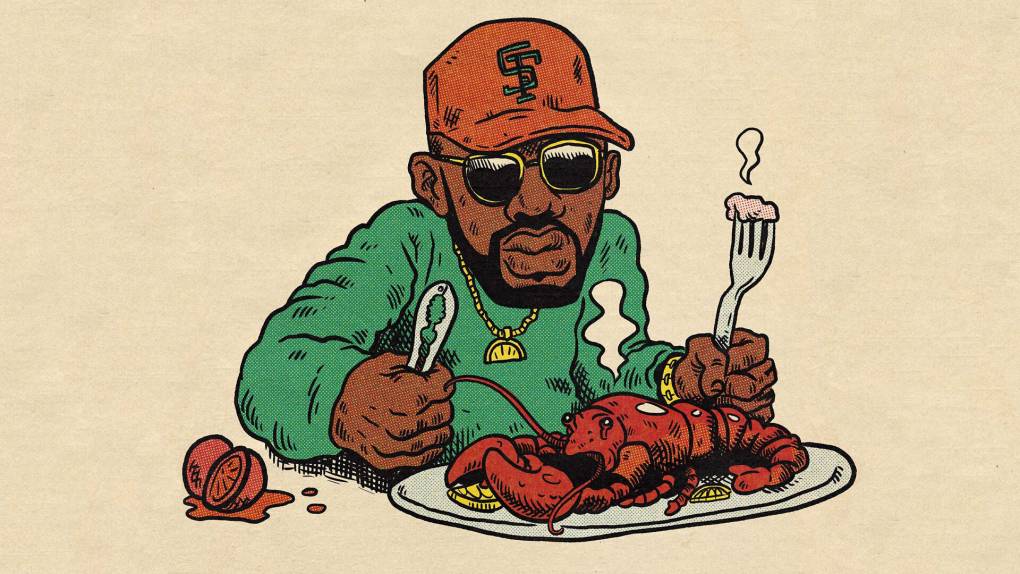
"caption": "In the history of Bay Area rap, food has always been a strong reference point — a metaphorical kitchen for creative exchange.",
"description": null,
"title": "RapperFood_COVER",
"credit": "Torre / @torre.pentel",
"status": "inherit",
"altTag": "Illustration of the rapper Larry June in an SF Giants cap, holding a crab cracker in one hand and a fork in the other. In front of him is a whole lobster on a plate.",
"isLoading": false,
"fetchFailed": false
},
"arts_13955382": {
"type": "attachments",
"id": "arts_13955382",
"meta": {
"index": "attachments_1716263798",
"site": "arts",
"id": "13955382",
"found": true
},
"parent": 13955372,
"imgSizes": {
"twentyfourteen-full-width": {
"file": "https://cdn.kqed.org/wp-content/uploads/sites/2/2024/04/240327-Casey-Cope-KSM-5_qut-1038x576.jpg",
"width": 1038,
"mimeType": "image/jpeg",
"height": 576
},
"thumbnail": {
"file": "https://cdn.kqed.org/wp-content/uploads/sites/2/2024/04/240327-Casey-Cope-KSM-5_qut-160x107.jpg",
"width": 160,
"mimeType": "image/jpeg",
"height": 107
},
"post-thumbnail": {
"file": "https://cdn.kqed.org/wp-content/uploads/sites/2/2024/04/240327-Casey-Cope-KSM-5_qut-672x372.jpg",
"width": 672,
"mimeType": "image/jpeg",
"height": 372
},
"kqedFullSize": {
"file": "https://cdn.kqed.org/wp-content/uploads/sites/2/2024/04/240327-Casey-Cope-KSM-5_qut.jpg",
"width": 1920,
"height": 1280
},
"large": {
"file": "https://cdn.kqed.org/wp-content/uploads/sites/2/2024/04/240327-Casey-Cope-KSM-5_qut-1020x680.jpg",
"width": 1020,
"mimeType": "image/jpeg",
"height": 680
},
"1536x1536": {
"file": "https://cdn.kqed.org/wp-content/uploads/sites/2/2024/04/240327-Casey-Cope-KSM-5_qut-1536x1024.jpg",
"width": 1536,
"mimeType": "image/jpeg",
"height": 1024
},
"medium": {
"file": "https://cdn.kqed.org/wp-content/uploads/sites/2/2024/04/240327-Casey-Cope-KSM-5_qut-800x533.jpg",
"width": 800,
"mimeType": "image/jpeg",
"height": 533
},
"medium_large": {
"file": "https://cdn.kqed.org/wp-content/uploads/sites/2/2024/04/240327-Casey-Cope-KSM-5_qut-768x512.jpg",
"width": 768,
"mimeType": "image/jpeg",
"height": 512
}
},
"publishDate": 1712179753,
"modified": 1712179792,
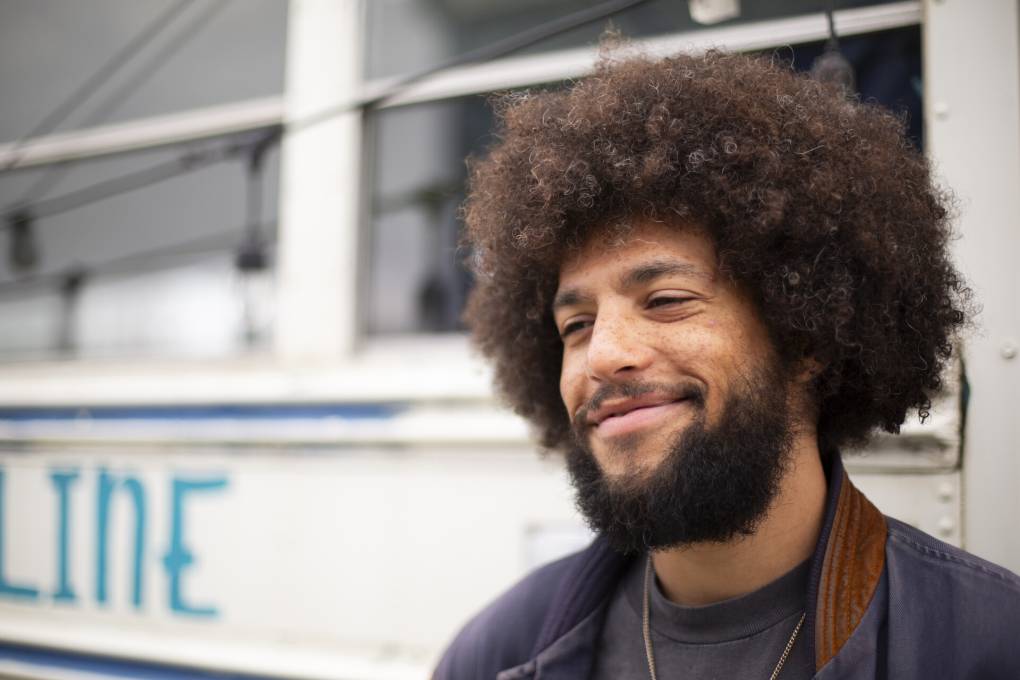
"caption": "Casey Cope in Berkeley on Mar. 27, 2024.",
"description": null,
"title": "Casey Copeland aka \"Casey Cope\" in Berkeley on Mar. 27, 2024.",
"credit": "Kathryn Styer Martinez/KQED",
"status": "inherit",
"altTag": "A young rapper and producer poses in front of an old school bus.",
"isLoading": false,
"fetchFailed": false
},
"arts_13955048": {
"type": "attachments",
"id": "arts_13955048",
"meta": {
"index": "attachments_1716263798",
"site": "arts",
"id": "13955048",
"found": true
},
"parent": 13955045,
"imgSizes": {
"thumbnail": {
"file": "https://cdn.kqed.org/wp-content/uploads/sites/2/2024/03/IMG_7753-160x107.jpeg",
"width": 160,
"mimeType": "image/jpeg",
"height": 107
},
"post-thumbnail": {
"file": "https://cdn.kqed.org/wp-content/uploads/sites/2/2024/03/IMG_7753-672x372.jpeg",
"width": 672,
"mimeType": "image/jpeg",
"height": 372
},
"kqedFullSize": {
"file": "https://cdn.kqed.org/wp-content/uploads/sites/2/2024/03/IMG_7753.jpeg",
"width": 750,
"height": 500
}
},
"publishDate": 1711761322,
"modified": 1711762355,
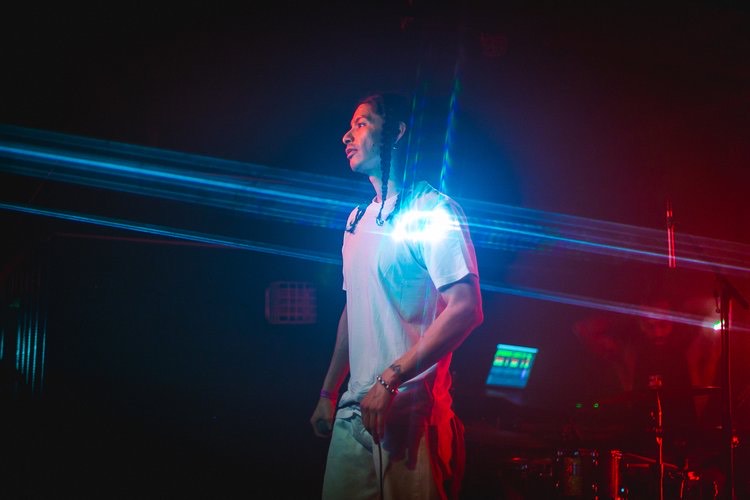
"caption": "A.CHAL's latest album, ESPÍRITU, is garnering national attention. He'll be performing in San Francisco this week.",
"description": null,
"title": "IMG_7753",
"credit": "Courtesy Cold Medina",
"status": "inherit",
"altTag": "a Peruvian rapper is on a darkly lit stage during a music performance",
"isLoading": false,
"fetchFailed": false
},
"arts_13863664": {
"type": "attachments",
"id": "arts_13863664",
"meta": {
"index": "attachments_1716263798",
"site": "arts",
"id": "13863664",
"found": true
},
"parent": 13863632,
"imgSizes": {
"twentyfourteen-full-width": {
"file": "https://cdn.kqed.org/wp-content/uploads/sites/2/2019/08/TierraWhack.MAIN_-1038x576.jpg",
"width": 1038,
"mimeType": "image/jpeg",
"height": 576
},
"thumbnail": {
"file": "https://cdn.kqed.org/wp-content/uploads/sites/2/2019/08/TierraWhack.MAIN_-160x90.jpg",
"width": 160,
"mimeType": "image/jpeg",
"height": 90
},
"post-thumbnail": {
"file": "https://cdn.kqed.org/wp-content/uploads/sites/2/2019/08/TierraWhack.MAIN_-672x372.jpg",
"width": 672,
"mimeType": "image/jpeg",
"height": 372
},
"kqedFullSize": {
"file": "https://cdn.kqed.org/wp-content/uploads/sites/2/2019/08/TierraWhack.MAIN_.jpg",
"width": 1920,
"height": 1080
},
"large": {
"file": "https://cdn.kqed.org/wp-content/uploads/sites/2/2019/08/TierraWhack.MAIN_-1020x574.jpg",
"width": 1020,
"mimeType": "image/jpeg",
"height": 574
},
"complete_open_graph": {
"file": "https://cdn.kqed.org/wp-content/uploads/sites/2/2019/08/TierraWhack.MAIN_-1200x675.jpg",
"width": 1200,
"mimeType": "image/jpeg",
"height": 675
},
"full-width": {
"file": "https://cdn.kqed.org/wp-content/uploads/sites/2/2019/08/TierraWhack.MAIN_-1920x1080.jpg",
"width": 1920,
"mimeType": "image/jpeg",
"height": 1080
},
"medium": {
"file": "https://cdn.kqed.org/wp-content/uploads/sites/2/2019/08/TierraWhack.MAIN_-800x450.jpg",
"width": 800,
"mimeType": "image/jpeg",
"height": 450
},
"medium_large": {
"file": "https://cdn.kqed.org/wp-content/uploads/sites/2/2019/08/TierraWhack.MAIN_-768x432.jpg",
"width": 768,
"mimeType": "image/jpeg",
"height": 432
}
},
"publishDate": 1565534298,
"modified": 1711648336,
"caption": "Tierra Whack performs at Outside Lands music festival in San Francisco, Aug. 10, 2019.",
"description": "Tierra Whack performs at Outside Lands music festival in San Francisco, Aug. 10, 2019.",
"title": "TierraWhack.MAIN",
"credit": "Estefany Gonzalez for KQED",
"status": "inherit",
"altTag": "Tierra Whack performs at Outside Lands music festival in San Francisco, Aug. 10, 2019.",
"isLoading": false,
"fetchFailed": false
},
"arts_13954332": {
"type": "attachments",
"id": "arts_13954332",
"meta": {
"index": "attachments_1716263798",
"site": "arts",
"id": "13954332",
"found": true
},
"parent": 13954331,
"imgSizes": {
"twentyfourteen-full-width": {
"file": "https://cdn.kqed.org/wp-content/uploads/sites/2/2024/03/GettyImages-1486539997-1038x576.jpg",
"width": 1038,
"mimeType": "image/jpeg",
"height": 576
},
"thumbnail": {
"file": "https://cdn.kqed.org/wp-content/uploads/sites/2/2024/03/GettyImages-1486539997-160x107.jpg",
"width": 160,
"mimeType": "image/jpeg",
"height": 107
},
"post-thumbnail": {
"file": "https://cdn.kqed.org/wp-content/uploads/sites/2/2024/03/GettyImages-1486539997-672x372.jpg",
"width": 672,
"mimeType": "image/jpeg",
"height": 372
},
"kqedFullSize": {
"file": "https://cdn.kqed.org/wp-content/uploads/sites/2/2024/03/GettyImages-1486539997-scaled.jpg",
"width": 2560,
"height": 1707
},
"2048x2048": {
"file": "https://cdn.kqed.org/wp-content/uploads/sites/2/2024/03/GettyImages-1486539997-2048x1365.jpg",
"width": 2048,
"mimeType": "image/jpeg",
"height": 1365
},
"large": {
"file": "https://cdn.kqed.org/wp-content/uploads/sites/2/2024/03/GettyImages-1486539997-1020x680.jpg",
"width": 1020,
"mimeType": "image/jpeg",
"height": 680
},
"1536x1536": {
"file": "https://cdn.kqed.org/wp-content/uploads/sites/2/2024/03/GettyImages-1486539997-1536x1024.jpg",
"width": 1536,
"mimeType": "image/jpeg",
"height": 1024
},
"full-width": {
"file": "https://cdn.kqed.org/wp-content/uploads/sites/2/2024/03/GettyImages-1486539997-1920x1280.jpg",
"width": 1920,
"mimeType": "image/jpeg",
"height": 1280
},
"medium": {
"file": "https://cdn.kqed.org/wp-content/uploads/sites/2/2024/03/GettyImages-1486539997-800x533.jpg",
"width": 800,
"mimeType": "image/jpeg",
"height": 533
},
"medium_large": {
"file": "https://cdn.kqed.org/wp-content/uploads/sites/2/2024/03/GettyImages-1486539997-768x512.jpg",
"width": 768,
"mimeType": "image/jpeg",
"height": 512
}
},
"publishDate": 1710871146,
"modified": 1710871219,
"caption": "Rapper Scarface performs on stage on April 29, 2023 in Sugar Land, Texas. ",
"description": null,
"title": "GettyImages-1486539997",
"credit": "Marcus Ingram/Getty Images",
"status": "inherit",
"altTag": "A Black man in baseball jersey and cap is seen from below, rapping into a microphone",
"isLoading": false,
"fetchFailed": false
},
"arts_13953706": {
"type": "attachments",
"id": "arts_13953706",
"meta": {
"index": "attachments_1716263798",
"site": "arts",
"id": "13953706",
"found": true
},
"parent": 13953702,
"imgSizes": {
"twentyfourteen-full-width": {
"file": "https://cdn.kqed.org/wp-content/uploads/sites/2/2024/03/HIPHOPRIBSHACK-crop-1038x576.jpg",
"width": 1038,
"mimeType": "image/jpeg",
"height": 576
},
"thumbnail": {
"file": "https://cdn.kqed.org/wp-content/uploads/sites/2/2024/03/HIPHOPRIBSHACK-crop-160x90.jpg",
"width": 160,
"mimeType": "image/jpeg",
"height": 90
},
"post-thumbnail": {
"file": "https://cdn.kqed.org/wp-content/uploads/sites/2/2024/03/HIPHOPRIBSHACK-crop-672x372.jpg",
"width": 672,
"mimeType": "image/jpeg",
"height": 372
},
"kqedFullSize": {
"file": "https://cdn.kqed.org/wp-content/uploads/sites/2/2024/03/HIPHOPRIBSHACK-crop.jpg",
"width": 1920,
"height": 1080
},
"large": {
"file": "https://cdn.kqed.org/wp-content/uploads/sites/2/2024/03/HIPHOPRIBSHACK-crop-1020x574.jpg",
"width": 1020,
"mimeType": "image/jpeg",
"height": 574
},
"1536x1536": {
"file": "https://cdn.kqed.org/wp-content/uploads/sites/2/2024/03/HIPHOPRIBSHACK-crop-1536x864.jpg",
"width": 1536,
"mimeType": "image/jpeg",
"height": 864
},
"medium": {
"file": "https://cdn.kqed.org/wp-content/uploads/sites/2/2024/03/HIPHOPRIBSHACK-crop-800x450.jpg",
"width": 800,
"mimeType": "image/jpeg",
"height": 450
},
"medium_large": {
"file": "https://cdn.kqed.org/wp-content/uploads/sites/2/2024/03/HIPHOPRIBSHACK-crop-768x432.jpg",
"width": 768,
"mimeType": "image/jpeg",
"height": 432
}
},
"publishDate": 1709851723,
"modified": 1709851858,
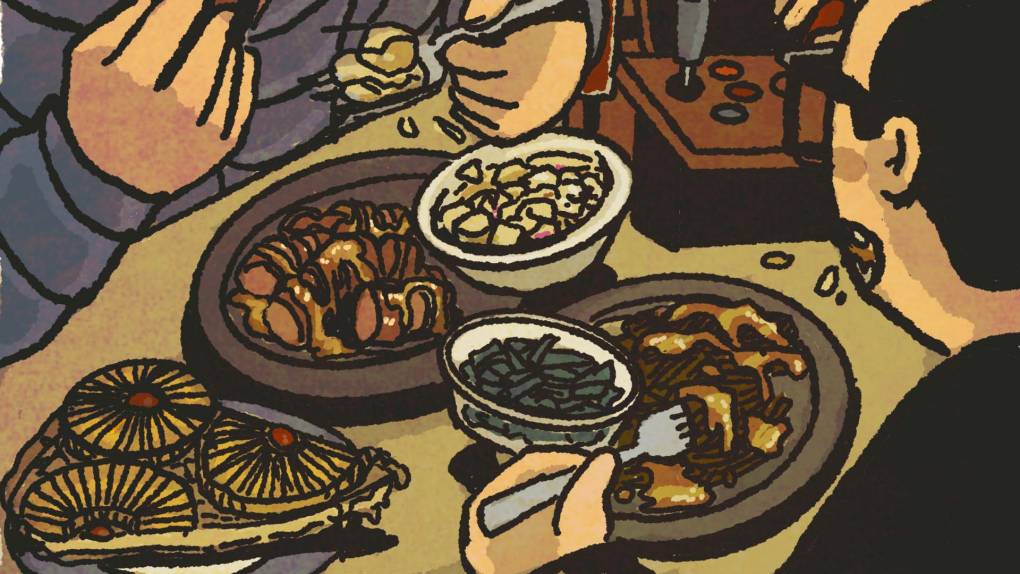
"caption": "Hip Hop BBQ Shack offers everything you could want at 10 o'clock on a Friday night: brisket, links, NBA Jam and a steady stream of '90s and 2000s rap classic.",
"description": null,
"title": "HIPHOPRIBSHACK-crop",
"credit": "Thien Pham",
"status": "inherit",
"altTag": "A man devours a spread of barbecue: brisket, ribs, collard greens, potato salad.",
"isLoading": false,
"fetchFailed": false
},
"arts_13953288": {
"type": "attachments",
"id": "arts_13953288",
"meta": {
"index": "attachments_1716263798",
"site": "arts",
"id": "13953288",
"found": true
},
"parent": 13953284,
"imgSizes": {
"twentyfourteen-full-width": {
"file": "https://cdn.kqed.org/wp-content/uploads/sites/2/2024/03/NickiMinaj.Oakland.16x9-1038x576.jpg",
"width": 1038,
"mimeType": "image/jpeg",
"height": 576
},
"thumbnail": {
"file": "https://cdn.kqed.org/wp-content/uploads/sites/2/2024/03/NickiMinaj.Oakland.16x9-160x90.jpg",
"width": 160,
"mimeType": "image/jpeg",
"height": 90
},
"post-thumbnail": {
"file": "https://cdn.kqed.org/wp-content/uploads/sites/2/2024/03/NickiMinaj.Oakland.16x9-672x372.jpg",
"width": 672,
"mimeType": "image/jpeg",
"height": 372
},
"kqedFullSize": {
"file": "https://cdn.kqed.org/wp-content/uploads/sites/2/2024/03/NickiMinaj.Oakland.16x9-scaled.jpg",
"width": 2560,
"height": 1440
},
"2048x2048": {
"file": "https://cdn.kqed.org/wp-content/uploads/sites/2/2024/03/NickiMinaj.Oakland.16x9-2048x1152.jpg",
"width": 2048,
"mimeType": "image/jpeg",
"height": 1152
},
"large": {
"file": "https://cdn.kqed.org/wp-content/uploads/sites/2/2024/03/NickiMinaj.Oakland.16x9-1020x574.jpg",
"width": 1020,
"mimeType": "image/jpeg",
"height": 574
},
"1536x1536": {
"file": "https://cdn.kqed.org/wp-content/uploads/sites/2/2024/03/NickiMinaj.Oakland.16x9-1536x864.jpg",
"width": 1536,
"mimeType": "image/jpeg",
"height": 864
},
"full-width": {
"file": "https://cdn.kqed.org/wp-content/uploads/sites/2/2024/03/NickiMinaj.Oakland.16x9-1920x1080.jpg",
"width": 1920,
"mimeType": "image/jpeg",
"height": 1080
},
"medium": {
"file": "https://cdn.kqed.org/wp-content/uploads/sites/2/2024/03/NickiMinaj.Oakland.16x9-800x450.jpg",
"width": 800,
"mimeType": "image/jpeg",
"height": 450
},
"medium_large": {
"file": "https://cdn.kqed.org/wp-content/uploads/sites/2/2024/03/NickiMinaj.Oakland.16x9-768x432.jpg",
"width": 768,
"mimeType": "image/jpeg",
"height": 432
}
},
"publishDate": 1709407624,
"modified": 1709407836,
"caption": "Nicki Minaj performs during the opening night of her Pink Friday 2 World Tour at the Oakland Arena on March 1, 2024.",
"description": null,
"title": "NickiMinaj.Oakland.16x9",
"credit": "Kevin Mazur/WireImage for Live Nation",
"status": "inherit",
"altTag": "a woman in a silvery bodysuit smiles on stage with a microphone in a big arena with pink and purple lighting behind her",
"isLoading": false,
"fetchFailed": false
},
"arts_13884929": {
"type": "attachments",
"id": "arts_13884929",
"meta": {
"index": "attachments_1716263798",
"site": "arts",
"id": "13884929",
"found": true
},
"parent": 13884928,
"imgSizes": {
"twentyfourteen-full-width": {
"file": "https://cdn.kqed.org/wp-content/uploads/sites/2/2020/08/gettyimages-1554415_wide-8f84f2146fb9f385da8ffe4f0491572041ed6040-1038x576.jpg",
"width": 1038,
"mimeType": "image/jpeg",
"height": 576
},
"thumbnail": {
"file": "https://cdn.kqed.org/wp-content/uploads/sites/2/2020/08/gettyimages-1554415_wide-8f84f2146fb9f385da8ffe4f0491572041ed6040-160x90.jpg",
"width": 160,
"mimeType": "image/jpeg",
"height": 90
},
"post-thumbnail": {
"file": "https://cdn.kqed.org/wp-content/uploads/sites/2/2020/08/gettyimages-1554415_wide-8f84f2146fb9f385da8ffe4f0491572041ed6040-672x372.jpg",
"width": 672,
"mimeType": "image/jpeg",
"height": 372
},
"kqedFullSize": {
"file": "https://cdn.kqed.org/wp-content/uploads/sites/2/2020/08/gettyimages-1554415_wide-8f84f2146fb9f385da8ffe4f0491572041ed6040-scaled-e1597708151946.jpg",
"width": 1920,
"height": 1079
},
"2048x2048": {
"file": "https://cdn.kqed.org/wp-content/uploads/sites/2/2020/08/gettyimages-1554415_wide-8f84f2146fb9f385da8ffe4f0491572041ed6040-2048x1152.jpg",
"width": 2048,
"mimeType": "image/jpeg",
"height": 1152
},
"large": {
"file": "https://cdn.kqed.org/wp-content/uploads/sites/2/2020/08/gettyimages-1554415_wide-8f84f2146fb9f385da8ffe4f0491572041ed6040-1020x574.jpg",
"width": 1020,
"mimeType": "image/jpeg",
"height": 574
},
"1536x1536": {
"file": "https://cdn.kqed.org/wp-content/uploads/sites/2/2020/08/gettyimages-1554415_wide-8f84f2146fb9f385da8ffe4f0491572041ed6040-1536x864.jpg",
"width": 1536,
"mimeType": "image/jpeg",
"height": 864
},
"full-width": {
"file": "https://cdn.kqed.org/wp-content/uploads/sites/2/2020/08/gettyimages-1554415_wide-8f84f2146fb9f385da8ffe4f0491572041ed6040-1920x1080.jpg",
"width": 1920,
"mimeType": "image/jpeg",
"height": 1080
},
"medium": {
"file": "https://cdn.kqed.org/wp-content/uploads/sites/2/2020/08/gettyimages-1554415_wide-8f84f2146fb9f385da8ffe4f0491572041ed6040-800x450.jpg",
"width": 800,
"mimeType": "image/jpeg",
"height": 450
},
"medium_large": {
"file": "https://cdn.kqed.org/wp-content/uploads/sites/2/2020/08/gettyimages-1554415_wide-8f84f2146fb9f385da8ffe4f0491572041ed6040-768x432.jpg",
"width": 768,
"mimeType": "image/jpeg",
"height": 432
}
},
"publishDate": 1597707913,
"modified": 1709075534,
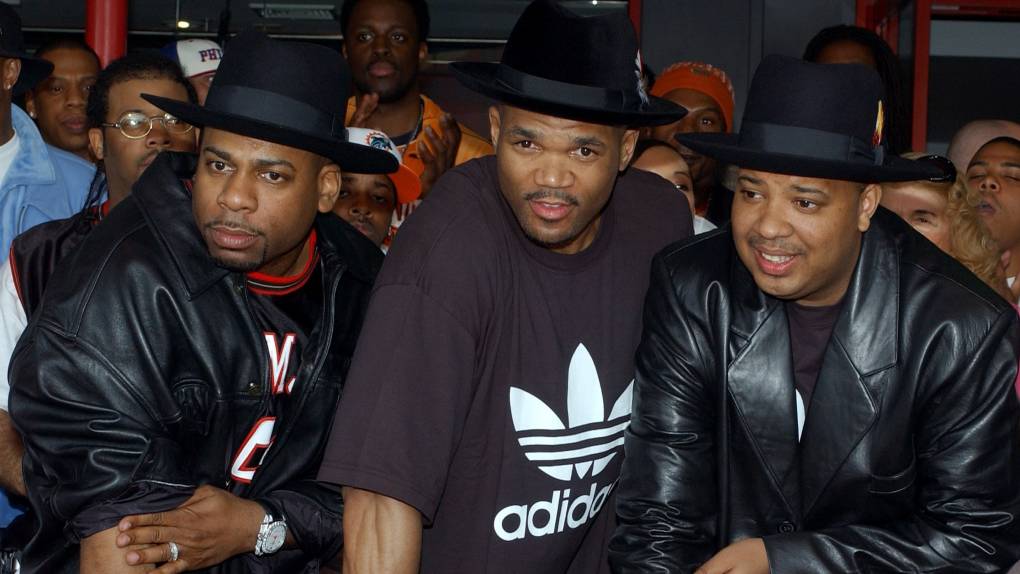
"caption": "(L) Jason ‘Jam Master Jay’ Mizell with Darryl ‘DMC’ McDaniels and Joseph ‘DJ Run’ Simmons of RUN-DMC.",
"description": null,
"title": "(L) Jason ‘Jam Master Jay’ Mizell with Darryl ‘DMC’ McDaniels and Joseph ‘DJ Run’ Simmons of RUN-DMC.",
"credit": "Vince Bucci/ Getty Images",
"status": "inherit",
"altTag": "Three Black men wearing black clothes and hats stand together in a line.",
"isLoading": false,
"fetchFailed": false
},
"arts_13953015": {
"type": "attachments",
"id": "arts_13953015",
"meta": {
"index": "attachments_1716263798",
"site": "arts",
"id": "13953015",
"found": true
},
"parent": 13953009,
"imgSizes": {
"twentyfourteen-full-width": {
"file": "https://cdn.kqed.org/wp-content/uploads/sites/2/2024/02/Screenshot-2024-02-26-at-12.07.32-PM-1038x576.png",
"width": 1038,
"mimeType": "image/png",
"height": 576
},
"thumbnail": {
"file": "https://cdn.kqed.org/wp-content/uploads/sites/2/2024/02/Screenshot-2024-02-26-at-12.07.32-PM-160x141.png",
"width": 160,
"mimeType": "image/png",
"height": 141
},
"post-thumbnail": {
"file": "https://cdn.kqed.org/wp-content/uploads/sites/2/2024/02/Screenshot-2024-02-26-at-12.07.32-PM-672x372.png",
"width": 672,
"mimeType": "image/png",
"height": 372
},
"kqedFullSize": {
"file": "https://cdn.kqed.org/wp-content/uploads/sites/2/2024/02/Screenshot-2024-02-26-at-12.07.32-PM.png",
"width": 1106,
"height": 972
},
"large": {
"file": "https://cdn.kqed.org/wp-content/uploads/sites/2/2024/02/Screenshot-2024-02-26-at-12.07.32-PM-1020x896.png",
"width": 1020,
"mimeType": "image/png",
"height": 896
},
"medium": {
"file": "https://cdn.kqed.org/wp-content/uploads/sites/2/2024/02/Screenshot-2024-02-26-at-12.07.32-PM-800x703.png",
"width": 800,
"mimeType": "image/png",
"height": 703
},
"medium_large": {
"file": "https://cdn.kqed.org/wp-content/uploads/sites/2/2024/02/Screenshot-2024-02-26-at-12.07.32-PM-768x675.png",
"width": 768,
"mimeType": "image/png",
"height": 675
}
},
"publishDate": 1708978103,
"modified": 1708994177,
"caption": "LOE Gino's new EP 'Everything Gone Be Aight' is a personal missive across six taut tracks.",
"description": "LOE Gino, posing for a photo while wearing a black shirt that reads \"NOT THE PLUG\" in colorful writing over his left chest area. ",
"title": "LOE Gino, posing for a photo while wearing a black shirt that reads \"NOT THE PLUG\" in colorful writing over his left chest area.",
"credit": "Jason 'Yeiseon' Hayes",
"status": "inherit",
"altTag": "LOE Gino, posing for a photo while wearing a black shirt that reads \"NOT THE PLUG\" in colorful writing over his left chest area.",
"isLoading": false,
"fetchFailed": false
},
"arts_13952226": {
"type": "attachments",
"id": "arts_13952226",
"meta": {
"index": "attachments_1716263798",
"site": "arts",
"id": "13952226",
"found": true
},
"parent": 13952208,
"imgSizes": {
"twentyfourteen-full-width": {
"file": "https://cdn.kqed.org/wp-content/uploads/sites/2/2024/02/ISP.all3_.MMMwShortkut-1038x576.jpg",
"width": 1038,
"mimeType": "image/jpeg",
"height": 576
},
"thumbnail": {
"file": "https://cdn.kqed.org/wp-content/uploads/sites/2/2024/02/ISP.all3_.MMMwShortkut-160x109.jpg",
"width": 160,
"mimeType": "image/jpeg",
"height": 109
},
"post-thumbnail": {
"file": "https://cdn.kqed.org/wp-content/uploads/sites/2/2024/02/ISP.all3_.MMMwShortkut-672x372.jpg",
"width": 672,
"mimeType": "image/jpeg",
"height": 372
},
"kqedFullSize": {
"file": "https://cdn.kqed.org/wp-content/uploads/sites/2/2024/02/ISP.all3_.MMMwShortkut.jpg",
"width": 1745,
"height": 1188
},
"large": {
"file": "https://cdn.kqed.org/wp-content/uploads/sites/2/2024/02/ISP.all3_.MMMwShortkut-1020x694.jpg",
"width": 1020,
"mimeType": "image/jpeg",
"height": 694
},
"1536x1536": {
"file": "https://cdn.kqed.org/wp-content/uploads/sites/2/2024/02/ISP.all3_.MMMwShortkut-1536x1046.jpg",
"width": 1536,
"mimeType": "image/jpeg",
"height": 1046
},
"medium": {
"file": "https://cdn.kqed.org/wp-content/uploads/sites/2/2024/02/ISP.all3_.MMMwShortkut-800x545.jpg",
"width": 800,
"mimeType": "image/jpeg",
"height": 545
},
"medium_large": {
"file": "https://cdn.kqed.org/wp-content/uploads/sites/2/2024/02/ISP.all3_.MMMwShortkut-768x523.jpg",
"width": 768,
"mimeType": "image/jpeg",
"height": 523
}
},
"publishDate": 1707885634,
"modified": 1707886423,
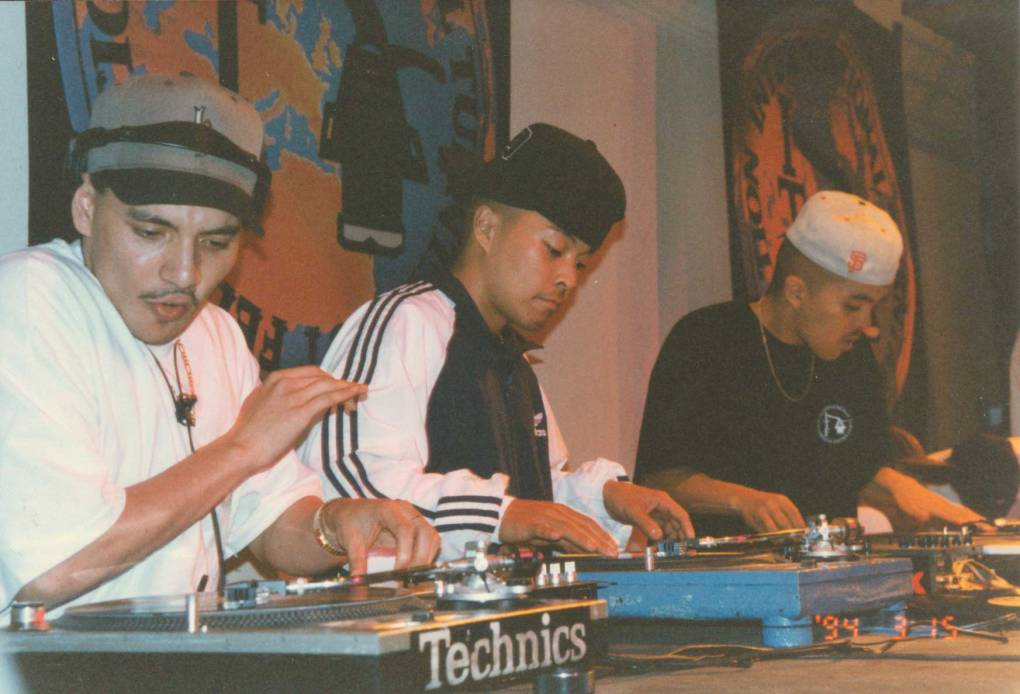
"caption": "The Invisibl Skratch Piklz' lineup of Mix Master Mike, Qbert and Shortkut.",
"description": null,
"title": "ISP.all3.MMMwShortkut",
"credit": "Courtesy Alex Aquino",
"status": "inherit",
"altTag": null,
"isLoading": false,
"fetchFailed": false
},
"arts_13934340": {
"type": "attachments",
"id": "arts_13934340",
"meta": {
"index": "attachments_1716263798",
"site": "arts",
"id": "13934340",
"found": true
},
"parent": 13934324,
"imgSizes": {
"twentyfourteen-full-width": {
"file": "https://ww2.kqed.org/app/uploads/sites/2/2023/09/DSC00110-1038x576.jpg",
"width": 1038,
"mimeType": "image/jpeg",
"height": 576
},
"thumbnail": {
"file": "https://ww2.kqed.org/app/uploads/sites/2/2023/09/DSC00110-160x120.jpg",
"width": 160,
"mimeType": "image/jpeg",
"height": 120
},
"post-thumbnail": {
"file": "https://ww2.kqed.org/app/uploads/sites/2/2023/09/DSC00110-672x372.jpg",
"width": 672,
"mimeType": "image/jpeg",
"height": 372
},
"kqedFullSize": {
"file": "https://ww2.kqed.org/app/uploads/sites/2/2023/09/DSC00110.jpg",
"width": 1920,
"height": 1440
},
"large": {
"file": "https://ww2.kqed.org/app/uploads/sites/2/2023/09/DSC00110-1020x765.jpg",
"width": 1020,
"mimeType": "image/jpeg",
"height": 765
},
"1536x1536": {
"file": "https://ww2.kqed.org/app/uploads/sites/2/2023/09/DSC00110-1536x1152.jpg",
"width": 1536,
"mimeType": "image/jpeg",
"height": 1152
},
"medium": {
"file": "https://ww2.kqed.org/app/uploads/sites/2/2023/09/DSC00110-800x600.jpg",
"width": 800,
"mimeType": "image/jpeg",
"height": 600
},
"medium_large": {
"file": "https://ww2.kqed.org/app/uploads/sites/2/2023/09/DSC00110-768x576.jpg",
"width": 768,
"mimeType": "image/jpeg",
"height": 576
}
},
"publishDate": 1693958723,
"modified": 1693959635,
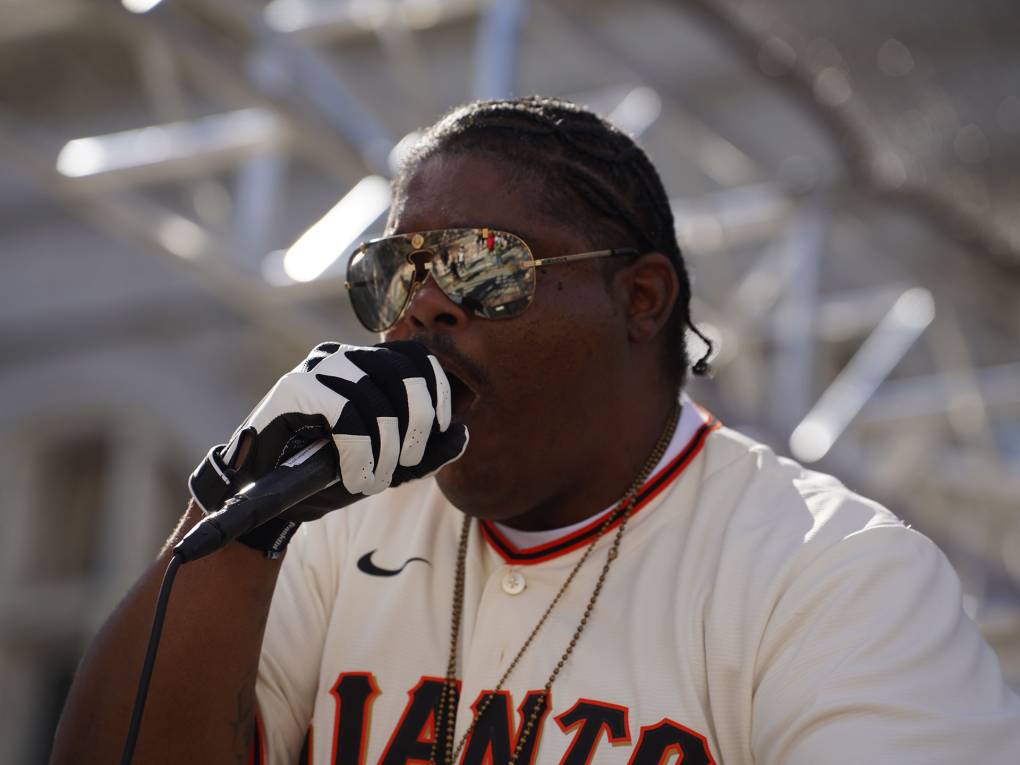
"caption": "Cellski on stage at Hiero Day in Frank Ogawa Plaza, Oakland, Sept. 4, 2023.",
"description": null,
"title": "DSC00110",
"credit": "Eric Arnold/KQED",
"status": "inherit",
"altTag": null,
"isLoading": false,
"fetchFailed": false
},
"arts_13951314": {
"type": "attachments",
"id": "arts_13951314",
"meta": {
"index": "attachments_1716263798",
"site": "arts",
"id": "13951314",
"found": true
},
"parent": 13951286,
"imgSizes": {
"twentyfourteen-full-width": {
"file": "https://cdn.kqed.org/wp-content/uploads/sites/2/2024/01/Screenshot-2024-01-31-at-12.00.22-PM-1038x576.png",
"width": 1038,
"mimeType": "image/png",
"height": 576
},
"thumbnail": {
"file": "https://cdn.kqed.org/wp-content/uploads/sites/2/2024/01/Screenshot-2024-01-31-at-12.00.22-PM-160x201.png",
"width": 160,
"mimeType": "image/png",
"height": 201
},
"post-thumbnail": {
"file": "https://cdn.kqed.org/wp-content/uploads/sites/2/2024/01/Screenshot-2024-01-31-at-12.00.22-PM-672x372.png",
"width": 672,
"mimeType": "image/png",
"height": 372
},
"kqedFullSize": {
"file": "https://cdn.kqed.org/wp-content/uploads/sites/2/2024/01/Screenshot-2024-01-31-at-12.00.22-PM.png",
"width": 1082,
"height": 1360
},
"large": {
"file": "https://cdn.kqed.org/wp-content/uploads/sites/2/2024/01/Screenshot-2024-01-31-at-12.00.22-PM-1020x1282.png",
"width": 1020,
"mimeType": "image/png",
"height": 1282
},
"medium": {
"file": "https://cdn.kqed.org/wp-content/uploads/sites/2/2024/01/Screenshot-2024-01-31-at-12.00.22-PM-800x1006.png",
"width": 800,
"mimeType": "image/png",
"height": 1006
},
"medium_large": {
"file": "https://cdn.kqed.org/wp-content/uploads/sites/2/2024/01/Screenshot-2024-01-31-at-12.00.22-PM-768x965.png",
"width": 768,
"mimeType": "image/png",
"height": 965
}
},
"publishDate": 1706731245,
"modified": 1706731324,
"caption": "Lyricist and actress, Qing Qi.",
"description": "Lyricist and actress, Qing Qi.",
"title": "Lyricist and actress, Qing Qi.",
"credit": "Miss Lopez Media",
"status": "inherit",
"altTag": "Lyricist and actress, Qing Qi.",
"isLoading": false,
"fetchFailed": false
}
},
"audioPlayerReducer": {
"postId": "stream_live",
"isPaused": true,
"isPlaying": false,
"pfsActive": false,
"pledgeModalIsOpen": true,
"playerDrawerIsOpen": false,
"liveAudioPlayStartedAt": 0,
"liveAudioPlayContext": ""
},
"authorsReducer": {
"byline_arts_13953112": {
"type": "authors",
"id": "byline_arts_13953112",
"meta": {
"override": true
},
"slug": "byline_arts_13953112",
"name": "Cedar Attanasio, Associated Press",
"isLoading": false
},
"gmeline": {
"type": "authors",
"id": "185",
"meta": {
"index": "authors_1716337520",
"id": "185",
"found": true
},
"name": "Gabe Meline",
"firstName": "Gabe",
"lastName": "Meline",
"slug": "gmeline",
"email": "gmeline@kqed.org",
"display_author_email": true,
"staff_mastheads": [
"arts"
],
"title": "Senior Editor, KQED Arts & Culture",
"bio": "Gabe Meline entered journalism at age 15 making photocopied zines, and has since earned awards from the Edward R. Murrow Awards, the Society for Professional Journalists, the Online Journalism Awards, the Association of Alternative Newsweeklies and the California Newspaper Publishers Association. Prior to KQED, he was the editor of the \u003cem>North Bay Bohemian\u003c/em> and a touring musician. He lives with his wife and daughter in his hometown of Santa Rosa, CA.",
"avatar": "https://secure.gravatar.com/avatar/5bebe57be0d8bc2dd318934feb47299e2d2d10cba28d09d8d7afb389a2ce2bdd?s=600&d=blank&r=g",
"twitter": null,
"bluesky": null,
"facebook": null,
"instagram": null,
"linkedin": null,
"sites": [
{
"site": "",
"roles": [
"editor"
]
},
{
"site": "arts",
"roles": [
"administrator"
]
},
{
"site": "artschool",
"roles": [
"editor"
]
},
{
"site": "news",
"roles": [
"author"
]
},
{
"site": "pop",
"roles": [
"editor"
]
},
{
"site": "bayareabites",
"roles": [
"editor"
]
},
{
"site": "food",
"roles": [
"editor"
]
},
{
"site": "forum",
"roles": [
"administrator"
]
},
{
"site": "liveblog",
"roles": [
"editor"
]
},
{
"site": "hiphop",
"roles": [
"editor"
]
}
],
"headData": {
"title": "Gabe Meline | KQED",
"description": "Senior Editor, KQED Arts & Culture",
"ogImgSrc": "https://secure.gravatar.com/avatar/5bebe57be0d8bc2dd318934feb47299e2d2d10cba28d09d8d7afb389a2ce2bdd?s=600&d=blank&r=g",
"twImgSrc": "https://secure.gravatar.com/avatar/5bebe57be0d8bc2dd318934feb47299e2d2d10cba28d09d8d7afb389a2ce2bdd?s=600&d=blank&r=g"
},
"isLoading": false,
"link": "/author/gmeline"
},
"nvoynovskaya": {
"type": "authors",
"id": "11387",
"meta": {
"index": "authors_1716337520",
"id": "11387",
"found": true
},
"name": "Nastia Voynovskaya",
"firstName": "Nastia",
"lastName": "Voynovskaya",
"slug": "nvoynovskaya",
"email": "nvoynovskaya@kqed.org",
"display_author_email": false,
"staff_mastheads": [
"arts"
],
"title": "Editor and reporter",
"bio": "Nastia Voynovskaya is a reporter, editor and host at KQED Arts & Culture. She's been covering the arts in the Bay Area for over a decade, with a focus on music, queer culture, labor issues and grassroots organizing. She has edited KQED story series such as Trans Bay: A History of San Francisco's Gender-Diverse Community, and co-created KQED's Bay Area hip-hop history project, That's My Word. Nastia's work has been recognized by the Society of Professional Journalists and San Francisco Press Club. She regularly appears on podcasts and radio programs, including NPR's All Songs Considered, and hosts live events where music, culture and conversation meet.",
"avatar": "https://secure.gravatar.com/avatar/5025ee460e5a85d69ca20ea6c6f2f80d7e17795c828f61ea3aecfcd924e9042e?s=600&d=blank&r=g",
"twitter": null,
"bluesky": null,
"facebook": null,
"instagram": "https://www.instagram.com/nananastia/",
"linkedin": null,
"sites": [
{
"site": "",
"roles": [
"editor"
]
},
{
"site": "arts",
"roles": [
"administrator"
]
},
{
"site": "news",
"roles": [
"editor"
]
},
{
"site": "pop",
"roles": [
"administrator"
]
},
{
"site": "bayareabites",
"roles": [
"editor"
]
},
{
"site": "podcasts",
"roles": [
"editor"
]
},
{
"site": "hiphop",
"roles": [
"editor"
]
}
],
"headData": {
"title": "Nastia Voynovskaya | KQED",
"description": "Editor and reporter",
"ogImgSrc": "https://secure.gravatar.com/avatar/5025ee460e5a85d69ca20ea6c6f2f80d7e17795c828f61ea3aecfcd924e9042e?s=600&d=blank&r=g",
"twImgSrc": "https://secure.gravatar.com/avatar/5025ee460e5a85d69ca20ea6c6f2f80d7e17795c828f61ea3aecfcd924e9042e?s=600&d=blank&r=g"
},
"isLoading": false,
"link": "/author/nvoynovskaya"
},
"ogpenn": {
"type": "authors",
"id": "11491",
"meta": {
"index": "authors_1716337520",
"id": "11491",
"found": true
},
"name": "Pendarvis Harshaw",
"firstName": "Pendarvis",
"lastName": "Harshaw",
"slug": "ogpenn",
"email": "ogpenn@gmail.com",
"display_author_email": false,
"staff_mastheads": [
"arts"
],
"title": "Community Engagement Reporter",
"bio": "Pendarvis Harshaw is an educator, host and writer with KQED Arts.",
"avatar": "https://secure.gravatar.com/avatar/972b77ee8e3f346ae2b00622661187fbfabd059b5693bbdc1475ea7a722fd4cd?s=600&d=blank&r=g",
"twitter": null,
"bluesky": null,
"facebook": null,
"instagram": "ogpenn",
"linkedin": null,
"sites": [
{
"site": "arts",
"roles": [
"administrator"
]
},
{
"site": "news",
"roles": [
"editor"
]
},
{
"site": "bayareabites",
"roles": [
"author"
]
},
{
"site": "hiphop",
"roles": [
"editor"
]
}
],
"headData": {
"title": "Pendarvis Harshaw | KQED",
"description": "Community Engagement Reporter",
"ogImgSrc": "https://secure.gravatar.com/avatar/972b77ee8e3f346ae2b00622661187fbfabd059b5693bbdc1475ea7a722fd4cd?s=600&d=blank&r=g",
"twImgSrc": "https://secure.gravatar.com/avatar/972b77ee8e3f346ae2b00622661187fbfabd059b5693bbdc1475ea7a722fd4cd?s=600&d=blank&r=g"
},
"isLoading": false,
"link": "/author/ogpenn"
},
"mmedina": {
"type": "authors",
"id": "11528",
"meta": {
"index": "authors_1716337520",
"id": "11528",
"found": true
},
"name": "Marisol Medina-Cadena",
"firstName": "Marisol",
"lastName": "Medina-Cadena",
"slug": "mmedina",
"email": "mmedina@KQED.org",
"display_author_email": true,
"staff_mastheads": [],
"title": "Producer, Rightnowish Podcast",
"bio": "Marisol Medina-Cadena is a radio reporter and podcast producer. Before working at KQED, she produced for PBS member station, KCET, in Los Angeles. In 2017, Marisol won an Emmy Award for her work on the televised documentary, \u003cem>City Rising\u003c/em>, examining California's affordable housing crisis and the historical roots of gentrification.",
"avatar": "https://secure.gravatar.com/avatar/6c3db46a1cabb5e1fe9a365b5f4e681e?s=600&d=blank&r=g",
"twitter": "marisolreports",
"facebook": null,
"instagram": null,
"linkedin": null,
"sites": [
{
"site": "arts",
"roles": []
},
{
"site": "news",
"roles": [
"edit_others_posts"
]
}
],
"headData": {
"title": "Marisol Medina-Cadena | KQED",
"description": "Producer, Rightnowish Podcast",
"ogImgSrc": "https://secure.gravatar.com/avatar/6c3db46a1cabb5e1fe9a365b5f4e681e?s=600&d=blank&r=g",
"twImgSrc": "https://secure.gravatar.com/avatar/6c3db46a1cabb5e1fe9a365b5f4e681e?s=600&d=blank&r=g"
},
"isLoading": false,
"link": "/author/mmedina"
},
"ltsai": {
"type": "authors",
"id": "11743",
"meta": {
"index": "authors_1716337520",
"id": "11743",
"found": true
},
"name": "Luke Tsai",
"firstName": "Luke",
"lastName": "Tsai",
"slug": "ltsai",
"email": "ltsai@kqed.org",
"display_author_email": true,
"staff_mastheads": [
"arts"
],
"title": "Food Editor",
"bio": "Luke Tsai is KQED's food editor and resident stinky tofu connoisseur. Prior to KQED, he was an editor at Eater SF, \u003cem>San Francisco \u003c/em>magazine, and the \u003cem>East Bay Express\u003c/em>, and his work has also appeared in TASTE, the \u003cem>San Francisco Chronicle\u003c/em>, and the \u003cem>Best Food Writing\u003c/em> anthology. When he isn't writing or editing, you'll find him eating most everything he can get his hands on.",
"avatar": "https://secure.gravatar.com/avatar/1e59b45bf191526e7339d6ba46e33a57b2030d25c27660ecc64ea3cb863e34f7?s=600&d=blank&r=g",
"twitter": "theluketsai",
"bluesky": null,
"facebook": null,
"instagram": null,
"linkedin": null,
"sites": [
{
"site": "",
"roles": [
"editor"
]
},
{
"site": "arts",
"roles": [
"administrator"
]
},
{
"site": "news",
"roles": [
"editor",
"contributor"
]
},
{
"site": "bayareabites",
"roles": [
"editor"
]
},
{
"site": "food",
"roles": [
"editor"
]
}
],
"headData": {
"title": "Luke Tsai | KQED",
"description": "Food Editor",
"ogImgSrc": "https://secure.gravatar.com/avatar/1e59b45bf191526e7339d6ba46e33a57b2030d25c27660ecc64ea3cb863e34f7?s=600&d=blank&r=g",
"twImgSrc": "https://secure.gravatar.com/avatar/1e59b45bf191526e7339d6ba46e33a57b2030d25c27660ecc64ea3cb863e34f7?s=600&d=blank&r=g"
},
"isLoading": false,
"link": "/author/ltsai"
},
"achazaro": {
"type": "authors",
"id": "11748",
"meta": {
"index": "authors_1716337520",
"id": "11748",
"found": true
},
"name": "Alan Chazaro",
"firstName": "Alan",
"lastName": "Chazaro",
"slug": "achazaro",
"email": "agchazaro@gmail.com",
"display_author_email": true,
"staff_mastheads": [],
"title": "Food Writer and Reporter",
"bio": "Alan Chazaro is the author of \u003cem>This Is Not a Frank Ocean Cover Album\u003c/em> (Black Lawrence Press, 2019), \u003cem>Piñata Theory\u003c/em> (Black Lawrence Press, 2020), and \u003cem>Notes from the Eastern Span of the Bay Bridge\u003c/em> (Ghost City Press, 2021). He is a graduate of June Jordan’s Poetry for the People program at UC Berkeley and a former Lawrence Ferlinghetti Fellow at the University of San Francisco. He writes about sports, food, art, music, education, and culture while repping the Bay on \u003ca href=\"https://twitter.com/alan_chazaro\">Twitter\u003c/a> and \u003ca href=\"https://www.instagram.com/alan_chazaro/?hl=en\">Instagram\u003c/a> at @alan_chazaro.",
"avatar": "https://secure.gravatar.com/avatar/ea8b6dd970fc5c29e7a188e7d5861df7?s=600&d=blank&r=g",
"twitter": "alan_chazaro",
"facebook": null,
"instagram": null,
"linkedin": null,
"sites": [
{
"site": "arts",
"roles": [
"contributor"
]
},
{
"site": "news",
"roles": [
"editor"
]
}
],
"headData": {
"title": "Alan Chazaro | KQED",
"description": "Food Writer and Reporter",
"ogImgSrc": "https://secure.gravatar.com/avatar/ea8b6dd970fc5c29e7a188e7d5861df7?s=600&d=blank&r=g",
"twImgSrc": "https://secure.gravatar.com/avatar/ea8b6dd970fc5c29e7a188e7d5861df7?s=600&d=blank&r=g"
},
"isLoading": false,
"link": "/author/achazaro"
},
"tpham": {
"type": "authors",
"id": "11753",
"meta": {
"index": "authors_1716337520",
"id": "11753",
"found": true
},
"name": "Thien Pham",
"firstName": "Thien",
"lastName": "Pham",
"slug": "tpham",
"email": "thiendog@gmail.com",
"display_author_email": false,
"staff_mastheads": [],
"title": "KQED Contributor",
"bio": null,
"avatar": "https://secure.gravatar.com/avatar/a5b4729969ad46d88e7b9ec9dd4f3fa6af84dd0fa8fa91f01d8d9481694999bc?s=600&d=blank&r=g",
"twitter": null,
"bluesky": null,
"facebook": null,
"instagram": null,
"linkedin": null,
"sites": [
{
"site": "arts",
"roles": [
"contributor"
]
}
],
"headData": {
"title": "Thien Pham | KQED",
"description": "KQED Contributor",
"ogImgSrc": "https://secure.gravatar.com/avatar/a5b4729969ad46d88e7b9ec9dd4f3fa6af84dd0fa8fa91f01d8d9481694999bc?s=600&d=blank&r=g",
"twImgSrc": "https://secure.gravatar.com/avatar/a5b4729969ad46d88e7b9ec9dd4f3fa6af84dd0fa8fa91f01d8d9481694999bc?s=600&d=blank&r=g"
},
"isLoading": false,
"link": "/author/tpham"
},
"earnold": {
"type": "authors",
"id": "11839",
"meta": {
"index": "authors_1716337520",
"id": "11839",
"found": true
},
"name": "Eric Arnold",
"firstName": "Eric",
"lastName": "Arnold",
"slug": "earnold",
"email": "earnold@kqed.org",
"display_author_email": false,
"staff_mastheads": [],
"title": "Contributing Editor, 'That's My Word'",
"bio": "Eric Arnold has covered hip-hop locally and nationally for over 30 years. Formerly the managing editor of \u003cem>4080\u003c/em> and columnist for \u003cem>The Source\u003c/em>, he chronicled hyphy’s rise and fall, co-curated the Oakland Museum of California’s first hip-hop exhibit in 2018 and won a 2022 Northern California Emmy Award for a mini-documentary on Oakland’s Boogaloo dance culture. He is a contributing editor for \u003cem>That’s My Word\u003c/em>, KQED's series on the history of Bay Area hip-hop.",
"avatar": "https://secure.gravatar.com/avatar/ede45b04898456ad0893a2811e78b0a2?s=600&d=blank&r=g",
"twitter": null,
"facebook": null,
"instagram": null,
"linkedin": null,
"sites": [
{
"site": "arts",
"roles": [
"contributor"
]
},
{
"site": "news",
"roles": [
"contributor"
]
},
{
"site": "hiphop",
"roles": [
"contributor"
]
}
],
"headData": {
"title": "Eric Arnold | KQED",
"description": "Contributing Editor, 'That's My Word'",
"ogImgSrc": "https://secure.gravatar.com/avatar/ede45b04898456ad0893a2811e78b0a2?s=600&d=blank&r=g",
"twImgSrc": "https://secure.gravatar.com/avatar/ede45b04898456ad0893a2811e78b0a2?s=600&d=blank&r=g"
},
"isLoading": false,
"link": "/author/earnold"
}
},
"pagesReducer": {
"arts_tag_hip-hop": {
"type": "terms",
"id": "arts_831",
"meta": {
"index": "terms_1716263798",
"site": "arts",
"id": "831",
"score": 8.794602
},
"featImg": null,
"name": "Hip Hop",
"description": null,
"taxonomy": "tag",
"headData": {
"twImgId": null,
"twTitle": null,
"socialTitle": "Fresh Off the Streets: Get Amped by the Bay's Hottest Hip-Hop Stories",
"ogTitle": null,
"ogImgId": null,
"twDescription": null,
"description": "Discover rising stars, hidden gems, and live events that'll keep your head nodding. Find your next favorite local hip hop artist right here.",
"metaRobotsNoIndex": "index",
"title": "Fresh Off the Streets: Get Amped by the Bay's Hottest Hip-Hop Stories",
"ogDescription": null
},
"ttid": 849,
"slug": "hip-hop",
"isLoading": false,
"title": "Hip Hop",
"pageMeta": {
"site": "arts",
"WpPageTemplate": "page-topic-editorial",
"currentPage": 7
},
"blocks": [
{
"blockName": "kqed/post-list",
"attrs": {
"layout": "cardArticle2",
"query": "posts/arts?tag=hip-hop",
"seeMore": false,
"paginated": true,
"page": 7
}
},
{
"blockName": "kqed/ad"
}
]
}
},
"pfsSessionReducer": {},
"postsReducer": {
"stream_live": {
"type": "live",
"id": "stream_live",
"audioUrl": "https://streams.kqed.org/kqedradio",
"title": "Live Stream",
"excerpt": "Live Stream information currently unavailable.",
"link": "/radio",
"featImg": "",
"label": {
"name": "KQED Live",
"link": "/"
}
},
"stream_kqedNewscast": {
"type": "posts",
"id": "stream_kqedNewscast",
"audioUrl": "https://www.kqed.org/.stream/anon/radio/RDnews/newscast.mp3?_=1",
"title": "KQED Newscast",
"featImg": "",
"label": {
"name": "88.5 FM",
"link": "/"
}
},
"arts_13955802": {
"type": "posts",
"id": "arts_13955802",
"meta": {
"index": "posts_1716263798",
"site": "arts",
"id": "13955802",
"score": null,
"sort": [
1713390752000
]
},
"guestAuthors": [],
"slug": "bay-area-rappers-food-lyrics-illustrations-e-40-larry-june",
"title": "Here’s What Bay Area Rappers Are Eating (According to Their Lyrics)",
"publishDate": 1713390752,
"format": "standard",
"headTitle": "Here’s What Bay Area Rappers Are Eating (According to Their Lyrics) | KQED",
"labelTerm": {},
"content": "\u003cp>[dropcap]W[/dropcap]hen conveying what it means to really be from the Bay Area, I often return to this simple yet revelatory \u003ca href=\"https://www.kqed.org/arts/tag/mac-dre\">Mac Dre\u003c/a> lyric: “In the Bay Area, we dance a little different.”\u003c/p>\n\u003cp>Whether it’s in our music, political activism or technological contributions, there’s a certain out-of-box forwardness that tends to manifest from Bay Area minds — a distinguishable pride in how we approach everything with a savvy sprinkling of game, hustlership and top-tier ideation.\u003c/p>\n\u003cp>The same can be said for the Bay Area’s food scene, which ranks among the nation’s best and most imaginative. From sourdough bread to the eternal Mission-style burrito, the Bay’s foodmakers have often been ahead of the curve, helping to revolutionize menus nationwide with their fresh farm-to-table approach. To borrow from the great Mac, one could say that in the Bay Area, we \u003ci>eat\u003c/i> a little different.\u003c/p>\n\u003cp>\u003cspan style=\"font-weight: 400\">[aside postID='arts_13907726,arts_13934248']\u003c/span>It’s no surprise, then, that in the history of local rap, food has always been a strong reference point — a metaphorical kitchen for creative exchange. An endless platter of well-seasoned slang. For decades, our rappers have delivered punchlines involving sauce, lasagna and \u003ca href=\"https://www.youtube.com/watch?v=XMah0rX6pGU\">lumpia\u003c/a>; dropped verses that generously reference \u003ca href=\"https://www.youtube.com/watch?v=lkBJR5L2nas\">desserts and bakeries\u003c/a>; and supplied entire songs about stacking bread, cheese and lettuce as lucrative sandwiches.\u003c/p>\n\u003cp>\u003ca href=\"https://www.sfchronicle.com/food/restaurants/article/bay-area-rap-shrimp-crab-17915372.php\">Food-loving Bay Area rappers\u003c/a> have always been bold when it comes to transmorphing culinary items and kitchen utensils into slang that others then appropriate and even misuse (see: “\u003ca href=\"https://www.kqed.org/arts/13908052/food-doesnt-slap\">food doesn’t slap\u003c/a>”). Shock G once talked about getting busy in a Burger King bathroom and declared, “I like my oatmeal lumpy.” On “Dreganomics,” Mac Dre himself asked, “What’s spaghetti without the sauce?” We’ve got Suga T (sweet) and Spice 1 (hot). Berner founded \u003ca href=\"https://www.instagram.com/cookiessf/?hl=en\">Cookies\u003c/a>. And just a few weeks ago, \u003ca href=\"https://www.kqed.org/arts/13900085/stunnaman02-and-the-big-steppin-energy-in-the-room\">Stunnaman02\u003c/a> dropped a whole series of viral videos centered on his latest single. His focus? \u003ca href=\"https://www.tiktok.com/@jayworrld/video/7340701934355254574\">Eating a salad\u003c/a>.\u003c/p>\n\u003cp>[ad fullwidth]\u003c/p>\n\u003cp>There’s a unifying ethos in Bay Area food and rap: \u003ca href=\"https://www.youtube.com/watch?v=E6GU3PmttyI\">Everybody eats\u003c/a>. So here’s a brief ode to some of our region’s most skilled vocabulary chefs and the tasteful ways they’ve reimagined the ingredients of language that are possible in a kitchen — and the recording studio.\u003c/p>\n\u003cfigure id=\"attachment_13956090\" class=\"wp-caption alignnone\" style=\"max-width: 2000px\">\u003cimg loading=\"lazy\" decoding=\"async\" class=\"size-full wp-image-13956090\" src=\"https://cdn.kqed.org/wp-content/uploads/sites/2/2024/04/E40-Color-1.jpg\" alt=\"Illustration of the rapper E-40 in sunglasses and a beige apron, holding a glass of red wine. In front of him are a burrito and a grilled cheese sandwich.\" width=\"2000\" height=\"2000\" srcset=\"https://cdn.kqed.org/wp-content/uploads/sites/2/2024/04/E40-Color-1.jpg 2000w, https://cdn.kqed.org/wp-content/uploads/sites/2/2024/04/E40-Color-1-800x800.jpg 800w, https://cdn.kqed.org/wp-content/uploads/sites/2/2024/04/E40-Color-1-1020x1020.jpg 1020w, https://cdn.kqed.org/wp-content/uploads/sites/2/2024/04/E40-Color-1-160x160.jpg 160w, https://cdn.kqed.org/wp-content/uploads/sites/2/2024/04/E40-Color-1-768x768.jpg 768w, https://cdn.kqed.org/wp-content/uploads/sites/2/2024/04/E40-Color-1-1536x1536.jpg 1536w, https://cdn.kqed.org/wp-content/uploads/sites/2/2024/04/E40-Color-1-1920x1920.jpg 1920w\" sizes=\"(max-width: 2000px) 100vw, 2000px\">\u003cfigcaption class=\"wp-caption-text\">E-40 might be the most prolific inventor of food-related slang words in the English language. He’s a head chef in the Bay Area’s rap kingdom. \u003ccite>(Torre / @torre.pentel)\u003c/cite>\u003c/figcaption>\u003c/figure>\n\u003ch2>E-40: Green eggs, hams, candy yams, Spam, cheese, peanut butter and jam on “\u003ca href=\"https://www.youtube.com/watch?v=etIBcRriUJY\">The Slap\u003c/a>”\u003c/h2>\n\u003cp>\u003cem>“Digital scale, green eggs and hams / Yams, candy yams, Spam, damn! / Loaded, my cheese, peanut butter and jam / Sammich, mannish, me and my Hispanics / Vanish, talkin’ in codes like we from different planets.”\u003c/em>\u003c/p>\n\u003cp>Though it may sound like gibberish to the uninitiated, rest assured that \u003ca href=\"https://firstwefeast.com/eat/2013/12/food-rap-decoded-with-e-40-video\">99.99% of anything 40 Water vocalizes has a cleverly associative meaning\u003c/a>. For anyone who has listened to one of the more than 25 studio albums from Vallejo’s kingpin, you’ve surely heard him mention food — perhaps in a variety of languages (some real, some ingeniously invented). In addition to the smorgasbord he notes above in “The Slap,” he has pioneered rhymes across generations that give new meanings to Gouda, feta, mozzarella, lettuce, bread, sausage, salami, paninis, spaghetti, tacos and enchiladas — ad infinitum. Unsurprisingly, \u003ca href=\"https://www.kqed.org/arts/13907726/e-40-goon-with-the-spoon-bay-area-rappers-food-entrepreneurs-hustle\">Mr. Fonzarelli is an actual purveyor of foods and beverages\u003c/a>, with a line of products that includes malt liquor, ice cream and burritos; he even co-owns \u003ca href=\"https://www.instagram.com/thelumpiacompany/\">The Lumpia Company\u003c/a>. There’s no one with a bigger million-dollar mouthpiece who can distribute as much word candy (“S-L-A-N-G”) quite as flavorfully as the Goon With The Spoon himself.\u003c/p>\n\u003ch2>Andre Nickatina: TOGO’s #41 sandwich with the hot peppers on “\u003ca href=\"https://www.youtube.com/watch?v=_FU1XdPE6lM\">Fa Show\u003c/a>”\u003c/h2>\n\u003cp>\u003cem>“Baby don’t act dumb, I’m number 41, high stepper / TOGO’s sandwich with the hot peppers / At 90 degrees I might freeze, so when it’s hot I sport leather.”\u003c/em>\u003c/p>\n\u003cp>Fillmore’s finest, and among \u003ca href=\"https://www.passionweiss.com/2016/11/17/andre-nickatina/\">the most criminally underrated San Francisco rappers in history\u003c/a>, Andre Nickatina has always had a penchant for the spicy, the flavorful, the extemporaneously saucy. From rapping about eating Cap’n Crunch around drug dealers to sarcastically handing out Baskin Robbins dollars to his enemies, Nicky Nicotine (formerly known as Dre Dog) raps about food as casually as any rapper would ever dare. Unlike many of today’s international rap personalities, who seem to only eat at \u003ca href=\"https://www.reddit.com/r/OutOfTheLoop/comments/6frbt9/why_are_rappers_obsessed_with_nobu_sushi/\">high-priced sushi conglomerates\u003c/a>, Nickatina is a Bay Area real one, electing to stay fed at a regional sandwich chain from San Jose. The enigmatic “number 41” on the \u003ca href=\"https://www.togos.com/menu/?gad_source=1&gclid=CjwKCAjwoPOwBhAeEiwAJuXRh69gJ2fS8J9qmnAKJEnCmI5720psTxEmhEmkgFAemWoe3auyNuuxExoCTm0QAvD_BwE\">Togo’s menu\u003c/a> has since been discontinued, but a spokesperson for the restaurant IDed it as a sirloin steak and mushroom sandwich that was introduced as a seasonal special back in 2002 — the same year “Fa Show” was released. There is no doubt it must’ve been fire, given its endorsement by a legend who knows how to professionally “\u003ca href=\"https://www.youtube.com/watch?v=o8TXpoi-goE\">Break Bread\u003c/a>.”\u003c/p>\n\u003cfigure id=\"attachment_13956088\" class=\"wp-caption alignnone\" style=\"max-width: 2000px\">\u003cimg loading=\"lazy\" decoding=\"async\" class=\"size-full wp-image-13956088\" src=\"https://cdn.kqed.org/wp-content/uploads/sites/2/2024/04/KAMAIYAH-Color-1.jpg\" alt=\"Illustration of the rapper Kamaiyah eating from a plate of chicken alfredo tucked under her arm. Next to her is a bottle of champagne.\" width=\"2000\" height=\"2000\" srcset=\"https://cdn.kqed.org/wp-content/uploads/sites/2/2024/04/KAMAIYAH-Color-1.jpg 2000w, https://cdn.kqed.org/wp-content/uploads/sites/2/2024/04/KAMAIYAH-Color-1-800x800.jpg 800w, https://cdn.kqed.org/wp-content/uploads/sites/2/2024/04/KAMAIYAH-Color-1-1020x1020.jpg 1020w, https://cdn.kqed.org/wp-content/uploads/sites/2/2024/04/KAMAIYAH-Color-1-160x160.jpg 160w, https://cdn.kqed.org/wp-content/uploads/sites/2/2024/04/KAMAIYAH-Color-1-768x768.jpg 768w, https://cdn.kqed.org/wp-content/uploads/sites/2/2024/04/KAMAIYAH-Color-1-1536x1536.jpg 1536w, https://cdn.kqed.org/wp-content/uploads/sites/2/2024/04/KAMAIYAH-Color-1-1920x1920.jpg 1920w\" sizes=\"(max-width: 2000px) 100vw, 2000px\">\u003cfigcaption class=\"wp-caption-text\">Kamaiyah’s album covers often feature food, Hennessey and champagne — a reflection of the rapper’s saucy, bossy lifestyle. \u003ccite>(Torre / @torre.pentel)\u003c/cite>\u003c/figcaption>\u003c/figure>\n\u003ch2>Kamaiyah: Champagne and chicken on “\u003ca href=\"https://www.youtube.com/watch?v=Yls2dMJ63tM\">Whatever Whenever\u003c/a>”\u003c/h2>\n\u003cp>\u003cem>“Just drink champagne with all my chicken meals.”\u003c/em>\u003c/p>\n\u003cp>It’s fitting that East Oakland’s Kamaiyah — who cooked up the searingly hot single “How Does It Feel” on her transcendent debut, \u003ci>A Good Night in the Ghetto\u003c/i> — continued to double down on aspirational living and good eating with her sophomore release, \u003ci>Got It Made\u003c/i>. As always, the bodacious trapper rhymes over a synth-laced, floaty-spaceship soundscape while bragging about her California riches — and cuisine. The music video for “Whatever Whenever” features Kamaiyah roaming the untainted grounds of a Napa Valley-esque chateau. Her album covers over the years have also featured bags of potato chips, Hennessy and double-fisted bottles of champagne. It’s always bottoms up when Kamaiyah is on the track.\u003c/p>\n\u003ch2>Too $hort: Macaroni, steak and collard greens on “\u003ca href=\"https://www.youtube.com/watch?v=Ru5B8cFskaw\">All My B*tches Are Gone\u003c/a>”\u003c/h2>\n\u003cp>\u003cem>“Eat some shit up / macaroni, steak, collard greens, or whatever the fuck.”\u003c/em>\u003c/p>\n\u003cp>With over 35 years of classic albums like \u003ci>Cocktails\u003c/i> and \u003ci>Gettin’ It\u003c/i>, there’s no doubt that Short Dogg knows how to feed his multi-generational fanbase. He doesn’t shy away from straightforward lyrics — or having a large appetite for nefarious activities — and he has continued to make seasoned slaps for precisely 225,000 hours and counting (“get a calculator, do the math”). This OG’s plate of choice includes classic soul food staples served with a slab of steak. As the veteran unmistakably outlines on “This How We Eat”: “We make money, we eat, we feed.”\u003c/p>\n\u003cfigure id=\"attachment_13956087\" class=\"wp-caption alignnone\" style=\"max-width: 2000px\">\u003cimg loading=\"lazy\" decoding=\"async\" class=\"size-full wp-image-13956087\" src=\"https://cdn.kqed.org/wp-content/uploads/sites/2/2024/04/LARRY-JUNE-Color-1.jpg\" alt=\"Illustration of the rapper Larry June in an SF Giants cap, holding a crab cracker in one hand and a fork in the other. In front of him is a whole lobster on a plate.\" width=\"2000\" height=\"2000\" srcset=\"https://cdn.kqed.org/wp-content/uploads/sites/2/2024/04/LARRY-JUNE-Color-1.jpg 2000w, https://cdn.kqed.org/wp-content/uploads/sites/2/2024/04/LARRY-JUNE-Color-1-800x800.jpg 800w, https://cdn.kqed.org/wp-content/uploads/sites/2/2024/04/LARRY-JUNE-Color-1-1020x1020.jpg 1020w, https://cdn.kqed.org/wp-content/uploads/sites/2/2024/04/LARRY-JUNE-Color-1-160x160.jpg 160w, https://cdn.kqed.org/wp-content/uploads/sites/2/2024/04/LARRY-JUNE-Color-1-768x768.jpg 768w, https://cdn.kqed.org/wp-content/uploads/sites/2/2024/04/LARRY-JUNE-Color-1-1536x1536.jpg 1536w, https://cdn.kqed.org/wp-content/uploads/sites/2/2024/04/LARRY-JUNE-Color-1-1920x1920.jpg 1920w\" sizes=\"(max-width: 2000px) 100vw, 2000px\">\u003cfigcaption class=\"wp-caption-text\">Besides establishing himself as the healthiest rapper in Bay Area lore, Larry June is also known for sporting vintage muscle cars and cracking lobsters in Sausalito as part of his luxurious lifestyle. \u003ccite>(Torre / @torre.pentel)\u003c/cite>\u003c/figcaption>\u003c/figure>\n\u003ch2>Larry June: Crab legs on “\u003ca href=\"https://www.youtube.com/watch?v=luIhlZBrJos\">Lifetime Income\u003c/a>”\u003c/h2>\n\u003cp>\u003cem>“This not my girlfriend, we just eatin’ crab legs.”\u003c/em>\u003c/p>\n\u003cp>If you know Larry June, then you know he’s all about smoothies, green teas, organic juices and oranges (yee hee!). But just as buttery are his numerously silky references to luxury meals and late-night outings with a seemingly endless rotation of women friends. Without question, the Hunters Point rapper has one of the healthiest appetites of anyone around a microphone, regularly dropping rhymes about his organic sustenance. Since Uncle Larry makes a living off his out-of-pocket food references, he merits an honorable mention for dropping other absolute bangers like “I might write a motherfuckin’ smoothie book or somethin’ … Sell this shit for thirty dollars” and “Watermelon juice riding bikes with my latest chick / I don’t do the clubs that often, I got a check to get.” It’s fitting that \u003ca href=\"https://uproxx.com/music/larry-june-interview-san-francisco/\">he also co-owns Honeybear Boba in the Dogpatch\u003c/a>.\u003c/p>\n\u003ch2>Iamsu!: Chicken strips and Moscato on “\u003ca href=\"https://www.youtube.com/watch?v=lQcxMU3uvLg\">Don’t Stop\u003c/a>”\u003c/h2>\n\u003cp>\u003cem>“Keep it real I don’t brag though… / Chicken strips, no escargot / [sippin’] on the Moscato.”\u003c/em>\u003c/p>\n\u003cp>To be fair, this lyric is from a young, mixtape-era Iamsu! and might not reflect the current palate of the multi-platinum rapper and producer from Richmond. (In fact, that’s probably true of every rapper on this list, so take these lyrics with a grain of salt.) But when I first heard this song in my 20s, it’s a line that did — and still does — resonate for its unglamorized celebration of living on a low-budget microwaveable diet while maintaining a glimmer of high-life ambition. Personally, I’d take chicken strips over escargot nine out of ten times. And, from the sound of it, so would Suzy 6 Speed.\u003c/p>\n\u003cfigure id=\"attachment_13956086\" class=\"wp-caption alignnone\" style=\"max-width: 2000px\">\u003cimg loading=\"lazy\" decoding=\"async\" class=\"size-full wp-image-13956086\" src=\"https://cdn.kqed.org/wp-content/uploads/sites/2/2024/04/PLO-Color-1.jpg\" alt=\"The rapper P-Lo wiggles his fingers in delight over a plate of chicken wings sitting on a bed of dollar bills.\" width=\"2000\" height=\"2000\" srcset=\"https://cdn.kqed.org/wp-content/uploads/sites/2/2024/04/PLO-Color-1.jpg 2000w, https://cdn.kqed.org/wp-content/uploads/sites/2/2024/04/PLO-Color-1-800x800.jpg 800w, https://cdn.kqed.org/wp-content/uploads/sites/2/2024/04/PLO-Color-1-1020x1020.jpg 1020w, https://cdn.kqed.org/wp-content/uploads/sites/2/2024/04/PLO-Color-1-160x160.jpg 160w, https://cdn.kqed.org/wp-content/uploads/sites/2/2024/04/PLO-Color-1-768x768.jpg 768w, https://cdn.kqed.org/wp-content/uploads/sites/2/2024/04/PLO-Color-1-1536x1536.jpg 1536w, https://cdn.kqed.org/wp-content/uploads/sites/2/2024/04/PLO-Color-1-1920x1920.jpg 1920w\" sizes=\"(max-width: 2000px) 100vw, 2000px\">\u003cfigcaption class=\"wp-caption-text\">P-Lo often raps about his love of chicken (chicken adobo, fried chicken, chicken wings), and his favorite food-related slang word is also “chicken” (as a stand in for “money”). \u003ccite>(Torre / @torre.pentel)\u003c/cite>\u003c/figcaption>\u003c/figure>\n\u003ch2>P-Lo: Chicken wings in the strip club on “\u003ca href=\"https://www.youtube.com/watch?v=h-ajtPhAQ1U\">Going To Work\u003c/a>”\u003c/h2>\n\u003cp>\u003cem>“In the strip club eating chicken wings.”\u003c/em>\u003c/p>\n\u003cp>\u003cspan style=\"font-weight: 400\">[aside postID='arts_13938479']\u003c/span>There may not be another rapper on this list with as much love for chicken wings as Pinole’s P-Lo. For starters, the lyricist and producer launched a transnational food tour, teaming up with Filipino restaurants around the U.S. and Canada to deliver collaborative one-off dishes, including \u003ca href=\"https://www.kqed.org/arts/13935891/p-lo-senor-sisig-filipino-food-tour-oakland\">his own spicy sinigang wings at Señor Sisig in Oakland\u003c/a>. If that’s not enough, he has popped up on popular social media channels like \u003ca href=\"https://www.instagram.com/bayareafoodz/?hl=en\">Bay Area Foodz\u003c/a> as \u003ca href=\"https://www.youtube.com/watch?v=lJYkVcpM6E0\">he searches for the best wings around the Yay\u003c/a>. His songs are even featured on \u003ca href=\"https://www.instagram.com/reel/CwyzdhfrNCE/\">national commercials for Wingstop\u003c/a>. For P-Lo, it’s always time to bring back the bass — and taste.\u003cb>\u003ci>\u003c/i>\u003c/b>\u003c/p>\n\u003ch2>Guap (formerly Guapdad 4000): Chicken adobo on “\u003ca href=\"https://www.youtube.com/watch?v=1DaovaJgytE\">Chicken Adobo\u003c/a>”\u003c/h2>\n\u003cp>\u003cem>“How I fell in love with you it was beautiful / Like chicken adobo how you fill me up.”\u003c/em>\u003c/p>\n\u003cp>For the Black Filipino American rapper from West Oakland, \u003ca href=\"https://www.kqed.org/arts/13905208/a-new-generation-of-filipino-hip-hop-builds-on-a-deep-bay-area-legacy\">food has always played a central role in his upbringing\u003c/a>. The anime-loving, Marvel comics fan grew up in a Filipino household eating champorado, and his songs have never shied away from references to his dual cultures. In what might be his most well-known song, Guap equates romantic satiation to filling up on a bowl of chicken adobo. His love of food goes beyond the booth — he recently spoke out on \u003ca href=\"https://www.kqed.org/arts/13950363/keith-lee-tiktok-oakland-sf-bay-area-struggles\">the recent Keith Lee fiasco\u003c/a>, and he also put together\u003ca href=\"https://trippin.world/guide/oaklands-top-food-joints-with-rapper-guapdad-4000\"> a map of his favorite places to eat around The Town\u003c/a>.\u003c/p>\n\u003ch2>Cellski: Canadian bacon, hash browns and cheddar cheese on “\u003ca href=\"https://www.youtube.com/watch?v=o6wFRZOd7n8\">Chedda\u003c/a>”\u003c/h2>\n\u003cp>\u003cem>“Gotta get the cheddar, fuck the [federals].”\u003c/em>\u003c/p>\n\u003cp>As most food mentions in Bay Area rap goes, Cellski’s mention of this quintessentially North American breakfast combo isn’t exactly a homage to the real ingredients, as much as it is a reference to his hustling. His 1998 \u003ca href=\"https://www.discogs.com/release/841568-Cellski-Canadian-Bacon-Hash-Browns/image/SW1hZ2U6NDg3ODMxNzk=\">album cover\u003c/a> for \u003ci>Canadian Bacon & Hash Browns \u003c/i>features a cartoon depiction of the rapper getting pulled over and arrested by a Canadian mountie, with an open trunk revealing pounds of medicinal herbs. Nonetheless, there’s a good chance that the veteran San Francisco spitter actually does like to carry Canadian bacon, hash browns and cheddar around — \u003ca href=\"https://www.kqed.org/arts/13922141/cellskis-big-mafi-burgers-come-with-a-side-of-sf-rap-history\">he’s a part-time foodie who runs his own burger pop-up, after all\u003c/a>.\u003c/p>\n\u003cfigure id=\"attachment_13956089\" class=\"wp-caption alignnone\" style=\"max-width: 2000px\">\u003cimg loading=\"lazy\" decoding=\"async\" class=\"size-full wp-image-13956089\" src=\"https://cdn.kqed.org/wp-content/uploads/sites/2/2024/04/DRU-DOWN-Color-1.jpg\" alt=\"Illustration of the rapper Dru Down in gold sunglasses and a black trench coat, holding an ice cream cone in one hand and an ice cream sundae on the table in front of him.\" width=\"2000\" height=\"2000\" srcset=\"https://cdn.kqed.org/wp-content/uploads/sites/2/2024/04/DRU-DOWN-Color-1.jpg 2000w, https://cdn.kqed.org/wp-content/uploads/sites/2/2024/04/DRU-DOWN-Color-1-800x800.jpg 800w, https://cdn.kqed.org/wp-content/uploads/sites/2/2024/04/DRU-DOWN-Color-1-1020x1020.jpg 1020w, https://cdn.kqed.org/wp-content/uploads/sites/2/2024/04/DRU-DOWN-Color-1-160x160.jpg 160w, https://cdn.kqed.org/wp-content/uploads/sites/2/2024/04/DRU-DOWN-Color-1-768x768.jpg 768w, https://cdn.kqed.org/wp-content/uploads/sites/2/2024/04/DRU-DOWN-Color-1-1536x1536.jpg 1536w, https://cdn.kqed.org/wp-content/uploads/sites/2/2024/04/DRU-DOWN-Color-1-1920x1920.jpg 1920w\" sizes=\"(max-width: 2000px) 100vw, 2000px\">\u003cfigcaption class=\"wp-caption-text\">In a famous 1996 beef, Dru Down and the Luniz accused New Orleans rapper Master P (who started his musical career in the Bay Area) for stealing their concept of the “Ice Cream Man” — slang for a narcotics dealer. \u003ccite>(Torre / @torre.pentel)\u003c/cite>\u003c/figcaption>\u003c/figure>\n\u003ch2>Dru Down: Ice cream on “\u003ca href=\"https://www.youtube.com/watch?v=3uNv2qAje-Q\">Ice Cream Man\u003c/a>” (with the Luniz)\u003c/h2>\n\u003cp>\u003cem>“Get your ice cream, ice cream / Not Ice-T, not Ice Cube, ice cream.”\u003c/em>\u003c/p>\n\u003cp>[ad floatright]\u003c/p>\n\u003cp>Not intended for children, the classic 1993 anthem off Dru Down’s \u003ci>Fools From The Street \u003c/i>paints a startling picture of addiction and illicit drug distribution around Oakland in the wake of Richard Nixon and Ronald Reagan’s War on Drugs. Despite its unapologetic content, “Ice Cream Man” went on to establish an indisputably popular food motif in national rap music: ice cream as a stand-in for drug dealing. Since the production includes an audio sampling of an ice cream truck’s inimitable tune, listening to it evokes a sense of nostalgia for the frozen treat — and for \u003ca href=\"https://www.kqed.org/bayareahiphop\">golden-era Bay Area hip-hop\u003c/a>.\u003c/p>\n\n",
"blocks": [],
"excerpt": "A brief look at some of the Bay Area’s most notoriously hungry rappers — and the foods they’ve lyricized about.",
"status": "publish",
"parent": 0,
"modified": 1726791358,
"stats": {
"hasAudio": false,
"hasVideo": false,
"hasChartOrMap": false,
"iframeSrcs": [],
"hasGoogleForm": false,
"hasGallery": false,
"hasHearkenModule": false,
"hasPolis": false,
"paragraphCount": 28,
"wordCount": 2210
},
"headData": {
"title": "Bay Area Rappers and Food Lyrics | KQED",
"description": "A brief look at some of the Bay Area’s most notoriously hungry rappers — and the foods they’ve lyricized about.",
"ogTitle": "Here’s What Bay Area Rappers Are Eating (According to Their Lyrics)",
"ogDescription": "",
"ogImgId": "",
"twTitle": "Here’s What Bay Area Rappers Are Eating (According to Their Lyrics)",
"twDescription": "",
"twImgId": "",
"socialTitle": "Bay Area Rappers and Food Lyrics %%page%% %%sep%% KQED",
"schema": {
"@context": "https://schema.org",
"@type": "Article",
"headline": "Here’s What Bay Area Rappers Are Eating (According to Their Lyrics)",
"datePublished": "2024-04-17T14:52:32-07:00",
"dateModified": "2024-09-19T17:15:58-07:00",
"image": "https://cdn.kqed.org/wp-content/uploads/2020/02/KQED-OG-Image@1x.png"
}
},
"source": "Food",
"sourceUrl": "https://www.kqed.org/food",
"sticky": false,
"excludeFromSiteSearch": "Include",
"articleAge": "0",
"path": "/arts/13955802/bay-area-rappers-food-lyrics-illustrations-e-40-larry-june",
"audioTrackLength": null,
"parsedContent": [
{
"type": "contentString",
"content": "\u003cdiv class=\"post-body\">\u003cp>\u003cp>\u003c/p>\u003cp>\u003cspan class=\"utils-parseShortcode-shortcodes-__dropcapShortcode__dropcap\">W\u003c/span>\u003c/p>\u003cp>hen conveying what it means to really be from the Bay Area, I often return to this simple yet revelatory \u003ca href=\"https://www.kqed.org/arts/tag/mac-dre\">Mac Dre\u003c/a> lyric: “In the Bay Area, we dance a little different.”\u003c/p>\n\u003cp>Whether it’s in our music, political activism or technological contributions, there’s a certain out-of-box forwardness that tends to manifest from Bay Area minds — a distinguishable pride in how we approach everything with a savvy sprinkling of game, hustlership and top-tier ideation.\u003c/p>\n\u003cp>The same can be said for the Bay Area’s food scene, which ranks among the nation’s best and most imaginative. From sourdough bread to the eternal Mission-style burrito, the Bay’s foodmakers have often been ahead of the curve, helping to revolutionize menus nationwide with their fresh farm-to-table approach. To borrow from the great Mac, one could say that in the Bay Area, we \u003ci>eat\u003c/i> a little different.\u003c/p>\n\u003cp>\u003cspan style=\"font-weight: 400\">\u003c/p>\u003c/div>",
"attributes": {
"named": {},
"numeric": []
}
},
{
"type": "component",
"content": "",
"name": "aside",
"attributes": {
"named": {
"postid": "arts_13907726,arts_13934248",
"label": ""
},
"numeric": []
}
},
{
"type": "contentString",
"content": "\u003cdiv class=\"post-body\">\u003cp>\u003c/span>It’s no surprise, then, that in the history of local rap, food has always been a strong reference point — a metaphorical kitchen for creative exchange. An endless platter of well-seasoned slang. For decades, our rappers have delivered punchlines involving sauce, lasagna and \u003ca href=\"https://www.youtube.com/watch?v=XMah0rX6pGU\">lumpia\u003c/a>; dropped verses that generously reference \u003ca href=\"https://www.youtube.com/watch?v=lkBJR5L2nas\">desserts and bakeries\u003c/a>; and supplied entire songs about stacking bread, cheese and lettuce as lucrative sandwiches.\u003c/p>\n\u003cp>\u003ca href=\"https://www.sfchronicle.com/food/restaurants/article/bay-area-rap-shrimp-crab-17915372.php\">Food-loving Bay Area rappers\u003c/a> have always been bold when it comes to transmorphing culinary items and kitchen utensils into slang that others then appropriate and even misuse (see: “\u003ca href=\"https://www.kqed.org/arts/13908052/food-doesnt-slap\">food doesn’t slap\u003c/a>”). Shock G once talked about getting busy in a Burger King bathroom and declared, “I like my oatmeal lumpy.” On “Dreganomics,” Mac Dre himself asked, “What’s spaghetti without the sauce?” We’ve got Suga T (sweet) and Spice 1 (hot). Berner founded \u003ca href=\"https://www.instagram.com/cookiessf/?hl=en\">Cookies\u003c/a>. And just a few weeks ago, \u003ca href=\"https://www.kqed.org/arts/13900085/stunnaman02-and-the-big-steppin-energy-in-the-room\">Stunnaman02\u003c/a> dropped a whole series of viral videos centered on his latest single. His focus? \u003ca href=\"https://www.tiktok.com/@jayworrld/video/7340701934355254574\">Eating a salad\u003c/a>.\u003c/p>\n\u003cp>\u003c/p>\u003c/div>",
"attributes": {
"named": {},
"numeric": []
}
},
{
"type": "component",
"content": "",
"name": "ad",
"attributes": {
"named": {
"label": "fullwidth"
},
"numeric": [
"fullwidth"
]
}
},
{
"type": "contentString",
"content": "\u003cdiv class=\"post-body\">\u003cp>\u003c/p>\n\u003cp>There’s a unifying ethos in Bay Area food and rap: \u003ca href=\"https://www.youtube.com/watch?v=E6GU3PmttyI\">Everybody eats\u003c/a>. So here’s a brief ode to some of our region’s most skilled vocabulary chefs and the tasteful ways they’ve reimagined the ingredients of language that are possible in a kitchen — and the recording studio.\u003c/p>\n\u003cfigure id=\"attachment_13956090\" class=\"wp-caption alignnone\" style=\"max-width: 2000px\">\u003cimg loading=\"lazy\" decoding=\"async\" class=\"size-full wp-image-13956090\" src=\"https://cdn.kqed.org/wp-content/uploads/sites/2/2024/04/E40-Color-1.jpg\" alt=\"Illustration of the rapper E-40 in sunglasses and a beige apron, holding a glass of red wine. In front of him are a burrito and a grilled cheese sandwich.\" width=\"2000\" height=\"2000\" srcset=\"https://cdn.kqed.org/wp-content/uploads/sites/2/2024/04/E40-Color-1.jpg 2000w, https://cdn.kqed.org/wp-content/uploads/sites/2/2024/04/E40-Color-1-800x800.jpg 800w, https://cdn.kqed.org/wp-content/uploads/sites/2/2024/04/E40-Color-1-1020x1020.jpg 1020w, https://cdn.kqed.org/wp-content/uploads/sites/2/2024/04/E40-Color-1-160x160.jpg 160w, https://cdn.kqed.org/wp-content/uploads/sites/2/2024/04/E40-Color-1-768x768.jpg 768w, https://cdn.kqed.org/wp-content/uploads/sites/2/2024/04/E40-Color-1-1536x1536.jpg 1536w, https://cdn.kqed.org/wp-content/uploads/sites/2/2024/04/E40-Color-1-1920x1920.jpg 1920w\" sizes=\"(max-width: 2000px) 100vw, 2000px\">\u003cfigcaption class=\"wp-caption-text\">E-40 might be the most prolific inventor of food-related slang words in the English language. He’s a head chef in the Bay Area’s rap kingdom. \u003ccite>(Torre / @torre.pentel)\u003c/cite>\u003c/figcaption>\u003c/figure>\n\u003ch2>E-40: Green eggs, hams, candy yams, Spam, cheese, peanut butter and jam on “\u003ca href=\"https://www.youtube.com/watch?v=etIBcRriUJY\">The Slap\u003c/a>”\u003c/h2>\n\u003cp>\u003cem>“Digital scale, green eggs and hams / Yams, candy yams, Spam, damn! / Loaded, my cheese, peanut butter and jam / Sammich, mannish, me and my Hispanics / Vanish, talkin’ in codes like we from different planets.”\u003c/em>\u003c/p>\n\u003cp>Though it may sound like gibberish to the uninitiated, rest assured that \u003ca href=\"https://firstwefeast.com/eat/2013/12/food-rap-decoded-with-e-40-video\">99.99% of anything 40 Water vocalizes has a cleverly associative meaning\u003c/a>. For anyone who has listened to one of the more than 25 studio albums from Vallejo’s kingpin, you’ve surely heard him mention food — perhaps in a variety of languages (some real, some ingeniously invented). In addition to the smorgasbord he notes above in “The Slap,” he has pioneered rhymes across generations that give new meanings to Gouda, feta, mozzarella, lettuce, bread, sausage, salami, paninis, spaghetti, tacos and enchiladas — ad infinitum. Unsurprisingly, \u003ca href=\"https://www.kqed.org/arts/13907726/e-40-goon-with-the-spoon-bay-area-rappers-food-entrepreneurs-hustle\">Mr. Fonzarelli is an actual purveyor of foods and beverages\u003c/a>, with a line of products that includes malt liquor, ice cream and burritos; he even co-owns \u003ca href=\"https://www.instagram.com/thelumpiacompany/\">The Lumpia Company\u003c/a>. There’s no one with a bigger million-dollar mouthpiece who can distribute as much word candy (“S-L-A-N-G”) quite as flavorfully as the Goon With The Spoon himself.\u003c/p>\n\u003ch2>Andre Nickatina: TOGO’s #41 sandwich with the hot peppers on “\u003ca href=\"https://www.youtube.com/watch?v=_FU1XdPE6lM\">Fa Show\u003c/a>”\u003c/h2>\n\u003cp>\u003cem>“Baby don’t act dumb, I’m number 41, high stepper / TOGO’s sandwich with the hot peppers / At 90 degrees I might freeze, so when it’s hot I sport leather.”\u003c/em>\u003c/p>\n\u003cp>Fillmore’s finest, and among \u003ca href=\"https://www.passionweiss.com/2016/11/17/andre-nickatina/\">the most criminally underrated San Francisco rappers in history\u003c/a>, Andre Nickatina has always had a penchant for the spicy, the flavorful, the extemporaneously saucy. From rapping about eating Cap’n Crunch around drug dealers to sarcastically handing out Baskin Robbins dollars to his enemies, Nicky Nicotine (formerly known as Dre Dog) raps about food as casually as any rapper would ever dare. Unlike many of today’s international rap personalities, who seem to only eat at \u003ca href=\"https://www.reddit.com/r/OutOfTheLoop/comments/6frbt9/why_are_rappers_obsessed_with_nobu_sushi/\">high-priced sushi conglomerates\u003c/a>, Nickatina is a Bay Area real one, electing to stay fed at a regional sandwich chain from San Jose. The enigmatic “number 41” on the \u003ca href=\"https://www.togos.com/menu/?gad_source=1&gclid=CjwKCAjwoPOwBhAeEiwAJuXRh69gJ2fS8J9qmnAKJEnCmI5720psTxEmhEmkgFAemWoe3auyNuuxExoCTm0QAvD_BwE\">Togo’s menu\u003c/a> has since been discontinued, but a spokesperson for the restaurant IDed it as a sirloin steak and mushroom sandwich that was introduced as a seasonal special back in 2002 — the same year “Fa Show” was released. There is no doubt it must’ve been fire, given its endorsement by a legend who knows how to professionally “\u003ca href=\"https://www.youtube.com/watch?v=o8TXpoi-goE\">Break Bread\u003c/a>.”\u003c/p>\n\u003cfigure id=\"attachment_13956088\" class=\"wp-caption alignnone\" style=\"max-width: 2000px\">\u003cimg loading=\"lazy\" decoding=\"async\" class=\"size-full wp-image-13956088\" src=\"https://cdn.kqed.org/wp-content/uploads/sites/2/2024/04/KAMAIYAH-Color-1.jpg\" alt=\"Illustration of the rapper Kamaiyah eating from a plate of chicken alfredo tucked under her arm. Next to her is a bottle of champagne.\" width=\"2000\" height=\"2000\" srcset=\"https://cdn.kqed.org/wp-content/uploads/sites/2/2024/04/KAMAIYAH-Color-1.jpg 2000w, https://cdn.kqed.org/wp-content/uploads/sites/2/2024/04/KAMAIYAH-Color-1-800x800.jpg 800w, https://cdn.kqed.org/wp-content/uploads/sites/2/2024/04/KAMAIYAH-Color-1-1020x1020.jpg 1020w, https://cdn.kqed.org/wp-content/uploads/sites/2/2024/04/KAMAIYAH-Color-1-160x160.jpg 160w, https://cdn.kqed.org/wp-content/uploads/sites/2/2024/04/KAMAIYAH-Color-1-768x768.jpg 768w, https://cdn.kqed.org/wp-content/uploads/sites/2/2024/04/KAMAIYAH-Color-1-1536x1536.jpg 1536w, https://cdn.kqed.org/wp-content/uploads/sites/2/2024/04/KAMAIYAH-Color-1-1920x1920.jpg 1920w\" sizes=\"(max-width: 2000px) 100vw, 2000px\">\u003cfigcaption class=\"wp-caption-text\">Kamaiyah’s album covers often feature food, Hennessey and champagne — a reflection of the rapper’s saucy, bossy lifestyle. \u003ccite>(Torre / @torre.pentel)\u003c/cite>\u003c/figcaption>\u003c/figure>\n\u003ch2>Kamaiyah: Champagne and chicken on “\u003ca href=\"https://www.youtube.com/watch?v=Yls2dMJ63tM\">Whatever Whenever\u003c/a>”\u003c/h2>\n\u003cp>\u003cem>“Just drink champagne with all my chicken meals.”\u003c/em>\u003c/p>\n\u003cp>It’s fitting that East Oakland’s Kamaiyah — who cooked up the searingly hot single “How Does It Feel” on her transcendent debut, \u003ci>A Good Night in the Ghetto\u003c/i> — continued to double down on aspirational living and good eating with her sophomore release, \u003ci>Got It Made\u003c/i>. As always, the bodacious trapper rhymes over a synth-laced, floaty-spaceship soundscape while bragging about her California riches — and cuisine. The music video for “Whatever Whenever” features Kamaiyah roaming the untainted grounds of a Napa Valley-esque chateau. Her album covers over the years have also featured bags of potato chips, Hennessy and double-fisted bottles of champagne. It’s always bottoms up when Kamaiyah is on the track.\u003c/p>\n\u003ch2>Too $hort: Macaroni, steak and collard greens on “\u003ca href=\"https://www.youtube.com/watch?v=Ru5B8cFskaw\">All My B*tches Are Gone\u003c/a>”\u003c/h2>\n\u003cp>\u003cem>“Eat some shit up / macaroni, steak, collard greens, or whatever the fuck.”\u003c/em>\u003c/p>\n\u003cp>With over 35 years of classic albums like \u003ci>Cocktails\u003c/i> and \u003ci>Gettin’ It\u003c/i>, there’s no doubt that Short Dogg knows how to feed his multi-generational fanbase. He doesn’t shy away from straightforward lyrics — or having a large appetite for nefarious activities — and he has continued to make seasoned slaps for precisely 225,000 hours and counting (“get a calculator, do the math”). This OG’s plate of choice includes classic soul food staples served with a slab of steak. As the veteran unmistakably outlines on “This How We Eat”: “We make money, we eat, we feed.”\u003c/p>\n\u003cfigure id=\"attachment_13956087\" class=\"wp-caption alignnone\" style=\"max-width: 2000px\">\u003cimg loading=\"lazy\" decoding=\"async\" class=\"size-full wp-image-13956087\" src=\"https://cdn.kqed.org/wp-content/uploads/sites/2/2024/04/LARRY-JUNE-Color-1.jpg\" alt=\"Illustration of the rapper Larry June in an SF Giants cap, holding a crab cracker in one hand and a fork in the other. In front of him is a whole lobster on a plate.\" width=\"2000\" height=\"2000\" srcset=\"https://cdn.kqed.org/wp-content/uploads/sites/2/2024/04/LARRY-JUNE-Color-1.jpg 2000w, https://cdn.kqed.org/wp-content/uploads/sites/2/2024/04/LARRY-JUNE-Color-1-800x800.jpg 800w, https://cdn.kqed.org/wp-content/uploads/sites/2/2024/04/LARRY-JUNE-Color-1-1020x1020.jpg 1020w, https://cdn.kqed.org/wp-content/uploads/sites/2/2024/04/LARRY-JUNE-Color-1-160x160.jpg 160w, https://cdn.kqed.org/wp-content/uploads/sites/2/2024/04/LARRY-JUNE-Color-1-768x768.jpg 768w, https://cdn.kqed.org/wp-content/uploads/sites/2/2024/04/LARRY-JUNE-Color-1-1536x1536.jpg 1536w, https://cdn.kqed.org/wp-content/uploads/sites/2/2024/04/LARRY-JUNE-Color-1-1920x1920.jpg 1920w\" sizes=\"(max-width: 2000px) 100vw, 2000px\">\u003cfigcaption class=\"wp-caption-text\">Besides establishing himself as the healthiest rapper in Bay Area lore, Larry June is also known for sporting vintage muscle cars and cracking lobsters in Sausalito as part of his luxurious lifestyle. \u003ccite>(Torre / @torre.pentel)\u003c/cite>\u003c/figcaption>\u003c/figure>\n\u003ch2>Larry June: Crab legs on “\u003ca href=\"https://www.youtube.com/watch?v=luIhlZBrJos\">Lifetime Income\u003c/a>”\u003c/h2>\n\u003cp>\u003cem>“This not my girlfriend, we just eatin’ crab legs.”\u003c/em>\u003c/p>\n\u003cp>If you know Larry June, then you know he’s all about smoothies, green teas, organic juices and oranges (yee hee!). But just as buttery are his numerously silky references to luxury meals and late-night outings with a seemingly endless rotation of women friends. Without question, the Hunters Point rapper has one of the healthiest appetites of anyone around a microphone, regularly dropping rhymes about his organic sustenance. Since Uncle Larry makes a living off his out-of-pocket food references, he merits an honorable mention for dropping other absolute bangers like “I might write a motherfuckin’ smoothie book or somethin’ … Sell this shit for thirty dollars” and “Watermelon juice riding bikes with my latest chick / I don’t do the clubs that often, I got a check to get.” It’s fitting that \u003ca href=\"https://uproxx.com/music/larry-june-interview-san-francisco/\">he also co-owns Honeybear Boba in the Dogpatch\u003c/a>.\u003c/p>\n\u003ch2>Iamsu!: Chicken strips and Moscato on “\u003ca href=\"https://www.youtube.com/watch?v=lQcxMU3uvLg\">Don’t Stop\u003c/a>”\u003c/h2>\n\u003cp>\u003cem>“Keep it real I don’t brag though… / Chicken strips, no escargot / [sippin’] on the Moscato.”\u003c/em>\u003c/p>\n\u003cp>To be fair, this lyric is from a young, mixtape-era Iamsu! and might not reflect the current palate of the multi-platinum rapper and producer from Richmond. (In fact, that’s probably true of every rapper on this list, so take these lyrics with a grain of salt.) But when I first heard this song in my 20s, it’s a line that did — and still does — resonate for its unglamorized celebration of living on a low-budget microwaveable diet while maintaining a glimmer of high-life ambition. Personally, I’d take chicken strips over escargot nine out of ten times. And, from the sound of it, so would Suzy 6 Speed.\u003c/p>\n\u003cfigure id=\"attachment_13956086\" class=\"wp-caption alignnone\" style=\"max-width: 2000px\">\u003cimg loading=\"lazy\" decoding=\"async\" class=\"size-full wp-image-13956086\" src=\"https://cdn.kqed.org/wp-content/uploads/sites/2/2024/04/PLO-Color-1.jpg\" alt=\"The rapper P-Lo wiggles his fingers in delight over a plate of chicken wings sitting on a bed of dollar bills.\" width=\"2000\" height=\"2000\" srcset=\"https://cdn.kqed.org/wp-content/uploads/sites/2/2024/04/PLO-Color-1.jpg 2000w, https://cdn.kqed.org/wp-content/uploads/sites/2/2024/04/PLO-Color-1-800x800.jpg 800w, https://cdn.kqed.org/wp-content/uploads/sites/2/2024/04/PLO-Color-1-1020x1020.jpg 1020w, https://cdn.kqed.org/wp-content/uploads/sites/2/2024/04/PLO-Color-1-160x160.jpg 160w, https://cdn.kqed.org/wp-content/uploads/sites/2/2024/04/PLO-Color-1-768x768.jpg 768w, https://cdn.kqed.org/wp-content/uploads/sites/2/2024/04/PLO-Color-1-1536x1536.jpg 1536w, https://cdn.kqed.org/wp-content/uploads/sites/2/2024/04/PLO-Color-1-1920x1920.jpg 1920w\" sizes=\"(max-width: 2000px) 100vw, 2000px\">\u003cfigcaption class=\"wp-caption-text\">P-Lo often raps about his love of chicken (chicken adobo, fried chicken, chicken wings), and his favorite food-related slang word is also “chicken” (as a stand in for “money”). \u003ccite>(Torre / @torre.pentel)\u003c/cite>\u003c/figcaption>\u003c/figure>\n\u003ch2>P-Lo: Chicken wings in the strip club on “\u003ca href=\"https://www.youtube.com/watch?v=h-ajtPhAQ1U\">Going To Work\u003c/a>”\u003c/h2>\n\u003cp>\u003cem>“In the strip club eating chicken wings.”\u003c/em>\u003c/p>\n\u003cp>\u003cspan style=\"font-weight: 400\">\u003c/p>\u003c/div>",
"attributes": {
"named": {},
"numeric": []
}
},
{
"type": "component",
"content": "",
"name": "aside",
"attributes": {
"named": {
"postid": "arts_13938479",
"label": ""
},
"numeric": []
}
},
{
"type": "contentString",
"content": "\u003cdiv class=\"post-body\">\u003cp>\u003c/span>There may not be another rapper on this list with as much love for chicken wings as Pinole’s P-Lo. For starters, the lyricist and producer launched a transnational food tour, teaming up with Filipino restaurants around the U.S. and Canada to deliver collaborative one-off dishes, including \u003ca href=\"https://www.kqed.org/arts/13935891/p-lo-senor-sisig-filipino-food-tour-oakland\">his own spicy sinigang wings at Señor Sisig in Oakland\u003c/a>. If that’s not enough, he has popped up on popular social media channels like \u003ca href=\"https://www.instagram.com/bayareafoodz/?hl=en\">Bay Area Foodz\u003c/a> as \u003ca href=\"https://www.youtube.com/watch?v=lJYkVcpM6E0\">he searches for the best wings around the Yay\u003c/a>. His songs are even featured on \u003ca href=\"https://www.instagram.com/reel/CwyzdhfrNCE/\">national commercials for Wingstop\u003c/a>. For P-Lo, it’s always time to bring back the bass — and taste.\u003cb>\u003ci>\u003c/i>\u003c/b>\u003c/p>\n\u003ch2>Guap (formerly Guapdad 4000): Chicken adobo on “\u003ca href=\"https://www.youtube.com/watch?v=1DaovaJgytE\">Chicken Adobo\u003c/a>”\u003c/h2>\n\u003cp>\u003cem>“How I fell in love with you it was beautiful / Like chicken adobo how you fill me up.”\u003c/em>\u003c/p>\n\u003cp>For the Black Filipino American rapper from West Oakland, \u003ca href=\"https://www.kqed.org/arts/13905208/a-new-generation-of-filipino-hip-hop-builds-on-a-deep-bay-area-legacy\">food has always played a central role in his upbringing\u003c/a>. The anime-loving, Marvel comics fan grew up in a Filipino household eating champorado, and his songs have never shied away from references to his dual cultures. In what might be his most well-known song, Guap equates romantic satiation to filling up on a bowl of chicken adobo. His love of food goes beyond the booth — he recently spoke out on \u003ca href=\"https://www.kqed.org/arts/13950363/keith-lee-tiktok-oakland-sf-bay-area-struggles\">the recent Keith Lee fiasco\u003c/a>, and he also put together\u003ca href=\"https://trippin.world/guide/oaklands-top-food-joints-with-rapper-guapdad-4000\"> a map of his favorite places to eat around The Town\u003c/a>.\u003c/p>\n\u003ch2>Cellski: Canadian bacon, hash browns and cheddar cheese on “\u003ca href=\"https://www.youtube.com/watch?v=o6wFRZOd7n8\">Chedda\u003c/a>”\u003c/h2>\n\u003cp>\u003cem>“Gotta get the cheddar, fuck the [federals].”\u003c/em>\u003c/p>\n\u003cp>As most food mentions in Bay Area rap goes, Cellski’s mention of this quintessentially North American breakfast combo isn’t exactly a homage to the real ingredients, as much as it is a reference to his hustling. His 1998 \u003ca href=\"https://www.discogs.com/release/841568-Cellski-Canadian-Bacon-Hash-Browns/image/SW1hZ2U6NDg3ODMxNzk=\">album cover\u003c/a> for \u003ci>Canadian Bacon & Hash Browns \u003c/i>features a cartoon depiction of the rapper getting pulled over and arrested by a Canadian mountie, with an open trunk revealing pounds of medicinal herbs. Nonetheless, there’s a good chance that the veteran San Francisco spitter actually does like to carry Canadian bacon, hash browns and cheddar around — \u003ca href=\"https://www.kqed.org/arts/13922141/cellskis-big-mafi-burgers-come-with-a-side-of-sf-rap-history\">he’s a part-time foodie who runs his own burger pop-up, after all\u003c/a>.\u003c/p>\n\u003cfigure id=\"attachment_13956089\" class=\"wp-caption alignnone\" style=\"max-width: 2000px\">\u003cimg loading=\"lazy\" decoding=\"async\" class=\"size-full wp-image-13956089\" src=\"https://cdn.kqed.org/wp-content/uploads/sites/2/2024/04/DRU-DOWN-Color-1.jpg\" alt=\"Illustration of the rapper Dru Down in gold sunglasses and a black trench coat, holding an ice cream cone in one hand and an ice cream sundae on the table in front of him.\" width=\"2000\" height=\"2000\" srcset=\"https://cdn.kqed.org/wp-content/uploads/sites/2/2024/04/DRU-DOWN-Color-1.jpg 2000w, https://cdn.kqed.org/wp-content/uploads/sites/2/2024/04/DRU-DOWN-Color-1-800x800.jpg 800w, https://cdn.kqed.org/wp-content/uploads/sites/2/2024/04/DRU-DOWN-Color-1-1020x1020.jpg 1020w, https://cdn.kqed.org/wp-content/uploads/sites/2/2024/04/DRU-DOWN-Color-1-160x160.jpg 160w, https://cdn.kqed.org/wp-content/uploads/sites/2/2024/04/DRU-DOWN-Color-1-768x768.jpg 768w, https://cdn.kqed.org/wp-content/uploads/sites/2/2024/04/DRU-DOWN-Color-1-1536x1536.jpg 1536w, https://cdn.kqed.org/wp-content/uploads/sites/2/2024/04/DRU-DOWN-Color-1-1920x1920.jpg 1920w\" sizes=\"(max-width: 2000px) 100vw, 2000px\">\u003cfigcaption class=\"wp-caption-text\">In a famous 1996 beef, Dru Down and the Luniz accused New Orleans rapper Master P (who started his musical career in the Bay Area) for stealing their concept of the “Ice Cream Man” — slang for a narcotics dealer. \u003ccite>(Torre / @torre.pentel)\u003c/cite>\u003c/figcaption>\u003c/figure>\n\u003ch2>Dru Down: Ice cream on “\u003ca href=\"https://www.youtube.com/watch?v=3uNv2qAje-Q\">Ice Cream Man\u003c/a>” (with the Luniz)\u003c/h2>\n\u003cp>\u003cem>“Get your ice cream, ice cream / Not Ice-T, not Ice Cube, ice cream.”\u003c/em>\u003c/p>\n\u003cp>\u003c/p>\u003c/div>",
"attributes": {
"named": {},
"numeric": []
}
},
{
"type": "component",
"content": "",
"name": "ad",
"attributes": {
"named": {
"label": "floatright"
},
"numeric": [
"floatright"
]
}
},
{
"type": "contentString",
"content": "\u003cdiv class=\"post-body\">\u003cp>\u003c/p>\n\u003cp>Not intended for children, the classic 1993 anthem off Dru Down’s \u003ci>Fools From The Street \u003c/i>paints a startling picture of addiction and illicit drug distribution around Oakland in the wake of Richard Nixon and Ronald Reagan’s War on Drugs. Despite its unapologetic content, “Ice Cream Man” went on to establish an indisputably popular food motif in national rap music: ice cream as a stand-in for drug dealing. Since the production includes an audio sampling of an ice cream truck’s inimitable tune, listening to it evokes a sense of nostalgia for the frozen treat — and for \u003ca href=\"https://www.kqed.org/bayareahiphop\">golden-era Bay Area hip-hop\u003c/a>.\u003c/p>\n\n\u003c/div>\u003c/p>",
"attributes": {
"named": {},
"numeric": []
}
}
],
"link": "/arts/13955802/bay-area-rappers-food-lyrics-illustrations-e-40-larry-june",
"authors": [
"11748"
],
"series": [
"arts_22314"
],
"categories": [
"arts_1",
"arts_12276",
"arts_69"
],
"tags": [
"arts_21883",
"arts_5397",
"arts_1601",
"arts_10278",
"arts_1297",
"arts_3771",
"arts_831",
"arts_21738",
"arts_1558",
"arts_9337",
"arts_1143",
"arts_1803",
"arts_1146",
"arts_19347",
"arts_3478",
"arts_3800"
],
"featImg": "arts_13956152",
"label": "source_arts_13955802"
},
"arts_13955372": {
"type": "posts",
"id": "arts_13955372",
"meta": {
"index": "posts_1716263798",
"site": "arts",
"id": "13955372",
"score": null,
"sort": [
1712181908000
]
},
"parent": 0,
"labelTerm": {
"site": "arts",
"term": 140
},
"blocks": [],
"publishDate": 1712181908,
"format": "standard",
"title": "Not Even Stolen Catalytic Converters Can Slow Down Rapper Casey Cope",
"headTitle": "Not Even Stolen Catalytic Converters Can Slow Down Rapper Casey Cope | KQED",
"content": "\u003cp>A lot of artists rap about triumphing over struggles in the past tense, but \u003ca href=\"https://www.instagram.com/caseycopesodope/\">Casey Cope\u003c/a> isn’t afraid to share them in real time. If you’ve been to one of his recent shows, you might’ve heard him riff about his absurdly bad 2023 — he had his catalytic converter stolen twice (and his entire car once), went through a breakup and got fired from his job.\u003c/p>\n\u003cp>It already takes tremendous sacrifice to make it as an artist in the expensive Bay Area, and for a while there, it seemed like everything was working against Cope. But the ever-resourceful rapper, producer and engineer turned his unlucky streak into fuel for his next solo project (out in the fall) and many collaborations. His next release, \u003ci>Qamp III\u003c/i>, arrives on April 12. It’s an album he, his musical partner in crime \u003ca href=\"https://www.instagram.com/marquitoooo_/\">Marquito\u003c/a> and a crew of 20 artists created from scratch in a 72-hour span, in a Berkeley studio Cope and Marquito helped build with their bare hands.\u003c/p>\n\u003cp>\u003c!-- iframe plugin v.4.3 wordpress.org/plugins/iframe/ -->\u003cbr>\n\u003ciframe style=\"border-radius:12px\" src=\"https://open.spotify.com/embed/track/0dIU3nAeiJ12tym7WIe8cj?utm_source=generator\" width=\"100%\" height=\"352\" frameborder=\"0\" allowfullscreen allow=\"autoplay; clipboard-write; encrypted-media; fullscreen; picture-in-picture\" loading=\"lazy\" scrolling=\"yes\" class=\"iframe-class\">\u003c/iframe>\u003c/p>\n\u003cp>Cope is remarkably transparent about his grind. On mornings, he’ll post a picture of his hearty breakfast (eggs, turkey bacon, burnt toast) overlaid with a breakdown of his schedule, which can include teaching, catering and working at a sports radio station, depending on the day.\u003c/p>\n\u003cp>Similarly, in his lyrics, he’s straight up about the sacrifices he’s made to pursue not just his own musical career, but to foster a thriving community of independent artists. He owns it to the point that it’s become a flex: Audiences grin and nod along when he performs “\u003ca href=\"https://www.youtube.com/watch?v=XzGZdKwL2Ls\">Back Up!\u003c/a>,” his 2020 song with a punk-rock attitude that features the bar “Your girl likes broke n—s if she likes us.”\u003c/p>\n\u003cfigure id=\"attachment_13955076\" class=\"wp-caption aligncenter\" style=\"max-width: 2000px\">\u003cimg loading=\"lazy\" decoding=\"async\" class=\"size-full wp-image-13955076\" src=\"https://cdn.kqed.org/wp-content/uploads/sites/2/2024/04/240327-CASEY-COPE-KSM-11-KQED.jpg\" alt=\"Two musical collaborators pose in front of a computer monitor in a DIY music studio.\" width=\"2000\" height=\"1333\" srcset=\"https://cdn.kqed.org/wp-content/uploads/sites/2/2024/04/240327-CASEY-COPE-KSM-11-KQED.jpg 2000w, https://cdn.kqed.org/wp-content/uploads/sites/2/2024/04/240327-CASEY-COPE-KSM-11-KQED-800x533.jpg 800w, https://cdn.kqed.org/wp-content/uploads/sites/2/2024/04/240327-CASEY-COPE-KSM-11-KQED-1020x680.jpg 1020w, https://cdn.kqed.org/wp-content/uploads/sites/2/2024/04/240327-CASEY-COPE-KSM-11-KQED-160x107.jpg 160w, https://cdn.kqed.org/wp-content/uploads/sites/2/2024/04/240327-CASEY-COPE-KSM-11-KQED-768x512.jpg 768w, https://cdn.kqed.org/wp-content/uploads/sites/2/2024/04/240327-CASEY-COPE-KSM-11-KQED-1536x1024.jpg 1536w, https://cdn.kqed.org/wp-content/uploads/sites/2/2024/04/240327-CASEY-COPE-KSM-11-KQED-1920x1280.jpg 1920w\" sizes=\"(max-width: 2000px) 100vw, 2000px\">\u003cfigcaption class=\"wp-caption-text\">Casey Cope and Marquito (left to right) at Studio Q in Berkeley on Mar. 27, 2024. \u003ccite>(Kathryn Styer Martínez/KQED)\u003c/cite>\u003c/figcaption>\u003c/figure>\n\u003cp>“Being earnest has become important in my life, so as an artist, I just feel that translates,” Cope says. “When I was younger, like earlier 20s, I would go further in that lane — just a younger, less mature version. Like, ‘Oh, hey, look at me. I don’t rap about money and bitches.’”\u003c/p>\n\u003cp>[ad fullwidth]\u003c/p>\n\u003cp>He rolls his eyes at his past self: “It’s like, ‘OK, come on, bro.’ But now it’s just like, I like being honest. And I think people appreciate that.”\u003c/p>\n\u003cp>At Cope’s live shows, he’s not afraid to bring that same earnestness to the stage. His demeanor between songs tends to be jovial and charismatic; he articulates angry lyrics with a near-yelling intensity, then suddenly pivots into soft-spoken reflection. The display of raw emotion leaves people enthralled and slightly off balance.\u003c/p>\n\u003cp>Cope doesn’t overthink it. “I usually read comics before I perform,” he says. “I will literally be reading up until one minute before I go on stage sometimes, and I just go up and I’m like, ‘All right, let’s do it.’”\u003c/p>\n\u003cp>\u003c!-- iframe plugin v.4.3 wordpress.org/plugins/iframe/ -->\u003cbr>\n\u003ciframe style=\"border-radius:12px\" src=\"https://open.spotify.com/embed/track/24Gjglko2NP3ra4hlIZXeC?utm_source=generator\" width=\"100%\" height=\"352\" frameborder=\"0\" allowfullscreen allow=\"autoplay; clipboard-write; encrypted-media; fullscreen; picture-in-picture\" loading=\"lazy\" scrolling=\"yes\" class=\"iframe-class\">\u003c/iframe>\u003c/p>\n\u003cp>Cope entered hip-hop as somewhat of an outsider, but his eclectic influences have proven to be a strength. As a high school student in Hayward, he played guitar and listened to Green Day, Weezer and Sum 41. It was during this era that he connected with his classmate Marquito, who grew up playing mariachi music and now floats comfortably between jazz, hip-hop, R&B and even reggaeton. Today, the friends, who both rock long hair and beat-up sneakers, vibe on a shared genre-agnostic frequency.\u003c/p>\n\u003cp>“I feel like we just complement each other energetically inside and outside of music,” Marquito says. “We hang out, we talk shit, we laugh.”\u003c/p>\n\u003cfigure id=\"attachment_13955077\" class=\"wp-caption aligncenter\" style=\"max-width: 2000px\">\u003cimg loading=\"lazy\" decoding=\"async\" class=\"size-full wp-image-13955077\" src=\"https://cdn.kqed.org/wp-content/uploads/sites/2/2024/04/240327-CASEY-COPE-KSM-16-KQED.jpg\" alt=\"\" width=\"2000\" height=\"1333\" srcset=\"https://cdn.kqed.org/wp-content/uploads/sites/2/2024/04/240327-CASEY-COPE-KSM-16-KQED.jpg 2000w, https://cdn.kqed.org/wp-content/uploads/sites/2/2024/04/240327-CASEY-COPE-KSM-16-KQED-800x533.jpg 800w, https://cdn.kqed.org/wp-content/uploads/sites/2/2024/04/240327-CASEY-COPE-KSM-16-KQED-1020x680.jpg 1020w, https://cdn.kqed.org/wp-content/uploads/sites/2/2024/04/240327-CASEY-COPE-KSM-16-KQED-160x107.jpg 160w, https://cdn.kqed.org/wp-content/uploads/sites/2/2024/04/240327-CASEY-COPE-KSM-16-KQED-768x512.jpg 768w, https://cdn.kqed.org/wp-content/uploads/sites/2/2024/04/240327-CASEY-COPE-KSM-16-KQED-1536x1024.jpg 1536w, https://cdn.kqed.org/wp-content/uploads/sites/2/2024/04/240327-CASEY-COPE-KSM-16-KQED-1920x1280.jpg 1920w\" sizes=\"(max-width: 2000px) 100vw, 2000px\">\u003cfigcaption class=\"wp-caption-text\">Casey Cope and Marquito at Studio Q in Berkeley on Mar. 27, 2024. \u003ccite>(Kathryn Styer Martínez/KQED)\u003c/cite>\u003c/figcaption>\u003c/figure>\n\u003cp>During our interview at Studio Q, the DIY West Berkeley recording space spearheaded by their collaborator Big Soda, Cope and Marquito recount the \u003ci>Qamp III\u003c/i> sessions, which had configurations of rappers, singers, beatmakers and instrumentalists (including a tuba player) split up among the studio’s three rooms.\u003c/p>\n\u003cp>Free-flowing collabs led to unexpected output, including Stoni and Qing Qi rapping shit-talking bars over a skittering jazz instrumental, instead of the hyphy-adjacent slaps they typically go for. (That track will arrive on the \u003ci>Qamp III\u003c/i> deluxe album in May, along with a behind-the-scenes documentary.)\u003c/p>\n\u003cp>“[Bay Area rap] is a lot more diverse than people realize,” Cope reflects.\u003c/p>\n\u003cfigure id=\"attachment_13955387\" class=\"wp-caption aligncenter\" style=\"max-width: 1805px\">\u003cimg loading=\"lazy\" decoding=\"async\" class=\"size-full wp-image-13955387\" src=\"https://cdn.kqed.org/wp-content/uploads/sites/2/2024/04/Kchaya-Pandaraps-Casey-Cope-Nuxia-Nick-Tasker.jpg\" alt=\"\" width=\"1805\" height=\"1850\" srcset=\"https://cdn.kqed.org/wp-content/uploads/sites/2/2024/04/Kchaya-Pandaraps-Casey-Cope-Nuxia-Nick-Tasker.jpg 1805w, https://cdn.kqed.org/wp-content/uploads/sites/2/2024/04/Kchaya-Pandaraps-Casey-Cope-Nuxia-Nick-Tasker-800x820.jpg 800w, https://cdn.kqed.org/wp-content/uploads/sites/2/2024/04/Kchaya-Pandaraps-Casey-Cope-Nuxia-Nick-Tasker-1020x1045.jpg 1020w, https://cdn.kqed.org/wp-content/uploads/sites/2/2024/04/Kchaya-Pandaraps-Casey-Cope-Nuxia-Nick-Tasker-160x164.jpg 160w, https://cdn.kqed.org/wp-content/uploads/sites/2/2024/04/Kchaya-Pandaraps-Casey-Cope-Nuxia-Nick-Tasker-768x787.jpg 768w, https://cdn.kqed.org/wp-content/uploads/sites/2/2024/04/Kchaya-Pandaraps-Casey-Cope-Nuxia-Nick-Tasker-1499x1536.jpg 1499w\" sizes=\"(max-width: 1805px) 100vw, 1805px\">\u003cfigcaption class=\"wp-caption-text\">Kchaya, Pandaraps, Casey Cope, Nüxia and Nick Tasker at the ‘Qamp III’ recording session. \u003ccite>(Jason Mageria)\u003c/cite>\u003c/figcaption>\u003c/figure>\n\u003cp>He and Marquito released the first \u003ci>Qamp\u003c/i> album in 2022, and for each iteration they’ve recruited a different set of artists who have since bonded and blossomed into a community. Other collaborators on \u003ci>Qamp III\u003c/i> include Marika Sage, a dynamic young vocalist equally comfortable in earthy, conscious rap and head-banging post-rock; jazz singer, trombonist and pianist Oddity; soulful guitarist, drummer and producer Ian Santillano; and over a dozen others.\u003c/p>\n\u003cp>Those wide-ranging styles will be in full effect at the \u003ci>Qamp III\u003c/i> release show on \u003ca href=\"https://www.tixr.com/groups/cornerstoneberkeley/events/qamp-album-release-show-97088\">April 13 at Berkeley venue Cornerstone\u003c/a>, which features performances from Cope, Marquito, Qing Qi, Marika Sage and singer Rittybo. Rittybo’s rich vocals shine on \u003ci>Qamp III\u003c/i>’s single, “You Already Know,” which has a g-funk bass line that brings to mind glossy Cutlasses and pool tables in old-school dive bars. [aside postid='arts_13954736']\u003c/p>\n\u003cp>Meanwhile, Cope keeps hustling. In addition to \u003ci>Qamp III\u003c/i>, he and Marquito have music lined up as a duo, Los Lunes, named after their weekly Monday studio session together. And Cope’s solo album \u003ci>Life’s Never That Bad\u003c/i> arrives in the fall. The idea at its core is his self-described “blind optimism” that keeps him going as an artist, no matter how many catalytic converters he has to replace.\u003c/p>\n\u003cp>“It’s got some heartfelt notes,” he says. “There’s some hard, deep shit, but it’s also like, nope. Let’s play some cool bossa nova. Let’s play a jazz beat with Afrobeat drums. Life’s never that bad.”\u003c/p>\n\u003cp>\u003cimg loading=\"lazy\" decoding=\"async\" class=\"aligncenter size-full wp-image-12127869\" src=\"https://cdn.kqed.org/wp-content/uploads/sites/2/2016/09/Q.Logo_.Break_.jpg\" alt=\"\" width=\"800\" height=\"78\" srcset=\"https://cdn.kqed.org/wp-content/uploads/sites/2/2016/09/Q.Logo_.Break_.jpg 800w, https://cdn.kqed.org/wp-content/uploads/sites/2/2016/09/Q.Logo_.Break_-400x39.jpg 400w, https://cdn.kqed.org/wp-content/uploads/sites/2/2016/09/Q.Logo_.Break_-768x75.jpg 768w\" sizes=\"(max-width: 800px) 100vw, 800px\">\u003c/p>\n\u003cp>\u003cem>‘Qamp III’ comes out April 12 on all platforms. The full list of artists is: Anjali Asha, Casey Cope, CIN, ClayDough, Criibaby, Ian Santillano, Kchaya, Kiyomi, Marika Sage, Mungo Baby, Nick Tasker, Oddity, Pandaraps, Qing Qi, Rittybo, Sophia Bromberg, Stoni, SundaY, SuperGood4UThing, Surfer Dave, Tia Nomore, Tommy Holmes, Tope.\u003c/em>\u003c/p>\n\u003cp>[ad floatright]\u003c/p>\n\u003cp>\u003cem>On April 13, Casey Cope, Marquito, Qing Qi, Marika Sage and Rittybo perform at Cornerstone in Berkeley. \u003ca href=\"https://www.tixr.com/groups/cornerstoneberkeley/events/qamp-album-release-show-97088\">Tickets and details here\u003c/a>.\u003c/em>\u003c/p>\n\n",
"stats": {
"hasVideo": false,
"hasChartOrMap": false,
"hasAudio": false,
"hasPolis": false,
"wordCount": 1155,
"hasGoogleForm": false,
"hasGallery": false,
"hasHearkenModule": false,
"iframeSrcs": [],
"paragraphCount": 24
},
"modified": 1712187996,
"excerpt": "Despite a streak of bad luck, he's become a catalyst for collaboration in an eclectic Bay Area hip-hop scene. ",
"headData": {
"twImgId": "",
"twTitle": "",
"ogTitle": "",
"ogImgId": "",
"twDescription": "",
"description": "Despite a streak of bad luck, he's become a catalyst for collaboration in an eclectic Bay Area hip-hop scene. ",
"title": "Not Even Stolen Catalytic Converters Can Slow Down Rapper Casey Cope | KQED",
"ogDescription": "",
"schema": {
"@context": "https://schema.org",
"@type": "Article",
"headline": "Not Even Stolen Catalytic Converters Can Slow Down Rapper Casey Cope",
"datePublished": "2024-04-03T15:05:08-07:00",
"dateModified": "2024-04-03T16:46:36-07:00",
"image": "https://cdn.kqed.org/wp-content/uploads/2020/02/KQED-OG-Image@1x.png"
}
},
"guestAuthors": [],
"slug": "not-even-stolen-catalytic-converters-can-slow-down-rapper-casey-cope",
"status": "publish",
"templateType": "standard",
"excludeFromSiteSearch": "Include",
"featuredImageType": "standard",
"sticky": false,
"articleAge": "0",
"path": "/arts/13955372/not-even-stolen-catalytic-converters-can-slow-down-rapper-casey-cope",
"audioTrackLength": null,
"parsedContent": [
{
"type": "contentString",
"content": "\u003cdiv class=\"post-body\">\u003cp>\u003cp>A lot of artists rap about triumphing over struggles in the past tense, but \u003ca href=\"https://www.instagram.com/caseycopesodope/\">Casey Cope\u003c/a> isn’t afraid to share them in real time. If you’ve been to one of his recent shows, you might’ve heard him riff about his absurdly bad 2023 — he had his catalytic converter stolen twice (and his entire car once), went through a breakup and got fired from his job.\u003c/p>\n\u003cp>It already takes tremendous sacrifice to make it as an artist in the expensive Bay Area, and for a while there, it seemed like everything was working against Cope. But the ever-resourceful rapper, producer and engineer turned his unlucky streak into fuel for his next solo project (out in the fall) and many collaborations. His next release, \u003ci>Qamp III\u003c/i>, arrives on April 12. It’s an album he, his musical partner in crime \u003ca href=\"https://www.instagram.com/marquitoooo_/\">Marquito\u003c/a> and a crew of 20 artists created from scratch in a 72-hour span, in a Berkeley studio Cope and Marquito helped build with their bare hands.\u003c/p>\n\u003cp>\u003c!-- iframe plugin v.4.3 wordpress.org/plugins/iframe/ -->\u003cbr>\n\u003ciframe style=\"border-radius:12px\" src=\"https://open.spotify.com/embed/track/0dIU3nAeiJ12tym7WIe8cj?utm_source=generator\" width=\"100%\" height=\"352\" frameborder=\"0\" allowfullscreen allow=\"autoplay; clipboard-write; encrypted-media; fullscreen; picture-in-picture\" loading=\"lazy\" scrolling=\"yes\" class=\"iframe-class\">\u003c/iframe>\u003c/p>\n\u003cp>Cope is remarkably transparent about his grind. On mornings, he’ll post a picture of his hearty breakfast (eggs, turkey bacon, burnt toast) overlaid with a breakdown of his schedule, which can include teaching, catering and working at a sports radio station, depending on the day.\u003c/p>\n\u003cp>Similarly, in his lyrics, he’s straight up about the sacrifices he’s made to pursue not just his own musical career, but to foster a thriving community of independent artists. He owns it to the point that it’s become a flex: Audiences grin and nod along when he performs “\u003ca href=\"https://www.youtube.com/watch?v=XzGZdKwL2Ls\">Back Up!\u003c/a>,” his 2020 song with a punk-rock attitude that features the bar “Your girl likes broke n—s if she likes us.”\u003c/p>\n\u003cfigure id=\"attachment_13955076\" class=\"wp-caption aligncenter\" style=\"max-width: 2000px\">\u003cimg loading=\"lazy\" decoding=\"async\" class=\"size-full wp-image-13955076\" src=\"https://cdn.kqed.org/wp-content/uploads/sites/2/2024/04/240327-CASEY-COPE-KSM-11-KQED.jpg\" alt=\"Two musical collaborators pose in front of a computer monitor in a DIY music studio.\" width=\"2000\" height=\"1333\" srcset=\"https://cdn.kqed.org/wp-content/uploads/sites/2/2024/04/240327-CASEY-COPE-KSM-11-KQED.jpg 2000w, https://cdn.kqed.org/wp-content/uploads/sites/2/2024/04/240327-CASEY-COPE-KSM-11-KQED-800x533.jpg 800w, https://cdn.kqed.org/wp-content/uploads/sites/2/2024/04/240327-CASEY-COPE-KSM-11-KQED-1020x680.jpg 1020w, https://cdn.kqed.org/wp-content/uploads/sites/2/2024/04/240327-CASEY-COPE-KSM-11-KQED-160x107.jpg 160w, https://cdn.kqed.org/wp-content/uploads/sites/2/2024/04/240327-CASEY-COPE-KSM-11-KQED-768x512.jpg 768w, https://cdn.kqed.org/wp-content/uploads/sites/2/2024/04/240327-CASEY-COPE-KSM-11-KQED-1536x1024.jpg 1536w, https://cdn.kqed.org/wp-content/uploads/sites/2/2024/04/240327-CASEY-COPE-KSM-11-KQED-1920x1280.jpg 1920w\" sizes=\"(max-width: 2000px) 100vw, 2000px\">\u003cfigcaption class=\"wp-caption-text\">Casey Cope and Marquito (left to right) at Studio Q in Berkeley on Mar. 27, 2024. \u003ccite>(Kathryn Styer Martínez/KQED)\u003c/cite>\u003c/figcaption>\u003c/figure>\n\u003cp>“Being earnest has become important in my life, so as an artist, I just feel that translates,” Cope says. “When I was younger, like earlier 20s, I would go further in that lane — just a younger, less mature version. Like, ‘Oh, hey, look at me. I don’t rap about money and bitches.’”\u003c/p>\n\u003cp>\u003c/p>\u003c/div>",
"attributes": {
"named": {},
"numeric": []
}
},
{
"type": "component",
"content": "",
"name": "ad",
"attributes": {
"named": {
"label": "fullwidth"
},
"numeric": [
"fullwidth"
]
}
},
{
"type": "contentString",
"content": "\u003cdiv class=\"post-body\">\u003cp>\u003c/p>\n\u003cp>He rolls his eyes at his past self: “It’s like, ‘OK, come on, bro.’ But now it’s just like, I like being honest. And I think people appreciate that.”\u003c/p>\n\u003cp>At Cope’s live shows, he’s not afraid to bring that same earnestness to the stage. His demeanor between songs tends to be jovial and charismatic; he articulates angry lyrics with a near-yelling intensity, then suddenly pivots into soft-spoken reflection. The display of raw emotion leaves people enthralled and slightly off balance.\u003c/p>\n\u003cp>Cope doesn’t overthink it. “I usually read comics before I perform,” he says. “I will literally be reading up until one minute before I go on stage sometimes, and I just go up and I’m like, ‘All right, let’s do it.’”\u003c/p>\n\u003cp>\u003c!-- iframe plugin v.4.3 wordpress.org/plugins/iframe/ -->\u003cbr>\n\u003ciframe style=\"border-radius:12px\" src=\"https://open.spotify.com/embed/track/24Gjglko2NP3ra4hlIZXeC?utm_source=generator\" width=\"100%\" height=\"352\" frameborder=\"0\" allowfullscreen allow=\"autoplay; clipboard-write; encrypted-media; fullscreen; picture-in-picture\" loading=\"lazy\" scrolling=\"yes\" class=\"iframe-class\">\u003c/iframe>\u003c/p>\n\u003cp>Cope entered hip-hop as somewhat of an outsider, but his eclectic influences have proven to be a strength. As a high school student in Hayward, he played guitar and listened to Green Day, Weezer and Sum 41. It was during this era that he connected with his classmate Marquito, who grew up playing mariachi music and now floats comfortably between jazz, hip-hop, R&B and even reggaeton. Today, the friends, who both rock long hair and beat-up sneakers, vibe on a shared genre-agnostic frequency.\u003c/p>\n\u003cp>“I feel like we just complement each other energetically inside and outside of music,” Marquito says. “We hang out, we talk shit, we laugh.”\u003c/p>\n\u003cfigure id=\"attachment_13955077\" class=\"wp-caption aligncenter\" style=\"max-width: 2000px\">\u003cimg loading=\"lazy\" decoding=\"async\" class=\"size-full wp-image-13955077\" src=\"https://cdn.kqed.org/wp-content/uploads/sites/2/2024/04/240327-CASEY-COPE-KSM-16-KQED.jpg\" alt=\"\" width=\"2000\" height=\"1333\" srcset=\"https://cdn.kqed.org/wp-content/uploads/sites/2/2024/04/240327-CASEY-COPE-KSM-16-KQED.jpg 2000w, https://cdn.kqed.org/wp-content/uploads/sites/2/2024/04/240327-CASEY-COPE-KSM-16-KQED-800x533.jpg 800w, https://cdn.kqed.org/wp-content/uploads/sites/2/2024/04/240327-CASEY-COPE-KSM-16-KQED-1020x680.jpg 1020w, https://cdn.kqed.org/wp-content/uploads/sites/2/2024/04/240327-CASEY-COPE-KSM-16-KQED-160x107.jpg 160w, https://cdn.kqed.org/wp-content/uploads/sites/2/2024/04/240327-CASEY-COPE-KSM-16-KQED-768x512.jpg 768w, https://cdn.kqed.org/wp-content/uploads/sites/2/2024/04/240327-CASEY-COPE-KSM-16-KQED-1536x1024.jpg 1536w, https://cdn.kqed.org/wp-content/uploads/sites/2/2024/04/240327-CASEY-COPE-KSM-16-KQED-1920x1280.jpg 1920w\" sizes=\"(max-width: 2000px) 100vw, 2000px\">\u003cfigcaption class=\"wp-caption-text\">Casey Cope and Marquito at Studio Q in Berkeley on Mar. 27, 2024. \u003ccite>(Kathryn Styer Martínez/KQED)\u003c/cite>\u003c/figcaption>\u003c/figure>\n\u003cp>During our interview at Studio Q, the DIY West Berkeley recording space spearheaded by their collaborator Big Soda, Cope and Marquito recount the \u003ci>Qamp III\u003c/i> sessions, which had configurations of rappers, singers, beatmakers and instrumentalists (including a tuba player) split up among the studio’s three rooms.\u003c/p>\n\u003cp>Free-flowing collabs led to unexpected output, including Stoni and Qing Qi rapping shit-talking bars over a skittering jazz instrumental, instead of the hyphy-adjacent slaps they typically go for. (That track will arrive on the \u003ci>Qamp III\u003c/i> deluxe album in May, along with a behind-the-scenes documentary.)\u003c/p>\n\u003cp>“[Bay Area rap] is a lot more diverse than people realize,” Cope reflects.\u003c/p>\n\u003cfigure id=\"attachment_13955387\" class=\"wp-caption aligncenter\" style=\"max-width: 1805px\">\u003cimg loading=\"lazy\" decoding=\"async\" class=\"size-full wp-image-13955387\" src=\"https://cdn.kqed.org/wp-content/uploads/sites/2/2024/04/Kchaya-Pandaraps-Casey-Cope-Nuxia-Nick-Tasker.jpg\" alt=\"\" width=\"1805\" height=\"1850\" srcset=\"https://cdn.kqed.org/wp-content/uploads/sites/2/2024/04/Kchaya-Pandaraps-Casey-Cope-Nuxia-Nick-Tasker.jpg 1805w, https://cdn.kqed.org/wp-content/uploads/sites/2/2024/04/Kchaya-Pandaraps-Casey-Cope-Nuxia-Nick-Tasker-800x820.jpg 800w, https://cdn.kqed.org/wp-content/uploads/sites/2/2024/04/Kchaya-Pandaraps-Casey-Cope-Nuxia-Nick-Tasker-1020x1045.jpg 1020w, https://cdn.kqed.org/wp-content/uploads/sites/2/2024/04/Kchaya-Pandaraps-Casey-Cope-Nuxia-Nick-Tasker-160x164.jpg 160w, https://cdn.kqed.org/wp-content/uploads/sites/2/2024/04/Kchaya-Pandaraps-Casey-Cope-Nuxia-Nick-Tasker-768x787.jpg 768w, https://cdn.kqed.org/wp-content/uploads/sites/2/2024/04/Kchaya-Pandaraps-Casey-Cope-Nuxia-Nick-Tasker-1499x1536.jpg 1499w\" sizes=\"(max-width: 1805px) 100vw, 1805px\">\u003cfigcaption class=\"wp-caption-text\">Kchaya, Pandaraps, Casey Cope, Nüxia and Nick Tasker at the ‘Qamp III’ recording session. \u003ccite>(Jason Mageria)\u003c/cite>\u003c/figcaption>\u003c/figure>\n\u003cp>He and Marquito released the first \u003ci>Qamp\u003c/i> album in 2022, and for each iteration they’ve recruited a different set of artists who have since bonded and blossomed into a community. Other collaborators on \u003ci>Qamp III\u003c/i> include Marika Sage, a dynamic young vocalist equally comfortable in earthy, conscious rap and head-banging post-rock; jazz singer, trombonist and pianist Oddity; soulful guitarist, drummer and producer Ian Santillano; and over a dozen others.\u003c/p>\n\u003cp>Those wide-ranging styles will be in full effect at the \u003ci>Qamp III\u003c/i> release show on \u003ca href=\"https://www.tixr.com/groups/cornerstoneberkeley/events/qamp-album-release-show-97088\">April 13 at Berkeley venue Cornerstone\u003c/a>, which features performances from Cope, Marquito, Qing Qi, Marika Sage and singer Rittybo. Rittybo’s rich vocals shine on \u003ci>Qamp III\u003c/i>’s single, “You Already Know,” which has a g-funk bass line that brings to mind glossy Cutlasses and pool tables in old-school dive bars. \u003c/p>\u003c/div>",
"attributes": {
"named": {},
"numeric": []
}
},
{
"type": "component",
"content": "",
"name": "aside",
"attributes": {
"named": {
"postid": "arts_13954736",
"label": ""
},
"numeric": []
}
},
{
"type": "contentString",
"content": "\u003cdiv class=\"post-body\">\u003cp>\u003c/p>\n\u003cp>Meanwhile, Cope keeps hustling. In addition to \u003ci>Qamp III\u003c/i>, he and Marquito have music lined up as a duo, Los Lunes, named after their weekly Monday studio session together. And Cope’s solo album \u003ci>Life’s Never That Bad\u003c/i> arrives in the fall. The idea at its core is his self-described “blind optimism” that keeps him going as an artist, no matter how many catalytic converters he has to replace.\u003c/p>\n\u003cp>“It’s got some heartfelt notes,” he says. “There’s some hard, deep shit, but it’s also like, nope. Let’s play some cool bossa nova. Let’s play a jazz beat with Afrobeat drums. Life’s never that bad.”\u003c/p>\n\u003cp>\u003cimg loading=\"lazy\" decoding=\"async\" class=\"aligncenter size-full wp-image-12127869\" src=\"https://cdn.kqed.org/wp-content/uploads/sites/2/2016/09/Q.Logo_.Break_.jpg\" alt=\"\" width=\"800\" height=\"78\" srcset=\"https://cdn.kqed.org/wp-content/uploads/sites/2/2016/09/Q.Logo_.Break_.jpg 800w, https://cdn.kqed.org/wp-content/uploads/sites/2/2016/09/Q.Logo_.Break_-400x39.jpg 400w, https://cdn.kqed.org/wp-content/uploads/sites/2/2016/09/Q.Logo_.Break_-768x75.jpg 768w\" sizes=\"(max-width: 800px) 100vw, 800px\">\u003c/p>\n\u003cp>\u003cem>‘Qamp III’ comes out April 12 on all platforms. The full list of artists is: Anjali Asha, Casey Cope, CIN, ClayDough, Criibaby, Ian Santillano, Kchaya, Kiyomi, Marika Sage, Mungo Baby, Nick Tasker, Oddity, Pandaraps, Qing Qi, Rittybo, Sophia Bromberg, Stoni, SundaY, SuperGood4UThing, Surfer Dave, Tia Nomore, Tommy Holmes, Tope.\u003c/em>\u003c/p>\n\u003cp>\u003c/p>\u003c/div>",
"attributes": {
"named": {},
"numeric": []
}
},
{
"type": "component",
"content": "",
"name": "ad",
"attributes": {
"named": {
"label": "floatright"
},
"numeric": [
"floatright"
]
}
},
{
"type": "contentString",
"content": "\u003cdiv class=\"post-body\">\u003cp>\u003c/p>\n\u003cp>\u003cem>On April 13, Casey Cope, Marquito, Qing Qi, Marika Sage and Rittybo perform at Cornerstone in Berkeley. \u003ca href=\"https://www.tixr.com/groups/cornerstoneberkeley/events/qamp-album-release-show-97088\">Tickets and details here\u003c/a>.\u003c/em>\u003c/p>\n\n\u003c/div>\u003c/p>",
"attributes": {
"named": {},
"numeric": []
}
}
],
"link": "/arts/13955372/not-even-stolen-catalytic-converters-can-slow-down-rapper-casey-cope",
"authors": [
"11387"
],
"programs": [
"arts_140"
],
"categories": [
"arts_1",
"arts_69"
],
"tags": [
"arts_1270",
"arts_10278",
"arts_831"
],
"featImg": "arts_13955382",
"label": "arts_140"
},
"arts_13955045": {
"type": "posts",
"id": "arts_13955045",
"meta": {
"index": "posts_1716263798",
"site": "arts",
"id": "13955045",
"score": null,
"sort": [
1711999083000
]
},
"guestAuthors": [],
"slug": "a-chal-cold-medina-the-chapel-san-francisco",
"title": "A.CHAL to Bring Genre-Bending, Bilingual Rap to the Chapel",
"publishDate": 1711999083,
"format": "standard",
"headTitle": "A.CHAL to Bring Genre-Bending, Bilingual Rap to the Chapel | KQED",
"labelTerm": {},
"content": "\u003cp>\u003cspan style=\"font-weight: 400\">If you’re like me, you might’ve been sleeping on \u003c/span>\u003ca href=\"https://www.instagram.com/a.chal/?hl=en\">\u003cspan style=\"font-weight: 400\">A.CHAL\u003c/span>\u003c/a>\u003cspan style=\"font-weight: 400\"> — the trippy Peruvian-born wordsmith and producer whose bars switch from English to Spanish to Spanglish and back like a dirt bike churning over an uneven jungle path.\u003c/span>\u003c/p>\n\u003cp>\u003cspan style=\"font-weight: 400\">The millennial’s expansive vibe pulls from ’80s synthpop and goth, with underlying hints of trap, corridos tumbados, rock en español and reggaeton. A.CHAL in many ways embodies today’s diverse Latinx musicscape — a broad category that has been propelled into the stratosphere by genre-bending artists like Bad Bunny, Karol G, Kali Uchis, Peso Pluma and so many others.\u003c/span>\u003c/p>\n\u003cp>\u003cspan style=\"font-weight: 400\">A.CHAL’s new work could easily fit on a playlist of that caliber. And on Thurs., Apr. 4, he’ll be pulling up to the Bay to perform at \u003ca href=\"https://wl.seetickets.us/event/achal/587924?afflky=TheChapel\">The Chapel\u003c/a> in San Francisco’s Mission District as part of his nationwide tour.\u003c/span>\u003c/p>\n\u003cp>\u003cspan style=\"font-weight: 400\">With his latest album release, \u003c/span>\u003ca href=\"https://www.youtube.com/playlist?list=OLAK5uy_k6Q7AdJy8rXQy-6OOZt6hUmO9ugSrhUYQ\">\u003ci>\u003cspan style=\"font-weight: 400\">ESPÍRITU\u003c/span>\u003c/i>\u003c/a>\u003ci>\u003cspan style=\"font-weight: 400\">, \u003c/span>\u003c/i>\u003cspan style=\"font-weight: 400\">A.CHAL — whose family immigrated to Queens, New York when he was only four years old — is entering his prime. After \u003c/span>\u003ca href=\"https://remezcla.com/features/music/interview-a-chal-explores-psychedelic-existentialism-on-espiritu/\">\u003cspan style=\"font-weight: 400\">recently spending two years in his native country\u003c/span>\u003c/a>\u003cspan style=\"font-weight: 400\"> exploring the mountainside of Trujillo, Peru, the blossoming artist is hitting his stride and \u003c/span>\u003ca href=\"https://www.rollingstone.com/music/music-features/a-chal-espiritu-new-album-interview-1234979042/\">\u003cspan style=\"font-weight: 400\">garnering national attention\u003c/span>\u003c/a>\u003cspan style=\"font-weight: 400\">. At times, A.CHAL sounds like a young Latinx Weeknd. On other tracks, he’s reminiscent of a lazy-flowing Benito. \u003c/span>\u003c/p>\n\u003cp>\u003cspan style=\"font-weight: 400\">Though he may be new to some West Coast listeners, A.CHAL has been a factor for years. He’s someone that \u003c/span>\u003ca href=\"https://www.instagram.com/thecoldmedina/\">\u003cspan style=\"font-weight: 400\">Cold Medina, a local Mexican and Nicaraguan rapper from Frisco\u003c/span>\u003c/a>\u003cspan style=\"font-weight: 400\">, has had on his radar for some time. Cold Medina will be opening up for A.CHAL on his Bay Area stop.\u003c/span>\u003c/p>\n\u003cp>[ad fullwidth]\u003c/p>\n\u003cp>\u003cspan style=\"font-weight: 400\">“A few years back when I was a teaching artist at an after-school program, one of my students showed me a song of his and told me I needed to work with him, so this is a little bit of a full circle moment for me in that regard,” Cold Medina says about the upcoming show.\u003c/span>\u003c/p>\n\u003cfigure id=\"attachment_13955051\" class=\"wp-caption alignleft\" style=\"max-width: 584px\">\u003cimg loading=\"lazy\" decoding=\"async\" class=\"size-full wp-image-13955051\" src=\"https://cdn.kqed.org/wp-content/uploads/sites/2/2024/03/Screen-Shot-2024-03-29-at-6.25.42-PM.png\" alt=\"A Latinx man stands on an outdoor balcony with his sunglasses on while looking downard\" width=\"584\" height=\"720\" srcset=\"https://cdn.kqed.org/wp-content/uploads/sites/2/2024/03/Screen-Shot-2024-03-29-at-6.25.42-PM.png 584w, https://cdn.kqed.org/wp-content/uploads/sites/2/2024/03/Screen-Shot-2024-03-29-at-6.25.42-PM-160x197.png 160w\" sizes=\"(max-width: 584px) 100vw, 584px\">\u003cfigcaption class=\"wp-caption-text\">Cold Medina has been involved in the Bay Area’s arts and education scene for years. He’s now opening for A.CHAL, whose music a former student first introduced him to. \u003ccite>(Courtesy Cold Medina)\u003c/cite>\u003c/figcaption>\u003c/figure>\n\u003cp>\u003cspan style=\"font-weight: 400\">Like A.CHAL, Cold Medina’s vibe is at once tropical, chill and clouded by weed smoke. On his 2023 EP, \u003c/span>\u003ca href=\"https://thecoldmedina.bandcamp.com/album/a-quest-called-medina\">\u003ci>\u003cspan style=\"font-weight: 400\">A Quest Called Medina \u003c/span>\u003c/i>\u003c/a>\u003cspan style=\"font-weight: 400\">with Vallejo producer \u003c/span>\u003ca href=\"https://www.instagram.com/_sydequest/\">\u003cspan style=\"font-weight: 400\">Sydequest\u003c/span>\u003c/a>\u003cspan style=\"font-weight: 400\">, he flaunts his conscious lyricism with an array of references to Mexican culture and Bay slang. Parallel to A.CHAL’s journey, Medina has spent his adult years traveling to his ancestral homeland, and it shows in the music, which often references — through either direct language or music video settings — an earnest connection to Latin America.\u003c/span>\u003c/p>\n\u003cp>\u003cspan style=\"font-weight: 400\">“There’s a lot more space for Latinx artists to grow their platforms and get some well deserved attention,” Cold Medina says. “The industry still has a narrow view of what a Latinx artist is and can be, [and] with mainstream exposure it can be easy for artists to get pigeonholed. [But] the Latinx experience is very unique and diverse. You are going to get some indigenous perspective and sounds rooted in that experience.”\u003c/span>\u003c/p>\n\u003cp>That spiritual essence will be in full effect when the two bilingual artists synergize on Valencia Street later this week.\u003c/p>\n\u003cp>\u003cimg loading=\"lazy\" decoding=\"async\" class=\"alignnone size-full wp-image-12127869\" src=\"https://cdn.kqed.org/wp-content/uploads/sites/2/2016/09/Q.Logo_.Break_.jpg\" alt=\"\" width=\"800\" height=\"78\" srcset=\"https://cdn.kqed.org/wp-content/uploads/sites/2/2016/09/Q.Logo_.Break_.jpg 800w, https://cdn.kqed.org/wp-content/uploads/sites/2/2016/09/Q.Logo_.Break_-400x39.jpg 400w, https://cdn.kqed.org/wp-content/uploads/sites/2/2016/09/Q.Logo_.Break_-768x75.jpg 768w\" sizes=\"(max-width: 800px) 100vw, 800px\">\u003c/p>\n\u003cp>\u003c/p>\n\u003cp>\u003ci>\u003cspan style=\"font-weight: 400\">\u003ca href=\"https://www.instagram.com/a.chal/?hl=en\">A.CHAL\u003c/a> and \u003ca href=\"https://www.instagram.com/thecoldmedina/\">Cold Medina\u003c/a> will be performing at The Chapel (777 Valencia St., SF) on Thurs. Apr. 4 at 7 p.m. \u003c/span>\u003c/i>\u003ca href=\"https://wl.seetickets.us/event/achal/587924?afflky=TheChapel\">\u003ci>\u003cspan style=\"font-weight: 400\">Tickets and details here\u003c/span>\u003c/i>\u003c/a>\u003ci>\u003cspan style=\"font-weight: 400\">.\u003c/span>\u003c/i>\u003c/p>\n\n",
"blocks": [],
"excerpt": "The Peruvian New York rapper and his SF collaborator Cold Medina embody today's diverse Latinx musical landscape.",
"status": "publish",
"parent": 0,
"modified": 1726701779,
"stats": {
"hasAudio": false,
"hasVideo": false,
"hasChartOrMap": false,
"iframeSrcs": [],
"hasGoogleForm": false,
"hasGallery": false,
"hasHearkenModule": false,
"hasPolis": false,
"paragraphCount": 13,
"wordCount": 606
},
"headData": {
"title": "A.CHAL to Bring Genre-Bending, Bilingual Rap to the Chapel | KQED",
"description": "The Peruvian New York rapper and his SF collaborator Cold Medina embody today's diverse Latinx musical landscape.",
"ogTitle": "",
"ogDescription": "",
"ogImgId": "",
"twTitle": "",
"twDescription": "",
"twImgId": "",
"schema": {
"@context": "https://schema.org",
"@type": "Article",
"headline": "A.CHAL to Bring Genre-Bending, Bilingual Rap to the Chapel",
"datePublished": "2024-04-01T12:18:03-07:00",
"dateModified": "2024-09-18T16:22:59-07:00",
"image": "https://cdn.kqed.org/wp-content/uploads/2020/02/KQED-OG-Image@1x.png"
}
},
"source": "Food",
"sourceUrl": "https://www.kqed.org/food",
"sticky": false,
"templateType": "standard",
"featuredImageType": "standard",
"excludeFromSiteSearch": "Include",
"articleAge": "0",
"path": "/arts/13955045/a-chal-cold-medina-the-chapel-san-francisco",
"audioTrackLength": null,
"parsedContent": [
{
"type": "contentString",
"content": "\u003cdiv class=\"post-body\">\u003cp>\u003cp>\u003cspan style=\"font-weight: 400\">If you’re like me, you might’ve been sleeping on \u003c/span>\u003ca href=\"https://www.instagram.com/a.chal/?hl=en\">\u003cspan style=\"font-weight: 400\">A.CHAL\u003c/span>\u003c/a>\u003cspan style=\"font-weight: 400\"> — the trippy Peruvian-born wordsmith and producer whose bars switch from English to Spanish to Spanglish and back like a dirt bike churning over an uneven jungle path.\u003c/span>\u003c/p>\n\u003cp>\u003cspan style=\"font-weight: 400\">The millennial’s expansive vibe pulls from ’80s synthpop and goth, with underlying hints of trap, corridos tumbados, rock en español and reggaeton. A.CHAL in many ways embodies today’s diverse Latinx musicscape — a broad category that has been propelled into the stratosphere by genre-bending artists like Bad Bunny, Karol G, Kali Uchis, Peso Pluma and so many others.\u003c/span>\u003c/p>\n\u003cp>\u003cspan style=\"font-weight: 400\">A.CHAL’s new work could easily fit on a playlist of that caliber. And on Thurs., Apr. 4, he’ll be pulling up to the Bay to perform at \u003ca href=\"https://wl.seetickets.us/event/achal/587924?afflky=TheChapel\">The Chapel\u003c/a> in San Francisco’s Mission District as part of his nationwide tour.\u003c/span>\u003c/p>\n\u003cp>\u003cspan style=\"font-weight: 400\">With his latest album release, \u003c/span>\u003ca href=\"https://www.youtube.com/playlist?list=OLAK5uy_k6Q7AdJy8rXQy-6OOZt6hUmO9ugSrhUYQ\">\u003ci>\u003cspan style=\"font-weight: 400\">ESPÍRITU\u003c/span>\u003c/i>\u003c/a>\u003ci>\u003cspan style=\"font-weight: 400\">, \u003c/span>\u003c/i>\u003cspan style=\"font-weight: 400\">A.CHAL — whose family immigrated to Queens, New York when he was only four years old — is entering his prime. After \u003c/span>\u003ca href=\"https://remezcla.com/features/music/interview-a-chal-explores-psychedelic-existentialism-on-espiritu/\">\u003cspan style=\"font-weight: 400\">recently spending two years in his native country\u003c/span>\u003c/a>\u003cspan style=\"font-weight: 400\"> exploring the mountainside of Trujillo, Peru, the blossoming artist is hitting his stride and \u003c/span>\u003ca href=\"https://www.rollingstone.com/music/music-features/a-chal-espiritu-new-album-interview-1234979042/\">\u003cspan style=\"font-weight: 400\">garnering national attention\u003c/span>\u003c/a>\u003cspan style=\"font-weight: 400\">. At times, A.CHAL sounds like a young Latinx Weeknd. On other tracks, he’s reminiscent of a lazy-flowing Benito. \u003c/span>\u003c/p>\n\u003cp>\u003cspan style=\"font-weight: 400\">Though he may be new to some West Coast listeners, A.CHAL has been a factor for years. He’s someone that \u003c/span>\u003ca href=\"https://www.instagram.com/thecoldmedina/\">\u003cspan style=\"font-weight: 400\">Cold Medina, a local Mexican and Nicaraguan rapper from Frisco\u003c/span>\u003c/a>\u003cspan style=\"font-weight: 400\">, has had on his radar for some time. Cold Medina will be opening up for A.CHAL on his Bay Area stop.\u003c/span>\u003c/p>\n\u003cp>\u003c/p>\u003c/div>",
"attributes": {
"named": {},
"numeric": []
}
},
{
"type": "component",
"content": "",
"name": "ad",
"attributes": {
"named": {
"label": "fullwidth"
},
"numeric": [
"fullwidth"
]
}
},
{
"type": "contentString",
"content": "\u003cdiv class=\"post-body\">\u003cp>\u003c/p>\n\u003cp>\u003cspan style=\"font-weight: 400\">“A few years back when I was a teaching artist at an after-school program, one of my students showed me a song of his and told me I needed to work with him, so this is a little bit of a full circle moment for me in that regard,” Cold Medina says about the upcoming show.\u003c/span>\u003c/p>\n\u003cfigure id=\"attachment_13955051\" class=\"wp-caption alignleft\" style=\"max-width: 584px\">\u003cimg loading=\"lazy\" decoding=\"async\" class=\"size-full wp-image-13955051\" src=\"https://cdn.kqed.org/wp-content/uploads/sites/2/2024/03/Screen-Shot-2024-03-29-at-6.25.42-PM.png\" alt=\"A Latinx man stands on an outdoor balcony with his sunglasses on while looking downard\" width=\"584\" height=\"720\" srcset=\"https://cdn.kqed.org/wp-content/uploads/sites/2/2024/03/Screen-Shot-2024-03-29-at-6.25.42-PM.png 584w, https://cdn.kqed.org/wp-content/uploads/sites/2/2024/03/Screen-Shot-2024-03-29-at-6.25.42-PM-160x197.png 160w\" sizes=\"(max-width: 584px) 100vw, 584px\">\u003cfigcaption class=\"wp-caption-text\">Cold Medina has been involved in the Bay Area’s arts and education scene for years. He’s now opening for A.CHAL, whose music a former student first introduced him to. \u003ccite>(Courtesy Cold Medina)\u003c/cite>\u003c/figcaption>\u003c/figure>\n\u003cp>\u003cspan style=\"font-weight: 400\">Like A.CHAL, Cold Medina’s vibe is at once tropical, chill and clouded by weed smoke. On his 2023 EP, \u003c/span>\u003ca href=\"https://thecoldmedina.bandcamp.com/album/a-quest-called-medina\">\u003ci>\u003cspan style=\"font-weight: 400\">A Quest Called Medina \u003c/span>\u003c/i>\u003c/a>\u003cspan style=\"font-weight: 400\">with Vallejo producer \u003c/span>\u003ca href=\"https://www.instagram.com/_sydequest/\">\u003cspan style=\"font-weight: 400\">Sydequest\u003c/span>\u003c/a>\u003cspan style=\"font-weight: 400\">, he flaunts his conscious lyricism with an array of references to Mexican culture and Bay slang. Parallel to A.CHAL’s journey, Medina has spent his adult years traveling to his ancestral homeland, and it shows in the music, which often references — through either direct language or music video settings — an earnest connection to Latin America.\u003c/span>\u003c/p>\n\u003cp>\u003cspan style=\"font-weight: 400\">“There’s a lot more space for Latinx artists to grow their platforms and get some well deserved attention,” Cold Medina says. “The industry still has a narrow view of what a Latinx artist is and can be, [and] with mainstream exposure it can be easy for artists to get pigeonholed. [But] the Latinx experience is very unique and diverse. You are going to get some indigenous perspective and sounds rooted in that experience.”\u003c/span>\u003c/p>\n\u003cp>That spiritual essence will be in full effect when the two bilingual artists synergize on Valencia Street later this week.\u003c/p>\n\u003cp>\u003cimg loading=\"lazy\" decoding=\"async\" class=\"alignnone size-full wp-image-12127869\" src=\"https://cdn.kqed.org/wp-content/uploads/sites/2/2016/09/Q.Logo_.Break_.jpg\" alt=\"\" width=\"800\" height=\"78\" srcset=\"https://cdn.kqed.org/wp-content/uploads/sites/2/2016/09/Q.Logo_.Break_.jpg 800w, https://cdn.kqed.org/wp-content/uploads/sites/2/2016/09/Q.Logo_.Break_-400x39.jpg 400w, https://cdn.kqed.org/wp-content/uploads/sites/2/2016/09/Q.Logo_.Break_-768x75.jpg 768w\" sizes=\"(max-width: 800px) 100vw, 800px\">\u003c/p>\n\u003cp>\u003c/p>\n\u003cp>\u003ci>\u003cspan style=\"font-weight: 400\">\u003ca href=\"https://www.instagram.com/a.chal/?hl=en\">A.CHAL\u003c/a> and \u003ca href=\"https://www.instagram.com/thecoldmedina/\">Cold Medina\u003c/a> will be performing at The Chapel (777 Valencia St., SF) on Thurs. Apr. 4 at 7 p.m. \u003c/span>\u003c/i>\u003ca href=\"https://wl.seetickets.us/event/achal/587924?afflky=TheChapel\">\u003ci>\u003cspan style=\"font-weight: 400\">Tickets and details here\u003c/span>\u003c/i>\u003c/a>\u003ci>\u003cspan style=\"font-weight: 400\">.\u003c/span>\u003c/i>\u003c/p>\n\n\u003c/div>\u003c/p>",
"attributes": {
"named": {},
"numeric": []
}
}
],
"link": "/arts/13955045/a-chal-cold-medina-the-chapel-san-francisco",
"authors": [
"11748"
],
"programs": [
"arts_140"
],
"categories": [
"arts_1",
"arts_69"
],
"tags": [
"arts_4435",
"arts_831",
"arts_1720",
"arts_1257",
"arts_974",
"arts_1146"
],
"featImg": "arts_13955048",
"label": "source_arts_13955045"
},
"arts_13954914": {
"type": "posts",
"id": "arts_13954914",
"meta": {
"index": "posts_1716263798",
"site": "arts",
"id": "13954914",
"score": null,
"sort": [
1711653203000
]
},
"parent": 0,
"labelTerm": {
"site": "arts",
"term": 140
},
"blocks": [],
"publishDate": 1711653203,
"format": "standard",
"title": "Tierra Whack Brings Her Surreal Vision to SFMOMA",
"headTitle": "Tierra Whack Brings Her Surreal Vision to SFMOMA | KQED",
"content": "\u003cp>If there’s anyone who should perform in an art museum, it’s \u003ca href=\"https://www.instagram.com/tierrawhack/?hl=en\">Tierra Whack\u003c/a>. The North Philly singer and rapper introduced fans to her multiverse with 2018’s \u003cem>Whack World\u003c/em>, where each 30-second song builds out a world of off-kilter characters that — like a Pixar movie for adults — embody a full spectrum of emotion. This month, her long-awaited debut album, \u003cem>World Wide Whack\u003c/em>, cemented her as one of this generation’s most fiercely original songwriters. Whack hasn’t yet announced an official tour, but Bay Area fans have a chance to see her early at SFMOMA’s Art Bash, where she’s performing an hour-long set on April 24.\u003c/p>\n\u003cp>A bit more intimate than your standard concert setting, \u003ca href=\"https://www.sfmoma.org/event/series/art-bash/\">Art Bash\u003c/a> is a fundraiser party for San Francisco’s contemporary art museum. And if you’re not a well-heeled art patron who can afford to donate thousands of dollars, the museum offers lower-tier ticket prices comparable to the cost of an arena concert. A $250 party ticket will get you in to see Whack’s entire set, and a $95 late-night party ticket will allow you to see the second half of her performance and then catch the rest of the entertainment.\u003c/p>\n\u003cp>Among art activations created specifically for the event, the offerings include a drag stage curated by storied LGBTQ+ club Oasis and DJ sets from some of the Bay’s best selectors: experimental online radio station Lower Grand Radio and genre-defying Latin music party Sazon Libre.\u003c/p>\n\u003cp>https://youtu.be/g3DfekebzW8?si=ZgSGU92WDTN7PeIv\u003c/p>\n\u003cp>On \u003cem>World Wide Whack\u003c/em>, Whack strips away the personas and lays bare her real, human struggles. Though her flows and song arrangements remain playful, she reveals the \u003ca href=\"https://www.npr.org/2024/03/23/1240368835/tierra-whack-world-wide-whack-interview\">mental health challenges that accompanied her rapid ascent\u003c/a>, and opens up about overcoming suicidal ideation and impostor syndrome. The archetype of the sad clown is ever-present. In the colorful, stylized music video for “27 CLUB,” off-puttingly happy cheerleaders dance around her as she takes off masks and sings about a deep depression. And in the visual for “TWO NIGHT,” she becomes an inflatable parade float crashing through a city while getting damaged and abused by townsfolk.\u003c/p>\n\u003cp>[ad fullwidth]\u003c/p>\n\u003cp>In a music industry that often flouts glamour, sex and success, \u003cem>World Wide Whack\u003c/em> feels refreshingly inventive and honest. It’ll be a treat to see Whack in an intimate setting that celebrates imagination.\u003c/p>\n\u003cp>\u003cimg loading=\"lazy\" decoding=\"async\" class=\"aligncenter size-full wp-image-12127869\" src=\"https://cdn.kqed.org/wp-content/uploads/sites/2/2016/09/Q.Logo_.Break_.jpg\" alt=\"\" width=\"800\" height=\"78\" srcset=\"https://cdn.kqed.org/wp-content/uploads/sites/2/2016/09/Q.Logo_.Break_.jpg 800w, https://cdn.kqed.org/wp-content/uploads/sites/2/2016/09/Q.Logo_.Break_-400x39.jpg 400w, https://cdn.kqed.org/wp-content/uploads/sites/2/2016/09/Q.Logo_.Break_-768x75.jpg 768w\" sizes=\"(max-width: 800px) 100vw, 800px\">\u003c/p>\n\u003cp>\u003cem>SFMOMA’s Art Bash takes place on April 24, 5 p.m.–1 a.m. Tierra Whack performs 9:30–10:30 p.m. \u003ca href=\"https://www.sfmoma.org/event/series/art-bash/\">Full program and tickets here\u003c/a>.\u003c/em>\u003c/p>\n\u003cp>\u003c/p>\n\u003cp>\u003cem>For confidential mental health support, contact the \u003ca href=\"https://988lifeline.org/\">988 Suicide & Crisis Lifeline\u003c/a> by dialing 9-8-8, or the \u003ca href=\"http://www.crisistextline.org/\">Crisis Text Line\u003c/a> by texting HOME to 741741.\u003c/em>\u003c/p>\n\n",
"stats": {
"hasVideo": false,
"hasChartOrMap": false,
"hasAudio": false,
"hasPolis": false,
"wordCount": 484,
"hasGoogleForm": false,
"hasGallery": false,
"hasHearkenModule": false,
"iframeSrcs": [],
"paragraphCount": 10
},
"modified": 1711653203,
"excerpt": "The ‘World Wide Whack’ rapper will headline the museum’s Art Bash on April 24.",
"headData": {
"twImgId": "",
"twTitle": "",
"ogTitle": "",
"ogImgId": "",
"twDescription": "",
"description": "The ‘World Wide Whack’ rapper will headline the museum’s Art Bash on April 24.",
"title": "Tierra Whack Brings Her Surreal Vision to SFMOMA | KQED",
"ogDescription": "",
"schema": {
"@context": "https://schema.org",
"@type": "Article",
"headline": "Tierra Whack Brings Her Surreal Vision to SFMOMA",
"datePublished": "2024-03-28T12:13:23-07:00",
"dateModified": "2024-03-28T12:13:23-07:00",
"image": "https://cdn.kqed.org/wp-content/uploads/2020/02/KQED-OG-Image@1x.png"
}
},
"guestAuthors": [],
"slug": "tierra-whack-sfmoma-art-bash",
"status": "publish",
"templateType": "standard",
"excludeFromSiteSearch": "Include",
"featuredImageType": "standard",
"sticky": false,
"articleAge": "0",
"path": "/arts/13954914/tierra-whack-sfmoma-art-bash",
"audioTrackLength": null,
"parsedContent": [
{
"type": "contentString",
"content": "\u003cdiv class=\"post-body\">\u003cp>\u003cp>If there’s anyone who should perform in an art museum, it’s \u003ca href=\"https://www.instagram.com/tierrawhack/?hl=en\">Tierra Whack\u003c/a>. The North Philly singer and rapper introduced fans to her multiverse with 2018’s \u003cem>Whack World\u003c/em>, where each 30-second song builds out a world of off-kilter characters that — like a Pixar movie for adults — embody a full spectrum of emotion. This month, her long-awaited debut album, \u003cem>World Wide Whack\u003c/em>, cemented her as one of this generation’s most fiercely original songwriters. Whack hasn’t yet announced an official tour, but Bay Area fans have a chance to see her early at SFMOMA’s Art Bash, where she’s performing an hour-long set on April 24.\u003c/p>\n\u003cp>A bit more intimate than your standard concert setting, \u003ca href=\"https://www.sfmoma.org/event/series/art-bash/\">Art Bash\u003c/a> is a fundraiser party for San Francisco’s contemporary art museum. And if you’re not a well-heeled art patron who can afford to donate thousands of dollars, the museum offers lower-tier ticket prices comparable to the cost of an arena concert. A $250 party ticket will get you in to see Whack’s entire set, and a $95 late-night party ticket will allow you to see the second half of her performance and then catch the rest of the entertainment.\u003c/p>\n\u003cp>Among art activations created specifically for the event, the offerings include a drag stage curated by storied LGBTQ+ club Oasis and DJ sets from some of the Bay’s best selectors: experimental online radio station Lower Grand Radio and genre-defying Latin music party Sazon Libre.\u003c/p>\u003c/p>\u003cp>\u003cspan class='utils-parseShortcode-shortcodes-__youtubeShortcode__embedYoutube'>\n \u003cspan class='utils-parseShortcode-shortcodes-__youtubeShortcode__embedYoutubeInside'>\n \u003ciframe\n loading='lazy'\n class='utils-parseShortcode-shortcodes-__youtubeShortcode__youtubePlayer'\n type='text/html'\n src='//www.youtube.com/embed/g3DfekebzW8'\n title='//www.youtube.com/embed/g3DfekebzW8'\n allowfullscreen='true'\n style='border:0;'>\u003c/iframe>\n \u003c/span>\n \u003c/span>\u003c/p>\u003cp>\u003cp>On \u003cem>World Wide Whack\u003c/em>, Whack strips away the personas and lays bare her real, human struggles. Though her flows and song arrangements remain playful, she reveals the \u003ca href=\"https://www.npr.org/2024/03/23/1240368835/tierra-whack-world-wide-whack-interview\">mental health challenges that accompanied her rapid ascent\u003c/a>, and opens up about overcoming suicidal ideation and impostor syndrome. The archetype of the sad clown is ever-present. In the colorful, stylized music video for “27 CLUB,” off-puttingly happy cheerleaders dance around her as she takes off masks and sings about a deep depression. And in the visual for “TWO NIGHT,” she becomes an inflatable parade float crashing through a city while getting damaged and abused by townsfolk.\u003c/p>\n\u003cp>\u003c/p>\u003c/div>",
"attributes": {
"named": {},
"numeric": []
}
},
{
"type": "component",
"content": "",
"name": "ad",
"attributes": {
"named": {
"label": "fullwidth"
},
"numeric": [
"fullwidth"
]
}
},
{
"type": "contentString",
"content": "\u003cdiv class=\"post-body\">\u003cp>\u003c/p>\n\u003cp>In a music industry that often flouts glamour, sex and success, \u003cem>World Wide Whack\u003c/em> feels refreshingly inventive and honest. It’ll be a treat to see Whack in an intimate setting that celebrates imagination.\u003c/p>\n\u003cp>\u003cimg loading=\"lazy\" decoding=\"async\" class=\"aligncenter size-full wp-image-12127869\" src=\"https://cdn.kqed.org/wp-content/uploads/sites/2/2016/09/Q.Logo_.Break_.jpg\" alt=\"\" width=\"800\" height=\"78\" srcset=\"https://cdn.kqed.org/wp-content/uploads/sites/2/2016/09/Q.Logo_.Break_.jpg 800w, https://cdn.kqed.org/wp-content/uploads/sites/2/2016/09/Q.Logo_.Break_-400x39.jpg 400w, https://cdn.kqed.org/wp-content/uploads/sites/2/2016/09/Q.Logo_.Break_-768x75.jpg 768w\" sizes=\"(max-width: 800px) 100vw, 800px\">\u003c/p>\n\u003cp>\u003cem>SFMOMA’s Art Bash takes place on April 24, 5 p.m.–1 a.m. Tierra Whack performs 9:30–10:30 p.m. \u003ca href=\"https://www.sfmoma.org/event/series/art-bash/\">Full program and tickets here\u003c/a>.\u003c/em>\u003c/p>\n\u003cp>\u003c/p>\n\u003cp>\u003cem>For confidential mental health support, contact the \u003ca href=\"https://988lifeline.org/\">988 Suicide & Crisis Lifeline\u003c/a> by dialing 9-8-8, or the \u003ca href=\"http://www.crisistextline.org/\">Crisis Text Line\u003c/a> by texting HOME to 741741.\u003c/em>\u003c/p>\n\n\u003c/div>\u003c/p>",
"attributes": {
"named": {},
"numeric": []
}
}
],
"link": "/arts/13954914/tierra-whack-sfmoma-art-bash",
"authors": [
"11387"
],
"programs": [
"arts_140"
],
"categories": [
"arts_1",
"arts_69"
],
"tags": [
"arts_10278",
"arts_831",
"arts_1381",
"arts_585"
],
"featImg": "arts_13863664",
"label": "arts_140"
},
"arts_13954331": {
"type": "posts",
"id": "arts_13954331",
"meta": {
"index": "posts_1716263798",
"site": "arts",
"id": "13954331",
"score": null,
"sort": [
1710872071000
]
},
"parent": 0,
"labelTerm": {
"site": "arts",
"term": 140
},
"blocks": [],
"publishDate": 1710872071,
"format": "standard",
"title": "Scarface, One of Hip-Hop's Best Storytellers, Returns to the Bay Area",
"headTitle": "Scarface, One of Hip-Hop’s Best Storytellers, Returns to the Bay Area | KQED",
"content": "\u003cp>Public media loves “storytelling,” so when Houston rapper Scarface \u003ca href=\"https://www.youtube.com/watch?v=ajNYTJcF6rE\">was booked into NPR’s Tiny Desk\u003c/a> late last year, who could be surprised? Scarface, along with Nas and Slick Rick, is undeniably among hip-hop’s greatest and most vivid storytellers.\u003c/p>\n\u003cp>[aside postID='arts_13939056']Take the 1997 track “\u003ca href=\"https://www.youtube.com/watch?v=QXBSkipMFL8\">Southside\u003c/a>,” where in just one minute and 13 seconds, Scarface tells you everything you need to know. He’s broke, high and walking past his neighborhood high school, thinking about his probation that’s worried his mom and reactivated his father’s depression. Terrified by visions of the devil, Scarface thinks of his own inherited depressive tendencies, and the reality that Black men like him rarely talk about mental health, worsening their alienation: “Somebody help the lost souls find a savior,” he pleads.\u003c/p>\n\u003cp>One verse. That’s it, that’s the whole song. And that’s what Scarface does over and over again across a catalog that’s remarkably consistent: “Mind Playin’ Tricks on Me” and other early work with the Geto Boys, his 1994 masterpiece \u003cem>The Diary\u003c/em>, his renaissance album \u003cem>The Fix\u003c/em>, and every live show he’s played since, full touring band in tow.\u003c/p>\n\u003cp>https://www.youtube.com/watch?v=ajNYTJcF6rE\u003c/p>\n\u003cp>Performing at Oakland jazz club Yoshi’s in 2019, Scarface let his band stretch out: whether in psychedelic fashion (he’s a huge fan of Pink Floyd), or replicating Houston legend DJ Screw’s chopped-and-screwed sound. “Smile” turned into a remembrance of Tupac Shakur; “Mind Playin’ Tricks on Me” was recited line-for-line by the well-dressed crowd, and “I Seen a Man Die” very nearly opened up the ceiling and touched the heavens.\u003c/p>\n\u003cp>[ad fullwidth]\u003c/p>\n\u003cp>\u003c/p>\n\u003cp>In other words: don’t miss Scarface when he returns to the Bay Area with his live band on Saturday, March 23, at the Regency Ballroom in San Francisco. \u003ca href=\"https://www.theregencyballroom.com/events/detail/531644\">Details here\u003c/a>.\u003c/p>\n\n",
"stats": {
"hasVideo": true,
"hasChartOrMap": false,
"hasAudio": false,
"hasPolis": false,
"wordCount": 341,
"hasGoogleForm": false,
"hasGallery": false,
"hasHearkenModule": false,
"iframeSrcs": [],
"paragraphCount": 7
},
"modified": 1711125828,
"excerpt": "Fresh off a Tiny Desk Concert, Houston rapper Scarface brings his live band to San Francisco.",
"headData": {
"twImgId": "",
"twTitle": "",
"ogTitle": "",
"ogImgId": "",
"twDescription": "",
"description": "Fresh off a Tiny Desk Concert, Houston rapper Scarface brings his live band to San Francisco.",
"title": "Scarface, One of Hip-Hop's Best Storytellers, Returns to the Bay Area | KQED",
"ogDescription": "",
"schema": {
"@context": "https://schema.org",
"@type": "Article",
"headline": "Scarface, One of Hip-Hop's Best Storytellers, Returns to the Bay Area",
"datePublished": "2024-03-19T11:14:31-07:00",
"dateModified": "2024-03-22T09:43:48-07:00",
"image": "https://cdn.kqed.org/wp-content/uploads/2020/02/KQED-OG-Image@1x.png"
}
},
"guestAuthors": [],
"slug": "scarface-houston-live-band-san-francisco",
"status": "publish",
"templateType": "standard",
"excludeFromSiteSearch": "Include",
"featuredImageType": "standard",
"sticky": false,
"WpOldSlug": "one-of-hip-hops-best-storytellers-returns-to-the-bay-area",
"articleAge": "0",
"path": "/arts/13954331/scarface-houston-live-band-san-francisco",
"audioTrackLength": null,
"parsedContent": [
{
"type": "contentString",
"content": "\u003cdiv class=\"post-body\">\u003cp>\u003cp>Public media loves “storytelling,” so when Houston rapper Scarface \u003ca href=\"https://www.youtube.com/watch?v=ajNYTJcF6rE\">was booked into NPR’s Tiny Desk\u003c/a> late last year, who could be surprised? Scarface, along with Nas and Slick Rick, is undeniably among hip-hop’s greatest and most vivid storytellers.\u003c/p>\n\u003cp>\u003c/p>\u003c/div>",
"attributes": {
"named": {},
"numeric": []
}
},
{
"type": "component",
"content": "",
"name": "aside",
"attributes": {
"named": {
"postid": "arts_13939056",
"label": ""
},
"numeric": []
}
},
{
"type": "contentString",
"content": "\u003cdiv class=\"post-body\">\u003cp>Take the 1997 track “\u003ca href=\"https://www.youtube.com/watch?v=QXBSkipMFL8\">Southside\u003c/a>,” where in just one minute and 13 seconds, Scarface tells you everything you need to know. He’s broke, high and walking past his neighborhood high school, thinking about his probation that’s worried his mom and reactivated his father’s depression. Terrified by visions of the devil, Scarface thinks of his own inherited depressive tendencies, and the reality that Black men like him rarely talk about mental health, worsening their alienation: “Somebody help the lost souls find a savior,” he pleads.\u003c/p>\n\u003cp>One verse. That’s it, that’s the whole song. And that’s what Scarface does over and over again across a catalog that’s remarkably consistent: “Mind Playin’ Tricks on Me” and other early work with the Geto Boys, his 1994 masterpiece \u003cem>The Diary\u003c/em>, his renaissance album \u003cem>The Fix\u003c/em>, and every live show he’s played since, full touring band in tow.\u003c/p>\u003c/p>\u003cp>\u003cspan class='utils-parseShortcode-shortcodes-__youtubeShortcode__embedYoutube'>\n \u003cspan class='utils-parseShortcode-shortcodes-__youtubeShortcode__embedYoutubeInside'>\n \u003ciframe\n loading='lazy'\n class='utils-parseShortcode-shortcodes-__youtubeShortcode__youtubePlayer'\n type='text/html'\n src='//www.youtube.com/embed/ajNYTJcF6rE'\n title='//www.youtube.com/embed/ajNYTJcF6rE'\n allowfullscreen='true'\n style='border:0;'>\u003c/iframe>\n \u003c/span>\n \u003c/span>\u003c/p>\u003cp>\u003cp>Performing at Oakland jazz club Yoshi’s in 2019, Scarface let his band stretch out: whether in psychedelic fashion (he’s a huge fan of Pink Floyd), or replicating Houston legend DJ Screw’s chopped-and-screwed sound. “Smile” turned into a remembrance of Tupac Shakur; “Mind Playin’ Tricks on Me” was recited line-for-line by the well-dressed crowd, and “I Seen a Man Die” very nearly opened up the ceiling and touched the heavens.\u003c/p>\n\u003cp>\u003c/p>\u003c/div>",
"attributes": {
"named": {},
"numeric": []
}
},
{
"type": "component",
"content": "",
"name": "ad",
"attributes": {
"named": {
"label": "fullwidth"
},
"numeric": [
"fullwidth"
]
}
},
{
"type": "contentString",
"content": "\u003cdiv class=\"post-body\">\u003cp>\u003c/p>\n\u003cp>\u003c/p>\n\u003cp>In other words: don’t miss Scarface when he returns to the Bay Area with his live band on Saturday, March 23, at the Regency Ballroom in San Francisco. \u003ca href=\"https://www.theregencyballroom.com/events/detail/531644\">Details here\u003c/a>.\u003c/p>\n\n\u003c/div>\u003c/p>",
"attributes": {
"named": {},
"numeric": []
}
}
],
"link": "/arts/13954331/scarface-houston-live-band-san-francisco",
"authors": [
"185"
],
"programs": [
"arts_140"
],
"categories": [
"arts_1",
"arts_69"
],
"tags": [
"arts_831",
"arts_22029",
"arts_585",
"arts_4271",
"arts_4107"
],
"featImg": "arts_13954332",
"label": "arts_140"
},
"arts_13953702": {
"type": "posts",
"id": "arts_13953702",
"meta": {
"index": "posts_1716263798",
"site": "arts",
"id": "13953702",
"score": null,
"sort": [
1709854182000
]
},
"parent": 0,
"labelTerm": {},
"blocks": [],
"publishDate": 1709854182,
"format": "aside",
"title": "San Bruno’s Late-Night BBQ Spot Is a Temple to Hip-Hop and Smoky Brisket",
"headTitle": "San Bruno’s Late-Night BBQ Spot Is a Temple to Hip-Hop and Smoky Brisket | KQED",
"content": "\u003cfigure id=\"attachment_13953708\" class=\"wp-caption alignnone\" style=\"max-width: 1920px\">\u003cimg loading=\"lazy\" decoding=\"async\" class=\"size-full wp-image-13953708\" src=\"https://cdn.kqed.org/wp-content/uploads/sites/2/2024/03/HIPHOPRIBSHACK.jpg\" alt=\"A man devours a spread of barbecue: brisket, ribs, collard greens, potato salad.\" width=\"1920\" height=\"1920\" srcset=\"https://cdn.kqed.org/wp-content/uploads/sites/2/2024/03/HIPHOPRIBSHACK.jpg 1920w, https://cdn.kqed.org/wp-content/uploads/sites/2/2024/03/HIPHOPRIBSHACK-800x800.jpg 800w, https://cdn.kqed.org/wp-content/uploads/sites/2/2024/03/HIPHOPRIBSHACK-1020x1020.jpg 1020w, https://cdn.kqed.org/wp-content/uploads/sites/2/2024/03/HIPHOPRIBSHACK-160x160.jpg 160w, https://cdn.kqed.org/wp-content/uploads/sites/2/2024/03/HIPHOPRIBSHACK-768x768.jpg 768w, https://cdn.kqed.org/wp-content/uploads/sites/2/2024/03/HIPHOPRIBSHACK-1536x1536.jpg 1536w\" sizes=\"(max-width: 1920px) 100vw, 1920px\">\u003cfigcaption class=\"wp-caption-text\">Hip Hop BBQ Shack offers everything you could want at 10 o’clock on a Friday night: brisket, links, NBA Jam and a steady stream of ’90s and 2000s rap classic. \u003ccite>(Thien Pham)\u003c/cite>\u003c/figcaption>\u003c/figure>\n\u003cp>\u003ca href=\"https://www.kqed.org/arts/tag/the-midnight-diners\">\u003ci>The Midnight Diners\u003c/i>\u003c/a>\u003ci> is a regular collaboration between KQED food editor Luke Tsai and artist Thien Pham. Follow them each week as they explore the hot pot restaurants, taco carts and 24-hour casino buffets that make up the Bay Area’s after-hours dining scene.\u003c/i>\u003c/p>\n\u003cp>San Bruno’s hip-hop-inspired late-night barbecue joint doesn’t simply play rap music while you eat your ribs; the actual name of the restaurant is \u003ca href=\"https://www.instagram.com/p/CsMg0XGPaeu/\">Hip Hop BBQ Shack\u003c/a>. Nearly every inch of the place is crammed full of assorted knickknacks and memorabilia, including a corrugated “Wall of Fame” that’s lined end to end with old vinyl and framed photos of hip-hop luminaries, both local and mega-national: Tupac, Kendrick, Mac Dre, Keak Da Sneak and, for some reason, Justin Bieber.\u003c/p>\n\u003cp>Waiting for our brisket plate, we fiddle with an NBA Jam mini arcade machine — itself an object of mid-’90s nostalgia. Over the speakers, Kid Cudi is off-key rap-singing about \u003ca href=\"https://www.youtube.com/watch?v=VrDfSZ_6f4U\">lonely loners\u003c/a>.\u003c/p>\n\u003cp>It’s all a little on the nose. But the formula seems to work, mainly because the barbecue itself is so solid.\u003c/p>\n\u003cp>It turns out that Hip Hop BBQ Shack is a fairly recent rebrand of The Famous Rib Shack, a longstanding Peninsula destination for ’cue, with the old sign still lit up out front. For the last few years, Chef Mae, the one-woman force behind San Francisco’s popular (and now-shuttered) Hyde Away Blues BBQ, has set up shop, slinging a barbecue menu that’s slightly fancier and more newfangled than your typical old-time joint. The mac and cheese has truffle oil in it here; the sauces are boozed up with bourbon or whiskey.\u003c/p>\n\u003cfigure id=\"attachment_13953710\" class=\"wp-caption alignnone\" style=\"max-width: 1920px\">\u003cimg loading=\"lazy\" decoding=\"async\" class=\"size-full wp-image-13953710\" src=\"https://cdn.kqed.org/wp-content/uploads/sites/2/2024/03/Hiphopribshack2.jpg\" alt='Exterior of a barbecue restaurant, with a sign that says, \"Rib Shack\" lit up above.' width=\"1920\" height=\"1920\" srcset=\"https://cdn.kqed.org/wp-content/uploads/sites/2/2024/03/Hiphopribshack2.jpg 1920w, https://cdn.kqed.org/wp-content/uploads/sites/2/2024/03/Hiphopribshack2-800x800.jpg 800w, https://cdn.kqed.org/wp-content/uploads/sites/2/2024/03/Hiphopribshack2-1020x1020.jpg 1020w, https://cdn.kqed.org/wp-content/uploads/sites/2/2024/03/Hiphopribshack2-160x160.jpg 160w, https://cdn.kqed.org/wp-content/uploads/sites/2/2024/03/Hiphopribshack2-768x768.jpg 768w, https://cdn.kqed.org/wp-content/uploads/sites/2/2024/03/Hiphopribshack2-1536x1536.jpg 1536w\" sizes=\"(max-width: 1920px) 100vw, 1920px\">\u003cfigcaption class=\"wp-caption-text\">The old “Rib Shack” sign is still lit up above the restaurant. \u003ccite>(Thien Pham)\u003c/cite>\u003c/figcaption>\u003c/figure>\n\u003cp>Late on a Friday night, we cobbled together a plate of hot links and brisket, and found both to be legitimately tasty. The links were plump and fatty, bursting with juice, and had that good snap you look for in a sausage. The brisket was chopped into big chunks rather than sliced and seemed to have some of the burnt ends — that \u003ca href=\"https://www.eater.com/2014/7/8/6194903/the-burnt-ends-of-kansas-city-a-guided-tour\">crunchy, well-blackened Kansas City innovation\u003c/a> — mixed in so that you might get several different textures in a single bite: the crisp, peppery bark; the tender, pleasantly smoky meat; the little nubs of fat.\u003c/p>\n\u003cp>[ad fullwidth]\u003c/p>\n\u003cp>Note that this is the style of barbecue that comes slathered with a lot of sweet sauce — two kinds, in this case: a red, bourbon-based barbecue sauce that was slightly spicy and another one that was gold and mustardy. (A 49ers theme, maybe?) You can, of course, ask for the sauce on the side. I just wished we’d been given some plain white bread to help sop it up.\u003c/p>\n\u003cp>\u003cspan style=\"color: #2b2b2b;font-weight: 400\">\u003cb>\u003cstrong>\u003cspan style=\"font-weight: 400\">[aside postID='arts_13953224,arts_13951914,arts_13951382']\u003c/span>\u003c/strong>\u003c/b>\u003c/span>Meanwhile, the collard greens might have been the most flavorful version I’ve ever had — slow-simmered in ham juices until they were loaded with savoriness and umami.\u003c/p>\n\u003cp>This is the kind of restaurant that sells out when it sells out — sometimes as early as 8 p.m., we were told, especially if there’s a big game on. If that’s the case, does it even qualify as a late-night restaurant? All I know is we arrived at close to 11 o’clock on a Friday night, and apart from a few side dishes that had sold out, the kitchen was still turning out big plates of ’cue. Call ahead if you want to be sure.\u003c/p>\n\u003cp>The Shack is also the kind of place where at the end of the meal, after we eat our fill and bob our heads to a steady stream of ’90s and 2000s rap classics, Chef Mae encourages us to consider throwing our next hip-hop-themed birthday party here. “You just have to wear all Adidas,” she says.\u003c/p>\n\u003cp>I don’t know if I have \u003ci>that\u003c/i> on my 2024 bingo card. But if I’m hungry for barbecue on the Peninsula late at night, now I know exactly where to go.\u003c/p>\n\u003cp>\u003cimg loading=\"lazy\" decoding=\"async\" class=\"alignnone size-full wp-image-12127869\" src=\"https://cdn.kqed.org/wp-content/uploads/sites/2/2016/09/Q.Logo_.Break_.jpg\" alt=\"\" width=\"800\" height=\"78\" srcset=\"https://cdn.kqed.org/wp-content/uploads/sites/2/2016/09/Q.Logo_.Break_.jpg 800w, https://cdn.kqed.org/wp-content/uploads/sites/2/2016/09/Q.Logo_.Break_-400x39.jpg 400w, https://cdn.kqed.org/wp-content/uploads/sites/2/2016/09/Q.Logo_.Break_-768x75.jpg 768w\" sizes=\"(max-width: 800px) 100vw, 800px\">\u003c/p>\n\u003cp>\u003c/p>\n\u003cp>\u003ci>\u003ca href=\"https://www.instagram.com/hiphopbbqshack/\">Hip Hop BBQ Shack\u003c/a> is open at 223 El Camino Real in San Bruno, Friday through Sunday from 6–11 p.m. (or until sold out), and Wednesday to Thursday 6–10 p.m. (or until sold out). \u003c/i>\u003c/p>\n\n",
"stats": {
"hasVideo": false,
"hasChartOrMap": false,
"hasAudio": false,
"hasPolis": false,
"wordCount": 786,
"hasGoogleForm": false,
"hasGallery": false,
"hasHearkenModule": false,
"iframeSrcs": [],
"paragraphCount": 15
},
"modified": 1709854182,
"excerpt": "Hip Hop BBQ Shack slings sauce-slathered brisket and some of the most flavorful collard greens around.",
"headData": {
"twImgId": "",
"twTitle": "",
"ogTitle": "",
"ogImgId": "",
"twDescription": "",
"description": "Hip Hop BBQ Shack slings sauce-slathered brisket and some of the most flavorful collard greens around.",
"title": "San Bruno’s Late-Night BBQ Spot Is a Temple to Hip-Hop and Smoky Brisket | KQED",
"ogDescription": "",
"schema": {
"@context": "https://schema.org",
"@type": "Article",
"headline": "San Bruno’s Late-Night BBQ Spot Is a Temple to Hip-Hop and Smoky Brisket",
"datePublished": "2024-03-07T15:29:42-08:00",
"dateModified": "2024-03-07T15:29:42-08:00",
"image": "https://cdn.kqed.org/wp-content/uploads/2020/02/KQED-OG-Image@1x.png"
}
},
"guestAuthors": [],
"slug": "hip-hop-bbq-san-bruno-late-night-food",
"status": "publish",
"sourceUrl": "https://www.kqed.org/arts/tag/the-midnight-diners",
"templateType": "standard",
"excludeFromSiteSearch": "Include",
"featuredImageType": "standard",
"sticky": false,
"source": "The Midnight Diners",
"articleAge": "0",
"path": "/arts/13953702/hip-hop-bbq-san-bruno-late-night-food",
"audioTrackLength": null,
"parsedContent": [
{
"type": "contentString",
"content": "\u003cdiv class=\"post-body\">\u003cp>\u003cfigure id=\"attachment_13953708\" class=\"wp-caption alignnone\" style=\"max-width: 1920px\">\u003cimg loading=\"lazy\" decoding=\"async\" class=\"size-full wp-image-13953708\" src=\"https://cdn.kqed.org/wp-content/uploads/sites/2/2024/03/HIPHOPRIBSHACK.jpg\" alt=\"A man devours a spread of barbecue: brisket, ribs, collard greens, potato salad.\" width=\"1920\" height=\"1920\" srcset=\"https://cdn.kqed.org/wp-content/uploads/sites/2/2024/03/HIPHOPRIBSHACK.jpg 1920w, https://cdn.kqed.org/wp-content/uploads/sites/2/2024/03/HIPHOPRIBSHACK-800x800.jpg 800w, https://cdn.kqed.org/wp-content/uploads/sites/2/2024/03/HIPHOPRIBSHACK-1020x1020.jpg 1020w, https://cdn.kqed.org/wp-content/uploads/sites/2/2024/03/HIPHOPRIBSHACK-160x160.jpg 160w, https://cdn.kqed.org/wp-content/uploads/sites/2/2024/03/HIPHOPRIBSHACK-768x768.jpg 768w, https://cdn.kqed.org/wp-content/uploads/sites/2/2024/03/HIPHOPRIBSHACK-1536x1536.jpg 1536w\" sizes=\"(max-width: 1920px) 100vw, 1920px\">\u003cfigcaption class=\"wp-caption-text\">Hip Hop BBQ Shack offers everything you could want at 10 o’clock on a Friday night: brisket, links, NBA Jam and a steady stream of ’90s and 2000s rap classic. \u003ccite>(Thien Pham)\u003c/cite>\u003c/figcaption>\u003c/figure>\n\u003cp>\u003ca href=\"https://www.kqed.org/arts/tag/the-midnight-diners\">\u003ci>The Midnight Diners\u003c/i>\u003c/a>\u003ci> is a regular collaboration between KQED food editor Luke Tsai and artist Thien Pham. Follow them each week as they explore the hot pot restaurants, taco carts and 24-hour casino buffets that make up the Bay Area’s after-hours dining scene.\u003c/i>\u003c/p>\n\u003cp>San Bruno’s hip-hop-inspired late-night barbecue joint doesn’t simply play rap music while you eat your ribs; the actual name of the restaurant is \u003ca href=\"https://www.instagram.com/p/CsMg0XGPaeu/\">Hip Hop BBQ Shack\u003c/a>. Nearly every inch of the place is crammed full of assorted knickknacks and memorabilia, including a corrugated “Wall of Fame” that’s lined end to end with old vinyl and framed photos of hip-hop luminaries, both local and mega-national: Tupac, Kendrick, Mac Dre, Keak Da Sneak and, for some reason, Justin Bieber.\u003c/p>\n\u003cp>Waiting for our brisket plate, we fiddle with an NBA Jam mini arcade machine — itself an object of mid-’90s nostalgia. Over the speakers, Kid Cudi is off-key rap-singing about \u003ca href=\"https://www.youtube.com/watch?v=VrDfSZ_6f4U\">lonely loners\u003c/a>.\u003c/p>\n\u003cp>It’s all a little on the nose. But the formula seems to work, mainly because the barbecue itself is so solid.\u003c/p>\n\u003cp>It turns out that Hip Hop BBQ Shack is a fairly recent rebrand of The Famous Rib Shack, a longstanding Peninsula destination for ’cue, with the old sign still lit up out front. For the last few years, Chef Mae, the one-woman force behind San Francisco’s popular (and now-shuttered) Hyde Away Blues BBQ, has set up shop, slinging a barbecue menu that’s slightly fancier and more newfangled than your typical old-time joint. The mac and cheese has truffle oil in it here; the sauces are boozed up with bourbon or whiskey.\u003c/p>\n\u003cfigure id=\"attachment_13953710\" class=\"wp-caption alignnone\" style=\"max-width: 1920px\">\u003cimg loading=\"lazy\" decoding=\"async\" class=\"size-full wp-image-13953710\" src=\"https://cdn.kqed.org/wp-content/uploads/sites/2/2024/03/Hiphopribshack2.jpg\" alt='Exterior of a barbecue restaurant, with a sign that says, \"Rib Shack\" lit up above.' width=\"1920\" height=\"1920\" srcset=\"https://cdn.kqed.org/wp-content/uploads/sites/2/2024/03/Hiphopribshack2.jpg 1920w, https://cdn.kqed.org/wp-content/uploads/sites/2/2024/03/Hiphopribshack2-800x800.jpg 800w, https://cdn.kqed.org/wp-content/uploads/sites/2/2024/03/Hiphopribshack2-1020x1020.jpg 1020w, https://cdn.kqed.org/wp-content/uploads/sites/2/2024/03/Hiphopribshack2-160x160.jpg 160w, https://cdn.kqed.org/wp-content/uploads/sites/2/2024/03/Hiphopribshack2-768x768.jpg 768w, https://cdn.kqed.org/wp-content/uploads/sites/2/2024/03/Hiphopribshack2-1536x1536.jpg 1536w\" sizes=\"(max-width: 1920px) 100vw, 1920px\">\u003cfigcaption class=\"wp-caption-text\">The old “Rib Shack” sign is still lit up above the restaurant. \u003ccite>(Thien Pham)\u003c/cite>\u003c/figcaption>\u003c/figure>\n\u003cp>Late on a Friday night, we cobbled together a plate of hot links and brisket, and found both to be legitimately tasty. The links were plump and fatty, bursting with juice, and had that good snap you look for in a sausage. The brisket was chopped into big chunks rather than sliced and seemed to have some of the burnt ends — that \u003ca href=\"https://www.eater.com/2014/7/8/6194903/the-burnt-ends-of-kansas-city-a-guided-tour\">crunchy, well-blackened Kansas City innovation\u003c/a> — mixed in so that you might get several different textures in a single bite: the crisp, peppery bark; the tender, pleasantly smoky meat; the little nubs of fat.\u003c/p>\n\u003cp>\u003c/p>\u003c/div>",
"attributes": {
"named": {},
"numeric": []
}
},
{
"type": "component",
"content": "",
"name": "ad",
"attributes": {
"named": {
"label": "fullwidth"
},
"numeric": [
"fullwidth"
]
}
},
{
"type": "contentString",
"content": "\u003cdiv class=\"post-body\">\u003cp>\u003c/p>\n\u003cp>Note that this is the style of barbecue that comes slathered with a lot of sweet sauce — two kinds, in this case: a red, bourbon-based barbecue sauce that was slightly spicy and another one that was gold and mustardy. (A 49ers theme, maybe?) You can, of course, ask for the sauce on the side. I just wished we’d been given some plain white bread to help sop it up.\u003c/p>\n\u003cp>\u003cspan style=\"color: #2b2b2b;font-weight: 400\">\u003cb>\u003cstrong>\u003cspan style=\"font-weight: 400\">\u003c/p>\u003c/div>",
"attributes": {
"named": {},
"numeric": []
}
},
{
"type": "component",
"content": "",
"name": "aside",
"attributes": {
"named": {
"postid": "arts_13953224,arts_13951914,arts_13951382",
"label": ""
},
"numeric": []
}
},
{
"type": "contentString",
"content": "\u003cdiv class=\"post-body\">\u003cp>\u003c/span>\u003c/strong>\u003c/b>\u003c/span>Meanwhile, the collard greens might have been the most flavorful version I’ve ever had — slow-simmered in ham juices until they were loaded with savoriness and umami.\u003c/p>\n\u003cp>This is the kind of restaurant that sells out when it sells out — sometimes as early as 8 p.m., we were told, especially if there’s a big game on. If that’s the case, does it even qualify as a late-night restaurant? All I know is we arrived at close to 11 o’clock on a Friday night, and apart from a few side dishes that had sold out, the kitchen was still turning out big plates of ’cue. Call ahead if you want to be sure.\u003c/p>\n\u003cp>The Shack is also the kind of place where at the end of the meal, after we eat our fill and bob our heads to a steady stream of ’90s and 2000s rap classics, Chef Mae encourages us to consider throwing our next hip-hop-themed birthday party here. “You just have to wear all Adidas,” she says.\u003c/p>\n\u003cp>I don’t know if I have \u003ci>that\u003c/i> on my 2024 bingo card. But if I’m hungry for barbecue on the Peninsula late at night, now I know exactly where to go.\u003c/p>\n\u003cp>\u003cimg loading=\"lazy\" decoding=\"async\" class=\"alignnone size-full wp-image-12127869\" src=\"https://cdn.kqed.org/wp-content/uploads/sites/2/2016/09/Q.Logo_.Break_.jpg\" alt=\"\" width=\"800\" height=\"78\" srcset=\"https://cdn.kqed.org/wp-content/uploads/sites/2/2016/09/Q.Logo_.Break_.jpg 800w, https://cdn.kqed.org/wp-content/uploads/sites/2/2016/09/Q.Logo_.Break_-400x39.jpg 400w, https://cdn.kqed.org/wp-content/uploads/sites/2/2016/09/Q.Logo_.Break_-768x75.jpg 768w\" sizes=\"(max-width: 800px) 100vw, 800px\">\u003c/p>\n\u003cp>\u003c/p>\n\u003cp>\u003ci>\u003ca href=\"https://www.instagram.com/hiphopbbqshack/\">Hip Hop BBQ Shack\u003c/a> is open at 223 El Camino Real in San Bruno, Friday through Sunday from 6–11 p.m. (or until sold out), and Wednesday to Thursday 6–10 p.m. (or until sold out). \u003c/i>\u003c/p>\n\n\u003c/div>\u003c/p>",
"attributes": {
"named": {},
"numeric": []
}
}
],
"link": "/arts/13953702/hip-hop-bbq-san-bruno-late-night-food",
"authors": [
"11743",
"11753"
],
"categories": [
"arts_1",
"arts_12276"
],
"tags": [
"arts_13831",
"arts_10278",
"arts_1297",
"arts_831",
"arts_8805",
"arts_21929",
"arts_21928"
],
"featImg": "arts_13953706",
"label": "source_arts_13953702"
},
"arts_13953284": {
"type": "posts",
"id": "arts_13953284",
"meta": {
"index": "posts_1716263798",
"site": "arts",
"id": "13953284",
"score": null,
"sort": [
1709412130000
]
},
"parent": 0,
"labelTerm": {
"site": "arts"
},
"blocks": [],
"publishDate": 1709412130,
"format": "aside",
"title": "Live Review: Nicki Minaj Reclaims Her Crown at Pink Friday 2 Tour Kickoff in Oakland",
"headTitle": "Live Review: Nicki Minaj Reclaims Her Crown at Pink Friday 2 Tour Kickoff in Oakland | KQED",
"content": "\u003cfigure id=\"attachment_13953285\" class=\"wp-caption aligncenter\" style=\"max-width: 2560px\">\u003cimg loading=\"lazy\" decoding=\"async\" src=\"https://cdn.kqed.org/wp-content/uploads/sites/2/2024/03/GettyImages-2053270171-scaled.jpg\" alt=\"a woman in a silvery bodysuit smiles on stage with a microphone in a big arena with pink and purple lighting behind her\" width=\"2560\" height=\"1797\" class=\"size-full wp-image-13953285\" srcset=\"https://cdn.kqed.org/wp-content/uploads/sites/2/2024/03/GettyImages-2053270171-scaled.jpg 2560w, https://cdn.kqed.org/wp-content/uploads/sites/2/2024/03/GettyImages-2053270171-800x562.jpg 800w, https://cdn.kqed.org/wp-content/uploads/sites/2/2024/03/GettyImages-2053270171-1020x716.jpg 1020w, https://cdn.kqed.org/wp-content/uploads/sites/2/2024/03/GettyImages-2053270171-160x112.jpg 160w, https://cdn.kqed.org/wp-content/uploads/sites/2/2024/03/GettyImages-2053270171-768x539.jpg 768w, https://cdn.kqed.org/wp-content/uploads/sites/2/2024/03/GettyImages-2053270171-1536x1078.jpg 1536w, https://cdn.kqed.org/wp-content/uploads/sites/2/2024/03/GettyImages-2053270171-2048x1438.jpg 2048w, https://cdn.kqed.org/wp-content/uploads/sites/2/2024/03/GettyImages-2053270171-1920x1348.jpg 1920w\" sizes=\"(max-width: 2560px) 100vw, 2560px\">\u003cfigcaption class=\"wp-caption-text\">Nicki Minaj performs during the opening night of her Pink Friday 2 World Tour at the Oakland Arena on March 1, 2024. \u003ccite>(Kevin Mazur/WireImage for Live Nation)\u003c/cite>\u003c/figcaption>\u003c/figure>\n\u003cp>You’d be right to have worried that the first show of Nicki Minaj’s Pink Friday 2 tour in Oakland on Friday might be, well, a mess.\u003c/p>\n\u003cp>Known more for controversies and \u003ca href=\"https://variety.com/2024/music/news/nicki-minaj-megan-thee-stallion-feud-timeline-1235890487/\">feuds\u003c/a> in recent years than the immense talent that once made her the world’s most feared rapper, Nicki Minaj victoriously spent two hours at her tour kickoff reminding a sold-out Oakland Arena that she still sings, raps, dances and brings the heat.\u003c/p>\n\u003cfigure id=\"attachment_13953290\" class=\"wp-caption aligncenter\" style=\"max-width: 1920px\">\u003cimg loading=\"lazy\" decoding=\"async\" src=\"https://cdn.kqed.org/wp-content/uploads/sites/2/2024/03/GettyImages-2053278167.jpg\" alt=\"\" width=\"1920\" height=\"1280\" class=\"size-full wp-image-13953290\" srcset=\"https://cdn.kqed.org/wp-content/uploads/sites/2/2024/03/GettyImages-2053278167.jpg 1920w, https://cdn.kqed.org/wp-content/uploads/sites/2/2024/03/GettyImages-2053278167-800x533.jpg 800w, https://cdn.kqed.org/wp-content/uploads/sites/2/2024/03/GettyImages-2053278167-1020x680.jpg 1020w, https://cdn.kqed.org/wp-content/uploads/sites/2/2024/03/GettyImages-2053278167-160x107.jpg 160w, https://cdn.kqed.org/wp-content/uploads/sites/2/2024/03/GettyImages-2053278167-768x512.jpg 768w, https://cdn.kqed.org/wp-content/uploads/sites/2/2024/03/GettyImages-2053278167-1536x1024.jpg 1536w\" sizes=\"(max-width: 1920px) 100vw, 1920px\">\u003cfigcaption class=\"wp-caption-text\">Nicki Minaj performs ‘Feelin’ Myself’ during the opening night of her Pink Friday 2 World Tour at the Oakland Arena on March 1, 2024. \u003ccite>(Kevin Mazur/WireImage for Live Nation)\u003c/cite>\u003c/figcaption>\u003c/figure>\n\u003cp>This was clear right from the start of the show, when Nicki rose from below the stage rapping with noticeable vigor on the throwback opener “I’m the Best” (key line: “Which world tour should I go on today?”). In one moment, all the \u003ca href=\"https://twitter.com/NICKIMINAJ/status/1751290347957911700\">Ben Shapiro tweets\u003c/a>, \u003ca href=\"https://www.washingtonpost.com/arts-entertainment/2021/09/14/nicki-minaj-covid-19-vaccine-conspiracy/\">COVID conspiracies\u003c/a>, irredeemable \u003ca href=\"https://www.reddit.com/r/rateyourmusic/comments/1aeyxcl/nicki_minajs_bigfoot_is_now_the_second_lowest/\">diss tracks\u003c/a> and \u003ca href=\"https://www.instagram.com/p/C3jycgCO7ih/\">scattered whisper-rambles on Instagram Live\u003c/a> became distant memories. She was not here to play. \u003c/p>\n\u003cp>We are talking about a \u003ca href=\"https://www.setlist.fm/setlist/nicki-minaj/2024/oakland-arena-oakland-ca-53ad7bb5.html\">36-song setlist\u003c/a>, with smash hits and deep cuts alike. Six costume changes, robot dancers, a subway train, phone booths for her different alter egos. Lots of simulated copulation — group, duo and solo. Nicki, at age 41, coming for vengeance on workouts like “Roman’s Revenge,” and showing off her vocals on “Save Me.” And, just three months after being released, Nicki’s new songs from \u003cem>Pink Friday 2\u003c/em> — a smoldering “Big Difference,” set closer “Everybody” — coming off like classics. \u003c/p>\n\u003cfigure id=\"attachment_13953294\" class=\"wp-caption aligncenter\" style=\"max-width: 1920px\">\u003cimg loading=\"lazy\" decoding=\"async\" src=\"https://cdn.kqed.org/wp-content/uploads/sites/2/2024/03/GettyImages-2053279794.jpg\" alt=\"\" width=\"1920\" height=\"1280\" class=\"size-full wp-image-13953294\" srcset=\"https://cdn.kqed.org/wp-content/uploads/sites/2/2024/03/GettyImages-2053279794.jpg 1920w, https://cdn.kqed.org/wp-content/uploads/sites/2/2024/03/GettyImages-2053279794-800x533.jpg 800w, https://cdn.kqed.org/wp-content/uploads/sites/2/2024/03/GettyImages-2053279794-1020x680.jpg 1020w, https://cdn.kqed.org/wp-content/uploads/sites/2/2024/03/GettyImages-2053279794-160x107.jpg 160w, https://cdn.kqed.org/wp-content/uploads/sites/2/2024/03/GettyImages-2053279794-768x512.jpg 768w, https://cdn.kqed.org/wp-content/uploads/sites/2/2024/03/GettyImages-2053279794-1536x1024.jpg 1536w\" sizes=\"(max-width: 1920px) 100vw, 1920px\">\u003cfigcaption class=\"wp-caption-text\">Nicki Minaj performs during the opening night of her Pink Friday 2 World Tour at the Oakland Arena on March 1, 2024. \u003ccite>(Kevin Mazur/WireImage for Live Nation)\u003c/cite>\u003c/figcaption>\u003c/figure>\n\u003cp>What’s evident is Nicki is \u003cem>hungry\u003c/em> again. Maybe the competition got to her, and she upped her game. Maybe it was always in hiding. While she performed, I found myself wondering if her whole meandering, is-she-on-drugs-or-isn’t-she thing of late has been an elaborate psy-op to hide intense training and rehearsal. Whatever happened, it’s resulted in her giving 100% again. The show (“this magical historic night,” Nicki declared) recalled the first time I saw her headline the Bay Area, \u003ca href=\"https://bohemian.com/live-review-nicki-minaj-at-the-paramount-theater-oakland/\">in 2012 at the Paramount Theatre\u003c/a> — how unstoppable she seemed then, how she gave her all to the crowd. \u003c/p>\n\u003cp>[ad fullwidth]\u003c/p>\n\u003cp>There have been rough patches in the interim, to be sure. Bay Area fans may remember a fraught Concord Pavilion show in 2015 that suffered from beleaguered choreography and a strange detachment that seemed concerning, especially after \u003cem>The Pinkprint\u003c/em>’s multiple references to Percocet. The show ended with a \u003ca href=\"https://www.vibe.com/music/music-news/nicki-minaj-concert-brawl-video-369856/\">giant brawl in the crowd\u003c/a>; as I left I saw one guy \u003ca href=\"https://twitter.com/gmeline/status/632463878668943360\">face-down, knocked out\u003c/a>. The vibes, as they say, were off.\u003c/p>\n\u003cfigure id=\"attachment_13953293\" class=\"wp-caption aligncenter\" style=\"max-width: 1920px\">\u003cimg loading=\"lazy\" decoding=\"async\" src=\"https://cdn.kqed.org/wp-content/uploads/sites/2/2024/03/GettyImages-2053279787.jpg\" alt=\"\" width=\"1920\" height=\"1280\" class=\"size-full wp-image-13953293\" srcset=\"https://cdn.kqed.org/wp-content/uploads/sites/2/2024/03/GettyImages-2053279787.jpg 1920w, https://cdn.kqed.org/wp-content/uploads/sites/2/2024/03/GettyImages-2053279787-800x533.jpg 800w, https://cdn.kqed.org/wp-content/uploads/sites/2/2024/03/GettyImages-2053279787-1020x680.jpg 1020w, https://cdn.kqed.org/wp-content/uploads/sites/2/2024/03/GettyImages-2053279787-160x107.jpg 160w, https://cdn.kqed.org/wp-content/uploads/sites/2/2024/03/GettyImages-2053279787-768x512.jpg 768w, https://cdn.kqed.org/wp-content/uploads/sites/2/2024/03/GettyImages-2053279787-1536x1024.jpg 1536w\" sizes=\"(max-width: 1920px) 100vw, 1920px\">\u003cfigcaption class=\"wp-caption-text\">Nicki Minaj performs during the opening night of her Pink Friday 2 World Tour at the Oakland Arena on March 1, 2024. \u003ccite>(Kevin Mazur/WireImage for Live Nation)\u003c/cite>\u003c/figcaption>\u003c/figure>\n\u003cp>Friday night, fans got the old Nicki. And not just with older deep cuts like “Favorite” and “Win Again,” which roused diehards but caused the overall energy to dip. One of the show’s early peaks was “FTCU,” and the modern phenomenon of an arena screaming the \u003ca href=\"https://www.tiktok.com/tag/ftcu?lang=en\">30 seconds of a song that are famous on TikTok\u003c/a>.\u003c/p>\n\u003cp>The inspirational Nicki showed up too, during “The Night Is Still Young.” “I wanna tell you guys something right now,” she said. “No matter what is happening right now outside of Gag City, inside here, we are radiating positivity, success, prosperity, intelligence and wisdom” — later telling her audience, many clad in in sequined skirts, pink wigs, fuzzy hats and platform heels, “You still have time to do what you have to do! Don’t waste a minute of your life! Promise me that!” \u003c/p>\n\u003cfigure id=\"attachment_13953295\" class=\"wp-caption aligncenter\" style=\"max-width: 1920px\">\u003cimg loading=\"lazy\" decoding=\"async\" src=\"https://cdn.kqed.org/wp-content/uploads/sites/2/2024/03/GettyImages-2053284188.jpg\" alt=\"\" width=\"1920\" height=\"1280\" class=\"size-full wp-image-13953295\" srcset=\"https://cdn.kqed.org/wp-content/uploads/sites/2/2024/03/GettyImages-2053284188.jpg 1920w, https://cdn.kqed.org/wp-content/uploads/sites/2/2024/03/GettyImages-2053284188-800x533.jpg 800w, https://cdn.kqed.org/wp-content/uploads/sites/2/2024/03/GettyImages-2053284188-1020x680.jpg 1020w, https://cdn.kqed.org/wp-content/uploads/sites/2/2024/03/GettyImages-2053284188-160x107.jpg 160w, https://cdn.kqed.org/wp-content/uploads/sites/2/2024/03/GettyImages-2053284188-768x512.jpg 768w, https://cdn.kqed.org/wp-content/uploads/sites/2/2024/03/GettyImages-2053284188-1536x1024.jpg 1536w\" sizes=\"(max-width: 1920px) 100vw, 1920px\">\u003cfigcaption class=\"wp-caption-text\">Nicki Minaj performs ‘Cowgirl’ during the opening night of her Pink Friday 2 World Tour at the Oakland Arena on March 1, 2024. \u003ccite>(Kevin Mazur/WireImage for Live Nation)\u003c/cite>\u003c/figcaption>\u003c/figure>\n\u003cp>Fans also got the sex-positive Nicki. After a costume change into a basketball jersey-inspired yellow dress and boxing hoodie, Nicki did her best impression of Prince’s “Darling Nikki” upon the stage floor, complete with 90-degree leg lifts and a strategically positioned microphone. Cue the Beyoncé duet “Feelin’ Myself,” followed by undulating with three leather-clad beefcakes on steel beds (“Cowgirl”) and a straight-up face sit (“RNB”). \u003c/p>\n\u003cp>Provocative? Sure. But she knows what she’s doing. Nicki is hyper-aware of the meta narratives around her every move — and I’m not sure that’s always a good thing. As a longtime fan, part of my hesitation about this tour is that she’s seemed less interested in being the world’s greatest rapper, and more interested in \u003cem>hearing people say\u003c/em> she’s the world’s greatest rapper. It’s been giving self-doubt, and made me hear her music as telegraphing “greatness” instead of embodying it.\u003c/p>\n\u003cfigure id=\"attachment_13953291\" class=\"wp-caption aligncenter\" style=\"max-width: 1920px\">\u003cimg loading=\"lazy\" decoding=\"async\" src=\"https://cdn.kqed.org/wp-content/uploads/sites/2/2024/03/GettyImages-2053284690.jpg\" alt=\"\" width=\"1920\" height=\"1280\" class=\"size-full wp-image-13953291\" srcset=\"https://cdn.kqed.org/wp-content/uploads/sites/2/2024/03/GettyImages-2053284690.jpg 1920w, https://cdn.kqed.org/wp-content/uploads/sites/2/2024/03/GettyImages-2053284690-800x533.jpg 800w, https://cdn.kqed.org/wp-content/uploads/sites/2/2024/03/GettyImages-2053284690-1020x680.jpg 1020w, https://cdn.kqed.org/wp-content/uploads/sites/2/2024/03/GettyImages-2053284690-160x107.jpg 160w, https://cdn.kqed.org/wp-content/uploads/sites/2/2024/03/GettyImages-2053284690-768x512.jpg 768w, https://cdn.kqed.org/wp-content/uploads/sites/2/2024/03/GettyImages-2053284690-1536x1024.jpg 1536w\" sizes=\"(max-width: 1920px) 100vw, 1920px\">\u003cfigcaption class=\"wp-caption-text\">Nicki Minaj performs ‘Red Ruby da Sleeze’ during the opening night of her Pink Friday 2 World Tour at the Oakland Arena on March 1, 2024. \u003ccite>(Kevin Mazur/WireImage for Live Nation)\u003c/cite>\u003c/figcaption>\u003c/figure>\n\u003cp>But if anyone’s earned the right to rest on her laurels, it’s Nicki. You can hear her carefree flamboyance in Doja Cat, her winking humor in Cardi B, her boss-bitch confidence in — yes — Megan Thee Stallion. But primarily, 24 years into her career, Nicki’s influence is in the fact we are talking about any of these talented women at all.\u003c/p>\n\u003cp>It is really, really hard to convey to younger fans the unfair reality in which we lived, for years, that allowed for one and only one female rapper at a time. Nicki blew that notion apart. With her many alter egos and endless flows, she paved a multitude of ways for women to make their mark in the industry. On Friday, she also let \u003ca href=\"https://twitter.com/BARIJUKU/status/1763827847473635820\">national treasure Monica\u003c/a> perform a simmering set of a half-dozen songs during her headlining set, rather than making her open to a half-full arena.\u003c/p>\n\u003cfigure id=\"attachment_13953292\" class=\"wp-caption aligncenter\" style=\"max-width: 1920px\">\u003cimg loading=\"lazy\" decoding=\"async\" src=\"https://cdn.kqed.org/wp-content/uploads/sites/2/2024/03/GettyImages-2053288493.jpg\" alt=\"\" width=\"1920\" height=\"1280\" class=\"size-full wp-image-13953292\" srcset=\"https://cdn.kqed.org/wp-content/uploads/sites/2/2024/03/GettyImages-2053288493.jpg 1920w, https://cdn.kqed.org/wp-content/uploads/sites/2/2024/03/GettyImages-2053288493-800x533.jpg 800w, https://cdn.kqed.org/wp-content/uploads/sites/2/2024/03/GettyImages-2053288493-1020x680.jpg 1020w, https://cdn.kqed.org/wp-content/uploads/sites/2/2024/03/GettyImages-2053288493-160x107.jpg 160w, https://cdn.kqed.org/wp-content/uploads/sites/2/2024/03/GettyImages-2053288493-768x512.jpg 768w, https://cdn.kqed.org/wp-content/uploads/sites/2/2024/03/GettyImages-2053288493-1536x1024.jpg 1536w\" sizes=\"(max-width: 1920px) 100vw, 1920px\">\u003cfigcaption class=\"wp-caption-text\">Nicki Minaj performs ‘FTCU’ during the opening night of her Pink Friday 2 World Tour at the Oakland Arena on March 1, 2024. \u003ccite>(Kevin Mazur/WireImage for Live Nation)\u003c/cite>\u003c/figcaption>\u003c/figure>\n\u003cp>During the show, I thought of the prom scene in \u003cem>Mean Girls\u003c/em>, where Cady Heron hands out pieces of her crown to the other girls at school. That’s what Nicki did. I don’t think she really wants the crown back. She just wants people to know where it came from. \u003c/p>\n\u003cp>[ad floatright]\u003c/p>\n\u003cp>During her joyous finale in Oakland — with favorites “Moment for Life,” “Starships” and the eternal “Super Bass” — she made a convincing closing argument for that fact. This jury’s verdict is in: Nicki’s resurrected herself. \u003c/p>\n\n",
"stats": {
"hasVideo": false,
"hasChartOrMap": false,
"hasAudio": false,
"hasPolis": false,
"wordCount": 1253,
"hasGoogleForm": false,
"hasGallery": false,
"hasHearkenModule": false,
"iframeSrcs": [],
"paragraphCount": 16
},
"modified": 1710174100,
"excerpt": "Forget what you've heard. In a revelatory two-hour set, Nicki Minaj proved she’s hungry again.",
"headData": {
"twImgId": "",
"twTitle": "",
"socialTitle": "Live Review: Nicki Minaj Reclaims Her Crown at Tour Kickoff in Oakland %%page%% %%sep%% KQED",
"ogTitle": "",
"ogImgId": "",
"twDescription": "",
"description": "Forget what you've heard. In a revelatory two-hour set, Nicki Minaj proved she’s hungry again.",
"socialDescription": "Forget what you've heard. In a revelatory two-hour set, Nicki Minaj proved she’s hungry again.",
"title": "Live Review: Nicki Minaj Reclaims Her Crown at Tour Kickoff in Oakland | KQED",
"ogDescription": "",
"schema": {
"@context": "https://schema.org",
"@type": "Article",
"headline": "Live Review: Nicki Minaj Reclaims Her Crown at Pink Friday 2 Tour Kickoff in Oakland",
"datePublished": "2024-03-02T12:42:10-08:00",
"dateModified": "2024-03-11T09:21:40-07:00",
"image": "https://cdn.kqed.org/wp-content/uploads/2020/02/KQED-OG-Image@1x.png"
}
},
"guestAuthors": [],
"slug": "nicki-minaj-review-oakland-arena-pink-friday-2-tour",
"status": "publish",
"templateType": "standard",
"excludeFromSiteSearch": "Include",
"featuredImageType": "standard",
"sticky": false,
"articleAge": "0",
"path": "/arts/13953284/nicki-minaj-review-oakland-arena-pink-friday-2-tour",
"audioTrackLength": null,
"parsedContent": [
{
"type": "contentString",
"content": "\u003cdiv class=\"post-body\">\u003cp>\u003cfigure id=\"attachment_13953285\" class=\"wp-caption aligncenter\" style=\"max-width: 2560px\">\u003cimg loading=\"lazy\" decoding=\"async\" src=\"https://cdn.kqed.org/wp-content/uploads/sites/2/2024/03/GettyImages-2053270171-scaled.jpg\" alt=\"a woman in a silvery bodysuit smiles on stage with a microphone in a big arena with pink and purple lighting behind her\" width=\"2560\" height=\"1797\" class=\"size-full wp-image-13953285\" srcset=\"https://cdn.kqed.org/wp-content/uploads/sites/2/2024/03/GettyImages-2053270171-scaled.jpg 2560w, https://cdn.kqed.org/wp-content/uploads/sites/2/2024/03/GettyImages-2053270171-800x562.jpg 800w, https://cdn.kqed.org/wp-content/uploads/sites/2/2024/03/GettyImages-2053270171-1020x716.jpg 1020w, https://cdn.kqed.org/wp-content/uploads/sites/2/2024/03/GettyImages-2053270171-160x112.jpg 160w, https://cdn.kqed.org/wp-content/uploads/sites/2/2024/03/GettyImages-2053270171-768x539.jpg 768w, https://cdn.kqed.org/wp-content/uploads/sites/2/2024/03/GettyImages-2053270171-1536x1078.jpg 1536w, https://cdn.kqed.org/wp-content/uploads/sites/2/2024/03/GettyImages-2053270171-2048x1438.jpg 2048w, https://cdn.kqed.org/wp-content/uploads/sites/2/2024/03/GettyImages-2053270171-1920x1348.jpg 1920w\" sizes=\"(max-width: 2560px) 100vw, 2560px\">\u003cfigcaption class=\"wp-caption-text\">Nicki Minaj performs during the opening night of her Pink Friday 2 World Tour at the Oakland Arena on March 1, 2024. \u003ccite>(Kevin Mazur/WireImage for Live Nation)\u003c/cite>\u003c/figcaption>\u003c/figure>\n\u003cp>You’d be right to have worried that the first show of Nicki Minaj’s Pink Friday 2 tour in Oakland on Friday might be, well, a mess.\u003c/p>\n\u003cp>Known more for controversies and \u003ca href=\"https://variety.com/2024/music/news/nicki-minaj-megan-thee-stallion-feud-timeline-1235890487/\">feuds\u003c/a> in recent years than the immense talent that once made her the world’s most feared rapper, Nicki Minaj victoriously spent two hours at her tour kickoff reminding a sold-out Oakland Arena that she still sings, raps, dances and brings the heat.\u003c/p>\n\u003cfigure id=\"attachment_13953290\" class=\"wp-caption aligncenter\" style=\"max-width: 1920px\">\u003cimg loading=\"lazy\" decoding=\"async\" src=\"https://cdn.kqed.org/wp-content/uploads/sites/2/2024/03/GettyImages-2053278167.jpg\" alt=\"\" width=\"1920\" height=\"1280\" class=\"size-full wp-image-13953290\" srcset=\"https://cdn.kqed.org/wp-content/uploads/sites/2/2024/03/GettyImages-2053278167.jpg 1920w, https://cdn.kqed.org/wp-content/uploads/sites/2/2024/03/GettyImages-2053278167-800x533.jpg 800w, https://cdn.kqed.org/wp-content/uploads/sites/2/2024/03/GettyImages-2053278167-1020x680.jpg 1020w, https://cdn.kqed.org/wp-content/uploads/sites/2/2024/03/GettyImages-2053278167-160x107.jpg 160w, https://cdn.kqed.org/wp-content/uploads/sites/2/2024/03/GettyImages-2053278167-768x512.jpg 768w, https://cdn.kqed.org/wp-content/uploads/sites/2/2024/03/GettyImages-2053278167-1536x1024.jpg 1536w\" sizes=\"(max-width: 1920px) 100vw, 1920px\">\u003cfigcaption class=\"wp-caption-text\">Nicki Minaj performs ‘Feelin’ Myself’ during the opening night of her Pink Friday 2 World Tour at the Oakland Arena on March 1, 2024. \u003ccite>(Kevin Mazur/WireImage for Live Nation)\u003c/cite>\u003c/figcaption>\u003c/figure>\n\u003cp>This was clear right from the start of the show, when Nicki rose from below the stage rapping with noticeable vigor on the throwback opener “I’m the Best” (key line: “Which world tour should I go on today?”). In one moment, all the \u003ca href=\"https://twitter.com/NICKIMINAJ/status/1751290347957911700\">Ben Shapiro tweets\u003c/a>, \u003ca href=\"https://www.washingtonpost.com/arts-entertainment/2021/09/14/nicki-minaj-covid-19-vaccine-conspiracy/\">COVID conspiracies\u003c/a>, irredeemable \u003ca href=\"https://www.reddit.com/r/rateyourmusic/comments/1aeyxcl/nicki_minajs_bigfoot_is_now_the_second_lowest/\">diss tracks\u003c/a> and \u003ca href=\"https://www.instagram.com/p/C3jycgCO7ih/\">scattered whisper-rambles on Instagram Live\u003c/a> became distant memories. She was not here to play. \u003c/p>\n\u003cp>We are talking about a \u003ca href=\"https://www.setlist.fm/setlist/nicki-minaj/2024/oakland-arena-oakland-ca-53ad7bb5.html\">36-song setlist\u003c/a>, with smash hits and deep cuts alike. Six costume changes, robot dancers, a subway train, phone booths for her different alter egos. Lots of simulated copulation — group, duo and solo. Nicki, at age 41, coming for vengeance on workouts like “Roman’s Revenge,” and showing off her vocals on “Save Me.” And, just three months after being released, Nicki’s new songs from \u003cem>Pink Friday 2\u003c/em> — a smoldering “Big Difference,” set closer “Everybody” — coming off like classics. \u003c/p>\n\u003cfigure id=\"attachment_13953294\" class=\"wp-caption aligncenter\" style=\"max-width: 1920px\">\u003cimg loading=\"lazy\" decoding=\"async\" src=\"https://cdn.kqed.org/wp-content/uploads/sites/2/2024/03/GettyImages-2053279794.jpg\" alt=\"\" width=\"1920\" height=\"1280\" class=\"size-full wp-image-13953294\" srcset=\"https://cdn.kqed.org/wp-content/uploads/sites/2/2024/03/GettyImages-2053279794.jpg 1920w, https://cdn.kqed.org/wp-content/uploads/sites/2/2024/03/GettyImages-2053279794-800x533.jpg 800w, https://cdn.kqed.org/wp-content/uploads/sites/2/2024/03/GettyImages-2053279794-1020x680.jpg 1020w, https://cdn.kqed.org/wp-content/uploads/sites/2/2024/03/GettyImages-2053279794-160x107.jpg 160w, https://cdn.kqed.org/wp-content/uploads/sites/2/2024/03/GettyImages-2053279794-768x512.jpg 768w, https://cdn.kqed.org/wp-content/uploads/sites/2/2024/03/GettyImages-2053279794-1536x1024.jpg 1536w\" sizes=\"(max-width: 1920px) 100vw, 1920px\">\u003cfigcaption class=\"wp-caption-text\">Nicki Minaj performs during the opening night of her Pink Friday 2 World Tour at the Oakland Arena on March 1, 2024. \u003ccite>(Kevin Mazur/WireImage for Live Nation)\u003c/cite>\u003c/figcaption>\u003c/figure>\n\u003cp>What’s evident is Nicki is \u003cem>hungry\u003c/em> again. Maybe the competition got to her, and she upped her game. Maybe it was always in hiding. While she performed, I found myself wondering if her whole meandering, is-she-on-drugs-or-isn’t-she thing of late has been an elaborate psy-op to hide intense training and rehearsal. Whatever happened, it’s resulted in her giving 100% again. The show (“this magical historic night,” Nicki declared) recalled the first time I saw her headline the Bay Area, \u003ca href=\"https://bohemian.com/live-review-nicki-minaj-at-the-paramount-theater-oakland/\">in 2012 at the Paramount Theatre\u003c/a> — how unstoppable she seemed then, how she gave her all to the crowd. \u003c/p>\n\u003cp>\u003c/p>\u003c/div>",
"attributes": {
"named": {},
"numeric": []
}
},
{
"type": "component",
"content": "",
"name": "ad",
"attributes": {
"named": {
"label": "fullwidth"
},
"numeric": [
"fullwidth"
]
}
},
{
"type": "contentString",
"content": "\u003cdiv class=\"post-body\">\u003cp>\u003c/p>\n\u003cp>There have been rough patches in the interim, to be sure. Bay Area fans may remember a fraught Concord Pavilion show in 2015 that suffered from beleaguered choreography and a strange detachment that seemed concerning, especially after \u003cem>The Pinkprint\u003c/em>’s multiple references to Percocet. The show ended with a \u003ca href=\"https://www.vibe.com/music/music-news/nicki-minaj-concert-brawl-video-369856/\">giant brawl in the crowd\u003c/a>; as I left I saw one guy \u003ca href=\"https://twitter.com/gmeline/status/632463878668943360\">face-down, knocked out\u003c/a>. The vibes, as they say, were off.\u003c/p>\n\u003cfigure id=\"attachment_13953293\" class=\"wp-caption aligncenter\" style=\"max-width: 1920px\">\u003cimg loading=\"lazy\" decoding=\"async\" src=\"https://cdn.kqed.org/wp-content/uploads/sites/2/2024/03/GettyImages-2053279787.jpg\" alt=\"\" width=\"1920\" height=\"1280\" class=\"size-full wp-image-13953293\" srcset=\"https://cdn.kqed.org/wp-content/uploads/sites/2/2024/03/GettyImages-2053279787.jpg 1920w, https://cdn.kqed.org/wp-content/uploads/sites/2/2024/03/GettyImages-2053279787-800x533.jpg 800w, https://cdn.kqed.org/wp-content/uploads/sites/2/2024/03/GettyImages-2053279787-1020x680.jpg 1020w, https://cdn.kqed.org/wp-content/uploads/sites/2/2024/03/GettyImages-2053279787-160x107.jpg 160w, https://cdn.kqed.org/wp-content/uploads/sites/2/2024/03/GettyImages-2053279787-768x512.jpg 768w, https://cdn.kqed.org/wp-content/uploads/sites/2/2024/03/GettyImages-2053279787-1536x1024.jpg 1536w\" sizes=\"(max-width: 1920px) 100vw, 1920px\">\u003cfigcaption class=\"wp-caption-text\">Nicki Minaj performs during the opening night of her Pink Friday 2 World Tour at the Oakland Arena on March 1, 2024. \u003ccite>(Kevin Mazur/WireImage for Live Nation)\u003c/cite>\u003c/figcaption>\u003c/figure>\n\u003cp>Friday night, fans got the old Nicki. And not just with older deep cuts like “Favorite” and “Win Again,” which roused diehards but caused the overall energy to dip. One of the show’s early peaks was “FTCU,” and the modern phenomenon of an arena screaming the \u003ca href=\"https://www.tiktok.com/tag/ftcu?lang=en\">30 seconds of a song that are famous on TikTok\u003c/a>.\u003c/p>\n\u003cp>The inspirational Nicki showed up too, during “The Night Is Still Young.” “I wanna tell you guys something right now,” she said. “No matter what is happening right now outside of Gag City, inside here, we are radiating positivity, success, prosperity, intelligence and wisdom” — later telling her audience, many clad in in sequined skirts, pink wigs, fuzzy hats and platform heels, “You still have time to do what you have to do! Don’t waste a minute of your life! Promise me that!” \u003c/p>\n\u003cfigure id=\"attachment_13953295\" class=\"wp-caption aligncenter\" style=\"max-width: 1920px\">\u003cimg loading=\"lazy\" decoding=\"async\" src=\"https://cdn.kqed.org/wp-content/uploads/sites/2/2024/03/GettyImages-2053284188.jpg\" alt=\"\" width=\"1920\" height=\"1280\" class=\"size-full wp-image-13953295\" srcset=\"https://cdn.kqed.org/wp-content/uploads/sites/2/2024/03/GettyImages-2053284188.jpg 1920w, https://cdn.kqed.org/wp-content/uploads/sites/2/2024/03/GettyImages-2053284188-800x533.jpg 800w, https://cdn.kqed.org/wp-content/uploads/sites/2/2024/03/GettyImages-2053284188-1020x680.jpg 1020w, https://cdn.kqed.org/wp-content/uploads/sites/2/2024/03/GettyImages-2053284188-160x107.jpg 160w, https://cdn.kqed.org/wp-content/uploads/sites/2/2024/03/GettyImages-2053284188-768x512.jpg 768w, https://cdn.kqed.org/wp-content/uploads/sites/2/2024/03/GettyImages-2053284188-1536x1024.jpg 1536w\" sizes=\"(max-width: 1920px) 100vw, 1920px\">\u003cfigcaption class=\"wp-caption-text\">Nicki Minaj performs ‘Cowgirl’ during the opening night of her Pink Friday 2 World Tour at the Oakland Arena on March 1, 2024. \u003ccite>(Kevin Mazur/WireImage for Live Nation)\u003c/cite>\u003c/figcaption>\u003c/figure>\n\u003cp>Fans also got the sex-positive Nicki. After a costume change into a basketball jersey-inspired yellow dress and boxing hoodie, Nicki did her best impression of Prince’s “Darling Nikki” upon the stage floor, complete with 90-degree leg lifts and a strategically positioned microphone. Cue the Beyoncé duet “Feelin’ Myself,” followed by undulating with three leather-clad beefcakes on steel beds (“Cowgirl”) and a straight-up face sit (“RNB”). \u003c/p>\n\u003cp>Provocative? Sure. But she knows what she’s doing. Nicki is hyper-aware of the meta narratives around her every move — and I’m not sure that’s always a good thing. As a longtime fan, part of my hesitation about this tour is that she’s seemed less interested in being the world’s greatest rapper, and more interested in \u003cem>hearing people say\u003c/em> she’s the world’s greatest rapper. It’s been giving self-doubt, and made me hear her music as telegraphing “greatness” instead of embodying it.\u003c/p>\n\u003cfigure id=\"attachment_13953291\" class=\"wp-caption aligncenter\" style=\"max-width: 1920px\">\u003cimg loading=\"lazy\" decoding=\"async\" src=\"https://cdn.kqed.org/wp-content/uploads/sites/2/2024/03/GettyImages-2053284690.jpg\" alt=\"\" width=\"1920\" height=\"1280\" class=\"size-full wp-image-13953291\" srcset=\"https://cdn.kqed.org/wp-content/uploads/sites/2/2024/03/GettyImages-2053284690.jpg 1920w, https://cdn.kqed.org/wp-content/uploads/sites/2/2024/03/GettyImages-2053284690-800x533.jpg 800w, https://cdn.kqed.org/wp-content/uploads/sites/2/2024/03/GettyImages-2053284690-1020x680.jpg 1020w, https://cdn.kqed.org/wp-content/uploads/sites/2/2024/03/GettyImages-2053284690-160x107.jpg 160w, https://cdn.kqed.org/wp-content/uploads/sites/2/2024/03/GettyImages-2053284690-768x512.jpg 768w, https://cdn.kqed.org/wp-content/uploads/sites/2/2024/03/GettyImages-2053284690-1536x1024.jpg 1536w\" sizes=\"(max-width: 1920px) 100vw, 1920px\">\u003cfigcaption class=\"wp-caption-text\">Nicki Minaj performs ‘Red Ruby da Sleeze’ during the opening night of her Pink Friday 2 World Tour at the Oakland Arena on March 1, 2024. \u003ccite>(Kevin Mazur/WireImage for Live Nation)\u003c/cite>\u003c/figcaption>\u003c/figure>\n\u003cp>But if anyone’s earned the right to rest on her laurels, it’s Nicki. You can hear her carefree flamboyance in Doja Cat, her winking humor in Cardi B, her boss-bitch confidence in — yes — Megan Thee Stallion. But primarily, 24 years into her career, Nicki’s influence is in the fact we are talking about any of these talented women at all.\u003c/p>\n\u003cp>It is really, really hard to convey to younger fans the unfair reality in which we lived, for years, that allowed for one and only one female rapper at a time. Nicki blew that notion apart. With her many alter egos and endless flows, she paved a multitude of ways for women to make their mark in the industry. On Friday, she also let \u003ca href=\"https://twitter.com/BARIJUKU/status/1763827847473635820\">national treasure Monica\u003c/a> perform a simmering set of a half-dozen songs during her headlining set, rather than making her open to a half-full arena.\u003c/p>\n\u003cfigure id=\"attachment_13953292\" class=\"wp-caption aligncenter\" style=\"max-width: 1920px\">\u003cimg loading=\"lazy\" decoding=\"async\" src=\"https://cdn.kqed.org/wp-content/uploads/sites/2/2024/03/GettyImages-2053288493.jpg\" alt=\"\" width=\"1920\" height=\"1280\" class=\"size-full wp-image-13953292\" srcset=\"https://cdn.kqed.org/wp-content/uploads/sites/2/2024/03/GettyImages-2053288493.jpg 1920w, https://cdn.kqed.org/wp-content/uploads/sites/2/2024/03/GettyImages-2053288493-800x533.jpg 800w, https://cdn.kqed.org/wp-content/uploads/sites/2/2024/03/GettyImages-2053288493-1020x680.jpg 1020w, https://cdn.kqed.org/wp-content/uploads/sites/2/2024/03/GettyImages-2053288493-160x107.jpg 160w, https://cdn.kqed.org/wp-content/uploads/sites/2/2024/03/GettyImages-2053288493-768x512.jpg 768w, https://cdn.kqed.org/wp-content/uploads/sites/2/2024/03/GettyImages-2053288493-1536x1024.jpg 1536w\" sizes=\"(max-width: 1920px) 100vw, 1920px\">\u003cfigcaption class=\"wp-caption-text\">Nicki Minaj performs ‘FTCU’ during the opening night of her Pink Friday 2 World Tour at the Oakland Arena on March 1, 2024. \u003ccite>(Kevin Mazur/WireImage for Live Nation)\u003c/cite>\u003c/figcaption>\u003c/figure>\n\u003cp>During the show, I thought of the prom scene in \u003cem>Mean Girls\u003c/em>, where Cady Heron hands out pieces of her crown to the other girls at school. That’s what Nicki did. I don’t think she really wants the crown back. She just wants people to know where it came from. \u003c/p>\n\u003cp>\u003c/p>\u003c/div>",
"attributes": {
"named": {},
"numeric": []
}
},
{
"type": "component",
"content": "",
"name": "ad",
"attributes": {
"named": {
"label": "floatright"
},
"numeric": [
"floatright"
]
}
},
{
"type": "contentString",
"content": "\u003cdiv class=\"post-body\">\u003cp>\u003c/p>\n\u003cp>During her joyous finale in Oakland — with favorites “Moment for Life,” “Starships” and the eternal “Super Bass” — she made a convincing closing argument for that fact. This jury’s verdict is in: Nicki’s resurrected herself. \u003c/p>\n\n\u003c/div>\u003c/p>",
"attributes": {
"named": {},
"numeric": []
}
}
],
"link": "/arts/13953284/nicki-minaj-review-oakland-arena-pink-friday-2-tour",
"authors": [
"185"
],
"categories": [
"arts_1",
"arts_69",
"arts_235",
"arts_75"
],
"tags": [
"arts_10342",
"arts_10278",
"arts_831",
"arts_21987",
"arts_1143",
"arts_21988",
"arts_974",
"arts_769"
],
"featImg": "arts_13953288",
"label": "arts"
},
"arts_13953112": {
"type": "posts",
"id": "arts_13953112",
"meta": {
"index": "posts_1716263798",
"site": "arts",
"id": "13953112",
"score": null,
"sort": [
1709075704000
]
},
"parent": 0,
"labelTerm": {
"site": "arts"
},
"blocks": [],
"publishDate": 1709075704,
"format": "standard",
"title": "2 Men Convicted of Killing Run-DMC’s Jam Master Jay, Nearly 22 Years After His Death",
"headTitle": "2 Men Convicted of Killing Run-DMC’s Jam Master Jay, Nearly 22 Years After His Death | KQED",
"content": "\u003cp>Two men were convicted of murder Tuesday in the death of Run-DMC star Jam Master Jay, a brazen 2002 shooting in the rap legend’s studio.\u003c/p>\n\u003cp>An anonymous Brooklyn federal jury found Karl Jordan Jr. and Ronald Washington guilty of killing the pioneering DJ over what prosecutors characterized as revenge for a failed drug deal.\u003c/p>\n\u003cp>Jam Master Jay, born Jason Mizell, worked the turntables in Run-DMC as it helped hip-hop break into the pop music mainstream in the 1980s with such hits as “It’s Tricky” and a fresh take on Aerosmith’s “Walk This Way.”\u003c/p>\n\u003cp>[aside postid='arts_13827651']Like the slayings of rap icons Tupac Shakur and the Notorious B.I.G. in the late 1990s, the Oct. 30, 2002, shooting remained unsolved for years. Authorities were deluged with tips, rumors and theories but struggled to get witnesses to open up.\u003c/p>\n\u003cp>“It’s no mystery why it took years to indict and arrest the defendants,” Breon Peace, the top federal prosecutor in Brooklyn, told reporters after the verdict. “The witnesses in the recording studio knew the killers, and they were terrified that they would be retaliated against if they cooperated with law enforcement and identified the ruthless executioners of Mr. Mizell. But their strength and resolve in testifying at this trial were a triumph of right over wrong and courage over fear.”\u003c/p>\n\u003cp>[ad fullwidth]\u003c/p>\n\u003cp>Jordan, 40, was the famous DJ’s godson. Washington, 59, was an old friend who was bunking at the home of the DJ’s sister. Both men were arrested in 2020 and pleaded not guilty.\u003c/p>\n\u003cp>“Y’all just killed two innocent people,” Washington yelled at the jury following the guilty verdict.\u003c/p>\n\u003cp>Jordan’s supporters also erupted at the verdict, cursing the jury. “I love y’all,” Jordan said to the group who sat in the courtroom pews before they were escorted out by U.S. Marshalls after more yelling.\u003c/p>\n\u003cp>Lawyers for both men said they’ve made a formal request for the judge to set aside the jury’s guilty verdict and acquit them.\u003c/p>\n\u003cp>[aside postid='arts_13952208']“We’re optimistic,” one of Washington’s lawyers, Susan Kellman, told reporters. “My client did not do this. And the jury heard testimony about the person who did.”\u003c/p>\n\u003cp>The men’s names, or at least their nicknames, have been floated for decades in connection to the case. Authorities publicly named Washington as a suspect in 2007. He, meanwhile, told \u003cem>Playboy\u003c/em> magazine in 2003 he’d been outside the studio, heard the shots and saw “Little D” — one of Jordan’s monikers — racing out of the building.\u003c/p>\n\u003cp>Mizell had been part of Run-DMC’s anti-drug message, delivered through a public service announcement and such lyrics as “we are not thugs / we don’t use drugs.” But according to prosecutors and \u003ca href=\"https://apnews.com/article/jam-master-jay-run-dmc-murder-trial-e6d4ce2e42e7f542f072a1ae17feb7bb\">trial testimony\u003c/a>, he racked up debts after the group’s heyday and moonlighted as a cocaine middleman to cover his bills and habitual generosity to friends.\u003c/p>\n\u003cp>“He was a man who got involved in the drug game to take care of the people who depended on him,” Assistant U.S. Attorney Artie McConnell said in his summation.\u003c/p>\n\u003cp>Prosecution witnesses testified that in Mizell’s final months, he had a plan to acquire 10 kilograms of cocaine and sell it through Jordan, Washington and a Baltimore-based dealer. But the Baltimore connection refused to work with Washington, according to testimony.\u003c/p>\n\u003cp>According to prosecutors, Washington and Jordan went after Mizell for the sake of vengeance, greed and jealousy.\u003c/p>\n\u003cp>[aside postid='arts_13927349']Two eyewitnesses, former studio aide Uriel Rincon and former Mizell business manager Lydia High, testified that Washington blocked the door and ordered High to lie on the floor. She said he brandished a gun.\u003c/p>\n\u003cp>Rincon identified Jordan as the man who approached Mizell and exchanged a friendly greeting moments before shots rang out and one bullet wounded Rincon himself. Three other people, including a teenage singer who had just stopped by the studio to tout her demo tape, testified that they were in an adjoining room and heard but didn’t see what happened.\u003c/p>\n\u003cp>Other witnesses testified that Washington and Jordan made incriminating statements about the Mizell killing after it happened.\u003c/p>\n\u003cp>Neither Washington nor Jordan testified. Their lawyers questioned key prosecution witnesses’ credibility and their memories of the long-ago shooting, noting that some initially denied they could identify the attackers or had heard who they were.\u003c/p>\n\u003cp>“Virtually every witness changed their testimony 180 degrees,” Kellman told the judge during legal arguments.\u003c/p>\n\u003cp>The witnesses said they had been overwhelmed, loath to pass along secondhand information or scared for their lives.\u003c/p>\n\u003cp>Washington’s defense also tapped a retired psychology professor, who testified that people’s recollections of any event can become a blend of what they actually experienced and subsequently learned.\u003c/p>\n\u003cp>The trial shed limited light on a third defendant, Jay Bryant, who was charged last year after prosecutors said his DNA was found on a hat at the scene. They assert that he slipped into the studio building and let Washington and Jordan in through fire door in the back so they could avoid buzzing up.\u003c/p>\n\u003cp>Bryant has pleaded not guilty and is headed toward a separate trial.\u003c/p>\n\u003cp>[aside postid='pop_30466']Testimony suggested that he knew someone in common with his co-defendants, but there’s no indication that Bryant was close with Mizell, if indeed they ever met.\u003c/p>\n\u003cp>Bryant’s uncle testified that his nephew told him he shot Mizell after the DJ reached for a gun, a scenario no other witnesses described.\u003c/p>\n\u003cp>McConnell said Bryant was “involved, but he’s not the killer.” Prosecutors’ theory doesn’t even place Bryant in the studio, though that’s where authorities found the hat with DNA from him and other people — but not the other defendants, according to court filings.\u003c/p>\n\u003cp>Still, McConnell suggested that Jordan or Washington could accidentally have left the hat behind after Bryant came into contact with it. But lawyers for Washington and Jordan portrayed the garment as a key piece of evidence in their clients’ favor.\u003c/p>\n\u003cp>“Jay Bryant is literally reasonable doubt,” one of Jordan’s lawyers, Michael Hueston, told jurors.\u003c/p>\n\u003cp>While the case may complicate Mizell’s image, Syracuse University media professor J. Christopher Hamilton says it shouldn’t be blotted out.\u003c/p>\n\u003cp>If he was indeed involved in dealing drugs, “that doesn’t mean to say his achievements shouldn’t be lauded,” said Hamilton, a former entertainment lawyer and Brooklyn prosecutor who grew up partly in Mizell’s neighborhood. Hamilton argues that acceptance from local underworld figures was a necessity for successful rappers of the ’80s and ’90s.\u003c/p>\n\u003cp>[ad floatright]\u003c/p>\n\u003cp>“You don’t get these individuals without them walking through the gauntlet of the street,” Hamilton said.\u003c/p>\n\n",
"stats": {
"hasVideo": false,
"hasChartOrMap": false,
"hasAudio": false,
"hasPolis": false,
"wordCount": 1191,
"hasGoogleForm": false,
"hasGallery": false,
"hasHearkenModule": false,
"iframeSrcs": [],
"paragraphCount": 34
},
"modified": 1709076093,
"excerpt": "An anonymous Brooklyn federal jury found Karl Jordan Jr. and Ronald Washington guilty of killing the beloved DJ.",
"headData": {
"twImgId": "",
"twTitle": "2 Men Convicted of Killing Run-DMC’s Jam Master Jay, Nearly 22 Years After His Death",
"socialTitle": "Jam Master Jay’s Killers Convicted in Brooklyn %%page%% %%sep%% KQED",
"ogTitle": "2 Men Convicted of Killing Run-DMC’s Jam Master Jay, Nearly 22 Years After His Death",
"ogImgId": "",
"twDescription": "",
"description": "An anonymous Brooklyn federal jury found Karl Jordan Jr. and Ronald Washington guilty of killing the beloved DJ.",
"title": "Jam Master Jay’s Killers Convicted in Brooklyn | KQED",
"ogDescription": "",
"schema": {
"@context": "https://schema.org",
"@type": "Article",
"headline": "2 Men Convicted of Killing Run-DMC’s Jam Master Jay, Nearly 22 Years After His Death",
"datePublished": "2024-02-27T15:15:04-08:00",
"dateModified": "2024-02-27T15:21:33-08:00",
"image": "https://cdn.kqed.org/wp-content/uploads/2020/02/KQED-OG-Image@1x.png"
}
},
"guestAuthors": [],
"slug": "jam-master-jay-murder-convictions-karl-jordan-ronald-washington",
"status": "publish",
"templateType": "standard",
"nprByline": "Cedar Attanasio, Associated Press",
"excludeFromSiteSearch": "Include",
"featuredImageType": "standard",
"sticky": false,
"showOnAuthorArchivePages": "No",
"articleAge": "0",
"path": "/arts/13953112/jam-master-jay-murder-convictions-karl-jordan-ronald-washington",
"audioTrackLength": null,
"parsedContent": [
{
"type": "contentString",
"content": "\u003cdiv class=\"post-body\">\u003cp>\u003cp>Two men were convicted of murder Tuesday in the death of Run-DMC star Jam Master Jay, a brazen 2002 shooting in the rap legend’s studio.\u003c/p>\n\u003cp>An anonymous Brooklyn federal jury found Karl Jordan Jr. and Ronald Washington guilty of killing the pioneering DJ over what prosecutors characterized as revenge for a failed drug deal.\u003c/p>\n\u003cp>Jam Master Jay, born Jason Mizell, worked the turntables in Run-DMC as it helped hip-hop break into the pop music mainstream in the 1980s with such hits as “It’s Tricky” and a fresh take on Aerosmith’s “Walk This Way.”\u003c/p>\n\u003cp>\u003c/p>\u003c/div>",
"attributes": {
"named": {},
"numeric": []
}
},
{
"type": "component",
"content": "",
"name": "aside",
"attributes": {
"named": {
"postid": "arts_13827651",
"label": ""
},
"numeric": []
}
},
{
"type": "contentString",
"content": "\u003cdiv class=\"post-body\">\u003cp>Like the slayings of rap icons Tupac Shakur and the Notorious B.I.G. in the late 1990s, the Oct. 30, 2002, shooting remained unsolved for years. Authorities were deluged with tips, rumors and theories but struggled to get witnesses to open up.\u003c/p>\n\u003cp>“It’s no mystery why it took years to indict and arrest the defendants,” Breon Peace, the top federal prosecutor in Brooklyn, told reporters after the verdict. “The witnesses in the recording studio knew the killers, and they were terrified that they would be retaliated against if they cooperated with law enforcement and identified the ruthless executioners of Mr. Mizell. But their strength and resolve in testifying at this trial were a triumph of right over wrong and courage over fear.”\u003c/p>\n\u003cp>\u003c/p>\u003c/div>",
"attributes": {
"named": {},
"numeric": []
}
},
{
"type": "component",
"content": "",
"name": "ad",
"attributes": {
"named": {
"label": "fullwidth"
},
"numeric": [
"fullwidth"
]
}
},
{
"type": "contentString",
"content": "\u003cdiv class=\"post-body\">\u003cp>\u003c/p>\n\u003cp>Jordan, 40, was the famous DJ’s godson. Washington, 59, was an old friend who was bunking at the home of the DJ’s sister. Both men were arrested in 2020 and pleaded not guilty.\u003c/p>\n\u003cp>“Y’all just killed two innocent people,” Washington yelled at the jury following the guilty verdict.\u003c/p>\n\u003cp>Jordan’s supporters also erupted at the verdict, cursing the jury. “I love y’all,” Jordan said to the group who sat in the courtroom pews before they were escorted out by U.S. Marshalls after more yelling.\u003c/p>\n\u003cp>Lawyers for both men said they’ve made a formal request for the judge to set aside the jury’s guilty verdict and acquit them.\u003c/p>\n\u003cp>\u003c/p>\u003c/div>",
"attributes": {
"named": {},
"numeric": []
}
},
{
"type": "component",
"content": "",
"name": "aside",
"attributes": {
"named": {
"postid": "arts_13952208",
"label": ""
},
"numeric": []
}
},
{
"type": "contentString",
"content": "\u003cdiv class=\"post-body\">\u003cp>“We’re optimistic,” one of Washington’s lawyers, Susan Kellman, told reporters. “My client did not do this. And the jury heard testimony about the person who did.”\u003c/p>\n\u003cp>The men’s names, or at least their nicknames, have been floated for decades in connection to the case. Authorities publicly named Washington as a suspect in 2007. He, meanwhile, told \u003cem>Playboy\u003c/em> magazine in 2003 he’d been outside the studio, heard the shots and saw “Little D” — one of Jordan’s monikers — racing out of the building.\u003c/p>\n\u003cp>Mizell had been part of Run-DMC’s anti-drug message, delivered through a public service announcement and such lyrics as “we are not thugs / we don’t use drugs.” But according to prosecutors and \u003ca href=\"https://apnews.com/article/jam-master-jay-run-dmc-murder-trial-e6d4ce2e42e7f542f072a1ae17feb7bb\">trial testimony\u003c/a>, he racked up debts after the group’s heyday and moonlighted as a cocaine middleman to cover his bills and habitual generosity to friends.\u003c/p>\n\u003cp>“He was a man who got involved in the drug game to take care of the people who depended on him,” Assistant U.S. Attorney Artie McConnell said in his summation.\u003c/p>\n\u003cp>Prosecution witnesses testified that in Mizell’s final months, he had a plan to acquire 10 kilograms of cocaine and sell it through Jordan, Washington and a Baltimore-based dealer. But the Baltimore connection refused to work with Washington, according to testimony.\u003c/p>\n\u003cp>According to prosecutors, Washington and Jordan went after Mizell for the sake of vengeance, greed and jealousy.\u003c/p>\n\u003cp>\u003c/p>\u003c/div>",
"attributes": {
"named": {},
"numeric": []
}
},
{
"type": "component",
"content": "",
"name": "aside",
"attributes": {
"named": {
"postid": "arts_13927349",
"label": ""
},
"numeric": []
}
},
{
"type": "contentString",
"content": "\u003cdiv class=\"post-body\">\u003cp>Two eyewitnesses, former studio aide Uriel Rincon and former Mizell business manager Lydia High, testified that Washington blocked the door and ordered High to lie on the floor. She said he brandished a gun.\u003c/p>\n\u003cp>Rincon identified Jordan as the man who approached Mizell and exchanged a friendly greeting moments before shots rang out and one bullet wounded Rincon himself. Three other people, including a teenage singer who had just stopped by the studio to tout her demo tape, testified that they were in an adjoining room and heard but didn’t see what happened.\u003c/p>\n\u003cp>Other witnesses testified that Washington and Jordan made incriminating statements about the Mizell killing after it happened.\u003c/p>\n\u003cp>Neither Washington nor Jordan testified. Their lawyers questioned key prosecution witnesses’ credibility and their memories of the long-ago shooting, noting that some initially denied they could identify the attackers or had heard who they were.\u003c/p>\n\u003cp>“Virtually every witness changed their testimony 180 degrees,” Kellman told the judge during legal arguments.\u003c/p>\n\u003cp>The witnesses said they had been overwhelmed, loath to pass along secondhand information or scared for their lives.\u003c/p>\n\u003cp>Washington’s defense also tapped a retired psychology professor, who testified that people’s recollections of any event can become a blend of what they actually experienced and subsequently learned.\u003c/p>\n\u003cp>The trial shed limited light on a third defendant, Jay Bryant, who was charged last year after prosecutors said his DNA was found on a hat at the scene. They assert that he slipped into the studio building and let Washington and Jordan in through fire door in the back so they could avoid buzzing up.\u003c/p>\n\u003cp>Bryant has pleaded not guilty and is headed toward a separate trial.\u003c/p>\n\u003cp>\u003c/p>\u003c/div>",
"attributes": {
"named": {},
"numeric": []
}
},
{
"type": "component",
"content": "",
"name": "aside",
"attributes": {
"named": {
"postid": "pop_30466",
"label": ""
},
"numeric": []
}
},
{
"type": "contentString",
"content": "\u003cdiv class=\"post-body\">\u003cp>Testimony suggested that he knew someone in common with his co-defendants, but there’s no indication that Bryant was close with Mizell, if indeed they ever met.\u003c/p>\n\u003cp>Bryant’s uncle testified that his nephew told him he shot Mizell after the DJ reached for a gun, a scenario no other witnesses described.\u003c/p>\n\u003cp>McConnell said Bryant was “involved, but he’s not the killer.” Prosecutors’ theory doesn’t even place Bryant in the studio, though that’s where authorities found the hat with DNA from him and other people — but not the other defendants, according to court filings.\u003c/p>\n\u003cp>Still, McConnell suggested that Jordan or Washington could accidentally have left the hat behind after Bryant came into contact with it. But lawyers for Washington and Jordan portrayed the garment as a key piece of evidence in their clients’ favor.\u003c/p>\n\u003cp>“Jay Bryant is literally reasonable doubt,” one of Jordan’s lawyers, Michael Hueston, told jurors.\u003c/p>\n\u003cp>While the case may complicate Mizell’s image, Syracuse University media professor J. Christopher Hamilton says it shouldn’t be blotted out.\u003c/p>\n\u003cp>If he was indeed involved in dealing drugs, “that doesn’t mean to say his achievements shouldn’t be lauded,” said Hamilton, a former entertainment lawyer and Brooklyn prosecutor who grew up partly in Mizell’s neighborhood. Hamilton argues that acceptance from local underworld figures was a necessity for successful rappers of the ’80s and ’90s.\u003c/p>\n\u003cp>\u003c/p>\u003c/div>",
"attributes": {
"named": {},
"numeric": []
}
},
{
"type": "component",
"content": "",
"name": "ad",
"attributes": {
"named": {
"label": "floatright"
},
"numeric": [
"floatright"
]
}
},
{
"type": "contentString",
"content": "\u003cdiv class=\"post-body\">\u003cp>\u003c/p>\n\u003cp>“You don’t get these individuals without them walking through the gauntlet of the street,” Hamilton said.\u003c/p>\n\n\u003c/div>\u003c/p>",
"attributes": {
"named": {},
"numeric": []
}
}
],
"link": "/arts/13953112/jam-master-jay-murder-convictions-karl-jordan-ronald-washington",
"authors": [
"byline_arts_13953112"
],
"categories": [
"arts_1",
"arts_69",
"arts_235"
],
"tags": [
"arts_21822",
"arts_831"
],
"featImg": "arts_13884929",
"label": "arts"
},
"arts_13953009": {
"type": "posts",
"id": "arts_13953009",
"meta": {
"index": "posts_1716263798",
"site": "arts",
"id": "13953009",
"score": null,
"sort": [
1708994696000
]
},
"parent": 0,
"labelTerm": {
"site": "arts",
"term": 140
},
"blocks": [],
"publishDate": 1708994696,
"format": "standard",
"title": "Berkeley Rapper LOE Gino's Got Birkenstocks — and Bars",
"headTitle": "Berkeley Rapper LOE Gino’s Got Birkenstocks — and Bars | KQED",
"content": "\u003cp>A few things to know about Berkeley’s \u003ca href=\"https://www.instagram.com/loe.gino/\">LOE Gino\u003c/a>: He’s a rapper, delivery truck driver, and a self-proclaimed foodie. He avidly rocks Birkenstock sandals, \u003cem>with\u003c/em> socks, and has a clever way of putting personal pain into his art.\u003c/p>\n\u003cp>The first part of his stage name, LOE, stands for \u003ca href=\"https://www.berkeleyside.org/2021/07/22/berkeley-hip-hop-artist-loe-gino\">loyalty over everything\u003c/a>. The second part, Gino, comes from his late mother, Gina.\u003c/p>\n\u003cp>At 6’3″ with locs, shaved at the side, he stands out in a crowd — and he’s often in one. He’s rocked stages all over the region, from \u003ca href=\"https://www.instagram.com/p/CvxpteTyGdI/?img_index=1\">The Plant Queen\u003c/a> nursery shop in his hometown of Berkeley to \u003ca href=\"https://www.instagram.com/p/C3RNmJrR_Jd/\">LaRussell’s pergola in Vallejo\u003c/a>. Last fall, I saw him perform a full set at Lola’s Lounge in Sacramento — a good portion of it while holding his young son.\u003c/p>\n\u003cfigure id=\"attachment_13953018\" class=\"wp-caption aligncenter\" style=\"max-width: 2458px\">\u003cimg loading=\"lazy\" decoding=\"async\" class=\"size-full wp-image-13953018\" src=\"https://cdn.kqed.org/wp-content/uploads/sites/2/2024/02/Screenshot-2024-02-26-at-1.01.06-PM.png\" alt=\"Berkeley rapper LOE Gino looks skyward.\" width=\"2458\" height=\"1616\" srcset=\"https://cdn.kqed.org/wp-content/uploads/sites/2/2024/02/Screenshot-2024-02-26-at-1.01.06-PM.png 2458w, https://cdn.kqed.org/wp-content/uploads/sites/2/2024/02/Screenshot-2024-02-26-at-1.01.06-PM-800x526.png 800w, https://cdn.kqed.org/wp-content/uploads/sites/2/2024/02/Screenshot-2024-02-26-at-1.01.06-PM-1020x671.png 1020w, https://cdn.kqed.org/wp-content/uploads/sites/2/2024/02/Screenshot-2024-02-26-at-1.01.06-PM-160x105.png 160w, https://cdn.kqed.org/wp-content/uploads/sites/2/2024/02/Screenshot-2024-02-26-at-1.01.06-PM-768x505.png 768w, https://cdn.kqed.org/wp-content/uploads/sites/2/2024/02/Screenshot-2024-02-26-at-1.01.06-PM-1536x1010.png 1536w, https://cdn.kqed.org/wp-content/uploads/sites/2/2024/02/Screenshot-2024-02-26-at-1.01.06-PM-2048x1346.png 2048w, https://cdn.kqed.org/wp-content/uploads/sites/2/2024/02/Screenshot-2024-02-26-at-1.01.06-PM-1920x1262.png 1920w\" sizes=\"(max-width: 2458px) 100vw, 2458px\">\u003cfigcaption class=\"wp-caption-text\">Berkeley rapper LOE Gino looks skyward. \u003ccite>(Jason 'Yeiseon' Hayes)\u003c/cite>\u003c/figcaption>\u003c/figure>\n\u003cp>His bars are cerebral and relatable; another human writing to process their thoughts, and at the same time escape their thought process.\u003c/p>\n\u003cp>“Craft brew drinker, with the cold pizza / Thoughts everywhere, I’m a fucking over-thinker / Never trip when they catted, I just turned them into believers / Showed up for myself and that’s on Citas,” he says in the song “What’s Life Supposed To Look Like?”\u003c/p>\n\u003cp>[ad fullwidth]\u003c/p>\n\u003cp>That idea of showing up for yourself, or SUFY, is a guiding principle in his career and brand. When he invited me over to listen to his new project, I had to show up.\u003c/p>\n\u003cp>[aside postID='arts_13950855']Inside his home garage-slash studio space, Gino sat with his friend and multimedia producer, \u003ca href=\"https://www.instagram.com/cheatcodeproductions_/\" target=\"_blank\" rel=\"noopener\">Cheatcode\u003c/a>, who handed me a pair of studio headphones. The plan was for me to listen to Gino’s new release, \u003ca href=\"https://linktr.ee/loegino\">\u003ci>Everything Gone Be Aight\u003c/i>\u003c/a>, after which they’d film my reaction.\u003c/p>\n\u003cp>While I listened to the 15 minute-long project — head-nodding and stretching my legs on a pair of stairs in the backyard — they made small talk.\u003c/p>\n\u003cp>I can’t recall the last time I pulled up to an artist’s crib and listened to their newest work. Nothing like standing next to someone while they play a recording of themselves, pouring out their heart over drums, snares and guitar riffs. Assessing someone’s latest contribution to humanity while being right next to them. It can make for a very awkward situation. \u003cem>What if the album doesn’t slap?!\u003c/em>\u003c/p>\n\u003cp>That wasn’t the case.\u003c/p>\n\u003cp>[aside postID='arts_13950431']The first three tracks of \u003ci>Everything Gone Be Aight\u003c/i> are fun, full of clever bars and quality production. There’s a cold guitar solo from \u003ca href=\"https://www.instagram.com/gyrefunk/\" target=\"_blank\" rel=\"noopener\">Gyrefunk\u003c/a> on “Lox n Stocks,” and a dope drum breakdown by \u003ca href=\"https://www.instagram.com/deafheff/\" target=\"_blank\" rel=\"noopener\">Deaf Heff\u003c/a> on “Lavender Candles.” The EP’s lyrics reference the things that make Gino who he is: reflective walks in the Berkeley hills, thoughts about deceased loved ones, and Birkenstocks.\u003c/p>\n\u003cp>“Vices,” the fourth track, is a heavy one. I didn’t fully grasp the story being told on first listen, but two lines stood out: “Late night she was typing her essay / Bitch nigga came in the room gave her SA.” A few listens later, I understood that it’s Gino’s account of a young family member’s life both before and after surviving sexual assault.\u003c/p>\n\u003cp>Intimate details like these, both universal and personal, are present throughout the EP. Gino writes about seeing his mother take her last breath, his photosynthetic relationship with his radiant son and his appreciation for lavender and sage.\u003c/p>\n\u003cp>\u003ciframe loading=\"lazy\" title=\"Whats life supposed to look like?\" width=\"640\" height=\"480\" src=\"https://www.youtube.com/embed/YyqvBdS0lSI?list=OLAK5uy_ngXaY_qX7MZ28FRUug1Z1fjpIChdDAcdA\" frameborder=\"0\" allow=\"accelerometer; autoplay; clipboard-write; encrypted-media; gyroscope; picture-in-picture; web-share\" allowfullscreen>\u003c/iframe>\u003c/p>\n\u003cp>The project ends with “Brandon Greene,” a 90-second track with bright keys, airy synths and wispy background vocals from \u003ca href=\"https://www.instagram.com/shante_music/\" target=\"_blank\" rel=\"noopener\">Shanté\u003c/a>. Gino writes about pills and anxiety, a nod to the life story of a guy named Brandon, who Gino met at work. During a 20-minute conversation, Brandon opened up about his youthful addiction to pills, and how it manifested as an adult. Gino hasn’t seen or talked to Brandon since, but it’s clear from the track that his story left a lasting impression.\u003c/p>\n\u003cp>Days later, after a few listens, I called Gino and asked him about the inspiration behind this project as a whole. While on the job, between shouting instructions and making deliveries, he answered with “the hard shit I go through.” Laughing, he noted that being able to adjust and persevere are key, and that ultimately, it’s his ever-cool mindset that pushed him to make this music.\u003c/p>\n\u003cp>As he says: “Everything gone be alright, even when it’s looking like it’s not.”\u003c/p>\n\u003cp>\u003cimg loading=\"lazy\" decoding=\"async\" class=\"aligncenter size-full wp-image-12127869\" src=\"https://cdn.kqed.org/wp-content/uploads/sites/2/2016/09/Q.Logo_.Break_.jpg\" alt=\"\" width=\"800\" height=\"78\" srcset=\"https://cdn.kqed.org/wp-content/uploads/sites/2/2016/09/Q.Logo_.Break_.jpg 800w, https://cdn.kqed.org/wp-content/uploads/sites/2/2016/09/Q.Logo_.Break_-400x39.jpg 400w, https://cdn.kqed.org/wp-content/uploads/sites/2/2016/09/Q.Logo_.Break_-768x75.jpg 768w\" sizes=\"(max-width: 800px) 100vw, 800px\">\u003c/p>\n\u003cp>\u003c/p>\n\u003cp>\u003cem>LOE Gino’s ‘\u003ca href=\"https://linktr.ee/loegino\">\u003ci>Everything Gone Be Aight\u003c/i>\u003c/a>‘ is \u003ca href=\"https://linktr.ee/loegino\">out now\u003c/a>. He performs live on \u003ca href=\"https://www.etix.com/ticket/p/60493678/live-in-the-atriumloe-gino-dave-steezy-santa-cruz-the-catalyst-atrium\">Sunday, March 24 at the Catalyst Atrium in Santa Cruz\u003c/a>. \u003c/em>\u003c/p>\n\n",
"stats": {
"hasVideo": true,
"hasChartOrMap": false,
"hasAudio": false,
"hasPolis": false,
"wordCount": 829,
"hasGoogleForm": false,
"hasGallery": false,
"hasHearkenModule": false,
"iframeSrcs": [],
"paragraphCount": 21
},
"modified": 1709071162,
"excerpt": "LOE Gino raps with equal ease about heavy moments, like his mother's dying breath, and everyday joys.",
"headData": {
"twImgId": "",
"twTitle": "",
"ogTitle": "",
"ogImgId": "",
"twDescription": "",
"description": "LOE Gino raps with equal ease about heavy moments, like his mother's dying breath, and everyday joys.",
"title": "Berkeley Rapper LOE Gino's Got Birkenstocks — and Bars | KQED",
"ogDescription": "",
"schema": {
"@context": "https://schema.org",
"@type": "Article",
"headline": "Berkeley Rapper LOE Gino's Got Birkenstocks — and Bars",
"datePublished": "2024-02-26T16:44:56-08:00",
"dateModified": "2024-02-27T13:59:22-08:00",
"image": "https://cdn.kqed.org/wp-content/uploads/2020/02/KQED-OG-Image@1x.png"
}
},
"guestAuthors": [],
"slug": "loe-gino-berkeley-birkenstocks-and-bars",
"status": "publish",
"templateType": "standard",
"excludeFromSiteSearch": "Include",
"featuredImageType": "standard",
"sticky": false,
"articleAge": "0",
"path": "/arts/13953009/loe-gino-berkeley-birkenstocks-and-bars",
"audioTrackLength": null,
"parsedContent": [
{
"type": "contentString",
"content": "\u003cdiv class=\"post-body\">\u003cp>\u003cp>A few things to know about Berkeley’s \u003ca href=\"https://www.instagram.com/loe.gino/\">LOE Gino\u003c/a>: He’s a rapper, delivery truck driver, and a self-proclaimed foodie. He avidly rocks Birkenstock sandals, \u003cem>with\u003c/em> socks, and has a clever way of putting personal pain into his art.\u003c/p>\n\u003cp>The first part of his stage name, LOE, stands for \u003ca href=\"https://www.berkeleyside.org/2021/07/22/berkeley-hip-hop-artist-loe-gino\">loyalty over everything\u003c/a>. The second part, Gino, comes from his late mother, Gina.\u003c/p>\n\u003cp>At 6’3″ with locs, shaved at the side, he stands out in a crowd — and he’s often in one. He’s rocked stages all over the region, from \u003ca href=\"https://www.instagram.com/p/CvxpteTyGdI/?img_index=1\">The Plant Queen\u003c/a> nursery shop in his hometown of Berkeley to \u003ca href=\"https://www.instagram.com/p/C3RNmJrR_Jd/\">LaRussell’s pergola in Vallejo\u003c/a>. Last fall, I saw him perform a full set at Lola’s Lounge in Sacramento — a good portion of it while holding his young son.\u003c/p>\n\u003cfigure id=\"attachment_13953018\" class=\"wp-caption aligncenter\" style=\"max-width: 2458px\">\u003cimg loading=\"lazy\" decoding=\"async\" class=\"size-full wp-image-13953018\" src=\"https://cdn.kqed.org/wp-content/uploads/sites/2/2024/02/Screenshot-2024-02-26-at-1.01.06-PM.png\" alt=\"Berkeley rapper LOE Gino looks skyward.\" width=\"2458\" height=\"1616\" srcset=\"https://cdn.kqed.org/wp-content/uploads/sites/2/2024/02/Screenshot-2024-02-26-at-1.01.06-PM.png 2458w, https://cdn.kqed.org/wp-content/uploads/sites/2/2024/02/Screenshot-2024-02-26-at-1.01.06-PM-800x526.png 800w, https://cdn.kqed.org/wp-content/uploads/sites/2/2024/02/Screenshot-2024-02-26-at-1.01.06-PM-1020x671.png 1020w, https://cdn.kqed.org/wp-content/uploads/sites/2/2024/02/Screenshot-2024-02-26-at-1.01.06-PM-160x105.png 160w, https://cdn.kqed.org/wp-content/uploads/sites/2/2024/02/Screenshot-2024-02-26-at-1.01.06-PM-768x505.png 768w, https://cdn.kqed.org/wp-content/uploads/sites/2/2024/02/Screenshot-2024-02-26-at-1.01.06-PM-1536x1010.png 1536w, https://cdn.kqed.org/wp-content/uploads/sites/2/2024/02/Screenshot-2024-02-26-at-1.01.06-PM-2048x1346.png 2048w, https://cdn.kqed.org/wp-content/uploads/sites/2/2024/02/Screenshot-2024-02-26-at-1.01.06-PM-1920x1262.png 1920w\" sizes=\"(max-width: 2458px) 100vw, 2458px\">\u003cfigcaption class=\"wp-caption-text\">Berkeley rapper LOE Gino looks skyward. \u003ccite>(Jason 'Yeiseon' Hayes)\u003c/cite>\u003c/figcaption>\u003c/figure>\n\u003cp>His bars are cerebral and relatable; another human writing to process their thoughts, and at the same time escape their thought process.\u003c/p>\n\u003cp>“Craft brew drinker, with the cold pizza / Thoughts everywhere, I’m a fucking over-thinker / Never trip when they catted, I just turned them into believers / Showed up for myself and that’s on Citas,” he says in the song “What’s Life Supposed To Look Like?”\u003c/p>\n\u003cp>\u003c/p>\u003c/div>",
"attributes": {
"named": {},
"numeric": []
}
},
{
"type": "component",
"content": "",
"name": "ad",
"attributes": {
"named": {
"label": "fullwidth"
},
"numeric": [
"fullwidth"
]
}
},
{
"type": "contentString",
"content": "\u003cdiv class=\"post-body\">\u003cp>\u003c/p>\n\u003cp>That idea of showing up for yourself, or SUFY, is a guiding principle in his career and brand. When he invited me over to listen to his new project, I had to show up.\u003c/p>\n\u003cp>\u003c/p>\u003c/div>",
"attributes": {
"named": {},
"numeric": []
}
},
{
"type": "component",
"content": "",
"name": "aside",
"attributes": {
"named": {
"postid": "arts_13950855",
"label": ""
},
"numeric": []
}
},
{
"type": "contentString",
"content": "\u003cdiv class=\"post-body\">\u003cp>Inside his home garage-slash studio space, Gino sat with his friend and multimedia producer, \u003ca href=\"https://www.instagram.com/cheatcodeproductions_/\" target=\"_blank\" rel=\"noopener\">Cheatcode\u003c/a>, who handed me a pair of studio headphones. The plan was for me to listen to Gino’s new release, \u003ca href=\"https://linktr.ee/loegino\">\u003ci>Everything Gone Be Aight\u003c/i>\u003c/a>, after which they’d film my reaction.\u003c/p>\n\u003cp>While I listened to the 15 minute-long project — head-nodding and stretching my legs on a pair of stairs in the backyard — they made small talk.\u003c/p>\n\u003cp>I can’t recall the last time I pulled up to an artist’s crib and listened to their newest work. Nothing like standing next to someone while they play a recording of themselves, pouring out their heart over drums, snares and guitar riffs. Assessing someone’s latest contribution to humanity while being right next to them. It can make for a very awkward situation. \u003cem>What if the album doesn’t slap?!\u003c/em>\u003c/p>\n\u003cp>That wasn’t the case.\u003c/p>\n\u003cp>\u003c/p>\u003c/div>",
"attributes": {
"named": {},
"numeric": []
}
},
{
"type": "component",
"content": "",
"name": "aside",
"attributes": {
"named": {
"postid": "arts_13950431",
"label": ""
},
"numeric": []
}
},
{
"type": "contentString",
"content": "\u003cdiv class=\"post-body\">\u003cp>The first three tracks of \u003ci>Everything Gone Be Aight\u003c/i> are fun, full of clever bars and quality production. There’s a cold guitar solo from \u003ca href=\"https://www.instagram.com/gyrefunk/\" target=\"_blank\" rel=\"noopener\">Gyrefunk\u003c/a> on “Lox n Stocks,” and a dope drum breakdown by \u003ca href=\"https://www.instagram.com/deafheff/\" target=\"_blank\" rel=\"noopener\">Deaf Heff\u003c/a> on “Lavender Candles.” The EP’s lyrics reference the things that make Gino who he is: reflective walks in the Berkeley hills, thoughts about deceased loved ones, and Birkenstocks.\u003c/p>\n\u003cp>“Vices,” the fourth track, is a heavy one. I didn’t fully grasp the story being told on first listen, but two lines stood out: “Late night she was typing her essay / Bitch nigga came in the room gave her SA.” A few listens later, I understood that it’s Gino’s account of a young family member’s life both before and after surviving sexual assault.\u003c/p>\n\u003cp>Intimate details like these, both universal and personal, are present throughout the EP. Gino writes about seeing his mother take her last breath, his photosynthetic relationship with his radiant son and his appreciation for lavender and sage.\u003c/p>\n\u003cp>\u003ciframe loading=\"lazy\" title=\"Whats life supposed to look like?\" width=\"640\" height=\"480\" src=\"https://www.youtube.com/embed/YyqvBdS0lSI?list=OLAK5uy_ngXaY_qX7MZ28FRUug1Z1fjpIChdDAcdA\" frameborder=\"0\" allow=\"accelerometer; autoplay; clipboard-write; encrypted-media; gyroscope; picture-in-picture; web-share\" allowfullscreen>\u003c/iframe>\u003c/p>\n\u003cp>The project ends with “Brandon Greene,” a 90-second track with bright keys, airy synths and wispy background vocals from \u003ca href=\"https://www.instagram.com/shante_music/\" target=\"_blank\" rel=\"noopener\">Shanté\u003c/a>. Gino writes about pills and anxiety, a nod to the life story of a guy named Brandon, who Gino met at work. During a 20-minute conversation, Brandon opened up about his youthful addiction to pills, and how it manifested as an adult. Gino hasn’t seen or talked to Brandon since, but it’s clear from the track that his story left a lasting impression.\u003c/p>\n\u003cp>Days later, after a few listens, I called Gino and asked him about the inspiration behind this project as a whole. While on the job, between shouting instructions and making deliveries, he answered with “the hard shit I go through.” Laughing, he noted that being able to adjust and persevere are key, and that ultimately, it’s his ever-cool mindset that pushed him to make this music.\u003c/p>\n\u003cp>As he says: “Everything gone be alright, even when it’s looking like it’s not.”\u003c/p>\n\u003cp>\u003cimg loading=\"lazy\" decoding=\"async\" class=\"aligncenter size-full wp-image-12127869\" src=\"https://cdn.kqed.org/wp-content/uploads/sites/2/2016/09/Q.Logo_.Break_.jpg\" alt=\"\" width=\"800\" height=\"78\" srcset=\"https://cdn.kqed.org/wp-content/uploads/sites/2/2016/09/Q.Logo_.Break_.jpg 800w, https://cdn.kqed.org/wp-content/uploads/sites/2/2016/09/Q.Logo_.Break_-400x39.jpg 400w, https://cdn.kqed.org/wp-content/uploads/sites/2/2016/09/Q.Logo_.Break_-768x75.jpg 768w\" sizes=\"(max-width: 800px) 100vw, 800px\">\u003c/p>\n\u003cp>\u003c/p>\n\u003cp>\u003cem>LOE Gino’s ‘\u003ca href=\"https://linktr.ee/loegino\">\u003ci>Everything Gone Be Aight\u003c/i>\u003c/a>‘ is \u003ca href=\"https://linktr.ee/loegino\">out now\u003c/a>. He performs live on \u003ca href=\"https://www.etix.com/ticket/p/60493678/live-in-the-atriumloe-gino-dave-steezy-santa-cruz-the-catalyst-atrium\">Sunday, March 24 at the Catalyst Atrium in Santa Cruz\u003c/a>. \u003c/em>\u003c/p>\n\n\u003c/div>\u003c/p>",
"attributes": {
"named": {},
"numeric": []
}
}
],
"link": "/arts/13953009/loe-gino-berkeley-birkenstocks-and-bars",
"authors": [
"11491"
],
"programs": [
"arts_140"
],
"categories": [
"arts_1",
"arts_69"
],
"tags": [
"arts_1270",
"arts_831",
"arts_21978",
"arts_974",
"arts_5779",
"arts_585",
"arts_3800"
],
"featImg": "arts_13953015",
"label": "arts_140"
},
"arts_13952208": {
"type": "posts",
"id": "arts_13952208",
"meta": {
"index": "posts_1716263798",
"site": "arts",
"id": "13952208",
"score": null,
"sort": [
1707929580000
]
},
"guestAuthors": [],
"slug": "invisibl-skratch-piklz-filipino-djs-daly-city-san-francisco-turntablism-history",
"title": "How The Invisibl Skratch Piklz Put San Francisco Turntablism on the DJ Map",
"publishDate": 1707929580,
"format": "standard",
"headTitle": "How The Invisibl Skratch Piklz Put San Francisco Turntablism on the DJ Map | KQED",
"labelTerm": {
"term": 22314,
"site": "arts"
},
"content": "\u003cp>\u003cem>\u003cstrong>Editor’s note\u003c/strong>: This story is part of \u003c/em>\u003ca href=\"https://www.kqed.org/bayareahiphop/\">That’s My Word\u003c/a>\u003cem>, KQED’s story series on \u003ca href=\"https://www.kqed.org/bayareahiphop/\">Bay Area hip-hop\u003c/a> history.\u003c/em>\u003c/p>\n\u003cp>On a recent Friday night in San Francisco, a couple thousand fans of DJ culture crammed into the cavernous main room of a nightclub in Hunters Point.\u003c/p>\n\u003cp>Inside The Midway, it was elbow room-only from the stage to the back patio; many of those in the crowd were DJs themselves. The scene recalled the late ’90s-early 2000s glory days of the Bay Area, when turntablism seemed destined to become the Next Big Thing, and DJ nights dominated SF’s club scene. No one was there to dance; it wasn’t that kind of party.\u003c/p>\n\u003cfigure id=\"attachment_13937762\" class=\"wp-caption aligncenter\" style=\"max-width: 2000px\">\u003cimg loading=\"lazy\" decoding=\"async\" class=\"size-full wp-image-13937762\" src=\"https://cdn.kqed.org/wp-content/uploads/sites/2/2023/11/231103-DMCBattle-28-BL-KQED.jpg\" alt=\"A person wearing a baseball cap stands at a table under fluorescent lighting.\" width=\"2000\" height=\"1333\" srcset=\"https://cdn.kqed.org/wp-content/uploads/sites/2/2023/11/231103-DMCBattle-28-BL-KQED.jpg 2000w, https://cdn.kqed.org/wp-content/uploads/sites/2/2023/11/231103-DMCBattle-28-BL-KQED-800x533.jpg 800w, https://cdn.kqed.org/wp-content/uploads/sites/2/2023/11/231103-DMCBattle-28-BL-KQED-1020x680.jpg 1020w, https://cdn.kqed.org/wp-content/uploads/sites/2/2023/11/231103-DMCBattle-28-BL-KQED-160x107.jpg 160w, https://cdn.kqed.org/wp-content/uploads/sites/2/2023/11/231103-DMCBattle-28-BL-KQED-768x512.jpg 768w, https://cdn.kqed.org/wp-content/uploads/sites/2/2023/11/231103-DMCBattle-28-BL-KQED-1536x1024.jpg 1536w, https://cdn.kqed.org/wp-content/uploads/sites/2/2023/11/231103-DMCBattle-28-BL-KQED-1920x1280.jpg 1920w\" sizes=\"(max-width: 2000px) 100vw, 2000px\">\u003cfigcaption class=\"wp-caption-text\">DJ Qbert performs with Invisibl Skratch Piklz during the DMC World DJ Finals at The Midway in San Francisco, Calif., on Nov. 3, 2023. \u003ccite>(Beth LaBerge/KQED)\u003c/cite>\u003c/figcaption>\u003c/figure>\n\u003cp>The occasion was the DMC World Championship DJ Battle Finals, with some of the best DJs in the world competing against each other. But there was another attraction too: live showcases by the Invisibl Skratch Piklz and Mix Master Mike, the legendary DJs who transformed the Bay Area into a turntablist Mecca during a seminal era for local hip-hop. DMC event organizer Christie Zee put the proceedings into their proper context: “You can’t have a battle in the Bay without the Skratch Piklz.”\u003c/p>\n\u003cp>As midnight approached, the lights dimmed, and the Piklz – Qbert, Shortkut and D-Styles – were announced to cheers that echoed throughout the high-ceilinged room. The Piklz opened with the 2015 ISP track “Fresh Out of FVCKs,” with its ominous electric organ melody that transitions into repeating melodic chords. A snare drum beat came in, followed by a rhythmically scratched snippet of a stuttering vocal phrase. The electric organ chords shifted into a chopped melody as the snare dropped out, then returned. And that’s all before the mind-bending scratch solos that followed.\u003c/p>\n\u003cp>[ad fullwidth]\u003c/p>\n\u003cp>The Piklz proceeded to display their musicality, keeping their technical acumen within the groove pocket with synchronized timing. As is customary with the Piklz, each played the part of a specific instrumentalist: D-Styles as the keyboardist, Shortkut as the drummer, and Qbert as the scratch soloist.\u003c/p>\n\u003cfigure id=\"attachment_13952244\" class=\"wp-caption aligncenter\" style=\"max-width: 1920px\">\u003cimg loading=\"lazy\" decoding=\"async\" class=\"size-full wp-image-13952244\" src=\"https://cdn.kqed.org/wp-content/uploads/sites/2/2024/02/MMM_DJ_mixer_PhotobyJeffStrawBranding-2275.jpg\" alt=\"\" width=\"1920\" height=\"1280\" srcset=\"https://cdn.kqed.org/wp-content/uploads/sites/2/2024/02/MMM_DJ_mixer_PhotobyJeffStrawBranding-2275.jpg 1920w, https://cdn.kqed.org/wp-content/uploads/sites/2/2024/02/MMM_DJ_mixer_PhotobyJeffStrawBranding-2275-800x533.jpg 800w, https://cdn.kqed.org/wp-content/uploads/sites/2/2024/02/MMM_DJ_mixer_PhotobyJeffStrawBranding-2275-1020x680.jpg 1020w, https://cdn.kqed.org/wp-content/uploads/sites/2/2024/02/MMM_DJ_mixer_PhotobyJeffStrawBranding-2275-160x107.jpg 160w, https://cdn.kqed.org/wp-content/uploads/sites/2/2024/02/MMM_DJ_mixer_PhotobyJeffStrawBranding-2275-768x512.jpg 768w, https://cdn.kqed.org/wp-content/uploads/sites/2/2024/02/MMM_DJ_mixer_PhotobyJeffStrawBranding-2275-1536x1024.jpg 1536w\" sizes=\"(max-width: 1920px) 100vw, 1920px\">\u003cfigcaption class=\"wp-caption-text\">Mix Master Mike at the DMC World DJ Finals at The Midway in San Francisco, Calif., on Nov. 3, 2023. \u003ccite>(Jeff Straw)\u003c/cite>\u003c/figcaption>\u003c/figure>\n\u003cp>A live version of “Death By A Thousand Paper Cuts” – a song from D-Styles’ 2019 album \u003cem>Noises In the Right Order\u003c/em> – and several unreleased ISP songs showed that \u003ca href=\"https://ccnmtl.columbia.edu/projects/jazzglossary/g/ghost_note.html\">ghost notes\u003c/a> aren’t just associated with jazz music. The turntable trio used the spaces between to impart a sense of presence and feel, a minimalist approach that allowed their scratches, cuts and juggles to resonate with maximum impact.\u003c/p>\n\u003cp>This would have been a hard act to follow for anyone but Mix Master Mike. The ISP co-founder, who’s been a solo artist since 1995 or so, has a gigantic stage presence and skills to match. A one-man musical blender, MMM unleashed a maelstrom of sonic fury, with bone-crunching drums, an entire range of musical and vocal phrases, and precise turntable cuts that deconstructed the individual pieces of a live performance — only to reconstruct all the fragments into an emotionally-thrilling pastiche. After his set, when Mike was celebrated with a Lifetime Achievement Award, the honor was clearly well-deserved.\u003c/p>\n\u003cp>The Invisible Skratch Piklz were celebrating, too – 2023 marks their 30th anniversary – and it’s safe to say no Bay Area crew has done more to advance the DJ artform. Along with New York’s X-Ecutioners and LA’s Beat Junkies, ISP have defined the term turntablist, carving out a cultural niche that rests on a hip-hop foundation but exists in its own space.\u003c/p>\n\u003cfigure id=\"attachment_13937759\" class=\"wp-caption aligncenter\" style=\"max-width: 2000px\">\u003cimg loading=\"lazy\" decoding=\"async\" class=\"size-full wp-image-13937759\" src=\"https://cdn.kqed.org/wp-content/uploads/sites/2/2023/11/231103-DMCBattle-13-BL-KQED.jpg\" alt=\"People stand in a crowd leaning on a barrier indoors.\" width=\"2000\" height=\"1333\" srcset=\"https://cdn.kqed.org/wp-content/uploads/sites/2/2023/11/231103-DMCBattle-13-BL-KQED.jpg 2000w, https://cdn.kqed.org/wp-content/uploads/sites/2/2023/11/231103-DMCBattle-13-BL-KQED-800x533.jpg 800w, https://cdn.kqed.org/wp-content/uploads/sites/2/2023/11/231103-DMCBattle-13-BL-KQED-1020x680.jpg 1020w, https://cdn.kqed.org/wp-content/uploads/sites/2/2023/11/231103-DMCBattle-13-BL-KQED-160x107.jpg 160w, https://cdn.kqed.org/wp-content/uploads/sites/2/2023/11/231103-DMCBattle-13-BL-KQED-768x512.jpg 768w, https://cdn.kqed.org/wp-content/uploads/sites/2/2023/11/231103-DMCBattle-13-BL-KQED-1536x1024.jpg 1536w, https://cdn.kqed.org/wp-content/uploads/sites/2/2023/11/231103-DMCBattle-13-BL-KQED-1920x1280.jpg 1920w\" sizes=\"(max-width: 2000px) 100vw, 2000px\">\u003cfigcaption class=\"wp-caption-text\">A crowd watches finalists compete during the DMC World DJ Finals at The Midway in San Francisco, Calif., on Nov. 3, 2023. \u003ccite>(Beth LaBerge/KQED)\u003c/cite>\u003c/figcaption>\u003c/figure>\n\u003cp>The Piklz have counted many firsts. As hip-hop’s relationship with the DJ has flipped from essential to inconsequential, they’ve maintained the DJ tradition for future generations, and extended its global reach. Over the past four decades, they’ve gone from students of the scratch to wizened masters of turntable music.\u003c/p>\n\u003cp>And like most cultural icons, their backstory is involved, multilayered and fascinating.\u003c/p>\n\u003cfigure id=\"attachment_13952236\" class=\"wp-caption aligncenter\" style=\"max-width: 1528px\">\u003cimg loading=\"lazy\" decoding=\"async\" class=\"size-full wp-image-13952236\" src=\"https://cdn.kqed.org/wp-content/uploads/sites/2/2024/02/q.sta_.jpg\" alt=\"\" width=\"1528\" height=\"1032\" srcset=\"https://cdn.kqed.org/wp-content/uploads/sites/2/2024/02/q.sta_.jpg 1528w, https://cdn.kqed.org/wp-content/uploads/sites/2/2024/02/q.sta_-800x540.jpg 800w, https://cdn.kqed.org/wp-content/uploads/sites/2/2024/02/q.sta_-1020x689.jpg 1020w, https://cdn.kqed.org/wp-content/uploads/sites/2/2024/02/q.sta_-160x108.jpg 160w, https://cdn.kqed.org/wp-content/uploads/sites/2/2024/02/q.sta_-768x519.jpg 768w\" sizes=\"(max-width: 1528px) 100vw, 1528px\">\u003cfigcaption class=\"wp-caption-text\">A young Qbert at a community hall mobile DJ dance party. \u003ccite>(Courtesy Shortkut)\u003c/cite>\u003c/figcaption>\u003c/figure>\n\u003ch2>The Garage Party Era\u003c/h2>\n\u003cp>The Invisibl Skratch Piklz story begins in what former ISP manager Alex Aquino calls the “pre-hip-hop era” of the late ’70s-early ’80s, when youth-oriented street dance intersected with pioneering mobile DJ crews and a Filipino-American tradition of garage parties.\u003c/p>\n\u003cp>“This was before breakdancing,” Aquino says. He recalls being 6 or 7 and seeing strutters, poppers and elements of DJ culture – including the Filipino mobile DJ crews who established a scene built around vinyl records, large stereo systems and frequent dance parties.\u003c/p>\n\u003cp>One of those Filipino DJs was Apollo Novicio, a.k.a. DJ Apollo, a founding member of ISP who spent his early childhood roaming around the Mission District. By the time he reached middle school, his family had relocated to Daly City – where he likely attended some of the same parties as Aquino. “Back in the day, they’d have garage parties and there would be a DJ in the corner of the garage, set up on a washing machine and dryer and stuff like that. And at the parties, they would have popping and locking circles. Strutting, popping and locking. Breakdancing wasn’t even here yet, really. This was, I’d say, early ’80s, and that was pretty much my first exposure to the DJing and dancing element of it.”\u003c/p>\n\u003cfigure id=\"attachment_13952292\" class=\"wp-caption aligncenter\" style=\"max-width: 1004px\">\u003cimg loading=\"lazy\" decoding=\"async\" src=\"https://cdn.kqed.org/wp-content/uploads/sites/2/2024/02/ISP.mobiledjparty.png\" alt=\"\" width=\"1004\" height=\"674\" class=\"size-full wp-image-13952292\" srcset=\"https://cdn.kqed.org/wp-content/uploads/sites/2/2024/02/ISP.mobiledjparty.png 1004w, https://cdn.kqed.org/wp-content/uploads/sites/2/2024/02/ISP.mobiledjparty-800x537.png 800w, https://cdn.kqed.org/wp-content/uploads/sites/2/2024/02/ISP.mobiledjparty-160x107.png 160w, https://cdn.kqed.org/wp-content/uploads/sites/2/2024/02/ISP.mobiledjparty-768x516.png 768w\" sizes=\"(max-width: 1004px) 100vw, 1004px\">\u003cfigcaption class=\"wp-caption-text\">Setup for a typical mobile DJ party in the early 1990s. \u003ccite>(Courtesy Shortkut)\u003c/cite>\u003c/figcaption>\u003c/figure>\n\u003cp>In 1982, Aquino remembers, a New York transplant named Oscar Sop had introduced B-boying and fat laces to the neighborhood, becoming one of the Bay Area’s first breakdancers. Meanwhile, the DJ crews were becoming more professional, and getting hired for weddings, quinceaneras, traditional Filipino celebrations and the occasional school dance party.\u003c/p>\n\u003cp>Apollo recalls “doing the strutting, popping, locking thing before B-boying got here.” Back then, “I didn’t even know it was hip-hop. I was such a young age. I’m like, just doing it and like, later on find out, oh, this is a hip-hop culture.”\u003c/p>\n\u003cp>In addition to dancing being popular among Filipino youth, he remembers DJ groups proliferating at local high schools. “It was just kind of like the thing to do,” he says. “All the kids would form DJ groups.”\u003c/p>\n\u003cp>“I don’t know how to explain (why), but there was a lot of Filipino mobile disc jockey groups,” says DJ Apollo. ”Back in the seventies, my older brothers and sisters, they used to collect music and listen to music. Everybody had to go to the record store and buy vinyl.”\u003c/p>\n\u003cfigure id=\"attachment_13952212\" class=\"wp-caption aligncenter\" style=\"max-width: 1030px\">\u003cimg loading=\"lazy\" decoding=\"async\" class=\"size-full wp-image-13952212\" src=\"https://cdn.kqed.org/wp-content/uploads/sites/2/2024/02/ISP.mobileDJparty.jpg\" alt=\"\" width=\"1030\" height=\"778\" srcset=\"https://cdn.kqed.org/wp-content/uploads/sites/2/2024/02/ISP.mobileDJparty.jpg 1030w, https://cdn.kqed.org/wp-content/uploads/sites/2/2024/02/ISP.mobileDJparty-800x604.jpg 800w, https://cdn.kqed.org/wp-content/uploads/sites/2/2024/02/ISP.mobileDJparty-1020x770.jpg 1020w, https://cdn.kqed.org/wp-content/uploads/sites/2/2024/02/ISP.mobileDJparty-160x121.jpg 160w, https://cdn.kqed.org/wp-content/uploads/sites/2/2024/02/ISP.mobileDJparty-768x580.jpg 768w\" sizes=\"(max-width: 1030px) 100vw, 1030px\">\u003cfigcaption class=\"wp-caption-text\">A mobile DJ party in 1991. \u003ccite>(Courtesy Shortkut)\u003c/cite>\u003c/figcaption>\u003c/figure>\n\u003cp>Dr. Oliver Wang, author of \u003cem>\u003ca href=\"https://www.dukeupress.edu/legions-of-boom\">Legions of Boom: Filipino American Mobile DJ Crews in the San Francisco Bay Area\u003c/a>\u003c/em> and a professor of sociology at CSU Long Beach, explains that “the mobile DJ scene that the Piklz’ members got their start in wasn’t an exclusively Filipino phenomenon at all; there were Black, White, Latino and Chinese crews around then too. But the Fil-Am scene flourished above and beyond those other groups because they had distinct advantages coming from an immigrant community with strong social ties and large social networks.”\u003c/p>\n\u003cp>In addition, Wang says, “Filipino American families have parties for practically any occasion — birthdays, debuts, christenings, graduations, or just plain house/garage parties for the heck of it. Importantly, those parties all wanted music, and that meant that DJs had all these opportunities to find gigs.”\u003c/p>\n\u003cp>By the time breakdancing became popularized through movies like \u003cem>Beat Street\u003c/em> and \u003cem>Breakin’,\u003c/em> Apollo says, “DJing was already here… there were dances every weekend, and DJ battles and showcases almost every other weekend. That’s how it was when I was growing up around the San Francisco and Daly City area in the early ’80s.”\u003c/p>\n\u003cfigure id=\"attachment_13952219\" class=\"wp-caption aligncenter\" style=\"max-width: 1163px\">\u003cimg loading=\"lazy\" decoding=\"async\" src=\"https://cdn.kqed.org/wp-content/uploads/sites/2/2024/02/rscdjs.jpg\" alt=\"\" width=\"1163\" height=\"831\" class=\"size-full wp-image-13952219\" srcset=\"https://cdn.kqed.org/wp-content/uploads/sites/2/2024/02/rscdjs.jpg 1163w, https://cdn.kqed.org/wp-content/uploads/sites/2/2024/02/rscdjs-800x572.jpg 800w, https://cdn.kqed.org/wp-content/uploads/sites/2/2024/02/rscdjs-1020x729.jpg 1020w, https://cdn.kqed.org/wp-content/uploads/sites/2/2024/02/rscdjs-160x114.jpg 160w, https://cdn.kqed.org/wp-content/uploads/sites/2/2024/02/rscdjs-768x549.jpg 768w\" sizes=\"(max-width: 1163px) 100vw, 1163px\">\u003cfigcaption class=\"wp-caption-text\">Appearing as FM2O (Furious Minds 2 Observe), Qbert, Mix Master Mike and Apollo perform at an ‘eco-rap’ show in San Francisco, circa 1989–1990. \u003ccite>(Courtesy Apollo)\u003c/cite>\u003c/figcaption>\u003c/figure>\n\u003cp>One of the top mobile DJ crews at that time was Unlimited Sounds. “They were like the biggest group from Daly City, and they were already established,” Apollo says. Many of the crew members were older and attended Jefferson High School. Apollo remembers hanging out at Serra Bowl, becoming friends with Unlimited Sounds and gradually being drawn into the world of DJing.\u003c/p>\n\u003cp>“Every day after school, I would just hang out at their garage and practice,” he says. “All the equipment was there, the records were all there, the lights, everything.”\u003c/p>\n\u003cp>Apollo saved his allowance and lunch money to buy his first set of turntables, and formed makeshift DJ crews with his friends. “We would gather our parents’ equipment, like home stereo equipment and gather it all up. I would get my parents’ home stereo system combined with my homies’ parents’ stereo system, combined with my other homie’s house system. And then we would put all the equipment together and we saw we had a DJ group.”\u003c/p>\n\u003cp>Apollo started making mixtapes — he still remembers the first time he had enough records to make an all-hip-hop tape — and eventually became good enough to join Unlimited Sounds in 1985, who at the time had gigs all over the Bay Area. That experience gave him a solid foundation in DJing parties and playing a wide variety of records, but he was more interested in “scratching, juggling, trick-mixing — turntablism before it was even called that.”\u003c/p>\n\u003cfigure id=\"attachment_13952233\" class=\"wp-caption aligncenter\" style=\"max-width: 600px\">\u003cimg loading=\"lazy\" decoding=\"async\" src=\"https://cdn.kqed.org/wp-content/uploads/sites/2/2024/02/RSC-DJs-Psycho-City-Cover.jpeg\" alt=\"\" width=\"600\" height=\"401\" class=\"size-full wp-image-13952233\" srcset=\"https://cdn.kqed.org/wp-content/uploads/sites/2/2024/02/RSC-DJs-Psycho-City-Cover.jpeg 600w, https://cdn.kqed.org/wp-content/uploads/sites/2/2024/02/RSC-DJs-Psycho-City-Cover-160x107.jpeg 160w\" sizes=\"(max-width: 600px) 100vw, 600px\">\u003cfigcaption class=\"wp-caption-text\">The Rock City DJs at the famed San Francisco graffiti spot Psycho City, January 1993. \u003ccite>(Courtesy Shortkut)\u003c/cite>\u003c/figcaption>\u003c/figure>\n\u003cp>Prior to joining Unlimited Sounds, Apollo had hooked up with another up-and-coming DJ who was becoming known for his pause-tape mixes and obsessive focus on scratching: Michael Anthony Schwartz, a.k.a. Mix Master Mike, a Filipino-German kid who attended Jeffferson, the same high school as Aquino and Apollo. Rather than practice the blends and beat-matching typically used at parties, though, Apollo and Mix Master Mike would “do more scratching or tricks, routines and that type of stuff.”\u003c/p>\n\u003cp>With those bedroom routines, a reimagining of the turntable’s possibilities had begun.\u003c/p>\n\u003ch2>‘Oh, Snap — What Did We Just Do?’\u003c/h2>\n\u003cp>Mix Master Mike didn’t come up in the mobile DJ scene. His early inspiration was seeing Run-DMC’s Jam Master Jay live.\u003c/p>\n\u003cp>Watching Jay DJ for DMC and Run, he says, he remembers thinking, “Oh, they’re using records, but they sound more like they’re a full-fledged band, you know? That was just profound to me, that he was using records and rocking the house, \u003cem>with just records\u003c/em>. And that’s when I immediately knew that’s what I wanted to be.”\u003c/p>\n\u003cfigure id=\"attachment_13952222\" class=\"wp-caption aligncenter\" style=\"max-width: 1732px\">\u003cimg loading=\"lazy\" decoding=\"async\" class=\"size-full wp-image-13952222\" src=\"https://cdn.kqed.org/wp-content/uploads/sites/2/2024/02/ISP.MMM_.japan_.subway.jpg\" alt=\"\" width=\"1732\" height=\"1177\" srcset=\"https://cdn.kqed.org/wp-content/uploads/sites/2/2024/02/ISP.MMM_.japan_.subway.jpg 1732w, https://cdn.kqed.org/wp-content/uploads/sites/2/2024/02/ISP.MMM_.japan_.subway-800x544.jpg 800w, https://cdn.kqed.org/wp-content/uploads/sites/2/2024/02/ISP.MMM_.japan_.subway-1020x693.jpg 1020w, https://cdn.kqed.org/wp-content/uploads/sites/2/2024/02/ISP.MMM_.japan_.subway-160x109.jpg 160w, https://cdn.kqed.org/wp-content/uploads/sites/2/2024/02/ISP.MMM_.japan_.subway-768x522.jpg 768w, https://cdn.kqed.org/wp-content/uploads/sites/2/2024/02/ISP.MMM_.japan_.subway-1536x1044.jpg 1536w\" sizes=\"(max-width: 1732px) 100vw, 1732px\">\u003cfigcaption class=\"wp-caption-text\">Mix Master Mike on the subway in Japan, 1993. \u003ccite>(Courtesy Alex Aquino)\u003c/cite>\u003c/figcaption>\u003c/figure>\n\u003cp>Not long after Run-DMC brought their Raising Hell tour to a sold-out Oakland Coliseum arena, Apollo and Mike formed an informal DJ crew called Together With Style (not to be confused with the SF graffiti crew of the same name) and held long practice sessions in Apollo’s garage.\u003c/p>\n\u003cp>But with Mike, “we did go hard on scratching and tricks and juggling – which later on turned into turntablism.”\u003c/p>\n\u003cp>Individually, they would take turns on Apollo’s set of turntables. But one day, they decided to work in tandem — a moment that altered the course of DJ history.\u003c/p>\n\u003cp>As Apollo remembers it: “Me and Mike were messing around with the turntables and… we’re like, well, let’s just do something together, since we don’t have to wait our turn (to practice). So I grabbed one turntable, and he grabbed the other turntable and we kind of just started making a beat with two records and one mixer. I got the bass kick and he grabbed the snare and we just started making a beat like, \u003cem>boom, cha, boom boom boom cha, boom boom\u003c/em>, you know? And then we’re just like, ‘Oh, snap, what did we just do? That was crazy.’”\u003c/p>\n\u003cfigure id=\"attachment_13952218\" class=\"wp-caption aligncenter\" style=\"max-width: 604px\">\u003cimg loading=\"lazy\" decoding=\"async\" class=\"size-full wp-image-13952218\" src=\"https://cdn.kqed.org/wp-content/uploads/sites/2/2024/02/10423_136960922731_697132731_2526758_2429020_n.jpg\" alt=\"\" width=\"604\" height=\"408\" srcset=\"https://cdn.kqed.org/wp-content/uploads/sites/2/2024/02/10423_136960922731_697132731_2526758_2429020_n.jpg 604w, https://cdn.kqed.org/wp-content/uploads/sites/2/2024/02/10423_136960922731_697132731_2526758_2429020_n-160x108.jpg 160w\" sizes=\"(max-width: 604px) 100vw, 604px\">\u003cfigcaption class=\"wp-caption-text\">The Rock Steady Crew DJs in 1991. \u003ccite>(Courtesy Apollo)\u003c/cite>\u003c/figcaption>\u003c/figure>\n\u003cp>Apollo and Mike would perfect the two-man routine over a period of several years, “and we just started performing it all over the place at showcases and dances, you know, wherever. People were seeing it and being amazed. We were amazed by it ourselves.”\u003c/p>\n\u003cp>[pullquote size='large' align='center' citation='DJ Apollo']I got the bass kick and he grabbed the snare and we just started making a beat like, boom, cha, boom boom boom cha, boom boom, you know? And then we’re just like, ‘Oh, snap, what did we just do?” [/pullquote] \u003c/p>\n\u003cp>One witness to the early routine was Richard Quitevis, an acquaintance of Mike and Apollo who went by the name DJ Qbert.\u003c/p>\n\u003cp>“Qbert saw it one time and he was amazed by it. He’s like, \u003cem>Oh, what is that?!?\u003c/em>,” Apollo says.\u003c/p>\n\u003ch2>Qbert Enters the Picture\u003c/h2>\n\u003cp>DJ Qbert grew up in San Francisco’s Excelsior district. Like Apollo, his first exposure to hip-hop precedes the term itself. He recalls fishing at Pier 39 at the age of 12 and seeing the Fillmore dance crew \u003ca href=\"https://www.youtube.com/watch?v=weKkAF9NdCI\">Demons of the Mind\u003c/a>. “There would be all these poppers; at the time they were called strutters. They would be playing this really fast electro music. And it was like, ‘Look at these robot-like guys in shiny little outfits with these silver hats.”\u003c/p>\n\u003cp>Qbert was fascinated not only with the vibrant dancers, but the sounds. “I was like, ‘Man, this is crazy. I love it, but where are they getting this music from?’”\u003c/p>\n\u003cfigure id=\"attachment_13952215\" class=\"wp-caption aligncenter\" style=\"max-width: 1371px\">\u003cimg loading=\"lazy\" decoding=\"async\" class=\"size-full wp-image-13952215\" src=\"https://cdn.kqed.org/wp-content/uploads/sites/2/2024/02/ISP-in-bologna.jpg\" alt=\"\" width=\"1371\" height=\"984\" srcset=\"https://cdn.kqed.org/wp-content/uploads/sites/2/2024/02/ISP-in-bologna.jpg 1371w, https://cdn.kqed.org/wp-content/uploads/sites/2/2024/02/ISP-in-bologna-800x574.jpg 800w, https://cdn.kqed.org/wp-content/uploads/sites/2/2024/02/ISP-in-bologna-1020x732.jpg 1020w, https://cdn.kqed.org/wp-content/uploads/sites/2/2024/02/ISP-in-bologna-160x115.jpg 160w, https://cdn.kqed.org/wp-content/uploads/sites/2/2024/02/ISP-in-bologna-768x551.jpg 768w\" sizes=\"(max-width: 1371px) 100vw, 1371px\">\u003cfigcaption class=\"wp-caption-text\">Shortkut, Mix Master Mike and Qbert gettin’ up in Bologna, Italy. \u003ccite>(Courtesy Shortkut)\u003c/cite>\u003c/figcaption>\u003c/figure>\n\u003cp>Qbert remembers early attempts at breakdancing with his friends, who fashioned their own makeshift outfits. But it was the DJ scratch – particularly the skills displayed by Mix Master Ice on UTFO’s 1985 single “\u003ca href=\"https://www.youtube.com/watch?v=0KE3-IyLsg8\">Leader of the Pack\u003c/a>” – that really drew his interest. “I just started collecting the music, always collecting the music. And that’s what made me become a DJ.”\u003c/p>\n\u003cp>One day, Qbert was asked to DJ a garage party. “Everybody was about 12, 13, 14, 15, and everybody was breaking in the garage. And we were playing all my records on a big-ass giant box. Like, you open the top and you put the record in, and you just let that play. And the kids were spinning and they couldn’t control themselves. They would spin and they would spin, right into the DJ box, the turntable box. That was my first time being a mobile DJ.”\u003c/p>\n\u003cp>He explains his early attraction to turntables and scratching: “You could manipulate sound by grabbing (the record), moving forward and backward,” he says, imitating a scratch sound. “It was like a toy. A toy that was like a musical instrument. I didn’t even know it was a musical instrument. I was just thinking of it as like, it just sounds crazy. You just pull sound out of the air and move it, like, ‘Oh, what a weird contraption.’”\u003c/p>\n\u003cp>Eventually, Q joined a mobile DJ crew called Live Style Productions, and came to the attention of Apollo and Mix Master Mike, who remember going to Balboa High School to see him spin.\u003c/p>\n\u003cp>“Q, we just knew from around the way,” Apollo says. “We would go to different showcases on the weekends and see him perform. And so we knew about Q.”\u003c/p>\n\u003cfigure id=\"attachment_13952240\" class=\"wp-caption aligncenter\" style=\"max-width: 600px\">\u003cimg loading=\"lazy\" decoding=\"async\" class=\"size-full wp-image-13952240\" src=\"https://cdn.kqed.org/wp-content/uploads/sites/2/2024/02/600_us_champ_trophy.jpg\" alt=\"\" width=\"600\" height=\"407\" srcset=\"https://cdn.kqed.org/wp-content/uploads/sites/2/2024/02/600_us_champ_trophy.jpg 600w, https://cdn.kqed.org/wp-content/uploads/sites/2/2024/02/600_us_champ_trophy-160x109.jpg 160w\" sizes=\"(max-width: 600px) 100vw, 600px\">\u003cfigcaption class=\"wp-caption-text\">Invisibl Skratch Piklz with the U.S. Championship trophy. \u003ccite>(Courtesy Shortkut)\u003c/cite>\u003c/figcaption>\u003c/figure>\n\u003cp>In 1991, Qbert entered the DMCs, winning the U.S. Championships and advancing all the way to the World Finals in London, where he took 2nd place. Aquino claims Qbert’s technical skills were so advanced, they went over most of the audience’s heads, but Qbert admits he got cocky and didn’t practice before his set: “I was sloppy,” he says. That loss instilled in him the importance of practicing, which he took to with rigorous discipline.\u003c/p>\n\u003ch2>The Turntables Might Wobble\u003c/h2>\n\u003cp>Hip-hop journalist and author Adisa Banjoko, a friend, recalls once being at Qbert’s house and hearing him scratch the rhythms of Rakim’s verses from Eric B. & Rakim’s “I Ain’t No Joke” – using entirely scratched tones to replicate Rakim’s stanzas. “You gotta record that,” Banjoko told Q, who just shrugged and said, “Nah, I do that all the time.”\u003c/p>\n\u003cp>Around this time, Apollo and Mike were honing their two-man routine and making beats with the intention of forming a rap crew, with them as producers and DJs. After returning from London with his U.S. title, Qbert introduced Mike and Apollo to a rapper who used to hang out at his house named Nim-FHD.\u003c/p>\n\u003cp>“This is where it all comes together,” Apollo says. “Me and Mike were making beats, and we always wanted to find a voice for our beats. And so when Qbert introduced us to this rapper, and when me and Mike heard that guy’s voice, Nim’s voice, we were like, ‘Oh man, that’s the voice for our music.’”\u003c/p>\n\u003cfigure id=\"attachment_13952232\" class=\"wp-caption aligncenter\" style=\"max-width: 604px\">\u003cimg loading=\"lazy\" decoding=\"async\" class=\"size-full wp-image-13952232\" src=\"https://cdn.kqed.org/wp-content/uploads/sites/2/2024/02/n1071373619_171639_1875.jpg\" alt=\"\" width=\"604\" height=\"416\" srcset=\"https://cdn.kqed.org/wp-content/uploads/sites/2/2024/02/n1071373619_171639_1875.jpg 604w, https://cdn.kqed.org/wp-content/uploads/sites/2/2024/02/n1071373619_171639_1875-160x110.jpg 160w\" sizes=\"(max-width: 604px) 100vw, 604px\">\u003cfigcaption class=\"wp-caption-text\">The extended crew. \u003ccite>(Courtesy Apollo)\u003c/cite>\u003c/figcaption>\u003c/figure>\n\u003cp>Apollo explained his vision to Nim, and they enlisted H2O, another emcee they met through Qbert, who also joined the group. “We told Q, do you want to be a part of the ‘\u003ca href=\"https://www.youtube.com/watch?v=Sd5gFx001qg\">Peter Piper\u003c/a>’ routine? And he was like, overjoyed. Like, ‘Let’s do it. Absolutely, let’s do it.’ So then we’re like… why don’t we become the DJs for this group that will be the first rap group with three DJs and two rappers? And we’ll do all the beats and scratching.”\u003c/p>\n\u003cp>They christened themselves FM2O – an acronym for “Furious Minds To Observe” — the first iteration of what would become the Invisibl Skratch Piklz. As Mike says, “it was definitely a meant-to-be moment, when I hooked up with Q.”\u003c/p>\n\u003cp>The group was managed by Aquino, who had left Unlimited Sounds and started throwing parties while trying to establish an independent hip-hop label, Ace Beat. While working on a demo tape, FM2O played local venues and music industry showcases like the Gavin Convention and New Music Seminar. In 1992, they appeared at the Omni in Oakland on a bill with Banjoko’s crew, Freedom T.R.O.O.P. 187, plus Organized Konfusion, Gangstarr and headliner Body Count. Epic as that lineup is, Apollo, Mike and Qbert’s orchestrated turntable segment during FM2O’s set was the absolute showstopper.\u003c/p>\n\u003cp>FM2O’s music was slightly ahead of its time; in the early ’90s, “alternative hip-hop” hadn’t yet established itself in the mainstream. No hip-hop group had ever featured three DJs, all of them scratch fanatics.\u003c/p>\n\u003cp>While Aquino tried unsuccessfully to secure FM2O a label deal, the DJs made moves in the battle scene.\u003c/p>\n\u003cfigure id=\"attachment_13952242\" class=\"wp-caption aligncenter\" style=\"max-width: 1920px\">\u003cimg loading=\"lazy\" decoding=\"async\" class=\"size-full wp-image-13952242\" src=\"https://cdn.kqed.org/wp-content/uploads/sites/2/2024/02/AAA_MMM_jacket_PhotobyJeffStrawBranding-2387.jpg\" alt=\"\" width=\"1920\" height=\"1280\" srcset=\"https://cdn.kqed.org/wp-content/uploads/sites/2/2024/02/AAA_MMM_jacket_PhotobyJeffStrawBranding-2387.jpg 1920w, https://cdn.kqed.org/wp-content/uploads/sites/2/2024/02/AAA_MMM_jacket_PhotobyJeffStrawBranding-2387-800x533.jpg 800w, https://cdn.kqed.org/wp-content/uploads/sites/2/2024/02/AAA_MMM_jacket_PhotobyJeffStrawBranding-2387-1020x680.jpg 1020w, https://cdn.kqed.org/wp-content/uploads/sites/2/2024/02/AAA_MMM_jacket_PhotobyJeffStrawBranding-2387-160x107.jpg 160w, https://cdn.kqed.org/wp-content/uploads/sites/2/2024/02/AAA_MMM_jacket_PhotobyJeffStrawBranding-2387-768x512.jpg 768w, https://cdn.kqed.org/wp-content/uploads/sites/2/2024/02/AAA_MMM_jacket_PhotobyJeffStrawBranding-2387-1536x1024.jpg 1536w\" sizes=\"(max-width: 1920px) 100vw, 1920px\">\u003cfigcaption class=\"wp-caption-text\">Mix Master Mike with his DMC Legend jacket at The Midway in San Francisco, 2023. \u003ccite>(Jeff Straw)\u003c/cite>\u003c/figcaption>\u003c/figure>\n\u003ch2>The First Major World Titles\u003c/h2>\n\u003cp>Qbert’s second-place 1991 DMC finish earned him props from Clark Kent, a well-respected New York DJ and producer of the New Music Seminar DJ Battle for World Supremacy. Kent asked Qbert to judge the 1992 battle alongside NYC heavyweights like EPMD’s DJ Scratch and Gangstarr’s DJ Premier. Mix Master Mike, meanwhile, entered as a contestant – and ended up winning the battle. (Ironically, Aquino says, instead of practicing before his routine, Mike had stayed up all night.)\u003c/p>\n\u003cp>\u003ca href=\"https://www.youtube.com/watch?v=ZLRprNA_GSk\">Video of the battle\u003c/a> – during which Mike performs eight different routines, besting Japan’s DJ Honda in the final showdown before taking on defending champ Supreme in a challenge match – confirms he was on a mission to crush all competition. He doubles up Word of Mouth’s “King Kut” with blinding speed and finesse, blends Schooly D and Flavor Flav phrases to dis “sucker DJs,” slows down the records to juggle entirely new beats, deconstructs the wax into a series of melodic tones, and maintains a sense of rhythmic mastery that’s chaotic and jarring but never veers out of control. Boisterous shouts from the crowd testify to Mike’s determined brilliance.\u003c/p>\n\u003cp>Billed as the Rocksteady DJs (with the blessing of Bronx B-boy legend Crazy Legs, from the Rock Steady Crew), Qbert, Mike and Apollo won the DMCs that same year with the “Peter Piper” routine. The following year, with DJ Apollo unavailable while touring as the Souls of Mischief’s DJ, Mike and Qbert, billed as the Dream Team, again won the DMC World Championship. Mike still remembers the anticipation and energy that went into the preparations for the battle, along with the ginseng they imbibed before their set “like Chinese martial arts masters.”\u003c/p>\n\u003cfigure id=\"attachment_13952237\" class=\"wp-caption aligncenter\" style=\"max-width: 600px\">\u003cimg loading=\"lazy\" decoding=\"async\" src=\"https://cdn.kqed.org/wp-content/uploads/sites/2/2024/02/l_f99accf3c766cef703abeb72c042e21e.jpg\" alt=\"\" width=\"600\" height=\"397\" class=\"size-full wp-image-13952237\" srcset=\"https://cdn.kqed.org/wp-content/uploads/sites/2/2024/02/l_f99accf3c766cef703abeb72c042e21e.jpg 600w, https://cdn.kqed.org/wp-content/uploads/sites/2/2024/02/l_f99accf3c766cef703abeb72c042e21e-160x106.jpg 160w\" sizes=\"(max-width: 600px) 100vw, 600px\">\u003cfigcaption class=\"wp-caption-text\">Mix Master Mike, pictured at center: ‘It was a discovery. Right? ‘Oh, shit. We could take this and flip it anyway we want to,’ you know?’ \u003ccite>(Courtesy Shortkut)\u003c/cite>\u003c/figcaption>\u003c/figure>\n\u003cp>These victories were culturally significant. Not only had no West Coast DJ ever been crowned a World Champion before, but no Filipino DJ had ever placed that high in a major competition.\u003c/p>\n\u003cp>To explain just how significant, it’s necessary to understand the evolution of the DJ artform.\u003c/p>\n\u003cp>The first development, playing “break” sections of records (known as breakbeats), was initially a clumsy needle-drop technique originated by hip-hop pioneer Kool Herc. Grandmaster Flash refined the DJ vocabulary with backspinning, cueing, cutting, punch phrasing, quick-mixing and reading the record like a clock. Grand Wizzard Theodore developed the basic scratch. Steve Dee invented the beat-juggle. But no DJ was doing synchronized team routines that reimagined the turntables as individual instruments prior to the Rocksteady DJs.\u003c/p>\n\u003cp>“That was an awesome thing,” Mike says. “It just started from a thought. The collective team, it was like it was a unit. We all had the same aspirations and goals of doing things people had never, ever seen or heard before. And it just spawned this whole movement. And it’s just something that we love to do. It was a discovery. Right? ‘Oh, shit. We could take this and flip it anyway we want to,’ you know? And that was the beauty of it.”\u003c/p>\n\u003cfigure id=\"attachment_13952220\" class=\"wp-caption aligncenter\" style=\"max-width: 2560px\">\u003cimg loading=\"lazy\" decoding=\"async\" class=\"size-full wp-image-13952220\" src=\"https://cdn.kqed.org/wp-content/uploads/sites/2/2024/02/ISP.japan_.jackets-scaled.jpg\" alt=\"\" width=\"2560\" height=\"1715\" srcset=\"https://cdn.kqed.org/wp-content/uploads/sites/2/2024/02/ISP.japan_.jackets-scaled.jpg 2560w, https://cdn.kqed.org/wp-content/uploads/sites/2/2024/02/ISP.japan_.jackets-800x536.jpg 800w, https://cdn.kqed.org/wp-content/uploads/sites/2/2024/02/ISP.japan_.jackets-1020x683.jpg 1020w, https://cdn.kqed.org/wp-content/uploads/sites/2/2024/02/ISP.japan_.jackets-160x107.jpg 160w, https://cdn.kqed.org/wp-content/uploads/sites/2/2024/02/ISP.japan_.jackets-768x515.jpg 768w, https://cdn.kqed.org/wp-content/uploads/sites/2/2024/02/ISP.japan_.jackets-1536x1029.jpg 1536w, https://cdn.kqed.org/wp-content/uploads/sites/2/2024/02/ISP.japan_.jackets-2048x1372.jpg 2048w, https://cdn.kqed.org/wp-content/uploads/sites/2/2024/02/ISP.japan_.jackets-1920x1286.jpg 1920w\" sizes=\"(max-width: 2560px) 100vw, 2560px\">\u003cfigcaption class=\"wp-caption-text\">Sporting championship jackets in Tokyo, 1993. \u003ccite>(Courtesy Alex Aquino)\u003c/cite>\u003c/figcaption>\u003c/figure>\n\u003cp>Their succession of three major titles in two years elevated the DJ artform and raised the bar for battles. Teams of three or more DJs would soon proliferate throughout the DJ universe, and battle routines became more well-rounded, with emphasis on scratching, beat-juggling, and musicality or rhythmic coherence, as well as sheer technical ability.\u003c/p>\n\u003cp>It also led to a backlash of sorts: Mike confirms that after dominating for three years in a row, his crew was politely asked to retire from the DMC competition. He characterizes the request as a “giving other people a chance to win type deal.” But to him and his other Bay Area battlers, “We felt like it wasn’t fair to us because we got a lot in the tank. Let’s go. Keep going. See how far we can go… we were ready to defend the next year. But unfortunately they wanted to make us judges.”\u003c/p>\n\u003cp>As it turned out, stepping away from the competitive battle scene proved to be a blessing in disguise. “After we stopped battling,” Mike says, “I was like, okay, what’s next? We’re going to make records now. I’m gonna become a full fledged artist, you know? I don’t want to be this DJ dude. I don’t want to be a DJ guy that’s playing other people’s records standing up there. We’ve done that already. I’m going to get in the studio and be a producer, and I’m going to make music out of this whole thing, like, springboard into making original compositions. And so that’s what I’m doing, to this day.”\u003c/p>\n\u003cfigure id=\"attachment_13952238\" class=\"wp-caption aligncenter\" style=\"max-width: 1430px\">\u003cimg loading=\"lazy\" decoding=\"async\" class=\"size-full wp-image-13952238\" src=\"https://cdn.kqed.org/wp-content/uploads/sites/2/2024/02/ISP-in-Hawaii-1996.jpg\" alt=\"\" width=\"1430\" height=\"1039\" srcset=\"https://cdn.kqed.org/wp-content/uploads/sites/2/2024/02/ISP-in-Hawaii-1996.jpg 1430w, https://cdn.kqed.org/wp-content/uploads/sites/2/2024/02/ISP-in-Hawaii-1996-800x581.jpg 800w, https://cdn.kqed.org/wp-content/uploads/sites/2/2024/02/ISP-in-Hawaii-1996-1020x741.jpg 1020w, https://cdn.kqed.org/wp-content/uploads/sites/2/2024/02/ISP-in-Hawaii-1996-160x116.jpg 160w, https://cdn.kqed.org/wp-content/uploads/sites/2/2024/02/ISP-in-Hawaii-1996-768x558.jpg 768w\" sizes=\"(max-width: 1430px) 100vw, 1430px\">\u003cfigcaption class=\"wp-caption-text\">Invisibl Skratch Piklz in Hawaii, 1996. \u003ccite>(Courtesy Shortkut)\u003c/cite>\u003c/figcaption>\u003c/figure>\n\u003cp>But first, the crew needed a new name. During their time DJing for FM2O, the three DJs were collectively known as Shadow of the Prophet, or simply, The Shadow. A chance encounter with an early-career DJ Shadow – who apologetically offered to change his name – led to Qbert graciously telling him that he could keep the name “Shadow,” and that he’d change his group’s name instead. “Rocksteady DJs” and “The Dream Team” were one-offs, for the most part. They needed something catchy that also reflected who they were.\u003c/p>\n\u003cp>One day it came to them. As Qbert recounts, “We was on one, and we were laughing and laughing. And I think Mix Master Mike said, “Why don’t we be called the Invisible Pickles? We were just cracking up and we were thinking about, you know, an invisible pickle.”\u003c/p>\n\u003cp>The next day, Qbert got a call from his pal Lou Quintanilla, a.k.a. DJ Disk. “And he said, ‘How about Invisible Scratch Pickles?’ I was like, that kind of sounds dope.” (Though it may sound abstract, the name is rooted in a concrete concept: the turntable as an “invisible instrument” that could be almost any instrument – drums, guitar, vocals, anything.) The crew’s offbeat sense of humor reflected in their new name had long been evident; in 1992, they released \u003cem>Battle Breaks\u003c/em>, one of the first DJ tool records specifically designed for scratching, officially credited to the Psychedelic Scratch Bastards on the Dirt Style label. In later years they would put out various releases under an affiliate record label that they named Galactic Butt Hair.\u003c/p>\n\u003cp>Before settling on the new name, though, they ran it by a younger DJ who was asked to join the crew — Jonathan Cruz, a.k.a. DJ Shortkut.\u003c/p>\n\u003cfigure id=\"attachment_13952228\" class=\"wp-caption aligncenter\" style=\"max-width: 1759px\">\u003cimg loading=\"lazy\" decoding=\"async\" class=\"size-full wp-image-13952228\" src=\"https://cdn.kqed.org/wp-content/uploads/sites/2/2024/02/ISP.shortkut.jpg\" alt=\"\" width=\"1759\" height=\"1193\" srcset=\"https://cdn.kqed.org/wp-content/uploads/sites/2/2024/02/ISP.shortkut.jpg 1759w, https://cdn.kqed.org/wp-content/uploads/sites/2/2024/02/ISP.shortkut-800x543.jpg 800w, https://cdn.kqed.org/wp-content/uploads/sites/2/2024/02/ISP.shortkut-1020x692.jpg 1020w, https://cdn.kqed.org/wp-content/uploads/sites/2/2024/02/ISP.shortkut-160x109.jpg 160w, https://cdn.kqed.org/wp-content/uploads/sites/2/2024/02/ISP.shortkut-768x521.jpg 768w, https://cdn.kqed.org/wp-content/uploads/sites/2/2024/02/ISP.shortkut-1536x1042.jpg 1536w\" sizes=\"(max-width: 1759px) 100vw, 1759px\">\u003cfigcaption class=\"wp-caption-text\">Shortkut. \u003ccite>(Courtesy Alex Aquino)\u003c/cite>\u003c/figcaption>\u003c/figure>\n\u003ch2>Electro and the Art of the Quick Mix\u003c/h2>\n\u003cp>Growing up in Daly City, Shortkut caught the DJ bug thanks to a Filipino mobile crew who played his 6th grade dance. He started DJing at age 13, after the local Filipino sound system culture had cycled through disco, metal, and New Wave, before arriving at hip-hop, freestyle and Miami bass.\u003c/p>\n\u003cp>One of Shortkut’s first exposures to a DJ battle took place in a large hall.“There would be about four to six sound systems separately set up in the one room with their own individual sound systems. Each group would get about like 20 minutes to do their thing, and then at the end of the night, whoever won. The word got out that group won, and then that’s who everyone wanted to book for school dances or birthday parties.”\u003c/p>\n\u003cp>Shortkut joined a crew called Just 2 Hype, which played freestyle, Miami bass and 808-laced Mantronix singles. “That’s why I think the Bay Area is specifically more scratch-DJ based,” he says, “because everyone scratched to fast beats, all the classic electro stuff.”\u003c/p>\n\u003cp>He also worked on perfecting the art of the quick-mix, changing up the record every four or eight bars. But records like DJ Jazzy Jeff’s “Live At Union Square” drew him into the world of scratch-mixing. “When I first started scratching, I just listened to records, basically. All the early records I used to buy, I would just try to copy what I heard on record.”\u003cbr>\nIn the late ’80s and early ’90s, he says, “I really got into embracing hip-hop” – catching up with records that hadn’t been hugely popular in the Filipino scene, and becoming further enthralled with scratching and beat-juggling. “That’s when I was first hearing about Qbert and Apollo and Mix Master Mike,” he says.\u003c/p>\n\u003cfigure id=\"attachment_13952223\" class=\"wp-caption aligncenter\" style=\"max-width: 1742px\">\u003cimg loading=\"lazy\" decoding=\"async\" src=\"https://cdn.kqed.org/wp-content/uploads/sites/2/2024/02/ISP.japan1_.jpg\" alt=\"\" width=\"1742\" height=\"1190\" class=\"size-full wp-image-13952223\" srcset=\"https://cdn.kqed.org/wp-content/uploads/sites/2/2024/02/ISP.japan1_.jpg 1742w, https://cdn.kqed.org/wp-content/uploads/sites/2/2024/02/ISP.japan1_-800x546.jpg 800w, https://cdn.kqed.org/wp-content/uploads/sites/2/2024/02/ISP.japan1_-1020x697.jpg 1020w, https://cdn.kqed.org/wp-content/uploads/sites/2/2024/02/ISP.japan1_-160x109.jpg 160w, https://cdn.kqed.org/wp-content/uploads/sites/2/2024/02/ISP.japan1_-768x525.jpg 768w, https://cdn.kqed.org/wp-content/uploads/sites/2/2024/02/ISP.japan1_-1536x1049.jpg 1536w\" sizes=\"(max-width: 1742px) 100vw, 1742px\">\u003cfigcaption class=\"wp-caption-text\">First trip to Japan, 1993. At far left is B-boy and dancer Richard Colón, a.k.a. Crazy Legs from the Rock Steady Crew. \u003ccite>(Courtesy Alex Aquino)\u003c/cite>\u003c/figcaption>\u003c/figure>\n\u003cp>Back then, Apollo was the big name, being from Unlimited Sounds. “He was the party rocker. But he was kind of the B-boy out of all the Filipino guys I knew.”\u003c/p>\n\u003cp>As he attempted to build his DJ skills, Shortkut remembers listening to cassette tapes of Qbert scratching and mixing. Initially, he had only basic equipment, and used belt-driven turntables. “I got better once I got to direct-drives because I already knew how to handle it and have a certain feel to it.”\u003c/p>\n\u003cp>Qbert winning the U.S. DMC Championship in 1991 was huge, he says. “We didn’t really have any role models, as a Filipino kid.” He took the win as validation – and inspiration.\u003c/p>\n\u003cp>“I lived about five minutes from Q’s house,” he says. “I used to go to Q’s house with the guy who taught me how to DJ. We both cold-called Q because we knew he was the one who had all the battle videos. So we would go to his house and dub the videos and while they were dubbing, me and Q would scratch.”\u003c/p>\n\u003cp>During this time, Shortkut says, Mike had moved to Sacramento, and Apollo was DJing for Branford Marsalis, “so I would hook up with Q and Disk a lot.” Q used to bring Shortkut and Disk along when he opened up shows in the Bay – affording the younger DJs valuable stage experience. Shortkut, Mike, and Q eventually formed a crew briefly called the Turntable Dragons, pre-ISP. Then, in 1993, Shortkut, Mike, and Q played a \u003ca href=\"https://www.kqed.org/arts/13935467/the-bomb-magazine-label-san-francisco-turntablism-djs\">Bomb Hip-Hop\u003c/a> Party – possibly the first time they had been billed as the Invisibl Skratch Piklz.\u003c/p>\n\u003cfigure id=\"attachment_13952239\" class=\"wp-caption aligncenter\" style=\"max-width: 250px\">\u003cimg loading=\"lazy\" decoding=\"async\" class=\"size-full wp-image-13952239\" src=\"https://cdn.kqed.org/wp-content/uploads/sites/2/2024/02/invisblskratchp_002-h.gif\" alt=\"\" width=\"250\" height=\"250\">\u003cfigcaption class=\"wp-caption-text\">The five-man crew. \u003ccite>(Courtesy Shortkut)\u003c/cite>\u003c/figcaption>\u003c/figure>\n\u003ch2>‘Everyone That Worked There Was Filipino’\u003c/h2>\n\u003cp>Dave Paul, publisher of \u003cem>Bomb Hip Hop Magazine\u003c/em>, coincidentally also began as a mobile DJ in 1984 with a crew called Midnight Connections. He tells a funny story about working an after-school job for Chevron. “I wasn’t that great. So they moved me from, like, the main Chevron on Geary Street over to one on California Street. And everyone that worked there was Filipino. Turned out everyone that worked there was also a DJ.”\u003c/p>\n\u003cp>Paul knew of Apollo from Unlimited Sounds, and had seen Qbert perform a famous “Mary Had A Little Lamb” routine during a San Jose battle around 1989 or 1990. “That really got his name out,” he says.\u003c/p>\n\u003cp>During the annual Gavin Convention in San Francisco, Bomb Hip Hop magazine would present live performance showcases. Paul booked the Piklz on multiple occasions, beginning in 1992, when they were still called the Rocksteady DJs.\u003c/p>\n\u003cp>According to Paul, the vibe of those early performances “was always sort of the \u003ca href=\"https://www.youtube.com/watch?v=kDLzGtQmMyw\">don’t-give-a-fuck style\u003c/a>. Like, things didn’t have to be clean. They were just really raw. And it was just ill. They were doing stuff that no one else was doing at the time.”\u003c/p>\n\u003cfigure id=\"attachment_10345320\" class=\"wp-caption aligncenter\" style=\"max-width: 800px\">\u003cimg loading=\"lazy\" decoding=\"async\" class=\"size-full wp-image-10345320\" src=\"https://cdn.kqed.org/wp-content/uploads/sites/2/2015/01/QBertMain.jpg\" alt=\"\" width=\"800\" height=\"450\" srcset=\"https://cdn.kqed.org/wp-content/uploads/sites/2/2015/01/QBertMain.jpg 800w, https://cdn.kqed.org/wp-content/uploads/sites/2/2015/01/QBertMain-400x225.jpg 400w\" sizes=\"(max-width: 800px) 100vw, 800px\">\u003cfigcaption class=\"wp-caption-text\">DJ QBert. \u003ccite>(Thud Rumble)\u003c/cite>\u003c/figcaption>\u003c/figure>\n\u003cp>After releasing a now-legendary compilation tape that featured Qbert along with a Canadian MC named Madchild, as well as local underground artists like Homeless Derelix, Blackalicious, Bored Stiff, and Mystik Journeymen, Bomb Hip Hop became a record label in 1995 with the release of \u003ca href=\"https://www.kqed.org/arts/13937489/best-bay-area-turntablism-scratch-dj-albums\">\u003cem>Return of the DJ Vol. 1\u003c/em>\u003c/a>.\u003c/p>\n\u003cp>That record essentially started the movement of turntablism as a musical genre. The Skratch Piklz (at that time, Qbert, Shortkut and Disk) were featured on “Invasion of the Octopus People,” while Mix Master Mike contributed his first official solo production, “Terrorwrist.”\u003c/p>\n\u003cp>\u003cem>Return of the DJ \u003c/em>evolved into a compilation series spanning multiple volumes, and inspired numerous others, like Om Records’ \u003cem>Deep Concentration\u003c/em> and Ubiquity’s \u003cem>Audio Alchemy\u003c/em> compilations. Asphodel, an alternative label known for ultra-underground somnolent, ambient, droney electronic music, signed the Skratch Piklz to a deal, which resulted in 1996’s single “Invisibl Skratch Piklz vs. Da Klamz Uv Deth,” which featured Qbert, Shortkut, and Mix Master Mike.\u003c/p>\n\u003cfigure id=\"attachment_13952246\" class=\"wp-caption aligncenter\" style=\"max-width: 1938px\">\u003cimg loading=\"lazy\" decoding=\"async\" class=\"size-full wp-image-13952246\" src=\"https://cdn.kqed.org/wp-content/uploads/sites/2/2024/02/ezgif-3-ae00e595ca.jpg\" alt=\"\" width=\"1938\" height=\"1882\" srcset=\"https://cdn.kqed.org/wp-content/uploads/sites/2/2024/02/ezgif-3-ae00e595ca.jpg 1938w, https://cdn.kqed.org/wp-content/uploads/sites/2/2024/02/ezgif-3-ae00e595ca-800x777.jpg 800w, https://cdn.kqed.org/wp-content/uploads/sites/2/2024/02/ezgif-3-ae00e595ca-1020x991.jpg 1020w, https://cdn.kqed.org/wp-content/uploads/sites/2/2024/02/ezgif-3-ae00e595ca-160x155.jpg 160w, https://cdn.kqed.org/wp-content/uploads/sites/2/2024/02/ezgif-3-ae00e595ca-768x746.jpg 768w, https://cdn.kqed.org/wp-content/uploads/sites/2/2024/02/ezgif-3-ae00e595ca-1536x1492.jpg 1536w, https://cdn.kqed.org/wp-content/uploads/sites/2/2024/02/ezgif-3-ae00e595ca-1920x1865.jpg 1920w\" sizes=\"(max-width: 1938px) 100vw, 1938px\">\u003cfigcaption class=\"wp-caption-text\">‘Invisibl Skratch Piklz vs. Da Clamz Uv Deth,’ 1997. \u003ccite>(Asphodel Records)\u003c/cite>\u003c/figcaption>\u003c/figure>\n\u003cp>“A very strange thing about that (single) is, I had just invented scratch music,” Qbert says. “Which is this thing where every sound is scratched. Drums are scratched, the hi-hats are scratched, the snare and vocals are scratched, the chords, every single thing is scratched! No matter what is in there. So that was tracked out — like, every track was off the turntables, making a complete scratch song.”\u003c/p>\n\u003cp>Turntablism spread quickly through San Francisco’s progressive club scene in the mid-’90s. Mark Herlihy’s art/performance collective Future Primitive established itself as an avant garde music label with a live recording of Shortkut and Cut Chemist at Cat’s Alley, on Folsom Street. An outer Tenderloin hole in the wall, Deco, became a headquarters for unfiltered, ultra-creative DJ expression in its basement, via “Many Styles” nights curated by Apollo. Qbert was part of the groundbreaking alternative hip-hop group Dr. Octagon along with producer Dan the Automator and MC Kool Keith, who recorded an indie classic that got re-released nationally by Dreamworks. To this day, Qbert’s scratch solo on Dr. Octagon’s “Earth People” stands out as a particular flashpoint, the turntable equivalent, perhaps, of the guitar solos on “Hotel California” or “Comfortably Numb.”\u003c/p>\n\u003cp>Needless to say, it’s not an empty boast when Mix Master Mike says he and the Skratch Piklz “pretty much created this genre of music.” No one was doing it before them, and many followed in their footsteps. Locally, the Bullet Proof Scratch Hamsters (aka the Space Travelers), Supernatural Turntable Artists, and the Oakland Faders all scratched and juggled. Live bands incorporating turntablists included Live Human (DJ Quest) and Soulstice (Mei-Lwun). New York’s X-Ecutioners were probably ISP’s closest counterparts nationally, having formed in 1989. But despite their turntable innovations, even they weren’t performing or recording as a \u003cem>band\u003c/em> until after the Skratch Piklz.\u003c/p>\n\u003cfigure id=\"attachment_13952245\" class=\"wp-caption aligncenter\" style=\"max-width: 1920px\">\u003cimg loading=\"lazy\" decoding=\"async\" class=\"size-full wp-image-13952245\" src=\"https://cdn.kqed.org/wp-content/uploads/sites/2/2024/02/AAA_Q_ISP_11_JeffStraw-2144.jpg\" alt=\"\" width=\"1920\" height=\"1280\" srcset=\"https://cdn.kqed.org/wp-content/uploads/sites/2/2024/02/AAA_Q_ISP_11_JeffStraw-2144.jpg 1920w, https://cdn.kqed.org/wp-content/uploads/sites/2/2024/02/AAA_Q_ISP_11_JeffStraw-2144-800x533.jpg 800w, https://cdn.kqed.org/wp-content/uploads/sites/2/2024/02/AAA_Q_ISP_11_JeffStraw-2144-1020x680.jpg 1020w, https://cdn.kqed.org/wp-content/uploads/sites/2/2024/02/AAA_Q_ISP_11_JeffStraw-2144-160x107.jpg 160w, https://cdn.kqed.org/wp-content/uploads/sites/2/2024/02/AAA_Q_ISP_11_JeffStraw-2144-768x512.jpg 768w, https://cdn.kqed.org/wp-content/uploads/sites/2/2024/02/AAA_Q_ISP_11_JeffStraw-2144-1536x1024.jpg 1536w\" sizes=\"(max-width: 1920px) 100vw, 1920px\">\u003cfigcaption class=\"wp-caption-text\">Invisibl Skratch Piklz at the DMC World DJ Finals at The Midway in San Francisco, Calif., on Nov. 3, 2023. \u003ccite>(Jeff Straw)\u003c/cite>\u003c/figcaption>\u003c/figure>\n\u003cp>Back when they were known as the X-Men, the X-Ecutioners faced off against the Piklz in a landmark 1996 battle in New York’s Manhattan Center – a contest so epic, it’s listed among \u003cem>Mixmag\u003c/em>’s \u003ca href=\"https://mixmag.net/feature/the-10-best-dj-scratch-battles-of-all-time\">Top 10 DJ Scratch Battles of All Time\u003c/a>. X-Ecutioners member and DJ historian Rob Swift says Qbert first came on his radar in 1991, when he beat X-Ecutioners founder Steve Dee to win the US DMC Finals.\u003c/p>\n\u003cp>“We thought he was Hawaiian,” Swift says, because Qbert appeared to be wearing a lei in the battle video. “We didn’t know that he was this Filipino DJ that came out of this Filipino community of DJs in the Bay Area. We didn’t know that there \u003cem>were\u003c/em> DJs out there.”\u003c/p>\n\u003cp>Swift later entered the 1991 New Music Seminar battle, where Qbert was a judge; the two exchanged numbers and began calling each other and exchanging videos regularly.\u003c/p>\n\u003cp>When rappers began increasingly excluding the DJ throughout the ’90s, he says he and Qbert would discuss what to do about it., “We would both be like, ‘You’ve got these rappers (not respecting the DJ). Fuck them, and we’re going to create our own DJ scene. If the music industry is going to turn their backs on DJing, we need to figure out a way to just create our own scene.’”\u003c/p>\n\u003cp>“And,” he adds, “that’s exactly what we did.”\u003c/p>\n\u003cfigure id=\"attachment_13952225\" class=\"wp-caption aligncenter\" style=\"max-width: 1759px\">\u003cimg loading=\"lazy\" decoding=\"async\" class=\"size-full wp-image-13952225\" src=\"https://cdn.kqed.org/wp-content/uploads/sites/2/2024/02/ISP.Lebanon.trophy.jpg\" alt=\"\" width=\"1759\" height=\"1166\" srcset=\"https://cdn.kqed.org/wp-content/uploads/sites/2/2024/02/ISP.Lebanon.trophy.jpg 1759w, https://cdn.kqed.org/wp-content/uploads/sites/2/2024/02/ISP.Lebanon.trophy-800x530.jpg 800w, https://cdn.kqed.org/wp-content/uploads/sites/2/2024/02/ISP.Lebanon.trophy-1020x676.jpg 1020w, https://cdn.kqed.org/wp-content/uploads/sites/2/2024/02/ISP.Lebanon.trophy-160x106.jpg 160w, https://cdn.kqed.org/wp-content/uploads/sites/2/2024/02/ISP.Lebanon.trophy-768x509.jpg 768w, https://cdn.kqed.org/wp-content/uploads/sites/2/2024/02/ISP.Lebanon.trophy-1536x1018.jpg 1536w\" sizes=\"(max-width: 1759px) 100vw, 1759px\">\u003cfigcaption class=\"wp-caption-text\">Invisibl Skratch Piklz in Lebanon. \u003ccite>(Courtesy Alex Aquino)\u003c/cite>\u003c/figcaption>\u003c/figure>\n\u003ch2>Enter the ITF — and D-Styles\u003c/h2>\n\u003cp>When the Pilkz battled the X-Ecutioners, it was as much about gaining respect for turntable culture as it was about individual bragging rights. Though the court of public opinion is still split on who won, the battle put a spotlight on both crews. As Swift says, “We started strategizing ways to book our own tours and create all-DJ competitions (like) the ITF, the International Turntablist Federation,” who organized the historic battle.\u003c/p>\n\u003cp>Founded by Alex Aquino with help from Shortkut, the ITF was established in 1995 and stayed active until 2005. It was intended as a cultural organization, and as somewhat of a critique of the DMC, which had become the only major DJ competition, following the demise of the New Music Seminar.\u003c/p>\n\u003cp>“Without the DMC,” Aquino says, “we wouldn’t have this world stage for the guys to be on. But after Q lost that first battle, we were like, something has to change.”\u003c/p>\n\u003cp>Specifically, the criteria. “And so, we were like, let’s do our own battle. Let’s have real turntablists and DJs judge it, like a New Music Seminar, but instead of just the one-on-one battle, the advancement class for the belt, let’s do a scratching category. Let’s do a beat-juggling category. And let’s do a team category. And that’s how we started out.”\u003c/p>\n\u003cfigure id=\"attachment_13952211\" class=\"wp-caption aligncenter\" style=\"max-width: 1366px\">\u003cimg loading=\"lazy\" decoding=\"async\" class=\"size-full wp-image-13952211\" src=\"https://cdn.kqed.org/wp-content/uploads/sites/2/2024/02/ISP.japan_.magazine.jpg\" alt=\"\" width=\"1366\" height=\"1834\" srcset=\"https://cdn.kqed.org/wp-content/uploads/sites/2/2024/02/ISP.japan_.magazine.jpg 1366w, https://cdn.kqed.org/wp-content/uploads/sites/2/2024/02/ISP.japan_.magazine-800x1074.jpg 800w, https://cdn.kqed.org/wp-content/uploads/sites/2/2024/02/ISP.japan_.magazine-1020x1369.jpg 1020w, https://cdn.kqed.org/wp-content/uploads/sites/2/2024/02/ISP.japan_.magazine-160x215.jpg 160w, https://cdn.kqed.org/wp-content/uploads/sites/2/2024/02/ISP.japan_.magazine-768x1031.jpg 768w, https://cdn.kqed.org/wp-content/uploads/sites/2/2024/02/ISP.japan_.magazine-1144x1536.jpg 1144w\" sizes=\"(max-width: 1366px) 100vw, 1366px\">\u003cfigcaption class=\"wp-caption-text\">In a Japanese magazine, date unknown. \u003ccite>(Courtesy Shortkut)\u003c/cite>\u003c/figcaption>\u003c/figure>\n\u003cp>DJs like Vin Roc, Babu, Craze, and A-Trak all won ITF titles, as did teams like the Allies and Beat Junkies. The ITF succeeded in giving turntablists a visible platform to showcase their skills and in further popularizing the artform in the U.S. and internationally. (In 1999, the DMC would add a team category, and the organization currently rotates additional categories, including Scratch, Portablist, and Beat Juggling.)\u003c/p>\n\u003cp>After \u003cem>Return of the DJ\u003c/em>’s “Octopus People,” with Apollo unavailable and Mix Master Mike pursuing a solo career, the Skratch Piklz needed new blood. For the next few years, ISP membership became somewhat fluid, swelling and contracting as new members joined for a while, before going off to do other projects. DJ Disk, DJ Flare, Canadian teenage prodigy A-Trak, and former Thud Rumble label manager Ritche Desuasido, a.k.a. Yogafrog, were all ISP members at one time or another, along with Shortkut.\u003c/p>\n\u003cp>In 1996, Beat Junkies member Dave Cuasito, a.k.a. D-Styles, joined the Piklz and became a linchpin for the group; Aquino calls him “the hidden master.” Though not as flashy or famous as Qbert, he’s well-respected in turntablist circles and has helped focus the Pilkz on compositional elements in their music while also being able to scratch, cut and juggle at a high level.\u003c/p>\n\u003cp>Born in the Philippines, D-Styles grew up in San Jose. Like the other Piklz, he was exposed to hip-hop through breaking and its accompanying soundtrack. “I would hear the songs that they were playing, but then they would scratch certain words and certain parts of that song. And so I was always curious how they were doing it.”\u003c/p>\n\u003cfigure id=\"attachment_13952229\" class=\"wp-caption aligncenter\" style=\"max-width: 1759px\">\u003cimg loading=\"lazy\" decoding=\"async\" class=\"size-full wp-image-13952229\" src=\"https://cdn.kqed.org/wp-content/uploads/sites/2/2024/02/ISP.qbert_.dst_.jpg\" alt=\"\" width=\"1759\" height=\"1168\" srcset=\"https://cdn.kqed.org/wp-content/uploads/sites/2/2024/02/ISP.qbert_.dst_.jpg 1759w, https://cdn.kqed.org/wp-content/uploads/sites/2/2024/02/ISP.qbert_.dst_-800x531.jpg 800w, https://cdn.kqed.org/wp-content/uploads/sites/2/2024/02/ISP.qbert_.dst_-1020x677.jpg 1020w, https://cdn.kqed.org/wp-content/uploads/sites/2/2024/02/ISP.qbert_.dst_-160x106.jpg 160w, https://cdn.kqed.org/wp-content/uploads/sites/2/2024/02/ISP.qbert_.dst_-768x510.jpg 768w, https://cdn.kqed.org/wp-content/uploads/sites/2/2024/02/ISP.qbert_.dst_-1536x1020.jpg 1536w\" sizes=\"(max-width: 1759px) 100vw, 1759px\">\u003cfigcaption class=\"wp-caption-text\">Grandmaster DXT and Qbert. \u003ccite>(Courtesy Alex Aquino)\u003c/cite>\u003c/figcaption>\u003c/figure>\n\u003cp>His answer came when he saw Grandmixer DST (now known as DXT)’s scratch segment on Herbie Hancock’s “Rockit.” After getting a basic Realistic mixer for his birthday, he, too, joined a mobile DJ crew (Sound City), who pooled their equipment like so many others – and spent their meager proceeds on post-gig Denny’s meals. After taking part in typical mobile battles with crews exchanging 20-minute sets, he discovered there was a battle specifically for scratch DJs, and competed in the 1993 DMC.\u003c/p>\n\u003cp>In 1996, he moved to San Francisco to attend college, but what he really wanted was to pursue music. He was already familiar with Mike, Qbert and Shortkut from the battle scene, and from hanging out on Tuesday night at Deco, a small speakeasy-style jazz bar with open turntables in the basement.\u003c/p>\n\u003cp>“One strange night, I got a phone call on my answering machine and it was Yogafrog and Q, and they were like, ‘Hey, man’ – I don’t know if they were drunk or what – but they were like, ‘we need to talk, man. We think we should all come together and form a crew.” They met up and talked, and soon after, he was asked to officially join the group.\u003c/p>\n\u003cp>D-Styles stoic demeanor compliments the other Piklz, yet beneath his focused concentration lies a punk rock attitude that aligns with Qbert’s philosophy that the only rule is there are no rules. Likewise, his turntable-composition approach balances the others’ battle-DJ backgrounds.\u003c/p>\n\u003cfigure id=\"attachment_13952235\" class=\"wp-caption aligncenter\" style=\"max-width: 636px\">\u003cimg loading=\"lazy\" decoding=\"async\" class=\"size-full wp-image-13952235\" src=\"https://cdn.kqed.org/wp-content/uploads/sites/2/2024/02/SK-A-TRAK-1997-at-Qs.png\" alt=\"\" width=\"636\" height=\"474\" srcset=\"https://cdn.kqed.org/wp-content/uploads/sites/2/2024/02/SK-A-TRAK-1997-at-Qs.png 636w, https://cdn.kqed.org/wp-content/uploads/sites/2/2024/02/SK-A-TRAK-1997-at-Qs-160x119.png 160w\" sizes=\"(max-width: 636px) 100vw, 636px\">\u003cfigcaption class=\"wp-caption-text\">Shortkut and A-Trak at Qbert’s place, 1997. \u003ccite>(Courtesy Shortkut)\u003c/cite>\u003c/figcaption>\u003c/figure>\n\u003cp>“As far as a turntable composer, I feel like we definitely embrace the more musical side of it, and less technical,” he says. “For the battle DJs, they really try to spray like a Uzi, you know what I mean? And just get off a bunch of power stuff and try to wow the the crowd and the judges. For music, it’s more about the long-term thing. We want to make music that’s timeless. And it’s not based off of a five-minute routine.”\u003c/p>\n\u003cp>With the core Piklz now set with Qbert, Shortkut and D-Styles, Mix Master Mike – who remained affiliated with the crew – says, “I felt like we had the perfect stew. Everyone had their own style, their own identity.”\u003c/p>\n\u003cp>Around this time, Mike began putting together his first solo album, \u003cem>Anti-Theft Device\u003c/em>, which he envisioned as “not an underground album (but) a worldwide release.” He imagined himself as a sonic transducer, attracting and reshaping matter into different forms. He drew on inspirations like Led Zeppelin’s John Bonham, early Public Enemy, Thelonious Monk, Rage Against the Machine and Ennio Morricone. He contemplated the subtlety of silence, of ghost notes and pregnant pauses. And then he went out and made an album with booming, deafening drums and thumping bass on nearly every track.\u003c/p>\n\u003cp>“I focused on the drums first,” Mike says. “I wanted to make sure those drums were hitting really hard.”\u003c/p>\n\u003cfigure id=\"attachment_13952249\" class=\"wp-caption aligncenter\" style=\"max-width: 1000px\">\u003cimg loading=\"lazy\" decoding=\"async\" class=\"size-full wp-image-13952249\" src=\"https://cdn.kqed.org/wp-content/uploads/sites/2/2024/02/MMM.antitheft.jpg\" alt=\"\" width=\"1000\" height=\"984\" srcset=\"https://cdn.kqed.org/wp-content/uploads/sites/2/2024/02/MMM.antitheft.jpg 1000w, https://cdn.kqed.org/wp-content/uploads/sites/2/2024/02/MMM.antitheft-800x787.jpg 800w, https://cdn.kqed.org/wp-content/uploads/sites/2/2024/02/MMM.antitheft-160x157.jpg 160w, https://cdn.kqed.org/wp-content/uploads/sites/2/2024/02/MMM.antitheft-768x756.jpg 768w\" sizes=\"(max-width: 1000px) 100vw, 1000px\">\u003cfigcaption class=\"wp-caption-text\">Mix Master Mike’s ‘Anti-Theft Device,’ 1998. \u003ccite>(Asphodel Records)\u003c/cite>\u003c/figcaption>\u003c/figure>\n\u003cp>On \u003cem>Anti-Theft Device\u003c/em>, the found sounds and quirky vocal samples (“NASA maintains this is \u003cem>not\u003c/em> Colonel Blaha’s voice”) often present on DJ mix tapes resurface often, along with boom-bap beats and scratched phrases, instruments and sound effects. There are elements of intoxicated or altered reality, and bug-out moments that suggest turboized vocoders spouting underwater propellers, or seemingly random musical sample generators harnessing infinite libraries of sound, from raga to reggae to rock.\u003c/p>\n\u003cp>“At the end of the day,” Mike says, “it’s about spearheading the evolution of the battle DJ – as artist, composer, tastemaker.”\u003c/p>\n\u003cp>While Mike was the first Pikl to make a solo album, Qbert crafted an especially ambitious concept for his first official solo debut. As Mike tells it, he had some extra tracks left over, which he gave to Qbert. “And he fuckin’, just like, went crazy on those beats. And then, yeah. It became \u003cem>Wave Twisters\u003c/em>.”\u003c/p>\n\u003cfigure id=\"attachment_13952250\" class=\"wp-caption aligncenter\" style=\"max-width: 600px\">\u003cimg loading=\"lazy\" decoding=\"async\" class=\"size-full wp-image-13952250\" src=\"https://cdn.kqed.org/wp-content/uploads/sites/2/2024/02/R-16932444-1610670653-3566.jpg\" alt=\"\" width=\"600\" height=\"600\" srcset=\"https://cdn.kqed.org/wp-content/uploads/sites/2/2024/02/R-16932444-1610670653-3566.jpg 600w, https://cdn.kqed.org/wp-content/uploads/sites/2/2024/02/R-16932444-1610670653-3566-160x160.jpg 160w\" sizes=\"(max-width: 600px) 100vw, 600px\">\u003cfigcaption class=\"wp-caption-text\">DJ Qbert’s ‘Wave Twisters,’ 1998. The album spawned a cult-classic 2001 animated film of the same name. \u003ccite>(Galactic Butt Hair Records)\u003c/cite>\u003c/figcaption>\u003c/figure>\n\u003ch2>Wave Twisters, the Beasties and Beyond\u003c/h2>\n\u003cp>\u003cem>Wave Twisters\u003c/em> holds the rare distinction of being a soundtrack around which a movie was later designed. The album received extremely positive reviews, making many music critics’ year-end lists. To this day, it’s regarded as one of the best turntablism albums of all time. Tracks like “Destination: Quasar 16.33.45.78” took ISP battle routines to new levels, imagining a battle in inner space between a heroic dental hygienist and the minions of a villain named Lord Ook. The track revels in sci-fi tropes, with vocal cues like “Attention, starship!” coloring the scratched, transformed and cut-up audio landscape.\u003c/p>\n\u003cp>According to Qbert, \u003cem>Wave Twisters\u003c/em> was willed into existence. “I intentionally foresaw it because in the back of my head, I was like, I’m gonna make every song like a storyline. It’s going to be a thing. And somebody’s going to animate this. And then out of nowhere, the universe made it all work.”\u003c/p>\n\u003cp>[aside postID='arts_13937489']Meanwhile, Mix Master Mike was setting his own intentions – around becoming a member of the Beastie Boys. A longtime fan of their music, he says, “even before I met them, I always thought I was the fourth Beastie, and I was the missing element.”\u003c/p>\n\u003cp>After meeting the Beasties’ MCA during a Rock Steady Crew anniversary in 1996, Mike took an unusual route to make his dreams come true. “I went up to MCA and introduced myself,” he recalls. “He knew who I was through all the competitions and the battles, and we exchanged phone numbers and went back home. And late at night, I would just leave these scratch messages on his answering machine. Two, three in the morning, just leaving these scratches on his machine, hoping that these transmissions would penetrate. Fortunately they did. \u003ca href=\"http://www.kqed.org/bayareahiphop/timeline#mix-master-mike-becomes-the-beastie-boys-dj\">And the rest is history\u003c/a>.”\u003c/p>\n\u003cfigure id=\"attachment_13952251\" class=\"wp-caption aligncenter\" style=\"max-width: 2560px\">\u003cimg loading=\"lazy\" decoding=\"async\" class=\"size-full wp-image-13952251\" src=\"https://cdn.kqed.org/wp-content/uploads/sites/2/2024/02/Beasties.MixMasterMike.2004-scaled.jpg\" alt=\"\" width=\"2560\" height=\"1611\" srcset=\"https://cdn.kqed.org/wp-content/uploads/sites/2/2024/02/Beasties.MixMasterMike.2004-scaled.jpg 2560w, https://cdn.kqed.org/wp-content/uploads/sites/2/2024/02/Beasties.MixMasterMike.2004-800x503.jpg 800w, https://cdn.kqed.org/wp-content/uploads/sites/2/2024/02/Beasties.MixMasterMike.2004-1020x642.jpg 1020w, https://cdn.kqed.org/wp-content/uploads/sites/2/2024/02/Beasties.MixMasterMike.2004-160x101.jpg 160w, https://cdn.kqed.org/wp-content/uploads/sites/2/2024/02/Beasties.MixMasterMike.2004-768x483.jpg 768w, https://cdn.kqed.org/wp-content/uploads/sites/2/2024/02/Beasties.MixMasterMike.2004-1536x967.jpg 1536w, https://cdn.kqed.org/wp-content/uploads/sites/2/2024/02/Beasties.MixMasterMike.2004-2048x1289.jpg 2048w, https://cdn.kqed.org/wp-content/uploads/sites/2/2024/02/Beasties.MixMasterMike.2004-1920x1208.jpg 1920w\" sizes=\"(max-width: 2560px) 100vw, 2560px\">\u003cfigcaption class=\"wp-caption-text\">(L-R) Mixmaster Mike, Mike Diamond, Adam ‘MCA’ Yauch, and Adam ‘Ad-Rock’ Horovitz of The Beastie Boys attend the MTV Europe Music Awards 2004 at Tor di Valle Nov. 18, 2004 in Rome, Italy. \u003ccite>(Bruno Vincent/Getty Images)\u003c/cite>\u003c/figcaption>\u003c/figure>\n\u003cp>Mike joined the Beasties in time for 1998’s \u003cem>Hello Nasty\u003c/em> album, remaining part of the group until MCA died of cancer in 2012 and the Beastie Boys disbanded. “So at the end of the day,” Mike says, “it’s all about power of intention, right? And my intention was to get in the band or work with the band.”\u003c/p>\n\u003cp>As the ’90s drew to a close, the Piklz weren’t quite done. They produced Skratchcon 2000, a scratching convention, bringing together pioneering masters and acolytes of DJ scratch music. “That was our old manager, Yogafrog,” Qbert says. “His idea to put on a convention called Scratchcon, that was a genius idea of his, and we should do a Part II. We got all the best, most popular scratchers on the planet to come through. It was huge. Steve Dee was there, even Aladdin, all the X-Ecutioners, everybody. It was amazing.”\u003c/p>\n\u003cfigure id=\"attachment_13952252\" class=\"wp-caption aligncenter\" style=\"max-width: 1500px\">\u003cimg loading=\"lazy\" decoding=\"async\" class=\"size-full wp-image-13952252\" src=\"https://cdn.kqed.org/wp-content/uploads/sites/2/2024/02/ISP.Garage.Group_.jpg\" alt=\"\" width=\"1500\" height=\"983\" srcset=\"https://cdn.kqed.org/wp-content/uploads/sites/2/2024/02/ISP.Garage.Group_.jpg 1500w, https://cdn.kqed.org/wp-content/uploads/sites/2/2024/02/ISP.Garage.Group_-800x524.jpg 800w, https://cdn.kqed.org/wp-content/uploads/sites/2/2024/02/ISP.Garage.Group_-1020x668.jpg 1020w, https://cdn.kqed.org/wp-content/uploads/sites/2/2024/02/ISP.Garage.Group_-160x105.jpg 160w, https://cdn.kqed.org/wp-content/uploads/sites/2/2024/02/ISP.Garage.Group_-768x503.jpg 768w\" sizes=\"(max-width: 1500px) 100vw, 1500px\">\u003cfigcaption class=\"wp-caption-text\">(L–R) Shortkut, D-Styles, Mix Master Mike, Yogafrog and QBert in QBert’s garage in the Excelsior District of San Francisco, 1998. \u003ccite>(Liz Hafalia /The San Francisco Chronicle via Getty Images))\u003c/cite>\u003c/figcaption>\u003c/figure>\n\u003cp>Skratchcon drew fans from all over the country, in addition to current and historic scratch DJs,for live showcases and demonstrations like DJ Radar’s introduction of scratch notation. The convention culminated with a live concert at the Fillmore Auditorium, billed at the time as the ISP’s last official performance. To this day, it stands as one of the highpoints of a decade overflowing with revolutionary developments in hip-hop DJ culture, which saw the Invisibl Skratch Piklz make history and become iconic representatives of turntablism.\u003c/p>\n\u003cp>As Mix Master Mike says, “There is no ceiling to this. No, it’s whatever you think about is whatever you create and whatever you can apply.”\u003c/p>\n\u003cp>[ad floatright]\u003c/p>\n\u003cp>\u003cimg loading=\"lazy\" decoding=\"async\" class=\"aligncenter size-full wp-image-11687704\" src=\"https://cdn.kqed.org/wp-content/uploads/sites/2/2016/06/Turntable.Break_.jpg\" alt=\"\" width=\"800\" height=\"60\" srcset=\"https://cdn.kqed.org/wp-content/uploads/sites/2/2016/06/Turntable.Break_.jpg 800w, https://cdn.kqed.org/wp-content/uploads/sites/2/2016/06/Turntable.Break_-400x30.jpg 400w, https://cdn.kqed.org/wp-content/uploads/sites/2/2016/06/Turntable.Break_-768x58.jpg 768w\" sizes=\"(max-width: 800px) 100vw, 800px\">\u003c/p>\n\n",
"blocks": [],
"excerpt": "A comprehensive history of the pioneering DJ crew, from Daly City garage parties to world domination.",
"status": "publish",
"parent": 0,
"modified": 1726790339,
"stats": {
"hasAudio": false,
"hasVideo": false,
"hasChartOrMap": false,
"iframeSrcs": [],
"hasGoogleForm": false,
"hasGallery": false,
"hasHearkenModule": false,
"hasPolis": false,
"paragraphCount": 121,
"wordCount": 8314
},
"headData": {
"title": "How The Invisibl Skratch Piklz Put San Francisco Turntablism on the DJ Map | KQED",
"description": "A comprehensive history of the pioneering DJ crew, from Daly City garage parties to world domination.",
"ogTitle": "",
"ogDescription": "",
"ogImgId": "",
"twTitle": "",
"twDescription": "",
"twImgId": "",
"schema": {
"@context": "https://schema.org",
"@type": "Article",
"headline": "How The Invisibl Skratch Piklz Put San Francisco Turntablism on the DJ Map",
"datePublished": "2024-02-14T08:53:00-08:00",
"dateModified": "2024-09-19T16:58:59-07:00",
"image": "https://cdn.kqed.org/wp-content/uploads/2020/02/KQED-OG-Image@1x.png"
}
},
"sticky": false,
"templateType": "standard",
"featuredImageType": "standard",
"excludeFromSiteSearch": "Include",
"articleAge": "0",
"path": "/arts/13952208/invisibl-skratch-piklz-filipino-djs-daly-city-san-francisco-turntablism-history",
"audioTrackLength": null,
"parsedContent": [
{
"type": "contentString",
"content": "\u003cdiv class=\"post-body\">\u003cp>\u003cp>\u003cem>\u003cstrong>Editor’s note\u003c/strong>: This story is part of \u003c/em>\u003ca href=\"https://www.kqed.org/bayareahiphop/\">That’s My Word\u003c/a>\u003cem>, KQED’s story series on \u003ca href=\"https://www.kqed.org/bayareahiphop/\">Bay Area hip-hop\u003c/a> history.\u003c/em>\u003c/p>\n\u003cp>On a recent Friday night in San Francisco, a couple thousand fans of DJ culture crammed into the cavernous main room of a nightclub in Hunters Point.\u003c/p>\n\u003cp>Inside The Midway, it was elbow room-only from the stage to the back patio; many of those in the crowd were DJs themselves. The scene recalled the late ’90s-early 2000s glory days of the Bay Area, when turntablism seemed destined to become the Next Big Thing, and DJ nights dominated SF’s club scene. No one was there to dance; it wasn’t that kind of party.\u003c/p>\n\u003cfigure id=\"attachment_13937762\" class=\"wp-caption aligncenter\" style=\"max-width: 2000px\">\u003cimg loading=\"lazy\" decoding=\"async\" class=\"size-full wp-image-13937762\" src=\"https://cdn.kqed.org/wp-content/uploads/sites/2/2023/11/231103-DMCBattle-28-BL-KQED.jpg\" alt=\"A person wearing a baseball cap stands at a table under fluorescent lighting.\" width=\"2000\" height=\"1333\" srcset=\"https://cdn.kqed.org/wp-content/uploads/sites/2/2023/11/231103-DMCBattle-28-BL-KQED.jpg 2000w, https://cdn.kqed.org/wp-content/uploads/sites/2/2023/11/231103-DMCBattle-28-BL-KQED-800x533.jpg 800w, https://cdn.kqed.org/wp-content/uploads/sites/2/2023/11/231103-DMCBattle-28-BL-KQED-1020x680.jpg 1020w, https://cdn.kqed.org/wp-content/uploads/sites/2/2023/11/231103-DMCBattle-28-BL-KQED-160x107.jpg 160w, https://cdn.kqed.org/wp-content/uploads/sites/2/2023/11/231103-DMCBattle-28-BL-KQED-768x512.jpg 768w, https://cdn.kqed.org/wp-content/uploads/sites/2/2023/11/231103-DMCBattle-28-BL-KQED-1536x1024.jpg 1536w, https://cdn.kqed.org/wp-content/uploads/sites/2/2023/11/231103-DMCBattle-28-BL-KQED-1920x1280.jpg 1920w\" sizes=\"(max-width: 2000px) 100vw, 2000px\">\u003cfigcaption class=\"wp-caption-text\">DJ Qbert performs with Invisibl Skratch Piklz during the DMC World DJ Finals at The Midway in San Francisco, Calif., on Nov. 3, 2023. \u003ccite>(Beth LaBerge/KQED)\u003c/cite>\u003c/figcaption>\u003c/figure>\n\u003cp>The occasion was the DMC World Championship DJ Battle Finals, with some of the best DJs in the world competing against each other. But there was another attraction too: live showcases by the Invisibl Skratch Piklz and Mix Master Mike, the legendary DJs who transformed the Bay Area into a turntablist Mecca during a seminal era for local hip-hop. DMC event organizer Christie Zee put the proceedings into their proper context: “You can’t have a battle in the Bay without the Skratch Piklz.”\u003c/p>\n\u003cp>As midnight approached, the lights dimmed, and the Piklz – Qbert, Shortkut and D-Styles – were announced to cheers that echoed throughout the high-ceilinged room. The Piklz opened with the 2015 ISP track “Fresh Out of FVCKs,” with its ominous electric organ melody that transitions into repeating melodic chords. A snare drum beat came in, followed by a rhythmically scratched snippet of a stuttering vocal phrase. The electric organ chords shifted into a chopped melody as the snare dropped out, then returned. And that’s all before the mind-bending scratch solos that followed.\u003c/p>\n\u003cp>\u003c/p>\u003c/div>",
"attributes": {
"named": {},
"numeric": []
}
},
{
"type": "component",
"content": "",
"name": "ad",
"attributes": {
"named": {
"label": "fullwidth"
},
"numeric": [
"fullwidth"
]
}
},
{
"type": "contentString",
"content": "\u003cdiv class=\"post-body\">\u003cp>\u003c/p>\n\u003cp>The Piklz proceeded to display their musicality, keeping their technical acumen within the groove pocket with synchronized timing. As is customary with the Piklz, each played the part of a specific instrumentalist: D-Styles as the keyboardist, Shortkut as the drummer, and Qbert as the scratch soloist.\u003c/p>\n\u003cfigure id=\"attachment_13952244\" class=\"wp-caption aligncenter\" style=\"max-width: 1920px\">\u003cimg loading=\"lazy\" decoding=\"async\" class=\"size-full wp-image-13952244\" src=\"https://cdn.kqed.org/wp-content/uploads/sites/2/2024/02/MMM_DJ_mixer_PhotobyJeffStrawBranding-2275.jpg\" alt=\"\" width=\"1920\" height=\"1280\" srcset=\"https://cdn.kqed.org/wp-content/uploads/sites/2/2024/02/MMM_DJ_mixer_PhotobyJeffStrawBranding-2275.jpg 1920w, https://cdn.kqed.org/wp-content/uploads/sites/2/2024/02/MMM_DJ_mixer_PhotobyJeffStrawBranding-2275-800x533.jpg 800w, https://cdn.kqed.org/wp-content/uploads/sites/2/2024/02/MMM_DJ_mixer_PhotobyJeffStrawBranding-2275-1020x680.jpg 1020w, https://cdn.kqed.org/wp-content/uploads/sites/2/2024/02/MMM_DJ_mixer_PhotobyJeffStrawBranding-2275-160x107.jpg 160w, https://cdn.kqed.org/wp-content/uploads/sites/2/2024/02/MMM_DJ_mixer_PhotobyJeffStrawBranding-2275-768x512.jpg 768w, https://cdn.kqed.org/wp-content/uploads/sites/2/2024/02/MMM_DJ_mixer_PhotobyJeffStrawBranding-2275-1536x1024.jpg 1536w\" sizes=\"(max-width: 1920px) 100vw, 1920px\">\u003cfigcaption class=\"wp-caption-text\">Mix Master Mike at the DMC World DJ Finals at The Midway in San Francisco, Calif., on Nov. 3, 2023. \u003ccite>(Jeff Straw)\u003c/cite>\u003c/figcaption>\u003c/figure>\n\u003cp>A live version of “Death By A Thousand Paper Cuts” – a song from D-Styles’ 2019 album \u003cem>Noises In the Right Order\u003c/em> – and several unreleased ISP songs showed that \u003ca href=\"https://ccnmtl.columbia.edu/projects/jazzglossary/g/ghost_note.html\">ghost notes\u003c/a> aren’t just associated with jazz music. The turntable trio used the spaces between to impart a sense of presence and feel, a minimalist approach that allowed their scratches, cuts and juggles to resonate with maximum impact.\u003c/p>\n\u003cp>This would have been a hard act to follow for anyone but Mix Master Mike. The ISP co-founder, who’s been a solo artist since 1995 or so, has a gigantic stage presence and skills to match. A one-man musical blender, MMM unleashed a maelstrom of sonic fury, with bone-crunching drums, an entire range of musical and vocal phrases, and precise turntable cuts that deconstructed the individual pieces of a live performance — only to reconstruct all the fragments into an emotionally-thrilling pastiche. After his set, when Mike was celebrated with a Lifetime Achievement Award, the honor was clearly well-deserved.\u003c/p>\n\u003cp>The Invisible Skratch Piklz were celebrating, too – 2023 marks their 30th anniversary – and it’s safe to say no Bay Area crew has done more to advance the DJ artform. Along with New York’s X-Ecutioners and LA’s Beat Junkies, ISP have defined the term turntablist, carving out a cultural niche that rests on a hip-hop foundation but exists in its own space.\u003c/p>\n\u003cfigure id=\"attachment_13937759\" class=\"wp-caption aligncenter\" style=\"max-width: 2000px\">\u003cimg loading=\"lazy\" decoding=\"async\" class=\"size-full wp-image-13937759\" src=\"https://cdn.kqed.org/wp-content/uploads/sites/2/2023/11/231103-DMCBattle-13-BL-KQED.jpg\" alt=\"People stand in a crowd leaning on a barrier indoors.\" width=\"2000\" height=\"1333\" srcset=\"https://cdn.kqed.org/wp-content/uploads/sites/2/2023/11/231103-DMCBattle-13-BL-KQED.jpg 2000w, https://cdn.kqed.org/wp-content/uploads/sites/2/2023/11/231103-DMCBattle-13-BL-KQED-800x533.jpg 800w, https://cdn.kqed.org/wp-content/uploads/sites/2/2023/11/231103-DMCBattle-13-BL-KQED-1020x680.jpg 1020w, https://cdn.kqed.org/wp-content/uploads/sites/2/2023/11/231103-DMCBattle-13-BL-KQED-160x107.jpg 160w, https://cdn.kqed.org/wp-content/uploads/sites/2/2023/11/231103-DMCBattle-13-BL-KQED-768x512.jpg 768w, https://cdn.kqed.org/wp-content/uploads/sites/2/2023/11/231103-DMCBattle-13-BL-KQED-1536x1024.jpg 1536w, https://cdn.kqed.org/wp-content/uploads/sites/2/2023/11/231103-DMCBattle-13-BL-KQED-1920x1280.jpg 1920w\" sizes=\"(max-width: 2000px) 100vw, 2000px\">\u003cfigcaption class=\"wp-caption-text\">A crowd watches finalists compete during the DMC World DJ Finals at The Midway in San Francisco, Calif., on Nov. 3, 2023. \u003ccite>(Beth LaBerge/KQED)\u003c/cite>\u003c/figcaption>\u003c/figure>\n\u003cp>The Piklz have counted many firsts. As hip-hop’s relationship with the DJ has flipped from essential to inconsequential, they’ve maintained the DJ tradition for future generations, and extended its global reach. Over the past four decades, they’ve gone from students of the scratch to wizened masters of turntable music.\u003c/p>\n\u003cp>And like most cultural icons, their backstory is involved, multilayered and fascinating.\u003c/p>\n\u003cfigure id=\"attachment_13952236\" class=\"wp-caption aligncenter\" style=\"max-width: 1528px\">\u003cimg loading=\"lazy\" decoding=\"async\" class=\"size-full wp-image-13952236\" src=\"https://cdn.kqed.org/wp-content/uploads/sites/2/2024/02/q.sta_.jpg\" alt=\"\" width=\"1528\" height=\"1032\" srcset=\"https://cdn.kqed.org/wp-content/uploads/sites/2/2024/02/q.sta_.jpg 1528w, https://cdn.kqed.org/wp-content/uploads/sites/2/2024/02/q.sta_-800x540.jpg 800w, https://cdn.kqed.org/wp-content/uploads/sites/2/2024/02/q.sta_-1020x689.jpg 1020w, https://cdn.kqed.org/wp-content/uploads/sites/2/2024/02/q.sta_-160x108.jpg 160w, https://cdn.kqed.org/wp-content/uploads/sites/2/2024/02/q.sta_-768x519.jpg 768w\" sizes=\"(max-width: 1528px) 100vw, 1528px\">\u003cfigcaption class=\"wp-caption-text\">A young Qbert at a community hall mobile DJ dance party. \u003ccite>(Courtesy Shortkut)\u003c/cite>\u003c/figcaption>\u003c/figure>\n\u003ch2>The Garage Party Era\u003c/h2>\n\u003cp>The Invisibl Skratch Piklz story begins in what former ISP manager Alex Aquino calls the “pre-hip-hop era” of the late ’70s-early ’80s, when youth-oriented street dance intersected with pioneering mobile DJ crews and a Filipino-American tradition of garage parties.\u003c/p>\n\u003cp>“This was before breakdancing,” Aquino says. He recalls being 6 or 7 and seeing strutters, poppers and elements of DJ culture – including the Filipino mobile DJ crews who established a scene built around vinyl records, large stereo systems and frequent dance parties.\u003c/p>\n\u003cp>One of those Filipino DJs was Apollo Novicio, a.k.a. DJ Apollo, a founding member of ISP who spent his early childhood roaming around the Mission District. By the time he reached middle school, his family had relocated to Daly City – where he likely attended some of the same parties as Aquino. “Back in the day, they’d have garage parties and there would be a DJ in the corner of the garage, set up on a washing machine and dryer and stuff like that. And at the parties, they would have popping and locking circles. Strutting, popping and locking. Breakdancing wasn’t even here yet, really. This was, I’d say, early ’80s, and that was pretty much my first exposure to the DJing and dancing element of it.”\u003c/p>\n\u003cfigure id=\"attachment_13952292\" class=\"wp-caption aligncenter\" style=\"max-width: 1004px\">\u003cimg loading=\"lazy\" decoding=\"async\" src=\"https://cdn.kqed.org/wp-content/uploads/sites/2/2024/02/ISP.mobiledjparty.png\" alt=\"\" width=\"1004\" height=\"674\" class=\"size-full wp-image-13952292\" srcset=\"https://cdn.kqed.org/wp-content/uploads/sites/2/2024/02/ISP.mobiledjparty.png 1004w, https://cdn.kqed.org/wp-content/uploads/sites/2/2024/02/ISP.mobiledjparty-800x537.png 800w, https://cdn.kqed.org/wp-content/uploads/sites/2/2024/02/ISP.mobiledjparty-160x107.png 160w, https://cdn.kqed.org/wp-content/uploads/sites/2/2024/02/ISP.mobiledjparty-768x516.png 768w\" sizes=\"(max-width: 1004px) 100vw, 1004px\">\u003cfigcaption class=\"wp-caption-text\">Setup for a typical mobile DJ party in the early 1990s. \u003ccite>(Courtesy Shortkut)\u003c/cite>\u003c/figcaption>\u003c/figure>\n\u003cp>In 1982, Aquino remembers, a New York transplant named Oscar Sop had introduced B-boying and fat laces to the neighborhood, becoming one of the Bay Area’s first breakdancers. Meanwhile, the DJ crews were becoming more professional, and getting hired for weddings, quinceaneras, traditional Filipino celebrations and the occasional school dance party.\u003c/p>\n\u003cp>Apollo recalls “doing the strutting, popping, locking thing before B-boying got here.” Back then, “I didn’t even know it was hip-hop. I was such a young age. I’m like, just doing it and like, later on find out, oh, this is a hip-hop culture.”\u003c/p>\n\u003cp>In addition to dancing being popular among Filipino youth, he remembers DJ groups proliferating at local high schools. “It was just kind of like the thing to do,” he says. “All the kids would form DJ groups.”\u003c/p>\n\u003cp>“I don’t know how to explain (why), but there was a lot of Filipino mobile disc jockey groups,” says DJ Apollo. ”Back in the seventies, my older brothers and sisters, they used to collect music and listen to music. Everybody had to go to the record store and buy vinyl.”\u003c/p>\n\u003cfigure id=\"attachment_13952212\" class=\"wp-caption aligncenter\" style=\"max-width: 1030px\">\u003cimg loading=\"lazy\" decoding=\"async\" class=\"size-full wp-image-13952212\" src=\"https://cdn.kqed.org/wp-content/uploads/sites/2/2024/02/ISP.mobileDJparty.jpg\" alt=\"\" width=\"1030\" height=\"778\" srcset=\"https://cdn.kqed.org/wp-content/uploads/sites/2/2024/02/ISP.mobileDJparty.jpg 1030w, https://cdn.kqed.org/wp-content/uploads/sites/2/2024/02/ISP.mobileDJparty-800x604.jpg 800w, https://cdn.kqed.org/wp-content/uploads/sites/2/2024/02/ISP.mobileDJparty-1020x770.jpg 1020w, https://cdn.kqed.org/wp-content/uploads/sites/2/2024/02/ISP.mobileDJparty-160x121.jpg 160w, https://cdn.kqed.org/wp-content/uploads/sites/2/2024/02/ISP.mobileDJparty-768x580.jpg 768w\" sizes=\"(max-width: 1030px) 100vw, 1030px\">\u003cfigcaption class=\"wp-caption-text\">A mobile DJ party in 1991. \u003ccite>(Courtesy Shortkut)\u003c/cite>\u003c/figcaption>\u003c/figure>\n\u003cp>Dr. Oliver Wang, author of \u003cem>\u003ca href=\"https://www.dukeupress.edu/legions-of-boom\">Legions of Boom: Filipino American Mobile DJ Crews in the San Francisco Bay Area\u003c/a>\u003c/em> and a professor of sociology at CSU Long Beach, explains that “the mobile DJ scene that the Piklz’ members got their start in wasn’t an exclusively Filipino phenomenon at all; there were Black, White, Latino and Chinese crews around then too. But the Fil-Am scene flourished above and beyond those other groups because they had distinct advantages coming from an immigrant community with strong social ties and large social networks.”\u003c/p>\n\u003cp>In addition, Wang says, “Filipino American families have parties for practically any occasion — birthdays, debuts, christenings, graduations, or just plain house/garage parties for the heck of it. Importantly, those parties all wanted music, and that meant that DJs had all these opportunities to find gigs.”\u003c/p>\n\u003cp>By the time breakdancing became popularized through movies like \u003cem>Beat Street\u003c/em> and \u003cem>Breakin’,\u003c/em> Apollo says, “DJing was already here… there were dances every weekend, and DJ battles and showcases almost every other weekend. That’s how it was when I was growing up around the San Francisco and Daly City area in the early ’80s.”\u003c/p>\n\u003cfigure id=\"attachment_13952219\" class=\"wp-caption aligncenter\" style=\"max-width: 1163px\">\u003cimg loading=\"lazy\" decoding=\"async\" src=\"https://cdn.kqed.org/wp-content/uploads/sites/2/2024/02/rscdjs.jpg\" alt=\"\" width=\"1163\" height=\"831\" class=\"size-full wp-image-13952219\" srcset=\"https://cdn.kqed.org/wp-content/uploads/sites/2/2024/02/rscdjs.jpg 1163w, https://cdn.kqed.org/wp-content/uploads/sites/2/2024/02/rscdjs-800x572.jpg 800w, https://cdn.kqed.org/wp-content/uploads/sites/2/2024/02/rscdjs-1020x729.jpg 1020w, https://cdn.kqed.org/wp-content/uploads/sites/2/2024/02/rscdjs-160x114.jpg 160w, https://cdn.kqed.org/wp-content/uploads/sites/2/2024/02/rscdjs-768x549.jpg 768w\" sizes=\"(max-width: 1163px) 100vw, 1163px\">\u003cfigcaption class=\"wp-caption-text\">Appearing as FM2O (Furious Minds 2 Observe), Qbert, Mix Master Mike and Apollo perform at an ‘eco-rap’ show in San Francisco, circa 1989–1990. \u003ccite>(Courtesy Apollo)\u003c/cite>\u003c/figcaption>\u003c/figure>\n\u003cp>One of the top mobile DJ crews at that time was Unlimited Sounds. “They were like the biggest group from Daly City, and they were already established,” Apollo says. Many of the crew members were older and attended Jefferson High School. Apollo remembers hanging out at Serra Bowl, becoming friends with Unlimited Sounds and gradually being drawn into the world of DJing.\u003c/p>\n\u003cp>“Every day after school, I would just hang out at their garage and practice,” he says. “All the equipment was there, the records were all there, the lights, everything.”\u003c/p>\n\u003cp>Apollo saved his allowance and lunch money to buy his first set of turntables, and formed makeshift DJ crews with his friends. “We would gather our parents’ equipment, like home stereo equipment and gather it all up. I would get my parents’ home stereo system combined with my homies’ parents’ stereo system, combined with my other homie’s house system. And then we would put all the equipment together and we saw we had a DJ group.”\u003c/p>\n\u003cp>Apollo started making mixtapes — he still remembers the first time he had enough records to make an all-hip-hop tape — and eventually became good enough to join Unlimited Sounds in 1985, who at the time had gigs all over the Bay Area. That experience gave him a solid foundation in DJing parties and playing a wide variety of records, but he was more interested in “scratching, juggling, trick-mixing — turntablism before it was even called that.”\u003c/p>\n\u003cfigure id=\"attachment_13952233\" class=\"wp-caption aligncenter\" style=\"max-width: 600px\">\u003cimg loading=\"lazy\" decoding=\"async\" src=\"https://cdn.kqed.org/wp-content/uploads/sites/2/2024/02/RSC-DJs-Psycho-City-Cover.jpeg\" alt=\"\" width=\"600\" height=\"401\" class=\"size-full wp-image-13952233\" srcset=\"https://cdn.kqed.org/wp-content/uploads/sites/2/2024/02/RSC-DJs-Psycho-City-Cover.jpeg 600w, https://cdn.kqed.org/wp-content/uploads/sites/2/2024/02/RSC-DJs-Psycho-City-Cover-160x107.jpeg 160w\" sizes=\"(max-width: 600px) 100vw, 600px\">\u003cfigcaption class=\"wp-caption-text\">The Rock City DJs at the famed San Francisco graffiti spot Psycho City, January 1993. \u003ccite>(Courtesy Shortkut)\u003c/cite>\u003c/figcaption>\u003c/figure>\n\u003cp>Prior to joining Unlimited Sounds, Apollo had hooked up with another up-and-coming DJ who was becoming known for his pause-tape mixes and obsessive focus on scratching: Michael Anthony Schwartz, a.k.a. Mix Master Mike, a Filipino-German kid who attended Jeffferson, the same high school as Aquino and Apollo. Rather than practice the blends and beat-matching typically used at parties, though, Apollo and Mix Master Mike would “do more scratching or tricks, routines and that type of stuff.”\u003c/p>\n\u003cp>With those bedroom routines, a reimagining of the turntable’s possibilities had begun.\u003c/p>\n\u003ch2>‘Oh, Snap — What Did We Just Do?’\u003c/h2>\n\u003cp>Mix Master Mike didn’t come up in the mobile DJ scene. His early inspiration was seeing Run-DMC’s Jam Master Jay live.\u003c/p>\n\u003cp>Watching Jay DJ for DMC and Run, he says, he remembers thinking, “Oh, they’re using records, but they sound more like they’re a full-fledged band, you know? That was just profound to me, that he was using records and rocking the house, \u003cem>with just records\u003c/em>. And that’s when I immediately knew that’s what I wanted to be.”\u003c/p>\n\u003cfigure id=\"attachment_13952222\" class=\"wp-caption aligncenter\" style=\"max-width: 1732px\">\u003cimg loading=\"lazy\" decoding=\"async\" class=\"size-full wp-image-13952222\" src=\"https://cdn.kqed.org/wp-content/uploads/sites/2/2024/02/ISP.MMM_.japan_.subway.jpg\" alt=\"\" width=\"1732\" height=\"1177\" srcset=\"https://cdn.kqed.org/wp-content/uploads/sites/2/2024/02/ISP.MMM_.japan_.subway.jpg 1732w, https://cdn.kqed.org/wp-content/uploads/sites/2/2024/02/ISP.MMM_.japan_.subway-800x544.jpg 800w, https://cdn.kqed.org/wp-content/uploads/sites/2/2024/02/ISP.MMM_.japan_.subway-1020x693.jpg 1020w, https://cdn.kqed.org/wp-content/uploads/sites/2/2024/02/ISP.MMM_.japan_.subway-160x109.jpg 160w, https://cdn.kqed.org/wp-content/uploads/sites/2/2024/02/ISP.MMM_.japan_.subway-768x522.jpg 768w, https://cdn.kqed.org/wp-content/uploads/sites/2/2024/02/ISP.MMM_.japan_.subway-1536x1044.jpg 1536w\" sizes=\"(max-width: 1732px) 100vw, 1732px\">\u003cfigcaption class=\"wp-caption-text\">Mix Master Mike on the subway in Japan, 1993. \u003ccite>(Courtesy Alex Aquino)\u003c/cite>\u003c/figcaption>\u003c/figure>\n\u003cp>Not long after Run-DMC brought their Raising Hell tour to a sold-out Oakland Coliseum arena, Apollo and Mike formed an informal DJ crew called Together With Style (not to be confused with the SF graffiti crew of the same name) and held long practice sessions in Apollo’s garage.\u003c/p>\n\u003cp>But with Mike, “we did go hard on scratching and tricks and juggling – which later on turned into turntablism.”\u003c/p>\n\u003cp>Individually, they would take turns on Apollo’s set of turntables. But one day, they decided to work in tandem — a moment that altered the course of DJ history.\u003c/p>\n\u003cp>As Apollo remembers it: “Me and Mike were messing around with the turntables and… we’re like, well, let’s just do something together, since we don’t have to wait our turn (to practice). So I grabbed one turntable, and he grabbed the other turntable and we kind of just started making a beat with two records and one mixer. I got the bass kick and he grabbed the snare and we just started making a beat like, \u003cem>boom, cha, boom boom boom cha, boom boom\u003c/em>, you know? And then we’re just like, ‘Oh, snap, what did we just do? That was crazy.’”\u003c/p>\n\u003cfigure id=\"attachment_13952218\" class=\"wp-caption aligncenter\" style=\"max-width: 604px\">\u003cimg loading=\"lazy\" decoding=\"async\" class=\"size-full wp-image-13952218\" src=\"https://cdn.kqed.org/wp-content/uploads/sites/2/2024/02/10423_136960922731_697132731_2526758_2429020_n.jpg\" alt=\"\" width=\"604\" height=\"408\" srcset=\"https://cdn.kqed.org/wp-content/uploads/sites/2/2024/02/10423_136960922731_697132731_2526758_2429020_n.jpg 604w, https://cdn.kqed.org/wp-content/uploads/sites/2/2024/02/10423_136960922731_697132731_2526758_2429020_n-160x108.jpg 160w\" sizes=\"(max-width: 604px) 100vw, 604px\">\u003cfigcaption class=\"wp-caption-text\">The Rock Steady Crew DJs in 1991. \u003ccite>(Courtesy Apollo)\u003c/cite>\u003c/figcaption>\u003c/figure>\n\u003cp>Apollo and Mike would perfect the two-man routine over a period of several years, “and we just started performing it all over the place at showcases and dances, you know, wherever. People were seeing it and being amazed. We were amazed by it ourselves.”\u003c/p>\n\u003cp>\u003c/p>\u003c/div>",
"attributes": {
"named": {},
"numeric": []
}
},
{
"type": "component",
"content": "I got the bass kick and he grabbed the snare and we just started making a beat like, boom, cha, boom boom boom cha, boom boom, you know? And then we’re just like, ‘Oh, snap, what did we just do?” ",
"name": "pullquote",
"attributes": {
"named": {
"size": "large",
"align": "center",
"citation": "DJ Apollo",
"label": ""
},
"numeric": []
}
},
{
"type": "contentString",
"content": "\u003cdiv class=\"post-body\">\u003cp> \u003c/p>\n\u003cp>One witness to the early routine was Richard Quitevis, an acquaintance of Mike and Apollo who went by the name DJ Qbert.\u003c/p>\n\u003cp>“Qbert saw it one time and he was amazed by it. He’s like, \u003cem>Oh, what is that?!?\u003c/em>,” Apollo says.\u003c/p>\n\u003ch2>Qbert Enters the Picture\u003c/h2>\n\u003cp>DJ Qbert grew up in San Francisco’s Excelsior district. Like Apollo, his first exposure to hip-hop precedes the term itself. He recalls fishing at Pier 39 at the age of 12 and seeing the Fillmore dance crew \u003ca href=\"https://www.youtube.com/watch?v=weKkAF9NdCI\">Demons of the Mind\u003c/a>. “There would be all these poppers; at the time they were called strutters. They would be playing this really fast electro music. And it was like, ‘Look at these robot-like guys in shiny little outfits with these silver hats.”\u003c/p>\n\u003cp>Qbert was fascinated not only with the vibrant dancers, but the sounds. “I was like, ‘Man, this is crazy. I love it, but where are they getting this music from?’”\u003c/p>\n\u003cfigure id=\"attachment_13952215\" class=\"wp-caption aligncenter\" style=\"max-width: 1371px\">\u003cimg loading=\"lazy\" decoding=\"async\" class=\"size-full wp-image-13952215\" src=\"https://cdn.kqed.org/wp-content/uploads/sites/2/2024/02/ISP-in-bologna.jpg\" alt=\"\" width=\"1371\" height=\"984\" srcset=\"https://cdn.kqed.org/wp-content/uploads/sites/2/2024/02/ISP-in-bologna.jpg 1371w, https://cdn.kqed.org/wp-content/uploads/sites/2/2024/02/ISP-in-bologna-800x574.jpg 800w, https://cdn.kqed.org/wp-content/uploads/sites/2/2024/02/ISP-in-bologna-1020x732.jpg 1020w, https://cdn.kqed.org/wp-content/uploads/sites/2/2024/02/ISP-in-bologna-160x115.jpg 160w, https://cdn.kqed.org/wp-content/uploads/sites/2/2024/02/ISP-in-bologna-768x551.jpg 768w\" sizes=\"(max-width: 1371px) 100vw, 1371px\">\u003cfigcaption class=\"wp-caption-text\">Shortkut, Mix Master Mike and Qbert gettin’ up in Bologna, Italy. \u003ccite>(Courtesy Shortkut)\u003c/cite>\u003c/figcaption>\u003c/figure>\n\u003cp>Qbert remembers early attempts at breakdancing with his friends, who fashioned their own makeshift outfits. But it was the DJ scratch – particularly the skills displayed by Mix Master Ice on UTFO’s 1985 single “\u003ca href=\"https://www.youtube.com/watch?v=0KE3-IyLsg8\">Leader of the Pack\u003c/a>” – that really drew his interest. “I just started collecting the music, always collecting the music. And that’s what made me become a DJ.”\u003c/p>\n\u003cp>One day, Qbert was asked to DJ a garage party. “Everybody was about 12, 13, 14, 15, and everybody was breaking in the garage. And we were playing all my records on a big-ass giant box. Like, you open the top and you put the record in, and you just let that play. And the kids were spinning and they couldn’t control themselves. They would spin and they would spin, right into the DJ box, the turntable box. That was my first time being a mobile DJ.”\u003c/p>\n\u003cp>He explains his early attraction to turntables and scratching: “You could manipulate sound by grabbing (the record), moving forward and backward,” he says, imitating a scratch sound. “It was like a toy. A toy that was like a musical instrument. I didn’t even know it was a musical instrument. I was just thinking of it as like, it just sounds crazy. You just pull sound out of the air and move it, like, ‘Oh, what a weird contraption.’”\u003c/p>\n\u003cp>Eventually, Q joined a mobile DJ crew called Live Style Productions, and came to the attention of Apollo and Mix Master Mike, who remember going to Balboa High School to see him spin.\u003c/p>\n\u003cp>“Q, we just knew from around the way,” Apollo says. “We would go to different showcases on the weekends and see him perform. And so we knew about Q.”\u003c/p>\n\u003cfigure id=\"attachment_13952240\" class=\"wp-caption aligncenter\" style=\"max-width: 600px\">\u003cimg loading=\"lazy\" decoding=\"async\" class=\"size-full wp-image-13952240\" src=\"https://cdn.kqed.org/wp-content/uploads/sites/2/2024/02/600_us_champ_trophy.jpg\" alt=\"\" width=\"600\" height=\"407\" srcset=\"https://cdn.kqed.org/wp-content/uploads/sites/2/2024/02/600_us_champ_trophy.jpg 600w, https://cdn.kqed.org/wp-content/uploads/sites/2/2024/02/600_us_champ_trophy-160x109.jpg 160w\" sizes=\"(max-width: 600px) 100vw, 600px\">\u003cfigcaption class=\"wp-caption-text\">Invisibl Skratch Piklz with the U.S. Championship trophy. \u003ccite>(Courtesy Shortkut)\u003c/cite>\u003c/figcaption>\u003c/figure>\n\u003cp>In 1991, Qbert entered the DMCs, winning the U.S. Championships and advancing all the way to the World Finals in London, where he took 2nd place. Aquino claims Qbert’s technical skills were so advanced, they went over most of the audience’s heads, but Qbert admits he got cocky and didn’t practice before his set: “I was sloppy,” he says. That loss instilled in him the importance of practicing, which he took to with rigorous discipline.\u003c/p>\n\u003ch2>The Turntables Might Wobble\u003c/h2>\n\u003cp>Hip-hop journalist and author Adisa Banjoko, a friend, recalls once being at Qbert’s house and hearing him scratch the rhythms of Rakim’s verses from Eric B. & Rakim’s “I Ain’t No Joke” – using entirely scratched tones to replicate Rakim’s stanzas. “You gotta record that,” Banjoko told Q, who just shrugged and said, “Nah, I do that all the time.”\u003c/p>\n\u003cp>Around this time, Apollo and Mike were honing their two-man routine and making beats with the intention of forming a rap crew, with them as producers and DJs. After returning from London with his U.S. title, Qbert introduced Mike and Apollo to a rapper who used to hang out at his house named Nim-FHD.\u003c/p>\n\u003cp>“This is where it all comes together,” Apollo says. “Me and Mike were making beats, and we always wanted to find a voice for our beats. And so when Qbert introduced us to this rapper, and when me and Mike heard that guy’s voice, Nim’s voice, we were like, ‘Oh man, that’s the voice for our music.’”\u003c/p>\n\u003cfigure id=\"attachment_13952232\" class=\"wp-caption aligncenter\" style=\"max-width: 604px\">\u003cimg loading=\"lazy\" decoding=\"async\" class=\"size-full wp-image-13952232\" src=\"https://cdn.kqed.org/wp-content/uploads/sites/2/2024/02/n1071373619_171639_1875.jpg\" alt=\"\" width=\"604\" height=\"416\" srcset=\"https://cdn.kqed.org/wp-content/uploads/sites/2/2024/02/n1071373619_171639_1875.jpg 604w, https://cdn.kqed.org/wp-content/uploads/sites/2/2024/02/n1071373619_171639_1875-160x110.jpg 160w\" sizes=\"(max-width: 604px) 100vw, 604px\">\u003cfigcaption class=\"wp-caption-text\">The extended crew. \u003ccite>(Courtesy Apollo)\u003c/cite>\u003c/figcaption>\u003c/figure>\n\u003cp>Apollo explained his vision to Nim, and they enlisted H2O, another emcee they met through Qbert, who also joined the group. “We told Q, do you want to be a part of the ‘\u003ca href=\"https://www.youtube.com/watch?v=Sd5gFx001qg\">Peter Piper\u003c/a>’ routine? And he was like, overjoyed. Like, ‘Let’s do it. Absolutely, let’s do it.’ So then we’re like… why don’t we become the DJs for this group that will be the first rap group with three DJs and two rappers? And we’ll do all the beats and scratching.”\u003c/p>\n\u003cp>They christened themselves FM2O – an acronym for “Furious Minds To Observe” — the first iteration of what would become the Invisibl Skratch Piklz. As Mike says, “it was definitely a meant-to-be moment, when I hooked up with Q.”\u003c/p>\n\u003cp>The group was managed by Aquino, who had left Unlimited Sounds and started throwing parties while trying to establish an independent hip-hop label, Ace Beat. While working on a demo tape, FM2O played local venues and music industry showcases like the Gavin Convention and New Music Seminar. In 1992, they appeared at the Omni in Oakland on a bill with Banjoko’s crew, Freedom T.R.O.O.P. 187, plus Organized Konfusion, Gangstarr and headliner Body Count. Epic as that lineup is, Apollo, Mike and Qbert’s orchestrated turntable segment during FM2O’s set was the absolute showstopper.\u003c/p>\n\u003cp>FM2O’s music was slightly ahead of its time; in the early ’90s, “alternative hip-hop” hadn’t yet established itself in the mainstream. No hip-hop group had ever featured three DJs, all of them scratch fanatics.\u003c/p>\n\u003cp>While Aquino tried unsuccessfully to secure FM2O a label deal, the DJs made moves in the battle scene.\u003c/p>\n\u003cfigure id=\"attachment_13952242\" class=\"wp-caption aligncenter\" style=\"max-width: 1920px\">\u003cimg loading=\"lazy\" decoding=\"async\" class=\"size-full wp-image-13952242\" src=\"https://cdn.kqed.org/wp-content/uploads/sites/2/2024/02/AAA_MMM_jacket_PhotobyJeffStrawBranding-2387.jpg\" alt=\"\" width=\"1920\" height=\"1280\" srcset=\"https://cdn.kqed.org/wp-content/uploads/sites/2/2024/02/AAA_MMM_jacket_PhotobyJeffStrawBranding-2387.jpg 1920w, https://cdn.kqed.org/wp-content/uploads/sites/2/2024/02/AAA_MMM_jacket_PhotobyJeffStrawBranding-2387-800x533.jpg 800w, https://cdn.kqed.org/wp-content/uploads/sites/2/2024/02/AAA_MMM_jacket_PhotobyJeffStrawBranding-2387-1020x680.jpg 1020w, https://cdn.kqed.org/wp-content/uploads/sites/2/2024/02/AAA_MMM_jacket_PhotobyJeffStrawBranding-2387-160x107.jpg 160w, https://cdn.kqed.org/wp-content/uploads/sites/2/2024/02/AAA_MMM_jacket_PhotobyJeffStrawBranding-2387-768x512.jpg 768w, https://cdn.kqed.org/wp-content/uploads/sites/2/2024/02/AAA_MMM_jacket_PhotobyJeffStrawBranding-2387-1536x1024.jpg 1536w\" sizes=\"(max-width: 1920px) 100vw, 1920px\">\u003cfigcaption class=\"wp-caption-text\">Mix Master Mike with his DMC Legend jacket at The Midway in San Francisco, 2023. \u003ccite>(Jeff Straw)\u003c/cite>\u003c/figcaption>\u003c/figure>\n\u003ch2>The First Major World Titles\u003c/h2>\n\u003cp>Qbert’s second-place 1991 DMC finish earned him props from Clark Kent, a well-respected New York DJ and producer of the New Music Seminar DJ Battle for World Supremacy. Kent asked Qbert to judge the 1992 battle alongside NYC heavyweights like EPMD’s DJ Scratch and Gangstarr’s DJ Premier. Mix Master Mike, meanwhile, entered as a contestant – and ended up winning the battle. (Ironically, Aquino says, instead of practicing before his routine, Mike had stayed up all night.)\u003c/p>\n\u003cp>\u003ca href=\"https://www.youtube.com/watch?v=ZLRprNA_GSk\">Video of the battle\u003c/a> – during which Mike performs eight different routines, besting Japan’s DJ Honda in the final showdown before taking on defending champ Supreme in a challenge match – confirms he was on a mission to crush all competition. He doubles up Word of Mouth’s “King Kut” with blinding speed and finesse, blends Schooly D and Flavor Flav phrases to dis “sucker DJs,” slows down the records to juggle entirely new beats, deconstructs the wax into a series of melodic tones, and maintains a sense of rhythmic mastery that’s chaotic and jarring but never veers out of control. Boisterous shouts from the crowd testify to Mike’s determined brilliance.\u003c/p>\n\u003cp>Billed as the Rocksteady DJs (with the blessing of Bronx B-boy legend Crazy Legs, from the Rock Steady Crew), Qbert, Mike and Apollo won the DMCs that same year with the “Peter Piper” routine. The following year, with DJ Apollo unavailable while touring as the Souls of Mischief’s DJ, Mike and Qbert, billed as the Dream Team, again won the DMC World Championship. Mike still remembers the anticipation and energy that went into the preparations for the battle, along with the ginseng they imbibed before their set “like Chinese martial arts masters.”\u003c/p>\n\u003cfigure id=\"attachment_13952237\" class=\"wp-caption aligncenter\" style=\"max-width: 600px\">\u003cimg loading=\"lazy\" decoding=\"async\" src=\"https://cdn.kqed.org/wp-content/uploads/sites/2/2024/02/l_f99accf3c766cef703abeb72c042e21e.jpg\" alt=\"\" width=\"600\" height=\"397\" class=\"size-full wp-image-13952237\" srcset=\"https://cdn.kqed.org/wp-content/uploads/sites/2/2024/02/l_f99accf3c766cef703abeb72c042e21e.jpg 600w, https://cdn.kqed.org/wp-content/uploads/sites/2/2024/02/l_f99accf3c766cef703abeb72c042e21e-160x106.jpg 160w\" sizes=\"(max-width: 600px) 100vw, 600px\">\u003cfigcaption class=\"wp-caption-text\">Mix Master Mike, pictured at center: ‘It was a discovery. Right? ‘Oh, shit. We could take this and flip it anyway we want to,’ you know?’ \u003ccite>(Courtesy Shortkut)\u003c/cite>\u003c/figcaption>\u003c/figure>\n\u003cp>These victories were culturally significant. Not only had no West Coast DJ ever been crowned a World Champion before, but no Filipino DJ had ever placed that high in a major competition.\u003c/p>\n\u003cp>To explain just how significant, it’s necessary to understand the evolution of the DJ artform.\u003c/p>\n\u003cp>The first development, playing “break” sections of records (known as breakbeats), was initially a clumsy needle-drop technique originated by hip-hop pioneer Kool Herc. Grandmaster Flash refined the DJ vocabulary with backspinning, cueing, cutting, punch phrasing, quick-mixing and reading the record like a clock. Grand Wizzard Theodore developed the basic scratch. Steve Dee invented the beat-juggle. But no DJ was doing synchronized team routines that reimagined the turntables as individual instruments prior to the Rocksteady DJs.\u003c/p>\n\u003cp>“That was an awesome thing,” Mike says. “It just started from a thought. The collective team, it was like it was a unit. We all had the same aspirations and goals of doing things people had never, ever seen or heard before. And it just spawned this whole movement. And it’s just something that we love to do. It was a discovery. Right? ‘Oh, shit. We could take this and flip it anyway we want to,’ you know? And that was the beauty of it.”\u003c/p>\n\u003cfigure id=\"attachment_13952220\" class=\"wp-caption aligncenter\" style=\"max-width: 2560px\">\u003cimg loading=\"lazy\" decoding=\"async\" class=\"size-full wp-image-13952220\" src=\"https://cdn.kqed.org/wp-content/uploads/sites/2/2024/02/ISP.japan_.jackets-scaled.jpg\" alt=\"\" width=\"2560\" height=\"1715\" srcset=\"https://cdn.kqed.org/wp-content/uploads/sites/2/2024/02/ISP.japan_.jackets-scaled.jpg 2560w, https://cdn.kqed.org/wp-content/uploads/sites/2/2024/02/ISP.japan_.jackets-800x536.jpg 800w, https://cdn.kqed.org/wp-content/uploads/sites/2/2024/02/ISP.japan_.jackets-1020x683.jpg 1020w, https://cdn.kqed.org/wp-content/uploads/sites/2/2024/02/ISP.japan_.jackets-160x107.jpg 160w, https://cdn.kqed.org/wp-content/uploads/sites/2/2024/02/ISP.japan_.jackets-768x515.jpg 768w, https://cdn.kqed.org/wp-content/uploads/sites/2/2024/02/ISP.japan_.jackets-1536x1029.jpg 1536w, https://cdn.kqed.org/wp-content/uploads/sites/2/2024/02/ISP.japan_.jackets-2048x1372.jpg 2048w, https://cdn.kqed.org/wp-content/uploads/sites/2/2024/02/ISP.japan_.jackets-1920x1286.jpg 1920w\" sizes=\"(max-width: 2560px) 100vw, 2560px\">\u003cfigcaption class=\"wp-caption-text\">Sporting championship jackets in Tokyo, 1993. \u003ccite>(Courtesy Alex Aquino)\u003c/cite>\u003c/figcaption>\u003c/figure>\n\u003cp>Their succession of three major titles in two years elevated the DJ artform and raised the bar for battles. Teams of three or more DJs would soon proliferate throughout the DJ universe, and battle routines became more well-rounded, with emphasis on scratching, beat-juggling, and musicality or rhythmic coherence, as well as sheer technical ability.\u003c/p>\n\u003cp>It also led to a backlash of sorts: Mike confirms that after dominating for three years in a row, his crew was politely asked to retire from the DMC competition. He characterizes the request as a “giving other people a chance to win type deal.” But to him and his other Bay Area battlers, “We felt like it wasn’t fair to us because we got a lot in the tank. Let’s go. Keep going. See how far we can go… we were ready to defend the next year. But unfortunately they wanted to make us judges.”\u003c/p>\n\u003cp>As it turned out, stepping away from the competitive battle scene proved to be a blessing in disguise. “After we stopped battling,” Mike says, “I was like, okay, what’s next? We’re going to make records now. I’m gonna become a full fledged artist, you know? I don’t want to be this DJ dude. I don’t want to be a DJ guy that’s playing other people’s records standing up there. We’ve done that already. I’m going to get in the studio and be a producer, and I’m going to make music out of this whole thing, like, springboard into making original compositions. And so that’s what I’m doing, to this day.”\u003c/p>\n\u003cfigure id=\"attachment_13952238\" class=\"wp-caption aligncenter\" style=\"max-width: 1430px\">\u003cimg loading=\"lazy\" decoding=\"async\" class=\"size-full wp-image-13952238\" src=\"https://cdn.kqed.org/wp-content/uploads/sites/2/2024/02/ISP-in-Hawaii-1996.jpg\" alt=\"\" width=\"1430\" height=\"1039\" srcset=\"https://cdn.kqed.org/wp-content/uploads/sites/2/2024/02/ISP-in-Hawaii-1996.jpg 1430w, https://cdn.kqed.org/wp-content/uploads/sites/2/2024/02/ISP-in-Hawaii-1996-800x581.jpg 800w, https://cdn.kqed.org/wp-content/uploads/sites/2/2024/02/ISP-in-Hawaii-1996-1020x741.jpg 1020w, https://cdn.kqed.org/wp-content/uploads/sites/2/2024/02/ISP-in-Hawaii-1996-160x116.jpg 160w, https://cdn.kqed.org/wp-content/uploads/sites/2/2024/02/ISP-in-Hawaii-1996-768x558.jpg 768w\" sizes=\"(max-width: 1430px) 100vw, 1430px\">\u003cfigcaption class=\"wp-caption-text\">Invisibl Skratch Piklz in Hawaii, 1996. \u003ccite>(Courtesy Shortkut)\u003c/cite>\u003c/figcaption>\u003c/figure>\n\u003cp>But first, the crew needed a new name. During their time DJing for FM2O, the three DJs were collectively known as Shadow of the Prophet, or simply, The Shadow. A chance encounter with an early-career DJ Shadow – who apologetically offered to change his name – led to Qbert graciously telling him that he could keep the name “Shadow,” and that he’d change his group’s name instead. “Rocksteady DJs” and “The Dream Team” were one-offs, for the most part. They needed something catchy that also reflected who they were.\u003c/p>\n\u003cp>One day it came to them. As Qbert recounts, “We was on one, and we were laughing and laughing. And I think Mix Master Mike said, “Why don’t we be called the Invisible Pickles? We were just cracking up and we were thinking about, you know, an invisible pickle.”\u003c/p>\n\u003cp>The next day, Qbert got a call from his pal Lou Quintanilla, a.k.a. DJ Disk. “And he said, ‘How about Invisible Scratch Pickles?’ I was like, that kind of sounds dope.” (Though it may sound abstract, the name is rooted in a concrete concept: the turntable as an “invisible instrument” that could be almost any instrument – drums, guitar, vocals, anything.) The crew’s offbeat sense of humor reflected in their new name had long been evident; in 1992, they released \u003cem>Battle Breaks\u003c/em>, one of the first DJ tool records specifically designed for scratching, officially credited to the Psychedelic Scratch Bastards on the Dirt Style label. In later years they would put out various releases under an affiliate record label that they named Galactic Butt Hair.\u003c/p>\n\u003cp>Before settling on the new name, though, they ran it by a younger DJ who was asked to join the crew — Jonathan Cruz, a.k.a. DJ Shortkut.\u003c/p>\n\u003cfigure id=\"attachment_13952228\" class=\"wp-caption aligncenter\" style=\"max-width: 1759px\">\u003cimg loading=\"lazy\" decoding=\"async\" class=\"size-full wp-image-13952228\" src=\"https://cdn.kqed.org/wp-content/uploads/sites/2/2024/02/ISP.shortkut.jpg\" alt=\"\" width=\"1759\" height=\"1193\" srcset=\"https://cdn.kqed.org/wp-content/uploads/sites/2/2024/02/ISP.shortkut.jpg 1759w, https://cdn.kqed.org/wp-content/uploads/sites/2/2024/02/ISP.shortkut-800x543.jpg 800w, https://cdn.kqed.org/wp-content/uploads/sites/2/2024/02/ISP.shortkut-1020x692.jpg 1020w, https://cdn.kqed.org/wp-content/uploads/sites/2/2024/02/ISP.shortkut-160x109.jpg 160w, https://cdn.kqed.org/wp-content/uploads/sites/2/2024/02/ISP.shortkut-768x521.jpg 768w, https://cdn.kqed.org/wp-content/uploads/sites/2/2024/02/ISP.shortkut-1536x1042.jpg 1536w\" sizes=\"(max-width: 1759px) 100vw, 1759px\">\u003cfigcaption class=\"wp-caption-text\">Shortkut. \u003ccite>(Courtesy Alex Aquino)\u003c/cite>\u003c/figcaption>\u003c/figure>\n\u003ch2>Electro and the Art of the Quick Mix\u003c/h2>\n\u003cp>Growing up in Daly City, Shortkut caught the DJ bug thanks to a Filipino mobile crew who played his 6th grade dance. He started DJing at age 13, after the local Filipino sound system culture had cycled through disco, metal, and New Wave, before arriving at hip-hop, freestyle and Miami bass.\u003c/p>\n\u003cp>One of Shortkut’s first exposures to a DJ battle took place in a large hall.“There would be about four to six sound systems separately set up in the one room with their own individual sound systems. Each group would get about like 20 minutes to do their thing, and then at the end of the night, whoever won. The word got out that group won, and then that’s who everyone wanted to book for school dances or birthday parties.”\u003c/p>\n\u003cp>Shortkut joined a crew called Just 2 Hype, which played freestyle, Miami bass and 808-laced Mantronix singles. “That’s why I think the Bay Area is specifically more scratch-DJ based,” he says, “because everyone scratched to fast beats, all the classic electro stuff.”\u003c/p>\n\u003cp>He also worked on perfecting the art of the quick-mix, changing up the record every four or eight bars. But records like DJ Jazzy Jeff’s “Live At Union Square” drew him into the world of scratch-mixing. “When I first started scratching, I just listened to records, basically. All the early records I used to buy, I would just try to copy what I heard on record.”\u003cbr>\nIn the late ’80s and early ’90s, he says, “I really got into embracing hip-hop” – catching up with records that hadn’t been hugely popular in the Filipino scene, and becoming further enthralled with scratching and beat-juggling. “That’s when I was first hearing about Qbert and Apollo and Mix Master Mike,” he says.\u003c/p>\n\u003cfigure id=\"attachment_13952223\" class=\"wp-caption aligncenter\" style=\"max-width: 1742px\">\u003cimg loading=\"lazy\" decoding=\"async\" src=\"https://cdn.kqed.org/wp-content/uploads/sites/2/2024/02/ISP.japan1_.jpg\" alt=\"\" width=\"1742\" height=\"1190\" class=\"size-full wp-image-13952223\" srcset=\"https://cdn.kqed.org/wp-content/uploads/sites/2/2024/02/ISP.japan1_.jpg 1742w, https://cdn.kqed.org/wp-content/uploads/sites/2/2024/02/ISP.japan1_-800x546.jpg 800w, https://cdn.kqed.org/wp-content/uploads/sites/2/2024/02/ISP.japan1_-1020x697.jpg 1020w, https://cdn.kqed.org/wp-content/uploads/sites/2/2024/02/ISP.japan1_-160x109.jpg 160w, https://cdn.kqed.org/wp-content/uploads/sites/2/2024/02/ISP.japan1_-768x525.jpg 768w, https://cdn.kqed.org/wp-content/uploads/sites/2/2024/02/ISP.japan1_-1536x1049.jpg 1536w\" sizes=\"(max-width: 1742px) 100vw, 1742px\">\u003cfigcaption class=\"wp-caption-text\">First trip to Japan, 1993. At far left is B-boy and dancer Richard Colón, a.k.a. Crazy Legs from the Rock Steady Crew. \u003ccite>(Courtesy Alex Aquino)\u003c/cite>\u003c/figcaption>\u003c/figure>\n\u003cp>Back then, Apollo was the big name, being from Unlimited Sounds. “He was the party rocker. But he was kind of the B-boy out of all the Filipino guys I knew.”\u003c/p>\n\u003cp>As he attempted to build his DJ skills, Shortkut remembers listening to cassette tapes of Qbert scratching and mixing. Initially, he had only basic equipment, and used belt-driven turntables. “I got better once I got to direct-drives because I already knew how to handle it and have a certain feel to it.”\u003c/p>\n\u003cp>Qbert winning the U.S. DMC Championship in 1991 was huge, he says. “We didn’t really have any role models, as a Filipino kid.” He took the win as validation – and inspiration.\u003c/p>\n\u003cp>“I lived about five minutes from Q’s house,” he says. “I used to go to Q’s house with the guy who taught me how to DJ. We both cold-called Q because we knew he was the one who had all the battle videos. So we would go to his house and dub the videos and while they were dubbing, me and Q would scratch.”\u003c/p>\n\u003cp>During this time, Shortkut says, Mike had moved to Sacramento, and Apollo was DJing for Branford Marsalis, “so I would hook up with Q and Disk a lot.” Q used to bring Shortkut and Disk along when he opened up shows in the Bay – affording the younger DJs valuable stage experience. Shortkut, Mike, and Q eventually formed a crew briefly called the Turntable Dragons, pre-ISP. Then, in 1993, Shortkut, Mike, and Q played a \u003ca href=\"https://www.kqed.org/arts/13935467/the-bomb-magazine-label-san-francisco-turntablism-djs\">Bomb Hip-Hop\u003c/a> Party – possibly the first time they had been billed as the Invisibl Skratch Piklz.\u003c/p>\n\u003cfigure id=\"attachment_13952239\" class=\"wp-caption aligncenter\" style=\"max-width: 250px\">\u003cimg loading=\"lazy\" decoding=\"async\" class=\"size-full wp-image-13952239\" src=\"https://cdn.kqed.org/wp-content/uploads/sites/2/2024/02/invisblskratchp_002-h.gif\" alt=\"\" width=\"250\" height=\"250\">\u003cfigcaption class=\"wp-caption-text\">The five-man crew. \u003ccite>(Courtesy Shortkut)\u003c/cite>\u003c/figcaption>\u003c/figure>\n\u003ch2>‘Everyone That Worked There Was Filipino’\u003c/h2>\n\u003cp>Dave Paul, publisher of \u003cem>Bomb Hip Hop Magazine\u003c/em>, coincidentally also began as a mobile DJ in 1984 with a crew called Midnight Connections. He tells a funny story about working an after-school job for Chevron. “I wasn’t that great. So they moved me from, like, the main Chevron on Geary Street over to one on California Street. And everyone that worked there was Filipino. Turned out everyone that worked there was also a DJ.”\u003c/p>\n\u003cp>Paul knew of Apollo from Unlimited Sounds, and had seen Qbert perform a famous “Mary Had A Little Lamb” routine during a San Jose battle around 1989 or 1990. “That really got his name out,” he says.\u003c/p>\n\u003cp>During the annual Gavin Convention in San Francisco, Bomb Hip Hop magazine would present live performance showcases. Paul booked the Piklz on multiple occasions, beginning in 1992, when they were still called the Rocksteady DJs.\u003c/p>\n\u003cp>According to Paul, the vibe of those early performances “was always sort of the \u003ca href=\"https://www.youtube.com/watch?v=kDLzGtQmMyw\">don’t-give-a-fuck style\u003c/a>. Like, things didn’t have to be clean. They were just really raw. And it was just ill. They were doing stuff that no one else was doing at the time.”\u003c/p>\n\u003cfigure id=\"attachment_10345320\" class=\"wp-caption aligncenter\" style=\"max-width: 800px\">\u003cimg loading=\"lazy\" decoding=\"async\" class=\"size-full wp-image-10345320\" src=\"https://cdn.kqed.org/wp-content/uploads/sites/2/2015/01/QBertMain.jpg\" alt=\"\" width=\"800\" height=\"450\" srcset=\"https://cdn.kqed.org/wp-content/uploads/sites/2/2015/01/QBertMain.jpg 800w, https://cdn.kqed.org/wp-content/uploads/sites/2/2015/01/QBertMain-400x225.jpg 400w\" sizes=\"(max-width: 800px) 100vw, 800px\">\u003cfigcaption class=\"wp-caption-text\">DJ QBert. \u003ccite>(Thud Rumble)\u003c/cite>\u003c/figcaption>\u003c/figure>\n\u003cp>After releasing a now-legendary compilation tape that featured Qbert along with a Canadian MC named Madchild, as well as local underground artists like Homeless Derelix, Blackalicious, Bored Stiff, and Mystik Journeymen, Bomb Hip Hop became a record label in 1995 with the release of \u003ca href=\"https://www.kqed.org/arts/13937489/best-bay-area-turntablism-scratch-dj-albums\">\u003cem>Return of the DJ Vol. 1\u003c/em>\u003c/a>.\u003c/p>\n\u003cp>That record essentially started the movement of turntablism as a musical genre. The Skratch Piklz (at that time, Qbert, Shortkut and Disk) were featured on “Invasion of the Octopus People,” while Mix Master Mike contributed his first official solo production, “Terrorwrist.”\u003c/p>\n\u003cp>\u003cem>Return of the DJ \u003c/em>evolved into a compilation series spanning multiple volumes, and inspired numerous others, like Om Records’ \u003cem>Deep Concentration\u003c/em> and Ubiquity’s \u003cem>Audio Alchemy\u003c/em> compilations. Asphodel, an alternative label known for ultra-underground somnolent, ambient, droney electronic music, signed the Skratch Piklz to a deal, which resulted in 1996’s single “Invisibl Skratch Piklz vs. Da Klamz Uv Deth,” which featured Qbert, Shortkut, and Mix Master Mike.\u003c/p>\n\u003cfigure id=\"attachment_13952246\" class=\"wp-caption aligncenter\" style=\"max-width: 1938px\">\u003cimg loading=\"lazy\" decoding=\"async\" class=\"size-full wp-image-13952246\" src=\"https://cdn.kqed.org/wp-content/uploads/sites/2/2024/02/ezgif-3-ae00e595ca.jpg\" alt=\"\" width=\"1938\" height=\"1882\" srcset=\"https://cdn.kqed.org/wp-content/uploads/sites/2/2024/02/ezgif-3-ae00e595ca.jpg 1938w, https://cdn.kqed.org/wp-content/uploads/sites/2/2024/02/ezgif-3-ae00e595ca-800x777.jpg 800w, https://cdn.kqed.org/wp-content/uploads/sites/2/2024/02/ezgif-3-ae00e595ca-1020x991.jpg 1020w, https://cdn.kqed.org/wp-content/uploads/sites/2/2024/02/ezgif-3-ae00e595ca-160x155.jpg 160w, https://cdn.kqed.org/wp-content/uploads/sites/2/2024/02/ezgif-3-ae00e595ca-768x746.jpg 768w, https://cdn.kqed.org/wp-content/uploads/sites/2/2024/02/ezgif-3-ae00e595ca-1536x1492.jpg 1536w, https://cdn.kqed.org/wp-content/uploads/sites/2/2024/02/ezgif-3-ae00e595ca-1920x1865.jpg 1920w\" sizes=\"(max-width: 1938px) 100vw, 1938px\">\u003cfigcaption class=\"wp-caption-text\">‘Invisibl Skratch Piklz vs. Da Clamz Uv Deth,’ 1997. \u003ccite>(Asphodel Records)\u003c/cite>\u003c/figcaption>\u003c/figure>\n\u003cp>“A very strange thing about that (single) is, I had just invented scratch music,” Qbert says. “Which is this thing where every sound is scratched. Drums are scratched, the hi-hats are scratched, the snare and vocals are scratched, the chords, every single thing is scratched! No matter what is in there. So that was tracked out — like, every track was off the turntables, making a complete scratch song.”\u003c/p>\n\u003cp>Turntablism spread quickly through San Francisco’s progressive club scene in the mid-’90s. Mark Herlihy’s art/performance collective Future Primitive established itself as an avant garde music label with a live recording of Shortkut and Cut Chemist at Cat’s Alley, on Folsom Street. An outer Tenderloin hole in the wall, Deco, became a headquarters for unfiltered, ultra-creative DJ expression in its basement, via “Many Styles” nights curated by Apollo. Qbert was part of the groundbreaking alternative hip-hop group Dr. Octagon along with producer Dan the Automator and MC Kool Keith, who recorded an indie classic that got re-released nationally by Dreamworks. To this day, Qbert’s scratch solo on Dr. Octagon’s “Earth People” stands out as a particular flashpoint, the turntable equivalent, perhaps, of the guitar solos on “Hotel California” or “Comfortably Numb.”\u003c/p>\n\u003cp>Needless to say, it’s not an empty boast when Mix Master Mike says he and the Skratch Piklz “pretty much created this genre of music.” No one was doing it before them, and many followed in their footsteps. Locally, the Bullet Proof Scratch Hamsters (aka the Space Travelers), Supernatural Turntable Artists, and the Oakland Faders all scratched and juggled. Live bands incorporating turntablists included Live Human (DJ Quest) and Soulstice (Mei-Lwun). New York’s X-Ecutioners were probably ISP’s closest counterparts nationally, having formed in 1989. But despite their turntable innovations, even they weren’t performing or recording as a \u003cem>band\u003c/em> until after the Skratch Piklz.\u003c/p>\n\u003cfigure id=\"attachment_13952245\" class=\"wp-caption aligncenter\" style=\"max-width: 1920px\">\u003cimg loading=\"lazy\" decoding=\"async\" class=\"size-full wp-image-13952245\" src=\"https://cdn.kqed.org/wp-content/uploads/sites/2/2024/02/AAA_Q_ISP_11_JeffStraw-2144.jpg\" alt=\"\" width=\"1920\" height=\"1280\" srcset=\"https://cdn.kqed.org/wp-content/uploads/sites/2/2024/02/AAA_Q_ISP_11_JeffStraw-2144.jpg 1920w, https://cdn.kqed.org/wp-content/uploads/sites/2/2024/02/AAA_Q_ISP_11_JeffStraw-2144-800x533.jpg 800w, https://cdn.kqed.org/wp-content/uploads/sites/2/2024/02/AAA_Q_ISP_11_JeffStraw-2144-1020x680.jpg 1020w, https://cdn.kqed.org/wp-content/uploads/sites/2/2024/02/AAA_Q_ISP_11_JeffStraw-2144-160x107.jpg 160w, https://cdn.kqed.org/wp-content/uploads/sites/2/2024/02/AAA_Q_ISP_11_JeffStraw-2144-768x512.jpg 768w, https://cdn.kqed.org/wp-content/uploads/sites/2/2024/02/AAA_Q_ISP_11_JeffStraw-2144-1536x1024.jpg 1536w\" sizes=\"(max-width: 1920px) 100vw, 1920px\">\u003cfigcaption class=\"wp-caption-text\">Invisibl Skratch Piklz at the DMC World DJ Finals at The Midway in San Francisco, Calif., on Nov. 3, 2023. \u003ccite>(Jeff Straw)\u003c/cite>\u003c/figcaption>\u003c/figure>\n\u003cp>Back when they were known as the X-Men, the X-Ecutioners faced off against the Piklz in a landmark 1996 battle in New York’s Manhattan Center – a contest so epic, it’s listed among \u003cem>Mixmag\u003c/em>’s \u003ca href=\"https://mixmag.net/feature/the-10-best-dj-scratch-battles-of-all-time\">Top 10 DJ Scratch Battles of All Time\u003c/a>. X-Ecutioners member and DJ historian Rob Swift says Qbert first came on his radar in 1991, when he beat X-Ecutioners founder Steve Dee to win the US DMC Finals.\u003c/p>\n\u003cp>“We thought he was Hawaiian,” Swift says, because Qbert appeared to be wearing a lei in the battle video. “We didn’t know that he was this Filipino DJ that came out of this Filipino community of DJs in the Bay Area. We didn’t know that there \u003cem>were\u003c/em> DJs out there.”\u003c/p>\n\u003cp>Swift later entered the 1991 New Music Seminar battle, where Qbert was a judge; the two exchanged numbers and began calling each other and exchanging videos regularly.\u003c/p>\n\u003cp>When rappers began increasingly excluding the DJ throughout the ’90s, he says he and Qbert would discuss what to do about it., “We would both be like, ‘You’ve got these rappers (not respecting the DJ). Fuck them, and we’re going to create our own DJ scene. If the music industry is going to turn their backs on DJing, we need to figure out a way to just create our own scene.’”\u003c/p>\n\u003cp>“And,” he adds, “that’s exactly what we did.”\u003c/p>\n\u003cfigure id=\"attachment_13952225\" class=\"wp-caption aligncenter\" style=\"max-width: 1759px\">\u003cimg loading=\"lazy\" decoding=\"async\" class=\"size-full wp-image-13952225\" src=\"https://cdn.kqed.org/wp-content/uploads/sites/2/2024/02/ISP.Lebanon.trophy.jpg\" alt=\"\" width=\"1759\" height=\"1166\" srcset=\"https://cdn.kqed.org/wp-content/uploads/sites/2/2024/02/ISP.Lebanon.trophy.jpg 1759w, https://cdn.kqed.org/wp-content/uploads/sites/2/2024/02/ISP.Lebanon.trophy-800x530.jpg 800w, https://cdn.kqed.org/wp-content/uploads/sites/2/2024/02/ISP.Lebanon.trophy-1020x676.jpg 1020w, https://cdn.kqed.org/wp-content/uploads/sites/2/2024/02/ISP.Lebanon.trophy-160x106.jpg 160w, https://cdn.kqed.org/wp-content/uploads/sites/2/2024/02/ISP.Lebanon.trophy-768x509.jpg 768w, https://cdn.kqed.org/wp-content/uploads/sites/2/2024/02/ISP.Lebanon.trophy-1536x1018.jpg 1536w\" sizes=\"(max-width: 1759px) 100vw, 1759px\">\u003cfigcaption class=\"wp-caption-text\">Invisibl Skratch Piklz in Lebanon. \u003ccite>(Courtesy Alex Aquino)\u003c/cite>\u003c/figcaption>\u003c/figure>\n\u003ch2>Enter the ITF — and D-Styles\u003c/h2>\n\u003cp>When the Pilkz battled the X-Ecutioners, it was as much about gaining respect for turntable culture as it was about individual bragging rights. Though the court of public opinion is still split on who won, the battle put a spotlight on both crews. As Swift says, “We started strategizing ways to book our own tours and create all-DJ competitions (like) the ITF, the International Turntablist Federation,” who organized the historic battle.\u003c/p>\n\u003cp>Founded by Alex Aquino with help from Shortkut, the ITF was established in 1995 and stayed active until 2005. It was intended as a cultural organization, and as somewhat of a critique of the DMC, which had become the only major DJ competition, following the demise of the New Music Seminar.\u003c/p>\n\u003cp>“Without the DMC,” Aquino says, “we wouldn’t have this world stage for the guys to be on. But after Q lost that first battle, we were like, something has to change.”\u003c/p>\n\u003cp>Specifically, the criteria. “And so, we were like, let’s do our own battle. Let’s have real turntablists and DJs judge it, like a New Music Seminar, but instead of just the one-on-one battle, the advancement class for the belt, let’s do a scratching category. Let’s do a beat-juggling category. And let’s do a team category. And that’s how we started out.”\u003c/p>\n\u003cfigure id=\"attachment_13952211\" class=\"wp-caption aligncenter\" style=\"max-width: 1366px\">\u003cimg loading=\"lazy\" decoding=\"async\" class=\"size-full wp-image-13952211\" src=\"https://cdn.kqed.org/wp-content/uploads/sites/2/2024/02/ISP.japan_.magazine.jpg\" alt=\"\" width=\"1366\" height=\"1834\" srcset=\"https://cdn.kqed.org/wp-content/uploads/sites/2/2024/02/ISP.japan_.magazine.jpg 1366w, https://cdn.kqed.org/wp-content/uploads/sites/2/2024/02/ISP.japan_.magazine-800x1074.jpg 800w, https://cdn.kqed.org/wp-content/uploads/sites/2/2024/02/ISP.japan_.magazine-1020x1369.jpg 1020w, https://cdn.kqed.org/wp-content/uploads/sites/2/2024/02/ISP.japan_.magazine-160x215.jpg 160w, https://cdn.kqed.org/wp-content/uploads/sites/2/2024/02/ISP.japan_.magazine-768x1031.jpg 768w, https://cdn.kqed.org/wp-content/uploads/sites/2/2024/02/ISP.japan_.magazine-1144x1536.jpg 1144w\" sizes=\"(max-width: 1366px) 100vw, 1366px\">\u003cfigcaption class=\"wp-caption-text\">In a Japanese magazine, date unknown. \u003ccite>(Courtesy Shortkut)\u003c/cite>\u003c/figcaption>\u003c/figure>\n\u003cp>DJs like Vin Roc, Babu, Craze, and A-Trak all won ITF titles, as did teams like the Allies and Beat Junkies. The ITF succeeded in giving turntablists a visible platform to showcase their skills and in further popularizing the artform in the U.S. and internationally. (In 1999, the DMC would add a team category, and the organization currently rotates additional categories, including Scratch, Portablist, and Beat Juggling.)\u003c/p>\n\u003cp>After \u003cem>Return of the DJ\u003c/em>’s “Octopus People,” with Apollo unavailable and Mix Master Mike pursuing a solo career, the Skratch Piklz needed new blood. For the next few years, ISP membership became somewhat fluid, swelling and contracting as new members joined for a while, before going off to do other projects. DJ Disk, DJ Flare, Canadian teenage prodigy A-Trak, and former Thud Rumble label manager Ritche Desuasido, a.k.a. Yogafrog, were all ISP members at one time or another, along with Shortkut.\u003c/p>\n\u003cp>In 1996, Beat Junkies member Dave Cuasito, a.k.a. D-Styles, joined the Piklz and became a linchpin for the group; Aquino calls him “the hidden master.” Though not as flashy or famous as Qbert, he’s well-respected in turntablist circles and has helped focus the Pilkz on compositional elements in their music while also being able to scratch, cut and juggle at a high level.\u003c/p>\n\u003cp>Born in the Philippines, D-Styles grew up in San Jose. Like the other Piklz, he was exposed to hip-hop through breaking and its accompanying soundtrack. “I would hear the songs that they were playing, but then they would scratch certain words and certain parts of that song. And so I was always curious how they were doing it.”\u003c/p>\n\u003cfigure id=\"attachment_13952229\" class=\"wp-caption aligncenter\" style=\"max-width: 1759px\">\u003cimg loading=\"lazy\" decoding=\"async\" class=\"size-full wp-image-13952229\" src=\"https://cdn.kqed.org/wp-content/uploads/sites/2/2024/02/ISP.qbert_.dst_.jpg\" alt=\"\" width=\"1759\" height=\"1168\" srcset=\"https://cdn.kqed.org/wp-content/uploads/sites/2/2024/02/ISP.qbert_.dst_.jpg 1759w, https://cdn.kqed.org/wp-content/uploads/sites/2/2024/02/ISP.qbert_.dst_-800x531.jpg 800w, https://cdn.kqed.org/wp-content/uploads/sites/2/2024/02/ISP.qbert_.dst_-1020x677.jpg 1020w, https://cdn.kqed.org/wp-content/uploads/sites/2/2024/02/ISP.qbert_.dst_-160x106.jpg 160w, https://cdn.kqed.org/wp-content/uploads/sites/2/2024/02/ISP.qbert_.dst_-768x510.jpg 768w, https://cdn.kqed.org/wp-content/uploads/sites/2/2024/02/ISP.qbert_.dst_-1536x1020.jpg 1536w\" sizes=\"(max-width: 1759px) 100vw, 1759px\">\u003cfigcaption class=\"wp-caption-text\">Grandmaster DXT and Qbert. \u003ccite>(Courtesy Alex Aquino)\u003c/cite>\u003c/figcaption>\u003c/figure>\n\u003cp>His answer came when he saw Grandmixer DST (now known as DXT)’s scratch segment on Herbie Hancock’s “Rockit.” After getting a basic Realistic mixer for his birthday, he, too, joined a mobile DJ crew (Sound City), who pooled their equipment like so many others – and spent their meager proceeds on post-gig Denny’s meals. After taking part in typical mobile battles with crews exchanging 20-minute sets, he discovered there was a battle specifically for scratch DJs, and competed in the 1993 DMC.\u003c/p>\n\u003cp>In 1996, he moved to San Francisco to attend college, but what he really wanted was to pursue music. He was already familiar with Mike, Qbert and Shortkut from the battle scene, and from hanging out on Tuesday night at Deco, a small speakeasy-style jazz bar with open turntables in the basement.\u003c/p>\n\u003cp>“One strange night, I got a phone call on my answering machine and it was Yogafrog and Q, and they were like, ‘Hey, man’ – I don’t know if they were drunk or what – but they were like, ‘we need to talk, man. We think we should all come together and form a crew.” They met up and talked, and soon after, he was asked to officially join the group.\u003c/p>\n\u003cp>D-Styles stoic demeanor compliments the other Piklz, yet beneath his focused concentration lies a punk rock attitude that aligns with Qbert’s philosophy that the only rule is there are no rules. Likewise, his turntable-composition approach balances the others’ battle-DJ backgrounds.\u003c/p>\n\u003cfigure id=\"attachment_13952235\" class=\"wp-caption aligncenter\" style=\"max-width: 636px\">\u003cimg loading=\"lazy\" decoding=\"async\" class=\"size-full wp-image-13952235\" src=\"https://cdn.kqed.org/wp-content/uploads/sites/2/2024/02/SK-A-TRAK-1997-at-Qs.png\" alt=\"\" width=\"636\" height=\"474\" srcset=\"https://cdn.kqed.org/wp-content/uploads/sites/2/2024/02/SK-A-TRAK-1997-at-Qs.png 636w, https://cdn.kqed.org/wp-content/uploads/sites/2/2024/02/SK-A-TRAK-1997-at-Qs-160x119.png 160w\" sizes=\"(max-width: 636px) 100vw, 636px\">\u003cfigcaption class=\"wp-caption-text\">Shortkut and A-Trak at Qbert’s place, 1997. \u003ccite>(Courtesy Shortkut)\u003c/cite>\u003c/figcaption>\u003c/figure>\n\u003cp>“As far as a turntable composer, I feel like we definitely embrace the more musical side of it, and less technical,” he says. “For the battle DJs, they really try to spray like a Uzi, you know what I mean? And just get off a bunch of power stuff and try to wow the the crowd and the judges. For music, it’s more about the long-term thing. We want to make music that’s timeless. And it’s not based off of a five-minute routine.”\u003c/p>\n\u003cp>With the core Piklz now set with Qbert, Shortkut and D-Styles, Mix Master Mike – who remained affiliated with the crew – says, “I felt like we had the perfect stew. Everyone had their own style, their own identity.”\u003c/p>\n\u003cp>Around this time, Mike began putting together his first solo album, \u003cem>Anti-Theft Device\u003c/em>, which he envisioned as “not an underground album (but) a worldwide release.” He imagined himself as a sonic transducer, attracting and reshaping matter into different forms. He drew on inspirations like Led Zeppelin’s John Bonham, early Public Enemy, Thelonious Monk, Rage Against the Machine and Ennio Morricone. He contemplated the subtlety of silence, of ghost notes and pregnant pauses. And then he went out and made an album with booming, deafening drums and thumping bass on nearly every track.\u003c/p>\n\u003cp>“I focused on the drums first,” Mike says. “I wanted to make sure those drums were hitting really hard.”\u003c/p>\n\u003cfigure id=\"attachment_13952249\" class=\"wp-caption aligncenter\" style=\"max-width: 1000px\">\u003cimg loading=\"lazy\" decoding=\"async\" class=\"size-full wp-image-13952249\" src=\"https://cdn.kqed.org/wp-content/uploads/sites/2/2024/02/MMM.antitheft.jpg\" alt=\"\" width=\"1000\" height=\"984\" srcset=\"https://cdn.kqed.org/wp-content/uploads/sites/2/2024/02/MMM.antitheft.jpg 1000w, https://cdn.kqed.org/wp-content/uploads/sites/2/2024/02/MMM.antitheft-800x787.jpg 800w, https://cdn.kqed.org/wp-content/uploads/sites/2/2024/02/MMM.antitheft-160x157.jpg 160w, https://cdn.kqed.org/wp-content/uploads/sites/2/2024/02/MMM.antitheft-768x756.jpg 768w\" sizes=\"(max-width: 1000px) 100vw, 1000px\">\u003cfigcaption class=\"wp-caption-text\">Mix Master Mike’s ‘Anti-Theft Device,’ 1998. \u003ccite>(Asphodel Records)\u003c/cite>\u003c/figcaption>\u003c/figure>\n\u003cp>On \u003cem>Anti-Theft Device\u003c/em>, the found sounds and quirky vocal samples (“NASA maintains this is \u003cem>not\u003c/em> Colonel Blaha’s voice”) often present on DJ mix tapes resurface often, along with boom-bap beats and scratched phrases, instruments and sound effects. There are elements of intoxicated or altered reality, and bug-out moments that suggest turboized vocoders spouting underwater propellers, or seemingly random musical sample generators harnessing infinite libraries of sound, from raga to reggae to rock.\u003c/p>\n\u003cp>“At the end of the day,” Mike says, “it’s about spearheading the evolution of the battle DJ – as artist, composer, tastemaker.”\u003c/p>\n\u003cp>While Mike was the first Pikl to make a solo album, Qbert crafted an especially ambitious concept for his first official solo debut. As Mike tells it, he had some extra tracks left over, which he gave to Qbert. “And he fuckin’, just like, went crazy on those beats. And then, yeah. It became \u003cem>Wave Twisters\u003c/em>.”\u003c/p>\n\u003cfigure id=\"attachment_13952250\" class=\"wp-caption aligncenter\" style=\"max-width: 600px\">\u003cimg loading=\"lazy\" decoding=\"async\" class=\"size-full wp-image-13952250\" src=\"https://cdn.kqed.org/wp-content/uploads/sites/2/2024/02/R-16932444-1610670653-3566.jpg\" alt=\"\" width=\"600\" height=\"600\" srcset=\"https://cdn.kqed.org/wp-content/uploads/sites/2/2024/02/R-16932444-1610670653-3566.jpg 600w, https://cdn.kqed.org/wp-content/uploads/sites/2/2024/02/R-16932444-1610670653-3566-160x160.jpg 160w\" sizes=\"(max-width: 600px) 100vw, 600px\">\u003cfigcaption class=\"wp-caption-text\">DJ Qbert’s ‘Wave Twisters,’ 1998. The album spawned a cult-classic 2001 animated film of the same name. \u003ccite>(Galactic Butt Hair Records)\u003c/cite>\u003c/figcaption>\u003c/figure>\n\u003ch2>Wave Twisters, the Beasties and Beyond\u003c/h2>\n\u003cp>\u003cem>Wave Twisters\u003c/em> holds the rare distinction of being a soundtrack around which a movie was later designed. The album received extremely positive reviews, making many music critics’ year-end lists. To this day, it’s regarded as one of the best turntablism albums of all time. Tracks like “Destination: Quasar 16.33.45.78” took ISP battle routines to new levels, imagining a battle in inner space between a heroic dental hygienist and the minions of a villain named Lord Ook. The track revels in sci-fi tropes, with vocal cues like “Attention, starship!” coloring the scratched, transformed and cut-up audio landscape.\u003c/p>\n\u003cp>According to Qbert, \u003cem>Wave Twisters\u003c/em> was willed into existence. “I intentionally foresaw it because in the back of my head, I was like, I’m gonna make every song like a storyline. It’s going to be a thing. And somebody’s going to animate this. And then out of nowhere, the universe made it all work.”\u003c/p>\n\u003cp>\u003c/p>\u003c/div>",
"attributes": {
"named": {},
"numeric": []
}
},
{
"type": "component",
"content": "",
"name": "aside",
"attributes": {
"named": {
"postid": "arts_13937489",
"label": ""
},
"numeric": []
}
},
{
"type": "contentString",
"content": "\u003cdiv class=\"post-body\">\u003cp>Meanwhile, Mix Master Mike was setting his own intentions – around becoming a member of the Beastie Boys. A longtime fan of their music, he says, “even before I met them, I always thought I was the fourth Beastie, and I was the missing element.”\u003c/p>\n\u003cp>After meeting the Beasties’ MCA during a Rock Steady Crew anniversary in 1996, Mike took an unusual route to make his dreams come true. “I went up to MCA and introduced myself,” he recalls. “He knew who I was through all the competitions and the battles, and we exchanged phone numbers and went back home. And late at night, I would just leave these scratch messages on his answering machine. Two, three in the morning, just leaving these scratches on his machine, hoping that these transmissions would penetrate. Fortunately they did. \u003ca href=\"http://www.kqed.org/bayareahiphop/timeline#mix-master-mike-becomes-the-beastie-boys-dj\">And the rest is history\u003c/a>.”\u003c/p>\n\u003cfigure id=\"attachment_13952251\" class=\"wp-caption aligncenter\" style=\"max-width: 2560px\">\u003cimg loading=\"lazy\" decoding=\"async\" class=\"size-full wp-image-13952251\" src=\"https://cdn.kqed.org/wp-content/uploads/sites/2/2024/02/Beasties.MixMasterMike.2004-scaled.jpg\" alt=\"\" width=\"2560\" height=\"1611\" srcset=\"https://cdn.kqed.org/wp-content/uploads/sites/2/2024/02/Beasties.MixMasterMike.2004-scaled.jpg 2560w, https://cdn.kqed.org/wp-content/uploads/sites/2/2024/02/Beasties.MixMasterMike.2004-800x503.jpg 800w, https://cdn.kqed.org/wp-content/uploads/sites/2/2024/02/Beasties.MixMasterMike.2004-1020x642.jpg 1020w, https://cdn.kqed.org/wp-content/uploads/sites/2/2024/02/Beasties.MixMasterMike.2004-160x101.jpg 160w, https://cdn.kqed.org/wp-content/uploads/sites/2/2024/02/Beasties.MixMasterMike.2004-768x483.jpg 768w, https://cdn.kqed.org/wp-content/uploads/sites/2/2024/02/Beasties.MixMasterMike.2004-1536x967.jpg 1536w, https://cdn.kqed.org/wp-content/uploads/sites/2/2024/02/Beasties.MixMasterMike.2004-2048x1289.jpg 2048w, https://cdn.kqed.org/wp-content/uploads/sites/2/2024/02/Beasties.MixMasterMike.2004-1920x1208.jpg 1920w\" sizes=\"(max-width: 2560px) 100vw, 2560px\">\u003cfigcaption class=\"wp-caption-text\">(L-R) Mixmaster Mike, Mike Diamond, Adam ‘MCA’ Yauch, and Adam ‘Ad-Rock’ Horovitz of The Beastie Boys attend the MTV Europe Music Awards 2004 at Tor di Valle Nov. 18, 2004 in Rome, Italy. \u003ccite>(Bruno Vincent/Getty Images)\u003c/cite>\u003c/figcaption>\u003c/figure>\n\u003cp>Mike joined the Beasties in time for 1998’s \u003cem>Hello Nasty\u003c/em> album, remaining part of the group until MCA died of cancer in 2012 and the Beastie Boys disbanded. “So at the end of the day,” Mike says, “it’s all about power of intention, right? And my intention was to get in the band or work with the band.”\u003c/p>\n\u003cp>As the ’90s drew to a close, the Piklz weren’t quite done. They produced Skratchcon 2000, a scratching convention, bringing together pioneering masters and acolytes of DJ scratch music. “That was our old manager, Yogafrog,” Qbert says. “His idea to put on a convention called Scratchcon, that was a genius idea of his, and we should do a Part II. We got all the best, most popular scratchers on the planet to come through. It was huge. Steve Dee was there, even Aladdin, all the X-Ecutioners, everybody. It was amazing.”\u003c/p>\n\u003cfigure id=\"attachment_13952252\" class=\"wp-caption aligncenter\" style=\"max-width: 1500px\">\u003cimg loading=\"lazy\" decoding=\"async\" class=\"size-full wp-image-13952252\" src=\"https://cdn.kqed.org/wp-content/uploads/sites/2/2024/02/ISP.Garage.Group_.jpg\" alt=\"\" width=\"1500\" height=\"983\" srcset=\"https://cdn.kqed.org/wp-content/uploads/sites/2/2024/02/ISP.Garage.Group_.jpg 1500w, https://cdn.kqed.org/wp-content/uploads/sites/2/2024/02/ISP.Garage.Group_-800x524.jpg 800w, https://cdn.kqed.org/wp-content/uploads/sites/2/2024/02/ISP.Garage.Group_-1020x668.jpg 1020w, https://cdn.kqed.org/wp-content/uploads/sites/2/2024/02/ISP.Garage.Group_-160x105.jpg 160w, https://cdn.kqed.org/wp-content/uploads/sites/2/2024/02/ISP.Garage.Group_-768x503.jpg 768w\" sizes=\"(max-width: 1500px) 100vw, 1500px\">\u003cfigcaption class=\"wp-caption-text\">(L–R) Shortkut, D-Styles, Mix Master Mike, Yogafrog and QBert in QBert’s garage in the Excelsior District of San Francisco, 1998. \u003ccite>(Liz Hafalia /The San Francisco Chronicle via Getty Images))\u003c/cite>\u003c/figcaption>\u003c/figure>\n\u003cp>Skratchcon drew fans from all over the country, in addition to current and historic scratch DJs,for live showcases and demonstrations like DJ Radar’s introduction of scratch notation. The convention culminated with a live concert at the Fillmore Auditorium, billed at the time as the ISP’s last official performance. To this day, it stands as one of the highpoints of a decade overflowing with revolutionary developments in hip-hop DJ culture, which saw the Invisibl Skratch Piklz make history and become iconic representatives of turntablism.\u003c/p>\n\u003cp>As Mix Master Mike says, “There is no ceiling to this. No, it’s whatever you think about is whatever you create and whatever you can apply.”\u003c/p>\n\u003cp>\u003c/p>\u003c/div>",
"attributes": {
"named": {},
"numeric": []
}
},
{
"type": "component",
"content": "",
"name": "ad",
"attributes": {
"named": {
"label": "floatright"
},
"numeric": [
"floatright"
]
}
},
{
"type": "contentString",
"content": "\u003cdiv class=\"post-body\">\u003cp>\u003c/p>\n\u003cp>\u003cimg loading=\"lazy\" decoding=\"async\" class=\"aligncenter size-full wp-image-11687704\" src=\"https://cdn.kqed.org/wp-content/uploads/sites/2/2016/06/Turntable.Break_.jpg\" alt=\"\" width=\"800\" height=\"60\" srcset=\"https://cdn.kqed.org/wp-content/uploads/sites/2/2016/06/Turntable.Break_.jpg 800w, https://cdn.kqed.org/wp-content/uploads/sites/2/2016/06/Turntable.Break_-400x30.jpg 400w, https://cdn.kqed.org/wp-content/uploads/sites/2/2016/06/Turntable.Break_-768x58.jpg 768w\" sizes=\"(max-width: 800px) 100vw, 800px\">\u003c/p>\n\n\u003c/div>\u003c/p>",
"attributes": {
"named": {},
"numeric": []
}
}
],
"link": "/arts/13952208/invisibl-skratch-piklz-filipino-djs-daly-city-san-francisco-turntablism-history",
"authors": [
"11839"
],
"series": [
"arts_22314"
],
"categories": [
"arts_1",
"arts_69"
],
"tags": [
"arts_2854",
"arts_21712",
"arts_2852",
"arts_10278",
"arts_831",
"arts_17218",
"arts_21940",
"arts_1146",
"arts_19347",
"arts_21711"
],
"featImg": "arts_13952226",
"label": "arts_22314"
},
"arts_13952088": {
"type": "posts",
"id": "arts_13952088",
"meta": {
"index": "posts_1716263798",
"site": "arts",
"id": "13952088",
"score": null,
"sort": [
1707844518000
]
},
"guestAuthors": [],
"slug": "cellski-mr-predicter-live-band-frisco",
"title": "San Francisco's Cellski Announces First-Ever Live Band Show",
"publishDate": 1707844518,
"format": "standard",
"headTitle": "San Francisco’s Cellski Announces First-Ever Live Band Show | KQED",
"labelTerm": {
"term": 140,
"site": "arts"
},
"content": "\u003cp>There aren’t many Frisco rappers with as much flavor as \u003ca href=\"https://www.instagram.com/cellski415/?hl=en\">Cellski\u003c/a>. In 1994, the streetwise lyricist and producer helped give rise to mobb music in the 415 with his debut studio album, \u003ci>Mr. Predicter\u003c/i>. Now, for its 30th anniversary, he’ll perform the breakout LP with a live band on \u003ca href=\"https://www.brickandmortarmusic.com/event-details/13418813/cellski/\">Feb. 22 in San Francisco\u003c/a>.\u003c/p>\n\u003cp>At age 20, Cellski produced and engineered \u003cem>Mr. Predicter\u003c/em> himself, with the assistance of his friends Tomie Witherspoon (a.k.a. the famed rap engineer T.C., who will DJ the event) and Don Marsh, a.k.a. The Enhancer. After recording its 17 tracks, he released it on his own label, Inner City Records.\u003c/p>\n\u003cp>[aside postID='arts_13922141']As Cellski’s first ever show with a live band, the set will add songs from his 1998 release, \u003cem>Canadian Bacon and Hash Browns\u003c/em>, and will bring out San Francisco legends from \u003ca href=\"https://www.kqed.org/arts/13923766/rbl-posse-a-lesson-to-be-learned-album-cover\">RBL Posse\u003c/a>.\u003c/p>\n\u003cp>For his backing band, the emcee has teamed up with \u003ca href=\"https://www.instagram.com/topchefsband?igsh=MzRlODBiNWFlZA%3D%3D\">The Top Chefs\u003c/a>, a San Francisco band made up of \u003ca href=\"https://www.kqed.org/arts/13910221/family-not-a-group-san-francisco-rap\">Family Not A Group\u003c/a> members who’ve previously worked with rappers like SF’s Afterthought and Vallejo’s LaRussell.\u003c/p>\n\u003cp>https://www.youtube.com/watch?v=reRDnI-JIsY&list=OLAK5uy_kYuBvBEuw5PMn8cxzmTV4sOnHNwbu1GXI&index=5\u003c/p>\n\u003cp>[ad fullwidth]\u003c/p>\n\u003cp> \u003c/p>\n\u003cp>While Cellski’s work has been vastly underappreciated — part of \u003ca href=\"https://www.kqed.org/news/11957970/the-bays-overlooked-contributions-to-hip-hop\">a larger wave of historically overlooked San Francisco rappers \u003c/a>— he says he’s more concerned with assisting his community and being a pioneer in his own lane than chasing after fame.\u003c/p>\n\u003cp>“I’m independent,” he says proudly. “At 18 [years old], I went to \u003ca href=\"http://www.cityhallrecords.com/\">City Hall\u003c/a> and started my own label. Back then, you could sell $20,000 on your own and make the type of money these record labels wanted to sign you for. It didn’t make sense to sign if you could make money yourself.”\u003c/p>\n\u003cp>[aside postID='arts_13951122']Cellski’s cultivated a loyal fanbase beyond music as well. In recent years, he launched a streetwear brand and boutique, \u003ca href=\"https://www.instagram.com/chemicalbabycbc/?hl=en\">Chemical Baby Clothing\u003c/a>, as well as a “mash burger” pop-up, \u003ca href=\"https://www.kqed.org/arts/13922141/cellskis-big-mafi-burgers-come-with-a-side-of-sf-rap-history\">Big Mafi Burgers\u003c/a>, which often shows up at the parking lot of Levi’s Stadium before 49ers games or on a weekend afternoon in Golden Gate Park.\u003c/p>\n\u003cp>Whether you’re a Bay Area hip-hop OG or a newcomer, a live set from Mr. Predicter himself is a rare way to witness \u003ca href=\"https://www.kqed.org/arts/13895586/a-salute-to-san-francisco-rap\">San Francisco’s laudable rap legacy\u003c/a>.\u003c/p>\n\u003cp>\u003cimg loading=\"lazy\" decoding=\"async\" class=\"alignnone size-full wp-image-12127869\" src=\"https://cdn.kqed.org/wp-content/uploads/sites/2/2016/09/Q.Logo_.Break_.jpg\" alt=\"\" width=\"800\" height=\"78\" srcset=\"https://cdn.kqed.org/wp-content/uploads/sites/2/2016/09/Q.Logo_.Break_.jpg 800w, https://cdn.kqed.org/wp-content/uploads/sites/2/2016/09/Q.Logo_.Break_-400x39.jpg 400w, https://cdn.kqed.org/wp-content/uploads/sites/2/2016/09/Q.Logo_.Break_-768x75.jpg 768w\" sizes=\"(max-width: 800px) 100vw, 800px\">\u003c/p>\n\u003cp>\u003c/p>\n\u003cp>\u003ci>Cellski performs his album ‘Mr. Predicter’ with a live band on Thursday, Feb. 22, at the Brick & Mortar Music Hall in San Francisco. \u003c/i>\u003ca href=\"https://www.brickandmortarmusic.com/event-details/13418813/cellski/\">\u003ci>Ticket info and details here.\u003c/i>\u003c/a>\u003c/p>\n\n",
"blocks": [],
"excerpt": "Cellski performs his debut album 'Mr. Predicter' with a full band at Brick and Mortar Music Hall.",
"status": "publish",
"parent": 0,
"modified": 1728426515,
"stats": {
"hasAudio": false,
"hasVideo": true,
"hasChartOrMap": false,
"iframeSrcs": [],
"hasGoogleForm": false,
"hasGallery": false,
"hasHearkenModule": false,
"hasPolis": false,
"paragraphCount": 12,
"wordCount": 447
},
"headData": {
"title": "San Francisco's Cellski Announces First-Ever Live Band Show | KQED",
"description": "Cellski performs his debut album 'Mr. Predicter' with a full band at Brick and Mortar Music Hall.",
"ogTitle": "",
"ogDescription": "",
"ogImgId": "",
"twTitle": "",
"twDescription": "",
"twImgId": "",
"schema": {
"@context": "https://schema.org",
"@type": "Article",
"headline": "San Francisco's Cellski Announces First-Ever Live Band Show",
"datePublished": "2024-02-13T09:15:18-08:00",
"dateModified": "2024-10-08T15:28:35-07:00",
"image": "https://cdn.kqed.org/wp-content/uploads/2020/02/KQED-OG-Image@1x.png"
}
},
"sticky": false,
"templateType": "standard",
"featuredImageType": "standard",
"excludeFromSiteSearch": "Include",
"articleAge": "0",
"path": "/arts/13952088/cellski-mr-predicter-live-band-frisco",
"audioTrackLength": null,
"parsedContent": [
{
"type": "contentString",
"content": "\u003cdiv class=\"post-body\">\u003cp>\u003cp>There aren’t many Frisco rappers with as much flavor as \u003ca href=\"https://www.instagram.com/cellski415/?hl=en\">Cellski\u003c/a>. In 1994, the streetwise lyricist and producer helped give rise to mobb music in the 415 with his debut studio album, \u003ci>Mr. Predicter\u003c/i>. Now, for its 30th anniversary, he’ll perform the breakout LP with a live band on \u003ca href=\"https://www.brickandmortarmusic.com/event-details/13418813/cellski/\">Feb. 22 in San Francisco\u003c/a>.\u003c/p>\n\u003cp>At age 20, Cellski produced and engineered \u003cem>Mr. Predicter\u003c/em> himself, with the assistance of his friends Tomie Witherspoon (a.k.a. the famed rap engineer T.C., who will DJ the event) and Don Marsh, a.k.a. The Enhancer. After recording its 17 tracks, he released it on his own label, Inner City Records.\u003c/p>\n\u003cp>\u003c/p>\u003c/div>",
"attributes": {
"named": {},
"numeric": []
}
},
{
"type": "component",
"content": "",
"name": "aside",
"attributes": {
"named": {
"postid": "arts_13922141",
"label": ""
},
"numeric": []
}
},
{
"type": "contentString",
"content": "\u003cdiv class=\"post-body\">\u003cp>As Cellski’s first ever show with a live band, the set will add songs from his 1998 release, \u003cem>Canadian Bacon and Hash Browns\u003c/em>, and will bring out San Francisco legends from \u003ca href=\"https://www.kqed.org/arts/13923766/rbl-posse-a-lesson-to-be-learned-album-cover\">RBL Posse\u003c/a>.\u003c/p>\n\u003cp>For his backing band, the emcee has teamed up with \u003ca href=\"https://www.instagram.com/topchefsband?igsh=MzRlODBiNWFlZA%3D%3D\">The Top Chefs\u003c/a>, a San Francisco band made up of \u003ca href=\"https://www.kqed.org/arts/13910221/family-not-a-group-san-francisco-rap\">Family Not A Group\u003c/a> members who’ve previously worked with rappers like SF’s Afterthought and Vallejo’s LaRussell.\u003c/p>\u003c/p>\u003cp>\u003cspan class='utils-parseShortcode-shortcodes-__youtubeShortcode__embedYoutube'>\n \u003cspan class='utils-parseShortcode-shortcodes-__youtubeShortcode__embedYoutubeInside'>\n \u003ciframe\n loading='lazy'\n class='utils-parseShortcode-shortcodes-__youtubeShortcode__youtubePlayer'\n type='text/html'\n src='//www.youtube.com/embed/reRDnI-JIsY'\n title='//www.youtube.com/embed/reRDnI-JIsY'\n allowfullscreen='true'\n style='border:0;'>\u003c/iframe>\n \u003c/span>\n \u003c/span>\u003c/p>\u003cp>\u003cp>\u003c/p>\u003c/div>",
"attributes": {
"named": {},
"numeric": []
}
},
{
"type": "component",
"content": "",
"name": "ad",
"attributes": {
"named": {
"label": "fullwidth"
},
"numeric": [
"fullwidth"
]
}
},
{
"type": "contentString",
"content": "\u003cdiv class=\"post-body\">\u003cp>\u003c/p>\n\u003cp> \u003c/p>\n\u003cp>While Cellski’s work has been vastly underappreciated — part of \u003ca href=\"https://www.kqed.org/news/11957970/the-bays-overlooked-contributions-to-hip-hop\">a larger wave of historically overlooked San Francisco rappers \u003c/a>— he says he’s more concerned with assisting his community and being a pioneer in his own lane than chasing after fame.\u003c/p>\n\u003cp>“I’m independent,” he says proudly. “At 18 [years old], I went to \u003ca href=\"http://www.cityhallrecords.com/\">City Hall\u003c/a> and started my own label. Back then, you could sell $20,000 on your own and make the type of money these record labels wanted to sign you for. It didn’t make sense to sign if you could make money yourself.”\u003c/p>\n\u003cp>\u003c/p>\u003c/div>",
"attributes": {
"named": {},
"numeric": []
}
},
{
"type": "component",
"content": "",
"name": "aside",
"attributes": {
"named": {
"postid": "arts_13951122",
"label": ""
},
"numeric": []
}
},
{
"type": "contentString",
"content": "\u003cdiv class=\"post-body\">\u003cp>Cellski’s cultivated a loyal fanbase beyond music as well. In recent years, he launched a streetwear brand and boutique, \u003ca href=\"https://www.instagram.com/chemicalbabycbc/?hl=en\">Chemical Baby Clothing\u003c/a>, as well as a “mash burger” pop-up, \u003ca href=\"https://www.kqed.org/arts/13922141/cellskis-big-mafi-burgers-come-with-a-side-of-sf-rap-history\">Big Mafi Burgers\u003c/a>, which often shows up at the parking lot of Levi’s Stadium before 49ers games or on a weekend afternoon in Golden Gate Park.\u003c/p>\n\u003cp>Whether you’re a Bay Area hip-hop OG or a newcomer, a live set from Mr. Predicter himself is a rare way to witness \u003ca href=\"https://www.kqed.org/arts/13895586/a-salute-to-san-francisco-rap\">San Francisco’s laudable rap legacy\u003c/a>.\u003c/p>\n\u003cp>\u003cimg loading=\"lazy\" decoding=\"async\" class=\"alignnone size-full wp-image-12127869\" src=\"https://cdn.kqed.org/wp-content/uploads/sites/2/2016/09/Q.Logo_.Break_.jpg\" alt=\"\" width=\"800\" height=\"78\" srcset=\"https://cdn.kqed.org/wp-content/uploads/sites/2/2016/09/Q.Logo_.Break_.jpg 800w, https://cdn.kqed.org/wp-content/uploads/sites/2/2016/09/Q.Logo_.Break_-400x39.jpg 400w, https://cdn.kqed.org/wp-content/uploads/sites/2/2016/09/Q.Logo_.Break_-768x75.jpg 768w\" sizes=\"(max-width: 800px) 100vw, 800px\">\u003c/p>\n\u003cp>\u003c/p>\n\u003cp>\u003ci>Cellski performs his album ‘Mr. Predicter’ with a live band on Thursday, Feb. 22, at the Brick & Mortar Music Hall in San Francisco. \u003c/i>\u003ca href=\"https://www.brickandmortarmusic.com/event-details/13418813/cellski/\">\u003ci>Ticket info and details here.\u003c/i>\u003c/a>\u003c/p>\n\n\u003c/div>\u003c/p>",
"attributes": {
"named": {},
"numeric": []
}
}
],
"link": "/arts/13952088/cellski-mr-predicter-live-band-frisco",
"authors": [
"11748"
],
"programs": [
"arts_140"
],
"series": [
"arts_22314"
],
"categories": [
"arts_1",
"arts_69"
],
"tags": [
"arts_8505",
"arts_831",
"arts_1720",
"arts_974",
"arts_1146",
"arts_585"
],
"featImg": "arts_13934340",
"label": "arts_140"
},
"arts_13951286": {
"type": "posts",
"id": "arts_13951286",
"meta": {
"index": "posts_1716263798",
"site": "arts",
"id": "13951286",
"score": null,
"sort": [
1706785253000
]
},
"guestAuthors": [],
"slug": "the-qing-of-queens",
"title": "The ‘Qing’ of Queens",
"publishDate": 1706785253,
"format": "audio",
"headTitle": "The ‘Qing’ of Queens | KQED",
"labelTerm": {
"term": 8720,
"site": "arts"
},
"content": "\u003cp>\u003cem>Warning: This episode contains explicit language.\u003c/em>\u003c/p>\n\u003cp>\u003ca href=\"#episode-transcript\">\u003ci>\u003cspan style=\"font-weight: 400\">View the full episode transcript.\u003c/span>\u003c/i>\u003c/a>\u003c/p>\n\u003cp>\u003ca href=\"https://www.instagram.com/allhailtheqing/\" target=\"_blank\" rel=\"noopener\">Qing Qi\u003c/a>’s lyrics are explicit for a reason.\u003c/p>\n\u003cp>She looks at the atrocities that readily happen in this country and all around the world, from bombings to kidnappings, and asks: what’s wrong with saying a few four letter words or euphemisms for genitalia?\u003c/p>\n\u003cp>Qing Qi also doesn’t shy away from the hardships she’s navigated while living in the Bay Area. She pours her observations and personal experiences into her lyrics, delivering brash bars over bangin’ beats. It doesn’t matter if she’s talking about her “\u003ca href=\"https://www.youtube.com/watch?v=rsMhenbNtjE\" target=\"_blank\" rel=\"noopener\">Big D\u003c/a>” in a song composed by the late \u003ca href=\"https://www.instagram.com/traxamillion/\" target=\"_blank\" rel=\"noopener\">Traxamillion\u003c/a>, or if she’s spitting bars over a \u003ca href=\"https://www.instagram.com/trackademicks/\" target=\"_blank\" rel=\"noopener\">Trackademicks\u003c/a> production, like last year’s release “\u003ca href=\"https://www.youtube.com/watch?app=desktop&v=y0-v8xFUWus\" target=\"_blank\" rel=\"noopener\">Do It All\u003c/a>.”\u003c/p>\n\u003cfigure id=\"attachment_13951317\" class=\"wp-caption aligncenter\" style=\"max-width: 640px\">\u003cimg loading=\"lazy\" decoding=\"async\" class=\"wp-image-13951317 size-large\" src=\"https://cdn.kqed.org/wp-content/uploads/sites/2/2024/01/Screenshot-2024-01-31-at-12.11.10-PM-1020x1414.png\" alt=\"Qing Qi spitting bars in the studio. \" width=\"640\" height=\"887\" srcset=\"https://cdn.kqed.org/wp-content/uploads/sites/2/2024/01/Screenshot-2024-01-31-at-12.11.10-PM-1020x1414.png 1020w, https://cdn.kqed.org/wp-content/uploads/sites/2/2024/01/Screenshot-2024-01-31-at-12.11.10-PM-800x1109.png 800w, https://cdn.kqed.org/wp-content/uploads/sites/2/2024/01/Screenshot-2024-01-31-at-12.11.10-PM-160x222.png 160w, https://cdn.kqed.org/wp-content/uploads/sites/2/2024/01/Screenshot-2024-01-31-at-12.11.10-PM-768x1064.png 768w, https://cdn.kqed.org/wp-content/uploads/sites/2/2024/01/Screenshot-2024-01-31-at-12.11.10-PM.png 1088w\" sizes=\"(max-width: 640px) 100vw, 640px\">\u003cfigcaption class=\"wp-caption-text\">Qing Qi spitting bars in the studio. \u003ccite>(Kayla de Guzman)\u003c/cite>\u003c/figcaption>\u003c/figure>\n\u003cp>Last year she also got into acting, playing the role of Ally in the indie film \u003ca href=\"https://www.kqed.org/arts/13937140/donna-and-ally-movie-review-oakland-cousin-shy-quin-qui\" target=\"_blank\" rel=\"noopener\">\u003cem>Donna and Ally\u003c/em>\u003c/a>. The movie, written by and co-starring \u003ca href=\"https://www.instagram.com/cousinshy/\" target=\"_blank\" rel=\"noopener\">Cousin Shy\u003c/a>, is a dark slapstick comedy rife with underlying messages that critique the sexist and exploitative nature of our society.\u003c/p>\n\u003cp>Much like Qing Qi herself, Ally’s character is witty but prone to finding herself in unfortunate situations; luckily her resilience allows her to persevere.\u003c/p>\n\u003cp>So this week, we talk to Qing Qi about music and movies, as well as the art of using comedy as a stress reliever, and why being real with your children is the best form of parenthood — and she means being \u003cem>really real\u003c/em>.\u003c/p>\n\u003cp>(Qing Qi and the \u003ca href=\"https://www.instagram.com/putangclanofficial/\" target=\"_blank\" rel=\"noopener\">Pu Tang Clan\u003c/a> are throwing their annual “Kill Your Lover” party on Friday, Feb. 16 at \u003ca href=\"https://www.instagram.com/9lives.510/\" target=\"_blank\" rel=\"noopener\">9 Lives in Oakland.\u003c/a> You can find \u003ca href=\"https://www.eventbrite.com/e/kill-your-lover-2024-tickets-800352875997\" target=\"_blank\" rel=\"noopener\">more information here\u003c/a>.)\u003c/p>\n\u003cp>https://www.youtube.com/watch?v=ecQ1AWSz-m8\u003c/p>\n\u003cp>\u003c!-- iframe plugin v.4.3 wordpress.org/plugins/iframe/ -->\u003cbr>\n\u003ciframe loading=\"lazy\" frameborder=\"0\" height=\"200\" scrolling=\"no\" src=\"https://playlist.megaphone.fm/?e=KQINC8892003257&light=true\" width=\"100%\" class=\"iframe-class\">\u003c/iframe>\u003c/p>\n\u003ch2 id=\"episode-transcript\">Episode Transcript\u003c/h2>\n\u003cp> \u003c/p>\n\u003cp>\u003cb>Pendarvis Harshaw, host: \u003c/b>\u003cspan style=\"font-weight: 400\">Wassup yall, It’s ya patna Pen, Pendarvis Harshaw for short. \u003c/span>\u003c/p>\n\u003cp>\u003cspan style=\"font-weight: 400\">Today we’re talking to the one and only Qing Qi. She’s an artist who’s spent time all around the Bay Area soaking up game, now living in Oakland and doing her thang. She’s a talented MC, who has recently hit the big screen while co-starring in the indie film, “Donna and Ally”.\u003c/span>\u003c/p>\n\u003cp>\u003cspan style=\"font-weight: 400\">Qing Qi’s character in the film, Ally, much like Qing Qi herself, is clever, colorful, critical and above all– a real one.\u003c/span>\u003c/p>\n\u003cp>\u003cb>Pendarvis Harshaw, in clip: \u003c/b>\u003cspan style=\"font-weight: 400\">how do you define yourself as an artist? \u003c/span>\u003c/p>\n\u003cp>\u003cspan style=\"font-weight: 400\">\u003cbr>\n\u003c/span>\u003cb>Qing Qi, in clip: \u003c/b>\u003cspan style=\"font-weight: 400\">I’m art man. You know what I’m saying? Like that’s it. We all are born as artists. And then, like, society or life or something beats it out of us, right? Well, I’m one of those people, you can’t beat it out of me, baby. You know, like, I’m here for art. That’s me. Like when I talk, when I walk, when I, uh.uh uh uh. You feel me? But I, I want to be a superstar, you know? So that’s the answer to the question. My question to you is, so how many Qing Qi songs are on your playlist? \u003c/span>\u003c/p>\n\u003cp>\u003cspan style=\"font-weight: 400\">\u003cbr>\n\u003c/span>\u003cb>Pendarvis Harshaw: \u003c/b>\u003cspan style=\"font-weight: 400\">I want to say two right now. \u003c/span>\u003c/p>\n\u003cp>\u003cb>Qing Qi: \u003c/b>\u003cspan style=\"font-weight: 400\">That’s two! Too less. Okay. We need at least 6 to 12. All right.\u003c/span>\u003c/p>\n\u003cp>\u003cb>Pendarvis Harshaw: \u003c/b>\u003cspan style=\"font-weight: 400\">six to twelve. \u003c/span>\u003c/p>\n\u003cp>\u003cb>Pendarvis Harshaw: \u003c/b>\u003cspan style=\"font-weight: 400\">Yeah, by the end of this convo I not only add more songs to my playlist, I also walk away understanding Qing Qi’s utter disdain for bathrooms and her profound perspective on parenthood… You’re gonna wanna stay tuned!\u003c/span>\u003c/p>\n\u003cp>\u003cspan style=\"font-weight: 400\">Where did you grow up and how did you grow up? \u003c/span>\u003c/p>\n\u003cp>\u003cb>Qing Qi, guest: \u003c/b>\u003cspan style=\"font-weight: 400\">I was born in Palo Alto. My dad’s family, my dad is from East Palo Alto and my mom is from Redwood City. So I grew up in both of those places a little bit, but I came to the city when I was 14. That was home. \u003c/span>\u003cspan style=\"font-weight: 400\">\u003cbr>\n\u003c/span>\u003cspan style=\"font-weight: 400\">\u003cbr>\n\u003c/span>\u003cspan style=\"font-weight: 400\">We grew up homeless. So, you know, I was kind of living a nomadic lifestyle, always having to meet new friends, go to different schools. \u003c/span>\u003c/p>\n\u003cp>\u003cspan style=\"font-weight: 400\">\u003cbr>\n\u003c/span>\u003cb>Pendarvis Harshaw: \u003c/b>\u003cspan style=\"font-weight: 400\">Those experiences can be pretty heavy as a child, and I imagine that it informs your art, your view on society. Your views on family, um, and at the same time, you seem to use comedy as like a valve, like a release. And I’m wondering where would you be if you didn’t have comedy as a valve? \u003c/span>\u003c/p>\n\u003cp>\u003cspan style=\"font-weight: 400\">\u003cbr>\n\u003c/span>\u003cb>Qing Qi: \u003c/b>\u003cspan style=\"font-weight: 400\">Killer \u003c/span>\u003ci>\u003cspan style=\"font-weight: 400\">[laughs]\u003c/span>\u003c/i>\u003cspan style=\"font-weight: 400\">. I’d be a murderer or something. I’ll be, probably in the pen, you know, with ten bitches. You feel me? Like this! Working out on the yard like ‘You got my shit today?’ You feel me? \u003c/span>\u003c/p>\n\u003cp>\u003cspan style=\"font-weight: 400\">I think that I probably couldn’t have survived my childhood without comedy. I think, like as an adult now, I’m 30. You know, and I feel like 30 is when you really. Okay, you know, you kind of fucked around in your teens, your 20s, but 30 is when you’re like, let me figure out what I’m doing here. You know, let me try to get on that path. \u003c/span>\u003c/p>\n\u003cp>\u003cspan style=\"font-weight: 400\">And I be thinking about the legacy of trauma and sexual violence and domestic violence and, you know, um, institutionalization in my families on both side of my families. \u003c/span>\u003c/p>\n\u003cp>\u003cspan style=\"font-weight: 400\">You know, you grow up mad at your parents. And then as an adult now I’m like, ‘damn, like y’all did what ya’ll could to survive.’ And thank God, they’re hella funny people, you know, like, they’re mean, trifling, dirty, shady. Don’t leave $5 around… around them people, but they’re fucking hilarious, you know? So, um. Yeah. We don’t want to know where I’d be without comedy. \u003c/span>\u003ci>\u003cspan style=\"font-weight: 400\">[laughs]\u003c/span>\u003c/i>\u003cspan style=\"font-weight: 400\"> \u003c/span>\u003c/p>\n\u003cp>\u003cb>Pendarvis Harshaw: \u003c/b>\u003cspan style=\"font-weight: 400\">You didn’t get into arts until you were in your teenage years. What was your introduction to it? \u003c/span>\u003c/p>\n\u003cp>\u003cb>Qing Qi: \u003c/b>\u003cspan style=\"font-weight: 400\">My family is really musical. Like my brother, he loved Frank Sinatra, my oldest brother.\u003c/span>\u003c/p>\n\u003cp>\u003cb>Qing Qi: \u003c/b>\u003cspan style=\"font-weight: 400\">Like I used to go steal his CDs from, you know, the big CD cases we had that was like a, it was like a book! He had all the NAS, Jay-Z. He had a Will Smith CD, like, you know, all the all the shit.\u003c/span>\u003c/p>\n\u003cp>\u003cspan style=\"font-weight: 400\">I used to always just be influenced by, like, his musical taste, and my mom, Bob Marley, Johnny Cash, like, all the, like, Marvin Gaye, Sam Cooke, you know. \u003c/span>\u003c/p>\n\u003cp>\u003cspan style=\"font-weight: 400\">And I would probably say through poetry and writing I started fucking wit it probably when I was in elementary school. But my brother started rapping at the Boys and Girls Club. They had a like fire studio in the Boys and Girls Club, and he was rapping. So, you know, I… a lot of times I’d see my brother do something I’m like, oh, ‘he could do it, I could do it.’ \u003c/span>\u003c/p>\n\u003cp>\u003cspan style=\"font-weight: 400\">Then I just started rapping. We got a little girl group together. We was writing the songs, you know, and, um, I don’t know, I feel like from starting music, um, like… in the studio at 12 to like 2017, when I really dropped my first project, I was trying to find my voice, you know, and trying to figure out my creative path and then 2017, I found it. \u003c/span>\u003ci>\u003cspan style=\"font-weight: 400\">[snaps]\u003c/span>\u003c/i>\u003cspan style=\"font-weight: 400\"> I ran with it, and now I’m like, on a new exploration, you know, like, as an artist, you always meet yourself every year. You’re a different person, every experience there’s different art.\u003c/span>\u003c/p>\n\u003cp>\u003cb>Pendarvis Harshaw: \u003c/b>\u003cspan style=\"font-weight: 400\">I love the fact that you said you meet yourself, you constantly meet yourself, and you’re growing and you evolve as a person and as an artist. But before we get there, take me back to when you first started. Do you remember what your goal was as an artist? \u003c/span>\u003c/p>\n\u003cp>\u003cb>Qing Qi: \u003c/b>\u003cspan style=\"font-weight: 400\">When I first started, my goal was to find an engineer and a place to record that I felt comfortable and safe as an artist. It was so hard for the first years trying to find a studio where I can make music and explore my sound and get comfortable. \u003c/span>\u003c/p>\n\u003cp>\u003cspan style=\"font-weight: 400\">Now it’s like, that seems so far away from now, where my mind is and what my goals are now, you know? \u003c/span>\u003c/p>\n\u003cp>\u003cb>Pendarvis Harshaw: \u003c/b>\u003cspan style=\"font-weight: 400\">With that said, though, in your music. You talk unapologetically about your appreciation for women, your disdain for sexism and double standards, and you regularly crack jokes about, like, masculine tropes and things like that. And so with that evolution that you’ve experienced in your life, what’s your goal now as an artist? \u003c/span>\u003c/p>\n\u003cp>\u003cb>Qing Qi: \u003c/b>\u003cspan style=\"font-weight: 400\">Challenge myself creatively. You know, like my brother, he always be telling me: “Every morning, get up, move your body in a different way. Like do a weird dance. Listen to a different sound because it affects, like, our brain waves and like our body rhythms. And if you can expose yourself to something different physically or, you know, phonetically, then you can make something new as a musician, as an artist.”\u003c/span>\u003c/p>\n\u003cp>\u003cb>Pendarvis Harshaw: \u003c/b>\u003cspan style=\"font-weight: 400\">I love it, more evolution. You organize events mostly in the Bay, but often in L.A. as well. You have the recurring event “Pussy Function”, which is a rap party, and then show, and then you have the “Kill Your Lover”, which is an event that you throw around Valentine’s Day. And at these events, you’re mindful to work with specifically women, Black women. And I’m wondering what are the highlights of being deeply involved in this circle of Black women creatives in the Bay Area? \u003c/span>\u003c/p>\n\u003cp>\u003ci>\u003cspan style=\"font-weight: 400\">[Music]\u003c/span>\u003c/i>\u003c/p>\n\u003cp>\u003cb>Qing Qi: \u003c/b>\u003cspan style=\"font-weight: 400\">As a little girl, I would look at some women and I would be like, wow, like, look how poppin they are. Like, look how beautiful they are like. \u003c/span>\u003c/p>\n\u003cp>\u003cspan style=\"font-weight: 400\">[Qing Qi, in song]\u003c/span>\u003c/p>\n\u003cp>\u003cspan style=\"font-weight: 400\">I’ve been up and I’ve been down\u003c/span>\u003c/p>\n\u003cp>\u003cspan style=\"font-weight: 400\">I’ve been depressed but I’m okay now\u003c/span>\u003c/p>\n\u003cp>\u003cspan style=\"font-weight: 400\">I’ve been doubted and discouraged\u003c/span>\u003c/p>\n\u003cp>\u003cspan style=\"font-weight: 400\">I’m just tryna make my way out.\u003c/span>\u003cb>\u003c/b>\u003c/p>\n\u003cp>\u003cb>Qing Qi:\u003c/b>\u003cspan style=\"font-weight: 400\"> The number one thing is that I get to experience that every time I throw a show, every time we are in community, like last night we had pussy function and I could stop and do a 360 and be like, oh, boom, she over here is doing this. She does this, she does. And it’s everybody’s hella talented and beautiful and creative and… it just makes me feel like, oh I’m like satisfying that little girl’s dreams of, like, that’s the kind of woman I wanted to be, you know, like, sometimes I stop and I’m like, I am that! Look at all my poppin’ ass friends and look at this sick shit we’re doing, you know? \u003c/span>\u003c/p>\n\u003cp>\u003cspan style=\"font-weight: 400\">[Qing Qi, in song]\u003c/span>\u003c/p>\n\u003cp>\u003cspan style=\"font-weight: 400\">You gon’ make it to the top\u003c/span>\u003c/p>\n\u003cp>\u003cspan style=\"font-weight: 400\">I be like go bitch, go bitch, you got it keep winning\u003c/span>\u003c/p>\n\u003cp>\u003cspan style=\"font-weight: 400\">So that’s the number one thing. And the number two thing is being able to pay my people, you know, like, just like when I get paid for my art, like, I could cry, you know, that somebody feels this is valuable enough to give me money that was their time, you know, and their effort, for me to just show up and talk my shit on a microphone. So to be able to give that feeling to my peers, I don’t know, I just, it makes me feel like this is a success.\u003c/span>\u003cspan style=\"font-weight: 400\"> \u003c/span>\u003c/p>\n\u003cp>\u003cb>Pendarvis Harshaw: \u003c/b>\u003cspan style=\"font-weight: 400\">Like little you is really happy with who big you became?\u003c/span>\u003c/p>\n\u003cp>\u003cb>Qing Qi: \u003c/b>\u003cspan style=\"font-weight: 400\">Every time I’m sad, I think about where I’ve been before, you know? And think about how 15 years ago you would have fucking, uhhhh, what you would have done to be where you are right now, you know? So… \u003c/span>\u003c/p>\n\u003cp>\u003cb>Pendarvis Harshaw: \u003c/b>\u003cspan style=\"font-weight: 400\">Yeah, it made me think of little me as well. Dang! Like, now look at me. \u003c/span>\u003c/p>\n\u003cp>\u003cb>Qing Qi: \u003c/b>\u003cspan style=\"font-weight: 400\">This what you got to do. You got to stop and, like, picture yourself on the beach with little you, and he’s running to you. And he jumps in your arms and you swing him around. You guys are like, ahhhhhh, you know? That’s what you gotta do. That’s how you heal your inner child.\u003c/span>\u003c/p>\n\u003cp>\u003cb>Pendarvis Harshaw: \u003c/b>\u003cspan style=\"font-weight: 400\">I don’t know if current me could carry little me? \u003c/span>\u003ci>\u003cspan style=\"font-weight: 400\">[laughs] \u003c/span>\u003c/i>\u003c/p>\n\u003cp>\u003cb>Qing Qi: \u003c/b>\u003ci>\u003cspan style=\"font-weight: 400\">[laughs]\u003c/span>\u003c/i>\u003c/p>\n\u003cp>\u003cb>Pendarvis Harshaw: \u003c/b>\u003cspan style=\"font-weight: 400\">Yeah yeah, um a lot of elements of your life… things you talked about, The appreciation of Black woman sisterhood, of your experiences growing up, of just being in Oakland. They are elements that also appear in the film that you acted in, \u003c/span>\u003ci>\u003cspan style=\"font-weight: 400\">Donna and Ally,\u003c/span>\u003c/i>\u003cspan style=\"font-weight: 400\"> which is written in and and co-stars Cousin Shy. It was recently released. I won’t give away all the details, but again, it’s about friendship. It dabbles in, uh, professional sex work, dominatrix work. Um, it’s about hustling. It’s about Oakland. Uh, how much of this film is based on your real life experiences? \u003c/span>\u003c/p>\n\u003cp>\u003cb>Qing Qi: \u003c/b>\u003cspan style=\"font-weight: 400\">Well I mean\u003c/span> \u003cspan style=\"font-weight: 400\">when Shy had come to me about doing the film and I didn’t know her at that time, um, she was telling me, like, “I wrote this. I started writing this character around who I see you as on. It’s like Instagram.” You know, like, that’s how she… she had come across me. Um, so when I was, um, getting into the script, I’m like, ‘oh, this ain’t acting. Oh, man. I mean me and Ally ain’t that different,’ You feel me? \u003c/span>\u003c/p>\n\u003cp>\u003cspan style=\"font-weight: 400\">Um, and I never, like, done dominatrix work. But I would say for the most part, all of it is pretty, like, you know, they’re in a group home. I was in foster home. \u003c/span>\u003c/p>\n\u003cp>\u003cspan style=\"font-weight: 400\">Ally trying to make it and having to, like, be in Donna’s ear, like, come on, like we the shit. I’m not going down like this. I’m not going out like this!\u003c/span>\u003c/p>\n\u003cp>\u003cspan style=\"font-weight: 400\">Donna’s she’s kind of like, a little off, kind of getting fucking shit up a lot, you know, dealing with her own, like, issues, like with the PMDD. \u003c/span>\u003c/p>\n\u003cp>\u003ci>\u003cspan style=\"font-weight: 400\">[Movie clip from Donna and Ally]\u003c/span>\u003c/i>\u003c/p>\n\u003cp>\u003cb>Donna: \u003c/b>\u003cspan style=\"font-weight: 400\">“Let me worry about me.”\u003c/span>\u003c/p>\n\u003cp>\u003cb>Ally:\u003c/b>\u003cspan style=\"font-weight: 400\"> “…Not the bitch who was just finna fight Trina over nothing! Look, we can’t fuck this club up, if we fuck this club up, that’s it for us Donna. There’s no give back. It’s done for us.”\u003c/span>\u003c/p>\n\u003cp>\u003cb>Donna:\u003c/b>\u003cspan style=\"font-weight: 400\"> “That’s okay I’ve got it. I can control it. Let me control it. Let me worry about me.”\u003c/span>\u003c/p>\n\u003cp>\u003cb>Ally:\u003c/b>\u003cspan style=\"font-weight: 400\"> “Bitch, let me find out you can control these demonic ass episodes after thirteen years! The fuck?”\u003c/span>\u003c/p>\n\u003cp>\u003cb>Donna:\u003c/b>\u003cspan style=\"font-weight: 400\"> “I’ve been breathing, doing those exercises. Sometimes I sit with my legs crossed, and just sit there and be still and I don’t do nothing…”\u003c/span>\u003c/p>\n\u003cp>\u003cb>Ally:\u003c/b>\u003cspan style=\"font-weight: 400\"> “You mean like, meditate?”\u003c/span>\u003c/p>\n\u003cp>\u003cb>Donna: \u003c/b>\u003cspan style=\"font-weight: 400\">“Yeah, yeah, sometimes I meditate. I’ve got it. Believe in me, like I believe in you.”\u003c/span>\u003c/p>\n\u003cp>\u003cb>Ally: \u003c/b>\u003ci>\u003cspan style=\"font-weight: 400\">[sighs]\u003c/span>\u003c/i>\u003cspan style=\"font-weight: 400\"> “Okay, I guess.”\u003c/span>\u003c/p>\n\u003cp>\u003cb>Qing Qi: \u003c/b>\u003cspan style=\"font-weight: 400\">And, um, so, I don’t know, I feel like it definitely, there’s a lot of similarities, but I think it’s such a relatable experience for young women of color from the Bay area in general, because I have so many people coming… people came up to me at the Oakland premiere and the Memphis premiere, crying like, “Man, like I was feeling it.” I’m like, this was a comedy. Like what? Where is the tears? But, you know, it’s just like people seeing their unique experiences, you know, reflected back to them. \u003c/span>\u003c/p>\n\u003cp>\u003cb>Pendarvis Harshaw: \u003c/b>\u003cspan style=\"font-weight: 400\">Do you have a favorite scene from that film? \u003c/span>\u003c/p>\n\u003cp>\u003cb>Qing Qi: \u003c/b>\u003cspan style=\"font-weight: 400\">The whole scene of Ally and Donna, when they’re kind of at a point where they’re in conflict and what they both need is conflicting, and they’re kind of getting into it. I hated filming that scene, like I hated it! \u003c/span>\u003c/p>\n\u003cp>\u003cspan style=\"font-weight: 400\">Uh, I hate bathrooms. They disgust me. I just like, even my own bathroom. I just be like, fuck, I can’t believe I have to do this so many times a day, you know? And we had to, like, roll around on this bathroom floor near a toilet. Uh uh uh, I was like, uh uh, but I loved seeing it on screen.\u003c/span>\u003c/p>\n\u003cp>\u003ci>\u003cspan style=\"font-weight: 400\">[Movie clip, in which Donna and Ally fight on the ground. Donna is crying.]\u003c/span>\u003c/i>\u003c/p>\n\u003cp>\u003cb>Qing Qi as Ally: \u003c/b>\u003cspan style=\"font-weight: 400\">What happened to all your monster strength, huh? You’re just a basic bitch now.\u003c/span>\u003c/p>\n\u003cp>\u003cb>Qing Qi: \u003c/b>\u003cspan style=\"font-weight: 400\">I don’t know,\u003c/span> \u003cspan style=\"font-weight: 400\">it also made me feel like me and Shy got closer, you know, doing those scenes, where it was like, we were more serious with each other. We were mad at each other. We are fighting. She pees on me, like, you know. So yeah, that’s probably my favorite. And Shy looked good the whole movie but I definitely looked good during those scenes, you know. \u003c/span>\u003ci>\u003cspan style=\"font-weight: 400\">[laughs]\u003c/span>\u003c/i>\u003cspan style=\"font-weight: 400\"> \u003c/span>\u003c/p>\n\u003cp>\u003cb>Pendarvis Harshaw: \u003c/b>\u003cspan style=\"font-weight: 400\">You also have a devout following that has a name, a group. What’s the name of the group that supports you, the collective that supports you?\u003c/span>\u003c/p>\n\u003cp>\u003cb>Qing Qi: \u003c/b>\u003cspan style=\"font-weight: 400\">Pu \u003c/span>\u003cspan style=\"font-weight: 400\">Tang Clan! You feel me? Eyyyy, Taaang Gaaang! \u003c/span>\u003c/p>\n\u003cp>\u003ci>\u003cspan style=\"font-weight: 400\">[Music]\u003c/span>\u003c/i>\u003c/p>\n\u003cp>\u003cspan style=\"font-weight: 400\">I mean, from the jump, it always felt hella tight, you know, like, um, when we started, we were a group of 10 girls who were all rapping and performing. And now we boil down to like, you know, me and my sister are the solid, consistent two and we have a revolving door of artists and creators that support us and are a part of Pu Tang and, you know, really came into a movement for real. Like there’s somebody in Washington and they sent me their tattoo it says “Tang Gang”. Like, you know, people really go hard for it! \u003c/span>\u003c/p>\n\u003cp>\u003ci>\u003cspan style=\"font-weight: 400\">[Music – FWM by Qing Qi]\u003c/span>\u003c/i>\u003c/p>\n\u003cp>\u003cspan style=\"font-weight: 400\">You ain’t gotta hit licks when you fucking with me\u003c/span>\u003c/p>\n\u003cp>\u003cspan style=\"font-weight: 400\">Only bad little chicks when you fucking with Qi\u003c/span>\u003c/p>\n\u003cp>\u003cspan style=\"font-weight: 400\">Niggas all up in my phone, bout seven for free\u003c/span>\u003c/p>\n\u003cp>\u003cspan style=\"font-weight: 400\">Said they never cop a plea but they do it for me\u003c/span>\u003c/p>\n\u003cp>\u003cb>Qing Qi: \u003c/b>\u003cspan style=\"font-weight: 400\">When we was at Pussy Function and my sister was performing, she was like, “I’ma say, Pu, you say Tang! Pu!…” And everybody throwing it up, and it just, it just made me feel like, uh, you know, like, it just makes you feel so happy to be a woman and a femme person. And I just love women. Like, I always thought I was gay, you know, like I always did. And I’m not, you know. I aint …I, you feel me? But it’s just, I love women like, they’re amazing, you know? And so, yeah, it’s just it’s constantly just good, good energy. \u003c/span>\u003c/p>\n\u003cp>\u003cb>Pendarvis Harshaw: \u003c/b>\u003cspan style=\"font-weight: 400\">I love it, I love how outspoken you are and you don’t hold anything back. You’re very clear about who you are, and what you’re projecting, even when you have questions about yourself, you will vocalize that. When I saw you freestyle in 2022, at the second Monday event presented by Gold Beams, your child was there and you didn’t hold anything back, even with him around. What, what does your son make of your performances? \u003c/span>\u003c/p>\n\u003cp>\u003cb>Qing Qi: \u003c/b>\u003cspan style=\"font-weight: 400\">Well\u003c/span> \u003cspan style=\"font-weight: 400\">when he came to the Oakland premiere of \u003c/span>\u003ci>\u003cspan style=\"font-weight: 400\">Donna and Ally\u003c/span>\u003c/i>\u003cspan style=\"font-weight: 400\"> and he was disturbed. He was like, you know, the dildos, the…he looked at me, he said, “I hate this. I absolutely hate this.” \u003c/span>\u003ci>\u003cspan style=\"font-weight: 400\">[laughs]\u003c/span>\u003c/i>\u003c/p>\n\u003cp>\u003cspan style=\"font-weight: 400\">And\u003c/span> \u003cspan style=\"font-weight: 400\">he’s proud of me or whatever but um, and when he was younger, you know, he used to go a lot harder with it, like, “Yeah, turn it up, mom!” But now as he’s growing into, you know, he’s a young man, he has his own thing. He listens to his own music. He’s his…he knows who he is.\u003c/span>\u003c/p>\n\u003cp>\u003ci>\u003cspan style=\"font-weight: 400\">[Music]\u003c/span>\u003c/i>\u003c/p>\n\u003cp>\u003cb>Qing Qi: \u003c/b>\u003cspan style=\"font-weight: 400\">It’s interesting how like, being so vulgar… Like this lady told me last night at the film festival, the Afro Comic Con Fest Film Festival, she said, “I loved your video. I loved your video. Quite vulgar, actually it was really vulgar,” and she was like, “you know, even if you cleaned it up a little bit, like take all the cuss words out, you could show it in schools.” And I’m just like, “Okay, cool. Like, yeah, what a great suggestion.” You know, it’s crazy how much weight people put on cuss words! \u003c/span>\u003c/p>\n\u003cp>\u003cspan style=\"font-weight: 400\">Ya know! When like as we’re chilling, as I’m on my couch, like children are being bombs, you know, and it’s not even like children are being bombed for the first time, you know, and like, women are going missing and like, just mainey shit happens in the world that we support, like, unintentionally or subconsciously or financially every day that you think a kid hearing me say, ‘fuck the DA, the FDA, you know, like fuck a man who give a rapist leeway!’ Like that’s a problem, you know? \u003c/span>\u003c/p>\n\u003cp>\u003cspan style=\"font-weight: 400\">So, I don’t know, I just I think it’s interesting that because, like, you can’t be a good parent or a or a respectable or agreeable parent if you’re so vulgar or explicit, you know, it’s like, “Oh, your son’s around. Don’t say that.” And I’m like, ‘No, my son’s around. I have to say that. Come on, Brody, like.’ \u003c/span>\u003c/p>\n\u003cp>\u003cb>Pendarvis Harshaw: \u003c/b>\u003cspan style=\"font-weight: 400\">Wait, say that again. Say that again. Your son’s around. “I have to say that.” Like that is a profound sentiment. \u003c/span>\u003c/p>\n\u003cp>\u003cb>Qing Qi: \u003c/b>\u003cspan style=\"font-weight: 400\">I’m a profound person nah \u003c/span>\u003ci>\u003cspan style=\"font-weight: 400\">[laughs]\u003c/span>\u003c/i>\u003cspan style=\"font-weight: 400\">. My son, he sees me every day working hard and putting myself out there for something I believe in and something I love, you know? And in a way, it’s like I’m very much the 4 year old, 5 year old, 12 year old child that, you know, experienced these like crazy traumas, you know, so I’m I’m coming into these spaces as that child a lot of times, like healing myself and, you know, being honest with myself and making space and allowing that child to be present. \u003c/span>\u003c/p>\n\u003cp>\u003cspan style=\"font-weight: 400\">When I was growing up, my mom never really told me the truth. Like she used to, I used to walk in on her crying, but she would never, like, sit down and be candid with me or tell me how she felt or how hard it was for her, you know, that affects you as a kid.\u003c/span>\u003c/p>\n\u003cp>\u003cspan style=\"font-weight: 400\">It was so hard for me to see my mother’s humanity because she never had that emotional like connection to, you know, like, let me in, in that way. So I always told myself, you know what, I’m going to tell my son… You know, I ain’t telling him all my business, but I’m going to talk to him truthfully. And I’ma tell him, ahh, look, you know, and like, I smoke weed. My son’s always. He told me he’s like, “you are limiting your potential. You need to put the weed down and you need to get to the gym with me.”\u003c/span>\u003c/p>\n\u003cp>\u003cspan style=\"font-weight: 400\">And I said, ‘Listen, you are right, but I am depressed and therefore I’m gonna make it to the gym when I can. But in the meantime, I’m finna smoke some weed because it helps me get through it for now. Okay?’ And you know, he understands, like I’ve built a foundation for him. He knows who he is. He knows how to process his emotions. He has space to share his emotions and disagree with me. I’m not always right. \u003c/span>\u003c/p>\n\u003cp>\u003cspan style=\"font-weight: 400\">Maybe it’s not something people can believe that you can be like,”Pussy ass bitch. Fuck that nigga there!” And then my son’s like, “Hello? How are you doing? Yes. Nice to meet you. Thank you.” You know, um, but it’s working \u003c/span>\u003ci>\u003cspan style=\"font-weight: 400\">[laughs]\u003c/span>\u003c/i>\u003cspan style=\"font-weight: 400\">. \u003c/span>\u003c/p>\n\u003cp>\u003cb>Pendarvis Harshaw: \u003c/b>\u003cspan style=\"font-weight: 400\">Parenting 101. I did not expect to get that from Qing Qi but also, that’s exactly what you’re saying! Don’t judge someone from the outside. Really take time to understand the method to the madness, especially in this world that’s so full of madness. And you are keeping it 100 with your son, which, honesty is the best policy, like they always say that. \u003c/span>\u003c/p>\n\u003cp>\u003cspan style=\"font-weight: 400\">And so. Yeah. Wow. Well, yeah. I’m sorry, I’m just thinking about how much I shelter my daughter from, like, cuss words or I try, you know, you get uneasy… a romantic scene might come up on the film. It’s not necessarily sex, but it’s like something romantic. You know, you get uneasy when you watch that with your parent. You’re like ehhhh.\u003c/span>\u003c/p>\n\u003cp>\u003cspan style=\"font-weight: 400\">And I’m trying to tell my daughter it’s okay to express love when you’re an adult, you know, and of age and can consent. And at the same time, let’s change the channel. \u003c/span>\u003c/p>\n\u003cp>\u003cb>Qing Qi: \u003c/b>\u003cspan style=\"font-weight: 400\">Right. Right. \u003c/span>\u003c/p>\n\u003cp>\u003cb>Pendarvis Harshaw:\u003c/b>\u003cspan style=\"font-weight: 400\"> But you’re like, nah, let’s talk about it. Let’s be real. \u003c/span>\u003c/p>\n\u003cp>\u003ci>\u003cspan style=\"font-weight: 400\">[Music]\u003c/span>\u003c/i>\u003c/p>\n\u003cp>\u003cb>Pendarvis Harshaw: \u003c/b>\u003cspan style=\"font-weight: 400\"> What’s next for you as an artist? \u003c/span>\u003c/p>\n\u003cp>\u003cb>Qing Qi:\u003c/b>\u003cspan style=\"font-weight: 400\"> I’m a full time student. I go to Laney College. Shout out to the Peralta Community College network. Um, I’m taking, like, digital media classes, theater, um, you know, script writing. I feel like \u003c/span>\u003ci>\u003cspan style=\"font-weight: 400\">Donna and Ally \u003c/span>\u003c/i>\u003cspan style=\"font-weight: 400\">was definitely, like, opened a part of my brain that I didn’t see for myself yet. Um, so I’m getting into film, like script writing and shorts and just trying to immerse myself into that world of acting. And, you know, shit maybe do a little play or something.\u003c/span>\u003c/p>\n\u003cp>\u003cspan style=\"font-weight: 400\">Oh, and Pu-Tang! I am transitioning Pu-Tang Clan into a cooperative, so we are going to transition to event production and, a creative production cooperative. \u003c/span>\u003c/p>\n\u003cp>\u003cb>Pendarvis Harshaw: \u003c/b>\u003cspan style=\"font-weight: 400\">Many hats, I can appreciate it. As an artist that’s the way to keep the ball rolling, like constantly, constantly on the move, constantly growing. Of all those things that you mentioned, do any of them make you nervous? \u003c/span>\u003c/p>\n\u003cp>\u003cb>Qing Qi:\u003c/b>\u003cspan style=\"font-weight: 400\"> Money. Like, that’s cra-… It’s crazy that my first answers are money, but being able to show up financially in that way and keep my word, you know, when somebody shares their art or shares space with me is really important to me.\u003c/span>\u003c/p>\n\u003cp>\u003ci>\u003cspan style=\"font-weight: 400\">[Music]\u003c/span>\u003c/i>\u003c/p>\n\u003cp>\u003cb>Qing Qi: \u003c/b>\u003cspan style=\"font-weight: 400\">My rent going to have to wait, you know? Fuck rent! Art over rent. By the time they try to evict me, I’m already had pay the rent. You feel me? \u003c/span>\u003c/p>\n\u003cp>\u003cb>Pendarvis Harshaw: \u003c/b>\u003cspan style=\"font-weight: 400\">We\u003c/span> \u003cspan style=\"font-weight: 400\">love it. More of it. Um, keep sharing your voice because there’s definitely audiences listening and audiences learning from you. And I’m part of that audience so thank you. For sure\u003c/span>\u003c/p>\n\u003cp>\u003cb>Qing Qi:\u003c/b>\u003cspan style=\"font-weight: 400\"> Right, right. Thank you. \u003c/span>\u003c/p>\n\u003cp>\u003cb>Pendarvis Harshaw: \u003c/b>\u003cspan style=\"font-weight: 400\">Qing Qi, you are as real as they come. Thank you! Thank you for taking time out of your schedule to chop it up, give some insight that I needed to hear and share your story with everyone on the internet, ever. Yeah.\u003c/span>\u003c/p>\n\u003cp>\u003cspan style=\"font-weight: 400\">To keep up with Qing Qi’s events, movies and more, find her on the socials– her IG is allhailtheqing. That’s A-L-L-H-A-i-L-T-H-E-Q-i-N-G. \u003c/span>\u003c/p>\n\u003cp>\u003cspan style=\"font-weight: 400\">Find her music on all streaming platforms, keep in mind that her name is spelled Q-i-N-G Q-i. \u003c/span>\u003c/p>\n\u003cp>\u003cspan style=\"font-weight: 400\">And if you’re in the Bay, pull up to her “Kill Your Lover” party on Feb 16th at 9 Lives in Oakland.\u003c/span>\u003c/p>\n\u003cp>\u003cspan style=\"font-weight: 400\">This episode was hosted by me, Pendarvis Harshaw. \u003c/span>\u003cspan style=\"font-weight: 400\">It was produced by Marisol Medina-Cadena. \u003c/span>\u003cspan style=\"font-weight: 400\">Chris Hambrick is our editor. Sheree Bishop is our production intern. \u003c/span>\u003cspan style=\"font-weight: 400\">Christopher Beale is our engineer. Additional support provided by Jen Chien, Katie Sprenger, Cesar Saldaña, Ugur Dursun and Holly Kernan.\u003c/span>\u003c/p>\n\u003cp>\u003cspan style=\"font-weight: 400\">Thank you all for listening, be sure to tell a friend to tap in, leave a comment, rate the podcast, all of that. Thank you again!\u003c/span>\u003c/p>\n\u003cp>\u003cspan style=\"font-weight: 400\">Rightnowish is a KQED Production.\u003c/span>\u003c/p>\n\u003cp>\u003cspan style=\"font-weight: 400\">Until next time, peace.\u003c/span>\u003c/p>\n\u003cp>\u003cimg loading=\"lazy\" decoding=\"async\" class=\"aligncenter size-full wp-image-12127869\" src=\"https://ww2.kqed.org/app/uploads/sites/2/2016/09/Q.Logo_.Break_.jpg\" alt=\"\" width=\"800\" height=\"78\" srcset=\"https://cdn.kqed.org/wp-content/uploads/sites/2/2016/09/Q.Logo_.Break_.jpg 800w, https://cdn.kqed.org/wp-content/uploads/sites/2/2016/09/Q.Logo_.Break_-400x39.jpg 400w, https://cdn.kqed.org/wp-content/uploads/sites/2/2016/09/Q.Logo_.Break_-768x75.jpg 768w\" sizes=\"(max-width: 800px) 100vw, 800px\">\u003c/p>\n\u003cp>\u003cstrong>\u003cem>Rightnowish is an arts and culture podcast produced at KQED. Listen to it wherever you get your podcasts or click the play button at the top of this page and subscribe to the show on \u003ca href=\"https://www.npr.org/podcasts/721590300/rightnowish\">NPR One\u003c/a>, \u003ca href=\"https://open.spotify.com/show/7kEJuafTzTVan7B78ttz1I\">Spotify\u003c/a>, \u003ca href=\"https://podcasts.apple.com/us/podcast/rightnowish/id1482187648\">Apple Podcasts\u003c/a>, \u003ca href=\"https://tunein.com/podcasts/Arts--Culture-Podcasts/Rightnowish-p1258245/\">TuneIn\u003c/a>, \u003ca href=\"https://www.stitcher.com/podcast/kqed/rightnowish\">Stitcher\u003c/a> or wherever you get your podcasts. \u003c/em>\u003c/strong>\u003c/p>\n\u003cp>[ad fullwidth]=\u003c/p>\n\u003cp>[ad floatright]\u003c/p>\n",
"blocks": [],
"excerpt": "Qing Qi talks about music and movies, as well as the art of using comedy as a stress relief.",
"status": "publish",
"parent": 0,
"modified": 1726875420,
"stats": {
"hasAudio": true,
"hasVideo": true,
"hasChartOrMap": false,
"iframeSrcs": [],
"hasGoogleForm": false,
"hasGallery": false,
"hasHearkenModule": false,
"hasPolis": false,
"paragraphCount": 127,
"wordCount": 5148
},
"headData": {
"title": "The ‘Qing’ of Queens | KQED",
"description": "We talk to Qing Qi about music and movies, as well as the art of using comedy as a stress relief, and why being real with your children is the best form of parenthood-- and she means being really real.",
"ogTitle": "",
"ogDescription": "",
"ogImgId": "",
"twTitle": "",
"twDescription": "",
"twImgId": "",
"socialDescription": "We talk to Qing Qi about music and movies, as well as the art of using comedy as a stress relief, and why being real with your children is the best form of parenthood-- and she means being really real.",
"schema": {
"@context": "https://schema.org",
"@type": "Article",
"headline": "The ‘Qing’ of Queens",
"datePublished": "2024-02-01T03:00:53-08:00",
"dateModified": "2024-09-20T16:37:00-07:00",
"image": "https://cdn.kqed.org/wp-content/uploads/2020/02/KQED-OG-Image@1x.png"
}
},
"audioUrl": "https://www.podtrac.com/pts/redirect.mp3/chrt.fm/track/G6C7C3/traffic.megaphone.fm/KQINC8892003257.mp3?updated=1706754788",
"sticky": false,
"templateType": "standard",
"featuredImageType": "standard",
"excludeFromSiteSearch": "Include",
"articleAge": "0",
"path": "/arts/13951286/the-qing-of-queens",
"audioTrackLength": null,
"parsedContent": [
{
"type": "contentString",
"content": "\u003cdiv class=\"post-body\">\u003cp>\u003cp>\u003cem>Warning: This episode contains explicit language.\u003c/em>\u003c/p>\n\u003cp>\u003ca href=\"#episode-transcript\">\u003ci>\u003cspan style=\"font-weight: 400\">View the full episode transcript.\u003c/span>\u003c/i>\u003c/a>\u003c/p>\n\u003cp>\u003ca href=\"https://www.instagram.com/allhailtheqing/\" target=\"_blank\" rel=\"noopener\">Qing Qi\u003c/a>’s lyrics are explicit for a reason.\u003c/p>\n\u003cp>She looks at the atrocities that readily happen in this country and all around the world, from bombings to kidnappings, and asks: what’s wrong with saying a few four letter words or euphemisms for genitalia?\u003c/p>\n\u003cp>Qing Qi also doesn’t shy away from the hardships she’s navigated while living in the Bay Area. She pours her observations and personal experiences into her lyrics, delivering brash bars over bangin’ beats. It doesn’t matter if she’s talking about her “\u003ca href=\"https://www.youtube.com/watch?v=rsMhenbNtjE\" target=\"_blank\" rel=\"noopener\">Big D\u003c/a>” in a song composed by the late \u003ca href=\"https://www.instagram.com/traxamillion/\" target=\"_blank\" rel=\"noopener\">Traxamillion\u003c/a>, or if she’s spitting bars over a \u003ca href=\"https://www.instagram.com/trackademicks/\" target=\"_blank\" rel=\"noopener\">Trackademicks\u003c/a> production, like last year’s release “\u003ca href=\"https://www.youtube.com/watch?app=desktop&v=y0-v8xFUWus\" target=\"_blank\" rel=\"noopener\">Do It All\u003c/a>.”\u003c/p>\n\u003cfigure id=\"attachment_13951317\" class=\"wp-caption aligncenter\" style=\"max-width: 640px\">\u003cimg loading=\"lazy\" decoding=\"async\" class=\"wp-image-13951317 size-large\" src=\"https://cdn.kqed.org/wp-content/uploads/sites/2/2024/01/Screenshot-2024-01-31-at-12.11.10-PM-1020x1414.png\" alt=\"Qing Qi spitting bars in the studio. \" width=\"640\" height=\"887\" srcset=\"https://cdn.kqed.org/wp-content/uploads/sites/2/2024/01/Screenshot-2024-01-31-at-12.11.10-PM-1020x1414.png 1020w, https://cdn.kqed.org/wp-content/uploads/sites/2/2024/01/Screenshot-2024-01-31-at-12.11.10-PM-800x1109.png 800w, https://cdn.kqed.org/wp-content/uploads/sites/2/2024/01/Screenshot-2024-01-31-at-12.11.10-PM-160x222.png 160w, https://cdn.kqed.org/wp-content/uploads/sites/2/2024/01/Screenshot-2024-01-31-at-12.11.10-PM-768x1064.png 768w, https://cdn.kqed.org/wp-content/uploads/sites/2/2024/01/Screenshot-2024-01-31-at-12.11.10-PM.png 1088w\" sizes=\"(max-width: 640px) 100vw, 640px\">\u003cfigcaption class=\"wp-caption-text\">Qing Qi spitting bars in the studio. \u003ccite>(Kayla de Guzman)\u003c/cite>\u003c/figcaption>\u003c/figure>\n\u003cp>Last year she also got into acting, playing the role of Ally in the indie film \u003ca href=\"https://www.kqed.org/arts/13937140/donna-and-ally-movie-review-oakland-cousin-shy-quin-qui\" target=\"_blank\" rel=\"noopener\">\u003cem>Donna and Ally\u003c/em>\u003c/a>. The movie, written by and co-starring \u003ca href=\"https://www.instagram.com/cousinshy/\" target=\"_blank\" rel=\"noopener\">Cousin Shy\u003c/a>, is a dark slapstick comedy rife with underlying messages that critique the sexist and exploitative nature of our society.\u003c/p>\n\u003cp>Much like Qing Qi herself, Ally’s character is witty but prone to finding herself in unfortunate situations; luckily her resilience allows her to persevere.\u003c/p>\n\u003cp>So this week, we talk to Qing Qi about music and movies, as well as the art of using comedy as a stress reliever, and why being real with your children is the best form of parenthood — and she means being \u003cem>really real\u003c/em>.\u003c/p>\n\u003cp>(Qing Qi and the \u003ca href=\"https://www.instagram.com/putangclanofficial/\" target=\"_blank\" rel=\"noopener\">Pu Tang Clan\u003c/a> are throwing their annual “Kill Your Lover” party on Friday, Feb. 16 at \u003ca href=\"https://www.instagram.com/9lives.510/\" target=\"_blank\" rel=\"noopener\">9 Lives in Oakland.\u003c/a> You can find \u003ca href=\"https://www.eventbrite.com/e/kill-your-lover-2024-tickets-800352875997\" target=\"_blank\" rel=\"noopener\">more information here\u003c/a>.)\u003c/p>\u003c/p>\u003cp>\u003cspan class='utils-parseShortcode-shortcodes-__youtubeShortcode__embedYoutube'>\n \u003cspan class='utils-parseShortcode-shortcodes-__youtubeShortcode__embedYoutubeInside'>\n \u003ciframe\n loading='lazy'\n class='utils-parseShortcode-shortcodes-__youtubeShortcode__youtubePlayer'\n type='text/html'\n src='//www.youtube.com/embed/ecQ1AWSz-m8'\n title='//www.youtube.com/embed/ecQ1AWSz-m8'\n allowfullscreen='true'\n style='border:0;'>\u003c/iframe>\n \u003c/span>\n \u003c/span>\u003c/p>\u003cp>\u003cp>\u003c!-- iframe plugin v.4.3 wordpress.org/plugins/iframe/ -->\u003cbr>\n\u003ciframe loading=\"lazy\" frameborder=\"0\" height=\"200\" scrolling=\"no\" src=\"https://playlist.megaphone.fm/?e=KQINC8892003257&light=true\" width=\"100%\" class=\"iframe-class\">\u003c/iframe>\u003c/div>",
"attributes": {
"named": {},
"numeric": []
}
},
{
"type": "contentString",
"content": "\u003cdiv class=\"post-content post-body\">\u003ch2 id=\"episode-transcript\">Episode Transcript\u003c/h2>\n\u003cp> \u003c/p>\n\u003cp>\u003cb>Pendarvis Harshaw, host: \u003c/b>\u003cspan style=\"font-weight: 400\">Wassup yall, It’s ya patna Pen, Pendarvis Harshaw for short. \u003c/span>\u003c/p>\n\u003cp>\u003cspan style=\"font-weight: 400\">Today we’re talking to the one and only Qing Qi. She’s an artist who’s spent time all around the Bay Area soaking up game, now living in Oakland and doing her thang. She’s a talented MC, who has recently hit the big screen while co-starring in the indie film, “Donna and Ally”.\u003c/span>\u003c/p>\n\u003cp>\u003cspan style=\"font-weight: 400\">Qing Qi’s character in the film, Ally, much like Qing Qi herself, is clever, colorful, critical and above all– a real one.\u003c/span>\u003c/p>\n\u003cp>\u003cb>Pendarvis Harshaw, in clip: \u003c/b>\u003cspan style=\"font-weight: 400\">how do you define yourself as an artist? \u003c/span>\u003c/p>\n\u003cp>\u003cspan style=\"font-weight: 400\">\u003cbr>\n\u003c/span>\u003cb>Qing Qi, in clip: \u003c/b>\u003cspan style=\"font-weight: 400\">I’m art man. You know what I’m saying? Like that’s it. We all are born as artists. And then, like, society or life or something beats it out of us, right? Well, I’m one of those people, you can’t beat it out of me, baby. You know, like, I’m here for art. That’s me. Like when I talk, when I walk, when I, uh.uh uh uh. You feel me? But I, I want to be a superstar, you know? So that’s the answer to the question. My question to you is, so how many Qing Qi songs are on your playlist? \u003c/span>\u003c/p>\n\u003cp>\u003cspan style=\"font-weight: 400\">\u003cbr>\n\u003c/span>\u003cb>Pendarvis Harshaw: \u003c/b>\u003cspan style=\"font-weight: 400\">I want to say two right now. \u003c/span>\u003c/p>\n\u003cp>\u003cb>Qing Qi: \u003c/b>\u003cspan style=\"font-weight: 400\">That’s two! Too less. Okay. We need at least 6 to 12. All right.\u003c/span>\u003c/p>\n\u003cp>\u003cb>Pendarvis Harshaw: \u003c/b>\u003cspan style=\"font-weight: 400\">six to twelve. \u003c/span>\u003c/p>\n\u003cp>\u003cb>Pendarvis Harshaw: \u003c/b>\u003cspan style=\"font-weight: 400\">Yeah, by the end of this convo I not only add more songs to my playlist, I also walk away understanding Qing Qi’s utter disdain for bathrooms and her profound perspective on parenthood… You’re gonna wanna stay tuned!\u003c/span>\u003c/p>\n\u003cp>\u003cspan style=\"font-weight: 400\">Where did you grow up and how did you grow up? \u003c/span>\u003c/p>\n\u003cp>\u003cb>Qing Qi, guest: \u003c/b>\u003cspan style=\"font-weight: 400\">I was born in Palo Alto. My dad’s family, my dad is from East Palo Alto and my mom is from Redwood City. So I grew up in both of those places a little bit, but I came to the city when I was 14. That was home. \u003c/span>\u003cspan style=\"font-weight: 400\">\u003cbr>\n\u003c/span>\u003cspan style=\"font-weight: 400\">\u003cbr>\n\u003c/span>\u003cspan style=\"font-weight: 400\">We grew up homeless. So, you know, I was kind of living a nomadic lifestyle, always having to meet new friends, go to different schools. \u003c/span>\u003c/p>\n\u003cp>\u003cspan style=\"font-weight: 400\">\u003cbr>\n\u003c/span>\u003cb>Pendarvis Harshaw: \u003c/b>\u003cspan style=\"font-weight: 400\">Those experiences can be pretty heavy as a child, and I imagine that it informs your art, your view on society. Your views on family, um, and at the same time, you seem to use comedy as like a valve, like a release. And I’m wondering where would you be if you didn’t have comedy as a valve? \u003c/span>\u003c/p>\n\u003cp>\u003cspan style=\"font-weight: 400\">\u003cbr>\n\u003c/span>\u003cb>Qing Qi: \u003c/b>\u003cspan style=\"font-weight: 400\">Killer \u003c/span>\u003ci>\u003cspan style=\"font-weight: 400\">[laughs]\u003c/span>\u003c/i>\u003cspan style=\"font-weight: 400\">. I’d be a murderer or something. I’ll be, probably in the pen, you know, with ten bitches. You feel me? Like this! Working out on the yard like ‘You got my shit today?’ You feel me? \u003c/span>\u003c/p>\n\u003cp>\u003cspan style=\"font-weight: 400\">I think that I probably couldn’t have survived my childhood without comedy. I think, like as an adult now, I’m 30. You know, and I feel like 30 is when you really. Okay, you know, you kind of fucked around in your teens, your 20s, but 30 is when you’re like, let me figure out what I’m doing here. You know, let me try to get on that path. \u003c/span>\u003c/p>\n\u003cp>\u003cspan style=\"font-weight: 400\">And I be thinking about the legacy of trauma and sexual violence and domestic violence and, you know, um, institutionalization in my families on both side of my families. \u003c/span>\u003c/p>\n\u003cp>\u003cspan style=\"font-weight: 400\">You know, you grow up mad at your parents. And then as an adult now I’m like, ‘damn, like y’all did what ya’ll could to survive.’ And thank God, they’re hella funny people, you know, like, they’re mean, trifling, dirty, shady. Don’t leave $5 around… around them people, but they’re fucking hilarious, you know? So, um. Yeah. We don’t want to know where I’d be without comedy. \u003c/span>\u003ci>\u003cspan style=\"font-weight: 400\">[laughs]\u003c/span>\u003c/i>\u003cspan style=\"font-weight: 400\"> \u003c/span>\u003c/p>\n\u003cp>\u003cb>Pendarvis Harshaw: \u003c/b>\u003cspan style=\"font-weight: 400\">You didn’t get into arts until you were in your teenage years. What was your introduction to it? \u003c/span>\u003c/p>\n\u003cp>\u003cb>Qing Qi: \u003c/b>\u003cspan style=\"font-weight: 400\">My family is really musical. Like my brother, he loved Frank Sinatra, my oldest brother.\u003c/span>\u003c/p>\n\u003cp>\u003cb>Qing Qi: \u003c/b>\u003cspan style=\"font-weight: 400\">Like I used to go steal his CDs from, you know, the big CD cases we had that was like a, it was like a book! He had all the NAS, Jay-Z. He had a Will Smith CD, like, you know, all the all the shit.\u003c/span>\u003c/p>\n\u003cp>\u003cspan style=\"font-weight: 400\">I used to always just be influenced by, like, his musical taste, and my mom, Bob Marley, Johnny Cash, like, all the, like, Marvin Gaye, Sam Cooke, you know. \u003c/span>\u003c/p>\n\u003cp>\u003cspan style=\"font-weight: 400\">And I would probably say through poetry and writing I started fucking wit it probably when I was in elementary school. But my brother started rapping at the Boys and Girls Club. They had a like fire studio in the Boys and Girls Club, and he was rapping. So, you know, I… a lot of times I’d see my brother do something I’m like, oh, ‘he could do it, I could do it.’ \u003c/span>\u003c/p>\n\u003cp>\u003cspan style=\"font-weight: 400\">Then I just started rapping. We got a little girl group together. We was writing the songs, you know, and, um, I don’t know, I feel like from starting music, um, like… in the studio at 12 to like 2017, when I really dropped my first project, I was trying to find my voice, you know, and trying to figure out my creative path and then 2017, I found it. \u003c/span>\u003ci>\u003cspan style=\"font-weight: 400\">[snaps]\u003c/span>\u003c/i>\u003cspan style=\"font-weight: 400\"> I ran with it, and now I’m like, on a new exploration, you know, like, as an artist, you always meet yourself every year. You’re a different person, every experience there’s different art.\u003c/span>\u003c/p>\n\u003cp>\u003cb>Pendarvis Harshaw: \u003c/b>\u003cspan style=\"font-weight: 400\">I love the fact that you said you meet yourself, you constantly meet yourself, and you’re growing and you evolve as a person and as an artist. But before we get there, take me back to when you first started. Do you remember what your goal was as an artist? \u003c/span>\u003c/p>\n\u003cp>\u003cb>Qing Qi: \u003c/b>\u003cspan style=\"font-weight: 400\">When I first started, my goal was to find an engineer and a place to record that I felt comfortable and safe as an artist. It was so hard for the first years trying to find a studio where I can make music and explore my sound and get comfortable. \u003c/span>\u003c/p>\n\u003cp>\u003cspan style=\"font-weight: 400\">Now it’s like, that seems so far away from now, where my mind is and what my goals are now, you know? \u003c/span>\u003c/p>\n\u003cp>\u003cb>Pendarvis Harshaw: \u003c/b>\u003cspan style=\"font-weight: 400\">With that said, though, in your music. You talk unapologetically about your appreciation for women, your disdain for sexism and double standards, and you regularly crack jokes about, like, masculine tropes and things like that. And so with that evolution that you’ve experienced in your life, what’s your goal now as an artist? \u003c/span>\u003c/p>\n\u003cp>\u003cb>Qing Qi: \u003c/b>\u003cspan style=\"font-weight: 400\">Challenge myself creatively. You know, like my brother, he always be telling me: “Every morning, get up, move your body in a different way. Like do a weird dance. Listen to a different sound because it affects, like, our brain waves and like our body rhythms. And if you can expose yourself to something different physically or, you know, phonetically, then you can make something new as a musician, as an artist.”\u003c/span>\u003c/p>\n\u003cp>\u003cb>Pendarvis Harshaw: \u003c/b>\u003cspan style=\"font-weight: 400\">I love it, more evolution. You organize events mostly in the Bay, but often in L.A. as well. You have the recurring event “Pussy Function”, which is a rap party, and then show, and then you have the “Kill Your Lover”, which is an event that you throw around Valentine’s Day. And at these events, you’re mindful to work with specifically women, Black women. And I’m wondering what are the highlights of being deeply involved in this circle of Black women creatives in the Bay Area? \u003c/span>\u003c/p>\n\u003cp>\u003ci>\u003cspan style=\"font-weight: 400\">[Music]\u003c/span>\u003c/i>\u003c/p>\n\u003cp>\u003cb>Qing Qi: \u003c/b>\u003cspan style=\"font-weight: 400\">As a little girl, I would look at some women and I would be like, wow, like, look how poppin they are. Like, look how beautiful they are like. \u003c/span>\u003c/p>\n\u003cp>\u003cspan style=\"font-weight: 400\">[Qing Qi, in song]\u003c/span>\u003c/p>\n\u003cp>\u003cspan style=\"font-weight: 400\">I’ve been up and I’ve been down\u003c/span>\u003c/p>\n\u003cp>\u003cspan style=\"font-weight: 400\">I’ve been depressed but I’m okay now\u003c/span>\u003c/p>\n\u003cp>\u003cspan style=\"font-weight: 400\">I’ve been doubted and discouraged\u003c/span>\u003c/p>\n\u003cp>\u003cspan style=\"font-weight: 400\">I’m just tryna make my way out.\u003c/span>\u003cb>\u003c/b>\u003c/p>\n\u003cp>\u003cb>Qing Qi:\u003c/b>\u003cspan style=\"font-weight: 400\"> The number one thing is that I get to experience that every time I throw a show, every time we are in community, like last night we had pussy function and I could stop and do a 360 and be like, oh, boom, she over here is doing this. She does this, she does. And it’s everybody’s hella talented and beautiful and creative and… it just makes me feel like, oh I’m like satisfying that little girl’s dreams of, like, that’s the kind of woman I wanted to be, you know, like, sometimes I stop and I’m like, I am that! Look at all my poppin’ ass friends and look at this sick shit we’re doing, you know? \u003c/span>\u003c/p>\n\u003cp>\u003cspan style=\"font-weight: 400\">[Qing Qi, in song]\u003c/span>\u003c/p>\n\u003cp>\u003cspan style=\"font-weight: 400\">You gon’ make it to the top\u003c/span>\u003c/p>\n\u003cp>\u003cspan style=\"font-weight: 400\">I be like go bitch, go bitch, you got it keep winning\u003c/span>\u003c/p>\n\u003cp>\u003cspan style=\"font-weight: 400\">So that’s the number one thing. And the number two thing is being able to pay my people, you know, like, just like when I get paid for my art, like, I could cry, you know, that somebody feels this is valuable enough to give me money that was their time, you know, and their effort, for me to just show up and talk my shit on a microphone. So to be able to give that feeling to my peers, I don’t know, I just, it makes me feel like this is a success.\u003c/span>\u003cspan style=\"font-weight: 400\"> \u003c/span>\u003c/p>\n\u003cp>\u003cb>Pendarvis Harshaw: \u003c/b>\u003cspan style=\"font-weight: 400\">Like little you is really happy with who big you became?\u003c/span>\u003c/p>\n\u003cp>\u003cb>Qing Qi: \u003c/b>\u003cspan style=\"font-weight: 400\">Every time I’m sad, I think about where I’ve been before, you know? And think about how 15 years ago you would have fucking, uhhhh, what you would have done to be where you are right now, you know? So… \u003c/span>\u003c/p>\n\u003cp>\u003cb>Pendarvis Harshaw: \u003c/b>\u003cspan style=\"font-weight: 400\">Yeah, it made me think of little me as well. Dang! Like, now look at me. \u003c/span>\u003c/p>\n\u003cp>\u003cb>Qing Qi: \u003c/b>\u003cspan style=\"font-weight: 400\">This what you got to do. You got to stop and, like, picture yourself on the beach with little you, and he’s running to you. And he jumps in your arms and you swing him around. You guys are like, ahhhhhh, you know? That’s what you gotta do. That’s how you heal your inner child.\u003c/span>\u003c/p>\n\u003cp>\u003cb>Pendarvis Harshaw: \u003c/b>\u003cspan style=\"font-weight: 400\">I don’t know if current me could carry little me? \u003c/span>\u003ci>\u003cspan style=\"font-weight: 400\">[laughs] \u003c/span>\u003c/i>\u003c/p>\n\u003cp>\u003cb>Qing Qi: \u003c/b>\u003ci>\u003cspan style=\"font-weight: 400\">[laughs]\u003c/span>\u003c/i>\u003c/p>\n\u003cp>\u003cb>Pendarvis Harshaw: \u003c/b>\u003cspan style=\"font-weight: 400\">Yeah yeah, um a lot of elements of your life… things you talked about, The appreciation of Black woman sisterhood, of your experiences growing up, of just being in Oakland. They are elements that also appear in the film that you acted in, \u003c/span>\u003ci>\u003cspan style=\"font-weight: 400\">Donna and Ally,\u003c/span>\u003c/i>\u003cspan style=\"font-weight: 400\"> which is written in and and co-stars Cousin Shy. It was recently released. I won’t give away all the details, but again, it’s about friendship. It dabbles in, uh, professional sex work, dominatrix work. Um, it’s about hustling. It’s about Oakland. Uh, how much of this film is based on your real life experiences? \u003c/span>\u003c/p>\n\u003cp>\u003cb>Qing Qi: \u003c/b>\u003cspan style=\"font-weight: 400\">Well I mean\u003c/span> \u003cspan style=\"font-weight: 400\">when Shy had come to me about doing the film and I didn’t know her at that time, um, she was telling me, like, “I wrote this. I started writing this character around who I see you as on. It’s like Instagram.” You know, like, that’s how she… she had come across me. Um, so when I was, um, getting into the script, I’m like, ‘oh, this ain’t acting. Oh, man. I mean me and Ally ain’t that different,’ You feel me? \u003c/span>\u003c/p>\n\u003cp>\u003cspan style=\"font-weight: 400\">Um, and I never, like, done dominatrix work. But I would say for the most part, all of it is pretty, like, you know, they’re in a group home. I was in foster home. \u003c/span>\u003c/p>\n\u003cp>\u003cspan style=\"font-weight: 400\">Ally trying to make it and having to, like, be in Donna’s ear, like, come on, like we the shit. I’m not going down like this. I’m not going out like this!\u003c/span>\u003c/p>\n\u003cp>\u003cspan style=\"font-weight: 400\">Donna’s she’s kind of like, a little off, kind of getting fucking shit up a lot, you know, dealing with her own, like, issues, like with the PMDD. \u003c/span>\u003c/p>\n\u003cp>\u003ci>\u003cspan style=\"font-weight: 400\">[Movie clip from Donna and Ally]\u003c/span>\u003c/i>\u003c/p>\n\u003cp>\u003cb>Donna: \u003c/b>\u003cspan style=\"font-weight: 400\">“Let me worry about me.”\u003c/span>\u003c/p>\n\u003cp>\u003cb>Ally:\u003c/b>\u003cspan style=\"font-weight: 400\"> “…Not the bitch who was just finna fight Trina over nothing! Look, we can’t fuck this club up, if we fuck this club up, that’s it for us Donna. There’s no give back. It’s done for us.”\u003c/span>\u003c/p>\n\u003cp>\u003cb>Donna:\u003c/b>\u003cspan style=\"font-weight: 400\"> “That’s okay I’ve got it. I can control it. Let me control it. Let me worry about me.”\u003c/span>\u003c/p>\n\u003cp>\u003cb>Ally:\u003c/b>\u003cspan style=\"font-weight: 400\"> “Bitch, let me find out you can control these demonic ass episodes after thirteen years! The fuck?”\u003c/span>\u003c/p>\n\u003cp>\u003cb>Donna:\u003c/b>\u003cspan style=\"font-weight: 400\"> “I’ve been breathing, doing those exercises. Sometimes I sit with my legs crossed, and just sit there and be still and I don’t do nothing…”\u003c/span>\u003c/p>\n\u003cp>\u003cb>Ally:\u003c/b>\u003cspan style=\"font-weight: 400\"> “You mean like, meditate?”\u003c/span>\u003c/p>\n\u003cp>\u003cb>Donna: \u003c/b>\u003cspan style=\"font-weight: 400\">“Yeah, yeah, sometimes I meditate. I’ve got it. Believe in me, like I believe in you.”\u003c/span>\u003c/p>\n\u003cp>\u003cb>Ally: \u003c/b>\u003ci>\u003cspan style=\"font-weight: 400\">[sighs]\u003c/span>\u003c/i>\u003cspan style=\"font-weight: 400\"> “Okay, I guess.”\u003c/span>\u003c/p>\n\u003cp>\u003cb>Qing Qi: \u003c/b>\u003cspan style=\"font-weight: 400\">And, um, so, I don’t know, I feel like it definitely, there’s a lot of similarities, but I think it’s such a relatable experience for young women of color from the Bay area in general, because I have so many people coming… people came up to me at the Oakland premiere and the Memphis premiere, crying like, “Man, like I was feeling it.” I’m like, this was a comedy. Like what? Where is the tears? But, you know, it’s just like people seeing their unique experiences, you know, reflected back to them. \u003c/span>\u003c/p>\n\u003cp>\u003cb>Pendarvis Harshaw: \u003c/b>\u003cspan style=\"font-weight: 400\">Do you have a favorite scene from that film? \u003c/span>\u003c/p>\n\u003cp>\u003cb>Qing Qi: \u003c/b>\u003cspan style=\"font-weight: 400\">The whole scene of Ally and Donna, when they’re kind of at a point where they’re in conflict and what they both need is conflicting, and they’re kind of getting into it. I hated filming that scene, like I hated it! \u003c/span>\u003c/p>\n\u003cp>\u003cspan style=\"font-weight: 400\">Uh, I hate bathrooms. They disgust me. I just like, even my own bathroom. I just be like, fuck, I can’t believe I have to do this so many times a day, you know? And we had to, like, roll around on this bathroom floor near a toilet. Uh uh uh, I was like, uh uh, but I loved seeing it on screen.\u003c/span>\u003c/p>\n\u003cp>\u003ci>\u003cspan style=\"font-weight: 400\">[Movie clip, in which Donna and Ally fight on the ground. Donna is crying.]\u003c/span>\u003c/i>\u003c/p>\n\u003cp>\u003cb>Qing Qi as Ally: \u003c/b>\u003cspan style=\"font-weight: 400\">What happened to all your monster strength, huh? You’re just a basic bitch now.\u003c/span>\u003c/p>\n\u003cp>\u003cb>Qing Qi: \u003c/b>\u003cspan style=\"font-weight: 400\">I don’t know,\u003c/span> \u003cspan style=\"font-weight: 400\">it also made me feel like me and Shy got closer, you know, doing those scenes, where it was like, we were more serious with each other. We were mad at each other. We are fighting. She pees on me, like, you know. So yeah, that’s probably my favorite. And Shy looked good the whole movie but I definitely looked good during those scenes, you know. \u003c/span>\u003ci>\u003cspan style=\"font-weight: 400\">[laughs]\u003c/span>\u003c/i>\u003cspan style=\"font-weight: 400\"> \u003c/span>\u003c/p>\n\u003cp>\u003cb>Pendarvis Harshaw: \u003c/b>\u003cspan style=\"font-weight: 400\">You also have a devout following that has a name, a group. What’s the name of the group that supports you, the collective that supports you?\u003c/span>\u003c/p>\n\u003cp>\u003cb>Qing Qi: \u003c/b>\u003cspan style=\"font-weight: 400\">Pu \u003c/span>\u003cspan style=\"font-weight: 400\">Tang Clan! You feel me? Eyyyy, Taaang Gaaang! \u003c/span>\u003c/p>\n\u003cp>\u003ci>\u003cspan style=\"font-weight: 400\">[Music]\u003c/span>\u003c/i>\u003c/p>\n\u003cp>\u003cspan style=\"font-weight: 400\">I mean, from the jump, it always felt hella tight, you know, like, um, when we started, we were a group of 10 girls who were all rapping and performing. And now we boil down to like, you know, me and my sister are the solid, consistent two and we have a revolving door of artists and creators that support us and are a part of Pu Tang and, you know, really came into a movement for real. Like there’s somebody in Washington and they sent me their tattoo it says “Tang Gang”. Like, you know, people really go hard for it! \u003c/span>\u003c/p>\n\u003cp>\u003ci>\u003cspan style=\"font-weight: 400\">[Music – FWM by Qing Qi]\u003c/span>\u003c/i>\u003c/p>\n\u003cp>\u003cspan style=\"font-weight: 400\">You ain’t gotta hit licks when you fucking with me\u003c/span>\u003c/p>\n\u003cp>\u003cspan style=\"font-weight: 400\">Only bad little chicks when you fucking with Qi\u003c/span>\u003c/p>\n\u003cp>\u003cspan style=\"font-weight: 400\">Niggas all up in my phone, bout seven for free\u003c/span>\u003c/p>\n\u003cp>\u003cspan style=\"font-weight: 400\">Said they never cop a plea but they do it for me\u003c/span>\u003c/p>\n\u003cp>\u003cb>Qing Qi: \u003c/b>\u003cspan style=\"font-weight: 400\">When we was at Pussy Function and my sister was performing, she was like, “I’ma say, Pu, you say Tang! Pu!…” And everybody throwing it up, and it just, it just made me feel like, uh, you know, like, it just makes you feel so happy to be a woman and a femme person. And I just love women. Like, I always thought I was gay, you know, like I always did. And I’m not, you know. I aint …I, you feel me? But it’s just, I love women like, they’re amazing, you know? And so, yeah, it’s just it’s constantly just good, good energy. \u003c/span>\u003c/p>\n\u003cp>\u003cb>Pendarvis Harshaw: \u003c/b>\u003cspan style=\"font-weight: 400\">I love it, I love how outspoken you are and you don’t hold anything back. You’re very clear about who you are, and what you’re projecting, even when you have questions about yourself, you will vocalize that. When I saw you freestyle in 2022, at the second Monday event presented by Gold Beams, your child was there and you didn’t hold anything back, even with him around. What, what does your son make of your performances? \u003c/span>\u003c/p>\n\u003cp>\u003cb>Qing Qi: \u003c/b>\u003cspan style=\"font-weight: 400\">Well\u003c/span> \u003cspan style=\"font-weight: 400\">when he came to the Oakland premiere of \u003c/span>\u003ci>\u003cspan style=\"font-weight: 400\">Donna and Ally\u003c/span>\u003c/i>\u003cspan style=\"font-weight: 400\"> and he was disturbed. He was like, you know, the dildos, the…he looked at me, he said, “I hate this. I absolutely hate this.” \u003c/span>\u003ci>\u003cspan style=\"font-weight: 400\">[laughs]\u003c/span>\u003c/i>\u003c/p>\n\u003cp>\u003cspan style=\"font-weight: 400\">And\u003c/span> \u003cspan style=\"font-weight: 400\">he’s proud of me or whatever but um, and when he was younger, you know, he used to go a lot harder with it, like, “Yeah, turn it up, mom!” But now as he’s growing into, you know, he’s a young man, he has his own thing. He listens to his own music. He’s his…he knows who he is.\u003c/span>\u003c/p>\n\u003cp>\u003ci>\u003cspan style=\"font-weight: 400\">[Music]\u003c/span>\u003c/i>\u003c/p>\n\u003cp>\u003cb>Qing Qi: \u003c/b>\u003cspan style=\"font-weight: 400\">It’s interesting how like, being so vulgar… Like this lady told me last night at the film festival, the Afro Comic Con Fest Film Festival, she said, “I loved your video. I loved your video. Quite vulgar, actually it was really vulgar,” and she was like, “you know, even if you cleaned it up a little bit, like take all the cuss words out, you could show it in schools.” And I’m just like, “Okay, cool. Like, yeah, what a great suggestion.” You know, it’s crazy how much weight people put on cuss words! \u003c/span>\u003c/p>\n\u003cp>\u003cspan style=\"font-weight: 400\">Ya know! When like as we’re chilling, as I’m on my couch, like children are being bombs, you know, and it’s not even like children are being bombed for the first time, you know, and like, women are going missing and like, just mainey shit happens in the world that we support, like, unintentionally or subconsciously or financially every day that you think a kid hearing me say, ‘fuck the DA, the FDA, you know, like fuck a man who give a rapist leeway!’ Like that’s a problem, you know? \u003c/span>\u003c/p>\n\u003cp>\u003cspan style=\"font-weight: 400\">So, I don’t know, I just I think it’s interesting that because, like, you can’t be a good parent or a or a respectable or agreeable parent if you’re so vulgar or explicit, you know, it’s like, “Oh, your son’s around. Don’t say that.” And I’m like, ‘No, my son’s around. I have to say that. Come on, Brody, like.’ \u003c/span>\u003c/p>\n\u003cp>\u003cb>Pendarvis Harshaw: \u003c/b>\u003cspan style=\"font-weight: 400\">Wait, say that again. Say that again. Your son’s around. “I have to say that.” Like that is a profound sentiment. \u003c/span>\u003c/p>\n\u003cp>\u003cb>Qing Qi: \u003c/b>\u003cspan style=\"font-weight: 400\">I’m a profound person nah \u003c/span>\u003ci>\u003cspan style=\"font-weight: 400\">[laughs]\u003c/span>\u003c/i>\u003cspan style=\"font-weight: 400\">. My son, he sees me every day working hard and putting myself out there for something I believe in and something I love, you know? And in a way, it’s like I’m very much the 4 year old, 5 year old, 12 year old child that, you know, experienced these like crazy traumas, you know, so I’m I’m coming into these spaces as that child a lot of times, like healing myself and, you know, being honest with myself and making space and allowing that child to be present. \u003c/span>\u003c/p>\n\u003cp>\u003cspan style=\"font-weight: 400\">When I was growing up, my mom never really told me the truth. Like she used to, I used to walk in on her crying, but she would never, like, sit down and be candid with me or tell me how she felt or how hard it was for her, you know, that affects you as a kid.\u003c/span>\u003c/p>\n\u003cp>\u003cspan style=\"font-weight: 400\">It was so hard for me to see my mother’s humanity because she never had that emotional like connection to, you know, like, let me in, in that way. So I always told myself, you know what, I’m going to tell my son… You know, I ain’t telling him all my business, but I’m going to talk to him truthfully. And I’ma tell him, ahh, look, you know, and like, I smoke weed. My son’s always. He told me he’s like, “you are limiting your potential. You need to put the weed down and you need to get to the gym with me.”\u003c/span>\u003c/p>\n\u003cp>\u003cspan style=\"font-weight: 400\">And I said, ‘Listen, you are right, but I am depressed and therefore I’m gonna make it to the gym when I can. But in the meantime, I’m finna smoke some weed because it helps me get through it for now. Okay?’ And you know, he understands, like I’ve built a foundation for him. He knows who he is. He knows how to process his emotions. He has space to share his emotions and disagree with me. I’m not always right. \u003c/span>\u003c/p>\n\u003cp>\u003cspan style=\"font-weight: 400\">Maybe it’s not something people can believe that you can be like,”Pussy ass bitch. Fuck that nigga there!” And then my son’s like, “Hello? How are you doing? Yes. Nice to meet you. Thank you.” You know, um, but it’s working \u003c/span>\u003ci>\u003cspan style=\"font-weight: 400\">[laughs]\u003c/span>\u003c/i>\u003cspan style=\"font-weight: 400\">. \u003c/span>\u003c/p>\n\u003cp>\u003cb>Pendarvis Harshaw: \u003c/b>\u003cspan style=\"font-weight: 400\">Parenting 101. I did not expect to get that from Qing Qi but also, that’s exactly what you’re saying! Don’t judge someone from the outside. Really take time to understand the method to the madness, especially in this world that’s so full of madness. And you are keeping it 100 with your son, which, honesty is the best policy, like they always say that. \u003c/span>\u003c/p>\n\u003cp>\u003cspan style=\"font-weight: 400\">And so. Yeah. Wow. Well, yeah. I’m sorry, I’m just thinking about how much I shelter my daughter from, like, cuss words or I try, you know, you get uneasy… a romantic scene might come up on the film. It’s not necessarily sex, but it’s like something romantic. You know, you get uneasy when you watch that with your parent. You’re like ehhhh.\u003c/span>\u003c/p>\n\u003cp>\u003cspan style=\"font-weight: 400\">And I’m trying to tell my daughter it’s okay to express love when you’re an adult, you know, and of age and can consent. And at the same time, let’s change the channel. \u003c/span>\u003c/p>\n\u003cp>\u003cb>Qing Qi: \u003c/b>\u003cspan style=\"font-weight: 400\">Right. Right. \u003c/span>\u003c/p>\n\u003cp>\u003cb>Pendarvis Harshaw:\u003c/b>\u003cspan style=\"font-weight: 400\"> But you’re like, nah, let’s talk about it. Let’s be real. \u003c/span>\u003c/p>\n\u003cp>\u003ci>\u003cspan style=\"font-weight: 400\">[Music]\u003c/span>\u003c/i>\u003c/p>\n\u003cp>\u003cb>Pendarvis Harshaw: \u003c/b>\u003cspan style=\"font-weight: 400\"> What’s next for you as an artist? \u003c/span>\u003c/p>\n\u003cp>\u003cb>Qing Qi:\u003c/b>\u003cspan style=\"font-weight: 400\"> I’m a full time student. I go to Laney College. Shout out to the Peralta Community College network. Um, I’m taking, like, digital media classes, theater, um, you know, script writing. I feel like \u003c/span>\u003ci>\u003cspan style=\"font-weight: 400\">Donna and Ally \u003c/span>\u003c/i>\u003cspan style=\"font-weight: 400\">was definitely, like, opened a part of my brain that I didn’t see for myself yet. Um, so I’m getting into film, like script writing and shorts and just trying to immerse myself into that world of acting. And, you know, shit maybe do a little play or something.\u003c/span>\u003c/p>\n\u003cp>\u003cspan style=\"font-weight: 400\">Oh, and Pu-Tang! I am transitioning Pu-Tang Clan into a cooperative, so we are going to transition to event production and, a creative production cooperative. \u003c/span>\u003c/p>\n\u003cp>\u003cb>Pendarvis Harshaw: \u003c/b>\u003cspan style=\"font-weight: 400\">Many hats, I can appreciate it. As an artist that’s the way to keep the ball rolling, like constantly, constantly on the move, constantly growing. Of all those things that you mentioned, do any of them make you nervous? \u003c/span>\u003c/p>\n\u003cp>\u003cb>Qing Qi:\u003c/b>\u003cspan style=\"font-weight: 400\"> Money. Like, that’s cra-… It’s crazy that my first answers are money, but being able to show up financially in that way and keep my word, you know, when somebody shares their art or shares space with me is really important to me.\u003c/span>\u003c/p>\n\u003cp>\u003ci>\u003cspan style=\"font-weight: 400\">[Music]\u003c/span>\u003c/i>\u003c/p>\n\u003cp>\u003cb>Qing Qi: \u003c/b>\u003cspan style=\"font-weight: 400\">My rent going to have to wait, you know? Fuck rent! Art over rent. By the time they try to evict me, I’m already had pay the rent. You feel me? \u003c/span>\u003c/p>\n\u003cp>\u003cb>Pendarvis Harshaw: \u003c/b>\u003cspan style=\"font-weight: 400\">We\u003c/span> \u003cspan style=\"font-weight: 400\">love it. More of it. Um, keep sharing your voice because there’s definitely audiences listening and audiences learning from you. And I’m part of that audience so thank you. For sure\u003c/span>\u003c/p>\n\u003cp>\u003cb>Qing Qi:\u003c/b>\u003cspan style=\"font-weight: 400\"> Right, right. Thank you. \u003c/span>\u003c/p>\n\u003cp>\u003cb>Pendarvis Harshaw: \u003c/b>\u003cspan style=\"font-weight: 400\">Qing Qi, you are as real as they come. Thank you! Thank you for taking time out of your schedule to chop it up, give some insight that I needed to hear and share your story with everyone on the internet, ever. Yeah.\u003c/span>\u003c/p>\n\u003cp>\u003cspan style=\"font-weight: 400\">To keep up with Qing Qi’s events, movies and more, find her on the socials– her IG is allhailtheqing. That’s A-L-L-H-A-i-L-T-H-E-Q-i-N-G. \u003c/span>\u003c/p>\n\u003cp>\u003cspan style=\"font-weight: 400\">Find her music on all streaming platforms, keep in mind that her name is spelled Q-i-N-G Q-i. \u003c/span>\u003c/p>\n\u003cp>\u003cspan style=\"font-weight: 400\">And if you’re in the Bay, pull up to her “Kill Your Lover” party on Feb 16th at 9 Lives in Oakland.\u003c/span>\u003c/p>\n\u003cp>\u003cspan style=\"font-weight: 400\">This episode was hosted by me, Pendarvis Harshaw. \u003c/span>\u003cspan style=\"font-weight: 400\">It was produced by Marisol Medina-Cadena. \u003c/span>\u003cspan style=\"font-weight: 400\">Chris Hambrick is our editor. Sheree Bishop is our production intern. \u003c/span>\u003cspan style=\"font-weight: 400\">Christopher Beale is our engineer. Additional support provided by Jen Chien, Katie Sprenger, Cesar Saldaña, Ugur Dursun and Holly Kernan.\u003c/span>\u003c/p>\n\u003cp>\u003cspan style=\"font-weight: 400\">Thank you all for listening, be sure to tell a friend to tap in, leave a comment, rate the podcast, all of that. Thank you again!\u003c/span>\u003c/p>\n\u003cp>\u003cspan style=\"font-weight: 400\">Rightnowish is a KQED Production.\u003c/span>\u003c/p>\n\u003cp>\u003cspan style=\"font-weight: 400\">Until next time, peace.\u003c/span>\u003c/p>\n\u003cp>\u003cimg loading=\"lazy\" decoding=\"async\" class=\"aligncenter size-full wp-image-12127869\" src=\"https://ww2.kqed.org/app/uploads/sites/2/2016/09/Q.Logo_.Break_.jpg\" alt=\"\" width=\"800\" height=\"78\" srcset=\"https://cdn.kqed.org/wp-content/uploads/sites/2/2016/09/Q.Logo_.Break_.jpg 800w, https://cdn.kqed.org/wp-content/uploads/sites/2/2016/09/Q.Logo_.Break_-400x39.jpg 400w, https://cdn.kqed.org/wp-content/uploads/sites/2/2016/09/Q.Logo_.Break_-768x75.jpg 768w\" sizes=\"(max-width: 800px) 100vw, 800px\">\u003c/p>\n\u003cp>\u003cstrong>\u003cem>Rightnowish is an arts and culture podcast produced at KQED. Listen to it wherever you get your podcasts or click the play button at the top of this page and subscribe to the show on \u003ca href=\"https://www.npr.org/podcasts/721590300/rightnowish\">NPR One\u003c/a>, \u003ca href=\"https://open.spotify.com/show/7kEJuafTzTVan7B78ttz1I\">Spotify\u003c/a>, \u003ca href=\"https://podcasts.apple.com/us/podcast/rightnowish/id1482187648\">Apple Podcasts\u003c/a>, \u003ca href=\"https://tunein.com/podcasts/Arts--Culture-Podcasts/Rightnowish-p1258245/\">TuneIn\u003c/a>, \u003ca href=\"https://www.stitcher.com/podcast/kqed/rightnowish\">Stitcher\u003c/a> or wherever you get your podcasts. \u003c/em>\u003c/strong>\u003c/p>\n\u003cp>=\u003c/p>\n\u003cp>\u003c/p>\n\u003c/div>"
}
],
"link": "/arts/13951286/the-qing-of-queens",
"authors": [
"11491",
"11528"
],
"programs": [
"arts_8720"
],
"categories": [
"arts_1",
"arts_21759"
],
"tags": [
"arts_10589",
"arts_1331",
"arts_21907",
"arts_831",
"arts_3465",
"arts_1143",
"arts_21906",
"arts_7580",
"arts_21908",
"arts_21909"
],
"featImg": "arts_13951314",
"label": "arts_8720"
}
},
"podcastsReducer": {
"isFetching": false,
"fetchFailed": false,
"hasFetched": false,
"podcasts": {}
},
"radioProgramsReducer": {
"isFetching": false,
"fetchFailed": false,
"hasFetched": false,
"radioPrograms": {}
},
"radioSearchSegmentsReducer": {},
"programsReducer": {
"all-things-considered": {
"id": "all-things-considered",
"title": "All Things Considered",
"info": "Every weekday, \u003cem>All Things Considered\u003c/em> hosts Robert Siegel, Audie Cornish, Ari Shapiro, and Kelly McEvers present the program's trademark mix of news, interviews, commentaries, reviews, and offbeat features. Michel Martin hosts on the weekends.",
"airtime": "MON-FRI 1pm-2pm, 4:30pm-6:30pm\u003cbr />SAT-SUN 5pm-6pm",
"imageSrc": "https://cdn.kqed.org/wp-content/uploads/2024/04/All-Things-Considered-Podcast-Tile-360x360-1.jpg",
"officialWebsiteLink": "https://www.npr.org/programs/all-things-considered/",
"meta": {
"site": "news",
"source": "npr"
},
"link": "/radio/program/all-things-considered"
},
"american-suburb-podcast": {
"id": "american-suburb-podcast",
"title": "American Suburb: The Podcast",
"tagline": "The flip side of gentrification, told through one town",
"info": "Gentrification is changing cities across America, forcing people from neighborhoods they have long called home. Call them the displaced. Now those priced out of the Bay Area are looking for a better life in an unlikely place. American Suburb follows this migration to one California town along the Delta, 45 miles from San Francisco. But is this once sleepy suburb ready for them?",
"imageSrc": "https://cdn.kqed.org/wp-content/uploads/2024/04/American-Suburb-Podcast-Tile-703x703-1.jpg",
"officialWebsiteLink": "/news/series/american-suburb-podcast",
"meta": {
"site": "news",
"source": "kqed",
"order": 19
},
"link": "/news/series/american-suburb-podcast/",
"subscribe": {
"npr": "https://rpb3r.app.goo.gl/RBrW",
"apple": "https://itunes.apple.com/WebObjects/MZStore.woa/wa/viewPodcast?mt=2&id=1287748328",
"tuneIn": "https://tunein.com/radio/American-Suburb-p1086805/",
"rss": "https://ww2.kqed.org/news/series/american-suburb-podcast/feed/podcast",
"google": "https://podcasts.google.com/feed/aHR0cHM6Ly9mZWVkcy5tZWdhcGhvbmUuZm0vS1FJTkMzMDExODgxNjA5"
}
},
"baycurious": {
"id": "baycurious",
"title": "Bay Curious",
"tagline": "Exploring the Bay Area, one question at a time",
"info": "KQED’s new podcast, Bay Curious, gets to the bottom of the mysteries — both profound and peculiar — that give the Bay Area its unique identity. And we’ll do it with your help! You ask the questions. You decide what Bay Curious investigates. And you join us on the journey to find the answers.",
"imageSrc": "https://cdn.kqed.org/wp-content/uploads/2024/04/Bay-Curious-Podcast-Tile-703x703-1.jpg",
"imageAlt": "KQED Bay Curious",
"officialWebsiteLink": "/news/series/baycurious",
"meta": {
"site": "news",
"source": "kqed",
"order": 3
},
"link": "/podcasts/baycurious",
"subscribe": {
"apple": "https://podcasts.apple.com/us/podcast/bay-curious/id1172473406",
"npr": "https://www.npr.org/podcasts/500557090/bay-curious",
"rss": "https://ww2.kqed.org/news/category/bay-curious-podcast/feed/podcast",
"amazon": "https://music.amazon.com/podcasts/9a90d476-aa04-455d-9a4c-0871ed6216d4/bay-curious",
"stitcher": "https://www.stitcher.com/podcast/kqed/bay-curious",
"spotify": "https://open.spotify.com/show/6O76IdmhixfijmhTZLIJ8k"
}
},
"bbc-world-service": {
"id": "bbc-world-service",
"title": "BBC World Service",
"info": "The day's top stories from BBC News compiled twice daily in the week, once at weekends.",
"airtime": "MON-FRI 9pm-10pm, TUE-FRI 1am-2am",
"imageSrc": "https://cdn.kqed.org/wp-content/uploads/2024/04/BBC-World-Service-Podcast-Tile-360x360-1.jpg",
"officialWebsiteLink": "https://www.bbc.co.uk/sounds/play/live:bbc_world_service",
"meta": {
"site": "news",
"source": "BBC World Service"
},
"link": "/radio/program/bbc-world-service",
"subscribe": {
"apple": "https://itunes.apple.com/us/podcast/global-news-podcast/id135067274?mt=2",
"tuneIn": "https://tunein.com/radio/BBC-World-Service-p455581/",
"rss": "https://podcasts.files.bbci.co.uk/p02nq0gn.rss"
}
},
"californiareport": {
"id": "californiareport",
"title": "The California Report",
"tagline": "California, day by day",
"info": "KQED’s statewide radio news program providing daily coverage of issues, trends and public policy decisions.",
"imageSrc": "https://cdn.kqed.org/wp-content/uploads/2024/04/The-California-Report-Podcast-Tile-703x703-1.jpg",
"imageAlt": "KQED The California Report",
"officialWebsiteLink": "/californiareport",
"meta": {
"site": "news",
"source": "kqed",
"order": 8
},
"link": "/californiareport",
"subscribe": {
"apple": "https://podcasts.apple.com/us/podcast/kqeds-the-california-report/id79681292",
"amazon": "https://music.amazon.com/podcasts/26099305-72af-4542-9dde-ac1807fe36d5/kqed-s-the-california-report",
"npr": "https://www.npr.org/podcasts/432285393/the-california-report",
"stitcher": "https://www.stitcher.com/podcast/kqedfm-kqeds-the-california-report-podcast-8838",
"rss": "https://ww2.kqed.org/news/tag/tcram/feed/podcast"
}
},
"californiareportmagazine": {
"id": "californiareportmagazine",
"title": "The California Report Magazine",
"tagline": "Your state, your stories",
"info": "Every week, The California Report Magazine takes you on a road trip for the ears: to visit the places and meet the people who make California unique. The in-depth storytelling podcast from the California Report.",
"airtime": "FRI 4:30pm-5pm, 6:30pm-7pm, 11pm-11:30pm",
"imageSrc": "https://cdn.kqed.org/wp-content/uploads/2024/04/The-California-Report-Magazine-Podcast-Tile-703x703-1.jpg",
"imageAlt": "KQED The California Report Magazine",
"officialWebsiteLink": "/californiareportmagazine",
"meta": {
"site": "news",
"source": "kqed",
"order": 10
},
"link": "/californiareportmagazine",
"subscribe": {
"apple": "https://podcasts.apple.com/us/podcast/the-california-report-magazine/id1314750545",
"google": "https://podcasts.google.com/feed/aHR0cHM6Ly9mZWVkcy5tZWdhcGhvbmUuZm0vS1FJTkM3NjkwNjk1OTAz",
"npr": "https://www.npr.org/podcasts/564733126/the-california-report-magazine",
"stitcher": "https://www.stitcher.com/podcast/kqed/the-california-report-magazine",
"rss": "https://ww2.kqed.org/news/tag/tcrmag/feed/podcast"
}
},
"city-arts": {
"id": "city-arts",
"title": "City Arts & Lectures",
"info": "A one-hour radio program to hear celebrated writers, artists and thinkers address contemporary ideas and values, often discussing the creative process. Please note: tapes or transcripts are not available",
"imageSrc": "https://ww2.kqed.org/radio/wp-content/uploads/sites/50/2018/05/cityartsandlecture-300x300.jpg",
"officialWebsiteLink": "https://www.cityarts.net/",
"airtime": "SUN 1pm-2pm, TUE 10pm, WED 1am",
"meta": {
"site": "news",
"source": "City Arts & Lectures"
},
"link": "https://www.cityarts.net",
"subscribe": {
"tuneIn": "https://tunein.com/radio/City-Arts-and-Lectures-p692/",
"rss": "https://www.cityarts.net/feed/"
}
},
"closealltabs": {
"id": "closealltabs",
"title": "Close All Tabs",
"tagline": "Your irreverent guide to the trends redefining our world",
"info": "Close All Tabs breaks down how digital culture shapes our world through thoughtful insights and irreverent humor.",
"imageSrc": "https://cdn.kqed.org/wp-content/uploads/2025/02/CAT_2_Tile-scaled.jpg",
"imageAlt": "KQED Close All Tabs",
"officialWebsiteLink": "/podcasts/closealltabs",
"meta": {
"site": "news",
"source": "kqed",
"order": 1
},
"link": "/podcasts/closealltabs",
"subscribe": {
"apple": "https://podcasts.apple.com/us/podcast/close-all-tabs/id214663465",
"rss": "https://feeds.megaphone.fm/KQINC6993880386",
"amazon": "https://music.amazon.com/podcasts/92d9d4ac-67a3-4eed-b10a-fb45d45b1ef2/close-all-tabs",
"spotify": "https://open.spotify.com/show/6LAJFHnGK1pYXYzv6SIol6?si=deb0cae19813417c"
}
},
"code-switch-life-kit": {
"id": "code-switch-life-kit",
"title": "Code Switch / Life Kit",
"info": "\u003cem>Code Switch\u003c/em>, which listeners will hear in the first part of the hour, has fearless and much-needed conversations about race. Hosted by journalists of color, the show tackles the subject of race head-on, exploring how it impacts every part of society — from politics and pop culture to history, sports and more.\u003cbr />\u003cbr />\u003cem>Life Kit\u003c/em>, which will be in the second part of the hour, guides you through spaces and feelings no one prepares you for — from finances to mental health, from workplace microaggressions to imposter syndrome, from relationships to parenting. The show features experts with real world experience and shares their knowledge. Because everyone needs a little help being human.\u003cbr />\u003cbr />\u003ca href=\"https://www.npr.org/podcasts/510312/codeswitch\">\u003cem>Code Switch\u003c/em> offical site and podcast\u003c/a>\u003cbr />\u003ca href=\"https://www.npr.org/lifekit\">\u003cem>Life Kit\u003c/em> offical site and podcast\u003c/a>\u003cbr />",
"airtime": "SUN 9pm-10pm",
"imageSrc": "https://cdn.kqed.org/wp-content/uploads/2024/04/Code-Switch-Life-Kit-Podcast-Tile-360x360-1.jpg",
"meta": {
"site": "radio",
"source": "npr"
},
"link": "/radio/program/code-switch-life-kit",
"subscribe": {
"apple": "https://podcasts.apple.com/podcast/1112190608?mt=2&at=11l79Y&ct=nprdirectory",
"google": "https://podcasts.google.com/feed/aHR0cHM6Ly93d3cubnByLm9yZy9yc3MvcG9kY2FzdC5waHA_aWQ9NTEwMzEy",
"spotify": "https://open.spotify.com/show/3bExJ9JQpkwNhoHvaIIuyV",
"rss": "https://feeds.npr.org/510312/podcast.xml"
}
},
"commonwealth-club": {
"id": "commonwealth-club",
"title": "Commonwealth Club of California Podcast",
"info": "The Commonwealth Club of California is the nation's oldest and largest public affairs forum. As a non-partisan forum, The Club brings to the public airwaves diverse viewpoints on important topics. The Club's weekly radio broadcast - the oldest in the U.S., dating back to 1924 - is carried across the nation on public radio stations and is now podcasting. Our website archive features audio of our recent programs, as well as selected speeches from our long and distinguished history. This podcast feed is usually updated twice a week and is always un-edited.",
"airtime": "THU 10pm, FRI 1am",
"imageSrc": "https://cdn.kqed.org/wp-content/uploads/2024/04/Commonwealth-Club-Podcast-Tile-360x360-1.jpg",
"officialWebsiteLink": "https://www.commonwealthclub.org/podcasts",
"meta": {
"site": "news",
"source": "Commonwealth Club of California"
},
"link": "/radio/program/commonwealth-club",
"subscribe": {
"apple": "https://itunes.apple.com/us/podcast/commonwealth-club-of-california-podcast/id976334034?mt=2",
"google": "https://podcasts.google.com/feed/aHR0cDovL3d3dy5jb21tb253ZWFsdGhjbHViLm9yZy9hdWRpby9wb2RjYXN0L3dlZWtseS54bWw",
"tuneIn": "https://tunein.com/radio/Commonwealth-Club-of-California-p1060/"
}
},
"forum": {
"id": "forum",
"title": "Forum",
"tagline": "The conversation starts here",
"info": "KQED’s live call-in program discussing local, state, national and international issues, as well as in-depth interviews.",
"airtime": "MON-FRI 9am-11am, 10pm-11pm",
"imageSrc": "https://cdn.kqed.org/wp-content/uploads/2024/04/Forum-Podcast-Tile-703x703-1.jpg",
"imageAlt": "KQED Forum with Mina Kim and Alexis Madrigal",
"officialWebsiteLink": "/forum",
"meta": {
"site": "news",
"source": "kqed",
"order": 9
},
"link": "/forum",
"subscribe": {
"apple": "https://podcasts.apple.com/us/podcast/kqeds-forum/id73329719",
"google": "https://podcasts.google.com/feed/aHR0cHM6Ly9mZWVkcy5tZWdhcGhvbmUuZm0vS1FJTkM5NTU3MzgxNjMz",
"npr": "https://www.npr.org/podcasts/432307980/forum",
"stitcher": "https://www.stitcher.com/podcast/kqedfm-kqeds-forum-podcast",
"rss": "https://feeds.megaphone.fm/KQINC9557381633"
}
},
"freakonomics-radio": {
"id": "freakonomics-radio",
"title": "Freakonomics Radio",
"info": "Freakonomics Radio is a one-hour award-winning podcast and public-radio project hosted by Stephen Dubner, with co-author Steve Levitt as a regular guest. It is produced in partnership with WNYC.",
"imageSrc": "https://ww2.kqed.org/news/wp-content/uploads/sites/10/2018/05/freakonomicsRadio.png",
"officialWebsiteLink": "http://freakonomics.com/",
"airtime": "SUN 1am-2am, SAT 3pm-4pm",
"meta": {
"site": "radio",
"source": "WNYC"
},
"link": "/radio/program/freakonomics-radio",
"subscribe": {
"npr": "https://rpb3r.app.goo.gl/4s8b",
"apple": "https://itunes.apple.com/us/podcast/freakonomics-radio/id354668519",
"tuneIn": "https://tunein.com/podcasts/WNYC-Podcasts/Freakonomics-Radio-p272293/",
"rss": "https://feeds.feedburner.com/freakonomicsradio"
}
},
"fresh-air": {
"id": "fresh-air",
"title": "Fresh Air",
"info": "Hosted by Terry Gross, \u003cem>Fresh Air from WHYY\u003c/em> is the Peabody Award-winning weekday magazine of contemporary arts and issues. One of public radio's most popular programs, Fresh Air features intimate conversations with today's biggest luminaries.",
"airtime": "MON-FRI 7pm-8pm",
"imageSrc": "https://cdn.kqed.org/wp-content/uploads/2024/04/Fresh-Air-Podcast-Tile-360x360-1.jpg",
"officialWebsiteLink": "https://www.npr.org/programs/fresh-air/",
"meta": {
"site": "radio",
"source": "npr"
},
"link": "/radio/program/fresh-air",
"subscribe": {
"npr": "https://rpb3r.app.goo.gl/4s8b",
"apple": "https://itunes.apple.com/WebObjects/MZStore.woa/wa/viewPodcast?s=143441&mt=2&id=214089682&at=11l79Y&ct=nprdirectory",
"tuneIn": "https://tunein.com/radio/Fresh-Air-p17/",
"rss": "https://feeds.npr.org/381444908/podcast.xml"
}
},
"here-and-now": {
"id": "here-and-now",
"title": "Here & Now",
"info": "A live production of NPR and WBUR Boston, in collaboration with stations across the country, Here & Now reflects the fluid world of news as it's happening in the middle of the day, with timely, in-depth news, interviews and conversation. Hosted by Robin Young, Jeremy Hobson and Tonya Mosley.",
"airtime": "MON-THU 11am-12pm",
"imageSrc": "https://cdn.kqed.org/wp-content/uploads/2024/04/Here-And-Now-Podcast-Tile-360x360-1.jpg",
"officialWebsiteLink": "http://www.wbur.org/hereandnow",
"meta": {
"site": "news",
"source": "npr"
},
"link": "/radio/program/here-and-now",
"subsdcribe": {
"apple": "https://itunes.apple.com/WebObjects/MZStore.woa/wa/viewPodcast?mt=2&id=426698661",
"tuneIn": "https://tunein.com/radio/Here--Now-p211/",
"rss": "https://feeds.npr.org/510051/podcast.xml"
}
},
"hidden-brain": {
"id": "hidden-brain",
"title": "Hidden Brain",
"info": "Shankar Vedantam uses science and storytelling to reveal the unconscious patterns that drive human behavior, shape our choices and direct our relationships.",
"imageSrc": "https://ww2.kqed.org/radio/wp-content/uploads/sites/50/2018/05/hiddenbrain.jpg",
"officialWebsiteLink": "https://www.npr.org/series/423302056/hidden-brain",
"airtime": "SUN 7pm-8pm",
"meta": {
"site": "news",
"source": "NPR"
},
"link": "/radio/program/hidden-brain",
"subscribe": {
"apple": "https://itunes.apple.com/us/podcast/hidden-brain/id1028908750?mt=2",
"tuneIn": "https://tunein.com/podcasts/Science-Podcasts/Hidden-Brain-p787503/",
"rss": "https://feeds.npr.org/510308/podcast.xml"
}
},
"how-i-built-this": {
"id": "how-i-built-this",
"title": "How I Built This with Guy Raz",
"info": "Guy Raz dives into the stories behind some of the world's best known companies. How I Built This weaves a narrative journey about innovators, entrepreneurs and idealists—and the movements they built.",
"imageSrc": "https://ww2.kqed.org/news/wp-content/uploads/sites/10/2018/05/howIBuiltThis.png",
"officialWebsiteLink": "https://www.npr.org/podcasts/510313/how-i-built-this",
"airtime": "SUN 7:30pm-8pm",
"meta": {
"site": "news",
"source": "npr"
},
"link": "/radio/program/how-i-built-this",
"subscribe": {
"npr": "https://rpb3r.app.goo.gl/3zxy",
"apple": "https://itunes.apple.com/us/podcast/how-i-built-this-with-guy-raz/id1150510297?mt=2",
"tuneIn": "https://tunein.com/podcasts/Arts--Culture-Podcasts/How-I-Built-This-p910896/",
"rss": "https://feeds.npr.org/510313/podcast.xml"
}
},
"hyphenacion": {
"id": "hyphenacion",
"title": "Hyphenación",
"tagline": "Where conversation and cultura meet",
"info": "What kind of no sabo word is Hyphenación? For us, it’s about living within a hyphenation. Like being a third-gen Mexican-American from the Texas border now living that Bay Area Chicano life. Like Xorje! Each week we bring together a couple of hyphenated Latinos to talk all about personal life choices: family, careers, relationships, belonging … everything is on the table. ",
"imageSrc": "https://cdn.kqed.org/wp-content/uploads/2025/03/Hyphenacion_FinalAssets_PodcastTile.png",
"imageAlt": "KQED Hyphenación",
"officialWebsiteLink": "/podcasts/hyphenacion",
"meta": {
"site": "news",
"source": "kqed",
"order": 15
},
"link": "/podcasts/hyphenacion",
"subscribe": {
"apple": "https://podcasts.apple.com/us/podcast/hyphenaci%C3%B3n/id1191591838",
"spotify": "https://open.spotify.com/show/2p3Fifq96nw9BPcmFdIq0o?si=39209f7b25774f38",
"youtube": "https://www.youtube.com/c/kqedarts",
"amazon": "https://music.amazon.com/podcasts/6c3dd23c-93fb-4aab-97ba-1725fa6315f1/hyphenaci%C3%B3n",
"rss": "https://feeds.megaphone.fm/KQINC2275451163"
}
},
"jerrybrown": {
"id": "jerrybrown",
"title": "The Political Mind of Jerry Brown",
"tagline": "Lessons from a lifetime in politics",
"info": "The Political Mind of Jerry Brown brings listeners the wisdom of the former Governor, Mayor, and presidential candidate. Scott Shafer interviewed Brown for more than 40 hours, covering the former governor's life and half-century in the political game – and Brown has some lessons he'd like to share. ",
"imageSrc": "https://cdn.kqed.org/wp-content/uploads/2024/04/The-Political-Mind-of-Jerry-Brown-Podcast-Tile-703x703-1.jpg",
"imageAlt": "KQED The Political Mind of Jerry Brown",
"officialWebsiteLink": "/podcasts/jerrybrown",
"meta": {
"site": "news",
"source": "kqed",
"order": 18
},
"link": "/podcasts/jerrybrown",
"subscribe": {
"npr": "https://www.npr.org/podcasts/790253322/the-political-mind-of-jerry-brown",
"apple": "https://itunes.apple.com/us/podcast/id1492194549",
"rss": "https://ww2.kqed.org/news/series/jerrybrown/feed/podcast/",
"tuneIn": "http://tun.in/pjGcK",
"stitcher": "https://www.stitcher.com/podcast/kqed/the-political-mind-of-jerry-brown",
"spotify": "https://open.spotify.com/show/54C1dmuyFyKMFttY6X2j6r?si=K8SgRCoISNK6ZbjpXrX5-w",
"amazon": "https://music.amazon.com/podcasts/44420f75-3b0e-4301-ab3b-16da6b09e543/the-political-mind-of-jerry-brown"
}
},
"latino-usa": {
"id": "latino-usa",
"title": "Latino USA",
"airtime": "MON 1am-2am, SUN 6pm-7pm",
"info": "Latino USA, the radio journal of news and culture, is the only national, English-language radio program produced from a Latino perspective.",
"imageSrc": "https://ww2.kqed.org/radio/wp-content/uploads/sites/50/2018/04/latinoUsa.jpg",
"officialWebsiteLink": "http://latinousa.org/",
"meta": {
"site": "news",
"source": "npr"
},
"link": "/radio/program/latino-usa",
"subscribe": {
"npr": "https://rpb3r.app.goo.gl/xtTd",
"apple": "https://itunes.apple.com/WebObjects/MZStore.woa/wa/viewPodcast?s=143441&mt=2&id=79681317&at=11l79Y&ct=nprdirectory",
"tuneIn": "https://tunein.com/radio/Latino-USA-p621/",
"rss": "https://feeds.npr.org/510016/podcast.xml"
}
},
"marketplace": {
"id": "marketplace",
"title": "Marketplace",
"info": "Our flagship program, helmed by Kai Ryssdal, examines what the day in money delivered, through stories, conversations, newsworthy numbers and more. Updated Monday through Friday at about 3:30 p.m. PT.",
"airtime": "MON-FRI 4pm-4:30pm, MON-WED 6:30pm-7pm",
"imageSrc": "https://cdn.kqed.org/wp-content/uploads/2024/04/Marketplace-Podcast-Tile-360x360-1.jpg",
"officialWebsiteLink": "https://www.marketplace.org/",
"meta": {
"site": "news",
"source": "American Public Media"
},
"link": "/radio/program/marketplace",
"subscribe": {
"apple": "https://itunes.apple.com/WebObjects/MZStore.woa/wa/viewPodcast?s=143441&mt=2&id=201853034&at=11l79Y&ct=nprdirectory",
"tuneIn": "https://tunein.com/radio/APM-Marketplace-p88/",
"rss": "https://feeds.publicradio.org/public_feeds/marketplace-pm/rss/rss"
}
},
"masters-of-scale": {
"id": "masters-of-scale",
"title": "Masters of Scale",
"info": "Masters of Scale is an original podcast in which LinkedIn co-founder and Greylock Partner Reid Hoffman sets out to describe and prove theories that explain how great entrepreneurs take their companies from zero to a gazillion in ingenious fashion.",
"airtime": "Every other Wednesday June 12 through October 16 at 8pm (repeats Thursdays at 2am)",
"imageSrc": "https://cdn.kqed.org/wp-content/uploads/2024/04/Masters-of-Scale-Podcast-Tile-360x360-1.jpg",
"officialWebsiteLink": "https://mastersofscale.com/",
"meta": {
"site": "radio",
"source": "WaitWhat"
},
"link": "/radio/program/masters-of-scale",
"subscribe": {
"apple": "http://mastersofscale.app.link/",
"rss": "https://rss.art19.com/masters-of-scale"
}
},
"mindshift": {
"id": "mindshift",
"title": "MindShift",
"tagline": "A podcast about the future of learning and how we raise our kids",
"info": "The MindShift podcast explores the innovations in education that are shaping how kids learn. Hosts Ki Sung and Katrina Schwartz introduce listeners to educators, researchers, parents and students who are developing effective ways to improve how kids learn. We cover topics like how fed-up administrators are developing surprising tactics to deal with classroom disruptions; how listening to podcasts are helping kids develop reading skills; the consequences of overparenting; and why interdisciplinary learning can engage students on all ends of the traditional achievement spectrum. This podcast is part of the MindShift education site, a division of KQED News. KQED is an NPR/PBS member station based in San Francisco. You can also visit the MindShift website for episodes and supplemental blog posts or tweet us \u003ca href=\"https://twitter.com/MindShiftKQED\">@MindShiftKQED\u003c/a> or visit us at \u003ca href=\"/mindshift\">MindShift.KQED.org\u003c/a>",
"imageSrc": "https://cdn.kqed.org/wp-content/uploads/2024/04/Mindshift-Podcast-Tile-703x703-1.jpg",
"imageAlt": "KQED MindShift: How We Will Learn",
"officialWebsiteLink": "/mindshift/",
"meta": {
"site": "news",
"source": "kqed",
"order": 12
},
"link": "/podcasts/mindshift",
"subscribe": {
"apple": "https://podcasts.apple.com/us/podcast/mindshift-podcast/id1078765985",
"google": "https://podcasts.google.com/feed/aHR0cHM6Ly9mZWVkcy5tZWdhcGhvbmUuZm0vS1FJTkM1NzY0NjAwNDI5",
"npr": "https://www.npr.org/podcasts/464615685/mind-shift-podcast",
"stitcher": "https://www.stitcher.com/podcast/kqed/stories-teachers-share",
"spotify": "https://open.spotify.com/show/0MxSpNYZKNprFLCl7eEtyx"
}
},
"morning-edition": {
"id": "morning-edition",
"title": "Morning Edition",
"info": "\u003cem>Morning Edition\u003c/em> takes listeners around the country and the world with multi-faceted stories and commentaries every weekday. Hosts Steve Inskeep, David Greene and Rachel Martin bring you the latest breaking news and features to prepare you for the day.",
"airtime": "MON-FRI 3am-9am",
"imageSrc": "https://cdn.kqed.org/wp-content/uploads/2024/04/Morning-Edition-Podcast-Tile-360x360-1.jpg",
"officialWebsiteLink": "https://www.npr.org/programs/morning-edition/",
"meta": {
"site": "news",
"source": "npr"
},
"link": "/radio/program/morning-edition"
},
"onourwatch": {
"id": "onourwatch",
"title": "On Our Watch",
"tagline": "Deeply-reported investigative journalism",
"info": "For decades, the process for how police police themselves has been inconsistent – if not opaque. In some states, like California, these proceedings were completely hidden. After a new police transparency law unsealed scores of internal affairs files, our reporters set out to examine these cases and the shadow world of police discipline. On Our Watch brings listeners into the rooms where officers are questioned and witnesses are interrogated to find out who this system is really protecting. Is it the officers, or the public they've sworn to serve?",
"imageSrc": "https://cdn.kqed.org/wp-content/uploads/2024/04/On-Our-Watch-Podcast-Tile-703x703-1.jpg",
"imageAlt": "On Our Watch from NPR and KQED",
"officialWebsiteLink": "/podcasts/onourwatch",
"meta": {
"site": "news",
"source": "kqed",
"order": 11
},
"link": "/podcasts/onourwatch",
"subscribe": {
"apple": "https://podcasts.apple.com/podcast/id1567098962",
"google": "https://podcasts.google.com/feed/aHR0cHM6Ly9mZWVkcy5ucHIub3JnLzUxMDM2MC9wb2RjYXN0LnhtbD9zYz1nb29nbGVwb2RjYXN0cw",
"npr": "https://rpb3r.app.goo.gl/onourwatch",
"spotify": "https://open.spotify.com/show/0OLWoyizopu6tY1XiuX70x",
"tuneIn": "https://tunein.com/radio/On-Our-Watch-p1436229/",
"stitcher": "https://www.stitcher.com/show/on-our-watch",
"rss": "https://feeds.npr.org/510360/podcast.xml"
}
},
"on-the-media": {
"id": "on-the-media",
"title": "On The Media",
"info": "Our weekly podcast explores how the media 'sausage' is made, casts an incisive eye on fluctuations in the marketplace of ideas, and examines threats to the freedom of information and expression in America and abroad. For one hour a week, the show tries to lift the veil from the process of \"making media,\" especially news media, because it's through that lens that we see the world and the world sees us",
"airtime": "SUN 2pm-3pm, MON 12am-1am",
"imageSrc": "https://ww2.kqed.org/radio/wp-content/uploads/sites/50/2018/04/onTheMedia.png",
"officialWebsiteLink": "https://www.wnycstudios.org/shows/otm",
"meta": {
"site": "news",
"source": "wnyc"
},
"link": "/radio/program/on-the-media",
"subscribe": {
"apple": "https://itunes.apple.com/us/podcast/on-the-media/id73330715?mt=2",
"tuneIn": "https://tunein.com/radio/On-the-Media-p69/",
"rss": "http://feeds.wnyc.org/onthemedia"
}
},
"pbs-newshour": {
"id": "pbs-newshour",
"title": "PBS NewsHour",
"info": "Analysis, background reports and updates from the PBS NewsHour putting today's news in context.",
"airtime": "MON-FRI 3pm-4pm",
"imageSrc": "https://cdn.kqed.org/wp-content/uploads/2024/04/PBS-News-Hour-Podcast-Tile-360x360-1.jpg",
"officialWebsiteLink": "https://www.pbs.org/newshour/",
"meta": {
"site": "news",
"source": "pbs"
},
"link": "/radio/program/pbs-newshour",
"subscribe": {
"apple": "https://itunes.apple.com/us/podcast/pbs-newshour-full-show/id394432287?mt=2",
"tuneIn": "https://tunein.com/radio/PBS-NewsHour---Full-Show-p425698/",
"rss": "https://www.pbs.org/newshour/feeds/rss/podcasts/show"
}
},
"perspectives": {
"id": "perspectives",
"title": "Perspectives",
"tagline": "KQED's series of daily listener commentaries since 1991",
"info": "KQED's series of daily listener commentaries since 1991.",
"imageSrc": "https://cdn.kqed.org/wp-content/uploads/2025/01/Perspectives_Tile_Final.jpg",
"imageAlt": "KQED Perspectives",
"officialWebsiteLink": "/perspectives/",
"meta": {
"site": "radio",
"source": "kqed",
"order": 14
},
"link": "/perspectives",
"subscribe": {
"apple": "https://podcasts.apple.com/us/podcast/id73801135",
"npr": "https://www.npr.org/podcasts/432309616/perspectives",
"rss": "https://ww2.kqed.org/perspectives/category/perspectives/feed/",
"google": "https://podcasts.google.com/feed/aHR0cHM6Ly93dzIua3FlZC5vcmcvcGVyc3BlY3RpdmVzL2NhdGVnb3J5L3BlcnNwZWN0aXZlcy9mZWVkLw"
}
},
"planet-money": {
"id": "planet-money",
"title": "Planet Money",
"info": "The economy explained. Imagine you could call up a friend and say, Meet me at the bar and tell me what's going on with the economy. Now imagine that's actually a fun evening.",
"airtime": "SUN 3pm-4pm",
"imageSrc": "https://ww2.kqed.org/radio/wp-content/uploads/sites/50/2018/04/planetmoney.jpg",
"officialWebsiteLink": "https://www.npr.org/sections/money/",
"meta": {
"site": "news",
"source": "npr"
},
"link": "/radio/program/planet-money",
"subscribe": {
"npr": "https://rpb3r.app.goo.gl/M4f5",
"apple": "https://itunes.apple.com/us/podcast/planet-money/id290783428?mt=2",
"tuneIn": "https://tunein.com/podcasts/Business--Economics-Podcasts/Planet-Money-p164680/",
"rss": "https://feeds.npr.org/510289/podcast.xml"
}
},
"politicalbreakdown": {
"id": "politicalbreakdown",
"title": "Political Breakdown",
"tagline": "Politics from a personal perspective",
"info": "Political Breakdown is a new series that explores the political intersection of California and the nation. Each week hosts Scott Shafer and Marisa Lagos are joined with a new special guest to unpack politics -- with personality — and offer an insider’s glimpse at how politics happens.",
"airtime": "THU 6:30pm-7pm",
"imageSrc": "https://cdn.kqed.org/wp-content/uploads/2024/04/Political-Breakdown-2024-Podcast-Tile-703x703-1.jpg",
"imageAlt": "KQED Political Breakdown",
"officialWebsiteLink": "/podcasts/politicalbreakdown",
"meta": {
"site": "radio",
"source": "kqed",
"order": 5
},
"link": "/podcasts/politicalbreakdown",
"subscribe": {
"apple": "https://podcasts.apple.com/us/podcast/political-breakdown/id1327641087",
"amazon": "https://music.amazon.com/podcasts/e0c2d153-ad36-4c8d-901d-f1da6a724824/political-breakdown",
"npr": "https://www.npr.org/podcasts/572155894/political-breakdown",
"stitcher": "https://www.stitcher.com/podcast/kqed/political-breakdown",
"spotify": "https://open.spotify.com/show/07RVyIjIdk2WDuVehvBMoN",
"rss": "https://ww2.kqed.org/news/tag/political-breakdown/feed/podcast"
}
},
"possible": {
"id": "possible",
"title": "Possible",
"info": "Possible is hosted by entrepreneur Reid Hoffman and writer Aria Finger. Together in Possible, Hoffman and Finger lead enlightening discussions about building a brighter collective future. The show features interviews with visionary guests like Trevor Noah, Sam Altman and Janette Sadik-Khan. Possible paints an optimistic portrait of the world we can create through science, policy, business, art and our shared humanity. It asks: What if everything goes right for once? How can we get there? Each episode also includes a short fiction story generated by advanced AI GPT-4, serving as a thought-provoking springboard to speculate how humanity could leverage technology for good.",
"airtime": "SUN 2pm",
"imageSrc": "https://cdn.kqed.org/wp-content/uploads/2024/04/Possible-Podcast-Tile-360x360-1.jpg",
"officialWebsiteLink": "https://www.possible.fm/",
"meta": {
"site": "news",
"source": "Possible"
},
"link": "/radio/program/possible",
"subscribe": {
"apple": "https://podcasts.apple.com/us/podcast/possible/id1677184070",
"spotify": "https://open.spotify.com/show/730YpdUSNlMyPQwNnyjp4k"
}
},
"pri-the-world": {
"id": "pri-the-world",
"title": "PRI's The World: Latest Edition",
"info": "Each weekday, host Marco Werman and his team of producers bring you the world's most interesting stories in an hour of radio that reminds us just how small our planet really is.",
"airtime": "MON-FRI 2pm-3pm",
"imageSrc": "https://cdn.kqed.org/wp-content/uploads/2024/04/The-World-Podcast-Tile-360x360-1.jpg",
"officialWebsiteLink": "https://www.pri.org/programs/the-world",
"meta": {
"site": "news",
"source": "PRI"
},
"link": "/radio/program/pri-the-world",
"subscribe": {
"apple": "https://itunes.apple.com/us/podcast/pris-the-world-latest-edition/id278196007?mt=2",
"tuneIn": "https://tunein.com/podcasts/News--Politics-Podcasts/PRIs-The-World-p24/",
"rss": "http://feeds.feedburner.com/pri/theworld"
}
},
"radiolab": {
"id": "radiolab",
"title": "Radiolab",
"info": "A two-time Peabody Award-winner, Radiolab is an investigation told through sounds and stories, and centered around one big idea. In the Radiolab world, information sounds like music and science and culture collide. Hosted by Jad Abumrad and Robert Krulwich, the show is designed for listeners who demand skepticism, but appreciate wonder. WNYC Studios is the producer of other leading podcasts including Freakonomics Radio, Death, Sex & Money, On the Media and many more.",
"airtime": "SUN 12am-1am, SAT 2pm-3pm",
"imageSrc": "https://ww2.kqed.org/radio/wp-content/uploads/sites/50/2018/04/radiolab1400.png",
"officialWebsiteLink": "https://www.wnycstudios.org/shows/radiolab/",
"meta": {
"site": "science",
"source": "WNYC"
},
"link": "/radio/program/radiolab",
"subscribe": {
"apple": "https://itunes.apple.com/us/podcast/radiolab/id152249110?mt=2",
"tuneIn": "https://tunein.com/radio/RadioLab-p68032/",
"rss": "https://feeds.wnyc.org/radiolab"
}
},
"reveal": {
"id": "reveal",
"title": "Reveal",
"info": "Created by The Center for Investigative Reporting and PRX, Reveal is public radios first one-hour weekly radio show and podcast dedicated to investigative reporting. Credible, fact based and without a partisan agenda, Reveal combines the power and artistry of driveway moment storytelling with data-rich reporting on critically important issues. The result is stories that inform and inspire, arming our listeners with information to right injustices, hold the powerful accountable and improve lives.Reveal is hosted by Al Letson and showcases the award-winning work of CIR and newsrooms large and small across the nation. In a radio and podcast market crowded with choices, Reveal focuses on important and often surprising stories that illuminate the world for our listeners.",
"airtime": "SAT 4pm-5pm",
"imageSrc": "https://ww2.kqed.org/radio/wp-content/uploads/sites/50/2018/04/reveal300px.png",
"officialWebsiteLink": "https://www.revealnews.org/episodes/",
"meta": {
"site": "news",
"source": "npr"
},
"link": "/radio/program/reveal",
"subscribe": {
"apple": "https://itunes.apple.com/us/podcast/reveal/id886009669",
"tuneIn": "https://tunein.com/radio/Reveal-p679597/",
"rss": "http://feeds.revealradio.org/revealpodcast"
}
},
"rightnowish": {
"id": "rightnowish",
"title": "Rightnowish",
"tagline": "Art is where you find it",
"info": "Rightnowish digs into life in the Bay Area right now… ish. Journalist Pendarvis Harshaw takes us to galleries painted on the sides of liquor stores in West Oakland. We'll dance in warehouses in the Bayview, make smoothies with kids in South Berkeley, and listen to classical music in a 1984 Cutlass Supreme in Richmond. Every week, Pen talks to movers and shakers about how the Bay Area shapes what they create, and how they shape the place we call home.",
"imageSrc": "https://cdn.kqed.org/wp-content/uploads/2024/04/Rightnowish-Podcast-Tile-500x500-1.jpg",
"imageAlt": "KQED Rightnowish with Pendarvis Harshaw",
"officialWebsiteLink": "/podcasts/rightnowish",
"meta": {
"site": "arts",
"source": "kqed",
"order": 16
},
"link": "/podcasts/rightnowish",
"subscribe": {
"npr": "https://www.npr.org/podcasts/721590300/rightnowish",
"rss": "https://ww2.kqed.org/arts/programs/rightnowish/feed/podcast",
"apple": "https://podcasts.apple.com/us/podcast/rightnowish/id1482187648",
"stitcher": "https://www.stitcher.com/podcast/kqed/rightnowish",
"google": "https://podcasts.google.com/feed/aHR0cHM6Ly9mZWVkcy5tZWdhcGhvbmUuZm0vS1FJTkMxMjU5MTY3NDc4",
"spotify": "https://open.spotify.com/show/7kEJuafTzTVan7B78ttz1I"
}
},
"science-friday": {
"id": "science-friday",
"title": "Science Friday",
"info": "Science Friday is a weekly science talk show, broadcast live over public radio stations nationwide. Each week, the show focuses on science topics that are in the news and tries to bring an educated, balanced discussion to bear on the scientific issues at hand. Panels of expert guests join host Ira Flatow, a veteran science journalist, to discuss science and to take questions from listeners during the call-in portion of the program.",
"airtime": "FRI 11am-1pm",
"imageSrc": "https://cdn.kqed.org/wp-content/uploads/2024/04/Science-Friday-Podcast-Tile-360x360-1.jpg",
"officialWebsiteLink": "https://www.wnycstudios.org/shows/science-friday",
"meta": {
"site": "news",
"source": "npr"
},
"link": "/radio/program/science-friday",
"subscribe": {
"apple": "https://itunes.apple.com/WebObjects/MZStore.woa/wa/viewPodcast?s=143441&mt=2&id=73329284&at=11l79Y&ct=nprdirectory",
"tuneIn": "https://tunein.com/radio/Science-Friday-p394/",
"rss": "http://feeds.wnyc.org/science-friday"
}
},
"snap-judgment": {
"id": "snap-judgment",
"title": "Snap Judgment",
"tagline": "Real stories with killer beats",
"info": "The Snap Judgment radio show and podcast mixes real stories with killer beats to produce cinematic, dramatic radio. Snap's musical brand of storytelling dares listeners to see the world through the eyes of another. This is storytelling... with a BEAT!! Snap first aired on public radio stations nationwide in July 2010. Today, Snap Judgment airs on over 450 public radio stations and is brought to the airwaves by KQED & PRX.",
"airtime": "SAT 1pm-2pm, 9pm-10pm",
"imageSrc": "https://cdn.kqed.org/wp-content/uploads/2024/05/Snap-Judgment-Podcast-Tile-703x703-1.jpg",
"imageAlt": "KQED Snap Judgment",
"officialWebsiteLink": "https://snapjudgment.org",
"meta": {
"site": "arts",
"source": "kqed",
"order": 4
},
"link": "https://snapjudgment.org",
"subscribe": {
"apple": "https://podcasts.apple.com/us/podcast/snap-judgment/id283657561",
"npr": "https://www.npr.org/podcasts/449018144/snap-judgment",
"stitcher": "https://www.pandora.com/podcast/snap-judgment/PC:241?source=stitcher-sunset",
"spotify": "https://open.spotify.com/show/3Cct7ZWmxHNAtLgBTqjC5v",
"rss": "https://snap.feed.snapjudgment.org/"
}
},
"soldout": {
"id": "soldout",
"title": "SOLD OUT: Rethinking Housing in America",
"tagline": "A new future for housing",
"info": "Sold Out: Rethinking Housing in America",
"imageSrc": "https://cdn.kqed.org/wp-content/uploads/2024/04/Sold-Out-Podcast-Tile-703x703-1.jpg",
"imageAlt": "KQED Sold Out: Rethinking Housing in America",
"officialWebsiteLink": "/podcasts/soldout",
"meta": {
"site": "news",
"source": "kqed",
"order": 13
},
"link": "/podcasts/soldout",
"subscribe": {
"npr": "https://www.npr.org/podcasts/911586047/s-o-l-d-o-u-t-a-new-future-for-housing",
"apple": "https://podcasts.apple.com/us/podcast/introducing-sold-out-rethinking-housing-in-america/id1531354937",
"rss": "https://feeds.megaphone.fm/soldout",
"spotify": "https://open.spotify.com/show/38dTBSk2ISFoPiyYNoKn1X",
"stitcher": "https://www.stitcher.com/podcast/kqed/sold-out-rethinking-housing-in-america",
"tunein": "https://tunein.com/radio/SOLD-OUT-Rethinking-Housing-in-America-p1365871/"
}
},
"spooked": {
"id": "spooked",
"title": "Spooked",
"tagline": "True-life supernatural stories",
"info": "",
"imageSrc": "https://cdn.kqed.org/wp-content/uploads/2024/10/Spooked-Podcast-Tile-703x703-1.jpg",
"imageAlt": "KQED Spooked",
"officialWebsiteLink": "https://spookedpodcast.org/",
"meta": {
"site": "news",
"source": "kqed",
"order": 7
},
"link": "https://spookedpodcast.org/",
"subscribe": {
"apple": "https://podcasts.apple.com/us/podcast/spooked/id1279361017",
"npr": "https://www.npr.org/podcasts/549547848/snap-judgment-presents-spooked",
"spotify": "https://open.spotify.com/show/76571Rfl3m7PLJQZKQIGCT",
"rss": "https://feeds.simplecast.com/TBotaapn"
}
},
"tech-nation": {
"id": "tech-nation",
"title": "Tech Nation Radio Podcast",
"info": "Tech Nation is a weekly public radio program, hosted by Dr. Moira Gunn. Founded in 1993, it has grown from a simple interview show to a multi-faceted production, featuring conversations with noted technology and science leaders, and a weekly science and technology-related commentary.",
"airtime": "FRI 10pm",
"imageSrc": "https://cdn.kqed.org/wp-content/uploads/2024/04/Tech-Nation-Radio-Podcast-Tile-360x360-1.jpg",
"officialWebsiteLink": "http://technation.podomatic.com/",
"meta": {
"site": "science",
"source": "Tech Nation Media"
},
"link": "/radio/program/tech-nation",
"subscribe": {
"rss": "https://technation.podomatic.com/rss2.xml"
}
},
"ted-radio-hour": {
"id": "ted-radio-hour",
"title": "TED Radio Hour",
"info": "The TED Radio Hour is a journey through fascinating ideas, astonishing inventions, fresh approaches to old problems, and new ways to think and create.",
"airtime": "SUN 3pm-4pm, SAT 10pm-11pm",
"imageSrc": "https://ww2.kqed.org/radio/wp-content/uploads/sites/50/2018/04/tedRadioHour.jpg",
"officialWebsiteLink": "https://www.npr.org/programs/ted-radio-hour/?showDate=2018-06-22",
"meta": {
"site": "news",
"source": "npr"
},
"link": "/radio/program/ted-radio-hour",
"subscribe": {
"npr": "https://rpb3r.app.goo.gl/8vsS",
"apple": "https://itunes.apple.com/WebObjects/MZStore.woa/wa/viewPodcast?s=143441&mt=2&id=523121474&at=11l79Y&ct=nprdirectory",
"tuneIn": "https://tunein.com/radio/TED-Radio-Hour-p418021/",
"rss": "https://feeds.npr.org/510298/podcast.xml"
}
},
"thebay": {
"id": "thebay",
"title": "The Bay",
"tagline": "Local news to keep you rooted",
"info": "Host Devin Katayama walks you through the biggest story of the day with reporters and newsmakers.",
"imageSrc": "https://cdn.kqed.org/wp-content/uploads/2024/04/The-Bay-Podcast-Tile-703x703-1.jpg",
"imageAlt": "KQED The Bay",
"officialWebsiteLink": "/podcasts/thebay",
"meta": {
"site": "radio",
"source": "kqed",
"order": 2
},
"link": "/podcasts/thebay",
"subscribe": {
"apple": "https://podcasts.apple.com/us/podcast/the-bay/id1350043452",
"amazon": "https://music.amazon.com/podcasts/d800ea4c-7a2c-42f2-b861-edaf78a5db0b/the-bay",
"npr": "https://www.npr.org/podcasts/586725995/the-bay",
"stitcher": "https://www.stitcher.com/podcast/kqed/the-bay",
"spotify": "https://open.spotify.com/show/4BIKBKIujizLHlIlBNaAqQ",
"rss": "https://feeds.megaphone.fm/KQINC8259786327"
}
},
"thelatest": {
"id": "thelatest",
"title": "The Latest",
"tagline": "Trusted local news in real time",
"info": "",
"imageSrc": "https://cdn.kqed.org/wp-content/uploads/2025/05/The-Latest-2025-Podcast-Tile-703x703-1.jpg",
"imageAlt": "KQED The Latest",
"officialWebsiteLink": "/thelatest",
"meta": {
"site": "news",
"source": "kqed",
"order": 6
},
"link": "/thelatest",
"subscribe": {
"apple": "https://podcasts.apple.com/us/podcast/the-latest-from-kqed/id1197721799",
"npr": "https://www.npr.org/podcasts/1257949365/the-latest-from-k-q-e-d",
"spotify": "https://open.spotify.com/show/5KIIXMgM9GTi5AepwOYvIZ?si=bd3053fec7244dba",
"rss": "https://feeds.megaphone.fm/KQINC9137121918"
}
},
"theleap": {
"id": "theleap",
"title": "The Leap",
"tagline": "What if you closed your eyes, and jumped?",
"info": "Stories about people making dramatic, risky changes, told by award-winning public radio reporter Judy Campbell.",
"imageSrc": "https://cdn.kqed.org/wp-content/uploads/2024/04/The-Leap-Podcast-Tile-703x703-1.jpg",
"imageAlt": "KQED The Leap",
"officialWebsiteLink": "/podcasts/theleap",
"meta": {
"site": "news",
"source": "kqed",
"order": 17
},
"link": "/podcasts/theleap",
"subscribe": {
"apple": "https://podcasts.apple.com/us/podcast/the-leap/id1046668171",
"npr": "https://www.npr.org/podcasts/447248267/the-leap",
"stitcher": "https://www.stitcher.com/podcast/kqed/the-leap",
"spotify": "https://open.spotify.com/show/3sSlVHHzU0ytLwuGs1SD1U",
"rss": "https://ww2.kqed.org/news/programs/the-leap/feed/podcast"
}
},
"the-moth-radio-hour": {
"id": "the-moth-radio-hour",
"title": "The Moth Radio Hour",
"info": "Since its launch in 1997, The Moth has presented thousands of true stories, told live and without notes, to standing-room-only crowds worldwide. Moth storytellers stand alone, under a spotlight, with only a microphone and a roomful of strangers. The storyteller and the audience embark on a high-wire act of shared experience which is both terrifying and exhilarating. Since 2008, The Moth podcast has featured many of our favorite stories told live on Moth stages around the country. For information on all of our programs and live events, visit themoth.org.",
"airtime": "SAT 8pm-9pm and SUN 11am-12pm",
"imageSrc": "https://ww2.kqed.org/radio/wp-content/uploads/sites/50/2018/04/theMoth.jpg",
"officialWebsiteLink": "https://themoth.org/",
"meta": {
"site": "arts",
"source": "prx"
},
"link": "/radio/program/the-moth-radio-hour",
"subscribe": {
"apple": "https://itunes.apple.com/us/podcast/the-moth-podcast/id275699983?mt=2",
"tuneIn": "https://tunein.com/radio/The-Moth-p273888/",
"rss": "http://feeds.themoth.org/themothpodcast"
}
},
"the-new-yorker-radio-hour": {
"id": "the-new-yorker-radio-hour",
"title": "The New Yorker Radio Hour",
"info": "The New Yorker Radio Hour is a weekly program presented by the magazine's editor, David Remnick, and produced by WNYC Studios and The New Yorker. Each episode features a diverse mix of interviews, profiles, storytelling, and an occasional burst of humor inspired by the magazine, and shaped by its writers, artists, and editors. This isn't a radio version of a magazine, but something all its own, reflecting the rich possibilities of audio storytelling and conversation. Theme music for the show was composed and performed by Merrill Garbus of tUnE-YArDs.",
"airtime": "SAT 10am-11am",
"imageSrc": "https://cdn.kqed.org/wp-content/uploads/2024/04/The-New-Yorker-Podcast-Tile-360x360-1.jpg",
"officialWebsiteLink": "https://www.wnycstudios.org/shows/tnyradiohour",
"meta": {
"site": "arts",
"source": "WNYC"
},
"link": "/radio/program/the-new-yorker-radio-hour",
"subscribe": {
"apple": "https://itunes.apple.com/us/podcast/id1050430296",
"tuneIn": "https://tunein.com/podcasts/WNYC-Podcasts/New-Yorker-Radio-Hour-p803804/",
"rss": "https://feeds.feedburner.com/newyorkerradiohour"
}
},
"the-sam-sanders-show": {
"id": "the-sam-sanders-show",
"title": "The Sam Sanders Show",
"info": "One of public radio's most dynamic voices, Sam Sanders helped launch The NPR Politics Podcast and hosted NPR's hit show It's Been A Minute. Now, the award-winning host returns with something brand new, The Sam Sanders Show. Every week, Sam Sanders and friends dig into the culture that shapes our lives: what's driving the biggest trends, how artists really think, and even the memes you can't stop scrolling past. Sam is beloved for his way of unpacking the world and bringing you up close to fresh currents and engaging conversations. The Sam Sanders Show is smart, funny and always a good time.",
"airtime": "FRI 12-1pm AND SAT 11am-12pm",
"imageSrc": "https://cdn.kqed.org/wp-content/uploads/2025/11/The-Sam-Sanders-Show-Podcast-Tile-400x400-1.jpg",
"officialWebsiteLink": "https://www.kcrw.com/shows/the-sam-sanders-show/latest",
"meta": {
"site": "arts",
"source": "KCRW"
},
"link": "https://www.kcrw.com/shows/the-sam-sanders-show/latest",
"subscribe": {
"rss": "https://feed.cdnstream1.com/zjb/feed/download/ac/28/59/ac28594c-e1d0-4231-8728-61865cdc80e8.xml"
}
},
"the-splendid-table": {
"id": "the-splendid-table",
"title": "The Splendid Table",
"info": "\u003cem>The Splendid Table\u003c/em> hosts our nation's conversations about cooking, sustainability and food culture.",
"imageSrc": "https://cdn.kqed.org/wp-content/uploads/2024/04/The-Splendid-Table-Podcast-Tile-360x360-1.jpg",
"officialWebsiteLink": "https://www.splendidtable.org/",
"airtime": "SUN 10-11 pm",
"meta": {
"site": "radio",
"source": "npr"
},
"link": "/radio/program/the-splendid-table"
},
"this-american-life": {
"id": "this-american-life",
"title": "This American Life",
"info": "This American Life is a weekly public radio show, heard by 2.2 million people on more than 500 stations. Another 2.5 million people download the weekly podcast. It is hosted by Ira Glass, produced in collaboration with Chicago Public Media, delivered to stations by PRX The Public Radio Exchange, and has won all of the major broadcasting awards.",
"airtime": "SAT 12pm-1pm, 7pm-8pm",
"imageSrc": "https://ww2.kqed.org/radio/wp-content/uploads/sites/50/2018/04/thisAmericanLife.png",
"officialWebsiteLink": "https://www.thisamericanlife.org/",
"meta": {
"site": "news",
"source": "wbez"
},
"link": "/radio/program/this-american-life",
"subscribe": {
"apple": "https://itunes.apple.com/WebObjects/MZStore.woa/wa/viewPodcast?s=143441&mt=2&id=201671138&at=11l79Y&ct=nprdirectory",
"rss": "https://www.thisamericanlife.org/podcast/rss.xml"
}
},
"tinydeskradio": {
"id": "tinydeskradio",
"title": "Tiny Desk Radio",
"info": "We're bringing the best of Tiny Desk to the airwaves, only on public radio.",
"airtime": "SUN 8pm and SAT 9pm",
"imageSrc": "https://cdn.kqed.org/wp-content/uploads/2025/04/300x300-For-Member-Station-Logo-Tiny-Desk-Radio-@2x.png",
"officialWebsiteLink": "https://www.npr.org/series/g-s1-52030/tiny-desk-radio",
"meta": {
"site": "news",
"source": "npr"
},
"link": "/radio/program/tinydeskradio",
"subscribe": {
"rss": "https://feeds.npr.org/g-s1-52030/rss.xml"
}
},
"wait-wait-dont-tell-me": {
"id": "wait-wait-dont-tell-me",
"title": "Wait Wait... Don't Tell Me!",
"info": "Peter Sagal and Bill Kurtis host the weekly NPR News quiz show alongside some of the best and brightest news and entertainment personalities.",
"airtime": "SUN 10am-11am, SAT 11am-12pm, SAT 6pm-7pm",
"imageSrc": "https://cdn.kqed.org/wp-content/uploads/2024/04/Wait-Wait-Podcast-Tile-300x300-1.jpg",
"officialWebsiteLink": "https://www.npr.org/programs/wait-wait-dont-tell-me/",
"meta": {
"site": "news",
"source": "npr"
},
"link": "/radio/program/wait-wait-dont-tell-me",
"subscribe": {
"npr": "https://rpb3r.app.goo.gl/Xogv",
"apple": "https://itunes.apple.com/WebObjects/MZStore.woa/wa/viewPodcast?s=143441&mt=2&id=121493804&at=11l79Y&ct=nprdirectory",
"tuneIn": "https://tunein.com/radio/Wait-Wait-Dont-Tell-Me-p46/",
"rss": "https://feeds.npr.org/344098539/podcast.xml"
}
},
"weekend-edition-saturday": {
"id": "weekend-edition-saturday",
"title": "Weekend Edition Saturday",
"info": "Weekend Edition Saturday wraps up the week's news and offers a mix of analysis and features on a wide range of topics, including arts, sports, entertainment, and human interest stories. The two-hour program is hosted by NPR's Peabody Award-winning Scott Simon.",
"airtime": "SAT 5am-10am",
"imageSrc": "https://cdn.kqed.org/wp-content/uploads/2024/04/Weekend-Edition-Podcast-Tile-360x360-1.jpg",
"officialWebsiteLink": "https://www.npr.org/programs/weekend-edition-saturday/",
"meta": {
"site": "news",
"source": "npr"
},
"link": "/radio/program/weekend-edition-saturday"
},
"weekend-edition-sunday": {
"id": "weekend-edition-sunday",
"title": "Weekend Edition Sunday",
"info": "Weekend Edition Sunday features interviews with newsmakers, artists, scientists, politicians, musicians, writers, theologians and historians. The program has covered news events from Nelson Mandela's 1990 release from a South African prison to the capture of Saddam Hussein.",
"airtime": "SUN 5am-10am",
"imageSrc": "https://cdn.kqed.org/wp-content/uploads/2024/04/Weekend-Edition-Podcast-Tile-360x360-1.jpg",
"officialWebsiteLink": "https://www.npr.org/programs/weekend-edition-sunday/",
"meta": {
"site": "news",
"source": "npr"
},
"link": "/radio/program/weekend-edition-sunday"
}
},
"racesReducer": {},
"racesGenElectionReducer": {},
"racesGenElection2026Reducer": {},
"radioSchedulesReducer": {},
"listsReducer": {
"posts/arts?tag=hip-hop": {
"isFetching": false,
"latestQuery": {
"from": 72,
"size": 12
},
"vitalsOnly": false,
"totalRequested": 12,
"isLoading": false,
"isLoadingMore": true,
"total": {
"value": 436,
"relation": "eq"
},
"items": [
"arts_13955802",
"arts_13955372",
"arts_13955045",
"arts_13954914",
"arts_13954331",
"arts_13953702",
"arts_13953284",
"arts_13953112",
"arts_13953009",
"arts_13952208",
"arts_13952088",
"arts_13951286"
],
"complete": true
}
},
"recallGuideReducer": {
"intros": {},
"policy": {},
"candidates": {}
},
"savedArticleReducer": {
"articles": [],
"status": {}
},
"newslettersReducer": {
"isFetching": false,
"fetchFailed": false,
"hasFetched": false,
"newsletters": {},
"isSubscribing": false,
"isUnsubscribing": false,
"subscribedNewsletters": {}
},
"termsReducer": {
"about": {
"name": "About",
"type": "terms",
"id": "about",
"slug": "about",
"link": "/about",
"taxonomy": "site"
},
"arts": {
"name": "Arts & Culture",
"grouping": [
"arts",
"pop",
"trulyca"
],
"description": "KQED Arts provides daily in-depth coverage of the Bay Area's music, art, film, performing arts, literature and arts news, as well as cultural commentary and criticism.",
"type": "terms",
"id": "arts",
"slug": "arts",
"link": "/arts",
"taxonomy": "site"
},
"artschool": {
"name": "Art School",
"parent": "arts",
"type": "terms",
"id": "artschool",
"slug": "artschool",
"link": "/artschool",
"taxonomy": "site"
},
"bayareabites": {
"name": "KQED food",
"grouping": [
"food",
"bayareabites",
"checkplease"
],
"parent": "food",
"type": "terms",
"id": "bayareabites",
"slug": "bayareabites",
"link": "/food",
"taxonomy": "site"
},
"bayareahiphop": {
"name": "Bay Area Hiphop",
"type": "terms",
"id": "bayareahiphop",
"slug": "bayareahiphop",
"link": "/bayareahiphop",
"taxonomy": "site"
},
"campaign21": {
"name": "Campaign 21",
"type": "terms",
"id": "campaign21",
"slug": "campaign21",
"link": "/campaign21",
"taxonomy": "site"
},
"careers": {
"name": "Careers",
"type": "terms",
"id": "careers",
"slug": "careers",
"link": "/careers",
"taxonomy": "site"
},
"checkplease": {
"name": "KQED food",
"grouping": [
"food",
"bayareabites",
"checkplease"
],
"parent": "food",
"type": "terms",
"id": "checkplease",
"slug": "checkplease",
"link": "/food",
"taxonomy": "site"
},
"education": {
"name": "Education",
"grouping": [
"education"
],
"type": "terms",
"id": "education",
"slug": "education",
"link": "/education",
"taxonomy": "site"
},
"elections": {
"name": "Elections",
"type": "terms",
"id": "elections",
"slug": "elections",
"link": "/elections",
"taxonomy": "site"
},
"events": {
"name": "Events",
"type": "terms",
"id": "events",
"slug": "events",
"link": "/events",
"taxonomy": "site"
},
"event": {
"name": "Event",
"alias": "events",
"type": "terms",
"id": "event",
"slug": "event",
"link": "/event",
"taxonomy": "site"
},
"filmschoolshorts": {
"name": "Film School Shorts",
"type": "terms",
"id": "filmschoolshorts",
"slug": "filmschoolshorts",
"link": "/filmschoolshorts",
"taxonomy": "site"
},
"food": {
"name": "KQED food",
"grouping": [
"food",
"bayareabites",
"checkplease"
],
"type": "terms",
"id": "food",
"slug": "food",
"link": "/food",
"taxonomy": "site"
},
"forum": {
"name": "Forum",
"relatedContentQuery": "posts/forum?",
"parent": "news",
"type": "terms",
"id": "forum",
"slug": "forum",
"link": "/forum",
"taxonomy": "site"
},
"futureofyou": {
"name": "Future of You",
"grouping": [
"science",
"futureofyou"
],
"parent": "science",
"type": "terms",
"id": "futureofyou",
"slug": "futureofyou",
"link": "/futureofyou",
"taxonomy": "site"
},
"jpepinheart": {
"name": "KQED food",
"relatedContentQuery": "posts/food,bayareabites,checkplease",
"parent": "food",
"type": "terms",
"id": "jpepinheart",
"slug": "jpepinheart",
"link": "/food",
"taxonomy": "site"
},
"liveblog": {
"name": "Live Blog",
"type": "terms",
"id": "liveblog",
"slug": "liveblog",
"link": "/liveblog",
"taxonomy": "site"
},
"livetv": {
"name": "Live TV",
"parent": "tv",
"type": "terms",
"id": "livetv",
"slug": "livetv",
"link": "/livetv",
"taxonomy": "site"
},
"lowdown": {
"name": "The Lowdown",
"relatedContentQuery": "posts/lowdown?",
"parent": "news",
"type": "terms",
"id": "lowdown",
"slug": "lowdown",
"link": "/lowdown",
"taxonomy": "site"
},
"mindshift": {
"name": "Mindshift",
"parent": "news",
"description": "MindShift explores the future of education by highlighting the innovative – and sometimes counterintuitive – ways educators and parents are helping all children succeed.",
"type": "terms",
"id": "mindshift",
"slug": "mindshift",
"link": "/mindshift",
"taxonomy": "site"
},
"news": {
"name": "News",
"grouping": [
"news",
"forum"
],
"type": "terms",
"id": "news",
"slug": "news",
"link": "/news",
"taxonomy": "site"
},
"newsletters": {
"name": "newsletters",
"type": "terms",
"id": "newsletters",
"slug": "newsletters",
"link": "/newsletters",
"taxonomy": "site"
},
"perspectives": {
"name": "Perspectives",
"parent": "radio",
"type": "terms",
"id": "perspectives",
"slug": "perspectives",
"link": "/perspectives",
"taxonomy": "site"
},
"podcasts": {
"name": "Podcasts",
"type": "terms",
"id": "podcasts",
"slug": "podcasts",
"link": "/podcasts",
"taxonomy": "site"
},
"pop": {
"name": "Pop",
"parent": "arts",
"type": "terms",
"id": "pop",
"slug": "pop",
"link": "/pop",
"taxonomy": "site"
},
"pressroom": {
"name": "Pressroom",
"type": "terms",
"id": "pressroom",
"slug": "pressroom",
"link": "/pressroom",
"taxonomy": "site"
},
"quest": {
"name": "Quest",
"parent": "science",
"type": "terms",
"id": "quest",
"slug": "quest",
"link": "/quest",
"taxonomy": "site"
},
"radio": {
"name": "Radio",
"grouping": [
"forum",
"perspectives"
],
"description": "Listen to KQED Public Radio – home of Forum and The California Report – on 88.5 FM in San Francisco, 89.3 FM in Sacramento, 88.3 FM in Santa Rosa and 88.1 FM in Martinez.",
"type": "terms",
"id": "radio",
"slug": "radio",
"link": "/radio",
"taxonomy": "site"
},
"root": {
"name": "KQED",
"image": "https://ww2.kqed.org/app/uploads/2020/02/KQED-OG-Image@1x.png",
"imageWidth": 1200,
"imageHeight": 630,
"headData": {
"title": "KQED | News, Radio, Podcasts, TV | Public Media for Northern California",
"description": "KQED provides public radio, television, and independent reporting on issues that matter to the Bay Area. We’re the NPR and PBS member station for Northern California."
},
"type": "terms",
"id": "root",
"slug": "root",
"link": "/root",
"taxonomy": "site"
},
"science": {
"name": "Science",
"grouping": [
"science",
"futureofyou"
],
"description": "KQED Science brings you award-winning science and environment coverage from the Bay Area and beyond.",
"type": "terms",
"id": "science",
"slug": "science",
"link": "/science",
"taxonomy": "site"
},
"stateofhealth": {
"name": "State of Health",
"parent": "science",
"type": "terms",
"id": "stateofhealth",
"slug": "stateofhealth",
"link": "/stateofhealth",
"taxonomy": "site"
},
"support": {
"name": "Support",
"type": "terms",
"id": "support",
"slug": "support",
"link": "/support",
"taxonomy": "site"
},
"thedolist": {
"name": "The Do List",
"parent": "arts",
"type": "terms",
"id": "thedolist",
"slug": "thedolist",
"link": "/thedolist",
"taxonomy": "site"
},
"trulyca": {
"name": "Truly CA",
"grouping": [
"arts",
"pop",
"trulyca"
],
"parent": "arts",
"type": "terms",
"id": "trulyca",
"slug": "trulyca",
"link": "/trulyca",
"taxonomy": "site"
},
"tv": {
"name": "TV",
"type": "terms",
"id": "tv",
"slug": "tv",
"link": "/tv",
"taxonomy": "site"
},
"voterguide": {
"name": "Voter Guide",
"parent": "elections",
"alias": "elections",
"type": "terms",
"id": "voterguide",
"slug": "voterguide",
"link": "/voterguide",
"taxonomy": "site"
},
"guiaelectoral": {
"name": "Guia Electoral",
"parent": "elections",
"alias": "elections",
"type": "terms",
"id": "guiaelectoral",
"slug": "guiaelectoral",
"link": "/guiaelectoral",
"taxonomy": "site"
},
"arts_tag_hip-hop": {
"isLoading": true
},
"arts_831": {
"type": "terms",
"id": "arts_831",
"meta": {
"index": "terms_1716263798",
"site": "arts",
"id": "831",
"found": true
},
"relationships": {},
"featImg": null,
"name": "Hip Hop",
"description": null,
"taxonomy": "tag",
"headData": {
"twImgId": null,
"twTitle": null,
"socialTitle": "Fresh Off the Streets: Get Amped by the Bay's Hottest Hip-Hop Stories",
"ogTitle": null,
"ogImgId": null,
"twDescription": null,
"description": "Discover rising stars, hidden gems, and live events that'll keep your head nodding. Find your next favorite local hip hop artist right here.",
"metaRobotsNoIndex": "index",
"title": "Fresh Off the Streets: Get Amped by the Bay's Hottest Hip-Hop Stories",
"ogDescription": null
},
"ttid": 849,
"slug": "hip-hop",
"isLoading": false,
"link": "/arts/tag/hip-hop"
},
"source_arts_13955802": {
"type": "terms",
"id": "source_arts_13955802",
"meta": {
"override": true
},
"name": "Food",
"link": "https://www.kqed.org/food",
"isLoading": false
},
"source_arts_13955045": {
"type": "terms",
"id": "source_arts_13955045",
"meta": {
"override": true
},
"name": "Food",
"link": "https://www.kqed.org/food",
"isLoading": false
},
"source_arts_13953702": {
"type": "terms",
"id": "source_arts_13953702",
"meta": {
"override": true
},
"name": "The Midnight Diners",
"link": "https://www.kqed.org/arts/tag/the-midnight-diners",
"isLoading": false
},
"arts_22314": {
"type": "terms",
"id": "arts_22314",
"meta": {
"index": "terms_1716263798",
"site": "arts",
"id": "22314",
"found": true
},
"relationships": {},
"name": "That’s My Word",
"slug": "thats-my-word",
"taxonomy": "series",
"description": null,
"featImg": null,
"headData": {
"title": "That’s My Word | KQED Arts",
"description": null,
"ogTitle": null,
"ogDescription": null,
"ogImgId": null,
"twTitle": null,
"twDescription": null,
"twImgId": null
},
"ttid": 22326,
"isLoading": false,
"link": "/arts/series/thats-my-word"
},
"arts_1": {
"type": "terms",
"id": "arts_1",
"meta": {
"index": "terms_1716263798",
"site": "arts",
"id": "1",
"found": true
},
"relationships": {},
"featImg": null,
"name": "Arts",
"description": null,
"taxonomy": "category",
"headData": {
"twImgId": null,
"twTitle": null,
"ogTitle": null,
"ogImgId": null,
"twDescription": null,
"description": null,
"title": "Arts Archives | KQED Arts",
"ogDescription": null
},
"ttid": 1,
"slug": "arts",
"isLoading": false,
"link": "/arts/category/arts"
},
"arts_12276": {
"type": "terms",
"id": "arts_12276",
"meta": {
"index": "terms_1716263798",
"site": "arts",
"id": "12276",
"found": true
},
"relationships": {},
"featImg": null,
"name": "Food",
"description": null,
"taxonomy": "category",
"headData": {
"twImgId": null,
"twTitle": null,
"ogTitle": null,
"ogImgId": null,
"twDescription": null,
"description": "Explore the Bay Area culinary scene through KQED's food stories, recipes, dining experiences, and stories from the diverse tastemakers that define the Bay's cuisines.",
"title": "Bay Area Food Archives, Articles, News, and Reviews | KQED",
"ogDescription": null
},
"ttid": 12288,
"slug": "food",
"isLoading": false,
"link": "/arts/category/food"
},
"arts_69": {
"type": "terms",
"id": "arts_69",
"meta": {
"index": "terms_1716263798",
"site": "arts",
"id": "69",
"found": true
},
"relationships": {},
"featImg": null,
"name": "Music",
"description": null,
"taxonomy": "category",
"headData": {
"twImgId": null,
"twTitle": null,
"ogTitle": null,
"ogImgId": null,
"twDescription": null,
"description": null,
"title": "Music Archives | KQED Arts",
"ogDescription": null
},
"ttid": 70,
"slug": "music",
"isLoading": false,
"link": "/arts/category/music"
},
"arts_21883": {
"type": "terms",
"id": "arts_21883",
"meta": {
"index": "terms_1716263798",
"site": "arts",
"id": "21883",
"found": true
},
"relationships": {},
"featImg": null,
"name": "andre nickatina",
"description": null,
"taxonomy": "tag",
"headData": {
"twImgId": null,
"twTitle": null,
"ogTitle": null,
"ogImgId": null,
"twDescription": null,
"description": null,
"title": "andre nickatina Archives | KQED Arts",
"ogDescription": null
},
"ttid": 21895,
"slug": "andre-nickatina",
"isLoading": false,
"link": "/arts/tag/andre-nickatina"
},
"arts_5397": {
"type": "terms",
"id": "arts_5397",
"meta": {
"index": "terms_1716263798",
"site": "arts",
"id": "5397",
"found": true
},
"relationships": {},
"featImg": null,
"name": "bay area rap",
"description": null,
"taxonomy": "tag",
"headData": {
"twImgId": null,
"twTitle": null,
"ogTitle": null,
"ogImgId": null,
"twDescription": null,
"description": null,
"title": "bay area rap Archives | KQED Arts",
"ogDescription": null
},
"ttid": 5409,
"slug": "bay-area-rap",
"isLoading": false,
"link": "/arts/tag/bay-area-rap"
},
"arts_1601": {
"type": "terms",
"id": "arts_1601",
"meta": {
"index": "terms_1716263798",
"site": "arts",
"id": "1601",
"found": true
},
"relationships": {},
"featImg": null,
"name": "E-40",
"description": null,
"taxonomy": "tag",
"headData": {
"twImgId": null,
"twTitle": null,
"ogTitle": null,
"ogImgId": null,
"twDescription": null,
"description": null,
"title": "E-40 Archives | KQED Arts",
"ogDescription": null
},
"ttid": 1613,
"slug": "e-40",
"isLoading": false,
"link": "/arts/tag/e-40"
},
"arts_10278": {
"type": "terms",
"id": "arts_10278",
"meta": {
"index": "terms_1716263798",
"site": "arts",
"id": "10278",
"found": true
},
"relationships": {},
"featImg": null,
"name": "featured-arts",
"description": null,
"taxonomy": "tag",
"headData": {
"twImgId": null,
"twTitle": null,
"ogTitle": null,
"ogImgId": null,
"twDescription": null,
"description": null,
"title": "featured-arts Archives | KQED Arts",
"ogDescription": null
},
"ttid": 10290,
"slug": "featured-arts",
"isLoading": false,
"link": "/arts/tag/featured-arts"
},
"arts_1297": {
"type": "terms",
"id": "arts_1297",
"meta": {
"index": "terms_1716263798",
"site": "arts",
"id": "1297",
"found": true
},
"relationships": {},
"featImg": null,
"name": "food",
"description": null,
"taxonomy": "tag",
"headData": {
"twImgId": null,
"twTitle": null,
"ogTitle": null,
"ogImgId": null,
"twDescription": null,
"description": null,
"title": "food Archives | KQED Arts",
"ogDescription": null
},
"ttid": 1309,
"slug": "food",
"isLoading": false,
"link": "/arts/tag/food"
},
"arts_3771": {
"type": "terms",
"id": "arts_3771",
"meta": {
"index": "terms_1716263798",
"site": "arts",
"id": "3771",
"found": true
},
"relationships": {},
"featImg": null,
"name": "guapdad4000",
"description": null,
"taxonomy": "tag",
"headData": {
"twImgId": null,
"twTitle": null,
"ogTitle": null,
"ogImgId": null,
"twDescription": null,
"description": null,
"title": "guapdad4000 Archives | KQED Arts",
"ogDescription": null
},
"ttid": 3783,
"slug": "guapdad4000",
"isLoading": false,
"link": "/arts/tag/guapdad4000"
},
"arts_21738": {
"type": "terms",
"id": "arts_21738",
"meta": {
"index": "terms_1716263798",
"site": "arts",
"id": "21738",
"found": true
},
"relationships": {},
"featImg": null,
"name": "IAMSU!",
"description": null,
"taxonomy": "tag",
"headData": {
"twImgId": null,
"twTitle": null,
"ogTitle": null,
"ogImgId": null,
"twDescription": null,
"description": null,
"title": "IAMSU! Archives | KQED Arts",
"ogDescription": null
},
"ttid": 21750,
"slug": "iamsu",
"isLoading": false,
"link": "/arts/tag/iamsu"
},
"arts_1558": {
"type": "terms",
"id": "arts_1558",
"meta": {
"index": "terms_1716263798",
"site": "arts",
"id": "1558",
"found": true
},
"relationships": {},
"featImg": null,
"name": "kamaiyah",
"description": null,
"taxonomy": "tag",
"headData": {
"twImgId": null,
"twTitle": null,
"ogTitle": null,
"ogImgId": null,
"twDescription": null,
"description": null,
"title": "kamaiyah Archives | KQED Arts",
"ogDescription": null
},
"ttid": 1570,
"slug": "kamaiyah",
"isLoading": false,
"link": "/arts/tag/kamaiyah"
},
"arts_9337": {
"type": "terms",
"id": "arts_9337",
"meta": {
"index": "terms_1716263798",
"site": "arts",
"id": "9337",
"found": true
},
"relationships": {},
"featImg": null,
"name": "larry june",
"description": null,
"taxonomy": "tag",
"headData": {
"twImgId": null,
"twTitle": null,
"ogTitle": null,
"ogImgId": null,
"twDescription": null,
"description": null,
"title": "larry june Archives | KQED Arts",
"ogDescription": null
},
"ttid": 9349,
"slug": "larry-june",
"isLoading": false,
"link": "/arts/tag/larry-june"
},
"arts_1143": {
"type": "terms",
"id": "arts_1143",
"meta": {
"index": "terms_1716263798",
"site": "arts",
"id": "1143",
"found": true
},
"relationships": {},
"featImg": null,
"name": "Oakland",
"description": null,
"taxonomy": "tag",
"headData": {
"twImgId": null,
"twTitle": null,
"ogTitle": null,
"ogImgId": null,
"twDescription": null,
"description": null,
"title": "Oakland Archives | KQED Arts",
"ogDescription": null
},
"ttid": 692,
"slug": "oakland",
"isLoading": false,
"link": "/arts/tag/oakland"
},
"arts_1803": {
"type": "terms",
"id": "arts_1803",
"meta": {
"index": "terms_1716263798",
"site": "arts",
"id": "1803",
"found": true
},
"relationships": {},
"name": "P-Lo",
"slug": "p-lo",
"taxonomy": "tag",
"description": null,
"featImg": null,
"headData": {
"title": "P-Lo | KQED Arts",
"description": null,
"ogTitle": null,
"ogDescription": null,
"ogImgId": null,
"twTitle": null,
"twDescription": null,
"twImgId": null
},
"ttid": 1815,
"isLoading": false,
"link": "/arts/tag/p-lo"
},
"arts_1146": {
"type": "terms",
"id": "arts_1146",
"meta": {
"index": "terms_1716263798",
"site": "arts",
"id": "1146",
"found": true
},
"relationships": {},
"featImg": null,
"name": "San Francisco",
"description": null,
"taxonomy": "tag",
"headData": {
"twImgId": null,
"twTitle": null,
"ogTitle": null,
"ogImgId": null,
"twDescription": null,
"description": null,
"title": "San Francisco Archives | KQED Arts",
"ogDescription": null
},
"ttid": 701,
"slug": "san-francisco",
"isLoading": false,
"link": "/arts/tag/san-francisco"
},
"arts_19347": {
"type": "terms",
"id": "arts_19347",
"meta": {
"index": "terms_1716263798",
"site": "arts",
"id": "19347",
"found": true
},
"relationships": {},
"featImg": null,
"name": "tmw-latest",
"description": null,
"taxonomy": "tag",
"headData": {
"twImgId": null,
"twTitle": null,
"ogTitle": null,
"ogImgId": null,
"twDescription": null,
"description": null,
"title": "tmw-latest Archives | KQED Arts",
"ogDescription": null
},
"ttid": 19359,
"slug": "tmw-latest",
"isLoading": false,
"link": "/arts/tag/tmw-latest"
},
"arts_3478": {
"type": "terms",
"id": "arts_3478",
"meta": {
"index": "terms_1716263798",
"site": "arts",
"id": "3478",
"found": true
},
"relationships": {},
"featImg": null,
"name": "Too Short",
"description": null,
"taxonomy": "tag",
"headData": {
"twImgId": null,
"twTitle": null,
"ogTitle": null,
"ogImgId": null,
"twDescription": null,
"description": null,
"title": "Too Short Archives | KQED Arts",
"ogDescription": null
},
"ttid": 3490,
"slug": "too-short",
"isLoading": false,
"link": "/arts/tag/too-short"
},
"arts_3800": {
"type": "terms",
"id": "arts_3800",
"meta": {
"index": "terms_1716263798",
"site": "arts",
"id": "3800",
"found": true
},
"relationships": {},
"featImg": null,
"name": "vallejo",
"description": null,
"taxonomy": "tag",
"headData": {
"twImgId": null,
"twTitle": null,
"ogTitle": null,
"ogImgId": null,
"twDescription": null,
"description": null,
"title": "vallejo Archives | KQED Arts",
"ogDescription": null
},
"ttid": 3812,
"slug": "vallejo",
"isLoading": false,
"link": "/arts/tag/vallejo"
},
"arts_21866": {
"type": "terms",
"id": "arts_21866",
"meta": {
"index": "terms_1716263798",
"site": "arts",
"id": "21866",
"found": true
},
"relationships": {},
"featImg": null,
"name": "Arts and Culture",
"description": null,
"taxonomy": "interest",
"headData": {
"twImgId": null,
"twTitle": null,
"ogTitle": null,
"ogImgId": null,
"twDescription": null,
"description": null,
"title": "Arts and Culture Archives | KQED Arts",
"ogDescription": null
},
"ttid": 21878,
"slug": "arts-and-culture",
"isLoading": false,
"link": "/arts/interest/arts-and-culture"
},
"arts_21865": {
"type": "terms",
"id": "arts_21865",
"meta": {
"index": "terms_1716263798",
"site": "arts",
"id": "21865",
"found": true
},
"relationships": {},
"featImg": null,
"name": "Food and Drink",
"description": null,
"taxonomy": "interest",
"headData": {
"twImgId": null,
"twTitle": null,
"ogTitle": null,
"ogImgId": null,
"twDescription": null,
"description": null,
"title": "Food and Drink Archives | KQED Arts",
"ogDescription": null
},
"ttid": 21877,
"slug": "food-and-drink",
"isLoading": false,
"link": "/arts/interest/food-and-drink"
},
"arts_21860": {
"type": "terms",
"id": "arts_21860",
"meta": {
"index": "terms_1716263798",
"site": "arts",
"id": "21860",
"found": true
},
"relationships": {},
"featImg": null,
"name": "Oakland",
"description": null,
"taxonomy": "interest",
"headData": {
"twImgId": null,
"twTitle": null,
"ogTitle": null,
"ogImgId": null,
"twDescription": null,
"description": null,
"title": "Oakland Archives | KQED Arts",
"ogDescription": null
},
"ttid": 21872,
"slug": "oakland",
"isLoading": false,
"link": "/arts/interest/oakland"
},
"arts_21859": {
"type": "terms",
"id": "arts_21859",
"meta": {
"index": "terms_1716263798",
"site": "arts",
"id": "21859",
"found": true
},
"relationships": {},
"featImg": null,
"name": "San Francisco",
"description": null,
"taxonomy": "interest",
"headData": {
"twImgId": null,
"twTitle": null,
"ogTitle": null,
"ogImgId": null,
"twDescription": null,
"description": null,
"title": "San Francisco Archives | KQED Arts",
"ogDescription": null
},
"ttid": 21871,
"slug": "san-francisco",
"isLoading": false,
"link": "/arts/interest/san-francisco"
},
"arts_140": {
"type": "terms",
"id": "arts_140",
"meta": {
"index": "terms_1716263798",
"site": "arts",
"id": "140",
"found": true
},
"relationships": {},
"name": "The Do List",
"slug": "the-do-list",
"taxonomy": "program",
"description": null,
"featImg": "https://cdn.kqed.org/wp-content/uploads/sites/2/2015/11/The-Do-LIst-logo-2014-horizontal-015.png",
"headData": {
"title": "The Do List Archives | KQED Arts",
"description": null,
"ogTitle": null,
"ogDescription": null,
"ogImgId": null,
"twTitle": null,
"twDescription": null,
"twImgId": null
},
"ttid": 141,
"isLoading": false,
"link": "/arts/program/the-do-list"
},
"arts_1270": {
"type": "terms",
"id": "arts_1270",
"meta": {
"index": "terms_1716263798",
"site": "arts",
"id": "1270",
"found": true
},
"relationships": {},
"featImg": null,
"name": "Berkeley",
"description": null,
"taxonomy": "tag",
"headData": {
"twImgId": null,
"twTitle": null,
"ogTitle": null,
"ogImgId": null,
"twDescription": null,
"description": null,
"title": "Berkeley Archives | KQED Arts",
"ogDescription": null
},
"ttid": 1282,
"slug": "berkeley",
"isLoading": false,
"link": "/arts/tag/berkeley"
},
"arts_21872": {
"type": "terms",
"id": "arts_21872",
"meta": {
"index": "terms_1716263798",
"site": "arts",
"id": "21872",
"found": true
},
"relationships": {},
"featImg": null,
"name": "Berkeley",
"description": null,
"taxonomy": "interest",
"headData": {
"twImgId": null,
"twTitle": null,
"ogTitle": null,
"ogImgId": null,
"twDescription": null,
"description": null,
"title": "Berkeley Archives | KQED Arts",
"ogDescription": null
},
"ttid": 21884,
"slug": "berkeley",
"isLoading": false,
"link": "/arts/interest/berkeley"
},
"arts_21868": {
"type": "terms",
"id": "arts_21868",
"meta": {
"index": "terms_1716263798",
"site": "arts",
"id": "21868",
"found": true
},
"relationships": {},
"featImg": null,
"name": "California",
"description": null,
"taxonomy": "interest",
"headData": {
"twImgId": null,
"twTitle": null,
"ogTitle": null,
"ogImgId": null,
"twDescription": null,
"description": null,
"title": "California Archives | KQED Arts",
"ogDescription": null
},
"ttid": 21880,
"slug": "california",
"isLoading": false,
"link": "/arts/interest/california"
},
"arts_4435": {
"type": "terms",
"id": "arts_4435",
"meta": {
"index": "terms_1716263798",
"site": "arts",
"id": "4435",
"found": true
},
"relationships": {},
"featImg": null,
"name": "Do List",
"description": null,
"taxonomy": "tag",
"headData": {
"twImgId": null,
"twTitle": null,
"ogTitle": null,
"ogImgId": null,
"twDescription": null,
"description": null,
"title": "Do List Archives | KQED Arts",
"ogDescription": null
},
"ttid": 4447,
"slug": "do-list",
"isLoading": false,
"link": "/arts/tag/do-list"
},
"arts_1720": {
"type": "terms",
"id": "arts_1720",
"meta": {
"index": "terms_1716263798",
"site": "arts",
"id": "1720",
"found": true
},
"relationships": {},
"featImg": null,
"name": "local music",
"description": null,
"taxonomy": "tag",
"headData": {
"twImgId": null,
"twTitle": null,
"ogTitle": null,
"ogImgId": null,
"twDescription": null,
"description": null,
"title": "local music Archives | KQED Arts",
"ogDescription": null
},
"ttid": 1732,
"slug": "local-music",
"isLoading": false,
"link": "/arts/tag/local-music"
},
"arts_1257": {
"type": "terms",
"id": "arts_1257",
"meta": {
"index": "terms_1716263798",
"site": "arts",
"id": "1257",
"found": true
},
"relationships": {},
"featImg": null,
"name": "Mission District",
"description": null,
"taxonomy": "tag",
"headData": {
"twImgId": null,
"twTitle": null,
"ogTitle": null,
"ogImgId": null,
"twDescription": null,
"description": null,
"title": "Mission District Archives | KQED Arts",
"ogDescription": null
},
"ttid": 1269,
"slug": "mission-district",
"isLoading": false,
"link": "/arts/tag/mission-district"
},
"arts_974": {
"type": "terms",
"id": "arts_974",
"meta": {
"index": "terms_1716263798",
"site": "arts",
"id": "974",
"found": true
},
"relationships": {},
"featImg": null,
"name": "rap",
"description": null,
"taxonomy": "tag",
"headData": {
"twImgId": null,
"twTitle": null,
"ogTitle": null,
"ogImgId": null,
"twDescription": null,
"description": null,
"title": "rap Archives | KQED Arts",
"ogDescription": null
},
"ttid": 992,
"slug": "rap",
"isLoading": false,
"link": "/arts/tag/rap"
},
"arts_21879": {
"type": "terms",
"id": "arts_21879",
"meta": {
"index": "terms_1716263798",
"site": "arts",
"id": "21879",
"found": true
},
"relationships": {},
"featImg": null,
"name": "Entertainment",
"description": null,
"taxonomy": "interest",
"headData": {
"twImgId": null,
"twTitle": null,
"ogTitle": null,
"ogImgId": null,
"twDescription": null,
"description": null,
"title": "Entertainment Archives | KQED Arts",
"ogDescription": null
},
"ttid": 21891,
"slug": "entertainment",
"isLoading": false,
"link": "/arts/interest/entertainment"
},
"arts_1381": {
"type": "terms",
"id": "arts_1381",
"meta": {
"index": "terms_1716263798",
"site": "arts",
"id": "1381",
"found": true
},
"relationships": {},
"featImg": null,
"name": "SFMOMA",
"description": null,
"taxonomy": "tag",
"headData": {
"twImgId": null,
"twTitle": null,
"ogTitle": null,
"ogImgId": null,
"twDescription": null,
"description": null,
"title": "SFMOMA Archives | KQED Arts",
"ogDescription": null
},
"ttid": 1393,
"slug": "sfmoma",
"isLoading": false,
"link": "/arts/tag/sfmoma"
},
"arts_585": {
"type": "terms",
"id": "arts_585",
"meta": {
"index": "terms_1716263798",
"site": "arts",
"id": "585",
"found": true
},
"relationships": {},
"featImg": null,
"name": "thedolist",
"description": null,
"taxonomy": "tag",
"headData": {
"twImgId": null,
"twTitle": null,
"ogTitle": null,
"ogImgId": null,
"twDescription": null,
"description": null,
"title": "thedolist Archives | KQED Arts",
"ogDescription": null
},
"ttid": 590,
"slug": "thedolist",
"isLoading": false,
"link": "/arts/tag/thedolist"
},
"arts_22029": {
"type": "terms",
"id": "arts_22029",
"meta": {
"index": "terms_1716263798",
"site": "arts",
"id": "22029",
"found": true
},
"relationships": {},
"featImg": null,
"name": "regency ballroom",
"description": null,
"taxonomy": "tag",
"headData": {
"twImgId": null,
"twTitle": null,
"ogTitle": null,
"ogImgId": null,
"twDescription": null,
"description": null,
"title": "regency ballroom Archives | KQED Arts",
"ogDescription": null
},
"ttid": 22041,
"slug": "regency-ballroom",
"isLoading": false,
"link": "/arts/tag/regency-ballroom"
},
"arts_4271": {
"type": "terms",
"id": "arts_4271",
"meta": {
"index": "terms_1716263798",
"site": "arts",
"id": "4271",
"found": true
},
"relationships": {},
"featImg": null,
"name": "tiny desk concert",
"description": null,
"taxonomy": "tag",
"headData": {
"twImgId": null,
"twTitle": null,
"ogTitle": null,
"ogImgId": null,
"twDescription": null,
"description": null,
"title": "tiny desk concert Archives | KQED Arts",
"ogDescription": null
},
"ttid": 4283,
"slug": "tiny-desk-concert",
"isLoading": false,
"link": "/arts/tag/tiny-desk-concert"
},
"arts_4107": {
"type": "terms",
"id": "arts_4107",
"meta": {
"index": "terms_1716263798",
"site": "arts",
"id": "4107",
"found": true
},
"relationships": {},
"featImg": null,
"name": "Yoshis",
"description": null,
"taxonomy": "tag",
"headData": {
"twImgId": null,
"twTitle": null,
"ogTitle": null,
"ogImgId": null,
"twDescription": null,
"description": null,
"title": "Yoshis Archives | KQED Arts",
"ogDescription": null
},
"ttid": 4119,
"slug": "yoshis",
"isLoading": false,
"link": "/arts/tag/yoshis"
},
"arts_21870": {
"type": "terms",
"id": "arts_21870",
"meta": {
"index": "terms_1716263798",
"site": "arts",
"id": "21870",
"found": true
},
"relationships": {},
"featImg": null,
"name": "Events",
"description": null,
"taxonomy": "interest",
"headData": {
"twImgId": null,
"twTitle": null,
"ogTitle": null,
"ogImgId": null,
"twDescription": null,
"description": null,
"title": "Events Archives | KQED Arts",
"ogDescription": null
},
"ttid": 21882,
"slug": "events",
"isLoading": false,
"link": "/arts/interest/events"
},
"arts_13831": {
"type": "terms",
"id": "arts_13831",
"meta": {
"index": "terms_1716263798",
"site": "arts",
"id": "13831",
"found": true
},
"relationships": {},
"featImg": null,
"name": "barbecue",
"description": null,
"taxonomy": "tag",
"headData": {
"twImgId": null,
"twTitle": null,
"ogTitle": null,
"ogImgId": null,
"twDescription": null,
"description": null,
"title": "barbecue Archives | KQED Arts",
"ogDescription": null
},
"ttid": 13843,
"slug": "barbecue",
"isLoading": false,
"link": "/arts/tag/barbecue"
},
"arts_8805": {
"type": "terms",
"id": "arts_8805",
"meta": {
"index": "terms_1716263798",
"site": "arts",
"id": "8805",
"found": true
},
"relationships": {},
"featImg": null,
"name": "late night",
"description": null,
"taxonomy": "tag",
"headData": {
"twImgId": null,
"twTitle": null,
"ogTitle": null,
"ogImgId": null,
"twDescription": null,
"description": null,
"title": "late night Archives | KQED Arts",
"ogDescription": null
},
"ttid": 8817,
"slug": "late-night",
"isLoading": false,
"link": "/arts/tag/late-night"
},
"arts_21929": {
"type": "terms",
"id": "arts_21929",
"meta": {
"index": "terms_1716263798",
"site": "arts",
"id": "21929",
"found": true
},
"relationships": {},
"featImg": null,
"name": "San Bruno",
"description": null,
"taxonomy": "tag",
"headData": {
"twImgId": null,
"twTitle": null,
"ogTitle": null,
"ogImgId": null,
"twDescription": null,
"description": null,
"title": "San Bruno Archives | KQED Arts",
"ogDescription": null
},
"ttid": 21941,
"slug": "san-bruno",
"isLoading": false,
"link": "/arts/tag/san-bruno"
},
"arts_21928": {
"type": "terms",
"id": "arts_21928",
"meta": {
"index": "terms_1716263798",
"site": "arts",
"id": "21928",
"found": true
},
"relationships": {},
"featImg": null,
"name": "The Midnight Diners",
"description": "The Midnight Diners is a regular collaboration between KQED food editor Luke Tsai and artist Thien Pham. Follow them each week as they explore the hot pot restaurants, taco carts and 24-hour casino buffets that make up the Bay Area’s after-hours dining scene.",
"taxonomy": "tag",
"headData": {
"twImgId": null,
"twTitle": null,
"ogTitle": null,
"ogImgId": null,
"twDescription": null,
"description": "The Midnight Diners is a regular collaboration between KQED food editor Luke Tsai and artist Thien Pham. Follow them each week as they explore the hot pot restaurants, taco carts and 24-hour casino buffets that make up the Bay Area’s after-hours dining scene.",
"title": "The Midnight Diners Archives | KQED Arts",
"ogDescription": null
},
"ttid": 21940,
"slug": "the-midnight-diners",
"isLoading": false,
"link": "/arts/tag/the-midnight-diners"
},
"arts_235": {
"type": "terms",
"id": "arts_235",
"meta": {
"index": "terms_1716263798",
"site": "arts",
"id": "235",
"found": true
},
"relationships": {},
"featImg": null,
"name": "News",
"description": null,
"taxonomy": "category",
"headData": {
"twImgId": null,
"twTitle": null,
"ogTitle": null,
"ogImgId": null,
"twDescription": null,
"description": null,
"title": "News Archives | KQED Arts",
"ogDescription": null
},
"ttid": 236,
"slug": "news",
"isLoading": false,
"link": "/arts/category/news"
},
"arts_75": {
"type": "terms",
"id": "arts_75",
"meta": {
"index": "terms_1716263798",
"site": "arts",
"id": "75",
"found": true
},
"relationships": {},
"featImg": null,
"name": "Pop Culture",
"description": null,
"taxonomy": "category",
"headData": {
"twImgId": null,
"twTitle": null,
"ogTitle": null,
"ogImgId": null,
"twDescription": null,
"description": null,
"title": "Pop Culture Archives | KQED Arts",
"ogDescription": null
},
"ttid": 76,
"slug": "popculture",
"isLoading": false,
"link": "/arts/category/popculture"
},
"arts_10342": {
"type": "terms",
"id": "arts_10342",
"meta": {
"index": "terms_1716263798",
"site": "arts",
"id": "10342",
"found": true
},
"relationships": {},
"featImg": null,
"name": "editorspick",
"description": null,
"taxonomy": "tag",
"headData": {
"twImgId": null,
"twTitle": null,
"ogTitle": null,
"ogImgId": null,
"twDescription": null,
"description": null,
"title": "editorspick Archives | KQED Arts",
"ogDescription": null
},
"ttid": 10354,
"slug": "editorspick",
"isLoading": false,
"link": "/arts/tag/editorspick"
},
"arts_21987": {
"type": "terms",
"id": "arts_21987",
"meta": {
"index": "terms_1716263798",
"site": "arts",
"id": "21987",
"found": true
},
"relationships": {},
"featImg": null,
"name": "nicki minaj",
"description": null,
"taxonomy": "tag",
"headData": {
"twImgId": null,
"twTitle": null,
"ogTitle": null,
"ogImgId": null,
"twDescription": null,
"description": null,
"title": "nicki minaj Archives | KQED Arts",
"ogDescription": null
},
"ttid": 21999,
"slug": "nicki-minaj",
"isLoading": false,
"link": "/arts/tag/nicki-minaj"
},
"arts_21988": {
"type": "terms",
"id": "arts_21988",
"meta": {
"index": "terms_1716263798",
"site": "arts",
"id": "21988",
"found": true
},
"relationships": {},
"featImg": null,
"name": "oakland arena",
"description": null,
"taxonomy": "tag",
"headData": {
"twImgId": null,
"twTitle": null,
"ogTitle": null,
"ogImgId": null,
"twDescription": null,
"description": null,
"title": "oakland arena Archives | KQED Arts",
"ogDescription": null
},
"ttid": 22000,
"slug": "oakland-arena",
"isLoading": false,
"link": "/arts/tag/oakland-arena"
},
"arts_769": {
"type": "terms",
"id": "arts_769",
"meta": {
"index": "terms_1716263798",
"site": "arts",
"id": "769",
"found": true
},
"relationships": {},
"featImg": null,
"name": "review",
"description": null,
"taxonomy": "tag",
"headData": {
"twImgId": null,
"twTitle": null,
"ogTitle": null,
"ogImgId": null,
"twDescription": null,
"description": null,
"title": "review Archives | KQED Arts",
"ogDescription": null
},
"ttid": 787,
"slug": "review",
"isLoading": false,
"link": "/arts/tag/review"
},
"arts_21822": {
"type": "terms",
"id": "arts_21822",
"meta": {
"index": "terms_1716263798",
"site": "arts",
"id": "21822",
"found": true
},
"relationships": {},
"featImg": null,
"name": "Crime",
"description": null,
"taxonomy": "tag",
"headData": {
"twImgId": null,
"twTitle": null,
"ogTitle": null,
"ogImgId": null,
"twDescription": null,
"description": null,
"title": "Crime Archives | KQED Arts",
"ogDescription": null
},
"ttid": 21834,
"slug": "crime",
"isLoading": false,
"link": "/arts/tag/crime"
},
"arts_21978": {
"type": "terms",
"id": "arts_21978",
"meta": {
"index": "terms_1716263798",
"site": "arts",
"id": "21978",
"found": true
},
"relationships": {},
"featImg": null,
"name": "LOE Gino",
"description": null,
"taxonomy": "tag",
"headData": {
"twImgId": null,
"twTitle": null,
"ogTitle": null,
"ogImgId": null,
"twDescription": null,
"description": null,
"title": "LOE Gino Archives | KQED Arts",
"ogDescription": null
},
"ttid": 21990,
"slug": "loe-gino",
"isLoading": false,
"link": "/arts/tag/loe-gino"
},
"arts_5779": {
"type": "terms",
"id": "arts_5779",
"meta": {
"index": "terms_1716263798",
"site": "arts",
"id": "5779",
"found": true
},
"relationships": {},
"featImg": null,
"name": "sacramento",
"description": null,
"taxonomy": "tag",
"headData": {
"twImgId": null,
"twTitle": null,
"ogTitle": null,
"ogImgId": null,
"twDescription": null,
"description": null,
"title": "sacramento Archives | KQED Arts",
"ogDescription": null
},
"ttid": 5791,
"slug": "sacramento",
"isLoading": false,
"link": "/arts/tag/sacramento"
},
"arts_2854": {
"type": "terms",
"id": "arts_2854",
"meta": {
"index": "terms_1716263798",
"site": "arts",
"id": "2854",
"found": true
},
"relationships": {},
"featImg": null,
"name": "daly city",
"description": null,
"taxonomy": "tag",
"headData": {
"twImgId": null,
"twTitle": null,
"ogTitle": null,
"ogImgId": null,
"twDescription": null,
"description": null,
"title": "daly city Archives | KQED Arts",
"ogDescription": null
},
"ttid": 2866,
"slug": "daly-city",
"isLoading": false,
"link": "/arts/tag/daly-city"
},
"arts_21712": {
"type": "terms",
"id": "arts_21712",
"meta": {
"index": "terms_1716263798",
"site": "arts",
"id": "21712",
"found": true
},
"relationships": {},
"featImg": null,
"name": "dj qbert",
"description": null,
"taxonomy": "tag",
"headData": {
"twImgId": null,
"twTitle": null,
"ogTitle": null,
"ogImgId": null,
"twDescription": null,
"description": null,
"title": "dj qbert Archives | KQED Arts",
"ogDescription": null
},
"ttid": 21724,
"slug": "dj-qbert",
"isLoading": false,
"link": "/arts/tag/dj-qbert"
},
"arts_2852": {
"type": "terms",
"id": "arts_2852",
"meta": {
"index": "terms_1716263798",
"site": "arts",
"id": "2852",
"found": true
},
"relationships": {},
"featImg": null,
"name": "DJs",
"description": null,
"taxonomy": "tag",
"headData": {
"twImgId": null,
"twTitle": null,
"ogTitle": null,
"ogImgId": null,
"twDescription": null,
"description": null,
"title": "DJs Archives | KQED Arts",
"ogDescription": null
},
"ttid": 2864,
"slug": "djs",
"isLoading": false,
"link": "/arts/tag/djs"
},
"arts_17218": {
"type": "terms",
"id": "arts_17218",
"meta": {
"index": "terms_1716263798",
"site": "arts",
"id": "17218",
"found": true
},
"relationships": {},
"featImg": null,
"name": "Invisibl Skratch Piklz",
"description": null,
"taxonomy": "tag",
"headData": {
"twImgId": null,
"twTitle": null,
"ogTitle": null,
"ogImgId": null,
"twDescription": null,
"description": null,
"title": "Invisibl Skratch Piklz Archives | KQED Arts",
"ogDescription": null
},
"ttid": 17230,
"slug": "invisibl-skratch-piklz",
"isLoading": false,
"link": "/arts/tag/invisibl-skratch-piklz"
},
"arts_21940": {
"type": "terms",
"id": "arts_21940",
"meta": {
"index": "terms_1716263798",
"site": "arts",
"id": "21940",
"found": true
},
"relationships": {},
"featImg": null,
"name": "mix master mike",
"description": null,
"taxonomy": "tag",
"headData": {
"twImgId": null,
"twTitle": null,
"ogTitle": null,
"ogImgId": null,
"twDescription": null,
"description": null,
"title": "mix master mike Archives | KQED Arts",
"ogDescription": null
},
"ttid": 21952,
"slug": "mix-master-mike",
"isLoading": false,
"link": "/arts/tag/mix-master-mike"
},
"arts_21711": {
"type": "terms",
"id": "arts_21711",
"meta": {
"index": "terms_1716263798",
"site": "arts",
"id": "21711",
"found": true
},
"relationships": {},
"featImg": null,
"name": "turntablism",
"description": null,
"taxonomy": "tag",
"headData": {
"twImgId": null,
"twTitle": null,
"ogTitle": null,
"ogImgId": null,
"twDescription": null,
"description": null,
"title": "turntablism Archives | KQED Arts",
"ogDescription": null
},
"ttid": 21723,
"slug": "turntablism",
"isLoading": false,
"link": "/arts/tag/turntablism"
},
"arts_8505": {
"type": "terms",
"id": "arts_8505",
"meta": {
"index": "terms_1716263798",
"site": "arts",
"id": "8505",
"found": true
},
"relationships": {},
"featImg": null,
"name": "bay area hip-hop",
"description": null,
"taxonomy": "tag",
"headData": {
"twImgId": null,
"twTitle": null,
"ogTitle": null,
"ogImgId": null,
"twDescription": null,
"description": null,
"title": "bay area hip-hop Archives | KQED Arts",
"ogDescription": null
},
"ttid": 8517,
"slug": "bay-area-hip-hop",
"isLoading": false,
"link": "/arts/tag/bay-area-hip-hop"
},
"arts_8720": {
"type": "terms",
"id": "arts_8720",
"meta": {
"index": "terms_1716263798",
"site": "arts",
"id": "8720",
"found": true
},
"relationships": {},
"featImg": null,
"name": "Rightnowish",
"description": null,
"taxonomy": "program",
"headData": {
"twImgId": null,
"twTitle": null,
"ogTitle": null,
"ogImgId": null,
"twDescription": null,
"description": null,
"title": "Rightnowish Archives | KQED Arts",
"ogDescription": null
},
"ttid": 8732,
"slug": "rightnowish",
"isLoading": false,
"link": "/arts/program/rightnowish"
},
"arts_21759": {
"type": "terms",
"id": "arts_21759",
"meta": {
"index": "terms_1716263798",
"site": "arts",
"id": "21759",
"found": true
},
"relationships": {},
"featImg": null,
"name": "Podcast",
"description": null,
"taxonomy": "category",
"headData": {
"twImgId": null,
"twTitle": null,
"ogTitle": null,
"ogImgId": null,
"twDescription": null,
"description": null,
"title": "Podcast Archives | KQED Arts",
"ogDescription": null
},
"ttid": 21771,
"slug": "podcast",
"isLoading": false,
"link": "/arts/category/podcast"
},
"arts_10589": {
"type": "terms",
"id": "arts_10589",
"meta": {
"index": "terms_1716263798",
"site": "arts",
"id": "10589",
"found": true
},
"relationships": {},
"featImg": null,
"name": "&Music",
"description": null,
"taxonomy": "tag",
"headData": {
"twImgId": null,
"twTitle": null,
"ogTitle": null,
"ogImgId": null,
"twDescription": null,
"description": null,
"title": "&Music Archives | KQED Arts",
"ogDescription": null
},
"ttid": 10601,
"slug": "music",
"isLoading": false,
"link": "/arts/tag/music"
},
"arts_1331": {
"type": "terms",
"id": "arts_1331",
"meta": {
"index": "terms_1716263798",
"site": "arts",
"id": "1331",
"found": true
},
"relationships": {},
"featImg": null,
"name": "bay area",
"description": null,
"taxonomy": "tag",
"headData": {
"twImgId": null,
"twTitle": null,
"ogTitle": null,
"ogImgId": null,
"twDescription": null,
"description": null,
"title": "bay area Archives | KQED Arts",
"ogDescription": null
},
"ttid": 1343,
"slug": "bay-area",
"isLoading": false,
"link": "/arts/tag/bay-area"
},
"arts_21907": {
"type": "terms",
"id": "arts_21907",
"meta": {
"index": "terms_1716263798",
"site": "arts",
"id": "21907",
"found": true
},
"relationships": {},
"featImg": null,
"name": "Donna and Ally",
"description": null,
"taxonomy": "tag",
"headData": {
"twImgId": null,
"twTitle": null,
"ogTitle": null,
"ogImgId": null,
"twDescription": null,
"description": null,
"title": "Donna and Ally Archives | KQED Arts",
"ogDescription": null
},
"ttid": 21919,
"slug": "donna-and-ally",
"isLoading": false,
"link": "/arts/tag/donna-and-ally"
},
"arts_3465": {
"type": "terms",
"id": "arts_3465",
"meta": {
"index": "terms_1716263798",
"site": "arts",
"id": "3465",
"found": true
},
"relationships": {},
"featImg": null,
"name": "movies",
"description": null,
"taxonomy": "tag",
"headData": {
"twImgId": null,
"twTitle": null,
"ogTitle": null,
"ogImgId": null,
"twDescription": null,
"description": null,
"title": "movies Archives | KQED Arts",
"ogDescription": null
},
"ttid": 3477,
"slug": "movies",
"isLoading": false,
"link": "/arts/tag/movies"
},
"arts_21906": {
"type": "terms",
"id": "arts_21906",
"meta": {
"index": "terms_1716263798",
"site": "arts",
"id": "21906",
"found": true
},
"relationships": {},
"featImg": null,
"name": "Qing Qi",
"description": null,
"taxonomy": "tag",
"headData": {
"twImgId": null,
"twTitle": null,
"ogTitle": null,
"ogImgId": null,
"twDescription": null,
"description": null,
"title": "Qing Qi Archives | KQED Arts",
"ogDescription": null
},
"ttid": 21918,
"slug": "qing-qi",
"isLoading": false,
"link": "/arts/tag/qing-qi"
},
"arts_7580": {
"type": "terms",
"id": "arts_7580",
"meta": {
"index": "terms_1716263798",
"site": "arts",
"id": "7580",
"found": true
},
"relationships": {},
"featImg": null,
"name": "sexism",
"description": null,
"taxonomy": "tag",
"headData": {
"twImgId": null,
"twTitle": null,
"ogTitle": null,
"ogImgId": null,
"twDescription": null,
"description": null,
"title": "sexism Archives | KQED Arts",
"ogDescription": null
},
"ttid": 7592,
"slug": "sexism",
"isLoading": false,
"link": "/arts/tag/sexism"
},
"arts_21908": {
"type": "terms",
"id": "arts_21908",
"meta": {
"index": "terms_1716263798",
"site": "arts",
"id": "21908",
"found": true
},
"relationships": {},
"featImg": null,
"name": "Trackademicks",
"description": null,
"taxonomy": "tag",
"headData": {
"twImgId": null,
"twTitle": null,
"ogTitle": null,
"ogImgId": null,
"twDescription": null,
"description": null,
"title": "Trackademicks Archives | KQED Arts",
"ogDescription": null
},
"ttid": 21920,
"slug": "trackademicks",
"isLoading": false,
"link": "/arts/tag/trackademicks"
},
"arts_21909": {
"type": "terms",
"id": "arts_21909",
"meta": {
"index": "terms_1716263798",
"site": "arts",
"id": "21909",
"found": true
},
"relationships": {},
"featImg": null,
"name": "Traxamillion",
"description": null,
"taxonomy": "tag",
"headData": {
"twImgId": null,
"twTitle": null,
"ogTitle": null,
"ogImgId": null,
"twDescription": null,
"description": null,
"title": "Traxamillion Archives | KQED Arts",
"ogDescription": null
},
"ttid": 21921,
"slug": "traxamillion",
"isLoading": false,
"link": "/arts/tag/traxamillion"
}
},
"userPermissionsReducer": {
"wpLoggedIn": false
},
"eventsReducer": {},
"fssReducer": {},
"tvDailyScheduleReducer": {},
"tvWeeklyScheduleReducer": {},
"tvPrimetimeScheduleReducer": {},
"tvMonthlyScheduleReducer": {},
"userAccountReducer": {
"user": {
"email": null,
"emailStatus": "EMAIL_UNVALIDATED",
"loggedStatus": "LOGGED_OUT",
"loggingChecked": false,
"articles": [],
"firstName": null,
"lastName": null,
"phoneNumber": null,
"fetchingMembership": false,
"membershipError": false,
"memberships": [
{
"id": null,
"startDate": null,
"firstName": null,
"lastName": null,
"familyNumber": null,
"memberNumber": null,
"memberSince": null,
"expirationDate": null,
"pfsEligible": false,
"isSustaining": false,
"membershipLevel": "Prospect",
"membershipStatus": "Non Member",
"lastGiftDate": null,
"renewalDate": null,
"lastDonationAmount": null
}
]
},
"authModal": {
"isOpen": false,
"view": "LANDING_VIEW"
},
"error": null
},
"youthMediaReducer": {},
"checkPleaseReducer": {
"filterData": {
"region": {
"key": "Restaurant Region",
"filters": [
"Any Region"
]
},
"cuisine": {
"key": "Restaurant Cuisine",
"filters": [
"Any Cuisine"
]
}
},
"restaurantDataById": {},
"restaurantIdsSorted": [],
"error": null
},
"userAgentReducer": {
"userAgent": "Mozilla/5.0 AppleWebKit/537.36 (KHTML, like Gecko; compatible; ClaudeBot/1.0; +claudebot@anthropic.com)",
"isBot": true
},
"requestOutcomesReducer": {
"notFound": []
}
}