window.__IS_SSR__=true
window.__INITIAL_STATE__={
"attachmentsReducer": {
"audio_0": {
"type": "attachments",
"id": "audio_0",
"imgSizes": {
"kqedFullSize": {
"file": "https://ww2.kqed.org/news/wp-content/themes/KQED-unified/img/audio_bgs/background0.jpg"
}
}
},
"audio_1": {
"type": "attachments",
"id": "audio_1",
"imgSizes": {
"kqedFullSize": {
"file": "https://ww2.kqed.org/news/wp-content/themes/KQED-unified/img/audio_bgs/background1.jpg"
}
}
},
"audio_2": {
"type": "attachments",
"id": "audio_2",
"imgSizes": {
"kqedFullSize": {
"file": "https://ww2.kqed.org/news/wp-content/themes/KQED-unified/img/audio_bgs/background2.jpg"
}
}
},
"audio_3": {
"type": "attachments",
"id": "audio_3",
"imgSizes": {
"kqedFullSize": {
"file": "https://ww2.kqed.org/news/wp-content/themes/KQED-unified/img/audio_bgs/background3.jpg"
}
}
},
"audio_4": {
"type": "attachments",
"id": "audio_4",
"imgSizes": {
"kqedFullSize": {
"file": "https://ww2.kqed.org/news/wp-content/themes/KQED-unified/img/audio_bgs/background4.jpg"
}
}
},
"placeholder": {
"type": "attachments",
"id": "placeholder",
"imgSizes": {
"thumbnail": {
"file": "https://cdn.kqed.org/wp-content/uploads/2024/12/KQED-Default-Image-816638274-2000x1333-1-160x107.jpg",
"width": 160,
"height": 107,
"mimeType": "image/jpeg"
},
"medium": {
"file": "https://cdn.kqed.org/wp-content/uploads/2024/12/KQED-Default-Image-816638274-2000x1333-1-800x533.jpg",
"width": 800,
"height": 533,
"mimeType": "image/jpeg"
},
"medium_large": {
"file": "https://cdn.kqed.org/wp-content/uploads/2024/12/KQED-Default-Image-816638274-2000x1333-1-768x512.jpg",
"width": 768,
"height": 512,
"mimeType": "image/jpeg"
},
"large": {
"file": "https://cdn.kqed.org/wp-content/uploads/2024/12/KQED-Default-Image-816638274-2000x1333-1-1020x680.jpg",
"width": 1020,
"height": 680,
"mimeType": "image/jpeg"
},
"1536x1536": {
"file": "https://cdn.kqed.org/wp-content/uploads/2024/12/KQED-Default-Image-816638274-2000x1333-1-1536x1024.jpg",
"width": 1536,
"height": 1024,
"mimeType": "image/jpeg"
},
"fd-lrg": {
"file": "https://cdn.kqed.org/wp-content/uploads/2024/12/KQED-Default-Image-816638274-2000x1333-1-1536x1024.jpg",
"width": 1536,
"height": 1024,
"mimeType": "image/jpeg"
},
"fd-med": {
"file": "https://cdn.kqed.org/wp-content/uploads/2024/12/KQED-Default-Image-816638274-2000x1333-1-1020x680.jpg",
"width": 1020,
"height": 680,
"mimeType": "image/jpeg"
},
"fd-sm": {
"file": "https://cdn.kqed.org/wp-content/uploads/2024/12/KQED-Default-Image-816638274-2000x1333-1-800x533.jpg",
"width": 800,
"height": 533,
"mimeType": "image/jpeg"
},
"post-thumbnail": {
"file": "https://cdn.kqed.org/wp-content/uploads/2024/12/KQED-Default-Image-816638274-2000x1333-1-672x372.jpg",
"width": 672,
"height": 372,
"mimeType": "image/jpeg"
},
"twentyfourteen-full-width": {
"file": "https://cdn.kqed.org/wp-content/uploads/2024/12/KQED-Default-Image-816638274-2000x1333-1-1038x576.jpg",
"width": 1038,
"height": 576,
"mimeType": "image/jpeg"
},
"xxsmall": {
"file": "https://cdn.kqed.org/wp-content/uploads/2024/12/KQED-Default-Image-816638274-2000x1333-1-160x107.jpg",
"width": 160,
"height": 107,
"mimeType": "image/jpeg"
},
"xsmall": {
"file": "https://cdn.kqed.org/wp-content/uploads/2024/12/KQED-Default-Image-816638274-2000x1333-1-672x372.jpg",
"width": 672,
"height": 372,
"mimeType": "image/jpeg"
},
"small": {
"file": "https://cdn.kqed.org/wp-content/uploads/2024/12/KQED-Default-Image-816638274-2000x1333-1-672x372.jpg",
"width": 672,
"height": 372,
"mimeType": "image/jpeg"
},
"xlarge": {
"file": "https://cdn.kqed.org/wp-content/uploads/2024/12/KQED-Default-Image-816638274-2000x1333-1-1020x680.jpg",
"width": 1020,
"height": 680,
"mimeType": "image/jpeg"
},
"full-width": {
"file": "https://cdn.kqed.org/wp-content/uploads/2024/12/KQED-Default-Image-816638274-2000x1333-1-1920x1280.jpg",
"width": 1920,
"height": 1280,
"mimeType": "image/jpeg"
},
"guest-author-32": {
"file": "https://cdn.kqed.org/wp-content/uploads/2025/01/KQED-Default-Image-816638274-1333x1333-1-160x160.jpg",
"width": 32,
"height": 32,
"mimeType": "image/jpeg"
},
"guest-author-50": {
"file": "https://cdn.kqed.org/wp-content/uploads/2025/01/KQED-Default-Image-816638274-1333x1333-1-160x160.jpg",
"width": 50,
"height": 50,
"mimeType": "image/jpeg"
},
"guest-author-64": {
"file": "https://cdn.kqed.org/wp-content/uploads/2025/01/KQED-Default-Image-816638274-1333x1333-1-160x160.jpg",
"width": 64,
"height": 64,
"mimeType": "image/jpeg"
},
"guest-author-96": {
"file": "https://cdn.kqed.org/wp-content/uploads/2025/01/KQED-Default-Image-816638274-1333x1333-1-160x160.jpg",
"width": 96,
"height": 96,
"mimeType": "image/jpeg"
},
"guest-author-128": {
"file": "https://cdn.kqed.org/wp-content/uploads/2025/01/KQED-Default-Image-816638274-1333x1333-1-160x160.jpg",
"width": 128,
"height": 128,
"mimeType": "image/jpeg"
},
"detail": {
"file": "https://cdn.kqed.org/wp-content/uploads/2025/01/KQED-Default-Image-816638274-1333x1333-1-160x160.jpg",
"width": 160,
"height": 160,
"mimeType": "image/jpeg"
},
"kqedFullSize": {
"file": "https://cdn.kqed.org/wp-content/uploads/2024/12/KQED-Default-Image-816638274-2000x1333-1.jpg",
"width": 2000,
"height": 1333
}
}
},
"arts_13951202": {
"type": "attachments",
"id": "arts_13951202",
"meta": {
"index": "attachments_1716263798",
"site": "arts",
"id": "13951202",
"found": true
},
"parent": 13951122,
"imgSizes": {
"twentyfourteen-full-width": {
"file": "https://cdn.kqed.org/wp-content/uploads/sites/2/2024/01/1-1038x576.png",
"width": 1038,
"mimeType": "image/png",
"height": 576
},
"thumbnail": {
"file": "https://cdn.kqed.org/wp-content/uploads/sites/2/2024/01/1-160x105.png",
"width": 160,
"mimeType": "image/png",
"height": 105
},
"post-thumbnail": {
"file": "https://cdn.kqed.org/wp-content/uploads/sites/2/2024/01/1-672x372.png",
"width": 672,
"mimeType": "image/png",
"height": 372
},
"kqedFullSize": {
"file": "https://cdn.kqed.org/wp-content/uploads/sites/2/2024/01/1.png",
"width": 2256,
"height": 1486
},
"2048x2048": {
"file": "https://cdn.kqed.org/wp-content/uploads/sites/2/2024/01/1-2048x1349.png",
"width": 2048,
"mimeType": "image/png",
"height": 1349
},
"large": {
"file": "https://cdn.kqed.org/wp-content/uploads/sites/2/2024/01/1-1020x672.png",
"width": 1020,
"mimeType": "image/png",
"height": 672
},
"1536x1536": {
"file": "https://cdn.kqed.org/wp-content/uploads/sites/2/2024/01/1-1536x1012.png",
"width": 1536,
"mimeType": "image/png",
"height": 1012
},
"full-width": {
"file": "https://cdn.kqed.org/wp-content/uploads/sites/2/2024/01/1-1920x1265.png",
"width": 1920,
"mimeType": "image/png",
"height": 1265
},
"medium": {
"file": "https://cdn.kqed.org/wp-content/uploads/sites/2/2024/01/1-800x527.png",
"width": 800,
"mimeType": "image/png",
"height": 527
},
"medium_large": {
"file": "https://cdn.kqed.org/wp-content/uploads/sites/2/2024/01/1-768x506.png",
"width": 768,
"mimeType": "image/png",
"height": 506
}
},
"publishDate": 1706591762,
"modified": 1706591920,
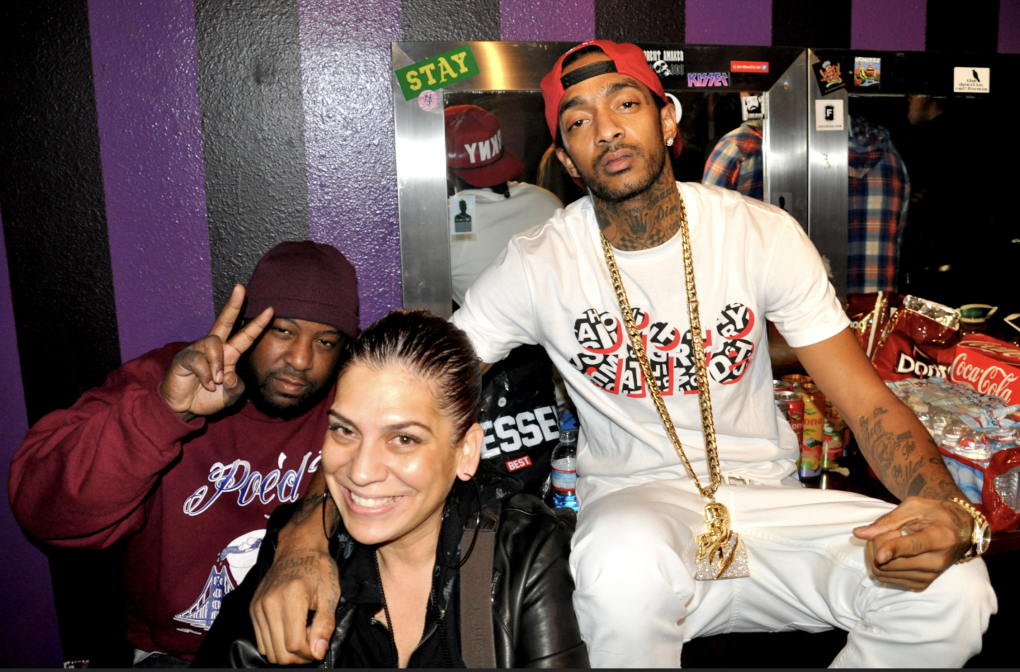
"caption": "Cultural historian and photographer, D-Ray (center) takes a photo with the late legendary MCs The Jacka (left) and Nipsey Hussle (right) backstage at the New Parish in Oakland in 2013.",
"description": null,
"title": "Cultural historian and photographer, D-Ray (center) takes a photo with the late legendary MCs The Jacka (left) and Nipsey Hussle (right) backstage at the New Parish in Oakland in 2013.",
"credit": "Cellski",
"status": "inherit",
"altTag": "Cultural historian and photographer, D-Ray (center) takes a photo with the late legendary MCs The Jacka (left) and Nipsey Hussle (right) backstage at the New Parish in Oakland in 2013.",
"isLoading": false,
"fetchFailed": false
},
"arts_13951040": {
"type": "attachments",
"id": "arts_13951040",
"meta": {
"index": "attachments_1716263798",
"site": "arts",
"id": "13951040",
"found": true
},
"parent": 13951001,
"imgSizes": {
"thumbnail": {
"file": "https://cdn.kqed.org/wp-content/uploads/sites/2/2024/01/sanjose_coverfinal_720-160x90.jpg",
"width": 160,
"mimeType": "image/jpeg",
"height": 90
},
"post-thumbnail": {
"file": "https://cdn.kqed.org/wp-content/uploads/sites/2/2024/01/sanjose_coverfinal_720-672x372.jpg",
"width": 672,
"mimeType": "image/jpeg",
"height": 372
},
"kqedFullSize": {
"file": "https://cdn.kqed.org/wp-content/uploads/sites/2/2024/01/sanjose_coverfinal_720.jpg",
"width": 720,
"height": 405
}
},
"publishDate": 1706254303,
"modified": 1706254361,
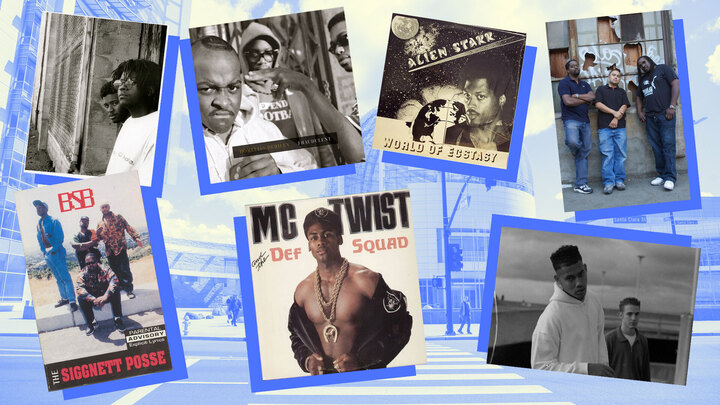
"caption": "San Jose's rap history goes far deeper than you may think.",
"description": null,
"title": "sanjose_coverfinal_720",
"credit": "Collage by Sarah Hotchkiss",
"status": "inherit",
"altTag": null,
"isLoading": false,
"fetchFailed": false
},
"arts_13950872": {
"type": "attachments",
"id": "arts_13950872",
"meta": {
"index": "attachments_1716263798",
"site": "arts",
"id": "13950872",
"found": true
},
"parent": 13950855,
"imgSizes": {
"twentyfourteen-full-width": {
"file": "https://cdn.kqed.org/wp-content/uploads/sites/2/2024/01/img_6475_720-576x576.png",
"width": 576,
"mimeType": "image/png",
"height": 576
},
"thumbnail": {
"file": "https://cdn.kqed.org/wp-content/uploads/sites/2/2024/01/img_6475_720-160x200.png",
"width": 160,
"mimeType": "image/png",
"height": 200
},
"post-thumbnail": {
"file": "https://cdn.kqed.org/wp-content/uploads/sites/2/2024/01/img_6475_720-576x372.png",
"width": 576,
"mimeType": "image/png",
"height": 372
},
"kqedFullSize": {
"file": "https://cdn.kqed.org/wp-content/uploads/sites/2/2024/01/img_6475_720.png",
"width": 576,
"height": 720
}
},
"publishDate": 1706059280,
"modified": 1706059821,
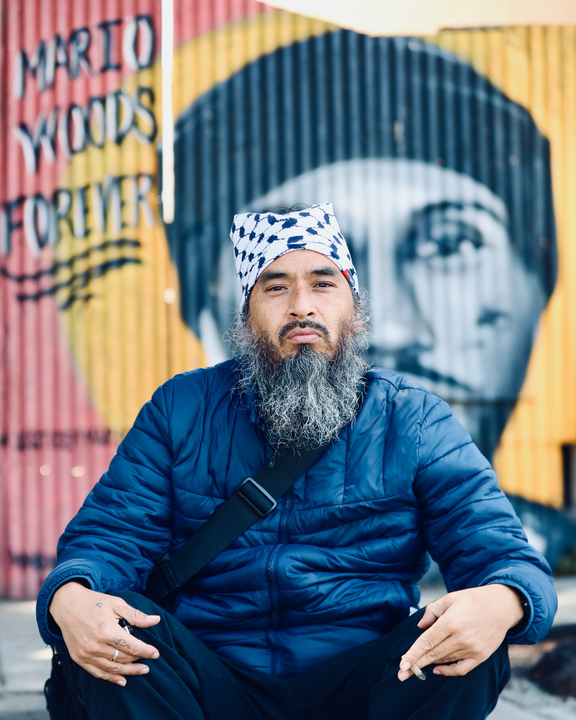
"caption": "Rapper and political activist Equipto sits in front of a mural dedicated to Mario Woods, who was killed by SFPD in 2015. ",
"description": "Rapper and political activist Equipto sits in front of a mural dedicated to Mario Woods, who was killed by SFPD in 2015. ",
"title": "Rapper and political activist Equipto sits in front of a mural dedicated to Mario Woods, who was killed by SFPD in 2015.",
"credit": "Stephen Flynn",
"status": "inherit",
"altTag": "Rapper and political activist Equipto sits in front of a mural dedicated to Mario Woods, who was killed by SFPD in 2015.",
"isLoading": false,
"fetchFailed": false
},
"arts_13950814": {
"type": "attachments",
"id": "arts_13950814",
"meta": {
"index": "attachments_1716263798",
"site": "arts",
"id": "13950814",
"found": true
},
"parent": 13950805,
"imgSizes": {
"thumbnail": {
"file": "https://cdn.kqed.org/wp-content/uploads/sites/2/2024/01/Andre3000.16.9-160x90.jpg",
"width": 160,
"mimeType": "image/jpeg",
"height": 90
},
"post-thumbnail": {
"file": "https://cdn.kqed.org/wp-content/uploads/sites/2/2024/01/Andre3000.16.9-672x372.jpg",
"width": 672,
"mimeType": "image/jpeg",
"height": 372
},
"kqedFullSize": {
"file": "https://cdn.kqed.org/wp-content/uploads/sites/2/2024/01/Andre3000.16.9.jpg",
"width": 719,
"height": 404
}
},
"publishDate": 1706036457,
"modified": 1706036543,
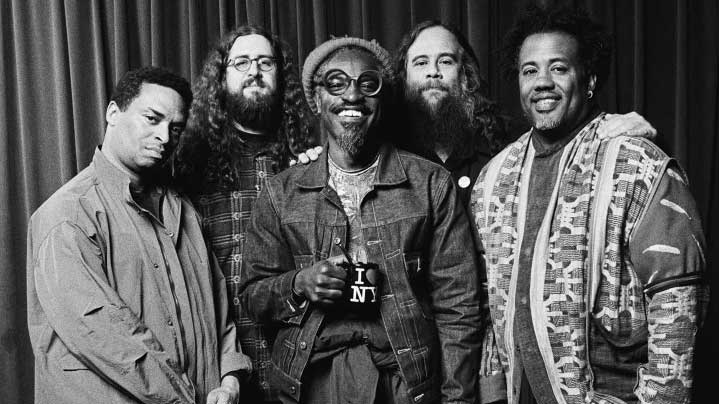
"caption": "André 3000's New Blue Sun Live tour comes to San Francisco Feb. 20–24, with a band including Carlos Niño, Nate Mercereau, Surya Botofasina and Deantoni Parks. ",
"description": null,
"title": "Andre3000.16.9",
"credit": "Todd Weaver",
"status": "inherit",
"altTag": null,
"isLoading": false,
"fetchFailed": false
},
"arts_13934346": {
"type": "attachments",
"id": "arts_13934346",
"meta": {
"index": "attachments_1716263798",
"site": "arts",
"id": "13934346",
"found": true
},
"parent": 13934324,
"imgSizes": {
"twentyfourteen-full-width": {
"file": "https://ww2.kqed.org/app/uploads/sites/2/2023/09/DSC00055-1038x576.jpg",
"width": 1038,
"mimeType": "image/jpeg",
"height": 576
},
"thumbnail": {
"file": "https://ww2.kqed.org/app/uploads/sites/2/2023/09/DSC00055-160x120.jpg",
"width": 160,
"mimeType": "image/jpeg",
"height": 120
},
"post-thumbnail": {
"file": "https://ww2.kqed.org/app/uploads/sites/2/2023/09/DSC00055-672x372.jpg",
"width": 672,
"mimeType": "image/jpeg",
"height": 372
},
"kqedFullSize": {
"file": "https://ww2.kqed.org/app/uploads/sites/2/2023/09/DSC00055.jpg",
"width": 1920,
"height": 1440
},
"large": {
"file": "https://ww2.kqed.org/app/uploads/sites/2/2023/09/DSC00055-1020x765.jpg",
"width": 1020,
"mimeType": "image/jpeg",
"height": 765
},
"1536x1536": {
"file": "https://ww2.kqed.org/app/uploads/sites/2/2023/09/DSC00055-1536x1152.jpg",
"width": 1536,
"mimeType": "image/jpeg",
"height": 1152
},
"medium": {
"file": "https://ww2.kqed.org/app/uploads/sites/2/2023/09/DSC00055-800x600.jpg",
"width": 800,
"mimeType": "image/jpeg",
"height": 600
},
"medium_large": {
"file": "https://ww2.kqed.org/app/uploads/sites/2/2023/09/DSC00055-768x576.jpg",
"width": 768,
"mimeType": "image/jpeg",
"height": 576
}
},
"publishDate": 1693960061,
"modified": 1693960433,
"caption": "Mistah F.A.B. at Hiero Day in Frank Ogawa Plaza, Oakland, Sept. 4, 2023.",
"description": null,
"title": "DSC00055",
"credit": "Eric Arnold/KQED",
"status": "inherit",
"altTag": null,
"isLoading": false,
"fetchFailed": false
},
"arts_13950393": {
"type": "attachments",
"id": "arts_13950393",
"meta": {
"index": "attachments_1716263798",
"site": "arts",
"id": "13950393",
"found": true
},
"parent": 13950392,
"imgSizes": {
"twentyfourteen-full-width": {
"file": "https://cdn.kqed.org/wp-content/uploads/sites/2/2024/01/Screenshot-2024-01-16-at-8.53.22-AM-1038x576.png",
"width": 1038,
"mimeType": "image/png",
"height": 576
},
"thumbnail": {
"file": "https://cdn.kqed.org/wp-content/uploads/sites/2/2024/01/Screenshot-2024-01-16-at-8.53.22-AM-160x183.png",
"width": 160,
"mimeType": "image/png",
"height": 183
},
"post-thumbnail": {
"file": "https://cdn.kqed.org/wp-content/uploads/sites/2/2024/01/Screenshot-2024-01-16-at-8.53.22-AM-672x372.png",
"width": 672,
"mimeType": "image/png",
"height": 372
},
"kqedFullSize": {
"file": "https://cdn.kqed.org/wp-content/uploads/sites/2/2024/01/Screenshot-2024-01-16-at-8.53.22-AM.png",
"width": 1096,
"height": 1254
},
"large": {
"file": "https://cdn.kqed.org/wp-content/uploads/sites/2/2024/01/Screenshot-2024-01-16-at-8.53.22-AM-1020x1167.png",
"width": 1020,
"mimeType": "image/png",
"height": 1167
},
"medium": {
"file": "https://cdn.kqed.org/wp-content/uploads/sites/2/2024/01/Screenshot-2024-01-16-at-8.53.22-AM-800x915.png",
"width": 800,
"mimeType": "image/png",
"height": 915
},
"medium_large": {
"file": "https://cdn.kqed.org/wp-content/uploads/sites/2/2024/01/Screenshot-2024-01-16-at-8.53.22-AM-768x879.png",
"width": 768,
"mimeType": "image/png",
"height": 879
}
},
"publishDate": 1705424141,
"modified": 1705424545,
"caption": "Rob Woods.",
"description": "Rob Woods poses for a photo while standing under a large palm leaf and wearing a multicolored hooded jacket. ",
"title": "Rob Woods.",
"credit": "Dorean Raye",
"status": "inherit",
"altTag": "Rob Woods.",
"isLoading": false,
"fetchFailed": false
},
"arts_13940385": {
"type": "attachments",
"id": "arts_13940385",
"meta": {
"index": "attachments_1716263798",
"site": "arts",
"id": "13940385",
"found": true
},
"parent": 13940247,
"imgSizes": {
"twentyfourteen-full-width": {
"file": "https://cdn.kqed.org/wp-content/uploads/sites/2/2024/01/20230426-DSC07273-1038x576.jpg",
"width": 1038,
"mimeType": "image/jpeg",
"height": 576
},
"thumbnail": {
"file": "https://cdn.kqed.org/wp-content/uploads/sites/2/2024/01/20230426-DSC07273-160x107.jpg",
"width": 160,
"mimeType": "image/jpeg",
"height": 107
},
"post-thumbnail": {
"file": "https://cdn.kqed.org/wp-content/uploads/sites/2/2024/01/20230426-DSC07273-672x372.jpg",
"width": 672,
"mimeType": "image/jpeg",
"height": 372
},
"kqedFullSize": {
"file": "https://cdn.kqed.org/wp-content/uploads/sites/2/2024/01/20230426-DSC07273-scaled.jpg",
"width": 2560,
"height": 1707
},
"2048x2048": {
"file": "https://cdn.kqed.org/wp-content/uploads/sites/2/2024/01/20230426-DSC07273-2048x1365.jpg",
"width": 2048,
"mimeType": "image/jpeg",
"height": 1365
},
"large": {
"file": "https://cdn.kqed.org/wp-content/uploads/sites/2/2024/01/20230426-DSC07273-1020x680.jpg",
"width": 1020,
"mimeType": "image/jpeg",
"height": 680
},
"1536x1536": {
"file": "https://cdn.kqed.org/wp-content/uploads/sites/2/2024/01/20230426-DSC07273-1536x1024.jpg",
"width": 1536,
"mimeType": "image/jpeg",
"height": 1024
},
"full-width": {
"file": "https://cdn.kqed.org/wp-content/uploads/sites/2/2024/01/20230426-DSC07273-1920x1280.jpg",
"width": 1920,
"mimeType": "image/jpeg",
"height": 1280
},
"medium": {
"file": "https://cdn.kqed.org/wp-content/uploads/sites/2/2024/01/20230426-DSC07273-800x533.jpg",
"width": 800,
"mimeType": "image/jpeg",
"height": 533
},
"medium_large": {
"file": "https://cdn.kqed.org/wp-content/uploads/sites/2/2024/01/20230426-DSC07273-768x512.jpg",
"width": 768,
"mimeType": "image/jpeg",
"height": 512
}
},
"publishDate": 1704994150,
"modified": 1704994756,
"caption": "Mitchell (right) is attracting a national following with his confessional lyrics and conversations on Discord. ",
"description": null,
"title": "20230426-DSC07273",
"credit": "Courtesy of Thizzler",
"status": "inherit",
"altTag": "A rapper poses in front of a graffitied fence, with a group of friends standing in the background behind him.",
"isLoading": false,
"fetchFailed": false
},
"arts_13939829": {
"type": "attachments",
"id": "arts_13939829",
"meta": {
"index": "attachments_1716263798",
"site": "arts",
"id": "13939829",
"found": true
},
"parent": 13939767,
"imgSizes": {
"twentyfourteen-full-width": {
"file": "https://cdn.kqed.org/wp-content/uploads/sites/2/2023/12/BWneg-3-1038x576.jpg",
"width": 1038,
"mimeType": "image/jpeg",
"height": 576
},
"thumbnail": {
"file": "https://cdn.kqed.org/wp-content/uploads/sites/2/2023/12/BWneg-3-160x110.jpg",
"width": 160,
"mimeType": "image/jpeg",
"height": 110
},
"post-thumbnail": {
"file": "https://cdn.kqed.org/wp-content/uploads/sites/2/2023/12/BWneg-3-672x372.jpg",
"width": 672,
"mimeType": "image/jpeg",
"height": 372
},
"kqedFullSize": {
"file": "https://cdn.kqed.org/wp-content/uploads/sites/2/2023/12/BWneg-3.jpg",
"width": 1920,
"height": 1322
},
"large": {
"file": "https://cdn.kqed.org/wp-content/uploads/sites/2/2023/12/BWneg-3-1020x702.jpg",
"width": 1020,
"mimeType": "image/jpeg",
"height": 702
},
"1536x1536": {
"file": "https://cdn.kqed.org/wp-content/uploads/sites/2/2023/12/BWneg-3-1536x1058.jpg",
"width": 1536,
"mimeType": "image/jpeg",
"height": 1058
},
"medium": {
"file": "https://cdn.kqed.org/wp-content/uploads/sites/2/2023/12/BWneg-3-800x551.jpg",
"width": 800,
"mimeType": "image/jpeg",
"height": 551
},
"medium_large": {
"file": "https://cdn.kqed.org/wp-content/uploads/sites/2/2023/12/BWneg-3-768x529.jpg",
"width": 768,
"mimeType": "image/jpeg",
"height": 529
}
},
"publishDate": 1703701364,
"modified": 1703737947,
"caption": "(L–R) Charizma and Peanut Butter Wolf on top of San Jose State parking garage, 1992. (Outtake from 'Big Shots' album cover shoot.)",
"description": null,
"title": "B&Wneg-3",
"credit": "Theresa Castro",
"status": "inherit",
"altTag": null,
"isLoading": false,
"fetchFailed": false
},
"arts_13329186": {
"type": "attachments",
"id": "arts_13329186",
"meta": {
"index": "attachments_1716263798",
"site": "arts",
"id": "13329186",
"found": true
},
"parent": 13329185,
"imgSizes": {
"small": {
"file": "https://cdn.kqed.org/wp-content/uploads/sites/2/2017/05/BottleRock.BlackThought.Roo_-520x293.jpg",
"width": 520,
"mimeType": "image/jpeg",
"height": 293
},
"twentyfourteen-full-width": {
"file": "https://cdn.kqed.org/wp-content/uploads/sites/2/2017/05/BottleRock.BlackThought.Roo_-1038x576.jpg",
"width": 1038,
"mimeType": "image/jpeg",
"height": 576
},
"thumbnail": {
"file": "https://cdn.kqed.org/wp-content/uploads/sites/2/2017/05/BottleRock.BlackThought.Roo_-160x90.jpg",
"width": 160,
"mimeType": "image/jpeg",
"height": 90
},
"fd-sm": {
"file": "https://cdn.kqed.org/wp-content/uploads/sites/2/2017/05/BottleRock.BlackThought.Roo_-960x540.jpg",
"width": 960,
"mimeType": "image/jpeg",
"height": 540
},
"post-thumbnail": {
"file": "https://cdn.kqed.org/wp-content/uploads/sites/2/2017/05/BottleRock.BlackThought.Roo_-672x372.jpg",
"width": 672,
"mimeType": "image/jpeg",
"height": 372
},
"xsmall": {
"file": "https://cdn.kqed.org/wp-content/uploads/sites/2/2017/05/BottleRock.BlackThought.Roo_-375x211.jpg",
"width": 375,
"mimeType": "image/jpeg",
"height": 211
},
"kqedFullSize": {
"file": "https://cdn.kqed.org/wp-content/uploads/sites/2/2017/05/BottleRock.BlackThought.Roo_.jpg",
"width": 1920,
"height": 1080
},
"large": {
"file": "https://cdn.kqed.org/wp-content/uploads/sites/2/2017/05/BottleRock.BlackThought.Roo_-1020x574.jpg",
"width": 1020,
"mimeType": "image/jpeg",
"height": 574
},
"xlarge": {
"file": "https://cdn.kqed.org/wp-content/uploads/sites/2/2017/05/BottleRock.BlackThought.Roo_-1180x664.jpg",
"width": 1180,
"mimeType": "image/jpeg",
"height": 664
},
"guest-author-50": {
"file": "https://cdn.kqed.org/wp-content/uploads/sites/2/2017/05/BottleRock.BlackThought.Roo_-50x50.jpg",
"width": 50,
"mimeType": "image/jpeg",
"height": 50
},
"guest-author-96": {
"file": "https://cdn.kqed.org/wp-content/uploads/sites/2/2017/05/BottleRock.BlackThought.Roo_-96x96.jpg",
"width": 96,
"mimeType": "image/jpeg",
"height": 96
},
"medium": {
"file": "https://cdn.kqed.org/wp-content/uploads/sites/2/2017/05/BottleRock.BlackThought.Roo_-800x450.jpg",
"width": 800,
"mimeType": "image/jpeg",
"height": 450
},
"guest-author-64": {
"file": "https://cdn.kqed.org/wp-content/uploads/sites/2/2017/05/BottleRock.BlackThought.Roo_-64x64.jpg",
"width": 64,
"mimeType": "image/jpeg",
"height": 64
},
"guest-author-32": {
"file": "https://cdn.kqed.org/wp-content/uploads/sites/2/2017/05/BottleRock.BlackThought.Roo_-32x32.jpg",
"width": 32,
"mimeType": "image/jpeg",
"height": 32
},
"fd-lrg": {
"file": "https://cdn.kqed.org/wp-content/uploads/sites/2/2017/05/BottleRock.BlackThought.Roo_-1920x1080.jpg",
"width": 1920,
"mimeType": "image/jpeg",
"height": 1080
},
"fd-med": {
"file": "https://cdn.kqed.org/wp-content/uploads/sites/2/2017/05/BottleRock.BlackThought.Roo_-1180x664.jpg",
"width": 1180,
"mimeType": "image/jpeg",
"height": 664
},
"full-width": {
"file": "https://cdn.kqed.org/wp-content/uploads/sites/2/2017/05/BottleRock.BlackThought.Roo_-1920x1080.jpg",
"width": 1920,
"mimeType": "image/jpeg",
"height": 1080
},
"detail": {
"file": "https://cdn.kqed.org/wp-content/uploads/sites/2/2017/05/BottleRock.BlackThought.Roo_-150x150.jpg",
"width": 150,
"mimeType": "image/jpeg",
"height": 150
},
"medium_large": {
"file": "https://cdn.kqed.org/wp-content/uploads/sites/2/2017/05/BottleRock.BlackThought.Roo_-768x432.jpg",
"width": 768,
"mimeType": "image/jpeg",
"height": 432
},
"guest-author-128": {
"file": "https://cdn.kqed.org/wp-content/uploads/sites/2/2017/05/BottleRock.BlackThought.Roo_-128x128.jpg",
"width": 128,
"mimeType": "image/jpeg",
"height": 128
},
"xxsmall": {
"file": "https://cdn.kqed.org/wp-content/uploads/sites/2/2017/05/BottleRock.BlackThought.Roo_-240x135.jpg",
"width": 240,
"mimeType": "image/jpeg",
"height": 135
}
},
"publishDate": 1496074356,
"modified": 1702015408,
"caption": "Black Thought of the Roots performs at the BottleRock music festival in Napa, May 28, 2017.",
"description": "Black Thought of the Roots performs at BottleRock in Napa, May 28, 2017.",
"title": "BottleRock.BlackThought.Roo",
"credit": "Estefany Gonzalez for KQED",
"status": "inherit",
"altTag": "Black Thought of the Roots performs at BottleRock in Napa, May 28, 2017.",
"isLoading": false,
"fetchFailed": false
},
"arts_13938954": {
"type": "attachments",
"id": "arts_13938954",
"meta": {
"index": "attachments_1716263798",
"site": "arts",
"id": "13938954",
"found": true
},
"parent": 13938947,
"imgSizes": {
"twentyfourteen-full-width": {
"file": "https://cdn.kqed.org/wp-content/uploads/sites/2/2023/12/IMG_0901-1038x576.jpeg",
"width": 1038,
"mimeType": "image/jpeg",
"height": 576
},
"thumbnail": {
"file": "https://cdn.kqed.org/wp-content/uploads/sites/2/2023/12/IMG_0901-160x99.jpeg",
"width": 160,
"mimeType": "image/jpeg",
"height": 99
},
"post-thumbnail": {
"file": "https://cdn.kqed.org/wp-content/uploads/sites/2/2023/12/IMG_0901-672x372.jpeg",
"width": 672,
"mimeType": "image/jpeg",
"height": 372
},
"kqedFullSize": {
"file": "https://cdn.kqed.org/wp-content/uploads/sites/2/2023/12/IMG_0901-scaled.jpeg",
"width": 2560,
"height": 1589
},
"2048x2048": {
"file": "https://cdn.kqed.org/wp-content/uploads/sites/2/2023/12/IMG_0901-2048x1271.jpeg",
"width": 2048,
"mimeType": "image/jpeg",
"height": 1271
},
"large": {
"file": "https://cdn.kqed.org/wp-content/uploads/sites/2/2023/12/IMG_0901-1020x633.jpeg",
"width": 1020,
"mimeType": "image/jpeg",
"height": 633
},
"1536x1536": {
"file": "https://cdn.kqed.org/wp-content/uploads/sites/2/2023/12/IMG_0901-1536x953.jpeg",
"width": 1536,
"mimeType": "image/jpeg",
"height": 953
},
"full-width": {
"file": "https://cdn.kqed.org/wp-content/uploads/sites/2/2023/12/IMG_0901-1920x1191.jpeg",
"width": 1920,
"mimeType": "image/jpeg",
"height": 1191
},
"medium": {
"file": "https://cdn.kqed.org/wp-content/uploads/sites/2/2023/12/IMG_0901-800x496.jpeg",
"width": 800,
"mimeType": "image/jpeg",
"height": 496
},
"medium_large": {
"file": "https://cdn.kqed.org/wp-content/uploads/sites/2/2023/12/IMG_0901-768x477.jpeg",
"width": 768,
"mimeType": "image/jpeg",
"height": 477
}
},
"publishDate": 1701819063,
"modified": 1701819224,
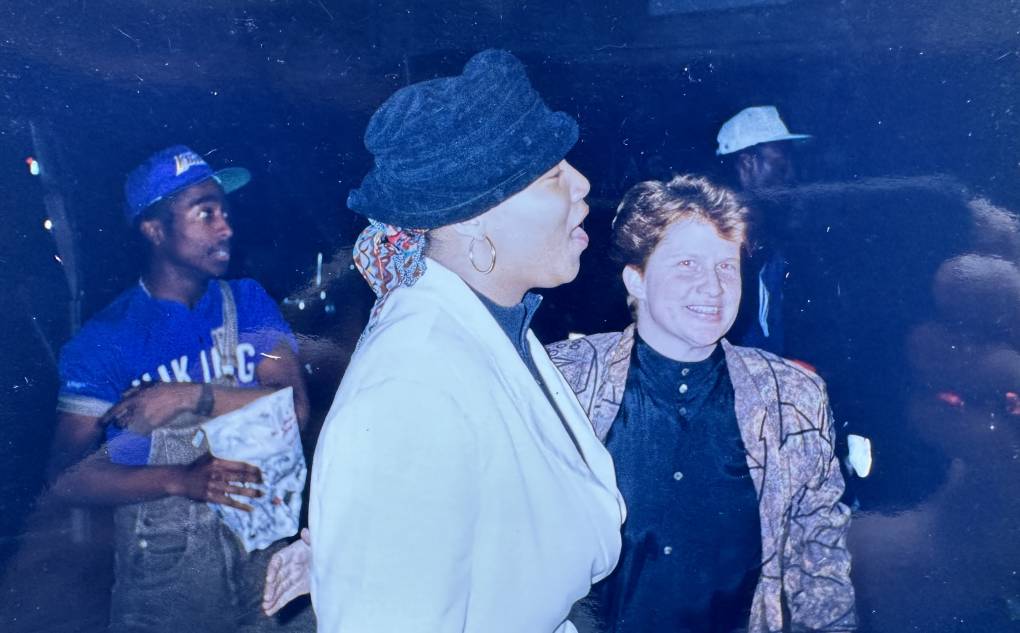
"caption": "Tupac, Queen Latifah and Page Hodel at Hodel's LGBTQ+ party, The Box, in the early '90s.",
"description": null,
"title": "IMG_0901",
"credit": "Courtesy of Page Hodel",
"status": "inherit",
"altTag": null,
"isLoading": false,
"fetchFailed": false
},
"arts_13936795": {
"type": "attachments",
"id": "arts_13936795",
"meta": {
"index": "attachments_1716263798",
"site": "arts",
"id": "13936795",
"found": true
},
"parent": 13936776,
"imgSizes": {
"twentyfourteen-full-width": {
"file": "https://ww2.kqed.org/app/uploads/sites/2/2023/10/E-40-74-MV-KQED-1038x576.jpg",
"width": 1038,
"mimeType": "image/jpeg",
"height": 576
},
"thumbnail": {
"file": "https://ww2.kqed.org/app/uploads/sites/2/2023/10/E-40-74-MV-KQED-160x107.jpg",
"width": 160,
"mimeType": "image/jpeg",
"height": 107
},
"post-thumbnail": {
"file": "https://ww2.kqed.org/app/uploads/sites/2/2023/10/E-40-74-MV-KQED-672x372.jpg",
"width": 672,
"mimeType": "image/jpeg",
"height": 372
},
"kqedFullSize": {
"file": "https://ww2.kqed.org/app/uploads/sites/2/2023/10/E-40-74-MV-KQED.jpg",
"width": 2000,
"height": 1334
},
"large": {
"file": "https://ww2.kqed.org/app/uploads/sites/2/2023/10/E-40-74-MV-KQED-1020x680.jpg",
"width": 1020,
"mimeType": "image/jpeg",
"height": 680
},
"1536x1536": {
"file": "https://ww2.kqed.org/app/uploads/sites/2/2023/10/E-40-74-MV-KQED-1536x1025.jpg",
"width": 1536,
"mimeType": "image/jpeg",
"height": 1025
},
"full-width": {
"file": "https://ww2.kqed.org/app/uploads/sites/2/2023/10/E-40-74-MV-KQED-1920x1281.jpg",
"width": 1920,
"mimeType": "image/jpeg",
"height": 1281
},
"medium": {
"file": "https://ww2.kqed.org/app/uploads/sites/2/2023/10/E-40-74-MV-KQED-800x534.jpg",
"width": 800,
"mimeType": "image/jpeg",
"height": 534
},
"medium_large": {
"file": "https://ww2.kqed.org/app/uploads/sites/2/2023/10/E-40-74-MV-KQED-768x512.jpg",
"width": 768,
"mimeType": "image/jpeg",
"height": 512
}
},
"publishDate": 1697932080,
"modified": 1700246133,
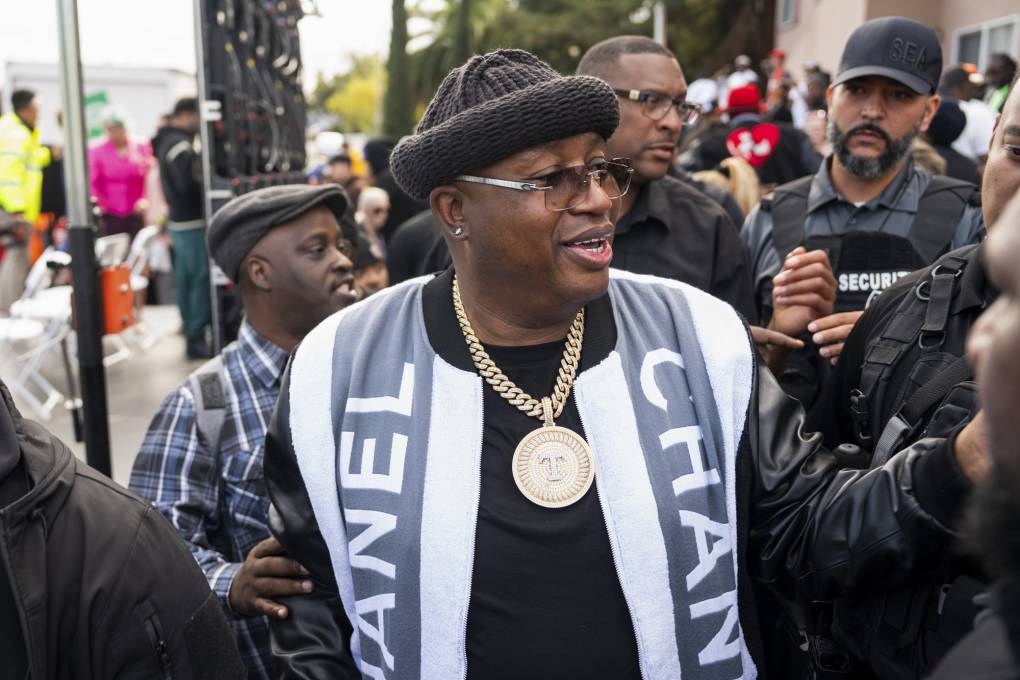
"caption": "Earl 'E-40' Stevens greets community members after receiving the key to the city and a street named in his honor in Vallejo, Oct. 21, 2023. ",
"description": null,
"title": "E-40-74-MV-KQED",
"credit": "Michaela Vatcheva for KQED",
"status": "inherit",
"altTag": "Earl “E-40” Stevens greets community members after the honorary ceremony on Oct. 21, 2023 in Vallejo, Calif.",
"isLoading": false,
"fetchFailed": false
},
"arts_13937341": {
"type": "attachments",
"id": "arts_13937341",
"meta": {
"index": "attachments_1716263798",
"site": "arts",
"id": "13937341",
"found": true
},
"parent": 13937331,
"imgSizes": {
"twentyfourteen-full-width": {
"file": "https://ww2.kqed.org/app/uploads/sites/2/2023/11/LaRussell-Backyard-Residency-Show-7-Best-36-1038x576.jpg",
"width": 1038,
"mimeType": "image/jpeg",
"height": 576
},
"thumbnail": {
"file": "https://ww2.kqed.org/app/uploads/sites/2/2023/11/LaRussell-Backyard-Residency-Show-7-Best-36-160x107.jpg",
"width": 160,
"mimeType": "image/jpeg",
"height": 107
},
"post-thumbnail": {
"file": "https://ww2.kqed.org/app/uploads/sites/2/2023/11/LaRussell-Backyard-Residency-Show-7-Best-36-672x372.jpg",
"width": 672,
"mimeType": "image/jpeg",
"height": 372
},
"kqedFullSize": {
"file": "https://ww2.kqed.org/app/uploads/sites/2/2023/11/LaRussell-Backyard-Residency-Show-7-Best-36.jpg",
"width": 1920,
"height": 1280
},
"large": {
"file": "https://ww2.kqed.org/app/uploads/sites/2/2023/11/LaRussell-Backyard-Residency-Show-7-Best-36-1020x680.jpg",
"width": 1020,
"mimeType": "image/jpeg",
"height": 680
},
"1536x1536": {
"file": "https://ww2.kqed.org/app/uploads/sites/2/2023/11/LaRussell-Backyard-Residency-Show-7-Best-36-1536x1024.jpg",
"width": 1536,
"mimeType": "image/jpeg",
"height": 1024
},
"medium": {
"file": "https://ww2.kqed.org/app/uploads/sites/2/2023/11/LaRussell-Backyard-Residency-Show-7-Best-36-800x533.jpg",
"width": 800,
"mimeType": "image/jpeg",
"height": 533
},
"medium_large": {
"file": "https://ww2.kqed.org/app/uploads/sites/2/2023/11/LaRussell-Backyard-Residency-Show-7-Best-36-768x512.jpg",
"width": 768,
"mimeType": "image/jpeg",
"height": 512
}
},
"publishDate": 1698859076,
"modified": 1698862871,
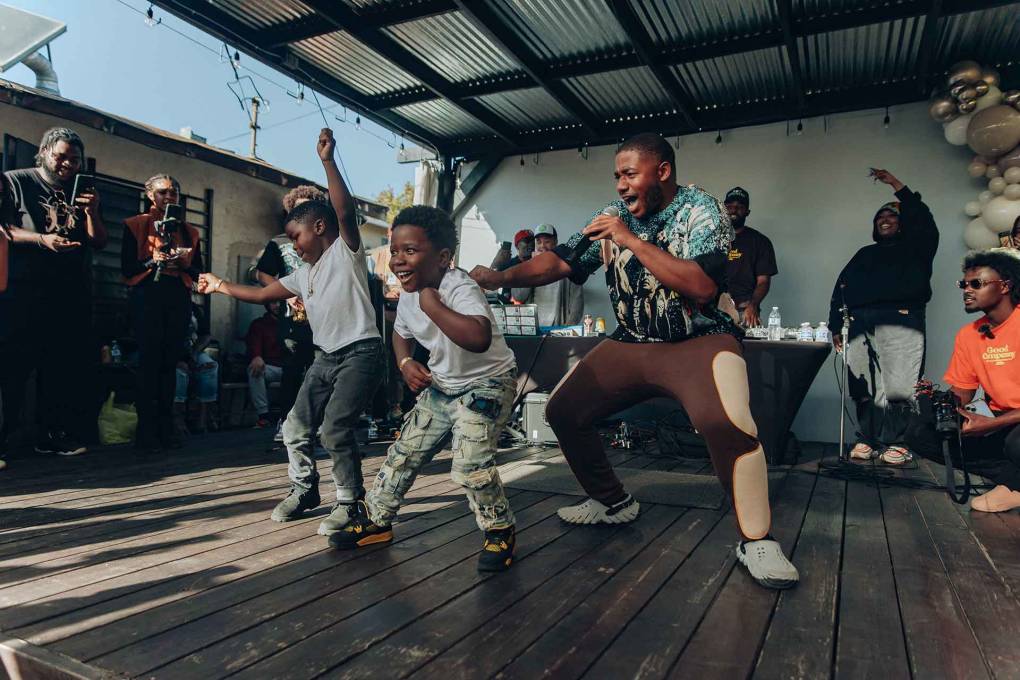
"caption": "LaRussell performs beneath the pergola in his backyard, with two young guests, on Oct. 1, 2023.",
"description": null,
"title": "LaRussell---Backyard-Residency---Show-7---Best-36",
"credit": "Jason Hayes",
"status": "inherit",
"altTag": "two young boys dance on a deck beneath a pergola while a 29-year-old rapper eggs them on",
"isLoading": false,
"fetchFailed": false
}
},
"audioPlayerReducer": {
"postId": "stream_live",
"isPaused": true,
"isPlaying": false,
"pfsActive": false,
"pledgeModalIsOpen": true,
"playerDrawerIsOpen": false,
"liveAudioPlayStartedAt": 0,
"liveAudioPlayContext": ""
},
"authorsReducer": {
"byline_arts_13951001": {
"type": "authors",
"id": "byline_arts_13951001",
"meta": {
"override": true
},
"slug": "byline_arts_13951001",
"name": "J. Darrah",
"isLoading": false
},
"byline_arts_13939767": {
"type": "authors",
"id": "byline_arts_13939767",
"meta": {
"override": true
},
"slug": "byline_arts_13939767",
"name": "David Ma",
"isLoading": false
},
"byline_arts_13938193": {
"type": "authors",
"id": "byline_arts_13938193",
"meta": {
"override": true
},
"slug": "byline_arts_13938193",
"name": "Jonathan Landrum Jr, Associated Press",
"isLoading": false
},
"byline_arts_13937331": {
"type": "authors",
"id": "byline_arts_13937331",
"meta": {
"override": true
},
"slug": "byline_arts_13937331",
"name": "Kayla Henderson-Wood",
"isLoading": false
},
"gmeline": {
"type": "authors",
"id": "185",
"meta": {
"index": "authors_1716337520",
"id": "185",
"found": true
},
"name": "Gabe Meline",
"firstName": "Gabe",
"lastName": "Meline",
"slug": "gmeline",
"email": "gmeline@kqed.org",
"display_author_email": true,
"staff_mastheads": [
"arts"
],
"title": "Senior Editor, KQED Arts & Culture",
"bio": "Gabe Meline entered journalism at age 15 making photocopied zines, and has since earned awards from the Edward R. Murrow Awards, the Society for Professional Journalists, the Online Journalism Awards, the Association of Alternative Newsweeklies and the California Newspaper Publishers Association. Prior to KQED, he was the editor of the \u003cem>North Bay Bohemian\u003c/em> and a touring musician. He lives with his wife and daughter in his hometown of Santa Rosa, CA.",
"avatar": "https://secure.gravatar.com/avatar/5bebe57be0d8bc2dd318934feb47299e2d2d10cba28d09d8d7afb389a2ce2bdd?s=600&d=blank&r=g",
"twitter": null,
"bluesky": null,
"facebook": null,
"instagram": null,
"linkedin": null,
"sites": [
{
"site": "",
"roles": [
"editor"
]
},
{
"site": "arts",
"roles": [
"administrator"
]
},
{
"site": "artschool",
"roles": [
"editor"
]
},
{
"site": "news",
"roles": [
"author"
]
},
{
"site": "pop",
"roles": [
"editor"
]
},
{
"site": "bayareabites",
"roles": [
"editor"
]
},
{
"site": "food",
"roles": [
"editor"
]
},
{
"site": "forum",
"roles": [
"administrator"
]
},
{
"site": "liveblog",
"roles": [
"editor"
]
},
{
"site": "hiphop",
"roles": [
"editor"
]
}
],
"headData": {
"title": "Gabe Meline | KQED",
"description": "Senior Editor, KQED Arts & Culture",
"ogImgSrc": "https://secure.gravatar.com/avatar/5bebe57be0d8bc2dd318934feb47299e2d2d10cba28d09d8d7afb389a2ce2bdd?s=600&d=blank&r=g",
"twImgSrc": "https://secure.gravatar.com/avatar/5bebe57be0d8bc2dd318934feb47299e2d2d10cba28d09d8d7afb389a2ce2bdd?s=600&d=blank&r=g"
},
"isLoading": false,
"link": "/author/gmeline"
},
"nvoynovskaya": {
"type": "authors",
"id": "11387",
"meta": {
"index": "authors_1716337520",
"id": "11387",
"found": true
},
"name": "Nastia Voynovskaya",
"firstName": "Nastia",
"lastName": "Voynovskaya",
"slug": "nvoynovskaya",
"email": "nvoynovskaya@kqed.org",
"display_author_email": false,
"staff_mastheads": [
"arts"
],
"title": "Editor and reporter",
"bio": "Nastia Voynovskaya is a reporter, editor and host at KQED Arts & Culture. She's been covering the arts in the Bay Area for over a decade, with a focus on music, queer culture, labor issues and grassroots organizing. She has edited KQED story series such as Trans Bay: A History of San Francisco's Gender-Diverse Community, and co-created KQED's Bay Area hip-hop history project, That's My Word. Nastia's work has been recognized by the Society of Professional Journalists and San Francisco Press Club. She regularly appears on podcasts and radio programs, including NPR's All Songs Considered, and hosts live events where music, culture and conversation meet.",
"avatar": "https://secure.gravatar.com/avatar/5025ee460e5a85d69ca20ea6c6f2f80d7e17795c828f61ea3aecfcd924e9042e?s=600&d=blank&r=g",
"twitter": null,
"bluesky": null,
"facebook": null,
"instagram": "https://www.instagram.com/nananastia/",
"linkedin": null,
"sites": [
{
"site": "",
"roles": [
"editor"
]
},
{
"site": "arts",
"roles": [
"administrator"
]
},
{
"site": "news",
"roles": [
"editor"
]
},
{
"site": "pop",
"roles": [
"administrator"
]
},
{
"site": "bayareabites",
"roles": [
"editor"
]
},
{
"site": "podcasts",
"roles": [
"editor"
]
},
{
"site": "hiphop",
"roles": [
"editor"
]
}
],
"headData": {
"title": "Nastia Voynovskaya | KQED",
"description": "Editor and reporter",
"ogImgSrc": "https://secure.gravatar.com/avatar/5025ee460e5a85d69ca20ea6c6f2f80d7e17795c828f61ea3aecfcd924e9042e?s=600&d=blank&r=g",
"twImgSrc": "https://secure.gravatar.com/avatar/5025ee460e5a85d69ca20ea6c6f2f80d7e17795c828f61ea3aecfcd924e9042e?s=600&d=blank&r=g"
},
"isLoading": false,
"link": "/author/nvoynovskaya"
},
"ogpenn": {
"type": "authors",
"id": "11491",
"meta": {
"index": "authors_1716337520",
"id": "11491",
"found": true
},
"name": "Pendarvis Harshaw",
"firstName": "Pendarvis",
"lastName": "Harshaw",
"slug": "ogpenn",
"email": "ogpenn@gmail.com",
"display_author_email": false,
"staff_mastheads": [
"arts"
],
"title": "Community Engagement Reporter",
"bio": "Pendarvis Harshaw is an educator, host and writer with KQED Arts.",
"avatar": "https://secure.gravatar.com/avatar/972b77ee8e3f346ae2b00622661187fbfabd059b5693bbdc1475ea7a722fd4cd?s=600&d=blank&r=g",
"twitter": null,
"bluesky": null,
"facebook": null,
"instagram": "ogpenn",
"linkedin": null,
"sites": [
{
"site": "arts",
"roles": [
"administrator"
]
},
{
"site": "news",
"roles": [
"editor"
]
},
{
"site": "bayareabites",
"roles": [
"author"
]
},
{
"site": "hiphop",
"roles": [
"editor"
]
}
],
"headData": {
"title": "Pendarvis Harshaw | KQED",
"description": "Community Engagement Reporter",
"ogImgSrc": "https://secure.gravatar.com/avatar/972b77ee8e3f346ae2b00622661187fbfabd059b5693bbdc1475ea7a722fd4cd?s=600&d=blank&r=g",
"twImgSrc": "https://secure.gravatar.com/avatar/972b77ee8e3f346ae2b00622661187fbfabd059b5693bbdc1475ea7a722fd4cd?s=600&d=blank&r=g"
},
"isLoading": false,
"link": "/author/ogpenn"
},
"mmedina": {
"type": "authors",
"id": "11528",
"meta": {
"index": "authors_1716337520",
"id": "11528",
"found": true
},
"name": "Marisol Medina-Cadena",
"firstName": "Marisol",
"lastName": "Medina-Cadena",
"slug": "mmedina",
"email": "mmedina@KQED.org",
"display_author_email": true,
"staff_mastheads": [],
"title": "Producer, Rightnowish Podcast",
"bio": "Marisol Medina-Cadena is a radio reporter and podcast producer. Before working at KQED, she produced for PBS member station, KCET, in Los Angeles. In 2017, Marisol won an Emmy Award for her work on the televised documentary, \u003cem>City Rising\u003c/em>, examining California's affordable housing crisis and the historical roots of gentrification.",
"avatar": "https://secure.gravatar.com/avatar/6c3db46a1cabb5e1fe9a365b5f4e681e?s=600&d=blank&r=g",
"twitter": "marisolreports",
"facebook": null,
"instagram": null,
"linkedin": null,
"sites": [
{
"site": "arts",
"roles": []
},
{
"site": "news",
"roles": [
"edit_others_posts"
]
}
],
"headData": {
"title": "Marisol Medina-Cadena | KQED",
"description": "Producer, Rightnowish Podcast",
"ogImgSrc": "https://secure.gravatar.com/avatar/6c3db46a1cabb5e1fe9a365b5f4e681e?s=600&d=blank&r=g",
"twImgSrc": "https://secure.gravatar.com/avatar/6c3db46a1cabb5e1fe9a365b5f4e681e?s=600&d=blank&r=g"
},
"isLoading": false,
"link": "/author/mmedina"
},
"achazaro": {
"type": "authors",
"id": "11748",
"meta": {
"index": "authors_1716337520",
"id": "11748",
"found": true
},
"name": "Alan Chazaro",
"firstName": "Alan",
"lastName": "Chazaro",
"slug": "achazaro",
"email": "agchazaro@gmail.com",
"display_author_email": true,
"staff_mastheads": [],
"title": "Food Writer and Reporter",
"bio": "Alan Chazaro is the author of \u003cem>This Is Not a Frank Ocean Cover Album\u003c/em> (Black Lawrence Press, 2019), \u003cem>Piñata Theory\u003c/em> (Black Lawrence Press, 2020), and \u003cem>Notes from the Eastern Span of the Bay Bridge\u003c/em> (Ghost City Press, 2021). He is a graduate of June Jordan’s Poetry for the People program at UC Berkeley and a former Lawrence Ferlinghetti Fellow at the University of San Francisco. He writes about sports, food, art, music, education, and culture while repping the Bay on \u003ca href=\"https://twitter.com/alan_chazaro\">Twitter\u003c/a> and \u003ca href=\"https://www.instagram.com/alan_chazaro/?hl=en\">Instagram\u003c/a> at @alan_chazaro.",
"avatar": "https://secure.gravatar.com/avatar/ea8b6dd970fc5c29e7a188e7d5861df7?s=600&d=blank&r=g",
"twitter": "alan_chazaro",
"facebook": null,
"instagram": null,
"linkedin": null,
"sites": [
{
"site": "arts",
"roles": [
"contributor"
]
},
{
"site": "news",
"roles": [
"editor"
]
}
],
"headData": {
"title": "Alan Chazaro | KQED",
"description": "Food Writer and Reporter",
"ogImgSrc": "https://secure.gravatar.com/avatar/ea8b6dd970fc5c29e7a188e7d5861df7?s=600&d=blank&r=g",
"twImgSrc": "https://secure.gravatar.com/avatar/ea8b6dd970fc5c29e7a188e7d5861df7?s=600&d=blank&r=g"
},
"isLoading": false,
"link": "/author/achazaro"
}
},
"pagesReducer": {
"arts_tag_hip-hop": {
"type": "terms",
"id": "arts_831",
"meta": {
"index": "terms_1716263798",
"site": "arts",
"id": "831",
"score": 8.794622
},
"featImg": null,
"name": "Hip Hop",
"description": null,
"taxonomy": "tag",
"headData": {
"twImgId": null,
"twTitle": null,
"socialTitle": "Fresh Off the Streets: Get Amped by the Bay's Hottest Hip-Hop Stories",
"ogTitle": null,
"ogImgId": null,
"twDescription": null,
"description": "Discover rising stars, hidden gems, and live events that'll keep your head nodding. Find your next favorite local hip hop artist right here.",
"metaRobotsNoIndex": "index",
"title": "Fresh Off the Streets: Get Amped by the Bay's Hottest Hip-Hop Stories",
"ogDescription": null
},
"ttid": 849,
"slug": "hip-hop",
"isLoading": false,
"title": "Hip Hop",
"pageMeta": {
"site": "arts",
"WpPageTemplate": "page-topic-editorial",
"currentPage": 8
},
"blocks": [
{
"blockName": "kqed/post-list",
"attrs": {
"layout": "cardArticle2",
"query": "posts/arts?tag=hip-hop",
"seeMore": false,
"paginated": true,
"page": 8
}
},
{
"blockName": "kqed/ad"
}
]
}
},
"pfsSessionReducer": {},
"postsReducer": {
"stream_live": {
"type": "live",
"id": "stream_live",
"audioUrl": "https://streams.kqed.org/kqedradio",
"title": "Live Stream",
"excerpt": "Live Stream information currently unavailable.",
"link": "/radio",
"featImg": "",
"label": {
"name": "KQED Live",
"link": "/"
}
},
"stream_kqedNewscast": {
"type": "posts",
"id": "stream_kqedNewscast",
"audioUrl": "https://www.kqed.org/.stream/anon/radio/RDnews/newscast.mp3?_=1",
"title": "KQED Newscast",
"featImg": "",
"label": {
"name": "88.5 FM",
"link": "/"
}
},
"arts_13951122": {
"type": "posts",
"id": "arts_13951122",
"meta": {
"index": "posts_1716263798",
"site": "arts",
"id": "13951122",
"score": null,
"sort": [
1706725201000
]
},
"guestAuthors": [],
"slug": "d-ray-bay-area-hip-hop-photographer",
"title": "D-Ray’s Photo Archive is West Coast Hip-Hop Gold",
"publishDate": 1706725201,
"format": "standard",
"headTitle": "D-Ray’s Photo Archive is West Coast Hip-Hop Gold | KQED",
"labelTerm": {},
"content": "\u003cp>\u003cem>\u003cstrong>Editor’s note\u003c/strong>: This story is part of \u003c/em>\u003ca href=\"https://www.kqed.org/bayareahiphop\">That’s My Word\u003c/a>\u003cem>, KQED’s story series on \u003ca href=\"https://www.kqed.org/bayareahiphop\">Bay Area hip-hop\u003c/a> history.\u003c/em>\u003c/p>\n\u003cp>D-Ray’s photographs are full of bright, lively images of MCs you know by just one name. Kendrick. Jeezy. Even nicknames: Weezy. Anytime she and Drake cross paths, they take selfies.\u003c/p>\n\u003cp>The late Nipsey Hussle not only knew \u003ca href=\"https://www.instagram.com/isawdray/\" target=\"_blank\" rel=\"noopener\">D-Ray\u003c/a>, he would request that she be present at his Bay Area events. She served as official photographer for the late great Mac Dre’s \u003ca href=\"https://www.kqed.org/arts/13930686/thizz-entertainment-dj-mix-mac-dre-vallejo-rap-hyphy\">Thizz Nation\u003c/a> label. And her work documenting Bay Area hip-hop culture has been featured in many documentaries and print media, including \u003ca href=\"https://issuu.com/ozonemag\" target=\"_blank\" rel=\"noopener\">\u003cem>Ozone\u003c/em>\u003c/a> magazine, where she worked as West Coast editor, and \u003cem>\u003ca href=\"https://issuu.com/mrshowcase2022\">Showcase\u003c/a>\u003c/em> magazine.\u003c/p>\n\u003cfigure id=\"attachment_13931800\" class=\"wp-caption aligncenter\" style=\"max-width: 1920px\">\u003cimg loading=\"lazy\" decoding=\"async\" class=\"size-full wp-image-13931800\" src=\"https://cdn.kqed.org/wp-content/uploads/sites/2/2023/07/Hus-Jack.jpg\" alt=\"A man in a durag and football jersey holds his arms spread, with friends in the background\" width=\"1920\" height=\"1280\" srcset=\"https://cdn.kqed.org/wp-content/uploads/sites/2/2023/07/Hus-Jack.jpg 1920w, https://cdn.kqed.org/wp-content/uploads/sites/2/2023/07/Hus-Jack-800x533.jpg 800w, https://cdn.kqed.org/wp-content/uploads/sites/2/2023/07/Hus-Jack-1020x680.jpg 1020w, https://cdn.kqed.org/wp-content/uploads/sites/2/2023/07/Hus-Jack-160x107.jpg 160w, https://cdn.kqed.org/wp-content/uploads/sites/2/2023/07/Hus-Jack-768x512.jpg 768w, https://cdn.kqed.org/wp-content/uploads/sites/2/2023/07/Hus-Jack-1536x1024.jpg 1536w\" sizes=\"(max-width: 1920px) 100vw, 1920px\">\u003cfigcaption class=\"wp-caption-text\">The Jacka, who D-Ray photographed abundantly. \u003ccite>(D-Ray)\u003c/cite>\u003c/figcaption>\u003c/figure>\n\u003cp>This week, a special corner of D-Ray’s extensive archive — her images of the iconic late Pittsburg rapper The Jacka — go on public display. They’ll be surrounded by drawings, recordings, and other forms of art at \u003ca href=\"https://www.tickettailor.com/events/dreammoviellc/1101191\">The Jacka Art Experience\u003c/a>, running Jan. 31–Feb. 3 at The Loom in Oakland. [aside postid='arts_13951091']\u003c/p>\n\u003cp>D-Ray’s photography documented the life of not only the artist known as The Jacka, but the human being, Shaheed Akbar, who was murdered on Feb. 2, 2015. D-Ray was there for his vibrant life as well as his memorial. She was also present for E-40 and Keak da Sneak’s “Tell Me When To Go” video shoot, Mistah F.A.B.’s rise to fame, turf dance battles at Youth Uprising and many other flashpoints of Bay Area culture.\u003c/p>\n\u003cp>[ad fullwidth]\u003c/p>\n\u003cp>And to think, this West Coast cultural historian could’ve been a cake decorator.\u003c/p>\n\u003cp>“I used to take pictures of my cakes,” D-Ray tells me during a phone call, emphasizing the amount of energy she put into perfecting each pastry. “I spent all the time doing this and these people are going to eat my fucking cake?!” D-Ray says, recalling her frustration. “That’s how I started taking pictures.”\u003c/p>\n\u003cfigure id=\"attachment_13935137\" class=\"wp-caption aligncenter\" style=\"max-width: 2560px\">\u003cimg loading=\"lazy\" decoding=\"async\" class=\"size-full wp-image-13935137\" src=\"https://cdn.kqed.org/wp-content/uploads/sites/2/2023/09/e-40_video_photo_s_by_dray_keak_da_sneak___e-40-scaled.jpg\" alt=\"(L–R) Keak da Sneak and E-40 on the set of the music video for 'Tell Me When To Go' in 2006.\" width=\"2560\" height=\"1707\" srcset=\"https://cdn.kqed.org/wp-content/uploads/sites/2/2023/09/e-40_video_photo_s_by_dray_keak_da_sneak___e-40-scaled.jpg 2560w, https://cdn.kqed.org/wp-content/uploads/sites/2/2023/09/e-40_video_photo_s_by_dray_keak_da_sneak___e-40-800x533.jpg 800w, https://cdn.kqed.org/wp-content/uploads/sites/2/2023/09/e-40_video_photo_s_by_dray_keak_da_sneak___e-40-1020x680.jpg 1020w, https://cdn.kqed.org/wp-content/uploads/sites/2/2023/09/e-40_video_photo_s_by_dray_keak_da_sneak___e-40-160x107.jpg 160w, https://cdn.kqed.org/wp-content/uploads/sites/2/2023/09/e-40_video_photo_s_by_dray_keak_da_sneak___e-40-768x512.jpg 768w, https://cdn.kqed.org/wp-content/uploads/sites/2/2023/09/e-40_video_photo_s_by_dray_keak_da_sneak___e-40-1536x1024.jpg 1536w, https://cdn.kqed.org/wp-content/uploads/sites/2/2023/09/e-40_video_photo_s_by_dray_keak_da_sneak___e-40-2048x1365.jpg 2048w, https://cdn.kqed.org/wp-content/uploads/sites/2/2023/09/e-40_video_photo_s_by_dray_keak_da_sneak___e-40-1920x1280.jpg 1920w\" sizes=\"(max-width: 2560px) 100vw, 2560px\">\u003cfigcaption class=\"wp-caption-text\">(L–R) Keak da Sneak and E-40 on the set of the music video for ‘Tell Me When To Go’ in 2006. \u003ccite>(D-Ray)\u003c/cite>\u003c/figcaption>\u003c/figure>\n\u003cp>Growing up in Hayward, D-Ray was first introduced to the camera by her grandfather. She worked a few gigs, from cake decorator to doing fashion and retail, and a stint as manager at the Picture People photo studio in Alameda’s South Shore Shopping Center. She eventually came back to decorating cakes, until her husband, hip-hop manager \u003ca href=\"https://www.youtube.com/watch?v=8pCb3Inh-TA\">Gary Archer\u003c/a>, asked her a profound question: “How many angles of that cake are you going to take pictures of?’” [aside postID='arts_13932030']\u003c/p>\n\u003cp>Gary, who bought D-Ray a camera at the turn of the millennium so the couple could document their family, began working in partnership with D-Ray — she took photos of the artists he managed, like Mistah F.A.B. He also introduced her to the late \u003ca href=\"https://www.instagram.com/isawdray/p/CFCy3Xlst1c/?img_index=1\" target=\"_blank\" rel=\"noopener\">Frank Herrera\u003c/a>, head of \u003cem>Showcase\u003c/em> magazine, the first publication to feature D-Ray’s work on the front cover.\u003c/p>\n\u003cfigure id=\"attachment_13935138\" class=\"wp-caption aligncenter\" style=\"max-width: 2560px\">\u003cimg loading=\"lazy\" decoding=\"async\" class=\"size-full wp-image-13935138\" src=\"https://cdn.kqed.org/wp-content/uploads/sites/2/2023/09/FabVideoShoot.Scraper.Dray_-scaled.jpg\" alt=\"A scraper bike on the set of E-40's music video 'Tell Me When to Go' in 2006.\" width=\"2560\" height=\"1700\" srcset=\"https://cdn.kqed.org/wp-content/uploads/sites/2/2023/09/FabVideoShoot.Scraper.Dray_-scaled.jpg 2560w, https://cdn.kqed.org/wp-content/uploads/sites/2/2023/09/FabVideoShoot.Scraper.Dray_-800x531.jpg 800w, https://cdn.kqed.org/wp-content/uploads/sites/2/2023/09/FabVideoShoot.Scraper.Dray_-1020x677.jpg 1020w, https://cdn.kqed.org/wp-content/uploads/sites/2/2023/09/FabVideoShoot.Scraper.Dray_-160x106.jpg 160w, https://cdn.kqed.org/wp-content/uploads/sites/2/2023/09/FabVideoShoot.Scraper.Dray_-768x510.jpg 768w, https://cdn.kqed.org/wp-content/uploads/sites/2/2023/09/FabVideoShoot.Scraper.Dray_-1536x1020.jpg 1536w, https://cdn.kqed.org/wp-content/uploads/sites/2/2023/09/FabVideoShoot.Scraper.Dray_-2048x1360.jpg 2048w, https://cdn.kqed.org/wp-content/uploads/sites/2/2023/09/FabVideoShoot.Scraper.Dray_-1920x1275.jpg 1920w\" sizes=\"(max-width: 2560px) 100vw, 2560px\">\u003cfigcaption class=\"wp-caption-text\">On the set of E-40’s music video ‘Tell Me When to Go’ in 2006. \u003ccite>(D-Ray)\u003c/cite>\u003c/figcaption>\u003c/figure>\n\u003cp>Before her photography career took off, D-Ray tells me, she used to go through a process of decorating cakes: making one, not liking its appearance, scraping it off and then redecorating it. “In photography you can’t do that,” she tells me. “You come home, you’re looking at a set of pictures and you’re like, ‘I could’ve did that better.'”\u003c/p>\n\u003cp>[aside postID='arts_13934874']So she learned how to do it well the first time.\u003c/p>\n\u003cp>Now, after more than two decades documenting the culture, she reflects on her work with pride. “I really have a thing about telling the story through my photos about our culture,” she says, “and I feel like I’ve captured \u003cem>everything\u003c/em> through the years, and did it the best way possible, you know?”\u003c/p>\n\u003cp>Below is just a small sample of D-Ray’s photos, some never before seen, and her comments about each, edited for length and clarity.\u003c/p>\n\u003chr>\n\u003cfigure id=\"attachment_13951134\" class=\"wp-caption aligncenter\" style=\"max-width: 800px\">\u003cimg loading=\"lazy\" decoding=\"async\" class=\"size-medium wp-image-13951134\" src=\"https://cdn.kqed.org/wp-content/uploads/sites/2/2024/01/9-800x530.png\" alt=\"Legendary late Pittsburg rapper, The Jacka, cracking jokes with Oakland community pillar and lyrical monster, Mistah F.A.B. at Moses Music in East Oakland.\" width=\"800\" height=\"530\" srcset=\"https://cdn.kqed.org/wp-content/uploads/sites/2/2024/01/9-800x530.png 800w, https://cdn.kqed.org/wp-content/uploads/sites/2/2024/01/9-1020x676.png 1020w, https://cdn.kqed.org/wp-content/uploads/sites/2/2024/01/9-160x106.png 160w, https://cdn.kqed.org/wp-content/uploads/sites/2/2024/01/9-768x509.png 768w, https://cdn.kqed.org/wp-content/uploads/sites/2/2024/01/9-1536x1018.png 1536w, https://cdn.kqed.org/wp-content/uploads/sites/2/2024/01/9-2048x1357.png 2048w, https://cdn.kqed.org/wp-content/uploads/sites/2/2024/01/9-1920x1272.png 1920w\" sizes=\"(max-width: 800px) 100vw, 800px\">\u003cfigcaption class=\"wp-caption-text\">Legendary late Pittsburg rapper, The Jacka, cracking jokes with Oakland community pillar and lyrical monster Mistah F.A.B. at Moses Music in East Oakland in 2004. \u003ccite>(D-Ray)\u003c/cite>\u003c/figcaption>\u003c/figure>\n\u003cp>\u003cb>D-Ray:\u003c/b> So this was me just looking around the room and seeing these two knuckleheads laugh. You know what I mean? Just seeing them crack jokes there. They’re probably just roasting each other like no tomorrow. If you see Jacka, you can almost hear him laughing.\u003c/p>\n\u003cp>This picture right here shows Stan and Jack’s relationship. A lot of people might not realize that F.A.B. and Jack are actually close, you know, like friendship-wise, more than just music. But this right here, this is Ramadan. So Jack was definitely fasting that day, and they were probably cracking a joke on how he wanted to eat or something, you know?\u003c/p>\n\u003cfigure id=\"attachment_13951129\" class=\"wp-caption aligncenter\" style=\"max-width: 800px\">\u003cimg loading=\"lazy\" decoding=\"async\" class=\"size-medium wp-image-13951129\" src=\"https://cdn.kqed.org/wp-content/uploads/sites/2/2024/01/4-800x529.png\" alt=\"Host Sway Calloway and East Oakland MC Keak Da Sneak chop it up while filming an episode of the show 'My Block' for MTV.\" width=\"800\" height=\"529\" srcset=\"https://cdn.kqed.org/wp-content/uploads/sites/2/2024/01/4-800x529.png 800w, https://cdn.kqed.org/wp-content/uploads/sites/2/2024/01/4-1020x675.png 1020w, https://cdn.kqed.org/wp-content/uploads/sites/2/2024/01/4-160x106.png 160w, https://cdn.kqed.org/wp-content/uploads/sites/2/2024/01/4-768x508.png 768w, https://cdn.kqed.org/wp-content/uploads/sites/2/2024/01/4-1536x1016.png 1536w, https://cdn.kqed.org/wp-content/uploads/sites/2/2024/01/4-2048x1354.png 2048w, https://cdn.kqed.org/wp-content/uploads/sites/2/2024/01/4-1920x1270.png 1920w\" sizes=\"(max-width: 800px) 100vw, 800px\">\u003cfigcaption class=\"wp-caption-text\">Host Sway Calloway and East Oakland’s Keak Da Sneak chop it up while filming an episode of the show ‘My Block’ for MTV in 2006. \u003ccite>(D-Ray)\u003c/cite>\u003c/figcaption>\u003c/figure>\n\u003cp>\u003cstrong>D-Ray:\u003c/strong> This is at Keak’s house in the 70s in East Oakland, during \u003ca href=\"https://www.youtube.com/watch?v=jGoUezD5CxE\" target=\"_blank\" rel=\"noopener\">MTV’s \u003cem>My Block\u003c/em>\u003c/a>. History was being made and I decided to document it. To see them both sitting on a porch in East Oakland, it meant a lot to me. When Sway came to the Town it brought a lot of people out; it showed the love.\u003c/p>\n\u003cfigure id=\"attachment_13951128\" class=\"wp-caption aligncenter\" style=\"max-width: 800px\">\u003cimg loading=\"lazy\" decoding=\"async\" class=\"size-medium wp-image-13951128\" src=\"https://cdn.kqed.org/wp-content/uploads/sites/2/2024/01/3-800x1064.png\" alt=\"Fillmore raised MC, San Francisco rap star Messy Marv poses for a photo.\" width=\"800\" height=\"1064\" srcset=\"https://cdn.kqed.org/wp-content/uploads/sites/2/2024/01/3-800x1064.png 800w, https://cdn.kqed.org/wp-content/uploads/sites/2/2024/01/3-1020x1357.png 1020w, https://cdn.kqed.org/wp-content/uploads/sites/2/2024/01/3-160x213.png 160w, https://cdn.kqed.org/wp-content/uploads/sites/2/2024/01/3-768x1022.png 768w, https://cdn.kqed.org/wp-content/uploads/sites/2/2024/01/3.png 1108w\" sizes=\"(max-width: 800px) 100vw, 800px\">\u003cfigcaption class=\"wp-caption-text\">San Francisco rap star Messy Marv poses for a photo. \u003ccite>(D-Ray)\u003c/cite>\u003c/figcaption>\u003c/figure>\n\u003cp>\u003cstrong>D-Ray:\u003c/strong> So \u003ca href=\"https://www.youtube.com/watch?v=KPhMR8X5NHk\" target=\"_blank\" rel=\"noopener\">Messy (Marv)\u003c/a> got the cover of \u003cem>Showcase\u003c/em> magazine; that was actually shot behind Showcase’s office in San Leandro, off East 14th. It’s my very first cover shot. Frank Herrera was like, “D-Ray, you think you can do it?” I was like, “Hell yeah.” Mind you, this was film. You couldn’t see what you were taking pictures of.\u003c/p>\n\u003cp>This shot ended up in \u003cem>The Source\u003c/em> magazine, \u003cem>XXL\u003c/em>, this is what got me exposure in the world. Messy Marv welcomed me into the world. Also, Kilo Curt, Mac Dre and Miami The Most showed up to go talk to Gary and Frank because they were working Mac Dre’s record at the time. They saw me doing Messy Marv’s photoshoot, and that’s what got me adopted into Thizz — because Dre was like, “Oh, we need a female photographer.”\u003c/p>\n\u003cfigure id=\"attachment_13951131\" class=\"wp-caption aligncenter\" style=\"max-width: 800px\">\u003cimg loading=\"lazy\" decoding=\"async\" class=\"size-medium wp-image-13951131\" src=\"https://cdn.kqed.org/wp-content/uploads/sites/2/2024/01/6-800x536.png\" alt=\"A candid shot of one of the many dance battles held at Youth Uprising in deep East Oakland, circa 2006.\" width=\"800\" height=\"536\" srcset=\"https://cdn.kqed.org/wp-content/uploads/sites/2/2024/01/6-800x536.png 800w, https://cdn.kqed.org/wp-content/uploads/sites/2/2024/01/6-1020x683.png 1020w, https://cdn.kqed.org/wp-content/uploads/sites/2/2024/01/6-160x107.png 160w, https://cdn.kqed.org/wp-content/uploads/sites/2/2024/01/6-768x514.png 768w, https://cdn.kqed.org/wp-content/uploads/sites/2/2024/01/6-1536x1029.png 1536w, https://cdn.kqed.org/wp-content/uploads/sites/2/2024/01/6-2048x1371.png 2048w, https://cdn.kqed.org/wp-content/uploads/sites/2/2024/01/6-1920x1286.png 1920w\" sizes=\"(max-width: 800px) 100vw, 800px\">\u003cfigcaption class=\"wp-caption-text\">A candid shot of one of the many dance battles held at Youth Uprising in deep East Oakland, circa 2006. \u003ccite>(D-Ray)\u003c/cite>\u003c/figcaption>\u003c/figure>\n\u003cp>\u003cstrong>D-Ray:\u003c/strong> We used to have dance battles at Youth Uprising, it was a safe haven. Kids from East Oakland, their parents, folks who weren’t a part of the youth center would come, it was something to do on a Friday night. Those kids, look at them, those kids in the middle row are the only kids that probably go to Youth Uprising. Those other kids are family and friends.\u003c/p>\n\u003cfigure id=\"attachment_13951132\" class=\"wp-caption aligncenter\" style=\"max-width: 800px\">\u003cimg loading=\"lazy\" decoding=\"async\" class=\"size-medium wp-image-13951132\" src=\"https://cdn.kqed.org/wp-content/uploads/sites/2/2024/01/7-800x529.png\" alt='The ambassador of the Bay, E-40, sitting on his scraper watching Oakland going wild while on the set of the video for the hit song \"Tell Me When To Go\".' width=\"800\" height=\"529\" srcset=\"https://cdn.kqed.org/wp-content/uploads/sites/2/2024/01/7-800x529.png 800w, https://cdn.kqed.org/wp-content/uploads/sites/2/2024/01/7-1020x674.png 1020w, https://cdn.kqed.org/wp-content/uploads/sites/2/2024/01/7-160x106.png 160w, https://cdn.kqed.org/wp-content/uploads/sites/2/2024/01/7-768x508.png 768w, https://cdn.kqed.org/wp-content/uploads/sites/2/2024/01/7-1536x1015.png 1536w, https://cdn.kqed.org/wp-content/uploads/sites/2/2024/01/7-2048x1354.png 2048w, https://cdn.kqed.org/wp-content/uploads/sites/2/2024/01/7-1920x1269.png 1920w\" sizes=\"(max-width: 800px) 100vw, 800px\">\u003cfigcaption class=\"wp-caption-text\">The ambassador of the Bay, E-40, sitting on his scraper watching Oakland going wild on the set of the video for the hit song ‘Tell Me When To Go.’ \u003ccite>(D-Ray)\u003c/cite>\u003c/figcaption>\u003c/figure>\n\u003cp>\u003cstrong>D-Ray:\u003c/strong> It’s showing East Oakland and both sides of Vallejo. Do you know what I’m talking about? Because I am the official Thizz photographer, and I still have a relationship with people like 40.\u003c/p>\n\u003cp>I saw it, I took it. I saw the T go up, and it automatically happens. I’ve just got to keep it real. As soon as the T goes up, it just happens. It’s just the way my mental is trained.\u003c/p>\n\u003cfigure id=\"attachment_13951133\" class=\"wp-caption aligncenter\" style=\"max-width: 800px\">\u003cimg loading=\"lazy\" decoding=\"async\" class=\"size-medium wp-image-13951133\" src=\"https://cdn.kqed.org/wp-content/uploads/sites/2/2024/01/8-800x534.png\" alt=\"Well-known rapper and proud representative of Pittsburg's El Pueblo Projects, The Husalah, posing for a photo while sitting in a cherry red drop top car.\" width=\"800\" height=\"534\" srcset=\"https://cdn.kqed.org/wp-content/uploads/sites/2/2024/01/8-800x534.png 800w, https://cdn.kqed.org/wp-content/uploads/sites/2/2024/01/8-1020x681.png 1020w, https://cdn.kqed.org/wp-content/uploads/sites/2/2024/01/8-160x107.png 160w, https://cdn.kqed.org/wp-content/uploads/sites/2/2024/01/8-768x512.png 768w, https://cdn.kqed.org/wp-content/uploads/sites/2/2024/01/8-1536x1025.png 1536w, https://cdn.kqed.org/wp-content/uploads/sites/2/2024/01/8-2048x1367.png 2048w, https://cdn.kqed.org/wp-content/uploads/sites/2/2024/01/8-1920x1281.png 1920w\" sizes=\"(max-width: 800px) 100vw, 800px\">\u003cfigcaption class=\"wp-caption-text\">Well-known rapper and proud representative of Pittsburg’s El Pueblo Projects, Husalah. \u003ccite>(D-Ray)\u003c/cite>\u003c/figcaption>\u003c/figure>\n\u003cp>\u003cb>D-Ray:\u003c/b> I spent like two weeks with \u003ca href=\"https://www.instagram.com/golasoaso/\" target=\"_blank\" rel=\"noopener\">Husalah\u003c/a> before he turned himself in, and we wanted to get all of his stages, like all of his looks. I mean, he changed his clothes multiple times. We went to the projects, we did all types of stuff, just to make sure he had content while he was in prison.\u003c/p>\n\u003cp>\u003ca href=\"https://www.youtube.com/watch?v=YCLlU-8HsNE\" target=\"_blank\" rel=\"noopener\">When he was in prison\u003c/a>, I made sure that he was still kept alive. Like, I had good pictures of him. I had press packets. I had whatever we needed. It was a sad situation. I’ll never forget it was like those two weeks.\u003c/p>\n\u003cfigure id=\"attachment_13951130\" class=\"wp-caption aligncenter\" style=\"max-width: 800px\">\u003cimg loading=\"lazy\" decoding=\"async\" class=\"size-medium wp-image-13951130\" src=\"https://cdn.kqed.org/wp-content/uploads/sites/2/2024/01/5-800x528.png\" alt=\"The late MC, The Jacka, and well-known turf dancer, Ice Cold 3000, pose for a photo at Youth Uprising.\" width=\"800\" height=\"528\" srcset=\"https://cdn.kqed.org/wp-content/uploads/sites/2/2024/01/5-800x528.png 800w, https://cdn.kqed.org/wp-content/uploads/sites/2/2024/01/5-1020x674.png 1020w, https://cdn.kqed.org/wp-content/uploads/sites/2/2024/01/5-160x106.png 160w, https://cdn.kqed.org/wp-content/uploads/sites/2/2024/01/5-768x507.png 768w, https://cdn.kqed.org/wp-content/uploads/sites/2/2024/01/5-1536x1014.png 1536w, https://cdn.kqed.org/wp-content/uploads/sites/2/2024/01/5-2048x1352.png 2048w, https://cdn.kqed.org/wp-content/uploads/sites/2/2024/01/5-1920x1268.png 1920w\" sizes=\"(max-width: 800px) 100vw, 800px\">\u003cfigcaption class=\"wp-caption-text\">The Jacka and turf dancer Ice Cold 3000 pose for a photo at Youth Uprising. \u003ccite>(D-Ray)\u003c/cite>\u003c/figcaption>\u003c/figure>\n\u003cp>\u003cstrong>D-Ray:\u003c/strong> This is at Youth Uprising (YU). The Jacka would show up anytime I asked Jack to show up.\u003c/p>\n\u003cp>I have a thing with YU, those are all my kids. I don’t know him as “\u003ca href=\"https://www.instagram.com/icecold3000/\" target=\"_blank\" rel=\"noopener\">Ice Cold,\u003c/a>” I know him as Gary. You get what I’m saying? Today, knowing his name is Ice Cold, I’ve had to get used to it.\u003c/p>\n\u003cp>I have a bunch of kids at YU, and I just felt like I had to make sure (Gary) had a picture with my brother and he had that kind of love that my brother could pass off to him… And I just remember, because they were all excited to see Jack there.\u003c/p>\n\u003cp>Jack would get me in trouble tho, because he would come through smelling like OH MY GOD. Olis Simmons (the former head of YU) would say, “D-Ray, take him outside and spray him down before he comes in here.” I’d be like, “Why Jack, why?” But then, you couldn’t hold that against him. The kids would love him because he’d come in and he’d be himself. Jack would inspire those kids, and bring shirts and talk to them. I think that’s what gave Gary — Ice Cold — so much hope. He makes me very proud. Ice Cold makes me very, very, very proud. To see him glowing in this picture like he is, that’s why I pulled this picture.\u003c/p>\n\u003cp>\u003cimg loading=\"lazy\" decoding=\"async\" class=\"aligncenter size-full wp-image-11687704\" src=\"https://cdn.kqed.org/wp-content/uploads/sites/2/2016/06/Turntable.Break_.jpg\" alt=\"\" width=\"800\" height=\"60\" srcset=\"https://cdn.kqed.org/wp-content/uploads/sites/2/2016/06/Turntable.Break_.jpg 800w, https://cdn.kqed.org/wp-content/uploads/sites/2/2016/06/Turntable.Break_-400x30.jpg 400w, https://cdn.kqed.org/wp-content/uploads/sites/2/2016/06/Turntable.Break_-768x58.jpg 768w\" sizes=\"(max-width: 800px) 100vw, 800px\">\u003c/p>\n\u003cp>[ad floatright]\u003c/p>\n\u003cp>\u003cem>The Jacka Art Experience runs Wednesday–Saturday, Jan. 31–Feb. 3, at the Loom in Oakland. \u003ca href=\"https://www.tickettailor.com/events/dreammoviellc/1101191\">Details here\u003c/a>. \u003c/em>\u003c/p>\n\n",
"blocks": [],
"excerpt": "Jacka. Nipsey. FAB. 40. Drake. Keak. Wayne. You name 'em, they've probably been photographed by D-Ray.",
"status": "publish",
"parent": 0,
"modified": 1726790343,
"stats": {
"hasAudio": false,
"hasVideo": false,
"hasChartOrMap": false,
"iframeSrcs": [],
"hasGoogleForm": false,
"hasGallery": false,
"hasHearkenModule": false,
"hasPolis": false,
"paragraphCount": 31,
"wordCount": 1783
},
"headData": {
"title": "D-Ray’s Photo Archive is West Coast Hip-Hop Gold | KQED",
"description": "Jacka. Nipsey. FAB. 40. Drake. Keak. Wayne. You name 'em, they've probably been photographed by D-Ray.",
"ogTitle": "",
"ogDescription": "",
"ogImgId": "",
"twTitle": "",
"twDescription": "",
"twImgId": "",
"schema": {
"@context": "https://schema.org",
"@type": "Article",
"headline": "D-Ray’s Photo Archive is West Coast Hip-Hop Gold",
"datePublished": "2024-01-31T10:20:01-08:00",
"dateModified": "2024-09-19T16:59:03-07:00",
"image": "https://cdn.kqed.org/wp-content/uploads/2020/02/KQED-OG-Image@1x.png"
}
},
"source": "That's My Word",
"sourceUrl": "https://www.kqed.org/bayareahiphop",
"sticky": false,
"templateType": "standard",
"featuredImageType": "standard",
"excludeFromSiteSearch": "Include",
"articleAge": "0",
"path": "/arts/13951122/d-ray-bay-area-hip-hop-photographer",
"audioTrackLength": null,
"parsedContent": [
{
"type": "contentString",
"content": "\u003cdiv class=\"post-body\">\u003cp>\u003cp>\u003cem>\u003cstrong>Editor’s note\u003c/strong>: This story is part of \u003c/em>\u003ca href=\"https://www.kqed.org/bayareahiphop\">That’s My Word\u003c/a>\u003cem>, KQED’s story series on \u003ca href=\"https://www.kqed.org/bayareahiphop\">Bay Area hip-hop\u003c/a> history.\u003c/em>\u003c/p>\n\u003cp>D-Ray’s photographs are full of bright, lively images of MCs you know by just one name. Kendrick. Jeezy. Even nicknames: Weezy. Anytime she and Drake cross paths, they take selfies.\u003c/p>\n\u003cp>The late Nipsey Hussle not only knew \u003ca href=\"https://www.instagram.com/isawdray/\" target=\"_blank\" rel=\"noopener\">D-Ray\u003c/a>, he would request that she be present at his Bay Area events. She served as official photographer for the late great Mac Dre’s \u003ca href=\"https://www.kqed.org/arts/13930686/thizz-entertainment-dj-mix-mac-dre-vallejo-rap-hyphy\">Thizz Nation\u003c/a> label. And her work documenting Bay Area hip-hop culture has been featured in many documentaries and print media, including \u003ca href=\"https://issuu.com/ozonemag\" target=\"_blank\" rel=\"noopener\">\u003cem>Ozone\u003c/em>\u003c/a> magazine, where she worked as West Coast editor, and \u003cem>\u003ca href=\"https://issuu.com/mrshowcase2022\">Showcase\u003c/a>\u003c/em> magazine.\u003c/p>\n\u003cfigure id=\"attachment_13931800\" class=\"wp-caption aligncenter\" style=\"max-width: 1920px\">\u003cimg loading=\"lazy\" decoding=\"async\" class=\"size-full wp-image-13931800\" src=\"https://cdn.kqed.org/wp-content/uploads/sites/2/2023/07/Hus-Jack.jpg\" alt=\"A man in a durag and football jersey holds his arms spread, with friends in the background\" width=\"1920\" height=\"1280\" srcset=\"https://cdn.kqed.org/wp-content/uploads/sites/2/2023/07/Hus-Jack.jpg 1920w, https://cdn.kqed.org/wp-content/uploads/sites/2/2023/07/Hus-Jack-800x533.jpg 800w, https://cdn.kqed.org/wp-content/uploads/sites/2/2023/07/Hus-Jack-1020x680.jpg 1020w, https://cdn.kqed.org/wp-content/uploads/sites/2/2023/07/Hus-Jack-160x107.jpg 160w, https://cdn.kqed.org/wp-content/uploads/sites/2/2023/07/Hus-Jack-768x512.jpg 768w, https://cdn.kqed.org/wp-content/uploads/sites/2/2023/07/Hus-Jack-1536x1024.jpg 1536w\" sizes=\"(max-width: 1920px) 100vw, 1920px\">\u003cfigcaption class=\"wp-caption-text\">The Jacka, who D-Ray photographed abundantly. \u003ccite>(D-Ray)\u003c/cite>\u003c/figcaption>\u003c/figure>\n\u003cp>This week, a special corner of D-Ray’s extensive archive — her images of the iconic late Pittsburg rapper The Jacka — go on public display. They’ll be surrounded by drawings, recordings, and other forms of art at \u003ca href=\"https://www.tickettailor.com/events/dreammoviellc/1101191\">The Jacka Art Experience\u003c/a>, running Jan. 31–Feb. 3 at The Loom in Oakland. \u003c/p>\u003c/div>",
"attributes": {
"named": {},
"numeric": []
}
},
{
"type": "component",
"content": "",
"name": "aside",
"attributes": {
"named": {
"postid": "arts_13951091",
"label": ""
},
"numeric": []
}
},
{
"type": "contentString",
"content": "\u003cdiv class=\"post-body\">\u003cp>\u003c/p>\n\u003cp>D-Ray’s photography documented the life of not only the artist known as The Jacka, but the human being, Shaheed Akbar, who was murdered on Feb. 2, 2015. D-Ray was there for his vibrant life as well as his memorial. She was also present for E-40 and Keak da Sneak’s “Tell Me When To Go” video shoot, Mistah F.A.B.’s rise to fame, turf dance battles at Youth Uprising and many other flashpoints of Bay Area culture.\u003c/p>\n\u003cp>\u003c/p>\u003c/div>",
"attributes": {
"named": {},
"numeric": []
}
},
{
"type": "component",
"content": "",
"name": "ad",
"attributes": {
"named": {
"label": "fullwidth"
},
"numeric": [
"fullwidth"
]
}
},
{
"type": "contentString",
"content": "\u003cdiv class=\"post-body\">\u003cp>\u003c/p>\n\u003cp>And to think, this West Coast cultural historian could’ve been a cake decorator.\u003c/p>\n\u003cp>“I used to take pictures of my cakes,” D-Ray tells me during a phone call, emphasizing the amount of energy she put into perfecting each pastry. “I spent all the time doing this and these people are going to eat my fucking cake?!” D-Ray says, recalling her frustration. “That’s how I started taking pictures.”\u003c/p>\n\u003cfigure id=\"attachment_13935137\" class=\"wp-caption aligncenter\" style=\"max-width: 2560px\">\u003cimg loading=\"lazy\" decoding=\"async\" class=\"size-full wp-image-13935137\" src=\"https://cdn.kqed.org/wp-content/uploads/sites/2/2023/09/e-40_video_photo_s_by_dray_keak_da_sneak___e-40-scaled.jpg\" alt=\"(L–R) Keak da Sneak and E-40 on the set of the music video for 'Tell Me When To Go' in 2006.\" width=\"2560\" height=\"1707\" srcset=\"https://cdn.kqed.org/wp-content/uploads/sites/2/2023/09/e-40_video_photo_s_by_dray_keak_da_sneak___e-40-scaled.jpg 2560w, https://cdn.kqed.org/wp-content/uploads/sites/2/2023/09/e-40_video_photo_s_by_dray_keak_da_sneak___e-40-800x533.jpg 800w, https://cdn.kqed.org/wp-content/uploads/sites/2/2023/09/e-40_video_photo_s_by_dray_keak_da_sneak___e-40-1020x680.jpg 1020w, https://cdn.kqed.org/wp-content/uploads/sites/2/2023/09/e-40_video_photo_s_by_dray_keak_da_sneak___e-40-160x107.jpg 160w, https://cdn.kqed.org/wp-content/uploads/sites/2/2023/09/e-40_video_photo_s_by_dray_keak_da_sneak___e-40-768x512.jpg 768w, https://cdn.kqed.org/wp-content/uploads/sites/2/2023/09/e-40_video_photo_s_by_dray_keak_da_sneak___e-40-1536x1024.jpg 1536w, https://cdn.kqed.org/wp-content/uploads/sites/2/2023/09/e-40_video_photo_s_by_dray_keak_da_sneak___e-40-2048x1365.jpg 2048w, https://cdn.kqed.org/wp-content/uploads/sites/2/2023/09/e-40_video_photo_s_by_dray_keak_da_sneak___e-40-1920x1280.jpg 1920w\" sizes=\"(max-width: 2560px) 100vw, 2560px\">\u003cfigcaption class=\"wp-caption-text\">(L–R) Keak da Sneak and E-40 on the set of the music video for ‘Tell Me When To Go’ in 2006. \u003ccite>(D-Ray)\u003c/cite>\u003c/figcaption>\u003c/figure>\n\u003cp>Growing up in Hayward, D-Ray was first introduced to the camera by her grandfather. She worked a few gigs, from cake decorator to doing fashion and retail, and a stint as manager at the Picture People photo studio in Alameda’s South Shore Shopping Center. She eventually came back to decorating cakes, until her husband, hip-hop manager \u003ca href=\"https://www.youtube.com/watch?v=8pCb3Inh-TA\">Gary Archer\u003c/a>, asked her a profound question: “How many angles of that cake are you going to take pictures of?’” \u003c/p>\u003c/div>",
"attributes": {
"named": {},
"numeric": []
}
},
{
"type": "component",
"content": "",
"name": "aside",
"attributes": {
"named": {
"postid": "arts_13932030",
"label": ""
},
"numeric": []
}
},
{
"type": "contentString",
"content": "\u003cdiv class=\"post-body\">\u003cp>\u003c/p>\n\u003cp>Gary, who bought D-Ray a camera at the turn of the millennium so the couple could document their family, began working in partnership with D-Ray — she took photos of the artists he managed, like Mistah F.A.B. He also introduced her to the late \u003ca href=\"https://www.instagram.com/isawdray/p/CFCy3Xlst1c/?img_index=1\" target=\"_blank\" rel=\"noopener\">Frank Herrera\u003c/a>, head of \u003cem>Showcase\u003c/em> magazine, the first publication to feature D-Ray’s work on the front cover.\u003c/p>\n\u003cfigure id=\"attachment_13935138\" class=\"wp-caption aligncenter\" style=\"max-width: 2560px\">\u003cimg loading=\"lazy\" decoding=\"async\" class=\"size-full wp-image-13935138\" src=\"https://cdn.kqed.org/wp-content/uploads/sites/2/2023/09/FabVideoShoot.Scraper.Dray_-scaled.jpg\" alt=\"A scraper bike on the set of E-40's music video 'Tell Me When to Go' in 2006.\" width=\"2560\" height=\"1700\" srcset=\"https://cdn.kqed.org/wp-content/uploads/sites/2/2023/09/FabVideoShoot.Scraper.Dray_-scaled.jpg 2560w, https://cdn.kqed.org/wp-content/uploads/sites/2/2023/09/FabVideoShoot.Scraper.Dray_-800x531.jpg 800w, https://cdn.kqed.org/wp-content/uploads/sites/2/2023/09/FabVideoShoot.Scraper.Dray_-1020x677.jpg 1020w, https://cdn.kqed.org/wp-content/uploads/sites/2/2023/09/FabVideoShoot.Scraper.Dray_-160x106.jpg 160w, https://cdn.kqed.org/wp-content/uploads/sites/2/2023/09/FabVideoShoot.Scraper.Dray_-768x510.jpg 768w, https://cdn.kqed.org/wp-content/uploads/sites/2/2023/09/FabVideoShoot.Scraper.Dray_-1536x1020.jpg 1536w, https://cdn.kqed.org/wp-content/uploads/sites/2/2023/09/FabVideoShoot.Scraper.Dray_-2048x1360.jpg 2048w, https://cdn.kqed.org/wp-content/uploads/sites/2/2023/09/FabVideoShoot.Scraper.Dray_-1920x1275.jpg 1920w\" sizes=\"(max-width: 2560px) 100vw, 2560px\">\u003cfigcaption class=\"wp-caption-text\">On the set of E-40’s music video ‘Tell Me When to Go’ in 2006. \u003ccite>(D-Ray)\u003c/cite>\u003c/figcaption>\u003c/figure>\n\u003cp>Before her photography career took off, D-Ray tells me, she used to go through a process of decorating cakes: making one, not liking its appearance, scraping it off and then redecorating it. “In photography you can’t do that,” she tells me. “You come home, you’re looking at a set of pictures and you’re like, ‘I could’ve did that better.'”\u003c/p>\n\u003cp>\u003c/p>\u003c/div>",
"attributes": {
"named": {},
"numeric": []
}
},
{
"type": "component",
"content": "",
"name": "aside",
"attributes": {
"named": {
"postid": "arts_13934874",
"label": ""
},
"numeric": []
}
},
{
"type": "contentString",
"content": "\u003cdiv class=\"post-body\">\u003cp>So she learned how to do it well the first time.\u003c/p>\n\u003cp>Now, after more than two decades documenting the culture, she reflects on her work with pride. “I really have a thing about telling the story through my photos about our culture,” she says, “and I feel like I’ve captured \u003cem>everything\u003c/em> through the years, and did it the best way possible, you know?”\u003c/p>\n\u003cp>Below is just a small sample of D-Ray’s photos, some never before seen, and her comments about each, edited for length and clarity.\u003c/p>\n\u003chr>\n\u003cfigure id=\"attachment_13951134\" class=\"wp-caption aligncenter\" style=\"max-width: 800px\">\u003cimg loading=\"lazy\" decoding=\"async\" class=\"size-medium wp-image-13951134\" src=\"https://cdn.kqed.org/wp-content/uploads/sites/2/2024/01/9-800x530.png\" alt=\"Legendary late Pittsburg rapper, The Jacka, cracking jokes with Oakland community pillar and lyrical monster, Mistah F.A.B. at Moses Music in East Oakland.\" width=\"800\" height=\"530\" srcset=\"https://cdn.kqed.org/wp-content/uploads/sites/2/2024/01/9-800x530.png 800w, https://cdn.kqed.org/wp-content/uploads/sites/2/2024/01/9-1020x676.png 1020w, https://cdn.kqed.org/wp-content/uploads/sites/2/2024/01/9-160x106.png 160w, https://cdn.kqed.org/wp-content/uploads/sites/2/2024/01/9-768x509.png 768w, https://cdn.kqed.org/wp-content/uploads/sites/2/2024/01/9-1536x1018.png 1536w, https://cdn.kqed.org/wp-content/uploads/sites/2/2024/01/9-2048x1357.png 2048w, https://cdn.kqed.org/wp-content/uploads/sites/2/2024/01/9-1920x1272.png 1920w\" sizes=\"(max-width: 800px) 100vw, 800px\">\u003cfigcaption class=\"wp-caption-text\">Legendary late Pittsburg rapper, The Jacka, cracking jokes with Oakland community pillar and lyrical monster Mistah F.A.B. at Moses Music in East Oakland in 2004. \u003ccite>(D-Ray)\u003c/cite>\u003c/figcaption>\u003c/figure>\n\u003cp>\u003cb>D-Ray:\u003c/b> So this was me just looking around the room and seeing these two knuckleheads laugh. You know what I mean? Just seeing them crack jokes there. They’re probably just roasting each other like no tomorrow. If you see Jacka, you can almost hear him laughing.\u003c/p>\n\u003cp>This picture right here shows Stan and Jack’s relationship. A lot of people might not realize that F.A.B. and Jack are actually close, you know, like friendship-wise, more than just music. But this right here, this is Ramadan. So Jack was definitely fasting that day, and they were probably cracking a joke on how he wanted to eat or something, you know?\u003c/p>\n\u003cfigure id=\"attachment_13951129\" class=\"wp-caption aligncenter\" style=\"max-width: 800px\">\u003cimg loading=\"lazy\" decoding=\"async\" class=\"size-medium wp-image-13951129\" src=\"https://cdn.kqed.org/wp-content/uploads/sites/2/2024/01/4-800x529.png\" alt=\"Host Sway Calloway and East Oakland MC Keak Da Sneak chop it up while filming an episode of the show 'My Block' for MTV.\" width=\"800\" height=\"529\" srcset=\"https://cdn.kqed.org/wp-content/uploads/sites/2/2024/01/4-800x529.png 800w, https://cdn.kqed.org/wp-content/uploads/sites/2/2024/01/4-1020x675.png 1020w, https://cdn.kqed.org/wp-content/uploads/sites/2/2024/01/4-160x106.png 160w, https://cdn.kqed.org/wp-content/uploads/sites/2/2024/01/4-768x508.png 768w, https://cdn.kqed.org/wp-content/uploads/sites/2/2024/01/4-1536x1016.png 1536w, https://cdn.kqed.org/wp-content/uploads/sites/2/2024/01/4-2048x1354.png 2048w, https://cdn.kqed.org/wp-content/uploads/sites/2/2024/01/4-1920x1270.png 1920w\" sizes=\"(max-width: 800px) 100vw, 800px\">\u003cfigcaption class=\"wp-caption-text\">Host Sway Calloway and East Oakland’s Keak Da Sneak chop it up while filming an episode of the show ‘My Block’ for MTV in 2006. \u003ccite>(D-Ray)\u003c/cite>\u003c/figcaption>\u003c/figure>\n\u003cp>\u003cstrong>D-Ray:\u003c/strong> This is at Keak’s house in the 70s in East Oakland, during \u003ca href=\"https://www.youtube.com/watch?v=jGoUezD5CxE\" target=\"_blank\" rel=\"noopener\">MTV’s \u003cem>My Block\u003c/em>\u003c/a>. History was being made and I decided to document it. To see them both sitting on a porch in East Oakland, it meant a lot to me. When Sway came to the Town it brought a lot of people out; it showed the love.\u003c/p>\n\u003cfigure id=\"attachment_13951128\" class=\"wp-caption aligncenter\" style=\"max-width: 800px\">\u003cimg loading=\"lazy\" decoding=\"async\" class=\"size-medium wp-image-13951128\" src=\"https://cdn.kqed.org/wp-content/uploads/sites/2/2024/01/3-800x1064.png\" alt=\"Fillmore raised MC, San Francisco rap star Messy Marv poses for a photo.\" width=\"800\" height=\"1064\" srcset=\"https://cdn.kqed.org/wp-content/uploads/sites/2/2024/01/3-800x1064.png 800w, https://cdn.kqed.org/wp-content/uploads/sites/2/2024/01/3-1020x1357.png 1020w, https://cdn.kqed.org/wp-content/uploads/sites/2/2024/01/3-160x213.png 160w, https://cdn.kqed.org/wp-content/uploads/sites/2/2024/01/3-768x1022.png 768w, https://cdn.kqed.org/wp-content/uploads/sites/2/2024/01/3.png 1108w\" sizes=\"(max-width: 800px) 100vw, 800px\">\u003cfigcaption class=\"wp-caption-text\">San Francisco rap star Messy Marv poses for a photo. \u003ccite>(D-Ray)\u003c/cite>\u003c/figcaption>\u003c/figure>\n\u003cp>\u003cstrong>D-Ray:\u003c/strong> So \u003ca href=\"https://www.youtube.com/watch?v=KPhMR8X5NHk\" target=\"_blank\" rel=\"noopener\">Messy (Marv)\u003c/a> got the cover of \u003cem>Showcase\u003c/em> magazine; that was actually shot behind Showcase’s office in San Leandro, off East 14th. It’s my very first cover shot. Frank Herrera was like, “D-Ray, you think you can do it?” I was like, “Hell yeah.” Mind you, this was film. You couldn’t see what you were taking pictures of.\u003c/p>\n\u003cp>This shot ended up in \u003cem>The Source\u003c/em> magazine, \u003cem>XXL\u003c/em>, this is what got me exposure in the world. Messy Marv welcomed me into the world. Also, Kilo Curt, Mac Dre and Miami The Most showed up to go talk to Gary and Frank because they were working Mac Dre’s record at the time. They saw me doing Messy Marv’s photoshoot, and that’s what got me adopted into Thizz — because Dre was like, “Oh, we need a female photographer.”\u003c/p>\n\u003cfigure id=\"attachment_13951131\" class=\"wp-caption aligncenter\" style=\"max-width: 800px\">\u003cimg loading=\"lazy\" decoding=\"async\" class=\"size-medium wp-image-13951131\" src=\"https://cdn.kqed.org/wp-content/uploads/sites/2/2024/01/6-800x536.png\" alt=\"A candid shot of one of the many dance battles held at Youth Uprising in deep East Oakland, circa 2006.\" width=\"800\" height=\"536\" srcset=\"https://cdn.kqed.org/wp-content/uploads/sites/2/2024/01/6-800x536.png 800w, https://cdn.kqed.org/wp-content/uploads/sites/2/2024/01/6-1020x683.png 1020w, https://cdn.kqed.org/wp-content/uploads/sites/2/2024/01/6-160x107.png 160w, https://cdn.kqed.org/wp-content/uploads/sites/2/2024/01/6-768x514.png 768w, https://cdn.kqed.org/wp-content/uploads/sites/2/2024/01/6-1536x1029.png 1536w, https://cdn.kqed.org/wp-content/uploads/sites/2/2024/01/6-2048x1371.png 2048w, https://cdn.kqed.org/wp-content/uploads/sites/2/2024/01/6-1920x1286.png 1920w\" sizes=\"(max-width: 800px) 100vw, 800px\">\u003cfigcaption class=\"wp-caption-text\">A candid shot of one of the many dance battles held at Youth Uprising in deep East Oakland, circa 2006. \u003ccite>(D-Ray)\u003c/cite>\u003c/figcaption>\u003c/figure>\n\u003cp>\u003cstrong>D-Ray:\u003c/strong> We used to have dance battles at Youth Uprising, it was a safe haven. Kids from East Oakland, their parents, folks who weren’t a part of the youth center would come, it was something to do on a Friday night. Those kids, look at them, those kids in the middle row are the only kids that probably go to Youth Uprising. Those other kids are family and friends.\u003c/p>\n\u003cfigure id=\"attachment_13951132\" class=\"wp-caption aligncenter\" style=\"max-width: 800px\">\u003cimg loading=\"lazy\" decoding=\"async\" class=\"size-medium wp-image-13951132\" src=\"https://cdn.kqed.org/wp-content/uploads/sites/2/2024/01/7-800x529.png\" alt='The ambassador of the Bay, E-40, sitting on his scraper watching Oakland going wild while on the set of the video for the hit song \"Tell Me When To Go\".' width=\"800\" height=\"529\" srcset=\"https://cdn.kqed.org/wp-content/uploads/sites/2/2024/01/7-800x529.png 800w, https://cdn.kqed.org/wp-content/uploads/sites/2/2024/01/7-1020x674.png 1020w, https://cdn.kqed.org/wp-content/uploads/sites/2/2024/01/7-160x106.png 160w, https://cdn.kqed.org/wp-content/uploads/sites/2/2024/01/7-768x508.png 768w, https://cdn.kqed.org/wp-content/uploads/sites/2/2024/01/7-1536x1015.png 1536w, https://cdn.kqed.org/wp-content/uploads/sites/2/2024/01/7-2048x1354.png 2048w, https://cdn.kqed.org/wp-content/uploads/sites/2/2024/01/7-1920x1269.png 1920w\" sizes=\"(max-width: 800px) 100vw, 800px\">\u003cfigcaption class=\"wp-caption-text\">The ambassador of the Bay, E-40, sitting on his scraper watching Oakland going wild on the set of the video for the hit song ‘Tell Me When To Go.’ \u003ccite>(D-Ray)\u003c/cite>\u003c/figcaption>\u003c/figure>\n\u003cp>\u003cstrong>D-Ray:\u003c/strong> It’s showing East Oakland and both sides of Vallejo. Do you know what I’m talking about? Because I am the official Thizz photographer, and I still have a relationship with people like 40.\u003c/p>\n\u003cp>I saw it, I took it. I saw the T go up, and it automatically happens. I’ve just got to keep it real. As soon as the T goes up, it just happens. It’s just the way my mental is trained.\u003c/p>\n\u003cfigure id=\"attachment_13951133\" class=\"wp-caption aligncenter\" style=\"max-width: 800px\">\u003cimg loading=\"lazy\" decoding=\"async\" class=\"size-medium wp-image-13951133\" src=\"https://cdn.kqed.org/wp-content/uploads/sites/2/2024/01/8-800x534.png\" alt=\"Well-known rapper and proud representative of Pittsburg's El Pueblo Projects, The Husalah, posing for a photo while sitting in a cherry red drop top car.\" width=\"800\" height=\"534\" srcset=\"https://cdn.kqed.org/wp-content/uploads/sites/2/2024/01/8-800x534.png 800w, https://cdn.kqed.org/wp-content/uploads/sites/2/2024/01/8-1020x681.png 1020w, https://cdn.kqed.org/wp-content/uploads/sites/2/2024/01/8-160x107.png 160w, https://cdn.kqed.org/wp-content/uploads/sites/2/2024/01/8-768x512.png 768w, https://cdn.kqed.org/wp-content/uploads/sites/2/2024/01/8-1536x1025.png 1536w, https://cdn.kqed.org/wp-content/uploads/sites/2/2024/01/8-2048x1367.png 2048w, https://cdn.kqed.org/wp-content/uploads/sites/2/2024/01/8-1920x1281.png 1920w\" sizes=\"(max-width: 800px) 100vw, 800px\">\u003cfigcaption class=\"wp-caption-text\">Well-known rapper and proud representative of Pittsburg’s El Pueblo Projects, Husalah. \u003ccite>(D-Ray)\u003c/cite>\u003c/figcaption>\u003c/figure>\n\u003cp>\u003cb>D-Ray:\u003c/b> I spent like two weeks with \u003ca href=\"https://www.instagram.com/golasoaso/\" target=\"_blank\" rel=\"noopener\">Husalah\u003c/a> before he turned himself in, and we wanted to get all of his stages, like all of his looks. I mean, he changed his clothes multiple times. We went to the projects, we did all types of stuff, just to make sure he had content while he was in prison.\u003c/p>\n\u003cp>\u003ca href=\"https://www.youtube.com/watch?v=YCLlU-8HsNE\" target=\"_blank\" rel=\"noopener\">When he was in prison\u003c/a>, I made sure that he was still kept alive. Like, I had good pictures of him. I had press packets. I had whatever we needed. It was a sad situation. I’ll never forget it was like those two weeks.\u003c/p>\n\u003cfigure id=\"attachment_13951130\" class=\"wp-caption aligncenter\" style=\"max-width: 800px\">\u003cimg loading=\"lazy\" decoding=\"async\" class=\"size-medium wp-image-13951130\" src=\"https://cdn.kqed.org/wp-content/uploads/sites/2/2024/01/5-800x528.png\" alt=\"The late MC, The Jacka, and well-known turf dancer, Ice Cold 3000, pose for a photo at Youth Uprising.\" width=\"800\" height=\"528\" srcset=\"https://cdn.kqed.org/wp-content/uploads/sites/2/2024/01/5-800x528.png 800w, https://cdn.kqed.org/wp-content/uploads/sites/2/2024/01/5-1020x674.png 1020w, https://cdn.kqed.org/wp-content/uploads/sites/2/2024/01/5-160x106.png 160w, https://cdn.kqed.org/wp-content/uploads/sites/2/2024/01/5-768x507.png 768w, https://cdn.kqed.org/wp-content/uploads/sites/2/2024/01/5-1536x1014.png 1536w, https://cdn.kqed.org/wp-content/uploads/sites/2/2024/01/5-2048x1352.png 2048w, https://cdn.kqed.org/wp-content/uploads/sites/2/2024/01/5-1920x1268.png 1920w\" sizes=\"(max-width: 800px) 100vw, 800px\">\u003cfigcaption class=\"wp-caption-text\">The Jacka and turf dancer Ice Cold 3000 pose for a photo at Youth Uprising. \u003ccite>(D-Ray)\u003c/cite>\u003c/figcaption>\u003c/figure>\n\u003cp>\u003cstrong>D-Ray:\u003c/strong> This is at Youth Uprising (YU). The Jacka would show up anytime I asked Jack to show up.\u003c/p>\n\u003cp>I have a thing with YU, those are all my kids. I don’t know him as “\u003ca href=\"https://www.instagram.com/icecold3000/\" target=\"_blank\" rel=\"noopener\">Ice Cold,\u003c/a>” I know him as Gary. You get what I’m saying? Today, knowing his name is Ice Cold, I’ve had to get used to it.\u003c/p>\n\u003cp>I have a bunch of kids at YU, and I just felt like I had to make sure (Gary) had a picture with my brother and he had that kind of love that my brother could pass off to him… And I just remember, because they were all excited to see Jack there.\u003c/p>\n\u003cp>Jack would get me in trouble tho, because he would come through smelling like OH MY GOD. Olis Simmons (the former head of YU) would say, “D-Ray, take him outside and spray him down before he comes in here.” I’d be like, “Why Jack, why?” But then, you couldn’t hold that against him. The kids would love him because he’d come in and he’d be himself. Jack would inspire those kids, and bring shirts and talk to them. I think that’s what gave Gary — Ice Cold — so much hope. He makes me very proud. Ice Cold makes me very, very, very proud. To see him glowing in this picture like he is, that’s why I pulled this picture.\u003c/p>\n\u003cp>\u003cimg loading=\"lazy\" decoding=\"async\" class=\"aligncenter size-full wp-image-11687704\" src=\"https://cdn.kqed.org/wp-content/uploads/sites/2/2016/06/Turntable.Break_.jpg\" alt=\"\" width=\"800\" height=\"60\" srcset=\"https://cdn.kqed.org/wp-content/uploads/sites/2/2016/06/Turntable.Break_.jpg 800w, https://cdn.kqed.org/wp-content/uploads/sites/2/2016/06/Turntable.Break_-400x30.jpg 400w, https://cdn.kqed.org/wp-content/uploads/sites/2/2016/06/Turntable.Break_-768x58.jpg 768w\" sizes=\"(max-width: 800px) 100vw, 800px\">\u003c/p>\n\u003cp>\u003c/p>\u003c/div>",
"attributes": {
"named": {},
"numeric": []
}
},
{
"type": "component",
"content": "",
"name": "ad",
"attributes": {
"named": {
"label": "floatright"
},
"numeric": [
"floatright"
]
}
},
{
"type": "contentString",
"content": "\u003cdiv class=\"post-body\">\u003cp>\u003c/p>\n\u003cp>\u003cem>The Jacka Art Experience runs Wednesday–Saturday, Jan. 31–Feb. 3, at the Loom in Oakland. \u003ca href=\"https://www.tickettailor.com/events/dreammoviellc/1101191\">Details here\u003c/a>. \u003c/em>\u003c/p>\n\n\u003c/div>\u003c/p>",
"attributes": {
"named": {},
"numeric": []
}
}
],
"link": "/arts/13951122/d-ray-bay-area-hip-hop-photographer",
"authors": [
"11491"
],
"series": [
"arts_22314"
],
"categories": [
"arts_1",
"arts_69",
"arts_70"
],
"tags": [
"arts_8505",
"arts_19561",
"arts_1601",
"arts_10278",
"arts_831",
"arts_6975",
"arts_2173",
"arts_1768",
"arts_822",
"arts_21904",
"arts_21896",
"arts_19347"
],
"featImg": "arts_13951202",
"label": "source_arts_13951122"
},
"arts_13951001": {
"type": "posts",
"id": "arts_13951001",
"meta": {
"index": "posts_1716263798",
"site": "arts",
"id": "13951001",
"score": null,
"sort": [
1706652096000
]
},
"guestAuthors": [],
"slug": "12-san-jose-rap-tapes-that-youve-probably-never-heard-before",
"title": "12 San Jose Rap Tapes That You've (Probably) Never Heard Before",
"publishDate": 1706652096,
"format": "standard",
"headTitle": "12 San Jose Rap Tapes That You’ve (Probably) Never Heard Before | KQED",
"labelTerm": {},
"content": "\u003cp>\u003cem>\u003cstrong>Editor’s note\u003c/strong>: This story is part of \u003ca href=\"https://www.kqed.org/bayareahiphop\">\u003c/a>\u003c/em>That’s My Word\u003cem>, KQED’s year-long exploration of \u003ca href=\"https://www.kqed.org/bayareahiphop\">Bay Area hip-hop\u003c/a> history.\u003c/em>\u003c/p>\n\u003cp>[dropcap]S[/dropcap]an Jose is the overlooked stepchild of Bay Area hip-hop. Like famed San Jose-raised producer \u003ca href=\"https://www.kqed.org/arts/13939767/peanut-butter-wolf-san-jose-hip-hop-1980s-1990s\">Peanut Butter Wolf\u003c/a> recently told KQED, it was decidedly \u003cem>not\u003c/em> a hip-hop city in the ’80s and early ’90s. As large as it is, and with a vibrant 1980s East Side car culture and electro club scene, you’d think it’d be in the conversation alongside Oakland, Vallejo, East Palo Alto and Richmond.\u003c/p>\n\u003cp>Turns out you just have to dig deeper. Here, cassette collector J. Darrah, a.k.a. \u003ca href=\"https://12manrambotapes.blogspot.com/\">12manrambo\u003c/a>, dives into \u003ca href=\"https://12manrambotapes.blogspot.com/\">his collection of over 500 Northern California rap tapes from 1985–2000\u003c/a> to unearth and add context to some of San Jose’s best early rap. You won’t be able to find most of these on Spotify — but without a doubt, taken together, these tracks reorient San Jose in the historical landscape. \u003c/p>\n\u003cp>https://www.youtube.com/watch?v=iU0KPp41M5A\u003c/p>\n\u003ch2>1. MC Twist & The Def Squad, ‘I Like It Loud ’89’\u003c/h2>\n\u003cp>The one and only Bay Area artist signed to \u003ca href=\"https://www.discogs.com/label/6552-Luke-Skyywalker-Records\">Skyywalker Records\u003c/a> (run by Luke Skyywalker of 2 Live Crew), MC Twist came out hard with tracks like “I Like It Loud” off his \u003cem>Comin Thru Like Warriors\u003c/em> LP. His DJ Boy Flash and producer Kay Jay borrow a bit from L.A.’s Rodney O And Joe Cooley, and also throw in a classic Dionne Warwick sample of “\u003ca href=\"https://www.youtube.com/watch?v=FZLa-1q-lkw\">Do You Know The Way To San Jose\u003c/a>.”\u003c/p>\n\u003cp>[ad fullwidth]\u003c/p>\n\u003cp>Twist went on to self-release 1998’s \u003ca href=\"https://www.discogs.com/release/1109042-MC-Twist-MVP\">MVP\u003c/a>, a solid, more Mobb/G-funk oriented album, but disappeared soon afterward.\u003c/p>\n\u003cp>https://www.youtube.com/watch?v=z2_hStmncxw\u003c/p>\n\u003ch2>2. Lyrical Prophecy, ‘You Can’t Swing This’\u003c/h2>\n\u003cp>Pressed in a low run of 500 copies, the Lyrical Prophecy 12″ is a difficult piece of wax to attain today, and it established \u003ca href=\"https://www.discogs.com/artist/222089-Chris-Cut\">Chris Cut\u003c/a>, a.k.a. \u003ca href=\"https://www.kqed.org/arts/13939767/peanut-butter-wolf-san-jose-hip-hop-1980s-1990s\">Peanut Butter Wolf\u003c/a>, as a young producer/DJ/entrepreneur on the San Jose scene. Wolf would go on to achieve success and indie-rap status with his label, Stones Throw, founded about five years later.\u003c/p>\n\u003cp>[aside postID='arts_13939767']Here, Chris set down his San Jose rap roots with \u003ca href=\"https://www.discogs.com/artist/1570868-Quiz-One?superFilter=Credits\">Quiz One\u003c/a> (RIP) and DJ Raleem (who went on to be better known as \u003ca href=\"https://www.discogs.com/artist/219142-Assassin-3\">Assassin\u003c/a>),\u003cbr>\nall a couple years before his unfortunately short-lived \u003ca href=\"https://www.discogs.com/artist/89874-Charizma-Peanut-Butter-Wolf\">collaborations with Charizma (RIP)\u003c/a>.\u003c/p>\n\u003cp>Bob James “Nautilus”/Public Enemy sample on the hook? Check. ‘Conscious’/’Lyrical Miracle Spiritual’-type lyrics? Check. Though this could easily be mistaken for something coming out of the Bronx or Brooklyn, Wolf would eventually blur the lines of regionality via his gloriously genre-bending label, and the duo of Quiz One and Assassin would soon establish a more West Coast identity via the “gangster rap” sound of their group Ghetto Politics.\u003c/p>\n\u003cp>https://www.youtube.com/watch?v=hzgQ56hQqos\u003c/p>\n\u003ch2>3. The Siggnett Posse, ‘The BBQ’\u003c/h2>\n\u003cp>The Siggnett Posse were led by rappers J-Wanz and D-Flat, and, since half the members were from Oakland, they titled their sole release \u003cem>\u003ca href=\"https://12manrambotapes.blogspot.com/2012/08/siggnett-posse-bsb-san-jose-92.html\">Both Sides Of The Bay\u003c/a>\u003c/em>. (It’s yet another Peanut Butter Wolf-related project; “Chris Cut” is credited as engineer, but in reality he ghost-produced the majority of the tape). \u003c/p>\n\u003cp>“The BBQ” is a classic feel-good summertime jam, full of youthful exuberance and naïveté with bit more of an edge than, say, A Lighter Shade Of Brown’s “Sunday Afternoon” or DJ Jazzy Jeff & the Fresh Prince’s “Summertime.” Just check out D-Flat exclaiming “I ain’t got no time for trippin’ / cuz every plate I’ve has been finger lickin’ / \u003cem>mother fuckin’ good\u003c/em>” before hittin’ the thai stick and having all the girls look at him funny for jumping into his danked-out dance routine, immediately followed by his second bottle of Crazy Horse.\u003c/p>\n\u003cp>https://www.youtube.com/watch?v=1frILH8XRfk\u003c/p>\n\u003ch2>4. Ghetto Politics, ‘Away From Home’\u003c/h2>\n\u003cp>In 1993, Quiz One and Assassin released their cassette- and vinyl-only EP release ‘Ghetto Life’ on the \u003ca href=\"https://12manrambotapes.blogspot.com/search/label/Dukie%20Duke%20Records\">Dukie Duke\u003c/a> label. The following year, Assassin would be replaced by Cisco The Frisco Mack, a.k.a. \u003ca href=\"https://www.discogs.com/artist/294161-Don-Cisco\">Don Cisco\u003c/a>, and the group changed the spelling of its name to \u003ca href=\"https://12manrambotapes.blogspot.com/search/label/Ghetto%20Politix\">Ghetto Politix\u003c/a> for a killer, now very hard-to-find full-length cassette release, \u003cem>Just Mob\u003c/em>.\u003c/p>\n\u003cp>But here, on their debut EP, Quiz and Assassin rock self-reflective rhymes over a hard breakbeat and a bluesy guitar-driven loop, all adding up to a hell of a mood that fit the group’s name.\u003c/p>\n\u003cp>https://www.youtube.com/watch?v=4yUMEwVUotg\u003c/p>\n\u003ch2>5. Homeliss Derilex (feat. Encore), ‘Originator’\u003c/h2>\n\u003cp>With their jazzy East Coast vibe, Homeliss Derilex sounded far more Gang Starr than gangsta, while rapper 50 Grand had an unmistakable drawl that perfectly fit the unique, gritty production sound of G-Luv a.k.a. The Architect. The crew busted out on the scene with a \u003ca href=\"https://12manrambotapes.blogspot.com/2012/12/homeliss-derilex-demo-oakland-93.html\">rock-solid, seven-track demo tape\u003c/a> in 1993.\u003c/p>\n\u003cp>After being featured on \u003ca href=\"https://www.kqed.org/arts/13935467/the-bomb-magazine-label-san-francisco-turntablism-djs\">Dave Paul\u003c/a>’s \u003cem>Bomb Hip-Hop Compilation\u003c/em>, which was \u003cem>the\u003c/em> definitive underground Bay Area rap comp at the time — showcasing such crucial local artists as Bored Stiff, Mystik Journeymen and Blackalicious, to name a few — they delivered another low-key but 100% dope debut on wax in the form of the “\u003ca href=\"https://www.discogs.com/master/775462-Homeliss-Derilex-Surviven-The-Game\">Survive’n The Game\u003c/a>” 12″, released on the Malvado label out of Oakland. \u003c/p>\n\u003cp>[aside postID='arts_13928550']One year later, anticipation built for a full-length release from the Homeliss Derilex when they dropped their \u003ca href=\"https://www.discogs.com/master/379130-Homeliss-Derilex-Cash-Money\">second 12″ single\u003c/a> on Stones Throw, but alas, the crew never did complete an LP during the ’90s.\u003c/p>\n\u003cp>Here, with their demo tape track “Originator” featuring a very young, fully formed and highly overlooked emcee \u003ca href=\"https://www.discogs.com/artist/31714-Encore\">Encore\u003c/a>, 50 Grand rides a thick, heavy vibraphone-laden Architect beat, proving how he “got more juice than citrus fruit.”\u003c/p>\n\u003cp>https://www.youtube.com/watch?v=aIS6solQoGI\u003c/p>\n\u003ch2>6. G-Pack, ‘Damned’\u003c/h2>\n\u003cp>G-Pack were a lesser known crew that debuted on DJ Swift’s even lesser known \u003cem>\u003ca href=\"https://12manrambotapes.blogspot.com/2015/01/g-pack-etc-bay-area-rap-compilation-vol.html\">Bay Area Rap Compilation Vol. 1\u003c/a>\u003c/em>, which also featured a couple artists out of Richmond and Hayward. D-Mac and E-Money were the two main rappers, though a year later on their \u003cem>Comin’ Way Tight\u003c/em> album they enlisted the very promising talents of rapper \u003ca href=\"https://www.discogs.com/artist/302415-Young-Life\">Young Life\u003c/a> (who in the late 90s was rumored to have been working on a deal with Suge Knight at Death Row Records).\u003c/p>\n\u003cp>“Damned,” the compilation’s lead-off track, perfectly exemplifies the underground breakbeat-driven Bay Area sound of 1994, with live synths and the slick gangster/hustler flow of D-Mac & T-Spoon.\u003c/p>\n\u003cp>https://www.youtube.com/watch?v=ag2KsrUZzaY\u003c/p>\n\u003ch2>7. The Dereliks, ‘The Phrase That Pays’\u003c/h2>\n\u003cp>Another great San Jose group featured on the \u003cem>Bomb Hip-Hop Compilation\u003c/em>, The Dereliks were DJ Hen Boogie and MC Iz aka Izadoe. After a trio of \u003ca href=\"https://www.discogs.com/artist/89877-Dereliks?superFilter=Releases&subFilter=Singles+%26+EPs\">promising demos\u003c/a> from ’92-’94, the two released a classic EP, \u003cem>\u003ca href=\"https://www.discogs.com/master/116452-Dereliks-A-Turn-On-The-Wheel-Is-Worth-More-Than-A-Record-Deal\">A Turn on the Wheel Is Worth More Than a Record Deal\u003c/a>\u003c/em>, on Hen’s own Low Self Discipline label.\u003c/p>\n\u003cp>Still under the heavy influence, like many others, of the almighty De La Soul and Native Tongue era, “The Phrase That Pays” shows just how bohemian, self-conscious and “witty-with-wordplay” rap could get – “I’ll leave it to Bobbito to give me a break / I Sway from the top of the Bay down to Swan Lake.”\u003c/p>\n\u003cp>https://www.youtube.com/watch?v=q73ROxRNwDw\u003c/p>\n\u003ch2>8. F.B.G., ‘Dippin”\u003c/h2>\n\u003cp>For those who thought San Jose couldn’t mobb like Vallejo or Oakland…think again. Rapper/producer P-Nut started out under his Nut-Houze Productions imprint with partner Jaz, forming the group \u003ca href=\"https://www.discogs.com/artist/1447114-Straight-Funk\">Straight Funk\u003c/a> before creating his new label Rush Force Productions and group F.B.G. with fellow rappers Tyesta and Mr. Frosty in ’96, dropping the South Bay mobb bomb \u003cem>\u003ca href=\"https://www.discogs.com/master/1528919-FBG-Insane-Ta-Da-Brain\">Insane Ta Da Brain\u003c/a>\u003c/em>.\u003c/p>\n\u003cp>On “Dippin’,” the 408 Blocc Gangstas go all in with some of the most menacing mobb music ever made. When you hear P-Nut chanting “bottle full o’ liquor and a indo stick / mobbin’ down the avenue dippin’ sick” over that beat and those screeching tire sounds, you’d best run for cover and head west to Sunnyvale!\u003c/p>\n\u003cp>https://www.youtube.com/watch?v=-SqctWANgUY\u003c/p>\n\u003ch2>9. 007 Goon Squad, ‘What Dat’ 7 Like?’\u003c/h2>\n\u003cp>The mobbin’ continues in Southside San Jose with another under-appreciated producer by the name of \u003ca href=\"https://www.discogs.com/artist/437731-G-Rock-2\">G-Rock\u003c/a>. A bit older than his rap peers, G-Rock already had solid experience with state-of-the-art synths and drum machines from a previous era of funk (he played all the instruments on his \u003cem>\u003ca href=\"https://www.discogs.com/release/311660-Alien-Starr-World-Of-Ecstasy\">World Of Ecstasy\u003c/a>\u003c/em> EP from 1985, under the moniker Alien Starr). As a hip-hop producer, he had a distinct and often oddly out-of-place sound compared to other Bay rap production of the time, but in retrospect seems nothing less than innovative.\u003c/p>\n\u003cp>[aside postID='arts_13936387']Through the latter half of the ’90s, G-Rock ended up serving as a sort of in-house producer for some of San Jose’s “realest” gangster rappers (as in “actual gangbangers who happen to rap”) such as Full Clip and Loc’d Out Clique. 007 Goon Squad was made up of members of the \u003ca href=\"https://www.youtube.com/watch?v=vsnz-r9gEOw\">Seven Trees Crips\u003c/a>, and sadly never released a full-length. Luckily, they blessed us with the intense, soulful, slow-rolling track “What Dat’ 7 Like,” in which the crew “shoots a kite” to their homie serving 13 years in the clink.\u003c/p>\n\u003cp>https://www.youtube.com/watch?v=gZUPc7sBhtc\u003c/p>\n\u003ch2>10. Sub Contents, ‘Parinoid’\u003c/h2>\n\u003cp>Consisting of Dave Dub, Persevere and beatmaker Fanatik, Sub Contents were an underground crew who also unfortunately never released a full album until \u003ca href=\"https://www.discogs.com/master/1131951-Subcontents-Notes-From-The-Cliff\">well after\u003c/a> the gritty indie-rap heyday of the mid-’90s (though their “\u003ca href=\"https://www.youtube.com/watch?v=0PTEfsjykXk\">Underbomber Theories\u003c/a>” did make its way onto Peanut Butter Wolf’s classic \u003cem>Step On Our Egos\u003c/em> EP.)\u003c/p>\n\u003cp>“Parinoid” finds Dave Dub firing off a fierce a capella with one of the rawest and thickest Bay rap accents ever heard south of West Oakland crew Hobo Junction’s Eyecue (a brief Southpaw label-mate of Dave’s, for the record). There’s a cold, menacing vocal sample of Black Moon’s Buckshot (“Hallucinate…ill visions in my head), which makes way for Dave Dub’s anxiety-riddled verbal onslaught, claiming “the world just ain’t the same as it was in my youth.” He retreats to the wilderness after “plugging a pig” and walking his Rottweiler with a choke-chain, wondering if he’s just paranoid or if “maybe it was just experimentation, from acid to blow.”\u003c/p>\n\u003cp>https://www.youtube.com/watch?v=NG848lanS24\u003c/p>\n\u003ch2>11. Third Sight, ‘Rhymes Like A Scientist’\u003c/h2>\n\u003cp>A three-man crew consisting of Du-Funk, Jihad and (current Invisibl Skratch Piklz) DJ D-Styles, Third Sight debuted with their now rarer-than-hen’s-teeth cassette \u003cem>\u003ca href=\"https://www.discogs.com/release/662146-Third-Sight-From-Outta-Nowhere\">From Outta Nowhere\u003c/a>\u003c/em> in 1993. Three years later came the underground classic “Ballsacks” 12″ on their Darc Brothas label, with the B-side “Rhymes Like A Scientist” having heads nodding from the Bay back to New York, where their core sound originated. Perhaps taking a cue from Blackalicious’ “40 Oz. for Breakfast,” in which the rapper delays his verse to allow the beat and the vibe to marinate, D-Styles cuts up Eric B. & Rakim’s “My Melody” for two whole minutes with such precision that it would make DJ Premier lose sleep.\u003c/p>\n\u003cp>[aside postID='arts_13904835']Finally, Jihad effortlessly wrecks the mic. This track was surely under the radar when it was released, but as a semi-avid clubgoer growing up in the L.A. area, I would hear this being spun (shout out to DJ Rob One RIP!) and folks in the crowd were BUGGING. OUT.\u003c/p>\n\u003cp>https://www.youtube.com/watch?v=31WTmqyDaRY\u003c/p>\n\u003ch2>12. Charizma & Peanut Butter Wolf, ‘Methods’\u003c/h2>\n\u003cp>Peanut Butter Wolf, as stated above, was a central figure in early San Jose rap. After countless local musical collaborations and contributions, he moved to L.A. so his Stones Throw label could flourish, and the rest is hip-hop history. In the early days as a producer, he found his counterpart \u003ca href=\"https://www.discogs.com/artist/34219-Charizma\">Charizma\u003c/a>, but the duo was tragically short-lived due to Charizma’s death in late 1993.\u003c/p>\n\u003cp>In the early 1990s, long before “emo rap” existed, there were hip-hop songs that could nonetheless make the listener feel a certain way: De La Soul’s “Pass The Plugs,” Nas’ “One Love,” Pharcyde’s “Passin’ Me By.” That feeling hits even harder with “Methods,” a posthumously released song from Charizma and Peanut Butter Wolf that leaves the listener imagining the two navigating the burgeoning industry not just as another hip-hop act but as two close friends, and pondering what heights they might have reached together.\u003c/p>\n\u003cp>[ad floatright]\u003c/p>\n\u003cp>\u003cimg loading=\"lazy\" decoding=\"async\" src=\"https://cdn.kqed.org/wp-content/uploads/sites/2/2016/06/Turntable.Break_.jpg\" alt=\"\" width=\"800\" height=\"60\" class=\"aligncenter size-full wp-image-11687704\" srcset=\"https://cdn.kqed.org/wp-content/uploads/sites/2/2016/06/Turntable.Break_.jpg 800w, https://cdn.kqed.org/wp-content/uploads/sites/2/2016/06/Turntable.Break_-400x30.jpg 400w, https://cdn.kqed.org/wp-content/uploads/sites/2/2016/06/Turntable.Break_-768x58.jpg 768w\" sizes=\"(max-width: 800px) 100vw, 800px\">\u003c/p>\n\n",
"blocks": [],
"excerpt": "Listen to rare San Jose rap songs from a massive archive of over 500 underground rap tapes.",
"status": "publish",
"parent": 0,
"modified": 1726790345,
"stats": {
"hasAudio": false,
"hasVideo": true,
"hasChartOrMap": false,
"iframeSrcs": [],
"hasGoogleForm": false,
"hasGallery": false,
"hasHearkenModule": false,
"hasPolis": false,
"paragraphCount": 33,
"wordCount": 2307
},
"headData": {
"title": "12 San Jose Rap Tapes That You've (Probably) Never Heard Before | KQED",
"description": "Listen to rare San Jose rap songs from a massive archive of over 500 underground rap tapes.",
"ogTitle": "",
"ogDescription": "",
"ogImgId": "",
"twTitle": "",
"twDescription": "",
"twImgId": "",
"schema": {
"@context": "https://schema.org",
"@type": "Article",
"headline": "12 San Jose Rap Tapes That You've (Probably) Never Heard Before",
"datePublished": "2024-01-30T14:01:36-08:00",
"dateModified": "2024-09-19T16:59:05-07:00",
"image": "https://cdn.kqed.org/wp-content/uploads/2020/02/KQED-OG-Image@1x.png"
}
},
"source": "That's My Word",
"sourceUrl": "https://www.kqed.org/bayareahiphop",
"sticky": false,
"nprByline": "J. Darrah",
"templateType": "standard",
"featuredImageType": "standard",
"excludeFromSiteSearch": "Include",
"showOnAuthorArchivePages": "No",
"articleAge": "0",
"path": "/arts/13951001/12-san-jose-rap-tapes-that-youve-probably-never-heard-before",
"audioTrackLength": null,
"parsedContent": [
{
"type": "contentString",
"content": "\u003cdiv class=\"post-body\">\u003cp>\u003cp>\u003cem>\u003cstrong>Editor’s note\u003c/strong>: This story is part of \u003ca href=\"https://www.kqed.org/bayareahiphop\">\u003c/a>\u003c/em>That’s My Word\u003cem>, KQED’s year-long exploration of \u003ca href=\"https://www.kqed.org/bayareahiphop\">Bay Area hip-hop\u003c/a> history.\u003c/em>\u003c/p>\n\u003cp>\u003c/p>\u003cp>\u003cspan class=\"utils-parseShortcode-shortcodes-__dropcapShortcode__dropcap\">S\u003c/span>\u003c/p>\u003cp>an Jose is the overlooked stepchild of Bay Area hip-hop. Like famed San Jose-raised producer \u003ca href=\"https://www.kqed.org/arts/13939767/peanut-butter-wolf-san-jose-hip-hop-1980s-1990s\">Peanut Butter Wolf\u003c/a> recently told KQED, it was decidedly \u003cem>not\u003c/em> a hip-hop city in the ’80s and early ’90s. As large as it is, and with a vibrant 1980s East Side car culture and electro club scene, you’d think it’d be in the conversation alongside Oakland, Vallejo, East Palo Alto and Richmond.\u003c/p>\n\u003cp>Turns out you just have to dig deeper. Here, cassette collector J. Darrah, a.k.a. \u003ca href=\"https://12manrambotapes.blogspot.com/\">12manrambo\u003c/a>, dives into \u003ca href=\"https://12manrambotapes.blogspot.com/\">his collection of over 500 Northern California rap tapes from 1985–2000\u003c/a> to unearth and add context to some of San Jose’s best early rap. You won’t be able to find most of these on Spotify — but without a doubt, taken together, these tracks reorient San Jose in the historical landscape. \u003c/p>\u003c/p>\u003cp>\u003cspan class='utils-parseShortcode-shortcodes-__youtubeShortcode__embedYoutube'>\n \u003cspan class='utils-parseShortcode-shortcodes-__youtubeShortcode__embedYoutubeInside'>\n \u003ciframe\n loading='lazy'\n class='utils-parseShortcode-shortcodes-__youtubeShortcode__youtubePlayer'\n type='text/html'\n src='//www.youtube.com/embed/iU0KPp41M5A'\n title='//www.youtube.com/embed/iU0KPp41M5A'\n allowfullscreen='true'\n style='border:0;'>\u003c/iframe>\n \u003c/span>\n \u003c/span>\u003c/p>\u003cp>\u003ch2>1. MC Twist & The Def Squad, ‘I Like It Loud ’89’\u003c/h2>\n\u003cp>The one and only Bay Area artist signed to \u003ca href=\"https://www.discogs.com/label/6552-Luke-Skyywalker-Records\">Skyywalker Records\u003c/a> (run by Luke Skyywalker of 2 Live Crew), MC Twist came out hard with tracks like “I Like It Loud” off his \u003cem>Comin Thru Like Warriors\u003c/em> LP. His DJ Boy Flash and producer Kay Jay borrow a bit from L.A.’s Rodney O And Joe Cooley, and also throw in a classic Dionne Warwick sample of “\u003ca href=\"https://www.youtube.com/watch?v=FZLa-1q-lkw\">Do You Know The Way To San Jose\u003c/a>.”\u003c/p>\n\u003cp>\u003c/p>\u003c/div>",
"attributes": {
"named": {},
"numeric": []
}
},
{
"type": "component",
"content": "",
"name": "ad",
"attributes": {
"named": {
"label": "fullwidth"
},
"numeric": [
"fullwidth"
]
}
},
{
"type": "contentString",
"content": "\u003cdiv class=\"post-body\">\u003cp>\u003c/p>\n\u003cp>Twist went on to self-release 1998’s \u003ca href=\"https://www.discogs.com/release/1109042-MC-Twist-MVP\">MVP\u003c/a>, a solid, more Mobb/G-funk oriented album, but disappeared soon afterward.\u003c/p>\u003c/p>\u003cp>\u003cspan class='utils-parseShortcode-shortcodes-__youtubeShortcode__embedYoutube'>\n \u003cspan class='utils-parseShortcode-shortcodes-__youtubeShortcode__embedYoutubeInside'>\n \u003ciframe\n loading='lazy'\n class='utils-parseShortcode-shortcodes-__youtubeShortcode__youtubePlayer'\n type='text/html'\n src='//www.youtube.com/embed/z2_hStmncxw'\n title='//www.youtube.com/embed/z2_hStmncxw'\n allowfullscreen='true'\n style='border:0;'>\u003c/iframe>\n \u003c/span>\n \u003c/span>\u003c/p>\u003cp>\u003ch2>2. Lyrical Prophecy, ‘You Can’t Swing This’\u003c/h2>\n\u003cp>Pressed in a low run of 500 copies, the Lyrical Prophecy 12″ is a difficult piece of wax to attain today, and it established \u003ca href=\"https://www.discogs.com/artist/222089-Chris-Cut\">Chris Cut\u003c/a>, a.k.a. \u003ca href=\"https://www.kqed.org/arts/13939767/peanut-butter-wolf-san-jose-hip-hop-1980s-1990s\">Peanut Butter Wolf\u003c/a>, as a young producer/DJ/entrepreneur on the San Jose scene. Wolf would go on to achieve success and indie-rap status with his label, Stones Throw, founded about five years later.\u003c/p>\n\u003cp>\u003c/p>\u003c/div>",
"attributes": {
"named": {},
"numeric": []
}
},
{
"type": "component",
"content": "",
"name": "aside",
"attributes": {
"named": {
"postid": "arts_13939767",
"label": ""
},
"numeric": []
}
},
{
"type": "contentString",
"content": "\u003cdiv class=\"post-body\">\u003cp>Here, Chris set down his San Jose rap roots with \u003ca href=\"https://www.discogs.com/artist/1570868-Quiz-One?superFilter=Credits\">Quiz One\u003c/a> (RIP) and DJ Raleem (who went on to be better known as \u003ca href=\"https://www.discogs.com/artist/219142-Assassin-3\">Assassin\u003c/a>),\u003cbr>\nall a couple years before his unfortunately short-lived \u003ca href=\"https://www.discogs.com/artist/89874-Charizma-Peanut-Butter-Wolf\">collaborations with Charizma (RIP)\u003c/a>.\u003c/p>\n\u003cp>Bob James “Nautilus”/Public Enemy sample on the hook? Check. ‘Conscious’/’Lyrical Miracle Spiritual’-type lyrics? Check. Though this could easily be mistaken for something coming out of the Bronx or Brooklyn, Wolf would eventually blur the lines of regionality via his gloriously genre-bending label, and the duo of Quiz One and Assassin would soon establish a more West Coast identity via the “gangster rap” sound of their group Ghetto Politics.\u003c/p>\u003c/p>\u003cp>\u003cspan class='utils-parseShortcode-shortcodes-__youtubeShortcode__embedYoutube'>\n \u003cspan class='utils-parseShortcode-shortcodes-__youtubeShortcode__embedYoutubeInside'>\n \u003ciframe\n loading='lazy'\n class='utils-parseShortcode-shortcodes-__youtubeShortcode__youtubePlayer'\n type='text/html'\n src='//www.youtube.com/embed/hzgQ56hQqos'\n title='//www.youtube.com/embed/hzgQ56hQqos'\n allowfullscreen='true'\n style='border:0;'>\u003c/iframe>\n \u003c/span>\n \u003c/span>\u003c/p>\u003cp>\u003ch2>3. The Siggnett Posse, ‘The BBQ’\u003c/h2>\n\u003cp>The Siggnett Posse were led by rappers J-Wanz and D-Flat, and, since half the members were from Oakland, they titled their sole release \u003cem>\u003ca href=\"https://12manrambotapes.blogspot.com/2012/08/siggnett-posse-bsb-san-jose-92.html\">Both Sides Of The Bay\u003c/a>\u003c/em>. (It’s yet another Peanut Butter Wolf-related project; “Chris Cut” is credited as engineer, but in reality he ghost-produced the majority of the tape). \u003c/p>\n\u003cp>“The BBQ” is a classic feel-good summertime jam, full of youthful exuberance and naïveté with bit more of an edge than, say, A Lighter Shade Of Brown’s “Sunday Afternoon” or DJ Jazzy Jeff & the Fresh Prince’s “Summertime.” Just check out D-Flat exclaiming “I ain’t got no time for trippin’ / cuz every plate I’ve has been finger lickin’ / \u003cem>mother fuckin’ good\u003c/em>” before hittin’ the thai stick and having all the girls look at him funny for jumping into his danked-out dance routine, immediately followed by his second bottle of Crazy Horse.\u003c/p>\u003c/p>\u003cp>\u003cspan class='utils-parseShortcode-shortcodes-__youtubeShortcode__embedYoutube'>\n \u003cspan class='utils-parseShortcode-shortcodes-__youtubeShortcode__embedYoutubeInside'>\n \u003ciframe\n loading='lazy'\n class='utils-parseShortcode-shortcodes-__youtubeShortcode__youtubePlayer'\n type='text/html'\n src='//www.youtube.com/embed/1frILH8XRfk'\n title='//www.youtube.com/embed/1frILH8XRfk'\n allowfullscreen='true'\n style='border:0;'>\u003c/iframe>\n \u003c/span>\n \u003c/span>\u003c/p>\u003cp>\u003ch2>4. Ghetto Politics, ‘Away From Home’\u003c/h2>\n\u003cp>In 1993, Quiz One and Assassin released their cassette- and vinyl-only EP release ‘Ghetto Life’ on the \u003ca href=\"https://12manrambotapes.blogspot.com/search/label/Dukie%20Duke%20Records\">Dukie Duke\u003c/a> label. The following year, Assassin would be replaced by Cisco The Frisco Mack, a.k.a. \u003ca href=\"https://www.discogs.com/artist/294161-Don-Cisco\">Don Cisco\u003c/a>, and the group changed the spelling of its name to \u003ca href=\"https://12manrambotapes.blogspot.com/search/label/Ghetto%20Politix\">Ghetto Politix\u003c/a> for a killer, now very hard-to-find full-length cassette release, \u003cem>Just Mob\u003c/em>.\u003c/p>\n\u003cp>But here, on their debut EP, Quiz and Assassin rock self-reflective rhymes over a hard breakbeat and a bluesy guitar-driven loop, all adding up to a hell of a mood that fit the group’s name.\u003c/p>\u003c/p>\u003cp>\u003cspan class='utils-parseShortcode-shortcodes-__youtubeShortcode__embedYoutube'>\n \u003cspan class='utils-parseShortcode-shortcodes-__youtubeShortcode__embedYoutubeInside'>\n \u003ciframe\n loading='lazy'\n class='utils-parseShortcode-shortcodes-__youtubeShortcode__youtubePlayer'\n type='text/html'\n src='//www.youtube.com/embed/4yUMEwVUotg'\n title='//www.youtube.com/embed/4yUMEwVUotg'\n allowfullscreen='true'\n style='border:0;'>\u003c/iframe>\n \u003c/span>\n \u003c/span>\u003c/p>\u003cp>\u003ch2>5. Homeliss Derilex (feat. Encore), ‘Originator’\u003c/h2>\n\u003cp>With their jazzy East Coast vibe, Homeliss Derilex sounded far more Gang Starr than gangsta, while rapper 50 Grand had an unmistakable drawl that perfectly fit the unique, gritty production sound of G-Luv a.k.a. The Architect. The crew busted out on the scene with a \u003ca href=\"https://12manrambotapes.blogspot.com/2012/12/homeliss-derilex-demo-oakland-93.html\">rock-solid, seven-track demo tape\u003c/a> in 1993.\u003c/p>\n\u003cp>After being featured on \u003ca href=\"https://www.kqed.org/arts/13935467/the-bomb-magazine-label-san-francisco-turntablism-djs\">Dave Paul\u003c/a>’s \u003cem>Bomb Hip-Hop Compilation\u003c/em>, which was \u003cem>the\u003c/em> definitive underground Bay Area rap comp at the time — showcasing such crucial local artists as Bored Stiff, Mystik Journeymen and Blackalicious, to name a few — they delivered another low-key but 100% dope debut on wax in the form of the “\u003ca href=\"https://www.discogs.com/master/775462-Homeliss-Derilex-Surviven-The-Game\">Survive’n The Game\u003c/a>” 12″, released on the Malvado label out of Oakland. \u003c/p>\n\u003cp>\u003c/p>\u003c/div>",
"attributes": {
"named": {},
"numeric": []
}
},
{
"type": "component",
"content": "",
"name": "aside",
"attributes": {
"named": {
"postid": "arts_13928550",
"label": ""
},
"numeric": []
}
},
{
"type": "contentString",
"content": "\u003cdiv class=\"post-body\">\u003cp>One year later, anticipation built for a full-length release from the Homeliss Derilex when they dropped their \u003ca href=\"https://www.discogs.com/master/379130-Homeliss-Derilex-Cash-Money\">second 12″ single\u003c/a> on Stones Throw, but alas, the crew never did complete an LP during the ’90s.\u003c/p>\n\u003cp>Here, with their demo tape track “Originator” featuring a very young, fully formed and highly overlooked emcee \u003ca href=\"https://www.discogs.com/artist/31714-Encore\">Encore\u003c/a>, 50 Grand rides a thick, heavy vibraphone-laden Architect beat, proving how he “got more juice than citrus fruit.”\u003c/p>\u003c/p>\u003cp>\u003cspan class='utils-parseShortcode-shortcodes-__youtubeShortcode__embedYoutube'>\n \u003cspan class='utils-parseShortcode-shortcodes-__youtubeShortcode__embedYoutubeInside'>\n \u003ciframe\n loading='lazy'\n class='utils-parseShortcode-shortcodes-__youtubeShortcode__youtubePlayer'\n type='text/html'\n src='//www.youtube.com/embed/aIS6solQoGI'\n title='//www.youtube.com/embed/aIS6solQoGI'\n allowfullscreen='true'\n style='border:0;'>\u003c/iframe>\n \u003c/span>\n \u003c/span>\u003c/p>\u003cp>\u003ch2>6. G-Pack, ‘Damned’\u003c/h2>\n\u003cp>G-Pack were a lesser known crew that debuted on DJ Swift’s even lesser known \u003cem>\u003ca href=\"https://12manrambotapes.blogspot.com/2015/01/g-pack-etc-bay-area-rap-compilation-vol.html\">Bay Area Rap Compilation Vol. 1\u003c/a>\u003c/em>, which also featured a couple artists out of Richmond and Hayward. D-Mac and E-Money were the two main rappers, though a year later on their \u003cem>Comin’ Way Tight\u003c/em> album they enlisted the very promising talents of rapper \u003ca href=\"https://www.discogs.com/artist/302415-Young-Life\">Young Life\u003c/a> (who in the late 90s was rumored to have been working on a deal with Suge Knight at Death Row Records).\u003c/p>\n\u003cp>“Damned,” the compilation’s lead-off track, perfectly exemplifies the underground breakbeat-driven Bay Area sound of 1994, with live synths and the slick gangster/hustler flow of D-Mac & T-Spoon.\u003c/p>\u003c/p>\u003cp>\u003cspan class='utils-parseShortcode-shortcodes-__youtubeShortcode__embedYoutube'>\n \u003cspan class='utils-parseShortcode-shortcodes-__youtubeShortcode__embedYoutubeInside'>\n \u003ciframe\n loading='lazy'\n class='utils-parseShortcode-shortcodes-__youtubeShortcode__youtubePlayer'\n type='text/html'\n src='//www.youtube.com/embed/ag2KsrUZzaY'\n title='//www.youtube.com/embed/ag2KsrUZzaY'\n allowfullscreen='true'\n style='border:0;'>\u003c/iframe>\n \u003c/span>\n \u003c/span>\u003c/p>\u003cp>\u003ch2>7. The Dereliks, ‘The Phrase That Pays’\u003c/h2>\n\u003cp>Another great San Jose group featured on the \u003cem>Bomb Hip-Hop Compilation\u003c/em>, The Dereliks were DJ Hen Boogie and MC Iz aka Izadoe. After a trio of \u003ca href=\"https://www.discogs.com/artist/89877-Dereliks?superFilter=Releases&subFilter=Singles+%26+EPs\">promising demos\u003c/a> from ’92-’94, the two released a classic EP, \u003cem>\u003ca href=\"https://www.discogs.com/master/116452-Dereliks-A-Turn-On-The-Wheel-Is-Worth-More-Than-A-Record-Deal\">A Turn on the Wheel Is Worth More Than a Record Deal\u003c/a>\u003c/em>, on Hen’s own Low Self Discipline label.\u003c/p>\n\u003cp>Still under the heavy influence, like many others, of the almighty De La Soul and Native Tongue era, “The Phrase That Pays” shows just how bohemian, self-conscious and “witty-with-wordplay” rap could get – “I’ll leave it to Bobbito to give me a break / I Sway from the top of the Bay down to Swan Lake.”\u003c/p>\u003c/p>\u003cp>\u003cspan class='utils-parseShortcode-shortcodes-__youtubeShortcode__embedYoutube'>\n \u003cspan class='utils-parseShortcode-shortcodes-__youtubeShortcode__embedYoutubeInside'>\n \u003ciframe\n loading='lazy'\n class='utils-parseShortcode-shortcodes-__youtubeShortcode__youtubePlayer'\n type='text/html'\n src='//www.youtube.com/embed/q73ROxRNwDw'\n title='//www.youtube.com/embed/q73ROxRNwDw'\n allowfullscreen='true'\n style='border:0;'>\u003c/iframe>\n \u003c/span>\n \u003c/span>\u003c/p>\u003cp>\u003ch2>8. F.B.G., ‘Dippin”\u003c/h2>\n\u003cp>For those who thought San Jose couldn’t mobb like Vallejo or Oakland…think again. Rapper/producer P-Nut started out under his Nut-Houze Productions imprint with partner Jaz, forming the group \u003ca href=\"https://www.discogs.com/artist/1447114-Straight-Funk\">Straight Funk\u003c/a> before creating his new label Rush Force Productions and group F.B.G. with fellow rappers Tyesta and Mr. Frosty in ’96, dropping the South Bay mobb bomb \u003cem>\u003ca href=\"https://www.discogs.com/master/1528919-FBG-Insane-Ta-Da-Brain\">Insane Ta Da Brain\u003c/a>\u003c/em>.\u003c/p>\n\u003cp>On “Dippin’,” the 408 Blocc Gangstas go all in with some of the most menacing mobb music ever made. When you hear P-Nut chanting “bottle full o’ liquor and a indo stick / mobbin’ down the avenue dippin’ sick” over that beat and those screeching tire sounds, you’d best run for cover and head west to Sunnyvale!\u003c/p>\u003c/p>\u003cp>\u003cspan class='utils-parseShortcode-shortcodes-__youtubeShortcode__embedYoutube'>\n \u003cspan class='utils-parseShortcode-shortcodes-__youtubeShortcode__embedYoutubeInside'>\n \u003ciframe\n loading='lazy'\n class='utils-parseShortcode-shortcodes-__youtubeShortcode__youtubePlayer'\n type='text/html'\n src='//www.youtube.com/embed/-SqctWANgUY'\n title='//www.youtube.com/embed/-SqctWANgUY'\n allowfullscreen='true'\n style='border:0;'>\u003c/iframe>\n \u003c/span>\n \u003c/span>\u003c/p>\u003cp>\u003ch2>9. 007 Goon Squad, ‘What Dat’ 7 Like?’\u003c/h2>\n\u003cp>The mobbin’ continues in Southside San Jose with another under-appreciated producer by the name of \u003ca href=\"https://www.discogs.com/artist/437731-G-Rock-2\">G-Rock\u003c/a>. A bit older than his rap peers, G-Rock already had solid experience with state-of-the-art synths and drum machines from a previous era of funk (he played all the instruments on his \u003cem>\u003ca href=\"https://www.discogs.com/release/311660-Alien-Starr-World-Of-Ecstasy\">World Of Ecstasy\u003c/a>\u003c/em> EP from 1985, under the moniker Alien Starr). As a hip-hop producer, he had a distinct and often oddly out-of-place sound compared to other Bay rap production of the time, but in retrospect seems nothing less than innovative.\u003c/p>\n\u003cp>\u003c/p>\u003c/div>",
"attributes": {
"named": {},
"numeric": []
}
},
{
"type": "component",
"content": "",
"name": "aside",
"attributes": {
"named": {
"postid": "arts_13936387",
"label": ""
},
"numeric": []
}
},
{
"type": "contentString",
"content": "\u003cdiv class=\"post-body\">\u003cp>Through the latter half of the ’90s, G-Rock ended up serving as a sort of in-house producer for some of San Jose’s “realest” gangster rappers (as in “actual gangbangers who happen to rap”) such as Full Clip and Loc’d Out Clique. 007 Goon Squad was made up of members of the \u003ca href=\"https://www.youtube.com/watch?v=vsnz-r9gEOw\">Seven Trees Crips\u003c/a>, and sadly never released a full-length. Luckily, they blessed us with the intense, soulful, slow-rolling track “What Dat’ 7 Like,” in which the crew “shoots a kite” to their homie serving 13 years in the clink.\u003c/p>\u003c/p>\u003cp>\u003cspan class='utils-parseShortcode-shortcodes-__youtubeShortcode__embedYoutube'>\n \u003cspan class='utils-parseShortcode-shortcodes-__youtubeShortcode__embedYoutubeInside'>\n \u003ciframe\n loading='lazy'\n class='utils-parseShortcode-shortcodes-__youtubeShortcode__youtubePlayer'\n type='text/html'\n src='//www.youtube.com/embed/gZUPc7sBhtc'\n title='//www.youtube.com/embed/gZUPc7sBhtc'\n allowfullscreen='true'\n style='border:0;'>\u003c/iframe>\n \u003c/span>\n \u003c/span>\u003c/p>\u003cp>\u003ch2>10. Sub Contents, ‘Parinoid’\u003c/h2>\n\u003cp>Consisting of Dave Dub, Persevere and beatmaker Fanatik, Sub Contents were an underground crew who also unfortunately never released a full album until \u003ca href=\"https://www.discogs.com/master/1131951-Subcontents-Notes-From-The-Cliff\">well after\u003c/a> the gritty indie-rap heyday of the mid-’90s (though their “\u003ca href=\"https://www.youtube.com/watch?v=0PTEfsjykXk\">Underbomber Theories\u003c/a>” did make its way onto Peanut Butter Wolf’s classic \u003cem>Step On Our Egos\u003c/em> EP.)\u003c/p>\n\u003cp>“Parinoid” finds Dave Dub firing off a fierce a capella with one of the rawest and thickest Bay rap accents ever heard south of West Oakland crew Hobo Junction’s Eyecue (a brief Southpaw label-mate of Dave’s, for the record). There’s a cold, menacing vocal sample of Black Moon’s Buckshot (“Hallucinate…ill visions in my head), which makes way for Dave Dub’s anxiety-riddled verbal onslaught, claiming “the world just ain’t the same as it was in my youth.” He retreats to the wilderness after “plugging a pig” and walking his Rottweiler with a choke-chain, wondering if he’s just paranoid or if “maybe it was just experimentation, from acid to blow.”\u003c/p>\u003c/p>\u003cp>\u003cspan class='utils-parseShortcode-shortcodes-__youtubeShortcode__embedYoutube'>\n \u003cspan class='utils-parseShortcode-shortcodes-__youtubeShortcode__embedYoutubeInside'>\n \u003ciframe\n loading='lazy'\n class='utils-parseShortcode-shortcodes-__youtubeShortcode__youtubePlayer'\n type='text/html'\n src='//www.youtube.com/embed/NG848lanS24'\n title='//www.youtube.com/embed/NG848lanS24'\n allowfullscreen='true'\n style='border:0;'>\u003c/iframe>\n \u003c/span>\n \u003c/span>\u003c/p>\u003cp>\u003ch2>11. Third Sight, ‘Rhymes Like A Scientist’\u003c/h2>\n\u003cp>A three-man crew consisting of Du-Funk, Jihad and (current Invisibl Skratch Piklz) DJ D-Styles, Third Sight debuted with their now rarer-than-hen’s-teeth cassette \u003cem>\u003ca href=\"https://www.discogs.com/release/662146-Third-Sight-From-Outta-Nowhere\">From Outta Nowhere\u003c/a>\u003c/em> in 1993. Three years later came the underground classic “Ballsacks” 12″ on their Darc Brothas label, with the B-side “Rhymes Like A Scientist” having heads nodding from the Bay back to New York, where their core sound originated. Perhaps taking a cue from Blackalicious’ “40 Oz. for Breakfast,” in which the rapper delays his verse to allow the beat and the vibe to marinate, D-Styles cuts up Eric B. & Rakim’s “My Melody” for two whole minutes with such precision that it would make DJ Premier lose sleep.\u003c/p>\n\u003cp>\u003c/p>\u003c/div>",
"attributes": {
"named": {},
"numeric": []
}
},
{
"type": "component",
"content": "",
"name": "aside",
"attributes": {
"named": {
"postid": "arts_13904835",
"label": ""
},
"numeric": []
}
},
{
"type": "contentString",
"content": "\u003cdiv class=\"post-body\">\u003cp>Finally, Jihad effortlessly wrecks the mic. This track was surely under the radar when it was released, but as a semi-avid clubgoer growing up in the L.A. area, I would hear this being spun (shout out to DJ Rob One RIP!) and folks in the crowd were BUGGING. OUT.\u003c/p>\u003c/p>\u003cp>\u003cspan class='utils-parseShortcode-shortcodes-__youtubeShortcode__embedYoutube'>\n \u003cspan class='utils-parseShortcode-shortcodes-__youtubeShortcode__embedYoutubeInside'>\n \u003ciframe\n loading='lazy'\n class='utils-parseShortcode-shortcodes-__youtubeShortcode__youtubePlayer'\n type='text/html'\n src='//www.youtube.com/embed/31WTmqyDaRY'\n title='//www.youtube.com/embed/31WTmqyDaRY'\n allowfullscreen='true'\n style='border:0;'>\u003c/iframe>\n \u003c/span>\n \u003c/span>\u003c/p>\u003cp>\u003ch2>12. Charizma & Peanut Butter Wolf, ‘Methods’\u003c/h2>\n\u003cp>Peanut Butter Wolf, as stated above, was a central figure in early San Jose rap. After countless local musical collaborations and contributions, he moved to L.A. so his Stones Throw label could flourish, and the rest is hip-hop history. In the early days as a producer, he found his counterpart \u003ca href=\"https://www.discogs.com/artist/34219-Charizma\">Charizma\u003c/a>, but the duo was tragically short-lived due to Charizma’s death in late 1993.\u003c/p>\n\u003cp>In the early 1990s, long before “emo rap” existed, there were hip-hop songs that could nonetheless make the listener feel a certain way: De La Soul’s “Pass The Plugs,” Nas’ “One Love,” Pharcyde’s “Passin’ Me By.” That feeling hits even harder with “Methods,” a posthumously released song from Charizma and Peanut Butter Wolf that leaves the listener imagining the two navigating the burgeoning industry not just as another hip-hop act but as two close friends, and pondering what heights they might have reached together.\u003c/p>\n\u003cp>\u003c/p>\u003c/div>",
"attributes": {
"named": {},
"numeric": []
}
},
{
"type": "component",
"content": "",
"name": "ad",
"attributes": {
"named": {
"label": "floatright"
},
"numeric": [
"floatright"
]
}
},
{
"type": "contentString",
"content": "\u003cdiv class=\"post-body\">\u003cp>\u003c/p>\n\u003cp>\u003cimg loading=\"lazy\" decoding=\"async\" src=\"https://cdn.kqed.org/wp-content/uploads/sites/2/2016/06/Turntable.Break_.jpg\" alt=\"\" width=\"800\" height=\"60\" class=\"aligncenter size-full wp-image-11687704\" srcset=\"https://cdn.kqed.org/wp-content/uploads/sites/2/2016/06/Turntable.Break_.jpg 800w, https://cdn.kqed.org/wp-content/uploads/sites/2/2016/06/Turntable.Break_-400x30.jpg 400w, https://cdn.kqed.org/wp-content/uploads/sites/2/2016/06/Turntable.Break_-768x58.jpg 768w\" sizes=\"(max-width: 800px) 100vw, 800px\">\u003c/p>\n\n\u003c/div>\u003c/p>",
"attributes": {
"named": {},
"numeric": []
}
}
],
"link": "/arts/13951001/12-san-jose-rap-tapes-that-youve-probably-never-heard-before",
"authors": [
"byline_arts_13951001"
],
"series": [
"arts_22314"
],
"categories": [
"arts_1",
"arts_69"
],
"tags": [
"arts_8505",
"arts_21903",
"arts_10278",
"arts_831",
"arts_1084",
"arts_19347"
],
"featImg": "arts_13951040",
"label": "source_arts_13951001"
},
"arts_13950855": {
"type": "posts",
"id": "arts_13950855",
"meta": {
"index": "posts_1716263798",
"site": "arts",
"id": "13950855",
"score": null,
"sort": [
1706180458000
]
},
"guestAuthors": [],
"slug": "underground-rap-playa-sht-political-joints-equipto-has-bars",
"title": "Underground Rap, Playa Sh*t, Political Joints: Equipto has Bars",
"publishDate": 1706180458,
"format": "audio",
"headTitle": "Underground Rap, Playa Sh*t, Political Joints: Equipto has Bars | KQED",
"labelTerm": {
"term": 8720,
"site": "arts"
},
"content": "\u003cp>\u003ca href=\"#episode-transcript\">\u003ci>\u003cspan style=\"font-weight: 400\">View the full episode transcript.\u003c/span>\u003c/i>\u003c/a>\u003c/p>\n\u003cp>Equipto (born Ilyich Sato) is a hip-hop cultural cornerstone and well-known activist who reps San Francisco to the fullest.\u003c/p>\n\u003cp>He’s been making music since the 90s, when he came in the game laying down tracks with the underground group, \u003ca href=\"https://boredstiff415.bandcamp.com/\">Bored Stiff. \u003c/a> Equipto has rocked shows with the late Mac Dre and was good friends with the late Baba Zumbi of Zion-I. Legendary rapper San Quinn even credits Equipto for teaching him how to properly count rap bars.\u003c/p>\n\u003cp>His activism is also well-documented. In 2015, \u003ca href=\"https://www.facebook.com/equipto415/videos/1033058506733989/\">he confronted former San Francisco Mayor, the late Ed Lee\u003c/a>, about his role in gentrification. The next year, Equipto was part of the Frisco 5, a group that led a \u003ca href=\"https://www.kqed.org/arts/11630270/how-equiptos-hip-hop-helped-reshape-bay-area-activism\" target=\"_blank\" rel=\"noopener\">hunger strike\u003c/a> in order to bring further attention to the issues within the San Francisco Police Department and hold them accountable for their actions.\u003c/p>\n\u003cp>Nowadays he’s still making music and he’s just as outspoken about politics, locally and around world, but a few things have changed. For starters: he’s a father.\u003c/p>\n\u003cfigure id=\"attachment_13950876\" class=\"wp-caption aligncenter\" style=\"max-width: 800px\">\u003cimg loading=\"lazy\" decoding=\"async\" class=\"size-medium wp-image-13950876\" src=\"https://cdn.kqed.org/wp-content/uploads/sites/2/2024/01/Screenshot-2024-01-23-at-5.54.43-PM-800x560.png\" alt=\"A side profile photo of San Francisco hip-hop artist and activist, Equipto. \" width=\"800\" height=\"560\" srcset=\"https://cdn.kqed.org/wp-content/uploads/sites/2/2024/01/Screenshot-2024-01-23-at-5.54.43-PM-800x560.png 800w, https://cdn.kqed.org/wp-content/uploads/sites/2/2024/01/Screenshot-2024-01-23-at-5.54.43-PM-1020x715.png 1020w, https://cdn.kqed.org/wp-content/uploads/sites/2/2024/01/Screenshot-2024-01-23-at-5.54.43-PM-160x112.png 160w, https://cdn.kqed.org/wp-content/uploads/sites/2/2024/01/Screenshot-2024-01-23-at-5.54.43-PM-768x538.png 768w, https://cdn.kqed.org/wp-content/uploads/sites/2/2024/01/Screenshot-2024-01-23-at-5.54.43-PM-1536x1076.png 1536w, https://cdn.kqed.org/wp-content/uploads/sites/2/2024/01/Screenshot-2024-01-23-at-5.54.43-PM-2048x1435.png 2048w, https://cdn.kqed.org/wp-content/uploads/sites/2/2024/01/Screenshot-2024-01-23-at-5.54.43-PM-1920x1345.png 1920w\" sizes=\"(max-width: 800px) 100vw, 800px\">\u003cfigcaption class=\"wp-caption-text\">A side profile photo of San Francisco hip-hop artist and activist, Equipto. \u003ccite>(Doggtown Dro)\u003c/cite>\u003c/figcaption>\u003c/figure>\n\u003cp>Since the birth of his daughter, Equipto has relocated to New Mexico. He says he’s doing his best to build a new community, while still keeping a finger on the pulse of what’s happening in San Francisco.\u003c/p>\n\u003cp>His work in the city shows he’s tapped in with the next generation of artists. He’s worked with \u003ca href=\"https://www.instagram.com/baghead.fng/\" target=\"_blank\" rel=\"noopener\">Baghead\u003c/a>, \u003ca href=\"https://www.instagram.com/professagabel/\" target=\"_blank\" rel=\"noopener\">Professa Gabel\u003c/a>, \u003ca href=\"https://www.instagram.com/rich_iyala/?hl=en\" target=\"_blank\" rel=\"noopener\">Rich Iyala\u003c/a> and \u003ca href=\"https://www.instagram.com/monk_hts/\" target=\"_blank\" rel=\"noopener\">Monk HTS\u003c/a>, as well as other artists under the label \u003ca href=\"https://solidarityrecords415.bandcamp.com/\" target=\"_blank\" rel=\"noopener\">Solidarity Records\u003c/a>.\u003c/p>\n\u003cp>On the cusp of his 50th birthday (which he’s set to celebrate on March 22nd with a live show at San Francisco’s Neck of The Woods), we discuss his various roles. He’s a mentor, father, artist, and activist who is trying to make sense of all the changes happening to his hometown, while simultaneously developing a new community in a new state.\u003c/p>\n\u003cp>\u003c!-- iframe plugin v.4.3 wordpress.org/plugins/iframe/ -->\u003cbr>\n\u003ciframe loading=\"lazy\" frameborder=\"0\" height=\"200\" scrolling=\"no\" src=\"https://playlist.megaphone.fm/?e=KQINC9961262342&light=true\" width=\"100%\" class=\"iframe-class\">\u003c/iframe>\u003c/p>\n\u003ch2 id=\"episode-transcript\">Episode Transcript\u003c/h2>\n\u003cp> \u003c/p>\n\u003cp>\u003cb>Pendarvis Harshaw, host: \u003c/b>\u003cspan style=\"font-weight: 400\">Welcome to Rightnowish, I’m your host Pendarvis Harshaw. \u003c/span>\u003c/p>\n\u003cp>\u003cspan style=\"font-weight: 400\">On today’s show, we’re talking to someone who is a pillar of San Francisco’s hip-hop community and equally well-known for his political activism in the city, Equipto.\u003c/span>\u003c/p>\n\u003cp>\u003cspan style=\"font-weight: 400\">Famously of the rap group Bored Stiff, Equipto has recorded music for over 30 years. He was good friends with the late Mac Dre, and rocked stages with the late Baba Zumbi of Zion-I. \u003c/span>\u003c/p>\n\u003cp>\u003cspan style=\"font-weight: 400\">Nowadays, Equipto still makes music and he tours. He also plays a big role in mentoring the next generation of artists from the Bay. \u003c/span>\u003c/p>\n\u003cp>\u003cspan style=\"font-weight: 400\">When Equipto’s not making music, he’s making movements. Over the years his passion for change has been put on full display. Most notably in 2015 when he confronted the late San Francisco Mayor Ed Lee about his role in gentrification. \u003c/span>\u003c/p>\n\u003cp>\u003cspan style=\"font-weight: 400\">Equipto was also part of the Frisco Five, who in the spring of 2016 held a 17-day hunger strike against police brutality. The protest played a big part in the eventual firing of former San Francisco Police Chief Greg Suhr.\u003c/span>\u003c/p>\n\u003cp>\u003cspan style=\"font-weight: 400\">I recently talked to Equipto via video chat from his current home in New Mexico. He talked about being a proud Frisco representative, of Colombian and Japanese descent, who juggles the roles of musician, activist, mentor, and one he’s growing into– maybe his best role yet– that of being a father.\u003c/span>\u003c/p>\n\u003cp>\u003cspan style=\"font-weight: 400\">That’s right after this.\u003c/span>\u003c/p>\n\u003cp>\u003cb>Pendarvis Harshaw: \u003c/b>\u003cspan style=\"font-weight: 400\">What are some of your favorite things about fatherhood? \u003c/span>\u003c/p>\n\u003cp>\u003cb>Equipto, guest:\u003c/b>\u003cspan style=\"font-weight: 400\"> It’s a trip, the responsibility, I guess. I love it. You know, like life is so precious. Being a father helped me realize that life is so much more than what I’ve been through in a sense. \u003c/span>\u003c/p>\n\u003cp>\u003cspan style=\"font-weight: 400\">And I think like just being able to understand like, wow, cause she’s like my twin. So I look at her and it’s like looking at myself and my baby pictures… and she’s about to be one year old and for me it’s just… it’s a whole new awakening of life. I never thought I would have a child, you know, until I fell in love and thought about having a child.\u003c/span>\u003c/p>\n\u003cp>\u003ci>\u003cspan style=\"font-weight: 400\">[Music]\u003c/span>\u003c/i>\u003c/p>\n\u003cp>\u003cb>Equipto:\u003c/b>\u003cspan style=\"font-weight: 400\"> I love, you know, taking her to the park. I love getting her diapers. I love doing the dishes while she sleeps. I love you know, I love the whole scheduling and everything with being a father. \u003c/span>\u003c/p>\n\u003cp>\u003cb>Pendarvis Harshaw: \u003c/b>\u003cspan style=\"font-weight: 400\">Being responsible to others. That does bring out the best in us. \u003c/span>\u003c/p>\n\u003cp>\u003cspan style=\"font-weight: 400\">You’ve relocated as a part of parenthood. You’re now living in New Mexico, you’re co-parenting. You’re in a new community. I have relocated. I’m in Sacramento. Co-parenting. A lot of parallels. I’m wondering for you, what’s the hardest part of learning a new community, especially somebody who’s so ingrained in San Francisco?\u003c/span>\u003c/p>\n\u003cp>\u003cb>Equipto: \u003c/b>\u003cspan style=\"font-weight: 400\">I’m such a city boy, man, you know. And I love nature. I love nature. I love the mountains, I love getting away. But living here \u003c/span>\u003ci>\u003cspan style=\"font-weight: 400\">[laughs]\u003c/span>\u003c/i>\u003cspan style=\"font-weight: 400\"> it’s… that’s another story. \u003c/span>\u003c/p>\n\u003cp>\u003cspan style=\"font-weight: 400\">The mother of my child. She’s a muralist, she does jewelry. She’s an emcee. So she has a community of folks that I’ve been able to somewhat, you know, build with in certain areas and whatnot. But to me, it’s like a hermit life. \u003c/span>\u003c/p>\n\u003cp>\u003cspan style=\"font-weight: 400\">The adjustment is kind of like, I’m not really that social, you know, when it comes to meeting too many people out here. Like, I stick to the family. You know, I miss home, obviously, sometimes you have to cross certain paths in order to get to where you’re going, know what I mean? And I think I believe this is just an area I’m in for the time being. Everything will be beautiful as long as my daughter knows her roots and knows her family. \u003c/span>\u003c/p>\n\u003cp>\u003cb>Pendarvis Harshaw:\u003c/b>\u003cspan style=\"font-weight: 400\"> Time away, I know that it can cause you to look at home differently. And I’m wondering how often do you come back home? And when you do come back to the city, do you look at it differently? \u003c/span>\u003c/p>\n\u003cp>\u003cb>Equipto:\u003c/b>\u003cspan style=\"font-weight: 400\"> Oh, my God. Like they say, ‘You’ve got to. You’ve got to love it to hate it.’ Because I love it, but I hate that mother fucka!\u003c/span>\u003c/p>\n\u003cp>\u003cspan style=\"font-weight: 400\">The traffic, the changes, it’s like, oh my God. Valencia changes every goddamn month or something, you know, bike lane, this lane, you can’t turn down there, you know, new businesses that are just like not community-based. It’s tough man. The disparity you know, I mean, you see houseless folks, and then you see the Lamborghini rolling right next to it. You know what I mean? And with San Francisco particular, you know everything, Oakland and San Jose, they’re all becoming the same thing. \u003c/span>\u003c/p>\n\u003cp>\u003cspan style=\"font-weight: 400\">But San Francisco in particular just has this, you know, main vein of capitalism where it’s a metropolitan city so it always attracts and it gives this new life. And in order for that to happen, like they just had the president and everything, in order for that to happen it has to be a clean sweep, right. They got to make the city look pretty. \u003c/span>\u003c/p>\n\u003cp>\u003ci>\u003cspan style=\"font-weight: 400\">[Music]\u003c/span>\u003c/i>\u003c/p>\n\u003cp>\u003cb>Equipto: \u003c/b>\u003cspan style=\"font-weight: 400\">There’s a lot of identity politics. You know, as we deal with in the Bay Area, period. And seeing that take effect is hard. But then you see the resistance still there. You see the murals on the wall. You see the protests, you see the people uprising. And that shit touches my heart when I see that online and I’m not home. Seeing my folks, you know, going to jail, seeing folks shut down the bridge, shut down the ships, you know, all that is beautiful. \u003c/span>\u003c/p>\n\u003cp>\u003cb>Pendarvis Harshaw:\u003c/b>\u003cspan style=\"font-weight: 400\"> That’s similar, man! Where I see the changes. It does mess my head up where I’m like, ‘This block wasn’t a one way back in the day, like when did they change that?’ You know? But then it’s the people, right? It’s the folks that you’ve known. You’ve seen them grow. You’ve seen them invest in their craft and flourish. And you’re like, Yes, this is why I come back home. This is why home is home, right? And you specifically, You’ve been working with younger musicians, folks from Family Not A Group, The Watershed. I’m like, what is your goal in working with this next generation of artists from the Bay? \u003c/span>\u003c/p>\n\u003cp>\u003cb>Equipto: \u003c/b>\u003cspan style=\"font-weight: 400\">Just being consistent, like being involved in things and sometimes I don’t want to say people fall off, but you know, some people of your age, you know, people 49 aint still rapping that I was rappin’ with. So you kind of do it with who’s doing it, sometimes. I like cross-generational music. I like being learning from the old folks, diggin’ on what they doin.\u003c/span>\u003c/p>\n\u003cp>\u003cspan style=\"font-weight: 400\">Like and for them to have like. Any like, you know, reverence or looking at me a certain way, like ‘ey man, wassup? You’re Equipto!’ I take advantage of that in a good way. Okay, let me show you where I’ve been through. My experience maybe can prevent you from what I went through.\u003c/span>\u003c/p>\n\u003cp>\u003cspan style=\"font-weight: 400\">And it’s always kind of been like. I mean, like, I known Quinn since he was 11. I was probably like 15 or 16 or something, \u003c/span>\u003c/p>\n\u003cp>\u003cb>Pendarvis Harshaw: \u003c/b>\u003cspan style=\"font-weight: 400\">Quinn, San Quinn. Yeah. On a recent podcast, he mentioned that you taught him how to write bars, like how to structure his raps. \u003c/span>\u003c/p>\n\u003cp>\u003cb>Equipto:\u003c/b>\u003cspan style=\"font-weight: 400\"> Quinn is a born rapper, there’s not too many of those, you know, like a born rapper, like in that scene. I met him at 11 years old, you know, I mean, like and I knew it even me being like 15, like, he was so dope just naturally. But some take years and years and years to accumulate the skills. It’s just like a natural instinct impulse for some people. \u003c/span>\u003c/p>\n\u003cp>\u003cspan style=\"font-weight: 400\">So it’s been always been an honor to, like, see the younger generation flourish and just be a part of that in a sense. All them folks doing their thing in San Francisco is incredible, you know what I mean, I love it. \u003c/span>\u003c/p>\n\u003cp>\u003cb>Pendarvis Harshaw:\u003c/b>\u003cspan style=\"font-weight: 400\"> This idea of mentorship and looking out for the next generation or even people who are younger than you just by a couple of years. Who were the mentors who taught you? And what are the important things that they taught you? \u003c/span>\u003c/p>\n\u003cp>\u003ci>\u003cspan style=\"font-weight: 400\">[Music]\u003c/span>\u003c/i>\u003c/p>\n\u003cp>\u003cb>Equipto:\u003c/b>\u003cspan style=\"font-weight: 400\"> My father is very musical. My father was just a jazz promoter, radio disc jockey for KPFA. You know, early eighties type of thing. And I would be with him backstage, incredible artists. You know, Billy Harper, Sun Ra, Tito Puente. So it was like I grew up under this culture that he introduced me to, Black culture, and always taught me kind of like to understand that and to respect that.\u003c/span>\u003c/p>\n\u003cp>\u003cspan style=\"font-weight: 400\">My mother always would teach me to follow my dreams and to always consider other people and what they’re going through. I’d be a little kid walking by a houseless folks on the street. And she said she was always like, “never look down on folks like that. You never know what they going through. They have dreams, too.” And it always stuck with me about… that they had dreams too. \u003c/span>\u003c/p>\n\u003cp>\u003cspan style=\"font-weight: 400\">It brought me to being kind of like a caring person, I guess. You know what I mean? Like, and it’s not like, “Oh, I’m an angel” or anything like that. Never, ever, ever get that twisted, but as far as like, when it comes to the arts and craft, if you’re in position to do something, you do it. Like my mother always taught me, if you have a sandwich and you give the other half of the sandwich to someone if they’re hungry, always. \u003c/span>\u003c/p>\n\u003cp>\u003cspan style=\"font-weight: 400\">I’m not too much of a social person, but when I have homies over, you know what I’m saying, and folks, I love the atmosphere, I love the environment, I love being around ‘em, you know, and I get a lot of energy from that, you know. So I think that’s part of it as well. I love being, ya know, around a lot of folks that are similar minded, you know, and when it comes to the craft. \u003c/span>\u003c/p>\n\u003cp>\u003cb>Pendarvis Harshaw:\u003c/b>\u003cspan style=\"font-weight: 400\"> Love is at the heart of a lot of what you’re saying and a lot of the work that you do… The love, the demands for justice, working with your mother on the frontlines. Nearly a decade ago, you two were part of the Frisco Five, a hunger strike to hold police accountable, in the most succinct way to say it… \u003c/span>\u003c/p>\n\u003cp>\u003cb>Equipto:\u003c/b>\u003cspan style=\"font-weight: 400\"> A lot of people see me and they’ll be like, ‘Oh, he’s so angry all the time. He’s protesting, he’s yelling.’ We fight for love at the end of the day. That’s something that we get misconstrued and people don’t understand when, you know, you’re deprived of something it becomes a demand. And that’s language, you hear “demands” like, why are they demanding? Because we’re deprived of something, you know, to me, like and when you’re deprived of something, you’re not going to be the most, you know, peaceful person, quote unquote. And but when you look where the root comes from is because you’re separating people from their love, from their community, from their family, you know what I mean, like, and so at the end of the day, all we’re fighting for, when you see protests and demonstrations and folks organizing for a better society, yeah, it’s all for the love.\u003c/span>\u003c/p>\n\u003cp>\u003cb>Pendarvis Harshaw: \u003c/b>\u003cspan style=\"font-weight: 400\">There was a lot of things that came from that. But one of the things that stood out to me was a \u003c/span>\u003cspan style=\"font-weight: 400\">conversation that I then had with an artist by the name of Baghead and Jules\u003c/span>\u003cspan style=\"font-weight: 400\"> and talking to them about how seeing your work impacted them. And I’m just seeing this like trickle down, you know, it’s passing of the baton. And so I’m like, from your perspective, what’s it like for you to see your mentorship show up in the arts and politics? \u003c/span>\u003c/p>\n\u003cp>\u003ci>\u003cspan style=\"font-weight: 400\">[Music]\u003c/span>\u003c/i>\u003c/p>\n\u003cp>\u003cb>Equipto:\u003c/b>\u003cspan style=\"font-weight: 400\"> Man, that’s everything I ask for when it comes to this, you know, I’m saying the music, the craft. If… if people could mobilize from this, you know, get inspired from not just my music, my actions, you know, and understand like, wow, you actually can make a difference. People-power can make a difference. Organizing is actually cool! You don’t just have to perform at a rally, you could actually help organize a rally!\u003c/span>\u003c/p>\n\u003cp>\u003cspan style=\"font-weight: 400\">Those types of things, like selflessness in a sense. You know, like the individualism is also very attached to, you know, performance and entertainment and, you know, hip-hop and what not.\u003c/span>\u003c/p>\n\u003cp>\u003cem>\u003cspan style=\"font-weight: 400\">[Music]\u003c/span>\u003c/em>\u003c/p>\n\u003cp>\u003cb>Equipto:\u003c/b>\u003cspan style=\"font-weight: 400\"> You have a broken heart, you listen to music that helps heal you. And so for me to be an artist, you want to create that feeling, to create that healing. You want someone to feel healed from it or motivated, inspired. And I think I never truly felt that until I really got active with the community, like started organizing and doing things in the front lines with folks and having comrades. A\u003c/span>\u003cspan style=\"font-weight: 400\">nd I think that’s what happened, students saw that like, ‘Oh, that’s Equipto that did “Jungle” with Nickatina and 4AM Bay Bridge Music and he knew Mac Dre’, you know how they think, you feel me? And you use that, you use that just like the Panthers used you know, the leather jackets and the woop-wah you got to use that. I was like, “Yes, come on, fuck with this.” And it’s beautiful, it’s like the most fulfilling feeling that I feel like, you know what I’m saying, it’s like, was like, okay, damn, it does work. People are motivated, people are inspired. \u003c/span>\u003c/p>\n\u003cp>\u003ci>\u003cspan style=\"font-weight: 400\">[Music]\u003c/span>\u003c/i>\u003c/p>\n\u003cp>\u003cb>Pendarvis Harshaw:\u003c/b>\u003cspan style=\"font-weight: 400\"> I saw you recently performing in Santa Rosa with Monk, with Professor Gable, with Rich Ayala and the thing that I took in was that you all were having fun! It was a joyous occasion, you know, like people, there was bars. It was, you know, real rap and you know, like, it was high energy and people were having fun. And from your perspective, going on that tour with that group of young folks, what do you think that tour did for them? \u003c/span>\u003c/p>\n\u003cp>\u003cb>Equipto: \u003c/b>\u003cspan style=\"font-weight: 400\">I think it just taught them like responsibility, you know, that type of thing. Because when you’re on tour, you know, you got to check in hotel, got to, you know, you got to be on time to the band, you got to make the next venue, you got to soundcheck, you got to have merch booth set up. \u003c/span>\u003c/p>\n\u003cp>\u003cspan style=\"font-weight: 400\">It’s not like we have a machine in the sense of people that are not involved, right? We’re hands on ourselves. I’m there at my merch booth, you know, I’m gonna take my box to the woop-wah. I’ma talk to the sound manager, shake hands, I’m gonna talk to the venue owner, make sure I have a relationship so I could come back if everything goes good. You know what I mean? Like teaching them those type of, you know, steps, I guess. \u003c/span>\u003c/p>\n\u003cp>\u003cspan style=\"font-weight: 400\">They’re all going to, like, go further, like, you know bigger venues in the sense. They’re going to go, you know, to more organized promoters. I’ve become, in a sense, this bridge to get, you know, to the next level.\u003c/span>\u003c/p>\n\u003cp>\u003cb>Pendarvis Harshaw: \u003c/b>\u003cspan style=\"font-weight: 400\">You’ve worked with people clear across the board. I’m just wondering, how do you navigate working with people of so many different backgrounds? \u003c/span>\u003c/p>\n\u003cp>\u003cb>Equipto: \u003c/b>\u003cspan style=\"font-weight: 400\">Think just being a student of the game and being a student in hip hop, you know. I love it. I love it. Like, I’m just one of those dudes that came up loving Mac Dre, loving Tribe Called Quest, loving E40, loving Black Sheep, you know, loving Too-Short, loving De La Soul. And growing up in the bay, it’s kind of like it’s inevitable to like, not be overwhelmed by this, you know, mob sound or overwhelmed like we came up Backpack Era.\u003c/span>\u003c/p>\n\u003cp>\u003cspan style=\"font-weight: 400\">So we were like, you know, kind of like, oh, who are these kids rapping, you know, and cyphers, like, you know what I mean? Like, we were cyphering before it was cool to cypher. So it was like my rap fit in with a… with a… you know, a Keak verse or something. You know, my rap could fit in with a C-Bo verse here and there, you know what I mean? \u003c/span>\u003c/p>\n\u003cp>\u003cspan style=\"font-weight: 400\">Like, I was honored to be a part of that type of ya know diversity in a sense. You know what I mean? Like to where I could do it because I know a lot of people can’t… It’s just part of, I think delivery, cadence, and life experience\u003c/span>\u003c/p>\n\u003cp>\u003cb>Pendarvis Harshaw:\u003c/b>\u003cspan style=\"font-weight: 400\"> Exactly, life experience and being a full human and knowing that at- sometimes I relate to C-Bo and other times I relate to this artist, you know? I love it that you don’t, there’s no separation, backpack, gangsta, political, playa, whatever. It’s Bay Area culture all in one. \u003c/span>\u003c/p>\n\u003cp>\u003cb>Equipto: \u003c/b>\u003cspan style=\"font-weight: 400\">Definitely. It’s Definitely Bay Area \u003c/span>\u003ci>\u003cspan style=\"font-weight: 400\">[laughs]\u003c/span>\u003c/i>\u003cspan style=\"font-weight: 400\">. \u003c/span>\u003c/p>\n\u003cp>\u003ci>\u003cspan style=\"font-weight: 400\">[Music]\u003c/span>\u003c/i>\u003c/p>\n\u003cp>\u003cb>Pendarvis Harshaw: \u003c/b>\u003cspan style=\"font-weight: 400\">What’s the difference for you between fatherhood and mentorship, aside from the obvious blood relation? \u003c/span>\u003c/p>\n\u003cp>\u003cb>Equipto: \u003c/b>\u003cspan style=\"font-weight: 400\">Fatherhood, I’ll never, I don’t care how old she is, whatever. I’ll never leave her side. Other folks like, hey, things might happen, friendships, relationships, whatever it is, you know,like. Yeah you know, to me, it’s like I can never turn my back on my child, my daughter.I don’t turn back on regular folks, you know what I’m saying Some things might cross the line, like, she might grow up. I know how it is. I’m a son. I, you know, crossed the line many times with my parents, you know, many times where I would’ve been like, God damn how did you do that? \u003c/span>\u003c/p>\n\u003cp>\u003cb>Pendarvis Harshaw:\u003c/b>\u003cspan style=\"font-weight: 400\"> You’re juggling a lot, clearly, but still finding time to work. I’ve heard that you’re working on a film coming out, so can you tell me a little bit about that? \u003c/span>\u003c/p>\n\u003cp>\u003cb>Equipto: \u003c/b>\u003cspan style=\"font-weight: 400\">The film is a documentary of Bored Stiff. Bored Stiff is a hip hop group out of San Francisco. Early 90s that we, you know, kind of that I’m a part of; a community of folks, 12 members. \u003c/span>\u003c/p>\n\u003cp>\u003ci>\u003cspan style=\"font-weight: 400\">[Music]\u003c/span>\u003c/i>\u003c/p>\n\u003cp>\u003cb>Equipto: \u003c/b>\u003cspan style=\"font-weight: 400\">We did a lot you know what I mean like on the underground scene during the you know the like Living Legends era, Mystik Journeymen, uh, Hieroglyphics, Mixed Practice, Homeliss Derilex, so many dope underground groups of that era. \u003c/span>\u003c/p>\n\u003cp>\u003cspan style=\"font-weight: 400\">We just… we thought we have so much dope footage from the nineties that people were like tripping off of, like. Shout out to Spie and other folks that that came with the footage that we have to come with a documentary and there’s a story to it. It’s a deep story. You know, it’s not just about the group. It’s kinda like about San Francisco as well during a certain era and growing up in that era and kind of products of that. \u003c/span>\u003c/p>\n\u003cp>\u003cb>Pendarvis Harshaw: \u003c/b>\u003cspan style=\"font-weight: 400\">Looking forward to that. Shout out to Spie. \u003c/span>\u003c/p>\n\u003cp>\u003cspan style=\"font-weight: 400\">Alright, my guy. Appreciate it, enjoy the time with the little one. Peace.\u003c/span>\u003c/p>\n\u003cp>\u003cspan style=\"font-weight: 400\">Big thank you to Equipto for chopping it up with me. This conversation was long overdue, looking forward to seeing and hearing more of your work. \u003c/span>\u003c/p>\n\u003cp>\u003cem>\u003cspan style=\"font-weight: 400\">[Music – Keep it Street, The Jacka and Berner with Equipto]\u003c/span>\u003c/em>\u003c/p>\n\u003cblockquote>\u003cp>\u003cspan style=\"font-weight: 400\">Yeah, I’m on the grind daily\u003c/span>\u003c/p>\n\u003cp>\u003cspan style=\"font-weight: 400\">Trafficking through I-80\u003c/span>\u003c/p>\n\u003cp>\u003cspan style=\"font-weight: 400\">I’m just a playa, these hoes don’t try to drive crazy\u003c/span>\u003c/p>\n\u003cp>\u003cspan style=\"font-weight: 400\">Pay me no attention unless you gotta choose a fee\u003c/span>\u003c/p>\n\u003cp>\u003cspan style=\"font-weight: 400\">But keep in mind there’s only so much you can do for me\u003c/span>\u003c/p>\u003c/blockquote>\n\u003cp>\u003cspan style=\"font-weight: 400\">And listeners, to keep up with Equipto, check him out on Twitter at his name– (E-Q-U-I-P-T-O) and on Instagram @Equipto_415. And you can find his music on all streaming platforms. \u003c/span>\u003c/p>\n\u003cp>\u003cspan style=\"font-weight: 400\">This episode was hosted by me, Pendarvis Harshaw.\u003c/span>\u003c/p>\n\u003cp>\u003cspan style=\"font-weight: 400\">It was produced by Marisol Medina-Cadena \u003c/span>\u003c/p>\n\u003cp>\u003cspan style=\"font-weight: 400\">It was edited by Chris Hambrick and Xorje Olivares.\u003c/span>\u003c/p>\n\u003cp>\u003cspan style=\"font-weight: 400\">Sheree Bishop is our production intern. \u003c/span>\u003c/p>\n\u003cp>\u003cspan style=\"font-weight: 400\">Christopher Beale is our engineer.\u003c/span>\u003c/p>\n\u003cp>\u003cspan style=\"font-weight: 400\">Additional support provided by Jen Chien, Katie Sprenger, Cesar Saldaña, Ugur Dursun and Holly Kernan.\u003c/span>\u003c/p>\n\u003cp>\u003cspan style=\"font-weight: 400\">If you enjoyed this episode, pass it to a friend. It goes a long way to help our show land in new ears. Thanks! \u003c/span>\u003c/p>\n\u003cp>\u003cspan style=\"font-weight: 400\">Rightnowish is a KQED Production. \u003c/span>\u003c/p>\n\u003cp>\u003cspan style=\"font-weight: 400\">Peace.\u003c/span>\u003c/p>\n\u003cp>\u003cimg loading=\"lazy\" decoding=\"async\" class=\"aligncenter size-full wp-image-12127869\" src=\"https://ww2.kqed.org/app/uploads/sites/2/2016/09/Q.Logo_.Break_.jpg\" alt=\"\" width=\"800\" height=\"78\" srcset=\"https://cdn.kqed.org/wp-content/uploads/sites/2/2016/09/Q.Logo_.Break_.jpg 800w, https://cdn.kqed.org/wp-content/uploads/sites/2/2016/09/Q.Logo_.Break_-400x39.jpg 400w, https://cdn.kqed.org/wp-content/uploads/sites/2/2016/09/Q.Logo_.Break_-768x75.jpg 768w\" sizes=\"(max-width: 800px) 100vw, 800px\">\u003c/p>\n\u003cp>\u003cstrong>\u003cem>Rightnowish is an arts and culture podcast produced at KQED. Listen to it wherever you get your podcasts or click the play button at the top of this page and subscribe to the show on \u003ca href=\"https://www.npr.org/podcasts/721590300/rightnowish\">NPR One\u003c/a>, \u003ca href=\"https://open.spotify.com/show/7kEJuafTzTVan7B78ttz1I\">Spotify\u003c/a>, \u003ca href=\"https://podcasts.apple.com/us/podcast/rightnowish/id1482187648\">Apple Podcasts\u003c/a>, \u003ca href=\"https://tunein.com/podcasts/Arts--Culture-Podcasts/Rightnowish-p1258245/\">TuneIn\u003c/a>, \u003ca href=\"https://www.stitcher.com/podcast/kqed/rightnowish\">Stitcher\u003c/a> or wherever you get your podcasts. \u003c/em>\u003c/strong>\u003c/p>\n\u003cp>[ad fullwidth]=\u003c/p>\n\u003cp>[ad floatright]\u003c/p>\n",
"blocks": [],
"excerpt": "Hip-hop cultural cornerstone Equipto, discusses his various roles of mentor, father, artist and activist.",
"status": "publish",
"parent": 0,
"modified": 1726875422,
"stats": {
"hasAudio": true,
"hasVideo": false,
"hasChartOrMap": false,
"iframeSrcs": [],
"hasGoogleForm": false,
"hasGallery": false,
"hasHearkenModule": false,
"hasPolis": false,
"paragraphCount": 96,
"wordCount": 4168
},
"headData": {
"title": "Underground Rap, Playa Sh*t, Political Joints: Equipto has Bars | KQED",
"description": "Equipto (born Ilyich Sato) is a hip-hop cultural cornerstone and well-known activist who reps San Francisco to the fullest. We discuss his various roles of mentor, father, artist, and activist who is trying to make sense of all the changes happening to his hometown, while simultaneously developing a new community in a new state.",
"ogTitle": "",
"ogDescription": "",
"ogImgId": "",
"twTitle": "",
"twDescription": "",
"twImgId": "",
"socialDescription": "Equipto (born Ilyich Sato) is a hip-hop cultural cornerstone and well-known activist who reps San Francisco to the fullest. We discuss his various roles of mentor, father, artist, and activist who is trying to make sense of all the changes happening to his hometown, while simultaneously developing a new community in a new state.",
"schema": {
"@context": "https://schema.org",
"@type": "Article",
"headline": "Underground Rap, Playa Sh*t, Political Joints: Equipto has Bars",
"datePublished": "2024-01-25T03:00:58-08:00",
"dateModified": "2024-09-20T16:37:02-07:00",
"image": "https://cdn.kqed.org/wp-content/uploads/2020/02/KQED-OG-Image@1x.png"
}
},
"audioUrl": "https://www.podtrac.com/pts/redirect.mp3/chrt.fm/track/G6C7C3/traffic.megaphone.fm/KQINC9961262342.mp3?updated=1706163843",
"sticky": false,
"templateType": "standard",
"featuredImageType": "standard",
"excludeFromSiteSearch": "Include",
"articleAge": "0",
"path": "/arts/13950855/underground-rap-playa-sht-political-joints-equipto-has-bars",
"audioTrackLength": null,
"parsedContent": [
{
"type": "contentString",
"content": "\u003cdiv class=\"post-body\">\u003cp>\u003cp>\u003ca href=\"#episode-transcript\">\u003ci>\u003cspan style=\"font-weight: 400\">View the full episode transcript.\u003c/span>\u003c/i>\u003c/a>\u003c/p>\n\u003cp>Equipto (born Ilyich Sato) is a hip-hop cultural cornerstone and well-known activist who reps San Francisco to the fullest.\u003c/p>\n\u003cp>He’s been making music since the 90s, when he came in the game laying down tracks with the underground group, \u003ca href=\"https://boredstiff415.bandcamp.com/\">Bored Stiff. \u003c/a> Equipto has rocked shows with the late Mac Dre and was good friends with the late Baba Zumbi of Zion-I. Legendary rapper San Quinn even credits Equipto for teaching him how to properly count rap bars.\u003c/p>\n\u003cp>His activism is also well-documented. In 2015, \u003ca href=\"https://www.facebook.com/equipto415/videos/1033058506733989/\">he confronted former San Francisco Mayor, the late Ed Lee\u003c/a>, about his role in gentrification. The next year, Equipto was part of the Frisco 5, a group that led a \u003ca href=\"https://www.kqed.org/arts/11630270/how-equiptos-hip-hop-helped-reshape-bay-area-activism\" target=\"_blank\" rel=\"noopener\">hunger strike\u003c/a> in order to bring further attention to the issues within the San Francisco Police Department and hold them accountable for their actions.\u003c/p>\n\u003cp>Nowadays he’s still making music and he’s just as outspoken about politics, locally and around world, but a few things have changed. For starters: he’s a father.\u003c/p>\n\u003cfigure id=\"attachment_13950876\" class=\"wp-caption aligncenter\" style=\"max-width: 800px\">\u003cimg loading=\"lazy\" decoding=\"async\" class=\"size-medium wp-image-13950876\" src=\"https://cdn.kqed.org/wp-content/uploads/sites/2/2024/01/Screenshot-2024-01-23-at-5.54.43-PM-800x560.png\" alt=\"A side profile photo of San Francisco hip-hop artist and activist, Equipto. \" width=\"800\" height=\"560\" srcset=\"https://cdn.kqed.org/wp-content/uploads/sites/2/2024/01/Screenshot-2024-01-23-at-5.54.43-PM-800x560.png 800w, https://cdn.kqed.org/wp-content/uploads/sites/2/2024/01/Screenshot-2024-01-23-at-5.54.43-PM-1020x715.png 1020w, https://cdn.kqed.org/wp-content/uploads/sites/2/2024/01/Screenshot-2024-01-23-at-5.54.43-PM-160x112.png 160w, https://cdn.kqed.org/wp-content/uploads/sites/2/2024/01/Screenshot-2024-01-23-at-5.54.43-PM-768x538.png 768w, https://cdn.kqed.org/wp-content/uploads/sites/2/2024/01/Screenshot-2024-01-23-at-5.54.43-PM-1536x1076.png 1536w, https://cdn.kqed.org/wp-content/uploads/sites/2/2024/01/Screenshot-2024-01-23-at-5.54.43-PM-2048x1435.png 2048w, https://cdn.kqed.org/wp-content/uploads/sites/2/2024/01/Screenshot-2024-01-23-at-5.54.43-PM-1920x1345.png 1920w\" sizes=\"(max-width: 800px) 100vw, 800px\">\u003cfigcaption class=\"wp-caption-text\">A side profile photo of San Francisco hip-hop artist and activist, Equipto. \u003ccite>(Doggtown Dro)\u003c/cite>\u003c/figcaption>\u003c/figure>\n\u003cp>Since the birth of his daughter, Equipto has relocated to New Mexico. He says he’s doing his best to build a new community, while still keeping a finger on the pulse of what’s happening in San Francisco.\u003c/p>\n\u003cp>His work in the city shows he’s tapped in with the next generation of artists. He’s worked with \u003ca href=\"https://www.instagram.com/baghead.fng/\" target=\"_blank\" rel=\"noopener\">Baghead\u003c/a>, \u003ca href=\"https://www.instagram.com/professagabel/\" target=\"_blank\" rel=\"noopener\">Professa Gabel\u003c/a>, \u003ca href=\"https://www.instagram.com/rich_iyala/?hl=en\" target=\"_blank\" rel=\"noopener\">Rich Iyala\u003c/a> and \u003ca href=\"https://www.instagram.com/monk_hts/\" target=\"_blank\" rel=\"noopener\">Monk HTS\u003c/a>, as well as other artists under the label \u003ca href=\"https://solidarityrecords415.bandcamp.com/\" target=\"_blank\" rel=\"noopener\">Solidarity Records\u003c/a>.\u003c/p>\n\u003cp>On the cusp of his 50th birthday (which he’s set to celebrate on March 22nd with a live show at San Francisco’s Neck of The Woods), we discuss his various roles. He’s a mentor, father, artist, and activist who is trying to make sense of all the changes happening to his hometown, while simultaneously developing a new community in a new state.\u003c/p>\n\u003cp>\u003c!-- iframe plugin v.4.3 wordpress.org/plugins/iframe/ -->\u003cbr>\n\u003ciframe loading=\"lazy\" frameborder=\"0\" height=\"200\" scrolling=\"no\" src=\"https://playlist.megaphone.fm/?e=KQINC9961262342&light=true\" width=\"100%\" class=\"iframe-class\">\u003c/iframe>\u003c/div>",
"attributes": {
"named": {},
"numeric": []
}
},
{
"type": "contentString",
"content": "\u003cdiv class=\"post-content post-body\">\u003ch2 id=\"episode-transcript\">Episode Transcript\u003c/h2>\n\u003cp> \u003c/p>\n\u003cp>\u003cb>Pendarvis Harshaw, host: \u003c/b>\u003cspan style=\"font-weight: 400\">Welcome to Rightnowish, I’m your host Pendarvis Harshaw. \u003c/span>\u003c/p>\n\u003cp>\u003cspan style=\"font-weight: 400\">On today’s show, we’re talking to someone who is a pillar of San Francisco’s hip-hop community and equally well-known for his political activism in the city, Equipto.\u003c/span>\u003c/p>\n\u003cp>\u003cspan style=\"font-weight: 400\">Famously of the rap group Bored Stiff, Equipto has recorded music for over 30 years. He was good friends with the late Mac Dre, and rocked stages with the late Baba Zumbi of Zion-I. \u003c/span>\u003c/p>\n\u003cp>\u003cspan style=\"font-weight: 400\">Nowadays, Equipto still makes music and he tours. He also plays a big role in mentoring the next generation of artists from the Bay. \u003c/span>\u003c/p>\n\u003cp>\u003cspan style=\"font-weight: 400\">When Equipto’s not making music, he’s making movements. Over the years his passion for change has been put on full display. Most notably in 2015 when he confronted the late San Francisco Mayor Ed Lee about his role in gentrification. \u003c/span>\u003c/p>\n\u003cp>\u003cspan style=\"font-weight: 400\">Equipto was also part of the Frisco Five, who in the spring of 2016 held a 17-day hunger strike against police brutality. The protest played a big part in the eventual firing of former San Francisco Police Chief Greg Suhr.\u003c/span>\u003c/p>\n\u003cp>\u003cspan style=\"font-weight: 400\">I recently talked to Equipto via video chat from his current home in New Mexico. He talked about being a proud Frisco representative, of Colombian and Japanese descent, who juggles the roles of musician, activist, mentor, and one he’s growing into– maybe his best role yet– that of being a father.\u003c/span>\u003c/p>\n\u003cp>\u003cspan style=\"font-weight: 400\">That’s right after this.\u003c/span>\u003c/p>\n\u003cp>\u003cb>Pendarvis Harshaw: \u003c/b>\u003cspan style=\"font-weight: 400\">What are some of your favorite things about fatherhood? \u003c/span>\u003c/p>\n\u003cp>\u003cb>Equipto, guest:\u003c/b>\u003cspan style=\"font-weight: 400\"> It’s a trip, the responsibility, I guess. I love it. You know, like life is so precious. Being a father helped me realize that life is so much more than what I’ve been through in a sense. \u003c/span>\u003c/p>\n\u003cp>\u003cspan style=\"font-weight: 400\">And I think like just being able to understand like, wow, cause she’s like my twin. So I look at her and it’s like looking at myself and my baby pictures… and she’s about to be one year old and for me it’s just… it’s a whole new awakening of life. I never thought I would have a child, you know, until I fell in love and thought about having a child.\u003c/span>\u003c/p>\n\u003cp>\u003ci>\u003cspan style=\"font-weight: 400\">[Music]\u003c/span>\u003c/i>\u003c/p>\n\u003cp>\u003cb>Equipto:\u003c/b>\u003cspan style=\"font-weight: 400\"> I love, you know, taking her to the park. I love getting her diapers. I love doing the dishes while she sleeps. I love you know, I love the whole scheduling and everything with being a father. \u003c/span>\u003c/p>\n\u003cp>\u003cb>Pendarvis Harshaw: \u003c/b>\u003cspan style=\"font-weight: 400\">Being responsible to others. That does bring out the best in us. \u003c/span>\u003c/p>\n\u003cp>\u003cspan style=\"font-weight: 400\">You’ve relocated as a part of parenthood. You’re now living in New Mexico, you’re co-parenting. You’re in a new community. I have relocated. I’m in Sacramento. Co-parenting. A lot of parallels. I’m wondering for you, what’s the hardest part of learning a new community, especially somebody who’s so ingrained in San Francisco?\u003c/span>\u003c/p>\n\u003cp>\u003cb>Equipto: \u003c/b>\u003cspan style=\"font-weight: 400\">I’m such a city boy, man, you know. And I love nature. I love nature. I love the mountains, I love getting away. But living here \u003c/span>\u003ci>\u003cspan style=\"font-weight: 400\">[laughs]\u003c/span>\u003c/i>\u003cspan style=\"font-weight: 400\"> it’s… that’s another story. \u003c/span>\u003c/p>\n\u003cp>\u003cspan style=\"font-weight: 400\">The mother of my child. She’s a muralist, she does jewelry. She’s an emcee. So she has a community of folks that I’ve been able to somewhat, you know, build with in certain areas and whatnot. But to me, it’s like a hermit life. \u003c/span>\u003c/p>\n\u003cp>\u003cspan style=\"font-weight: 400\">The adjustment is kind of like, I’m not really that social, you know, when it comes to meeting too many people out here. Like, I stick to the family. You know, I miss home, obviously, sometimes you have to cross certain paths in order to get to where you’re going, know what I mean? And I think I believe this is just an area I’m in for the time being. Everything will be beautiful as long as my daughter knows her roots and knows her family. \u003c/span>\u003c/p>\n\u003cp>\u003cb>Pendarvis Harshaw:\u003c/b>\u003cspan style=\"font-weight: 400\"> Time away, I know that it can cause you to look at home differently. And I’m wondering how often do you come back home? And when you do come back to the city, do you look at it differently? \u003c/span>\u003c/p>\n\u003cp>\u003cb>Equipto:\u003c/b>\u003cspan style=\"font-weight: 400\"> Oh, my God. Like they say, ‘You’ve got to. You’ve got to love it to hate it.’ Because I love it, but I hate that mother fucka!\u003c/span>\u003c/p>\n\u003cp>\u003cspan style=\"font-weight: 400\">The traffic, the changes, it’s like, oh my God. Valencia changes every goddamn month or something, you know, bike lane, this lane, you can’t turn down there, you know, new businesses that are just like not community-based. It’s tough man. The disparity you know, I mean, you see houseless folks, and then you see the Lamborghini rolling right next to it. You know what I mean? And with San Francisco particular, you know everything, Oakland and San Jose, they’re all becoming the same thing. \u003c/span>\u003c/p>\n\u003cp>\u003cspan style=\"font-weight: 400\">But San Francisco in particular just has this, you know, main vein of capitalism where it’s a metropolitan city so it always attracts and it gives this new life. And in order for that to happen, like they just had the president and everything, in order for that to happen it has to be a clean sweep, right. They got to make the city look pretty. \u003c/span>\u003c/p>\n\u003cp>\u003ci>\u003cspan style=\"font-weight: 400\">[Music]\u003c/span>\u003c/i>\u003c/p>\n\u003cp>\u003cb>Equipto: \u003c/b>\u003cspan style=\"font-weight: 400\">There’s a lot of identity politics. You know, as we deal with in the Bay Area, period. And seeing that take effect is hard. But then you see the resistance still there. You see the murals on the wall. You see the protests, you see the people uprising. And that shit touches my heart when I see that online and I’m not home. Seeing my folks, you know, going to jail, seeing folks shut down the bridge, shut down the ships, you know, all that is beautiful. \u003c/span>\u003c/p>\n\u003cp>\u003cb>Pendarvis Harshaw:\u003c/b>\u003cspan style=\"font-weight: 400\"> That’s similar, man! Where I see the changes. It does mess my head up where I’m like, ‘This block wasn’t a one way back in the day, like when did they change that?’ You know? But then it’s the people, right? It’s the folks that you’ve known. You’ve seen them grow. You’ve seen them invest in their craft and flourish. And you’re like, Yes, this is why I come back home. This is why home is home, right? And you specifically, You’ve been working with younger musicians, folks from Family Not A Group, The Watershed. I’m like, what is your goal in working with this next generation of artists from the Bay? \u003c/span>\u003c/p>\n\u003cp>\u003cb>Equipto: \u003c/b>\u003cspan style=\"font-weight: 400\">Just being consistent, like being involved in things and sometimes I don’t want to say people fall off, but you know, some people of your age, you know, people 49 aint still rapping that I was rappin’ with. So you kind of do it with who’s doing it, sometimes. I like cross-generational music. I like being learning from the old folks, diggin’ on what they doin.\u003c/span>\u003c/p>\n\u003cp>\u003cspan style=\"font-weight: 400\">Like and for them to have like. Any like, you know, reverence or looking at me a certain way, like ‘ey man, wassup? You’re Equipto!’ I take advantage of that in a good way. Okay, let me show you where I’ve been through. My experience maybe can prevent you from what I went through.\u003c/span>\u003c/p>\n\u003cp>\u003cspan style=\"font-weight: 400\">And it’s always kind of been like. I mean, like, I known Quinn since he was 11. I was probably like 15 or 16 or something, \u003c/span>\u003c/p>\n\u003cp>\u003cb>Pendarvis Harshaw: \u003c/b>\u003cspan style=\"font-weight: 400\">Quinn, San Quinn. Yeah. On a recent podcast, he mentioned that you taught him how to write bars, like how to structure his raps. \u003c/span>\u003c/p>\n\u003cp>\u003cb>Equipto:\u003c/b>\u003cspan style=\"font-weight: 400\"> Quinn is a born rapper, there’s not too many of those, you know, like a born rapper, like in that scene. I met him at 11 years old, you know, I mean, like and I knew it even me being like 15, like, he was so dope just naturally. But some take years and years and years to accumulate the skills. It’s just like a natural instinct impulse for some people. \u003c/span>\u003c/p>\n\u003cp>\u003cspan style=\"font-weight: 400\">So it’s been always been an honor to, like, see the younger generation flourish and just be a part of that in a sense. All them folks doing their thing in San Francisco is incredible, you know what I mean, I love it. \u003c/span>\u003c/p>\n\u003cp>\u003cb>Pendarvis Harshaw:\u003c/b>\u003cspan style=\"font-weight: 400\"> This idea of mentorship and looking out for the next generation or even people who are younger than you just by a couple of years. Who were the mentors who taught you? And what are the important things that they taught you? \u003c/span>\u003c/p>\n\u003cp>\u003ci>\u003cspan style=\"font-weight: 400\">[Music]\u003c/span>\u003c/i>\u003c/p>\n\u003cp>\u003cb>Equipto:\u003c/b>\u003cspan style=\"font-weight: 400\"> My father is very musical. My father was just a jazz promoter, radio disc jockey for KPFA. You know, early eighties type of thing. And I would be with him backstage, incredible artists. You know, Billy Harper, Sun Ra, Tito Puente. So it was like I grew up under this culture that he introduced me to, Black culture, and always taught me kind of like to understand that and to respect that.\u003c/span>\u003c/p>\n\u003cp>\u003cspan style=\"font-weight: 400\">My mother always would teach me to follow my dreams and to always consider other people and what they’re going through. I’d be a little kid walking by a houseless folks on the street. And she said she was always like, “never look down on folks like that. You never know what they going through. They have dreams, too.” And it always stuck with me about… that they had dreams too. \u003c/span>\u003c/p>\n\u003cp>\u003cspan style=\"font-weight: 400\">It brought me to being kind of like a caring person, I guess. You know what I mean? Like, and it’s not like, “Oh, I’m an angel” or anything like that. Never, ever, ever get that twisted, but as far as like, when it comes to the arts and craft, if you’re in position to do something, you do it. Like my mother always taught me, if you have a sandwich and you give the other half of the sandwich to someone if they’re hungry, always. \u003c/span>\u003c/p>\n\u003cp>\u003cspan style=\"font-weight: 400\">I’m not too much of a social person, but when I have homies over, you know what I’m saying, and folks, I love the atmosphere, I love the environment, I love being around ‘em, you know, and I get a lot of energy from that, you know. So I think that’s part of it as well. I love being, ya know, around a lot of folks that are similar minded, you know, and when it comes to the craft. \u003c/span>\u003c/p>\n\u003cp>\u003cb>Pendarvis Harshaw:\u003c/b>\u003cspan style=\"font-weight: 400\"> Love is at the heart of a lot of what you’re saying and a lot of the work that you do… The love, the demands for justice, working with your mother on the frontlines. Nearly a decade ago, you two were part of the Frisco Five, a hunger strike to hold police accountable, in the most succinct way to say it… \u003c/span>\u003c/p>\n\u003cp>\u003cb>Equipto:\u003c/b>\u003cspan style=\"font-weight: 400\"> A lot of people see me and they’ll be like, ‘Oh, he’s so angry all the time. He’s protesting, he’s yelling.’ We fight for love at the end of the day. That’s something that we get misconstrued and people don’t understand when, you know, you’re deprived of something it becomes a demand. And that’s language, you hear “demands” like, why are they demanding? Because we’re deprived of something, you know, to me, like and when you’re deprived of something, you’re not going to be the most, you know, peaceful person, quote unquote. And but when you look where the root comes from is because you’re separating people from their love, from their community, from their family, you know what I mean, like, and so at the end of the day, all we’re fighting for, when you see protests and demonstrations and folks organizing for a better society, yeah, it’s all for the love.\u003c/span>\u003c/p>\n\u003cp>\u003cb>Pendarvis Harshaw: \u003c/b>\u003cspan style=\"font-weight: 400\">There was a lot of things that came from that. But one of the things that stood out to me was a \u003c/span>\u003cspan style=\"font-weight: 400\">conversation that I then had with an artist by the name of Baghead and Jules\u003c/span>\u003cspan style=\"font-weight: 400\"> and talking to them about how seeing your work impacted them. And I’m just seeing this like trickle down, you know, it’s passing of the baton. And so I’m like, from your perspective, what’s it like for you to see your mentorship show up in the arts and politics? \u003c/span>\u003c/p>\n\u003cp>\u003ci>\u003cspan style=\"font-weight: 400\">[Music]\u003c/span>\u003c/i>\u003c/p>\n\u003cp>\u003cb>Equipto:\u003c/b>\u003cspan style=\"font-weight: 400\"> Man, that’s everything I ask for when it comes to this, you know, I’m saying the music, the craft. If… if people could mobilize from this, you know, get inspired from not just my music, my actions, you know, and understand like, wow, you actually can make a difference. People-power can make a difference. Organizing is actually cool! You don’t just have to perform at a rally, you could actually help organize a rally!\u003c/span>\u003c/p>\n\u003cp>\u003cspan style=\"font-weight: 400\">Those types of things, like selflessness in a sense. You know, like the individualism is also very attached to, you know, performance and entertainment and, you know, hip-hop and what not.\u003c/span>\u003c/p>\n\u003cp>\u003cem>\u003cspan style=\"font-weight: 400\">[Music]\u003c/span>\u003c/em>\u003c/p>\n\u003cp>\u003cb>Equipto:\u003c/b>\u003cspan style=\"font-weight: 400\"> You have a broken heart, you listen to music that helps heal you. And so for me to be an artist, you want to create that feeling, to create that healing. You want someone to feel healed from it or motivated, inspired. And I think I never truly felt that until I really got active with the community, like started organizing and doing things in the front lines with folks and having comrades. A\u003c/span>\u003cspan style=\"font-weight: 400\">nd I think that’s what happened, students saw that like, ‘Oh, that’s Equipto that did “Jungle” with Nickatina and 4AM Bay Bridge Music and he knew Mac Dre’, you know how they think, you feel me? And you use that, you use that just like the Panthers used you know, the leather jackets and the woop-wah you got to use that. I was like, “Yes, come on, fuck with this.” And it’s beautiful, it’s like the most fulfilling feeling that I feel like, you know what I’m saying, it’s like, was like, okay, damn, it does work. People are motivated, people are inspired. \u003c/span>\u003c/p>\n\u003cp>\u003ci>\u003cspan style=\"font-weight: 400\">[Music]\u003c/span>\u003c/i>\u003c/p>\n\u003cp>\u003cb>Pendarvis Harshaw:\u003c/b>\u003cspan style=\"font-weight: 400\"> I saw you recently performing in Santa Rosa with Monk, with Professor Gable, with Rich Ayala and the thing that I took in was that you all were having fun! It was a joyous occasion, you know, like people, there was bars. It was, you know, real rap and you know, like, it was high energy and people were having fun. And from your perspective, going on that tour with that group of young folks, what do you think that tour did for them? \u003c/span>\u003c/p>\n\u003cp>\u003cb>Equipto: \u003c/b>\u003cspan style=\"font-weight: 400\">I think it just taught them like responsibility, you know, that type of thing. Because when you’re on tour, you know, you got to check in hotel, got to, you know, you got to be on time to the band, you got to make the next venue, you got to soundcheck, you got to have merch booth set up. \u003c/span>\u003c/p>\n\u003cp>\u003cspan style=\"font-weight: 400\">It’s not like we have a machine in the sense of people that are not involved, right? We’re hands on ourselves. I’m there at my merch booth, you know, I’m gonna take my box to the woop-wah. I’ma talk to the sound manager, shake hands, I’m gonna talk to the venue owner, make sure I have a relationship so I could come back if everything goes good. You know what I mean? Like teaching them those type of, you know, steps, I guess. \u003c/span>\u003c/p>\n\u003cp>\u003cspan style=\"font-weight: 400\">They’re all going to, like, go further, like, you know bigger venues in the sense. They’re going to go, you know, to more organized promoters. I’ve become, in a sense, this bridge to get, you know, to the next level.\u003c/span>\u003c/p>\n\u003cp>\u003cb>Pendarvis Harshaw: \u003c/b>\u003cspan style=\"font-weight: 400\">You’ve worked with people clear across the board. I’m just wondering, how do you navigate working with people of so many different backgrounds? \u003c/span>\u003c/p>\n\u003cp>\u003cb>Equipto: \u003c/b>\u003cspan style=\"font-weight: 400\">Think just being a student of the game and being a student in hip hop, you know. I love it. I love it. Like, I’m just one of those dudes that came up loving Mac Dre, loving Tribe Called Quest, loving E40, loving Black Sheep, you know, loving Too-Short, loving De La Soul. And growing up in the bay, it’s kind of like it’s inevitable to like, not be overwhelmed by this, you know, mob sound or overwhelmed like we came up Backpack Era.\u003c/span>\u003c/p>\n\u003cp>\u003cspan style=\"font-weight: 400\">So we were like, you know, kind of like, oh, who are these kids rapping, you know, and cyphers, like, you know what I mean? Like, we were cyphering before it was cool to cypher. So it was like my rap fit in with a… with a… you know, a Keak verse or something. You know, my rap could fit in with a C-Bo verse here and there, you know what I mean? \u003c/span>\u003c/p>\n\u003cp>\u003cspan style=\"font-weight: 400\">Like, I was honored to be a part of that type of ya know diversity in a sense. You know what I mean? Like to where I could do it because I know a lot of people can’t… It’s just part of, I think delivery, cadence, and life experience\u003c/span>\u003c/p>\n\u003cp>\u003cb>Pendarvis Harshaw:\u003c/b>\u003cspan style=\"font-weight: 400\"> Exactly, life experience and being a full human and knowing that at- sometimes I relate to C-Bo and other times I relate to this artist, you know? I love it that you don’t, there’s no separation, backpack, gangsta, political, playa, whatever. It’s Bay Area culture all in one. \u003c/span>\u003c/p>\n\u003cp>\u003cb>Equipto: \u003c/b>\u003cspan style=\"font-weight: 400\">Definitely. It’s Definitely Bay Area \u003c/span>\u003ci>\u003cspan style=\"font-weight: 400\">[laughs]\u003c/span>\u003c/i>\u003cspan style=\"font-weight: 400\">. \u003c/span>\u003c/p>\n\u003cp>\u003ci>\u003cspan style=\"font-weight: 400\">[Music]\u003c/span>\u003c/i>\u003c/p>\n\u003cp>\u003cb>Pendarvis Harshaw: \u003c/b>\u003cspan style=\"font-weight: 400\">What’s the difference for you between fatherhood and mentorship, aside from the obvious blood relation? \u003c/span>\u003c/p>\n\u003cp>\u003cb>Equipto: \u003c/b>\u003cspan style=\"font-weight: 400\">Fatherhood, I’ll never, I don’t care how old she is, whatever. I’ll never leave her side. Other folks like, hey, things might happen, friendships, relationships, whatever it is, you know,like. Yeah you know, to me, it’s like I can never turn my back on my child, my daughter.I don’t turn back on regular folks, you know what I’m saying Some things might cross the line, like, she might grow up. I know how it is. I’m a son. I, you know, crossed the line many times with my parents, you know, many times where I would’ve been like, God damn how did you do that? \u003c/span>\u003c/p>\n\u003cp>\u003cb>Pendarvis Harshaw:\u003c/b>\u003cspan style=\"font-weight: 400\"> You’re juggling a lot, clearly, but still finding time to work. I’ve heard that you’re working on a film coming out, so can you tell me a little bit about that? \u003c/span>\u003c/p>\n\u003cp>\u003cb>Equipto: \u003c/b>\u003cspan style=\"font-weight: 400\">The film is a documentary of Bored Stiff. Bored Stiff is a hip hop group out of San Francisco. Early 90s that we, you know, kind of that I’m a part of; a community of folks, 12 members. \u003c/span>\u003c/p>\n\u003cp>\u003ci>\u003cspan style=\"font-weight: 400\">[Music]\u003c/span>\u003c/i>\u003c/p>\n\u003cp>\u003cb>Equipto: \u003c/b>\u003cspan style=\"font-weight: 400\">We did a lot you know what I mean like on the underground scene during the you know the like Living Legends era, Mystik Journeymen, uh, Hieroglyphics, Mixed Practice, Homeliss Derilex, so many dope underground groups of that era. \u003c/span>\u003c/p>\n\u003cp>\u003cspan style=\"font-weight: 400\">We just… we thought we have so much dope footage from the nineties that people were like tripping off of, like. Shout out to Spie and other folks that that came with the footage that we have to come with a documentary and there’s a story to it. It’s a deep story. You know, it’s not just about the group. It’s kinda like about San Francisco as well during a certain era and growing up in that era and kind of products of that. \u003c/span>\u003c/p>\n\u003cp>\u003cb>Pendarvis Harshaw: \u003c/b>\u003cspan style=\"font-weight: 400\">Looking forward to that. Shout out to Spie. \u003c/span>\u003c/p>\n\u003cp>\u003cspan style=\"font-weight: 400\">Alright, my guy. Appreciate it, enjoy the time with the little one. Peace.\u003c/span>\u003c/p>\n\u003cp>\u003cspan style=\"font-weight: 400\">Big thank you to Equipto for chopping it up with me. This conversation was long overdue, looking forward to seeing and hearing more of your work. \u003c/span>\u003c/p>\n\u003cp>\u003cem>\u003cspan style=\"font-weight: 400\">[Music – Keep it Street, The Jacka and Berner with Equipto]\u003c/span>\u003c/em>\u003c/p>\n\u003cblockquote>\u003cp>\u003cspan style=\"font-weight: 400\">Yeah, I’m on the grind daily\u003c/span>\u003c/p>\n\u003cp>\u003cspan style=\"font-weight: 400\">Trafficking through I-80\u003c/span>\u003c/p>\n\u003cp>\u003cspan style=\"font-weight: 400\">I’m just a playa, these hoes don’t try to drive crazy\u003c/span>\u003c/p>\n\u003cp>\u003cspan style=\"font-weight: 400\">Pay me no attention unless you gotta choose a fee\u003c/span>\u003c/p>\n\u003cp>\u003cspan style=\"font-weight: 400\">But keep in mind there’s only so much you can do for me\u003c/span>\u003c/p>\u003c/blockquote>\n\u003cp>\u003cspan style=\"font-weight: 400\">And listeners, to keep up with Equipto, check him out on Twitter at his name– (E-Q-U-I-P-T-O) and on Instagram @Equipto_415. And you can find his music on all streaming platforms. \u003c/span>\u003c/p>\n\u003cp>\u003cspan style=\"font-weight: 400\">This episode was hosted by me, Pendarvis Harshaw.\u003c/span>\u003c/p>\n\u003cp>\u003cspan style=\"font-weight: 400\">It was produced by Marisol Medina-Cadena \u003c/span>\u003c/p>\n\u003cp>\u003cspan style=\"font-weight: 400\">It was edited by Chris Hambrick and Xorje Olivares.\u003c/span>\u003c/p>\n\u003cp>\u003cspan style=\"font-weight: 400\">Sheree Bishop is our production intern. \u003c/span>\u003c/p>\n\u003cp>\u003cspan style=\"font-weight: 400\">Christopher Beale is our engineer.\u003c/span>\u003c/p>\n\u003cp>\u003cspan style=\"font-weight: 400\">Additional support provided by Jen Chien, Katie Sprenger, Cesar Saldaña, Ugur Dursun and Holly Kernan.\u003c/span>\u003c/p>\n\u003cp>\u003cspan style=\"font-weight: 400\">If you enjoyed this episode, pass it to a friend. It goes a long way to help our show land in new ears. Thanks! \u003c/span>\u003c/p>\n\u003cp>\u003cspan style=\"font-weight: 400\">Rightnowish is a KQED Production. \u003c/span>\u003c/p>\n\u003cp>\u003cspan style=\"font-weight: 400\">Peace.\u003c/span>\u003c/p>\n\u003cp>\u003cimg loading=\"lazy\" decoding=\"async\" class=\"aligncenter size-full wp-image-12127869\" src=\"https://ww2.kqed.org/app/uploads/sites/2/2016/09/Q.Logo_.Break_.jpg\" alt=\"\" width=\"800\" height=\"78\" srcset=\"https://cdn.kqed.org/wp-content/uploads/sites/2/2016/09/Q.Logo_.Break_.jpg 800w, https://cdn.kqed.org/wp-content/uploads/sites/2/2016/09/Q.Logo_.Break_-400x39.jpg 400w, https://cdn.kqed.org/wp-content/uploads/sites/2/2016/09/Q.Logo_.Break_-768x75.jpg 768w\" sizes=\"(max-width: 800px) 100vw, 800px\">\u003c/p>\n\u003cp>\u003cstrong>\u003cem>Rightnowish is an arts and culture podcast produced at KQED. Listen to it wherever you get your podcasts or click the play button at the top of this page and subscribe to the show on \u003ca href=\"https://www.npr.org/podcasts/721590300/rightnowish\">NPR One\u003c/a>, \u003ca href=\"https://open.spotify.com/show/7kEJuafTzTVan7B78ttz1I\">Spotify\u003c/a>, \u003ca href=\"https://podcasts.apple.com/us/podcast/rightnowish/id1482187648\">Apple Podcasts\u003c/a>, \u003ca href=\"https://tunein.com/podcasts/Arts--Culture-Podcasts/Rightnowish-p1258245/\">TuneIn\u003c/a>, \u003ca href=\"https://www.stitcher.com/podcast/kqed/rightnowish\">Stitcher\u003c/a> or wherever you get your podcasts. \u003c/em>\u003c/strong>\u003c/p>\n\u003cp>=\u003c/p>\n\u003cp>\u003c/p>\n\u003c/div>"
}
],
"link": "/arts/13950855/underground-rap-playa-sht-political-joints-equipto-has-bars",
"authors": [
"11491",
"11528"
],
"programs": [
"arts_8720"
],
"series": [
"arts_22314"
],
"categories": [
"arts_1",
"arts_69",
"arts_21759"
],
"tags": [
"arts_21889",
"arts_21720",
"arts_831",
"arts_11420",
"arts_5826",
"arts_1146",
"arts_19347"
],
"featImg": "arts_13950872",
"label": "arts_8720"
},
"arts_13950805": {
"type": "posts",
"id": "arts_13950805",
"meta": {
"index": "posts_1716263798",
"site": "arts",
"id": "13950805",
"score": null,
"sort": [
1706037557000
]
},
"parent": 0,
"labelTerm": {
"site": "arts",
"term": 140
},
"blocks": [],
"publishDate": 1706037557,
"format": "aside",
"title": "Ticket Alert: André 3000 in Berkeley at Cornerstone",
"headTitle": "Ticket Alert: André 3000 in Berkeley at Cornerstone | KQED",
"content": "\u003cfigure id=\"attachment_13950813\" class=\"wp-caption aligncenter\" style=\"max-width: 719px\">\u003cimg loading=\"lazy\" decoding=\"async\" class=\"size-full wp-image-13950813\" src=\"https://cdn.kqed.org/wp-content/uploads/sites/2/2024/01/Andre3000.sq_.jpg\" alt=\"\" width=\"719\" height=\"719\" srcset=\"https://cdn.kqed.org/wp-content/uploads/sites/2/2024/01/Andre3000.sq_.jpg 719w, https://cdn.kqed.org/wp-content/uploads/sites/2/2024/01/Andre3000.sq_-160x160.jpg 160w\" sizes=\"(max-width: 719px) 100vw, 719px\">\u003cfigcaption class=\"wp-caption-text\">André 3000’s New Blue Sun Live tour comes to San Francisco Feb. 20–24, with a band including Carlos Niño, Nate Mercereau, Surya Botofasina and Deantoni Parks. \u003ccite>(Todd Weaver)\u003c/cite>\u003c/figcaption>\u003c/figure>\n\u003cp>\u003cem>This post has been updated.\u003c/em>\u003c/p>\n\u003cp>After making one of the more unlikely hit records of 2023, former Outkast rapper André 3000 is taking his flute on the road.\u003c/p>\n\u003cp>The \u003ca href=\"https://www.amyriadofpyramids.com/\">New Blue Sun Live\u003c/a> tour hits San Francisco in late February, with one catch: the venues are small. Like, really small. On \u003ca href=\"https://www.ticketweb.com/event/andr-3000-new-blue-sun-bimbos-365-club-tickets/13452783?pl=365bimbos\">Feb. 20\u003c/a> and \u003ca href=\"https://www.ticketweb.com/event/andr-3000-new-blue-sun-bimbos-365-club-tickets/13452793?pl=365bimbos\">22\u003c/a>, André 3000 plays Bimbo’s 365 Club (capacity 685), while on Feb. 24, he plays \u003ca href=\"https://www.ticketweb.com/event/andr-3000-new-blue-sun-the-independent-tickets/13457903?pl=independentsf\">two\u003c/a> \u003ca href=\"https://www.ticketweb.com/event/andr-3000-new-blue-sun-the-independent-tickets/13457923?pl=independentsf\">shows\u003c/a> at the Independent (capacity 500).\u003c/p>\n\u003cp>\u003cstrong>UPDATE\u003c/strong>: Andre 3000 has announced one more Bay Area show, on Monday, Feb. 19 at Cornerstone in Berkeley. The show is all-ages, and tickets, $100 each, \u003ca href=\"https://www.tixr.com/groups/cornerstoneberkeley/events/andr-3000-new-blue-sun-live-94741\">go on sale here on Friday, Feb. 9 at 10 a.m. PST\u003c/a>.\u003c/p>\n\u003cp>Here’s what to know about the San Francisco shows: Tickets go on sale at 10 a.m. on Wednesday, Jan. 24. Tickets are $99 each plus fees, and there are no presale codes. All four San Francisco shows are 21+, and tickets are general admission. There’s a two-ticket limit per order, and to combat scalping, the ticket order pages alert that “tickets will be delivered day of show.”\u003c/p>\n\u003cp>[ad fullwidth]\u003c/p>\n\u003cp>Another thing to know: tickets are being sold through Ticketweb, not Ticketmaster. So if you don’t yet have a Ticketweb account, you’ll want to \u003ca href=\"https://www.ticketweb.com/\">open one\u003c/a>, and put a credit or debit card on file to speed the checkout process should you get the opportunity to put tickets in your cart.\u003c/p>\n\u003cp>\u003c/p>\n\u003cp>Other than that, good luck refreshing your browser at 10 a.m. on Wednesday. Find links to tickets \u003ca href=\"https://www.amyriadofpyramids.com/\">here\u003c/a>.\u003c/p>\n\n",
"stats": {
"hasVideo": false,
"hasChartOrMap": false,
"hasAudio": false,
"hasPolis": false,
"wordCount": 306,
"hasGoogleForm": false,
"hasGallery": false,
"hasHearkenModule": false,
"iframeSrcs": [],
"paragraphCount": 9
},
"modified": 1707423048,
"excerpt": "Here's what to know when tickets go on sale Wednesday, Jan. 24 for André 3000's small club dates.",
"headData": {
"twImgId": "",
"twTitle": "",
"ogTitle": "",
"ogImgId": "",
"twDescription": "",
"description": "Here's what to know when tickets go on sale Wednesday, Jan. 24 for André 3000's small club dates.",
"title": "Ticket Alert: André 3000 in Berkeley at Cornerstone | KQED",
"ogDescription": "",
"schema": {
"@context": "https://schema.org",
"@type": "Article",
"headline": "Ticket Alert: André 3000 in Berkeley at Cornerstone",
"datePublished": "2024-01-23T11:19:17-08:00",
"dateModified": "2024-02-08T12:10:48-08:00",
"image": "https://cdn.kqed.org/wp-content/uploads/2020/02/KQED-OG-Image@1x.png"
}
},
"guestAuthors": [],
"slug": "andre-3000-tickets-san-francisco-bimbos-the-independent",
"status": "publish",
"templateType": "standard",
"excludeFromSiteSearch": "Include",
"featuredImageType": "standard",
"sticky": false,
"WpOldSlug": "ticket-alert-andre-3000-in-san-francisco-at-bimbos-the-independent",
"articleAge": "0",
"path": "/arts/13950805/andre-3000-tickets-san-francisco-bimbos-the-independent",
"audioTrackLength": null,
"parsedContent": [
{
"type": "contentString",
"content": "\u003cdiv class=\"post-body\">\u003cp>\u003cfigure id=\"attachment_13950813\" class=\"wp-caption aligncenter\" style=\"max-width: 719px\">\u003cimg loading=\"lazy\" decoding=\"async\" class=\"size-full wp-image-13950813\" src=\"https://cdn.kqed.org/wp-content/uploads/sites/2/2024/01/Andre3000.sq_.jpg\" alt=\"\" width=\"719\" height=\"719\" srcset=\"https://cdn.kqed.org/wp-content/uploads/sites/2/2024/01/Andre3000.sq_.jpg 719w, https://cdn.kqed.org/wp-content/uploads/sites/2/2024/01/Andre3000.sq_-160x160.jpg 160w\" sizes=\"(max-width: 719px) 100vw, 719px\">\u003cfigcaption class=\"wp-caption-text\">André 3000’s New Blue Sun Live tour comes to San Francisco Feb. 20–24, with a band including Carlos Niño, Nate Mercereau, Surya Botofasina and Deantoni Parks. \u003ccite>(Todd Weaver)\u003c/cite>\u003c/figcaption>\u003c/figure>\n\u003cp>\u003cem>This post has been updated.\u003c/em>\u003c/p>\n\u003cp>After making one of the more unlikely hit records of 2023, former Outkast rapper André 3000 is taking his flute on the road.\u003c/p>\n\u003cp>The \u003ca href=\"https://www.amyriadofpyramids.com/\">New Blue Sun Live\u003c/a> tour hits San Francisco in late February, with one catch: the venues are small. Like, really small. On \u003ca href=\"https://www.ticketweb.com/event/andr-3000-new-blue-sun-bimbos-365-club-tickets/13452783?pl=365bimbos\">Feb. 20\u003c/a> and \u003ca href=\"https://www.ticketweb.com/event/andr-3000-new-blue-sun-bimbos-365-club-tickets/13452793?pl=365bimbos\">22\u003c/a>, André 3000 plays Bimbo’s 365 Club (capacity 685), while on Feb. 24, he plays \u003ca href=\"https://www.ticketweb.com/event/andr-3000-new-blue-sun-the-independent-tickets/13457903?pl=independentsf\">two\u003c/a> \u003ca href=\"https://www.ticketweb.com/event/andr-3000-new-blue-sun-the-independent-tickets/13457923?pl=independentsf\">shows\u003c/a> at the Independent (capacity 500).\u003c/p>\n\u003cp>\u003cstrong>UPDATE\u003c/strong>: Andre 3000 has announced one more Bay Area show, on Monday, Feb. 19 at Cornerstone in Berkeley. The show is all-ages, and tickets, $100 each, \u003ca href=\"https://www.tixr.com/groups/cornerstoneberkeley/events/andr-3000-new-blue-sun-live-94741\">go on sale here on Friday, Feb. 9 at 10 a.m. PST\u003c/a>.\u003c/p>\n\u003cp>Here’s what to know about the San Francisco shows: Tickets go on sale at 10 a.m. on Wednesday, Jan. 24. Tickets are $99 each plus fees, and there are no presale codes. All four San Francisco shows are 21+, and tickets are general admission. There’s a two-ticket limit per order, and to combat scalping, the ticket order pages alert that “tickets will be delivered day of show.”\u003c/p>\n\u003cp>\u003c/p>\u003c/div>",
"attributes": {
"named": {},
"numeric": []
}
},
{
"type": "component",
"content": "",
"name": "ad",
"attributes": {
"named": {
"label": "fullwidth"
},
"numeric": [
"fullwidth"
]
}
},
{
"type": "contentString",
"content": "\u003cdiv class=\"post-body\">\u003cp>\u003c/p>\n\u003cp>Another thing to know: tickets are being sold through Ticketweb, not Ticketmaster. So if you don’t yet have a Ticketweb account, you’ll want to \u003ca href=\"https://www.ticketweb.com/\">open one\u003c/a>, and put a credit or debit card on file to speed the checkout process should you get the opportunity to put tickets in your cart.\u003c/p>\n\u003cp>\u003c/p>\n\u003cp>Other than that, good luck refreshing your browser at 10 a.m. on Wednesday. Find links to tickets \u003ca href=\"https://www.amyriadofpyramids.com/\">here\u003c/a>.\u003c/p>\n\n\u003c/div>\u003c/p>",
"attributes": {
"named": {},
"numeric": []
}
}
],
"link": "/arts/13950805/andre-3000-tickets-san-francisco-bimbos-the-independent",
"authors": [
"185"
],
"programs": [
"arts_140"
],
"categories": [
"arts_1",
"arts_69"
],
"tags": [
"arts_3747",
"arts_10278",
"arts_831",
"arts_1420",
"arts_21886",
"arts_1146",
"arts_1111"
],
"featImg": "arts_13950814",
"label": "arts_140"
},
"arts_13950643": {
"type": "posts",
"id": "arts_13950643",
"meta": {
"index": "posts_1716263798",
"site": "arts",
"id": "13950643",
"score": null,
"sort": [
1705695706000
]
},
"guestAuthors": [],
"slug": "mistah-fab-week-oakland-2024",
"title": "For His Birthday, Mistah F.A.B. Gifts the Bay Area a Week of Parties and Events",
"publishDate": 1705695706,
"format": "standard",
"headTitle": "For His Birthday, Mistah F.A.B. Gifts the Bay Area a Week of Parties and Events | KQED",
"labelTerm": {
"term": 140,
"site": "arts"
},
"content": "\u003cp>What started as a series of parties called F.A.B. Week to mark Mistah F.A.B.’s 40th birthday has evolved into a full-blown annual festival that the Oakland rap star, entrepreneur and community organizer puts on for his hometown — pretty much single-handedly.\u003c/p>\n\u003cp>“I’m not gonna lie and make it seem like I’m not overwhelmed at times,” says Mistah F.A.B., now almost 42, while laying down verses for an upcoming album at Studio X. As proof, his phone goes off every 30 seconds with calls about F.A.B. Week, fatherhood duties and musical collaborations. “But I know that in the beginning of your creations you have to do the pottery. And that’s where we are. … Hopefully the clay can withstand.”\u003c/p>\n\u003cp>[aside postid='arts_13929461']F.A.B. Week kicks off Monday, Jan. 22, with a ribbon-cutting ceremony for a new \u003ca href=\"https://www.instagram.com/p/C2RFKB7LevT/\">Mistah F.A.B. mural\u003c/a> by Airballin and Steven Anderson on 45th and Market Streets, where Mistah F.A.B. grew up, and a \u003ca href=\"https://www.eventbrite.com/e/know-your-lane-celebrity-bowling-too-hort-gary-payton-tickets-792692694187?aff=erelpanelorg\">“Know Your Lane” bowling party\u003c/a> at Plank in Jack London Square with celebrity guests Too Short and Gary Payton. Events continue daily through Jan. 28, with a \u003ca href=\"https://www.kron4.com/community/calendar/?_escaped_fragment_=/show/?start=2022-04-26#!/details/Fab-Week-2024-Dope-Era-Comedy-Show-HaHa-Davis-Hosted-by-Lewis-Belt/12965871/2024-01-23T20\">comedy night starring HaHa Davis\u003c/a> on Jan. 23 at Tommy T’s in Pleasanton and a \u003ca href=\"https://www.eventbrite.com/e/fab-week-24-baytl-skate-night-dj-esco-in-the-mix-21-tickets-791928588727?aff=erelpanelorg\">Bay-TL Skate Party\u003c/a> with Future’s DJ and producer DJ Esco on Jan. 24 at the Henry J. Kaiser Auditorium in Oakland.\u003c/p>\n\u003cp>On Jan. 25, F.A.B. will bring a ’90s mobb music revival (and some hyphy) to the long-running \u003ca href=\"https://www.eventbrite.com/e/remember-the-nights-3xkrazy-the-delinquents-dru-down-black-c-the-team-tickets-795546118857?aff=erelpanelorg\">San Francisco hip-hop party City Nights\u003c/a>, with performances by 3XKrazy, The Delinquents, Dru Down, Black C of RBL Posse and The Team.\u003c/p>\n\u003cp>Festivities continue with a fashion show at Mistah F.A.B.’s downtown Oakland nightclub Dezi’s on Jan. 26, produced by celebrity stylist Mario B. “He’s a huge advocate and spokesman for the LGBTQ community,” F.A.B. says, noting the importance of unity. “To me that partnership was about, ‘Aye, we all here. We all together.'”\u003c/p>\n\u003cp>[ad fullwidth]\u003c/p>\n\u003cp>[aside postid='arts_13950363']The week will wrap with a car show and \u003ca href=\"https://www.eventbrite.com/e/fab-week-24-sneaker-prom-tickets-797092905337?aff=ebdsoporgprofile\">Sneaker Prom party\u003c/a> at Oakstop’s historic California Ballroom on Jan. 27, and a \u003ca href=\"https://www.eventbrite.com/e/fab-week-24-big-facts-brunch-w-babyjade-bigbankatl-and-djscream-tickets-804064557737?aff=ebdsoporgprofile\">Big Facts Brunch\u003c/a> at ForTheCulture in Old Oakland and a \u003ca href=\"https://www.eventbrite.com/e/fab-week-24-celebrity-basketball-game-tickets-797938334037?aff=ebdsoporgprofile\">celebrity basketball game\u003c/a> at Oakland Technical High School on Jan. 28.\u003c/p>\n\u003cp>With Oakland’s wealth inequality and resulting struggles with crime regularly in the news, F.A.B. says he wants to shine a light on the city as a creative powerhouse.\u003c/p>\n\u003cp>“All we hear about Oakland is that it’s this dangerous place, it’s Gotham City,” he says. “They don’t talk about the beauty of the city. They don’t talk about the brilliant minds that still lay here. They don’t talk about the art diaspora, the musical expression, the businesses that are still thriving even in the midst of all of these negative things.”\u003c/p>\n\u003cp>[aside postid='arts_13950392']Mistah F.A.B. has a hand in pretty much all those categories. The Dope Era boutique owner and veteran artist who helped spearhead the hyphy movement of the 2000s has put in decades of work as a philanthropist and community organizer. Most recently, he’s ramped up his \u003ca href=\"https://oaklandside.org/2023/10/30/oakland-hip-hop-mental-health-black-men-group-therapy/\">Thug Therapy\u003c/a> men’s support and mentorship groups (“thug” standing for “teaching, helping, uniting and guiding”), along with an analogous Tea Time for women. He’s working on getting the programs into Oakland schools, with a long-term goal to create his own Dope Era Academy youth center and offer free access to arts, professional development and social support.\u003c/p>\n\u003cp>“I’m just trying to keep growing and putting the work in,” Mistah F.A.B. says. “Not really worrying about the scoreboard, but just continuing to put points up.”\u003c/p>\n\u003cp>\u003cimg loading=\"lazy\" decoding=\"async\" class=\"aligncenter size-full wp-image-12127869\" src=\"https://cdn.kqed.org/wp-content/uploads/sites/2/2016/09/Q.Logo_.Break_.jpg\" alt=\"\" width=\"800\" height=\"78\" srcset=\"https://cdn.kqed.org/wp-content/uploads/sites/2/2016/09/Q.Logo_.Break_.jpg 800w, https://cdn.kqed.org/wp-content/uploads/sites/2/2016/09/Q.Logo_.Break_-400x39.jpg 400w, https://cdn.kqed.org/wp-content/uploads/sites/2/2016/09/Q.Logo_.Break_-768x75.jpg 768w\" sizes=\"(max-width: 800px) 100vw, 800px\">\u003c/p>\n\u003cp>\u003c/p>\n\u003cp>\u003cem>F.A.B. Week runs Monday–Sunday, Jan. 22–28. \u003ca href=\"https://www.eventbrite.com/o/dope-era-events-70340499773\">Tickets to most events are on Eventbrite\u003c/a>. For more information and updates, follow \u003ca href=\"https://www.instagram.com/fabbydavisjr1\">Mistah F.A.B. on Instagram\u003c/a>. \u003c/em>\u003c/p>\n\n",
"blocks": [],
"excerpt": "F.A.B. Week expands to a full-blown festival with a 3XKrazy concert, fashion show, car show and more. ",
"status": "publish",
"parent": 0,
"modified": 1726757324,
"stats": {
"hasAudio": false,
"hasVideo": false,
"hasChartOrMap": false,
"iframeSrcs": [],
"hasGoogleForm": false,
"hasGallery": false,
"hasHearkenModule": false,
"hasPolis": false,
"paragraphCount": 14,
"wordCount": 708
},
"headData": {
"title": "For His Birthday, Mistah F.A.B. Gifts the Bay Area a Week of Parties and Events | KQED",
"description": "F.A.B. Week expands to a full-blown festival with a 3XKrazy concert, fashion show, car show and more. ",
"ogTitle": "",
"ogDescription": "",
"ogImgId": "",
"twTitle": "",
"twDescription": "",
"twImgId": "",
"schema": {
"@context": "https://schema.org",
"@type": "Article",
"headline": "For His Birthday, Mistah F.A.B. Gifts the Bay Area a Week of Parties and Events",
"datePublished": "2024-01-19T12:21:46-08:00",
"dateModified": "2024-09-19T07:48:44-07:00",
"image": "https://cdn.kqed.org/wp-content/uploads/2020/02/KQED-OG-Image@1x.png"
}
},
"sticky": false,
"templateType": "standard",
"featuredImageType": "standard",
"excludeFromSiteSearch": "Include",
"articleAge": "0",
"path": "/arts/13950643/mistah-fab-week-oakland-2024",
"audioTrackLength": null,
"parsedContent": [
{
"type": "contentString",
"content": "\u003cdiv class=\"post-body\">\u003cp>\u003cp>What started as a series of parties called F.A.B. Week to mark Mistah F.A.B.’s 40th birthday has evolved into a full-blown annual festival that the Oakland rap star, entrepreneur and community organizer puts on for his hometown — pretty much single-handedly.\u003c/p>\n\u003cp>“I’m not gonna lie and make it seem like I’m not overwhelmed at times,” says Mistah F.A.B., now almost 42, while laying down verses for an upcoming album at Studio X. As proof, his phone goes off every 30 seconds with calls about F.A.B. Week, fatherhood duties and musical collaborations. “But I know that in the beginning of your creations you have to do the pottery. And that’s where we are. … Hopefully the clay can withstand.”\u003c/p>\n\u003cp>\u003c/p>\u003c/div>",
"attributes": {
"named": {},
"numeric": []
}
},
{
"type": "component",
"content": "",
"name": "aside",
"attributes": {
"named": {
"postid": "arts_13929461",
"label": ""
},
"numeric": []
}
},
{
"type": "contentString",
"content": "\u003cdiv class=\"post-body\">\u003cp>F.A.B. Week kicks off Monday, Jan. 22, with a ribbon-cutting ceremony for a new \u003ca href=\"https://www.instagram.com/p/C2RFKB7LevT/\">Mistah F.A.B. mural\u003c/a> by Airballin and Steven Anderson on 45th and Market Streets, where Mistah F.A.B. grew up, and a \u003ca href=\"https://www.eventbrite.com/e/know-your-lane-celebrity-bowling-too-hort-gary-payton-tickets-792692694187?aff=erelpanelorg\">“Know Your Lane” bowling party\u003c/a> at Plank in Jack London Square with celebrity guests Too Short and Gary Payton. Events continue daily through Jan. 28, with a \u003ca href=\"https://www.kron4.com/community/calendar/?_escaped_fragment_=/show/?start=2022-04-26#!/details/Fab-Week-2024-Dope-Era-Comedy-Show-HaHa-Davis-Hosted-by-Lewis-Belt/12965871/2024-01-23T20\">comedy night starring HaHa Davis\u003c/a> on Jan. 23 at Tommy T’s in Pleasanton and a \u003ca href=\"https://www.eventbrite.com/e/fab-week-24-baytl-skate-night-dj-esco-in-the-mix-21-tickets-791928588727?aff=erelpanelorg\">Bay-TL Skate Party\u003c/a> with Future’s DJ and producer DJ Esco on Jan. 24 at the Henry J. Kaiser Auditorium in Oakland.\u003c/p>\n\u003cp>On Jan. 25, F.A.B. will bring a ’90s mobb music revival (and some hyphy) to the long-running \u003ca href=\"https://www.eventbrite.com/e/remember-the-nights-3xkrazy-the-delinquents-dru-down-black-c-the-team-tickets-795546118857?aff=erelpanelorg\">San Francisco hip-hop party City Nights\u003c/a>, with performances by 3XKrazy, The Delinquents, Dru Down, Black C of RBL Posse and The Team.\u003c/p>\n\u003cp>Festivities continue with a fashion show at Mistah F.A.B.’s downtown Oakland nightclub Dezi’s on Jan. 26, produced by celebrity stylist Mario B. “He’s a huge advocate and spokesman for the LGBTQ community,” F.A.B. says, noting the importance of unity. “To me that partnership was about, ‘Aye, we all here. We all together.'”\u003c/p>\n\u003cp>\u003c/p>\u003c/div>",
"attributes": {
"named": {},
"numeric": []
}
},
{
"type": "component",
"content": "",
"name": "ad",
"attributes": {
"named": {
"label": "fullwidth"
},
"numeric": [
"fullwidth"
]
}
},
{
"type": "contentString",
"content": "\u003cdiv class=\"post-body\">\u003cp>\u003c/p>\n\u003cp>\u003c/p>\u003c/div>",
"attributes": {
"named": {},
"numeric": []
}
},
{
"type": "component",
"content": "",
"name": "aside",
"attributes": {
"named": {
"postid": "arts_13950363",
"label": ""
},
"numeric": []
}
},
{
"type": "contentString",
"content": "\u003cdiv class=\"post-body\">\u003cp>The week will wrap with a car show and \u003ca href=\"https://www.eventbrite.com/e/fab-week-24-sneaker-prom-tickets-797092905337?aff=ebdsoporgprofile\">Sneaker Prom party\u003c/a> at Oakstop’s historic California Ballroom on Jan. 27, and a \u003ca href=\"https://www.eventbrite.com/e/fab-week-24-big-facts-brunch-w-babyjade-bigbankatl-and-djscream-tickets-804064557737?aff=ebdsoporgprofile\">Big Facts Brunch\u003c/a> at ForTheCulture in Old Oakland and a \u003ca href=\"https://www.eventbrite.com/e/fab-week-24-celebrity-basketball-game-tickets-797938334037?aff=ebdsoporgprofile\">celebrity basketball game\u003c/a> at Oakland Technical High School on Jan. 28.\u003c/p>\n\u003cp>With Oakland’s wealth inequality and resulting struggles with crime regularly in the news, F.A.B. says he wants to shine a light on the city as a creative powerhouse.\u003c/p>\n\u003cp>“All we hear about Oakland is that it’s this dangerous place, it’s Gotham City,” he says. “They don’t talk about the beauty of the city. They don’t talk about the brilliant minds that still lay here. They don’t talk about the art diaspora, the musical expression, the businesses that are still thriving even in the midst of all of these negative things.”\u003c/p>\n\u003cp>\u003c/p>\u003c/div>",
"attributes": {
"named": {},
"numeric": []
}
},
{
"type": "component",
"content": "",
"name": "aside",
"attributes": {
"named": {
"postid": "arts_13950392",
"label": ""
},
"numeric": []
}
},
{
"type": "contentString",
"content": "\u003cdiv class=\"post-body\">\u003cp>Mistah F.A.B. has a hand in pretty much all those categories. The Dope Era boutique owner and veteran artist who helped spearhead the hyphy movement of the 2000s has put in decades of work as a philanthropist and community organizer. Most recently, he’s ramped up his \u003ca href=\"https://oaklandside.org/2023/10/30/oakland-hip-hop-mental-health-black-men-group-therapy/\">Thug Therapy\u003c/a> men’s support and mentorship groups (“thug” standing for “teaching, helping, uniting and guiding”), along with an analogous Tea Time for women. He’s working on getting the programs into Oakland schools, with a long-term goal to create his own Dope Era Academy youth center and offer free access to arts, professional development and social support.\u003c/p>\n\u003cp>“I’m just trying to keep growing and putting the work in,” Mistah F.A.B. says. “Not really worrying about the scoreboard, but just continuing to put points up.”\u003c/p>\n\u003cp>\u003cimg loading=\"lazy\" decoding=\"async\" class=\"aligncenter size-full wp-image-12127869\" src=\"https://cdn.kqed.org/wp-content/uploads/sites/2/2016/09/Q.Logo_.Break_.jpg\" alt=\"\" width=\"800\" height=\"78\" srcset=\"https://cdn.kqed.org/wp-content/uploads/sites/2/2016/09/Q.Logo_.Break_.jpg 800w, https://cdn.kqed.org/wp-content/uploads/sites/2/2016/09/Q.Logo_.Break_-400x39.jpg 400w, https://cdn.kqed.org/wp-content/uploads/sites/2/2016/09/Q.Logo_.Break_-768x75.jpg 768w\" sizes=\"(max-width: 800px) 100vw, 800px\">\u003c/p>\n\u003cp>\u003c/p>\n\u003cp>\u003cem>F.A.B. Week runs Monday–Sunday, Jan. 22–28. \u003ca href=\"https://www.eventbrite.com/o/dope-era-events-70340499773\">Tickets to most events are on Eventbrite\u003c/a>. For more information and updates, follow \u003ca href=\"https://www.instagram.com/fabbydavisjr1\">Mistah F.A.B. on Instagram\u003c/a>. \u003c/em>\u003c/p>\n\n\u003c/div>\u003c/p>",
"attributes": {
"named": {},
"numeric": []
}
}
],
"link": "/arts/13950643/mistah-fab-week-oakland-2024",
"authors": [
"11387"
],
"programs": [
"arts_140"
],
"categories": [
"arts_1",
"arts_76",
"arts_69",
"arts_13238"
],
"tags": [
"arts_8505",
"arts_10278",
"arts_831",
"arts_13352",
"arts_585",
"arts_3478"
],
"featImg": "arts_13934346",
"label": "arts_140"
},
"arts_13950392": {
"type": "posts",
"id": "arts_13950392",
"meta": {
"index": "posts_1716263798",
"site": "arts",
"id": "13950392",
"score": null,
"sort": [
1705575615000
]
},
"guestAuthors": [],
"slug": "rob-woods",
"title": "Rob Woods Knows You Are Worthy",
"publishDate": 1705575615,
"format": "audio",
"headTitle": "Rob Woods Knows You Are Worthy | KQED",
"labelTerm": {
"term": 8720,
"site": "arts"
},
"content": "\u003cp>\u003ca href=\"#episode-transcript\">\u003ci>\u003cspan style=\"font-weight: 400\">View the full episode transcript.\u003c/span>\u003c/i>\u003c/a>\u003c/p>\n\u003cp>“Been through it all but I feel like it was worth it, not a perfect man but I feel like I am worthy,” sings musician \u003ca href=\"https://linktr.ee/Robwoods\" target=\"_blank\" rel=\"noopener\">Rob Woods\u003c/a> in a raspy yet uplifting tone that’s reflective of the sentiment in his trademark song, “\u003ca href=\"https://www.youtube.com/watch?v=jlKqjbf8u10&t=2s\" target=\"_blank\" rel=\"noopener\">Worthy\u003c/a>.”\u003c/p>\n\u003cp>Woods wrote the song in collaboration with Ricky Jassal, who he met while incarcerated in a California state prison. Since his release, Woods has been traveling around this state reminding people that no matter what they’ve been through, they too are worthy.\u003c/p>\n\u003cfigure id=\"attachment_13950397\" class=\"wp-caption aligncenter\" style=\"max-width: 800px\">\u003cimg loading=\"lazy\" decoding=\"async\" class=\"size-medium wp-image-13950397\" src=\"https://cdn.kqed.org/wp-content/uploads/sites/2/2024/01/Rob-Woods_-Photo_by_David_Chatman-800x531.jpg\" alt=\"Rob Woods talking to people at San Quentin State Prison about the idea of being worthy. \" width=\"800\" height=\"531\" srcset=\"https://cdn.kqed.org/wp-content/uploads/sites/2/2024/01/Rob-Woods_-Photo_by_David_Chatman-800x531.jpg 800w, https://cdn.kqed.org/wp-content/uploads/sites/2/2024/01/Rob-Woods_-Photo_by_David_Chatman-1020x677.jpg 1020w, https://cdn.kqed.org/wp-content/uploads/sites/2/2024/01/Rob-Woods_-Photo_by_David_Chatman-160x106.jpg 160w, https://cdn.kqed.org/wp-content/uploads/sites/2/2024/01/Rob-Woods_-Photo_by_David_Chatman-768x510.jpg 768w, https://cdn.kqed.org/wp-content/uploads/sites/2/2024/01/Rob-Woods_-Photo_by_David_Chatman-1536x1020.jpg 1536w, https://cdn.kqed.org/wp-content/uploads/sites/2/2024/01/Rob-Woods_-Photo_by_David_Chatman-2048x1360.jpg 2048w, https://cdn.kqed.org/wp-content/uploads/sites/2/2024/01/Rob-Woods_-Photo_by_David_Chatman-1920x1275.jpg 1920w\" sizes=\"(max-width: 800px) 100vw, 800px\">\u003cfigcaption class=\"wp-caption-text\">Rob Woods talking to people at San Quentin State Prison about the idea of being worthy. \u003ccite>(David Chatman)\u003c/cite>\u003c/figcaption>\u003c/figure>\n\u003cp>Through the \u003ca href=\"https://worthyfoundation.myshopify.com/\" target=\"_blank\" rel=\"noopener\">Worthy Foundation\u003c/a>, which Woods runs along with Quinton Jackson, Jacob Moynihan and Derek Foster, they have partnered with other volunteers to give free haircuts and resources to people living near the well-known unhoused community of Skid Row in Los Angeles. While there, his message was amplified when local artists painted the word “worthy” on a nearby wall. He’s also gone back behind the prison walls to do work, as he’s held workshops and performances at San Quentin in an effort to remind people of their value. And during a “Worthy Hour” show in his hometown of Sacramento, I got to see firsthand why Woods is so grounded, as his friends and family boisterously cheered in support of his art.\u003c/p>\n\u003cp>Woods’ work is important, especially here in California. This state is home to the \u003ca href=\"https://www.statista.com/statistics/203757/number-of-prisoners-in-the-us-by-states/\" target=\"_blank\" rel=\"noopener\">second largest population of imprisoned people\u003c/a> and \u003ca href=\"https://worldpopulationreview.com/state-rankings/homeless-population-by-state\" target=\"_blank\" rel=\"noopener\">the country’s largest unhoused population\u003c/a>. And for many people, even those who aren’t living behind bars or sleeping on the streets, times are hard. In the scramble to pay bills and make ends meet, our inherent value as human beings often gets lost. So this week we talk to Rob Woods for a simple but profound reminder that you too are worthy.\u003c/p>\n\u003cp>\u003c!-- iframe plugin v.4.3 wordpress.org/plugins/iframe/ -->\u003cbr>\n\u003ciframe loading=\"lazy\" frameborder=\"0\" height=\"200\" scrolling=\"no\" src=\"https://playlist.megaphone.fm/?e=KQINC3473309213&light=true\" width=\"100%\" class=\"iframe-class\">\u003c/iframe>\u003c/p>\n\u003cp> \u003c/p>\n\u003ch2 id=\"episode-transcript\">Episode Transcript\u003c/h2>\n\u003cp>\u003cb>Pendarvis Harshaw, host: \u003c/b>\u003cspan style=\"font-weight: 400\">Welcome to Rightnowish. \u003c/span>\u003c/p>\n\u003cp>\u003cspan style=\"font-weight: 400\">I’m your host Pendarvis Harshaw, bringing you a conversation I recently had with a talented musician by the name of Rob Woods. \u003c/span>\u003c/p>\n\u003cp>\u003cspan style=\"font-weight: 400\">Rob is an MC whose poetic lyrics speak of hard times and hope, the central idea in his music is that we’re all worthy beings. It’s best exemplified in his 2020 song titled, “Worthy,” a melodic and contemplative piece, with soulful lyrics about redemption.\u003c/span>\u003c/p>\n\u003cp>\u003cspan style=\"font-weight: 400\">This concept of worthiness, something he learned while incarcerated, also shows up in Rob’s approach to how he now serves the community. \u003c/span>\u003c/p>\n\u003cp>\u003cspan style=\"font-weight: 400\">He organizes with other volunteers to give haircuts to unhoused folks on Skid Row in Los Angeles. He also volunteers behind bars, speaking to people who are incarcerated in places like Marin County’s San Quentin State prison. And the idea of worthiness even shows up in his series of statewide live performances, which he calls, “The Worthy Hour.” \u003c/span>\u003c/p>\n\u003cp>\u003cspan style=\"font-weight: 400\">Rob knows what it’s like to be at your worst, and then grow to be the best version of yourself. So this week we talk about music, meaningful messages, and his movement to remind people that no matter what you’ve been through, you are worthy. Stay tuned.\u003c/span>\u003c/p>\n\u003cp>\u003cspan style=\"font-weight: 400\">Recently, I saw you perform in Sacramento at the Guild Theater as a part of your show called The Worthy Hour. What is the worthy hour?\u003c/span>\u003c/p>\n\u003cp>\u003cb>Rob Woods, guest: \u003c/b>\u003cspan style=\"font-weight: 400\">It’s exactly what it is. It’s for one hour. You know, I’m trying to pour into those that are, you know, there in attendance, making sure that they feel worthy, that they hear the word worthy, that they understand the meaning behind it, which is for me, it’s knowing that you are loved, knowing that you are worth it, your worth, that you’re worth everything, everything that you want and you desire. I feel like people need to hear that. \u003c/span>\u003c/p>\n\u003cp>\u003cspan style=\"font-weight: 400\">And, you know, I just been able to do it through a musical display most recently, you know, being able to capture a dope audience and sit there with them for the hour and make sure that they’re hearing this, feeling this. And it’s not all just rap. You know, I try to assemble some musicians like my buddy K.J. Focus, who’s just really, really mean on the saxophone. He pulls up and he’s able to convey that same message to you without saying a word, just through his instrument.\u003c/span>\u003c/p>\n\u003cp>\u003cspan style=\"font-weight: 400\">It started with me doing it only inside of prisons. But, I soon realized that even us out here, we need to hear that we’re worthy. It’s not just… some people that are going through things behind bars, like in all reality, we are all in need of hearing this word on the daily. So, you know, I just, you know, take pride in making it my job and doing it.\u003c/span>\u003c/p>\n\u003cp>\u003cspan style=\"font-weight: 400\">\u003cbr>\n\u003c/span>\u003cb>Pendarvis Harshaw: \u003c/b>\u003cspan style=\"font-weight: 400\">What was going on in your life when you wrote the song “Worthy”?\u003c/span>\u003c/p>\n\u003cp>\u003cb>Rob Woods: \u003c/b>\u003cspan style=\"font-weight: 400\">I was finishing up my prison bid sitting on the top of my bunk. I was confused a little bit on like where where I was at, you know. I kind of didn’t even understand, like, damn, you fucked up so bad that you got here. But at that same moment, I did feel that like, God was with me. I’ve never done anything on my own. I felt the power of like prayers, you know, I had a really powerful prayer team. My great aunties came to visit me in prison. They would pray on me. And now I feel like I have just like these angels. You know, I had angels on earth, I have angels above. And it made me feel like I knew I was going to be okay no matter what.\u003c/span>\u003c/p>\n\u003cp>\u003ci>\u003cspan style=\"font-weight: 400\">[Music]\u003c/span>\u003c/i>\u003c/p>\n\u003cp>\u003cb>Rob Woods:\u003c/b>\u003cspan style=\"font-weight: 400\"> You know, the words are “I admit that I did a lot of shit and I never been perfect, been through it all, but I feel like it was worth it. I’m not a perfect man, but I feel like I’m worthy. And if I’m worthy, then Lord, please have mercy on me.”\u003c/span>\u003c/p>\n\u003cp>\u003cb>Clip from Worthy by Rob Woods: \u003c/b>\u003c/p>\n\u003cp>\u003cspan style=\"font-weight: 400\">`\u003c/span> \u003cspan style=\"font-weight: 400\">I admit that I did a lot of shit and I never been perfect, \u003c/span>\u003c/p>\n\u003cp>\u003cspan style=\"font-weight: 400\">been through it all, but I feel like it was worth it. \u003c/span>\u003c/p>\n\u003cp>\u003cspan style=\"font-weight: 400\">Not a perfect man, but I feel like I’m worthy. \u003c/span>\u003c/p>\n\u003cp>\u003cspan style=\"font-weight: 400\">And if I’m worthy, then Lord, please have mercy…\u003c/span>\u003c/p>\n\u003cp>\u003cspan style=\"font-weight: 400\">With the song, I just, I don’t know man, I just heard it in my head. I had a calling for it to write the music. I didn’t, I did not find it, the beats and all that until later on in life. But the initial template was just me writing in my journal.\u003c/span>\u003c/p>\n\u003cp>\u003cb>Pendarvis Harshaw: \u003c/b>\u003cspan style=\"font-weight: 400\">You have a new song with LaRussell, who’s had immense success with putting heavy messages in his music and the Co-LLAB Choir. What was the conversation like leading up to that song?\u003c/span>\u003c/p>\n\u003cp>\u003ci>\u003cspan style=\"font-weight: 400\">[Music]\u003c/span>\u003c/i>\u003c/p>\n\u003cp>\u003cb>Rob Woods: \u003c/b>\u003cspan style=\"font-weight: 400\">It was a genuine approach on all fronts. You know, for me and… me and LaRussell it was just simply, you know we had done some shows. Pre-pandemic, you know, we did some shows where like we were just crossing paths, opening up for other artists and things of that nature. And, you know, we just had a chance to build a cool little rapport and a, you know, friendship through the music. And we waited until we found a track that actually just felt good for both of us.\u003c/span>\u003c/p>\n\u003cp>\u003cb>Clip from The Road by Rob Woods:\u003c/b>\u003c/p>\n\u003cp>\u003cspan style=\"font-weight: 400\">I feel like I got the weight of the world on my shoulders but finally here\u003c/span>\u003c/p>\n\u003cp>\u003cspan style=\"font-weight: 400\">Been through the winter, the stormiest weather but we made out to the clear\u003c/span>\u003c/p>\n\u003cp>\u003cspan style=\"font-weight: 400\">I put my foot on the gas, I ain’t comin’ off, we bout to switch up the gears\u003c/span>\u003c/p>\n\u003cp>\u003cspan style=\"font-weight: 400\">I was locked in the cell, wasn’t worried ‘bout bail but the failure was my only fear\u003c/span>\u003c/p>\n\u003cp>\u003cspan style=\"font-weight: 400\">And I’m back on the road (Back on the road)\u003c/span>\u003c/p>\n\u003cp>\u003cspan style=\"font-weight: 400\">Back in my mode (Back in my mode)\u003c/span>\u003c/p>\n\u003cp>\u003cspan style=\"font-weight: 400\">Back in my zone (Back in my zone)\u003c/span>\u003c/p>\n\u003cp>\u003cspan style=\"font-weight: 400\">Chasing the gold (Chasing)\u003c/span>\u003c/p>\n\u003cp>\u003cb>Rob Woods: \u003c/b>\u003cspan style=\"font-weight: 400\">The song is called The Road. You know, it hit… it hit for him. It hit for me. The beat maker, Beau Knows Beats, it hit for him. It was just very, very once- once we got the correct beat, it was easy, easy flowing. For the Co-LLAB choir…I had no… I didn’t know anything about it. But once they brought it to my attention on my damn this choir is so dope. And um, they jumped on another song with us with me and Gunna Goes Global called I Know. \u003c/span>\u003c/p>\n\u003cp>\u003ci>\u003cspan style=\"font-weight: 400\">[Music]\u003c/span>\u003c/i>\u003c/p>\n\u003cp>\u003cb>Rob Woods: \u003c/b>\u003cspan style=\"font-weight: 400\">And it was a heavy message based song but they elevated.. they elevated the sound. Took them\u003c/span> \u003cspan style=\"font-weight: 400\">no time for them to come back with their own versions of like how the song should sound and they amplified it in a way that I just can’t do on my own. I can’t do it myself, you know? I’m good with writing, I’m good with rapping. I think I can hold a note or two, but the power behind that choir and their willingness to be a part of this was like something that really amplified the track.\u003c/span>\u003c/p>\n\u003cp>\u003cb>Clip from I Know by Gunna Goes Global:\u003c/b>\u003c/p>\n\u003cp>\u003cspan style=\"font-weight: 400\">People always judged you\u003c/span>\u003c/p>\n\u003cp>\u003cspan style=\"font-weight: 400\">You ain’t want nothin’ but somebody to hug you\u003c/span>\u003c/p>\n\u003cp>\u003cspan style=\"font-weight: 400\">Bills got you stressin’ it’s heavy on your back\u003c/span>\u003c/p>\n\u003cp>\u003cspan style=\"font-weight: 400\">You tried to borrow money but they said they’d call you back\u003c/span>\u003c/p>\n\u003cp>\u003cb>Pendarvis Harshaw: \u003c/b>\u003cspan style=\"font-weight: 400\">Hip hop has long had this issue with some music being, um, lighter. It serves a purpose, but it can be overly.. like we’re overly saturated with music that isn’t um, of high intelligence, I’ll say or isn’t um, relating to the soul and so, how do you go about putting substance in your music and making sure that it reaches people?\u003c/span>\u003c/p>\n\u003cp>\u003cb>Rob Woods: \u003c/b>\u003cspan style=\"font-weight: 400\">The first thing that I want to do is make music that I care about and that I love. If I can’t do that, it can’t happen. Very hard for me to do that. So I just try to stay the course of like, do you believe in what you’re saying? Like the stuff that you’re writing about. Is this really you, is that really your life? Is that the image that you are putting out there, does that line up with the person that you are?\u003c/span>\u003c/p>\n\u003cp>\u003cspan style=\"font-weight: 400\">I know what I believe in and what I don’t believe in. And I don’t believe in putting negative things out there. I don’t believe in hurting my brother or my sister in any way. I don’t believe in down talk of any kind to my people. So, you know, with this music, I just make sure that those things are checked off. Does this make a person… how does it make a person feel? Because this isn’t for me. It’s for someone else. I’m giving it to them. How does it make them feel? What did they take away from it? What effect does it have on them, during the, you know, the course of them listening? And that has just been my, you know, my rule of thumb in creating.\u003c/span>\u003c/p>\n\u003cp>\u003ci>\u003cspan style=\"font-weight: 400\">[Music]\u003c/span>\u003c/i>\u003c/p>\n\u003cp>\u003cb>Pendarvis Harshaw: \u003c/b>\u003cspan style=\"font-weight: 400\">Your music is steeped in hope. Like, as I’ve listened, the first song that I really latched onto that black gold track, like I needed to hear that personally. It was, you know, around 2020 where things were pretty heavy. Thank you for that. And why does it feel important for you to have hope at the center of your art?\u003c/span>\u003c/p>\n\u003cp>\u003cb>Rob Woods: \u003c/b>\u003cspan style=\"font-weight: 400\">I think it’s important to implement hope at the inside of the track because that’s all I am you know, that’s all I’ve been. And even the track Black Gold, that was not my original track. It’s actually a guy that I met when I was doing a tour into San Quentin Prison. He was very talented, his name is Antwan Banks. When he got out, he reached out was like, “Hey, I love to connect, let’s do some music.” He came to me with this idea of black gold, like that’s him on the hook \u003c/span>\u003c/p>\n\u003cp>\u003cb>Antwan Banks in a clip from Black Gold by Rob Woods:\u003c/b>\u003c/p>\n\u003cp>\u003cb>“\u003c/b>\u003cspan style=\"font-weight: 400\">I know the price of black gold (Black gold, black gold, black gold)\u003c/span>\u003c/p>\n\u003cp>\u003cspan style=\"font-weight: 400\">I know the price of black gold (Black gold, black gold, black gold)…”\u003c/span>\u003c/p>\n\u003cp>\u003cb>Rob Woods: \u003c/b>\u003cspan style=\"font-weight: 400\">Us as black individuals and… We’ve been painted a different color. You know what I mean. We’ve been painted a different light and it’s negative. But, you know, I really, really want to do my job in reminding us, like, how beautiful black is.\u003c/span>\u003c/p>\n\u003cp>\u003cb>Clip from Black Gold by Rob Woods:\u003c/b>\u003c/p>\n\u003cp>\u003cspan style=\"font-weight: 400\">King like Nat Cole \u003c/span>\u003c/p>\n\u003cp>\u003cspan style=\"font-weight: 400\">Beautiful Black queens, all black bathrobes\u003c/span>\u003c/p>\n\u003cp>\u003cspan style=\"font-weight: 400\">All that Black soul, sound like…\u003c/span>\u003c/p>\n\u003cp>\u003cb>Rob Woods: \u003c/b>\u003cspan style=\"font-weight: 400\">I know that music is… it’s very, very, very, very powerful and it’s dangerous at the same time. I want to be on the side that’s putting something out there that people can take and that they can use in a way that it’s going to help, not hinder.\u003c/span>\u003c/p>\n\u003cp>\u003cb>Pendarvis Harshaw: \u003c/b>\u003cspan style=\"font-weight: 400\">As I’ve done work with folks who’ve been incarcerated in different institutions throughout the state as well as people reentering society, it’s been clear to me that that network, that community is essential in making sure that people get on their feet and reestablish themselves. Is this something you’ve experienced of seeing that… that network of even, um the kind of fraternal group of people you were incarcerated with even, have you experienced that as well?\u003c/span>\u003c/p>\n\u003cp>\u003cb>Rob Woods: \u003c/b>\u003cspan style=\"font-weight: 400\">The formerly incarcerated, I have seen what it looks like when they get out. There’s just absolutely nobody there. You know, I did my… my halfway house in the Tenderloin, you know. Very, very weird place for a prison to place a man after he’s doing prison time. You know, this is supposed to be a rehabilitation time of your life, but the halfway house in the Tenderloin, and we all know what it’s like there. You look to the left, you gon’ see a lot. You look to the right, you see a lot. It’s very hard to just get out and keep a straight path.\u003c/span>\u003c/p>\n\u003cp>\u003cspan style=\"font-weight: 400\">My sister was close to me, you know, like, literally right down the street. She lived in the Tenderloin too somehow and uh… I knew that that helped me a lot. She helped me with getting my first job, references. My other buddy Gunna Goes Global, he was in the halfway house when I got out with me, cause we met in prison. He gave me my first studio for $25 an hour. You know, everything that I really, really needed, it came from other individuals that wanted to help and just be a resource. And I feel like we all need that some times in our life, but definitely a person that has been going through incarceration. When they get home, they need all the help they can get. Positive reinforcements.\u003c/span>\u003c/p>\n\u003cp>\u003cb>Pendarvis Harshaw: \u003c/b>\u003cspan style=\"font-weight: 400\">People showing up for other people who might otherwise slip through the cracks of society. That’s…\u003c/span>\u003c/p>\n\u003cp>\u003cb>Rob Woods: \u003c/b>\u003cspan style=\"font-weight: 400\">Yep\u003c/span>\u003c/p>\n\u003cp>\u003cb>Pendarvis Harshaw:\u003c/b>\u003cspan style=\"font-weight: 400\"> That’s definitely what I’ve seen as well and so…\u003c/span> \u003cspan style=\"font-weight: 400\">thank you for sharing that experience. \u003c/span>\u003c/p>\n\u003cp>\u003cspan style=\"font-weight: 400\">Kind of fast forwarding a little bit. I understand that you grew up in Sacramento, you spent time in the Bay Area, then you moved to L.A. and when you, when you got there, you began working with the unhoused population, specifically around Skid Row. What did you see? What were your like, broad observations when you first got there?\u003c/span>\u003c/p>\n\u003cp>\u003cb>Rob Woods: \u003c/b>\u003cspan style=\"font-weight: 400\">You know, it’s very sad. \u003c/span>\u003c/p>\n\u003cp>\u003ci>\u003cspan style=\"font-weight: 400\">[Music]\u003c/span>\u003c/i>\u003c/p>\n\u003cp>\u003cb>Rob Woods:\u003c/b>\u003cspan style=\"font-weight: 400\"> Very much like how it is down there in San Francisco area where you have Taylor Street, where it’s one street, at the bottom of the street, it’s the Tenderloin. It’s poverty. It’s homelessness. It’s… it’s, you know, it’s just a totally different world from the top of the hill. Here in Los Angeles, it’s the same way. You got your downtown area. You have a very rich area where people are thriving and like just three blocks over you have Skid Row, which is five to seven blocks of just total opposite of that. And\u003c/span> \u003cspan style=\"font-weight: 400\">I saw people turning a blind eye. I saw people making a point to go around these areas. \u003c/span>\u003c/p>\n\u003cp>\u003cspan style=\"font-weight: 400\">The arts district is on the outside of Skid Row. Downtown is on the outside of Skid Row. Skid Row’s almost in the heart of the downtown area, but we make sure to go around it. And I didn’t feel good going around it. Man you know, I didn’t. I had to go in there. I had and it was during me making the video for Worthy, looking for all these dope beautiful spots to do the video. And I’m like, why are we going around what needs us the most?\u003c/span>\u003c/p>\n\u003cp>\u003cspan style=\"font-weight: 400\">Like we went in there and we had. We had our brotherhood, we had our sisterhood. We had people that actually wanted to hear the message. That was eye opening. That was very awakening to me to like, physically see people wanting this message. I feel like that is the place that needs it the most. Let’s… let’s come together in a place that needs us.\u003c/span>\u003c/p>\n\u003cp>\u003cb>Pendarvis Harshaw: \u003c/b>\u003cspan style=\"font-weight: 400\">One of the earlier parts of your volunteer work was around haircuts. Why did you see it as important to give people haircuts in effort to show them that they’re worthy?\u003c/span>\u003c/p>\n\u003cp>\u003cb>Rob Woods: \u003c/b>\u003cspan style=\"font-weight: 400\">You know, the feeling of when you get a haircut, you feel like, ‘Aye, damn, you know, like I feel good. I look good.’\u003c/span>\u003c/p>\n\u003cp>\u003ci>\u003cspan style=\"font-weight: 400\">[Music]\u003c/span>\u003c/i>\u003c/p>\n\u003cp>\u003cb>Rob Woods: ‘\u003c/b>\u003cspan style=\"font-weight: 400\">I don’t have a dime in my pocket, but I feel good, like, let’s go get it.’ You know, that is the energy that I was able to get, even when I was locked up. I get a haircut. I feel good. I still got some years, but looking in the mirror, I’mma be alright. I’m okay.\u003c/span>\u003c/p>\n\u003cp>\u003cspan style=\"font-weight: 400\">When I had the opportunity to do the haircuts in Skid Row, I wanted to give that same energy. You know, and it was beautiful to see.\u003c/span>\u003c/p>\n\u003cp>\u003cspan style=\"font-weight: 400\">One guy flew out from Washington. His name is Juice and he was also incarcerated with me, but he’s a barber. He flew himself out. He stayed for a weekend, and then two other barbers from the L.A. area just.. they banded together and they sat on that corner and they gave up as many free haircuts as possible. And we literally watched… It was a transition, it was a transformation from no smile, to haircut, to mirror, to smile, to walking off, and feeling good, and attacking the day.\u003c/span>\u003c/p>\n\u003cp>\u003cspan style=\"font-weight: 400\">And that’s like what my barber buddies were saying, they’re like, “Hey man we could give this freely. Like, this is the one thing that we possess that doesn’t cost us anything that we want to give away freely.”\u003c/span>\u003c/p>\n\u003cp> \u003c/p>\n\u003cp>\u003cb>Pendarvis Harshaw: \u003c/b>\u003cspan style=\"font-weight: 400\">Based on your firsthand experience in these two environments, prison and then working on the streets with folks who are unhoused. What parallels or overlaps have you seen?\u003c/span>\u003c/p>\n\u003cp> \u003c/p>\n\u003cp>\u003cb>Rob Woods: \u003c/b>\u003cspan style=\"font-weight: 400\">These are two places where it’s clear that they need, they need somebody. They need help, right? You’re dealing and you’re doing with the least amount of resources possible. They don’t have a lot. They might not even want a lot anymore, but they’re making it work and they are trying. But I also see a community of people that have each other’s backs. You know, that’s one thing that really drew me to the area was like, even though they don’t have homes and houses and cars, what they do have is like a heart and a smile and they’re sharing. They don’t have shit, but they’re still sharing!\u003c/span>\u003c/p>\n\u003cp>\u003cspan style=\"font-weight: 400\">\u003cbr>\n\u003c/span>\u003cspan style=\"font-weight: 400\">There’s some things that we need in society. We need, even in the prison system, it sucks to say, bro like the, the structure, the organization, the discipline that it- that they have in there, we need some of that out here. The minimal hopping on the phone to talk to people and the scrolling through our instagrams that they can’t do in there, I feel like we need a little bit of that out here to help balance you know, and keep us focused and stay on track.\u003c/span>\u003c/p>\n\u003cp>\u003cb>Pendarvis Harshaw: \u003c/b>\u003cspan style=\"font-weight: 400\">On a personal note, I know that the work that you do both as entertainment and also the work that you do, the social work that you do, can be draining. And this world just in general is taxing. And so I’m wondering, like when you’re down, what’s your… what’s your personal ritual to remind yourself that you’re worthy? \u003c/span>\u003c/p>\n\u003cp> \u003c/p>\n\u003cp>\u003cb>Rob Woods: \u003c/b>\u003cspan style=\"font-weight: 400\">I just remind myself, like first off, it’s all in my name. I’m named after my grandfather. Very, very, very great man, he led the family, 11 children. I have 11 aunties and uncles. And uh, he was a great man. And I always just try to remind myself like… Will he be proud, you know what I mean, of the work I’m doing? I think so. You know, even with like, the distribution, this stuff I’m doing with the community, I learned that from him. You know, I used to ride around in the back of his truck and he would stop at food banks and grab bread and stuff after work. We’d pass it out, and um, so a little piece of this, like I don’t get drained when it comes to that is what I’m trying to say. I get, I’m very excited because that’s my.. that’s my work. That’s my connection with him. We just keeping it, we just keeping it alive.\u003c/span>\u003c/p>\n\u003cp> \u003c/p>\n\u003cp>\u003cspan style=\"font-weight: 400\">For me, it’s a bit of a blessing. I’ve never not felt it. I’ve never not felt like God loves me, never not felt like my family loves me. To remind myself I literally just have to just speak, speak back to myself, speak to God, just being thankful.\u003c/span>\u003c/p>\n\u003cp>\u003cspan style=\"font-weight: 400\">\u003cbr>\n\u003c/span>\u003cb>Pendarvis Harshaw: \u003c/b>\u003cspan style=\"font-weight: 400\">How was it felt for you personally, seeing your message resonating with folks?\u003c/span>\u003c/p>\n\u003cp>\u003cspan style=\"font-weight: 400\"> \u003c/span>\u003cb>Rob Woods: \u003c/b>\u003cspan style=\"font-weight: 400\">You know I’m a solo artist, I’m not signed or none of that stuff. Bro I just literally like, I have the opportunity and the ability to create something and people actually like it. People actually love it. Some people actually take it and it’s helping them. And that is like, the hugest payoff for me. \u003c/span>\u003c/p>\n\u003cp>\u003cb>Rob Woods: \u003c/b>\u003cspan style=\"font-weight: 400\">It’s like cooking good food, man. And watching everybody at the table eat and get full and say it’s good. And then, you know, catch the itis and doze off, right? Like, I did it the right way. I feel like the same way with my music, and my message when I’m able to put it out there and the…. Man, it’s just… It’s… it’s amazing.\u003c/span>\u003c/p>\n\u003cp>\u003cb>Pendarvis Harshaw:\u003c/b>\u003cspan style=\"font-weight: 400\"> Indeed it is. Rob, thank you. Thank you for your message, your work and your music. \u003c/span>\u003c/p>\n\u003cp>\u003cspan style=\"font-weight: 400\">The service of reminding people of their worth– that we are all worthy– is such a unique thing that can be easily overlooked, especially when so much is needed: housing, mental health resources, changes to laws, you name it. But if you, as an individual, don’t think you’re worthy, you could have the world and it would mean nothing. So, it’s a universal message and I hope you all gained something from this conversation. \u003c/span>\u003c/p>\n\u003cp>\u003cspan style=\"font-weight: 400\">I invite you to check out Rob’s music, including his latest single, “The Road,” which is done in collaboration with Vallejo’s LaRussell and The Co-LLAB Choir, find it wherever you stream music. \u003c/span>\u003c/p>\n\u003cp>\u003cspan style=\"font-weight: 400\">And you can keep up with Rob Woods on instagram, at robwooods, all one word. Rob R-O-B. Woods is spelled with three O’s. That’s W-O-O-O-D-S.\u003c/span>\u003c/p>\n\u003cp>\u003ci>\u003cspan style=\"font-weight: 400\">[Music]\u003c/span>\u003c/i>\u003c/p>\n\u003cp> \u003c/p>\n\u003cp>\u003cspan style=\"font-weight: 400\">This episode was hosted by me, Pendarvis Harshaw.\u003c/span>\u003c/p>\n\u003cp>\u003cspan style=\"font-weight: 400\">It was produced by Marisol Medina-Cadena and Sheree Bishop.\u003c/span>\u003c/p>\n\u003cp>\u003cspan style=\"font-weight: 400\">Chris Hambrick is our editor.\u003c/span>\u003c/p>\n\u003cp>\u003cspan style=\"font-weight: 400\">Our engineer is Christopher Beale.\u003c/span>\u003c/p>\n\u003cp>\u003cspan style=\"font-weight: 400\">Rightnowish is also supported by Ugur Dursun, Cesar Saldana, Katie Sprenger, Jen Chien, and Holly Kernan.\u003c/span>\u003c/p>\n\u003cp>\u003cspan style=\"font-weight: 400\">Rightnowish is a KQED production.\u003c/span>\u003c/p>\n\u003cp>\u003cspan style=\"font-weight: 400\">Take it easy. Keep it lit. Be nice to people and don’t forget to pay it forward. Peace. \u003c/span>\u003c/p>\n\u003cp>\u003cimg loading=\"lazy\" decoding=\"async\" class=\"aligncenter size-full wp-image-12127869\" src=\"https://ww2.kqed.org/app/uploads/sites/2/2016/09/Q.Logo_.Break_.jpg\" alt=\"\" width=\"800\" height=\"78\" srcset=\"https://cdn.kqed.org/wp-content/uploads/sites/2/2016/09/Q.Logo_.Break_.jpg 800w, https://cdn.kqed.org/wp-content/uploads/sites/2/2016/09/Q.Logo_.Break_-400x39.jpg 400w, https://cdn.kqed.org/wp-content/uploads/sites/2/2016/09/Q.Logo_.Break_-768x75.jpg 768w\" sizes=\"(max-width: 800px) 100vw, 800px\">\u003c/p>\n\u003cp>\u003cstrong>\u003cem>Rightnowish is an arts and culture podcast produced at KQED. Listen to it wherever you get your podcasts or click the play button at the top of this page and subscribe to the show on \u003ca href=\"https://www.npr.org/podcasts/721590300/rightnowish\">NPR One\u003c/a>, \u003ca href=\"https://open.spotify.com/show/7kEJuafTzTVan7B78ttz1I\">Spotify\u003c/a>, \u003ca href=\"https://podcasts.apple.com/us/podcast/rightnowish/id1482187648\">Apple Podcasts\u003c/a>, \u003ca href=\"https://tunein.com/podcasts/Arts--Culture-Podcasts/Rightnowish-p1258245/\">TuneIn\u003c/a>, \u003ca href=\"https://www.stitcher.com/podcast/kqed/rightnowish\">Stitcher\u003c/a> or wherever you get your podcasts. \u003c/em>\u003c/strong>\u003c/p>\n\u003cp>[ad fullwidth]=\u003c/p>\n\u003cp>[ad floatright]\u003c/p>\n",
"blocks": [],
"excerpt": "Musician Rob Woods spreads the message that everyone from San Quentin prison to Skid Row is worthy.",
"status": "publish",
"parent": 0,
"modified": 1726875424,
"stats": {
"hasAudio": true,
"hasVideo": false,
"hasChartOrMap": false,
"iframeSrcs": [],
"hasGoogleForm": false,
"hasGallery": false,
"hasHearkenModule": false,
"hasPolis": false,
"paragraphCount": 104,
"wordCount": 4485
},
"headData": {
"title": "Rob Woods Knows You Are Worthy | KQED",
"description": ""Been through it all but I feel like it was worth it, not a perfect man but I feel like I am worthy," sings musician Rob Woods in a raspy yet uplifting tone that's reflective of the sentiment in his trademark song, "Worthy." Woods wrote the song in collaboration with Ricky Jassal, who he met while incarcerated in a California state prison. Since his release, Woods has been traveling around this state reminding people that no matter what they've been through, they too are worthy.",
"ogTitle": "",
"ogDescription": "",
"ogImgId": "",
"twTitle": "",
"twDescription": "",
"twImgId": "",
"socialDescription": ""Been through it all but I feel like it was worth it, not a perfect man but I feel like I am worthy," sings musician Rob Woods in a raspy yet uplifting tone that's reflective of the sentiment in his trademark song, "Worthy." Woods wrote the song in collaboration with Ricky Jassal, who he met while incarcerated in a California state prison. Since his release, Woods has been traveling around this state reminding people that no matter what they've been through, they too are worthy.",
"schema": {
"@context": "https://schema.org",
"@type": "Article",
"headline": "Rob Woods Knows You Are Worthy",
"datePublished": "2024-01-18T03:00:15-08:00",
"dateModified": "2024-09-20T16:37:04-07:00",
"image": "https://cdn.kqed.org/wp-content/uploads/2020/02/KQED-OG-Image@1x.png"
}
},
"audioUrl": "https://www.podtrac.com/pts/redirect.mp3/chrt.fm/track/G6C7C3/traffic.megaphone.fm/KQINC3473309213.mp3?updated=1705530491",
"sticky": false,
"templateType": "standard",
"featuredImageType": "standard",
"excludeFromSiteSearch": "Include",
"articleAge": "0",
"path": "/arts/13950392/rob-woods",
"audioTrackLength": null,
"parsedContent": [
{
"type": "contentString",
"content": "\u003cdiv class=\"post-body\">\u003cp>\u003cp>\u003ca href=\"#episode-transcript\">\u003ci>\u003cspan style=\"font-weight: 400\">View the full episode transcript.\u003c/span>\u003c/i>\u003c/a>\u003c/p>\n\u003cp>“Been through it all but I feel like it was worth it, not a perfect man but I feel like I am worthy,” sings musician \u003ca href=\"https://linktr.ee/Robwoods\" target=\"_blank\" rel=\"noopener\">Rob Woods\u003c/a> in a raspy yet uplifting tone that’s reflective of the sentiment in his trademark song, “\u003ca href=\"https://www.youtube.com/watch?v=jlKqjbf8u10&t=2s\" target=\"_blank\" rel=\"noopener\">Worthy\u003c/a>.”\u003c/p>\n\u003cp>Woods wrote the song in collaboration with Ricky Jassal, who he met while incarcerated in a California state prison. Since his release, Woods has been traveling around this state reminding people that no matter what they’ve been through, they too are worthy.\u003c/p>\n\u003cfigure id=\"attachment_13950397\" class=\"wp-caption aligncenter\" style=\"max-width: 800px\">\u003cimg loading=\"lazy\" decoding=\"async\" class=\"size-medium wp-image-13950397\" src=\"https://cdn.kqed.org/wp-content/uploads/sites/2/2024/01/Rob-Woods_-Photo_by_David_Chatman-800x531.jpg\" alt=\"Rob Woods talking to people at San Quentin State Prison about the idea of being worthy. \" width=\"800\" height=\"531\" srcset=\"https://cdn.kqed.org/wp-content/uploads/sites/2/2024/01/Rob-Woods_-Photo_by_David_Chatman-800x531.jpg 800w, https://cdn.kqed.org/wp-content/uploads/sites/2/2024/01/Rob-Woods_-Photo_by_David_Chatman-1020x677.jpg 1020w, https://cdn.kqed.org/wp-content/uploads/sites/2/2024/01/Rob-Woods_-Photo_by_David_Chatman-160x106.jpg 160w, https://cdn.kqed.org/wp-content/uploads/sites/2/2024/01/Rob-Woods_-Photo_by_David_Chatman-768x510.jpg 768w, https://cdn.kqed.org/wp-content/uploads/sites/2/2024/01/Rob-Woods_-Photo_by_David_Chatman-1536x1020.jpg 1536w, https://cdn.kqed.org/wp-content/uploads/sites/2/2024/01/Rob-Woods_-Photo_by_David_Chatman-2048x1360.jpg 2048w, https://cdn.kqed.org/wp-content/uploads/sites/2/2024/01/Rob-Woods_-Photo_by_David_Chatman-1920x1275.jpg 1920w\" sizes=\"(max-width: 800px) 100vw, 800px\">\u003cfigcaption class=\"wp-caption-text\">Rob Woods talking to people at San Quentin State Prison about the idea of being worthy. \u003ccite>(David Chatman)\u003c/cite>\u003c/figcaption>\u003c/figure>\n\u003cp>Through the \u003ca href=\"https://worthyfoundation.myshopify.com/\" target=\"_blank\" rel=\"noopener\">Worthy Foundation\u003c/a>, which Woods runs along with Quinton Jackson, Jacob Moynihan and Derek Foster, they have partnered with other volunteers to give free haircuts and resources to people living near the well-known unhoused community of Skid Row in Los Angeles. While there, his message was amplified when local artists painted the word “worthy” on a nearby wall. He’s also gone back behind the prison walls to do work, as he’s held workshops and performances at San Quentin in an effort to remind people of their value. And during a “Worthy Hour” show in his hometown of Sacramento, I got to see firsthand why Woods is so grounded, as his friends and family boisterously cheered in support of his art.\u003c/p>\n\u003cp>Woods’ work is important, especially here in California. This state is home to the \u003ca href=\"https://www.statista.com/statistics/203757/number-of-prisoners-in-the-us-by-states/\" target=\"_blank\" rel=\"noopener\">second largest population of imprisoned people\u003c/a> and \u003ca href=\"https://worldpopulationreview.com/state-rankings/homeless-population-by-state\" target=\"_blank\" rel=\"noopener\">the country’s largest unhoused population\u003c/a>. And for many people, even those who aren’t living behind bars or sleeping on the streets, times are hard. In the scramble to pay bills and make ends meet, our inherent value as human beings often gets lost. So this week we talk to Rob Woods for a simple but profound reminder that you too are worthy.\u003c/p>\n\u003cp>\u003c!-- iframe plugin v.4.3 wordpress.org/plugins/iframe/ -->\u003cbr>\n\u003ciframe loading=\"lazy\" frameborder=\"0\" height=\"200\" scrolling=\"no\" src=\"https://playlist.megaphone.fm/?e=KQINC3473309213&light=true\" width=\"100%\" class=\"iframe-class\">\u003c/iframe>\u003c/div>",
"attributes": {
"named": {},
"numeric": []
}
},
{
"type": "contentString",
"content": "\u003cdiv class=\"post-content post-body\">\u003ch2 id=\"episode-transcript\">Episode Transcript\u003c/h2>\n\u003cp>\u003cb>Pendarvis Harshaw, host: \u003c/b>\u003cspan style=\"font-weight: 400\">Welcome to Rightnowish. \u003c/span>\u003c/p>\n\u003cp>\u003cspan style=\"font-weight: 400\">I’m your host Pendarvis Harshaw, bringing you a conversation I recently had with a talented musician by the name of Rob Woods. \u003c/span>\u003c/p>\n\u003cp>\u003cspan style=\"font-weight: 400\">Rob is an MC whose poetic lyrics speak of hard times and hope, the central idea in his music is that we’re all worthy beings. It’s best exemplified in his 2020 song titled, “Worthy,” a melodic and contemplative piece, with soulful lyrics about redemption.\u003c/span>\u003c/p>\n\u003cp>\u003cspan style=\"font-weight: 400\">This concept of worthiness, something he learned while incarcerated, also shows up in Rob’s approach to how he now serves the community. \u003c/span>\u003c/p>\n\u003cp>\u003cspan style=\"font-weight: 400\">He organizes with other volunteers to give haircuts to unhoused folks on Skid Row in Los Angeles. He also volunteers behind bars, speaking to people who are incarcerated in places like Marin County’s San Quentin State prison. And the idea of worthiness even shows up in his series of statewide live performances, which he calls, “The Worthy Hour.” \u003c/span>\u003c/p>\n\u003cp>\u003cspan style=\"font-weight: 400\">Rob knows what it’s like to be at your worst, and then grow to be the best version of yourself. So this week we talk about music, meaningful messages, and his movement to remind people that no matter what you’ve been through, you are worthy. Stay tuned.\u003c/span>\u003c/p>\n\u003cp>\u003cspan style=\"font-weight: 400\">Recently, I saw you perform in Sacramento at the Guild Theater as a part of your show called The Worthy Hour. What is the worthy hour?\u003c/span>\u003c/p>\n\u003cp>\u003cb>Rob Woods, guest: \u003c/b>\u003cspan style=\"font-weight: 400\">It’s exactly what it is. It’s for one hour. You know, I’m trying to pour into those that are, you know, there in attendance, making sure that they feel worthy, that they hear the word worthy, that they understand the meaning behind it, which is for me, it’s knowing that you are loved, knowing that you are worth it, your worth, that you’re worth everything, everything that you want and you desire. I feel like people need to hear that. \u003c/span>\u003c/p>\n\u003cp>\u003cspan style=\"font-weight: 400\">And, you know, I just been able to do it through a musical display most recently, you know, being able to capture a dope audience and sit there with them for the hour and make sure that they’re hearing this, feeling this. And it’s not all just rap. You know, I try to assemble some musicians like my buddy K.J. Focus, who’s just really, really mean on the saxophone. He pulls up and he’s able to convey that same message to you without saying a word, just through his instrument.\u003c/span>\u003c/p>\n\u003cp>\u003cspan style=\"font-weight: 400\">It started with me doing it only inside of prisons. But, I soon realized that even us out here, we need to hear that we’re worthy. It’s not just… some people that are going through things behind bars, like in all reality, we are all in need of hearing this word on the daily. So, you know, I just, you know, take pride in making it my job and doing it.\u003c/span>\u003c/p>\n\u003cp>\u003cspan style=\"font-weight: 400\">\u003cbr>\n\u003c/span>\u003cb>Pendarvis Harshaw: \u003c/b>\u003cspan style=\"font-weight: 400\">What was going on in your life when you wrote the song “Worthy”?\u003c/span>\u003c/p>\n\u003cp>\u003cb>Rob Woods: \u003c/b>\u003cspan style=\"font-weight: 400\">I was finishing up my prison bid sitting on the top of my bunk. I was confused a little bit on like where where I was at, you know. I kind of didn’t even understand, like, damn, you fucked up so bad that you got here. But at that same moment, I did feel that like, God was with me. I’ve never done anything on my own. I felt the power of like prayers, you know, I had a really powerful prayer team. My great aunties came to visit me in prison. They would pray on me. And now I feel like I have just like these angels. You know, I had angels on earth, I have angels above. And it made me feel like I knew I was going to be okay no matter what.\u003c/span>\u003c/p>\n\u003cp>\u003ci>\u003cspan style=\"font-weight: 400\">[Music]\u003c/span>\u003c/i>\u003c/p>\n\u003cp>\u003cb>Rob Woods:\u003c/b>\u003cspan style=\"font-weight: 400\"> You know, the words are “I admit that I did a lot of shit and I never been perfect, been through it all, but I feel like it was worth it. I’m not a perfect man, but I feel like I’m worthy. And if I’m worthy, then Lord, please have mercy on me.”\u003c/span>\u003c/p>\n\u003cp>\u003cb>Clip from Worthy by Rob Woods: \u003c/b>\u003c/p>\n\u003cp>\u003cspan style=\"font-weight: 400\">`\u003c/span> \u003cspan style=\"font-weight: 400\">I admit that I did a lot of shit and I never been perfect, \u003c/span>\u003c/p>\n\u003cp>\u003cspan style=\"font-weight: 400\">been through it all, but I feel like it was worth it. \u003c/span>\u003c/p>\n\u003cp>\u003cspan style=\"font-weight: 400\">Not a perfect man, but I feel like I’m worthy. \u003c/span>\u003c/p>\n\u003cp>\u003cspan style=\"font-weight: 400\">And if I’m worthy, then Lord, please have mercy…\u003c/span>\u003c/p>\n\u003cp>\u003cspan style=\"font-weight: 400\">With the song, I just, I don’t know man, I just heard it in my head. I had a calling for it to write the music. I didn’t, I did not find it, the beats and all that until later on in life. But the initial template was just me writing in my journal.\u003c/span>\u003c/p>\n\u003cp>\u003cb>Pendarvis Harshaw: \u003c/b>\u003cspan style=\"font-weight: 400\">You have a new song with LaRussell, who’s had immense success with putting heavy messages in his music and the Co-LLAB Choir. What was the conversation like leading up to that song?\u003c/span>\u003c/p>\n\u003cp>\u003ci>\u003cspan style=\"font-weight: 400\">[Music]\u003c/span>\u003c/i>\u003c/p>\n\u003cp>\u003cb>Rob Woods: \u003c/b>\u003cspan style=\"font-weight: 400\">It was a genuine approach on all fronts. You know, for me and… me and LaRussell it was just simply, you know we had done some shows. Pre-pandemic, you know, we did some shows where like we were just crossing paths, opening up for other artists and things of that nature. And, you know, we just had a chance to build a cool little rapport and a, you know, friendship through the music. And we waited until we found a track that actually just felt good for both of us.\u003c/span>\u003c/p>\n\u003cp>\u003cb>Clip from The Road by Rob Woods:\u003c/b>\u003c/p>\n\u003cp>\u003cspan style=\"font-weight: 400\">I feel like I got the weight of the world on my shoulders but finally here\u003c/span>\u003c/p>\n\u003cp>\u003cspan style=\"font-weight: 400\">Been through the winter, the stormiest weather but we made out to the clear\u003c/span>\u003c/p>\n\u003cp>\u003cspan style=\"font-weight: 400\">I put my foot on the gas, I ain’t comin’ off, we bout to switch up the gears\u003c/span>\u003c/p>\n\u003cp>\u003cspan style=\"font-weight: 400\">I was locked in the cell, wasn’t worried ‘bout bail but the failure was my only fear\u003c/span>\u003c/p>\n\u003cp>\u003cspan style=\"font-weight: 400\">And I’m back on the road (Back on the road)\u003c/span>\u003c/p>\n\u003cp>\u003cspan style=\"font-weight: 400\">Back in my mode (Back in my mode)\u003c/span>\u003c/p>\n\u003cp>\u003cspan style=\"font-weight: 400\">Back in my zone (Back in my zone)\u003c/span>\u003c/p>\n\u003cp>\u003cspan style=\"font-weight: 400\">Chasing the gold (Chasing)\u003c/span>\u003c/p>\n\u003cp>\u003cb>Rob Woods: \u003c/b>\u003cspan style=\"font-weight: 400\">The song is called The Road. You know, it hit… it hit for him. It hit for me. The beat maker, Beau Knows Beats, it hit for him. It was just very, very once- once we got the correct beat, it was easy, easy flowing. For the Co-LLAB choir…I had no… I didn’t know anything about it. But once they brought it to my attention on my damn this choir is so dope. And um, they jumped on another song with us with me and Gunna Goes Global called I Know. \u003c/span>\u003c/p>\n\u003cp>\u003ci>\u003cspan style=\"font-weight: 400\">[Music]\u003c/span>\u003c/i>\u003c/p>\n\u003cp>\u003cb>Rob Woods: \u003c/b>\u003cspan style=\"font-weight: 400\">And it was a heavy message based song but they elevated.. they elevated the sound. Took them\u003c/span> \u003cspan style=\"font-weight: 400\">no time for them to come back with their own versions of like how the song should sound and they amplified it in a way that I just can’t do on my own. I can’t do it myself, you know? I’m good with writing, I’m good with rapping. I think I can hold a note or two, but the power behind that choir and their willingness to be a part of this was like something that really amplified the track.\u003c/span>\u003c/p>\n\u003cp>\u003cb>Clip from I Know by Gunna Goes Global:\u003c/b>\u003c/p>\n\u003cp>\u003cspan style=\"font-weight: 400\">People always judged you\u003c/span>\u003c/p>\n\u003cp>\u003cspan style=\"font-weight: 400\">You ain’t want nothin’ but somebody to hug you\u003c/span>\u003c/p>\n\u003cp>\u003cspan style=\"font-weight: 400\">Bills got you stressin’ it’s heavy on your back\u003c/span>\u003c/p>\n\u003cp>\u003cspan style=\"font-weight: 400\">You tried to borrow money but they said they’d call you back\u003c/span>\u003c/p>\n\u003cp>\u003cb>Pendarvis Harshaw: \u003c/b>\u003cspan style=\"font-weight: 400\">Hip hop has long had this issue with some music being, um, lighter. It serves a purpose, but it can be overly.. like we’re overly saturated with music that isn’t um, of high intelligence, I’ll say or isn’t um, relating to the soul and so, how do you go about putting substance in your music and making sure that it reaches people?\u003c/span>\u003c/p>\n\u003cp>\u003cb>Rob Woods: \u003c/b>\u003cspan style=\"font-weight: 400\">The first thing that I want to do is make music that I care about and that I love. If I can’t do that, it can’t happen. Very hard for me to do that. So I just try to stay the course of like, do you believe in what you’re saying? Like the stuff that you’re writing about. Is this really you, is that really your life? Is that the image that you are putting out there, does that line up with the person that you are?\u003c/span>\u003c/p>\n\u003cp>\u003cspan style=\"font-weight: 400\">I know what I believe in and what I don’t believe in. And I don’t believe in putting negative things out there. I don’t believe in hurting my brother or my sister in any way. I don’t believe in down talk of any kind to my people. So, you know, with this music, I just make sure that those things are checked off. Does this make a person… how does it make a person feel? Because this isn’t for me. It’s for someone else. I’m giving it to them. How does it make them feel? What did they take away from it? What effect does it have on them, during the, you know, the course of them listening? And that has just been my, you know, my rule of thumb in creating.\u003c/span>\u003c/p>\n\u003cp>\u003ci>\u003cspan style=\"font-weight: 400\">[Music]\u003c/span>\u003c/i>\u003c/p>\n\u003cp>\u003cb>Pendarvis Harshaw: \u003c/b>\u003cspan style=\"font-weight: 400\">Your music is steeped in hope. Like, as I’ve listened, the first song that I really latched onto that black gold track, like I needed to hear that personally. It was, you know, around 2020 where things were pretty heavy. Thank you for that. And why does it feel important for you to have hope at the center of your art?\u003c/span>\u003c/p>\n\u003cp>\u003cb>Rob Woods: \u003c/b>\u003cspan style=\"font-weight: 400\">I think it’s important to implement hope at the inside of the track because that’s all I am you know, that’s all I’ve been. And even the track Black Gold, that was not my original track. It’s actually a guy that I met when I was doing a tour into San Quentin Prison. He was very talented, his name is Antwan Banks. When he got out, he reached out was like, “Hey, I love to connect, let’s do some music.” He came to me with this idea of black gold, like that’s him on the hook \u003c/span>\u003c/p>\n\u003cp>\u003cb>Antwan Banks in a clip from Black Gold by Rob Woods:\u003c/b>\u003c/p>\n\u003cp>\u003cb>“\u003c/b>\u003cspan style=\"font-weight: 400\">I know the price of black gold (Black gold, black gold, black gold)\u003c/span>\u003c/p>\n\u003cp>\u003cspan style=\"font-weight: 400\">I know the price of black gold (Black gold, black gold, black gold)…”\u003c/span>\u003c/p>\n\u003cp>\u003cb>Rob Woods: \u003c/b>\u003cspan style=\"font-weight: 400\">Us as black individuals and… We’ve been painted a different color. You know what I mean. We’ve been painted a different light and it’s negative. But, you know, I really, really want to do my job in reminding us, like, how beautiful black is.\u003c/span>\u003c/p>\n\u003cp>\u003cb>Clip from Black Gold by Rob Woods:\u003c/b>\u003c/p>\n\u003cp>\u003cspan style=\"font-weight: 400\">King like Nat Cole \u003c/span>\u003c/p>\n\u003cp>\u003cspan style=\"font-weight: 400\">Beautiful Black queens, all black bathrobes\u003c/span>\u003c/p>\n\u003cp>\u003cspan style=\"font-weight: 400\">All that Black soul, sound like…\u003c/span>\u003c/p>\n\u003cp>\u003cb>Rob Woods: \u003c/b>\u003cspan style=\"font-weight: 400\">I know that music is… it’s very, very, very, very powerful and it’s dangerous at the same time. I want to be on the side that’s putting something out there that people can take and that they can use in a way that it’s going to help, not hinder.\u003c/span>\u003c/p>\n\u003cp>\u003cb>Pendarvis Harshaw: \u003c/b>\u003cspan style=\"font-weight: 400\">As I’ve done work with folks who’ve been incarcerated in different institutions throughout the state as well as people reentering society, it’s been clear to me that that network, that community is essential in making sure that people get on their feet and reestablish themselves. Is this something you’ve experienced of seeing that… that network of even, um the kind of fraternal group of people you were incarcerated with even, have you experienced that as well?\u003c/span>\u003c/p>\n\u003cp>\u003cb>Rob Woods: \u003c/b>\u003cspan style=\"font-weight: 400\">The formerly incarcerated, I have seen what it looks like when they get out. There’s just absolutely nobody there. You know, I did my… my halfway house in the Tenderloin, you know. Very, very weird place for a prison to place a man after he’s doing prison time. You know, this is supposed to be a rehabilitation time of your life, but the halfway house in the Tenderloin, and we all know what it’s like there. You look to the left, you gon’ see a lot. You look to the right, you see a lot. It’s very hard to just get out and keep a straight path.\u003c/span>\u003c/p>\n\u003cp>\u003cspan style=\"font-weight: 400\">My sister was close to me, you know, like, literally right down the street. She lived in the Tenderloin too somehow and uh… I knew that that helped me a lot. She helped me with getting my first job, references. My other buddy Gunna Goes Global, he was in the halfway house when I got out with me, cause we met in prison. He gave me my first studio for $25 an hour. You know, everything that I really, really needed, it came from other individuals that wanted to help and just be a resource. And I feel like we all need that some times in our life, but definitely a person that has been going through incarceration. When they get home, they need all the help they can get. Positive reinforcements.\u003c/span>\u003c/p>\n\u003cp>\u003cb>Pendarvis Harshaw: \u003c/b>\u003cspan style=\"font-weight: 400\">People showing up for other people who might otherwise slip through the cracks of society. That’s…\u003c/span>\u003c/p>\n\u003cp>\u003cb>Rob Woods: \u003c/b>\u003cspan style=\"font-weight: 400\">Yep\u003c/span>\u003c/p>\n\u003cp>\u003cb>Pendarvis Harshaw:\u003c/b>\u003cspan style=\"font-weight: 400\"> That’s definitely what I’ve seen as well and so…\u003c/span> \u003cspan style=\"font-weight: 400\">thank you for sharing that experience. \u003c/span>\u003c/p>\n\u003cp>\u003cspan style=\"font-weight: 400\">Kind of fast forwarding a little bit. I understand that you grew up in Sacramento, you spent time in the Bay Area, then you moved to L.A. and when you, when you got there, you began working with the unhoused population, specifically around Skid Row. What did you see? What were your like, broad observations when you first got there?\u003c/span>\u003c/p>\n\u003cp>\u003cb>Rob Woods: \u003c/b>\u003cspan style=\"font-weight: 400\">You know, it’s very sad. \u003c/span>\u003c/p>\n\u003cp>\u003ci>\u003cspan style=\"font-weight: 400\">[Music]\u003c/span>\u003c/i>\u003c/p>\n\u003cp>\u003cb>Rob Woods:\u003c/b>\u003cspan style=\"font-weight: 400\"> Very much like how it is down there in San Francisco area where you have Taylor Street, where it’s one street, at the bottom of the street, it’s the Tenderloin. It’s poverty. It’s homelessness. It’s… it’s, you know, it’s just a totally different world from the top of the hill. Here in Los Angeles, it’s the same way. You got your downtown area. You have a very rich area where people are thriving and like just three blocks over you have Skid Row, which is five to seven blocks of just total opposite of that. And\u003c/span> \u003cspan style=\"font-weight: 400\">I saw people turning a blind eye. I saw people making a point to go around these areas. \u003c/span>\u003c/p>\n\u003cp>\u003cspan style=\"font-weight: 400\">The arts district is on the outside of Skid Row. Downtown is on the outside of Skid Row. Skid Row’s almost in the heart of the downtown area, but we make sure to go around it. And I didn’t feel good going around it. Man you know, I didn’t. I had to go in there. I had and it was during me making the video for Worthy, looking for all these dope beautiful spots to do the video. And I’m like, why are we going around what needs us the most?\u003c/span>\u003c/p>\n\u003cp>\u003cspan style=\"font-weight: 400\">Like we went in there and we had. We had our brotherhood, we had our sisterhood. We had people that actually wanted to hear the message. That was eye opening. That was very awakening to me to like, physically see people wanting this message. I feel like that is the place that needs it the most. Let’s… let’s come together in a place that needs us.\u003c/span>\u003c/p>\n\u003cp>\u003cb>Pendarvis Harshaw: \u003c/b>\u003cspan style=\"font-weight: 400\">One of the earlier parts of your volunteer work was around haircuts. Why did you see it as important to give people haircuts in effort to show them that they’re worthy?\u003c/span>\u003c/p>\n\u003cp>\u003cb>Rob Woods: \u003c/b>\u003cspan style=\"font-weight: 400\">You know, the feeling of when you get a haircut, you feel like, ‘Aye, damn, you know, like I feel good. I look good.’\u003c/span>\u003c/p>\n\u003cp>\u003ci>\u003cspan style=\"font-weight: 400\">[Music]\u003c/span>\u003c/i>\u003c/p>\n\u003cp>\u003cb>Rob Woods: ‘\u003c/b>\u003cspan style=\"font-weight: 400\">I don’t have a dime in my pocket, but I feel good, like, let’s go get it.’ You know, that is the energy that I was able to get, even when I was locked up. I get a haircut. I feel good. I still got some years, but looking in the mirror, I’mma be alright. I’m okay.\u003c/span>\u003c/p>\n\u003cp>\u003cspan style=\"font-weight: 400\">When I had the opportunity to do the haircuts in Skid Row, I wanted to give that same energy. You know, and it was beautiful to see.\u003c/span>\u003c/p>\n\u003cp>\u003cspan style=\"font-weight: 400\">One guy flew out from Washington. His name is Juice and he was also incarcerated with me, but he’s a barber. He flew himself out. He stayed for a weekend, and then two other barbers from the L.A. area just.. they banded together and they sat on that corner and they gave up as many free haircuts as possible. And we literally watched… It was a transition, it was a transformation from no smile, to haircut, to mirror, to smile, to walking off, and feeling good, and attacking the day.\u003c/span>\u003c/p>\n\u003cp>\u003cspan style=\"font-weight: 400\">And that’s like what my barber buddies were saying, they’re like, “Hey man we could give this freely. Like, this is the one thing that we possess that doesn’t cost us anything that we want to give away freely.”\u003c/span>\u003c/p>\n\u003cp> \u003c/p>\n\u003cp>\u003cb>Pendarvis Harshaw: \u003c/b>\u003cspan style=\"font-weight: 400\">Based on your firsthand experience in these two environments, prison and then working on the streets with folks who are unhoused. What parallels or overlaps have you seen?\u003c/span>\u003c/p>\n\u003cp> \u003c/p>\n\u003cp>\u003cb>Rob Woods: \u003c/b>\u003cspan style=\"font-weight: 400\">These are two places where it’s clear that they need, they need somebody. They need help, right? You’re dealing and you’re doing with the least amount of resources possible. They don’t have a lot. They might not even want a lot anymore, but they’re making it work and they are trying. But I also see a community of people that have each other’s backs. You know, that’s one thing that really drew me to the area was like, even though they don’t have homes and houses and cars, what they do have is like a heart and a smile and they’re sharing. They don’t have shit, but they’re still sharing!\u003c/span>\u003c/p>\n\u003cp>\u003cspan style=\"font-weight: 400\">\u003cbr>\n\u003c/span>\u003cspan style=\"font-weight: 400\">There’s some things that we need in society. We need, even in the prison system, it sucks to say, bro like the, the structure, the organization, the discipline that it- that they have in there, we need some of that out here. The minimal hopping on the phone to talk to people and the scrolling through our instagrams that they can’t do in there, I feel like we need a little bit of that out here to help balance you know, and keep us focused and stay on track.\u003c/span>\u003c/p>\n\u003cp>\u003cb>Pendarvis Harshaw: \u003c/b>\u003cspan style=\"font-weight: 400\">On a personal note, I know that the work that you do both as entertainment and also the work that you do, the social work that you do, can be draining. And this world just in general is taxing. And so I’m wondering, like when you’re down, what’s your… what’s your personal ritual to remind yourself that you’re worthy? \u003c/span>\u003c/p>\n\u003cp> \u003c/p>\n\u003cp>\u003cb>Rob Woods: \u003c/b>\u003cspan style=\"font-weight: 400\">I just remind myself, like first off, it’s all in my name. I’m named after my grandfather. Very, very, very great man, he led the family, 11 children. I have 11 aunties and uncles. And uh, he was a great man. And I always just try to remind myself like… Will he be proud, you know what I mean, of the work I’m doing? I think so. You know, even with like, the distribution, this stuff I’m doing with the community, I learned that from him. You know, I used to ride around in the back of his truck and he would stop at food banks and grab bread and stuff after work. We’d pass it out, and um, so a little piece of this, like I don’t get drained when it comes to that is what I’m trying to say. I get, I’m very excited because that’s my.. that’s my work. That’s my connection with him. We just keeping it, we just keeping it alive.\u003c/span>\u003c/p>\n\u003cp> \u003c/p>\n\u003cp>\u003cspan style=\"font-weight: 400\">For me, it’s a bit of a blessing. I’ve never not felt it. I’ve never not felt like God loves me, never not felt like my family loves me. To remind myself I literally just have to just speak, speak back to myself, speak to God, just being thankful.\u003c/span>\u003c/p>\n\u003cp>\u003cspan style=\"font-weight: 400\">\u003cbr>\n\u003c/span>\u003cb>Pendarvis Harshaw: \u003c/b>\u003cspan style=\"font-weight: 400\">How was it felt for you personally, seeing your message resonating with folks?\u003c/span>\u003c/p>\n\u003cp>\u003cspan style=\"font-weight: 400\"> \u003c/span>\u003cb>Rob Woods: \u003c/b>\u003cspan style=\"font-weight: 400\">You know I’m a solo artist, I’m not signed or none of that stuff. Bro I just literally like, I have the opportunity and the ability to create something and people actually like it. People actually love it. Some people actually take it and it’s helping them. And that is like, the hugest payoff for me. \u003c/span>\u003c/p>\n\u003cp>\u003cb>Rob Woods: \u003c/b>\u003cspan style=\"font-weight: 400\">It’s like cooking good food, man. And watching everybody at the table eat and get full and say it’s good. And then, you know, catch the itis and doze off, right? Like, I did it the right way. I feel like the same way with my music, and my message when I’m able to put it out there and the…. Man, it’s just… It’s… it’s amazing.\u003c/span>\u003c/p>\n\u003cp>\u003cb>Pendarvis Harshaw:\u003c/b>\u003cspan style=\"font-weight: 400\"> Indeed it is. Rob, thank you. Thank you for your message, your work and your music. \u003c/span>\u003c/p>\n\u003cp>\u003cspan style=\"font-weight: 400\">The service of reminding people of their worth– that we are all worthy– is such a unique thing that can be easily overlooked, especially when so much is needed: housing, mental health resources, changes to laws, you name it. But if you, as an individual, don’t think you’re worthy, you could have the world and it would mean nothing. So, it’s a universal message and I hope you all gained something from this conversation. \u003c/span>\u003c/p>\n\u003cp>\u003cspan style=\"font-weight: 400\">I invite you to check out Rob’s music, including his latest single, “The Road,” which is done in collaboration with Vallejo’s LaRussell and The Co-LLAB Choir, find it wherever you stream music. \u003c/span>\u003c/p>\n\u003cp>\u003cspan style=\"font-weight: 400\">And you can keep up with Rob Woods on instagram, at robwooods, all one word. Rob R-O-B. Woods is spelled with three O’s. That’s W-O-O-O-D-S.\u003c/span>\u003c/p>\n\u003cp>\u003ci>\u003cspan style=\"font-weight: 400\">[Music]\u003c/span>\u003c/i>\u003c/p>\n\u003cp> \u003c/p>\n\u003cp>\u003cspan style=\"font-weight: 400\">This episode was hosted by me, Pendarvis Harshaw.\u003c/span>\u003c/p>\n\u003cp>\u003cspan style=\"font-weight: 400\">It was produced by Marisol Medina-Cadena and Sheree Bishop.\u003c/span>\u003c/p>\n\u003cp>\u003cspan style=\"font-weight: 400\">Chris Hambrick is our editor.\u003c/span>\u003c/p>\n\u003cp>\u003cspan style=\"font-weight: 400\">Our engineer is Christopher Beale.\u003c/span>\u003c/p>\n\u003cp>\u003cspan style=\"font-weight: 400\">Rightnowish is also supported by Ugur Dursun, Cesar Saldana, Katie Sprenger, Jen Chien, and Holly Kernan.\u003c/span>\u003c/p>\n\u003cp>\u003cspan style=\"font-weight: 400\">Rightnowish is a KQED production.\u003c/span>\u003c/p>\n\u003cp>\u003cspan style=\"font-weight: 400\">Take it easy. Keep it lit. Be nice to people and don’t forget to pay it forward. Peace. \u003c/span>\u003c/p>\n\u003cp>\u003cimg loading=\"lazy\" decoding=\"async\" class=\"aligncenter size-full wp-image-12127869\" src=\"https://ww2.kqed.org/app/uploads/sites/2/2016/09/Q.Logo_.Break_.jpg\" alt=\"\" width=\"800\" height=\"78\" srcset=\"https://cdn.kqed.org/wp-content/uploads/sites/2/2016/09/Q.Logo_.Break_.jpg 800w, https://cdn.kqed.org/wp-content/uploads/sites/2/2016/09/Q.Logo_.Break_-400x39.jpg 400w, https://cdn.kqed.org/wp-content/uploads/sites/2/2016/09/Q.Logo_.Break_-768x75.jpg 768w\" sizes=\"(max-width: 800px) 100vw, 800px\">\u003c/p>\n\u003cp>\u003cstrong>\u003cem>Rightnowish is an arts and culture podcast produced at KQED. Listen to it wherever you get your podcasts or click the play button at the top of this page and subscribe to the show on \u003ca href=\"https://www.npr.org/podcasts/721590300/rightnowish\">NPR One\u003c/a>, \u003ca href=\"https://open.spotify.com/show/7kEJuafTzTVan7B78ttz1I\">Spotify\u003c/a>, \u003ca href=\"https://podcasts.apple.com/us/podcast/rightnowish/id1482187648\">Apple Podcasts\u003c/a>, \u003ca href=\"https://tunein.com/podcasts/Arts--Culture-Podcasts/Rightnowish-p1258245/\">TuneIn\u003c/a>, \u003ca href=\"https://www.stitcher.com/podcast/kqed/rightnowish\">Stitcher\u003c/a> or wherever you get your podcasts. \u003c/em>\u003c/strong>\u003c/p>\n\u003cp>=\u003c/p>\n\u003cp>\u003c/p>\n\u003c/div>"
}
],
"link": "/arts/13950392/rob-woods",
"authors": [
"11491",
"11528"
],
"programs": [
"arts_8720"
],
"categories": [
"arts_1",
"arts_69",
"arts_21759"
],
"tags": [
"arts_831",
"arts_1355",
"arts_4681",
"arts_4773",
"arts_1143",
"arts_1526",
"arts_21842",
"arts_5779",
"arts_1146",
"arts_1985",
"arts_21843",
"arts_21844"
],
"featImg": "arts_13950393",
"label": "arts_8720"
},
"arts_13940247": {
"type": "posts",
"id": "arts_13940247",
"meta": {
"index": "posts_1716263798",
"site": "arts",
"id": "13940247",
"score": null,
"sort": [
1704995246000
]
},
"guestAuthors": [],
"slug": "east-oaklands-mitchell-breaks-down-emotional-barriers-with-rap",
"title": "East Oakland’s Mitchell Breaks Down Emotional Barriers With Rap",
"publishDate": 1704995246,
"format": "standard",
"headTitle": "East Oakland’s Mitchell Breaks Down Emotional Barriers With Rap | KQED",
"labelTerm": {
"site": "arts"
},
"content": "\u003cp>\u003ca href=\"https://www.instagram.com/producedbymitchell/?hl=en\">\u003cspan style=\"font-weight: 400\">Mitchell\u003c/span>\u003c/a>\u003cspan style=\"font-weight: 400\"> — a \u003c/span>\u003cspan style=\"font-weight: 400\">polymorphic rapper and producer from East Oakland whose 2023 album \u003c/span>\u003ci>\u003cspan style=\"font-weight: 400\">Antii\u003c/span>\u003c/i>\u003cspan style=\"font-weight: 400\"> was \u003c/span>\u003ca href=\"https://pitchfork.com/thepitch/our-rap-columnists-25-favorite-records-of-2023/\">\u003cspan style=\"font-weight: 400\">listed as one of Pitchfork’s best hip-hop projects of the year\u003c/span>\u003c/a>\u003cspan style=\"font-weight: 400\"> — regularly co-hosts the “Late Night Crew” channel with New Bay Music on Discord. There, his supporters gather to learn more about the artist and his creative process. It’s where he invited me to speak with him for this interview.\u003c/span>\u003c/p>\n\u003cp>\u003cspan style=\"font-weight: 400\">For the better part of an hour, Mitchell (who is also known online as Produced By Mitchell) opened up about his journey in the foster care system, and how he often felt invisible and angry. He revealed his fullest self to those of us listening, referencing the time he got shot, his battle with depression, the pride of becoming a father and his unlikely fanaticism of British songwriter James Blake and American pop band Maroon 5. By 14 years old, it became clear to him that music could be a lifeline — not so much a joyful extracurricular as much as a necessary outlet. \u003c/span>\u003c/p>\n\u003cp>\u003cspan style=\"font-weight: 400\">“What I talk about don’t make people dance; it don’t make them turn up,” he says. “It makes them cry.”\u003c/span>\u003c/p>\n\u003cp>\u003cspan style=\"font-weight: 400\">As a representative of 55th Avenue and Foothill, Mitchell carries “the weight of the world” on his shoulders and uses a nearby recording studio as his therapy. The depth of his realness can certainly be felt \u003c/span>\u003cspan style=\"font-weight: 400\">in his songs. On “Hurt,” the intro to \u003c/span>\u003ci>\u003cspan style=\"font-weight: 400\">Antii\u003c/span>\u003c/i>\u003cspan style=\"font-weight: 400\">, Mitchell reflects on self-accountability and aspirational growth as if speaking to a higher power: “Sometimes I think about mistakes that I made / How many times I got up in my own way / How many times I had to end up lonely…/ They treat me like a reject / I guess they can’t see what I can see yet / I guess they can’t see who I’ma be yet.”\u003c/span>\u003c/p>\n\u003cp>https://www.youtube.com/watch?v=HY75u8VjWR4\u003c/p>\n\u003cp>[ad fullwidth]\u003c/p>\n\u003cp>\u003cspan style=\"font-weight: 400\">If recited acapella, his lines might resemble poetry at an open mic more than rap meant for a liquor store run, as he imparts tender truths that set him apart from his \u003c/span>\u003ca href=\"https://www.youtube.com/watch?v=dogk6UD8ytw\">\u003cspan style=\"font-weight: 400\">Thizzler Cypher\u003c/span>\u003c/a>\u003cspan style=\"font-weight: 400\"> contemporaries. A mix of jazz and soul samples undergird his unconventional production style, yet his nonchalant delivery and darkly clouded basslines remind you he’s mastered a Bay Area street sound, too. Part of Mitchell’s brilliance is that he often balances the textures of his traumatic, violent experiences with a mellow and reflective — if not reserved — tone.\u003c/span>\u003c/p>\n\u003cp>\u003cspan style=\"font-weight: 400\">“It’s not abrasive at all,” he says. “I want to ease listeners into the situation to feel like I’m just talking about a casual conversation. My casual is not necessarily everyone else’s casual, but I don’t have to yell or scream to convey that my life was crazy.”\u003c/span>\u003c/p>\n\u003cp>\u003cspan style=\"font-weight: 400\">Last October, Mitchell followed up \u003c/span>\u003ci>\u003cspan style=\"font-weight: 400\">Antii\u003c/span>\u003c/i>\u003cspan style=\"font-weight: 400\"> with another full-length album, \u003c/span>\u003ci>\u003cspan style=\"font-weight: 400\">Sorry 4 The Wait 3, \u003c/span>\u003c/i>\u003cspan style=\"font-weight: 400\">which continued his exploration of sadness, frustration and a search for purpose. On “Champagne,” the initial track of \u003c/span>\u003ci>\u003cspan style=\"font-weight: 400\">S4TW3\u003c/span>\u003c/i>\u003cspan style=\"font-weight: 400\">, Mitchell bares his soul with a confession of internal struggle: “My sister died last year, and I ain’t had time to cope with it… / This shit hard, I just make it look easy / I got a family and they know that they need me / So much stress come with this shit, I feel like giving up.”\u003c/span>\u003c/p>\n\u003cp>https://www.youtube.com/watch?v=NjdzYr9zBJM\u003c/p>\n\u003cp>\u003cspan style=\"font-weight: 400\">In the video for “Champagne,” Mitchell wanders around a serene outdoor garden while melodic bells and a calmly-paced instrumental provide a cushioned listening experience. The lyrical content doesn’t exactly match the chill vibe, but it’s that duality and range that Mitchell strives for as an artist — particularly one who might otherwise be pigeonholed as a one-gear rapper.\u003c/span>\u003c/p>\n\u003cp>\u003cspan style=\"font-weight: 400\">Mitchell produces for cult-favorite rappers like \u003c/span>\u003ca href=\"https://www.kqed.org/arts/13934803/1100-himself-oakland-rapper-thizzler\">\u003cspan style=\"font-weight: 400\">1100 Himself\u003c/span>\u003c/a>,\u003cspan style=\"font-weight: 400\"> whose collaborations often draw from \u003c/span>\u003ca href=\"https://www.npr.org/2023/07/27/1189985872/hip-hop-50-detroit-flint\">\u003cspan style=\"font-weight: 400\">Detroit and Flint’s centrifuge of “basement sound.”\u003c/span>\u003c/a>\u003cspan style=\"font-weight: 400\"> But Mitchell also harkens back to the timeless elements of hip-hop’s past, too. On “Tesla,” he summons the ominous synths of ’90s-era Vallejo mobb music while calling out “suckas.” That’s followed by a smooth, jazzy banger with an understated East Coast feel on “Still Rich.” And then there’s the nostalgic medicine of “Backpack,” which uses a \u003c/span>\u003ca href=\"https://www.youtube.com/watch?v=5HjX1B48rVI\">\u003cspan style=\"font-weight: 400\">Mario Kart-sounding keyboard riff\u003c/span>\u003c/a>\u003cspan style=\"font-weight: 400\"> as a childhood call back. [aside label='More Hip-Hop Coverage' postid='arts_13939484,arts_13939767,arts_13940111']\u003c/span>\u003c/p>\n\u003cp>\u003cspan style=\"font-weight: 400\">“My whole discography is an experience because you get to see the different sides of me,” he says. “I still got a ghetto element to it but I don’t want my music to only be seen like that. I want to be known as an artist. The creative freedom they give Childish Gambino, I want to have.”\u003c/span>\u003c/p>\n\u003cp>\u003cspan style=\"font-weight: 400\">Hearing Mitchell speak — whether live on Discord or on one of his albums — opens a window into the slow-evolving complexity of a man who has traveled miles to reach his current position. Despite the haze of his past, he manages to exude clarity while rolling a blunt and ruminating on life’s unforgiving twists and turns. As \u003c/span>\u003ca href=\"https://twitter.com/al_peeair?lang=en\">\u003cspan style=\"font-weight: 400\">Pitchfork’s national rap columnist Alphone Pierre\u003c/span>\u003c/a>\u003cspan style=\"font-weight: 400\"> writes, “You’ll want to cough up some gas money so he can keep on rambling.”\u003c/span>\u003c/p>\n\u003cp>\u003c/p>\n\u003cp>\u003cimg loading=\"lazy\" decoding=\"async\" class=\"alignnone size-full wp-image-12127869\" src=\"https://cdn.kqed.org/wp-content/uploads/sites/2/2016/09/Q.Logo_.Break_.jpg\" alt=\"\" width=\"800\" height=\"78\" srcset=\"https://cdn.kqed.org/wp-content/uploads/sites/2/2016/09/Q.Logo_.Break_.jpg 800w, https://cdn.kqed.org/wp-content/uploads/sites/2/2016/09/Q.Logo_.Break_-400x39.jpg 400w, https://cdn.kqed.org/wp-content/uploads/sites/2/2016/09/Q.Logo_.Break_-768x75.jpg 768w\" sizes=\"(max-width: 800px) 100vw, 800px\">\u003c/p>\n\n",
"blocks": [],
"excerpt": "The up-and-coming artist doesn’t shy away from his sadness and makes music he wants listeners to “drown in.”",
"status": "publish",
"parent": 0,
"modified": 1726757363,
"stats": {
"hasAudio": false,
"hasVideo": true,
"hasChartOrMap": false,
"iframeSrcs": [],
"hasGoogleForm": false,
"hasGallery": false,
"hasHearkenModule": false,
"hasPolis": false,
"paragraphCount": 14,
"wordCount": 938
},
"headData": {
"title": "East Oakland’s Mitchell Breaks Down Emotional Barriers With Rap | KQED",
"description": "The up-and-coming artist doesn’t shy away from his sadness and makes music he wants listeners to “drown in.”",
"ogTitle": "",
"ogDescription": "",
"ogImgId": "",
"twTitle": "",
"twDescription": "",
"twImgId": "",
"schema": {
"@context": "https://schema.org",
"@type": "Article",
"headline": "East Oakland’s Mitchell Breaks Down Emotional Barriers With Rap",
"datePublished": "2024-01-11T09:47:26-08:00",
"dateModified": "2024-09-19T07:49:23-07:00",
"image": "https://cdn.kqed.org/wp-content/uploads/2020/02/KQED-OG-Image@1x.png"
}
},
"sticky": false,
"templateType": "standard",
"featuredImageType": "standard",
"excludeFromSiteSearch": "Include",
"articleAge": "0",
"path": "/arts/13940247/east-oaklands-mitchell-breaks-down-emotional-barriers-with-rap",
"audioTrackLength": null,
"parsedContent": [
{
"type": "contentString",
"content": "\u003cdiv class=\"post-body\">\u003cp>\u003cp>\u003ca href=\"https://www.instagram.com/producedbymitchell/?hl=en\">\u003cspan style=\"font-weight: 400\">Mitchell\u003c/span>\u003c/a>\u003cspan style=\"font-weight: 400\"> — a \u003c/span>\u003cspan style=\"font-weight: 400\">polymorphic rapper and producer from East Oakland whose 2023 album \u003c/span>\u003ci>\u003cspan style=\"font-weight: 400\">Antii\u003c/span>\u003c/i>\u003cspan style=\"font-weight: 400\"> was \u003c/span>\u003ca href=\"https://pitchfork.com/thepitch/our-rap-columnists-25-favorite-records-of-2023/\">\u003cspan style=\"font-weight: 400\">listed as one of Pitchfork’s best hip-hop projects of the year\u003c/span>\u003c/a>\u003cspan style=\"font-weight: 400\"> — regularly co-hosts the “Late Night Crew” channel with New Bay Music on Discord. There, his supporters gather to learn more about the artist and his creative process. It’s where he invited me to speak with him for this interview.\u003c/span>\u003c/p>\n\u003cp>\u003cspan style=\"font-weight: 400\">For the better part of an hour, Mitchell (who is also known online as Produced By Mitchell) opened up about his journey in the foster care system, and how he often felt invisible and angry. He revealed his fullest self to those of us listening, referencing the time he got shot, his battle with depression, the pride of becoming a father and his unlikely fanaticism of British songwriter James Blake and American pop band Maroon 5. By 14 years old, it became clear to him that music could be a lifeline — not so much a joyful extracurricular as much as a necessary outlet. \u003c/span>\u003c/p>\n\u003cp>\u003cspan style=\"font-weight: 400\">“What I talk about don’t make people dance; it don’t make them turn up,” he says. “It makes them cry.”\u003c/span>\u003c/p>\n\u003cp>\u003cspan style=\"font-weight: 400\">As a representative of 55th Avenue and Foothill, Mitchell carries “the weight of the world” on his shoulders and uses a nearby recording studio as his therapy. The depth of his realness can certainly be felt \u003c/span>\u003cspan style=\"font-weight: 400\">in his songs. On “Hurt,” the intro to \u003c/span>\u003ci>\u003cspan style=\"font-weight: 400\">Antii\u003c/span>\u003c/i>\u003cspan style=\"font-weight: 400\">, Mitchell reflects on self-accountability and aspirational growth as if speaking to a higher power: “Sometimes I think about mistakes that I made / How many times I got up in my own way / How many times I had to end up lonely…/ They treat me like a reject / I guess they can’t see what I can see yet / I guess they can’t see who I’ma be yet.”\u003c/span>\u003c/p>\u003c/p>\u003cp>\u003cspan class='utils-parseShortcode-shortcodes-__youtubeShortcode__embedYoutube'>\n \u003cspan class='utils-parseShortcode-shortcodes-__youtubeShortcode__embedYoutubeInside'>\n \u003ciframe\n loading='lazy'\n class='utils-parseShortcode-shortcodes-__youtubeShortcode__youtubePlayer'\n type='text/html'\n src='//www.youtube.com/embed/HY75u8VjWR4'\n title='//www.youtube.com/embed/HY75u8VjWR4'\n allowfullscreen='true'\n style='border:0;'>\u003c/iframe>\n \u003c/span>\n \u003c/span>\u003c/p>\u003cp>\u003cp>\u003c/p>\u003c/div>",
"attributes": {
"named": {},
"numeric": []
}
},
{
"type": "component",
"content": "",
"name": "ad",
"attributes": {
"named": {
"label": "fullwidth"
},
"numeric": [
"fullwidth"
]
}
},
{
"type": "contentString",
"content": "\u003cdiv class=\"post-body\">\u003cp>\u003c/p>\n\u003cp>\u003cspan style=\"font-weight: 400\">If recited acapella, his lines might resemble poetry at an open mic more than rap meant for a liquor store run, as he imparts tender truths that set him apart from his \u003c/span>\u003ca href=\"https://www.youtube.com/watch?v=dogk6UD8ytw\">\u003cspan style=\"font-weight: 400\">Thizzler Cypher\u003c/span>\u003c/a>\u003cspan style=\"font-weight: 400\"> contemporaries. A mix of jazz and soul samples undergird his unconventional production style, yet his nonchalant delivery and darkly clouded basslines remind you he’s mastered a Bay Area street sound, too. Part of Mitchell’s brilliance is that he often balances the textures of his traumatic, violent experiences with a mellow and reflective — if not reserved — tone.\u003c/span>\u003c/p>\n\u003cp>\u003cspan style=\"font-weight: 400\">“It’s not abrasive at all,” he says. “I want to ease listeners into the situation to feel like I’m just talking about a casual conversation. My casual is not necessarily everyone else’s casual, but I don’t have to yell or scream to convey that my life was crazy.”\u003c/span>\u003c/p>\n\u003cp>\u003cspan style=\"font-weight: 400\">Last October, Mitchell followed up \u003c/span>\u003ci>\u003cspan style=\"font-weight: 400\">Antii\u003c/span>\u003c/i>\u003cspan style=\"font-weight: 400\"> with another full-length album, \u003c/span>\u003ci>\u003cspan style=\"font-weight: 400\">Sorry 4 The Wait 3, \u003c/span>\u003c/i>\u003cspan style=\"font-weight: 400\">which continued his exploration of sadness, frustration and a search for purpose. On “Champagne,” the initial track of \u003c/span>\u003ci>\u003cspan style=\"font-weight: 400\">S4TW3\u003c/span>\u003c/i>\u003cspan style=\"font-weight: 400\">, Mitchell bares his soul with a confession of internal struggle: “My sister died last year, and I ain’t had time to cope with it… / This shit hard, I just make it look easy / I got a family and they know that they need me / So much stress come with this shit, I feel like giving up.”\u003c/span>\u003c/p>\u003c/p>\u003cp>\u003cspan class='utils-parseShortcode-shortcodes-__youtubeShortcode__embedYoutube'>\n \u003cspan class='utils-parseShortcode-shortcodes-__youtubeShortcode__embedYoutubeInside'>\n \u003ciframe\n loading='lazy'\n class='utils-parseShortcode-shortcodes-__youtubeShortcode__youtubePlayer'\n type='text/html'\n src='//www.youtube.com/embed/NjdzYr9zBJM'\n title='//www.youtube.com/embed/NjdzYr9zBJM'\n allowfullscreen='true'\n style='border:0;'>\u003c/iframe>\n \u003c/span>\n \u003c/span>\u003c/p>\u003cp>\u003cp>\u003cspan style=\"font-weight: 400\">In the video for “Champagne,” Mitchell wanders around a serene outdoor garden while melodic bells and a calmly-paced instrumental provide a cushioned listening experience. The lyrical content doesn’t exactly match the chill vibe, but it’s that duality and range that Mitchell strives for as an artist — particularly one who might otherwise be pigeonholed as a one-gear rapper.\u003c/span>\u003c/p>\n\u003cp>\u003cspan style=\"font-weight: 400\">Mitchell produces for cult-favorite rappers like \u003c/span>\u003ca href=\"https://www.kqed.org/arts/13934803/1100-himself-oakland-rapper-thizzler\">\u003cspan style=\"font-weight: 400\">1100 Himself\u003c/span>\u003c/a>,\u003cspan style=\"font-weight: 400\"> whose collaborations often draw from \u003c/span>\u003ca href=\"https://www.npr.org/2023/07/27/1189985872/hip-hop-50-detroit-flint\">\u003cspan style=\"font-weight: 400\">Detroit and Flint’s centrifuge of “basement sound.”\u003c/span>\u003c/a>\u003cspan style=\"font-weight: 400\"> But Mitchell also harkens back to the timeless elements of hip-hop’s past, too. On “Tesla,” he summons the ominous synths of ’90s-era Vallejo mobb music while calling out “suckas.” That’s followed by a smooth, jazzy banger with an understated East Coast feel on “Still Rich.” And then there’s the nostalgic medicine of “Backpack,” which uses a \u003c/span>\u003ca href=\"https://www.youtube.com/watch?v=5HjX1B48rVI\">\u003cspan style=\"font-weight: 400\">Mario Kart-sounding keyboard riff\u003c/span>\u003c/a>\u003cspan style=\"font-weight: 400\"> as a childhood call back. \u003c/p>\u003c/div>",
"attributes": {
"named": {},
"numeric": []
}
},
{
"type": "component",
"content": "",
"name": "aside",
"attributes": {
"named": {
"label": "More Hip-Hop Coverage ",
"postid": "arts_13939484,arts_13939767,arts_13940111"
},
"numeric": []
}
},
{
"type": "contentString",
"content": "\u003cdiv class=\"post-body\">\u003cp>\u003c/span>\u003c/p>\n\u003cp>\u003cspan style=\"font-weight: 400\">“My whole discography is an experience because you get to see the different sides of me,” he says. “I still got a ghetto element to it but I don’t want my music to only be seen like that. I want to be known as an artist. The creative freedom they give Childish Gambino, I want to have.”\u003c/span>\u003c/p>\n\u003cp>\u003cspan style=\"font-weight: 400\">Hearing Mitchell speak — whether live on Discord or on one of his albums — opens a window into the slow-evolving complexity of a man who has traveled miles to reach his current position. Despite the haze of his past, he manages to exude clarity while rolling a blunt and ruminating on life’s unforgiving twists and turns. As \u003c/span>\u003ca href=\"https://twitter.com/al_peeair?lang=en\">\u003cspan style=\"font-weight: 400\">Pitchfork’s national rap columnist Alphone Pierre\u003c/span>\u003c/a>\u003cspan style=\"font-weight: 400\"> writes, “You’ll want to cough up some gas money so he can keep on rambling.”\u003c/span>\u003c/p>\n\u003cp>\u003c/p>\n\u003cp>\u003cimg loading=\"lazy\" decoding=\"async\" class=\"alignnone size-full wp-image-12127869\" src=\"https://cdn.kqed.org/wp-content/uploads/sites/2/2016/09/Q.Logo_.Break_.jpg\" alt=\"\" width=\"800\" height=\"78\" srcset=\"https://cdn.kqed.org/wp-content/uploads/sites/2/2016/09/Q.Logo_.Break_.jpg 800w, https://cdn.kqed.org/wp-content/uploads/sites/2/2016/09/Q.Logo_.Break_-400x39.jpg 400w, https://cdn.kqed.org/wp-content/uploads/sites/2/2016/09/Q.Logo_.Break_-768x75.jpg 768w\" sizes=\"(max-width: 800px) 100vw, 800px\">\u003c/p>\n\n\u003c/div>\u003c/p>",
"attributes": {
"named": {},
"numeric": []
}
}
],
"link": "/arts/13940247/east-oaklands-mitchell-breaks-down-emotional-barriers-with-rap",
"authors": [
"11748"
],
"categories": [
"arts_1",
"arts_69"
],
"tags": [
"arts_10278",
"arts_831"
],
"featImg": "arts_13940385",
"label": "arts"
},
"arts_13939767": {
"type": "posts",
"id": "arts_13939767",
"meta": {
"index": "posts_1716263798",
"site": "arts",
"id": "13939767",
"score": null,
"sort": [
1703782821000
]
},
"guestAuthors": [],
"slug": "peanut-butter-wolf-san-jose-hip-hop-1980s-1990s",
"title": "Peanut Butter Wolf on San Jose Hip-Hop in the ’80s and ’90s",
"publishDate": 1703782821,
"format": "standard",
"headTitle": "Peanut Butter Wolf on San Jose Hip-Hop in the ’80s and ’90s | KQED",
"labelTerm": {},
"content": "\u003cp>\u003cem>Editor’s note: This story is part of \u003c/em>\u003ca href=\"https://www.kqed.org/bayareahiphop\">That’s My Word\u003c/a>\u003cem>, KQED’s year-long exploration of \u003ca href=\"https://www.kqed.org/bayareahiphop\">Bay Area hip-hop\u003c/a> history.\u003c/em>\u003c/p>\n\u003cp>[dropcap]P[/dropcap]eanut Butter Wolf is a San Jose legend. As a DJ, producer, archivist and record label owner, his contributions to Bay Area hip-hop loom large — even after a move to Los Angeles to run his label, \u003ca href=\"https://www.stonesthrow.com/\">Stones Throw\u003c/a>, which has released undisputed classics from MF Doom, J. Dilla, Madlib and many others. He’s chronicled and reissued more early San Jose rap than anyone, and his own 1998 solo opus \u003cem>\u003ca href=\"https://www.youtube.com/playlist?list=OLAK5uy_nF0-WLXv4osbSzzBa2eRbCzGUClaGhu_Q\">My Vinyl Weighs a Ton\u003c/a>\u003c/em> still goes hard. \u003c/p>\n\u003cp>Here, Peanut Butter Wolf reminisces on growing up in San Jose in the ’80s and ’90s; the dedication required to discover new hip-hop in those early years; and the serendipitous circumstances of his early collaborations with South Bay rappers. This interview with San Jose’s David Ma (\u003ca href=\"https://needletothegroove.net/\">Needle to the Groove Records\u003c/a>, \u003cem>\u003ca href=\"https://dadbodrappod.com/\">Dad Bod Rap Pod\u003c/a>\u003c/em>) has been edited for length and clarity. \u003c/p>\n\u003cfigure id=\"attachment_13939819\" class=\"wp-caption aligncenter\" style=\"max-width: 1920px\">\u003cimg loading=\"lazy\" decoding=\"async\" src=\"https://cdn.kqed.org/wp-content/uploads/sites/2/2023/12/1982-PBW-xmas-Planet-Patrol-record.jpg\" alt=\"\" width=\"1920\" height=\"1534\" class=\"size-full wp-image-13939819\" srcset=\"https://cdn.kqed.org/wp-content/uploads/sites/2/2023/12/1982-PBW-xmas-Planet-Patrol-record.jpg 1920w, https://cdn.kqed.org/wp-content/uploads/sites/2/2023/12/1982-PBW-xmas-Planet-Patrol-record-800x639.jpg 800w, https://cdn.kqed.org/wp-content/uploads/sites/2/2023/12/1982-PBW-xmas-Planet-Patrol-record-1020x815.jpg 1020w, https://cdn.kqed.org/wp-content/uploads/sites/2/2023/12/1982-PBW-xmas-Planet-Patrol-record-160x128.jpg 160w, https://cdn.kqed.org/wp-content/uploads/sites/2/2023/12/1982-PBW-xmas-Planet-Patrol-record-768x614.jpg 768w, https://cdn.kqed.org/wp-content/uploads/sites/2/2023/12/1982-PBW-xmas-Planet-Patrol-record-1536x1227.jpg 1536w\" sizes=\"(max-width: 1920px) 100vw, 1920px\">\u003cfigcaption class=\"wp-caption-text\">With a Planet Patrol 12” single at friend Steve’s house, Christmas 1982. \u003ccite>(Courtesy of Peanut Butter Wolf)\u003c/cite>\u003c/figcaption>\u003c/figure>\n\u003cp>\u003cstrong>David Ma:\u003c/strong> What was your musical experience growing up in San Jose?\u003c/p>\n\u003cp>\u003cstrong>Peanut Butter Wolf:\u003c/strong> My musical experience started with my parents showing me the music they liked, which was mainly classical, showtunes, swing and country. They belonged to a “record of the month” club where they paid a monthly fee and could choose a different record to be mailed to them each month — Beethoven, \u003cem>The Sound of Music\u003c/em>, Frank Sinatra, John Denver. I liked the music OK, but I also liked getting the box in the mail and opening it up. Then my mom would let me get a 45 every now and then, and when \u003cem>Saturday Night Fever\u003c/em> came out, I was hooked on that sound.\u003c/p>\n\u003cp>[ad fullwidth]\u003c/p>\n\u003cp>My second-grade teacher would also show me music. I found out about The Sylvers, The Jacksons, Heatwave and others from him. By age 9, in 1979, my best friend Steve and I were buying 45s every weekend at Star Records. We’d save our lunch money and buy a record or two, play some video games, buy some baseball cards and get a junior whopper at Burger King. The owner would be impressed that these little kids knew the latest songs even before she did, and she told me “When you get old enough to work, I’m gonna hire you.” She eventually did. \u003c/p>\n\u003cfigure id=\"attachment_13939817\" class=\"wp-caption aligncenter\" style=\"max-width: 1920px\">\u003cimg loading=\"lazy\" decoding=\"async\" src=\"https://cdn.kqed.org/wp-content/uploads/sites/2/2023/12/1977-Mr-Bowman-2nd-Grade-teacher.jpg\" alt=\"\" width=\"1920\" height=\"1790\" class=\"size-full wp-image-13939817\" srcset=\"https://cdn.kqed.org/wp-content/uploads/sites/2/2023/12/1977-Mr-Bowman-2nd-Grade-teacher.jpg 1920w, https://cdn.kqed.org/wp-content/uploads/sites/2/2023/12/1977-Mr-Bowman-2nd-Grade-teacher-800x746.jpg 800w, https://cdn.kqed.org/wp-content/uploads/sites/2/2023/12/1977-Mr-Bowman-2nd-Grade-teacher-1020x951.jpg 1020w, https://cdn.kqed.org/wp-content/uploads/sites/2/2023/12/1977-Mr-Bowman-2nd-Grade-teacher-160x149.jpg 160w, https://cdn.kqed.org/wp-content/uploads/sites/2/2023/12/1977-Mr-Bowman-2nd-Grade-teacher-768x716.jpg 768w, https://cdn.kqed.org/wp-content/uploads/sites/2/2023/12/1977-Mr-Bowman-2nd-Grade-teacher-1536x1432.jpg 1536w\" sizes=\"(max-width: 1920px) 100vw, 1920px\">\u003cfigcaption class=\"wp-caption-text\">Second-grade teacher Mr. Bowman, who introduced Chris to funk, soul, and disco in 1977. \u003ccite>(Courtesy of Peanut Butter Wolf)\u003c/cite>\u003c/figcaption>\u003c/figure>\n\u003cp>\u003cstrong>When did hip-hop enter your consciousness? And, to the best of your memory, what was the reaction to hip-hop in the South Bay?\u003c/strong>\u003c/p>\n\u003cp>It started for me with “Rappers Delight” and “The Breaks.” Those were my favorite songs of the year. That’s when I discovered 12” singles, which cost $4.99 compared to 99¢ for a 45, so we’d only buy those if it was something we \u003cem>really\u003c/em> liked. And stuff like “Double Dutch Bus” was rap to us too. We didn’t really know the difference. After “Rappers Delight” took off, funk and soul artists tried rapping too, and we loved it all: “Fantastic Voyage,” “Square Biz,” “Rapture.” But also thanks to the success of “Rappers Delight,” the label that they were on, Sugar Hill Records, was really the only “hip-hop” label that got distribution in the stores we went to in San Jose. We bought records by Grandmaster Flash, Treacherous Three, Crash Crew, The Sequence, West Street Mob — basically anything on that label we could find. And when breaking got big in 1984, it helped bring rapping, DJing, and graffiti to the forefront as well. \u003c/p>\n\u003cp>[aside postID='arts_13923938']Movies like \u003cem>Breakin’\u003c/em>, \u003cem>Beat Street\u003c/em>, and \u003cem>Wild Style\u003c/em> were so exciting. We’d go to Chuck E. Cheese to witness breakdance battles. And our VCR would always be ready in case there was breaking on the news. We’d even tape the TV commercials that had breaking in them — Mountain Dew had one, and Sprite. And shows like Soul Train, cable access video shows like \u003cem>Magic Number Video\u003c/em> with Isaac Stevenson and \u003cem>Night Flight\u003c/em>, college radio stations like KZSU with Kevvy Kev, KSCU, and KSJS. We’re talking mid ’80s. When the pilot episode of \u003cem>Graffiti Rock\u003c/em> came out, we were so excited and recorded it on our VCR and kept watching it over and over. I remember at the end, Shannon does a hair flip with her beads, and they hit one of the members of Run-DMC in the face and we’d watch it over and over on slow motion. But we had to find every song in that episode (we knew most already).\u003c/p>\n\u003cfigure id=\"attachment_13939818\" class=\"wp-caption aligncenter\" style=\"max-width: 1920px\">\u003cimg loading=\"lazy\" decoding=\"async\" src=\"https://cdn.kqed.org/wp-content/uploads/sites/2/2023/12/1982-DJ-Chris.jpg\" alt=\"\" width=\"1920\" height=\"1920\" class=\"size-full wp-image-13939818\" srcset=\"https://cdn.kqed.org/wp-content/uploads/sites/2/2023/12/1982-DJ-Chris.jpg 1920w, https://cdn.kqed.org/wp-content/uploads/sites/2/2023/12/1982-DJ-Chris-800x800.jpg 800w, https://cdn.kqed.org/wp-content/uploads/sites/2/2023/12/1982-DJ-Chris-1020x1020.jpg 1020w, https://cdn.kqed.org/wp-content/uploads/sites/2/2023/12/1982-DJ-Chris-160x160.jpg 160w, https://cdn.kqed.org/wp-content/uploads/sites/2/2023/12/1982-DJ-Chris-768x768.jpg 768w, https://cdn.kqed.org/wp-content/uploads/sites/2/2023/12/1982-DJ-Chris-1536x1536.jpg 1536w\" sizes=\"(max-width: 1920px) 100vw, 1920px\">\u003cfigcaption class=\"wp-caption-text\">Listening to records at his friend Steve’s house. Christmas, 1982. \u003ccite>(Courtesy of Peanut Butter Wolf)\u003c/cite>\u003c/figcaption>\u003c/figure>\n\u003cp>\u003cstrong>What was your main mode for discovering music in a pre-internet era? \u003c/strong>\u003c/p>\n\u003cp>In the early ’80s, most of our favorite stuff as pre-teen kids was on radio station KSOL, but only getting played rarely, at night or on the weekends. You could hear stuff like that at Cal Skate, which was a roller rink in Milpitas. We were friends with an older guy David Gillespie who would let us borrow his albums so we could record them too. Besides those few 12”s that we’d sometimes buy, we were still mainly buying 45s. And sometimes the 45 would be sold out, so we’d have to record it from the radio until it was available, because otherwise, we couldn’t hear the song “on demand.” But when you do that, you miss the beginning and ending of the song because the announcer is talking over it, and God forbid, you’d never want that. But we were too young to go to clubs or live shows, so we didn’t really have much of a way to hear hip-hop in San Jose besides the record stores, mix shows on KSOL, and word of mouth from friends with older siblings. \u003c/p>\n\u003cfigure id=\"attachment_13939835\" class=\"wp-caption aligncenter\" style=\"max-width: 1440px\">\u003cimg loading=\"lazy\" decoding=\"async\" src=\"https://cdn.kqed.org/wp-content/uploads/sites/2/2023/12/Star-Records-shopping-bag.jpg\" alt=\"\" width=\"1440\" height=\"1920\" class=\"size-full wp-image-13939835\" srcset=\"https://cdn.kqed.org/wp-content/uploads/sites/2/2023/12/Star-Records-shopping-bag.jpg 1440w, https://cdn.kqed.org/wp-content/uploads/sites/2/2023/12/Star-Records-shopping-bag-800x1067.jpg 800w, https://cdn.kqed.org/wp-content/uploads/sites/2/2023/12/Star-Records-shopping-bag-1020x1360.jpg 1020w, https://cdn.kqed.org/wp-content/uploads/sites/2/2023/12/Star-Records-shopping-bag-160x213.jpg 160w, https://cdn.kqed.org/wp-content/uploads/sites/2/2023/12/Star-Records-shopping-bag-768x1024.jpg 768w, https://cdn.kqed.org/wp-content/uploads/sites/2/2023/12/Star-Records-shopping-bag-1152x1536.jpg 1152w\" sizes=\"(max-width: 1440px) 100vw, 1440px\">\u003cfigcaption class=\"wp-caption-text\">Star Records shopping bag. Year unknown. \u003ccite>(Courtesy of Peanut Butter Wolf)\u003c/cite>\u003c/figcaption>\u003c/figure>\n\u003cp>\u003cstrong>Seems like you mostly DJ now at gigs, but I want to know about your early beatmaking — for example, the stuff you did with Charizma. Tell us about who your production influences were at the time.\u003c/strong>\u003c/p>\n\u003cp>This was around 1984, so I was really influenced by stuff like “F-4000,” “Sucker MCs,” “What People Do For Money,” “Alnaayfish,” “The Show,” “Request Line,” “Fresh Is the Word,” “King Kut,” “Techno Scratch,” “Roxanne, Roxanne,” “Buffalo Gals,” “Beat Box,” “What Is A DJ If He Can’t Scratch,” “Five Minutes Of Funk” and others. The stuff with just a drum machine and scratching appealed to us the most. We didn’t wanna play keyboards or bass at that point. We just wanted hard drums, rapping, and scratching. The whole point with the second wave of hip-hop that started with the drum machines and scratching was that we didn’t like hip-hop with a live band anymore, like the stuff on Sugar Hill Records that we loved a few years before. It was all about Run-DMC and the stripped-down, hardcore sound. \u003c/p>\n\u003cp>[aside postID='arts_13927349']\u003cstrong>Tell about when you made beats; the equipment you used, what the process was like, what samples you looked for. Were you trying to emulate anyone? Were there other San Jose producers you interacted with?\u003c/strong>\u003c/p>\n\u003cp>I guess that depends on which years. The early drum machines I used were the Mattel Synsonics and then the Boss Dr. Rhythm. The early recordings were done live, with the mic, turntables, and drum machine all plugged into my Realistic mixer from Radio Shack. If you messed up with any of the elements, you’d have to rewind the tape and start all over. And then the Casio RZ-1 that I bought in 1987 when I was in Long Beach, which was later Prince Paul’s signature sound. It was strictly drum machine and scratching. I always wanted an 808, but couldn’t afford one. Then, in 1989, I bought my first real sampler: an Ensoniq EPS workstation. I used that throughout the ’90s. It was the same sampler that RZA used for all his early classic albums and sounded really raw. In those years, I really loved Marley Marl, the Bomb Squad, and the 45 King. And I was really impressed with a local hip-hop producer DJ Divine, who later changed his name to Raleem and then eventually became Assassin. And of course, King Shameek was a big influence because I loved his beats, but also because he moved to New York and “made it.”\u003c/p>\n\u003cfigure id=\"attachment_13939821\" class=\"wp-caption aligncenter\" style=\"max-width: 1920px\">\u003cimg loading=\"lazy\" decoding=\"async\" src=\"https://cdn.kqed.org/wp-content/uploads/sites/2/2023/12/1985-Cut-It-Up-Chris-lo-res.jpg\" alt=\"\" width=\"1920\" height=\"1471\" class=\"size-full wp-image-13939821\" srcset=\"https://cdn.kqed.org/wp-content/uploads/sites/2/2023/12/1985-Cut-It-Up-Chris-lo-res.jpg 1920w, https://cdn.kqed.org/wp-content/uploads/sites/2/2023/12/1985-Cut-It-Up-Chris-lo-res-800x613.jpg 800w, https://cdn.kqed.org/wp-content/uploads/sites/2/2023/12/1985-Cut-It-Up-Chris-lo-res-1020x781.jpg 1020w, https://cdn.kqed.org/wp-content/uploads/sites/2/2023/12/1985-Cut-It-Up-Chris-lo-res-160x123.jpg 160w, https://cdn.kqed.org/wp-content/uploads/sites/2/2023/12/1985-Cut-It-Up-Chris-lo-res-768x588.jpg 768w, https://cdn.kqed.org/wp-content/uploads/sites/2/2023/12/1985-Cut-It-Up-Chris-lo-res-1536x1177.jpg 1536w\" sizes=\"(max-width: 1920px) 100vw, 1920px\">\u003cfigcaption class=\"wp-caption-text\">A doodle of Chris by his high school classmate Rick Gray. Piedmont Hills High School, 1985. \u003ccite>(Illustration by Rick Gray)\u003c/cite>\u003c/figcaption>\u003c/figure>\n\u003cp>\u003cstrong>Let’s get into more obscure San Jose rap that made an impact on you yet doesn’t get brought up often. Do you remember the Members Only crew?\u003c/strong>\u003c/p>\n\u003cp>Of course, I do. They were a major influence because they were the first hip-hop group from the South Bay that I knew about, and the songs were dope. They were all college students at Stanford University and their DJ Markski was the older brother of my friend Todd from high school. I was so excited when their record came out. I was already listening to Kevvy Kev’s hip-hop radio show “The Drum” every Sunday from 6-9 p.m., and I’d learn about all the underground stuff. My parents were divorced at the time and every Sunday, I’d go to my dad’s house, so I’d listen to it in the garage. That was the only place that had a radio besides his car. We’d play pool in there. I remember one time Kev played the bonus beats of the song “Request Line,” and it had a little vocal sample that said “Hello, hello, hello… hello…,” and it repeated over and over, and my dad said, “This isn’t real music. Anyone can do that.” I got so mad. But Kev was one of the rappers in Members Only, and Jonathan Brown was one of the other MCs in the group, and Jonathan had his show on KZSU at 9 p.m. We bought the record and taped the video off of “Magic Number Video,” and recently digitized it and gave it to Jonathan, and he was so happy. He uploaded it to YouTube.\u003c/p>\n\u003cp>https://www.youtube.com/watch?v=RiU_ysKjoyc\u003c/p>\n\u003cp> \u003c/p>\n\u003cp>\u003cstrong>There was a sizable bass and electro scene in the South Bay. Tell us about Jonathan Brown — who he is, what he did, and why he shouldn’t be left out of the history we’re discussing.\u003c/strong>\u003c/p>\n\u003cp>Yeah, San Jose in particular felt like a sister city to Miami. Latin Freestyle music and Miami Bass music really connected with an audience in San Jose. MC Twist was also the first rapper from San Jose to sign with a well-known label, Luke Skyywalker Records, which was from Miami. I didn’t know about him working at Star Records, but I remember him coming in and people being in awe. Before even hearing the music, there was a buzz about him being the first rapper from San Jose to get signed to a label we all knew about. \u003c/p>\n\u003cp>Jonathan Brown was one of the rappers in the Members Only Crew in 1985, but he gravitated more towards bass music. He released records that sounded like lo-fi Egyptian Lover. I wasn’t really into them at the time because I was all about my New York hardcore rap, like Schoolly D and Just-Ice and Ultramagnetic MCs, stuff like that, but my best friend Steve bought his Bass Creator album. Years later, I really liked it. I tried unsuccessfully to release his music on Stones Throw as a reissue, other than the \u003ca href=\"https://www.youtube.com/watch?v=0JzDYv4VBYk\">Bass Creator song on a compilation I did\u003c/a>. But Jonathan is super prolific. He has hundreds and hundreds of songs.\u003c/p>\n\u003cfigure id=\"attachment_13939822\" class=\"wp-caption aligncenter\" style=\"max-width: 1920px\">\u003cimg loading=\"lazy\" decoding=\"async\" src=\"https://cdn.kqed.org/wp-content/uploads/sites/2/2023/12/1986-DJ-Chris-Cut-w-MC-Cool-Breeze-in-the-back.jpg\" alt=\"\" width=\"1920\" height=\"1949\" class=\"size-full wp-image-13939822\" srcset=\"https://cdn.kqed.org/wp-content/uploads/sites/2/2023/12/1986-DJ-Chris-Cut-w-MC-Cool-Breeze-in-the-back.jpg 1920w, https://cdn.kqed.org/wp-content/uploads/sites/2/2023/12/1986-DJ-Chris-Cut-w-MC-Cool-Breeze-in-the-back-800x812.jpg 800w, https://cdn.kqed.org/wp-content/uploads/sites/2/2023/12/1986-DJ-Chris-Cut-w-MC-Cool-Breeze-in-the-back-1020x1035.jpg 1020w, https://cdn.kqed.org/wp-content/uploads/sites/2/2023/12/1986-DJ-Chris-Cut-w-MC-Cool-Breeze-in-the-back-160x162.jpg 160w, https://cdn.kqed.org/wp-content/uploads/sites/2/2023/12/1986-DJ-Chris-Cut-w-MC-Cool-Breeze-in-the-back-768x780.jpg 768w, https://cdn.kqed.org/wp-content/uploads/sites/2/2023/12/1986-DJ-Chris-Cut-w-MC-Cool-Breeze-in-the-back-1513x1536.jpg 1513w\" sizes=\"(max-width: 1920px) 100vw, 1920px\">\u003cfigcaption class=\"wp-caption-text\">Chris Cut and MC Cool Breeze in the back of a Suzuki Samurai on the way to a performance, 1986. \u003ccite>(Dave Gatt)\u003c/cite>\u003c/figcaption>\u003c/figure>\n\u003cp>\u003cstrong>Can you tell folks who Cool Breeze was? I know you two had even recorded some songs together.\u003c/strong> \u003c/p>\n\u003cp>So, the first group I was in was called The Slobs. It was MBJ (Miles) and CKB (Kamaal) on the rhymes and me on the beats and cuts. The Fat Boys had just made it, and the MCs I worked with were both big guys, so they thought “If the Fat Boys can do it, so can we.” Miles was truly the first guy to believe in himself and believe in me, and he borrowed a drum machine from a friend and gave it to me so I could make beats. He had the most ambition of all of us, but not so much talent. He later went solo because CKB never took it as serious, and he changed his name from MBJ to Cool Breeze. \u003c/p>\n\u003cp>We recorded our early demos at King Shameek’s house; he was in a group called Def City Crew with this MC named Landon Green. Shameek always told us we were all gonna make it, and then he moved to New York and became the DJ/producer for Twin Hype, and did beats for King Sun and other rappers. None of us could believe it.\u003c/p>\n\u003cp>Before I moved to Long Beach for college, this DJ on KMEL named Alexander Mejia heard our demo and hooked us up with a show opening for a freestyle artist named Trinere. We were so excited. It was around 800 people, definitely the biggest audience we played for up to that time. Then I moved, and Cool Breeze joined the army, and also moved, and we lost touch. Years later, I found out he committed suicide. \u003c/p>\n\u003cp>[aside postID='arts_13937489']\u003cstrong>The Eastside Prep Boys were around in the mid-’80s and made a name for themselves. Yet they’re also forgotten when it comes to San Jose history. Can you tell us who they were?\u003c/strong>\u003c/p>\n\u003cp>So around 1985, I worked with an MC named Marky D, who later changed his name to Marky Fresh since one of the Fat Boys was named Marky D. Then there was an MC in New York named Marky Fresh who worked with the 45 King. But my Marky had a really deep voice, like Spyder D, even though we were only 15. I was really excited to record with him, but I could never get him to write down rhymes. He always freestyled his way through it. When “Roxanne, Roxanne” came out, we did an answer rap to it. And even before me getting a hold of drum machines, I had him rap over the instrumental of the new wave song “Sex” by Berlin. He never really seemed that worried about becoming a rapper as a career or anything, but was the nicest guy you’d ever meet. He also got into mobile DJing high energy and freestyle music, and then eventually became a nightclub security guard and then an Ultimate Fighter. Decades later, I released a 7” of one of the songs under the fake name “Eastside Prep Boys.” I used the Mattel Synsonic Drums which were a drum machine/electronic drums you could buy at Toys R Us. And the scratching was terrible.\u003c/p>\n\u003cp>[aside postID='arts_13924224']\u003cstrong>San Jose is interesting in that two of the most beloved early rap groups from the area have similar names — Homeliss Derilex and the Dereliks. When did both come on your radar? What are the main distinctions between the two? You even have a song with 50 Grand. Tell us about it?\u003c/strong>\u003c/p>\n\u003cp>Well at the time, they had beef, and I was friends with the Homeless Derilex so I couldn’t listen to the Dereliks. But the Homeless Derilex sounded more like a Gang Starr influence, and the Dereliks sounded more like a Hiero influence. \u003c/p>\n\u003cp>\u003cstrong>Did you ever hear that \u003ca href=\"https://www.youtube.com/watch?v=mxMCbtm4w78&list=OLAK5uy_ljXD8Mjs94cRT2cM-5XfD3FwpkpG5lges\">Raised By Seuss reissue from a few years ago\u003c/a>? They were from Sunnyvale, supposedly. Any reaction to their music? I know plenty of folks for your era who speak of them highly. \u003c/strong>\u003c/p>\n\u003cp>Raised By Seuss was partly brought to my attention by DJ Pioneer, who also knew DJ Raleem. I think out of all the rappers I was working with in San Jose around 1990, besides Charizma, they got the more playful De La Soul, KMD and bohemian influences that I had, more than anybody else. DJ Pioneer was doing their beats. He was another great producer, and I actually liked the songs they did with him better than the ones with me. In those years, I was so concerned with making stuff sound “different” that some of my beats didn’t have that funky, soulful, hip-hop essence. Pioneer always had that. Raised By Seuss really only came to my house a few times to record, but cool cats. For \u003ca href=\"https://www.youtube.com/watch?v=j9fk9Hw5iNc\">one of the songs I did with them\u003c/a>, I ended up developing the track more and eventually gave it to Charizma for a song we did called “Ice Cream Truck.”\u003c/p>\n\u003cp>https://www.youtube.com/watch?v=cFEjqGsn7dY\u003c/p>\n\u003cp> \u003c/p>\n\u003cp>\u003cstrong>How was gangsta rap received in San Jose? How did it strike you? I think you produced a gangsta rap group as well — tell us about them, if you remember.\u003c/strong>\u003c/p>\n\u003cp>People loved gangsta rap in San Jose in the late ’80s and early ’90s. That was definitely selling more than the East Coast stuff. I liked the early East Coast gangsta rap, but we just called it “hardcore.” Stuff like Schoolly D, Just-Ice, Boogie Down Productions’ first album. Gangster rappers around the country were really into the \u003cem>Criminal Minded\u003c/em> album, and even Eric B. & Rakim’s \u003cem>Paid In Full\u003c/em>, EPMD and Public Enemy. Gangsta rap would sample their voices for choruses and make beats that sounded similar, but the whole G-funk sound that grew out of the gangsta rap thing — I wasn’t really listening to it all that much when it was happening. We played a little bit of NWA and Eazy-E on the radio, but we also felt a responsibility to play stuff that hip-hop fans in San Jose didn’t really know or have access to. I also wasn’t interested in really making that music, because I was so excited about digging in the crates and finding rare, weird shit to sample. G-funk was more crisp synths and drum machines, and well-known early ’80s funk like Zapp and One Way. Which was the music I loved when it was happening, but by the early ’90s I was looking for a new sound. And I also didn’t relate to the lifestyle. \u003c/p>\n\u003cp>[aside postID='arts_13936387']I was in college and getting really curious about and attracted to stuff like the Universal Zulu Nation and the 5 Percenters. But this more street group called the Siggnett Posse found out about me through Charizma’s dad, who played in a reggae band with this guy who knew them. They didn’t know any producers, so they were introduced to me. One of the rappers was from San Francisco, and the other was from Oakland, so they called their crew BSB, which stood for Both Sides Of The Bay. They sounded more like Totally Insane, Rappin’ 4-Tay, MC Breed or Paperboy, but it had a 408 connection because of me. I made the beats at my house in San Jose; we tracked the music and their vocals in a studio in San Jose as well. The main rapper, J-Wanz, was the nephew of Victor Willis, the lead singer and songwriter of the Village People. After we released \u003ca href=\"https://www.youtube.com/watch?v=2q-DLOE0MjI\">that tape\u003c/a>, Victor called me and wanted me to produce his solo record with hip-hop sounding beats, but I never followed up. I wasn’t sure how that would sound, but looking back, “YMCA” was my favorite song when I was 7, so maybe I should’ve just tried it. \u003c/p>\n\u003cp>\u003cstrong>One of our favorites, and one of the best turntablists on the planet, is D-Styles, who lived in the South Bay area for a minute. Can you tell us about when you two crossed paths?\u003c/strong> \u003c/p>\n\u003cp>Back in around 1985, when I was in high school and had 2 turntables and a mixer, D-Styles went to middle school with my younger sister. I’m guessing she told him I was a DJ. The way I remember it, my sister brought him over to the house and into my room, and she asked me to show him how to scratch. I was a little protective as the older brother, and didn’t want her talking to guys, even if she said they were just friends. So I didn’t wanna show him all the turntable tricks I learned. Back then, at our age, there really was no way to learn how to scratch other than listening to records and trying to mimic what the DJs did on record.\u003c/p>\n\u003cp>https://www.youtube.com/watch?v=2aLmQ5tP3hg\u003c/p>\n\u003cp> \u003c/p>\n\u003cp>\u003cstrong>Tell us about your DJing experience with one another, as one of a few who experimented with it at the time.\u003c/strong> \u003c/p>\n\u003cp>“Adventures Of Grandmaster Flash” was one of the first songs we’d all try to learn, and then “Buffalo Gals” by Malcolm McLaren, “Rockit” with Grandmixer DST and “Techno Scratch” by Knights Of The Turntable. “Looking For The Perfect Beat” confused us, because it sounded like scratching, but it didn’t sound like a human did it; it was more robotic. But there was “What Is A DJ If He Can’t Scratch” by Egyptian Lover, “Reckless” with Chris “The Glove” Taylor, “Surgery” by the Wreckin’ Crew. Those years in 1982–1983 really made me want to learn how to scratch. I didn’t even care about mixing. I’d go to parties and school dances where Jazzy Jim or D’Jam Hassan or Joey J. Rox was DJing, and literally ask if could get on their turntables and show the crowd that I knew how to scratch. \u003c/p>\n\u003cp>[aside postID='arts_13935467']Looking back, it was really bold to the point of insulting for me to do that, but I didn’t know any better. I was 15. And there weren’t really felt slipmats that you could buy, so we would use the rubber platter that came with the turntable and try to scratch with that under the record. It would ruin my records. And I couldn’t really afford Technics 1200s until the mid-’90s, so even the scratches I did on the songs with Charizma in the early ’90s were done with a Fisher turntable that didn’t even have pitch control and a Radio Shack Realistic mixer. I taped my library card to the crossfader to be able to scratch faster, but even then, you could hear the static as it was happening. By around 1986 when DJ Cheese and Jazzy Jeff and Cash Money came out, transforming and chirping and doing all these difficult scratches, I tried to use the on/off button on my mixer and I’d have these terrible calluses on my thumb and index finger. \u003c/p>\n\u003cp>It would literally hurt to scratch, but we were committed. We’d use WD-40 to try to make the mixer less sticky so we could scratch faster. The WD-40 helped get rid of the static, too. But back to D-Styles — when I later heard about him joining the Skratch Piklz in the late ’90s and being one of the only DJs who could hang with Qbert, I was so proud that a guy from San Jose that I personally knew made it so far with scratching. By then, he was obviously way better than me with turntablism, and has been ever since.\u003c/p>\n\u003cfigure id=\"attachment_13939826\" class=\"wp-caption aligncenter\" style=\"max-width: 1923px\">\u003cimg loading=\"lazy\" decoding=\"async\" src=\"https://cdn.kqed.org/wp-content/uploads/sites/2/2023/12/1994-PB-Breaks.jpg\" alt=\"\" width=\"1923\" height=\"1920\" class=\"size-full wp-image-13939826\" srcset=\"https://cdn.kqed.org/wp-content/uploads/sites/2/2023/12/1994-PB-Breaks.jpg 1923w, https://cdn.kqed.org/wp-content/uploads/sites/2/2023/12/1994-PB-Breaks-800x799.jpg 800w, https://cdn.kqed.org/wp-content/uploads/sites/2/2023/12/1994-PB-Breaks-1020x1018.jpg 1020w, https://cdn.kqed.org/wp-content/uploads/sites/2/2023/12/1994-PB-Breaks-160x160.jpg 160w, https://cdn.kqed.org/wp-content/uploads/sites/2/2023/12/1994-PB-Breaks-768x767.jpg 768w, https://cdn.kqed.org/wp-content/uploads/sites/2/2023/12/1994-PB-Breaks-1536x1534.jpg 1536w, https://cdn.kqed.org/wp-content/uploads/sites/2/2023/12/1994-PB-Breaks-1920x1917.jpg 1920w\" sizes=\"(max-width: 1923px) 100vw, 1923px\">\u003cfigcaption class=\"wp-caption-text\">‘Peanut Butter Breaks,’ a self-released 1994 instrumental LP, was funded by San Jose Latin freestyle label Upstairs Records and distributed by San Francisco rare groove reissue label Ubiquity Records. \u003ccite>(Courtesy of Peanut Butter Wolf)\u003c/cite>\u003c/figcaption>\u003c/figure>\n\u003cp>\u003cstrong>D-Styles was also part of the group \u003ca href=\"https://www.youtube.com/watch?v=_PRN4IPWDko\">Third Sight\u003c/a> when they were active here in San Jose. What do you remember about them when they dropped?\u003c/strong>\u003c/p>\n\u003cp>I loved that record. I was working as the hip-hop buyer at a record distributor in Burlingame called TRC Distributors, and I got that record into stores all around the world. I got the Dereliks and the Homeliss Derilex into stores around the world as well. TRC was a mainly vinyl, mainly house and rave music distributor; I called and asked if I could start a hip-hop division, and they gave me a shot. New York stores generally didn’t care about San Jose rap, or Bay Area rap in general, but I got a lot of these underground West Coast indie hip-hop records to stores up and down California, and eventually the UK, Germany, Australia and Japan. I would buy magazines dedicated to DJ culture, and there would always be ads for record stores in the back. I’d cold-call them all and ask if they liked hip-hop, and many were receptive. Some of my bigger successes were Dr. Octagon, Jurassic 5 and all the Qbert battle records. \u003c/p>\n\u003cp>Some stores would take 50–100 copies of these records at a time. I’d literally play them all the new underground records I had in stock over the phone, and they’d order them that way. Also, at the time, people would order all of their major label and indie label hip-hop from East Coast distributors, but since the Rainbo Records plant was on the West Coast, I had access to a lot of the major label records before the East Coast ones. So all these stores around the world who wouldn’t give me the time of day at first started buying things from me like like Cypress Hill, The Fugees, Biggie, and Pac. I’d convince them to pad their order with the underground shit I would recommend, and they eventually learned that a lot that stuff would sell well too. And in Europe, Asia and Australia, there was a genuine love for the weirder stuff.\u003c/p>\n\u003cp>https://www.youtube.com/watch?v=h0cckKamCtg\u003c/p>\n\u003cp> \u003c/p>\n\u003cp>I did the “Step On Our Egos” EP in 1995, with beats by me and all San Jose MCs, and it was released by South Paw Records, which was started by an A&R of Delicious Vinyl. He heard by record \u003cem>Peanut Butter Breaks \u003c/em>and offered to put out an EP with me. I was excited to showcase my beats with my favorite South Bay rappers. At the same time, two different UK labels signed me to non-exclusive deals to do records for them. This was when DJ Shadow was getting really big over there, and labels were looking for more of that Bay Area “trip hop” sound. We all hated that generalization, but long story short, DJ Shadow was wearing a Charizma & Peanut Butter Wolf T-shirt in his promo pictures and the press and labels over there all started searching for me. I remember getting a call from Madonna’s manager who told me she read about me in a UK magazine and wanted to consider me for a remix, and asked me to send a copy of my music. When she heard it, she passed. \u003c/p>\n\u003cfigure id=\"attachment_13939827\" class=\"wp-caption aligncenter\" style=\"max-width: 1495px\">\u003cimg loading=\"lazy\" decoding=\"async\" src=\"https://cdn.kqed.org/wp-content/uploads/sites/2/2023/12/1996-STH-logo-first-round011.jpg\" alt=\"\" width=\"1495\" height=\"1920\" class=\"size-full wp-image-13939827\" srcset=\"https://cdn.kqed.org/wp-content/uploads/sites/2/2023/12/1996-STH-logo-first-round011.jpg 1495w, https://cdn.kqed.org/wp-content/uploads/sites/2/2023/12/1996-STH-logo-first-round011-800x1027.jpg 800w, https://cdn.kqed.org/wp-content/uploads/sites/2/2023/12/1996-STH-logo-first-round011-1020x1310.jpg 1020w, https://cdn.kqed.org/wp-content/uploads/sites/2/2023/12/1996-STH-logo-first-round011-160x205.jpg 160w, https://cdn.kqed.org/wp-content/uploads/sites/2/2023/12/1996-STH-logo-first-round011-768x986.jpg 768w, https://cdn.kqed.org/wp-content/uploads/sites/2/2023/12/1996-STH-logo-first-round011-1196x1536.jpg 1196w\" sizes=\"(max-width: 1495px) 100vw, 1495px\">\u003cfigcaption class=\"wp-caption-text\">First round of Stones Throw logos submitted by Matthew Clark, 1996. \u003ccite>(Courtesy of Peanut Butter Wolf)\u003c/cite>\u003c/figcaption>\u003c/figure>\n\u003cp>\u003cstrong>Can you touch on Dave Dub? He’s a San Jose stalwart and you put some of his early stuff on Stones Throw. \u003c/strong>\u003c/p>\n\u003cp>I love Dave Dub. He was in a crew called The Underbombers with Persevere. I put out his stuff on my EP \u003cem>Step On Our Egos\u003c/em>, then later on \u003cem>My Vinyl Weighs A Ton\u003c/em> along with Zest The Smoker and others from San Jose. I think I originally met him through this kid Sid, who hung around my younger brother (8 years younger than me). Sid lived with his mom in the same condo complex where I lived with my mom, and Sid used to come over my house and sometimes hang with Charizma and I. He later changed his name to Tape Master Steph and he got the same sampler that I had, the Ensoniq EPS, and started making beats for Dave Dub, Zest, and others. But Dave was and is very talented. I just did a remix for Dave Dub and Myka 9, and we’ve been talking about possibly doing an album together.\u003c/p>\n\u003cfigure id=\"attachment_13939824\" class=\"wp-caption aligncenter\" style=\"max-width: 1920px\">\u003cimg loading=\"lazy\" decoding=\"async\" src=\"https://cdn.kqed.org/wp-content/uploads/sites/2/2023/12/1990-LYRICAL.jpg\" alt=\"\" width=\"1920\" height=\"1948\" class=\"size-full wp-image-13939824\" srcset=\"https://cdn.kqed.org/wp-content/uploads/sites/2/2023/12/1990-LYRICAL.jpg 1920w, https://cdn.kqed.org/wp-content/uploads/sites/2/2023/12/1990-LYRICAL-800x812.jpg 800w, https://cdn.kqed.org/wp-content/uploads/sites/2/2023/12/1990-LYRICAL-1020x1035.jpg 1020w, https://cdn.kqed.org/wp-content/uploads/sites/2/2023/12/1990-LYRICAL-160x162.jpg 160w, https://cdn.kqed.org/wp-content/uploads/sites/2/2023/12/1990-LYRICAL-768x779.jpg 768w, https://cdn.kqed.org/wp-content/uploads/sites/2/2023/12/1990-LYRICAL-1514x1536.jpg 1514w\" sizes=\"(max-width: 1920px) 100vw, 1920px\">\u003cfigcaption class=\"wp-caption-text\">First production on vinyl: Lyrical Prophecy, 1990. \u003ccite>(Courtesy of Peanut Butter Wolf)\u003c/cite>\u003c/figcaption>\u003c/figure>\n\u003cp>\u003cstrong>We need to talk about Lyrical Prophecy. Tell us about your experience with them. It was your first credit, right? As Chris Cut?\u003c/strong>\u003c/p>\n\u003cp>I was DJing on KSJS on their late night hip-hop show called Project Sound, and the program director Kim Collett and the assistant director George Headly were working on this record with a San Jose hip-hop group that sounded like they were from New York. One MC in Lyrical Prophecy was named Quiz One; he was an intimidating 6’5” and 300 pounds. The other MC was named Double Duce. Twenty years later, his son actually did the beats for an album with Phife right before Phife passed away. And Raleem was the producer. I loved what I heard from them and somehow got to go to the studio with them. Raleem was open minded enough to let me add my own ideas over the songs ± some samples and scratches — and even eventually gave me co-producing credit on them. Before we pressed the record, something happened where Double Duce’s raps were recorded over by another MC named Deshee. Deshee was very abstract and lyrical and people compared him to Rakim because of his voice. Even his speaking voice was similar, so none of us ever felt like he was biting.\u003c/p>\n\u003cp>So me and Kim and George each pitched in $500, and for $1,500, we were able to press 500 units. My dad loaned me the money so I could be part of this business venture, even though he always told me, “You’ll never make it doing music. There’s only one Michael Jackson. There’s only one MC Hammer.” I told him “I don’t wanna be either of those guys. I wanna do underground music.” Ironically, the record we made was called “\u003ca href=\"https://www.youtube.com/watch?v=z2_hStmncxw\">You Can’t Swing This\u003c/a>,” and later, Hammer came out with “U Can’t Touch This.” We were sure that he got the idea from us, but looking back now… highly doubtful. It was just a popular Bay Area hip hop saying.\u003c/p>\n\u003cfigure id=\"attachment_13939830\" class=\"wp-caption aligncenter\" style=\"max-width: 1920px\">\u003cimg loading=\"lazy\" decoding=\"async\" src=\"https://cdn.kqed.org/wp-content/uploads/sites/2/2023/12/BWphotos-12.jpg\" alt=\"\" width=\"1920\" height=\"1278\" class=\"size-full wp-image-13939830\" srcset=\"https://cdn.kqed.org/wp-content/uploads/sites/2/2023/12/BWphotos-12.jpg 1920w, https://cdn.kqed.org/wp-content/uploads/sites/2/2023/12/BWphotos-12-800x533.jpg 800w, https://cdn.kqed.org/wp-content/uploads/sites/2/2023/12/BWphotos-12-1020x679.jpg 1020w, https://cdn.kqed.org/wp-content/uploads/sites/2/2023/12/BWphotos-12-160x107.jpg 160w, https://cdn.kqed.org/wp-content/uploads/sites/2/2023/12/BWphotos-12-768x511.jpg 768w, https://cdn.kqed.org/wp-content/uploads/sites/2/2023/12/BWphotos-12-1536x1022.jpg 1536w\" sizes=\"(max-width: 1920px) 100vw, 1920px\">\u003cfigcaption class=\"wp-caption-text\">Charizma and Peanut Butter Wolf by the San Jose train tracks, 1991. \u003ccite>(Theresa Castro)\u003c/cite>\u003c/figcaption>\u003c/figure>\n\u003cp>\u003cstrong>Some of the timeless hip-hop from this area and era is the stuff you did with Charizma. Can you please tell us your origin story as a duo?\u003c/strong>\u003c/p>\n\u003cp>We had just put out the Lyrical Prophecy record and we didn’t know how to distribute it or promote it. I made up a promotional “goals” one-sheet, and it was stuff like “Get on \u003cem>In Living Color\u003c/em>, \u003cem>Rap City\u003c/em>, \u003cem>Yo! MTV Raps\u003c/em> and \u003cem>The Arsenio Hall Show\u003c/em>, get written up in \u003cem>The Source\u003c/em>,” all stuff that was only possible if we were on a big indie label or major label. We got one write-up in a magazine called \u003cem>Dance Music Report\u003c/em>, but coming from the Bay and making New York sounding hip-hop wasn’t the move. We didn’t even master the vinyl — we didn’t know what that was — so it sounded really lo-fi and muddy. But what I did notice was once we had a record out, every rapper in San Jose who was into the same stuff we were into (YZ, Poor Righteous Teachers, Ed O.G., Gang Starr, Public Enemy, De La Soul) found a way to get in touch with me because we actually had a record out. I was meeting so many rappers in 1990 that I wanted to do a West Coast version of Marley Marl’s \u003cem>In Control\u003c/em> by doing songs with all the rappers I knew. And Charizma was one of those rappers. It was hard. I was living at home with my mom and brother and sister, and I worked and went to school, so it made scheduling having rappers come over the house challenging. \u003c/p>\n\u003cp>There were no cell phones or email, so you just had to get a hold of people when you were home and they were home. One day, my friend Kermit from high school brought Charizma to my house. It got confusing because Charizma \u003cem>also\u003c/em> had a friend named Kermit who became our hype man and dancer for our live shows. Charizma had way more drive and focus and excitement than all the other rappers I was working with, but I wanted to at least get a few songs from each rapper, pick the best one from each of them and put out the compilation. When Charizma asked to come over, a lot of times I’d be like “I can’t do today. So-and-so is coming over.” And Charizma said, “I hear ya, but I’m the best of everyone so eventually you’re gonna drop everyone else and focus on me.” And it worked. He planted that seed.\u003c/p>\n\u003cfigure id=\"attachment_13939833\" class=\"wp-caption aligncenter\" style=\"max-width: 1920px\">\u003cimg loading=\"lazy\" decoding=\"async\" src=\"https://cdn.kqed.org/wp-content/uploads/sites/2/2023/12/Charizma-PBWs-dad-Charizmas-dad-PBW.jpg\" alt=\"\" width=\"1920\" height=\"1345\" class=\"size-full wp-image-13939833\" srcset=\"https://cdn.kqed.org/wp-content/uploads/sites/2/2023/12/Charizma-PBWs-dad-Charizmas-dad-PBW.jpg 1920w, https://cdn.kqed.org/wp-content/uploads/sites/2/2023/12/Charizma-PBWs-dad-Charizmas-dad-PBW-800x560.jpg 800w, https://cdn.kqed.org/wp-content/uploads/sites/2/2023/12/Charizma-PBWs-dad-Charizmas-dad-PBW-1020x715.jpg 1020w, https://cdn.kqed.org/wp-content/uploads/sites/2/2023/12/Charizma-PBWs-dad-Charizmas-dad-PBW-160x112.jpg 160w, https://cdn.kqed.org/wp-content/uploads/sites/2/2023/12/Charizma-PBWs-dad-Charizmas-dad-PBW-768x538.jpg 768w, https://cdn.kqed.org/wp-content/uploads/sites/2/2023/12/Charizma-PBWs-dad-Charizmas-dad-PBW-1536x1076.jpg 1536w\" sizes=\"(max-width: 1920px) 100vw, 1920px\">\u003cfigcaption class=\"wp-caption-text\">(L–R) Charizma, Peanut Butter Wolf’s dad, Charizma’s dad and Peanut Butter Wolf at Charizma’s house, 1992. \u003ccite>(Courtesy of Peanut Butter Wolf)\u003c/cite>\u003c/figcaption>\u003c/figure>\n\u003cp>\u003cstrong>What do you know about Charizma’s group, II Def II Touch, before you guys linked?\u003c/strong> \u003c/p>\n\u003cp>I didn’t know about II Def II Touch before I met Charizma. They lived in Milpitas and I lived in Northeast San Jose on the border of Milpitas. So we were really close, but they were in high school and I was in college, so kind of a different scene. But when I first met him, his name was Charlie C and my name was Chris Cut. I eventually met the other MC in the group with Charizma and he was cool too. I think his name was Ty or Tyadi. His dad or his uncle was in The Natural Four, who were an R&B group that worked under Curtis Mayfield. The original business card Charizma gave me was for II Def II Touch, I think. \u003c/p>\n\u003cfigure id=\"attachment_13939831\" class=\"wp-caption aligncenter\" style=\"max-width: 1920px\">\u003cimg loading=\"lazy\" decoding=\"async\" src=\"https://cdn.kqed.org/wp-content/uploads/sites/2/2023/12/Charizma-Chris-Cutt-demo.jpg\" alt=\"\" width=\"1920\" height=\"1389\" class=\"size-full wp-image-13939831\" srcset=\"https://cdn.kqed.org/wp-content/uploads/sites/2/2023/12/Charizma-Chris-Cutt-demo.jpg 1920w, https://cdn.kqed.org/wp-content/uploads/sites/2/2023/12/Charizma-Chris-Cutt-demo-800x579.jpg 800w, https://cdn.kqed.org/wp-content/uploads/sites/2/2023/12/Charizma-Chris-Cutt-demo-1020x738.jpg 1020w, https://cdn.kqed.org/wp-content/uploads/sites/2/2023/12/Charizma-Chris-Cutt-demo-160x116.jpg 160w, https://cdn.kqed.org/wp-content/uploads/sites/2/2023/12/Charizma-Chris-Cutt-demo-768x556.jpg 768w, https://cdn.kqed.org/wp-content/uploads/sites/2/2023/12/Charizma-Chris-Cutt-demo-1536x1111.jpg 1536w\" sizes=\"(max-width: 1920px) 100vw, 1920px\">\u003cfigcaption class=\"wp-caption-text\">Charizma and Chris Cut’s first demo, 1990. \u003ccite>(Courtesy of Peanut Butter Wolf)\u003c/cite>\u003c/figcaption>\u003c/figure>\n\u003cp>\u003cstrong>What was the recording process like? Did you guys have similar taste in other artists?\u003c/strong>\u003c/p>\n\u003cp>Some of our mutual rappers we loved besides the ones I mentioned above were Lord Finesse, Brand Nubian, The Juice Crew like Masta Ace and Craig G, so on and so on. Charizma loved Special Ed. That was his favorite. The recording process was that I’d work on beats on my own in my Ensoniq EPS sampler and then show them all to him and he’d pick his favorites. Charizma knew how to make beats too, but he never pushed his beats on the project. He gave me full creative control. He would pick vocal snippets and sound effects and stuff like that, but the tracks were all me and the lyrics and vocals were all him. We were a group for four years before he passed away.\u003c/p>\n\u003cfigure id=\"attachment_13939825\" class=\"wp-caption aligncenter\" style=\"max-width: 1920px\">\u003cimg loading=\"lazy\" decoding=\"async\" src=\"https://cdn.kqed.org/wp-content/uploads/sites/2/2023/12/1992-Germany-w-Money-B-Hi-C-PBW-Casual-T-Charizma.jpg\" alt=\"\" width=\"1920\" height=\"1431\" class=\"size-full wp-image-13939825\" srcset=\"https://cdn.kqed.org/wp-content/uploads/sites/2/2023/12/1992-Germany-w-Money-B-Hi-C-PBW-Casual-T-Charizma.jpg 1920w, https://cdn.kqed.org/wp-content/uploads/sites/2/2023/12/1992-Germany-w-Money-B-Hi-C-PBW-Casual-T-Charizma-800x596.jpg 800w, https://cdn.kqed.org/wp-content/uploads/sites/2/2023/12/1992-Germany-w-Money-B-Hi-C-PBW-Casual-T-Charizma-1020x760.jpg 1020w, https://cdn.kqed.org/wp-content/uploads/sites/2/2023/12/1992-Germany-w-Money-B-Hi-C-PBW-Casual-T-Charizma-160x119.jpg 160w, https://cdn.kqed.org/wp-content/uploads/sites/2/2023/12/1992-Germany-w-Money-B-Hi-C-PBW-Casual-T-Charizma-768x572.jpg 768w, https://cdn.kqed.org/wp-content/uploads/sites/2/2023/12/1992-Germany-w-Money-B-Hi-C-PBW-Casual-T-Charizma-1536x1145.jpg 1536w\" sizes=\"(max-width: 1920px) 100vw, 1920px\">\u003cfigcaption class=\"wp-caption-text\">Charizma and Peanut Butter Wolf’s first and only German tour as a group in 1992. With Money B, Hi-C, and Hollywood Records A&R Casual T. \u003ccite>(Courtesy of Peanut Butter Wolf)\u003c/cite>\u003c/figcaption>\u003c/figure>\n\u003cp>\u003cstrong>I know you’ve spoken about this before, but for this piece I think we should include it. Please tell us what occurred with Charizma, and take us back to the day or moment you found out.\u003c/strong>\u003c/p>\n\u003cp>In December 1993, we were supposed to go to a recording studio and lay down a song. He left a voice message on my pager that he wasn’t gonna be able to do it because he had something to take care of. He was killed shortly afterward that day, in broad daylight. He was in East Palo Alto and someone tried to rob him, and he resisted and he was killed. I believe a reverend witnessed it and called 911.\u003c/p>\n\u003cp>[aside postID='arts_13933590']\u003cstrong>You mentioned Star Records; what were your other local music haunts back then? Describe for us what that bygone era was like for you.\u003c/strong>\u003c/p>\n\u003cp>In the late ’70s, there was a store called Wheatstraw Records that was close to Olivera Egg Ranch, where the 45s were only a dollar. Star Records was around back then too, and was really the main one in San Jose because they specialized in all styles of dance music — funk, soul, disco, electro, rap, freestyle, Hi-NRG, new wave. There was also Leopold’s across the street from Eastridge, where the 12” singles were $3.89 instead of $4.99, like everywhere else. And the San Jose Flea Market used to carry mixtapes and bootleg cut-up records, which were basically megamixes made by DJs on multi-track tapes pressed onto vinyl. Some of them had scratching too. By the late ’80s, Tower Records in San Francisco was the only store we knew that carried \u003cem>Ultimate Breaks & Beats\u003c/em>, and that was a huge deal. But yeah, overall, Star Records was the best.\u003c/p>\n\u003cfigure id=\"attachment_13939820\" class=\"wp-caption aligncenter\" style=\"max-width: 1920px\">\u003cimg loading=\"lazy\" decoding=\"async\" src=\"https://cdn.kqed.org/wp-content/uploads/sites/2/2023/12/1984-Hard-Times-mixtape-.jpg\" alt=\"\" width=\"1920\" height=\"1810\" class=\"size-full wp-image-13939820\" srcset=\"https://cdn.kqed.org/wp-content/uploads/sites/2/2023/12/1984-Hard-Times-mixtape-.jpg 1920w, https://cdn.kqed.org/wp-content/uploads/sites/2/2023/12/1984-Hard-Times-mixtape--800x754.jpg 800w, https://cdn.kqed.org/wp-content/uploads/sites/2/2023/12/1984-Hard-Times-mixtape--1020x962.jpg 1020w, https://cdn.kqed.org/wp-content/uploads/sites/2/2023/12/1984-Hard-Times-mixtape--160x151.jpg 160w, https://cdn.kqed.org/wp-content/uploads/sites/2/2023/12/1984-Hard-Times-mixtape--768x724.jpg 768w, https://cdn.kqed.org/wp-content/uploads/sites/2/2023/12/1984-Hard-Times-mixtape--1536x1448.jpg 1536w\" sizes=\"(max-width: 1920px) 100vw, 1920px\">\u003cfigcaption class=\"wp-caption-text\">An electro mixtape made by Chris in 1984. \u003ccite>(Courtesy of Peanut Butter Wolf)\u003c/cite>\u003c/figcaption>\u003c/figure>\n\u003cp>\u003cstrong>Tell us about your decision to move to Los Angeles. What did you encounter there that perhaps San Jose lacked? \u003c/strong>\u003c/p>\n\u003cp>I actually first left San Jose in 1987, to go to college in Long Beach. I had been going to Newport Beach every summer for week or two with my friend Steve and his family, and I fell in love with it. I always wanted to move to Southern California, but it seemed more like a dream I’d never follow through with. After a year in Long Beach, I got homesick and moved back, but I loved that they had a radio station that played hip-hop 24 hours a day. I moved from San Jose to San Mateo in 1995 to be closer to TRC Distributors as the head of their hip-hop department, and then I started Stones Throw in 1996 in San Mateo. I moved to San Francisco a couple years later and stayed there until moving to L.A. in around 2001.\u003c/p>\n\u003cp>Stones Throw was pretty much strictly hip-hop when I moved to L.A., but I did sprinkle in some other stuff. With time, I started putting out more and more funk, soul, electronic, jazz and post punk. But one of the main reasons I moved to L.A. was to be closer to Madlib, who lived in Santa Barbara at the time. When I moved to L.A., I basically brought him with me. But yeah, I loved the DJ and club scene and live music scene in L.A. as well. I found myself DJing there a lot when I lived in San Francisco, and they really embraced me at clubs like the Root Down, Firecracker, and some others.\u003c/p>\n\u003cfigure id=\"attachment_13939828\" class=\"wp-caption aligncenter\" style=\"max-width: 1920px\">\u003cimg loading=\"lazy\" decoding=\"async\" src=\"https://cdn.kqed.org/wp-content/uploads/sites/2/2023/12/1996-STH-logos-second-round.jpg\" alt=\"\" width=\"1920\" height=\"1395\" class=\"size-full wp-image-13939828\" srcset=\"https://cdn.kqed.org/wp-content/uploads/sites/2/2023/12/1996-STH-logos-second-round.jpg 1920w, https://cdn.kqed.org/wp-content/uploads/sites/2/2023/12/1996-STH-logos-second-round-800x581.jpg 800w, https://cdn.kqed.org/wp-content/uploads/sites/2/2023/12/1996-STH-logos-second-round-1020x741.jpg 1020w, https://cdn.kqed.org/wp-content/uploads/sites/2/2023/12/1996-STH-logos-second-round-160x116.jpg 160w, https://cdn.kqed.org/wp-content/uploads/sites/2/2023/12/1996-STH-logos-second-round-768x558.jpg 768w, https://cdn.kqed.org/wp-content/uploads/sites/2/2023/12/1996-STH-logos-second-round-1536x1116.jpg 1536w\" sizes=\"(max-width: 1920px) 100vw, 1920px\">\u003cfigcaption class=\"wp-caption-text\">Second round of logos by Matthew Clark, including the one chosen to be ‘official,’ 1996. \u003ccite>(Courtesy of Peanut Butter Wolf)\u003c/cite>\u003c/figcaption>\u003c/figure>\n\u003cp>\u003cstrong>In general, what do you think people should know about San Jose’s early rap history? Are there any misconceived notions of San Jose’s early rap scene that people should know about?\u003c/strong>\u003c/p>\n\u003cp>San Jose was \u003cem>not\u003c/em> a hip-hop city in the ’80s. It was hard to hear the music in clubs, record stores and radio stations until the ’90s. But the scarcity of it made the few of us who were freaks for it try harder to find it. I bought a lot of scarce hip-hop 12” records in the 99¢ bin at Star Records. The labels would send Star a promo, and they would pass on ordering it, and they’d sell the promo in the 99¢ bin. I went there every week to grab those before anybody else did, and made mixtapes with the hardcore New York rap for my high school. Kevvy Kev played it once a week from 6-9 p.m. and if you didn’t make it a priority to hear it, you had to wait another week. That was our hip-hop experience.\u003c/p>\n\u003cp>[ad floatright]\u003c/p>\n\u003cp>\u003cimg loading=\"lazy\" decoding=\"async\" src=\"https://cdn.kqed.org/wp-content/uploads/sites/2/2016/06/Turntable.Break_.jpg\" alt=\"\" width=\"800\" height=\"60\" class=\"aligncenter size-full wp-image-11687704\" srcset=\"https://cdn.kqed.org/wp-content/uploads/sites/2/2016/06/Turntable.Break_.jpg 800w, https://cdn.kqed.org/wp-content/uploads/sites/2/2016/06/Turntable.Break_-400x30.jpg 400w, https://cdn.kqed.org/wp-content/uploads/sites/2/2016/06/Turntable.Break_-768x58.jpg 768w\" sizes=\"(max-width: 800px) 100vw, 800px\">\u003c/p>\n\n",
"blocks": [],
"excerpt": "The DJ, producer and label owner discusses San Jose's earliest hip-hop activity — and the dedication required in those years to be part of it.",
"status": "publish",
"parent": 0,
"modified": 1726790351,
"stats": {
"hasAudio": false,
"hasVideo": true,
"hasChartOrMap": false,
"iframeSrcs": [],
"hasGoogleForm": false,
"hasGallery": false,
"hasHearkenModule": false,
"hasPolis": false,
"paragraphCount": 67,
"wordCount": 7040
},
"headData": {
"title": "Peanut Butter Wolf on San Jose Hip-Hop in the ’80s and ’90s | KQED",
"description": "The DJ, producer and label owner discusses San Jose's earliest hip-hop activity — and the dedication required in those years to be part of it.",
"ogTitle": "",
"ogDescription": "",
"ogImgId": "",
"twTitle": "",
"twDescription": "",
"twImgId": "",
"schema": {
"@context": "https://schema.org",
"@type": "Article",
"headline": "Peanut Butter Wolf on San Jose Hip-Hop in the ’80s and ’90s",
"datePublished": "2023-12-28T09:00:21-08:00",
"dateModified": "2024-09-19T16:59:11-07:00",
"image": "https://cdn.kqed.org/wp-content/uploads/2020/02/KQED-OG-Image@1x.png"
}
},
"source": "That's My Word",
"sourceUrl": "https://www.kqed.org/bayareahiphop",
"sticky": false,
"nprByline": "David Ma",
"templateType": "standard",
"featuredImageType": "standard",
"excludeFromSiteSearch": "Include",
"showOnAuthorArchivePages": "No",
"articleAge": "0",
"path": "/arts/13939767/peanut-butter-wolf-san-jose-hip-hop-1980s-1990s",
"audioTrackLength": null,
"parsedContent": [
{
"type": "contentString",
"content": "\u003cdiv class=\"post-body\">\u003cp>\u003cp>\u003cem>Editor’s note: This story is part of \u003c/em>\u003ca href=\"https://www.kqed.org/bayareahiphop\">That’s My Word\u003c/a>\u003cem>, KQED’s year-long exploration of \u003ca href=\"https://www.kqed.org/bayareahiphop\">Bay Area hip-hop\u003c/a> history.\u003c/em>\u003c/p>\n\u003cp>\u003c/p>\u003cp>\u003cspan class=\"utils-parseShortcode-shortcodes-__dropcapShortcode__dropcap\">P\u003c/span>\u003c/p>\u003cp>eanut Butter Wolf is a San Jose legend. As a DJ, producer, archivist and record label owner, his contributions to Bay Area hip-hop loom large — even after a move to Los Angeles to run his label, \u003ca href=\"https://www.stonesthrow.com/\">Stones Throw\u003c/a>, which has released undisputed classics from MF Doom, J. Dilla, Madlib and many others. He’s chronicled and reissued more early San Jose rap than anyone, and his own 1998 solo opus \u003cem>\u003ca href=\"https://www.youtube.com/playlist?list=OLAK5uy_nF0-WLXv4osbSzzBa2eRbCzGUClaGhu_Q\">My Vinyl Weighs a Ton\u003c/a>\u003c/em> still goes hard. \u003c/p>\n\u003cp>Here, Peanut Butter Wolf reminisces on growing up in San Jose in the ’80s and ’90s; the dedication required to discover new hip-hop in those early years; and the serendipitous circumstances of his early collaborations with South Bay rappers. This interview with San Jose’s David Ma (\u003ca href=\"https://needletothegroove.net/\">Needle to the Groove Records\u003c/a>, \u003cem>\u003ca href=\"https://dadbodrappod.com/\">Dad Bod Rap Pod\u003c/a>\u003c/em>) has been edited for length and clarity. \u003c/p>\n\u003cfigure id=\"attachment_13939819\" class=\"wp-caption aligncenter\" style=\"max-width: 1920px\">\u003cimg loading=\"lazy\" decoding=\"async\" src=\"https://cdn.kqed.org/wp-content/uploads/sites/2/2023/12/1982-PBW-xmas-Planet-Patrol-record.jpg\" alt=\"\" width=\"1920\" height=\"1534\" class=\"size-full wp-image-13939819\" srcset=\"https://cdn.kqed.org/wp-content/uploads/sites/2/2023/12/1982-PBW-xmas-Planet-Patrol-record.jpg 1920w, https://cdn.kqed.org/wp-content/uploads/sites/2/2023/12/1982-PBW-xmas-Planet-Patrol-record-800x639.jpg 800w, https://cdn.kqed.org/wp-content/uploads/sites/2/2023/12/1982-PBW-xmas-Planet-Patrol-record-1020x815.jpg 1020w, https://cdn.kqed.org/wp-content/uploads/sites/2/2023/12/1982-PBW-xmas-Planet-Patrol-record-160x128.jpg 160w, https://cdn.kqed.org/wp-content/uploads/sites/2/2023/12/1982-PBW-xmas-Planet-Patrol-record-768x614.jpg 768w, https://cdn.kqed.org/wp-content/uploads/sites/2/2023/12/1982-PBW-xmas-Planet-Patrol-record-1536x1227.jpg 1536w\" sizes=\"(max-width: 1920px) 100vw, 1920px\">\u003cfigcaption class=\"wp-caption-text\">With a Planet Patrol 12” single at friend Steve’s house, Christmas 1982. \u003ccite>(Courtesy of Peanut Butter Wolf)\u003c/cite>\u003c/figcaption>\u003c/figure>\n\u003cp>\u003cstrong>David Ma:\u003c/strong> What was your musical experience growing up in San Jose?\u003c/p>\n\u003cp>\u003cstrong>Peanut Butter Wolf:\u003c/strong> My musical experience started with my parents showing me the music they liked, which was mainly classical, showtunes, swing and country. They belonged to a “record of the month” club where they paid a monthly fee and could choose a different record to be mailed to them each month — Beethoven, \u003cem>The Sound of Music\u003c/em>, Frank Sinatra, John Denver. I liked the music OK, but I also liked getting the box in the mail and opening it up. Then my mom would let me get a 45 every now and then, and when \u003cem>Saturday Night Fever\u003c/em> came out, I was hooked on that sound.\u003c/p>\n\u003cp>\u003c/p>\u003c/div>",
"attributes": {
"named": {},
"numeric": []
}
},
{
"type": "component",
"content": "",
"name": "ad",
"attributes": {
"named": {
"label": "fullwidth"
},
"numeric": [
"fullwidth"
]
}
},
{
"type": "contentString",
"content": "\u003cdiv class=\"post-body\">\u003cp>\u003c/p>\n\u003cp>My second-grade teacher would also show me music. I found out about The Sylvers, The Jacksons, Heatwave and others from him. By age 9, in 1979, my best friend Steve and I were buying 45s every weekend at Star Records. We’d save our lunch money and buy a record or two, play some video games, buy some baseball cards and get a junior whopper at Burger King. The owner would be impressed that these little kids knew the latest songs even before she did, and she told me “When you get old enough to work, I’m gonna hire you.” She eventually did. \u003c/p>\n\u003cfigure id=\"attachment_13939817\" class=\"wp-caption aligncenter\" style=\"max-width: 1920px\">\u003cimg loading=\"lazy\" decoding=\"async\" src=\"https://cdn.kqed.org/wp-content/uploads/sites/2/2023/12/1977-Mr-Bowman-2nd-Grade-teacher.jpg\" alt=\"\" width=\"1920\" height=\"1790\" class=\"size-full wp-image-13939817\" srcset=\"https://cdn.kqed.org/wp-content/uploads/sites/2/2023/12/1977-Mr-Bowman-2nd-Grade-teacher.jpg 1920w, https://cdn.kqed.org/wp-content/uploads/sites/2/2023/12/1977-Mr-Bowman-2nd-Grade-teacher-800x746.jpg 800w, https://cdn.kqed.org/wp-content/uploads/sites/2/2023/12/1977-Mr-Bowman-2nd-Grade-teacher-1020x951.jpg 1020w, https://cdn.kqed.org/wp-content/uploads/sites/2/2023/12/1977-Mr-Bowman-2nd-Grade-teacher-160x149.jpg 160w, https://cdn.kqed.org/wp-content/uploads/sites/2/2023/12/1977-Mr-Bowman-2nd-Grade-teacher-768x716.jpg 768w, https://cdn.kqed.org/wp-content/uploads/sites/2/2023/12/1977-Mr-Bowman-2nd-Grade-teacher-1536x1432.jpg 1536w\" sizes=\"(max-width: 1920px) 100vw, 1920px\">\u003cfigcaption class=\"wp-caption-text\">Second-grade teacher Mr. Bowman, who introduced Chris to funk, soul, and disco in 1977. \u003ccite>(Courtesy of Peanut Butter Wolf)\u003c/cite>\u003c/figcaption>\u003c/figure>\n\u003cp>\u003cstrong>When did hip-hop enter your consciousness? And, to the best of your memory, what was the reaction to hip-hop in the South Bay?\u003c/strong>\u003c/p>\n\u003cp>It started for me with “Rappers Delight” and “The Breaks.” Those were my favorite songs of the year. That’s when I discovered 12” singles, which cost $4.99 compared to 99¢ for a 45, so we’d only buy those if it was something we \u003cem>really\u003c/em> liked. And stuff like “Double Dutch Bus” was rap to us too. We didn’t really know the difference. After “Rappers Delight” took off, funk and soul artists tried rapping too, and we loved it all: “Fantastic Voyage,” “Square Biz,” “Rapture.” But also thanks to the success of “Rappers Delight,” the label that they were on, Sugar Hill Records, was really the only “hip-hop” label that got distribution in the stores we went to in San Jose. We bought records by Grandmaster Flash, Treacherous Three, Crash Crew, The Sequence, West Street Mob — basically anything on that label we could find. And when breaking got big in 1984, it helped bring rapping, DJing, and graffiti to the forefront as well. \u003c/p>\n\u003cp>\u003c/p>\u003c/div>",
"attributes": {
"named": {},
"numeric": []
}
},
{
"type": "component",
"content": "",
"name": "aside",
"attributes": {
"named": {
"postid": "arts_13923938",
"label": ""
},
"numeric": []
}
},
{
"type": "contentString",
"content": "\u003cdiv class=\"post-body\">\u003cp>Movies like \u003cem>Breakin’\u003c/em>, \u003cem>Beat Street\u003c/em>, and \u003cem>Wild Style\u003c/em> were so exciting. We’d go to Chuck E. Cheese to witness breakdance battles. And our VCR would always be ready in case there was breaking on the news. We’d even tape the TV commercials that had breaking in them — Mountain Dew had one, and Sprite. And shows like Soul Train, cable access video shows like \u003cem>Magic Number Video\u003c/em> with Isaac Stevenson and \u003cem>Night Flight\u003c/em>, college radio stations like KZSU with Kevvy Kev, KSCU, and KSJS. We’re talking mid ’80s. When the pilot episode of \u003cem>Graffiti Rock\u003c/em> came out, we were so excited and recorded it on our VCR and kept watching it over and over. I remember at the end, Shannon does a hair flip with her beads, and they hit one of the members of Run-DMC in the face and we’d watch it over and over on slow motion. But we had to find every song in that episode (we knew most already).\u003c/p>\n\u003cfigure id=\"attachment_13939818\" class=\"wp-caption aligncenter\" style=\"max-width: 1920px\">\u003cimg loading=\"lazy\" decoding=\"async\" src=\"https://cdn.kqed.org/wp-content/uploads/sites/2/2023/12/1982-DJ-Chris.jpg\" alt=\"\" width=\"1920\" height=\"1920\" class=\"size-full wp-image-13939818\" srcset=\"https://cdn.kqed.org/wp-content/uploads/sites/2/2023/12/1982-DJ-Chris.jpg 1920w, https://cdn.kqed.org/wp-content/uploads/sites/2/2023/12/1982-DJ-Chris-800x800.jpg 800w, https://cdn.kqed.org/wp-content/uploads/sites/2/2023/12/1982-DJ-Chris-1020x1020.jpg 1020w, https://cdn.kqed.org/wp-content/uploads/sites/2/2023/12/1982-DJ-Chris-160x160.jpg 160w, https://cdn.kqed.org/wp-content/uploads/sites/2/2023/12/1982-DJ-Chris-768x768.jpg 768w, https://cdn.kqed.org/wp-content/uploads/sites/2/2023/12/1982-DJ-Chris-1536x1536.jpg 1536w\" sizes=\"(max-width: 1920px) 100vw, 1920px\">\u003cfigcaption class=\"wp-caption-text\">Listening to records at his friend Steve’s house. Christmas, 1982. \u003ccite>(Courtesy of Peanut Butter Wolf)\u003c/cite>\u003c/figcaption>\u003c/figure>\n\u003cp>\u003cstrong>What was your main mode for discovering music in a pre-internet era? \u003c/strong>\u003c/p>\n\u003cp>In the early ’80s, most of our favorite stuff as pre-teen kids was on radio station KSOL, but only getting played rarely, at night or on the weekends. You could hear stuff like that at Cal Skate, which was a roller rink in Milpitas. We were friends with an older guy David Gillespie who would let us borrow his albums so we could record them too. Besides those few 12”s that we’d sometimes buy, we were still mainly buying 45s. And sometimes the 45 would be sold out, so we’d have to record it from the radio until it was available, because otherwise, we couldn’t hear the song “on demand.” But when you do that, you miss the beginning and ending of the song because the announcer is talking over it, and God forbid, you’d never want that. But we were too young to go to clubs or live shows, so we didn’t really have much of a way to hear hip-hop in San Jose besides the record stores, mix shows on KSOL, and word of mouth from friends with older siblings. \u003c/p>\n\u003cfigure id=\"attachment_13939835\" class=\"wp-caption aligncenter\" style=\"max-width: 1440px\">\u003cimg loading=\"lazy\" decoding=\"async\" src=\"https://cdn.kqed.org/wp-content/uploads/sites/2/2023/12/Star-Records-shopping-bag.jpg\" alt=\"\" width=\"1440\" height=\"1920\" class=\"size-full wp-image-13939835\" srcset=\"https://cdn.kqed.org/wp-content/uploads/sites/2/2023/12/Star-Records-shopping-bag.jpg 1440w, https://cdn.kqed.org/wp-content/uploads/sites/2/2023/12/Star-Records-shopping-bag-800x1067.jpg 800w, https://cdn.kqed.org/wp-content/uploads/sites/2/2023/12/Star-Records-shopping-bag-1020x1360.jpg 1020w, https://cdn.kqed.org/wp-content/uploads/sites/2/2023/12/Star-Records-shopping-bag-160x213.jpg 160w, https://cdn.kqed.org/wp-content/uploads/sites/2/2023/12/Star-Records-shopping-bag-768x1024.jpg 768w, https://cdn.kqed.org/wp-content/uploads/sites/2/2023/12/Star-Records-shopping-bag-1152x1536.jpg 1152w\" sizes=\"(max-width: 1440px) 100vw, 1440px\">\u003cfigcaption class=\"wp-caption-text\">Star Records shopping bag. Year unknown. \u003ccite>(Courtesy of Peanut Butter Wolf)\u003c/cite>\u003c/figcaption>\u003c/figure>\n\u003cp>\u003cstrong>Seems like you mostly DJ now at gigs, but I want to know about your early beatmaking — for example, the stuff you did with Charizma. Tell us about who your production influences were at the time.\u003c/strong>\u003c/p>\n\u003cp>This was around 1984, so I was really influenced by stuff like “F-4000,” “Sucker MCs,” “What People Do For Money,” “Alnaayfish,” “The Show,” “Request Line,” “Fresh Is the Word,” “King Kut,” “Techno Scratch,” “Roxanne, Roxanne,” “Buffalo Gals,” “Beat Box,” “What Is A DJ If He Can’t Scratch,” “Five Minutes Of Funk” and others. The stuff with just a drum machine and scratching appealed to us the most. We didn’t wanna play keyboards or bass at that point. We just wanted hard drums, rapping, and scratching. The whole point with the second wave of hip-hop that started with the drum machines and scratching was that we didn’t like hip-hop with a live band anymore, like the stuff on Sugar Hill Records that we loved a few years before. It was all about Run-DMC and the stripped-down, hardcore sound. \u003c/p>\n\u003cp>\u003c/p>\u003c/div>",
"attributes": {
"named": {},
"numeric": []
}
},
{
"type": "component",
"content": "",
"name": "aside",
"attributes": {
"named": {
"postid": "arts_13927349",
"label": ""
},
"numeric": []
}
},
{
"type": "contentString",
"content": "\u003cdiv class=\"post-body\">\u003cp>\u003cstrong>Tell about when you made beats; the equipment you used, what the process was like, what samples you looked for. Were you trying to emulate anyone? Were there other San Jose producers you interacted with?\u003c/strong>\u003c/p>\n\u003cp>I guess that depends on which years. The early drum machines I used were the Mattel Synsonics and then the Boss Dr. Rhythm. The early recordings were done live, with the mic, turntables, and drum machine all plugged into my Realistic mixer from Radio Shack. If you messed up with any of the elements, you’d have to rewind the tape and start all over. And then the Casio RZ-1 that I bought in 1987 when I was in Long Beach, which was later Prince Paul’s signature sound. It was strictly drum machine and scratching. I always wanted an 808, but couldn’t afford one. Then, in 1989, I bought my first real sampler: an Ensoniq EPS workstation. I used that throughout the ’90s. It was the same sampler that RZA used for all his early classic albums and sounded really raw. In those years, I really loved Marley Marl, the Bomb Squad, and the 45 King. And I was really impressed with a local hip-hop producer DJ Divine, who later changed his name to Raleem and then eventually became Assassin. And of course, King Shameek was a big influence because I loved his beats, but also because he moved to New York and “made it.”\u003c/p>\n\u003cfigure id=\"attachment_13939821\" class=\"wp-caption aligncenter\" style=\"max-width: 1920px\">\u003cimg loading=\"lazy\" decoding=\"async\" src=\"https://cdn.kqed.org/wp-content/uploads/sites/2/2023/12/1985-Cut-It-Up-Chris-lo-res.jpg\" alt=\"\" width=\"1920\" height=\"1471\" class=\"size-full wp-image-13939821\" srcset=\"https://cdn.kqed.org/wp-content/uploads/sites/2/2023/12/1985-Cut-It-Up-Chris-lo-res.jpg 1920w, https://cdn.kqed.org/wp-content/uploads/sites/2/2023/12/1985-Cut-It-Up-Chris-lo-res-800x613.jpg 800w, https://cdn.kqed.org/wp-content/uploads/sites/2/2023/12/1985-Cut-It-Up-Chris-lo-res-1020x781.jpg 1020w, https://cdn.kqed.org/wp-content/uploads/sites/2/2023/12/1985-Cut-It-Up-Chris-lo-res-160x123.jpg 160w, https://cdn.kqed.org/wp-content/uploads/sites/2/2023/12/1985-Cut-It-Up-Chris-lo-res-768x588.jpg 768w, https://cdn.kqed.org/wp-content/uploads/sites/2/2023/12/1985-Cut-It-Up-Chris-lo-res-1536x1177.jpg 1536w\" sizes=\"(max-width: 1920px) 100vw, 1920px\">\u003cfigcaption class=\"wp-caption-text\">A doodle of Chris by his high school classmate Rick Gray. Piedmont Hills High School, 1985. \u003ccite>(Illustration by Rick Gray)\u003c/cite>\u003c/figcaption>\u003c/figure>\n\u003cp>\u003cstrong>Let’s get into more obscure San Jose rap that made an impact on you yet doesn’t get brought up often. Do you remember the Members Only crew?\u003c/strong>\u003c/p>\n\u003cp>Of course, I do. They were a major influence because they were the first hip-hop group from the South Bay that I knew about, and the songs were dope. They were all college students at Stanford University and their DJ Markski was the older brother of my friend Todd from high school. I was so excited when their record came out. I was already listening to Kevvy Kev’s hip-hop radio show “The Drum” every Sunday from 6-9 p.m., and I’d learn about all the underground stuff. My parents were divorced at the time and every Sunday, I’d go to my dad’s house, so I’d listen to it in the garage. That was the only place that had a radio besides his car. We’d play pool in there. I remember one time Kev played the bonus beats of the song “Request Line,” and it had a little vocal sample that said “Hello, hello, hello… hello…,” and it repeated over and over, and my dad said, “This isn’t real music. Anyone can do that.” I got so mad. But Kev was one of the rappers in Members Only, and Jonathan Brown was one of the other MCs in the group, and Jonathan had his show on KZSU at 9 p.m. We bought the record and taped the video off of “Magic Number Video,” and recently digitized it and gave it to Jonathan, and he was so happy. He uploaded it to YouTube.\u003c/p>\u003c/p>\u003cp>\u003cspan class='utils-parseShortcode-shortcodes-__youtubeShortcode__embedYoutube'>\n \u003cspan class='utils-parseShortcode-shortcodes-__youtubeShortcode__embedYoutubeInside'>\n \u003ciframe\n loading='lazy'\n class='utils-parseShortcode-shortcodes-__youtubeShortcode__youtubePlayer'\n type='text/html'\n src='//www.youtube.com/embed/RiU_ysKjoyc'\n title='//www.youtube.com/embed/RiU_ysKjoyc'\n allowfullscreen='true'\n style='border:0;'>\u003c/iframe>\n \u003c/span>\n \u003c/span>\u003c/p>\u003cp>\u003cp> \u003c/p>\n\u003cp>\u003cstrong>There was a sizable bass and electro scene in the South Bay. Tell us about Jonathan Brown — who he is, what he did, and why he shouldn’t be left out of the history we’re discussing.\u003c/strong>\u003c/p>\n\u003cp>Yeah, San Jose in particular felt like a sister city to Miami. Latin Freestyle music and Miami Bass music really connected with an audience in San Jose. MC Twist was also the first rapper from San Jose to sign with a well-known label, Luke Skyywalker Records, which was from Miami. I didn’t know about him working at Star Records, but I remember him coming in and people being in awe. Before even hearing the music, there was a buzz about him being the first rapper from San Jose to get signed to a label we all knew about. \u003c/p>\n\u003cp>Jonathan Brown was one of the rappers in the Members Only Crew in 1985, but he gravitated more towards bass music. He released records that sounded like lo-fi Egyptian Lover. I wasn’t really into them at the time because I was all about my New York hardcore rap, like Schoolly D and Just-Ice and Ultramagnetic MCs, stuff like that, but my best friend Steve bought his Bass Creator album. Years later, I really liked it. I tried unsuccessfully to release his music on Stones Throw as a reissue, other than the \u003ca href=\"https://www.youtube.com/watch?v=0JzDYv4VBYk\">Bass Creator song on a compilation I did\u003c/a>. But Jonathan is super prolific. He has hundreds and hundreds of songs.\u003c/p>\n\u003cfigure id=\"attachment_13939822\" class=\"wp-caption aligncenter\" style=\"max-width: 1920px\">\u003cimg loading=\"lazy\" decoding=\"async\" src=\"https://cdn.kqed.org/wp-content/uploads/sites/2/2023/12/1986-DJ-Chris-Cut-w-MC-Cool-Breeze-in-the-back.jpg\" alt=\"\" width=\"1920\" height=\"1949\" class=\"size-full wp-image-13939822\" srcset=\"https://cdn.kqed.org/wp-content/uploads/sites/2/2023/12/1986-DJ-Chris-Cut-w-MC-Cool-Breeze-in-the-back.jpg 1920w, https://cdn.kqed.org/wp-content/uploads/sites/2/2023/12/1986-DJ-Chris-Cut-w-MC-Cool-Breeze-in-the-back-800x812.jpg 800w, https://cdn.kqed.org/wp-content/uploads/sites/2/2023/12/1986-DJ-Chris-Cut-w-MC-Cool-Breeze-in-the-back-1020x1035.jpg 1020w, https://cdn.kqed.org/wp-content/uploads/sites/2/2023/12/1986-DJ-Chris-Cut-w-MC-Cool-Breeze-in-the-back-160x162.jpg 160w, https://cdn.kqed.org/wp-content/uploads/sites/2/2023/12/1986-DJ-Chris-Cut-w-MC-Cool-Breeze-in-the-back-768x780.jpg 768w, https://cdn.kqed.org/wp-content/uploads/sites/2/2023/12/1986-DJ-Chris-Cut-w-MC-Cool-Breeze-in-the-back-1513x1536.jpg 1513w\" sizes=\"(max-width: 1920px) 100vw, 1920px\">\u003cfigcaption class=\"wp-caption-text\">Chris Cut and MC Cool Breeze in the back of a Suzuki Samurai on the way to a performance, 1986. \u003ccite>(Dave Gatt)\u003c/cite>\u003c/figcaption>\u003c/figure>\n\u003cp>\u003cstrong>Can you tell folks who Cool Breeze was? I know you two had even recorded some songs together.\u003c/strong> \u003c/p>\n\u003cp>So, the first group I was in was called The Slobs. It was MBJ (Miles) and CKB (Kamaal) on the rhymes and me on the beats and cuts. The Fat Boys had just made it, and the MCs I worked with were both big guys, so they thought “If the Fat Boys can do it, so can we.” Miles was truly the first guy to believe in himself and believe in me, and he borrowed a drum machine from a friend and gave it to me so I could make beats. He had the most ambition of all of us, but not so much talent. He later went solo because CKB never took it as serious, and he changed his name from MBJ to Cool Breeze. \u003c/p>\n\u003cp>We recorded our early demos at King Shameek’s house; he was in a group called Def City Crew with this MC named Landon Green. Shameek always told us we were all gonna make it, and then he moved to New York and became the DJ/producer for Twin Hype, and did beats for King Sun and other rappers. None of us could believe it.\u003c/p>\n\u003cp>Before I moved to Long Beach for college, this DJ on KMEL named Alexander Mejia heard our demo and hooked us up with a show opening for a freestyle artist named Trinere. We were so excited. It was around 800 people, definitely the biggest audience we played for up to that time. Then I moved, and Cool Breeze joined the army, and also moved, and we lost touch. Years later, I found out he committed suicide. \u003c/p>\n\u003cp>\u003c/p>\u003c/div>",
"attributes": {
"named": {},
"numeric": []
}
},
{
"type": "component",
"content": "",
"name": "aside",
"attributes": {
"named": {
"postid": "arts_13937489",
"label": ""
},
"numeric": []
}
},
{
"type": "contentString",
"content": "\u003cdiv class=\"post-body\">\u003cp>\u003cstrong>The Eastside Prep Boys were around in the mid-’80s and made a name for themselves. Yet they’re also forgotten when it comes to San Jose history. Can you tell us who they were?\u003c/strong>\u003c/p>\n\u003cp>So around 1985, I worked with an MC named Marky D, who later changed his name to Marky Fresh since one of the Fat Boys was named Marky D. Then there was an MC in New York named Marky Fresh who worked with the 45 King. But my Marky had a really deep voice, like Spyder D, even though we were only 15. I was really excited to record with him, but I could never get him to write down rhymes. He always freestyled his way through it. When “Roxanne, Roxanne” came out, we did an answer rap to it. And even before me getting a hold of drum machines, I had him rap over the instrumental of the new wave song “Sex” by Berlin. He never really seemed that worried about becoming a rapper as a career or anything, but was the nicest guy you’d ever meet. He also got into mobile DJing high energy and freestyle music, and then eventually became a nightclub security guard and then an Ultimate Fighter. Decades later, I released a 7” of one of the songs under the fake name “Eastside Prep Boys.” I used the Mattel Synsonic Drums which were a drum machine/electronic drums you could buy at Toys R Us. And the scratching was terrible.\u003c/p>\n\u003cp>\u003c/p>\u003c/div>",
"attributes": {
"named": {},
"numeric": []
}
},
{
"type": "component",
"content": "",
"name": "aside",
"attributes": {
"named": {
"postid": "arts_13924224",
"label": ""
},
"numeric": []
}
},
{
"type": "contentString",
"content": "\u003cdiv class=\"post-body\">\u003cp>\u003cstrong>San Jose is interesting in that two of the most beloved early rap groups from the area have similar names — Homeliss Derilex and the Dereliks. When did both come on your radar? What are the main distinctions between the two? You even have a song with 50 Grand. Tell us about it?\u003c/strong>\u003c/p>\n\u003cp>Well at the time, they had beef, and I was friends with the Homeless Derilex so I couldn’t listen to the Dereliks. But the Homeless Derilex sounded more like a Gang Starr influence, and the Dereliks sounded more like a Hiero influence. \u003c/p>\n\u003cp>\u003cstrong>Did you ever hear that \u003ca href=\"https://www.youtube.com/watch?v=mxMCbtm4w78&list=OLAK5uy_ljXD8Mjs94cRT2cM-5XfD3FwpkpG5lges\">Raised By Seuss reissue from a few years ago\u003c/a>? They were from Sunnyvale, supposedly. Any reaction to their music? I know plenty of folks for your era who speak of them highly. \u003c/strong>\u003c/p>\n\u003cp>Raised By Seuss was partly brought to my attention by DJ Pioneer, who also knew DJ Raleem. I think out of all the rappers I was working with in San Jose around 1990, besides Charizma, they got the more playful De La Soul, KMD and bohemian influences that I had, more than anybody else. DJ Pioneer was doing their beats. He was another great producer, and I actually liked the songs they did with him better than the ones with me. In those years, I was so concerned with making stuff sound “different” that some of my beats didn’t have that funky, soulful, hip-hop essence. Pioneer always had that. Raised By Seuss really only came to my house a few times to record, but cool cats. For \u003ca href=\"https://www.youtube.com/watch?v=j9fk9Hw5iNc\">one of the songs I did with them\u003c/a>, I ended up developing the track more and eventually gave it to Charizma for a song we did called “Ice Cream Truck.”\u003c/p>\u003c/p>\u003cp>\u003cspan class='utils-parseShortcode-shortcodes-__youtubeShortcode__embedYoutube'>\n \u003cspan class='utils-parseShortcode-shortcodes-__youtubeShortcode__embedYoutubeInside'>\n \u003ciframe\n loading='lazy'\n class='utils-parseShortcode-shortcodes-__youtubeShortcode__youtubePlayer'\n type='text/html'\n src='//www.youtube.com/embed/cFEjqGsn7dY'\n title='//www.youtube.com/embed/cFEjqGsn7dY'\n allowfullscreen='true'\n style='border:0;'>\u003c/iframe>\n \u003c/span>\n \u003c/span>\u003c/p>\u003cp>\u003cp> \u003c/p>\n\u003cp>\u003cstrong>How was gangsta rap received in San Jose? How did it strike you? I think you produced a gangsta rap group as well — tell us about them, if you remember.\u003c/strong>\u003c/p>\n\u003cp>People loved gangsta rap in San Jose in the late ’80s and early ’90s. That was definitely selling more than the East Coast stuff. I liked the early East Coast gangsta rap, but we just called it “hardcore.” Stuff like Schoolly D, Just-Ice, Boogie Down Productions’ first album. Gangster rappers around the country were really into the \u003cem>Criminal Minded\u003c/em> album, and even Eric B. & Rakim’s \u003cem>Paid In Full\u003c/em>, EPMD and Public Enemy. Gangsta rap would sample their voices for choruses and make beats that sounded similar, but the whole G-funk sound that grew out of the gangsta rap thing — I wasn’t really listening to it all that much when it was happening. We played a little bit of NWA and Eazy-E on the radio, but we also felt a responsibility to play stuff that hip-hop fans in San Jose didn’t really know or have access to. I also wasn’t interested in really making that music, because I was so excited about digging in the crates and finding rare, weird shit to sample. G-funk was more crisp synths and drum machines, and well-known early ’80s funk like Zapp and One Way. Which was the music I loved when it was happening, but by the early ’90s I was looking for a new sound. And I also didn’t relate to the lifestyle. \u003c/p>\n\u003cp>\u003c/p>\u003c/div>",
"attributes": {
"named": {},
"numeric": []
}
},
{
"type": "component",
"content": "",
"name": "aside",
"attributes": {
"named": {
"postid": "arts_13936387",
"label": ""
},
"numeric": []
}
},
{
"type": "contentString",
"content": "\u003cdiv class=\"post-body\">\u003cp>I was in college and getting really curious about and attracted to stuff like the Universal Zulu Nation and the 5 Percenters. But this more street group called the Siggnett Posse found out about me through Charizma’s dad, who played in a reggae band with this guy who knew them. They didn’t know any producers, so they were introduced to me. One of the rappers was from San Francisco, and the other was from Oakland, so they called their crew BSB, which stood for Both Sides Of The Bay. They sounded more like Totally Insane, Rappin’ 4-Tay, MC Breed or Paperboy, but it had a 408 connection because of me. I made the beats at my house in San Jose; we tracked the music and their vocals in a studio in San Jose as well. The main rapper, J-Wanz, was the nephew of Victor Willis, the lead singer and songwriter of the Village People. After we released \u003ca href=\"https://www.youtube.com/watch?v=2q-DLOE0MjI\">that tape\u003c/a>, Victor called me and wanted me to produce his solo record with hip-hop sounding beats, but I never followed up. I wasn’t sure how that would sound, but looking back, “YMCA” was my favorite song when I was 7, so maybe I should’ve just tried it. \u003c/p>\n\u003cp>\u003cstrong>One of our favorites, and one of the best turntablists on the planet, is D-Styles, who lived in the South Bay area for a minute. Can you tell us about when you two crossed paths?\u003c/strong> \u003c/p>\n\u003cp>Back in around 1985, when I was in high school and had 2 turntables and a mixer, D-Styles went to middle school with my younger sister. I’m guessing she told him I was a DJ. The way I remember it, my sister brought him over to the house and into my room, and she asked me to show him how to scratch. I was a little protective as the older brother, and didn’t want her talking to guys, even if she said they were just friends. So I didn’t wanna show him all the turntable tricks I learned. Back then, at our age, there really was no way to learn how to scratch other than listening to records and trying to mimic what the DJs did on record.\u003c/p>\u003c/p>\u003cp>\u003cspan class='utils-parseShortcode-shortcodes-__youtubeShortcode__embedYoutube'>\n \u003cspan class='utils-parseShortcode-shortcodes-__youtubeShortcode__embedYoutubeInside'>\n \u003ciframe\n loading='lazy'\n class='utils-parseShortcode-shortcodes-__youtubeShortcode__youtubePlayer'\n type='text/html'\n src='//www.youtube.com/embed/2aLmQ5tP3hg'\n title='//www.youtube.com/embed/2aLmQ5tP3hg'\n allowfullscreen='true'\n style='border:0;'>\u003c/iframe>\n \u003c/span>\n \u003c/span>\u003c/p>\u003cp>\u003cp> \u003c/p>\n\u003cp>\u003cstrong>Tell us about your DJing experience with one another, as one of a few who experimented with it at the time.\u003c/strong> \u003c/p>\n\u003cp>“Adventures Of Grandmaster Flash” was one of the first songs we’d all try to learn, and then “Buffalo Gals” by Malcolm McLaren, “Rockit” with Grandmixer DST and “Techno Scratch” by Knights Of The Turntable. “Looking For The Perfect Beat” confused us, because it sounded like scratching, but it didn’t sound like a human did it; it was more robotic. But there was “What Is A DJ If He Can’t Scratch” by Egyptian Lover, “Reckless” with Chris “The Glove” Taylor, “Surgery” by the Wreckin’ Crew. Those years in 1982–1983 really made me want to learn how to scratch. I didn’t even care about mixing. I’d go to parties and school dances where Jazzy Jim or D’Jam Hassan or Joey J. Rox was DJing, and literally ask if could get on their turntables and show the crowd that I knew how to scratch. \u003c/p>\n\u003cp>\u003c/p>\u003c/div>",
"attributes": {
"named": {},
"numeric": []
}
},
{
"type": "component",
"content": "",
"name": "aside",
"attributes": {
"named": {
"postid": "arts_13935467",
"label": ""
},
"numeric": []
}
},
{
"type": "contentString",
"content": "\u003cdiv class=\"post-body\">\u003cp>Looking back, it was really bold to the point of insulting for me to do that, but I didn’t know any better. I was 15. And there weren’t really felt slipmats that you could buy, so we would use the rubber platter that came with the turntable and try to scratch with that under the record. It would ruin my records. And I couldn’t really afford Technics 1200s until the mid-’90s, so even the scratches I did on the songs with Charizma in the early ’90s were done with a Fisher turntable that didn’t even have pitch control and a Radio Shack Realistic mixer. I taped my library card to the crossfader to be able to scratch faster, but even then, you could hear the static as it was happening. By around 1986 when DJ Cheese and Jazzy Jeff and Cash Money came out, transforming and chirping and doing all these difficult scratches, I tried to use the on/off button on my mixer and I’d have these terrible calluses on my thumb and index finger. \u003c/p>\n\u003cp>It would literally hurt to scratch, but we were committed. We’d use WD-40 to try to make the mixer less sticky so we could scratch faster. The WD-40 helped get rid of the static, too. But back to D-Styles — when I later heard about him joining the Skratch Piklz in the late ’90s and being one of the only DJs who could hang with Qbert, I was so proud that a guy from San Jose that I personally knew made it so far with scratching. By then, he was obviously way better than me with turntablism, and has been ever since.\u003c/p>\n\u003cfigure id=\"attachment_13939826\" class=\"wp-caption aligncenter\" style=\"max-width: 1923px\">\u003cimg loading=\"lazy\" decoding=\"async\" src=\"https://cdn.kqed.org/wp-content/uploads/sites/2/2023/12/1994-PB-Breaks.jpg\" alt=\"\" width=\"1923\" height=\"1920\" class=\"size-full wp-image-13939826\" srcset=\"https://cdn.kqed.org/wp-content/uploads/sites/2/2023/12/1994-PB-Breaks.jpg 1923w, https://cdn.kqed.org/wp-content/uploads/sites/2/2023/12/1994-PB-Breaks-800x799.jpg 800w, https://cdn.kqed.org/wp-content/uploads/sites/2/2023/12/1994-PB-Breaks-1020x1018.jpg 1020w, https://cdn.kqed.org/wp-content/uploads/sites/2/2023/12/1994-PB-Breaks-160x160.jpg 160w, https://cdn.kqed.org/wp-content/uploads/sites/2/2023/12/1994-PB-Breaks-768x767.jpg 768w, https://cdn.kqed.org/wp-content/uploads/sites/2/2023/12/1994-PB-Breaks-1536x1534.jpg 1536w, https://cdn.kqed.org/wp-content/uploads/sites/2/2023/12/1994-PB-Breaks-1920x1917.jpg 1920w\" sizes=\"(max-width: 1923px) 100vw, 1923px\">\u003cfigcaption class=\"wp-caption-text\">‘Peanut Butter Breaks,’ a self-released 1994 instrumental LP, was funded by San Jose Latin freestyle label Upstairs Records and distributed by San Francisco rare groove reissue label Ubiquity Records. \u003ccite>(Courtesy of Peanut Butter Wolf)\u003c/cite>\u003c/figcaption>\u003c/figure>\n\u003cp>\u003cstrong>D-Styles was also part of the group \u003ca href=\"https://www.youtube.com/watch?v=_PRN4IPWDko\">Third Sight\u003c/a> when they were active here in San Jose. What do you remember about them when they dropped?\u003c/strong>\u003c/p>\n\u003cp>I loved that record. I was working as the hip-hop buyer at a record distributor in Burlingame called TRC Distributors, and I got that record into stores all around the world. I got the Dereliks and the Homeliss Derilex into stores around the world as well. TRC was a mainly vinyl, mainly house and rave music distributor; I called and asked if I could start a hip-hop division, and they gave me a shot. New York stores generally didn’t care about San Jose rap, or Bay Area rap in general, but I got a lot of these underground West Coast indie hip-hop records to stores up and down California, and eventually the UK, Germany, Australia and Japan. I would buy magazines dedicated to DJ culture, and there would always be ads for record stores in the back. I’d cold-call them all and ask if they liked hip-hop, and many were receptive. Some of my bigger successes were Dr. Octagon, Jurassic 5 and all the Qbert battle records. \u003c/p>\n\u003cp>Some stores would take 50–100 copies of these records at a time. I’d literally play them all the new underground records I had in stock over the phone, and they’d order them that way. Also, at the time, people would order all of their major label and indie label hip-hop from East Coast distributors, but since the Rainbo Records plant was on the West Coast, I had access to a lot of the major label records before the East Coast ones. So all these stores around the world who wouldn’t give me the time of day at first started buying things from me like like Cypress Hill, The Fugees, Biggie, and Pac. I’d convince them to pad their order with the underground shit I would recommend, and they eventually learned that a lot that stuff would sell well too. And in Europe, Asia and Australia, there was a genuine love for the weirder stuff.\u003c/p>\u003c/p>\u003cp>\u003cspan class='utils-parseShortcode-shortcodes-__youtubeShortcode__embedYoutube'>\n \u003cspan class='utils-parseShortcode-shortcodes-__youtubeShortcode__embedYoutubeInside'>\n \u003ciframe\n loading='lazy'\n class='utils-parseShortcode-shortcodes-__youtubeShortcode__youtubePlayer'\n type='text/html'\n src='//www.youtube.com/embed/h0cckKamCtg'\n title='//www.youtube.com/embed/h0cckKamCtg'\n allowfullscreen='true'\n style='border:0;'>\u003c/iframe>\n \u003c/span>\n \u003c/span>\u003c/p>\u003cp>\u003cp> \u003c/p>\n\u003cp>I did the “Step On Our Egos” EP in 1995, with beats by me and all San Jose MCs, and it was released by South Paw Records, which was started by an A&R of Delicious Vinyl. He heard by record \u003cem>Peanut Butter Breaks \u003c/em>and offered to put out an EP with me. I was excited to showcase my beats with my favorite South Bay rappers. At the same time, two different UK labels signed me to non-exclusive deals to do records for them. This was when DJ Shadow was getting really big over there, and labels were looking for more of that Bay Area “trip hop” sound. We all hated that generalization, but long story short, DJ Shadow was wearing a Charizma & Peanut Butter Wolf T-shirt in his promo pictures and the press and labels over there all started searching for me. I remember getting a call from Madonna’s manager who told me she read about me in a UK magazine and wanted to consider me for a remix, and asked me to send a copy of my music. When she heard it, she passed. \u003c/p>\n\u003cfigure id=\"attachment_13939827\" class=\"wp-caption aligncenter\" style=\"max-width: 1495px\">\u003cimg loading=\"lazy\" decoding=\"async\" src=\"https://cdn.kqed.org/wp-content/uploads/sites/2/2023/12/1996-STH-logo-first-round011.jpg\" alt=\"\" width=\"1495\" height=\"1920\" class=\"size-full wp-image-13939827\" srcset=\"https://cdn.kqed.org/wp-content/uploads/sites/2/2023/12/1996-STH-logo-first-round011.jpg 1495w, https://cdn.kqed.org/wp-content/uploads/sites/2/2023/12/1996-STH-logo-first-round011-800x1027.jpg 800w, https://cdn.kqed.org/wp-content/uploads/sites/2/2023/12/1996-STH-logo-first-round011-1020x1310.jpg 1020w, https://cdn.kqed.org/wp-content/uploads/sites/2/2023/12/1996-STH-logo-first-round011-160x205.jpg 160w, https://cdn.kqed.org/wp-content/uploads/sites/2/2023/12/1996-STH-logo-first-round011-768x986.jpg 768w, https://cdn.kqed.org/wp-content/uploads/sites/2/2023/12/1996-STH-logo-first-round011-1196x1536.jpg 1196w\" sizes=\"(max-width: 1495px) 100vw, 1495px\">\u003cfigcaption class=\"wp-caption-text\">First round of Stones Throw logos submitted by Matthew Clark, 1996. \u003ccite>(Courtesy of Peanut Butter Wolf)\u003c/cite>\u003c/figcaption>\u003c/figure>\n\u003cp>\u003cstrong>Can you touch on Dave Dub? He’s a San Jose stalwart and you put some of his early stuff on Stones Throw. \u003c/strong>\u003c/p>\n\u003cp>I love Dave Dub. He was in a crew called The Underbombers with Persevere. I put out his stuff on my EP \u003cem>Step On Our Egos\u003c/em>, then later on \u003cem>My Vinyl Weighs A Ton\u003c/em> along with Zest The Smoker and others from San Jose. I think I originally met him through this kid Sid, who hung around my younger brother (8 years younger than me). Sid lived with his mom in the same condo complex where I lived with my mom, and Sid used to come over my house and sometimes hang with Charizma and I. He later changed his name to Tape Master Steph and he got the same sampler that I had, the Ensoniq EPS, and started making beats for Dave Dub, Zest, and others. But Dave was and is very talented. I just did a remix for Dave Dub and Myka 9, and we’ve been talking about possibly doing an album together.\u003c/p>\n\u003cfigure id=\"attachment_13939824\" class=\"wp-caption aligncenter\" style=\"max-width: 1920px\">\u003cimg loading=\"lazy\" decoding=\"async\" src=\"https://cdn.kqed.org/wp-content/uploads/sites/2/2023/12/1990-LYRICAL.jpg\" alt=\"\" width=\"1920\" height=\"1948\" class=\"size-full wp-image-13939824\" srcset=\"https://cdn.kqed.org/wp-content/uploads/sites/2/2023/12/1990-LYRICAL.jpg 1920w, https://cdn.kqed.org/wp-content/uploads/sites/2/2023/12/1990-LYRICAL-800x812.jpg 800w, https://cdn.kqed.org/wp-content/uploads/sites/2/2023/12/1990-LYRICAL-1020x1035.jpg 1020w, https://cdn.kqed.org/wp-content/uploads/sites/2/2023/12/1990-LYRICAL-160x162.jpg 160w, https://cdn.kqed.org/wp-content/uploads/sites/2/2023/12/1990-LYRICAL-768x779.jpg 768w, https://cdn.kqed.org/wp-content/uploads/sites/2/2023/12/1990-LYRICAL-1514x1536.jpg 1514w\" sizes=\"(max-width: 1920px) 100vw, 1920px\">\u003cfigcaption class=\"wp-caption-text\">First production on vinyl: Lyrical Prophecy, 1990. \u003ccite>(Courtesy of Peanut Butter Wolf)\u003c/cite>\u003c/figcaption>\u003c/figure>\n\u003cp>\u003cstrong>We need to talk about Lyrical Prophecy. Tell us about your experience with them. It was your first credit, right? As Chris Cut?\u003c/strong>\u003c/p>\n\u003cp>I was DJing on KSJS on their late night hip-hop show called Project Sound, and the program director Kim Collett and the assistant director George Headly were working on this record with a San Jose hip-hop group that sounded like they were from New York. One MC in Lyrical Prophecy was named Quiz One; he was an intimidating 6’5” and 300 pounds. The other MC was named Double Duce. Twenty years later, his son actually did the beats for an album with Phife right before Phife passed away. And Raleem was the producer. I loved what I heard from them and somehow got to go to the studio with them. Raleem was open minded enough to let me add my own ideas over the songs ± some samples and scratches — and even eventually gave me co-producing credit on them. Before we pressed the record, something happened where Double Duce’s raps were recorded over by another MC named Deshee. Deshee was very abstract and lyrical and people compared him to Rakim because of his voice. Even his speaking voice was similar, so none of us ever felt like he was biting.\u003c/p>\n\u003cp>So me and Kim and George each pitched in $500, and for $1,500, we were able to press 500 units. My dad loaned me the money so I could be part of this business venture, even though he always told me, “You’ll never make it doing music. There’s only one Michael Jackson. There’s only one MC Hammer.” I told him “I don’t wanna be either of those guys. I wanna do underground music.” Ironically, the record we made was called “\u003ca href=\"https://www.youtube.com/watch?v=z2_hStmncxw\">You Can’t Swing This\u003c/a>,” and later, Hammer came out with “U Can’t Touch This.” We were sure that he got the idea from us, but looking back now… highly doubtful. It was just a popular Bay Area hip hop saying.\u003c/p>\n\u003cfigure id=\"attachment_13939830\" class=\"wp-caption aligncenter\" style=\"max-width: 1920px\">\u003cimg loading=\"lazy\" decoding=\"async\" src=\"https://cdn.kqed.org/wp-content/uploads/sites/2/2023/12/BWphotos-12.jpg\" alt=\"\" width=\"1920\" height=\"1278\" class=\"size-full wp-image-13939830\" srcset=\"https://cdn.kqed.org/wp-content/uploads/sites/2/2023/12/BWphotos-12.jpg 1920w, https://cdn.kqed.org/wp-content/uploads/sites/2/2023/12/BWphotos-12-800x533.jpg 800w, https://cdn.kqed.org/wp-content/uploads/sites/2/2023/12/BWphotos-12-1020x679.jpg 1020w, https://cdn.kqed.org/wp-content/uploads/sites/2/2023/12/BWphotos-12-160x107.jpg 160w, https://cdn.kqed.org/wp-content/uploads/sites/2/2023/12/BWphotos-12-768x511.jpg 768w, https://cdn.kqed.org/wp-content/uploads/sites/2/2023/12/BWphotos-12-1536x1022.jpg 1536w\" sizes=\"(max-width: 1920px) 100vw, 1920px\">\u003cfigcaption class=\"wp-caption-text\">Charizma and Peanut Butter Wolf by the San Jose train tracks, 1991. \u003ccite>(Theresa Castro)\u003c/cite>\u003c/figcaption>\u003c/figure>\n\u003cp>\u003cstrong>Some of the timeless hip-hop from this area and era is the stuff you did with Charizma. Can you please tell us your origin story as a duo?\u003c/strong>\u003c/p>\n\u003cp>We had just put out the Lyrical Prophecy record and we didn’t know how to distribute it or promote it. I made up a promotional “goals” one-sheet, and it was stuff like “Get on \u003cem>In Living Color\u003c/em>, \u003cem>Rap City\u003c/em>, \u003cem>Yo! MTV Raps\u003c/em> and \u003cem>The Arsenio Hall Show\u003c/em>, get written up in \u003cem>The Source\u003c/em>,” all stuff that was only possible if we were on a big indie label or major label. We got one write-up in a magazine called \u003cem>Dance Music Report\u003c/em>, but coming from the Bay and making New York sounding hip-hop wasn’t the move. We didn’t even master the vinyl — we didn’t know what that was — so it sounded really lo-fi and muddy. But what I did notice was once we had a record out, every rapper in San Jose who was into the same stuff we were into (YZ, Poor Righteous Teachers, Ed O.G., Gang Starr, Public Enemy, De La Soul) found a way to get in touch with me because we actually had a record out. I was meeting so many rappers in 1990 that I wanted to do a West Coast version of Marley Marl’s \u003cem>In Control\u003c/em> by doing songs with all the rappers I knew. And Charizma was one of those rappers. It was hard. I was living at home with my mom and brother and sister, and I worked and went to school, so it made scheduling having rappers come over the house challenging. \u003c/p>\n\u003cp>There were no cell phones or email, so you just had to get a hold of people when you were home and they were home. One day, my friend Kermit from high school brought Charizma to my house. It got confusing because Charizma \u003cem>also\u003c/em> had a friend named Kermit who became our hype man and dancer for our live shows. Charizma had way more drive and focus and excitement than all the other rappers I was working with, but I wanted to at least get a few songs from each rapper, pick the best one from each of them and put out the compilation. When Charizma asked to come over, a lot of times I’d be like “I can’t do today. So-and-so is coming over.” And Charizma said, “I hear ya, but I’m the best of everyone so eventually you’re gonna drop everyone else and focus on me.” And it worked. He planted that seed.\u003c/p>\n\u003cfigure id=\"attachment_13939833\" class=\"wp-caption aligncenter\" style=\"max-width: 1920px\">\u003cimg loading=\"lazy\" decoding=\"async\" src=\"https://cdn.kqed.org/wp-content/uploads/sites/2/2023/12/Charizma-PBWs-dad-Charizmas-dad-PBW.jpg\" alt=\"\" width=\"1920\" height=\"1345\" class=\"size-full wp-image-13939833\" srcset=\"https://cdn.kqed.org/wp-content/uploads/sites/2/2023/12/Charizma-PBWs-dad-Charizmas-dad-PBW.jpg 1920w, https://cdn.kqed.org/wp-content/uploads/sites/2/2023/12/Charizma-PBWs-dad-Charizmas-dad-PBW-800x560.jpg 800w, https://cdn.kqed.org/wp-content/uploads/sites/2/2023/12/Charizma-PBWs-dad-Charizmas-dad-PBW-1020x715.jpg 1020w, https://cdn.kqed.org/wp-content/uploads/sites/2/2023/12/Charizma-PBWs-dad-Charizmas-dad-PBW-160x112.jpg 160w, https://cdn.kqed.org/wp-content/uploads/sites/2/2023/12/Charizma-PBWs-dad-Charizmas-dad-PBW-768x538.jpg 768w, https://cdn.kqed.org/wp-content/uploads/sites/2/2023/12/Charizma-PBWs-dad-Charizmas-dad-PBW-1536x1076.jpg 1536w\" sizes=\"(max-width: 1920px) 100vw, 1920px\">\u003cfigcaption class=\"wp-caption-text\">(L–R) Charizma, Peanut Butter Wolf’s dad, Charizma’s dad and Peanut Butter Wolf at Charizma’s house, 1992. \u003ccite>(Courtesy of Peanut Butter Wolf)\u003c/cite>\u003c/figcaption>\u003c/figure>\n\u003cp>\u003cstrong>What do you know about Charizma’s group, II Def II Touch, before you guys linked?\u003c/strong> \u003c/p>\n\u003cp>I didn’t know about II Def II Touch before I met Charizma. They lived in Milpitas and I lived in Northeast San Jose on the border of Milpitas. So we were really close, but they were in high school and I was in college, so kind of a different scene. But when I first met him, his name was Charlie C and my name was Chris Cut. I eventually met the other MC in the group with Charizma and he was cool too. I think his name was Ty or Tyadi. His dad or his uncle was in The Natural Four, who were an R&B group that worked under Curtis Mayfield. The original business card Charizma gave me was for II Def II Touch, I think. \u003c/p>\n\u003cfigure id=\"attachment_13939831\" class=\"wp-caption aligncenter\" style=\"max-width: 1920px\">\u003cimg loading=\"lazy\" decoding=\"async\" src=\"https://cdn.kqed.org/wp-content/uploads/sites/2/2023/12/Charizma-Chris-Cutt-demo.jpg\" alt=\"\" width=\"1920\" height=\"1389\" class=\"size-full wp-image-13939831\" srcset=\"https://cdn.kqed.org/wp-content/uploads/sites/2/2023/12/Charizma-Chris-Cutt-demo.jpg 1920w, https://cdn.kqed.org/wp-content/uploads/sites/2/2023/12/Charizma-Chris-Cutt-demo-800x579.jpg 800w, https://cdn.kqed.org/wp-content/uploads/sites/2/2023/12/Charizma-Chris-Cutt-demo-1020x738.jpg 1020w, https://cdn.kqed.org/wp-content/uploads/sites/2/2023/12/Charizma-Chris-Cutt-demo-160x116.jpg 160w, https://cdn.kqed.org/wp-content/uploads/sites/2/2023/12/Charizma-Chris-Cutt-demo-768x556.jpg 768w, https://cdn.kqed.org/wp-content/uploads/sites/2/2023/12/Charizma-Chris-Cutt-demo-1536x1111.jpg 1536w\" sizes=\"(max-width: 1920px) 100vw, 1920px\">\u003cfigcaption class=\"wp-caption-text\">Charizma and Chris Cut’s first demo, 1990. \u003ccite>(Courtesy of Peanut Butter Wolf)\u003c/cite>\u003c/figcaption>\u003c/figure>\n\u003cp>\u003cstrong>What was the recording process like? Did you guys have similar taste in other artists?\u003c/strong>\u003c/p>\n\u003cp>Some of our mutual rappers we loved besides the ones I mentioned above were Lord Finesse, Brand Nubian, The Juice Crew like Masta Ace and Craig G, so on and so on. Charizma loved Special Ed. That was his favorite. The recording process was that I’d work on beats on my own in my Ensoniq EPS sampler and then show them all to him and he’d pick his favorites. Charizma knew how to make beats too, but he never pushed his beats on the project. He gave me full creative control. He would pick vocal snippets and sound effects and stuff like that, but the tracks were all me and the lyrics and vocals were all him. We were a group for four years before he passed away.\u003c/p>\n\u003cfigure id=\"attachment_13939825\" class=\"wp-caption aligncenter\" style=\"max-width: 1920px\">\u003cimg loading=\"lazy\" decoding=\"async\" src=\"https://cdn.kqed.org/wp-content/uploads/sites/2/2023/12/1992-Germany-w-Money-B-Hi-C-PBW-Casual-T-Charizma.jpg\" alt=\"\" width=\"1920\" height=\"1431\" class=\"size-full wp-image-13939825\" srcset=\"https://cdn.kqed.org/wp-content/uploads/sites/2/2023/12/1992-Germany-w-Money-B-Hi-C-PBW-Casual-T-Charizma.jpg 1920w, https://cdn.kqed.org/wp-content/uploads/sites/2/2023/12/1992-Germany-w-Money-B-Hi-C-PBW-Casual-T-Charizma-800x596.jpg 800w, https://cdn.kqed.org/wp-content/uploads/sites/2/2023/12/1992-Germany-w-Money-B-Hi-C-PBW-Casual-T-Charizma-1020x760.jpg 1020w, https://cdn.kqed.org/wp-content/uploads/sites/2/2023/12/1992-Germany-w-Money-B-Hi-C-PBW-Casual-T-Charizma-160x119.jpg 160w, https://cdn.kqed.org/wp-content/uploads/sites/2/2023/12/1992-Germany-w-Money-B-Hi-C-PBW-Casual-T-Charizma-768x572.jpg 768w, https://cdn.kqed.org/wp-content/uploads/sites/2/2023/12/1992-Germany-w-Money-B-Hi-C-PBW-Casual-T-Charizma-1536x1145.jpg 1536w\" sizes=\"(max-width: 1920px) 100vw, 1920px\">\u003cfigcaption class=\"wp-caption-text\">Charizma and Peanut Butter Wolf’s first and only German tour as a group in 1992. With Money B, Hi-C, and Hollywood Records A&R Casual T. \u003ccite>(Courtesy of Peanut Butter Wolf)\u003c/cite>\u003c/figcaption>\u003c/figure>\n\u003cp>\u003cstrong>I know you’ve spoken about this before, but for this piece I think we should include it. Please tell us what occurred with Charizma, and take us back to the day or moment you found out.\u003c/strong>\u003c/p>\n\u003cp>In December 1993, we were supposed to go to a recording studio and lay down a song. He left a voice message on my pager that he wasn’t gonna be able to do it because he had something to take care of. He was killed shortly afterward that day, in broad daylight. He was in East Palo Alto and someone tried to rob him, and he resisted and he was killed. I believe a reverend witnessed it and called 911.\u003c/p>\n\u003cp>\u003c/p>\u003c/div>",
"attributes": {
"named": {},
"numeric": []
}
},
{
"type": "component",
"content": "",
"name": "aside",
"attributes": {
"named": {
"postid": "arts_13933590",
"label": ""
},
"numeric": []
}
},
{
"type": "contentString",
"content": "\u003cdiv class=\"post-body\">\u003cp>\u003cstrong>You mentioned Star Records; what were your other local music haunts back then? Describe for us what that bygone era was like for you.\u003c/strong>\u003c/p>\n\u003cp>In the late ’70s, there was a store called Wheatstraw Records that was close to Olivera Egg Ranch, where the 45s were only a dollar. Star Records was around back then too, and was really the main one in San Jose because they specialized in all styles of dance music — funk, soul, disco, electro, rap, freestyle, Hi-NRG, new wave. There was also Leopold’s across the street from Eastridge, where the 12” singles were $3.89 instead of $4.99, like everywhere else. And the San Jose Flea Market used to carry mixtapes and bootleg cut-up records, which were basically megamixes made by DJs on multi-track tapes pressed onto vinyl. Some of them had scratching too. By the late ’80s, Tower Records in San Francisco was the only store we knew that carried \u003cem>Ultimate Breaks & Beats\u003c/em>, and that was a huge deal. But yeah, overall, Star Records was the best.\u003c/p>\n\u003cfigure id=\"attachment_13939820\" class=\"wp-caption aligncenter\" style=\"max-width: 1920px\">\u003cimg loading=\"lazy\" decoding=\"async\" src=\"https://cdn.kqed.org/wp-content/uploads/sites/2/2023/12/1984-Hard-Times-mixtape-.jpg\" alt=\"\" width=\"1920\" height=\"1810\" class=\"size-full wp-image-13939820\" srcset=\"https://cdn.kqed.org/wp-content/uploads/sites/2/2023/12/1984-Hard-Times-mixtape-.jpg 1920w, https://cdn.kqed.org/wp-content/uploads/sites/2/2023/12/1984-Hard-Times-mixtape--800x754.jpg 800w, https://cdn.kqed.org/wp-content/uploads/sites/2/2023/12/1984-Hard-Times-mixtape--1020x962.jpg 1020w, https://cdn.kqed.org/wp-content/uploads/sites/2/2023/12/1984-Hard-Times-mixtape--160x151.jpg 160w, https://cdn.kqed.org/wp-content/uploads/sites/2/2023/12/1984-Hard-Times-mixtape--768x724.jpg 768w, https://cdn.kqed.org/wp-content/uploads/sites/2/2023/12/1984-Hard-Times-mixtape--1536x1448.jpg 1536w\" sizes=\"(max-width: 1920px) 100vw, 1920px\">\u003cfigcaption class=\"wp-caption-text\">An electro mixtape made by Chris in 1984. \u003ccite>(Courtesy of Peanut Butter Wolf)\u003c/cite>\u003c/figcaption>\u003c/figure>\n\u003cp>\u003cstrong>Tell us about your decision to move to Los Angeles. What did you encounter there that perhaps San Jose lacked? \u003c/strong>\u003c/p>\n\u003cp>I actually first left San Jose in 1987, to go to college in Long Beach. I had been going to Newport Beach every summer for week or two with my friend Steve and his family, and I fell in love with it. I always wanted to move to Southern California, but it seemed more like a dream I’d never follow through with. After a year in Long Beach, I got homesick and moved back, but I loved that they had a radio station that played hip-hop 24 hours a day. I moved from San Jose to San Mateo in 1995 to be closer to TRC Distributors as the head of their hip-hop department, and then I started Stones Throw in 1996 in San Mateo. I moved to San Francisco a couple years later and stayed there until moving to L.A. in around 2001.\u003c/p>\n\u003cp>Stones Throw was pretty much strictly hip-hop when I moved to L.A., but I did sprinkle in some other stuff. With time, I started putting out more and more funk, soul, electronic, jazz and post punk. But one of the main reasons I moved to L.A. was to be closer to Madlib, who lived in Santa Barbara at the time. When I moved to L.A., I basically brought him with me. But yeah, I loved the DJ and club scene and live music scene in L.A. as well. I found myself DJing there a lot when I lived in San Francisco, and they really embraced me at clubs like the Root Down, Firecracker, and some others.\u003c/p>\n\u003cfigure id=\"attachment_13939828\" class=\"wp-caption aligncenter\" style=\"max-width: 1920px\">\u003cimg loading=\"lazy\" decoding=\"async\" src=\"https://cdn.kqed.org/wp-content/uploads/sites/2/2023/12/1996-STH-logos-second-round.jpg\" alt=\"\" width=\"1920\" height=\"1395\" class=\"size-full wp-image-13939828\" srcset=\"https://cdn.kqed.org/wp-content/uploads/sites/2/2023/12/1996-STH-logos-second-round.jpg 1920w, https://cdn.kqed.org/wp-content/uploads/sites/2/2023/12/1996-STH-logos-second-round-800x581.jpg 800w, https://cdn.kqed.org/wp-content/uploads/sites/2/2023/12/1996-STH-logos-second-round-1020x741.jpg 1020w, https://cdn.kqed.org/wp-content/uploads/sites/2/2023/12/1996-STH-logos-second-round-160x116.jpg 160w, https://cdn.kqed.org/wp-content/uploads/sites/2/2023/12/1996-STH-logos-second-round-768x558.jpg 768w, https://cdn.kqed.org/wp-content/uploads/sites/2/2023/12/1996-STH-logos-second-round-1536x1116.jpg 1536w\" sizes=\"(max-width: 1920px) 100vw, 1920px\">\u003cfigcaption class=\"wp-caption-text\">Second round of logos by Matthew Clark, including the one chosen to be ‘official,’ 1996. \u003ccite>(Courtesy of Peanut Butter Wolf)\u003c/cite>\u003c/figcaption>\u003c/figure>\n\u003cp>\u003cstrong>In general, what do you think people should know about San Jose’s early rap history? Are there any misconceived notions of San Jose’s early rap scene that people should know about?\u003c/strong>\u003c/p>\n\u003cp>San Jose was \u003cem>not\u003c/em> a hip-hop city in the ’80s. It was hard to hear the music in clubs, record stores and radio stations until the ’90s. But the scarcity of it made the few of us who were freaks for it try harder to find it. I bought a lot of scarce hip-hop 12” records in the 99¢ bin at Star Records. The labels would send Star a promo, and they would pass on ordering it, and they’d sell the promo in the 99¢ bin. I went there every week to grab those before anybody else did, and made mixtapes with the hardcore New York rap for my high school. Kevvy Kev played it once a week from 6-9 p.m. and if you didn’t make it a priority to hear it, you had to wait another week. That was our hip-hop experience.\u003c/p>\n\u003cp>\u003c/p>\u003c/div>",
"attributes": {
"named": {},
"numeric": []
}
},
{
"type": "component",
"content": "",
"name": "ad",
"attributes": {
"named": {
"label": "floatright"
},
"numeric": [
"floatright"
]
}
},
{
"type": "contentString",
"content": "\u003cdiv class=\"post-body\">\u003cp>\u003c/p>\n\u003cp>\u003cimg loading=\"lazy\" decoding=\"async\" src=\"https://cdn.kqed.org/wp-content/uploads/sites/2/2016/06/Turntable.Break_.jpg\" alt=\"\" width=\"800\" height=\"60\" class=\"aligncenter size-full wp-image-11687704\" srcset=\"https://cdn.kqed.org/wp-content/uploads/sites/2/2016/06/Turntable.Break_.jpg 800w, https://cdn.kqed.org/wp-content/uploads/sites/2/2016/06/Turntable.Break_-400x30.jpg 400w, https://cdn.kqed.org/wp-content/uploads/sites/2/2016/06/Turntable.Break_-768x58.jpg 768w\" sizes=\"(max-width: 800px) 100vw, 800px\">\u003c/p>\n\n\u003c/div>\u003c/p>",
"attributes": {
"named": {},
"numeric": []
}
}
],
"link": "/arts/13939767/peanut-butter-wolf-san-jose-hip-hop-1980s-1990s",
"authors": [
"byline_arts_13939767"
],
"series": [
"arts_22314"
],
"categories": [
"arts_1",
"arts_69"
],
"tags": [
"arts_8505",
"arts_21713",
"arts_10278",
"arts_831",
"arts_1084",
"arts_19347",
"arts_21711"
],
"featImg": "arts_13939829",
"label": "source_arts_13939767"
},
"arts_13939056": {
"type": "posts",
"id": "arts_13939056",
"meta": {
"index": "posts_1716263798",
"site": "arts",
"id": "13939056",
"score": null,
"sort": [
1702051219000
]
},
"guestAuthors": [],
"slug": "the-maturation-of-your-favorite-artists-and-a-look-back-at-hip-hop-50",
"title": "You Never Thought That Hip-Hop Could Take It This Far",
"publishDate": 1702051219,
"format": "standard",
"headTitle": "You Never Thought That Hip-Hop Could Take It This Far | KQED",
"labelTerm": {
"site": "arts"
},
"content": "\u003cp>\u003cspan style=\"font-size: 4.6875em;float: left;line-height: 0.733em;padding: 0.05em 0.1em 0 0;font-family: times, serif, georgia\">“W\u003c/span>hat drew me into hip-hop,” said Tariq Trotter, widely known as Black Thought of the legendary Roots crew, “was that it was, you know, spoken in a language that, you know, people who were 30, 40, 50 years old didn’t understand.”\u003c/p>\n\u003cp>\u003cimg loading=\"lazy\" decoding=\"async\" class=\"alignright size-thumbnail wp-image-13833985\" src=\"https://ww2.kqed.org/arts/wp-content/uploads/sites/2/2018/05/OGPenn.Cap_-160x184.jpg\" alt=\"\" width=\"160\" height=\"184\" srcset=\"https://cdn.kqed.org/wp-content/uploads/sites/2/2018/05/OGPenn.Cap_-160x184.jpg 160w, https://cdn.kqed.org/wp-content/uploads/sites/2/2018/05/OGPenn.Cap_.jpg 180w\" sizes=\"(max-width: 160px) 100vw, 160px\">Trotter was \u003ca href=\"https://www.npr.org/2023/11/07/1211025998/tariq-trotter-black-thought-the-roots-questlove-upcycled-self\">in conversation with NPR’s Tonya Mosely\u003c/a> as the two discussed Trotter’s new memoir, \u003cem>The Upcycled Self\u003c/em>. The book charts his path both as an artist and an individual; it includes heavy details about his life, including the murders of both his parents, as well a fire he set in his house at the age of six. Trotter, now 52, is clear about his personal maturation process, and how the culture of hip-hop has grown as well.\u003c/p>\n\u003cp>Trotter appreciates the many subgenres within hip-hop, even if he doesn’t understand them; and that’s because he’s not supposed to. The popular sound of today, drill music, isn’t made for people his age. Trotter, who will be \u003ca href=\"https://www.cityboxoffice.com/ordertickets.asp?p=13941\">in discussion with Jelani Cobb at San Francisco’s City Arts & Lectures\u003c/a> on Saturday, Feb. 24, concluded his point by telling Mosely, “We’ve become our parents and grandparents at this point, you know?”\u003c/p>\n\u003cfigure id=\"attachment_13939084\" class=\"wp-caption aligncenter\" style=\"max-width: 800px\">\u003cimg loading=\"lazy\" decoding=\"async\" class=\"size-full wp-image-13939084\" src=\"https://cdn.kqed.org/wp-content/uploads/sites/2/2023/12/Andre.3000.jpg\" alt=\"\" width=\"800\" height=\"1200\" srcset=\"https://cdn.kqed.org/wp-content/uploads/sites/2/2023/12/Andre.3000.jpg 800w, https://cdn.kqed.org/wp-content/uploads/sites/2/2023/12/Andre.3000-160x240.jpg 160w, https://cdn.kqed.org/wp-content/uploads/sites/2/2023/12/Andre.3000-768x1152.jpg 768w\" sizes=\"(max-width: 800px) 100vw, 800px\">\u003cfigcaption class=\"wp-caption-text\">Andre 3000 attends the GQ Men of the Year Party 2023 VIP dinner at Chateau Marmont on Nov. 16, 2023 in Los Angeles. \u003ccite>(Emma McIntyre/Getty Images)\u003c/cite>\u003c/figcaption>\u003c/figure>\n\u003cp>As the celebration of what’s widely regarded as hip-hop’s 50th anniversary year comes to an end, I’m waiting for someone to make one of those montages that plays at the end of a movie. You know, where they show a sepia-colored portrait of each prominent character, overlaid with a couple lines about what eventually came of their lives.\u003c/p>\n\u003cp>When the cheesy music starts, the first image could be of OutKast, the famed Atlanta duo who showed the world that you can rhyme about Cadillacs and spaceships in the same breath. André 3000, who made his mark at the 1995 Source Awards (“\u003ca href=\"https://www.youtube.com/watch?v=jyxaYc9F48Y\">the south got something to say\u003c/a>”), is now a world-traveling flutist who dropped a full-length jazz album. Meanwhile, his former partner in rhyme, Big Boi, a renowned lyricist and actor who played the role of a dope dealer named Marcus in the hit movie \u003cem>ATL\u003c/em>, has become \u003ca href=\"https://www.revolt.tv/article/2022-09-29/213913/big-boi-trends-as-stunned-fans-marvel-over-his-owl-collection/\">an owler\u003c/a>.\u003c/p>\n\u003cp>[ad fullwidth]\u003c/p>\n\u003cp>Members of the collective that birthed OutKast, the Dungeon Family, have also gone on to \u003ca href=\"https://www.youtube.com/watch?v=-N4jf6rtyuw\">notable\u003c/a> \u003ca href=\"https://beats-rhymes-lists.com/facts/future-originally-member-atlanta-dungeon-family/\">things\u003c/a>. Just a few years after a \u003ca href=\"https://www.npr.org/sections/therecord/2018/03/26/596988606/killer-mike-apologizes-for-interview-with-nra-claims-it-was-misused\">controversial interview with the NRA\u003c/a>, and forming an odd-couple partnership with Senator Bernie Sanders during his 2020 presidential run, lyricist Killer Mike dropped Michael, one of the most critically acclaimed albums of the year. Even at the big age of 48, folks can still rap.\u003c/p>\n\u003cfigure id=\"attachment_13828022\" class=\"wp-caption aligncenter\" style=\"max-width: 2048px\">\u003cimg loading=\"lazy\" decoding=\"async\" class=\"size-full wp-image-13828022\" src=\"https://cdn.kqed.org/wp-content/uploads/sites/2/2018/03/gettyimages-632359900_wide-75cfc86b44dfbaea982eba0457af104c57871411.jpg\" alt=\"\" width=\"2048\" height=\"1152\" srcset=\"https://cdn.kqed.org/wp-content/uploads/sites/2/2018/03/gettyimages-632359900_wide-75cfc86b44dfbaea982eba0457af104c57871411.jpg 2048w, https://cdn.kqed.org/wp-content/uploads/sites/2/2018/03/gettyimages-632359900_wide-75cfc86b44dfbaea982eba0457af104c57871411-160x90.jpg 160w, https://cdn.kqed.org/wp-content/uploads/sites/2/2018/03/gettyimages-632359900_wide-75cfc86b44dfbaea982eba0457af104c57871411-800x450.jpg 800w, https://cdn.kqed.org/wp-content/uploads/sites/2/2018/03/gettyimages-632359900_wide-75cfc86b44dfbaea982eba0457af104c57871411-768x432.jpg 768w, https://cdn.kqed.org/wp-content/uploads/sites/2/2018/03/gettyimages-632359900_wide-75cfc86b44dfbaea982eba0457af104c57871411-1020x574.jpg 1020w, https://cdn.kqed.org/wp-content/uploads/sites/2/2018/03/gettyimages-632359900_wide-75cfc86b44dfbaea982eba0457af104c57871411-1920x1080.jpg 1920w, https://cdn.kqed.org/wp-content/uploads/sites/2/2018/03/gettyimages-632359900_wide-75cfc86b44dfbaea982eba0457af104c57871411-1180x664.jpg 1180w, https://cdn.kqed.org/wp-content/uploads/sites/2/2018/03/gettyimages-632359900_wide-75cfc86b44dfbaea982eba0457af104c57871411-960x540.jpg 960w, https://cdn.kqed.org/wp-content/uploads/sites/2/2018/03/gettyimages-632359900_wide-75cfc86b44dfbaea982eba0457af104c57871411-240x135.jpg 240w, https://cdn.kqed.org/wp-content/uploads/sites/2/2018/03/gettyimages-632359900_wide-75cfc86b44dfbaea982eba0457af104c57871411-375x211.jpg 375w, https://cdn.kqed.org/wp-content/uploads/sites/2/2018/03/gettyimages-632359900_wide-75cfc86b44dfbaea982eba0457af104c57871411-520x293.jpg 520w\" sizes=\"(max-width: 2048px) 100vw, 2048px\">\u003cfigcaption class=\"wp-caption-text\">Killer Mike performing in Atlanta in 2017. \u003ccite>(David A. Smith/Getty Images)\u003c/cite>\u003c/figcaption>\u003c/figure>\n\u003cp>Speaking of old heads from Atlanta who can still gas a track: Ludacris has entered the chat. In addition to co-starring in the Christmas film \u003cem>\u003ca href=\"https://www.imdb.com/title/tt5608166/\">Dashing Through The Snow\u003c/a>\u003c/em>, creating a charming children’s show called \u003cem>\u003ca href=\"https://www.karmasworld.com/p/1\">Karma’s World\u003c/a>\u003c/em>, and doing \u003ca href=\"https://www.youtube.com/watch?v=c3WaUZhvjK4\">commercials for State Farm Insurance\u003c/a>, at age 46 Luda is reportedly \u003ca href=\"https://people.com/ludacris-to-release-new-music-2024-after-taking-step-back-8405825\">working on an album\u003c/a> for 2024. (\u003ca href=\"https://www.instagram.com/reel/CoL-fnvAlAq/?utm_source=ig_web_copy_link\">He still has bars\u003c/a>.)\u003c/p>\n\u003cp>But not everyone is doing well with maturation. Again in Atlanta, rapper T.I.’s life has become a bit of a walking reality show. Despite his large vocabulary and investment in \u003ca href=\"https://www.wsbtv.com/news/local/atlanta/atlanta-rapper-ti-celebrates-opening-his-first-affordable-housing-development/5IYPKMYWTJB33KHSZX3VK6XHN4/\">real estate properties\u003c/a>, T.I., who at the age of 43 recently announced an impending double album and subsequent \u003ca href=\"https://allrapnews.com/news/t-i-to-retire-from-rap-with-final-double-album-featuring-nba-youngboy/\">retirement from rap\u003c/a>, has been the butt of jokes about \u003ca href=\"https://globalnews.ca/news/6214889/ti-daughter-hymen-controversy/\">family issues\u003c/a>. Most recently, the King of the South had to deal with a \u003ca href=\"https://theshaderoom.com/settin-things-straight-t-i-addresses-viral-scuffle-with-son-king-harris/\">recorded altercation with his son\u003c/a>.\u003c/p>\n\u003cp>[aside postID='arts_13923938']Speaking of hip-hop icons and domestic disputes: Diddy.\u003c/p>\n\u003cp>After changing his name again, this time to “Brother Love,” and dropping an album titled \u003cem>The Love Album: Off the Grid\u003c/em>, it’s become extremely apparent that 54 year-old Diddy, real name Sean Combs, is the polar opposite of love. Just days after being \u003ca href=\"https://www.npr.org/2023/11/17/1213684443/lawsuit-accuses-sean-diddy-combs-of-trafficking-sexual-assault-and-abuse\">sued by musician and former girlfriend Cassie\u003c/a> for trafficking, rape, assault and more, Combs settled the case out of court, expeditiously. A few days later, Combs, who recently stepped down as Chairman of Revolt TV, was served with additional lawsuits from different women who alleged similar crimes. \u003cem>More money, more problems\u003c/em>.\u003c/p>\n\u003cp>On the topic of people involved in the mid-’90s East Coast / West Coast beef and the law: \u003ca href=\"https://www.npr.org/2023/09/29/1202716171/tupac-shakur-killing-duane-davis-indicted\">Duane “Keffe D” Davis\u003c/a> is now in prison for charges related to the murder of Tupac Shakur after his arrest earlier this fall. Just a few months later, in an unrelated but relevant story, \u003ca href=\"https://www.kqed.org/arts/13937563/tupac-shakur-way-oakland-street-renaming\">Tupac Shakur’s name was immortalized\u003c/a> during a street naming ceremony in \u003ca href=\"https://www.youtube.com/watch?v=yCYT3T3UBdw\">the city he got his game from\u003c/a>, Oakland.\u003c/p>\n\u003cfigure id=\"attachment_13937625\" class=\"wp-caption aligncenter\" style=\"max-width: 1920px\">\u003cimg loading=\"lazy\" decoding=\"async\" class=\"size-full wp-image-13937625\" src=\"https://cdn.kqed.org/wp-content/uploads/sites/2/2023/11/231103-TupakShakurWay-27-BL-qut.jpg\" alt=\"\" width=\"1920\" height=\"1280\" srcset=\"https://cdn.kqed.org/wp-content/uploads/sites/2/2023/11/231103-TupakShakurWay-27-BL-qut.jpg 1920w, https://cdn.kqed.org/wp-content/uploads/sites/2/2023/11/231103-TupakShakurWay-27-BL-qut-800x533.jpg 800w, https://cdn.kqed.org/wp-content/uploads/sites/2/2023/11/231103-TupakShakurWay-27-BL-qut-1020x680.jpg 1020w, https://cdn.kqed.org/wp-content/uploads/sites/2/2023/11/231103-TupakShakurWay-27-BL-qut-160x107.jpg 160w, https://cdn.kqed.org/wp-content/uploads/sites/2/2023/11/231103-TupakShakurWay-27-BL-qut-768x512.jpg 768w, https://cdn.kqed.org/wp-content/uploads/sites/2/2023/11/231103-TupakShakurWay-27-BL-qut-1536x1024.jpg 1536w\" sizes=\"(max-width: 1920px) 100vw, 1920px\">\u003cfigcaption class=\"wp-caption-text\">The sign for ‘Tupac Shakur Way’ is unveiled during a renaming ceremony in Oakland, Calif., on Nov. 3, 2023. \u003ccite>(Beth LaBerge/KQED)\u003c/cite>\u003c/figcaption>\u003c/figure>\n\u003cp>Late last year, the City of Oakland also unveiled \u003ca href=\"https://www.kqed.org/arts/13922616/too-short-way-street-sign-unveiled-oakland\">a street sign recognizing 57 year-old Too Short’s contributions\u003c/a> to the culture in front of his alma mater, Fremont High School. Additionally, while dropping an album, releasing a cookbook, and selling enough liquor to sink a ship, 56 year-old entrepreneur \u003ca href=\"https://www.kqed.org/arts/13936776/e-40-gets-the-key-to-the-city-of-vallejo-and-a-street-named-in-his-honor\">E-40 got a part of Magazine Street in Vallejo named in his honor\u003c/a>.\u003c/p>\n\u003cp>Staying in the Bay, the Hieroglyphics crew’s Souls of Mischief, who three decades ago famously predicted that they’d be chillin’ until the clock strikes infinity, are doing a lot more than just chillin’. They initially set out to do 93 shows this year to celebrate the 30th anniversary of their song “93 ’Til Infinity.” As of today, they’ve done 117 shows across multiple continents, and they’ve also \u003ca href=\"https://www.kqed.org/arts/13932471/souls-of-mischief-freestyle-93-til-infinity\">recorded new verses over the “93 ’Til Infinity” instrumental\u003c/a>.\u003c/p>\n\u003cp>Another member of \u003ca href=\"https://www.npr.org/sections/therecord/2013/04/17/177326079/this-was-1993-20-years-ago-i-heard-the-perfect-rap-song\">the class of ’93\u003c/a> from Oakland, 52 year-old Boots Riley, has been on a run. His 2023 TV series about a giant Black man from East Oakland, \u003cem>I’m A Virgo\u003c/em>, has been nominated for multiple awards. Behind the scenes, Boots has continued to point out injustices in our society, with a focus on the predatory nature of capitalism.\u003c/p>\n\u003cfigure id=\"attachment_13933475\" class=\"wp-caption aligncenter\" style=\"max-width: 2000px\">\u003cimg loading=\"lazy\" decoding=\"async\" class=\"size-full wp-image-13933475\" src=\"https://cdn.kqed.org/wp-content/uploads/sites/2/2023/08/230818-BOOTS-RILEY-Getty-MM-KQED.jpg\" alt=\"A person in a very tall hat speaks in to a set of microphones at a podium in an outdoor setting.\" width=\"2000\" height=\"1333\" srcset=\"https://cdn.kqed.org/wp-content/uploads/sites/2/2023/08/230818-BOOTS-RILEY-Getty-MM-KQED.jpg 2000w, https://cdn.kqed.org/wp-content/uploads/sites/2/2023/08/230818-BOOTS-RILEY-Getty-MM-KQED-800x533.jpg 800w, https://cdn.kqed.org/wp-content/uploads/sites/2/2023/08/230818-BOOTS-RILEY-Getty-MM-KQED-1020x680.jpg 1020w, https://cdn.kqed.org/wp-content/uploads/sites/2/2023/08/230818-BOOTS-RILEY-Getty-MM-KQED-160x107.jpg 160w, https://cdn.kqed.org/wp-content/uploads/sites/2/2023/08/230818-BOOTS-RILEY-Getty-MM-KQED-768x512.jpg 768w, https://cdn.kqed.org/wp-content/uploads/sites/2/2023/08/230818-BOOTS-RILEY-Getty-MM-KQED-1536x1024.jpg 1536w, https://cdn.kqed.org/wp-content/uploads/sites/2/2023/08/230818-BOOTS-RILEY-Getty-MM-KQED-1920x1280.jpg 1920w\" sizes=\"(max-width: 2000px) 100vw, 2000px\">\u003cfigcaption class=\"wp-caption-text\">Boots Riley speaks at the 2023 Writers Guild Of America Strike: Rally And March at Pan Pacific Park on June 21, 2023 in Los Angeles. \u003ccite>(Momodu Mansaray/Getty Images)\u003c/cite>\u003c/figcaption>\u003c/figure>\n\u003cp>On the subject of early ’90s West Coast MCs who once used their music to give the middle finger to Uncle Sam before turning to film, there’s Ice Cube. The good news is that Cube, the 54 year-old founder of the Big3 basketball league, is still making music and movies, just as he did three decades ago. The bad news? \u003ca href=\"https://www.vibe.com/news/entertainment/ice-cube-tucker-carlson-interview-many-fans-disappointed-1234775390/\">He’s also giving tours of the hood to conservative white folks\u003c/a>. Then again, that’s kind of what mainstream “gangsta rappers” have always done, right?\u003c/p>\n\u003cp>Politics hasn’t always been the most welcoming arena for hip-hop artists, but just this past week, 53 year-old \u003ca href=\"https://www.npr.org/2023/12/04/1215901880/queen-latifah-billy-crystal-and-others-celebrated-at-kennedy-center-honors\">Queen Latifah\u003c/a> received praise from President Joe Biden as she became the first female rap artist to receive the prestigious Kennedy Center Honor.\u003c/p>\n\u003cp>While we’re awarding artists who’ve done the work and then some, let’s talk about the ever-influential \u003ca href=\"https://www.rockhall.com/inductees/missy-elliott?gad_source=1&gclid=Cj0KCQiAsburBhCIARIsAExmsu7TtF4zNeILr0texP3h8TsAue-XEitgt7gIgGsbddEAcVvheVatO24aAokcEALw_wcB\">Missy Elliott\u003c/a>, who at the age of 52 was inducted into the Rock & Roll Hall of Fame this year. (68 year-old DJ Kool Herc, a founding father of hip-hop, joined her as a 2023 inductee.)\u003c/p>\n\u003cfigure id=\"attachment_13915629\" class=\"wp-caption aligncenter\" style=\"max-width: 2560px\">\u003cimg loading=\"lazy\" decoding=\"async\" class=\"size-full wp-image-13915629\" src=\"https://cdn.kqed.org/wp-content/uploads/sites/2/2022/06/GettyImages-57095278-scaled.jpg\" alt=\"A close-up of a Black woman's face with colorful eyeliner, as she sings into a microphone\" width=\"2560\" height=\"1725\" srcset=\"https://cdn.kqed.org/wp-content/uploads/sites/2/2022/06/GettyImages-57095278-scaled.jpg 2560w, https://cdn.kqed.org/wp-content/uploads/sites/2/2022/06/GettyImages-57095278-800x539.jpg 800w, https://cdn.kqed.org/wp-content/uploads/sites/2/2022/06/GettyImages-57095278-1020x687.jpg 1020w, https://cdn.kqed.org/wp-content/uploads/sites/2/2022/06/GettyImages-57095278-160x108.jpg 160w, https://cdn.kqed.org/wp-content/uploads/sites/2/2022/06/GettyImages-57095278-768x518.jpg 768w, https://cdn.kqed.org/wp-content/uploads/sites/2/2022/06/GettyImages-57095278-1536x1035.jpg 1536w, https://cdn.kqed.org/wp-content/uploads/sites/2/2022/06/GettyImages-57095278-2048x1380.jpg 2048w, https://cdn.kqed.org/wp-content/uploads/sites/2/2022/06/GettyImages-57095278-1920x1294.jpg 1920w\" sizes=\"(max-width: 2560px) 100vw, 2560px\">\u003cfigcaption class=\"wp-caption-text\">Lauryn Hill has written about feeling pressured to choose between her career and motherhood. \u003ccite>(Paul Hawthorne/Getty Images)\u003c/cite>\u003c/figcaption>\u003c/figure>\n\u003cp>Despite the revelation that Fugees member \u003ca href=\"https://www.npr.org/2023/04/26/1172368058/former-fugees-musician-pras-michel-found-guilty-of-10-criminal-charges\">Pras was once a federal agent\u003c/a>, that didn’t stop 48 year-old Lauryn Hill and the crew from reuniting for a few shows around the country, \u003ca href=\"https://www.sfchronicle.com/entertainment/article/lauryn-hill-oakland-concert-18467645.php\">including one last month in Oakland\u003c/a>.\u003c/p>\n\u003cp>There are veteran artists doing completely unforeseen things, like \u003ca href=\"https://www.xxlmag.com/redman-licensed-skydiver/\">Redman (age 53) becoming a licensed skydiver\u003c/a> or \u003ca href=\"https://www.complex.com/music/a/jaelaniturnerwilliams/twista-raps-overnight-celebrity-over-gun-shots\">Twista (age 50) teaching firearm safety and rapping to the sound of bullets flying\u003c/a> at a shooting range. And then there are artists continuing what they’ve been doing, just at a higher level. Method Man is a certified actor who still periodically drops a verse here and there, and at the age of 52 \u003ca href=\"https://www.menshealth.com/health/a44665280/method-man-hip-hop-50-interview/\">moonlights as a sex symbol\u003c/a>. Lil Kim, who at 49 has her own claim as a sex symbol, just \u003ca href=\"https://www.porchlightbooks.com/product/queen-bee_4--lil-kim\">penned a memoir\u003c/a> that’s set to release next year. Texas OG Bun B, a 50 year-old who \u003ca href=\"https://www.youtube.com/watch?v=UMCSP5yNLQk\">knows his way around the kitchen\u003c/a>, has opened a restaurant called \u003ca href=\"https://www.houstonpublicmedia.org/articles/arts-culture/food/2023/06/07/453856/bun-bs-trill-burgers-launches-first-brick-and-mortar-location-in-houston/\">Trill Burgers\u003c/a>. The ever-fashionable megaproducer Pharrell, who doesn’t age despite government records showing he’s 50, is now \u003ca href=\"https://www.nytimes.com/2023/06/18/style/louis-vuitton-menswear-pharrell-williams-louis-vuittons.html\">designing for Louis Vuitton\u003c/a>. And 53 year-old MC Lyte, whose voice dropped rock-heavy flows when hip-hop was in its nascent form and has since gone on to host award shows, is now using her voice to talk to the \u003ca href=\"https://afrotech.com/mc-lyte-supporting-black-girls-in-tech/\">next generation of Black girls interested in coding\u003c/a>.\u003c/p>\n\u003cfigure id=\"attachment_13932398\" class=\"wp-caption aligncenter\" style=\"max-width: 2560px\">\u003cimg loading=\"lazy\" decoding=\"async\" class=\"size-full wp-image-13932398\" src=\"https://cdn.kqed.org/wp-content/uploads/sites/2/2023/07/Rakim-2-scaled.jpg\" alt=\"\" width=\"2560\" height=\"1920\" srcset=\"https://cdn.kqed.org/wp-content/uploads/sites/2/2023/07/Rakim-2-scaled.jpg 2560w, https://cdn.kqed.org/wp-content/uploads/sites/2/2023/07/Rakim-2-800x600.jpg 800w, https://cdn.kqed.org/wp-content/uploads/sites/2/2023/07/Rakim-2-1020x765.jpg 1020w, https://cdn.kqed.org/wp-content/uploads/sites/2/2023/07/Rakim-2-160x120.jpg 160w, https://cdn.kqed.org/wp-content/uploads/sites/2/2023/07/Rakim-2-768x576.jpg 768w, https://cdn.kqed.org/wp-content/uploads/sites/2/2023/07/Rakim-2-1536x1152.jpg 1536w, https://cdn.kqed.org/wp-content/uploads/sites/2/2023/07/Rakim-2-2048x1536.jpg 2048w, https://cdn.kqed.org/wp-content/uploads/sites/2/2023/07/Rakim-2-1920x1440.jpg 1920w\" sizes=\"(max-width: 2560px) 100vw, 2560px\">\u003cfigcaption class=\"wp-caption-text\">Rakim performs at Blue Note Jazz Festival on Sunday, July 30, 2023. \u003ccite>(Eric Arnold)\u003c/cite>\u003c/figcaption>\u003c/figure>\n\u003cp>Let’s take a second to pause, and acknowledge the many hip-hop artists who’ve died at a young age due to poor health. And follow that by celebrating and supporting the legends who are living, like \u003ca href=\"https://www.vibe.com/gallery/paid-in-full-foundations-inaugural-hip-hop-grandmaster-awards-rakim-nas-1234814725/\">Scarface (53) and Rakim (55)\u003c/a>, who both recently received healthcare benefits and financial support from the Paid in Full Foundation. Health concerns for our aging icons are also part of the reason folks’ ears perked up when 52 year-old Snoop Dogg posted on social media that he’s “done with smoke.” And, because he’s Snoop, we weren’t surprised when the news turned out to be a commercial for \u003ca href=\"https://people.com/snoop-dogg-not-giving-up-weed-announces-collaboration-with-smokeless-fire-pit-brand-8404736\">a smoke-free fire pit\u003c/a>.\u003c/p>\n\u003cp>[aside postID='arts_13934874']In this 50th year of hip-hop, we’re grateful to see the resolution of feuds between artists. \u003ca href=\"https://www.vibe.com/news/entertainment/camron-mase-sign-talk-show-deal-1234782595/\">Ma$e (48) and Cam’ron (47) reunited\u003c/a> and created “It Is What It Is,” a talk show that’s full of laughs and insight on current events. North Carolina’s hip-hop duo Little Brother recently released a documentary film, \u003cem>\u003ca href=\"https://www.youtube.com/watch?v=H_LQmpx5l-E\">May the Lord Watch: The Little Brother Story\u003c/a>\u003c/em>, highlighting their friendship’s trajectory. And on the more romantic side of reunions, Nelly and Ashanti got back together, and are expecting their first child.\u003c/p>\n\u003cp>That’s a good segue to the news that at the age of 48, the first woman to go platinum as a rap artist, Da Brat, \u003ca href=\"https://www.ajc.com/life/radiotvtalk-blog/da-brat-amazed-and-grateful-for-baby-son-at-age-48/QLNVH4K4I5FWRLJ6FDTNEQAMVU/\">just gave birth to a baby boy\u003c/a>.\u003c/p>\n\u003cp>You never thought that hip-hop would take it this far.\u003c/p>\n\u003cfigure id=\"attachment_13939085\" class=\"wp-caption aligncenter\" style=\"max-width: 1400px\">\u003cimg loading=\"lazy\" decoding=\"async\" class=\"size-full wp-image-13939085\" src=\"https://cdn.kqed.org/wp-content/uploads/sites/2/2023/12/Juvenile.TinyDesk.jpg\" alt=\"\" width=\"1400\" height=\"787\" srcset=\"https://cdn.kqed.org/wp-content/uploads/sites/2/2023/12/Juvenile.TinyDesk.jpg 1400w, https://cdn.kqed.org/wp-content/uploads/sites/2/2023/12/Juvenile.TinyDesk-800x450.jpg 800w, https://cdn.kqed.org/wp-content/uploads/sites/2/2023/12/Juvenile.TinyDesk-1020x573.jpg 1020w, https://cdn.kqed.org/wp-content/uploads/sites/2/2023/12/Juvenile.TinyDesk-160x90.jpg 160w, https://cdn.kqed.org/wp-content/uploads/sites/2/2023/12/Juvenile.TinyDesk-768x432.jpg 768w\" sizes=\"(max-width: 1400px) 100vw, 1400px\">\u003cfigcaption class=\"wp-caption-text\">Juvenile performs with Mannie Fresh and an all-star band at the NPR offices in a Tiny Desk Concert. \u003ccite>(Catie Dull/NPR)\u003c/cite>\u003c/figcaption>\u003c/figure>\n\u003cp>Neither could we have imagined that at the age 45, Trina, Ms. “\u003ca href=\"https://www.youtube.com/watch?v=BvsPwwphxrg\">Whoop-whoop, pull over, that ass is too fat\u003c/a>,” would be performing at the offices of National Public Radio. Nor \u003ca href=\"https://www.youtube.com/watch?v=kes2P4IC2bQ\">Mr. Back That Azz Up\u003c/a>, a.k.a. Juvenile (48), for that matter. But yes, both happened this year.\u003c/p>\n\u003cp>A half-century since hip-hop started and there are many reasons to rejoice, despite some of the unsavory news. As fans, we’re appreciative that the catalogs of Young Jeezy and De La Soul are now on streaming sites. And we’re equally appreciative that there’s new music from the likes of J.Cole, Lil Wayne and Nas, who at age 50, has dropped multiple award-winning albums in the past five years and had a resurrection unlike anyone else in the game—with the possible exception of Black Thought.\u003c/p>\n\u003cp>When Tariq Trotter isn’t rocking as a part of the house band for \u003cem>Late Night with Jimmy Fallon\u003c/em>, he’s writing off-Broadway plays and acting in films. But don’t think for a second he can’t spit a \u003ca href=\"https://www.youtube.com/watch?v=prmQgSpV3fA\">scorching freestyle\u003c/a>, too. He’s dropped verses on projects with younger rappers that show he hasn’t lost a step. And he’s put out a few highly acclaimed projects over the past couple years — arguably some of his best work — with music that speaks to middle-aged hip-hop heads.\u003c/p>\n\u003cfigure id=\"attachment_13840236\" class=\"wp-caption aligncenter\" style=\"max-width: 800px\">\u003cimg loading=\"lazy\" decoding=\"async\" class=\"size-full wp-image-13840236\" src=\"https://cdn.kqed.org/wp-content/uploads/sites/2/2018/09/MG_9583.jpg\" alt=\"Black Thought plays Hiero Day in Oakland on Monday, September 3, 2018.\" width=\"800\" height=\"533\" srcset=\"https://cdn.kqed.org/wp-content/uploads/sites/2/2018/09/MG_9583.jpg 800w, https://cdn.kqed.org/wp-content/uploads/sites/2/2018/09/MG_9583-160x107.jpg 160w, https://cdn.kqed.org/wp-content/uploads/sites/2/2018/09/MG_9583-768x512.jpg 768w, https://cdn.kqed.org/wp-content/uploads/sites/2/2018/09/MG_9583-240x160.jpg 240w, https://cdn.kqed.org/wp-content/uploads/sites/2/2018/09/MG_9583-375x250.jpg 375w, https://cdn.kqed.org/wp-content/uploads/sites/2/2018/09/MG_9583-520x346.jpg 520w\" sizes=\"(max-width: 800px) 100vw, 800px\">\u003cfigcaption class=\"wp-caption-text\">Black Thought plays Hiero Day in Oakland on Monday, September 3, 2018. \u003ccite>(Estefany Gonzalez )\u003c/cite>\u003c/figcaption>\u003c/figure>\n\u003cp>During his interview with NPR, Black Thought talked about maturing, and that he feels more comfortable sharing more intimate details of his life. “As artists, there’s a dance, there’s a negotiation that takes place,” Trotter told Mosely. “But it’s the sort of thing that I was holding on to for the right moment — you know what I mean? For when it made the most sense. And that’s right now.”\u003c/p>\n\u003cp>And that right there is all the more reason to appreciate the aging process.\u003c/p>\n\u003cp>\u003cimg loading=\"lazy\" decoding=\"async\" class=\"aligncenter size-full wp-image-12127869\" src=\"https://cdn.kqed.org/wp-content/uploads/sites/2/2016/09/Q.Logo_.Break_.jpg\" alt=\"\" width=\"800\" height=\"78\" srcset=\"https://cdn.kqed.org/wp-content/uploads/sites/2/2016/09/Q.Logo_.Break_.jpg 800w, https://cdn.kqed.org/wp-content/uploads/sites/2/2016/09/Q.Logo_.Break_-400x39.jpg 400w, https://cdn.kqed.org/wp-content/uploads/sites/2/2016/09/Q.Logo_.Break_-768x75.jpg 768w\" sizes=\"(max-width: 800px) 100vw, 800px\">\u003c/p>\n\u003cp>[ad floatright]\u003c/p>\n\u003cp>\u003cem>Black Thought appears in discussion with Jelani Cobb on Saturday, Feb. 24, at the Sydney Goldstein Theatre in San Francisco as part of City Arts & Lectures. \u003ca href=\"https://www.cityboxoffice.com/ordertickets.asp?p=13941\">Details and ticket info here\u003c/a>. \u003c/em>\u003c/p>\n\n",
"blocks": [],
"excerpt": "Hip-Hop at 50 and the maturation of your favorite artists.",
"status": "publish",
"parent": 0,
"modified": 1726757462,
"stats": {
"hasAudio": false,
"hasVideo": false,
"hasChartOrMap": false,
"iframeSrcs": [],
"hasGoogleForm": false,
"hasGallery": false,
"hasHearkenModule": false,
"hasPolis": false,
"paragraphCount": 32,
"wordCount": 2251
},
"headData": {
"title": "You Never Thought That Hip-Hop Could Take It This Far | KQED",
"description": "Hip-Hop at 50 and the maturation of your favorite artists.",
"ogTitle": "",
"ogDescription": "",
"ogImgId": "",
"twTitle": "",
"twDescription": "",
"twImgId": "",
"schema": {
"@context": "https://schema.org",
"@type": "Article",
"headline": "You Never Thought That Hip-Hop Could Take It This Far",
"datePublished": "2023-12-08T08:00:19-08:00",
"dateModified": "2024-09-19T07:51:02-07:00",
"image": "https://cdn.kqed.org/wp-content/uploads/2020/02/KQED-OG-Image@1x.png"
}
},
"sticky": false,
"templateType": "standard",
"featuredImageType": "standard",
"excludeFromSiteSearch": "Include",
"articleAge": "0",
"path": "/arts/13939056/the-maturation-of-your-favorite-artists-and-a-look-back-at-hip-hop-50",
"audioTrackLength": null,
"parsedContent": [
{
"type": "contentString",
"content": "\u003cdiv class=\"post-body\">\u003cp>\u003cp>\u003cspan style=\"font-size: 4.6875em;float: left;line-height: 0.733em;padding: 0.05em 0.1em 0 0;font-family: times, serif, georgia\">“W\u003c/span>hat drew me into hip-hop,” said Tariq Trotter, widely known as Black Thought of the legendary Roots crew, “was that it was, you know, spoken in a language that, you know, people who were 30, 40, 50 years old didn’t understand.”\u003c/p>\n\u003cp>\u003cimg loading=\"lazy\" decoding=\"async\" class=\"alignright size-thumbnail wp-image-13833985\" src=\"https://ww2.kqed.org/arts/wp-content/uploads/sites/2/2018/05/OGPenn.Cap_-160x184.jpg\" alt=\"\" width=\"160\" height=\"184\" srcset=\"https://cdn.kqed.org/wp-content/uploads/sites/2/2018/05/OGPenn.Cap_-160x184.jpg 160w, https://cdn.kqed.org/wp-content/uploads/sites/2/2018/05/OGPenn.Cap_.jpg 180w\" sizes=\"(max-width: 160px) 100vw, 160px\">Trotter was \u003ca href=\"https://www.npr.org/2023/11/07/1211025998/tariq-trotter-black-thought-the-roots-questlove-upcycled-self\">in conversation with NPR’s Tonya Mosely\u003c/a> as the two discussed Trotter’s new memoir, \u003cem>The Upcycled Self\u003c/em>. The book charts his path both as an artist and an individual; it includes heavy details about his life, including the murders of both his parents, as well a fire he set in his house at the age of six. Trotter, now 52, is clear about his personal maturation process, and how the culture of hip-hop has grown as well.\u003c/p>\n\u003cp>Trotter appreciates the many subgenres within hip-hop, even if he doesn’t understand them; and that’s because he’s not supposed to. The popular sound of today, drill music, isn’t made for people his age. Trotter, who will be \u003ca href=\"https://www.cityboxoffice.com/ordertickets.asp?p=13941\">in discussion with Jelani Cobb at San Francisco’s City Arts & Lectures\u003c/a> on Saturday, Feb. 24, concluded his point by telling Mosely, “We’ve become our parents and grandparents at this point, you know?”\u003c/p>\n\u003cfigure id=\"attachment_13939084\" class=\"wp-caption aligncenter\" style=\"max-width: 800px\">\u003cimg loading=\"lazy\" decoding=\"async\" class=\"size-full wp-image-13939084\" src=\"https://cdn.kqed.org/wp-content/uploads/sites/2/2023/12/Andre.3000.jpg\" alt=\"\" width=\"800\" height=\"1200\" srcset=\"https://cdn.kqed.org/wp-content/uploads/sites/2/2023/12/Andre.3000.jpg 800w, https://cdn.kqed.org/wp-content/uploads/sites/2/2023/12/Andre.3000-160x240.jpg 160w, https://cdn.kqed.org/wp-content/uploads/sites/2/2023/12/Andre.3000-768x1152.jpg 768w\" sizes=\"(max-width: 800px) 100vw, 800px\">\u003cfigcaption class=\"wp-caption-text\">Andre 3000 attends the GQ Men of the Year Party 2023 VIP dinner at Chateau Marmont on Nov. 16, 2023 in Los Angeles. \u003ccite>(Emma McIntyre/Getty Images)\u003c/cite>\u003c/figcaption>\u003c/figure>\n\u003cp>As the celebration of what’s widely regarded as hip-hop’s 50th anniversary year comes to an end, I’m waiting for someone to make one of those montages that plays at the end of a movie. You know, where they show a sepia-colored portrait of each prominent character, overlaid with a couple lines about what eventually came of their lives.\u003c/p>\n\u003cp>When the cheesy music starts, the first image could be of OutKast, the famed Atlanta duo who showed the world that you can rhyme about Cadillacs and spaceships in the same breath. André 3000, who made his mark at the 1995 Source Awards (“\u003ca href=\"https://www.youtube.com/watch?v=jyxaYc9F48Y\">the south got something to say\u003c/a>”), is now a world-traveling flutist who dropped a full-length jazz album. Meanwhile, his former partner in rhyme, Big Boi, a renowned lyricist and actor who played the role of a dope dealer named Marcus in the hit movie \u003cem>ATL\u003c/em>, has become \u003ca href=\"https://www.revolt.tv/article/2022-09-29/213913/big-boi-trends-as-stunned-fans-marvel-over-his-owl-collection/\">an owler\u003c/a>.\u003c/p>\n\u003cp>\u003c/p>\u003c/div>",
"attributes": {
"named": {},
"numeric": []
}
},
{
"type": "component",
"content": "",
"name": "ad",
"attributes": {
"named": {
"label": "fullwidth"
},
"numeric": [
"fullwidth"
]
}
},
{
"type": "contentString",
"content": "\u003cdiv class=\"post-body\">\u003cp>\u003c/p>\n\u003cp>Members of the collective that birthed OutKast, the Dungeon Family, have also gone on to \u003ca href=\"https://www.youtube.com/watch?v=-N4jf6rtyuw\">notable\u003c/a> \u003ca href=\"https://beats-rhymes-lists.com/facts/future-originally-member-atlanta-dungeon-family/\">things\u003c/a>. Just a few years after a \u003ca href=\"https://www.npr.org/sections/therecord/2018/03/26/596988606/killer-mike-apologizes-for-interview-with-nra-claims-it-was-misused\">controversial interview with the NRA\u003c/a>, and forming an odd-couple partnership with Senator Bernie Sanders during his 2020 presidential run, lyricist Killer Mike dropped Michael, one of the most critically acclaimed albums of the year. Even at the big age of 48, folks can still rap.\u003c/p>\n\u003cfigure id=\"attachment_13828022\" class=\"wp-caption aligncenter\" style=\"max-width: 2048px\">\u003cimg loading=\"lazy\" decoding=\"async\" class=\"size-full wp-image-13828022\" src=\"https://cdn.kqed.org/wp-content/uploads/sites/2/2018/03/gettyimages-632359900_wide-75cfc86b44dfbaea982eba0457af104c57871411.jpg\" alt=\"\" width=\"2048\" height=\"1152\" srcset=\"https://cdn.kqed.org/wp-content/uploads/sites/2/2018/03/gettyimages-632359900_wide-75cfc86b44dfbaea982eba0457af104c57871411.jpg 2048w, https://cdn.kqed.org/wp-content/uploads/sites/2/2018/03/gettyimages-632359900_wide-75cfc86b44dfbaea982eba0457af104c57871411-160x90.jpg 160w, https://cdn.kqed.org/wp-content/uploads/sites/2/2018/03/gettyimages-632359900_wide-75cfc86b44dfbaea982eba0457af104c57871411-800x450.jpg 800w, https://cdn.kqed.org/wp-content/uploads/sites/2/2018/03/gettyimages-632359900_wide-75cfc86b44dfbaea982eba0457af104c57871411-768x432.jpg 768w, https://cdn.kqed.org/wp-content/uploads/sites/2/2018/03/gettyimages-632359900_wide-75cfc86b44dfbaea982eba0457af104c57871411-1020x574.jpg 1020w, https://cdn.kqed.org/wp-content/uploads/sites/2/2018/03/gettyimages-632359900_wide-75cfc86b44dfbaea982eba0457af104c57871411-1920x1080.jpg 1920w, https://cdn.kqed.org/wp-content/uploads/sites/2/2018/03/gettyimages-632359900_wide-75cfc86b44dfbaea982eba0457af104c57871411-1180x664.jpg 1180w, https://cdn.kqed.org/wp-content/uploads/sites/2/2018/03/gettyimages-632359900_wide-75cfc86b44dfbaea982eba0457af104c57871411-960x540.jpg 960w, https://cdn.kqed.org/wp-content/uploads/sites/2/2018/03/gettyimages-632359900_wide-75cfc86b44dfbaea982eba0457af104c57871411-240x135.jpg 240w, https://cdn.kqed.org/wp-content/uploads/sites/2/2018/03/gettyimages-632359900_wide-75cfc86b44dfbaea982eba0457af104c57871411-375x211.jpg 375w, https://cdn.kqed.org/wp-content/uploads/sites/2/2018/03/gettyimages-632359900_wide-75cfc86b44dfbaea982eba0457af104c57871411-520x293.jpg 520w\" sizes=\"(max-width: 2048px) 100vw, 2048px\">\u003cfigcaption class=\"wp-caption-text\">Killer Mike performing in Atlanta in 2017. \u003ccite>(David A. Smith/Getty Images)\u003c/cite>\u003c/figcaption>\u003c/figure>\n\u003cp>Speaking of old heads from Atlanta who can still gas a track: Ludacris has entered the chat. In addition to co-starring in the Christmas film \u003cem>\u003ca href=\"https://www.imdb.com/title/tt5608166/\">Dashing Through The Snow\u003c/a>\u003c/em>, creating a charming children’s show called \u003cem>\u003ca href=\"https://www.karmasworld.com/p/1\">Karma’s World\u003c/a>\u003c/em>, and doing \u003ca href=\"https://www.youtube.com/watch?v=c3WaUZhvjK4\">commercials for State Farm Insurance\u003c/a>, at age 46 Luda is reportedly \u003ca href=\"https://people.com/ludacris-to-release-new-music-2024-after-taking-step-back-8405825\">working on an album\u003c/a> for 2024. (\u003ca href=\"https://www.instagram.com/reel/CoL-fnvAlAq/?utm_source=ig_web_copy_link\">He still has bars\u003c/a>.)\u003c/p>\n\u003cp>But not everyone is doing well with maturation. Again in Atlanta, rapper T.I.’s life has become a bit of a walking reality show. Despite his large vocabulary and investment in \u003ca href=\"https://www.wsbtv.com/news/local/atlanta/atlanta-rapper-ti-celebrates-opening-his-first-affordable-housing-development/5IYPKMYWTJB33KHSZX3VK6XHN4/\">real estate properties\u003c/a>, T.I., who at the age of 43 recently announced an impending double album and subsequent \u003ca href=\"https://allrapnews.com/news/t-i-to-retire-from-rap-with-final-double-album-featuring-nba-youngboy/\">retirement from rap\u003c/a>, has been the butt of jokes about \u003ca href=\"https://globalnews.ca/news/6214889/ti-daughter-hymen-controversy/\">family issues\u003c/a>. Most recently, the King of the South had to deal with a \u003ca href=\"https://theshaderoom.com/settin-things-straight-t-i-addresses-viral-scuffle-with-son-king-harris/\">recorded altercation with his son\u003c/a>.\u003c/p>\n\u003cp>\u003c/p>\u003c/div>",
"attributes": {
"named": {},
"numeric": []
}
},
{
"type": "component",
"content": "",
"name": "aside",
"attributes": {
"named": {
"postid": "arts_13923938",
"label": ""
},
"numeric": []
}
},
{
"type": "contentString",
"content": "\u003cdiv class=\"post-body\">\u003cp>Speaking of hip-hop icons and domestic disputes: Diddy.\u003c/p>\n\u003cp>After changing his name again, this time to “Brother Love,” and dropping an album titled \u003cem>The Love Album: Off the Grid\u003c/em>, it’s become extremely apparent that 54 year-old Diddy, real name Sean Combs, is the polar opposite of love. Just days after being \u003ca href=\"https://www.npr.org/2023/11/17/1213684443/lawsuit-accuses-sean-diddy-combs-of-trafficking-sexual-assault-and-abuse\">sued by musician and former girlfriend Cassie\u003c/a> for trafficking, rape, assault and more, Combs settled the case out of court, expeditiously. A few days later, Combs, who recently stepped down as Chairman of Revolt TV, was served with additional lawsuits from different women who alleged similar crimes. \u003cem>More money, more problems\u003c/em>.\u003c/p>\n\u003cp>On the topic of people involved in the mid-’90s East Coast / West Coast beef and the law: \u003ca href=\"https://www.npr.org/2023/09/29/1202716171/tupac-shakur-killing-duane-davis-indicted\">Duane “Keffe D” Davis\u003c/a> is now in prison for charges related to the murder of Tupac Shakur after his arrest earlier this fall. Just a few months later, in an unrelated but relevant story, \u003ca href=\"https://www.kqed.org/arts/13937563/tupac-shakur-way-oakland-street-renaming\">Tupac Shakur’s name was immortalized\u003c/a> during a street naming ceremony in \u003ca href=\"https://www.youtube.com/watch?v=yCYT3T3UBdw\">the city he got his game from\u003c/a>, Oakland.\u003c/p>\n\u003cfigure id=\"attachment_13937625\" class=\"wp-caption aligncenter\" style=\"max-width: 1920px\">\u003cimg loading=\"lazy\" decoding=\"async\" class=\"size-full wp-image-13937625\" src=\"https://cdn.kqed.org/wp-content/uploads/sites/2/2023/11/231103-TupakShakurWay-27-BL-qut.jpg\" alt=\"\" width=\"1920\" height=\"1280\" srcset=\"https://cdn.kqed.org/wp-content/uploads/sites/2/2023/11/231103-TupakShakurWay-27-BL-qut.jpg 1920w, https://cdn.kqed.org/wp-content/uploads/sites/2/2023/11/231103-TupakShakurWay-27-BL-qut-800x533.jpg 800w, https://cdn.kqed.org/wp-content/uploads/sites/2/2023/11/231103-TupakShakurWay-27-BL-qut-1020x680.jpg 1020w, https://cdn.kqed.org/wp-content/uploads/sites/2/2023/11/231103-TupakShakurWay-27-BL-qut-160x107.jpg 160w, https://cdn.kqed.org/wp-content/uploads/sites/2/2023/11/231103-TupakShakurWay-27-BL-qut-768x512.jpg 768w, https://cdn.kqed.org/wp-content/uploads/sites/2/2023/11/231103-TupakShakurWay-27-BL-qut-1536x1024.jpg 1536w\" sizes=\"(max-width: 1920px) 100vw, 1920px\">\u003cfigcaption class=\"wp-caption-text\">The sign for ‘Tupac Shakur Way’ is unveiled during a renaming ceremony in Oakland, Calif., on Nov. 3, 2023. \u003ccite>(Beth LaBerge/KQED)\u003c/cite>\u003c/figcaption>\u003c/figure>\n\u003cp>Late last year, the City of Oakland also unveiled \u003ca href=\"https://www.kqed.org/arts/13922616/too-short-way-street-sign-unveiled-oakland\">a street sign recognizing 57 year-old Too Short’s contributions\u003c/a> to the culture in front of his alma mater, Fremont High School. Additionally, while dropping an album, releasing a cookbook, and selling enough liquor to sink a ship, 56 year-old entrepreneur \u003ca href=\"https://www.kqed.org/arts/13936776/e-40-gets-the-key-to-the-city-of-vallejo-and-a-street-named-in-his-honor\">E-40 got a part of Magazine Street in Vallejo named in his honor\u003c/a>.\u003c/p>\n\u003cp>Staying in the Bay, the Hieroglyphics crew’s Souls of Mischief, who three decades ago famously predicted that they’d be chillin’ until the clock strikes infinity, are doing a lot more than just chillin’. They initially set out to do 93 shows this year to celebrate the 30th anniversary of their song “93 ’Til Infinity.” As of today, they’ve done 117 shows across multiple continents, and they’ve also \u003ca href=\"https://www.kqed.org/arts/13932471/souls-of-mischief-freestyle-93-til-infinity\">recorded new verses over the “93 ’Til Infinity” instrumental\u003c/a>.\u003c/p>\n\u003cp>Another member of \u003ca href=\"https://www.npr.org/sections/therecord/2013/04/17/177326079/this-was-1993-20-years-ago-i-heard-the-perfect-rap-song\">the class of ’93\u003c/a> from Oakland, 52 year-old Boots Riley, has been on a run. His 2023 TV series about a giant Black man from East Oakland, \u003cem>I’m A Virgo\u003c/em>, has been nominated for multiple awards. Behind the scenes, Boots has continued to point out injustices in our society, with a focus on the predatory nature of capitalism.\u003c/p>\n\u003cfigure id=\"attachment_13933475\" class=\"wp-caption aligncenter\" style=\"max-width: 2000px\">\u003cimg loading=\"lazy\" decoding=\"async\" class=\"size-full wp-image-13933475\" src=\"https://cdn.kqed.org/wp-content/uploads/sites/2/2023/08/230818-BOOTS-RILEY-Getty-MM-KQED.jpg\" alt=\"A person in a very tall hat speaks in to a set of microphones at a podium in an outdoor setting.\" width=\"2000\" height=\"1333\" srcset=\"https://cdn.kqed.org/wp-content/uploads/sites/2/2023/08/230818-BOOTS-RILEY-Getty-MM-KQED.jpg 2000w, https://cdn.kqed.org/wp-content/uploads/sites/2/2023/08/230818-BOOTS-RILEY-Getty-MM-KQED-800x533.jpg 800w, https://cdn.kqed.org/wp-content/uploads/sites/2/2023/08/230818-BOOTS-RILEY-Getty-MM-KQED-1020x680.jpg 1020w, https://cdn.kqed.org/wp-content/uploads/sites/2/2023/08/230818-BOOTS-RILEY-Getty-MM-KQED-160x107.jpg 160w, https://cdn.kqed.org/wp-content/uploads/sites/2/2023/08/230818-BOOTS-RILEY-Getty-MM-KQED-768x512.jpg 768w, https://cdn.kqed.org/wp-content/uploads/sites/2/2023/08/230818-BOOTS-RILEY-Getty-MM-KQED-1536x1024.jpg 1536w, https://cdn.kqed.org/wp-content/uploads/sites/2/2023/08/230818-BOOTS-RILEY-Getty-MM-KQED-1920x1280.jpg 1920w\" sizes=\"(max-width: 2000px) 100vw, 2000px\">\u003cfigcaption class=\"wp-caption-text\">Boots Riley speaks at the 2023 Writers Guild Of America Strike: Rally And March at Pan Pacific Park on June 21, 2023 in Los Angeles. \u003ccite>(Momodu Mansaray/Getty Images)\u003c/cite>\u003c/figcaption>\u003c/figure>\n\u003cp>On the subject of early ’90s West Coast MCs who once used their music to give the middle finger to Uncle Sam before turning to film, there’s Ice Cube. The good news is that Cube, the 54 year-old founder of the Big3 basketball league, is still making music and movies, just as he did three decades ago. The bad news? \u003ca href=\"https://www.vibe.com/news/entertainment/ice-cube-tucker-carlson-interview-many-fans-disappointed-1234775390/\">He’s also giving tours of the hood to conservative white folks\u003c/a>. Then again, that’s kind of what mainstream “gangsta rappers” have always done, right?\u003c/p>\n\u003cp>Politics hasn’t always been the most welcoming arena for hip-hop artists, but just this past week, 53 year-old \u003ca href=\"https://www.npr.org/2023/12/04/1215901880/queen-latifah-billy-crystal-and-others-celebrated-at-kennedy-center-honors\">Queen Latifah\u003c/a> received praise from President Joe Biden as she became the first female rap artist to receive the prestigious Kennedy Center Honor.\u003c/p>\n\u003cp>While we’re awarding artists who’ve done the work and then some, let’s talk about the ever-influential \u003ca href=\"https://www.rockhall.com/inductees/missy-elliott?gad_source=1&gclid=Cj0KCQiAsburBhCIARIsAExmsu7TtF4zNeILr0texP3h8TsAue-XEitgt7gIgGsbddEAcVvheVatO24aAokcEALw_wcB\">Missy Elliott\u003c/a>, who at the age of 52 was inducted into the Rock & Roll Hall of Fame this year. (68 year-old DJ Kool Herc, a founding father of hip-hop, joined her as a 2023 inductee.)\u003c/p>\n\u003cfigure id=\"attachment_13915629\" class=\"wp-caption aligncenter\" style=\"max-width: 2560px\">\u003cimg loading=\"lazy\" decoding=\"async\" class=\"size-full wp-image-13915629\" src=\"https://cdn.kqed.org/wp-content/uploads/sites/2/2022/06/GettyImages-57095278-scaled.jpg\" alt=\"A close-up of a Black woman's face with colorful eyeliner, as she sings into a microphone\" width=\"2560\" height=\"1725\" srcset=\"https://cdn.kqed.org/wp-content/uploads/sites/2/2022/06/GettyImages-57095278-scaled.jpg 2560w, https://cdn.kqed.org/wp-content/uploads/sites/2/2022/06/GettyImages-57095278-800x539.jpg 800w, https://cdn.kqed.org/wp-content/uploads/sites/2/2022/06/GettyImages-57095278-1020x687.jpg 1020w, https://cdn.kqed.org/wp-content/uploads/sites/2/2022/06/GettyImages-57095278-160x108.jpg 160w, https://cdn.kqed.org/wp-content/uploads/sites/2/2022/06/GettyImages-57095278-768x518.jpg 768w, https://cdn.kqed.org/wp-content/uploads/sites/2/2022/06/GettyImages-57095278-1536x1035.jpg 1536w, https://cdn.kqed.org/wp-content/uploads/sites/2/2022/06/GettyImages-57095278-2048x1380.jpg 2048w, https://cdn.kqed.org/wp-content/uploads/sites/2/2022/06/GettyImages-57095278-1920x1294.jpg 1920w\" sizes=\"(max-width: 2560px) 100vw, 2560px\">\u003cfigcaption class=\"wp-caption-text\">Lauryn Hill has written about feeling pressured to choose between her career and motherhood. \u003ccite>(Paul Hawthorne/Getty Images)\u003c/cite>\u003c/figcaption>\u003c/figure>\n\u003cp>Despite the revelation that Fugees member \u003ca href=\"https://www.npr.org/2023/04/26/1172368058/former-fugees-musician-pras-michel-found-guilty-of-10-criminal-charges\">Pras was once a federal agent\u003c/a>, that didn’t stop 48 year-old Lauryn Hill and the crew from reuniting for a few shows around the country, \u003ca href=\"https://www.sfchronicle.com/entertainment/article/lauryn-hill-oakland-concert-18467645.php\">including one last month in Oakland\u003c/a>.\u003c/p>\n\u003cp>There are veteran artists doing completely unforeseen things, like \u003ca href=\"https://www.xxlmag.com/redman-licensed-skydiver/\">Redman (age 53) becoming a licensed skydiver\u003c/a> or \u003ca href=\"https://www.complex.com/music/a/jaelaniturnerwilliams/twista-raps-overnight-celebrity-over-gun-shots\">Twista (age 50) teaching firearm safety and rapping to the sound of bullets flying\u003c/a> at a shooting range. And then there are artists continuing what they’ve been doing, just at a higher level. Method Man is a certified actor who still periodically drops a verse here and there, and at the age of 52 \u003ca href=\"https://www.menshealth.com/health/a44665280/method-man-hip-hop-50-interview/\">moonlights as a sex symbol\u003c/a>. Lil Kim, who at 49 has her own claim as a sex symbol, just \u003ca href=\"https://www.porchlightbooks.com/product/queen-bee_4--lil-kim\">penned a memoir\u003c/a> that’s set to release next year. Texas OG Bun B, a 50 year-old who \u003ca href=\"https://www.youtube.com/watch?v=UMCSP5yNLQk\">knows his way around the kitchen\u003c/a>, has opened a restaurant called \u003ca href=\"https://www.houstonpublicmedia.org/articles/arts-culture/food/2023/06/07/453856/bun-bs-trill-burgers-launches-first-brick-and-mortar-location-in-houston/\">Trill Burgers\u003c/a>. The ever-fashionable megaproducer Pharrell, who doesn’t age despite government records showing he’s 50, is now \u003ca href=\"https://www.nytimes.com/2023/06/18/style/louis-vuitton-menswear-pharrell-williams-louis-vuittons.html\">designing for Louis Vuitton\u003c/a>. And 53 year-old MC Lyte, whose voice dropped rock-heavy flows when hip-hop was in its nascent form and has since gone on to host award shows, is now using her voice to talk to the \u003ca href=\"https://afrotech.com/mc-lyte-supporting-black-girls-in-tech/\">next generation of Black girls interested in coding\u003c/a>.\u003c/p>\n\u003cfigure id=\"attachment_13932398\" class=\"wp-caption aligncenter\" style=\"max-width: 2560px\">\u003cimg loading=\"lazy\" decoding=\"async\" class=\"size-full wp-image-13932398\" src=\"https://cdn.kqed.org/wp-content/uploads/sites/2/2023/07/Rakim-2-scaled.jpg\" alt=\"\" width=\"2560\" height=\"1920\" srcset=\"https://cdn.kqed.org/wp-content/uploads/sites/2/2023/07/Rakim-2-scaled.jpg 2560w, https://cdn.kqed.org/wp-content/uploads/sites/2/2023/07/Rakim-2-800x600.jpg 800w, https://cdn.kqed.org/wp-content/uploads/sites/2/2023/07/Rakim-2-1020x765.jpg 1020w, https://cdn.kqed.org/wp-content/uploads/sites/2/2023/07/Rakim-2-160x120.jpg 160w, https://cdn.kqed.org/wp-content/uploads/sites/2/2023/07/Rakim-2-768x576.jpg 768w, https://cdn.kqed.org/wp-content/uploads/sites/2/2023/07/Rakim-2-1536x1152.jpg 1536w, https://cdn.kqed.org/wp-content/uploads/sites/2/2023/07/Rakim-2-2048x1536.jpg 2048w, https://cdn.kqed.org/wp-content/uploads/sites/2/2023/07/Rakim-2-1920x1440.jpg 1920w\" sizes=\"(max-width: 2560px) 100vw, 2560px\">\u003cfigcaption class=\"wp-caption-text\">Rakim performs at Blue Note Jazz Festival on Sunday, July 30, 2023. \u003ccite>(Eric Arnold)\u003c/cite>\u003c/figcaption>\u003c/figure>\n\u003cp>Let’s take a second to pause, and acknowledge the many hip-hop artists who’ve died at a young age due to poor health. And follow that by celebrating and supporting the legends who are living, like \u003ca href=\"https://www.vibe.com/gallery/paid-in-full-foundations-inaugural-hip-hop-grandmaster-awards-rakim-nas-1234814725/\">Scarface (53) and Rakim (55)\u003c/a>, who both recently received healthcare benefits and financial support from the Paid in Full Foundation. Health concerns for our aging icons are also part of the reason folks’ ears perked up when 52 year-old Snoop Dogg posted on social media that he’s “done with smoke.” And, because he’s Snoop, we weren’t surprised when the news turned out to be a commercial for \u003ca href=\"https://people.com/snoop-dogg-not-giving-up-weed-announces-collaboration-with-smokeless-fire-pit-brand-8404736\">a smoke-free fire pit\u003c/a>.\u003c/p>\n\u003cp>\u003c/p>\u003c/div>",
"attributes": {
"named": {},
"numeric": []
}
},
{
"type": "component",
"content": "",
"name": "aside",
"attributes": {
"named": {
"postid": "arts_13934874",
"label": ""
},
"numeric": []
}
},
{
"type": "contentString",
"content": "\u003cdiv class=\"post-body\">\u003cp>In this 50th year of hip-hop, we’re grateful to see the resolution of feuds between artists. \u003ca href=\"https://www.vibe.com/news/entertainment/camron-mase-sign-talk-show-deal-1234782595/\">Ma$e (48) and Cam’ron (47) reunited\u003c/a> and created “It Is What It Is,” a talk show that’s full of laughs and insight on current events. North Carolina’s hip-hop duo Little Brother recently released a documentary film, \u003cem>\u003ca href=\"https://www.youtube.com/watch?v=H_LQmpx5l-E\">May the Lord Watch: The Little Brother Story\u003c/a>\u003c/em>, highlighting their friendship’s trajectory. And on the more romantic side of reunions, Nelly and Ashanti got back together, and are expecting their first child.\u003c/p>\n\u003cp>That’s a good segue to the news that at the age of 48, the first woman to go platinum as a rap artist, Da Brat, \u003ca href=\"https://www.ajc.com/life/radiotvtalk-blog/da-brat-amazed-and-grateful-for-baby-son-at-age-48/QLNVH4K4I5FWRLJ6FDTNEQAMVU/\">just gave birth to a baby boy\u003c/a>.\u003c/p>\n\u003cp>You never thought that hip-hop would take it this far.\u003c/p>\n\u003cfigure id=\"attachment_13939085\" class=\"wp-caption aligncenter\" style=\"max-width: 1400px\">\u003cimg loading=\"lazy\" decoding=\"async\" class=\"size-full wp-image-13939085\" src=\"https://cdn.kqed.org/wp-content/uploads/sites/2/2023/12/Juvenile.TinyDesk.jpg\" alt=\"\" width=\"1400\" height=\"787\" srcset=\"https://cdn.kqed.org/wp-content/uploads/sites/2/2023/12/Juvenile.TinyDesk.jpg 1400w, https://cdn.kqed.org/wp-content/uploads/sites/2/2023/12/Juvenile.TinyDesk-800x450.jpg 800w, https://cdn.kqed.org/wp-content/uploads/sites/2/2023/12/Juvenile.TinyDesk-1020x573.jpg 1020w, https://cdn.kqed.org/wp-content/uploads/sites/2/2023/12/Juvenile.TinyDesk-160x90.jpg 160w, https://cdn.kqed.org/wp-content/uploads/sites/2/2023/12/Juvenile.TinyDesk-768x432.jpg 768w\" sizes=\"(max-width: 1400px) 100vw, 1400px\">\u003cfigcaption class=\"wp-caption-text\">Juvenile performs with Mannie Fresh and an all-star band at the NPR offices in a Tiny Desk Concert. \u003ccite>(Catie Dull/NPR)\u003c/cite>\u003c/figcaption>\u003c/figure>\n\u003cp>Neither could we have imagined that at the age 45, Trina, Ms. “\u003ca href=\"https://www.youtube.com/watch?v=BvsPwwphxrg\">Whoop-whoop, pull over, that ass is too fat\u003c/a>,” would be performing at the offices of National Public Radio. Nor \u003ca href=\"https://www.youtube.com/watch?v=kes2P4IC2bQ\">Mr. Back That Azz Up\u003c/a>, a.k.a. Juvenile (48), for that matter. But yes, both happened this year.\u003c/p>\n\u003cp>A half-century since hip-hop started and there are many reasons to rejoice, despite some of the unsavory news. As fans, we’re appreciative that the catalogs of Young Jeezy and De La Soul are now on streaming sites. And we’re equally appreciative that there’s new music from the likes of J.Cole, Lil Wayne and Nas, who at age 50, has dropped multiple award-winning albums in the past five years and had a resurrection unlike anyone else in the game—with the possible exception of Black Thought.\u003c/p>\n\u003cp>When Tariq Trotter isn’t rocking as a part of the house band for \u003cem>Late Night with Jimmy Fallon\u003c/em>, he’s writing off-Broadway plays and acting in films. But don’t think for a second he can’t spit a \u003ca href=\"https://www.youtube.com/watch?v=prmQgSpV3fA\">scorching freestyle\u003c/a>, too. He’s dropped verses on projects with younger rappers that show he hasn’t lost a step. And he’s put out a few highly acclaimed projects over the past couple years — arguably some of his best work — with music that speaks to middle-aged hip-hop heads.\u003c/p>\n\u003cfigure id=\"attachment_13840236\" class=\"wp-caption aligncenter\" style=\"max-width: 800px\">\u003cimg loading=\"lazy\" decoding=\"async\" class=\"size-full wp-image-13840236\" src=\"https://cdn.kqed.org/wp-content/uploads/sites/2/2018/09/MG_9583.jpg\" alt=\"Black Thought plays Hiero Day in Oakland on Monday, September 3, 2018.\" width=\"800\" height=\"533\" srcset=\"https://cdn.kqed.org/wp-content/uploads/sites/2/2018/09/MG_9583.jpg 800w, https://cdn.kqed.org/wp-content/uploads/sites/2/2018/09/MG_9583-160x107.jpg 160w, https://cdn.kqed.org/wp-content/uploads/sites/2/2018/09/MG_9583-768x512.jpg 768w, https://cdn.kqed.org/wp-content/uploads/sites/2/2018/09/MG_9583-240x160.jpg 240w, https://cdn.kqed.org/wp-content/uploads/sites/2/2018/09/MG_9583-375x250.jpg 375w, https://cdn.kqed.org/wp-content/uploads/sites/2/2018/09/MG_9583-520x346.jpg 520w\" sizes=\"(max-width: 800px) 100vw, 800px\">\u003cfigcaption class=\"wp-caption-text\">Black Thought plays Hiero Day in Oakland on Monday, September 3, 2018. \u003ccite>(Estefany Gonzalez )\u003c/cite>\u003c/figcaption>\u003c/figure>\n\u003cp>During his interview with NPR, Black Thought talked about maturing, and that he feels more comfortable sharing more intimate details of his life. “As artists, there’s a dance, there’s a negotiation that takes place,” Trotter told Mosely. “But it’s the sort of thing that I was holding on to for the right moment — you know what I mean? For when it made the most sense. And that’s right now.”\u003c/p>\n\u003cp>And that right there is all the more reason to appreciate the aging process.\u003c/p>\n\u003cp>\u003cimg loading=\"lazy\" decoding=\"async\" class=\"aligncenter size-full wp-image-12127869\" src=\"https://cdn.kqed.org/wp-content/uploads/sites/2/2016/09/Q.Logo_.Break_.jpg\" alt=\"\" width=\"800\" height=\"78\" srcset=\"https://cdn.kqed.org/wp-content/uploads/sites/2/2016/09/Q.Logo_.Break_.jpg 800w, https://cdn.kqed.org/wp-content/uploads/sites/2/2016/09/Q.Logo_.Break_-400x39.jpg 400w, https://cdn.kqed.org/wp-content/uploads/sites/2/2016/09/Q.Logo_.Break_-768x75.jpg 768w\" sizes=\"(max-width: 800px) 100vw, 800px\">\u003c/p>\n\u003cp>\u003c/p>\u003c/div>",
"attributes": {
"named": {},
"numeric": []
}
},
{
"type": "component",
"content": "",
"name": "ad",
"attributes": {
"named": {
"label": "floatright"
},
"numeric": [
"floatright"
]
}
},
{
"type": "contentString",
"content": "\u003cdiv class=\"post-body\">\u003cp>\u003c/p>\n\u003cp>\u003cem>Black Thought appears in discussion with Jelani Cobb on Saturday, Feb. 24, at the Sydney Goldstein Theatre in San Francisco as part of City Arts & Lectures. \u003ca href=\"https://www.cityboxoffice.com/ordertickets.asp?p=13941\">Details and ticket info here\u003c/a>. \u003c/em>\u003c/p>\n\n\u003c/div>\u003c/p>",
"attributes": {
"named": {},
"numeric": []
}
}
],
"link": "/arts/13939056/the-maturation-of-your-favorite-artists-and-a-look-back-at-hip-hop-50",
"authors": [
"11491"
],
"categories": [
"arts_1",
"arts_2303",
"arts_69"
],
"tags": [
"arts_11374",
"arts_1998",
"arts_1601",
"arts_10278",
"arts_2284",
"arts_831",
"arts_1143",
"arts_21785",
"arts_3478",
"arts_4269",
"arts_3800"
],
"featImg": "arts_13329186",
"label": "arts"
},
"arts_13938947": {
"type": "posts",
"id": "arts_13938947",
"meta": {
"index": "posts_1716263798",
"site": "arts",
"id": "13938947",
"score": null,
"sort": [
1701888312000
]
},
"guestAuthors": [],
"slug": "lgbtq-hip-hop-history-bay-area",
"title": "How LGBTQ+ Hip-Hop Artists Found Their Voices and Changed Culture",
"publishDate": 1701888312,
"format": "standard",
"headTitle": "How LGBTQ+ Hip-Hop Artists Found Their Voices and Changed Culture | KQED",
"labelTerm": {},
"content": "\u003cp>\u003cem>Editor’s note: This story is part of \u003c/em>\u003ca href=\"https://www.kqed.org/bayareahiphop\">That’s My Word\u003c/a>\u003cem>, KQED’s year-long exploration of \u003ca href=\"https://www.kqed.org/bayareahiphop\">Bay Area hip-hop\u003c/a> history.\u003c/em>\u003c/p>\n\u003cp>[dropcap]I[/dropcap]n 1990, three years before she asked the world “Who you callin’ a bitch?” on her breakout hit “\u003ca href=\"https://youtu.be/f8cHxydDb7o?si=SSNs9T3NAUHv8B2B\">U.N.I.T.Y.\u003c/a>,” Queen Latifah was an up-and-coming artist signed to Tommy Boy Records. Her labelmates, Oakland’s Digital Underground, had a smash hit with “The Humpty Dance,” and Latifah joined them on a national tour.\u003c/p>\n\u003cp>That year, Latifah had the chance to play her first major headlining show — finally, a gig that would pay her more than $10,000. It was a New Year’s Eve celebration at “this cool gay club in San Francisco,” she recalled in a \u003ca href=\"https://youtu.be/ao26pluo36I?si=Y_45Kj6iQP-MKvmn\">2022 interview with \u003ci>Hot Ones\u003c/i>\u003c/a>. She called up her friend, Digital Underground roadie-turned-rapper Tupac, and told him to meet her there. “They went crazy in there!,” she remembers.\u003c/p>\n\u003cp>“I was like, ‘They’re gonna tear you out your clothes,’” she remembered telling Tupac. “He took his shirt off anyway. We had so. Much. Fun.”\u003c/p>\n\u003cp>That party? The Box, the boundary-breaking club spearheaded by San Francisco DJ and promoter Page Hodel. Though Queen Latifah \u003ca href=\"https://www.lgbtqnation.com/2021/06/queen-latifah-officially-sends-love-partner-son-bet-awards-ceremony/\">didn’t publicly speak of having same-sex partners\u003c/a> until 2021, The Box clearly had a big enough draw that the rewards of performing in a queer space outweighed the potential risks of being outed.\u003c/p>\n\u003cfigure id=\"attachment_13938996\" class=\"wp-caption aligncenter\" style=\"max-width: 2560px\">\u003cimg loading=\"lazy\" decoding=\"async\" class=\"size-full wp-image-13938996\" src=\"https://cdn.kqed.org/wp-content/uploads/sites/2/2023/12/juba-with-exodus-williams-scaled.jpg\" alt=\"An artist on stage speaking into a microphone.\" width=\"2560\" height=\"2101\" srcset=\"https://cdn.kqed.org/wp-content/uploads/sites/2/2023/12/juba-with-exodus-williams-scaled.jpg 2560w, https://cdn.kqed.org/wp-content/uploads/sites/2/2023/12/juba-with-exodus-williams-800x657.jpg 800w, https://cdn.kqed.org/wp-content/uploads/sites/2/2023/12/juba-with-exodus-williams-1020x837.jpg 1020w, https://cdn.kqed.org/wp-content/uploads/sites/2/2023/12/juba-with-exodus-williams-160x131.jpg 160w, https://cdn.kqed.org/wp-content/uploads/sites/2/2023/12/juba-with-exodus-williams-768x630.jpg 768w, https://cdn.kqed.org/wp-content/uploads/sites/2/2023/12/juba-with-exodus-williams-1536x1261.jpg 1536w, https://cdn.kqed.org/wp-content/uploads/sites/2/2023/12/juba-with-exodus-williams-2048x1681.jpg 2048w, https://cdn.kqed.org/wp-content/uploads/sites/2/2023/12/juba-with-exodus-williams-1920x1576.jpg 1920w\" sizes=\"(max-width: 2560px) 100vw, 2560px\">\u003cfigcaption class=\"wp-caption-text\">Juba Kalamka (left) of Oakland queer hip-hop group Deep Dickollective with poet Exodus Williams in the early 2000s. \u003ccite>(Courtesy of Juba Kalamka)\u003c/cite>\u003c/figcaption>\u003c/figure>\n\u003cp>The late ’80s and early ’90s were a fraught time for LGBTQ+ hip-hop artists. In the male-dominated genre, \u003ca href=\"https://www.kqed.org/arts/13914311/rono-tse-disposable-heroes-hiphoprisy-michael-franti\">homophobic lyrics were common\u003c/a>, even as the \u003ca href=\"https://www.kqed.org/arts/13858167/queer-nation-lgbtq-activism-90s\">AIDS crisis raged on\u003c/a>. Although many influential golden-era female rappers such as Latifah, \u003ca href=\"https://variety.com/2020/music/features/da-brat-coming-out-dish-nation-1234623270/\">Da Brat\u003c/a> and Special One of Oakland’s \u003ca href=\"https://www.kqed.org/arts/13925177/the-conscious-daughters-raps-sucka-free-thelma-and-louise-rewrote-the-rules\">the Conscious Daughters\u003c/a> eventually came out as lesbian or bisexual, the LGBTQ+ artists of rap largely had to keep their sexuality private to appeal to straight fans and have a chance at major-label success.\u003c/p>\n\u003cp>[ad fullwidth]\u003c/p>\n\u003cp>Making matters more complicated was that the \u003ca href=\"https://www.kqed.org/arts/13914457/rightnowish-searching-for-a-kiki-sfs-first-black-owned-gay-bar\">gay scene in San Francisco wasn’t as inclusive\u003c/a> as one would expect from the nation’s LGBTQ+ mecca. Gay clubs regularly discriminated against Black and Brown patrons. LGBTQ+ hip-hop artists in the ’80s and ’90s found themselves squeezed between racism, sexism and homophobia — rendered close to invisible.\u003c/p>\n\u003cp>Still, across the Bay Area, a multicultural groundswell of DJs, rappers and promoters refused to be sidelined, and worked hard to create inclusive spaces that pushed the music and culture forward. Not everyone agreed on the same definition of inclusivity; even this small community had its tensions. But — as we can see now with the success of LGBTQ+ artists like Lil Nas X, Cardi B, Big Freedia, Saucy Santana and Young M.A., as well as hip-hop’s central role in Pride celebrations around the country — these ongoing, collective efforts created profound ripple effects through the music industry and culture as a whole.\u003c/p>\n\u003ch2>In the ’80s, hip-hop enters gay clubs\u003c/h2>\n\u003cp>When she started The Box at the Kennel Club in 1988 — before it became popular enough to attract the likes of Queen Latifah and Tupac — Page Hodel took a risk. Most of San Francisco’s LGBTQ+ nightlife catered to gay men. But in the late ’80s, Hodel launched two events: her women’s party, Club Q, and the Box, a rare space where all LGBTQ+ identities could mingle.\u003c/p>\n\u003cfigure id=\"attachment_13938993\" class=\"wp-caption aligncenter\" style=\"max-width: 1596px\">\u003cimg loading=\"lazy\" decoding=\"async\" class=\"size-full wp-image-13938993\" src=\"https://cdn.kqed.org/wp-content/uploads/sites/2/2023/12/IMG_0418-1.jpeg\" alt=\"A black-and-white flyer features diverse female dancers.\" width=\"1596\" height=\"2064\" srcset=\"https://cdn.kqed.org/wp-content/uploads/sites/2/2023/12/IMG_0418-1.jpeg 1596w, https://cdn.kqed.org/wp-content/uploads/sites/2/2023/12/IMG_0418-1-800x1035.jpeg 800w, https://cdn.kqed.org/wp-content/uploads/sites/2/2023/12/IMG_0418-1-1020x1319.jpeg 1020w, https://cdn.kqed.org/wp-content/uploads/sites/2/2023/12/IMG_0418-1-160x207.jpeg 160w, https://cdn.kqed.org/wp-content/uploads/sites/2/2023/12/IMG_0418-1-768x993.jpeg 768w, https://cdn.kqed.org/wp-content/uploads/sites/2/2023/12/IMG_0418-1-1188x1536.jpeg 1188w, https://cdn.kqed.org/wp-content/uploads/sites/2/2023/12/IMG_0418-1-1584x2048.jpeg 1584w\" sizes=\"(max-width: 1596px) 100vw, 1596px\">\u003cfigcaption class=\"wp-caption-text\">A Club Q flyer from 1989. \u003ccite>(Courtesy of Page Hodel)\u003c/cite>\u003c/figcaption>\u003c/figure>\n\u003cp>Hodel had been a hip-hop fan since the genre’s inception. She came of age in the ’70s during the early days of the LGBTQ+ and second-wave feminist movements, at the height of the folk-driven \u003ca href=\"https://www.kqed.org/arts/13926121/barbara-higbie-teresa-trull-olivia-records\">women’s music scene\u003c/a>. But Hodel, who is white and from Marin County, went in a different direction and joined a multiracial funk band in the East Bay.\u003c/p>\n\u003cp>Even before “Rapper’s Delight” hit the airwaves in 1979, Hodel had sold her guitar for turntables and began playing funk and soul records. (Eventually, she became one of the first women in the country to do a mix show on a major radio station, spinning at KSOL, KMEL and Live 105.) A birthday party of hers in San Francisco attracted so many women that venues began hiring her to DJ. Getting paid to play records and watch cute girls dance? For Hodel, it was a win-win. [aside postid='arts_13914457']\u003c/p>\n\u003cp>The first Club Q was held at a space called the Warehouse, on 11th Street, in the industrial South of Market district. “It was this totally cool, very industrial, open space with catwalks around,” she says. “It was just fabulous.”\u003c/p>\n\u003cp>By the ’90s, Club Q was so popular that it attracted 1,500 women to destinations like Club Townsend and other venues each month. Hodel ran it until 2003, and the Box until 1999. She recruited go-go dancers of every body type, and flyers from both parties show young, diverse attendees dancing, hugging and beaming.\u003c/p>\n\u003cp>“I wanted everybody to feel perfect and beautiful,” Hodel says. “And so I made sure to put the messaging out into the world on the flyers. The flyers had people of all sizes and all shapes and colors and abilities, and it was like, ‘This is who we really are. This is the community.’”\u003c/p>\n\u003cp>“At that time, things were very divided in terms of where you would find who,” said Richelle Donigan, a Club Q regular and choreographer, in the 2003 documentary \u003ca href=\"https://vimeo.com/329925529\">\u003cem>Club Q, The Legendary Dance Party for Women\u003c/em>\u003c/a>. “Everything was like white, straight, gay — the Black girls hang out over here, the Hispanic and Latino women [here]. … What was really cool about Page was that there was no divide for her.”\u003c/p>\n\u003cfigure id=\"attachment_13938955\" class=\"wp-caption aligncenter\" style=\"max-width: 2560px\">\u003cimg loading=\"lazy\" decoding=\"async\" class=\"size-full wp-image-13938955\" src=\"https://cdn.kqed.org/wp-content/uploads/sites/2/2023/12/IMG_3688-scaled.jpeg\" alt=\"A black-and-white photo of a diverse group of women posing together. \" width=\"2560\" height=\"1920\" srcset=\"https://cdn.kqed.org/wp-content/uploads/sites/2/2023/12/IMG_3688-scaled.jpeg 2560w, https://cdn.kqed.org/wp-content/uploads/sites/2/2023/12/IMG_3688-800x600.jpeg 800w, https://cdn.kqed.org/wp-content/uploads/sites/2/2023/12/IMG_3688-1020x765.jpeg 1020w, https://cdn.kqed.org/wp-content/uploads/sites/2/2023/12/IMG_3688-160x120.jpeg 160w, https://cdn.kqed.org/wp-content/uploads/sites/2/2023/12/IMG_3688-768x576.jpeg 768w, https://cdn.kqed.org/wp-content/uploads/sites/2/2023/12/IMG_3688-1536x1152.jpeg 1536w, https://cdn.kqed.org/wp-content/uploads/sites/2/2023/12/IMG_3688-2048x1536.jpeg 2048w, https://cdn.kqed.org/wp-content/uploads/sites/2/2023/12/IMG_3688-1920x1440.jpeg 1920w\" sizes=\"(max-width: 2560px) 100vw, 2560px\">\u003cfigcaption class=\"wp-caption-text\">Club Q partygoers with Page Hodel (fourth from right) in the early ’90s. \u003ccite>(Courtesy of Page Hodel)\u003c/cite>\u003c/figcaption>\u003c/figure>\n\u003cp>The music selection at Club Q was just as diverse as the people on the dance floor. Hodel — who had spent a few years in the ’80s living in a renovated school bus named Roxanne, after Roxanne Shanté, one of the first prominent female MCs — played a mix of Top 40 and underground music to appeal to the different kinds of dancers. And she kept hip-hop in rotation, which earned her fans outside the LGBTQ+ scene.\u003c/p>\n\u003cp>“In the ’80s, if you wanted to hear good hip-hop, you went to where Page and the lesbians were,” said radio host and San Francisco State University Professor David “Davey D” Cook \u003ca href=\"https://www.sfgate.com/music/article/pioneer-female-dj-page-hodel-has-marched-to-her-5341381.php\">in a 2014 interview\u003c/a>. “Straight people and hip-hop people went to her clubs, because she had respect; she played hardcore things like 2 Live Crew.”\u003c/p>\n\u003ch2>Caught between -isms, Black queer people create their own spaces\u003c/h2>\n\u003cp>As rap climbed the charts, it also experienced a national backlash. During the ’90s tough-on-crime era, politicians spoke of artists like \u003ca href=\"https://www.washingtonpost.com/archive/lifestyle/style/1992/09/20/music-to-kill-cops-by-rap-song-blamed-in-texas-troopers-death/20b49755-7835-4cb0-a53a-d78ccf65f9a7/\">Tupac\u003c/a> and \u003ca href=\"https://www.vice.com/en/article/paye7y/talking-cop-killer-with-body-counts-ice-t\">Ice T\u003c/a> as bogeymen, and used them as foils to conservative, white American values. And while sexism and homophobia were social problems that crossed racial lines, critics tended to single out hip-hop as if it were uniquely problematic.\u003c/p>\n\u003cp>Black, an Oakland DJ, sensed condescension towards the genre even within the LGBTQ+ nightlife circuit. “[People] thought it was going to be a phase. It was going to go away. It would never exist beyond the urban scene,” she recalls.\u003c/p>\n\u003cp>Shortly after high school in Houston, Black moved to San Francisco. While spending time with family in Oakland’s Acorn Projects, she became immersed in the music of local rappers like \u003ca href=\"https://www.kqed.org/arts/13922616/too-short-way-street-sign-unveiled-oakland\">Too Short\u003c/a> and \u003ca href=\"https://www.kqed.org/arts/13923766/rbl-posse-a-lesson-to-be-learned-album-cover\">RBL Posse\u003c/a>, along with East Coast artists like De La Soul, the Fugees and Wu-Tang Clan.\u003c/p>\n\u003cp>There was misogyny in some of the lyrics, to be sure. But Black was gripped by songs that addressed real issues in her community: civic neglect, addiction and mass incarceration. “The music was moving a generation of folks who were dissatisfied with the way things were going,” she says.\u003c/p>\n\u003cfigure id=\"attachment_13899476\" class=\"wp-caption aligncenter\" style=\"max-width: 1920px\">\u003cimg loading=\"lazy\" decoding=\"async\" class=\"size-full wp-image-13899476\" src=\"https://cdn.kqed.org/wp-content/uploads/sites/2/2021/06/012_SanFrancisco_PeoplesMarch_06272021.jpg\" alt=\"\" width=\"1920\" height=\"1278\" srcset=\"https://cdn.kqed.org/wp-content/uploads/sites/2/2021/06/012_SanFrancisco_PeoplesMarch_06272021.jpg 1920w, https://cdn.kqed.org/wp-content/uploads/sites/2/2021/06/012_SanFrancisco_PeoplesMarch_06272021-800x533.jpg 800w, https://cdn.kqed.org/wp-content/uploads/sites/2/2021/06/012_SanFrancisco_PeoplesMarch_06272021-1020x679.jpg 1020w, https://cdn.kqed.org/wp-content/uploads/sites/2/2021/06/012_SanFrancisco_PeoplesMarch_06272021-160x107.jpg 160w, https://cdn.kqed.org/wp-content/uploads/sites/2/2021/06/012_SanFrancisco_PeoplesMarch_06272021-768x511.jpg 768w, https://cdn.kqed.org/wp-content/uploads/sites/2/2021/06/012_SanFrancisco_PeoplesMarch_06272021-1536x1022.jpg 1536w\" sizes=\"(max-width: 1920px) 100vw, 1920px\">\u003cfigcaption class=\"wp-caption-text\">Black plays music from a bus during the People’s March and Rally on Polk Street heading toward City Hall in San Francisco on June 27, 2021. \u003ccite>(Beth LaBerge/KQED)\u003c/cite>\u003c/figcaption>\u003c/figure>\n\u003cp>Eventually, Black would become a mentor to countless Bay Area DJs and open for major acts like Erykah Badu and The Roots. When she started out in hip-hop, she at one point harbored ambitions of becoming an MC herself, but decided to lean into DJing after watching Dominique DiPrima interview the Coup’s Pam the Funkstress at a live taping of her hip-hop cultural affairs show, \u003ci>Home Turf\u003c/i>, on KRON.\u003c/p>\n\u003cp>Black yearned for a women’s party that didn’t just include hip-hop, but \u003ci>centered\u003c/i> it — a party for and by queer women of color. “In the early ’90s, I felt like, ‘How can you have this many people of color come to a club and not support a genre of music?’” she says.\u003c/p>\n\u003cp>So Black took matters into her own hands. With the help of her DJ friends, Nadeeah, Saun Toy, Tei, Lauren, RaheNi and Ananda, she started the Bay Area’s first hip-hop party for women. On a stoned evening, they named it A.B.L.U.N.T.: Asians, Blacks and Latins Uniting New Tribes. [aside postid='arts_13915614']\u003c/p>\n\u003cp>Long before social media, Black had to be strategic when it came to promotion. “We had to hit the clubs that we knew that people of color would go to, and hand out flyers — not to white folks,” she says, noting that her methods sometimes drew accusations of discrimination.\u003c/p>\n\u003cp>She’d shoot back: “How am I being racist? Y’all have a whole entire white club right here that you would go into.”\u003c/p>\n\u003ch2>For some rappers, coming out is complicated\u003c/h2>\n\u003cp>Around the time A.B.L.U.N.T. was taking shape, one of the nation’s few prominent LGBTQ+ rappers of the ’90s made her debut: the late Karryl “Special One” Smith of the Conscious Daughters, an Oakland duo whose groundbreaking debut \u003ci>Ear to the Street\u003c/i> arrived in 1993.\u003c/p>\n\u003cp>Backed by their mentor Paris, the militantly political rapper who’d been \u003ca href=\"https://www.latimes.com/archives/la-xpm-1992-11-29-ca-2551-story.html\">dropped by Time Warner\u003c/a> because of his song “Bush Killa,” the Daughters traveled in hardcore rap circles where they went toe-to-toe with straight men in cyphers. Though Special One wasn’t yet out within the music scene, she didn’t hide her love of women in her private life. In fact, she and Black became friends because both of their girlfriends lived in the same apartment complex. “There’s no words to describe how incredible of a human being she was, and how solid — she was there for you,” Black remembers.\u003c/p>\n\u003cp>Along with Queen Latifah in New York, the Conscious Daughters became part of a national wave of female rappers lyrically challenging sexism, and addressing topics like domestic violence with a gangster twist. “It was such a great combination of us being street and somewhat knowledgeable and conscious, and uplifting women, Black women — all underprivileged people,” says Carla “CMG” Green, the surviving member of the Conscious Daughters.\u003c/p>\n\u003cfigure id=\"attachment_13925185\" class=\"wp-caption aligncenter\" style=\"max-width: 599px\">\u003cimg loading=\"lazy\" decoding=\"async\" class=\"size-full wp-image-13925185\" src=\"https://cdn.kqed.org/wp-content/uploads/sites/2/2023/02/ConsciousDaughters.jpg\" alt=\"A black-and-white promotional photo of the Conscious Daughters, two young women who look up at the camera with serious expressions. \" width=\"599\" height=\"750\" srcset=\"https://cdn.kqed.org/wp-content/uploads/sites/2/2023/02/ConsciousDaughters.jpg 599w, https://cdn.kqed.org/wp-content/uploads/sites/2/2023/02/ConsciousDaughters-160x200.jpg 160w\" sizes=\"(max-width: 599px) 100vw, 599px\">\u003cfigcaption class=\"wp-caption-text\">Karryl “Special One” Smith (left) and Carla “CMG” Green (right) of the Conscious Daughters in the 1990s. \u003ccite>(Priority Records)\u003c/cite>\u003c/figcaption>\u003c/figure>\n\u003cp>With the hit singles “Somethin’ To Ride To (Fonky Expedition)” and “We Roll Deep,” \u003ci>Ear to the Street\u003c/i> hit No. 25 on Billboard’s R&B/Hip-Hop Albums Chart, and the Daughters were on their way to stardom: they toured with A Tribe Called Quest and Outkast, and Jay-Z opened for them long before he was a household name.\u003c/p>\n\u003cp>Many female rappers in the early ’90s had a tough, “just-one-of-the-guys” image, but it was less acceptable for them to like women. By the mid-’90s, record labels began to shift resources toward female MCs with feminine, sexy images, and the Daughters hit a ceiling. It was during this time that Special One started being more public about her sexuality, despite an expectation in the music industry to fly under the radar.\u003c/p>\n\u003cp>https://youtu.be/PyA9hn-YOZg?si=UQw65HX4zMkkPJAU\u003c/p>\n\u003cp>“When she came out of the closet, one of our friends was like, ‘Tell Karryl to stay out of the gay club,’ because it wasn’t cool to be gay then,” CMG recalls. “So she was like, ‘Oh, fuck it, I’m gay. And Darlene’s my girlfriend.’ She pointed to this girl.”\u003c/p>\n\u003cp>Though supportive of her friend, even CMG, who is straight, experienced a momentary panic: As an underground female duo, the Conscious Daughters already faced slim chances of mainstream success. Now, they could be marginalized even further. “We all started crying,” she shares with regret. “I was like, ‘People are going to think I’m gay.’ It was this whole scenario.”\u003c/p>\n\u003cp>But CMG quickly realized that, above all, she needed to have her best friend’s back. The two remained close and continued to collaborate until Special One’s death in 2011.\u003c/p>\n\u003cp>“Turns out all the women now look just like her,” CMG says with pride. “She was so ahead of her time, her dressing — she dressed like Ellen back then, with the fly shoes and the vests. She was really a trendsetter. But we had no idea that she was going to be the future, you know?” [aside postid='arts_13925177']\u003c/p>\n\u003cp>Indeed, only a couple years later, in 1997, Brooklyn’s Queen Pen — who shot up the Billboard charts as a featured artist on Blackstreet’s “No Diggity” in 1996 — made history with her song “\u003ca href=\"https://youtu.be/7Yb39SmAWMk?si=5cUD81kG732-Zf3R\">Girlfriend\u003c/a>,” featuring Meshell Ndegeocello, where Pen raps to a man, threatening to steal his girl.\u003c/p>\n\u003cp>Though she dodged reporters’ questions about how she identified, she \u003ca href=\"https://www.nytimes.com/1998/01/18/arts/pop-jazz-a-feisty-female-rapper-breaks-a-hip-hop-taboo.html\">told \u003ci>The New York Times\u003c/i>\u003c/a> in 1998 that “two or three years from now, people will say Queen Pen was the first female to bring the lesbian life to light on wax.”\u003c/p>\n\u003cp>Super-producer Teddy Riley, who worked on the song, heralded it as a sign of progress. “She is teaching women to be what they want to be,” he said at the time. “It’s another level for the rap game.”\u003c/p>\n\u003cp>Still, Riley correctly speculated that it would take many years for a gay or bisexual male rapper to break through to the mainstream. It was easy for rap’s straight, male audience to fantasize about two women together. But when it came to desire between two men, “I can only tell you the street mentality,” he said. “It’s all right for a woman. But a man?”\u003c/p>\n\u003cp>https://youtu.be/7Yb39SmAWMk?si=_rp8P99dXj_llvi6\u003c/p>\n\u003ch2>The queer hip-hop party circuit expands\u003c/h2>\n\u003cp>By the mid-’90s, more queer hip-hop parties began to spring up, including San Francisco’s Club Red, created by Jamaican American \u003ca href=\"https://www.ebar.com/story.php?ch=news&id=240470\">promoter Chantal Salkey\u003c/a>. Salkey, who died in 2010, was passionate about giving a platform to queer women of color DJs including Black and Olga T, who identified as a lesbian at the time, but now identifies as trans masculine and uses he/him pronouns.\u003c/p>\n\u003cp>“Suddenly lesbians are loving hip-hop,” says Olga, who had learned to DJ during the ’90s Club Q era as Page Hodel’s apprentice. Though originally a house music head, Olga made a name for himself while spinning hip-hop at Club Red. The same event producers went on to create \u003ca href=\"https://www.instagram.com/mangosf/?hl=en\">Mango\u003c/a>, the ongoing, popular hip-hop and Latin music party for women and their friends that Olga has headlined for the past 27 years at El Rio in San Francisco.\u003c/p>\n\u003cfigure id=\"attachment_13938957\" class=\"wp-caption aligncenter\" style=\"max-width: 1072px\">\u003cimg loading=\"lazy\" decoding=\"async\" class=\"size-full wp-image-13938957\" src=\"https://cdn.kqed.org/wp-content/uploads/sites/2/2023/12/Olga-T-Dyke-March.jpg\" alt=\"A DJ beat-matches two records on turntables. \" width=\"1072\" height=\"720\" srcset=\"https://cdn.kqed.org/wp-content/uploads/sites/2/2023/12/Olga-T-Dyke-March.jpg 1072w, https://cdn.kqed.org/wp-content/uploads/sites/2/2023/12/Olga-T-Dyke-March-800x537.jpg 800w, https://cdn.kqed.org/wp-content/uploads/sites/2/2023/12/Olga-T-Dyke-March-1020x685.jpg 1020w, https://cdn.kqed.org/wp-content/uploads/sites/2/2023/12/Olga-T-Dyke-March-160x107.jpg 160w, https://cdn.kqed.org/wp-content/uploads/sites/2/2023/12/Olga-T-Dyke-March-768x516.jpg 768w\" sizes=\"(max-width: 1072px) 100vw, 1072px\">\u003cfigcaption class=\"wp-caption-text\">Olga T spins at the Dyke March in San Francisco in 1996. \u003ccite>(Courtesy of Olga T)\u003c/cite>\u003c/figcaption>\u003c/figure>\n\u003cp>In the early 2000s, on the other side of the bridge in Oakland, \u003ca href=\"https://www.ebar.com/story.php?ch=news&sc=pride&id=248574\">promoter Christiana Remington\u003c/a> began throwing a monthly women’s hip-hop party called Butta, where Special One was a regular, and would sometimes even get on the mic. Though it attracted hundreds of mostly Black and Brown women each month, Remington ran into some of the same discriminatory attitudes that Black did when she started A.B.L.U.N.T. in the early ’90s.\u003c/p>\n\u003cp>People called it a “ghetto party,” \u003ca href=\"https://www.ebar.com/story.php?ch=news&sc=pride&id=248574\">Remington told LGBTQ+ newspaper \u003ci>Bay Area Reporter\u003c/i>\u003c/a> in 2011. “It just hurt me so much because it was just a beautiful party,” she said. “Just because it’s predominantly more of one color there doesn’t mean that it’s that. … It’s unfortunate that we have that in our own community.”\u003c/p>\n\u003cp>Despite these harsh judgments, Butta became a major support for queer women in hip-hop. “I got my break from Christiana Remington,” says \u003ca href=\"https://femmedeadlyvenoms.bandcamp.com/album/femmenomenon\">Femme Deadly Venoms\u003c/a> rapper Aima the Dreamer, who currently produces another long-running party for queer people of color, \u003ca href=\"https://www.instagram.com/wearesoulovely/?hl=en\">Soulovely\u003c/a>, with house music DJ Emancipation and Lady Ryan, another star of the local hip-hop scene.\u003c/p>\n\u003cp>https://youtu.be/ts-af254sxY?si=p8ZTIiziX1Gp1l6B\u003c/p>\n\u003cp>After moving to the Bay Area from Hawai’i as a young adult in 2001, Aima came up in the straight-leaning spoken word and conscious hip-hop scenes. In LGBTQ+ nightlife, Aima struggled to be taken seriously as a rapper because of their femme appearance. Their glitter, flowers in their hair and seven-inch platforms didn’t match the masculine presentation of most lesbian rappers.\u003c/p>\n\u003cp>“You saw these masc MCs who came in and and they were emulating the toxic masculinity of hip-hop, and talking about all the women that they had and the alcohol that they drink and all this stuff,” Aima says. “And here I came in talking about social justice and what it would be like if we healed our trauma.”\u003c/p>\n\u003cp>As a rapper, Aima later found success touring internationally with groups like Jazz Mafia and J Boogie’s Dubtronic Science. “I also got to have the experience of being a very out, loud and proud queer MC in these very straight spaces,” says Aima, who now identifies as nonbinary. “Pretty much like nine times out of ten after I got off stage, there would be other queer people in the space who would be like, ‘Wow, thank you. I’m queer too, and I exist in this space and I often feel alone, or unseen, or a token.’”\u003c/p>\n\u003cfigure id=\"attachment_13915644\" class=\"wp-caption aligncenter\" style=\"max-width: 414px\">\u003cimg loading=\"lazy\" decoding=\"async\" class=\"size-full wp-image-13915644\" src=\"https://cdn.kqed.org/wp-content/uploads/sites/2/2022/06/herstory.jpg\" alt=\"\" width=\"414\" height=\"414\" srcset=\"https://cdn.kqed.org/wp-content/uploads/sites/2/2022/06/herstory.jpg 414w, https://cdn.kqed.org/wp-content/uploads/sites/2/2022/06/herstory-160x160.jpg 160w\" sizes=\"(max-width: 414px) 100vw, 414px\">\u003cfigcaption class=\"wp-caption-text\">The HERstory crew circa 2002. Top row, left to right: Shanta, Aza, Hobbs, Samantha (Sister Squid), Black, Dovanna, Boyuyaka, Amalia. Bottom row: Jessica, Loushana Rosa, Sandra, Leema, Tiffany, Aima the Dreamer. \u003ccite>(Courtesy of Black)\u003c/cite>\u003c/figcaption>\u003c/figure>\n\u003ch2>‘Homo-hop’ finds its voice in the underground\u003c/h2>\n\u003cp>While a small number of queer rappers found footholds in straight rap spaces, the price of admission for many was downplaying or altogether hiding their sexuality. Meanwhile, a contingent of artists rebelled against the status quo and created a queer movement in the underground: homo-hop.\u003c/p>\n\u003cp>The experimental hip-hop group Rainbow Flava emerged from San Francisco in 1997, and one of the members, Dutchboy, launched \u003ca href=\"http://www.phat-family.org/family.html\">Phat Family\u003c/a>, an online community and email listserv that allowed queer hip-hop artists and fans from all over the world to connect for the first time. In 1998, Phat Family became a record label, and featured national and international LGBTQ+ rappers like LA hardcore rapper \u003ca href=\"https://youtu.be/1RadNGFRk3c?si=f5NIuO3Cj_k-0joh\">Deadlee\u003c/a>, Chicago battle rapper El Don and Maasen from Stockholm, Sweden. Other email listservs and message boards, like the now-defunct, London-based GayHipHop.com, soon followed.\u003c/p>\n\u003cfigure id=\"attachment_13938962\" class=\"wp-caption aligncenter\" style=\"max-width: 1556px\">\u003cimg loading=\"lazy\" decoding=\"async\" class=\"size-full wp-image-13938962\" src=\"https://cdn.kqed.org/wp-content/uploads/sites/2/2023/12/RainbowFlava2_Spring2000.jpg\" alt=\"A four-person rap group stares into the camera. \" width=\"1556\" height=\"962\" srcset=\"https://cdn.kqed.org/wp-content/uploads/sites/2/2023/12/RainbowFlava2_Spring2000.jpg 1556w, https://cdn.kqed.org/wp-content/uploads/sites/2/2023/12/RainbowFlava2_Spring2000-800x495.jpg 800w, https://cdn.kqed.org/wp-content/uploads/sites/2/2023/12/RainbowFlava2_Spring2000-1020x631.jpg 1020w, https://cdn.kqed.org/wp-content/uploads/sites/2/2023/12/RainbowFlava2_Spring2000-160x99.jpg 160w, https://cdn.kqed.org/wp-content/uploads/sites/2/2023/12/RainbowFlava2_Spring2000-768x475.jpg 768w, https://cdn.kqed.org/wp-content/uploads/sites/2/2023/12/RainbowFlava2_Spring2000-1536x950.jpg 1536w\" sizes=\"(max-width: 1556px) 100vw, 1556px\">\u003cfigcaption class=\"wp-caption-text\">Rainbow Flava in 2000. \u003ccite>(Courtesy of Joey Magazine)\u003c/cite>\u003c/figcaption>\u003c/figure>\n\u003cp>“There were people communicating; there were people communing. Even if the opportunities to perform in a club were few and far between,” says former Rainbow Flava member Juba Kalamka, noting that LGBTQ+ parties that played mainstream rap records didn’t typically book local live performers.\u003c/p>\n\u003cp>After moving to the Bay Area from Chicago in 1999, Kalamka — then known as Pointfivefag — joined Rainbow Flava with Dutchboy, DJ Monkey, Reh-Shawn, Tori Fixx and N.I.Double-K.I. Concurrently, he started the hip-hop group Deep Dickollective with 25Percenter (Tim’m T. West) and LSP the Lightskindid Phil/osopher (Phillip Atiba Goff).\u003c/p>\n\u003cp>Deep Dickollective (D/DC) emerged from spoken word and academic circles; West and Goff had met as Stanford PhD students, and the group’s name took inspiration from another radical performance group called the \u003ca href=\"https://www.youtube.com/watch?v=6XXeR5HoFeI\">Punany Poets\u003c/a>. On their 2001 debut album, \u003cem>BourgieBohoPostPomoAfroHomo\u003c/em>, D/DC’s style is cerebral and jarring, with rapid-fire, tongue-twisting rhymes and lyrics that reclaim homophobic slurs. They sounded nothing like the trunk-rattling, funky mobb music the Bay Area was known for — and they didn’t need to. D/DC were creating their own lane, and giving new meaning to the phrase “\u003ca href=\"https://youtu.be/E0iFnysP7Bs?si=pytadppX7ASzQbP1\">We Out\u003c/a>.”\u003c/p>\n\u003cp>“I understood at that time we were out, post-grad, Black — a couple of us HIV positive and out about it — and fat and weirdos. We were not grist for the mainstream mill, if you will,” Kalamka says. “And I didn’t have any delusions about that, so I just felt like the whole point of us doing what we were doing was to say what we wanted to say and just be straight up about it.”\u003c/p>\n\u003cp style=\"text-align: center\">\n\u003c!-- iframe plugin v.4.3 wordpress.org/plugins/iframe/ -->\u003cbr>\n\u003ciframe loading=\"lazy\" style=\"border: 0; width: 350px; height: 470px;\" src=\"https://bandcamp.com/EmbeddedPlayer/album=195042532/size=large/bgcol=ffffff/linkcol=0687f5/tracklist=false/transparent=true/\" width=\"100%\" height=\"500\" scrolling=\"yes\" class=\"iframe-class\" frameborder=\"0\">\u003c/iframe>\n\u003c/p>\n\u003cp>D/DC ran their own label, Sugartruck Recordings. And in 2001, Kalamka launched another important platform: the PeaceOUT World Homo Hop Festival, which took place during East Bay Pride.\u003c/p>\n\u003cp>“If the Phat Family listserv was where people got to know each other existed, PeaceOUT was where people got to meet each other,” Kalamka says.\u003c/p>\n\u003cp>The first PeaceOUT was at Oakland’s Preservation Park. The audience was small, but hungry to hear rap that spoke to their life experience instead of using it as a punchline. “There were maybe 50 people who showed up for that. But you thought there were 500 people in the room,” Kalamka recalls. “It was just — it was wild.”\u003c/p>\n\u003cfigure id=\"attachment_13938963\" class=\"wp-caption aligncenter\" style=\"max-width: 2020px\">\u003cimg loading=\"lazy\" decoding=\"async\" class=\"size-full wp-image-13938963\" src=\"https://cdn.kqed.org/wp-content/uploads/sites/2/2023/12/PeaceOUT2002_Backside.jpg\" alt=\"A yellow and black text flyer advertises three days of shows from Aug. 30-Sept. 1, 2002, with acts such as Deadlee, Deep Dickollective, the Conscious Daughters and Rainbow Flava. \" width=\"2020\" height=\"1444\" srcset=\"https://cdn.kqed.org/wp-content/uploads/sites/2/2023/12/PeaceOUT2002_Backside.jpg 2020w, https://cdn.kqed.org/wp-content/uploads/sites/2/2023/12/PeaceOUT2002_Backside-800x572.jpg 800w, https://cdn.kqed.org/wp-content/uploads/sites/2/2023/12/PeaceOUT2002_Backside-1020x729.jpg 1020w, https://cdn.kqed.org/wp-content/uploads/sites/2/2023/12/PeaceOUT2002_Backside-160x114.jpg 160w, https://cdn.kqed.org/wp-content/uploads/sites/2/2023/12/PeaceOUT2002_Backside-768x549.jpg 768w, https://cdn.kqed.org/wp-content/uploads/sites/2/2023/12/PeaceOUT2002_Backside-1536x1098.jpg 1536w, https://cdn.kqed.org/wp-content/uploads/sites/2/2023/12/PeaceOUT2002_Backside-1920x1373.jpg 1920w\" sizes=\"(max-width: 2020px) 100vw, 2020px\">\u003cfigcaption class=\"wp-caption-text\">A PeaceOUT World Homo Hop Festival flyer from 2002. \u003ccite>(Courtesy of Juba Kalamka)\u003c/cite>\u003c/figcaption>\u003c/figure>\n\u003cp>The festival eventually expanded into a three-day affair, and continued annually until 2007 at underground venues like the Oakland Metro Operahouse and 21 Grand. It featured notable acts like the Conscious Daughters, God-des and JenRo.\u003c/p>\n\u003cp>Several PeaceOUT artists were the focus of a 2006 homo-hop documentary called \u003ca href=\"http://pickupthemic.com/Pick_Up_The_Mic/Artists.html\">\u003cem>Pick Up the Mic\u003c/em>\u003c/a>, which screened at festivals around the country. Many of them had stories of being shut out of rap battles or denied bookings because straight, male artists didn’t want to share the stage with them.\u003c/p>\n\u003cp>“Hip-hop fights against oppression, but at the same time it takes on the role of the oppressor by mirroring society at large: male-centered, patriarchal and classist,” Kalamka told the \u003ci>San Francisco Chronicle\u003c/i> in 2003.\u003c/p>\n\u003cp>JenRo, who was 20 years old when she first performed at PeaceOUT, struggled with that dynamic. Though she earned respect from straight, male peers for winning rap battles, independent labels that saw her talent had doubts that she would succeed as an out lesbian. Some went as far as asking her to change her lyrics.\u003c/p>\n\u003cp>“I even had some labels like try to switch me up,” she says. “You know, maybe if I femme things up a bit or girly things up a bit, you can expand your audience. I think at the end of the day, I wanted to be comfortable; I wanted to be me.”\u003c/p>\n\u003cfigure id=\"attachment_13938964\" class=\"wp-caption aligncenter\" style=\"max-width: 1054px\">\u003cimg loading=\"lazy\" decoding=\"async\" class=\"size-full wp-image-13938964\" src=\"https://cdn.kqed.org/wp-content/uploads/sites/2/2023/12/ddc-first-show-scaled.jpg\" alt='A pink flyer with black text advertises \"A homo hop/spoken weird xtravaganza!\"' width=\"1054\" height=\"2560\" srcset=\"https://cdn.kqed.org/wp-content/uploads/sites/2/2023/12/ddc-first-show-scaled.jpg 1054w, https://cdn.kqed.org/wp-content/uploads/sites/2/2023/12/ddc-first-show-800x1943.jpg 800w, https://cdn.kqed.org/wp-content/uploads/sites/2/2023/12/ddc-first-show-1020x2478.jpg 1020w, https://cdn.kqed.org/wp-content/uploads/sites/2/2023/12/ddc-first-show-160x389.jpg 160w, https://cdn.kqed.org/wp-content/uploads/sites/2/2023/12/ddc-first-show-768x1865.jpg 768w, https://cdn.kqed.org/wp-content/uploads/sites/2/2023/12/ddc-first-show-632x1536.jpg 632w, https://cdn.kqed.org/wp-content/uploads/sites/2/2023/12/ddc-first-show-843x2048.jpg 843w\" sizes=\"(max-width: 1054px) 100vw, 1054px\">\u003cfigcaption class=\"wp-caption-text\">A flyer for Deep Dickollective’s first show in 2000. \u003ccite>(Courtesy of Juba Kalamka)\u003c/cite>\u003c/figcaption>\u003c/figure>\n\u003ch2>‘Where my gay bitches at?’\u003c/h2>\n\u003cp>Today, JenRo is still going for her musical dreams, and unabashedly making music for women who love women: Last year, her seductive song “Drip Wet” was featured in an episode of the hit series \u003ci>P Valley\u003c/i>. Though she took many professional risks by being out from the beginning, she now takes pride in having helped to open up space for more people to be themselves.\u003c/p>\n\u003cp>“When I see other LGBT artists out, doing their thing, I’m like, ‘Yes!’ It’s a movement,” she says.\u003c/p>\n\u003cfigure id=\"attachment_13938958\" class=\"wp-caption aligncenter\" style=\"max-width: 2322px\">\u003cimg loading=\"lazy\" decoding=\"async\" class=\"size-full wp-image-13938958\" src=\"https://cdn.kqed.org/wp-content/uploads/sites/2/2023/12/jenro.png\" alt=\"A masculine female rapper in baggy pants raps next to a male dancer wearing a shirt airbrushed with her name.\" width=\"2322\" height=\"1562\" srcset=\"https://cdn.kqed.org/wp-content/uploads/sites/2/2023/12/jenro.png 2322w, https://cdn.kqed.org/wp-content/uploads/sites/2/2023/12/jenro-800x538.png 800w, https://cdn.kqed.org/wp-content/uploads/sites/2/2023/12/jenro-1020x686.png 1020w, https://cdn.kqed.org/wp-content/uploads/sites/2/2023/12/jenro-160x108.png 160w, https://cdn.kqed.org/wp-content/uploads/sites/2/2023/12/jenro-768x517.png 768w, https://cdn.kqed.org/wp-content/uploads/sites/2/2023/12/jenro-1536x1033.png 1536w, https://cdn.kqed.org/wp-content/uploads/sites/2/2023/12/jenro-2048x1378.png 2048w, https://cdn.kqed.org/wp-content/uploads/sites/2/2023/12/jenro-1920x1292.png 1920w\" sizes=\"(max-width: 2322px) 100vw, 2322px\">\u003cfigcaption class=\"wp-caption-text\">JenRo performs in San Francisco circa 2012. \u003ccite>(Courtesy of JenRo)\u003c/cite>\u003c/figcaption>\u003c/figure>\n\u003cp>Until a few years ago, LGBTQ+ hip-hop artists had the choice of either hiding or performing for mostly gay audiences at small clubs and the occasional Pride parade. But recently, that’s begun to change — both because of some big-name artists coming out, and because queer and trans artists can now attract large audiences on social media.\u003c/p>\n\u003cp>Big Freedia transcended the New Orleans bounce music scene through early success on YouTube, and is now a household name who’s collaborated with Beyoncé. With numerous viral hits on TikTok, Saucy Santana — who entered hip-hop as City Girls’ makeup artist — has worked with some the biggest it girls of rap, including Latto and Flo Milli. “I came in gay, and I came in swinging,” Saucy Santana \u003ca href=\"https://abcnews.go.com/Entertainment/lgbtq-hip-hop-artists-spotlight-express-queer-joy/story?id=101716136\">told ABC News\u003c/a> earlier this year.\u003c/p>\n\u003cp>But Kalamka warns that these barrier-breaking artists’ success isn’t necessarily a sign that straight, cisgender male music industry gatekeepers have become more inclusive. (Indeed, some have only \u003ca href=\"https://www.npr.org/2023/04/20/1171021029/the-new-conservative-bent-of-rap-media-plus-the-sweetness-of-somebody-somewhere\">gotten more conservative\u003c/a>.) “The tools exist now for people to clap back and to sustain the clap in a way that they could not previously,” Kalamka says.\u003c/p>\n\u003cp>“You have a paradigm that exists now where people are inclined and have the ability to make their own communities, to make their own economies around their music, around their art,” he adds, noting that it’s significant that record-breaking queer rapper Lil Nas X came out \u003ci>after\u003c/i> “Old Town Road” had already reached No. 1 on Billboard in 2019.\u003c/p>\n\u003cp>Still, some popular artists like Oakland-raised R&B star Kehlani have never hidden their queer identities — which the singer discussed publicly as early as 2015, when they got their first\u003ca href=\"https://www.thefader.com/2015/08/04/kehlani-cover-story-interview\"> \u003ci>FADER\u003c/i> cover story\u003c/a>. Collaborations with superstars like Justin Bieber and Cardi B followed. And in 2021, Kehlani prompted tens of thousands of fans to cheer when they asked the crowd, “Where my gay bitches at?” before performing their 2017 queer love song, “Honey,” at San Francisco’s Outside Lands festival.\u003c/p>\n\u003cp>https://youtu.be/KbHCNlblcnY?si=RHNcWUijOtgHkR3t\u003c/p>\n\u003cp>Oakland’s Kamaiyah — who has collaborated with major stars like Drake and YG — now raps about same-sex love interests: “Is she gay? / Or is she straight? / I’m a hoe,” she declares on her latest single, “\u003ca href=\"https://youtu.be/KbHCNlblcnY?si=1rXFmGB63sA6IVAn\">Groupies\u003c/a>.” And San Jose-raised, bilingual artist Snow tha Product flaunts her love of women, which hasn’t stopped her international rise as a face of \u003ca href=\"https://www.instagram.com/p/Cv5m8R_OlfJ/?hl=en\">Spotify’s 2023 hip-hop campaign in Mexico\u003c/a>.\u003c/p>\n\u003cp>Still, we’re a long way from mainstream America embracing a full spectrum of queerness — or an expansion of gender roles in general. But with Gen Z rising up as the \u003ca href=\"https://www.them.us/story/gen-z-millennials-queerest-generation-gallup-poll\">queerest generation in the nation’s history\u003c/a>, it’s only a matter of time before rap — and the music industry as a whole — shifts further, along with the rest of culture.\u003c/p>\n\u003cp>“I think the more that we are authentic and tell our stories and tell our truths through our music,” as Aima the Dreamer says, “the more room you make for people to do the same.”\u003c/p>\n\u003cp>[ad floatright]\u003c/p>\n\u003cp>\u003cimg loading=\"lazy\" decoding=\"async\" class=\"aligncenter size-full wp-image-11687704\" src=\"https://cdn.kqed.org/wp-content/uploads/sites/2/2016/06/Turntable.Break_.jpg\" alt=\"\" width=\"800\" height=\"60\" srcset=\"https://cdn.kqed.org/wp-content/uploads/sites/2/2016/06/Turntable.Break_.jpg 800w, https://cdn.kqed.org/wp-content/uploads/sites/2/2016/06/Turntable.Break_-400x30.jpg 400w, https://cdn.kqed.org/wp-content/uploads/sites/2/2016/06/Turntable.Break_-768x58.jpg 768w\" sizes=\"(max-width: 800px) 100vw, 800px\">\u003c/p>\n\n",
"blocks": [],
"excerpt": "Since the ’80s, queer Bay Area DJs, MCs and promoters have fought to create inclusive spaces and be heard. ",
"status": "publish",
"parent": 0,
"modified": 1726790355,
"stats": {
"hasAudio": false,
"hasVideo": false,
"hasChartOrMap": true,
"iframeSrcs": [
"https://bandcamp.com/EmbeddedPlayer/album=195042532/size=large/bgcol=ffffff/linkcol=0687f5/tracklist=false/transparent=true/"
],
"hasGoogleForm": false,
"hasGallery": false,
"hasHearkenModule": false,
"hasPolis": false,
"paragraphCount": 74,
"wordCount": 4777
},
"headData": {
"title": "How LGBTQ+ Hip-Hop Artists Found Their Voices and Changed Culture | KQED",
"description": "Since the ’80s, queer Bay Area DJs, MCs and promoters have fought to create inclusive spaces and be heard. ",
"ogTitle": "",
"ogDescription": "",
"ogImgId": "",
"twTitle": "",
"twDescription": "",
"twImgId": "",
"schema": {
"@context": "https://schema.org",
"@type": "Article",
"headline": "How LGBTQ+ Hip-Hop Artists Found Their Voices and Changed Culture",
"datePublished": "2023-12-06T10:45:12-08:00",
"dateModified": "2024-09-19T16:59:15-07:00",
"image": "https://cdn.kqed.org/wp-content/uploads/2020/02/KQED-OG-Image@1x.png"
}
},
"source": "That's My Word",
"sourceUrl": "http://kqed.org/bayareahiphop",
"audioUrl": "https://traffic.omny.fm/d/clips/0af137ef-751e-4b19-a055-aaef00d2d578/ffca7e9f-6831-41c5-bcaf-aaef00f5a073/4edd907e-043b-4967-92c8-b0d8010cadab/audio.mp3",
"sticky": false,
"templateType": "standard",
"featuredImageType": "standard",
"excludeFromSiteSearch": "Include",
"articleAge": "0",
"path": "/arts/13938947/lgbtq-hip-hop-history-bay-area",
"audioTrackLength": null,
"parsedContent": [
{
"type": "contentString",
"content": "\u003cdiv class=\"post-body\">\u003cp>\u003cp>\u003cem>Editor’s note: This story is part of \u003c/em>\u003ca href=\"https://www.kqed.org/bayareahiphop\">That’s My Word\u003c/a>\u003cem>, KQED’s year-long exploration of \u003ca href=\"https://www.kqed.org/bayareahiphop\">Bay Area hip-hop\u003c/a> history.\u003c/em>\u003c/p>\n\u003cp>\u003c/p>\u003cp>\u003cspan class=\"utils-parseShortcode-shortcodes-__dropcapShortcode__dropcap\">I\u003c/span>\u003c/p>\u003cp>n 1990, three years before she asked the world “Who you callin’ a bitch?” on her breakout hit “\u003ca href=\"https://youtu.be/f8cHxydDb7o?si=SSNs9T3NAUHv8B2B\">U.N.I.T.Y.\u003c/a>,” Queen Latifah was an up-and-coming artist signed to Tommy Boy Records. Her labelmates, Oakland’s Digital Underground, had a smash hit with “The Humpty Dance,” and Latifah joined them on a national tour.\u003c/p>\n\u003cp>That year, Latifah had the chance to play her first major headlining show — finally, a gig that would pay her more than $10,000. It was a New Year’s Eve celebration at “this cool gay club in San Francisco,” she recalled in a \u003ca href=\"https://youtu.be/ao26pluo36I?si=Y_45Kj6iQP-MKvmn\">2022 interview with \u003ci>Hot Ones\u003c/i>\u003c/a>. She called up her friend, Digital Underground roadie-turned-rapper Tupac, and told him to meet her there. “They went crazy in there!,” she remembers.\u003c/p>\n\u003cp>“I was like, ‘They’re gonna tear you out your clothes,’” she remembered telling Tupac. “He took his shirt off anyway. We had so. Much. Fun.”\u003c/p>\n\u003cp>That party? The Box, the boundary-breaking club spearheaded by San Francisco DJ and promoter Page Hodel. Though Queen Latifah \u003ca href=\"https://www.lgbtqnation.com/2021/06/queen-latifah-officially-sends-love-partner-son-bet-awards-ceremony/\">didn’t publicly speak of having same-sex partners\u003c/a> until 2021, The Box clearly had a big enough draw that the rewards of performing in a queer space outweighed the potential risks of being outed.\u003c/p>\n\u003cfigure id=\"attachment_13938996\" class=\"wp-caption aligncenter\" style=\"max-width: 2560px\">\u003cimg loading=\"lazy\" decoding=\"async\" class=\"size-full wp-image-13938996\" src=\"https://cdn.kqed.org/wp-content/uploads/sites/2/2023/12/juba-with-exodus-williams-scaled.jpg\" alt=\"An artist on stage speaking into a microphone.\" width=\"2560\" height=\"2101\" srcset=\"https://cdn.kqed.org/wp-content/uploads/sites/2/2023/12/juba-with-exodus-williams-scaled.jpg 2560w, https://cdn.kqed.org/wp-content/uploads/sites/2/2023/12/juba-with-exodus-williams-800x657.jpg 800w, https://cdn.kqed.org/wp-content/uploads/sites/2/2023/12/juba-with-exodus-williams-1020x837.jpg 1020w, https://cdn.kqed.org/wp-content/uploads/sites/2/2023/12/juba-with-exodus-williams-160x131.jpg 160w, https://cdn.kqed.org/wp-content/uploads/sites/2/2023/12/juba-with-exodus-williams-768x630.jpg 768w, https://cdn.kqed.org/wp-content/uploads/sites/2/2023/12/juba-with-exodus-williams-1536x1261.jpg 1536w, https://cdn.kqed.org/wp-content/uploads/sites/2/2023/12/juba-with-exodus-williams-2048x1681.jpg 2048w, https://cdn.kqed.org/wp-content/uploads/sites/2/2023/12/juba-with-exodus-williams-1920x1576.jpg 1920w\" sizes=\"(max-width: 2560px) 100vw, 2560px\">\u003cfigcaption class=\"wp-caption-text\">Juba Kalamka (left) of Oakland queer hip-hop group Deep Dickollective with poet Exodus Williams in the early 2000s. \u003ccite>(Courtesy of Juba Kalamka)\u003c/cite>\u003c/figcaption>\u003c/figure>\n\u003cp>The late ’80s and early ’90s were a fraught time for LGBTQ+ hip-hop artists. In the male-dominated genre, \u003ca href=\"https://www.kqed.org/arts/13914311/rono-tse-disposable-heroes-hiphoprisy-michael-franti\">homophobic lyrics were common\u003c/a>, even as the \u003ca href=\"https://www.kqed.org/arts/13858167/queer-nation-lgbtq-activism-90s\">AIDS crisis raged on\u003c/a>. Although many influential golden-era female rappers such as Latifah, \u003ca href=\"https://variety.com/2020/music/features/da-brat-coming-out-dish-nation-1234623270/\">Da Brat\u003c/a> and Special One of Oakland’s \u003ca href=\"https://www.kqed.org/arts/13925177/the-conscious-daughters-raps-sucka-free-thelma-and-louise-rewrote-the-rules\">the Conscious Daughters\u003c/a> eventually came out as lesbian or bisexual, the LGBTQ+ artists of rap largely had to keep their sexuality private to appeal to straight fans and have a chance at major-label success.\u003c/p>\n\u003cp>\u003c/p>\u003c/div>",
"attributes": {
"named": {},
"numeric": []
}
},
{
"type": "component",
"content": "",
"name": "ad",
"attributes": {
"named": {
"label": "fullwidth"
},
"numeric": [
"fullwidth"
]
}
},
{
"type": "contentString",
"content": "\u003cdiv class=\"post-body\">\u003cp>\u003c/p>\n\u003cp>Making matters more complicated was that the \u003ca href=\"https://www.kqed.org/arts/13914457/rightnowish-searching-for-a-kiki-sfs-first-black-owned-gay-bar\">gay scene in San Francisco wasn’t as inclusive\u003c/a> as one would expect from the nation’s LGBTQ+ mecca. Gay clubs regularly discriminated against Black and Brown patrons. LGBTQ+ hip-hop artists in the ’80s and ’90s found themselves squeezed between racism, sexism and homophobia — rendered close to invisible.\u003c/p>\n\u003cp>Still, across the Bay Area, a multicultural groundswell of DJs, rappers and promoters refused to be sidelined, and worked hard to create inclusive spaces that pushed the music and culture forward. Not everyone agreed on the same definition of inclusivity; even this small community had its tensions. But — as we can see now with the success of LGBTQ+ artists like Lil Nas X, Cardi B, Big Freedia, Saucy Santana and Young M.A., as well as hip-hop’s central role in Pride celebrations around the country — these ongoing, collective efforts created profound ripple effects through the music industry and culture as a whole.\u003c/p>\n\u003ch2>In the ’80s, hip-hop enters gay clubs\u003c/h2>\n\u003cp>When she started The Box at the Kennel Club in 1988 — before it became popular enough to attract the likes of Queen Latifah and Tupac — Page Hodel took a risk. Most of San Francisco’s LGBTQ+ nightlife catered to gay men. But in the late ’80s, Hodel launched two events: her women’s party, Club Q, and the Box, a rare space where all LGBTQ+ identities could mingle.\u003c/p>\n\u003cfigure id=\"attachment_13938993\" class=\"wp-caption aligncenter\" style=\"max-width: 1596px\">\u003cimg loading=\"lazy\" decoding=\"async\" class=\"size-full wp-image-13938993\" src=\"https://cdn.kqed.org/wp-content/uploads/sites/2/2023/12/IMG_0418-1.jpeg\" alt=\"A black-and-white flyer features diverse female dancers.\" width=\"1596\" height=\"2064\" srcset=\"https://cdn.kqed.org/wp-content/uploads/sites/2/2023/12/IMG_0418-1.jpeg 1596w, https://cdn.kqed.org/wp-content/uploads/sites/2/2023/12/IMG_0418-1-800x1035.jpeg 800w, https://cdn.kqed.org/wp-content/uploads/sites/2/2023/12/IMG_0418-1-1020x1319.jpeg 1020w, https://cdn.kqed.org/wp-content/uploads/sites/2/2023/12/IMG_0418-1-160x207.jpeg 160w, https://cdn.kqed.org/wp-content/uploads/sites/2/2023/12/IMG_0418-1-768x993.jpeg 768w, https://cdn.kqed.org/wp-content/uploads/sites/2/2023/12/IMG_0418-1-1188x1536.jpeg 1188w, https://cdn.kqed.org/wp-content/uploads/sites/2/2023/12/IMG_0418-1-1584x2048.jpeg 1584w\" sizes=\"(max-width: 1596px) 100vw, 1596px\">\u003cfigcaption class=\"wp-caption-text\">A Club Q flyer from 1989. \u003ccite>(Courtesy of Page Hodel)\u003c/cite>\u003c/figcaption>\u003c/figure>\n\u003cp>Hodel had been a hip-hop fan since the genre’s inception. She came of age in the ’70s during the early days of the LGBTQ+ and second-wave feminist movements, at the height of the folk-driven \u003ca href=\"https://www.kqed.org/arts/13926121/barbara-higbie-teresa-trull-olivia-records\">women’s music scene\u003c/a>. But Hodel, who is white and from Marin County, went in a different direction and joined a multiracial funk band in the East Bay.\u003c/p>\n\u003cp>Even before “Rapper’s Delight” hit the airwaves in 1979, Hodel had sold her guitar for turntables and began playing funk and soul records. (Eventually, she became one of the first women in the country to do a mix show on a major radio station, spinning at KSOL, KMEL and Live 105.) A birthday party of hers in San Francisco attracted so many women that venues began hiring her to DJ. Getting paid to play records and watch cute girls dance? For Hodel, it was a win-win. \u003c/p>\u003c/div>",
"attributes": {
"named": {},
"numeric": []
}
},
{
"type": "component",
"content": "",
"name": "aside",
"attributes": {
"named": {
"postid": "arts_13914457",
"label": ""
},
"numeric": []
}
},
{
"type": "contentString",
"content": "\u003cdiv class=\"post-body\">\u003cp>\u003c/p>\n\u003cp>The first Club Q was held at a space called the Warehouse, on 11th Street, in the industrial South of Market district. “It was this totally cool, very industrial, open space with catwalks around,” she says. “It was just fabulous.”\u003c/p>\n\u003cp>By the ’90s, Club Q was so popular that it attracted 1,500 women to destinations like Club Townsend and other venues each month. Hodel ran it until 2003, and the Box until 1999. She recruited go-go dancers of every body type, and flyers from both parties show young, diverse attendees dancing, hugging and beaming.\u003c/p>\n\u003cp>“I wanted everybody to feel perfect and beautiful,” Hodel says. “And so I made sure to put the messaging out into the world on the flyers. The flyers had people of all sizes and all shapes and colors and abilities, and it was like, ‘This is who we really are. This is the community.’”\u003c/p>\n\u003cp>“At that time, things were very divided in terms of where you would find who,” said Richelle Donigan, a Club Q regular and choreographer, in the 2003 documentary \u003ca href=\"https://vimeo.com/329925529\">\u003cem>Club Q, The Legendary Dance Party for Women\u003c/em>\u003c/a>. “Everything was like white, straight, gay — the Black girls hang out over here, the Hispanic and Latino women [here]. … What was really cool about Page was that there was no divide for her.”\u003c/p>\n\u003cfigure id=\"attachment_13938955\" class=\"wp-caption aligncenter\" style=\"max-width: 2560px\">\u003cimg loading=\"lazy\" decoding=\"async\" class=\"size-full wp-image-13938955\" src=\"https://cdn.kqed.org/wp-content/uploads/sites/2/2023/12/IMG_3688-scaled.jpeg\" alt=\"A black-and-white photo of a diverse group of women posing together. \" width=\"2560\" height=\"1920\" srcset=\"https://cdn.kqed.org/wp-content/uploads/sites/2/2023/12/IMG_3688-scaled.jpeg 2560w, https://cdn.kqed.org/wp-content/uploads/sites/2/2023/12/IMG_3688-800x600.jpeg 800w, https://cdn.kqed.org/wp-content/uploads/sites/2/2023/12/IMG_3688-1020x765.jpeg 1020w, https://cdn.kqed.org/wp-content/uploads/sites/2/2023/12/IMG_3688-160x120.jpeg 160w, https://cdn.kqed.org/wp-content/uploads/sites/2/2023/12/IMG_3688-768x576.jpeg 768w, https://cdn.kqed.org/wp-content/uploads/sites/2/2023/12/IMG_3688-1536x1152.jpeg 1536w, https://cdn.kqed.org/wp-content/uploads/sites/2/2023/12/IMG_3688-2048x1536.jpeg 2048w, https://cdn.kqed.org/wp-content/uploads/sites/2/2023/12/IMG_3688-1920x1440.jpeg 1920w\" sizes=\"(max-width: 2560px) 100vw, 2560px\">\u003cfigcaption class=\"wp-caption-text\">Club Q partygoers with Page Hodel (fourth from right) in the early ’90s. \u003ccite>(Courtesy of Page Hodel)\u003c/cite>\u003c/figcaption>\u003c/figure>\n\u003cp>The music selection at Club Q was just as diverse as the people on the dance floor. Hodel — who had spent a few years in the ’80s living in a renovated school bus named Roxanne, after Roxanne Shanté, one of the first prominent female MCs — played a mix of Top 40 and underground music to appeal to the different kinds of dancers. And she kept hip-hop in rotation, which earned her fans outside the LGBTQ+ scene.\u003c/p>\n\u003cp>“In the ’80s, if you wanted to hear good hip-hop, you went to where Page and the lesbians were,” said radio host and San Francisco State University Professor David “Davey D” Cook \u003ca href=\"https://www.sfgate.com/music/article/pioneer-female-dj-page-hodel-has-marched-to-her-5341381.php\">in a 2014 interview\u003c/a>. “Straight people and hip-hop people went to her clubs, because she had respect; she played hardcore things like 2 Live Crew.”\u003c/p>\n\u003ch2>Caught between -isms, Black queer people create their own spaces\u003c/h2>\n\u003cp>As rap climbed the charts, it also experienced a national backlash. During the ’90s tough-on-crime era, politicians spoke of artists like \u003ca href=\"https://www.washingtonpost.com/archive/lifestyle/style/1992/09/20/music-to-kill-cops-by-rap-song-blamed-in-texas-troopers-death/20b49755-7835-4cb0-a53a-d78ccf65f9a7/\">Tupac\u003c/a> and \u003ca href=\"https://www.vice.com/en/article/paye7y/talking-cop-killer-with-body-counts-ice-t\">Ice T\u003c/a> as bogeymen, and used them as foils to conservative, white American values. And while sexism and homophobia were social problems that crossed racial lines, critics tended to single out hip-hop as if it were uniquely problematic.\u003c/p>\n\u003cp>Black, an Oakland DJ, sensed condescension towards the genre even within the LGBTQ+ nightlife circuit. “[People] thought it was going to be a phase. It was going to go away. It would never exist beyond the urban scene,” she recalls.\u003c/p>\n\u003cp>Shortly after high school in Houston, Black moved to San Francisco. While spending time with family in Oakland’s Acorn Projects, she became immersed in the music of local rappers like \u003ca href=\"https://www.kqed.org/arts/13922616/too-short-way-street-sign-unveiled-oakland\">Too Short\u003c/a> and \u003ca href=\"https://www.kqed.org/arts/13923766/rbl-posse-a-lesson-to-be-learned-album-cover\">RBL Posse\u003c/a>, along with East Coast artists like De La Soul, the Fugees and Wu-Tang Clan.\u003c/p>\n\u003cp>There was misogyny in some of the lyrics, to be sure. But Black was gripped by songs that addressed real issues in her community: civic neglect, addiction and mass incarceration. “The music was moving a generation of folks who were dissatisfied with the way things were going,” she says.\u003c/p>\n\u003cfigure id=\"attachment_13899476\" class=\"wp-caption aligncenter\" style=\"max-width: 1920px\">\u003cimg loading=\"lazy\" decoding=\"async\" class=\"size-full wp-image-13899476\" src=\"https://cdn.kqed.org/wp-content/uploads/sites/2/2021/06/012_SanFrancisco_PeoplesMarch_06272021.jpg\" alt=\"\" width=\"1920\" height=\"1278\" srcset=\"https://cdn.kqed.org/wp-content/uploads/sites/2/2021/06/012_SanFrancisco_PeoplesMarch_06272021.jpg 1920w, https://cdn.kqed.org/wp-content/uploads/sites/2/2021/06/012_SanFrancisco_PeoplesMarch_06272021-800x533.jpg 800w, https://cdn.kqed.org/wp-content/uploads/sites/2/2021/06/012_SanFrancisco_PeoplesMarch_06272021-1020x679.jpg 1020w, https://cdn.kqed.org/wp-content/uploads/sites/2/2021/06/012_SanFrancisco_PeoplesMarch_06272021-160x107.jpg 160w, https://cdn.kqed.org/wp-content/uploads/sites/2/2021/06/012_SanFrancisco_PeoplesMarch_06272021-768x511.jpg 768w, https://cdn.kqed.org/wp-content/uploads/sites/2/2021/06/012_SanFrancisco_PeoplesMarch_06272021-1536x1022.jpg 1536w\" sizes=\"(max-width: 1920px) 100vw, 1920px\">\u003cfigcaption class=\"wp-caption-text\">Black plays music from a bus during the People’s March and Rally on Polk Street heading toward City Hall in San Francisco on June 27, 2021. \u003ccite>(Beth LaBerge/KQED)\u003c/cite>\u003c/figcaption>\u003c/figure>\n\u003cp>Eventually, Black would become a mentor to countless Bay Area DJs and open for major acts like Erykah Badu and The Roots. When she started out in hip-hop, she at one point harbored ambitions of becoming an MC herself, but decided to lean into DJing after watching Dominique DiPrima interview the Coup’s Pam the Funkstress at a live taping of her hip-hop cultural affairs show, \u003ci>Home Turf\u003c/i>, on KRON.\u003c/p>\n\u003cp>Black yearned for a women’s party that didn’t just include hip-hop, but \u003ci>centered\u003c/i> it — a party for and by queer women of color. “In the early ’90s, I felt like, ‘How can you have this many people of color come to a club and not support a genre of music?’” she says.\u003c/p>\n\u003cp>So Black took matters into her own hands. With the help of her DJ friends, Nadeeah, Saun Toy, Tei, Lauren, RaheNi and Ananda, she started the Bay Area’s first hip-hop party for women. On a stoned evening, they named it A.B.L.U.N.T.: Asians, Blacks and Latins Uniting New Tribes. \u003c/p>\u003c/div>",
"attributes": {
"named": {},
"numeric": []
}
},
{
"type": "component",
"content": "",
"name": "aside",
"attributes": {
"named": {
"postid": "arts_13915614",
"label": ""
},
"numeric": []
}
},
{
"type": "contentString",
"content": "\u003cdiv class=\"post-body\">\u003cp>\u003c/p>\n\u003cp>Long before social media, Black had to be strategic when it came to promotion. “We had to hit the clubs that we knew that people of color would go to, and hand out flyers — not to white folks,” she says, noting that her methods sometimes drew accusations of discrimination.\u003c/p>\n\u003cp>She’d shoot back: “How am I being racist? Y’all have a whole entire white club right here that you would go into.”\u003c/p>\n\u003ch2>For some rappers, coming out is complicated\u003c/h2>\n\u003cp>Around the time A.B.L.U.N.T. was taking shape, one of the nation’s few prominent LGBTQ+ rappers of the ’90s made her debut: the late Karryl “Special One” Smith of the Conscious Daughters, an Oakland duo whose groundbreaking debut \u003ci>Ear to the Street\u003c/i> arrived in 1993.\u003c/p>\n\u003cp>Backed by their mentor Paris, the militantly political rapper who’d been \u003ca href=\"https://www.latimes.com/archives/la-xpm-1992-11-29-ca-2551-story.html\">dropped by Time Warner\u003c/a> because of his song “Bush Killa,” the Daughters traveled in hardcore rap circles where they went toe-to-toe with straight men in cyphers. Though Special One wasn’t yet out within the music scene, she didn’t hide her love of women in her private life. In fact, she and Black became friends because both of their girlfriends lived in the same apartment complex. “There’s no words to describe how incredible of a human being she was, and how solid — she was there for you,” Black remembers.\u003c/p>\n\u003cp>Along with Queen Latifah in New York, the Conscious Daughters became part of a national wave of female rappers lyrically challenging sexism, and addressing topics like domestic violence with a gangster twist. “It was such a great combination of us being street and somewhat knowledgeable and conscious, and uplifting women, Black women — all underprivileged people,” says Carla “CMG” Green, the surviving member of the Conscious Daughters.\u003c/p>\n\u003cfigure id=\"attachment_13925185\" class=\"wp-caption aligncenter\" style=\"max-width: 599px\">\u003cimg loading=\"lazy\" decoding=\"async\" class=\"size-full wp-image-13925185\" src=\"https://cdn.kqed.org/wp-content/uploads/sites/2/2023/02/ConsciousDaughters.jpg\" alt=\"A black-and-white promotional photo of the Conscious Daughters, two young women who look up at the camera with serious expressions. \" width=\"599\" height=\"750\" srcset=\"https://cdn.kqed.org/wp-content/uploads/sites/2/2023/02/ConsciousDaughters.jpg 599w, https://cdn.kqed.org/wp-content/uploads/sites/2/2023/02/ConsciousDaughters-160x200.jpg 160w\" sizes=\"(max-width: 599px) 100vw, 599px\">\u003cfigcaption class=\"wp-caption-text\">Karryl “Special One” Smith (left) and Carla “CMG” Green (right) of the Conscious Daughters in the 1990s. \u003ccite>(Priority Records)\u003c/cite>\u003c/figcaption>\u003c/figure>\n\u003cp>With the hit singles “Somethin’ To Ride To (Fonky Expedition)” and “We Roll Deep,” \u003ci>Ear to the Street\u003c/i> hit No. 25 on Billboard’s R&B/Hip-Hop Albums Chart, and the Daughters were on their way to stardom: they toured with A Tribe Called Quest and Outkast, and Jay-Z opened for them long before he was a household name.\u003c/p>\n\u003cp>Many female rappers in the early ’90s had a tough, “just-one-of-the-guys” image, but it was less acceptable for them to like women. By the mid-’90s, record labels began to shift resources toward female MCs with feminine, sexy images, and the Daughters hit a ceiling. It was during this time that Special One started being more public about her sexuality, despite an expectation in the music industry to fly under the radar.\u003c/p>\u003c/p>\u003cp>\u003cspan class='utils-parseShortcode-shortcodes-__youtubeShortcode__embedYoutube'>\n \u003cspan class='utils-parseShortcode-shortcodes-__youtubeShortcode__embedYoutubeInside'>\n \u003ciframe\n loading='lazy'\n class='utils-parseShortcode-shortcodes-__youtubeShortcode__youtubePlayer'\n type='text/html'\n src='//www.youtube.com/embed/PyA9hn-YOZg'\n title='//www.youtube.com/embed/PyA9hn-YOZg'\n allowfullscreen='true'\n style='border:0;'>\u003c/iframe>\n \u003c/span>\n \u003c/span>\u003c/p>\u003cp>\u003cp>“When she came out of the closet, one of our friends was like, ‘Tell Karryl to stay out of the gay club,’ because it wasn’t cool to be gay then,” CMG recalls. “So she was like, ‘Oh, fuck it, I’m gay. And Darlene’s my girlfriend.’ She pointed to this girl.”\u003c/p>\n\u003cp>Though supportive of her friend, even CMG, who is straight, experienced a momentary panic: As an underground female duo, the Conscious Daughters already faced slim chances of mainstream success. Now, they could be marginalized even further. “We all started crying,” she shares with regret. “I was like, ‘People are going to think I’m gay.’ It was this whole scenario.”\u003c/p>\n\u003cp>But CMG quickly realized that, above all, she needed to have her best friend’s back. The two remained close and continued to collaborate until Special One’s death in 2011.\u003c/p>\n\u003cp>“Turns out all the women now look just like her,” CMG says with pride. “She was so ahead of her time, her dressing — she dressed like Ellen back then, with the fly shoes and the vests. She was really a trendsetter. But we had no idea that she was going to be the future, you know?” \u003c/p>\u003c/div>",
"attributes": {
"named": {},
"numeric": []
}
},
{
"type": "component",
"content": "",
"name": "aside",
"attributes": {
"named": {
"postid": "arts_13925177",
"label": ""
},
"numeric": []
}
},
{
"type": "contentString",
"content": "\u003cdiv class=\"post-body\">\u003cp>\u003c/p>\n\u003cp>Indeed, only a couple years later, in 1997, Brooklyn’s Queen Pen — who shot up the Billboard charts as a featured artist on Blackstreet’s “No Diggity” in 1996 — made history with her song “\u003ca href=\"https://youtu.be/7Yb39SmAWMk?si=5cUD81kG732-Zf3R\">Girlfriend\u003c/a>,” featuring Meshell Ndegeocello, where Pen raps to a man, threatening to steal his girl.\u003c/p>\n\u003cp>Though she dodged reporters’ questions about how she identified, she \u003ca href=\"https://www.nytimes.com/1998/01/18/arts/pop-jazz-a-feisty-female-rapper-breaks-a-hip-hop-taboo.html\">told \u003ci>The New York Times\u003c/i>\u003c/a> in 1998 that “two or three years from now, people will say Queen Pen was the first female to bring the lesbian life to light on wax.”\u003c/p>\n\u003cp>Super-producer Teddy Riley, who worked on the song, heralded it as a sign of progress. “She is teaching women to be what they want to be,” he said at the time. “It’s another level for the rap game.”\u003c/p>\n\u003cp>Still, Riley correctly speculated that it would take many years for a gay or bisexual male rapper to break through to the mainstream. It was easy for rap’s straight, male audience to fantasize about two women together. But when it came to desire between two men, “I can only tell you the street mentality,” he said. “It’s all right for a woman. But a man?”\u003c/p>\u003c/p>\u003cp>\u003cspan class='utils-parseShortcode-shortcodes-__youtubeShortcode__embedYoutube'>\n \u003cspan class='utils-parseShortcode-shortcodes-__youtubeShortcode__embedYoutubeInside'>\n \u003ciframe\n loading='lazy'\n class='utils-parseShortcode-shortcodes-__youtubeShortcode__youtubePlayer'\n type='text/html'\n src='//www.youtube.com/embed/7Yb39SmAWMk'\n title='//www.youtube.com/embed/7Yb39SmAWMk'\n allowfullscreen='true'\n style='border:0;'>\u003c/iframe>\n \u003c/span>\n \u003c/span>\u003c/p>\u003cp>\u003ch2>The queer hip-hop party circuit expands\u003c/h2>\n\u003cp>By the mid-’90s, more queer hip-hop parties began to spring up, including San Francisco’s Club Red, created by Jamaican American \u003ca href=\"https://www.ebar.com/story.php?ch=news&id=240470\">promoter Chantal Salkey\u003c/a>. Salkey, who died in 2010, was passionate about giving a platform to queer women of color DJs including Black and Olga T, who identified as a lesbian at the time, but now identifies as trans masculine and uses he/him pronouns.\u003c/p>\n\u003cp>“Suddenly lesbians are loving hip-hop,” says Olga, who had learned to DJ during the ’90s Club Q era as Page Hodel’s apprentice. Though originally a house music head, Olga made a name for himself while spinning hip-hop at Club Red. The same event producers went on to create \u003ca href=\"https://www.instagram.com/mangosf/?hl=en\">Mango\u003c/a>, the ongoing, popular hip-hop and Latin music party for women and their friends that Olga has headlined for the past 27 years at El Rio in San Francisco.\u003c/p>\n\u003cfigure id=\"attachment_13938957\" class=\"wp-caption aligncenter\" style=\"max-width: 1072px\">\u003cimg loading=\"lazy\" decoding=\"async\" class=\"size-full wp-image-13938957\" src=\"https://cdn.kqed.org/wp-content/uploads/sites/2/2023/12/Olga-T-Dyke-March.jpg\" alt=\"A DJ beat-matches two records on turntables. \" width=\"1072\" height=\"720\" srcset=\"https://cdn.kqed.org/wp-content/uploads/sites/2/2023/12/Olga-T-Dyke-March.jpg 1072w, https://cdn.kqed.org/wp-content/uploads/sites/2/2023/12/Olga-T-Dyke-March-800x537.jpg 800w, https://cdn.kqed.org/wp-content/uploads/sites/2/2023/12/Olga-T-Dyke-March-1020x685.jpg 1020w, https://cdn.kqed.org/wp-content/uploads/sites/2/2023/12/Olga-T-Dyke-March-160x107.jpg 160w, https://cdn.kqed.org/wp-content/uploads/sites/2/2023/12/Olga-T-Dyke-March-768x516.jpg 768w\" sizes=\"(max-width: 1072px) 100vw, 1072px\">\u003cfigcaption class=\"wp-caption-text\">Olga T spins at the Dyke March in San Francisco in 1996. \u003ccite>(Courtesy of Olga T)\u003c/cite>\u003c/figcaption>\u003c/figure>\n\u003cp>In the early 2000s, on the other side of the bridge in Oakland, \u003ca href=\"https://www.ebar.com/story.php?ch=news&sc=pride&id=248574\">promoter Christiana Remington\u003c/a> began throwing a monthly women’s hip-hop party called Butta, where Special One was a regular, and would sometimes even get on the mic. Though it attracted hundreds of mostly Black and Brown women each month, Remington ran into some of the same discriminatory attitudes that Black did when she started A.B.L.U.N.T. in the early ’90s.\u003c/p>\n\u003cp>People called it a “ghetto party,” \u003ca href=\"https://www.ebar.com/story.php?ch=news&sc=pride&id=248574\">Remington told LGBTQ+ newspaper \u003ci>Bay Area Reporter\u003c/i>\u003c/a> in 2011. “It just hurt me so much because it was just a beautiful party,” she said. “Just because it’s predominantly more of one color there doesn’t mean that it’s that. … It’s unfortunate that we have that in our own community.”\u003c/p>\n\u003cp>Despite these harsh judgments, Butta became a major support for queer women in hip-hop. “I got my break from Christiana Remington,” says \u003ca href=\"https://femmedeadlyvenoms.bandcamp.com/album/femmenomenon\">Femme Deadly Venoms\u003c/a> rapper Aima the Dreamer, who currently produces another long-running party for queer people of color, \u003ca href=\"https://www.instagram.com/wearesoulovely/?hl=en\">Soulovely\u003c/a>, with house music DJ Emancipation and Lady Ryan, another star of the local hip-hop scene.\u003c/p>\u003c/p>\u003cp>\u003cspan class='utils-parseShortcode-shortcodes-__youtubeShortcode__embedYoutube'>\n \u003cspan class='utils-parseShortcode-shortcodes-__youtubeShortcode__embedYoutubeInside'>\n \u003ciframe\n loading='lazy'\n class='utils-parseShortcode-shortcodes-__youtubeShortcode__youtubePlayer'\n type='text/html'\n src='//www.youtube.com/embed/ts-af254sxY'\n title='//www.youtube.com/embed/ts-af254sxY'\n allowfullscreen='true'\n style='border:0;'>\u003c/iframe>\n \u003c/span>\n \u003c/span>\u003c/p>\u003cp>\u003cp>After moving to the Bay Area from Hawai’i as a young adult in 2001, Aima came up in the straight-leaning spoken word and conscious hip-hop scenes. In LGBTQ+ nightlife, Aima struggled to be taken seriously as a rapper because of their femme appearance. Their glitter, flowers in their hair and seven-inch platforms didn’t match the masculine presentation of most lesbian rappers.\u003c/p>\n\u003cp>“You saw these masc MCs who came in and and they were emulating the toxic masculinity of hip-hop, and talking about all the women that they had and the alcohol that they drink and all this stuff,” Aima says. “And here I came in talking about social justice and what it would be like if we healed our trauma.”\u003c/p>\n\u003cp>As a rapper, Aima later found success touring internationally with groups like Jazz Mafia and J Boogie’s Dubtronic Science. “I also got to have the experience of being a very out, loud and proud queer MC in these very straight spaces,” says Aima, who now identifies as nonbinary. “Pretty much like nine times out of ten after I got off stage, there would be other queer people in the space who would be like, ‘Wow, thank you. I’m queer too, and I exist in this space and I often feel alone, or unseen, or a token.’”\u003c/p>\n\u003cfigure id=\"attachment_13915644\" class=\"wp-caption aligncenter\" style=\"max-width: 414px\">\u003cimg loading=\"lazy\" decoding=\"async\" class=\"size-full wp-image-13915644\" src=\"https://cdn.kqed.org/wp-content/uploads/sites/2/2022/06/herstory.jpg\" alt=\"\" width=\"414\" height=\"414\" srcset=\"https://cdn.kqed.org/wp-content/uploads/sites/2/2022/06/herstory.jpg 414w, https://cdn.kqed.org/wp-content/uploads/sites/2/2022/06/herstory-160x160.jpg 160w\" sizes=\"(max-width: 414px) 100vw, 414px\">\u003cfigcaption class=\"wp-caption-text\">The HERstory crew circa 2002. Top row, left to right: Shanta, Aza, Hobbs, Samantha (Sister Squid), Black, Dovanna, Boyuyaka, Amalia. Bottom row: Jessica, Loushana Rosa, Sandra, Leema, Tiffany, Aima the Dreamer. \u003ccite>(Courtesy of Black)\u003c/cite>\u003c/figcaption>\u003c/figure>\n\u003ch2>‘Homo-hop’ finds its voice in the underground\u003c/h2>\n\u003cp>While a small number of queer rappers found footholds in straight rap spaces, the price of admission for many was downplaying or altogether hiding their sexuality. Meanwhile, a contingent of artists rebelled against the status quo and created a queer movement in the underground: homo-hop.\u003c/p>\n\u003cp>The experimental hip-hop group Rainbow Flava emerged from San Francisco in 1997, and one of the members, Dutchboy, launched \u003ca href=\"http://www.phat-family.org/family.html\">Phat Family\u003c/a>, an online community and email listserv that allowed queer hip-hop artists and fans from all over the world to connect for the first time. In 1998, Phat Family became a record label, and featured national and international LGBTQ+ rappers like LA hardcore rapper \u003ca href=\"https://youtu.be/1RadNGFRk3c?si=f5NIuO3Cj_k-0joh\">Deadlee\u003c/a>, Chicago battle rapper El Don and Maasen from Stockholm, Sweden. Other email listservs and message boards, like the now-defunct, London-based GayHipHop.com, soon followed.\u003c/p>\n\u003cfigure id=\"attachment_13938962\" class=\"wp-caption aligncenter\" style=\"max-width: 1556px\">\u003cimg loading=\"lazy\" decoding=\"async\" class=\"size-full wp-image-13938962\" src=\"https://cdn.kqed.org/wp-content/uploads/sites/2/2023/12/RainbowFlava2_Spring2000.jpg\" alt=\"A four-person rap group stares into the camera. \" width=\"1556\" height=\"962\" srcset=\"https://cdn.kqed.org/wp-content/uploads/sites/2/2023/12/RainbowFlava2_Spring2000.jpg 1556w, https://cdn.kqed.org/wp-content/uploads/sites/2/2023/12/RainbowFlava2_Spring2000-800x495.jpg 800w, https://cdn.kqed.org/wp-content/uploads/sites/2/2023/12/RainbowFlava2_Spring2000-1020x631.jpg 1020w, https://cdn.kqed.org/wp-content/uploads/sites/2/2023/12/RainbowFlava2_Spring2000-160x99.jpg 160w, https://cdn.kqed.org/wp-content/uploads/sites/2/2023/12/RainbowFlava2_Spring2000-768x475.jpg 768w, https://cdn.kqed.org/wp-content/uploads/sites/2/2023/12/RainbowFlava2_Spring2000-1536x950.jpg 1536w\" sizes=\"(max-width: 1556px) 100vw, 1556px\">\u003cfigcaption class=\"wp-caption-text\">Rainbow Flava in 2000. \u003ccite>(Courtesy of Joey Magazine)\u003c/cite>\u003c/figcaption>\u003c/figure>\n\u003cp>“There were people communicating; there were people communing. Even if the opportunities to perform in a club were few and far between,” says former Rainbow Flava member Juba Kalamka, noting that LGBTQ+ parties that played mainstream rap records didn’t typically book local live performers.\u003c/p>\n\u003cp>After moving to the Bay Area from Chicago in 1999, Kalamka — then known as Pointfivefag — joined Rainbow Flava with Dutchboy, DJ Monkey, Reh-Shawn, Tori Fixx and N.I.Double-K.I. Concurrently, he started the hip-hop group Deep Dickollective with 25Percenter (Tim’m T. West) and LSP the Lightskindid Phil/osopher (Phillip Atiba Goff).\u003c/p>\n\u003cp>Deep Dickollective (D/DC) emerged from spoken word and academic circles; West and Goff had met as Stanford PhD students, and the group’s name took inspiration from another radical performance group called the \u003ca href=\"https://www.youtube.com/watch?v=6XXeR5HoFeI\">Punany Poets\u003c/a>. On their 2001 debut album, \u003cem>BourgieBohoPostPomoAfroHomo\u003c/em>, D/DC’s style is cerebral and jarring, with rapid-fire, tongue-twisting rhymes and lyrics that reclaim homophobic slurs. They sounded nothing like the trunk-rattling, funky mobb music the Bay Area was known for — and they didn’t need to. D/DC were creating their own lane, and giving new meaning to the phrase “\u003ca href=\"https://youtu.be/E0iFnysP7Bs?si=pytadppX7ASzQbP1\">We Out\u003c/a>.”\u003c/p>\n\u003cp>“I understood at that time we were out, post-grad, Black — a couple of us HIV positive and out about it — and fat and weirdos. We were not grist for the mainstream mill, if you will,” Kalamka says. “And I didn’t have any delusions about that, so I just felt like the whole point of us doing what we were doing was to say what we wanted to say and just be straight up about it.”\u003c/p>\n\u003cp style=\"text-align: center\">\n\u003c!-- iframe plugin v.4.3 wordpress.org/plugins/iframe/ -->\u003cbr>\n\u003ciframe loading=\"lazy\" style=\"border: 0; width: 350px; height: 470px;\" src=\"https://bandcamp.com/EmbeddedPlayer/album=195042532/size=large/bgcol=ffffff/linkcol=0687f5/tracklist=false/transparent=true/\" width=\"100%\" height=\"500\" scrolling=\"yes\" class=\"iframe-class\" frameborder=\"0\">\u003c/iframe>\n\u003c/p>\n\u003cp>D/DC ran their own label, Sugartruck Recordings. And in 2001, Kalamka launched another important platform: the PeaceOUT World Homo Hop Festival, which took place during East Bay Pride.\u003c/p>\n\u003cp>“If the Phat Family listserv was where people got to know each other existed, PeaceOUT was where people got to meet each other,” Kalamka says.\u003c/p>\n\u003cp>The first PeaceOUT was at Oakland’s Preservation Park. The audience was small, but hungry to hear rap that spoke to their life experience instead of using it as a punchline. “There were maybe 50 people who showed up for that. But you thought there were 500 people in the room,” Kalamka recalls. “It was just — it was wild.”\u003c/p>\n\u003cfigure id=\"attachment_13938963\" class=\"wp-caption aligncenter\" style=\"max-width: 2020px\">\u003cimg loading=\"lazy\" decoding=\"async\" class=\"size-full wp-image-13938963\" src=\"https://cdn.kqed.org/wp-content/uploads/sites/2/2023/12/PeaceOUT2002_Backside.jpg\" alt=\"A yellow and black text flyer advertises three days of shows from Aug. 30-Sept. 1, 2002, with acts such as Deadlee, Deep Dickollective, the Conscious Daughters and Rainbow Flava. \" width=\"2020\" height=\"1444\" srcset=\"https://cdn.kqed.org/wp-content/uploads/sites/2/2023/12/PeaceOUT2002_Backside.jpg 2020w, https://cdn.kqed.org/wp-content/uploads/sites/2/2023/12/PeaceOUT2002_Backside-800x572.jpg 800w, https://cdn.kqed.org/wp-content/uploads/sites/2/2023/12/PeaceOUT2002_Backside-1020x729.jpg 1020w, https://cdn.kqed.org/wp-content/uploads/sites/2/2023/12/PeaceOUT2002_Backside-160x114.jpg 160w, https://cdn.kqed.org/wp-content/uploads/sites/2/2023/12/PeaceOUT2002_Backside-768x549.jpg 768w, https://cdn.kqed.org/wp-content/uploads/sites/2/2023/12/PeaceOUT2002_Backside-1536x1098.jpg 1536w, https://cdn.kqed.org/wp-content/uploads/sites/2/2023/12/PeaceOUT2002_Backside-1920x1373.jpg 1920w\" sizes=\"(max-width: 2020px) 100vw, 2020px\">\u003cfigcaption class=\"wp-caption-text\">A PeaceOUT World Homo Hop Festival flyer from 2002. \u003ccite>(Courtesy of Juba Kalamka)\u003c/cite>\u003c/figcaption>\u003c/figure>\n\u003cp>The festival eventually expanded into a three-day affair, and continued annually until 2007 at underground venues like the Oakland Metro Operahouse and 21 Grand. It featured notable acts like the Conscious Daughters, God-des and JenRo.\u003c/p>\n\u003cp>Several PeaceOUT artists were the focus of a 2006 homo-hop documentary called \u003ca href=\"http://pickupthemic.com/Pick_Up_The_Mic/Artists.html\">\u003cem>Pick Up the Mic\u003c/em>\u003c/a>, which screened at festivals around the country. Many of them had stories of being shut out of rap battles or denied bookings because straight, male artists didn’t want to share the stage with them.\u003c/p>\n\u003cp>“Hip-hop fights against oppression, but at the same time it takes on the role of the oppressor by mirroring society at large: male-centered, patriarchal and classist,” Kalamka told the \u003ci>San Francisco Chronicle\u003c/i> in 2003.\u003c/p>\n\u003cp>JenRo, who was 20 years old when she first performed at PeaceOUT, struggled with that dynamic. Though she earned respect from straight, male peers for winning rap battles, independent labels that saw her talent had doubts that she would succeed as an out lesbian. Some went as far as asking her to change her lyrics.\u003c/p>\n\u003cp>“I even had some labels like try to switch me up,” she says. “You know, maybe if I femme things up a bit or girly things up a bit, you can expand your audience. I think at the end of the day, I wanted to be comfortable; I wanted to be me.”\u003c/p>\n\u003cfigure id=\"attachment_13938964\" class=\"wp-caption aligncenter\" style=\"max-width: 1054px\">\u003cimg loading=\"lazy\" decoding=\"async\" class=\"size-full wp-image-13938964\" src=\"https://cdn.kqed.org/wp-content/uploads/sites/2/2023/12/ddc-first-show-scaled.jpg\" alt='A pink flyer with black text advertises \"A homo hop/spoken weird xtravaganza!\"' width=\"1054\" height=\"2560\" srcset=\"https://cdn.kqed.org/wp-content/uploads/sites/2/2023/12/ddc-first-show-scaled.jpg 1054w, https://cdn.kqed.org/wp-content/uploads/sites/2/2023/12/ddc-first-show-800x1943.jpg 800w, https://cdn.kqed.org/wp-content/uploads/sites/2/2023/12/ddc-first-show-1020x2478.jpg 1020w, https://cdn.kqed.org/wp-content/uploads/sites/2/2023/12/ddc-first-show-160x389.jpg 160w, https://cdn.kqed.org/wp-content/uploads/sites/2/2023/12/ddc-first-show-768x1865.jpg 768w, https://cdn.kqed.org/wp-content/uploads/sites/2/2023/12/ddc-first-show-632x1536.jpg 632w, https://cdn.kqed.org/wp-content/uploads/sites/2/2023/12/ddc-first-show-843x2048.jpg 843w\" sizes=\"(max-width: 1054px) 100vw, 1054px\">\u003cfigcaption class=\"wp-caption-text\">A flyer for Deep Dickollective’s first show in 2000. \u003ccite>(Courtesy of Juba Kalamka)\u003c/cite>\u003c/figcaption>\u003c/figure>\n\u003ch2>‘Where my gay bitches at?’\u003c/h2>\n\u003cp>Today, JenRo is still going for her musical dreams, and unabashedly making music for women who love women: Last year, her seductive song “Drip Wet” was featured in an episode of the hit series \u003ci>P Valley\u003c/i>. Though she took many professional risks by being out from the beginning, she now takes pride in having helped to open up space for more people to be themselves.\u003c/p>\n\u003cp>“When I see other LGBT artists out, doing their thing, I’m like, ‘Yes!’ It’s a movement,” she says.\u003c/p>\n\u003cfigure id=\"attachment_13938958\" class=\"wp-caption aligncenter\" style=\"max-width: 2322px\">\u003cimg loading=\"lazy\" decoding=\"async\" class=\"size-full wp-image-13938958\" src=\"https://cdn.kqed.org/wp-content/uploads/sites/2/2023/12/jenro.png\" alt=\"A masculine female rapper in baggy pants raps next to a male dancer wearing a shirt airbrushed with her name.\" width=\"2322\" height=\"1562\" srcset=\"https://cdn.kqed.org/wp-content/uploads/sites/2/2023/12/jenro.png 2322w, https://cdn.kqed.org/wp-content/uploads/sites/2/2023/12/jenro-800x538.png 800w, https://cdn.kqed.org/wp-content/uploads/sites/2/2023/12/jenro-1020x686.png 1020w, https://cdn.kqed.org/wp-content/uploads/sites/2/2023/12/jenro-160x108.png 160w, https://cdn.kqed.org/wp-content/uploads/sites/2/2023/12/jenro-768x517.png 768w, https://cdn.kqed.org/wp-content/uploads/sites/2/2023/12/jenro-1536x1033.png 1536w, https://cdn.kqed.org/wp-content/uploads/sites/2/2023/12/jenro-2048x1378.png 2048w, https://cdn.kqed.org/wp-content/uploads/sites/2/2023/12/jenro-1920x1292.png 1920w\" sizes=\"(max-width: 2322px) 100vw, 2322px\">\u003cfigcaption class=\"wp-caption-text\">JenRo performs in San Francisco circa 2012. \u003ccite>(Courtesy of JenRo)\u003c/cite>\u003c/figcaption>\u003c/figure>\n\u003cp>Until a few years ago, LGBTQ+ hip-hop artists had the choice of either hiding or performing for mostly gay audiences at small clubs and the occasional Pride parade. But recently, that’s begun to change — both because of some big-name artists coming out, and because queer and trans artists can now attract large audiences on social media.\u003c/p>\n\u003cp>Big Freedia transcended the New Orleans bounce music scene through early success on YouTube, and is now a household name who’s collaborated with Beyoncé. With numerous viral hits on TikTok, Saucy Santana — who entered hip-hop as City Girls’ makeup artist — has worked with some the biggest it girls of rap, including Latto and Flo Milli. “I came in gay, and I came in swinging,” Saucy Santana \u003ca href=\"https://abcnews.go.com/Entertainment/lgbtq-hip-hop-artists-spotlight-express-queer-joy/story?id=101716136\">told ABC News\u003c/a> earlier this year.\u003c/p>\n\u003cp>But Kalamka warns that these barrier-breaking artists’ success isn’t necessarily a sign that straight, cisgender male music industry gatekeepers have become more inclusive. (Indeed, some have only \u003ca href=\"https://www.npr.org/2023/04/20/1171021029/the-new-conservative-bent-of-rap-media-plus-the-sweetness-of-somebody-somewhere\">gotten more conservative\u003c/a>.) “The tools exist now for people to clap back and to sustain the clap in a way that they could not previously,” Kalamka says.\u003c/p>\n\u003cp>“You have a paradigm that exists now where people are inclined and have the ability to make their own communities, to make their own economies around their music, around their art,” he adds, noting that it’s significant that record-breaking queer rapper Lil Nas X came out \u003ci>after\u003c/i> “Old Town Road” had already reached No. 1 on Billboard in 2019.\u003c/p>\n\u003cp>Still, some popular artists like Oakland-raised R&B star Kehlani have never hidden their queer identities — which the singer discussed publicly as early as 2015, when they got their first\u003ca href=\"https://www.thefader.com/2015/08/04/kehlani-cover-story-interview\"> \u003ci>FADER\u003c/i> cover story\u003c/a>. Collaborations with superstars like Justin Bieber and Cardi B followed. And in 2021, Kehlani prompted tens of thousands of fans to cheer when they asked the crowd, “Where my gay bitches at?” before performing their 2017 queer love song, “Honey,” at San Francisco’s Outside Lands festival.\u003c/p>\u003c/p>\u003cp>\u003cspan class='utils-parseShortcode-shortcodes-__youtubeShortcode__embedYoutube'>\n \u003cspan class='utils-parseShortcode-shortcodes-__youtubeShortcode__embedYoutubeInside'>\n \u003ciframe\n loading='lazy'\n class='utils-parseShortcode-shortcodes-__youtubeShortcode__youtubePlayer'\n type='text/html'\n src='//www.youtube.com/embed/KbHCNlblcnY'\n title='//www.youtube.com/embed/KbHCNlblcnY'\n allowfullscreen='true'\n style='border:0;'>\u003c/iframe>\n \u003c/span>\n \u003c/span>\u003c/p>\u003cp>\u003cp>Oakland’s Kamaiyah — who has collaborated with major stars like Drake and YG — now raps about same-sex love interests: “Is she gay? / Or is she straight? / I’m a hoe,” she declares on her latest single, “\u003ca href=\"https://youtu.be/KbHCNlblcnY?si=1rXFmGB63sA6IVAn\">Groupies\u003c/a>.” And San Jose-raised, bilingual artist Snow tha Product flaunts her love of women, which hasn’t stopped her international rise as a face of \u003ca href=\"https://www.instagram.com/p/Cv5m8R_OlfJ/?hl=en\">Spotify’s 2023 hip-hop campaign in Mexico\u003c/a>.\u003c/p>\n\u003cp>Still, we’re a long way from mainstream America embracing a full spectrum of queerness — or an expansion of gender roles in general. But with Gen Z rising up as the \u003ca href=\"https://www.them.us/story/gen-z-millennials-queerest-generation-gallup-poll\">queerest generation in the nation’s history\u003c/a>, it’s only a matter of time before rap — and the music industry as a whole — shifts further, along with the rest of culture.\u003c/p>\n\u003cp>“I think the more that we are authentic and tell our stories and tell our truths through our music,” as Aima the Dreamer says, “the more room you make for people to do the same.”\u003c/p>\n\u003cp>\u003c/p>\u003c/div>",
"attributes": {
"named": {},
"numeric": []
}
},
{
"type": "component",
"content": "",
"name": "ad",
"attributes": {
"named": {
"label": "floatright"
},
"numeric": [
"floatright"
]
}
},
{
"type": "contentString",
"content": "\u003cdiv class=\"post-body\">\u003cp>\u003c/p>\n\u003cp>\u003cimg loading=\"lazy\" decoding=\"async\" class=\"aligncenter size-full wp-image-11687704\" src=\"https://cdn.kqed.org/wp-content/uploads/sites/2/2016/06/Turntable.Break_.jpg\" alt=\"\" width=\"800\" height=\"60\" srcset=\"https://cdn.kqed.org/wp-content/uploads/sites/2/2016/06/Turntable.Break_.jpg 800w, https://cdn.kqed.org/wp-content/uploads/sites/2/2016/06/Turntable.Break_-400x30.jpg 400w, https://cdn.kqed.org/wp-content/uploads/sites/2/2016/06/Turntable.Break_-768x58.jpg 768w\" sizes=\"(max-width: 800px) 100vw, 800px\">\u003c/p>\n\n\u003c/div>\u003c/p>",
"attributes": {
"named": {},
"numeric": []
}
}
],
"link": "/arts/13938947/lgbtq-hip-hop-history-bay-area",
"authors": [
"11387"
],
"series": [
"arts_22314"
],
"categories": [
"arts_1",
"arts_69"
],
"tags": [
"arts_10278",
"arts_831",
"arts_3226",
"arts_19347"
],
"featImg": "arts_13938954",
"label": "source_arts_13938947"
},
"arts_13938193": {
"type": "posts",
"id": "arts_13938193",
"meta": {
"index": "posts_1716263798",
"site": "arts",
"id": "13938193",
"score": null,
"sort": [
1700246469000
]
},
"parent": 0,
"labelTerm": {
"site": "arts",
"term": 140
},
"blocks": [],
"publishDate": 1700246469,
"format": "standard",
"title": "E-40 Discusses New Album, His Cookbook With Snoop, and Being Underrated",
"headTitle": "E-40 Discusses New Album, His Cookbook With Snoop, and Being Underrated | KQED",
"content": "\u003cp>\u003ca href=\"https://www.kqed.org/arts/13936776/e-40-gets-the-key-to-the-city-of-vallejo-and-a-street-named-in-his-honor\">E-40\u003c/a> built a three decade-plus career on the foundations of an unorthodox rap flow, schooling listeners with life lessons through his streetwise perspective.\u003c/p>\n\u003cp>With a heavy dose of Bay Area slang, E-40 created a lane for his unique hip-hop vernacular that has made him one of the genre’s most revered artists. As a savvy businessman, he’s leveraged his connections in the rap world to the wine, ice cream and food brand industries, including a Filipino food business inside Oracle Park in San Francisco.\u003c/p>\n\u003cp>[aside postid='arts_13927874']Now at 56, there’s no slowing down for E-40, who released his 27th studio album \u003cem>Rule of Thumb: Rule 1\u003c/em> on Friday. His new project comes more than 30 years after his debut, \u003cem>Federal\u003c/em>.\u003c/p>\n\u003cp>The new album — which features NBA YoungBoy, Too Short, Larry June, Gucci Mane, B.G. and E-40’s son Droop-E — is the first installment of the \u003cem>Rule of Thumb\u003c/em> album series. He plans to release the sequel album early next year.\u003c/p>\n\u003cp>In a recent interview, E-40 spoke with The Associated Press about being an underrated legend, his unorthodox rap style and the new cookbook called \u003cem>Snoop Dogg Presents: Goon With the Spoon\u003c/em>, which released earlier this week.\u003c/p>\n\u003cp>[ad fullwidth]\u003c/p>\n\u003cp>Answers have been edited for brevity and clarity.\u003c/p>\n\u003cp>\u003cstrong>Jonathan Landrum, Jr:\u003c/strong> \u003cstrong>What’s the meaning behind your album title?\u003c/strong>\u003c/p>\n\u003cp>\u003cstrong>E-40:\u003c/strong> I feel like \u003cem>Rule of Thumb\u003c/em> is just common sense. It’s certain rules and regulations that you must just know off top. It doesn’t take a rocket scientist. You don’t have to have a quarter of a brain to comprehend that. I’m teaching life lessons. Giving it to them straight, not fake and not fabricating things. It’s a lot of lightweight storytelling and a lot of life lessons, consequences and repercussions. I mix it up like a gumbo pot. I’m multi-dimensional. I don’t do just one style of rap. My beats aren’t always the same. I’m everywhere like air.\u003c/p>\n\u003cfigure id=\"attachment_13938195\" class=\"wp-caption aligncenter\" style=\"max-width: 1050px\">\u003cimg loading=\"lazy\" decoding=\"async\" class=\"size-full wp-image-13938195\" src=\"https://ww2.kqed.org/app/uploads/sites/2/2023/11/rule-of-thumb.jpg\" alt=\"An album cover depicting rapper E-40 in miniature. He is sitting on a scroll next to handcuffs, a key and a quill. A courthouse and scales are visible behind him.\" width=\"1050\" height=\"1050\" srcset=\"https://cdn.kqed.org/wp-content/uploads/sites/2/2023/11/rule-of-thumb.jpg 1050w, https://cdn.kqed.org/wp-content/uploads/sites/2/2023/11/rule-of-thumb-800x800.jpg 800w, https://cdn.kqed.org/wp-content/uploads/sites/2/2023/11/rule-of-thumb-1020x1020.jpg 1020w, https://cdn.kqed.org/wp-content/uploads/sites/2/2023/11/rule-of-thumb-160x160.jpg 160w, https://cdn.kqed.org/wp-content/uploads/sites/2/2023/11/rule-of-thumb-768x768.jpg 768w\" sizes=\"(max-width: 1050px) 100vw, 1050px\">\u003cfigcaption class=\"wp-caption-text\">The cover of ‘Rule of Thumb: Rule 1.’ \u003ccite>(Heavy on the Grind)\u003c/cite>\u003c/figcaption>\u003c/figure>\n\u003cp>\u003cstrong>Where does your unorthodox rap style and wisdom come from?\u003c/strong>\u003c/p>\n\u003cp>Being chipped from a different cliff, being carved from a different clay, and made from a different fabric. I’m wired different than most. I’m from an era of morals and respect, and we follow guidelines. That’s always been me… I always told stories. I talked about the repercussions and the consequences. If you go do this, you do know that little 30-second decision that you made could cost you 30 years in prison or you might be buried 6 feet deep. I always talked about the consequences if you go do something. I speak the real.\u003c/p>\n\u003cp>\u003cstrong>You’re highly respected within hip-hop, but how does the feeling of being underrated bother you?\u003c/strong>\u003c/p>\n\u003cp>My life is beautiful. I’m very successful. I’m financially set. I’m financially good. I’m still accumulating bread. I’m still breaking boundaries. But anything that’s different is always going to be questionable. There will never be a rapper like E-40, whether you like me or not. You just got to give it to me. I got my own thing. I’ve been successful for 36 years with music since 1988. Let that soak in. I’ve got to be doing something right. Can’t just be no damn luck. I come from the ground up. All your favorite independent CEOs, they respect me because I was first. I laid the foundation for independent music.\u003c/p>\n\u003cp>Do I still feel underrated? Yes, I do. But I know what comes with the package. They like people that’s in the pocket and never go outside the box. That’s not me.\u003c/p>\n\u003cp>\u003cstrong>You have a new cookbook. When did your passion for cooking start?\u003c/strong>\u003c/p>\n\u003cp>I’m the oldest of four. Moms would work two or three jobs. My mom and dad divorced when I was 8 years old. I had a lot of responsibilities being the oldest, so I cooked. We all knew how to cook. We taught ourselves how to cook. I worked at a restaurant when I was a teenager. There was a Caucasian man that I love dearly to this day. His name is Lewis. He taught me how to cook escargot, orange roughy with almonds with lemon butter sauce with white wine. He taught me how to do London Broil and chicken cordon bleu.\u003c/p>\n\u003cfigure id=\"attachment_13938194\" class=\"wp-caption aligncenter\" style=\"max-width: 1294px\">\u003cimg loading=\"lazy\" decoding=\"async\" class=\"size-full wp-image-13938194\" src=\"https://ww2.kqed.org/app/uploads/sites/2/2023/11/71ip4o90vZL._SL1500_.jpg\" alt=\"A book cover featuring two Black men. One is wearing an apron and chef's hat and holding up a large meat sandwich. The other is wearing a bucket hat, Death Row Records shirt and white spectacles.\" width=\"1294\" height=\"1500\" srcset=\"https://cdn.kqed.org/wp-content/uploads/sites/2/2023/11/71ip4o90vZL._SL1500_.jpg 1294w, https://cdn.kqed.org/wp-content/uploads/sites/2/2023/11/71ip4o90vZL._SL1500_-800x927.jpg 800w, https://cdn.kqed.org/wp-content/uploads/sites/2/2023/11/71ip4o90vZL._SL1500_-1020x1182.jpg 1020w, https://cdn.kqed.org/wp-content/uploads/sites/2/2023/11/71ip4o90vZL._SL1500_-160x185.jpg 160w, https://cdn.kqed.org/wp-content/uploads/sites/2/2023/11/71ip4o90vZL._SL1500_-768x890.jpg 768w\" sizes=\"(max-width: 1294px) 100vw, 1294px\">\u003cfigcaption class=\"wp-caption-text\">‘Snoop Dogg Presents: Goon With the Spoon’ by Snoop Dogg and Earl ‘E-40’ Stevens. \u003ccite>(Chronicle Books)\u003c/cite>\u003c/figcaption>\u003c/figure>\n\u003cp>\u003cstrong>How did you and Snoop connect on this cookbook?\u003c/strong>\u003c/p>\n\u003cp>Snoop, that’s my guy. He cooks as well. He was like, “Earl, my book was very successful. I sold over a million copies. It’s a bestseller. Let me present it.”\u003c/p>\n\u003cp>I was like “Snoop, I rock with you. You’re legendary. You’re a good friend of mine. I’ve been knowing you for over 30-plus years. We’re family. Thank you. Let’s do it.”\u003c/p>\n\u003cp>When you put your pride to the side, bigger things happen. He’s got some recipes in there. I got some recipes in there. He’s got adult beverages. I have adult beverages. It only makes sense. We both co-pack. We do the whole thing. Teamwork makes the dream work. It’s enough money out there for all of us.\u003c/p>\n\u003cp>\u003cstrong>You’ve met with Vice President Kamala Harris at the White House, received an honorary doctorate from Grambling State University and had a street named after you in your hometown of Vallejo, California. How has hip-hop impacted your life?\u003c/strong>\u003c/p>\n\u003cp>Shout out to DJ Kool Herc, Grandmaster Flash and the Furious Five, Run-DMC. Those dudes really paved the way for people like myself to diversify our portfolios and find other ways to make financial gain on a legitimate note. This beats the streets. You can make more money here than you could ever in the streets.\u003c/p>\n\u003cp>\u003cstrong>Will you ever release a book with your slang terms?\u003c/strong>\u003c/p>\n\u003cp>If I do the book of slang, it’s going to hurt people’s feelings. Because they think that their favorite rapper made the words up, and it came from me. Or if it didn’t come from me, I got it from the soil — the trenches where most rappers that are from the urban community get their (expletive) from.\u003c/p>\n\u003cp>I’ve been around for more than a half a century. I know all this. I’ve got receipts to back it up. One day, I want to sit down and go word-for-word of all the words I’ve coined. I want to go to the year, the song, everything. I want to ask “Who said it before me?” If they try to lie about it, I’ve got receipts. I was the first rapper screaming “Tycoon.” That’s one of many. “Slappin.” “Choppers.” I’ve got so many of them. Just for that, I’m going to do a book of slang. The real way in 2024 style.\u003c/p>\n\u003cp>\u003cimg loading=\"lazy\" decoding=\"async\" class=\"aligncenter size-medium wp-image-12127869\" src=\"https://ww2.kqed.org/arts/wp-content/uploads/sites/2/2016/09/Q.Logo_.Break_-800x78.jpg\" alt=\"\" width=\"800\" height=\"78\" srcset=\"https://cdn.kqed.org/wp-content/uploads/sites/2/2016/09/Q.Logo_.Break_.jpg 800w, https://cdn.kqed.org/wp-content/uploads/sites/2/2016/09/Q.Logo_.Break_-400x39.jpg 400w, https://cdn.kqed.org/wp-content/uploads/sites/2/2016/09/Q.Logo_.Break_-768x75.jpg 768w\" sizes=\"(max-width: 800px) 100vw, 800px\">\u003c/p>\n\u003cp>[ad floatright]\u003c/p>\n\u003cp>\u003cem>‘Rule of Thumb: Rule 1’ is out on Nov. 17, 2023. ‘Snoop Dogg Presents: Goon With the Spoon’ by Snoop Dogg and Earl ‘E-40’ Stevens (with Photos by Antonis Achilleos) is out now.\u003c/em>\u003c/p>\n\n",
"stats": {
"hasVideo": false,
"hasChartOrMap": false,
"hasAudio": false,
"hasPolis": false,
"wordCount": 1298,
"hasGoogleForm": false,
"hasGallery": false,
"hasHearkenModule": false,
"iframeSrcs": [],
"paragraphCount": 28
},
"modified": 1705003085,
"excerpt": "‘I’m teaching life lessons,’ E-40 says. ‘Giving it to them straight, not fake and not fabricating things.’",
"headData": {
"twImgId": "",
"twTitle": "",
"ogTitle": "",
"ogImgId": "",
"twDescription": "",
"description": "‘I’m teaching life lessons,’ E-40 says. ‘Giving it to them straight, not fake and not fabricating things.’",
"title": "E-40 Discusses New Album, His Cookbook With Snoop, and Being Underrated | KQED",
"ogDescription": "",
"schema": {
"@context": "https://schema.org",
"@type": "Article",
"headline": "E-40 Discusses New Album, His Cookbook With Snoop, and Being Underrated",
"datePublished": "2023-11-17T10:41:09-08:00",
"dateModified": "2024-01-11T11:58:05-08:00",
"image": "https://cdn.kqed.org/wp-content/uploads/2020/02/KQED-OG-Image@1x.png"
}
},
"guestAuthors": [],
"slug": "e-40-goon-with-the-spoon-rule-of-thumb-cookbook-new-album",
"status": "publish",
"templateType": "standard",
"nprByline": "Jonathan Landrum Jr, Associated Press",
"excludeFromSiteSearch": "Include",
"featuredImageType": "standard",
"sticky": false,
"showOnAuthorArchivePages": "No",
"articleAge": "0",
"path": "/arts/13938193/e-40-goon-with-the-spoon-rule-of-thumb-cookbook-new-album",
"audioTrackLength": null,
"parsedContent": [
{
"type": "contentString",
"content": "\u003cdiv class=\"post-body\">\u003cp>\u003cp>\u003ca href=\"https://www.kqed.org/arts/13936776/e-40-gets-the-key-to-the-city-of-vallejo-and-a-street-named-in-his-honor\">E-40\u003c/a> built a three decade-plus career on the foundations of an unorthodox rap flow, schooling listeners with life lessons through his streetwise perspective.\u003c/p>\n\u003cp>With a heavy dose of Bay Area slang, E-40 created a lane for his unique hip-hop vernacular that has made him one of the genre’s most revered artists. As a savvy businessman, he’s leveraged his connections in the rap world to the wine, ice cream and food brand industries, including a Filipino food business inside Oracle Park in San Francisco.\u003c/p>\n\u003cp>\u003c/p>\u003c/div>",
"attributes": {
"named": {},
"numeric": []
}
},
{
"type": "component",
"content": "",
"name": "aside",
"attributes": {
"named": {
"postid": "arts_13927874",
"label": ""
},
"numeric": []
}
},
{
"type": "contentString",
"content": "\u003cdiv class=\"post-body\">\u003cp>Now at 56, there’s no slowing down for E-40, who released his 27th studio album \u003cem>Rule of Thumb: Rule 1\u003c/em> on Friday. His new project comes more than 30 years after his debut, \u003cem>Federal\u003c/em>.\u003c/p>\n\u003cp>The new album — which features NBA YoungBoy, Too Short, Larry June, Gucci Mane, B.G. and E-40’s son Droop-E — is the first installment of the \u003cem>Rule of Thumb\u003c/em> album series. He plans to release the sequel album early next year.\u003c/p>\n\u003cp>In a recent interview, E-40 spoke with The Associated Press about being an underrated legend, his unorthodox rap style and the new cookbook called \u003cem>Snoop Dogg Presents: Goon With the Spoon\u003c/em>, which released earlier this week.\u003c/p>\n\u003cp>\u003c/p>\u003c/div>",
"attributes": {
"named": {},
"numeric": []
}
},
{
"type": "component",
"content": "",
"name": "ad",
"attributes": {
"named": {
"label": "fullwidth"
},
"numeric": [
"fullwidth"
]
}
},
{
"type": "contentString",
"content": "\u003cdiv class=\"post-body\">\u003cp>\u003c/p>\n\u003cp>Answers have been edited for brevity and clarity.\u003c/p>\n\u003cp>\u003cstrong>Jonathan Landrum, Jr:\u003c/strong> \u003cstrong>What’s the meaning behind your album title?\u003c/strong>\u003c/p>\n\u003cp>\u003cstrong>E-40:\u003c/strong> I feel like \u003cem>Rule of Thumb\u003c/em> is just common sense. It’s certain rules and regulations that you must just know off top. It doesn’t take a rocket scientist. You don’t have to have a quarter of a brain to comprehend that. I’m teaching life lessons. Giving it to them straight, not fake and not fabricating things. It’s a lot of lightweight storytelling and a lot of life lessons, consequences and repercussions. I mix it up like a gumbo pot. I’m multi-dimensional. I don’t do just one style of rap. My beats aren’t always the same. I’m everywhere like air.\u003c/p>\n\u003cfigure id=\"attachment_13938195\" class=\"wp-caption aligncenter\" style=\"max-width: 1050px\">\u003cimg loading=\"lazy\" decoding=\"async\" class=\"size-full wp-image-13938195\" src=\"https://ww2.kqed.org/app/uploads/sites/2/2023/11/rule-of-thumb.jpg\" alt=\"An album cover depicting rapper E-40 in miniature. He is sitting on a scroll next to handcuffs, a key and a quill. A courthouse and scales are visible behind him.\" width=\"1050\" height=\"1050\" srcset=\"https://cdn.kqed.org/wp-content/uploads/sites/2/2023/11/rule-of-thumb.jpg 1050w, https://cdn.kqed.org/wp-content/uploads/sites/2/2023/11/rule-of-thumb-800x800.jpg 800w, https://cdn.kqed.org/wp-content/uploads/sites/2/2023/11/rule-of-thumb-1020x1020.jpg 1020w, https://cdn.kqed.org/wp-content/uploads/sites/2/2023/11/rule-of-thumb-160x160.jpg 160w, https://cdn.kqed.org/wp-content/uploads/sites/2/2023/11/rule-of-thumb-768x768.jpg 768w\" sizes=\"(max-width: 1050px) 100vw, 1050px\">\u003cfigcaption class=\"wp-caption-text\">The cover of ‘Rule of Thumb: Rule 1.’ \u003ccite>(Heavy on the Grind)\u003c/cite>\u003c/figcaption>\u003c/figure>\n\u003cp>\u003cstrong>Where does your unorthodox rap style and wisdom come from?\u003c/strong>\u003c/p>\n\u003cp>Being chipped from a different cliff, being carved from a different clay, and made from a different fabric. I’m wired different than most. I’m from an era of morals and respect, and we follow guidelines. That’s always been me… I always told stories. I talked about the repercussions and the consequences. If you go do this, you do know that little 30-second decision that you made could cost you 30 years in prison or you might be buried 6 feet deep. I always talked about the consequences if you go do something. I speak the real.\u003c/p>\n\u003cp>\u003cstrong>You’re highly respected within hip-hop, but how does the feeling of being underrated bother you?\u003c/strong>\u003c/p>\n\u003cp>My life is beautiful. I’m very successful. I’m financially set. I’m financially good. I’m still accumulating bread. I’m still breaking boundaries. But anything that’s different is always going to be questionable. There will never be a rapper like E-40, whether you like me or not. You just got to give it to me. I got my own thing. I’ve been successful for 36 years with music since 1988. Let that soak in. I’ve got to be doing something right. Can’t just be no damn luck. I come from the ground up. All your favorite independent CEOs, they respect me because I was first. I laid the foundation for independent music.\u003c/p>\n\u003cp>Do I still feel underrated? Yes, I do. But I know what comes with the package. They like people that’s in the pocket and never go outside the box. That’s not me.\u003c/p>\n\u003cp>\u003cstrong>You have a new cookbook. When did your passion for cooking start?\u003c/strong>\u003c/p>\n\u003cp>I’m the oldest of four. Moms would work two or three jobs. My mom and dad divorced when I was 8 years old. I had a lot of responsibilities being the oldest, so I cooked. We all knew how to cook. We taught ourselves how to cook. I worked at a restaurant when I was a teenager. There was a Caucasian man that I love dearly to this day. His name is Lewis. He taught me how to cook escargot, orange roughy with almonds with lemon butter sauce with white wine. He taught me how to do London Broil and chicken cordon bleu.\u003c/p>\n\u003cfigure id=\"attachment_13938194\" class=\"wp-caption aligncenter\" style=\"max-width: 1294px\">\u003cimg loading=\"lazy\" decoding=\"async\" class=\"size-full wp-image-13938194\" src=\"https://ww2.kqed.org/app/uploads/sites/2/2023/11/71ip4o90vZL._SL1500_.jpg\" alt=\"A book cover featuring two Black men. One is wearing an apron and chef's hat and holding up a large meat sandwich. The other is wearing a bucket hat, Death Row Records shirt and white spectacles.\" width=\"1294\" height=\"1500\" srcset=\"https://cdn.kqed.org/wp-content/uploads/sites/2/2023/11/71ip4o90vZL._SL1500_.jpg 1294w, https://cdn.kqed.org/wp-content/uploads/sites/2/2023/11/71ip4o90vZL._SL1500_-800x927.jpg 800w, https://cdn.kqed.org/wp-content/uploads/sites/2/2023/11/71ip4o90vZL._SL1500_-1020x1182.jpg 1020w, https://cdn.kqed.org/wp-content/uploads/sites/2/2023/11/71ip4o90vZL._SL1500_-160x185.jpg 160w, https://cdn.kqed.org/wp-content/uploads/sites/2/2023/11/71ip4o90vZL._SL1500_-768x890.jpg 768w\" sizes=\"(max-width: 1294px) 100vw, 1294px\">\u003cfigcaption class=\"wp-caption-text\">‘Snoop Dogg Presents: Goon With the Spoon’ by Snoop Dogg and Earl ‘E-40’ Stevens. \u003ccite>(Chronicle Books)\u003c/cite>\u003c/figcaption>\u003c/figure>\n\u003cp>\u003cstrong>How did you and Snoop connect on this cookbook?\u003c/strong>\u003c/p>\n\u003cp>Snoop, that’s my guy. He cooks as well. He was like, “Earl, my book was very successful. I sold over a million copies. It’s a bestseller. Let me present it.”\u003c/p>\n\u003cp>I was like “Snoop, I rock with you. You’re legendary. You’re a good friend of mine. I’ve been knowing you for over 30-plus years. We’re family. Thank you. Let’s do it.”\u003c/p>\n\u003cp>When you put your pride to the side, bigger things happen. He’s got some recipes in there. I got some recipes in there. He’s got adult beverages. I have adult beverages. It only makes sense. We both co-pack. We do the whole thing. Teamwork makes the dream work. It’s enough money out there for all of us.\u003c/p>\n\u003cp>\u003cstrong>You’ve met with Vice President Kamala Harris at the White House, received an honorary doctorate from Grambling State University and had a street named after you in your hometown of Vallejo, California. How has hip-hop impacted your life?\u003c/strong>\u003c/p>\n\u003cp>Shout out to DJ Kool Herc, Grandmaster Flash and the Furious Five, Run-DMC. Those dudes really paved the way for people like myself to diversify our portfolios and find other ways to make financial gain on a legitimate note. This beats the streets. You can make more money here than you could ever in the streets.\u003c/p>\n\u003cp>\u003cstrong>Will you ever release a book with your slang terms?\u003c/strong>\u003c/p>\n\u003cp>If I do the book of slang, it’s going to hurt people’s feelings. Because they think that their favorite rapper made the words up, and it came from me. Or if it didn’t come from me, I got it from the soil — the trenches where most rappers that are from the urban community get their (expletive) from.\u003c/p>\n\u003cp>I’ve been around for more than a half a century. I know all this. I’ve got receipts to back it up. One day, I want to sit down and go word-for-word of all the words I’ve coined. I want to go to the year, the song, everything. I want to ask “Who said it before me?” If they try to lie about it, I’ve got receipts. I was the first rapper screaming “Tycoon.” That’s one of many. “Slappin.” “Choppers.” I’ve got so many of them. Just for that, I’m going to do a book of slang. The real way in 2024 style.\u003c/p>\n\u003cp>\u003cimg loading=\"lazy\" decoding=\"async\" class=\"aligncenter size-medium wp-image-12127869\" src=\"https://ww2.kqed.org/arts/wp-content/uploads/sites/2/2016/09/Q.Logo_.Break_-800x78.jpg\" alt=\"\" width=\"800\" height=\"78\" srcset=\"https://cdn.kqed.org/wp-content/uploads/sites/2/2016/09/Q.Logo_.Break_.jpg 800w, https://cdn.kqed.org/wp-content/uploads/sites/2/2016/09/Q.Logo_.Break_-400x39.jpg 400w, https://cdn.kqed.org/wp-content/uploads/sites/2/2016/09/Q.Logo_.Break_-768x75.jpg 768w\" sizes=\"(max-width: 800px) 100vw, 800px\">\u003c/p>\n\u003cp>\u003c/p>\u003c/div>",
"attributes": {
"named": {},
"numeric": []
}
},
{
"type": "component",
"content": "",
"name": "ad",
"attributes": {
"named": {
"label": "floatright"
},
"numeric": [
"floatright"
]
}
},
{
"type": "contentString",
"content": "\u003cdiv class=\"post-body\">\u003cp>\u003c/p>\n\u003cp>\u003cem>‘Rule of Thumb: Rule 1’ is out on Nov. 17, 2023. ‘Snoop Dogg Presents: Goon With the Spoon’ by Snoop Dogg and Earl ‘E-40’ Stevens (with Photos by Antonis Achilleos) is out now.\u003c/em>\u003c/p>\n\n\u003c/div>\u003c/p>",
"attributes": {
"named": {},
"numeric": []
}
}
],
"link": "/arts/13938193/e-40-goon-with-the-spoon-rule-of-thumb-cookbook-new-album",
"authors": [
"byline_arts_13938193"
],
"programs": [
"arts_140"
],
"categories": [
"arts_1",
"arts_73",
"arts_69",
"arts_75"
],
"tags": [
"arts_8505",
"arts_1601",
"arts_831",
"arts_585"
],
"featImg": "arts_13936795",
"label": "arts_140"
},
"arts_13937331": {
"type": "posts",
"id": "arts_13937331",
"meta": {
"index": "posts_1716263798",
"site": "arts",
"id": "13937331",
"score": null,
"sort": [
1698874300000
]
},
"parent": 0,
"labelTerm": {
"site": "arts"
},
"blocks": [],
"publishDate": 1698874300,
"format": "standard",
"title": "When Family Business Becomes Big Business",
"headTitle": "When Family Business Becomes Big Business | KQED",
"content": "\u003cp>It’s the first Sunday of October, and \u003ca href=\"https://www.kqed.org/arts/tag/larussell\">LaRussell\u003c/a> jumps onto the stage, framed by the backyard pergola beneath the Vallejo sun. With a huge smile, he rips off his brown cape adorned with a \u003ca href=\"https://www.youtube.com/c/GoodCompenny/videos\">Good Compenny\u003c/a> logo and and points his finger toward the crowd.\u003c/p>\n\u003cp>“Game Sevennnnn…,” he says, as the 200-person crowd roars, cameras click and smiles spread on the faces of fans, many holding merchandise bags and wearing Good Compenny T-shirts that read “This is a Family Business.” Indeed, the scene is infused with family: babies are bounced on their parents’ laps, children laugh, and a bouncy house in the front whirrs.\u003c/p>\n\u003cp>[aside postID='arts_13923938']For LaRussell, 29, this is the final sold-out “pergola” show of 2023. These one-of-a-kind concerts, held in his parents’ backyard, have brought over a thousand guests to Vallejo this summer alone to experience LaRussell’s lyricism — to say nothing of the delicious food, \u003ca href=\"https://www.kqed.org/arts/13891732/from-vallejo-an-intimate-video-series-putting-on-for-the-bay\">other talented artists’ performances\u003c/a>, and the chance to watch LaRussell’s collective Good Compenny make history.\u003c/p>\n\u003cfigure id=\"attachment_13937334\" class=\"wp-caption aligncenter\" style=\"max-width: 1920px\">\u003cimg loading=\"lazy\" decoding=\"async\" src=\"https://ww2.kqed.org/app/uploads/sites/2/2023/11/LaRussell-Backyard-Residency-Show-7-Best-5.jpg\" alt=\"\" width=\"1920\" height=\"1280\" class=\"size-full wp-image-13937334\" srcset=\"https://cdn.kqed.org/wp-content/uploads/sites/2/2023/11/LaRussell-Backyard-Residency-Show-7-Best-5.jpg 1920w, https://cdn.kqed.org/wp-content/uploads/sites/2/2023/11/LaRussell-Backyard-Residency-Show-7-Best-5-800x533.jpg 800w, https://cdn.kqed.org/wp-content/uploads/sites/2/2023/11/LaRussell-Backyard-Residency-Show-7-Best-5-1020x680.jpg 1020w, https://cdn.kqed.org/wp-content/uploads/sites/2/2023/11/LaRussell-Backyard-Residency-Show-7-Best-5-160x107.jpg 160w, https://cdn.kqed.org/wp-content/uploads/sites/2/2023/11/LaRussell-Backyard-Residency-Show-7-Best-5-768x512.jpg 768w, https://cdn.kqed.org/wp-content/uploads/sites/2/2023/11/LaRussell-Backyard-Residency-Show-7-Best-5-1536x1024.jpg 1536w\" sizes=\"(max-width: 1920px) 100vw, 1920px\">\u003cfigcaption class=\"wp-caption-text\">Tickets to LaRussell’s backyard concerts are offered on a “proud to pay” basis: rather than a conventional Ticketmaster checkout with additional fees, fans simply make an offer of what they’re willing to pay. Demand is high; each of his backyard shows in 2023 has sold out. \u003ccite>(Jason Hayes)\u003c/cite>\u003c/figcaption>\u003c/figure>\n\u003cp>LaRussell’s influence has grown significantly this past year. He’s sold out shows across the country, accumulated \u003ca href=\"https://www.instagram.com/larussell/\">nearly a million followers on Instagram\u003c/a>, performed at major events and festivals and championed Vallejo every step of the way — all independently.\u003c/p>\n\u003cp>And while LaRussell’s community support has never been greater, there are some new faces here in the backyard audience: music executives. LaRussell has often been transparent about his business practices, and partway through the show, he makes a sudden announcement. He’s considering signing with a major label.\u003c/p>\n\u003ch2>From the backyard to the boardroom\u003c/h2>\n\u003cp>The executives in the backyard, LaRussell later clarifies, work for Def Jam — the legendary hip-hop record label that’s owned by Universal Music Group, the largest music company in the world. And while signing a record deal with Def Jam would mean a sizable cash advance — \u003ca href=\"https://twitter.com/LaRussellGC/status/1712903852838486180\">the hypothetical figure he’s cited is $1 million\u003c/a> — it would also mark a surprising break from LaRussell’s reputation as a staunchly independent artist.\u003c/p>\n\u003cfigure id=\"attachment_13937335\" class=\"wp-caption aligncenter\" style=\"max-width: 1920px\">\u003cimg loading=\"lazy\" decoding=\"async\" src=\"https://ww2.kqed.org/app/uploads/sites/2/2023/11/LaRussell-Backyard-Residency-Show-7-Best-7.jpg\" alt=\"\" width=\"1920\" height=\"1280\" class=\"size-full wp-image-13937335\" srcset=\"https://cdn.kqed.org/wp-content/uploads/sites/2/2023/11/LaRussell-Backyard-Residency-Show-7-Best-7.jpg 1920w, https://cdn.kqed.org/wp-content/uploads/sites/2/2023/11/LaRussell-Backyard-Residency-Show-7-Best-7-800x533.jpg 800w, https://cdn.kqed.org/wp-content/uploads/sites/2/2023/11/LaRussell-Backyard-Residency-Show-7-Best-7-1020x680.jpg 1020w, https://cdn.kqed.org/wp-content/uploads/sites/2/2023/11/LaRussell-Backyard-Residency-Show-7-Best-7-160x107.jpg 160w, https://cdn.kqed.org/wp-content/uploads/sites/2/2023/11/LaRussell-Backyard-Residency-Show-7-Best-7-768x512.jpg 768w, https://cdn.kqed.org/wp-content/uploads/sites/2/2023/11/LaRussell-Backyard-Residency-Show-7-Best-7-1536x1024.jpg 1536w\" sizes=\"(max-width: 1920px) 100vw, 1920px\">\u003cfigcaption class=\"wp-caption-text\">LaRussell’s been visited in Vallejo by luminaries like NBA star Stephen Jackson, rapper Xzibit and local hero Too Short, all drawn to his incessant drive and independent business model. \u003ccite>(Jason Hayes)\u003c/cite>\u003c/figcaption>\u003c/figure>\n\u003cp>A few years ago, LaRussell began \u003ca href=\"https://www.kqed.org/forum/2010101893314/how-musicians-are-navigating-streaming-algorithms-ai-and-automation\">reimagining how creatives are compensated\u003c/a>. His “proud to pay” model allows fans to determine their own price, subject to approval, for his tickets and merchandise. He’s also known for “splitting the pie” — sharing royalties not only with those involved in the creative process, but interested fans who want to invest across LaRussell’s income streams, including recordings, merchandise and shows.\u003c/p>\n\u003cp>[ad fullwidth]\u003c/p>\n\u003cp>Jason Hayes, a photographer and creative director who frequently collaborates with LaRussell, says that without the early profit share in projects he contributed to, he periodically wouldn’t have had money in his pocket. \u003c/p>\n\u003cp>“It kept gas in the tank and allowed me to go out and continue making money,” says Hayes.\u003c/p>\n\u003cp>https://twitter.com/LaRussellGC/status/1712903852838486180\u003c/p>\n\u003cp>LaRussell also utilizes a service that lets people buy his albums before they stream on major platforms; he characterizes it as a contemporary version of \u003ca href=\"http://www.kqed.org/bayareahiphop/timeline#too-short-and-freddy-b-start-making-handmade-tapes\">selling records out the trunk\u003c/a>. For his \u003cem>Family Business\u003c/em> album, released in October, LaRussell sold over a thousand albums this way, directly to fans, generating more than $25,000 in sales.\u003c/p>\n\u003cp>Because of this audience involvement, signing with a major label would affect LaRussell’s fans, too. After the show in the backyard, some approached him about it. One expressed unwavering support, whether LaRussell stays independent or not. Another was deeply concerned, telling him that he simply \u003cem>can’t\u003c/em> sign, and that he means too much to the independent community.\u003c/p>\n\u003cfigure id=\"attachment_13937336\" class=\"wp-caption aligncenter\" style=\"max-width: 1920px\">\u003cimg loading=\"lazy\" decoding=\"async\" src=\"https://ww2.kqed.org/app/uploads/sites/2/2023/11/LaRussell-Backyard-Residency-Show-7-Best-17.jpg\" alt=\"\" width=\"1920\" height=\"1280\" class=\"size-full wp-image-13937336\" srcset=\"https://cdn.kqed.org/wp-content/uploads/sites/2/2023/11/LaRussell-Backyard-Residency-Show-7-Best-17.jpg 1920w, https://cdn.kqed.org/wp-content/uploads/sites/2/2023/11/LaRussell-Backyard-Residency-Show-7-Best-17-800x533.jpg 800w, https://cdn.kqed.org/wp-content/uploads/sites/2/2023/11/LaRussell-Backyard-Residency-Show-7-Best-17-1020x680.jpg 1020w, https://cdn.kqed.org/wp-content/uploads/sites/2/2023/11/LaRussell-Backyard-Residency-Show-7-Best-17-160x107.jpg 160w, https://cdn.kqed.org/wp-content/uploads/sites/2/2023/11/LaRussell-Backyard-Residency-Show-7-Best-17-768x512.jpg 768w, https://cdn.kqed.org/wp-content/uploads/sites/2/2023/11/LaRussell-Backyard-Residency-Show-7-Best-17-1536x1024.jpg 1536w\" sizes=\"(max-width: 1920px) 100vw, 1920px\">\u003cfigcaption class=\"wp-caption-text\">Jayla Baxter (front left) and Tenaya Carter (black and white sweatshirt) with the crowd at LaRussell’s backyard concert on Oct. 1, 2023. Both Baxter and Carter are gold members with lifetime membership to Good Compenny events. \u003ccite>(Jason Hayes)\u003c/cite>\u003c/figcaption>\u003c/figure>\n\u003cp>LaRussell, who the day before posted that “\u003ca href=\"https://twitter.com/LaRussellGC/status/1708212575358619955\">I could just sign a deal, but that’s not where my heart lies\u003c/a>,” listened to every comment. “I really do feel like an artist of the people,” LaRussell told me later. “I do take into consideration how the people are affected, because I know they’re inspired by my journey too.”\u003c/p>\n\u003cp>As for me, I kept thinking of what I’d seen just 24 hours earlier, 3,000 miles away. \u003c/p>\n\u003ch2>‘Made it off them cotton fields’\u003c/h2>\n\u003cp>The day prior to the show, I was in rural North Carolina with fire ants running across my toes along a path lined with red bricks inscribed with dedications like “Dennis, No Age Given, Enslaved,” “Rowena, No Age or Gender, Enslaved,” and “Mary, Female, Aged 4 or 6, Enslaved.” Further down the path stood a magnolia tree where it’s believed the whipping post once stood.\u003c/p>\n\u003cp>[aside postID='arts_13906706']This was the Franklinton Center at Bricks, a former “breaking” plantation where enslaved people were taken if they were considered disobedient. I was there with grassroots organizations from across the country to capture multimedia stories of those doing work in public schools: protecting queer students in class, tackling the school-to-prison pipeline, advocating for language equity, demanding proper funding and more. \u003c/p>\n\u003cp>As I spoke with college students from Florida, high school students from Georgia, parents from North Carolina and teachers from Louisiana, I felt hope for what could come with so many amazing people working toward shared goals. At the same time, I was overcome with grief for every person who had once walked on this land, bound to its edges.\u003c/p>\n\u003cfigure id=\"attachment_13937342\" class=\"wp-caption aligncenter\" style=\"max-width: 1920px\">\u003cimg loading=\"lazy\" decoding=\"async\" src=\"https://ww2.kqed.org/app/uploads/sites/2/2023/11/LaRussell-Backyard-Residency-Show-7-Best-39.jpg\" alt=\"\" width=\"1920\" height=\"1280\" class=\"size-full wp-image-13937342\" srcset=\"https://cdn.kqed.org/wp-content/uploads/sites/2/2023/11/LaRussell-Backyard-Residency-Show-7-Best-39.jpg 1920w, https://cdn.kqed.org/wp-content/uploads/sites/2/2023/11/LaRussell-Backyard-Residency-Show-7-Best-39-800x533.jpg 800w, https://cdn.kqed.org/wp-content/uploads/sites/2/2023/11/LaRussell-Backyard-Residency-Show-7-Best-39-1020x680.jpg 1020w, https://cdn.kqed.org/wp-content/uploads/sites/2/2023/11/LaRussell-Backyard-Residency-Show-7-Best-39-160x107.jpg 160w, https://cdn.kqed.org/wp-content/uploads/sites/2/2023/11/LaRussell-Backyard-Residency-Show-7-Best-39-768x512.jpg 768w, https://cdn.kqed.org/wp-content/uploads/sites/2/2023/11/LaRussell-Backyard-Residency-Show-7-Best-39-1536x1024.jpg 1536w\" sizes=\"(max-width: 1920px) 100vw, 1920px\">\u003cfigcaption class=\"wp-caption-text\">(L–R) Singers Jane Handcock, Shanté and Jazs, who work with LaRussell, pose at his backyard show on Oct. 1, 2023. \u003ccite>(Jason Hayes)\u003c/cite>\u003c/figcaption>\u003c/figure>\n\u003cp>After the conference, I took a six-hour flight and drove straight to LaRussell’s family home, where I’d watched him perform multiple backyard shows before. But this time, when he rapped “made it off them cotton fields, now we’re on them stages,” the sentiment resonated more than ever.\u003c/p>\n\u003cp>I’d talked with so many people in North Carolina about building a strong community and staying authentic while growing equity, autonomy and agency — a rare thing, which LaRussell has clearly achieved. And to some fans and supporters, signing with a global conglomerate would be in direct opposition to what he stands for. What happens to LaRussell now? What happens to Good Compenny? Is he selling out?\u003c/p>\n\u003cfigure id=\"attachment_13937338\" class=\"wp-caption aligncenter\" style=\"max-width: 1920px\">\u003cimg loading=\"lazy\" decoding=\"async\" src=\"https://ww2.kqed.org/app/uploads/sites/2/2023/11/LaRussell-Backyard-Residency-Show-7-Best-26.jpg\" alt=\"\" width=\"1920\" height=\"1280\" class=\"size-full wp-image-13937338\" srcset=\"https://cdn.kqed.org/wp-content/uploads/sites/2/2023/11/LaRussell-Backyard-Residency-Show-7-Best-26.jpg 1920w, https://cdn.kqed.org/wp-content/uploads/sites/2/2023/11/LaRussell-Backyard-Residency-Show-7-Best-26-800x533.jpg 800w, https://cdn.kqed.org/wp-content/uploads/sites/2/2023/11/LaRussell-Backyard-Residency-Show-7-Best-26-1020x680.jpg 1020w, https://cdn.kqed.org/wp-content/uploads/sites/2/2023/11/LaRussell-Backyard-Residency-Show-7-Best-26-160x107.jpg 160w, https://cdn.kqed.org/wp-content/uploads/sites/2/2023/11/LaRussell-Backyard-Residency-Show-7-Best-26-768x512.jpg 768w, https://cdn.kqed.org/wp-content/uploads/sites/2/2023/11/LaRussell-Backyard-Residency-Show-7-Best-26-1536x1024.jpg 1536w\" sizes=\"(max-width: 1920px) 100vw, 1920px\">\u003cfigcaption class=\"wp-caption-text\">LaRussell, when asked about interest from Def Jam, says he’ll only sign a deal if the conditions are right. \u003ccite>(Jason Hayes)\u003c/cite>\u003c/figcaption>\u003c/figure>\n\u003ch2>Building Disneyland at home in Vallejo\u003c/h2>\n\u003cp>When we talk later, LaRussell’s reasoning is straightforward: he needs assistance to achieve his dreams of reaching as many people as he aspires to within his desired timeframe. And, as he’s continued to expand Good Compenny, he’s now at a crossroads. \u003c/p>\n\u003cp>I’m here at the compound—a residential and commercial unit in Vallejo where LaRussell moved this year with five of his team members. Having gotten his start in the family garage, LaRussell continuously talks about building his own “Disneyland,” and the compound is a part of it. LaRussell plans to turn it into an all-in-one creative hub, with a storefront, editing lab, photo studio, recording studio and even housing. To get it off the ground, it will cost him an estimated $250,000.\u003c/p>\n\u003cp>Manny, the owner of Momo’s — LaRussell’s favorite restaurant in Vallejo — is here too, and he asks the same questions that have been on my mind.\u003c/p>\n\u003cp>“So what happens to Good Compenny? Is everything going to change?” Manny says.\u003c/p>\n\u003cfigure id=\"attachment_13937340\" class=\"wp-caption aligncenter\" style=\"max-width: 1920px\">\u003cimg loading=\"lazy\" decoding=\"async\" src=\"https://ww2.kqed.org/app/uploads/sites/2/2023/11/LaRussell-Backyard-Residency-Show-7-Best-33.jpg\" alt=\"\" width=\"1920\" height=\"1280\" class=\"size-full wp-image-13937340\" srcset=\"https://cdn.kqed.org/wp-content/uploads/sites/2/2023/11/LaRussell-Backyard-Residency-Show-7-Best-33.jpg 1920w, https://cdn.kqed.org/wp-content/uploads/sites/2/2023/11/LaRussell-Backyard-Residency-Show-7-Best-33-800x533.jpg 800w, https://cdn.kqed.org/wp-content/uploads/sites/2/2023/11/LaRussell-Backyard-Residency-Show-7-Best-33-1020x680.jpg 1020w, https://cdn.kqed.org/wp-content/uploads/sites/2/2023/11/LaRussell-Backyard-Residency-Show-7-Best-33-160x107.jpg 160w, https://cdn.kqed.org/wp-content/uploads/sites/2/2023/11/LaRussell-Backyard-Residency-Show-7-Best-33-768x512.jpg 768w, https://cdn.kqed.org/wp-content/uploads/sites/2/2023/11/LaRussell-Backyard-Residency-Show-7-Best-33-1536x1024.jpg 1536w\" sizes=\"(max-width: 1920px) 100vw, 1920px\">\u003cfigcaption class=\"wp-caption-text\">LaRussell performs on his backyard stage on Oct. 1, 2023, with Sacramento neighborhood advocate Jordan McGowan at left. \u003ccite>(Jason Hayes)\u003c/cite>\u003c/figcaption>\u003c/figure>\n\u003cp>LaRussell explains that were he to sign a deal, it would be with him as an artist, and not a subsidiary label deal with Good Compenny, which is a 501(c)(3) organization. His cash advance would be a welcome relief after years of funding his career out of his own pocket, and could help him get projects off the ground. He also met directly with the president of Def Jam, with whom he had a candid conversation, and left feeling that his value was understood both inside and outside the recording booth.\u003c/p>\n\u003cp>At the same time, LaRussell isn’t naive. He’s cognizant of the music industry’s hierarchy. Def Jam has a Black president and a largely Black roster, but Universal Music Group, its parent company, is run by a white CEO.\u003c/p>\n\u003cp>“That’s the thing that makes me a little nervous about going into the system too,” LaRussell says. “Because every time we build something substantial as Black people, we sell it to white people.”\u003c/p>\n\u003cfigure id=\"attachment_13937386\" class=\"wp-caption aligncenter\" style=\"max-width: 1920px\">\u003cimg loading=\"lazy\" decoding=\"async\" src=\"https://ww2.kqed.org/app/uploads/sites/2/2023/11/LaRussell-Backyard-Residency-Show-7-Best-24.jpg\" alt=\"\" width=\"1920\" height=\"1280\" class=\"size-full wp-image-13937386\" srcset=\"https://cdn.kqed.org/wp-content/uploads/sites/2/2023/11/LaRussell-Backyard-Residency-Show-7-Best-24.jpg 1920w, https://cdn.kqed.org/wp-content/uploads/sites/2/2023/11/LaRussell-Backyard-Residency-Show-7-Best-24-800x533.jpg 800w, https://cdn.kqed.org/wp-content/uploads/sites/2/2023/11/LaRussell-Backyard-Residency-Show-7-Best-24-1020x680.jpg 1020w, https://cdn.kqed.org/wp-content/uploads/sites/2/2023/11/LaRussell-Backyard-Residency-Show-7-Best-24-160x107.jpg 160w, https://cdn.kqed.org/wp-content/uploads/sites/2/2023/11/LaRussell-Backyard-Residency-Show-7-Best-24-768x512.jpg 768w, https://cdn.kqed.org/wp-content/uploads/sites/2/2023/11/LaRussell-Backyard-Residency-Show-7-Best-24-1536x1024.jpg 1536w\" sizes=\"(max-width: 1920px) 100vw, 1920px\">\u003cfigcaption class=\"wp-caption-text\">Shanté, who works with LaRussell, performs at the backyard show on Oct. 1, 2023. \u003ccite>(Jason Hayes)\u003c/cite>\u003c/figcaption>\u003c/figure>\n\u003cp>Tietta Mitchell, LaRussell’s partner and manager, has provided consistent support for LaRussell’s success as he navigates the complexities of fame and business. She’s cautious about any partnership LaRussell enters.\u003c/p>\n\u003cp>“I’m never super hasty on any of the deals that we do, regardless of if it’s a major label or not,” she explains. “Once you do a deal with somebody, you’re kind of in bed with them for whatever that deliverable time is.”\u003c/p>\n\u003cp>Her primary concerns revolve around preserving LaRussell’s vision and creative control, and ensuring his peace. She also emphasizes that LaRussell’s success isn’t reliant on securing a deal; his accomplishments to date prove it. Any potential deal with a label, she says, will only be pursued if it aligns with the values and vision of Good Compenny.\u003c/p>\n\u003cfigure id=\"attachment_13937339\" class=\"wp-caption aligncenter\" style=\"max-width: 1920px\">\u003cimg loading=\"lazy\" decoding=\"async\" src=\"https://ww2.kqed.org/app/uploads/sites/2/2023/11/LaRussell-Backyard-Residency-Show-7-Best-32.jpg\" alt=\"\" width=\"1920\" height=\"1280\" class=\"size-full wp-image-13937339\" srcset=\"https://cdn.kqed.org/wp-content/uploads/sites/2/2023/11/LaRussell-Backyard-Residency-Show-7-Best-32.jpg 1920w, https://cdn.kqed.org/wp-content/uploads/sites/2/2023/11/LaRussell-Backyard-Residency-Show-7-Best-32-800x533.jpg 800w, https://cdn.kqed.org/wp-content/uploads/sites/2/2023/11/LaRussell-Backyard-Residency-Show-7-Best-32-1020x680.jpg 1020w, https://cdn.kqed.org/wp-content/uploads/sites/2/2023/11/LaRussell-Backyard-Residency-Show-7-Best-32-160x107.jpg 160w, https://cdn.kqed.org/wp-content/uploads/sites/2/2023/11/LaRussell-Backyard-Residency-Show-7-Best-32-768x512.jpg 768w, https://cdn.kqed.org/wp-content/uploads/sites/2/2023/11/LaRussell-Backyard-Residency-Show-7-Best-32-1536x1024.jpg 1536w\" sizes=\"(max-width: 1920px) 100vw, 1920px\">\u003cfigcaption class=\"wp-caption-text\">LaRussell in his backyard, Oct. 1, 2023. \u003ccite>(Jason Hayes)\u003c/cite>\u003c/figcaption>\u003c/figure>\n\u003cp>Whatever happens in the next couple months — LaRussell should know whether or not he’s signing to Def Jam by the end of the year — the fans will remain a large part of that vision.\u003c/p>\n\u003cp>“I woke up this morning and I was in a slump,” LaRussell tells me at his house. “I was kind of sad. And a lady last night sent me $50,000, a wire. And I got up off my ass because I was like, ‘People believe in you,’ right?” said LaRussell.\u003c/p>\n\u003cp>[ad floatright]\u003c/p>\n\u003cp>We wrap up our conversation, LaRussell jumps off his couch and returns to the recording booth in the house, with his roommate and good friend Chow behind the computer, continuing to work on his next album — whatever label it might be on.\u003c/p>\n\n",
"stats": {
"hasVideo": false,
"hasChartOrMap": false,
"hasAudio": false,
"hasPolis": false,
"wordCount": 1916,
"hasGoogleForm": false,
"hasGallery": false,
"hasHearkenModule": false,
"iframeSrcs": [],
"paragraphCount": 33
},
"modified": 1705003150,
"excerpt": "LaRussell, the Bay Area's most resourceful independent artist, is in talks with Def Jam Records about signing a deal.",
"headData": {
"twImgId": "",
"twTitle": "What Happens to LaRussell if He Signs to Def Jam?",
"socialTitle": "Vallejo's LaRussell Considers Signing to Def Jam %%page%% %%sep%% KQED",
"ogTitle": "What Happens to LaRussell if He Signs to Def Jam?",
"ogImgId": "",
"twDescription": "The Bay Area's most resourceful independent artist is considering a major label deal.",
"description": "LaRussell, the Bay Area's most resourceful independent artist, is in talks with Def Jam Records about signing a deal.",
"title": "Vallejo's LaRussell Considers Signing to Def Jam | KQED",
"ogDescription": "The Bay Area's most resourceful independent artist is considering a major label deal.",
"schema": {
"@context": "https://schema.org",
"@type": "Article",
"headline": "When Family Business Becomes Big Business",
"datePublished": "2023-11-01T14:31:40-07:00",
"dateModified": "2024-01-11T11:59:10-08:00",
"image": "https://cdn.kqed.org/wp-content/uploads/2020/02/KQED-OG-Image@1x.png"
}
},
"guestAuthors": [],
"slug": "larussell-vallejo-def-jam-record-deal",
"status": "publish",
"templateType": "standard",
"nprByline": "Kayla Henderson-Wood",
"excludeFromSiteSearch": "Include",
"featuredImageType": "standard",
"sticky": false,
"showOnAuthorArchivePages": "No",
"articleAge": "0",
"path": "/arts/13937331/larussell-vallejo-def-jam-record-deal",
"audioTrackLength": null,
"parsedContent": [
{
"type": "contentString",
"content": "\u003cdiv class=\"post-body\">\u003cp>\u003cp>It’s the first Sunday of October, and \u003ca href=\"https://www.kqed.org/arts/tag/larussell\">LaRussell\u003c/a> jumps onto the stage, framed by the backyard pergola beneath the Vallejo sun. With a huge smile, he rips off his brown cape adorned with a \u003ca href=\"https://www.youtube.com/c/GoodCompenny/videos\">Good Compenny\u003c/a> logo and and points his finger toward the crowd.\u003c/p>\n\u003cp>“Game Sevennnnn…,” he says, as the 200-person crowd roars, cameras click and smiles spread on the faces of fans, many holding merchandise bags and wearing Good Compenny T-shirts that read “This is a Family Business.” Indeed, the scene is infused with family: babies are bounced on their parents’ laps, children laugh, and a bouncy house in the front whirrs.\u003c/p>\n\u003cp>\u003c/p>\u003c/div>",
"attributes": {
"named": {},
"numeric": []
}
},
{
"type": "component",
"content": "",
"name": "aside",
"attributes": {
"named": {
"postid": "arts_13923938",
"label": ""
},
"numeric": []
}
},
{
"type": "contentString",
"content": "\u003cdiv class=\"post-body\">\u003cp>For LaRussell, 29, this is the final sold-out “pergola” show of 2023. These one-of-a-kind concerts, held in his parents’ backyard, have brought over a thousand guests to Vallejo this summer alone to experience LaRussell’s lyricism — to say nothing of the delicious food, \u003ca href=\"https://www.kqed.org/arts/13891732/from-vallejo-an-intimate-video-series-putting-on-for-the-bay\">other talented artists’ performances\u003c/a>, and the chance to watch LaRussell’s collective Good Compenny make history.\u003c/p>\n\u003cfigure id=\"attachment_13937334\" class=\"wp-caption aligncenter\" style=\"max-width: 1920px\">\u003cimg loading=\"lazy\" decoding=\"async\" src=\"https://ww2.kqed.org/app/uploads/sites/2/2023/11/LaRussell-Backyard-Residency-Show-7-Best-5.jpg\" alt=\"\" width=\"1920\" height=\"1280\" class=\"size-full wp-image-13937334\" srcset=\"https://cdn.kqed.org/wp-content/uploads/sites/2/2023/11/LaRussell-Backyard-Residency-Show-7-Best-5.jpg 1920w, https://cdn.kqed.org/wp-content/uploads/sites/2/2023/11/LaRussell-Backyard-Residency-Show-7-Best-5-800x533.jpg 800w, https://cdn.kqed.org/wp-content/uploads/sites/2/2023/11/LaRussell-Backyard-Residency-Show-7-Best-5-1020x680.jpg 1020w, https://cdn.kqed.org/wp-content/uploads/sites/2/2023/11/LaRussell-Backyard-Residency-Show-7-Best-5-160x107.jpg 160w, https://cdn.kqed.org/wp-content/uploads/sites/2/2023/11/LaRussell-Backyard-Residency-Show-7-Best-5-768x512.jpg 768w, https://cdn.kqed.org/wp-content/uploads/sites/2/2023/11/LaRussell-Backyard-Residency-Show-7-Best-5-1536x1024.jpg 1536w\" sizes=\"(max-width: 1920px) 100vw, 1920px\">\u003cfigcaption class=\"wp-caption-text\">Tickets to LaRussell’s backyard concerts are offered on a “proud to pay” basis: rather than a conventional Ticketmaster checkout with additional fees, fans simply make an offer of what they’re willing to pay. Demand is high; each of his backyard shows in 2023 has sold out. \u003ccite>(Jason Hayes)\u003c/cite>\u003c/figcaption>\u003c/figure>\n\u003cp>LaRussell’s influence has grown significantly this past year. He’s sold out shows across the country, accumulated \u003ca href=\"https://www.instagram.com/larussell/\">nearly a million followers on Instagram\u003c/a>, performed at major events and festivals and championed Vallejo every step of the way — all independently.\u003c/p>\n\u003cp>And while LaRussell’s community support has never been greater, there are some new faces here in the backyard audience: music executives. LaRussell has often been transparent about his business practices, and partway through the show, he makes a sudden announcement. He’s considering signing with a major label.\u003c/p>\n\u003ch2>From the backyard to the boardroom\u003c/h2>\n\u003cp>The executives in the backyard, LaRussell later clarifies, work for Def Jam — the legendary hip-hop record label that’s owned by Universal Music Group, the largest music company in the world. And while signing a record deal with Def Jam would mean a sizable cash advance — \u003ca href=\"https://twitter.com/LaRussellGC/status/1712903852838486180\">the hypothetical figure he’s cited is $1 million\u003c/a> — it would also mark a surprising break from LaRussell’s reputation as a staunchly independent artist.\u003c/p>\n\u003cfigure id=\"attachment_13937335\" class=\"wp-caption aligncenter\" style=\"max-width: 1920px\">\u003cimg loading=\"lazy\" decoding=\"async\" src=\"https://ww2.kqed.org/app/uploads/sites/2/2023/11/LaRussell-Backyard-Residency-Show-7-Best-7.jpg\" alt=\"\" width=\"1920\" height=\"1280\" class=\"size-full wp-image-13937335\" srcset=\"https://cdn.kqed.org/wp-content/uploads/sites/2/2023/11/LaRussell-Backyard-Residency-Show-7-Best-7.jpg 1920w, https://cdn.kqed.org/wp-content/uploads/sites/2/2023/11/LaRussell-Backyard-Residency-Show-7-Best-7-800x533.jpg 800w, https://cdn.kqed.org/wp-content/uploads/sites/2/2023/11/LaRussell-Backyard-Residency-Show-7-Best-7-1020x680.jpg 1020w, https://cdn.kqed.org/wp-content/uploads/sites/2/2023/11/LaRussell-Backyard-Residency-Show-7-Best-7-160x107.jpg 160w, https://cdn.kqed.org/wp-content/uploads/sites/2/2023/11/LaRussell-Backyard-Residency-Show-7-Best-7-768x512.jpg 768w, https://cdn.kqed.org/wp-content/uploads/sites/2/2023/11/LaRussell-Backyard-Residency-Show-7-Best-7-1536x1024.jpg 1536w\" sizes=\"(max-width: 1920px) 100vw, 1920px\">\u003cfigcaption class=\"wp-caption-text\">LaRussell’s been visited in Vallejo by luminaries like NBA star Stephen Jackson, rapper Xzibit and local hero Too Short, all drawn to his incessant drive and independent business model. \u003ccite>(Jason Hayes)\u003c/cite>\u003c/figcaption>\u003c/figure>\n\u003cp>A few years ago, LaRussell began \u003ca href=\"https://www.kqed.org/forum/2010101893314/how-musicians-are-navigating-streaming-algorithms-ai-and-automation\">reimagining how creatives are compensated\u003c/a>. His “proud to pay” model allows fans to determine their own price, subject to approval, for his tickets and merchandise. He’s also known for “splitting the pie” — sharing royalties not only with those involved in the creative process, but interested fans who want to invest across LaRussell’s income streams, including recordings, merchandise and shows.\u003c/p>\n\u003cp>\u003c/p>\u003c/div>",
"attributes": {
"named": {},
"numeric": []
}
},
{
"type": "component",
"content": "",
"name": "ad",
"attributes": {
"named": {
"label": "fullwidth"
},
"numeric": [
"fullwidth"
]
}
},
{
"type": "contentString",
"content": "\u003cdiv class=\"post-body\">\u003cp>\u003c/p>\n\u003cp>Jason Hayes, a photographer and creative director who frequently collaborates with LaRussell, says that without the early profit share in projects he contributed to, he periodically wouldn’t have had money in his pocket. \u003c/p>\n\u003cp>“It kept gas in the tank and allowed me to go out and continue making money,” says Hayes.\u003c/p>\u003c/p>\u003c/div>",
"attributes": {
"named": {},
"numeric": []
}
},
{
"type": "component",
"content": "",
"name": "singleTwitterStatus",
"attributes": {
"named": {
"id": "1712903852838486180"
},
"numeric": []
}
},
{
"type": "contentString",
"content": "\u003cdiv class=\"post-body\">\u003cp>\n\u003cp>LaRussell also utilizes a service that lets people buy his albums before they stream on major platforms; he characterizes it as a contemporary version of \u003ca href=\"http://www.kqed.org/bayareahiphop/timeline#too-short-and-freddy-b-start-making-handmade-tapes\">selling records out the trunk\u003c/a>. For his \u003cem>Family Business\u003c/em> album, released in October, LaRussell sold over a thousand albums this way, directly to fans, generating more than $25,000 in sales.\u003c/p>\n\u003cp>Because of this audience involvement, signing with a major label would affect LaRussell’s fans, too. After the show in the backyard, some approached him about it. One expressed unwavering support, whether LaRussell stays independent or not. Another was deeply concerned, telling him that he simply \u003cem>can’t\u003c/em> sign, and that he means too much to the independent community.\u003c/p>\n\u003cfigure id=\"attachment_13937336\" class=\"wp-caption aligncenter\" style=\"max-width: 1920px\">\u003cimg loading=\"lazy\" decoding=\"async\" src=\"https://ww2.kqed.org/app/uploads/sites/2/2023/11/LaRussell-Backyard-Residency-Show-7-Best-17.jpg\" alt=\"\" width=\"1920\" height=\"1280\" class=\"size-full wp-image-13937336\" srcset=\"https://cdn.kqed.org/wp-content/uploads/sites/2/2023/11/LaRussell-Backyard-Residency-Show-7-Best-17.jpg 1920w, https://cdn.kqed.org/wp-content/uploads/sites/2/2023/11/LaRussell-Backyard-Residency-Show-7-Best-17-800x533.jpg 800w, https://cdn.kqed.org/wp-content/uploads/sites/2/2023/11/LaRussell-Backyard-Residency-Show-7-Best-17-1020x680.jpg 1020w, https://cdn.kqed.org/wp-content/uploads/sites/2/2023/11/LaRussell-Backyard-Residency-Show-7-Best-17-160x107.jpg 160w, https://cdn.kqed.org/wp-content/uploads/sites/2/2023/11/LaRussell-Backyard-Residency-Show-7-Best-17-768x512.jpg 768w, https://cdn.kqed.org/wp-content/uploads/sites/2/2023/11/LaRussell-Backyard-Residency-Show-7-Best-17-1536x1024.jpg 1536w\" sizes=\"(max-width: 1920px) 100vw, 1920px\">\u003cfigcaption class=\"wp-caption-text\">Jayla Baxter (front left) and Tenaya Carter (black and white sweatshirt) with the crowd at LaRussell’s backyard concert on Oct. 1, 2023. Both Baxter and Carter are gold members with lifetime membership to Good Compenny events. \u003ccite>(Jason Hayes)\u003c/cite>\u003c/figcaption>\u003c/figure>\n\u003cp>LaRussell, who the day before posted that “\u003ca href=\"https://twitter.com/LaRussellGC/status/1708212575358619955\">I could just sign a deal, but that’s not where my heart lies\u003c/a>,” listened to every comment. “I really do feel like an artist of the people,” LaRussell told me later. “I do take into consideration how the people are affected, because I know they’re inspired by my journey too.”\u003c/p>\n\u003cp>As for me, I kept thinking of what I’d seen just 24 hours earlier, 3,000 miles away. \u003c/p>\n\u003ch2>‘Made it off them cotton fields’\u003c/h2>\n\u003cp>The day prior to the show, I was in rural North Carolina with fire ants running across my toes along a path lined with red bricks inscribed with dedications like “Dennis, No Age Given, Enslaved,” “Rowena, No Age or Gender, Enslaved,” and “Mary, Female, Aged 4 or 6, Enslaved.” Further down the path stood a magnolia tree where it’s believed the whipping post once stood.\u003c/p>\n\u003cp>\u003c/p>\u003c/div>",
"attributes": {
"named": {},
"numeric": []
}
},
{
"type": "component",
"content": "",
"name": "aside",
"attributes": {
"named": {
"postid": "arts_13906706",
"label": ""
},
"numeric": []
}
},
{
"type": "contentString",
"content": "\u003cdiv class=\"post-body\">\u003cp>This was the Franklinton Center at Bricks, a former “breaking” plantation where enslaved people were taken if they were considered disobedient. I was there with grassroots organizations from across the country to capture multimedia stories of those doing work in public schools: protecting queer students in class, tackling the school-to-prison pipeline, advocating for language equity, demanding proper funding and more. \u003c/p>\n\u003cp>As I spoke with college students from Florida, high school students from Georgia, parents from North Carolina and teachers from Louisiana, I felt hope for what could come with so many amazing people working toward shared goals. At the same time, I was overcome with grief for every person who had once walked on this land, bound to its edges.\u003c/p>\n\u003cfigure id=\"attachment_13937342\" class=\"wp-caption aligncenter\" style=\"max-width: 1920px\">\u003cimg loading=\"lazy\" decoding=\"async\" src=\"https://ww2.kqed.org/app/uploads/sites/2/2023/11/LaRussell-Backyard-Residency-Show-7-Best-39.jpg\" alt=\"\" width=\"1920\" height=\"1280\" class=\"size-full wp-image-13937342\" srcset=\"https://cdn.kqed.org/wp-content/uploads/sites/2/2023/11/LaRussell-Backyard-Residency-Show-7-Best-39.jpg 1920w, https://cdn.kqed.org/wp-content/uploads/sites/2/2023/11/LaRussell-Backyard-Residency-Show-7-Best-39-800x533.jpg 800w, https://cdn.kqed.org/wp-content/uploads/sites/2/2023/11/LaRussell-Backyard-Residency-Show-7-Best-39-1020x680.jpg 1020w, https://cdn.kqed.org/wp-content/uploads/sites/2/2023/11/LaRussell-Backyard-Residency-Show-7-Best-39-160x107.jpg 160w, https://cdn.kqed.org/wp-content/uploads/sites/2/2023/11/LaRussell-Backyard-Residency-Show-7-Best-39-768x512.jpg 768w, https://cdn.kqed.org/wp-content/uploads/sites/2/2023/11/LaRussell-Backyard-Residency-Show-7-Best-39-1536x1024.jpg 1536w\" sizes=\"(max-width: 1920px) 100vw, 1920px\">\u003cfigcaption class=\"wp-caption-text\">(L–R) Singers Jane Handcock, Shanté and Jazs, who work with LaRussell, pose at his backyard show on Oct. 1, 2023. \u003ccite>(Jason Hayes)\u003c/cite>\u003c/figcaption>\u003c/figure>\n\u003cp>After the conference, I took a six-hour flight and drove straight to LaRussell’s family home, where I’d watched him perform multiple backyard shows before. But this time, when he rapped “made it off them cotton fields, now we’re on them stages,” the sentiment resonated more than ever.\u003c/p>\n\u003cp>I’d talked with so many people in North Carolina about building a strong community and staying authentic while growing equity, autonomy and agency — a rare thing, which LaRussell has clearly achieved. And to some fans and supporters, signing with a global conglomerate would be in direct opposition to what he stands for. What happens to LaRussell now? What happens to Good Compenny? Is he selling out?\u003c/p>\n\u003cfigure id=\"attachment_13937338\" class=\"wp-caption aligncenter\" style=\"max-width: 1920px\">\u003cimg loading=\"lazy\" decoding=\"async\" src=\"https://ww2.kqed.org/app/uploads/sites/2/2023/11/LaRussell-Backyard-Residency-Show-7-Best-26.jpg\" alt=\"\" width=\"1920\" height=\"1280\" class=\"size-full wp-image-13937338\" srcset=\"https://cdn.kqed.org/wp-content/uploads/sites/2/2023/11/LaRussell-Backyard-Residency-Show-7-Best-26.jpg 1920w, https://cdn.kqed.org/wp-content/uploads/sites/2/2023/11/LaRussell-Backyard-Residency-Show-7-Best-26-800x533.jpg 800w, https://cdn.kqed.org/wp-content/uploads/sites/2/2023/11/LaRussell-Backyard-Residency-Show-7-Best-26-1020x680.jpg 1020w, https://cdn.kqed.org/wp-content/uploads/sites/2/2023/11/LaRussell-Backyard-Residency-Show-7-Best-26-160x107.jpg 160w, https://cdn.kqed.org/wp-content/uploads/sites/2/2023/11/LaRussell-Backyard-Residency-Show-7-Best-26-768x512.jpg 768w, https://cdn.kqed.org/wp-content/uploads/sites/2/2023/11/LaRussell-Backyard-Residency-Show-7-Best-26-1536x1024.jpg 1536w\" sizes=\"(max-width: 1920px) 100vw, 1920px\">\u003cfigcaption class=\"wp-caption-text\">LaRussell, when asked about interest from Def Jam, says he’ll only sign a deal if the conditions are right. \u003ccite>(Jason Hayes)\u003c/cite>\u003c/figcaption>\u003c/figure>\n\u003ch2>Building Disneyland at home in Vallejo\u003c/h2>\n\u003cp>When we talk later, LaRussell’s reasoning is straightforward: he needs assistance to achieve his dreams of reaching as many people as he aspires to within his desired timeframe. And, as he’s continued to expand Good Compenny, he’s now at a crossroads. \u003c/p>\n\u003cp>I’m here at the compound—a residential and commercial unit in Vallejo where LaRussell moved this year with five of his team members. Having gotten his start in the family garage, LaRussell continuously talks about building his own “Disneyland,” and the compound is a part of it. LaRussell plans to turn it into an all-in-one creative hub, with a storefront, editing lab, photo studio, recording studio and even housing. To get it off the ground, it will cost him an estimated $250,000.\u003c/p>\n\u003cp>Manny, the owner of Momo’s — LaRussell’s favorite restaurant in Vallejo — is here too, and he asks the same questions that have been on my mind.\u003c/p>\n\u003cp>“So what happens to Good Compenny? Is everything going to change?” Manny says.\u003c/p>\n\u003cfigure id=\"attachment_13937340\" class=\"wp-caption aligncenter\" style=\"max-width: 1920px\">\u003cimg loading=\"lazy\" decoding=\"async\" src=\"https://ww2.kqed.org/app/uploads/sites/2/2023/11/LaRussell-Backyard-Residency-Show-7-Best-33.jpg\" alt=\"\" width=\"1920\" height=\"1280\" class=\"size-full wp-image-13937340\" srcset=\"https://cdn.kqed.org/wp-content/uploads/sites/2/2023/11/LaRussell-Backyard-Residency-Show-7-Best-33.jpg 1920w, https://cdn.kqed.org/wp-content/uploads/sites/2/2023/11/LaRussell-Backyard-Residency-Show-7-Best-33-800x533.jpg 800w, https://cdn.kqed.org/wp-content/uploads/sites/2/2023/11/LaRussell-Backyard-Residency-Show-7-Best-33-1020x680.jpg 1020w, https://cdn.kqed.org/wp-content/uploads/sites/2/2023/11/LaRussell-Backyard-Residency-Show-7-Best-33-160x107.jpg 160w, https://cdn.kqed.org/wp-content/uploads/sites/2/2023/11/LaRussell-Backyard-Residency-Show-7-Best-33-768x512.jpg 768w, https://cdn.kqed.org/wp-content/uploads/sites/2/2023/11/LaRussell-Backyard-Residency-Show-7-Best-33-1536x1024.jpg 1536w\" sizes=\"(max-width: 1920px) 100vw, 1920px\">\u003cfigcaption class=\"wp-caption-text\">LaRussell performs on his backyard stage on Oct. 1, 2023, with Sacramento neighborhood advocate Jordan McGowan at left. \u003ccite>(Jason Hayes)\u003c/cite>\u003c/figcaption>\u003c/figure>\n\u003cp>LaRussell explains that were he to sign a deal, it would be with him as an artist, and not a subsidiary label deal with Good Compenny, which is a 501(c)(3) organization. His cash advance would be a welcome relief after years of funding his career out of his own pocket, and could help him get projects off the ground. He also met directly with the president of Def Jam, with whom he had a candid conversation, and left feeling that his value was understood both inside and outside the recording booth.\u003c/p>\n\u003cp>At the same time, LaRussell isn’t naive. He’s cognizant of the music industry’s hierarchy. Def Jam has a Black president and a largely Black roster, but Universal Music Group, its parent company, is run by a white CEO.\u003c/p>\n\u003cp>“That’s the thing that makes me a little nervous about going into the system too,” LaRussell says. “Because every time we build something substantial as Black people, we sell it to white people.”\u003c/p>\n\u003cfigure id=\"attachment_13937386\" class=\"wp-caption aligncenter\" style=\"max-width: 1920px\">\u003cimg loading=\"lazy\" decoding=\"async\" src=\"https://ww2.kqed.org/app/uploads/sites/2/2023/11/LaRussell-Backyard-Residency-Show-7-Best-24.jpg\" alt=\"\" width=\"1920\" height=\"1280\" class=\"size-full wp-image-13937386\" srcset=\"https://cdn.kqed.org/wp-content/uploads/sites/2/2023/11/LaRussell-Backyard-Residency-Show-7-Best-24.jpg 1920w, https://cdn.kqed.org/wp-content/uploads/sites/2/2023/11/LaRussell-Backyard-Residency-Show-7-Best-24-800x533.jpg 800w, https://cdn.kqed.org/wp-content/uploads/sites/2/2023/11/LaRussell-Backyard-Residency-Show-7-Best-24-1020x680.jpg 1020w, https://cdn.kqed.org/wp-content/uploads/sites/2/2023/11/LaRussell-Backyard-Residency-Show-7-Best-24-160x107.jpg 160w, https://cdn.kqed.org/wp-content/uploads/sites/2/2023/11/LaRussell-Backyard-Residency-Show-7-Best-24-768x512.jpg 768w, https://cdn.kqed.org/wp-content/uploads/sites/2/2023/11/LaRussell-Backyard-Residency-Show-7-Best-24-1536x1024.jpg 1536w\" sizes=\"(max-width: 1920px) 100vw, 1920px\">\u003cfigcaption class=\"wp-caption-text\">Shanté, who works with LaRussell, performs at the backyard show on Oct. 1, 2023. \u003ccite>(Jason Hayes)\u003c/cite>\u003c/figcaption>\u003c/figure>\n\u003cp>Tietta Mitchell, LaRussell’s partner and manager, has provided consistent support for LaRussell’s success as he navigates the complexities of fame and business. She’s cautious about any partnership LaRussell enters.\u003c/p>\n\u003cp>“I’m never super hasty on any of the deals that we do, regardless of if it’s a major label or not,” she explains. “Once you do a deal with somebody, you’re kind of in bed with them for whatever that deliverable time is.”\u003c/p>\n\u003cp>Her primary concerns revolve around preserving LaRussell’s vision and creative control, and ensuring his peace. She also emphasizes that LaRussell’s success isn’t reliant on securing a deal; his accomplishments to date prove it. Any potential deal with a label, she says, will only be pursued if it aligns with the values and vision of Good Compenny.\u003c/p>\n\u003cfigure id=\"attachment_13937339\" class=\"wp-caption aligncenter\" style=\"max-width: 1920px\">\u003cimg loading=\"lazy\" decoding=\"async\" src=\"https://ww2.kqed.org/app/uploads/sites/2/2023/11/LaRussell-Backyard-Residency-Show-7-Best-32.jpg\" alt=\"\" width=\"1920\" height=\"1280\" class=\"size-full wp-image-13937339\" srcset=\"https://cdn.kqed.org/wp-content/uploads/sites/2/2023/11/LaRussell-Backyard-Residency-Show-7-Best-32.jpg 1920w, https://cdn.kqed.org/wp-content/uploads/sites/2/2023/11/LaRussell-Backyard-Residency-Show-7-Best-32-800x533.jpg 800w, https://cdn.kqed.org/wp-content/uploads/sites/2/2023/11/LaRussell-Backyard-Residency-Show-7-Best-32-1020x680.jpg 1020w, https://cdn.kqed.org/wp-content/uploads/sites/2/2023/11/LaRussell-Backyard-Residency-Show-7-Best-32-160x107.jpg 160w, https://cdn.kqed.org/wp-content/uploads/sites/2/2023/11/LaRussell-Backyard-Residency-Show-7-Best-32-768x512.jpg 768w, https://cdn.kqed.org/wp-content/uploads/sites/2/2023/11/LaRussell-Backyard-Residency-Show-7-Best-32-1536x1024.jpg 1536w\" sizes=\"(max-width: 1920px) 100vw, 1920px\">\u003cfigcaption class=\"wp-caption-text\">LaRussell in his backyard, Oct. 1, 2023. \u003ccite>(Jason Hayes)\u003c/cite>\u003c/figcaption>\u003c/figure>\n\u003cp>Whatever happens in the next couple months — LaRussell should know whether or not he’s signing to Def Jam by the end of the year — the fans will remain a large part of that vision.\u003c/p>\n\u003cp>“I woke up this morning and I was in a slump,” LaRussell tells me at his house. “I was kind of sad. And a lady last night sent me $50,000, a wire. And I got up off my ass because I was like, ‘People believe in you,’ right?” said LaRussell.\u003c/p>\n\u003cp>\u003c/p>\u003c/div>",
"attributes": {
"named": {},
"numeric": []
}
},
{
"type": "component",
"content": "",
"name": "ad",
"attributes": {
"named": {
"label": "floatright"
},
"numeric": [
"floatright"
]
}
},
{
"type": "contentString",
"content": "\u003cdiv class=\"post-body\">\u003cp>\u003c/p>\n\u003cp>We wrap up our conversation, LaRussell jumps off his couch and returns to the recording booth in the house, with his roommate and good friend Chow behind the computer, continuing to work on his next album — whatever label it might be on.\u003c/p>\n\n\u003c/div>\u003c/p>",
"attributes": {
"named": {},
"numeric": []
}
}
],
"link": "/arts/13937331/larussell-vallejo-def-jam-record-deal",
"authors": [
"byline_arts_13937331"
],
"categories": [
"arts_1",
"arts_69"
],
"tags": [
"arts_8505",
"arts_10342",
"arts_10278",
"arts_831",
"arts_13246",
"arts_3800"
],
"featImg": "arts_13937341",
"label": "arts"
}
},
"podcastsReducer": {
"isFetching": false,
"fetchFailed": false,
"hasFetched": false,
"podcasts": {}
},
"radioProgramsReducer": {
"isFetching": false,
"fetchFailed": false,
"hasFetched": false,
"radioPrograms": {}
},
"radioSearchSegmentsReducer": {},
"programsReducer": {
"all-things-considered": {
"id": "all-things-considered",
"title": "All Things Considered",
"info": "Every weekday, \u003cem>All Things Considered\u003c/em> hosts Robert Siegel, Audie Cornish, Ari Shapiro, and Kelly McEvers present the program's trademark mix of news, interviews, commentaries, reviews, and offbeat features. Michel Martin hosts on the weekends.",
"airtime": "MON-FRI 1pm-2pm, 4:30pm-6:30pm\u003cbr />SAT-SUN 5pm-6pm",
"imageSrc": "https://cdn.kqed.org/wp-content/uploads/2024/04/All-Things-Considered-Podcast-Tile-360x360-1.jpg",
"officialWebsiteLink": "https://www.npr.org/programs/all-things-considered/",
"meta": {
"site": "news",
"source": "npr"
},
"link": "/radio/program/all-things-considered"
},
"american-suburb-podcast": {
"id": "american-suburb-podcast",
"title": "American Suburb: The Podcast",
"tagline": "The flip side of gentrification, told through one town",
"info": "Gentrification is changing cities across America, forcing people from neighborhoods they have long called home. Call them the displaced. Now those priced out of the Bay Area are looking for a better life in an unlikely place. American Suburb follows this migration to one California town along the Delta, 45 miles from San Francisco. But is this once sleepy suburb ready for them?",
"imageSrc": "https://cdn.kqed.org/wp-content/uploads/2024/04/American-Suburb-Podcast-Tile-703x703-1.jpg",
"officialWebsiteLink": "/news/series/american-suburb-podcast",
"meta": {
"site": "news",
"source": "kqed",
"order": 19
},
"link": "/news/series/american-suburb-podcast/",
"subscribe": {
"npr": "https://rpb3r.app.goo.gl/RBrW",
"apple": "https://itunes.apple.com/WebObjects/MZStore.woa/wa/viewPodcast?mt=2&id=1287748328",
"tuneIn": "https://tunein.com/radio/American-Suburb-p1086805/",
"rss": "https://ww2.kqed.org/news/series/american-suburb-podcast/feed/podcast",
"google": "https://podcasts.google.com/feed/aHR0cHM6Ly9mZWVkcy5tZWdhcGhvbmUuZm0vS1FJTkMzMDExODgxNjA5"
}
},
"baycurious": {
"id": "baycurious",
"title": "Bay Curious",
"tagline": "Exploring the Bay Area, one question at a time",
"info": "KQED’s new podcast, Bay Curious, gets to the bottom of the mysteries — both profound and peculiar — that give the Bay Area its unique identity. And we’ll do it with your help! You ask the questions. You decide what Bay Curious investigates. And you join us on the journey to find the answers.",
"imageSrc": "https://cdn.kqed.org/wp-content/uploads/2024/04/Bay-Curious-Podcast-Tile-703x703-1.jpg",
"imageAlt": "KQED Bay Curious",
"officialWebsiteLink": "/news/series/baycurious",
"meta": {
"site": "news",
"source": "kqed",
"order": 3
},
"link": "/podcasts/baycurious",
"subscribe": {
"apple": "https://podcasts.apple.com/us/podcast/bay-curious/id1172473406",
"npr": "https://www.npr.org/podcasts/500557090/bay-curious",
"rss": "https://ww2.kqed.org/news/category/bay-curious-podcast/feed/podcast",
"amazon": "https://music.amazon.com/podcasts/9a90d476-aa04-455d-9a4c-0871ed6216d4/bay-curious",
"stitcher": "https://www.stitcher.com/podcast/kqed/bay-curious",
"spotify": "https://open.spotify.com/show/6O76IdmhixfijmhTZLIJ8k"
}
},
"bbc-world-service": {
"id": "bbc-world-service",
"title": "BBC World Service",
"info": "The day's top stories from BBC News compiled twice daily in the week, once at weekends.",
"airtime": "MON-FRI 9pm-10pm, TUE-FRI 1am-2am",
"imageSrc": "https://cdn.kqed.org/wp-content/uploads/2024/04/BBC-World-Service-Podcast-Tile-360x360-1.jpg",
"officialWebsiteLink": "https://www.bbc.co.uk/sounds/play/live:bbc_world_service",
"meta": {
"site": "news",
"source": "BBC World Service"
},
"link": "/radio/program/bbc-world-service",
"subscribe": {
"apple": "https://itunes.apple.com/us/podcast/global-news-podcast/id135067274?mt=2",
"tuneIn": "https://tunein.com/radio/BBC-World-Service-p455581/",
"rss": "https://podcasts.files.bbci.co.uk/p02nq0gn.rss"
}
},
"californiareport": {
"id": "californiareport",
"title": "The California Report",
"tagline": "California, day by day",
"info": "KQED’s statewide radio news program providing daily coverage of issues, trends and public policy decisions.",
"imageSrc": "https://cdn.kqed.org/wp-content/uploads/2024/04/The-California-Report-Podcast-Tile-703x703-1.jpg",
"imageAlt": "KQED The California Report",
"officialWebsiteLink": "/californiareport",
"meta": {
"site": "news",
"source": "kqed",
"order": 8
},
"link": "/californiareport",
"subscribe": {
"apple": "https://podcasts.apple.com/us/podcast/kqeds-the-california-report/id79681292",
"amazon": "https://music.amazon.com/podcasts/26099305-72af-4542-9dde-ac1807fe36d5/kqed-s-the-california-report",
"npr": "https://www.npr.org/podcasts/432285393/the-california-report",
"stitcher": "https://www.stitcher.com/podcast/kqedfm-kqeds-the-california-report-podcast-8838",
"rss": "https://ww2.kqed.org/news/tag/tcram/feed/podcast"
}
},
"californiareportmagazine": {
"id": "californiareportmagazine",
"title": "The California Report Magazine",
"tagline": "Your state, your stories",
"info": "Every week, The California Report Magazine takes you on a road trip for the ears: to visit the places and meet the people who make California unique. The in-depth storytelling podcast from the California Report.",
"airtime": "FRI 4:30pm-5pm, 6:30pm-7pm, 11pm-11:30pm",
"imageSrc": "https://cdn.kqed.org/wp-content/uploads/2024/04/The-California-Report-Magazine-Podcast-Tile-703x703-1.jpg",
"imageAlt": "KQED The California Report Magazine",
"officialWebsiteLink": "/californiareportmagazine",
"meta": {
"site": "news",
"source": "kqed",
"order": 10
},
"link": "/californiareportmagazine",
"subscribe": {
"apple": "https://podcasts.apple.com/us/podcast/the-california-report-magazine/id1314750545",
"google": "https://podcasts.google.com/feed/aHR0cHM6Ly9mZWVkcy5tZWdhcGhvbmUuZm0vS1FJTkM3NjkwNjk1OTAz",
"npr": "https://www.npr.org/podcasts/564733126/the-california-report-magazine",
"stitcher": "https://www.stitcher.com/podcast/kqed/the-california-report-magazine",
"rss": "https://ww2.kqed.org/news/tag/tcrmag/feed/podcast"
}
},
"city-arts": {
"id": "city-arts",
"title": "City Arts & Lectures",
"info": "A one-hour radio program to hear celebrated writers, artists and thinkers address contemporary ideas and values, often discussing the creative process. Please note: tapes or transcripts are not available",
"imageSrc": "https://ww2.kqed.org/radio/wp-content/uploads/sites/50/2018/05/cityartsandlecture-300x300.jpg",
"officialWebsiteLink": "https://www.cityarts.net/",
"airtime": "SUN 1pm-2pm, TUE 10pm, WED 1am",
"meta": {
"site": "news",
"source": "City Arts & Lectures"
},
"link": "https://www.cityarts.net",
"subscribe": {
"tuneIn": "https://tunein.com/radio/City-Arts-and-Lectures-p692/",
"rss": "https://www.cityarts.net/feed/"
}
},
"closealltabs": {
"id": "closealltabs",
"title": "Close All Tabs",
"tagline": "Your irreverent guide to the trends redefining our world",
"info": "Close All Tabs breaks down how digital culture shapes our world through thoughtful insights and irreverent humor.",
"imageSrc": "https://cdn.kqed.org/wp-content/uploads/2025/02/CAT_2_Tile-scaled.jpg",
"imageAlt": "KQED Close All Tabs",
"officialWebsiteLink": "/podcasts/closealltabs",
"meta": {
"site": "news",
"source": "kqed",
"order": 1
},
"link": "/podcasts/closealltabs",
"subscribe": {
"apple": "https://podcasts.apple.com/us/podcast/close-all-tabs/id214663465",
"rss": "https://feeds.megaphone.fm/KQINC6993880386",
"amazon": "https://music.amazon.com/podcasts/92d9d4ac-67a3-4eed-b10a-fb45d45b1ef2/close-all-tabs",
"spotify": "https://open.spotify.com/show/6LAJFHnGK1pYXYzv6SIol6?si=deb0cae19813417c"
}
},
"code-switch-life-kit": {
"id": "code-switch-life-kit",
"title": "Code Switch / Life Kit",
"info": "\u003cem>Code Switch\u003c/em>, which listeners will hear in the first part of the hour, has fearless and much-needed conversations about race. Hosted by journalists of color, the show tackles the subject of race head-on, exploring how it impacts every part of society — from politics and pop culture to history, sports and more.\u003cbr />\u003cbr />\u003cem>Life Kit\u003c/em>, which will be in the second part of the hour, guides you through spaces and feelings no one prepares you for — from finances to mental health, from workplace microaggressions to imposter syndrome, from relationships to parenting. The show features experts with real world experience and shares their knowledge. Because everyone needs a little help being human.\u003cbr />\u003cbr />\u003ca href=\"https://www.npr.org/podcasts/510312/codeswitch\">\u003cem>Code Switch\u003c/em> offical site and podcast\u003c/a>\u003cbr />\u003ca href=\"https://www.npr.org/lifekit\">\u003cem>Life Kit\u003c/em> offical site and podcast\u003c/a>\u003cbr />",
"airtime": "SUN 9pm-10pm",
"imageSrc": "https://cdn.kqed.org/wp-content/uploads/2024/04/Code-Switch-Life-Kit-Podcast-Tile-360x360-1.jpg",
"meta": {
"site": "radio",
"source": "npr"
},
"link": "/radio/program/code-switch-life-kit",
"subscribe": {
"apple": "https://podcasts.apple.com/podcast/1112190608?mt=2&at=11l79Y&ct=nprdirectory",
"google": "https://podcasts.google.com/feed/aHR0cHM6Ly93d3cubnByLm9yZy9yc3MvcG9kY2FzdC5waHA_aWQ9NTEwMzEy",
"spotify": "https://open.spotify.com/show/3bExJ9JQpkwNhoHvaIIuyV",
"rss": "https://feeds.npr.org/510312/podcast.xml"
}
},
"commonwealth-club": {
"id": "commonwealth-club",
"title": "Commonwealth Club of California Podcast",
"info": "The Commonwealth Club of California is the nation's oldest and largest public affairs forum. As a non-partisan forum, The Club brings to the public airwaves diverse viewpoints on important topics. The Club's weekly radio broadcast - the oldest in the U.S., dating back to 1924 - is carried across the nation on public radio stations and is now podcasting. Our website archive features audio of our recent programs, as well as selected speeches from our long and distinguished history. This podcast feed is usually updated twice a week and is always un-edited.",
"airtime": "THU 10pm, FRI 1am",
"imageSrc": "https://cdn.kqed.org/wp-content/uploads/2024/04/Commonwealth-Club-Podcast-Tile-360x360-1.jpg",
"officialWebsiteLink": "https://www.commonwealthclub.org/podcasts",
"meta": {
"site": "news",
"source": "Commonwealth Club of California"
},
"link": "/radio/program/commonwealth-club",
"subscribe": {
"apple": "https://itunes.apple.com/us/podcast/commonwealth-club-of-california-podcast/id976334034?mt=2",
"google": "https://podcasts.google.com/feed/aHR0cDovL3d3dy5jb21tb253ZWFsdGhjbHViLm9yZy9hdWRpby9wb2RjYXN0L3dlZWtseS54bWw",
"tuneIn": "https://tunein.com/radio/Commonwealth-Club-of-California-p1060/"
}
},
"forum": {
"id": "forum",
"title": "Forum",
"tagline": "The conversation starts here",
"info": "KQED’s live call-in program discussing local, state, national and international issues, as well as in-depth interviews.",
"airtime": "MON-FRI 9am-11am, 10pm-11pm",
"imageSrc": "https://cdn.kqed.org/wp-content/uploads/2024/04/Forum-Podcast-Tile-703x703-1.jpg",
"imageAlt": "KQED Forum with Mina Kim and Alexis Madrigal",
"officialWebsiteLink": "/forum",
"meta": {
"site": "news",
"source": "kqed",
"order": 9
},
"link": "/forum",
"subscribe": {
"apple": "https://podcasts.apple.com/us/podcast/kqeds-forum/id73329719",
"google": "https://podcasts.google.com/feed/aHR0cHM6Ly9mZWVkcy5tZWdhcGhvbmUuZm0vS1FJTkM5NTU3MzgxNjMz",
"npr": "https://www.npr.org/podcasts/432307980/forum",
"stitcher": "https://www.stitcher.com/podcast/kqedfm-kqeds-forum-podcast",
"rss": "https://feeds.megaphone.fm/KQINC9557381633"
}
},
"freakonomics-radio": {
"id": "freakonomics-radio",
"title": "Freakonomics Radio",
"info": "Freakonomics Radio is a one-hour award-winning podcast and public-radio project hosted by Stephen Dubner, with co-author Steve Levitt as a regular guest. It is produced in partnership with WNYC.",
"imageSrc": "https://ww2.kqed.org/news/wp-content/uploads/sites/10/2018/05/freakonomicsRadio.png",
"officialWebsiteLink": "http://freakonomics.com/",
"airtime": "SUN 1am-2am, SAT 3pm-4pm",
"meta": {
"site": "radio",
"source": "WNYC"
},
"link": "/radio/program/freakonomics-radio",
"subscribe": {
"npr": "https://rpb3r.app.goo.gl/4s8b",
"apple": "https://itunes.apple.com/us/podcast/freakonomics-radio/id354668519",
"tuneIn": "https://tunein.com/podcasts/WNYC-Podcasts/Freakonomics-Radio-p272293/",
"rss": "https://feeds.feedburner.com/freakonomicsradio"
}
},
"fresh-air": {
"id": "fresh-air",
"title": "Fresh Air",
"info": "Hosted by Terry Gross, \u003cem>Fresh Air from WHYY\u003c/em> is the Peabody Award-winning weekday magazine of contemporary arts and issues. One of public radio's most popular programs, Fresh Air features intimate conversations with today's biggest luminaries.",
"airtime": "MON-FRI 7pm-8pm",
"imageSrc": "https://cdn.kqed.org/wp-content/uploads/2024/04/Fresh-Air-Podcast-Tile-360x360-1.jpg",
"officialWebsiteLink": "https://www.npr.org/programs/fresh-air/",
"meta": {
"site": "radio",
"source": "npr"
},
"link": "/radio/program/fresh-air",
"subscribe": {
"npr": "https://rpb3r.app.goo.gl/4s8b",
"apple": "https://itunes.apple.com/WebObjects/MZStore.woa/wa/viewPodcast?s=143441&mt=2&id=214089682&at=11l79Y&ct=nprdirectory",
"tuneIn": "https://tunein.com/radio/Fresh-Air-p17/",
"rss": "https://feeds.npr.org/381444908/podcast.xml"
}
},
"here-and-now": {
"id": "here-and-now",
"title": "Here & Now",
"info": "A live production of NPR and WBUR Boston, in collaboration with stations across the country, Here & Now reflects the fluid world of news as it's happening in the middle of the day, with timely, in-depth news, interviews and conversation. Hosted by Robin Young, Jeremy Hobson and Tonya Mosley.",
"airtime": "MON-THU 11am-12pm",
"imageSrc": "https://cdn.kqed.org/wp-content/uploads/2024/04/Here-And-Now-Podcast-Tile-360x360-1.jpg",
"officialWebsiteLink": "http://www.wbur.org/hereandnow",
"meta": {
"site": "news",
"source": "npr"
},
"link": "/radio/program/here-and-now",
"subsdcribe": {
"apple": "https://itunes.apple.com/WebObjects/MZStore.woa/wa/viewPodcast?mt=2&id=426698661",
"tuneIn": "https://tunein.com/radio/Here--Now-p211/",
"rss": "https://feeds.npr.org/510051/podcast.xml"
}
},
"hidden-brain": {
"id": "hidden-brain",
"title": "Hidden Brain",
"info": "Shankar Vedantam uses science and storytelling to reveal the unconscious patterns that drive human behavior, shape our choices and direct our relationships.",
"imageSrc": "https://ww2.kqed.org/radio/wp-content/uploads/sites/50/2018/05/hiddenbrain.jpg",
"officialWebsiteLink": "https://www.npr.org/series/423302056/hidden-brain",
"airtime": "SUN 7pm-8pm",
"meta": {
"site": "news",
"source": "NPR"
},
"link": "/radio/program/hidden-brain",
"subscribe": {
"apple": "https://itunes.apple.com/us/podcast/hidden-brain/id1028908750?mt=2",
"tuneIn": "https://tunein.com/podcasts/Science-Podcasts/Hidden-Brain-p787503/",
"rss": "https://feeds.npr.org/510308/podcast.xml"
}
},
"how-i-built-this": {
"id": "how-i-built-this",
"title": "How I Built This with Guy Raz",
"info": "Guy Raz dives into the stories behind some of the world's best known companies. How I Built This weaves a narrative journey about innovators, entrepreneurs and idealists—and the movements they built.",
"imageSrc": "https://ww2.kqed.org/news/wp-content/uploads/sites/10/2018/05/howIBuiltThis.png",
"officialWebsiteLink": "https://www.npr.org/podcasts/510313/how-i-built-this",
"airtime": "SUN 7:30pm-8pm",
"meta": {
"site": "news",
"source": "npr"
},
"link": "/radio/program/how-i-built-this",
"subscribe": {
"npr": "https://rpb3r.app.goo.gl/3zxy",
"apple": "https://itunes.apple.com/us/podcast/how-i-built-this-with-guy-raz/id1150510297?mt=2",
"tuneIn": "https://tunein.com/podcasts/Arts--Culture-Podcasts/How-I-Built-This-p910896/",
"rss": "https://feeds.npr.org/510313/podcast.xml"
}
},
"hyphenacion": {
"id": "hyphenacion",
"title": "Hyphenación",
"tagline": "Where conversation and cultura meet",
"info": "What kind of no sabo word is Hyphenación? For us, it’s about living within a hyphenation. Like being a third-gen Mexican-American from the Texas border now living that Bay Area Chicano life. Like Xorje! Each week we bring together a couple of hyphenated Latinos to talk all about personal life choices: family, careers, relationships, belonging … everything is on the table. ",
"imageSrc": "https://cdn.kqed.org/wp-content/uploads/2025/03/Hyphenacion_FinalAssets_PodcastTile.png",
"imageAlt": "KQED Hyphenación",
"officialWebsiteLink": "/podcasts/hyphenacion",
"meta": {
"site": "news",
"source": "kqed",
"order": 15
},
"link": "/podcasts/hyphenacion",
"subscribe": {
"apple": "https://podcasts.apple.com/us/podcast/hyphenaci%C3%B3n/id1191591838",
"spotify": "https://open.spotify.com/show/2p3Fifq96nw9BPcmFdIq0o?si=39209f7b25774f38",
"youtube": "https://www.youtube.com/c/kqedarts",
"amazon": "https://music.amazon.com/podcasts/6c3dd23c-93fb-4aab-97ba-1725fa6315f1/hyphenaci%C3%B3n",
"rss": "https://feeds.megaphone.fm/KQINC2275451163"
}
},
"jerrybrown": {
"id": "jerrybrown",
"title": "The Political Mind of Jerry Brown",
"tagline": "Lessons from a lifetime in politics",
"info": "The Political Mind of Jerry Brown brings listeners the wisdom of the former Governor, Mayor, and presidential candidate. Scott Shafer interviewed Brown for more than 40 hours, covering the former governor's life and half-century in the political game – and Brown has some lessons he'd like to share. ",
"imageSrc": "https://cdn.kqed.org/wp-content/uploads/2024/04/The-Political-Mind-of-Jerry-Brown-Podcast-Tile-703x703-1.jpg",
"imageAlt": "KQED The Political Mind of Jerry Brown",
"officialWebsiteLink": "/podcasts/jerrybrown",
"meta": {
"site": "news",
"source": "kqed",
"order": 18
},
"link": "/podcasts/jerrybrown",
"subscribe": {
"npr": "https://www.npr.org/podcasts/790253322/the-political-mind-of-jerry-brown",
"apple": "https://itunes.apple.com/us/podcast/id1492194549",
"rss": "https://ww2.kqed.org/news/series/jerrybrown/feed/podcast/",
"tuneIn": "http://tun.in/pjGcK",
"stitcher": "https://www.stitcher.com/podcast/kqed/the-political-mind-of-jerry-brown",
"spotify": "https://open.spotify.com/show/54C1dmuyFyKMFttY6X2j6r?si=K8SgRCoISNK6ZbjpXrX5-w",
"amazon": "https://music.amazon.com/podcasts/44420f75-3b0e-4301-ab3b-16da6b09e543/the-political-mind-of-jerry-brown"
}
},
"latino-usa": {
"id": "latino-usa",
"title": "Latino USA",
"airtime": "MON 1am-2am, SUN 6pm-7pm",
"info": "Latino USA, the radio journal of news and culture, is the only national, English-language radio program produced from a Latino perspective.",
"imageSrc": "https://ww2.kqed.org/radio/wp-content/uploads/sites/50/2018/04/latinoUsa.jpg",
"officialWebsiteLink": "http://latinousa.org/",
"meta": {
"site": "news",
"source": "npr"
},
"link": "/radio/program/latino-usa",
"subscribe": {
"npr": "https://rpb3r.app.goo.gl/xtTd",
"apple": "https://itunes.apple.com/WebObjects/MZStore.woa/wa/viewPodcast?s=143441&mt=2&id=79681317&at=11l79Y&ct=nprdirectory",
"tuneIn": "https://tunein.com/radio/Latino-USA-p621/",
"rss": "https://feeds.npr.org/510016/podcast.xml"
}
},
"marketplace": {
"id": "marketplace",
"title": "Marketplace",
"info": "Our flagship program, helmed by Kai Ryssdal, examines what the day in money delivered, through stories, conversations, newsworthy numbers and more. Updated Monday through Friday at about 3:30 p.m. PT.",
"airtime": "MON-FRI 4pm-4:30pm, MON-WED 6:30pm-7pm",
"imageSrc": "https://cdn.kqed.org/wp-content/uploads/2024/04/Marketplace-Podcast-Tile-360x360-1.jpg",
"officialWebsiteLink": "https://www.marketplace.org/",
"meta": {
"site": "news",
"source": "American Public Media"
},
"link": "/radio/program/marketplace",
"subscribe": {
"apple": "https://itunes.apple.com/WebObjects/MZStore.woa/wa/viewPodcast?s=143441&mt=2&id=201853034&at=11l79Y&ct=nprdirectory",
"tuneIn": "https://tunein.com/radio/APM-Marketplace-p88/",
"rss": "https://feeds.publicradio.org/public_feeds/marketplace-pm/rss/rss"
}
},
"masters-of-scale": {
"id": "masters-of-scale",
"title": "Masters of Scale",
"info": "Masters of Scale is an original podcast in which LinkedIn co-founder and Greylock Partner Reid Hoffman sets out to describe and prove theories that explain how great entrepreneurs take their companies from zero to a gazillion in ingenious fashion.",
"airtime": "Every other Wednesday June 12 through October 16 at 8pm (repeats Thursdays at 2am)",
"imageSrc": "https://cdn.kqed.org/wp-content/uploads/2024/04/Masters-of-Scale-Podcast-Tile-360x360-1.jpg",
"officialWebsiteLink": "https://mastersofscale.com/",
"meta": {
"site": "radio",
"source": "WaitWhat"
},
"link": "/radio/program/masters-of-scale",
"subscribe": {
"apple": "http://mastersofscale.app.link/",
"rss": "https://rss.art19.com/masters-of-scale"
}
},
"mindshift": {
"id": "mindshift",
"title": "MindShift",
"tagline": "A podcast about the future of learning and how we raise our kids",
"info": "The MindShift podcast explores the innovations in education that are shaping how kids learn. Hosts Ki Sung and Katrina Schwartz introduce listeners to educators, researchers, parents and students who are developing effective ways to improve how kids learn. We cover topics like how fed-up administrators are developing surprising tactics to deal with classroom disruptions; how listening to podcasts are helping kids develop reading skills; the consequences of overparenting; and why interdisciplinary learning can engage students on all ends of the traditional achievement spectrum. This podcast is part of the MindShift education site, a division of KQED News. KQED is an NPR/PBS member station based in San Francisco. You can also visit the MindShift website for episodes and supplemental blog posts or tweet us \u003ca href=\"https://twitter.com/MindShiftKQED\">@MindShiftKQED\u003c/a> or visit us at \u003ca href=\"/mindshift\">MindShift.KQED.org\u003c/a>",
"imageSrc": "https://cdn.kqed.org/wp-content/uploads/2024/04/Mindshift-Podcast-Tile-703x703-1.jpg",
"imageAlt": "KQED MindShift: How We Will Learn",
"officialWebsiteLink": "/mindshift/",
"meta": {
"site": "news",
"source": "kqed",
"order": 12
},
"link": "/podcasts/mindshift",
"subscribe": {
"apple": "https://podcasts.apple.com/us/podcast/mindshift-podcast/id1078765985",
"google": "https://podcasts.google.com/feed/aHR0cHM6Ly9mZWVkcy5tZWdhcGhvbmUuZm0vS1FJTkM1NzY0NjAwNDI5",
"npr": "https://www.npr.org/podcasts/464615685/mind-shift-podcast",
"stitcher": "https://www.stitcher.com/podcast/kqed/stories-teachers-share",
"spotify": "https://open.spotify.com/show/0MxSpNYZKNprFLCl7eEtyx"
}
},
"morning-edition": {
"id": "morning-edition",
"title": "Morning Edition",
"info": "\u003cem>Morning Edition\u003c/em> takes listeners around the country and the world with multi-faceted stories and commentaries every weekday. Hosts Steve Inskeep, David Greene and Rachel Martin bring you the latest breaking news and features to prepare you for the day.",
"airtime": "MON-FRI 3am-9am",
"imageSrc": "https://cdn.kqed.org/wp-content/uploads/2024/04/Morning-Edition-Podcast-Tile-360x360-1.jpg",
"officialWebsiteLink": "https://www.npr.org/programs/morning-edition/",
"meta": {
"site": "news",
"source": "npr"
},
"link": "/radio/program/morning-edition"
},
"onourwatch": {
"id": "onourwatch",
"title": "On Our Watch",
"tagline": "Deeply-reported investigative journalism",
"info": "For decades, the process for how police police themselves has been inconsistent – if not opaque. In some states, like California, these proceedings were completely hidden. After a new police transparency law unsealed scores of internal affairs files, our reporters set out to examine these cases and the shadow world of police discipline. On Our Watch brings listeners into the rooms where officers are questioned and witnesses are interrogated to find out who this system is really protecting. Is it the officers, or the public they've sworn to serve?",
"imageSrc": "https://cdn.kqed.org/wp-content/uploads/2024/04/On-Our-Watch-Podcast-Tile-703x703-1.jpg",
"imageAlt": "On Our Watch from NPR and KQED",
"officialWebsiteLink": "/podcasts/onourwatch",
"meta": {
"site": "news",
"source": "kqed",
"order": 11
},
"link": "/podcasts/onourwatch",
"subscribe": {
"apple": "https://podcasts.apple.com/podcast/id1567098962",
"google": "https://podcasts.google.com/feed/aHR0cHM6Ly9mZWVkcy5ucHIub3JnLzUxMDM2MC9wb2RjYXN0LnhtbD9zYz1nb29nbGVwb2RjYXN0cw",
"npr": "https://rpb3r.app.goo.gl/onourwatch",
"spotify": "https://open.spotify.com/show/0OLWoyizopu6tY1XiuX70x",
"tuneIn": "https://tunein.com/radio/On-Our-Watch-p1436229/",
"stitcher": "https://www.stitcher.com/show/on-our-watch",
"rss": "https://feeds.npr.org/510360/podcast.xml"
}
},
"on-the-media": {
"id": "on-the-media",
"title": "On The Media",
"info": "Our weekly podcast explores how the media 'sausage' is made, casts an incisive eye on fluctuations in the marketplace of ideas, and examines threats to the freedom of information and expression in America and abroad. For one hour a week, the show tries to lift the veil from the process of \"making media,\" especially news media, because it's through that lens that we see the world and the world sees us",
"airtime": "SUN 2pm-3pm, MON 12am-1am",
"imageSrc": "https://ww2.kqed.org/radio/wp-content/uploads/sites/50/2018/04/onTheMedia.png",
"officialWebsiteLink": "https://www.wnycstudios.org/shows/otm",
"meta": {
"site": "news",
"source": "wnyc"
},
"link": "/radio/program/on-the-media",
"subscribe": {
"apple": "https://itunes.apple.com/us/podcast/on-the-media/id73330715?mt=2",
"tuneIn": "https://tunein.com/radio/On-the-Media-p69/",
"rss": "http://feeds.wnyc.org/onthemedia"
}
},
"pbs-newshour": {
"id": "pbs-newshour",
"title": "PBS NewsHour",
"info": "Analysis, background reports and updates from the PBS NewsHour putting today's news in context.",
"airtime": "MON-FRI 3pm-4pm",
"imageSrc": "https://cdn.kqed.org/wp-content/uploads/2024/04/PBS-News-Hour-Podcast-Tile-360x360-1.jpg",
"officialWebsiteLink": "https://www.pbs.org/newshour/",
"meta": {
"site": "news",
"source": "pbs"
},
"link": "/radio/program/pbs-newshour",
"subscribe": {
"apple": "https://itunes.apple.com/us/podcast/pbs-newshour-full-show/id394432287?mt=2",
"tuneIn": "https://tunein.com/radio/PBS-NewsHour---Full-Show-p425698/",
"rss": "https://www.pbs.org/newshour/feeds/rss/podcasts/show"
}
},
"perspectives": {
"id": "perspectives",
"title": "Perspectives",
"tagline": "KQED's series of daily listener commentaries since 1991",
"info": "KQED's series of daily listener commentaries since 1991.",
"imageSrc": "https://cdn.kqed.org/wp-content/uploads/2025/01/Perspectives_Tile_Final.jpg",
"imageAlt": "KQED Perspectives",
"officialWebsiteLink": "/perspectives/",
"meta": {
"site": "radio",
"source": "kqed",
"order": 14
},
"link": "/perspectives",
"subscribe": {
"apple": "https://podcasts.apple.com/us/podcast/id73801135",
"npr": "https://www.npr.org/podcasts/432309616/perspectives",
"rss": "https://ww2.kqed.org/perspectives/category/perspectives/feed/",
"google": "https://podcasts.google.com/feed/aHR0cHM6Ly93dzIua3FlZC5vcmcvcGVyc3BlY3RpdmVzL2NhdGVnb3J5L3BlcnNwZWN0aXZlcy9mZWVkLw"
}
},
"planet-money": {
"id": "planet-money",
"title": "Planet Money",
"info": "The economy explained. Imagine you could call up a friend and say, Meet me at the bar and tell me what's going on with the economy. Now imagine that's actually a fun evening.",
"airtime": "SUN 3pm-4pm",
"imageSrc": "https://ww2.kqed.org/radio/wp-content/uploads/sites/50/2018/04/planetmoney.jpg",
"officialWebsiteLink": "https://www.npr.org/sections/money/",
"meta": {
"site": "news",
"source": "npr"
},
"link": "/radio/program/planet-money",
"subscribe": {
"npr": "https://rpb3r.app.goo.gl/M4f5",
"apple": "https://itunes.apple.com/us/podcast/planet-money/id290783428?mt=2",
"tuneIn": "https://tunein.com/podcasts/Business--Economics-Podcasts/Planet-Money-p164680/",
"rss": "https://feeds.npr.org/510289/podcast.xml"
}
},
"politicalbreakdown": {
"id": "politicalbreakdown",
"title": "Political Breakdown",
"tagline": "Politics from a personal perspective",
"info": "Political Breakdown is a new series that explores the political intersection of California and the nation. Each week hosts Scott Shafer and Marisa Lagos are joined with a new special guest to unpack politics -- with personality — and offer an insider’s glimpse at how politics happens.",
"airtime": "THU 6:30pm-7pm",
"imageSrc": "https://cdn.kqed.org/wp-content/uploads/2024/04/Political-Breakdown-2024-Podcast-Tile-703x703-1.jpg",
"imageAlt": "KQED Political Breakdown",
"officialWebsiteLink": "/podcasts/politicalbreakdown",
"meta": {
"site": "radio",
"source": "kqed",
"order": 5
},
"link": "/podcasts/politicalbreakdown",
"subscribe": {
"apple": "https://podcasts.apple.com/us/podcast/political-breakdown/id1327641087",
"amazon": "https://music.amazon.com/podcasts/e0c2d153-ad36-4c8d-901d-f1da6a724824/political-breakdown",
"npr": "https://www.npr.org/podcasts/572155894/political-breakdown",
"stitcher": "https://www.stitcher.com/podcast/kqed/political-breakdown",
"spotify": "https://open.spotify.com/show/07RVyIjIdk2WDuVehvBMoN",
"rss": "https://ww2.kqed.org/news/tag/political-breakdown/feed/podcast"
}
},
"possible": {
"id": "possible",
"title": "Possible",
"info": "Possible is hosted by entrepreneur Reid Hoffman and writer Aria Finger. Together in Possible, Hoffman and Finger lead enlightening discussions about building a brighter collective future. The show features interviews with visionary guests like Trevor Noah, Sam Altman and Janette Sadik-Khan. Possible paints an optimistic portrait of the world we can create through science, policy, business, art and our shared humanity. It asks: What if everything goes right for once? How can we get there? Each episode also includes a short fiction story generated by advanced AI GPT-4, serving as a thought-provoking springboard to speculate how humanity could leverage technology for good.",
"airtime": "SUN 2pm",
"imageSrc": "https://cdn.kqed.org/wp-content/uploads/2024/04/Possible-Podcast-Tile-360x360-1.jpg",
"officialWebsiteLink": "https://www.possible.fm/",
"meta": {
"site": "news",
"source": "Possible"
},
"link": "/radio/program/possible",
"subscribe": {
"apple": "https://podcasts.apple.com/us/podcast/possible/id1677184070",
"spotify": "https://open.spotify.com/show/730YpdUSNlMyPQwNnyjp4k"
}
},
"pri-the-world": {
"id": "pri-the-world",
"title": "PRI's The World: Latest Edition",
"info": "Each weekday, host Marco Werman and his team of producers bring you the world's most interesting stories in an hour of radio that reminds us just how small our planet really is.",
"airtime": "MON-FRI 2pm-3pm",
"imageSrc": "https://cdn.kqed.org/wp-content/uploads/2024/04/The-World-Podcast-Tile-360x360-1.jpg",
"officialWebsiteLink": "https://www.pri.org/programs/the-world",
"meta": {
"site": "news",
"source": "PRI"
},
"link": "/radio/program/pri-the-world",
"subscribe": {
"apple": "https://itunes.apple.com/us/podcast/pris-the-world-latest-edition/id278196007?mt=2",
"tuneIn": "https://tunein.com/podcasts/News--Politics-Podcasts/PRIs-The-World-p24/",
"rss": "http://feeds.feedburner.com/pri/theworld"
}
},
"radiolab": {
"id": "radiolab",
"title": "Radiolab",
"info": "A two-time Peabody Award-winner, Radiolab is an investigation told through sounds and stories, and centered around one big idea. In the Radiolab world, information sounds like music and science and culture collide. Hosted by Jad Abumrad and Robert Krulwich, the show is designed for listeners who demand skepticism, but appreciate wonder. WNYC Studios is the producer of other leading podcasts including Freakonomics Radio, Death, Sex & Money, On the Media and many more.",
"airtime": "SUN 12am-1am, SAT 2pm-3pm",
"imageSrc": "https://ww2.kqed.org/radio/wp-content/uploads/sites/50/2018/04/radiolab1400.png",
"officialWebsiteLink": "https://www.wnycstudios.org/shows/radiolab/",
"meta": {
"site": "science",
"source": "WNYC"
},
"link": "/radio/program/radiolab",
"subscribe": {
"apple": "https://itunes.apple.com/us/podcast/radiolab/id152249110?mt=2",
"tuneIn": "https://tunein.com/radio/RadioLab-p68032/",
"rss": "https://feeds.wnyc.org/radiolab"
}
},
"reveal": {
"id": "reveal",
"title": "Reveal",
"info": "Created by The Center for Investigative Reporting and PRX, Reveal is public radios first one-hour weekly radio show and podcast dedicated to investigative reporting. Credible, fact based and without a partisan agenda, Reveal combines the power and artistry of driveway moment storytelling with data-rich reporting on critically important issues. The result is stories that inform and inspire, arming our listeners with information to right injustices, hold the powerful accountable and improve lives.Reveal is hosted by Al Letson and showcases the award-winning work of CIR and newsrooms large and small across the nation. In a radio and podcast market crowded with choices, Reveal focuses on important and often surprising stories that illuminate the world for our listeners.",
"airtime": "SAT 4pm-5pm",
"imageSrc": "https://ww2.kqed.org/radio/wp-content/uploads/sites/50/2018/04/reveal300px.png",
"officialWebsiteLink": "https://www.revealnews.org/episodes/",
"meta": {
"site": "news",
"source": "npr"
},
"link": "/radio/program/reveal",
"subscribe": {
"apple": "https://itunes.apple.com/us/podcast/reveal/id886009669",
"tuneIn": "https://tunein.com/radio/Reveal-p679597/",
"rss": "http://feeds.revealradio.org/revealpodcast"
}
},
"rightnowish": {
"id": "rightnowish",
"title": "Rightnowish",
"tagline": "Art is where you find it",
"info": "Rightnowish digs into life in the Bay Area right now… ish. Journalist Pendarvis Harshaw takes us to galleries painted on the sides of liquor stores in West Oakland. We'll dance in warehouses in the Bayview, make smoothies with kids in South Berkeley, and listen to classical music in a 1984 Cutlass Supreme in Richmond. Every week, Pen talks to movers and shakers about how the Bay Area shapes what they create, and how they shape the place we call home.",
"imageSrc": "https://cdn.kqed.org/wp-content/uploads/2024/04/Rightnowish-Podcast-Tile-500x500-1.jpg",
"imageAlt": "KQED Rightnowish with Pendarvis Harshaw",
"officialWebsiteLink": "/podcasts/rightnowish",
"meta": {
"site": "arts",
"source": "kqed",
"order": 16
},
"link": "/podcasts/rightnowish",
"subscribe": {
"npr": "https://www.npr.org/podcasts/721590300/rightnowish",
"rss": "https://ww2.kqed.org/arts/programs/rightnowish/feed/podcast",
"apple": "https://podcasts.apple.com/us/podcast/rightnowish/id1482187648",
"stitcher": "https://www.stitcher.com/podcast/kqed/rightnowish",
"google": "https://podcasts.google.com/feed/aHR0cHM6Ly9mZWVkcy5tZWdhcGhvbmUuZm0vS1FJTkMxMjU5MTY3NDc4",
"spotify": "https://open.spotify.com/show/7kEJuafTzTVan7B78ttz1I"
}
},
"science-friday": {
"id": "science-friday",
"title": "Science Friday",
"info": "Science Friday is a weekly science talk show, broadcast live over public radio stations nationwide. Each week, the show focuses on science topics that are in the news and tries to bring an educated, balanced discussion to bear on the scientific issues at hand. Panels of expert guests join host Ira Flatow, a veteran science journalist, to discuss science and to take questions from listeners during the call-in portion of the program.",
"airtime": "FRI 11am-1pm",
"imageSrc": "https://cdn.kqed.org/wp-content/uploads/2024/04/Science-Friday-Podcast-Tile-360x360-1.jpg",
"officialWebsiteLink": "https://www.wnycstudios.org/shows/science-friday",
"meta": {
"site": "news",
"source": "npr"
},
"link": "/radio/program/science-friday",
"subscribe": {
"apple": "https://itunes.apple.com/WebObjects/MZStore.woa/wa/viewPodcast?s=143441&mt=2&id=73329284&at=11l79Y&ct=nprdirectory",
"tuneIn": "https://tunein.com/radio/Science-Friday-p394/",
"rss": "http://feeds.wnyc.org/science-friday"
}
},
"snap-judgment": {
"id": "snap-judgment",
"title": "Snap Judgment",
"tagline": "Real stories with killer beats",
"info": "The Snap Judgment radio show and podcast mixes real stories with killer beats to produce cinematic, dramatic radio. Snap's musical brand of storytelling dares listeners to see the world through the eyes of another. This is storytelling... with a BEAT!! Snap first aired on public radio stations nationwide in July 2010. Today, Snap Judgment airs on over 450 public radio stations and is brought to the airwaves by KQED & PRX.",
"airtime": "SAT 1pm-2pm, 9pm-10pm",
"imageSrc": "https://cdn.kqed.org/wp-content/uploads/2024/05/Snap-Judgment-Podcast-Tile-703x703-1.jpg",
"imageAlt": "KQED Snap Judgment",
"officialWebsiteLink": "https://snapjudgment.org",
"meta": {
"site": "arts",
"source": "kqed",
"order": 4
},
"link": "https://snapjudgment.org",
"subscribe": {
"apple": "https://podcasts.apple.com/us/podcast/snap-judgment/id283657561",
"npr": "https://www.npr.org/podcasts/449018144/snap-judgment",
"stitcher": "https://www.pandora.com/podcast/snap-judgment/PC:241?source=stitcher-sunset",
"spotify": "https://open.spotify.com/show/3Cct7ZWmxHNAtLgBTqjC5v",
"rss": "https://snap.feed.snapjudgment.org/"
}
},
"soldout": {
"id": "soldout",
"title": "SOLD OUT: Rethinking Housing in America",
"tagline": "A new future for housing",
"info": "Sold Out: Rethinking Housing in America",
"imageSrc": "https://cdn.kqed.org/wp-content/uploads/2024/04/Sold-Out-Podcast-Tile-703x703-1.jpg",
"imageAlt": "KQED Sold Out: Rethinking Housing in America",
"officialWebsiteLink": "/podcasts/soldout",
"meta": {
"site": "news",
"source": "kqed",
"order": 13
},
"link": "/podcasts/soldout",
"subscribe": {
"npr": "https://www.npr.org/podcasts/911586047/s-o-l-d-o-u-t-a-new-future-for-housing",
"apple": "https://podcasts.apple.com/us/podcast/introducing-sold-out-rethinking-housing-in-america/id1531354937",
"rss": "https://feeds.megaphone.fm/soldout",
"spotify": "https://open.spotify.com/show/38dTBSk2ISFoPiyYNoKn1X",
"stitcher": "https://www.stitcher.com/podcast/kqed/sold-out-rethinking-housing-in-america",
"tunein": "https://tunein.com/radio/SOLD-OUT-Rethinking-Housing-in-America-p1365871/"
}
},
"spooked": {
"id": "spooked",
"title": "Spooked",
"tagline": "True-life supernatural stories",
"info": "",
"imageSrc": "https://cdn.kqed.org/wp-content/uploads/2024/10/Spooked-Podcast-Tile-703x703-1.jpg",
"imageAlt": "KQED Spooked",
"officialWebsiteLink": "https://spookedpodcast.org/",
"meta": {
"site": "news",
"source": "kqed",
"order": 7
},
"link": "https://spookedpodcast.org/",
"subscribe": {
"apple": "https://podcasts.apple.com/us/podcast/spooked/id1279361017",
"npr": "https://www.npr.org/podcasts/549547848/snap-judgment-presents-spooked",
"spotify": "https://open.spotify.com/show/76571Rfl3m7PLJQZKQIGCT",
"rss": "https://feeds.simplecast.com/TBotaapn"
}
},
"tech-nation": {
"id": "tech-nation",
"title": "Tech Nation Radio Podcast",
"info": "Tech Nation is a weekly public radio program, hosted by Dr. Moira Gunn. Founded in 1993, it has grown from a simple interview show to a multi-faceted production, featuring conversations with noted technology and science leaders, and a weekly science and technology-related commentary.",
"airtime": "FRI 10pm",
"imageSrc": "https://cdn.kqed.org/wp-content/uploads/2024/04/Tech-Nation-Radio-Podcast-Tile-360x360-1.jpg",
"officialWebsiteLink": "http://technation.podomatic.com/",
"meta": {
"site": "science",
"source": "Tech Nation Media"
},
"link": "/radio/program/tech-nation",
"subscribe": {
"rss": "https://technation.podomatic.com/rss2.xml"
}
},
"ted-radio-hour": {
"id": "ted-radio-hour",
"title": "TED Radio Hour",
"info": "The TED Radio Hour is a journey through fascinating ideas, astonishing inventions, fresh approaches to old problems, and new ways to think and create.",
"airtime": "SUN 3pm-4pm, SAT 10pm-11pm",
"imageSrc": "https://ww2.kqed.org/radio/wp-content/uploads/sites/50/2018/04/tedRadioHour.jpg",
"officialWebsiteLink": "https://www.npr.org/programs/ted-radio-hour/?showDate=2018-06-22",
"meta": {
"site": "news",
"source": "npr"
},
"link": "/radio/program/ted-radio-hour",
"subscribe": {
"npr": "https://rpb3r.app.goo.gl/8vsS",
"apple": "https://itunes.apple.com/WebObjects/MZStore.woa/wa/viewPodcast?s=143441&mt=2&id=523121474&at=11l79Y&ct=nprdirectory",
"tuneIn": "https://tunein.com/radio/TED-Radio-Hour-p418021/",
"rss": "https://feeds.npr.org/510298/podcast.xml"
}
},
"thebay": {
"id": "thebay",
"title": "The Bay",
"tagline": "Local news to keep you rooted",
"info": "Host Devin Katayama walks you through the biggest story of the day with reporters and newsmakers.",
"imageSrc": "https://cdn.kqed.org/wp-content/uploads/2024/04/The-Bay-Podcast-Tile-703x703-1.jpg",
"imageAlt": "KQED The Bay",
"officialWebsiteLink": "/podcasts/thebay",
"meta": {
"site": "radio",
"source": "kqed",
"order": 2
},
"link": "/podcasts/thebay",
"subscribe": {
"apple": "https://podcasts.apple.com/us/podcast/the-bay/id1350043452",
"amazon": "https://music.amazon.com/podcasts/d800ea4c-7a2c-42f2-b861-edaf78a5db0b/the-bay",
"npr": "https://www.npr.org/podcasts/586725995/the-bay",
"stitcher": "https://www.stitcher.com/podcast/kqed/the-bay",
"spotify": "https://open.spotify.com/show/4BIKBKIujizLHlIlBNaAqQ",
"rss": "https://feeds.megaphone.fm/KQINC8259786327"
}
},
"thelatest": {
"id": "thelatest",
"title": "The Latest",
"tagline": "Trusted local news in real time",
"info": "",
"imageSrc": "https://cdn.kqed.org/wp-content/uploads/2025/05/The-Latest-2025-Podcast-Tile-703x703-1.jpg",
"imageAlt": "KQED The Latest",
"officialWebsiteLink": "/thelatest",
"meta": {
"site": "news",
"source": "kqed",
"order": 6
},
"link": "/thelatest",
"subscribe": {
"apple": "https://podcasts.apple.com/us/podcast/the-latest-from-kqed/id1197721799",
"npr": "https://www.npr.org/podcasts/1257949365/the-latest-from-k-q-e-d",
"spotify": "https://open.spotify.com/show/5KIIXMgM9GTi5AepwOYvIZ?si=bd3053fec7244dba",
"rss": "https://feeds.megaphone.fm/KQINC9137121918"
}
},
"theleap": {
"id": "theleap",
"title": "The Leap",
"tagline": "What if you closed your eyes, and jumped?",
"info": "Stories about people making dramatic, risky changes, told by award-winning public radio reporter Judy Campbell.",
"imageSrc": "https://cdn.kqed.org/wp-content/uploads/2024/04/The-Leap-Podcast-Tile-703x703-1.jpg",
"imageAlt": "KQED The Leap",
"officialWebsiteLink": "/podcasts/theleap",
"meta": {
"site": "news",
"source": "kqed",
"order": 17
},
"link": "/podcasts/theleap",
"subscribe": {
"apple": "https://podcasts.apple.com/us/podcast/the-leap/id1046668171",
"npr": "https://www.npr.org/podcasts/447248267/the-leap",
"stitcher": "https://www.stitcher.com/podcast/kqed/the-leap",
"spotify": "https://open.spotify.com/show/3sSlVHHzU0ytLwuGs1SD1U",
"rss": "https://ww2.kqed.org/news/programs/the-leap/feed/podcast"
}
},
"the-moth-radio-hour": {
"id": "the-moth-radio-hour",
"title": "The Moth Radio Hour",
"info": "Since its launch in 1997, The Moth has presented thousands of true stories, told live and without notes, to standing-room-only crowds worldwide. Moth storytellers stand alone, under a spotlight, with only a microphone and a roomful of strangers. The storyteller and the audience embark on a high-wire act of shared experience which is both terrifying and exhilarating. Since 2008, The Moth podcast has featured many of our favorite stories told live on Moth stages around the country. For information on all of our programs and live events, visit themoth.org.",
"airtime": "SAT 8pm-9pm and SUN 11am-12pm",
"imageSrc": "https://ww2.kqed.org/radio/wp-content/uploads/sites/50/2018/04/theMoth.jpg",
"officialWebsiteLink": "https://themoth.org/",
"meta": {
"site": "arts",
"source": "prx"
},
"link": "/radio/program/the-moth-radio-hour",
"subscribe": {
"apple": "https://itunes.apple.com/us/podcast/the-moth-podcast/id275699983?mt=2",
"tuneIn": "https://tunein.com/radio/The-Moth-p273888/",
"rss": "http://feeds.themoth.org/themothpodcast"
}
},
"the-new-yorker-radio-hour": {
"id": "the-new-yorker-radio-hour",
"title": "The New Yorker Radio Hour",
"info": "The New Yorker Radio Hour is a weekly program presented by the magazine's editor, David Remnick, and produced by WNYC Studios and The New Yorker. Each episode features a diverse mix of interviews, profiles, storytelling, and an occasional burst of humor inspired by the magazine, and shaped by its writers, artists, and editors. This isn't a radio version of a magazine, but something all its own, reflecting the rich possibilities of audio storytelling and conversation. Theme music for the show was composed and performed by Merrill Garbus of tUnE-YArDs.",
"airtime": "SAT 10am-11am",
"imageSrc": "https://cdn.kqed.org/wp-content/uploads/2024/04/The-New-Yorker-Podcast-Tile-360x360-1.jpg",
"officialWebsiteLink": "https://www.wnycstudios.org/shows/tnyradiohour",
"meta": {
"site": "arts",
"source": "WNYC"
},
"link": "/radio/program/the-new-yorker-radio-hour",
"subscribe": {
"apple": "https://itunes.apple.com/us/podcast/id1050430296",
"tuneIn": "https://tunein.com/podcasts/WNYC-Podcasts/New-Yorker-Radio-Hour-p803804/",
"rss": "https://feeds.feedburner.com/newyorkerradiohour"
}
},
"the-sam-sanders-show": {
"id": "the-sam-sanders-show",
"title": "The Sam Sanders Show",
"info": "One of public radio's most dynamic voices, Sam Sanders helped launch The NPR Politics Podcast and hosted NPR's hit show It's Been A Minute. Now, the award-winning host returns with something brand new, The Sam Sanders Show. Every week, Sam Sanders and friends dig into the culture that shapes our lives: what's driving the biggest trends, how artists really think, and even the memes you can't stop scrolling past. Sam is beloved for his way of unpacking the world and bringing you up close to fresh currents and engaging conversations. The Sam Sanders Show is smart, funny and always a good time.",
"airtime": "FRI 12-1pm AND SAT 11am-12pm",
"imageSrc": "https://cdn.kqed.org/wp-content/uploads/2025/11/The-Sam-Sanders-Show-Podcast-Tile-400x400-1.jpg",
"officialWebsiteLink": "https://www.kcrw.com/shows/the-sam-sanders-show/latest",
"meta": {
"site": "arts",
"source": "KCRW"
},
"link": "https://www.kcrw.com/shows/the-sam-sanders-show/latest",
"subscribe": {
"rss": "https://feed.cdnstream1.com/zjb/feed/download/ac/28/59/ac28594c-e1d0-4231-8728-61865cdc80e8.xml"
}
},
"the-splendid-table": {
"id": "the-splendid-table",
"title": "The Splendid Table",
"info": "\u003cem>The Splendid Table\u003c/em> hosts our nation's conversations about cooking, sustainability and food culture.",
"imageSrc": "https://cdn.kqed.org/wp-content/uploads/2024/04/The-Splendid-Table-Podcast-Tile-360x360-1.jpg",
"officialWebsiteLink": "https://www.splendidtable.org/",
"airtime": "SUN 10-11 pm",
"meta": {
"site": "radio",
"source": "npr"
},
"link": "/radio/program/the-splendid-table"
},
"this-american-life": {
"id": "this-american-life",
"title": "This American Life",
"info": "This American Life is a weekly public radio show, heard by 2.2 million people on more than 500 stations. Another 2.5 million people download the weekly podcast. It is hosted by Ira Glass, produced in collaboration with Chicago Public Media, delivered to stations by PRX The Public Radio Exchange, and has won all of the major broadcasting awards.",
"airtime": "SAT 12pm-1pm, 7pm-8pm",
"imageSrc": "https://ww2.kqed.org/radio/wp-content/uploads/sites/50/2018/04/thisAmericanLife.png",
"officialWebsiteLink": "https://www.thisamericanlife.org/",
"meta": {
"site": "news",
"source": "wbez"
},
"link": "/radio/program/this-american-life",
"subscribe": {
"apple": "https://itunes.apple.com/WebObjects/MZStore.woa/wa/viewPodcast?s=143441&mt=2&id=201671138&at=11l79Y&ct=nprdirectory",
"rss": "https://www.thisamericanlife.org/podcast/rss.xml"
}
},
"tinydeskradio": {
"id": "tinydeskradio",
"title": "Tiny Desk Radio",
"info": "We're bringing the best of Tiny Desk to the airwaves, only on public radio.",
"airtime": "SUN 8pm and SAT 9pm",
"imageSrc": "https://cdn.kqed.org/wp-content/uploads/2025/04/300x300-For-Member-Station-Logo-Tiny-Desk-Radio-@2x.png",
"officialWebsiteLink": "https://www.npr.org/series/g-s1-52030/tiny-desk-radio",
"meta": {
"site": "news",
"source": "npr"
},
"link": "/radio/program/tinydeskradio",
"subscribe": {
"rss": "https://feeds.npr.org/g-s1-52030/rss.xml"
}
},
"wait-wait-dont-tell-me": {
"id": "wait-wait-dont-tell-me",
"title": "Wait Wait... Don't Tell Me!",
"info": "Peter Sagal and Bill Kurtis host the weekly NPR News quiz show alongside some of the best and brightest news and entertainment personalities.",
"airtime": "SUN 10am-11am, SAT 11am-12pm, SAT 6pm-7pm",
"imageSrc": "https://cdn.kqed.org/wp-content/uploads/2024/04/Wait-Wait-Podcast-Tile-300x300-1.jpg",
"officialWebsiteLink": "https://www.npr.org/programs/wait-wait-dont-tell-me/",
"meta": {
"site": "news",
"source": "npr"
},
"link": "/radio/program/wait-wait-dont-tell-me",
"subscribe": {
"npr": "https://rpb3r.app.goo.gl/Xogv",
"apple": "https://itunes.apple.com/WebObjects/MZStore.woa/wa/viewPodcast?s=143441&mt=2&id=121493804&at=11l79Y&ct=nprdirectory",
"tuneIn": "https://tunein.com/radio/Wait-Wait-Dont-Tell-Me-p46/",
"rss": "https://feeds.npr.org/344098539/podcast.xml"
}
},
"weekend-edition-saturday": {
"id": "weekend-edition-saturday",
"title": "Weekend Edition Saturday",
"info": "Weekend Edition Saturday wraps up the week's news and offers a mix of analysis and features on a wide range of topics, including arts, sports, entertainment, and human interest stories. The two-hour program is hosted by NPR's Peabody Award-winning Scott Simon.",
"airtime": "SAT 5am-10am",
"imageSrc": "https://cdn.kqed.org/wp-content/uploads/2024/04/Weekend-Edition-Podcast-Tile-360x360-1.jpg",
"officialWebsiteLink": "https://www.npr.org/programs/weekend-edition-saturday/",
"meta": {
"site": "news",
"source": "npr"
},
"link": "/radio/program/weekend-edition-saturday"
},
"weekend-edition-sunday": {
"id": "weekend-edition-sunday",
"title": "Weekend Edition Sunday",
"info": "Weekend Edition Sunday features interviews with newsmakers, artists, scientists, politicians, musicians, writers, theologians and historians. The program has covered news events from Nelson Mandela's 1990 release from a South African prison to the capture of Saddam Hussein.",
"airtime": "SUN 5am-10am",
"imageSrc": "https://cdn.kqed.org/wp-content/uploads/2024/04/Weekend-Edition-Podcast-Tile-360x360-1.jpg",
"officialWebsiteLink": "https://www.npr.org/programs/weekend-edition-sunday/",
"meta": {
"site": "news",
"source": "npr"
},
"link": "/radio/program/weekend-edition-sunday"
}
},
"racesReducer": {},
"racesGenElectionReducer": {},
"racesGenElection2026Reducer": {},
"radioSchedulesReducer": {},
"listsReducer": {
"posts/arts?tag=hip-hop": {
"isFetching": false,
"latestQuery": {
"from": 84,
"size": 12
},
"vitalsOnly": false,
"totalRequested": 12,
"isLoading": false,
"isLoadingMore": true,
"total": {
"value": 436,
"relation": "eq"
},
"items": [
"arts_13951122",
"arts_13951001",
"arts_13950855",
"arts_13950805",
"arts_13950643",
"arts_13950392",
"arts_13940247",
"arts_13939767",
"arts_13939056",
"arts_13938947",
"arts_13938193",
"arts_13937331"
],
"complete": true
}
},
"recallGuideReducer": {
"intros": {},
"policy": {},
"candidates": {}
},
"savedArticleReducer": {
"articles": [],
"status": {}
},
"newslettersReducer": {
"isFetching": false,
"fetchFailed": false,
"hasFetched": false,
"newsletters": {},
"isSubscribing": false,
"isUnsubscribing": false,
"subscribedNewsletters": {}
},
"termsReducer": {
"about": {
"name": "About",
"type": "terms",
"id": "about",
"slug": "about",
"link": "/about",
"taxonomy": "site"
},
"arts": {
"name": "Arts & Culture",
"grouping": [
"arts",
"pop",
"trulyca"
],
"description": "KQED Arts provides daily in-depth coverage of the Bay Area's music, art, film, performing arts, literature and arts news, as well as cultural commentary and criticism.",
"type": "terms",
"id": "arts",
"slug": "arts",
"link": "/arts",
"taxonomy": "site"
},
"artschool": {
"name": "Art School",
"parent": "arts",
"type": "terms",
"id": "artschool",
"slug": "artschool",
"link": "/artschool",
"taxonomy": "site"
},
"bayareabites": {
"name": "KQED food",
"grouping": [
"food",
"bayareabites",
"checkplease"
],
"parent": "food",
"type": "terms",
"id": "bayareabites",
"slug": "bayareabites",
"link": "/food",
"taxonomy": "site"
},
"bayareahiphop": {
"name": "Bay Area Hiphop",
"type": "terms",
"id": "bayareahiphop",
"slug": "bayareahiphop",
"link": "/bayareahiphop",
"taxonomy": "site"
},
"campaign21": {
"name": "Campaign 21",
"type": "terms",
"id": "campaign21",
"slug": "campaign21",
"link": "/campaign21",
"taxonomy": "site"
},
"careers": {
"name": "Careers",
"type": "terms",
"id": "careers",
"slug": "careers",
"link": "/careers",
"taxonomy": "site"
},
"checkplease": {
"name": "KQED food",
"grouping": [
"food",
"bayareabites",
"checkplease"
],
"parent": "food",
"type": "terms",
"id": "checkplease",
"slug": "checkplease",
"link": "/food",
"taxonomy": "site"
},
"education": {
"name": "Education",
"grouping": [
"education"
],
"type": "terms",
"id": "education",
"slug": "education",
"link": "/education",
"taxonomy": "site"
},
"elections": {
"name": "Elections",
"type": "terms",
"id": "elections",
"slug": "elections",
"link": "/elections",
"taxonomy": "site"
},
"events": {
"name": "Events",
"type": "terms",
"id": "events",
"slug": "events",
"link": "/events",
"taxonomy": "site"
},
"event": {
"name": "Event",
"alias": "events",
"type": "terms",
"id": "event",
"slug": "event",
"link": "/event",
"taxonomy": "site"
},
"filmschoolshorts": {
"name": "Film School Shorts",
"type": "terms",
"id": "filmschoolshorts",
"slug": "filmschoolshorts",
"link": "/filmschoolshorts",
"taxonomy": "site"
},
"food": {
"name": "KQED food",
"grouping": [
"food",
"bayareabites",
"checkplease"
],
"type": "terms",
"id": "food",
"slug": "food",
"link": "/food",
"taxonomy": "site"
},
"forum": {
"name": "Forum",
"relatedContentQuery": "posts/forum?",
"parent": "news",
"type": "terms",
"id": "forum",
"slug": "forum",
"link": "/forum",
"taxonomy": "site"
},
"futureofyou": {
"name": "Future of You",
"grouping": [
"science",
"futureofyou"
],
"parent": "science",
"type": "terms",
"id": "futureofyou",
"slug": "futureofyou",
"link": "/futureofyou",
"taxonomy": "site"
},
"jpepinheart": {
"name": "KQED food",
"relatedContentQuery": "posts/food,bayareabites,checkplease",
"parent": "food",
"type": "terms",
"id": "jpepinheart",
"slug": "jpepinheart",
"link": "/food",
"taxonomy": "site"
},
"liveblog": {
"name": "Live Blog",
"type": "terms",
"id": "liveblog",
"slug": "liveblog",
"link": "/liveblog",
"taxonomy": "site"
},
"livetv": {
"name": "Live TV",
"parent": "tv",
"type": "terms",
"id": "livetv",
"slug": "livetv",
"link": "/livetv",
"taxonomy": "site"
},
"lowdown": {
"name": "The Lowdown",
"relatedContentQuery": "posts/lowdown?",
"parent": "news",
"type": "terms",
"id": "lowdown",
"slug": "lowdown",
"link": "/lowdown",
"taxonomy": "site"
},
"mindshift": {
"name": "Mindshift",
"parent": "news",
"description": "MindShift explores the future of education by highlighting the innovative – and sometimes counterintuitive – ways educators and parents are helping all children succeed.",
"type": "terms",
"id": "mindshift",
"slug": "mindshift",
"link": "/mindshift",
"taxonomy": "site"
},
"news": {
"name": "News",
"grouping": [
"news",
"forum"
],
"type": "terms",
"id": "news",
"slug": "news",
"link": "/news",
"taxonomy": "site"
},
"newsletters": {
"name": "newsletters",
"type": "terms",
"id": "newsletters",
"slug": "newsletters",
"link": "/newsletters",
"taxonomy": "site"
},
"perspectives": {
"name": "Perspectives",
"parent": "radio",
"type": "terms",
"id": "perspectives",
"slug": "perspectives",
"link": "/perspectives",
"taxonomy": "site"
},
"podcasts": {
"name": "Podcasts",
"type": "terms",
"id": "podcasts",
"slug": "podcasts",
"link": "/podcasts",
"taxonomy": "site"
},
"pop": {
"name": "Pop",
"parent": "arts",
"type": "terms",
"id": "pop",
"slug": "pop",
"link": "/pop",
"taxonomy": "site"
},
"pressroom": {
"name": "Pressroom",
"type": "terms",
"id": "pressroom",
"slug": "pressroom",
"link": "/pressroom",
"taxonomy": "site"
},
"quest": {
"name": "Quest",
"parent": "science",
"type": "terms",
"id": "quest",
"slug": "quest",
"link": "/quest",
"taxonomy": "site"
},
"radio": {
"name": "Radio",
"grouping": [
"forum",
"perspectives"
],
"description": "Listen to KQED Public Radio – home of Forum and The California Report – on 88.5 FM in San Francisco, 89.3 FM in Sacramento, 88.3 FM in Santa Rosa and 88.1 FM in Martinez.",
"type": "terms",
"id": "radio",
"slug": "radio",
"link": "/radio",
"taxonomy": "site"
},
"root": {
"name": "KQED",
"image": "https://ww2.kqed.org/app/uploads/2020/02/KQED-OG-Image@1x.png",
"imageWidth": 1200,
"imageHeight": 630,
"headData": {
"title": "KQED | News, Radio, Podcasts, TV | Public Media for Northern California",
"description": "KQED provides public radio, television, and independent reporting on issues that matter to the Bay Area. We’re the NPR and PBS member station for Northern California."
},
"type": "terms",
"id": "root",
"slug": "root",
"link": "/root",
"taxonomy": "site"
},
"science": {
"name": "Science",
"grouping": [
"science",
"futureofyou"
],
"description": "KQED Science brings you award-winning science and environment coverage from the Bay Area and beyond.",
"type": "terms",
"id": "science",
"slug": "science",
"link": "/science",
"taxonomy": "site"
},
"stateofhealth": {
"name": "State of Health",
"parent": "science",
"type": "terms",
"id": "stateofhealth",
"slug": "stateofhealth",
"link": "/stateofhealth",
"taxonomy": "site"
},
"support": {
"name": "Support",
"type": "terms",
"id": "support",
"slug": "support",
"link": "/support",
"taxonomy": "site"
},
"thedolist": {
"name": "The Do List",
"parent": "arts",
"type": "terms",
"id": "thedolist",
"slug": "thedolist",
"link": "/thedolist",
"taxonomy": "site"
},
"trulyca": {
"name": "Truly CA",
"grouping": [
"arts",
"pop",
"trulyca"
],
"parent": "arts",
"type": "terms",
"id": "trulyca",
"slug": "trulyca",
"link": "/trulyca",
"taxonomy": "site"
},
"tv": {
"name": "TV",
"type": "terms",
"id": "tv",
"slug": "tv",
"link": "/tv",
"taxonomy": "site"
},
"voterguide": {
"name": "Voter Guide",
"parent": "elections",
"alias": "elections",
"type": "terms",
"id": "voterguide",
"slug": "voterguide",
"link": "/voterguide",
"taxonomy": "site"
},
"guiaelectoral": {
"name": "Guia Electoral",
"parent": "elections",
"alias": "elections",
"type": "terms",
"id": "guiaelectoral",
"slug": "guiaelectoral",
"link": "/guiaelectoral",
"taxonomy": "site"
},
"arts_tag_hip-hop": {
"isLoading": true
},
"arts_831": {
"type": "terms",
"id": "arts_831",
"meta": {
"index": "terms_1716263798",
"site": "arts",
"id": "831",
"found": true
},
"relationships": {},
"featImg": null,
"name": "Hip Hop",
"description": null,
"taxonomy": "tag",
"headData": {
"twImgId": null,
"twTitle": null,
"socialTitle": "Fresh Off the Streets: Get Amped by the Bay's Hottest Hip-Hop Stories",
"ogTitle": null,
"ogImgId": null,
"twDescription": null,
"description": "Discover rising stars, hidden gems, and live events that'll keep your head nodding. Find your next favorite local hip hop artist right here.",
"metaRobotsNoIndex": "index",
"title": "Fresh Off the Streets: Get Amped by the Bay's Hottest Hip-Hop Stories",
"ogDescription": null
},
"ttid": 849,
"slug": "hip-hop",
"isLoading": false,
"link": "/arts/tag/hip-hop"
},
"source_arts_13951122": {
"type": "terms",
"id": "source_arts_13951122",
"meta": {
"override": true
},
"name": "That's My Word",
"link": "https://www.kqed.org/bayareahiphop",
"isLoading": false
},
"source_arts_13951001": {
"type": "terms",
"id": "source_arts_13951001",
"meta": {
"override": true
},
"name": "That's My Word",
"link": "https://www.kqed.org/bayareahiphop",
"isLoading": false
},
"source_arts_13939767": {
"type": "terms",
"id": "source_arts_13939767",
"meta": {
"override": true
},
"name": "That's My Word",
"link": "https://www.kqed.org/bayareahiphop",
"isLoading": false
},
"source_arts_13938947": {
"type": "terms",
"id": "source_arts_13938947",
"meta": {
"override": true
},
"name": "That's My Word",
"link": "http://kqed.org/bayareahiphop",
"isLoading": false
},
"arts_22314": {
"type": "terms",
"id": "arts_22314",
"meta": {
"index": "terms_1716263798",
"site": "arts",
"id": "22314",
"found": true
},
"relationships": {},
"name": "That’s My Word",
"slug": "thats-my-word",
"taxonomy": "series",
"description": null,
"featImg": null,
"headData": {
"title": "That’s My Word | KQED Arts",
"description": null,
"ogTitle": null,
"ogDescription": null,
"ogImgId": null,
"twTitle": null,
"twDescription": null,
"twImgId": null
},
"ttid": 22326,
"isLoading": false,
"link": "/arts/series/thats-my-word"
},
"arts_1": {
"type": "terms",
"id": "arts_1",
"meta": {
"index": "terms_1716263798",
"site": "arts",
"id": "1",
"found": true
},
"relationships": {},
"featImg": null,
"name": "Arts",
"description": null,
"taxonomy": "category",
"headData": {
"twImgId": null,
"twTitle": null,
"ogTitle": null,
"ogImgId": null,
"twDescription": null,
"description": null,
"title": "Arts Archives | KQED Arts",
"ogDescription": null
},
"ttid": 1,
"slug": "arts",
"isLoading": false,
"link": "/arts/category/arts"
},
"arts_69": {
"type": "terms",
"id": "arts_69",
"meta": {
"index": "terms_1716263798",
"site": "arts",
"id": "69",
"found": true
},
"relationships": {},
"featImg": null,
"name": "Music",
"description": null,
"taxonomy": "category",
"headData": {
"twImgId": null,
"twTitle": null,
"ogTitle": null,
"ogImgId": null,
"twDescription": null,
"description": null,
"title": "Music Archives | KQED Arts",
"ogDescription": null
},
"ttid": 70,
"slug": "music",
"isLoading": false,
"link": "/arts/category/music"
},
"arts_70": {
"type": "terms",
"id": "arts_70",
"meta": {
"index": "terms_1716263798",
"site": "arts",
"id": "70",
"found": true
},
"relationships": {},
"featImg": null,
"name": "Visual Arts",
"description": null,
"taxonomy": "category",
"headData": {
"twImgId": null,
"twTitle": null,
"ogTitle": null,
"ogImgId": null,
"twDescription": null,
"description": null,
"title": "Visual Arts Archives | KQED Arts",
"ogDescription": null
},
"ttid": 71,
"slug": "visualarts",
"isLoading": false,
"link": "/arts/category/visualarts"
},
"arts_8505": {
"type": "terms",
"id": "arts_8505",
"meta": {
"index": "terms_1716263798",
"site": "arts",
"id": "8505",
"found": true
},
"relationships": {},
"featImg": null,
"name": "bay area hip-hop",
"description": null,
"taxonomy": "tag",
"headData": {
"twImgId": null,
"twTitle": null,
"ogTitle": null,
"ogImgId": null,
"twDescription": null,
"description": null,
"title": "bay area hip-hop Archives | KQED Arts",
"ogDescription": null
},
"ttid": 8517,
"slug": "bay-area-hip-hop",
"isLoading": false,
"link": "/arts/tag/bay-area-hip-hop"
},
"arts_19561": {
"type": "terms",
"id": "arts_19561",
"meta": {
"index": "terms_1716263798",
"site": "arts",
"id": "19561",
"found": true
},
"relationships": {},
"featImg": null,
"name": "D-Ray",
"description": null,
"taxonomy": "tag",
"headData": {
"twImgId": null,
"twTitle": null,
"ogTitle": null,
"ogImgId": null,
"twDescription": null,
"description": null,
"title": "D-Ray Archives | KQED Arts",
"ogDescription": null
},
"ttid": 19573,
"slug": "d-ray",
"isLoading": false,
"link": "/arts/tag/d-ray"
},
"arts_1601": {
"type": "terms",
"id": "arts_1601",
"meta": {
"index": "terms_1716263798",
"site": "arts",
"id": "1601",
"found": true
},
"relationships": {},
"featImg": null,
"name": "E-40",
"description": null,
"taxonomy": "tag",
"headData": {
"twImgId": null,
"twTitle": null,
"ogTitle": null,
"ogImgId": null,
"twDescription": null,
"description": null,
"title": "E-40 Archives | KQED Arts",
"ogDescription": null
},
"ttid": 1613,
"slug": "e-40",
"isLoading": false,
"link": "/arts/tag/e-40"
},
"arts_10278": {
"type": "terms",
"id": "arts_10278",
"meta": {
"index": "terms_1716263798",
"site": "arts",
"id": "10278",
"found": true
},
"relationships": {},
"featImg": null,
"name": "featured-arts",
"description": null,
"taxonomy": "tag",
"headData": {
"twImgId": null,
"twTitle": null,
"ogTitle": null,
"ogImgId": null,
"twDescription": null,
"description": null,
"title": "featured-arts Archives | KQED Arts",
"ogDescription": null
},
"ttid": 10290,
"slug": "featured-arts",
"isLoading": false,
"link": "/arts/tag/featured-arts"
},
"arts_6975": {
"type": "terms",
"id": "arts_6975",
"meta": {
"index": "terms_1716263798",
"site": "arts",
"id": "6975",
"found": true
},
"relationships": {},
"featImg": null,
"name": "Hyphy",
"description": null,
"taxonomy": "tag",
"headData": {
"twImgId": null,
"twTitle": null,
"ogTitle": null,
"ogImgId": null,
"twDescription": null,
"description": null,
"title": "Hyphy Archives | KQED Arts",
"ogDescription": null
},
"ttid": 6987,
"slug": "hyphy",
"isLoading": false,
"link": "/arts/tag/hyphy"
},
"arts_2173": {
"type": "terms",
"id": "arts_2173",
"meta": {
"index": "terms_1716263798",
"site": "arts",
"id": "2173",
"found": true
},
"relationships": {},
"featImg": null,
"name": "keak da sneak",
"description": null,
"taxonomy": "tag",
"headData": {
"twImgId": null,
"twTitle": null,
"ogTitle": null,
"ogImgId": null,
"twDescription": null,
"description": null,
"title": "keak da sneak Archives | KQED Arts",
"ogDescription": null
},
"ttid": 2185,
"slug": "keak-da-sneak",
"isLoading": false,
"link": "/arts/tag/keak-da-sneak"
},
"arts_1768": {
"type": "terms",
"id": "arts_1768",
"meta": {
"index": "terms_1716263798",
"site": "arts",
"id": "1768",
"found": true
},
"relationships": {},
"featImg": null,
"name": "mistah fab",
"description": null,
"taxonomy": "tag",
"headData": {
"twImgId": null,
"twTitle": null,
"ogTitle": null,
"ogImgId": null,
"twDescription": null,
"description": null,
"title": "mistah fab Archives | KQED Arts",
"ogDescription": null
},
"ttid": 1780,
"slug": "mistah-fab",
"isLoading": false,
"link": "/arts/tag/mistah-fab"
},
"arts_822": {
"type": "terms",
"id": "arts_822",
"meta": {
"index": "terms_1716263798",
"site": "arts",
"id": "822",
"found": true
},
"relationships": {},
"featImg": null,
"name": "photography",
"description": null,
"taxonomy": "tag",
"headData": {
"twImgId": null,
"twTitle": null,
"ogTitle": null,
"ogImgId": null,
"twDescription": null,
"description": null,
"title": "photography Archives | KQED Arts",
"ogDescription": null
},
"ttid": 840,
"slug": "photography",
"isLoading": false,
"link": "/arts/tag/photography"
},
"arts_21904": {
"type": "terms",
"id": "arts_21904",
"meta": {
"index": "terms_1716263798",
"site": "arts",
"id": "21904",
"found": true
},
"relationships": {},
"featImg": null,
"name": "sway calloway",
"description": null,
"taxonomy": "tag",
"headData": {
"twImgId": null,
"twTitle": null,
"ogTitle": null,
"ogImgId": null,
"twDescription": null,
"description": null,
"title": "sway calloway Archives | KQED Arts",
"ogDescription": null
},
"ttid": 21916,
"slug": "sway-calloway",
"isLoading": false,
"link": "/arts/tag/sway-calloway"
},
"arts_21896": {
"type": "terms",
"id": "arts_21896",
"meta": {
"index": "terms_1716263798",
"site": "arts",
"id": "21896",
"found": true
},
"relationships": {},
"featImg": null,
"name": "The Jacka",
"description": null,
"taxonomy": "tag",
"headData": {
"twImgId": null,
"twTitle": null,
"ogTitle": null,
"ogImgId": null,
"twDescription": null,
"description": null,
"title": "The Jacka Archives | KQED Arts",
"ogDescription": null
},
"ttid": 21908,
"slug": "the-jacka",
"isLoading": false,
"link": "/arts/tag/the-jacka"
},
"arts_19347": {
"type": "terms",
"id": "arts_19347",
"meta": {
"index": "terms_1716263798",
"site": "arts",
"id": "19347",
"found": true
},
"relationships": {},
"featImg": null,
"name": "tmw-latest",
"description": null,
"taxonomy": "tag",
"headData": {
"twImgId": null,
"twTitle": null,
"ogTitle": null,
"ogImgId": null,
"twDescription": null,
"description": null,
"title": "tmw-latest Archives | KQED Arts",
"ogDescription": null
},
"ttid": 19359,
"slug": "tmw-latest",
"isLoading": false,
"link": "/arts/tag/tmw-latest"
},
"arts_21903": {
"type": "terms",
"id": "arts_21903",
"meta": {
"index": "terms_1716263798",
"site": "arts",
"id": "21903",
"found": true
},
"relationships": {},
"featImg": null,
"name": "cassettes",
"description": null,
"taxonomy": "tag",
"headData": {
"twImgId": null,
"twTitle": null,
"ogTitle": null,
"ogImgId": null,
"twDescription": null,
"description": null,
"title": "cassettes Archives | KQED Arts",
"ogDescription": null
},
"ttid": 21915,
"slug": "cassettes",
"isLoading": false,
"link": "/arts/tag/cassettes"
},
"arts_1084": {
"type": "terms",
"id": "arts_1084",
"meta": {
"index": "terms_1716263798",
"site": "arts",
"id": "1084",
"found": true
},
"relationships": {},
"featImg": null,
"name": "San Jose",
"description": null,
"taxonomy": "tag",
"headData": {
"twImgId": null,
"twTitle": null,
"ogTitle": null,
"ogImgId": null,
"twDescription": null,
"description": null,
"title": "San Jose Archives | KQED Arts",
"ogDescription": null
},
"ttid": 1101,
"slug": "san-jose",
"isLoading": false,
"link": "/arts/tag/san-jose"
},
"arts_8720": {
"type": "terms",
"id": "arts_8720",
"meta": {
"index": "terms_1716263798",
"site": "arts",
"id": "8720",
"found": true
},
"relationships": {},
"featImg": null,
"name": "Rightnowish",
"description": null,
"taxonomy": "program",
"headData": {
"twImgId": null,
"twTitle": null,
"ogTitle": null,
"ogImgId": null,
"twDescription": null,
"description": null,
"title": "Rightnowish Archives | KQED Arts",
"ogDescription": null
},
"ttid": 8732,
"slug": "rightnowish",
"isLoading": false,
"link": "/arts/program/rightnowish"
},
"arts_21759": {
"type": "terms",
"id": "arts_21759",
"meta": {
"index": "terms_1716263798",
"site": "arts",
"id": "21759",
"found": true
},
"relationships": {},
"featImg": null,
"name": "Podcast",
"description": null,
"taxonomy": "category",
"headData": {
"twImgId": null,
"twTitle": null,
"ogTitle": null,
"ogImgId": null,
"twDescription": null,
"description": null,
"title": "Podcast Archives | KQED Arts",
"ogDescription": null
},
"ttid": 21771,
"slug": "podcast",
"isLoading": false,
"link": "/arts/category/podcast"
},
"arts_21889": {
"type": "terms",
"id": "arts_21889",
"meta": {
"index": "terms_1716263798",
"site": "arts",
"id": "21889",
"found": true
},
"relationships": {},
"featImg": null,
"name": "Equipto",
"description": null,
"taxonomy": "tag",
"headData": {
"twImgId": null,
"twTitle": null,
"ogTitle": null,
"ogImgId": null,
"twDescription": null,
"description": null,
"title": "Equipto Archives | KQED Arts",
"ogDescription": null
},
"ttid": 21901,
"slug": "equipto",
"isLoading": false,
"link": "/arts/tag/equipto"
},
"arts_21720": {
"type": "terms",
"id": "arts_21720",
"meta": {
"index": "terms_1716263798",
"site": "arts",
"id": "21720",
"found": true
},
"relationships": {},
"featImg": null,
"name": "Fatherhood",
"description": null,
"taxonomy": "tag",
"headData": {
"twImgId": null,
"twTitle": null,
"ogTitle": null,
"ogImgId": null,
"twDescription": null,
"description": null,
"title": "Fatherhood Archives | KQED Arts",
"ogDescription": null
},
"ttid": 21732,
"slug": "fatherhood",
"isLoading": false,
"link": "/arts/tag/fatherhood"
},
"arts_11420": {
"type": "terms",
"id": "arts_11420",
"meta": {
"index": "terms_1716263798",
"site": "arts",
"id": "11420",
"found": true
},
"relationships": {},
"featImg": null,
"name": "new mexico",
"description": null,
"taxonomy": "tag",
"headData": {
"twImgId": null,
"twTitle": null,
"ogTitle": null,
"ogImgId": null,
"twDescription": null,
"description": null,
"title": "new mexico Archives | KQED Arts",
"ogDescription": null
},
"ttid": 11432,
"slug": "new-mexico",
"isLoading": false,
"link": "/arts/tag/new-mexico"
},
"arts_5826": {
"type": "terms",
"id": "arts_5826",
"meta": {
"index": "terms_1716263798",
"site": "arts",
"id": "5826",
"found": true
},
"relationships": {},
"featImg": null,
"name": "politics",
"description": null,
"taxonomy": "tag",
"headData": {
"twImgId": null,
"twTitle": null,
"ogTitle": null,
"ogImgId": null,
"twDescription": null,
"description": null,
"title": "politics Archives | KQED Arts",
"ogDescription": null
},
"ttid": 5838,
"slug": "politics",
"isLoading": false,
"link": "/arts/tag/politics"
},
"arts_1146": {
"type": "terms",
"id": "arts_1146",
"meta": {
"index": "terms_1716263798",
"site": "arts",
"id": "1146",
"found": true
},
"relationships": {},
"featImg": null,
"name": "San Francisco",
"description": null,
"taxonomy": "tag",
"headData": {
"twImgId": null,
"twTitle": null,
"ogTitle": null,
"ogImgId": null,
"twDescription": null,
"description": null,
"title": "San Francisco Archives | KQED Arts",
"ogDescription": null
},
"ttid": 701,
"slug": "san-francisco",
"isLoading": false,
"link": "/arts/tag/san-francisco"
},
"arts_140": {
"type": "terms",
"id": "arts_140",
"meta": {
"index": "terms_1716263798",
"site": "arts",
"id": "140",
"found": true
},
"relationships": {},
"name": "The Do List",
"slug": "the-do-list",
"taxonomy": "program",
"description": null,
"featImg": "https://cdn.kqed.org/wp-content/uploads/sites/2/2015/11/The-Do-LIst-logo-2014-horizontal-015.png",
"headData": {
"title": "The Do List Archives | KQED Arts",
"description": null,
"ogTitle": null,
"ogDescription": null,
"ogImgId": null,
"twTitle": null,
"twDescription": null,
"twImgId": null
},
"ttid": 141,
"isLoading": false,
"link": "/arts/program/the-do-list"
},
"arts_3747": {
"type": "terms",
"id": "arts_3747",
"meta": {
"index": "terms_1716263798",
"site": "arts",
"id": "3747",
"found": true
},
"relationships": {},
"featImg": null,
"name": "Bimbo's",
"description": null,
"taxonomy": "tag",
"headData": {
"twImgId": null,
"twTitle": null,
"ogTitle": null,
"ogImgId": null,
"twDescription": null,
"description": null,
"title": "Bimbo's Archives | KQED Arts",
"ogDescription": null
},
"ttid": 3759,
"slug": "bimbos",
"isLoading": false,
"link": "/arts/tag/bimbos"
},
"arts_1420": {
"type": "terms",
"id": "arts_1420",
"meta": {
"index": "terms_1716263798",
"site": "arts",
"id": "1420",
"found": true
},
"relationships": {},
"featImg": null,
"name": "jazz",
"description": null,
"taxonomy": "tag",
"headData": {
"twImgId": null,
"twTitle": null,
"ogTitle": null,
"ogImgId": null,
"twDescription": null,
"description": null,
"title": "jazz Archives | KQED Arts",
"ogDescription": null
},
"ttid": 1432,
"slug": "jazz",
"isLoading": false,
"link": "/arts/tag/jazz"
},
"arts_21886": {
"type": "terms",
"id": "arts_21886",
"meta": {
"index": "terms_1716263798",
"site": "arts",
"id": "21886",
"found": true
},
"relationships": {},
"featImg": null,
"name": "outkast",
"description": null,
"taxonomy": "tag",
"headData": {
"twImgId": null,
"twTitle": null,
"ogTitle": null,
"ogImgId": null,
"twDescription": null,
"description": null,
"title": "outkast Archives | KQED Arts",
"ogDescription": null
},
"ttid": 21898,
"slug": "outkast",
"isLoading": false,
"link": "/arts/tag/outkast"
},
"arts_1111": {
"type": "terms",
"id": "arts_1111",
"meta": {
"index": "terms_1716263798",
"site": "arts",
"id": "1111",
"found": true
},
"relationships": {},
"featImg": null,
"name": "The Independent",
"description": null,
"taxonomy": "tag",
"headData": {
"twImgId": null,
"twTitle": null,
"ogTitle": null,
"ogImgId": null,
"twDescription": null,
"description": null,
"title": "The Independent Archives | KQED Arts",
"ogDescription": null
},
"ttid": 1128,
"slug": "the-independent",
"isLoading": false,
"link": "/arts/tag/the-independent"
},
"arts_76": {
"type": "terms",
"id": "arts_76",
"meta": {
"index": "terms_1716263798",
"site": "arts",
"id": "76",
"found": true
},
"relationships": {},
"featImg": null,
"name": "Fashion/Design",
"description": null,
"taxonomy": "category",
"headData": {
"twImgId": null,
"twTitle": null,
"ogTitle": null,
"ogImgId": null,
"twDescription": null,
"description": null,
"title": "Fashion/Design Archives | KQED Arts",
"ogDescription": null
},
"ttid": 77,
"slug": "design",
"isLoading": false,
"link": "/arts/category/design"
},
"arts_13238": {
"type": "terms",
"id": "arts_13238",
"meta": {
"index": "terms_1716263798",
"site": "arts",
"id": "13238",
"found": true
},
"relationships": {},
"featImg": null,
"name": "Sports",
"description": null,
"taxonomy": "category",
"headData": {
"twImgId": null,
"twTitle": null,
"ogTitle": null,
"ogImgId": null,
"twDescription": null,
"description": null,
"title": "Sports Archives | KQED Arts",
"ogDescription": null
},
"ttid": 13250,
"slug": "sports",
"isLoading": false,
"link": "/arts/category/sports"
},
"arts_13352": {
"type": "terms",
"id": "arts_13352",
"meta": {
"index": "terms_1716263798",
"site": "arts",
"id": "13352",
"found": true
},
"relationships": {},
"featImg": null,
"name": "Mistah F.A.B.",
"description": null,
"taxonomy": "tag",
"headData": {
"twImgId": null,
"twTitle": null,
"ogTitle": null,
"ogImgId": null,
"twDescription": null,
"description": null,
"title": "Mistah F.A.B. Archives | KQED Arts",
"ogDescription": null
},
"ttid": 13364,
"slug": "mistah-f-a-b",
"isLoading": false,
"link": "/arts/tag/mistah-f-a-b"
},
"arts_585": {
"type": "terms",
"id": "arts_585",
"meta": {
"index": "terms_1716263798",
"site": "arts",
"id": "585",
"found": true
},
"relationships": {},
"featImg": null,
"name": "thedolist",
"description": null,
"taxonomy": "tag",
"headData": {
"twImgId": null,
"twTitle": null,
"ogTitle": null,
"ogImgId": null,
"twDescription": null,
"description": null,
"title": "thedolist Archives | KQED Arts",
"ogDescription": null
},
"ttid": 590,
"slug": "thedolist",
"isLoading": false,
"link": "/arts/tag/thedolist"
},
"arts_3478": {
"type": "terms",
"id": "arts_3478",
"meta": {
"index": "terms_1716263798",
"site": "arts",
"id": "3478",
"found": true
},
"relationships": {},
"featImg": null,
"name": "Too Short",
"description": null,
"taxonomy": "tag",
"headData": {
"twImgId": null,
"twTitle": null,
"ogTitle": null,
"ogImgId": null,
"twDescription": null,
"description": null,
"title": "Too Short Archives | KQED Arts",
"ogDescription": null
},
"ttid": 3490,
"slug": "too-short",
"isLoading": false,
"link": "/arts/tag/too-short"
},
"arts_1355": {
"type": "terms",
"id": "arts_1355",
"meta": {
"index": "terms_1716263798",
"site": "arts",
"id": "1355",
"found": true
},
"relationships": {},
"featImg": null,
"name": "homelessness",
"description": null,
"taxonomy": "tag",
"headData": {
"twImgId": null,
"twTitle": null,
"ogTitle": null,
"ogImgId": null,
"twDescription": null,
"description": null,
"title": "homelessness Archives | KQED Arts",
"ogDescription": null
},
"ttid": 1367,
"slug": "homelessness",
"isLoading": false,
"link": "/arts/tag/homelessness"
},
"arts_4681": {
"type": "terms",
"id": "arts_4681",
"meta": {
"index": "terms_1716263798",
"site": "arts",
"id": "4681",
"found": true
},
"relationships": {},
"featImg": null,
"name": "los angeles",
"description": null,
"taxonomy": "tag",
"headData": {
"twImgId": null,
"twTitle": null,
"ogTitle": null,
"ogImgId": null,
"twDescription": null,
"description": null,
"title": "los angeles Archives | KQED Arts",
"ogDescription": null
},
"ttid": 4693,
"slug": "los-angeles",
"isLoading": false,
"link": "/arts/tag/los-angeles"
},
"arts_4773": {
"type": "terms",
"id": "arts_4773",
"meta": {
"index": "terms_1716263798",
"site": "arts",
"id": "4773",
"found": true
},
"relationships": {},
"featImg": null,
"name": "mental health",
"description": null,
"taxonomy": "tag",
"headData": {
"twImgId": null,
"twTitle": null,
"ogTitle": null,
"ogImgId": null,
"twDescription": null,
"description": null,
"title": "mental health Archives | KQED Arts",
"ogDescription": null
},
"ttid": 4785,
"slug": "mental-health",
"isLoading": false,
"link": "/arts/tag/mental-health"
},
"arts_1143": {
"type": "terms",
"id": "arts_1143",
"meta": {
"index": "terms_1716263798",
"site": "arts",
"id": "1143",
"found": true
},
"relationships": {},
"featImg": null,
"name": "Oakland",
"description": null,
"taxonomy": "tag",
"headData": {
"twImgId": null,
"twTitle": null,
"ogTitle": null,
"ogImgId": null,
"twDescription": null,
"description": null,
"title": "Oakland Archives | KQED Arts",
"ogDescription": null
},
"ttid": 692,
"slug": "oakland",
"isLoading": false,
"link": "/arts/tag/oakland"
},
"arts_1526": {
"type": "terms",
"id": "arts_1526",
"meta": {
"index": "terms_1716263798",
"site": "arts",
"id": "1526",
"found": true
},
"relationships": {},
"featImg": null,
"name": "prison",
"description": null,
"taxonomy": "tag",
"headData": {
"twImgId": null,
"twTitle": null,
"ogTitle": null,
"ogImgId": null,
"twDescription": null,
"description": null,
"title": "prison Archives | KQED Arts",
"ogDescription": null
},
"ttid": 1538,
"slug": "prison",
"isLoading": false,
"link": "/arts/tag/prison"
},
"arts_21842": {
"type": "terms",
"id": "arts_21842",
"meta": {
"index": "terms_1716263798",
"site": "arts",
"id": "21842",
"found": true
},
"relationships": {},
"featImg": null,
"name": "Rob Woods",
"description": null,
"taxonomy": "tag",
"headData": {
"twImgId": null,
"twTitle": null,
"ogTitle": null,
"ogImgId": null,
"twDescription": null,
"description": null,
"title": "Rob Woods Archives | KQED Arts",
"ogDescription": null
},
"ttid": 21854,
"slug": "rob-woods",
"isLoading": false,
"link": "/arts/tag/rob-woods"
},
"arts_5779": {
"type": "terms",
"id": "arts_5779",
"meta": {
"index": "terms_1716263798",
"site": "arts",
"id": "5779",
"found": true
},
"relationships": {},
"featImg": null,
"name": "sacramento",
"description": null,
"taxonomy": "tag",
"headData": {
"twImgId": null,
"twTitle": null,
"ogTitle": null,
"ogImgId": null,
"twDescription": null,
"description": null,
"title": "sacramento Archives | KQED Arts",
"ogDescription": null
},
"ttid": 5791,
"slug": "sacramento",
"isLoading": false,
"link": "/arts/tag/sacramento"
},
"arts_1985": {
"type": "terms",
"id": "arts_1985",
"meta": {
"index": "terms_1716263798",
"site": "arts",
"id": "1985",
"found": true
},
"relationships": {},
"featImg": null,
"name": "San Quentin",
"description": null,
"taxonomy": "tag",
"headData": {
"twImgId": null,
"twTitle": null,
"ogTitle": null,
"ogImgId": null,
"twDescription": null,
"description": null,
"title": "San Quentin Archives | KQED Arts",
"ogDescription": null
},
"ttid": 1997,
"slug": "san-quentin",
"isLoading": false,
"link": "/arts/tag/san-quentin"
},
"arts_21843": {
"type": "terms",
"id": "arts_21843",
"meta": {
"index": "terms_1716263798",
"site": "arts",
"id": "21843",
"found": true
},
"relationships": {},
"featImg": null,
"name": "Skid Row",
"description": null,
"taxonomy": "tag",
"headData": {
"twImgId": null,
"twTitle": null,
"ogTitle": null,
"ogImgId": null,
"twDescription": null,
"description": null,
"title": "Skid Row Archives | KQED Arts",
"ogDescription": null
},
"ttid": 21855,
"slug": "skid-row",
"isLoading": false,
"link": "/arts/tag/skid-row"
},
"arts_21844": {
"type": "terms",
"id": "arts_21844",
"meta": {
"index": "terms_1716263798",
"site": "arts",
"id": "21844",
"found": true
},
"relationships": {},
"featImg": null,
"name": "worthy",
"description": null,
"taxonomy": "tag",
"headData": {
"twImgId": null,
"twTitle": null,
"ogTitle": null,
"ogImgId": null,
"twDescription": null,
"description": null,
"title": "worthy Archives | KQED Arts",
"ogDescription": null
},
"ttid": 21856,
"slug": "worthy",
"isLoading": false,
"link": "/arts/tag/worthy"
},
"arts_21713": {
"type": "terms",
"id": "arts_21713",
"meta": {
"index": "terms_1716263798",
"site": "arts",
"id": "21713",
"found": true
},
"relationships": {},
"featImg": null,
"name": "dj shadow",
"description": null,
"taxonomy": "tag",
"headData": {
"twImgId": null,
"twTitle": null,
"ogTitle": null,
"ogImgId": null,
"twDescription": null,
"description": null,
"title": "dj shadow Archives | KQED Arts",
"ogDescription": null
},
"ttid": 21725,
"slug": "dj-shadow",
"isLoading": false,
"link": "/arts/tag/dj-shadow"
},
"arts_21711": {
"type": "terms",
"id": "arts_21711",
"meta": {
"index": "terms_1716263798",
"site": "arts",
"id": "21711",
"found": true
},
"relationships": {},
"featImg": null,
"name": "turntablism",
"description": null,
"taxonomy": "tag",
"headData": {
"twImgId": null,
"twTitle": null,
"ogTitle": null,
"ogImgId": null,
"twDescription": null,
"description": null,
"title": "turntablism Archives | KQED Arts",
"ogDescription": null
},
"ttid": 21723,
"slug": "turntablism",
"isLoading": false,
"link": "/arts/tag/turntablism"
},
"arts_2303": {
"type": "terms",
"id": "arts_2303",
"meta": {
"index": "terms_1716263798",
"site": "arts",
"id": "2303",
"found": true
},
"relationships": {},
"featImg": null,
"name": "Commentary",
"description": null,
"taxonomy": "category",
"headData": {
"twImgId": null,
"twTitle": null,
"ogTitle": null,
"ogImgId": null,
"twDescription": null,
"description": null,
"title": "Commentary Archives | KQED Arts",
"ogDescription": null
},
"ttid": 2315,
"slug": "commentary",
"isLoading": false,
"link": "/arts/category/commentary"
},
"arts_11374": {
"type": "terms",
"id": "arts_11374",
"meta": {
"index": "terms_1716263798",
"site": "arts",
"id": "11374",
"found": true
},
"relationships": {},
"featImg": null,
"name": "arts-featured",
"description": null,
"taxonomy": "tag",
"headData": {
"twImgId": null,
"twTitle": null,
"ogTitle": null,
"ogImgId": null,
"twDescription": null,
"description": null,
"title": "arts-featured Archives | KQED Arts",
"ogDescription": null
},
"ttid": 11386,
"slug": "arts-featured",
"isLoading": false,
"link": "/arts/tag/arts-featured"
},
"arts_1998": {
"type": "terms",
"id": "arts_1998",
"meta": {
"index": "terms_1716263798",
"site": "arts",
"id": "1998",
"found": true
},
"relationships": {},
"featImg": null,
"name": "Boots Riley",
"description": null,
"taxonomy": "tag",
"headData": {
"twImgId": null,
"twTitle": null,
"ogTitle": null,
"ogImgId": null,
"twDescription": null,
"description": null,
"title": "Boots Riley Archives | KQED Arts",
"ogDescription": null
},
"ttid": 2010,
"slug": "boots-riley",
"isLoading": false,
"link": "/arts/tag/boots-riley"
},
"arts_2284": {
"type": "terms",
"id": "arts_2284",
"meta": {
"index": "terms_1716263798",
"site": "arts",
"id": "2284",
"found": true
},
"relationships": {},
"featImg": null,
"name": "Hieroglyphics",
"description": null,
"taxonomy": "tag",
"headData": {
"twImgId": null,
"twTitle": null,
"ogTitle": null,
"ogImgId": null,
"twDescription": null,
"description": null,
"title": "Hieroglyphics Archives | KQED Arts",
"ogDescription": null
},
"ttid": 2296,
"slug": "hieroglyphics",
"isLoading": false,
"link": "/arts/tag/hieroglyphics"
},
"arts_21785": {
"type": "terms",
"id": "arts_21785",
"meta": {
"index": "terms_1716263798",
"site": "arts",
"id": "21785",
"found": true
},
"relationships": {},
"featImg": null,
"name": "souls of mischief",
"description": null,
"taxonomy": "tag",
"headData": {
"twImgId": null,
"twTitle": null,
"ogTitle": null,
"ogImgId": null,
"twDescription": null,
"description": null,
"title": "souls of mischief Archives | KQED Arts",
"ogDescription": null
},
"ttid": 21797,
"slug": "souls-of-mischief",
"isLoading": false,
"link": "/arts/tag/souls-of-mischief"
},
"arts_4269": {
"type": "terms",
"id": "arts_4269",
"meta": {
"index": "terms_1716263798",
"site": "arts",
"id": "4269",
"found": true
},
"relationships": {},
"featImg": null,
"name": "tupac shakur",
"description": null,
"taxonomy": "tag",
"headData": {
"twImgId": null,
"twTitle": null,
"ogTitle": null,
"ogImgId": null,
"twDescription": null,
"description": null,
"title": "tupac shakur Archives | KQED Arts",
"ogDescription": null
},
"ttid": 4281,
"slug": "tupac-shakur",
"isLoading": false,
"link": "/arts/tag/tupac-shakur"
},
"arts_3800": {
"type": "terms",
"id": "arts_3800",
"meta": {
"index": "terms_1716263798",
"site": "arts",
"id": "3800",
"found": true
},
"relationships": {},
"featImg": null,
"name": "vallejo",
"description": null,
"taxonomy": "tag",
"headData": {
"twImgId": null,
"twTitle": null,
"ogTitle": null,
"ogImgId": null,
"twDescription": null,
"description": null,
"title": "vallejo Archives | KQED Arts",
"ogDescription": null
},
"ttid": 3812,
"slug": "vallejo",
"isLoading": false,
"link": "/arts/tag/vallejo"
},
"arts_3226": {
"type": "terms",
"id": "arts_3226",
"meta": {
"index": "terms_1716263798",
"site": "arts",
"id": "3226",
"found": true
},
"relationships": {},
"name": "LGBTQ+",
"slug": "lgbtq",
"taxonomy": "tag",
"description": null,
"featImg": null,
"headData": {
"title": "LGBTQ+ | KQED Arts",
"description": null,
"ogTitle": null,
"ogDescription": null,
"ogImgId": null,
"twTitle": null,
"twDescription": null,
"twImgId": null
},
"ttid": 3238,
"isLoading": false,
"link": "/arts/tag/lgbtq"
},
"arts_73": {
"type": "terms",
"id": "arts_73",
"meta": {
"index": "terms_1716263798",
"site": "arts",
"id": "73",
"found": true
},
"relationships": {},
"featImg": null,
"name": "Books",
"description": null,
"taxonomy": "category",
"headData": {
"twImgId": null,
"twTitle": null,
"ogTitle": null,
"ogImgId": null,
"twDescription": null,
"description": null,
"title": "Books Archives | KQED Arts",
"ogDescription": null
},
"ttid": 74,
"slug": "literature",
"isLoading": false,
"link": "/arts/category/literature"
},
"arts_75": {
"type": "terms",
"id": "arts_75",
"meta": {
"index": "terms_1716263798",
"site": "arts",
"id": "75",
"found": true
},
"relationships": {},
"featImg": null,
"name": "Pop Culture",
"description": null,
"taxonomy": "category",
"headData": {
"twImgId": null,
"twTitle": null,
"ogTitle": null,
"ogImgId": null,
"twDescription": null,
"description": null,
"title": "Pop Culture Archives | KQED Arts",
"ogDescription": null
},
"ttid": 76,
"slug": "popculture",
"isLoading": false,
"link": "/arts/category/popculture"
},
"arts_10342": {
"type": "terms",
"id": "arts_10342",
"meta": {
"index": "terms_1716263798",
"site": "arts",
"id": "10342",
"found": true
},
"relationships": {},
"featImg": null,
"name": "editorspick",
"description": null,
"taxonomy": "tag",
"headData": {
"twImgId": null,
"twTitle": null,
"ogTitle": null,
"ogImgId": null,
"twDescription": null,
"description": null,
"title": "editorspick Archives | KQED Arts",
"ogDescription": null
},
"ttid": 10354,
"slug": "editorspick",
"isLoading": false,
"link": "/arts/tag/editorspick"
},
"arts_13246": {
"type": "terms",
"id": "arts_13246",
"meta": {
"index": "terms_1716263798",
"site": "arts",
"id": "13246",
"found": true
},
"relationships": {},
"featImg": null,
"name": "LaRussell",
"description": null,
"taxonomy": "tag",
"headData": {
"twImgId": null,
"twTitle": null,
"ogTitle": null,
"ogImgId": null,
"twDescription": null,
"description": null,
"title": "LaRussell Archives | KQED Arts",
"ogDescription": null
},
"ttid": 13258,
"slug": "larussell",
"isLoading": false,
"link": "/arts/tag/larussell"
}
},
"userPermissionsReducer": {
"wpLoggedIn": false
},
"eventsReducer": {},
"fssReducer": {},
"tvDailyScheduleReducer": {},
"tvWeeklyScheduleReducer": {},
"tvPrimetimeScheduleReducer": {},
"tvMonthlyScheduleReducer": {},
"userAccountReducer": {
"user": {
"email": null,
"emailStatus": "EMAIL_UNVALIDATED",
"loggedStatus": "LOGGED_OUT",
"loggingChecked": false,
"articles": [],
"firstName": null,
"lastName": null,
"phoneNumber": null,
"fetchingMembership": false,
"membershipError": false,
"memberships": [
{
"id": null,
"startDate": null,
"firstName": null,
"lastName": null,
"familyNumber": null,
"memberNumber": null,
"memberSince": null,
"expirationDate": null,
"pfsEligible": false,
"isSustaining": false,
"membershipLevel": "Prospect",
"membershipStatus": "Non Member",
"lastGiftDate": null,
"renewalDate": null,
"lastDonationAmount": null
}
]
},
"authModal": {
"isOpen": false,
"view": "LANDING_VIEW"
},
"error": null
},
"youthMediaReducer": {},
"checkPleaseReducer": {
"filterData": {
"region": {
"key": "Restaurant Region",
"filters": [
"Any Region"
]
},
"cuisine": {
"key": "Restaurant Cuisine",
"filters": [
"Any Cuisine"
]
}
},
"restaurantDataById": {},
"restaurantIdsSorted": [],
"error": null
},
"userAgentReducer": {
"userAgent": "Mozilla/5.0 AppleWebKit/537.36 (KHTML, like Gecko; compatible; ClaudeBot/1.0; +claudebot@anthropic.com)",
"isBot": true
},
"requestOutcomesReducer": {
"notFound": []
}
}