window.__IS_SSR__=true
window.__INITIAL_STATE__={
"attachmentsReducer": {
"audio_0": {
"type": "attachments",
"id": "audio_0",
"imgSizes": {
"kqedFullSize": {
"file": "https://ww2.kqed.org/news/wp-content/themes/KQED-unified/img/audio_bgs/background0.jpg"
}
}
},
"audio_1": {
"type": "attachments",
"id": "audio_1",
"imgSizes": {
"kqedFullSize": {
"file": "https://ww2.kqed.org/news/wp-content/themes/KQED-unified/img/audio_bgs/background1.jpg"
}
}
},
"audio_2": {
"type": "attachments",
"id": "audio_2",
"imgSizes": {
"kqedFullSize": {
"file": "https://ww2.kqed.org/news/wp-content/themes/KQED-unified/img/audio_bgs/background2.jpg"
}
}
},
"audio_3": {
"type": "attachments",
"id": "audio_3",
"imgSizes": {
"kqedFullSize": {
"file": "https://ww2.kqed.org/news/wp-content/themes/KQED-unified/img/audio_bgs/background3.jpg"
}
}
},
"audio_4": {
"type": "attachments",
"id": "audio_4",
"imgSizes": {
"kqedFullSize": {
"file": "https://ww2.kqed.org/news/wp-content/themes/KQED-unified/img/audio_bgs/background4.jpg"
}
}
},
"placeholder": {
"type": "attachments",
"id": "placeholder",
"imgSizes": {
"thumbnail": {
"file": "https://cdn.kqed.org/wp-content/uploads/2024/12/KQED-Default-Image-816638274-2000x1333-1-160x107.jpg",
"width": 160,
"height": 107,
"mimeType": "image/jpeg"
},
"medium": {
"file": "https://cdn.kqed.org/wp-content/uploads/2024/12/KQED-Default-Image-816638274-2000x1333-1-800x533.jpg",
"width": 800,
"height": 533,
"mimeType": "image/jpeg"
},
"medium_large": {
"file": "https://cdn.kqed.org/wp-content/uploads/2024/12/KQED-Default-Image-816638274-2000x1333-1-768x512.jpg",
"width": 768,
"height": 512,
"mimeType": "image/jpeg"
},
"large": {
"file": "https://cdn.kqed.org/wp-content/uploads/2024/12/KQED-Default-Image-816638274-2000x1333-1-1020x680.jpg",
"width": 1020,
"height": 680,
"mimeType": "image/jpeg"
},
"1536x1536": {
"file": "https://cdn.kqed.org/wp-content/uploads/2024/12/KQED-Default-Image-816638274-2000x1333-1-1536x1024.jpg",
"width": 1536,
"height": 1024,
"mimeType": "image/jpeg"
},
"fd-lrg": {
"file": "https://cdn.kqed.org/wp-content/uploads/2024/12/KQED-Default-Image-816638274-2000x1333-1-1536x1024.jpg",
"width": 1536,
"height": 1024,
"mimeType": "image/jpeg"
},
"fd-med": {
"file": "https://cdn.kqed.org/wp-content/uploads/2024/12/KQED-Default-Image-816638274-2000x1333-1-1020x680.jpg",
"width": 1020,
"height": 680,
"mimeType": "image/jpeg"
},
"fd-sm": {
"file": "https://cdn.kqed.org/wp-content/uploads/2024/12/KQED-Default-Image-816638274-2000x1333-1-800x533.jpg",
"width": 800,
"height": 533,
"mimeType": "image/jpeg"
},
"post-thumbnail": {
"file": "https://cdn.kqed.org/wp-content/uploads/2024/12/KQED-Default-Image-816638274-2000x1333-1-672x372.jpg",
"width": 672,
"height": 372,
"mimeType": "image/jpeg"
},
"twentyfourteen-full-width": {
"file": "https://cdn.kqed.org/wp-content/uploads/2024/12/KQED-Default-Image-816638274-2000x1333-1-1038x576.jpg",
"width": 1038,
"height": 576,
"mimeType": "image/jpeg"
},
"xxsmall": {
"file": "https://cdn.kqed.org/wp-content/uploads/2024/12/KQED-Default-Image-816638274-2000x1333-1-160x107.jpg",
"width": 160,
"height": 107,
"mimeType": "image/jpeg"
},
"xsmall": {
"file": "https://cdn.kqed.org/wp-content/uploads/2024/12/KQED-Default-Image-816638274-2000x1333-1-672x372.jpg",
"width": 672,
"height": 372,
"mimeType": "image/jpeg"
},
"small": {
"file": "https://cdn.kqed.org/wp-content/uploads/2024/12/KQED-Default-Image-816638274-2000x1333-1-672x372.jpg",
"width": 672,
"height": 372,
"mimeType": "image/jpeg"
},
"xlarge": {
"file": "https://cdn.kqed.org/wp-content/uploads/2024/12/KQED-Default-Image-816638274-2000x1333-1-1020x680.jpg",
"width": 1020,
"height": 680,
"mimeType": "image/jpeg"
},
"full-width": {
"file": "https://cdn.kqed.org/wp-content/uploads/2024/12/KQED-Default-Image-816638274-2000x1333-1-1920x1280.jpg",
"width": 1920,
"height": 1280,
"mimeType": "image/jpeg"
},
"guest-author-32": {
"file": "https://cdn.kqed.org/wp-content/uploads/2025/01/KQED-Default-Image-816638274-1333x1333-1-160x160.jpg",
"width": 32,
"height": 32,
"mimeType": "image/jpeg"
},
"guest-author-50": {
"file": "https://cdn.kqed.org/wp-content/uploads/2025/01/KQED-Default-Image-816638274-1333x1333-1-160x160.jpg",
"width": 50,
"height": 50,
"mimeType": "image/jpeg"
},
"guest-author-64": {
"file": "https://cdn.kqed.org/wp-content/uploads/2025/01/KQED-Default-Image-816638274-1333x1333-1-160x160.jpg",
"width": 64,
"height": 64,
"mimeType": "image/jpeg"
},
"guest-author-96": {
"file": "https://cdn.kqed.org/wp-content/uploads/2025/01/KQED-Default-Image-816638274-1333x1333-1-160x160.jpg",
"width": 96,
"height": 96,
"mimeType": "image/jpeg"
},
"guest-author-128": {
"file": "https://cdn.kqed.org/wp-content/uploads/2025/01/KQED-Default-Image-816638274-1333x1333-1-160x160.jpg",
"width": 128,
"height": 128,
"mimeType": "image/jpeg"
},
"detail": {
"file": "https://cdn.kqed.org/wp-content/uploads/2025/01/KQED-Default-Image-816638274-1333x1333-1-160x160.jpg",
"width": 160,
"height": 160,
"mimeType": "image/jpeg"
},
"kqedFullSize": {
"file": "https://cdn.kqed.org/wp-content/uploads/2024/12/KQED-Default-Image-816638274-2000x1333-1.jpg",
"width": 2000,
"height": 1333
}
}
},
"arts_13953086": {
"type": "attachments",
"id": "arts_13953086",
"meta": {
"index": "attachments_1716263798",
"site": "arts",
"id": "13953086",
"found": true
},
"parent": 13953078,
"imgSizes": {
"twentyfourteen-full-width": {
"file": "https://cdn.kqed.org/wp-content/uploads/sites/2/2024/02/currypuff-lead-1038x576.jpg",
"width": 1038,
"mimeType": "image/jpeg",
"height": 576
},
"thumbnail": {
"file": "https://cdn.kqed.org/wp-content/uploads/sites/2/2024/02/currypuff-lead-160x90.jpg",
"width": 160,
"mimeType": "image/jpeg",
"height": 90
},
"post-thumbnail": {
"file": "https://cdn.kqed.org/wp-content/uploads/sites/2/2024/02/currypuff-lead-672x372.jpg",
"width": 672,
"mimeType": "image/jpeg",
"height": 372
},
"kqedFullSize": {
"file": "https://cdn.kqed.org/wp-content/uploads/sites/2/2024/02/currypuff-lead.jpg",
"width": 2000,
"height": 1125
},
"large": {
"file": "https://cdn.kqed.org/wp-content/uploads/sites/2/2024/02/currypuff-lead-1020x574.jpg",
"width": 1020,
"mimeType": "image/jpeg",
"height": 574
},
"1536x1536": {
"file": "https://cdn.kqed.org/wp-content/uploads/sites/2/2024/02/currypuff-lead-1536x864.jpg",
"width": 1536,
"mimeType": "image/jpeg",
"height": 864
},
"full-width": {
"file": "https://cdn.kqed.org/wp-content/uploads/sites/2/2024/02/currypuff-lead-1920x1080.jpg",
"width": 1920,
"mimeType": "image/jpeg",
"height": 1080
},
"medium": {
"file": "https://cdn.kqed.org/wp-content/uploads/sites/2/2024/02/currypuff-lead-800x450.jpg",
"width": 800,
"mimeType": "image/jpeg",
"height": 450
},
"medium_large": {
"file": "https://cdn.kqed.org/wp-content/uploads/sites/2/2024/02/currypuff-lead-768x432.jpg",
"width": 768,
"mimeType": "image/jpeg",
"height": 432
}
},
"publishDate": 1709062519,
"modified": 1709062757,
"caption": "Spiral curry puffs were Damansara chef Tracy Goh's favorite tea-time snack when she lived in Malaysia. Now, she's brought her own version to her Noe Valley restaurant.",
"description": null,
"title": "currypuff lead",
"credit": "Aron Pruiett/Limitless Media, Inc.",
"status": "inherit",
"altTag": "Curry puff on a plate with curry dipping sauce.",
"isLoading": false,
"fetchFailed": false
},
"arts_13952655": {
"type": "attachments",
"id": "arts_13952655",
"meta": {
"index": "attachments_1716263798",
"site": "arts",
"id": "13952655",
"found": true
},
"parent": 13952597,
"imgSizes": {
"twentyfourteen-full-width": {
"file": "https://cdn.kqed.org/wp-content/uploads/sites/2/2024/02/la_castena_record_crop-1038x576.jpg",
"width": 1038,
"mimeType": "image/jpeg",
"height": 576
},
"thumbnail": {
"file": "https://cdn.kqed.org/wp-content/uploads/sites/2/2024/02/la_castena_record_crop-160x90.jpg",
"width": 160,
"mimeType": "image/jpeg",
"height": 90
},
"post-thumbnail": {
"file": "https://cdn.kqed.org/wp-content/uploads/sites/2/2024/02/la_castena_record_crop-672x372.jpg",
"width": 672,
"mimeType": "image/jpeg",
"height": 372
},
"kqedFullSize": {
"file": "https://cdn.kqed.org/wp-content/uploads/sites/2/2024/02/la_castena_record_crop.jpg",
"width": 1920,
"height": 1080
},
"large": {
"file": "https://cdn.kqed.org/wp-content/uploads/sites/2/2024/02/la_castena_record_crop-1020x574.jpg",
"width": 1020,
"mimeType": "image/jpeg",
"height": 574
},
"1536x1536": {
"file": "https://cdn.kqed.org/wp-content/uploads/sites/2/2024/02/la_castena_record_crop-1536x864.jpg",
"width": 1536,
"mimeType": "image/jpeg",
"height": 864
},
"medium": {
"file": "https://cdn.kqed.org/wp-content/uploads/sites/2/2024/02/la_castena_record_crop-800x450.jpg",
"width": 800,
"mimeType": "image/jpeg",
"height": 450
},
"medium_large": {
"file": "https://cdn.kqed.org/wp-content/uploads/sites/2/2024/02/la_castena_record_crop-768x432.jpg",
"width": 768,
"mimeType": "image/jpeg",
"height": 432
}
},
"publishDate": 1708495042,
"modified": 1708496486,
"caption": "Though mostly known for tech, Silicon Valley also engineered the world's largest burrito in 1997.",
"description": null,
"title": "la_castena_record_crop",
"credit": "Alan Chazaro",
"status": "inherit",
"altTag": "a photo of the world's largest burrito in 1997 wrapping around an entire park in Mountain View, California",
"isLoading": false,
"fetchFailed": false
},
"arts_13952832": {
"type": "attachments",
"id": "arts_13952832",
"meta": {
"index": "attachments_1716263798",
"site": "arts",
"id": "13952832",
"found": true
},
"parent": 13952823,
"imgSizes": {
"twentyfourteen-full-width": {
"file": "https://cdn.kqed.org/wp-content/uploads/sites/2/2024/02/zzan-crop-1038x576.jpg",
"width": 1038,
"mimeType": "image/jpeg",
"height": 576
},
"thumbnail": {
"file": "https://cdn.kqed.org/wp-content/uploads/sites/2/2024/02/zzan-crop-160x90.jpg",
"width": 160,
"mimeType": "image/jpeg",
"height": 90
},
"post-thumbnail": {
"file": "https://cdn.kqed.org/wp-content/uploads/sites/2/2024/02/zzan-crop-672x372.jpg",
"width": 672,
"mimeType": "image/jpeg",
"height": 372
},
"kqedFullSize": {
"file": "https://cdn.kqed.org/wp-content/uploads/sites/2/2024/02/zzan-crop.jpg",
"width": 1920,
"height": 1080
},
"large": {
"file": "https://cdn.kqed.org/wp-content/uploads/sites/2/2024/02/zzan-crop-1020x574.jpg",
"width": 1020,
"mimeType": "image/jpeg",
"height": 574
},
"1536x1536": {
"file": "https://cdn.kqed.org/wp-content/uploads/sites/2/2024/02/zzan-crop-1536x864.jpg",
"width": 1536,
"mimeType": "image/jpeg",
"height": 864
},
"medium": {
"file": "https://cdn.kqed.org/wp-content/uploads/sites/2/2024/02/zzan-crop-800x450.jpg",
"width": 800,
"mimeType": "image/jpeg",
"height": 450
},
"medium_large": {
"file": "https://cdn.kqed.org/wp-content/uploads/sites/2/2024/02/zzan-crop-768x432.jpg",
"width": 768,
"mimeType": "image/jpeg",
"height": 432
}
},
"publishDate": 1708636229,
"modified": 1708636608,
"caption": "Zzan's piping-hot Korean fried chicken wings and other bar snacks are among the best late-night options in San Francisco. ",
"description": null,
"title": "zzan crop",
"credit": "Thien Pham",
"status": "inherit",
"altTag": "Illustration of a spread of Korean food, including fried chicken wings, kimchi stew, rice cakes in cream sauce, and bowls of white rice.",
"isLoading": false,
"fetchFailed": false
},
"arts_13952748": {
"type": "attachments",
"id": "arts_13952748",
"meta": {
"index": "attachments_1716263798",
"site": "arts",
"id": "13952748",
"found": true
},
"parent": 13952739,
"imgSizes": {
"twentyfourteen-full-width": {
"file": "https://cdn.kqed.org/wp-content/uploads/sites/2/2024/02/Lantern-Festival-Joyce-Xi-14-1038x576.jpg",
"width": 1038,
"mimeType": "image/jpeg",
"height": 576
},
"thumbnail": {
"file": "https://cdn.kqed.org/wp-content/uploads/sites/2/2024/02/Lantern-Festival-Joyce-Xi-14-160x90.jpg",
"width": 160,
"mimeType": "image/jpeg",
"height": 90
},
"post-thumbnail": {
"file": "https://cdn.kqed.org/wp-content/uploads/sites/2/2024/02/Lantern-Festival-Joyce-Xi-14-672x372.jpg",
"width": 672,
"mimeType": "image/jpeg",
"height": 372
},
"kqedFullSize": {
"file": "https://cdn.kqed.org/wp-content/uploads/sites/2/2024/02/Lantern-Festival-Joyce-Xi-14.jpg",
"width": 2000,
"height": 1125
},
"large": {
"file": "https://cdn.kqed.org/wp-content/uploads/sites/2/2024/02/Lantern-Festival-Joyce-Xi-14-1020x574.jpg",
"width": 1020,
"mimeType": "image/jpeg",
"height": 574
},
"1536x1536": {
"file": "https://cdn.kqed.org/wp-content/uploads/sites/2/2024/02/Lantern-Festival-Joyce-Xi-14-1536x864.jpg",
"width": 1536,
"mimeType": "image/jpeg",
"height": 864
},
"full-width": {
"file": "https://cdn.kqed.org/wp-content/uploads/sites/2/2024/02/Lantern-Festival-Joyce-Xi-14-1920x1080.jpg",
"width": 1920,
"mimeType": "image/jpeg",
"height": 1080
},
"medium": {
"file": "https://cdn.kqed.org/wp-content/uploads/sites/2/2024/02/Lantern-Festival-Joyce-Xi-14-800x450.jpg",
"width": 800,
"mimeType": "image/jpeg",
"height": 450
},
"medium_large": {
"file": "https://cdn.kqed.org/wp-content/uploads/sites/2/2024/02/Lantern-Festival-Joyce-Xi-14-768x432.jpg",
"width": 768,
"mimeType": "image/jpeg",
"height": 432
}
},
"publishDate": 1708565756,
"modified": 1708565855,
"caption": "This year's Lantern Festival celebration is meant to bring a lively sense of community to Oakland Chinatown.",
"description": null,
"title": "Lantern Festival -Joyce Xi-14",
"credit": "Joyce Xi, courtesy of Oakland Bloom",
"status": "inherit",
"altTag": "A plaza in Oakland Chinatown decorated with red paper lanterns",
"isLoading": false,
"fetchFailed": false
},
"arts_13939096": {
"type": "attachments",
"id": "arts_13939096",
"meta": {
"index": "attachments_1716263798",
"site": "arts",
"id": "13939096",
"found": true
},
"parent": 13939092,
"imgSizes": {
"twentyfourteen-full-width": {
"file": "https://cdn.kqed.org/wp-content/uploads/sites/2/2023/12/20230614-AS-REVERSE-BOYCOTT-04-AC-KQED-1038x576.jpg",
"width": 1038,
"mimeType": "image/jpeg",
"height": 576
},
"thumbnail": {
"file": "https://cdn.kqed.org/wp-content/uploads/sites/2/2023/12/20230614-AS-REVERSE-BOYCOTT-04-AC-KQED-160x107.jpg",
"width": 160,
"mimeType": "image/jpeg",
"height": 107
},
"post-thumbnail": {
"file": "https://cdn.kqed.org/wp-content/uploads/sites/2/2023/12/20230614-AS-REVERSE-BOYCOTT-04-AC-KQED-672x372.jpg",
"width": 672,
"mimeType": "image/jpeg",
"height": 372
},
"kqedFullSize": {
"file": "https://cdn.kqed.org/wp-content/uploads/sites/2/2023/12/20230614-AS-REVERSE-BOYCOTT-04-AC-KQED.jpg",
"width": 2000,
"height": 1333
},
"large": {
"file": "https://cdn.kqed.org/wp-content/uploads/sites/2/2023/12/20230614-AS-REVERSE-BOYCOTT-04-AC-KQED-1020x680.jpg",
"width": 1020,
"mimeType": "image/jpeg",
"height": 680
},
"1536x1536": {
"file": "https://cdn.kqed.org/wp-content/uploads/sites/2/2023/12/20230614-AS-REVERSE-BOYCOTT-04-AC-KQED-1536x1024.jpg",
"width": 1536,
"mimeType": "image/jpeg",
"height": 1024
},
"full-width": {
"file": "https://cdn.kqed.org/wp-content/uploads/sites/2/2023/12/20230614-AS-REVERSE-BOYCOTT-04-AC-KQED-1920x1280.jpg",
"width": 1920,
"mimeType": "image/jpeg",
"height": 1280
},
"medium": {
"file": "https://cdn.kqed.org/wp-content/uploads/sites/2/2023/12/20230614-AS-REVERSE-BOYCOTT-04-AC-KQED-800x533.jpg",
"width": 800,
"mimeType": "image/jpeg",
"height": 533
},
"medium_large": {
"file": "https://cdn.kqed.org/wp-content/uploads/sites/2/2023/12/20230614-AS-REVERSE-BOYCOTT-04-AC-KQED-768x512.jpg",
"width": 768,
"mimeType": "image/jpeg",
"height": 512
}
},
"publishDate": 1702029017,
"modified": 1706650737,
"caption": "Fans of the Oakland A’s gather during a reverse boycott at the Oakland Coliseum to protest the ownership of the baseball team on June 13, 2023. ",
"description": null,
"title": "Fans of the Oakland A’s gather during a reverse boycott at the Oakland Coliseum to protest the ownership of the baseball team on June 13, 2023.",
"credit": "Aryk Copley/ KQED",
"status": "inherit",
"altTag": null,
"isLoading": false,
"fetchFailed": false
},
"arts_13952428": {
"type": "attachments",
"id": "arts_13952428",
"meta": {
"index": "attachments_1716263798",
"site": "arts",
"id": "13952428",
"found": true
},
"parent": 13952384,
"imgSizes": {
"twentyfourteen-full-width": {
"file": "https://cdn.kqed.org/wp-content/uploads/sites/2/2024/02/Midnite.Desi_.Burgers.REV_-1038x576.jpg",
"width": 1038,
"mimeType": "image/jpeg",
"height": 576
},
"thumbnail": {
"file": "https://cdn.kqed.org/wp-content/uploads/sites/2/2024/02/Midnite.Desi_.Burgers.REV_-160x90.jpg",
"width": 160,
"mimeType": "image/jpeg",
"height": 90
},
"post-thumbnail": {
"file": "https://cdn.kqed.org/wp-content/uploads/sites/2/2024/02/Midnite.Desi_.Burgers.REV_-672x372.jpg",
"width": 672,
"mimeType": "image/jpeg",
"height": 372
},
"kqedFullSize": {
"file": "https://cdn.kqed.org/wp-content/uploads/sites/2/2024/02/Midnite.Desi_.Burgers.REV_.jpg",
"width": 1920,
"height": 1080
},
"large": {
"file": "https://cdn.kqed.org/wp-content/uploads/sites/2/2024/02/Midnite.Desi_.Burgers.REV_-1020x574.jpg",
"width": 1020,
"mimeType": "image/jpeg",
"height": 574
},
"1536x1536": {
"file": "https://cdn.kqed.org/wp-content/uploads/sites/2/2024/02/Midnite.Desi_.Burgers.REV_-1536x864.jpg",
"width": 1536,
"mimeType": "image/jpeg",
"height": 864
},
"medium": {
"file": "https://cdn.kqed.org/wp-content/uploads/sites/2/2024/02/Midnite.Desi_.Burgers.REV_-800x450.jpg",
"width": 800,
"mimeType": "image/jpeg",
"height": 450
},
"medium_large": {
"file": "https://cdn.kqed.org/wp-content/uploads/sites/2/2024/02/Midnite.Desi_.Burgers.REV_-768x432.jpg",
"width": 768,
"mimeType": "image/jpeg",
"height": 432
}
},
"publishDate": 1708041934,
"modified": 1708041974,
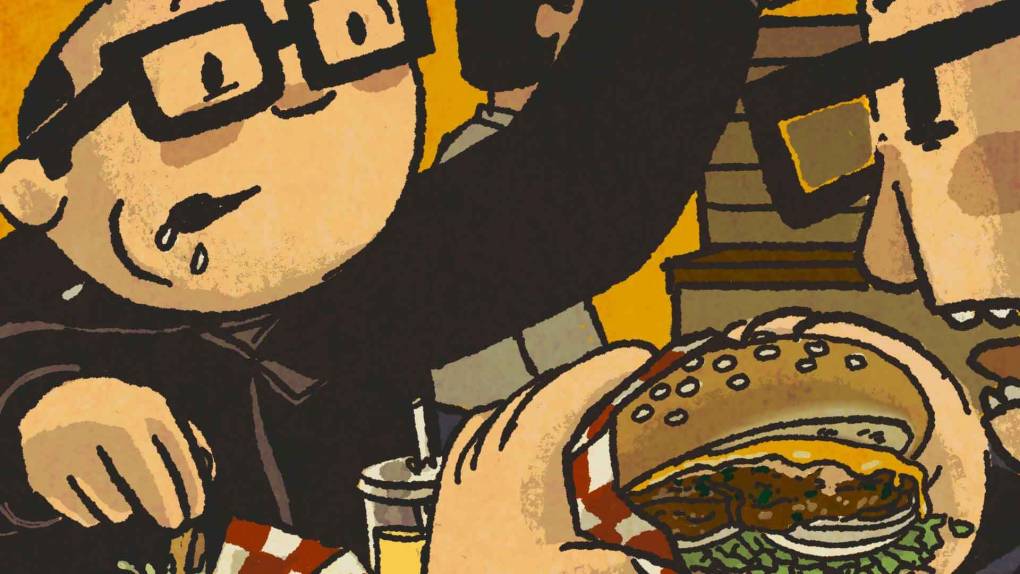
"caption": "YSG Halal offers a Pakistani American twist on the late-night fast food burger.",
"description": null,
"title": "Midnite.Desi.Burgers.REV",
"credit": "Thien Pham",
"status": "inherit",
"altTag": "Illustration: Two men in glasses look ravenously hungry as they dig into a burgers and fries.",
"isLoading": false,
"fetchFailed": false
},
"arts_13951924": {
"type": "attachments",
"id": "arts_13951924",
"meta": {
"index": "attachments_1716263798",
"site": "arts",
"id": "13951924",
"found": true
},
"parent": 13951914,
"imgSizes": {
"twentyfourteen-full-width": {
"file": "https://cdn.kqed.org/wp-content/uploads/sites/2/2024/02/a-one-kitchen-crab-crop-1038x576.jpg",
"width": 1038,
"mimeType": "image/jpeg",
"height": 576
},
"thumbnail": {
"file": "https://cdn.kqed.org/wp-content/uploads/sites/2/2024/02/a-one-kitchen-crab-crop-160x90.jpg",
"width": 160,
"mimeType": "image/jpeg",
"height": 90
},
"post-thumbnail": {
"file": "https://cdn.kqed.org/wp-content/uploads/sites/2/2024/02/a-one-kitchen-crab-crop-672x372.jpg",
"width": 672,
"mimeType": "image/jpeg",
"height": 372
},
"kqedFullSize": {
"file": "https://cdn.kqed.org/wp-content/uploads/sites/2/2024/02/a-one-kitchen-crab-crop.jpg",
"width": 1920,
"height": 1080
},
"large": {
"file": "https://cdn.kqed.org/wp-content/uploads/sites/2/2024/02/a-one-kitchen-crab-crop-1020x574.jpg",
"width": 1020,
"mimeType": "image/jpeg",
"height": 574
},
"1536x1536": {
"file": "https://cdn.kqed.org/wp-content/uploads/sites/2/2024/02/a-one-kitchen-crab-crop-1536x864.jpg",
"width": 1536,
"mimeType": "image/jpeg",
"height": 864
},
"medium": {
"file": "https://cdn.kqed.org/wp-content/uploads/sites/2/2024/02/a-one-kitchen-crab-crop-800x450.jpg",
"width": 800,
"mimeType": "image/jpeg",
"height": 450
},
"medium_large": {
"file": "https://cdn.kqed.org/wp-content/uploads/sites/2/2024/02/a-one-kitchen-crab-crop-768x432.jpg",
"width": 768,
"mimeType": "image/jpeg",
"height": 432
}
},
"publishDate": 1707425508,
"modified": 1707425550,
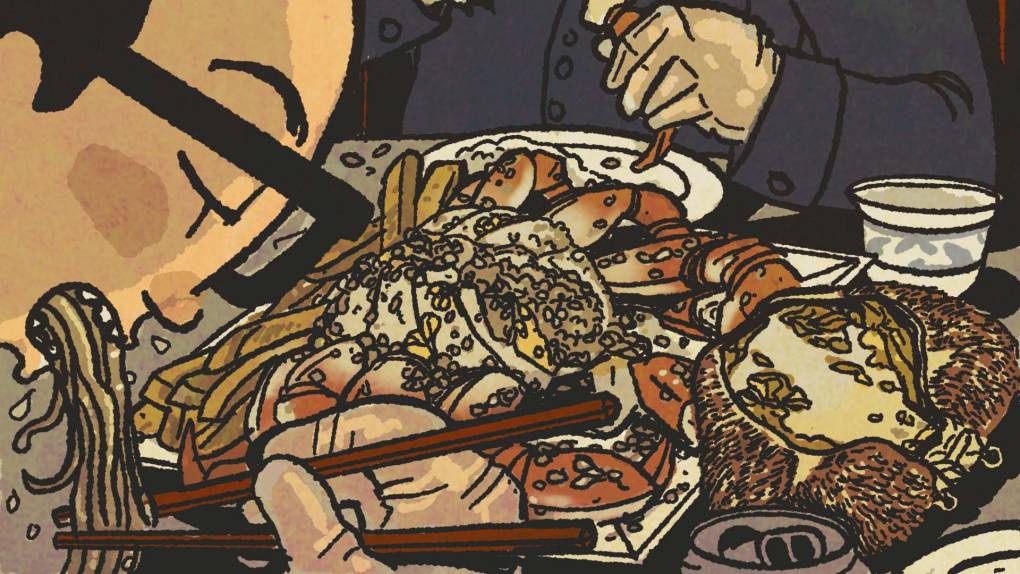
"caption": "The Dungeness crab and garlic noodles at San Bruno's A-One Kitchen hold their own against any restaurant in the Bay — and they're available until 1 a.m.",
"description": null,
"title": "a-one kitchen crab-crop",
"credit": "Thien Pham",
"status": "inherit",
"altTag": null,
"isLoading": false,
"fetchFailed": false
},
"arts_13951921": {
"type": "attachments",
"id": "arts_13951921",
"meta": {
"index": "attachments_1716263798",
"site": "arts",
"id": "13951921",
"found": true
},
"parent": 13951914,
"imgSizes": {
"twentyfourteen-full-width": {
"file": "https://cdn.kqed.org/wp-content/uploads/sites/2/2024/02/Untitled_Artwork-3-1038x576.jpg",
"width": 1038,
"mimeType": "image/jpeg",
"height": 576
},
"thumbnail": {
"file": "https://cdn.kqed.org/wp-content/uploads/sites/2/2024/02/Untitled_Artwork-3-160x160.jpg",
"width": 160,
"mimeType": "image/jpeg",
"height": 160
},
"post-thumbnail": {
"file": "https://cdn.kqed.org/wp-content/uploads/sites/2/2024/02/Untitled_Artwork-3-672x372.jpg",
"width": 672,
"mimeType": "image/jpeg",
"height": 372
},
"kqedFullSize": {
"file": "https://cdn.kqed.org/wp-content/uploads/sites/2/2024/02/Untitled_Artwork-3.jpg",
"width": 1920,
"height": 1920
},
"large": {
"file": "https://cdn.kqed.org/wp-content/uploads/sites/2/2024/02/Untitled_Artwork-3-1020x1020.jpg",
"width": 1020,
"mimeType": "image/jpeg",
"height": 1020
},
"1536x1536": {
"file": "https://cdn.kqed.org/wp-content/uploads/sites/2/2024/02/Untitled_Artwork-3-1536x1536.jpg",
"width": 1536,
"mimeType": "image/jpeg",
"height": 1536
},
"medium": {
"file": "https://cdn.kqed.org/wp-content/uploads/sites/2/2024/02/Untitled_Artwork-3-800x800.jpg",
"width": 800,
"mimeType": "image/jpeg",
"height": 800
},
"medium_large": {
"file": "https://cdn.kqed.org/wp-content/uploads/sites/2/2024/02/Untitled_Artwork-3-768x768.jpg",
"width": 768,
"mimeType": "image/jpeg",
"height": 768
}
},
"publishDate": 1707425254,
"modified": 1707425383,
"caption": "The Dungeness crab and garlic noodles at San Bruno's A-One Kitchen hold their own against any restaurant in the Bay — and they're available until 1 a.m.",
"description": null,
"title": "Untitled_Artwork 3",
"credit": "Thien Pham",
"status": "inherit",
"altTag": "Illustration of two men in glasses eating Dungeness crab enthusiastically, breaking it apart with their hands. They're wearing plastic gloves.",
"isLoading": false,
"fetchFailed": false
},
"arts_13951687": {
"type": "attachments",
"id": "arts_13951687",
"meta": {
"index": "attachments_1716263798",
"site": "arts",
"id": "13951687",
"found": true
},
"parent": 13951657,
"imgSizes": {
"twentyfourteen-full-width": {
"file": "https://cdn.kqed.org/wp-content/uploads/sites/2/2024/02/Mochiko-Pepperoni_crop-1038x576.jpg",
"width": 1038,
"mimeType": "image/jpeg",
"height": 576
},
"thumbnail": {
"file": "https://cdn.kqed.org/wp-content/uploads/sites/2/2024/02/Mochiko-Pepperoni_crop-160x90.jpg",
"width": 160,
"mimeType": "image/jpeg",
"height": 90
},
"post-thumbnail": {
"file": "https://cdn.kqed.org/wp-content/uploads/sites/2/2024/02/Mochiko-Pepperoni_crop-672x372.jpg",
"width": 672,
"mimeType": "image/jpeg",
"height": 372
},
"kqedFullSize": {
"file": "https://cdn.kqed.org/wp-content/uploads/sites/2/2024/02/Mochiko-Pepperoni_crop.jpg",
"width": 1920,
"height": 1080
},
"large": {
"file": "https://cdn.kqed.org/wp-content/uploads/sites/2/2024/02/Mochiko-Pepperoni_crop-1020x574.jpg",
"width": 1020,
"mimeType": "image/jpeg",
"height": 574
},
"1536x1536": {
"file": "https://cdn.kqed.org/wp-content/uploads/sites/2/2024/02/Mochiko-Pepperoni_crop-1536x864.jpg",
"width": 1536,
"mimeType": "image/jpeg",
"height": 864
},
"medium": {
"file": "https://cdn.kqed.org/wp-content/uploads/sites/2/2024/02/Mochiko-Pepperoni_crop-800x450.jpg",
"width": 800,
"mimeType": "image/jpeg",
"height": 450
},
"medium_large": {
"file": "https://cdn.kqed.org/wp-content/uploads/sites/2/2024/02/Mochiko-Pepperoni_crop-768x432.jpg",
"width": 768,
"mimeType": "image/jpeg",
"height": 432
}
},
"publishDate": 1707254659,
"modified": 1707254741,
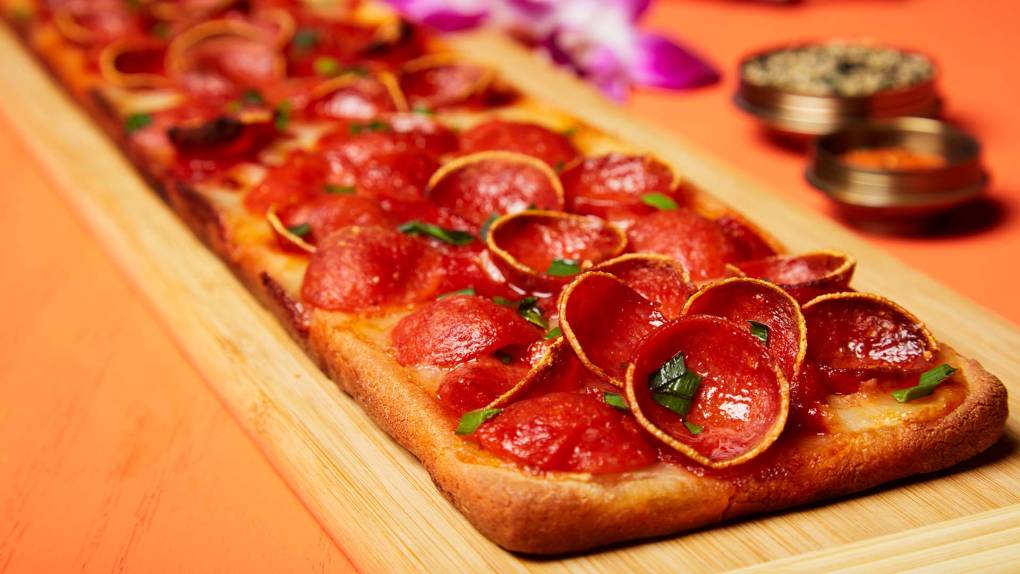
"caption": "A new Peninsula pizzeria believes mochi and pizza are the perfect combination.",
"description": null,
"title": "Mochiko Pepperoni_crop",
"credit": "Courtesy of Mochiko",
"status": "inherit",
"altTag": "A long, rectangular pepperoni pizza, served on a wooden board.",
"isLoading": false,
"fetchFailed": false
},
"arts_13951536": {
"type": "attachments",
"id": "arts_13951536",
"meta": {
"index": "attachments_1716263798",
"site": "arts",
"id": "13951536",
"found": true
},
"parent": 13951449,
"imgSizes": {
"twentyfourteen-full-width": {
"file": "https://cdn.kqed.org/wp-content/uploads/sites/2/2024/02/DSC01160-uncropped-1038x576.jpg",
"width": 1038,
"mimeType": "image/jpeg",
"height": 576
},
"thumbnail": {
"file": "https://cdn.kqed.org/wp-content/uploads/sites/2/2024/02/DSC01160-uncropped-160x107.jpg",
"width": 160,
"mimeType": "image/jpeg",
"height": 107
},
"post-thumbnail": {
"file": "https://cdn.kqed.org/wp-content/uploads/sites/2/2024/02/DSC01160-uncropped-672x372.jpg",
"width": 672,
"mimeType": "image/jpeg",
"height": 372
},
"kqedFullSize": {
"file": "https://cdn.kqed.org/wp-content/uploads/sites/2/2024/02/DSC01160-uncropped.jpg",
"width": 1920,
"height": 1280
},
"large": {
"file": "https://cdn.kqed.org/wp-content/uploads/sites/2/2024/02/DSC01160-uncropped-1020x680.jpg",
"width": 1020,
"mimeType": "image/jpeg",
"height": 680
},
"1536x1536": {
"file": "https://cdn.kqed.org/wp-content/uploads/sites/2/2024/02/DSC01160-uncropped-1536x1024.jpg",
"width": 1536,
"mimeType": "image/jpeg",
"height": 1024
},
"medium": {
"file": "https://cdn.kqed.org/wp-content/uploads/sites/2/2024/02/DSC01160-uncropped-800x533.jpg",
"width": 800,
"mimeType": "image/jpeg",
"height": 533
},
"medium_large": {
"file": "https://cdn.kqed.org/wp-content/uploads/sites/2/2024/02/DSC01160-uncropped-768x512.jpg",
"width": 768,
"mimeType": "image/jpeg",
"height": 512
}
},
"publishDate": 1707154866,
"modified": 1707155013,
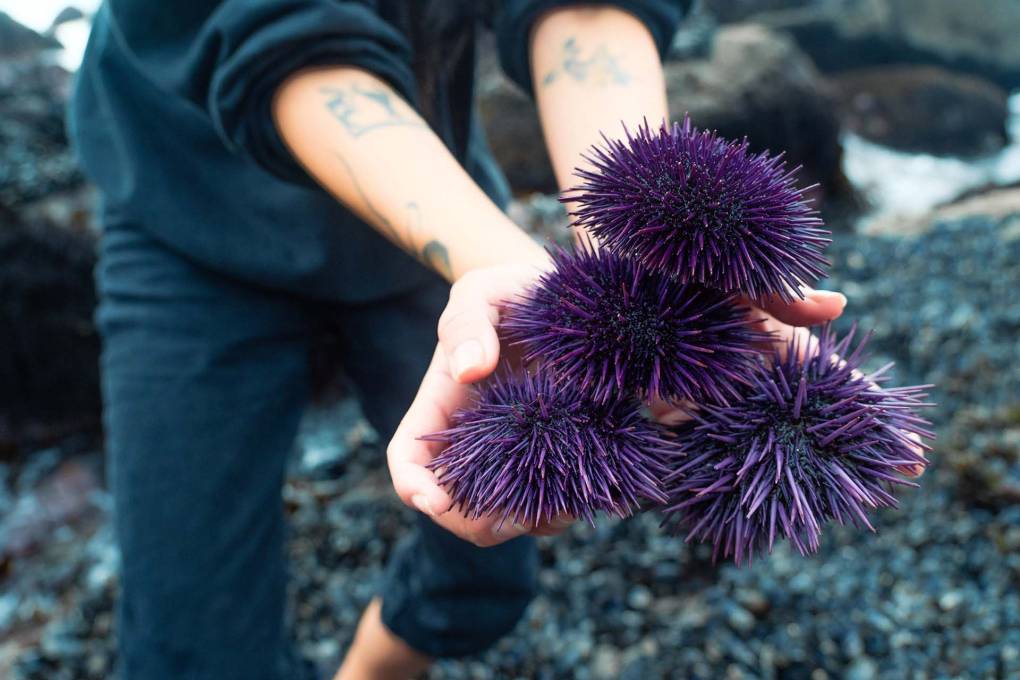
"caption": "Gathering your own sea urchins is an all-day endeavor — but it ends with a delicious reward.",
"description": null,
"title": "DSC01160-uncropped",
"credit": "James Gebilaguin",
"status": "inherit",
"altTag": "a woman's outreached arms, her hands holding several purple sea urchins, with the rocky seashore in the background.",
"isLoading": false,
"fetchFailed": false
},
"arts_13951408": {
"type": "attachments",
"id": "arts_13951408",
"meta": {
"index": "attachments_1716263798",
"site": "arts",
"id": "13951408",
"found": true
},
"parent": 13951382,
"imgSizes": {
"twentyfourteen-full-width": {
"file": "https://cdn.kqed.org/wp-content/uploads/sites/2/2024/02/DYNASTY-BBQ_16x9-crop-1038x576.jpg",
"width": 1038,
"mimeType": "image/jpeg",
"height": 576
},
"thumbnail": {
"file": "https://cdn.kqed.org/wp-content/uploads/sites/2/2024/02/DYNASTY-BBQ_16x9-crop-160x90.jpg",
"width": 160,
"mimeType": "image/jpeg",
"height": 90
},
"post-thumbnail": {
"file": "https://cdn.kqed.org/wp-content/uploads/sites/2/2024/02/DYNASTY-BBQ_16x9-crop-672x372.jpg",
"width": 672,
"mimeType": "image/jpeg",
"height": 372
},
"kqedFullSize": {
"file": "https://cdn.kqed.org/wp-content/uploads/sites/2/2024/02/DYNASTY-BBQ_16x9-crop.jpg",
"width": 1920,
"height": 1080
},
"large": {
"file": "https://cdn.kqed.org/wp-content/uploads/sites/2/2024/02/DYNASTY-BBQ_16x9-crop-1020x574.jpg",
"width": 1020,
"mimeType": "image/jpeg",
"height": 574
},
"1536x1536": {
"file": "https://cdn.kqed.org/wp-content/uploads/sites/2/2024/02/DYNASTY-BBQ_16x9-crop-1536x864.jpg",
"width": 1536,
"mimeType": "image/jpeg",
"height": 864
},
"medium": {
"file": "https://cdn.kqed.org/wp-content/uploads/sites/2/2024/02/DYNASTY-BBQ_16x9-crop-800x450.jpg",
"width": 800,
"mimeType": "image/jpeg",
"height": 450
},
"medium_large": {
"file": "https://cdn.kqed.org/wp-content/uploads/sites/2/2024/02/DYNASTY-BBQ_16x9-crop-768x432.jpg",
"width": 768,
"mimeType": "image/jpeg",
"height": 432
}
},
"publishDate": 1706821825,
"modified": 1706821865,
"caption": "At Newark's Dynasty BBQ, you can get chewy-crisp pork intestines, chicken gristle and whole fish grilled on a stick — in addition to the usual beef and lamb skewers.",
"description": null,
"title": "DYNASTY BBQ_16x9 crop",
"credit": "Thien Pham",
"status": "inherit",
"altTag": "(I'm going to create a cropped version of Thien's",
"isLoading": false,
"fetchFailed": false
},
"arts_13951125": {
"type": "attachments",
"id": "arts_13951125",
"meta": {
"index": "attachments_1716263798",
"site": "arts",
"id": "13951125",
"found": true
},
"parent": 13950866,
"imgSizes": {
"twentyfourteen-full-width": {
"file": "https://cdn.kqed.org/wp-content/uploads/sites/2/2024/01/Hella-Hungry-—-Feature-Image-1920x1080-2-1038x576.jpg",
"width": 1038,
"mimeType": "image/jpeg",
"height": 576
},
"thumbnail": {
"file": "https://cdn.kqed.org/wp-content/uploads/sites/2/2024/01/Hella-Hungry-—-Feature-Image-1920x1080-2-160x90.jpg",
"width": 160,
"mimeType": "image/jpeg",
"height": 90
},
"post-thumbnail": {
"file": "https://cdn.kqed.org/wp-content/uploads/sites/2/2024/01/Hella-Hungry-—-Feature-Image-1920x1080-2-672x372.jpg",
"width": 672,
"mimeType": "image/jpeg",
"height": 372
},
"kqedFullSize": {
"file": "https://cdn.kqed.org/wp-content/uploads/sites/2/2024/01/Hella-Hungry-—-Feature-Image-1920x1080-2.jpg",
"width": 1920,
"height": 1080
},
"large": {
"file": "https://cdn.kqed.org/wp-content/uploads/sites/2/2024/01/Hella-Hungry-—-Feature-Image-1920x1080-2-1020x574.jpg",
"width": 1020,
"mimeType": "image/jpeg",
"height": 574
},
"1536x1536": {
"file": "https://cdn.kqed.org/wp-content/uploads/sites/2/2024/01/Hella-Hungry-—-Feature-Image-1920x1080-2-1536x864.jpg",
"width": 1536,
"mimeType": "image/jpeg",
"height": 864
},
"medium": {
"file": "https://cdn.kqed.org/wp-content/uploads/sites/2/2024/01/Hella-Hungry-—-Feature-Image-1920x1080-2-800x450.jpg",
"width": 800,
"mimeType": "image/jpeg",
"height": 450
},
"medium_large": {
"file": "https://cdn.kqed.org/wp-content/uploads/sites/2/2024/01/Hella-Hungry-—-Feature-Image-1920x1080-2-768x432.jpg",
"width": 768,
"mimeType": "image/jpeg",
"height": 432
}
},
"publishDate": 1706550972,
"modified": 1706643839,
"caption": "Berkeley author Jay Caspian Kang (left) receives an order of galbi at GangNam Tofu in El Cerrito. The restaurant is one of Kang's local favorites because it serves \"standard Korean food\" prepared well. ",
"description": null,
"title": "Hella Hungry — Feature Image (1920x1080)",
"credit": "Martin do Nascimento/KQED",
"status": "inherit",
"altTag": "A masked server brings an order of galbi (Korean grilled short ribs) to the table when a man hunches over his food. A logo in the middle of the image reads, \"¡Hella Hungry!\"",
"isLoading": false,
"fetchFailed": false
},
"arts_13887180": {
"type": "attachments",
"id": "arts_13887180",
"meta": {
"index": "attachments_1716263798",
"site": "arts",
"id": "13887180",
"found": true
},
"parent": 0,
"imgSizes": {
"thumbnail": {
"file": "https://ww2.kqed.org/app/uploads/sites/2/2020/09/D7A9822-160x107.jpg",
"width": 160,
"mimeType": "image/jpeg",
"height": 107
},
"post-thumbnail": {
"file": "https://ww2.kqed.org/app/uploads/sites/2/2020/09/D7A9822-672x372.jpg",
"width": 672,
"mimeType": "image/jpeg",
"height": 372
},
"kqedFullSize": {
"file": "https://ww2.kqed.org/app/uploads/sites/2/2020/09/D7A9822.jpg",
"width": 800,
"height": 533
},
"medium_large": {
"file": "https://ww2.kqed.org/app/uploads/sites/2/2020/09/D7A9822-768x512.jpg",
"width": 768,
"mimeType": "image/jpeg",
"height": 512
}
},
"publishDate": 1601504808,
"modified": 1602711257,
"caption": "Reem Assil at Reem’s California Bakery in Oakland on Sept. 29, 2020. ",
"description": "Reem Assil at Reem’s California Bakery in Oakland on Sept. 29, 2020. ",
"title": "Reem Assil at the Reem’s California bakery in Oakland on Sept. 29, 2020.",
"credit": "Estefany Gonzalez/KQED",
"status": "inherit",
"isLoading": false,
"fetchFailed": false
}
},
"audioPlayerReducer": {
"postId": "stream_live",
"isPaused": true,
"isPlaying": false,
"pfsActive": false,
"pledgeModalIsOpen": true,
"playerDrawerIsOpen": false,
"liveAudioPlayStartedAt": 0,
"liveAudioPlayContext": ""
},
"authorsReducer": {
"ltsai": {
"type": "authors",
"id": "11743",
"meta": {
"index": "authors_1716337520",
"id": "11743",
"found": true
},
"name": "Luke Tsai",
"firstName": "Luke",
"lastName": "Tsai",
"slug": "ltsai",
"email": "ltsai@kqed.org",
"display_author_email": true,
"staff_mastheads": [
"arts"
],
"title": "Food Editor",
"bio": "Luke Tsai is KQED's food editor and resident stinky tofu connoisseur. Prior to KQED, he was an editor at Eater SF, \u003cem>San Francisco \u003c/em>magazine, and the \u003cem>East Bay Express\u003c/em>, and his work has also appeared in TASTE, the \u003cem>San Francisco Chronicle\u003c/em>, and the \u003cem>Best Food Writing\u003c/em> anthology. When he isn't writing or editing, you'll find him eating most everything he can get his hands on.",
"avatar": "https://secure.gravatar.com/avatar/1e59b45bf191526e7339d6ba46e33a57b2030d25c27660ecc64ea3cb863e34f7?s=600&d=blank&r=g",
"twitter": "theluketsai",
"bluesky": null,
"facebook": null,
"instagram": null,
"linkedin": null,
"sites": [
{
"site": "",
"roles": [
"editor"
]
},
{
"site": "arts",
"roles": [
"administrator"
]
},
{
"site": "news",
"roles": [
"editor",
"contributor"
]
},
{
"site": "bayareabites",
"roles": [
"editor"
]
},
{
"site": "food",
"roles": [
"editor"
]
}
],
"headData": {
"title": "Luke Tsai | KQED",
"description": "Food Editor",
"ogImgSrc": "https://secure.gravatar.com/avatar/1e59b45bf191526e7339d6ba46e33a57b2030d25c27660ecc64ea3cb863e34f7?s=600&d=blank&r=g",
"twImgSrc": "https://secure.gravatar.com/avatar/1e59b45bf191526e7339d6ba46e33a57b2030d25c27660ecc64ea3cb863e34f7?s=600&d=blank&r=g"
},
"isLoading": false,
"link": "/author/ltsai"
},
"achazaro": {
"type": "authors",
"id": "11748",
"meta": {
"index": "authors_1716337520",
"id": "11748",
"found": true
},
"name": "Alan Chazaro",
"firstName": "Alan",
"lastName": "Chazaro",
"slug": "achazaro",
"email": "agchazaro@gmail.com",
"display_author_email": true,
"staff_mastheads": [],
"title": "Food Writer and Reporter",
"bio": "Alan Chazaro is the author of \u003cem>This Is Not a Frank Ocean Cover Album\u003c/em> (Black Lawrence Press, 2019), \u003cem>Piñata Theory\u003c/em> (Black Lawrence Press, 2020), and \u003cem>Notes from the Eastern Span of the Bay Bridge\u003c/em> (Ghost City Press, 2021). He is a graduate of June Jordan’s Poetry for the People program at UC Berkeley and a former Lawrence Ferlinghetti Fellow at the University of San Francisco. He writes about sports, food, art, music, education, and culture while repping the Bay on \u003ca href=\"https://twitter.com/alan_chazaro\">Twitter\u003c/a> and \u003ca href=\"https://www.instagram.com/alan_chazaro/?hl=en\">Instagram\u003c/a> at @alan_chazaro.",
"avatar": "https://secure.gravatar.com/avatar/ea8b6dd970fc5c29e7a188e7d5861df7?s=600&d=blank&r=g",
"twitter": "alan_chazaro",
"facebook": null,
"instagram": null,
"linkedin": null,
"sites": [
{
"site": "arts",
"roles": [
"contributor"
]
},
{
"site": "news",
"roles": [
"editor"
]
}
],
"headData": {
"title": "Alan Chazaro | KQED",
"description": "Food Writer and Reporter",
"ogImgSrc": "https://secure.gravatar.com/avatar/ea8b6dd970fc5c29e7a188e7d5861df7?s=600&d=blank&r=g",
"twImgSrc": "https://secure.gravatar.com/avatar/ea8b6dd970fc5c29e7a188e7d5861df7?s=600&d=blank&r=g"
},
"isLoading": false,
"link": "/author/achazaro"
},
"tpham": {
"type": "authors",
"id": "11753",
"meta": {
"index": "authors_1716337520",
"id": "11753",
"found": true
},
"name": "Thien Pham",
"firstName": "Thien",
"lastName": "Pham",
"slug": "tpham",
"email": "thiendog@gmail.com",
"display_author_email": false,
"staff_mastheads": [],
"title": "KQED Contributor",
"bio": null,
"avatar": "https://secure.gravatar.com/avatar/a5b4729969ad46d88e7b9ec9dd4f3fa6af84dd0fa8fa91f01d8d9481694999bc?s=600&d=blank&r=g",
"twitter": null,
"bluesky": null,
"facebook": null,
"instagram": null,
"linkedin": null,
"sites": [
{
"site": "arts",
"roles": [
"contributor"
]
}
],
"headData": {
"title": "Thien Pham | KQED",
"description": "KQED Contributor",
"ogImgSrc": "https://secure.gravatar.com/avatar/a5b4729969ad46d88e7b9ec9dd4f3fa6af84dd0fa8fa91f01d8d9481694999bc?s=600&d=blank&r=g",
"twImgSrc": "https://secure.gravatar.com/avatar/a5b4729969ad46d88e7b9ec9dd4f3fa6af84dd0fa8fa91f01d8d9481694999bc?s=600&d=blank&r=g"
},
"isLoading": false,
"link": "/author/tpham"
},
"omayeda": {
"type": "authors",
"id": "11872",
"meta": {
"index": "authors_1716337520",
"id": "11872",
"found": true
},
"name": "Olivia Cruz Mayeda",
"firstName": "Olivia Cruz",
"lastName": "Mayeda",
"slug": "omayeda",
"email": "omayeda@kqed.org",
"display_author_email": false,
"staff_mastheads": [],
"title": "Reporter",
"bio": "Olivia Cruz Mayeda is a journalist covering style, culture and reparations in the Bay Area, a place that has been home to her family for over 100 years. Her writing has also appeared in the \u003cem>San Francisco Chronicle\u003c/em> and \u003cem>El Tecolote\u003c/em>.",
"avatar": "https://secure.gravatar.com/avatar/a8c0baa30219ce1071a9474f4c14141f?s=600&d=blank&r=g",
"twitter": null,
"facebook": null,
"instagram": null,
"linkedin": null,
"sites": [
{
"site": "arts",
"roles": [
"contributor"
]
}
],
"headData": {
"title": "Olivia Cruz Mayeda | KQED",
"description": "Reporter",
"ogImgSrc": "https://secure.gravatar.com/avatar/a8c0baa30219ce1071a9474f4c14141f?s=600&d=blank&r=g",
"twImgSrc": "https://secure.gravatar.com/avatar/a8c0baa30219ce1071a9474f4c14141f?s=600&d=blank&r=g"
},
"isLoading": false,
"link": "/author/omayeda"
},
"bduffett": {
"type": "authors",
"id": "11902",
"meta": {
"index": "authors_1716337520",
"id": "11902",
"found": true
},
"name": "Becky Duffett",
"firstName": "Becky",
"lastName": "Duffett",
"slug": "bduffett",
"email": "duffettr@gmail.com",
"display_author_email": false,
"staff_mastheads": [],
"title": "KQED Contributor",
"bio": null,
"avatar": "https://secure.gravatar.com/avatar/e5baf1733e81ecc5f55104a3c095028c?s=600&d=blank&r=g",
"twitter": null,
"facebook": null,
"instagram": null,
"linkedin": null,
"sites": [
{
"site": "arts",
"roles": [
"contributor"
]
}
],
"headData": {
"title": "Becky Duffett | KQED",
"description": "KQED Contributor",
"ogImgSrc": "https://secure.gravatar.com/avatar/e5baf1733e81ecc5f55104a3c095028c?s=600&d=blank&r=g",
"twImgSrc": "https://secure.gravatar.com/avatar/e5baf1733e81ecc5f55104a3c095028c?s=600&d=blank&r=g"
},
"isLoading": false,
"link": "/author/bduffett"
}
},
"pagesReducer": {
"arts_tag_food": {
"type": "terms",
"id": "arts_1297",
"meta": {
"index": "terms_1716263798",
"site": "arts",
"id": "1297",
"score": 7.4243226
},
"featImg": null,
"name": "food",
"description": null,
"taxonomy": "tag",
"headData": {
"twImgId": null,
"twTitle": null,
"ogTitle": null,
"ogImgId": null,
"twDescription": null,
"description": null,
"title": "food Archives | KQED Arts",
"ogDescription": null
},
"ttid": 1309,
"slug": "food",
"isLoading": false,
"title": "food",
"pageMeta": {
"site": "arts",
"WpPageTemplate": "page-topic-editorial",
"currentPage": 21
},
"blocks": [
{
"blockName": "kqed/post-list",
"attrs": {
"layout": "cardArticle2",
"query": "posts/arts?tag=food",
"seeMore": false,
"paginated": true,
"page": 21
}
},
{
"blockName": "kqed/ad"
}
]
}
},
"pfsSessionReducer": {},
"postsReducer": {
"stream_live": {
"type": "live",
"id": "stream_live",
"audioUrl": "https://streams.kqed.org/kqedradio",
"title": "Live Stream",
"excerpt": "Live Stream information currently unavailable.",
"link": "/radio",
"featImg": "",
"label": {
"name": "KQED Live",
"link": "/"
}
},
"stream_kqedNewscast": {
"type": "posts",
"id": "stream_kqedNewscast",
"audioUrl": "https://www.kqed.org/.stream/anon/radio/RDnews/newscast.mp3?_=1",
"title": "KQED Newscast",
"featImg": "",
"label": {
"name": "88.5 FM",
"link": "/"
}
},
"arts_13953078": {
"type": "posts",
"id": "arts_13953078",
"meta": {
"index": "posts_1716263798",
"site": "arts",
"id": "13953078",
"score": null,
"sort": [
1709063742000
]
},
"guestAuthors": [],
"slug": "curry-puff-malaysian-damansara-sf-noe-valley",
"title": "The Curry Puff of Spiral Dreams, From Malaysia to SF With Love",
"publishDate": 1709063742,
"format": "standard",
"headTitle": "The Curry Puff of Spiral Dreams, From Malaysia to SF With Love | KQED",
"labelTerm": {},
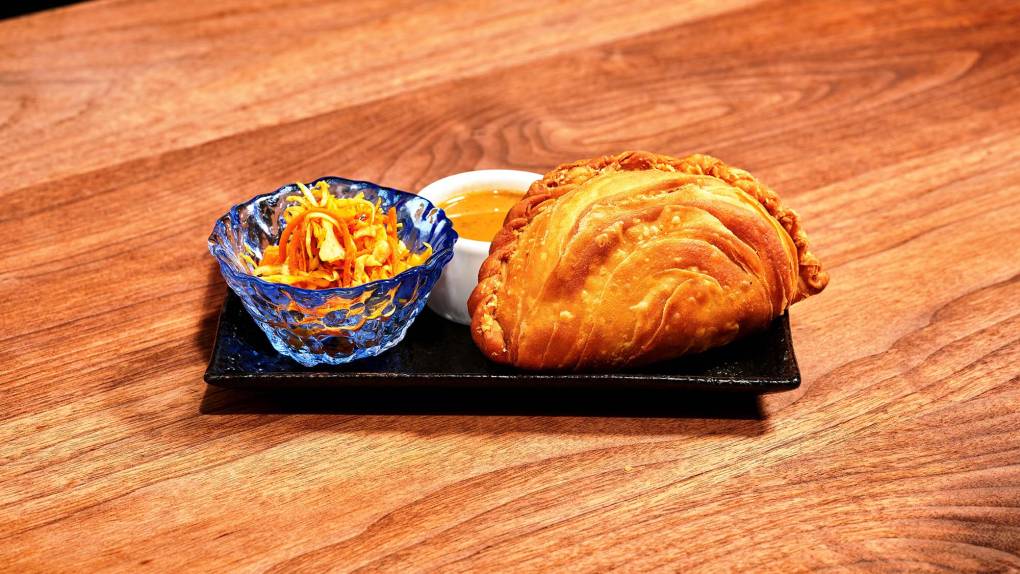
"content": "\u003cp>At one-year-old \u003ca href=\"https://www.instagram.com/damansarasf/\">Damansara\u003c/a> in Noe Valley, it’s tough to choose between the Central Malaysian regional specialties on the menu, including laksa noodle soup, nasi lemak coconut rice with crispy chicken, or Dungeness crab slicked in chili sauce. But pastry obsessives will spot a special treat buried in the small plates section, simply called a curry puff. Upon closer scrutiny, there’s a note: only two per table. Never allowed for takeout. So you’ll have to come in and sit down to appreciate the details of this pastry, which features a spiralized dough, prettily crimped edge and belly full of emphatically seasoned potato.\u003c/p>\n\u003cp>Some people mistakenly call them samosas or empanadas, which annoys \u003ca href=\"https://www.kqed.org/arts/13871153/the-hustle-tracy-goh-damansara-malasian-food\">chef Tracy Goh\u003c/a>. These are curry puffs, or karipap, and “back in Malaysia, it was my favorite tea-time snack,” she says. Her family would enjoy the puffs in the late afternoon with a cup of tea, coffee or Milo chocolate malt after picking them up from local street vendors that specialized in deep-frying these crisp, golden morsels. They could be deceptively skimpy on the filling — sometimes Goh would buy what appeared to be a nice puff, then bite into mostly air.\u003c/p>\n\u003cp>Goh had never made curry puffs until after moving to San Francisco, when she missed them so desperately, she attempted to learn the “intimidating” dough. Today she makes them true to the snacks she grew up with in Malaysia, with a specific spice profile and flaky crust. But she includes a couple of concessions to San Franciscans, specifically a bigger size and a dipping sauce. She estimates hers are triple the size and stuffed to the seams. “It’s an American size and weight version of what I would like back in Malaysia,” Goh says.\u003c/p>\n\u003cfigure id=\"attachment_13953089\" class=\"wp-caption alignnone\" style=\"max-width: 2000px\">\u003cimg loading=\"lazy\" decoding=\"async\" class=\"size-full wp-image-13953089\" src=\"https://cdn.kqed.org/wp-content/uploads/sites/2/2024/02/currypuff-hands.jpg\" alt=\"Two hands break apart a curry puff.\" width=\"2000\" height=\"1333\" srcset=\"https://cdn.kqed.org/wp-content/uploads/sites/2/2024/02/currypuff-hands.jpg 2000w, https://cdn.kqed.org/wp-content/uploads/sites/2/2024/02/currypuff-hands-800x533.jpg 800w, https://cdn.kqed.org/wp-content/uploads/sites/2/2024/02/currypuff-hands-1020x680.jpg 1020w, https://cdn.kqed.org/wp-content/uploads/sites/2/2024/02/currypuff-hands-160x107.jpg 160w, https://cdn.kqed.org/wp-content/uploads/sites/2/2024/02/currypuff-hands-768x512.jpg 768w, https://cdn.kqed.org/wp-content/uploads/sites/2/2024/02/currypuff-hands-1536x1024.jpg 1536w, https://cdn.kqed.org/wp-content/uploads/sites/2/2024/02/currypuff-hands-1920x1280.jpg 1920w\" sizes=\"(max-width: 2000px) 100vw, 2000px\">\u003cfigcaption class=\"wp-caption-text\">One adjustment to the traditional Malaysian recipe: These puffs are bigger and have more filling. \u003ccite>(Aron Pruiett/Limitless Media, Inc.)\u003c/cite>\u003c/figcaption>\u003c/figure>\n\u003cp>Goh toasts and grinds her own Malaysian curry blend, a long list of about 10 spices and aromatics, including tangy fenugreek and bright coriander. Along with aromatic curry leaves, those spices season a simple potato filling. Sometimes she mixes in chicken and tucks in a wedge of hard-boiled egg, but the filling should be starchy to hold in juices. (There is another version called epok epok with spicy sardines, but despite the tinned fish trend, Goh is not convinced that Noe Valley is ready yet.) The dough is typically made with margarine in Malaysia, but she prefers vegetable shortening, which keeps the fryer clean.\u003c/p>\n\u003cp>It’s the layering of the dough and the hand shaping of the pastries that make it a labor of love. Goh actually starts with two different doughs, an oil-based dough and a hot water dough, wrapping the former inside the latter, which creates the lamination or layers. Then she flattens it into a rectangle, “rolls it up like a carpet” and repeats several times, to get that spiral pattern. Finally she slices the “carpet” into round cross sections, flips each piece cut-side down and rolls them to less than 2 millimeters thick. Then you have to crimp it around the filling firm and tight, like you mean it — people who are good at pinching dumplings understand. Lightly pressing with a fork won’t work, she says. “The idea is to lock the pastry.”\u003c/p>\n\u003cp>[ad fullwidth]\u003c/p>\n\u003cp>\u003cspan style=\"font-weight: 400\">[aside postID='arts_13916794,arts_13871153']\u003c/span>Goh has tried training her team, but it’s a heartbreak when a curry puff splits open in the deep fryer. So she does all of the laminating and shaping personally, and it takes about three hours to stuff a batch of 24 curry puffs. So that’s why it’s a limited menu item, exclusively sold in house, even though guests get salty when they sell out on a busy Saturday night.\u003c/p>\n\u003cp>Finally, yes, okay, it comes with a curry sauce for dunking. Back home, Goh would snack on curry puffs simply the way they are, well seasoned and dry. But in San Francisco, she got tired of diners asking, “‘Is this supposed to come with a sauce?’” She blames the samosa confusion, which leaves them reaching for a chutney. So she hands them the same spice blend whisked into coconut milk.\u003c/p>\n\u003cp>But whether or not you choose to dunk, each puff is a small revelation: You get to crunch down through the crisp edge that’s twisted like a rope, rip into the spiralized crust that breaks into flakes and sink into the well seasoned potato with warm curry spices.\u003c/p>\n\u003cfigure id=\"attachment_13953091\" class=\"wp-caption alignnone\" style=\"max-width: 2000px\">\u003cimg loading=\"lazy\" decoding=\"async\" class=\"size-full wp-image-13953091\" src=\"https://cdn.kqed.org/wp-content/uploads/sites/2/2024/02/currypuff-overhead.jpg\" alt=\"Overhead view of a curry puff shows its distinctive spiral pattern.\" width=\"2000\" height=\"1333\" srcset=\"https://cdn.kqed.org/wp-content/uploads/sites/2/2024/02/currypuff-overhead.jpg 2000w, https://cdn.kqed.org/wp-content/uploads/sites/2/2024/02/currypuff-overhead-800x533.jpg 800w, https://cdn.kqed.org/wp-content/uploads/sites/2/2024/02/currypuff-overhead-1020x680.jpg 1020w, https://cdn.kqed.org/wp-content/uploads/sites/2/2024/02/currypuff-overhead-160x107.jpg 160w, https://cdn.kqed.org/wp-content/uploads/sites/2/2024/02/currypuff-overhead-768x512.jpg 768w, https://cdn.kqed.org/wp-content/uploads/sites/2/2024/02/currypuff-overhead-1536x1024.jpg 1536w, https://cdn.kqed.org/wp-content/uploads/sites/2/2024/02/currypuff-overhead-1920x1280.jpg 1920w\" sizes=\"(max-width: 2000px) 100vw, 2000px\">\u003cfigcaption class=\"wp-caption-text\">There’s a limit of two curry puffs per table, dine-in only. \u003ccite>(Aron Pruiett/Limitless Media, Inc.)\u003c/cite>\u003c/figcaption>\u003c/figure>\n\u003cp>Curry puffs cross cultures in Southeast Asia, and you can spot different versions on other menus around San Francisco. \u003ca href=\"https://www.instagram.com/p/CzCGvfivWcd/\">Dabao Singapore\u003c/a> sometimes makes a buttery baked triangle. Many Thai restaurants make sweeter versions, like the curry puffs at \u003ca href=\"http://lersros.com/wp-content/uploads/2023/05/LERS_ROS_Dinner_Menu.pdf\">Ler Ros\u003c/a> or so-called samosas at \u003ca href=\"https://www.farmhousetogo.com/product/samosa/89\">Farmhouse Thai\u003c/a>, and \u003ca href=\"https://www.instagram.com/nari_sf/p/CrtGpcpLS53/\">Nari\u003c/a> serves a fancy puff with duck confit. They’ve even traveled to Hong Kong, where they take the form of curry pies like the tender and crumbly version you can find at \u003ca href=\"https://www.yelp.com/biz_photos/lung-fung-bakery-san-francisco?select=ZS18ukKlojooP4t8bvZqSg\">Lung Fung Bakery\u003c/a>.\u003c/p>\n\u003cp>And there are plenty of shortcuts. Curry puffs can be made with purchased curry powders, curry pastes and frozen dough, ditching the spiral, and streamlined for takeout. But they’re not so often done well and in this specific Malaysian style. “When people see the pastry, they say it’s beautiful,” Goh says. “Then they taste it, and they start coming back.”\u003c/p>\n\u003cp>\u003c/p>\n\u003cp>\u003cimg loading=\"lazy\" decoding=\"async\" class=\"alignnone size-full wp-image-12127869\" src=\"https://cdn.kqed.org/wp-content/uploads/sites/2/2016/09/Q.Logo_.Break_.jpg\" alt=\"\" width=\"800\" height=\"78\" srcset=\"https://cdn.kqed.org/wp-content/uploads/sites/2/2016/09/Q.Logo_.Break_.jpg 800w, https://cdn.kqed.org/wp-content/uploads/sites/2/2016/09/Q.Logo_.Break_-400x39.jpg 400w, https://cdn.kqed.org/wp-content/uploads/sites/2/2016/09/Q.Logo_.Break_-768x75.jpg 768w\" sizes=\"(max-width: 800px) 100vw, 800px\">\u003cbr>\n\u003cem>\u003ca href=\"https://damansarasf.com/\">Damansara\u003c/a> is open Wednesday through Sunday, 5 to 9 p.m., at 1781 Church St. in San Francisco\u003c/em>\u003c/p>\n\n",
"blocks": [],
"excerpt": "At Damansara in Noe Valley, there’s a special pastry hiding on the menu. ",
"status": "publish",
"parent": 0,
"modified": 1720643986,
"stats": {
"hasAudio": false,
"hasVideo": false,
"hasChartOrMap": false,
"iframeSrcs": [],
"hasGoogleForm": false,
"hasGallery": false,
"hasHearkenModule": false,
"hasPolis": false,
"paragraphCount": 13,
"wordCount": 971
},
"headData": {
"title": "The Best Malaysian Curry Puffs Are at Damansara in SF | KQED",
"description": "At Damansara in Noe Valley, there’s a special pastry hiding on the menu. ",
"ogTitle": "The Curry Puff of Spiral Dreams, From Malaysia to SF With Love",
"ogDescription": "",
"ogImgId": "",
"twTitle": "The Curry Puff of Spiral Dreams, From Malaysia to SF With Love",
"twDescription": "",
"twImgId": "",
"socialTitle": "The Best Malaysian Curry Puffs Are at Damansara in SF %%page%% %%sep%% KQED",
"schema": {
"@context": "https://schema.org",
"@type": "Article",
"headline": "The Curry Puff of Spiral Dreams, From Malaysia to SF With Love",
"datePublished": "2024-02-27T11:55:42-08:00",
"dateModified": "2024-07-10T13:39:46-07:00",
"image": "https://cdn.kqed.org/wp-content/uploads/2020/02/KQED-OG-Image@1x.png"
}
},
"source": "Food",
"sourceUrl": "https://www.kqed.org/food",
"sticky": false,
"excludeFromSiteSearch": "Include",
"showOnAuthorArchivePages": "No",
"articleAge": "0",
"path": "/arts/13953078/curry-puff-malaysian-damansara-sf-noe-valley",
"audioTrackLength": null,
"parsedContent": [
{
"type": "contentString",
"content": "\u003cdiv class=\"post-body\">\u003cp>\u003cp>At one-year-old \u003ca href=\"https://www.instagram.com/damansarasf/\">Damansara\u003c/a> in Noe Valley, it’s tough to choose between the Central Malaysian regional specialties on the menu, including laksa noodle soup, nasi lemak coconut rice with crispy chicken, or Dungeness crab slicked in chili sauce. But pastry obsessives will spot a special treat buried in the small plates section, simply called a curry puff. Upon closer scrutiny, there’s a note: only two per table. Never allowed for takeout. So you’ll have to come in and sit down to appreciate the details of this pastry, which features a spiralized dough, prettily crimped edge and belly full of emphatically seasoned potato.\u003c/p>\n\u003cp>Some people mistakenly call them samosas or empanadas, which annoys \u003ca href=\"https://www.kqed.org/arts/13871153/the-hustle-tracy-goh-damansara-malasian-food\">chef Tracy Goh\u003c/a>. These are curry puffs, or karipap, and “back in Malaysia, it was my favorite tea-time snack,” she says. Her family would enjoy the puffs in the late afternoon with a cup of tea, coffee or Milo chocolate malt after picking them up from local street vendors that specialized in deep-frying these crisp, golden morsels. They could be deceptively skimpy on the filling — sometimes Goh would buy what appeared to be a nice puff, then bite into mostly air.\u003c/p>\n\u003cp>Goh had never made curry puffs until after moving to San Francisco, when she missed them so desperately, she attempted to learn the “intimidating” dough. Today she makes them true to the snacks she grew up with in Malaysia, with a specific spice profile and flaky crust. But she includes a couple of concessions to San Franciscans, specifically a bigger size and a dipping sauce. She estimates hers are triple the size and stuffed to the seams. “It’s an American size and weight version of what I would like back in Malaysia,” Goh says.\u003c/p>\n\u003cfigure id=\"attachment_13953089\" class=\"wp-caption alignnone\" style=\"max-width: 2000px\">\u003cimg loading=\"lazy\" decoding=\"async\" class=\"size-full wp-image-13953089\" src=\"https://cdn.kqed.org/wp-content/uploads/sites/2/2024/02/currypuff-hands.jpg\" alt=\"Two hands break apart a curry puff.\" width=\"2000\" height=\"1333\" srcset=\"https://cdn.kqed.org/wp-content/uploads/sites/2/2024/02/currypuff-hands.jpg 2000w, https://cdn.kqed.org/wp-content/uploads/sites/2/2024/02/currypuff-hands-800x533.jpg 800w, https://cdn.kqed.org/wp-content/uploads/sites/2/2024/02/currypuff-hands-1020x680.jpg 1020w, https://cdn.kqed.org/wp-content/uploads/sites/2/2024/02/currypuff-hands-160x107.jpg 160w, https://cdn.kqed.org/wp-content/uploads/sites/2/2024/02/currypuff-hands-768x512.jpg 768w, https://cdn.kqed.org/wp-content/uploads/sites/2/2024/02/currypuff-hands-1536x1024.jpg 1536w, https://cdn.kqed.org/wp-content/uploads/sites/2/2024/02/currypuff-hands-1920x1280.jpg 1920w\" sizes=\"(max-width: 2000px) 100vw, 2000px\">\u003cfigcaption class=\"wp-caption-text\">One adjustment to the traditional Malaysian recipe: These puffs are bigger and have more filling. \u003ccite>(Aron Pruiett/Limitless Media, Inc.)\u003c/cite>\u003c/figcaption>\u003c/figure>\n\u003cp>Goh toasts and grinds her own Malaysian curry blend, a long list of about 10 spices and aromatics, including tangy fenugreek and bright coriander. Along with aromatic curry leaves, those spices season a simple potato filling. Sometimes she mixes in chicken and tucks in a wedge of hard-boiled egg, but the filling should be starchy to hold in juices. (There is another version called epok epok with spicy sardines, but despite the tinned fish trend, Goh is not convinced that Noe Valley is ready yet.) The dough is typically made with margarine in Malaysia, but she prefers vegetable shortening, which keeps the fryer clean.\u003c/p>\n\u003cp>It’s the layering of the dough and the hand shaping of the pastries that make it a labor of love. Goh actually starts with two different doughs, an oil-based dough and a hot water dough, wrapping the former inside the latter, which creates the lamination or layers. Then she flattens it into a rectangle, “rolls it up like a carpet” and repeats several times, to get that spiral pattern. Finally she slices the “carpet” into round cross sections, flips each piece cut-side down and rolls them to less than 2 millimeters thick. Then you have to crimp it around the filling firm and tight, like you mean it — people who are good at pinching dumplings understand. Lightly pressing with a fork won’t work, she says. “The idea is to lock the pastry.”\u003c/p>\n\u003cp>\u003c/p>\u003c/div>",
"attributes": {
"named": {},
"numeric": []
}
},
{
"type": "component",
"content": "",
"name": "ad",
"attributes": {
"named": {
"label": "fullwidth"
},
"numeric": [
"fullwidth"
]
}
},
{
"type": "contentString",
"content": "\u003cdiv class=\"post-body\">\u003cp>\u003c/p>\n\u003cp>\u003cspan style=\"font-weight: 400\">\u003c/p>\u003c/div>",
"attributes": {
"named": {},
"numeric": []
}
},
{
"type": "component",
"content": "",
"name": "aside",
"attributes": {
"named": {
"postid": "arts_13916794,arts_13871153",
"label": ""
},
"numeric": []
}
},
{
"type": "contentString",
"content": "\u003cdiv class=\"post-body\">\u003cp>\u003c/span>Goh has tried training her team, but it’s a heartbreak when a curry puff splits open in the deep fryer. So she does all of the laminating and shaping personally, and it takes about three hours to stuff a batch of 24 curry puffs. So that’s why it’s a limited menu item, exclusively sold in house, even though guests get salty when they sell out on a busy Saturday night.\u003c/p>\n\u003cp>Finally, yes, okay, it comes with a curry sauce for dunking. Back home, Goh would snack on curry puffs simply the way they are, well seasoned and dry. But in San Francisco, she got tired of diners asking, “‘Is this supposed to come with a sauce?’” She blames the samosa confusion, which leaves them reaching for a chutney. So she hands them the same spice blend whisked into coconut milk.\u003c/p>\n\u003cp>But whether or not you choose to dunk, each puff is a small revelation: You get to crunch down through the crisp edge that’s twisted like a rope, rip into the spiralized crust that breaks into flakes and sink into the well seasoned potato with warm curry spices.\u003c/p>\n\u003cfigure id=\"attachment_13953091\" class=\"wp-caption alignnone\" style=\"max-width: 2000px\">\u003cimg loading=\"lazy\" decoding=\"async\" class=\"size-full wp-image-13953091\" src=\"https://cdn.kqed.org/wp-content/uploads/sites/2/2024/02/currypuff-overhead.jpg\" alt=\"Overhead view of a curry puff shows its distinctive spiral pattern.\" width=\"2000\" height=\"1333\" srcset=\"https://cdn.kqed.org/wp-content/uploads/sites/2/2024/02/currypuff-overhead.jpg 2000w, https://cdn.kqed.org/wp-content/uploads/sites/2/2024/02/currypuff-overhead-800x533.jpg 800w, https://cdn.kqed.org/wp-content/uploads/sites/2/2024/02/currypuff-overhead-1020x680.jpg 1020w, https://cdn.kqed.org/wp-content/uploads/sites/2/2024/02/currypuff-overhead-160x107.jpg 160w, https://cdn.kqed.org/wp-content/uploads/sites/2/2024/02/currypuff-overhead-768x512.jpg 768w, https://cdn.kqed.org/wp-content/uploads/sites/2/2024/02/currypuff-overhead-1536x1024.jpg 1536w, https://cdn.kqed.org/wp-content/uploads/sites/2/2024/02/currypuff-overhead-1920x1280.jpg 1920w\" sizes=\"(max-width: 2000px) 100vw, 2000px\">\u003cfigcaption class=\"wp-caption-text\">There’s a limit of two curry puffs per table, dine-in only. \u003ccite>(Aron Pruiett/Limitless Media, Inc.)\u003c/cite>\u003c/figcaption>\u003c/figure>\n\u003cp>Curry puffs cross cultures in Southeast Asia, and you can spot different versions on other menus around San Francisco. \u003ca href=\"https://www.instagram.com/p/CzCGvfivWcd/\">Dabao Singapore\u003c/a> sometimes makes a buttery baked triangle. Many Thai restaurants make sweeter versions, like the curry puffs at \u003ca href=\"http://lersros.com/wp-content/uploads/2023/05/LERS_ROS_Dinner_Menu.pdf\">Ler Ros\u003c/a> or so-called samosas at \u003ca href=\"https://www.farmhousetogo.com/product/samosa/89\">Farmhouse Thai\u003c/a>, and \u003ca href=\"https://www.instagram.com/nari_sf/p/CrtGpcpLS53/\">Nari\u003c/a> serves a fancy puff with duck confit. They’ve even traveled to Hong Kong, where they take the form of curry pies like the tender and crumbly version you can find at \u003ca href=\"https://www.yelp.com/biz_photos/lung-fung-bakery-san-francisco?select=ZS18ukKlojooP4t8bvZqSg\">Lung Fung Bakery\u003c/a>.\u003c/p>\n\u003cp>And there are plenty of shortcuts. Curry puffs can be made with purchased curry powders, curry pastes and frozen dough, ditching the spiral, and streamlined for takeout. But they’re not so often done well and in this specific Malaysian style. “When people see the pastry, they say it’s beautiful,” Goh says. “Then they taste it, and they start coming back.”\u003c/p>\n\u003cp>\u003c/p>\n\u003cp>\u003cimg loading=\"lazy\" decoding=\"async\" class=\"alignnone size-full wp-image-12127869\" src=\"https://cdn.kqed.org/wp-content/uploads/sites/2/2016/09/Q.Logo_.Break_.jpg\" alt=\"\" width=\"800\" height=\"78\" srcset=\"https://cdn.kqed.org/wp-content/uploads/sites/2/2016/09/Q.Logo_.Break_.jpg 800w, https://cdn.kqed.org/wp-content/uploads/sites/2/2016/09/Q.Logo_.Break_-400x39.jpg 400w, https://cdn.kqed.org/wp-content/uploads/sites/2/2016/09/Q.Logo_.Break_-768x75.jpg 768w\" sizes=\"(max-width: 800px) 100vw, 800px\">\u003cbr>\n\u003cem>\u003ca href=\"https://damansarasf.com/\">Damansara\u003c/a> is open Wednesday through Sunday, 5 to 9 p.m., at 1781 Church St. in San Francisco\u003c/em>\u003c/p>\n\n\u003c/div>\u003c/p>",
"attributes": {
"named": {},
"numeric": []
}
}
],
"link": "/arts/13953078/curry-puff-malaysian-damansara-sf-noe-valley",
"authors": [
"11902"
],
"categories": [
"arts_1",
"arts_12276"
],
"tags": [
"arts_10278",
"arts_1297",
"arts_1146"
],
"featImg": "arts_13953086",
"label": "source_arts_13953078"
},
"arts_13952597": {
"type": "posts",
"id": "arts_13952597",
"meta": {
"index": "posts_1716263798",
"site": "arts",
"id": "13952597",
"score": null,
"sort": [
1708713194000
]
},
"parent": 0,
"labelTerm": {},
"blocks": [],
"publishDate": 1708713194,
"format": "standard",
"title": "When a Silicon Valley Taqueria Assembled the World’s Largest Burrito",
"headTitle": "When a Silicon Valley Taqueria Assembled the World’s Largest Burrito | KQED",
"content": "\u003cp>[dropcap]I[/dropcap]n 1997, when the dot-com boom was booming in the heart of Silicon Valley, the tech-focused region engineered another kind of innovation: the world’s largest burrito.\u003c/p>\n\u003cp>The burrito weighed about 4,500 pounds, measured more than 3,500 feet long and required hundreds of volunteers to assemble at Mountain View’s Rengstorff Park. (For reference, a Ford Mustang weighs 3,933 pounds; the Empire State Building stretches for 1,458 feet.) In a way, it was one of the earliest iterations of \u003ca href=\"https://www.kqed.org/arts/13936325/social-media-biggest-pupusas-burritos-instagram-tiktok-latinextravagant-bay-area\">the Bay Area’s over-the-top, “Latinextravagant” culinary ambitions\u003c/a>, long before going viral on TikTok or Instagram was even possible.\u003c/p>\n\u003cp>Though largely forgotten and eventually superseded in the Guinness Book of World Records — \u003ca href=\"https://www.guinnessworldrecords.com/world-records/largest-burrito\">the current record holder\u003c/a> is a gargantuan, 12,785-pound burrito assembled in Baja California, Mexico, in 2010 — the once-famed achievement still holds weight in Silicon Valley.\u003c/p>\n\u003cp>La Costeña, a Mexican grocery store in Mountain View known for the customizable burritos it served from the back counter, spearheaded the epic effort along with another local business called Burrito Real (which has since closed). The two taquerias had mastered the assembly line-style build-a-burrito method long before Chipotle popularized it — an approach that made them uniquely well suited for the task at hand.\u003c/p>\n\u003cfigure id=\"attachment_13952654\" class=\"wp-caption alignnone\" style=\"max-width: 1920px\">\u003cimg loading=\"lazy\" decoding=\"async\" class=\"size-full wp-image-13952654\" src=\"https://cdn.kqed.org/wp-content/uploads/sites/2/2024/02/img_6367.jpg\" alt=\"a van parked in a parking lot that displays a restaurant's claim to burrito fame in 1997\" width=\"1920\" height=\"1920\" srcset=\"https://cdn.kqed.org/wp-content/uploads/sites/2/2024/02/img_6367.jpg 1920w, https://cdn.kqed.org/wp-content/uploads/sites/2/2024/02/img_6367-800x800.jpg 800w, https://cdn.kqed.org/wp-content/uploads/sites/2/2024/02/img_6367-1020x1020.jpg 1020w, https://cdn.kqed.org/wp-content/uploads/sites/2/2024/02/img_6367-160x160.jpg 160w, https://cdn.kqed.org/wp-content/uploads/sites/2/2024/02/img_6367-768x768.jpg 768w, https://cdn.kqed.org/wp-content/uploads/sites/2/2024/02/img_6367-1536x1536.jpg 1536w\" sizes=\"(max-width: 1920px) 100vw, 1920px\">\u003cfigcaption class=\"wp-caption-text\">Nearly three decades later, La Costeña proudly displays its former burrito world record in Mountain View. \u003ccite>(Alan Chazaro)\u003c/cite>\u003c/figcaption>\u003c/figure>\n\u003cp>Though La Costeña has since\u003ca href=\"https://www.mercurynews.com/2010/06/25/revamp-in-works-for-popular-mountain-view-burrito-joint/\"> relocated across town \u003c/a>and no longer offers groceries, the restaurant still slings well-sized burritos at affordable prices in a strip mall lot off East Middlefield Road. Even today, the burritos are often named as some of the best in the city.\u003c/p>\n\u003cp>[ad fullwidth]\u003c/p>\n\u003cp>Inside the current location, photos of the record-shattering burrito decorate the restaurant’s otherwise bare walls — an aerial shot that shows the chorizo-and-potato stuffed beast \u003ca href=\"https://www.costena.com/famous.html\">snaking around Rengstorff Park like a baby Godzilla tail\u003c/a>. And there’s an old van parked out front with sun-peeled letters that read, “1997 Guinness Record Worlds [sic] Largest Burrito.” Besides that, there isn’t much physical evidence left. Thankfully, though, La Costena’s moment of glory happened in Silicon Valley, so it was recorded online by first-wave foodies from the Peninsula.\u003c/p>\n\u003cp>[pullquote size=\"large\" align=\"right\"]‘The burrito weighed about 4,500 pounds, measured more than 3,500 feet long and required hundreds of volunteers to assemble.’[/pullquote]A quick Google search (Google’s main campus is just a couple miles down the road from today’s La Costeña) reveals some brief testimonies, photos and records of the event. A 1997 report from \u003ci>Silicon Valley Business Journal\u003c/i> declares “\u003ca href=\"https://www.bizjournals.com/sanjose/stories/1997/04/21/tidbits.html\">¡Ay carramba! Burrito makers go for record\u003c/a>.” Strangely — or perhaps predictably — the special burrito operation was organized by Dan Rosen, a tech worker at nearby Sun Microsystems Inc., in the days leading up to Cinco de Mayo. The event drew a large crowd, which featured news reporters (the original food influencers) from around the state and a young Sofia Vergara when the future star was only known as a co-host on \u003ci>Fuera de serie, \u003c/i>a Latino travel show on Univision\u003ci>.\u003c/i>\u003c/p>\n\u003cp>Further internet sleuthing reveals humorous write-ups about the globally-scaled burrito. The now-defunct website \u003ca href=\"http://www.supersizedmeals.com/food/article.php/2006041120363213\">SuperSizedMeals.com described it as “the earliest Supersized meal we have on record … circa 1997\u003c/a>.” The burrito had to be assembled in coordinated sections in order to meet the 90-minute time limit prescribed by the city’s health department.\u003c/p>\n\u003cfigure id=\"attachment_13952608\" class=\"wp-caption alignnone\" style=\"max-width: 1080px\">\u003cimg loading=\"lazy\" decoding=\"async\" class=\"size-full wp-image-13952608\" src=\"https://cdn.kqed.org/wp-content/uploads/sites/2/2024/02/costena.jpeg\" alt=\"a group of Latino kids stand next to the actress Sofia Vergara at an outdoor park\" width=\"1080\" height=\"709\" srcset=\"https://cdn.kqed.org/wp-content/uploads/sites/2/2024/02/costena.jpeg 1080w, https://cdn.kqed.org/wp-content/uploads/sites/2/2024/02/costena-800x525.jpeg 800w, https://cdn.kqed.org/wp-content/uploads/sites/2/2024/02/costena-1020x670.jpeg 1020w, https://cdn.kqed.org/wp-content/uploads/sites/2/2024/02/costena-160x105.jpeg 160w, https://cdn.kqed.org/wp-content/uploads/sites/2/2024/02/costena-768x504.jpeg 768w\" sizes=\"(max-width: 1080px) 100vw, 1080px\">\u003cfigcaption class=\"wp-caption-text\">The author’s childhood friend and his brothers attended the burrito fest at the Rengstorff Park in Mountain View, and met Sofia Vergara. \u003ccite>(Courtesy Adrian San Agustin)\u003c/cite>\u003c/figcaption>\u003c/figure>\n\u003cp>\u003ca href=\"http://www.supersizedmeals.com/food/article.php/2006041120363213\">One blogger outlined\u003c/a> how the ingredients came in pre-loaded boxes that weighed 40 pounds and contained tortillas, rice, beans, chorizo and salsa, and had to be distributed and laid out on unfurled aluminum foil at a meticulous but speedy pace: “The tortillas were broken out and laid down with care, 12 per table, as we had been instructed. … Once your section was complete, it was time to leapfrog the other workers and start again.”\u003c/p>\n\u003cp>All told, according to \u003ca href=\"https://www.newspapers.com/image/693179611\">news reports\u003c/a> at the time, the burrito consisted of 123 gallons of rice, 28 gallons of salsa and more than 5,000 flour tortillas.\u003c/p>\n\u003cp>\u003cb>\u003cstrong>\u003cspan style=\"font-weight: 400\">[aside postID='arts_13936325,arts_13931115,arts_13936639']\u003c/span>\u003c/strong>\u003c/b>After its completion, which happened under the “officially edible” time limit, the volunteers celebrated by consuming the world’s largest known burrito. “We ravaged that fattie like a wild pack of dogs,” the aforementioned blogger poetically wrote.\u003c/p>\n\u003cp>These days, it might seem strange that this record-breaking effort even took place in Mountain View, a tech suburb that isn’t exactly known for being a Mexican food destination or hub of Latinx culture. Back then, however, the city’s Mexican and Central American immigrant populations were far more sizable than they are today. With that came a famed burrito war between La Costeña and its Salvadoran-owned rival, La Bamba, that lasted over a decade. But in 2013, as part of an ongoing wave of gentrification and redevelopment, \u003ca href=\"https://www.mv-voice.com/news/2013/12/05/taqueria-la-bamba-evicted-la-costena-relocates/\">both restaurants were effectively “evicted” from their original locations\u003c/a>, as La Bamba’s co-owner, Leo Munoz, told the \u003ci>Mountain View Voice\u003c/i> at the time.\u003c/p>\n\u003cp>La Bamba has since gone out of business, along with many of the Latino-owned businesses from that era. But La Costeña — and the legacy of its long burrito — remains.\u003c/p>\n\u003cp>A few weeks ago, I commemorated the achievement by ordering a mole chicken burrito at La Costeña for under $10, which is a steal in today’s economy. For the record, the restaurant’s burrito meat selection is impressive for a sleepy, outwardly-unnoticeable joint in a suburban neighborhood surrounded by tech offices. Besides mole, they offer chile colorado, lengua, pollo borracho (chicken marinated in beer), garlicky al mojo de ajo, fajitas and carnitas estilo Chiconcuac, in addition to the more common options.\u003c/p>\n\u003cfigure id=\"attachment_13952653\" class=\"wp-caption alignnone\" style=\"max-width: 1920px\">\u003cimg loading=\"lazy\" decoding=\"async\" class=\"size-full wp-image-13952653\" src=\"https://cdn.kqed.org/wp-content/uploads/sites/2/2024/02/img_6316.jpg\" alt=\"a photo of three restaurant employees holding a large burrito between the three of them\" width=\"1920\" height=\"1280\" srcset=\"https://cdn.kqed.org/wp-content/uploads/sites/2/2024/02/img_6316.jpg 1920w, https://cdn.kqed.org/wp-content/uploads/sites/2/2024/02/img_6316-800x533.jpg 800w, https://cdn.kqed.org/wp-content/uploads/sites/2/2024/02/img_6316-1020x680.jpg 1020w, https://cdn.kqed.org/wp-content/uploads/sites/2/2024/02/img_6316-160x107.jpg 160w, https://cdn.kqed.org/wp-content/uploads/sites/2/2024/02/img_6316-768x512.jpg 768w, https://cdn.kqed.org/wp-content/uploads/sites/2/2024/02/img_6316-1536x1024.jpg 1536w\" sizes=\"(max-width: 1920px) 100vw, 1920px\">\u003cfigcaption class=\"wp-caption-text\">Not to be confused with the world’s largest burrito, La Costeña often assembled larger-than-average burritos for hungry customers. \u003ccite>(Alan Chazaro)\u003c/cite>\u003c/figcaption>\u003c/figure>\n\u003cp>La Costeña also serves a super burrito that could easily feed two. The dish still attracts a noticeable lunch crowd — albeit mostly tech workers on their break, rather than the shop’s former working-class Latino clientele, who have mostly been priced out. And amateur food reviewers continue to travel from places as far as Austin, Texas, to seek out \u003ca href=\"https://winstonwanders.com/2015/03/25/la-costena-mountain-view/\">the former record-holding burrito destination\u003c/a>.\u003c/p>\n\u003cp>Websites like AOL and Ask Jeeves may no longer be around to feed our sense of connection like they once did. But other remnants of the dot-com era, like La Costeña, are still on the map — if you go offline to search for them.\u003c/p>\n\u003cp>\u003cimg loading=\"lazy\" decoding=\"async\" class=\"alignnone size-full wp-image-12127869\" src=\"https://cdn.kqed.org/wp-content/uploads/sites/2/2016/09/Q.Logo_.Break_.jpg\" alt=\"\" width=\"800\" height=\"78\" srcset=\"https://cdn.kqed.org/wp-content/uploads/sites/2/2016/09/Q.Logo_.Break_.jpg 800w, https://cdn.kqed.org/wp-content/uploads/sites/2/2016/09/Q.Logo_.Break_-400x39.jpg 400w, https://cdn.kqed.org/wp-content/uploads/sites/2/2016/09/Q.Logo_.Break_-768x75.jpg 768w\" sizes=\"(max-width: 800px) 100vw, 800px\">\u003c/p>\n\u003cp>[ad floatright]\u003c/p>\n\u003cp>\u003ci>La Costeña (235 E. Middlefield Rd #1A, Mountain View) is open daily from 8 a.m. to 10 p.m. Though no longer the \u003c/i>Guinness Book of World Records\u003ci> record holder for largest burrito, the restaurant still serves a generously-proportioned super burrito that outsizes most.\u003c/i>\u003c/p>\n\n",
"stats": {
"hasVideo": false,
"hasChartOrMap": false,
"hasAudio": false,
"hasPolis": false,
"wordCount": 1236,
"hasGoogleForm": false,
"hasGallery": false,
"hasHearkenModule": false,
"iframeSrcs": [],
"paragraphCount": 20
},
"modified": 1708717105,
"excerpt": "A pre-Y2K burrito from Mountain View’s La Costeña once ruled the world (record).",
"headData": {
"twImgId": "",
"twTitle": "",
"ogTitle": "",
"ogImgId": "",
"twDescription": "",
"description": "A pre-Y2K burrito from Mountain View’s La Costeña once ruled the world (record).",
"title": "When a Silicon Valley Taqueria Assembled the World’s Largest Burrito | KQED",
"ogDescription": "",
"schema": {
"@context": "https://schema.org",
"@type": "Article",
"headline": "When a Silicon Valley Taqueria Assembled the World’s Largest Burrito",
"datePublished": "2024-02-23T10:33:14-08:00",
"dateModified": "2024-02-23T11:38:25-08:00",
"image": "https://cdn.kqed.org/wp-content/uploads/2020/02/KQED-OG-Image@1x.png"
}
},
"guestAuthors": [],
"slug": "worlds-largest-burrito-guinness-record-la-costena-mountain-view",
"status": "publish",
"sourceUrl": "https://www.kqed.org/food",
"excludeFromSiteSearch": "Include",
"sticky": false,
"source": "Food",
"WpOldSlug": "worlds-largest-burrito-silicon-valley-guinness-record-la-costena-mountain-view",
"articleAge": "0",
"path": "/arts/13952597/worlds-largest-burrito-guinness-record-la-costena-mountain-view",
"audioTrackLength": null,
"parsedContent": [
{
"type": "contentString",
"content": "\u003cdiv class=\"post-body\">\u003cp>\u003cp>\u003c/p>\u003cp>\u003cspan class=\"utils-parseShortcode-shortcodes-__dropcapShortcode__dropcap\">I\u003c/span>\u003c/p>\u003cp>n 1997, when the dot-com boom was booming in the heart of Silicon Valley, the tech-focused region engineered another kind of innovation: the world’s largest burrito.\u003c/p>\n\u003cp>The burrito weighed about 4,500 pounds, measured more than 3,500 feet long and required hundreds of volunteers to assemble at Mountain View’s Rengstorff Park. (For reference, a Ford Mustang weighs 3,933 pounds; the Empire State Building stretches for 1,458 feet.) In a way, it was one of the earliest iterations of \u003ca href=\"https://www.kqed.org/arts/13936325/social-media-biggest-pupusas-burritos-instagram-tiktok-latinextravagant-bay-area\">the Bay Area’s over-the-top, “Latinextravagant” culinary ambitions\u003c/a>, long before going viral on TikTok or Instagram was even possible.\u003c/p>\n\u003cp>Though largely forgotten and eventually superseded in the Guinness Book of World Records — \u003ca href=\"https://www.guinnessworldrecords.com/world-records/largest-burrito\">the current record holder\u003c/a> is a gargantuan, 12,785-pound burrito assembled in Baja California, Mexico, in 2010 — the once-famed achievement still holds weight in Silicon Valley.\u003c/p>\n\u003cp>La Costeña, a Mexican grocery store in Mountain View known for the customizable burritos it served from the back counter, spearheaded the epic effort along with another local business called Burrito Real (which has since closed). The two taquerias had mastered the assembly line-style build-a-burrito method long before Chipotle popularized it — an approach that made them uniquely well suited for the task at hand.\u003c/p>\n\u003cfigure id=\"attachment_13952654\" class=\"wp-caption alignnone\" style=\"max-width: 1920px\">\u003cimg loading=\"lazy\" decoding=\"async\" class=\"size-full wp-image-13952654\" src=\"https://cdn.kqed.org/wp-content/uploads/sites/2/2024/02/img_6367.jpg\" alt=\"a van parked in a parking lot that displays a restaurant's claim to burrito fame in 1997\" width=\"1920\" height=\"1920\" srcset=\"https://cdn.kqed.org/wp-content/uploads/sites/2/2024/02/img_6367.jpg 1920w, https://cdn.kqed.org/wp-content/uploads/sites/2/2024/02/img_6367-800x800.jpg 800w, https://cdn.kqed.org/wp-content/uploads/sites/2/2024/02/img_6367-1020x1020.jpg 1020w, https://cdn.kqed.org/wp-content/uploads/sites/2/2024/02/img_6367-160x160.jpg 160w, https://cdn.kqed.org/wp-content/uploads/sites/2/2024/02/img_6367-768x768.jpg 768w, https://cdn.kqed.org/wp-content/uploads/sites/2/2024/02/img_6367-1536x1536.jpg 1536w\" sizes=\"(max-width: 1920px) 100vw, 1920px\">\u003cfigcaption class=\"wp-caption-text\">Nearly three decades later, La Costeña proudly displays its former burrito world record in Mountain View. \u003ccite>(Alan Chazaro)\u003c/cite>\u003c/figcaption>\u003c/figure>\n\u003cp>Though La Costeña has since\u003ca href=\"https://www.mercurynews.com/2010/06/25/revamp-in-works-for-popular-mountain-view-burrito-joint/\"> relocated across town \u003c/a>and no longer offers groceries, the restaurant still slings well-sized burritos at affordable prices in a strip mall lot off East Middlefield Road. Even today, the burritos are often named as some of the best in the city.\u003c/p>\n\u003cp>\u003c/p>\u003c/div>",
"attributes": {
"named": {},
"numeric": []
}
},
{
"type": "component",
"content": "",
"name": "ad",
"attributes": {
"named": {
"label": "fullwidth"
},
"numeric": [
"fullwidth"
]
}
},
{
"type": "contentString",
"content": "\u003cdiv class=\"post-body\">\u003cp>\u003c/p>\n\u003cp>Inside the current location, photos of the record-shattering burrito decorate the restaurant’s otherwise bare walls — an aerial shot that shows the chorizo-and-potato stuffed beast \u003ca href=\"https://www.costena.com/famous.html\">snaking around Rengstorff Park like a baby Godzilla tail\u003c/a>. And there’s an old van parked out front with sun-peeled letters that read, “1997 Guinness Record Worlds [sic] Largest Burrito.” Besides that, there isn’t much physical evidence left. Thankfully, though, La Costena’s moment of glory happened in Silicon Valley, so it was recorded online by first-wave foodies from the Peninsula.\u003c/p>\n\u003cp>\u003c/p>\u003c/div>",
"attributes": {
"named": {},
"numeric": []
}
},
{
"type": "component",
"content": "‘The burrito weighed about 4,500 pounds, measured more than 3,500 feet long and required hundreds of volunteers to assemble.’",
"name": "pullquote",
"attributes": {
"named": {
"size": "large",
"align": "right",
"label": ""
},
"numeric": []
}
},
{
"type": "contentString",
"content": "\u003cdiv class=\"post-body\">\u003cp>A quick Google search (Google’s main campus is just a couple miles down the road from today’s La Costeña) reveals some brief testimonies, photos and records of the event. A 1997 report from \u003ci>Silicon Valley Business Journal\u003c/i> declares “\u003ca href=\"https://www.bizjournals.com/sanjose/stories/1997/04/21/tidbits.html\">¡Ay carramba! Burrito makers go for record\u003c/a>.” Strangely — or perhaps predictably — the special burrito operation was organized by Dan Rosen, a tech worker at nearby Sun Microsystems Inc., in the days leading up to Cinco de Mayo. The event drew a large crowd, which featured news reporters (the original food influencers) from around the state and a young Sofia Vergara when the future star was only known as a co-host on \u003ci>Fuera de serie, \u003c/i>a Latino travel show on Univision\u003ci>.\u003c/i>\u003c/p>\n\u003cp>Further internet sleuthing reveals humorous write-ups about the globally-scaled burrito. The now-defunct website \u003ca href=\"http://www.supersizedmeals.com/food/article.php/2006041120363213\">SuperSizedMeals.com described it as “the earliest Supersized meal we have on record … circa 1997\u003c/a>.” The burrito had to be assembled in coordinated sections in order to meet the 90-minute time limit prescribed by the city’s health department.\u003c/p>\n\u003cfigure id=\"attachment_13952608\" class=\"wp-caption alignnone\" style=\"max-width: 1080px\">\u003cimg loading=\"lazy\" decoding=\"async\" class=\"size-full wp-image-13952608\" src=\"https://cdn.kqed.org/wp-content/uploads/sites/2/2024/02/costena.jpeg\" alt=\"a group of Latino kids stand next to the actress Sofia Vergara at an outdoor park\" width=\"1080\" height=\"709\" srcset=\"https://cdn.kqed.org/wp-content/uploads/sites/2/2024/02/costena.jpeg 1080w, https://cdn.kqed.org/wp-content/uploads/sites/2/2024/02/costena-800x525.jpeg 800w, https://cdn.kqed.org/wp-content/uploads/sites/2/2024/02/costena-1020x670.jpeg 1020w, https://cdn.kqed.org/wp-content/uploads/sites/2/2024/02/costena-160x105.jpeg 160w, https://cdn.kqed.org/wp-content/uploads/sites/2/2024/02/costena-768x504.jpeg 768w\" sizes=\"(max-width: 1080px) 100vw, 1080px\">\u003cfigcaption class=\"wp-caption-text\">The author’s childhood friend and his brothers attended the burrito fest at the Rengstorff Park in Mountain View, and met Sofia Vergara. \u003ccite>(Courtesy Adrian San Agustin)\u003c/cite>\u003c/figcaption>\u003c/figure>\n\u003cp>\u003ca href=\"http://www.supersizedmeals.com/food/article.php/2006041120363213\">One blogger outlined\u003c/a> how the ingredients came in pre-loaded boxes that weighed 40 pounds and contained tortillas, rice, beans, chorizo and salsa, and had to be distributed and laid out on unfurled aluminum foil at a meticulous but speedy pace: “The tortillas were broken out and laid down with care, 12 per table, as we had been instructed. … Once your section was complete, it was time to leapfrog the other workers and start again.”\u003c/p>\n\u003cp>All told, according to \u003ca href=\"https://www.newspapers.com/image/693179611\">news reports\u003c/a> at the time, the burrito consisted of 123 gallons of rice, 28 gallons of salsa and more than 5,000 flour tortillas.\u003c/p>\n\u003cp>\u003cb>\u003cstrong>\u003cspan style=\"font-weight: 400\">\u003c/p>\u003c/div>",
"attributes": {
"named": {},
"numeric": []
}
},
{
"type": "component",
"content": "",
"name": "aside",
"attributes": {
"named": {
"postid": "arts_13936325,arts_13931115,arts_13936639",
"label": ""
},
"numeric": []
}
},
{
"type": "contentString",
"content": "\u003cdiv class=\"post-body\">\u003cp>\u003c/span>\u003c/strong>\u003c/b>After its completion, which happened under the “officially edible” time limit, the volunteers celebrated by consuming the world’s largest known burrito. “We ravaged that fattie like a wild pack of dogs,” the aforementioned blogger poetically wrote.\u003c/p>\n\u003cp>These days, it might seem strange that this record-breaking effort even took place in Mountain View, a tech suburb that isn’t exactly known for being a Mexican food destination or hub of Latinx culture. Back then, however, the city’s Mexican and Central American immigrant populations were far more sizable than they are today. With that came a famed burrito war between La Costeña and its Salvadoran-owned rival, La Bamba, that lasted over a decade. But in 2013, as part of an ongoing wave of gentrification and redevelopment, \u003ca href=\"https://www.mv-voice.com/news/2013/12/05/taqueria-la-bamba-evicted-la-costena-relocates/\">both restaurants were effectively “evicted” from their original locations\u003c/a>, as La Bamba’s co-owner, Leo Munoz, told the \u003ci>Mountain View Voice\u003c/i> at the time.\u003c/p>\n\u003cp>La Bamba has since gone out of business, along with many of the Latino-owned businesses from that era. But La Costeña — and the legacy of its long burrito — remains.\u003c/p>\n\u003cp>A few weeks ago, I commemorated the achievement by ordering a mole chicken burrito at La Costeña for under $10, which is a steal in today’s economy. For the record, the restaurant’s burrito meat selection is impressive for a sleepy, outwardly-unnoticeable joint in a suburban neighborhood surrounded by tech offices. Besides mole, they offer chile colorado, lengua, pollo borracho (chicken marinated in beer), garlicky al mojo de ajo, fajitas and carnitas estilo Chiconcuac, in addition to the more common options.\u003c/p>\n\u003cfigure id=\"attachment_13952653\" class=\"wp-caption alignnone\" style=\"max-width: 1920px\">\u003cimg loading=\"lazy\" decoding=\"async\" class=\"size-full wp-image-13952653\" src=\"https://cdn.kqed.org/wp-content/uploads/sites/2/2024/02/img_6316.jpg\" alt=\"a photo of three restaurant employees holding a large burrito between the three of them\" width=\"1920\" height=\"1280\" srcset=\"https://cdn.kqed.org/wp-content/uploads/sites/2/2024/02/img_6316.jpg 1920w, https://cdn.kqed.org/wp-content/uploads/sites/2/2024/02/img_6316-800x533.jpg 800w, https://cdn.kqed.org/wp-content/uploads/sites/2/2024/02/img_6316-1020x680.jpg 1020w, https://cdn.kqed.org/wp-content/uploads/sites/2/2024/02/img_6316-160x107.jpg 160w, https://cdn.kqed.org/wp-content/uploads/sites/2/2024/02/img_6316-768x512.jpg 768w, https://cdn.kqed.org/wp-content/uploads/sites/2/2024/02/img_6316-1536x1024.jpg 1536w\" sizes=\"(max-width: 1920px) 100vw, 1920px\">\u003cfigcaption class=\"wp-caption-text\">Not to be confused with the world’s largest burrito, La Costeña often assembled larger-than-average burritos for hungry customers. \u003ccite>(Alan Chazaro)\u003c/cite>\u003c/figcaption>\u003c/figure>\n\u003cp>La Costeña also serves a super burrito that could easily feed two. The dish still attracts a noticeable lunch crowd — albeit mostly tech workers on their break, rather than the shop’s former working-class Latino clientele, who have mostly been priced out. And amateur food reviewers continue to travel from places as far as Austin, Texas, to seek out \u003ca href=\"https://winstonwanders.com/2015/03/25/la-costena-mountain-view/\">the former record-holding burrito destination\u003c/a>.\u003c/p>\n\u003cp>Websites like AOL and Ask Jeeves may no longer be around to feed our sense of connection like they once did. But other remnants of the dot-com era, like La Costeña, are still on the map — if you go offline to search for them.\u003c/p>\n\u003cp>\u003cimg loading=\"lazy\" decoding=\"async\" class=\"alignnone size-full wp-image-12127869\" src=\"https://cdn.kqed.org/wp-content/uploads/sites/2/2016/09/Q.Logo_.Break_.jpg\" alt=\"\" width=\"800\" height=\"78\" srcset=\"https://cdn.kqed.org/wp-content/uploads/sites/2/2016/09/Q.Logo_.Break_.jpg 800w, https://cdn.kqed.org/wp-content/uploads/sites/2/2016/09/Q.Logo_.Break_-400x39.jpg 400w, https://cdn.kqed.org/wp-content/uploads/sites/2/2016/09/Q.Logo_.Break_-768x75.jpg 768w\" sizes=\"(max-width: 800px) 100vw, 800px\">\u003c/p>\n\u003cp>\u003c/p>\u003c/div>",
"attributes": {
"named": {},
"numeric": []
}
},
{
"type": "component",
"content": "",
"name": "ad",
"attributes": {
"named": {
"label": "floatright"
},
"numeric": [
"floatright"
]
}
},
{
"type": "contentString",
"content": "\u003cdiv class=\"post-body\">\u003cp>\u003c/p>\n\u003cp>\u003ci>La Costeña (235 E. Middlefield Rd #1A, Mountain View) is open daily from 8 a.m. to 10 p.m. Though no longer the \u003c/i>Guinness Book of World Records\u003ci> record holder for largest burrito, the restaurant still serves a generously-proportioned super burrito that outsizes most.\u003c/i>\u003c/p>\n\n\u003c/div>\u003c/p>",
"attributes": {
"named": {},
"numeric": []
}
}
],
"link": "/arts/13952597/worlds-largest-burrito-guinness-record-la-costena-mountain-view",
"authors": [
"11748"
],
"categories": [
"arts_1",
"arts_12276"
],
"tags": [
"arts_21731",
"arts_10278",
"arts_1297",
"arts_1332",
"arts_1256",
"arts_5747",
"arts_877",
"arts_14985",
"arts_2286",
"arts_3001",
"arts_2475"
],
"featImg": "arts_13952655",
"label": "source_arts_13952597"
},
"arts_13952823": {
"type": "posts",
"id": "arts_13952823",
"meta": {
"index": "posts_1716263798",
"site": "arts",
"id": "13952823",
"score": null,
"sort": [
1708645960000
]
},
"parent": 0,
"labelTerm": {},
"blocks": [],
"publishDate": 1708645960,
"format": "aside",
"title": "Korean Fried Chicken Is the Perfect Late-Night Bar Snack",
"headTitle": "Korean Fried Chicken Is the Perfect Late-Night Bar Snack | KQED",
"content": "\u003cfigure id=\"attachment_13952836\" class=\"wp-caption alignnone\" style=\"max-width: 1920px\">\u003cimg loading=\"lazy\" decoding=\"async\" class=\"size-full wp-image-13952836\" src=\"https://cdn.kqed.org/wp-content/uploads/sites/2/2024/02/Untitled_Artwork-2-2.jpg\" alt=\"Illustration of a man eating Korean chicken wings in a restaurant. He's blowing air out of his mouth because the chicken is too hot.\" width=\"1920\" height=\"1920\" srcset=\"https://cdn.kqed.org/wp-content/uploads/sites/2/2024/02/Untitled_Artwork-2-2.jpg 1920w, https://cdn.kqed.org/wp-content/uploads/sites/2/2024/02/Untitled_Artwork-2-2-800x800.jpg 800w, https://cdn.kqed.org/wp-content/uploads/sites/2/2024/02/Untitled_Artwork-2-2-1020x1020.jpg 1020w, https://cdn.kqed.org/wp-content/uploads/sites/2/2024/02/Untitled_Artwork-2-2-160x160.jpg 160w, https://cdn.kqed.org/wp-content/uploads/sites/2/2024/02/Untitled_Artwork-2-2-768x768.jpg 768w, https://cdn.kqed.org/wp-content/uploads/sites/2/2024/02/Untitled_Artwork-2-2-1536x1536.jpg 1536w\" sizes=\"(max-width: 1920px) 100vw, 1920px\">\u003cfigcaption class=\"wp-caption-text\">Zzan’s piping-hot Korean fried chicken wings and other bar snacks are among the best late-night options in San Francisco. \u003ccite>(Thien Pham)\u003c/cite>\u003c/figcaption>\u003c/figure>\n\u003cp>\u003ca href=\"https://www.kqed.org/arts/tag/the-midnight-diners\">\u003ci>The Midnight Diners\u003c/i>\u003c/a>\u003ci> is a regular collaboration between KQED food editor Luke Tsai and artist Thien Pham. Follow them each week as they explore the hot pot restaurants, taco carts and 24-hour casino buffets that make up the Bay Area’s after-hours dining scene.\u003c/i>\u003c/p>\n\u003cp>Korean food isn’t necessarily San Francisco’s strong suit — not compared to what you can find on Telegraph Avenue in Oakland or in Santa Clara’s sprawling, suburban Koreatown, where the options are vast and better by several orders of magnitude.\u003c/p>\n\u003cp>\u003cspan style=\"color: #2b2b2b;font-weight: 400\">\u003cb>\u003cstrong>\u003cspan style=\"font-weight: 400\">[aside postID='arts_13952384,arts_13950866,arts_13951914']\u003c/span>\u003c/strong>\u003c/b>\u003c/span>But if you find yourself hungry in San Francisco after 10 o’clock on a weeknight, Korean might be your very best bet. That’s thanks to the slew of soju bangs, or Korean pubs, that are sprinkled all over the western part of the city, and in and around the Tenderloin. As a rule, these spots blast K-pop, sell large quantities of cold beer and soju, and serve spicy bar snacks and some of the best fried chicken around. If it’s late enough at night, they might be the only place in the neighborhood that’s still open.\u003c/p>\n\u003cp>That’s how we found ourselves in \u003ca href=\"https://www.instagram.com/zzan_sf/\">Zzan\u003c/a>, a low-key, slightly industrial-looking pub on Post Street, right on the edge of the Tenderloin. (It’s part of a little hub of late-night restaurants, with both Pinecrest Diner and Cocobang, another late-night Korean fried chicken specialist, right around the corner.) There’s a big white screen on the wall where they project K-pop and Korean hip-hop videos, but at least during our visit, the vibe was more chill than rambunctious — less big groups of salarymen getting hammered, more VC bro lecturing his date on international banking. (Diagonal mouth emoji.)\u003c/p>\n\u003cfigure id=\"attachment_13952917\" class=\"wp-caption alignnone\" style=\"max-width: 1920px\">\u003cimg loading=\"lazy\" decoding=\"async\" class=\"size-full wp-image-13952917\" src=\"https://cdn.kqed.org/wp-content/uploads/sites/2/2024/02/ZZAN.jpg\" alt='Illustration of the yellow-gold exterior of a restaurant, lit up at night. The sign reads, \"ZZAN.\"' width=\"1920\" height=\"1920\" srcset=\"https://cdn.kqed.org/wp-content/uploads/sites/2/2024/02/ZZAN.jpg 1920w, https://cdn.kqed.org/wp-content/uploads/sites/2/2024/02/ZZAN-800x800.jpg 800w, https://cdn.kqed.org/wp-content/uploads/sites/2/2024/02/ZZAN-1020x1020.jpg 1020w, https://cdn.kqed.org/wp-content/uploads/sites/2/2024/02/ZZAN-160x160.jpg 160w, https://cdn.kqed.org/wp-content/uploads/sites/2/2024/02/ZZAN-768x768.jpg 768w, https://cdn.kqed.org/wp-content/uploads/sites/2/2024/02/ZZAN-1536x1536.jpg 1536w\" sizes=\"(max-width: 1920px) 100vw, 1920px\">\u003cfigcaption class=\"wp-caption-text\">Located on the edge of the Tenderloin, Zzan is part of a small hub of restaurants in the neighborhood that are open late every night. \u003ccite>(Thien Pham)\u003c/cite>\u003c/figcaption>\u003c/figure>\n\u003cp>Zzan’s main virtues are its fried chicken wings and more-fun-than-average selection of pub snacks, from cheese corn and giant cheese omelets to Spam omurice and fancified instant ramyun. My favorite of these are the creamy rice cakes, a carbonara-like dish that includes bacon, a hard-boiled egg, tubular rice cakes and a velvety, mildly spicy-sweet cream sauce that’s nearly impossible to stop eating — the overall effect falls somewhere between penne alla vodka and lobster bisque. That orange-pink sauce is delicious with the extra-chewy rice cakes; or ladled over white rice, with the egg yolk mashed in for extra richness; or simply spooned directly into your mouth.\u003c/p>\n\u003cp>[ad fullwidth]\u003c/p>\n\u003cp>As for the fried chicken, just know that it arrives at the table literally too hot to eat — burn-your-mouth hot. But once it’s cooled a little bit, it has the kind of impeccably crunchy skin and plump, juicy flesh that hits the spot at any time of day, but especially at midnight, after you’ve had a couple of drinks. If you order your garlic soy sauce on the side, as we did, know that those perfectly fried wings come almost entirely unseasoned, so you really do want to dunk it in that sauce — which wasn’t overly gloppy or sweet, as we’d feared it might be. It was just right.\u003c/p>\n\u003cp>Look, Zzan might not be in the drive-all-the-way-to-Santa-Clara-on-a-whim tier of Korean food. But late on a Thursday night in the city, it was exactly the meal we needed.\u003c/p>\n\u003cp>\u003cimg loading=\"lazy\" decoding=\"async\" class=\"alignnone size-full wp-image-12127869\" src=\"https://cdn.kqed.org/wp-content/uploads/sites/2/2016/09/Q.Logo_.Break_.jpg\" alt=\"\" width=\"800\" height=\"78\" srcset=\"https://cdn.kqed.org/wp-content/uploads/sites/2/2016/09/Q.Logo_.Break_.jpg 800w, https://cdn.kqed.org/wp-content/uploads/sites/2/2016/09/Q.Logo_.Break_-400x39.jpg 400w, https://cdn.kqed.org/wp-content/uploads/sites/2/2016/09/Q.Logo_.Break_-768x75.jpg 768w\" sizes=\"(max-width: 800px) 100vw, 800px\">\u003c/p>\n\u003cp>\u003c/p>\n\u003cp>\u003ci>Zzan is open 4 p.m. to 1 a.m. daily at 643 Post St., San Francisco.\u003c/i>\u003c/p>\n\n",
"stats": {
"hasVideo": false,
"hasChartOrMap": false,
"hasAudio": false,
"hasPolis": false,
"wordCount": 658,
"hasGoogleForm": false,
"hasGallery": false,
"hasHearkenModule": false,
"iframeSrcs": [],
"paragraphCount": 11
},
"modified": 1708717754,
"excerpt": "Zzan’s creative K-pub food in San Francisco is a winner.",
"headData": {
"twImgId": "",
"twTitle": "Korean Fried Chicken Is the Perfect Late-Night Bar Snack",
"socialTitle": "Late-Night Korean Fried Chicken in San Francisco %%page%% %%sep%% KQED",
"ogTitle": "Korean Fried Chicken Is the Perfect Late-Night Bar Snack",
"ogImgId": "",
"twDescription": "",
"description": "Zzan’s creative K-pub food in San Francisco is a winner.",
"title": "Late-Night Korean Fried Chicken in San Francisco | KQED",
"ogDescription": "",
"schema": {
"@context": "https://schema.org",
"@type": "Article",
"headline": "Korean Fried Chicken Is the Perfect Late-Night Bar Snack",
"datePublished": "2024-02-22T15:52:40-08:00",
"dateModified": "2024-02-23T11:49:14-08:00",
"image": "https://cdn.kqed.org/wp-content/uploads/2020/02/KQED-OG-Image@1x.png"
}
},
"guestAuthors": [],
"slug": "zzan-korean-fried-chicken-late-night-san-francisco",
"status": "publish",
"sourceUrl": "https://www.kqed.org/arts/tag/the-midnight-diners",
"templateType": "standard",
"excludeFromSiteSearch": "Include",
"featuredImageType": "standard",
"sticky": false,
"source": "The Midnight Diners",
"articleAge": "0",
"path": "/arts/13952823/zzan-korean-fried-chicken-late-night-san-francisco",
"audioTrackLength": null,
"parsedContent": [
{
"type": "contentString",
"content": "\u003cdiv class=\"post-body\">\u003cp>\u003cfigure id=\"attachment_13952836\" class=\"wp-caption alignnone\" style=\"max-width: 1920px\">\u003cimg loading=\"lazy\" decoding=\"async\" class=\"size-full wp-image-13952836\" src=\"https://cdn.kqed.org/wp-content/uploads/sites/2/2024/02/Untitled_Artwork-2-2.jpg\" alt=\"Illustration of a man eating Korean chicken wings in a restaurant. He's blowing air out of his mouth because the chicken is too hot.\" width=\"1920\" height=\"1920\" srcset=\"https://cdn.kqed.org/wp-content/uploads/sites/2/2024/02/Untitled_Artwork-2-2.jpg 1920w, https://cdn.kqed.org/wp-content/uploads/sites/2/2024/02/Untitled_Artwork-2-2-800x800.jpg 800w, https://cdn.kqed.org/wp-content/uploads/sites/2/2024/02/Untitled_Artwork-2-2-1020x1020.jpg 1020w, https://cdn.kqed.org/wp-content/uploads/sites/2/2024/02/Untitled_Artwork-2-2-160x160.jpg 160w, https://cdn.kqed.org/wp-content/uploads/sites/2/2024/02/Untitled_Artwork-2-2-768x768.jpg 768w, https://cdn.kqed.org/wp-content/uploads/sites/2/2024/02/Untitled_Artwork-2-2-1536x1536.jpg 1536w\" sizes=\"(max-width: 1920px) 100vw, 1920px\">\u003cfigcaption class=\"wp-caption-text\">Zzan’s piping-hot Korean fried chicken wings and other bar snacks are among the best late-night options in San Francisco. \u003ccite>(Thien Pham)\u003c/cite>\u003c/figcaption>\u003c/figure>\n\u003cp>\u003ca href=\"https://www.kqed.org/arts/tag/the-midnight-diners\">\u003ci>The Midnight Diners\u003c/i>\u003c/a>\u003ci> is a regular collaboration between KQED food editor Luke Tsai and artist Thien Pham. Follow them each week as they explore the hot pot restaurants, taco carts and 24-hour casino buffets that make up the Bay Area’s after-hours dining scene.\u003c/i>\u003c/p>\n\u003cp>Korean food isn’t necessarily San Francisco’s strong suit — not compared to what you can find on Telegraph Avenue in Oakland or in Santa Clara’s sprawling, suburban Koreatown, where the options are vast and better by several orders of magnitude.\u003c/p>\n\u003cp>\u003cspan style=\"color: #2b2b2b;font-weight: 400\">\u003cb>\u003cstrong>\u003cspan style=\"font-weight: 400\">\u003c/p>\u003c/div>",
"attributes": {
"named": {},
"numeric": []
}
},
{
"type": "component",
"content": "",
"name": "aside",
"attributes": {
"named": {
"postid": "arts_13952384,arts_13950866,arts_13951914",
"label": ""
},
"numeric": []
}
},
{
"type": "contentString",
"content": "\u003cdiv class=\"post-body\">\u003cp>\u003c/span>\u003c/strong>\u003c/b>\u003c/span>But if you find yourself hungry in San Francisco after 10 o’clock on a weeknight, Korean might be your very best bet. That’s thanks to the slew of soju bangs, or Korean pubs, that are sprinkled all over the western part of the city, and in and around the Tenderloin. As a rule, these spots blast K-pop, sell large quantities of cold beer and soju, and serve spicy bar snacks and some of the best fried chicken around. If it’s late enough at night, they might be the only place in the neighborhood that’s still open.\u003c/p>\n\u003cp>That’s how we found ourselves in \u003ca href=\"https://www.instagram.com/zzan_sf/\">Zzan\u003c/a>, a low-key, slightly industrial-looking pub on Post Street, right on the edge of the Tenderloin. (It’s part of a little hub of late-night restaurants, with both Pinecrest Diner and Cocobang, another late-night Korean fried chicken specialist, right around the corner.) There’s a big white screen on the wall where they project K-pop and Korean hip-hop videos, but at least during our visit, the vibe was more chill than rambunctious — less big groups of salarymen getting hammered, more VC bro lecturing his date on international banking. (Diagonal mouth emoji.)\u003c/p>\n\u003cfigure id=\"attachment_13952917\" class=\"wp-caption alignnone\" style=\"max-width: 1920px\">\u003cimg loading=\"lazy\" decoding=\"async\" class=\"size-full wp-image-13952917\" src=\"https://cdn.kqed.org/wp-content/uploads/sites/2/2024/02/ZZAN.jpg\" alt='Illustration of the yellow-gold exterior of a restaurant, lit up at night. The sign reads, \"ZZAN.\"' width=\"1920\" height=\"1920\" srcset=\"https://cdn.kqed.org/wp-content/uploads/sites/2/2024/02/ZZAN.jpg 1920w, https://cdn.kqed.org/wp-content/uploads/sites/2/2024/02/ZZAN-800x800.jpg 800w, https://cdn.kqed.org/wp-content/uploads/sites/2/2024/02/ZZAN-1020x1020.jpg 1020w, https://cdn.kqed.org/wp-content/uploads/sites/2/2024/02/ZZAN-160x160.jpg 160w, https://cdn.kqed.org/wp-content/uploads/sites/2/2024/02/ZZAN-768x768.jpg 768w, https://cdn.kqed.org/wp-content/uploads/sites/2/2024/02/ZZAN-1536x1536.jpg 1536w\" sizes=\"(max-width: 1920px) 100vw, 1920px\">\u003cfigcaption class=\"wp-caption-text\">Located on the edge of the Tenderloin, Zzan is part of a small hub of restaurants in the neighborhood that are open late every night. \u003ccite>(Thien Pham)\u003c/cite>\u003c/figcaption>\u003c/figure>\n\u003cp>Zzan’s main virtues are its fried chicken wings and more-fun-than-average selection of pub snacks, from cheese corn and giant cheese omelets to Spam omurice and fancified instant ramyun. My favorite of these are the creamy rice cakes, a carbonara-like dish that includes bacon, a hard-boiled egg, tubular rice cakes and a velvety, mildly spicy-sweet cream sauce that’s nearly impossible to stop eating — the overall effect falls somewhere between penne alla vodka and lobster bisque. That orange-pink sauce is delicious with the extra-chewy rice cakes; or ladled over white rice, with the egg yolk mashed in for extra richness; or simply spooned directly into your mouth.\u003c/p>\n\u003cp>\u003c/p>\u003c/div>",
"attributes": {
"named": {},
"numeric": []
}
},
{
"type": "component",
"content": "",
"name": "ad",
"attributes": {
"named": {
"label": "fullwidth"
},
"numeric": [
"fullwidth"
]
}
},
{
"type": "contentString",
"content": "\u003cdiv class=\"post-body\">\u003cp>\u003c/p>\n\u003cp>As for the fried chicken, just know that it arrives at the table literally too hot to eat — burn-your-mouth hot. But once it’s cooled a little bit, it has the kind of impeccably crunchy skin and plump, juicy flesh that hits the spot at any time of day, but especially at midnight, after you’ve had a couple of drinks. If you order your garlic soy sauce on the side, as we did, know that those perfectly fried wings come almost entirely unseasoned, so you really do want to dunk it in that sauce — which wasn’t overly gloppy or sweet, as we’d feared it might be. It was just right.\u003c/p>\n\u003cp>Look, Zzan might not be in the drive-all-the-way-to-Santa-Clara-on-a-whim tier of Korean food. But late on a Thursday night in the city, it was exactly the meal we needed.\u003c/p>\n\u003cp>\u003cimg loading=\"lazy\" decoding=\"async\" class=\"alignnone size-full wp-image-12127869\" src=\"https://cdn.kqed.org/wp-content/uploads/sites/2/2016/09/Q.Logo_.Break_.jpg\" alt=\"\" width=\"800\" height=\"78\" srcset=\"https://cdn.kqed.org/wp-content/uploads/sites/2/2016/09/Q.Logo_.Break_.jpg 800w, https://cdn.kqed.org/wp-content/uploads/sites/2/2016/09/Q.Logo_.Break_-400x39.jpg 400w, https://cdn.kqed.org/wp-content/uploads/sites/2/2016/09/Q.Logo_.Break_-768x75.jpg 768w\" sizes=\"(max-width: 800px) 100vw, 800px\">\u003c/p>\n\u003cp>\u003c/p>\n\u003cp>\u003ci>Zzan is open 4 p.m. to 1 a.m. daily at 643 Post St., San Francisco.\u003c/i>\u003c/p>\n\n\u003c/div>\u003c/p>",
"attributes": {
"named": {},
"numeric": []
}
}
],
"link": "/arts/13952823/zzan-korean-fried-chicken-late-night-san-francisco",
"authors": [
"11743",
"11753"
],
"categories": [
"arts_1",
"arts_12276"
],
"tags": [
"arts_10278",
"arts_1297",
"arts_15803",
"arts_8805",
"arts_1146",
"arts_1020",
"arts_21928"
],
"featImg": "arts_13952832",
"label": "source_arts_13952823"
},
"arts_13952739": {
"type": "posts",
"id": "arts_13952739",
"meta": {
"index": "posts_1716263798",
"site": "arts",
"id": "13952739",
"score": null,
"sort": [
1708566620000
]
},
"parent": 0,
"labelTerm": {},
"blocks": [],
"publishDate": 1708566620,
"format": "standard",
"title": "Oakland Chinatown Lantern Festival Embraces Tradition, Old and New",
"headTitle": "Oakland Chinatown Lantern Festival Embraces Tradition, Old and New | KQED",
"content": "\u003cp>This weekend’s Oakland Chinatown Lantern Festival celebration is decidedly new-school: Street food offerings will include Hong Kong curry fish balls, Malagasy hot pepper sauce and Oaxacan chocolate. In place of a traditional lion or dragon dance will be a performance by the Bay Area hip-hop dance crew \u003ca href=\"https://www.instagram.com/p/C3iugrJyww1/\">Tribe of the Dragon\u003c/a>. A lineup of globally-inspired DJs will close out the holiday with a full-on dance party.\u003c/p>\n\u003cp>If that doesn’t quite sound like your grandmother’s Lantern Festival, that’s very much intentional — although Diana Wu, executive director of the nonprofit kitchen incubator \u003ca href=\"https://www.kqed.org/arts/13903133/oakland-bloom-understory-primas-corner-asukar-cuban-palestinian-pop-up\">Oakland Bloom\u003c/a>, stresses that the event will still offer plenty to Chinatown’s longstanding communities of immigrant grandparents, too.\u003c/p>\n\u003cp>“We do want to share the legacies, themes and spirit of the festival,” says Wu, whose organization is co-hosting the event at Chinatown’s Pacific Renaissance Plaza for the second year in a row. “But we also wanted to make it reflect Oakland — to serve the different diverse communities that make up Oakland.”\u003c/p>\n\u003cfigure id=\"attachment_13952750\" class=\"wp-caption alignnone\" style=\"max-width: 2000px\">\u003cimg loading=\"lazy\" decoding=\"async\" class=\"size-full wp-image-13952750\" src=\"https://cdn.kqed.org/wp-content/uploads/sites/2/2024/02/oakland-bloom-lantern-fest.jpg\" alt=\"Five people pose for a photo; the two on the edges form a heart shape with their arms. \" width=\"2000\" height=\"1500\" srcset=\"https://cdn.kqed.org/wp-content/uploads/sites/2/2024/02/oakland-bloom-lantern-fest.jpg 2000w, https://cdn.kqed.org/wp-content/uploads/sites/2/2024/02/oakland-bloom-lantern-fest-800x600.jpg 800w, https://cdn.kqed.org/wp-content/uploads/sites/2/2024/02/oakland-bloom-lantern-fest-1020x765.jpg 1020w, https://cdn.kqed.org/wp-content/uploads/sites/2/2024/02/oakland-bloom-lantern-fest-160x120.jpg 160w, https://cdn.kqed.org/wp-content/uploads/sites/2/2024/02/oakland-bloom-lantern-fest-768x576.jpg 768w, https://cdn.kqed.org/wp-content/uploads/sites/2/2024/02/oakland-bloom-lantern-fest-1536x1152.jpg 1536w, https://cdn.kqed.org/wp-content/uploads/sites/2/2024/02/oakland-bloom-lantern-fest-1920x1440.jpg 1920w\" sizes=\"(max-width: 2000px) 100vw, 2000px\">\u003cfigcaption class=\"wp-caption-text\">Staff from the kitchen incubator Oakland Bloom at last year’s inaugural Lantern Festival event. \u003ccite>(Courtesy of Oakland Bloom)\u003c/cite>\u003c/figcaption>\u003c/figure>\n\u003cp>Co-organized with the \u003ca href=\"https://stickyriceclub.org/\">Sticky Rice Club\u003c/a> nonprofit community development corporation and \u003ca href=\"https://www.instagram.com/aapih4l/\">AAPI Healers for Liberation\u003c/a>, this year’s two-day Lantern Festival celebration will build on the themes of last year’s inaugural event, which was conceived in large part as a “healing space.” That focus on self-care and community healing felt especially pertinent in light of the violence that had impacted Asian American communities both within and outside of Chinatown around that time, including mass shootings in \u003ca href=\"https://www.kqed.org/news/11938855/monterey-park-community-devastated-by-weekend-mass-shooting\">Monterey Park\u003c/a> and \u003ca href=\"https://www.kqed.org/news/11973071/survivors-of-half-moon-bay-mass-shooting-struggle-to-rebuild-1-year-later\">Half Moon Bay\u003c/a>.\u003c/p>\n\u003cp>Traditionally, the Lantern Festival — aka Yuanxiao Jie — takes place on the 15th day of the Lunar New Year, marking the end of holiday festivities with red paper lanterns symbolizing a prosperous new beginning.\u003c/p>\n\u003cp>[ad fullwidth]\u003c/p>\n\u003cp>At the Oakland Chinatown event, even the most seemingly “traditional” aspects of the celebration will have a modern, multicultural twist. As part of an altar-building activity to honor the ancestors, the chef behind the Palestinian-Cuban pop-up \u003ca href=\"https://www.instagram.com/palestinian_cuban_fusion/?hl=en\">Asúkar\u003c/a> will create an altar for Palestine. Even the guqin performance — featuring the traditional seven-string instrument with more than 3,000 years of history in China — will be slightly unorthodox: The performer, \u003ca href=\"https://www.gabriellawen.com/about\">Gabby Wen\u003c/a>, uses synthesizers and field recordings along with the guqin to make experimental electroacoustic music.\u003c/p>\n\u003cfigure id=\"attachment_13952753\" class=\"wp-caption alignnone\" style=\"max-width: 2000px\">\u003cimg loading=\"lazy\" decoding=\"async\" class=\"size-full wp-image-13952753\" src=\"https://cdn.kqed.org/wp-content/uploads/sites/2/2024/02/MandD-2.jpg\" alt=\"An egg custard tart topped with a marshmallow\" width=\"2000\" height=\"1500\" srcset=\"https://cdn.kqed.org/wp-content/uploads/sites/2/2024/02/MandD-2.jpg 2000w, https://cdn.kqed.org/wp-content/uploads/sites/2/2024/02/MandD-2-800x600.jpg 800w, https://cdn.kqed.org/wp-content/uploads/sites/2/2024/02/MandD-2-1020x765.jpg 1020w, https://cdn.kqed.org/wp-content/uploads/sites/2/2024/02/MandD-2-160x120.jpg 160w, https://cdn.kqed.org/wp-content/uploads/sites/2/2024/02/MandD-2-768x576.jpg 768w, https://cdn.kqed.org/wp-content/uploads/sites/2/2024/02/MandD-2-1536x1152.jpg 1536w, https://cdn.kqed.org/wp-content/uploads/sites/2/2024/02/MandD-2-1920x1440.jpg 1920w\" sizes=\"(max-width: 2000px) 100vw, 2000px\">\u003cfigcaption class=\"wp-caption-text\">A non-traditional egg custard tart, topped with a marshmallow, from Hong Kong-style food pop-up M and D. \u003ccite>(Courtesy of Oakland Bloom)\u003c/cite>\u003c/figcaption>\u003c/figure>\n\u003cp>The emerging immigrant food entrepreneurs in Oakland Bloom’s incubator program will supply the food for the event — and here, too, Wu says, the idea is to engage the multiple generations and diasporas that make up Oakland. So, even though it’s a Lunar New Year event, not all of the food will be Asian. Alongside, say, \u003ca href=\"https://www.instagram.com/p/C3dmGChyFRv/?img_index=1\">Tabachito’s\u003c/a> Filipino fusion offerings, there will also be \u003ca href=\"https://www.instagram.com/palestinian_cuban_fusion/?hl=en\">Palestinian-Cuban food\u003c/a>, and perhaps the only Bay Area food business that specializes in the \u003ca href=\"https://www.facebook.com/ResataurantFelana/\">cuisine of Madagascar\u003c/a>.\u003c/p>\n\u003cp>[aside postID='arts_13903133,arts_13952052,arts_13924997']Wu says one Oakland Bloom vendor, \u003ca href=\"https://www.instagram.com/mandd_food/\">M and D Food\u003c/a>, is especially emblematic of the festival’s multigenerational approach. Known for its take on Hong Kong street foods like milk tea and curry fish balls, the business itself is a mother-and-daughter operation. Meanwhile, the chef’s father is visiting from Hong Kong, so he’ll be on hand to provide customers with auspicious, handwritten \u003ca href=\"https://www.instagram.com/p/C3mJFF_LXGh/?img_index=2\">Chinese calligraphy scrolls\u003c/a> — a traditional touch from the older generation.\u003c/p>\n\u003cp>As for the actual lantern component of the festival, Wu concedes that there won’t be quite as magnificent a display as there was during last year’s inaugural event, when 88 red lanterns soared over the Pacific Renaissance Plaza. This year, a smaller number of lanterns will be integrated into the festival decor, and \u003ca href=\"https://www.friendsoflincolnsquarepark.org/\">Friends of Lincoln Square Park\u003c/a> will lead a hands-on activity that will give kids the opportunity to make small paper lanterns of their own.\u003c/p>\n\u003cfigure id=\"attachment_13952755\" class=\"wp-caption alignnone\" style=\"max-width: 2000px\">\u003cimg loading=\"lazy\" decoding=\"async\" class=\"size-full wp-image-13952755\" src=\"https://cdn.kqed.org/wp-content/uploads/sites/2/2024/02/Tabacito-pork-bbq.jpg\" alt=\"Filipino pork skewers on a metal tray.\" width=\"2000\" height=\"1500\" srcset=\"https://cdn.kqed.org/wp-content/uploads/sites/2/2024/02/Tabacito-pork-bbq.jpg 2000w, https://cdn.kqed.org/wp-content/uploads/sites/2/2024/02/Tabacito-pork-bbq-800x600.jpg 800w, https://cdn.kqed.org/wp-content/uploads/sites/2/2024/02/Tabacito-pork-bbq-1020x765.jpg 1020w, https://cdn.kqed.org/wp-content/uploads/sites/2/2024/02/Tabacito-pork-bbq-160x120.jpg 160w, https://cdn.kqed.org/wp-content/uploads/sites/2/2024/02/Tabacito-pork-bbq-768x576.jpg 768w, https://cdn.kqed.org/wp-content/uploads/sites/2/2024/02/Tabacito-pork-bbq-1536x1152.jpg 1536w, https://cdn.kqed.org/wp-content/uploads/sites/2/2024/02/Tabacito-pork-bbq-1920x1440.jpg 1920w\" sizes=\"(max-width: 2000px) 100vw, 2000px\">\u003cfigcaption class=\"wp-caption-text\">Filipino barbecue pork skewers by Tabachito. \u003ccite>(Courtesy of Oakland Bloom)\u003c/cite>\u003c/figcaption>\u003c/figure>\n\u003cp>On both days of the event, the itinerary will extend after dark, until 8 p.m., when many of Oakland Chinatown’s businesses will have already closed. For a neighborhood still struggling to get on its feet in the wake of a \u003ca href=\"https://www.kqed.org/news/11851735/small-business-owners-struggle-to-stay-open-in-an-empty-oakland-chinatown\">devastating pandemic\u003c/a>, the hope is that events like the Lantern Festival — with those red lanterns shining bright in the sky — can help bring a lively sense of community.\u003c/p>\n\u003cp>“One of the goals was to create moments of community coming together in publicly accessible spaces in Oakland Chinatown and to really support people coming out at night there,” Wu says.\u003c/p>\n\u003cp>\u003cimg loading=\"lazy\" decoding=\"async\" class=\"alignnone size-full wp-image-12127869\" src=\"https://cdn.kqed.org/wp-content/uploads/sites/2/2016/09/Q.Logo_.Break_.jpg\" alt=\"\" width=\"800\" height=\"78\" srcset=\"https://cdn.kqed.org/wp-content/uploads/sites/2/2016/09/Q.Logo_.Break_.jpg 800w, https://cdn.kqed.org/wp-content/uploads/sites/2/2016/09/Q.Logo_.Break_-400x39.jpg 400w, https://cdn.kqed.org/wp-content/uploads/sites/2/2016/09/Q.Logo_.Break_-768x75.jpg 768w\" sizes=\"(max-width: 800px) 100vw, 800px\">\u003c/p>\n\u003cp>\u003c/p>\n\u003cp>\u003ci>The Oakland Chinatown Lantern Festival will take place in and around the Pacific Renaissance Plaza (388 9th St., Oakland) on Saturday, Feb. 24 and Sunday, Feb. 25, from 3–8 p.m. each day. Check the \u003c/i>\u003ca href=\"https://stickyriceclub.org/lanternfestival2024\">\u003ci>full event schedule\u003c/i>\u003c/a>\u003ci> for each day’s lineup of workshops, performances and food vendors, and follow \u003c/i>\u003ca href=\"https://www.instagram.com/oaklandbloom\">\u003ci>Oakland Bloom\u003c/i>\u003c/a>\u003ci> and \u003c/i>\u003ca href=\"https://www.instagram.com/aapih4l/\">\u003ci>AAPI Healers for Liberation\u003c/i>\u003c/a>\u003ci> on Instagram for updates. \u003c/i>\u003c/p>\n\n",
"stats": {
"hasVideo": false,
"hasChartOrMap": false,
"hasAudio": false,
"hasPolis": false,
"wordCount": 884,
"hasGoogleForm": false,
"hasGallery": false,
"hasHearkenModule": false,
"iframeSrcs": [],
"paragraphCount": 15
},
"modified": 1709077932,
"excerpt": "The two-day event will close out this year’s Lunar New Year festivities with a bang.",
"headData": {
"twImgId": "",
"twTitle": "",
"ogTitle": "",
"ogImgId": "",
"twDescription": "",
"description": "The two-day event will close out this year’s Lunar New Year festivities with a bang.",
"title": "Oakland Chinatown Lantern Festival Embraces Tradition, Old and New | KQED",
"ogDescription": "",
"schema": {
"@context": "https://schema.org",
"@type": "Article",
"headline": "Oakland Chinatown Lantern Festival Embraces Tradition, Old and New",
"datePublished": "2024-02-21T17:50:20-08:00",
"dateModified": "2024-02-27T15:52:12-08:00",
"image": "https://cdn.kqed.org/wp-content/uploads/2020/02/KQED-OG-Image@1x.png"
}
},
"guestAuthors": [],
"slug": "lantern-festival-oakland-chinatown-oakland-bloom",
"status": "publish",
"sourceUrl": "https://www.kqed.org/food",
"excludeFromSiteSearch": "Include",
"sticky": false,
"source": "Food",
"articleAge": "0",
"path": "/arts/13952739/lantern-festival-oakland-chinatown-oakland-bloom",
"audioTrackLength": null,
"parsedContent": [
{
"type": "contentString",
"content": "\u003cdiv class=\"post-body\">\u003cp>\u003cp>This weekend’s Oakland Chinatown Lantern Festival celebration is decidedly new-school: Street food offerings will include Hong Kong curry fish balls, Malagasy hot pepper sauce and Oaxacan chocolate. In place of a traditional lion or dragon dance will be a performance by the Bay Area hip-hop dance crew \u003ca href=\"https://www.instagram.com/p/C3iugrJyww1/\">Tribe of the Dragon\u003c/a>. A lineup of globally-inspired DJs will close out the holiday with a full-on dance party.\u003c/p>\n\u003cp>If that doesn’t quite sound like your grandmother’s Lantern Festival, that’s very much intentional — although Diana Wu, executive director of the nonprofit kitchen incubator \u003ca href=\"https://www.kqed.org/arts/13903133/oakland-bloom-understory-primas-corner-asukar-cuban-palestinian-pop-up\">Oakland Bloom\u003c/a>, stresses that the event will still offer plenty to Chinatown’s longstanding communities of immigrant grandparents, too.\u003c/p>\n\u003cp>“We do want to share the legacies, themes and spirit of the festival,” says Wu, whose organization is co-hosting the event at Chinatown’s Pacific Renaissance Plaza for the second year in a row. “But we also wanted to make it reflect Oakland — to serve the different diverse communities that make up Oakland.”\u003c/p>\n\u003cfigure id=\"attachment_13952750\" class=\"wp-caption alignnone\" style=\"max-width: 2000px\">\u003cimg loading=\"lazy\" decoding=\"async\" class=\"size-full wp-image-13952750\" src=\"https://cdn.kqed.org/wp-content/uploads/sites/2/2024/02/oakland-bloom-lantern-fest.jpg\" alt=\"Five people pose for a photo; the two on the edges form a heart shape with their arms. \" width=\"2000\" height=\"1500\" srcset=\"https://cdn.kqed.org/wp-content/uploads/sites/2/2024/02/oakland-bloom-lantern-fest.jpg 2000w, https://cdn.kqed.org/wp-content/uploads/sites/2/2024/02/oakland-bloom-lantern-fest-800x600.jpg 800w, https://cdn.kqed.org/wp-content/uploads/sites/2/2024/02/oakland-bloom-lantern-fest-1020x765.jpg 1020w, https://cdn.kqed.org/wp-content/uploads/sites/2/2024/02/oakland-bloom-lantern-fest-160x120.jpg 160w, https://cdn.kqed.org/wp-content/uploads/sites/2/2024/02/oakland-bloom-lantern-fest-768x576.jpg 768w, https://cdn.kqed.org/wp-content/uploads/sites/2/2024/02/oakland-bloom-lantern-fest-1536x1152.jpg 1536w, https://cdn.kqed.org/wp-content/uploads/sites/2/2024/02/oakland-bloom-lantern-fest-1920x1440.jpg 1920w\" sizes=\"(max-width: 2000px) 100vw, 2000px\">\u003cfigcaption class=\"wp-caption-text\">Staff from the kitchen incubator Oakland Bloom at last year’s inaugural Lantern Festival event. \u003ccite>(Courtesy of Oakland Bloom)\u003c/cite>\u003c/figcaption>\u003c/figure>\n\u003cp>Co-organized with the \u003ca href=\"https://stickyriceclub.org/\">Sticky Rice Club\u003c/a> nonprofit community development corporation and \u003ca href=\"https://www.instagram.com/aapih4l/\">AAPI Healers for Liberation\u003c/a>, this year’s two-day Lantern Festival celebration will build on the themes of last year’s inaugural event, which was conceived in large part as a “healing space.” That focus on self-care and community healing felt especially pertinent in light of the violence that had impacted Asian American communities both within and outside of Chinatown around that time, including mass shootings in \u003ca href=\"https://www.kqed.org/news/11938855/monterey-park-community-devastated-by-weekend-mass-shooting\">Monterey Park\u003c/a> and \u003ca href=\"https://www.kqed.org/news/11973071/survivors-of-half-moon-bay-mass-shooting-struggle-to-rebuild-1-year-later\">Half Moon Bay\u003c/a>.\u003c/p>\n\u003cp>Traditionally, the Lantern Festival — aka Yuanxiao Jie — takes place on the 15th day of the Lunar New Year, marking the end of holiday festivities with red paper lanterns symbolizing a prosperous new beginning.\u003c/p>\n\u003cp>\u003c/p>\u003c/div>",
"attributes": {
"named": {},
"numeric": []
}
},
{
"type": "component",
"content": "",
"name": "ad",
"attributes": {
"named": {
"label": "fullwidth"
},
"numeric": [
"fullwidth"
]
}
},
{
"type": "contentString",
"content": "\u003cdiv class=\"post-body\">\u003cp>\u003c/p>\n\u003cp>At the Oakland Chinatown event, even the most seemingly “traditional” aspects of the celebration will have a modern, multicultural twist. As part of an altar-building activity to honor the ancestors, the chef behind the Palestinian-Cuban pop-up \u003ca href=\"https://www.instagram.com/palestinian_cuban_fusion/?hl=en\">Asúkar\u003c/a> will create an altar for Palestine. Even the guqin performance — featuring the traditional seven-string instrument with more than 3,000 years of history in China — will be slightly unorthodox: The performer, \u003ca href=\"https://www.gabriellawen.com/about\">Gabby Wen\u003c/a>, uses synthesizers and field recordings along with the guqin to make experimental electroacoustic music.\u003c/p>\n\u003cfigure id=\"attachment_13952753\" class=\"wp-caption alignnone\" style=\"max-width: 2000px\">\u003cimg loading=\"lazy\" decoding=\"async\" class=\"size-full wp-image-13952753\" src=\"https://cdn.kqed.org/wp-content/uploads/sites/2/2024/02/MandD-2.jpg\" alt=\"An egg custard tart topped with a marshmallow\" width=\"2000\" height=\"1500\" srcset=\"https://cdn.kqed.org/wp-content/uploads/sites/2/2024/02/MandD-2.jpg 2000w, https://cdn.kqed.org/wp-content/uploads/sites/2/2024/02/MandD-2-800x600.jpg 800w, https://cdn.kqed.org/wp-content/uploads/sites/2/2024/02/MandD-2-1020x765.jpg 1020w, https://cdn.kqed.org/wp-content/uploads/sites/2/2024/02/MandD-2-160x120.jpg 160w, https://cdn.kqed.org/wp-content/uploads/sites/2/2024/02/MandD-2-768x576.jpg 768w, https://cdn.kqed.org/wp-content/uploads/sites/2/2024/02/MandD-2-1536x1152.jpg 1536w, https://cdn.kqed.org/wp-content/uploads/sites/2/2024/02/MandD-2-1920x1440.jpg 1920w\" sizes=\"(max-width: 2000px) 100vw, 2000px\">\u003cfigcaption class=\"wp-caption-text\">A non-traditional egg custard tart, topped with a marshmallow, from Hong Kong-style food pop-up M and D. \u003ccite>(Courtesy of Oakland Bloom)\u003c/cite>\u003c/figcaption>\u003c/figure>\n\u003cp>The emerging immigrant food entrepreneurs in Oakland Bloom’s incubator program will supply the food for the event — and here, too, Wu says, the idea is to engage the multiple generations and diasporas that make up Oakland. So, even though it’s a Lunar New Year event, not all of the food will be Asian. Alongside, say, \u003ca href=\"https://www.instagram.com/p/C3dmGChyFRv/?img_index=1\">Tabachito’s\u003c/a> Filipino fusion offerings, there will also be \u003ca href=\"https://www.instagram.com/palestinian_cuban_fusion/?hl=en\">Palestinian-Cuban food\u003c/a>, and perhaps the only Bay Area food business that specializes in the \u003ca href=\"https://www.facebook.com/ResataurantFelana/\">cuisine of Madagascar\u003c/a>.\u003c/p>\n\u003cp>\u003c/p>\u003c/div>",
"attributes": {
"named": {},
"numeric": []
}
},
{
"type": "component",
"content": "",
"name": "aside",
"attributes": {
"named": {
"postid": "arts_13903133,arts_13952052,arts_13924997",
"label": ""
},
"numeric": []
}
},
{
"type": "contentString",
"content": "\u003cdiv class=\"post-body\">\u003cp>Wu says one Oakland Bloom vendor, \u003ca href=\"https://www.instagram.com/mandd_food/\">M and D Food\u003c/a>, is especially emblematic of the festival’s multigenerational approach. Known for its take on Hong Kong street foods like milk tea and curry fish balls, the business itself is a mother-and-daughter operation. Meanwhile, the chef’s father is visiting from Hong Kong, so he’ll be on hand to provide customers with auspicious, handwritten \u003ca href=\"https://www.instagram.com/p/C3mJFF_LXGh/?img_index=2\">Chinese calligraphy scrolls\u003c/a> — a traditional touch from the older generation.\u003c/p>\n\u003cp>As for the actual lantern component of the festival, Wu concedes that there won’t be quite as magnificent a display as there was during last year’s inaugural event, when 88 red lanterns soared over the Pacific Renaissance Plaza. This year, a smaller number of lanterns will be integrated into the festival decor, and \u003ca href=\"https://www.friendsoflincolnsquarepark.org/\">Friends of Lincoln Square Park\u003c/a> will lead a hands-on activity that will give kids the opportunity to make small paper lanterns of their own.\u003c/p>\n\u003cfigure id=\"attachment_13952755\" class=\"wp-caption alignnone\" style=\"max-width: 2000px\">\u003cimg loading=\"lazy\" decoding=\"async\" class=\"size-full wp-image-13952755\" src=\"https://cdn.kqed.org/wp-content/uploads/sites/2/2024/02/Tabacito-pork-bbq.jpg\" alt=\"Filipino pork skewers on a metal tray.\" width=\"2000\" height=\"1500\" srcset=\"https://cdn.kqed.org/wp-content/uploads/sites/2/2024/02/Tabacito-pork-bbq.jpg 2000w, https://cdn.kqed.org/wp-content/uploads/sites/2/2024/02/Tabacito-pork-bbq-800x600.jpg 800w, https://cdn.kqed.org/wp-content/uploads/sites/2/2024/02/Tabacito-pork-bbq-1020x765.jpg 1020w, https://cdn.kqed.org/wp-content/uploads/sites/2/2024/02/Tabacito-pork-bbq-160x120.jpg 160w, https://cdn.kqed.org/wp-content/uploads/sites/2/2024/02/Tabacito-pork-bbq-768x576.jpg 768w, https://cdn.kqed.org/wp-content/uploads/sites/2/2024/02/Tabacito-pork-bbq-1536x1152.jpg 1536w, https://cdn.kqed.org/wp-content/uploads/sites/2/2024/02/Tabacito-pork-bbq-1920x1440.jpg 1920w\" sizes=\"(max-width: 2000px) 100vw, 2000px\">\u003cfigcaption class=\"wp-caption-text\">Filipino barbecue pork skewers by Tabachito. \u003ccite>(Courtesy of Oakland Bloom)\u003c/cite>\u003c/figcaption>\u003c/figure>\n\u003cp>On both days of the event, the itinerary will extend after dark, until 8 p.m., when many of Oakland Chinatown’s businesses will have already closed. For a neighborhood still struggling to get on its feet in the wake of a \u003ca href=\"https://www.kqed.org/news/11851735/small-business-owners-struggle-to-stay-open-in-an-empty-oakland-chinatown\">devastating pandemic\u003c/a>, the hope is that events like the Lantern Festival — with those red lanterns shining bright in the sky — can help bring a lively sense of community.\u003c/p>\n\u003cp>“One of the goals was to create moments of community coming together in publicly accessible spaces in Oakland Chinatown and to really support people coming out at night there,” Wu says.\u003c/p>\n\u003cp>\u003cimg loading=\"lazy\" decoding=\"async\" class=\"alignnone size-full wp-image-12127869\" src=\"https://cdn.kqed.org/wp-content/uploads/sites/2/2016/09/Q.Logo_.Break_.jpg\" alt=\"\" width=\"800\" height=\"78\" srcset=\"https://cdn.kqed.org/wp-content/uploads/sites/2/2016/09/Q.Logo_.Break_.jpg 800w, https://cdn.kqed.org/wp-content/uploads/sites/2/2016/09/Q.Logo_.Break_-400x39.jpg 400w, https://cdn.kqed.org/wp-content/uploads/sites/2/2016/09/Q.Logo_.Break_-768x75.jpg 768w\" sizes=\"(max-width: 800px) 100vw, 800px\">\u003c/p>\n\u003cp>\u003c/p>\n\u003cp>\u003ci>The Oakland Chinatown Lantern Festival will take place in and around the Pacific Renaissance Plaza (388 9th St., Oakland) on Saturday, Feb. 24 and Sunday, Feb. 25, from 3–8 p.m. each day. Check the \u003c/i>\u003ca href=\"https://stickyriceclub.org/lanternfestival2024\">\u003ci>full event schedule\u003c/i>\u003c/a>\u003ci> for each day’s lineup of workshops, performances and food vendors, and follow \u003c/i>\u003ca href=\"https://www.instagram.com/oaklandbloom\">\u003ci>Oakland Bloom\u003c/i>\u003c/a>\u003ci> and \u003c/i>\u003ca href=\"https://www.instagram.com/aapih4l/\">\u003ci>AAPI Healers for Liberation\u003c/i>\u003c/a>\u003ci> on Instagram for updates. \u003c/i>\u003c/p>\n\n\u003c/div>\u003c/p>",
"attributes": {
"named": {},
"numeric": []
}
}
],
"link": "/arts/13952739/lantern-festival-oakland-chinatown-oakland-bloom",
"authors": [
"11743"
],
"programs": [
"arts_140"
],
"categories": [
"arts_1",
"arts_12276"
],
"tags": [
"arts_2654",
"arts_21727",
"arts_1297",
"arts_13164",
"arts_1143",
"arts_585"
],
"featImg": "arts_13952748",
"label": "source_arts_13952739"
},
"arts_13952437": {
"type": "posts",
"id": "arts_13952437",
"meta": {
"index": "posts_1716263798",
"site": "arts",
"id": "13952437",
"score": null,
"sort": [
1708111786000
]
},
"parent": 0,
"labelTerm": {
"site": "arts",
"term": 140
},
"blocks": [],
"publishDate": 1708111786,
"format": "standard",
"title": "Oakland Sports Fans Gear Up for DIY Fans Fest While A’s Strike Out in Las Vegas",
"headTitle": "Oakland Sports Fans Gear Up for DIY Fans Fest While A’s Strike Out in Las Vegas | KQED",
"content": "\u003cp>A sports coup d’état is unfolding in the Bay Area right now, and the Oakland Coliseum’s drum-beating, flag-waving diehards are leading the charge. Once again, A’s fans are rewriting their own history after spearheading the “Summer of Sell” and organizing the largest-ever MLB boycott — all in response to the team’s \u003ca href=\"https://www.kqed.org/news/11947286/devastated-oakland-as-fans-react-to-teams-vegas-move\">planned relocation to Las Vegas\u003c/a>.\u003c/p>\n\u003cp>Their momentous energy will be on full display at \u003ca href=\"https://bloc15.com/\">Bloc15\u003c/a> in Jack London Square for this year’s guerilla-organized Fans Fest, an all-day event meant to honor Bay Area sports fans that will be unlike anything any other fanbase has ever felt compelled to independently assemble.\u003c/p>\n\u003cfigure id=\"attachment_13952440\" class=\"wp-caption alignleft\" style=\"max-width: 384px\">\u003cimg loading=\"lazy\" decoding=\"async\" class=\"size-full wp-image-13952440\" src=\"https://cdn.kqed.org/wp-content/uploads/sites/2/2024/02/img_2138.jpg\" alt='a black t-shirt that reads \"Fans Fest\" in white lettering' width=\"384\" height=\"512\" srcset=\"https://cdn.kqed.org/wp-content/uploads/sites/2/2024/02/img_2138.jpg 384w, https://cdn.kqed.org/wp-content/uploads/sites/2/2024/02/img_2138-160x213.jpg 160w\" sizes=\"(max-width: 384px) 100vw, 384px\">\u003cfigcaption class=\"wp-caption-text\">Fans Fest 2024 will take place in Oakland’s Jack London Square, and is 100% organized and funded by fans and local sponsorships. \u003ccite>(Courtesy Last Dive Bar)\u003c/cite>\u003c/figcaption>\u003c/figure>\n\u003cp>At Fans Fest, there will be Porta Potties labeled “the Johns,” with pictures of Oakland A’s owner John Fisher attached to them. Cult-favorite hot dog vendor, \u003ca href=\"https://www.kqed.org/arts/13921216/hal-the-hot-dog-guy-oakland-coliseum-tribute-retiring\">Hal the Hot Dog Guy\u003c/a>, will be dressed as a rally possum while handing out Opening Day boycott stickers. Former A’s icons Coco Crisp and Ben Grieve will sign autographs. Custom-designed, one-off \u003ca href=\"https://www.instagram.com/33.customs/?hl=en\">bobbleheads made by Robb Roberts, an A’s superfan\u003c/a>, will be made available in a silent auction. Oakland baseball legends and youth teams will be on site, gassing up the city’s multi-generational love of America’s favorite pastime. And it’ll be free to attend.\u003c/p>\n\u003cp>Captained by four lifelong A’s fans — Jorge Leon and Todd Saran of the \u003ca href=\"https://www.oakland68s.org/\">Oakland 68s\u003c/a> (a nonprofit group of A’s fans that donates resources to Oakland-based charities), as well as Bryan Johansen and Paul Bailey of \u003ca href=\"https://lastdivebar.com/\">Last Dive Bar\u003c/a> (a local apparel brand that used to collaborate with the A’s on popular fan designs) — this community-geared festival isn’t \u003cem>just\u003c/em> about celebrating Oakland A’s fans and their history. It’s about highlighting small business owners, creating positive memories for families and celebrating the remaining East Bay sports fandoms, despite the somber reality of major teams jettisoning Oakland in recent years.\u003c/p>\n\u003cp>“Everyone is hurt by the actions of the A’s towards the community and fans, and it’s sad. Everyone is affected by it, and we wish it wasn’t the case,” Johansen says. “But this event isn’t about bashing the A’s; it’s about coming together and celebrating the fans and sports teams still here.”\u003c/p>\n\u003cp>[ad fullwidth]\u003c/p>\n\u003cp>Having raised well over $15,000 for the event (a “conservative” estimate, according to the organizers), as well as garnering support and sponsorships from the region’s various teams — including the A’s minor-league affiliate Stockton Ports, the Oakland Roots, the \u003ca href=\"https://www.kqed.org/arts/13938668/meet-the-designer-for-the-bs-oaklands-new-homegrown-baseball-team\">Oakland Ballers\u003c/a> and the Marshawn Lynch co-owned Bay Area Panthers — the DIY Fans Fest has reached an epic, unprecedented scale that once again proves how committed Oakland’s sports fans are in the face of erasure.\u003c/p>\n\u003cfigure id=\"attachment_13952442\" class=\"wp-caption alignright\" style=\"max-width: 645px\">\u003cimg loading=\"lazy\" decoding=\"async\" class=\"size-full wp-image-13952442\" src=\"https://cdn.kqed.org/wp-content/uploads/sites/2/2024/02/img_5723.jpg\" alt=\"a woman and man plan a sports event inside a large building\" width=\"645\" height=\"833\" srcset=\"https://cdn.kqed.org/wp-content/uploads/sites/2/2024/02/img_5723.jpg 645w, https://cdn.kqed.org/wp-content/uploads/sites/2/2024/02/img_5723-160x207.jpg 160w\" sizes=\"(max-width: 645px) 100vw, 645px\">\u003cfigcaption class=\"wp-caption-text\">A member of the Oakland 68s meets with a Bloc15 employee to discuss the indoor logistics of Fans Fest 2024. \u003ccite>(Courtesy Last Dive Bar )\u003c/cite>\u003c/figcaption>\u003c/figure>\n\u003cp>Amid the never-ending vortex of \u003ca href=\"https://www.kqed.org/news/11947286/devastated-oakland-as-fans-react-to-teams-vegas-move\">the Oakland Athletics’ relocation attempt \u003c/a>(which now appears to be stalled, with the team perhaps \u003ca href=\"https://www.mlb.com/news/athletics-potential-extension-of-lease-at-oakland-coliseum\">extending their lease at the Coliseum\u003c/a>), the community has decided to put the ball back into their own hands. And rightfully so, as John Fisher — \u003ca href=\"https://deadspin.com/oakland-athletics-las-vegas-mlb-john-fisher-california-1851085486\">the A’s notoriously frugal owner\u003c/a> — only continues to sabotage the baseball dreams of Oaklanders with a lack of commitment and vision to the team’s loyal supporters.\u003c/p>\n\u003cp>It’s time to forget about all that, if just for an afternoon.\u003c/p>\n\u003cp>Food, desserts and beverages will be available from Smoking J’s Barbecue, La Hacienda Real, De La Cruz Creamery, La Santa Torta, Tacos El Ultimo Baile, Forge Pizza, Drake’s [editorial update: \u003ca href=\"https://twitter.com/LastDiveBar/status/1760704608362713273\">Drake’s has since retracted their sponsorship\u003c/a>, and in their place, \u003ca href=\"https://twitter.com/LastDiveBar/status/1760851737316151684\">Berkeley’s Fieldwork Brewing has offered to join a day ahead of the event\u003c/a>], 21st Amendment, Oakland Beer Works and more.\u003c/p>\n\u003cp>The event will effectively replace the traditional “A’s Fanfest,” which the A’s hosted prior to each season until 2020, when, as the event description on the Oakland tourism bureau’s official website puts it, \u003ca href=\"https://www.visitoakland.com/event/fans-fest-2024/32083/#:~:text=The%20Oakland%20A's%20used%20to,the%20fans%20by%20the%20fans.\">“they seemingly turned their back on the fanbase.”\u003c/a> Since then, the Oakland 68s have held a version of Fans Fest beginning in 2021. But never to this degree, nor with this much attention — and tension — surrounding the formerly beloved \u003ci>Moneyball\u003c/i> underdogs. Long gone are the days of embracing the inspirational “Rooted in Oakland” and “Green Collar Baseball” slogans of yesteryear — old tag lines that have since been stained with skepticism and distrust.\u003c/p>\n\u003cp>And yet, while fans have been left to fend for themselves against the wolves of capitalism — with \u003ca href=\"https://www.mlb.com/news/owners-approve-a-s-relocation-to-las-vegas#:~:text=ARLINGTON%20%E2%80%93%20Major%20League%20Baseball's%20owners,they%20concluded%20this%20week's%20meetings.\">the MLB’s other team owners seeming to act as co-conspirators to help bring the A’s to a supposedly more lucrative market in Nevada\u003c/a> — these homegrown bleacher-sitting loyalists aren’t afraid to throw a few curveballs of their own. Though they’ve maintained a good sense of humor about it all (see: John Fisher Porta Potties and an adult man dressed as a possum), they’re also coming from a place of unwavering commitment and life-hardened passion.\u003c/p>\n\u003cfigure id=\"attachment_13952482\" class=\"wp-caption alignnone\" style=\"max-width: 1920px\">\u003cimg loading=\"lazy\" decoding=\"async\" class=\"size-full wp-image-13952482\" src=\"https://cdn.kqed.org/wp-content/uploads/sites/2/2024/02/img_4254-scaled-crop.jpg\" alt=\"a group of men stand on a street corner in Oakland in preparation of a sports event\" width=\"1920\" height=\"1920\" srcset=\"https://cdn.kqed.org/wp-content/uploads/sites/2/2024/02/img_4254-scaled-crop.jpg 1920w, https://cdn.kqed.org/wp-content/uploads/sites/2/2024/02/img_4254-scaled-crop-800x800.jpg 800w, https://cdn.kqed.org/wp-content/uploads/sites/2/2024/02/img_4254-scaled-crop-1020x1020.jpg 1020w, https://cdn.kqed.org/wp-content/uploads/sites/2/2024/02/img_4254-scaled-crop-160x160.jpg 160w, https://cdn.kqed.org/wp-content/uploads/sites/2/2024/02/img_4254-scaled-crop-768x768.jpg 768w, https://cdn.kqed.org/wp-content/uploads/sites/2/2024/02/img_4254-scaled-crop-1536x1536.jpg 1536w\" sizes=\"(max-width: 1920px) 100vw, 1920px\">\u003cfigcaption class=\"wp-caption-text\">A member of the Oakland 68s meets with security in preparation for Fans Fest 2024. \u003ccite>(Courtesy of Last Dive Bar)\u003c/cite>\u003c/figcaption>\u003c/figure>\n\u003cp>“I played baseball since I was four, up until college. I had a scholarship, but addiction and alcohol abuse took me out,” Johansen says. “I couldn’t afford to go back to college after that, had to support myself. Now I don’t drink. No drugs. I’m sober. I’m in recovery and do a lot of outreach. My wife runs community events, and we got recognized by the City of San Jose.”\u003c/p>\n\u003cp>[aside postID='arts_13914585,forum_2010101889374']“I have a son. What we’re trying to do is pass down good memories to future generations. What we do is a reflection of people’s experiences at the Coliseum and baseball in general. It represents our affinity towards family and community. I hope fans walk away from Fans Fest feeling like they were celebrated. That their love of sports and community was honored. I want everyone to have a ridiculously good time.”\u003c/p>\n\u003cp>Early in the process, the organizers extended a formal invitation to the A’s. They declined. Once again, the A’s organization has struck out, while the team’s relentlessly creative and resilient fanbase launches another home run over the still-standing fence.\u003c/p>\n\u003cp>\u003cimg loading=\"lazy\" decoding=\"async\" class=\"alignnone size-full wp-image-12127869\" src=\"https://cdn.kqed.org/wp-content/uploads/sites/2/2016/09/Q.Logo_.Break_.jpg\" alt=\"\" width=\"800\" height=\"78\" srcset=\"https://cdn.kqed.org/wp-content/uploads/sites/2/2016/09/Q.Logo_.Break_.jpg 800w, https://cdn.kqed.org/wp-content/uploads/sites/2/2016/09/Q.Logo_.Break_-400x39.jpg 400w, https://cdn.kqed.org/wp-content/uploads/sites/2/2016/09/Q.Logo_.Break_-768x75.jpg 768w\" sizes=\"(max-width: 800px) 100vw, 800px\">\u003c/p>\n\u003cp>[ad floatright]\u003c/p>\n\u003cp>\u003ci>Fans Fest will take place at Bloc15 (252 2nd St., Oakland) on Saturday, Feb. 24 from 11 a.m. to 4 p.m. On-site and nearby parking will be available. Free to attend.\u003c/i>\u003c/p>\n\n",
"stats": {
"hasVideo": false,
"hasChartOrMap": false,
"hasAudio": false,
"hasPolis": false,
"wordCount": 1213,
"hasGoogleForm": false,
"hasGallery": false,
"hasHearkenModule": false,
"iframeSrcs": [],
"paragraphCount": 18
},
"modified": 1709237568,
"excerpt": "In historic fashion, Oakland fans rally to assemble a massive event for the region’s sports lovers.",
"headData": {
"twImgId": "",
"twTitle": "",
"ogTitle": "",
"ogImgId": "",
"twDescription": "",
"description": "In historic fashion, Oakland fans rally to assemble a massive event for the region’s sports lovers.",
"title": "Oakland Sports Fans Gear Up for DIY Fans Fest While A’s Strike Out in Las Vegas | KQED",
"ogDescription": "",
"schema": {
"@context": "https://schema.org",
"@type": "Article",
"headline": "Oakland Sports Fans Gear Up for DIY Fans Fest While A’s Strike Out in Las Vegas",
"datePublished": "2024-02-16T11:29:46-08:00",
"dateModified": "2024-02-29T12:12:48-08:00",
"image": "https://cdn.kqed.org/wp-content/uploads/2020/02/KQED-OG-Image@1x.png"
}
},
"guestAuthors": [],
"slug": "oakland-as-fans-fest-jack-london-square-2024",
"status": "publish",
"templateType": "standard",
"excludeFromSiteSearch": "Include",
"featuredImageType": "standard",
"sticky": false,
"articleAge": "0",
"path": "/arts/13952437/oakland-as-fans-fest-jack-london-square-2024",
"audioTrackLength": null,
"parsedContent": [
{
"type": "contentString",
"content": "\u003cdiv class=\"post-body\">\u003cp>\u003cp>A sports coup d’état is unfolding in the Bay Area right now, and the Oakland Coliseum’s drum-beating, flag-waving diehards are leading the charge. Once again, A’s fans are rewriting their own history after spearheading the “Summer of Sell” and organizing the largest-ever MLB boycott — all in response to the team’s \u003ca href=\"https://www.kqed.org/news/11947286/devastated-oakland-as-fans-react-to-teams-vegas-move\">planned relocation to Las Vegas\u003c/a>.\u003c/p>\n\u003cp>Their momentous energy will be on full display at \u003ca href=\"https://bloc15.com/\">Bloc15\u003c/a> in Jack London Square for this year’s guerilla-organized Fans Fest, an all-day event meant to honor Bay Area sports fans that will be unlike anything any other fanbase has ever felt compelled to independently assemble.\u003c/p>\n\u003cfigure id=\"attachment_13952440\" class=\"wp-caption alignleft\" style=\"max-width: 384px\">\u003cimg loading=\"lazy\" decoding=\"async\" class=\"size-full wp-image-13952440\" src=\"https://cdn.kqed.org/wp-content/uploads/sites/2/2024/02/img_2138.jpg\" alt='a black t-shirt that reads \"Fans Fest\" in white lettering' width=\"384\" height=\"512\" srcset=\"https://cdn.kqed.org/wp-content/uploads/sites/2/2024/02/img_2138.jpg 384w, https://cdn.kqed.org/wp-content/uploads/sites/2/2024/02/img_2138-160x213.jpg 160w\" sizes=\"(max-width: 384px) 100vw, 384px\">\u003cfigcaption class=\"wp-caption-text\">Fans Fest 2024 will take place in Oakland’s Jack London Square, and is 100% organized and funded by fans and local sponsorships. \u003ccite>(Courtesy Last Dive Bar)\u003c/cite>\u003c/figcaption>\u003c/figure>\n\u003cp>At Fans Fest, there will be Porta Potties labeled “the Johns,” with pictures of Oakland A’s owner John Fisher attached to them. Cult-favorite hot dog vendor, \u003ca href=\"https://www.kqed.org/arts/13921216/hal-the-hot-dog-guy-oakland-coliseum-tribute-retiring\">Hal the Hot Dog Guy\u003c/a>, will be dressed as a rally possum while handing out Opening Day boycott stickers. Former A’s icons Coco Crisp and Ben Grieve will sign autographs. Custom-designed, one-off \u003ca href=\"https://www.instagram.com/33.customs/?hl=en\">bobbleheads made by Robb Roberts, an A’s superfan\u003c/a>, will be made available in a silent auction. Oakland baseball legends and youth teams will be on site, gassing up the city’s multi-generational love of America’s favorite pastime. And it’ll be free to attend.\u003c/p>\n\u003cp>Captained by four lifelong A’s fans — Jorge Leon and Todd Saran of the \u003ca href=\"https://www.oakland68s.org/\">Oakland 68s\u003c/a> (a nonprofit group of A’s fans that donates resources to Oakland-based charities), as well as Bryan Johansen and Paul Bailey of \u003ca href=\"https://lastdivebar.com/\">Last Dive Bar\u003c/a> (a local apparel brand that used to collaborate with the A’s on popular fan designs) — this community-geared festival isn’t \u003cem>just\u003c/em> about celebrating Oakland A’s fans and their history. It’s about highlighting small business owners, creating positive memories for families and celebrating the remaining East Bay sports fandoms, despite the somber reality of major teams jettisoning Oakland in recent years.\u003c/p>\n\u003cp>“Everyone is hurt by the actions of the A’s towards the community and fans, and it’s sad. Everyone is affected by it, and we wish it wasn’t the case,” Johansen says. “But this event isn’t about bashing the A’s; it’s about coming together and celebrating the fans and sports teams still here.”\u003c/p>\n\u003cp>\u003c/p>\u003c/div>",
"attributes": {
"named": {},
"numeric": []
}
},
{
"type": "component",
"content": "",
"name": "ad",
"attributes": {
"named": {
"label": "fullwidth"
},
"numeric": [
"fullwidth"
]
}
},
{
"type": "contentString",
"content": "\u003cdiv class=\"post-body\">\u003cp>\u003c/p>\n\u003cp>Having raised well over $15,000 for the event (a “conservative” estimate, according to the organizers), as well as garnering support and sponsorships from the region’s various teams — including the A’s minor-league affiliate Stockton Ports, the Oakland Roots, the \u003ca href=\"https://www.kqed.org/arts/13938668/meet-the-designer-for-the-bs-oaklands-new-homegrown-baseball-team\">Oakland Ballers\u003c/a> and the Marshawn Lynch co-owned Bay Area Panthers — the DIY Fans Fest has reached an epic, unprecedented scale that once again proves how committed Oakland’s sports fans are in the face of erasure.\u003c/p>\n\u003cfigure id=\"attachment_13952442\" class=\"wp-caption alignright\" style=\"max-width: 645px\">\u003cimg loading=\"lazy\" decoding=\"async\" class=\"size-full wp-image-13952442\" src=\"https://cdn.kqed.org/wp-content/uploads/sites/2/2024/02/img_5723.jpg\" alt=\"a woman and man plan a sports event inside a large building\" width=\"645\" height=\"833\" srcset=\"https://cdn.kqed.org/wp-content/uploads/sites/2/2024/02/img_5723.jpg 645w, https://cdn.kqed.org/wp-content/uploads/sites/2/2024/02/img_5723-160x207.jpg 160w\" sizes=\"(max-width: 645px) 100vw, 645px\">\u003cfigcaption class=\"wp-caption-text\">A member of the Oakland 68s meets with a Bloc15 employee to discuss the indoor logistics of Fans Fest 2024. \u003ccite>(Courtesy Last Dive Bar )\u003c/cite>\u003c/figcaption>\u003c/figure>\n\u003cp>Amid the never-ending vortex of \u003ca href=\"https://www.kqed.org/news/11947286/devastated-oakland-as-fans-react-to-teams-vegas-move\">the Oakland Athletics’ relocation attempt \u003c/a>(which now appears to be stalled, with the team perhaps \u003ca href=\"https://www.mlb.com/news/athletics-potential-extension-of-lease-at-oakland-coliseum\">extending their lease at the Coliseum\u003c/a>), the community has decided to put the ball back into their own hands. And rightfully so, as John Fisher — \u003ca href=\"https://deadspin.com/oakland-athletics-las-vegas-mlb-john-fisher-california-1851085486\">the A’s notoriously frugal owner\u003c/a> — only continues to sabotage the baseball dreams of Oaklanders with a lack of commitment and vision to the team’s loyal supporters.\u003c/p>\n\u003cp>It’s time to forget about all that, if just for an afternoon.\u003c/p>\n\u003cp>Food, desserts and beverages will be available from Smoking J’s Barbecue, La Hacienda Real, De La Cruz Creamery, La Santa Torta, Tacos El Ultimo Baile, Forge Pizza, Drake’s [editorial update: \u003ca href=\"https://twitter.com/LastDiveBar/status/1760704608362713273\">Drake’s has since retracted their sponsorship\u003c/a>, and in their place, \u003ca href=\"https://twitter.com/LastDiveBar/status/1760851737316151684\">Berkeley’s Fieldwork Brewing has offered to join a day ahead of the event\u003c/a>], 21st Amendment, Oakland Beer Works and more.\u003c/p>\n\u003cp>The event will effectively replace the traditional “A’s Fanfest,” which the A’s hosted prior to each season until 2020, when, as the event description on the Oakland tourism bureau’s official website puts it, \u003ca href=\"https://www.visitoakland.com/event/fans-fest-2024/32083/#:~:text=The%20Oakland%20A's%20used%20to,the%20fans%20by%20the%20fans.\">“they seemingly turned their back on the fanbase.”\u003c/a> Since then, the Oakland 68s have held a version of Fans Fest beginning in 2021. But never to this degree, nor with this much attention — and tension — surrounding the formerly beloved \u003ci>Moneyball\u003c/i> underdogs. Long gone are the days of embracing the inspirational “Rooted in Oakland” and “Green Collar Baseball” slogans of yesteryear — old tag lines that have since been stained with skepticism and distrust.\u003c/p>\n\u003cp>And yet, while fans have been left to fend for themselves against the wolves of capitalism — with \u003ca href=\"https://www.mlb.com/news/owners-approve-a-s-relocation-to-las-vegas#:~:text=ARLINGTON%20%E2%80%93%20Major%20League%20Baseball's%20owners,they%20concluded%20this%20week's%20meetings.\">the MLB’s other team owners seeming to act as co-conspirators to help bring the A’s to a supposedly more lucrative market in Nevada\u003c/a> — these homegrown bleacher-sitting loyalists aren’t afraid to throw a few curveballs of their own. Though they’ve maintained a good sense of humor about it all (see: John Fisher Porta Potties and an adult man dressed as a possum), they’re also coming from a place of unwavering commitment and life-hardened passion.\u003c/p>\n\u003cfigure id=\"attachment_13952482\" class=\"wp-caption alignnone\" style=\"max-width: 1920px\">\u003cimg loading=\"lazy\" decoding=\"async\" class=\"size-full wp-image-13952482\" src=\"https://cdn.kqed.org/wp-content/uploads/sites/2/2024/02/img_4254-scaled-crop.jpg\" alt=\"a group of men stand on a street corner in Oakland in preparation of a sports event\" width=\"1920\" height=\"1920\" srcset=\"https://cdn.kqed.org/wp-content/uploads/sites/2/2024/02/img_4254-scaled-crop.jpg 1920w, https://cdn.kqed.org/wp-content/uploads/sites/2/2024/02/img_4254-scaled-crop-800x800.jpg 800w, https://cdn.kqed.org/wp-content/uploads/sites/2/2024/02/img_4254-scaled-crop-1020x1020.jpg 1020w, https://cdn.kqed.org/wp-content/uploads/sites/2/2024/02/img_4254-scaled-crop-160x160.jpg 160w, https://cdn.kqed.org/wp-content/uploads/sites/2/2024/02/img_4254-scaled-crop-768x768.jpg 768w, https://cdn.kqed.org/wp-content/uploads/sites/2/2024/02/img_4254-scaled-crop-1536x1536.jpg 1536w\" sizes=\"(max-width: 1920px) 100vw, 1920px\">\u003cfigcaption class=\"wp-caption-text\">A member of the Oakland 68s meets with security in preparation for Fans Fest 2024. \u003ccite>(Courtesy of Last Dive Bar)\u003c/cite>\u003c/figcaption>\u003c/figure>\n\u003cp>“I played baseball since I was four, up until college. I had a scholarship, but addiction and alcohol abuse took me out,” Johansen says. “I couldn’t afford to go back to college after that, had to support myself. Now I don’t drink. No drugs. I’m sober. I’m in recovery and do a lot of outreach. My wife runs community events, and we got recognized by the City of San Jose.”\u003c/p>\n\u003cp>\u003c/p>\u003c/div>",
"attributes": {
"named": {},
"numeric": []
}
},
{
"type": "component",
"content": "",
"name": "aside",
"attributes": {
"named": {
"postid": "arts_13914585,forum_2010101889374",
"label": ""
},
"numeric": []
}
},
{
"type": "contentString",
"content": "\u003cdiv class=\"post-body\">\u003cp>“I have a son. What we’re trying to do is pass down good memories to future generations. What we do is a reflection of people’s experiences at the Coliseum and baseball in general. It represents our affinity towards family and community. I hope fans walk away from Fans Fest feeling like they were celebrated. That their love of sports and community was honored. I want everyone to have a ridiculously good time.”\u003c/p>\n\u003cp>Early in the process, the organizers extended a formal invitation to the A’s. They declined. Once again, the A’s organization has struck out, while the team’s relentlessly creative and resilient fanbase launches another home run over the still-standing fence.\u003c/p>\n\u003cp>\u003cimg loading=\"lazy\" decoding=\"async\" class=\"alignnone size-full wp-image-12127869\" src=\"https://cdn.kqed.org/wp-content/uploads/sites/2/2016/09/Q.Logo_.Break_.jpg\" alt=\"\" width=\"800\" height=\"78\" srcset=\"https://cdn.kqed.org/wp-content/uploads/sites/2/2016/09/Q.Logo_.Break_.jpg 800w, https://cdn.kqed.org/wp-content/uploads/sites/2/2016/09/Q.Logo_.Break_-400x39.jpg 400w, https://cdn.kqed.org/wp-content/uploads/sites/2/2016/09/Q.Logo_.Break_-768x75.jpg 768w\" sizes=\"(max-width: 800px) 100vw, 800px\">\u003c/p>\n\u003cp>\u003c/p>\u003c/div>",
"attributes": {
"named": {},
"numeric": []
}
},
{
"type": "component",
"content": "",
"name": "ad",
"attributes": {
"named": {
"label": "floatright"
},
"numeric": [
"floatright"
]
}
},
{
"type": "contentString",
"content": "\u003cdiv class=\"post-body\">\u003cp>\u003c/p>\n\u003cp>\u003ci>Fans Fest will take place at Bloc15 (252 2nd St., Oakland) on Saturday, Feb. 24 from 11 a.m. to 4 p.m. On-site and nearby parking will be available. Free to attend.\u003c/i>\u003c/p>\n\n\u003c/div>\u003c/p>",
"attributes": {
"named": {},
"numeric": []
}
}
],
"link": "/arts/13952437/oakland-as-fans-fest-jack-london-square-2024",
"authors": [
"11748"
],
"programs": [
"arts_140"
],
"categories": [
"arts_1",
"arts_13238"
],
"tags": [
"arts_10092",
"arts_8167",
"arts_10342",
"arts_1297",
"arts_21902",
"arts_11986",
"arts_1143",
"arts_1551",
"arts_21764",
"arts_5489",
"arts_4506",
"arts_585"
],
"featImg": "arts_13939096",
"label": "arts_140"
},
"arts_13952384": {
"type": "posts",
"id": "arts_13952384",
"meta": {
"index": "posts_1716263798",
"site": "arts",
"id": "13952384",
"score": null,
"sort": [
1708039941000
]
},
"guestAuthors": [],
"slug": "pakistani-desi-burger-fremont-late-night",
"title": "There’s No Late-Night Burger Like a Desi Burger",
"publishDate": 1708039941,
"format": "aside",
"headTitle": "There’s No Late-Night Burger Like a Desi Burger | KQED",
"labelTerm": {},
"content": "\u003cfigure id=\"attachment_13952390\" class=\"wp-caption alignnone\" style=\"max-width: 1920px\">\u003cimg loading=\"lazy\" decoding=\"async\" class=\"size-full wp-image-13952390\" src=\"https://cdn.kqed.org/wp-content/uploads/sites/2/2024/02/Untitled_Artwork-2-1-1.jpg\" alt=\"Two men in glasses look ravenously hungry as they dig into a burgers and fries.\" width=\"1920\" height=\"1920\" srcset=\"https://cdn.kqed.org/wp-content/uploads/sites/2/2024/02/Untitled_Artwork-2-1-1.jpg 1920w, https://cdn.kqed.org/wp-content/uploads/sites/2/2024/02/Untitled_Artwork-2-1-1-800x800.jpg 800w, https://cdn.kqed.org/wp-content/uploads/sites/2/2024/02/Untitled_Artwork-2-1-1-1020x1020.jpg 1020w, https://cdn.kqed.org/wp-content/uploads/sites/2/2024/02/Untitled_Artwork-2-1-1-160x160.jpg 160w, https://cdn.kqed.org/wp-content/uploads/sites/2/2024/02/Untitled_Artwork-2-1-1-768x768.jpg 768w, https://cdn.kqed.org/wp-content/uploads/sites/2/2024/02/Untitled_Artwork-2-1-1-1536x1536.jpg 1536w\" sizes=\"auto, (max-width: 1920px) 100vw, 1920px\">\u003cfigcaption class=\"wp-caption-text\">YSG Halal offers a Pakistani American twist on the late-night fast food burger. \u003ccite>(Thien Pham)\u003c/cite>\u003c/figcaption>\u003c/figure>\n\u003cp>\u003ca href=\"https://www.kqed.org/arts/tag/the-midnight-diners\">\u003ci>The Midnight Diners\u003c/i>\u003c/a>\u003ci> is a regular collaboration between KQED food editor Luke Tsai and artist Thien Pham. Follow them each week as they explore the hot pot restaurants, taco carts and 24-hour casino buffets that make up the Bay Area’s after-hours dining scene.\u003c/i>\u003c/p>\n\u003cp>Fremont’s hottest club is a Pakistani burger shack in a little strip mall on Thornton Avenue.\u003c/p>\n\u003cp>\u003cspan style=\"color: #2b2b2b;font-weight: 400\">\u003cb>\u003cstrong>\u003cspan style=\"font-weight: 400\">[aside postID='arts_13951914,arts_13951382,arts_13904835']\u003c/span>\u003c/strong>\u003c/b>\u003c/span>That’s what it felt like, anyway, when we pulled up to YSG Halal at 11 o’clock on a recent Friday night. When we visited, the restaurant had only been open for about a week, and everything still felt a bit bare-bones and provisional — with not much in the way of amenities or decor beyond a perfunctory “YSG BAE” Instagram wall. But the place was \u003ci>hopping\u003c/i>, with a steady stream of customers lined up to get their late-night burger fix. Every takeout order seemed massive — six or seven desi burgers and a bunch of milkshakes in one shot. Meanwhile, big groups of twentysomethings crowded around the tables, reaching over each other to get at baskets of loaded fries.\u003c/p>\n\u003cp>YSG Halal is the brick-and-mortar descendent of a popular food truck, \u003ca href=\"https://www.instagram.com/yeeshaansgrubb/?hl=en\">YeeShaans Grubb\u003c/a>, which accounts for its mouthful of an official name: “YSG Halal YeeShaans Grubb.” If you squint the right way, it looks like a regular old slice of Americana from the outside — a little Hopper-esque glass box of a diner where the whole gang can load up on burgers and shakes after the big game.\u003c/p>\n\u003cp>One point of distinction: At least during our visit, almost all of the other customers appeared to be young people of South Asian descent.\u003c/p>\n\u003cp>[ad fullwidth]\u003c/p>\n\u003cp>Another: the actual food, which is a joyful distillation of the kind of diasporic mash-up you can find in any of the Bay Area’s \u003ca href=\"https://www.kqed.org/arts/13904835/san-jose-immigrant-food\">great immigrant food cities\u003c/a>. The backbone of the menu is a selection of six or seven different kinds of desi burgers, which, broadly speaking, refers to a burger with varying degrees of South Asian spicing and toppings — specifically Pakistani and made with halal-certified beef or chicken, in the case of YSG Halal. In the signature “DesYee” beef burger, those notes are relatively subtle: some cumin, coriander and diced onion in the patty give it a little bit of that kebab house flavor. Otherwise, it just eats like a really solid fast-food burger — which, a lot of times, is \u003ci>exactly \u003c/i>what I’m craving when midnight comes around. (Visit a Wendy’s or McDonald’s drive-thru around that time, and you’ll see I’m not the only one.)\u003c/p>\n\u003cfigure id=\"attachment_13952394\" class=\"wp-caption alignnone\" style=\"max-width: 1920px\">\u003cimg loading=\"lazy\" decoding=\"async\" class=\"size-full wp-image-13952394\" src=\"https://cdn.kqed.org/wp-content/uploads/sites/2/2024/02/Untitled_Artwork-3-1.jpg\" alt=\"Illustration of a restaurant exterior late at night: It's a small burger shop crowded with customers and lit up from within. The sign reads "YSG Halal YeeShaans Grubb."\" width=\"1920\" height=\"1920\" srcset=\"https://cdn.kqed.org/wp-content/uploads/sites/2/2024/02/Untitled_Artwork-3-1.jpg 1920w, https://cdn.kqed.org/wp-content/uploads/sites/2/2024/02/Untitled_Artwork-3-1-800x800.jpg 800w, https://cdn.kqed.org/wp-content/uploads/sites/2/2024/02/Untitled_Artwork-3-1-1020x1020.jpg 1020w, https://cdn.kqed.org/wp-content/uploads/sites/2/2024/02/Untitled_Artwork-3-1-160x160.jpg 160w, https://cdn.kqed.org/wp-content/uploads/sites/2/2024/02/Untitled_Artwork-3-1-768x768.jpg 768w, https://cdn.kqed.org/wp-content/uploads/sites/2/2024/02/Untitled_Artwork-3-1-1536x1536.jpg 1536w\" sizes=\"auto, (max-width: 1920px) 100vw, 1920px\">\u003cfigcaption class=\"wp-caption-text\">The place was hopping at 11 p.m. on a Friday night. \u003ccite>(Thien Pham)\u003c/cite>\u003c/figcaption>\u003c/figure>\n\u003cp>The “ChaplYee” burger, though, was what really sold me. Inspired by the thin, crisply seared chapli kebabs that you can get at any Afghan or Pakistani kebab spot, this beef patty featured the same house masala spice mix as the DesYee burger, but upped the onion quotient by a factor of ten, then added a bunch of chopped chili peppers to give it a spicy kick. The result is utterly delicious — the type of thing Pakistani American families might grill up at exactly the kind of backyard barbecue I’m always hoping I’ll be invited to.\u003c/p>\n\u003cp>YSG’s other big specialty is various permutations of saucy, meat-bedecked loaded fries. But coming at the tail end of a long night of indulgent eating, that felt a bit excessive, even to me. As it is, the burgers come with a generous portion of perfectly serviceable seasoned fries. My one tip is to ask for a tub of the pale green, aioli-like “SpiceYee” dipping sauce, a spectacularly addicting condiment that reminded me of the aji verde sauce Peruvian restaurants sometimes serve with rotisserie chicken. And, of course, you’ll want to wash it all down with one of the restaurant’s tasty, lassi-adjacent mango milkshakes.\u003c/p>\n\u003cp>What could be more American than that?\u003c/p>\n\u003cp>\u003cimg loading=\"lazy\" decoding=\"async\" class=\"alignnone size-full wp-image-12127869\" src=\"https://cdn.kqed.org/wp-content/uploads/sites/2/2016/09/Q.Logo_.Break_.jpg\" alt=\"\" width=\"800\" height=\"78\" srcset=\"https://cdn.kqed.org/wp-content/uploads/sites/2/2016/09/Q.Logo_.Break_.jpg 800w, https://cdn.kqed.org/wp-content/uploads/sites/2/2016/09/Q.Logo_.Break_-400x39.jpg 400w, https://cdn.kqed.org/wp-content/uploads/sites/2/2016/09/Q.Logo_.Break_-768x75.jpg 768w\" sizes=\"auto, (max-width: 800px) 100vw, 800px\">\u003c/p>\n\u003cp>\u003c/p>\n\u003cp>\u003ci>YSG Halal is open at 4342 Thornton Ave., Ste. A, in Fremont, from Tuesday to Thursday 5 p.m.–midnight, Friday to Saturday 5 p.m.–1 a.m. and Sunday 5–10 p.m. On Friday, Feb. 16, the restaurant will host a \u003c/i>\u003ca href=\"https://www.instagram.com/p/C2--DnLPu7x/\">\u003ci>grand opening celebration\u003c/i>\u003c/a>\u003ci>, complete with a burger eating competition and free burgers for the first 50 guests.\u003c/i>\u003c/p>\n\n",
"blocks": [],
"excerpt": "At Fremont’s YSG Halal, burgers come with a hit of diasporic spice.",
"status": "publish",
"parent": 0,
"modified": 1737076060,
"stats": {
"hasAudio": false,
"hasVideo": false,
"hasChartOrMap": false,
"iframeSrcs": [],
"hasGoogleForm": false,
"hasGallery": false,
"hasHearkenModule": false,
"hasPolis": false,
"paragraphCount": 13,
"wordCount": 780
},
"headData": {
"title": "The Best Late-Night Burger Is a Desi Burger Shack in Fremont | KQED",
"description": "At Fremont’s YSG Halal, burgers come with a hit of diasporic spice.",
"ogTitle": "There’s No Late-Night Burger Like a Desi Burger",
"ogDescription": "",
"ogImgId": "",
"twTitle": "There’s No Late-Night Burger Like a Desi Burger",
"twDescription": "",
"twImgId": "",
"socialTitle": "The Best Late-Night Burger Is a Desi Burger Shack in Fremont %%page%% %%sep%% KQED",
"schema": {
"@context": "https://schema.org",
"@type": "Article",
"headline": "There’s No Late-Night Burger Like a Desi Burger",
"datePublished": "2024-02-15T15:32:21-08:00",
"dateModified": "2025-01-16T17:07:40-08:00",
"image": "https://cdn.kqed.org/wp-content/uploads/2020/02/KQED-OG-Image@1x.png"
}
},
"source": "The Midnight Diners",
"sourceUrl": "https://www.kqed.org/arts/tag/the-midnight-diners",
"sticky": false,
"templateType": "standard",
"featuredImageType": "standard",
"excludeFromSiteSearch": "Include",
"articleAge": "0",
"path": "/arts/13952384/pakistani-desi-burger-fremont-late-night",
"audioTrackLength": null,
"parsedContent": [
{
"type": "contentString",
"content": "\u003cdiv class=\"post-body\">\u003cp>\u003cfigure id=\"attachment_13952390\" class=\"wp-caption alignnone\" style=\"max-width: 1920px\">\u003cimg loading=\"lazy\" decoding=\"async\" class=\"size-full wp-image-13952390\" src=\"https://cdn.kqed.org/wp-content/uploads/sites/2/2024/02/Untitled_Artwork-2-1-1.jpg\" alt=\"Two men in glasses look ravenously hungry as they dig into a burgers and fries.\" width=\"1920\" height=\"1920\" srcset=\"https://cdn.kqed.org/wp-content/uploads/sites/2/2024/02/Untitled_Artwork-2-1-1.jpg 1920w, https://cdn.kqed.org/wp-content/uploads/sites/2/2024/02/Untitled_Artwork-2-1-1-800x800.jpg 800w, https://cdn.kqed.org/wp-content/uploads/sites/2/2024/02/Untitled_Artwork-2-1-1-1020x1020.jpg 1020w, https://cdn.kqed.org/wp-content/uploads/sites/2/2024/02/Untitled_Artwork-2-1-1-160x160.jpg 160w, https://cdn.kqed.org/wp-content/uploads/sites/2/2024/02/Untitled_Artwork-2-1-1-768x768.jpg 768w, https://cdn.kqed.org/wp-content/uploads/sites/2/2024/02/Untitled_Artwork-2-1-1-1536x1536.jpg 1536w\" sizes=\"auto, (max-width: 1920px) 100vw, 1920px\">\u003cfigcaption class=\"wp-caption-text\">YSG Halal offers a Pakistani American twist on the late-night fast food burger. \u003ccite>(Thien Pham)\u003c/cite>\u003c/figcaption>\u003c/figure>\n\u003cp>\u003ca href=\"https://www.kqed.org/arts/tag/the-midnight-diners\">\u003ci>The Midnight Diners\u003c/i>\u003c/a>\u003ci> is a regular collaboration between KQED food editor Luke Tsai and artist Thien Pham. Follow them each week as they explore the hot pot restaurants, taco carts and 24-hour casino buffets that make up the Bay Area’s after-hours dining scene.\u003c/i>\u003c/p>\n\u003cp>Fremont’s hottest club is a Pakistani burger shack in a little strip mall on Thornton Avenue.\u003c/p>\n\u003cp>\u003cspan style=\"color: #2b2b2b;font-weight: 400\">\u003cb>\u003cstrong>\u003cspan style=\"font-weight: 400\">\u003c/p>\u003c/div>",
"attributes": {
"named": {},
"numeric": []
}
},
{
"type": "component",
"content": "",
"name": "aside",
"attributes": {
"named": {
"postid": "arts_13951914,arts_13951382,arts_13904835",
"label": ""
},
"numeric": []
}
},
{
"type": "contentString",
"content": "\u003cdiv class=\"post-body\">\u003cp>\u003c/span>\u003c/strong>\u003c/b>\u003c/span>That’s what it felt like, anyway, when we pulled up to YSG Halal at 11 o’clock on a recent Friday night. When we visited, the restaurant had only been open for about a week, and everything still felt a bit bare-bones and provisional — with not much in the way of amenities or decor beyond a perfunctory “YSG BAE” Instagram wall. But the place was \u003ci>hopping\u003c/i>, with a steady stream of customers lined up to get their late-night burger fix. Every takeout order seemed massive — six or seven desi burgers and a bunch of milkshakes in one shot. Meanwhile, big groups of twentysomethings crowded around the tables, reaching over each other to get at baskets of loaded fries.\u003c/p>\n\u003cp>YSG Halal is the brick-and-mortar descendent of a popular food truck, \u003ca href=\"https://www.instagram.com/yeeshaansgrubb/?hl=en\">YeeShaans Grubb\u003c/a>, which accounts for its mouthful of an official name: “YSG Halal YeeShaans Grubb.” If you squint the right way, it looks like a regular old slice of Americana from the outside — a little Hopper-esque glass box of a diner where the whole gang can load up on burgers and shakes after the big game.\u003c/p>\n\u003cp>One point of distinction: At least during our visit, almost all of the other customers appeared to be young people of South Asian descent.\u003c/p>\n\u003cp>\u003c/p>\u003c/div>",
"attributes": {
"named": {},
"numeric": []
}
},
{
"type": "component",
"content": "",
"name": "ad",
"attributes": {
"named": {
"label": "fullwidth"
},
"numeric": [
"fullwidth"
]
}
},
{
"type": "contentString",
"content": "\u003cdiv class=\"post-body\">\u003cp>\u003c/p>\n\u003cp>Another: the actual food, which is a joyful distillation of the kind of diasporic mash-up you can find in any of the Bay Area’s \u003ca href=\"https://www.kqed.org/arts/13904835/san-jose-immigrant-food\">great immigrant food cities\u003c/a>. The backbone of the menu is a selection of six or seven different kinds of desi burgers, which, broadly speaking, refers to a burger with varying degrees of South Asian spicing and toppings — specifically Pakistani and made with halal-certified beef or chicken, in the case of YSG Halal. In the signature “DesYee” beef burger, those notes are relatively subtle: some cumin, coriander and diced onion in the patty give it a little bit of that kebab house flavor. Otherwise, it just eats like a really solid fast-food burger — which, a lot of times, is \u003ci>exactly \u003c/i>what I’m craving when midnight comes around. (Visit a Wendy’s or McDonald’s drive-thru around that time, and you’ll see I’m not the only one.)\u003c/p>\n\u003cfigure id=\"attachment_13952394\" class=\"wp-caption alignnone\" style=\"max-width: 1920px\">\u003cimg loading=\"lazy\" decoding=\"async\" class=\"size-full wp-image-13952394\" src=\"https://cdn.kqed.org/wp-content/uploads/sites/2/2024/02/Untitled_Artwork-3-1.jpg\" alt=\"Illustration of a restaurant exterior late at night: It's a small burger shop crowded with customers and lit up from within. The sign reads "YSG Halal YeeShaans Grubb."\" width=\"1920\" height=\"1920\" srcset=\"https://cdn.kqed.org/wp-content/uploads/sites/2/2024/02/Untitled_Artwork-3-1.jpg 1920w, https://cdn.kqed.org/wp-content/uploads/sites/2/2024/02/Untitled_Artwork-3-1-800x800.jpg 800w, https://cdn.kqed.org/wp-content/uploads/sites/2/2024/02/Untitled_Artwork-3-1-1020x1020.jpg 1020w, https://cdn.kqed.org/wp-content/uploads/sites/2/2024/02/Untitled_Artwork-3-1-160x160.jpg 160w, https://cdn.kqed.org/wp-content/uploads/sites/2/2024/02/Untitled_Artwork-3-1-768x768.jpg 768w, https://cdn.kqed.org/wp-content/uploads/sites/2/2024/02/Untitled_Artwork-3-1-1536x1536.jpg 1536w\" sizes=\"auto, (max-width: 1920px) 100vw, 1920px\">\u003cfigcaption class=\"wp-caption-text\">The place was hopping at 11 p.m. on a Friday night. \u003ccite>(Thien Pham)\u003c/cite>\u003c/figcaption>\u003c/figure>\n\u003cp>The “ChaplYee” burger, though, was what really sold me. Inspired by the thin, crisply seared chapli kebabs that you can get at any Afghan or Pakistani kebab spot, this beef patty featured the same house masala spice mix as the DesYee burger, but upped the onion quotient by a factor of ten, then added a bunch of chopped chili peppers to give it a spicy kick. The result is utterly delicious — the type of thing Pakistani American families might grill up at exactly the kind of backyard barbecue I’m always hoping I’ll be invited to.\u003c/p>\n\u003cp>YSG’s other big specialty is various permutations of saucy, meat-bedecked loaded fries. But coming at the tail end of a long night of indulgent eating, that felt a bit excessive, even to me. As it is, the burgers come with a generous portion of perfectly serviceable seasoned fries. My one tip is to ask for a tub of the pale green, aioli-like “SpiceYee” dipping sauce, a spectacularly addicting condiment that reminded me of the aji verde sauce Peruvian restaurants sometimes serve with rotisserie chicken. And, of course, you’ll want to wash it all down with one of the restaurant’s tasty, lassi-adjacent mango milkshakes.\u003c/p>\n\u003cp>What could be more American than that?\u003c/p>\n\u003cp>\u003cimg loading=\"lazy\" decoding=\"async\" class=\"alignnone size-full wp-image-12127869\" src=\"https://cdn.kqed.org/wp-content/uploads/sites/2/2016/09/Q.Logo_.Break_.jpg\" alt=\"\" width=\"800\" height=\"78\" srcset=\"https://cdn.kqed.org/wp-content/uploads/sites/2/2016/09/Q.Logo_.Break_.jpg 800w, https://cdn.kqed.org/wp-content/uploads/sites/2/2016/09/Q.Logo_.Break_-400x39.jpg 400w, https://cdn.kqed.org/wp-content/uploads/sites/2/2016/09/Q.Logo_.Break_-768x75.jpg 768w\" sizes=\"auto, (max-width: 800px) 100vw, 800px\">\u003c/p>\n\u003cp>\u003c/p>\n\u003cp>\u003ci>YSG Halal is open at 4342 Thornton Ave., Ste. A, in Fremont, from Tuesday to Thursday 5 p.m.–midnight, Friday to Saturday 5 p.m.–1 a.m. and Sunday 5–10 p.m. On Friday, Feb. 16, the restaurant will host a \u003c/i>\u003ca href=\"https://www.instagram.com/p/C2--DnLPu7x/\">\u003ci>grand opening celebration\u003c/i>\u003c/a>\u003ci>, complete with a burger eating competition and free burgers for the first 50 guests.\u003c/i>\u003c/p>\n\n\u003c/div>\u003c/p>",
"attributes": {
"named": {},
"numeric": []
}
}
],
"link": "/arts/13952384/pakistani-desi-burger-fremont-late-night",
"authors": [
"11743",
"11753"
],
"series": [
"arts_22316"
],
"categories": [
"arts_1",
"arts_12276"
],
"tags": [
"arts_21946",
"arts_10278",
"arts_1297",
"arts_7496",
"arts_8805",
"arts_21928"
],
"featImg": "arts_13952428",
"label": "source_arts_13952384"
},
"arts_13951914": {
"type": "posts",
"id": "arts_13951914",
"meta": {
"index": "posts_1716263798",
"site": "arts",
"id": "13951914",
"score": null,
"sort": [
1707427745000
]
},
"guestAuthors": [],
"slug": "dungeness-crab-garlic-noodles-san-bruno-late-night",
"title": "Some of the Bay Area’s Best Garlic Butter Crab Is Served in San Bruno After Midnight",
"publishDate": 1707427745,
"format": "aside",
"headTitle": "Some of the Bay Area’s Best Garlic Butter Crab Is Served in San Bruno After Midnight | KQED",
"labelTerm": {},
"content": "\u003cfigure id=\"attachment_13951921\" class=\"wp-caption alignnone\" style=\"max-width: 1920px\">\u003cimg loading=\"lazy\" decoding=\"async\" class=\"size-full wp-image-13951921\" src=\"https://cdn.kqed.org/wp-content/uploads/sites/2/2024/02/Untitled_Artwork-3.jpg\" alt=\"Illustration of two men in glasses eating Dungeness crab enthusiastically, breaking it apart with their hands. They're wearing plastic gloves.\" width=\"1920\" height=\"1920\" srcset=\"https://cdn.kqed.org/wp-content/uploads/sites/2/2024/02/Untitled_Artwork-3.jpg 1920w, https://cdn.kqed.org/wp-content/uploads/sites/2/2024/02/Untitled_Artwork-3-800x800.jpg 800w, https://cdn.kqed.org/wp-content/uploads/sites/2/2024/02/Untitled_Artwork-3-1020x1020.jpg 1020w, https://cdn.kqed.org/wp-content/uploads/sites/2/2024/02/Untitled_Artwork-3-160x160.jpg 160w, https://cdn.kqed.org/wp-content/uploads/sites/2/2024/02/Untitled_Artwork-3-768x768.jpg 768w, https://cdn.kqed.org/wp-content/uploads/sites/2/2024/02/Untitled_Artwork-3-1536x1536.jpg 1536w\" sizes=\"auto, (max-width: 1920px) 100vw, 1920px\">\u003cfigcaption class=\"wp-caption-text\">The Dungeness crab and garlic noodles at San Bruno’s A-One Kitchen hold their own against any restaurant in the Bay — and they’re available until 1 a.m. \u003ccite>(Thien Pham)\u003c/cite>\u003c/figcaption>\u003c/figure>\n\u003cp>\u003ci>\u003ca href=\"https://www.kqed.org/arts/tag/the-midnight-diners\">The Midnight Diners\u003c/a> is a regular collaboration between KQED food editor Luke Tsai and artist Thien Pham. Follow them each week as they explore the hot pot restaurants, taco carts and 24-hour casino buffets that make up the Bay Area’s after-hours dining scene.\u003c/i>\u003c/p>\n\u003cp>There’s late-night food you’re grateful for because it fills your belly when everything else is closed. And then there’s what they serve at San Bruno’s \u003ca href=\"https://www.aonekitchensanbrunoca.com/\">A-One Kitchen and Bar\u003c/a> until 1 a.m. every night: heaping platters of garlic butter crab and garlic noodles that are so delicious, I’d be willing to travel a long distance to eat them, at any time of day.\u003c/p>\n\u003cp>Sleepy downtown San Bruno doesn’t \u003ci>seem \u003c/i>like an obvious nexus for late-night dining — or it doesn’t, anyway, until you drive down San Mateo Avenue on a Friday night and see \u003ca href=\"https://www.instagram.com/artichoke_joes_casino/\">Artichoke Joe’s\u003c/a>, the city’s 100-plus-year-old casino, looming brightly over the horizon. Spend a few minutes watching the poker players shuffle out, maybe a bit woozy after a bad beat, and then the cluster of restaurants slinging relatively inexpensive, calorie-intensive food well past midnight starts to make perfect sense.\u003c/p>\n\u003cp>Located directly across the street from the casino, A-One Kitchen looks much like how I imagined a little family-run, late-night Thai-Chinese spot might look — a cheerful mix of red leather booths, bright lights (from five or six different sources, half of them blinking) and live sports on TV. The menu is a similarly lively hodgepodge of different Asian cuisines: red curries from Thailand and short rib pho from Vietnam, stir-fried eggplant oomphed up with funky Malaysian belacan and good old-fashioned American Chinese broccoli beef.\u003c/p>\n\u003cp>But we had come with a single-minded purpose: to try the garlic butter Dungeness crab (market price, which turned out to be $48 for a strapping 2.5-pound specimen) and a side of garlic noodles.\u003c/p>\n\u003cp>[ad fullwidth]\u003c/p>\n\u003cp>Friends, this is the kind of crab feast you dream about. The crab comes out a little less saucy than similarly garlic-and-butter-laden versions you’ll find at Viet seafood icons like Thanh Long and PPQ, but perfectly juicy and topped with about twice as much chopped garlic — a salty, umami-laden counterpoint to the crab’s sweet, succulent flesh. Donning plastic gloves, we tore that crustacean apart with our hands in about 20 minutes flat, leaving behind nothing but an empty carcass and a stack of hollowed-out limbs.\u003c/p>\n\u003cfigure id=\"attachment_13951926\" class=\"wp-caption alignnone\" style=\"max-width: 1920px\">\u003cimg loading=\"lazy\" decoding=\"async\" class=\"size-full wp-image-13951926\" src=\"https://cdn.kqed.org/wp-content/uploads/sites/2/2024/02/Untitled_Artwork-2-1.jpg\" alt='Illustration of the exterior of a restaurant on a rainy day. The sign reads, \"A-ONE BAR\"' width=\"1920\" height=\"1920\" srcset=\"https://cdn.kqed.org/wp-content/uploads/sites/2/2024/02/Untitled_Artwork-2-1.jpg 1920w, https://cdn.kqed.org/wp-content/uploads/sites/2/2024/02/Untitled_Artwork-2-1-800x800.jpg 800w, https://cdn.kqed.org/wp-content/uploads/sites/2/2024/02/Untitled_Artwork-2-1-1020x1020.jpg 1020w, https://cdn.kqed.org/wp-content/uploads/sites/2/2024/02/Untitled_Artwork-2-1-160x160.jpg 160w, https://cdn.kqed.org/wp-content/uploads/sites/2/2024/02/Untitled_Artwork-2-1-768x768.jpg 768w, https://cdn.kqed.org/wp-content/uploads/sites/2/2024/02/Untitled_Artwork-2-1-1536x1536.jpg 1536w\" sizes=\"auto, (max-width: 1920px) 100vw, 1920px\">\u003cfigcaption class=\"wp-caption-text\">The restaurant is located directly across the street from the Artichoke Joe’s casino. \u003ccite>(Thien Pham)\u003c/cite>\u003c/figcaption>\u003c/figure>\n\u003cp>At A-One Kitchen, the crab comes with French fries on the plate, a kind of ingenious addition that gives you something crispy and starchy to dip in that garlicky mash. But you’ll also want to order a bowl of white rice so that you have something to mix with the rich, creamy crab fat that lines the inside of the carapace. (IYKYK: crab fat rice might be the best part of the entire meal.)\u003c/p>\n\u003cp>\u003cspan style=\"color: #2b2b2b;font-weight: 400\">\u003cb>\u003cstrong>\u003cspan style=\"font-weight: 400\">[aside postID='arts_13951382,arts_13900855,arts_13923127']\u003c/span>\u003c/strong>\u003c/b>\u003c/span>And, even if triple-carbing it seems outrageous, you also definitely need to order the garlic noodles, which are some of the best I’ve had — thick, chewy, super-savory (not sweet like some places) and extra-extra-garlicky. \u003ca href=\"https://www.kqed.org/arts/13900855/garlic-noodles-sf-bay-area-iconic-foods-thanh-long-smellys\">It’s the ideal complement to Dungeness crab\u003c/a>.\u003c/p>\n\u003cp>Is this the best garlic butter crab and garlic noodles you can snag after midnight in the Bay Area? I’d put money on it. Is it the best garlic crab and garlic noodles you can get in the Bay at any time of day whatsoever?? Also, quite possibly, yes! It belongs in the conversation, at the very least.\u003c/p>\n\u003cp>The quality of the food at A-One Kitchen helps explain why the crowd is a little bit more mixed than what you often find at late-night restaurants. Yes, sports bros sitting at the bar who seemed to have wandered over from the casino, but also elderly Asian couples enjoying a bowl of hot soup. Add to that the warm friendliness of the service — “How \u003ci>are\u003c/i> you? Long time no see!” to every other customer, it seemed — and I could really see myself becoming a regular.\u003c/p>\n\u003cp>\u003cimg loading=\"lazy\" decoding=\"async\" class=\"alignnone size-full wp-image-12127869\" src=\"https://cdn.kqed.org/wp-content/uploads/sites/2/2016/09/Q.Logo_.Break_.jpg\" alt=\"\" width=\"800\" height=\"78\" srcset=\"https://cdn.kqed.org/wp-content/uploads/sites/2/2016/09/Q.Logo_.Break_.jpg 800w, https://cdn.kqed.org/wp-content/uploads/sites/2/2016/09/Q.Logo_.Break_-400x39.jpg 400w, https://cdn.kqed.org/wp-content/uploads/sites/2/2016/09/Q.Logo_.Break_-768x75.jpg 768w\" sizes=\"auto, (max-width: 800px) 100vw, 800px\">\u003c/p>\n\u003cp>\u003c/p>\n\u003cp>\u003ca href=\"https://www.aonekitchensanbrunoca.com/\">\u003ci>A-One Kitchen and Bar\u003c/i>\u003c/a>\u003ci> is open 5 p.m.–1 a.m. daily, except for Wednesdays, when the restaurant is closed.\u003c/i>\u003c/p>\n\n",
"blocks": [],
"excerpt": "A-One Kitchen illustrates the difference between late-night struggle food and late-night food that’s truly great.",
"status": "publish",
"parent": 0,
"modified": 1734635469,
"stats": {
"hasAudio": false,
"hasVideo": false,
"hasChartOrMap": false,
"iframeSrcs": [],
"hasGoogleForm": false,
"hasGallery": false,
"hasHearkenModule": false,
"hasPolis": false,
"paragraphCount": 14,
"wordCount": 798
},
"headData": {
"title": "The Best Late-Night Crab and Garlic Noodles in San Bruno | KQED",
"description": "A-One Kitchen illustrates the difference between late-night struggle food and late-night food that’s truly great.",
"ogTitle": "The Bay's Best Late-Night Crab and Garlic Noodles Are in San Bruno",
"ogDescription": "",
"ogImgId": "arts_13951921",
"twTitle": "The Bay's Best Late-Night Crab and Garlic Noodles Are in San Bruno",
"twDescription": "",
"twImgId": "arts_13951921",
"socialTitle": "The Best Late-Night Crab and Garlic Noodles in San Bruno %%page%% %%sep%% KQED",
"schema": {
"@context": "https://schema.org",
"@type": "Article",
"headline": "Some of the Bay Area’s Best Garlic Butter Crab Is Served in San Bruno After Midnight",
"datePublished": "2024-02-08T13:29:05-08:00",
"dateModified": "2024-12-19T11:11:09-08:00",
"image": "https://cdn.kqed.org/wp-content/uploads/2020/02/KQED-OG-Image@1x.png"
}
},
"source": "The Midnight Diners",
"sourceUrl": "https://www.kqed.org/arts/tag/the-midnight-diners",
"sticky": false,
"templateType": "standard",
"featuredImageType": "standard",
"excludeFromSiteSearch": "Include",
"articleAge": "0",
"path": "/arts/13951914/dungeness-crab-garlic-noodles-san-bruno-late-night",
"audioTrackLength": null,
"parsedContent": [
{
"type": "contentString",
"content": "\u003cdiv class=\"post-body\">\u003cp>\u003cfigure id=\"attachment_13951921\" class=\"wp-caption alignnone\" style=\"max-width: 1920px\">\u003cimg loading=\"lazy\" decoding=\"async\" class=\"size-full wp-image-13951921\" src=\"https://cdn.kqed.org/wp-content/uploads/sites/2/2024/02/Untitled_Artwork-3.jpg\" alt=\"Illustration of two men in glasses eating Dungeness crab enthusiastically, breaking it apart with their hands. They're wearing plastic gloves.\" width=\"1920\" height=\"1920\" srcset=\"https://cdn.kqed.org/wp-content/uploads/sites/2/2024/02/Untitled_Artwork-3.jpg 1920w, https://cdn.kqed.org/wp-content/uploads/sites/2/2024/02/Untitled_Artwork-3-800x800.jpg 800w, https://cdn.kqed.org/wp-content/uploads/sites/2/2024/02/Untitled_Artwork-3-1020x1020.jpg 1020w, https://cdn.kqed.org/wp-content/uploads/sites/2/2024/02/Untitled_Artwork-3-160x160.jpg 160w, https://cdn.kqed.org/wp-content/uploads/sites/2/2024/02/Untitled_Artwork-3-768x768.jpg 768w, https://cdn.kqed.org/wp-content/uploads/sites/2/2024/02/Untitled_Artwork-3-1536x1536.jpg 1536w\" sizes=\"auto, (max-width: 1920px) 100vw, 1920px\">\u003cfigcaption class=\"wp-caption-text\">The Dungeness crab and garlic noodles at San Bruno’s A-One Kitchen hold their own against any restaurant in the Bay — and they’re available until 1 a.m. \u003ccite>(Thien Pham)\u003c/cite>\u003c/figcaption>\u003c/figure>\n\u003cp>\u003ci>\u003ca href=\"https://www.kqed.org/arts/tag/the-midnight-diners\">The Midnight Diners\u003c/a> is a regular collaboration between KQED food editor Luke Tsai and artist Thien Pham. Follow them each week as they explore the hot pot restaurants, taco carts and 24-hour casino buffets that make up the Bay Area’s after-hours dining scene.\u003c/i>\u003c/p>\n\u003cp>There’s late-night food you’re grateful for because it fills your belly when everything else is closed. And then there’s what they serve at San Bruno’s \u003ca href=\"https://www.aonekitchensanbrunoca.com/\">A-One Kitchen and Bar\u003c/a> until 1 a.m. every night: heaping platters of garlic butter crab and garlic noodles that are so delicious, I’d be willing to travel a long distance to eat them, at any time of day.\u003c/p>\n\u003cp>Sleepy downtown San Bruno doesn’t \u003ci>seem \u003c/i>like an obvious nexus for late-night dining — or it doesn’t, anyway, until you drive down San Mateo Avenue on a Friday night and see \u003ca href=\"https://www.instagram.com/artichoke_joes_casino/\">Artichoke Joe’s\u003c/a>, the city’s 100-plus-year-old casino, looming brightly over the horizon. Spend a few minutes watching the poker players shuffle out, maybe a bit woozy after a bad beat, and then the cluster of restaurants slinging relatively inexpensive, calorie-intensive food well past midnight starts to make perfect sense.\u003c/p>\n\u003cp>Located directly across the street from the casino, A-One Kitchen looks much like how I imagined a little family-run, late-night Thai-Chinese spot might look — a cheerful mix of red leather booths, bright lights (from five or six different sources, half of them blinking) and live sports on TV. The menu is a similarly lively hodgepodge of different Asian cuisines: red curries from Thailand and short rib pho from Vietnam, stir-fried eggplant oomphed up with funky Malaysian belacan and good old-fashioned American Chinese broccoli beef.\u003c/p>\n\u003cp>But we had come with a single-minded purpose: to try the garlic butter Dungeness crab (market price, which turned out to be $48 for a strapping 2.5-pound specimen) and a side of garlic noodles.\u003c/p>\n\u003cp>\u003c/p>\u003c/div>",
"attributes": {
"named": {},
"numeric": []
}
},
{
"type": "component",
"content": "",
"name": "ad",
"attributes": {
"named": {
"label": "fullwidth"
},
"numeric": [
"fullwidth"
]
}
},
{
"type": "contentString",
"content": "\u003cdiv class=\"post-body\">\u003cp>\u003c/p>\n\u003cp>Friends, this is the kind of crab feast you dream about. The crab comes out a little less saucy than similarly garlic-and-butter-laden versions you’ll find at Viet seafood icons like Thanh Long and PPQ, but perfectly juicy and topped with about twice as much chopped garlic — a salty, umami-laden counterpoint to the crab’s sweet, succulent flesh. Donning plastic gloves, we tore that crustacean apart with our hands in about 20 minutes flat, leaving behind nothing but an empty carcass and a stack of hollowed-out limbs.\u003c/p>\n\u003cfigure id=\"attachment_13951926\" class=\"wp-caption alignnone\" style=\"max-width: 1920px\">\u003cimg loading=\"lazy\" decoding=\"async\" class=\"size-full wp-image-13951926\" src=\"https://cdn.kqed.org/wp-content/uploads/sites/2/2024/02/Untitled_Artwork-2-1.jpg\" alt='Illustration of the exterior of a restaurant on a rainy day. The sign reads, \"A-ONE BAR\"' width=\"1920\" height=\"1920\" srcset=\"https://cdn.kqed.org/wp-content/uploads/sites/2/2024/02/Untitled_Artwork-2-1.jpg 1920w, https://cdn.kqed.org/wp-content/uploads/sites/2/2024/02/Untitled_Artwork-2-1-800x800.jpg 800w, https://cdn.kqed.org/wp-content/uploads/sites/2/2024/02/Untitled_Artwork-2-1-1020x1020.jpg 1020w, https://cdn.kqed.org/wp-content/uploads/sites/2/2024/02/Untitled_Artwork-2-1-160x160.jpg 160w, https://cdn.kqed.org/wp-content/uploads/sites/2/2024/02/Untitled_Artwork-2-1-768x768.jpg 768w, https://cdn.kqed.org/wp-content/uploads/sites/2/2024/02/Untitled_Artwork-2-1-1536x1536.jpg 1536w\" sizes=\"auto, (max-width: 1920px) 100vw, 1920px\">\u003cfigcaption class=\"wp-caption-text\">The restaurant is located directly across the street from the Artichoke Joe’s casino. \u003ccite>(Thien Pham)\u003c/cite>\u003c/figcaption>\u003c/figure>\n\u003cp>At A-One Kitchen, the crab comes with French fries on the plate, a kind of ingenious addition that gives you something crispy and starchy to dip in that garlicky mash. But you’ll also want to order a bowl of white rice so that you have something to mix with the rich, creamy crab fat that lines the inside of the carapace. (IYKYK: crab fat rice might be the best part of the entire meal.)\u003c/p>\n\u003cp>\u003cspan style=\"color: #2b2b2b;font-weight: 400\">\u003cb>\u003cstrong>\u003cspan style=\"font-weight: 400\">\u003c/p>\u003c/div>",
"attributes": {
"named": {},
"numeric": []
}
},
{
"type": "component",
"content": "",
"name": "aside",
"attributes": {
"named": {
"postid": "arts_13951382,arts_13900855,arts_13923127",
"label": ""
},
"numeric": []
}
},
{
"type": "contentString",
"content": "\u003cdiv class=\"post-body\">\u003cp>\u003c/span>\u003c/strong>\u003c/b>\u003c/span>And, even if triple-carbing it seems outrageous, you also definitely need to order the garlic noodles, which are some of the best I’ve had — thick, chewy, super-savory (not sweet like some places) and extra-extra-garlicky. \u003ca href=\"https://www.kqed.org/arts/13900855/garlic-noodles-sf-bay-area-iconic-foods-thanh-long-smellys\">It’s the ideal complement to Dungeness crab\u003c/a>.\u003c/p>\n\u003cp>Is this the best garlic butter crab and garlic noodles you can snag after midnight in the Bay Area? I’d put money on it. Is it the best garlic crab and garlic noodles you can get in the Bay at any time of day whatsoever?? Also, quite possibly, yes! It belongs in the conversation, at the very least.\u003c/p>\n\u003cp>The quality of the food at A-One Kitchen helps explain why the crowd is a little bit more mixed than what you often find at late-night restaurants. Yes, sports bros sitting at the bar who seemed to have wandered over from the casino, but also elderly Asian couples enjoying a bowl of hot soup. Add to that the warm friendliness of the service — “How \u003ci>are\u003c/i> you? Long time no see!” to every other customer, it seemed — and I could really see myself becoming a regular.\u003c/p>\n\u003cp>\u003cimg loading=\"lazy\" decoding=\"async\" class=\"alignnone size-full wp-image-12127869\" src=\"https://cdn.kqed.org/wp-content/uploads/sites/2/2016/09/Q.Logo_.Break_.jpg\" alt=\"\" width=\"800\" height=\"78\" srcset=\"https://cdn.kqed.org/wp-content/uploads/sites/2/2016/09/Q.Logo_.Break_.jpg 800w, https://cdn.kqed.org/wp-content/uploads/sites/2/2016/09/Q.Logo_.Break_-400x39.jpg 400w, https://cdn.kqed.org/wp-content/uploads/sites/2/2016/09/Q.Logo_.Break_-768x75.jpg 768w\" sizes=\"auto, (max-width: 800px) 100vw, 800px\">\u003c/p>\n\u003cp>\u003c/p>\n\u003cp>\u003ca href=\"https://www.aonekitchensanbrunoca.com/\">\u003ci>A-One Kitchen and Bar\u003c/i>\u003c/a>\u003ci> is open 5 p.m.–1 a.m. daily, except for Wednesdays, when the restaurant is closed.\u003c/i>\u003c/p>\n\n\u003c/div>\u003c/p>",
"attributes": {
"named": {},
"numeric": []
}
}
],
"link": "/arts/13951914/dungeness-crab-garlic-noodles-san-bruno-late-night",
"authors": [
"11743",
"11753"
],
"categories": [
"arts_1",
"arts_12276"
],
"tags": [
"arts_21727",
"arts_22386",
"arts_10278",
"arts_1297",
"arts_8805",
"arts_21929",
"arts_21928"
],
"featImg": "arts_13951924",
"label": "source_arts_13951914"
},
"arts_13951657": {
"type": "posts",
"id": "arts_13951657",
"meta": {
"index": "posts_1716263798",
"site": "arts",
"id": "13951657",
"score": null,
"sort": [
1707255784000
]
},
"parent": 0,
"labelTerm": {},
"blocks": [],
"publishDate": 1707255784,
"format": "standard",
"title": "Free Mochi Pizza For National Pizza Day? Yes, Please",
"headTitle": "Free Mochi Pizza For National Pizza Day? Yes, Please | KQED",
"content": "\u003cp>\u003cspan style=\"font-weight: 400\">A few months ago, my wife — who, like me, is an avid pizza head — sent me news about an interesting new style of pizza we’d never heard of, but wanted to devour: mochi pizza.\u003c/span>\u003c/p>\n\u003cp>\u003cspan style=\"font-weight: 400\">Served at \u003c/span>\u003ca href=\"https://www.instagram.com/mochikomochipizza/\">\u003cspan style=\"font-weight: 400\">Mochiko\u003c/span>\u003c/a>\u003cspan style=\"font-weight: 400\"> in Burlingame, the rare, rectangular pies use mochigome — a form of Japanese glutinous rice that is steamed then turned into a chewy paste — instead of traditional flour dough. Though we haven’t been able to make the trip out to Burlingame yet (\u003c/span>\u003ca href=\"https://www.kqed.org/news/11973704/things-to-do-bay-area-with-children\">\u003cspan style=\"font-weight: 400\">it’s not always easy getting out of the house with an infant\u003c/span>\u003c/a>\u003cspan style=\"font-weight: 400\">), it’s on my short list of foods I’m willing to pay my share of gas money to try.\u003c/span>\u003c/p>\n\u003cp>\u003cspan style=\"font-weight: 400\">\u003cspan style=\"color: #2b2b2b;font-weight: 400\">[aside postID='arts_13931296,arts_13928196']\u003c/span>With Japanese-inspired flavors like chicken curry (which features chicken karaage and Japanese curry) in addition to classics like pepperoni, Mochiko appears to be carving (slicing?) out a niche lane as what they claim to be \u003c/span>\u003ca href=\"https://www.sfgate.com/food/article/bay-area-mochiko-mochi-pizza-opening-18457749.php\">\u003cspan style=\"font-weight: 400\">the first ever mochi pizzeria\u003c/span>\u003c/a>\u003cspan style=\"font-weight: 400\">. The idea, it seems, is to create a \u003ca href=\"https://www.mochipizza.com/faq/\">gluten-free crust\u003c/a> that combines \u003ca href=\"https://www.sfchronicle.com/food/restaurants/article/best-new-bay-area-18517990.php\">crispy outer edges\u003c/a> with a stretchy, chewy interior. \u003c/span>\u003c/p>\n\u003cp>\u003cspan style=\"font-weight: 400\">Now, the restaurant is making it even easier for Bay Area eaters to experience the mochi fusion by introducing a second location — essentially a new menu available inside the Palo Alto branch of \u003c/span>\u003ca href=\"https://www.instagram.com/sushirrito/?hl=en\">\u003cspan style=\"font-weight: 400\">Sushirrito\u003c/span>\u003c/a>. (P\u003cspan style=\"font-weight: 400\">erhaps unsurprisingly, t\u003c/span>\u003cspan style=\"font-weight: 400\">he owners of Mochiko are also the ones behind that hybrid sushi burrito chain.) \u003c/span>\u003c/p>\n\u003cp>\u003cspan style=\"font-weight: 400\">Having soft-launched at the end of January, Mochiko’s new outpost will celebrate its official grand opening on Friday, Feb. 9 — which also happens to be National Pizza Day. To add extra sauce to their deal, the Palo Alto shop will serve free slices that day, from 4 to 6 p.m. \u003c/span>\u003c/p>\n\u003cp>[ad fullwidth]\u003c/p>\n\u003cp>\u003cspan style=\"font-weight: 400\">Since it’s easier for me to get to this location, expect to find me finally checking mochi pizza off my things-you-can-only-eat-in-the-Bay-Area bingo card. I’m sure I won’t be the only one.\u003c/span>\u003c/p>\n\u003cp>\u003cimg loading=\"lazy\" decoding=\"async\" class=\"alignnone size-full wp-image-12127869\" src=\"https://cdn.kqed.org/wp-content/uploads/sites/2/2016/09/Q.Logo_.Break_.jpg\" alt=\"\" width=\"800\" height=\"78\" srcset=\"https://cdn.kqed.org/wp-content/uploads/sites/2/2016/09/Q.Logo_.Break_.jpg 800w, https://cdn.kqed.org/wp-content/uploads/sites/2/2016/09/Q.Logo_.Break_-400x39.jpg 400w, https://cdn.kqed.org/wp-content/uploads/sites/2/2016/09/Q.Logo_.Break_-768x75.jpg 768w\" sizes=\"(max-width: 800px) 100vw, 800px\">\u003c/p>\n\u003cp>\u003c/p>\n\u003cp>\u003ca href=\"https://www.instagram.com/mochikomochipizza/\">\u003ci>\u003cspan style=\"font-weight: 400\">Mochiko Mochi Pizza\u003c/span>\u003c/i>\u003c/a>\u003ci>\u003cspan style=\"font-weight: 400\"> (448 University Ave., Palo Alto, inside Sushirrito) will host its grand opening on Fri., Feb. 9, when it will serve free slices from 4 to 6 p.m. Moving forward, the restaurant will be open daily from noon to 8 p.m.\u003c/span>\u003c/i>\u003c/p>\n\n",
"stats": {
"hasVideo": false,
"hasChartOrMap": false,
"hasAudio": false,
"hasPolis": false,
"wordCount": 388,
"hasGoogleForm": false,
"hasGallery": false,
"hasHearkenModule": false,
"iframeSrcs": [],
"paragraphCount": 10
},
"modified": 1707255784,
"excerpt": "A uniquely Bay Area pizzeria's new Palo Alto location celebrates its grand opening.",
"headData": {
"twImgId": "",
"twTitle": "Free Mochi Pizza For National Pizza Day? Yes, Please",
"socialTitle": "New Mochi Pizza Restaurant Is Offering Free Slices in Palo Alto%%page%% %%sep%% KQED",
"ogTitle": "Free Mochi Pizza For National Pizza Day? Yes, Please",
"ogImgId": "",
"twDescription": "",
"description": "A uniquely Bay Area pizzeria's new Palo Alto location celebrates its grand opening.",
"title": "New Mochi Pizza Restaurant Is Offering Free Slices in Palo Alto | KQED",
"ogDescription": "",
"schema": {
"@context": "https://schema.org",
"@type": "Article",
"headline": "Free Mochi Pizza For National Pizza Day? Yes, Please",
"datePublished": "2024-02-06T13:43:04-08:00",
"dateModified": "2024-02-06T13:43:04-08:00",
"image": "https://cdn.kqed.org/wp-content/uploads/2020/02/KQED-OG-Image@1x.png"
}
},
"guestAuthors": [],
"slug": "mochiko-mochi-pizza-palo-alto-free-slices",
"status": "publish",
"sourceUrl": "https://www.kqed.org/food",
"excludeFromSiteSearch": "Include",
"sticky": false,
"source": "Food",
"articleAge": "0",
"path": "/arts/13951657/mochiko-mochi-pizza-palo-alto-free-slices",
"audioTrackLength": null,
"parsedContent": [
{
"type": "contentString",
"content": "\u003cdiv class=\"post-body\">\u003cp>\u003cp>\u003cspan style=\"font-weight: 400\">A few months ago, my wife — who, like me, is an avid pizza head — sent me news about an interesting new style of pizza we’d never heard of, but wanted to devour: mochi pizza.\u003c/span>\u003c/p>\n\u003cp>\u003cspan style=\"font-weight: 400\">Served at \u003c/span>\u003ca href=\"https://www.instagram.com/mochikomochipizza/\">\u003cspan style=\"font-weight: 400\">Mochiko\u003c/span>\u003c/a>\u003cspan style=\"font-weight: 400\"> in Burlingame, the rare, rectangular pies use mochigome — a form of Japanese glutinous rice that is steamed then turned into a chewy paste — instead of traditional flour dough. Though we haven’t been able to make the trip out to Burlingame yet (\u003c/span>\u003ca href=\"https://www.kqed.org/news/11973704/things-to-do-bay-area-with-children\">\u003cspan style=\"font-weight: 400\">it’s not always easy getting out of the house with an infant\u003c/span>\u003c/a>\u003cspan style=\"font-weight: 400\">), it’s on my short list of foods I’m willing to pay my share of gas money to try.\u003c/span>\u003c/p>\n\u003cp>\u003cspan style=\"font-weight: 400\">\u003cspan style=\"color: #2b2b2b;font-weight: 400\">\u003c/p>\u003c/div>",
"attributes": {
"named": {},
"numeric": []
}
},
{
"type": "component",
"content": "",
"name": "aside",
"attributes": {
"named": {
"postid": "arts_13931296,arts_13928196",
"label": ""
},
"numeric": []
}
},
{
"type": "contentString",
"content": "\u003cdiv class=\"post-body\">\u003cp>\u003c/span>With Japanese-inspired flavors like chicken curry (which features chicken karaage and Japanese curry) in addition to classics like pepperoni, Mochiko appears to be carving (slicing?) out a niche lane as what they claim to be \u003c/span>\u003ca href=\"https://www.sfgate.com/food/article/bay-area-mochiko-mochi-pizza-opening-18457749.php\">\u003cspan style=\"font-weight: 400\">the first ever mochi pizzeria\u003c/span>\u003c/a>\u003cspan style=\"font-weight: 400\">. The idea, it seems, is to create a \u003ca href=\"https://www.mochipizza.com/faq/\">gluten-free crust\u003c/a> that combines \u003ca href=\"https://www.sfchronicle.com/food/restaurants/article/best-new-bay-area-18517990.php\">crispy outer edges\u003c/a> with a stretchy, chewy interior. \u003c/span>\u003c/p>\n\u003cp>\u003cspan style=\"font-weight: 400\">Now, the restaurant is making it even easier for Bay Area eaters to experience the mochi fusion by introducing a second location — essentially a new menu available inside the Palo Alto branch of \u003c/span>\u003ca href=\"https://www.instagram.com/sushirrito/?hl=en\">\u003cspan style=\"font-weight: 400\">Sushirrito\u003c/span>\u003c/a>. (P\u003cspan style=\"font-weight: 400\">erhaps unsurprisingly, t\u003c/span>\u003cspan style=\"font-weight: 400\">he owners of Mochiko are also the ones behind that hybrid sushi burrito chain.) \u003c/span>\u003c/p>\n\u003cp>\u003cspan style=\"font-weight: 400\">Having soft-launched at the end of January, Mochiko’s new outpost will celebrate its official grand opening on Friday, Feb. 9 — which also happens to be National Pizza Day. To add extra sauce to their deal, the Palo Alto shop will serve free slices that day, from 4 to 6 p.m. \u003c/span>\u003c/p>\n\u003cp>\u003c/p>\u003c/div>",
"attributes": {
"named": {},
"numeric": []
}
},
{
"type": "component",
"content": "",
"name": "ad",
"attributes": {
"named": {
"label": "fullwidth"
},
"numeric": [
"fullwidth"
]
}
},
{
"type": "contentString",
"content": "\u003cdiv class=\"post-body\">\u003cp>\u003c/p>\n\u003cp>\u003cspan style=\"font-weight: 400\">Since it’s easier for me to get to this location, expect to find me finally checking mochi pizza off my things-you-can-only-eat-in-the-Bay-Area bingo card. I’m sure I won’t be the only one.\u003c/span>\u003c/p>\n\u003cp>\u003cimg loading=\"lazy\" decoding=\"async\" class=\"alignnone size-full wp-image-12127869\" src=\"https://cdn.kqed.org/wp-content/uploads/sites/2/2016/09/Q.Logo_.Break_.jpg\" alt=\"\" width=\"800\" height=\"78\" srcset=\"https://cdn.kqed.org/wp-content/uploads/sites/2/2016/09/Q.Logo_.Break_.jpg 800w, https://cdn.kqed.org/wp-content/uploads/sites/2/2016/09/Q.Logo_.Break_-400x39.jpg 400w, https://cdn.kqed.org/wp-content/uploads/sites/2/2016/09/Q.Logo_.Break_-768x75.jpg 768w\" sizes=\"(max-width: 800px) 100vw, 800px\">\u003c/p>\n\u003cp>\u003c/p>\n\u003cp>\u003ca href=\"https://www.instagram.com/mochikomochipizza/\">\u003ci>\u003cspan style=\"font-weight: 400\">Mochiko Mochi Pizza\u003c/span>\u003c/i>\u003c/a>\u003ci>\u003cspan style=\"font-weight: 400\"> (448 University Ave., Palo Alto, inside Sushirrito) will host its grand opening on Fri., Feb. 9, when it will serve free slices from 4 to 6 p.m. Moving forward, the restaurant will be open daily from noon to 8 p.m.\u003c/span>\u003c/i>\u003c/p>\n\n\u003c/div>\u003c/p>",
"attributes": {
"named": {},
"numeric": []
}
}
],
"link": "/arts/13951657/mochiko-mochi-pizza-palo-alto-free-slices",
"authors": [
"11748"
],
"programs": [
"arts_140"
],
"categories": [
"arts_1",
"arts_12276"
],
"tags": [
"arts_5400",
"arts_1297",
"arts_21673",
"arts_1315",
"arts_14730",
"arts_585"
],
"featImg": "arts_13951687",
"label": "source_arts_13951657"
},
"arts_13951449": {
"type": "posts",
"id": "arts_13951449",
"meta": {
"index": "posts_1716263798",
"site": "arts",
"id": "13951449",
"score": null,
"sort": [
1707164015000
]
},
"parent": 0,
"labelTerm": {},
"blocks": [],
"publishDate": 1707164015,
"format": "standard",
"title": "What's a Sea Urchin Party — and How Do I Throw One?",
"headTitle": "What’s a Sea Urchin Party — and How Do I Throw One? | KQED",
"content": "\u003cp>My biggest secret is a set of geographic coordinates I keep in an unnamed tab of my Notes app. There you’ll find my heart, and you’ll also find dinner.\u003c/p>\n\u003cp>Whenever I can, I pack friends into my car and head up the coast from Oakland. We zip through cypress groves, scour the horizon for the dragon-like exhales of gray whales, scuttle down rocks like crabs and then we find it: orange starfish in tight knots, pink boulders with seaweed curtain bangs, and sea urchins — thousands of them.\u003c/p>\n\u003cp>And we should be eating more of them.\u003c/p>\n\u003cp>In California, over 95 percent of coastal kelp is gone, and the ecosystem is in crisis. While Indigenous folks have eaten these urchins for generations, colonization and unchecked resource extraction have wreaked havoc on regional ecology. Warming waters and over-hunting the marine mammals that once brought balance to the ecosystem have led to an overpopulation of Pacific purple sea urchins. And while sprawling urchin barrens sound like an uni’s paradise — there’s one that stretches \u003ca href=\"https://www.nytimes.com/2021/10/04/dining/california-sea-urchin-kelp-coastline.html\">400 miles from Marin County to Oregon\u003c/a> — they really aren’t. Exponential growth and a limited food source mean the urchins are starving. And it’s not a quick death: They can starve for decades, devouring any young kelp that’s struggling to revive the forest.\u003c/p>\n\u003cfigure id=\"attachment_13951463\" class=\"wp-caption alignnone\" style=\"max-width: 1920px\">\u003cimg loading=\"lazy\" decoding=\"async\" class=\"size-full wp-image-13951463\" src=\"https://cdn.kqed.org/wp-content/uploads/sites/2/2024/02/DSC01119.jpg\" alt=\"Three people stand in a tidepool searching among the rocks and kelp for live sea urchins.\" width=\"1920\" height=\"1280\" srcset=\"https://cdn.kqed.org/wp-content/uploads/sites/2/2024/02/DSC01119.jpg 1920w, https://cdn.kqed.org/wp-content/uploads/sites/2/2024/02/DSC01119-800x533.jpg 800w, https://cdn.kqed.org/wp-content/uploads/sites/2/2024/02/DSC01119-1020x680.jpg 1020w, https://cdn.kqed.org/wp-content/uploads/sites/2/2024/02/DSC01119-160x107.jpg 160w, https://cdn.kqed.org/wp-content/uploads/sites/2/2024/02/DSC01119-768x512.jpg 768w, https://cdn.kqed.org/wp-content/uploads/sites/2/2024/02/DSC01119-1536x1024.jpg 1536w\" sizes=\"(max-width: 1920px) 100vw, 1920px\">\u003cfigcaption class=\"wp-caption-text\">Along with friends Dimitri Diagne and Angie Sijun Lou, the author (right) searches for sea urchins and mussels at her top-secret foraging spot. \u003ccite>(James Gebilaguin)\u003c/cite>\u003c/figcaption>\u003c/figure>\n\u003cp>But year-round in Northern California, you can still find sea urchins swelling with plump, yolky gonads, though they vary in size and quantity depending on the season and location. They’re creamy and delicious but wildly expensive. That is, unless you harvest them yourself.\u003c/p>\n\u003cp>[ad fullwidth]\u003c/p>\n\u003cp>In my amateur experience, winter — so, like, right now — is the best time for a fruitful visit to the tidepools. So here’s how to find them, open them and throw the most memorable party ever, while educating yourself and your loved ones about the history of these habitats and the consequences of exploitation.\u003c/p>\n\u003cp>A word to the wise: I’m no marine biologist or commercial fisherman, and going out into tidepool territory can be dicey, from rogue waves to the health risks that come with eating raw, wild seafood. Please forage and consume at your own risk, and go with someone who knows what they’re doing if it’s your first time.\u003c/p>\n\u003cfigure id=\"attachment_13951465\" class=\"wp-caption alignnone\" style=\"max-width: 1920px\">\u003cimg loading=\"lazy\" decoding=\"async\" class=\"size-full wp-image-13951465\" src=\"https://cdn.kqed.org/wp-content/uploads/sites/2/2024/02/DSC01073.jpg\" alt=\"A woman in black stands at the edge of a tidepool looking down toward the water.\" width=\"1920\" height=\"1280\" srcset=\"https://cdn.kqed.org/wp-content/uploads/sites/2/2024/02/DSC01073.jpg 1920w, https://cdn.kqed.org/wp-content/uploads/sites/2/2024/02/DSC01073-800x533.jpg 800w, https://cdn.kqed.org/wp-content/uploads/sites/2/2024/02/DSC01073-1020x680.jpg 1020w, https://cdn.kqed.org/wp-content/uploads/sites/2/2024/02/DSC01073-160x107.jpg 160w, https://cdn.kqed.org/wp-content/uploads/sites/2/2024/02/DSC01073-768x512.jpg 768w, https://cdn.kqed.org/wp-content/uploads/sites/2/2024/02/DSC01073-1536x1024.jpg 1536w\" sizes=\"(max-width: 1920px) 100vw, 1920px\">\u003cfigcaption class=\"wp-caption-text\">Taking in the view. \u003ccite>(James Gebilaguin)\u003c/cite>\u003c/figcaption>\u003c/figure>\n\u003ch2>\u003cb>The Spot \u003c/b>\u003c/h2>\n\u003cp>You can find a gathering spot by trial and error, like my family did, or check out well-known urchin foraging destinations such as Pillar Point in Half Moon Bay or Fort Ross in Mendocino. There are designated places along the coast where it’s okay to collect and other marine protected areas where it may be illegal, so refer to \u003ca href=\"https://wildlife.ca.gov/Conservation/Marine/MPAs\">these guidelines\u003c/a> from the California Department of Fish and Wildlife.\u003c/p>\n\u003cp>\u003cspan style=\"font-weight: 400\">[aside postID='arts_13923127,arts_13935854']\u003c/span>Wherever you go in search of urchins, you’ll find yourself at the staggering edge of the continent. With all the salty spray and swooping seabirds, your heart will feel full, maybe for the first time in a while. In short, a lovely way to spend a day with friends.\u003c/p>\n\u003cp>And when you do find the spiky creatures in their foamy homes, do me and the ocean a favor and hold one in your bare palm — they won’t hurt you. Delicate tentacles will emerge from among their blunt spines with curious intent, and they might even scooch softly across your hand.\u003c/p>\n\u003cp>Even though Pacific purple urchins aren’t venomous, make sure to stay up to date on \u003ca href=\"https://www.cdph.ca.gov/Programs/OPA/Pages/Shellfish-Advisories.aspx#:~:text=For%20updated%20information%20on%20shellfish,CDPH%20Recreational%20Shellfish%20Advisory%20Map.\">shellfish advisories\u003c/a> and call the toll-free biotoxin hotline (1-800-553-4133) to make sure the uni is safe to eat under current conditions. You’ll also need a \u003ca href=\"https://wildlife.ca.gov/Licensing/Online-Sales\">fishing license\u003c/a>, which grants you 35 purple sea urchins per outing.\u003c/p>\n\u003cfigure id=\"attachment_13951464\" class=\"wp-caption alignnone\" style=\"max-width: 1920px\">\u003cimg loading=\"lazy\" decoding=\"async\" class=\"size-full wp-image-13951464\" src=\"https://cdn.kqed.org/wp-content/uploads/sites/2/2024/02/DSC01112.jpg\" alt=\"A purple sea urchin held up with a three-pronged garden tool.\" width=\"1920\" height=\"1280\" srcset=\"https://cdn.kqed.org/wp-content/uploads/sites/2/2024/02/DSC01112.jpg 1920w, https://cdn.kqed.org/wp-content/uploads/sites/2/2024/02/DSC01112-800x533.jpg 800w, https://cdn.kqed.org/wp-content/uploads/sites/2/2024/02/DSC01112-1020x680.jpg 1020w, https://cdn.kqed.org/wp-content/uploads/sites/2/2024/02/DSC01112-160x107.jpg 160w, https://cdn.kqed.org/wp-content/uploads/sites/2/2024/02/DSC01112-768x512.jpg 768w, https://cdn.kqed.org/wp-content/uploads/sites/2/2024/02/DSC01112-1536x1024.jpg 1536w\" sizes=\"(max-width: 1920px) 100vw, 1920px\">\u003cfigcaption class=\"wp-caption-text\">A three-pronged garden tiller can be repurposed into an excellent tool for prying sea urchins from the rocks. \u003ccite>(James Gebilaguin)\u003c/cite>\u003c/figcaption>\u003c/figure>\n\u003ch2>\u003cb>The Tools\u003c/b>\u003c/h2>\n\u003cp>You’ll need a cooler to store the urchins, some gloves if you want extra hand protection and something like a three-pronged garden tiller to pry the urchins from the rocks with swift force. They stick like velcro and can use some extra oomph. Online tide schedules are also your friend. Even a few feet of water can obscure thousands of urchins from view.\u003c/p>\n\u003cp>Once you get home, you’ll need a pair of kitchen shears, some crab crackers and a few quiet moments to take in the bounty you’ve been gifted.\u003c/p>\n\u003ch2>\u003cb>The Party\u003c/b>\u003c/h2>\n\u003cp>The ocean is special and these urchins are special, so do right by them. Get a nice little beverage and maybe boil some pasta. My friends and I usually bring back mussels, too, to make a linguini.\u003c/p>\n\u003cp>If you’ve collected a few dozen urchins and made a big ol’ thing of rice and steamed some veggies, you can easily feed a group of five. Stretch a little, shuffle your best chill nighttime playlist, give your friends a pep talk and then begin the real work.\u003c/p>\n\u003cfigure id=\"attachment_13951458\" class=\"wp-caption alignnone\" style=\"max-width: 1920px\">\u003cimg loading=\"lazy\" decoding=\"async\" class=\"size-full wp-image-13951458\" src=\"https://cdn.kqed.org/wp-content/uploads/sites/2/2024/02/DSC01220.jpg\" alt=\"Two hands cradling a spiky purple sea urchin.\" width=\"1920\" height=\"1280\" srcset=\"https://cdn.kqed.org/wp-content/uploads/sites/2/2024/02/DSC01220.jpg 1920w, https://cdn.kqed.org/wp-content/uploads/sites/2/2024/02/DSC01220-800x533.jpg 800w, https://cdn.kqed.org/wp-content/uploads/sites/2/2024/02/DSC01220-1020x680.jpg 1020w, https://cdn.kqed.org/wp-content/uploads/sites/2/2024/02/DSC01220-160x107.jpg 160w, https://cdn.kqed.org/wp-content/uploads/sites/2/2024/02/DSC01220-768x512.jpg 768w, https://cdn.kqed.org/wp-content/uploads/sites/2/2024/02/DSC01220-1536x1024.jpg 1536w\" sizes=\"(max-width: 1920px) 100vw, 1920px\">\u003cfigcaption class=\"wp-caption-text\">Don’t be afraid to hold the sea urchin in your bare palm — it won’t hurt you. \u003ccite>(James Gebilaguin)\u003c/cite>\u003c/figcaption>\u003c/figure>\n\u003ch2>\u003cb>The Shuck \u003c/b>\u003c/h2>\n\u003cp>In a clean kitchen sink with a trash can nearby and nothing close that you can’t stand getting stained, position an urchin mouth-side up — you’ll see an opening with the urchin’s beak peeking out. With your kitchen shears, cut the tissue around the beak in a circle. Once the beak is detached, pull it out with your shears and toss it. Now you have an opening to pry open the urchin.\u003c/p>\n\u003cp>To crack open the urchin, you can either cut perpendicularly from the crevice with your shears or set the urchin on the bottom of the sink, jam a pair of closed crab crackers into the opening and firmly open the crackers to split the shell open.\u003c/p>\n\u003cfigure id=\"attachment_13951460\" class=\"wp-caption alignnone\" style=\"max-width: 1920px\">\u003cimg loading=\"lazy\" decoding=\"async\" class=\"size-full wp-image-13951460\" src=\"https://cdn.kqed.org/wp-content/uploads/sites/2/2024/02/DSC01200.jpg\" alt=\"Four photos showing the steps to crack open a sea urchin: detaching the beak, prying the shell open, washing out the debris and then, finally, removing the creamy, orange gonad.\" width=\"1920\" height=\"1280\" srcset=\"https://cdn.kqed.org/wp-content/uploads/sites/2/2024/02/DSC01200.jpg 1920w, https://cdn.kqed.org/wp-content/uploads/sites/2/2024/02/DSC01200-800x533.jpg 800w, https://cdn.kqed.org/wp-content/uploads/sites/2/2024/02/DSC01200-1020x680.jpg 1020w, https://cdn.kqed.org/wp-content/uploads/sites/2/2024/02/DSC01200-160x107.jpg 160w, https://cdn.kqed.org/wp-content/uploads/sites/2/2024/02/DSC01200-768x512.jpg 768w, https://cdn.kqed.org/wp-content/uploads/sites/2/2024/02/DSC01200-1536x1024.jpg 1536w\" sizes=\"(max-width: 1920px) 100vw, 1920px\">\u003cfigcaption class=\"wp-caption-text\">Removing the uni from the shell requires a bit of practice. Clockwise from top left: 1) Detaching the beak; 2) prying open the shell; 3) removing the uni; and 4) rinsing it clean. \u003ccite>(James Gebilaguin)\u003c/cite>\u003c/figcaption>\u003c/figure>\n\u003cp>Run cold water over the insides of the urchin. Hopefully there’ll be sunny orange uni, but there will also be guts and maybe some small rocks and sea veggies that the urchin was munching on — and it’ll smell as good as you’d smell if you’d just eaten a handful of seaweed and pebbles. You’ll want to rinse as much detritus as you can.\u003c/p>\n\u003cp>Delicately release the uni by running your finger (or a spoon) between the uni and the inside of the shell. This part takes some practice, and it’s okay if they fall apart sometimes. You can rinse the uni under cold water and put them on a plate lined with some paper towels.\u003c/p>\n\u003cfigure id=\"attachment_13951457\" class=\"wp-caption alignnone\" style=\"max-width: 1920px\">\u003cimg loading=\"lazy\" decoding=\"async\" class=\"size-full wp-image-13951457\" src=\"https://cdn.kqed.org/wp-content/uploads/sites/2/2024/02/DSC01268.jpg\" alt=\"Overhead view of a sea urchin feast: individual portions of seafood pasta and a plate of raw uni lobes in the center.\" width=\"1920\" height=\"1280\" srcset=\"https://cdn.kqed.org/wp-content/uploads/sites/2/2024/02/DSC01268.jpg 1920w, https://cdn.kqed.org/wp-content/uploads/sites/2/2024/02/DSC01268-800x533.jpg 800w, https://cdn.kqed.org/wp-content/uploads/sites/2/2024/02/DSC01268-1020x680.jpg 1020w, https://cdn.kqed.org/wp-content/uploads/sites/2/2024/02/DSC01268-160x107.jpg 160w, https://cdn.kqed.org/wp-content/uploads/sites/2/2024/02/DSC01268-768x512.jpg 768w, https://cdn.kqed.org/wp-content/uploads/sites/2/2024/02/DSC01268-1536x1024.jpg 1536w\" sizes=\"(max-width: 1920px) 100vw, 1920px\">\u003cfigcaption class=\"wp-caption-text\">A few dozen purple sea urchins can easily feed a party of five. \u003ccite>(James Gebilaguin)\u003c/cite>\u003c/figcaption>\u003c/figure>\n\u003ch2>\u003cb>The Eating Part of the Party\u003c/b>\u003c/h2>\n\u003cp>You’ve been on quite the journey, and now it’s time to come together at the table, reflect on the day and dig in. Uni is custardy, sweet and briny all at once — like if the word “umami” fell off the page in a creamy orange heap and presented itself to you, no condiments needed. Raw is the best way to enjoy uni, in my humble opinion. It gets sad and disintegrates if you sauté it in a pan with butter — trust me, I’ve tried. I like to eat uni fresh over rice with soft-scrambled eggs, some soy sauce and maybe a dollop of crème fraîche. You can also spoon it over pasta or straight into your mouth.\u003c/p>\n\u003cp>Later, after you’ve savored every custardy bite with fingers stained an inky magenta, remember the creatures’ gentle but formidable life force in your hands. It’s a loving reminder of their place in the ecosystem — and yours, too.\u003c/p>\n\u003cfigure id=\"attachment_13951455\" class=\"wp-caption alignnone\" style=\"max-width: 1920px\">\u003cimg loading=\"lazy\" decoding=\"async\" class=\"size-full wp-image-13951455\" src=\"https://cdn.kqed.org/wp-content/uploads/sites/2/2024/02/DSC01277.jpg\" alt=\"Plates of pasta, mussels and fresh uni laid out on a dining table with glasses of red wine.\" width=\"1920\" height=\"1280\" srcset=\"https://cdn.kqed.org/wp-content/uploads/sites/2/2024/02/DSC01277.jpg 1920w, https://cdn.kqed.org/wp-content/uploads/sites/2/2024/02/DSC01277-800x533.jpg 800w, https://cdn.kqed.org/wp-content/uploads/sites/2/2024/02/DSC01277-1020x680.jpg 1020w, https://cdn.kqed.org/wp-content/uploads/sites/2/2024/02/DSC01277-160x107.jpg 160w, https://cdn.kqed.org/wp-content/uploads/sites/2/2024/02/DSC01277-768x512.jpg 768w, https://cdn.kqed.org/wp-content/uploads/sites/2/2024/02/DSC01277-1536x1024.jpg 1536w\" sizes=\"(max-width: 1920px) 100vw, 1920px\">\u003cfigcaption class=\"wp-caption-text\">The reward for your long day’s journey. \u003ccite>(James Gebilaguin)\u003c/cite>\u003c/figcaption>\u003c/figure>\n\u003cp>\u003cimg loading=\"lazy\" decoding=\"async\" class=\"alignnone size-full wp-image-12127869\" src=\"https://cdn.kqed.org/wp-content/uploads/sites/2/2016/09/Q.Logo_.Break_.jpg\" alt=\"\" width=\"800\" height=\"78\" srcset=\"https://cdn.kqed.org/wp-content/uploads/sites/2/2016/09/Q.Logo_.Break_.jpg 800w, https://cdn.kqed.org/wp-content/uploads/sites/2/2016/09/Q.Logo_.Break_-400x39.jpg 400w, https://cdn.kqed.org/wp-content/uploads/sites/2/2016/09/Q.Logo_.Break_-768x75.jpg 768w\" sizes=\"(max-width: 800px) 100vw, 800px\">\u003c/p>\n\u003cp>[ad floatright]\u003c/p>\n\u003cp>\u003ci>The FDA offers the following \u003ca href=\"https://www.fda.gov/food/buy-store-serve-safe-food/selecting-and-serving-fresh-and-frozen-seafood-safely#:~:text=It's%20always%20best%20to%20cook,parasites%20that%20may%20be%20present.\">guidelines\u003c/a> for safe seafood consumption. Take the above suggestions around raw seafood collection and consumption at your own risk.\u003c/i>\u003c/p>\n\n",
"stats": {
"hasVideo": false,
"hasChartOrMap": false,
"hasAudio": false,
"hasPolis": false,
"wordCount": 1430,
"hasGoogleForm": false,
"hasGallery": false,
"hasHearkenModule": false,
"iframeSrcs": [],
"paragraphCount": 25
},
"modified": 1707165656,
"excerpt": "I’ve been throwing sea urchin parties for years. They're a delicious way to help the coastal ecosystem.",
"headData": {
"twImgId": "",
"twTitle": "What's a Sea Urchin Party — and How Do I Throw One?",
"socialTitle": "Sea Urchin Parties: A Delicious Way to Help the Coastal Ecosystem %%page%% %%sep%% KQED",
"ogTitle": "What's a Sea Urchin Party — and How Do I Throw One?",
"ogImgId": "",
"twDescription": "",
"description": "I’ve been throwing sea urchin parties for years. They're a delicious way to help the coastal ecosystem.",
"title": "Sea Urchin Parties: A Delicious Way to Help the Coastal Ecosystem | KQED",
"ogDescription": "",
"schema": {
"@context": "https://schema.org",
"@type": "Article",
"headline": "What's a Sea Urchin Party — and How Do I Throw One?",
"datePublished": "2024-02-05T12:13:35-08:00",
"dateModified": "2024-02-05T12:40:56-08:00",
"image": "https://cdn.kqed.org/wp-content/uploads/2020/02/KQED-OG-Image@1x.png"
}
},
"guestAuthors": [],
"slug": "purple-sea-urchin-uni-foraging-guide-northern-california",
"status": "publish",
"sourceUrl": "https://www.kqed.org/food",
"excludeFromSiteSearch": "Include",
"sticky": false,
"source": "Food",
"articleAge": "0",
"path": "/arts/13951449/purple-sea-urchin-uni-foraging-guide-northern-california",
"audioTrackLength": null,
"parsedContent": [
{
"type": "contentString",
"content": "\u003cdiv class=\"post-body\">\u003cp>\u003cp>My biggest secret is a set of geographic coordinates I keep in an unnamed tab of my Notes app. There you’ll find my heart, and you’ll also find dinner.\u003c/p>\n\u003cp>Whenever I can, I pack friends into my car and head up the coast from Oakland. We zip through cypress groves, scour the horizon for the dragon-like exhales of gray whales, scuttle down rocks like crabs and then we find it: orange starfish in tight knots, pink boulders with seaweed curtain bangs, and sea urchins — thousands of them.\u003c/p>\n\u003cp>And we should be eating more of them.\u003c/p>\n\u003cp>In California, over 95 percent of coastal kelp is gone, and the ecosystem is in crisis. While Indigenous folks have eaten these urchins for generations, colonization and unchecked resource extraction have wreaked havoc on regional ecology. Warming waters and over-hunting the marine mammals that once brought balance to the ecosystem have led to an overpopulation of Pacific purple sea urchins. And while sprawling urchin barrens sound like an uni’s paradise — there’s one that stretches \u003ca href=\"https://www.nytimes.com/2021/10/04/dining/california-sea-urchin-kelp-coastline.html\">400 miles from Marin County to Oregon\u003c/a> — they really aren’t. Exponential growth and a limited food source mean the urchins are starving. And it’s not a quick death: They can starve for decades, devouring any young kelp that’s struggling to revive the forest.\u003c/p>\n\u003cfigure id=\"attachment_13951463\" class=\"wp-caption alignnone\" style=\"max-width: 1920px\">\u003cimg loading=\"lazy\" decoding=\"async\" class=\"size-full wp-image-13951463\" src=\"https://cdn.kqed.org/wp-content/uploads/sites/2/2024/02/DSC01119.jpg\" alt=\"Three people stand in a tidepool searching among the rocks and kelp for live sea urchins.\" width=\"1920\" height=\"1280\" srcset=\"https://cdn.kqed.org/wp-content/uploads/sites/2/2024/02/DSC01119.jpg 1920w, https://cdn.kqed.org/wp-content/uploads/sites/2/2024/02/DSC01119-800x533.jpg 800w, https://cdn.kqed.org/wp-content/uploads/sites/2/2024/02/DSC01119-1020x680.jpg 1020w, https://cdn.kqed.org/wp-content/uploads/sites/2/2024/02/DSC01119-160x107.jpg 160w, https://cdn.kqed.org/wp-content/uploads/sites/2/2024/02/DSC01119-768x512.jpg 768w, https://cdn.kqed.org/wp-content/uploads/sites/2/2024/02/DSC01119-1536x1024.jpg 1536w\" sizes=\"(max-width: 1920px) 100vw, 1920px\">\u003cfigcaption class=\"wp-caption-text\">Along with friends Dimitri Diagne and Angie Sijun Lou, the author (right) searches for sea urchins and mussels at her top-secret foraging spot. \u003ccite>(James Gebilaguin)\u003c/cite>\u003c/figcaption>\u003c/figure>\n\u003cp>But year-round in Northern California, you can still find sea urchins swelling with plump, yolky gonads, though they vary in size and quantity depending on the season and location. They’re creamy and delicious but wildly expensive. That is, unless you harvest them yourself.\u003c/p>\n\u003cp>\u003c/p>\u003c/div>",
"attributes": {
"named": {},
"numeric": []
}
},
{
"type": "component",
"content": "",
"name": "ad",
"attributes": {
"named": {
"label": "fullwidth"
},
"numeric": [
"fullwidth"
]
}
},
{
"type": "contentString",
"content": "\u003cdiv class=\"post-body\">\u003cp>\u003c/p>\n\u003cp>In my amateur experience, winter — so, like, right now — is the best time for a fruitful visit to the tidepools. So here’s how to find them, open them and throw the most memorable party ever, while educating yourself and your loved ones about the history of these habitats and the consequences of exploitation.\u003c/p>\n\u003cp>A word to the wise: I’m no marine biologist or commercial fisherman, and going out into tidepool territory can be dicey, from rogue waves to the health risks that come with eating raw, wild seafood. Please forage and consume at your own risk, and go with someone who knows what they’re doing if it’s your first time.\u003c/p>\n\u003cfigure id=\"attachment_13951465\" class=\"wp-caption alignnone\" style=\"max-width: 1920px\">\u003cimg loading=\"lazy\" decoding=\"async\" class=\"size-full wp-image-13951465\" src=\"https://cdn.kqed.org/wp-content/uploads/sites/2/2024/02/DSC01073.jpg\" alt=\"A woman in black stands at the edge of a tidepool looking down toward the water.\" width=\"1920\" height=\"1280\" srcset=\"https://cdn.kqed.org/wp-content/uploads/sites/2/2024/02/DSC01073.jpg 1920w, https://cdn.kqed.org/wp-content/uploads/sites/2/2024/02/DSC01073-800x533.jpg 800w, https://cdn.kqed.org/wp-content/uploads/sites/2/2024/02/DSC01073-1020x680.jpg 1020w, https://cdn.kqed.org/wp-content/uploads/sites/2/2024/02/DSC01073-160x107.jpg 160w, https://cdn.kqed.org/wp-content/uploads/sites/2/2024/02/DSC01073-768x512.jpg 768w, https://cdn.kqed.org/wp-content/uploads/sites/2/2024/02/DSC01073-1536x1024.jpg 1536w\" sizes=\"(max-width: 1920px) 100vw, 1920px\">\u003cfigcaption class=\"wp-caption-text\">Taking in the view. \u003ccite>(James Gebilaguin)\u003c/cite>\u003c/figcaption>\u003c/figure>\n\u003ch2>\u003cb>The Spot \u003c/b>\u003c/h2>\n\u003cp>You can find a gathering spot by trial and error, like my family did, or check out well-known urchin foraging destinations such as Pillar Point in Half Moon Bay or Fort Ross in Mendocino. There are designated places along the coast where it’s okay to collect and other marine protected areas where it may be illegal, so refer to \u003ca href=\"https://wildlife.ca.gov/Conservation/Marine/MPAs\">these guidelines\u003c/a> from the California Department of Fish and Wildlife.\u003c/p>\n\u003cp>\u003cspan style=\"font-weight: 400\">\u003c/p>\u003c/div>",
"attributes": {
"named": {},
"numeric": []
}
},
{
"type": "component",
"content": "",
"name": "aside",
"attributes": {
"named": {
"postid": "arts_13923127,arts_13935854",
"label": ""
},
"numeric": []
}
},
{
"type": "contentString",
"content": "\u003cdiv class=\"post-body\">\u003cp>\u003c/span>Wherever you go in search of urchins, you’ll find yourself at the staggering edge of the continent. With all the salty spray and swooping seabirds, your heart will feel full, maybe for the first time in a while. In short, a lovely way to spend a day with friends.\u003c/p>\n\u003cp>And when you do find the spiky creatures in their foamy homes, do me and the ocean a favor and hold one in your bare palm — they won’t hurt you. Delicate tentacles will emerge from among their blunt spines with curious intent, and they might even scooch softly across your hand.\u003c/p>\n\u003cp>Even though Pacific purple urchins aren’t venomous, make sure to stay up to date on \u003ca href=\"https://www.cdph.ca.gov/Programs/OPA/Pages/Shellfish-Advisories.aspx#:~:text=For%20updated%20information%20on%20shellfish,CDPH%20Recreational%20Shellfish%20Advisory%20Map.\">shellfish advisories\u003c/a> and call the toll-free biotoxin hotline (1-800-553-4133) to make sure the uni is safe to eat under current conditions. You’ll also need a \u003ca href=\"https://wildlife.ca.gov/Licensing/Online-Sales\">fishing license\u003c/a>, which grants you 35 purple sea urchins per outing.\u003c/p>\n\u003cfigure id=\"attachment_13951464\" class=\"wp-caption alignnone\" style=\"max-width: 1920px\">\u003cimg loading=\"lazy\" decoding=\"async\" class=\"size-full wp-image-13951464\" src=\"https://cdn.kqed.org/wp-content/uploads/sites/2/2024/02/DSC01112.jpg\" alt=\"A purple sea urchin held up with a three-pronged garden tool.\" width=\"1920\" height=\"1280\" srcset=\"https://cdn.kqed.org/wp-content/uploads/sites/2/2024/02/DSC01112.jpg 1920w, https://cdn.kqed.org/wp-content/uploads/sites/2/2024/02/DSC01112-800x533.jpg 800w, https://cdn.kqed.org/wp-content/uploads/sites/2/2024/02/DSC01112-1020x680.jpg 1020w, https://cdn.kqed.org/wp-content/uploads/sites/2/2024/02/DSC01112-160x107.jpg 160w, https://cdn.kqed.org/wp-content/uploads/sites/2/2024/02/DSC01112-768x512.jpg 768w, https://cdn.kqed.org/wp-content/uploads/sites/2/2024/02/DSC01112-1536x1024.jpg 1536w\" sizes=\"(max-width: 1920px) 100vw, 1920px\">\u003cfigcaption class=\"wp-caption-text\">A three-pronged garden tiller can be repurposed into an excellent tool for prying sea urchins from the rocks. \u003ccite>(James Gebilaguin)\u003c/cite>\u003c/figcaption>\u003c/figure>\n\u003ch2>\u003cb>The Tools\u003c/b>\u003c/h2>\n\u003cp>You’ll need a cooler to store the urchins, some gloves if you want extra hand protection and something like a three-pronged garden tiller to pry the urchins from the rocks with swift force. They stick like velcro and can use some extra oomph. Online tide schedules are also your friend. Even a few feet of water can obscure thousands of urchins from view.\u003c/p>\n\u003cp>Once you get home, you’ll need a pair of kitchen shears, some crab crackers and a few quiet moments to take in the bounty you’ve been gifted.\u003c/p>\n\u003ch2>\u003cb>The Party\u003c/b>\u003c/h2>\n\u003cp>The ocean is special and these urchins are special, so do right by them. Get a nice little beverage and maybe boil some pasta. My friends and I usually bring back mussels, too, to make a linguini.\u003c/p>\n\u003cp>If you’ve collected a few dozen urchins and made a big ol’ thing of rice and steamed some veggies, you can easily feed a group of five. Stretch a little, shuffle your best chill nighttime playlist, give your friends a pep talk and then begin the real work.\u003c/p>\n\u003cfigure id=\"attachment_13951458\" class=\"wp-caption alignnone\" style=\"max-width: 1920px\">\u003cimg loading=\"lazy\" decoding=\"async\" class=\"size-full wp-image-13951458\" src=\"https://cdn.kqed.org/wp-content/uploads/sites/2/2024/02/DSC01220.jpg\" alt=\"Two hands cradling a spiky purple sea urchin.\" width=\"1920\" height=\"1280\" srcset=\"https://cdn.kqed.org/wp-content/uploads/sites/2/2024/02/DSC01220.jpg 1920w, https://cdn.kqed.org/wp-content/uploads/sites/2/2024/02/DSC01220-800x533.jpg 800w, https://cdn.kqed.org/wp-content/uploads/sites/2/2024/02/DSC01220-1020x680.jpg 1020w, https://cdn.kqed.org/wp-content/uploads/sites/2/2024/02/DSC01220-160x107.jpg 160w, https://cdn.kqed.org/wp-content/uploads/sites/2/2024/02/DSC01220-768x512.jpg 768w, https://cdn.kqed.org/wp-content/uploads/sites/2/2024/02/DSC01220-1536x1024.jpg 1536w\" sizes=\"(max-width: 1920px) 100vw, 1920px\">\u003cfigcaption class=\"wp-caption-text\">Don’t be afraid to hold the sea urchin in your bare palm — it won’t hurt you. \u003ccite>(James Gebilaguin)\u003c/cite>\u003c/figcaption>\u003c/figure>\n\u003ch2>\u003cb>The Shuck \u003c/b>\u003c/h2>\n\u003cp>In a clean kitchen sink with a trash can nearby and nothing close that you can’t stand getting stained, position an urchin mouth-side up — you’ll see an opening with the urchin’s beak peeking out. With your kitchen shears, cut the tissue around the beak in a circle. Once the beak is detached, pull it out with your shears and toss it. Now you have an opening to pry open the urchin.\u003c/p>\n\u003cp>To crack open the urchin, you can either cut perpendicularly from the crevice with your shears or set the urchin on the bottom of the sink, jam a pair of closed crab crackers into the opening and firmly open the crackers to split the shell open.\u003c/p>\n\u003cfigure id=\"attachment_13951460\" class=\"wp-caption alignnone\" style=\"max-width: 1920px\">\u003cimg loading=\"lazy\" decoding=\"async\" class=\"size-full wp-image-13951460\" src=\"https://cdn.kqed.org/wp-content/uploads/sites/2/2024/02/DSC01200.jpg\" alt=\"Four photos showing the steps to crack open a sea urchin: detaching the beak, prying the shell open, washing out the debris and then, finally, removing the creamy, orange gonad.\" width=\"1920\" height=\"1280\" srcset=\"https://cdn.kqed.org/wp-content/uploads/sites/2/2024/02/DSC01200.jpg 1920w, https://cdn.kqed.org/wp-content/uploads/sites/2/2024/02/DSC01200-800x533.jpg 800w, https://cdn.kqed.org/wp-content/uploads/sites/2/2024/02/DSC01200-1020x680.jpg 1020w, https://cdn.kqed.org/wp-content/uploads/sites/2/2024/02/DSC01200-160x107.jpg 160w, https://cdn.kqed.org/wp-content/uploads/sites/2/2024/02/DSC01200-768x512.jpg 768w, https://cdn.kqed.org/wp-content/uploads/sites/2/2024/02/DSC01200-1536x1024.jpg 1536w\" sizes=\"(max-width: 1920px) 100vw, 1920px\">\u003cfigcaption class=\"wp-caption-text\">Removing the uni from the shell requires a bit of practice. Clockwise from top left: 1) Detaching the beak; 2) prying open the shell; 3) removing the uni; and 4) rinsing it clean. \u003ccite>(James Gebilaguin)\u003c/cite>\u003c/figcaption>\u003c/figure>\n\u003cp>Run cold water over the insides of the urchin. Hopefully there’ll be sunny orange uni, but there will also be guts and maybe some small rocks and sea veggies that the urchin was munching on — and it’ll smell as good as you’d smell if you’d just eaten a handful of seaweed and pebbles. You’ll want to rinse as much detritus as you can.\u003c/p>\n\u003cp>Delicately release the uni by running your finger (or a spoon) between the uni and the inside of the shell. This part takes some practice, and it’s okay if they fall apart sometimes. You can rinse the uni under cold water and put them on a plate lined with some paper towels.\u003c/p>\n\u003cfigure id=\"attachment_13951457\" class=\"wp-caption alignnone\" style=\"max-width: 1920px\">\u003cimg loading=\"lazy\" decoding=\"async\" class=\"size-full wp-image-13951457\" src=\"https://cdn.kqed.org/wp-content/uploads/sites/2/2024/02/DSC01268.jpg\" alt=\"Overhead view of a sea urchin feast: individual portions of seafood pasta and a plate of raw uni lobes in the center.\" width=\"1920\" height=\"1280\" srcset=\"https://cdn.kqed.org/wp-content/uploads/sites/2/2024/02/DSC01268.jpg 1920w, https://cdn.kqed.org/wp-content/uploads/sites/2/2024/02/DSC01268-800x533.jpg 800w, https://cdn.kqed.org/wp-content/uploads/sites/2/2024/02/DSC01268-1020x680.jpg 1020w, https://cdn.kqed.org/wp-content/uploads/sites/2/2024/02/DSC01268-160x107.jpg 160w, https://cdn.kqed.org/wp-content/uploads/sites/2/2024/02/DSC01268-768x512.jpg 768w, https://cdn.kqed.org/wp-content/uploads/sites/2/2024/02/DSC01268-1536x1024.jpg 1536w\" sizes=\"(max-width: 1920px) 100vw, 1920px\">\u003cfigcaption class=\"wp-caption-text\">A few dozen purple sea urchins can easily feed a party of five. \u003ccite>(James Gebilaguin)\u003c/cite>\u003c/figcaption>\u003c/figure>\n\u003ch2>\u003cb>The Eating Part of the Party\u003c/b>\u003c/h2>\n\u003cp>You’ve been on quite the journey, and now it’s time to come together at the table, reflect on the day and dig in. Uni is custardy, sweet and briny all at once — like if the word “umami” fell off the page in a creamy orange heap and presented itself to you, no condiments needed. Raw is the best way to enjoy uni, in my humble opinion. It gets sad and disintegrates if you sauté it in a pan with butter — trust me, I’ve tried. I like to eat uni fresh over rice with soft-scrambled eggs, some soy sauce and maybe a dollop of crème fraîche. You can also spoon it over pasta or straight into your mouth.\u003c/p>\n\u003cp>Later, after you’ve savored every custardy bite with fingers stained an inky magenta, remember the creatures’ gentle but formidable life force in your hands. It’s a loving reminder of their place in the ecosystem — and yours, too.\u003c/p>\n\u003cfigure id=\"attachment_13951455\" class=\"wp-caption alignnone\" style=\"max-width: 1920px\">\u003cimg loading=\"lazy\" decoding=\"async\" class=\"size-full wp-image-13951455\" src=\"https://cdn.kqed.org/wp-content/uploads/sites/2/2024/02/DSC01277.jpg\" alt=\"Plates of pasta, mussels and fresh uni laid out on a dining table with glasses of red wine.\" width=\"1920\" height=\"1280\" srcset=\"https://cdn.kqed.org/wp-content/uploads/sites/2/2024/02/DSC01277.jpg 1920w, https://cdn.kqed.org/wp-content/uploads/sites/2/2024/02/DSC01277-800x533.jpg 800w, https://cdn.kqed.org/wp-content/uploads/sites/2/2024/02/DSC01277-1020x680.jpg 1020w, https://cdn.kqed.org/wp-content/uploads/sites/2/2024/02/DSC01277-160x107.jpg 160w, https://cdn.kqed.org/wp-content/uploads/sites/2/2024/02/DSC01277-768x512.jpg 768w, https://cdn.kqed.org/wp-content/uploads/sites/2/2024/02/DSC01277-1536x1024.jpg 1536w\" sizes=\"(max-width: 1920px) 100vw, 1920px\">\u003cfigcaption class=\"wp-caption-text\">The reward for your long day’s journey. \u003ccite>(James Gebilaguin)\u003c/cite>\u003c/figcaption>\u003c/figure>\n\u003cp>\u003cimg loading=\"lazy\" decoding=\"async\" class=\"alignnone size-full wp-image-12127869\" src=\"https://cdn.kqed.org/wp-content/uploads/sites/2/2016/09/Q.Logo_.Break_.jpg\" alt=\"\" width=\"800\" height=\"78\" srcset=\"https://cdn.kqed.org/wp-content/uploads/sites/2/2016/09/Q.Logo_.Break_.jpg 800w, https://cdn.kqed.org/wp-content/uploads/sites/2/2016/09/Q.Logo_.Break_-400x39.jpg 400w, https://cdn.kqed.org/wp-content/uploads/sites/2/2016/09/Q.Logo_.Break_-768x75.jpg 768w\" sizes=\"(max-width: 800px) 100vw, 800px\">\u003c/p>\n\u003cp>\u003c/p>\u003c/div>",
"attributes": {
"named": {},
"numeric": []
}
},
{
"type": "component",
"content": "",
"name": "ad",
"attributes": {
"named": {
"label": "floatright"
},
"numeric": [
"floatright"
]
}
},
{
"type": "contentString",
"content": "\u003cdiv class=\"post-body\">\u003cp>\u003c/p>\n\u003cp>\u003ci>The FDA offers the following \u003ca href=\"https://www.fda.gov/food/buy-store-serve-safe-food/selecting-and-serving-fresh-and-frozen-seafood-safely#:~:text=It's%20always%20best%20to%20cook,parasites%20that%20may%20be%20present.\">guidelines\u003c/a> for safe seafood consumption. Take the above suggestions around raw seafood collection and consumption at your own risk.\u003c/i>\u003c/p>\n\n\u003c/div>\u003c/p>",
"attributes": {
"named": {},
"numeric": []
}
}
],
"link": "/arts/13951449/purple-sea-urchin-uni-foraging-guide-northern-california",
"authors": [
"11872"
],
"categories": [
"arts_1",
"arts_12276"
],
"tags": [
"arts_10278",
"arts_1297",
"arts_1006",
"arts_11711"
],
"featImg": "arts_13951536",
"label": "source_arts_13951449"
},
"arts_13951382": {
"type": "posts",
"id": "arts_13951382",
"meta": {
"index": "posts_1716263798",
"site": "arts",
"id": "13951382",
"score": null,
"sort": [
1706822670000
]
},
"guestAuthors": [],
"slug": "chinese-skewers-are-the-last-bastion-of-late-night-dining-in-the-bay",
"title": "Chinese Skewers Are the Last Bastion of Late-Night Dining in the Bay",
"publishDate": 1706822670,
"format": "aside",
"headTitle": "Chinese Skewers Are the Last Bastion of Late-Night Dining in the Bay | KQED",
"labelTerm": {},
"content": "\u003cfigure id=\"attachment_13951383\" class=\"wp-caption alignnone\" style=\"max-width: 1920px\">\u003cimg loading=\"lazy\" decoding=\"async\" class=\"size-full wp-image-13951383\" src=\"https://cdn.kqed.org/wp-content/uploads/sites/2/2024/02/DYNASTY-BBQ-1920X1920.jpeg\" alt=\"An illustration of a tray of Chinese grilled meat skewers, including kebab-style lamb and beef, pork intestines, whole shrimp and whole fish.\" width=\"1920\" height=\"1920\" srcset=\"https://cdn.kqed.org/wp-content/uploads/sites/2/2024/02/DYNASTY-BBQ-1920X1920.jpeg 1920w, https://cdn.kqed.org/wp-content/uploads/sites/2/2024/02/DYNASTY-BBQ-1920X1920-800x800.jpeg 800w, https://cdn.kqed.org/wp-content/uploads/sites/2/2024/02/DYNASTY-BBQ-1920X1920-1020x1020.jpeg 1020w, https://cdn.kqed.org/wp-content/uploads/sites/2/2024/02/DYNASTY-BBQ-1920X1920-160x160.jpeg 160w, https://cdn.kqed.org/wp-content/uploads/sites/2/2024/02/DYNASTY-BBQ-1920X1920-768x768.jpeg 768w, https://cdn.kqed.org/wp-content/uploads/sites/2/2024/02/DYNASTY-BBQ-1920X1920-1536x1536.jpeg 1536w\" sizes=\"(max-width: 1920px) 100vw, 1920px\">\u003cfigcaption class=\"wp-caption-text\">At Newark’s Dynasty BBQ, you can get chewy-crisp pork intestines, chicken gristle and whole fish grilled on a stick — in addition to the usual beef and lamb skewers. \u003ccite>(Thien Pham)\u003c/cite>\u003c/figcaption>\u003c/figure>\n\u003cp>\u003ca href=\"https://www.kqed.org/arts/tag/the-midnight-diners\">The Midnight Diners\u003c/a>\u003ci> is a regular collaboration between KQED food editor Luke Tsai and artist Thien Pham\u003c/i>. \u003ci>Follow them each week as they explore the hot pot restaurants, taco carts and 24-hour casino buffets that make up the Bay Area’s after-hours dining scene.\u003c/i>\u003c/p>\n\u003cp>The Bay Area has always been a tough place to be an incorrigible late-night snacker — and the triple whammy of the pandemic, a brittle economy and the prevailing “doom loop” narrative have winnowed down the options even further. (Did you know, for example, that even the \u003ca href=\"https://www.kqed.org/arts/13896138/ling-nam-starbread-filipino-bakery-senorita-bread-24-hour-daly-city-open\">24-hour Starbread\u003c/a> in Daly City now closes at 9 p.m.?)\u003c/p>\n\u003cp>We live in the \u003ci>epicenter\u003c/i> of the 8 or 9 o’clock last call.\u003c/p>\n\u003cp>The one notable exception, apparently? Chinese skewers. Even now, if you search online for what’s still open, say, past 10 p.m. on any given day, you’ll find a preponderance of Chinese restaurants with the word “\u003ca href=\"https://www.kqed.org/bbq\">BBQ\u003c/a>” in their name, scattered in suburbs like Dublin, Fremont and San Mateo. All of them specialize in the heavily spiced, cumin-forward grilled meat sticks that you’ll find sold on the street in northwestern China.\u003c/p>\n\u003cp>That’s what we were craving on a recent Friday night when we drove to a Newark strip mall in search of \u003ca href=\"https://www.instagram.com/oyama_bbq/\">Dynasty BBQ\u003c/a>, which was a bit tricky to find if only because the place just recently changed its signage, having merged with a \u003ca href=\"https://www.yelp.com/biz/dynasty-bbq-san-mateo-3\">San Mateo skewer spot\u003c/a> of the same name. Online, it’s still listed as “\u003ca href=\"https://www.yelp.com/biz/oyama-bbq-newark-7\">Oyama BBQ\u003c/a>.”\u003c/p>\n\u003cp>[ad fullwidth]\u003c/p>\n\u003cp>Dynasty has this particular kind of high-low vibe that immediately charmed me: On the one hand, there was the traditional \u003ca href=\"https://en.wikipedia.org/wiki/Guzheng\">guzheng\u003c/a> music and elegant decor, down to the paper lanterns and the dozens of faux cherry blossoms hanging from the ceiling, like you’re dining in some Ming Dynasty temple courtyard. On the other hand, we were eating and drinking off the same kind of paper plates and plastic cups you would get at a child’s birthday party.\u003c/p>\n\u003cfigure id=\"attachment_13951387\" class=\"wp-caption alignnone\" style=\"max-width: 1920px\">\u003cimg loading=\"lazy\" decoding=\"async\" class=\"size-full wp-image-13951387\" src=\"https://cdn.kqed.org/wp-content/uploads/sites/2/2024/02/dynasty-decor.jpg\" alt=\"Spring blossoms and paper lanterns hanging from the ceiling of a traditionally decorated Chinese restaurant.\" width=\"1920\" height=\"1920\" srcset=\"https://cdn.kqed.org/wp-content/uploads/sites/2/2024/02/dynasty-decor.jpg 1920w, https://cdn.kqed.org/wp-content/uploads/sites/2/2024/02/dynasty-decor-800x800.jpg 800w, https://cdn.kqed.org/wp-content/uploads/sites/2/2024/02/dynasty-decor-1020x1020.jpg 1020w, https://cdn.kqed.org/wp-content/uploads/sites/2/2024/02/dynasty-decor-160x160.jpg 160w, https://cdn.kqed.org/wp-content/uploads/sites/2/2024/02/dynasty-decor-768x768.jpg 768w, https://cdn.kqed.org/wp-content/uploads/sites/2/2024/02/dynasty-decor-1536x1536.jpg 1536w\" sizes=\"(max-width: 1920px) 100vw, 1920px\">\u003cfigcaption class=\"wp-caption-text\">The vibes are immaculate. \u003ccite>(Luke Tsai/KQED)\u003c/cite>\u003c/figcaption>\u003c/figure>\n\u003cp>The food hit the spot. More often than not, this is exactly what I want to be eating when I get hungry late at night — something salty and fatty that goes down expeditiously well with cold beer. The skewers all have the same standard spice coating that’s ubiquitous at this type of Chinese barbecue spot: a lot of cumin, ground chiles and Sichuan peppercorn.\u003c/p>\n\u003cp>\u003cspan style=\"color: #2b2b2b;font-weight: 400\">\u003cb>\u003cstrong>\u003cspan style=\"font-weight: 400\">[aside postID='arts_13950577,arts_13936332,arts_13933006']\u003c/span>\u003c/strong>\u003c/b>\u003c/span>At Dynasty, most of the sticks run just $2 to $4 an order, so we got a couple bowls of white rice and really went to town. Classic beef and lamb skewers that burst with hot, fatty juice when you bite in. Whole fish (yellow croakers) skewered onto the stick and grilled until the skin crackles and pops — pure pleasure to pick off the bones. Every kind of innard you can imagine, from crunchy chicken gristle to one of my favorites, pork intestines — the chewy-crisp, fatty Elastic Band King of the meat stick world.\u003c/p>\n\u003cp>Everything’s cooked to order in the kitchen (this isn’t one of those grill-it-yourself deals), so I’m not even sure if one of our surprise favorites was even prepared on the grill at all: a whole eggplant splayed open and cooked until the flesh is oozy soft, then topped with what appeared to be a whole head’s worth of chopped garlic.\u003c/p>\n\u003cp>Dynasty is the kind of place where you can eat well — and eat a lot — for $20 or $30 a person. My pro tip? Get just a few skewers at a time and order more as you go. The best bite is the first bite after that meat stick hits the table, when food is at its crisp-edged best and almost too hot to eat.\u003c/p>\n\u003cp>\u003cimg loading=\"lazy\" decoding=\"async\" class=\"alignnone size-full wp-image-12127869\" src=\"https://cdn.kqed.org/wp-content/uploads/sites/2/2016/09/Q.Logo_.Break_.jpg\" alt=\"\" width=\"800\" height=\"78\" srcset=\"https://cdn.kqed.org/wp-content/uploads/sites/2/2016/09/Q.Logo_.Break_.jpg 800w, https://cdn.kqed.org/wp-content/uploads/sites/2/2016/09/Q.Logo_.Break_-400x39.jpg 400w, https://cdn.kqed.org/wp-content/uploads/sites/2/2016/09/Q.Logo_.Break_-768x75.jpg 768w\" sizes=\"(max-width: 800px) 100vw, 800px\">\u003c/p>\n\u003cp>\u003c/p>\n\u003cp>\u003ci>The Newark location of Dynasty BBQ (5492 Central Ave., Newark) is open Mon. through Fri. from 5 p.m. to midnight, and from noon to 2:30 p.m. and 5 to 11 p.m. on Saturday and Sunday. It has a \u003c/i>\u003ca href=\"https://www.instagram.com/oyama_bbq/\">\u003ci>sister location\u003c/i>\u003c/a>\u003ci> in San Mateo.\u003c/i>\u003c/p>\n\n",
"blocks": [],
"excerpt": "To kick off our new series, ‘The Midnight Diners,’ we head to Newark’s Dynasty BBQ. ",
"status": "publish",
"parent": 0,
"modified": 1732747954,
"stats": {
"hasAudio": false,
"hasVideo": false,
"hasChartOrMap": false,
"iframeSrcs": [],
"hasGoogleForm": false,
"hasGallery": false,
"hasHearkenModule": false,
"hasPolis": false,
"paragraphCount": 14,
"wordCount": 748
},
"headData": {
"title": "Dynasty BBQ Serves Late-Night Chinese Skewers in Newark | KQED",
"description": "To kick off our new series, ‘The Midnight Diners,’ we head to Newark’s Dynasty BBQ. ",
"ogTitle": "Chinese Skewers Are the Last Bastion of Late-Night Dining in the Bay",
"ogDescription": "",
"ogImgId": "",
"twTitle": "Chinese Skewers Are the Last Bastion of Late-Night Dining in the Bay",
"twDescription": "",
"twImgId": "",
"socialTitle": "Dynasty BBQ Serves Late-Night Chinese Skewers in Newark %%page%% %%sep%% KQED",
"schema": {
"@context": "https://schema.org",
"@type": "Article",
"headline": "Chinese Skewers Are the Last Bastion of Late-Night Dining in the Bay",
"datePublished": "2024-02-01T13:24:30-08:00",
"dateModified": "2024-11-27T14:52:34-08:00",
"image": "https://cdn.kqed.org/wp-content/uploads/2020/02/KQED-OG-Image@1x.png"
}
},
"source": "The Midnight Diners",
"sourceUrl": "https://www.kqed.org/arts/tag/the-midnight-diners",
"sticky": false,
"templateType": "standard",
"featuredImageType": "standard",
"excludeFromSiteSearch": "Include",
"articleAge": "0",
"path": "/arts/13951382/chinese-skewers-are-the-last-bastion-of-late-night-dining-in-the-bay",
"audioTrackLength": null,
"parsedContent": [
{
"type": "contentString",
"content": "\u003cdiv class=\"post-body\">\u003cp>\u003cfigure id=\"attachment_13951383\" class=\"wp-caption alignnone\" style=\"max-width: 1920px\">\u003cimg loading=\"lazy\" decoding=\"async\" class=\"size-full wp-image-13951383\" src=\"https://cdn.kqed.org/wp-content/uploads/sites/2/2024/02/DYNASTY-BBQ-1920X1920.jpeg\" alt=\"An illustration of a tray of Chinese grilled meat skewers, including kebab-style lamb and beef, pork intestines, whole shrimp and whole fish.\" width=\"1920\" height=\"1920\" srcset=\"https://cdn.kqed.org/wp-content/uploads/sites/2/2024/02/DYNASTY-BBQ-1920X1920.jpeg 1920w, https://cdn.kqed.org/wp-content/uploads/sites/2/2024/02/DYNASTY-BBQ-1920X1920-800x800.jpeg 800w, https://cdn.kqed.org/wp-content/uploads/sites/2/2024/02/DYNASTY-BBQ-1920X1920-1020x1020.jpeg 1020w, https://cdn.kqed.org/wp-content/uploads/sites/2/2024/02/DYNASTY-BBQ-1920X1920-160x160.jpeg 160w, https://cdn.kqed.org/wp-content/uploads/sites/2/2024/02/DYNASTY-BBQ-1920X1920-768x768.jpeg 768w, https://cdn.kqed.org/wp-content/uploads/sites/2/2024/02/DYNASTY-BBQ-1920X1920-1536x1536.jpeg 1536w\" sizes=\"(max-width: 1920px) 100vw, 1920px\">\u003cfigcaption class=\"wp-caption-text\">At Newark’s Dynasty BBQ, you can get chewy-crisp pork intestines, chicken gristle and whole fish grilled on a stick — in addition to the usual beef and lamb skewers. \u003ccite>(Thien Pham)\u003c/cite>\u003c/figcaption>\u003c/figure>\n\u003cp>\u003ca href=\"https://www.kqed.org/arts/tag/the-midnight-diners\">The Midnight Diners\u003c/a>\u003ci> is a regular collaboration between KQED food editor Luke Tsai and artist Thien Pham\u003c/i>. \u003ci>Follow them each week as they explore the hot pot restaurants, taco carts and 24-hour casino buffets that make up the Bay Area’s after-hours dining scene.\u003c/i>\u003c/p>\n\u003cp>The Bay Area has always been a tough place to be an incorrigible late-night snacker — and the triple whammy of the pandemic, a brittle economy and the prevailing “doom loop” narrative have winnowed down the options even further. (Did you know, for example, that even the \u003ca href=\"https://www.kqed.org/arts/13896138/ling-nam-starbread-filipino-bakery-senorita-bread-24-hour-daly-city-open\">24-hour Starbread\u003c/a> in Daly City now closes at 9 p.m.?)\u003c/p>\n\u003cp>We live in the \u003ci>epicenter\u003c/i> of the 8 or 9 o’clock last call.\u003c/p>\n\u003cp>The one notable exception, apparently? Chinese skewers. Even now, if you search online for what’s still open, say, past 10 p.m. on any given day, you’ll find a preponderance of Chinese restaurants with the word “\u003ca href=\"https://www.kqed.org/bbq\">BBQ\u003c/a>” in their name, scattered in suburbs like Dublin, Fremont and San Mateo. All of them specialize in the heavily spiced, cumin-forward grilled meat sticks that you’ll find sold on the street in northwestern China.\u003c/p>\n\u003cp>That’s what we were craving on a recent Friday night when we drove to a Newark strip mall in search of \u003ca href=\"https://www.instagram.com/oyama_bbq/\">Dynasty BBQ\u003c/a>, which was a bit tricky to find if only because the place just recently changed its signage, having merged with a \u003ca href=\"https://www.yelp.com/biz/dynasty-bbq-san-mateo-3\">San Mateo skewer spot\u003c/a> of the same name. Online, it’s still listed as “\u003ca href=\"https://www.yelp.com/biz/oyama-bbq-newark-7\">Oyama BBQ\u003c/a>.”\u003c/p>\n\u003cp>\u003c/p>\u003c/div>",
"attributes": {
"named": {},
"numeric": []
}
},
{
"type": "component",
"content": "",
"name": "ad",
"attributes": {
"named": {
"label": "fullwidth"
},
"numeric": [
"fullwidth"
]
}
},
{
"type": "contentString",
"content": "\u003cdiv class=\"post-body\">\u003cp>\u003c/p>\n\u003cp>Dynasty has this particular kind of high-low vibe that immediately charmed me: On the one hand, there was the traditional \u003ca href=\"https://en.wikipedia.org/wiki/Guzheng\">guzheng\u003c/a> music and elegant decor, down to the paper lanterns and the dozens of faux cherry blossoms hanging from the ceiling, like you’re dining in some Ming Dynasty temple courtyard. On the other hand, we were eating and drinking off the same kind of paper plates and plastic cups you would get at a child’s birthday party.\u003c/p>\n\u003cfigure id=\"attachment_13951387\" class=\"wp-caption alignnone\" style=\"max-width: 1920px\">\u003cimg loading=\"lazy\" decoding=\"async\" class=\"size-full wp-image-13951387\" src=\"https://cdn.kqed.org/wp-content/uploads/sites/2/2024/02/dynasty-decor.jpg\" alt=\"Spring blossoms and paper lanterns hanging from the ceiling of a traditionally decorated Chinese restaurant.\" width=\"1920\" height=\"1920\" srcset=\"https://cdn.kqed.org/wp-content/uploads/sites/2/2024/02/dynasty-decor.jpg 1920w, https://cdn.kqed.org/wp-content/uploads/sites/2/2024/02/dynasty-decor-800x800.jpg 800w, https://cdn.kqed.org/wp-content/uploads/sites/2/2024/02/dynasty-decor-1020x1020.jpg 1020w, https://cdn.kqed.org/wp-content/uploads/sites/2/2024/02/dynasty-decor-160x160.jpg 160w, https://cdn.kqed.org/wp-content/uploads/sites/2/2024/02/dynasty-decor-768x768.jpg 768w, https://cdn.kqed.org/wp-content/uploads/sites/2/2024/02/dynasty-decor-1536x1536.jpg 1536w\" sizes=\"(max-width: 1920px) 100vw, 1920px\">\u003cfigcaption class=\"wp-caption-text\">The vibes are immaculate. \u003ccite>(Luke Tsai/KQED)\u003c/cite>\u003c/figcaption>\u003c/figure>\n\u003cp>The food hit the spot. More often than not, this is exactly what I want to be eating when I get hungry late at night — something salty and fatty that goes down expeditiously well with cold beer. The skewers all have the same standard spice coating that’s ubiquitous at this type of Chinese barbecue spot: a lot of cumin, ground chiles and Sichuan peppercorn.\u003c/p>\n\u003cp>\u003cspan style=\"color: #2b2b2b;font-weight: 400\">\u003cb>\u003cstrong>\u003cspan style=\"font-weight: 400\">\u003c/p>\u003c/div>",
"attributes": {
"named": {},
"numeric": []
}
},
{
"type": "component",
"content": "",
"name": "aside",
"attributes": {
"named": {
"postid": "arts_13950577,arts_13936332,arts_13933006",
"label": ""
},
"numeric": []
}
},
{
"type": "contentString",
"content": "\u003cdiv class=\"post-body\">\u003cp>\u003c/span>\u003c/strong>\u003c/b>\u003c/span>At Dynasty, most of the sticks run just $2 to $4 an order, so we got a couple bowls of white rice and really went to town. Classic beef and lamb skewers that burst with hot, fatty juice when you bite in. Whole fish (yellow croakers) skewered onto the stick and grilled until the skin crackles and pops — pure pleasure to pick off the bones. Every kind of innard you can imagine, from crunchy chicken gristle to one of my favorites, pork intestines — the chewy-crisp, fatty Elastic Band King of the meat stick world.\u003c/p>\n\u003cp>Everything’s cooked to order in the kitchen (this isn’t one of those grill-it-yourself deals), so I’m not even sure if one of our surprise favorites was even prepared on the grill at all: a whole eggplant splayed open and cooked until the flesh is oozy soft, then topped with what appeared to be a whole head’s worth of chopped garlic.\u003c/p>\n\u003cp>Dynasty is the kind of place where you can eat well — and eat a lot — for $20 or $30 a person. My pro tip? Get just a few skewers at a time and order more as you go. The best bite is the first bite after that meat stick hits the table, when food is at its crisp-edged best and almost too hot to eat.\u003c/p>\n\u003cp>\u003cimg loading=\"lazy\" decoding=\"async\" class=\"alignnone size-full wp-image-12127869\" src=\"https://cdn.kqed.org/wp-content/uploads/sites/2/2016/09/Q.Logo_.Break_.jpg\" alt=\"\" width=\"800\" height=\"78\" srcset=\"https://cdn.kqed.org/wp-content/uploads/sites/2/2016/09/Q.Logo_.Break_.jpg 800w, https://cdn.kqed.org/wp-content/uploads/sites/2/2016/09/Q.Logo_.Break_-400x39.jpg 400w, https://cdn.kqed.org/wp-content/uploads/sites/2/2016/09/Q.Logo_.Break_-768x75.jpg 768w\" sizes=\"(max-width: 800px) 100vw, 800px\">\u003c/p>\n\u003cp>\u003c/p>\n\u003cp>\u003ci>The Newark location of Dynasty BBQ (5492 Central Ave., Newark) is open Mon. through Fri. from 5 p.m. to midnight, and from noon to 2:30 p.m. and 5 to 11 p.m. on Saturday and Sunday. It has a \u003c/i>\u003ca href=\"https://www.instagram.com/oyama_bbq/\">\u003ci>sister location\u003c/i>\u003c/a>\u003ci> in San Mateo.\u003c/i>\u003c/p>\n\n\u003c/div>\u003c/p>",
"attributes": {
"named": {},
"numeric": []
}
}
],
"link": "/arts/13951382/chinese-skewers-are-the-last-bastion-of-late-night-dining-in-the-bay",
"authors": [
"11743",
"11753"
],
"series": [
"arts_22316"
],
"categories": [
"arts_1",
"arts_12276"
],
"tags": [
"arts_21727",
"arts_10278",
"arts_1297",
"arts_8805",
"arts_21914",
"arts_21928"
],
"featImg": "arts_13951408",
"label": "source_arts_13951382"
},
"arts_13950866": {
"type": "posts",
"id": "arts_13950866",
"meta": {
"index": "posts_1716263798",
"site": "arts",
"id": "13950866",
"score": null,
"sort": [
1706646992000
]
},
"guestAuthors": [],
"slug": "jay-caspian-kang-asian-food-san-jose-hella-hungry",
"title": "Jay Caspian Kang Loves Bay Area Food — But Isn’t Shy About Bashing It",
"publishDate": 1706646992,
"format": "standard",
"headTitle": "Jay Caspian Kang Loves Bay Area Food — But Isn’t Shy About Bashing It | KQED",
"labelTerm": {},
"content": "\u003cp>\u003cstrong>\u003ci>¡Hella Hungry! is a series of interviews with Bay Area foodmakers exploring the region’s culinary innovations through the mouth of a first-generation local.\u003c/i>\u003c/strong>\u003c/p>\n\u003cp>\u003cspan style=\"font-weight: 400\">Inside \u003c/span>\u003ca href=\"https://gangnamtofuusa.com/\">\u003cspan style=\"font-weight: 400\">Gangnam Tofu\u003c/span>\u003c/a>\u003cspan style=\"font-weight: 400\">, a destination-worthy Korean restaurant in an otherwise unremarkable El Cerrito strip mall, \u003c/span>\u003ca href=\"https://twitter.com/jaycaspiankang?ref_src=twsrc%5Egoogle%7Ctwcamp%5Eserp%7Ctwgr%5Eauthor\">\u003cspan style=\"font-weight: 400\">Jay Caspian Kang\u003c/span>\u003c/a>\u003cspan style=\"font-weight: 400\"> orders a round of shareable dishes — galbi, honey-cheese fried chicken and budae jjigae (a wartime-era stew of mixed meats and noodles) — for us to split. As the lunch crowd pours in behind him, Kang tells me why he likes Gangnam over most other Asian eateries in the area: “I just want to eat standard Korean food that’s prepared well.”\u003c/span>\u003c/p>\n\u003cp>\u003cspan style=\"font-weight: 400\">Though he surprisingly prefers his spicy food mild, the Korean-born \u003c/span>\u003ca href=\"https://goodbye.substack.com/\">\u003cspan style=\"font-weight: 400\">podcast host\u003c/span>\u003c/a>\u003cspan style=\"font-weight: 400\">, novelist and \u003c/span>\u003ci>\u003cspan style=\"font-weight: 400\">New Yorker \u003c/span>\u003c/i>\u003cspan style=\"font-weight: 400\">staff writer serves plenty of hot takes on everything from the shortcomings of technology (he’s an aspiring luddite) to the most underrated rap albums of the past quarter century (he stands with Mos Def in the internet feud against Drake). And when it comes to the hypocrisies of Bay Area politics, he especially \u003c/span>\u003ca href=\"https://www.newyorker.com/news/our-columnists/london-breeds-cynical-swing-to-the-right\">\u003cspan style=\"font-weight: 400\">doesn’t hold back\u003c/span>\u003c/a>\u003cspan style=\"font-weight: 400\">.\u003c/span>\u003c/p>\n\u003cfigure id=\"attachment_13950802\" class=\"wp-caption alignnone\" style=\"max-width: 2000px\">\u003cimg loading=\"lazy\" decoding=\"async\" class=\"size-full wp-image-13950802\" src=\"https://cdn.kqed.org/wp-content/uploads/sites/2/2024/01/240122-GAGNAM-TOFU-MD-09-KQED.jpg\" alt=\"\" width=\"2000\" height=\"1333\" srcset=\"https://cdn.kqed.org/wp-content/uploads/sites/2/2024/01/240122-GAGNAM-TOFU-MD-09-KQED.jpg 2000w, https://cdn.kqed.org/wp-content/uploads/sites/2/2024/01/240122-GAGNAM-TOFU-MD-09-KQED-800x533.jpg 800w, https://cdn.kqed.org/wp-content/uploads/sites/2/2024/01/240122-GAGNAM-TOFU-MD-09-KQED-1020x680.jpg 1020w, https://cdn.kqed.org/wp-content/uploads/sites/2/2024/01/240122-GAGNAM-TOFU-MD-09-KQED-160x107.jpg 160w, https://cdn.kqed.org/wp-content/uploads/sites/2/2024/01/240122-GAGNAM-TOFU-MD-09-KQED-768x512.jpg 768w, https://cdn.kqed.org/wp-content/uploads/sites/2/2024/01/240122-GAGNAM-TOFU-MD-09-KQED-1536x1024.jpg 1536w, https://cdn.kqed.org/wp-content/uploads/sites/2/2024/01/240122-GAGNAM-TOFU-MD-09-KQED-1920x1280.jpg 1920w\" sizes=\"(max-width: 2000px) 100vw, 2000px\">\u003cfigcaption class=\"wp-caption-text\">Best known for articles he’s written for national publications such as the New Yorker, Kang has lived in Berkeley since 2019. \u003ccite>(Martin do Nascimento/KQED)\u003c/cite>\u003c/figcaption>\u003c/figure>\n\u003cp>\u003cspan style=\"font-weight: 400\">Having settled in Berkeley after years of living in New York City and Los Angeles, Kang has developed a genuine appreciation for the Bay Area’s microcultures. Despite growing up on the East Coast and often writing about topics of national interest, Kang has in many ways become a quintessential Northern Californian: In his free time, you might find him surfing or wandering the aisles at Berkeley Bowl.\u003c/span>\u003c/p>\n\u003cp>\u003cspan style=\"font-weight: 400\">And yet, he’s also someone who brings a worldly outsider’s unflinching perspective to controversial Bay Area topics such as the \u003c/span>\u003ca href=\"https://www.newyorker.com/news/our-columnists/what-does-californias-homeless-population-actually-look-like\">\u003cspan style=\"font-weight: 400\">housing crisis\u003c/span>\u003c/a>\u003cspan style=\"font-weight: 400\"> and \u003c/span>\u003ca href=\"https://www.nytimes.com/2019/08/28/magazine/where-does-affirmative-action-leave-asian-americans.html\">\u003cspan style=\"font-weight: 400\">affirmative action\u003c/span>\u003c/a>\u003cspan style=\"font-weight: 400\">. He’ll even let you know that \u003c/span>\u003ca href=\"https://twitter.com/jaycaspiankang/status/1740961971498074151\">\u003cspan style=\"font-weight: 400\">the Asian food in Las Vegas is better than the Bay Area’s\u003c/span>\u003c/a>\u003cspan style=\"font-weight: 400\">. \u003c/span>\u003c/p>\n\u003cp>[ad fullwidth]\u003c/p>\n\u003cp>\u003cspan style=\"font-weight: 400\">Perhaps \u003c/span>\u003ca href=\"https://www.kqed.org/arts/13950363/keith-lee-tiktok-oakland-sf-bay-area-struggles\">\u003cspan style=\"font-weight: 400\">our region needs that tough love\u003c/span>\u003c/a>\u003cspan style=\"font-weight: 400\"> now more than ever.\u003c/span>\u003c/p>\n\u003cp>\u003cspan style=\"font-weight: 400\">While talking to the sports-loving dad and low-key hip-hop historian about the highs and lows of Bay Area living, I remembered why I love this quirky region so deeply, despite its complex truths. Here’s what everyone’s favorite \u003c/span>\u003ca href=\"https://twitter.com/jaycaspiankang\">\u003cspan style=\"font-weight: 400\">Tyler Hansborough evangelist\u003c/span>\u003c/a>\u003cspan style=\"font-weight: 400\"> and \u003c/span>\u003ca href=\"https://www.houseofstrauss.com/p/hos-jay-caspian-kang\">\u003cspan style=\"font-weight: 400\">reformed online troll\u003c/span>\u003c/a>\u003cspan style=\"font-weight: 400\"> has to say about the state of the Bay — and its food offerings — in these precarious times.\u003c/span>\u003c/p>\n\u003cp>\u003ci>\u003cspan style=\"font-weight: 400\">This interview has been edited for length and clarity.\u003c/span>\u003c/i>\u003c/p>\n\u003cp style=\"text-align: center\">\u003cspan style=\"font-weight: 400\">********\u003c/span>\u003c/p>\n\u003cp>\u003cb>Alan Chazaro: You were born in Korea, grew up in North Carolina and have lived in a ton of places. How long have you been in the Bay Area?\u003c/b>\u003c/p>\n\u003cp>\u003cb>Jay Caspian Kang: \u003c/b>\u003cspan style=\"font-weight: 400\">I went to college in New England, and then I went to New York for grad school. But after that, I moved out to California and lived here in San Francisco for six, seven years. I was working as a high school teacher. Then I moved to L.A., back to New York, and then right before the pandemic we moved back out here to Berkeley. It’s been four years now. \u003c/span>\u003c/p>\n\u003cfigure id=\"attachment_13950796\" class=\"wp-caption alignnone\" style=\"max-width: 2000px\">\u003cimg loading=\"lazy\" decoding=\"async\" class=\"size-full wp-image-13950796\" src=\"https://cdn.kqed.org/wp-content/uploads/sites/2/2024/01/240122-GAGNAM-TOFU-MD-03-KQED.jpg\" alt='Hand pointing to the \"honey cheese chicken\" on Korean restaurant menu.' width=\"2000\" height=\"1333\" srcset=\"https://cdn.kqed.org/wp-content/uploads/sites/2/2024/01/240122-GAGNAM-TOFU-MD-03-KQED.jpg 2000w, https://cdn.kqed.org/wp-content/uploads/sites/2/2024/01/240122-GAGNAM-TOFU-MD-03-KQED-800x533.jpg 800w, https://cdn.kqed.org/wp-content/uploads/sites/2/2024/01/240122-GAGNAM-TOFU-MD-03-KQED-1020x680.jpg 1020w, https://cdn.kqed.org/wp-content/uploads/sites/2/2024/01/240122-GAGNAM-TOFU-MD-03-KQED-160x107.jpg 160w, https://cdn.kqed.org/wp-content/uploads/sites/2/2024/01/240122-GAGNAM-TOFU-MD-03-KQED-768x512.jpg 768w, https://cdn.kqed.org/wp-content/uploads/sites/2/2024/01/240122-GAGNAM-TOFU-MD-03-KQED-1536x1024.jpg 1536w, https://cdn.kqed.org/wp-content/uploads/sites/2/2024/01/240122-GAGNAM-TOFU-MD-03-KQED-1920x1280.jpg 1920w\" sizes=\"(max-width: 2000px) 100vw, 2000px\">\u003cfigcaption class=\"wp-caption-text\">Perusing the menu at GangNam Tofu . \u003ccite>(Martin do Nascimento/KQED)\u003c/cite>\u003c/figcaption>\u003c/figure>\n\u003cp>\u003cb>You’ve written about \u003c/b>\u003ca href=\"https://www.nytimes.com/2015/07/22/magazine/writing-the-wave.html\">\u003cb>your passion for surfing\u003c/b>\u003c/a>\u003cb> in the Bay. What draws you to that?\u003c/b>\u003c/p>\n\u003cp>\u003cspan style=\"font-weight: 400\">I’m not a good surfer, but yeah, I spend most of my time thinking about surfing. For years, I just went to Ocean Beach all the time, and you get used to it and, you know, you learn how to avoid trouble. \u003c/span>\u003cspan style=\"font-weight: 400\">I go once or twice a week. That’s the only way you can do it: You have to prioritize it. Or else, if you don’t, then you don’t ever go. If I get a Zoom call, I’ll just cancel that. You have to live with some of the consequences after, but surfing is very necessary for my mental well-being.\u003c/span>\u003c/p>\n\u003cp>\u003cb>It sounds like you’ve reached some kind of Zen mindstate. Did you achieve that when you were living in Los Angeles?\u003c/b>\u003c/p>\n\u003cp>\u003cspan style=\"font-weight: 400\">I don’t really like to drive. And I’ve never liked Hollywood culture. I just find that the people I vibe most with are generally up here.\u003c/span>\u003c/p>\n\u003cp>\u003cb>Who do you think is a good example of the Bay Area’s creativity and open-mindedness?\u003c/b>\u003c/p>\n\u003cp>\u003cspan style=\"font-weight: 400\">Look at MC Hammer. He grew up doing that boogaloo style of dancing in East Oakland. He downloaded that as a kid. He blew it up into worldwide fame in a modified kind of way. Now that he’s old, his presence on social media is just showing all these old videos of guys from his neighborhood dancing. I find it amazing that he’s willing to go back and show these kids from his block who were his influences, and he’s basically showing how that made him who he is. That’s community, music coming out of community. He’s interesting because he’s like the \u003ca href=\"https://www.kqed.org/arts/13909788/mc-hammer-oakland-redman-too-short-crips-louis-burrell-mc-serch-hit-e40\">most Oakland dude ever\u003c/a>, but he’s not always seen as being affiliated with that (laughs). \u003c/span>\u003c/p>\n\u003cfigure id=\"attachment_13950797\" class=\"wp-caption alignnone\" style=\"max-width: 2000px\">\u003cimg loading=\"lazy\" decoding=\"async\" class=\"size-full wp-image-13950797\" src=\"https://cdn.kqed.org/wp-content/uploads/sites/2/2024/01/240122-GAGNAM-TOFU-MD-04-KQED.jpg\" alt=\"\" width=\"2000\" height=\"1333\" srcset=\"https://cdn.kqed.org/wp-content/uploads/sites/2/2024/01/240122-GAGNAM-TOFU-MD-04-KQED.jpg 2000w, https://cdn.kqed.org/wp-content/uploads/sites/2/2024/01/240122-GAGNAM-TOFU-MD-04-KQED-800x533.jpg 800w, https://cdn.kqed.org/wp-content/uploads/sites/2/2024/01/240122-GAGNAM-TOFU-MD-04-KQED-1020x680.jpg 1020w, https://cdn.kqed.org/wp-content/uploads/sites/2/2024/01/240122-GAGNAM-TOFU-MD-04-KQED-160x107.jpg 160w, https://cdn.kqed.org/wp-content/uploads/sites/2/2024/01/240122-GAGNAM-TOFU-MD-04-KQED-768x512.jpg 768w, https://cdn.kqed.org/wp-content/uploads/sites/2/2024/01/240122-GAGNAM-TOFU-MD-04-KQED-1536x1024.jpg 1536w, https://cdn.kqed.org/wp-content/uploads/sites/2/2024/01/240122-GAGNAM-TOFU-MD-04-KQED-1920x1280.jpg 1920w\" sizes=\"(max-width: 2000px) 100vw, 2000px\">\u003cfigcaption class=\"wp-caption-text\">Kang and KQED reporter Alan Chazaro put in their order. \u003ccite>(Martin do Nascimento/KQED)\u003c/cite>\u003c/figcaption>\u003c/figure>\n\u003cp>\u003cb>The Bay is weird like that. There’s a lot of different characters here.\u003c/b>\u003c/p>\n\u003cp>\u003cspan style=\"font-weight: 400\">It is weird. It’s interesting how someone like E-40 has become this sort of mascot as a rapper. He’s the dude. He’s like an entire persona. And people love him because he goes to all the games. I’ve never seen Too $hort at a game. \u003c/span>\u003c/p>\n\u003cp>\u003cb>Did you grow up listening to a lot of Bay Area rap out on the East Coast?\u003c/b>\u003c/p>\n\u003cp>\u003cspan style=\"font-weight: 400\">I grew up listening to whatever you imagine a 44-year-old man would listen to (laughs). A Tribe Called Quest. Wu-Tang. Mobb Deep. Then you had the Bay Area, so there was like “Blowjob Betty” or whatever, and you would listen to it, and it was crazy because it was just so nasty. Luniz, Del [the Funky Homosapien]. \u003c/span>\u003c/p>\n\u003cp>\u003cspan style=\"font-weight: 400\">Del is the one I personally listened to the most. I still listen to him. The Deltron 3030 album is brilliant. The production on that album is \u003c/span>\u003ci>\u003cspan style=\"font-weight: 400\">fucking\u003c/span>\u003c/i>\u003cspan style=\"font-weight: 400\"> crazy. The whole concept is weird. [Bay Area producer] Dan the Automator had been messing with concept albums for a while. That was just a cool kind of rap with enough label support to make weird shit. That was before MF DOOM and all those dudes. It’s like Del imagining the future, and Del is awesome. He kills it. That album is low-key one of the 20 best rap albums ever. I hesitate to put it higher because is it as important as, say, KRS One? I don’t know. Listening to those KRS One albums can feel like you’re just doing your homework. I bet more people enjoyed Deltron 3030.\u003c/span>\u003c/p>\n\u003cp>\u003cb>What’s more Bay Area than an Asian American producer teaming up with a nerdy Black dude from East Oakland to make a futuristic album about a fictional dystopian society?\u003c/b>\u003c/p>\n\u003cp>\u003cspan style=\"font-weight: 400\">Totally. And these guys were getting deeply influenced by the shit that’s happening with \u003c/span>\u003ca href=\"https://www.kqed.org/arts/13812554/how-daly-citys-filipino-mobile-dj-scene-changed-hip-hop-forever\">\u003cspan style=\"font-weight: 400\">Filipino DJs in Daly City\u003c/span>\u003c/a>\u003cspan style=\"font-weight: 400\">. Every city has some version of that, but it’s so interesting in the Bay because it really is so multiracial. \u003c/span>\u003c/p>\n\u003cp>\u003cb>I wonder if the Bay Area still represents that as much as it once did. You commented on the whole \u003c/b>\u003cb>fiasco with TikTok food critic Keith Lee’s \u003ca href=\"https://www.kqed.org/arts/13950363/keith-lee-tiktok-oakland-sf-bay-area-struggles\">recent Bay Area visit\u003c/a>\u003c/b>\u003cb>. He said the Bay is “not a place for tourists” right now. What do you think about that?\u003c/b>\u003c/p>\n\u003cp>\u003cspan style=\"font-weight: 400\">There’s no question that the Bay Area is going through a difficult time right now. If Keith Lee went to the Tenderloin and parts of East Oakland, which it seems like he did — or even if he went to 24th and Mission, which is highly trafficked — people when they come to the Bay Area and see that, it’s shocking to them. You have to be real about it. You don’t see that in New York. You see it in L.A. but it’s mostly in the Skid Row area. \u003c/span>\u003c/p>\n\u003cp>\u003cspan style=\"font-weight: 400\">The Bay Area has had these issues for a long time, but it was more contained and it didn’t feel like it was as big of a problem. When I moved to San Francisco around 2002, I got off BART at 16th Street. I was like, \u003cem>Wow, this is kind of wild\u003c/em>. And now that has really expanded to a lot of places where a lot more people go. So in the Bay, you get these people coming for conferences or just visiting to see Fisherman’s Wharf, and chances are the hotel is going to be in Union Square or directly in the Tenderloin. So when you leave your hotel, you’re seeing really bad shit. That shocks outsiders and contributes to an unfair narrative. If you put all of the hotels in L.A. on Skid Row, everyone would be saying the same thing about L.A. But at the same time, I think it’s good to bring attention to this problem: We have completely out-of-control homelessness in one of the richest cities in America, and that paradox and contradiction is impossible to resolve.\u003c/span>\u003c/p>\n\u003cp>\u003cspan style=\"font-weight: 400\">The way out of it is going to be super messy and will create reactionary elements. People like [\u003c/span>\u003ci>\u003cspan style=\"font-weight: 400\">San Fransicko \u003c/span>\u003c/i>\u003cspan style=\"font-weight: 400\">author] Michael Shellenberger believe all these \u003c/span>\u003ca href=\"https://www.sfchronicle.com/opinion/openforum/article/Michael-Shellenberger-s-narrative-of-California-17172493.php\">\u003cspan style=\"font-weight: 400\">drug addicts should just be put in jail.\u003c/span>\u003c/a> \u003ca href=\"https://invisiblepeople.tv/san-francisco-mayor-london-breed-joins-calls-to-punish-homeless-people-overturn-martin-v-boise/\">\u003cspan style=\"font-weight: 400\">London Breed sometimes feels that way, too\u003c/span>\u003c/a>\u003cspan style=\"font-weight: 400\">. But I think overall, those people are underestimating that the San Francisco Bay Area is a very progressive place. They will never accept us locking up these people. And that’s a good thing. The idea that you’re going to lock up the poor and throw away the key, it’s just not going to happen. Right now we’re in a period of extremes: of extreme cynicism and despair. And for good reason, because it’s fucking bad, you know? But I still wouldn’t trade places with anyone to live somewhere else in this country. It’s a trade-off.\u003c/span>\u003c/p>\n\u003cfigure id=\"attachment_13950799\" class=\"wp-caption alignnone\" style=\"max-width: 2000px\">\u003cimg loading=\"lazy\" decoding=\"async\" class=\"size-full wp-image-13950799\" src=\"https://cdn.kqed.org/wp-content/uploads/sites/2/2024/01/240122-GAGNAM-TOFU-MD-06-KQED.jpg\" alt=\"\" width=\"2000\" height=\"1333\" srcset=\"https://cdn.kqed.org/wp-content/uploads/sites/2/2024/01/240122-GAGNAM-TOFU-MD-06-KQED.jpg 2000w, https://cdn.kqed.org/wp-content/uploads/sites/2/2024/01/240122-GAGNAM-TOFU-MD-06-KQED-800x533.jpg 800w, https://cdn.kqed.org/wp-content/uploads/sites/2/2024/01/240122-GAGNAM-TOFU-MD-06-KQED-1020x680.jpg 1020w, https://cdn.kqed.org/wp-content/uploads/sites/2/2024/01/240122-GAGNAM-TOFU-MD-06-KQED-160x107.jpg 160w, https://cdn.kqed.org/wp-content/uploads/sites/2/2024/01/240122-GAGNAM-TOFU-MD-06-KQED-768x512.jpg 768w, https://cdn.kqed.org/wp-content/uploads/sites/2/2024/01/240122-GAGNAM-TOFU-MD-06-KQED-1536x1024.jpg 1536w, https://cdn.kqed.org/wp-content/uploads/sites/2/2024/01/240122-GAGNAM-TOFU-MD-06-KQED-1920x1280.jpg 1920w\" sizes=\"(max-width: 2000px) 100vw, 2000px\">\u003cfigcaption class=\"wp-caption-text\">Gangnam Tofu’s version of budae jjigae is a soft tofu stew loaded with sausage and noodles. \u003ccite>(Martin do Nascimento/KQED)\u003c/cite>\u003c/figcaption>\u003c/figure>\n\u003cp>\u003cb>Despite our struggles, there’s so much to discover here and so many pockets of rich culture. You actually \u003c/b>\u003cb>had a take\u003c/b>\u003cb> that most of the \u003ca href=\"https://twitter.com/jaycaspiankang/status/1740965943998927231\">Asian food in the Bay Area is bad\u003c/a>, outside of in San Jose. I’m not sure many outsiders, or even locals, would voice that.\u003c/b>\u003c/p>\n\u003cp>\u003cspan style=\"font-weight: 400\">So here’s the thing. This is just my theory. Immigrant food is only really good in a certain time period after the people who are making it have immigrated here. For example, new Chinese populations in the United States will have much better food in their restaurants, and in those areas where they are living, than older, established Chinese populations. And the reason for that is very simple. It’s that food on the mainland continues to evolve, right? But the immigrants who have been living here for decades don’t. They’re frozen in time. \u003c/span>\u003c/p>\n\u003cp>\u003cspan style=\"font-weight: 400\">[aside postID='arts_13904835,arts_13950363,arts_13938479']My parents left Korea in 1978, and they never go back except for a little visit throughout 25 years. And by 1999, their understanding of Korean cuisine is basically frozen in 1978, because every single other person who owns a Korean restaurant also came around that same time, because there was a big wave of immigration from ’75 to ’79. I know that in San Francisco you have a multi-generational embedded Chinese population. But at this point, like, what are we even eating? \u003c/span>\u003c/p>\n\u003cp>\u003cspan style=\"font-weight: 400\">A lot of Chinese restaurants [in San Francisco] feel like they’re a movie set or something. It’s very charming, but it’s very old school. In the Richmond, there are places you can find that are exceptions to that. But right now, the cradle for the best Chinese food is from Cupertino to Mountain View, all around Silicon Valley. And the reason for that is because there are a lot of new Chinese immigrants that are coming to work there. In addition to that, there’s this \u003ca href=\"https://www.kqed.org/arts/13904913/vietnamese-drinks-boba-che-guide-san-jose\">Vietnamese mall culture in San Jose\u003c/a>. It’s getting a little old-fashioned, but it’s still super vibrant. \u003c/span>\u003c/p>\n\u003cp>\u003cspan style=\"font-weight: 400\">[pullquote size=\"large\" align=\"right\" citation=\"Jay Caspian Kang\"]‘Food on the mainland continues to evolve, right? But the immigrants who have been living here for decades don’t. They’re frozen in time.’[/pullquote]I just don’t find anything like that out here in the East Bay. We have taqueros in people’s backyards, and that’s very distinct and fully immigrant-driven, so that feels fresh in the cycle. But with Korean food, you have all these restaurants, but the issue is that they’ve all been here for so long that nothing has been updated. They’re basically selling food from the ’80s — but Korean food updates, even the standard dishes. When something comes straight from there and lands here, it feels exciting. That doesn’t happen as much up here as it does around San Jose. \u003ca href=\"https://www.kqed.org/arts/13904835/san-jose-immigrant-food\">The restaurants down there are fire\u003c/a>. Unfortunately I can’t go to Cupertino for lunch.\u003c/span>\u003c/p>\n\u003cfigure id=\"attachment_13950795\" class=\"wp-caption alignnone\" style=\"max-width: 2000px\">\u003cimg loading=\"lazy\" decoding=\"async\" class=\"size-full wp-image-13950795\" src=\"https://cdn.kqed.org/wp-content/uploads/sites/2/2024/01/240122-GAGNAM-TOFU-MD-02-KQED.jpg\" alt=\"Two men seated across from each other inside a Korean restaurant.\" width=\"2000\" height=\"1333\" srcset=\"https://cdn.kqed.org/wp-content/uploads/sites/2/2024/01/240122-GAGNAM-TOFU-MD-02-KQED.jpg 2000w, https://cdn.kqed.org/wp-content/uploads/sites/2/2024/01/240122-GAGNAM-TOFU-MD-02-KQED-800x533.jpg 800w, https://cdn.kqed.org/wp-content/uploads/sites/2/2024/01/240122-GAGNAM-TOFU-MD-02-KQED-1020x680.jpg 1020w, https://cdn.kqed.org/wp-content/uploads/sites/2/2024/01/240122-GAGNAM-TOFU-MD-02-KQED-160x107.jpg 160w, https://cdn.kqed.org/wp-content/uploads/sites/2/2024/01/240122-GAGNAM-TOFU-MD-02-KQED-768x512.jpg 768w, https://cdn.kqed.org/wp-content/uploads/sites/2/2024/01/240122-GAGNAM-TOFU-MD-02-KQED-1536x1024.jpg 1536w, https://cdn.kqed.org/wp-content/uploads/sites/2/2024/01/240122-GAGNAM-TOFU-MD-02-KQED-1920x1280.jpg 1920w\" sizes=\"(max-width: 2000px) 100vw, 2000px\">\u003cfigcaption class=\"wp-caption-text\">Many Korean restaurants in the Bay Area are selling a version of Korean food that has been frozen in time since the 1980s, Kang says. \u003ccite>(Martin do Nascimento/KQED)\u003c/cite>\u003c/figcaption>\u003c/figure>\n\u003cp>\u003cb>So what are you working on next? What’s on your mind as a locally-based journalist with a national platform?\u003c/b>\u003c/p>\n\u003cp>\u003cspan style=\"font-weight: 400\">I write a lot about homelessness, so I’d like to continue to write and think about that. There’s tiny amounts of progress finally being made. It’s actually better than it was. For years here, we kind of felt like it could only get worse. But there are tiny indications things are getting a little bit better, that some of these interventions are working. People are just going to have to get used to the idea that the hotel down the street from their house where nobody ever stayed, that’s now a place for the people in the encampment that you didn’t like. They now live there. If you don’t like that, then I’m sorry. Obviously it’s going to take many, many years. And so following that is very interesting to me. They actually are reversing this thing that seems impossible to fix. I’m also going to write a lot about the upcoming election. \u003c/span>\u003c/p>\n\u003cp>\u003cb>You’ve had a decades-long career in this industry, which is currently struggling as \u003c/b>\u003ca href=\"https://www.kqed.org/news/11973593/l-a-times-layoffs-decimate-journalists-of-color\">\u003cb>layoffs are decimating newsrooms across the country\u003c/b>\u003c/a>\u003cb>. What keeps you going?\u003c/b>\u003c/p>\n\u003cp>\u003cspan style=\"font-weight: 400\">I feel the need to write a lot. I used to write very infrequently, and I found that I actually enjoyed writing much more. It’s a way to organize one’s life. Having something to put out and putting it out feels good. Sometimes it’s not great, because you might only have a week to do it. But I’m learning to be fine with that and understanding the job is not to make everything perfect. I’ve really embraced that.\u003c/span>\u003c/p>\n\u003cp>[ad floatright]\u003c/p>\n\u003cp>\u003cimg loading=\"lazy\" decoding=\"async\" class=\"alignnone size-full wp-image-12127869\" src=\"https://cdn.kqed.org/wp-content/uploads/sites/2/2016/09/Q.Logo_.Break_.jpg\" alt=\"\" width=\"800\" height=\"78\" srcset=\"https://cdn.kqed.org/wp-content/uploads/sites/2/2016/09/Q.Logo_.Break_.jpg 800w, https://cdn.kqed.org/wp-content/uploads/sites/2/2016/09/Q.Logo_.Break_-400x39.jpg 400w, https://cdn.kqed.org/wp-content/uploads/sites/2/2016/09/Q.Logo_.Break_-768x75.jpg 768w\" sizes=\"(max-width: 800px) 100vw, 800px\">\u003c/p>\n\u003cdiv class=\"wDYxhc\" lang=\"en-US\" data-attrid=\"kc:/local:lu attribute list\" data-md=\"205\" data-hveid=\"CB4QAA\" data-ved=\"2ahUKEwiGt_a2mIOEAxV_LUQIHYdKB3wQ1rkBegQIHhAA\">\n\u003cdiv class=\"TLYLSe MaBy9\">\n\u003cdiv class=\"CJQ04\">\u003cem>Gangnam Tofu Korean Cuisine (11740 San Pablo Ave. Suite C, El Cerrito) is open Mon.–Fri. from 11:30 a.m. to 2:30 p.m. and 5 to 9 p.m.; Sat. and Sun. from 11:30 a.m. to 9 p.m.\u003c/em>\u003c/div>\n\u003c/div>\n\u003c/div>\n\n",
"blocks": [],
"excerpt": "The Berkeley writer riffs on Bay Area rap, the housing crisis and why San Jose has the region's best Asian food.",
"status": "publish",
"parent": 0,
"modified": 1727131771,
"stats": {
"hasAudio": false,
"hasVideo": false,
"hasChartOrMap": false,
"iframeSrcs": [],
"hasGoogleForm": false,
"hasGallery": false,
"hasHearkenModule": false,
"hasPolis": false,
"paragraphCount": 39,
"wordCount": 2696
},
"headData": {
"title": "Jay Caspian Kang Shares His Hot Takes on Bay Area Food | KQED",
"description": "The Berkeley writer riffs on Bay Area rap, the housing crisis and why San Jose has the region's best Asian food.",
"ogTitle": "Jay Caspian Kang Loves Bay Area Food — But Isn’t Shy About Bashing It",
"ogDescription": "",
"ogImgId": "",
"twTitle": "Jay Caspian Kang Loves Bay Area Food — But Isn’t Shy About Bashing It",
"twDescription": "",
"twImgId": "",
"socialTitle": "Jay Caspian Kang Shares His Hot Takes on Bay Area Food%%page%% %%sep%% KQED",
"schema": {
"@context": "https://schema.org",
"@type": "Article",
"headline": "Jay Caspian Kang Loves Bay Area Food — But Isn’t Shy About Bashing It",
"datePublished": "2024-01-30T12:36:32-08:00",
"dateModified": "2024-09-23T15:49:31-07:00",
"image": "https://cdn.kqed.org/wp-content/uploads/2020/02/KQED-OG-Image@1x.png"
}
},
"source": "Food",
"sourceUrl": "https://www.kqed.org/food",
"sticky": false,
"excludeFromSiteSearch": "Include",
"articleAge": "0",
"path": "/arts/13950866/jay-caspian-kang-asian-food-san-jose-hella-hungry",
"audioTrackLength": null,
"parsedContent": [
{
"type": "contentString",
"content": "\u003cdiv class=\"post-body\">\u003cp>\u003cp>\u003cstrong>\u003ci>¡Hella Hungry! is a series of interviews with Bay Area foodmakers exploring the region’s culinary innovations through the mouth of a first-generation local.\u003c/i>\u003c/strong>\u003c/p>\n\u003cp>\u003cspan style=\"font-weight: 400\">Inside \u003c/span>\u003ca href=\"https://gangnamtofuusa.com/\">\u003cspan style=\"font-weight: 400\">Gangnam Tofu\u003c/span>\u003c/a>\u003cspan style=\"font-weight: 400\">, a destination-worthy Korean restaurant in an otherwise unremarkable El Cerrito strip mall, \u003c/span>\u003ca href=\"https://twitter.com/jaycaspiankang?ref_src=twsrc%5Egoogle%7Ctwcamp%5Eserp%7Ctwgr%5Eauthor\">\u003cspan style=\"font-weight: 400\">Jay Caspian Kang\u003c/span>\u003c/a>\u003cspan style=\"font-weight: 400\"> orders a round of shareable dishes — galbi, honey-cheese fried chicken and budae jjigae (a wartime-era stew of mixed meats and noodles) — for us to split. As the lunch crowd pours in behind him, Kang tells me why he likes Gangnam over most other Asian eateries in the area: “I just want to eat standard Korean food that’s prepared well.”\u003c/span>\u003c/p>\n\u003cp>\u003cspan style=\"font-weight: 400\">Though he surprisingly prefers his spicy food mild, the Korean-born \u003c/span>\u003ca href=\"https://goodbye.substack.com/\">\u003cspan style=\"font-weight: 400\">podcast host\u003c/span>\u003c/a>\u003cspan style=\"font-weight: 400\">, novelist and \u003c/span>\u003ci>\u003cspan style=\"font-weight: 400\">New Yorker \u003c/span>\u003c/i>\u003cspan style=\"font-weight: 400\">staff writer serves plenty of hot takes on everything from the shortcomings of technology (he’s an aspiring luddite) to the most underrated rap albums of the past quarter century (he stands with Mos Def in the internet feud against Drake). And when it comes to the hypocrisies of Bay Area politics, he especially \u003c/span>\u003ca href=\"https://www.newyorker.com/news/our-columnists/london-breeds-cynical-swing-to-the-right\">\u003cspan style=\"font-weight: 400\">doesn’t hold back\u003c/span>\u003c/a>\u003cspan style=\"font-weight: 400\">.\u003c/span>\u003c/p>\n\u003cfigure id=\"attachment_13950802\" class=\"wp-caption alignnone\" style=\"max-width: 2000px\">\u003cimg loading=\"lazy\" decoding=\"async\" class=\"size-full wp-image-13950802\" src=\"https://cdn.kqed.org/wp-content/uploads/sites/2/2024/01/240122-GAGNAM-TOFU-MD-09-KQED.jpg\" alt=\"\" width=\"2000\" height=\"1333\" srcset=\"https://cdn.kqed.org/wp-content/uploads/sites/2/2024/01/240122-GAGNAM-TOFU-MD-09-KQED.jpg 2000w, https://cdn.kqed.org/wp-content/uploads/sites/2/2024/01/240122-GAGNAM-TOFU-MD-09-KQED-800x533.jpg 800w, https://cdn.kqed.org/wp-content/uploads/sites/2/2024/01/240122-GAGNAM-TOFU-MD-09-KQED-1020x680.jpg 1020w, https://cdn.kqed.org/wp-content/uploads/sites/2/2024/01/240122-GAGNAM-TOFU-MD-09-KQED-160x107.jpg 160w, https://cdn.kqed.org/wp-content/uploads/sites/2/2024/01/240122-GAGNAM-TOFU-MD-09-KQED-768x512.jpg 768w, https://cdn.kqed.org/wp-content/uploads/sites/2/2024/01/240122-GAGNAM-TOFU-MD-09-KQED-1536x1024.jpg 1536w, https://cdn.kqed.org/wp-content/uploads/sites/2/2024/01/240122-GAGNAM-TOFU-MD-09-KQED-1920x1280.jpg 1920w\" sizes=\"(max-width: 2000px) 100vw, 2000px\">\u003cfigcaption class=\"wp-caption-text\">Best known for articles he’s written for national publications such as the New Yorker, Kang has lived in Berkeley since 2019. \u003ccite>(Martin do Nascimento/KQED)\u003c/cite>\u003c/figcaption>\u003c/figure>\n\u003cp>\u003cspan style=\"font-weight: 400\">Having settled in Berkeley after years of living in New York City and Los Angeles, Kang has developed a genuine appreciation for the Bay Area’s microcultures. Despite growing up on the East Coast and often writing about topics of national interest, Kang has in many ways become a quintessential Northern Californian: In his free time, you might find him surfing or wandering the aisles at Berkeley Bowl.\u003c/span>\u003c/p>\n\u003cp>\u003cspan style=\"font-weight: 400\">And yet, he’s also someone who brings a worldly outsider’s unflinching perspective to controversial Bay Area topics such as the \u003c/span>\u003ca href=\"https://www.newyorker.com/news/our-columnists/what-does-californias-homeless-population-actually-look-like\">\u003cspan style=\"font-weight: 400\">housing crisis\u003c/span>\u003c/a>\u003cspan style=\"font-weight: 400\"> and \u003c/span>\u003ca href=\"https://www.nytimes.com/2019/08/28/magazine/where-does-affirmative-action-leave-asian-americans.html\">\u003cspan style=\"font-weight: 400\">affirmative action\u003c/span>\u003c/a>\u003cspan style=\"font-weight: 400\">. He’ll even let you know that \u003c/span>\u003ca href=\"https://twitter.com/jaycaspiankang/status/1740961971498074151\">\u003cspan style=\"font-weight: 400\">the Asian food in Las Vegas is better than the Bay Area’s\u003c/span>\u003c/a>\u003cspan style=\"font-weight: 400\">. \u003c/span>\u003c/p>\n\u003cp>\u003c/p>\u003c/div>",
"attributes": {
"named": {},
"numeric": []
}
},
{
"type": "component",
"content": "",
"name": "ad",
"attributes": {
"named": {
"label": "fullwidth"
},
"numeric": [
"fullwidth"
]
}
},
{
"type": "contentString",
"content": "\u003cdiv class=\"post-body\">\u003cp>\u003c/p>\n\u003cp>\u003cspan style=\"font-weight: 400\">Perhaps \u003c/span>\u003ca href=\"https://www.kqed.org/arts/13950363/keith-lee-tiktok-oakland-sf-bay-area-struggles\">\u003cspan style=\"font-weight: 400\">our region needs that tough love\u003c/span>\u003c/a>\u003cspan style=\"font-weight: 400\"> now more than ever.\u003c/span>\u003c/p>\n\u003cp>\u003cspan style=\"font-weight: 400\">While talking to the sports-loving dad and low-key hip-hop historian about the highs and lows of Bay Area living, I remembered why I love this quirky region so deeply, despite its complex truths. Here’s what everyone’s favorite \u003c/span>\u003ca href=\"https://twitter.com/jaycaspiankang\">\u003cspan style=\"font-weight: 400\">Tyler Hansborough evangelist\u003c/span>\u003c/a>\u003cspan style=\"font-weight: 400\"> and \u003c/span>\u003ca href=\"https://www.houseofstrauss.com/p/hos-jay-caspian-kang\">\u003cspan style=\"font-weight: 400\">reformed online troll\u003c/span>\u003c/a>\u003cspan style=\"font-weight: 400\"> has to say about the state of the Bay — and its food offerings — in these precarious times.\u003c/span>\u003c/p>\n\u003cp>\u003ci>\u003cspan style=\"font-weight: 400\">This interview has been edited for length and clarity.\u003c/span>\u003c/i>\u003c/p>\n\u003cp style=\"text-align: center\">\u003cspan style=\"font-weight: 400\">********\u003c/span>\u003c/p>\n\u003cp>\u003cb>Alan Chazaro: You were born in Korea, grew up in North Carolina and have lived in a ton of places. How long have you been in the Bay Area?\u003c/b>\u003c/p>\n\u003cp>\u003cb>Jay Caspian Kang: \u003c/b>\u003cspan style=\"font-weight: 400\">I went to college in New England, and then I went to New York for grad school. But after that, I moved out to California and lived here in San Francisco for six, seven years. I was working as a high school teacher. Then I moved to L.A., back to New York, and then right before the pandemic we moved back out here to Berkeley. It’s been four years now. \u003c/span>\u003c/p>\n\u003cfigure id=\"attachment_13950796\" class=\"wp-caption alignnone\" style=\"max-width: 2000px\">\u003cimg loading=\"lazy\" decoding=\"async\" class=\"size-full wp-image-13950796\" src=\"https://cdn.kqed.org/wp-content/uploads/sites/2/2024/01/240122-GAGNAM-TOFU-MD-03-KQED.jpg\" alt='Hand pointing to the \"honey cheese chicken\" on Korean restaurant menu.' width=\"2000\" height=\"1333\" srcset=\"https://cdn.kqed.org/wp-content/uploads/sites/2/2024/01/240122-GAGNAM-TOFU-MD-03-KQED.jpg 2000w, https://cdn.kqed.org/wp-content/uploads/sites/2/2024/01/240122-GAGNAM-TOFU-MD-03-KQED-800x533.jpg 800w, https://cdn.kqed.org/wp-content/uploads/sites/2/2024/01/240122-GAGNAM-TOFU-MD-03-KQED-1020x680.jpg 1020w, https://cdn.kqed.org/wp-content/uploads/sites/2/2024/01/240122-GAGNAM-TOFU-MD-03-KQED-160x107.jpg 160w, https://cdn.kqed.org/wp-content/uploads/sites/2/2024/01/240122-GAGNAM-TOFU-MD-03-KQED-768x512.jpg 768w, https://cdn.kqed.org/wp-content/uploads/sites/2/2024/01/240122-GAGNAM-TOFU-MD-03-KQED-1536x1024.jpg 1536w, https://cdn.kqed.org/wp-content/uploads/sites/2/2024/01/240122-GAGNAM-TOFU-MD-03-KQED-1920x1280.jpg 1920w\" sizes=\"(max-width: 2000px) 100vw, 2000px\">\u003cfigcaption class=\"wp-caption-text\">Perusing the menu at GangNam Tofu . \u003ccite>(Martin do Nascimento/KQED)\u003c/cite>\u003c/figcaption>\u003c/figure>\n\u003cp>\u003cb>You’ve written about \u003c/b>\u003ca href=\"https://www.nytimes.com/2015/07/22/magazine/writing-the-wave.html\">\u003cb>your passion for surfing\u003c/b>\u003c/a>\u003cb> in the Bay. What draws you to that?\u003c/b>\u003c/p>\n\u003cp>\u003cspan style=\"font-weight: 400\">I’m not a good surfer, but yeah, I spend most of my time thinking about surfing. For years, I just went to Ocean Beach all the time, and you get used to it and, you know, you learn how to avoid trouble. \u003c/span>\u003cspan style=\"font-weight: 400\">I go once or twice a week. That’s the only way you can do it: You have to prioritize it. Or else, if you don’t, then you don’t ever go. If I get a Zoom call, I’ll just cancel that. You have to live with some of the consequences after, but surfing is very necessary for my mental well-being.\u003c/span>\u003c/p>\n\u003cp>\u003cb>It sounds like you’ve reached some kind of Zen mindstate. Did you achieve that when you were living in Los Angeles?\u003c/b>\u003c/p>\n\u003cp>\u003cspan style=\"font-weight: 400\">I don’t really like to drive. And I’ve never liked Hollywood culture. I just find that the people I vibe most with are generally up here.\u003c/span>\u003c/p>\n\u003cp>\u003cb>Who do you think is a good example of the Bay Area’s creativity and open-mindedness?\u003c/b>\u003c/p>\n\u003cp>\u003cspan style=\"font-weight: 400\">Look at MC Hammer. He grew up doing that boogaloo style of dancing in East Oakland. He downloaded that as a kid. He blew it up into worldwide fame in a modified kind of way. Now that he’s old, his presence on social media is just showing all these old videos of guys from his neighborhood dancing. I find it amazing that he’s willing to go back and show these kids from his block who were his influences, and he’s basically showing how that made him who he is. That’s community, music coming out of community. He’s interesting because he’s like the \u003ca href=\"https://www.kqed.org/arts/13909788/mc-hammer-oakland-redman-too-short-crips-louis-burrell-mc-serch-hit-e40\">most Oakland dude ever\u003c/a>, but he’s not always seen as being affiliated with that (laughs). \u003c/span>\u003c/p>\n\u003cfigure id=\"attachment_13950797\" class=\"wp-caption alignnone\" style=\"max-width: 2000px\">\u003cimg loading=\"lazy\" decoding=\"async\" class=\"size-full wp-image-13950797\" src=\"https://cdn.kqed.org/wp-content/uploads/sites/2/2024/01/240122-GAGNAM-TOFU-MD-04-KQED.jpg\" alt=\"\" width=\"2000\" height=\"1333\" srcset=\"https://cdn.kqed.org/wp-content/uploads/sites/2/2024/01/240122-GAGNAM-TOFU-MD-04-KQED.jpg 2000w, https://cdn.kqed.org/wp-content/uploads/sites/2/2024/01/240122-GAGNAM-TOFU-MD-04-KQED-800x533.jpg 800w, https://cdn.kqed.org/wp-content/uploads/sites/2/2024/01/240122-GAGNAM-TOFU-MD-04-KQED-1020x680.jpg 1020w, https://cdn.kqed.org/wp-content/uploads/sites/2/2024/01/240122-GAGNAM-TOFU-MD-04-KQED-160x107.jpg 160w, https://cdn.kqed.org/wp-content/uploads/sites/2/2024/01/240122-GAGNAM-TOFU-MD-04-KQED-768x512.jpg 768w, https://cdn.kqed.org/wp-content/uploads/sites/2/2024/01/240122-GAGNAM-TOFU-MD-04-KQED-1536x1024.jpg 1536w, https://cdn.kqed.org/wp-content/uploads/sites/2/2024/01/240122-GAGNAM-TOFU-MD-04-KQED-1920x1280.jpg 1920w\" sizes=\"(max-width: 2000px) 100vw, 2000px\">\u003cfigcaption class=\"wp-caption-text\">Kang and KQED reporter Alan Chazaro put in their order. \u003ccite>(Martin do Nascimento/KQED)\u003c/cite>\u003c/figcaption>\u003c/figure>\n\u003cp>\u003cb>The Bay is weird like that. There’s a lot of different characters here.\u003c/b>\u003c/p>\n\u003cp>\u003cspan style=\"font-weight: 400\">It is weird. It’s interesting how someone like E-40 has become this sort of mascot as a rapper. He’s the dude. He’s like an entire persona. And people love him because he goes to all the games. I’ve never seen Too $hort at a game. \u003c/span>\u003c/p>\n\u003cp>\u003cb>Did you grow up listening to a lot of Bay Area rap out on the East Coast?\u003c/b>\u003c/p>\n\u003cp>\u003cspan style=\"font-weight: 400\">I grew up listening to whatever you imagine a 44-year-old man would listen to (laughs). A Tribe Called Quest. Wu-Tang. Mobb Deep. Then you had the Bay Area, so there was like “Blowjob Betty” or whatever, and you would listen to it, and it was crazy because it was just so nasty. Luniz, Del [the Funky Homosapien]. \u003c/span>\u003c/p>\n\u003cp>\u003cspan style=\"font-weight: 400\">Del is the one I personally listened to the most. I still listen to him. The Deltron 3030 album is brilliant. The production on that album is \u003c/span>\u003ci>\u003cspan style=\"font-weight: 400\">fucking\u003c/span>\u003c/i>\u003cspan style=\"font-weight: 400\"> crazy. The whole concept is weird. [Bay Area producer] Dan the Automator had been messing with concept albums for a while. That was just a cool kind of rap with enough label support to make weird shit. That was before MF DOOM and all those dudes. It’s like Del imagining the future, and Del is awesome. He kills it. That album is low-key one of the 20 best rap albums ever. I hesitate to put it higher because is it as important as, say, KRS One? I don’t know. Listening to those KRS One albums can feel like you’re just doing your homework. I bet more people enjoyed Deltron 3030.\u003c/span>\u003c/p>\n\u003cp>\u003cb>What’s more Bay Area than an Asian American producer teaming up with a nerdy Black dude from East Oakland to make a futuristic album about a fictional dystopian society?\u003c/b>\u003c/p>\n\u003cp>\u003cspan style=\"font-weight: 400\">Totally. And these guys were getting deeply influenced by the shit that’s happening with \u003c/span>\u003ca href=\"https://www.kqed.org/arts/13812554/how-daly-citys-filipino-mobile-dj-scene-changed-hip-hop-forever\">\u003cspan style=\"font-weight: 400\">Filipino DJs in Daly City\u003c/span>\u003c/a>\u003cspan style=\"font-weight: 400\">. Every city has some version of that, but it’s so interesting in the Bay because it really is so multiracial. \u003c/span>\u003c/p>\n\u003cp>\u003cb>I wonder if the Bay Area still represents that as much as it once did. You commented on the whole \u003c/b>\u003cb>fiasco with TikTok food critic Keith Lee’s \u003ca href=\"https://www.kqed.org/arts/13950363/keith-lee-tiktok-oakland-sf-bay-area-struggles\">recent Bay Area visit\u003c/a>\u003c/b>\u003cb>. He said the Bay is “not a place for tourists” right now. What do you think about that?\u003c/b>\u003c/p>\n\u003cp>\u003cspan style=\"font-weight: 400\">There’s no question that the Bay Area is going through a difficult time right now. If Keith Lee went to the Tenderloin and parts of East Oakland, which it seems like he did — or even if he went to 24th and Mission, which is highly trafficked — people when they come to the Bay Area and see that, it’s shocking to them. You have to be real about it. You don’t see that in New York. You see it in L.A. but it’s mostly in the Skid Row area. \u003c/span>\u003c/p>\n\u003cp>\u003cspan style=\"font-weight: 400\">The Bay Area has had these issues for a long time, but it was more contained and it didn’t feel like it was as big of a problem. When I moved to San Francisco around 2002, I got off BART at 16th Street. I was like, \u003cem>Wow, this is kind of wild\u003c/em>. And now that has really expanded to a lot of places where a lot more people go. So in the Bay, you get these people coming for conferences or just visiting to see Fisherman’s Wharf, and chances are the hotel is going to be in Union Square or directly in the Tenderloin. So when you leave your hotel, you’re seeing really bad shit. That shocks outsiders and contributes to an unfair narrative. If you put all of the hotels in L.A. on Skid Row, everyone would be saying the same thing about L.A. But at the same time, I think it’s good to bring attention to this problem: We have completely out-of-control homelessness in one of the richest cities in America, and that paradox and contradiction is impossible to resolve.\u003c/span>\u003c/p>\n\u003cp>\u003cspan style=\"font-weight: 400\">The way out of it is going to be super messy and will create reactionary elements. People like [\u003c/span>\u003ci>\u003cspan style=\"font-weight: 400\">San Fransicko \u003c/span>\u003c/i>\u003cspan style=\"font-weight: 400\">author] Michael Shellenberger believe all these \u003c/span>\u003ca href=\"https://www.sfchronicle.com/opinion/openforum/article/Michael-Shellenberger-s-narrative-of-California-17172493.php\">\u003cspan style=\"font-weight: 400\">drug addicts should just be put in jail.\u003c/span>\u003c/a> \u003ca href=\"https://invisiblepeople.tv/san-francisco-mayor-london-breed-joins-calls-to-punish-homeless-people-overturn-martin-v-boise/\">\u003cspan style=\"font-weight: 400\">London Breed sometimes feels that way, too\u003c/span>\u003c/a>\u003cspan style=\"font-weight: 400\">. But I think overall, those people are underestimating that the San Francisco Bay Area is a very progressive place. They will never accept us locking up these people. And that’s a good thing. The idea that you’re going to lock up the poor and throw away the key, it’s just not going to happen. Right now we’re in a period of extremes: of extreme cynicism and despair. And for good reason, because it’s fucking bad, you know? But I still wouldn’t trade places with anyone to live somewhere else in this country. It’s a trade-off.\u003c/span>\u003c/p>\n\u003cfigure id=\"attachment_13950799\" class=\"wp-caption alignnone\" style=\"max-width: 2000px\">\u003cimg loading=\"lazy\" decoding=\"async\" class=\"size-full wp-image-13950799\" src=\"https://cdn.kqed.org/wp-content/uploads/sites/2/2024/01/240122-GAGNAM-TOFU-MD-06-KQED.jpg\" alt=\"\" width=\"2000\" height=\"1333\" srcset=\"https://cdn.kqed.org/wp-content/uploads/sites/2/2024/01/240122-GAGNAM-TOFU-MD-06-KQED.jpg 2000w, https://cdn.kqed.org/wp-content/uploads/sites/2/2024/01/240122-GAGNAM-TOFU-MD-06-KQED-800x533.jpg 800w, https://cdn.kqed.org/wp-content/uploads/sites/2/2024/01/240122-GAGNAM-TOFU-MD-06-KQED-1020x680.jpg 1020w, https://cdn.kqed.org/wp-content/uploads/sites/2/2024/01/240122-GAGNAM-TOFU-MD-06-KQED-160x107.jpg 160w, https://cdn.kqed.org/wp-content/uploads/sites/2/2024/01/240122-GAGNAM-TOFU-MD-06-KQED-768x512.jpg 768w, https://cdn.kqed.org/wp-content/uploads/sites/2/2024/01/240122-GAGNAM-TOFU-MD-06-KQED-1536x1024.jpg 1536w, https://cdn.kqed.org/wp-content/uploads/sites/2/2024/01/240122-GAGNAM-TOFU-MD-06-KQED-1920x1280.jpg 1920w\" sizes=\"(max-width: 2000px) 100vw, 2000px\">\u003cfigcaption class=\"wp-caption-text\">Gangnam Tofu’s version of budae jjigae is a soft tofu stew loaded with sausage and noodles. \u003ccite>(Martin do Nascimento/KQED)\u003c/cite>\u003c/figcaption>\u003c/figure>\n\u003cp>\u003cb>Despite our struggles, there’s so much to discover here and so many pockets of rich culture. You actually \u003c/b>\u003cb>had a take\u003c/b>\u003cb> that most of the \u003ca href=\"https://twitter.com/jaycaspiankang/status/1740965943998927231\">Asian food in the Bay Area is bad\u003c/a>, outside of in San Jose. I’m not sure many outsiders, or even locals, would voice that.\u003c/b>\u003c/p>\n\u003cp>\u003cspan style=\"font-weight: 400\">So here’s the thing. This is just my theory. Immigrant food is only really good in a certain time period after the people who are making it have immigrated here. For example, new Chinese populations in the United States will have much better food in their restaurants, and in those areas where they are living, than older, established Chinese populations. And the reason for that is very simple. It’s that food on the mainland continues to evolve, right? But the immigrants who have been living here for decades don’t. They’re frozen in time. \u003c/span>\u003c/p>\n\u003cp>\u003cspan style=\"font-weight: 400\">\u003c/p>\u003c/div>",
"attributes": {
"named": {},
"numeric": []
}
},
{
"type": "component",
"content": "",
"name": "aside",
"attributes": {
"named": {
"postid": "arts_13904835,arts_13950363,arts_13938479",
"label": ""
},
"numeric": []
}
},
{
"type": "contentString",
"content": "\u003cdiv class=\"post-body\">\u003cp>My parents left Korea in 1978, and they never go back except for a little visit throughout 25 years. And by 1999, their understanding of Korean cuisine is basically frozen in 1978, because every single other person who owns a Korean restaurant also came around that same time, because there was a big wave of immigration from ’75 to ’79. I know that in San Francisco you have a multi-generational embedded Chinese population. But at this point, like, what are we even eating? \u003c/span>\u003c/p>\n\u003cp>\u003cspan style=\"font-weight: 400\">A lot of Chinese restaurants [in San Francisco] feel like they’re a movie set or something. It’s very charming, but it’s very old school. In the Richmond, there are places you can find that are exceptions to that. But right now, the cradle for the best Chinese food is from Cupertino to Mountain View, all around Silicon Valley. And the reason for that is because there are a lot of new Chinese immigrants that are coming to work there. In addition to that, there’s this \u003ca href=\"https://www.kqed.org/arts/13904913/vietnamese-drinks-boba-che-guide-san-jose\">Vietnamese mall culture in San Jose\u003c/a>. It’s getting a little old-fashioned, but it’s still super vibrant. \u003c/span>\u003c/p>\n\u003cp>\u003cspan style=\"font-weight: 400\">\u003c/p>\u003c/div>",
"attributes": {
"named": {},
"numeric": []
}
},
{
"type": "component",
"content": "‘Food on the mainland continues to evolve, right? But the immigrants who have been living here for decades don’t. They’re frozen in time.’",
"name": "pullquote",
"attributes": {
"named": {
"size": "large",
"align": "right",
"citation": "Jay Caspian Kang",
"label": ""
},
"numeric": []
}
},
{
"type": "contentString",
"content": "\u003cdiv class=\"post-body\">\u003cp>I just don’t find anything like that out here in the East Bay. We have taqueros in people’s backyards, and that’s very distinct and fully immigrant-driven, so that feels fresh in the cycle. But with Korean food, you have all these restaurants, but the issue is that they’ve all been here for so long that nothing has been updated. They’re basically selling food from the ’80s — but Korean food updates, even the standard dishes. When something comes straight from there and lands here, it feels exciting. That doesn’t happen as much up here as it does around San Jose. \u003ca href=\"https://www.kqed.org/arts/13904835/san-jose-immigrant-food\">The restaurants down there are fire\u003c/a>. Unfortunately I can’t go to Cupertino for lunch.\u003c/span>\u003c/p>\n\u003cfigure id=\"attachment_13950795\" class=\"wp-caption alignnone\" style=\"max-width: 2000px\">\u003cimg loading=\"lazy\" decoding=\"async\" class=\"size-full wp-image-13950795\" src=\"https://cdn.kqed.org/wp-content/uploads/sites/2/2024/01/240122-GAGNAM-TOFU-MD-02-KQED.jpg\" alt=\"Two men seated across from each other inside a Korean restaurant.\" width=\"2000\" height=\"1333\" srcset=\"https://cdn.kqed.org/wp-content/uploads/sites/2/2024/01/240122-GAGNAM-TOFU-MD-02-KQED.jpg 2000w, https://cdn.kqed.org/wp-content/uploads/sites/2/2024/01/240122-GAGNAM-TOFU-MD-02-KQED-800x533.jpg 800w, https://cdn.kqed.org/wp-content/uploads/sites/2/2024/01/240122-GAGNAM-TOFU-MD-02-KQED-1020x680.jpg 1020w, https://cdn.kqed.org/wp-content/uploads/sites/2/2024/01/240122-GAGNAM-TOFU-MD-02-KQED-160x107.jpg 160w, https://cdn.kqed.org/wp-content/uploads/sites/2/2024/01/240122-GAGNAM-TOFU-MD-02-KQED-768x512.jpg 768w, https://cdn.kqed.org/wp-content/uploads/sites/2/2024/01/240122-GAGNAM-TOFU-MD-02-KQED-1536x1024.jpg 1536w, https://cdn.kqed.org/wp-content/uploads/sites/2/2024/01/240122-GAGNAM-TOFU-MD-02-KQED-1920x1280.jpg 1920w\" sizes=\"(max-width: 2000px) 100vw, 2000px\">\u003cfigcaption class=\"wp-caption-text\">Many Korean restaurants in the Bay Area are selling a version of Korean food that has been frozen in time since the 1980s, Kang says. \u003ccite>(Martin do Nascimento/KQED)\u003c/cite>\u003c/figcaption>\u003c/figure>\n\u003cp>\u003cb>So what are you working on next? What’s on your mind as a locally-based journalist with a national platform?\u003c/b>\u003c/p>\n\u003cp>\u003cspan style=\"font-weight: 400\">I write a lot about homelessness, so I’d like to continue to write and think about that. There’s tiny amounts of progress finally being made. It’s actually better than it was. For years here, we kind of felt like it could only get worse. But there are tiny indications things are getting a little bit better, that some of these interventions are working. People are just going to have to get used to the idea that the hotel down the street from their house where nobody ever stayed, that’s now a place for the people in the encampment that you didn’t like. They now live there. If you don’t like that, then I’m sorry. Obviously it’s going to take many, many years. And so following that is very interesting to me. They actually are reversing this thing that seems impossible to fix. I’m also going to write a lot about the upcoming election. \u003c/span>\u003c/p>\n\u003cp>\u003cb>You’ve had a decades-long career in this industry, which is currently struggling as \u003c/b>\u003ca href=\"https://www.kqed.org/news/11973593/l-a-times-layoffs-decimate-journalists-of-color\">\u003cb>layoffs are decimating newsrooms across the country\u003c/b>\u003c/a>\u003cb>. What keeps you going?\u003c/b>\u003c/p>\n\u003cp>\u003cspan style=\"font-weight: 400\">I feel the need to write a lot. I used to write very infrequently, and I found that I actually enjoyed writing much more. It’s a way to organize one’s life. Having something to put out and putting it out feels good. Sometimes it’s not great, because you might only have a week to do it. But I’m learning to be fine with that and understanding the job is not to make everything perfect. I’ve really embraced that.\u003c/span>\u003c/p>\n\u003cp>\u003c/p>\u003c/div>",
"attributes": {
"named": {},
"numeric": []
}
},
{
"type": "component",
"content": "",
"name": "ad",
"attributes": {
"named": {
"label": "floatright"
},
"numeric": [
"floatright"
]
}
},
{
"type": "contentString",
"content": "\u003cdiv class=\"post-body\">\u003cp>\u003c/p>\n\u003cp>\u003cimg loading=\"lazy\" decoding=\"async\" class=\"alignnone size-full wp-image-12127869\" src=\"https://cdn.kqed.org/wp-content/uploads/sites/2/2016/09/Q.Logo_.Break_.jpg\" alt=\"\" width=\"800\" height=\"78\" srcset=\"https://cdn.kqed.org/wp-content/uploads/sites/2/2016/09/Q.Logo_.Break_.jpg 800w, https://cdn.kqed.org/wp-content/uploads/sites/2/2016/09/Q.Logo_.Break_-400x39.jpg 400w, https://cdn.kqed.org/wp-content/uploads/sites/2/2016/09/Q.Logo_.Break_-768x75.jpg 768w\" sizes=\"(max-width: 800px) 100vw, 800px\">\u003c/p>\n\u003cdiv class=\"wDYxhc\" lang=\"en-US\" data-attrid=\"kc:/local:lu attribute list\" data-md=\"205\" data-hveid=\"CB4QAA\" data-ved=\"2ahUKEwiGt_a2mIOEAxV_LUQIHYdKB3wQ1rkBegQIHhAA\">\n\u003cdiv class=\"TLYLSe MaBy9\">\n\u003cdiv class=\"CJQ04\">\u003cem>Gangnam Tofu Korean Cuisine (11740 San Pablo Ave. Suite C, El Cerrito) is open Mon.–Fri. from 11:30 a.m. to 2:30 p.m. and 5 to 9 p.m.; Sat. and Sun. from 11:30 a.m. to 9 p.m.\u003c/em>\u003c/div>\n\u003c/div>\n\u003c/div>\n\n\u003c/div>\u003c/p>",
"attributes": {
"named": {},
"numeric": []
}
}
],
"link": "/arts/13950866/jay-caspian-kang-asian-food-san-jose-hella-hungry",
"authors": [
"11748"
],
"series": [
"arts_22307"
],
"categories": [
"arts_1",
"arts_12276"
],
"tags": [
"arts_5397",
"arts_1270",
"arts_19355",
"arts_10278",
"arts_1297",
"arts_17573",
"arts_1050",
"arts_15803",
"arts_1146",
"arts_1084"
],
"featImg": "arts_13951125",
"label": "source_arts_13950866"
},
"arts_13951174": {
"type": "posts",
"id": "arts_13951174",
"meta": {
"index": "posts_1716263798",
"site": "arts",
"id": "13951174",
"score": null,
"sort": [
1706570308000
]
},
"parent": 0,
"labelTerm": {},
"blocks": [],
"publishDate": 1706570308,
"format": "standard",
"title": "Hang Out With Your Favorite Bay Area Authors at Reem’s Gaza Ceasefire Event",
"headTitle": "Hang Out With Your Favorite Bay Area Authors at Reem’s Gaza Ceasefire Event | KQED",
"content": "\u003cp>For months, Bay Area artists have been vocal about the ongoing humanitarian crisis in Gaza. Indie folk singers have \u003ca href=\"https://www.kqed.org/arts/13940325/mixtape-for-palestine-meca-benefit-compilation\">sold mixtapes\u003c/a> to provide aid to Palestinian children, silkscreen artists have distributed \u003ca href=\"https://www.kqed.org/arts/13937170/the-art-of-protest-in-san-francisco-5-messages-from-the-gaza-rally\">hand-printed protest signs\u003c/a>, and queer DJs and drag performers have \u003ca href=\"https://www.kqed.org/news/11969701/this-is-resistance-how-queer-palestinian-artists-and-activists-in-the-bay-area-are-making-themselves-heard\">organized street protests\u003c/a>. Through it all, members of the local food community and literary scene have been especially outspoken.\u003c/p>\n\u003cp>To wit, \u003ca href=\"https://www.instagram.com/reemscalifornia/?hl=en\">Reem’s\u003c/a>, the much-lauded Mission District Arab bakery, will host a Gaza fundraiser and ceasefire letter-writing event tonight with a notable literary bent: \u003ca href=\"https://www.instagram.com/p/C2kvdWhPM7W/?hl=en\">Many of the Bay Area’s most celebrated writers\u003c/a> — including, quite possibly, \u003ci>your\u003c/i> favorite writer — will be on hand to help champion the cause.\u003c/p>\n\u003cp>Among those attending are Pulitzer and National Book Award–nominated memoirist \u003ca href=\"https://www.kqed.org/forum/2010101890081/ingrid-rojas-contreras-new-memoir-explores-amnesia-family-history-and-ghosts\">Ingrid Rojas Contreras\u003c/a>; acclaimed novelists \u003ca href=\"https://www.kqed.org/arts/13897684/pandemic-taiwanese-food-liangs-village\">Esmé Weijun Wang\u003c/a>, R.O. Kwon and Jamil Jan Kochai; anti-capitalist thinker \u003ca href=\"https://www.kqed.org/arts/13855917/in-how-to-do-nothing-a-simple-near-impossible-challenge\">Jenny Odell\u003c/a>; superstar children’s author \u003ca href=\"https://www.kqed.org/arts/13927861/scholastic-wanted-to-license-her-childrens-book-if-she-cut-a-part-about-racism\">Maggie Takuda-Hall\u003c/a>; and more. It’s a rare opportunity for Bay Area book lovers to hang out in a casual setting with \u003ci>so much\u003c/i> literary talent in one room.\u003c/p>\n\u003cp>\u003cspan style=\"font-weight: 400\">[aside postID='arts_13940325,arts_13915986']\u003c/span>The main focus of the event will be for attendees to spend an hour or two writing letters to their state and federal representatives (on postcards provided by City Lights Bookstore), demanding that they push for a ceasefire in Gaza. As an added perk, chef Reem Assil’s team will serve pastries, mezzes and drinks to everyone who attends. (Assil’s \u003ca href=\"https://www.hospitality-for-humanity.com/\">Hospitality for Humanity\u003c/a> — a pledge signed by food and beverage workers calling for a ceasefire in Gaza — is probably the most \u003ca href=\"https://www.eater.com/23942299/hospitality-for-humanity-palestine-israel-hamas-war-interview-reem-assil\">prominent ceasefire advocacy group\u003c/a>, nationally, within the food industry.)\u003c/p>\n\u003cp>The letter-writing campaign comes as the Israeli military’s siege of Gaza rapidly approaches its fourth month, with a death toll of \u003ca href=\"https://www.npr.org/2024/01/21/1225883522/palestinian-death-toll-soars-past-25-000-in-gaza-with-no-end-to-war-in-sight\">more than 25,000 Palestinians\u003c/a> in the aftermath of Hamas’ Oct. 7 attack, which killed approximately \u003ca href=\"https://apnews.com/article/israel-hamas-war-news-01-21-2024-02caafa092668ecc7ff122229c166807\">1,200 Israelis\u003c/a> and took another 250 hostage.\u003c/p>\n\u003cp>[ad fullwidth]\u003c/p>\n\u003cp>Tickets can be purchased in the form of a donation of at least $5 to a fundraiser, organized by Rojas Contreras, benefitting World Central Kitchen’s operations to \u003ca href=\"https://www.instagram.com/p/C2qdkwev4Pg/\">provide hot meals\u003c/a> to Palestinians on the ground in Gaza.\u003c/p>\n\u003cp>\u003cimg loading=\"lazy\" decoding=\"async\" class=\"alignnone size-full wp-image-12127869\" src=\"https://cdn.kqed.org/wp-content/uploads/sites/2/2016/09/Q.Logo_.Break_.jpg\" alt=\"\" width=\"800\" height=\"78\" srcset=\"https://cdn.kqed.org/wp-content/uploads/sites/2/2016/09/Q.Logo_.Break_.jpg 800w, https://cdn.kqed.org/wp-content/uploads/sites/2/2016/09/Q.Logo_.Break_-400x39.jpg 400w, https://cdn.kqed.org/wp-content/uploads/sites/2/2016/09/Q.Logo_.Break_-768x75.jpg 768w\" sizes=\"(max-width: 800px) 100vw, 800px\">\u003c/p>\n\u003cp>\u003c/p>\n\u003cp>\u003cem>The \u003ca href=\"https://www.instagram.com/p/C2kvdWhPM7W/\">letter-writing event\u003c/a> at Reem’s (2901 Mission St., San Francisco) takes place on Monday, Jan. 29, from 5–7 p.m. The entry fee is a \u003ca href=\"https://www.gofundme.com/f/ceasefire-fundraising-for-world-central-kitchen?utm_campaign=unknown&utm_content=undefined&utm_medium=referral&utm_source=linktr.ee\">donation of at least $5\u003c/a> to World Central Kitchen’s relief efforts in Gaza.\u003c/em>\u003c/p>\n\n",
"stats": {
"hasVideo": false,
"hasChartOrMap": false,
"hasAudio": false,
"hasPolis": false,
"wordCount": 419,
"hasGoogleForm": false,
"hasGallery": false,
"hasHearkenModule": false,
"iframeSrcs": [],
"paragraphCount": 10
},
"modified": 1706571046,
"excerpt": "The Mission District Palestinian restaurant is raising money for World Central Kitchen’s Gaza food relief efforts.",
"headData": {
"twImgId": "",
"twTitle": "",
"ogTitle": "",
"ogImgId": "",
"twDescription": "",
"description": "The Mission District Palestinian restaurant is raising money for World Central Kitchen’s Gaza food relief efforts.",
"title": "Hang Out With Your Favorite Bay Area Authors at Reem’s Gaza Ceasefire Event | KQED",
"ogDescription": "",
"schema": {
"@context": "https://schema.org",
"@type": "Article",
"headline": "Hang Out With Your Favorite Bay Area Authors at Reem’s Gaza Ceasefire Event",
"datePublished": "2024-01-29T15:18:28-08:00",
"dateModified": "2024-01-29T15:30:46-08:00",
"image": "https://cdn.kqed.org/wp-content/uploads/2020/02/KQED-OG-Image@1x.png"
}
},
"guestAuthors": [],
"slug": "reems-ceasefire-bay-area-authors-ceasefire-fundraiser-gaza-palestine",
"status": "publish",
"sourceUrl": "https://www.kqed.org/food",
"templateType": "standard",
"excludeFromSiteSearch": "Include",
"featuredImageType": "standard",
"sticky": false,
"source": "Food",
"articleAge": "0",
"path": "/arts/13951174/reems-ceasefire-bay-area-authors-ceasefire-fundraiser-gaza-palestine",
"audioTrackLength": null,
"parsedContent": [
{
"type": "contentString",
"content": "\u003cdiv class=\"post-body\">\u003cp>\u003cp>For months, Bay Area artists have been vocal about the ongoing humanitarian crisis in Gaza. Indie folk singers have \u003ca href=\"https://www.kqed.org/arts/13940325/mixtape-for-palestine-meca-benefit-compilation\">sold mixtapes\u003c/a> to provide aid to Palestinian children, silkscreen artists have distributed \u003ca href=\"https://www.kqed.org/arts/13937170/the-art-of-protest-in-san-francisco-5-messages-from-the-gaza-rally\">hand-printed protest signs\u003c/a>, and queer DJs and drag performers have \u003ca href=\"https://www.kqed.org/news/11969701/this-is-resistance-how-queer-palestinian-artists-and-activists-in-the-bay-area-are-making-themselves-heard\">organized street protests\u003c/a>. Through it all, members of the local food community and literary scene have been especially outspoken.\u003c/p>\n\u003cp>To wit, \u003ca href=\"https://www.instagram.com/reemscalifornia/?hl=en\">Reem’s\u003c/a>, the much-lauded Mission District Arab bakery, will host a Gaza fundraiser and ceasefire letter-writing event tonight with a notable literary bent: \u003ca href=\"https://www.instagram.com/p/C2kvdWhPM7W/?hl=en\">Many of the Bay Area’s most celebrated writers\u003c/a> — including, quite possibly, \u003ci>your\u003c/i> favorite writer — will be on hand to help champion the cause.\u003c/p>\n\u003cp>Among those attending are Pulitzer and National Book Award–nominated memoirist \u003ca href=\"https://www.kqed.org/forum/2010101890081/ingrid-rojas-contreras-new-memoir-explores-amnesia-family-history-and-ghosts\">Ingrid Rojas Contreras\u003c/a>; acclaimed novelists \u003ca href=\"https://www.kqed.org/arts/13897684/pandemic-taiwanese-food-liangs-village\">Esmé Weijun Wang\u003c/a>, R.O. Kwon and Jamil Jan Kochai; anti-capitalist thinker \u003ca href=\"https://www.kqed.org/arts/13855917/in-how-to-do-nothing-a-simple-near-impossible-challenge\">Jenny Odell\u003c/a>; superstar children’s author \u003ca href=\"https://www.kqed.org/arts/13927861/scholastic-wanted-to-license-her-childrens-book-if-she-cut-a-part-about-racism\">Maggie Takuda-Hall\u003c/a>; and more. It’s a rare opportunity for Bay Area book lovers to hang out in a casual setting with \u003ci>so much\u003c/i> literary talent in one room.\u003c/p>\n\u003cp>\u003cspan style=\"font-weight: 400\">\u003c/p>\u003c/div>",
"attributes": {
"named": {},
"numeric": []
}
},
{
"type": "component",
"content": "",
"name": "aside",
"attributes": {
"named": {
"postid": "arts_13940325,arts_13915986",
"label": ""
},
"numeric": []
}
},
{
"type": "contentString",
"content": "\u003cdiv class=\"post-body\">\u003cp>\u003c/span>The main focus of the event will be for attendees to spend an hour or two writing letters to their state and federal representatives (on postcards provided by City Lights Bookstore), demanding that they push for a ceasefire in Gaza. As an added perk, chef Reem Assil’s team will serve pastries, mezzes and drinks to everyone who attends. (Assil’s \u003ca href=\"https://www.hospitality-for-humanity.com/\">Hospitality for Humanity\u003c/a> — a pledge signed by food and beverage workers calling for a ceasefire in Gaza — is probably the most \u003ca href=\"https://www.eater.com/23942299/hospitality-for-humanity-palestine-israel-hamas-war-interview-reem-assil\">prominent ceasefire advocacy group\u003c/a>, nationally, within the food industry.)\u003c/p>\n\u003cp>The letter-writing campaign comes as the Israeli military’s siege of Gaza rapidly approaches its fourth month, with a death toll of \u003ca href=\"https://www.npr.org/2024/01/21/1225883522/palestinian-death-toll-soars-past-25-000-in-gaza-with-no-end-to-war-in-sight\">more than 25,000 Palestinians\u003c/a> in the aftermath of Hamas’ Oct. 7 attack, which killed approximately \u003ca href=\"https://apnews.com/article/israel-hamas-war-news-01-21-2024-02caafa092668ecc7ff122229c166807\">1,200 Israelis\u003c/a> and took another 250 hostage.\u003c/p>\n\u003cp>\u003c/p>\u003c/div>",
"attributes": {
"named": {},
"numeric": []
}
},
{
"type": "component",
"content": "",
"name": "ad",
"attributes": {
"named": {
"label": "fullwidth"
},
"numeric": [
"fullwidth"
]
}
},
{
"type": "contentString",
"content": "\u003cdiv class=\"post-body\">\u003cp>\u003c/p>\n\u003cp>Tickets can be purchased in the form of a donation of at least $5 to a fundraiser, organized by Rojas Contreras, benefitting World Central Kitchen’s operations to \u003ca href=\"https://www.instagram.com/p/C2qdkwev4Pg/\">provide hot meals\u003c/a> to Palestinians on the ground in Gaza.\u003c/p>\n\u003cp>\u003cimg loading=\"lazy\" decoding=\"async\" class=\"alignnone size-full wp-image-12127869\" src=\"https://cdn.kqed.org/wp-content/uploads/sites/2/2016/09/Q.Logo_.Break_.jpg\" alt=\"\" width=\"800\" height=\"78\" srcset=\"https://cdn.kqed.org/wp-content/uploads/sites/2/2016/09/Q.Logo_.Break_.jpg 800w, https://cdn.kqed.org/wp-content/uploads/sites/2/2016/09/Q.Logo_.Break_-400x39.jpg 400w, https://cdn.kqed.org/wp-content/uploads/sites/2/2016/09/Q.Logo_.Break_-768x75.jpg 768w\" sizes=\"(max-width: 800px) 100vw, 800px\">\u003c/p>\n\u003cp>\u003c/p>\n\u003cp>\u003cem>The \u003ca href=\"https://www.instagram.com/p/C2kvdWhPM7W/\">letter-writing event\u003c/a> at Reem’s (2901 Mission St., San Francisco) takes place on Monday, Jan. 29, from 5–7 p.m. The entry fee is a \u003ca href=\"https://www.gofundme.com/f/ceasefire-fundraising-for-world-central-kitchen?utm_campaign=unknown&utm_content=undefined&utm_medium=referral&utm_source=linktr.ee\">donation of at least $5\u003c/a> to World Central Kitchen’s relief efforts in Gaza.\u003c/em>\u003c/p>\n\n\u003c/div>\u003c/p>",
"attributes": {
"named": {},
"numeric": []
}
}
],
"link": "/arts/13951174/reems-ceasefire-bay-area-authors-ceasefire-fundraiser-gaza-palestine",
"authors": [
"11743"
],
"programs": [
"arts_140"
],
"categories": [
"arts_1",
"arts_12276"
],
"tags": [
"arts_1297",
"arts_8838",
"arts_19864",
"arts_21682",
"arts_12480",
"arts_585"
],
"featImg": "arts_13887180",
"label": "source_arts_13951174"
}
},
"podcastsReducer": {
"isFetching": false,
"fetchFailed": false,
"hasFetched": false,
"podcasts": {}
},
"radioProgramsReducer": {
"isFetching": false,
"fetchFailed": false,
"hasFetched": false,
"radioPrograms": {}
},
"radioSearchSegmentsReducer": {},
"programsReducer": {
"all-things-considered": {
"id": "all-things-considered",
"title": "All Things Considered",
"info": "Every weekday, \u003cem>All Things Considered\u003c/em> hosts Robert Siegel, Audie Cornish, Ari Shapiro, and Kelly McEvers present the program's trademark mix of news, interviews, commentaries, reviews, and offbeat features. Michel Martin hosts on the weekends.",
"airtime": "MON-FRI 1pm-2pm, 4:30pm-6:30pm\u003cbr />SAT-SUN 5pm-6pm",
"imageSrc": "https://cdn.kqed.org/wp-content/uploads/2024/04/All-Things-Considered-Podcast-Tile-360x360-1.jpg",
"officialWebsiteLink": "https://www.npr.org/programs/all-things-considered/",
"meta": {
"site": "news",
"source": "npr"
},
"link": "/radio/program/all-things-considered"
},
"american-suburb-podcast": {
"id": "american-suburb-podcast",
"title": "American Suburb: The Podcast",
"tagline": "The flip side of gentrification, told through one town",
"info": "Gentrification is changing cities across America, forcing people from neighborhoods they have long called home. Call them the displaced. Now those priced out of the Bay Area are looking for a better life in an unlikely place. American Suburb follows this migration to one California town along the Delta, 45 miles from San Francisco. But is this once sleepy suburb ready for them?",
"imageSrc": "https://cdn.kqed.org/wp-content/uploads/2024/04/American-Suburb-Podcast-Tile-703x703-1.jpg",
"officialWebsiteLink": "/news/series/american-suburb-podcast",
"meta": {
"site": "news",
"source": "kqed",
"order": 19
},
"link": "/news/series/american-suburb-podcast/",
"subscribe": {
"npr": "https://rpb3r.app.goo.gl/RBrW",
"apple": "https://itunes.apple.com/WebObjects/MZStore.woa/wa/viewPodcast?mt=2&id=1287748328",
"tuneIn": "https://tunein.com/radio/American-Suburb-p1086805/",
"rss": "https://ww2.kqed.org/news/series/american-suburb-podcast/feed/podcast",
"google": "https://podcasts.google.com/feed/aHR0cHM6Ly9mZWVkcy5tZWdhcGhvbmUuZm0vS1FJTkMzMDExODgxNjA5"
}
},
"baycurious": {
"id": "baycurious",
"title": "Bay Curious",
"tagline": "Exploring the Bay Area, one question at a time",
"info": "KQED’s new podcast, Bay Curious, gets to the bottom of the mysteries — both profound and peculiar — that give the Bay Area its unique identity. And we’ll do it with your help! You ask the questions. You decide what Bay Curious investigates. And you join us on the journey to find the answers.",
"imageSrc": "https://cdn.kqed.org/wp-content/uploads/2024/04/Bay-Curious-Podcast-Tile-703x703-1.jpg",
"imageAlt": "KQED Bay Curious",
"officialWebsiteLink": "/news/series/baycurious",
"meta": {
"site": "news",
"source": "kqed",
"order": 3
},
"link": "/podcasts/baycurious",
"subscribe": {
"apple": "https://podcasts.apple.com/us/podcast/bay-curious/id1172473406",
"npr": "https://www.npr.org/podcasts/500557090/bay-curious",
"rss": "https://ww2.kqed.org/news/category/bay-curious-podcast/feed/podcast",
"amazon": "https://music.amazon.com/podcasts/9a90d476-aa04-455d-9a4c-0871ed6216d4/bay-curious",
"stitcher": "https://www.stitcher.com/podcast/kqed/bay-curious",
"spotify": "https://open.spotify.com/show/6O76IdmhixfijmhTZLIJ8k"
}
},
"bbc-world-service": {
"id": "bbc-world-service",
"title": "BBC World Service",
"info": "The day's top stories from BBC News compiled twice daily in the week, once at weekends.",
"airtime": "MON-FRI 9pm-10pm, TUE-FRI 1am-2am",
"imageSrc": "https://cdn.kqed.org/wp-content/uploads/2024/04/BBC-World-Service-Podcast-Tile-360x360-1.jpg",
"officialWebsiteLink": "https://www.bbc.co.uk/sounds/play/live:bbc_world_service",
"meta": {
"site": "news",
"source": "BBC World Service"
},
"link": "/radio/program/bbc-world-service",
"subscribe": {
"apple": "https://itunes.apple.com/us/podcast/global-news-podcast/id135067274?mt=2",
"tuneIn": "https://tunein.com/radio/BBC-World-Service-p455581/",
"rss": "https://podcasts.files.bbci.co.uk/p02nq0gn.rss"
}
},
"californiareport": {
"id": "californiareport",
"title": "The California Report",
"tagline": "California, day by day",
"info": "KQED’s statewide radio news program providing daily coverage of issues, trends and public policy decisions.",
"imageSrc": "https://cdn.kqed.org/wp-content/uploads/2024/04/The-California-Report-Podcast-Tile-703x703-1.jpg",
"imageAlt": "KQED The California Report",
"officialWebsiteLink": "/californiareport",
"meta": {
"site": "news",
"source": "kqed",
"order": 8
},
"link": "/californiareport",
"subscribe": {
"apple": "https://podcasts.apple.com/us/podcast/kqeds-the-california-report/id79681292",
"amazon": "https://music.amazon.com/podcasts/26099305-72af-4542-9dde-ac1807fe36d5/kqed-s-the-california-report",
"npr": "https://www.npr.org/podcasts/432285393/the-california-report",
"stitcher": "https://www.stitcher.com/podcast/kqedfm-kqeds-the-california-report-podcast-8838",
"rss": "https://ww2.kqed.org/news/tag/tcram/feed/podcast"
}
},
"californiareportmagazine": {
"id": "californiareportmagazine",
"title": "The California Report Magazine",
"tagline": "Your state, your stories",
"info": "Every week, The California Report Magazine takes you on a road trip for the ears: to visit the places and meet the people who make California unique. The in-depth storytelling podcast from the California Report.",
"airtime": "FRI 4:30pm-5pm, 6:30pm-7pm, 11pm-11:30pm",
"imageSrc": "https://cdn.kqed.org/wp-content/uploads/2024/04/The-California-Report-Magazine-Podcast-Tile-703x703-1.jpg",
"imageAlt": "KQED The California Report Magazine",
"officialWebsiteLink": "/californiareportmagazine",
"meta": {
"site": "news",
"source": "kqed",
"order": 10
},
"link": "/californiareportmagazine",
"subscribe": {
"apple": "https://podcasts.apple.com/us/podcast/the-california-report-magazine/id1314750545",
"google": "https://podcasts.google.com/feed/aHR0cHM6Ly9mZWVkcy5tZWdhcGhvbmUuZm0vS1FJTkM3NjkwNjk1OTAz",
"npr": "https://www.npr.org/podcasts/564733126/the-california-report-magazine",
"stitcher": "https://www.stitcher.com/podcast/kqed/the-california-report-magazine",
"rss": "https://ww2.kqed.org/news/tag/tcrmag/feed/podcast"
}
},
"city-arts": {
"id": "city-arts",
"title": "City Arts & Lectures",
"info": "A one-hour radio program to hear celebrated writers, artists and thinkers address contemporary ideas and values, often discussing the creative process. Please note: tapes or transcripts are not available",
"imageSrc": "https://ww2.kqed.org/radio/wp-content/uploads/sites/50/2018/05/cityartsandlecture-300x300.jpg",
"officialWebsiteLink": "https://www.cityarts.net/",
"airtime": "SUN 1pm-2pm, TUE 10pm, WED 1am",
"meta": {
"site": "news",
"source": "City Arts & Lectures"
},
"link": "https://www.cityarts.net",
"subscribe": {
"tuneIn": "https://tunein.com/radio/City-Arts-and-Lectures-p692/",
"rss": "https://www.cityarts.net/feed/"
}
},
"closealltabs": {
"id": "closealltabs",
"title": "Close All Tabs",
"tagline": "Your irreverent guide to the trends redefining our world",
"info": "Close All Tabs breaks down how digital culture shapes our world through thoughtful insights and irreverent humor.",
"imageSrc": "https://cdn.kqed.org/wp-content/uploads/2025/02/CAT_2_Tile-scaled.jpg",
"imageAlt": "KQED Close All Tabs",
"officialWebsiteLink": "/podcasts/closealltabs",
"meta": {
"site": "news",
"source": "kqed",
"order": 1
},
"link": "/podcasts/closealltabs",
"subscribe": {
"apple": "https://podcasts.apple.com/us/podcast/close-all-tabs/id214663465",
"rss": "https://feeds.megaphone.fm/KQINC6993880386",
"amazon": "https://music.amazon.com/podcasts/92d9d4ac-67a3-4eed-b10a-fb45d45b1ef2/close-all-tabs",
"spotify": "https://open.spotify.com/show/6LAJFHnGK1pYXYzv6SIol6?si=deb0cae19813417c"
}
},
"code-switch-life-kit": {
"id": "code-switch-life-kit",
"title": "Code Switch / Life Kit",
"info": "\u003cem>Code Switch\u003c/em>, which listeners will hear in the first part of the hour, has fearless and much-needed conversations about race. Hosted by journalists of color, the show tackles the subject of race head-on, exploring how it impacts every part of society — from politics and pop culture to history, sports and more.\u003cbr />\u003cbr />\u003cem>Life Kit\u003c/em>, which will be in the second part of the hour, guides you through spaces and feelings no one prepares you for — from finances to mental health, from workplace microaggressions to imposter syndrome, from relationships to parenting. The show features experts with real world experience and shares their knowledge. Because everyone needs a little help being human.\u003cbr />\u003cbr />\u003ca href=\"https://www.npr.org/podcasts/510312/codeswitch\">\u003cem>Code Switch\u003c/em> offical site and podcast\u003c/a>\u003cbr />\u003ca href=\"https://www.npr.org/lifekit\">\u003cem>Life Kit\u003c/em> offical site and podcast\u003c/a>\u003cbr />",
"airtime": "SUN 9pm-10pm",
"imageSrc": "https://cdn.kqed.org/wp-content/uploads/2024/04/Code-Switch-Life-Kit-Podcast-Tile-360x360-1.jpg",
"meta": {
"site": "radio",
"source": "npr"
},
"link": "/radio/program/code-switch-life-kit",
"subscribe": {
"apple": "https://podcasts.apple.com/podcast/1112190608?mt=2&at=11l79Y&ct=nprdirectory",
"google": "https://podcasts.google.com/feed/aHR0cHM6Ly93d3cubnByLm9yZy9yc3MvcG9kY2FzdC5waHA_aWQ9NTEwMzEy",
"spotify": "https://open.spotify.com/show/3bExJ9JQpkwNhoHvaIIuyV",
"rss": "https://feeds.npr.org/510312/podcast.xml"
}
},
"commonwealth-club": {
"id": "commonwealth-club",
"title": "Commonwealth Club of California Podcast",
"info": "The Commonwealth Club of California is the nation's oldest and largest public affairs forum. As a non-partisan forum, The Club brings to the public airwaves diverse viewpoints on important topics. The Club's weekly radio broadcast - the oldest in the U.S., dating back to 1924 - is carried across the nation on public radio stations and is now podcasting. Our website archive features audio of our recent programs, as well as selected speeches from our long and distinguished history. This podcast feed is usually updated twice a week and is always un-edited.",
"airtime": "THU 10pm, FRI 1am",
"imageSrc": "https://cdn.kqed.org/wp-content/uploads/2024/04/Commonwealth-Club-Podcast-Tile-360x360-1.jpg",
"officialWebsiteLink": "https://www.commonwealthclub.org/podcasts",
"meta": {
"site": "news",
"source": "Commonwealth Club of California"
},
"link": "/radio/program/commonwealth-club",
"subscribe": {
"apple": "https://itunes.apple.com/us/podcast/commonwealth-club-of-california-podcast/id976334034?mt=2",
"google": "https://podcasts.google.com/feed/aHR0cDovL3d3dy5jb21tb253ZWFsdGhjbHViLm9yZy9hdWRpby9wb2RjYXN0L3dlZWtseS54bWw",
"tuneIn": "https://tunein.com/radio/Commonwealth-Club-of-California-p1060/"
}
},
"forum": {
"id": "forum",
"title": "Forum",
"tagline": "The conversation starts here",
"info": "KQED’s live call-in program discussing local, state, national and international issues, as well as in-depth interviews.",
"airtime": "MON-FRI 9am-11am, 10pm-11pm",
"imageSrc": "https://cdn.kqed.org/wp-content/uploads/2024/04/Forum-Podcast-Tile-703x703-1.jpg",
"imageAlt": "KQED Forum with Mina Kim and Alexis Madrigal",
"officialWebsiteLink": "/forum",
"meta": {
"site": "news",
"source": "kqed",
"order": 9
},
"link": "/forum",
"subscribe": {
"apple": "https://podcasts.apple.com/us/podcast/kqeds-forum/id73329719",
"google": "https://podcasts.google.com/feed/aHR0cHM6Ly9mZWVkcy5tZWdhcGhvbmUuZm0vS1FJTkM5NTU3MzgxNjMz",
"npr": "https://www.npr.org/podcasts/432307980/forum",
"stitcher": "https://www.stitcher.com/podcast/kqedfm-kqeds-forum-podcast",
"rss": "https://feeds.megaphone.fm/KQINC9557381633"
}
},
"freakonomics-radio": {
"id": "freakonomics-radio",
"title": "Freakonomics Radio",
"info": "Freakonomics Radio is a one-hour award-winning podcast and public-radio project hosted by Stephen Dubner, with co-author Steve Levitt as a regular guest. It is produced in partnership with WNYC.",
"imageSrc": "https://ww2.kqed.org/news/wp-content/uploads/sites/10/2018/05/freakonomicsRadio.png",
"officialWebsiteLink": "http://freakonomics.com/",
"airtime": "SUN 1am-2am, SAT 3pm-4pm",
"meta": {
"site": "radio",
"source": "WNYC"
},
"link": "/radio/program/freakonomics-radio",
"subscribe": {
"npr": "https://rpb3r.app.goo.gl/4s8b",
"apple": "https://itunes.apple.com/us/podcast/freakonomics-radio/id354668519",
"tuneIn": "https://tunein.com/podcasts/WNYC-Podcasts/Freakonomics-Radio-p272293/",
"rss": "https://feeds.feedburner.com/freakonomicsradio"
}
},
"fresh-air": {
"id": "fresh-air",
"title": "Fresh Air",
"info": "Hosted by Terry Gross, \u003cem>Fresh Air from WHYY\u003c/em> is the Peabody Award-winning weekday magazine of contemporary arts and issues. One of public radio's most popular programs, Fresh Air features intimate conversations with today's biggest luminaries.",
"airtime": "MON-FRI 7pm-8pm",
"imageSrc": "https://cdn.kqed.org/wp-content/uploads/2024/04/Fresh-Air-Podcast-Tile-360x360-1.jpg",
"officialWebsiteLink": "https://www.npr.org/programs/fresh-air/",
"meta": {
"site": "radio",
"source": "npr"
},
"link": "/radio/program/fresh-air",
"subscribe": {
"npr": "https://rpb3r.app.goo.gl/4s8b",
"apple": "https://itunes.apple.com/WebObjects/MZStore.woa/wa/viewPodcast?s=143441&mt=2&id=214089682&at=11l79Y&ct=nprdirectory",
"tuneIn": "https://tunein.com/radio/Fresh-Air-p17/",
"rss": "https://feeds.npr.org/381444908/podcast.xml"
}
},
"here-and-now": {
"id": "here-and-now",
"title": "Here & Now",
"info": "A live production of NPR and WBUR Boston, in collaboration with stations across the country, Here & Now reflects the fluid world of news as it's happening in the middle of the day, with timely, in-depth news, interviews and conversation. Hosted by Robin Young, Jeremy Hobson and Tonya Mosley.",
"airtime": "MON-THU 11am-12pm",
"imageSrc": "https://cdn.kqed.org/wp-content/uploads/2024/04/Here-And-Now-Podcast-Tile-360x360-1.jpg",
"officialWebsiteLink": "http://www.wbur.org/hereandnow",
"meta": {
"site": "news",
"source": "npr"
},
"link": "/radio/program/here-and-now",
"subsdcribe": {
"apple": "https://itunes.apple.com/WebObjects/MZStore.woa/wa/viewPodcast?mt=2&id=426698661",
"tuneIn": "https://tunein.com/radio/Here--Now-p211/",
"rss": "https://feeds.npr.org/510051/podcast.xml"
}
},
"hidden-brain": {
"id": "hidden-brain",
"title": "Hidden Brain",
"info": "Shankar Vedantam uses science and storytelling to reveal the unconscious patterns that drive human behavior, shape our choices and direct our relationships.",
"imageSrc": "https://ww2.kqed.org/radio/wp-content/uploads/sites/50/2018/05/hiddenbrain.jpg",
"officialWebsiteLink": "https://www.npr.org/series/423302056/hidden-brain",
"airtime": "SUN 7pm-8pm",
"meta": {
"site": "news",
"source": "NPR"
},
"link": "/radio/program/hidden-brain",
"subscribe": {
"apple": "https://itunes.apple.com/us/podcast/hidden-brain/id1028908750?mt=2",
"tuneIn": "https://tunein.com/podcasts/Science-Podcasts/Hidden-Brain-p787503/",
"rss": "https://feeds.npr.org/510308/podcast.xml"
}
},
"how-i-built-this": {
"id": "how-i-built-this",
"title": "How I Built This with Guy Raz",
"info": "Guy Raz dives into the stories behind some of the world's best known companies. How I Built This weaves a narrative journey about innovators, entrepreneurs and idealists—and the movements they built.",
"imageSrc": "https://ww2.kqed.org/news/wp-content/uploads/sites/10/2018/05/howIBuiltThis.png",
"officialWebsiteLink": "https://www.npr.org/podcasts/510313/how-i-built-this",
"airtime": "SUN 7:30pm-8pm",
"meta": {
"site": "news",
"source": "npr"
},
"link": "/radio/program/how-i-built-this",
"subscribe": {
"npr": "https://rpb3r.app.goo.gl/3zxy",
"apple": "https://itunes.apple.com/us/podcast/how-i-built-this-with-guy-raz/id1150510297?mt=2",
"tuneIn": "https://tunein.com/podcasts/Arts--Culture-Podcasts/How-I-Built-This-p910896/",
"rss": "https://feeds.npr.org/510313/podcast.xml"
}
},
"hyphenacion": {
"id": "hyphenacion",
"title": "Hyphenación",
"tagline": "Where conversation and cultura meet",
"info": "What kind of no sabo word is Hyphenación? For us, it’s about living within a hyphenation. Like being a third-gen Mexican-American from the Texas border now living that Bay Area Chicano life. Like Xorje! Each week we bring together a couple of hyphenated Latinos to talk all about personal life choices: family, careers, relationships, belonging … everything is on the table. ",
"imageSrc": "https://cdn.kqed.org/wp-content/uploads/2025/03/Hyphenacion_FinalAssets_PodcastTile.png",
"imageAlt": "KQED Hyphenación",
"officialWebsiteLink": "/podcasts/hyphenacion",
"meta": {
"site": "news",
"source": "kqed",
"order": 15
},
"link": "/podcasts/hyphenacion",
"subscribe": {
"apple": "https://podcasts.apple.com/us/podcast/hyphenaci%C3%B3n/id1191591838",
"spotify": "https://open.spotify.com/show/2p3Fifq96nw9BPcmFdIq0o?si=39209f7b25774f38",
"youtube": "https://www.youtube.com/c/kqedarts",
"amazon": "https://music.amazon.com/podcasts/6c3dd23c-93fb-4aab-97ba-1725fa6315f1/hyphenaci%C3%B3n",
"rss": "https://feeds.megaphone.fm/KQINC2275451163"
}
},
"jerrybrown": {
"id": "jerrybrown",
"title": "The Political Mind of Jerry Brown",
"tagline": "Lessons from a lifetime in politics",
"info": "The Political Mind of Jerry Brown brings listeners the wisdom of the former Governor, Mayor, and presidential candidate. Scott Shafer interviewed Brown for more than 40 hours, covering the former governor's life and half-century in the political game – and Brown has some lessons he'd like to share. ",
"imageSrc": "https://cdn.kqed.org/wp-content/uploads/2024/04/The-Political-Mind-of-Jerry-Brown-Podcast-Tile-703x703-1.jpg",
"imageAlt": "KQED The Political Mind of Jerry Brown",
"officialWebsiteLink": "/podcasts/jerrybrown",
"meta": {
"site": "news",
"source": "kqed",
"order": 18
},
"link": "/podcasts/jerrybrown",
"subscribe": {
"npr": "https://www.npr.org/podcasts/790253322/the-political-mind-of-jerry-brown",
"apple": "https://itunes.apple.com/us/podcast/id1492194549",
"rss": "https://ww2.kqed.org/news/series/jerrybrown/feed/podcast/",
"tuneIn": "http://tun.in/pjGcK",
"stitcher": "https://www.stitcher.com/podcast/kqed/the-political-mind-of-jerry-brown",
"spotify": "https://open.spotify.com/show/54C1dmuyFyKMFttY6X2j6r?si=K8SgRCoISNK6ZbjpXrX5-w",
"amazon": "https://music.amazon.com/podcasts/44420f75-3b0e-4301-ab3b-16da6b09e543/the-political-mind-of-jerry-brown"
}
},
"latino-usa": {
"id": "latino-usa",
"title": "Latino USA",
"airtime": "MON 1am-2am, SUN 6pm-7pm",
"info": "Latino USA, the radio journal of news and culture, is the only national, English-language radio program produced from a Latino perspective.",
"imageSrc": "https://ww2.kqed.org/radio/wp-content/uploads/sites/50/2018/04/latinoUsa.jpg",
"officialWebsiteLink": "http://latinousa.org/",
"meta": {
"site": "news",
"source": "npr"
},
"link": "/radio/program/latino-usa",
"subscribe": {
"npr": "https://rpb3r.app.goo.gl/xtTd",
"apple": "https://itunes.apple.com/WebObjects/MZStore.woa/wa/viewPodcast?s=143441&mt=2&id=79681317&at=11l79Y&ct=nprdirectory",
"tuneIn": "https://tunein.com/radio/Latino-USA-p621/",
"rss": "https://feeds.npr.org/510016/podcast.xml"
}
},
"marketplace": {
"id": "marketplace",
"title": "Marketplace",
"info": "Our flagship program, helmed by Kai Ryssdal, examines what the day in money delivered, through stories, conversations, newsworthy numbers and more. Updated Monday through Friday at about 3:30 p.m. PT.",
"airtime": "MON-FRI 4pm-4:30pm, MON-WED 6:30pm-7pm",
"imageSrc": "https://cdn.kqed.org/wp-content/uploads/2024/04/Marketplace-Podcast-Tile-360x360-1.jpg",
"officialWebsiteLink": "https://www.marketplace.org/",
"meta": {
"site": "news",
"source": "American Public Media"
},
"link": "/radio/program/marketplace",
"subscribe": {
"apple": "https://itunes.apple.com/WebObjects/MZStore.woa/wa/viewPodcast?s=143441&mt=2&id=201853034&at=11l79Y&ct=nprdirectory",
"tuneIn": "https://tunein.com/radio/APM-Marketplace-p88/",
"rss": "https://feeds.publicradio.org/public_feeds/marketplace-pm/rss/rss"
}
},
"masters-of-scale": {
"id": "masters-of-scale",
"title": "Masters of Scale",
"info": "Masters of Scale is an original podcast in which LinkedIn co-founder and Greylock Partner Reid Hoffman sets out to describe and prove theories that explain how great entrepreneurs take their companies from zero to a gazillion in ingenious fashion.",
"airtime": "Every other Wednesday June 12 through October 16 at 8pm (repeats Thursdays at 2am)",
"imageSrc": "https://cdn.kqed.org/wp-content/uploads/2024/04/Masters-of-Scale-Podcast-Tile-360x360-1.jpg",
"officialWebsiteLink": "https://mastersofscale.com/",
"meta": {
"site": "radio",
"source": "WaitWhat"
},
"link": "/radio/program/masters-of-scale",
"subscribe": {
"apple": "http://mastersofscale.app.link/",
"rss": "https://rss.art19.com/masters-of-scale"
}
},
"mindshift": {
"id": "mindshift",
"title": "MindShift",
"tagline": "A podcast about the future of learning and how we raise our kids",
"info": "The MindShift podcast explores the innovations in education that are shaping how kids learn. Hosts Ki Sung and Katrina Schwartz introduce listeners to educators, researchers, parents and students who are developing effective ways to improve how kids learn. We cover topics like how fed-up administrators are developing surprising tactics to deal with classroom disruptions; how listening to podcasts are helping kids develop reading skills; the consequences of overparenting; and why interdisciplinary learning can engage students on all ends of the traditional achievement spectrum. This podcast is part of the MindShift education site, a division of KQED News. KQED is an NPR/PBS member station based in San Francisco. You can also visit the MindShift website for episodes and supplemental blog posts or tweet us \u003ca href=\"https://twitter.com/MindShiftKQED\">@MindShiftKQED\u003c/a> or visit us at \u003ca href=\"/mindshift\">MindShift.KQED.org\u003c/a>",
"imageSrc": "https://cdn.kqed.org/wp-content/uploads/2024/04/Mindshift-Podcast-Tile-703x703-1.jpg",
"imageAlt": "KQED MindShift: How We Will Learn",
"officialWebsiteLink": "/mindshift/",
"meta": {
"site": "news",
"source": "kqed",
"order": 12
},
"link": "/podcasts/mindshift",
"subscribe": {
"apple": "https://podcasts.apple.com/us/podcast/mindshift-podcast/id1078765985",
"google": "https://podcasts.google.com/feed/aHR0cHM6Ly9mZWVkcy5tZWdhcGhvbmUuZm0vS1FJTkM1NzY0NjAwNDI5",
"npr": "https://www.npr.org/podcasts/464615685/mind-shift-podcast",
"stitcher": "https://www.stitcher.com/podcast/kqed/stories-teachers-share",
"spotify": "https://open.spotify.com/show/0MxSpNYZKNprFLCl7eEtyx"
}
},
"morning-edition": {
"id": "morning-edition",
"title": "Morning Edition",
"info": "\u003cem>Morning Edition\u003c/em> takes listeners around the country and the world with multi-faceted stories and commentaries every weekday. Hosts Steve Inskeep, David Greene and Rachel Martin bring you the latest breaking news and features to prepare you for the day.",
"airtime": "MON-FRI 3am-9am",
"imageSrc": "https://cdn.kqed.org/wp-content/uploads/2024/04/Morning-Edition-Podcast-Tile-360x360-1.jpg",
"officialWebsiteLink": "https://www.npr.org/programs/morning-edition/",
"meta": {
"site": "news",
"source": "npr"
},
"link": "/radio/program/morning-edition"
},
"onourwatch": {
"id": "onourwatch",
"title": "On Our Watch",
"tagline": "Deeply-reported investigative journalism",
"info": "For decades, the process for how police police themselves has been inconsistent – if not opaque. In some states, like California, these proceedings were completely hidden. After a new police transparency law unsealed scores of internal affairs files, our reporters set out to examine these cases and the shadow world of police discipline. On Our Watch brings listeners into the rooms where officers are questioned and witnesses are interrogated to find out who this system is really protecting. Is it the officers, or the public they've sworn to serve?",
"imageSrc": "https://cdn.kqed.org/wp-content/uploads/2024/04/On-Our-Watch-Podcast-Tile-703x703-1.jpg",
"imageAlt": "On Our Watch from NPR and KQED",
"officialWebsiteLink": "/podcasts/onourwatch",
"meta": {
"site": "news",
"source": "kqed",
"order": 11
},
"link": "/podcasts/onourwatch",
"subscribe": {
"apple": "https://podcasts.apple.com/podcast/id1567098962",
"google": "https://podcasts.google.com/feed/aHR0cHM6Ly9mZWVkcy5ucHIub3JnLzUxMDM2MC9wb2RjYXN0LnhtbD9zYz1nb29nbGVwb2RjYXN0cw",
"npr": "https://rpb3r.app.goo.gl/onourwatch",
"spotify": "https://open.spotify.com/show/0OLWoyizopu6tY1XiuX70x",
"tuneIn": "https://tunein.com/radio/On-Our-Watch-p1436229/",
"stitcher": "https://www.stitcher.com/show/on-our-watch",
"rss": "https://feeds.npr.org/510360/podcast.xml"
}
},
"on-the-media": {
"id": "on-the-media",
"title": "On The Media",
"info": "Our weekly podcast explores how the media 'sausage' is made, casts an incisive eye on fluctuations in the marketplace of ideas, and examines threats to the freedom of information and expression in America and abroad. For one hour a week, the show tries to lift the veil from the process of \"making media,\" especially news media, because it's through that lens that we see the world and the world sees us",
"airtime": "SUN 2pm-3pm, MON 12am-1am",
"imageSrc": "https://ww2.kqed.org/radio/wp-content/uploads/sites/50/2018/04/onTheMedia.png",
"officialWebsiteLink": "https://www.wnycstudios.org/shows/otm",
"meta": {
"site": "news",
"source": "wnyc"
},
"link": "/radio/program/on-the-media",
"subscribe": {
"apple": "https://itunes.apple.com/us/podcast/on-the-media/id73330715?mt=2",
"tuneIn": "https://tunein.com/radio/On-the-Media-p69/",
"rss": "http://feeds.wnyc.org/onthemedia"
}
},
"pbs-newshour": {
"id": "pbs-newshour",
"title": "PBS NewsHour",
"info": "Analysis, background reports and updates from the PBS NewsHour putting today's news in context.",
"airtime": "MON-FRI 3pm-4pm",
"imageSrc": "https://cdn.kqed.org/wp-content/uploads/2024/04/PBS-News-Hour-Podcast-Tile-360x360-1.jpg",
"officialWebsiteLink": "https://www.pbs.org/newshour/",
"meta": {
"site": "news",
"source": "pbs"
},
"link": "/radio/program/pbs-newshour",
"subscribe": {
"apple": "https://itunes.apple.com/us/podcast/pbs-newshour-full-show/id394432287?mt=2",
"tuneIn": "https://tunein.com/radio/PBS-NewsHour---Full-Show-p425698/",
"rss": "https://www.pbs.org/newshour/feeds/rss/podcasts/show"
}
},
"perspectives": {
"id": "perspectives",
"title": "Perspectives",
"tagline": "KQED's series of daily listener commentaries since 1991",
"info": "KQED's series of daily listener commentaries since 1991.",
"imageSrc": "https://cdn.kqed.org/wp-content/uploads/2025/01/Perspectives_Tile_Final.jpg",
"imageAlt": "KQED Perspectives",
"officialWebsiteLink": "/perspectives/",
"meta": {
"site": "radio",
"source": "kqed",
"order": 14
},
"link": "/perspectives",
"subscribe": {
"apple": "https://podcasts.apple.com/us/podcast/id73801135",
"npr": "https://www.npr.org/podcasts/432309616/perspectives",
"rss": "https://ww2.kqed.org/perspectives/category/perspectives/feed/",
"google": "https://podcasts.google.com/feed/aHR0cHM6Ly93dzIua3FlZC5vcmcvcGVyc3BlY3RpdmVzL2NhdGVnb3J5L3BlcnNwZWN0aXZlcy9mZWVkLw"
}
},
"planet-money": {
"id": "planet-money",
"title": "Planet Money",
"info": "The economy explained. Imagine you could call up a friend and say, Meet me at the bar and tell me what's going on with the economy. Now imagine that's actually a fun evening.",
"airtime": "SUN 3pm-4pm",
"imageSrc": "https://ww2.kqed.org/radio/wp-content/uploads/sites/50/2018/04/planetmoney.jpg",
"officialWebsiteLink": "https://www.npr.org/sections/money/",
"meta": {
"site": "news",
"source": "npr"
},
"link": "/radio/program/planet-money",
"subscribe": {
"npr": "https://rpb3r.app.goo.gl/M4f5",
"apple": "https://itunes.apple.com/us/podcast/planet-money/id290783428?mt=2",
"tuneIn": "https://tunein.com/podcasts/Business--Economics-Podcasts/Planet-Money-p164680/",
"rss": "https://feeds.npr.org/510289/podcast.xml"
}
},
"politicalbreakdown": {
"id": "politicalbreakdown",
"title": "Political Breakdown",
"tagline": "Politics from a personal perspective",
"info": "Political Breakdown is a new series that explores the political intersection of California and the nation. Each week hosts Scott Shafer and Marisa Lagos are joined with a new special guest to unpack politics -- with personality — and offer an insider’s glimpse at how politics happens.",
"airtime": "THU 6:30pm-7pm",
"imageSrc": "https://cdn.kqed.org/wp-content/uploads/2024/04/Political-Breakdown-2024-Podcast-Tile-703x703-1.jpg",
"imageAlt": "KQED Political Breakdown",
"officialWebsiteLink": "/podcasts/politicalbreakdown",
"meta": {
"site": "radio",
"source": "kqed",
"order": 5
},
"link": "/podcasts/politicalbreakdown",
"subscribe": {
"apple": "https://podcasts.apple.com/us/podcast/political-breakdown/id1327641087",
"amazon": "https://music.amazon.com/podcasts/e0c2d153-ad36-4c8d-901d-f1da6a724824/political-breakdown",
"npr": "https://www.npr.org/podcasts/572155894/political-breakdown",
"stitcher": "https://www.stitcher.com/podcast/kqed/political-breakdown",
"spotify": "https://open.spotify.com/show/07RVyIjIdk2WDuVehvBMoN",
"rss": "https://ww2.kqed.org/news/tag/political-breakdown/feed/podcast"
}
},
"possible": {
"id": "possible",
"title": "Possible",
"info": "Possible is hosted by entrepreneur Reid Hoffman and writer Aria Finger. Together in Possible, Hoffman and Finger lead enlightening discussions about building a brighter collective future. The show features interviews with visionary guests like Trevor Noah, Sam Altman and Janette Sadik-Khan. Possible paints an optimistic portrait of the world we can create through science, policy, business, art and our shared humanity. It asks: What if everything goes right for once? How can we get there? Each episode also includes a short fiction story generated by advanced AI GPT-4, serving as a thought-provoking springboard to speculate how humanity could leverage technology for good.",
"airtime": "SUN 2pm",
"imageSrc": "https://cdn.kqed.org/wp-content/uploads/2024/04/Possible-Podcast-Tile-360x360-1.jpg",
"officialWebsiteLink": "https://www.possible.fm/",
"meta": {
"site": "news",
"source": "Possible"
},
"link": "/radio/program/possible",
"subscribe": {
"apple": "https://podcasts.apple.com/us/podcast/possible/id1677184070",
"spotify": "https://open.spotify.com/show/730YpdUSNlMyPQwNnyjp4k"
}
},
"pri-the-world": {
"id": "pri-the-world",
"title": "PRI's The World: Latest Edition",
"info": "Each weekday, host Marco Werman and his team of producers bring you the world's most interesting stories in an hour of radio that reminds us just how small our planet really is.",
"airtime": "MON-FRI 2pm-3pm",
"imageSrc": "https://cdn.kqed.org/wp-content/uploads/2024/04/The-World-Podcast-Tile-360x360-1.jpg",
"officialWebsiteLink": "https://www.pri.org/programs/the-world",
"meta": {
"site": "news",
"source": "PRI"
},
"link": "/radio/program/pri-the-world",
"subscribe": {
"apple": "https://itunes.apple.com/us/podcast/pris-the-world-latest-edition/id278196007?mt=2",
"tuneIn": "https://tunein.com/podcasts/News--Politics-Podcasts/PRIs-The-World-p24/",
"rss": "http://feeds.feedburner.com/pri/theworld"
}
},
"radiolab": {
"id": "radiolab",
"title": "Radiolab",
"info": "A two-time Peabody Award-winner, Radiolab is an investigation told through sounds and stories, and centered around one big idea. In the Radiolab world, information sounds like music and science and culture collide. Hosted by Jad Abumrad and Robert Krulwich, the show is designed for listeners who demand skepticism, but appreciate wonder. WNYC Studios is the producer of other leading podcasts including Freakonomics Radio, Death, Sex & Money, On the Media and many more.",
"airtime": "SUN 12am-1am, SAT 2pm-3pm",
"imageSrc": "https://ww2.kqed.org/radio/wp-content/uploads/sites/50/2018/04/radiolab1400.png",
"officialWebsiteLink": "https://www.wnycstudios.org/shows/radiolab/",
"meta": {
"site": "science",
"source": "WNYC"
},
"link": "/radio/program/radiolab",
"subscribe": {
"apple": "https://itunes.apple.com/us/podcast/radiolab/id152249110?mt=2",
"tuneIn": "https://tunein.com/radio/RadioLab-p68032/",
"rss": "https://feeds.wnyc.org/radiolab"
}
},
"reveal": {
"id": "reveal",
"title": "Reveal",
"info": "Created by The Center for Investigative Reporting and PRX, Reveal is public radios first one-hour weekly radio show and podcast dedicated to investigative reporting. Credible, fact based and without a partisan agenda, Reveal combines the power and artistry of driveway moment storytelling with data-rich reporting on critically important issues. The result is stories that inform and inspire, arming our listeners with information to right injustices, hold the powerful accountable and improve lives.Reveal is hosted by Al Letson and showcases the award-winning work of CIR and newsrooms large and small across the nation. In a radio and podcast market crowded with choices, Reveal focuses on important and often surprising stories that illuminate the world for our listeners.",
"airtime": "SAT 4pm-5pm",
"imageSrc": "https://ww2.kqed.org/radio/wp-content/uploads/sites/50/2018/04/reveal300px.png",
"officialWebsiteLink": "https://www.revealnews.org/episodes/",
"meta": {
"site": "news",
"source": "npr"
},
"link": "/radio/program/reveal",
"subscribe": {
"apple": "https://itunes.apple.com/us/podcast/reveal/id886009669",
"tuneIn": "https://tunein.com/radio/Reveal-p679597/",
"rss": "http://feeds.revealradio.org/revealpodcast"
}
},
"rightnowish": {
"id": "rightnowish",
"title": "Rightnowish",
"tagline": "Art is where you find it",
"info": "Rightnowish digs into life in the Bay Area right now… ish. Journalist Pendarvis Harshaw takes us to galleries painted on the sides of liquor stores in West Oakland. We'll dance in warehouses in the Bayview, make smoothies with kids in South Berkeley, and listen to classical music in a 1984 Cutlass Supreme in Richmond. Every week, Pen talks to movers and shakers about how the Bay Area shapes what they create, and how they shape the place we call home.",
"imageSrc": "https://cdn.kqed.org/wp-content/uploads/2024/04/Rightnowish-Podcast-Tile-500x500-1.jpg",
"imageAlt": "KQED Rightnowish with Pendarvis Harshaw",
"officialWebsiteLink": "/podcasts/rightnowish",
"meta": {
"site": "arts",
"source": "kqed",
"order": 16
},
"link": "/podcasts/rightnowish",
"subscribe": {
"npr": "https://www.npr.org/podcasts/721590300/rightnowish",
"rss": "https://ww2.kqed.org/arts/programs/rightnowish/feed/podcast",
"apple": "https://podcasts.apple.com/us/podcast/rightnowish/id1482187648",
"stitcher": "https://www.stitcher.com/podcast/kqed/rightnowish",
"google": "https://podcasts.google.com/feed/aHR0cHM6Ly9mZWVkcy5tZWdhcGhvbmUuZm0vS1FJTkMxMjU5MTY3NDc4",
"spotify": "https://open.spotify.com/show/7kEJuafTzTVan7B78ttz1I"
}
},
"science-friday": {
"id": "science-friday",
"title": "Science Friday",
"info": "Science Friday is a weekly science talk show, broadcast live over public radio stations nationwide. Each week, the show focuses on science topics that are in the news and tries to bring an educated, balanced discussion to bear on the scientific issues at hand. Panels of expert guests join host Ira Flatow, a veteran science journalist, to discuss science and to take questions from listeners during the call-in portion of the program.",
"airtime": "FRI 11am-1pm",
"imageSrc": "https://cdn.kqed.org/wp-content/uploads/2024/04/Science-Friday-Podcast-Tile-360x360-1.jpg",
"officialWebsiteLink": "https://www.wnycstudios.org/shows/science-friday",
"meta": {
"site": "news",
"source": "npr"
},
"link": "/radio/program/science-friday",
"subscribe": {
"apple": "https://itunes.apple.com/WebObjects/MZStore.woa/wa/viewPodcast?s=143441&mt=2&id=73329284&at=11l79Y&ct=nprdirectory",
"tuneIn": "https://tunein.com/radio/Science-Friday-p394/",
"rss": "http://feeds.wnyc.org/science-friday"
}
},
"snap-judgment": {
"id": "snap-judgment",
"title": "Snap Judgment",
"tagline": "Real stories with killer beats",
"info": "The Snap Judgment radio show and podcast mixes real stories with killer beats to produce cinematic, dramatic radio. Snap's musical brand of storytelling dares listeners to see the world through the eyes of another. This is storytelling... with a BEAT!! Snap first aired on public radio stations nationwide in July 2010. Today, Snap Judgment airs on over 450 public radio stations and is brought to the airwaves by KQED & PRX.",
"airtime": "SAT 1pm-2pm, 9pm-10pm",
"imageSrc": "https://cdn.kqed.org/wp-content/uploads/2024/05/Snap-Judgment-Podcast-Tile-703x703-1.jpg",
"imageAlt": "KQED Snap Judgment",
"officialWebsiteLink": "https://snapjudgment.org",
"meta": {
"site": "arts",
"source": "kqed",
"order": 4
},
"link": "https://snapjudgment.org",
"subscribe": {
"apple": "https://podcasts.apple.com/us/podcast/snap-judgment/id283657561",
"npr": "https://www.npr.org/podcasts/449018144/snap-judgment",
"stitcher": "https://www.pandora.com/podcast/snap-judgment/PC:241?source=stitcher-sunset",
"spotify": "https://open.spotify.com/show/3Cct7ZWmxHNAtLgBTqjC5v",
"rss": "https://snap.feed.snapjudgment.org/"
}
},
"soldout": {
"id": "soldout",
"title": "SOLD OUT: Rethinking Housing in America",
"tagline": "A new future for housing",
"info": "Sold Out: Rethinking Housing in America",
"imageSrc": "https://cdn.kqed.org/wp-content/uploads/2024/04/Sold-Out-Podcast-Tile-703x703-1.jpg",
"imageAlt": "KQED Sold Out: Rethinking Housing in America",
"officialWebsiteLink": "/podcasts/soldout",
"meta": {
"site": "news",
"source": "kqed",
"order": 13
},
"link": "/podcasts/soldout",
"subscribe": {
"npr": "https://www.npr.org/podcasts/911586047/s-o-l-d-o-u-t-a-new-future-for-housing",
"apple": "https://podcasts.apple.com/us/podcast/introducing-sold-out-rethinking-housing-in-america/id1531354937",
"rss": "https://feeds.megaphone.fm/soldout",
"spotify": "https://open.spotify.com/show/38dTBSk2ISFoPiyYNoKn1X",
"stitcher": "https://www.stitcher.com/podcast/kqed/sold-out-rethinking-housing-in-america",
"tunein": "https://tunein.com/radio/SOLD-OUT-Rethinking-Housing-in-America-p1365871/"
}
},
"spooked": {
"id": "spooked",
"title": "Spooked",
"tagline": "True-life supernatural stories",
"info": "",
"imageSrc": "https://cdn.kqed.org/wp-content/uploads/2024/10/Spooked-Podcast-Tile-703x703-1.jpg",
"imageAlt": "KQED Spooked",
"officialWebsiteLink": "https://spookedpodcast.org/",
"meta": {
"site": "news",
"source": "kqed",
"order": 7
},
"link": "https://spookedpodcast.org/",
"subscribe": {
"apple": "https://podcasts.apple.com/us/podcast/spooked/id1279361017",
"npr": "https://www.npr.org/podcasts/549547848/snap-judgment-presents-spooked",
"spotify": "https://open.spotify.com/show/76571Rfl3m7PLJQZKQIGCT",
"rss": "https://feeds.simplecast.com/TBotaapn"
}
},
"tech-nation": {
"id": "tech-nation",
"title": "Tech Nation Radio Podcast",
"info": "Tech Nation is a weekly public radio program, hosted by Dr. Moira Gunn. Founded in 1993, it has grown from a simple interview show to a multi-faceted production, featuring conversations with noted technology and science leaders, and a weekly science and technology-related commentary.",
"airtime": "FRI 10pm",
"imageSrc": "https://cdn.kqed.org/wp-content/uploads/2024/04/Tech-Nation-Radio-Podcast-Tile-360x360-1.jpg",
"officialWebsiteLink": "http://technation.podomatic.com/",
"meta": {
"site": "science",
"source": "Tech Nation Media"
},
"link": "/radio/program/tech-nation",
"subscribe": {
"rss": "https://technation.podomatic.com/rss2.xml"
}
},
"ted-radio-hour": {
"id": "ted-radio-hour",
"title": "TED Radio Hour",
"info": "The TED Radio Hour is a journey through fascinating ideas, astonishing inventions, fresh approaches to old problems, and new ways to think and create.",
"airtime": "SUN 3pm-4pm, SAT 10pm-11pm",
"imageSrc": "https://ww2.kqed.org/radio/wp-content/uploads/sites/50/2018/04/tedRadioHour.jpg",
"officialWebsiteLink": "https://www.npr.org/programs/ted-radio-hour/?showDate=2018-06-22",
"meta": {
"site": "news",
"source": "npr"
},
"link": "/radio/program/ted-radio-hour",
"subscribe": {
"npr": "https://rpb3r.app.goo.gl/8vsS",
"apple": "https://itunes.apple.com/WebObjects/MZStore.woa/wa/viewPodcast?s=143441&mt=2&id=523121474&at=11l79Y&ct=nprdirectory",
"tuneIn": "https://tunein.com/radio/TED-Radio-Hour-p418021/",
"rss": "https://feeds.npr.org/510298/podcast.xml"
}
},
"thebay": {
"id": "thebay",
"title": "The Bay",
"tagline": "Local news to keep you rooted",
"info": "Host Devin Katayama walks you through the biggest story of the day with reporters and newsmakers.",
"imageSrc": "https://cdn.kqed.org/wp-content/uploads/2024/04/The-Bay-Podcast-Tile-703x703-1.jpg",
"imageAlt": "KQED The Bay",
"officialWebsiteLink": "/podcasts/thebay",
"meta": {
"site": "radio",
"source": "kqed",
"order": 2
},
"link": "/podcasts/thebay",
"subscribe": {
"apple": "https://podcasts.apple.com/us/podcast/the-bay/id1350043452",
"amazon": "https://music.amazon.com/podcasts/d800ea4c-7a2c-42f2-b861-edaf78a5db0b/the-bay",
"npr": "https://www.npr.org/podcasts/586725995/the-bay",
"stitcher": "https://www.stitcher.com/podcast/kqed/the-bay",
"spotify": "https://open.spotify.com/show/4BIKBKIujizLHlIlBNaAqQ",
"rss": "https://feeds.megaphone.fm/KQINC8259786327"
}
},
"thelatest": {
"id": "thelatest",
"title": "The Latest",
"tagline": "Trusted local news in real time",
"info": "",
"imageSrc": "https://cdn.kqed.org/wp-content/uploads/2025/05/The-Latest-2025-Podcast-Tile-703x703-1.jpg",
"imageAlt": "KQED The Latest",
"officialWebsiteLink": "/thelatest",
"meta": {
"site": "news",
"source": "kqed",
"order": 6
},
"link": "/thelatest",
"subscribe": {
"apple": "https://podcasts.apple.com/us/podcast/the-latest-from-kqed/id1197721799",
"npr": "https://www.npr.org/podcasts/1257949365/the-latest-from-k-q-e-d",
"spotify": "https://open.spotify.com/show/5KIIXMgM9GTi5AepwOYvIZ?si=bd3053fec7244dba",
"rss": "https://feeds.megaphone.fm/KQINC9137121918"
}
},
"theleap": {
"id": "theleap",
"title": "The Leap",
"tagline": "What if you closed your eyes, and jumped?",
"info": "Stories about people making dramatic, risky changes, told by award-winning public radio reporter Judy Campbell.",
"imageSrc": "https://cdn.kqed.org/wp-content/uploads/2024/04/The-Leap-Podcast-Tile-703x703-1.jpg",
"imageAlt": "KQED The Leap",
"officialWebsiteLink": "/podcasts/theleap",
"meta": {
"site": "news",
"source": "kqed",
"order": 17
},
"link": "/podcasts/theleap",
"subscribe": {
"apple": "https://podcasts.apple.com/us/podcast/the-leap/id1046668171",
"npr": "https://www.npr.org/podcasts/447248267/the-leap",
"stitcher": "https://www.stitcher.com/podcast/kqed/the-leap",
"spotify": "https://open.spotify.com/show/3sSlVHHzU0ytLwuGs1SD1U",
"rss": "https://ww2.kqed.org/news/programs/the-leap/feed/podcast"
}
},
"the-moth-radio-hour": {
"id": "the-moth-radio-hour",
"title": "The Moth Radio Hour",
"info": "Since its launch in 1997, The Moth has presented thousands of true stories, told live and without notes, to standing-room-only crowds worldwide. Moth storytellers stand alone, under a spotlight, with only a microphone and a roomful of strangers. The storyteller and the audience embark on a high-wire act of shared experience which is both terrifying and exhilarating. Since 2008, The Moth podcast has featured many of our favorite stories told live on Moth stages around the country. For information on all of our programs and live events, visit themoth.org.",
"airtime": "SAT 8pm-9pm and SUN 11am-12pm",
"imageSrc": "https://ww2.kqed.org/radio/wp-content/uploads/sites/50/2018/04/theMoth.jpg",
"officialWebsiteLink": "https://themoth.org/",
"meta": {
"site": "arts",
"source": "prx"
},
"link": "/radio/program/the-moth-radio-hour",
"subscribe": {
"apple": "https://itunes.apple.com/us/podcast/the-moth-podcast/id275699983?mt=2",
"tuneIn": "https://tunein.com/radio/The-Moth-p273888/",
"rss": "http://feeds.themoth.org/themothpodcast"
}
},
"the-new-yorker-radio-hour": {
"id": "the-new-yorker-radio-hour",
"title": "The New Yorker Radio Hour",
"info": "The New Yorker Radio Hour is a weekly program presented by the magazine's editor, David Remnick, and produced by WNYC Studios and The New Yorker. Each episode features a diverse mix of interviews, profiles, storytelling, and an occasional burst of humor inspired by the magazine, and shaped by its writers, artists, and editors. This isn't a radio version of a magazine, but something all its own, reflecting the rich possibilities of audio storytelling and conversation. Theme music for the show was composed and performed by Merrill Garbus of tUnE-YArDs.",
"airtime": "SAT 10am-11am",
"imageSrc": "https://cdn.kqed.org/wp-content/uploads/2024/04/The-New-Yorker-Podcast-Tile-360x360-1.jpg",
"officialWebsiteLink": "https://www.wnycstudios.org/shows/tnyradiohour",
"meta": {
"site": "arts",
"source": "WNYC"
},
"link": "/radio/program/the-new-yorker-radio-hour",
"subscribe": {
"apple": "https://itunes.apple.com/us/podcast/id1050430296",
"tuneIn": "https://tunein.com/podcasts/WNYC-Podcasts/New-Yorker-Radio-Hour-p803804/",
"rss": "https://feeds.feedburner.com/newyorkerradiohour"
}
},
"the-sam-sanders-show": {
"id": "the-sam-sanders-show",
"title": "The Sam Sanders Show",
"info": "One of public radio's most dynamic voices, Sam Sanders helped launch The NPR Politics Podcast and hosted NPR's hit show It's Been A Minute. Now, the award-winning host returns with something brand new, The Sam Sanders Show. Every week, Sam Sanders and friends dig into the culture that shapes our lives: what's driving the biggest trends, how artists really think, and even the memes you can't stop scrolling past. Sam is beloved for his way of unpacking the world and bringing you up close to fresh currents and engaging conversations. The Sam Sanders Show is smart, funny and always a good time.",
"airtime": "FRI 12-1pm AND SAT 11am-12pm",
"imageSrc": "https://cdn.kqed.org/wp-content/uploads/2025/11/The-Sam-Sanders-Show-Podcast-Tile-400x400-1.jpg",
"officialWebsiteLink": "https://www.kcrw.com/shows/the-sam-sanders-show/latest",
"meta": {
"site": "arts",
"source": "KCRW"
},
"link": "https://www.kcrw.com/shows/the-sam-sanders-show/latest",
"subscribe": {
"rss": "https://feed.cdnstream1.com/zjb/feed/download/ac/28/59/ac28594c-e1d0-4231-8728-61865cdc80e8.xml"
}
},
"the-splendid-table": {
"id": "the-splendid-table",
"title": "The Splendid Table",
"info": "\u003cem>The Splendid Table\u003c/em> hosts our nation's conversations about cooking, sustainability and food culture.",
"imageSrc": "https://cdn.kqed.org/wp-content/uploads/2024/04/The-Splendid-Table-Podcast-Tile-360x360-1.jpg",
"officialWebsiteLink": "https://www.splendidtable.org/",
"airtime": "SUN 10-11 pm",
"meta": {
"site": "radio",
"source": "npr"
},
"link": "/radio/program/the-splendid-table"
},
"this-american-life": {
"id": "this-american-life",
"title": "This American Life",
"info": "This American Life is a weekly public radio show, heard by 2.2 million people on more than 500 stations. Another 2.5 million people download the weekly podcast. It is hosted by Ira Glass, produced in collaboration with Chicago Public Media, delivered to stations by PRX The Public Radio Exchange, and has won all of the major broadcasting awards.",
"airtime": "SAT 12pm-1pm, 7pm-8pm",
"imageSrc": "https://ww2.kqed.org/radio/wp-content/uploads/sites/50/2018/04/thisAmericanLife.png",
"officialWebsiteLink": "https://www.thisamericanlife.org/",
"meta": {
"site": "news",
"source": "wbez"
},
"link": "/radio/program/this-american-life",
"subscribe": {
"apple": "https://itunes.apple.com/WebObjects/MZStore.woa/wa/viewPodcast?s=143441&mt=2&id=201671138&at=11l79Y&ct=nprdirectory",
"rss": "https://www.thisamericanlife.org/podcast/rss.xml"
}
},
"tinydeskradio": {
"id": "tinydeskradio",
"title": "Tiny Desk Radio",
"info": "We're bringing the best of Tiny Desk to the airwaves, only on public radio.",
"airtime": "SUN 8pm and SAT 9pm",
"imageSrc": "https://cdn.kqed.org/wp-content/uploads/2025/04/300x300-For-Member-Station-Logo-Tiny-Desk-Radio-@2x.png",
"officialWebsiteLink": "https://www.npr.org/series/g-s1-52030/tiny-desk-radio",
"meta": {
"site": "news",
"source": "npr"
},
"link": "/radio/program/tinydeskradio",
"subscribe": {
"rss": "https://feeds.npr.org/g-s1-52030/rss.xml"
}
},
"wait-wait-dont-tell-me": {
"id": "wait-wait-dont-tell-me",
"title": "Wait Wait... Don't Tell Me!",
"info": "Peter Sagal and Bill Kurtis host the weekly NPR News quiz show alongside some of the best and brightest news and entertainment personalities.",
"airtime": "SUN 10am-11am, SAT 11am-12pm, SAT 6pm-7pm",
"imageSrc": "https://cdn.kqed.org/wp-content/uploads/2024/04/Wait-Wait-Podcast-Tile-300x300-1.jpg",
"officialWebsiteLink": "https://www.npr.org/programs/wait-wait-dont-tell-me/",
"meta": {
"site": "news",
"source": "npr"
},
"link": "/radio/program/wait-wait-dont-tell-me",
"subscribe": {
"npr": "https://rpb3r.app.goo.gl/Xogv",
"apple": "https://itunes.apple.com/WebObjects/MZStore.woa/wa/viewPodcast?s=143441&mt=2&id=121493804&at=11l79Y&ct=nprdirectory",
"tuneIn": "https://tunein.com/radio/Wait-Wait-Dont-Tell-Me-p46/",
"rss": "https://feeds.npr.org/344098539/podcast.xml"
}
},
"weekend-edition-saturday": {
"id": "weekend-edition-saturday",
"title": "Weekend Edition Saturday",
"info": "Weekend Edition Saturday wraps up the week's news and offers a mix of analysis and features on a wide range of topics, including arts, sports, entertainment, and human interest stories. The two-hour program is hosted by NPR's Peabody Award-winning Scott Simon.",
"airtime": "SAT 5am-10am",
"imageSrc": "https://cdn.kqed.org/wp-content/uploads/2024/04/Weekend-Edition-Podcast-Tile-360x360-1.jpg",
"officialWebsiteLink": "https://www.npr.org/programs/weekend-edition-saturday/",
"meta": {
"site": "news",
"source": "npr"
},
"link": "/radio/program/weekend-edition-saturday"
},
"weekend-edition-sunday": {
"id": "weekend-edition-sunday",
"title": "Weekend Edition Sunday",
"info": "Weekend Edition Sunday features interviews with newsmakers, artists, scientists, politicians, musicians, writers, theologians and historians. The program has covered news events from Nelson Mandela's 1990 release from a South African prison to the capture of Saddam Hussein.",
"airtime": "SUN 5am-10am",
"imageSrc": "https://cdn.kqed.org/wp-content/uploads/2024/04/Weekend-Edition-Podcast-Tile-360x360-1.jpg",
"officialWebsiteLink": "https://www.npr.org/programs/weekend-edition-sunday/",
"meta": {
"site": "news",
"source": "npr"
},
"link": "/radio/program/weekend-edition-sunday"
}
},
"racesReducer": {},
"racesGenElectionReducer": {},
"racesGenElection2026Reducer": {},
"radioSchedulesReducer": {},
"listsReducer": {
"posts/arts?tag=food": {
"isFetching": false,
"latestQuery": {
"from": 240,
"size": 12
},
"vitalsOnly": false,
"totalRequested": 12,
"isLoading": false,
"isLoadingMore": true,
"total": {
"value": 481,
"relation": "eq"
},
"items": [
"arts_13953078",
"arts_13952597",
"arts_13952823",
"arts_13952739",
"arts_13952437",
"arts_13952384",
"arts_13951914",
"arts_13951657",
"arts_13951449",
"arts_13951382",
"arts_13950866",
"arts_13951174"
],
"complete": true
}
},
"recallGuideReducer": {
"intros": {},
"policy": {},
"candidates": {}
},
"savedArticleReducer": {
"articles": [],
"status": {}
},
"newslettersReducer": {
"isFetching": false,
"fetchFailed": false,
"hasFetched": false,
"newsletters": {},
"isSubscribing": false,
"isUnsubscribing": false,
"subscribedNewsletters": {}
},
"termsReducer": {
"about": {
"name": "About",
"type": "terms",
"id": "about",
"slug": "about",
"link": "/about",
"taxonomy": "site"
},
"arts": {
"name": "Arts & Culture",
"grouping": [
"arts",
"pop",
"trulyca"
],
"description": "KQED Arts provides daily in-depth coverage of the Bay Area's music, art, film, performing arts, literature and arts news, as well as cultural commentary and criticism.",
"type": "terms",
"id": "arts",
"slug": "arts",
"link": "/arts",
"taxonomy": "site"
},
"artschool": {
"name": "Art School",
"parent": "arts",
"type": "terms",
"id": "artschool",
"slug": "artschool",
"link": "/artschool",
"taxonomy": "site"
},
"bayareabites": {
"name": "KQED food",
"grouping": [
"food",
"bayareabites",
"checkplease"
],
"parent": "food",
"type": "terms",
"id": "bayareabites",
"slug": "bayareabites",
"link": "/food",
"taxonomy": "site"
},
"bayareahiphop": {
"name": "Bay Area Hiphop",
"type": "terms",
"id": "bayareahiphop",
"slug": "bayareahiphop",
"link": "/bayareahiphop",
"taxonomy": "site"
},
"campaign21": {
"name": "Campaign 21",
"type": "terms",
"id": "campaign21",
"slug": "campaign21",
"link": "/campaign21",
"taxonomy": "site"
},
"careers": {
"name": "Careers",
"type": "terms",
"id": "careers",
"slug": "careers",
"link": "/careers",
"taxonomy": "site"
},
"checkplease": {
"name": "KQED food",
"grouping": [
"food",
"bayareabites",
"checkplease"
],
"parent": "food",
"type": "terms",
"id": "checkplease",
"slug": "checkplease",
"link": "/food",
"taxonomy": "site"
},
"education": {
"name": "Education",
"grouping": [
"education"
],
"type": "terms",
"id": "education",
"slug": "education",
"link": "/education",
"taxonomy": "site"
},
"elections": {
"name": "Elections",
"type": "terms",
"id": "elections",
"slug": "elections",
"link": "/elections",
"taxonomy": "site"
},
"events": {
"name": "Events",
"type": "terms",
"id": "events",
"slug": "events",
"link": "/events",
"taxonomy": "site"
},
"event": {
"name": "Event",
"alias": "events",
"type": "terms",
"id": "event",
"slug": "event",
"link": "/event",
"taxonomy": "site"
},
"filmschoolshorts": {
"name": "Film School Shorts",
"type": "terms",
"id": "filmschoolshorts",
"slug": "filmschoolshorts",
"link": "/filmschoolshorts",
"taxonomy": "site"
},
"food": {
"name": "KQED food",
"grouping": [
"food",
"bayareabites",
"checkplease"
],
"type": "terms",
"id": "food",
"slug": "food",
"link": "/food",
"taxonomy": "site"
},
"forum": {
"name": "Forum",
"relatedContentQuery": "posts/forum?",
"parent": "news",
"type": "terms",
"id": "forum",
"slug": "forum",
"link": "/forum",
"taxonomy": "site"
},
"futureofyou": {
"name": "Future of You",
"grouping": [
"science",
"futureofyou"
],
"parent": "science",
"type": "terms",
"id": "futureofyou",
"slug": "futureofyou",
"link": "/futureofyou",
"taxonomy": "site"
},
"jpepinheart": {
"name": "KQED food",
"relatedContentQuery": "posts/food,bayareabites,checkplease",
"parent": "food",
"type": "terms",
"id": "jpepinheart",
"slug": "jpepinheart",
"link": "/food",
"taxonomy": "site"
},
"liveblog": {
"name": "Live Blog",
"type": "terms",
"id": "liveblog",
"slug": "liveblog",
"link": "/liveblog",
"taxonomy": "site"
},
"livetv": {
"name": "Live TV",
"parent": "tv",
"type": "terms",
"id": "livetv",
"slug": "livetv",
"link": "/livetv",
"taxonomy": "site"
},
"lowdown": {
"name": "The Lowdown",
"relatedContentQuery": "posts/lowdown?",
"parent": "news",
"type": "terms",
"id": "lowdown",
"slug": "lowdown",
"link": "/lowdown",
"taxonomy": "site"
},
"mindshift": {
"name": "Mindshift",
"parent": "news",
"description": "MindShift explores the future of education by highlighting the innovative – and sometimes counterintuitive – ways educators and parents are helping all children succeed.",
"type": "terms",
"id": "mindshift",
"slug": "mindshift",
"link": "/mindshift",
"taxonomy": "site"
},
"news": {
"name": "News",
"grouping": [
"news",
"forum"
],
"type": "terms",
"id": "news",
"slug": "news",
"link": "/news",
"taxonomy": "site"
},
"newsletters": {
"name": "newsletters",
"type": "terms",
"id": "newsletters",
"slug": "newsletters",
"link": "/newsletters",
"taxonomy": "site"
},
"perspectives": {
"name": "Perspectives",
"parent": "radio",
"type": "terms",
"id": "perspectives",
"slug": "perspectives",
"link": "/perspectives",
"taxonomy": "site"
},
"podcasts": {
"name": "Podcasts",
"type": "terms",
"id": "podcasts",
"slug": "podcasts",
"link": "/podcasts",
"taxonomy": "site"
},
"pop": {
"name": "Pop",
"parent": "arts",
"type": "terms",
"id": "pop",
"slug": "pop",
"link": "/pop",
"taxonomy": "site"
},
"pressroom": {
"name": "Pressroom",
"type": "terms",
"id": "pressroom",
"slug": "pressroom",
"link": "/pressroom",
"taxonomy": "site"
},
"quest": {
"name": "Quest",
"parent": "science",
"type": "terms",
"id": "quest",
"slug": "quest",
"link": "/quest",
"taxonomy": "site"
},
"radio": {
"name": "Radio",
"grouping": [
"forum",
"perspectives"
],
"description": "Listen to KQED Public Radio – home of Forum and The California Report – on 88.5 FM in San Francisco, 89.3 FM in Sacramento, 88.3 FM in Santa Rosa and 88.1 FM in Martinez.",
"type": "terms",
"id": "radio",
"slug": "radio",
"link": "/radio",
"taxonomy": "site"
},
"root": {
"name": "KQED",
"image": "https://ww2.kqed.org/app/uploads/2020/02/KQED-OG-Image@1x.png",
"imageWidth": 1200,
"imageHeight": 630,
"headData": {
"title": "KQED | News, Radio, Podcasts, TV | Public Media for Northern California",
"description": "KQED provides public radio, television, and independent reporting on issues that matter to the Bay Area. We’re the NPR and PBS member station for Northern California."
},
"type": "terms",
"id": "root",
"slug": "root",
"link": "/root",
"taxonomy": "site"
},
"science": {
"name": "Science",
"grouping": [
"science",
"futureofyou"
],
"description": "KQED Science brings you award-winning science and environment coverage from the Bay Area and beyond.",
"type": "terms",
"id": "science",
"slug": "science",
"link": "/science",
"taxonomy": "site"
},
"stateofhealth": {
"name": "State of Health",
"parent": "science",
"type": "terms",
"id": "stateofhealth",
"slug": "stateofhealth",
"link": "/stateofhealth",
"taxonomy": "site"
},
"support": {
"name": "Support",
"type": "terms",
"id": "support",
"slug": "support",
"link": "/support",
"taxonomy": "site"
},
"thedolist": {
"name": "The Do List",
"parent": "arts",
"type": "terms",
"id": "thedolist",
"slug": "thedolist",
"link": "/thedolist",
"taxonomy": "site"
},
"trulyca": {
"name": "Truly CA",
"grouping": [
"arts",
"pop",
"trulyca"
],
"parent": "arts",
"type": "terms",
"id": "trulyca",
"slug": "trulyca",
"link": "/trulyca",
"taxonomy": "site"
},
"tv": {
"name": "TV",
"type": "terms",
"id": "tv",
"slug": "tv",
"link": "/tv",
"taxonomy": "site"
},
"voterguide": {
"name": "Voter Guide",
"parent": "elections",
"alias": "elections",
"type": "terms",
"id": "voterguide",
"slug": "voterguide",
"link": "/voterguide",
"taxonomy": "site"
},
"guiaelectoral": {
"name": "Guia Electoral",
"parent": "elections",
"alias": "elections",
"type": "terms",
"id": "guiaelectoral",
"slug": "guiaelectoral",
"link": "/guiaelectoral",
"taxonomy": "site"
},
"arts_tag_food": {
"isLoading": true
},
"arts_1297": {
"type": "terms",
"id": "arts_1297",
"meta": {
"index": "terms_1716263798",
"site": "arts",
"id": "1297",
"found": true
},
"relationships": {},
"featImg": null,
"name": "food",
"description": null,
"taxonomy": "tag",
"headData": {
"twImgId": null,
"twTitle": null,
"ogTitle": null,
"ogImgId": null,
"twDescription": null,
"description": null,
"title": "food Archives | KQED Arts",
"ogDescription": null
},
"ttid": 1309,
"slug": "food",
"isLoading": false,
"link": "/arts/tag/food"
},
"source_arts_13953078": {
"type": "terms",
"id": "source_arts_13953078",
"meta": {
"override": true
},
"name": "Food",
"link": "https://www.kqed.org/food",
"isLoading": false
},
"source_arts_13952597": {
"type": "terms",
"id": "source_arts_13952597",
"meta": {
"override": true
},
"name": "Food",
"link": "https://www.kqed.org/food",
"isLoading": false
},
"source_arts_13952823": {
"type": "terms",
"id": "source_arts_13952823",
"meta": {
"override": true
},
"name": "The Midnight Diners",
"link": "https://www.kqed.org/arts/tag/the-midnight-diners",
"isLoading": false
},
"source_arts_13952739": {
"type": "terms",
"id": "source_arts_13952739",
"meta": {
"override": true
},
"name": "Food",
"link": "https://www.kqed.org/food",
"isLoading": false
},
"source_arts_13952384": {
"type": "terms",
"id": "source_arts_13952384",
"meta": {
"override": true
},
"name": "The Midnight Diners",
"link": "https://www.kqed.org/arts/tag/the-midnight-diners",
"isLoading": false
},
"source_arts_13951914": {
"type": "terms",
"id": "source_arts_13951914",
"meta": {
"override": true
},
"name": "The Midnight Diners",
"link": "https://www.kqed.org/arts/tag/the-midnight-diners",
"isLoading": false
},
"source_arts_13951657": {
"type": "terms",
"id": "source_arts_13951657",
"meta": {
"override": true
},
"name": "Food",
"link": "https://www.kqed.org/food",
"isLoading": false
},
"source_arts_13951449": {
"type": "terms",
"id": "source_arts_13951449",
"meta": {
"override": true
},
"name": "Food",
"link": "https://www.kqed.org/food",
"isLoading": false
},
"source_arts_13951382": {
"type": "terms",
"id": "source_arts_13951382",
"meta": {
"override": true
},
"name": "The Midnight Diners",
"link": "https://www.kqed.org/arts/tag/the-midnight-diners",
"isLoading": false
},
"source_arts_13950866": {
"type": "terms",
"id": "source_arts_13950866",
"meta": {
"override": true
},
"name": "Food",
"link": "https://www.kqed.org/food",
"isLoading": false
},
"source_arts_13951174": {
"type": "terms",
"id": "source_arts_13951174",
"meta": {
"override": true
},
"name": "Food",
"link": "https://www.kqed.org/food",
"isLoading": false
},
"arts_1": {
"type": "terms",
"id": "arts_1",
"meta": {
"index": "terms_1716263798",
"site": "arts",
"id": "1",
"found": true
},
"relationships": {},
"featImg": null,
"name": "Arts",
"description": null,
"taxonomy": "category",
"headData": {
"twImgId": null,
"twTitle": null,
"ogTitle": null,
"ogImgId": null,
"twDescription": null,
"description": null,
"title": "Arts Archives | KQED Arts",
"ogDescription": null
},
"ttid": 1,
"slug": "arts",
"isLoading": false,
"link": "/arts/category/arts"
},
"arts_12276": {
"type": "terms",
"id": "arts_12276",
"meta": {
"index": "terms_1716263798",
"site": "arts",
"id": "12276",
"found": true
},
"relationships": {},
"featImg": null,
"name": "Food",
"description": null,
"taxonomy": "category",
"headData": {
"twImgId": null,
"twTitle": null,
"ogTitle": null,
"ogImgId": null,
"twDescription": null,
"description": "Explore the Bay Area culinary scene through KQED's food stories, recipes, dining experiences, and stories from the diverse tastemakers that define the Bay's cuisines.",
"title": "Bay Area Food Archives, Articles, News, and Reviews | KQED",
"ogDescription": null
},
"ttid": 12288,
"slug": "food",
"isLoading": false,
"link": "/arts/category/food"
},
"arts_10278": {
"type": "terms",
"id": "arts_10278",
"meta": {
"index": "terms_1716263798",
"site": "arts",
"id": "10278",
"found": true
},
"relationships": {},
"featImg": null,
"name": "featured-arts",
"description": null,
"taxonomy": "tag",
"headData": {
"twImgId": null,
"twTitle": null,
"ogTitle": null,
"ogImgId": null,
"twDescription": null,
"description": null,
"title": "featured-arts Archives | KQED Arts",
"ogDescription": null
},
"ttid": 10290,
"slug": "featured-arts",
"isLoading": false,
"link": "/arts/tag/featured-arts"
},
"arts_1146": {
"type": "terms",
"id": "arts_1146",
"meta": {
"index": "terms_1716263798",
"site": "arts",
"id": "1146",
"found": true
},
"relationships": {},
"featImg": null,
"name": "San Francisco",
"description": null,
"taxonomy": "tag",
"headData": {
"twImgId": null,
"twTitle": null,
"ogTitle": null,
"ogImgId": null,
"twDescription": null,
"description": null,
"title": "San Francisco Archives | KQED Arts",
"ogDescription": null
},
"ttid": 701,
"slug": "san-francisco",
"isLoading": false,
"link": "/arts/tag/san-francisco"
},
"arts_21731": {
"type": "terms",
"id": "arts_21731",
"meta": {
"index": "terms_1716263798",
"site": "arts",
"id": "21731",
"found": true
},
"relationships": {},
"featImg": null,
"name": "burrito",
"description": null,
"taxonomy": "tag",
"headData": {
"twImgId": null,
"twTitle": null,
"ogTitle": null,
"ogImgId": null,
"twDescription": null,
"description": null,
"title": "burrito Archives | KQED Arts",
"ogDescription": null
},
"ttid": 21743,
"slug": "burrito",
"isLoading": false,
"link": "/arts/tag/burrito"
},
"arts_1332": {
"type": "terms",
"id": "arts_1332",
"meta": {
"index": "terms_1716263798",
"site": "arts",
"id": "1332",
"found": true
},
"relationships": {},
"featImg": null,
"name": "gentrification",
"description": null,
"taxonomy": "tag",
"headData": {
"twImgId": null,
"twTitle": null,
"ogTitle": null,
"ogImgId": null,
"twDescription": null,
"description": null,
"title": "gentrification Archives | KQED Arts",
"ogDescription": null
},
"ttid": 1344,
"slug": "gentrification",
"isLoading": false,
"link": "/arts/tag/gentrification"
},
"arts_1256": {
"type": "terms",
"id": "arts_1256",
"meta": {
"index": "terms_1716263798",
"site": "arts",
"id": "1256",
"found": true
},
"relationships": {},
"featImg": null,
"name": "Latino",
"description": null,
"taxonomy": "tag",
"headData": {
"twImgId": null,
"twTitle": null,
"ogTitle": null,
"ogImgId": null,
"twDescription": null,
"description": null,
"title": "Latino Archives | KQED Arts",
"ogDescription": null
},
"ttid": 1268,
"slug": "latino",
"isLoading": false,
"link": "/arts/tag/latino"
},
"arts_5747": {
"type": "terms",
"id": "arts_5747",
"meta": {
"index": "terms_1716263798",
"site": "arts",
"id": "5747",
"found": true
},
"relationships": {},
"featImg": null,
"name": "latinx",
"description": null,
"taxonomy": "tag",
"headData": {
"twImgId": null,
"twTitle": null,
"ogTitle": null,
"ogImgId": null,
"twDescription": null,
"description": null,
"title": "latinx Archives | KQED Arts",
"ogDescription": null
},
"ttid": 5759,
"slug": "latinx",
"isLoading": false,
"link": "/arts/tag/latinx"
},
"arts_877": {
"type": "terms",
"id": "arts_877",
"meta": {
"index": "terms_1716263798",
"site": "arts",
"id": "877",
"found": true
},
"relationships": {},
"featImg": null,
"name": "Mexican American",
"description": null,
"taxonomy": "tag",
"headData": {
"twImgId": null,
"twTitle": null,
"ogTitle": null,
"ogImgId": null,
"twDescription": null,
"description": null,
"title": "Mexican American Archives | KQED Arts",
"ogDescription": null
},
"ttid": 895,
"slug": "mexican-american",
"isLoading": false,
"link": "/arts/tag/mexican-american"
},
"arts_14985": {
"type": "terms",
"id": "arts_14985",
"meta": {
"index": "terms_1716263798",
"site": "arts",
"id": "14985",
"found": true
},
"relationships": {},
"featImg": null,
"name": "mexican food",
"description": null,
"taxonomy": "tag",
"headData": {
"twImgId": null,
"twTitle": null,
"ogTitle": null,
"ogImgId": null,
"twDescription": null,
"description": null,
"title": "mexican food Archives | KQED Arts",
"ogDescription": null
},
"ttid": 14997,
"slug": "mexican-food",
"isLoading": false,
"link": "/arts/tag/mexican-food"
},
"arts_2286": {
"type": "terms",
"id": "arts_2286",
"meta": {
"index": "terms_1716263798",
"site": "arts",
"id": "2286",
"found": true
},
"relationships": {},
"featImg": null,
"name": "Mountain View",
"description": null,
"taxonomy": "tag",
"headData": {
"twImgId": null,
"twTitle": null,
"ogTitle": null,
"ogImgId": null,
"twDescription": null,
"description": null,
"title": "Mountain View Archives | KQED Arts",
"ogDescription": null
},
"ttid": 2298,
"slug": "mountain-view",
"isLoading": false,
"link": "/arts/tag/mountain-view"
},
"arts_3001": {
"type": "terms",
"id": "arts_3001",
"meta": {
"index": "terms_1716263798",
"site": "arts",
"id": "3001",
"found": true
},
"relationships": {},
"featImg": null,
"name": "silicon valley",
"description": null,
"taxonomy": "tag",
"headData": {
"twImgId": null,
"twTitle": null,
"ogTitle": null,
"ogImgId": null,
"twDescription": null,
"description": null,
"title": "silicon valley Archives | KQED Arts",
"ogDescription": null
},
"ttid": 3013,
"slug": "silicon-valley",
"isLoading": false,
"link": "/arts/tag/silicon-valley"
},
"arts_2475": {
"type": "terms",
"id": "arts_2475",
"meta": {
"index": "terms_1716263798",
"site": "arts",
"id": "2475",
"found": true
},
"relationships": {},
"featImg": null,
"name": "South Bay",
"description": null,
"taxonomy": "tag",
"headData": {
"twImgId": null,
"twTitle": null,
"ogTitle": null,
"ogImgId": null,
"twDescription": null,
"description": null,
"title": "South Bay Archives | KQED Arts",
"ogDescription": null
},
"ttid": 2487,
"slug": "south-bay",
"isLoading": false,
"link": "/arts/tag/south-bay"
},
"arts_15803": {
"type": "terms",
"id": "arts_15803",
"meta": {
"index": "terms_1716263798",
"site": "arts",
"id": "15803",
"found": true
},
"relationships": {},
"featImg": null,
"name": "korean food",
"description": null,
"taxonomy": "tag",
"headData": {
"twImgId": null,
"twTitle": null,
"ogTitle": null,
"ogImgId": null,
"twDescription": null,
"description": null,
"title": "korean food Archives | KQED Arts",
"ogDescription": null
},
"ttid": 15815,
"slug": "korean-food",
"isLoading": false,
"link": "/arts/tag/korean-food"
},
"arts_8805": {
"type": "terms",
"id": "arts_8805",
"meta": {
"index": "terms_1716263798",
"site": "arts",
"id": "8805",
"found": true
},
"relationships": {},
"featImg": null,
"name": "late night",
"description": null,
"taxonomy": "tag",
"headData": {
"twImgId": null,
"twTitle": null,
"ogTitle": null,
"ogImgId": null,
"twDescription": null,
"description": null,
"title": "late night Archives | KQED Arts",
"ogDescription": null
},
"ttid": 8817,
"slug": "late-night",
"isLoading": false,
"link": "/arts/tag/late-night"
},
"arts_1020": {
"type": "terms",
"id": "arts_1020",
"meta": {
"index": "terms_1716263798",
"site": "arts",
"id": "1020",
"found": true
},
"relationships": {},
"featImg": null,
"name": "Tenderloin",
"description": null,
"taxonomy": "tag",
"headData": {
"twImgId": null,
"twTitle": null,
"ogTitle": null,
"ogImgId": null,
"twDescription": null,
"description": null,
"title": "Tenderloin Archives | KQED Arts",
"ogDescription": null
},
"ttid": 1037,
"slug": "tenderloin",
"isLoading": false,
"link": "/arts/tag/tenderloin"
},
"arts_21928": {
"type": "terms",
"id": "arts_21928",
"meta": {
"index": "terms_1716263798",
"site": "arts",
"id": "21928",
"found": true
},
"relationships": {},
"featImg": null,
"name": "The Midnight Diners",
"description": "The Midnight Diners is a regular collaboration between KQED food editor Luke Tsai and artist Thien Pham. Follow them each week as they explore the hot pot restaurants, taco carts and 24-hour casino buffets that make up the Bay Area’s after-hours dining scene.",
"taxonomy": "tag",
"headData": {
"twImgId": null,
"twTitle": null,
"ogTitle": null,
"ogImgId": null,
"twDescription": null,
"description": "The Midnight Diners is a regular collaboration between KQED food editor Luke Tsai and artist Thien Pham. Follow them each week as they explore the hot pot restaurants, taco carts and 24-hour casino buffets that make up the Bay Area’s after-hours dining scene.",
"title": "The Midnight Diners Archives | KQED Arts",
"ogDescription": null
},
"ttid": 21940,
"slug": "the-midnight-diners",
"isLoading": false,
"link": "/arts/tag/the-midnight-diners"
},
"arts_140": {
"type": "terms",
"id": "arts_140",
"meta": {
"index": "terms_1716263798",
"site": "arts",
"id": "140",
"found": true
},
"relationships": {},
"name": "The Do List",
"slug": "the-do-list",
"taxonomy": "program",
"description": null,
"featImg": "https://cdn.kqed.org/wp-content/uploads/sites/2/2015/11/The-Do-LIst-logo-2014-horizontal-015.png",
"headData": {
"title": "The Do List Archives | KQED Arts",
"description": null,
"ogTitle": null,
"ogDescription": null,
"ogImgId": null,
"twTitle": null,
"twDescription": null,
"twImgId": null
},
"ttid": 141,
"isLoading": false,
"link": "/arts/program/the-do-list"
},
"arts_2654": {
"type": "terms",
"id": "arts_2654",
"meta": {
"index": "terms_1716263798",
"site": "arts",
"id": "2654",
"found": true
},
"relationships": {},
"featImg": null,
"name": "chinatown",
"description": null,
"taxonomy": "tag",
"headData": {
"twImgId": null,
"twTitle": null,
"ogTitle": null,
"ogImgId": null,
"twDescription": null,
"description": null,
"title": "chinatown Archives | KQED Arts",
"ogDescription": null
},
"ttid": 2666,
"slug": "chinatown",
"isLoading": false,
"link": "/arts/tag/chinatown"
},
"arts_21727": {
"type": "terms",
"id": "arts_21727",
"meta": {
"index": "terms_1716263798",
"site": "arts",
"id": "21727",
"found": true
},
"relationships": {},
"featImg": null,
"name": "chinese food",
"description": null,
"taxonomy": "tag",
"headData": {
"twImgId": null,
"twTitle": null,
"ogTitle": null,
"ogImgId": null,
"twDescription": null,
"description": null,
"title": "chinese food Archives | KQED Arts",
"ogDescription": null
},
"ttid": 21739,
"slug": "chinese-food",
"isLoading": false,
"link": "/arts/tag/chinese-food"
},
"arts_13164": {
"type": "terms",
"id": "arts_13164",
"meta": {
"index": "terms_1716263798",
"site": "arts",
"id": "13164",
"found": true
},
"relationships": {},
"featImg": null,
"name": "Lunar New Year",
"description": null,
"taxonomy": "tag",
"headData": {
"twImgId": null,
"twTitle": null,
"ogTitle": null,
"ogImgId": null,
"twDescription": null,
"description": null,
"title": "Lunar New Year Archives | KQED Arts",
"ogDescription": null
},
"ttid": 13176,
"slug": "lunar-new-year",
"isLoading": false,
"link": "/arts/tag/lunar-new-year"
},
"arts_1143": {
"type": "terms",
"id": "arts_1143",
"meta": {
"index": "terms_1716263798",
"site": "arts",
"id": "1143",
"found": true
},
"relationships": {},
"featImg": null,
"name": "Oakland",
"description": null,
"taxonomy": "tag",
"headData": {
"twImgId": null,
"twTitle": null,
"ogTitle": null,
"ogImgId": null,
"twDescription": null,
"description": null,
"title": "Oakland Archives | KQED Arts",
"ogDescription": null
},
"ttid": 692,
"slug": "oakland",
"isLoading": false,
"link": "/arts/tag/oakland"
},
"arts_585": {
"type": "terms",
"id": "arts_585",
"meta": {
"index": "terms_1716263798",
"site": "arts",
"id": "585",
"found": true
},
"relationships": {},
"featImg": null,
"name": "thedolist",
"description": null,
"taxonomy": "tag",
"headData": {
"twImgId": null,
"twTitle": null,
"ogTitle": null,
"ogImgId": null,
"twDescription": null,
"description": null,
"title": "thedolist Archives | KQED Arts",
"ogDescription": null
},
"ttid": 590,
"slug": "thedolist",
"isLoading": false,
"link": "/arts/tag/thedolist"
},
"arts_13238": {
"type": "terms",
"id": "arts_13238",
"meta": {
"index": "terms_1716263798",
"site": "arts",
"id": "13238",
"found": true
},
"relationships": {},
"featImg": null,
"name": "Sports",
"description": null,
"taxonomy": "category",
"headData": {
"twImgId": null,
"twTitle": null,
"ogTitle": null,
"ogImgId": null,
"twDescription": null,
"description": null,
"title": "Sports Archives | KQED Arts",
"ogDescription": null
},
"ttid": 13250,
"slug": "sports",
"isLoading": false,
"link": "/arts/category/sports"
},
"arts_10092": {
"type": "terms",
"id": "arts_10092",
"meta": {
"index": "terms_1716263798",
"site": "arts",
"id": "10092",
"found": true
},
"relationships": {},
"featImg": null,
"name": "Baseball",
"description": null,
"taxonomy": "tag",
"headData": {
"twImgId": null,
"twTitle": null,
"ogTitle": null,
"ogImgId": null,
"twDescription": null,
"description": null,
"title": "Baseball Archives | KQED Arts",
"ogDescription": null
},
"ttid": 10104,
"slug": "baseball",
"isLoading": false,
"link": "/arts/tag/baseball"
},
"arts_8167": {
"type": "terms",
"id": "arts_8167",
"meta": {
"index": "terms_1716263798",
"site": "arts",
"id": "8167",
"found": true
},
"relationships": {},
"featImg": null,
"name": "community",
"description": null,
"taxonomy": "tag",
"headData": {
"twImgId": null,
"twTitle": null,
"ogTitle": null,
"ogImgId": null,
"twDescription": null,
"description": null,
"title": "community Archives | KQED Arts",
"ogDescription": null
},
"ttid": 8179,
"slug": "community",
"isLoading": false,
"link": "/arts/tag/community"
},
"arts_10342": {
"type": "terms",
"id": "arts_10342",
"meta": {
"index": "terms_1716263798",
"site": "arts",
"id": "10342",
"found": true
},
"relationships": {},
"featImg": null,
"name": "editorspick",
"description": null,
"taxonomy": "tag",
"headData": {
"twImgId": null,
"twTitle": null,
"ogTitle": null,
"ogImgId": null,
"twDescription": null,
"description": null,
"title": "editorspick Archives | KQED Arts",
"ogDescription": null
},
"ttid": 10354,
"slug": "editorspick",
"isLoading": false,
"link": "/arts/tag/editorspick"
},
"arts_21902": {
"type": "terms",
"id": "arts_21902",
"meta": {
"index": "terms_1716263798",
"site": "arts",
"id": "21902",
"found": true
},
"relationships": {},
"featImg": null,
"name": "Las Vegas",
"description": null,
"taxonomy": "tag",
"headData": {
"twImgId": null,
"twTitle": null,
"ogTitle": null,
"ogImgId": null,
"twDescription": null,
"description": null,
"title": "Las Vegas Archives | KQED Arts",
"ogDescription": null
},
"ttid": 21914,
"slug": "las-vegas",
"isLoading": false,
"link": "/arts/tag/las-vegas"
},
"arts_11986": {
"type": "terms",
"id": "arts_11986",
"meta": {
"index": "terms_1716263798",
"site": "arts",
"id": "11986",
"found": true
},
"relationships": {},
"featImg": null,
"name": "Major League Baseball",
"description": null,
"taxonomy": "tag",
"headData": {
"twImgId": null,
"twTitle": null,
"ogTitle": null,
"ogImgId": null,
"twDescription": null,
"description": null,
"title": "Major League Baseball Archives | KQED Arts",
"ogDescription": null
},
"ttid": 11998,
"slug": "major-league-baseball",
"isLoading": false,
"link": "/arts/tag/major-league-baseball"
},
"arts_1551": {
"type": "terms",
"id": "arts_1551",
"meta": {
"index": "terms_1716263798",
"site": "arts",
"id": "1551",
"found": true
},
"relationships": {},
"featImg": null,
"name": "oakland a's",
"description": null,
"taxonomy": "tag",
"headData": {
"twImgId": null,
"twTitle": null,
"ogTitle": null,
"ogImgId": null,
"twDescription": null,
"description": null,
"title": "oakland a's Archives | KQED Arts",
"ogDescription": null
},
"ttid": 1563,
"slug": "oakland-as",
"isLoading": false,
"link": "/arts/tag/oakland-as"
},
"arts_21764": {
"type": "terms",
"id": "arts_21764",
"meta": {
"index": "terms_1716263798",
"site": "arts",
"id": "21764",
"found": true
},
"relationships": {},
"name": "Oakland Ballers",
"slug": "oakland-ballers",
"taxonomy": "tag",
"description": null,
"featImg": null,
"headData": {
"title": "Oakland Ballers | KQED Arts",
"description": null,
"ogTitle": null,
"ogDescription": null,
"ogImgId": null,
"twTitle": null,
"twDescription": null,
"twImgId": null
},
"ttid": 21776,
"isLoading": false,
"link": "/arts/tag/oakland-ballers"
},
"arts_5489": {
"type": "terms",
"id": "arts_5489",
"meta": {
"index": "terms_1716263798",
"site": "arts",
"id": "5489",
"found": true
},
"relationships": {},
"featImg": null,
"name": "oakland coliseum",
"description": null,
"taxonomy": "tag",
"headData": {
"twImgId": null,
"twTitle": null,
"ogTitle": null,
"ogImgId": null,
"twDescription": null,
"description": null,
"title": "oakland coliseum Archives | KQED Arts",
"ogDescription": null
},
"ttid": 5501,
"slug": "oakland-coliseum",
"isLoading": false,
"link": "/arts/tag/oakland-coliseum"
},
"arts_4506": {
"type": "terms",
"id": "arts_4506",
"meta": {
"index": "terms_1716263798",
"site": "arts",
"id": "4506",
"found": true
},
"relationships": {},
"featImg": null,
"name": "Sports",
"description": null,
"taxonomy": "tag",
"headData": {
"twImgId": null,
"twTitle": null,
"ogTitle": null,
"ogImgId": null,
"twDescription": null,
"description": null,
"title": "Sports Archives | KQED Arts",
"ogDescription": null
},
"ttid": 4518,
"slug": "sports",
"isLoading": false,
"link": "/arts/tag/sports"
},
"arts_22316": {
"type": "terms",
"id": "arts_22316",
"meta": {
"index": "terms_1716263798",
"site": "arts",
"id": "22316",
"found": true
},
"relationships": {},
"name": "The Midnight Diners",
"slug": "midnight-diners",
"taxonomy": "series",
"description": null,
"featImg": null,
"headData": {
"title": "The Midnight Diners | KQED Arts",
"description": null,
"ogTitle": null,
"ogDescription": null,
"ogImgId": null,
"twTitle": null,
"twDescription": null,
"twImgId": null
},
"ttid": 22328,
"isLoading": false,
"link": "/arts/series/midnight-diners"
},
"arts_21946": {
"type": "terms",
"id": "arts_21946",
"meta": {
"index": "terms_1716263798",
"site": "arts",
"id": "21946",
"found": true
},
"relationships": {},
"featImg": null,
"name": "burger",
"description": null,
"taxonomy": "tag",
"headData": {
"twImgId": null,
"twTitle": null,
"ogTitle": null,
"ogImgId": null,
"twDescription": null,
"description": null,
"title": "burger Archives | KQED Arts",
"ogDescription": null
},
"ttid": 21958,
"slug": "burger",
"isLoading": false,
"link": "/arts/tag/burger"
},
"arts_7496": {
"type": "terms",
"id": "arts_7496",
"meta": {
"index": "terms_1716263798",
"site": "arts",
"id": "7496",
"found": true
},
"relationships": {},
"featImg": null,
"name": "Fremont",
"description": null,
"taxonomy": "tag",
"headData": {
"twImgId": null,
"twTitle": null,
"ogTitle": null,
"ogImgId": null,
"twDescription": null,
"description": null,
"title": "Fremont Archives | KQED Arts",
"ogDescription": null
},
"ttid": 7508,
"slug": "fremont",
"isLoading": false,
"link": "/arts/tag/fremont"
},
"arts_22386": {
"type": "terms",
"id": "arts_22386",
"meta": {
"index": "terms_1716263798",
"site": "arts",
"id": "22386",
"found": true
},
"relationships": {},
"name": "Dungeness crab",
"slug": "dungeness-crab",
"taxonomy": "tag",
"description": null,
"featImg": null,
"headData": {
"title": "Dungeness crab | KQED Arts",
"description": null,
"ogTitle": null,
"ogDescription": null,
"ogImgId": null,
"twTitle": null,
"twDescription": null,
"twImgId": null
},
"ttid": 22398,
"isLoading": false,
"link": "/arts/tag/dungeness-crab"
},
"arts_21929": {
"type": "terms",
"id": "arts_21929",
"meta": {
"index": "terms_1716263798",
"site": "arts",
"id": "21929",
"found": true
},
"relationships": {},
"featImg": null,
"name": "San Bruno",
"description": null,
"taxonomy": "tag",
"headData": {
"twImgId": null,
"twTitle": null,
"ogTitle": null,
"ogImgId": null,
"twDescription": null,
"description": null,
"title": "San Bruno Archives | KQED Arts",
"ogDescription": null
},
"ttid": 21941,
"slug": "san-bruno",
"isLoading": false,
"link": "/arts/tag/san-bruno"
},
"arts_5400": {
"type": "terms",
"id": "arts_5400",
"meta": {
"index": "terms_1716263798",
"site": "arts",
"id": "5400",
"found": true
},
"relationships": {},
"featImg": null,
"name": "Burlingame",
"description": null,
"taxonomy": "tag",
"headData": {
"twImgId": null,
"twTitle": null,
"ogTitle": null,
"ogImgId": null,
"twDescription": null,
"description": null,
"title": "Burlingame Archives | KQED Arts",
"ogDescription": null
},
"ttid": 5412,
"slug": "burlingame",
"isLoading": false,
"link": "/arts/tag/burlingame"
},
"arts_21673": {
"type": "terms",
"id": "arts_21673",
"meta": {
"index": "terms_1716263798",
"site": "arts",
"id": "21673",
"found": true
},
"relationships": {},
"featImg": null,
"name": "japanese american",
"description": null,
"taxonomy": "tag",
"headData": {
"twImgId": null,
"twTitle": null,
"ogTitle": null,
"ogImgId": null,
"twDescription": null,
"description": null,
"title": "japanese american Archives | KQED Arts",
"ogDescription": null
},
"ttid": 21685,
"slug": "japanese-american",
"isLoading": false,
"link": "/arts/tag/japanese-american"
},
"arts_1315": {
"type": "terms",
"id": "arts_1315",
"meta": {
"index": "terms_1716263798",
"site": "arts",
"id": "1315",
"found": true
},
"relationships": {},
"featImg": null,
"name": "Palo Alto",
"description": null,
"taxonomy": "tag",
"headData": {
"twImgId": null,
"twTitle": null,
"ogTitle": null,
"ogImgId": null,
"twDescription": null,
"description": null,
"title": "Palo Alto Archives | KQED Arts",
"ogDescription": null
},
"ttid": 1327,
"slug": "palo-alto",
"isLoading": false,
"link": "/arts/tag/palo-alto"
},
"arts_14730": {
"type": "terms",
"id": "arts_14730",
"meta": {
"index": "terms_1716263798",
"site": "arts",
"id": "14730",
"found": true
},
"relationships": {},
"featImg": null,
"name": "pizza",
"description": null,
"taxonomy": "tag",
"headData": {
"twImgId": null,
"twTitle": null,
"ogTitle": null,
"ogImgId": null,
"twDescription": null,
"description": null,
"title": "pizza Archives | KQED Arts",
"ogDescription": null
},
"ttid": 14742,
"slug": "pizza",
"isLoading": false,
"link": "/arts/tag/pizza"
},
"arts_1006": {
"type": "terms",
"id": "arts_1006",
"meta": {
"index": "terms_1716263798",
"site": "arts",
"id": "1006",
"found": true
},
"relationships": {},
"featImg": null,
"name": "guide",
"description": null,
"taxonomy": "tag",
"headData": {
"twImgId": null,
"twTitle": null,
"ogTitle": null,
"ogImgId": null,
"twDescription": null,
"description": null,
"title": "guide Archives | KQED Arts",
"ogDescription": null
},
"ttid": 1023,
"slug": "guide",
"isLoading": false,
"link": "/arts/tag/guide"
},
"arts_11711": {
"type": "terms",
"id": "arts_11711",
"meta": {
"index": "terms_1716263798",
"site": "arts",
"id": "11711",
"found": true
},
"relationships": {},
"featImg": null,
"name": "sustainability",
"description": null,
"taxonomy": "tag",
"headData": {
"twImgId": null,
"twTitle": null,
"ogTitle": null,
"ogImgId": null,
"twDescription": null,
"description": null,
"title": "sustainability Archives | KQED Arts",
"ogDescription": null
},
"ttid": 11723,
"slug": "sustainability",
"isLoading": false,
"link": "/arts/tag/sustainability"
},
"arts_21914": {
"type": "terms",
"id": "arts_21914",
"meta": {
"index": "terms_1716263798",
"site": "arts",
"id": "21914",
"found": true
},
"relationships": {},
"featImg": null,
"name": "newark",
"description": null,
"taxonomy": "tag",
"headData": {
"twImgId": null,
"twTitle": null,
"ogTitle": null,
"ogImgId": null,
"twDescription": null,
"description": null,
"title": "newark Archives | KQED Arts",
"ogDescription": null
},
"ttid": 21926,
"slug": "newark",
"isLoading": false,
"link": "/arts/tag/newark"
},
"arts_22307": {
"type": "terms",
"id": "arts_22307",
"meta": {
"index": "terms_1716263798",
"site": "arts",
"id": "22307",
"found": true
},
"relationships": {},
"name": "¡Hella Hungry!",
"slug": "hella-hungry",
"taxonomy": "series",
"description": null,
"featImg": null,
"headData": {
"title": "¡Hella Hungry! | KQED Arts",
"description": null,
"ogTitle": null,
"ogDescription": null,
"ogImgId": null,
"twTitle": null,
"twDescription": null,
"twImgId": null
},
"ttid": 22319,
"isLoading": false,
"link": "/arts/series/hella-hungry"
},
"arts_5397": {
"type": "terms",
"id": "arts_5397",
"meta": {
"index": "terms_1716263798",
"site": "arts",
"id": "5397",
"found": true
},
"relationships": {},
"featImg": null,
"name": "bay area rap",
"description": null,
"taxonomy": "tag",
"headData": {
"twImgId": null,
"twTitle": null,
"ogTitle": null,
"ogImgId": null,
"twDescription": null,
"description": null,
"title": "bay area rap Archives | KQED Arts",
"ogDescription": null
},
"ttid": 5409,
"slug": "bay-area-rap",
"isLoading": false,
"link": "/arts/tag/bay-area-rap"
},
"arts_1270": {
"type": "terms",
"id": "arts_1270",
"meta": {
"index": "terms_1716263798",
"site": "arts",
"id": "1270",
"found": true
},
"relationships": {},
"featImg": null,
"name": "Berkeley",
"description": null,
"taxonomy": "tag",
"headData": {
"twImgId": null,
"twTitle": null,
"ogTitle": null,
"ogImgId": null,
"twDescription": null,
"description": null,
"title": "Berkeley Archives | KQED Arts",
"ogDescription": null
},
"ttid": 1282,
"slug": "berkeley",
"isLoading": false,
"link": "/arts/tag/berkeley"
},
"arts_19355": {
"type": "terms",
"id": "arts_19355",
"meta": {
"index": "terms_1716263798",
"site": "arts",
"id": "19355",
"found": true
},
"relationships": {},
"featImg": null,
"name": "El Cerrito",
"description": null,
"taxonomy": "tag",
"headData": {
"twImgId": null,
"twTitle": null,
"ogTitle": null,
"ogImgId": null,
"twDescription": null,
"description": null,
"title": "El Cerrito Archives | KQED Arts",
"ogDescription": null
},
"ttid": 19367,
"slug": "el-cerrito",
"isLoading": false,
"link": "/arts/tag/el-cerrito"
},
"arts_17573": {
"type": "terms",
"id": "arts_17573",
"meta": {
"index": "terms_1716263798",
"site": "arts",
"id": "17573",
"found": true
},
"relationships": {},
"featImg": null,
"name": "hella hungry",
"description": null,
"taxonomy": "tag",
"headData": {
"twImgId": null,
"twTitle": null,
"socialTitle": "From Tamales to Trendy Toasts: Hella Hungry Tours Bay Area Flavors",
"ogTitle": null,
"ogImgId": null,
"twDescription": null,
"description": "KQED's food blog, Hella Hungry, dives into the Bay Area's diverse culinary scene. Discover hidden gems, meet passionate chefs, and explore the stories behind the flavors.",
"metaRobotsNoIndex": "index",
"title": "From Tamales to Trendy Toasts: Hella Hungry Tours Bay Area Flavors",
"ogDescription": null
},
"ttid": 17585,
"slug": "hella-hungry",
"isLoading": false,
"link": "/arts/tag/hella-hungry"
},
"arts_1050": {
"type": "terms",
"id": "arts_1050",
"meta": {
"index": "terms_1716263798",
"site": "arts",
"id": "1050",
"found": true
},
"relationships": {},
"featImg": null,
"name": "interview",
"description": null,
"taxonomy": "tag",
"headData": {
"twImgId": null,
"twTitle": null,
"ogTitle": null,
"ogImgId": null,
"twDescription": null,
"description": null,
"title": "interview Archives | KQED Arts",
"ogDescription": null
},
"ttid": 1067,
"slug": "interview",
"isLoading": false,
"link": "/arts/tag/interview"
},
"arts_1084": {
"type": "terms",
"id": "arts_1084",
"meta": {
"index": "terms_1716263798",
"site": "arts",
"id": "1084",
"found": true
},
"relationships": {},
"featImg": null,
"name": "San Jose",
"description": null,
"taxonomy": "tag",
"headData": {
"twImgId": null,
"twTitle": null,
"ogTitle": null,
"ogImgId": null,
"twDescription": null,
"description": null,
"title": "San Jose Archives | KQED Arts",
"ogDescription": null
},
"ttid": 1101,
"slug": "san-jose",
"isLoading": false,
"link": "/arts/tag/san-jose"
},
"arts_8838": {
"type": "terms",
"id": "arts_8838",
"meta": {
"index": "terms_1716263798",
"site": "arts",
"id": "8838",
"found": true
},
"relationships": {},
"featImg": null,
"name": "gaza",
"description": null,
"taxonomy": "tag",
"headData": {
"twImgId": null,
"twTitle": null,
"ogTitle": null,
"ogImgId": null,
"twDescription": null,
"description": null,
"title": "gaza Archives | KQED Arts",
"ogDescription": null
},
"ttid": 8850,
"slug": "gaza",
"isLoading": false,
"link": "/arts/tag/gaza"
},
"arts_19864": {
"type": "terms",
"id": "arts_19864",
"meta": {
"index": "terms_1716263798",
"site": "arts",
"id": "19864",
"found": true
},
"relationships": {},
"featImg": null,
"name": "local author",
"description": null,
"taxonomy": "tag",
"headData": {
"twImgId": null,
"twTitle": null,
"ogTitle": null,
"ogImgId": null,
"twDescription": null,
"description": null,
"title": "local author Archives | KQED Arts",
"ogDescription": null
},
"ttid": 19876,
"slug": "local-author",
"isLoading": false,
"link": "/arts/tag/local-author"
},
"arts_21682": {
"type": "terms",
"id": "arts_21682",
"meta": {
"index": "terms_1716263798",
"site": "arts",
"id": "21682",
"found": true
},
"relationships": {},
"featImg": null,
"name": "palestine",
"description": null,
"taxonomy": "tag",
"headData": {
"twImgId": null,
"twTitle": null,
"ogTitle": null,
"ogImgId": null,
"twDescription": null,
"description": null,
"title": "palestine Archives | KQED Arts",
"ogDescription": null
},
"ttid": 21694,
"slug": "palestine",
"isLoading": false,
"link": "/arts/tag/palestine"
},
"arts_12480": {
"type": "terms",
"id": "arts_12480",
"meta": {
"index": "terms_1716263798",
"site": "arts",
"id": "12480",
"found": true
},
"relationships": {},
"featImg": null,
"name": "reem's california bakery",
"description": null,
"taxonomy": "tag",
"headData": {
"twImgId": null,
"twTitle": null,
"ogTitle": null,
"ogImgId": null,
"twDescription": null,
"description": null,
"title": "reem's california bakery Archives | KQED Arts",
"ogDescription": null
},
"ttid": 12492,
"slug": "reems-california-bakery",
"isLoading": false,
"link": "/arts/tag/reems-california-bakery"
}
},
"userPermissionsReducer": {
"wpLoggedIn": false
},
"eventsReducer": {},
"fssReducer": {},
"tvDailyScheduleReducer": {},
"tvWeeklyScheduleReducer": {},
"tvPrimetimeScheduleReducer": {},
"tvMonthlyScheduleReducer": {},
"userAccountReducer": {
"user": {
"email": null,
"emailStatus": "EMAIL_UNVALIDATED",
"loggedStatus": "LOGGED_OUT",
"loggingChecked": false,
"articles": [],
"firstName": null,
"lastName": null,
"phoneNumber": null,
"fetchingMembership": false,
"membershipError": false,
"memberships": [
{
"id": null,
"startDate": null,
"firstName": null,
"lastName": null,
"familyNumber": null,
"memberNumber": null,
"memberSince": null,
"expirationDate": null,
"pfsEligible": false,
"isSustaining": false,
"membershipLevel": "Prospect",
"membershipStatus": "Non Member",
"lastGiftDate": null,
"renewalDate": null,
"lastDonationAmount": null
}
]
},
"authModal": {
"isOpen": false,
"view": "LANDING_VIEW"
},
"error": null
},
"youthMediaReducer": {},
"checkPleaseReducer": {
"filterData": {
"region": {
"key": "Restaurant Region",
"filters": [
"Any Region"
]
},
"cuisine": {
"key": "Restaurant Cuisine",
"filters": [
"Any Cuisine"
]
}
},
"restaurantDataById": {},
"restaurantIdsSorted": [],
"error": null
},
"userAgentReducer": {
"userAgent": "Mozilla/5.0 AppleWebKit/537.36 (KHTML, like Gecko; compatible; ClaudeBot/1.0; +claudebot@anthropic.com)",
"isBot": true
},
"requestOutcomesReducer": {
"notFound": []
}
}