window.__IS_SSR__=true
window.__INITIAL_STATE__={
"attachmentsReducer": {
"audio_0": {
"type": "attachments",
"id": "audio_0",
"imgSizes": {
"kqedFullSize": {
"file": "https://ww2.kqed.org/news/wp-content/themes/KQED-unified/img/audio_bgs/background0.jpg"
}
}
},
"audio_1": {
"type": "attachments",
"id": "audio_1",
"imgSizes": {
"kqedFullSize": {
"file": "https://ww2.kqed.org/news/wp-content/themes/KQED-unified/img/audio_bgs/background1.jpg"
}
}
},
"audio_2": {
"type": "attachments",
"id": "audio_2",
"imgSizes": {
"kqedFullSize": {
"file": "https://ww2.kqed.org/news/wp-content/themes/KQED-unified/img/audio_bgs/background2.jpg"
}
}
},
"audio_3": {
"type": "attachments",
"id": "audio_3",
"imgSizes": {
"kqedFullSize": {
"file": "https://ww2.kqed.org/news/wp-content/themes/KQED-unified/img/audio_bgs/background3.jpg"
}
}
},
"audio_4": {
"type": "attachments",
"id": "audio_4",
"imgSizes": {
"kqedFullSize": {
"file": "https://ww2.kqed.org/news/wp-content/themes/KQED-unified/img/audio_bgs/background4.jpg"
}
}
},
"placeholder": {
"type": "attachments",
"id": "placeholder",
"imgSizes": {
"thumbnail": {
"file": "https://cdn.kqed.org/wp-content/uploads/2024/12/KQED-Default-Image-816638274-2000x1333-1-160x107.jpg",
"width": 160,
"height": 107,
"mimeType": "image/jpeg"
},
"medium": {
"file": "https://cdn.kqed.org/wp-content/uploads/2024/12/KQED-Default-Image-816638274-2000x1333-1-800x533.jpg",
"width": 800,
"height": 533,
"mimeType": "image/jpeg"
},
"medium_large": {
"file": "https://cdn.kqed.org/wp-content/uploads/2024/12/KQED-Default-Image-816638274-2000x1333-1-768x512.jpg",
"width": 768,
"height": 512,
"mimeType": "image/jpeg"
},
"large": {
"file": "https://cdn.kqed.org/wp-content/uploads/2024/12/KQED-Default-Image-816638274-2000x1333-1-1020x680.jpg",
"width": 1020,
"height": 680,
"mimeType": "image/jpeg"
},
"1536x1536": {
"file": "https://cdn.kqed.org/wp-content/uploads/2024/12/KQED-Default-Image-816638274-2000x1333-1-1536x1024.jpg",
"width": 1536,
"height": 1024,
"mimeType": "image/jpeg"
},
"fd-lrg": {
"file": "https://cdn.kqed.org/wp-content/uploads/2024/12/KQED-Default-Image-816638274-2000x1333-1-1536x1024.jpg",
"width": 1536,
"height": 1024,
"mimeType": "image/jpeg"
},
"fd-med": {
"file": "https://cdn.kqed.org/wp-content/uploads/2024/12/KQED-Default-Image-816638274-2000x1333-1-1020x680.jpg",
"width": 1020,
"height": 680,
"mimeType": "image/jpeg"
},
"fd-sm": {
"file": "https://cdn.kqed.org/wp-content/uploads/2024/12/KQED-Default-Image-816638274-2000x1333-1-800x533.jpg",
"width": 800,
"height": 533,
"mimeType": "image/jpeg"
},
"post-thumbnail": {
"file": "https://cdn.kqed.org/wp-content/uploads/2024/12/KQED-Default-Image-816638274-2000x1333-1-672x372.jpg",
"width": 672,
"height": 372,
"mimeType": "image/jpeg"
},
"twentyfourteen-full-width": {
"file": "https://cdn.kqed.org/wp-content/uploads/2024/12/KQED-Default-Image-816638274-2000x1333-1-1038x576.jpg",
"width": 1038,
"height": 576,
"mimeType": "image/jpeg"
},
"xxsmall": {
"file": "https://cdn.kqed.org/wp-content/uploads/2024/12/KQED-Default-Image-816638274-2000x1333-1-160x107.jpg",
"width": 160,
"height": 107,
"mimeType": "image/jpeg"
},
"xsmall": {
"file": "https://cdn.kqed.org/wp-content/uploads/2024/12/KQED-Default-Image-816638274-2000x1333-1-672x372.jpg",
"width": 672,
"height": 372,
"mimeType": "image/jpeg"
},
"small": {
"file": "https://cdn.kqed.org/wp-content/uploads/2024/12/KQED-Default-Image-816638274-2000x1333-1-672x372.jpg",
"width": 672,
"height": 372,
"mimeType": "image/jpeg"
},
"xlarge": {
"file": "https://cdn.kqed.org/wp-content/uploads/2024/12/KQED-Default-Image-816638274-2000x1333-1-1020x680.jpg",
"width": 1020,
"height": 680,
"mimeType": "image/jpeg"
},
"full-width": {
"file": "https://cdn.kqed.org/wp-content/uploads/2024/12/KQED-Default-Image-816638274-2000x1333-1-1920x1280.jpg",
"width": 1920,
"height": 1280,
"mimeType": "image/jpeg"
},
"guest-author-32": {
"file": "https://cdn.kqed.org/wp-content/uploads/2025/01/KQED-Default-Image-816638274-1333x1333-1-160x160.jpg",
"width": 32,
"height": 32,
"mimeType": "image/jpeg"
},
"guest-author-50": {
"file": "https://cdn.kqed.org/wp-content/uploads/2025/01/KQED-Default-Image-816638274-1333x1333-1-160x160.jpg",
"width": 50,
"height": 50,
"mimeType": "image/jpeg"
},
"guest-author-64": {
"file": "https://cdn.kqed.org/wp-content/uploads/2025/01/KQED-Default-Image-816638274-1333x1333-1-160x160.jpg",
"width": 64,
"height": 64,
"mimeType": "image/jpeg"
},
"guest-author-96": {
"file": "https://cdn.kqed.org/wp-content/uploads/2025/01/KQED-Default-Image-816638274-1333x1333-1-160x160.jpg",
"width": 96,
"height": 96,
"mimeType": "image/jpeg"
},
"guest-author-128": {
"file": "https://cdn.kqed.org/wp-content/uploads/2025/01/KQED-Default-Image-816638274-1333x1333-1-160x160.jpg",
"width": 128,
"height": 128,
"mimeType": "image/jpeg"
},
"detail": {
"file": "https://cdn.kqed.org/wp-content/uploads/2025/01/KQED-Default-Image-816638274-1333x1333-1-160x160.jpg",
"width": 160,
"height": 160,
"mimeType": "image/jpeg"
},
"kqedFullSize": {
"file": "https://cdn.kqed.org/wp-content/uploads/2024/12/KQED-Default-Image-816638274-2000x1333-1.jpg",
"width": 2000,
"height": 1333
}
}
},
"arts_13954601": {
"type": "attachments",
"id": "arts_13954601",
"meta": {
"index": "attachments_1716263798",
"site": "arts",
"id": "13954601",
"found": true
},
"parent": 13954597,
"imgSizes": {
"twentyfourteen-full-width": {
"file": "https://cdn.kqed.org/wp-content/uploads/sites/2/2024/03/Top_dog_2000px-1-crop-1038x576.jpg",
"width": 1038,
"mimeType": "image/jpeg",
"height": 576
},
"thumbnail": {
"file": "https://cdn.kqed.org/wp-content/uploads/sites/2/2024/03/Top_dog_2000px-1-crop-160x90.jpg",
"width": 160,
"mimeType": "image/jpeg",
"height": 90
},
"post-thumbnail": {
"file": "https://cdn.kqed.org/wp-content/uploads/sites/2/2024/03/Top_dog_2000px-1-crop-672x372.jpg",
"width": 672,
"mimeType": "image/jpeg",
"height": 372
},
"kqedFullSize": {
"file": "https://cdn.kqed.org/wp-content/uploads/sites/2/2024/03/Top_dog_2000px-1-crop.jpg",
"width": 2000,
"height": 1125
},
"large": {
"file": "https://cdn.kqed.org/wp-content/uploads/sites/2/2024/03/Top_dog_2000px-1-crop-1020x574.jpg",
"width": 1020,
"mimeType": "image/jpeg",
"height": 574
},
"1536x1536": {
"file": "https://cdn.kqed.org/wp-content/uploads/sites/2/2024/03/Top_dog_2000px-1-crop-1536x864.jpg",
"width": 1536,
"mimeType": "image/jpeg",
"height": 864
},
"full-width": {
"file": "https://cdn.kqed.org/wp-content/uploads/sites/2/2024/03/Top_dog_2000px-1-crop-1920x1080.jpg",
"width": 1920,
"mimeType": "image/jpeg",
"height": 1080
},
"medium": {
"file": "https://cdn.kqed.org/wp-content/uploads/sites/2/2024/03/Top_dog_2000px-1-crop-800x450.jpg",
"width": 800,
"mimeType": "image/jpeg",
"height": 450
},
"medium_large": {
"file": "https://cdn.kqed.org/wp-content/uploads/sites/2/2024/03/Top_dog_2000px-1-crop-768x432.jpg",
"width": 768,
"mimeType": "image/jpeg",
"height": 432
}
},
"publishDate": 1711064796,
"modified": 1711064992,
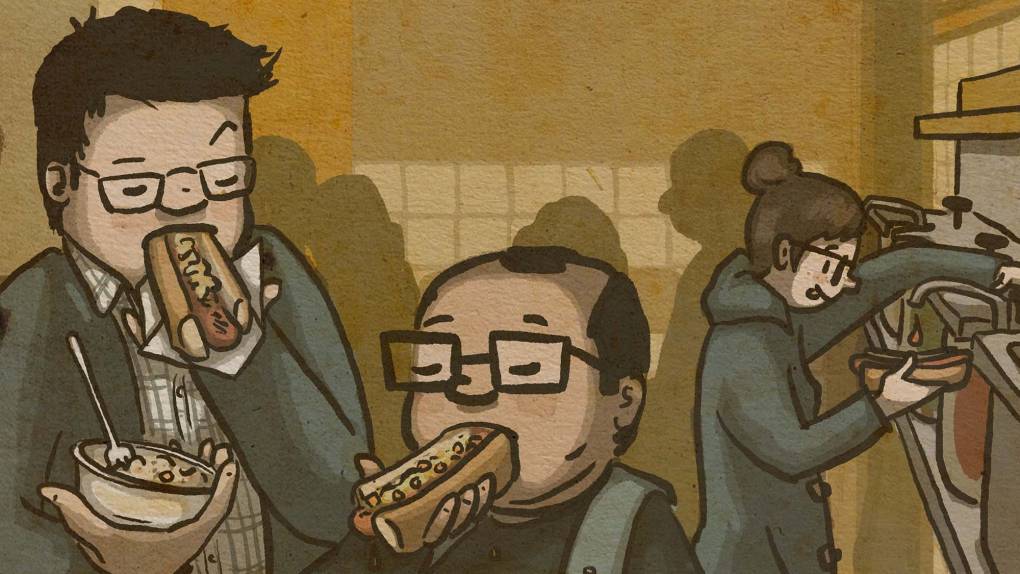
"caption": "In its own way, Top Dog is a quintessential Berkeley restaurant — one that feeds hungry college students until 3 a.m. on weekends.",
"description": null,
"title": "Top_dog_2000px-1 crop",
"credit": "Briana Loewinsohn",
"status": "inherit",
"altTag": "Illustration of two men eating hot dogs standing up, inside the hot dog shop. Behind them, a woman adds ketchup to her hot dog.",
"isLoading": false,
"fetchFailed": false
},
"arts_13954410": {
"type": "attachments",
"id": "arts_13954410",
"meta": {
"index": "attachments_1716263798",
"site": "arts",
"id": "13954410",
"found": true
},
"parent": 13954374,
"imgSizes": {
"twentyfourteen-full-width": {
"file": "https://cdn.kqed.org/wp-content/uploads/sites/2/2024/03/elhalalamigos-suhoorfest-crop-1038x576.jpg",
"width": 1038,
"mimeType": "image/jpeg",
"height": 576
},
"thumbnail": {
"file": "https://cdn.kqed.org/wp-content/uploads/sites/2/2024/03/elhalalamigos-suhoorfest-crop-160x90.jpg",
"width": 160,
"mimeType": "image/jpeg",
"height": 90
},
"post-thumbnail": {
"file": "https://cdn.kqed.org/wp-content/uploads/sites/2/2024/03/elhalalamigos-suhoorfest-crop-672x372.jpg",
"width": 672,
"mimeType": "image/jpeg",
"height": 372
},
"kqedFullSize": {
"file": "https://cdn.kqed.org/wp-content/uploads/sites/2/2024/03/elhalalamigos-suhoorfest-crop.jpg",
"width": 1920,
"height": 1080
},
"large": {
"file": "https://cdn.kqed.org/wp-content/uploads/sites/2/2024/03/elhalalamigos-suhoorfest-crop-1020x574.jpg",
"width": 1020,
"mimeType": "image/jpeg",
"height": 574
},
"1536x1536": {
"file": "https://cdn.kqed.org/wp-content/uploads/sites/2/2024/03/elhalalamigos-suhoorfest-crop-1536x864.jpg",
"width": 1536,
"mimeType": "image/jpeg",
"height": 864
},
"medium": {
"file": "https://cdn.kqed.org/wp-content/uploads/sites/2/2024/03/elhalalamigos-suhoorfest-crop-800x450.jpg",
"width": 800,
"mimeType": "image/jpeg",
"height": 450
},
"medium_large": {
"file": "https://cdn.kqed.org/wp-content/uploads/sites/2/2024/03/elhalalamigos-suhoorfest-crop-768x432.jpg",
"width": 768,
"mimeType": "image/jpeg",
"height": 432
}
},
"publishDate": 1710959688,
"modified": 1710959921,
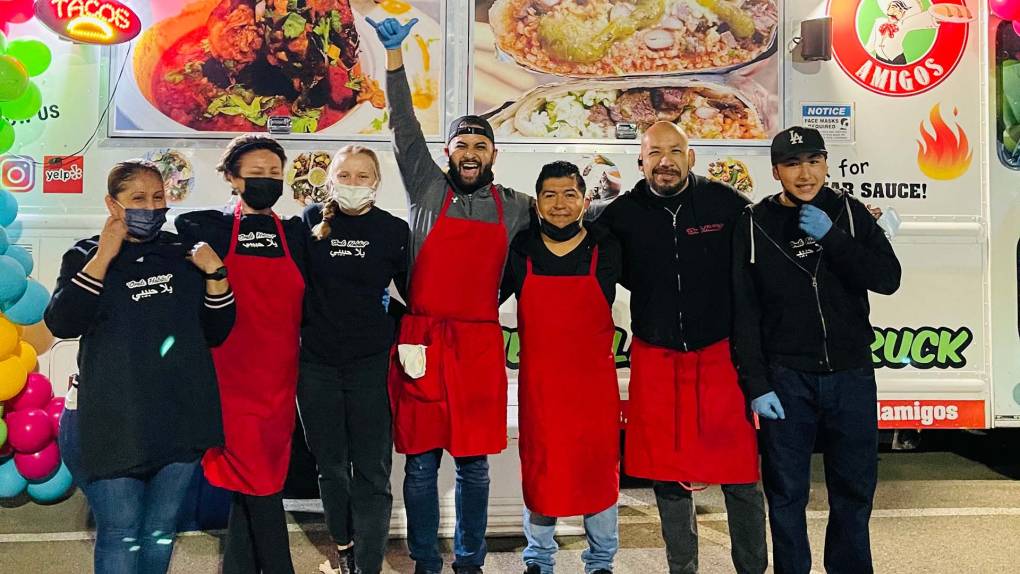
"caption": "The El Halal Amigos team at 2021's inaugural Suhoor Fest event. The one-night food-focused Ramadad celebration draws tens of thousands of people each year.",
"description": null,
"title": "elhalalamigos-suhoorfest-crop",
"credit": "Courtesy of Hashim Abdelfattah",
"status": "inherit",
"altTag": "Taco truck workers in red aprons pose for a photo in front of the El Halal Amigos food truck.",
"isLoading": false,
"fetchFailed": false
},
"arts_13954348": {
"type": "attachments",
"id": "arts_13954348",
"meta": {
"index": "attachments_1716263798",
"site": "arts",
"id": "13954348",
"found": true
},
"parent": 13954342,
"imgSizes": {
"twentyfourteen-full-width": {
"file": "https://cdn.kqed.org/wp-content/uploads/sites/2/2024/03/gaumenkitzel-featured-crop-1038x576.jpg",
"width": 1038,
"mimeType": "image/jpeg",
"height": 576
},
"thumbnail": {
"file": "https://cdn.kqed.org/wp-content/uploads/sites/2/2024/03/gaumenkitzel-featured-crop-160x110.jpg",
"width": 160,
"mimeType": "image/jpeg",
"height": 110
},
"post-thumbnail": {
"file": "https://cdn.kqed.org/wp-content/uploads/sites/2/2024/03/gaumenkitzel-featured-crop-672x372.jpg",
"width": 672,
"mimeType": "image/jpeg",
"height": 372
},
"kqedFullSize": {
"file": "https://cdn.kqed.org/wp-content/uploads/sites/2/2024/03/gaumenkitzel-featured-crop.jpg",
"width": 2016,
"height": 1386
},
"large": {
"file": "https://cdn.kqed.org/wp-content/uploads/sites/2/2024/03/gaumenkitzel-featured-crop-1020x701.jpg",
"width": 1020,
"mimeType": "image/jpeg",
"height": 701
},
"1536x1536": {
"file": "https://cdn.kqed.org/wp-content/uploads/sites/2/2024/03/gaumenkitzel-featured-crop-1536x1056.jpg",
"width": 1536,
"mimeType": "image/jpeg",
"height": 1056
},
"full-width": {
"file": "https://cdn.kqed.org/wp-content/uploads/sites/2/2024/03/gaumenkitzel-featured-crop-1920x1320.jpg",
"width": 1920,
"mimeType": "image/jpeg",
"height": 1320
},
"medium": {
"file": "https://cdn.kqed.org/wp-content/uploads/sites/2/2024/03/gaumenkitzel-featured-crop-800x550.jpg",
"width": 800,
"mimeType": "image/jpeg",
"height": 550
},
"medium_large": {
"file": "https://cdn.kqed.org/wp-content/uploads/sites/2/2024/03/gaumenkitzel-featured-crop-768x528.jpg",
"width": 768,
"mimeType": "image/jpeg",
"height": 528
}
},
"publishDate": 1710874605,
"modified": 1710874740,
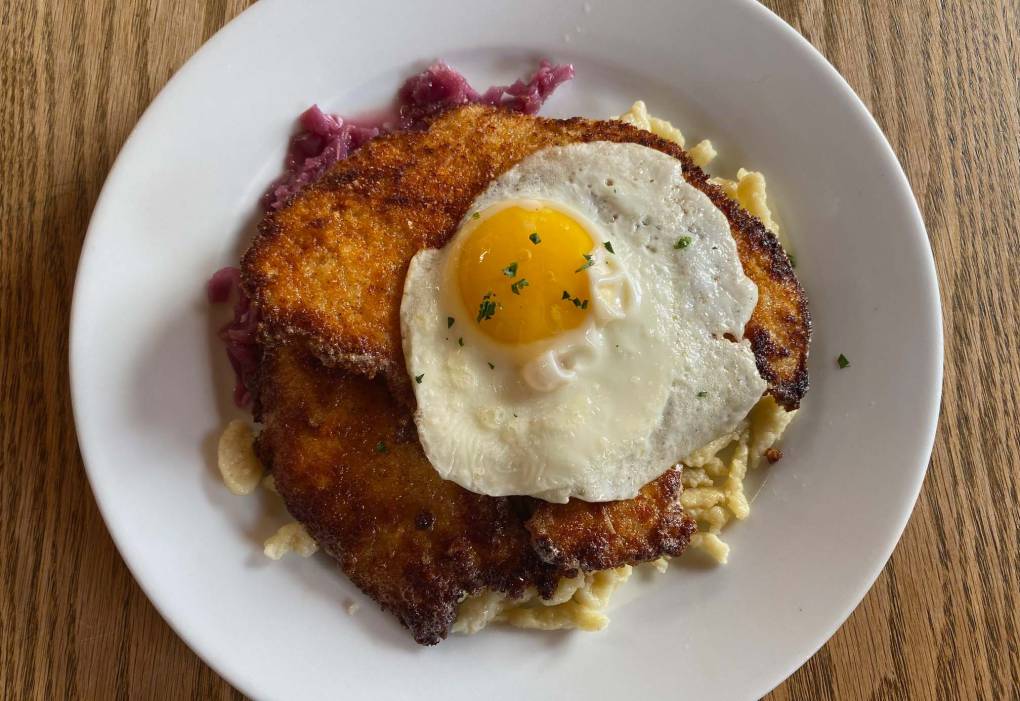
"caption": "Crispy pork schnitzel, one of the German comfort food dishes at Berkeley's Gaumenkitzel, which is closing on March 24. It's pictured here topped with a fried egg.",
"description": null,
"title": "gaumenkitzel featured crop",
"credit": "Luke Tsai/KQED",
"status": "inherit",
"altTag": "German pork schnitzel topped with a fried egg, on a white plate.",
"isLoading": false,
"fetchFailed": false
},
"arts_13954293": {
"type": "attachments",
"id": "arts_13954293",
"meta": {
"index": "attachments_1716263798",
"site": "arts",
"id": "13954293",
"found": true
},
"parent": 13954287,
"imgSizes": {
"twentyfourteen-full-width": {
"file": "https://cdn.kqed.org/wp-content/uploads/sites/2/2024/03/Screen-Shot-2024-03-18-at-2.43.58-PM-1038x576.png",
"width": 1038,
"mimeType": "image/png",
"height": 576
},
"thumbnail": {
"file": "https://cdn.kqed.org/wp-content/uploads/sites/2/2024/03/Screen-Shot-2024-03-18-at-2.43.58-PM-160x107.png",
"width": 160,
"mimeType": "image/png",
"height": 107
},
"post-thumbnail": {
"file": "https://cdn.kqed.org/wp-content/uploads/sites/2/2024/03/Screen-Shot-2024-03-18-at-2.43.58-PM-672x372.png",
"width": 672,
"mimeType": "image/png",
"height": 372
},
"kqedFullSize": {
"file": "https://cdn.kqed.org/wp-content/uploads/sites/2/2024/03/Screen-Shot-2024-03-18-at-2.43.58-PM.png",
"width": 1916,
"height": 1286
},
"large": {
"file": "https://cdn.kqed.org/wp-content/uploads/sites/2/2024/03/Screen-Shot-2024-03-18-at-2.43.58-PM-1020x685.png",
"width": 1020,
"mimeType": "image/png",
"height": 685
},
"1536x1536": {
"file": "https://cdn.kqed.org/wp-content/uploads/sites/2/2024/03/Screen-Shot-2024-03-18-at-2.43.58-PM-1536x1031.png",
"width": 1536,
"mimeType": "image/png",
"height": 1031
},
"medium": {
"file": "https://cdn.kqed.org/wp-content/uploads/sites/2/2024/03/Screen-Shot-2024-03-18-at-2.43.58-PM-800x537.png",
"width": 800,
"mimeType": "image/png",
"height": 537
},
"medium_large": {
"file": "https://cdn.kqed.org/wp-content/uploads/sites/2/2024/03/Screen-Shot-2024-03-18-at-2.43.58-PM-768x515.png",
"width": 768,
"mimeType": "image/png",
"height": 515
}
},
"publishDate": 1710798280,
"modified": 1710798421,
"caption": "A new proposal is trying to stop public schools across California from serving foods that contain certain substances, including some artificial dyes commonly found in the most popular snacks.",
"description": null,
"title": "A new proposal is trying to stop public schools across California from serving foods that contain certain substances, including some artificial dyes commonly found in the most popular snacks.",
"credit": "iStock/ BWFolsom",
"status": "inherit",
"altTag": "A pile of cheeto-like snacks sit in a pile on a white background.",
"isLoading": false,
"fetchFailed": false
},
"arts_13954272": {
"type": "attachments",
"id": "arts_13954272",
"meta": {
"index": "attachments_1716263798",
"site": "arts",
"id": "13954272",
"found": true
},
"parent": 13954267,
"imgSizes": {
"twentyfourteen-full-width": {
"file": "https://cdn.kqed.org/wp-content/uploads/sites/2/2024/03/swahili-spot-lead-1038x576.jpg",
"width": 1038,
"mimeType": "image/jpeg",
"height": 576
},
"thumbnail": {
"file": "https://cdn.kqed.org/wp-content/uploads/sites/2/2024/03/swahili-spot-lead-160x90.jpg",
"width": 160,
"mimeType": "image/jpeg",
"height": 90
},
"post-thumbnail": {
"file": "https://cdn.kqed.org/wp-content/uploads/sites/2/2024/03/swahili-spot-lead-672x372.jpg",
"width": 672,
"mimeType": "image/jpeg",
"height": 372
},
"kqedFullSize": {
"file": "https://cdn.kqed.org/wp-content/uploads/sites/2/2024/03/swahili-spot-lead.jpg",
"width": 2000,
"height": 1125
},
"large": {
"file": "https://cdn.kqed.org/wp-content/uploads/sites/2/2024/03/swahili-spot-lead-1020x574.jpg",
"width": 1020,
"mimeType": "image/jpeg",
"height": 574
},
"1536x1536": {
"file": "https://cdn.kqed.org/wp-content/uploads/sites/2/2024/03/swahili-spot-lead-1536x864.jpg",
"width": 1536,
"mimeType": "image/jpeg",
"height": 864
},
"full-width": {
"file": "https://cdn.kqed.org/wp-content/uploads/sites/2/2024/03/swahili-spot-lead-1920x1080.jpg",
"width": 1920,
"mimeType": "image/jpeg",
"height": 1080
},
"medium": {
"file": "https://cdn.kqed.org/wp-content/uploads/sites/2/2024/03/swahili-spot-lead-800x450.jpg",
"width": 800,
"mimeType": "image/jpeg",
"height": 450
},
"medium_large": {
"file": "https://cdn.kqed.org/wp-content/uploads/sites/2/2024/03/swahili-spot-lead-768x432.jpg",
"width": 768,
"mimeType": "image/jpeg",
"height": 432
}
},
"publishDate": 1710790397,
"modified": 1710790483,
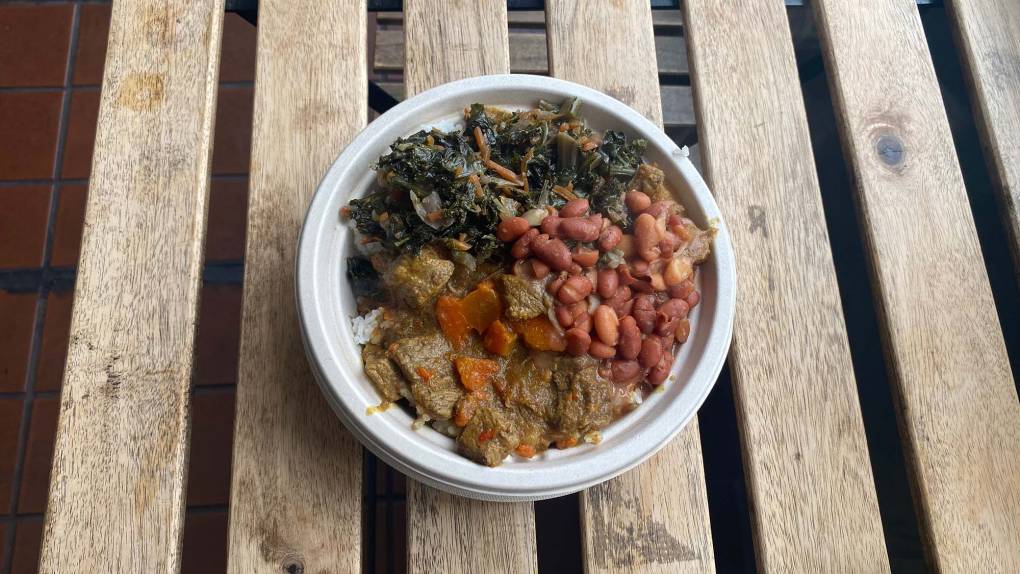
"caption": "Swahili Spot is bringing traditional Tanzanian curries — like this beef curry bowl — to a small storefront in West Oakland.",
"description": null,
"title": "swahili spot - lead",
"credit": "Luke Tsai/KQED",
"status": "inherit",
"altTag": "A curry rice bowl topped with beef, greens and beans.",
"isLoading": false,
"fetchFailed": false
},
"arts_13954114": {
"type": "attachments",
"id": "arts_13954114",
"meta": {
"index": "attachments_1716263798",
"site": "arts",
"id": "13954114",
"found": true
},
"parent": 13954112,
"imgSizes": {
"twentyfourteen-full-width": {
"file": "https://cdn.kqed.org/wp-content/uploads/sites/2/2024/03/Orale1-crop-1038x576.jpg",
"width": 1038,
"mimeType": "image/jpeg",
"height": 576
},
"thumbnail": {
"file": "https://cdn.kqed.org/wp-content/uploads/sites/2/2024/03/Orale1-crop-160x90.jpg",
"width": 160,
"mimeType": "image/jpeg",
"height": 90
},
"post-thumbnail": {
"file": "https://cdn.kqed.org/wp-content/uploads/sites/2/2024/03/Orale1-crop-672x372.jpg",
"width": 672,
"mimeType": "image/jpeg",
"height": 372
},
"kqedFullSize": {
"file": "https://cdn.kqed.org/wp-content/uploads/sites/2/2024/03/Orale1-crop.jpg",
"width": 1920,
"height": 1080
},
"large": {
"file": "https://cdn.kqed.org/wp-content/uploads/sites/2/2024/03/Orale1-crop-1020x574.jpg",
"width": 1020,
"mimeType": "image/jpeg",
"height": 574
},
"1536x1536": {
"file": "https://cdn.kqed.org/wp-content/uploads/sites/2/2024/03/Orale1-crop-1536x864.jpg",
"width": 1536,
"mimeType": "image/jpeg",
"height": 864
},
"medium": {
"file": "https://cdn.kqed.org/wp-content/uploads/sites/2/2024/03/Orale1-crop-800x450.jpg",
"width": 800,
"mimeType": "image/jpeg",
"height": 450
},
"medium_large": {
"file": "https://cdn.kqed.org/wp-content/uploads/sites/2/2024/03/Orale1-crop-768x432.jpg",
"width": 768,
"mimeType": "image/jpeg",
"height": 432
}
},
"publishDate": 1710446413,
"modified": 1710446549,
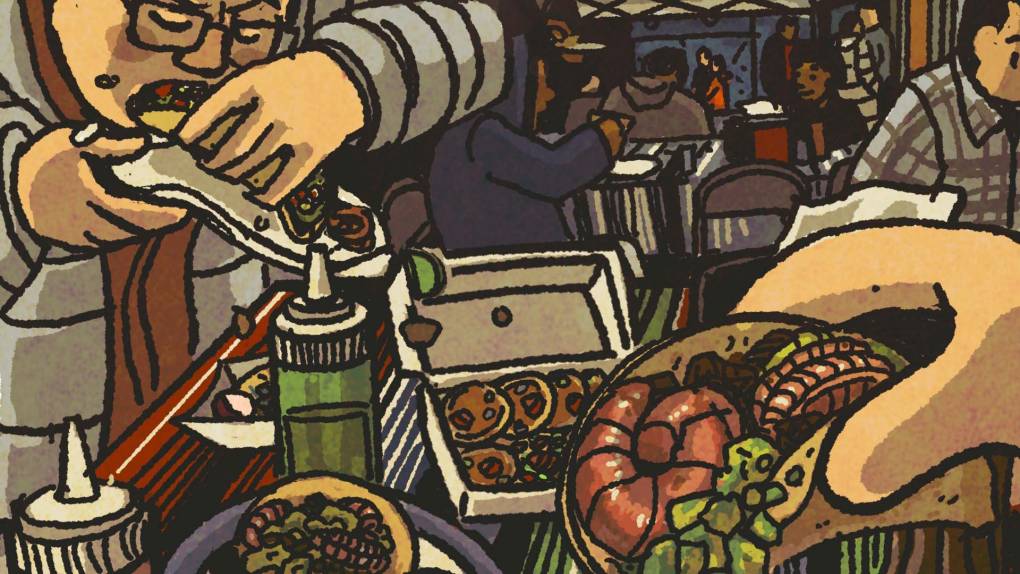
"caption": "The Orale taco truck is open — and stays busy — until 3 a.m. on the weekends. It's located in the Alum Rock neighborhood in Eastside San Jose.",
"description": null,
"title": "Orale1-crop",
"credit": "Thien Pham",
"status": "inherit",
"altTag": "Illustration: In a tented dining area, a man holds a large shrimp taco while his companion stuffs a huarache into his mouth.",
"isLoading": false,
"fetchFailed": false
},
"arts_13953906": {
"type": "attachments",
"id": "arts_13953906",
"meta": {
"index": "attachments_1716263798",
"site": "arts",
"id": "13953906",
"found": true
},
"parent": 13953866,
"imgSizes": {
"twentyfourteen-full-width": {
"file": "https://cdn.kqed.org/wp-content/uploads/sites/2/2024/03/ghanaian-peanut-stew-featured-1038x576.jpg",
"width": 1038,
"mimeType": "image/jpeg",
"height": 576
},
"thumbnail": {
"file": "https://cdn.kqed.org/wp-content/uploads/sites/2/2024/03/ghanaian-peanut-stew-featured-160x90.jpg",
"width": 160,
"mimeType": "image/jpeg",
"height": 90
},
"post-thumbnail": {
"file": "https://cdn.kqed.org/wp-content/uploads/sites/2/2024/03/ghanaian-peanut-stew-featured-672x372.jpg",
"width": 672,
"mimeType": "image/jpeg",
"height": 372
},
"kqedFullSize": {
"file": "https://cdn.kqed.org/wp-content/uploads/sites/2/2024/03/ghanaian-peanut-stew-featured.jpg",
"width": 2000,
"height": 1125
},
"large": {
"file": "https://cdn.kqed.org/wp-content/uploads/sites/2/2024/03/ghanaian-peanut-stew-featured-1020x574.jpg",
"width": 1020,
"mimeType": "image/jpeg",
"height": 574
},
"1536x1536": {
"file": "https://cdn.kqed.org/wp-content/uploads/sites/2/2024/03/ghanaian-peanut-stew-featured-1536x864.jpg",
"width": 1536,
"mimeType": "image/jpeg",
"height": 864
},
"full-width": {
"file": "https://cdn.kqed.org/wp-content/uploads/sites/2/2024/03/ghanaian-peanut-stew-featured-1920x1080.jpg",
"width": 1920,
"mimeType": "image/jpeg",
"height": 1080
},
"medium": {
"file": "https://cdn.kqed.org/wp-content/uploads/sites/2/2024/03/ghanaian-peanut-stew-featured-800x450.jpg",
"width": 800,
"mimeType": "image/jpeg",
"height": 450
},
"medium_large": {
"file": "https://cdn.kqed.org/wp-content/uploads/sites/2/2024/03/ghanaian-peanut-stew-featured-768x432.jpg",
"width": 768,
"mimeType": "image/jpeg",
"height": 432
}
},
"publishDate": 1710197655,
"modified": 1710199152,
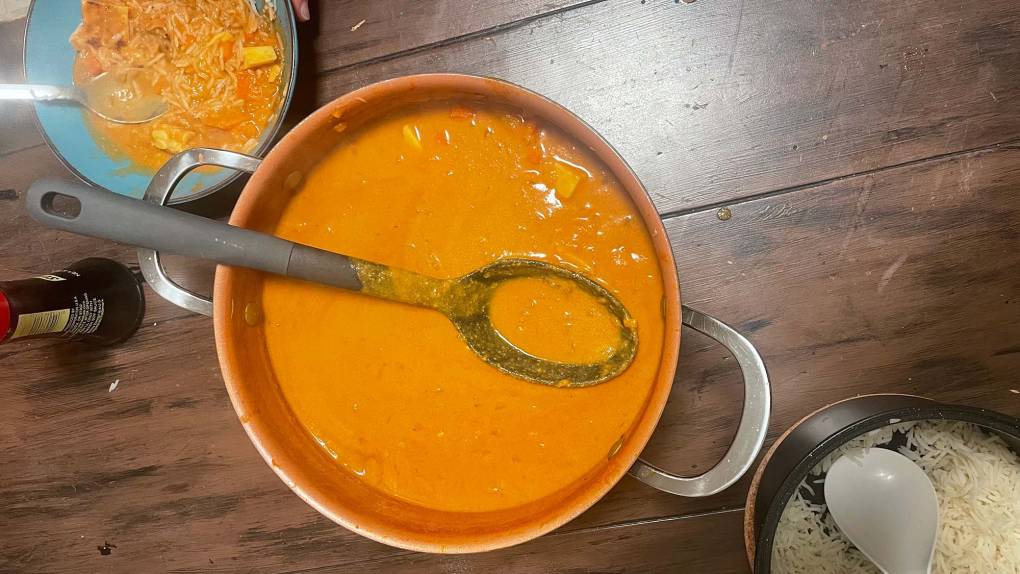
"caption": "Traditionally prepared with chicken or other meats, a vegan version of Ghanaian peanut stew tastes just as good. ",
"description": null,
"title": "ghanaian peanut stew - featured",
"credit": "Kofi Ansong",
"status": "inherit",
"altTag": "A pot of bright orange peanut stew in a pot, with rice on the side.",
"isLoading": false,
"fetchFailed": false
},
"arts_13900955": {
"type": "attachments",
"id": "arts_13900955",
"meta": {
"index": "attachments_1716263798",
"site": "arts",
"id": "13900955",
"found": true
},
"parent": 13900855,
"imgSizes": {
"twentyfourteen-full-width": {
"file": "https://ww2.kqed.org/app/uploads/sites/2/2021/08/016_Oakland_ChefSmellys_08072021-1038x576.jpg",
"width": 1038,
"mimeType": "image/jpeg",
"height": 576
},
"thumbnail": {
"file": "https://ww2.kqed.org/app/uploads/sites/2/2021/08/016_Oakland_ChefSmellys_08072021-160x107.jpg",
"width": 160,
"mimeType": "image/jpeg",
"height": 107
},
"post-thumbnail": {
"file": "https://ww2.kqed.org/app/uploads/sites/2/2021/08/016_Oakland_ChefSmellys_08072021-672x372.jpg",
"width": 672,
"mimeType": "image/jpeg",
"height": 372
},
"kqedFullSize": {
"file": "https://ww2.kqed.org/app/uploads/sites/2/2021/08/016_Oakland_ChefSmellys_08072021-scaled.jpg",
"width": 2560,
"height": 1707
},
"2048x2048": {
"file": "https://ww2.kqed.org/app/uploads/sites/2/2021/08/016_Oakland_ChefSmellys_08072021-2048x1366.jpg",
"width": 2048,
"mimeType": "image/jpeg",
"height": 1366
},
"large": {
"file": "https://ww2.kqed.org/app/uploads/sites/2/2021/08/016_Oakland_ChefSmellys_08072021-1020x680.jpg",
"width": 1020,
"mimeType": "image/jpeg",
"height": 680
},
"1536x1536": {
"file": "https://ww2.kqed.org/app/uploads/sites/2/2021/08/016_Oakland_ChefSmellys_08072021-1536x1024.jpg",
"width": 1536,
"mimeType": "image/jpeg",
"height": 1024
},
"full-width": {
"file": "https://ww2.kqed.org/app/uploads/sites/2/2021/08/016_Oakland_ChefSmellys_08072021-1920x1280.jpg",
"width": 1920,
"mimeType": "image/jpeg",
"height": 1280
},
"medium": {
"file": "https://ww2.kqed.org/app/uploads/sites/2/2021/08/016_Oakland_ChefSmellys_08072021-800x533.jpg",
"width": 800,
"mimeType": "image/jpeg",
"height": 533
},
"medium_large": {
"file": "https://ww2.kqed.org/app/uploads/sites/2/2021/08/016_Oakland_ChefSmellys_08072021-768x512.jpg",
"width": 768,
"mimeType": "image/jpeg",
"height": 512
}
},
"publishDate": 1628555597,
"modified": 1675805303,
"caption": "One of Chef Smelly's legendary seafood plates, piled high with garlic noodles, shrimp and, of course, Dungeness crab.",
"description": null,
"title": "016_Oakland_ChefSmellys_08072021",
"credit": "Beth LaBerge/KQED",
"status": "inherit",
"altTag": "Overhead view of a plate of garlic noodles and roast crab.",
"isLoading": false,
"fetchFailed": false
},
"arts_13953706": {
"type": "attachments",
"id": "arts_13953706",
"meta": {
"index": "attachments_1716263798",
"site": "arts",
"id": "13953706",
"found": true
},
"parent": 13953702,
"imgSizes": {
"twentyfourteen-full-width": {
"file": "https://cdn.kqed.org/wp-content/uploads/sites/2/2024/03/HIPHOPRIBSHACK-crop-1038x576.jpg",
"width": 1038,
"mimeType": "image/jpeg",
"height": 576
},
"thumbnail": {
"file": "https://cdn.kqed.org/wp-content/uploads/sites/2/2024/03/HIPHOPRIBSHACK-crop-160x90.jpg",
"width": 160,
"mimeType": "image/jpeg",
"height": 90
},
"post-thumbnail": {
"file": "https://cdn.kqed.org/wp-content/uploads/sites/2/2024/03/HIPHOPRIBSHACK-crop-672x372.jpg",
"width": 672,
"mimeType": "image/jpeg",
"height": 372
},
"kqedFullSize": {
"file": "https://cdn.kqed.org/wp-content/uploads/sites/2/2024/03/HIPHOPRIBSHACK-crop.jpg",
"width": 1920,
"height": 1080
},
"large": {
"file": "https://cdn.kqed.org/wp-content/uploads/sites/2/2024/03/HIPHOPRIBSHACK-crop-1020x574.jpg",
"width": 1020,
"mimeType": "image/jpeg",
"height": 574
},
"1536x1536": {
"file": "https://cdn.kqed.org/wp-content/uploads/sites/2/2024/03/HIPHOPRIBSHACK-crop-1536x864.jpg",
"width": 1536,
"mimeType": "image/jpeg",
"height": 864
},
"medium": {
"file": "https://cdn.kqed.org/wp-content/uploads/sites/2/2024/03/HIPHOPRIBSHACK-crop-800x450.jpg",
"width": 800,
"mimeType": "image/jpeg",
"height": 450
},
"medium_large": {
"file": "https://cdn.kqed.org/wp-content/uploads/sites/2/2024/03/HIPHOPRIBSHACK-crop-768x432.jpg",
"width": 768,
"mimeType": "image/jpeg",
"height": 432
}
},
"publishDate": 1709851723,
"modified": 1709851858,
"caption": "Hip Hop BBQ Shack offers everything you could want at 10 o'clock on a Friday night: brisket, links, NBA Jam and a steady stream of '90s and 2000s rap classic.",
"description": null,
"title": "HIPHOPRIBSHACK-crop",
"credit": "Thien Pham",
"status": "inherit",
"altTag": "A man devours a spread of barbecue: brisket, ribs, collard greens, potato salad.",
"isLoading": false,
"fetchFailed": false
},
"arts_13953516": {
"type": "attachments",
"id": "arts_13953516",
"meta": {
"index": "attachments_1716263798",
"site": "arts",
"id": "13953516",
"found": true
},
"parent": 13953330,
"imgSizes": {
"twentyfourteen-full-width": {
"file": "https://cdn.kqed.org/wp-content/uploads/sites/2/2024/03/IMG_2979_crop-1038x576.jpg",
"width": 1038,
"mimeType": "image/jpeg",
"height": 576
},
"thumbnail": {
"file": "https://cdn.kqed.org/wp-content/uploads/sites/2/2024/03/IMG_2979_crop-160x90.jpg",
"width": 160,
"mimeType": "image/jpeg",
"height": 90
},
"post-thumbnail": {
"file": "https://cdn.kqed.org/wp-content/uploads/sites/2/2024/03/IMG_2979_crop-672x372.jpg",
"width": 672,
"mimeType": "image/jpeg",
"height": 372
},
"kqedFullSize": {
"file": "https://cdn.kqed.org/wp-content/uploads/sites/2/2024/03/IMG_2979_crop.jpg",
"width": 2000,
"height": 1125
},
"large": {
"file": "https://cdn.kqed.org/wp-content/uploads/sites/2/2024/03/IMG_2979_crop-1020x574.jpg",
"width": 1020,
"mimeType": "image/jpeg",
"height": 574
},
"1536x1536": {
"file": "https://cdn.kqed.org/wp-content/uploads/sites/2/2024/03/IMG_2979_crop-1536x864.jpg",
"width": 1536,
"mimeType": "image/jpeg",
"height": 864
},
"full-width": {
"file": "https://cdn.kqed.org/wp-content/uploads/sites/2/2024/03/IMG_2979_crop-1920x1080.jpg",
"width": 1920,
"mimeType": "image/jpeg",
"height": 1080
},
"medium": {
"file": "https://cdn.kqed.org/wp-content/uploads/sites/2/2024/03/IMG_2979_crop-800x450.jpg",
"width": 800,
"mimeType": "image/jpeg",
"height": 450
},
"medium_large": {
"file": "https://cdn.kqed.org/wp-content/uploads/sites/2/2024/03/IMG_2979_crop-768x432.jpg",
"width": 768,
"mimeType": "image/jpeg",
"height": 432
}
},
"publishDate": 1709754764,
"modified": 1709755156,
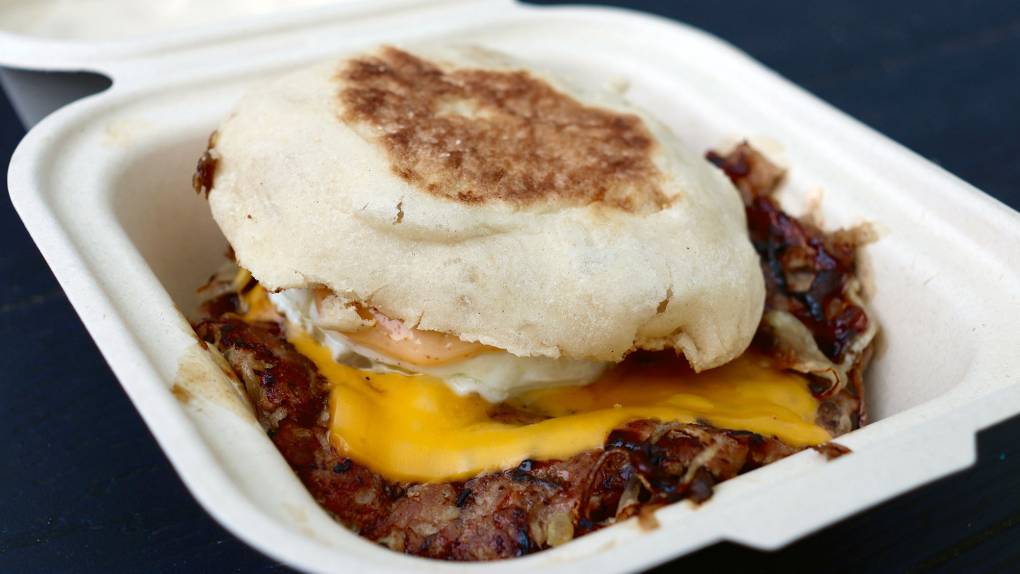
"caption": "Last month, the \"408 Smash\" at Hash N Dash gained over a million views and hundreds of new customers. Now the pop-up is having to shift its food model. ",
"description": null,
"title": "IMG_2979_crop",
"credit": "Alan Chazaro",
"status": "inherit",
"altTag": "a breakfast sandwich is served in a to-go box",
"isLoading": false,
"fetchFailed": false
},
"arts_13953272": {
"type": "attachments",
"id": "arts_13953272",
"meta": {
"index": "attachments_1716263798",
"site": "arts",
"id": "13953272",
"found": true
},
"parent": 13953266,
"imgSizes": {
"twentyfourteen-full-width": {
"file": "https://cdn.kqed.org/wp-content/uploads/sites/2/2024/03/Savory-Empanadas-3-crop-1038x576.jpg",
"width": 1038,
"mimeType": "image/jpeg",
"height": 576
},
"thumbnail": {
"file": "https://cdn.kqed.org/wp-content/uploads/sites/2/2024/03/Savory-Empanadas-3-crop-160x90.jpg",
"width": 160,
"mimeType": "image/jpeg",
"height": 90
},
"post-thumbnail": {
"file": "https://cdn.kqed.org/wp-content/uploads/sites/2/2024/03/Savory-Empanadas-3-crop-672x372.jpg",
"width": 672,
"mimeType": "image/jpeg",
"height": 372
},
"kqedFullSize": {
"file": "https://cdn.kqed.org/wp-content/uploads/sites/2/2024/03/Savory-Empanadas-3-crop.jpg",
"width": 2000,
"height": 1125
},
"large": {
"file": "https://cdn.kqed.org/wp-content/uploads/sites/2/2024/03/Savory-Empanadas-3-crop-1020x574.jpg",
"width": 1020,
"mimeType": "image/jpeg",
"height": 574
},
"1536x1536": {
"file": "https://cdn.kqed.org/wp-content/uploads/sites/2/2024/03/Savory-Empanadas-3-crop-1536x864.jpg",
"width": 1536,
"mimeType": "image/jpeg",
"height": 864
},
"full-width": {
"file": "https://cdn.kqed.org/wp-content/uploads/sites/2/2024/03/Savory-Empanadas-3-crop-1920x1080.jpg",
"width": 1920,
"mimeType": "image/jpeg",
"height": 1080
},
"medium": {
"file": "https://cdn.kqed.org/wp-content/uploads/sites/2/2024/03/Savory-Empanadas-3-crop-800x450.jpg",
"width": 800,
"mimeType": "image/jpeg",
"height": 450
},
"medium_large": {
"file": "https://cdn.kqed.org/wp-content/uploads/sites/2/2024/03/Savory-Empanadas-3-crop-768x432.jpg",
"width": 768,
"mimeType": "image/jpeg",
"height": 432
}
},
"publishDate": 1709334266,
"modified": 1709334418,
"caption": "Three different flavors of savory empanadas from Cheff Che Cafe & Bar, a Mexican American restaurant in San Jose that started out as a pandemic-born home empanada business. ",
"description": null,
"title": "Savory Empanadas 3-crop",
"credit": "Octavio Peña",
"status": "inherit",
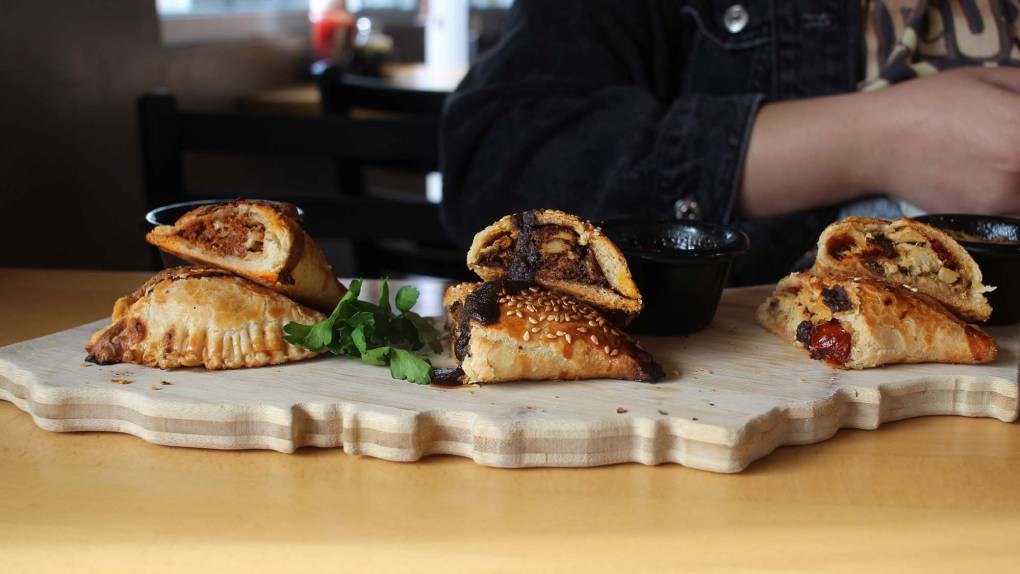
"altTag": "On a wooden cutting board, three empanadas cut open to show the fillings inside.",
"isLoading": false,
"fetchFailed": false
},
"arts_13953226": {
"type": "attachments",
"id": "arts_13953226",
"meta": {
"index": "attachments_1716263798",
"site": "arts",
"id": "13953226",
"found": true
},
"parent": 13953224,
"imgSizes": {
"twentyfourteen-full-width": {
"file": "https://cdn.kqed.org/wp-content/uploads/sites/2/2024/02/pete-crop-1038x576.jpg",
"width": 1038,
"mimeType": "image/jpeg",
"height": 576
},
"thumbnail": {
"file": "https://cdn.kqed.org/wp-content/uploads/sites/2/2024/02/pete-crop-160x90.jpg",
"width": 160,
"mimeType": "image/jpeg",
"height": 90
},
"post-thumbnail": {
"file": "https://cdn.kqed.org/wp-content/uploads/sites/2/2024/02/pete-crop-672x372.jpg",
"width": 672,
"mimeType": "image/jpeg",
"height": 372
},
"kqedFullSize": {
"file": "https://cdn.kqed.org/wp-content/uploads/sites/2/2024/02/pete-crop.jpg",
"width": 1920,
"height": 1080
},
"large": {
"file": "https://cdn.kqed.org/wp-content/uploads/sites/2/2024/02/pete-crop-1020x574.jpg",
"width": 1020,
"mimeType": "image/jpeg",
"height": 574
},
"1536x1536": {
"file": "https://cdn.kqed.org/wp-content/uploads/sites/2/2024/02/pete-crop-1536x864.jpg",
"width": 1536,
"mimeType": "image/jpeg",
"height": 864
},
"medium": {
"file": "https://cdn.kqed.org/wp-content/uploads/sites/2/2024/02/pete-crop-800x450.jpg",
"width": 800,
"mimeType": "image/jpeg",
"height": 450
},
"medium_large": {
"file": "https://cdn.kqed.org/wp-content/uploads/sites/2/2024/02/pete-crop-768x432.jpg",
"width": 768,
"mimeType": "image/jpeg",
"height": 432
}
},
"publishDate": 1709241302,
"modified": 1709241820,
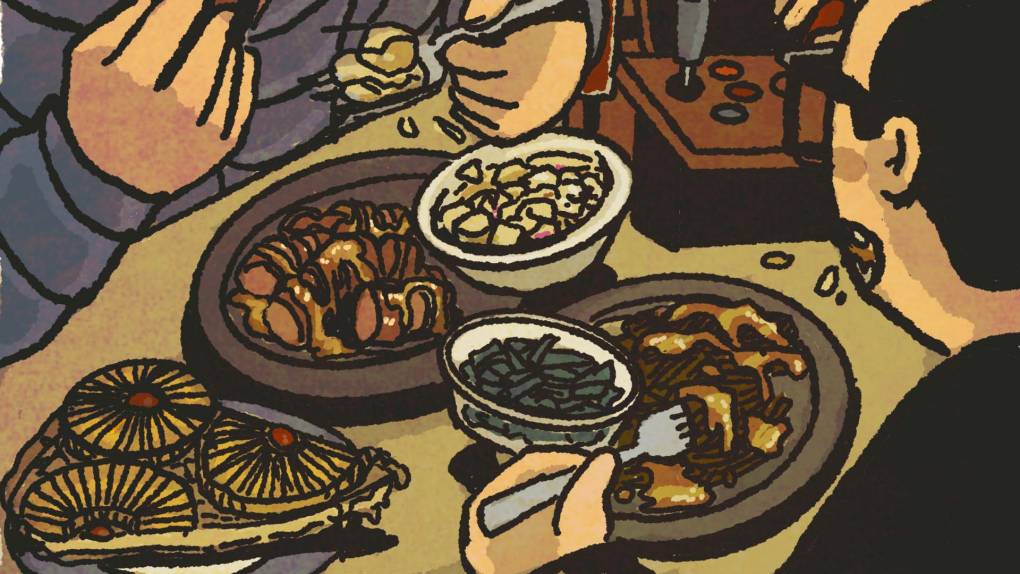
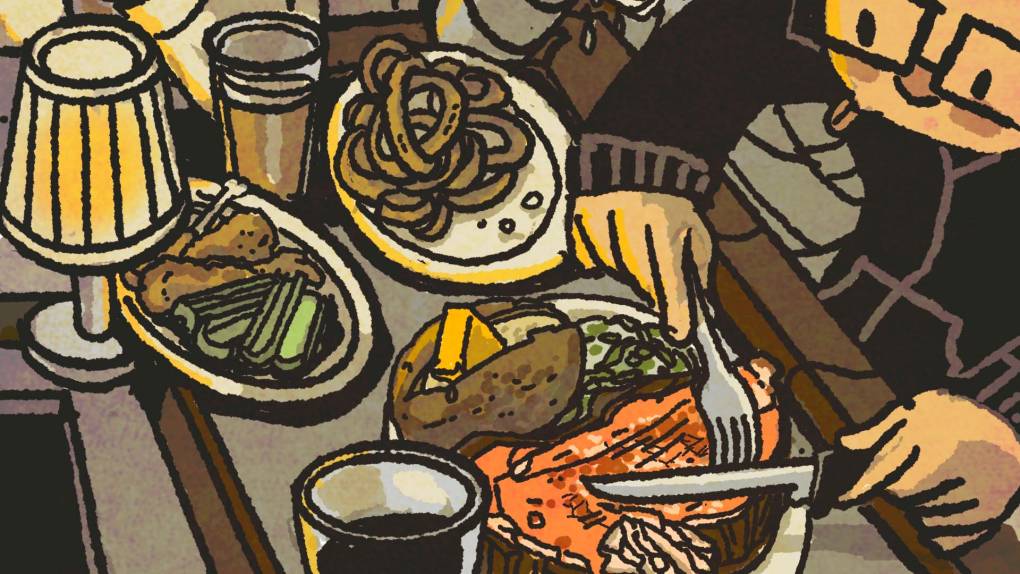
"caption": "The $26 Thursday night prime rib plate at Pete's 881 Club is one of the hidden gems of Marin County — but the poker room's other bar food is also well worth seeking out.",
"description": null,
"title": "pete-crop",
"credit": "Thien Pham",
"status": "inherit",
"altTag": "Man cuts a piece of prime rib while eating at the bar.",
"isLoading": false,
"fetchFailed": false
}
},
"audioPlayerReducer": {
"postId": "stream_live",
"isPaused": true,
"isPlaying": false,
"pfsActive": false,
"pledgeModalIsOpen": true,
"playerDrawerIsOpen": false,
"liveAudioPlayStartedAt": 0,
"liveAudioPlayContext": ""
},
"authorsReducer": {
"byline_arts_13954287": {
"type": "authors",
"id": "byline_arts_13954287",
"meta": {
"override": true
},
"slug": "byline_arts_13954287",
"name": "Joe Hernandez",
"isLoading": false
},
"byline_arts_13953866": {
"type": "authors",
"id": "byline_arts_13953866",
"meta": {
"override": true
},
"slug": "byline_arts_13953866",
"name": "Kofi Ansong",
"isLoading": false
},
"nvoynovskaya": {
"type": "authors",
"id": "11387",
"meta": {
"index": "authors_1716337520",
"id": "11387",
"found": true
},
"name": "Nastia Voynovskaya",
"firstName": "Nastia",
"lastName": "Voynovskaya",
"slug": "nvoynovskaya",
"email": "nvoynovskaya@kqed.org",
"display_author_email": false,
"staff_mastheads": [
"arts"
],
"title": "Editor and reporter",
"bio": "Nastia Voynovskaya is a reporter, editor and host at KQED Arts & Culture. She's been covering the arts in the Bay Area for over a decade, with a focus on music, queer culture, labor issues and grassroots organizing. She has edited KQED story series such as Trans Bay: A History of San Francisco's Gender-Diverse Community, and co-created KQED's Bay Area hip-hop history project, That's My Word. Nastia's work has been recognized by the Society of Professional Journalists and San Francisco Press Club. She regularly appears on podcasts and radio programs, including NPR's All Songs Considered, and hosts live events where music, culture and conversation meet.",
"avatar": "https://secure.gravatar.com/avatar/5025ee460e5a85d69ca20ea6c6f2f80d7e17795c828f61ea3aecfcd924e9042e?s=600&d=blank&r=g",
"twitter": null,
"bluesky": null,
"facebook": null,
"instagram": "https://www.instagram.com/nananastia/",
"linkedin": null,
"sites": [
{
"site": "",
"roles": [
"editor"
]
},
{
"site": "arts",
"roles": [
"administrator"
]
},
{
"site": "news",
"roles": [
"editor"
]
},
{
"site": "pop",
"roles": [
"administrator"
]
},
{
"site": "bayareabites",
"roles": [
"editor"
]
},
{
"site": "podcasts",
"roles": [
"editor"
]
},
{
"site": "hiphop",
"roles": [
"editor"
]
}
],
"headData": {
"title": "Nastia Voynovskaya | KQED",
"description": "Editor and reporter",
"ogImgSrc": "https://secure.gravatar.com/avatar/5025ee460e5a85d69ca20ea6c6f2f80d7e17795c828f61ea3aecfcd924e9042e?s=600&d=blank&r=g",
"twImgSrc": "https://secure.gravatar.com/avatar/5025ee460e5a85d69ca20ea6c6f2f80d7e17795c828f61ea3aecfcd924e9042e?s=600&d=blank&r=g"
},
"isLoading": false,
"link": "/author/nvoynovskaya"
},
"ltsai": {
"type": "authors",
"id": "11743",
"meta": {
"index": "authors_1716337520",
"id": "11743",
"found": true
},
"name": "Luke Tsai",
"firstName": "Luke",
"lastName": "Tsai",
"slug": "ltsai",
"email": "ltsai@kqed.org",
"display_author_email": true,
"staff_mastheads": [
"arts"
],
"title": "Food Editor",
"bio": "Luke Tsai is KQED's food editor and resident stinky tofu connoisseur. Prior to KQED, he was an editor at Eater SF, \u003cem>San Francisco \u003c/em>magazine, and the \u003cem>East Bay Express\u003c/em>, and his work has also appeared in TASTE, the \u003cem>San Francisco Chronicle\u003c/em>, and the \u003cem>Best Food Writing\u003c/em> anthology. When he isn't writing or editing, you'll find him eating most everything he can get his hands on.",
"avatar": "https://secure.gravatar.com/avatar/1e59b45bf191526e7339d6ba46e33a57b2030d25c27660ecc64ea3cb863e34f7?s=600&d=blank&r=g",
"twitter": "theluketsai",
"bluesky": null,
"facebook": null,
"instagram": null,
"linkedin": null,
"sites": [
{
"site": "",
"roles": [
"editor"
]
},
{
"site": "arts",
"roles": [
"administrator"
]
},
{
"site": "news",
"roles": [
"editor",
"contributor"
]
},
{
"site": "bayareabites",
"roles": [
"editor"
]
},
{
"site": "food",
"roles": [
"editor"
]
}
],
"headData": {
"title": "Luke Tsai | KQED",
"description": "Food Editor",
"ogImgSrc": "https://secure.gravatar.com/avatar/1e59b45bf191526e7339d6ba46e33a57b2030d25c27660ecc64ea3cb863e34f7?s=600&d=blank&r=g",
"twImgSrc": "https://secure.gravatar.com/avatar/1e59b45bf191526e7339d6ba46e33a57b2030d25c27660ecc64ea3cb863e34f7?s=600&d=blank&r=g"
},
"isLoading": false,
"link": "/author/ltsai"
},
"achazaro": {
"type": "authors",
"id": "11748",
"meta": {
"index": "authors_1716337520",
"id": "11748",
"found": true
},
"name": "Alan Chazaro",
"firstName": "Alan",
"lastName": "Chazaro",
"slug": "achazaro",
"email": "agchazaro@gmail.com",
"display_author_email": true,
"staff_mastheads": [],
"title": "Food Writer and Reporter",
"bio": "Alan Chazaro is the author of \u003cem>This Is Not a Frank Ocean Cover Album\u003c/em> (Black Lawrence Press, 2019), \u003cem>Piñata Theory\u003c/em> (Black Lawrence Press, 2020), and \u003cem>Notes from the Eastern Span of the Bay Bridge\u003c/em> (Ghost City Press, 2021). He is a graduate of June Jordan’s Poetry for the People program at UC Berkeley and a former Lawrence Ferlinghetti Fellow at the University of San Francisco. He writes about sports, food, art, music, education, and culture while repping the Bay on \u003ca href=\"https://twitter.com/alan_chazaro\">Twitter\u003c/a> and \u003ca href=\"https://www.instagram.com/alan_chazaro/?hl=en\">Instagram\u003c/a> at @alan_chazaro.",
"avatar": "https://secure.gravatar.com/avatar/ea8b6dd970fc5c29e7a188e7d5861df7?s=600&d=blank&r=g",
"twitter": "alan_chazaro",
"facebook": null,
"instagram": null,
"linkedin": null,
"sites": [
{
"site": "arts",
"roles": [
"contributor"
]
},
{
"site": "news",
"roles": [
"editor"
]
}
],
"headData": {
"title": "Alan Chazaro | KQED",
"description": "Food Writer and Reporter",
"ogImgSrc": "https://secure.gravatar.com/avatar/ea8b6dd970fc5c29e7a188e7d5861df7?s=600&d=blank&r=g",
"twImgSrc": "https://secure.gravatar.com/avatar/ea8b6dd970fc5c29e7a188e7d5861df7?s=600&d=blank&r=g"
},
"isLoading": false,
"link": "/author/achazaro"
},
"tpham": {
"type": "authors",
"id": "11753",
"meta": {
"index": "authors_1716337520",
"id": "11753",
"found": true
},
"name": "Thien Pham",
"firstName": "Thien",
"lastName": "Pham",
"slug": "tpham",
"email": "thiendog@gmail.com",
"display_author_email": false,
"staff_mastheads": [],
"title": "KQED Contributor",
"bio": null,
"avatar": "https://secure.gravatar.com/avatar/a5b4729969ad46d88e7b9ec9dd4f3fa6af84dd0fa8fa91f01d8d9481694999bc?s=600&d=blank&r=g",
"twitter": null,
"bluesky": null,
"facebook": null,
"instagram": null,
"linkedin": null,
"sites": [
{
"site": "arts",
"roles": [
"contributor"
]
}
],
"headData": {
"title": "Thien Pham | KQED",
"description": "KQED Contributor",
"ogImgSrc": "https://secure.gravatar.com/avatar/a5b4729969ad46d88e7b9ec9dd4f3fa6af84dd0fa8fa91f01d8d9481694999bc?s=600&d=blank&r=g",
"twImgSrc": "https://secure.gravatar.com/avatar/a5b4729969ad46d88e7b9ec9dd4f3fa6af84dd0fa8fa91f01d8d9481694999bc?s=600&d=blank&r=g"
},
"isLoading": false,
"link": "/author/tpham"
},
"opena": {
"type": "authors",
"id": "11903",
"meta": {
"index": "authors_1716337520",
"id": "11903",
"found": true
},
"name": "Octavio Peña",
"firstName": "Octavio",
"lastName": "Peña",
"slug": "opena",
"email": "octaviopenagutierrez@gmail.com",
"display_author_email": false,
"staff_mastheads": [],
"title": "KQED Contributor",
"bio": null,
"avatar": "https://secure.gravatar.com/avatar/62850791380238ea3945ee72a3d56056477904792b41daaf11effa8780bab75d?s=600&d=blank&r=g",
"twitter": null,
"bluesky": null,
"facebook": null,
"instagram": null,
"linkedin": null,
"sites": [
{
"site": "arts",
"roles": [
"contributor"
]
}
],
"headData": {
"title": "Octavio Peña | KQED",
"description": "KQED Contributor",
"ogImgSrc": "https://secure.gravatar.com/avatar/62850791380238ea3945ee72a3d56056477904792b41daaf11effa8780bab75d?s=600&d=blank&r=g",
"twImgSrc": "https://secure.gravatar.com/avatar/62850791380238ea3945ee72a3d56056477904792b41daaf11effa8780bab75d?s=600&d=blank&r=g"
},
"isLoading": false,
"link": "/author/opena"
},
"bloewinsohn": {
"type": "authors",
"id": "11904",
"meta": {
"index": "authors_1716337520",
"id": "11904",
"found": true
},
"name": "Briana Loewinsohn",
"firstName": "Briana",
"lastName": "Loewinsohn",
"slug": "bloewinsohn",
"email": "brianabreaks@gmail.com",
"display_author_email": false,
"staff_mastheads": [],
"title": "KQED Contributor",
"bio": null,
"avatar": "https://secure.gravatar.com/avatar/939d84e992d1263b5df583828709edae706c0bba1db57ec593f24f34274ef0ec?s=600&d=blank&r=g",
"twitter": null,
"bluesky": null,
"facebook": null,
"instagram": null,
"linkedin": null,
"sites": [
{
"site": "arts",
"roles": [
"contributor"
]
}
],
"headData": {
"title": "Briana Loewinsohn | KQED",
"description": "KQED Contributor",
"ogImgSrc": "https://secure.gravatar.com/avatar/939d84e992d1263b5df583828709edae706c0bba1db57ec593f24f34274ef0ec?s=600&d=blank&r=g",
"twImgSrc": "https://secure.gravatar.com/avatar/939d84e992d1263b5df583828709edae706c0bba1db57ec593f24f34274ef0ec?s=600&d=blank&r=g"
},
"isLoading": false,
"link": "/author/bloewinsohn"
}
},
"pagesReducer": {
"arts_tag_food": {
"type": "terms",
"id": "arts_1297",
"meta": {
"index": "terms_1716263798",
"site": "arts",
"id": "1297",
"score": 7.4242826
},
"featImg": null,
"name": "food",
"description": null,
"taxonomy": "tag",
"headData": {
"twImgId": null,
"twTitle": null,
"ogTitle": null,
"ogImgId": null,
"twDescription": null,
"description": null,
"title": "food Archives | KQED Arts",
"ogDescription": null
},
"ttid": 1309,
"slug": "food",
"isLoading": false,
"title": "food",
"pageMeta": {
"site": "arts",
"WpPageTemplate": "page-topic-editorial",
"currentPage": 20
},
"blocks": [
{
"blockName": "kqed/post-list",
"attrs": {
"layout": "cardArticle2",
"query": "posts/arts?tag=food",
"seeMore": false,
"paginated": true,
"page": 20
}
},
{
"blockName": "kqed/ad"
}
]
}
},
"pfsSessionReducer": {},
"postsReducer": {
"stream_live": {
"type": "live",
"id": "stream_live",
"audioUrl": "https://streams.kqed.org/kqedradio",
"title": "Live Stream",
"excerpt": "Live Stream information currently unavailable.",
"link": "/radio",
"featImg": "",
"label": {
"name": "KQED Live",
"link": "/"
}
},
"stream_kqedNewscast": {
"type": "posts",
"id": "stream_kqedNewscast",
"audioUrl": "https://www.kqed.org/.stream/anon/radio/RDnews/newscast.mp3?_=1",
"title": "KQED Newscast",
"featImg": "",
"label": {
"name": "88.5 FM",
"link": "/"
}
},
"arts_13954597": {
"type": "posts",
"id": "arts_13954597",
"meta": {
"index": "posts_1716263798",
"site": "arts",
"id": "13954597",
"score": null,
"sort": [
1711065595000
]
},
"parent": 0,
"labelTerm": {},
"blocks": [],
"publishDate": 1711065595,
"format": "aside",
"title": "Top Dog Is Just as Good as You Remember",
"headTitle": "Top Dog Is Just as Good as You Remember | KQED",
"content": "\u003cfigure id=\"attachment_13954605\" class=\"wp-caption alignnone\" style=\"max-width: 2000px\">\u003cimg loading=\"lazy\" decoding=\"async\" class=\"size-full wp-image-13954605\" src=\"https://cdn.kqed.org/wp-content/uploads/sites/2/2024/03/Top_dog_2000px-1.jpg\" alt=\"Illustration of two men eating hot dogs standing up, inside the hot dog shop. Behind them, a woman adds ketchup to her hot dog.\" width=\"2000\" height=\"2000\" srcset=\"https://cdn.kqed.org/wp-content/uploads/sites/2/2024/03/Top_dog_2000px-1.jpg 2000w, https://cdn.kqed.org/wp-content/uploads/sites/2/2024/03/Top_dog_2000px-1-800x800.jpg 800w, https://cdn.kqed.org/wp-content/uploads/sites/2/2024/03/Top_dog_2000px-1-1020x1020.jpg 1020w, https://cdn.kqed.org/wp-content/uploads/sites/2/2024/03/Top_dog_2000px-1-160x160.jpg 160w, https://cdn.kqed.org/wp-content/uploads/sites/2/2024/03/Top_dog_2000px-1-768x768.jpg 768w, https://cdn.kqed.org/wp-content/uploads/sites/2/2024/03/Top_dog_2000px-1-1536x1536.jpg 1536w, https://cdn.kqed.org/wp-content/uploads/sites/2/2024/03/Top_dog_2000px-1-1920x1920.jpg 1920w\" sizes=\"(max-width: 2000px) 100vw, 2000px\">\u003cfigcaption class=\"wp-caption-text\">In its own way, Top Dog is a quintessential Berkeley restaurant — one that feeds hungry college students, and also middle-aged cartoonists and writers, until 3 a.m. on weekends. \u003ccite>(Briana Loewinsohn)\u003c/cite>\u003c/figcaption>\u003c/figure>\n\u003cp>\u003ca href=\"https://www.kqed.org/arts/tag/the-midnight-diners\">\u003ci>\u003cspan style=\"font-weight: 400\">The Midnight Diners\u003c/span>\u003c/i>\u003c/a>\u003ci>\u003cspan style=\"font-weight: 400\"> is a regular collaboration between KQED food editor Luke Tsai and artist Thien Pham. Follow them each week as they explore the hot pot restaurants, taco carts and 24-hour casino buffets that make up the Bay Area’s after-hours dining scene. This week, guest artist \u003c/span>\u003c/i>\u003ca href=\"https://www.instagram.com/brianabreaks/?hl=en\">\u003ci>\u003cspan style=\"font-weight: 400\">Briana Loewinsohn\u003c/span>\u003c/i>\u003c/a>\u003ci>\u003cspan style=\"font-weight: 400\"> joins the excursion.\u003c/span>\u003c/i>\u003c/p>\n\u003cp>\u003cspan style=\"font-weight: 400\">If you attended UC Berkeley, or spent any significant amount of time near campus, then Top Dog requires no introduction. Open since 1966, the original Durant Avenue location is just a slip of a no-frills hot dog joint, with a bar of self-serve condiments and toppings and a small counter where maybe three diners, tops, can stand shoulder-to-shoulder while housing some classic all-beef wieners. \u003c/span>\u003c/p>\n\u003cp>\u003cspan style=\"font-weight: 400\">For generations of Berkeleyites, however, the place is magic. People always want to start with Chez Panisse when telling the city’s illustrious food history, but in its own way, Top Dog is just as much of a quintessentially Berkeley restaurant, with its jaunty wiener-in-a-top-hat logo, offbeat libertarian propaganda posters (“Discard Statism. Unbend the Knee!”) and gruff grill cooks who brook no bullshit. \u003c/span>\u003c/p>\n\u003cp>\u003cspan style=\"font-weight: 400\">Top Dog has \u003c/span>\u003ca href=\"https://www.sfgate.com/news/article/Top-Dog-Berkeley-libertarian-aid-coronavirus-15200903.php\">\u003cspan style=\"font-weight: 400\">endured\u003c/span>\u003c/a>\u003cspan style=\"font-weight: 400\"> for all these years, through various \u003c/span>\u003ca href=\"https://www.berkeleyside.org/2017/08/13/berkeleys-top-dog-fires-employee-went-white-nationalist-rally\">\u003cspan style=\"font-weight: 400\">controversies\u003c/span>\u003c/a>\u003cspan style=\"font-weight: 400\"> and nightmarish street parking, for one simple reason: The hot dogs themselves are so damn good. Especially when you walk into the shop at 2 a.m., when every other restaurant in the vicinity is closed, there isn’t a more beautiful sight than the Top Dog flat-top, which is always piled high with dozens of sizzling sausages — more than you would think is advisable to cook at one time. But those grillmasters know what they’re doing. For as long as I’ve lived in the Bay Area, packages of cold Top Dog franks have been easy enough to buy and cook at home. They just never taste as good as they do at the mothership.\u003c/span>\u003c/p>\n\u003cfigure id=\"attachment_13954606\" class=\"wp-caption alignnone\" style=\"max-width: 2000px\">\u003cimg loading=\"lazy\" decoding=\"async\" class=\"size-full wp-image-13954606\" src=\"https://cdn.kqed.org/wp-content/uploads/sites/2/2024/03/Top_Dog_2000px-2.jpg\" alt='Exterior of a hot dog restaurant. The \"Top Dog\" sign has a logo of a hot dog wearing a top hat.' width=\"2000\" height=\"2000\" srcset=\"https://cdn.kqed.org/wp-content/uploads/sites/2/2024/03/Top_Dog_2000px-2.jpg 2000w, https://cdn.kqed.org/wp-content/uploads/sites/2/2024/03/Top_Dog_2000px-2-800x800.jpg 800w, https://cdn.kqed.org/wp-content/uploads/sites/2/2024/03/Top_Dog_2000px-2-1020x1020.jpg 1020w, https://cdn.kqed.org/wp-content/uploads/sites/2/2024/03/Top_Dog_2000px-2-160x160.jpg 160w, https://cdn.kqed.org/wp-content/uploads/sites/2/2024/03/Top_Dog_2000px-2-768x768.jpg 768w, https://cdn.kqed.org/wp-content/uploads/sites/2/2024/03/Top_Dog_2000px-2-1536x1536.jpg 1536w, https://cdn.kqed.org/wp-content/uploads/sites/2/2024/03/Top_Dog_2000px-2-1920x1920.jpg 1920w\" sizes=\"(max-width: 2000px) 100vw, 2000px\">\u003cfigcaption class=\"wp-caption-text\">The original Berkeley location has been open since 1966. \u003ccite>(Briana Loewinsohn)\u003c/cite>\u003c/figcaption>\u003c/figure>\n\u003cp>\u003cspan style=\"font-weight: 400\">There are 11 different sausages on the menu, each of them with their own brigade of loyalists. The original kosher all-beef dogs are, of course, unimpeachable, with that snappiness to their casing that’s at the heart of the restaurant’s almost-60-year legacy. If you eat pork, though? Allow me to recommend the garlic frankfurter, which boasts a 75/25 mix of beef and pork and fresh garlic in the sausage itself, resulting in the juiciest, most flavorful dog of them all.\u003c/span>\u003c/p>\n\u003cp>[ad fullwidth]\u003c/p>\n\u003cp>\u003cspan style=\"font-weight: 400\">\u003cspan style=\"color: #2b2b2b;font-weight: 400\">[aside postID='arts_13954112,arts_13930727,arts_13914585']\u003c/span>Really, though, it’s hard to go wrong. The hot links are excellent, more akin to spicy frankfurters than the kind of thing you’d get a barbecue spot. If you’d like something a little softer and squishier, the bockwurst has your name written on it. And, with apologies to anyone from Chicago or New York, I’m convinced that Top Dog’s crusty, well-toasted sesame-seed French rolls might be the greatest hot dog bun of them all. They just have the perfect amount of airiness and chew.\u003c/span>\u003c/p>\n\u003cp>\u003cspan style=\"font-weight: 400\">The best thing about eating a Top Dog at 1 o’clock in the morning is the simplicity of the meal. The dogs don’t really need anything added, though a tub of the mild, creamy potato salad makes for a nice side. And the standard, serve-yourself condiments station, in its own way, stays true to the restaurant’s libertarian spirit. Want to drench your hot dog with ketchup like you’re a small child? No one will judge you here.\u003c/span>\u003c/p>\n\u003cp>\u003cspan style=\"font-weight: 400\">You would think that this slice of campus around Durant and Telegraph avenues would be a gold mine for after-hours deliciousness, but the options are surprisingly sparse. There’s Kingpin Donuts (a late-night legend in its own right), a couple of pizzerias, a boba shop — and, honestly, not much else of note. Gourmet sports bars, fancified Taco Bells, \u003c/span>\u003ca href=\"https://www.instagram.com/kqedfood/p/Ct4ciTYR5-t/?img_index=1\">\u003cspan style=\"font-weight: 400\">late-night coffee shops\u003c/span>\u003c/a>\u003cspan style=\"font-weight: 400\"> and “Munchie”-themed meal delivery services have come and gone and come again, but at the end of a long, hungry night, Top Dog is still the king. \u003c/span>\u003c/p>\n\u003cp>\u003cspan style=\"font-weight: 400\">May it reign for many years to come.\u003c/span>\u003c/p>\n\u003cp>\u003cimg loading=\"lazy\" decoding=\"async\" class=\"alignnone size-full wp-image-12127869\" src=\"https://cdn.kqed.org/wp-content/uploads/sites/2/2016/09/Q.Logo_.Break_.jpg\" alt=\"\" width=\"800\" height=\"78\" srcset=\"https://cdn.kqed.org/wp-content/uploads/sites/2/2016/09/Q.Logo_.Break_.jpg 800w, https://cdn.kqed.org/wp-content/uploads/sites/2/2016/09/Q.Logo_.Break_-400x39.jpg 400w, https://cdn.kqed.org/wp-content/uploads/sites/2/2016/09/Q.Logo_.Break_-768x75.jpg 768w\" sizes=\"(max-width: 800px) 100vw, 800px\">\u003c/p>\n\u003cp>\u003c/p>\n\u003cp>\u003ca href=\"http://www.topdoghotdogs.com/\">\u003ci>\u003cspan style=\"font-weight: 400\">Top Dog’s\u003c/span>\u003c/i>\u003c/a>\u003ci>\u003cspan style=\"font-weight: 400\"> original Berkeley location is at 2543 Durant Ave. in Berkeley. It’s open Monday through Thursday from 10 a.m.–2 a.m., Friday 10 a.m.–3 a.m., Saturday 11 a.m.–3 a.m. and Sunday 11 a.m.–2 a.m. \u003c/span>\u003c/i>\u003c/p>\n\n",
"stats": {
"hasVideo": false,
"hasChartOrMap": false,
"hasAudio": false,
"hasPolis": false,
"wordCount": 810,
"hasGoogleForm": false,
"hasGallery": false,
"hasHearkenModule": false,
"iframeSrcs": [],
"paragraphCount": 13
},
"modified": 1711066684,
"excerpt": "The classic Berkeley hot dog joint has been feeding hungry college kids since 1966.",
"headData": {
"twImgId": "",
"twTitle": "Top Dog Is Just as Good as You Remember",
"socialTitle": "Top Dog Is UC Berkeley’s Reigning Late-Night Hot Dog Champ %%page%% %%sep%% KQED",
"ogTitle": "Top Dog Is Just as Good as You Remember",
"ogImgId": "",
"twDescription": "",
"description": "The classic Berkeley hot dog joint has been feeding hungry college kids since 1966.",
"title": "Top Dog Is UC Berkeley’s Reigning Late-Night Hot Dog Champ | KQED",
"ogDescription": "",
"schema": {
"@context": "https://schema.org",
"@type": "Article",
"headline": "Top Dog Is Just as Good as You Remember",
"datePublished": "2024-03-21T16:59:55-07:00",
"dateModified": "2024-03-21T17:18:04-07:00",
"image": "https://cdn.kqed.org/wp-content/uploads/2020/02/KQED-OG-Image@1x.png"
}
},
"guestAuthors": [],
"slug": "top-dog-late-night-hot-dogs-berkeley-midnight-diners",
"status": "publish",
"sourceUrl": "https://www.kqed.org/arts/tag/the-midnight-diners",
"excludeFromSiteSearch": "Include",
"sticky": false,
"source": "The Midnight Diners",
"articleAge": "0",
"path": "/arts/13954597/top-dog-late-night-hot-dogs-berkeley-midnight-diners",
"audioTrackLength": null,
"parsedContent": [
{
"type": "contentString",
"content": "\u003cdiv class=\"post-body\">\u003cp>\u003cfigure id=\"attachment_13954605\" class=\"wp-caption alignnone\" style=\"max-width: 2000px\">\u003cimg loading=\"lazy\" decoding=\"async\" class=\"size-full wp-image-13954605\" src=\"https://cdn.kqed.org/wp-content/uploads/sites/2/2024/03/Top_dog_2000px-1.jpg\" alt=\"Illustration of two men eating hot dogs standing up, inside the hot dog shop. Behind them, a woman adds ketchup to her hot dog.\" width=\"2000\" height=\"2000\" srcset=\"https://cdn.kqed.org/wp-content/uploads/sites/2/2024/03/Top_dog_2000px-1.jpg 2000w, https://cdn.kqed.org/wp-content/uploads/sites/2/2024/03/Top_dog_2000px-1-800x800.jpg 800w, https://cdn.kqed.org/wp-content/uploads/sites/2/2024/03/Top_dog_2000px-1-1020x1020.jpg 1020w, https://cdn.kqed.org/wp-content/uploads/sites/2/2024/03/Top_dog_2000px-1-160x160.jpg 160w, https://cdn.kqed.org/wp-content/uploads/sites/2/2024/03/Top_dog_2000px-1-768x768.jpg 768w, https://cdn.kqed.org/wp-content/uploads/sites/2/2024/03/Top_dog_2000px-1-1536x1536.jpg 1536w, https://cdn.kqed.org/wp-content/uploads/sites/2/2024/03/Top_dog_2000px-1-1920x1920.jpg 1920w\" sizes=\"(max-width: 2000px) 100vw, 2000px\">\u003cfigcaption class=\"wp-caption-text\">In its own way, Top Dog is a quintessential Berkeley restaurant — one that feeds hungry college students, and also middle-aged cartoonists and writers, until 3 a.m. on weekends. \u003ccite>(Briana Loewinsohn)\u003c/cite>\u003c/figcaption>\u003c/figure>\n\u003cp>\u003ca href=\"https://www.kqed.org/arts/tag/the-midnight-diners\">\u003ci>\u003cspan style=\"font-weight: 400\">The Midnight Diners\u003c/span>\u003c/i>\u003c/a>\u003ci>\u003cspan style=\"font-weight: 400\"> is a regular collaboration between KQED food editor Luke Tsai and artist Thien Pham. Follow them each week as they explore the hot pot restaurants, taco carts and 24-hour casino buffets that make up the Bay Area’s after-hours dining scene. This week, guest artist \u003c/span>\u003c/i>\u003ca href=\"https://www.instagram.com/brianabreaks/?hl=en\">\u003ci>\u003cspan style=\"font-weight: 400\">Briana Loewinsohn\u003c/span>\u003c/i>\u003c/a>\u003ci>\u003cspan style=\"font-weight: 400\"> joins the excursion.\u003c/span>\u003c/i>\u003c/p>\n\u003cp>\u003cspan style=\"font-weight: 400\">If you attended UC Berkeley, or spent any significant amount of time near campus, then Top Dog requires no introduction. Open since 1966, the original Durant Avenue location is just a slip of a no-frills hot dog joint, with a bar of self-serve condiments and toppings and a small counter where maybe three diners, tops, can stand shoulder-to-shoulder while housing some classic all-beef wieners. \u003c/span>\u003c/p>\n\u003cp>\u003cspan style=\"font-weight: 400\">For generations of Berkeleyites, however, the place is magic. People always want to start with Chez Panisse when telling the city’s illustrious food history, but in its own way, Top Dog is just as much of a quintessentially Berkeley restaurant, with its jaunty wiener-in-a-top-hat logo, offbeat libertarian propaganda posters (“Discard Statism. Unbend the Knee!”) and gruff grill cooks who brook no bullshit. \u003c/span>\u003c/p>\n\u003cp>\u003cspan style=\"font-weight: 400\">Top Dog has \u003c/span>\u003ca href=\"https://www.sfgate.com/news/article/Top-Dog-Berkeley-libertarian-aid-coronavirus-15200903.php\">\u003cspan style=\"font-weight: 400\">endured\u003c/span>\u003c/a>\u003cspan style=\"font-weight: 400\"> for all these years, through various \u003c/span>\u003ca href=\"https://www.berkeleyside.org/2017/08/13/berkeleys-top-dog-fires-employee-went-white-nationalist-rally\">\u003cspan style=\"font-weight: 400\">controversies\u003c/span>\u003c/a>\u003cspan style=\"font-weight: 400\"> and nightmarish street parking, for one simple reason: The hot dogs themselves are so damn good. Especially when you walk into the shop at 2 a.m., when every other restaurant in the vicinity is closed, there isn’t a more beautiful sight than the Top Dog flat-top, which is always piled high with dozens of sizzling sausages — more than you would think is advisable to cook at one time. But those grillmasters know what they’re doing. For as long as I’ve lived in the Bay Area, packages of cold Top Dog franks have been easy enough to buy and cook at home. They just never taste as good as they do at the mothership.\u003c/span>\u003c/p>\n\u003cfigure id=\"attachment_13954606\" class=\"wp-caption alignnone\" style=\"max-width: 2000px\">\u003cimg loading=\"lazy\" decoding=\"async\" class=\"size-full wp-image-13954606\" src=\"https://cdn.kqed.org/wp-content/uploads/sites/2/2024/03/Top_Dog_2000px-2.jpg\" alt='Exterior of a hot dog restaurant. The \"Top Dog\" sign has a logo of a hot dog wearing a top hat.' width=\"2000\" height=\"2000\" srcset=\"https://cdn.kqed.org/wp-content/uploads/sites/2/2024/03/Top_Dog_2000px-2.jpg 2000w, https://cdn.kqed.org/wp-content/uploads/sites/2/2024/03/Top_Dog_2000px-2-800x800.jpg 800w, https://cdn.kqed.org/wp-content/uploads/sites/2/2024/03/Top_Dog_2000px-2-1020x1020.jpg 1020w, https://cdn.kqed.org/wp-content/uploads/sites/2/2024/03/Top_Dog_2000px-2-160x160.jpg 160w, https://cdn.kqed.org/wp-content/uploads/sites/2/2024/03/Top_Dog_2000px-2-768x768.jpg 768w, https://cdn.kqed.org/wp-content/uploads/sites/2/2024/03/Top_Dog_2000px-2-1536x1536.jpg 1536w, https://cdn.kqed.org/wp-content/uploads/sites/2/2024/03/Top_Dog_2000px-2-1920x1920.jpg 1920w\" sizes=\"(max-width: 2000px) 100vw, 2000px\">\u003cfigcaption class=\"wp-caption-text\">The original Berkeley location has been open since 1966. \u003ccite>(Briana Loewinsohn)\u003c/cite>\u003c/figcaption>\u003c/figure>\n\u003cp>\u003cspan style=\"font-weight: 400\">There are 11 different sausages on the menu, each of them with their own brigade of loyalists. The original kosher all-beef dogs are, of course, unimpeachable, with that snappiness to their casing that’s at the heart of the restaurant’s almost-60-year legacy. If you eat pork, though? Allow me to recommend the garlic frankfurter, which boasts a 75/25 mix of beef and pork and fresh garlic in the sausage itself, resulting in the juiciest, most flavorful dog of them all.\u003c/span>\u003c/p>\n\u003cp>\u003c/p>\u003c/div>",
"attributes": {
"named": {},
"numeric": []
}
},
{
"type": "component",
"content": "",
"name": "ad",
"attributes": {
"named": {
"label": "fullwidth"
},
"numeric": [
"fullwidth"
]
}
},
{
"type": "contentString",
"content": "\u003cdiv class=\"post-body\">\u003cp>\u003c/p>\n\u003cp>\u003cspan style=\"font-weight: 400\">\u003cspan style=\"color: #2b2b2b;font-weight: 400\">\u003c/p>\u003c/div>",
"attributes": {
"named": {},
"numeric": []
}
},
{
"type": "component",
"content": "",
"name": "aside",
"attributes": {
"named": {
"postid": "arts_13954112,arts_13930727,arts_13914585",
"label": ""
},
"numeric": []
}
},
{
"type": "contentString",
"content": "\u003cdiv class=\"post-body\">\u003cp>\u003c/span>Really, though, it’s hard to go wrong. The hot links are excellent, more akin to spicy frankfurters than the kind of thing you’d get a barbecue spot. If you’d like something a little softer and squishier, the bockwurst has your name written on it. And, with apologies to anyone from Chicago or New York, I’m convinced that Top Dog’s crusty, well-toasted sesame-seed French rolls might be the greatest hot dog bun of them all. They just have the perfect amount of airiness and chew.\u003c/span>\u003c/p>\n\u003cp>\u003cspan style=\"font-weight: 400\">The best thing about eating a Top Dog at 1 o’clock in the morning is the simplicity of the meal. The dogs don’t really need anything added, though a tub of the mild, creamy potato salad makes for a nice side. And the standard, serve-yourself condiments station, in its own way, stays true to the restaurant’s libertarian spirit. Want to drench your hot dog with ketchup like you’re a small child? No one will judge you here.\u003c/span>\u003c/p>\n\u003cp>\u003cspan style=\"font-weight: 400\">You would think that this slice of campus around Durant and Telegraph avenues would be a gold mine for after-hours deliciousness, but the options are surprisingly sparse. There’s Kingpin Donuts (a late-night legend in its own right), a couple of pizzerias, a boba shop — and, honestly, not much else of note. Gourmet sports bars, fancified Taco Bells, \u003c/span>\u003ca href=\"https://www.instagram.com/kqedfood/p/Ct4ciTYR5-t/?img_index=1\">\u003cspan style=\"font-weight: 400\">late-night coffee shops\u003c/span>\u003c/a>\u003cspan style=\"font-weight: 400\"> and “Munchie”-themed meal delivery services have come and gone and come again, but at the end of a long, hungry night, Top Dog is still the king. \u003c/span>\u003c/p>\n\u003cp>\u003cspan style=\"font-weight: 400\">May it reign for many years to come.\u003c/span>\u003c/p>\n\u003cp>\u003cimg loading=\"lazy\" decoding=\"async\" class=\"alignnone size-full wp-image-12127869\" src=\"https://cdn.kqed.org/wp-content/uploads/sites/2/2016/09/Q.Logo_.Break_.jpg\" alt=\"\" width=\"800\" height=\"78\" srcset=\"https://cdn.kqed.org/wp-content/uploads/sites/2/2016/09/Q.Logo_.Break_.jpg 800w, https://cdn.kqed.org/wp-content/uploads/sites/2/2016/09/Q.Logo_.Break_-400x39.jpg 400w, https://cdn.kqed.org/wp-content/uploads/sites/2/2016/09/Q.Logo_.Break_-768x75.jpg 768w\" sizes=\"(max-width: 800px) 100vw, 800px\">\u003c/p>\n\u003cp>\u003c/p>\n\u003cp>\u003ca href=\"http://www.topdoghotdogs.com/\">\u003ci>\u003cspan style=\"font-weight: 400\">Top Dog’s\u003c/span>\u003c/i>\u003c/a>\u003ci>\u003cspan style=\"font-weight: 400\"> original Berkeley location is at 2543 Durant Ave. in Berkeley. It’s open Monday through Thursday from 10 a.m.–2 a.m., Friday 10 a.m.–3 a.m., Saturday 11 a.m.–3 a.m. and Sunday 11 a.m.–2 a.m. \u003c/span>\u003c/i>\u003c/p>\n\n\u003c/div>\u003c/p>",
"attributes": {
"named": {},
"numeric": []
}
}
],
"link": "/arts/13954597/top-dog-late-night-hot-dogs-berkeley-midnight-diners",
"authors": [
"11743",
"11904"
],
"categories": [
"arts_1",
"arts_12276"
],
"tags": [
"arts_1270",
"arts_10278",
"arts_1297",
"arts_8805",
"arts_21928",
"arts_21829"
],
"featImg": "arts_13954601",
"label": "source_arts_13954597"
},
"arts_13954374": {
"type": "posts",
"id": "arts_13954374",
"meta": {
"index": "posts_1716263798",
"site": "arts",
"id": "13954374",
"score": null,
"sort": [
1710960389000
]
},
"parent": 0,
"labelTerm": {},
"blocks": [],
"publishDate": 1710960389,
"format": "standard",
"title": "San Jose’s Massive Suhoor Fest Is a Paradise for Halal Food Lovers",
"headTitle": "San Jose’s Massive Suhoor Fest Is a Paradise for Halal Food Lovers | KQED",
"content": "\u003cp>Picture this scene at midnight: You pull into a San Jose parking lot that’s been converted, for one night only, into what \u003ca href=\"https://www.instagram.com/elhalalamigos/\">El Halal Amigos’\u003c/a> Hashim Abdelfattah describes as a “giant, man-made city.” In every direction, masses of people gather under the stars to mingle with friends, rummage through clothing stalls, listen to Arabic music, sip on free chai samples and, of course, wait in line at one of the many food stalls serving halal dishes from all across the Islamic diaspora.\u003c/p>\n\u003cp>Welcome to \u003ca href=\"https://www.instagram.com/p/C4jlfKjxPwm/\">Suhoor Fest\u003c/a>, an annual food-focused, late-night \u003ca href=\"https://www.kqed.org/news/11979258/ramadan-2024-where-to-join-iftars-and-suhoors-in-the-bay-area\">Ramadan celebration\u003c/a> co-organized by \u003ca href=\"https://www.halalfest.com/\">Halal Fest\u003c/a> and El Halal Amigos. Now in its third year, the festival’s 2024 edition will take place on Saturday, March 23, from 11 p.m. to 5 a.m., at the \u003ca href=\"https://www.saba-igc.org/\">SABA Center\u003c/a> in North San Jose. It’s by far the largest event of its kind here in the Bay Area. All told, about 25,000 people attended last year’s event, Abdelfattah estimates. This year, he expects the turnout to be that big again — if not bigger.\u003c/p>\n\u003cp>“It feels like the entire Muslim population of California comes out,” Abdelfattah says. “I kid you not: It’s like walking into a 49ers game. It shocks me every year.”\u003c/p>\n\u003cp>[aside postID='news_11979258,arts_13952384,arts_13950577']Suhoor, of course, refers to the last meal that observant Muslims eat each night \u003ca href=\"https://www.kqed.org/forum/2010101892659/ramadan-a-time-to-fast-but-also-a-time-to-celebrate-food\">during Ramadan\u003c/a>, in the early pre-dawn hours before they begin their fast for the day. In areas with a large Muslim population, it has become quite common for local businesses and community organizations to throw this kind of communal suhoor food festival — though few in the U.S. are on the same scale as San Jose’s Suhoor Fest.\u003c/p>\n\u003cp>Abdelfattah, who is, in many ways, the \u003ca href=\"https://www.instagram.com/p/C4pohflL4zl/\">public face\u003c/a> of the South Bay’s vibrant halal food community, says there are about 10 food vendors who have signed up to sell at Suhoor Fest so far, serving a diverse range of cuisines that includes \u003ca href=\"https://www.instagram.com/psphillys/\">Philly cheesesteaks\u003c/a>, \u003ca href=\"https://www.instagram.com/jollofkitchen/\">Nigerian jollof rice\u003c/a>, \u003ca href=\"https://www.instagram.com/bombziesbbq/\">Asian-style barbecue\u003c/a>, \u003ca href=\"https://www.instagram.com/chaihojaicart/\">chai\u003c/a> and even halal boba. Abdelfattah, for his part, says El Halal Amigos is prepared to serve thousands of tacos that night, offering a stripped-down version of its menu in order to accommodate the long lines and large crowd.\u003c/p>\n\u003cp>[ad fullwidth]\u003c/p>\n\u003cp>Ultimately, the underlying reason for the gathering is spiritual, Abdelfattah explains. So, another big part of Suhoor Fest happens at the end of the night, when everyone comes together to pray at sunrise.\u003c/p>\n\u003cfigure id=\"attachment_13954384\" class=\"wp-caption alignnone\" style=\"max-width: 1920px\">\u003cimg loading=\"lazy\" decoding=\"async\" class=\"size-full wp-image-13954384\" src=\"https://cdn.kqed.org/wp-content/uploads/sites/2/2024/03/elhalalamigos-breakfastburrito.jpg\" alt=\"Foil-wrapped breakfast burrito cut in half to show its cheesy interior. A tub of orange salsa on the side.\" width=\"1920\" height=\"1920\" srcset=\"https://cdn.kqed.org/wp-content/uploads/sites/2/2024/03/elhalalamigos-breakfastburrito.jpg 1920w, https://cdn.kqed.org/wp-content/uploads/sites/2/2024/03/elhalalamigos-breakfastburrito-800x800.jpg 800w, https://cdn.kqed.org/wp-content/uploads/sites/2/2024/03/elhalalamigos-breakfastburrito-1020x1020.jpg 1020w, https://cdn.kqed.org/wp-content/uploads/sites/2/2024/03/elhalalamigos-breakfastburrito-160x160.jpg 160w, https://cdn.kqed.org/wp-content/uploads/sites/2/2024/03/elhalalamigos-breakfastburrito-768x768.jpg 768w, https://cdn.kqed.org/wp-content/uploads/sites/2/2024/03/elhalalamigos-breakfastburrito-1536x1536.jpg 1536w\" sizes=\"(max-width: 1920px) 100vw, 1920px\">\u003cfigcaption class=\"wp-caption-text\">Each year for Ramadan, hungry customers line up around the block for El Halal Amigos’ breakfast burrito — served until 3 a.m. on select Saturdays. \u003ccite>(Courtesy of Hashim Abdelfattah)\u003c/cite>\u003c/figcaption>\u003c/figure>\n\u003cp>For Abdelfattah, Suhoor Fest is just one part of his business’s Ramadan plans. Like many other \u003ca href=\"https://www.kqed.org/news/11979258/ramadan-2024-where-to-join-iftars-and-suhoors-in-the-bay-area\">Muslim-owned restaurants in the region\u003c/a>, El Halal Amigos is keeping special hours during Ramadan (one hour later than normal) and passing out free dates at sunset for iftar. The popular halal Mexican spot will also host its own suhoor event on Saturday nights, staying open until 3 a.m. to serve special breakfast burritos — with eggs, potatoes, halal beef bacon, scrambled eggs and a choice of meat — in addition to the full regular menu.\u003c/p>\n\u003cp>“Every year we have a line around the corner starting at midnight,” Abdelfattah says.\u003c/p>\n\u003cp>\u003cimg loading=\"lazy\" decoding=\"async\" class=\"alignnone size-full wp-image-12127869\" src=\"https://cdn.kqed.org/wp-content/uploads/sites/2/2016/09/Q.Logo_.Break_.jpg\" alt=\"\" width=\"800\" height=\"78\" srcset=\"https://cdn.kqed.org/wp-content/uploads/sites/2/2016/09/Q.Logo_.Break_.jpg 800w, https://cdn.kqed.org/wp-content/uploads/sites/2/2016/09/Q.Logo_.Break_-400x39.jpg 400w, https://cdn.kqed.org/wp-content/uploads/sites/2/2016/09/Q.Logo_.Break_-768x75.jpg 768w\" sizes=\"(max-width: 800px) 100vw, 800px\">\u003c/p>\n\u003cp>\u003c/p>\n\u003cp>\u003ci>\u003ca href=\"https://www.instagram.com/p/C4jlfKjxPwm/\">Suhoor Fest\u003c/a> will take place on Saturday, March 23, from 11 p.m.–5 a.m., in the parking lot of the SABA Islamic Center (4415 Fortran Ct., San Jose). \u003ca href=\"https://www.instagram.com/elhalalamigos/\">El Halal Amigos\u003c/a> is located at 1100 Lincoln Avenue in San Jose. For its Suhoor Nights series during Ramadan, the restaurant will serve breakfast burritos on March 23 and March 30, and crunchy tacos on April 6 — from 10 p.m. to 3 a.m. on each of those Saturday nights.\u003c/i>\u003c/p>\n\n",
"stats": {
"hasVideo": false,
"hasChartOrMap": false,
"hasAudio": false,
"hasPolis": false,
"wordCount": 658,
"hasGoogleForm": false,
"hasGallery": false,
"hasHearkenModule": false,
"iframeSrcs": [],
"paragraphCount": 12
},
"modified": 1710983637,
"excerpt": "‘It’s like you’re walking into a 49ers game.’",
"headData": {
"twImgId": "",
"twTitle": "San Jose’s Massive Suhoor Fest Is a Paradise for Halal Food Lovers",
"socialTitle": "San Jose's Suhoor Fest Draws Thousands of Halal Food Lovers %%page%% %%sep%% KQED",
"ogTitle": "San Jose’s Massive Suhoor Fest Is a Paradise for Halal Food Lovers",
"ogImgId": "",
"twDescription": "",
"description": "‘It’s like you’re walking into a 49ers game.’",
"title": "San Jose's Suhoor Fest Draws Thousands of Halal Food Lovers | KQED",
"ogDescription": "",
"schema": {
"@context": "https://schema.org",
"@type": "Article",
"headline": "San Jose’s Massive Suhoor Fest Is a Paradise for Halal Food Lovers",
"datePublished": "2024-03-20T11:46:29-07:00",
"dateModified": "2024-03-20T18:13:57-07:00",
"image": "https://cdn.kqed.org/wp-content/uploads/2020/02/KQED-OG-Image@1x.png"
}
},
"guestAuthors": [],
"slug": "suhoor-fest-san-jose-ramadan-el-halal-amigos",
"status": "publish",
"sourceUrl": "https://www.kqed.org/food",
"templateType": "standard",
"excludeFromSiteSearch": "Include",
"featuredImageType": "standard",
"sticky": false,
"source": "Food",
"articleAge": "0",
"path": "/arts/13954374/suhoor-fest-san-jose-ramadan-el-halal-amigos",
"audioTrackLength": null,
"parsedContent": [
{
"type": "contentString",
"content": "\u003cdiv class=\"post-body\">\u003cp>\u003cp>Picture this scene at midnight: You pull into a San Jose parking lot that’s been converted, for one night only, into what \u003ca href=\"https://www.instagram.com/elhalalamigos/\">El Halal Amigos’\u003c/a> Hashim Abdelfattah describes as a “giant, man-made city.” In every direction, masses of people gather under the stars to mingle with friends, rummage through clothing stalls, listen to Arabic music, sip on free chai samples and, of course, wait in line at one of the many food stalls serving halal dishes from all across the Islamic diaspora.\u003c/p>\n\u003cp>Welcome to \u003ca href=\"https://www.instagram.com/p/C4jlfKjxPwm/\">Suhoor Fest\u003c/a>, an annual food-focused, late-night \u003ca href=\"https://www.kqed.org/news/11979258/ramadan-2024-where-to-join-iftars-and-suhoors-in-the-bay-area\">Ramadan celebration\u003c/a> co-organized by \u003ca href=\"https://www.halalfest.com/\">Halal Fest\u003c/a> and El Halal Amigos. Now in its third year, the festival’s 2024 edition will take place on Saturday, March 23, from 11 p.m. to 5 a.m., at the \u003ca href=\"https://www.saba-igc.org/\">SABA Center\u003c/a> in North San Jose. It’s by far the largest event of its kind here in the Bay Area. All told, about 25,000 people attended last year’s event, Abdelfattah estimates. This year, he expects the turnout to be that big again — if not bigger.\u003c/p>\n\u003cp>“It feels like the entire Muslim population of California comes out,” Abdelfattah says. “I kid you not: It’s like walking into a 49ers game. It shocks me every year.”\u003c/p>\n\u003cp>\u003c/p>\u003c/div>",
"attributes": {
"named": {},
"numeric": []
}
},
{
"type": "component",
"content": "",
"name": "aside",
"attributes": {
"named": {
"postid": "news_11979258,arts_13952384,arts_13950577",
"label": ""
},
"numeric": []
}
},
{
"type": "contentString",
"content": "\u003cdiv class=\"post-body\">\u003cp>Suhoor, of course, refers to the last meal that observant Muslims eat each night \u003ca href=\"https://www.kqed.org/forum/2010101892659/ramadan-a-time-to-fast-but-also-a-time-to-celebrate-food\">during Ramadan\u003c/a>, in the early pre-dawn hours before they begin their fast for the day. In areas with a large Muslim population, it has become quite common for local businesses and community organizations to throw this kind of communal suhoor food festival — though few in the U.S. are on the same scale as San Jose’s Suhoor Fest.\u003c/p>\n\u003cp>Abdelfattah, who is, in many ways, the \u003ca href=\"https://www.instagram.com/p/C4pohflL4zl/\">public face\u003c/a> of the South Bay’s vibrant halal food community, says there are about 10 food vendors who have signed up to sell at Suhoor Fest so far, serving a diverse range of cuisines that includes \u003ca href=\"https://www.instagram.com/psphillys/\">Philly cheesesteaks\u003c/a>, \u003ca href=\"https://www.instagram.com/jollofkitchen/\">Nigerian jollof rice\u003c/a>, \u003ca href=\"https://www.instagram.com/bombziesbbq/\">Asian-style barbecue\u003c/a>, \u003ca href=\"https://www.instagram.com/chaihojaicart/\">chai\u003c/a> and even halal boba. Abdelfattah, for his part, says El Halal Amigos is prepared to serve thousands of tacos that night, offering a stripped-down version of its menu in order to accommodate the long lines and large crowd.\u003c/p>\n\u003cp>\u003c/p>\u003c/div>",
"attributes": {
"named": {},
"numeric": []
}
},
{
"type": "component",
"content": "",
"name": "ad",
"attributes": {
"named": {
"label": "fullwidth"
},
"numeric": [
"fullwidth"
]
}
},
{
"type": "contentString",
"content": "\u003cdiv class=\"post-body\">\u003cp>\u003c/p>\n\u003cp>Ultimately, the underlying reason for the gathering is spiritual, Abdelfattah explains. So, another big part of Suhoor Fest happens at the end of the night, when everyone comes together to pray at sunrise.\u003c/p>\n\u003cfigure id=\"attachment_13954384\" class=\"wp-caption alignnone\" style=\"max-width: 1920px\">\u003cimg loading=\"lazy\" decoding=\"async\" class=\"size-full wp-image-13954384\" src=\"https://cdn.kqed.org/wp-content/uploads/sites/2/2024/03/elhalalamigos-breakfastburrito.jpg\" alt=\"Foil-wrapped breakfast burrito cut in half to show its cheesy interior. A tub of orange salsa on the side.\" width=\"1920\" height=\"1920\" srcset=\"https://cdn.kqed.org/wp-content/uploads/sites/2/2024/03/elhalalamigos-breakfastburrito.jpg 1920w, https://cdn.kqed.org/wp-content/uploads/sites/2/2024/03/elhalalamigos-breakfastburrito-800x800.jpg 800w, https://cdn.kqed.org/wp-content/uploads/sites/2/2024/03/elhalalamigos-breakfastburrito-1020x1020.jpg 1020w, https://cdn.kqed.org/wp-content/uploads/sites/2/2024/03/elhalalamigos-breakfastburrito-160x160.jpg 160w, https://cdn.kqed.org/wp-content/uploads/sites/2/2024/03/elhalalamigos-breakfastburrito-768x768.jpg 768w, https://cdn.kqed.org/wp-content/uploads/sites/2/2024/03/elhalalamigos-breakfastburrito-1536x1536.jpg 1536w\" sizes=\"(max-width: 1920px) 100vw, 1920px\">\u003cfigcaption class=\"wp-caption-text\">Each year for Ramadan, hungry customers line up around the block for El Halal Amigos’ breakfast burrito — served until 3 a.m. on select Saturdays. \u003ccite>(Courtesy of Hashim Abdelfattah)\u003c/cite>\u003c/figcaption>\u003c/figure>\n\u003cp>For Abdelfattah, Suhoor Fest is just one part of his business’s Ramadan plans. Like many other \u003ca href=\"https://www.kqed.org/news/11979258/ramadan-2024-where-to-join-iftars-and-suhoors-in-the-bay-area\">Muslim-owned restaurants in the region\u003c/a>, El Halal Amigos is keeping special hours during Ramadan (one hour later than normal) and passing out free dates at sunset for iftar. The popular halal Mexican spot will also host its own suhoor event on Saturday nights, staying open until 3 a.m. to serve special breakfast burritos — with eggs, potatoes, halal beef bacon, scrambled eggs and a choice of meat — in addition to the full regular menu.\u003c/p>\n\u003cp>“Every year we have a line around the corner starting at midnight,” Abdelfattah says.\u003c/p>\n\u003cp>\u003cimg loading=\"lazy\" decoding=\"async\" class=\"alignnone size-full wp-image-12127869\" src=\"https://cdn.kqed.org/wp-content/uploads/sites/2/2016/09/Q.Logo_.Break_.jpg\" alt=\"\" width=\"800\" height=\"78\" srcset=\"https://cdn.kqed.org/wp-content/uploads/sites/2/2016/09/Q.Logo_.Break_.jpg 800w, https://cdn.kqed.org/wp-content/uploads/sites/2/2016/09/Q.Logo_.Break_-400x39.jpg 400w, https://cdn.kqed.org/wp-content/uploads/sites/2/2016/09/Q.Logo_.Break_-768x75.jpg 768w\" sizes=\"(max-width: 800px) 100vw, 800px\">\u003c/p>\n\u003cp>\u003c/p>\n\u003cp>\u003ci>\u003ca href=\"https://www.instagram.com/p/C4jlfKjxPwm/\">Suhoor Fest\u003c/a> will take place on Saturday, March 23, from 11 p.m.–5 a.m., in the parking lot of the SABA Islamic Center (4415 Fortran Ct., San Jose). \u003ca href=\"https://www.instagram.com/elhalalamigos/\">El Halal Amigos\u003c/a> is located at 1100 Lincoln Avenue in San Jose. For its Suhoor Nights series during Ramadan, the restaurant will serve breakfast burritos on March 23 and March 30, and crunchy tacos on April 6 — from 10 p.m. to 3 a.m. on each of those Saturday nights.\u003c/i>\u003c/p>\n\n\u003c/div>\u003c/p>",
"attributes": {
"named": {},
"numeric": []
}
}
],
"link": "/arts/13954374/suhoor-fest-san-jose-ramadan-el-halal-amigos",
"authors": [
"11743"
],
"programs": [
"arts_140"
],
"categories": [
"arts_1",
"arts_12276"
],
"tags": [
"arts_10278",
"arts_1297",
"arts_21762",
"arts_14985",
"arts_1084",
"arts_585"
],
"featImg": "arts_13954410",
"label": "source_arts_13954374"
},
"arts_13954342": {
"type": "posts",
"id": "arts_13954342",
"meta": {
"index": "posts_1716263798",
"site": "arts",
"id": "13954342",
"score": null,
"sort": [
1710880579000
]
},
"parent": 0,
"labelTerm": {},
"blocks": [],
"publishDate": 1710880579,
"format": "standard",
"title": "A Fond Farewell to Gaumenkitzel, One of Berkeley’s All-Time Greats",
"headTitle": "A Fond Farewell to Gaumenkitzel, One of Berkeley’s All-Time Greats | KQED",
"content": "\u003cp>I’ve been going to Gaumenkitzel, the airy, sun-soaked German restaurant in West Berkeley, since my eldest child was an infant — my kids were practically raised on its cheesy, wiener-topped spätzle, which they love more than any mac ’n cheese. For twelve years now, we’ve dined at Gaumenkitzel at least once every couple of months — through good and bad economies and the worst of the pandemic, when the restaurant stayed afloat selling baked goods and big tubs of butternut squash soup.\u003c/p>\n\u003cp>It’s the sort of familiar, comforting place where none of us even need to look at the menu: I know I’m just going to order the pork schnitzel, which always arrives at the table perfectly crispy and golden-brown. It’s never once let me down.\u003c/p>\n\u003cp>It was a bitter pill to swallow, then, when the beloved restaurant \u003ca href=\"https://oaklandside.org/2024/02/28/gaumenkitzel-berkeley-closing-heads-tails-bbq/\">announced a couple of weeks ago\u003c/a> that it would be closing on March 24.\u003c/p>\n\u003cp>Chef and co-owner Anja Voth, who opened Gaumenkitzel in 2011 with her husband Kai Flache, says she has had a very difficult time staffing the restaurant ever since the start of the COVID shutdowns, to the point that the business became unsustainable. It’s an \u003ca href=\"https://www.sfchronicle.com/sf/article/restaurants-staff-food-workers-17878883.php\">industry-wide problem\u003c/a>, but one that Voth believes hit her European-style kitchen — where every cook needs to master multiple cooking techniques instead of specializing in a single station — especially hard. It became harder and harder to find staff who stayed long enough to be properly trained, she says. She and Flache decided \u003ca href=\"https://www.gaumenkitzel.net/GaumenkitzelNoticeFebruary2024.pdf\">the only solution was to close\u003c/a> and perhaps look to open a smaller place.\u003c/p>\n\u003cfigure id=\"attachment_13954349\" class=\"wp-caption alignnone\" style=\"max-width: 1920px\">\u003cimg loading=\"lazy\" decoding=\"async\" class=\"size-full wp-image-13954349\" src=\"https://cdn.kqed.org/wp-content/uploads/sites/2/2024/03/Gaumenkitzel-veggie-cake-photo-credit-Christina-Mueller.jpg\" alt=\"Pan-fried vegetable cake with greens and carrots on a white plate.\" width=\"1920\" height=\"1080\" srcset=\"https://cdn.kqed.org/wp-content/uploads/sites/2/2024/03/Gaumenkitzel-veggie-cake-photo-credit-Christina-Mueller.jpg 1920w, https://cdn.kqed.org/wp-content/uploads/sites/2/2024/03/Gaumenkitzel-veggie-cake-photo-credit-Christina-Mueller-800x450.jpg 800w, https://cdn.kqed.org/wp-content/uploads/sites/2/2024/03/Gaumenkitzel-veggie-cake-photo-credit-Christina-Mueller-1020x574.jpg 1020w, https://cdn.kqed.org/wp-content/uploads/sites/2/2024/03/Gaumenkitzel-veggie-cake-photo-credit-Christina-Mueller-160x90.jpg 160w, https://cdn.kqed.org/wp-content/uploads/sites/2/2024/03/Gaumenkitzel-veggie-cake-photo-credit-Christina-Mueller-768x432.jpg 768w, https://cdn.kqed.org/wp-content/uploads/sites/2/2024/03/Gaumenkitzel-veggie-cake-photo-credit-Christina-Mueller-1536x864.jpg 1536w\" sizes=\"(max-width: 1920px) 100vw, 1920px\">\u003cfigcaption class=\"wp-caption-text\">The veggie cake at Gaumenkitzel, based on a 1914 recipe from Hamburg, Germany. \u003ccite>(Christina Mueller)\u003c/cite>\u003c/figcaption>\u003c/figure>\n\u003cp>Gaumenkitzel was never a particularly trendy restaurant. It sourced local, organic ingredients as diligently as any place in Berkeley but did so without a lot of fanfare. After its first few years of business, it rarely made the various best restaurant lists. Yet it persisted as a staple of the community. Oakland novelist Robin Sloan once called Gaumenkitzel his “favorite restaurant in the world,” marveling at how it managed to feel both fully German and fully Californian. “The place — its continued existence — just makes me happy,” he wrote.\u003c/p>\n\u003cp>[ad fullwidth]\u003c/p>\n\u003cp>It was the kind of \u003ca href=\"https://www.youtube.com/watch?v=bt7VuwNdLk0\">warm and welcoming place\u003c/a> where long-time Berkeleyites, in particular, would return again and again — for the schnitzel and spätzle, the fresh pretzels and obscure German beers, and jaw-dropping occasional specials like the butter-soaked emperor’s pancake. Voth recalls one older Jewish customer in her 80s or 90s — a Holocaust survivor who’d escaped Germany and hadn’t spoken German for 40 years. “It was a huge, huge compliment that she would come here,” Voth says. “You connect to people, and all of a sudden you’re a little bridge-builder.”\u003c/p>\n\u003cfigure id=\"attachment_13954350\" class=\"wp-caption alignnone\" style=\"max-width: 1920px\">\u003cimg loading=\"lazy\" decoding=\"async\" class=\"size-full wp-image-13954350\" src=\"https://cdn.kqed.org/wp-content/uploads/sites/2/2024/03/gaumenkitzel-emperors-pancake.jpg\" alt=\"Poppy seed flecked German pancake on a plate.\" width=\"1920\" height=\"1440\" srcset=\"https://cdn.kqed.org/wp-content/uploads/sites/2/2024/03/gaumenkitzel-emperors-pancake.jpg 1920w, https://cdn.kqed.org/wp-content/uploads/sites/2/2024/03/gaumenkitzel-emperors-pancake-800x600.jpg 800w, https://cdn.kqed.org/wp-content/uploads/sites/2/2024/03/gaumenkitzel-emperors-pancake-1020x765.jpg 1020w, https://cdn.kqed.org/wp-content/uploads/sites/2/2024/03/gaumenkitzel-emperors-pancake-160x120.jpg 160w, https://cdn.kqed.org/wp-content/uploads/sites/2/2024/03/gaumenkitzel-emperors-pancake-768x576.jpg 768w, https://cdn.kqed.org/wp-content/uploads/sites/2/2024/03/gaumenkitzel-emperors-pancake-1536x1152.jpg 1536w\" sizes=\"(max-width: 1920px) 100vw, 1920px\">\u003cfigcaption class=\"wp-caption-text\">The emperor’s pancake. \u003ccite>(Luke Tsai/KQED)\u003c/cite>\u003c/figcaption>\u003c/figure>\n\u003cp>When another elderly customer passed away, his family found a whole stackful of Gaumenkitzel receipts in a drawer. They thought, “Oh, that must have been an important place for him,” and asked Gaumenkitzel to cater the memorial luncheon.\u003c/p>\n\u003cp>It’s that sense of connection and hospitality that Voth looks back on most fondly. “That’s what it’s all about in life,” she says. “It’s not about making all this big money or my ego, like, ‘I’m the super chef. I’m so creative.’ It’s this happiness that food can create.”\u003c/p>\n\u003cp>The restaurant doesn’t have any special events planned for its final weekend. In fact, Voth says, the past three weeks have already seen such an outpouring of people visiting to say their final goodbyes, it has been overwhelming. All she asks for is customers’ understanding as the restaurant slowly ramps down its menu.\u003c/p>\n\u003cfigure id=\"attachment_13954351\" class=\"wp-caption alignnone\" style=\"max-width: 2000px\">\u003cimg loading=\"lazy\" decoding=\"async\" class=\"size-full wp-image-13954351\" src=\"https://cdn.kqed.org/wp-content/uploads/sites/2/2024/03/gaumenkitzel-schnitzel.jpg\" alt=\"Pork schnitzel over a bed of spätzle, topped with a lemon wedge.\" width=\"2000\" height=\"1500\" srcset=\"https://cdn.kqed.org/wp-content/uploads/sites/2/2024/03/gaumenkitzel-schnitzel.jpg 2000w, https://cdn.kqed.org/wp-content/uploads/sites/2/2024/03/gaumenkitzel-schnitzel-800x600.jpg 800w, https://cdn.kqed.org/wp-content/uploads/sites/2/2024/03/gaumenkitzel-schnitzel-1020x765.jpg 1020w, https://cdn.kqed.org/wp-content/uploads/sites/2/2024/03/gaumenkitzel-schnitzel-160x120.jpg 160w, https://cdn.kqed.org/wp-content/uploads/sites/2/2024/03/gaumenkitzel-schnitzel-768x576.jpg 768w, https://cdn.kqed.org/wp-content/uploads/sites/2/2024/03/gaumenkitzel-schnitzel-1536x1152.jpg 1536w, https://cdn.kqed.org/wp-content/uploads/sites/2/2024/03/gaumenkitzel-schnitzel-1920x1440.jpg 1920w\" sizes=\"(max-width: 2000px) 100vw, 2000px\">\u003cfigcaption class=\"wp-caption-text\">Another view of that glorious schnitzel. \u003ccite>(Luke Tsai/KQED)\u003c/cite>\u003c/figcaption>\u003c/figure>\n\u003cp>[aside postID='arts_13953224,arts_13950832,arts_13931303']Then, after taking a short break, Voth will begin actively looking for a new space to open a smaller version of Gaumenkitzel — one with a shorter menu but the same focus on providing comforting foods and a cozy, relaxed atmosphere. Somewhere in West Berkeley would be ideal, but she’s also open to adjacent cities like Albany and Emeryville.\u003c/p>\n\u003cp>Most of all, Voth says, she doesn’t want anyone to feel like they’re to blame for Gaumenkitzel’s closure. No one should feel guilty and think, “I wish I had gone more often” or spent more money.\u003c/p>\n\u003cp>“There’s no blaming at all,” Voth says. “We got so much support from everybody.”\u003c/p>\n\u003cp>\u003cimg loading=\"lazy\" decoding=\"async\" class=\"alignnone size-full wp-image-12127869\" src=\"https://cdn.kqed.org/wp-content/uploads/sites/2/2016/09/Q.Logo_.Break_.jpg\" alt=\"\" width=\"800\" height=\"78\" srcset=\"https://cdn.kqed.org/wp-content/uploads/sites/2/2016/09/Q.Logo_.Break_.jpg 800w, https://cdn.kqed.org/wp-content/uploads/sites/2/2016/09/Q.Logo_.Break_-400x39.jpg 400w, https://cdn.kqed.org/wp-content/uploads/sites/2/2016/09/Q.Logo_.Break_-768x75.jpg 768w\" sizes=\"(max-width: 800px) 100vw, 800px\">\u003c/p>\n\u003cp>\u003c/p>\n\u003cp>\u003ca href=\"https://www.gaumenkitzel.net/\">\u003ci>Gaumenkitzel\u003c/i>\u003c/a>\u003ci> is open Wednesday to Friday from 4–8:30 p.m., and Saturday and Sunday from noon to 8:30 p.m. Its final day of service will be on Sunday, March 24. Reservations strongly suggested.\u003c/i>\u003c/p>\n\n",
"stats": {
"hasVideo": false,
"hasChartOrMap": false,
"hasAudio": false,
"hasPolis": false,
"wordCount": 855,
"hasGoogleForm": false,
"hasGallery": false,
"hasHearkenModule": false,
"iframeSrcs": [],
"paragraphCount": 16
},
"modified": 1710880579,
"excerpt": "The beloved German restaurant’s final day of service will be on Sunday, March 24.",
"headData": {
"twImgId": "",
"twTitle": "A Fond Farewell to Gaumenkitzel, One of Berkeley’s All-Time Greats",
"socialTitle": "Gaumenkitzel, Berkeley’s Best German Restaurant, Is Closing %%page%% %%sep%% KQED",
"ogTitle": "A Fond Farewell to Gaumenkitzel, One of Berkeley’s All-Time Greats",
"ogImgId": "",
"twDescription": "",
"description": "The beloved German restaurant’s final day of service will be on Sunday, March 24.",
"title": "Gaumenkitzel, Berkeley’s Best German Restaurant, Is Closing | KQED",
"ogDescription": "",
"schema": {
"@context": "https://schema.org",
"@type": "Article",
"headline": "A Fond Farewell to Gaumenkitzel, One of Berkeley’s All-Time Greats",
"datePublished": "2024-03-19T13:36:19-07:00",
"dateModified": "2024-03-19T13:36:19-07:00",
"image": "https://cdn.kqed.org/wp-content/uploads/2020/02/KQED-OG-Image@1x.png"
}
},
"guestAuthors": [],
"slug": "gaumenkitzel-berkeley-german-restaurant-closing",
"status": "publish",
"sourceUrl": "https://www.kqed.org/food",
"templateType": "standard",
"excludeFromSiteSearch": "Include",
"featuredImageType": "standard",
"sticky": false,
"source": "Food",
"articleAge": "0",
"path": "/arts/13954342/gaumenkitzel-berkeley-german-restaurant-closing",
"audioTrackLength": null,
"parsedContent": [
{
"type": "contentString",
"content": "\u003cdiv class=\"post-body\">\u003cp>\u003cp>I’ve been going to Gaumenkitzel, the airy, sun-soaked German restaurant in West Berkeley, since my eldest child was an infant — my kids were practically raised on its cheesy, wiener-topped spätzle, which they love more than any mac ’n cheese. For twelve years now, we’ve dined at Gaumenkitzel at least once every couple of months — through good and bad economies and the worst of the pandemic, when the restaurant stayed afloat selling baked goods and big tubs of butternut squash soup.\u003c/p>\n\u003cp>It’s the sort of familiar, comforting place where none of us even need to look at the menu: I know I’m just going to order the pork schnitzel, which always arrives at the table perfectly crispy and golden-brown. It’s never once let me down.\u003c/p>\n\u003cp>It was a bitter pill to swallow, then, when the beloved restaurant \u003ca href=\"https://oaklandside.org/2024/02/28/gaumenkitzel-berkeley-closing-heads-tails-bbq/\">announced a couple of weeks ago\u003c/a> that it would be closing on March 24.\u003c/p>\n\u003cp>Chef and co-owner Anja Voth, who opened Gaumenkitzel in 2011 with her husband Kai Flache, says she has had a very difficult time staffing the restaurant ever since the start of the COVID shutdowns, to the point that the business became unsustainable. It’s an \u003ca href=\"https://www.sfchronicle.com/sf/article/restaurants-staff-food-workers-17878883.php\">industry-wide problem\u003c/a>, but one that Voth believes hit her European-style kitchen — where every cook needs to master multiple cooking techniques instead of specializing in a single station — especially hard. It became harder and harder to find staff who stayed long enough to be properly trained, she says. She and Flache decided \u003ca href=\"https://www.gaumenkitzel.net/GaumenkitzelNoticeFebruary2024.pdf\">the only solution was to close\u003c/a> and perhaps look to open a smaller place.\u003c/p>\n\u003cfigure id=\"attachment_13954349\" class=\"wp-caption alignnone\" style=\"max-width: 1920px\">\u003cimg loading=\"lazy\" decoding=\"async\" class=\"size-full wp-image-13954349\" src=\"https://cdn.kqed.org/wp-content/uploads/sites/2/2024/03/Gaumenkitzel-veggie-cake-photo-credit-Christina-Mueller.jpg\" alt=\"Pan-fried vegetable cake with greens and carrots on a white plate.\" width=\"1920\" height=\"1080\" srcset=\"https://cdn.kqed.org/wp-content/uploads/sites/2/2024/03/Gaumenkitzel-veggie-cake-photo-credit-Christina-Mueller.jpg 1920w, https://cdn.kqed.org/wp-content/uploads/sites/2/2024/03/Gaumenkitzel-veggie-cake-photo-credit-Christina-Mueller-800x450.jpg 800w, https://cdn.kqed.org/wp-content/uploads/sites/2/2024/03/Gaumenkitzel-veggie-cake-photo-credit-Christina-Mueller-1020x574.jpg 1020w, https://cdn.kqed.org/wp-content/uploads/sites/2/2024/03/Gaumenkitzel-veggie-cake-photo-credit-Christina-Mueller-160x90.jpg 160w, https://cdn.kqed.org/wp-content/uploads/sites/2/2024/03/Gaumenkitzel-veggie-cake-photo-credit-Christina-Mueller-768x432.jpg 768w, https://cdn.kqed.org/wp-content/uploads/sites/2/2024/03/Gaumenkitzel-veggie-cake-photo-credit-Christina-Mueller-1536x864.jpg 1536w\" sizes=\"(max-width: 1920px) 100vw, 1920px\">\u003cfigcaption class=\"wp-caption-text\">The veggie cake at Gaumenkitzel, based on a 1914 recipe from Hamburg, Germany. \u003ccite>(Christina Mueller)\u003c/cite>\u003c/figcaption>\u003c/figure>\n\u003cp>Gaumenkitzel was never a particularly trendy restaurant. It sourced local, organic ingredients as diligently as any place in Berkeley but did so without a lot of fanfare. After its first few years of business, it rarely made the various best restaurant lists. Yet it persisted as a staple of the community. Oakland novelist Robin Sloan once called Gaumenkitzel his “favorite restaurant in the world,” marveling at how it managed to feel both fully German and fully Californian. “The place — its continued existence — just makes me happy,” he wrote.\u003c/p>\n\u003cp>\u003c/p>\u003c/div>",
"attributes": {
"named": {},
"numeric": []
}
},
{
"type": "component",
"content": "",
"name": "ad",
"attributes": {
"named": {
"label": "fullwidth"
},
"numeric": [
"fullwidth"
]
}
},
{
"type": "contentString",
"content": "\u003cdiv class=\"post-body\">\u003cp>\u003c/p>\n\u003cp>It was the kind of \u003ca href=\"https://www.youtube.com/watch?v=bt7VuwNdLk0\">warm and welcoming place\u003c/a> where long-time Berkeleyites, in particular, would return again and again — for the schnitzel and spätzle, the fresh pretzels and obscure German beers, and jaw-dropping occasional specials like the butter-soaked emperor’s pancake. Voth recalls one older Jewish customer in her 80s or 90s — a Holocaust survivor who’d escaped Germany and hadn’t spoken German for 40 years. “It was a huge, huge compliment that she would come here,” Voth says. “You connect to people, and all of a sudden you’re a little bridge-builder.”\u003c/p>\n\u003cfigure id=\"attachment_13954350\" class=\"wp-caption alignnone\" style=\"max-width: 1920px\">\u003cimg loading=\"lazy\" decoding=\"async\" class=\"size-full wp-image-13954350\" src=\"https://cdn.kqed.org/wp-content/uploads/sites/2/2024/03/gaumenkitzel-emperors-pancake.jpg\" alt=\"Poppy seed flecked German pancake on a plate.\" width=\"1920\" height=\"1440\" srcset=\"https://cdn.kqed.org/wp-content/uploads/sites/2/2024/03/gaumenkitzel-emperors-pancake.jpg 1920w, https://cdn.kqed.org/wp-content/uploads/sites/2/2024/03/gaumenkitzel-emperors-pancake-800x600.jpg 800w, https://cdn.kqed.org/wp-content/uploads/sites/2/2024/03/gaumenkitzel-emperors-pancake-1020x765.jpg 1020w, https://cdn.kqed.org/wp-content/uploads/sites/2/2024/03/gaumenkitzel-emperors-pancake-160x120.jpg 160w, https://cdn.kqed.org/wp-content/uploads/sites/2/2024/03/gaumenkitzel-emperors-pancake-768x576.jpg 768w, https://cdn.kqed.org/wp-content/uploads/sites/2/2024/03/gaumenkitzel-emperors-pancake-1536x1152.jpg 1536w\" sizes=\"(max-width: 1920px) 100vw, 1920px\">\u003cfigcaption class=\"wp-caption-text\">The emperor’s pancake. \u003ccite>(Luke Tsai/KQED)\u003c/cite>\u003c/figcaption>\u003c/figure>\n\u003cp>When another elderly customer passed away, his family found a whole stackful of Gaumenkitzel receipts in a drawer. They thought, “Oh, that must have been an important place for him,” and asked Gaumenkitzel to cater the memorial luncheon.\u003c/p>\n\u003cp>It’s that sense of connection and hospitality that Voth looks back on most fondly. “That’s what it’s all about in life,” she says. “It’s not about making all this big money or my ego, like, ‘I’m the super chef. I’m so creative.’ It’s this happiness that food can create.”\u003c/p>\n\u003cp>The restaurant doesn’t have any special events planned for its final weekend. In fact, Voth says, the past three weeks have already seen such an outpouring of people visiting to say their final goodbyes, it has been overwhelming. All she asks for is customers’ understanding as the restaurant slowly ramps down its menu.\u003c/p>\n\u003cfigure id=\"attachment_13954351\" class=\"wp-caption alignnone\" style=\"max-width: 2000px\">\u003cimg loading=\"lazy\" decoding=\"async\" class=\"size-full wp-image-13954351\" src=\"https://cdn.kqed.org/wp-content/uploads/sites/2/2024/03/gaumenkitzel-schnitzel.jpg\" alt=\"Pork schnitzel over a bed of spätzle, topped with a lemon wedge.\" width=\"2000\" height=\"1500\" srcset=\"https://cdn.kqed.org/wp-content/uploads/sites/2/2024/03/gaumenkitzel-schnitzel.jpg 2000w, https://cdn.kqed.org/wp-content/uploads/sites/2/2024/03/gaumenkitzel-schnitzel-800x600.jpg 800w, https://cdn.kqed.org/wp-content/uploads/sites/2/2024/03/gaumenkitzel-schnitzel-1020x765.jpg 1020w, https://cdn.kqed.org/wp-content/uploads/sites/2/2024/03/gaumenkitzel-schnitzel-160x120.jpg 160w, https://cdn.kqed.org/wp-content/uploads/sites/2/2024/03/gaumenkitzel-schnitzel-768x576.jpg 768w, https://cdn.kqed.org/wp-content/uploads/sites/2/2024/03/gaumenkitzel-schnitzel-1536x1152.jpg 1536w, https://cdn.kqed.org/wp-content/uploads/sites/2/2024/03/gaumenkitzel-schnitzel-1920x1440.jpg 1920w\" sizes=\"(max-width: 2000px) 100vw, 2000px\">\u003cfigcaption class=\"wp-caption-text\">Another view of that glorious schnitzel. \u003ccite>(Luke Tsai/KQED)\u003c/cite>\u003c/figcaption>\u003c/figure>\n\u003cp>\u003c/p>\u003c/div>",
"attributes": {
"named": {},
"numeric": []
}
},
{
"type": "component",
"content": "",
"name": "aside",
"attributes": {
"named": {
"postid": "arts_13953224,arts_13950832,arts_13931303",
"label": ""
},
"numeric": []
}
},
{
"type": "contentString",
"content": "\u003cdiv class=\"post-body\">\u003cp>Then, after taking a short break, Voth will begin actively looking for a new space to open a smaller version of Gaumenkitzel — one with a shorter menu but the same focus on providing comforting foods and a cozy, relaxed atmosphere. Somewhere in West Berkeley would be ideal, but she’s also open to adjacent cities like Albany and Emeryville.\u003c/p>\n\u003cp>Most of all, Voth says, she doesn’t want anyone to feel like they’re to blame for Gaumenkitzel’s closure. No one should feel guilty and think, “I wish I had gone more often” or spent more money.\u003c/p>\n\u003cp>“There’s no blaming at all,” Voth says. “We got so much support from everybody.”\u003c/p>\n\u003cp>\u003cimg loading=\"lazy\" decoding=\"async\" class=\"alignnone size-full wp-image-12127869\" src=\"https://cdn.kqed.org/wp-content/uploads/sites/2/2016/09/Q.Logo_.Break_.jpg\" alt=\"\" width=\"800\" height=\"78\" srcset=\"https://cdn.kqed.org/wp-content/uploads/sites/2/2016/09/Q.Logo_.Break_.jpg 800w, https://cdn.kqed.org/wp-content/uploads/sites/2/2016/09/Q.Logo_.Break_-400x39.jpg 400w, https://cdn.kqed.org/wp-content/uploads/sites/2/2016/09/Q.Logo_.Break_-768x75.jpg 768w\" sizes=\"(max-width: 800px) 100vw, 800px\">\u003c/p>\n\u003cp>\u003c/p>\n\u003cp>\u003ca href=\"https://www.gaumenkitzel.net/\">\u003ci>Gaumenkitzel\u003c/i>\u003c/a>\u003ci> is open Wednesday to Friday from 4–8:30 p.m., and Saturday and Sunday from noon to 8:30 p.m. Its final day of service will be on Sunday, March 24. Reservations strongly suggested.\u003c/i>\u003c/p>\n\n\u003c/div>\u003c/p>",
"attributes": {
"named": {},
"numeric": []
}
}
],
"link": "/arts/13954342/gaumenkitzel-berkeley-german-restaurant-closing",
"authors": [
"11743"
],
"categories": [
"arts_1",
"arts_12276"
],
"tags": [
"arts_1270",
"arts_10331",
"arts_10278",
"arts_1297"
],
"featImg": "arts_13954348",
"label": "source_arts_13954342"
},
"arts_13954287": {
"type": "posts",
"id": "arts_13954287",
"meta": {
"index": "posts_1716263798",
"site": "arts",
"id": "13954287",
"score": null,
"sort": [
1710800807000
]
},
"guestAuthors": [],
"slug": "why-ban-flamin-hot-cheetos-apparently-its-all-in-the-food-dyes",
"title": "Why Ban Flamin’ Hot Cheetos? Apparently, It’s All in the Food Dyes",
"publishDate": 1710800807,
"format": "standard",
"headTitle": "Why Ban Flamin’ Hot Cheetos? Apparently, It’s All in the Food Dyes | KQED",
"labelTerm": {},
"content": "\u003cp>You may have heard that California wants to ban Flamin’ Hot Cheetos. That’s only partially true.\u003c/p>\n\u003cp>Under a proposal in the state legislature, public schools across California would no longer be allowed to serve foods that contain certain substances, including some artificial dyes commonly found in snacks.\u003c/p>\n\u003cp>It comes about five months after Gov. Gavin Newsom \u003ca href=\"https://www.npr.org/2023/10/10/1204839281/california-ban-food-additives-red-dye-3-propylparaben-candy\">signed\u003c/a> the California Food Safety Act, which outlawed the sale of food and drinks that contained certain ingredients, including brominated vegetable oil and red dye 3.\u003c/p>\n\u003cp>[aside postid='arts_13954112']Supporters of the new bill point to a possible link between artificial dyes and child development problems as a reason to outlaw the additives in schools, but some in the food industry have countered that there’s not enough scientific evidence to make that connection.\u003c/p>\n\u003cp>“California has a responsibility to protect our students from chemicals that harm children and that can interfere with their ability to learn,” Assemblymember Jesse Gabriel, a Democrat who sponsored the legislation, said \u003ca href=\"https://www.facebook.com/photo?fbid=875930801008080&set=pcb.875930854341408\">in a press release\u003c/a>.\u003c/p>\n\u003cp>[ad fullwidth]\u003c/p>\n\u003cp>Some of the food items that could disappear from school cafeterias include Doritos, M&Ms, sports drinks and sugary breakfast cereals such as Froot Loops and Cap’n Crunch, CapRadio \u003ca href=\"https://www.capradio.org/articles/2024/03/12/hot-cheetos-and-other-snacks-with-common-food-dyes-would-be-banned-from-california-schools-under-new-legislation/\">reported\u003c/a>.\u003c/p>\n\u003ch3>Do food dyes really harm kids?\u003c/h3>\n\u003cp>The \u003ca href=\"https://leginfo.legislature.ca.gov/faces/billNavClient.xhtml?bill_id=202320240AB2316\">bill\u003c/a> would prohibit schools from serving foods containing six food dyes — blue 1, blue 2, green 3, red 40, yellow 5 and yellow 6 — as well as titanium dioxide.\u003c/p>\n\u003cp>Gabriel points to a \u003ca href=\"https://oehha.ca.gov/media/downloads/risk-assessment/report/healthefftsassess041621.pdf\">2021 report\u003c/a> from the California Environmental Protection Agency’s Office of Environmental Health Hazard Assessment, which found that the consumption of food dyes can cause or worsen hyperactivity and other behavioral problems in children.\u003c/p>\n\u003cfigure id=\"attachment_13954288\" class=\"wp-caption aligncenter\" style=\"max-width: 1920px\">\u003cimg loading=\"lazy\" decoding=\"async\" class=\"size-full wp-image-13954288\" src=\"https://cdn.kqed.org/wp-content/uploads/sites/2/2024/03/ap23235533899459_custom-f48d4327ffd8f1d05f3782320409a8d82ae26c47-scaled-e1710798912131.jpg\" alt=\"An adult hands out food to children in a canteen.\" width=\"1920\" height=\"1279\">\u003cfigcaption class=\"wp-caption-text\">School snacktime in California might look a little different if a new proposal passes. \u003ccite>(AP Photo/ Susan Montoya Bryan)\u003c/cite>\u003c/figcaption>\u003c/figure>\n\u003cp>Though the Food and Drug Administration approves additives, including \u003ca href=\"https://www.fda.gov/food/food-ingredients-packaging/color-additives-information-consumers\">dyes\u003c/a>, used in food and drinks in the U.S., critics have increasingly \u003ca href=\"https://www.npr.org/sections/health-shots/2023/10/17/1206283813/red-dye-food-products-fda-ban#:~:text=Since%20then%2C%20multiple%20studies%20have,American%20consumers%2C%22%20says%20Lurie.\">pushed\u003c/a> on the agency to reevaluate its decisions to permit certain substances that may now be understood to be harmful.\u003c/p>\n\u003cp>Some parents worried about the health effects of artificial dyes \u003ca href=\"https://www.npr.org/sections/thesalt/2013/10/18/236221076/moms-petition-mars-to-remove-artificial-dyes-from-m-ms\">have appealed \u003c/a>to snack makers directly, and companies have taken action. Kraft Foods announced in 2013 that \u003ca href=\"https://www.npr.org/sections/thesalt/2013/11/01/242412024/kraft-dims-that-mac-and-cheese-artificially-orange-glow\">it was removing artificial food dyes\u003c/a> from its mac and cheese and replacing them with spices such as paprika, annatto and turmeric.\u003c/p>\n\u003cp>[aside postid='arts_13953330']The additive titanium dioxide, which is also targeted in the California bill, \u003ca href=\"https://www.ewg.org/news-insights/news/2023/08/what-titanium-dioxide\">produces\u003c/a> a “smooth finish” and shine in food and has been in use for more than half a century, according to the Environmental Working Group.\u003c/p>\n\u003cp>In 2022 it was \u003ca href=\"https://ec.europa.eu/newsroom/sante/items/732079/en\">banned\u003c/a> by the European Commission, which said it could not rule out that titanium dioxide may pose a health risk and present “genotoxicity” concerns, which means it could cause DNA or chromosomal damage.\u003c/p>\n\u003cp>Still, some food producers argue that the decision to pull additives from the shelf should be up to regulators at the FDA — not lawmakers.\u003c/p>\n\u003cp>“These activists are dismantling our national food safety system state by state in an emotionally-driven campaign that lacks scientific backing,” Christopher Gindlesperger, a spokesperson for the National Confectioners Association, said in a statement.\u003c/p>\n\u003cp>“The only institution in America that can stop this sensationalistic agenda that is not based on facts and science is the FDA,” he said.\u003c/p>\n\u003ch3>What’s next for this proposal in California?\u003c/h3>\n\u003cp>Gabriel, the legislator, said he expected the bill to be heard in the Assembly Education Committee in the coming weeks.\u003c/p>\n\u003cp>A spokesperson for the Association of California School Administrators \u003ca href=\"https://www.latimes.com/california/story/2024-03-12/california-schools-could-ban-flamin-hot-cheetos-under-new-bill\">told\u003c/a> the \u003cem>Los Angeles Times\u003c/em> that few schools currently sell snacks that would be subject to the ban, and the biggest impact would be on student stores raising money for student funds.\u003c/p>\n\u003cp>[aside postid='arts_13953207']As for Flamin’ Hot Cheetos, the question of their fate remains — like many a bag of the crunch orange puffs — open.\u003c/p>\n\u003cp>The popular snack does \u003ca href=\"https://www.cheetos.com/products/cheetos-crunchy-flamin-hot-cheese-flavored-snacks#:~:text=Enriched%20Corn%20Meal%20(Corn%20Meal,40%20Lake%2C%20Yellow%206%20Lake%2C\">contain\u003c/a> several of the artificial dyes that would be banned under the proposal, including yellow 5 and yellow 6, but the current bill only applies to the sale of such snacks in public schools.\u003c/p>\n\u003cp>\u003c/p>\n\u003cp>Backers of such bans have suggested that manufacturers can simply tweak their recipes to comply with any new prohibitions — and that consumers will continue to nosh on their snack of choice.\u003c/p>\n\u003cdiv class=\"fullattribution\">\u003cem>Copyright 2024 NPR. To see more, \u003ca href=\"https://www.npr.org\">visit NPR\u003c/a>.\u003cimg decoding=\"async\" src=\"https://www.google-analytics.com/__utm.gif?utmac=UA-5828686-4&utmdt=Here+are+the+concerns+with+artificial+food+dyes%2C+as+California+weighs+a+ban+in+schools&utme=8(APIKey)9(MDAxOTAwOTE4MDEyMTkxMDAzNjczZDljZA004)\">\u003c/em>\u003c/div>\n\n",
"blocks": [],
"excerpt": "Six artificial food dyes and titanium dioxide would be banned in schools under a proposal in the state legislature.",
"status": "publish",
"parent": 0,
"modified": 1726771012,
"stats": {
"hasAudio": false,
"hasVideo": false,
"hasChartOrMap": false,
"iframeSrcs": [],
"hasGoogleForm": false,
"hasGallery": false,
"hasHearkenModule": false,
"hasPolis": false,
"paragraphCount": 22,
"wordCount": 737
},
"headData": {
"title": "Are California Schools Banning Flamin’ Hot Cheetos? | KQED",
"description": "Six artificial food dyes and titanium dioxide would be banned in schools under a proposal in the state legislature.",
"ogTitle": "",
"ogDescription": "",
"ogImgId": "",
"twTitle": "",
"twDescription": "",
"twImgId": "",
"socialTitle": "Are California Schools Banning Flamin’ Hot Cheetos? %%page%% %%sep%% KQED",
"schema": {
"@context": "https://schema.org",
"@type": "Article",
"headline": "Why Ban Flamin’ Hot Cheetos? Apparently, It’s All in the Food Dyes",
"datePublished": "2024-03-18T15:26:47-07:00",
"dateModified": "2024-09-19T11:36:52-07:00",
"image": "https://cdn.kqed.org/wp-content/uploads/2020/02/KQED-OG-Image@1x.png"
}
},
"source": "Food",
"sourceUrl": "https://www.kqed.org/food",
"sticky": false,
"nprImageCredit": "Susan Montoya Bryan",
"nprByline": "Joe Hernandez",
"nprImageAgency": "AP",
"nprStoryId": "1238408341",
"nprApiLink": "http://api.npr.org/query?id=1238408341&apiKey=MDAxOTAwOTE4MDEyMTkxMDAzNjczZDljZA004",
"nprHtmlLink": "https://www.npr.org/2024/03/14/1238408341/california-food-dyes-schools-ban-bill-flamin-hot-cheetos?ft=nprml&f=1238408341",
"nprRetrievedStory": "1",
"nprPubDate": "Thu, 14 Mar 2024 05:01:00 -0400",
"nprStoryDate": "Thu, 14 Mar 2024 05:01:33 -0400",
"nprLastModifiedDate": "Thu, 14 Mar 2024 05:01:33 -0400",
"templateType": "standard",
"featuredImageType": "standard",
"excludeFromSiteSearch": "Include",
"showOnAuthorArchivePages": "No",
"articleAge": "0",
"path": "/arts/13954287/why-ban-flamin-hot-cheetos-apparently-its-all-in-the-food-dyes",
"audioTrackLength": null,
"parsedContent": [
{
"type": "contentString",
"content": "\u003cdiv class=\"post-body\">\u003cp>\u003cp>You may have heard that California wants to ban Flamin’ Hot Cheetos. That’s only partially true.\u003c/p>\n\u003cp>Under a proposal in the state legislature, public schools across California would no longer be allowed to serve foods that contain certain substances, including some artificial dyes commonly found in snacks.\u003c/p>\n\u003cp>It comes about five months after Gov. Gavin Newsom \u003ca href=\"https://www.npr.org/2023/10/10/1204839281/california-ban-food-additives-red-dye-3-propylparaben-candy\">signed\u003c/a> the California Food Safety Act, which outlawed the sale of food and drinks that contained certain ingredients, including brominated vegetable oil and red dye 3.\u003c/p>\n\u003cp>\u003c/p>\u003c/div>",
"attributes": {
"named": {},
"numeric": []
}
},
{
"type": "component",
"content": "",
"name": "aside",
"attributes": {
"named": {
"postid": "arts_13954112",
"label": ""
},
"numeric": []
}
},
{
"type": "contentString",
"content": "\u003cdiv class=\"post-body\">\u003cp>Supporters of the new bill point to a possible link between artificial dyes and child development problems as a reason to outlaw the additives in schools, but some in the food industry have countered that there’s not enough scientific evidence to make that connection.\u003c/p>\n\u003cp>“California has a responsibility to protect our students from chemicals that harm children and that can interfere with their ability to learn,” Assemblymember Jesse Gabriel, a Democrat who sponsored the legislation, said \u003ca href=\"https://www.facebook.com/photo?fbid=875930801008080&set=pcb.875930854341408\">in a press release\u003c/a>.\u003c/p>\n\u003cp>\u003c/p>\u003c/div>",
"attributes": {
"named": {},
"numeric": []
}
},
{
"type": "component",
"content": "",
"name": "ad",
"attributes": {
"named": {
"label": "fullwidth"
},
"numeric": [
"fullwidth"
]
}
},
{
"type": "contentString",
"content": "\u003cdiv class=\"post-body\">\u003cp>\u003c/p>\n\u003cp>Some of the food items that could disappear from school cafeterias include Doritos, M&Ms, sports drinks and sugary breakfast cereals such as Froot Loops and Cap’n Crunch, CapRadio \u003ca href=\"https://www.capradio.org/articles/2024/03/12/hot-cheetos-and-other-snacks-with-common-food-dyes-would-be-banned-from-california-schools-under-new-legislation/\">reported\u003c/a>.\u003c/p>\n\u003ch3>Do food dyes really harm kids?\u003c/h3>\n\u003cp>The \u003ca href=\"https://leginfo.legislature.ca.gov/faces/billNavClient.xhtml?bill_id=202320240AB2316\">bill\u003c/a> would prohibit schools from serving foods containing six food dyes — blue 1, blue 2, green 3, red 40, yellow 5 and yellow 6 — as well as titanium dioxide.\u003c/p>\n\u003cp>Gabriel points to a \u003ca href=\"https://oehha.ca.gov/media/downloads/risk-assessment/report/healthefftsassess041621.pdf\">2021 report\u003c/a> from the California Environmental Protection Agency’s Office of Environmental Health Hazard Assessment, which found that the consumption of food dyes can cause or worsen hyperactivity and other behavioral problems in children.\u003c/p>\n\u003cfigure id=\"attachment_13954288\" class=\"wp-caption aligncenter\" style=\"max-width: 1920px\">\u003cimg loading=\"lazy\" decoding=\"async\" class=\"size-full wp-image-13954288\" src=\"https://cdn.kqed.org/wp-content/uploads/sites/2/2024/03/ap23235533899459_custom-f48d4327ffd8f1d05f3782320409a8d82ae26c47-scaled-e1710798912131.jpg\" alt=\"An adult hands out food to children in a canteen.\" width=\"1920\" height=\"1279\">\u003cfigcaption class=\"wp-caption-text\">School snacktime in California might look a little different if a new proposal passes. \u003ccite>(AP Photo/ Susan Montoya Bryan)\u003c/cite>\u003c/figcaption>\u003c/figure>\n\u003cp>Though the Food and Drug Administration approves additives, including \u003ca href=\"https://www.fda.gov/food/food-ingredients-packaging/color-additives-information-consumers\">dyes\u003c/a>, used in food and drinks in the U.S., critics have increasingly \u003ca href=\"https://www.npr.org/sections/health-shots/2023/10/17/1206283813/red-dye-food-products-fda-ban#:~:text=Since%20then%2C%20multiple%20studies%20have,American%20consumers%2C%22%20says%20Lurie.\">pushed\u003c/a> on the agency to reevaluate its decisions to permit certain substances that may now be understood to be harmful.\u003c/p>\n\u003cp>Some parents worried about the health effects of artificial dyes \u003ca href=\"https://www.npr.org/sections/thesalt/2013/10/18/236221076/moms-petition-mars-to-remove-artificial-dyes-from-m-ms\">have appealed \u003c/a>to snack makers directly, and companies have taken action. Kraft Foods announced in 2013 that \u003ca href=\"https://www.npr.org/sections/thesalt/2013/11/01/242412024/kraft-dims-that-mac-and-cheese-artificially-orange-glow\">it was removing artificial food dyes\u003c/a> from its mac and cheese and replacing them with spices such as paprika, annatto and turmeric.\u003c/p>\n\u003cp>\u003c/p>\u003c/div>",
"attributes": {
"named": {},
"numeric": []
}
},
{
"type": "component",
"content": "",
"name": "aside",
"attributes": {
"named": {
"postid": "arts_13953330",
"label": ""
},
"numeric": []
}
},
{
"type": "contentString",
"content": "\u003cdiv class=\"post-body\">\u003cp>The additive titanium dioxide, which is also targeted in the California bill, \u003ca href=\"https://www.ewg.org/news-insights/news/2023/08/what-titanium-dioxide\">produces\u003c/a> a “smooth finish” and shine in food and has been in use for more than half a century, according to the Environmental Working Group.\u003c/p>\n\u003cp>In 2022 it was \u003ca href=\"https://ec.europa.eu/newsroom/sante/items/732079/en\">banned\u003c/a> by the European Commission, which said it could not rule out that titanium dioxide may pose a health risk and present “genotoxicity” concerns, which means it could cause DNA or chromosomal damage.\u003c/p>\n\u003cp>Still, some food producers argue that the decision to pull additives from the shelf should be up to regulators at the FDA — not lawmakers.\u003c/p>\n\u003cp>“These activists are dismantling our national food safety system state by state in an emotionally-driven campaign that lacks scientific backing,” Christopher Gindlesperger, a spokesperson for the National Confectioners Association, said in a statement.\u003c/p>\n\u003cp>“The only institution in America that can stop this sensationalistic agenda that is not based on facts and science is the FDA,” he said.\u003c/p>\n\u003ch3>What’s next for this proposal in California?\u003c/h3>\n\u003cp>Gabriel, the legislator, said he expected the bill to be heard in the Assembly Education Committee in the coming weeks.\u003c/p>\n\u003cp>A spokesperson for the Association of California School Administrators \u003ca href=\"https://www.latimes.com/california/story/2024-03-12/california-schools-could-ban-flamin-hot-cheetos-under-new-bill\">told\u003c/a> the \u003cem>Los Angeles Times\u003c/em> that few schools currently sell snacks that would be subject to the ban, and the biggest impact would be on student stores raising money for student funds.\u003c/p>\n\u003cp>\u003c/p>\u003c/div>",
"attributes": {
"named": {},
"numeric": []
}
},
{
"type": "component",
"content": "",
"name": "aside",
"attributes": {
"named": {
"postid": "arts_13953207",
"label": ""
},
"numeric": []
}
},
{
"type": "contentString",
"content": "\u003cdiv class=\"post-body\">\u003cp>As for Flamin’ Hot Cheetos, the question of their fate remains — like many a bag of the crunch orange puffs — open.\u003c/p>\n\u003cp>The popular snack does \u003ca href=\"https://www.cheetos.com/products/cheetos-crunchy-flamin-hot-cheese-flavored-snacks#:~:text=Enriched%20Corn%20Meal%20(Corn%20Meal,40%20Lake%2C%20Yellow%206%20Lake%2C\">contain\u003c/a> several of the artificial dyes that would be banned under the proposal, including yellow 5 and yellow 6, but the current bill only applies to the sale of such snacks in public schools.\u003c/p>\n\u003cp>\u003c/p>\n\u003cp>Backers of such bans have suggested that manufacturers can simply tweak their recipes to comply with any new prohibitions — and that consumers will continue to nosh on their snack of choice.\u003c/p>\n\u003cdiv class=\"fullattribution\">\u003cem>Copyright 2024 NPR. To see more, \u003ca href=\"https://www.npr.org\">visit NPR\u003c/a>.\u003cimg decoding=\"async\" src=\"https://www.google-analytics.com/__utm.gif?utmac=UA-5828686-4&utmdt=Here+are+the+concerns+with+artificial+food+dyes%2C+as+California+weighs+a+ban+in+schools&utme=8(APIKey)9(MDAxOTAwOTE4MDEyMTkxMDAzNjczZDljZA004)\">\u003c/em>\u003c/div>\n\n\u003c/div>\u003c/p>",
"attributes": {
"named": {},
"numeric": []
}
}
],
"link": "/arts/13954287/why-ban-flamin-hot-cheetos-apparently-its-all-in-the-food-dyes",
"authors": [
"byline_arts_13954287"
],
"categories": [
"arts_1",
"arts_12276"
],
"tags": [
"arts_22028",
"arts_1297",
"arts_9159",
"arts_21932"
],
"affiliates": [
"arts_137"
],
"featImg": "arts_13954293",
"label": "source_arts_13954287"
},
"arts_13954267": {
"type": "posts",
"id": "arts_13954267",
"meta": {
"index": "posts_1716263798",
"site": "arts",
"id": "13954267",
"score": null,
"sort": [
1710792287000
]
},
"parent": 0,
"labelTerm": {},
"blocks": [],
"publishDate": 1710792287,
"format": "standard",
"title": "The Bay Area’s First Tanzanian Restaurant Takes Root in West Oakland",
"headTitle": "The Bay Area’s First Tanzanian Restaurant Takes Root in West Oakland | KQED",
"content": "\u003cp>Ever since Priscilla Mkenda immigrated to the Bay Area in the late ’90s, she wondered why there wasn’t a single restaurant here that served Tanzanian food — the rich curries and flaky chapati flatbreads of her native country. “I think there is big potential,” she’d tell herself over the home-cooked meals that she prepared for her friends and family.\u003c/p>\n\u003cp>As was the case for many aspiring food entrepreneurs, 2020’s pandemic shutdown finally prompted Mkenda to do something about it — to start her very own Tanzanian pop-up near Lake Merritt in Oakland, first with friends she met at an African dance class and then by herself. Eventually, she parlayed the business into a food truck. Then, last spring, she took another step and signed the lease on a commercial kitchen and takeout restaurant in West Oakland. She called it \u003ca href=\"https://www.instagram.com/swahilispot_bayarea/\">Swahili Spot\u003c/a>.\u003c/p>\n\u003cp>It was in this small storefront with Swahili food words (“kuku” for chicken, “mzuzu” for plantain) handwritten on the walls, that I got my first taste of homestyle Tanzanian beef curry over coconut rice and the dense, lightly sweetened rice cakes known as vitumbua.\u003c/p>\n\u003cfigure id=\"attachment_13954273\" class=\"wp-caption alignnone\" style=\"max-width: 2000px\">\u003cimg loading=\"lazy\" decoding=\"async\" class=\"size-full wp-image-13954273\" src=\"https://cdn.kqed.org/wp-content/uploads/sites/2/2024/03/swahili-spot-exterior.jpg\" alt='Exterior of a restaurant with a sign for \"Swahili Spot\" in green lettering overhead. ' width=\"2000\" height=\"1500\" srcset=\"https://cdn.kqed.org/wp-content/uploads/sites/2/2024/03/swahili-spot-exterior.jpg 2000w, https://cdn.kqed.org/wp-content/uploads/sites/2/2024/03/swahili-spot-exterior-800x600.jpg 800w, https://cdn.kqed.org/wp-content/uploads/sites/2/2024/03/swahili-spot-exterior-1020x765.jpg 1020w, https://cdn.kqed.org/wp-content/uploads/sites/2/2024/03/swahili-spot-exterior-160x120.jpg 160w, https://cdn.kqed.org/wp-content/uploads/sites/2/2024/03/swahili-spot-exterior-768x576.jpg 768w, https://cdn.kqed.org/wp-content/uploads/sites/2/2024/03/swahili-spot-exterior-1536x1152.jpg 1536w, https://cdn.kqed.org/wp-content/uploads/sites/2/2024/03/swahili-spot-exterior-1920x1440.jpg 1920w\" sizes=\"(max-width: 2000px) 100vw, 2000px\">\u003cfigcaption class=\"wp-caption-text\">The restaurant opened on Peralta Street in the spring of 2023. \u003ccite>(Luke Tsai/KQED)\u003c/cite>\u003c/figcaption>\u003c/figure>\n\u003cp>Mkenda, who grew up in Tanzania and Uganda and moved to the Bay Area for university in 1999, says all of her food is born out of nostalgia. “My menu is a history, actually,” she says. It’s exactly what I grew up eating back home.” Her signature beef and chicken curry bowls are recreations of what she ate at boarding school as a kid — they’re staples of the cuisine that anyone who’s ever visited Tanzania would have eaten.\u003c/p>\n\u003cp>The beef curry I tried was surprisingly light — “it’s not spicy-hot, it’s spicy with flavor,” as Mkenda puts it. Instead of the heavy bass line of cumin and coriander that you might get with an Indian curry or even a Japanese curry, Swahili Spot’s curry has the brighter, more mellow flavor notes that you get from the addition of cinnamon and cloves. The beef itself was tender and flavorful, but it was almost more of a side dish. The most delicious thing in the bowl was a big pile of savory sautéed kale.\u003c/p>\n\u003cp>[ad fullwidth]\u003c/p>\n\u003cp>“My intention is healthy eating,” Mkenda says, noting that the curry bowls consist of about two ounces of meat, two ounces of beans and probably three ounces of greens, plus a couple slices of fried plantain on top as a crowning touch.\u003c/p>\n\u003cfigure id=\"attachment_13954274\" class=\"wp-caption alignnone\" style=\"max-width: 2000px\">\u003cimg loading=\"lazy\" decoding=\"async\" class=\"size-full wp-image-13954274\" src=\"https://cdn.kqed.org/wp-content/uploads/sites/2/2024/03/swahili-spot-vitumbua.jpg\" alt=\"A hand holding a well-browned, oval-shaped rice cake against a blue background.\" width=\"2000\" height=\"1500\" srcset=\"https://cdn.kqed.org/wp-content/uploads/sites/2/2024/03/swahili-spot-vitumbua.jpg 2000w, https://cdn.kqed.org/wp-content/uploads/sites/2/2024/03/swahili-spot-vitumbua-800x600.jpg 800w, https://cdn.kqed.org/wp-content/uploads/sites/2/2024/03/swahili-spot-vitumbua-1020x765.jpg 1020w, https://cdn.kqed.org/wp-content/uploads/sites/2/2024/03/swahili-spot-vitumbua-160x120.jpg 160w, https://cdn.kqed.org/wp-content/uploads/sites/2/2024/03/swahili-spot-vitumbua-768x576.jpg 768w, https://cdn.kqed.org/wp-content/uploads/sites/2/2024/03/swahili-spot-vitumbua-1536x1152.jpg 1536w, https://cdn.kqed.org/wp-content/uploads/sites/2/2024/03/swahili-spot-vitumbua-1920x1440.jpg 1920w\" sizes=\"(max-width: 2000px) 100vw, 2000px\">\u003cfigcaption class=\"wp-caption-text\">Vitumbua rice cakes are a popular breakfast street food in Tanzania. \u003ccite>(Luke Tsai/KQED)\u003c/cite>\u003c/figcaption>\u003c/figure>\n\u003cp>The rest of the menu covers the whole gamut of traditional Tanzanian dishes. There are vitumbua rice pancakes — a popular breakfast street food — which are like dense, chewy balls of slightly gingery rice pudding. There’s chips mayai, or “zege,” which is essentially a French fry omelet, similar to a Spanish tortilla. And, for heartier eaters, Mkenda fries whole fish and serves it with ugali — the traditional Tanzanian cornmeal dough — on the side.\u003c/p>\n\u003cp>[aside postID='arts_13953866,arts_13938506,arts_13896069']Now is as good a time as any to check Swahili Spot out: As part of this year’s \u003ca href=\"https://www.kqed.org/arts/13953885/oakland-restaurant-week-2024\">Oakland Restaurant Week\u003c/a> promotion, from March 14–24, the restaurant is selling its entire menu of curry bowls and lunch plates for a \u003ca href=\"https://www.visitoakland.com/listing/sawahili-spot/7831/\">slightly discounted rate\u003c/a>.\u003c/p>\n\u003cp>Not content to run a single takeout restaurant, Mkenda’s hope is to eventually launch additional branches of Swahili Spot all across California. Her long-term goal? To open a fancy sit-down restaurant that’ll really put Tanzanian food on the map here in the Bay.\u003c/p>\n\u003cp>“Cooking is my passion. Cooking is my therapy, actually,” Mkenda says. “Whenever I’m idle or bored, that is my go-to place.”\u003c/p>\n\u003cfigure id=\"attachment_13954275\" class=\"wp-caption alignnone\" style=\"max-width: 2000px\">\u003cimg loading=\"lazy\" decoding=\"async\" class=\"size-full wp-image-13954275\" src=\"https://cdn.kqed.org/wp-content/uploads/sites/2/2024/03/swahili-spot-beef-bowl.jpg\" alt=\"Beef curry bowl loaded with beans and greens.\" width=\"2000\" height=\"1500\" srcset=\"https://cdn.kqed.org/wp-content/uploads/sites/2/2024/03/swahili-spot-beef-bowl.jpg 2000w, https://cdn.kqed.org/wp-content/uploads/sites/2/2024/03/swahili-spot-beef-bowl-800x600.jpg 800w, https://cdn.kqed.org/wp-content/uploads/sites/2/2024/03/swahili-spot-beef-bowl-1020x765.jpg 1020w, https://cdn.kqed.org/wp-content/uploads/sites/2/2024/03/swahili-spot-beef-bowl-160x120.jpg 160w, https://cdn.kqed.org/wp-content/uploads/sites/2/2024/03/swahili-spot-beef-bowl-768x576.jpg 768w, https://cdn.kqed.org/wp-content/uploads/sites/2/2024/03/swahili-spot-beef-bowl-1536x1152.jpg 1536w, https://cdn.kqed.org/wp-content/uploads/sites/2/2024/03/swahili-spot-beef-bowl-1920x1440.jpg 1920w\" sizes=\"(max-width: 2000px) 100vw, 2000px\">\u003cfigcaption class=\"wp-caption-text\">Another view of the beef curry bowl, which is subtly spiced with cinnamon and cloves. \u003ccite>(Luke Tsai/KQED)\u003c/cite>\u003c/figcaption>\u003c/figure>\n\u003cp>\u003cimg loading=\"lazy\" decoding=\"async\" class=\"alignnone size-full wp-image-12127869\" src=\"https://cdn.kqed.org/wp-content/uploads/sites/2/2016/09/Q.Logo_.Break_.jpg\" alt=\"\" width=\"800\" height=\"78\" srcset=\"https://cdn.kqed.org/wp-content/uploads/sites/2/2016/09/Q.Logo_.Break_.jpg 800w, https://cdn.kqed.org/wp-content/uploads/sites/2/2016/09/Q.Logo_.Break_-400x39.jpg 400w, https://cdn.kqed.org/wp-content/uploads/sites/2/2016/09/Q.Logo_.Break_-768x75.jpg 768w\" sizes=\"(max-width: 800px) 100vw, 800px\">\u003c/p>\n\u003cp>\u003c/p>\n\u003cp>\u003ca href=\"https://www.swahilispot.com/\">\u003ci>Swahili Spot\u003c/i>\u003c/a>\u003ci> is open Friday to Sunday, 11 a.m.–5 p.m. at 1327 Peralta St. in Oakland.\u003c/i>\u003c/p>\n\n",
"stats": {
"hasVideo": false,
"hasChartOrMap": false,
"hasAudio": false,
"hasPolis": false,
"wordCount": 714,
"hasGoogleForm": false,
"hasGallery": false,
"hasHearkenModule": false,
"iframeSrcs": [],
"paragraphCount": 14
},
"modified": 1710797343,
"excerpt": "Swahili Spot is introducing diners to Tanzanian curries and other East African flavors.",
"headData": {
"twImgId": "",
"twTitle": "The Bay Area’s First Tanzanian Restaurant Takes Root in West Oakland",
"socialTitle": "Swahili Spot Is the Bay Area’s First Tanzanian Restaurant %%sep%% KQED",
"ogTitle": "The Bay Area’s First Tanzanian Restaurant Takes Root in West Oakland",
"ogImgId": "",
"twDescription": "Swahili Spot is introducing diners to Tanzanian curries and other East African flavors.",
"description": "The West Oakland takeout restaurant is introducing diners to Tanzanian curries and other East African flavors.",
"socialDescription": "The West Oakland takeout restaurant is introducing diners to Tanzanian curries and other East African flavors.",
"title": "Swahili Spot Is the Bay Area’s First Tanzanian Restaurant | KQED",
"ogDescription": "Swahili Spot is introducing diners to Tanzanian curries and other East African flavors.",
"schema": {
"@context": "https://schema.org",
"@type": "Article",
"headline": "The Bay Area’s First Tanzanian Restaurant Takes Root in West Oakland",
"datePublished": "2024-03-18T13:04:47-07:00",
"dateModified": "2024-03-18T14:29:03-07:00",
"image": "https://cdn.kqed.org/wp-content/uploads/2020/02/KQED-OG-Image@1x.png"
}
},
"guestAuthors": [],
"slug": "tanzanian-restaurant-swahili-spot-west-oakland-curry",
"status": "publish",
"sourceUrl": "https://www.kqed.org/food",
"templateType": "standard",
"excludeFromSiteSearch": "Include",
"featuredImageType": "standard",
"sticky": false,
"source": "Food",
"articleAge": "0",
"path": "/arts/13954267/tanzanian-restaurant-swahili-spot-west-oakland-curry",
"audioTrackLength": null,
"parsedContent": [
{
"type": "contentString",
"content": "\u003cdiv class=\"post-body\">\u003cp>\u003cp>Ever since Priscilla Mkenda immigrated to the Bay Area in the late ’90s, she wondered why there wasn’t a single restaurant here that served Tanzanian food — the rich curries and flaky chapati flatbreads of her native country. “I think there is big potential,” she’d tell herself over the home-cooked meals that she prepared for her friends and family.\u003c/p>\n\u003cp>As was the case for many aspiring food entrepreneurs, 2020’s pandemic shutdown finally prompted Mkenda to do something about it — to start her very own Tanzanian pop-up near Lake Merritt in Oakland, first with friends she met at an African dance class and then by herself. Eventually, she parlayed the business into a food truck. Then, last spring, she took another step and signed the lease on a commercial kitchen and takeout restaurant in West Oakland. She called it \u003ca href=\"https://www.instagram.com/swahilispot_bayarea/\">Swahili Spot\u003c/a>.\u003c/p>\n\u003cp>It was in this small storefront with Swahili food words (“kuku” for chicken, “mzuzu” for plantain) handwritten on the walls, that I got my first taste of homestyle Tanzanian beef curry over coconut rice and the dense, lightly sweetened rice cakes known as vitumbua.\u003c/p>\n\u003cfigure id=\"attachment_13954273\" class=\"wp-caption alignnone\" style=\"max-width: 2000px\">\u003cimg loading=\"lazy\" decoding=\"async\" class=\"size-full wp-image-13954273\" src=\"https://cdn.kqed.org/wp-content/uploads/sites/2/2024/03/swahili-spot-exterior.jpg\" alt='Exterior of a restaurant with a sign for \"Swahili Spot\" in green lettering overhead. ' width=\"2000\" height=\"1500\" srcset=\"https://cdn.kqed.org/wp-content/uploads/sites/2/2024/03/swahili-spot-exterior.jpg 2000w, https://cdn.kqed.org/wp-content/uploads/sites/2/2024/03/swahili-spot-exterior-800x600.jpg 800w, https://cdn.kqed.org/wp-content/uploads/sites/2/2024/03/swahili-spot-exterior-1020x765.jpg 1020w, https://cdn.kqed.org/wp-content/uploads/sites/2/2024/03/swahili-spot-exterior-160x120.jpg 160w, https://cdn.kqed.org/wp-content/uploads/sites/2/2024/03/swahili-spot-exterior-768x576.jpg 768w, https://cdn.kqed.org/wp-content/uploads/sites/2/2024/03/swahili-spot-exterior-1536x1152.jpg 1536w, https://cdn.kqed.org/wp-content/uploads/sites/2/2024/03/swahili-spot-exterior-1920x1440.jpg 1920w\" sizes=\"(max-width: 2000px) 100vw, 2000px\">\u003cfigcaption class=\"wp-caption-text\">The restaurant opened on Peralta Street in the spring of 2023. \u003ccite>(Luke Tsai/KQED)\u003c/cite>\u003c/figcaption>\u003c/figure>\n\u003cp>Mkenda, who grew up in Tanzania and Uganda and moved to the Bay Area for university in 1999, says all of her food is born out of nostalgia. “My menu is a history, actually,” she says. It’s exactly what I grew up eating back home.” Her signature beef and chicken curry bowls are recreations of what she ate at boarding school as a kid — they’re staples of the cuisine that anyone who’s ever visited Tanzania would have eaten.\u003c/p>\n\u003cp>The beef curry I tried was surprisingly light — “it’s not spicy-hot, it’s spicy with flavor,” as Mkenda puts it. Instead of the heavy bass line of cumin and coriander that you might get with an Indian curry or even a Japanese curry, Swahili Spot’s curry has the brighter, more mellow flavor notes that you get from the addition of cinnamon and cloves. The beef itself was tender and flavorful, but it was almost more of a side dish. The most delicious thing in the bowl was a big pile of savory sautéed kale.\u003c/p>\n\u003cp>\u003c/p>\u003c/div>",
"attributes": {
"named": {},
"numeric": []
}
},
{
"type": "component",
"content": "",
"name": "ad",
"attributes": {
"named": {
"label": "fullwidth"
},
"numeric": [
"fullwidth"
]
}
},
{
"type": "contentString",
"content": "\u003cdiv class=\"post-body\">\u003cp>\u003c/p>\n\u003cp>“My intention is healthy eating,” Mkenda says, noting that the curry bowls consist of about two ounces of meat, two ounces of beans and probably three ounces of greens, plus a couple slices of fried plantain on top as a crowning touch.\u003c/p>\n\u003cfigure id=\"attachment_13954274\" class=\"wp-caption alignnone\" style=\"max-width: 2000px\">\u003cimg loading=\"lazy\" decoding=\"async\" class=\"size-full wp-image-13954274\" src=\"https://cdn.kqed.org/wp-content/uploads/sites/2/2024/03/swahili-spot-vitumbua.jpg\" alt=\"A hand holding a well-browned, oval-shaped rice cake against a blue background.\" width=\"2000\" height=\"1500\" srcset=\"https://cdn.kqed.org/wp-content/uploads/sites/2/2024/03/swahili-spot-vitumbua.jpg 2000w, https://cdn.kqed.org/wp-content/uploads/sites/2/2024/03/swahili-spot-vitumbua-800x600.jpg 800w, https://cdn.kqed.org/wp-content/uploads/sites/2/2024/03/swahili-spot-vitumbua-1020x765.jpg 1020w, https://cdn.kqed.org/wp-content/uploads/sites/2/2024/03/swahili-spot-vitumbua-160x120.jpg 160w, https://cdn.kqed.org/wp-content/uploads/sites/2/2024/03/swahili-spot-vitumbua-768x576.jpg 768w, https://cdn.kqed.org/wp-content/uploads/sites/2/2024/03/swahili-spot-vitumbua-1536x1152.jpg 1536w, https://cdn.kqed.org/wp-content/uploads/sites/2/2024/03/swahili-spot-vitumbua-1920x1440.jpg 1920w\" sizes=\"(max-width: 2000px) 100vw, 2000px\">\u003cfigcaption class=\"wp-caption-text\">Vitumbua rice cakes are a popular breakfast street food in Tanzania. \u003ccite>(Luke Tsai/KQED)\u003c/cite>\u003c/figcaption>\u003c/figure>\n\u003cp>The rest of the menu covers the whole gamut of traditional Tanzanian dishes. There are vitumbua rice pancakes — a popular breakfast street food — which are like dense, chewy balls of slightly gingery rice pudding. There’s chips mayai, or “zege,” which is essentially a French fry omelet, similar to a Spanish tortilla. And, for heartier eaters, Mkenda fries whole fish and serves it with ugali — the traditional Tanzanian cornmeal dough — on the side.\u003c/p>\n\u003cp>\u003c/p>\u003c/div>",
"attributes": {
"named": {},
"numeric": []
}
},
{
"type": "component",
"content": "",
"name": "aside",
"attributes": {
"named": {
"postid": "arts_13953866,arts_13938506,arts_13896069",
"label": ""
},
"numeric": []
}
},
{
"type": "contentString",
"content": "\u003cdiv class=\"post-body\">\u003cp>Now is as good a time as any to check Swahili Spot out: As part of this year’s \u003ca href=\"https://www.kqed.org/arts/13953885/oakland-restaurant-week-2024\">Oakland Restaurant Week\u003c/a> promotion, from March 14–24, the restaurant is selling its entire menu of curry bowls and lunch plates for a \u003ca href=\"https://www.visitoakland.com/listing/sawahili-spot/7831/\">slightly discounted rate\u003c/a>.\u003c/p>\n\u003cp>Not content to run a single takeout restaurant, Mkenda’s hope is to eventually launch additional branches of Swahili Spot all across California. Her long-term goal? To open a fancy sit-down restaurant that’ll really put Tanzanian food on the map here in the Bay.\u003c/p>\n\u003cp>“Cooking is my passion. Cooking is my therapy, actually,” Mkenda says. “Whenever I’m idle or bored, that is my go-to place.”\u003c/p>\n\u003cfigure id=\"attachment_13954275\" class=\"wp-caption alignnone\" style=\"max-width: 2000px\">\u003cimg loading=\"lazy\" decoding=\"async\" class=\"size-full wp-image-13954275\" src=\"https://cdn.kqed.org/wp-content/uploads/sites/2/2024/03/swahili-spot-beef-bowl.jpg\" alt=\"Beef curry bowl loaded with beans and greens.\" width=\"2000\" height=\"1500\" srcset=\"https://cdn.kqed.org/wp-content/uploads/sites/2/2024/03/swahili-spot-beef-bowl.jpg 2000w, https://cdn.kqed.org/wp-content/uploads/sites/2/2024/03/swahili-spot-beef-bowl-800x600.jpg 800w, https://cdn.kqed.org/wp-content/uploads/sites/2/2024/03/swahili-spot-beef-bowl-1020x765.jpg 1020w, https://cdn.kqed.org/wp-content/uploads/sites/2/2024/03/swahili-spot-beef-bowl-160x120.jpg 160w, https://cdn.kqed.org/wp-content/uploads/sites/2/2024/03/swahili-spot-beef-bowl-768x576.jpg 768w, https://cdn.kqed.org/wp-content/uploads/sites/2/2024/03/swahili-spot-beef-bowl-1536x1152.jpg 1536w, https://cdn.kqed.org/wp-content/uploads/sites/2/2024/03/swahili-spot-beef-bowl-1920x1440.jpg 1920w\" sizes=\"(max-width: 2000px) 100vw, 2000px\">\u003cfigcaption class=\"wp-caption-text\">Another view of the beef curry bowl, which is subtly spiced with cinnamon and cloves. \u003ccite>(Luke Tsai/KQED)\u003c/cite>\u003c/figcaption>\u003c/figure>\n\u003cp>\u003cimg loading=\"lazy\" decoding=\"async\" class=\"alignnone size-full wp-image-12127869\" src=\"https://cdn.kqed.org/wp-content/uploads/sites/2/2016/09/Q.Logo_.Break_.jpg\" alt=\"\" width=\"800\" height=\"78\" srcset=\"https://cdn.kqed.org/wp-content/uploads/sites/2/2016/09/Q.Logo_.Break_.jpg 800w, https://cdn.kqed.org/wp-content/uploads/sites/2/2016/09/Q.Logo_.Break_-400x39.jpg 400w, https://cdn.kqed.org/wp-content/uploads/sites/2/2016/09/Q.Logo_.Break_-768x75.jpg 768w\" sizes=\"(max-width: 800px) 100vw, 800px\">\u003c/p>\n\u003cp>\u003c/p>\n\u003cp>\u003ca href=\"https://www.swahilispot.com/\">\u003ci>Swahili Spot\u003c/i>\u003c/a>\u003ci> is open Friday to Sunday, 11 a.m.–5 p.m. at 1327 Peralta St. in Oakland.\u003c/i>\u003c/p>\n\n\u003c/div>\u003c/p>",
"attributes": {
"named": {},
"numeric": []
}
}
],
"link": "/arts/13954267/tanzanian-restaurant-swahili-spot-west-oakland-curry",
"authors": [
"11743"
],
"categories": [
"arts_1",
"arts_12276"
],
"tags": [
"arts_2438",
"arts_10278",
"arts_1297",
"arts_1143",
"arts_585",
"arts_2533"
],
"featImg": "arts_13954272",
"label": "source_arts_13954267"
},
"arts_13954112": {
"type": "posts",
"id": "arts_13954112",
"meta": {
"index": "posts_1716263798",
"site": "arts",
"id": "13954112",
"score": null,
"sort": [
1710450035000
]
},
"parent": 0,
"labelTerm": {},
"blocks": [],
"publishDate": 1710450035,
"format": "aside",
"title": "This San Jose Food Truck Slings Tiny Pancakes and Big-Ass Tacos Until 3 a.m.",
"headTitle": "This San Jose Food Truck Slings Tiny Pancakes and Big-Ass Tacos Until 3 a.m. | KQED",
"content": "\u003cfigure id=\"attachment_13954115\" class=\"wp-caption alignnone\" style=\"max-width: 1920px\">\u003cimg loading=\"lazy\" decoding=\"async\" class=\"size-full wp-image-13954115\" src=\"https://cdn.kqed.org/wp-content/uploads/sites/2/2024/03/Orale1.jpg\" alt=\"Illustration: In a tented dining area, a man holds a large shrimp taco while his companion stuffs a huarache into his mouth.\" width=\"1920\" height=\"1920\" srcset=\"https://cdn.kqed.org/wp-content/uploads/sites/2/2024/03/Orale1.jpg 1920w, https://cdn.kqed.org/wp-content/uploads/sites/2/2024/03/Orale1-800x800.jpg 800w, https://cdn.kqed.org/wp-content/uploads/sites/2/2024/03/Orale1-1020x1020.jpg 1020w, https://cdn.kqed.org/wp-content/uploads/sites/2/2024/03/Orale1-160x160.jpg 160w, https://cdn.kqed.org/wp-content/uploads/sites/2/2024/03/Orale1-768x768.jpg 768w, https://cdn.kqed.org/wp-content/uploads/sites/2/2024/03/Orale1-1536x1536.jpg 1536w\" sizes=\"(max-width: 1920px) 100vw, 1920px\">\u003cfigcaption class=\"wp-caption-text\">The Orale taco truck is open — and stays busy — until 3 a.m. on the weekends. It’s located in the Alum Rock neighborhood in Eastside San Jose. \u003ccite>(Thien Pham)\u003c/cite>\u003c/figcaption>\u003c/figure>\n\u003cp>\u003ca href=\"https://www.kqed.org/arts/tag/the-midnight-diners\">\u003ci>The Midnight Diners\u003c/i>\u003c/a>\u003ci> is a regular collaboration between KQED food editor Luke Tsai and artist Thien Pham. Follow them each week as they explore the hot pot restaurants, taco carts and 24-hour casino buffets that make up the Bay Area’s after-hours dining scene.\u003c/i>\u003c/p>\n\u003cp>The party is in full swing when we pull up to the \u003ca href=\"https://www.instagram.com/oraletaqueria2022/?hl=en\">Orale\u003c/a> taco truck at 11 o’clock on a drizzly Friday night, in a tire shop parking lot in Eastside \u003ca href=\"https://www.kqed.org/arts/tag/san-jose\">San Jose\u003c/a>. The tented, ad hoc dining area has the festive, easygoing bustle of a backyard barbecue, all lit up with string lights. Off to the side, a taquero grills up a massive batch of carne asada, perfuming the air with the smell of sizzling fat.\u003c/p>\n\u003cp>We drove out to this stretch of strip malls on Alum Rock because we’d heard that Orale stays open until 3 a.m. on the weekend — and, in fact, does a brisk business \u003ca href=\"https://www.instagram.com/p/Cy-n3XKuyzk/?hl=en\">all the way until 3\u003c/a>. And so it does: When we arrive, the line runs seven or eight customers deep. It only gets longer the further into the night we go.\u003c/p>\n\u003cp>Orale belongs to that new-school brand of taquerias and taco trucks we have here in the Bay, with the kind of wide-ranging menu that seems to encompass every Mexican street food trend to hit our region. In the mood for consomé-drenched \u003ca href=\"https://sf.eater.com/2019/11/21/20937687/el-garage-quesabirria-birria-taco-richmond-instagram\">quesabirria\u003c/a>? An \u003ca href=\"https://www.kqed.org/arts/13931115/tacos-el-rulas-richmond-taco-truck-alambre-papa-loca-instagram-food-influencer\">alambre\u003c/a>? A \u003ca href=\"https://www.instagram.com/p/CwJGFbgpXHG/\">bacon-wrapped hot dog\u003c/a> topped with everything under the sun? Orale has it all.\u003c/p>\n\u003cp>At the same time, the place doesn’t seem to have caught that social media–induced sickness where every burrito needs to be the \u003ca href=\"https://www.kqed.org/arts/13952597/worlds-largest-burrito-guinness-record-la-costena-mountain-view\">longest of all-time\u003c/a> and every plate gets drowned in an unconscionable amount of salsa — all \u003ca href=\"https://www.kqed.org/arts/13936325/social-media-biggest-pupusas-burritos-instagram-tiktok-latinextravagant-bay-area\">for the sake of the ’gram\u003c/a>. Orale serves some big-ass tacos, but they’re sensibly constructed and just darn tasty.\u003c/p>\n\u003cp>[ad fullwidth]\u003c/p>\n\u003cp>The flashiest menu item is probably the “mar y tierra” surf-and-turf taco, tailor-made for the kind of indulgent eater who thinks no steak dinner is complete without a broiled lobster tail. In this case, the “surf” consists of plump, well-seasoned grilled shrimp, which come draped, deliciously, over a layer of juicy carne asada, then topped with guacamole.\u003c/p>\n\u003cp>My favorite, however, is Orale’s tripas taco, for which the cow’s small intestines are cooked in their own fat until they reach textural perfection: crispy on the outside but not over-fried, so the inside retains its softness and chew. Topped with a drizzle of spicy orange salsa to cut into the slight gaminess of the meat, it’s one of the best versions I’ve ever had.\u003c/p>\n\u003cfigure id=\"attachment_13954117\" class=\"wp-caption alignnone\" style=\"max-width: 1920px\">\u003cimg loading=\"lazy\" decoding=\"async\" class=\"size-full wp-image-13954117\" src=\"https://cdn.kqed.org/wp-content/uploads/sites/2/2024/03/orale2.jpg\" alt=\"Illustration: Diners sit at folding tables set up under a white tent on a drizzly night while others line up outside a taco truck to order their food.\" width=\"1920\" height=\"1920\" srcset=\"https://cdn.kqed.org/wp-content/uploads/sites/2/2024/03/orale2.jpg 1920w, https://cdn.kqed.org/wp-content/uploads/sites/2/2024/03/orale2-800x800.jpg 800w, https://cdn.kqed.org/wp-content/uploads/sites/2/2024/03/orale2-1020x1020.jpg 1020w, https://cdn.kqed.org/wp-content/uploads/sites/2/2024/03/orale2-160x160.jpg 160w, https://cdn.kqed.org/wp-content/uploads/sites/2/2024/03/orale2-768x768.jpg 768w, https://cdn.kqed.org/wp-content/uploads/sites/2/2024/03/orale2-1536x1536.jpg 1536w\" sizes=\"(max-width: 1920px) 100vw, 1920px\">\u003cfigcaption class=\"wp-caption-text\">Set up in the parking lot of a tire shop, the taco truck features a quintessential Bay Area crowd and vibe. \u003ccite>(Thien Pham)\u003c/cite>\u003c/figcaption>\u003c/figure>\n\u003cp>Orale is also notable for its variety of masa-based specialties, like its huaraches — crunchy, slipper-shaped masa shells topped with lettuce, tomato, sliced avocado, crema, refried beans and your protein of choice. The vegetables are so fresh, you can almost order the dish as a (massive) “salad,” to balance out your meal.\u003c/p>\n\u003cp>\u003cspan style=\"color: #2b2b2b;font-weight: 400\">\u003cb>\u003cstrong>\u003cspan style=\"font-weight: 400\">[aside postID='arts_13953224,arts_13953702,arts_13904835']\u003c/span>\u003c/strong>\u003c/b>\u003c/span>Funny as it sounds, one of the main reasons we had driven out to Orale is because we heard that it also serves little pancakes, and late-night dessert (or breakfast??) options are a particular rarity. In this respect, too, Orale didn’t let us down. Next to the truck, they set up a couple of portable molded pancake griddles, where they’ll cook you a batch to order: nine little pancakes or 25 \u003ci>even tinier\u003c/i> pancakes for $10, each one flipped with a toothpick like a \u003ca href=\"https://www.youtube.com/watch?v=G845YGiLwaw\">Japanese takoyaki maker\u003c/a>. Then they dress them with whatever you pick from the toppings bar — I chose strawberries, condensed milk, cajeta and, why not, some smashed up Fruity Pebbles.\u003c/p>\n\u003cp>My friends, these were a delight. I don’t know if it was the lateness of the hour or the makeshift nature of the setting, but I can’t recall the last time I enjoyed a plate of pancakes so much — when the pancakes were so hot and fluffy and well-browned on the edges. It made me want to start a campaign for more street-side pancake vendors everywhere, or at least for one within walking distance of my home. Since it often takes a while for taco orders at Orale to come out, my advice is to go dessert-first. Have some pancakes while you wait.\u003c/p>\n\u003cp>Indeed, by the time we’d finished, the wait time for tacos was easily half an hour, and the line showed no sign of thinning out. But the vibe at Orale is so pleasant — so \u003ca href=\"https://www.kqed.org/arts/13904835/san-jose-immigrant-food\">quintessentially San Jose\u003c/a>, with an almost perfectly diverse crowd of twenty- and thirtysomethings (Latino, Black, Asian American) — that no one seems particularly pressed. Everyone is content to chill and make small talk with their neighbors at the long communal folding tables. About how great those tripitas are. And what a perfect time it is to be out here, eating this food, enjoying this night in the Bay.\u003c/p>\n\u003cp>\u003cimg loading=\"lazy\" decoding=\"async\" class=\"alignnone size-full wp-image-12127869\" src=\"https://cdn.kqed.org/wp-content/uploads/sites/2/2016/09/Q.Logo_.Break_.jpg\" alt=\"\" width=\"800\" height=\"78\" srcset=\"https://cdn.kqed.org/wp-content/uploads/sites/2/2016/09/Q.Logo_.Break_.jpg 800w, https://cdn.kqed.org/wp-content/uploads/sites/2/2016/09/Q.Logo_.Break_-400x39.jpg 400w, https://cdn.kqed.org/wp-content/uploads/sites/2/2016/09/Q.Logo_.Break_-768x75.jpg 768w\" sizes=\"(max-width: 800px) 100vw, 800px\">\u003c/p>\n\u003cp>\u003c/p>\n\u003cp>\u003ci>\u003ca href=\"https://www.instagram.com/oraletaqueria2022/\">Orale\u003c/a> is located at 2240 Alum Rock Ave. in San Jose. It’s open Monday through Thursday from 5:30 p.m.–1 a.m., Friday and Saturday from 5:30 p.m.–3 a.m. and Sunday from 1 p.m.–1 a.m. Cash only.\u003c/i>\u003c/p>\n\n",
"stats": {
"hasVideo": false,
"hasChartOrMap": false,
"hasAudio": false,
"hasPolis": false,
"wordCount": 966,
"hasGoogleForm": false,
"hasGallery": false,
"hasHearkenModule": false,
"iframeSrcs": [],
"paragraphCount": 15
},
"modified": 1710735131,
"excerpt": "Orale is the quintessential Bay Area late-night street food spot.",
"headData": {
"twImgId": "arts_13954114",
"twTitle": "This San Jose Food Truck Slings Tiny Pancakes and Big-Ass Tacos Until 3 a.m.",
"socialTitle": "This Late-Night San Jose Taco Truck Slings Tiny Pancakes Until 3 a.m. %%page%% %%sep%% KQED",
"ogTitle": "This San Jose Food Truck Slings Tiny Pancakes and Big-Ass Tacos Until 3 a.m.",
"ogImgId": "arts_13954114",
"twDescription": "",
"description": "Orale is the quintessential Bay Area late-night street food spot.",
"title": "This Late-Night San Jose Taco Truck Slings Tiny Pancakes Until 3 a.m. | KQED",
"ogDescription": "",
"schema": {
"@context": "https://schema.org",
"@type": "Article",
"headline": "This San Jose Food Truck Slings Tiny Pancakes and Big-Ass Tacos Until 3 a.m.",
"datePublished": "2024-03-14T14:00:35-07:00",
"dateModified": "2024-03-17T21:12:11-07:00",
"image": "https://cdn.kqed.org/wp-content/uploads/2020/02/KQED-OG-Image@1x.png"
}
},
"guestAuthors": [],
"slug": "orale-taco-truck-san-jose-late-night-pancakes-midnight-diners",
"status": "publish",
"sourceUrl": "https://www.kqed.org/arts/tag/the-midnight-diners",
"templateType": "standard",
"excludeFromSiteSearch": "Include",
"featuredImageType": "standard",
"sticky": false,
"source": "The Midnight Diners",
"articleAge": "0",
"path": "/arts/13954112/orale-taco-truck-san-jose-late-night-pancakes-midnight-diners",
"audioTrackLength": null,
"parsedContent": [
{
"type": "contentString",
"content": "\u003cdiv class=\"post-body\">\u003cp>\u003cfigure id=\"attachment_13954115\" class=\"wp-caption alignnone\" style=\"max-width: 1920px\">\u003cimg loading=\"lazy\" decoding=\"async\" class=\"size-full wp-image-13954115\" src=\"https://cdn.kqed.org/wp-content/uploads/sites/2/2024/03/Orale1.jpg\" alt=\"Illustration: In a tented dining area, a man holds a large shrimp taco while his companion stuffs a huarache into his mouth.\" width=\"1920\" height=\"1920\" srcset=\"https://cdn.kqed.org/wp-content/uploads/sites/2/2024/03/Orale1.jpg 1920w, https://cdn.kqed.org/wp-content/uploads/sites/2/2024/03/Orale1-800x800.jpg 800w, https://cdn.kqed.org/wp-content/uploads/sites/2/2024/03/Orale1-1020x1020.jpg 1020w, https://cdn.kqed.org/wp-content/uploads/sites/2/2024/03/Orale1-160x160.jpg 160w, https://cdn.kqed.org/wp-content/uploads/sites/2/2024/03/Orale1-768x768.jpg 768w, https://cdn.kqed.org/wp-content/uploads/sites/2/2024/03/Orale1-1536x1536.jpg 1536w\" sizes=\"(max-width: 1920px) 100vw, 1920px\">\u003cfigcaption class=\"wp-caption-text\">The Orale taco truck is open — and stays busy — until 3 a.m. on the weekends. It’s located in the Alum Rock neighborhood in Eastside San Jose. \u003ccite>(Thien Pham)\u003c/cite>\u003c/figcaption>\u003c/figure>\n\u003cp>\u003ca href=\"https://www.kqed.org/arts/tag/the-midnight-diners\">\u003ci>The Midnight Diners\u003c/i>\u003c/a>\u003ci> is a regular collaboration between KQED food editor Luke Tsai and artist Thien Pham. Follow them each week as they explore the hot pot restaurants, taco carts and 24-hour casino buffets that make up the Bay Area’s after-hours dining scene.\u003c/i>\u003c/p>\n\u003cp>The party is in full swing when we pull up to the \u003ca href=\"https://www.instagram.com/oraletaqueria2022/?hl=en\">Orale\u003c/a> taco truck at 11 o’clock on a drizzly Friday night, in a tire shop parking lot in Eastside \u003ca href=\"https://www.kqed.org/arts/tag/san-jose\">San Jose\u003c/a>. The tented, ad hoc dining area has the festive, easygoing bustle of a backyard barbecue, all lit up with string lights. Off to the side, a taquero grills up a massive batch of carne asada, perfuming the air with the smell of sizzling fat.\u003c/p>\n\u003cp>We drove out to this stretch of strip malls on Alum Rock because we’d heard that Orale stays open until 3 a.m. on the weekend — and, in fact, does a brisk business \u003ca href=\"https://www.instagram.com/p/Cy-n3XKuyzk/?hl=en\">all the way until 3\u003c/a>. And so it does: When we arrive, the line runs seven or eight customers deep. It only gets longer the further into the night we go.\u003c/p>\n\u003cp>Orale belongs to that new-school brand of taquerias and taco trucks we have here in the Bay, with the kind of wide-ranging menu that seems to encompass every Mexican street food trend to hit our region. In the mood for consomé-drenched \u003ca href=\"https://sf.eater.com/2019/11/21/20937687/el-garage-quesabirria-birria-taco-richmond-instagram\">quesabirria\u003c/a>? An \u003ca href=\"https://www.kqed.org/arts/13931115/tacos-el-rulas-richmond-taco-truck-alambre-papa-loca-instagram-food-influencer\">alambre\u003c/a>? A \u003ca href=\"https://www.instagram.com/p/CwJGFbgpXHG/\">bacon-wrapped hot dog\u003c/a> topped with everything under the sun? Orale has it all.\u003c/p>\n\u003cp>At the same time, the place doesn’t seem to have caught that social media–induced sickness where every burrito needs to be the \u003ca href=\"https://www.kqed.org/arts/13952597/worlds-largest-burrito-guinness-record-la-costena-mountain-view\">longest of all-time\u003c/a> and every plate gets drowned in an unconscionable amount of salsa — all \u003ca href=\"https://www.kqed.org/arts/13936325/social-media-biggest-pupusas-burritos-instagram-tiktok-latinextravagant-bay-area\">for the sake of the ’gram\u003c/a>. Orale serves some big-ass tacos, but they’re sensibly constructed and just darn tasty.\u003c/p>\n\u003cp>\u003c/p>\u003c/div>",
"attributes": {
"named": {},
"numeric": []
}
},
{
"type": "component",
"content": "",
"name": "ad",
"attributes": {
"named": {
"label": "fullwidth"
},
"numeric": [
"fullwidth"
]
}
},
{
"type": "contentString",
"content": "\u003cdiv class=\"post-body\">\u003cp>\u003c/p>\n\u003cp>The flashiest menu item is probably the “mar y tierra” surf-and-turf taco, tailor-made for the kind of indulgent eater who thinks no steak dinner is complete without a broiled lobster tail. In this case, the “surf” consists of plump, well-seasoned grilled shrimp, which come draped, deliciously, over a layer of juicy carne asada, then topped with guacamole.\u003c/p>\n\u003cp>My favorite, however, is Orale’s tripas taco, for which the cow’s small intestines are cooked in their own fat until they reach textural perfection: crispy on the outside but not over-fried, so the inside retains its softness and chew. Topped with a drizzle of spicy orange salsa to cut into the slight gaminess of the meat, it’s one of the best versions I’ve ever had.\u003c/p>\n\u003cfigure id=\"attachment_13954117\" class=\"wp-caption alignnone\" style=\"max-width: 1920px\">\u003cimg loading=\"lazy\" decoding=\"async\" class=\"size-full wp-image-13954117\" src=\"https://cdn.kqed.org/wp-content/uploads/sites/2/2024/03/orale2.jpg\" alt=\"Illustration: Diners sit at folding tables set up under a white tent on a drizzly night while others line up outside a taco truck to order their food.\" width=\"1920\" height=\"1920\" srcset=\"https://cdn.kqed.org/wp-content/uploads/sites/2/2024/03/orale2.jpg 1920w, https://cdn.kqed.org/wp-content/uploads/sites/2/2024/03/orale2-800x800.jpg 800w, https://cdn.kqed.org/wp-content/uploads/sites/2/2024/03/orale2-1020x1020.jpg 1020w, https://cdn.kqed.org/wp-content/uploads/sites/2/2024/03/orale2-160x160.jpg 160w, https://cdn.kqed.org/wp-content/uploads/sites/2/2024/03/orale2-768x768.jpg 768w, https://cdn.kqed.org/wp-content/uploads/sites/2/2024/03/orale2-1536x1536.jpg 1536w\" sizes=\"(max-width: 1920px) 100vw, 1920px\">\u003cfigcaption class=\"wp-caption-text\">Set up in the parking lot of a tire shop, the taco truck features a quintessential Bay Area crowd and vibe. \u003ccite>(Thien Pham)\u003c/cite>\u003c/figcaption>\u003c/figure>\n\u003cp>Orale is also notable for its variety of masa-based specialties, like its huaraches — crunchy, slipper-shaped masa shells topped with lettuce, tomato, sliced avocado, crema, refried beans and your protein of choice. The vegetables are so fresh, you can almost order the dish as a (massive) “salad,” to balance out your meal.\u003c/p>\n\u003cp>\u003cspan style=\"color: #2b2b2b;font-weight: 400\">\u003cb>\u003cstrong>\u003cspan style=\"font-weight: 400\">\u003c/p>\u003c/div>",
"attributes": {
"named": {},
"numeric": []
}
},
{
"type": "component",
"content": "",
"name": "aside",
"attributes": {
"named": {
"postid": "arts_13953224,arts_13953702,arts_13904835",
"label": ""
},
"numeric": []
}
},
{
"type": "contentString",
"content": "\u003cdiv class=\"post-body\">\u003cp>\u003c/span>\u003c/strong>\u003c/b>\u003c/span>Funny as it sounds, one of the main reasons we had driven out to Orale is because we heard that it also serves little pancakes, and late-night dessert (or breakfast??) options are a particular rarity. In this respect, too, Orale didn’t let us down. Next to the truck, they set up a couple of portable molded pancake griddles, where they’ll cook you a batch to order: nine little pancakes or 25 \u003ci>even tinier\u003c/i> pancakes for $10, each one flipped with a toothpick like a \u003ca href=\"https://www.youtube.com/watch?v=G845YGiLwaw\">Japanese takoyaki maker\u003c/a>. Then they dress them with whatever you pick from the toppings bar — I chose strawberries, condensed milk, cajeta and, why not, some smashed up Fruity Pebbles.\u003c/p>\n\u003cp>My friends, these were a delight. I don’t know if it was the lateness of the hour or the makeshift nature of the setting, but I can’t recall the last time I enjoyed a plate of pancakes so much — when the pancakes were so hot and fluffy and well-browned on the edges. It made me want to start a campaign for more street-side pancake vendors everywhere, or at least for one within walking distance of my home. Since it often takes a while for taco orders at Orale to come out, my advice is to go dessert-first. Have some pancakes while you wait.\u003c/p>\n\u003cp>Indeed, by the time we’d finished, the wait time for tacos was easily half an hour, and the line showed no sign of thinning out. But the vibe at Orale is so pleasant — so \u003ca href=\"https://www.kqed.org/arts/13904835/san-jose-immigrant-food\">quintessentially San Jose\u003c/a>, with an almost perfectly diverse crowd of twenty- and thirtysomethings (Latino, Black, Asian American) — that no one seems particularly pressed. Everyone is content to chill and make small talk with their neighbors at the long communal folding tables. About how great those tripitas are. And what a perfect time it is to be out here, eating this food, enjoying this night in the Bay.\u003c/p>\n\u003cp>\u003cimg loading=\"lazy\" decoding=\"async\" class=\"alignnone size-full wp-image-12127869\" src=\"https://cdn.kqed.org/wp-content/uploads/sites/2/2016/09/Q.Logo_.Break_.jpg\" alt=\"\" width=\"800\" height=\"78\" srcset=\"https://cdn.kqed.org/wp-content/uploads/sites/2/2016/09/Q.Logo_.Break_.jpg 800w, https://cdn.kqed.org/wp-content/uploads/sites/2/2016/09/Q.Logo_.Break_-400x39.jpg 400w, https://cdn.kqed.org/wp-content/uploads/sites/2/2016/09/Q.Logo_.Break_-768x75.jpg 768w\" sizes=\"(max-width: 800px) 100vw, 800px\">\u003c/p>\n\u003cp>\u003c/p>\n\u003cp>\u003ci>\u003ca href=\"https://www.instagram.com/oraletaqueria2022/\">Orale\u003c/a> is located at 2240 Alum Rock Ave. in San Jose. It’s open Monday through Thursday from 5:30 p.m.–1 a.m., Friday and Saturday from 5:30 p.m.–3 a.m. and Sunday from 1 p.m.–1 a.m. Cash only.\u003c/i>\u003c/p>\n\n\u003c/div>\u003c/p>",
"attributes": {
"named": {},
"numeric": []
}
}
],
"link": "/arts/13954112/orale-taco-truck-san-jose-late-night-pancakes-midnight-diners",
"authors": [
"11743",
"11753"
],
"categories": [
"arts_1",
"arts_12276"
],
"tags": [
"arts_10278",
"arts_1297",
"arts_14985",
"arts_1084",
"arts_12982",
"arts_14984",
"arts_21928"
],
"featImg": "arts_13954114",
"label": "source_arts_13954112"
},
"arts_13953866": {
"type": "posts",
"id": "arts_13953866",
"meta": {
"index": "posts_1716263798",
"site": "arts",
"id": "13953866",
"score": null,
"sort": [
1710267805000
]
},
"parent": 0,
"labelTerm": {},
"blocks": [],
"publishDate": 1710267805,
"format": "standard",
"title": "How the Bay Area Taught Me to Love Vegan Food — and Make It Ghanaian",
"headTitle": "How the Bay Area Taught Me to Love Vegan Food — and Make It Ghanaian | KQED",
"content": "\u003cp>[dropcap]A[/dropcap]bout two years ago, I went to my first vegan restaurant in the Bay. I was so excited to walk around \u003ca href=\"https://www.kqed.org/arts/tag/lake-merritt\">Lake Merritt\u003c/a> with my date, Kai, that I commuted one hour from the Mission and responded enthusiastically to her suggestion of lunch at \u003ca href=\"https://www.kqed.org/arts/13895209/vegan-mob-oakland-mission-sf-expansion-food-truck-toriano-gordon-senor-sisig-vegano\">Vegan Mob\u003c/a> — even though I don’t like vegan food. Or I didn’t think I did, anyway.\u003c/p>\n\u003cp>It was my first time visiting Oakland, and its village charm and conspicuous Blackness made me feel happily nostalgic for my hometown back in Connecticut. By the time we approached the quaint lime-green building, I practically forgot we were going to a vegan restaurant. It helped, too, that Vegan Mob’s lineup of plant-based burgers and barbecue plates didn’t look like any other vegan food I’d seen. Reading the menu, I fantasized about the brisket and ribs from my favorite soul food restaurants.\u003c/p>\n\u003cp>Over plates of Impossible Burgers and candied yams, Kai and I joked around and recounted our childhoods. It was only after the meal, when she asked how I liked the vegan meat, that I began to consider the question. I was delighted but a little disoriented. I knew I had not eaten animal meat, but nothing about the meal \u003ci>felt\u003c/i> vegan either. I appreciated the lightness of the mushroom burger patty, and just how tasty and everyday all of the food was.\u003c/p>\n\u003cfigure id=\"attachment_13953909\" class=\"wp-caption alignnone\" style=\"max-width: 1920px\">\u003cimg loading=\"lazy\" decoding=\"async\" class=\"size-full wp-image-13953909\" src=\"https://cdn.kqed.org/wp-content/uploads/sites/2/2024/03/VeganMob.jpg\" alt='Man in a black \"Good Hood\" sweatshirt gestures toward the Vegan Mob food truck behind him.' width=\"1920\" height=\"1081\" srcset=\"https://cdn.kqed.org/wp-content/uploads/sites/2/2024/03/VeganMob.jpg 1920w, https://cdn.kqed.org/wp-content/uploads/sites/2/2024/03/VeganMob-800x450.jpg 800w, https://cdn.kqed.org/wp-content/uploads/sites/2/2024/03/VeganMob-1020x574.jpg 1020w, https://cdn.kqed.org/wp-content/uploads/sites/2/2024/03/VeganMob-160x90.jpg 160w, https://cdn.kqed.org/wp-content/uploads/sites/2/2024/03/VeganMob-768x432.jpg 768w, https://cdn.kqed.org/wp-content/uploads/sites/2/2024/03/VeganMob-1536x865.jpg 1536w\" sizes=\"(max-width: 1920px) 100vw, 1920px\">\u003cfigcaption class=\"wp-caption-text\">Chef and owner Toriano Gordon poses in front of the food-truck incarnation of his vegan soul food business, Vegan Mob. The original Oakland location near Lake Merritt closed in 2023. \u003ccite>(Vegan Mob/IG)\u003c/cite>\u003c/figcaption>\u003c/figure>\n\u003cp>Prior to this, my most salient experiences with vegan food were from the dinner parties my white, effective-altruist friend hosted during college. The tofu in the chickpea curry he cooked was always watery, and I pushed chunks of it around my bowl more than I ate it. Most of our mealtime conversations were about the self-sacrifice needed to create a more environmentally, racially and morally just world.\u003c/p>\n\u003cp>Like a good kid forcing himself to swallow his broccoli, I endured those meals because I believed the discipline was healthy and the discussions were thought provoking — not because the food actually tasted good. I saw veganism as a form of liberal asceticism, where taste and pleasure were less important than the morality of one’s diet. That all the vegans I knew were ardently political, and that the few restaurants they brought me to were absent of spice, supported this viewpoint.\u003c/p>\n\u003cp>[ad fullwidth]\u003c/p>\n\u003cp>Vegan Mob challenged these biases. A few months later, \u003ca href=\"https://www.kqed.org/arts/13910234/taqueria-la-venganza-vegan-tacos-mexican-latinx-impossible-foods\">Taqueria La Venganza\u003c/a>, a vegan Mexican restaurant in North Oakland, upended them. I’d suggested the place when Seiji, an old high school friend who is vegetarian, reached out to grab a meal. What I didn’t tell him was that I still suspected that vegan food was, generally speaking, kind of gross.\u003c/p>\n\u003cp>But each mouthful of La Venganza’s two-pound soy carne asada burrito — and the fresh lettuce, tomato and guac they packed into it — was delicious. We spent the first half of our reunion in awe of the food, and in awe of ourselves after learning how quickly each of us could eat an entire pound.\u003c/p>\n\u003cfigure id=\"attachment_13910279\" class=\"wp-caption alignnone\" style=\"max-width: 2560px\">\u003cimg loading=\"lazy\" decoding=\"async\" class=\"size-full wp-image-13910279\" src=\"https://cdn.kqed.org/wp-content/uploads/sites/2/2022/03/venganza_burrito-scaled.jpg\" alt=\"Vegan carne asada with all the fixings on a flour tortilla, ready to get rolled into a burrito.\" width=\"2560\" height=\"1600\" srcset=\"https://cdn.kqed.org/wp-content/uploads/sites/2/2022/03/venganza_burrito-scaled.jpg 2560w, https://cdn.kqed.org/wp-content/uploads/sites/2/2022/03/venganza_burrito-800x500.jpg 800w, https://cdn.kqed.org/wp-content/uploads/sites/2/2022/03/venganza_burrito-1020x638.jpg 1020w, https://cdn.kqed.org/wp-content/uploads/sites/2/2022/03/venganza_burrito-160x100.jpg 160w, https://cdn.kqed.org/wp-content/uploads/sites/2/2022/03/venganza_burrito-768x480.jpg 768w, https://cdn.kqed.org/wp-content/uploads/sites/2/2022/03/venganza_burrito-1536x960.jpg 1536w, https://cdn.kqed.org/wp-content/uploads/sites/2/2022/03/venganza_burrito-2048x1280.jpg 2048w, https://cdn.kqed.org/wp-content/uploads/sites/2/2022/03/venganza_burrito-1920x1200.jpg 1920w\" sizes=\"(max-width: 2560px) 100vw, 2560px\">\u003cfigcaption class=\"wp-caption-text\">The burritos at Taqueria La Venganza weigh two pounds. Instead of beef, the carne asada is made with soy chips. \u003ccite>(Raul Medina)\u003c/cite>\u003c/figcaption>\u003c/figure>\n\u003cp>Eventually, we revisited our time at boarding school, which dug up complicated memories that I usually avoid talking about. But the bond that Seiji and I had formed over those burritos — the way the food made us feel so comfortable and at home — helped lower my inhibitions. For the first time I expressed out loud my sense of betrayal that a math teacher I had admired is currently in prison for sexually assaulting one of my classmates. We grieved and reflected deep into the night.\u003c/p>\n\u003cp>\u003ca href=\"https://www.kqed.org/arts/13935854/miso-aedan-koji-kitchen-community-sf\">This is why I love food so much\u003c/a>. Every meal is a ritual, a recurring pause that allows us to reflect on the beauty, joy and sadness of life — especially when we share those meals with others. Now I realized that vegan food didn’t have to be something I only ate when philosophizing about morality or social justice. It could simply be part of the fabric of my everyday life.\u003c/p>\n\u003cp>[pullquote size=\"large\" align=\"right\"]‘Whenever I discussed a vegan future with friends, it felt like I was envisioning a world where Ghanaian food didn’t exist.’[/pullquote]My newfound appreciation of vegan eating has also expanded my understanding of Ghanaian food — the food of my own cultural background. Because I had grown up on plates of crab in okra stew and chicken in jollof rice, I assumed the cuisine needed meat to achieve its savory and dense perfection. So whenever I discussed a vegan or vegetarian future with friends, it felt like I was envisioning a world where Ghanaian food didn’t exist.\u003c/p>\n\u003cp>But these \u003ca href=\"https://www.kqed.org/forum/2010101887767/the-bay-areas-new-and-evolving-vegan-scene-with-luke-tsai\">new, ethnically specific vegan restaurants in the Bay\u003c/a> made me realize that my assumption that Ghanaian cuisine had to have meat was unfounded. Recently, I asked my roommate, Russell, to help me make a vegan version of my favorite dish: peanut soup. This was the dish I always requested from my mom during breaks from boarding school, so nowadays, without asking, I always return home to \u003ci>omo tuo\u003c/i>, or rice balls, waiting to be doused in this soup of peanut butter, tomato paste, spices and chicken stock. To make our vegan version, Russell and I used vegetable stock, and we used tempeh in place of the chicken that normally bulks up the soup. To compensate for the lack of meat, we reduced the soup for longer and added more peanut butter.\u003c/p>\n\u003cp>The result was the earthiest and sweetest version of the dish I had ever eaten. The velvety soup held on perfectly to the rice, and the mildness of the vegetable stock really allowed the peanuts to shine. As we slurped the last few spoonfuls from our second servings, we began fantasizing about the tweaks and adjustments we’d make on our next batch.\u003c/p>\n\u003cfigure id=\"attachment_13953913\" class=\"wp-caption alignnone\" style=\"max-width: 1920px\">\u003cimg loading=\"lazy\" decoding=\"async\" class=\"size-full wp-image-13953913\" src=\"https://cdn.kqed.org/wp-content/uploads/sites/2/2024/03/peanut-stew-group-photo.jpg\" alt=\"A man stirs a pot of peanut stew while a young woman looks on, pressing her hands together in anticipation.\" width=\"1920\" height=\"2560\" srcset=\"https://cdn.kqed.org/wp-content/uploads/sites/2/2024/03/peanut-stew-group-photo.jpg 1920w, https://cdn.kqed.org/wp-content/uploads/sites/2/2024/03/peanut-stew-group-photo-800x1067.jpg 800w, https://cdn.kqed.org/wp-content/uploads/sites/2/2024/03/peanut-stew-group-photo-1020x1360.jpg 1020w, https://cdn.kqed.org/wp-content/uploads/sites/2/2024/03/peanut-stew-group-photo-160x213.jpg 160w, https://cdn.kqed.org/wp-content/uploads/sites/2/2024/03/peanut-stew-group-photo-768x1024.jpg 768w, https://cdn.kqed.org/wp-content/uploads/sites/2/2024/03/peanut-stew-group-photo-1152x1536.jpg 1152w, https://cdn.kqed.org/wp-content/uploads/sites/2/2024/03/peanut-stew-group-photo-1536x2048.jpg 1536w\" sizes=\"(max-width: 1920px) 100vw, 1920px\">\u003cfigcaption class=\"wp-caption-text\">For the author (left), veganizing his favorite Ghanaian dish — peanut stew — was a fun and meaningful way to celebrate with friends. \u003ccite>(Courtesy of Kofi Ansong)\u003c/cite>\u003c/figcaption>\u003c/figure>\n\u003cp>My folks back at home marveled over the photos of the soup that I sent to the family group chat. And the next morning, my mom called to share something I hadn’t known: that her grandmother, Akua, had largely avoided eating meat. Instead, she prepared jollof rice, tilapia bean stew and other traditional, “meaty” dishes using only vegetables.\u003c/p>\n\u003cp>\u003cb>\u003cstrong>\u003cspan style=\"font-weight: 400\">[aside postID='arts_13910234,arts_13895209,arts_13935854']\u003c/span>\u003c/strong>\u003c/b>My own grandmother Lydia — Akua’s daughter — demonstrated her love most vividly through the meals she cooked for me growing up. Her funeral a couple years ago was essentially a village feast, where aunties, cousins and neighbors who had all experienced my grandmother’s love cooked in her memory. Buckets of freshly boiled kenkey, banku and other Ghanaian staples surrounded too many stews and grilled meats for me to try. Hearing that Akua had cooked similarly for my mom back in Ghana, but with little to no meat, was all the proof I needed that vegetarianism and veganism have a home in Ghanaian cuisine.\u003c/p>\n\u003cp>[ad floatright]\u003c/p>\n\u003cp>These days, Russell and I cook both vegan and meat-based versions of dishes at the same time, so we can see how they compare — our most recent experiment was coq au vin. I am also reinterpreting more Ghanaian foods just as my great-grandmother Akua once did. Fufu, a ball of pounded plantains, served in a soup of palm oil and spiced peppers, is next. I no longer dismiss whole cuisines or dietary choices, or limit my thinking on what must be in a dish. All cuisines can be vegan, I’ve learned. And their flavors can deepen my understanding of myself and my world.\u003c/p>\n\n",
"stats": {
"hasVideo": false,
"hasChartOrMap": false,
"hasAudio": false,
"hasPolis": false,
"wordCount": 1352,
"hasGoogleForm": false,
"hasGallery": false,
"hasHearkenModule": false,
"iframeSrcs": [],
"paragraphCount": 17
},
"modified": 1710267805,
"excerpt": "Vegan Mob and Taqueria La Venganza helped show me that culturally specific foods don't need to have meat.",
"headData": {
"twImgId": "",
"twTitle": "How the Bay Area Taught Me to Love Vegan Food — and Make It Ghanaian",
"socialTitle": "Vegan Ghanaian Food: How the Bay Area Helped Me Embrace It %%page%% %%sep%% KQED",
"ogTitle": "How the Bay Area Taught Me to Love Vegan Food — and Make It Ghanaian",
"ogImgId": "",
"twDescription": "",
"description": "Vegan Mob and Taqueria La Venganza helped show me that culturally specific foods don't need to have meat.",
"title": "Vegan Ghanaian Food: How the Bay Area Helped Me Embrace It | KQED",
"ogDescription": "",
"schema": {
"@context": "https://schema.org",
"@type": "Article",
"headline": "How the Bay Area Taught Me to Love Vegan Food — and Make It Ghanaian",
"datePublished": "2024-03-12T11:23:25-07:00",
"dateModified": "2024-03-12T11:23:25-07:00",
"image": "https://cdn.kqed.org/wp-content/uploads/2020/02/KQED-OG-Image@1x.png"
}
},
"guestAuthors": [],
"slug": "ghanaian-vegan-food-bay-area-essay",
"status": "publish",
"sourceUrl": "https://www.kqed.org/food",
"nprByline": "Kofi Ansong",
"excludeFromSiteSearch": "Include",
"sticky": false,
"source": "Food",
"showOnAuthorArchivePages": "No",
"articleAge": "0",
"path": "/arts/13953866/ghanaian-vegan-food-bay-area-essay",
"audioTrackLength": null,
"parsedContent": [
{
"type": "contentString",
"content": "\u003cdiv class=\"post-body\">\u003cp>\u003cp>\u003c/p>\u003cp>\u003cspan class=\"utils-parseShortcode-shortcodes-__dropcapShortcode__dropcap\">A\u003c/span>\u003c/p>\u003cp>bout two years ago, I went to my first vegan restaurant in the Bay. I was so excited to walk around \u003ca href=\"https://www.kqed.org/arts/tag/lake-merritt\">Lake Merritt\u003c/a> with my date, Kai, that I commuted one hour from the Mission and responded enthusiastically to her suggestion of lunch at \u003ca href=\"https://www.kqed.org/arts/13895209/vegan-mob-oakland-mission-sf-expansion-food-truck-toriano-gordon-senor-sisig-vegano\">Vegan Mob\u003c/a> — even though I don’t like vegan food. Or I didn’t think I did, anyway.\u003c/p>\n\u003cp>It was my first time visiting Oakland, and its village charm and conspicuous Blackness made me feel happily nostalgic for my hometown back in Connecticut. By the time we approached the quaint lime-green building, I practically forgot we were going to a vegan restaurant. It helped, too, that Vegan Mob’s lineup of plant-based burgers and barbecue plates didn’t look like any other vegan food I’d seen. Reading the menu, I fantasized about the brisket and ribs from my favorite soul food restaurants.\u003c/p>\n\u003cp>Over plates of Impossible Burgers and candied yams, Kai and I joked around and recounted our childhoods. It was only after the meal, when she asked how I liked the vegan meat, that I began to consider the question. I was delighted but a little disoriented. I knew I had not eaten animal meat, but nothing about the meal \u003ci>felt\u003c/i> vegan either. I appreciated the lightness of the mushroom burger patty, and just how tasty and everyday all of the food was.\u003c/p>\n\u003cfigure id=\"attachment_13953909\" class=\"wp-caption alignnone\" style=\"max-width: 1920px\">\u003cimg loading=\"lazy\" decoding=\"async\" class=\"size-full wp-image-13953909\" src=\"https://cdn.kqed.org/wp-content/uploads/sites/2/2024/03/VeganMob.jpg\" alt='Man in a black \"Good Hood\" sweatshirt gestures toward the Vegan Mob food truck behind him.' width=\"1920\" height=\"1081\" srcset=\"https://cdn.kqed.org/wp-content/uploads/sites/2/2024/03/VeganMob.jpg 1920w, https://cdn.kqed.org/wp-content/uploads/sites/2/2024/03/VeganMob-800x450.jpg 800w, https://cdn.kqed.org/wp-content/uploads/sites/2/2024/03/VeganMob-1020x574.jpg 1020w, https://cdn.kqed.org/wp-content/uploads/sites/2/2024/03/VeganMob-160x90.jpg 160w, https://cdn.kqed.org/wp-content/uploads/sites/2/2024/03/VeganMob-768x432.jpg 768w, https://cdn.kqed.org/wp-content/uploads/sites/2/2024/03/VeganMob-1536x865.jpg 1536w\" sizes=\"(max-width: 1920px) 100vw, 1920px\">\u003cfigcaption class=\"wp-caption-text\">Chef and owner Toriano Gordon poses in front of the food-truck incarnation of his vegan soul food business, Vegan Mob. The original Oakland location near Lake Merritt closed in 2023. \u003ccite>(Vegan Mob/IG)\u003c/cite>\u003c/figcaption>\u003c/figure>\n\u003cp>Prior to this, my most salient experiences with vegan food were from the dinner parties my white, effective-altruist friend hosted during college. The tofu in the chickpea curry he cooked was always watery, and I pushed chunks of it around my bowl more than I ate it. Most of our mealtime conversations were about the self-sacrifice needed to create a more environmentally, racially and morally just world.\u003c/p>\n\u003cp>Like a good kid forcing himself to swallow his broccoli, I endured those meals because I believed the discipline was healthy and the discussions were thought provoking — not because the food actually tasted good. I saw veganism as a form of liberal asceticism, where taste and pleasure were less important than the morality of one’s diet. That all the vegans I knew were ardently political, and that the few restaurants they brought me to were absent of spice, supported this viewpoint.\u003c/p>\n\u003cp>\u003c/p>\u003c/div>",
"attributes": {
"named": {},
"numeric": []
}
},
{
"type": "component",
"content": "",
"name": "ad",
"attributes": {
"named": {
"label": "fullwidth"
},
"numeric": [
"fullwidth"
]
}
},
{
"type": "contentString",
"content": "\u003cdiv class=\"post-body\">\u003cp>\u003c/p>\n\u003cp>Vegan Mob challenged these biases. A few months later, \u003ca href=\"https://www.kqed.org/arts/13910234/taqueria-la-venganza-vegan-tacos-mexican-latinx-impossible-foods\">Taqueria La Venganza\u003c/a>, a vegan Mexican restaurant in North Oakland, upended them. I’d suggested the place when Seiji, an old high school friend who is vegetarian, reached out to grab a meal. What I didn’t tell him was that I still suspected that vegan food was, generally speaking, kind of gross.\u003c/p>\n\u003cp>But each mouthful of La Venganza’s two-pound soy carne asada burrito — and the fresh lettuce, tomato and guac they packed into it — was delicious. We spent the first half of our reunion in awe of the food, and in awe of ourselves after learning how quickly each of us could eat an entire pound.\u003c/p>\n\u003cfigure id=\"attachment_13910279\" class=\"wp-caption alignnone\" style=\"max-width: 2560px\">\u003cimg loading=\"lazy\" decoding=\"async\" class=\"size-full wp-image-13910279\" src=\"https://cdn.kqed.org/wp-content/uploads/sites/2/2022/03/venganza_burrito-scaled.jpg\" alt=\"Vegan carne asada with all the fixings on a flour tortilla, ready to get rolled into a burrito.\" width=\"2560\" height=\"1600\" srcset=\"https://cdn.kqed.org/wp-content/uploads/sites/2/2022/03/venganza_burrito-scaled.jpg 2560w, https://cdn.kqed.org/wp-content/uploads/sites/2/2022/03/venganza_burrito-800x500.jpg 800w, https://cdn.kqed.org/wp-content/uploads/sites/2/2022/03/venganza_burrito-1020x638.jpg 1020w, https://cdn.kqed.org/wp-content/uploads/sites/2/2022/03/venganza_burrito-160x100.jpg 160w, https://cdn.kqed.org/wp-content/uploads/sites/2/2022/03/venganza_burrito-768x480.jpg 768w, https://cdn.kqed.org/wp-content/uploads/sites/2/2022/03/venganza_burrito-1536x960.jpg 1536w, https://cdn.kqed.org/wp-content/uploads/sites/2/2022/03/venganza_burrito-2048x1280.jpg 2048w, https://cdn.kqed.org/wp-content/uploads/sites/2/2022/03/venganza_burrito-1920x1200.jpg 1920w\" sizes=\"(max-width: 2560px) 100vw, 2560px\">\u003cfigcaption class=\"wp-caption-text\">The burritos at Taqueria La Venganza weigh two pounds. Instead of beef, the carne asada is made with soy chips. \u003ccite>(Raul Medina)\u003c/cite>\u003c/figcaption>\u003c/figure>\n\u003cp>Eventually, we revisited our time at boarding school, which dug up complicated memories that I usually avoid talking about. But the bond that Seiji and I had formed over those burritos — the way the food made us feel so comfortable and at home — helped lower my inhibitions. For the first time I expressed out loud my sense of betrayal that a math teacher I had admired is currently in prison for sexually assaulting one of my classmates. We grieved and reflected deep into the night.\u003c/p>\n\u003cp>\u003ca href=\"https://www.kqed.org/arts/13935854/miso-aedan-koji-kitchen-community-sf\">This is why I love food so much\u003c/a>. Every meal is a ritual, a recurring pause that allows us to reflect on the beauty, joy and sadness of life — especially when we share those meals with others. Now I realized that vegan food didn’t have to be something I only ate when philosophizing about morality or social justice. It could simply be part of the fabric of my everyday life.\u003c/p>\n\u003cp>\u003c/p>\u003c/div>",
"attributes": {
"named": {},
"numeric": []
}
},
{
"type": "component",
"content": "‘Whenever I discussed a vegan future with friends, it felt like I was envisioning a world where Ghanaian food didn’t exist.’",
"name": "pullquote",
"attributes": {
"named": {
"size": "large",
"align": "right",
"label": ""
},
"numeric": []
}
},
{
"type": "contentString",
"content": "\u003cdiv class=\"post-body\">\u003cp>My newfound appreciation of vegan eating has also expanded my understanding of Ghanaian food — the food of my own cultural background. Because I had grown up on plates of crab in okra stew and chicken in jollof rice, I assumed the cuisine needed meat to achieve its savory and dense perfection. So whenever I discussed a vegan or vegetarian future with friends, it felt like I was envisioning a world where Ghanaian food didn’t exist.\u003c/p>\n\u003cp>But these \u003ca href=\"https://www.kqed.org/forum/2010101887767/the-bay-areas-new-and-evolving-vegan-scene-with-luke-tsai\">new, ethnically specific vegan restaurants in the Bay\u003c/a> made me realize that my assumption that Ghanaian cuisine had to have meat was unfounded. Recently, I asked my roommate, Russell, to help me make a vegan version of my favorite dish: peanut soup. This was the dish I always requested from my mom during breaks from boarding school, so nowadays, without asking, I always return home to \u003ci>omo tuo\u003c/i>, or rice balls, waiting to be doused in this soup of peanut butter, tomato paste, spices and chicken stock. To make our vegan version, Russell and I used vegetable stock, and we used tempeh in place of the chicken that normally bulks up the soup. To compensate for the lack of meat, we reduced the soup for longer and added more peanut butter.\u003c/p>\n\u003cp>The result was the earthiest and sweetest version of the dish I had ever eaten. The velvety soup held on perfectly to the rice, and the mildness of the vegetable stock really allowed the peanuts to shine. As we slurped the last few spoonfuls from our second servings, we began fantasizing about the tweaks and adjustments we’d make on our next batch.\u003c/p>\n\u003cfigure id=\"attachment_13953913\" class=\"wp-caption alignnone\" style=\"max-width: 1920px\">\u003cimg loading=\"lazy\" decoding=\"async\" class=\"size-full wp-image-13953913\" src=\"https://cdn.kqed.org/wp-content/uploads/sites/2/2024/03/peanut-stew-group-photo.jpg\" alt=\"A man stirs a pot of peanut stew while a young woman looks on, pressing her hands together in anticipation.\" width=\"1920\" height=\"2560\" srcset=\"https://cdn.kqed.org/wp-content/uploads/sites/2/2024/03/peanut-stew-group-photo.jpg 1920w, https://cdn.kqed.org/wp-content/uploads/sites/2/2024/03/peanut-stew-group-photo-800x1067.jpg 800w, https://cdn.kqed.org/wp-content/uploads/sites/2/2024/03/peanut-stew-group-photo-1020x1360.jpg 1020w, https://cdn.kqed.org/wp-content/uploads/sites/2/2024/03/peanut-stew-group-photo-160x213.jpg 160w, https://cdn.kqed.org/wp-content/uploads/sites/2/2024/03/peanut-stew-group-photo-768x1024.jpg 768w, https://cdn.kqed.org/wp-content/uploads/sites/2/2024/03/peanut-stew-group-photo-1152x1536.jpg 1152w, https://cdn.kqed.org/wp-content/uploads/sites/2/2024/03/peanut-stew-group-photo-1536x2048.jpg 1536w\" sizes=\"(max-width: 1920px) 100vw, 1920px\">\u003cfigcaption class=\"wp-caption-text\">For the author (left), veganizing his favorite Ghanaian dish — peanut stew — was a fun and meaningful way to celebrate with friends. \u003ccite>(Courtesy of Kofi Ansong)\u003c/cite>\u003c/figcaption>\u003c/figure>\n\u003cp>My folks back at home marveled over the photos of the soup that I sent to the family group chat. And the next morning, my mom called to share something I hadn’t known: that her grandmother, Akua, had largely avoided eating meat. Instead, she prepared jollof rice, tilapia bean stew and other traditional, “meaty” dishes using only vegetables.\u003c/p>\n\u003cp>\u003cb>\u003cstrong>\u003cspan style=\"font-weight: 400\">\u003c/p>\u003c/div>",
"attributes": {
"named": {},
"numeric": []
}
},
{
"type": "component",
"content": "",
"name": "aside",
"attributes": {
"named": {
"postid": "arts_13910234,arts_13895209,arts_13935854",
"label": ""
},
"numeric": []
}
},
{
"type": "contentString",
"content": "\u003cdiv class=\"post-body\">\u003cp>\u003c/span>\u003c/strong>\u003c/b>My own grandmother Lydia — Akua’s daughter — demonstrated her love most vividly through the meals she cooked for me growing up. Her funeral a couple years ago was essentially a village feast, where aunties, cousins and neighbors who had all experienced my grandmother’s love cooked in her memory. Buckets of freshly boiled kenkey, banku and other Ghanaian staples surrounded too many stews and grilled meats for me to try. Hearing that Akua had cooked similarly for my mom back in Ghana, but with little to no meat, was all the proof I needed that vegetarianism and veganism have a home in Ghanaian cuisine.\u003c/p>\n\u003cp>\u003c/p>\u003c/div>",
"attributes": {
"named": {},
"numeric": []
}
},
{
"type": "component",
"content": "",
"name": "ad",
"attributes": {
"named": {
"label": "floatright"
},
"numeric": [
"floatright"
]
}
},
{
"type": "contentString",
"content": "\u003cdiv class=\"post-body\">\u003cp>\u003c/p>\n\u003cp>These days, Russell and I cook both vegan and meat-based versions of dishes at the same time, so we can see how they compare — our most recent experiment was coq au vin. I am also reinterpreting more Ghanaian foods just as my great-grandmother Akua once did. Fufu, a ball of pounded plantains, served in a soup of palm oil and spiced peppers, is next. I no longer dismiss whole cuisines or dietary choices, or limit my thinking on what must be in a dish. All cuisines can be vegan, I’ve learned. And their flavors can deepen my understanding of myself and my world.\u003c/p>\n\n\u003c/div>\u003c/p>",
"attributes": {
"named": {},
"numeric": []
}
}
],
"link": "/arts/13953866/ghanaian-vegan-food-bay-area-essay",
"authors": [
"byline_arts_13953866"
],
"categories": [
"arts_1",
"arts_12276"
],
"tags": [
"arts_2438",
"arts_991",
"arts_10278",
"arts_1297",
"arts_10426",
"arts_14087",
"arts_21774"
],
"featImg": "arts_13953906",
"label": "source_arts_13953866"
},
"arts_13953885": {
"type": "posts",
"id": "arts_13953885",
"meta": {
"index": "posts_1716263798",
"site": "arts",
"id": "13953885",
"score": null,
"sort": [
1710197502000
]
},
"parent": 0,
"labelTerm": {},
"blocks": [],
"publishDate": 1710197502,
"format": "standard",
"title": "Oakland Restaurant Week Is an Invitation to Taste the Town",
"headTitle": "Oakland Restaurant Week Is an Invitation to Taste the Town | KQED",
"content": "\u003cp>Whether you’ve lived in Oakland for decades or recently arrived, \u003ca href=\"https://www.visitoakland.com/events/annual-events/restaurant-week/\">Oakland Restaurant Week\u003c/a> is a great excuse to visit classic Town standbys and new eateries alike.\u003c/p>\n\u003cp>This year’s Restaurant Week gets underway March 14–24, when over 150 restaurants offer special lunch and dinner menus, often for a discounted rate. The participating establishments are as culturally diverse as Oakland itself, and include options with a range of price points and fanciness levels. [aside postid='arts_13953497']\u003c/p>\n\u003cp>There are neighborhood restaurants like \u003ca href=\"https://www.visitoakland.com/listing/wahpepahs-kitchen/7813/\">Wahpepah’s Kitchen\u003c/a> in Fruitvale, the innovative cafe helmed by Kickapoo \u003ca href=\"https://www.kqed.org/news/11958720/oakland-restaurant-wahpepahs-kitchen-rnative-dishes\">chef Crystal Wahpepah\u003c/a>, who blends a variety of Native American influences in her dynamic, nutritious menu. The pop-up \u003ca href=\"https://www.visitoakland.com/listing/as%c3%9akar-palestinian-cuban-fusion/7921/\">ASÚKAR Palestinian Cuban Fusion\u003c/a> features an only-in-Oakland blend of flavors, like kufta tostone sliders and guava-infused baklava. \u003ca href=\"https://www.visitoakland.com/listing/smellys-creole-%26-soul-food/7928/\">Smelly’s Creole and Soul Food\u003c/a>, now a permanent restaurant by pop-up veteran Chef Smelly, has a special menu of shrimp, crab, lobster tails, \u003ca href=\"https://www.kqed.org/arts/13900855/garlic-noodles-sf-bay-area-iconic-foods-thanh-long-smellys\">garlic noodles\u003c/a> and “crack” n’ cheese. And Puerto Rican cafe \u003ca href=\"https://www.visitoakland.com/listing/la-perla-puerto-rican-cuisine/7829/\">La Perla\u003c/a> is well worth the visit for its generous portions of perfectly seasoned chicken.\u003c/p>\n\u003cp>For many diners, Oakland Restaurant Week also provides a more affordable opportunity to visit one of the higher-end spots they’ve been saving up to check out. There’s Colombian restaurant \u003ca href=\"https://www.visitoakland.com/listing/parche/7763/\">Parche\u003c/a>, an ideal special occasion restaurant, where ceviches, decadent dishes like braised short rib and top-tier cocktails are well worth the higher price point (it also has a party vibe, with reggaeton in steady rotation). \u003ca href=\"https://www.visitoakland.com/listing/viridian/7904/\">Viridian\u003c/a>, with its artful drinks, tasty California-Asian cuisine and neon-lit interior, is a fun date spot, as is cozy, \u003ca href=\"https://guide.michelin.com/us/en/california/oakland/restaurant/fob-kitchen\">Michelin-approved\u003c/a> Filipino restaurant \u003ca href=\"https://www.visitoakland.com/listing/fob-kitchen/7941/\">FOB Kitchen\u003c/a>.\u003c/p>\n\u003cp>The annual promotion is organized by Visit Oakland, the city’s nonprofit tourism bureau. \u003ca href=\"https://www.visitoakland.com/events/annual-events/restaurant-week/?skip=0&sort=qualityScore#ORW24-participants\">Peruse the full restaurant list\u003c/a> for yourself, and happy eating.\u003c/p>\n\u003cp>[ad fullwidth]\u003c/p>\n\u003cp> \u003c/p>\n\u003cp>\u003c/p>\n\u003cp> \u003c/p>\n\n",
"stats": {
"hasVideo": false,
"hasChartOrMap": false,
"hasAudio": false,
"hasPolis": false,
"wordCount": 318,
"hasGoogleForm": false,
"hasGallery": false,
"hasHearkenModule": false,
"iframeSrcs": [],
"paragraphCount": 7
},
"modified": 1710263922,
"excerpt": "The annual event features over 150 eateries, many of which are offering special menus. ",
"headData": {
"twImgId": "",
"twTitle": "",
"ogTitle": "",
"ogImgId": "",
"twDescription": "",
"description": "The annual event features over 150 eateries, many of which are offering special menus. ",
"title": "Oakland Restaurant Week Is an Invitation to Taste the Town | KQED",
"ogDescription": "",
"schema": {
"@context": "https://schema.org",
"@type": "Article",
"headline": "Oakland Restaurant Week Is an Invitation to Taste the Town",
"datePublished": "2024-03-11T15:51:42-07:00",
"dateModified": "2024-03-12T10:18:42-07:00",
"image": "https://cdn.kqed.org/wp-content/uploads/2020/02/KQED-OG-Image@1x.png"
}
},
"guestAuthors": [],
"slug": "oakland-restaurant-week-2024",
"status": "publish",
"sourceUrl": "https://www.kqed.org/food",
"templateType": "standard",
"excludeFromSiteSearch": "Include",
"featuredImageType": "standard",
"sticky": false,
"source": "Food",
"articleAge": "0",
"path": "/arts/13953885/oakland-restaurant-week-2024",
"audioTrackLength": null,
"parsedContent": [
{
"type": "contentString",
"content": "\u003cdiv class=\"post-body\">\u003cp>\u003cp>Whether you’ve lived in Oakland for decades or recently arrived, \u003ca href=\"https://www.visitoakland.com/events/annual-events/restaurant-week/\">Oakland Restaurant Week\u003c/a> is a great excuse to visit classic Town standbys and new eateries alike.\u003c/p>\n\u003cp>This year’s Restaurant Week gets underway March 14–24, when over 150 restaurants offer special lunch and dinner menus, often for a discounted rate. The participating establishments are as culturally diverse as Oakland itself, and include options with a range of price points and fanciness levels. \u003c/p>\u003c/div>",
"attributes": {
"named": {},
"numeric": []
}
},
{
"type": "component",
"content": "",
"name": "aside",
"attributes": {
"named": {
"postid": "arts_13953497",
"label": ""
},
"numeric": []
}
},
{
"type": "contentString",
"content": "\u003cdiv class=\"post-body\">\u003cp>\u003c/p>\n\u003cp>There are neighborhood restaurants like \u003ca href=\"https://www.visitoakland.com/listing/wahpepahs-kitchen/7813/\">Wahpepah’s Kitchen\u003c/a> in Fruitvale, the innovative cafe helmed by Kickapoo \u003ca href=\"https://www.kqed.org/news/11958720/oakland-restaurant-wahpepahs-kitchen-rnative-dishes\">chef Crystal Wahpepah\u003c/a>, who blends a variety of Native American influences in her dynamic, nutritious menu. The pop-up \u003ca href=\"https://www.visitoakland.com/listing/as%c3%9akar-palestinian-cuban-fusion/7921/\">ASÚKAR Palestinian Cuban Fusion\u003c/a> features an only-in-Oakland blend of flavors, like kufta tostone sliders and guava-infused baklava. \u003ca href=\"https://www.visitoakland.com/listing/smellys-creole-%26-soul-food/7928/\">Smelly’s Creole and Soul Food\u003c/a>, now a permanent restaurant by pop-up veteran Chef Smelly, has a special menu of shrimp, crab, lobster tails, \u003ca href=\"https://www.kqed.org/arts/13900855/garlic-noodles-sf-bay-area-iconic-foods-thanh-long-smellys\">garlic noodles\u003c/a> and “crack” n’ cheese. And Puerto Rican cafe \u003ca href=\"https://www.visitoakland.com/listing/la-perla-puerto-rican-cuisine/7829/\">La Perla\u003c/a> is well worth the visit for its generous portions of perfectly seasoned chicken.\u003c/p>\n\u003cp>For many diners, Oakland Restaurant Week also provides a more affordable opportunity to visit one of the higher-end spots they’ve been saving up to check out. There’s Colombian restaurant \u003ca href=\"https://www.visitoakland.com/listing/parche/7763/\">Parche\u003c/a>, an ideal special occasion restaurant, where ceviches, decadent dishes like braised short rib and top-tier cocktails are well worth the higher price point (it also has a party vibe, with reggaeton in steady rotation). \u003ca href=\"https://www.visitoakland.com/listing/viridian/7904/\">Viridian\u003c/a>, with its artful drinks, tasty California-Asian cuisine and neon-lit interior, is a fun date spot, as is cozy, \u003ca href=\"https://guide.michelin.com/us/en/california/oakland/restaurant/fob-kitchen\">Michelin-approved\u003c/a> Filipino restaurant \u003ca href=\"https://www.visitoakland.com/listing/fob-kitchen/7941/\">FOB Kitchen\u003c/a>.\u003c/p>\n\u003cp>The annual promotion is organized by Visit Oakland, the city’s nonprofit tourism bureau. \u003ca href=\"https://www.visitoakland.com/events/annual-events/restaurant-week/?skip=0&sort=qualityScore#ORW24-participants\">Peruse the full restaurant list\u003c/a> for yourself, and happy eating.\u003c/p>\n\u003cp>\u003c/p>\u003c/div>",
"attributes": {
"named": {},
"numeric": []
}
},
{
"type": "component",
"content": "",
"name": "ad",
"attributes": {
"named": {
"label": "fullwidth"
},
"numeric": [
"fullwidth"
]
}
},
{
"type": "contentString",
"content": "\u003cdiv class=\"post-body\">\u003cp>\u003c/p>\n\u003cp> \u003c/p>\n\u003cp>\u003c/p>\n\u003cp> \u003c/p>\n\n\u003c/div>\u003c/p>",
"attributes": {
"named": {},
"numeric": []
}
}
],
"link": "/arts/13953885/oakland-restaurant-week-2024",
"authors": [
"11387"
],
"programs": [
"arts_140"
],
"categories": [
"arts_1",
"arts_12276"
],
"tags": [
"arts_1297",
"arts_1143",
"arts_585"
],
"featImg": "arts_13900955",
"label": "source_arts_13953885"
},
"arts_13953702": {
"type": "posts",
"id": "arts_13953702",
"meta": {
"index": "posts_1716263798",
"site": "arts",
"id": "13953702",
"score": null,
"sort": [
1709854182000
]
},
"parent": 0,
"labelTerm": {},
"blocks": [],
"publishDate": 1709854182,
"format": "aside",
"title": "San Bruno’s Late-Night BBQ Spot Is a Temple to Hip-Hop and Smoky Brisket",
"headTitle": "San Bruno’s Late-Night BBQ Spot Is a Temple to Hip-Hop and Smoky Brisket | KQED",
"content": "\u003cfigure id=\"attachment_13953708\" class=\"wp-caption alignnone\" style=\"max-width: 1920px\">\u003cimg loading=\"lazy\" decoding=\"async\" class=\"size-full wp-image-13953708\" src=\"https://cdn.kqed.org/wp-content/uploads/sites/2/2024/03/HIPHOPRIBSHACK.jpg\" alt=\"A man devours a spread of barbecue: brisket, ribs, collard greens, potato salad.\" width=\"1920\" height=\"1920\" srcset=\"https://cdn.kqed.org/wp-content/uploads/sites/2/2024/03/HIPHOPRIBSHACK.jpg 1920w, https://cdn.kqed.org/wp-content/uploads/sites/2/2024/03/HIPHOPRIBSHACK-800x800.jpg 800w, https://cdn.kqed.org/wp-content/uploads/sites/2/2024/03/HIPHOPRIBSHACK-1020x1020.jpg 1020w, https://cdn.kqed.org/wp-content/uploads/sites/2/2024/03/HIPHOPRIBSHACK-160x160.jpg 160w, https://cdn.kqed.org/wp-content/uploads/sites/2/2024/03/HIPHOPRIBSHACK-768x768.jpg 768w, https://cdn.kqed.org/wp-content/uploads/sites/2/2024/03/HIPHOPRIBSHACK-1536x1536.jpg 1536w\" sizes=\"(max-width: 1920px) 100vw, 1920px\">\u003cfigcaption class=\"wp-caption-text\">Hip Hop BBQ Shack offers everything you could want at 10 o’clock on a Friday night: brisket, links, NBA Jam and a steady stream of ’90s and 2000s rap classic. \u003ccite>(Thien Pham)\u003c/cite>\u003c/figcaption>\u003c/figure>\n\u003cp>\u003ca href=\"https://www.kqed.org/arts/tag/the-midnight-diners\">\u003ci>The Midnight Diners\u003c/i>\u003c/a>\u003ci> is a regular collaboration between KQED food editor Luke Tsai and artist Thien Pham. Follow them each week as they explore the hot pot restaurants, taco carts and 24-hour casino buffets that make up the Bay Area’s after-hours dining scene.\u003c/i>\u003c/p>\n\u003cp>San Bruno’s hip-hop-inspired late-night barbecue joint doesn’t simply play rap music while you eat your ribs; the actual name of the restaurant is \u003ca href=\"https://www.instagram.com/p/CsMg0XGPaeu/\">Hip Hop BBQ Shack\u003c/a>. Nearly every inch of the place is crammed full of assorted knickknacks and memorabilia, including a corrugated “Wall of Fame” that’s lined end to end with old vinyl and framed photos of hip-hop luminaries, both local and mega-national: Tupac, Kendrick, Mac Dre, Keak Da Sneak and, for some reason, Justin Bieber.\u003c/p>\n\u003cp>Waiting for our brisket plate, we fiddle with an NBA Jam mini arcade machine — itself an object of mid-’90s nostalgia. Over the speakers, Kid Cudi is off-key rap-singing about \u003ca href=\"https://www.youtube.com/watch?v=VrDfSZ_6f4U\">lonely loners\u003c/a>.\u003c/p>\n\u003cp>It’s all a little on the nose. But the formula seems to work, mainly because the barbecue itself is so solid.\u003c/p>\n\u003cp>It turns out that Hip Hop BBQ Shack is a fairly recent rebrand of The Famous Rib Shack, a longstanding Peninsula destination for ’cue, with the old sign still lit up out front. For the last few years, Chef Mae, the one-woman force behind San Francisco’s popular (and now-shuttered) Hyde Away Blues BBQ, has set up shop, slinging a barbecue menu that’s slightly fancier and more newfangled than your typical old-time joint. The mac and cheese has truffle oil in it here; the sauces are boozed up with bourbon or whiskey.\u003c/p>\n\u003cfigure id=\"attachment_13953710\" class=\"wp-caption alignnone\" style=\"max-width: 1920px\">\u003cimg loading=\"lazy\" decoding=\"async\" class=\"size-full wp-image-13953710\" src=\"https://cdn.kqed.org/wp-content/uploads/sites/2/2024/03/Hiphopribshack2.jpg\" alt='Exterior of a barbecue restaurant, with a sign that says, \"Rib Shack\" lit up above.' width=\"1920\" height=\"1920\" srcset=\"https://cdn.kqed.org/wp-content/uploads/sites/2/2024/03/Hiphopribshack2.jpg 1920w, https://cdn.kqed.org/wp-content/uploads/sites/2/2024/03/Hiphopribshack2-800x800.jpg 800w, https://cdn.kqed.org/wp-content/uploads/sites/2/2024/03/Hiphopribshack2-1020x1020.jpg 1020w, https://cdn.kqed.org/wp-content/uploads/sites/2/2024/03/Hiphopribshack2-160x160.jpg 160w, https://cdn.kqed.org/wp-content/uploads/sites/2/2024/03/Hiphopribshack2-768x768.jpg 768w, https://cdn.kqed.org/wp-content/uploads/sites/2/2024/03/Hiphopribshack2-1536x1536.jpg 1536w\" sizes=\"(max-width: 1920px) 100vw, 1920px\">\u003cfigcaption class=\"wp-caption-text\">The old “Rib Shack” sign is still lit up above the restaurant. \u003ccite>(Thien Pham)\u003c/cite>\u003c/figcaption>\u003c/figure>\n\u003cp>Late on a Friday night, we cobbled together a plate of hot links and brisket, and found both to be legitimately tasty. The links were plump and fatty, bursting with juice, and had that good snap you look for in a sausage. The brisket was chopped into big chunks rather than sliced and seemed to have some of the burnt ends — that \u003ca href=\"https://www.eater.com/2014/7/8/6194903/the-burnt-ends-of-kansas-city-a-guided-tour\">crunchy, well-blackened Kansas City innovation\u003c/a> — mixed in so that you might get several different textures in a single bite: the crisp, peppery bark; the tender, pleasantly smoky meat; the little nubs of fat.\u003c/p>\n\u003cp>[ad fullwidth]\u003c/p>\n\u003cp>Note that this is the style of barbecue that comes slathered with a lot of sweet sauce — two kinds, in this case: a red, bourbon-based barbecue sauce that was slightly spicy and another one that was gold and mustardy. (A 49ers theme, maybe?) You can, of course, ask for the sauce on the side. I just wished we’d been given some plain white bread to help sop it up.\u003c/p>\n\u003cp>\u003cspan style=\"color: #2b2b2b;font-weight: 400\">\u003cb>\u003cstrong>\u003cspan style=\"font-weight: 400\">[aside postID='arts_13953224,arts_13951914,arts_13951382']\u003c/span>\u003c/strong>\u003c/b>\u003c/span>Meanwhile, the collard greens might have been the most flavorful version I’ve ever had — slow-simmered in ham juices until they were loaded with savoriness and umami.\u003c/p>\n\u003cp>This is the kind of restaurant that sells out when it sells out — sometimes as early as 8 p.m., we were told, especially if there’s a big game on. If that’s the case, does it even qualify as a late-night restaurant? All I know is we arrived at close to 11 o’clock on a Friday night, and apart from a few side dishes that had sold out, the kitchen was still turning out big plates of ’cue. Call ahead if you want to be sure.\u003c/p>\n\u003cp>The Shack is also the kind of place where at the end of the meal, after we eat our fill and bob our heads to a steady stream of ’90s and 2000s rap classics, Chef Mae encourages us to consider throwing our next hip-hop-themed birthday party here. “You just have to wear all Adidas,” she says.\u003c/p>\n\u003cp>I don’t know if I have \u003ci>that\u003c/i> on my 2024 bingo card. But if I’m hungry for barbecue on the Peninsula late at night, now I know exactly where to go.\u003c/p>\n\u003cp>\u003cimg loading=\"lazy\" decoding=\"async\" class=\"alignnone size-full wp-image-12127869\" src=\"https://cdn.kqed.org/wp-content/uploads/sites/2/2016/09/Q.Logo_.Break_.jpg\" alt=\"\" width=\"800\" height=\"78\" srcset=\"https://cdn.kqed.org/wp-content/uploads/sites/2/2016/09/Q.Logo_.Break_.jpg 800w, https://cdn.kqed.org/wp-content/uploads/sites/2/2016/09/Q.Logo_.Break_-400x39.jpg 400w, https://cdn.kqed.org/wp-content/uploads/sites/2/2016/09/Q.Logo_.Break_-768x75.jpg 768w\" sizes=\"(max-width: 800px) 100vw, 800px\">\u003c/p>\n\u003cp>\u003c/p>\n\u003cp>\u003ci>\u003ca href=\"https://www.instagram.com/hiphopbbqshack/\">Hip Hop BBQ Shack\u003c/a> is open at 223 El Camino Real in San Bruno, Friday through Sunday from 6–11 p.m. (or until sold out), and Wednesday to Thursday 6–10 p.m. (or until sold out). \u003c/i>\u003c/p>\n\n",
"stats": {
"hasVideo": false,
"hasChartOrMap": false,
"hasAudio": false,
"hasPolis": false,
"wordCount": 786,
"hasGoogleForm": false,
"hasGallery": false,
"hasHearkenModule": false,
"iframeSrcs": [],
"paragraphCount": 15
},
"modified": 1709854182,
"excerpt": "Hip Hop BBQ Shack slings sauce-slathered brisket and some of the most flavorful collard greens around.",
"headData": {
"twImgId": "",
"twTitle": "",
"ogTitle": "",
"ogImgId": "",
"twDescription": "",
"description": "Hip Hop BBQ Shack slings sauce-slathered brisket and some of the most flavorful collard greens around.",
"title": "San Bruno’s Late-Night BBQ Spot Is a Temple to Hip-Hop and Smoky Brisket | KQED",
"ogDescription": "",
"schema": {
"@context": "https://schema.org",
"@type": "Article",
"headline": "San Bruno’s Late-Night BBQ Spot Is a Temple to Hip-Hop and Smoky Brisket",
"datePublished": "2024-03-07T15:29:42-08:00",
"dateModified": "2024-03-07T15:29:42-08:00",
"image": "https://cdn.kqed.org/wp-content/uploads/2020/02/KQED-OG-Image@1x.png"
}
},
"guestAuthors": [],
"slug": "hip-hop-bbq-san-bruno-late-night-food",
"status": "publish",
"sourceUrl": "https://www.kqed.org/arts/tag/the-midnight-diners",
"templateType": "standard",
"excludeFromSiteSearch": "Include",
"featuredImageType": "standard",
"sticky": false,
"source": "The Midnight Diners",
"articleAge": "0",
"path": "/arts/13953702/hip-hop-bbq-san-bruno-late-night-food",
"audioTrackLength": null,
"parsedContent": [
{
"type": "contentString",
"content": "\u003cdiv class=\"post-body\">\u003cp>\u003cfigure id=\"attachment_13953708\" class=\"wp-caption alignnone\" style=\"max-width: 1920px\">\u003cimg loading=\"lazy\" decoding=\"async\" class=\"size-full wp-image-13953708\" src=\"https://cdn.kqed.org/wp-content/uploads/sites/2/2024/03/HIPHOPRIBSHACK.jpg\" alt=\"A man devours a spread of barbecue: brisket, ribs, collard greens, potato salad.\" width=\"1920\" height=\"1920\" srcset=\"https://cdn.kqed.org/wp-content/uploads/sites/2/2024/03/HIPHOPRIBSHACK.jpg 1920w, https://cdn.kqed.org/wp-content/uploads/sites/2/2024/03/HIPHOPRIBSHACK-800x800.jpg 800w, https://cdn.kqed.org/wp-content/uploads/sites/2/2024/03/HIPHOPRIBSHACK-1020x1020.jpg 1020w, https://cdn.kqed.org/wp-content/uploads/sites/2/2024/03/HIPHOPRIBSHACK-160x160.jpg 160w, https://cdn.kqed.org/wp-content/uploads/sites/2/2024/03/HIPHOPRIBSHACK-768x768.jpg 768w, https://cdn.kqed.org/wp-content/uploads/sites/2/2024/03/HIPHOPRIBSHACK-1536x1536.jpg 1536w\" sizes=\"(max-width: 1920px) 100vw, 1920px\">\u003cfigcaption class=\"wp-caption-text\">Hip Hop BBQ Shack offers everything you could want at 10 o’clock on a Friday night: brisket, links, NBA Jam and a steady stream of ’90s and 2000s rap classic. \u003ccite>(Thien Pham)\u003c/cite>\u003c/figcaption>\u003c/figure>\n\u003cp>\u003ca href=\"https://www.kqed.org/arts/tag/the-midnight-diners\">\u003ci>The Midnight Diners\u003c/i>\u003c/a>\u003ci> is a regular collaboration between KQED food editor Luke Tsai and artist Thien Pham. Follow them each week as they explore the hot pot restaurants, taco carts and 24-hour casino buffets that make up the Bay Area’s after-hours dining scene.\u003c/i>\u003c/p>\n\u003cp>San Bruno’s hip-hop-inspired late-night barbecue joint doesn’t simply play rap music while you eat your ribs; the actual name of the restaurant is \u003ca href=\"https://www.instagram.com/p/CsMg0XGPaeu/\">Hip Hop BBQ Shack\u003c/a>. Nearly every inch of the place is crammed full of assorted knickknacks and memorabilia, including a corrugated “Wall of Fame” that’s lined end to end with old vinyl and framed photos of hip-hop luminaries, both local and mega-national: Tupac, Kendrick, Mac Dre, Keak Da Sneak and, for some reason, Justin Bieber.\u003c/p>\n\u003cp>Waiting for our brisket plate, we fiddle with an NBA Jam mini arcade machine — itself an object of mid-’90s nostalgia. Over the speakers, Kid Cudi is off-key rap-singing about \u003ca href=\"https://www.youtube.com/watch?v=VrDfSZ_6f4U\">lonely loners\u003c/a>.\u003c/p>\n\u003cp>It’s all a little on the nose. But the formula seems to work, mainly because the barbecue itself is so solid.\u003c/p>\n\u003cp>It turns out that Hip Hop BBQ Shack is a fairly recent rebrand of The Famous Rib Shack, a longstanding Peninsula destination for ’cue, with the old sign still lit up out front. For the last few years, Chef Mae, the one-woman force behind San Francisco’s popular (and now-shuttered) Hyde Away Blues BBQ, has set up shop, slinging a barbecue menu that’s slightly fancier and more newfangled than your typical old-time joint. The mac and cheese has truffle oil in it here; the sauces are boozed up with bourbon or whiskey.\u003c/p>\n\u003cfigure id=\"attachment_13953710\" class=\"wp-caption alignnone\" style=\"max-width: 1920px\">\u003cimg loading=\"lazy\" decoding=\"async\" class=\"size-full wp-image-13953710\" src=\"https://cdn.kqed.org/wp-content/uploads/sites/2/2024/03/Hiphopribshack2.jpg\" alt='Exterior of a barbecue restaurant, with a sign that says, \"Rib Shack\" lit up above.' width=\"1920\" height=\"1920\" srcset=\"https://cdn.kqed.org/wp-content/uploads/sites/2/2024/03/Hiphopribshack2.jpg 1920w, https://cdn.kqed.org/wp-content/uploads/sites/2/2024/03/Hiphopribshack2-800x800.jpg 800w, https://cdn.kqed.org/wp-content/uploads/sites/2/2024/03/Hiphopribshack2-1020x1020.jpg 1020w, https://cdn.kqed.org/wp-content/uploads/sites/2/2024/03/Hiphopribshack2-160x160.jpg 160w, https://cdn.kqed.org/wp-content/uploads/sites/2/2024/03/Hiphopribshack2-768x768.jpg 768w, https://cdn.kqed.org/wp-content/uploads/sites/2/2024/03/Hiphopribshack2-1536x1536.jpg 1536w\" sizes=\"(max-width: 1920px) 100vw, 1920px\">\u003cfigcaption class=\"wp-caption-text\">The old “Rib Shack” sign is still lit up above the restaurant. \u003ccite>(Thien Pham)\u003c/cite>\u003c/figcaption>\u003c/figure>\n\u003cp>Late on a Friday night, we cobbled together a plate of hot links and brisket, and found both to be legitimately tasty. The links were plump and fatty, bursting with juice, and had that good snap you look for in a sausage. The brisket was chopped into big chunks rather than sliced and seemed to have some of the burnt ends — that \u003ca href=\"https://www.eater.com/2014/7/8/6194903/the-burnt-ends-of-kansas-city-a-guided-tour\">crunchy, well-blackened Kansas City innovation\u003c/a> — mixed in so that you might get several different textures in a single bite: the crisp, peppery bark; the tender, pleasantly smoky meat; the little nubs of fat.\u003c/p>\n\u003cp>\u003c/p>\u003c/div>",
"attributes": {
"named": {},
"numeric": []
}
},
{
"type": "component",
"content": "",
"name": "ad",
"attributes": {
"named": {
"label": "fullwidth"
},
"numeric": [
"fullwidth"
]
}
},
{
"type": "contentString",
"content": "\u003cdiv class=\"post-body\">\u003cp>\u003c/p>\n\u003cp>Note that this is the style of barbecue that comes slathered with a lot of sweet sauce — two kinds, in this case: a red, bourbon-based barbecue sauce that was slightly spicy and another one that was gold and mustardy. (A 49ers theme, maybe?) You can, of course, ask for the sauce on the side. I just wished we’d been given some plain white bread to help sop it up.\u003c/p>\n\u003cp>\u003cspan style=\"color: #2b2b2b;font-weight: 400\">\u003cb>\u003cstrong>\u003cspan style=\"font-weight: 400\">\u003c/p>\u003c/div>",
"attributes": {
"named": {},
"numeric": []
}
},
{
"type": "component",
"content": "",
"name": "aside",
"attributes": {
"named": {
"postid": "arts_13953224,arts_13951914,arts_13951382",
"label": ""
},
"numeric": []
}
},
{
"type": "contentString",
"content": "\u003cdiv class=\"post-body\">\u003cp>\u003c/span>\u003c/strong>\u003c/b>\u003c/span>Meanwhile, the collard greens might have been the most flavorful version I’ve ever had — slow-simmered in ham juices until they were loaded with savoriness and umami.\u003c/p>\n\u003cp>This is the kind of restaurant that sells out when it sells out — sometimes as early as 8 p.m., we were told, especially if there’s a big game on. If that’s the case, does it even qualify as a late-night restaurant? All I know is we arrived at close to 11 o’clock on a Friday night, and apart from a few side dishes that had sold out, the kitchen was still turning out big plates of ’cue. Call ahead if you want to be sure.\u003c/p>\n\u003cp>The Shack is also the kind of place where at the end of the meal, after we eat our fill and bob our heads to a steady stream of ’90s and 2000s rap classics, Chef Mae encourages us to consider throwing our next hip-hop-themed birthday party here. “You just have to wear all Adidas,” she says.\u003c/p>\n\u003cp>I don’t know if I have \u003ci>that\u003c/i> on my 2024 bingo card. But if I’m hungry for barbecue on the Peninsula late at night, now I know exactly where to go.\u003c/p>\n\u003cp>\u003cimg loading=\"lazy\" decoding=\"async\" class=\"alignnone size-full wp-image-12127869\" src=\"https://cdn.kqed.org/wp-content/uploads/sites/2/2016/09/Q.Logo_.Break_.jpg\" alt=\"\" width=\"800\" height=\"78\" srcset=\"https://cdn.kqed.org/wp-content/uploads/sites/2/2016/09/Q.Logo_.Break_.jpg 800w, https://cdn.kqed.org/wp-content/uploads/sites/2/2016/09/Q.Logo_.Break_-400x39.jpg 400w, https://cdn.kqed.org/wp-content/uploads/sites/2/2016/09/Q.Logo_.Break_-768x75.jpg 768w\" sizes=\"(max-width: 800px) 100vw, 800px\">\u003c/p>\n\u003cp>\u003c/p>\n\u003cp>\u003ci>\u003ca href=\"https://www.instagram.com/hiphopbbqshack/\">Hip Hop BBQ Shack\u003c/a> is open at 223 El Camino Real in San Bruno, Friday through Sunday from 6–11 p.m. (or until sold out), and Wednesday to Thursday 6–10 p.m. (or until sold out). \u003c/i>\u003c/p>\n\n\u003c/div>\u003c/p>",
"attributes": {
"named": {},
"numeric": []
}
}
],
"link": "/arts/13953702/hip-hop-bbq-san-bruno-late-night-food",
"authors": [
"11743",
"11753"
],
"categories": [
"arts_1",
"arts_12276"
],
"tags": [
"arts_13831",
"arts_10278",
"arts_1297",
"arts_831",
"arts_8805",
"arts_21929",
"arts_21928"
],
"featImg": "arts_13953706",
"label": "source_arts_13953702"
},
"arts_13953330": {
"type": "posts",
"id": "arts_13953330",
"meta": {
"index": "posts_1716263798",
"site": "arts",
"id": "13953330",
"score": null,
"sort": [
1709764589000
]
},
"guestAuthors": [],
"slug": "hash-n-dash-breakfast-sandwiches-pop-up-san-jose-new-location",
"title": "San Jose’s Viral Breakfast Pop-Up Is Reborn After County Attempts to Shut It Down",
"publishDate": 1709764589,
"format": "standard",
"headTitle": "San Jose’s Viral Breakfast Pop-Up Is Reborn After County Attempts to Shut It Down | KQED",
"labelTerm": {},
"content": "\u003cp>[dropcap]P[/dropcap]icture a drizzly Bay Area afternoon, when you’d rather rain-check your plans and stay bundled up indoors. Picture the gray, dreary sky as you trek down 880 over slick pavement, the tired weight of a wintry Sunday knocking inside your head.\u003c/p>\n\u003cp>Now, picture all of that instantly dissolving when you take your first bite of a warm breakfast sandwich served by a dude wearing sunglasses beneath a dark canopy tent.\u003c/p>\n\u003cp>It’s a formula that San Jose’s Brandon Salmon has mastered with his viral breakfast pop-up, \u003ca href=\"https://www.instagram.com/hashndashsj/?hl=en\">Hash N Dash\u003c/a>.\u003c/p>\n\u003cp>Serving a small selection of smash burger–style breakfast sandwiches at any hour of the day, Salmon has carved out a definitive lane as Silicon Valley’s sausage-egg-and-cheese-on-English-muffin god — with regular appearances outside of San Jose’s coffee shops, and occasionally at breweries and wineries around the greater Bay Area.\u003c/p>\n\u003cp>This isn’t some \u003ca href=\"https://www.instagram.com/p/C1xPLS8P0_C/\">McDonald’s warmed-in-the-microwave kind of breakfast sandwich\u003c/a> with a whimper of Canadian bacon in it. This is a full-on sausage patty mashed onto a searing grill then dressed with maple syrup, griddled sweet onions, Tapatio-spiked mayo, melted American cheese and a yolk-bursting soft-boiled egg, all chewily layered inside a toasted English muffin.\u003c/p>\n\u003cp>[ad fullwidth]\u003c/p>\n\u003cp>It’s the kind of out-of-body Northern California food experience where — after the smoke-sizzle clears and the flavors have melted into your system — you might hear Mac Dre’s “Not My Job” slapping from a nearby portable speaker. (If Hash N Dash was ever in need of a motto, a remix of \u003ca href=\"https://www.youtube.com/watch?v=rZgWrovjAAI\">what Mac Dre articulated in 2004\u003c/a> would suffice: “I can make you a breakfast sandwich, but anything else, not my job”).\u003c/p>\n\u003cfigure id=\"attachment_13953461\" class=\"wp-caption alignnone\" style=\"max-width: 2560px\">\u003cimg loading=\"lazy\" decoding=\"async\" class=\"size-full wp-image-13953461\" src=\"https://cdn.kqed.org/wp-content/uploads/sites/2/2024/03/IMG_2931-scaled.jpg\" alt=\"an outdoor cook smashes sausage patties into a searing grill\" width=\"2560\" height=\"1707\" srcset=\"https://cdn.kqed.org/wp-content/uploads/sites/2/2024/03/IMG_2931-scaled.jpg 2560w, https://cdn.kqed.org/wp-content/uploads/sites/2/2024/03/IMG_2931-800x533.jpg 800w, https://cdn.kqed.org/wp-content/uploads/sites/2/2024/03/IMG_2931-1020x680.jpg 1020w, https://cdn.kqed.org/wp-content/uploads/sites/2/2024/03/IMG_2931-160x107.jpg 160w, https://cdn.kqed.org/wp-content/uploads/sites/2/2024/03/IMG_2931-768x512.jpg 768w, https://cdn.kqed.org/wp-content/uploads/sites/2/2024/03/IMG_2931-1536x1024.jpg 1536w, https://cdn.kqed.org/wp-content/uploads/sites/2/2024/03/IMG_2931-2048x1365.jpg 2048w, https://cdn.kqed.org/wp-content/uploads/sites/2/2024/03/IMG_2931-1920x1280.jpg 1920w\" sizes=\"(max-width: 2560px) 100vw, 2560px\">\u003cfigcaption class=\"wp-caption-text\">The “408 Smash” is the main attraction at Hash N Dash. Brandon Salmon prides himself in keeping his food station clean and his ingredients simple. \u003ccite>(Alan Chazaro)\u003c/cite>\u003c/figcaption>\u003c/figure>\n\u003cp>And yet, despite Hash N Dash’s underground success — which peaked in January when \u003ca href=\"https://www.instagram.com/p/C2c7Xfpvnm5/\">a video of its “408 Smash” sando accrued over 1 million views\u003c/a>, driving in hundreds of new customers per day — Santa Clara County temporarily banned Salmon and his small crew from operating on February 8.\u003c/p>\n\u003cp>Salmon says he has been slanging breakfast around San Jose using the same methods since December of 2021. Now, he has to rethink his approach in his hometown, after county officials told him he can no longer run his business in the same way — as a simple pop-up without any infrastructure other than the portable flat-top griddle he sets up at each event.\u003c/p>\n\u003cp>“It’s been a wild two weeks. The [Santa Clara County] Health Department came for me and said I was illegally vending,” he says. “They said we would need to buy a food trailer or food truck. That’s an expense people can’t pull out of nowhere. We’re just trying to make it in this expensive state and pay our bills. They didn’t provide any tips or resources for anything — just paperwork to fill out. It’s frustrating how they don’t seem to want to help you in the process, and aren’t setting you up for success.”\u003c/p>\n\u003cp>In his view, the \u003ca href=\"https://library.municode.com/ca/san_jose/codes/code_of_ordinances?nodeId=TIT20ZO_CH20.80SPUSRE_PT10OUVEFA\">county’s regulations\u003c/a> for outdoor food vendors are draconian and inconsistently enforced, singling him out since he “blew up.” Prior to being flagged, Salmon had set up his mobile operation in front of coffee shops around San Jose for over two years without any problem. He says he had agreements with each business he worked alongside, paid for multiple permits and licenses, and fulfilled the county’s health department requirements (such as always being within 30 feet of a bathroom and having access to three compartment sinks).\u003c/p>\n\u003cp>“I understand the legal process of paying fees; I get it,” says Salmon, who left his full-time job in corporate catering to pursue his passion as an independent food maker. “The problem is that the process is so difficult, and there’s not a lot of room for receiving help to continue thriving and make a living. It’s not conducive to creating a community that says, ‘We care about small business owners.’ It feels the exact opposite. It feels like we’re being driven out.”\u003c/p>\n\u003cp>Even without this latest obstacle, operating a food business in the Bay Area is far from easy. Between soaring rent, staffing and a variety of unforgiving regional factors, it seems some of the best foodmakers are downsizing rather than expanding while others have decided it’s best to simply pack up. Last year, \u003ca href=\"https://www.sfchronicle.com/food/restaurants/article/bay-area-struggles-18411322.php\">the \u003ci>San Francisco Chronicle\u003c/i> described the Bay Area as being a “terrifying” business environment for local restaurant owners\u003c/a>. In that context, starting with a small pop-up seems like it would be the easier, more realistic route.\u003c/p>\n\u003cfigure id=\"attachment_13953462\" class=\"wp-caption alignnone\" style=\"max-width: 2560px\">\u003cimg loading=\"lazy\" decoding=\"async\" class=\"size-full wp-image-13953462\" src=\"https://cdn.kqed.org/wp-content/uploads/sites/2/2024/03/IMG_2953-scaled.jpg\" alt=\"three food workers prepare food and man an outdoor pop-up business in West Oakland\" width=\"2560\" height=\"1707\" srcset=\"https://cdn.kqed.org/wp-content/uploads/sites/2/2024/03/IMG_2953-scaled.jpg 2560w, https://cdn.kqed.org/wp-content/uploads/sites/2/2024/03/IMG_2953-800x533.jpg 800w, https://cdn.kqed.org/wp-content/uploads/sites/2/2024/03/IMG_2953-1020x680.jpg 1020w, https://cdn.kqed.org/wp-content/uploads/sites/2/2024/03/IMG_2953-160x107.jpg 160w, https://cdn.kqed.org/wp-content/uploads/sites/2/2024/03/IMG_2953-768x512.jpg 768w, https://cdn.kqed.org/wp-content/uploads/sites/2/2024/03/IMG_2953-1536x1024.jpg 1536w, https://cdn.kqed.org/wp-content/uploads/sites/2/2024/03/IMG_2953-2048x1365.jpg 2048w, https://cdn.kqed.org/wp-content/uploads/sites/2/2024/03/IMG_2953-1920x1280.jpg 1920w\" sizes=\"(max-width: 2560px) 100vw, 2560px\">\u003cfigcaption class=\"wp-caption-text\">The Hash N Dash team: Brandon Salmon (center), Chris Villa (left) and Skylar Arnold (right) team up to serve their smash burger–style breakfast sandwiches every weekend. Here, they work the grill at a pop-up at Ghost Town Brewing in West Oakland. \u003ccite>(Alan Chazaro)\u003c/cite>\u003c/figcaption>\u003c/figure>\n\u003cp>And yet, at least based on Salmon’s experience, Santa Clara County actually seems to be actively discouraging pop-ups. It doesn’t help that Santa Clara County is \u003ca href=\"https://www.forbes.com/sites/andrewdepietro/2021/12/21/richest-counties-in-the-us/?sh=3c18fde42ecd\">among the wealthiest\u003c/a> — and therefore most expensive — places to live in the entire country, where owning or renting a brick-and-mortar could account for an exorbitant cost that would paralyze many potential businesses. Factor in the county’s recent \u003ca href=\"https://sanjosespotlight.com/san-jose-officials-struggle-to-protect-street-vendors/\">rash of violence toward immigrant street vendors\u003c/a>, and Santa Clara County may legitimately be one of the harshest places to successfully sustain a food pop-up.\u003c/p>\n\u003cp>\u003cspan style=\"font-weight: 400\">But according to Larry Little, the \u003ca href=\"https://ehinfo.sccgov.org/home\">Santa Clara County Department of Environmental Health Department\u003c/a> Communications Officer, \u003c/span>\u003cspan style=\"font-weight: 400\">“This is more about safety and keeping community members safe.” \u003c/span>\u003c/p>\n\u003cp>\u003cspan style=\"font-weight: 400\">“When you get a [temporary] permit, you’re under the umbrella of a larger event that’s happening,” Little says, acknowledging that pop-ups like Hash N Dash, which don’t have a kitchen or a food truck, can’t legally operate in Santa Clara County. “The coffee shop is not a temp event, and they don’t have a permit to sell food there.” \u003c/span>\u003c/p>\n\u003cp>\u003cspan style=\"font-weight: 400\">As it stands, then, foodmakers are expected to acquire either “a food truck, trailer, van, the specific mobile food cart [or] the portable units” — in addition to applying for a Mobile Food Facility permit — to operate a pop-up business in the county.\u003c/span>\u003c/p>\n\u003cp>“I don’t want to at all sound like a victim because I’m absolutely not,” Salmon told KQED via text. “But … I do believe it’s a bigger issue. It’s a bureaucratic issue that absolutely needs to be addressed so that steps can be taken to aid small business owners [and give] pop-up vendors the ability to operate as they do in a legal fashion.”\u003c/p>\n\u003cp>Hash N Dash has paid “around $12k in sales taxes and about $400 in district taxes,” he says. “I’m not trying to do things illegally.”\u003c/p>\n\u003cp>In Salmon’s eyes, the city has not taken any discernible action towards uplifting or creating pathways for the county’s non-traditional food makers — and some municipalities, he argues, are downright hostile toward small pop-ups like his. Meanwhile, \u003ca href=\"https://sf.eater.com/2023/12/14/24001759/manresa-reopens-chef-residency-michelin-star-pop-up\">a fine-dining pop-up in Los Gatos organized by a Michelin-starred chef has been receiving rave reviews\u003c/a>, with no apparent interference from county officials.\u003c/p>\n\u003cfigure id=\"attachment_13953460\" class=\"wp-caption alignnone\" style=\"max-width: 2560px\">\u003cimg loading=\"lazy\" decoding=\"async\" class=\"size-full wp-image-13953460\" src=\"https://cdn.kqed.org/wp-content/uploads/sites/2/2024/03/IMG_2911-scaled.jpg\" alt=\"an order of eight eggs are prepared on a portable outdoor griddle\" width=\"2560\" height=\"1707\" srcset=\"https://cdn.kqed.org/wp-content/uploads/sites/2/2024/03/IMG_2911-scaled.jpg 2560w, https://cdn.kqed.org/wp-content/uploads/sites/2/2024/03/IMG_2911-800x533.jpg 800w, https://cdn.kqed.org/wp-content/uploads/sites/2/2024/03/IMG_2911-1020x680.jpg 1020w, https://cdn.kqed.org/wp-content/uploads/sites/2/2024/03/IMG_2911-160x107.jpg 160w, https://cdn.kqed.org/wp-content/uploads/sites/2/2024/03/IMG_2911-768x512.jpg 768w, https://cdn.kqed.org/wp-content/uploads/sites/2/2024/03/IMG_2911-1536x1024.jpg 1536w, https://cdn.kqed.org/wp-content/uploads/sites/2/2024/03/IMG_2911-2048x1365.jpg 2048w, https://cdn.kqed.org/wp-content/uploads/sites/2/2024/03/IMG_2911-1920x1280.jpg 1920w\" sizes=\"(max-width: 2560px) 100vw, 2560px\">\u003cfigcaption class=\"wp-caption-text\">Over-medium eggs are an essential component for a top-tier breakfast sandwich. \u003ccite>(Alan Chazaro)\u003c/cite>\u003c/figcaption>\u003c/figure>\n\u003cp>Salmon isn’t the only one who has found the county’s regulations around pop-ups and public gatherings to be strict and often unclear. Freddie Jackson, owner of Enso Bar & Nightclub in San Jose, facetiously told San Jose Spotlight, “Here, \u003ca href=\"https://sanjosespotlight.com/san-jose-raised-nfl-football-player-cornerback-chidobe-awuzie-beafro-ent-is-energizing-downtown/\">it takes like 18 months to get a permit to have a chair in front of your building\u003c/a>.” He contrasts that with running a business in San Diego, where he says “They’ll close their streets and let you party for any reason. The wind blows the correct way, and they’ll have a festival.”\u003c/p>\n\u003cp>It’s not just fantasizing about a year-round Mardi Gras in Santa Clara County, though. In many cases, even the day-to-day basics can be a gargantuan struggle. In fact, a group of San Jose’s councilmembers banded together last year to \u003ca href=\"https://sanjosespotlight.com/san-jose-officials-call-for-street-food-vendor-protections/\">publicly call for solutions\u003c/a> in defense of the city’s most vulnerable food suppliers — its immigrant street vendors, who have faced a rash of harassment and violence. \u003ca href=\"https://sanjosespotlight.com/san-jose-officials-struggle-to-protect-street-vendors/\">As councilmember Peter Ortiz put it\u003c/a>, “[The city needs to] modernize policies that have marginalized this community within our economy.”\u003c/p>\n\u003cp>[aside postID='arts_13934596,arts_13936325,arts_13952384']In the case of an immigrant street vendor, the lack of a proper support system can be a matter of basic survival. But that need for support applies to anyone trying to make a living outside of the traditional restaurant model. Salmon, for instance, isn’t an immigrant himself, but he knows it’s a demographic that’s adjacent to his line of work.\u003c/p>\n\u003cp>Haley Cardamon, a San Jose-raised advocate who founded \u003ca href=\"https://www.instagram.com/sanjoseday/\">San Jose Day\u003c/a>, an annual event that hosts nearly 100 local artists and vendors each year, says, “A lot of small food businesses don’t have the means, or the process is so overwhelming, that it’s hard for them to even try to step into that space.”\u003c/p>\n\u003cp>She goes on to ask the million dollar question: “Could there be opportunities for the health department or city or county to provide learning opportunities to help our small businesses succeed?”\u003c/p>\n\u003cp>For Salmon, those “learning opportunities” have only coincided with the county’s attempt to shut him down. But with his fastidious approach and dedication to becoming the best breakfast sandwich provider in the area, he has still found a way to level up.\u003c/p>\n\u003cfigure id=\"attachment_13953463\" class=\"wp-caption alignnone\" style=\"max-width: 2560px\">\u003cimg loading=\"lazy\" decoding=\"async\" class=\"size-full wp-image-13953463\" src=\"https://cdn.kqed.org/wp-content/uploads/sites/2/2024/03/IMG_2955-scaled.jpg\" alt=\"a portable griddle sizzles with sausage patties, onions and eggs\" width=\"2560\" height=\"1707\" srcset=\"https://cdn.kqed.org/wp-content/uploads/sites/2/2024/03/IMG_2955-scaled.jpg 2560w, https://cdn.kqed.org/wp-content/uploads/sites/2/2024/03/IMG_2955-800x533.jpg 800w, https://cdn.kqed.org/wp-content/uploads/sites/2/2024/03/IMG_2955-1020x680.jpg 1020w, https://cdn.kqed.org/wp-content/uploads/sites/2/2024/03/IMG_2955-160x107.jpg 160w, https://cdn.kqed.org/wp-content/uploads/sites/2/2024/03/IMG_2955-768x512.jpg 768w, https://cdn.kqed.org/wp-content/uploads/sites/2/2024/03/IMG_2955-1536x1024.jpg 1536w, https://cdn.kqed.org/wp-content/uploads/sites/2/2024/03/IMG_2955-2048x1365.jpg 2048w, https://cdn.kqed.org/wp-content/uploads/sites/2/2024/03/IMG_2955-1920x1280.jpg 1920w\" sizes=\"(max-width: 2560px) 100vw, 2560px\">\u003cfigcaption class=\"wp-caption-text\">Selling up to 300 sandwiches in under two hours, Hash N Dash makes breakfast food to go (and sells out quickly). \u003ccite>(Alan Chazaro)\u003c/cite>\u003c/figcaption>\u003c/figure>\n\u003cp>On March 10, Hash N Dash will reopen as a fixed location inside the \u003ca href=\"https://www.instagram.com/recroomsj/?hl=en\">Rec Room\u003c/a>, a bar in downtown San Jose that will now double as Hash N Dash’s kitchen. Here, Salmon will serve breakfast five days a week, with his headlining lineup of decadent, overstuffed English muffin smashes. The fully equipped commercial kitchen will allow Hash N Dash to — fittingly — add hash browns to their menu. With a larger operation, Salmon also expects to significantly reduce customer wait time.\u003c/p>\n\u003cp>Despite the turbulent circumstances, it’s a major accomplishment for Salmon, who never envisioned becoming one of the city’s most popular food vendors when he first launched from his driveway with his two brothers. Still, he is concerned for his fellow pop-up operators and street food vendors who haven’t been as fortunate.\u003c/p>\n\u003cp>As it stands, Santa Clara County doesn’t appear to look kindly on emerging food entrepreneurs who can’t afford a brick-and-mortar or haven’t invested in a food truck or food trailer. The roving, micro-scale food makers who are operating in a limited, impermanent way? In Salmon’s view, the county would simply prefer that they take their business elsewhere.\u003c/p>\n\u003cp>It makes one wonder: Is street vending a foundational good for the community? Who wins when food pop-ups are thriving, and who loses? And — importantly — how is that measured, regulated and enforced?\u003c/p>\n\u003cp>“I know that there’s an incredibly rich food scene in San Jose. It’s just obscured by [the] corporate tech DashMart ease of convenience shit,” says Salmon. “So many ‘illegal’ businesses thrive here, but they can’t afford to buy a food truck or rent a brick and mortar. If you just want to start [out] and proof your concept before going all in, it’s very, very hard to do.”\u003c/p>\n\u003cp>\u003cimg loading=\"lazy\" decoding=\"async\" class=\"alignnone size-full wp-image-12127869\" src=\"https://cdn.kqed.org/wp-content/uploads/sites/2/2016/09/Q.Logo_.Break_.jpg\" alt=\"\" width=\"800\" height=\"78\" srcset=\"https://cdn.kqed.org/wp-content/uploads/sites/2/2016/09/Q.Logo_.Break_.jpg 800w, https://cdn.kqed.org/wp-content/uploads/sites/2/2016/09/Q.Logo_.Break_-400x39.jpg 400w, https://cdn.kqed.org/wp-content/uploads/sites/2/2016/09/Q.Logo_.Break_-768x75.jpg 768w\" sizes=\"(max-width: 800px) 100vw, 800px\">\u003c/p>\n\u003cp>[ad floatright]\u003c/p>\n\u003cp>\u003ca href=\"https://www.instagram.com/hashndashsj/\">\u003ci>Hash N Dash\u003c/i>\u003c/a>\u003ci> is relaunching on Friday, Mar. 8 from 8 a.m. to 2 p.m. at \u003c/i>\u003ca href=\"https://www.recroomsj.com/\">\u003ci>Rec Room\u003c/i>\u003c/a>\u003ci> (1 E. San Fernando St., San Jose), as well as Saturday and Sunday during the same hours. Starting on Mar. 13, it will operate weekly from Wednesday to Sunday. Check the pop-up’s page for \u003c/i>\u003ca href=\"https://www.instagram.com/reel/C4HPlvKvzub/?utm_source=ig_web_copy_link\">\u003ci>more updates\u003c/i>\u003c/a>\u003ci>.\u003c/i>\u003c/p>\n\n",
"blocks": [],
"excerpt": "Hash N Dash's smash burger–style breakfast sandwiches now have a home in downtown San Jose.",
"status": "publish",
"parent": 0,
"modified": 1720803558,
"stats": {
"hasAudio": false,
"hasVideo": false,
"hasChartOrMap": false,
"iframeSrcs": [],
"hasGoogleForm": false,
"hasGallery": false,
"hasHearkenModule": false,
"hasPolis": false,
"paragraphCount": 34,
"wordCount": 2173
},
"headData": {
"title": "San Jose’s Viral Breakfast Pop-Up Is Reborn After County Attempts to Shut It Down | KQED",
"description": "Hash N Dash's smash burger–style breakfast sandwiches now have a home in downtown San Jose.",
"ogTitle": "",
"ogDescription": "",
"ogImgId": "",
"twTitle": "",
"twDescription": "",
"twImgId": "",
"schema": {
"@context": "https://schema.org",
"@type": "Article",
"headline": "San Jose’s Viral Breakfast Pop-Up Is Reborn After County Attempts to Shut It Down",
"datePublished": "2024-03-06T14:36:29-08:00",
"dateModified": "2024-07-12T09:59:18-07:00",
"image": "https://cdn.kqed.org/wp-content/uploads/2020/02/KQED-OG-Image@1x.png"
}
},
"source": "Food",
"sourceUrl": "https://www.kqed.org/food",
"sticky": false,
"excludeFromSiteSearch": "Include",
"articleAge": "0",
"path": "/arts/13953330/hash-n-dash-breakfast-sandwiches-pop-up-san-jose-new-location",
"audioTrackLength": null,
"parsedContent": [
{
"type": "contentString",
"content": "\u003cdiv class=\"post-body\">\u003cp>\u003cp>\u003c/p>\u003cp>\u003cspan class=\"utils-parseShortcode-shortcodes-__dropcapShortcode__dropcap\">P\u003c/span>\u003c/p>\u003cp>icture a drizzly Bay Area afternoon, when you’d rather rain-check your plans and stay bundled up indoors. Picture the gray, dreary sky as you trek down 880 over slick pavement, the tired weight of a wintry Sunday knocking inside your head.\u003c/p>\n\u003cp>Now, picture all of that instantly dissolving when you take your first bite of a warm breakfast sandwich served by a dude wearing sunglasses beneath a dark canopy tent.\u003c/p>\n\u003cp>It’s a formula that San Jose’s Brandon Salmon has mastered with his viral breakfast pop-up, \u003ca href=\"https://www.instagram.com/hashndashsj/?hl=en\">Hash N Dash\u003c/a>.\u003c/p>\n\u003cp>Serving a small selection of smash burger–style breakfast sandwiches at any hour of the day, Salmon has carved out a definitive lane as Silicon Valley’s sausage-egg-and-cheese-on-English-muffin god — with regular appearances outside of San Jose’s coffee shops, and occasionally at breweries and wineries around the greater Bay Area.\u003c/p>\n\u003cp>This isn’t some \u003ca href=\"https://www.instagram.com/p/C1xPLS8P0_C/\">McDonald’s warmed-in-the-microwave kind of breakfast sandwich\u003c/a> with a whimper of Canadian bacon in it. This is a full-on sausage patty mashed onto a searing grill then dressed with maple syrup, griddled sweet onions, Tapatio-spiked mayo, melted American cheese and a yolk-bursting soft-boiled egg, all chewily layered inside a toasted English muffin.\u003c/p>\n\u003cp>\u003c/p>\u003c/div>",
"attributes": {
"named": {},
"numeric": []
}
},
{
"type": "component",
"content": "",
"name": "ad",
"attributes": {
"named": {
"label": "fullwidth"
},
"numeric": [
"fullwidth"
]
}
},
{
"type": "contentString",
"content": "\u003cdiv class=\"post-body\">\u003cp>\u003c/p>\n\u003cp>It’s the kind of out-of-body Northern California food experience where — after the smoke-sizzle clears and the flavors have melted into your system — you might hear Mac Dre’s “Not My Job” slapping from a nearby portable speaker. (If Hash N Dash was ever in need of a motto, a remix of \u003ca href=\"https://www.youtube.com/watch?v=rZgWrovjAAI\">what Mac Dre articulated in 2004\u003c/a> would suffice: “I can make you a breakfast sandwich, but anything else, not my job”).\u003c/p>\n\u003cfigure id=\"attachment_13953461\" class=\"wp-caption alignnone\" style=\"max-width: 2560px\">\u003cimg loading=\"lazy\" decoding=\"async\" class=\"size-full wp-image-13953461\" src=\"https://cdn.kqed.org/wp-content/uploads/sites/2/2024/03/IMG_2931-scaled.jpg\" alt=\"an outdoor cook smashes sausage patties into a searing grill\" width=\"2560\" height=\"1707\" srcset=\"https://cdn.kqed.org/wp-content/uploads/sites/2/2024/03/IMG_2931-scaled.jpg 2560w, https://cdn.kqed.org/wp-content/uploads/sites/2/2024/03/IMG_2931-800x533.jpg 800w, https://cdn.kqed.org/wp-content/uploads/sites/2/2024/03/IMG_2931-1020x680.jpg 1020w, https://cdn.kqed.org/wp-content/uploads/sites/2/2024/03/IMG_2931-160x107.jpg 160w, https://cdn.kqed.org/wp-content/uploads/sites/2/2024/03/IMG_2931-768x512.jpg 768w, https://cdn.kqed.org/wp-content/uploads/sites/2/2024/03/IMG_2931-1536x1024.jpg 1536w, https://cdn.kqed.org/wp-content/uploads/sites/2/2024/03/IMG_2931-2048x1365.jpg 2048w, https://cdn.kqed.org/wp-content/uploads/sites/2/2024/03/IMG_2931-1920x1280.jpg 1920w\" sizes=\"(max-width: 2560px) 100vw, 2560px\">\u003cfigcaption class=\"wp-caption-text\">The “408 Smash” is the main attraction at Hash N Dash. Brandon Salmon prides himself in keeping his food station clean and his ingredients simple. \u003ccite>(Alan Chazaro)\u003c/cite>\u003c/figcaption>\u003c/figure>\n\u003cp>And yet, despite Hash N Dash’s underground success — which peaked in January when \u003ca href=\"https://www.instagram.com/p/C2c7Xfpvnm5/\">a video of its “408 Smash” sando accrued over 1 million views\u003c/a>, driving in hundreds of new customers per day — Santa Clara County temporarily banned Salmon and his small crew from operating on February 8.\u003c/p>\n\u003cp>Salmon says he has been slanging breakfast around San Jose using the same methods since December of 2021. Now, he has to rethink his approach in his hometown, after county officials told him he can no longer run his business in the same way — as a simple pop-up without any infrastructure other than the portable flat-top griddle he sets up at each event.\u003c/p>\n\u003cp>“It’s been a wild two weeks. The [Santa Clara County] Health Department came for me and said I was illegally vending,” he says. “They said we would need to buy a food trailer or food truck. That’s an expense people can’t pull out of nowhere. We’re just trying to make it in this expensive state and pay our bills. They didn’t provide any tips or resources for anything — just paperwork to fill out. It’s frustrating how they don’t seem to want to help you in the process, and aren’t setting you up for success.”\u003c/p>\n\u003cp>In his view, the \u003ca href=\"https://library.municode.com/ca/san_jose/codes/code_of_ordinances?nodeId=TIT20ZO_CH20.80SPUSRE_PT10OUVEFA\">county’s regulations\u003c/a> for outdoor food vendors are draconian and inconsistently enforced, singling him out since he “blew up.” Prior to being flagged, Salmon had set up his mobile operation in front of coffee shops around San Jose for over two years without any problem. He says he had agreements with each business he worked alongside, paid for multiple permits and licenses, and fulfilled the county’s health department requirements (such as always being within 30 feet of a bathroom and having access to three compartment sinks).\u003c/p>\n\u003cp>“I understand the legal process of paying fees; I get it,” says Salmon, who left his full-time job in corporate catering to pursue his passion as an independent food maker. “The problem is that the process is so difficult, and there’s not a lot of room for receiving help to continue thriving and make a living. It’s not conducive to creating a community that says, ‘We care about small business owners.’ It feels the exact opposite. It feels like we’re being driven out.”\u003c/p>\n\u003cp>Even without this latest obstacle, operating a food business in the Bay Area is far from easy. Between soaring rent, staffing and a variety of unforgiving regional factors, it seems some of the best foodmakers are downsizing rather than expanding while others have decided it’s best to simply pack up. Last year, \u003ca href=\"https://www.sfchronicle.com/food/restaurants/article/bay-area-struggles-18411322.php\">the \u003ci>San Francisco Chronicle\u003c/i> described the Bay Area as being a “terrifying” business environment for local restaurant owners\u003c/a>. In that context, starting with a small pop-up seems like it would be the easier, more realistic route.\u003c/p>\n\u003cfigure id=\"attachment_13953462\" class=\"wp-caption alignnone\" style=\"max-width: 2560px\">\u003cimg loading=\"lazy\" decoding=\"async\" class=\"size-full wp-image-13953462\" src=\"https://cdn.kqed.org/wp-content/uploads/sites/2/2024/03/IMG_2953-scaled.jpg\" alt=\"three food workers prepare food and man an outdoor pop-up business in West Oakland\" width=\"2560\" height=\"1707\" srcset=\"https://cdn.kqed.org/wp-content/uploads/sites/2/2024/03/IMG_2953-scaled.jpg 2560w, https://cdn.kqed.org/wp-content/uploads/sites/2/2024/03/IMG_2953-800x533.jpg 800w, https://cdn.kqed.org/wp-content/uploads/sites/2/2024/03/IMG_2953-1020x680.jpg 1020w, https://cdn.kqed.org/wp-content/uploads/sites/2/2024/03/IMG_2953-160x107.jpg 160w, https://cdn.kqed.org/wp-content/uploads/sites/2/2024/03/IMG_2953-768x512.jpg 768w, https://cdn.kqed.org/wp-content/uploads/sites/2/2024/03/IMG_2953-1536x1024.jpg 1536w, https://cdn.kqed.org/wp-content/uploads/sites/2/2024/03/IMG_2953-2048x1365.jpg 2048w, https://cdn.kqed.org/wp-content/uploads/sites/2/2024/03/IMG_2953-1920x1280.jpg 1920w\" sizes=\"(max-width: 2560px) 100vw, 2560px\">\u003cfigcaption class=\"wp-caption-text\">The Hash N Dash team: Brandon Salmon (center), Chris Villa (left) and Skylar Arnold (right) team up to serve their smash burger–style breakfast sandwiches every weekend. Here, they work the grill at a pop-up at Ghost Town Brewing in West Oakland. \u003ccite>(Alan Chazaro)\u003c/cite>\u003c/figcaption>\u003c/figure>\n\u003cp>And yet, at least based on Salmon’s experience, Santa Clara County actually seems to be actively discouraging pop-ups. It doesn’t help that Santa Clara County is \u003ca href=\"https://www.forbes.com/sites/andrewdepietro/2021/12/21/richest-counties-in-the-us/?sh=3c18fde42ecd\">among the wealthiest\u003c/a> — and therefore most expensive — places to live in the entire country, where owning or renting a brick-and-mortar could account for an exorbitant cost that would paralyze many potential businesses. Factor in the county’s recent \u003ca href=\"https://sanjosespotlight.com/san-jose-officials-struggle-to-protect-street-vendors/\">rash of violence toward immigrant street vendors\u003c/a>, and Santa Clara County may legitimately be one of the harshest places to successfully sustain a food pop-up.\u003c/p>\n\u003cp>\u003cspan style=\"font-weight: 400\">But according to Larry Little, the \u003ca href=\"https://ehinfo.sccgov.org/home\">Santa Clara County Department of Environmental Health Department\u003c/a> Communications Officer, \u003c/span>\u003cspan style=\"font-weight: 400\">“This is more about safety and keeping community members safe.” \u003c/span>\u003c/p>\n\u003cp>\u003cspan style=\"font-weight: 400\">“When you get a [temporary] permit, you’re under the umbrella of a larger event that’s happening,” Little says, acknowledging that pop-ups like Hash N Dash, which don’t have a kitchen or a food truck, can’t legally operate in Santa Clara County. “The coffee shop is not a temp event, and they don’t have a permit to sell food there.” \u003c/span>\u003c/p>\n\u003cp>\u003cspan style=\"font-weight: 400\">As it stands, then, foodmakers are expected to acquire either “a food truck, trailer, van, the specific mobile food cart [or] the portable units” — in addition to applying for a Mobile Food Facility permit — to operate a pop-up business in the county.\u003c/span>\u003c/p>\n\u003cp>“I don’t want to at all sound like a victim because I’m absolutely not,” Salmon told KQED via text. “But … I do believe it’s a bigger issue. It’s a bureaucratic issue that absolutely needs to be addressed so that steps can be taken to aid small business owners [and give] pop-up vendors the ability to operate as they do in a legal fashion.”\u003c/p>\n\u003cp>Hash N Dash has paid “around $12k in sales taxes and about $400 in district taxes,” he says. “I’m not trying to do things illegally.”\u003c/p>\n\u003cp>In Salmon’s eyes, the city has not taken any discernible action towards uplifting or creating pathways for the county’s non-traditional food makers — and some municipalities, he argues, are downright hostile toward small pop-ups like his. Meanwhile, \u003ca href=\"https://sf.eater.com/2023/12/14/24001759/manresa-reopens-chef-residency-michelin-star-pop-up\">a fine-dining pop-up in Los Gatos organized by a Michelin-starred chef has been receiving rave reviews\u003c/a>, with no apparent interference from county officials.\u003c/p>\n\u003cfigure id=\"attachment_13953460\" class=\"wp-caption alignnone\" style=\"max-width: 2560px\">\u003cimg loading=\"lazy\" decoding=\"async\" class=\"size-full wp-image-13953460\" src=\"https://cdn.kqed.org/wp-content/uploads/sites/2/2024/03/IMG_2911-scaled.jpg\" alt=\"an order of eight eggs are prepared on a portable outdoor griddle\" width=\"2560\" height=\"1707\" srcset=\"https://cdn.kqed.org/wp-content/uploads/sites/2/2024/03/IMG_2911-scaled.jpg 2560w, https://cdn.kqed.org/wp-content/uploads/sites/2/2024/03/IMG_2911-800x533.jpg 800w, https://cdn.kqed.org/wp-content/uploads/sites/2/2024/03/IMG_2911-1020x680.jpg 1020w, https://cdn.kqed.org/wp-content/uploads/sites/2/2024/03/IMG_2911-160x107.jpg 160w, https://cdn.kqed.org/wp-content/uploads/sites/2/2024/03/IMG_2911-768x512.jpg 768w, https://cdn.kqed.org/wp-content/uploads/sites/2/2024/03/IMG_2911-1536x1024.jpg 1536w, https://cdn.kqed.org/wp-content/uploads/sites/2/2024/03/IMG_2911-2048x1365.jpg 2048w, https://cdn.kqed.org/wp-content/uploads/sites/2/2024/03/IMG_2911-1920x1280.jpg 1920w\" sizes=\"(max-width: 2560px) 100vw, 2560px\">\u003cfigcaption class=\"wp-caption-text\">Over-medium eggs are an essential component for a top-tier breakfast sandwich. \u003ccite>(Alan Chazaro)\u003c/cite>\u003c/figcaption>\u003c/figure>\n\u003cp>Salmon isn’t the only one who has found the county’s regulations around pop-ups and public gatherings to be strict and often unclear. Freddie Jackson, owner of Enso Bar & Nightclub in San Jose, facetiously told San Jose Spotlight, “Here, \u003ca href=\"https://sanjosespotlight.com/san-jose-raised-nfl-football-player-cornerback-chidobe-awuzie-beafro-ent-is-energizing-downtown/\">it takes like 18 months to get a permit to have a chair in front of your building\u003c/a>.” He contrasts that with running a business in San Diego, where he says “They’ll close their streets and let you party for any reason. The wind blows the correct way, and they’ll have a festival.”\u003c/p>\n\u003cp>It’s not just fantasizing about a year-round Mardi Gras in Santa Clara County, though. In many cases, even the day-to-day basics can be a gargantuan struggle. In fact, a group of San Jose’s councilmembers banded together last year to \u003ca href=\"https://sanjosespotlight.com/san-jose-officials-call-for-street-food-vendor-protections/\">publicly call for solutions\u003c/a> in defense of the city’s most vulnerable food suppliers — its immigrant street vendors, who have faced a rash of harassment and violence. \u003ca href=\"https://sanjosespotlight.com/san-jose-officials-struggle-to-protect-street-vendors/\">As councilmember Peter Ortiz put it\u003c/a>, “[The city needs to] modernize policies that have marginalized this community within our economy.”\u003c/p>\n\u003cp>\u003c/p>\u003c/div>",
"attributes": {
"named": {},
"numeric": []
}
},
{
"type": "component",
"content": "",
"name": "aside",
"attributes": {
"named": {
"postid": "arts_13934596,arts_13936325,arts_13952384",
"label": ""
},
"numeric": []
}
},
{
"type": "contentString",
"content": "\u003cdiv class=\"post-body\">\u003cp>In the case of an immigrant street vendor, the lack of a proper support system can be a matter of basic survival. But that need for support applies to anyone trying to make a living outside of the traditional restaurant model. Salmon, for instance, isn’t an immigrant himself, but he knows it’s a demographic that’s adjacent to his line of work.\u003c/p>\n\u003cp>Haley Cardamon, a San Jose-raised advocate who founded \u003ca href=\"https://www.instagram.com/sanjoseday/\">San Jose Day\u003c/a>, an annual event that hosts nearly 100 local artists and vendors each year, says, “A lot of small food businesses don’t have the means, or the process is so overwhelming, that it’s hard for them to even try to step into that space.”\u003c/p>\n\u003cp>She goes on to ask the million dollar question: “Could there be opportunities for the health department or city or county to provide learning opportunities to help our small businesses succeed?”\u003c/p>\n\u003cp>For Salmon, those “learning opportunities” have only coincided with the county’s attempt to shut him down. But with his fastidious approach and dedication to becoming the best breakfast sandwich provider in the area, he has still found a way to level up.\u003c/p>\n\u003cfigure id=\"attachment_13953463\" class=\"wp-caption alignnone\" style=\"max-width: 2560px\">\u003cimg loading=\"lazy\" decoding=\"async\" class=\"size-full wp-image-13953463\" src=\"https://cdn.kqed.org/wp-content/uploads/sites/2/2024/03/IMG_2955-scaled.jpg\" alt=\"a portable griddle sizzles with sausage patties, onions and eggs\" width=\"2560\" height=\"1707\" srcset=\"https://cdn.kqed.org/wp-content/uploads/sites/2/2024/03/IMG_2955-scaled.jpg 2560w, https://cdn.kqed.org/wp-content/uploads/sites/2/2024/03/IMG_2955-800x533.jpg 800w, https://cdn.kqed.org/wp-content/uploads/sites/2/2024/03/IMG_2955-1020x680.jpg 1020w, https://cdn.kqed.org/wp-content/uploads/sites/2/2024/03/IMG_2955-160x107.jpg 160w, https://cdn.kqed.org/wp-content/uploads/sites/2/2024/03/IMG_2955-768x512.jpg 768w, https://cdn.kqed.org/wp-content/uploads/sites/2/2024/03/IMG_2955-1536x1024.jpg 1536w, https://cdn.kqed.org/wp-content/uploads/sites/2/2024/03/IMG_2955-2048x1365.jpg 2048w, https://cdn.kqed.org/wp-content/uploads/sites/2/2024/03/IMG_2955-1920x1280.jpg 1920w\" sizes=\"(max-width: 2560px) 100vw, 2560px\">\u003cfigcaption class=\"wp-caption-text\">Selling up to 300 sandwiches in under two hours, Hash N Dash makes breakfast food to go (and sells out quickly). \u003ccite>(Alan Chazaro)\u003c/cite>\u003c/figcaption>\u003c/figure>\n\u003cp>On March 10, Hash N Dash will reopen as a fixed location inside the \u003ca href=\"https://www.instagram.com/recroomsj/?hl=en\">Rec Room\u003c/a>, a bar in downtown San Jose that will now double as Hash N Dash’s kitchen. Here, Salmon will serve breakfast five days a week, with his headlining lineup of decadent, overstuffed English muffin smashes. The fully equipped commercial kitchen will allow Hash N Dash to — fittingly — add hash browns to their menu. With a larger operation, Salmon also expects to significantly reduce customer wait time.\u003c/p>\n\u003cp>Despite the turbulent circumstances, it’s a major accomplishment for Salmon, who never envisioned becoming one of the city’s most popular food vendors when he first launched from his driveway with his two brothers. Still, he is concerned for his fellow pop-up operators and street food vendors who haven’t been as fortunate.\u003c/p>\n\u003cp>As it stands, Santa Clara County doesn’t appear to look kindly on emerging food entrepreneurs who can’t afford a brick-and-mortar or haven’t invested in a food truck or food trailer. The roving, micro-scale food makers who are operating in a limited, impermanent way? In Salmon’s view, the county would simply prefer that they take their business elsewhere.\u003c/p>\n\u003cp>It makes one wonder: Is street vending a foundational good for the community? Who wins when food pop-ups are thriving, and who loses? And — importantly — how is that measured, regulated and enforced?\u003c/p>\n\u003cp>“I know that there’s an incredibly rich food scene in San Jose. It’s just obscured by [the] corporate tech DashMart ease of convenience shit,” says Salmon. “So many ‘illegal’ businesses thrive here, but they can’t afford to buy a food truck or rent a brick and mortar. If you just want to start [out] and proof your concept before going all in, it’s very, very hard to do.”\u003c/p>\n\u003cp>\u003cimg loading=\"lazy\" decoding=\"async\" class=\"alignnone size-full wp-image-12127869\" src=\"https://cdn.kqed.org/wp-content/uploads/sites/2/2016/09/Q.Logo_.Break_.jpg\" alt=\"\" width=\"800\" height=\"78\" srcset=\"https://cdn.kqed.org/wp-content/uploads/sites/2/2016/09/Q.Logo_.Break_.jpg 800w, https://cdn.kqed.org/wp-content/uploads/sites/2/2016/09/Q.Logo_.Break_-400x39.jpg 400w, https://cdn.kqed.org/wp-content/uploads/sites/2/2016/09/Q.Logo_.Break_-768x75.jpg 768w\" sizes=\"(max-width: 800px) 100vw, 800px\">\u003c/p>\n\u003cp>\u003c/p>\u003c/div>",
"attributes": {
"named": {},
"numeric": []
}
},
{
"type": "component",
"content": "",
"name": "ad",
"attributes": {
"named": {
"label": "floatright"
},
"numeric": [
"floatright"
]
}
},
{
"type": "contentString",
"content": "\u003cdiv class=\"post-body\">\u003cp>\u003c/p>\n\u003cp>\u003ca href=\"https://www.instagram.com/hashndashsj/\">\u003ci>Hash N Dash\u003c/i>\u003c/a>\u003ci> is relaunching on Friday, Mar. 8 from 8 a.m. to 2 p.m. at \u003c/i>\u003ca href=\"https://www.recroomsj.com/\">\u003ci>Rec Room\u003c/i>\u003c/a>\u003ci> (1 E. San Fernando St., San Jose), as well as Saturday and Sunday during the same hours. Starting on Mar. 13, it will operate weekly from Wednesday to Sunday. Check the pop-up’s page for \u003c/i>\u003ca href=\"https://www.instagram.com/reel/C4HPlvKvzub/?utm_source=ig_web_copy_link\">\u003ci>more updates\u003c/i>\u003c/a>\u003ci>.\u003c/i>\u003c/p>\n\n\u003c/div>\u003c/p>",
"attributes": {
"named": {},
"numeric": []
}
}
],
"link": "/arts/13953330/hash-n-dash-breakfast-sandwiches-pop-up-san-jose-new-location",
"authors": [
"11748"
],
"categories": [
"arts_1",
"arts_12276",
"arts_235"
],
"tags": [
"arts_10278",
"arts_1297",
"arts_14089",
"arts_1084",
"arts_22211",
"arts_3001",
"arts_2475"
],
"featImg": "arts_13953516",
"label": "source_arts_13953330"
},
"arts_13953266": {
"type": "posts",
"id": "arts_13953266",
"meta": {
"index": "posts_1716263798",
"site": "arts",
"id": "13953266",
"score": null,
"sort": [
1709578838000
]
},
"guestAuthors": [],
"slug": "empanadas-mexican-san-jose-cheff-che-cafe",
"title": "Empanadas Are the Star of This San Jose Cafe's Vast Mexican American Menu",
"publishDate": 1709578838,
"format": "standard",
"headTitle": "Empanadas Are the Star of This San Jose Cafe’s Vast Mexican American Menu | KQED",
"labelTerm": {},
"content": "\u003cp>\u003ca href=\"https://www.instagram.com/cheffchecafe/?locale=en_US%2Cen_US\">Cheff Che Cafe & Bar\u003c/a> is one of those restaurants that seems to have a hundred miscellaneous dishes on the menu. It slings classic American brunch fare, homestyle Mexican breakfast and amalgamations of the two, like a fajitas Benedict and omelets smothered in mole. It serves burgers, hard tacos, crepes and even Italian frittatas.\u003c/p>\n\u003cp>But the not-so-hidden gem of the menu? Mexican-style empanadas, available in both sweet and savory flavors. At Cheff Cafe, these aren’t just a throwaway appetizer — they’re arguably the very heart of the business.\u003c/p>\n\u003cp>Before it was a proper restaurant, Cheff Che was one of the countless small, home-based food businesses that were born out of the pandemic. When shelter-in-place went into effect, owner Julio Garcia lost his restaurant job and decided to use his decades of cooking experience to start an empanada business based out of his family’s garage in Hayward. He created his own recipes and advertised his creations on Facebook Marketplace, where their popularity led to him delivering boxes of empanadas to customers all over the Bay Area.\u003c/p>\n\u003cp>The success also gave Garcia the confidence to open his first restaurant, Cheff Che, in November of 2022. It’s located on The Alameda, a passageway in San Jose that’s sprinkled with cafes and bus stops for commuters heading downtown.\u003c/p>\n\u003cp>“I opened this place to share what I most love,” says Garcia. “It’s cooking and hosting people.”\u003c/p>\n\u003cfigure id=\"attachment_13953275\" class=\"wp-caption alignnone\" style=\"max-width: 2000px\">\u003cimg loading=\"lazy\" decoding=\"async\" class=\"size-full wp-image-13953275\" src=\"https://cdn.kqed.org/wp-content/uploads/sites/2/2024/03/Julio-Garcia-and-Oscar-Rojas.jpg\" alt=\"Two chefs pose outside of their restaurant; the one on the right holds a stack of menus.\" width=\"2000\" height=\"1333\" srcset=\"https://cdn.kqed.org/wp-content/uploads/sites/2/2024/03/Julio-Garcia-and-Oscar-Rojas.jpg 2000w, https://cdn.kqed.org/wp-content/uploads/sites/2/2024/03/Julio-Garcia-and-Oscar-Rojas-800x533.jpg 800w, https://cdn.kqed.org/wp-content/uploads/sites/2/2024/03/Julio-Garcia-and-Oscar-Rojas-1020x680.jpg 1020w, https://cdn.kqed.org/wp-content/uploads/sites/2/2024/03/Julio-Garcia-and-Oscar-Rojas-160x107.jpg 160w, https://cdn.kqed.org/wp-content/uploads/sites/2/2024/03/Julio-Garcia-and-Oscar-Rojas-768x512.jpg 768w, https://cdn.kqed.org/wp-content/uploads/sites/2/2024/03/Julio-Garcia-and-Oscar-Rojas-1536x1024.jpg 1536w, https://cdn.kqed.org/wp-content/uploads/sites/2/2024/03/Julio-Garcia-and-Oscar-Rojas-1920x1280.jpg 1920w\" sizes=\"(max-width: 2000px) 100vw, 2000px\">\u003cfigcaption class=\"wp-caption-text\">Cheff Che owner Julio Garcia (right) poses outside of his restaurant with one of his chefs, Oscar Rojas. \u003ccite>(Octavio Peña)\u003c/cite>\u003c/figcaption>\u003c/figure>\n\u003cp>For Garcia, hospitality is essential to the dining experience. The first time I entered the restaurant, I felt like I had walked into a family breakfast party. Bruno Mars was playing over the speakers, colorful dancing lights projected on the wall and people sipping super-sized mimosas. Garcia even removed the option to check in with a tablet to ensure every customer is greeted by a friendly face.\u003c/p>\n\u003cp>[ad fullwidth]\u003c/p>\n\u003cp>The party-sized menu is large enough to be intimidating, with its selection of breakfast skillets, pancakes, burgers and tacos dorados listed alongside more home-style Mexican dishes like sauce-simmered huevos ahogados served with quesadillas and chorizo links for dipping.\u003c/p>\n\u003cp>But the empanadas are still the star of the menu — and by far the most popular item. Garcia says they make 200 of them each day in over a dozen flavors. Although Garcia is Mexican, and Cheff Che’s menu is primarily Mexican American, his empanadas aren’t the fried, masa-based variety most commonly found in Mexico. Instead, Garcia makes the dough with wheat flour and butter, and bakes it like you would for a Central or \u003ca href=\"https://www.kqed.org/arts/13930138/chile-lindo-chilean-empanadas-mission-district-san-francisco-hella-hungry\">South American empanada\u003c/a>. This hybrid style is common in the U.S., but Garcia refined his recipe through years of working with dough in restaurant kitchens. The finished empanadas are flaky and crisp like pie crust, with a light and buttery flavor that gives the flavorful fillings space to shine.\u003c/p>\n\u003cfigure id=\"attachment_13953280\" class=\"wp-caption alignnone\" style=\"max-width: 2000px\">\u003cimg loading=\"lazy\" decoding=\"async\" class=\"size-full wp-image-13953280\" src=\"https://cdn.kqed.org/wp-content/uploads/sites/2/2024/03/Chilaquiles.jpg\" alt=\"A plate of red chilaquiles with a side of breakfast potatoes.\" width=\"2000\" height=\"1333\" srcset=\"https://cdn.kqed.org/wp-content/uploads/sites/2/2024/03/Chilaquiles.jpg 2000w, https://cdn.kqed.org/wp-content/uploads/sites/2/2024/03/Chilaquiles-800x533.jpg 800w, https://cdn.kqed.org/wp-content/uploads/sites/2/2024/03/Chilaquiles-1020x680.jpg 1020w, https://cdn.kqed.org/wp-content/uploads/sites/2/2024/03/Chilaquiles-160x107.jpg 160w, https://cdn.kqed.org/wp-content/uploads/sites/2/2024/03/Chilaquiles-768x512.jpg 768w, https://cdn.kqed.org/wp-content/uploads/sites/2/2024/03/Chilaquiles-1536x1024.jpg 1536w, https://cdn.kqed.org/wp-content/uploads/sites/2/2024/03/Chilaquiles-1920x1280.jpg 1920w\" sizes=\"(max-width: 2000px) 100vw, 2000px\">\u003cfigcaption class=\"wp-caption-text\">Besides its many varieties of empanadas, the restaurant serves a broad menu of Mexican American favorites, like the chilaquiles pictured here. \u003ccite>(Octavio Peña)\u003c/cite>\u003c/figcaption>\u003c/figure>\n\u003cfigure id=\"attachment_13953277\" class=\"wp-caption alignnone\" style=\"max-width: 2000px\">\u003cimg loading=\"lazy\" decoding=\"async\" class=\"size-full wp-image-13953277\" src=\"https://cdn.kqed.org/wp-content/uploads/sites/2/2024/03/Sweet-Empanadas.jpg\" alt=\"Three sweet empanadas, cut open to show their cross sections.\" width=\"2000\" height=\"1333\" srcset=\"https://cdn.kqed.org/wp-content/uploads/sites/2/2024/03/Sweet-Empanadas.jpg 2000w, https://cdn.kqed.org/wp-content/uploads/sites/2/2024/03/Sweet-Empanadas-800x533.jpg 800w, https://cdn.kqed.org/wp-content/uploads/sites/2/2024/03/Sweet-Empanadas-1020x680.jpg 1020w, https://cdn.kqed.org/wp-content/uploads/sites/2/2024/03/Sweet-Empanadas-160x107.jpg 160w, https://cdn.kqed.org/wp-content/uploads/sites/2/2024/03/Sweet-Empanadas-768x512.jpg 768w, https://cdn.kqed.org/wp-content/uploads/sites/2/2024/03/Sweet-Empanadas-1536x1024.jpg 1536w, https://cdn.kqed.org/wp-content/uploads/sites/2/2024/03/Sweet-Empanadas-1920x1280.jpg 1920w\" sizes=\"(max-width: 2000px) 100vw, 2000px\">\u003cfigcaption class=\"wp-caption-text\">Sweet empanadas might feature homemade marmalade, betún de queso crema or the Mexican caramel known as cajeta. \u003ccite>(Octavio Peña)\u003c/cite>\u003c/figcaption>\u003c/figure>\n\u003cp>Those fillings, too, are made from scratch. For example, a majority of the sweet empanadas are filled with a combination of homemade marmalade and betún de queso crema, a frosting Garcia makes by whipping together orange, vanilla, powdered sugar and cream cheese. The result is a well-balanced, tangy sweetness that melts on your tongue.\u003c/p>\n\u003cp>[aside postID='arts_13930138,arts_13953078,arts_13925233']Other empanadas draw inspiration from traditional Mexican sweets. There’s a churro empanada that’s dusted with cinnamon sugar, for example, and an empanada filled with cajeta — a savory-sweet caramel made by cooking goat’s milk down to the texture of fudge. Even customers who are familiar with these treats will enjoy the textural experience of tasting them encased in an empanada.\u003c/p>\n\u003cp>If you’re only going to try one thing on the menu, get the chicken mole empanada. In Mexico, mole recipes vary widely from region to region and family to family, but the one thing they all have in common is the pride the creator has in their own particular version. The Oaxacan mole negro that Garcia uses in his empanadas — as well as his omelets and enchiladas — is his grandmother’s secret recipe. As such, Garcia refused to share any specific details, but a mole negro is typically made by charring chiles and other spices to develop a savory, complex flavor and a bitterness that’s counteracted by the addition of chocolate. The result is a unique, rich sauce that’s incredibly difficult to master.\u003c/p>\n\u003cfigure id=\"attachment_13953278\" class=\"wp-caption alignnone\" style=\"max-width: 2000px\">\u003cimg loading=\"lazy\" decoding=\"async\" class=\"size-full wp-image-13953278\" src=\"https://cdn.kqed.org/wp-content/uploads/sites/2/2024/03/Chicken-Mole-Empanada.jpg\" alt=\"Close-up view of the chicken mole empanada, made using Garcia's grandmother's secret recipe.\" width=\"2000\" height=\"1333\" srcset=\"https://cdn.kqed.org/wp-content/uploads/sites/2/2024/03/Chicken-Mole-Empanada.jpg 2000w, https://cdn.kqed.org/wp-content/uploads/sites/2/2024/03/Chicken-Mole-Empanada-800x533.jpg 800w, https://cdn.kqed.org/wp-content/uploads/sites/2/2024/03/Chicken-Mole-Empanada-1020x680.jpg 1020w, https://cdn.kqed.org/wp-content/uploads/sites/2/2024/03/Chicken-Mole-Empanada-160x107.jpg 160w, https://cdn.kqed.org/wp-content/uploads/sites/2/2024/03/Chicken-Mole-Empanada-768x512.jpg 768w, https://cdn.kqed.org/wp-content/uploads/sites/2/2024/03/Chicken-Mole-Empanada-1536x1024.jpg 1536w, https://cdn.kqed.org/wp-content/uploads/sites/2/2024/03/Chicken-Mole-Empanada-1920x1280.jpg 1920w\" sizes=\"(max-width: 2000px) 100vw, 2000px\">\u003cfigcaption class=\"wp-caption-text\">Garcia uses his grandmother’s secret Oaxacan mole negro recipe to make his chicken mole empanada. \u003ccite>(Octavio Peña)\u003c/cite>\u003c/figcaption>\u003c/figure>\n\u003cp>What makes Garcia’s mole special is the way it gracefully balances all of the different flavors and elements. In that sense, the mole empanada perfectly showcases what Cheff Che is all about — flavors that are very deep and personal, presented to the customer in a single portable, delicious package.\u003c/p>\n\u003cp>“We went through a lot of difficult times because it’s our first place, but it’s good to learn,” Garcia says. “We care about the people behind us — the cooks, the servers and the people who first came in and loved the food and stayed with us.”\u003c/p>\n\u003cp>\u003cimg loading=\"lazy\" decoding=\"async\" class=\"alignnone size-full wp-image-12127869\" src=\"https://cdn.kqed.org/wp-content/uploads/sites/2/2016/09/Q.Logo_.Break_.jpg\" alt=\"\" width=\"800\" height=\"78\" srcset=\"https://cdn.kqed.org/wp-content/uploads/sites/2/2016/09/Q.Logo_.Break_.jpg 800w, https://cdn.kqed.org/wp-content/uploads/sites/2/2016/09/Q.Logo_.Break_-400x39.jpg 400w, https://cdn.kqed.org/wp-content/uploads/sites/2/2016/09/Q.Logo_.Break_-768x75.jpg 768w\" sizes=\"(max-width: 800px) 100vw, 800px\">\u003c/p>\n\u003cp>\u003c/p>\n\u003cp>\u003cem>\u003ca href=\"https://www.cheffchecafe.com/\">Cheff Che Cafe & Bar\u003c/a> (975 The Alameda #80, San Jose) is open daily from 8 a.m to 3 p.m.\u003c/em>\u003c/p>\n\n",
"blocks": [],
"excerpt": "Cheff Che Cafe got its start as a pandemic-born empanada business run out of the chef's garage.",
"status": "publish",
"parent": 0,
"modified": 1716316985,
"stats": {
"hasAudio": false,
"hasVideo": false,
"hasChartOrMap": false,
"iframeSrcs": [],
"hasGoogleForm": false,
"hasGallery": false,
"hasHearkenModule": false,
"hasPolis": false,
"paragraphCount": 17,
"wordCount": 976
},
"headData": {
"title": "Empanadas Are the Star of This San Jose Cafe's Vast Mexican American Menu | KQED",
"description": "Cheff Che Cafe got its start as a pandemic-born empanada business run out of the chef's garage.",
"ogTitle": "",
"ogDescription": "",
"ogImgId": "",
"twTitle": "",
"twDescription": "",
"twImgId": "",
"schema": {
"@context": "https://schema.org",
"@type": "Article",
"headline": "Empanadas Are the Star of This San Jose Cafe's Vast Mexican American Menu",
"datePublished": "2024-03-04T11:00:38-08:00",
"dateModified": "2024-05-21T11:43:05-07:00",
"image": "https://cdn.kqed.org/wp-content/uploads/2020/02/KQED-OG-Image@1x.png"
}
},
"source": "Food",
"sourceUrl": "https://www.kqed.org/food",
"sticky": false,
"excludeFromSiteSearch": "Include",
"showOnAuthorArchivePages": "Yes",
"articleAge": "0",
"path": "/arts/13953266/empanadas-mexican-san-jose-cheff-che-cafe",
"audioTrackLength": null,
"parsedContent": [
{
"type": "contentString",
"content": "\u003cdiv class=\"post-body\">\u003cp>\u003cp>\u003ca href=\"https://www.instagram.com/cheffchecafe/?locale=en_US%2Cen_US\">Cheff Che Cafe & Bar\u003c/a> is one of those restaurants that seems to have a hundred miscellaneous dishes on the menu. It slings classic American brunch fare, homestyle Mexican breakfast and amalgamations of the two, like a fajitas Benedict and omelets smothered in mole. It serves burgers, hard tacos, crepes and even Italian frittatas.\u003c/p>\n\u003cp>But the not-so-hidden gem of the menu? Mexican-style empanadas, available in both sweet and savory flavors. At Cheff Cafe, these aren’t just a throwaway appetizer — they’re arguably the very heart of the business.\u003c/p>\n\u003cp>Before it was a proper restaurant, Cheff Che was one of the countless small, home-based food businesses that were born out of the pandemic. When shelter-in-place went into effect, owner Julio Garcia lost his restaurant job and decided to use his decades of cooking experience to start an empanada business based out of his family’s garage in Hayward. He created his own recipes and advertised his creations on Facebook Marketplace, where their popularity led to him delivering boxes of empanadas to customers all over the Bay Area.\u003c/p>\n\u003cp>The success also gave Garcia the confidence to open his first restaurant, Cheff Che, in November of 2022. It’s located on The Alameda, a passageway in San Jose that’s sprinkled with cafes and bus stops for commuters heading downtown.\u003c/p>\n\u003cp>“I opened this place to share what I most love,” says Garcia. “It’s cooking and hosting people.”\u003c/p>\n\u003cfigure id=\"attachment_13953275\" class=\"wp-caption alignnone\" style=\"max-width: 2000px\">\u003cimg loading=\"lazy\" decoding=\"async\" class=\"size-full wp-image-13953275\" src=\"https://cdn.kqed.org/wp-content/uploads/sites/2/2024/03/Julio-Garcia-and-Oscar-Rojas.jpg\" alt=\"Two chefs pose outside of their restaurant; the one on the right holds a stack of menus.\" width=\"2000\" height=\"1333\" srcset=\"https://cdn.kqed.org/wp-content/uploads/sites/2/2024/03/Julio-Garcia-and-Oscar-Rojas.jpg 2000w, https://cdn.kqed.org/wp-content/uploads/sites/2/2024/03/Julio-Garcia-and-Oscar-Rojas-800x533.jpg 800w, https://cdn.kqed.org/wp-content/uploads/sites/2/2024/03/Julio-Garcia-and-Oscar-Rojas-1020x680.jpg 1020w, https://cdn.kqed.org/wp-content/uploads/sites/2/2024/03/Julio-Garcia-and-Oscar-Rojas-160x107.jpg 160w, https://cdn.kqed.org/wp-content/uploads/sites/2/2024/03/Julio-Garcia-and-Oscar-Rojas-768x512.jpg 768w, https://cdn.kqed.org/wp-content/uploads/sites/2/2024/03/Julio-Garcia-and-Oscar-Rojas-1536x1024.jpg 1536w, https://cdn.kqed.org/wp-content/uploads/sites/2/2024/03/Julio-Garcia-and-Oscar-Rojas-1920x1280.jpg 1920w\" sizes=\"(max-width: 2000px) 100vw, 2000px\">\u003cfigcaption class=\"wp-caption-text\">Cheff Che owner Julio Garcia (right) poses outside of his restaurant with one of his chefs, Oscar Rojas. \u003ccite>(Octavio Peña)\u003c/cite>\u003c/figcaption>\u003c/figure>\n\u003cp>For Garcia, hospitality is essential to the dining experience. The first time I entered the restaurant, I felt like I had walked into a family breakfast party. Bruno Mars was playing over the speakers, colorful dancing lights projected on the wall and people sipping super-sized mimosas. Garcia even removed the option to check in with a tablet to ensure every customer is greeted by a friendly face.\u003c/p>\n\u003cp>\u003c/p>\u003c/div>",
"attributes": {
"named": {},
"numeric": []
}
},
{
"type": "component",
"content": "",
"name": "ad",
"attributes": {
"named": {
"label": "fullwidth"
},
"numeric": [
"fullwidth"
]
}
},
{
"type": "contentString",
"content": "\u003cdiv class=\"post-body\">\u003cp>\u003c/p>\n\u003cp>The party-sized menu is large enough to be intimidating, with its selection of breakfast skillets, pancakes, burgers and tacos dorados listed alongside more home-style Mexican dishes like sauce-simmered huevos ahogados served with quesadillas and chorizo links for dipping.\u003c/p>\n\u003cp>But the empanadas are still the star of the menu — and by far the most popular item. Garcia says they make 200 of them each day in over a dozen flavors. Although Garcia is Mexican, and Cheff Che’s menu is primarily Mexican American, his empanadas aren’t the fried, masa-based variety most commonly found in Mexico. Instead, Garcia makes the dough with wheat flour and butter, and bakes it like you would for a Central or \u003ca href=\"https://www.kqed.org/arts/13930138/chile-lindo-chilean-empanadas-mission-district-san-francisco-hella-hungry\">South American empanada\u003c/a>. This hybrid style is common in the U.S., but Garcia refined his recipe through years of working with dough in restaurant kitchens. The finished empanadas are flaky and crisp like pie crust, with a light and buttery flavor that gives the flavorful fillings space to shine.\u003c/p>\n\u003cfigure id=\"attachment_13953280\" class=\"wp-caption alignnone\" style=\"max-width: 2000px\">\u003cimg loading=\"lazy\" decoding=\"async\" class=\"size-full wp-image-13953280\" src=\"https://cdn.kqed.org/wp-content/uploads/sites/2/2024/03/Chilaquiles.jpg\" alt=\"A plate of red chilaquiles with a side of breakfast potatoes.\" width=\"2000\" height=\"1333\" srcset=\"https://cdn.kqed.org/wp-content/uploads/sites/2/2024/03/Chilaquiles.jpg 2000w, https://cdn.kqed.org/wp-content/uploads/sites/2/2024/03/Chilaquiles-800x533.jpg 800w, https://cdn.kqed.org/wp-content/uploads/sites/2/2024/03/Chilaquiles-1020x680.jpg 1020w, https://cdn.kqed.org/wp-content/uploads/sites/2/2024/03/Chilaquiles-160x107.jpg 160w, https://cdn.kqed.org/wp-content/uploads/sites/2/2024/03/Chilaquiles-768x512.jpg 768w, https://cdn.kqed.org/wp-content/uploads/sites/2/2024/03/Chilaquiles-1536x1024.jpg 1536w, https://cdn.kqed.org/wp-content/uploads/sites/2/2024/03/Chilaquiles-1920x1280.jpg 1920w\" sizes=\"(max-width: 2000px) 100vw, 2000px\">\u003cfigcaption class=\"wp-caption-text\">Besides its many varieties of empanadas, the restaurant serves a broad menu of Mexican American favorites, like the chilaquiles pictured here. \u003ccite>(Octavio Peña)\u003c/cite>\u003c/figcaption>\u003c/figure>\n\u003cfigure id=\"attachment_13953277\" class=\"wp-caption alignnone\" style=\"max-width: 2000px\">\u003cimg loading=\"lazy\" decoding=\"async\" class=\"size-full wp-image-13953277\" src=\"https://cdn.kqed.org/wp-content/uploads/sites/2/2024/03/Sweet-Empanadas.jpg\" alt=\"Three sweet empanadas, cut open to show their cross sections.\" width=\"2000\" height=\"1333\" srcset=\"https://cdn.kqed.org/wp-content/uploads/sites/2/2024/03/Sweet-Empanadas.jpg 2000w, https://cdn.kqed.org/wp-content/uploads/sites/2/2024/03/Sweet-Empanadas-800x533.jpg 800w, https://cdn.kqed.org/wp-content/uploads/sites/2/2024/03/Sweet-Empanadas-1020x680.jpg 1020w, https://cdn.kqed.org/wp-content/uploads/sites/2/2024/03/Sweet-Empanadas-160x107.jpg 160w, https://cdn.kqed.org/wp-content/uploads/sites/2/2024/03/Sweet-Empanadas-768x512.jpg 768w, https://cdn.kqed.org/wp-content/uploads/sites/2/2024/03/Sweet-Empanadas-1536x1024.jpg 1536w, https://cdn.kqed.org/wp-content/uploads/sites/2/2024/03/Sweet-Empanadas-1920x1280.jpg 1920w\" sizes=\"(max-width: 2000px) 100vw, 2000px\">\u003cfigcaption class=\"wp-caption-text\">Sweet empanadas might feature homemade marmalade, betún de queso crema or the Mexican caramel known as cajeta. \u003ccite>(Octavio Peña)\u003c/cite>\u003c/figcaption>\u003c/figure>\n\u003cp>Those fillings, too, are made from scratch. For example, a majority of the sweet empanadas are filled with a combination of homemade marmalade and betún de queso crema, a frosting Garcia makes by whipping together orange, vanilla, powdered sugar and cream cheese. The result is a well-balanced, tangy sweetness that melts on your tongue.\u003c/p>\n\u003cp>\u003c/p>\u003c/div>",
"attributes": {
"named": {},
"numeric": []
}
},
{
"type": "component",
"content": "",
"name": "aside",
"attributes": {
"named": {
"postid": "arts_13930138,arts_13953078,arts_13925233",
"label": ""
},
"numeric": []
}
},
{
"type": "contentString",
"content": "\u003cdiv class=\"post-body\">\u003cp>Other empanadas draw inspiration from traditional Mexican sweets. There’s a churro empanada that’s dusted with cinnamon sugar, for example, and an empanada filled with cajeta — a savory-sweet caramel made by cooking goat’s milk down to the texture of fudge. Even customers who are familiar with these treats will enjoy the textural experience of tasting them encased in an empanada.\u003c/p>\n\u003cp>If you’re only going to try one thing on the menu, get the chicken mole empanada. In Mexico, mole recipes vary widely from region to region and family to family, but the one thing they all have in common is the pride the creator has in their own particular version. The Oaxacan mole negro that Garcia uses in his empanadas — as well as his omelets and enchiladas — is his grandmother’s secret recipe. As such, Garcia refused to share any specific details, but a mole negro is typically made by charring chiles and other spices to develop a savory, complex flavor and a bitterness that’s counteracted by the addition of chocolate. The result is a unique, rich sauce that’s incredibly difficult to master.\u003c/p>\n\u003cfigure id=\"attachment_13953278\" class=\"wp-caption alignnone\" style=\"max-width: 2000px\">\u003cimg loading=\"lazy\" decoding=\"async\" class=\"size-full wp-image-13953278\" src=\"https://cdn.kqed.org/wp-content/uploads/sites/2/2024/03/Chicken-Mole-Empanada.jpg\" alt=\"Close-up view of the chicken mole empanada, made using Garcia's grandmother's secret recipe.\" width=\"2000\" height=\"1333\" srcset=\"https://cdn.kqed.org/wp-content/uploads/sites/2/2024/03/Chicken-Mole-Empanada.jpg 2000w, https://cdn.kqed.org/wp-content/uploads/sites/2/2024/03/Chicken-Mole-Empanada-800x533.jpg 800w, https://cdn.kqed.org/wp-content/uploads/sites/2/2024/03/Chicken-Mole-Empanada-1020x680.jpg 1020w, https://cdn.kqed.org/wp-content/uploads/sites/2/2024/03/Chicken-Mole-Empanada-160x107.jpg 160w, https://cdn.kqed.org/wp-content/uploads/sites/2/2024/03/Chicken-Mole-Empanada-768x512.jpg 768w, https://cdn.kqed.org/wp-content/uploads/sites/2/2024/03/Chicken-Mole-Empanada-1536x1024.jpg 1536w, https://cdn.kqed.org/wp-content/uploads/sites/2/2024/03/Chicken-Mole-Empanada-1920x1280.jpg 1920w\" sizes=\"(max-width: 2000px) 100vw, 2000px\">\u003cfigcaption class=\"wp-caption-text\">Garcia uses his grandmother’s secret Oaxacan mole negro recipe to make his chicken mole empanada. \u003ccite>(Octavio Peña)\u003c/cite>\u003c/figcaption>\u003c/figure>\n\u003cp>What makes Garcia’s mole special is the way it gracefully balances all of the different flavors and elements. In that sense, the mole empanada perfectly showcases what Cheff Che is all about — flavors that are very deep and personal, presented to the customer in a single portable, delicious package.\u003c/p>\n\u003cp>“We went through a lot of difficult times because it’s our first place, but it’s good to learn,” Garcia says. “We care about the people behind us — the cooks, the servers and the people who first came in and loved the food and stayed with us.”\u003c/p>\n\u003cp>\u003cimg loading=\"lazy\" decoding=\"async\" class=\"alignnone size-full wp-image-12127869\" src=\"https://cdn.kqed.org/wp-content/uploads/sites/2/2016/09/Q.Logo_.Break_.jpg\" alt=\"\" width=\"800\" height=\"78\" srcset=\"https://cdn.kqed.org/wp-content/uploads/sites/2/2016/09/Q.Logo_.Break_.jpg 800w, https://cdn.kqed.org/wp-content/uploads/sites/2/2016/09/Q.Logo_.Break_-400x39.jpg 400w, https://cdn.kqed.org/wp-content/uploads/sites/2/2016/09/Q.Logo_.Break_-768x75.jpg 768w\" sizes=\"(max-width: 800px) 100vw, 800px\">\u003c/p>\n\u003cp>\u003c/p>\n\u003cp>\u003cem>\u003ca href=\"https://www.cheffchecafe.com/\">Cheff Che Cafe & Bar\u003c/a> (975 The Alameda #80, San Jose) is open daily from 8 a.m to 3 p.m.\u003c/em>\u003c/p>\n\n\u003c/div>\u003c/p>",
"attributes": {
"named": {},
"numeric": []
}
}
],
"link": "/arts/13953266/empanadas-mexican-san-jose-cheff-che-cafe",
"authors": [
"11903"
],
"categories": [
"arts_1",
"arts_12276"
],
"tags": [
"arts_1297",
"arts_14985",
"arts_1084",
"arts_2475"
],
"featImg": "arts_13953272",
"label": "source_arts_13953266"
},
"arts_13953224": {
"type": "posts",
"id": "arts_13953224",
"meta": {
"index": "posts_1716263798",
"site": "arts",
"id": "13953224",
"score": null,
"sort": [
1709245943000
]
},
"guestAuthors": [],
"slug": "best-late-night-prime-rib-marin-petes-881-club-poker-room",
"title": "Marin County’s Best Late-Night Restaurant Is a Poker Room With $26 Prime Rib",
"publishDate": 1709245943,
"format": "aside",
"headTitle": "Marin County’s Best Late-Night Restaurant Is a Poker Room With $26 Prime Rib | KQED",
"labelTerm": {},
"content": "\u003cfigure id=\"attachment_13953228\" class=\"wp-caption alignnone\" style=\"max-width: 1920px\">\u003cimg loading=\"lazy\" decoding=\"async\" class=\"size-full wp-image-13953228\" src=\"https://cdn.kqed.org/wp-content/uploads/sites/2/2024/02/pete-2.jpg\" alt=\"Man cuts a piece of prime rib while eating at the bar; next to him, another man devours a burger.\" width=\"1920\" height=\"1920\" srcset=\"https://cdn.kqed.org/wp-content/uploads/sites/2/2024/02/pete-2.jpg 1920w, https://cdn.kqed.org/wp-content/uploads/sites/2/2024/02/pete-2-800x800.jpg 800w, https://cdn.kqed.org/wp-content/uploads/sites/2/2024/02/pete-2-1020x1020.jpg 1020w, https://cdn.kqed.org/wp-content/uploads/sites/2/2024/02/pete-2-160x160.jpg 160w, https://cdn.kqed.org/wp-content/uploads/sites/2/2024/02/pete-2-768x768.jpg 768w, https://cdn.kqed.org/wp-content/uploads/sites/2/2024/02/pete-2-1536x1536.jpg 1536w\" sizes=\"(max-width: 1920px) 100vw, 1920px\">\u003cfigcaption class=\"wp-caption-text\">The $26 Thursday night prime rib plate at Pete’s 881 Club is one of the hidden gems of Marin County — but the poker room’s other bar food is also well worth seeking out. \u003ccite>(Thien Pham)\u003c/cite>\u003c/figcaption>\u003c/figure>\n\u003cp>\u003ca href=\"https://www.kqed.org/arts/tag/the-midnight-diners\">\u003ci>The Midnight Diners\u003c/i>\u003c/a>\u003ci> is a regular collaboration between KQED food editor Luke Tsai and artist Thien Pham. Follow them each week as they explore the hot pot restaurants, taco carts and 24-hour casino buffets that make up the Bay Area’s after-hours dining scene.\u003c/i>\u003c/p>\n\u003cp>To find the best late-night food in Marin County, you have to snake through the dimly lit, warehouse-dotted back roads of San Rafael, past the auto dealerships and the landscaping supply stores, until you pull up to a low-slung, windowless brick building.\u003c/p>\n\u003cp>This is \u003ca href=\"https://www.instagram.com/petes881club/\">Pete’s 881 Club\u003c/a>, and at first glance, the place looks like a lot of different things before you’d ever suspect it of being a notable dining destination.\u003c/p>\n\u003cp>\u003cspan style=\"color: #2b2b2b;font-weight: 400\">\u003cb>\u003cstrong>\u003cspan style=\"font-weight: 400\">[aside postID='arts_13951914,arts_13952384,arts_13952823']\u003c/span>\u003c/strong>\u003c/b>\u003c/span>Most prominently, it’s a sports bar — an old-school one, in both its aesthetics and its (gracefully aging) clientele. Ten wall-mounted TVs ensure a clear view of the Warriors game from any seat in the house. Pete’s also happens to be the only legal poker room in Marin County, which accounts for the two felt-topped card tables set off to one side of the room. On any given night, you’ll find an assemblage of serious-looking Texas Hold’em players in rumpled sweatshirts and baseball caps, poring over their stacks of chips.\u003c/p>\n\u003cp>You order food at a place like this because you want something to snack on while you watch the game, or because you don’t want to drink too many PBRs on an empty stomach. But you don’t necessarily expect the food to be any good\u003ci>.\u003c/i> You certainly don’t expect a $26 prime rib that draws favorable comparisons to \u003ca href=\"https://www.youtube.com/watch?v=EkOZPxo3qPM\">House of Prime Rib\u003c/a> (at about half the price) — pink in the center, immaculately seasoned and succulently tender, with a charred crust and a streak of luscious, wobbly fat down the middle. The plate comes with horseradish cream, a big ol’ baked potato and some of the most delicious creamed spinach I’ve ever had — a super-rich version laced with bacon.\u003c/p>\n\u003cp>[ad fullwidth]\u003c/p>\n\u003cp>The prime rib plate at Pete’s is available on Thursday nights only, and it comes with one big caveat, for the purposes of this column: Even though the kitchen stays open until at least midnight every night, the prime rib — along with the prime rib dip sandwiches the bar sells on Fridays — \u003ci>always\u003c/i> sells out early. You have to get awfully lucky to snag a plate after 9 p.m.\u003c/p>\n\u003cfigure id=\"attachment_13953230\" class=\"wp-caption alignnone\" style=\"max-width: 1920px\">\u003cimg loading=\"lazy\" decoding=\"async\" class=\"size-full wp-image-13953230\" src=\"https://cdn.kqed.org/wp-content/uploads/sites/2/2024/02/Petes-2-2.jpg\" alt=\"Exterior of a nondescript bar, with the sign for "Pete's 881 Club" above in green lettering.\" width=\"1920\" height=\"1920\" srcset=\"https://cdn.kqed.org/wp-content/uploads/sites/2/2024/02/Petes-2-2.jpg 1920w, https://cdn.kqed.org/wp-content/uploads/sites/2/2024/02/Petes-2-2-800x800.jpg 800w, https://cdn.kqed.org/wp-content/uploads/sites/2/2024/02/Petes-2-2-1020x1020.jpg 1020w, https://cdn.kqed.org/wp-content/uploads/sites/2/2024/02/Petes-2-2-160x160.jpg 160w, https://cdn.kqed.org/wp-content/uploads/sites/2/2024/02/Petes-2-2-768x768.jpg 768w, https://cdn.kqed.org/wp-content/uploads/sites/2/2024/02/Petes-2-2-1536x1536.jpg 1536w\" sizes=\"(max-width: 1920px) 100vw, 1920px\">\u003cfigcaption class=\"wp-caption-text\">Pete’s is located in a sparse, warehouse-lined stretch of San Rafael. \u003ccite>(Thien Pham)\u003c/cite>\u003c/figcaption>\u003c/figure>\n\u003cp>Fortunately, the rest of the food at Pete’s is also pretty darn good. Apart from the nightly specials, the menu reads like a typical sports bar menu — burgers, wings, pizzas and the like. But everything we tried was so much better than it needed to be. Better than it had any business being, to be honest. The chicken wings? Transcendently crunchy, served with the buffalo sauce on the side for dunking. The onion rings? Flawless. Everything tasted like homemade food, not freezer food.\u003c/p>\n\u003cp>We also tried Pete’s version of a “Juicy Lucy,” a \u003ca href=\"https://www.chicagotribune.com/2022/01/14/an-ode-to-the-jucy-lucy-or-juicy-lucy-of-minneapolis-which-may-be-the-best-cheeseburger-in-america/\">Minnesotan regional specialty burger\u003c/a> in which the patty itself is stuffed with cheese — a funky blue, in this case — so that the melted cheese oozes out when you bite into it. Delightful, even if the burger had a few too many toppings for our liking.\u003c/p>\n\u003cp>While we were perusing the menu, the friendly bartender told us we’d have to come back on a Wednesday to try their famous chicken Anselmo special, a pan-fried chicken dish that comes drenched with gravy.\u003c/p>\n\u003cp>“It’s fucking bomb,” she said about that chicken, and also literally every other menu item we asked about. And you know what? She didn’t lie to us once.\u003c/p>\n\u003cp>\u003cimg loading=\"lazy\" decoding=\"async\" class=\"alignnone size-full wp-image-12127869\" src=\"https://cdn.kqed.org/wp-content/uploads/sites/2/2016/09/Q.Logo_.Break_.jpg\" alt=\"\" width=\"800\" height=\"78\" srcset=\"https://cdn.kqed.org/wp-content/uploads/sites/2/2016/09/Q.Logo_.Break_.jpg 800w, https://cdn.kqed.org/wp-content/uploads/sites/2/2016/09/Q.Logo_.Break_-400x39.jpg 400w, https://cdn.kqed.org/wp-content/uploads/sites/2/2016/09/Q.Logo_.Break_-768x75.jpg 768w\" sizes=\"(max-width: 800px) 100vw, 800px\">\u003c/p>\n\u003cp>\u003c/p>\n\u003cp>\u003ca href=\"http://petes881club.com/\">\u003ci>Pete’s 881 \u003c/i>\u003c/a>\u003ci>\u003ca href=\"http://petes881club.com/\">Club\u003c/a> is open at 721 Lincoln Ave. in San Rafael from 10 a.m.–2 a.m. daily. The kitchen is open until 1 a.m. Thu.–Sat. and until midnight the rest of the week.\u003c/i>\u003c/p>\n\n",
"blocks": [],
"excerpt": "Pete’s 881 Club in San Rafael raises the ante on classic American bar food. ",
"status": "publish",
"parent": 0,
"modified": 1722619280,
"stats": {
"hasAudio": false,
"hasVideo": false,
"hasChartOrMap": false,
"iframeSrcs": [],
"hasGoogleForm": false,
"hasGallery": false,
"hasHearkenModule": false,
"hasPolis": false,
"paragraphCount": 14,
"wordCount": 755
},
"headData": {
"title": "Marin County’s Best Late-Night Restaurant Is a Poker Room With $26 Prime Rib | KQED",
"description": "Pete’s 881 Club in San Rafael raises the ante on classic American bar food. ",
"ogTitle": "",
"ogDescription": "",
"ogImgId": "",
"twTitle": "",
"twDescription": "",
"twImgId": "",
"schema": {
"@context": "https://schema.org",
"@type": "Article",
"headline": "Marin County’s Best Late-Night Restaurant Is a Poker Room With $26 Prime Rib",
"datePublished": "2024-02-29T14:32:23-08:00",
"dateModified": "2024-08-02T10:21:20-07:00",
"image": "https://cdn.kqed.org/wp-content/uploads/2020/02/KQED-OG-Image@1x.png"
}
},
"source": "The Midnight Diners",
"sourceUrl": "https://www.kqed.org/arts/tag/the-midnight-diners",
"sticky": false,
"templateType": "standard",
"featuredImageType": "standard",
"excludeFromSiteSearch": "Include",
"articleAge": "0",
"path": "/arts/13953224/best-late-night-prime-rib-marin-petes-881-club-poker-room",
"audioTrackLength": null,
"parsedContent": [
{
"type": "contentString",
"content": "\u003cdiv class=\"post-body\">\u003cp>\u003cfigure id=\"attachment_13953228\" class=\"wp-caption alignnone\" style=\"max-width: 1920px\">\u003cimg loading=\"lazy\" decoding=\"async\" class=\"size-full wp-image-13953228\" src=\"https://cdn.kqed.org/wp-content/uploads/sites/2/2024/02/pete-2.jpg\" alt=\"Man cuts a piece of prime rib while eating at the bar; next to him, another man devours a burger.\" width=\"1920\" height=\"1920\" srcset=\"https://cdn.kqed.org/wp-content/uploads/sites/2/2024/02/pete-2.jpg 1920w, https://cdn.kqed.org/wp-content/uploads/sites/2/2024/02/pete-2-800x800.jpg 800w, https://cdn.kqed.org/wp-content/uploads/sites/2/2024/02/pete-2-1020x1020.jpg 1020w, https://cdn.kqed.org/wp-content/uploads/sites/2/2024/02/pete-2-160x160.jpg 160w, https://cdn.kqed.org/wp-content/uploads/sites/2/2024/02/pete-2-768x768.jpg 768w, https://cdn.kqed.org/wp-content/uploads/sites/2/2024/02/pete-2-1536x1536.jpg 1536w\" sizes=\"(max-width: 1920px) 100vw, 1920px\">\u003cfigcaption class=\"wp-caption-text\">The $26 Thursday night prime rib plate at Pete’s 881 Club is one of the hidden gems of Marin County — but the poker room’s other bar food is also well worth seeking out. \u003ccite>(Thien Pham)\u003c/cite>\u003c/figcaption>\u003c/figure>\n\u003cp>\u003ca href=\"https://www.kqed.org/arts/tag/the-midnight-diners\">\u003ci>The Midnight Diners\u003c/i>\u003c/a>\u003ci> is a regular collaboration between KQED food editor Luke Tsai and artist Thien Pham. Follow them each week as they explore the hot pot restaurants, taco carts and 24-hour casino buffets that make up the Bay Area’s after-hours dining scene.\u003c/i>\u003c/p>\n\u003cp>To find the best late-night food in Marin County, you have to snake through the dimly lit, warehouse-dotted back roads of San Rafael, past the auto dealerships and the landscaping supply stores, until you pull up to a low-slung, windowless brick building.\u003c/p>\n\u003cp>This is \u003ca href=\"https://www.instagram.com/petes881club/\">Pete’s 881 Club\u003c/a>, and at first glance, the place looks like a lot of different things before you’d ever suspect it of being a notable dining destination.\u003c/p>\n\u003cp>\u003cspan style=\"color: #2b2b2b;font-weight: 400\">\u003cb>\u003cstrong>\u003cspan style=\"font-weight: 400\">\u003c/p>\u003c/div>",
"attributes": {
"named": {},
"numeric": []
}
},
{
"type": "component",
"content": "",
"name": "aside",
"attributes": {
"named": {
"postid": "arts_13951914,arts_13952384,arts_13952823",
"label": ""
},
"numeric": []
}
},
{
"type": "contentString",
"content": "\u003cdiv class=\"post-body\">\u003cp>\u003c/span>\u003c/strong>\u003c/b>\u003c/span>Most prominently, it’s a sports bar — an old-school one, in both its aesthetics and its (gracefully aging) clientele. Ten wall-mounted TVs ensure a clear view of the Warriors game from any seat in the house. Pete’s also happens to be the only legal poker room in Marin County, which accounts for the two felt-topped card tables set off to one side of the room. On any given night, you’ll find an assemblage of serious-looking Texas Hold’em players in rumpled sweatshirts and baseball caps, poring over their stacks of chips.\u003c/p>\n\u003cp>You order food at a place like this because you want something to snack on while you watch the game, or because you don’t want to drink too many PBRs on an empty stomach. But you don’t necessarily expect the food to be any good\u003ci>.\u003c/i> You certainly don’t expect a $26 prime rib that draws favorable comparisons to \u003ca href=\"https://www.youtube.com/watch?v=EkOZPxo3qPM\">House of Prime Rib\u003c/a> (at about half the price) — pink in the center, immaculately seasoned and succulently tender, with a charred crust and a streak of luscious, wobbly fat down the middle. The plate comes with horseradish cream, a big ol’ baked potato and some of the most delicious creamed spinach I’ve ever had — a super-rich version laced with bacon.\u003c/p>\n\u003cp>\u003c/p>\u003c/div>",
"attributes": {
"named": {},
"numeric": []
}
},
{
"type": "component",
"content": "",
"name": "ad",
"attributes": {
"named": {
"label": "fullwidth"
},
"numeric": [
"fullwidth"
]
}
},
{
"type": "contentString",
"content": "\u003cdiv class=\"post-body\">\u003cp>\u003c/p>\n\u003cp>The prime rib plate at Pete’s is available on Thursday nights only, and it comes with one big caveat, for the purposes of this column: Even though the kitchen stays open until at least midnight every night, the prime rib — along with the prime rib dip sandwiches the bar sells on Fridays — \u003ci>always\u003c/i> sells out early. You have to get awfully lucky to snag a plate after 9 p.m.\u003c/p>\n\u003cfigure id=\"attachment_13953230\" class=\"wp-caption alignnone\" style=\"max-width: 1920px\">\u003cimg loading=\"lazy\" decoding=\"async\" class=\"size-full wp-image-13953230\" src=\"https://cdn.kqed.org/wp-content/uploads/sites/2/2024/02/Petes-2-2.jpg\" alt=\"Exterior of a nondescript bar, with the sign for "Pete's 881 Club" above in green lettering.\" width=\"1920\" height=\"1920\" srcset=\"https://cdn.kqed.org/wp-content/uploads/sites/2/2024/02/Petes-2-2.jpg 1920w, https://cdn.kqed.org/wp-content/uploads/sites/2/2024/02/Petes-2-2-800x800.jpg 800w, https://cdn.kqed.org/wp-content/uploads/sites/2/2024/02/Petes-2-2-1020x1020.jpg 1020w, https://cdn.kqed.org/wp-content/uploads/sites/2/2024/02/Petes-2-2-160x160.jpg 160w, https://cdn.kqed.org/wp-content/uploads/sites/2/2024/02/Petes-2-2-768x768.jpg 768w, https://cdn.kqed.org/wp-content/uploads/sites/2/2024/02/Petes-2-2-1536x1536.jpg 1536w\" sizes=\"(max-width: 1920px) 100vw, 1920px\">\u003cfigcaption class=\"wp-caption-text\">Pete’s is located in a sparse, warehouse-lined stretch of San Rafael. \u003ccite>(Thien Pham)\u003c/cite>\u003c/figcaption>\u003c/figure>\n\u003cp>Fortunately, the rest of the food at Pete’s is also pretty darn good. Apart from the nightly specials, the menu reads like a typical sports bar menu — burgers, wings, pizzas and the like. But everything we tried was so much better than it needed to be. Better than it had any business being, to be honest. The chicken wings? Transcendently crunchy, served with the buffalo sauce on the side for dunking. The onion rings? Flawless. Everything tasted like homemade food, not freezer food.\u003c/p>\n\u003cp>We also tried Pete’s version of a “Juicy Lucy,” a \u003ca href=\"https://www.chicagotribune.com/2022/01/14/an-ode-to-the-jucy-lucy-or-juicy-lucy-of-minneapolis-which-may-be-the-best-cheeseburger-in-america/\">Minnesotan regional specialty burger\u003c/a> in which the patty itself is stuffed with cheese — a funky blue, in this case — so that the melted cheese oozes out when you bite into it. Delightful, even if the burger had a few too many toppings for our liking.\u003c/p>\n\u003cp>While we were perusing the menu, the friendly bartender told us we’d have to come back on a Wednesday to try their famous chicken Anselmo special, a pan-fried chicken dish that comes drenched with gravy.\u003c/p>\n\u003cp>“It’s fucking bomb,” she said about that chicken, and also literally every other menu item we asked about. And you know what? She didn’t lie to us once.\u003c/p>\n\u003cp>\u003cimg loading=\"lazy\" decoding=\"async\" class=\"alignnone size-full wp-image-12127869\" src=\"https://cdn.kqed.org/wp-content/uploads/sites/2/2016/09/Q.Logo_.Break_.jpg\" alt=\"\" width=\"800\" height=\"78\" srcset=\"https://cdn.kqed.org/wp-content/uploads/sites/2/2016/09/Q.Logo_.Break_.jpg 800w, https://cdn.kqed.org/wp-content/uploads/sites/2/2016/09/Q.Logo_.Break_-400x39.jpg 400w, https://cdn.kqed.org/wp-content/uploads/sites/2/2016/09/Q.Logo_.Break_-768x75.jpg 768w\" sizes=\"(max-width: 800px) 100vw, 800px\">\u003c/p>\n\u003cp>\u003c/p>\n\u003cp>\u003ca href=\"http://petes881club.com/\">\u003ci>Pete’s 881 \u003c/i>\u003c/a>\u003ci>\u003ca href=\"http://petes881club.com/\">Club\u003c/a> is open at 721 Lincoln Ave. in San Rafael from 10 a.m.–2 a.m. daily. The kitchen is open until 1 a.m. Thu.–Sat. and until midnight the rest of the week.\u003c/i>\u003c/p>\n\n\u003c/div>\u003c/p>",
"attributes": {
"named": {},
"numeric": []
}
}
],
"link": "/arts/13953224/best-late-night-prime-rib-marin-petes-881-club-poker-room",
"authors": [
"11743",
"11753"
],
"categories": [
"arts_1",
"arts_12276"
],
"tags": [
"arts_22245",
"arts_10278",
"arts_1297",
"arts_8805",
"arts_11661",
"arts_3595",
"arts_21928"
],
"featImg": "arts_13953226",
"label": "source_arts_13953224"
}
},
"podcastsReducer": {
"isFetching": false,
"fetchFailed": false,
"hasFetched": false,
"podcasts": {}
},
"radioProgramsReducer": {
"isFetching": false,
"fetchFailed": false,
"hasFetched": false,
"radioPrograms": {}
},
"radioSearchSegmentsReducer": {},
"programsReducer": {
"all-things-considered": {
"id": "all-things-considered",
"title": "All Things Considered",
"info": "Every weekday, \u003cem>All Things Considered\u003c/em> hosts Robert Siegel, Audie Cornish, Ari Shapiro, and Kelly McEvers present the program's trademark mix of news, interviews, commentaries, reviews, and offbeat features. Michel Martin hosts on the weekends.",
"airtime": "MON-FRI 1pm-2pm, 4:30pm-6:30pm\u003cbr />SAT-SUN 5pm-6pm",
"imageSrc": "https://cdn.kqed.org/wp-content/uploads/2024/04/All-Things-Considered-Podcast-Tile-360x360-1.jpg",
"officialWebsiteLink": "https://www.npr.org/programs/all-things-considered/",
"meta": {
"site": "news",
"source": "npr"
},
"link": "/radio/program/all-things-considered"
},
"american-suburb-podcast": {
"id": "american-suburb-podcast",
"title": "American Suburb: The Podcast",
"tagline": "The flip side of gentrification, told through one town",
"info": "Gentrification is changing cities across America, forcing people from neighborhoods they have long called home. Call them the displaced. Now those priced out of the Bay Area are looking for a better life in an unlikely place. American Suburb follows this migration to one California town along the Delta, 45 miles from San Francisco. But is this once sleepy suburb ready for them?",
"imageSrc": "https://cdn.kqed.org/wp-content/uploads/2024/04/American-Suburb-Podcast-Tile-703x703-1.jpg",
"officialWebsiteLink": "/news/series/american-suburb-podcast",
"meta": {
"site": "news",
"source": "kqed",
"order": 19
},
"link": "/news/series/american-suburb-podcast/",
"subscribe": {
"npr": "https://rpb3r.app.goo.gl/RBrW",
"apple": "https://itunes.apple.com/WebObjects/MZStore.woa/wa/viewPodcast?mt=2&id=1287748328",
"tuneIn": "https://tunein.com/radio/American-Suburb-p1086805/",
"rss": "https://ww2.kqed.org/news/series/american-suburb-podcast/feed/podcast",
"google": "https://podcasts.google.com/feed/aHR0cHM6Ly9mZWVkcy5tZWdhcGhvbmUuZm0vS1FJTkMzMDExODgxNjA5"
}
},
"baycurious": {
"id": "baycurious",
"title": "Bay Curious",
"tagline": "Exploring the Bay Area, one question at a time",
"info": "KQED’s new podcast, Bay Curious, gets to the bottom of the mysteries — both profound and peculiar — that give the Bay Area its unique identity. And we’ll do it with your help! You ask the questions. You decide what Bay Curious investigates. And you join us on the journey to find the answers.",
"imageSrc": "https://cdn.kqed.org/wp-content/uploads/2024/04/Bay-Curious-Podcast-Tile-703x703-1.jpg",
"imageAlt": "KQED Bay Curious",
"officialWebsiteLink": "/news/series/baycurious",
"meta": {
"site": "news",
"source": "kqed",
"order": 3
},
"link": "/podcasts/baycurious",
"subscribe": {
"apple": "https://podcasts.apple.com/us/podcast/bay-curious/id1172473406",
"npr": "https://www.npr.org/podcasts/500557090/bay-curious",
"rss": "https://ww2.kqed.org/news/category/bay-curious-podcast/feed/podcast",
"amazon": "https://music.amazon.com/podcasts/9a90d476-aa04-455d-9a4c-0871ed6216d4/bay-curious",
"stitcher": "https://www.stitcher.com/podcast/kqed/bay-curious",
"spotify": "https://open.spotify.com/show/6O76IdmhixfijmhTZLIJ8k"
}
},
"bbc-world-service": {
"id": "bbc-world-service",
"title": "BBC World Service",
"info": "The day's top stories from BBC News compiled twice daily in the week, once at weekends.",
"airtime": "MON-FRI 9pm-10pm, TUE-FRI 1am-2am",
"imageSrc": "https://cdn.kqed.org/wp-content/uploads/2024/04/BBC-World-Service-Podcast-Tile-360x360-1.jpg",
"officialWebsiteLink": "https://www.bbc.co.uk/sounds/play/live:bbc_world_service",
"meta": {
"site": "news",
"source": "BBC World Service"
},
"link": "/radio/program/bbc-world-service",
"subscribe": {
"apple": "https://itunes.apple.com/us/podcast/global-news-podcast/id135067274?mt=2",
"tuneIn": "https://tunein.com/radio/BBC-World-Service-p455581/",
"rss": "https://podcasts.files.bbci.co.uk/p02nq0gn.rss"
}
},
"californiareport": {
"id": "californiareport",
"title": "The California Report",
"tagline": "California, day by day",
"info": "KQED’s statewide radio news program providing daily coverage of issues, trends and public policy decisions.",
"imageSrc": "https://cdn.kqed.org/wp-content/uploads/2024/04/The-California-Report-Podcast-Tile-703x703-1.jpg",
"imageAlt": "KQED The California Report",
"officialWebsiteLink": "/californiareport",
"meta": {
"site": "news",
"source": "kqed",
"order": 8
},
"link": "/californiareport",
"subscribe": {
"apple": "https://podcasts.apple.com/us/podcast/kqeds-the-california-report/id79681292",
"amazon": "https://music.amazon.com/podcasts/26099305-72af-4542-9dde-ac1807fe36d5/kqed-s-the-california-report",
"npr": "https://www.npr.org/podcasts/432285393/the-california-report",
"stitcher": "https://www.stitcher.com/podcast/kqedfm-kqeds-the-california-report-podcast-8838",
"rss": "https://ww2.kqed.org/news/tag/tcram/feed/podcast"
}
},
"californiareportmagazine": {
"id": "californiareportmagazine",
"title": "The California Report Magazine",
"tagline": "Your state, your stories",
"info": "Every week, The California Report Magazine takes you on a road trip for the ears: to visit the places and meet the people who make California unique. The in-depth storytelling podcast from the California Report.",
"airtime": "FRI 4:30pm-5pm, 6:30pm-7pm, 11pm-11:30pm",
"imageSrc": "https://cdn.kqed.org/wp-content/uploads/2024/04/The-California-Report-Magazine-Podcast-Tile-703x703-1.jpg",
"imageAlt": "KQED The California Report Magazine",
"officialWebsiteLink": "/californiareportmagazine",
"meta": {
"site": "news",
"source": "kqed",
"order": 10
},
"link": "/californiareportmagazine",
"subscribe": {
"apple": "https://podcasts.apple.com/us/podcast/the-california-report-magazine/id1314750545",
"google": "https://podcasts.google.com/feed/aHR0cHM6Ly9mZWVkcy5tZWdhcGhvbmUuZm0vS1FJTkM3NjkwNjk1OTAz",
"npr": "https://www.npr.org/podcasts/564733126/the-california-report-magazine",
"stitcher": "https://www.stitcher.com/podcast/kqed/the-california-report-magazine",
"rss": "https://ww2.kqed.org/news/tag/tcrmag/feed/podcast"
}
},
"city-arts": {
"id": "city-arts",
"title": "City Arts & Lectures",
"info": "A one-hour radio program to hear celebrated writers, artists and thinkers address contemporary ideas and values, often discussing the creative process. Please note: tapes or transcripts are not available",
"imageSrc": "https://ww2.kqed.org/radio/wp-content/uploads/sites/50/2018/05/cityartsandlecture-300x300.jpg",
"officialWebsiteLink": "https://www.cityarts.net/",
"airtime": "SUN 1pm-2pm, TUE 10pm, WED 1am",
"meta": {
"site": "news",
"source": "City Arts & Lectures"
},
"link": "https://www.cityarts.net",
"subscribe": {
"tuneIn": "https://tunein.com/radio/City-Arts-and-Lectures-p692/",
"rss": "https://www.cityarts.net/feed/"
}
},
"closealltabs": {
"id": "closealltabs",
"title": "Close All Tabs",
"tagline": "Your irreverent guide to the trends redefining our world",
"info": "Close All Tabs breaks down how digital culture shapes our world through thoughtful insights and irreverent humor.",
"imageSrc": "https://cdn.kqed.org/wp-content/uploads/2025/02/CAT_2_Tile-scaled.jpg",
"imageAlt": "KQED Close All Tabs",
"officialWebsiteLink": "/podcasts/closealltabs",
"meta": {
"site": "news",
"source": "kqed",
"order": 1
},
"link": "/podcasts/closealltabs",
"subscribe": {
"apple": "https://podcasts.apple.com/us/podcast/close-all-tabs/id214663465",
"rss": "https://feeds.megaphone.fm/KQINC6993880386",
"amazon": "https://music.amazon.com/podcasts/92d9d4ac-67a3-4eed-b10a-fb45d45b1ef2/close-all-tabs",
"spotify": "https://open.spotify.com/show/6LAJFHnGK1pYXYzv6SIol6?si=deb0cae19813417c"
}
},
"code-switch-life-kit": {
"id": "code-switch-life-kit",
"title": "Code Switch / Life Kit",
"info": "\u003cem>Code Switch\u003c/em>, which listeners will hear in the first part of the hour, has fearless and much-needed conversations about race. Hosted by journalists of color, the show tackles the subject of race head-on, exploring how it impacts every part of society — from politics and pop culture to history, sports and more.\u003cbr />\u003cbr />\u003cem>Life Kit\u003c/em>, which will be in the second part of the hour, guides you through spaces and feelings no one prepares you for — from finances to mental health, from workplace microaggressions to imposter syndrome, from relationships to parenting. The show features experts with real world experience and shares their knowledge. Because everyone needs a little help being human.\u003cbr />\u003cbr />\u003ca href=\"https://www.npr.org/podcasts/510312/codeswitch\">\u003cem>Code Switch\u003c/em> offical site and podcast\u003c/a>\u003cbr />\u003ca href=\"https://www.npr.org/lifekit\">\u003cem>Life Kit\u003c/em> offical site and podcast\u003c/a>\u003cbr />",
"airtime": "SUN 9pm-10pm",
"imageSrc": "https://cdn.kqed.org/wp-content/uploads/2024/04/Code-Switch-Life-Kit-Podcast-Tile-360x360-1.jpg",
"meta": {
"site": "radio",
"source": "npr"
},
"link": "/radio/program/code-switch-life-kit",
"subscribe": {
"apple": "https://podcasts.apple.com/podcast/1112190608?mt=2&at=11l79Y&ct=nprdirectory",
"google": "https://podcasts.google.com/feed/aHR0cHM6Ly93d3cubnByLm9yZy9yc3MvcG9kY2FzdC5waHA_aWQ9NTEwMzEy",
"spotify": "https://open.spotify.com/show/3bExJ9JQpkwNhoHvaIIuyV",
"rss": "https://feeds.npr.org/510312/podcast.xml"
}
},
"commonwealth-club": {
"id": "commonwealth-club",
"title": "Commonwealth Club of California Podcast",
"info": "The Commonwealth Club of California is the nation's oldest and largest public affairs forum. As a non-partisan forum, The Club brings to the public airwaves diverse viewpoints on important topics. The Club's weekly radio broadcast - the oldest in the U.S., dating back to 1924 - is carried across the nation on public radio stations and is now podcasting. Our website archive features audio of our recent programs, as well as selected speeches from our long and distinguished history. This podcast feed is usually updated twice a week and is always un-edited.",
"airtime": "THU 10pm, FRI 1am",
"imageSrc": "https://cdn.kqed.org/wp-content/uploads/2024/04/Commonwealth-Club-Podcast-Tile-360x360-1.jpg",
"officialWebsiteLink": "https://www.commonwealthclub.org/podcasts",
"meta": {
"site": "news",
"source": "Commonwealth Club of California"
},
"link": "/radio/program/commonwealth-club",
"subscribe": {
"apple": "https://itunes.apple.com/us/podcast/commonwealth-club-of-california-podcast/id976334034?mt=2",
"google": "https://podcasts.google.com/feed/aHR0cDovL3d3dy5jb21tb253ZWFsdGhjbHViLm9yZy9hdWRpby9wb2RjYXN0L3dlZWtseS54bWw",
"tuneIn": "https://tunein.com/radio/Commonwealth-Club-of-California-p1060/"
}
},
"forum": {
"id": "forum",
"title": "Forum",
"tagline": "The conversation starts here",
"info": "KQED’s live call-in program discussing local, state, national and international issues, as well as in-depth interviews.",
"airtime": "MON-FRI 9am-11am, 10pm-11pm",
"imageSrc": "https://cdn.kqed.org/wp-content/uploads/2024/04/Forum-Podcast-Tile-703x703-1.jpg",
"imageAlt": "KQED Forum with Mina Kim and Alexis Madrigal",
"officialWebsiteLink": "/forum",
"meta": {
"site": "news",
"source": "kqed",
"order": 9
},
"link": "/forum",
"subscribe": {
"apple": "https://podcasts.apple.com/us/podcast/kqeds-forum/id73329719",
"google": "https://podcasts.google.com/feed/aHR0cHM6Ly9mZWVkcy5tZWdhcGhvbmUuZm0vS1FJTkM5NTU3MzgxNjMz",
"npr": "https://www.npr.org/podcasts/432307980/forum",
"stitcher": "https://www.stitcher.com/podcast/kqedfm-kqeds-forum-podcast",
"rss": "https://feeds.megaphone.fm/KQINC9557381633"
}
},
"freakonomics-radio": {
"id": "freakonomics-radio",
"title": "Freakonomics Radio",
"info": "Freakonomics Radio is a one-hour award-winning podcast and public-radio project hosted by Stephen Dubner, with co-author Steve Levitt as a regular guest. It is produced in partnership with WNYC.",
"imageSrc": "https://ww2.kqed.org/news/wp-content/uploads/sites/10/2018/05/freakonomicsRadio.png",
"officialWebsiteLink": "http://freakonomics.com/",
"airtime": "SUN 1am-2am, SAT 3pm-4pm",
"meta": {
"site": "radio",
"source": "WNYC"
},
"link": "/radio/program/freakonomics-radio",
"subscribe": {
"npr": "https://rpb3r.app.goo.gl/4s8b",
"apple": "https://itunes.apple.com/us/podcast/freakonomics-radio/id354668519",
"tuneIn": "https://tunein.com/podcasts/WNYC-Podcasts/Freakonomics-Radio-p272293/",
"rss": "https://feeds.feedburner.com/freakonomicsradio"
}
},
"fresh-air": {
"id": "fresh-air",
"title": "Fresh Air",
"info": "Hosted by Terry Gross, \u003cem>Fresh Air from WHYY\u003c/em> is the Peabody Award-winning weekday magazine of contemporary arts and issues. One of public radio's most popular programs, Fresh Air features intimate conversations with today's biggest luminaries.",
"airtime": "MON-FRI 7pm-8pm",
"imageSrc": "https://cdn.kqed.org/wp-content/uploads/2024/04/Fresh-Air-Podcast-Tile-360x360-1.jpg",
"officialWebsiteLink": "https://www.npr.org/programs/fresh-air/",
"meta": {
"site": "radio",
"source": "npr"
},
"link": "/radio/program/fresh-air",
"subscribe": {
"npr": "https://rpb3r.app.goo.gl/4s8b",
"apple": "https://itunes.apple.com/WebObjects/MZStore.woa/wa/viewPodcast?s=143441&mt=2&id=214089682&at=11l79Y&ct=nprdirectory",
"tuneIn": "https://tunein.com/radio/Fresh-Air-p17/",
"rss": "https://feeds.npr.org/381444908/podcast.xml"
}
},
"here-and-now": {
"id": "here-and-now",
"title": "Here & Now",
"info": "A live production of NPR and WBUR Boston, in collaboration with stations across the country, Here & Now reflects the fluid world of news as it's happening in the middle of the day, with timely, in-depth news, interviews and conversation. Hosted by Robin Young, Jeremy Hobson and Tonya Mosley.",
"airtime": "MON-THU 11am-12pm",
"imageSrc": "https://cdn.kqed.org/wp-content/uploads/2024/04/Here-And-Now-Podcast-Tile-360x360-1.jpg",
"officialWebsiteLink": "http://www.wbur.org/hereandnow",
"meta": {
"site": "news",
"source": "npr"
},
"link": "/radio/program/here-and-now",
"subsdcribe": {
"apple": "https://itunes.apple.com/WebObjects/MZStore.woa/wa/viewPodcast?mt=2&id=426698661",
"tuneIn": "https://tunein.com/radio/Here--Now-p211/",
"rss": "https://feeds.npr.org/510051/podcast.xml"
}
},
"hidden-brain": {
"id": "hidden-brain",
"title": "Hidden Brain",
"info": "Shankar Vedantam uses science and storytelling to reveal the unconscious patterns that drive human behavior, shape our choices and direct our relationships.",
"imageSrc": "https://ww2.kqed.org/radio/wp-content/uploads/sites/50/2018/05/hiddenbrain.jpg",
"officialWebsiteLink": "https://www.npr.org/series/423302056/hidden-brain",
"airtime": "SUN 7pm-8pm",
"meta": {
"site": "news",
"source": "NPR"
},
"link": "/radio/program/hidden-brain",
"subscribe": {
"apple": "https://itunes.apple.com/us/podcast/hidden-brain/id1028908750?mt=2",
"tuneIn": "https://tunein.com/podcasts/Science-Podcasts/Hidden-Brain-p787503/",
"rss": "https://feeds.npr.org/510308/podcast.xml"
}
},
"how-i-built-this": {
"id": "how-i-built-this",
"title": "How I Built This with Guy Raz",
"info": "Guy Raz dives into the stories behind some of the world's best known companies. How I Built This weaves a narrative journey about innovators, entrepreneurs and idealists—and the movements they built.",
"imageSrc": "https://ww2.kqed.org/news/wp-content/uploads/sites/10/2018/05/howIBuiltThis.png",
"officialWebsiteLink": "https://www.npr.org/podcasts/510313/how-i-built-this",
"airtime": "SUN 7:30pm-8pm",
"meta": {
"site": "news",
"source": "npr"
},
"link": "/radio/program/how-i-built-this",
"subscribe": {
"npr": "https://rpb3r.app.goo.gl/3zxy",
"apple": "https://itunes.apple.com/us/podcast/how-i-built-this-with-guy-raz/id1150510297?mt=2",
"tuneIn": "https://tunein.com/podcasts/Arts--Culture-Podcasts/How-I-Built-This-p910896/",
"rss": "https://feeds.npr.org/510313/podcast.xml"
}
},
"hyphenacion": {
"id": "hyphenacion",
"title": "Hyphenación",
"tagline": "Where conversation and cultura meet",
"info": "What kind of no sabo word is Hyphenación? For us, it’s about living within a hyphenation. Like being a third-gen Mexican-American from the Texas border now living that Bay Area Chicano life. Like Xorje! Each week we bring together a couple of hyphenated Latinos to talk all about personal life choices: family, careers, relationships, belonging … everything is on the table. ",
"imageSrc": "https://cdn.kqed.org/wp-content/uploads/2025/03/Hyphenacion_FinalAssets_PodcastTile.png",
"imageAlt": "KQED Hyphenación",
"officialWebsiteLink": "/podcasts/hyphenacion",
"meta": {
"site": "news",
"source": "kqed",
"order": 15
},
"link": "/podcasts/hyphenacion",
"subscribe": {
"apple": "https://podcasts.apple.com/us/podcast/hyphenaci%C3%B3n/id1191591838",
"spotify": "https://open.spotify.com/show/2p3Fifq96nw9BPcmFdIq0o?si=39209f7b25774f38",
"youtube": "https://www.youtube.com/c/kqedarts",
"amazon": "https://music.amazon.com/podcasts/6c3dd23c-93fb-4aab-97ba-1725fa6315f1/hyphenaci%C3%B3n",
"rss": "https://feeds.megaphone.fm/KQINC2275451163"
}
},
"jerrybrown": {
"id": "jerrybrown",
"title": "The Political Mind of Jerry Brown",
"tagline": "Lessons from a lifetime in politics",
"info": "The Political Mind of Jerry Brown brings listeners the wisdom of the former Governor, Mayor, and presidential candidate. Scott Shafer interviewed Brown for more than 40 hours, covering the former governor's life and half-century in the political game – and Brown has some lessons he'd like to share. ",
"imageSrc": "https://cdn.kqed.org/wp-content/uploads/2024/04/The-Political-Mind-of-Jerry-Brown-Podcast-Tile-703x703-1.jpg",
"imageAlt": "KQED The Political Mind of Jerry Brown",
"officialWebsiteLink": "/podcasts/jerrybrown",
"meta": {
"site": "news",
"source": "kqed",
"order": 18
},
"link": "/podcasts/jerrybrown",
"subscribe": {
"npr": "https://www.npr.org/podcasts/790253322/the-political-mind-of-jerry-brown",
"apple": "https://itunes.apple.com/us/podcast/id1492194549",
"rss": "https://ww2.kqed.org/news/series/jerrybrown/feed/podcast/",
"tuneIn": "http://tun.in/pjGcK",
"stitcher": "https://www.stitcher.com/podcast/kqed/the-political-mind-of-jerry-brown",
"spotify": "https://open.spotify.com/show/54C1dmuyFyKMFttY6X2j6r?si=K8SgRCoISNK6ZbjpXrX5-w",
"amazon": "https://music.amazon.com/podcasts/44420f75-3b0e-4301-ab3b-16da6b09e543/the-political-mind-of-jerry-brown"
}
},
"latino-usa": {
"id": "latino-usa",
"title": "Latino USA",
"airtime": "MON 1am-2am, SUN 6pm-7pm",
"info": "Latino USA, the radio journal of news and culture, is the only national, English-language radio program produced from a Latino perspective.",
"imageSrc": "https://ww2.kqed.org/radio/wp-content/uploads/sites/50/2018/04/latinoUsa.jpg",
"officialWebsiteLink": "http://latinousa.org/",
"meta": {
"site": "news",
"source": "npr"
},
"link": "/radio/program/latino-usa",
"subscribe": {
"npr": "https://rpb3r.app.goo.gl/xtTd",
"apple": "https://itunes.apple.com/WebObjects/MZStore.woa/wa/viewPodcast?s=143441&mt=2&id=79681317&at=11l79Y&ct=nprdirectory",
"tuneIn": "https://tunein.com/radio/Latino-USA-p621/",
"rss": "https://feeds.npr.org/510016/podcast.xml"
}
},
"marketplace": {
"id": "marketplace",
"title": "Marketplace",
"info": "Our flagship program, helmed by Kai Ryssdal, examines what the day in money delivered, through stories, conversations, newsworthy numbers and more. Updated Monday through Friday at about 3:30 p.m. PT.",
"airtime": "MON-FRI 4pm-4:30pm, MON-WED 6:30pm-7pm",
"imageSrc": "https://cdn.kqed.org/wp-content/uploads/2024/04/Marketplace-Podcast-Tile-360x360-1.jpg",
"officialWebsiteLink": "https://www.marketplace.org/",
"meta": {
"site": "news",
"source": "American Public Media"
},
"link": "/radio/program/marketplace",
"subscribe": {
"apple": "https://itunes.apple.com/WebObjects/MZStore.woa/wa/viewPodcast?s=143441&mt=2&id=201853034&at=11l79Y&ct=nprdirectory",
"tuneIn": "https://tunein.com/radio/APM-Marketplace-p88/",
"rss": "https://feeds.publicradio.org/public_feeds/marketplace-pm/rss/rss"
}
},
"masters-of-scale": {
"id": "masters-of-scale",
"title": "Masters of Scale",
"info": "Masters of Scale is an original podcast in which LinkedIn co-founder and Greylock Partner Reid Hoffman sets out to describe and prove theories that explain how great entrepreneurs take their companies from zero to a gazillion in ingenious fashion.",
"airtime": "Every other Wednesday June 12 through October 16 at 8pm (repeats Thursdays at 2am)",
"imageSrc": "https://cdn.kqed.org/wp-content/uploads/2024/04/Masters-of-Scale-Podcast-Tile-360x360-1.jpg",
"officialWebsiteLink": "https://mastersofscale.com/",
"meta": {
"site": "radio",
"source": "WaitWhat"
},
"link": "/radio/program/masters-of-scale",
"subscribe": {
"apple": "http://mastersofscale.app.link/",
"rss": "https://rss.art19.com/masters-of-scale"
}
},
"mindshift": {
"id": "mindshift",
"title": "MindShift",
"tagline": "A podcast about the future of learning and how we raise our kids",
"info": "The MindShift podcast explores the innovations in education that are shaping how kids learn. Hosts Ki Sung and Katrina Schwartz introduce listeners to educators, researchers, parents and students who are developing effective ways to improve how kids learn. We cover topics like how fed-up administrators are developing surprising tactics to deal with classroom disruptions; how listening to podcasts are helping kids develop reading skills; the consequences of overparenting; and why interdisciplinary learning can engage students on all ends of the traditional achievement spectrum. This podcast is part of the MindShift education site, a division of KQED News. KQED is an NPR/PBS member station based in San Francisco. You can also visit the MindShift website for episodes and supplemental blog posts or tweet us \u003ca href=\"https://twitter.com/MindShiftKQED\">@MindShiftKQED\u003c/a> or visit us at \u003ca href=\"/mindshift\">MindShift.KQED.org\u003c/a>",
"imageSrc": "https://cdn.kqed.org/wp-content/uploads/2024/04/Mindshift-Podcast-Tile-703x703-1.jpg",
"imageAlt": "KQED MindShift: How We Will Learn",
"officialWebsiteLink": "/mindshift/",
"meta": {
"site": "news",
"source": "kqed",
"order": 12
},
"link": "/podcasts/mindshift",
"subscribe": {
"apple": "https://podcasts.apple.com/us/podcast/mindshift-podcast/id1078765985",
"google": "https://podcasts.google.com/feed/aHR0cHM6Ly9mZWVkcy5tZWdhcGhvbmUuZm0vS1FJTkM1NzY0NjAwNDI5",
"npr": "https://www.npr.org/podcasts/464615685/mind-shift-podcast",
"stitcher": "https://www.stitcher.com/podcast/kqed/stories-teachers-share",
"spotify": "https://open.spotify.com/show/0MxSpNYZKNprFLCl7eEtyx"
}
},
"morning-edition": {
"id": "morning-edition",
"title": "Morning Edition",
"info": "\u003cem>Morning Edition\u003c/em> takes listeners around the country and the world with multi-faceted stories and commentaries every weekday. Hosts Steve Inskeep, David Greene and Rachel Martin bring you the latest breaking news and features to prepare you for the day.",
"airtime": "MON-FRI 3am-9am",
"imageSrc": "https://cdn.kqed.org/wp-content/uploads/2024/04/Morning-Edition-Podcast-Tile-360x360-1.jpg",
"officialWebsiteLink": "https://www.npr.org/programs/morning-edition/",
"meta": {
"site": "news",
"source": "npr"
},
"link": "/radio/program/morning-edition"
},
"onourwatch": {
"id": "onourwatch",
"title": "On Our Watch",
"tagline": "Deeply-reported investigative journalism",
"info": "For decades, the process for how police police themselves has been inconsistent – if not opaque. In some states, like California, these proceedings were completely hidden. After a new police transparency law unsealed scores of internal affairs files, our reporters set out to examine these cases and the shadow world of police discipline. On Our Watch brings listeners into the rooms where officers are questioned and witnesses are interrogated to find out who this system is really protecting. Is it the officers, or the public they've sworn to serve?",
"imageSrc": "https://cdn.kqed.org/wp-content/uploads/2024/04/On-Our-Watch-Podcast-Tile-703x703-1.jpg",
"imageAlt": "On Our Watch from NPR and KQED",
"officialWebsiteLink": "/podcasts/onourwatch",
"meta": {
"site": "news",
"source": "kqed",
"order": 11
},
"link": "/podcasts/onourwatch",
"subscribe": {
"apple": "https://podcasts.apple.com/podcast/id1567098962",
"google": "https://podcasts.google.com/feed/aHR0cHM6Ly9mZWVkcy5ucHIub3JnLzUxMDM2MC9wb2RjYXN0LnhtbD9zYz1nb29nbGVwb2RjYXN0cw",
"npr": "https://rpb3r.app.goo.gl/onourwatch",
"spotify": "https://open.spotify.com/show/0OLWoyizopu6tY1XiuX70x",
"tuneIn": "https://tunein.com/radio/On-Our-Watch-p1436229/",
"stitcher": "https://www.stitcher.com/show/on-our-watch",
"rss": "https://feeds.npr.org/510360/podcast.xml"
}
},
"on-the-media": {
"id": "on-the-media",
"title": "On The Media",
"info": "Our weekly podcast explores how the media 'sausage' is made, casts an incisive eye on fluctuations in the marketplace of ideas, and examines threats to the freedom of information and expression in America and abroad. For one hour a week, the show tries to lift the veil from the process of \"making media,\" especially news media, because it's through that lens that we see the world and the world sees us",
"airtime": "SUN 2pm-3pm, MON 12am-1am",
"imageSrc": "https://ww2.kqed.org/radio/wp-content/uploads/sites/50/2018/04/onTheMedia.png",
"officialWebsiteLink": "https://www.wnycstudios.org/shows/otm",
"meta": {
"site": "news",
"source": "wnyc"
},
"link": "/radio/program/on-the-media",
"subscribe": {
"apple": "https://itunes.apple.com/us/podcast/on-the-media/id73330715?mt=2",
"tuneIn": "https://tunein.com/radio/On-the-Media-p69/",
"rss": "http://feeds.wnyc.org/onthemedia"
}
},
"pbs-newshour": {
"id": "pbs-newshour",
"title": "PBS NewsHour",
"info": "Analysis, background reports and updates from the PBS NewsHour putting today's news in context.",
"airtime": "MON-FRI 3pm-4pm",
"imageSrc": "https://cdn.kqed.org/wp-content/uploads/2024/04/PBS-News-Hour-Podcast-Tile-360x360-1.jpg",
"officialWebsiteLink": "https://www.pbs.org/newshour/",
"meta": {
"site": "news",
"source": "pbs"
},
"link": "/radio/program/pbs-newshour",
"subscribe": {
"apple": "https://itunes.apple.com/us/podcast/pbs-newshour-full-show/id394432287?mt=2",
"tuneIn": "https://tunein.com/radio/PBS-NewsHour---Full-Show-p425698/",
"rss": "https://www.pbs.org/newshour/feeds/rss/podcasts/show"
}
},
"perspectives": {
"id": "perspectives",
"title": "Perspectives",
"tagline": "KQED's series of daily listener commentaries since 1991",
"info": "KQED's series of daily listener commentaries since 1991.",
"imageSrc": "https://cdn.kqed.org/wp-content/uploads/2025/01/Perspectives_Tile_Final.jpg",
"imageAlt": "KQED Perspectives",
"officialWebsiteLink": "/perspectives/",
"meta": {
"site": "radio",
"source": "kqed",
"order": 14
},
"link": "/perspectives",
"subscribe": {
"apple": "https://podcasts.apple.com/us/podcast/id73801135",
"npr": "https://www.npr.org/podcasts/432309616/perspectives",
"rss": "https://ww2.kqed.org/perspectives/category/perspectives/feed/",
"google": "https://podcasts.google.com/feed/aHR0cHM6Ly93dzIua3FlZC5vcmcvcGVyc3BlY3RpdmVzL2NhdGVnb3J5L3BlcnNwZWN0aXZlcy9mZWVkLw"
}
},
"planet-money": {
"id": "planet-money",
"title": "Planet Money",
"info": "The economy explained. Imagine you could call up a friend and say, Meet me at the bar and tell me what's going on with the economy. Now imagine that's actually a fun evening.",
"airtime": "SUN 3pm-4pm",
"imageSrc": "https://ww2.kqed.org/radio/wp-content/uploads/sites/50/2018/04/planetmoney.jpg",
"officialWebsiteLink": "https://www.npr.org/sections/money/",
"meta": {
"site": "news",
"source": "npr"
},
"link": "/radio/program/planet-money",
"subscribe": {
"npr": "https://rpb3r.app.goo.gl/M4f5",
"apple": "https://itunes.apple.com/us/podcast/planet-money/id290783428?mt=2",
"tuneIn": "https://tunein.com/podcasts/Business--Economics-Podcasts/Planet-Money-p164680/",
"rss": "https://feeds.npr.org/510289/podcast.xml"
}
},
"politicalbreakdown": {
"id": "politicalbreakdown",
"title": "Political Breakdown",
"tagline": "Politics from a personal perspective",
"info": "Political Breakdown is a new series that explores the political intersection of California and the nation. Each week hosts Scott Shafer and Marisa Lagos are joined with a new special guest to unpack politics -- with personality — and offer an insider’s glimpse at how politics happens.",
"airtime": "THU 6:30pm-7pm",
"imageSrc": "https://cdn.kqed.org/wp-content/uploads/2024/04/Political-Breakdown-2024-Podcast-Tile-703x703-1.jpg",
"imageAlt": "KQED Political Breakdown",
"officialWebsiteLink": "/podcasts/politicalbreakdown",
"meta": {
"site": "radio",
"source": "kqed",
"order": 5
},
"link": "/podcasts/politicalbreakdown",
"subscribe": {
"apple": "https://podcasts.apple.com/us/podcast/political-breakdown/id1327641087",
"amazon": "https://music.amazon.com/podcasts/e0c2d153-ad36-4c8d-901d-f1da6a724824/political-breakdown",
"npr": "https://www.npr.org/podcasts/572155894/political-breakdown",
"stitcher": "https://www.stitcher.com/podcast/kqed/political-breakdown",
"spotify": "https://open.spotify.com/show/07RVyIjIdk2WDuVehvBMoN",
"rss": "https://ww2.kqed.org/news/tag/political-breakdown/feed/podcast"
}
},
"possible": {
"id": "possible",
"title": "Possible",
"info": "Possible is hosted by entrepreneur Reid Hoffman and writer Aria Finger. Together in Possible, Hoffman and Finger lead enlightening discussions about building a brighter collective future. The show features interviews with visionary guests like Trevor Noah, Sam Altman and Janette Sadik-Khan. Possible paints an optimistic portrait of the world we can create through science, policy, business, art and our shared humanity. It asks: What if everything goes right for once? How can we get there? Each episode also includes a short fiction story generated by advanced AI GPT-4, serving as a thought-provoking springboard to speculate how humanity could leverage technology for good.",
"airtime": "SUN 2pm",
"imageSrc": "https://cdn.kqed.org/wp-content/uploads/2024/04/Possible-Podcast-Tile-360x360-1.jpg",
"officialWebsiteLink": "https://www.possible.fm/",
"meta": {
"site": "news",
"source": "Possible"
},
"link": "/radio/program/possible",
"subscribe": {
"apple": "https://podcasts.apple.com/us/podcast/possible/id1677184070",
"spotify": "https://open.spotify.com/show/730YpdUSNlMyPQwNnyjp4k"
}
},
"pri-the-world": {
"id": "pri-the-world",
"title": "PRI's The World: Latest Edition",
"info": "Each weekday, host Marco Werman and his team of producers bring you the world's most interesting stories in an hour of radio that reminds us just how small our planet really is.",
"airtime": "MON-FRI 2pm-3pm",
"imageSrc": "https://cdn.kqed.org/wp-content/uploads/2024/04/The-World-Podcast-Tile-360x360-1.jpg",
"officialWebsiteLink": "https://www.pri.org/programs/the-world",
"meta": {
"site": "news",
"source": "PRI"
},
"link": "/radio/program/pri-the-world",
"subscribe": {
"apple": "https://itunes.apple.com/us/podcast/pris-the-world-latest-edition/id278196007?mt=2",
"tuneIn": "https://tunein.com/podcasts/News--Politics-Podcasts/PRIs-The-World-p24/",
"rss": "http://feeds.feedburner.com/pri/theworld"
}
},
"radiolab": {
"id": "radiolab",
"title": "Radiolab",
"info": "A two-time Peabody Award-winner, Radiolab is an investigation told through sounds and stories, and centered around one big idea. In the Radiolab world, information sounds like music and science and culture collide. Hosted by Jad Abumrad and Robert Krulwich, the show is designed for listeners who demand skepticism, but appreciate wonder. WNYC Studios is the producer of other leading podcasts including Freakonomics Radio, Death, Sex & Money, On the Media and many more.",
"airtime": "SUN 12am-1am, SAT 2pm-3pm",
"imageSrc": "https://ww2.kqed.org/radio/wp-content/uploads/sites/50/2018/04/radiolab1400.png",
"officialWebsiteLink": "https://www.wnycstudios.org/shows/radiolab/",
"meta": {
"site": "science",
"source": "WNYC"
},
"link": "/radio/program/radiolab",
"subscribe": {
"apple": "https://itunes.apple.com/us/podcast/radiolab/id152249110?mt=2",
"tuneIn": "https://tunein.com/radio/RadioLab-p68032/",
"rss": "https://feeds.wnyc.org/radiolab"
}
},
"reveal": {
"id": "reveal",
"title": "Reveal",
"info": "Created by The Center for Investigative Reporting and PRX, Reveal is public radios first one-hour weekly radio show and podcast dedicated to investigative reporting. Credible, fact based and without a partisan agenda, Reveal combines the power and artistry of driveway moment storytelling with data-rich reporting on critically important issues. The result is stories that inform and inspire, arming our listeners with information to right injustices, hold the powerful accountable and improve lives.Reveal is hosted by Al Letson and showcases the award-winning work of CIR and newsrooms large and small across the nation. In a radio and podcast market crowded with choices, Reveal focuses on important and often surprising stories that illuminate the world for our listeners.",
"airtime": "SAT 4pm-5pm",
"imageSrc": "https://ww2.kqed.org/radio/wp-content/uploads/sites/50/2018/04/reveal300px.png",
"officialWebsiteLink": "https://www.revealnews.org/episodes/",
"meta": {
"site": "news",
"source": "npr"
},
"link": "/radio/program/reveal",
"subscribe": {
"apple": "https://itunes.apple.com/us/podcast/reveal/id886009669",
"tuneIn": "https://tunein.com/radio/Reveal-p679597/",
"rss": "http://feeds.revealradio.org/revealpodcast"
}
},
"rightnowish": {
"id": "rightnowish",
"title": "Rightnowish",
"tagline": "Art is where you find it",
"info": "Rightnowish digs into life in the Bay Area right now… ish. Journalist Pendarvis Harshaw takes us to galleries painted on the sides of liquor stores in West Oakland. We'll dance in warehouses in the Bayview, make smoothies with kids in South Berkeley, and listen to classical music in a 1984 Cutlass Supreme in Richmond. Every week, Pen talks to movers and shakers about how the Bay Area shapes what they create, and how they shape the place we call home.",
"imageSrc": "https://cdn.kqed.org/wp-content/uploads/2024/04/Rightnowish-Podcast-Tile-500x500-1.jpg",
"imageAlt": "KQED Rightnowish with Pendarvis Harshaw",
"officialWebsiteLink": "/podcasts/rightnowish",
"meta": {
"site": "arts",
"source": "kqed",
"order": 16
},
"link": "/podcasts/rightnowish",
"subscribe": {
"npr": "https://www.npr.org/podcasts/721590300/rightnowish",
"rss": "https://ww2.kqed.org/arts/programs/rightnowish/feed/podcast",
"apple": "https://podcasts.apple.com/us/podcast/rightnowish/id1482187648",
"stitcher": "https://www.stitcher.com/podcast/kqed/rightnowish",
"google": "https://podcasts.google.com/feed/aHR0cHM6Ly9mZWVkcy5tZWdhcGhvbmUuZm0vS1FJTkMxMjU5MTY3NDc4",
"spotify": "https://open.spotify.com/show/7kEJuafTzTVan7B78ttz1I"
}
},
"science-friday": {
"id": "science-friday",
"title": "Science Friday",
"info": "Science Friday is a weekly science talk show, broadcast live over public radio stations nationwide. Each week, the show focuses on science topics that are in the news and tries to bring an educated, balanced discussion to bear on the scientific issues at hand. Panels of expert guests join host Ira Flatow, a veteran science journalist, to discuss science and to take questions from listeners during the call-in portion of the program.",
"airtime": "FRI 11am-1pm",
"imageSrc": "https://cdn.kqed.org/wp-content/uploads/2024/04/Science-Friday-Podcast-Tile-360x360-1.jpg",
"officialWebsiteLink": "https://www.wnycstudios.org/shows/science-friday",
"meta": {
"site": "news",
"source": "npr"
},
"link": "/radio/program/science-friday",
"subscribe": {
"apple": "https://itunes.apple.com/WebObjects/MZStore.woa/wa/viewPodcast?s=143441&mt=2&id=73329284&at=11l79Y&ct=nprdirectory",
"tuneIn": "https://tunein.com/radio/Science-Friday-p394/",
"rss": "http://feeds.wnyc.org/science-friday"
}
},
"snap-judgment": {
"id": "snap-judgment",
"title": "Snap Judgment",
"tagline": "Real stories with killer beats",
"info": "The Snap Judgment radio show and podcast mixes real stories with killer beats to produce cinematic, dramatic radio. Snap's musical brand of storytelling dares listeners to see the world through the eyes of another. This is storytelling... with a BEAT!! Snap first aired on public radio stations nationwide in July 2010. Today, Snap Judgment airs on over 450 public radio stations and is brought to the airwaves by KQED & PRX.",
"airtime": "SAT 1pm-2pm, 9pm-10pm",
"imageSrc": "https://cdn.kqed.org/wp-content/uploads/2024/05/Snap-Judgment-Podcast-Tile-703x703-1.jpg",
"imageAlt": "KQED Snap Judgment",
"officialWebsiteLink": "https://snapjudgment.org",
"meta": {
"site": "arts",
"source": "kqed",
"order": 4
},
"link": "https://snapjudgment.org",
"subscribe": {
"apple": "https://podcasts.apple.com/us/podcast/snap-judgment/id283657561",
"npr": "https://www.npr.org/podcasts/449018144/snap-judgment",
"stitcher": "https://www.pandora.com/podcast/snap-judgment/PC:241?source=stitcher-sunset",
"spotify": "https://open.spotify.com/show/3Cct7ZWmxHNAtLgBTqjC5v",
"rss": "https://snap.feed.snapjudgment.org/"
}
},
"soldout": {
"id": "soldout",
"title": "SOLD OUT: Rethinking Housing in America",
"tagline": "A new future for housing",
"info": "Sold Out: Rethinking Housing in America",
"imageSrc": "https://cdn.kqed.org/wp-content/uploads/2024/04/Sold-Out-Podcast-Tile-703x703-1.jpg",
"imageAlt": "KQED Sold Out: Rethinking Housing in America",
"officialWebsiteLink": "/podcasts/soldout",
"meta": {
"site": "news",
"source": "kqed",
"order": 13
},
"link": "/podcasts/soldout",
"subscribe": {
"npr": "https://www.npr.org/podcasts/911586047/s-o-l-d-o-u-t-a-new-future-for-housing",
"apple": "https://podcasts.apple.com/us/podcast/introducing-sold-out-rethinking-housing-in-america/id1531354937",
"rss": "https://feeds.megaphone.fm/soldout",
"spotify": "https://open.spotify.com/show/38dTBSk2ISFoPiyYNoKn1X",
"stitcher": "https://www.stitcher.com/podcast/kqed/sold-out-rethinking-housing-in-america",
"tunein": "https://tunein.com/radio/SOLD-OUT-Rethinking-Housing-in-America-p1365871/"
}
},
"spooked": {
"id": "spooked",
"title": "Spooked",
"tagline": "True-life supernatural stories",
"info": "",
"imageSrc": "https://cdn.kqed.org/wp-content/uploads/2024/10/Spooked-Podcast-Tile-703x703-1.jpg",
"imageAlt": "KQED Spooked",
"officialWebsiteLink": "https://spookedpodcast.org/",
"meta": {
"site": "news",
"source": "kqed",
"order": 7
},
"link": "https://spookedpodcast.org/",
"subscribe": {
"apple": "https://podcasts.apple.com/us/podcast/spooked/id1279361017",
"npr": "https://www.npr.org/podcasts/549547848/snap-judgment-presents-spooked",
"spotify": "https://open.spotify.com/show/76571Rfl3m7PLJQZKQIGCT",
"rss": "https://feeds.simplecast.com/TBotaapn"
}
},
"tech-nation": {
"id": "tech-nation",
"title": "Tech Nation Radio Podcast",
"info": "Tech Nation is a weekly public radio program, hosted by Dr. Moira Gunn. Founded in 1993, it has grown from a simple interview show to a multi-faceted production, featuring conversations with noted technology and science leaders, and a weekly science and technology-related commentary.",
"airtime": "FRI 10pm",
"imageSrc": "https://cdn.kqed.org/wp-content/uploads/2024/04/Tech-Nation-Radio-Podcast-Tile-360x360-1.jpg",
"officialWebsiteLink": "http://technation.podomatic.com/",
"meta": {
"site": "science",
"source": "Tech Nation Media"
},
"link": "/radio/program/tech-nation",
"subscribe": {
"rss": "https://technation.podomatic.com/rss2.xml"
}
},
"ted-radio-hour": {
"id": "ted-radio-hour",
"title": "TED Radio Hour",
"info": "The TED Radio Hour is a journey through fascinating ideas, astonishing inventions, fresh approaches to old problems, and new ways to think and create.",
"airtime": "SUN 3pm-4pm, SAT 10pm-11pm",
"imageSrc": "https://ww2.kqed.org/radio/wp-content/uploads/sites/50/2018/04/tedRadioHour.jpg",
"officialWebsiteLink": "https://www.npr.org/programs/ted-radio-hour/?showDate=2018-06-22",
"meta": {
"site": "news",
"source": "npr"
},
"link": "/radio/program/ted-radio-hour",
"subscribe": {
"npr": "https://rpb3r.app.goo.gl/8vsS",
"apple": "https://itunes.apple.com/WebObjects/MZStore.woa/wa/viewPodcast?s=143441&mt=2&id=523121474&at=11l79Y&ct=nprdirectory",
"tuneIn": "https://tunein.com/radio/TED-Radio-Hour-p418021/",
"rss": "https://feeds.npr.org/510298/podcast.xml"
}
},
"thebay": {
"id": "thebay",
"title": "The Bay",
"tagline": "Local news to keep you rooted",
"info": "Host Devin Katayama walks you through the biggest story of the day with reporters and newsmakers.",
"imageSrc": "https://cdn.kqed.org/wp-content/uploads/2024/04/The-Bay-Podcast-Tile-703x703-1.jpg",
"imageAlt": "KQED The Bay",
"officialWebsiteLink": "/podcasts/thebay",
"meta": {
"site": "radio",
"source": "kqed",
"order": 2
},
"link": "/podcasts/thebay",
"subscribe": {
"apple": "https://podcasts.apple.com/us/podcast/the-bay/id1350043452",
"amazon": "https://music.amazon.com/podcasts/d800ea4c-7a2c-42f2-b861-edaf78a5db0b/the-bay",
"npr": "https://www.npr.org/podcasts/586725995/the-bay",
"stitcher": "https://www.stitcher.com/podcast/kqed/the-bay",
"spotify": "https://open.spotify.com/show/4BIKBKIujizLHlIlBNaAqQ",
"rss": "https://feeds.megaphone.fm/KQINC8259786327"
}
},
"thelatest": {
"id": "thelatest",
"title": "The Latest",
"tagline": "Trusted local news in real time",
"info": "",
"imageSrc": "https://cdn.kqed.org/wp-content/uploads/2025/05/The-Latest-2025-Podcast-Tile-703x703-1.jpg",
"imageAlt": "KQED The Latest",
"officialWebsiteLink": "/thelatest",
"meta": {
"site": "news",
"source": "kqed",
"order": 6
},
"link": "/thelatest",
"subscribe": {
"apple": "https://podcasts.apple.com/us/podcast/the-latest-from-kqed/id1197721799",
"npr": "https://www.npr.org/podcasts/1257949365/the-latest-from-k-q-e-d",
"spotify": "https://open.spotify.com/show/5KIIXMgM9GTi5AepwOYvIZ?si=bd3053fec7244dba",
"rss": "https://feeds.megaphone.fm/KQINC9137121918"
}
},
"theleap": {
"id": "theleap",
"title": "The Leap",
"tagline": "What if you closed your eyes, and jumped?",
"info": "Stories about people making dramatic, risky changes, told by award-winning public radio reporter Judy Campbell.",
"imageSrc": "https://cdn.kqed.org/wp-content/uploads/2024/04/The-Leap-Podcast-Tile-703x703-1.jpg",
"imageAlt": "KQED The Leap",
"officialWebsiteLink": "/podcasts/theleap",
"meta": {
"site": "news",
"source": "kqed",
"order": 17
},
"link": "/podcasts/theleap",
"subscribe": {
"apple": "https://podcasts.apple.com/us/podcast/the-leap/id1046668171",
"npr": "https://www.npr.org/podcasts/447248267/the-leap",
"stitcher": "https://www.stitcher.com/podcast/kqed/the-leap",
"spotify": "https://open.spotify.com/show/3sSlVHHzU0ytLwuGs1SD1U",
"rss": "https://ww2.kqed.org/news/programs/the-leap/feed/podcast"
}
},
"the-moth-radio-hour": {
"id": "the-moth-radio-hour",
"title": "The Moth Radio Hour",
"info": "Since its launch in 1997, The Moth has presented thousands of true stories, told live and without notes, to standing-room-only crowds worldwide. Moth storytellers stand alone, under a spotlight, with only a microphone and a roomful of strangers. The storyteller and the audience embark on a high-wire act of shared experience which is both terrifying and exhilarating. Since 2008, The Moth podcast has featured many of our favorite stories told live on Moth stages around the country. For information on all of our programs and live events, visit themoth.org.",
"airtime": "SAT 8pm-9pm and SUN 11am-12pm",
"imageSrc": "https://ww2.kqed.org/radio/wp-content/uploads/sites/50/2018/04/theMoth.jpg",
"officialWebsiteLink": "https://themoth.org/",
"meta": {
"site": "arts",
"source": "prx"
},
"link": "/radio/program/the-moth-radio-hour",
"subscribe": {
"apple": "https://itunes.apple.com/us/podcast/the-moth-podcast/id275699983?mt=2",
"tuneIn": "https://tunein.com/radio/The-Moth-p273888/",
"rss": "http://feeds.themoth.org/themothpodcast"
}
},
"the-new-yorker-radio-hour": {
"id": "the-new-yorker-radio-hour",
"title": "The New Yorker Radio Hour",
"info": "The New Yorker Radio Hour is a weekly program presented by the magazine's editor, David Remnick, and produced by WNYC Studios and The New Yorker. Each episode features a diverse mix of interviews, profiles, storytelling, and an occasional burst of humor inspired by the magazine, and shaped by its writers, artists, and editors. This isn't a radio version of a magazine, but something all its own, reflecting the rich possibilities of audio storytelling and conversation. Theme music for the show was composed and performed by Merrill Garbus of tUnE-YArDs.",
"airtime": "SAT 10am-11am",
"imageSrc": "https://cdn.kqed.org/wp-content/uploads/2024/04/The-New-Yorker-Podcast-Tile-360x360-1.jpg",
"officialWebsiteLink": "https://www.wnycstudios.org/shows/tnyradiohour",
"meta": {
"site": "arts",
"source": "WNYC"
},
"link": "/radio/program/the-new-yorker-radio-hour",
"subscribe": {
"apple": "https://itunes.apple.com/us/podcast/id1050430296",
"tuneIn": "https://tunein.com/podcasts/WNYC-Podcasts/New-Yorker-Radio-Hour-p803804/",
"rss": "https://feeds.feedburner.com/newyorkerradiohour"
}
},
"the-sam-sanders-show": {
"id": "the-sam-sanders-show",
"title": "The Sam Sanders Show",
"info": "One of public radio's most dynamic voices, Sam Sanders helped launch The NPR Politics Podcast and hosted NPR's hit show It's Been A Minute. Now, the award-winning host returns with something brand new, The Sam Sanders Show. Every week, Sam Sanders and friends dig into the culture that shapes our lives: what's driving the biggest trends, how artists really think, and even the memes you can't stop scrolling past. Sam is beloved for his way of unpacking the world and bringing you up close to fresh currents and engaging conversations. The Sam Sanders Show is smart, funny and always a good time.",
"airtime": "FRI 12-1pm AND SAT 11am-12pm",
"imageSrc": "https://cdn.kqed.org/wp-content/uploads/2025/11/The-Sam-Sanders-Show-Podcast-Tile-400x400-1.jpg",
"officialWebsiteLink": "https://www.kcrw.com/shows/the-sam-sanders-show/latest",
"meta": {
"site": "arts",
"source": "KCRW"
},
"link": "https://www.kcrw.com/shows/the-sam-sanders-show/latest",
"subscribe": {
"rss": "https://feed.cdnstream1.com/zjb/feed/download/ac/28/59/ac28594c-e1d0-4231-8728-61865cdc80e8.xml"
}
},
"the-splendid-table": {
"id": "the-splendid-table",
"title": "The Splendid Table",
"info": "\u003cem>The Splendid Table\u003c/em> hosts our nation's conversations about cooking, sustainability and food culture.",
"imageSrc": "https://cdn.kqed.org/wp-content/uploads/2024/04/The-Splendid-Table-Podcast-Tile-360x360-1.jpg",
"officialWebsiteLink": "https://www.splendidtable.org/",
"airtime": "SUN 10-11 pm",
"meta": {
"site": "radio",
"source": "npr"
},
"link": "/radio/program/the-splendid-table"
},
"this-american-life": {
"id": "this-american-life",
"title": "This American Life",
"info": "This American Life is a weekly public radio show, heard by 2.2 million people on more than 500 stations. Another 2.5 million people download the weekly podcast. It is hosted by Ira Glass, produced in collaboration with Chicago Public Media, delivered to stations by PRX The Public Radio Exchange, and has won all of the major broadcasting awards.",
"airtime": "SAT 12pm-1pm, 7pm-8pm",
"imageSrc": "https://ww2.kqed.org/radio/wp-content/uploads/sites/50/2018/04/thisAmericanLife.png",
"officialWebsiteLink": "https://www.thisamericanlife.org/",
"meta": {
"site": "news",
"source": "wbez"
},
"link": "/radio/program/this-american-life",
"subscribe": {
"apple": "https://itunes.apple.com/WebObjects/MZStore.woa/wa/viewPodcast?s=143441&mt=2&id=201671138&at=11l79Y&ct=nprdirectory",
"rss": "https://www.thisamericanlife.org/podcast/rss.xml"
}
},
"tinydeskradio": {
"id": "tinydeskradio",
"title": "Tiny Desk Radio",
"info": "We're bringing the best of Tiny Desk to the airwaves, only on public radio.",
"airtime": "SUN 8pm and SAT 9pm",
"imageSrc": "https://cdn.kqed.org/wp-content/uploads/2025/04/300x300-For-Member-Station-Logo-Tiny-Desk-Radio-@2x.png",
"officialWebsiteLink": "https://www.npr.org/series/g-s1-52030/tiny-desk-radio",
"meta": {
"site": "news",
"source": "npr"
},
"link": "/radio/program/tinydeskradio",
"subscribe": {
"rss": "https://feeds.npr.org/g-s1-52030/rss.xml"
}
},
"wait-wait-dont-tell-me": {
"id": "wait-wait-dont-tell-me",
"title": "Wait Wait... Don't Tell Me!",
"info": "Peter Sagal and Bill Kurtis host the weekly NPR News quiz show alongside some of the best and brightest news and entertainment personalities.",
"airtime": "SUN 10am-11am, SAT 11am-12pm, SAT 6pm-7pm",
"imageSrc": "https://cdn.kqed.org/wp-content/uploads/2024/04/Wait-Wait-Podcast-Tile-300x300-1.jpg",
"officialWebsiteLink": "https://www.npr.org/programs/wait-wait-dont-tell-me/",
"meta": {
"site": "news",
"source": "npr"
},
"link": "/radio/program/wait-wait-dont-tell-me",
"subscribe": {
"npr": "https://rpb3r.app.goo.gl/Xogv",
"apple": "https://itunes.apple.com/WebObjects/MZStore.woa/wa/viewPodcast?s=143441&mt=2&id=121493804&at=11l79Y&ct=nprdirectory",
"tuneIn": "https://tunein.com/radio/Wait-Wait-Dont-Tell-Me-p46/",
"rss": "https://feeds.npr.org/344098539/podcast.xml"
}
},
"weekend-edition-saturday": {
"id": "weekend-edition-saturday",
"title": "Weekend Edition Saturday",
"info": "Weekend Edition Saturday wraps up the week's news and offers a mix of analysis and features on a wide range of topics, including arts, sports, entertainment, and human interest stories. The two-hour program is hosted by NPR's Peabody Award-winning Scott Simon.",
"airtime": "SAT 5am-10am",
"imageSrc": "https://cdn.kqed.org/wp-content/uploads/2024/04/Weekend-Edition-Podcast-Tile-360x360-1.jpg",
"officialWebsiteLink": "https://www.npr.org/programs/weekend-edition-saturday/",
"meta": {
"site": "news",
"source": "npr"
},
"link": "/radio/program/weekend-edition-saturday"
},
"weekend-edition-sunday": {
"id": "weekend-edition-sunday",
"title": "Weekend Edition Sunday",
"info": "Weekend Edition Sunday features interviews with newsmakers, artists, scientists, politicians, musicians, writers, theologians and historians. The program has covered news events from Nelson Mandela's 1990 release from a South African prison to the capture of Saddam Hussein.",
"airtime": "SUN 5am-10am",
"imageSrc": "https://cdn.kqed.org/wp-content/uploads/2024/04/Weekend-Edition-Podcast-Tile-360x360-1.jpg",
"officialWebsiteLink": "https://www.npr.org/programs/weekend-edition-sunday/",
"meta": {
"site": "news",
"source": "npr"
},
"link": "/radio/program/weekend-edition-sunday"
}
},
"racesReducer": {},
"racesGenElectionReducer": {},
"racesGenElection2026Reducer": {},
"radioSchedulesReducer": {},
"listsReducer": {
"posts/arts?tag=food": {
"isFetching": false,
"latestQuery": {
"from": 228,
"size": 12
},
"vitalsOnly": false,
"totalRequested": 12,
"isLoading": false,
"isLoadingMore": true,
"total": {
"value": 481,
"relation": "eq"
},
"items": [
"arts_13954597",
"arts_13954374",
"arts_13954342",
"arts_13954287",
"arts_13954267",
"arts_13954112",
"arts_13953866",
"arts_13953885",
"arts_13953702",
"arts_13953330",
"arts_13953266",
"arts_13953224"
],
"complete": true
}
},
"recallGuideReducer": {
"intros": {},
"policy": {},
"candidates": {}
},
"savedArticleReducer": {
"articles": [],
"status": {}
},
"newslettersReducer": {
"isFetching": false,
"fetchFailed": false,
"hasFetched": false,
"newsletters": {},
"isSubscribing": false,
"isUnsubscribing": false,
"subscribedNewsletters": {}
},
"termsReducer": {
"about": {
"name": "About",
"type": "terms",
"id": "about",
"slug": "about",
"link": "/about",
"taxonomy": "site"
},
"arts": {
"name": "Arts & Culture",
"grouping": [
"arts",
"pop",
"trulyca"
],
"description": "KQED Arts provides daily in-depth coverage of the Bay Area's music, art, film, performing arts, literature and arts news, as well as cultural commentary and criticism.",
"type": "terms",
"id": "arts",
"slug": "arts",
"link": "/arts",
"taxonomy": "site"
},
"artschool": {
"name": "Art School",
"parent": "arts",
"type": "terms",
"id": "artschool",
"slug": "artschool",
"link": "/artschool",
"taxonomy": "site"
},
"bayareabites": {
"name": "KQED food",
"grouping": [
"food",
"bayareabites",
"checkplease"
],
"parent": "food",
"type": "terms",
"id": "bayareabites",
"slug": "bayareabites",
"link": "/food",
"taxonomy": "site"
},
"bayareahiphop": {
"name": "Bay Area Hiphop",
"type": "terms",
"id": "bayareahiphop",
"slug": "bayareahiphop",
"link": "/bayareahiphop",
"taxonomy": "site"
},
"campaign21": {
"name": "Campaign 21",
"type": "terms",
"id": "campaign21",
"slug": "campaign21",
"link": "/campaign21",
"taxonomy": "site"
},
"careers": {
"name": "Careers",
"type": "terms",
"id": "careers",
"slug": "careers",
"link": "/careers",
"taxonomy": "site"
},
"checkplease": {
"name": "KQED food",
"grouping": [
"food",
"bayareabites",
"checkplease"
],
"parent": "food",
"type": "terms",
"id": "checkplease",
"slug": "checkplease",
"link": "/food",
"taxonomy": "site"
},
"education": {
"name": "Education",
"grouping": [
"education"
],
"type": "terms",
"id": "education",
"slug": "education",
"link": "/education",
"taxonomy": "site"
},
"elections": {
"name": "Elections",
"type": "terms",
"id": "elections",
"slug": "elections",
"link": "/elections",
"taxonomy": "site"
},
"events": {
"name": "Events",
"type": "terms",
"id": "events",
"slug": "events",
"link": "/events",
"taxonomy": "site"
},
"event": {
"name": "Event",
"alias": "events",
"type": "terms",
"id": "event",
"slug": "event",
"link": "/event",
"taxonomy": "site"
},
"filmschoolshorts": {
"name": "Film School Shorts",
"type": "terms",
"id": "filmschoolshorts",
"slug": "filmschoolshorts",
"link": "/filmschoolshorts",
"taxonomy": "site"
},
"food": {
"name": "KQED food",
"grouping": [
"food",
"bayareabites",
"checkplease"
],
"type": "terms",
"id": "food",
"slug": "food",
"link": "/food",
"taxonomy": "site"
},
"forum": {
"name": "Forum",
"relatedContentQuery": "posts/forum?",
"parent": "news",
"type": "terms",
"id": "forum",
"slug": "forum",
"link": "/forum",
"taxonomy": "site"
},
"futureofyou": {
"name": "Future of You",
"grouping": [
"science",
"futureofyou"
],
"parent": "science",
"type": "terms",
"id": "futureofyou",
"slug": "futureofyou",
"link": "/futureofyou",
"taxonomy": "site"
},
"jpepinheart": {
"name": "KQED food",
"relatedContentQuery": "posts/food,bayareabites,checkplease",
"parent": "food",
"type": "terms",
"id": "jpepinheart",
"slug": "jpepinheart",
"link": "/food",
"taxonomy": "site"
},
"liveblog": {
"name": "Live Blog",
"type": "terms",
"id": "liveblog",
"slug": "liveblog",
"link": "/liveblog",
"taxonomy": "site"
},
"livetv": {
"name": "Live TV",
"parent": "tv",
"type": "terms",
"id": "livetv",
"slug": "livetv",
"link": "/livetv",
"taxonomy": "site"
},
"lowdown": {
"name": "The Lowdown",
"relatedContentQuery": "posts/lowdown?",
"parent": "news",
"type": "terms",
"id": "lowdown",
"slug": "lowdown",
"link": "/lowdown",
"taxonomy": "site"
},
"mindshift": {
"name": "Mindshift",
"parent": "news",
"description": "MindShift explores the future of education by highlighting the innovative – and sometimes counterintuitive – ways educators and parents are helping all children succeed.",
"type": "terms",
"id": "mindshift",
"slug": "mindshift",
"link": "/mindshift",
"taxonomy": "site"
},
"news": {
"name": "News",
"grouping": [
"news",
"forum"
],
"type": "terms",
"id": "news",
"slug": "news",
"link": "/news",
"taxonomy": "site"
},
"newsletters": {
"name": "newsletters",
"type": "terms",
"id": "newsletters",
"slug": "newsletters",
"link": "/newsletters",
"taxonomy": "site"
},
"perspectives": {
"name": "Perspectives",
"parent": "radio",
"type": "terms",
"id": "perspectives",
"slug": "perspectives",
"link": "/perspectives",
"taxonomy": "site"
},
"podcasts": {
"name": "Podcasts",
"type": "terms",
"id": "podcasts",
"slug": "podcasts",
"link": "/podcasts",
"taxonomy": "site"
},
"pop": {
"name": "Pop",
"parent": "arts",
"type": "terms",
"id": "pop",
"slug": "pop",
"link": "/pop",
"taxonomy": "site"
},
"pressroom": {
"name": "Pressroom",
"type": "terms",
"id": "pressroom",
"slug": "pressroom",
"link": "/pressroom",
"taxonomy": "site"
},
"quest": {
"name": "Quest",
"parent": "science",
"type": "terms",
"id": "quest",
"slug": "quest",
"link": "/quest",
"taxonomy": "site"
},
"radio": {
"name": "Radio",
"grouping": [
"forum",
"perspectives"
],
"description": "Listen to KQED Public Radio – home of Forum and The California Report – on 88.5 FM in San Francisco, 89.3 FM in Sacramento, 88.3 FM in Santa Rosa and 88.1 FM in Martinez.",
"type": "terms",
"id": "radio",
"slug": "radio",
"link": "/radio",
"taxonomy": "site"
},
"root": {
"name": "KQED",
"image": "https://ww2.kqed.org/app/uploads/2020/02/KQED-OG-Image@1x.png",
"imageWidth": 1200,
"imageHeight": 630,
"headData": {
"title": "KQED | News, Radio, Podcasts, TV | Public Media for Northern California",
"description": "KQED provides public radio, television, and independent reporting on issues that matter to the Bay Area. We’re the NPR and PBS member station for Northern California."
},
"type": "terms",
"id": "root",
"slug": "root",
"link": "/root",
"taxonomy": "site"
},
"science": {
"name": "Science",
"grouping": [
"science",
"futureofyou"
],
"description": "KQED Science brings you award-winning science and environment coverage from the Bay Area and beyond.",
"type": "terms",
"id": "science",
"slug": "science",
"link": "/science",
"taxonomy": "site"
},
"stateofhealth": {
"name": "State of Health",
"parent": "science",
"type": "terms",
"id": "stateofhealth",
"slug": "stateofhealth",
"link": "/stateofhealth",
"taxonomy": "site"
},
"support": {
"name": "Support",
"type": "terms",
"id": "support",
"slug": "support",
"link": "/support",
"taxonomy": "site"
},
"thedolist": {
"name": "The Do List",
"parent": "arts",
"type": "terms",
"id": "thedolist",
"slug": "thedolist",
"link": "/thedolist",
"taxonomy": "site"
},
"trulyca": {
"name": "Truly CA",
"grouping": [
"arts",
"pop",
"trulyca"
],
"parent": "arts",
"type": "terms",
"id": "trulyca",
"slug": "trulyca",
"link": "/trulyca",
"taxonomy": "site"
},
"tv": {
"name": "TV",
"type": "terms",
"id": "tv",
"slug": "tv",
"link": "/tv",
"taxonomy": "site"
},
"voterguide": {
"name": "Voter Guide",
"parent": "elections",
"alias": "elections",
"type": "terms",
"id": "voterguide",
"slug": "voterguide",
"link": "/voterguide",
"taxonomy": "site"
},
"guiaelectoral": {
"name": "Guia Electoral",
"parent": "elections",
"alias": "elections",
"type": "terms",
"id": "guiaelectoral",
"slug": "guiaelectoral",
"link": "/guiaelectoral",
"taxonomy": "site"
},
"arts_tag_food": {
"isLoading": true
},
"arts_1297": {
"type": "terms",
"id": "arts_1297",
"meta": {
"index": "terms_1716263798",
"site": "arts",
"id": "1297",
"found": true
},
"relationships": {},
"featImg": null,
"name": "food",
"description": null,
"taxonomy": "tag",
"headData": {
"twImgId": null,
"twTitle": null,
"ogTitle": null,
"ogImgId": null,
"twDescription": null,
"description": null,
"title": "food Archives | KQED Arts",
"ogDescription": null
},
"ttid": 1309,
"slug": "food",
"isLoading": false,
"link": "/arts/tag/food"
},
"source_arts_13954597": {
"type": "terms",
"id": "source_arts_13954597",
"meta": {
"override": true
},
"name": "The Midnight Diners",
"link": "https://www.kqed.org/arts/tag/the-midnight-diners",
"isLoading": false
},
"source_arts_13954374": {
"type": "terms",
"id": "source_arts_13954374",
"meta": {
"override": true
},
"name": "Food",
"link": "https://www.kqed.org/food",
"isLoading": false
},
"source_arts_13954342": {
"type": "terms",
"id": "source_arts_13954342",
"meta": {
"override": true
},
"name": "Food",
"link": "https://www.kqed.org/food",
"isLoading": false
},
"source_arts_13954287": {
"type": "terms",
"id": "source_arts_13954287",
"meta": {
"override": true
},
"name": "Food",
"link": "https://www.kqed.org/food",
"isLoading": false
},
"source_arts_13954267": {
"type": "terms",
"id": "source_arts_13954267",
"meta": {
"override": true
},
"name": "Food",
"link": "https://www.kqed.org/food",
"isLoading": false
},
"source_arts_13954112": {
"type": "terms",
"id": "source_arts_13954112",
"meta": {
"override": true
},
"name": "The Midnight Diners",
"link": "https://www.kqed.org/arts/tag/the-midnight-diners",
"isLoading": false
},
"source_arts_13953866": {
"type": "terms",
"id": "source_arts_13953866",
"meta": {
"override": true
},
"name": "Food",
"link": "https://www.kqed.org/food",
"isLoading": false
},
"source_arts_13953885": {
"type": "terms",
"id": "source_arts_13953885",
"meta": {
"override": true
},
"name": "Food",
"link": "https://www.kqed.org/food",
"isLoading": false
},
"source_arts_13953702": {
"type": "terms",
"id": "source_arts_13953702",
"meta": {
"override": true
},
"name": "The Midnight Diners",
"link": "https://www.kqed.org/arts/tag/the-midnight-diners",
"isLoading": false
},
"source_arts_13953330": {
"type": "terms",
"id": "source_arts_13953330",
"meta": {
"override": true
},
"name": "Food",
"link": "https://www.kqed.org/food",
"isLoading": false
},
"source_arts_13953266": {
"type": "terms",
"id": "source_arts_13953266",
"meta": {
"override": true
},
"name": "Food",
"link": "https://www.kqed.org/food",
"isLoading": false
},
"source_arts_13953224": {
"type": "terms",
"id": "source_arts_13953224",
"meta": {
"override": true
},
"name": "The Midnight Diners",
"link": "https://www.kqed.org/arts/tag/the-midnight-diners",
"isLoading": false
},
"arts_1": {
"type": "terms",
"id": "arts_1",
"meta": {
"index": "terms_1716263798",
"site": "arts",
"id": "1",
"found": true
},
"relationships": {},
"featImg": null,
"name": "Arts",
"description": null,
"taxonomy": "category",
"headData": {
"twImgId": null,
"twTitle": null,
"ogTitle": null,
"ogImgId": null,
"twDescription": null,
"description": null,
"title": "Arts Archives | KQED Arts",
"ogDescription": null
},
"ttid": 1,
"slug": "arts",
"isLoading": false,
"link": "/arts/category/arts"
},
"arts_12276": {
"type": "terms",
"id": "arts_12276",
"meta": {
"index": "terms_1716263798",
"site": "arts",
"id": "12276",
"found": true
},
"relationships": {},
"featImg": null,
"name": "Food",
"description": null,
"taxonomy": "category",
"headData": {
"twImgId": null,
"twTitle": null,
"ogTitle": null,
"ogImgId": null,
"twDescription": null,
"description": "Explore the Bay Area culinary scene through KQED's food stories, recipes, dining experiences, and stories from the diverse tastemakers that define the Bay's cuisines.",
"title": "Bay Area Food Archives, Articles, News, and Reviews | KQED",
"ogDescription": null
},
"ttid": 12288,
"slug": "food",
"isLoading": false,
"link": "/arts/category/food"
},
"arts_1270": {
"type": "terms",
"id": "arts_1270",
"meta": {
"index": "terms_1716263798",
"site": "arts",
"id": "1270",
"found": true
},
"relationships": {},
"featImg": null,
"name": "Berkeley",
"description": null,
"taxonomy": "tag",
"headData": {
"twImgId": null,
"twTitle": null,
"ogTitle": null,
"ogImgId": null,
"twDescription": null,
"description": null,
"title": "Berkeley Archives | KQED Arts",
"ogDescription": null
},
"ttid": 1282,
"slug": "berkeley",
"isLoading": false,
"link": "/arts/tag/berkeley"
},
"arts_10278": {
"type": "terms",
"id": "arts_10278",
"meta": {
"index": "terms_1716263798",
"site": "arts",
"id": "10278",
"found": true
},
"relationships": {},
"featImg": null,
"name": "featured-arts",
"description": null,
"taxonomy": "tag",
"headData": {
"twImgId": null,
"twTitle": null,
"ogTitle": null,
"ogImgId": null,
"twDescription": null,
"description": null,
"title": "featured-arts Archives | KQED Arts",
"ogDescription": null
},
"ttid": 10290,
"slug": "featured-arts",
"isLoading": false,
"link": "/arts/tag/featured-arts"
},
"arts_8805": {
"type": "terms",
"id": "arts_8805",
"meta": {
"index": "terms_1716263798",
"site": "arts",
"id": "8805",
"found": true
},
"relationships": {},
"featImg": null,
"name": "late night",
"description": null,
"taxonomy": "tag",
"headData": {
"twImgId": null,
"twTitle": null,
"ogTitle": null,
"ogImgId": null,
"twDescription": null,
"description": null,
"title": "late night Archives | KQED Arts",
"ogDescription": null
},
"ttid": 8817,
"slug": "late-night",
"isLoading": false,
"link": "/arts/tag/late-night"
},
"arts_21928": {
"type": "terms",
"id": "arts_21928",
"meta": {
"index": "terms_1716263798",
"site": "arts",
"id": "21928",
"found": true
},
"relationships": {},
"featImg": null,
"name": "The Midnight Diners",
"description": "The Midnight Diners is a regular collaboration between KQED food editor Luke Tsai and artist Thien Pham. Follow them each week as they explore the hot pot restaurants, taco carts and 24-hour casino buffets that make up the Bay Area’s after-hours dining scene.",
"taxonomy": "tag",
"headData": {
"twImgId": null,
"twTitle": null,
"ogTitle": null,
"ogImgId": null,
"twDescription": null,
"description": "The Midnight Diners is a regular collaboration between KQED food editor Luke Tsai and artist Thien Pham. Follow them each week as they explore the hot pot restaurants, taco carts and 24-hour casino buffets that make up the Bay Area’s after-hours dining scene.",
"title": "The Midnight Diners Archives | KQED Arts",
"ogDescription": null
},
"ttid": 21940,
"slug": "the-midnight-diners",
"isLoading": false,
"link": "/arts/tag/the-midnight-diners"
},
"arts_21829": {
"type": "terms",
"id": "arts_21829",
"meta": {
"index": "terms_1716263798",
"site": "arts",
"id": "21829",
"found": true
},
"relationships": {},
"featImg": null,
"name": "UC Berkeley",
"description": null,
"taxonomy": "tag",
"headData": {
"twImgId": null,
"twTitle": null,
"ogTitle": null,
"ogImgId": null,
"twDescription": null,
"description": null,
"title": "UC Berkeley Archives | KQED Arts",
"ogDescription": null
},
"ttid": 21841,
"slug": "uc-berkeley",
"isLoading": false,
"link": "/arts/tag/uc-berkeley"
},
"arts_140": {
"type": "terms",
"id": "arts_140",
"meta": {
"index": "terms_1716263798",
"site": "arts",
"id": "140",
"found": true
},
"relationships": {},
"name": "The Do List",
"slug": "the-do-list",
"taxonomy": "program",
"description": null,
"featImg": "https://cdn.kqed.org/wp-content/uploads/sites/2/2015/11/The-Do-LIst-logo-2014-horizontal-015.png",
"headData": {
"title": "The Do List Archives | KQED Arts",
"description": null,
"ogTitle": null,
"ogDescription": null,
"ogImgId": null,
"twTitle": null,
"twDescription": null,
"twImgId": null
},
"ttid": 141,
"isLoading": false,
"link": "/arts/program/the-do-list"
},
"arts_21762": {
"type": "terms",
"id": "arts_21762",
"meta": {
"index": "terms_1716263798",
"site": "arts",
"id": "21762",
"found": true
},
"relationships": {},
"featImg": null,
"name": "Islam",
"description": null,
"taxonomy": "tag",
"headData": {
"twImgId": null,
"twTitle": null,
"ogTitle": null,
"ogImgId": null,
"twDescription": null,
"description": null,
"title": "Islam Archives | KQED Arts",
"ogDescription": null
},
"ttid": 21774,
"slug": "islam",
"isLoading": false,
"link": "/arts/tag/islam"
},
"arts_14985": {
"type": "terms",
"id": "arts_14985",
"meta": {
"index": "terms_1716263798",
"site": "arts",
"id": "14985",
"found": true
},
"relationships": {},
"featImg": null,
"name": "mexican food",
"description": null,
"taxonomy": "tag",
"headData": {
"twImgId": null,
"twTitle": null,
"ogTitle": null,
"ogImgId": null,
"twDescription": null,
"description": null,
"title": "mexican food Archives | KQED Arts",
"ogDescription": null
},
"ttid": 14997,
"slug": "mexican-food",
"isLoading": false,
"link": "/arts/tag/mexican-food"
},
"arts_1084": {
"type": "terms",
"id": "arts_1084",
"meta": {
"index": "terms_1716263798",
"site": "arts",
"id": "1084",
"found": true
},
"relationships": {},
"featImg": null,
"name": "San Jose",
"description": null,
"taxonomy": "tag",
"headData": {
"twImgId": null,
"twTitle": null,
"ogTitle": null,
"ogImgId": null,
"twDescription": null,
"description": null,
"title": "San Jose Archives | KQED Arts",
"ogDescription": null
},
"ttid": 1101,
"slug": "san-jose",
"isLoading": false,
"link": "/arts/tag/san-jose"
},
"arts_585": {
"type": "terms",
"id": "arts_585",
"meta": {
"index": "terms_1716263798",
"site": "arts",
"id": "585",
"found": true
},
"relationships": {},
"featImg": null,
"name": "thedolist",
"description": null,
"taxonomy": "tag",
"headData": {
"twImgId": null,
"twTitle": null,
"ogTitle": null,
"ogImgId": null,
"twDescription": null,
"description": null,
"title": "thedolist Archives | KQED Arts",
"ogDescription": null
},
"ttid": 590,
"slug": "thedolist",
"isLoading": false,
"link": "/arts/tag/thedolist"
},
"arts_21866": {
"type": "terms",
"id": "arts_21866",
"meta": {
"index": "terms_1716263798",
"site": "arts",
"id": "21866",
"found": true
},
"relationships": {},
"featImg": null,
"name": "Arts and Culture",
"description": null,
"taxonomy": "interest",
"headData": {
"twImgId": null,
"twTitle": null,
"ogTitle": null,
"ogImgId": null,
"twDescription": null,
"description": null,
"title": "Arts and Culture Archives | KQED Arts",
"ogDescription": null
},
"ttid": 21878,
"slug": "arts-and-culture",
"isLoading": false,
"link": "/arts/interest/arts-and-culture"
},
"arts_21865": {
"type": "terms",
"id": "arts_21865",
"meta": {
"index": "terms_1716263798",
"site": "arts",
"id": "21865",
"found": true
},
"relationships": {},
"featImg": null,
"name": "Food and Drink",
"description": null,
"taxonomy": "interest",
"headData": {
"twImgId": null,
"twTitle": null,
"ogTitle": null,
"ogImgId": null,
"twDescription": null,
"description": null,
"title": "Food and Drink Archives | KQED Arts",
"ogDescription": null
},
"ttid": 21877,
"slug": "food-and-drink",
"isLoading": false,
"link": "/arts/interest/food-and-drink"
},
"arts_21861": {
"type": "terms",
"id": "arts_21861",
"meta": {
"index": "terms_1716263798",
"site": "arts",
"id": "21861",
"found": true
},
"relationships": {},
"featImg": null,
"name": "South Bay",
"description": null,
"taxonomy": "interest",
"headData": {
"twImgId": null,
"twTitle": null,
"ogTitle": null,
"ogImgId": null,
"twDescription": null,
"description": null,
"title": "South Bay Archives | KQED Arts",
"ogDescription": null
},
"ttid": 21873,
"slug": "south-bay",
"isLoading": false,
"link": "/arts/interest/south-bay"
},
"arts_10331": {
"type": "terms",
"id": "arts_10331",
"meta": {
"index": "terms_1716263798",
"site": "arts",
"id": "10331",
"found": true
},
"relationships": {},
"featImg": null,
"name": "closures",
"description": null,
"taxonomy": "tag",
"headData": {
"twImgId": null,
"twTitle": null,
"ogTitle": null,
"ogImgId": null,
"twDescription": null,
"description": null,
"title": "closures Archives | KQED Arts",
"ogDescription": null
},
"ttid": 10343,
"slug": "closures",
"isLoading": false,
"link": "/arts/tag/closures"
},
"arts_21872": {
"type": "terms",
"id": "arts_21872",
"meta": {
"index": "terms_1716263798",
"site": "arts",
"id": "21872",
"found": true
},
"relationships": {},
"featImg": null,
"name": "Berkeley",
"description": null,
"taxonomy": "interest",
"headData": {
"twImgId": null,
"twTitle": null,
"ogTitle": null,
"ogImgId": null,
"twDescription": null,
"description": null,
"title": "Berkeley Archives | KQED Arts",
"ogDescription": null
},
"ttid": 21884,
"slug": "berkeley",
"isLoading": false,
"link": "/arts/interest/berkeley"
},
"arts_21871": {
"type": "terms",
"id": "arts_21871",
"meta": {
"index": "terms_1716263798",
"site": "arts",
"id": "21871",
"found": true
},
"relationships": {},
"featImg": null,
"name": "East Bay",
"description": null,
"taxonomy": "interest",
"headData": {
"twImgId": null,
"twTitle": null,
"ogTitle": null,
"ogImgId": null,
"twDescription": null,
"description": null,
"title": "East Bay Archives | KQED Arts",
"ogDescription": null
},
"ttid": 21883,
"slug": "east-bay",
"isLoading": false,
"link": "/arts/interest/east-bay"
},
"arts_22028": {
"type": "terms",
"id": "arts_22028",
"meta": {
"index": "terms_1716263798",
"site": "arts",
"id": "22028",
"found": true
},
"relationships": {},
"featImg": null,
"name": "children",
"description": null,
"taxonomy": "tag",
"headData": {
"twImgId": null,
"twTitle": null,
"ogTitle": null,
"ogImgId": null,
"twDescription": null,
"description": null,
"title": "children Archives | KQED Arts",
"ogDescription": null
},
"ttid": 22040,
"slug": "children",
"isLoading": false,
"link": "/arts/tag/children"
},
"arts_9159": {
"type": "terms",
"id": "arts_9159",
"meta": {
"index": "terms_1716263798",
"site": "arts",
"id": "9159",
"found": true
},
"relationships": {},
"featImg": null,
"name": "schools",
"description": null,
"taxonomy": "tag",
"headData": {
"twImgId": null,
"twTitle": null,
"ogTitle": null,
"ogImgId": null,
"twDescription": null,
"description": null,
"title": "schools Archives | KQED Arts",
"ogDescription": null
},
"ttid": 9171,
"slug": "schools",
"isLoading": false,
"link": "/arts/tag/schools"
},
"arts_21932": {
"type": "terms",
"id": "arts_21932",
"meta": {
"index": "terms_1716263798",
"site": "arts",
"id": "21932",
"found": true
},
"relationships": {},
"featImg": null,
"name": "snacks",
"description": null,
"taxonomy": "tag",
"headData": {
"twImgId": null,
"twTitle": null,
"ogTitle": null,
"ogImgId": null,
"twDescription": null,
"description": null,
"title": "snacks Archives | KQED Arts",
"ogDescription": null
},
"ttid": 21944,
"slug": "snacks",
"isLoading": false,
"link": "/arts/tag/snacks"
},
"arts_137": {
"type": "terms",
"id": "arts_137",
"meta": {
"index": "terms_1716263798",
"site": "arts",
"id": "137",
"found": true
},
"relationships": {},
"featImg": "https://ww2.kqed.org/app/uploads/sites/2/2014/04/logo-npr-lg1.png",
"name": "NPR",
"description": null,
"taxonomy": "affiliate",
"headData": {
"twImgId": null,
"twTitle": null,
"ogTitle": null,
"ogImgId": null,
"twDescription": null,
"description": null,
"title": "NPR Archives | KQED Arts",
"ogDescription": null
},
"ttid": 138,
"slug": "npr",
"isLoading": false,
"link": "/arts/affiliate/npr"
},
"arts_2438": {
"type": "terms",
"id": "arts_2438",
"meta": {
"index": "terms_1716263798",
"site": "arts",
"id": "2438",
"found": true
},
"relationships": {},
"featImg": null,
"name": "African diaspora",
"description": null,
"taxonomy": "tag",
"headData": {
"twImgId": null,
"twTitle": null,
"ogTitle": null,
"ogImgId": null,
"twDescription": null,
"description": null,
"title": "African diaspora Archives | KQED Arts",
"ogDescription": null
},
"ttid": 2450,
"slug": "african-diaspora",
"isLoading": false,
"link": "/arts/tag/african-diaspora"
},
"arts_1143": {
"type": "terms",
"id": "arts_1143",
"meta": {
"index": "terms_1716263798",
"site": "arts",
"id": "1143",
"found": true
},
"relationships": {},
"featImg": null,
"name": "Oakland",
"description": null,
"taxonomy": "tag",
"headData": {
"twImgId": null,
"twTitle": null,
"ogTitle": null,
"ogImgId": null,
"twDescription": null,
"description": null,
"title": "Oakland Archives | KQED Arts",
"ogDescription": null
},
"ttid": 692,
"slug": "oakland",
"isLoading": false,
"link": "/arts/tag/oakland"
},
"arts_2533": {
"type": "terms",
"id": "arts_2533",
"meta": {
"index": "terms_1716263798",
"site": "arts",
"id": "2533",
"found": true
},
"relationships": {},
"featImg": null,
"name": "West Oakland",
"description": null,
"taxonomy": "tag",
"headData": {
"twImgId": null,
"twTitle": null,
"ogTitle": null,
"ogImgId": null,
"twDescription": null,
"description": null,
"title": "West Oakland Archives | KQED Arts",
"ogDescription": null
},
"ttid": 2545,
"slug": "west-oakland",
"isLoading": false,
"link": "/arts/tag/west-oakland"
},
"arts_21860": {
"type": "terms",
"id": "arts_21860",
"meta": {
"index": "terms_1716263798",
"site": "arts",
"id": "21860",
"found": true
},
"relationships": {},
"featImg": null,
"name": "Oakland",
"description": null,
"taxonomy": "interest",
"headData": {
"twImgId": null,
"twTitle": null,
"ogTitle": null,
"ogImgId": null,
"twDescription": null,
"description": null,
"title": "Oakland Archives | KQED Arts",
"ogDescription": null
},
"ttid": 21872,
"slug": "oakland",
"isLoading": false,
"link": "/arts/interest/oakland"
},
"arts_12982": {
"type": "terms",
"id": "arts_12982",
"meta": {
"index": "terms_1716263798",
"site": "arts",
"id": "12982",
"found": true
},
"relationships": {},
"featImg": null,
"name": "street vendors",
"description": null,
"taxonomy": "tag",
"headData": {
"twImgId": null,
"twTitle": null,
"ogTitle": null,
"ogImgId": null,
"twDescription": null,
"description": null,
"title": "street vendors Archives | KQED Arts",
"ogDescription": null
},
"ttid": 12994,
"slug": "street-vendors",
"isLoading": false,
"link": "/arts/tag/street-vendors"
},
"arts_14984": {
"type": "terms",
"id": "arts_14984",
"meta": {
"index": "terms_1716263798",
"site": "arts",
"id": "14984",
"found": true
},
"relationships": {},
"featImg": null,
"name": "tacos",
"description": null,
"taxonomy": "tag",
"headData": {
"twImgId": null,
"twTitle": null,
"ogTitle": null,
"ogImgId": null,
"twDescription": null,
"description": null,
"title": "tacos Archives | KQED Arts",
"ogDescription": null
},
"ttid": 14996,
"slug": "tacos",
"isLoading": false,
"link": "/arts/tag/tacos"
},
"arts_991": {
"type": "terms",
"id": "arts_991",
"meta": {
"index": "terms_1716263798",
"site": "arts",
"id": "991",
"found": true
},
"relationships": {},
"featImg": null,
"name": "Essay",
"description": null,
"taxonomy": "tag",
"headData": {
"twImgId": null,
"twTitle": null,
"ogTitle": null,
"ogImgId": null,
"twDescription": null,
"description": null,
"title": "Essay Archives | KQED Arts",
"ogDescription": null
},
"ttid": 1009,
"slug": "essay",
"isLoading": false,
"link": "/arts/tag/essay"
},
"arts_10426": {
"type": "terms",
"id": "arts_10426",
"meta": {
"index": "terms_1716263798",
"site": "arts",
"id": "10426",
"found": true
},
"relationships": {},
"featImg": null,
"name": "personal essay",
"description": null,
"taxonomy": "tag",
"headData": {
"twImgId": null,
"twTitle": null,
"ogTitle": null,
"ogImgId": null,
"twDescription": null,
"description": null,
"title": "personal essay Archives | KQED Arts",
"ogDescription": null
},
"ttid": 10438,
"slug": "personal-essay",
"isLoading": false,
"link": "/arts/tag/personal-essay"
},
"arts_14087": {
"type": "terms",
"id": "arts_14087",
"meta": {
"index": "terms_1716263798",
"site": "arts",
"id": "14087",
"found": true
},
"relationships": {},
"featImg": null,
"name": "vegan",
"description": null,
"taxonomy": "tag",
"headData": {
"twImgId": null,
"twTitle": null,
"ogTitle": null,
"ogImgId": null,
"twDescription": null,
"description": null,
"title": "vegan Archives | KQED Arts",
"ogDescription": null
},
"ttid": 14099,
"slug": "vegan",
"isLoading": false,
"link": "/arts/tag/vegan"
},
"arts_21774": {
"type": "terms",
"id": "arts_21774",
"meta": {
"index": "terms_1716263798",
"site": "arts",
"id": "21774",
"found": true
},
"relationships": {},
"featImg": null,
"name": "west african",
"description": null,
"taxonomy": "tag",
"headData": {
"twImgId": null,
"twTitle": null,
"ogTitle": null,
"ogImgId": null,
"twDescription": null,
"description": null,
"title": "west african Archives | KQED Arts",
"ogDescription": null
},
"ttid": 21786,
"slug": "west-african",
"isLoading": false,
"link": "/arts/tag/west-african"
},
"arts_13831": {
"type": "terms",
"id": "arts_13831",
"meta": {
"index": "terms_1716263798",
"site": "arts",
"id": "13831",
"found": true
},
"relationships": {},
"featImg": null,
"name": "barbecue",
"description": null,
"taxonomy": "tag",
"headData": {
"twImgId": null,
"twTitle": null,
"ogTitle": null,
"ogImgId": null,
"twDescription": null,
"description": null,
"title": "barbecue Archives | KQED Arts",
"ogDescription": null
},
"ttid": 13843,
"slug": "barbecue",
"isLoading": false,
"link": "/arts/tag/barbecue"
},
"arts_831": {
"type": "terms",
"id": "arts_831",
"meta": {
"index": "terms_1716263798",
"site": "arts",
"id": "831",
"found": true
},
"relationships": {},
"featImg": null,
"name": "Hip Hop",
"description": null,
"taxonomy": "tag",
"headData": {
"twImgId": null,
"twTitle": null,
"socialTitle": "Fresh Off the Streets: Get Amped by the Bay's Hottest Hip-Hop Stories",
"ogTitle": null,
"ogImgId": null,
"twDescription": null,
"description": "Discover rising stars, hidden gems, and live events that'll keep your head nodding. Find your next favorite local hip hop artist right here.",
"metaRobotsNoIndex": "index",
"title": "Fresh Off the Streets: Get Amped by the Bay's Hottest Hip-Hop Stories",
"ogDescription": null
},
"ttid": 849,
"slug": "hip-hop",
"isLoading": false,
"link": "/arts/tag/hip-hop"
},
"arts_21929": {
"type": "terms",
"id": "arts_21929",
"meta": {
"index": "terms_1716263798",
"site": "arts",
"id": "21929",
"found": true
},
"relationships": {},
"featImg": null,
"name": "San Bruno",
"description": null,
"taxonomy": "tag",
"headData": {
"twImgId": null,
"twTitle": null,
"ogTitle": null,
"ogImgId": null,
"twDescription": null,
"description": null,
"title": "San Bruno Archives | KQED Arts",
"ogDescription": null
},
"ttid": 21941,
"slug": "san-bruno",
"isLoading": false,
"link": "/arts/tag/san-bruno"
},
"arts_235": {
"type": "terms",
"id": "arts_235",
"meta": {
"index": "terms_1716263798",
"site": "arts",
"id": "235",
"found": true
},
"relationships": {},
"featImg": null,
"name": "News",
"description": null,
"taxonomy": "category",
"headData": {
"twImgId": null,
"twTitle": null,
"ogTitle": null,
"ogImgId": null,
"twDescription": null,
"description": null,
"title": "News Archives | KQED Arts",
"ogDescription": null
},
"ttid": 236,
"slug": "news",
"isLoading": false,
"link": "/arts/category/news"
},
"arts_14089": {
"type": "terms",
"id": "arts_14089",
"meta": {
"index": "terms_1716263798",
"site": "arts",
"id": "14089",
"found": true
},
"relationships": {},
"featImg": null,
"name": "pop-up",
"description": null,
"taxonomy": "tag",
"headData": {
"twImgId": null,
"twTitle": null,
"ogTitle": null,
"ogImgId": null,
"twDescription": null,
"description": null,
"title": "pop-up Archives | KQED Arts",
"ogDescription": null
},
"ttid": 14101,
"slug": "pop-up",
"isLoading": false,
"link": "/arts/tag/pop-up"
},
"arts_22211": {
"type": "terms",
"id": "arts_22211",
"meta": {
"index": "terms_1716263798",
"site": "arts",
"id": "22211",
"found": true
},
"relationships": {},
"name": "sandwiches",
"slug": "sandwiches",
"taxonomy": "tag",
"description": null,
"featImg": null,
"headData": {
"title": "sandwiches Archives | KQED Arts",
"description": null,
"ogTitle": null,
"ogDescription": null,
"ogImgId": null,
"twTitle": null,
"twDescription": null,
"twImgId": null
},
"ttid": 22223,
"isLoading": false,
"link": "/arts/tag/sandwiches"
},
"arts_3001": {
"type": "terms",
"id": "arts_3001",
"meta": {
"index": "terms_1716263798",
"site": "arts",
"id": "3001",
"found": true
},
"relationships": {},
"featImg": null,
"name": "silicon valley",
"description": null,
"taxonomy": "tag",
"headData": {
"twImgId": null,
"twTitle": null,
"ogTitle": null,
"ogImgId": null,
"twDescription": null,
"description": null,
"title": "silicon valley Archives | KQED Arts",
"ogDescription": null
},
"ttid": 3013,
"slug": "silicon-valley",
"isLoading": false,
"link": "/arts/tag/silicon-valley"
},
"arts_2475": {
"type": "terms",
"id": "arts_2475",
"meta": {
"index": "terms_1716263798",
"site": "arts",
"id": "2475",
"found": true
},
"relationships": {},
"featImg": null,
"name": "South Bay",
"description": null,
"taxonomy": "tag",
"headData": {
"twImgId": null,
"twTitle": null,
"ogTitle": null,
"ogImgId": null,
"twDescription": null,
"description": null,
"title": "South Bay Archives | KQED Arts",
"ogDescription": null
},
"ttid": 2487,
"slug": "south-bay",
"isLoading": false,
"link": "/arts/tag/south-bay"
},
"arts_22245": {
"type": "terms",
"id": "arts_22245",
"meta": {
"index": "terms_1716263798",
"site": "arts",
"id": "22245",
"found": true
},
"relationships": {},
"name": "bar",
"slug": "bar",
"taxonomy": "tag",
"description": null,
"featImg": null,
"headData": {
"title": "bar Archives | KQED Arts",
"description": null,
"ogTitle": null,
"ogDescription": null,
"ogImgId": null,
"twTitle": null,
"twDescription": null,
"twImgId": null
},
"ttid": 22257,
"isLoading": false,
"link": "/arts/tag/bar"
},
"arts_11661": {
"type": "terms",
"id": "arts_11661",
"meta": {
"index": "terms_1716263798",
"site": "arts",
"id": "11661",
"found": true
},
"relationships": {},
"featImg": null,
"name": "marin county",
"description": null,
"taxonomy": "tag",
"headData": {
"twImgId": null,
"twTitle": null,
"ogTitle": null,
"ogImgId": null,
"twDescription": null,
"description": null,
"title": "marin county Archives | KQED Arts",
"ogDescription": null
},
"ttid": 11673,
"slug": "marin-county",
"isLoading": false,
"link": "/arts/tag/marin-county"
},
"arts_3595": {
"type": "terms",
"id": "arts_3595",
"meta": {
"index": "terms_1716263798",
"site": "arts",
"id": "3595",
"found": true
},
"relationships": {},
"featImg": null,
"name": "san rafael",
"description": null,
"taxonomy": "tag",
"headData": {
"twImgId": null,
"twTitle": null,
"ogTitle": null,
"ogImgId": null,
"twDescription": null,
"description": null,
"title": "san rafael Archives | KQED Arts",
"ogDescription": null
},
"ttid": 3607,
"slug": "san-rafael",
"isLoading": false,
"link": "/arts/tag/san-rafael"
}
},
"userPermissionsReducer": {
"wpLoggedIn": false
},
"eventsReducer": {},
"fssReducer": {},
"tvDailyScheduleReducer": {},
"tvWeeklyScheduleReducer": {},
"tvPrimetimeScheduleReducer": {},
"tvMonthlyScheduleReducer": {},
"userAccountReducer": {
"user": {
"email": null,
"emailStatus": "EMAIL_UNVALIDATED",
"loggedStatus": "LOGGED_OUT",
"loggingChecked": false,
"articles": [],
"firstName": null,
"lastName": null,
"phoneNumber": null,
"fetchingMembership": false,
"membershipError": false,
"memberships": [
{
"id": null,
"startDate": null,
"firstName": null,
"lastName": null,
"familyNumber": null,
"memberNumber": null,
"memberSince": null,
"expirationDate": null,
"pfsEligible": false,
"isSustaining": false,
"membershipLevel": "Prospect",
"membershipStatus": "Non Member",
"lastGiftDate": null,
"renewalDate": null,
"lastDonationAmount": null
}
]
},
"authModal": {
"isOpen": false,
"view": "LANDING_VIEW"
},
"error": null
},
"youthMediaReducer": {},
"checkPleaseReducer": {
"filterData": {
"region": {
"key": "Restaurant Region",
"filters": [
"Any Region"
]
},
"cuisine": {
"key": "Restaurant Cuisine",
"filters": [
"Any Cuisine"
]
}
},
"restaurantDataById": {},
"restaurantIdsSorted": [],
"error": null
},
"userAgentReducer": {
"userAgent": "Mozilla/5.0 AppleWebKit/537.36 (KHTML, like Gecko; compatible; ClaudeBot/1.0; +claudebot@anthropic.com)",
"isBot": true
},
"requestOutcomesReducer": {
"notFound": []
}
}