window.__IS_SSR__=true
window.__INITIAL_STATE__={
"attachmentsReducer": {
"audio_0": {
"type": "attachments",
"id": "audio_0",
"imgSizes": {
"kqedFullSize": {
"file": "https://ww2.kqed.org/news/wp-content/themes/KQED-unified/img/audio_bgs/background0.jpg"
}
}
},
"audio_1": {
"type": "attachments",
"id": "audio_1",
"imgSizes": {
"kqedFullSize": {
"file": "https://ww2.kqed.org/news/wp-content/themes/KQED-unified/img/audio_bgs/background1.jpg"
}
}
},
"audio_2": {
"type": "attachments",
"id": "audio_2",
"imgSizes": {
"kqedFullSize": {
"file": "https://ww2.kqed.org/news/wp-content/themes/KQED-unified/img/audio_bgs/background2.jpg"
}
}
},
"audio_3": {
"type": "attachments",
"id": "audio_3",
"imgSizes": {
"kqedFullSize": {
"file": "https://ww2.kqed.org/news/wp-content/themes/KQED-unified/img/audio_bgs/background3.jpg"
}
}
},
"audio_4": {
"type": "attachments",
"id": "audio_4",
"imgSizes": {
"kqedFullSize": {
"file": "https://ww2.kqed.org/news/wp-content/themes/KQED-unified/img/audio_bgs/background4.jpg"
}
}
},
"placeholder": {
"type": "attachments",
"id": "placeholder",
"imgSizes": {
"thumbnail": {
"file": "https://cdn.kqed.org/wp-content/uploads/2024/12/KQED-Default-Image-816638274-2000x1333-1-160x107.jpg",
"width": 160,
"height": 107,
"mimeType": "image/jpeg"
},
"medium": {
"file": "https://cdn.kqed.org/wp-content/uploads/2024/12/KQED-Default-Image-816638274-2000x1333-1-800x533.jpg",
"width": 800,
"height": 533,
"mimeType": "image/jpeg"
},
"medium_large": {
"file": "https://cdn.kqed.org/wp-content/uploads/2024/12/KQED-Default-Image-816638274-2000x1333-1-768x512.jpg",
"width": 768,
"height": 512,
"mimeType": "image/jpeg"
},
"large": {
"file": "https://cdn.kqed.org/wp-content/uploads/2024/12/KQED-Default-Image-816638274-2000x1333-1-1020x680.jpg",
"width": 1020,
"height": 680,
"mimeType": "image/jpeg"
},
"1536x1536": {
"file": "https://cdn.kqed.org/wp-content/uploads/2024/12/KQED-Default-Image-816638274-2000x1333-1-1536x1024.jpg",
"width": 1536,
"height": 1024,
"mimeType": "image/jpeg"
},
"fd-lrg": {
"file": "https://cdn.kqed.org/wp-content/uploads/2024/12/KQED-Default-Image-816638274-2000x1333-1-1536x1024.jpg",
"width": 1536,
"height": 1024,
"mimeType": "image/jpeg"
},
"fd-med": {
"file": "https://cdn.kqed.org/wp-content/uploads/2024/12/KQED-Default-Image-816638274-2000x1333-1-1020x680.jpg",
"width": 1020,
"height": 680,
"mimeType": "image/jpeg"
},
"fd-sm": {
"file": "https://cdn.kqed.org/wp-content/uploads/2024/12/KQED-Default-Image-816638274-2000x1333-1-800x533.jpg",
"width": 800,
"height": 533,
"mimeType": "image/jpeg"
},
"post-thumbnail": {
"file": "https://cdn.kqed.org/wp-content/uploads/2024/12/KQED-Default-Image-816638274-2000x1333-1-672x372.jpg",
"width": 672,
"height": 372,
"mimeType": "image/jpeg"
},
"twentyfourteen-full-width": {
"file": "https://cdn.kqed.org/wp-content/uploads/2024/12/KQED-Default-Image-816638274-2000x1333-1-1038x576.jpg",
"width": 1038,
"height": 576,
"mimeType": "image/jpeg"
},
"xxsmall": {
"file": "https://cdn.kqed.org/wp-content/uploads/2024/12/KQED-Default-Image-816638274-2000x1333-1-160x107.jpg",
"width": 160,
"height": 107,
"mimeType": "image/jpeg"
},
"xsmall": {
"file": "https://cdn.kqed.org/wp-content/uploads/2024/12/KQED-Default-Image-816638274-2000x1333-1-672x372.jpg",
"width": 672,
"height": 372,
"mimeType": "image/jpeg"
},
"small": {
"file": "https://cdn.kqed.org/wp-content/uploads/2024/12/KQED-Default-Image-816638274-2000x1333-1-672x372.jpg",
"width": 672,
"height": 372,
"mimeType": "image/jpeg"
},
"xlarge": {
"file": "https://cdn.kqed.org/wp-content/uploads/2024/12/KQED-Default-Image-816638274-2000x1333-1-1020x680.jpg",
"width": 1020,
"height": 680,
"mimeType": "image/jpeg"
},
"full-width": {
"file": "https://cdn.kqed.org/wp-content/uploads/2024/12/KQED-Default-Image-816638274-2000x1333-1-1920x1280.jpg",
"width": 1920,
"height": 1280,
"mimeType": "image/jpeg"
},
"guest-author-32": {
"file": "https://cdn.kqed.org/wp-content/uploads/2025/01/KQED-Default-Image-816638274-1333x1333-1-160x160.jpg",
"width": 32,
"height": 32,
"mimeType": "image/jpeg"
},
"guest-author-50": {
"file": "https://cdn.kqed.org/wp-content/uploads/2025/01/KQED-Default-Image-816638274-1333x1333-1-160x160.jpg",
"width": 50,
"height": 50,
"mimeType": "image/jpeg"
},
"guest-author-64": {
"file": "https://cdn.kqed.org/wp-content/uploads/2025/01/KQED-Default-Image-816638274-1333x1333-1-160x160.jpg",
"width": 64,
"height": 64,
"mimeType": "image/jpeg"
},
"guest-author-96": {
"file": "https://cdn.kqed.org/wp-content/uploads/2025/01/KQED-Default-Image-816638274-1333x1333-1-160x160.jpg",
"width": 96,
"height": 96,
"mimeType": "image/jpeg"
},
"guest-author-128": {
"file": "https://cdn.kqed.org/wp-content/uploads/2025/01/KQED-Default-Image-816638274-1333x1333-1-160x160.jpg",
"width": 128,
"height": 128,
"mimeType": "image/jpeg"
},
"detail": {
"file": "https://cdn.kqed.org/wp-content/uploads/2025/01/KQED-Default-Image-816638274-1333x1333-1-160x160.jpg",
"width": 160,
"height": 160,
"mimeType": "image/jpeg"
},
"kqedFullSize": {
"file": "https://cdn.kqed.org/wp-content/uploads/2024/12/KQED-Default-Image-816638274-2000x1333-1.jpg",
"width": 2000,
"height": 1333
}
}
},
"arts_13955804": {
"type": "attachments",
"id": "arts_13955804",
"meta": {
"index": "attachments_1716263798",
"site": "arts",
"id": "13955804",
"found": true
},
"parent": 13955801,
"imgSizes": {
"twentyfourteen-full-width": {
"file": "https://cdn.kqed.org/wp-content/uploads/sites/2/2024/04/Screen-Shot-2024-04-11-at-10.22.12-AM-1038x576.png",
"width": 1038,
"mimeType": "image/png",
"height": 576
},
"thumbnail": {
"file": "https://cdn.kqed.org/wp-content/uploads/sites/2/2024/04/Screen-Shot-2024-04-11-at-10.22.12-AM-160x97.png",
"width": 160,
"mimeType": "image/png",
"height": 97
},
"post-thumbnail": {
"file": "https://cdn.kqed.org/wp-content/uploads/sites/2/2024/04/Screen-Shot-2024-04-11-at-10.22.12-AM-672x372.png",
"width": 672,
"mimeType": "image/png",
"height": 372
},
"kqedFullSize": {
"file": "https://cdn.kqed.org/wp-content/uploads/sites/2/2024/04/Screen-Shot-2024-04-11-at-10.22.12-AM.png",
"width": 1882,
"height": 1142
},
"large": {
"file": "https://cdn.kqed.org/wp-content/uploads/sites/2/2024/04/Screen-Shot-2024-04-11-at-10.22.12-AM-1020x619.png",
"width": 1020,
"mimeType": "image/png",
"height": 619
},
"1536x1536": {
"file": "https://cdn.kqed.org/wp-content/uploads/sites/2/2024/04/Screen-Shot-2024-04-11-at-10.22.12-AM-1536x932.png",
"width": 1536,
"mimeType": "image/png",
"height": 932
},
"medium": {
"file": "https://cdn.kqed.org/wp-content/uploads/sites/2/2024/04/Screen-Shot-2024-04-11-at-10.22.12-AM-800x485.png",
"width": 800,
"mimeType": "image/png",
"height": 485
},
"medium_large": {
"file": "https://cdn.kqed.org/wp-content/uploads/sites/2/2024/04/Screen-Shot-2024-04-11-at-10.22.12-AM-768x466.png",
"width": 768,
"mimeType": "image/png",
"height": 466
}
},
"publishDate": 1712856192,
"modified": 1712856284,
"caption": "A moment from ‘Food, Inc. 2.’ ",
"description": null,
"title": "A moment from ‘Food, Inc. 2.’",
"credit": "River Road/ Participant/ Magnolia Pictures via AP",
"status": "inherit",
"altTag": "A man crouches down next to a field and stretches his arms out around a group of pigs who are all facing him.",
"isLoading": false,
"fetchFailed": false
},
"arts_13955763": {
"type": "attachments",
"id": "arts_13955763",
"meta": {
"index": "attachments_1716263798",
"site": "arts",
"id": "13955763",
"found": true
},
"parent": 13955762,
"imgSizes": {
"twentyfourteen-full-width": {
"file": "https://cdn.kqed.org/wp-content/uploads/sites/2/2024/04/gettyimages-2148180982_custom-5aa1a6ad9ee9ea03733a1e2c37e1332686d67bff-1038x576.jpg",
"width": 1038,
"mimeType": "image/jpeg",
"height": 576
},
"thumbnail": {
"file": "https://cdn.kqed.org/wp-content/uploads/sites/2/2024/04/gettyimages-2148180982_custom-5aa1a6ad9ee9ea03733a1e2c37e1332686d67bff-160x108.jpg",
"width": 160,
"mimeType": "image/jpeg",
"height": 108
},
"post-thumbnail": {
"file": "https://cdn.kqed.org/wp-content/uploads/sites/2/2024/04/gettyimages-2148180982_custom-5aa1a6ad9ee9ea03733a1e2c37e1332686d67bff-672x372.jpg",
"width": 672,
"mimeType": "image/jpeg",
"height": 372
},
"kqedFullSize": {
"file": "https://cdn.kqed.org/wp-content/uploads/sites/2/2024/04/gettyimages-2148180982_custom-5aa1a6ad9ee9ea03733a1e2c37e1332686d67bff-scaled-e1712786506855.jpg",
"width": 1920,
"height": 1292
},
"2048x2048": {
"file": "https://cdn.kqed.org/wp-content/uploads/sites/2/2024/04/gettyimages-2148180982_custom-5aa1a6ad9ee9ea03733a1e2c37e1332686d67bff-2048x1378.jpg",
"width": 2048,
"mimeType": "image/jpeg",
"height": 1378
},
"large": {
"file": "https://cdn.kqed.org/wp-content/uploads/sites/2/2024/04/gettyimages-2148180982_custom-5aa1a6ad9ee9ea03733a1e2c37e1332686d67bff-1020x686.jpg",
"width": 1020,
"mimeType": "image/jpeg",
"height": 686
},
"1536x1536": {
"file": "https://cdn.kqed.org/wp-content/uploads/sites/2/2024/04/gettyimages-2148180982_custom-5aa1a6ad9ee9ea03733a1e2c37e1332686d67bff-1536x1034.jpg",
"width": 1536,
"mimeType": "image/jpeg",
"height": 1034
},
"full-width": {
"file": "https://cdn.kqed.org/wp-content/uploads/sites/2/2024/04/gettyimages-2148180982_custom-5aa1a6ad9ee9ea03733a1e2c37e1332686d67bff-1920x1292.jpg",
"width": 1920,
"mimeType": "image/jpeg",
"height": 1292
},
"medium": {
"file": "https://cdn.kqed.org/wp-content/uploads/sites/2/2024/04/gettyimages-2148180982_custom-5aa1a6ad9ee9ea03733a1e2c37e1332686d67bff-800x538.jpg",
"width": 800,
"mimeType": "image/jpeg",
"height": 538
},
"medium_large": {
"file": "https://cdn.kqed.org/wp-content/uploads/sites/2/2024/04/gettyimages-2148180982_custom-5aa1a6ad9ee9ea03733a1e2c37e1332686d67bff-768x517.jpg",
"width": 768,
"mimeType": "image/jpeg",
"height": 517
}
},
"publishDate": 1712786367,
"modified": 1712786615,
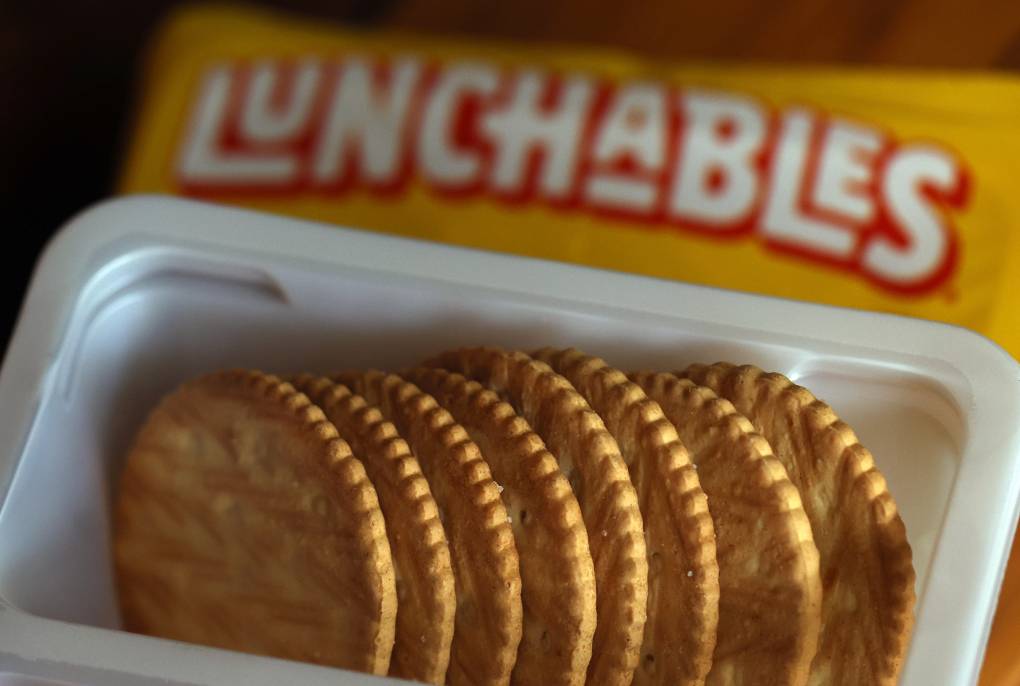
"caption": "Consumer Reports is asking for the Department of Agriculture to eliminate Lunchables food kits from the National School Lunch Program after finding high levels of lead, sodium and cadmium in tested kits.",
"description": null,
"title": "Consumer Reports is asking for the Department of Agriculture to eliminate Lunchables food kits from the National School Lunch Program after finding high levels of lead, sodium and cadmium in tested kits.",
"credit": "Justin Sullivan/ Getty Images",
"status": "inherit",
"altTag": "A close up of round crackers sitting in a white plastic container.",
"isLoading": false,
"fetchFailed": false
},
"arts_13955587": {
"type": "attachments",
"id": "arts_13955587",
"meta": {
"index": "attachments_1716263798",
"site": "arts",
"id": "13955587",
"found": true
},
"parent": 13954899,
"imgSizes": {
"twentyfourteen-full-width": {
"file": "https://cdn.kqed.org/wp-content/uploads/sites/2/2024/03/Hella-Hungry-—-Feature-Image-1920x1080-1-1038x576.jpg",
"width": 1038,
"mimeType": "image/jpeg",
"height": 576
},
"thumbnail": {
"file": "https://cdn.kqed.org/wp-content/uploads/sites/2/2024/03/Hella-Hungry-—-Feature-Image-1920x1080-1-160x90.jpg",
"width": 160,
"mimeType": "image/jpeg",
"height": 90
},
"post-thumbnail": {
"file": "https://cdn.kqed.org/wp-content/uploads/sites/2/2024/03/Hella-Hungry-—-Feature-Image-1920x1080-1-672x372.jpg",
"width": 672,
"mimeType": "image/jpeg",
"height": 372
},
"kqedFullSize": {
"file": "https://cdn.kqed.org/wp-content/uploads/sites/2/2024/03/Hella-Hungry-—-Feature-Image-1920x1080-1.jpg",
"width": 1920,
"height": 1080
},
"large": {
"file": "https://cdn.kqed.org/wp-content/uploads/sites/2/2024/03/Hella-Hungry-—-Feature-Image-1920x1080-1-1020x574.jpg",
"width": 1020,
"mimeType": "image/jpeg",
"height": 574
},
"1536x1536": {
"file": "https://cdn.kqed.org/wp-content/uploads/sites/2/2024/03/Hella-Hungry-—-Feature-Image-1920x1080-1-1536x864.jpg",
"width": 1536,
"mimeType": "image/jpeg",
"height": 864
},
"medium": {
"file": "https://cdn.kqed.org/wp-content/uploads/sites/2/2024/03/Hella-Hungry-—-Feature-Image-1920x1080-1-800x450.jpg",
"width": 800,
"mimeType": "image/jpeg",
"height": 450
},
"medium_large": {
"file": "https://cdn.kqed.org/wp-content/uploads/sites/2/2024/03/Hella-Hungry-—-Feature-Image-1920x1080-1-768x432.jpg",
"width": 768,
"mimeType": "image/jpeg",
"height": 432
}
},
"publishDate": 1712602999,
"modified": 1712618646,
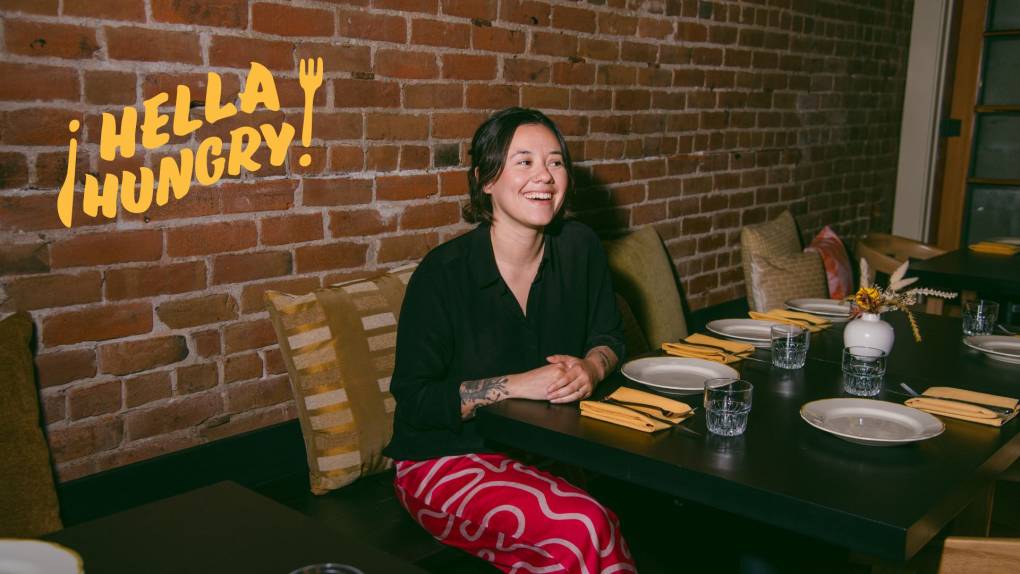
"caption": "If Only Creative founder Marisa Sanchez-Dunning poses for a portrait at Popoca in Oakland. The progressive Salvadoran restaurant is one of her agency's clients.",
"description": null,
"title": "Hella Hungry — Feature Image (1920x1080)",
"credit": "Marissa Leshnov for KQED",
"status": "inherit",
"altTag": "A woman smiles sitting a a long wooden table inside a stylish restaurant with a red brick interior.",
"isLoading": false,
"fetchFailed": false
},
"arts_13955493": {
"type": "attachments",
"id": "arts_13955493",
"meta": {
"index": "attachments_1716263798",
"site": "arts",
"id": "13955493",
"found": true
},
"parent": 13955436,
"imgSizes": {
"twentyfourteen-full-width": {
"file": "https://cdn.kqed.org/wp-content/uploads/sites/2/2024/04/080622_matsuri9_ig-1038x576.jpg",
"width": 1038,
"mimeType": "image/jpeg",
"height": 576
},
"thumbnail": {
"file": "https://cdn.kqed.org/wp-content/uploads/sites/2/2024/04/080622_matsuri9_ig-160x110.jpg",
"width": 160,
"mimeType": "image/jpeg",
"height": 110
},
"post-thumbnail": {
"file": "https://cdn.kqed.org/wp-content/uploads/sites/2/2024/04/080622_matsuri9_ig-672x372.jpg",
"width": 672,
"mimeType": "image/jpeg",
"height": 372
},
"kqedFullSize": {
"file": "https://cdn.kqed.org/wp-content/uploads/sites/2/2024/04/080622_matsuri9_ig.jpg",
"width": 2000,
"height": 1375
},
"large": {
"file": "https://cdn.kqed.org/wp-content/uploads/sites/2/2024/04/080622_matsuri9_ig-1020x701.jpg",
"width": 1020,
"mimeType": "image/jpeg",
"height": 701
},
"1536x1536": {
"file": "https://cdn.kqed.org/wp-content/uploads/sites/2/2024/04/080622_matsuri9_ig-1536x1056.jpg",
"width": 1536,
"mimeType": "image/jpeg",
"height": 1056
},
"full-width": {
"file": "https://cdn.kqed.org/wp-content/uploads/sites/2/2024/04/080622_matsuri9_ig-1920x1320.jpg",
"width": 1920,
"mimeType": "image/jpeg",
"height": 1320
},
"medium": {
"file": "https://cdn.kqed.org/wp-content/uploads/sites/2/2024/04/080622_matsuri9_ig-800x550.jpg",
"width": 800,
"mimeType": "image/jpeg",
"height": 550
},
"medium_large": {
"file": "https://cdn.kqed.org/wp-content/uploads/sites/2/2024/04/080622_matsuri9_ig-768x528.jpg",
"width": 768,
"mimeType": "image/jpeg",
"height": 528
}
},
"publishDate": 1712270368,
"modified": 1712270604,
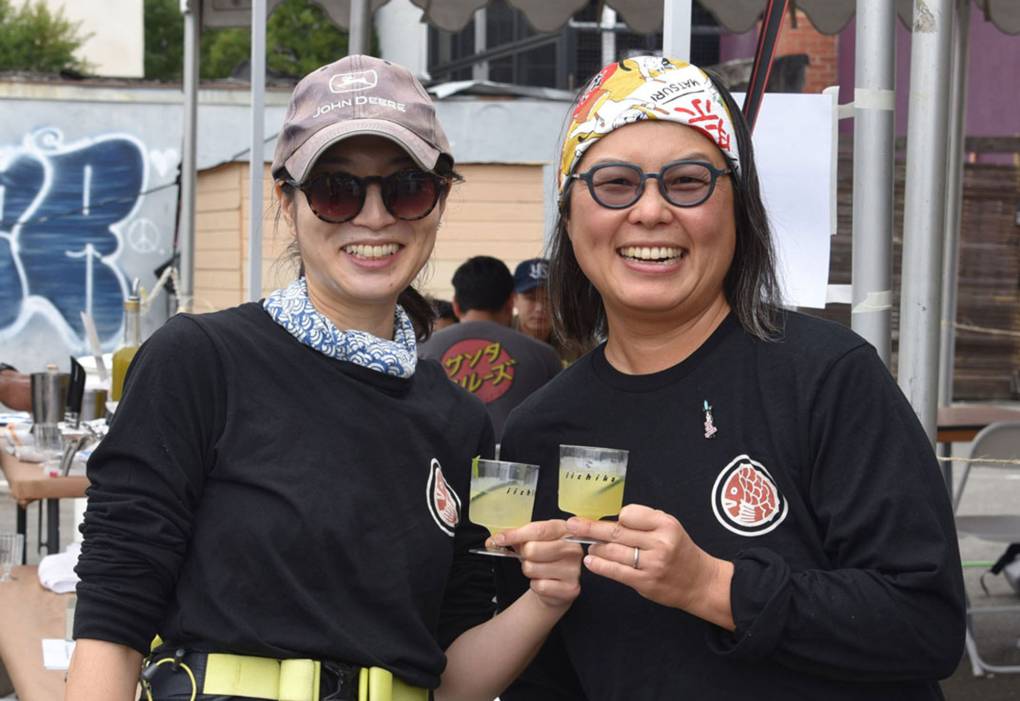
"caption": "Yoko Kumano (left) and Kayoko Akabori (right) have been supplying Oakland with hard-to-find Japanese beverages and more since 2012. ",
"description": null,
"title": "080622_matsuri9_ig",
"credit": "Courtesy Umami Mart",
"status": "inherit",
"altTag": "two women stand outside and cheers with small glasses of sake",
"isLoading": false,
"fetchFailed": false
},
"arts_13955466": {
"type": "attachments",
"id": "arts_13955466",
"meta": {
"index": "attachments_1716263798",
"site": "arts",
"id": "13955466",
"found": true
},
"parent": 13955448,
"imgSizes": {
"twentyfourteen-full-width": {
"file": "https://cdn.kqed.org/wp-content/uploads/sites/2/2024/04/GettyImages-1408016149_qut-1038x576.jpg",
"width": 1038,
"mimeType": "image/jpeg",
"height": 576
},
"thumbnail": {
"file": "https://cdn.kqed.org/wp-content/uploads/sites/2/2024/04/GettyImages-1408016149_qut-160x107.jpg",
"width": 160,
"mimeType": "image/jpeg",
"height": 107
},
"post-thumbnail": {
"file": "https://cdn.kqed.org/wp-content/uploads/sites/2/2024/04/GettyImages-1408016149_qut-672x372.jpg",
"width": 672,
"mimeType": "image/jpeg",
"height": 372
},
"kqedFullSize": {
"file": "https://cdn.kqed.org/wp-content/uploads/sites/2/2024/04/GettyImages-1408016149_qut.jpg",
"width": 1920,
"height": 1280
},
"large": {
"file": "https://cdn.kqed.org/wp-content/uploads/sites/2/2024/04/GettyImages-1408016149_qut-1020x680.jpg",
"width": 1020,
"mimeType": "image/jpeg",
"height": 680
},
"1536x1536": {
"file": "https://cdn.kqed.org/wp-content/uploads/sites/2/2024/04/GettyImages-1408016149_qut-1536x1024.jpg",
"width": 1536,
"mimeType": "image/jpeg",
"height": 1024
},
"medium": {
"file": "https://cdn.kqed.org/wp-content/uploads/sites/2/2024/04/GettyImages-1408016149_qut-800x533.jpg",
"width": 800,
"mimeType": "image/jpeg",
"height": 533
},
"medium_large": {
"file": "https://cdn.kqed.org/wp-content/uploads/sites/2/2024/04/GettyImages-1408016149_qut-768x512.jpg",
"width": 768,
"mimeType": "image/jpeg",
"height": 512
}
},
"publishDate": 1712267160,
"modified": 1712267212,
"caption": "There are many events taking place to celebrate Eid in the Bay Area.",
"description": null,
"title": "eid-events-near-me-bay-area",
"credit": "new look casting",
"status": "inherit",
"altTag": "A young woman wearing a light-colored hijab smiles and holds a lit lantern up to the camera",
"isLoading": false,
"fetchFailed": false
},
"arts_13955283": {
"type": "attachments",
"id": "arts_13955283",
"meta": {
"index": "attachments_1716263798",
"site": "arts",
"id": "13955283",
"found": true
},
"parent": 13955219,
"imgSizes": {
"twentyfourteen-full-width": {
"file": "https://cdn.kqed.org/wp-content/uploads/sites/2/2024/04/UbeCookies_COVER-1038x576.jpg",
"width": 1038,
"mimeType": "image/jpeg",
"height": 576
},
"thumbnail": {
"file": "https://cdn.kqed.org/wp-content/uploads/sites/2/2024/04/UbeCookies_COVER-160x107.jpg",
"width": 160,
"mimeType": "image/jpeg",
"height": 107
},
"post-thumbnail": {
"file": "https://cdn.kqed.org/wp-content/uploads/sites/2/2024/04/UbeCookies_COVER-672x372.jpg",
"width": 672,
"mimeType": "image/jpeg",
"height": 372
},
"kqedFullSize": {
"file": "https://cdn.kqed.org/wp-content/uploads/sites/2/2024/04/UbeCookies_COVER.jpg",
"width": 1920,
"height": 1280
},
"large": {
"file": "https://cdn.kqed.org/wp-content/uploads/sites/2/2024/04/UbeCookies_COVER-1020x680.jpg",
"width": 1020,
"mimeType": "image/jpeg",
"height": 680
},
"1536x1536": {
"file": "https://cdn.kqed.org/wp-content/uploads/sites/2/2024/04/UbeCookies_COVER-1536x1024.jpg",
"width": 1536,
"mimeType": "image/jpeg",
"height": 1024
},
"medium": {
"file": "https://cdn.kqed.org/wp-content/uploads/sites/2/2024/04/UbeCookies_COVER-800x533.jpg",
"width": 800,
"mimeType": "image/jpeg",
"height": 533
},
"medium_large": {
"file": "https://cdn.kqed.org/wp-content/uploads/sites/2/2024/04/UbeCookies_COVER-768x512.jpg",
"width": 768,
"mimeType": "image/jpeg",
"height": 512
}
},
"publishDate": 1712093821,
"modified": 1712093858,
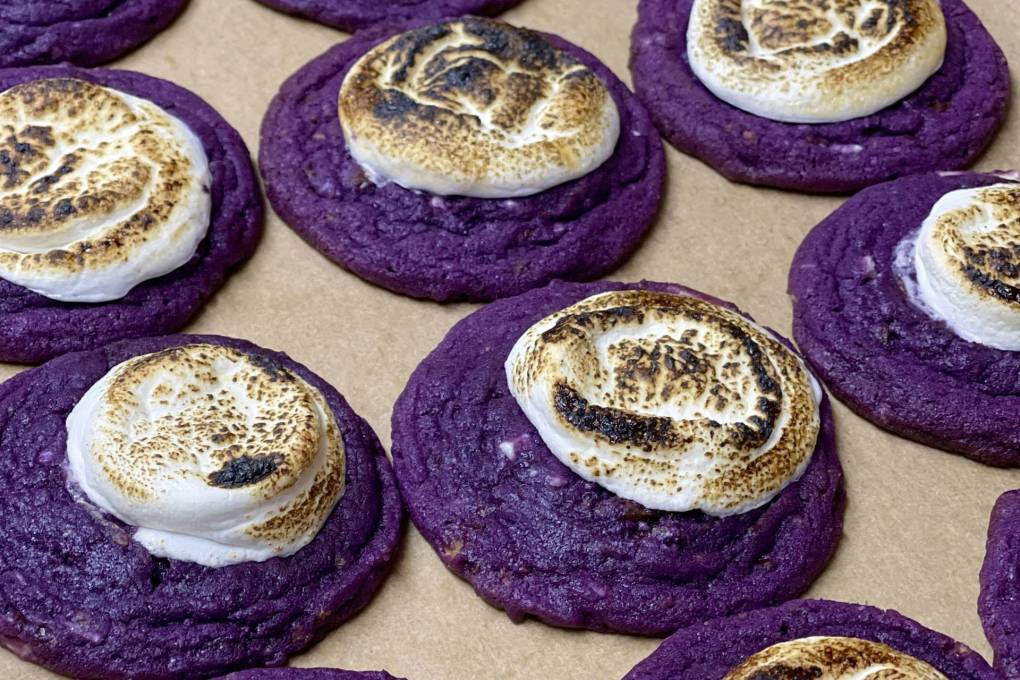
"caption": "Ube-related treats, like these ube cookies, have become some of the most Insgragrammable food content in recent years.",
"description": null,
"title": "UbeCookies_COVER",
"credit": "Courtesy Macs By Icky",
"status": "inherit",
"altTag": "a fresh batch of purple ube cookies with toasted marshmallow are laid out by the dozen",
"isLoading": false,
"fetchFailed": false
},
"arts_13955131": {
"type": "attachments",
"id": "arts_13955131",
"meta": {
"index": "attachments_1716263798",
"site": "arts",
"id": "13955131",
"found": true
},
"parent": 13955126,
"imgSizes": {
"twentyfourteen-full-width": {
"file": "https://cdn.kqed.org/wp-content/uploads/sites/2/2024/04/DSF8273-1038x576.jpg",
"width": 1038,
"mimeType": "image/jpeg",
"height": 576
},
"thumbnail": {
"file": "https://cdn.kqed.org/wp-content/uploads/sites/2/2024/04/DSF8273-160x107.jpg",
"width": 160,
"mimeType": "image/jpeg",
"height": 107
},
"post-thumbnail": {
"file": "https://cdn.kqed.org/wp-content/uploads/sites/2/2024/04/DSF8273-672x372.jpg",
"width": 672,
"mimeType": "image/jpeg",
"height": 372
},
"kqedFullSize": {
"file": "https://cdn.kqed.org/wp-content/uploads/sites/2/2024/04/DSF8273.jpg",
"width": 2034,
"height": 1356
},
"large": {
"file": "https://cdn.kqed.org/wp-content/uploads/sites/2/2024/04/DSF8273-1020x680.jpg",
"width": 1020,
"mimeType": "image/jpeg",
"height": 680
},
"1536x1536": {
"file": "https://cdn.kqed.org/wp-content/uploads/sites/2/2024/04/DSF8273-1536x1024.jpg",
"width": 1536,
"mimeType": "image/jpeg",
"height": 1024
},
"full-width": {
"file": "https://cdn.kqed.org/wp-content/uploads/sites/2/2024/04/DSF8273-1920x1280.jpg",
"width": 1920,
"mimeType": "image/jpeg",
"height": 1280
},
"medium": {
"file": "https://cdn.kqed.org/wp-content/uploads/sites/2/2024/04/DSF8273-800x533.jpg",
"width": 800,
"mimeType": "image/jpeg",
"height": 533
},
"medium_large": {
"file": "https://cdn.kqed.org/wp-content/uploads/sites/2/2024/04/DSF8273-768x512.jpg",
"width": 768,
"mimeType": "image/jpeg",
"height": 512
}
},
"publishDate": 1712000025,
"modified": 1712008920,
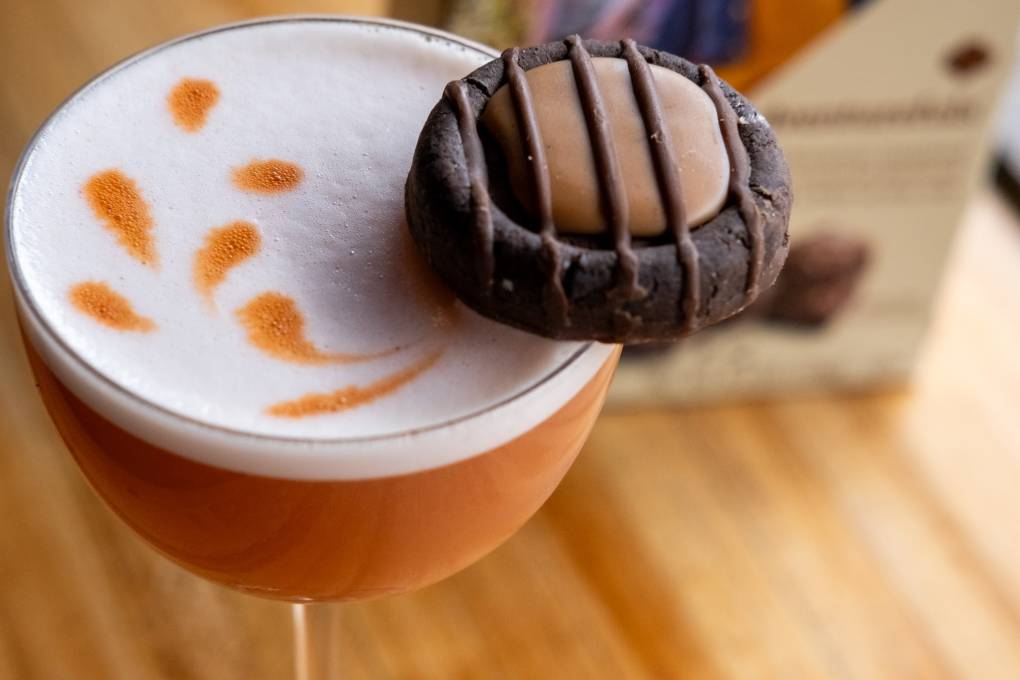
"caption": "Iconic Girl Scout cookies like \"Adventurefuls\" will be seasonally available as cocktails — with proceeds going to local girl scouts.",
"description": null,
"title": "_DSF8273",
"credit": "Décanteur Media",
"status": "inherit",
"altTag": "a cocktail made using ingredients from Girl Scout cookies is displayed at a bar",
"isLoading": false,
"fetchFailed": false
},
"arts_13954987": {
"type": "attachments",
"id": "arts_13954987",
"meta": {
"index": "attachments_1716263798",
"site": "arts",
"id": "13954987",
"found": true
},
"parent": 13954983,
"imgSizes": {
"twentyfourteen-full-width": {
"file": "https://cdn.kqed.org/wp-content/uploads/sites/2/2024/03/Cajun-bistro-7-crop-1038x576.jpg",
"width": 1038,
"mimeType": "image/jpeg",
"height": 576
},
"thumbnail": {
"file": "https://cdn.kqed.org/wp-content/uploads/sites/2/2024/03/Cajun-bistro-7-crop-160x90.jpg",
"width": 160,
"mimeType": "image/jpeg",
"height": 90
},
"post-thumbnail": {
"file": "https://cdn.kqed.org/wp-content/uploads/sites/2/2024/03/Cajun-bistro-7-crop-672x372.jpg",
"width": 672,
"mimeType": "image/jpeg",
"height": 372
},
"kqedFullSize": {
"file": "https://cdn.kqed.org/wp-content/uploads/sites/2/2024/03/Cajun-bistro-7-crop.jpg",
"width": 1920,
"height": 1080
},
"large": {
"file": "https://cdn.kqed.org/wp-content/uploads/sites/2/2024/03/Cajun-bistro-7-crop-1020x574.jpg",
"width": 1020,
"mimeType": "image/jpeg",
"height": 574
},
"1536x1536": {
"file": "https://cdn.kqed.org/wp-content/uploads/sites/2/2024/03/Cajun-bistro-7-crop-1536x864.jpg",
"width": 1536,
"mimeType": "image/jpeg",
"height": 864
},
"medium": {
"file": "https://cdn.kqed.org/wp-content/uploads/sites/2/2024/03/Cajun-bistro-7-crop-800x450.jpg",
"width": 800,
"mimeType": "image/jpeg",
"height": 450
},
"medium_large": {
"file": "https://cdn.kqed.org/wp-content/uploads/sites/2/2024/03/Cajun-bistro-7-crop-768x432.jpg",
"width": 768,
"mimeType": "image/jpeg",
"height": 432
}
},
"publishDate": 1711665591,
"modified": 1711665690,
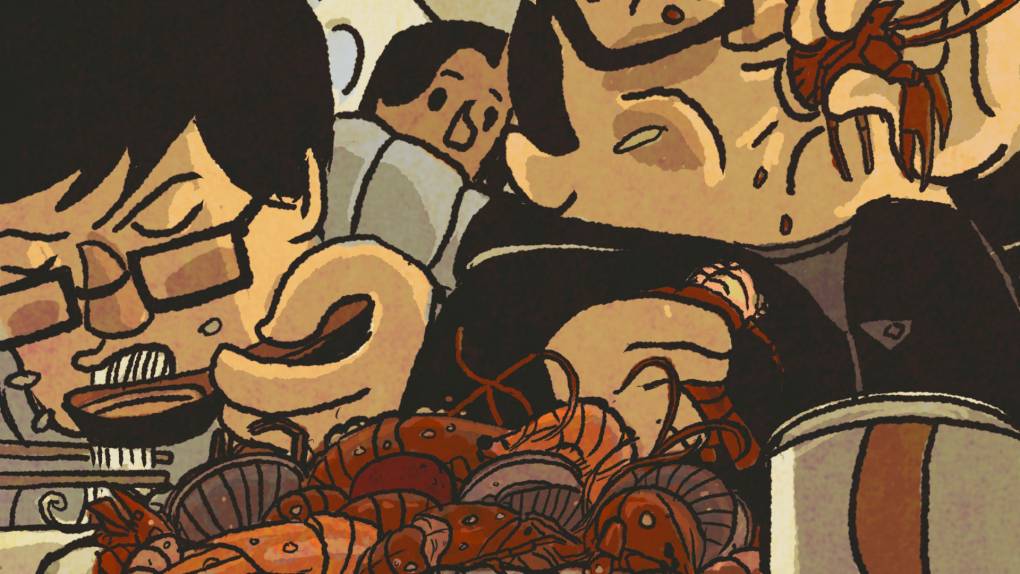
"caption": "By the end of our meal at Cajun Bistro 7, we'd left a pile of shrimp and crawfish carcasses in our wake. The Viet-Cajun spot in San Jose is open until 4 a.m. daily.",
"description": null,
"title": "Cajun bistro 7 crop",
"credit": "Thien Pham",
"status": "inherit",
"altTag": "Two men in glasses devouring their food ravenously. There's a big bowl of shrimp and crawfish in front of them.",
"isLoading": false,
"fetchFailed": false
},
"arts_13954942": {
"type": "attachments",
"id": "arts_13954942",
"meta": {
"index": "attachments_1716263798",
"site": "arts",
"id": "13954942",
"found": true
},
"parent": 13954939,
"imgSizes": {
"twentyfourteen-full-width": {
"file": "https://cdn.kqed.org/wp-content/uploads/sites/2/2024/03/rasa-rasa_rendang-feature-1038x576.jpg",
"width": 1038,
"mimeType": "image/jpeg",
"height": 576
},
"thumbnail": {
"file": "https://cdn.kqed.org/wp-content/uploads/sites/2/2024/03/rasa-rasa_rendang-feature-160x90.jpg",
"width": 160,
"mimeType": "image/jpeg",
"height": 90
},
"post-thumbnail": {
"file": "https://cdn.kqed.org/wp-content/uploads/sites/2/2024/03/rasa-rasa_rendang-feature-672x372.jpg",
"width": 672,
"mimeType": "image/jpeg",
"height": 372
},
"kqedFullSize": {
"file": "https://cdn.kqed.org/wp-content/uploads/sites/2/2024/03/rasa-rasa_rendang-feature.jpg",
"width": 2000,
"height": 1125
},
"large": {
"file": "https://cdn.kqed.org/wp-content/uploads/sites/2/2024/03/rasa-rasa_rendang-feature-1020x574.jpg",
"width": 1020,
"mimeType": "image/jpeg",
"height": 574
},
"1536x1536": {
"file": "https://cdn.kqed.org/wp-content/uploads/sites/2/2024/03/rasa-rasa_rendang-feature-1536x864.jpg",
"width": 1536,
"mimeType": "image/jpeg",
"height": 864
},
"full-width": {
"file": "https://cdn.kqed.org/wp-content/uploads/sites/2/2024/03/rasa-rasa_rendang-feature-1920x1080.jpg",
"width": 1920,
"mimeType": "image/jpeg",
"height": 1080
},
"medium": {
"file": "https://cdn.kqed.org/wp-content/uploads/sites/2/2024/03/rasa-rasa_rendang-feature-800x450.jpg",
"width": 800,
"mimeType": "image/jpeg",
"height": 450
},
"medium_large": {
"file": "https://cdn.kqed.org/wp-content/uploads/sites/2/2024/03/rasa-rasa_rendang-feature-768x432.jpg",
"width": 768,
"mimeType": "image/jpeg",
"height": 432
}
},
"publishDate": 1711651347,
"modified": 1711651493,
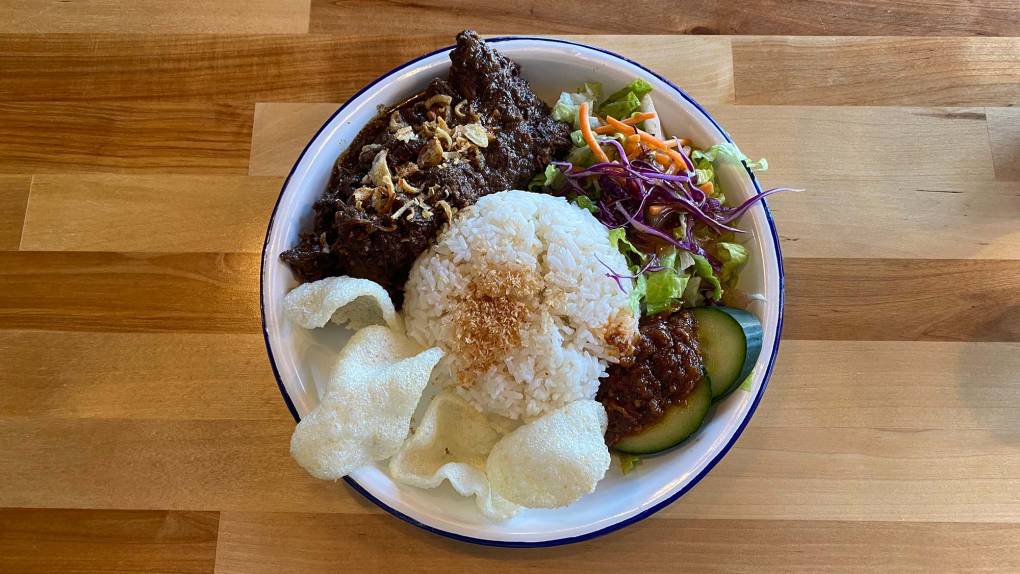
"caption": "The beef rendang platter is one of the classic Indonesian dishes customers can find at Rasa Rasa Kitchen, a new restaurant in San Francisco's Mission District.",
"description": null,
"title": "rasa rasa_rendang feature",
"credit": "Luke Tsai/KQED",
"status": "inherit",
"altTag": "A bowl loaded with beef rendang, coconut white rice, shrimp chips and a salad.",
"isLoading": false,
"fetchFailed": false
},
"arts_13954688": {
"type": "attachments",
"id": "arts_13954688",
"meta": {
"index": "attachments_1716263798",
"site": "arts",
"id": "13954688",
"found": true
},
"parent": 13954682,
"imgSizes": {
"twentyfourteen-full-width": {
"file": "https://cdn.kqed.org/wp-content/uploads/sites/2/2024/03/lumpia_crop-1038x576.jpg",
"width": 1038,
"mimeType": "image/jpeg",
"height": 576
},
"thumbnail": {
"file": "https://cdn.kqed.org/wp-content/uploads/sites/2/2024/03/lumpia_crop-160x90.jpg",
"width": 160,
"mimeType": "image/jpeg",
"height": 90
},
"post-thumbnail": {
"file": "https://cdn.kqed.org/wp-content/uploads/sites/2/2024/03/lumpia_crop-672x372.jpg",
"width": 672,
"mimeType": "image/jpeg",
"height": 372
},
"kqedFullSize": {
"file": "https://cdn.kqed.org/wp-content/uploads/sites/2/2024/03/lumpia_crop.jpg",
"width": 2000,
"height": 1125
},
"large": {
"file": "https://cdn.kqed.org/wp-content/uploads/sites/2/2024/03/lumpia_crop-1020x574.jpg",
"width": 1020,
"mimeType": "image/jpeg",
"height": 574
},
"1536x1536": {
"file": "https://cdn.kqed.org/wp-content/uploads/sites/2/2024/03/lumpia_crop-1536x864.jpg",
"width": 1536,
"mimeType": "image/jpeg",
"height": 864
},
"full-width": {
"file": "https://cdn.kqed.org/wp-content/uploads/sites/2/2024/03/lumpia_crop-1920x1080.jpg",
"width": 1920,
"mimeType": "image/jpeg",
"height": 1080
},
"medium": {
"file": "https://cdn.kqed.org/wp-content/uploads/sites/2/2024/03/lumpia_crop-800x450.jpg",
"width": 800,
"mimeType": "image/jpeg",
"height": 450
},
"medium_large": {
"file": "https://cdn.kqed.org/wp-content/uploads/sites/2/2024/03/lumpia_crop-768x432.jpg",
"width": 768,
"mimeType": "image/jpeg",
"height": 432
}
},
"publishDate": 1711395675,
"modified": 1711407960,
"caption": "How many lumpia can you eat in five minutes? A contestant at last year's inaugural lumpia eating contest in San Jose shows how it's done.",
"description": null,
"title": "lumpia_crop",
"credit": "Courtesy of Mestizo",
"status": "inherit",
"altTag": "a man shoves four lumpia rolls into his mouth during an eating contest",
"isLoading": false,
"fetchFailed": false
},
"arts_13954474": {
"type": "attachments",
"id": "arts_13954474",
"meta": {
"index": "attachments_1716263798",
"site": "arts",
"id": "13954474",
"found": true
},
"parent": 13954364,
"imgSizes": {
"twentyfourteen-full-width": {
"file": "https://cdn.kqed.org/wp-content/uploads/sites/2/2024/03/sacrataco-1038x576.jpg",
"width": 1038,
"mimeType": "image/jpeg",
"height": 576
},
"thumbnail": {
"file": "https://cdn.kqed.org/wp-content/uploads/sites/2/2024/03/sacrataco-160x149.jpg",
"width": 160,
"mimeType": "image/jpeg",
"height": 149
},
"post-thumbnail": {
"file": "https://cdn.kqed.org/wp-content/uploads/sites/2/2024/03/sacrataco-672x372.jpg",
"width": 672,
"mimeType": "image/jpeg",
"height": 372
},
"kqedFullSize": {
"file": "https://cdn.kqed.org/wp-content/uploads/sites/2/2024/03/sacrataco-scaled.jpg",
"width": 2560,
"height": 2388
},
"2048x2048": {
"file": "https://cdn.kqed.org/wp-content/uploads/sites/2/2024/03/sacrataco-2048x1910.jpg",
"width": 2048,
"mimeType": "image/jpeg",
"height": 1910
},
"large": {
"file": "https://cdn.kqed.org/wp-content/uploads/sites/2/2024/03/sacrataco-1020x951.jpg",
"width": 1020,
"mimeType": "image/jpeg",
"height": 951
},
"1536x1536": {
"file": "https://cdn.kqed.org/wp-content/uploads/sites/2/2024/03/sacrataco-1536x1433.jpg",
"width": 1536,
"mimeType": "image/jpeg",
"height": 1433
},
"full-width": {
"file": "https://cdn.kqed.org/wp-content/uploads/sites/2/2024/03/sacrataco-1920x1791.jpg",
"width": 1920,
"mimeType": "image/jpeg",
"height": 1791
},
"medium": {
"file": "https://cdn.kqed.org/wp-content/uploads/sites/2/2024/03/sacrataco-800x746.jpg",
"width": 800,
"mimeType": "image/jpeg",
"height": 746
},
"medium_large": {
"file": "https://cdn.kqed.org/wp-content/uploads/sites/2/2024/03/sacrataco-768x716.jpg",
"width": 768,
"mimeType": "image/jpeg",
"height": 716
}
},
"publishDate": 1710968115,
"modified": 1711393908,
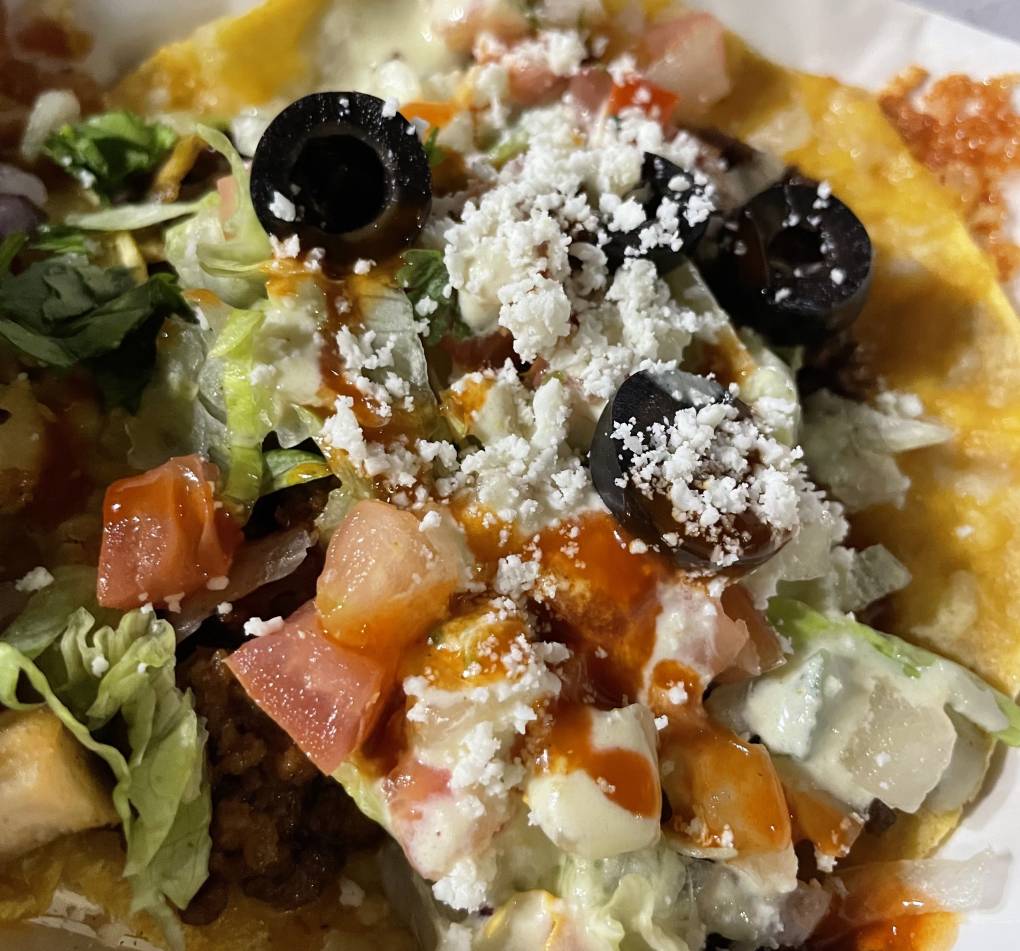
"caption": "Banzito's enchitaco is a hybrid of a Chicano-style enchilada in the form of a taco. The truck's Mexican American fare has earned a cult following that includes Kings point guard De'Aaron Fox.",
"description": null,
"title": "sacrataco",
"credit": "Alan Chazaro",
"status": "inherit",
"altTag": null,
"isLoading": false,
"fetchFailed": false
},
"arts_13897879": {
"type": "attachments",
"id": "arts_13897879",
"meta": {
"index": "attachments_1716263798",
"site": "arts",
"id": "13897879",
"found": true
},
"parent": 13897868,
"imgSizes": {
"twentyfourteen-full-width": {
"file": "https://ww2.kqed.org/app/uploads/sites/2/2021/05/CafeMei_burger-1038x576.jpg",
"width": 1038,
"mimeType": "image/jpeg",
"height": 576
},
"thumbnail": {
"file": "https://ww2.kqed.org/app/uploads/sites/2/2021/05/CafeMei_burger-160x120.jpg",
"width": 160,
"mimeType": "image/jpeg",
"height": 120
},
"post-thumbnail": {
"file": "https://ww2.kqed.org/app/uploads/sites/2/2021/05/CafeMei_burger-672x372.jpg",
"width": 672,
"mimeType": "image/jpeg",
"height": 372
},
"kqedFullSize": {
"file": "https://ww2.kqed.org/app/uploads/sites/2/2021/05/CafeMei_burger-scaled.jpg",
"width": 2560,
"height": 1920
},
"2048x2048": {
"file": "https://ww2.kqed.org/app/uploads/sites/2/2021/05/CafeMei_burger-2048x1536.jpg",
"width": 2048,
"mimeType": "image/jpeg",
"height": 1536
},
"large": {
"file": "https://ww2.kqed.org/app/uploads/sites/2/2021/05/CafeMei_burger-1020x765.jpg",
"width": 1020,
"mimeType": "image/jpeg",
"height": 765
},
"1536x1536": {
"file": "https://ww2.kqed.org/app/uploads/sites/2/2021/05/CafeMei_burger-1536x1152.jpg",
"width": 1536,
"mimeType": "image/jpeg",
"height": 1152
},
"full-width": {
"file": "https://ww2.kqed.org/app/uploads/sites/2/2021/05/CafeMei_burger-1920x1440.jpg",
"width": 1920,
"mimeType": "image/jpeg",
"height": 1440
},
"medium": {
"file": "https://ww2.kqed.org/app/uploads/sites/2/2021/05/CafeMei_burger-800x600.jpg",
"width": 800,
"mimeType": "image/jpeg",
"height": 600
},
"medium_large": {
"file": "https://ww2.kqed.org/app/uploads/sites/2/2021/05/CafeMei_burger-768x576.jpg",
"width": 768,
"mimeType": "image/jpeg",
"height": 576
}
},
"publishDate": 1622050142,
"modified": 1622050393,
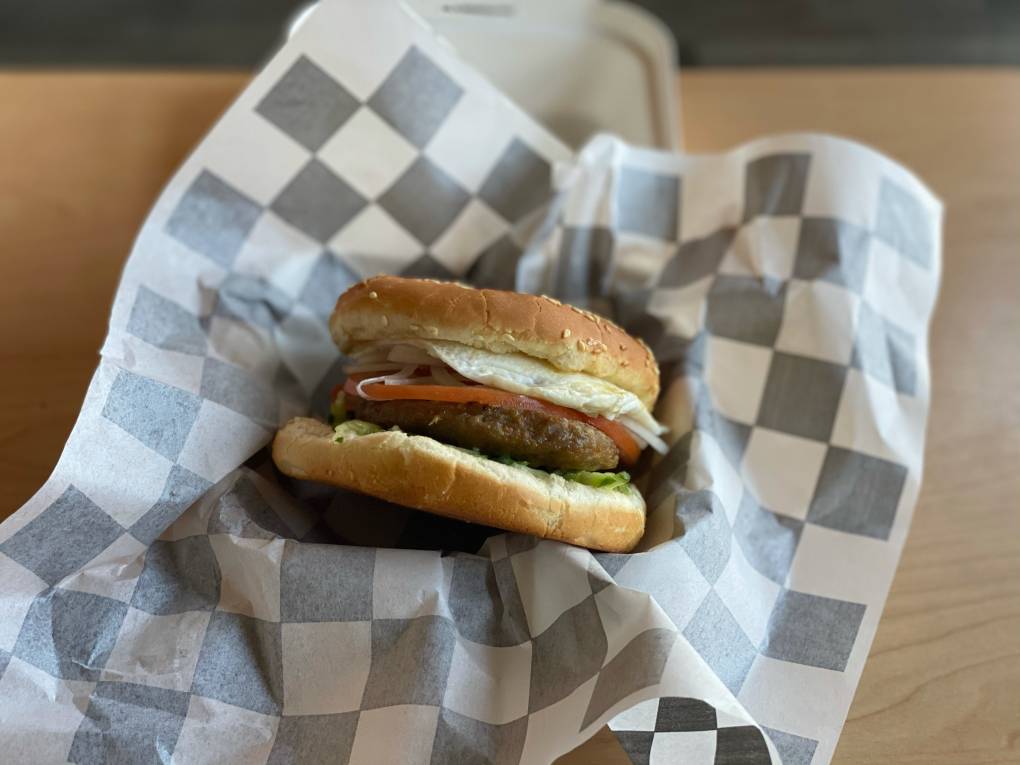
"caption": "Toppings for the Cafe Mei breakfast burger include tomato, fried egg, and thinly sliced cucumber.",
"description": "Toppings for the Cafe Mei breakfast burger include tomato, fried egg, and thinly sliced cucumber.",
"title": "CafeMei_burger",
"credit": "Luke Tsai",
"status": "inherit",
"altTag": "A Taiwanese breakfast burger, with fried egg, tomato, and cucumber garnish visible, on top of a checker-patterned sheet of wax paper.",
"isLoading": false,
"fetchFailed": false
}
},
"audioPlayerReducer": {
"postId": "stream_live",
"isPaused": true,
"isPlaying": false,
"pfsActive": false,
"pledgeModalIsOpen": true,
"playerDrawerIsOpen": false,
"liveAudioPlayStartedAt": 0,
"liveAudioPlayContext": ""
},
"authorsReducer": {
"byline_arts_13955801": {
"type": "authors",
"id": "byline_arts_13955801",
"meta": {
"override": true
},
"slug": "byline_arts_13955801",
"name": "Jocelyn Noveck, Associated Press",
"isLoading": false
},
"byline_arts_13955762": {
"type": "authors",
"id": "byline_arts_13955762",
"meta": {
"override": true
},
"slug": "byline_arts_13955762",
"name": "Joe Hernandez",
"isLoading": false
},
"smohamad": {
"type": "authors",
"id": "11631",
"meta": {
"index": "authors_1716337520",
"id": "11631",
"found": true
},
"name": "Sarah Mohamad",
"firstName": "Sarah",
"lastName": "Mohamad",
"slug": "smohamad",
"email": "smohamad@KQED.org",
"display_author_email": true,
"staff_mastheads": [],
"title": "Engagement Producer and Reporter, KQED Science",
"bio": "Sarah Mohamad is an audience engagement reporter and producer for KQED Science. She reports on audience-focused science and environment stories and manages the team's social media, newsletter, and engagement efforts. Prior to this role, she played a key role as project manager for NSF's \u003ca href=\"https://www.kqed.org/crackingthecode\">\u003cem>Cracking the Code: Influencing Millennial Science Engagement\u003c/em> \u003c/a>audience research.",
"avatar": "https://secure.gravatar.com/avatar/e6224957cd82d015183756ddde1f928013a563d7ca2e4565f8c4de1ec64886c5?s=600&d=blank&r=g",
"twitter": "sarahkmohamad",
"bluesky": null,
"facebook": null,
"instagram": null,
"linkedin": null,
"sites": [
{
"site": "",
"roles": [
"editor"
]
},
{
"site": "arts",
"roles": [
"editor"
]
},
{
"site": "news",
"roles": [
"editor"
]
},
{
"site": "about",
"roles": [
"editor"
]
},
{
"site": "science",
"roles": [
"editor"
]
}
],
"headData": {
"title": "Sarah Mohamad | KQED",
"description": "Engagement Producer and Reporter, KQED Science",
"ogImgSrc": "https://secure.gravatar.com/avatar/e6224957cd82d015183756ddde1f928013a563d7ca2e4565f8c4de1ec64886c5?s=600&d=blank&r=g",
"twImgSrc": "https://secure.gravatar.com/avatar/e6224957cd82d015183756ddde1f928013a563d7ca2e4565f8c4de1ec64886c5?s=600&d=blank&r=g"
},
"isLoading": false,
"link": "/author/smohamad"
},
"ltsai": {
"type": "authors",
"id": "11743",
"meta": {
"index": "authors_1716337520",
"id": "11743",
"found": true
},
"name": "Luke Tsai",
"firstName": "Luke",
"lastName": "Tsai",
"slug": "ltsai",
"email": "ltsai@kqed.org",
"display_author_email": true,
"staff_mastheads": [
"arts"
],
"title": "Food Editor",
"bio": "Luke Tsai is KQED's food editor and resident stinky tofu connoisseur. Prior to KQED, he was an editor at Eater SF, \u003cem>San Francisco \u003c/em>magazine, and the \u003cem>East Bay Express\u003c/em>, and his work has also appeared in TASTE, the \u003cem>San Francisco Chronicle\u003c/em>, and the \u003cem>Best Food Writing\u003c/em> anthology. When he isn't writing or editing, you'll find him eating most everything he can get his hands on.",
"avatar": "https://secure.gravatar.com/avatar/1e59b45bf191526e7339d6ba46e33a57b2030d25c27660ecc64ea3cb863e34f7?s=600&d=blank&r=g",
"twitter": "theluketsai",
"bluesky": null,
"facebook": null,
"instagram": null,
"linkedin": null,
"sites": [
{
"site": "",
"roles": [
"editor"
]
},
{
"site": "arts",
"roles": [
"administrator"
]
},
{
"site": "news",
"roles": [
"editor",
"contributor"
]
},
{
"site": "bayareabites",
"roles": [
"editor"
]
},
{
"site": "food",
"roles": [
"editor"
]
}
],
"headData": {
"title": "Luke Tsai | KQED",
"description": "Food Editor",
"ogImgSrc": "https://secure.gravatar.com/avatar/1e59b45bf191526e7339d6ba46e33a57b2030d25c27660ecc64ea3cb863e34f7?s=600&d=blank&r=g",
"twImgSrc": "https://secure.gravatar.com/avatar/1e59b45bf191526e7339d6ba46e33a57b2030d25c27660ecc64ea3cb863e34f7?s=600&d=blank&r=g"
},
"isLoading": false,
"link": "/author/ltsai"
},
"achazaro": {
"type": "authors",
"id": "11748",
"meta": {
"index": "authors_1716337520",
"id": "11748",
"found": true
},
"name": "Alan Chazaro",
"firstName": "Alan",
"lastName": "Chazaro",
"slug": "achazaro",
"email": "agchazaro@gmail.com",
"display_author_email": true,
"staff_mastheads": [],
"title": "Food Writer and Reporter",
"bio": "Alan Chazaro is the author of \u003cem>This Is Not a Frank Ocean Cover Album\u003c/em> (Black Lawrence Press, 2019), \u003cem>Piñata Theory\u003c/em> (Black Lawrence Press, 2020), and \u003cem>Notes from the Eastern Span of the Bay Bridge\u003c/em> (Ghost City Press, 2021). He is a graduate of June Jordan’s Poetry for the People program at UC Berkeley and a former Lawrence Ferlinghetti Fellow at the University of San Francisco. He writes about sports, food, art, music, education, and culture while repping the Bay on \u003ca href=\"https://twitter.com/alan_chazaro\">Twitter\u003c/a> and \u003ca href=\"https://www.instagram.com/alan_chazaro/?hl=en\">Instagram\u003c/a> at @alan_chazaro.",
"avatar": "https://secure.gravatar.com/avatar/ea8b6dd970fc5c29e7a188e7d5861df7?s=600&d=blank&r=g",
"twitter": "alan_chazaro",
"facebook": null,
"instagram": null,
"linkedin": null,
"sites": [
{
"site": "arts",
"roles": [
"contributor"
]
},
{
"site": "news",
"roles": [
"editor"
]
}
],
"headData": {
"title": "Alan Chazaro | KQED",
"description": "Food Writer and Reporter",
"ogImgSrc": "https://secure.gravatar.com/avatar/ea8b6dd970fc5c29e7a188e7d5861df7?s=600&d=blank&r=g",
"twImgSrc": "https://secure.gravatar.com/avatar/ea8b6dd970fc5c29e7a188e7d5861df7?s=600&d=blank&r=g"
},
"isLoading": false,
"link": "/author/achazaro"
},
"tpham": {
"type": "authors",
"id": "11753",
"meta": {
"index": "authors_1716337520",
"id": "11753",
"found": true
},
"name": "Thien Pham",
"firstName": "Thien",
"lastName": "Pham",
"slug": "tpham",
"email": "thiendog@gmail.com",
"display_author_email": false,
"staff_mastheads": [],
"title": "KQED Contributor",
"bio": null,
"avatar": "https://secure.gravatar.com/avatar/a5b4729969ad46d88e7b9ec9dd4f3fa6af84dd0fa8fa91f01d8d9481694999bc?s=600&d=blank&r=g",
"twitter": null,
"bluesky": null,
"facebook": null,
"instagram": null,
"linkedin": null,
"sites": [
{
"site": "arts",
"roles": [
"contributor"
]
}
],
"headData": {
"title": "Thien Pham | KQED",
"description": "KQED Contributor",
"ogImgSrc": "https://secure.gravatar.com/avatar/a5b4729969ad46d88e7b9ec9dd4f3fa6af84dd0fa8fa91f01d8d9481694999bc?s=600&d=blank&r=g",
"twImgSrc": "https://secure.gravatar.com/avatar/a5b4729969ad46d88e7b9ec9dd4f3fa6af84dd0fa8fa91f01d8d9481694999bc?s=600&d=blank&r=g"
},
"isLoading": false,
"link": "/author/tpham"
},
"nkhan": {
"type": "authors",
"id": "11867",
"meta": {
"index": "authors_1716337520",
"id": "11867",
"found": true
},
"name": "Nisa Khan",
"firstName": "Nisa",
"lastName": "Khan",
"slug": "nkhan",
"email": "nkhan@kqed.org",
"display_author_email": false,
"staff_mastheads": [],
"title": "KQED Contributor",
"bio": "Nisa Khan is a reporter for KQED's Audience News Desk. She was formerly a data reporter at Michigan Radio. She earned a Bachelor of Science in Information from the University of Michigan and a Master of Arts in Communication from Stanford University.",
"avatar": "https://secure.gravatar.com/avatar/8720459eef081ff64582b3506b124d58523e80e120704a0cbd9892533c914991?s=600&d=blank&r=g",
"twitter": "mnisakhan",
"bluesky": null,
"facebook": null,
"instagram": null,
"linkedin": null,
"sites": [
{
"site": "arts",
"roles": [
"editor"
]
},
{
"site": "news",
"roles": [
"editor"
]
},
{
"site": "science",
"roles": [
"editor",
"author"
]
},
{
"site": "forum",
"roles": [
"editor"
]
},
{
"site": "liveblog",
"roles": [
"contributor"
]
}
],
"headData": {
"title": "Nisa Khan | KQED",
"description": "KQED Contributor",
"ogImgSrc": "https://secure.gravatar.com/avatar/8720459eef081ff64582b3506b124d58523e80e120704a0cbd9892533c914991?s=600&d=blank&r=g",
"twImgSrc": "https://secure.gravatar.com/avatar/8720459eef081ff64582b3506b124d58523e80e120704a0cbd9892533c914991?s=600&d=blank&r=g"
},
"isLoading": false,
"link": "/author/nkhan"
}
},
"pagesReducer": {
"arts_tag_food": {
"type": "terms",
"id": "arts_1297",
"meta": {
"index": "terms_1716263798",
"site": "arts",
"id": "1297",
"score": 7.4243016
},
"featImg": null,
"name": "food",
"description": null,
"taxonomy": "tag",
"headData": {
"twImgId": null,
"twTitle": null,
"ogTitle": null,
"ogImgId": null,
"twDescription": null,
"description": null,
"title": "food Archives | KQED Arts",
"ogDescription": null
},
"ttid": 1309,
"slug": "food",
"isLoading": false,
"title": "food",
"pageMeta": {
"site": "arts",
"WpPageTemplate": "page-topic-editorial",
"currentPage": 19
},
"blocks": [
{
"blockName": "kqed/post-list",
"attrs": {
"layout": "cardArticle2",
"query": "posts/arts?tag=food",
"seeMore": false,
"paginated": true,
"page": 19
}
},
{
"blockName": "kqed/ad"
}
]
}
},
"pfsSessionReducer": {},
"postsReducer": {
"stream_live": {
"type": "live",
"id": "stream_live",
"audioUrl": "https://streams.kqed.org/kqedradio",
"title": "Live Stream",
"excerpt": "Live Stream information currently unavailable.",
"link": "/radio",
"featImg": "",
"label": {
"name": "KQED Live",
"link": "/"
}
},
"stream_kqedNewscast": {
"type": "posts",
"id": "stream_kqedNewscast",
"audioUrl": "https://www.kqed.org/.stream/anon/radio/RDnews/newscast.mp3?_=1",
"title": "KQED Newscast",
"featImg": "",
"label": {
"name": "88.5 FM",
"link": "/"
}
},
"arts_13955801": {
"type": "posts",
"id": "arts_13955801",
"meta": {
"index": "posts_1716263798",
"site": "arts",
"id": "13955801",
"score": null,
"sort": [
1712856765000
]
},
"parent": 0,
"labelTerm": {},
"blocks": [],
"publishDate": 1712856765,
"format": "standard",
"title": "‘Food, Inc. 2’ Revisits Food System, Sees Reason for Frustration and a Little Hope",
"headTitle": "‘Food, Inc. 2’ Revisits Food System, Sees Reason for Frustration and a Little Hope | KQED",
"content": "\u003cp>The makers of the influential 2008 documentary \u003cem>Food, Inc.\u003c/em> never planned to make a sequel. They figured they’d said it all in their harrowing look at a broken, unsustainable food system — a system led, they argued, by a few multinational corporations whose monopoly squeezes out local farmers, mistreats animals, workers and the soil itself, and makes all of us less healthy.\u003c/p>\n\u003cp>But 16 years after that Oscar-nominated film, they’re back with \u003cem>Food, Inc. 2\u003c/em>. What happened? Well, first of all, the pandemic — an event that both strained our food system and revealed its precariousness, they say.\u003c/p>\n\u003cp>Also, the filmmakers suggest, it was perhaps naive to assume that informed, ethical shoppers could alone reverse such an entrenched narrative. “You can change the world with every bite,” the first film had argued, urging consumers to buy local and organic, patronize farmer’s markets, demand healthy school lunches and most of all, read labels and understand what they’re eating.\u003c/p>\n\u003cp>[aside postid='arts_13955639']Now, much of that is happening. But some problems have worsened, and new ones have emerged. “We really thought we could change the system one bite at a time,” says investigative author and producer Michael Pollan (\u003cem>The Omnivore’s Dilemma\u003c/em>), who’s back with frequent commentary along with fellow author/producer Eric Schlosser (\u003cem>Fast Food Nation\u003c/em>). “As important as that is, it’s not enough.”\u003c/p>\n\u003cp>Directed by Robert Kenner and Melissa Robledo, the new film begins, as did the first, with an inspiring image out of a painting — here, a tractor gliding along a field of crops under a glistening sun. If you’ve seen the original, you’ll know such a scene will soon yield to images of unsavory assembly lines, “kill floors” at slaughterhouses, or workers earning pennies in fields.\u003c/p>\n\u003cp>[ad fullwidth]\u003c/p>\n\u003cp>A lot has happened since 2008. More people are interested in what they’re eating and where it’s from. Farmer’s markets are everywhere, and supermarkets carry organic and GMO-free food, because consumers want it.\u003c/p>\n\u003cp>But, Pollan reminds us, the industry is still dominated “by a handful of very large and very powerful companies.” In normal times this power is invisible, but when the pandemic hit, the curtain was peeled back, he says. We see images of countless hogs euthanized because they couldn’t be processed, and farms disposing of perfectly good milk. At the same time, many supermarket shelves were empty, and people lined up in their cars, hungry. This, the film argues, is what happens when only a few companies are in charge. Some babies don’t get their formula, for example.\u003c/p>\n\u003cp>https://www.youtube.com/watch?v=ToWTxhYkrKk\u003c/p>\n\u003cp>As with the first film — the style is very much the same — we’re taken across the country (and beyond), listening to a stream of voices: organizers, workers, farmers, nutritionists, politicians, entrepreneurs, scientists. (Occasionally we don’t know who’s talking for a few seconds, which can be confusing.)\u003c/p>\n\u003cp>[aside postid='arts_13955510']In Immokalee, Florida, lifelong farmworker (and labor leader) Gerardo Reyes Chavez explains how immigrant workers — mostly Latino and Haitians — are both relied upon and mistreated. “The industry wants immigrant workers because they feel they can take advantage of us,” he says. If we’re eating fruits and vegetables, Schlosser and Pollan tell us, we’re part of a chain of exploitation.\u003c/p>\n\u003cp>With flashy, colorful and user-friendly graphics, the film traces industry consolidation: the few companies who have 70% of the carbonated drinks market, for example, or 80% of the baby food market. Such realities violate the spirit of antitrust legislation, they argue.\u003c/p>\n\u003cp>We meet people like Wisconsin dairy farmer Sarah Lloyd, whose 450-cow farm feels huge to her, but other farms have 5,000 or 10,000 or 20,000 cows. How can she compete?\u003c/p>\n\u003cp>Marion Nestle, biologist and nutritionist at New York University, looks back a few decades and marvels at how food has become something available anytime, anywhere: “You go into a clothing store and there are candy bars at the checkout counter.” She especially marvels at the escalating portion size over the years, a thought illustrated by a stack of pancakes that keeps on growing.\u003c/p>\n\u003cp>A professor in Brazil, Carlos Monteiro, posits that “ultra-processed” foods are a key factor in diabetes. His ideas are borne out by an experiment at the National Institutes of Health that shows people who eat such highly processed foods consume a whopping 500 more calories per day. Mark Schatzker (\u003cem>The Dorito Effect\u003c/em>) talks about artificial flavors and how they trick the body into eating more.\u003c/p>\n\u003cp>Are there solutions to all this? The filmmakers consider a bunch, approving of some more than others. Everyone’s coming up with “plant-based” substitutes (fake chicken wings, honey without bees.) But Pollan worries consumers might think “plant-based” means healthy food — often, it’s nothing of the kind. One promising idea: An ocean farmer, Bren Smith, is farming kelp, and a chef is using it in her restaurant.\u003c/p>\n\u003cp>[aside postid='arts_13955729']The most emotional moment concerns Taco Bell, but not the food there. Fran Marion, a Taco Bell worker (and activist) has a tear streaming down her face as she describes the challenge of feeding her children and avoiding living out of her car. She does not get health care or sick leave, she says, and as an adult has never been able to afford seeing a doctor. She speaks of working all day with food and coming home to hear her son’s stomach growl.\u003c/p>\n\u003cp>The film ends where the last one did: with a call to action. “Join us in transforming our food system,” it says, providing a website where viewers can get involved. The danger is the same, they say, as it was back in 2008: “Monopoly power is a threat to our freedom.”\u003c/p>\n\u003chr>\n\u003cp>\u003c/p>\n\u003cp>\u003cem>‘Food, Inc. 2’ begins streaming on Prime and Apple TV+ on April 12.\u003c/em>\u003c/p>\n\n",
"stats": {
"hasVideo": true,
"hasChartOrMap": false,
"hasAudio": false,
"hasPolis": false,
"wordCount": 1035,
"hasGoogleForm": false,
"hasGallery": false,
"hasHearkenModule": false,
"iframeSrcs": [],
"paragraphCount": 19
},
"modified": 1712878386,
"excerpt": "Sixteen years after the original Oscar-nominated film, ‘Food, Inc. 2.’ makes sense of the pandemic-era food chain.",
"headData": {
"twImgId": "",
"twTitle": "‘Food, Inc. 2’ Revisits Food System, Sees Reason for Frustration and a Little Hope",
"socialTitle": "‘Food, Inc. 2’ Review: Food Waste in the Time of COVID %%page%% %%sep%% KQED",
"ogTitle": "‘Food, Inc. 2’ Revisits Food System, Sees Reason for Frustration and a Little Hope",
"ogImgId": "",
"twDescription": "",
"description": "Sixteen years after the original Oscar-nominated film, ‘Food, Inc. 2.’ makes sense of the pandemic-era food chain.",
"title": "‘Food, Inc. 2’ Review: Food Waste in the Time of COVID | KQED",
"ogDescription": "",
"schema": {
"@context": "https://schema.org",
"@type": "Article",
"headline": "‘Food, Inc. 2’ Revisits Food System, Sees Reason for Frustration and a Little Hope",
"datePublished": "2024-04-11T10:32:45-07:00",
"dateModified": "2024-04-11T16:33:06-07:00",
"image": "https://cdn.kqed.org/wp-content/uploads/2020/02/KQED-OG-Image@1x.png"
}
},
"guestAuthors": [],
"slug": "food-inc-2-where-to-stream-prime-apple-tv-michael-pollan",
"status": "publish",
"sourceUrl": "https://www.kqed.org/food",
"templateType": "standard",
"nprByline": "Jocelyn Noveck, Associated Press",
"excludeFromSiteSearch": "Include",
"featuredImageType": "standard",
"sticky": false,
"source": "Food",
"showOnAuthorArchivePages": "No",
"articleAge": "0",
"path": "/arts/13955801/food-inc-2-where-to-stream-prime-apple-tv-michael-pollan",
"audioTrackLength": null,
"parsedContent": [
{
"type": "contentString",
"content": "\u003cdiv class=\"post-body\">\u003cp>\u003cp>The makers of the influential 2008 documentary \u003cem>Food, Inc.\u003c/em> never planned to make a sequel. They figured they’d said it all in their harrowing look at a broken, unsustainable food system — a system led, they argued, by a few multinational corporations whose monopoly squeezes out local farmers, mistreats animals, workers and the soil itself, and makes all of us less healthy.\u003c/p>\n\u003cp>But 16 years after that Oscar-nominated film, they’re back with \u003cem>Food, Inc. 2\u003c/em>. What happened? Well, first of all, the pandemic — an event that both strained our food system and revealed its precariousness, they say.\u003c/p>\n\u003cp>Also, the filmmakers suggest, it was perhaps naive to assume that informed, ethical shoppers could alone reverse such an entrenched narrative. “You can change the world with every bite,” the first film had argued, urging consumers to buy local and organic, patronize farmer’s markets, demand healthy school lunches and most of all, read labels and understand what they’re eating.\u003c/p>\n\u003cp>\u003c/p>\u003c/div>",
"attributes": {
"named": {},
"numeric": []
}
},
{
"type": "component",
"content": "",
"name": "aside",
"attributes": {
"named": {
"postid": "arts_13955639",
"label": ""
},
"numeric": []
}
},
{
"type": "contentString",
"content": "\u003cdiv class=\"post-body\">\u003cp>Now, much of that is happening. But some problems have worsened, and new ones have emerged. “We really thought we could change the system one bite at a time,” says investigative author and producer Michael Pollan (\u003cem>The Omnivore’s Dilemma\u003c/em>), who’s back with frequent commentary along with fellow author/producer Eric Schlosser (\u003cem>Fast Food Nation\u003c/em>). “As important as that is, it’s not enough.”\u003c/p>\n\u003cp>Directed by Robert Kenner and Melissa Robledo, the new film begins, as did the first, with an inspiring image out of a painting — here, a tractor gliding along a field of crops under a glistening sun. If you’ve seen the original, you’ll know such a scene will soon yield to images of unsavory assembly lines, “kill floors” at slaughterhouses, or workers earning pennies in fields.\u003c/p>\n\u003cp>\u003c/p>\u003c/div>",
"attributes": {
"named": {},
"numeric": []
}
},
{
"type": "component",
"content": "",
"name": "ad",
"attributes": {
"named": {
"label": "fullwidth"
},
"numeric": [
"fullwidth"
]
}
},
{
"type": "contentString",
"content": "\u003cdiv class=\"post-body\">\u003cp>\u003c/p>\n\u003cp>A lot has happened since 2008. More people are interested in what they’re eating and where it’s from. Farmer’s markets are everywhere, and supermarkets carry organic and GMO-free food, because consumers want it.\u003c/p>\n\u003cp>But, Pollan reminds us, the industry is still dominated “by a handful of very large and very powerful companies.” In normal times this power is invisible, but when the pandemic hit, the curtain was peeled back, he says. We see images of countless hogs euthanized because they couldn’t be processed, and farms disposing of perfectly good milk. At the same time, many supermarket shelves were empty, and people lined up in their cars, hungry. This, the film argues, is what happens when only a few companies are in charge. Some babies don’t get their formula, for example.\u003c/p>\u003c/p>\u003cp>\u003cspan class='utils-parseShortcode-shortcodes-__youtubeShortcode__embedYoutube'>\n \u003cspan class='utils-parseShortcode-shortcodes-__youtubeShortcode__embedYoutubeInside'>\n \u003ciframe\n loading='lazy'\n class='utils-parseShortcode-shortcodes-__youtubeShortcode__youtubePlayer'\n type='text/html'\n src='//www.youtube.com/embed/ToWTxhYkrKk'\n title='//www.youtube.com/embed/ToWTxhYkrKk'\n allowfullscreen='true'\n style='border:0;'>\u003c/iframe>\n \u003c/span>\n \u003c/span>\u003c/p>\u003cp>\u003cp>As with the first film — the style is very much the same — we’re taken across the country (and beyond), listening to a stream of voices: organizers, workers, farmers, nutritionists, politicians, entrepreneurs, scientists. (Occasionally we don’t know who’s talking for a few seconds, which can be confusing.)\u003c/p>\n\u003cp>\u003c/p>\u003c/div>",
"attributes": {
"named": {},
"numeric": []
}
},
{
"type": "component",
"content": "",
"name": "aside",
"attributes": {
"named": {
"postid": "arts_13955510",
"label": ""
},
"numeric": []
}
},
{
"type": "contentString",
"content": "\u003cdiv class=\"post-body\">\u003cp>In Immokalee, Florida, lifelong farmworker (and labor leader) Gerardo Reyes Chavez explains how immigrant workers — mostly Latino and Haitians — are both relied upon and mistreated. “The industry wants immigrant workers because they feel they can take advantage of us,” he says. If we’re eating fruits and vegetables, Schlosser and Pollan tell us, we’re part of a chain of exploitation.\u003c/p>\n\u003cp>With flashy, colorful and user-friendly graphics, the film traces industry consolidation: the few companies who have 70% of the carbonated drinks market, for example, or 80% of the baby food market. Such realities violate the spirit of antitrust legislation, they argue.\u003c/p>\n\u003cp>We meet people like Wisconsin dairy farmer Sarah Lloyd, whose 450-cow farm feels huge to her, but other farms have 5,000 or 10,000 or 20,000 cows. How can she compete?\u003c/p>\n\u003cp>Marion Nestle, biologist and nutritionist at New York University, looks back a few decades and marvels at how food has become something available anytime, anywhere: “You go into a clothing store and there are candy bars at the checkout counter.” She especially marvels at the escalating portion size over the years, a thought illustrated by a stack of pancakes that keeps on growing.\u003c/p>\n\u003cp>A professor in Brazil, Carlos Monteiro, posits that “ultra-processed” foods are a key factor in diabetes. His ideas are borne out by an experiment at the National Institutes of Health that shows people who eat such highly processed foods consume a whopping 500 more calories per day. Mark Schatzker (\u003cem>The Dorito Effect\u003c/em>) talks about artificial flavors and how they trick the body into eating more.\u003c/p>\n\u003cp>Are there solutions to all this? The filmmakers consider a bunch, approving of some more than others. Everyone’s coming up with “plant-based” substitutes (fake chicken wings, honey without bees.) But Pollan worries consumers might think “plant-based” means healthy food — often, it’s nothing of the kind. One promising idea: An ocean farmer, Bren Smith, is farming kelp, and a chef is using it in her restaurant.\u003c/p>\n\u003cp>\u003c/p>\u003c/div>",
"attributes": {
"named": {},
"numeric": []
}
},
{
"type": "component",
"content": "",
"name": "aside",
"attributes": {
"named": {
"postid": "arts_13955729",
"label": ""
},
"numeric": []
}
},
{
"type": "contentString",
"content": "\u003cdiv class=\"post-body\">\u003cp>The most emotional moment concerns Taco Bell, but not the food there. Fran Marion, a Taco Bell worker (and activist) has a tear streaming down her face as she describes the challenge of feeding her children and avoiding living out of her car. She does not get health care or sick leave, she says, and as an adult has never been able to afford seeing a doctor. She speaks of working all day with food and coming home to hear her son’s stomach growl.\u003c/p>\n\u003cp>The film ends where the last one did: with a call to action. “Join us in transforming our food system,” it says, providing a website where viewers can get involved. The danger is the same, they say, as it was back in 2008: “Monopoly power is a threat to our freedom.”\u003c/p>\n\u003chr>\n\u003cp>\u003c/p>\n\u003cp>\u003cem>‘Food, Inc. 2’ begins streaming on Prime and Apple TV+ on April 12.\u003c/em>\u003c/p>\n\n\u003c/div>\u003c/p>",
"attributes": {
"named": {},
"numeric": []
}
}
],
"link": "/arts/13955801/food-inc-2-where-to-stream-prime-apple-tv-michael-pollan",
"authors": [
"byline_arts_13955801"
],
"programs": [
"arts_140"
],
"categories": [
"arts_1",
"arts_12276",
"arts_74",
"arts_75"
],
"tags": [
"arts_1297",
"arts_769",
"arts_585"
],
"featImg": "arts_13955804",
"label": "source_arts_13955801"
},
"arts_13955762": {
"type": "posts",
"id": "arts_13955762",
"meta": {
"index": "posts_1716263798",
"site": "arts",
"id": "13955762",
"score": null,
"sort": [
1712789120000
]
},
"guestAuthors": [],
"slug": "ban-lunchables-schools-menus-consumer-reports-usda-kraft-heinz",
"title": "Consumer Reports Asks USDA to Remove Lunchables From Schools’ Lunch Menus",
"publishDate": 1712789120,
"format": "standard",
"headTitle": "Consumer Reports Asks USDA to Remove Lunchables From Schools’ Lunch Menus | KQED",
"labelTerm": {},
"content": "\u003cp>The advocacy group Consumer Reports is urging the federal government to remove Lunchables from the national free and reduced-price school lunch program after an analysis found high amounts of sodium and elevated levels of heavy metals.\u003c/p>\n\u003cp>Brian Ronholm, director of food policy at Consumer Reports, \u003ca href=\"https://advocacy.consumerreports.org/press_release/consumer-reports-urges-usda-to-remove-lunchables-from-national-school-lunch-program/\">said the meal kits aren’t healthy for children\u003c/a> and called on the U.S. Department of Agriculture to toss the brand from its National School Lunch Program.\u003c/p>\n\u003cp>[aside postid='arts_13955219']“The Lunchables and similar lunch kits we tested contain concerning levels of sodium and harmful chemicals that can lead to serious health problems over time,” Ronholm said in a statement. “The USDA should remove Lunchables from the National School Lunch Program and ensure that kids in schools have healthier options.”\u003c/p>\n\u003cp>Consumer Reports said it found high levels of sodium in Lunchables, detected lead and cadmium in tests and also observed the presence of phthalates, which \u003ca href=\"https://www.ncbi.nlm.nih.gov/pmc/articles/PMC8157593/\">can impact reproductive health\u003c/a> and the human hormonal system.\u003c/p>\n\u003cp>A USDA spokesperson said the department doesn’t allow or disallow individual food items, but rather sets requirements for the overall nutritional content of meals on a daily or weekly basis.\u003c/p>\n\u003cp>[ad fullwidth]\u003c/p>\n\u003cp>“So, the Lunchables described in the article would need to be paired with fruit, vegetables and milk,” the spokesperson said. “In addition, a school who wanted to serve a higher sodium product one day has to balance that with lower sodium items on others.”\u003c/p>\n\u003cp>They added that the USDA “takes very seriously our responsibility to ensure school meals are of the highest nutritional quality” and that it has been helping more schools use local ingredients and cook additional meals from scratch.\u003c/p>\n\u003ch3>Kraft Heinz says it stands by the quality of Lunchables\u003c/h3>\n\u003cp>In a statement, a spokesperson for Kraft Heinz, which makes Lunchables, said all of its products meet strict safety standards and that lead and cadmium occur naturally in the environment and may show up in food at low levels.\u003c/p>\n\u003cp>“We are proud of Lunchables and stand by the quality and integrity that goes into making them,” they said.\u003c/p>\n\u003cp>Kraft Heinz has also improved the nutritional benefits of Lunchables recently by adding fresh fruit and reducing the sodium found in its crackers, the spokesperson added.\u003c/p>\n\u003cp>[aside postid='arts_13954287']Consumer Reports says two varieties of Lunchables are currently served as part of the school lunch program: Turkey and Cheddar Cracker Stackers and Extra Cheesy Pizza.\u003c/p>\n\u003cp>The group tested store-bought versions of those varieties and found that they had 74% and 69% of the California lead maximum, respectively. Consumer Reports said it used California’s threshold for lead as a benchmark for testing rather than the federal limit, because California’s standard is “currently the most protective.”\u003c/p>\n\u003cp>The group tested 12 meal kits in total, including Lunchables and other brands, and found at least one type of phthalate in every kit except the Extra Cheesy Pizza variety.\u003c/p>\n\u003cfigure id=\"attachment_13955768\" class=\"wp-caption aligncenter\" style=\"max-width: 1920px\">\u003cimg loading=\"lazy\" decoding=\"async\" class=\"size-full wp-image-13955768\" src=\"https://cdn.kqed.org/wp-content/uploads/sites/2/2024/04/GettyImages-142019483-scaled-e1712788562930.jpg\" alt=\"Two elementary school girls sit with lunch boxes in a classroom, pulling happy faces at one another.\" width=\"1920\" height=\"1280\">\u003cfigcaption class=\"wp-caption-text\">Consumer Reports is urging the federal government to remove Lunchables from the national free and reduced-price school lunch program. \u003ccite>(Jose Luis Pelaez Inc/ Getty Images)\u003c/cite>\u003c/figcaption>\u003c/figure>\n\u003ch3>Consumer Reports says Lunchables for schools have higher sodium levels\u003c/h3>\n\u003cp>Consumer Reports also found that Lunchables made to be distributed in schools, which have whole grains in the crackers and additional protein, contain more sodium than those found in stores.\u003c/p>\n\u003cp>[aside postid='arts_13955448']The turkey-and-cheese variety in schools has 930 mg of sodium, compared to the 740 mg found in commercially available kits. For schools, the pizza variety has 700 mg of sodium, while the option sold in stores had 510 mg.\u003c/p>\n\u003cp>That means the turkey-and-cheese option has nearly half the sodium of the federal daily suggested amount, while the pizza selection has 34% of the recommended daily sodium amount and more than 50% of California’s limit for cadmium, the group found.\u003c/p>\n\u003cp>\u003c/p>\n\u003cp>\u003ca href=\"https://action.consumerreports.org/nb-20240409-usdalunchables?utm_campaign=nb_20240409_lunchablesusda&utm_medium=email&utm_source=cr\">A petition\u003c/a> created by Consumer Reports to push the USDA to remove Lunchables from schools had more than 14,000 signatures Wednesday afternoon.\u003c/p>\n\u003cdiv class=\"fullattribution\">\u003cem>Copyright 2024 NPR. To see more, \u003ca href=\"https://www.npr.org\">visit NPR\u003c/a>.\u003cimg decoding=\"async\" src=\"https://www.google-analytics.com/__utm.gif?utmac=UA-5828686-4&utmdt=Consumer+Reports+asks+USDA+to+remove+Lunchables+from+schools%27+lunch+menus&utme=8(APIKey)9(MDAxOTAwOTE4MDEyMTkxMDAzNjczZDljZA004)\">\u003c/em>\u003c/div>\n\n",
"blocks": [],
"excerpt": "The group found high levels of sodium and the presence of heavy metals in meal kits it tested.",
"status": "publish",
"parent": 0,
"modified": 1726704635,
"stats": {
"hasAudio": false,
"hasVideo": false,
"hasChartOrMap": false,
"iframeSrcs": [],
"hasGoogleForm": false,
"hasGallery": false,
"hasHearkenModule": false,
"hasPolis": false,
"paragraphCount": 19,
"wordCount": 683
},
"headData": {
"title": "Remove Lunchables From Schools, Consumer Reports Requests | KQED",
"description": "The group found high levels of sodium and the presence of heavy metals in meal kits it tested.",
"ogTitle": "Consumer Reports Asks USDA to Remove Lunchables From Schools’ Lunch Menus",
"ogDescription": "",
"ogImgId": "",
"twTitle": "Consumer Reports Asks USDA to Remove Lunchables From Schools’ Lunch Menus",
"twDescription": "",
"twImgId": "",
"socialTitle": "Remove Lunchables From Schools, Consumer Reports Requests %%page%% %%sep%% KQED",
"schema": {
"@context": "https://schema.org",
"@type": "Article",
"headline": "Consumer Reports Asks USDA to Remove Lunchables From Schools’ Lunch Menus",
"datePublished": "2024-04-10T15:45:20-07:00",
"dateModified": "2024-09-18T17:10:35-07:00",
"image": "https://cdn.kqed.org/wp-content/uploads/2020/02/KQED-OG-Image@1x.png"
}
},
"source": "Food",
"sourceUrl": "https://www.kqed.org/food",
"sticky": false,
"nprImageCredit": "Justin Sullivan",
"nprByline": "Joe Hernandez",
"nprImageAgency": "Getty Images",
"nprStoryId": "1243939166",
"nprApiLink": "http://api.npr.org/query?id=1243939166&apiKey=MDAxOTAwOTE4MDEyMTkxMDAzNjczZDljZA004",
"nprHtmlLink": "https://www.npr.org/2024/04/10/1243939166/lunchables-consumer-reports-school-lunch?ft=nprml&f=1243939166",
"nprRetrievedStory": "1",
"nprPubDate": "Wed, 10 Apr 2024 14:56:00 -0400",
"nprStoryDate": "Wed, 10 Apr 2024 14:56:36 -0400",
"nprLastModifiedDate": "Wed, 10 Apr 2024 14:56:36 -0400",
"templateType": "standard",
"featuredImageType": "standard",
"excludeFromSiteSearch": "Include",
"showOnAuthorArchivePages": "No",
"articleAge": "0",
"path": "/arts/13955762/ban-lunchables-schools-menus-consumer-reports-usda-kraft-heinz",
"audioTrackLength": null,
"parsedContent": [
{
"type": "contentString",
"content": "\u003cdiv class=\"post-body\">\u003cp>\u003cp>The advocacy group Consumer Reports is urging the federal government to remove Lunchables from the national free and reduced-price school lunch program after an analysis found high amounts of sodium and elevated levels of heavy metals.\u003c/p>\n\u003cp>Brian Ronholm, director of food policy at Consumer Reports, \u003ca href=\"https://advocacy.consumerreports.org/press_release/consumer-reports-urges-usda-to-remove-lunchables-from-national-school-lunch-program/\">said the meal kits aren’t healthy for children\u003c/a> and called on the U.S. Department of Agriculture to toss the brand from its National School Lunch Program.\u003c/p>\n\u003cp>\u003c/p>\u003c/div>",
"attributes": {
"named": {},
"numeric": []
}
},
{
"type": "component",
"content": "",
"name": "aside",
"attributes": {
"named": {
"postid": "arts_13955219",
"label": ""
},
"numeric": []
}
},
{
"type": "contentString",
"content": "\u003cdiv class=\"post-body\">\u003cp>“The Lunchables and similar lunch kits we tested contain concerning levels of sodium and harmful chemicals that can lead to serious health problems over time,” Ronholm said in a statement. “The USDA should remove Lunchables from the National School Lunch Program and ensure that kids in schools have healthier options.”\u003c/p>\n\u003cp>Consumer Reports said it found high levels of sodium in Lunchables, detected lead and cadmium in tests and also observed the presence of phthalates, which \u003ca href=\"https://www.ncbi.nlm.nih.gov/pmc/articles/PMC8157593/\">can impact reproductive health\u003c/a> and the human hormonal system.\u003c/p>\n\u003cp>A USDA spokesperson said the department doesn’t allow or disallow individual food items, but rather sets requirements for the overall nutritional content of meals on a daily or weekly basis.\u003c/p>\n\u003cp>\u003c/p>\u003c/div>",
"attributes": {
"named": {},
"numeric": []
}
},
{
"type": "component",
"content": "",
"name": "ad",
"attributes": {
"named": {
"label": "fullwidth"
},
"numeric": [
"fullwidth"
]
}
},
{
"type": "contentString",
"content": "\u003cdiv class=\"post-body\">\u003cp>\u003c/p>\n\u003cp>“So, the Lunchables described in the article would need to be paired with fruit, vegetables and milk,” the spokesperson said. “In addition, a school who wanted to serve a higher sodium product one day has to balance that with lower sodium items on others.”\u003c/p>\n\u003cp>They added that the USDA “takes very seriously our responsibility to ensure school meals are of the highest nutritional quality” and that it has been helping more schools use local ingredients and cook additional meals from scratch.\u003c/p>\n\u003ch3>Kraft Heinz says it stands by the quality of Lunchables\u003c/h3>\n\u003cp>In a statement, a spokesperson for Kraft Heinz, which makes Lunchables, said all of its products meet strict safety standards and that lead and cadmium occur naturally in the environment and may show up in food at low levels.\u003c/p>\n\u003cp>“We are proud of Lunchables and stand by the quality and integrity that goes into making them,” they said.\u003c/p>\n\u003cp>Kraft Heinz has also improved the nutritional benefits of Lunchables recently by adding fresh fruit and reducing the sodium found in its crackers, the spokesperson added.\u003c/p>\n\u003cp>\u003c/p>\u003c/div>",
"attributes": {
"named": {},
"numeric": []
}
},
{
"type": "component",
"content": "",
"name": "aside",
"attributes": {
"named": {
"postid": "arts_13954287",
"label": ""
},
"numeric": []
}
},
{
"type": "contentString",
"content": "\u003cdiv class=\"post-body\">\u003cp>Consumer Reports says two varieties of Lunchables are currently served as part of the school lunch program: Turkey and Cheddar Cracker Stackers and Extra Cheesy Pizza.\u003c/p>\n\u003cp>The group tested store-bought versions of those varieties and found that they had 74% and 69% of the California lead maximum, respectively. Consumer Reports said it used California’s threshold for lead as a benchmark for testing rather than the federal limit, because California’s standard is “currently the most protective.”\u003c/p>\n\u003cp>The group tested 12 meal kits in total, including Lunchables and other brands, and found at least one type of phthalate in every kit except the Extra Cheesy Pizza variety.\u003c/p>\n\u003cfigure id=\"attachment_13955768\" class=\"wp-caption aligncenter\" style=\"max-width: 1920px\">\u003cimg loading=\"lazy\" decoding=\"async\" class=\"size-full wp-image-13955768\" src=\"https://cdn.kqed.org/wp-content/uploads/sites/2/2024/04/GettyImages-142019483-scaled-e1712788562930.jpg\" alt=\"Two elementary school girls sit with lunch boxes in a classroom, pulling happy faces at one another.\" width=\"1920\" height=\"1280\">\u003cfigcaption class=\"wp-caption-text\">Consumer Reports is urging the federal government to remove Lunchables from the national free and reduced-price school lunch program. \u003ccite>(Jose Luis Pelaez Inc/ Getty Images)\u003c/cite>\u003c/figcaption>\u003c/figure>\n\u003ch3>Consumer Reports says Lunchables for schools have higher sodium levels\u003c/h3>\n\u003cp>Consumer Reports also found that Lunchables made to be distributed in schools, which have whole grains in the crackers and additional protein, contain more sodium than those found in stores.\u003c/p>\n\u003cp>\u003c/p>\u003c/div>",
"attributes": {
"named": {},
"numeric": []
}
},
{
"type": "component",
"content": "",
"name": "aside",
"attributes": {
"named": {
"postid": "arts_13955448",
"label": ""
},
"numeric": []
}
},
{
"type": "contentString",
"content": "\u003cdiv class=\"post-body\">\u003cp>The turkey-and-cheese variety in schools has 930 mg of sodium, compared to the 740 mg found in commercially available kits. For schools, the pizza variety has 700 mg of sodium, while the option sold in stores had 510 mg.\u003c/p>\n\u003cp>That means the turkey-and-cheese option has nearly half the sodium of the federal daily suggested amount, while the pizza selection has 34% of the recommended daily sodium amount and more than 50% of California’s limit for cadmium, the group found.\u003c/p>\n\u003cp>\u003c/p>\n\u003cp>\u003ca href=\"https://action.consumerreports.org/nb-20240409-usdalunchables?utm_campaign=nb_20240409_lunchablesusda&utm_medium=email&utm_source=cr\">A petition\u003c/a> created by Consumer Reports to push the USDA to remove Lunchables from schools had more than 14,000 signatures Wednesday afternoon.\u003c/p>\n\u003cdiv class=\"fullattribution\">\u003cem>Copyright 2024 NPR. To see more, \u003ca href=\"https://www.npr.org\">visit NPR\u003c/a>.\u003cimg decoding=\"async\" src=\"https://www.google-analytics.com/__utm.gif?utmac=UA-5828686-4&utmdt=Consumer+Reports+asks+USDA+to+remove+Lunchables+from+schools%27+lunch+menus&utme=8(APIKey)9(MDAxOTAwOTE4MDEyMTkxMDAzNjczZDljZA004)\">\u003c/em>\u003c/div>\n\n\u003c/div>\u003c/p>",
"attributes": {
"named": {},
"numeric": []
}
}
],
"link": "/arts/13955762/ban-lunchables-schools-menus-consumer-reports-usda-kraft-heinz",
"authors": [
"byline_arts_13955762"
],
"categories": [
"arts_1",
"arts_12276"
],
"tags": [
"arts_1297",
"arts_21932"
],
"affiliates": [
"arts_137"
],
"featImg": "arts_13955763",
"label": "source_arts_13955762"
},
"arts_13954899": {
"type": "posts",
"id": "arts_13954899",
"meta": {
"index": "posts_1716263798",
"site": "arts",
"id": "13954899",
"score": null,
"sort": [
1712689827000
]
},
"guestAuthors": [],
"slug": "latina-owned-pr-agency-popoca-oakland-east-bay-if-only-creative",
"title": "How a Chicana-Owned Agency Is Shining a Light on the East Bay’s Diverse Food Scene",
"publishDate": 1712689827,
"format": "standard",
"headTitle": "How a Chicana-Owned Agency Is Shining a Light on the East Bay’s Diverse Food Scene | KQED",
"labelTerm": {},
"content": "\u003cp>\u003cstrong>\u003ci>\u003ca href=\"https://www.kqed.org/hellahungry\">¡Hella Hungry!\u003c/a> is a series of interviews with Bay Area foodmakers exploring the region’s culinary innovations through the mouth of a first-generation local.\u003c/i>\u003c/strong>\u003c/p>\n\u003cp>You’d better make reservations ahead of time at \u003ca href=\"https://www.instagram.com/popoca.oakland/?hl=en\">Popoca\u003c/a>, chef Anthony Salguero’s chic eatery in Old Oakland. The lively Salvadoreño spot has become such a popular hangout that you’ll likely run into friends randomly (hello, Ricky and Olivia) during dinner.\u003c/p>\n\u003cp>The reason is simple: Popoca’s elevated cuisine, cocktails and decor are a reflection of Salguero’s Central American origins, where his parents immigrated from and where he learned how to prepare tamales using freshly made wild duck broth.\u003c/p>\n\u003cp>You can taste Salguero’s expansive love for El Salvador in each decision. It’s in the hint of honey and spice in his naranja y betabel en alguashte. It’s in the lemony butteriness of his wood-fired pupusas de hongo. And it’s in the generous smattering of beans, rice, sour cream and escabeche that you should order to accompany the banana leaf-wrapped vegetarian tamales.\u003c/p>\n\u003cfigure id=\"attachment_13954919\" class=\"wp-caption alignnone\" style=\"max-width: 2000px\">\u003cimg loading=\"lazy\" decoding=\"async\" class=\"wp-image-13954919 size-full\" src=\"https://cdn.kqed.org/wp-content/uploads/sites/2/2024/03/20240322_KQED_HELLA_HUNGRY_POPOCA_ML_0070-KQED.jpg\" alt=\"Thick purple pupusas cooking on the griddle.\" width=\"2000\" height=\"1333\" srcset=\"https://cdn.kqed.org/wp-content/uploads/sites/2/2024/03/20240322_KQED_HELLA_HUNGRY_POPOCA_ML_0070-KQED.jpg 2000w, https://cdn.kqed.org/wp-content/uploads/sites/2/2024/03/20240322_KQED_HELLA_HUNGRY_POPOCA_ML_0070-KQED-800x533.jpg 800w, https://cdn.kqed.org/wp-content/uploads/sites/2/2024/03/20240322_KQED_HELLA_HUNGRY_POPOCA_ML_0070-KQED-1020x680.jpg 1020w, https://cdn.kqed.org/wp-content/uploads/sites/2/2024/03/20240322_KQED_HELLA_HUNGRY_POPOCA_ML_0070-KQED-160x107.jpg 160w, https://cdn.kqed.org/wp-content/uploads/sites/2/2024/03/20240322_KQED_HELLA_HUNGRY_POPOCA_ML_0070-KQED-768x512.jpg 768w, https://cdn.kqed.org/wp-content/uploads/sites/2/2024/03/20240322_KQED_HELLA_HUNGRY_POPOCA_ML_0070-KQED-1536x1024.jpg 1536w, https://cdn.kqed.org/wp-content/uploads/sites/2/2024/03/20240322_KQED_HELLA_HUNGRY_POPOCA_ML_0070-KQED-1920x1280.jpg 1920w\" sizes=\"(max-width: 2000px) 100vw, 2000px\">\u003cfigcaption class=\"wp-caption-text\">Blue corn pupusas fry on the open grill. \u003ccite>(Marissa Leshnov for KQED)\u003c/cite>\u003c/figcaption>\u003c/figure>\n\u003cp>It’s also in the people he has surrounded himself with — the servers, bartenders, kitchen hands. Everything feels intentional, genuine and joyfully interconnected in the service of helping each guest experience Popoca. And that’s exactly what Marisa Sanchez-Dunning is committed to showcasing.\u003c/p>\n\u003cp>[ad fullwidth]\u003c/p>\n\u003cp>As the founder of \u003ca href=\"https://www.instagram.com/ifonlycreative/?hl=en\">If Only Creative\u003c/a> — a Berkeley-based creative agency that supports dope East Bay destinations such as Popoca, \u003ca href=\"https://www.thisisdaytrip.com/\">DAYTRIP\u003c/a> and \u003ca href=\"https://www.burdelloakland.com/\">Burdell\u003c/a> — Sanchez-Dunning is fiercely aligned with those who share her sense of community values. A homegrown Chicana, she predominantly works with small business owners of color. She carved her way into the scene with her relentless hustle, building her studio from the ground up by hiring other women of color that represent the Bay Area she knows. Beyond providing photography, social media management and branding for a handful of local outlets, Sanchez-Dunning \u003ca href=\"https://www.kqed.org/arts/13928459/cinco-de-mayo-vegan-dinner-el-otro-lado-oakland\">hosts events to celebrate the Bay’s rich food traditions\u003c/a>.\u003c/p>\n\u003cfigure id=\"attachment_13954975\" class=\"wp-caption alignnone\" style=\"max-width: 1920px\">\u003cimg loading=\"lazy\" decoding=\"async\" class=\"wp-image-13954975 size-full\" src=\"https://cdn.kqed.org/wp-content/uploads/sites/2/2024/03/20240322_KQED_Hella_Hungry_Popoca_ML_0054_qut.jpg\" alt=\"A restaurant server laughs as she takes an order from two customers sitting inside a sunny restaurant dining room.\" width=\"1920\" height=\"1280\" srcset=\"https://cdn.kqed.org/wp-content/uploads/sites/2/2024/03/20240322_KQED_Hella_Hungry_Popoca_ML_0054_qut.jpg 1920w, https://cdn.kqed.org/wp-content/uploads/sites/2/2024/03/20240322_KQED_Hella_Hungry_Popoca_ML_0054_qut-800x533.jpg 800w, https://cdn.kqed.org/wp-content/uploads/sites/2/2024/03/20240322_KQED_Hella_Hungry_Popoca_ML_0054_qut-1020x680.jpg 1020w, https://cdn.kqed.org/wp-content/uploads/sites/2/2024/03/20240322_KQED_Hella_Hungry_Popoca_ML_0054_qut-160x107.jpg 160w, https://cdn.kqed.org/wp-content/uploads/sites/2/2024/03/20240322_KQED_Hella_Hungry_Popoca_ML_0054_qut-768x512.jpg 768w, https://cdn.kqed.org/wp-content/uploads/sites/2/2024/03/20240322_KQED_Hella_Hungry_Popoca_ML_0054_qut-1536x1024.jpg 1536w\" sizes=\"(max-width: 1920px) 100vw, 1920px\">\u003cfigcaption class=\"wp-caption-text\">KQED reporter Alan Chazaro, left, and Marisa Sanchez-Dunning order their meal. \u003ccite>(Marissa Leshnov for KQED)\u003c/cite>\u003c/figcaption>\u003c/figure>\n\u003cp>On a bustling evening at Popoca, despite a persistent rainstorm, I connected with her to discuss her role as a connector in the East Bay’s diverse food and bev world. I’ll be clear: I don’t typically meet with creative directors, PR flaks or other folks who work on the marketing side of the food scene. But, like Sanchez-Dunning and Salguero, I believe in the importance of nurturing and expanding the local ecosystem, and seeing things from every perspective — and I can appreciate the unseen work that Sanchez-Dunning is doing.\u003c/p>\n\u003cp>In the Bay, sustaining your community can begin by simply sharing a soul-mending plate of pupusas with someone across the table.\u003c/p>\n\u003cp>\u003ci>This interview has been edited for length and clarity.\u003c/i>\u003c/p>\n\u003cp style=\"text-align: center\">\u003ci>********\u003c/i>\u003c/p>\n\u003cp>\u003cb>Alan Chazaro: You’re not a foodmaker, but you work closely with chefs and small business owners throughout the Bay Area’s culinary scene. How did you enter the food world?\u003c/b>\u003c/p>\n\u003cp>\u003cb>Marisa Sanchez-Dunning:\u003c/b> My journey in food and hospitality started with my first job at 15 years old serving ice cream. Being in service, you get an appreciation for the whole spectrum. Eventually, I became a waitress. When I was 20, I worked at Peet’s and Scolari’s. I was working doubles, closing one shop late at night and opening another the next day. It’s all about the people you meet. You become a family, a community, and you realize how small the industry is here. That’s part of the Bay.\u003c/p>\n\u003cp>In college, I entered as a bio major, then I switched to journalism and ended up in marketing. I most enjoyed the creative classes: branding, design, photography. When I entered the 9 to 5 world, I started with branding and design agencies, and then I veered off to start my own agency through trial and error. I learned that my passion thrives the most in the food and bev industry. Bars, cafes, restaurants, CPGs.\u003c/p>\n\u003cp>\u003cb>A CPG?\u003c/b>\u003c/p>\n\u003cp>Oh, my bad. Consumer Packaged Goods. It’s an annoying acronym (laughs).\u003c/p>\n\u003cp>\u003cb>Word. That’s very corporate-y.\u003c/b>\u003c/p>\n\u003cp>I honestly try to stay away from that (laughs). For me, food is where [my agency] thrives creatively. That’s what we’re genuinely passionate about. As far as I know, we’re the only Chicana-owned agency doing this in the Bay. In my industry, I’m kind of like the only one that looks like me doing what I’m doing and supporting the clients that I’m supporting. And I think being in the Bay, there is an appreciation and excitement around seeing a Chicana. There’s a connection to our community.\u003c/p>\n\u003cfigure id=\"attachment_13954974\" class=\"wp-caption alignnone\" style=\"max-width: 1920px\">\u003cimg loading=\"lazy\" decoding=\"async\" class=\"size-full wp-image-13954974\" src=\"https://cdn.kqed.org/wp-content/uploads/sites/2/2024/03/20240322_KQED_Hella_Hungry_Popoca_ML_0112_qut.jpg\" alt=\"\" width=\"1920\" height=\"1280\" srcset=\"https://cdn.kqed.org/wp-content/uploads/sites/2/2024/03/20240322_KQED_Hella_Hungry_Popoca_ML_0112_qut.jpg 1920w, https://cdn.kqed.org/wp-content/uploads/sites/2/2024/03/20240322_KQED_Hella_Hungry_Popoca_ML_0112_qut-800x533.jpg 800w, https://cdn.kqed.org/wp-content/uploads/sites/2/2024/03/20240322_KQED_Hella_Hungry_Popoca_ML_0112_qut-1020x680.jpg 1020w, https://cdn.kqed.org/wp-content/uploads/sites/2/2024/03/20240322_KQED_Hella_Hungry_Popoca_ML_0112_qut-160x107.jpg 160w, https://cdn.kqed.org/wp-content/uploads/sites/2/2024/03/20240322_KQED_Hella_Hungry_Popoca_ML_0112_qut-768x512.jpg 768w, https://cdn.kqed.org/wp-content/uploads/sites/2/2024/03/20240322_KQED_Hella_Hungry_Popoca_ML_0112_qut-1536x1024.jpg 1536w\" sizes=\"(max-width: 1920px) 100vw, 1920px\">\u003cfigcaption class=\"wp-caption-text\">Cara cara orange slices and beets topped alguashte is one of the small plates offered at Popoca in Oakland, Calif., on March 22, 2024.\u003cbr>CREDIT: Marissa Leshnov for KQED \u003ccite>(Marissa Leshnov for KQED)\u003c/cite>\u003c/figcaption>\u003c/figure>\n\u003cp>\u003cb>What have you noticed working in the local food industry? Are there any trends right now?\u003c/b>\u003c/p>\n\u003cp>It’s really a mix, and I love that. One thing is that everyone is working their asses off. Places like Popoca are what I support. There’s a specific group of people in the Bay that don’t have any major investors, who don’t come from tons of privilege and tons of money. That takes a certain amount of working your ass off to get where they’ve gotten, and I see that. Those [business owners] have to think authentically and genuinely about every decision made, from working with me to their hiring practices and their vendor sourcing. They make sure everything is in line with their values. That’s also how I operate, for better or worse. Luckily I have a team of amazing women who are helping me out. It may take longer, and it may be harder, but it’s more gratifying. To be real, as a business owner in the Bay working in food and bev, it’s not easy.\u003c/p>\n\u003cp>\u003cb>We all can only do so much, and it can be draining. Finding that balance and intentionality is crucial. How can we keep our money and time in places that are deserving? And how can we increase access to experiences like Popoca?\u003c/b>\u003c/p>\n\u003cp>100%. I love going to places like this to support them. That’s basically what my entire role is with visual assets, videos, photos of the food and drinks. There’s so much beautiful storytelling on the plate. We’re in a digital world. If someone tells you about a spot they like, you’ll probably pull out your phone and check Instagram. Even just sharing that on social media or sending a text to your friend, it goes a long way.\u003c/p>\n\u003cp>When you realize like, \u003cem>Oh shit, this person is nixtamalizing corn and making their own masa? You’re making your own in-house crema from scratch? And not only that, but it’s also being sourced intentionally?\u003c/em> I fuck with that. I don’t want to take the easy way and work with corporate, and neither do a lot of [the foodmakers]. And there are lots of barriers to that, or even to these businesses being able to hire someone like me. Budget is the biggest one. It’s a Catch-22.\u003c/p>\n\u003cfigure id=\"attachment_13954918\" class=\"wp-caption alignnone\" style=\"max-width: 2000px\">\u003cimg loading=\"lazy\" decoding=\"async\" class=\"wp-image-13954918 size-full\" src=\"https://cdn.kqed.org/wp-content/uploads/sites/2/2024/03/20240322_KQED_HELLA_HUNGRY_POPOCA_ML_0059-KQED.jpg\" alt=\"Hands holding horchata with star anise inside a wooden bowl.\" width=\"2000\" height=\"1333\" srcset=\"https://cdn.kqed.org/wp-content/uploads/sites/2/2024/03/20240322_KQED_HELLA_HUNGRY_POPOCA_ML_0059-KQED.jpg 2000w, https://cdn.kqed.org/wp-content/uploads/sites/2/2024/03/20240322_KQED_HELLA_HUNGRY_POPOCA_ML_0059-KQED-800x533.jpg 800w, https://cdn.kqed.org/wp-content/uploads/sites/2/2024/03/20240322_KQED_HELLA_HUNGRY_POPOCA_ML_0059-KQED-1020x680.jpg 1020w, https://cdn.kqed.org/wp-content/uploads/sites/2/2024/03/20240322_KQED_HELLA_HUNGRY_POPOCA_ML_0059-KQED-160x107.jpg 160w, https://cdn.kqed.org/wp-content/uploads/sites/2/2024/03/20240322_KQED_HELLA_HUNGRY_POPOCA_ML_0059-KQED-768x512.jpg 768w, https://cdn.kqed.org/wp-content/uploads/sites/2/2024/03/20240322_KQED_HELLA_HUNGRY_POPOCA_ML_0059-KQED-1536x1024.jpg 1536w, https://cdn.kqed.org/wp-content/uploads/sites/2/2024/03/20240322_KQED_HELLA_HUNGRY_POPOCA_ML_0059-KQED-1920x1280.jpg 1920w\" sizes=\"(max-width: 2000px) 100vw, 2000px\">\u003cfigcaption class=\"wp-caption-text\">Popoca’s peanut horchata topped with star anise. \u003ccite>(Marissa Leshnov for KQED)\u003c/cite>\u003c/figcaption>\u003c/figure>\n\u003cp>\u003cb>What keeps you going?\u003c/b>\u003c/p>\n\u003cp>The goal is to employ the community. Working with people who may look like me, but more importantly, who think like me and move around the world like me. There’s a secret superpower to thinking that way. And there are certain businesses in the Bay who are doing that and helping to build their communities. Here at Popoca, there’s an intentionality in trying to invest in Old Oakland. I love the dedication and inspiration that they get and give here. Same with Jo’s Modern Thai [in Oakland’s Laurel District]. The owner was born and raised in that neighborhood. They want to get that area popping. It’s not like Temescal, which gets all this attention. But these other areas deserve to have that elevation.\u003c/p>\n\u003cp>\u003cb>Oakland, and the Bay as a whole, can be overwhelming with choices. And there are different perceptions people have about going to certain areas.\u003c/b>\u003c/p>\n\u003cp>\u003cspan style=\"font-weight: 400\">[aside postID='arts_13950866,arts_13950436,arts_13919032']\u003c/span>I had a friend visiting from out of town and told them we were going to eat dinner in Oakland, and they asked, “Is it okay to go?” And that’s sad. It’s a whole thing. The city of Oakland has been branded in an unfair way.\u003c/p>\n\u003cfigure id=\"attachment_13954976\" class=\"wp-caption alignleft\" style=\"max-width: 1920px\">\u003cimg loading=\"lazy\" decoding=\"async\" class=\"size-full wp-image-13954976\" src=\"https://cdn.kqed.org/wp-content/uploads/sites/2/2024/03/20240322_KQED_Hella_Hungry_Popoca_ML_0107_qut.jpg\" alt=\"\" width=\"1920\" height=\"1280\" srcset=\"https://cdn.kqed.org/wp-content/uploads/sites/2/2024/03/20240322_KQED_Hella_Hungry_Popoca_ML_0107_qut.jpg 1920w, https://cdn.kqed.org/wp-content/uploads/sites/2/2024/03/20240322_KQED_Hella_Hungry_Popoca_ML_0107_qut-800x533.jpg 800w, https://cdn.kqed.org/wp-content/uploads/sites/2/2024/03/20240322_KQED_Hella_Hungry_Popoca_ML_0107_qut-1020x680.jpg 1020w, https://cdn.kqed.org/wp-content/uploads/sites/2/2024/03/20240322_KQED_Hella_Hungry_Popoca_ML_0107_qut-160x107.jpg 160w, https://cdn.kqed.org/wp-content/uploads/sites/2/2024/03/20240322_KQED_Hella_Hungry_Popoca_ML_0107_qut-768x512.jpg 768w, https://cdn.kqed.org/wp-content/uploads/sites/2/2024/03/20240322_KQED_Hella_Hungry_Popoca_ML_0107_qut-1536x1024.jpg 1536w\" sizes=\"(max-width: 1920px) 100vw, 1920px\">\u003cfigcaption class=\"wp-caption-text\">Bags of ground corn are seen in stacks near the bar for Popoca’s house-made masa corn flour in Oakland, Calif., on March 22, 2024.\u003cbr>CREDIT: Marissa Leshnov for KQED \u003ccite>(Marissa Leshnov for KQED)\u003c/cite>\u003c/figcaption>\u003c/figure>\n\u003cp>\u003cb>People who have never lived in Oakland always seem to misunderstand it. But part of that intentionality you spoke about is in how you help these businesses get visibility. \u003c/b>\u003c/p>\n\u003cp>I try to always get people to try new spots, to come meet me at this restaurant or that bar or whatever. It’s in my blood to bring people together, and through the studio I’ve found a way to do that in a way that I’m proud of because of the real relationships I’ve built. This isn’t transactional. It’s like having homies with boundaries. It’s nice.\u003c/p>\n\u003cp>\u003cb>What do you have coming up next?\u003c/b>\u003c/p>\n\u003cp>I’m actually working with [Popoca chef] Anthony Salguero to host a Cinco de Mayo dinner in this space in collaboration with chef Jacob from [the Chicano pop-up] \u003ca href=\"https://www.kqed.org/arts/13937851/ofrendas-mexican-immigration-dinner-bolita-masa-sf-ica\">My Friend Fernando\u003c/a>. There’s also \u003ca href=\"https://www.kqed.org/arts/13928562/mission-art-and-comic-expo-chicano-latinx-artists\">a local painter, Alex Sodari\u003c/a>, who will be giving away his prints. It’s a dinner with art and community. Everyone sitting at the same table. I love what I do on a day-to-day, but I’m always thinking of how to drive more impact than just being a creative agency. How can we bring more people together? If we’re not doing that, then what’s the point?\u003c/p>\n\u003cfigure id=\"attachment_13954923\" class=\"wp-caption alignnone\" style=\"max-width: 2000px\">\u003cimg loading=\"lazy\" decoding=\"async\" class=\"wp-image-13954923 size-full\" src=\"https://cdn.kqed.org/wp-content/uploads/sites/2/2024/03/20240322_KQED_HELLA_HUNGRY_POPOCA_ML_0137-KQED.jpg\" alt=\"The exterior facade of the restaurant Popoca, with ornate columns and large windows extending the length of the building.\" width=\"2000\" height=\"1333\" srcset=\"https://cdn.kqed.org/wp-content/uploads/sites/2/2024/03/20240322_KQED_HELLA_HUNGRY_POPOCA_ML_0137-KQED.jpg 2000w, https://cdn.kqed.org/wp-content/uploads/sites/2/2024/03/20240322_KQED_HELLA_HUNGRY_POPOCA_ML_0137-KQED-800x533.jpg 800w, https://cdn.kqed.org/wp-content/uploads/sites/2/2024/03/20240322_KQED_HELLA_HUNGRY_POPOCA_ML_0137-KQED-1020x680.jpg 1020w, https://cdn.kqed.org/wp-content/uploads/sites/2/2024/03/20240322_KQED_HELLA_HUNGRY_POPOCA_ML_0137-KQED-160x107.jpg 160w, https://cdn.kqed.org/wp-content/uploads/sites/2/2024/03/20240322_KQED_HELLA_HUNGRY_POPOCA_ML_0137-KQED-768x512.jpg 768w, https://cdn.kqed.org/wp-content/uploads/sites/2/2024/03/20240322_KQED_HELLA_HUNGRY_POPOCA_ML_0137-KQED-1536x1024.jpg 1536w, https://cdn.kqed.org/wp-content/uploads/sites/2/2024/03/20240322_KQED_HELLA_HUNGRY_POPOCA_ML_0137-KQED-1920x1280.jpg 1920w\" sizes=\"(max-width: 2000px) 100vw, 2000px\">\u003cfigcaption class=\"wp-caption-text\">The exterior of the restaurant. \u003ccite>(Marissa Leshnov for KQED)\u003c/cite>\u003c/figcaption>\u003c/figure>\n\u003chr>\n\u003cp>[ad floatright]\u003c/p>\n\u003cp>\u003cem>If Only Creative’s special Cinco de Mayo dinner will be held at Popoca (906 Washington St., Oakland) on Sunday, May 5. The event is part of If Only’s private dinner series, \u003ca href=\"https://www.ifonly-creative.com/shop-1/p/el-otro-lado\">El Otro Lado\u003c/a>. Tickets are available \u003ca href=\"https://www.ifonly-creative.com/shop-1/p/el-otro-lado\">online\u003c/a>.\u003c/em>\u003c/p>\n\n",
"blocks": [],
"excerpt": "If Only Creative is committed to promoting small, POC-owned food businesses.",
"status": "publish",
"parent": 0,
"modified": 1727131760,
"stats": {
"hasAudio": false,
"hasVideo": false,
"hasChartOrMap": false,
"iframeSrcs": [],
"hasGoogleForm": false,
"hasGallery": false,
"hasHearkenModule": false,
"hasPolis": false,
"paragraphCount": 32,
"wordCount": 1831
},
"headData": {
"title": "The Latina-Owned Agency Promoting the Bay Area’s Diverse Food Brands | KQED",
"description": "If Only Creative is committed to promoting small, POC-owned food businesses.",
"ogTitle": "How a Chicana-Owned Agency Is Shining a Light on the East Bay’s Diverse Food Scene",
"ogDescription": "",
"ogImgId": "",
"twTitle": "How a Chicana-Owned Agency Is Shining a Light on the East Bay’s Diverse Food Scene",
"twDescription": "",
"twImgId": "",
"socialTitle": "The Latina-Owned Agency Promoting the Bay Area’s Diverse Food Brands %%page%% %%sep%% KQED",
"schema": {
"@context": "https://schema.org",
"@type": "Article",
"headline": "How a Chicana-Owned Agency Is Shining a Light on the East Bay’s Diverse Food Scene",
"datePublished": "2024-04-09T12:10:27-07:00",
"dateModified": "2024-09-23T15:49:20-07:00",
"image": "https://cdn.kqed.org/wp-content/uploads/2020/02/KQED-OG-Image@1x.png"
}
},
"source": "Food",
"sourceUrl": "https://www.kqed.org/food",
"sticky": false,
"WpOldSlug": "latinx-pr-agency-popoca-oakland-east-bay-if-only-creative",
"nprStoryId": "kqed-13954899",
"excludeFromSiteSearch": "Include",
"articleAge": "0",
"path": "/arts/13954899/latina-owned-pr-agency-popoca-oakland-east-bay-if-only-creative",
"audioTrackLength": null,
"parsedContent": [
{
"type": "contentString",
"content": "\u003cdiv class=\"post-body\">\u003cp>\u003cp>\u003cstrong>\u003ci>\u003ca href=\"https://www.kqed.org/hellahungry\">¡Hella Hungry!\u003c/a> is a series of interviews with Bay Area foodmakers exploring the region’s culinary innovations through the mouth of a first-generation local.\u003c/i>\u003c/strong>\u003c/p>\n\u003cp>You’d better make reservations ahead of time at \u003ca href=\"https://www.instagram.com/popoca.oakland/?hl=en\">Popoca\u003c/a>, chef Anthony Salguero’s chic eatery in Old Oakland. The lively Salvadoreño spot has become such a popular hangout that you’ll likely run into friends randomly (hello, Ricky and Olivia) during dinner.\u003c/p>\n\u003cp>The reason is simple: Popoca’s elevated cuisine, cocktails and decor are a reflection of Salguero’s Central American origins, where his parents immigrated from and where he learned how to prepare tamales using freshly made wild duck broth.\u003c/p>\n\u003cp>You can taste Salguero’s expansive love for El Salvador in each decision. It’s in the hint of honey and spice in his naranja y betabel en alguashte. It’s in the lemony butteriness of his wood-fired pupusas de hongo. And it’s in the generous smattering of beans, rice, sour cream and escabeche that you should order to accompany the banana leaf-wrapped vegetarian tamales.\u003c/p>\n\u003cfigure id=\"attachment_13954919\" class=\"wp-caption alignnone\" style=\"max-width: 2000px\">\u003cimg loading=\"lazy\" decoding=\"async\" class=\"wp-image-13954919 size-full\" src=\"https://cdn.kqed.org/wp-content/uploads/sites/2/2024/03/20240322_KQED_HELLA_HUNGRY_POPOCA_ML_0070-KQED.jpg\" alt=\"Thick purple pupusas cooking on the griddle.\" width=\"2000\" height=\"1333\" srcset=\"https://cdn.kqed.org/wp-content/uploads/sites/2/2024/03/20240322_KQED_HELLA_HUNGRY_POPOCA_ML_0070-KQED.jpg 2000w, https://cdn.kqed.org/wp-content/uploads/sites/2/2024/03/20240322_KQED_HELLA_HUNGRY_POPOCA_ML_0070-KQED-800x533.jpg 800w, https://cdn.kqed.org/wp-content/uploads/sites/2/2024/03/20240322_KQED_HELLA_HUNGRY_POPOCA_ML_0070-KQED-1020x680.jpg 1020w, https://cdn.kqed.org/wp-content/uploads/sites/2/2024/03/20240322_KQED_HELLA_HUNGRY_POPOCA_ML_0070-KQED-160x107.jpg 160w, https://cdn.kqed.org/wp-content/uploads/sites/2/2024/03/20240322_KQED_HELLA_HUNGRY_POPOCA_ML_0070-KQED-768x512.jpg 768w, https://cdn.kqed.org/wp-content/uploads/sites/2/2024/03/20240322_KQED_HELLA_HUNGRY_POPOCA_ML_0070-KQED-1536x1024.jpg 1536w, https://cdn.kqed.org/wp-content/uploads/sites/2/2024/03/20240322_KQED_HELLA_HUNGRY_POPOCA_ML_0070-KQED-1920x1280.jpg 1920w\" sizes=\"(max-width: 2000px) 100vw, 2000px\">\u003cfigcaption class=\"wp-caption-text\">Blue corn pupusas fry on the open grill. \u003ccite>(Marissa Leshnov for KQED)\u003c/cite>\u003c/figcaption>\u003c/figure>\n\u003cp>It’s also in the people he has surrounded himself with — the servers, bartenders, kitchen hands. Everything feels intentional, genuine and joyfully interconnected in the service of helping each guest experience Popoca. And that’s exactly what Marisa Sanchez-Dunning is committed to showcasing.\u003c/p>\n\u003cp>\u003c/p>\u003c/div>",
"attributes": {
"named": {},
"numeric": []
}
},
{
"type": "component",
"content": "",
"name": "ad",
"attributes": {
"named": {
"label": "fullwidth"
},
"numeric": [
"fullwidth"
]
}
},
{
"type": "contentString",
"content": "\u003cdiv class=\"post-body\">\u003cp>\u003c/p>\n\u003cp>As the founder of \u003ca href=\"https://www.instagram.com/ifonlycreative/?hl=en\">If Only Creative\u003c/a> — a Berkeley-based creative agency that supports dope East Bay destinations such as Popoca, \u003ca href=\"https://www.thisisdaytrip.com/\">DAYTRIP\u003c/a> and \u003ca href=\"https://www.burdelloakland.com/\">Burdell\u003c/a> — Sanchez-Dunning is fiercely aligned with those who share her sense of community values. A homegrown Chicana, she predominantly works with small business owners of color. She carved her way into the scene with her relentless hustle, building her studio from the ground up by hiring other women of color that represent the Bay Area she knows. Beyond providing photography, social media management and branding for a handful of local outlets, Sanchez-Dunning \u003ca href=\"https://www.kqed.org/arts/13928459/cinco-de-mayo-vegan-dinner-el-otro-lado-oakland\">hosts events to celebrate the Bay’s rich food traditions\u003c/a>.\u003c/p>\n\u003cfigure id=\"attachment_13954975\" class=\"wp-caption alignnone\" style=\"max-width: 1920px\">\u003cimg loading=\"lazy\" decoding=\"async\" class=\"wp-image-13954975 size-full\" src=\"https://cdn.kqed.org/wp-content/uploads/sites/2/2024/03/20240322_KQED_Hella_Hungry_Popoca_ML_0054_qut.jpg\" alt=\"A restaurant server laughs as she takes an order from two customers sitting inside a sunny restaurant dining room.\" width=\"1920\" height=\"1280\" srcset=\"https://cdn.kqed.org/wp-content/uploads/sites/2/2024/03/20240322_KQED_Hella_Hungry_Popoca_ML_0054_qut.jpg 1920w, https://cdn.kqed.org/wp-content/uploads/sites/2/2024/03/20240322_KQED_Hella_Hungry_Popoca_ML_0054_qut-800x533.jpg 800w, https://cdn.kqed.org/wp-content/uploads/sites/2/2024/03/20240322_KQED_Hella_Hungry_Popoca_ML_0054_qut-1020x680.jpg 1020w, https://cdn.kqed.org/wp-content/uploads/sites/2/2024/03/20240322_KQED_Hella_Hungry_Popoca_ML_0054_qut-160x107.jpg 160w, https://cdn.kqed.org/wp-content/uploads/sites/2/2024/03/20240322_KQED_Hella_Hungry_Popoca_ML_0054_qut-768x512.jpg 768w, https://cdn.kqed.org/wp-content/uploads/sites/2/2024/03/20240322_KQED_Hella_Hungry_Popoca_ML_0054_qut-1536x1024.jpg 1536w\" sizes=\"(max-width: 1920px) 100vw, 1920px\">\u003cfigcaption class=\"wp-caption-text\">KQED reporter Alan Chazaro, left, and Marisa Sanchez-Dunning order their meal. \u003ccite>(Marissa Leshnov for KQED)\u003c/cite>\u003c/figcaption>\u003c/figure>\n\u003cp>On a bustling evening at Popoca, despite a persistent rainstorm, I connected with her to discuss her role as a connector in the East Bay’s diverse food and bev world. I’ll be clear: I don’t typically meet with creative directors, PR flaks or other folks who work on the marketing side of the food scene. But, like Sanchez-Dunning and Salguero, I believe in the importance of nurturing and expanding the local ecosystem, and seeing things from every perspective — and I can appreciate the unseen work that Sanchez-Dunning is doing.\u003c/p>\n\u003cp>In the Bay, sustaining your community can begin by simply sharing a soul-mending plate of pupusas with someone across the table.\u003c/p>\n\u003cp>\u003ci>This interview has been edited for length and clarity.\u003c/i>\u003c/p>\n\u003cp style=\"text-align: center\">\u003ci>********\u003c/i>\u003c/p>\n\u003cp>\u003cb>Alan Chazaro: You’re not a foodmaker, but you work closely with chefs and small business owners throughout the Bay Area’s culinary scene. How did you enter the food world?\u003c/b>\u003c/p>\n\u003cp>\u003cb>Marisa Sanchez-Dunning:\u003c/b> My journey in food and hospitality started with my first job at 15 years old serving ice cream. Being in service, you get an appreciation for the whole spectrum. Eventually, I became a waitress. When I was 20, I worked at Peet’s and Scolari’s. I was working doubles, closing one shop late at night and opening another the next day. It’s all about the people you meet. You become a family, a community, and you realize how small the industry is here. That’s part of the Bay.\u003c/p>\n\u003cp>In college, I entered as a bio major, then I switched to journalism and ended up in marketing. I most enjoyed the creative classes: branding, design, photography. When I entered the 9 to 5 world, I started with branding and design agencies, and then I veered off to start my own agency through trial and error. I learned that my passion thrives the most in the food and bev industry. Bars, cafes, restaurants, CPGs.\u003c/p>\n\u003cp>\u003cb>A CPG?\u003c/b>\u003c/p>\n\u003cp>Oh, my bad. Consumer Packaged Goods. It’s an annoying acronym (laughs).\u003c/p>\n\u003cp>\u003cb>Word. That’s very corporate-y.\u003c/b>\u003c/p>\n\u003cp>I honestly try to stay away from that (laughs). For me, food is where [my agency] thrives creatively. That’s what we’re genuinely passionate about. As far as I know, we’re the only Chicana-owned agency doing this in the Bay. In my industry, I’m kind of like the only one that looks like me doing what I’m doing and supporting the clients that I’m supporting. And I think being in the Bay, there is an appreciation and excitement around seeing a Chicana. There’s a connection to our community.\u003c/p>\n\u003cfigure id=\"attachment_13954974\" class=\"wp-caption alignnone\" style=\"max-width: 1920px\">\u003cimg loading=\"lazy\" decoding=\"async\" class=\"size-full wp-image-13954974\" src=\"https://cdn.kqed.org/wp-content/uploads/sites/2/2024/03/20240322_KQED_Hella_Hungry_Popoca_ML_0112_qut.jpg\" alt=\"\" width=\"1920\" height=\"1280\" srcset=\"https://cdn.kqed.org/wp-content/uploads/sites/2/2024/03/20240322_KQED_Hella_Hungry_Popoca_ML_0112_qut.jpg 1920w, https://cdn.kqed.org/wp-content/uploads/sites/2/2024/03/20240322_KQED_Hella_Hungry_Popoca_ML_0112_qut-800x533.jpg 800w, https://cdn.kqed.org/wp-content/uploads/sites/2/2024/03/20240322_KQED_Hella_Hungry_Popoca_ML_0112_qut-1020x680.jpg 1020w, https://cdn.kqed.org/wp-content/uploads/sites/2/2024/03/20240322_KQED_Hella_Hungry_Popoca_ML_0112_qut-160x107.jpg 160w, https://cdn.kqed.org/wp-content/uploads/sites/2/2024/03/20240322_KQED_Hella_Hungry_Popoca_ML_0112_qut-768x512.jpg 768w, https://cdn.kqed.org/wp-content/uploads/sites/2/2024/03/20240322_KQED_Hella_Hungry_Popoca_ML_0112_qut-1536x1024.jpg 1536w\" sizes=\"(max-width: 1920px) 100vw, 1920px\">\u003cfigcaption class=\"wp-caption-text\">Cara cara orange slices and beets topped alguashte is one of the small plates offered at Popoca in Oakland, Calif., on March 22, 2024.\u003cbr>CREDIT: Marissa Leshnov for KQED \u003ccite>(Marissa Leshnov for KQED)\u003c/cite>\u003c/figcaption>\u003c/figure>\n\u003cp>\u003cb>What have you noticed working in the local food industry? Are there any trends right now?\u003c/b>\u003c/p>\n\u003cp>It’s really a mix, and I love that. One thing is that everyone is working their asses off. Places like Popoca are what I support. There’s a specific group of people in the Bay that don’t have any major investors, who don’t come from tons of privilege and tons of money. That takes a certain amount of working your ass off to get where they’ve gotten, and I see that. Those [business owners] have to think authentically and genuinely about every decision made, from working with me to their hiring practices and their vendor sourcing. They make sure everything is in line with their values. That’s also how I operate, for better or worse. Luckily I have a team of amazing women who are helping me out. It may take longer, and it may be harder, but it’s more gratifying. To be real, as a business owner in the Bay working in food and bev, it’s not easy.\u003c/p>\n\u003cp>\u003cb>We all can only do so much, and it can be draining. Finding that balance and intentionality is crucial. How can we keep our money and time in places that are deserving? And how can we increase access to experiences like Popoca?\u003c/b>\u003c/p>\n\u003cp>100%. I love going to places like this to support them. That’s basically what my entire role is with visual assets, videos, photos of the food and drinks. There’s so much beautiful storytelling on the plate. We’re in a digital world. If someone tells you about a spot they like, you’ll probably pull out your phone and check Instagram. Even just sharing that on social media or sending a text to your friend, it goes a long way.\u003c/p>\n\u003cp>When you realize like, \u003cem>Oh shit, this person is nixtamalizing corn and making their own masa? You’re making your own in-house crema from scratch? And not only that, but it’s also being sourced intentionally?\u003c/em> I fuck with that. I don’t want to take the easy way and work with corporate, and neither do a lot of [the foodmakers]. And there are lots of barriers to that, or even to these businesses being able to hire someone like me. Budget is the biggest one. It’s a Catch-22.\u003c/p>\n\u003cfigure id=\"attachment_13954918\" class=\"wp-caption alignnone\" style=\"max-width: 2000px\">\u003cimg loading=\"lazy\" decoding=\"async\" class=\"wp-image-13954918 size-full\" src=\"https://cdn.kqed.org/wp-content/uploads/sites/2/2024/03/20240322_KQED_HELLA_HUNGRY_POPOCA_ML_0059-KQED.jpg\" alt=\"Hands holding horchata with star anise inside a wooden bowl.\" width=\"2000\" height=\"1333\" srcset=\"https://cdn.kqed.org/wp-content/uploads/sites/2/2024/03/20240322_KQED_HELLA_HUNGRY_POPOCA_ML_0059-KQED.jpg 2000w, https://cdn.kqed.org/wp-content/uploads/sites/2/2024/03/20240322_KQED_HELLA_HUNGRY_POPOCA_ML_0059-KQED-800x533.jpg 800w, https://cdn.kqed.org/wp-content/uploads/sites/2/2024/03/20240322_KQED_HELLA_HUNGRY_POPOCA_ML_0059-KQED-1020x680.jpg 1020w, https://cdn.kqed.org/wp-content/uploads/sites/2/2024/03/20240322_KQED_HELLA_HUNGRY_POPOCA_ML_0059-KQED-160x107.jpg 160w, https://cdn.kqed.org/wp-content/uploads/sites/2/2024/03/20240322_KQED_HELLA_HUNGRY_POPOCA_ML_0059-KQED-768x512.jpg 768w, https://cdn.kqed.org/wp-content/uploads/sites/2/2024/03/20240322_KQED_HELLA_HUNGRY_POPOCA_ML_0059-KQED-1536x1024.jpg 1536w, https://cdn.kqed.org/wp-content/uploads/sites/2/2024/03/20240322_KQED_HELLA_HUNGRY_POPOCA_ML_0059-KQED-1920x1280.jpg 1920w\" sizes=\"(max-width: 2000px) 100vw, 2000px\">\u003cfigcaption class=\"wp-caption-text\">Popoca’s peanut horchata topped with star anise. \u003ccite>(Marissa Leshnov for KQED)\u003c/cite>\u003c/figcaption>\u003c/figure>\n\u003cp>\u003cb>What keeps you going?\u003c/b>\u003c/p>\n\u003cp>The goal is to employ the community. Working with people who may look like me, but more importantly, who think like me and move around the world like me. There’s a secret superpower to thinking that way. And there are certain businesses in the Bay who are doing that and helping to build their communities. Here at Popoca, there’s an intentionality in trying to invest in Old Oakland. I love the dedication and inspiration that they get and give here. Same with Jo’s Modern Thai [in Oakland’s Laurel District]. The owner was born and raised in that neighborhood. They want to get that area popping. It’s not like Temescal, which gets all this attention. But these other areas deserve to have that elevation.\u003c/p>\n\u003cp>\u003cb>Oakland, and the Bay as a whole, can be overwhelming with choices. And there are different perceptions people have about going to certain areas.\u003c/b>\u003c/p>\n\u003cp>\u003cspan style=\"font-weight: 400\">\u003c/p>\u003c/div>",
"attributes": {
"named": {},
"numeric": []
}
},
{
"type": "component",
"content": "",
"name": "aside",
"attributes": {
"named": {
"postid": "arts_13950866,arts_13950436,arts_13919032",
"label": ""
},
"numeric": []
}
},
{
"type": "contentString",
"content": "\u003cdiv class=\"post-body\">\u003cp>\u003c/span>I had a friend visiting from out of town and told them we were going to eat dinner in Oakland, and they asked, “Is it okay to go?” And that’s sad. It’s a whole thing. The city of Oakland has been branded in an unfair way.\u003c/p>\n\u003cfigure id=\"attachment_13954976\" class=\"wp-caption alignleft\" style=\"max-width: 1920px\">\u003cimg loading=\"lazy\" decoding=\"async\" class=\"size-full wp-image-13954976\" src=\"https://cdn.kqed.org/wp-content/uploads/sites/2/2024/03/20240322_KQED_Hella_Hungry_Popoca_ML_0107_qut.jpg\" alt=\"\" width=\"1920\" height=\"1280\" srcset=\"https://cdn.kqed.org/wp-content/uploads/sites/2/2024/03/20240322_KQED_Hella_Hungry_Popoca_ML_0107_qut.jpg 1920w, https://cdn.kqed.org/wp-content/uploads/sites/2/2024/03/20240322_KQED_Hella_Hungry_Popoca_ML_0107_qut-800x533.jpg 800w, https://cdn.kqed.org/wp-content/uploads/sites/2/2024/03/20240322_KQED_Hella_Hungry_Popoca_ML_0107_qut-1020x680.jpg 1020w, https://cdn.kqed.org/wp-content/uploads/sites/2/2024/03/20240322_KQED_Hella_Hungry_Popoca_ML_0107_qut-160x107.jpg 160w, https://cdn.kqed.org/wp-content/uploads/sites/2/2024/03/20240322_KQED_Hella_Hungry_Popoca_ML_0107_qut-768x512.jpg 768w, https://cdn.kqed.org/wp-content/uploads/sites/2/2024/03/20240322_KQED_Hella_Hungry_Popoca_ML_0107_qut-1536x1024.jpg 1536w\" sizes=\"(max-width: 1920px) 100vw, 1920px\">\u003cfigcaption class=\"wp-caption-text\">Bags of ground corn are seen in stacks near the bar for Popoca’s house-made masa corn flour in Oakland, Calif., on March 22, 2024.\u003cbr>CREDIT: Marissa Leshnov for KQED \u003ccite>(Marissa Leshnov for KQED)\u003c/cite>\u003c/figcaption>\u003c/figure>\n\u003cp>\u003cb>People who have never lived in Oakland always seem to misunderstand it. But part of that intentionality you spoke about is in how you help these businesses get visibility. \u003c/b>\u003c/p>\n\u003cp>I try to always get people to try new spots, to come meet me at this restaurant or that bar or whatever. It’s in my blood to bring people together, and through the studio I’ve found a way to do that in a way that I’m proud of because of the real relationships I’ve built. This isn’t transactional. It’s like having homies with boundaries. It’s nice.\u003c/p>\n\u003cp>\u003cb>What do you have coming up next?\u003c/b>\u003c/p>\n\u003cp>I’m actually working with [Popoca chef] Anthony Salguero to host a Cinco de Mayo dinner in this space in collaboration with chef Jacob from [the Chicano pop-up] \u003ca href=\"https://www.kqed.org/arts/13937851/ofrendas-mexican-immigration-dinner-bolita-masa-sf-ica\">My Friend Fernando\u003c/a>. There’s also \u003ca href=\"https://www.kqed.org/arts/13928562/mission-art-and-comic-expo-chicano-latinx-artists\">a local painter, Alex Sodari\u003c/a>, who will be giving away his prints. It’s a dinner with art and community. Everyone sitting at the same table. I love what I do on a day-to-day, but I’m always thinking of how to drive more impact than just being a creative agency. How can we bring more people together? If we’re not doing that, then what’s the point?\u003c/p>\n\u003cfigure id=\"attachment_13954923\" class=\"wp-caption alignnone\" style=\"max-width: 2000px\">\u003cimg loading=\"lazy\" decoding=\"async\" class=\"wp-image-13954923 size-full\" src=\"https://cdn.kqed.org/wp-content/uploads/sites/2/2024/03/20240322_KQED_HELLA_HUNGRY_POPOCA_ML_0137-KQED.jpg\" alt=\"The exterior facade of the restaurant Popoca, with ornate columns and large windows extending the length of the building.\" width=\"2000\" height=\"1333\" srcset=\"https://cdn.kqed.org/wp-content/uploads/sites/2/2024/03/20240322_KQED_HELLA_HUNGRY_POPOCA_ML_0137-KQED.jpg 2000w, https://cdn.kqed.org/wp-content/uploads/sites/2/2024/03/20240322_KQED_HELLA_HUNGRY_POPOCA_ML_0137-KQED-800x533.jpg 800w, https://cdn.kqed.org/wp-content/uploads/sites/2/2024/03/20240322_KQED_HELLA_HUNGRY_POPOCA_ML_0137-KQED-1020x680.jpg 1020w, https://cdn.kqed.org/wp-content/uploads/sites/2/2024/03/20240322_KQED_HELLA_HUNGRY_POPOCA_ML_0137-KQED-160x107.jpg 160w, https://cdn.kqed.org/wp-content/uploads/sites/2/2024/03/20240322_KQED_HELLA_HUNGRY_POPOCA_ML_0137-KQED-768x512.jpg 768w, https://cdn.kqed.org/wp-content/uploads/sites/2/2024/03/20240322_KQED_HELLA_HUNGRY_POPOCA_ML_0137-KQED-1536x1024.jpg 1536w, https://cdn.kqed.org/wp-content/uploads/sites/2/2024/03/20240322_KQED_HELLA_HUNGRY_POPOCA_ML_0137-KQED-1920x1280.jpg 1920w\" sizes=\"(max-width: 2000px) 100vw, 2000px\">\u003cfigcaption class=\"wp-caption-text\">The exterior of the restaurant. \u003ccite>(Marissa Leshnov for KQED)\u003c/cite>\u003c/figcaption>\u003c/figure>\n\u003chr>\n\u003cp>\u003c/p>\u003c/div>",
"attributes": {
"named": {},
"numeric": []
}
},
{
"type": "component",
"content": "",
"name": "ad",
"attributes": {
"named": {
"label": "floatright"
},
"numeric": [
"floatright"
]
}
},
{
"type": "contentString",
"content": "\u003cdiv class=\"post-body\">\u003cp>\u003c/p>\n\u003cp>\u003cem>If Only Creative’s special Cinco de Mayo dinner will be held at Popoca (906 Washington St., Oakland) on Sunday, May 5. The event is part of If Only’s private dinner series, \u003ca href=\"https://www.ifonly-creative.com/shop-1/p/el-otro-lado\">El Otro Lado\u003c/a>. Tickets are available \u003ca href=\"https://www.ifonly-creative.com/shop-1/p/el-otro-lado\">online\u003c/a>.\u003c/em>\u003c/p>\n\n\u003c/div>\u003c/p>",
"attributes": {
"named": {},
"numeric": []
}
}
],
"link": "/arts/13954899/latina-owned-pr-agency-popoca-oakland-east-bay-if-only-creative",
"authors": [
"11748"
],
"series": [
"arts_22307"
],
"categories": [
"arts_1",
"arts_12276"
],
"tags": [
"arts_1270",
"arts_3419",
"arts_10278",
"arts_1297",
"arts_17573",
"arts_1256",
"arts_5747",
"arts_877",
"arts_1143",
"arts_15755",
"arts_21708",
"arts_22120"
],
"featImg": "arts_13955587",
"label": "source_arts_13954899"
},
"arts_13955436": {
"type": "posts",
"id": "arts_13955436",
"meta": {
"index": "posts_1716263798",
"site": "arts",
"id": "13955436",
"score": null,
"sort": [
1712342171000
]
},
"parent": 0,
"labelTerm": {},
"blocks": [],
"publishDate": 1712342171,
"format": "standard",
"title": "Umami Mart Pours Fresh, Raw Sake at NamaFest in Oakland",
"headTitle": "Umami Mart Pours Fresh, Raw Sake at NamaFest in Oakland | KQED",
"content": "\u003cp>Over a decade ago, when the owners of \u003ca href=\"https://www.instagram.com/umamimart/\">Umami Mart\u003c/a> — the sleek Japanese boutique that sells hard-to-find liquor and high-end barware like 24-karat gold bar spoons and diamond-cut mixing glasses — first arrived in Oakland, they hoped to celebrate Japan’s diverse beverage offerings. And they’ve done exactly that.\u003c/p>\n\u003cp>\u003cspan style=\"color: #2b2b2b;font-weight: 400\">\u003cb>\u003cstrong>\u003cspan style=\"font-weight: 400\">[aside postID='arts_13955219,arts_13935854,arts_13954939']\u003c/span>\u003c/strong>\u003c/b>\u003c/span>Providing one of the Bay Area’s largest selections of Japanese craft beers and spirits, owners Yoko Kumano and Kayoko Akabori — who met while growing up in Cupertino — have \u003ca href=\"https://www.kqed.org/bayareabites/95914/japanese-craft-beer-comes-to-oakland-and-heres-what-you-should-try\">successfully imported Japan’s cheerful “kanpai” culture to the East Bay\u003c/a>. If you’ve ever wandered around their quaint brick-and-mortar outpost on Broadway & 40th, you’ve certainly discovered their lo-fi bar at the back, where whiskey highballs and shochu (a Japanese grain- and vegetable-based spirit) are served with a generous hand.\u003c/p>\n\u003cp>On Saturday, April 13, they’ll be upping the ante with their annual \u003ca href=\"https://umamimart.com/collections/events/products/namafest-2024\">NamaFest\u003c/a>. A “nama” — an abbreviation for namazake, or raw, unpasteurized sake — is the most freshly pressed iteration of sake you can find. Every spring, the seasonal sakes are ceremoniously made and bottled. In honor of the tradition, Umami Mart has held a small-scale NamaFest celebration at the bar each spring, but this year’s event will be the biggest one yet — the first time they’ll be hosting a full-on outdoor festival with 16 sake makers, both local and international, pouring up for the Bay Area’s most avid rice wine lovers.\u003c/p>\n\u003cfigure id=\"attachment_13955492\" class=\"wp-caption alignnone\" style=\"max-width: 2560px\">\u003cimg loading=\"lazy\" decoding=\"async\" class=\"size-full wp-image-13955492\" src=\"https://cdn.kqed.org/wp-content/uploads/sites/2/2024/04/img_6419-scaled.jpg\" alt=\"an outdoor event where patrons sit and dine on a sunny afternoon\" width=\"2560\" height=\"1920\" srcset=\"https://cdn.kqed.org/wp-content/uploads/sites/2/2024/04/img_6419-scaled.jpg 2560w, https://cdn.kqed.org/wp-content/uploads/sites/2/2024/04/img_6419-800x600.jpg 800w, https://cdn.kqed.org/wp-content/uploads/sites/2/2024/04/img_6419-1020x765.jpg 1020w, https://cdn.kqed.org/wp-content/uploads/sites/2/2024/04/img_6419-160x120.jpg 160w, https://cdn.kqed.org/wp-content/uploads/sites/2/2024/04/img_6419-768x576.jpg 768w, https://cdn.kqed.org/wp-content/uploads/sites/2/2024/04/img_6419-1536x1152.jpg 1536w, https://cdn.kqed.org/wp-content/uploads/sites/2/2024/04/img_6419-2048x1536.jpg 2048w, https://cdn.kqed.org/wp-content/uploads/sites/2/2024/04/img_6419-1920x1440.jpg 1920w\" sizes=\"(max-width: 2560px) 100vw, 2560px\">\u003cfigcaption class=\"wp-caption-text\">Umami Mart’s back lot has been used for events in the past, but never a full-on outdoor sake fest until now. \u003ccite>(Courtesy Umami Mart)\u003c/cite>\u003c/figcaption>\u003c/figure>\n\u003cp>The event will take place in the shop’s back lot and will also include bites from pop-up \u003ca href=\"https://www.instagram.com/casadekei/?hl=en\">Casa de Kei\u003c/a>. With a one-ticket-gives-you-access-to-drinking-everything model, visitors can rotate through each glass of undiluted sake — including offerings from \u003ca href=\"https://sequoiasake.com/\">Sequoia Sake\u003c/a>, \u003ca href=\"https://www.sipfifthtaste.com/\">Fifth Taste Sake\u003c/a>, \u003ca href=\"https://www.jotosake.com//\">Joto Sake\u003c/a>, \u003ca href=\"https://www.takarasake.com/\">Takara Sake\u003c/a> and, for the non-sake drinkers, \u003ca href=\"https://www.suntory.com/beer/premium/en/\">Suntory malt beer\u003c/a>.\u003c/p>\n\u003cp>Afterwards — or better yet, beforehand, while you still have your wits about you — festival-goers can peruse the shop and snag a miniature ceramic ghost or cat-themed can of beer. In my experience, Umami Mart sells top-shelf Japanese goods and beverages I’ve otherwise only ever seen while visiting Tokyo. Except this is in Oakland.\u003c/p>\n\u003chr>\n\u003cp>\u003cem>\u003ca href=\"https://umamimart.com/collections/events/products/namafest-2024\">NamaFest\u003c/a> will take place in Umami Mart’s back lot (4027 Broadway, Oakland) on Sat., April 13, from 1–5 p.m. \u003ca href=\"https://umamimart.com/collections/events/products/namafest-2024\">Tickets are $55 and include a tasting of all 16 sakes\u003c/a>.\u003c/em>\u003c/p>\n\u003cp>[ad fullwidth]\u003c/p>\u003cp>\u003c/p>\n",
"stats": {
"hasVideo": false,
"hasChartOrMap": false,
"hasAudio": false,
"hasPolis": false,
"wordCount": 461,
"hasGoogleForm": false,
"hasGallery": false,
"hasHearkenModule": false,
"iframeSrcs": [],
"paragraphCount": 8
},
"modified": 1712342171,
"excerpt": "The sleek boutique is the Bay Area's go-to spot for stylish Japanese things.",
"headData": {
"twImgId": "",
"twTitle": "Umami Mart Pours Fresh, Raw Sake at NamaFest in Oakland",
"socialTitle": "Umami Mart Pours Raw Sake at NamaFest in Oakland %%page%% %%sep%% KQED",
"ogTitle": "Umami Mart Pours Fresh, Raw Sake at NamaFest in Oakland",
"ogImgId": "",
"twDescription": "",
"description": "The sleek boutique is the Bay Area's go-to spot for stylish Japanese things.",
"title": "Umami Mart Pours Raw Sake at NamaFest in Oakland | KQED",
"ogDescription": "",
"schema": {
"@context": "https://schema.org",
"@type": "Article",
"headline": "Umami Mart Pours Fresh, Raw Sake at NamaFest in Oakland",
"datePublished": "2024-04-05T11:36:11-07:00",
"dateModified": "2024-04-05T11:36:11-07:00",
"image": "https://cdn.kqed.org/wp-content/uploads/2020/02/KQED-OG-Image@1x.png"
}
},
"guestAuthors": [],
"slug": "umami-mart-raw-sake-oakland-namafest",
"status": "publish",
"sourceUrl": "https://www.kqed.org/food",
"excludeFromSiteSearch": "Include",
"sticky": false,
"source": "Food",
"articleAge": "0",
"path": "/arts/13955436/umami-mart-raw-sake-oakland-namafest",
"audioTrackLength": null,
"parsedContent": [
{
"type": "contentString",
"content": "\u003cdiv class=\"post-body\">\u003cp>\u003cp>Over a decade ago, when the owners of \u003ca href=\"https://www.instagram.com/umamimart/\">Umami Mart\u003c/a> — the sleek Japanese boutique that sells hard-to-find liquor and high-end barware like 24-karat gold bar spoons and diamond-cut mixing glasses — first arrived in Oakland, they hoped to celebrate Japan’s diverse beverage offerings. And they’ve done exactly that.\u003c/p>\n\u003cp>\u003cspan style=\"color: #2b2b2b;font-weight: 400\">\u003cb>\u003cstrong>\u003cspan style=\"font-weight: 400\">\u003c/p>\u003c/div>",
"attributes": {
"named": {},
"numeric": []
}
},
{
"type": "component",
"content": "",
"name": "aside",
"attributes": {
"named": {
"postid": "arts_13955219,arts_13935854,arts_13954939",
"label": ""
},
"numeric": []
}
},
{
"type": "contentString",
"content": "\u003cdiv class=\"post-body\">\u003cp>\u003c/span>\u003c/strong>\u003c/b>\u003c/span>Providing one of the Bay Area’s largest selections of Japanese craft beers and spirits, owners Yoko Kumano and Kayoko Akabori — who met while growing up in Cupertino — have \u003ca href=\"https://www.kqed.org/bayareabites/95914/japanese-craft-beer-comes-to-oakland-and-heres-what-you-should-try\">successfully imported Japan’s cheerful “kanpai” culture to the East Bay\u003c/a>. If you’ve ever wandered around their quaint brick-and-mortar outpost on Broadway & 40th, you’ve certainly discovered their lo-fi bar at the back, where whiskey highballs and shochu (a Japanese grain- and vegetable-based spirit) are served with a generous hand.\u003c/p>\n\u003cp>On Saturday, April 13, they’ll be upping the ante with their annual \u003ca href=\"https://umamimart.com/collections/events/products/namafest-2024\">NamaFest\u003c/a>. A “nama” — an abbreviation for namazake, or raw, unpasteurized sake — is the most freshly pressed iteration of sake you can find. Every spring, the seasonal sakes are ceremoniously made and bottled. In honor of the tradition, Umami Mart has held a small-scale NamaFest celebration at the bar each spring, but this year’s event will be the biggest one yet — the first time they’ll be hosting a full-on outdoor festival with 16 sake makers, both local and international, pouring up for the Bay Area’s most avid rice wine lovers.\u003c/p>\n\u003cfigure id=\"attachment_13955492\" class=\"wp-caption alignnone\" style=\"max-width: 2560px\">\u003cimg loading=\"lazy\" decoding=\"async\" class=\"size-full wp-image-13955492\" src=\"https://cdn.kqed.org/wp-content/uploads/sites/2/2024/04/img_6419-scaled.jpg\" alt=\"an outdoor event where patrons sit and dine on a sunny afternoon\" width=\"2560\" height=\"1920\" srcset=\"https://cdn.kqed.org/wp-content/uploads/sites/2/2024/04/img_6419-scaled.jpg 2560w, https://cdn.kqed.org/wp-content/uploads/sites/2/2024/04/img_6419-800x600.jpg 800w, https://cdn.kqed.org/wp-content/uploads/sites/2/2024/04/img_6419-1020x765.jpg 1020w, https://cdn.kqed.org/wp-content/uploads/sites/2/2024/04/img_6419-160x120.jpg 160w, https://cdn.kqed.org/wp-content/uploads/sites/2/2024/04/img_6419-768x576.jpg 768w, https://cdn.kqed.org/wp-content/uploads/sites/2/2024/04/img_6419-1536x1152.jpg 1536w, https://cdn.kqed.org/wp-content/uploads/sites/2/2024/04/img_6419-2048x1536.jpg 2048w, https://cdn.kqed.org/wp-content/uploads/sites/2/2024/04/img_6419-1920x1440.jpg 1920w\" sizes=\"(max-width: 2560px) 100vw, 2560px\">\u003cfigcaption class=\"wp-caption-text\">Umami Mart’s back lot has been used for events in the past, but never a full-on outdoor sake fest until now. \u003ccite>(Courtesy Umami Mart)\u003c/cite>\u003c/figcaption>\u003c/figure>\n\u003cp>The event will take place in the shop’s back lot and will also include bites from pop-up \u003ca href=\"https://www.instagram.com/casadekei/?hl=en\">Casa de Kei\u003c/a>. With a one-ticket-gives-you-access-to-drinking-everything model, visitors can rotate through each glass of undiluted sake — including offerings from \u003ca href=\"https://sequoiasake.com/\">Sequoia Sake\u003c/a>, \u003ca href=\"https://www.sipfifthtaste.com/\">Fifth Taste Sake\u003c/a>, \u003ca href=\"https://www.jotosake.com//\">Joto Sake\u003c/a>, \u003ca href=\"https://www.takarasake.com/\">Takara Sake\u003c/a> and, for the non-sake drinkers, \u003ca href=\"https://www.suntory.com/beer/premium/en/\">Suntory malt beer\u003c/a>.\u003c/p>\n\u003cp>Afterwards — or better yet, beforehand, while you still have your wits about you — festival-goers can peruse the shop and snag a miniature ceramic ghost or cat-themed can of beer. In my experience, Umami Mart sells top-shelf Japanese goods and beverages I’ve otherwise only ever seen while visiting Tokyo. Except this is in Oakland.\u003c/p>\n\u003chr>\n\u003cp>\u003cem>\u003ca href=\"https://umamimart.com/collections/events/products/namafest-2024\">NamaFest\u003c/a> will take place in Umami Mart’s back lot (4027 Broadway, Oakland) on Sat., April 13, from 1–5 p.m. \u003ca href=\"https://umamimart.com/collections/events/products/namafest-2024\">Tickets are $55 and include a tasting of all 16 sakes\u003c/a>.\u003c/em>\u003c/p>\n\u003cp>\u003c/p>\u003c/div>",
"attributes": {
"named": {},
"numeric": []
}
},
{
"type": "component",
"content": "",
"name": "ad",
"attributes": {
"named": {
"label": "fullwidth"
},
"numeric": [
"fullwidth"
]
}
},
{
"type": "contentString",
"content": "\u003cdiv class=\"post-body\">\u003cp>\u003c/p>\u003cp>\u003c/p>\n\u003c/div>\u003c/p>",
"attributes": {
"named": {},
"numeric": []
}
}
],
"link": "/arts/13955436/umami-mart-raw-sake-oakland-namafest",
"authors": [
"11748"
],
"programs": [
"arts_140"
],
"categories": [
"arts_1",
"arts_12276"
],
"tags": [
"arts_1297",
"arts_2627",
"arts_21673",
"arts_21732",
"arts_1143",
"arts_585"
],
"featImg": "arts_13955493",
"label": "source_arts_13955436"
},
"arts_13955448": {
"type": "posts",
"id": "arts_13955448",
"meta": {
"index": "posts_1716263798",
"site": "arts",
"id": "13955448",
"score": null,
"sort": [
1712314838000
]
},
"parent": 0,
"labelTerm": {},
"blocks": [],
"publishDate": 1712314838,
"format": "standard",
"title": "Where to Celebrate Eid al-Fitr in the Bay Area, From Buffets to Food Markets",
"headTitle": "Where to Celebrate Eid al-Fitr in the Bay Area, From Buffets to Food Markets | KQED",
"content": "\u003cp>As \u003ca href=\"https://www.kqed.org/news/11978744/were-all-hurting-for-bay-area-muslim-leaders-gaza-is-ever-present-during-ramadan-2024\">the fasting month of Ramadan\u003c/a> comes to an end, Muslims around the world are preparing for Eid al-Fitr: “The feast of breaking the fast.”\u003c/p>\n\u003cp>Whether you’re looking to gather with the community to enjoy delicious food, meet new people or find an Eid party happening near you, keep reading for just some of the events taking place around the Bay Area to mark the occasion.\u003c/p>\n\u003cp>[aside label=\"Related Stories\" postID=\"news_11979258,news_11910408,arts_13954374\"]Since Eid will take place on either Tuesday, April 9 or Wednesday, April 10 — \u003ca href=\"https://www.kqed.org/news/11910408/ramadan-begins-on-a-crescent-moon-ushering-in-a-holy-month-of-fasting-and-kindness\">depending on sightings of the moon\u003c/a> — be extra sure to check the date on the events below. Not all of them will land on Eid, or will adjust for when Eid is.\u003c/p>\n\u003ch2>Eid buffets, dinners, and food markets\u003c/h2>\n\u003cul>\n\u003cli>\u003cb>April 9:\u003c/b> \u003ca href=\"https://allevents.in/newark/grand-eid-al-fitr-chand-raat-at-mehran/200026002192754\">Grand Eid-Al-Fitr Chand Raat in Newark\u003c/a>\u003c/li>\n\u003cli>\u003cb>April 9:\u003c/b> \u003ca href=\"https://www.eventbrite.com/e/chandraat-for-a-cause-tickets-860624790917\">Chandraat for a Cause at Zareen’s in Palo Alto\u003c/a>\u003c/li>\n\u003cli>\u003cb>Eid Day:\u003c/b> Eid brunch buffet at Mangal in Sunnyvale, 9 a.m.–2 p.m. ($30 per person, $15 for kids)\u003c/li>\n\u003cli>\u003cb>Eid Day:\u003c/b> Eid buffet at \u003ca href=\"https://www.facebook.com/groups/346301195453824/posts/7387288408021699/\">Kabab & Curry’s in Cupertino \u003c/a>($35 per person)\u003c/li>\n\u003cli>\u003cb>April 10–14: \u003c/b>Eid lunch and dinner buffets at \u003ca href=\"https://igrill.us/\">IGrill Kababs & Biryani in Santa Clara \u003c/a>($20 per person)\u003c/li>\n\u003cli>\u003cb>April 13:\u003c/b> \u003ca href=\"https://www.instagram.com/p/C5RSFyvxkNk/?igsh=MWQ1ZGUxMzBkMA%3D%3D\">Halalcon’s Eid Bash in Hayward\u003c/a>\u003c/li>\n\u003cli>\u003cb>April 13: \u003c/b>Eid lunch buffet at \u003ca href=\"https://www.curryleavesbistro.com/\">Curry Leaves Bistro\u003c/a> in Pleasanton ($45 per person)\u003c/li>\n\u003cli>\u003cb>April 13: \u003c/b>\u003ca href=\"https://lu.ma/q8r274zq?fbclid=IwAR1lyBN_Vj4cTnnNAQIS9at4TPTbgirDt0hjwCIkXo5Lm79oj7gtRCfTNkc\">Ansar Family & Convert Community Eid Launch\u003c/a> at the Masjid Al-Huda mosque in Union City\u003c/li>\n\u003cli>\u003cb>April 21:\u003c/b> Eid Brunch at \u003ca href=\"https://www.eventbrite.com/e/eid-brunch-at-sandai-tickets-873657381747?utm_experiment=test_share_listing&aff=ebdsshios&fbclid=IwAR0f4xcL9pzUoqd4etlyvrmm0eJul3ZRvaYrxSfRQJmByy2G7TVI7LneIbg_aem_AfBHUyexnIfsnW--oux38otP_qZ2BzydhmkQebudJ3VfH9KzQtnjCi_Jqhj-Rjlrb_WmID4PoYIdEBlundpmx78h\">SanDai in Walnut Creek \u003c/a>11 a.m.–3 p.m. ($65 per person, $35 for kids age 12–18, free for kids under 12; reservations recommended via Eventbrite)\u003c/li>\n\u003c/ul>\n\u003ch2>Night markets and events\u003c/h2>\n\u003cul>\n\u003cli>\u003cb>April 6:\u003c/b> A \u003ca href=\"https://www.instagram.com/p/C5JdNiepSCN/?igsh=MzRlODBiNWFlZA%3D%3D\">Chand Raat Market in Berkeley\u003c/a> selling prints, jewelry, shoes and ceramics from 8 p.m.\u003c/li>\n\u003cli>\u003cb>April 6:\u003c/b> \u003ca href=\"https://www.facebook.com/events/1097205274929600/?ref_source=newsfeed&ref_mechanism=feed_attachment&action_context=%257B%2522action_history%2522%253A%2522null%2522%257D&_rdr\">Pre Chand Raat in Fremont\u003c/a>\u003c/li>\n\u003cli>\u003cstrong>April 6–8:\u003c/strong> \u003ca href=\"https://www.instagram.com/mcayouth/p/C5Us3-vLyuu/\">Henna Nights in Santa Clara\u003c/a>\u003c/li>\n\u003cli>\u003cb>April 9: \u003c/b>\u003ca href=\"https://www.facebook.com/photo/?fbid=1864638540662826&set=gm.1370193643666988&idorvanity=183771485642549\">Chand Raat Eid Bazaar in San José\u003c/a> starting at 8 p.m.\u003c/li>\n\u003c/ul>\n\u003cfigure id=\"attachment_13955468\" class=\"wp-caption alignnone\" style=\"max-width: 1920px\">\u003cimg loading=\"lazy\" decoding=\"async\" class=\"size-full wp-image-13955468\" src=\"https://cdn.kqed.org/wp-content/uploads/sites/2/2024/04/GettyImages-1919393320_qut.jpg\" alt=\"An overhead shot of a delicious-looking array of plated foods on a gray table, including samosas and curry, with a hand reaching in to take some\" width=\"1920\" height=\"1281\" srcset=\"https://cdn.kqed.org/wp-content/uploads/sites/2/2024/04/GettyImages-1919393320_qut.jpg 1920w, https://cdn.kqed.org/wp-content/uploads/sites/2/2024/04/GettyImages-1919393320_qut-800x534.jpg 800w, https://cdn.kqed.org/wp-content/uploads/sites/2/2024/04/GettyImages-1919393320_qut-1020x681.jpg 1020w, https://cdn.kqed.org/wp-content/uploads/sites/2/2024/04/GettyImages-1919393320_qut-160x107.jpg 160w, https://cdn.kqed.org/wp-content/uploads/sites/2/2024/04/GettyImages-1919393320_qut-768x512.jpg 768w, https://cdn.kqed.org/wp-content/uploads/sites/2/2024/04/GettyImages-1919393320_qut-1536x1025.jpg 1536w\" sizes=\"(max-width: 1920px) 100vw, 1920px\">\u003cfigcaption class=\"wp-caption-text\">Many restaurants around the Bay Area are holding Eid lunch and dinner buffets. \u003ccite>(SolStock)\u003c/cite>\u003c/figcaption>\u003c/figure>\n\u003ch2>Eid parties, carnivals, and picnics\u003c/h2>\n\u003cul>\n\u003cli style=\"list-style-type: none\">\n\u003cli>\u003cb>April 10: \u003c/b>\u003ca href=\"https://tockify.com/muslimfomo/detail/3691/1712763000000?startms=1711954800000\">Eid al-Fitr Prayer & Celebration in San José\u003c/a>\u003c/li>\n\u003cli>\u003cb>April 12: \u003c/b>\u003ca href=\"https://www.oaklandlgbtqcenter.org/calendar\">Bay Area Queer Muslims’ 2nd Annual LGBTQ+ Eid Celebration\u003c/a> in Oakland\u003c/li>\n\u003cli>\u003cb>April 13: \u003c/b>\u003ca href=\"https://tockify.com/muslimfomo/detail/3708/1713038400000?startms=1711954800000\">Eid Carnival in Pleasanton\u003c/a> ($30 per person, $15 for ages 6–9, includes food and drink; Free for children under 6)\u003c/li>\n\u003cli>\u003cb>April 13: \u003c/b>\u003ca href=\"https://tockify.com/muslimfomo/detail/3701/1713052800000?startms=1711954800000\">Eid al-Fitr Festival\u003c/a> in Santa Clara\u003c/li>\n\u003cli>\u003cb>April 13: \u003c/b>\u003ca href=\"https://tockify.com/muslimfomo/detail/3692/1713049200000?startms=1711954800000\">Eid Festival in San José\u003c/a>\u003c/li>\n\u003cli>\u003cb>April 14: \u003c/b>\u003ca href=\"https://www.eventbrite.com/e/unity-eid-day-at-the-zoo-ticket-sales-paused-tickets-to-be-added-4324-tickets-871382938827\">Unity Eid Day at the San Francisco Zoo\u003c/a> ($10 per person, free for children under 2)\u003c/li>\n\u003cli>\u003cb>April 20: \u003c/b>\u003ca href=\"https://eidextravaganza24.eventcombo.com/\">Eid Extravaganza in San José\u003c/a>\u003cb>\u003c/b>\u003c/li>\n\u003cli>\u003cb>April 27: \u003c/b>\u003ca href=\"https://lu.ma/7xai478z\">Bay Area Malaysians Eid Picnic\u003c/a>\u003c/li>\n\u003c/ul>\n\u003cp>[ad fullwidth]\u003c/p>\u003cp>\u003c/p>\n",
"stats": {
"hasVideo": false,
"hasChartOrMap": false,
"hasAudio": false,
"hasPolis": false,
"wordCount": 463,
"hasGoogleForm": false,
"hasGallery": false,
"hasHearkenModule": false,
"iframeSrcs": [],
"paragraphCount": 5
},
"modified": 1712692767,
"excerpt": "Looking for ways to celebrate Eid al-Fitr in the Bay Area? From markets to buffets, we have a list of events around the region to mark the end of Ramadan. ",
"headData": {
"twImgId": "",
"twTitle": "",
"ogTitle": "",
"ogImgId": "",
"twDescription": "",
"description": "Looking for ways to celebrate Eid al-Fitr in the Bay Area? From markets to buffets, we have a list of events around the region to mark the end of Ramadan. ",
"title": "Where to Celebrate Eid al-Fitr in the Bay Area, From Buffets to Food Markets | KQED",
"ogDescription": "",
"schema": {
"@context": "https://schema.org",
"@type": "Article",
"headline": "Where to Celebrate Eid al-Fitr in the Bay Area, From Buffets to Food Markets",
"datePublished": "2024-04-05T04:00:38-07:00",
"dateModified": "2024-04-09T12:59:27-07:00",
"image": "https://cdn.kqed.org/wp-content/uploads/2020/02/KQED-OG-Image@1x.png"
}
},
"guestAuthors": [],
"slug": "where-to-celebrate-eid-al-fitr-in-the-bay-area-from-buffets-to-food-markets",
"status": "publish",
"sourceUrl": "https://www.kqed.org/food",
"excludeFromSiteSearch": "Include",
"sticky": false,
"source": "Food",
"articleAge": "0",
"path": "/arts/13955448/where-to-celebrate-eid-al-fitr-in-the-bay-area-from-buffets-to-food-markets",
"audioTrackLength": null,
"parsedContent": [
{
"type": "contentString",
"content": "\u003cdiv class=\"post-body\">\u003cp>\u003cp>As \u003ca href=\"https://www.kqed.org/news/11978744/were-all-hurting-for-bay-area-muslim-leaders-gaza-is-ever-present-during-ramadan-2024\">the fasting month of Ramadan\u003c/a> comes to an end, Muslims around the world are preparing for Eid al-Fitr: “The feast of breaking the fast.”\u003c/p>\n\u003cp>Whether you’re looking to gather with the community to enjoy delicious food, meet new people or find an Eid party happening near you, keep reading for just some of the events taking place around the Bay Area to mark the occasion.\u003c/p>\n\u003cp>\u003c/p>\u003c/div>",
"attributes": {
"named": {},
"numeric": []
}
},
{
"type": "component",
"content": "",
"name": "aside",
"attributes": {
"named": {
"label": "Related Stories ",
"postid": "news_11979258,news_11910408,arts_13954374"
},
"numeric": []
}
},
{
"type": "contentString",
"content": "\u003cdiv class=\"post-body\">\u003cp>Since Eid will take place on either Tuesday, April 9 or Wednesday, April 10 — \u003ca href=\"https://www.kqed.org/news/11910408/ramadan-begins-on-a-crescent-moon-ushering-in-a-holy-month-of-fasting-and-kindness\">depending on sightings of the moon\u003c/a> — be extra sure to check the date on the events below. Not all of them will land on Eid, or will adjust for when Eid is.\u003c/p>\n\u003ch2>Eid buffets, dinners, and food markets\u003c/h2>\n\u003cul>\n\u003cli>\u003cb>April 9:\u003c/b> \u003ca href=\"https://allevents.in/newark/grand-eid-al-fitr-chand-raat-at-mehran/200026002192754\">Grand Eid-Al-Fitr Chand Raat in Newark\u003c/a>\u003c/li>\n\u003cli>\u003cb>April 9:\u003c/b> \u003ca href=\"https://www.eventbrite.com/e/chandraat-for-a-cause-tickets-860624790917\">Chandraat for a Cause at Zareen’s in Palo Alto\u003c/a>\u003c/li>\n\u003cli>\u003cb>Eid Day:\u003c/b> Eid brunch buffet at Mangal in Sunnyvale, 9 a.m.–2 p.m. ($30 per person, $15 for kids)\u003c/li>\n\u003cli>\u003cb>Eid Day:\u003c/b> Eid buffet at \u003ca href=\"https://www.facebook.com/groups/346301195453824/posts/7387288408021699/\">Kabab & Curry’s in Cupertino \u003c/a>($35 per person)\u003c/li>\n\u003cli>\u003cb>April 10–14: \u003c/b>Eid lunch and dinner buffets at \u003ca href=\"https://igrill.us/\">IGrill Kababs & Biryani in Santa Clara \u003c/a>($20 per person)\u003c/li>\n\u003cli>\u003cb>April 13:\u003c/b> \u003ca href=\"https://www.instagram.com/p/C5RSFyvxkNk/?igsh=MWQ1ZGUxMzBkMA%3D%3D\">Halalcon’s Eid Bash in Hayward\u003c/a>\u003c/li>\n\u003cli>\u003cb>April 13: \u003c/b>Eid lunch buffet at \u003ca href=\"https://www.curryleavesbistro.com/\">Curry Leaves Bistro\u003c/a> in Pleasanton ($45 per person)\u003c/li>\n\u003cli>\u003cb>April 13: \u003c/b>\u003ca href=\"https://lu.ma/q8r274zq?fbclid=IwAR1lyBN_Vj4cTnnNAQIS9at4TPTbgirDt0hjwCIkXo5Lm79oj7gtRCfTNkc\">Ansar Family & Convert Community Eid Launch\u003c/a> at the Masjid Al-Huda mosque in Union City\u003c/li>\n\u003cli>\u003cb>April 21:\u003c/b> Eid Brunch at \u003ca href=\"https://www.eventbrite.com/e/eid-brunch-at-sandai-tickets-873657381747?utm_experiment=test_share_listing&aff=ebdsshios&fbclid=IwAR0f4xcL9pzUoqd4etlyvrmm0eJul3ZRvaYrxSfRQJmByy2G7TVI7LneIbg_aem_AfBHUyexnIfsnW--oux38otP_qZ2BzydhmkQebudJ3VfH9KzQtnjCi_Jqhj-Rjlrb_WmID4PoYIdEBlundpmx78h\">SanDai in Walnut Creek \u003c/a>11 a.m.–3 p.m. ($65 per person, $35 for kids age 12–18, free for kids under 12; reservations recommended via Eventbrite)\u003c/li>\n\u003c/ul>\n\u003ch2>Night markets and events\u003c/h2>\n\u003cul>\n\u003cli>\u003cb>April 6:\u003c/b> A \u003ca href=\"https://www.instagram.com/p/C5JdNiepSCN/?igsh=MzRlODBiNWFlZA%3D%3D\">Chand Raat Market in Berkeley\u003c/a> selling prints, jewelry, shoes and ceramics from 8 p.m.\u003c/li>\n\u003cli>\u003cb>April 6:\u003c/b> \u003ca href=\"https://www.facebook.com/events/1097205274929600/?ref_source=newsfeed&ref_mechanism=feed_attachment&action_context=%257B%2522action_history%2522%253A%2522null%2522%257D&_rdr\">Pre Chand Raat in Fremont\u003c/a>\u003c/li>\n\u003cli>\u003cstrong>April 6–8:\u003c/strong> \u003ca href=\"https://www.instagram.com/mcayouth/p/C5Us3-vLyuu/\">Henna Nights in Santa Clara\u003c/a>\u003c/li>\n\u003cli>\u003cb>April 9: \u003c/b>\u003ca href=\"https://www.facebook.com/photo/?fbid=1864638540662826&set=gm.1370193643666988&idorvanity=183771485642549\">Chand Raat Eid Bazaar in San José\u003c/a> starting at 8 p.m.\u003c/li>\n\u003c/ul>\n\u003cfigure id=\"attachment_13955468\" class=\"wp-caption alignnone\" style=\"max-width: 1920px\">\u003cimg loading=\"lazy\" decoding=\"async\" class=\"size-full wp-image-13955468\" src=\"https://cdn.kqed.org/wp-content/uploads/sites/2/2024/04/GettyImages-1919393320_qut.jpg\" alt=\"An overhead shot of a delicious-looking array of plated foods on a gray table, including samosas and curry, with a hand reaching in to take some\" width=\"1920\" height=\"1281\" srcset=\"https://cdn.kqed.org/wp-content/uploads/sites/2/2024/04/GettyImages-1919393320_qut.jpg 1920w, https://cdn.kqed.org/wp-content/uploads/sites/2/2024/04/GettyImages-1919393320_qut-800x534.jpg 800w, https://cdn.kqed.org/wp-content/uploads/sites/2/2024/04/GettyImages-1919393320_qut-1020x681.jpg 1020w, https://cdn.kqed.org/wp-content/uploads/sites/2/2024/04/GettyImages-1919393320_qut-160x107.jpg 160w, https://cdn.kqed.org/wp-content/uploads/sites/2/2024/04/GettyImages-1919393320_qut-768x512.jpg 768w, https://cdn.kqed.org/wp-content/uploads/sites/2/2024/04/GettyImages-1919393320_qut-1536x1025.jpg 1536w\" sizes=\"(max-width: 1920px) 100vw, 1920px\">\u003cfigcaption class=\"wp-caption-text\">Many restaurants around the Bay Area are holding Eid lunch and dinner buffets. \u003ccite>(SolStock)\u003c/cite>\u003c/figcaption>\u003c/figure>\n\u003ch2>Eid parties, carnivals, and picnics\u003c/h2>\n\u003cul>\n\u003cli style=\"list-style-type: none\">\n\u003cli>\u003cb>April 10: \u003c/b>\u003ca href=\"https://tockify.com/muslimfomo/detail/3691/1712763000000?startms=1711954800000\">Eid al-Fitr Prayer & Celebration in San José\u003c/a>\u003c/li>\n\u003cli>\u003cb>April 12: \u003c/b>\u003ca href=\"https://www.oaklandlgbtqcenter.org/calendar\">Bay Area Queer Muslims’ 2nd Annual LGBTQ+ Eid Celebration\u003c/a> in Oakland\u003c/li>\n\u003cli>\u003cb>April 13: \u003c/b>\u003ca href=\"https://tockify.com/muslimfomo/detail/3708/1713038400000?startms=1711954800000\">Eid Carnival in Pleasanton\u003c/a> ($30 per person, $15 for ages 6–9, includes food and drink; Free for children under 6)\u003c/li>\n\u003cli>\u003cb>April 13: \u003c/b>\u003ca href=\"https://tockify.com/muslimfomo/detail/3701/1713052800000?startms=1711954800000\">Eid al-Fitr Festival\u003c/a> in Santa Clara\u003c/li>\n\u003cli>\u003cb>April 13: \u003c/b>\u003ca href=\"https://tockify.com/muslimfomo/detail/3692/1713049200000?startms=1711954800000\">Eid Festival in San José\u003c/a>\u003c/li>\n\u003cli>\u003cb>April 14: \u003c/b>\u003ca href=\"https://www.eventbrite.com/e/unity-eid-day-at-the-zoo-ticket-sales-paused-tickets-to-be-added-4324-tickets-871382938827\">Unity Eid Day at the San Francisco Zoo\u003c/a> ($10 per person, free for children under 2)\u003c/li>\n\u003cli>\u003cb>April 20: \u003c/b>\u003ca href=\"https://eidextravaganza24.eventcombo.com/\">Eid Extravaganza in San José\u003c/a>\u003cb>\u003c/b>\u003c/li>\n\u003cli>\u003cb>April 27: \u003c/b>\u003ca href=\"https://lu.ma/7xai478z\">Bay Area Malaysians Eid Picnic\u003c/a>\u003c/li>\n\u003c/ul>\n\u003cp>\u003c/p>\u003c/div>",
"attributes": {
"named": {},
"numeric": []
}
},
{
"type": "component",
"content": "",
"name": "ad",
"attributes": {
"named": {
"label": "fullwidth"
},
"numeric": [
"fullwidth"
]
}
},
{
"type": "contentString",
"content": "\u003cdiv class=\"post-body\">\u003cp>\u003c/p>\u003cp>\u003c/p>\n\u003c/div>\u003c/p>",
"attributes": {
"named": {},
"numeric": []
}
}
],
"link": "/arts/13955448/where-to-celebrate-eid-al-fitr-in-the-bay-area-from-buffets-to-food-markets",
"authors": [
"11867",
"11631"
],
"categories": [
"arts_1",
"arts_12276"
],
"tags": [
"arts_21742",
"arts_1297",
"arts_21762",
"arts_22063"
],
"featImg": "arts_13955466",
"label": "source_arts_13955448"
},
"arts_13955219": {
"type": "posts",
"id": "arts_13955219",
"meta": {
"index": "posts_1716263798",
"site": "arts",
"id": "13955219",
"score": null,
"sort": [
1712094125000
]
},
"guestAuthors": [],
"slug": "ube-fest-2024-filipino-food-san-francisco-district-six",
"title": "This Year’s Ube Fest Will Be More Ube-licious Than Ever",
"publishDate": 1712094125,
"format": "standard",
"headTitle": "This Year’s Ube Fest Will Be More Ube-licious Than Ever | KQED",
"labelTerm": {},
"content": "\u003cp>Two years ago, my food writing colleague Luke Tsai noticed \u003ca href=\"https://www.kqed.org/arts/13912001/ube-festival-filipino-kapwa-gardens-yum-yams-san-francisco-marleys-treats\">a significant rise in ube-related events\u003c/a> happening during in the spring. He predicted a delectable future: “We might as well go ahead and designate April as National Ube Month.”\u003c/p>\n\u003cp>Well, he’s right. On Sunday, April 7, San Francisco’s District Six will host their largest ever \u003ca href=\"https://www.eventbrite.com/e/the-ube-festival-tickets-821207883887\">Ube Fest\u003c/a>.\u003c/p>\n\u003cp>Certainly you’ve either heard of or eaten ube at this point. The sweet, starchy and iconically purple yam from the Philippines has had the Bay Area’s most creative foodmakers under a lavender spell for years. But it’s something that has always held weight in the Filipino American community. And at the outdoor market of Ube Fest, a squad of over 20 local vendors will showcase their favorite ingredient’s delicious versatility. \u003c/p>\n\u003cfigure id=\"attachment_13912051\" class=\"wp-caption alignnone\" style=\"max-width: 1242px\">\u003cimg loading=\"lazy\" decoding=\"async\" class=\"size-full wp-image-13912051\" src=\"https://cdn.kqed.org/wp-content/uploads/sites/2/2022/04/MarleysTreats.jpeg\" alt=\"Two ube cupcakes, ube pandesals and ube flan cheesecakes, against a white background.\" width=\"1242\" height=\"1235\" srcset=\"https://cdn.kqed.org/wp-content/uploads/sites/2/2022/04/MarleysTreats.jpeg 1242w, https://cdn.kqed.org/wp-content/uploads/sites/2/2022/04/MarleysTreats-800x795.jpeg 800w, https://cdn.kqed.org/wp-content/uploads/sites/2/2022/04/MarleysTreats-1020x1014.jpeg 1020w, https://cdn.kqed.org/wp-content/uploads/sites/2/2022/04/MarleysTreats-160x159.jpeg 160w, https://cdn.kqed.org/wp-content/uploads/sites/2/2022/04/MarleysTreats-768x764.jpeg 768w\" sizes=\"(max-width: 1242px) 100vw, 1242px\">\u003cfigcaption class=\"wp-caption-text\">Ube cupcakes, ‘flandesals’ and ube flan cheesecakes — all from Hayward-based Marley’s Treats, where the ube desserts are by far the most popular items. \u003ccite>(Marley's Treats)\u003c/cite>\u003c/figcaption>\u003c/figure>\n\u003cp>“I’m excited that everyone is catching on because it deserves the spotlight,” says Joseph Alcasabas, co-owner of \u003ca href=\"https://www.kqed.org/arts/13898436/uncle-tito-filipino-comfort-food-soma-opening\">SoMa’s cool Filipino American eatery Uncle Tito\u003c/a>, who will be serving two varieties of ube at the festival. “It’s just eye catching out of the gate, right? The bold purple has you wondering what it tastes like. That builds curiosity within foodie culture. And then the taste delivers.”\u003c/p>\n\u003cp>Uncle Tito’s head chef Vincent Dayao will prepare a rice bowl with the rice seasoned using ube and coconut milk to give the white grains a natural purple dye.\u003c/p>\n\u003cp>[ad fullwidth]\u003c/p>\n\u003cp>And that’s not even the tip of the purple iceberg.\u003c/p>\n\u003cp>Ube salsa on tacos. Ube dessert bars. Ube lemonade. Ube cookies. Ube kettle corn. Ube musubi. Ube pies. Ube nachos? (That last one isn’t actually a thing yet, but it should be — and rest assured that Uncle Tito will be serving their “bistek chistek nachos,” which is a play on a Philly cheesesteak and Filipino bistek in the glorious form of Mexican tortilla chips.)\u003c/p>\n\u003cp>Food vendors will include other San Francisco and East Bay favorites like \u003ca href=\"https://www.instagram.com/senorsisig/?hl=en\">Señor Sisig\u003c/a>, \u003ca href=\"https://www.instagram.com/alpastorpapi415/?hl=en\">Al Pastor Papi\u003c/a> and \u003ca href=\"https://www.instagram.com/marleystreats/?hl=en\">Marley’s Treats\u003c/a>. There will also be DJs, local nonprofits, pop-up clothing and botanical shops, and even a booth to learn more about baseball in the Philippines. \u003c/p>\n\u003cfigure id=\"attachment_13898461\" class=\"wp-caption alignnone\" style=\"max-width: 1707px\">\u003cimg loading=\"lazy\" decoding=\"async\" class=\"size-full wp-image-13898461\" src=\"https://cdn.kqed.org/wp-content/uploads/sites/2/2021/06/UncleTito_Valerios-scaled.jpg\" alt=\"Ube buns and Milo banana creme lumpia on a white plate, dusted with powdered sugar.\" width=\"1707\" height=\"2560\" srcset=\"https://cdn.kqed.org/wp-content/uploads/sites/2/2021/06/UncleTito_Valerios-scaled.jpg 1707w, https://cdn.kqed.org/wp-content/uploads/sites/2/2021/06/UncleTito_Valerios-800x1200.jpg 800w, https://cdn.kqed.org/wp-content/uploads/sites/2/2021/06/UncleTito_Valerios-1020x1530.jpg 1020w, https://cdn.kqed.org/wp-content/uploads/sites/2/2021/06/UncleTito_Valerios-160x240.jpg 160w, https://cdn.kqed.org/wp-content/uploads/sites/2/2021/06/UncleTito_Valerios-768x1152.jpg 768w, https://cdn.kqed.org/wp-content/uploads/sites/2/2021/06/UncleTito_Valerios-1024x1536.jpg 1024w, https://cdn.kqed.org/wp-content/uploads/sites/2/2021/06/UncleTito_Valerios-1365x2048.jpg 1365w, https://cdn.kqed.org/wp-content/uploads/sites/2/2021/06/UncleTito_Valerios-1920x2880.jpg 1920w\" sizes=\"(max-width: 1707px) 100vw, 1707px\">\u003cfigcaption class=\"wp-caption-text\">The ube buns are a collaboration with Valerio’s Tropical Bakeshop, a staple of the local Filipino community. \u003ccite>(Alan Chazaro)\u003c/cite>\u003c/figcaption>\u003c/figure>\n\u003cp>Recently returned from a lengthy stay in the Philippines, the event’s organizer, Anthony Schlander of \u003ca href=\"https://www.instagram.com/anthonypresents/\">Anthony Presents\u003c/a>, is eager to share his renewed connection to his parents’ homeland with Bay Area eaters and hypebeasts alike.\u003c/p>\n\u003cp>“I took a mental break last year, but I’m going to put my efforts back into food and community events [in the Bay Area] this year,” Schlander says. “[This year’s Ube Festival] will actually be our busiest one ever. Ube is purple gold.”\u003c/p>\n\u003cp>For him, ube is a gateway into learning more about what the Philippines have to offer. It just happens to be a flavorful starting point.\u003c/p>\n\u003cp>\u003cimg loading=\"lazy\" decoding=\"async\" class=\"alignnone size-full wp-image-12127869\" src=\"https://cdn.kqed.org/wp-content/uploads/sites/2/2016/09/Q.Logo_.Break_.jpg\" alt=\"\" width=\"800\" height=\"78\" srcset=\"https://cdn.kqed.org/wp-content/uploads/sites/2/2016/09/Q.Logo_.Break_.jpg 800w, https://cdn.kqed.org/wp-content/uploads/sites/2/2016/09/Q.Logo_.Break_-400x39.jpg 400w, https://cdn.kqed.org/wp-content/uploads/sites/2/2016/09/Q.Logo_.Break_-768x75.jpg 768w\" sizes=\"(max-width: 800px) 100vw, 800px\">\u003c/p>\n\u003cp>\u003c/p>\n\u003cp>\u003ci>The Ube Festival will take place at \u003ca href=\"https://www.instagram.com/districtsixsf/?hl=en\">District Six\u003c/a> (428 11th St., San Francisco) on Sunday, April 7 from 12–5 p.m. \u003ca href=\"https://www.eventbrite.com/e/the-ube-festival-tickets-821207883887\">Tickets are available here\u003c/a>.\u003c/i>\u003c/p>\n\n",
"blocks": [],
"excerpt": "The annual festival returns April 7 to San Francisco’s District Six with over 20 local vendors.",
"status": "publish",
"parent": 0,
"modified": 1726701760,
"stats": {
"hasAudio": false,
"hasVideo": false,
"hasChartOrMap": false,
"iframeSrcs": [],
"hasGoogleForm": false,
"hasGallery": false,
"hasHearkenModule": false,
"hasPolis": false,
"paragraphCount": 15,
"wordCount": 577
},
"headData": {
"title": "This Year’s Ube Fest Will Be More Ube-licious Than Ever | KQED",
"description": "The annual festival returns April 7 to San Francisco’s District Six with over 20 local vendors.",
"ogTitle": "",
"ogDescription": "",
"ogImgId": "",
"twTitle": "",
"twDescription": "",
"twImgId": "",
"schema": {
"@context": "https://schema.org",
"@type": "Article",
"headline": "This Year’s Ube Fest Will Be More Ube-licious Than Ever",
"datePublished": "2024-04-02T14:42:05-07:00",
"dateModified": "2024-09-18T16:22:40-07:00",
"image": "https://cdn.kqed.org/wp-content/uploads/2020/02/KQED-OG-Image@1x.png"
}
},
"source": "The Do List",
"sticky": false,
"templateType": "standard",
"featuredImageType": "standard",
"excludeFromSiteSearch": "Include",
"articleAge": "0",
"path": "/arts/13955219/ube-fest-2024-filipino-food-san-francisco-district-six",
"audioTrackLength": null,
"parsedContent": [
{
"type": "contentString",
"content": "\u003cdiv class=\"post-body\">\u003cp>\u003cp>Two years ago, my food writing colleague Luke Tsai noticed \u003ca href=\"https://www.kqed.org/arts/13912001/ube-festival-filipino-kapwa-gardens-yum-yams-san-francisco-marleys-treats\">a significant rise in ube-related events\u003c/a> happening during in the spring. He predicted a delectable future: “We might as well go ahead and designate April as National Ube Month.”\u003c/p>\n\u003cp>Well, he’s right. On Sunday, April 7, San Francisco’s District Six will host their largest ever \u003ca href=\"https://www.eventbrite.com/e/the-ube-festival-tickets-821207883887\">Ube Fest\u003c/a>.\u003c/p>\n\u003cp>Certainly you’ve either heard of or eaten ube at this point. The sweet, starchy and iconically purple yam from the Philippines has had the Bay Area’s most creative foodmakers under a lavender spell for years. But it’s something that has always held weight in the Filipino American community. And at the outdoor market of Ube Fest, a squad of over 20 local vendors will showcase their favorite ingredient’s delicious versatility. \u003c/p>\n\u003cfigure id=\"attachment_13912051\" class=\"wp-caption alignnone\" style=\"max-width: 1242px\">\u003cimg loading=\"lazy\" decoding=\"async\" class=\"size-full wp-image-13912051\" src=\"https://cdn.kqed.org/wp-content/uploads/sites/2/2022/04/MarleysTreats.jpeg\" alt=\"Two ube cupcakes, ube pandesals and ube flan cheesecakes, against a white background.\" width=\"1242\" height=\"1235\" srcset=\"https://cdn.kqed.org/wp-content/uploads/sites/2/2022/04/MarleysTreats.jpeg 1242w, https://cdn.kqed.org/wp-content/uploads/sites/2/2022/04/MarleysTreats-800x795.jpeg 800w, https://cdn.kqed.org/wp-content/uploads/sites/2/2022/04/MarleysTreats-1020x1014.jpeg 1020w, https://cdn.kqed.org/wp-content/uploads/sites/2/2022/04/MarleysTreats-160x159.jpeg 160w, https://cdn.kqed.org/wp-content/uploads/sites/2/2022/04/MarleysTreats-768x764.jpeg 768w\" sizes=\"(max-width: 1242px) 100vw, 1242px\">\u003cfigcaption class=\"wp-caption-text\">Ube cupcakes, ‘flandesals’ and ube flan cheesecakes — all from Hayward-based Marley’s Treats, where the ube desserts are by far the most popular items. \u003ccite>(Marley's Treats)\u003c/cite>\u003c/figcaption>\u003c/figure>\n\u003cp>“I’m excited that everyone is catching on because it deserves the spotlight,” says Joseph Alcasabas, co-owner of \u003ca href=\"https://www.kqed.org/arts/13898436/uncle-tito-filipino-comfort-food-soma-opening\">SoMa’s cool Filipino American eatery Uncle Tito\u003c/a>, who will be serving two varieties of ube at the festival. “It’s just eye catching out of the gate, right? The bold purple has you wondering what it tastes like. That builds curiosity within foodie culture. And then the taste delivers.”\u003c/p>\n\u003cp>Uncle Tito’s head chef Vincent Dayao will prepare a rice bowl with the rice seasoned using ube and coconut milk to give the white grains a natural purple dye.\u003c/p>\n\u003cp>\u003c/p>\u003c/div>",
"attributes": {
"named": {},
"numeric": []
}
},
{
"type": "component",
"content": "",
"name": "ad",
"attributes": {
"named": {
"label": "fullwidth"
},
"numeric": [
"fullwidth"
]
}
},
{
"type": "contentString",
"content": "\u003cdiv class=\"post-body\">\u003cp>\u003c/p>\n\u003cp>And that’s not even the tip of the purple iceberg.\u003c/p>\n\u003cp>Ube salsa on tacos. Ube dessert bars. Ube lemonade. Ube cookies. Ube kettle corn. Ube musubi. Ube pies. Ube nachos? (That last one isn’t actually a thing yet, but it should be — and rest assured that Uncle Tito will be serving their “bistek chistek nachos,” which is a play on a Philly cheesesteak and Filipino bistek in the glorious form of Mexican tortilla chips.)\u003c/p>\n\u003cp>Food vendors will include other San Francisco and East Bay favorites like \u003ca href=\"https://www.instagram.com/senorsisig/?hl=en\">Señor Sisig\u003c/a>, \u003ca href=\"https://www.instagram.com/alpastorpapi415/?hl=en\">Al Pastor Papi\u003c/a> and \u003ca href=\"https://www.instagram.com/marleystreats/?hl=en\">Marley’s Treats\u003c/a>. There will also be DJs, local nonprofits, pop-up clothing and botanical shops, and even a booth to learn more about baseball in the Philippines. \u003c/p>\n\u003cfigure id=\"attachment_13898461\" class=\"wp-caption alignnone\" style=\"max-width: 1707px\">\u003cimg loading=\"lazy\" decoding=\"async\" class=\"size-full wp-image-13898461\" src=\"https://cdn.kqed.org/wp-content/uploads/sites/2/2021/06/UncleTito_Valerios-scaled.jpg\" alt=\"Ube buns and Milo banana creme lumpia on a white plate, dusted with powdered sugar.\" width=\"1707\" height=\"2560\" srcset=\"https://cdn.kqed.org/wp-content/uploads/sites/2/2021/06/UncleTito_Valerios-scaled.jpg 1707w, https://cdn.kqed.org/wp-content/uploads/sites/2/2021/06/UncleTito_Valerios-800x1200.jpg 800w, https://cdn.kqed.org/wp-content/uploads/sites/2/2021/06/UncleTito_Valerios-1020x1530.jpg 1020w, https://cdn.kqed.org/wp-content/uploads/sites/2/2021/06/UncleTito_Valerios-160x240.jpg 160w, https://cdn.kqed.org/wp-content/uploads/sites/2/2021/06/UncleTito_Valerios-768x1152.jpg 768w, https://cdn.kqed.org/wp-content/uploads/sites/2/2021/06/UncleTito_Valerios-1024x1536.jpg 1024w, https://cdn.kqed.org/wp-content/uploads/sites/2/2021/06/UncleTito_Valerios-1365x2048.jpg 1365w, https://cdn.kqed.org/wp-content/uploads/sites/2/2021/06/UncleTito_Valerios-1920x2880.jpg 1920w\" sizes=\"(max-width: 1707px) 100vw, 1707px\">\u003cfigcaption class=\"wp-caption-text\">The ube buns are a collaboration with Valerio’s Tropical Bakeshop, a staple of the local Filipino community. \u003ccite>(Alan Chazaro)\u003c/cite>\u003c/figcaption>\u003c/figure>\n\u003cp>Recently returned from a lengthy stay in the Philippines, the event’s organizer, Anthony Schlander of \u003ca href=\"https://www.instagram.com/anthonypresents/\">Anthony Presents\u003c/a>, is eager to share his renewed connection to his parents’ homeland with Bay Area eaters and hypebeasts alike.\u003c/p>\n\u003cp>“I took a mental break last year, but I’m going to put my efforts back into food and community events [in the Bay Area] this year,” Schlander says. “[This year’s Ube Festival] will actually be our busiest one ever. Ube is purple gold.”\u003c/p>\n\u003cp>For him, ube is a gateway into learning more about what the Philippines have to offer. It just happens to be a flavorful starting point.\u003c/p>\n\u003cp>\u003cimg loading=\"lazy\" decoding=\"async\" class=\"alignnone size-full wp-image-12127869\" src=\"https://cdn.kqed.org/wp-content/uploads/sites/2/2016/09/Q.Logo_.Break_.jpg\" alt=\"\" width=\"800\" height=\"78\" srcset=\"https://cdn.kqed.org/wp-content/uploads/sites/2/2016/09/Q.Logo_.Break_.jpg 800w, https://cdn.kqed.org/wp-content/uploads/sites/2/2016/09/Q.Logo_.Break_-400x39.jpg 400w, https://cdn.kqed.org/wp-content/uploads/sites/2/2016/09/Q.Logo_.Break_-768x75.jpg 768w\" sizes=\"(max-width: 800px) 100vw, 800px\">\u003c/p>\n\u003cp>\u003c/p>\n\u003cp>\u003ci>The Ube Festival will take place at \u003ca href=\"https://www.instagram.com/districtsixsf/?hl=en\">District Six\u003c/a> (428 11th St., San Francisco) on Sunday, April 7 from 12–5 p.m. \u003ca href=\"https://www.eventbrite.com/e/the-ube-festival-tickets-821207883887\">Tickets are available here\u003c/a>.\u003c/i>\u003c/p>\n\n\u003c/div>\u003c/p>",
"attributes": {
"named": {},
"numeric": []
}
}
],
"link": "/arts/13955219/ube-fest-2024-filipino-food-san-francisco-district-six",
"authors": [
"11748"
],
"programs": [
"arts_140"
],
"categories": [
"arts_1",
"arts_12276"
],
"tags": [
"arts_2855",
"arts_14183",
"arts_1176",
"arts_1297",
"arts_1146",
"arts_4903",
"arts_8836",
"arts_585",
"arts_16240"
],
"featImg": "arts_13955283",
"label": "source_arts_13955219"
},
"arts_13955126": {
"type": "posts",
"id": "arts_13955126",
"meta": {
"index": "posts_1716263798",
"site": "arts",
"id": "13955126",
"score": null,
"sort": [
1712080247000
]
},
"guestAuthors": [],
"slug": "girl-scout-cookie-cocktails-san-francisco",
"title": "These Girl Scout Cookie Cocktails Are Only Available Once a Year in San Francisco",
"publishDate": 1712080247,
"format": "standard",
"headTitle": "These Girl Scout Cookie Cocktails Are Only Available Once a Year in San Francisco | KQED",
"labelTerm": {},
"content": "\u003cp>Thin Mints. S’mores. Lemon-Ups. Tagalongs. Samoas.\u003c/p>\n\u003cp>If you grew up in the United States of America, you’ve eaten at least a few boxes of Girl Scout Cookies. There might not be anything more discernibly American, in fact, than coughing up some dollar bills for the old-fashioned treats to a group of young girls and their overworked parents in a grocery store parking lot.\u003c/p>\n\u003cp>Now, for the true devotees, Girl Scout Cookies can now be imbibed in a cocktail glass during happy hour at \u003ca href=\"https://www.instagram.com/causwells/?hl=en\">Causwells\u003c/a>, a neighborhood bistro and bar in San Francisco’s Marina District, during the month of April.\u003c/p>\n\u003cfigure id=\"attachment_13955134\" class=\"wp-caption alignnone\" style=\"max-width: 1085px\">\u003cimg loading=\"lazy\" decoding=\"async\" class=\"size-full wp-image-13955134\" src=\"https://cdn.kqed.org/wp-content/uploads/sites/2/2024/04/DSF8242.jpg\" alt=\"a cocktail made using ingredients from Girl Scout cookies is displayed at a bar\" width=\"1085\" height=\"1356\" srcset=\"https://cdn.kqed.org/wp-content/uploads/sites/2/2024/04/DSF8242.jpg 1085w, https://cdn.kqed.org/wp-content/uploads/sites/2/2024/04/DSF8242-800x1000.jpg 800w, https://cdn.kqed.org/wp-content/uploads/sites/2/2024/04/DSF8242-1020x1275.jpg 1020w, https://cdn.kqed.org/wp-content/uploads/sites/2/2024/04/DSF8242-160x200.jpg 160w, https://cdn.kqed.org/wp-content/uploads/sites/2/2024/04/DSF8242-768x960.jpg 768w\" sizes=\"(max-width: 1085px) 100vw, 1085px\">\u003cfigcaption class=\"wp-caption-text\">The S’mores cocktail incorporates mezcal, chocolate bitters, vanilla cream and espresso. \u003ccite>(Décanteur Media)\u003c/cite>\u003c/figcaption>\u003c/figure>\n\u003cp>“I was literally just walking down Chestnut Street and seeing girl scouts selling cookies, and thinking ‘What could we do to develop our menu with that?’ We bought out the whole stand, and the local troop leader had to bring more from down the street. And from there, it just began by eating a lot of cookies,” Elmer Mejicanos, the bar’s Beverage Director and co-owner, recalls.\u003c/p>\n\u003cp>The limited-time menu, which debuts on Tuesday, April 2, for its second annual iteration, is playfully designed to look like a Girl Scouts Cookie box.\u003c/p>\n\u003cp>[ad fullwidth]\u003c/p>\n\u003cp>Thin Mints are served as vodka with hits of creme de menthe, creme de cacao, fernet and cream (it has a distinctly mint-ish hue, too). Lemon Ups are represented by gin, hazelnut liqueur, and lemon and orange flower water poured over sugar-powdered Japanese shaved ice (to give it that cool lemony kiss). And Adventurefuls? That round cookie of brownie-esque girth? It’ll come as bourbon mixed with vermouth, lemon and mole bitters whisked in egg whites (for that extra creaminess).\u003c/p>\n\u003cp>Mejicanos’ favorite is the Samoa — which mixes rum with organic coconut milk, mint and fresh mandarin in a Tiki-inspired mug. In total, there are six cookies alchemized into cocktail form.\u003c/p>\n\u003cfigure id=\"attachment_13955133\" class=\"wp-caption alignnone\" style=\"max-width: 1085px\">\u003cimg loading=\"lazy\" decoding=\"async\" class=\"size-full wp-image-13955133\" src=\"https://cdn.kqed.org/wp-content/uploads/sites/2/2024/04/DSF7989.jpg\" alt=\"a cocktail made using ingredients from Girl Scout cookies is displayed at a bar\" width=\"1085\" height=\"1356\" srcset=\"https://cdn.kqed.org/wp-content/uploads/sites/2/2024/04/DSF7989.jpg 1085w, https://cdn.kqed.org/wp-content/uploads/sites/2/2024/04/DSF7989-800x1000.jpg 800w, https://cdn.kqed.org/wp-content/uploads/sites/2/2024/04/DSF7989-1020x1275.jpg 1020w, https://cdn.kqed.org/wp-content/uploads/sites/2/2024/04/DSF7989-160x200.jpg 160w, https://cdn.kqed.org/wp-content/uploads/sites/2/2024/04/DSF7989-768x960.jpg 768w\" sizes=\"(max-width: 1085px) 100vw, 1085px\">\u003cfigcaption class=\"wp-caption-text\">The Thin Mint features vodka, fernet, cacao and mint. \u003ccite>(Décanteur Media)\u003c/cite>\u003c/figcaption>\u003c/figure>\n\u003cp>Each cocktail incorporates the actual cookies, too — Mejicanos purchased over 250 boxes of each variety from local sellers — with a mix of infusions, syrups and actual shavings from the various cookies to highlight their iconic flavor profiles. A whole cookie garnishes every drink.\u003c/p>\n\u003cp>“The goal was to mimic the flavor without making it too rich or too sweet,” says Mejicanos.\u003c/p>\n\u003cp>Causwells started churning out their Girl Scout Cookie-inspired beverages a year ago, seasonally aligned with the time of year that local girl scouts distribute their cookies. It proved so popular that Causwells decided to bring it back.\u003c/p>\n\u003cp>“It was cool to get the [local girl scouts] to their goal and be involved in the neighborhood that way,” Mejicanos, who has a younger daughter, says. “The moms were really happy. We’re not just riffing on cocktails. We actually want to help out as much as we can.”\u003c/p>\n\u003cp>\u003cimg loading=\"lazy\" decoding=\"async\" class=\"alignnone size-full wp-image-12127869\" src=\"https://cdn.kqed.org/wp-content/uploads/sites/2/2016/09/Q.Logo_.Break_.jpg\" alt=\"\" width=\"800\" height=\"78\" srcset=\"https://cdn.kqed.org/wp-content/uploads/sites/2/2016/09/Q.Logo_.Break_.jpg 800w, https://cdn.kqed.org/wp-content/uploads/sites/2/2016/09/Q.Logo_.Break_-400x39.jpg 400w, https://cdn.kqed.org/wp-content/uploads/sites/2/2016/09/Q.Logo_.Break_-768x75.jpg 768w\" sizes=\"(max-width: 800px) 100vw, 800px\">\u003c/p>\n\u003cp>\u003c/p>\n\u003cp>\u003ci>\u003ca href=\"https://www.instagram.com/causwells/?hl=en\">Causwells\u003c/a> (2346 Chestnut St., San Francisco) will serve their second annual edition of Girl Scout Cookies cocktails from Tuesday, April 2 to Tuesday, April 30. One dollar from every drink purchased will be donated to the Girl Scouts of America Opportunity Fund for girls in low-income households.\u003c/i>\u003c/p>\n\n",
"blocks": [],
"excerpt": "You can now sip on a liquified Thin Mint or Samoa at this bar in San Francisco's Marina District.",
"status": "publish",
"parent": 0,
"modified": 1726701772,
"stats": {
"hasAudio": false,
"hasVideo": false,
"hasChartOrMap": false,
"iframeSrcs": [],
"hasGoogleForm": false,
"hasGallery": false,
"hasHearkenModule": false,
"hasPolis": false,
"paragraphCount": 15,
"wordCount": 560
},
"headData": {
"title": "These Girl Scout Cookie Cocktails Are Only Available Once a Year in San Francisco | KQED",
"description": "You can now sip on a liquified Thin Mint or Samoa at this bar in San Francisco's Marina District.",
"ogTitle": "",
"ogDescription": "",
"ogImgId": "",
"twTitle": "",
"twDescription": "",
"twImgId": "",
"schema": {
"@context": "https://schema.org",
"@type": "Article",
"headline": "These Girl Scout Cookie Cocktails Are Only Available Once a Year in San Francisco",
"datePublished": "2024-04-02T10:50:47-07:00",
"dateModified": "2024-09-18T16:22:52-07:00",
"image": "https://cdn.kqed.org/wp-content/uploads/2020/02/KQED-OG-Image@1x.png"
}
},
"source": "Food",
"sourceUrl": "https://www.kqed.org/food",
"sticky": false,
"WpOldSlug": "these-girl-scout-cookie-cocktails-are-only-available-once-a-year-in-sf",
"templateType": "standard",
"featuredImageType": "standard",
"excludeFromSiteSearch": "Include",
"articleAge": "0",
"path": "/arts/13955126/girl-scout-cookie-cocktails-san-francisco",
"audioTrackLength": null,
"parsedContent": [
{
"type": "contentString",
"content": "\u003cdiv class=\"post-body\">\u003cp>\u003cp>Thin Mints. S’mores. Lemon-Ups. Tagalongs. Samoas.\u003c/p>\n\u003cp>If you grew up in the United States of America, you’ve eaten at least a few boxes of Girl Scout Cookies. There might not be anything more discernibly American, in fact, than coughing up some dollar bills for the old-fashioned treats to a group of young girls and their overworked parents in a grocery store parking lot.\u003c/p>\n\u003cp>Now, for the true devotees, Girl Scout Cookies can now be imbibed in a cocktail glass during happy hour at \u003ca href=\"https://www.instagram.com/causwells/?hl=en\">Causwells\u003c/a>, a neighborhood bistro and bar in San Francisco’s Marina District, during the month of April.\u003c/p>\n\u003cfigure id=\"attachment_13955134\" class=\"wp-caption alignnone\" style=\"max-width: 1085px\">\u003cimg loading=\"lazy\" decoding=\"async\" class=\"size-full wp-image-13955134\" src=\"https://cdn.kqed.org/wp-content/uploads/sites/2/2024/04/DSF8242.jpg\" alt=\"a cocktail made using ingredients from Girl Scout cookies is displayed at a bar\" width=\"1085\" height=\"1356\" srcset=\"https://cdn.kqed.org/wp-content/uploads/sites/2/2024/04/DSF8242.jpg 1085w, https://cdn.kqed.org/wp-content/uploads/sites/2/2024/04/DSF8242-800x1000.jpg 800w, https://cdn.kqed.org/wp-content/uploads/sites/2/2024/04/DSF8242-1020x1275.jpg 1020w, https://cdn.kqed.org/wp-content/uploads/sites/2/2024/04/DSF8242-160x200.jpg 160w, https://cdn.kqed.org/wp-content/uploads/sites/2/2024/04/DSF8242-768x960.jpg 768w\" sizes=\"(max-width: 1085px) 100vw, 1085px\">\u003cfigcaption class=\"wp-caption-text\">The S’mores cocktail incorporates mezcal, chocolate bitters, vanilla cream and espresso. \u003ccite>(Décanteur Media)\u003c/cite>\u003c/figcaption>\u003c/figure>\n\u003cp>“I was literally just walking down Chestnut Street and seeing girl scouts selling cookies, and thinking ‘What could we do to develop our menu with that?’ We bought out the whole stand, and the local troop leader had to bring more from down the street. And from there, it just began by eating a lot of cookies,” Elmer Mejicanos, the bar’s Beverage Director and co-owner, recalls.\u003c/p>\n\u003cp>The limited-time menu, which debuts on Tuesday, April 2, for its second annual iteration, is playfully designed to look like a Girl Scouts Cookie box.\u003c/p>\n\u003cp>\u003c/p>\u003c/div>",
"attributes": {
"named": {},
"numeric": []
}
},
{
"type": "component",
"content": "",
"name": "ad",
"attributes": {
"named": {
"label": "fullwidth"
},
"numeric": [
"fullwidth"
]
}
},
{
"type": "contentString",
"content": "\u003cdiv class=\"post-body\">\u003cp>\u003c/p>\n\u003cp>Thin Mints are served as vodka with hits of creme de menthe, creme de cacao, fernet and cream (it has a distinctly mint-ish hue, too). Lemon Ups are represented by gin, hazelnut liqueur, and lemon and orange flower water poured over sugar-powdered Japanese shaved ice (to give it that cool lemony kiss). And Adventurefuls? That round cookie of brownie-esque girth? It’ll come as bourbon mixed with vermouth, lemon and mole bitters whisked in egg whites (for that extra creaminess).\u003c/p>\n\u003cp>Mejicanos’ favorite is the Samoa — which mixes rum with organic coconut milk, mint and fresh mandarin in a Tiki-inspired mug. In total, there are six cookies alchemized into cocktail form.\u003c/p>\n\u003cfigure id=\"attachment_13955133\" class=\"wp-caption alignnone\" style=\"max-width: 1085px\">\u003cimg loading=\"lazy\" decoding=\"async\" class=\"size-full wp-image-13955133\" src=\"https://cdn.kqed.org/wp-content/uploads/sites/2/2024/04/DSF7989.jpg\" alt=\"a cocktail made using ingredients from Girl Scout cookies is displayed at a bar\" width=\"1085\" height=\"1356\" srcset=\"https://cdn.kqed.org/wp-content/uploads/sites/2/2024/04/DSF7989.jpg 1085w, https://cdn.kqed.org/wp-content/uploads/sites/2/2024/04/DSF7989-800x1000.jpg 800w, https://cdn.kqed.org/wp-content/uploads/sites/2/2024/04/DSF7989-1020x1275.jpg 1020w, https://cdn.kqed.org/wp-content/uploads/sites/2/2024/04/DSF7989-160x200.jpg 160w, https://cdn.kqed.org/wp-content/uploads/sites/2/2024/04/DSF7989-768x960.jpg 768w\" sizes=\"(max-width: 1085px) 100vw, 1085px\">\u003cfigcaption class=\"wp-caption-text\">The Thin Mint features vodka, fernet, cacao and mint. \u003ccite>(Décanteur Media)\u003c/cite>\u003c/figcaption>\u003c/figure>\n\u003cp>Each cocktail incorporates the actual cookies, too — Mejicanos purchased over 250 boxes of each variety from local sellers — with a mix of infusions, syrups and actual shavings from the various cookies to highlight their iconic flavor profiles. A whole cookie garnishes every drink.\u003c/p>\n\u003cp>“The goal was to mimic the flavor without making it too rich or too sweet,” says Mejicanos.\u003c/p>\n\u003cp>Causwells started churning out their Girl Scout Cookie-inspired beverages a year ago, seasonally aligned with the time of year that local girl scouts distribute their cookies. It proved so popular that Causwells decided to bring it back.\u003c/p>\n\u003cp>“It was cool to get the [local girl scouts] to their goal and be involved in the neighborhood that way,” Mejicanos, who has a younger daughter, says. “The moms were really happy. We’re not just riffing on cocktails. We actually want to help out as much as we can.”\u003c/p>\n\u003cp>\u003cimg loading=\"lazy\" decoding=\"async\" class=\"alignnone size-full wp-image-12127869\" src=\"https://cdn.kqed.org/wp-content/uploads/sites/2/2016/09/Q.Logo_.Break_.jpg\" alt=\"\" width=\"800\" height=\"78\" srcset=\"https://cdn.kqed.org/wp-content/uploads/sites/2/2016/09/Q.Logo_.Break_.jpg 800w, https://cdn.kqed.org/wp-content/uploads/sites/2/2016/09/Q.Logo_.Break_-400x39.jpg 400w, https://cdn.kqed.org/wp-content/uploads/sites/2/2016/09/Q.Logo_.Break_-768x75.jpg 768w\" sizes=\"(max-width: 800px) 100vw, 800px\">\u003c/p>\n\u003cp>\u003c/p>\n\u003cp>\u003ci>\u003ca href=\"https://www.instagram.com/causwells/?hl=en\">Causwells\u003c/a> (2346 Chestnut St., San Francisco) will serve their second annual edition of Girl Scout Cookies cocktails from Tuesday, April 2 to Tuesday, April 30. One dollar from every drink purchased will be donated to the Girl Scouts of America Opportunity Fund for girls in low-income households.\u003c/i>\u003c/p>\n\n\u003c/div>\u003c/p>",
"attributes": {
"named": {},
"numeric": []
}
}
],
"link": "/arts/13955126/girl-scout-cookie-cocktails-san-francisco",
"authors": [
"11748"
],
"categories": [
"arts_1",
"arts_12276"
],
"tags": [
"arts_22245",
"arts_22055",
"arts_17208",
"arts_10278",
"arts_1297",
"arts_1146"
],
"featImg": "arts_13955131",
"label": "source_arts_13955126"
},
"arts_13954983": {
"type": "posts",
"id": "arts_13954983",
"meta": {
"index": "posts_1716263798",
"site": "arts",
"id": "13954983",
"score": null,
"sort": [
1711666143000
]
},
"parent": 0,
"labelTerm": {},
"blocks": [],
"publishDate": 1711666143,
"format": "aside",
"title": "This Viet-Cajun Spot in San Jose Serves the Freshest Crawfish Boils Until 4 a.m.",
"headTitle": "This Viet-Cajun Spot in San Jose Serves the Freshest Crawfish Boils Until 4 a.m. | KQED",
"content": "\u003cfigure id=\"attachment_13954986\" class=\"wp-caption alignnone\" style=\"max-width: 1920px\">\u003cimg loading=\"lazy\" decoding=\"async\" class=\"size-full wp-image-13954986\" src=\"https://cdn.kqed.org/wp-content/uploads/sites/2/2024/03/Cajun-bistro-7.jpg\" alt=\"Two men in glasses devouring their food ravenously. There's a big bowl of shrimp and crawfish in front of them.\" width=\"1920\" height=\"1920\" srcset=\"https://cdn.kqed.org/wp-content/uploads/sites/2/2024/03/Cajun-bistro-7.jpg 1920w, https://cdn.kqed.org/wp-content/uploads/sites/2/2024/03/Cajun-bistro-7-800x800.jpg 800w, https://cdn.kqed.org/wp-content/uploads/sites/2/2024/03/Cajun-bistro-7-1020x1020.jpg 1020w, https://cdn.kqed.org/wp-content/uploads/sites/2/2024/03/Cajun-bistro-7-160x160.jpg 160w, https://cdn.kqed.org/wp-content/uploads/sites/2/2024/03/Cajun-bistro-7-768x768.jpg 768w, https://cdn.kqed.org/wp-content/uploads/sites/2/2024/03/Cajun-bistro-7-1536x1536.jpg 1536w\" sizes=\"(max-width: 1920px) 100vw, 1920px\">\u003cfigcaption class=\"wp-caption-text\">By the end of our meal at Cajun Bistro 7, we’d left a pile of shrimp and crawfish carcasses in our wake. The Viet-Cajun spot in San Jose is open until 4 a.m. daily. \u003ccite>(Thien Pham)\u003c/cite>\u003c/figcaption>\u003c/figure>\n\u003cp>\u003ca href=\"https://www.kqed.org/arts/tag/the-midnight-diners\">\u003ci>\u003cspan style=\"font-weight: 400\">The Midnight Diners\u003c/span>\u003c/i>\u003c/a>\u003ci>\u003cspan style=\"font-weight: 400\"> is a regular collaboration between KQED food editor Luke Tsai and artist Thien Pham. Follow them each week as they explore the hot pot restaurants, taco carts and 24-hour casino buffets that make up the Bay Area’s after-hours dining scene.\u003c/span>\u003c/i>\u003c/p>\n\u003cp>\u003cspan style=\"font-weight: 400\">The first thing you notice upon walking into San Jose’s \u003c/span>\u003ca href=\"https://www.instagram.com/cajunbistro/\">\u003cspan style=\"font-weight: 400\">Cajun Bistro 7\u003c/span>\u003c/a>\u003cspan style=\"font-weight: 400\"> is how barebones the setup is. Layers of disposable plastic tablecloth are stacked on every table, and there’s little decor to speak of beyond a potted bamboo plant and a few kitschy floral dinner plates mounted on the wall. \u003c/span>\u003c/p>\n\u003cp>\u003cspan style=\"font-weight: 400\">It’s a vibe I like to call “Asian Mom’s Basement,” and it happens to be the setting where I feel most comfortable — where a group of friends might spend several hours with a deck of cards and a spread of snacks, just shooting the shit. \u003c/span>\u003c/p>\n\u003cp>\u003cspan style=\"font-weight: 400\">In my experience, \u003c/span>\u003ca href=\"https://eastbayexpress.com/in-praise-of-late-night-ramen-2-1/\">\u003cspan style=\"font-weight: 400\">restaurants that look like this\u003c/span>\u003c/a>\u003cspan style=\"font-weight: 400\"> always serve amazing food, and Cajun Bistro 7 proved to be no exception. We trekked to this relatively low-profile strip mall shop because we heard it serves some of the best Viet-Cajun seafood boils in San Jose until 4 a.m. (!!!) every night. But if anything, that \u003c/span>\u003ci>\u003cspan style=\"font-weight: 400\">undersells \u003c/span>\u003c/i>\u003cspan style=\"font-weight: 400\">just how good the restaurant is. \u003c/span>\u003c/p>\n\u003cp>\u003cspan style=\"font-weight: 400\">At a little past 10 o’clock on a Friday night, the place was packed with Vietnamese American twentysomethings, and every table had ordered one of the big seafood boil combinations — three or four pounds of crawfish, clams, mussels and head-on shrimp served in a plastic bag full of bright red sauce. It’s the kind of restaurant where plastic gloves are provided (and highly recommended), and you still wind up with a huge pile of dirty napkins at the end of your meal.\u003c/span>\u003c/p>\n\u003cfigure id=\"attachment_13954990\" class=\"wp-caption alignnone\" style=\"max-width: 1920px\">\u003cimg loading=\"lazy\" decoding=\"async\" class=\"size-full wp-image-13954990\" src=\"https://cdn.kqed.org/wp-content/uploads/sites/2/2024/03/Cajun-bistro-7-2.jpg\" alt=\"The exterior of the Cajun Bistro 7 at night, when the restaurant is lit up as though glowing from within.\" width=\"1920\" height=\"1920\" srcset=\"https://cdn.kqed.org/wp-content/uploads/sites/2/2024/03/Cajun-bistro-7-2.jpg 1920w, https://cdn.kqed.org/wp-content/uploads/sites/2/2024/03/Cajun-bistro-7-2-800x800.jpg 800w, https://cdn.kqed.org/wp-content/uploads/sites/2/2024/03/Cajun-bistro-7-2-1020x1020.jpg 1020w, https://cdn.kqed.org/wp-content/uploads/sites/2/2024/03/Cajun-bistro-7-2-160x160.jpg 160w, https://cdn.kqed.org/wp-content/uploads/sites/2/2024/03/Cajun-bistro-7-2-768x768.jpg 768w, https://cdn.kqed.org/wp-content/uploads/sites/2/2024/03/Cajun-bistro-7-2-1536x1536.jpg 1536w\" sizes=\"(max-width: 1920px) 100vw, 1920px\">\u003cfigcaption class=\"wp-caption-text\">Don’t be deceived by the restaurant’s understated appearance. \u003ccite>(Thien Pham)\u003c/cite>\u003c/figcaption>\u003c/figure>\n\u003cp>\u003cspan style=\"font-weight: 400\">I will be honest: I’ve never been to Louisiana, and I’ve spent the bulk of my adult life telling people that I think crawfish are “OK” but, truthfully, a bit overrated. I realize now that I must have been eating a whole lot of frozen crawfish. The specimens at Cajun Bistro knocked my socks off — plump and meaty with firm, sweet flesh that was tastier than any lobster.\u003c/span>\u003c/p>\n\u003cp>[ad fullwidth]\u003c/p>\n\u003cp>\u003cspan style=\"font-weight: 400\">The other seafood was also excellent, especially the gigantic shrimp, whose heads we ripped off with our hands, sucking on the sweet, briny juices inside. What sets this seafood boil apart, too, is the sauce. We opted for the “Sweet California,” which the owner recommended. At first, I worried it would be too sweet and too far removed from the traditional Cajun style. But if anything, it grew on me with every bite — super-garlicky and buttery with slight sweetness balanced by a tingle of heat, and a creaminess that I found irresistible. The evidence? The pile of shrimp and crawfish carcasses we left in our wake.\u003c/span>\u003c/p>\n\u003cp>\u003cspan style=\"font-weight: 400\">This wasn’t just the best seafood boil I’ve had in San Jose. It might be the best one in the whole Bay Area.\u003c/span>\u003c/p>\n\u003cp>\u003cspan style=\"font-weight: 400\">\u003cspan style=\"color: #2b2b2b;font-weight: 400\">[aside postID='arts_13954597,arts_13954112,arts_13951914']\u003c/span>As if that that weren’t enough, Cajun Bistro also serves a full traditional Vietnamese menu, including one of the tastiest bowls of home-style bun rieu — the crab-infused tomato broth noodle soup — I’ve had in the Bay: a balanced, deeply flavorful broth, impeccably fresh herbs and a jolt of funky nuoc mam (fermented shrimp paste) to make you feel alive.\u003c/span>\u003c/p>\n\u003cp>\u003cspan style=\"font-weight: 400\">Right now is a good time to visit Cajun Bistro 7, as we’re nearing the peak of the Louisiana crawfish season (though the restaurant offers crawfish year-round, sourcing the little crustaceans from the Sacramento Delta during the fall and winter months). Maybe the most unbelievable thing about the restaurant, apart from the delicious food and friendly service, is — again — the fact that it’s open until 4 a.m. every single night. That decision, we were told, was born out of sheer practicality rather than some grand plan to dominate the South Bay’s \u003c/span>\u003ca href=\"https://www.kqed.org/arts/13954112/orale-taco-truck-san-jose-late-night-pancakes-midnight-diners\">\u003cspan style=\"font-weight: 400\">after-midnight food scene\u003c/span>\u003c/a>.\u003cspan style=\"font-weight: 400\"> Their live crawfish shipment comes in at 5 a.m. every morning, so they have to stay up that late anyway.\u003c/span>\u003c/p>\n\u003cp>\u003cspan style=\"font-weight: 400\">Though I must admit: The idea of eating a full-on seafood boil at 4 o’clock in the morning sounds like sheer lunacy, even to me. But if you’ve achieved that particular side quest, I’d love to meet you at Cajun Bistro someday for a pre-dawn meal. If only just to shake your hand.\u003c/span>\u003c/p>\n\u003cp>\u003cimg loading=\"lazy\" decoding=\"async\" class=\"alignnone size-full wp-image-12127869\" src=\"https://cdn.kqed.org/wp-content/uploads/sites/2/2016/09/Q.Logo_.Break_.jpg\" alt=\"\" width=\"800\" height=\"78\" srcset=\"https://cdn.kqed.org/wp-content/uploads/sites/2/2016/09/Q.Logo_.Break_.jpg 800w, https://cdn.kqed.org/wp-content/uploads/sites/2/2016/09/Q.Logo_.Break_-400x39.jpg 400w, https://cdn.kqed.org/wp-content/uploads/sites/2/2016/09/Q.Logo_.Break_-768x75.jpg 768w\" sizes=\"(max-width: 800px) 100vw, 800px\">\u003c/p>\n\u003cp>\u003c/p>\n\u003cp>\u003ca href=\"https://www.instagram.com/cajunbistro/\">\u003ci>\u003cspan style=\"font-weight: 400\">Cajun Bistro 7\u003c/span>\u003c/i>\u003c/a>\u003ci>\u003cspan style=\"font-weight: 400\"> is open from 11 a.m. to 4 a.m. daily at 3005 Silver Creek Rd. Ste. 116 in San Jose. \u003c/span>\u003c/i>\u003c/p>\n\n",
"stats": {
"hasVideo": false,
"hasChartOrMap": false,
"hasAudio": false,
"hasPolis": false,
"wordCount": 863,
"hasGoogleForm": false,
"hasGallery": false,
"hasHearkenModule": false,
"iframeSrcs": [],
"paragraphCount": 15
},
"modified": 1711667362,
"excerpt": "Cajun Bistro 7 is the very definition of a hidden gem.",
"headData": {
"twImgId": "arts_13954987",
"twTitle": "This Viet-Cajun Spot in San Jose Serves the Freshest Crawfish Boils Until 4 a.m.",
"socialTitle": "The Best Viet-Cajun Seafood Boil in San Jose Is Open Until 4 a.m. %%page%% %%sep%% KQED",
"ogTitle": "This Viet-Cajun Spot in San Jose Serves the Freshest Crawfish Boils Until 4 a.m.",
"ogImgId": "arts_13954987",
"twDescription": "",
"description": "Cajun Bistro 7 is the very definition of a hidden gem.",
"title": "The Best Viet-Cajun Seafood Boil in San Jose Is Open Until 4 a.m. | KQED",
"ogDescription": "",
"schema": {
"@context": "https://schema.org",
"@type": "Article",
"headline": "This Viet-Cajun Spot in San Jose Serves the Freshest Crawfish Boils Until 4 a.m.",
"datePublished": "2024-03-28T15:49:03-07:00",
"dateModified": "2024-03-28T16:09:22-07:00",
"image": "https://cdn.kqed.org/wp-content/uploads/2020/02/KQED-OG-Image@1x.png"
}
},
"guestAuthors": [],
"slug": "viet-cajun-seafood-crawfish-boil-san-jose-late-night",
"status": "publish",
"sourceUrl": "https://www.kqed.org/arts/tag/the-midnight-diners",
"excludeFromSiteSearch": "Include",
"sticky": false,
"source": "The Midnight Diners",
"articleAge": "0",
"path": "/arts/13954983/viet-cajun-seafood-crawfish-boil-san-jose-late-night",
"audioTrackLength": null,
"parsedContent": [
{
"type": "contentString",
"content": "\u003cdiv class=\"post-body\">\u003cp>\u003cfigure id=\"attachment_13954986\" class=\"wp-caption alignnone\" style=\"max-width: 1920px\">\u003cimg loading=\"lazy\" decoding=\"async\" class=\"size-full wp-image-13954986\" src=\"https://cdn.kqed.org/wp-content/uploads/sites/2/2024/03/Cajun-bistro-7.jpg\" alt=\"Two men in glasses devouring their food ravenously. There's a big bowl of shrimp and crawfish in front of them.\" width=\"1920\" height=\"1920\" srcset=\"https://cdn.kqed.org/wp-content/uploads/sites/2/2024/03/Cajun-bistro-7.jpg 1920w, https://cdn.kqed.org/wp-content/uploads/sites/2/2024/03/Cajun-bistro-7-800x800.jpg 800w, https://cdn.kqed.org/wp-content/uploads/sites/2/2024/03/Cajun-bistro-7-1020x1020.jpg 1020w, https://cdn.kqed.org/wp-content/uploads/sites/2/2024/03/Cajun-bistro-7-160x160.jpg 160w, https://cdn.kqed.org/wp-content/uploads/sites/2/2024/03/Cajun-bistro-7-768x768.jpg 768w, https://cdn.kqed.org/wp-content/uploads/sites/2/2024/03/Cajun-bistro-7-1536x1536.jpg 1536w\" sizes=\"(max-width: 1920px) 100vw, 1920px\">\u003cfigcaption class=\"wp-caption-text\">By the end of our meal at Cajun Bistro 7, we’d left a pile of shrimp and crawfish carcasses in our wake. The Viet-Cajun spot in San Jose is open until 4 a.m. daily. \u003ccite>(Thien Pham)\u003c/cite>\u003c/figcaption>\u003c/figure>\n\u003cp>\u003ca href=\"https://www.kqed.org/arts/tag/the-midnight-diners\">\u003ci>\u003cspan style=\"font-weight: 400\">The Midnight Diners\u003c/span>\u003c/i>\u003c/a>\u003ci>\u003cspan style=\"font-weight: 400\"> is a regular collaboration between KQED food editor Luke Tsai and artist Thien Pham. Follow them each week as they explore the hot pot restaurants, taco carts and 24-hour casino buffets that make up the Bay Area’s after-hours dining scene.\u003c/span>\u003c/i>\u003c/p>\n\u003cp>\u003cspan style=\"font-weight: 400\">The first thing you notice upon walking into San Jose’s \u003c/span>\u003ca href=\"https://www.instagram.com/cajunbistro/\">\u003cspan style=\"font-weight: 400\">Cajun Bistro 7\u003c/span>\u003c/a>\u003cspan style=\"font-weight: 400\"> is how barebones the setup is. Layers of disposable plastic tablecloth are stacked on every table, and there’s little decor to speak of beyond a potted bamboo plant and a few kitschy floral dinner plates mounted on the wall. \u003c/span>\u003c/p>\n\u003cp>\u003cspan style=\"font-weight: 400\">It’s a vibe I like to call “Asian Mom’s Basement,” and it happens to be the setting where I feel most comfortable — where a group of friends might spend several hours with a deck of cards and a spread of snacks, just shooting the shit. \u003c/span>\u003c/p>\n\u003cp>\u003cspan style=\"font-weight: 400\">In my experience, \u003c/span>\u003ca href=\"https://eastbayexpress.com/in-praise-of-late-night-ramen-2-1/\">\u003cspan style=\"font-weight: 400\">restaurants that look like this\u003c/span>\u003c/a>\u003cspan style=\"font-weight: 400\"> always serve amazing food, and Cajun Bistro 7 proved to be no exception. We trekked to this relatively low-profile strip mall shop because we heard it serves some of the best Viet-Cajun seafood boils in San Jose until 4 a.m. (!!!) every night. But if anything, that \u003c/span>\u003ci>\u003cspan style=\"font-weight: 400\">undersells \u003c/span>\u003c/i>\u003cspan style=\"font-weight: 400\">just how good the restaurant is. \u003c/span>\u003c/p>\n\u003cp>\u003cspan style=\"font-weight: 400\">At a little past 10 o’clock on a Friday night, the place was packed with Vietnamese American twentysomethings, and every table had ordered one of the big seafood boil combinations — three or four pounds of crawfish, clams, mussels and head-on shrimp served in a plastic bag full of bright red sauce. It’s the kind of restaurant where plastic gloves are provided (and highly recommended), and you still wind up with a huge pile of dirty napkins at the end of your meal.\u003c/span>\u003c/p>\n\u003cfigure id=\"attachment_13954990\" class=\"wp-caption alignnone\" style=\"max-width: 1920px\">\u003cimg loading=\"lazy\" decoding=\"async\" class=\"size-full wp-image-13954990\" src=\"https://cdn.kqed.org/wp-content/uploads/sites/2/2024/03/Cajun-bistro-7-2.jpg\" alt=\"The exterior of the Cajun Bistro 7 at night, when the restaurant is lit up as though glowing from within.\" width=\"1920\" height=\"1920\" srcset=\"https://cdn.kqed.org/wp-content/uploads/sites/2/2024/03/Cajun-bistro-7-2.jpg 1920w, https://cdn.kqed.org/wp-content/uploads/sites/2/2024/03/Cajun-bistro-7-2-800x800.jpg 800w, https://cdn.kqed.org/wp-content/uploads/sites/2/2024/03/Cajun-bistro-7-2-1020x1020.jpg 1020w, https://cdn.kqed.org/wp-content/uploads/sites/2/2024/03/Cajun-bistro-7-2-160x160.jpg 160w, https://cdn.kqed.org/wp-content/uploads/sites/2/2024/03/Cajun-bistro-7-2-768x768.jpg 768w, https://cdn.kqed.org/wp-content/uploads/sites/2/2024/03/Cajun-bistro-7-2-1536x1536.jpg 1536w\" sizes=\"(max-width: 1920px) 100vw, 1920px\">\u003cfigcaption class=\"wp-caption-text\">Don’t be deceived by the restaurant’s understated appearance. \u003ccite>(Thien Pham)\u003c/cite>\u003c/figcaption>\u003c/figure>\n\u003cp>\u003cspan style=\"font-weight: 400\">I will be honest: I’ve never been to Louisiana, and I’ve spent the bulk of my adult life telling people that I think crawfish are “OK” but, truthfully, a bit overrated. I realize now that I must have been eating a whole lot of frozen crawfish. The specimens at Cajun Bistro knocked my socks off — plump and meaty with firm, sweet flesh that was tastier than any lobster.\u003c/span>\u003c/p>\n\u003cp>\u003c/p>\u003c/div>",
"attributes": {
"named": {},
"numeric": []
}
},
{
"type": "component",
"content": "",
"name": "ad",
"attributes": {
"named": {
"label": "fullwidth"
},
"numeric": [
"fullwidth"
]
}
},
{
"type": "contentString",
"content": "\u003cdiv class=\"post-body\">\u003cp>\u003c/p>\n\u003cp>\u003cspan style=\"font-weight: 400\">The other seafood was also excellent, especially the gigantic shrimp, whose heads we ripped off with our hands, sucking on the sweet, briny juices inside. What sets this seafood boil apart, too, is the sauce. We opted for the “Sweet California,” which the owner recommended. At first, I worried it would be too sweet and too far removed from the traditional Cajun style. But if anything, it grew on me with every bite — super-garlicky and buttery with slight sweetness balanced by a tingle of heat, and a creaminess that I found irresistible. The evidence? The pile of shrimp and crawfish carcasses we left in our wake.\u003c/span>\u003c/p>\n\u003cp>\u003cspan style=\"font-weight: 400\">This wasn’t just the best seafood boil I’ve had in San Jose. It might be the best one in the whole Bay Area.\u003c/span>\u003c/p>\n\u003cp>\u003cspan style=\"font-weight: 400\">\u003cspan style=\"color: #2b2b2b;font-weight: 400\">\u003c/p>\u003c/div>",
"attributes": {
"named": {},
"numeric": []
}
},
{
"type": "component",
"content": "",
"name": "aside",
"attributes": {
"named": {
"postid": "arts_13954597,arts_13954112,arts_13951914",
"label": ""
},
"numeric": []
}
},
{
"type": "contentString",
"content": "\u003cdiv class=\"post-body\">\u003cp>\u003c/span>As if that that weren’t enough, Cajun Bistro also serves a full traditional Vietnamese menu, including one of the tastiest bowls of home-style bun rieu — the crab-infused tomato broth noodle soup — I’ve had in the Bay: a balanced, deeply flavorful broth, impeccably fresh herbs and a jolt of funky nuoc mam (fermented shrimp paste) to make you feel alive.\u003c/span>\u003c/p>\n\u003cp>\u003cspan style=\"font-weight: 400\">Right now is a good time to visit Cajun Bistro 7, as we’re nearing the peak of the Louisiana crawfish season (though the restaurant offers crawfish year-round, sourcing the little crustaceans from the Sacramento Delta during the fall and winter months). Maybe the most unbelievable thing about the restaurant, apart from the delicious food and friendly service, is — again — the fact that it’s open until 4 a.m. every single night. That decision, we were told, was born out of sheer practicality rather than some grand plan to dominate the South Bay’s \u003c/span>\u003ca href=\"https://www.kqed.org/arts/13954112/orale-taco-truck-san-jose-late-night-pancakes-midnight-diners\">\u003cspan style=\"font-weight: 400\">after-midnight food scene\u003c/span>\u003c/a>.\u003cspan style=\"font-weight: 400\"> Their live crawfish shipment comes in at 5 a.m. every morning, so they have to stay up that late anyway.\u003c/span>\u003c/p>\n\u003cp>\u003cspan style=\"font-weight: 400\">Though I must admit: The idea of eating a full-on seafood boil at 4 o’clock in the morning sounds like sheer lunacy, even to me. But if you’ve achieved that particular side quest, I’d love to meet you at Cajun Bistro someday for a pre-dawn meal. If only just to shake your hand.\u003c/span>\u003c/p>\n\u003cp>\u003cimg loading=\"lazy\" decoding=\"async\" class=\"alignnone size-full wp-image-12127869\" src=\"https://cdn.kqed.org/wp-content/uploads/sites/2/2016/09/Q.Logo_.Break_.jpg\" alt=\"\" width=\"800\" height=\"78\" srcset=\"https://cdn.kqed.org/wp-content/uploads/sites/2/2016/09/Q.Logo_.Break_.jpg 800w, https://cdn.kqed.org/wp-content/uploads/sites/2/2016/09/Q.Logo_.Break_-400x39.jpg 400w, https://cdn.kqed.org/wp-content/uploads/sites/2/2016/09/Q.Logo_.Break_-768x75.jpg 768w\" sizes=\"(max-width: 800px) 100vw, 800px\">\u003c/p>\n\u003cp>\u003c/p>\n\u003cp>\u003ca href=\"https://www.instagram.com/cajunbistro/\">\u003ci>\u003cspan style=\"font-weight: 400\">Cajun Bistro 7\u003c/span>\u003c/i>\u003c/a>\u003ci>\u003cspan style=\"font-weight: 400\"> is open from 11 a.m. to 4 a.m. daily at 3005 Silver Creek Rd. Ste. 116 in San Jose. \u003c/span>\u003c/i>\u003c/p>\n\n\u003c/div>\u003c/p>",
"attributes": {
"named": {},
"numeric": []
}
}
],
"link": "/arts/13954983/viet-cajun-seafood-crawfish-boil-san-jose-late-night",
"authors": [
"11743",
"11753"
],
"categories": [
"arts_1",
"arts_12276"
],
"tags": [
"arts_5620",
"arts_10278",
"arts_1297",
"arts_8805",
"arts_1084",
"arts_21928",
"arts_15126"
],
"featImg": "arts_13954987",
"label": "source_arts_13954983"
},
"arts_13954939": {
"type": "posts",
"id": "arts_13954939",
"meta": {
"index": "posts_1716263798",
"site": "arts",
"id": "13954939",
"score": null,
"sort": [
1711651990000
]
},
"guestAuthors": [],
"slug": "rasa-rasa-indonesian-restaurant-mission-sf",
"title": "Rasa Rasa Brings Big Indonesian Flavor to the Mission",
"publishDate": 1711651990,
"format": "standard",
"headTitle": "Rasa Rasa Brings Big Indonesian Flavor to the Mission | KQED",
"labelTerm": {},
"content": "\u003cp>In 2020 — March 5, to be exact — Joe Sharp and Patty Tang debuted \u003ca href=\"https://www.instagram.com/sf.rasarasa/?hl=en\">Rasa Rasa\u003c/a>, a shiny new food truck with a mission to initiate San Francisco diners into the bold, spice-forward universe of Indonesian home cooking — a universe populated by rich laksa noodle soups, fiery sambals and tenderly slow-cooked beef rendang.\u003c/p>\n\u003cp>Of course, we all know what happened next: Less than two weeks after the truck served its first bowls of laksa at the Parklab Gardens street food park in Mission Bay, COVID-19 pandemic shutdowns hit the Bay Area, and every food business in the region closed for the better part of three months.\u003c/p>\n\u003cp>There’s a sense of poetry, then, to the fact that Sharp and Tang opened their first brick-and-mortar restaurant, \u003ca href=\"https://www.rasarasakitchen.com/\">Rasa Rasa Kitchen\u003c/a>, exactly four years after the truck’s debut. As of March 5, they’ve brought their home-style Indonesian cooking to a sit-down setting in the Mission, with a bigger and even more creative menu.\u003c/p>\n\u003cp>Looking back on those early months of 2020 now, Sharp says, “It was really tough, but we didn’t give up.” Thankfully, business picked up that summer, when everyone was going stir crazy and, for many San Franciscans, takeout from a food truck was the best available option. But in a very real sense, Rasa Rasa fought an uphill battle just to survive its first year.\u003c/p>\n\u003cfigure id=\"attachment_13954943\" class=\"wp-caption alignnone\" style=\"max-width: 2000px\">\u003cimg loading=\"lazy\" decoding=\"async\" class=\"size-full wp-image-13954943\" src=\"https://cdn.kqed.org/wp-content/uploads/sites/2/2024/03/rasa-rasa-exterior.jpg\" alt='Exterior of a restaurant on a street corner, with the sun setting in the background. The sign reads, \"Rasa Rasa.\"' width=\"2000\" height=\"1500\" srcset=\"https://cdn.kqed.org/wp-content/uploads/sites/2/2024/03/rasa-rasa-exterior.jpg 2000w, https://cdn.kqed.org/wp-content/uploads/sites/2/2024/03/rasa-rasa-exterior-800x600.jpg 800w, https://cdn.kqed.org/wp-content/uploads/sites/2/2024/03/rasa-rasa-exterior-1020x765.jpg 1020w, https://cdn.kqed.org/wp-content/uploads/sites/2/2024/03/rasa-rasa-exterior-160x120.jpg 160w, https://cdn.kqed.org/wp-content/uploads/sites/2/2024/03/rasa-rasa-exterior-768x576.jpg 768w, https://cdn.kqed.org/wp-content/uploads/sites/2/2024/03/rasa-rasa-exterior-1536x1152.jpg 1536w, https://cdn.kqed.org/wp-content/uploads/sites/2/2024/03/rasa-rasa-exterior-1920x1440.jpg 1920w\" sizes=\"(max-width: 2000px) 100vw, 2000px\">\u003cfigcaption class=\"wp-caption-text\">The restaurant offers a larger, more family-style menu compared to Rasa Rasa’s original food truck. \u003ccite>(Courtesy of Rasa Rasa)\u003c/cite>\u003c/figcaption>\u003c/figure>\n\u003cp>For fans of Indonesian cuisine, the restaurant’s arrival is game-changing news. There have, of course, been a handful of Indonesian restaurants in the Bay Area going back as far as the \u003ca href=\"https://www.kqed.org/arts/13929177/borobudur-first-indonesian-restaurant-san-francisco-el-cerrito-grandmother-essay\">early 1980s\u003c/a>. But until the pandemic spurred a \u003ca href=\"https://www.sfchronicle.com/food/restaurants/article/Bay-Area-s-underground-Indonesian-food-scene-is-16263823.php\">new wave\u003c/a> of ambitious food trucks and informal \u003ca href=\"https://www.kqed.org/arts/13908798/bakso-indonesian-street-food-noodle-soup-dgrobak-richmond\">pop-ups\u003c/a>, the cuisine has largely languished in obscurity in our region. From the beginning, Sharp and Tang’s motivation has been to introduce Indonesian food to a wider audience — to, as Sharp puts it, prove to people that it’s “actually very tasty.”\u003c/p>\n\u003cp>[ad fullwidth]\u003c/p>\n\u003cp>On that front, the Rasa Rasa food truck has been a resounding success. Its spicy shrimp laksa, in particular, has built up a dedicated fanbase. When the \u003ca href=\"https://www.sfchronicle.com/projects/best-food-trucks-san-francisco-bay-area/#:~:text=Rasa%20Rasa%20is%20a%20Southeast,a%20faintly%20sweet%20coconut%20broth.\">\u003ci>San Francisco Chronicle\u003c/i>\u003c/a> named Rasa Rasa one of the Bay Area’s top food trucks, it praised the noodle soup’s “alluring spice punch tamped with a faintly sweet coconut broth.”\u003c/p>\n\u003cp>So it was a bold decision for Rasa Rasa to not offer the laksa at the restaurant, except perhaps as an occasional weekend special. Sharp says part of their reasoning was that they didn’t want to cannibalize their own business. The food truck is stationed less than two miles away from the restaurant, after all, and they still want customers to have a reason to go to the truck.\u003c/p>\n\u003cp>[aside postID='arts_13908798,arts_13929177,arts_13951914']Beyond that, though, Sharp says the concept behind the restaurant is to serve all of the food in a more traditional family-style format, with large dishes of curry, fried fish and sambal-smothered vegetables placed at the center of the table for everyone to share. Sharp is hoping that old customers who only ever ordered the laksa will come to the restaurant to try Rasa Rasa’s turmeric fried chicken, rica rica (a saucy pork belly stew) and beef rendang.\u003c/p>\n\u003cp>The rendang I tried during my visit was super-savory, tender enough to pull apart with a spoon, with an intricately spiced gravy that proved to be a fantastic vehicle for devouring a large quantity of fragrant coconut rice. Best of all was the little dollop of chunky sambal that came on the side — a chunky, shrimp paste–spiked version, hot enough to set my tongue on fire.\u003c/p>\n\u003cp>Without any prompting, Sharp concedes that his food isn’t strictly “authentic,” mostly to accommodate the more limited palate — and spice tolerance — of most American diners. If, for example, he made the rica rica the way he would serve it in Indonesia, it would be way too spicy for the vast majority of his customers to eat. Instead, he serves the spicy sauce on the side. True chileheads can of course ask for more.\u003c/p>\n\u003cfigure id=\"attachment_13954944\" class=\"wp-caption alignnone\" style=\"max-width: 2000px\">\u003cimg loading=\"lazy\" decoding=\"async\" class=\"size-full wp-image-13954944\" src=\"https://cdn.kqed.org/wp-content/uploads/sites/2/2024/03/rendang-bread-bowl.jpg\" alt=\"Beef rendang overflowing from the inside of a sourdough bread bowl.\" width=\"2000\" height=\"2000\" srcset=\"https://cdn.kqed.org/wp-content/uploads/sites/2/2024/03/rendang-bread-bowl.jpg 2000w, https://cdn.kqed.org/wp-content/uploads/sites/2/2024/03/rendang-bread-bowl-800x800.jpg 800w, https://cdn.kqed.org/wp-content/uploads/sites/2/2024/03/rendang-bread-bowl-1020x1020.jpg 1020w, https://cdn.kqed.org/wp-content/uploads/sites/2/2024/03/rendang-bread-bowl-160x160.jpg 160w, https://cdn.kqed.org/wp-content/uploads/sites/2/2024/03/rendang-bread-bowl-768x768.jpg 768w, https://cdn.kqed.org/wp-content/uploads/sites/2/2024/03/rendang-bread-bowl-1536x1536.jpg 1536w, https://cdn.kqed.org/wp-content/uploads/sites/2/2024/03/rendang-bread-bowl-1920x1920.jpg 1920w\" sizes=\"(max-width: 2000px) 100vw, 2000px\">\u003cfigcaption class=\"wp-caption-text\">Only in San Francisco? Beef rendang served inside a sourdough bread bowl. \u003ccite>(Courtesy of Rasa Rasa)\u003c/cite>\u003c/figcaption>\u003c/figure>\n\u003cp>Apart from the spice adjustment, Sharp and Tang have also embraced the restaurant’s Northern California home. So, for instance, during dinner service, the gado gado (a kind of salad with both raw and cooked vegetables) comes in a baked tortilla bowl — a nod to the Mission’s vibrant Mexican food scene. And while Rasa Rasa does offer its beef rendang the traditional Indonesian way, over rice, you can also order it served inside the most San Francisco of vessels: a Boudin sourdough bread bowl. The most delicious way to eat this rendang bread bowl, Sharp says, is to just pull it apart with your hands after letting the sauce soak in.\u003c/p>\n\u003cp>According to Sharp, the best thing about opening the restaurant is seeing the way that newcomers to Indonesian food have really embraced the cuisine. He recalls one recent customer’s response to his first rendang: “It’s so good! I feel like I have a parade of spice in my mouth!”\u003c/p>\n\u003cp>\u003cimg loading=\"lazy\" decoding=\"async\" class=\"alignnone size-full wp-image-12127869\" src=\"https://cdn.kqed.org/wp-content/uploads/sites/2/2016/09/Q.Logo_.Break_.jpg\" alt=\"\" width=\"800\" height=\"78\" srcset=\"https://cdn.kqed.org/wp-content/uploads/sites/2/2016/09/Q.Logo_.Break_.jpg 800w, https://cdn.kqed.org/wp-content/uploads/sites/2/2016/09/Q.Logo_.Break_-400x39.jpg 400w, https://cdn.kqed.org/wp-content/uploads/sites/2/2016/09/Q.Logo_.Break_-768x75.jpg 768w\" sizes=\"(max-width: 800px) 100vw, 800px\">\u003c/p>\n\u003cp>\u003c/p>\n\u003cp>\u003ca href=\"https://www.instagram.com/sf.rasarasa/?hl=en\">\u003ci>Rasa Rasa Kitchen\u003c/i>\u003c/a>\u003ci> is open Tuesday through Sunday, 11 a.m.–3 p.m. for lunch and 5 p.m.–9 p.m. for dinner, at 2200 Bryant St. in San Francisco. The Rasa Rasa food truck is open 11 a.m.–8 p.m. daily inside \u003c/i>\u003ca href=\"https://www.instagram.com/parklabgardens/?hl=en\">\u003ci>Parklab Gardens\u003c/i>\u003c/a>\u003ci> at 1379 4th St. in San Francisco.\u003c/i>\u003c/p>\n\n",
"blocks": [],
"excerpt": "Known for its laksa, the popular food truck just opened its first brick-and-mortar restaurant.",
"status": "publish",
"parent": 0,
"modified": 1723056977,
"stats": {
"hasAudio": false,
"hasVideo": false,
"hasChartOrMap": false,
"iframeSrcs": [],
"hasGoogleForm": false,
"hasGallery": false,
"hasHearkenModule": false,
"hasPolis": false,
"paragraphCount": 16,
"wordCount": 980
},
"headData": {
"title": "Rasa Rasa Is a New Indonesian Restaurant in San Francisco | KQED",
"description": "Known for its laksa, the popular food truck just opened its first brick-and-mortar restaurant.",
"ogTitle": "Rasa Rasa Brings Big Indonesian Flavor to the Mission",
"ogDescription": "",
"ogImgId": "",
"twTitle": "Rasa Rasa Brings Big Indonesian Flavor to the Mission",
"twDescription": "",
"twImgId": "",
"socialTitle": "Rasa Rasa Is a New Indonesian Restaurant in San Francisco %%page%% %%sep%% KQED",
"schema": {
"@context": "https://schema.org",
"@type": "Article",
"headline": "Rasa Rasa Brings Big Indonesian Flavor to the Mission",
"datePublished": "2024-03-28T11:53:10-07:00",
"dateModified": "2024-08-07T11:56:17-07:00",
"image": "https://cdn.kqed.org/wp-content/uploads/2020/02/KQED-OG-Image@1x.png"
}
},
"source": "Food",
"sourceUrl": "https://www.kqed.org/food",
"sticky": false,
"excludeFromSiteSearch": "Include",
"articleAge": "0",
"path": "/arts/13954939/rasa-rasa-indonesian-restaurant-mission-sf",
"audioTrackLength": null,
"parsedContent": [
{
"type": "contentString",
"content": "\u003cdiv class=\"post-body\">\u003cp>\u003cp>In 2020 — March 5, to be exact — Joe Sharp and Patty Tang debuted \u003ca href=\"https://www.instagram.com/sf.rasarasa/?hl=en\">Rasa Rasa\u003c/a>, a shiny new food truck with a mission to initiate San Francisco diners into the bold, spice-forward universe of Indonesian home cooking — a universe populated by rich laksa noodle soups, fiery sambals and tenderly slow-cooked beef rendang.\u003c/p>\n\u003cp>Of course, we all know what happened next: Less than two weeks after the truck served its first bowls of laksa at the Parklab Gardens street food park in Mission Bay, COVID-19 pandemic shutdowns hit the Bay Area, and every food business in the region closed for the better part of three months.\u003c/p>\n\u003cp>There’s a sense of poetry, then, to the fact that Sharp and Tang opened their first brick-and-mortar restaurant, \u003ca href=\"https://www.rasarasakitchen.com/\">Rasa Rasa Kitchen\u003c/a>, exactly four years after the truck’s debut. As of March 5, they’ve brought their home-style Indonesian cooking to a sit-down setting in the Mission, with a bigger and even more creative menu.\u003c/p>\n\u003cp>Looking back on those early months of 2020 now, Sharp says, “It was really tough, but we didn’t give up.” Thankfully, business picked up that summer, when everyone was going stir crazy and, for many San Franciscans, takeout from a food truck was the best available option. But in a very real sense, Rasa Rasa fought an uphill battle just to survive its first year.\u003c/p>\n\u003cfigure id=\"attachment_13954943\" class=\"wp-caption alignnone\" style=\"max-width: 2000px\">\u003cimg loading=\"lazy\" decoding=\"async\" class=\"size-full wp-image-13954943\" src=\"https://cdn.kqed.org/wp-content/uploads/sites/2/2024/03/rasa-rasa-exterior.jpg\" alt='Exterior of a restaurant on a street corner, with the sun setting in the background. The sign reads, \"Rasa Rasa.\"' width=\"2000\" height=\"1500\" srcset=\"https://cdn.kqed.org/wp-content/uploads/sites/2/2024/03/rasa-rasa-exterior.jpg 2000w, https://cdn.kqed.org/wp-content/uploads/sites/2/2024/03/rasa-rasa-exterior-800x600.jpg 800w, https://cdn.kqed.org/wp-content/uploads/sites/2/2024/03/rasa-rasa-exterior-1020x765.jpg 1020w, https://cdn.kqed.org/wp-content/uploads/sites/2/2024/03/rasa-rasa-exterior-160x120.jpg 160w, https://cdn.kqed.org/wp-content/uploads/sites/2/2024/03/rasa-rasa-exterior-768x576.jpg 768w, https://cdn.kqed.org/wp-content/uploads/sites/2/2024/03/rasa-rasa-exterior-1536x1152.jpg 1536w, https://cdn.kqed.org/wp-content/uploads/sites/2/2024/03/rasa-rasa-exterior-1920x1440.jpg 1920w\" sizes=\"(max-width: 2000px) 100vw, 2000px\">\u003cfigcaption class=\"wp-caption-text\">The restaurant offers a larger, more family-style menu compared to Rasa Rasa’s original food truck. \u003ccite>(Courtesy of Rasa Rasa)\u003c/cite>\u003c/figcaption>\u003c/figure>\n\u003cp>For fans of Indonesian cuisine, the restaurant’s arrival is game-changing news. There have, of course, been a handful of Indonesian restaurants in the Bay Area going back as far as the \u003ca href=\"https://www.kqed.org/arts/13929177/borobudur-first-indonesian-restaurant-san-francisco-el-cerrito-grandmother-essay\">early 1980s\u003c/a>. But until the pandemic spurred a \u003ca href=\"https://www.sfchronicle.com/food/restaurants/article/Bay-Area-s-underground-Indonesian-food-scene-is-16263823.php\">new wave\u003c/a> of ambitious food trucks and informal \u003ca href=\"https://www.kqed.org/arts/13908798/bakso-indonesian-street-food-noodle-soup-dgrobak-richmond\">pop-ups\u003c/a>, the cuisine has largely languished in obscurity in our region. From the beginning, Sharp and Tang’s motivation has been to introduce Indonesian food to a wider audience — to, as Sharp puts it, prove to people that it’s “actually very tasty.”\u003c/p>\n\u003cp>\u003c/p>\u003c/div>",
"attributes": {
"named": {},
"numeric": []
}
},
{
"type": "component",
"content": "",
"name": "ad",
"attributes": {
"named": {
"label": "fullwidth"
},
"numeric": [
"fullwidth"
]
}
},
{
"type": "contentString",
"content": "\u003cdiv class=\"post-body\">\u003cp>\u003c/p>\n\u003cp>On that front, the Rasa Rasa food truck has been a resounding success. Its spicy shrimp laksa, in particular, has built up a dedicated fanbase. When the \u003ca href=\"https://www.sfchronicle.com/projects/best-food-trucks-san-francisco-bay-area/#:~:text=Rasa%20Rasa%20is%20a%20Southeast,a%20faintly%20sweet%20coconut%20broth.\">\u003ci>San Francisco Chronicle\u003c/i>\u003c/a> named Rasa Rasa one of the Bay Area’s top food trucks, it praised the noodle soup’s “alluring spice punch tamped with a faintly sweet coconut broth.”\u003c/p>\n\u003cp>So it was a bold decision for Rasa Rasa to not offer the laksa at the restaurant, except perhaps as an occasional weekend special. Sharp says part of their reasoning was that they didn’t want to cannibalize their own business. The food truck is stationed less than two miles away from the restaurant, after all, and they still want customers to have a reason to go to the truck.\u003c/p>\n\u003cp>\u003c/p>\u003c/div>",
"attributes": {
"named": {},
"numeric": []
}
},
{
"type": "component",
"content": "",
"name": "aside",
"attributes": {
"named": {
"postid": "arts_13908798,arts_13929177,arts_13951914",
"label": ""
},
"numeric": []
}
},
{
"type": "contentString",
"content": "\u003cdiv class=\"post-body\">\u003cp>Beyond that, though, Sharp says the concept behind the restaurant is to serve all of the food in a more traditional family-style format, with large dishes of curry, fried fish and sambal-smothered vegetables placed at the center of the table for everyone to share. Sharp is hoping that old customers who only ever ordered the laksa will come to the restaurant to try Rasa Rasa’s turmeric fried chicken, rica rica (a saucy pork belly stew) and beef rendang.\u003c/p>\n\u003cp>The rendang I tried during my visit was super-savory, tender enough to pull apart with a spoon, with an intricately spiced gravy that proved to be a fantastic vehicle for devouring a large quantity of fragrant coconut rice. Best of all was the little dollop of chunky sambal that came on the side — a chunky, shrimp paste–spiked version, hot enough to set my tongue on fire.\u003c/p>\n\u003cp>Without any prompting, Sharp concedes that his food isn’t strictly “authentic,” mostly to accommodate the more limited palate — and spice tolerance — of most American diners. If, for example, he made the rica rica the way he would serve it in Indonesia, it would be way too spicy for the vast majority of his customers to eat. Instead, he serves the spicy sauce on the side. True chileheads can of course ask for more.\u003c/p>\n\u003cfigure id=\"attachment_13954944\" class=\"wp-caption alignnone\" style=\"max-width: 2000px\">\u003cimg loading=\"lazy\" decoding=\"async\" class=\"size-full wp-image-13954944\" src=\"https://cdn.kqed.org/wp-content/uploads/sites/2/2024/03/rendang-bread-bowl.jpg\" alt=\"Beef rendang overflowing from the inside of a sourdough bread bowl.\" width=\"2000\" height=\"2000\" srcset=\"https://cdn.kqed.org/wp-content/uploads/sites/2/2024/03/rendang-bread-bowl.jpg 2000w, https://cdn.kqed.org/wp-content/uploads/sites/2/2024/03/rendang-bread-bowl-800x800.jpg 800w, https://cdn.kqed.org/wp-content/uploads/sites/2/2024/03/rendang-bread-bowl-1020x1020.jpg 1020w, https://cdn.kqed.org/wp-content/uploads/sites/2/2024/03/rendang-bread-bowl-160x160.jpg 160w, https://cdn.kqed.org/wp-content/uploads/sites/2/2024/03/rendang-bread-bowl-768x768.jpg 768w, https://cdn.kqed.org/wp-content/uploads/sites/2/2024/03/rendang-bread-bowl-1536x1536.jpg 1536w, https://cdn.kqed.org/wp-content/uploads/sites/2/2024/03/rendang-bread-bowl-1920x1920.jpg 1920w\" sizes=\"(max-width: 2000px) 100vw, 2000px\">\u003cfigcaption class=\"wp-caption-text\">Only in San Francisco? Beef rendang served inside a sourdough bread bowl. \u003ccite>(Courtesy of Rasa Rasa)\u003c/cite>\u003c/figcaption>\u003c/figure>\n\u003cp>Apart from the spice adjustment, Sharp and Tang have also embraced the restaurant’s Northern California home. So, for instance, during dinner service, the gado gado (a kind of salad with both raw and cooked vegetables) comes in a baked tortilla bowl — a nod to the Mission’s vibrant Mexican food scene. And while Rasa Rasa does offer its beef rendang the traditional Indonesian way, over rice, you can also order it served inside the most San Francisco of vessels: a Boudin sourdough bread bowl. The most delicious way to eat this rendang bread bowl, Sharp says, is to just pull it apart with your hands after letting the sauce soak in.\u003c/p>\n\u003cp>According to Sharp, the best thing about opening the restaurant is seeing the way that newcomers to Indonesian food have really embraced the cuisine. He recalls one recent customer’s response to his first rendang: “It’s so good! I feel like I have a parade of spice in my mouth!”\u003c/p>\n\u003cp>\u003cimg loading=\"lazy\" decoding=\"async\" class=\"alignnone size-full wp-image-12127869\" src=\"https://cdn.kqed.org/wp-content/uploads/sites/2/2016/09/Q.Logo_.Break_.jpg\" alt=\"\" width=\"800\" height=\"78\" srcset=\"https://cdn.kqed.org/wp-content/uploads/sites/2/2016/09/Q.Logo_.Break_.jpg 800w, https://cdn.kqed.org/wp-content/uploads/sites/2/2016/09/Q.Logo_.Break_-400x39.jpg 400w, https://cdn.kqed.org/wp-content/uploads/sites/2/2016/09/Q.Logo_.Break_-768x75.jpg 768w\" sizes=\"(max-width: 800px) 100vw, 800px\">\u003c/p>\n\u003cp>\u003c/p>\n\u003cp>\u003ca href=\"https://www.instagram.com/sf.rasarasa/?hl=en\">\u003ci>Rasa Rasa Kitchen\u003c/i>\u003c/a>\u003ci> is open Tuesday through Sunday, 11 a.m.–3 p.m. for lunch and 5 p.m.–9 p.m. for dinner, at 2200 Bryant St. in San Francisco. The Rasa Rasa food truck is open 11 a.m.–8 p.m. daily inside \u003c/i>\u003ca href=\"https://www.instagram.com/parklabgardens/?hl=en\">\u003ci>Parklab Gardens\u003c/i>\u003c/a>\u003ci> at 1379 4th St. in San Francisco.\u003c/i>\u003c/p>\n\n\u003c/div>\u003c/p>",
"attributes": {
"named": {},
"numeric": []
}
}
],
"link": "/arts/13954939/rasa-rasa-indonesian-restaurant-mission-sf",
"authors": [
"11743"
],
"categories": [
"arts_1",
"arts_12276"
],
"tags": [
"arts_10278",
"arts_1297",
"arts_22255",
"arts_1257",
"arts_1146"
],
"featImg": "arts_13954942",
"label": "source_arts_13954939"
},
"arts_13954682": {
"type": "posts",
"id": "arts_13954682",
"meta": {
"index": "posts_1716263798",
"site": "arts",
"id": "13954682",
"score": null,
"sort": [
1711473545000
]
},
"parent": 0,
"labelTerm": {},
"blocks": [],
"publishDate": 1711473545,
"format": "standard",
"title": "Do You Know the Way to the South Bay's Only Lumpia Eating Contest?",
"headTitle": "Do You Know the Way to the South Bay’s Only Lumpia Eating Contest? | KQED",
"content": "\u003cp>What’s the most lumpia you’ve ever eaten in one sitting? How fast did you consume the savory, starchy rolls of meat and cabbage? Do you think you could eat more than the stranger standing beside you?\u003c/p>\n\u003cp>These are questions you can answer at the South Bay’s \u003ca href=\"https://www.instagram.com/p/C4yzF0jP5KG/?img_index=1\">2nd Annual Lumpia Eating Contest\u003c/a>, set to take place in Milpitas on Saturday, March 30.\u003c/p>\n\u003cp>[aside postID='arts_13932574,arts_13954112,arts_13953330']The food extravaganza was originally conceived by three childhood friends — Keith Canda, Chris Zamora, and Anthony Cruzet — who run a San Jose food truck called \u003ca href=\"https://www.kqed.org/arts/13932574/mestizo-san-jose-filipino-food-truck-la-pulga-mexican-hawaiian\">Mestizo\u003c/a>.\u003c/p>\n\u003cp>“It was talked about throughout the Bay Area, and it’s never happened in [the San Jose area] before. It came together from just us sharing our ideas and getting the community involved,” Zamora says.\u003c/p>\n\u003cp>Largely considered to be \u003ca href=\"https://www.kqed.org/sanjosefood\">the Bay Area’s sprawling mecca for immigrant foods\u003c/a>, San Jose’s culinary scene often gets overshadowed by the trendier, more bustling and outwardly attractive scenes in nearby San Francisco, Oakland and Berkeley. But as homegrown locals, the Mestizo boys know better. Last year, they aspired to showcase San Jose’s food offerings by throwing their inaugural Lumpia Eating Contest in San Jose’s Japantown . And it was a hit.\u003c/p>\n\u003cfigure id=\"attachment_13954686\" class=\"wp-caption alignnone\" style=\"max-width: 1920px\">\u003cimg loading=\"lazy\" decoding=\"async\" class=\"size-full wp-image-13954686\" src=\"https://cdn.kqed.org/wp-content/uploads/sites/2/2024/03/93289d82-940a-4e01-9507-de24952a4e63.jpg\" alt=\"a custom-made award trophy for the winner of the lumpia eating contest in San Jose\" width=\"1920\" height=\"1920\" srcset=\"https://cdn.kqed.org/wp-content/uploads/sites/2/2024/03/93289d82-940a-4e01-9507-de24952a4e63.jpg 1920w, https://cdn.kqed.org/wp-content/uploads/sites/2/2024/03/93289d82-940a-4e01-9507-de24952a4e63-800x800.jpg 800w, https://cdn.kqed.org/wp-content/uploads/sites/2/2024/03/93289d82-940a-4e01-9507-de24952a4e63-1020x1020.jpg 1020w, https://cdn.kqed.org/wp-content/uploads/sites/2/2024/03/93289d82-940a-4e01-9507-de24952a4e63-160x160.jpg 160w, https://cdn.kqed.org/wp-content/uploads/sites/2/2024/03/93289d82-940a-4e01-9507-de24952a4e63-768x768.jpg 768w, https://cdn.kqed.org/wp-content/uploads/sites/2/2024/03/93289d82-940a-4e01-9507-de24952a4e63-1536x1536.jpg 1536w\" sizes=\"(max-width: 1920px) 100vw, 1920px\">\u003cfigcaption class=\"wp-caption-text\">The winner of the competition receives lifelong bragging rights and a custom award, in addition to a gift card, store credits and free merch. \u003ccite>(Courtesy Mestizo)\u003c/cite>\u003c/figcaption>\u003c/figure>\n\u003cp>Organized in collaboration with the legendary streetwear brand \u003ca href=\"https://www.instagram.com/cukui/\">Cukui\u003c/a>, as well as \u003ca href=\"https://www.instagram.com/krucialprinting/\">Krucial Printing\u003c/a>, the lumpia-inhaling spectacle drew a block’s worth of onlookers and two tables of hungry eaters who were determined to be crowned the Bay Area’s king (or queen) of lumpia. \u003ca href=\"https://www.instagram.com/lifeof3hunnid/\">The winner\u003c/a> devoured 30 rolls in under five minutes.\u003c/p>\n\u003cp>[ad fullwidth]\u003c/p>\n\u003cp>“You do the math and you’re like, ‘Man, eating that much lumpia? We can do that,’” Zamora \u003ca href=\"https://www.kqed.org/arts/13932574/mestizo-san-jose-filipino-food-truck-la-pulga-mexican-hawaiian\">told KQED\u003c/a> last year about that first lumpia-eating contest. “But then you see it, and it’s actually kind of hard to do.”\u003c/p>\n\u003cp>This year’s event will take place at Krucial Printing’s studio in Milpitas, which will offer more space for family entertainment, spectators and — of course — lumpia lovers. The menu will only consist of pork lumpia, and the rules are simple: Stomach as many of the golden-fried Filipino appetizers as digestively possible within five minutes, or be the fastest to finish the entire platter of 30 before the buzzer sounds.\u003c/p>\n\u003cfigure id=\"attachment_13954687\" class=\"wp-caption alignnone\" style=\"max-width: 1920px\">\u003cimg loading=\"lazy\" decoding=\"async\" class=\"size-full wp-image-13954687\" src=\"https://cdn.kqed.org/wp-content/uploads/sites/2/2024/03/b7bda3ab-cc68-4529-8f35-9c5be81b89ec.jpg\" alt=\"a paper tray of lumpia rolls are served during an eating competition\" width=\"1920\" height=\"1920\" srcset=\"https://cdn.kqed.org/wp-content/uploads/sites/2/2024/03/b7bda3ab-cc68-4529-8f35-9c5be81b89ec.jpg 1920w, https://cdn.kqed.org/wp-content/uploads/sites/2/2024/03/b7bda3ab-cc68-4529-8f35-9c5be81b89ec-800x800.jpg 800w, https://cdn.kqed.org/wp-content/uploads/sites/2/2024/03/b7bda3ab-cc68-4529-8f35-9c5be81b89ec-1020x1020.jpg 1020w, https://cdn.kqed.org/wp-content/uploads/sites/2/2024/03/b7bda3ab-cc68-4529-8f35-9c5be81b89ec-160x160.jpg 160w, https://cdn.kqed.org/wp-content/uploads/sites/2/2024/03/b7bda3ab-cc68-4529-8f35-9c5be81b89ec-768x768.jpg 768w, https://cdn.kqed.org/wp-content/uploads/sites/2/2024/03/b7bda3ab-cc68-4529-8f35-9c5be81b89ec-1536x1536.jpg 1536w\" sizes=\"(max-width: 1920px) 100vw, 1920px\">\u003cfigcaption class=\"wp-caption-text\">Contestants must eat 30 lumpia rolls in under five minutes. \u003ccite>(Courtesy Mestizo)\u003c/cite>\u003c/figcaption>\u003c/figure>\n\u003cp>One of the organizers, Cruzet, admits that the lack of vegetarian options can be “limiting,” and Mestizo hopes to offer more variety for future editions of the contest. They also dream of teaming up with \u003ca href=\"https://www.kqed.org/arts/13907726/e-40-goon-with-the-spoon-bay-area-rappers-food-entrepreneurs-hustle\">Lumpia Company, E-40’s Filipino food enterprise\u003c/a>.\u003c/p>\n\u003cp>Until then, Bay Area lumpia enthusiasts can rejoice in seeing a group of adults racing their way through a table’s worth of the crispy spring rolls, or maybe even take a bite out of the competition themselves.\u003c/p>\n\u003cp>\u003cimg loading=\"lazy\" decoding=\"async\" class=\"alignnone size-full wp-image-12127869\" src=\"https://cdn.kqed.org/wp-content/uploads/sites/2/2016/09/Q.Logo_.Break_.jpg\" alt=\"\" width=\"800\" height=\"78\" srcset=\"https://cdn.kqed.org/wp-content/uploads/sites/2/2016/09/Q.Logo_.Break_.jpg 800w, https://cdn.kqed.org/wp-content/uploads/sites/2/2016/09/Q.Logo_.Break_-400x39.jpg 400w, https://cdn.kqed.org/wp-content/uploads/sites/2/2016/09/Q.Logo_.Break_-768x75.jpg 768w\" sizes=\"(max-width: 800px) 100vw, 800px\">\u003c/p>\n\u003cp>\u003c/p>\n\u003cp>\u003cem>The South Bay’s\u003c/em> \u003ca href=\"https://www.instagram.com/p/C4yzF0jP5KG/?img_index=1\">\u003ci>2nd Annual Lumpia Eating Contest\u003c/i>\u003c/a>\u003ci> will take place on Saturday, March 30 from 11 a.m. to 3 p.m. at Krucial Printing (821 Houret Ct., Milpitas). The event is family friendly and will include local food vendors and merchandise. Contact \u003c/i>\u003ca href=\"https://www.instagram.com/westaymixin/\">\u003ci>Mestizo\u003c/i>\u003c/a>\u003ci> for more details or questions about entry.\u003c/i>\u003c/p>\n\n",
"stats": {
"hasVideo": false,
"hasChartOrMap": false,
"hasAudio": false,
"hasPolis": false,
"wordCount": 577,
"hasGoogleForm": false,
"hasGallery": false,
"hasHearkenModule": false,
"iframeSrcs": [],
"paragraphCount": 14
},
"modified": 1711473598,
"excerpt": "The Mestizo Filipino food truck brings back its popular competitive eating event.",
"headData": {
"twImgId": "",
"twTitle": "Do You Know the Way to the South Bay's Only Lumpia Eating Contest?",
"socialTitle": "Filipino Food Truck Throws Lumpia Eating Contest in Milpitas %%page%% %%sep%% KQED",
"ogTitle": "Do You Know the Way to the South Bay's Only Lumpia Eating Contest?",
"ogImgId": "",
"twDescription": "",
"description": "The Mestizo Filipino food truck brings back its popular competitive eating event.",
"title": "Filipino Food Truck Throws Lumpia Eating Contest in Milpitas | KQED",
"ogDescription": "",
"schema": {
"@context": "https://schema.org",
"@type": "Article",
"headline": "Do You Know the Way to the South Bay's Only Lumpia Eating Contest?",
"datePublished": "2024-03-26T10:19:05-07:00",
"dateModified": "2024-03-26T10:19:58-07:00",
"image": "https://cdn.kqed.org/wp-content/uploads/2020/02/KQED-OG-Image@1x.png"
}
},
"guestAuthors": [],
"slug": "lumpia-eating-contest-san-jose-milpitas-mestizo-cukui",
"status": "publish",
"sourceUrl": "https://www.kqed.org/food",
"excludeFromSiteSearch": "Include",
"sticky": false,
"source": "Food",
"WpOldSlug": "lumpia-eating-contest-san-jose-mestizo-cukui",
"articleAge": "0",
"path": "/arts/13954682/lumpia-eating-contest-san-jose-milpitas-mestizo-cukui",
"audioTrackLength": null,
"parsedContent": [
{
"type": "contentString",
"content": "\u003cdiv class=\"post-body\">\u003cp>\u003cp>What’s the most lumpia you’ve ever eaten in one sitting? How fast did you consume the savory, starchy rolls of meat and cabbage? Do you think you could eat more than the stranger standing beside you?\u003c/p>\n\u003cp>These are questions you can answer at the South Bay’s \u003ca href=\"https://www.instagram.com/p/C4yzF0jP5KG/?img_index=1\">2nd Annual Lumpia Eating Contest\u003c/a>, set to take place in Milpitas on Saturday, March 30.\u003c/p>\n\u003cp>\u003c/p>\u003c/div>",
"attributes": {
"named": {},
"numeric": []
}
},
{
"type": "component",
"content": "",
"name": "aside",
"attributes": {
"named": {
"postid": "arts_13932574,arts_13954112,arts_13953330",
"label": ""
},
"numeric": []
}
},
{
"type": "contentString",
"content": "\u003cdiv class=\"post-body\">\u003cp>The food extravaganza was originally conceived by three childhood friends — Keith Canda, Chris Zamora, and Anthony Cruzet — who run a San Jose food truck called \u003ca href=\"https://www.kqed.org/arts/13932574/mestizo-san-jose-filipino-food-truck-la-pulga-mexican-hawaiian\">Mestizo\u003c/a>.\u003c/p>\n\u003cp>“It was talked about throughout the Bay Area, and it’s never happened in [the San Jose area] before. It came together from just us sharing our ideas and getting the community involved,” Zamora says.\u003c/p>\n\u003cp>Largely considered to be \u003ca href=\"https://www.kqed.org/sanjosefood\">the Bay Area’s sprawling mecca for immigrant foods\u003c/a>, San Jose’s culinary scene often gets overshadowed by the trendier, more bustling and outwardly attractive scenes in nearby San Francisco, Oakland and Berkeley. But as homegrown locals, the Mestizo boys know better. Last year, they aspired to showcase San Jose’s food offerings by throwing their inaugural Lumpia Eating Contest in San Jose’s Japantown . And it was a hit.\u003c/p>\n\u003cfigure id=\"attachment_13954686\" class=\"wp-caption alignnone\" style=\"max-width: 1920px\">\u003cimg loading=\"lazy\" decoding=\"async\" class=\"size-full wp-image-13954686\" src=\"https://cdn.kqed.org/wp-content/uploads/sites/2/2024/03/93289d82-940a-4e01-9507-de24952a4e63.jpg\" alt=\"a custom-made award trophy for the winner of the lumpia eating contest in San Jose\" width=\"1920\" height=\"1920\" srcset=\"https://cdn.kqed.org/wp-content/uploads/sites/2/2024/03/93289d82-940a-4e01-9507-de24952a4e63.jpg 1920w, https://cdn.kqed.org/wp-content/uploads/sites/2/2024/03/93289d82-940a-4e01-9507-de24952a4e63-800x800.jpg 800w, https://cdn.kqed.org/wp-content/uploads/sites/2/2024/03/93289d82-940a-4e01-9507-de24952a4e63-1020x1020.jpg 1020w, https://cdn.kqed.org/wp-content/uploads/sites/2/2024/03/93289d82-940a-4e01-9507-de24952a4e63-160x160.jpg 160w, https://cdn.kqed.org/wp-content/uploads/sites/2/2024/03/93289d82-940a-4e01-9507-de24952a4e63-768x768.jpg 768w, https://cdn.kqed.org/wp-content/uploads/sites/2/2024/03/93289d82-940a-4e01-9507-de24952a4e63-1536x1536.jpg 1536w\" sizes=\"(max-width: 1920px) 100vw, 1920px\">\u003cfigcaption class=\"wp-caption-text\">The winner of the competition receives lifelong bragging rights and a custom award, in addition to a gift card, store credits and free merch. \u003ccite>(Courtesy Mestizo)\u003c/cite>\u003c/figcaption>\u003c/figure>\n\u003cp>Organized in collaboration with the legendary streetwear brand \u003ca href=\"https://www.instagram.com/cukui/\">Cukui\u003c/a>, as well as \u003ca href=\"https://www.instagram.com/krucialprinting/\">Krucial Printing\u003c/a>, the lumpia-inhaling spectacle drew a block’s worth of onlookers and two tables of hungry eaters who were determined to be crowned the Bay Area’s king (or queen) of lumpia. \u003ca href=\"https://www.instagram.com/lifeof3hunnid/\">The winner\u003c/a> devoured 30 rolls in under five minutes.\u003c/p>\n\u003cp>\u003c/p>\u003c/div>",
"attributes": {
"named": {},
"numeric": []
}
},
{
"type": "component",
"content": "",
"name": "ad",
"attributes": {
"named": {
"label": "fullwidth"
},
"numeric": [
"fullwidth"
]
}
},
{
"type": "contentString",
"content": "\u003cdiv class=\"post-body\">\u003cp>\u003c/p>\n\u003cp>“You do the math and you’re like, ‘Man, eating that much lumpia? We can do that,’” Zamora \u003ca href=\"https://www.kqed.org/arts/13932574/mestizo-san-jose-filipino-food-truck-la-pulga-mexican-hawaiian\">told KQED\u003c/a> last year about that first lumpia-eating contest. “But then you see it, and it’s actually kind of hard to do.”\u003c/p>\n\u003cp>This year’s event will take place at Krucial Printing’s studio in Milpitas, which will offer more space for family entertainment, spectators and — of course — lumpia lovers. The menu will only consist of pork lumpia, and the rules are simple: Stomach as many of the golden-fried Filipino appetizers as digestively possible within five minutes, or be the fastest to finish the entire platter of 30 before the buzzer sounds.\u003c/p>\n\u003cfigure id=\"attachment_13954687\" class=\"wp-caption alignnone\" style=\"max-width: 1920px\">\u003cimg loading=\"lazy\" decoding=\"async\" class=\"size-full wp-image-13954687\" src=\"https://cdn.kqed.org/wp-content/uploads/sites/2/2024/03/b7bda3ab-cc68-4529-8f35-9c5be81b89ec.jpg\" alt=\"a paper tray of lumpia rolls are served during an eating competition\" width=\"1920\" height=\"1920\" srcset=\"https://cdn.kqed.org/wp-content/uploads/sites/2/2024/03/b7bda3ab-cc68-4529-8f35-9c5be81b89ec.jpg 1920w, https://cdn.kqed.org/wp-content/uploads/sites/2/2024/03/b7bda3ab-cc68-4529-8f35-9c5be81b89ec-800x800.jpg 800w, https://cdn.kqed.org/wp-content/uploads/sites/2/2024/03/b7bda3ab-cc68-4529-8f35-9c5be81b89ec-1020x1020.jpg 1020w, https://cdn.kqed.org/wp-content/uploads/sites/2/2024/03/b7bda3ab-cc68-4529-8f35-9c5be81b89ec-160x160.jpg 160w, https://cdn.kqed.org/wp-content/uploads/sites/2/2024/03/b7bda3ab-cc68-4529-8f35-9c5be81b89ec-768x768.jpg 768w, https://cdn.kqed.org/wp-content/uploads/sites/2/2024/03/b7bda3ab-cc68-4529-8f35-9c5be81b89ec-1536x1536.jpg 1536w\" sizes=\"(max-width: 1920px) 100vw, 1920px\">\u003cfigcaption class=\"wp-caption-text\">Contestants must eat 30 lumpia rolls in under five minutes. \u003ccite>(Courtesy Mestizo)\u003c/cite>\u003c/figcaption>\u003c/figure>\n\u003cp>One of the organizers, Cruzet, admits that the lack of vegetarian options can be “limiting,” and Mestizo hopes to offer more variety for future editions of the contest. They also dream of teaming up with \u003ca href=\"https://www.kqed.org/arts/13907726/e-40-goon-with-the-spoon-bay-area-rappers-food-entrepreneurs-hustle\">Lumpia Company, E-40’s Filipino food enterprise\u003c/a>.\u003c/p>\n\u003cp>Until then, Bay Area lumpia enthusiasts can rejoice in seeing a group of adults racing their way through a table’s worth of the crispy spring rolls, or maybe even take a bite out of the competition themselves.\u003c/p>\n\u003cp>\u003cimg loading=\"lazy\" decoding=\"async\" class=\"alignnone size-full wp-image-12127869\" src=\"https://cdn.kqed.org/wp-content/uploads/sites/2/2016/09/Q.Logo_.Break_.jpg\" alt=\"\" width=\"800\" height=\"78\" srcset=\"https://cdn.kqed.org/wp-content/uploads/sites/2/2016/09/Q.Logo_.Break_.jpg 800w, https://cdn.kqed.org/wp-content/uploads/sites/2/2016/09/Q.Logo_.Break_-400x39.jpg 400w, https://cdn.kqed.org/wp-content/uploads/sites/2/2016/09/Q.Logo_.Break_-768x75.jpg 768w\" sizes=\"(max-width: 800px) 100vw, 800px\">\u003c/p>\n\u003cp>\u003c/p>\n\u003cp>\u003cem>The South Bay’s\u003c/em> \u003ca href=\"https://www.instagram.com/p/C4yzF0jP5KG/?img_index=1\">\u003ci>2nd Annual Lumpia Eating Contest\u003c/i>\u003c/a>\u003ci> will take place on Saturday, March 30 from 11 a.m. to 3 p.m. at Krucial Printing (821 Houret Ct., Milpitas). The event is family friendly and will include local food vendors and merchandise. Contact \u003c/i>\u003ca href=\"https://www.instagram.com/westaymixin/\">\u003ci>Mestizo\u003c/i>\u003c/a>\u003ci> for more details or questions about entry.\u003c/i>\u003c/p>\n\n\u003c/div>\u003c/p>",
"attributes": {
"named": {},
"numeric": []
}
}
],
"link": "/arts/13954682/lumpia-eating-contest-san-jose-milpitas-mestizo-cukui",
"authors": [
"11748"
],
"programs": [
"arts_140"
],
"categories": [
"arts_1",
"arts_12276"
],
"tags": [
"arts_10278",
"arts_2855",
"arts_1297",
"arts_15892",
"arts_1084",
"arts_3001",
"arts_585"
],
"featImg": "arts_13954688",
"label": "source_arts_13954682"
},
"arts_13954364": {
"type": "posts",
"id": "arts_13954364",
"meta": {
"index": "posts_1716263798",
"site": "arts",
"id": "13954364",
"score": null,
"sort": [
1711396359000
]
},
"guestAuthors": [],
"slug": "sacramento-taco-truck-banzitos-kings-deaaron-fox-nba",
"title": "These Sacramento Tacos Are So Good, They Inspired an NBA Player's New Shoes",
"publishDate": 1711396359,
"format": "audio",
"headTitle": "These Sacramento Tacos Are So Good, They Inspired an NBA Player’s New Shoes | KQED",
"labelTerm": {},
"content": "\u003cp>\u003cspan style=\"font-weight: 400\">As a Bay Area Mexican American, I don’t often feel the need to leave our Pacific shoreline in search of good Mexican food. After all, the Bay is home to the righteous Mission burrito — a game-changing \u003c/span>\u003ca href=\"https://www.youtube.com/watch?v=bWsvwwglD8I\">\u003cspan style=\"font-weight: 400\">culinary gem of generous proportions\u003c/span>\u003c/a>\u003cspan style=\"font-weight: 400\"> — as well as \u003c/span>\u003ca href=\"https://www.kqed.org/arts/13936325/social-media-biggest-pupusas-burritos-instagram-tiktok-latinextravagant-bay-area\">\u003cspan style=\"font-weight: 400\">a growing “Latinextravagant” food scene\u003c/span>\u003c/a>\u003cspan style=\"font-weight: 400\">.\u003c/span>\u003c/p>\n\u003cp>\u003cspan style=\"font-weight: 400\">Sure, there’s always the occasional hater comparing us to L.A. and San Diego — which have larger Mexican populations and are closer to the border. But the Bay boasts a delicious array of regional Mexican foods scattered throughout East Oakland’s parking lots, San Jose’s markets and Richmond’s backyards. \u003c/span>\u003c/p>\n\u003cp>\u003cspan style=\"font-weight: 400\">And yet it would be foolish to think we’re the singular purveyor of Northern California’s best Mexican-inspired dishes. \u003c/span>\u003cspan style=\"font-weight: 400\">As metropolitan as we are, I recently found some of my favorite Chicano-style tacos in Sacramento — and NBA All Star De’Aaron Fox agrees. \u003c/span>\u003c/p>\n\u003cfigure id=\"attachment_13954471\" class=\"wp-caption alignnone\" style=\"max-width: 2560px\">\u003cimg loading=\"lazy\" decoding=\"async\" class=\"size-full wp-image-13954471\" src=\"https://cdn.kqed.org/wp-content/uploads/sites/2/2024/03/taco1-scaled.jpg\" alt=\"a carne asada taco with guacamole, cilantro and onions on a paper tray\" width=\"2560\" height=\"2083\" srcset=\"https://cdn.kqed.org/wp-content/uploads/sites/2/2024/03/taco1-scaled.jpg 2560w, https://cdn.kqed.org/wp-content/uploads/sites/2/2024/03/taco1-800x651.jpg 800w, https://cdn.kqed.org/wp-content/uploads/sites/2/2024/03/taco1-1020x830.jpg 1020w, https://cdn.kqed.org/wp-content/uploads/sites/2/2024/03/taco1-160x130.jpg 160w, https://cdn.kqed.org/wp-content/uploads/sites/2/2024/03/taco1-768x625.jpg 768w, https://cdn.kqed.org/wp-content/uploads/sites/2/2024/03/taco1-1536x1250.jpg 1536w, https://cdn.kqed.org/wp-content/uploads/sites/2/2024/03/taco1-2048x1667.jpg 2048w, https://cdn.kqed.org/wp-content/uploads/sites/2/2024/03/taco1-1920x1563.jpg 1920w\" sizes=\"(max-width: 2560px) 100vw, 2560px\">\u003cfigcaption class=\"wp-caption-text\">The Bistek taco comes with carne asada, orange sauce and sliced avocado on a fried crisp tortilla. \u003ccite>(Alan Chazaro)\u003c/cite>\u003c/figcaption>\u003c/figure>\n\u003cp>\u003cspan style=\"font-weight: 400\">At a taco truck called \u003ca href=\"https://www.instagram.com/banzitostacos/\">Banzito’s\u003c/a> (formerly Bandito’s), I encountered my first “enchitaco.” It’s an open-faced enchilada that fuses magically with the highly Americanized taco ingredients of ground beef, lettuce, diced tomatoes and sour cream. I haven’t seen anything like it in Bay Area; clearly, there’s something different going on in Sacra.\u003c/span>\u003c/p>\n\u003cp>\u003cspan style=\"font-weight: 400\">With other ingredients like bacon bits and pepper jack cheese, Banzito’s Northern Califas tacos are closer to Tex-Mex than the central and northern Mexican classics revered in immigrant enclaves. Instead of striving for sanctimonious purity, chef Adam Saldaña focuses on remixing flavors you’ll likely find in a multi-generational Chicano household’s pantry, not from a taquero’s basket in Guadalajara. And that’s the beauty — and empowering reclamation — of it. \u003c/span>\u003c/p>\n\u003cp>[ad fullwidth]\u003c/p>\n\u003cp>\u003cspan style=\"font-weight: 400\">Saldaña’s tacos might even get scoffed at by actual Mexicans, who often \u003ca href=\"https://www.ocweekly.com/why-dont-mexicans-like-mexican-restaurants-in-the-united-states-8457539/\">poke fun at Americanized Mexican food\u003c/a>. But not all tacos have to be praised by those who only know life in la República Mexicana, where context about what it’s like to grow up in the U.S. with Mexican heritage is often lost in translation. Banzito’s \u003cem>is\u003c/em> the translation, and reflects Saldaña’s experiences as a Sacramentan rather than some distant ideal of what a taco \u003ci>should\u003c/i> be. \u003c/span>\u003c/p>\n\u003cp>\u003cspan style=\"font-weight: 400\">His approach is clearly working. The tacos are so noticeably appealing to local tastebuds that Sacramento Kings point guard Fox has taken it upon himself to champion Banzito’s in perhaps the most flamboyant way an NBA player can.\u003c/span>\u003c/p>\n\u003cfigure id=\"attachment_13954469\" class=\"wp-caption alignnone\" style=\"max-width: 2560px\">\u003cimg loading=\"lazy\" decoding=\"async\" class=\"size-full wp-image-13954469\" src=\"https://cdn.kqed.org/wp-content/uploads/sites/2/2024/03/IMG_0666-scaled.jpg\" alt=\"a group of Sacramento Kings basketball fans wait in line to order tacos from a truck outside of the team's arena\" width=\"2560\" height=\"1882\" srcset=\"https://cdn.kqed.org/wp-content/uploads/sites/2/2024/03/IMG_0666-scaled.jpg 2560w, https://cdn.kqed.org/wp-content/uploads/sites/2/2024/03/IMG_0666-800x588.jpg 800w, https://cdn.kqed.org/wp-content/uploads/sites/2/2024/03/IMG_0666-1020x750.jpg 1020w, https://cdn.kqed.org/wp-content/uploads/sites/2/2024/03/IMG_0666-160x118.jpg 160w, https://cdn.kqed.org/wp-content/uploads/sites/2/2024/03/IMG_0666-768x565.jpg 768w, https://cdn.kqed.org/wp-content/uploads/sites/2/2024/03/IMG_0666-1536x1129.jpg 1536w, https://cdn.kqed.org/wp-content/uploads/sites/2/2024/03/IMG_0666-2048x1506.jpg 2048w, https://cdn.kqed.org/wp-content/uploads/sites/2/2024/03/IMG_0666-1920x1411.jpg 1920w\" sizes=\"(max-width: 2560px) 100vw, 2560px\">\u003cfigcaption class=\"wp-caption-text\">A group of Sacramento Kings fans await their order from Banzito’s outside of Golden 1 Center. \u003ccite>(Alan Chazaro)\u003c/cite>\u003c/figcaption>\u003c/figure>\n\u003cp>\u003cspan style=\"font-weight: 400\">On March 7, after Fox dropped 33 points in a pivotal win against the San Antonio Spurs, the phenom debuted his Curry-brand player edition sneakers, \u003ca href=\"https://twitter.com/NickDePaula/status/1765931757361037569\">dedicated to Banzito’s.\u003c/a> After the game, \u003ca href=\"https://twitter.com/swipathefox/status/1765632799657349178\">he Tweeted Saldaña to save him a plate of food\u003c/a>. He then slid out to the truck, in front of the arena, and \u003ca href=\"https://twitter.com/BanzitosTacos/status/1766163989422366935/photo/2\">scarfed down some carne asada\u003c/a>.\u003c/span>\u003c/p>\n\u003cp>\u003cspan style=\"font-weight: 400\">In my lifetime of eating tacos and watching the NBA, I’ve never once seen an NBA player endorse an independent Mexican food business. The way Fox has been giving Saldaña his props, in my eyes, is worthy of the Mexican American Hall of Fame.\u003c/span>\u003c/p>\n\u003cp>https://twitter.com/NickDePaula/status/1765931757361037569\u003c/p>\n\u003cp>\u003cspan style=\"font-weight: 400\">A quick lurk through \u003ca href=\"https://twitter.com/swipathefox\">Fox’s social pages\u003c/a> reveal a longtime affinity for Banzito’s, with raving posts that date back at least a year. Endearingly, the player and the taquero quote tweet and retweet one another about the food, Sacramento and basketball. \u003c/span>\u003c/p>\n\u003cp>\u003cspan style=\"font-weight: 400\">Earlier this season, when reports of Fox’s injury surfaced, \u003c/span>\u003ca href=\"https://twitter.com/BanzitosTacos/status/1719037038803222995\">\u003cspan style=\"font-weight: 400\">Saldaña sent him horchata and tacos\u003c/span>\u003c/a>\u003cspan style=\"font-weight: 400\">. When Fox and the Kings recently won, the player shared an Instagram post to his million followers with the caption, \u003ca href=\"https://www.instagram.com/swipathefox/p/C4RXXSMvFKF/?img_index=1\">“Beams and Banzitos.”\u003c/a>\u003c/span>\u003c/p>\n\u003cp>\u003cspan style=\"font-weight: 400\">It’s safe to say that it’s the most heartwarming friendship that has ever publicly blossomed between a homegrown taquero and an NBA star. [aside postid='arts_13954597']\u003c/span>\u003c/p>\n\u003cp>\u003cspan style=\"font-weight: 400\">It doesn’t hurt that \u003ca href=\"https://twitter.com/swipathefox/status/1761586212022931898\">Saldaña is a diehard Kings fan who previously catered privately for the team\u003c/a>. Banzito’s designs and slogans align perfectly with the Kings’ fanbase, too: “Light The Tacobeam,” \u003ca href=\"https://twitter.com/BanzitosTacos/status/1768129036931445239\">a makeshift logo with a purple bandana-wearing fox.\u003c/a> These are the kinds of brand innovations and menu items that Saldaña is dishing out — and \u003ca href=\"https://twitter.com/Cee_Caldwell/status/1761191744602030225\">Sacramentans, including Fox and his wife, Recee, are eating it up\u003c/a>. \u003c/span>\u003c/p>\n\u003cp>\u003cspan style=\"font-weight: 400\">Saldaña just launched his brightly lit teal-and-yellow food truck near downtown’s sparkling Golden 1 Center. And earlier this month, he announced he’ll be expanding with pop-ups at Fowler Ranch Farm Brewery in Lincoln and Sharif & Co. in Roseville.\u003c/span>\u003c/p>\n\u003cfigure id=\"attachment_13954459\" class=\"wp-caption alignnone\" style=\"max-width: 2560px\">\u003cimg loading=\"lazy\" decoding=\"async\" class=\"size-full wp-image-13954459\" src=\"https://cdn.kqed.org/wp-content/uploads/sites/2/2024/03/Banzitos2-scaled.jpg\" alt=\"a basketball fan eats a taco in front of a basketball arena\" width=\"2560\" height=\"2491\" srcset=\"https://cdn.kqed.org/wp-content/uploads/sites/2/2024/03/Banzitos2-scaled.jpg 2560w, https://cdn.kqed.org/wp-content/uploads/sites/2/2024/03/Banzitos2-800x778.jpg 800w, https://cdn.kqed.org/wp-content/uploads/sites/2/2024/03/Banzitos2-1020x992.jpg 1020w, https://cdn.kqed.org/wp-content/uploads/sites/2/2024/03/Banzitos2-160x156.jpg 160w, https://cdn.kqed.org/wp-content/uploads/sites/2/2024/03/Banzitos2-768x747.jpg 768w, https://cdn.kqed.org/wp-content/uploads/sites/2/2024/03/Banzitos2-1536x1495.jpg 1536w, https://cdn.kqed.org/wp-content/uploads/sites/2/2024/03/Banzitos2-2048x1993.jpg 2048w, https://cdn.kqed.org/wp-content/uploads/sites/2/2024/03/Banzitos2-1920x1868.jpg 1920w\" sizes=\"(max-width: 2560px) 100vw, 2560px\">\u003cfigcaption class=\"wp-caption-text\">Local author Jose Vadi eats at Banzito’s while flashing his Sacramento gear.\u003c/figcaption>\u003c/figure>\n\u003cp>\u003cspan style=\"font-weight: 400\">Outside the Golden 1 Center, you may have to wait in line to get your first bite. Without much nearby competition (besides the more upscale Mexican restaurant Polcano), Saldaña is taking his shot. And he hasn’t missed.\u003c/span>\u003c/p>\n\u003cp>\u003cspan style=\"font-weight: 400\">At its core, Banzito’s represents the way children of immigrants reinvent culture, a subversive kind of nourishment that thrives despite naysayers and doubters. Just like lowriders, another symbol of Chicano style and ingenuity, Banzito’s is re-engineering what we know in a slightly familiar, edible context. [aside postid='arts_13954624']\u003c/span>\u003c/p>\n\u003cp>\u003cspan style=\"font-weight: 400\">It’s precisely that imperfect (or perfect?) hybridity that allows Saldaña’s tortilla-bound inventions to accentuate the tastes of what it’s like to be raised by Mexicans outside of Mexico, this far north from the border. As they say in parts of Mexico, every pueblo has its own kind of salsa. This is Sacramento’s.\u003c/span>\u003c/p>\n\u003cp>\u003cspan style=\"font-weight: 400\">\u003cimg loading=\"lazy\" decoding=\"async\" class=\"alignnone size-full wp-image-12127869\" src=\"https://cdn.kqed.org/wp-content/uploads/sites/2/2016/09/Q.Logo_.Break_.jpg\" alt=\"\" width=\"800\" height=\"78\" srcset=\"https://cdn.kqed.org/wp-content/uploads/sites/2/2016/09/Q.Logo_.Break_.jpg 800w, https://cdn.kqed.org/wp-content/uploads/sites/2/2016/09/Q.Logo_.Break_-400x39.jpg 400w, https://cdn.kqed.org/wp-content/uploads/sites/2/2016/09/Q.Logo_.Break_-768x75.jpg 768w\" sizes=\"(max-width: 800px) 100vw, 800px\">\u003c/span>\u003c/p>\n\u003cp>\u003c/p>\n\u003cp>\u003cem>\u003ca href=\"https://www.instagram.com/banzitostacos/\">Banzito’s\u003c/a> taco truck is located in front of Golden 1 Center, on the corner of K and 7th Street, before and after Kings games. They also pop-up near Sharif & Co. (1001 Creekside Ridge Drive Roseville, CA 95678) and at Fowler Ranch Farm Brewery (3111 Lincoln Newcastle Hwy., Lincoln, CA 95648). \u003ca href=\"https://www.instagram.com/banzitostacos/\">Check their Instagram page\u003c/a> for more hours and locations.\u003c/em>\u003c/p>\n\n",
"blocks": [],
"excerpt": "Banzito's has a cult following that includes the Kings' De'Aaron Fox, who designed a shoe in its honor.",
"status": "publish",
"parent": 0,
"modified": 1726701815,
"stats": {
"hasAudio": false,
"hasVideo": false,
"hasChartOrMap": false,
"iframeSrcs": [],
"hasGoogleForm": false,
"hasGallery": false,
"hasHearkenModule": false,
"hasPolis": false,
"paragraphCount": 21,
"wordCount": 1089
},
"headData": {
"title": "These Sacramento Tacos Inspired a Kings Player's New Sneakers | KQED",
"description": "Banzito's has a cult following that includes the Kings' De'Aaron Fox, who designed a shoe in its honor.",
"ogTitle": "",
"ogDescription": "",
"ogImgId": "",
"twTitle": "",
"twDescription": "",
"twImgId": "",
"socialTitle": "These Sacramento Tacos Inspired a Kings Player's New Sneakers %%page%% %%sep%% KQED",
"schema": {
"@context": "https://schema.org",
"@type": "Article",
"headline": "These Sacramento Tacos Are So Good, They Inspired an NBA Player's New Shoes",
"datePublished": "2024-03-25T12:52:39-07:00",
"dateModified": "2024-09-18T16:23:35-07:00",
"image": "https://cdn.kqed.org/wp-content/uploads/2020/02/KQED-OG-Image@1x.png"
}
},
"source": "Food",
"sourceUrl": "https://www.kqed.org/food",
"audioUrl": "https://traffic.omny.fm/d/clips/0af137ef-751e-4b19-a055-aaef00d2d578/ffca7e9f-6831-4[…]f-aaef00f5a073/38efcb00-6c00-4a95-a277-b1460125d972/audio.mp3",
"sticky": false,
"templateType": "standard",
"featuredImageType": "standard",
"excludeFromSiteSearch": "Include",
"articleAge": "0",
"path": "/arts/13954364/sacramento-taco-truck-banzitos-kings-deaaron-fox-nba",
"audioTrackLength": null,
"parsedContent": [
{
"type": "contentString",
"content": "\u003cdiv class=\"post-body\">\u003cp>\u003cp>\u003cspan style=\"font-weight: 400\">As a Bay Area Mexican American, I don’t often feel the need to leave our Pacific shoreline in search of good Mexican food. After all, the Bay is home to the righteous Mission burrito — a game-changing \u003c/span>\u003ca href=\"https://www.youtube.com/watch?v=bWsvwwglD8I\">\u003cspan style=\"font-weight: 400\">culinary gem of generous proportions\u003c/span>\u003c/a>\u003cspan style=\"font-weight: 400\"> — as well as \u003c/span>\u003ca href=\"https://www.kqed.org/arts/13936325/social-media-biggest-pupusas-burritos-instagram-tiktok-latinextravagant-bay-area\">\u003cspan style=\"font-weight: 400\">a growing “Latinextravagant” food scene\u003c/span>\u003c/a>\u003cspan style=\"font-weight: 400\">.\u003c/span>\u003c/p>\n\u003cp>\u003cspan style=\"font-weight: 400\">Sure, there’s always the occasional hater comparing us to L.A. and San Diego — which have larger Mexican populations and are closer to the border. But the Bay boasts a delicious array of regional Mexican foods scattered throughout East Oakland’s parking lots, San Jose’s markets and Richmond’s backyards. \u003c/span>\u003c/p>\n\u003cp>\u003cspan style=\"font-weight: 400\">And yet it would be foolish to think we’re the singular purveyor of Northern California’s best Mexican-inspired dishes. \u003c/span>\u003cspan style=\"font-weight: 400\">As metropolitan as we are, I recently found some of my favorite Chicano-style tacos in Sacramento — and NBA All Star De’Aaron Fox agrees. \u003c/span>\u003c/p>\n\u003cfigure id=\"attachment_13954471\" class=\"wp-caption alignnone\" style=\"max-width: 2560px\">\u003cimg loading=\"lazy\" decoding=\"async\" class=\"size-full wp-image-13954471\" src=\"https://cdn.kqed.org/wp-content/uploads/sites/2/2024/03/taco1-scaled.jpg\" alt=\"a carne asada taco with guacamole, cilantro and onions on a paper tray\" width=\"2560\" height=\"2083\" srcset=\"https://cdn.kqed.org/wp-content/uploads/sites/2/2024/03/taco1-scaled.jpg 2560w, https://cdn.kqed.org/wp-content/uploads/sites/2/2024/03/taco1-800x651.jpg 800w, https://cdn.kqed.org/wp-content/uploads/sites/2/2024/03/taco1-1020x830.jpg 1020w, https://cdn.kqed.org/wp-content/uploads/sites/2/2024/03/taco1-160x130.jpg 160w, https://cdn.kqed.org/wp-content/uploads/sites/2/2024/03/taco1-768x625.jpg 768w, https://cdn.kqed.org/wp-content/uploads/sites/2/2024/03/taco1-1536x1250.jpg 1536w, https://cdn.kqed.org/wp-content/uploads/sites/2/2024/03/taco1-2048x1667.jpg 2048w, https://cdn.kqed.org/wp-content/uploads/sites/2/2024/03/taco1-1920x1563.jpg 1920w\" sizes=\"(max-width: 2560px) 100vw, 2560px\">\u003cfigcaption class=\"wp-caption-text\">The Bistek taco comes with carne asada, orange sauce and sliced avocado on a fried crisp tortilla. \u003ccite>(Alan Chazaro)\u003c/cite>\u003c/figcaption>\u003c/figure>\n\u003cp>\u003cspan style=\"font-weight: 400\">At a taco truck called \u003ca href=\"https://www.instagram.com/banzitostacos/\">Banzito’s\u003c/a> (formerly Bandito’s), I encountered my first “enchitaco.” It’s an open-faced enchilada that fuses magically with the highly Americanized taco ingredients of ground beef, lettuce, diced tomatoes and sour cream. I haven’t seen anything like it in Bay Area; clearly, there’s something different going on in Sacra.\u003c/span>\u003c/p>\n\u003cp>\u003cspan style=\"font-weight: 400\">With other ingredients like bacon bits and pepper jack cheese, Banzito’s Northern Califas tacos are closer to Tex-Mex than the central and northern Mexican classics revered in immigrant enclaves. Instead of striving for sanctimonious purity, chef Adam Saldaña focuses on remixing flavors you’ll likely find in a multi-generational Chicano household’s pantry, not from a taquero’s basket in Guadalajara. And that’s the beauty — and empowering reclamation — of it. \u003c/span>\u003c/p>\n\u003cp>\u003c/p>\u003c/div>",
"attributes": {
"named": {},
"numeric": []
}
},
{
"type": "component",
"content": "",
"name": "ad",
"attributes": {
"named": {
"label": "fullwidth"
},
"numeric": [
"fullwidth"
]
}
},
{
"type": "contentString",
"content": "\u003cdiv class=\"post-body\">\u003cp>\u003c/p>\n\u003cp>\u003cspan style=\"font-weight: 400\">Saldaña’s tacos might even get scoffed at by actual Mexicans, who often \u003ca href=\"https://www.ocweekly.com/why-dont-mexicans-like-mexican-restaurants-in-the-united-states-8457539/\">poke fun at Americanized Mexican food\u003c/a>. But not all tacos have to be praised by those who only know life in la República Mexicana, where context about what it’s like to grow up in the U.S. with Mexican heritage is often lost in translation. Banzito’s \u003cem>is\u003c/em> the translation, and reflects Saldaña’s experiences as a Sacramentan rather than some distant ideal of what a taco \u003ci>should\u003c/i> be. \u003c/span>\u003c/p>\n\u003cp>\u003cspan style=\"font-weight: 400\">His approach is clearly working. The tacos are so noticeably appealing to local tastebuds that Sacramento Kings point guard Fox has taken it upon himself to champion Banzito’s in perhaps the most flamboyant way an NBA player can.\u003c/span>\u003c/p>\n\u003cfigure id=\"attachment_13954469\" class=\"wp-caption alignnone\" style=\"max-width: 2560px\">\u003cimg loading=\"lazy\" decoding=\"async\" class=\"size-full wp-image-13954469\" src=\"https://cdn.kqed.org/wp-content/uploads/sites/2/2024/03/IMG_0666-scaled.jpg\" alt=\"a group of Sacramento Kings basketball fans wait in line to order tacos from a truck outside of the team's arena\" width=\"2560\" height=\"1882\" srcset=\"https://cdn.kqed.org/wp-content/uploads/sites/2/2024/03/IMG_0666-scaled.jpg 2560w, https://cdn.kqed.org/wp-content/uploads/sites/2/2024/03/IMG_0666-800x588.jpg 800w, https://cdn.kqed.org/wp-content/uploads/sites/2/2024/03/IMG_0666-1020x750.jpg 1020w, https://cdn.kqed.org/wp-content/uploads/sites/2/2024/03/IMG_0666-160x118.jpg 160w, https://cdn.kqed.org/wp-content/uploads/sites/2/2024/03/IMG_0666-768x565.jpg 768w, https://cdn.kqed.org/wp-content/uploads/sites/2/2024/03/IMG_0666-1536x1129.jpg 1536w, https://cdn.kqed.org/wp-content/uploads/sites/2/2024/03/IMG_0666-2048x1506.jpg 2048w, https://cdn.kqed.org/wp-content/uploads/sites/2/2024/03/IMG_0666-1920x1411.jpg 1920w\" sizes=\"(max-width: 2560px) 100vw, 2560px\">\u003cfigcaption class=\"wp-caption-text\">A group of Sacramento Kings fans await their order from Banzito’s outside of Golden 1 Center. \u003ccite>(Alan Chazaro)\u003c/cite>\u003c/figcaption>\u003c/figure>\n\u003cp>\u003cspan style=\"font-weight: 400\">On March 7, after Fox dropped 33 points in a pivotal win against the San Antonio Spurs, the phenom debuted his Curry-brand player edition sneakers, \u003ca href=\"https://twitter.com/NickDePaula/status/1765931757361037569\">dedicated to Banzito’s.\u003c/a> After the game, \u003ca href=\"https://twitter.com/swipathefox/status/1765632799657349178\">he Tweeted Saldaña to save him a plate of food\u003c/a>. He then slid out to the truck, in front of the arena, and \u003ca href=\"https://twitter.com/BanzitosTacos/status/1766163989422366935/photo/2\">scarfed down some carne asada\u003c/a>.\u003c/span>\u003c/p>\n\u003cp>\u003cspan style=\"font-weight: 400\">In my lifetime of eating tacos and watching the NBA, I’ve never once seen an NBA player endorse an independent Mexican food business. The way Fox has been giving Saldaña his props, in my eyes, is worthy of the Mexican American Hall of Fame.\u003c/span>\u003c/p>\u003c/p>\u003c/div>",
"attributes": {
"named": {},
"numeric": []
}
},
{
"type": "component",
"content": "",
"name": "singleTwitterStatus",
"attributes": {
"named": {
"id": "1765931757361037569"
},
"numeric": []
}
},
{
"type": "contentString",
"content": "\u003cdiv class=\"post-body\">\u003cp>\n\u003cp>\u003cspan style=\"font-weight: 400\">A quick lurk through \u003ca href=\"https://twitter.com/swipathefox\">Fox’s social pages\u003c/a> reveal a longtime affinity for Banzito’s, with raving posts that date back at least a year. Endearingly, the player and the taquero quote tweet and retweet one another about the food, Sacramento and basketball. \u003c/span>\u003c/p>\n\u003cp>\u003cspan style=\"font-weight: 400\">Earlier this season, when reports of Fox’s injury surfaced, \u003c/span>\u003ca href=\"https://twitter.com/BanzitosTacos/status/1719037038803222995\">\u003cspan style=\"font-weight: 400\">Saldaña sent him horchata and tacos\u003c/span>\u003c/a>\u003cspan style=\"font-weight: 400\">. When Fox and the Kings recently won, the player shared an Instagram post to his million followers with the caption, \u003ca href=\"https://www.instagram.com/swipathefox/p/C4RXXSMvFKF/?img_index=1\">“Beams and Banzitos.”\u003c/a>\u003c/span>\u003c/p>\n\u003cp>\u003cspan style=\"font-weight: 400\">It’s safe to say that it’s the most heartwarming friendship that has ever publicly blossomed between a homegrown taquero and an NBA star. \u003c/p>\u003c/div>",
"attributes": {
"named": {},
"numeric": []
}
},
{
"type": "component",
"content": "",
"name": "aside",
"attributes": {
"named": {
"postid": "arts_13954597",
"label": ""
},
"numeric": []
}
},
{
"type": "contentString",
"content": "\u003cdiv class=\"post-body\">\u003cp>\u003c/span>\u003c/p>\n\u003cp>\u003cspan style=\"font-weight: 400\">It doesn’t hurt that \u003ca href=\"https://twitter.com/swipathefox/status/1761586212022931898\">Saldaña is a diehard Kings fan who previously catered privately for the team\u003c/a>. Banzito’s designs and slogans align perfectly with the Kings’ fanbase, too: “Light The Tacobeam,” \u003ca href=\"https://twitter.com/BanzitosTacos/status/1768129036931445239\">a makeshift logo with a purple bandana-wearing fox.\u003c/a> These are the kinds of brand innovations and menu items that Saldaña is dishing out — and \u003ca href=\"https://twitter.com/Cee_Caldwell/status/1761191744602030225\">Sacramentans, including Fox and his wife, Recee, are eating it up\u003c/a>. \u003c/span>\u003c/p>\n\u003cp>\u003cspan style=\"font-weight: 400\">Saldaña just launched his brightly lit teal-and-yellow food truck near downtown’s sparkling Golden 1 Center. And earlier this month, he announced he’ll be expanding with pop-ups at Fowler Ranch Farm Brewery in Lincoln and Sharif & Co. in Roseville.\u003c/span>\u003c/p>\n\u003cfigure id=\"attachment_13954459\" class=\"wp-caption alignnone\" style=\"max-width: 2560px\">\u003cimg loading=\"lazy\" decoding=\"async\" class=\"size-full wp-image-13954459\" src=\"https://cdn.kqed.org/wp-content/uploads/sites/2/2024/03/Banzitos2-scaled.jpg\" alt=\"a basketball fan eats a taco in front of a basketball arena\" width=\"2560\" height=\"2491\" srcset=\"https://cdn.kqed.org/wp-content/uploads/sites/2/2024/03/Banzitos2-scaled.jpg 2560w, https://cdn.kqed.org/wp-content/uploads/sites/2/2024/03/Banzitos2-800x778.jpg 800w, https://cdn.kqed.org/wp-content/uploads/sites/2/2024/03/Banzitos2-1020x992.jpg 1020w, https://cdn.kqed.org/wp-content/uploads/sites/2/2024/03/Banzitos2-160x156.jpg 160w, https://cdn.kqed.org/wp-content/uploads/sites/2/2024/03/Banzitos2-768x747.jpg 768w, https://cdn.kqed.org/wp-content/uploads/sites/2/2024/03/Banzitos2-1536x1495.jpg 1536w, https://cdn.kqed.org/wp-content/uploads/sites/2/2024/03/Banzitos2-2048x1993.jpg 2048w, https://cdn.kqed.org/wp-content/uploads/sites/2/2024/03/Banzitos2-1920x1868.jpg 1920w\" sizes=\"(max-width: 2560px) 100vw, 2560px\">\u003cfigcaption class=\"wp-caption-text\">Local author Jose Vadi eats at Banzito’s while flashing his Sacramento gear.\u003c/figcaption>\u003c/figure>\n\u003cp>\u003cspan style=\"font-weight: 400\">Outside the Golden 1 Center, you may have to wait in line to get your first bite. Without much nearby competition (besides the more upscale Mexican restaurant Polcano), Saldaña is taking his shot. And he hasn’t missed.\u003c/span>\u003c/p>\n\u003cp>\u003cspan style=\"font-weight: 400\">At its core, Banzito’s represents the way children of immigrants reinvent culture, a subversive kind of nourishment that thrives despite naysayers and doubters. Just like lowriders, another symbol of Chicano style and ingenuity, Banzito’s is re-engineering what we know in a slightly familiar, edible context. \u003c/p>\u003c/div>",
"attributes": {
"named": {},
"numeric": []
}
},
{
"type": "component",
"content": "",
"name": "aside",
"attributes": {
"named": {
"postid": "arts_13954624",
"label": ""
},
"numeric": []
}
},
{
"type": "contentString",
"content": "\u003cdiv class=\"post-body\">\u003cp>\u003c/span>\u003c/p>\n\u003cp>\u003cspan style=\"font-weight: 400\">It’s precisely that imperfect (or perfect?) hybridity that allows Saldaña’s tortilla-bound inventions to accentuate the tastes of what it’s like to be raised by Mexicans outside of Mexico, this far north from the border. As they say in parts of Mexico, every pueblo has its own kind of salsa. This is Sacramento’s.\u003c/span>\u003c/p>\n\u003cp>\u003cspan style=\"font-weight: 400\">\u003cimg loading=\"lazy\" decoding=\"async\" class=\"alignnone size-full wp-image-12127869\" src=\"https://cdn.kqed.org/wp-content/uploads/sites/2/2016/09/Q.Logo_.Break_.jpg\" alt=\"\" width=\"800\" height=\"78\" srcset=\"https://cdn.kqed.org/wp-content/uploads/sites/2/2016/09/Q.Logo_.Break_.jpg 800w, https://cdn.kqed.org/wp-content/uploads/sites/2/2016/09/Q.Logo_.Break_-400x39.jpg 400w, https://cdn.kqed.org/wp-content/uploads/sites/2/2016/09/Q.Logo_.Break_-768x75.jpg 768w\" sizes=\"(max-width: 800px) 100vw, 800px\">\u003c/span>\u003c/p>\n\u003cp>\u003c/p>\n\u003cp>\u003cem>\u003ca href=\"https://www.instagram.com/banzitostacos/\">Banzito’s\u003c/a> taco truck is located in front of Golden 1 Center, on the corner of K and 7th Street, before and after Kings games. They also pop-up near Sharif & Co. (1001 Creekside Ridge Drive Roseville, CA 95678) and at Fowler Ranch Farm Brewery (3111 Lincoln Newcastle Hwy., Lincoln, CA 95648). \u003ca href=\"https://www.instagram.com/banzitostacos/\">Check their Instagram page\u003c/a> for more hours and locations.\u003c/em>\u003c/p>\n\n\u003c/div>\u003c/p>",
"attributes": {
"named": {},
"numeric": []
}
}
],
"link": "/arts/13954364/sacramento-taco-truck-banzitos-kings-deaaron-fox-nba",
"authors": [
"11748"
],
"categories": [
"arts_1",
"arts_12276"
],
"tags": [
"arts_3419",
"arts_10278",
"arts_1297",
"arts_14985",
"arts_22012",
"arts_5779",
"arts_14984"
],
"featImg": "arts_13954474",
"label": "source_arts_13954364"
},
"arts_13954624": {
"type": "posts",
"id": "arts_13954624",
"meta": {
"index": "posts_1716263798",
"site": "arts",
"id": "13954624",
"score": null,
"sort": [
1711140583000
]
},
"parent": 0,
"labelTerm": {},
"blocks": [],
"publishDate": 1711140583,
"format": "standard",
"title": "Yes, Fremont Also Has a Restaurant Week. Here’s What to Check Out.",
"headTitle": "Yes, Fremont Also Has a Restaurant Week. Here’s What to Check Out. | KQED",
"content": "\u003cp>It’s \u003ca href=\"https://www.kqed.org/arts/13953885/oakland-restaurant-week-2024\">restaurant week\u003c/a> season, apparently, when every \u003ca href=\"https://www.visitberkeley.com/food-drinks/restaurant-week/\">city\u003c/a> and \u003ca href=\"https://www.peninsularestaurantweek.com/\">micro-region\u003c/a> in the Bay rolls out its own lineup of prix-fixe meal deals, as if to say, “Hello! Spring is here! Wouldn’t you like to eat a juicy \u003ca href=\"https://www.fremontrestaurantweek.com/billy-roys-burger-co.html\">burger\u003c/a>?”\u003c/p>\n\u003cp>Fremont is no exception — though its second annual restaurant week, running March 22–31, might be overshadowed by splashier promotions taking place in \u003ca href=\"https://www.sfrestaurantweek.com/\">neighboring cities\u003c/a> with more famous, better-established food scenes.\u003c/p>\n\u003cp>[aside postID='arts_13952384,arts_13901063,arts_13897936']But real ones know that Fremont is one the Bay Area’s \u003ca href=\"https://www.kqed.org/arts/13904835/san-jose-immigrant-food\">great immigrant food cities\u003c/a>, due in part to its proximity to the tech hubs of Silicon Valley. As a result, Fremont has one of the densest concentrations of high-quality Indian restaurants in the Bay Area, many of which specialize in one specific item. It’s one of the best places to go if you’re looking for hard-to-find \u003ca href=\"https://www.kqed.org/arts/13897936/best-taiwanese-restaurants-sf-oakland-cupertino-bay-area\">Taiwanese\u003c/a> dishes. And the city has also long been home to one of the largest Afghan populations in the U.S. — and, with it, the best Afghan food scene.\u003c/p>\n\u003cp>All of which makes \u003ca href=\"https://www.fremontrestaurantweek.com/\">Fremont Restaurant Week\u003c/a> particularly unique. For example, among the suburb’s 45 participating restaurants is my favorite Afghan spot, \u003ca href=\"https://www.fremontrestaurantweek.com/deafghankabobhouse.html\">De Afghanan\u003c/a>, which is offering a deal on a sampler plate of their excellent kebabs during the promotion (pro tip: ask for extra green sauce). \u003ca href=\"https://www.fremontrestaurantweek.com/cafemei.html\">Cafe Mei\u003c/a>, one of the Bay Area’s most singular Taiwanese spots because of its focus on \u003ca href=\"https://www.kqed.org/arts/13901063/cafe-mei-taiwanese-breakfast-sandwich-burger-fremont\">Taiwanese breakfast sandwiches\u003c/a>, is promoting its new deluxe cheeseburger with bacon and egg.\u003c/p>\n\u003cfigure id=\"attachment_13954627\" class=\"wp-caption alignnone\" style=\"max-width: 2000px\">\u003cimg loading=\"lazy\" decoding=\"async\" class=\"size-full wp-image-13954627\" src=\"https://cdn.kqed.org/wp-content/uploads/sites/2/2024/03/YSG-halal-burger.jpg\" alt=\"Hand holding a cheeseburger over a tray of French fries.\" width=\"2000\" height=\"1500\" srcset=\"https://cdn.kqed.org/wp-content/uploads/sites/2/2024/03/YSG-halal-burger.jpg 2000w, https://cdn.kqed.org/wp-content/uploads/sites/2/2024/03/YSG-halal-burger-800x600.jpg 800w, https://cdn.kqed.org/wp-content/uploads/sites/2/2024/03/YSG-halal-burger-1020x765.jpg 1020w, https://cdn.kqed.org/wp-content/uploads/sites/2/2024/03/YSG-halal-burger-160x120.jpg 160w, https://cdn.kqed.org/wp-content/uploads/sites/2/2024/03/YSG-halal-burger-768x576.jpg 768w, https://cdn.kqed.org/wp-content/uploads/sites/2/2024/03/YSG-halal-burger-1536x1152.jpg 1536w, https://cdn.kqed.org/wp-content/uploads/sites/2/2024/03/YSG-halal-burger-1920x1440.jpg 1920w\" sizes=\"(max-width: 2000px) 100vw, 2000px\">\u003cfigcaption class=\"wp-caption-text\">YSG Halal specializes in Pakistani-style desi burgers. \u003ccite>(Luke Tsai/KQED)\u003c/cite>\u003c/figcaption>\u003c/figure>\n\u003cp>Perhaps most exciting is how extensive the South Asian options are. \u003ca href=\"https://www.fremontrestaurantweek.com/dosa-express.html\">Dosa Xpress SAB\u003c/a> is one of the most popular new South Indian dosa specialists in the area, while \u003ca href=\"https://www.fremontrestaurantweek.com/hyderabad-dum-biryani.html\">Hyderabad Dum Biriyani\u003c/a> serves one of the better versions of its namesake dish. There’s also \u003ca href=\"https://www.fremontrestaurantweek.com/mumbai-chowk.html\">Mumbai Chowk\u003c/a>, which specializes in Mumbai street foods and seafood dishes. Meanwhile, Pakistani burger spot \u003ca href=\"https://www.fremontrestaurantweek.com/ysg-halalyeeshaansgrubb.html\">YSG Halal\u003c/a> — recently featured in KQED’s \u003ca href=\"https://www.kqed.org/arts/13952384/pakistani-desi-burger-fremont-late-night\">late-night dining series\u003c/a> — is offering free milkshakes (I highly recommend the mango) with any burger combo.\u003c/p>\n\u003cp>[ad fullwidth]\u003c/p>\n\u003cp>Of course, other immigrant cuisines and local mom-and-pop shops are well represented too. It’s also worth noting that unlike other restaurant week promotions, which tend to focus mostly on two- or three-course prix-fixe meals, most of the participating Fremont restaurants are offering discounts on a handful of specific items — so it’s worth scoping out \u003ca href=\"https://www.fremontrestaurantweek.com/specials.html\">the details\u003c/a> before you make the trek.\u003c/p>\n\u003cp>\u003cimg loading=\"lazy\" decoding=\"async\" class=\"alignnone size-full wp-image-12127869\" src=\"https://cdn.kqed.org/wp-content/uploads/sites/2/2016/09/Q.Logo_.Break_.jpg\" alt=\"\" width=\"800\" height=\"78\" srcset=\"https://cdn.kqed.org/wp-content/uploads/sites/2/2016/09/Q.Logo_.Break_.jpg 800w, https://cdn.kqed.org/wp-content/uploads/sites/2/2016/09/Q.Logo_.Break_-400x39.jpg 400w, https://cdn.kqed.org/wp-content/uploads/sites/2/2016/09/Q.Logo_.Break_-768x75.jpg 768w\" sizes=\"(max-width: 800px) 100vw, 800px\">\u003c/p>\n\u003cp>\u003c/p>\n\u003cp>\u003cem>\u003ca href=\"https://www.fremontrestaurantweek.com/\">Fremont Restaurant Week\u003c/a> takes place from Friday, March 22 through Sunday, March 31. Check each \u003ca href=\"https://www.fremontrestaurantweek.com/specials.html\">specific restaurant’s listing\u003c/a> for details about its promotion.\u003c/em>\u003c/p>\n\n",
"stats": {
"hasVideo": false,
"hasChartOrMap": false,
"hasAudio": false,
"hasPolis": false,
"wordCount": 467,
"hasGoogleForm": false,
"hasGallery": false,
"hasHearkenModule": false,
"iframeSrcs": [],
"paragraphCount": 10
},
"modified": 1711140583,
"excerpt": "Score a deal on some of the Bay Area's best Indian, Afghan and Taiwanese dishes.",
"headData": {
"twImgId": "",
"twTitle": "Yes, Fremont Also Has a Restaurant Week. Here’s What to Check Out.",
"socialTitle": "Fremont Restaurant Week Features Indian, Afghan and Taiwanese Cuisines %%page%% %%sep%% KQED",
"ogTitle": "Yes, Fremont Also Has a Restaurant Week. Here’s What to Check Out.",
"ogImgId": "",
"twDescription": "",
"description": "Score a deal on some of the Bay Area's best Indian, Afghan and Taiwanese dishes.",
"title": "Fremont Restaurant Week Features Indian, Afghan and Taiwanese Cuisines | KQED",
"ogDescription": "",
"schema": {
"@context": "https://schema.org",
"@type": "Article",
"headline": "Yes, Fremont Also Has a Restaurant Week. Here’s What to Check Out.",
"datePublished": "2024-03-22T13:49:43-07:00",
"dateModified": "2024-03-22T13:49:43-07:00",
"image": "https://cdn.kqed.org/wp-content/uploads/2020/02/KQED-OG-Image@1x.png"
}
},
"guestAuthors": [],
"slug": "fremont-restaurant-week-2024-indian-afghan-taiwanese",
"status": "publish",
"sourceUrl": "https://www.kqed.org/food",
"templateType": "standard",
"excludeFromSiteSearch": "Include",
"featuredImageType": "standard",
"sticky": false,
"source": "Food",
"articleAge": "0",
"path": "/arts/13954624/fremont-restaurant-week-2024-indian-afghan-taiwanese",
"audioTrackLength": null,
"parsedContent": [
{
"type": "contentString",
"content": "\u003cdiv class=\"post-body\">\u003cp>\u003cp>It’s \u003ca href=\"https://www.kqed.org/arts/13953885/oakland-restaurant-week-2024\">restaurant week\u003c/a> season, apparently, when every \u003ca href=\"https://www.visitberkeley.com/food-drinks/restaurant-week/\">city\u003c/a> and \u003ca href=\"https://www.peninsularestaurantweek.com/\">micro-region\u003c/a> in the Bay rolls out its own lineup of prix-fixe meal deals, as if to say, “Hello! Spring is here! Wouldn’t you like to eat a juicy \u003ca href=\"https://www.fremontrestaurantweek.com/billy-roys-burger-co.html\">burger\u003c/a>?”\u003c/p>\n\u003cp>Fremont is no exception — though its second annual restaurant week, running March 22–31, might be overshadowed by splashier promotions taking place in \u003ca href=\"https://www.sfrestaurantweek.com/\">neighboring cities\u003c/a> with more famous, better-established food scenes.\u003c/p>\n\u003cp>\u003c/p>\u003c/div>",
"attributes": {
"named": {},
"numeric": []
}
},
{
"type": "component",
"content": "",
"name": "aside",
"attributes": {
"named": {
"postid": "arts_13952384,arts_13901063,arts_13897936",
"label": ""
},
"numeric": []
}
},
{
"type": "contentString",
"content": "\u003cdiv class=\"post-body\">\u003cp>But real ones know that Fremont is one the Bay Area’s \u003ca href=\"https://www.kqed.org/arts/13904835/san-jose-immigrant-food\">great immigrant food cities\u003c/a>, due in part to its proximity to the tech hubs of Silicon Valley. As a result, Fremont has one of the densest concentrations of high-quality Indian restaurants in the Bay Area, many of which specialize in one specific item. It’s one of the best places to go if you’re looking for hard-to-find \u003ca href=\"https://www.kqed.org/arts/13897936/best-taiwanese-restaurants-sf-oakland-cupertino-bay-area\">Taiwanese\u003c/a> dishes. And the city has also long been home to one of the largest Afghan populations in the U.S. — and, with it, the best Afghan food scene.\u003c/p>\n\u003cp>All of which makes \u003ca href=\"https://www.fremontrestaurantweek.com/\">Fremont Restaurant Week\u003c/a> particularly unique. For example, among the suburb’s 45 participating restaurants is my favorite Afghan spot, \u003ca href=\"https://www.fremontrestaurantweek.com/deafghankabobhouse.html\">De Afghanan\u003c/a>, which is offering a deal on a sampler plate of their excellent kebabs during the promotion (pro tip: ask for extra green sauce). \u003ca href=\"https://www.fremontrestaurantweek.com/cafemei.html\">Cafe Mei\u003c/a>, one of the Bay Area’s most singular Taiwanese spots because of its focus on \u003ca href=\"https://www.kqed.org/arts/13901063/cafe-mei-taiwanese-breakfast-sandwich-burger-fremont\">Taiwanese breakfast sandwiches\u003c/a>, is promoting its new deluxe cheeseburger with bacon and egg.\u003c/p>\n\u003cfigure id=\"attachment_13954627\" class=\"wp-caption alignnone\" style=\"max-width: 2000px\">\u003cimg loading=\"lazy\" decoding=\"async\" class=\"size-full wp-image-13954627\" src=\"https://cdn.kqed.org/wp-content/uploads/sites/2/2024/03/YSG-halal-burger.jpg\" alt=\"Hand holding a cheeseburger over a tray of French fries.\" width=\"2000\" height=\"1500\" srcset=\"https://cdn.kqed.org/wp-content/uploads/sites/2/2024/03/YSG-halal-burger.jpg 2000w, https://cdn.kqed.org/wp-content/uploads/sites/2/2024/03/YSG-halal-burger-800x600.jpg 800w, https://cdn.kqed.org/wp-content/uploads/sites/2/2024/03/YSG-halal-burger-1020x765.jpg 1020w, https://cdn.kqed.org/wp-content/uploads/sites/2/2024/03/YSG-halal-burger-160x120.jpg 160w, https://cdn.kqed.org/wp-content/uploads/sites/2/2024/03/YSG-halal-burger-768x576.jpg 768w, https://cdn.kqed.org/wp-content/uploads/sites/2/2024/03/YSG-halal-burger-1536x1152.jpg 1536w, https://cdn.kqed.org/wp-content/uploads/sites/2/2024/03/YSG-halal-burger-1920x1440.jpg 1920w\" sizes=\"(max-width: 2000px) 100vw, 2000px\">\u003cfigcaption class=\"wp-caption-text\">YSG Halal specializes in Pakistani-style desi burgers. \u003ccite>(Luke Tsai/KQED)\u003c/cite>\u003c/figcaption>\u003c/figure>\n\u003cp>Perhaps most exciting is how extensive the South Asian options are. \u003ca href=\"https://www.fremontrestaurantweek.com/dosa-express.html\">Dosa Xpress SAB\u003c/a> is one of the most popular new South Indian dosa specialists in the area, while \u003ca href=\"https://www.fremontrestaurantweek.com/hyderabad-dum-biryani.html\">Hyderabad Dum Biriyani\u003c/a> serves one of the better versions of its namesake dish. There’s also \u003ca href=\"https://www.fremontrestaurantweek.com/mumbai-chowk.html\">Mumbai Chowk\u003c/a>, which specializes in Mumbai street foods and seafood dishes. Meanwhile, Pakistani burger spot \u003ca href=\"https://www.fremontrestaurantweek.com/ysg-halalyeeshaansgrubb.html\">YSG Halal\u003c/a> — recently featured in KQED’s \u003ca href=\"https://www.kqed.org/arts/13952384/pakistani-desi-burger-fremont-late-night\">late-night dining series\u003c/a> — is offering free milkshakes (I highly recommend the mango) with any burger combo.\u003c/p>\n\u003cp>\u003c/p>\u003c/div>",
"attributes": {
"named": {},
"numeric": []
}
},
{
"type": "component",
"content": "",
"name": "ad",
"attributes": {
"named": {
"label": "fullwidth"
},
"numeric": [
"fullwidth"
]
}
},
{
"type": "contentString",
"content": "\u003cdiv class=\"post-body\">\u003cp>\u003c/p>\n\u003cp>Of course, other immigrant cuisines and local mom-and-pop shops are well represented too. It’s also worth noting that unlike other restaurant week promotions, which tend to focus mostly on two- or three-course prix-fixe meals, most of the participating Fremont restaurants are offering discounts on a handful of specific items — so it’s worth scoping out \u003ca href=\"https://www.fremontrestaurantweek.com/specials.html\">the details\u003c/a> before you make the trek.\u003c/p>\n\u003cp>\u003cimg loading=\"lazy\" decoding=\"async\" class=\"alignnone size-full wp-image-12127869\" src=\"https://cdn.kqed.org/wp-content/uploads/sites/2/2016/09/Q.Logo_.Break_.jpg\" alt=\"\" width=\"800\" height=\"78\" srcset=\"https://cdn.kqed.org/wp-content/uploads/sites/2/2016/09/Q.Logo_.Break_.jpg 800w, https://cdn.kqed.org/wp-content/uploads/sites/2/2016/09/Q.Logo_.Break_-400x39.jpg 400w, https://cdn.kqed.org/wp-content/uploads/sites/2/2016/09/Q.Logo_.Break_-768x75.jpg 768w\" sizes=\"(max-width: 800px) 100vw, 800px\">\u003c/p>\n\u003cp>\u003c/p>\n\u003cp>\u003cem>\u003ca href=\"https://www.fremontrestaurantweek.com/\">Fremont Restaurant Week\u003c/a> takes place from Friday, March 22 through Sunday, March 31. Check each \u003ca href=\"https://www.fremontrestaurantweek.com/specials.html\">specific restaurant’s listing\u003c/a> for details about its promotion.\u003c/em>\u003c/p>\n\n\u003c/div>\u003c/p>",
"attributes": {
"named": {},
"numeric": []
}
}
],
"link": "/arts/13954624/fremont-restaurant-week-2024-indian-afghan-taiwanese",
"authors": [
"11743"
],
"programs": [
"arts_140"
],
"categories": [
"arts_1",
"arts_12276"
],
"tags": [
"arts_15221",
"arts_1297",
"arts_7496",
"arts_4670",
"arts_15151",
"arts_585"
],
"featImg": "arts_13897879",
"label": "source_arts_13954624"
}
},
"podcastsReducer": {
"isFetching": false,
"fetchFailed": false,
"hasFetched": false,
"podcasts": {}
},
"radioProgramsReducer": {
"isFetching": false,
"fetchFailed": false,
"hasFetched": false,
"radioPrograms": {}
},
"radioSearchSegmentsReducer": {},
"programsReducer": {
"all-things-considered": {
"id": "all-things-considered",
"title": "All Things Considered",
"info": "Every weekday, \u003cem>All Things Considered\u003c/em> hosts Robert Siegel, Audie Cornish, Ari Shapiro, and Kelly McEvers present the program's trademark mix of news, interviews, commentaries, reviews, and offbeat features. Michel Martin hosts on the weekends.",
"airtime": "MON-FRI 1pm-2pm, 4:30pm-6:30pm\u003cbr />SAT-SUN 5pm-6pm",
"imageSrc": "https://cdn.kqed.org/wp-content/uploads/2024/04/All-Things-Considered-Podcast-Tile-360x360-1.jpg",
"officialWebsiteLink": "https://www.npr.org/programs/all-things-considered/",
"meta": {
"site": "news",
"source": "npr"
},
"link": "/radio/program/all-things-considered"
},
"american-suburb-podcast": {
"id": "american-suburb-podcast",
"title": "American Suburb: The Podcast",
"tagline": "The flip side of gentrification, told through one town",
"info": "Gentrification is changing cities across America, forcing people from neighborhoods they have long called home. Call them the displaced. Now those priced out of the Bay Area are looking for a better life in an unlikely place. American Suburb follows this migration to one California town along the Delta, 45 miles from San Francisco. But is this once sleepy suburb ready for them?",
"imageSrc": "https://cdn.kqed.org/wp-content/uploads/2024/04/American-Suburb-Podcast-Tile-703x703-1.jpg",
"officialWebsiteLink": "/news/series/american-suburb-podcast",
"meta": {
"site": "news",
"source": "kqed",
"order": 19
},
"link": "/news/series/american-suburb-podcast/",
"subscribe": {
"npr": "https://rpb3r.app.goo.gl/RBrW",
"apple": "https://itunes.apple.com/WebObjects/MZStore.woa/wa/viewPodcast?mt=2&id=1287748328",
"tuneIn": "https://tunein.com/radio/American-Suburb-p1086805/",
"rss": "https://ww2.kqed.org/news/series/american-suburb-podcast/feed/podcast",
"google": "https://podcasts.google.com/feed/aHR0cHM6Ly9mZWVkcy5tZWdhcGhvbmUuZm0vS1FJTkMzMDExODgxNjA5"
}
},
"baycurious": {
"id": "baycurious",
"title": "Bay Curious",
"tagline": "Exploring the Bay Area, one question at a time",
"info": "KQED’s new podcast, Bay Curious, gets to the bottom of the mysteries — both profound and peculiar — that give the Bay Area its unique identity. And we’ll do it with your help! You ask the questions. You decide what Bay Curious investigates. And you join us on the journey to find the answers.",
"imageSrc": "https://cdn.kqed.org/wp-content/uploads/2024/04/Bay-Curious-Podcast-Tile-703x703-1.jpg",
"imageAlt": "KQED Bay Curious",
"officialWebsiteLink": "/news/series/baycurious",
"meta": {
"site": "news",
"source": "kqed",
"order": 3
},
"link": "/podcasts/baycurious",
"subscribe": {
"apple": "https://podcasts.apple.com/us/podcast/bay-curious/id1172473406",
"npr": "https://www.npr.org/podcasts/500557090/bay-curious",
"rss": "https://ww2.kqed.org/news/category/bay-curious-podcast/feed/podcast",
"amazon": "https://music.amazon.com/podcasts/9a90d476-aa04-455d-9a4c-0871ed6216d4/bay-curious",
"stitcher": "https://www.stitcher.com/podcast/kqed/bay-curious",
"spotify": "https://open.spotify.com/show/6O76IdmhixfijmhTZLIJ8k"
}
},
"bbc-world-service": {
"id": "bbc-world-service",
"title": "BBC World Service",
"info": "The day's top stories from BBC News compiled twice daily in the week, once at weekends.",
"airtime": "MON-FRI 9pm-10pm, TUE-FRI 1am-2am",
"imageSrc": "https://cdn.kqed.org/wp-content/uploads/2024/04/BBC-World-Service-Podcast-Tile-360x360-1.jpg",
"officialWebsiteLink": "https://www.bbc.co.uk/sounds/play/live:bbc_world_service",
"meta": {
"site": "news",
"source": "BBC World Service"
},
"link": "/radio/program/bbc-world-service",
"subscribe": {
"apple": "https://itunes.apple.com/us/podcast/global-news-podcast/id135067274?mt=2",
"tuneIn": "https://tunein.com/radio/BBC-World-Service-p455581/",
"rss": "https://podcasts.files.bbci.co.uk/p02nq0gn.rss"
}
},
"californiareport": {
"id": "californiareport",
"title": "The California Report",
"tagline": "California, day by day",
"info": "KQED’s statewide radio news program providing daily coverage of issues, trends and public policy decisions.",
"imageSrc": "https://cdn.kqed.org/wp-content/uploads/2024/04/The-California-Report-Podcast-Tile-703x703-1.jpg",
"imageAlt": "KQED The California Report",
"officialWebsiteLink": "/californiareport",
"meta": {
"site": "news",
"source": "kqed",
"order": 8
},
"link": "/californiareport",
"subscribe": {
"apple": "https://podcasts.apple.com/us/podcast/kqeds-the-california-report/id79681292",
"amazon": "https://music.amazon.com/podcasts/26099305-72af-4542-9dde-ac1807fe36d5/kqed-s-the-california-report",
"npr": "https://www.npr.org/podcasts/432285393/the-california-report",
"stitcher": "https://www.stitcher.com/podcast/kqedfm-kqeds-the-california-report-podcast-8838",
"rss": "https://ww2.kqed.org/news/tag/tcram/feed/podcast"
}
},
"californiareportmagazine": {
"id": "californiareportmagazine",
"title": "The California Report Magazine",
"tagline": "Your state, your stories",
"info": "Every week, The California Report Magazine takes you on a road trip for the ears: to visit the places and meet the people who make California unique. The in-depth storytelling podcast from the California Report.",
"airtime": "FRI 4:30pm-5pm, 6:30pm-7pm, 11pm-11:30pm",
"imageSrc": "https://cdn.kqed.org/wp-content/uploads/2024/04/The-California-Report-Magazine-Podcast-Tile-703x703-1.jpg",
"imageAlt": "KQED The California Report Magazine",
"officialWebsiteLink": "/californiareportmagazine",
"meta": {
"site": "news",
"source": "kqed",
"order": 10
},
"link": "/californiareportmagazine",
"subscribe": {
"apple": "https://podcasts.apple.com/us/podcast/the-california-report-magazine/id1314750545",
"google": "https://podcasts.google.com/feed/aHR0cHM6Ly9mZWVkcy5tZWdhcGhvbmUuZm0vS1FJTkM3NjkwNjk1OTAz",
"npr": "https://www.npr.org/podcasts/564733126/the-california-report-magazine",
"stitcher": "https://www.stitcher.com/podcast/kqed/the-california-report-magazine",
"rss": "https://ww2.kqed.org/news/tag/tcrmag/feed/podcast"
}
},
"city-arts": {
"id": "city-arts",
"title": "City Arts & Lectures",
"info": "A one-hour radio program to hear celebrated writers, artists and thinkers address contemporary ideas and values, often discussing the creative process. Please note: tapes or transcripts are not available",
"imageSrc": "https://ww2.kqed.org/radio/wp-content/uploads/sites/50/2018/05/cityartsandlecture-300x300.jpg",
"officialWebsiteLink": "https://www.cityarts.net/",
"airtime": "SUN 1pm-2pm, TUE 10pm, WED 1am",
"meta": {
"site": "news",
"source": "City Arts & Lectures"
},
"link": "https://www.cityarts.net",
"subscribe": {
"tuneIn": "https://tunein.com/radio/City-Arts-and-Lectures-p692/",
"rss": "https://www.cityarts.net/feed/"
}
},
"closealltabs": {
"id": "closealltabs",
"title": "Close All Tabs",
"tagline": "Your irreverent guide to the trends redefining our world",
"info": "Close All Tabs breaks down how digital culture shapes our world through thoughtful insights and irreverent humor.",
"imageSrc": "https://cdn.kqed.org/wp-content/uploads/2025/02/CAT_2_Tile-scaled.jpg",
"imageAlt": "KQED Close All Tabs",
"officialWebsiteLink": "/podcasts/closealltabs",
"meta": {
"site": "news",
"source": "kqed",
"order": 1
},
"link": "/podcasts/closealltabs",
"subscribe": {
"apple": "https://podcasts.apple.com/us/podcast/close-all-tabs/id214663465",
"rss": "https://feeds.megaphone.fm/KQINC6993880386",
"amazon": "https://music.amazon.com/podcasts/92d9d4ac-67a3-4eed-b10a-fb45d45b1ef2/close-all-tabs",
"spotify": "https://open.spotify.com/show/6LAJFHnGK1pYXYzv6SIol6?si=deb0cae19813417c"
}
},
"code-switch-life-kit": {
"id": "code-switch-life-kit",
"title": "Code Switch / Life Kit",
"info": "\u003cem>Code Switch\u003c/em>, which listeners will hear in the first part of the hour, has fearless and much-needed conversations about race. Hosted by journalists of color, the show tackles the subject of race head-on, exploring how it impacts every part of society — from politics and pop culture to history, sports and more.\u003cbr />\u003cbr />\u003cem>Life Kit\u003c/em>, which will be in the second part of the hour, guides you through spaces and feelings no one prepares you for — from finances to mental health, from workplace microaggressions to imposter syndrome, from relationships to parenting. The show features experts with real world experience and shares their knowledge. Because everyone needs a little help being human.\u003cbr />\u003cbr />\u003ca href=\"https://www.npr.org/podcasts/510312/codeswitch\">\u003cem>Code Switch\u003c/em> offical site and podcast\u003c/a>\u003cbr />\u003ca href=\"https://www.npr.org/lifekit\">\u003cem>Life Kit\u003c/em> offical site and podcast\u003c/a>\u003cbr />",
"airtime": "SUN 9pm-10pm",
"imageSrc": "https://cdn.kqed.org/wp-content/uploads/2024/04/Code-Switch-Life-Kit-Podcast-Tile-360x360-1.jpg",
"meta": {
"site": "radio",
"source": "npr"
},
"link": "/radio/program/code-switch-life-kit",
"subscribe": {
"apple": "https://podcasts.apple.com/podcast/1112190608?mt=2&at=11l79Y&ct=nprdirectory",
"google": "https://podcasts.google.com/feed/aHR0cHM6Ly93d3cubnByLm9yZy9yc3MvcG9kY2FzdC5waHA_aWQ9NTEwMzEy",
"spotify": "https://open.spotify.com/show/3bExJ9JQpkwNhoHvaIIuyV",
"rss": "https://feeds.npr.org/510312/podcast.xml"
}
},
"commonwealth-club": {
"id": "commonwealth-club",
"title": "Commonwealth Club of California Podcast",
"info": "The Commonwealth Club of California is the nation's oldest and largest public affairs forum. As a non-partisan forum, The Club brings to the public airwaves diverse viewpoints on important topics. The Club's weekly radio broadcast - the oldest in the U.S., dating back to 1924 - is carried across the nation on public radio stations and is now podcasting. Our website archive features audio of our recent programs, as well as selected speeches from our long and distinguished history. This podcast feed is usually updated twice a week and is always un-edited.",
"airtime": "THU 10pm, FRI 1am",
"imageSrc": "https://cdn.kqed.org/wp-content/uploads/2024/04/Commonwealth-Club-Podcast-Tile-360x360-1.jpg",
"officialWebsiteLink": "https://www.commonwealthclub.org/podcasts",
"meta": {
"site": "news",
"source": "Commonwealth Club of California"
},
"link": "/radio/program/commonwealth-club",
"subscribe": {
"apple": "https://itunes.apple.com/us/podcast/commonwealth-club-of-california-podcast/id976334034?mt=2",
"google": "https://podcasts.google.com/feed/aHR0cDovL3d3dy5jb21tb253ZWFsdGhjbHViLm9yZy9hdWRpby9wb2RjYXN0L3dlZWtseS54bWw",
"tuneIn": "https://tunein.com/radio/Commonwealth-Club-of-California-p1060/"
}
},
"forum": {
"id": "forum",
"title": "Forum",
"tagline": "The conversation starts here",
"info": "KQED’s live call-in program discussing local, state, national and international issues, as well as in-depth interviews.",
"airtime": "MON-FRI 9am-11am, 10pm-11pm",
"imageSrc": "https://cdn.kqed.org/wp-content/uploads/2024/04/Forum-Podcast-Tile-703x703-1.jpg",
"imageAlt": "KQED Forum with Mina Kim and Alexis Madrigal",
"officialWebsiteLink": "/forum",
"meta": {
"site": "news",
"source": "kqed",
"order": 9
},
"link": "/forum",
"subscribe": {
"apple": "https://podcasts.apple.com/us/podcast/kqeds-forum/id73329719",
"google": "https://podcasts.google.com/feed/aHR0cHM6Ly9mZWVkcy5tZWdhcGhvbmUuZm0vS1FJTkM5NTU3MzgxNjMz",
"npr": "https://www.npr.org/podcasts/432307980/forum",
"stitcher": "https://www.stitcher.com/podcast/kqedfm-kqeds-forum-podcast",
"rss": "https://feeds.megaphone.fm/KQINC9557381633"
}
},
"freakonomics-radio": {
"id": "freakonomics-radio",
"title": "Freakonomics Radio",
"info": "Freakonomics Radio is a one-hour award-winning podcast and public-radio project hosted by Stephen Dubner, with co-author Steve Levitt as a regular guest. It is produced in partnership with WNYC.",
"imageSrc": "https://ww2.kqed.org/news/wp-content/uploads/sites/10/2018/05/freakonomicsRadio.png",
"officialWebsiteLink": "http://freakonomics.com/",
"airtime": "SUN 1am-2am, SAT 3pm-4pm",
"meta": {
"site": "radio",
"source": "WNYC"
},
"link": "/radio/program/freakonomics-radio",
"subscribe": {
"npr": "https://rpb3r.app.goo.gl/4s8b",
"apple": "https://itunes.apple.com/us/podcast/freakonomics-radio/id354668519",
"tuneIn": "https://tunein.com/podcasts/WNYC-Podcasts/Freakonomics-Radio-p272293/",
"rss": "https://feeds.feedburner.com/freakonomicsradio"
}
},
"fresh-air": {
"id": "fresh-air",
"title": "Fresh Air",
"info": "Hosted by Terry Gross, \u003cem>Fresh Air from WHYY\u003c/em> is the Peabody Award-winning weekday magazine of contemporary arts and issues. One of public radio's most popular programs, Fresh Air features intimate conversations with today's biggest luminaries.",
"airtime": "MON-FRI 7pm-8pm",
"imageSrc": "https://cdn.kqed.org/wp-content/uploads/2024/04/Fresh-Air-Podcast-Tile-360x360-1.jpg",
"officialWebsiteLink": "https://www.npr.org/programs/fresh-air/",
"meta": {
"site": "radio",
"source": "npr"
},
"link": "/radio/program/fresh-air",
"subscribe": {
"npr": "https://rpb3r.app.goo.gl/4s8b",
"apple": "https://itunes.apple.com/WebObjects/MZStore.woa/wa/viewPodcast?s=143441&mt=2&id=214089682&at=11l79Y&ct=nprdirectory",
"tuneIn": "https://tunein.com/radio/Fresh-Air-p17/",
"rss": "https://feeds.npr.org/381444908/podcast.xml"
}
},
"here-and-now": {
"id": "here-and-now",
"title": "Here & Now",
"info": "A live production of NPR and WBUR Boston, in collaboration with stations across the country, Here & Now reflects the fluid world of news as it's happening in the middle of the day, with timely, in-depth news, interviews and conversation. Hosted by Robin Young, Jeremy Hobson and Tonya Mosley.",
"airtime": "MON-THU 11am-12pm",
"imageSrc": "https://cdn.kqed.org/wp-content/uploads/2024/04/Here-And-Now-Podcast-Tile-360x360-1.jpg",
"officialWebsiteLink": "http://www.wbur.org/hereandnow",
"meta": {
"site": "news",
"source": "npr"
},
"link": "/radio/program/here-and-now",
"subsdcribe": {
"apple": "https://itunes.apple.com/WebObjects/MZStore.woa/wa/viewPodcast?mt=2&id=426698661",
"tuneIn": "https://tunein.com/radio/Here--Now-p211/",
"rss": "https://feeds.npr.org/510051/podcast.xml"
}
},
"hidden-brain": {
"id": "hidden-brain",
"title": "Hidden Brain",
"info": "Shankar Vedantam uses science and storytelling to reveal the unconscious patterns that drive human behavior, shape our choices and direct our relationships.",
"imageSrc": "https://ww2.kqed.org/radio/wp-content/uploads/sites/50/2018/05/hiddenbrain.jpg",
"officialWebsiteLink": "https://www.npr.org/series/423302056/hidden-brain",
"airtime": "SUN 7pm-8pm",
"meta": {
"site": "news",
"source": "NPR"
},
"link": "/radio/program/hidden-brain",
"subscribe": {
"apple": "https://itunes.apple.com/us/podcast/hidden-brain/id1028908750?mt=2",
"tuneIn": "https://tunein.com/podcasts/Science-Podcasts/Hidden-Brain-p787503/",
"rss": "https://feeds.npr.org/510308/podcast.xml"
}
},
"how-i-built-this": {
"id": "how-i-built-this",
"title": "How I Built This with Guy Raz",
"info": "Guy Raz dives into the stories behind some of the world's best known companies. How I Built This weaves a narrative journey about innovators, entrepreneurs and idealists—and the movements they built.",
"imageSrc": "https://ww2.kqed.org/news/wp-content/uploads/sites/10/2018/05/howIBuiltThis.png",
"officialWebsiteLink": "https://www.npr.org/podcasts/510313/how-i-built-this",
"airtime": "SUN 7:30pm-8pm",
"meta": {
"site": "news",
"source": "npr"
},
"link": "/radio/program/how-i-built-this",
"subscribe": {
"npr": "https://rpb3r.app.goo.gl/3zxy",
"apple": "https://itunes.apple.com/us/podcast/how-i-built-this-with-guy-raz/id1150510297?mt=2",
"tuneIn": "https://tunein.com/podcasts/Arts--Culture-Podcasts/How-I-Built-This-p910896/",
"rss": "https://feeds.npr.org/510313/podcast.xml"
}
},
"hyphenacion": {
"id": "hyphenacion",
"title": "Hyphenación",
"tagline": "Where conversation and cultura meet",
"info": "What kind of no sabo word is Hyphenación? For us, it’s about living within a hyphenation. Like being a third-gen Mexican-American from the Texas border now living that Bay Area Chicano life. Like Xorje! Each week we bring together a couple of hyphenated Latinos to talk all about personal life choices: family, careers, relationships, belonging … everything is on the table. ",
"imageSrc": "https://cdn.kqed.org/wp-content/uploads/2025/03/Hyphenacion_FinalAssets_PodcastTile.png",
"imageAlt": "KQED Hyphenación",
"officialWebsiteLink": "/podcasts/hyphenacion",
"meta": {
"site": "news",
"source": "kqed",
"order": 15
},
"link": "/podcasts/hyphenacion",
"subscribe": {
"apple": "https://podcasts.apple.com/us/podcast/hyphenaci%C3%B3n/id1191591838",
"spotify": "https://open.spotify.com/show/2p3Fifq96nw9BPcmFdIq0o?si=39209f7b25774f38",
"youtube": "https://www.youtube.com/c/kqedarts",
"amazon": "https://music.amazon.com/podcasts/6c3dd23c-93fb-4aab-97ba-1725fa6315f1/hyphenaci%C3%B3n",
"rss": "https://feeds.megaphone.fm/KQINC2275451163"
}
},
"jerrybrown": {
"id": "jerrybrown",
"title": "The Political Mind of Jerry Brown",
"tagline": "Lessons from a lifetime in politics",
"info": "The Political Mind of Jerry Brown brings listeners the wisdom of the former Governor, Mayor, and presidential candidate. Scott Shafer interviewed Brown for more than 40 hours, covering the former governor's life and half-century in the political game – and Brown has some lessons he'd like to share. ",
"imageSrc": "https://cdn.kqed.org/wp-content/uploads/2024/04/The-Political-Mind-of-Jerry-Brown-Podcast-Tile-703x703-1.jpg",
"imageAlt": "KQED The Political Mind of Jerry Brown",
"officialWebsiteLink": "/podcasts/jerrybrown",
"meta": {
"site": "news",
"source": "kqed",
"order": 18
},
"link": "/podcasts/jerrybrown",
"subscribe": {
"npr": "https://www.npr.org/podcasts/790253322/the-political-mind-of-jerry-brown",
"apple": "https://itunes.apple.com/us/podcast/id1492194549",
"rss": "https://ww2.kqed.org/news/series/jerrybrown/feed/podcast/",
"tuneIn": "http://tun.in/pjGcK",
"stitcher": "https://www.stitcher.com/podcast/kqed/the-political-mind-of-jerry-brown",
"spotify": "https://open.spotify.com/show/54C1dmuyFyKMFttY6X2j6r?si=K8SgRCoISNK6ZbjpXrX5-w",
"amazon": "https://music.amazon.com/podcasts/44420f75-3b0e-4301-ab3b-16da6b09e543/the-political-mind-of-jerry-brown"
}
},
"latino-usa": {
"id": "latino-usa",
"title": "Latino USA",
"airtime": "MON 1am-2am, SUN 6pm-7pm",
"info": "Latino USA, the radio journal of news and culture, is the only national, English-language radio program produced from a Latino perspective.",
"imageSrc": "https://ww2.kqed.org/radio/wp-content/uploads/sites/50/2018/04/latinoUsa.jpg",
"officialWebsiteLink": "http://latinousa.org/",
"meta": {
"site": "news",
"source": "npr"
},
"link": "/radio/program/latino-usa",
"subscribe": {
"npr": "https://rpb3r.app.goo.gl/xtTd",
"apple": "https://itunes.apple.com/WebObjects/MZStore.woa/wa/viewPodcast?s=143441&mt=2&id=79681317&at=11l79Y&ct=nprdirectory",
"tuneIn": "https://tunein.com/radio/Latino-USA-p621/",
"rss": "https://feeds.npr.org/510016/podcast.xml"
}
},
"marketplace": {
"id": "marketplace",
"title": "Marketplace",
"info": "Our flagship program, helmed by Kai Ryssdal, examines what the day in money delivered, through stories, conversations, newsworthy numbers and more. Updated Monday through Friday at about 3:30 p.m. PT.",
"airtime": "MON-FRI 4pm-4:30pm, MON-WED 6:30pm-7pm",
"imageSrc": "https://cdn.kqed.org/wp-content/uploads/2024/04/Marketplace-Podcast-Tile-360x360-1.jpg",
"officialWebsiteLink": "https://www.marketplace.org/",
"meta": {
"site": "news",
"source": "American Public Media"
},
"link": "/radio/program/marketplace",
"subscribe": {
"apple": "https://itunes.apple.com/WebObjects/MZStore.woa/wa/viewPodcast?s=143441&mt=2&id=201853034&at=11l79Y&ct=nprdirectory",
"tuneIn": "https://tunein.com/radio/APM-Marketplace-p88/",
"rss": "https://feeds.publicradio.org/public_feeds/marketplace-pm/rss/rss"
}
},
"masters-of-scale": {
"id": "masters-of-scale",
"title": "Masters of Scale",
"info": "Masters of Scale is an original podcast in which LinkedIn co-founder and Greylock Partner Reid Hoffman sets out to describe and prove theories that explain how great entrepreneurs take their companies from zero to a gazillion in ingenious fashion.",
"airtime": "Every other Wednesday June 12 through October 16 at 8pm (repeats Thursdays at 2am)",
"imageSrc": "https://cdn.kqed.org/wp-content/uploads/2024/04/Masters-of-Scale-Podcast-Tile-360x360-1.jpg",
"officialWebsiteLink": "https://mastersofscale.com/",
"meta": {
"site": "radio",
"source": "WaitWhat"
},
"link": "/radio/program/masters-of-scale",
"subscribe": {
"apple": "http://mastersofscale.app.link/",
"rss": "https://rss.art19.com/masters-of-scale"
}
},
"mindshift": {
"id": "mindshift",
"title": "MindShift",
"tagline": "A podcast about the future of learning and how we raise our kids",
"info": "The MindShift podcast explores the innovations in education that are shaping how kids learn. Hosts Ki Sung and Katrina Schwartz introduce listeners to educators, researchers, parents and students who are developing effective ways to improve how kids learn. We cover topics like how fed-up administrators are developing surprising tactics to deal with classroom disruptions; how listening to podcasts are helping kids develop reading skills; the consequences of overparenting; and why interdisciplinary learning can engage students on all ends of the traditional achievement spectrum. This podcast is part of the MindShift education site, a division of KQED News. KQED is an NPR/PBS member station based in San Francisco. You can also visit the MindShift website for episodes and supplemental blog posts or tweet us \u003ca href=\"https://twitter.com/MindShiftKQED\">@MindShiftKQED\u003c/a> or visit us at \u003ca href=\"/mindshift\">MindShift.KQED.org\u003c/a>",
"imageSrc": "https://cdn.kqed.org/wp-content/uploads/2024/04/Mindshift-Podcast-Tile-703x703-1.jpg",
"imageAlt": "KQED MindShift: How We Will Learn",
"officialWebsiteLink": "/mindshift/",
"meta": {
"site": "news",
"source": "kqed",
"order": 12
},
"link": "/podcasts/mindshift",
"subscribe": {
"apple": "https://podcasts.apple.com/us/podcast/mindshift-podcast/id1078765985",
"google": "https://podcasts.google.com/feed/aHR0cHM6Ly9mZWVkcy5tZWdhcGhvbmUuZm0vS1FJTkM1NzY0NjAwNDI5",
"npr": "https://www.npr.org/podcasts/464615685/mind-shift-podcast",
"stitcher": "https://www.stitcher.com/podcast/kqed/stories-teachers-share",
"spotify": "https://open.spotify.com/show/0MxSpNYZKNprFLCl7eEtyx"
}
},
"morning-edition": {
"id": "morning-edition",
"title": "Morning Edition",
"info": "\u003cem>Morning Edition\u003c/em> takes listeners around the country and the world with multi-faceted stories and commentaries every weekday. Hosts Steve Inskeep, David Greene and Rachel Martin bring you the latest breaking news and features to prepare you for the day.",
"airtime": "MON-FRI 3am-9am",
"imageSrc": "https://cdn.kqed.org/wp-content/uploads/2024/04/Morning-Edition-Podcast-Tile-360x360-1.jpg",
"officialWebsiteLink": "https://www.npr.org/programs/morning-edition/",
"meta": {
"site": "news",
"source": "npr"
},
"link": "/radio/program/morning-edition"
},
"onourwatch": {
"id": "onourwatch",
"title": "On Our Watch",
"tagline": "Deeply-reported investigative journalism",
"info": "For decades, the process for how police police themselves has been inconsistent – if not opaque. In some states, like California, these proceedings were completely hidden. After a new police transparency law unsealed scores of internal affairs files, our reporters set out to examine these cases and the shadow world of police discipline. On Our Watch brings listeners into the rooms where officers are questioned and witnesses are interrogated to find out who this system is really protecting. Is it the officers, or the public they've sworn to serve?",
"imageSrc": "https://cdn.kqed.org/wp-content/uploads/2024/04/On-Our-Watch-Podcast-Tile-703x703-1.jpg",
"imageAlt": "On Our Watch from NPR and KQED",
"officialWebsiteLink": "/podcasts/onourwatch",
"meta": {
"site": "news",
"source": "kqed",
"order": 11
},
"link": "/podcasts/onourwatch",
"subscribe": {
"apple": "https://podcasts.apple.com/podcast/id1567098962",
"google": "https://podcasts.google.com/feed/aHR0cHM6Ly9mZWVkcy5ucHIub3JnLzUxMDM2MC9wb2RjYXN0LnhtbD9zYz1nb29nbGVwb2RjYXN0cw",
"npr": "https://rpb3r.app.goo.gl/onourwatch",
"spotify": "https://open.spotify.com/show/0OLWoyizopu6tY1XiuX70x",
"tuneIn": "https://tunein.com/radio/On-Our-Watch-p1436229/",
"stitcher": "https://www.stitcher.com/show/on-our-watch",
"rss": "https://feeds.npr.org/510360/podcast.xml"
}
},
"on-the-media": {
"id": "on-the-media",
"title": "On The Media",
"info": "Our weekly podcast explores how the media 'sausage' is made, casts an incisive eye on fluctuations in the marketplace of ideas, and examines threats to the freedom of information and expression in America and abroad. For one hour a week, the show tries to lift the veil from the process of \"making media,\" especially news media, because it's through that lens that we see the world and the world sees us",
"airtime": "SUN 2pm-3pm, MON 12am-1am",
"imageSrc": "https://ww2.kqed.org/radio/wp-content/uploads/sites/50/2018/04/onTheMedia.png",
"officialWebsiteLink": "https://www.wnycstudios.org/shows/otm",
"meta": {
"site": "news",
"source": "wnyc"
},
"link": "/radio/program/on-the-media",
"subscribe": {
"apple": "https://itunes.apple.com/us/podcast/on-the-media/id73330715?mt=2",
"tuneIn": "https://tunein.com/radio/On-the-Media-p69/",
"rss": "http://feeds.wnyc.org/onthemedia"
}
},
"pbs-newshour": {
"id": "pbs-newshour",
"title": "PBS NewsHour",
"info": "Analysis, background reports and updates from the PBS NewsHour putting today's news in context.",
"airtime": "MON-FRI 3pm-4pm",
"imageSrc": "https://cdn.kqed.org/wp-content/uploads/2024/04/PBS-News-Hour-Podcast-Tile-360x360-1.jpg",
"officialWebsiteLink": "https://www.pbs.org/newshour/",
"meta": {
"site": "news",
"source": "pbs"
},
"link": "/radio/program/pbs-newshour",
"subscribe": {
"apple": "https://itunes.apple.com/us/podcast/pbs-newshour-full-show/id394432287?mt=2",
"tuneIn": "https://tunein.com/radio/PBS-NewsHour---Full-Show-p425698/",
"rss": "https://www.pbs.org/newshour/feeds/rss/podcasts/show"
}
},
"perspectives": {
"id": "perspectives",
"title": "Perspectives",
"tagline": "KQED's series of daily listener commentaries since 1991",
"info": "KQED's series of daily listener commentaries since 1991.",
"imageSrc": "https://cdn.kqed.org/wp-content/uploads/2025/01/Perspectives_Tile_Final.jpg",
"imageAlt": "KQED Perspectives",
"officialWebsiteLink": "/perspectives/",
"meta": {
"site": "radio",
"source": "kqed",
"order": 14
},
"link": "/perspectives",
"subscribe": {
"apple": "https://podcasts.apple.com/us/podcast/id73801135",
"npr": "https://www.npr.org/podcasts/432309616/perspectives",
"rss": "https://ww2.kqed.org/perspectives/category/perspectives/feed/",
"google": "https://podcasts.google.com/feed/aHR0cHM6Ly93dzIua3FlZC5vcmcvcGVyc3BlY3RpdmVzL2NhdGVnb3J5L3BlcnNwZWN0aXZlcy9mZWVkLw"
}
},
"planet-money": {
"id": "planet-money",
"title": "Planet Money",
"info": "The economy explained. Imagine you could call up a friend and say, Meet me at the bar and tell me what's going on with the economy. Now imagine that's actually a fun evening.",
"airtime": "SUN 3pm-4pm",
"imageSrc": "https://ww2.kqed.org/radio/wp-content/uploads/sites/50/2018/04/planetmoney.jpg",
"officialWebsiteLink": "https://www.npr.org/sections/money/",
"meta": {
"site": "news",
"source": "npr"
},
"link": "/radio/program/planet-money",
"subscribe": {
"npr": "https://rpb3r.app.goo.gl/M4f5",
"apple": "https://itunes.apple.com/us/podcast/planet-money/id290783428?mt=2",
"tuneIn": "https://tunein.com/podcasts/Business--Economics-Podcasts/Planet-Money-p164680/",
"rss": "https://feeds.npr.org/510289/podcast.xml"
}
},
"politicalbreakdown": {
"id": "politicalbreakdown",
"title": "Political Breakdown",
"tagline": "Politics from a personal perspective",
"info": "Political Breakdown is a new series that explores the political intersection of California and the nation. Each week hosts Scott Shafer and Marisa Lagos are joined with a new special guest to unpack politics -- with personality — and offer an insider’s glimpse at how politics happens.",
"airtime": "THU 6:30pm-7pm",
"imageSrc": "https://cdn.kqed.org/wp-content/uploads/2024/04/Political-Breakdown-2024-Podcast-Tile-703x703-1.jpg",
"imageAlt": "KQED Political Breakdown",
"officialWebsiteLink": "/podcasts/politicalbreakdown",
"meta": {
"site": "radio",
"source": "kqed",
"order": 5
},
"link": "/podcasts/politicalbreakdown",
"subscribe": {
"apple": "https://podcasts.apple.com/us/podcast/political-breakdown/id1327641087",
"amazon": "https://music.amazon.com/podcasts/e0c2d153-ad36-4c8d-901d-f1da6a724824/political-breakdown",
"npr": "https://www.npr.org/podcasts/572155894/political-breakdown",
"stitcher": "https://www.stitcher.com/podcast/kqed/political-breakdown",
"spotify": "https://open.spotify.com/show/07RVyIjIdk2WDuVehvBMoN",
"rss": "https://ww2.kqed.org/news/tag/political-breakdown/feed/podcast"
}
},
"possible": {
"id": "possible",
"title": "Possible",
"info": "Possible is hosted by entrepreneur Reid Hoffman and writer Aria Finger. Together in Possible, Hoffman and Finger lead enlightening discussions about building a brighter collective future. The show features interviews with visionary guests like Trevor Noah, Sam Altman and Janette Sadik-Khan. Possible paints an optimistic portrait of the world we can create through science, policy, business, art and our shared humanity. It asks: What if everything goes right for once? How can we get there? Each episode also includes a short fiction story generated by advanced AI GPT-4, serving as a thought-provoking springboard to speculate how humanity could leverage technology for good.",
"airtime": "SUN 2pm",
"imageSrc": "https://cdn.kqed.org/wp-content/uploads/2024/04/Possible-Podcast-Tile-360x360-1.jpg",
"officialWebsiteLink": "https://www.possible.fm/",
"meta": {
"site": "news",
"source": "Possible"
},
"link": "/radio/program/possible",
"subscribe": {
"apple": "https://podcasts.apple.com/us/podcast/possible/id1677184070",
"spotify": "https://open.spotify.com/show/730YpdUSNlMyPQwNnyjp4k"
}
},
"pri-the-world": {
"id": "pri-the-world",
"title": "PRI's The World: Latest Edition",
"info": "Each weekday, host Marco Werman and his team of producers bring you the world's most interesting stories in an hour of radio that reminds us just how small our planet really is.",
"airtime": "MON-FRI 2pm-3pm",
"imageSrc": "https://cdn.kqed.org/wp-content/uploads/2024/04/The-World-Podcast-Tile-360x360-1.jpg",
"officialWebsiteLink": "https://www.pri.org/programs/the-world",
"meta": {
"site": "news",
"source": "PRI"
},
"link": "/radio/program/pri-the-world",
"subscribe": {
"apple": "https://itunes.apple.com/us/podcast/pris-the-world-latest-edition/id278196007?mt=2",
"tuneIn": "https://tunein.com/podcasts/News--Politics-Podcasts/PRIs-The-World-p24/",
"rss": "http://feeds.feedburner.com/pri/theworld"
}
},
"radiolab": {
"id": "radiolab",
"title": "Radiolab",
"info": "A two-time Peabody Award-winner, Radiolab is an investigation told through sounds and stories, and centered around one big idea. In the Radiolab world, information sounds like music and science and culture collide. Hosted by Jad Abumrad and Robert Krulwich, the show is designed for listeners who demand skepticism, but appreciate wonder. WNYC Studios is the producer of other leading podcasts including Freakonomics Radio, Death, Sex & Money, On the Media and many more.",
"airtime": "SUN 12am-1am, SAT 2pm-3pm",
"imageSrc": "https://ww2.kqed.org/radio/wp-content/uploads/sites/50/2018/04/radiolab1400.png",
"officialWebsiteLink": "https://www.wnycstudios.org/shows/radiolab/",
"meta": {
"site": "science",
"source": "WNYC"
},
"link": "/radio/program/radiolab",
"subscribe": {
"apple": "https://itunes.apple.com/us/podcast/radiolab/id152249110?mt=2",
"tuneIn": "https://tunein.com/radio/RadioLab-p68032/",
"rss": "https://feeds.wnyc.org/radiolab"
}
},
"reveal": {
"id": "reveal",
"title": "Reveal",
"info": "Created by The Center for Investigative Reporting and PRX, Reveal is public radios first one-hour weekly radio show and podcast dedicated to investigative reporting. Credible, fact based and without a partisan agenda, Reveal combines the power and artistry of driveway moment storytelling with data-rich reporting on critically important issues. The result is stories that inform and inspire, arming our listeners with information to right injustices, hold the powerful accountable and improve lives.Reveal is hosted by Al Letson and showcases the award-winning work of CIR and newsrooms large and small across the nation. In a radio and podcast market crowded with choices, Reveal focuses on important and often surprising stories that illuminate the world for our listeners.",
"airtime": "SAT 4pm-5pm",
"imageSrc": "https://ww2.kqed.org/radio/wp-content/uploads/sites/50/2018/04/reveal300px.png",
"officialWebsiteLink": "https://www.revealnews.org/episodes/",
"meta": {
"site": "news",
"source": "npr"
},
"link": "/radio/program/reveal",
"subscribe": {
"apple": "https://itunes.apple.com/us/podcast/reveal/id886009669",
"tuneIn": "https://tunein.com/radio/Reveal-p679597/",
"rss": "http://feeds.revealradio.org/revealpodcast"
}
},
"rightnowish": {
"id": "rightnowish",
"title": "Rightnowish",
"tagline": "Art is where you find it",
"info": "Rightnowish digs into life in the Bay Area right now… ish. Journalist Pendarvis Harshaw takes us to galleries painted on the sides of liquor stores in West Oakland. We'll dance in warehouses in the Bayview, make smoothies with kids in South Berkeley, and listen to classical music in a 1984 Cutlass Supreme in Richmond. Every week, Pen talks to movers and shakers about how the Bay Area shapes what they create, and how they shape the place we call home.",
"imageSrc": "https://cdn.kqed.org/wp-content/uploads/2024/04/Rightnowish-Podcast-Tile-500x500-1.jpg",
"imageAlt": "KQED Rightnowish with Pendarvis Harshaw",
"officialWebsiteLink": "/podcasts/rightnowish",
"meta": {
"site": "arts",
"source": "kqed",
"order": 16
},
"link": "/podcasts/rightnowish",
"subscribe": {
"npr": "https://www.npr.org/podcasts/721590300/rightnowish",
"rss": "https://ww2.kqed.org/arts/programs/rightnowish/feed/podcast",
"apple": "https://podcasts.apple.com/us/podcast/rightnowish/id1482187648",
"stitcher": "https://www.stitcher.com/podcast/kqed/rightnowish",
"google": "https://podcasts.google.com/feed/aHR0cHM6Ly9mZWVkcy5tZWdhcGhvbmUuZm0vS1FJTkMxMjU5MTY3NDc4",
"spotify": "https://open.spotify.com/show/7kEJuafTzTVan7B78ttz1I"
}
},
"science-friday": {
"id": "science-friday",
"title": "Science Friday",
"info": "Science Friday is a weekly science talk show, broadcast live over public radio stations nationwide. Each week, the show focuses on science topics that are in the news and tries to bring an educated, balanced discussion to bear on the scientific issues at hand. Panels of expert guests join host Ira Flatow, a veteran science journalist, to discuss science and to take questions from listeners during the call-in portion of the program.",
"airtime": "FRI 11am-1pm",
"imageSrc": "https://cdn.kqed.org/wp-content/uploads/2024/04/Science-Friday-Podcast-Tile-360x360-1.jpg",
"officialWebsiteLink": "https://www.wnycstudios.org/shows/science-friday",
"meta": {
"site": "news",
"source": "npr"
},
"link": "/radio/program/science-friday",
"subscribe": {
"apple": "https://itunes.apple.com/WebObjects/MZStore.woa/wa/viewPodcast?s=143441&mt=2&id=73329284&at=11l79Y&ct=nprdirectory",
"tuneIn": "https://tunein.com/radio/Science-Friday-p394/",
"rss": "http://feeds.wnyc.org/science-friday"
}
},
"snap-judgment": {
"id": "snap-judgment",
"title": "Snap Judgment",
"tagline": "Real stories with killer beats",
"info": "The Snap Judgment radio show and podcast mixes real stories with killer beats to produce cinematic, dramatic radio. Snap's musical brand of storytelling dares listeners to see the world through the eyes of another. This is storytelling... with a BEAT!! Snap first aired on public radio stations nationwide in July 2010. Today, Snap Judgment airs on over 450 public radio stations and is brought to the airwaves by KQED & PRX.",
"airtime": "SAT 1pm-2pm, 9pm-10pm",
"imageSrc": "https://cdn.kqed.org/wp-content/uploads/2024/05/Snap-Judgment-Podcast-Tile-703x703-1.jpg",
"imageAlt": "KQED Snap Judgment",
"officialWebsiteLink": "https://snapjudgment.org",
"meta": {
"site": "arts",
"source": "kqed",
"order": 4
},
"link": "https://snapjudgment.org",
"subscribe": {
"apple": "https://podcasts.apple.com/us/podcast/snap-judgment/id283657561",
"npr": "https://www.npr.org/podcasts/449018144/snap-judgment",
"stitcher": "https://www.pandora.com/podcast/snap-judgment/PC:241?source=stitcher-sunset",
"spotify": "https://open.spotify.com/show/3Cct7ZWmxHNAtLgBTqjC5v",
"rss": "https://snap.feed.snapjudgment.org/"
}
},
"soldout": {
"id": "soldout",
"title": "SOLD OUT: Rethinking Housing in America",
"tagline": "A new future for housing",
"info": "Sold Out: Rethinking Housing in America",
"imageSrc": "https://cdn.kqed.org/wp-content/uploads/2024/04/Sold-Out-Podcast-Tile-703x703-1.jpg",
"imageAlt": "KQED Sold Out: Rethinking Housing in America",
"officialWebsiteLink": "/podcasts/soldout",
"meta": {
"site": "news",
"source": "kqed",
"order": 13
},
"link": "/podcasts/soldout",
"subscribe": {
"npr": "https://www.npr.org/podcasts/911586047/s-o-l-d-o-u-t-a-new-future-for-housing",
"apple": "https://podcasts.apple.com/us/podcast/introducing-sold-out-rethinking-housing-in-america/id1531354937",
"rss": "https://feeds.megaphone.fm/soldout",
"spotify": "https://open.spotify.com/show/38dTBSk2ISFoPiyYNoKn1X",
"stitcher": "https://www.stitcher.com/podcast/kqed/sold-out-rethinking-housing-in-america",
"tunein": "https://tunein.com/radio/SOLD-OUT-Rethinking-Housing-in-America-p1365871/"
}
},
"spooked": {
"id": "spooked",
"title": "Spooked",
"tagline": "True-life supernatural stories",
"info": "",
"imageSrc": "https://cdn.kqed.org/wp-content/uploads/2024/10/Spooked-Podcast-Tile-703x703-1.jpg",
"imageAlt": "KQED Spooked",
"officialWebsiteLink": "https://spookedpodcast.org/",
"meta": {
"site": "news",
"source": "kqed",
"order": 7
},
"link": "https://spookedpodcast.org/",
"subscribe": {
"apple": "https://podcasts.apple.com/us/podcast/spooked/id1279361017",
"npr": "https://www.npr.org/podcasts/549547848/snap-judgment-presents-spooked",
"spotify": "https://open.spotify.com/show/76571Rfl3m7PLJQZKQIGCT",
"rss": "https://feeds.simplecast.com/TBotaapn"
}
},
"tech-nation": {
"id": "tech-nation",
"title": "Tech Nation Radio Podcast",
"info": "Tech Nation is a weekly public radio program, hosted by Dr. Moira Gunn. Founded in 1993, it has grown from a simple interview show to a multi-faceted production, featuring conversations with noted technology and science leaders, and a weekly science and technology-related commentary.",
"airtime": "FRI 10pm",
"imageSrc": "https://cdn.kqed.org/wp-content/uploads/2024/04/Tech-Nation-Radio-Podcast-Tile-360x360-1.jpg",
"officialWebsiteLink": "http://technation.podomatic.com/",
"meta": {
"site": "science",
"source": "Tech Nation Media"
},
"link": "/radio/program/tech-nation",
"subscribe": {
"rss": "https://technation.podomatic.com/rss2.xml"
}
},
"ted-radio-hour": {
"id": "ted-radio-hour",
"title": "TED Radio Hour",
"info": "The TED Radio Hour is a journey through fascinating ideas, astonishing inventions, fresh approaches to old problems, and new ways to think and create.",
"airtime": "SUN 3pm-4pm, SAT 10pm-11pm",
"imageSrc": "https://ww2.kqed.org/radio/wp-content/uploads/sites/50/2018/04/tedRadioHour.jpg",
"officialWebsiteLink": "https://www.npr.org/programs/ted-radio-hour/?showDate=2018-06-22",
"meta": {
"site": "news",
"source": "npr"
},
"link": "/radio/program/ted-radio-hour",
"subscribe": {
"npr": "https://rpb3r.app.goo.gl/8vsS",
"apple": "https://itunes.apple.com/WebObjects/MZStore.woa/wa/viewPodcast?s=143441&mt=2&id=523121474&at=11l79Y&ct=nprdirectory",
"tuneIn": "https://tunein.com/radio/TED-Radio-Hour-p418021/",
"rss": "https://feeds.npr.org/510298/podcast.xml"
}
},
"thebay": {
"id": "thebay",
"title": "The Bay",
"tagline": "Local news to keep you rooted",
"info": "Host Devin Katayama walks you through the biggest story of the day with reporters and newsmakers.",
"imageSrc": "https://cdn.kqed.org/wp-content/uploads/2024/04/The-Bay-Podcast-Tile-703x703-1.jpg",
"imageAlt": "KQED The Bay",
"officialWebsiteLink": "/podcasts/thebay",
"meta": {
"site": "radio",
"source": "kqed",
"order": 2
},
"link": "/podcasts/thebay",
"subscribe": {
"apple": "https://podcasts.apple.com/us/podcast/the-bay/id1350043452",
"amazon": "https://music.amazon.com/podcasts/d800ea4c-7a2c-42f2-b861-edaf78a5db0b/the-bay",
"npr": "https://www.npr.org/podcasts/586725995/the-bay",
"stitcher": "https://www.stitcher.com/podcast/kqed/the-bay",
"spotify": "https://open.spotify.com/show/4BIKBKIujizLHlIlBNaAqQ",
"rss": "https://feeds.megaphone.fm/KQINC8259786327"
}
},
"thelatest": {
"id": "thelatest",
"title": "The Latest",
"tagline": "Trusted local news in real time",
"info": "",
"imageSrc": "https://cdn.kqed.org/wp-content/uploads/2025/05/The-Latest-2025-Podcast-Tile-703x703-1.jpg",
"imageAlt": "KQED The Latest",
"officialWebsiteLink": "/thelatest",
"meta": {
"site": "news",
"source": "kqed",
"order": 6
},
"link": "/thelatest",
"subscribe": {
"apple": "https://podcasts.apple.com/us/podcast/the-latest-from-kqed/id1197721799",
"npr": "https://www.npr.org/podcasts/1257949365/the-latest-from-k-q-e-d",
"spotify": "https://open.spotify.com/show/5KIIXMgM9GTi5AepwOYvIZ?si=bd3053fec7244dba",
"rss": "https://feeds.megaphone.fm/KQINC9137121918"
}
},
"theleap": {
"id": "theleap",
"title": "The Leap",
"tagline": "What if you closed your eyes, and jumped?",
"info": "Stories about people making dramatic, risky changes, told by award-winning public radio reporter Judy Campbell.",
"imageSrc": "https://cdn.kqed.org/wp-content/uploads/2024/04/The-Leap-Podcast-Tile-703x703-1.jpg",
"imageAlt": "KQED The Leap",
"officialWebsiteLink": "/podcasts/theleap",
"meta": {
"site": "news",
"source": "kqed",
"order": 17
},
"link": "/podcasts/theleap",
"subscribe": {
"apple": "https://podcasts.apple.com/us/podcast/the-leap/id1046668171",
"npr": "https://www.npr.org/podcasts/447248267/the-leap",
"stitcher": "https://www.stitcher.com/podcast/kqed/the-leap",
"spotify": "https://open.spotify.com/show/3sSlVHHzU0ytLwuGs1SD1U",
"rss": "https://ww2.kqed.org/news/programs/the-leap/feed/podcast"
}
},
"the-moth-radio-hour": {
"id": "the-moth-radio-hour",
"title": "The Moth Radio Hour",
"info": "Since its launch in 1997, The Moth has presented thousands of true stories, told live and without notes, to standing-room-only crowds worldwide. Moth storytellers stand alone, under a spotlight, with only a microphone and a roomful of strangers. The storyteller and the audience embark on a high-wire act of shared experience which is both terrifying and exhilarating. Since 2008, The Moth podcast has featured many of our favorite stories told live on Moth stages around the country. For information on all of our programs and live events, visit themoth.org.",
"airtime": "SAT 8pm-9pm and SUN 11am-12pm",
"imageSrc": "https://ww2.kqed.org/radio/wp-content/uploads/sites/50/2018/04/theMoth.jpg",
"officialWebsiteLink": "https://themoth.org/",
"meta": {
"site": "arts",
"source": "prx"
},
"link": "/radio/program/the-moth-radio-hour",
"subscribe": {
"apple": "https://itunes.apple.com/us/podcast/the-moth-podcast/id275699983?mt=2",
"tuneIn": "https://tunein.com/radio/The-Moth-p273888/",
"rss": "http://feeds.themoth.org/themothpodcast"
}
},
"the-new-yorker-radio-hour": {
"id": "the-new-yorker-radio-hour",
"title": "The New Yorker Radio Hour",
"info": "The New Yorker Radio Hour is a weekly program presented by the magazine's editor, David Remnick, and produced by WNYC Studios and The New Yorker. Each episode features a diverse mix of interviews, profiles, storytelling, and an occasional burst of humor inspired by the magazine, and shaped by its writers, artists, and editors. This isn't a radio version of a magazine, but something all its own, reflecting the rich possibilities of audio storytelling and conversation. Theme music for the show was composed and performed by Merrill Garbus of tUnE-YArDs.",
"airtime": "SAT 10am-11am",
"imageSrc": "https://cdn.kqed.org/wp-content/uploads/2024/04/The-New-Yorker-Podcast-Tile-360x360-1.jpg",
"officialWebsiteLink": "https://www.wnycstudios.org/shows/tnyradiohour",
"meta": {
"site": "arts",
"source": "WNYC"
},
"link": "/radio/program/the-new-yorker-radio-hour",
"subscribe": {
"apple": "https://itunes.apple.com/us/podcast/id1050430296",
"tuneIn": "https://tunein.com/podcasts/WNYC-Podcasts/New-Yorker-Radio-Hour-p803804/",
"rss": "https://feeds.feedburner.com/newyorkerradiohour"
}
},
"the-sam-sanders-show": {
"id": "the-sam-sanders-show",
"title": "The Sam Sanders Show",
"info": "One of public radio's most dynamic voices, Sam Sanders helped launch The NPR Politics Podcast and hosted NPR's hit show It's Been A Minute. Now, the award-winning host returns with something brand new, The Sam Sanders Show. Every week, Sam Sanders and friends dig into the culture that shapes our lives: what's driving the biggest trends, how artists really think, and even the memes you can't stop scrolling past. Sam is beloved for his way of unpacking the world and bringing you up close to fresh currents and engaging conversations. The Sam Sanders Show is smart, funny and always a good time.",
"airtime": "FRI 12-1pm AND SAT 11am-12pm",
"imageSrc": "https://cdn.kqed.org/wp-content/uploads/2025/11/The-Sam-Sanders-Show-Podcast-Tile-400x400-1.jpg",
"officialWebsiteLink": "https://www.kcrw.com/shows/the-sam-sanders-show/latest",
"meta": {
"site": "arts",
"source": "KCRW"
},
"link": "https://www.kcrw.com/shows/the-sam-sanders-show/latest",
"subscribe": {
"rss": "https://feed.cdnstream1.com/zjb/feed/download/ac/28/59/ac28594c-e1d0-4231-8728-61865cdc80e8.xml"
}
},
"the-splendid-table": {
"id": "the-splendid-table",
"title": "The Splendid Table",
"info": "\u003cem>The Splendid Table\u003c/em> hosts our nation's conversations about cooking, sustainability and food culture.",
"imageSrc": "https://cdn.kqed.org/wp-content/uploads/2024/04/The-Splendid-Table-Podcast-Tile-360x360-1.jpg",
"officialWebsiteLink": "https://www.splendidtable.org/",
"airtime": "SUN 10-11 pm",
"meta": {
"site": "radio",
"source": "npr"
},
"link": "/radio/program/the-splendid-table"
},
"this-american-life": {
"id": "this-american-life",
"title": "This American Life",
"info": "This American Life is a weekly public radio show, heard by 2.2 million people on more than 500 stations. Another 2.5 million people download the weekly podcast. It is hosted by Ira Glass, produced in collaboration with Chicago Public Media, delivered to stations by PRX The Public Radio Exchange, and has won all of the major broadcasting awards.",
"airtime": "SAT 12pm-1pm, 7pm-8pm",
"imageSrc": "https://ww2.kqed.org/radio/wp-content/uploads/sites/50/2018/04/thisAmericanLife.png",
"officialWebsiteLink": "https://www.thisamericanlife.org/",
"meta": {
"site": "news",
"source": "wbez"
},
"link": "/radio/program/this-american-life",
"subscribe": {
"apple": "https://itunes.apple.com/WebObjects/MZStore.woa/wa/viewPodcast?s=143441&mt=2&id=201671138&at=11l79Y&ct=nprdirectory",
"rss": "https://www.thisamericanlife.org/podcast/rss.xml"
}
},
"tinydeskradio": {
"id": "tinydeskradio",
"title": "Tiny Desk Radio",
"info": "We're bringing the best of Tiny Desk to the airwaves, only on public radio.",
"airtime": "SUN 8pm and SAT 9pm",
"imageSrc": "https://cdn.kqed.org/wp-content/uploads/2025/04/300x300-For-Member-Station-Logo-Tiny-Desk-Radio-@2x.png",
"officialWebsiteLink": "https://www.npr.org/series/g-s1-52030/tiny-desk-radio",
"meta": {
"site": "news",
"source": "npr"
},
"link": "/radio/program/tinydeskradio",
"subscribe": {
"rss": "https://feeds.npr.org/g-s1-52030/rss.xml"
}
},
"wait-wait-dont-tell-me": {
"id": "wait-wait-dont-tell-me",
"title": "Wait Wait... Don't Tell Me!",
"info": "Peter Sagal and Bill Kurtis host the weekly NPR News quiz show alongside some of the best and brightest news and entertainment personalities.",
"airtime": "SUN 10am-11am, SAT 11am-12pm, SAT 6pm-7pm",
"imageSrc": "https://cdn.kqed.org/wp-content/uploads/2024/04/Wait-Wait-Podcast-Tile-300x300-1.jpg",
"officialWebsiteLink": "https://www.npr.org/programs/wait-wait-dont-tell-me/",
"meta": {
"site": "news",
"source": "npr"
},
"link": "/radio/program/wait-wait-dont-tell-me",
"subscribe": {
"npr": "https://rpb3r.app.goo.gl/Xogv",
"apple": "https://itunes.apple.com/WebObjects/MZStore.woa/wa/viewPodcast?s=143441&mt=2&id=121493804&at=11l79Y&ct=nprdirectory",
"tuneIn": "https://tunein.com/radio/Wait-Wait-Dont-Tell-Me-p46/",
"rss": "https://feeds.npr.org/344098539/podcast.xml"
}
},
"weekend-edition-saturday": {
"id": "weekend-edition-saturday",
"title": "Weekend Edition Saturday",
"info": "Weekend Edition Saturday wraps up the week's news and offers a mix of analysis and features on a wide range of topics, including arts, sports, entertainment, and human interest stories. The two-hour program is hosted by NPR's Peabody Award-winning Scott Simon.",
"airtime": "SAT 5am-10am",
"imageSrc": "https://cdn.kqed.org/wp-content/uploads/2024/04/Weekend-Edition-Podcast-Tile-360x360-1.jpg",
"officialWebsiteLink": "https://www.npr.org/programs/weekend-edition-saturday/",
"meta": {
"site": "news",
"source": "npr"
},
"link": "/radio/program/weekend-edition-saturday"
},
"weekend-edition-sunday": {
"id": "weekend-edition-sunday",
"title": "Weekend Edition Sunday",
"info": "Weekend Edition Sunday features interviews with newsmakers, artists, scientists, politicians, musicians, writers, theologians and historians. The program has covered news events from Nelson Mandela's 1990 release from a South African prison to the capture of Saddam Hussein.",
"airtime": "SUN 5am-10am",
"imageSrc": "https://cdn.kqed.org/wp-content/uploads/2024/04/Weekend-Edition-Podcast-Tile-360x360-1.jpg",
"officialWebsiteLink": "https://www.npr.org/programs/weekend-edition-sunday/",
"meta": {
"site": "news",
"source": "npr"
},
"link": "/radio/program/weekend-edition-sunday"
}
},
"racesReducer": {},
"racesGenElectionReducer": {},
"racesGenElection2026Reducer": {},
"radioSchedulesReducer": {},
"listsReducer": {
"posts/arts?tag=food": {
"isFetching": false,
"latestQuery": {
"from": 216,
"size": 12
},
"vitalsOnly": false,
"totalRequested": 12,
"isLoading": false,
"isLoadingMore": true,
"total": {
"value": 481,
"relation": "eq"
},
"items": [
"arts_13955801",
"arts_13955762",
"arts_13954899",
"arts_13955436",
"arts_13955448",
"arts_13955219",
"arts_13955126",
"arts_13954983",
"arts_13954939",
"arts_13954682",
"arts_13954364",
"arts_13954624"
],
"complete": true
}
},
"recallGuideReducer": {
"intros": {},
"policy": {},
"candidates": {}
},
"savedArticleReducer": {
"articles": [],
"status": {}
},
"newslettersReducer": {
"isFetching": false,
"fetchFailed": false,
"hasFetched": false,
"newsletters": {},
"isSubscribing": false,
"isUnsubscribing": false,
"subscribedNewsletters": {}
},
"termsReducer": {
"about": {
"name": "About",
"type": "terms",
"id": "about",
"slug": "about",
"link": "/about",
"taxonomy": "site"
},
"arts": {
"name": "Arts & Culture",
"grouping": [
"arts",
"pop",
"trulyca"
],
"description": "KQED Arts provides daily in-depth coverage of the Bay Area's music, art, film, performing arts, literature and arts news, as well as cultural commentary and criticism.",
"type": "terms",
"id": "arts",
"slug": "arts",
"link": "/arts",
"taxonomy": "site"
},
"artschool": {
"name": "Art School",
"parent": "arts",
"type": "terms",
"id": "artschool",
"slug": "artschool",
"link": "/artschool",
"taxonomy": "site"
},
"bayareabites": {
"name": "KQED food",
"grouping": [
"food",
"bayareabites",
"checkplease"
],
"parent": "food",
"type": "terms",
"id": "bayareabites",
"slug": "bayareabites",
"link": "/food",
"taxonomy": "site"
},
"bayareahiphop": {
"name": "Bay Area Hiphop",
"type": "terms",
"id": "bayareahiphop",
"slug": "bayareahiphop",
"link": "/bayareahiphop",
"taxonomy": "site"
},
"campaign21": {
"name": "Campaign 21",
"type": "terms",
"id": "campaign21",
"slug": "campaign21",
"link": "/campaign21",
"taxonomy": "site"
},
"careers": {
"name": "Careers",
"type": "terms",
"id": "careers",
"slug": "careers",
"link": "/careers",
"taxonomy": "site"
},
"checkplease": {
"name": "KQED food",
"grouping": [
"food",
"bayareabites",
"checkplease"
],
"parent": "food",
"type": "terms",
"id": "checkplease",
"slug": "checkplease",
"link": "/food",
"taxonomy": "site"
},
"education": {
"name": "Education",
"grouping": [
"education"
],
"type": "terms",
"id": "education",
"slug": "education",
"link": "/education",
"taxonomy": "site"
},
"elections": {
"name": "Elections",
"type": "terms",
"id": "elections",
"slug": "elections",
"link": "/elections",
"taxonomy": "site"
},
"events": {
"name": "Events",
"type": "terms",
"id": "events",
"slug": "events",
"link": "/events",
"taxonomy": "site"
},
"event": {
"name": "Event",
"alias": "events",
"type": "terms",
"id": "event",
"slug": "event",
"link": "/event",
"taxonomy": "site"
},
"filmschoolshorts": {
"name": "Film School Shorts",
"type": "terms",
"id": "filmschoolshorts",
"slug": "filmschoolshorts",
"link": "/filmschoolshorts",
"taxonomy": "site"
},
"food": {
"name": "KQED food",
"grouping": [
"food",
"bayareabites",
"checkplease"
],
"type": "terms",
"id": "food",
"slug": "food",
"link": "/food",
"taxonomy": "site"
},
"forum": {
"name": "Forum",
"relatedContentQuery": "posts/forum?",
"parent": "news",
"type": "terms",
"id": "forum",
"slug": "forum",
"link": "/forum",
"taxonomy": "site"
},
"futureofyou": {
"name": "Future of You",
"grouping": [
"science",
"futureofyou"
],
"parent": "science",
"type": "terms",
"id": "futureofyou",
"slug": "futureofyou",
"link": "/futureofyou",
"taxonomy": "site"
},
"jpepinheart": {
"name": "KQED food",
"relatedContentQuery": "posts/food,bayareabites,checkplease",
"parent": "food",
"type": "terms",
"id": "jpepinheart",
"slug": "jpepinheart",
"link": "/food",
"taxonomy": "site"
},
"liveblog": {
"name": "Live Blog",
"type": "terms",
"id": "liveblog",
"slug": "liveblog",
"link": "/liveblog",
"taxonomy": "site"
},
"livetv": {
"name": "Live TV",
"parent": "tv",
"type": "terms",
"id": "livetv",
"slug": "livetv",
"link": "/livetv",
"taxonomy": "site"
},
"lowdown": {
"name": "The Lowdown",
"relatedContentQuery": "posts/lowdown?",
"parent": "news",
"type": "terms",
"id": "lowdown",
"slug": "lowdown",
"link": "/lowdown",
"taxonomy": "site"
},
"mindshift": {
"name": "Mindshift",
"parent": "news",
"description": "MindShift explores the future of education by highlighting the innovative – and sometimes counterintuitive – ways educators and parents are helping all children succeed.",
"type": "terms",
"id": "mindshift",
"slug": "mindshift",
"link": "/mindshift",
"taxonomy": "site"
},
"news": {
"name": "News",
"grouping": [
"news",
"forum"
],
"type": "terms",
"id": "news",
"slug": "news",
"link": "/news",
"taxonomy": "site"
},
"newsletters": {
"name": "newsletters",
"type": "terms",
"id": "newsletters",
"slug": "newsletters",
"link": "/newsletters",
"taxonomy": "site"
},
"perspectives": {
"name": "Perspectives",
"parent": "radio",
"type": "terms",
"id": "perspectives",
"slug": "perspectives",
"link": "/perspectives",
"taxonomy": "site"
},
"podcasts": {
"name": "Podcasts",
"type": "terms",
"id": "podcasts",
"slug": "podcasts",
"link": "/podcasts",
"taxonomy": "site"
},
"pop": {
"name": "Pop",
"parent": "arts",
"type": "terms",
"id": "pop",
"slug": "pop",
"link": "/pop",
"taxonomy": "site"
},
"pressroom": {
"name": "Pressroom",
"type": "terms",
"id": "pressroom",
"slug": "pressroom",
"link": "/pressroom",
"taxonomy": "site"
},
"quest": {
"name": "Quest",
"parent": "science",
"type": "terms",
"id": "quest",
"slug": "quest",
"link": "/quest",
"taxonomy": "site"
},
"radio": {
"name": "Radio",
"grouping": [
"forum",
"perspectives"
],
"description": "Listen to KQED Public Radio – home of Forum and The California Report – on 88.5 FM in San Francisco, 89.3 FM in Sacramento, 88.3 FM in Santa Rosa and 88.1 FM in Martinez.",
"type": "terms",
"id": "radio",
"slug": "radio",
"link": "/radio",
"taxonomy": "site"
},
"root": {
"name": "KQED",
"image": "https://ww2.kqed.org/app/uploads/2020/02/KQED-OG-Image@1x.png",
"imageWidth": 1200,
"imageHeight": 630,
"headData": {
"title": "KQED | News, Radio, Podcasts, TV | Public Media for Northern California",
"description": "KQED provides public radio, television, and independent reporting on issues that matter to the Bay Area. We’re the NPR and PBS member station for Northern California."
},
"type": "terms",
"id": "root",
"slug": "root",
"link": "/root",
"taxonomy": "site"
},
"science": {
"name": "Science",
"grouping": [
"science",
"futureofyou"
],
"description": "KQED Science brings you award-winning science and environment coverage from the Bay Area and beyond.",
"type": "terms",
"id": "science",
"slug": "science",
"link": "/science",
"taxonomy": "site"
},
"stateofhealth": {
"name": "State of Health",
"parent": "science",
"type": "terms",
"id": "stateofhealth",
"slug": "stateofhealth",
"link": "/stateofhealth",
"taxonomy": "site"
},
"support": {
"name": "Support",
"type": "terms",
"id": "support",
"slug": "support",
"link": "/support",
"taxonomy": "site"
},
"thedolist": {
"name": "The Do List",
"parent": "arts",
"type": "terms",
"id": "thedolist",
"slug": "thedolist",
"link": "/thedolist",
"taxonomy": "site"
},
"trulyca": {
"name": "Truly CA",
"grouping": [
"arts",
"pop",
"trulyca"
],
"parent": "arts",
"type": "terms",
"id": "trulyca",
"slug": "trulyca",
"link": "/trulyca",
"taxonomy": "site"
},
"tv": {
"name": "TV",
"type": "terms",
"id": "tv",
"slug": "tv",
"link": "/tv",
"taxonomy": "site"
},
"voterguide": {
"name": "Voter Guide",
"parent": "elections",
"alias": "elections",
"type": "terms",
"id": "voterguide",
"slug": "voterguide",
"link": "/voterguide",
"taxonomy": "site"
},
"guiaelectoral": {
"name": "Guia Electoral",
"parent": "elections",
"alias": "elections",
"type": "terms",
"id": "guiaelectoral",
"slug": "guiaelectoral",
"link": "/guiaelectoral",
"taxonomy": "site"
},
"arts_tag_food": {
"isLoading": true
},
"arts_1297": {
"type": "terms",
"id": "arts_1297",
"meta": {
"index": "terms_1716263798",
"site": "arts",
"id": "1297",
"found": true
},
"relationships": {},
"featImg": null,
"name": "food",
"description": null,
"taxonomy": "tag",
"headData": {
"twImgId": null,
"twTitle": null,
"ogTitle": null,
"ogImgId": null,
"twDescription": null,
"description": null,
"title": "food Archives | KQED Arts",
"ogDescription": null
},
"ttid": 1309,
"slug": "food",
"isLoading": false,
"link": "/arts/tag/food"
},
"source_arts_13955801": {
"type": "terms",
"id": "source_arts_13955801",
"meta": {
"override": true
},
"name": "Food",
"link": "https://www.kqed.org/food",
"isLoading": false
},
"source_arts_13955762": {
"type": "terms",
"id": "source_arts_13955762",
"meta": {
"override": true
},
"name": "Food",
"link": "https://www.kqed.org/food",
"isLoading": false
},
"source_arts_13954899": {
"type": "terms",
"id": "source_arts_13954899",
"meta": {
"override": true
},
"name": "Food",
"link": "https://www.kqed.org/food",
"isLoading": false
},
"source_arts_13955436": {
"type": "terms",
"id": "source_arts_13955436",
"meta": {
"override": true
},
"name": "Food",
"link": "https://www.kqed.org/food",
"isLoading": false
},
"source_arts_13955448": {
"type": "terms",
"id": "source_arts_13955448",
"meta": {
"override": true
},
"name": "Food",
"link": "https://www.kqed.org/food",
"isLoading": false
},
"source_arts_13955219": {
"type": "terms",
"id": "source_arts_13955219",
"meta": {
"override": true
},
"name": "The Do List",
"isLoading": false
},
"source_arts_13955126": {
"type": "terms",
"id": "source_arts_13955126",
"meta": {
"override": true
},
"name": "Food",
"link": "https://www.kqed.org/food",
"isLoading": false
},
"source_arts_13954983": {
"type": "terms",
"id": "source_arts_13954983",
"meta": {
"override": true
},
"name": "The Midnight Diners",
"link": "https://www.kqed.org/arts/tag/the-midnight-diners",
"isLoading": false
},
"source_arts_13954939": {
"type": "terms",
"id": "source_arts_13954939",
"meta": {
"override": true
},
"name": "Food",
"link": "https://www.kqed.org/food",
"isLoading": false
},
"source_arts_13954682": {
"type": "terms",
"id": "source_arts_13954682",
"meta": {
"override": true
},
"name": "Food",
"link": "https://www.kqed.org/food",
"isLoading": false
},
"source_arts_13954364": {
"type": "terms",
"id": "source_arts_13954364",
"meta": {
"override": true
},
"name": "Food",
"link": "https://www.kqed.org/food",
"isLoading": false
},
"source_arts_13954624": {
"type": "terms",
"id": "source_arts_13954624",
"meta": {
"override": true
},
"name": "Food",
"link": "https://www.kqed.org/food",
"isLoading": false
},
"arts_140": {
"type": "terms",
"id": "arts_140",
"meta": {
"index": "terms_1716263798",
"site": "arts",
"id": "140",
"found": true
},
"relationships": {},
"name": "The Do List",
"slug": "the-do-list",
"taxonomy": "program",
"description": null,
"featImg": "https://cdn.kqed.org/wp-content/uploads/sites/2/2015/11/The-Do-LIst-logo-2014-horizontal-015.png",
"headData": {
"title": "The Do List Archives | KQED Arts",
"description": null,
"ogTitle": null,
"ogDescription": null,
"ogImgId": null,
"twTitle": null,
"twDescription": null,
"twImgId": null
},
"ttid": 141,
"isLoading": false,
"link": "/arts/program/the-do-list"
},
"arts_1": {
"type": "terms",
"id": "arts_1",
"meta": {
"index": "terms_1716263798",
"site": "arts",
"id": "1",
"found": true
},
"relationships": {},
"featImg": null,
"name": "Arts",
"description": null,
"taxonomy": "category",
"headData": {
"twImgId": null,
"twTitle": null,
"ogTitle": null,
"ogImgId": null,
"twDescription": null,
"description": null,
"title": "Arts Archives | KQED Arts",
"ogDescription": null
},
"ttid": 1,
"slug": "arts",
"isLoading": false,
"link": "/arts/category/arts"
},
"arts_12276": {
"type": "terms",
"id": "arts_12276",
"meta": {
"index": "terms_1716263798",
"site": "arts",
"id": "12276",
"found": true
},
"relationships": {},
"featImg": null,
"name": "Food",
"description": null,
"taxonomy": "category",
"headData": {
"twImgId": null,
"twTitle": null,
"ogTitle": null,
"ogImgId": null,
"twDescription": null,
"description": "Explore the Bay Area culinary scene through KQED's food stories, recipes, dining experiences, and stories from the diverse tastemakers that define the Bay's cuisines.",
"title": "Bay Area Food Archives, Articles, News, and Reviews | KQED",
"ogDescription": null
},
"ttid": 12288,
"slug": "food",
"isLoading": false,
"link": "/arts/category/food"
},
"arts_74": {
"type": "terms",
"id": "arts_74",
"meta": {
"index": "terms_1716263798",
"site": "arts",
"id": "74",
"found": true
},
"relationships": {},
"featImg": null,
"name": "Movies",
"description": null,
"taxonomy": "category",
"headData": {
"twImgId": null,
"twTitle": null,
"ogTitle": null,
"ogImgId": null,
"twDescription": null,
"description": null,
"title": "Movies Archives | KQED Arts",
"ogDescription": null
},
"ttid": 75,
"slug": "movies",
"isLoading": false,
"link": "/arts/category/movies"
},
"arts_75": {
"type": "terms",
"id": "arts_75",
"meta": {
"index": "terms_1716263798",
"site": "arts",
"id": "75",
"found": true
},
"relationships": {},
"featImg": null,
"name": "Pop Culture",
"description": null,
"taxonomy": "category",
"headData": {
"twImgId": null,
"twTitle": null,
"ogTitle": null,
"ogImgId": null,
"twDescription": null,
"description": null,
"title": "Pop Culture Archives | KQED Arts",
"ogDescription": null
},
"ttid": 76,
"slug": "popculture",
"isLoading": false,
"link": "/arts/category/popculture"
},
"arts_769": {
"type": "terms",
"id": "arts_769",
"meta": {
"index": "terms_1716263798",
"site": "arts",
"id": "769",
"found": true
},
"relationships": {},
"featImg": null,
"name": "review",
"description": null,
"taxonomy": "tag",
"headData": {
"twImgId": null,
"twTitle": null,
"ogTitle": null,
"ogImgId": null,
"twDescription": null,
"description": null,
"title": "review Archives | KQED Arts",
"ogDescription": null
},
"ttid": 787,
"slug": "review",
"isLoading": false,
"link": "/arts/tag/review"
},
"arts_585": {
"type": "terms",
"id": "arts_585",
"meta": {
"index": "terms_1716263798",
"site": "arts",
"id": "585",
"found": true
},
"relationships": {},
"featImg": null,
"name": "thedolist",
"description": null,
"taxonomy": "tag",
"headData": {
"twImgId": null,
"twTitle": null,
"ogTitle": null,
"ogImgId": null,
"twDescription": null,
"description": null,
"title": "thedolist Archives | KQED Arts",
"ogDescription": null
},
"ttid": 590,
"slug": "thedolist",
"isLoading": false,
"link": "/arts/tag/thedolist"
},
"arts_21866": {
"type": "terms",
"id": "arts_21866",
"meta": {
"index": "terms_1716263798",
"site": "arts",
"id": "21866",
"found": true
},
"relationships": {},
"featImg": null,
"name": "Arts and Culture",
"description": null,
"taxonomy": "interest",
"headData": {
"twImgId": null,
"twTitle": null,
"ogTitle": null,
"ogImgId": null,
"twDescription": null,
"description": null,
"title": "Arts and Culture Archives | KQED Arts",
"ogDescription": null
},
"ttid": 21878,
"slug": "arts-and-culture",
"isLoading": false,
"link": "/arts/interest/arts-and-culture"
},
"arts_21879": {
"type": "terms",
"id": "arts_21879",
"meta": {
"index": "terms_1716263798",
"site": "arts",
"id": "21879",
"found": true
},
"relationships": {},
"featImg": null,
"name": "Entertainment",
"description": null,
"taxonomy": "interest",
"headData": {
"twImgId": null,
"twTitle": null,
"ogTitle": null,
"ogImgId": null,
"twDescription": null,
"description": null,
"title": "Entertainment Archives | KQED Arts",
"ogDescription": null
},
"ttid": 21891,
"slug": "entertainment",
"isLoading": false,
"link": "/arts/interest/entertainment"
},
"arts_21932": {
"type": "terms",
"id": "arts_21932",
"meta": {
"index": "terms_1716263798",
"site": "arts",
"id": "21932",
"found": true
},
"relationships": {},
"featImg": null,
"name": "snacks",
"description": null,
"taxonomy": "tag",
"headData": {
"twImgId": null,
"twTitle": null,
"ogTitle": null,
"ogImgId": null,
"twDescription": null,
"description": null,
"title": "snacks Archives | KQED Arts",
"ogDescription": null
},
"ttid": 21944,
"slug": "snacks",
"isLoading": false,
"link": "/arts/tag/snacks"
},
"arts_137": {
"type": "terms",
"id": "arts_137",
"meta": {
"index": "terms_1716263798",
"site": "arts",
"id": "137",
"found": true
},
"relationships": {},
"featImg": "https://ww2.kqed.org/app/uploads/sites/2/2014/04/logo-npr-lg1.png",
"name": "NPR",
"description": null,
"taxonomy": "affiliate",
"headData": {
"twImgId": null,
"twTitle": null,
"ogTitle": null,
"ogImgId": null,
"twDescription": null,
"description": null,
"title": "NPR Archives | KQED Arts",
"ogDescription": null
},
"ttid": 138,
"slug": "npr",
"isLoading": false,
"link": "/arts/affiliate/npr"
},
"arts_21865": {
"type": "terms",
"id": "arts_21865",
"meta": {
"index": "terms_1716263798",
"site": "arts",
"id": "21865",
"found": true
},
"relationships": {},
"featImg": null,
"name": "Food and Drink",
"description": null,
"taxonomy": "interest",
"headData": {
"twImgId": null,
"twTitle": null,
"ogTitle": null,
"ogImgId": null,
"twDescription": null,
"description": null,
"title": "Food and Drink Archives | KQED Arts",
"ogDescription": null
},
"ttid": 21877,
"slug": "food-and-drink",
"isLoading": false,
"link": "/arts/interest/food-and-drink"
},
"arts_22307": {
"type": "terms",
"id": "arts_22307",
"meta": {
"index": "terms_1716263798",
"site": "arts",
"id": "22307",
"found": true
},
"relationships": {},
"name": "¡Hella Hungry!",
"slug": "hella-hungry",
"taxonomy": "series",
"description": null,
"featImg": null,
"headData": {
"title": "¡Hella Hungry! | KQED Arts",
"description": null,
"ogTitle": null,
"ogDescription": null,
"ogImgId": null,
"twTitle": null,
"twDescription": null,
"twImgId": null
},
"ttid": 22319,
"isLoading": false,
"link": "/arts/series/hella-hungry"
},
"arts_1270": {
"type": "terms",
"id": "arts_1270",
"meta": {
"index": "terms_1716263798",
"site": "arts",
"id": "1270",
"found": true
},
"relationships": {},
"featImg": null,
"name": "Berkeley",
"description": null,
"taxonomy": "tag",
"headData": {
"twImgId": null,
"twTitle": null,
"ogTitle": null,
"ogImgId": null,
"twDescription": null,
"description": null,
"title": "Berkeley Archives | KQED Arts",
"ogDescription": null
},
"ttid": 1282,
"slug": "berkeley",
"isLoading": false,
"link": "/arts/tag/berkeley"
},
"arts_3419": {
"type": "terms",
"id": "arts_3419",
"meta": {
"index": "terms_1716263798",
"site": "arts",
"id": "3419",
"found": true
},
"relationships": {},
"featImg": null,
"name": "Chicano",
"description": null,
"taxonomy": "tag",
"headData": {
"twImgId": null,
"twTitle": null,
"ogTitle": null,
"ogImgId": null,
"twDescription": null,
"description": null,
"title": "Chicano Archives | KQED Arts",
"ogDescription": null
},
"ttid": 3431,
"slug": "chicano",
"isLoading": false,
"link": "/arts/tag/chicano"
},
"arts_10278": {
"type": "terms",
"id": "arts_10278",
"meta": {
"index": "terms_1716263798",
"site": "arts",
"id": "10278",
"found": true
},
"relationships": {},
"featImg": null,
"name": "featured-arts",
"description": null,
"taxonomy": "tag",
"headData": {
"twImgId": null,
"twTitle": null,
"ogTitle": null,
"ogImgId": null,
"twDescription": null,
"description": null,
"title": "featured-arts Archives | KQED Arts",
"ogDescription": null
},
"ttid": 10290,
"slug": "featured-arts",
"isLoading": false,
"link": "/arts/tag/featured-arts"
},
"arts_17573": {
"type": "terms",
"id": "arts_17573",
"meta": {
"index": "terms_1716263798",
"site": "arts",
"id": "17573",
"found": true
},
"relationships": {},
"featImg": null,
"name": "hella hungry",
"description": null,
"taxonomy": "tag",
"headData": {
"twImgId": null,
"twTitle": null,
"socialTitle": "From Tamales to Trendy Toasts: Hella Hungry Tours Bay Area Flavors",
"ogTitle": null,
"ogImgId": null,
"twDescription": null,
"description": "KQED's food blog, Hella Hungry, dives into the Bay Area's diverse culinary scene. Discover hidden gems, meet passionate chefs, and explore the stories behind the flavors.",
"metaRobotsNoIndex": "index",
"title": "From Tamales to Trendy Toasts: Hella Hungry Tours Bay Area Flavors",
"ogDescription": null
},
"ttid": 17585,
"slug": "hella-hungry",
"isLoading": false,
"link": "/arts/tag/hella-hungry"
},
"arts_1256": {
"type": "terms",
"id": "arts_1256",
"meta": {
"index": "terms_1716263798",
"site": "arts",
"id": "1256",
"found": true
},
"relationships": {},
"featImg": null,
"name": "Latino",
"description": null,
"taxonomy": "tag",
"headData": {
"twImgId": null,
"twTitle": null,
"ogTitle": null,
"ogImgId": null,
"twDescription": null,
"description": null,
"title": "Latino Archives | KQED Arts",
"ogDescription": null
},
"ttid": 1268,
"slug": "latino",
"isLoading": false,
"link": "/arts/tag/latino"
},
"arts_5747": {
"type": "terms",
"id": "arts_5747",
"meta": {
"index": "terms_1716263798",
"site": "arts",
"id": "5747",
"found": true
},
"relationships": {},
"featImg": null,
"name": "latinx",
"description": null,
"taxonomy": "tag",
"headData": {
"twImgId": null,
"twTitle": null,
"ogTitle": null,
"ogImgId": null,
"twDescription": null,
"description": null,
"title": "latinx Archives | KQED Arts",
"ogDescription": null
},
"ttid": 5759,
"slug": "latinx",
"isLoading": false,
"link": "/arts/tag/latinx"
},
"arts_877": {
"type": "terms",
"id": "arts_877",
"meta": {
"index": "terms_1716263798",
"site": "arts",
"id": "877",
"found": true
},
"relationships": {},
"featImg": null,
"name": "Mexican American",
"description": null,
"taxonomy": "tag",
"headData": {
"twImgId": null,
"twTitle": null,
"ogTitle": null,
"ogImgId": null,
"twDescription": null,
"description": null,
"title": "Mexican American Archives | KQED Arts",
"ogDescription": null
},
"ttid": 895,
"slug": "mexican-american",
"isLoading": false,
"link": "/arts/tag/mexican-american"
},
"arts_1143": {
"type": "terms",
"id": "arts_1143",
"meta": {
"index": "terms_1716263798",
"site": "arts",
"id": "1143",
"found": true
},
"relationships": {},
"featImg": null,
"name": "Oakland",
"description": null,
"taxonomy": "tag",
"headData": {
"twImgId": null,
"twTitle": null,
"ogTitle": null,
"ogImgId": null,
"twDescription": null,
"description": null,
"title": "Oakland Archives | KQED Arts",
"ogDescription": null
},
"ttid": 692,
"slug": "oakland",
"isLoading": false,
"link": "/arts/tag/oakland"
},
"arts_15755": {
"type": "terms",
"id": "arts_15755",
"meta": {
"index": "terms_1716263798",
"site": "arts",
"id": "15755",
"found": true
},
"relationships": {},
"featImg": null,
"name": "Old Oakland",
"description": null,
"taxonomy": "tag",
"headData": {
"twImgId": null,
"twTitle": null,
"ogTitle": null,
"ogImgId": null,
"twDescription": null,
"description": null,
"title": "Old Oakland Archives | KQED Arts",
"ogDescription": null
},
"ttid": 15767,
"slug": "old-oakland",
"isLoading": false,
"link": "/arts/tag/old-oakland"
},
"arts_21708": {
"type": "terms",
"id": "arts_21708",
"meta": {
"index": "terms_1716263798",
"site": "arts",
"id": "21708",
"found": true
},
"relationships": {},
"featImg": null,
"name": "pupusas",
"description": null,
"taxonomy": "tag",
"headData": {
"twImgId": null,
"twTitle": null,
"ogTitle": null,
"ogImgId": null,
"twDescription": null,
"description": null,
"title": "pupusas Archives | KQED Arts",
"ogDescription": null
},
"ttid": 21720,
"slug": "pupusas",
"isLoading": false,
"link": "/arts/tag/pupusas"
},
"arts_22120": {
"type": "terms",
"id": "arts_22120",
"meta": {
"index": "terms_1716263798",
"site": "arts",
"id": "22120",
"found": true
},
"relationships": {},
"featImg": null,
"name": "salvadoran food",
"description": null,
"taxonomy": "tag",
"headData": {
"twImgId": null,
"twTitle": null,
"ogTitle": null,
"ogImgId": null,
"twDescription": null,
"description": null,
"title": "salvadoran food Archives | KQED Arts",
"ogDescription": null
},
"ttid": 22132,
"slug": "salvadoran-food",
"isLoading": false,
"link": "/arts/tag/salvadoran-food"
},
"arts_21872": {
"type": "terms",
"id": "arts_21872",
"meta": {
"index": "terms_1716263798",
"site": "arts",
"id": "21872",
"found": true
},
"relationships": {},
"featImg": null,
"name": "Berkeley",
"description": null,
"taxonomy": "interest",
"headData": {
"twImgId": null,
"twTitle": null,
"ogTitle": null,
"ogImgId": null,
"twDescription": null,
"description": null,
"title": "Berkeley Archives | KQED Arts",
"ogDescription": null
},
"ttid": 21884,
"slug": "berkeley",
"isLoading": false,
"link": "/arts/interest/berkeley"
},
"arts_21871": {
"type": "terms",
"id": "arts_21871",
"meta": {
"index": "terms_1716263798",
"site": "arts",
"id": "21871",
"found": true
},
"relationships": {},
"featImg": null,
"name": "East Bay",
"description": null,
"taxonomy": "interest",
"headData": {
"twImgId": null,
"twTitle": null,
"ogTitle": null,
"ogImgId": null,
"twDescription": null,
"description": null,
"title": "East Bay Archives | KQED Arts",
"ogDescription": null
},
"ttid": 21883,
"slug": "east-bay",
"isLoading": false,
"link": "/arts/interest/east-bay"
},
"arts_2627": {
"type": "terms",
"id": "arts_2627",
"meta": {
"index": "terms_1716263798",
"site": "arts",
"id": "2627",
"found": true
},
"relationships": {},
"featImg": null,
"name": "japan",
"description": null,
"taxonomy": "tag",
"headData": {
"twImgId": null,
"twTitle": null,
"ogTitle": null,
"ogImgId": null,
"twDescription": null,
"description": null,
"title": "japan Archives | KQED Arts",
"ogDescription": null
},
"ttid": 2639,
"slug": "japan",
"isLoading": false,
"link": "/arts/tag/japan"
},
"arts_21673": {
"type": "terms",
"id": "arts_21673",
"meta": {
"index": "terms_1716263798",
"site": "arts",
"id": "21673",
"found": true
},
"relationships": {},
"featImg": null,
"name": "japanese american",
"description": null,
"taxonomy": "tag",
"headData": {
"twImgId": null,
"twTitle": null,
"ogTitle": null,
"ogImgId": null,
"twDescription": null,
"description": null,
"title": "japanese american Archives | KQED Arts",
"ogDescription": null
},
"ttid": 21685,
"slug": "japanese-american",
"isLoading": false,
"link": "/arts/tag/japanese-american"
},
"arts_21732": {
"type": "terms",
"id": "arts_21732",
"meta": {
"index": "terms_1716263798",
"site": "arts",
"id": "21732",
"found": true
},
"relationships": {},
"featImg": null,
"name": "japanese food",
"description": null,
"taxonomy": "tag",
"headData": {
"twImgId": null,
"twTitle": null,
"ogTitle": null,
"ogImgId": null,
"twDescription": null,
"description": null,
"title": "japanese food Archives | KQED Arts",
"ogDescription": null
},
"ttid": 21744,
"slug": "japanese-food",
"isLoading": false,
"link": "/arts/tag/japanese-food"
},
"arts_21860": {
"type": "terms",
"id": "arts_21860",
"meta": {
"index": "terms_1716263798",
"site": "arts",
"id": "21860",
"found": true
},
"relationships": {},
"featImg": null,
"name": "Oakland",
"description": null,
"taxonomy": "interest",
"headData": {
"twImgId": null,
"twTitle": null,
"ogTitle": null,
"ogImgId": null,
"twDescription": null,
"description": null,
"title": "Oakland Archives | KQED Arts",
"ogDescription": null
},
"ttid": 21872,
"slug": "oakland",
"isLoading": false,
"link": "/arts/interest/oakland"
},
"arts_21742": {
"type": "terms",
"id": "arts_21742",
"meta": {
"index": "terms_1716263798",
"site": "arts",
"id": "21742",
"found": true
},
"relationships": {},
"featImg": null,
"name": "audience-news",
"description": null,
"taxonomy": "tag",
"headData": {
"twImgId": null,
"twTitle": null,
"ogTitle": null,
"ogImgId": null,
"twDescription": null,
"description": null,
"title": "audience-news Archives | KQED Arts",
"ogDescription": null
},
"ttid": 21754,
"slug": "audience-news",
"isLoading": false,
"link": "/arts/tag/audience-news"
},
"arts_21762": {
"type": "terms",
"id": "arts_21762",
"meta": {
"index": "terms_1716263798",
"site": "arts",
"id": "21762",
"found": true
},
"relationships": {},
"featImg": null,
"name": "Islam",
"description": null,
"taxonomy": "tag",
"headData": {
"twImgId": null,
"twTitle": null,
"ogTitle": null,
"ogImgId": null,
"twDescription": null,
"description": null,
"title": "Islam Archives | KQED Arts",
"ogDescription": null
},
"ttid": 21774,
"slug": "islam",
"isLoading": false,
"link": "/arts/tag/islam"
},
"arts_22063": {
"type": "terms",
"id": "arts_22063",
"meta": {
"index": "terms_1716263798",
"site": "arts",
"id": "22063",
"found": true
},
"relationships": {},
"featImg": null,
"name": "ramadan",
"description": null,
"taxonomy": "tag",
"headData": {
"twImgId": null,
"twTitle": null,
"ogTitle": null,
"ogImgId": null,
"twDescription": null,
"description": null,
"title": "ramadan Archives | KQED Arts",
"ogDescription": null
},
"ttid": 22075,
"slug": "ramadan",
"isLoading": false,
"link": "/arts/tag/ramadan"
},
"arts_2855": {
"type": "terms",
"id": "arts_2855",
"meta": {
"index": "terms_1716263798",
"site": "arts",
"id": "2855",
"found": true
},
"relationships": {},
"featImg": null,
"name": "Filipino",
"description": null,
"taxonomy": "tag",
"headData": {
"twImgId": null,
"twTitle": null,
"ogTitle": null,
"ogImgId": null,
"twDescription": null,
"description": null,
"title": "Filipino Archives | KQED Arts",
"ogDescription": null
},
"ttid": 2867,
"slug": "filipino",
"isLoading": false,
"link": "/arts/tag/filipino"
},
"arts_14183": {
"type": "terms",
"id": "arts_14183",
"meta": {
"index": "terms_1716263798",
"site": "arts",
"id": "14183",
"found": true
},
"relationships": {},
"featImg": null,
"name": "Filipino food",
"description": null,
"taxonomy": "tag",
"headData": {
"twImgId": null,
"twTitle": null,
"ogTitle": null,
"ogImgId": null,
"twDescription": null,
"description": null,
"title": "Filipino food Archives | KQED Arts",
"ogDescription": null
},
"ttid": 14195,
"slug": "filipino-food",
"isLoading": false,
"link": "/arts/tag/filipino-food"
},
"arts_1176": {
"type": "terms",
"id": "arts_1176",
"meta": {
"index": "terms_1716263798",
"site": "arts",
"id": "1176",
"found": true
},
"relationships": {},
"featImg": null,
"name": "Filipino-American",
"description": null,
"taxonomy": "tag",
"headData": {
"twImgId": null,
"twTitle": null,
"ogTitle": null,
"ogImgId": null,
"twDescription": null,
"description": null,
"title": "Filipino-American Archives | KQED Arts",
"ogDescription": null
},
"ttid": 1188,
"slug": "filipino-american",
"isLoading": false,
"link": "/arts/tag/filipino-american"
},
"arts_1146": {
"type": "terms",
"id": "arts_1146",
"meta": {
"index": "terms_1716263798",
"site": "arts",
"id": "1146",
"found": true
},
"relationships": {},
"featImg": null,
"name": "San Francisco",
"description": null,
"taxonomy": "tag",
"headData": {
"twImgId": null,
"twTitle": null,
"ogTitle": null,
"ogImgId": null,
"twDescription": null,
"description": null,
"title": "San Francisco Archives | KQED Arts",
"ogDescription": null
},
"ttid": 701,
"slug": "san-francisco",
"isLoading": false,
"link": "/arts/tag/san-francisco"
},
"arts_4903": {
"type": "terms",
"id": "arts_4903",
"meta": {
"index": "terms_1716263798",
"site": "arts",
"id": "4903",
"found": true
},
"relationships": {},
"featImg": null,
"name": "soma",
"description": null,
"taxonomy": "tag",
"headData": {
"twImgId": null,
"twTitle": null,
"ogTitle": null,
"ogImgId": null,
"twDescription": null,
"description": null,
"title": "soma Archives | KQED Arts",
"ogDescription": null
},
"ttid": 4915,
"slug": "soma",
"isLoading": false,
"link": "/arts/tag/soma"
},
"arts_8836": {
"type": "terms",
"id": "arts_8836",
"meta": {
"index": "terms_1716263798",
"site": "arts",
"id": "8836",
"found": true
},
"relationships": {},
"featImg": null,
"name": "SOMA Pilipinas",
"description": null,
"taxonomy": "tag",
"headData": {
"twImgId": null,
"twTitle": null,
"ogTitle": null,
"ogImgId": null,
"twDescription": null,
"description": null,
"title": "SOMA Pilipinas Archives | KQED Arts",
"ogDescription": null
},
"ttid": 8848,
"slug": "soma-pilipinas",
"isLoading": false,
"link": "/arts/tag/soma-pilipinas"
},
"arts_16240": {
"type": "terms",
"id": "arts_16240",
"meta": {
"index": "terms_1716263798",
"site": "arts",
"id": "16240",
"found": true
},
"relationships": {},
"featImg": null,
"name": "ube",
"description": null,
"taxonomy": "tag",
"headData": {
"twImgId": null,
"twTitle": null,
"ogTitle": null,
"ogImgId": null,
"twDescription": null,
"description": null,
"title": "ube Archives | KQED Arts",
"ogDescription": null
},
"ttid": 16252,
"slug": "ube",
"isLoading": false,
"link": "/arts/tag/ube"
},
"arts_21859": {
"type": "terms",
"id": "arts_21859",
"meta": {
"index": "terms_1716263798",
"site": "arts",
"id": "21859",
"found": true
},
"relationships": {},
"featImg": null,
"name": "San Francisco",
"description": null,
"taxonomy": "interest",
"headData": {
"twImgId": null,
"twTitle": null,
"ogTitle": null,
"ogImgId": null,
"twDescription": null,
"description": null,
"title": "San Francisco Archives | KQED Arts",
"ogDescription": null
},
"ttid": 21871,
"slug": "san-francisco",
"isLoading": false,
"link": "/arts/interest/san-francisco"
},
"arts_22245": {
"type": "terms",
"id": "arts_22245",
"meta": {
"index": "terms_1716263798",
"site": "arts",
"id": "22245",
"found": true
},
"relationships": {},
"name": "bar",
"slug": "bar",
"taxonomy": "tag",
"description": null,
"featImg": null,
"headData": {
"title": "bar Archives | KQED Arts",
"description": null,
"ogTitle": null,
"ogDescription": null,
"ogImgId": null,
"twTitle": null,
"twDescription": null,
"twImgId": null
},
"ttid": 22257,
"isLoading": false,
"link": "/arts/tag/bar"
},
"arts_22055": {
"type": "terms",
"id": "arts_22055",
"meta": {
"index": "terms_1716263798",
"site": "arts",
"id": "22055",
"found": true
},
"relationships": {},
"featImg": null,
"name": "cocktails",
"description": null,
"taxonomy": "tag",
"headData": {
"twImgId": null,
"twTitle": null,
"ogTitle": null,
"ogImgId": null,
"twDescription": null,
"description": null,
"title": "cocktails Archives | KQED Arts",
"ogDescription": null
},
"ttid": 22067,
"slug": "cocktails",
"isLoading": false,
"link": "/arts/tag/cocktails"
},
"arts_17208": {
"type": "terms",
"id": "arts_17208",
"meta": {
"index": "terms_1716263798",
"site": "arts",
"id": "17208",
"found": true
},
"relationships": {},
"featImg": null,
"name": "cookies",
"description": null,
"taxonomy": "tag",
"headData": {
"twImgId": null,
"twTitle": null,
"ogTitle": null,
"ogImgId": null,
"twDescription": null,
"description": null,
"title": "cookies Archives | KQED Arts",
"ogDescription": null
},
"ttid": 17220,
"slug": "cookies",
"isLoading": false,
"link": "/arts/tag/cookies"
},
"arts_5620": {
"type": "terms",
"id": "arts_5620",
"meta": {
"index": "terms_1716263798",
"site": "arts",
"id": "5620",
"found": true
},
"relationships": {},
"featImg": null,
"name": "cajun",
"description": null,
"taxonomy": "tag",
"headData": {
"twImgId": null,
"twTitle": null,
"ogTitle": null,
"ogImgId": null,
"twDescription": null,
"description": null,
"title": "cajun Archives | KQED Arts",
"ogDescription": null
},
"ttid": 5632,
"slug": "cajun",
"isLoading": false,
"link": "/arts/tag/cajun"
},
"arts_8805": {
"type": "terms",
"id": "arts_8805",
"meta": {
"index": "terms_1716263798",
"site": "arts",
"id": "8805",
"found": true
},
"relationships": {},
"featImg": null,
"name": "late night",
"description": null,
"taxonomy": "tag",
"headData": {
"twImgId": null,
"twTitle": null,
"ogTitle": null,
"ogImgId": null,
"twDescription": null,
"description": null,
"title": "late night Archives | KQED Arts",
"ogDescription": null
},
"ttid": 8817,
"slug": "late-night",
"isLoading": false,
"link": "/arts/tag/late-night"
},
"arts_1084": {
"type": "terms",
"id": "arts_1084",
"meta": {
"index": "terms_1716263798",
"site": "arts",
"id": "1084",
"found": true
},
"relationships": {},
"featImg": null,
"name": "San Jose",
"description": null,
"taxonomy": "tag",
"headData": {
"twImgId": null,
"twTitle": null,
"ogTitle": null,
"ogImgId": null,
"twDescription": null,
"description": null,
"title": "San Jose Archives | KQED Arts",
"ogDescription": null
},
"ttid": 1101,
"slug": "san-jose",
"isLoading": false,
"link": "/arts/tag/san-jose"
},
"arts_21928": {
"type": "terms",
"id": "arts_21928",
"meta": {
"index": "terms_1716263798",
"site": "arts",
"id": "21928",
"found": true
},
"relationships": {},
"featImg": null,
"name": "The Midnight Diners",
"description": "The Midnight Diners is a regular collaboration between KQED food editor Luke Tsai and artist Thien Pham. Follow them each week as they explore the hot pot restaurants, taco carts and 24-hour casino buffets that make up the Bay Area’s after-hours dining scene.",
"taxonomy": "tag",
"headData": {
"twImgId": null,
"twTitle": null,
"ogTitle": null,
"ogImgId": null,
"twDescription": null,
"description": "The Midnight Diners is a regular collaboration between KQED food editor Luke Tsai and artist Thien Pham. Follow them each week as they explore the hot pot restaurants, taco carts and 24-hour casino buffets that make up the Bay Area’s after-hours dining scene.",
"title": "The Midnight Diners Archives | KQED Arts",
"ogDescription": null
},
"ttid": 21940,
"slug": "the-midnight-diners",
"isLoading": false,
"link": "/arts/tag/the-midnight-diners"
},
"arts_15126": {
"type": "terms",
"id": "arts_15126",
"meta": {
"index": "terms_1716263798",
"site": "arts",
"id": "15126",
"found": true
},
"relationships": {},
"featImg": null,
"name": "vietnamese food",
"description": null,
"taxonomy": "tag",
"headData": {
"twImgId": null,
"twTitle": null,
"ogTitle": null,
"ogImgId": null,
"twDescription": null,
"description": null,
"title": "vietnamese food Archives | KQED Arts",
"ogDescription": null
},
"ttid": 15138,
"slug": "vietnamese-food",
"isLoading": false,
"link": "/arts/tag/vietnamese-food"
},
"arts_21861": {
"type": "terms",
"id": "arts_21861",
"meta": {
"index": "terms_1716263798",
"site": "arts",
"id": "21861",
"found": true
},
"relationships": {},
"featImg": null,
"name": "South Bay",
"description": null,
"taxonomy": "interest",
"headData": {
"twImgId": null,
"twTitle": null,
"ogTitle": null,
"ogImgId": null,
"twDescription": null,
"description": null,
"title": "South Bay Archives | KQED Arts",
"ogDescription": null
},
"ttid": 21873,
"slug": "south-bay",
"isLoading": false,
"link": "/arts/interest/south-bay"
},
"arts_22255": {
"type": "terms",
"id": "arts_22255",
"meta": {
"index": "terms_1716263798",
"site": "arts",
"id": "22255",
"found": true
},
"relationships": {},
"name": "indonesian food",
"slug": "indonesian-food",
"taxonomy": "tag",
"description": null,
"featImg": null,
"headData": {
"title": "indonesian food Archives | KQED Arts",
"description": null,
"ogTitle": null,
"ogDescription": null,
"ogImgId": null,
"twTitle": null,
"twDescription": null,
"twImgId": null
},
"ttid": 22267,
"isLoading": false,
"link": "/arts/tag/indonesian-food"
},
"arts_1257": {
"type": "terms",
"id": "arts_1257",
"meta": {
"index": "terms_1716263798",
"site": "arts",
"id": "1257",
"found": true
},
"relationships": {},
"featImg": null,
"name": "Mission District",
"description": null,
"taxonomy": "tag",
"headData": {
"twImgId": null,
"twTitle": null,
"ogTitle": null,
"ogImgId": null,
"twDescription": null,
"description": null,
"title": "Mission District Archives | KQED Arts",
"ogDescription": null
},
"ttid": 1269,
"slug": "mission-district",
"isLoading": false,
"link": "/arts/tag/mission-district"
},
"arts_15892": {
"type": "terms",
"id": "arts_15892",
"meta": {
"index": "terms_1716263798",
"site": "arts",
"id": "15892",
"found": true
},
"relationships": {},
"featImg": null,
"name": "lumpia",
"description": null,
"taxonomy": "tag",
"headData": {
"twImgId": null,
"twTitle": null,
"ogTitle": null,
"ogImgId": null,
"twDescription": null,
"description": null,
"title": "lumpia Archives | KQED Arts",
"ogDescription": null
},
"ttid": 15904,
"slug": "lumpia",
"isLoading": false,
"link": "/arts/tag/lumpia"
},
"arts_3001": {
"type": "terms",
"id": "arts_3001",
"meta": {
"index": "terms_1716263798",
"site": "arts",
"id": "3001",
"found": true
},
"relationships": {},
"featImg": null,
"name": "silicon valley",
"description": null,
"taxonomy": "tag",
"headData": {
"twImgId": null,
"twTitle": null,
"ogTitle": null,
"ogImgId": null,
"twDescription": null,
"description": null,
"title": "silicon valley Archives | KQED Arts",
"ogDescription": null
},
"ttid": 3013,
"slug": "silicon-valley",
"isLoading": false,
"link": "/arts/tag/silicon-valley"
},
"arts_21870": {
"type": "terms",
"id": "arts_21870",
"meta": {
"index": "terms_1716263798",
"site": "arts",
"id": "21870",
"found": true
},
"relationships": {},
"featImg": null,
"name": "Events",
"description": null,
"taxonomy": "interest",
"headData": {
"twImgId": null,
"twTitle": null,
"ogTitle": null,
"ogImgId": null,
"twDescription": null,
"description": null,
"title": "Events Archives | KQED Arts",
"ogDescription": null
},
"ttid": 21882,
"slug": "events",
"isLoading": false,
"link": "/arts/interest/events"
},
"arts_14985": {
"type": "terms",
"id": "arts_14985",
"meta": {
"index": "terms_1716263798",
"site": "arts",
"id": "14985",
"found": true
},
"relationships": {},
"featImg": null,
"name": "mexican food",
"description": null,
"taxonomy": "tag",
"headData": {
"twImgId": null,
"twTitle": null,
"ogTitle": null,
"ogImgId": null,
"twDescription": null,
"description": null,
"title": "mexican food Archives | KQED Arts",
"ogDescription": null
},
"ttid": 14997,
"slug": "mexican-food",
"isLoading": false,
"link": "/arts/tag/mexican-food"
},
"arts_22012": {
"type": "terms",
"id": "arts_22012",
"meta": {
"index": "terms_1716263798",
"site": "arts",
"id": "22012",
"found": true
},
"relationships": {},
"featImg": null,
"name": "Northern California",
"description": null,
"taxonomy": "tag",
"headData": {
"twImgId": null,
"twTitle": null,
"ogTitle": null,
"ogImgId": null,
"twDescription": null,
"description": null,
"title": "Northern California Archives | KQED Arts",
"ogDescription": null
},
"ttid": 22024,
"slug": "northern-california",
"isLoading": false,
"link": "/arts/tag/northern-california"
},
"arts_5779": {
"type": "terms",
"id": "arts_5779",
"meta": {
"index": "terms_1716263798",
"site": "arts",
"id": "5779",
"found": true
},
"relationships": {},
"featImg": null,
"name": "sacramento",
"description": null,
"taxonomy": "tag",
"headData": {
"twImgId": null,
"twTitle": null,
"ogTitle": null,
"ogImgId": null,
"twDescription": null,
"description": null,
"title": "sacramento Archives | KQED Arts",
"ogDescription": null
},
"ttid": 5791,
"slug": "sacramento",
"isLoading": false,
"link": "/arts/tag/sacramento"
},
"arts_14984": {
"type": "terms",
"id": "arts_14984",
"meta": {
"index": "terms_1716263798",
"site": "arts",
"id": "14984",
"found": true
},
"relationships": {},
"featImg": null,
"name": "tacos",
"description": null,
"taxonomy": "tag",
"headData": {
"twImgId": null,
"twTitle": null,
"ogTitle": null,
"ogImgId": null,
"twDescription": null,
"description": null,
"title": "tacos Archives | KQED Arts",
"ogDescription": null
},
"ttid": 14996,
"slug": "tacos",
"isLoading": false,
"link": "/arts/tag/tacos"
},
"arts_21868": {
"type": "terms",
"id": "arts_21868",
"meta": {
"index": "terms_1716263798",
"site": "arts",
"id": "21868",
"found": true
},
"relationships": {},
"featImg": null,
"name": "California",
"description": null,
"taxonomy": "interest",
"headData": {
"twImgId": null,
"twTitle": null,
"ogTitle": null,
"ogImgId": null,
"twDescription": null,
"description": null,
"title": "California Archives | KQED Arts",
"ogDescription": null
},
"ttid": 21880,
"slug": "california",
"isLoading": false,
"link": "/arts/interest/california"
},
"arts_15221": {
"type": "terms",
"id": "arts_15221",
"meta": {
"index": "terms_1716263798",
"site": "arts",
"id": "15221",
"found": true
},
"relationships": {},
"featImg": null,
"name": "Afghanistan",
"description": null,
"taxonomy": "tag",
"headData": {
"twImgId": null,
"twTitle": null,
"ogTitle": null,
"ogImgId": null,
"twDescription": null,
"description": null,
"title": "Afghanistan Archives | KQED Arts",
"ogDescription": null
},
"ttid": 15233,
"slug": "afghanistan",
"isLoading": false,
"link": "/arts/tag/afghanistan"
},
"arts_7496": {
"type": "terms",
"id": "arts_7496",
"meta": {
"index": "terms_1716263798",
"site": "arts",
"id": "7496",
"found": true
},
"relationships": {},
"featImg": null,
"name": "Fremont",
"description": null,
"taxonomy": "tag",
"headData": {
"twImgId": null,
"twTitle": null,
"ogTitle": null,
"ogImgId": null,
"twDescription": null,
"description": null,
"title": "Fremont Archives | KQED Arts",
"ogDescription": null
},
"ttid": 7508,
"slug": "fremont",
"isLoading": false,
"link": "/arts/tag/fremont"
},
"arts_4670": {
"type": "terms",
"id": "arts_4670",
"meta": {
"index": "terms_1716263798",
"site": "arts",
"id": "4670",
"found": true
},
"relationships": {},
"featImg": null,
"name": "Indian",
"description": null,
"taxonomy": "tag",
"headData": {
"twImgId": null,
"twTitle": null,
"ogTitle": null,
"ogImgId": null,
"twDescription": null,
"description": null,
"title": "Indian Archives | KQED Arts",
"ogDescription": null
},
"ttid": 4682,
"slug": "indian",
"isLoading": false,
"link": "/arts/tag/indian"
},
"arts_15151": {
"type": "terms",
"id": "arts_15151",
"meta": {
"index": "terms_1716263798",
"site": "arts",
"id": "15151",
"found": true
},
"relationships": {},
"featImg": null,
"name": "taiwanese food",
"description": null,
"taxonomy": "tag",
"headData": {
"twImgId": null,
"twTitle": null,
"ogTitle": null,
"ogImgId": null,
"twDescription": null,
"description": null,
"title": "taiwanese food Archives | KQED Arts",
"ogDescription": null
},
"ttid": 15163,
"slug": "taiwanese-food",
"isLoading": false,
"link": "/arts/tag/taiwanese-food"
}
},
"userPermissionsReducer": {
"wpLoggedIn": false
},
"eventsReducer": {},
"fssReducer": {},
"tvDailyScheduleReducer": {},
"tvWeeklyScheduleReducer": {},
"tvPrimetimeScheduleReducer": {},
"tvMonthlyScheduleReducer": {},
"userAccountReducer": {
"user": {
"email": null,
"emailStatus": "EMAIL_UNVALIDATED",
"loggedStatus": "LOGGED_OUT",
"loggingChecked": false,
"articles": [],
"firstName": null,
"lastName": null,
"phoneNumber": null,
"fetchingMembership": false,
"membershipError": false,
"memberships": [
{
"id": null,
"startDate": null,
"firstName": null,
"lastName": null,
"familyNumber": null,
"memberNumber": null,
"memberSince": null,
"expirationDate": null,
"pfsEligible": false,
"isSustaining": false,
"membershipLevel": "Prospect",
"membershipStatus": "Non Member",
"lastGiftDate": null,
"renewalDate": null,
"lastDonationAmount": null
}
]
},
"authModal": {
"isOpen": false,
"view": "LANDING_VIEW"
},
"error": null
},
"youthMediaReducer": {},
"checkPleaseReducer": {
"filterData": {
"region": {
"key": "Restaurant Region",
"filters": [
"Any Region"
]
},
"cuisine": {
"key": "Restaurant Cuisine",
"filters": [
"Any Cuisine"
]
}
},
"restaurantDataById": {},
"restaurantIdsSorted": [],
"error": null
},
"userAgentReducer": {
"userAgent": "Mozilla/5.0 AppleWebKit/537.36 (KHTML, like Gecko; compatible; ClaudeBot/1.0; +claudebot@anthropic.com)",
"isBot": true
},
"requestOutcomesReducer": {
"notFound": []
}
}