window.__IS_SSR__=true
window.__INITIAL_STATE__={
"attachmentsReducer": {
"audio_0": {
"type": "attachments",
"id": "audio_0",
"imgSizes": {
"kqedFullSize": {
"file": "https://ww2.kqed.org/news/wp-content/themes/KQED-unified/img/audio_bgs/background0.jpg"
}
}
},
"audio_1": {
"type": "attachments",
"id": "audio_1",
"imgSizes": {
"kqedFullSize": {
"file": "https://ww2.kqed.org/news/wp-content/themes/KQED-unified/img/audio_bgs/background1.jpg"
}
}
},
"audio_2": {
"type": "attachments",
"id": "audio_2",
"imgSizes": {
"kqedFullSize": {
"file": "https://ww2.kqed.org/news/wp-content/themes/KQED-unified/img/audio_bgs/background2.jpg"
}
}
},
"audio_3": {
"type": "attachments",
"id": "audio_3",
"imgSizes": {
"kqedFullSize": {
"file": "https://ww2.kqed.org/news/wp-content/themes/KQED-unified/img/audio_bgs/background3.jpg"
}
}
},
"audio_4": {
"type": "attachments",
"id": "audio_4",
"imgSizes": {
"kqedFullSize": {
"file": "https://ww2.kqed.org/news/wp-content/themes/KQED-unified/img/audio_bgs/background4.jpg"
}
}
},
"placeholder": {
"type": "attachments",
"id": "placeholder",
"imgSizes": {
"thumbnail": {
"file": "https://cdn.kqed.org/wp-content/uploads/2024/12/KQED-Default-Image-816638274-2000x1333-1-160x107.jpg",
"width": 160,
"height": 107,
"mimeType": "image/jpeg"
},
"medium": {
"file": "https://cdn.kqed.org/wp-content/uploads/2024/12/KQED-Default-Image-816638274-2000x1333-1-800x533.jpg",
"width": 800,
"height": 533,
"mimeType": "image/jpeg"
},
"medium_large": {
"file": "https://cdn.kqed.org/wp-content/uploads/2024/12/KQED-Default-Image-816638274-2000x1333-1-768x512.jpg",
"width": 768,
"height": 512,
"mimeType": "image/jpeg"
},
"large": {
"file": "https://cdn.kqed.org/wp-content/uploads/2024/12/KQED-Default-Image-816638274-2000x1333-1-1020x680.jpg",
"width": 1020,
"height": 680,
"mimeType": "image/jpeg"
},
"1536x1536": {
"file": "https://cdn.kqed.org/wp-content/uploads/2024/12/KQED-Default-Image-816638274-2000x1333-1-1536x1024.jpg",
"width": 1536,
"height": 1024,
"mimeType": "image/jpeg"
},
"fd-lrg": {
"file": "https://cdn.kqed.org/wp-content/uploads/2024/12/KQED-Default-Image-816638274-2000x1333-1-1536x1024.jpg",
"width": 1536,
"height": 1024,
"mimeType": "image/jpeg"
},
"fd-med": {
"file": "https://cdn.kqed.org/wp-content/uploads/2024/12/KQED-Default-Image-816638274-2000x1333-1-1020x680.jpg",
"width": 1020,
"height": 680,
"mimeType": "image/jpeg"
},
"fd-sm": {
"file": "https://cdn.kqed.org/wp-content/uploads/2024/12/KQED-Default-Image-816638274-2000x1333-1-800x533.jpg",
"width": 800,
"height": 533,
"mimeType": "image/jpeg"
},
"post-thumbnail": {
"file": "https://cdn.kqed.org/wp-content/uploads/2024/12/KQED-Default-Image-816638274-2000x1333-1-672x372.jpg",
"width": 672,
"height": 372,
"mimeType": "image/jpeg"
},
"twentyfourteen-full-width": {
"file": "https://cdn.kqed.org/wp-content/uploads/2024/12/KQED-Default-Image-816638274-2000x1333-1-1038x576.jpg",
"width": 1038,
"height": 576,
"mimeType": "image/jpeg"
},
"xxsmall": {
"file": "https://cdn.kqed.org/wp-content/uploads/2024/12/KQED-Default-Image-816638274-2000x1333-1-160x107.jpg",
"width": 160,
"height": 107,
"mimeType": "image/jpeg"
},
"xsmall": {
"file": "https://cdn.kqed.org/wp-content/uploads/2024/12/KQED-Default-Image-816638274-2000x1333-1-672x372.jpg",
"width": 672,
"height": 372,
"mimeType": "image/jpeg"
},
"small": {
"file": "https://cdn.kqed.org/wp-content/uploads/2024/12/KQED-Default-Image-816638274-2000x1333-1-672x372.jpg",
"width": 672,
"height": 372,
"mimeType": "image/jpeg"
},
"xlarge": {
"file": "https://cdn.kqed.org/wp-content/uploads/2024/12/KQED-Default-Image-816638274-2000x1333-1-1020x680.jpg",
"width": 1020,
"height": 680,
"mimeType": "image/jpeg"
},
"full-width": {
"file": "https://cdn.kqed.org/wp-content/uploads/2024/12/KQED-Default-Image-816638274-2000x1333-1-1920x1280.jpg",
"width": 1920,
"height": 1280,
"mimeType": "image/jpeg"
},
"guest-author-32": {
"file": "https://cdn.kqed.org/wp-content/uploads/2025/01/KQED-Default-Image-816638274-1333x1333-1-160x160.jpg",
"width": 32,
"height": 32,
"mimeType": "image/jpeg"
},
"guest-author-50": {
"file": "https://cdn.kqed.org/wp-content/uploads/2025/01/KQED-Default-Image-816638274-1333x1333-1-160x160.jpg",
"width": 50,
"height": 50,
"mimeType": "image/jpeg"
},
"guest-author-64": {
"file": "https://cdn.kqed.org/wp-content/uploads/2025/01/KQED-Default-Image-816638274-1333x1333-1-160x160.jpg",
"width": 64,
"height": 64,
"mimeType": "image/jpeg"
},
"guest-author-96": {
"file": "https://cdn.kqed.org/wp-content/uploads/2025/01/KQED-Default-Image-816638274-1333x1333-1-160x160.jpg",
"width": 96,
"height": 96,
"mimeType": "image/jpeg"
},
"guest-author-128": {
"file": "https://cdn.kqed.org/wp-content/uploads/2025/01/KQED-Default-Image-816638274-1333x1333-1-160x160.jpg",
"width": 128,
"height": 128,
"mimeType": "image/jpeg"
},
"detail": {
"file": "https://cdn.kqed.org/wp-content/uploads/2025/01/KQED-Default-Image-816638274-1333x1333-1-160x160.jpg",
"width": 160,
"height": 160,
"mimeType": "image/jpeg"
},
"kqedFullSize": {
"file": "https://cdn.kqed.org/wp-content/uploads/2024/12/KQED-Default-Image-816638274-2000x1333-1.jpg",
"width": 2000,
"height": 1333
}
}
},
"arts_13929704": {
"type": "attachments",
"id": "arts_13929704",
"meta": {
"index": "attachments_1716263798",
"site": "arts",
"id": "13929704",
"found": true
},
"parent": 13929679,
"imgSizes": {
"twentyfourteen-full-width": {
"file": "https://ww2.kqed.org/app/uploads/sites/2/2023/05/FIG_1_Baldwin_FilmCave_Box23_002-1038x576.jpg",
"width": 1038,
"mimeType": "image/jpeg",
"height": 576
},
"thumbnail": {
"file": "https://ww2.kqed.org/app/uploads/sites/2/2023/05/FIG_1_Baldwin_FilmCave_Box23_002-160x118.jpg",
"width": 160,
"mimeType": "image/jpeg",
"height": 118
},
"post-thumbnail": {
"file": "https://ww2.kqed.org/app/uploads/sites/2/2023/05/FIG_1_Baldwin_FilmCave_Box23_002-672x372.jpg",
"width": 672,
"mimeType": "image/jpeg",
"height": 372
},
"kqedFullSize": {
"file": "https://ww2.kqed.org/app/uploads/sites/2/2023/05/FIG_1_Baldwin_FilmCave_Box23_002.jpg",
"width": 2166,
"height": 1598
},
"2048x2048": {
"file": "https://ww2.kqed.org/app/uploads/sites/2/2023/05/FIG_1_Baldwin_FilmCave_Box23_002-2048x1511.jpg",
"width": 2048,
"mimeType": "image/jpeg",
"height": 1511
},
"large": {
"file": "https://ww2.kqed.org/app/uploads/sites/2/2023/05/FIG_1_Baldwin_FilmCave_Box23_002-1020x753.jpg",
"width": 1020,
"mimeType": "image/jpeg",
"height": 753
},
"1536x1536": {
"file": "https://ww2.kqed.org/app/uploads/sites/2/2023/05/FIG_1_Baldwin_FilmCave_Box23_002-1536x1133.jpg",
"width": 1536,
"mimeType": "image/jpeg",
"height": 1133
},
"full-width": {
"file": "https://ww2.kqed.org/app/uploads/sites/2/2023/05/FIG_1_Baldwin_FilmCave_Box23_002-1920x1417.jpg",
"width": 1920,
"mimeType": "image/jpeg",
"height": 1417
},
"medium": {
"file": "https://ww2.kqed.org/app/uploads/sites/2/2023/05/FIG_1_Baldwin_FilmCave_Box23_002-800x590.jpg",
"width": 800,
"mimeType": "image/jpeg",
"height": 590
},
"medium_large": {
"file": "https://ww2.kqed.org/app/uploads/sites/2/2023/05/FIG_1_Baldwin_FilmCave_Box23_002-768x567.jpg",
"width": 768,
"mimeType": "image/jpeg",
"height": 567
}
},
"publishDate": 1685055809,
"modified": 1685059193,
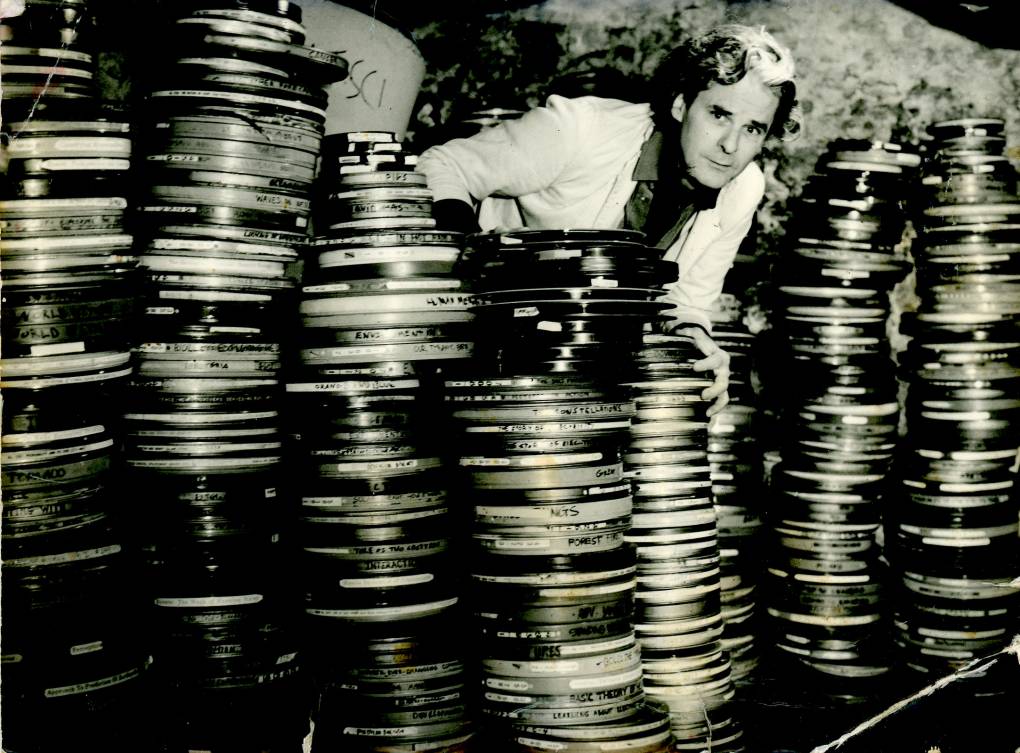
"caption": "Craig Baldwin in the Other Cinema Archives, 992 Valencia Street, San Francisco, circa 2005.",
"description": null,
"title": "_FIG_1_Baldwin_FilmCave_Box23_002",
"credit": "Alice G. Patterson",
"status": "inherit",
"altTag": "a black and white photo of a man in a white suit jacket peering out from behind a stack of film reels",
"isLoading": false,
"fetchFailed": false
},
"arts_13929558": {
"type": "attachments",
"id": "arts_13929558",
"meta": {
"index": "attachments_1716263798",
"site": "arts",
"id": "13929558",
"found": true
},
"parent": 13929418,
"imgSizes": {
"twentyfourteen-full-width": {
"file": "https://ww2.kqed.org/app/uploads/sites/2/2023/05/invasion-1038x576.jpg",
"width": 1038,
"mimeType": "image/jpeg",
"height": 576
},
"thumbnail": {
"file": "https://ww2.kqed.org/app/uploads/sites/2/2023/05/invasion-160x90.jpg",
"width": 160,
"mimeType": "image/jpeg",
"height": 90
},
"post-thumbnail": {
"file": "https://ww2.kqed.org/app/uploads/sites/2/2023/05/invasion-672x372.jpg",
"width": 672,
"mimeType": "image/jpeg",
"height": 372
},
"kqedFullSize": {
"file": "https://ww2.kqed.org/app/uploads/sites/2/2023/05/invasion.jpg",
"width": 1296,
"height": 730
},
"large": {
"file": "https://ww2.kqed.org/app/uploads/sites/2/2023/05/invasion-1020x575.jpg",
"width": 1020,
"mimeType": "image/jpeg",
"height": 575
},
"medium": {
"file": "https://ww2.kqed.org/app/uploads/sites/2/2023/05/invasion-800x451.jpg",
"width": 800,
"mimeType": "image/jpeg",
"height": 451
},
"medium_large": {
"file": "https://ww2.kqed.org/app/uploads/sites/2/2023/05/invasion-768x433.jpg",
"width": 768,
"mimeType": "image/jpeg",
"height": 433
}
},
"publishDate": 1684879323,
"modified": 1684879362,
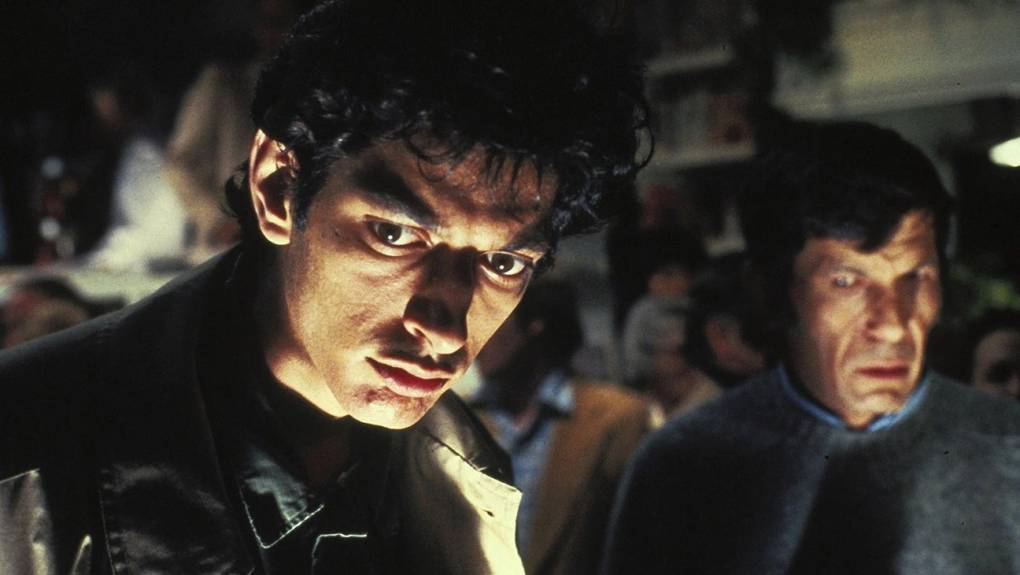
"caption": "(L–R) Jeff Goldblum and Leonard Nimoy in 1978's 'Invasion of the Body Snatchers.'",
"description": null,
"title": "invasion",
"credit": "United Artists",
"status": "inherit",
"altTag": null,
"isLoading": false,
"fetchFailed": false
},
"arts_13929009": {
"type": "attachments",
"id": "arts_13929009",
"meta": {
"index": "attachments_1716263798",
"site": "arts",
"id": "13929009",
"found": true
},
"parent": 13929006,
"imgSizes": {
"twentyfourteen-full-width": {
"file": "https://ww2.kqed.org/app/uploads/sites/2/2023/05/Screen-Shot-2023-05-11-at-11.02.06-AM-1038x576.png",
"width": 1038,
"mimeType": "image/png",
"height": 576
},
"thumbnail": {
"file": "https://ww2.kqed.org/app/uploads/sites/2/2023/05/Screen-Shot-2023-05-11-at-11.02.06-AM-160x103.png",
"width": 160,
"mimeType": "image/png",
"height": 103
},
"post-thumbnail": {
"file": "https://ww2.kqed.org/app/uploads/sites/2/2023/05/Screen-Shot-2023-05-11-at-11.02.06-AM-672x372.png",
"width": 672,
"mimeType": "image/png",
"height": 372
},
"kqedFullSize": {
"file": "https://ww2.kqed.org/app/uploads/sites/2/2023/05/Screen-Shot-2023-05-11-at-11.02.06-AM.png",
"width": 1756,
"height": 1132
},
"large": {
"file": "https://ww2.kqed.org/app/uploads/sites/2/2023/05/Screen-Shot-2023-05-11-at-11.02.06-AM-1020x658.png",
"width": 1020,
"mimeType": "image/png",
"height": 658
},
"1536x1536": {
"file": "https://ww2.kqed.org/app/uploads/sites/2/2023/05/Screen-Shot-2023-05-11-at-11.02.06-AM-1536x990.png",
"width": 1536,
"mimeType": "image/png",
"height": 990
},
"medium": {
"file": "https://ww2.kqed.org/app/uploads/sites/2/2023/05/Screen-Shot-2023-05-11-at-11.02.06-AM-800x516.png",
"width": 800,
"mimeType": "image/png",
"height": 516
},
"medium_large": {
"file": "https://ww2.kqed.org/app/uploads/sites/2/2023/05/Screen-Shot-2023-05-11-at-11.02.06-AM-768x495.png",
"width": 768,
"mimeType": "image/png",
"height": 495
}
},
"publishDate": 1683828154,
"modified": 1683828243,
"caption": "Anthony Perkins as Norman Bates in Hitchcock classic, ‘Psycho.’",
"description": null,
"title": "Anthony Perkins as Norman Bates in Hitchcock classic, ‘Psycho.’",
"credit": "Universal",
"status": "inherit",
"altTag": "A man sits against a blank white wall, a deranged and menacing expression on his face.",
"isLoading": false,
"fetchFailed": false
},
"arts_13928981": {
"type": "attachments",
"id": "arts_13928981",
"meta": {
"index": "attachments_1716263798",
"site": "arts",
"id": "13928981",
"found": true
},
"parent": 13928974,
"imgSizes": {
"twentyfourteen-full-width": {
"file": "https://ww2.kqed.org/app/uploads/sites/2/2023/05/Screen-Shot-2023-05-10-at-3.04.24-PM-1038x576.png",
"width": 1038,
"mimeType": "image/png",
"height": 576
},
"thumbnail": {
"file": "https://ww2.kqed.org/app/uploads/sites/2/2023/05/Screen-Shot-2023-05-10-at-3.04.24-PM-160x96.png",
"width": 160,
"mimeType": "image/png",
"height": 96
},
"post-thumbnail": {
"file": "https://ww2.kqed.org/app/uploads/sites/2/2023/05/Screen-Shot-2023-05-10-at-3.04.24-PM-672x372.png",
"width": 672,
"mimeType": "image/png",
"height": 372
},
"kqedFullSize": {
"file": "https://ww2.kqed.org/app/uploads/sites/2/2023/05/Screen-Shot-2023-05-10-at-3.04.24-PM.png",
"width": 1898,
"height": 1142
},
"large": {
"file": "https://ww2.kqed.org/app/uploads/sites/2/2023/05/Screen-Shot-2023-05-10-at-3.04.24-PM-1020x614.png",
"width": 1020,
"mimeType": "image/png",
"height": 614
},
"1536x1536": {
"file": "https://ww2.kqed.org/app/uploads/sites/2/2023/05/Screen-Shot-2023-05-10-at-3.04.24-PM-1536x924.png",
"width": 1536,
"mimeType": "image/png",
"height": 924
},
"medium": {
"file": "https://ww2.kqed.org/app/uploads/sites/2/2023/05/Screen-Shot-2023-05-10-at-3.04.24-PM-800x481.png",
"width": 800,
"mimeType": "image/png",
"height": 481
},
"medium_large": {
"file": "https://ww2.kqed.org/app/uploads/sites/2/2023/05/Screen-Shot-2023-05-10-at-3.04.24-PM-768x462.png",
"width": 768,
"mimeType": "image/png",
"height": 462
}
},
"publishDate": 1683756660,
"modified": 1683756716,
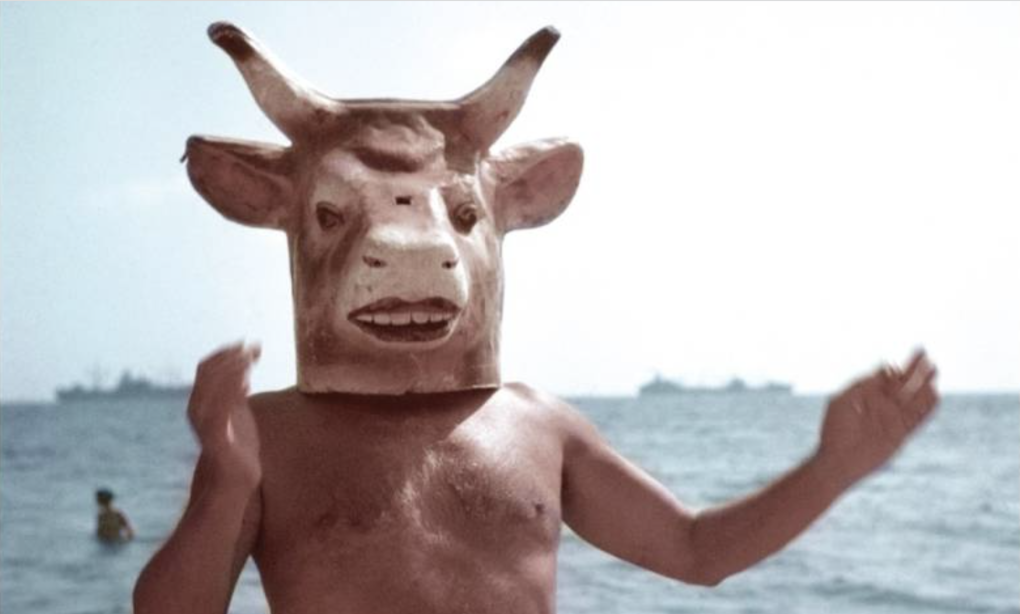
"caption": "‘Monsters: A Fan’s Dilemma,’ by Claire Dederer.",
"description": null,
"title": "‘Monsters: A Fan’s Dilemma,’ by Claire Dederer.",
"credit": "Penguin Random House",
"status": "inherit",
"altTag": "A shirtless man standing on a beach wearing a horned mask.",
"isLoading": false,
"fetchFailed": false
},
"arts_13928013": {
"type": "attachments",
"id": "arts_13928013",
"meta": {
"index": "attachments_1716263798",
"site": "arts",
"id": "13928013",
"found": true
},
"parent": 13928012,
"imgSizes": {
"twentyfourteen-full-width": {
"file": "https://ww2.kqed.org/app/uploads/sites/2/2023/04/ddrg_s1_ut_105_211103_tavnik_00336rc_3000_custom-93b3c2b75fdc001e03667188c401a8ed8d859cf7-scaled-e1681927815571-1038x576.jpg",
"width": 1038,
"mimeType": "image/jpeg",
"height": 576
},
"thumbnail": {
"file": "https://ww2.kqed.org/app/uploads/sites/2/2023/04/ddrg_s1_ut_105_211103_tavnik_00336rc_3000_custom-93b3c2b75fdc001e03667188c401a8ed8d859cf7-scaled-e1681927815571-160x107.jpg",
"width": 160,
"mimeType": "image/jpeg",
"height": 107
},
"post-thumbnail": {
"file": "https://ww2.kqed.org/app/uploads/sites/2/2023/04/ddrg_s1_ut_105_211103_tavnik_00336rc_3000_custom-93b3c2b75fdc001e03667188c401a8ed8d859cf7-scaled-e1681927815571-672x372.jpg",
"width": 672,
"mimeType": "image/jpeg",
"height": 372
},
"kqedFullSize": {
"file": "https://ww2.kqed.org/app/uploads/sites/2/2023/04/ddrg_s1_ut_105_211103_tavnik_00336rc_3000_custom-93b3c2b75fdc001e03667188c401a8ed8d859cf7-scaled-e1681927815571.jpg",
"width": 1920,
"height": 1279
},
"2048x2048": {
"file": "https://ww2.kqed.org/app/uploads/sites/2/2023/04/ddrg_s1_ut_105_211103_tavnik_00336rc_3000_custom-93b3c2b75fdc001e03667188c401a8ed8d859cf7-2048x1364.jpg",
"width": 2048,
"mimeType": "image/jpeg",
"height": 1364
},
"large": {
"file": "https://ww2.kqed.org/app/uploads/sites/2/2023/04/ddrg_s1_ut_105_211103_tavnik_00336rc_3000_custom-93b3c2b75fdc001e03667188c401a8ed8d859cf7-scaled-e1681927815571-1020x679.jpg",
"width": 1020,
"mimeType": "image/jpeg",
"height": 679
},
"1536x1536": {
"file": "https://ww2.kqed.org/app/uploads/sites/2/2023/04/ddrg_s1_ut_105_211103_tavnik_00336rc_3000_custom-93b3c2b75fdc001e03667188c401a8ed8d859cf7-scaled-e1681927815571-1536x1023.jpg",
"width": 1536,
"mimeType": "image/jpeg",
"height": 1023
},
"full-width": {
"file": "https://ww2.kqed.org/app/uploads/sites/2/2023/04/ddrg_s1_ut_105_211103_tavnik_00336rc_3000_custom-93b3c2b75fdc001e03667188c401a8ed8d859cf7-1920x1279.jpg",
"width": 1920,
"mimeType": "image/jpeg",
"height": 1279
},
"medium": {
"file": "https://ww2.kqed.org/app/uploads/sites/2/2023/04/ddrg_s1_ut_105_211103_tavnik_00336rc_3000_custom-93b3c2b75fdc001e03667188c401a8ed8d859cf7-scaled-e1681927815571-800x533.jpg",
"width": 800,
"mimeType": "image/jpeg",
"height": 533
},
"medium_large": {
"file": "https://ww2.kqed.org/app/uploads/sites/2/2023/04/ddrg_s1_ut_105_211103_tavnik_00336rc_3000_custom-93b3c2b75fdc001e03667188c401a8ed8d859cf7-scaled-e1681927815571-768x512.jpg",
"width": 768,
"mimeType": "image/jpeg",
"height": 512
}
},
"publishDate": 1681927106,
"modified": 1681927982,
"caption": "Rachel Weisz plays twin gynecologists Elliot and Beverly in the Prime Video series ‘Dead Ringers.’",
"description": null,
"title": "Rachel Weisz plays twin gynecologists Elliot and Beverly in the Prime Video series ‘Dead Ringers.’",
"credit": "Niko Tavernise/ Prime Video",
"status": "inherit",
"altTag": "An attractive woman with pale white skin and shoulder length dark brown hair smiles warmly. Her reflection is visible in a wall mirror hanging directly next to her.",
"isLoading": false,
"fetchFailed": false
},
"arts_13927800": {
"type": "attachments",
"id": "arts_13927800",
"meta": {
"index": "attachments_1716263798",
"site": "arts",
"id": "13927800",
"found": true
},
"parent": 13927774,
"imgSizes": {
"twentyfourteen-full-width": {
"file": "https://ww2.kqed.org/app/uploads/sites/2/2023/04/Judy-Irving-Cold-Refuge-director-c-Pelican-Media-copy-1038x576.jpg",
"width": 1038,
"mimeType": "image/jpeg",
"height": 576
},
"thumbnail": {
"file": "https://ww2.kqed.org/app/uploads/sites/2/2023/04/Judy-Irving-Cold-Refuge-director-c-Pelican-Media-copy-160x103.jpg",
"width": 160,
"mimeType": "image/jpeg",
"height": 103
},
"post-thumbnail": {
"file": "https://ww2.kqed.org/app/uploads/sites/2/2023/04/Judy-Irving-Cold-Refuge-director-c-Pelican-Media-copy-672x372.jpg",
"width": 672,
"mimeType": "image/jpeg",
"height": 372
},
"kqedFullSize": {
"file": "https://ww2.kqed.org/app/uploads/sites/2/2023/04/Judy-Irving-Cold-Refuge-director-c-Pelican-Media-copy.jpg",
"width": 2092,
"height": 1349
},
"2048x2048": {
"file": "https://ww2.kqed.org/app/uploads/sites/2/2023/04/Judy-Irving-Cold-Refuge-director-c-Pelican-Media-copy-2048x1321.jpg",
"width": 2048,
"mimeType": "image/jpeg",
"height": 1321
},
"large": {
"file": "https://ww2.kqed.org/app/uploads/sites/2/2023/04/Judy-Irving-Cold-Refuge-director-c-Pelican-Media-copy-1020x658.jpg",
"width": 1020,
"mimeType": "image/jpeg",
"height": 658
},
"1536x1536": {
"file": "https://ww2.kqed.org/app/uploads/sites/2/2023/04/Judy-Irving-Cold-Refuge-director-c-Pelican-Media-copy-1536x990.jpg",
"width": 1536,
"mimeType": "image/jpeg",
"height": 990
},
"full-width": {
"file": "https://ww2.kqed.org/app/uploads/sites/2/2023/04/Judy-Irving-Cold-Refuge-director-c-Pelican-Media-copy-1920x1238.jpg",
"width": 1920,
"mimeType": "image/jpeg",
"height": 1238
},
"medium": {
"file": "https://ww2.kqed.org/app/uploads/sites/2/2023/04/Judy-Irving-Cold-Refuge-director-c-Pelican-Media-copy-800x516.jpg",
"width": 800,
"mimeType": "image/jpeg",
"height": 516
},
"medium_large": {
"file": "https://ww2.kqed.org/app/uploads/sites/2/2023/04/Judy-Irving-Cold-Refuge-director-c-Pelican-Media-copy-768x495.jpg",
"width": 768,
"mimeType": "image/jpeg",
"height": 495
}
},
"publishDate": 1681436651,
"modified": 1681436814,
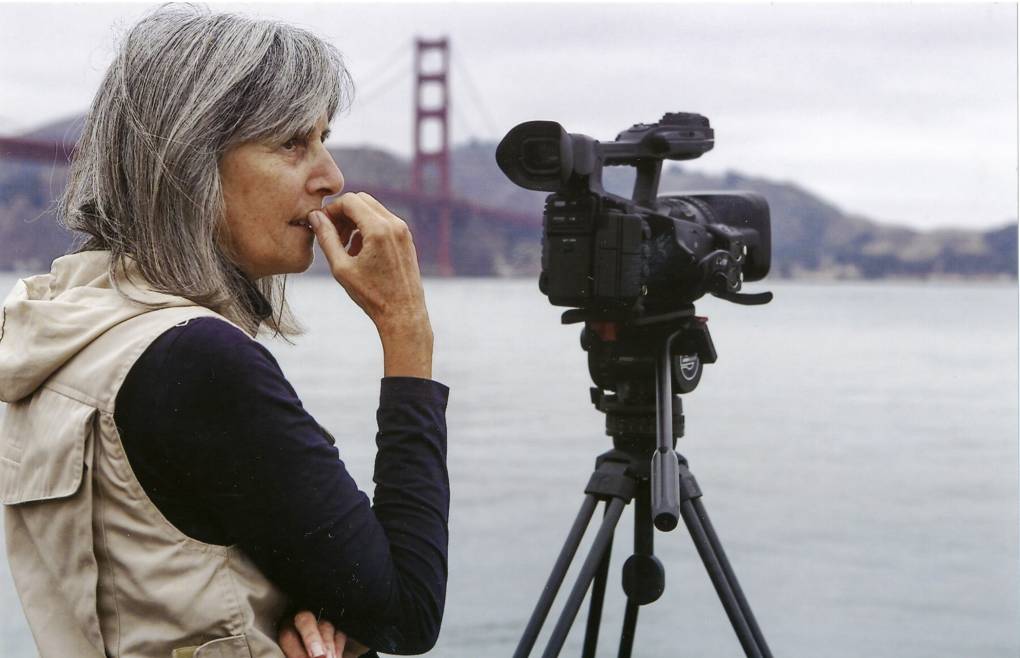
"caption": "Judy Irving shoots a scene from 'Cold Refuge,' which gets a world premiere on April 16 in San Francisco.",
"description": null,
"title": "Judy Irving, Cold Refuge director (c) Pelican Media copy",
"credit": "Courtesy Pelican Media",
"status": "inherit",
"altTag": "a woman with short gray hair wearing a black long-sleeved shirt and tan vest stands behind a movie camera in front of the Bay and the Golden Gate Bridge",
"isLoading": false,
"fetchFailed": false
},
"arts_13927583": {
"type": "attachments",
"id": "arts_13927583",
"meta": {
"index": "attachments_1716263798",
"site": "arts",
"id": "13927583",
"found": true
},
"parent": 13927554,
"imgSizes": {
"twentyfourteen-full-width": {
"file": "https://ww2.kqed.org/app/uploads/sites/2/2023/04/GettyImages-1130639816-1038x576.jpg",
"width": 1038,
"mimeType": "image/jpeg",
"height": 576
},
"thumbnail": {
"file": "https://ww2.kqed.org/app/uploads/sites/2/2023/04/GettyImages-1130639816-160x103.jpg",
"width": 160,
"mimeType": "image/jpeg",
"height": 103
},
"post-thumbnail": {
"file": "https://ww2.kqed.org/app/uploads/sites/2/2023/04/GettyImages-1130639816-672x372.jpg",
"width": 672,
"mimeType": "image/jpeg",
"height": 372
},
"kqedFullSize": {
"file": "https://ww2.kqed.org/app/uploads/sites/2/2023/04/GettyImages-1130639816-scaled.jpg",
"width": 2560,
"height": 1643
},
"2048x2048": {
"file": "https://ww2.kqed.org/app/uploads/sites/2/2023/04/GettyImages-1130639816-2048x1314.jpg",
"width": 2048,
"mimeType": "image/jpeg",
"height": 1314
},
"large": {
"file": "https://ww2.kqed.org/app/uploads/sites/2/2023/04/GettyImages-1130639816-1020x655.jpg",
"width": 1020,
"mimeType": "image/jpeg",
"height": 655
},
"1536x1536": {
"file": "https://ww2.kqed.org/app/uploads/sites/2/2023/04/GettyImages-1130639816-1536x986.jpg",
"width": 1536,
"mimeType": "image/jpeg",
"height": 986
},
"full-width": {
"file": "https://ww2.kqed.org/app/uploads/sites/2/2023/04/GettyImages-1130639816-1920x1232.jpg",
"width": 1920,
"mimeType": "image/jpeg",
"height": 1232
},
"medium": {
"file": "https://ww2.kqed.org/app/uploads/sites/2/2023/04/GettyImages-1130639816-800x513.jpg",
"width": 800,
"mimeType": "image/jpeg",
"height": 513
},
"medium_large": {
"file": "https://ww2.kqed.org/app/uploads/sites/2/2023/04/GettyImages-1130639816-768x493.jpg",
"width": 768,
"mimeType": "image/jpeg",
"height": 493
}
},
"publishDate": 1681155447,
"modified": 1681187500,
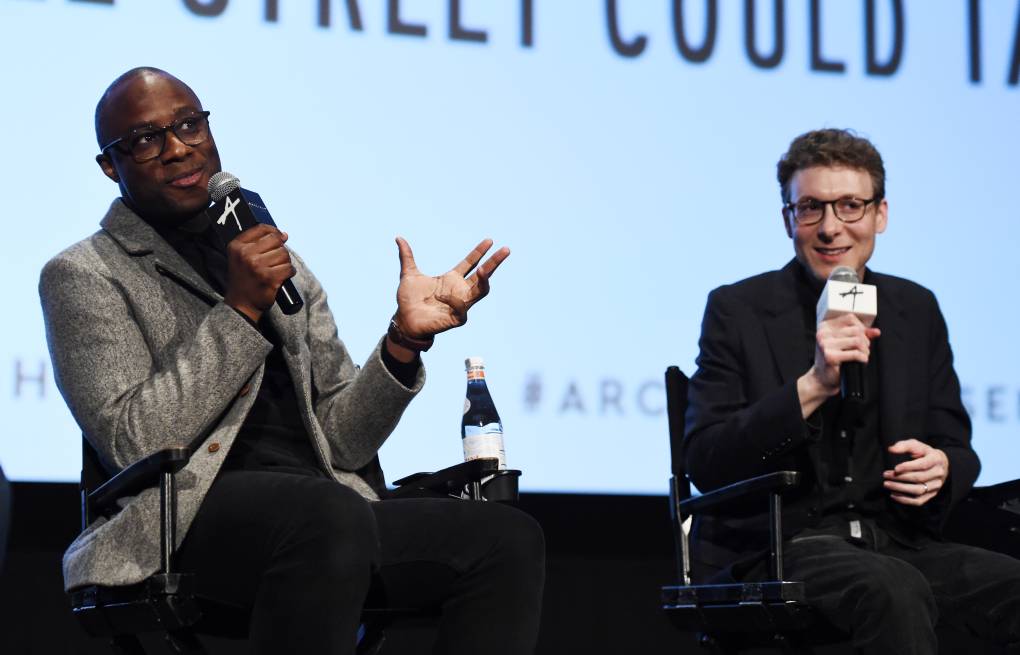
"caption": "Director Barry Jenkins and composer Nicholas Britell, seen here in 2019 at an event discussing 'If Beale Street Could Talk.' Jenkins and Britell will be in discussion, and present live performances from their collaborations, at the San Francisco Symphony's SoundBox April 14–15.",
"description": null,
"title": "ArcLight Presents Hitting The High Note Screening Series Honoring 2019 Best Original Score Oscar Nominees - \"If Beale Street Could Talk\"",
"credit": "Amanda Edwards/Getty Images",
"status": "inherit",
"altTag": "a young Black man with glasses in a grey coat and black pants speaks into a microphone onstage next to a young white man in a black coat and glasses, as part of a panel at a film event",
"isLoading": false,
"fetchFailed": false
},
"arts_13927475": {
"type": "attachments",
"id": "arts_13927475",
"meta": {
"index": "attachments_1716263798",
"site": "arts",
"id": "13927475",
"found": true
},
"parent": 13927474,
"imgSizes": {
"twentyfourteen-full-width": {
"file": "https://ww2.kqed.org/app/uploads/sites/2/2023/04/Stephen_Curry_Underrated_Photo_0101-1038x576.jpg",
"width": 1038,
"mimeType": "image/jpeg",
"height": 576
},
"thumbnail": {
"file": "https://ww2.kqed.org/app/uploads/sites/2/2023/04/Stephen_Curry_Underrated_Photo_0101-160x108.jpg",
"width": 160,
"mimeType": "image/jpeg",
"height": 108
},
"post-thumbnail": {
"file": "https://ww2.kqed.org/app/uploads/sites/2/2023/04/Stephen_Curry_Underrated_Photo_0101-672x372.jpg",
"width": 672,
"mimeType": "image/jpeg",
"height": 372
},
"kqedFullSize": {
"file": "https://ww2.kqed.org/app/uploads/sites/2/2023/04/Stephen_Curry_Underrated_Photo_0101.jpg",
"width": 1958,
"height": 1319
},
"large": {
"file": "https://ww2.kqed.org/app/uploads/sites/2/2023/04/Stephen_Curry_Underrated_Photo_0101-1020x687.jpg",
"width": 1020,
"mimeType": "image/jpeg",
"height": 687
},
"1536x1536": {
"file": "https://ww2.kqed.org/app/uploads/sites/2/2023/04/Stephen_Curry_Underrated_Photo_0101-1536x1035.jpg",
"width": 1536,
"mimeType": "image/jpeg",
"height": 1035
},
"full-width": {
"file": "https://ww2.kqed.org/app/uploads/sites/2/2023/04/Stephen_Curry_Underrated_Photo_0101-1920x1293.jpg",
"width": 1920,
"mimeType": "image/jpeg",
"height": 1293
},
"medium": {
"file": "https://ww2.kqed.org/app/uploads/sites/2/2023/04/Stephen_Curry_Underrated_Photo_0101-800x539.jpg",
"width": 800,
"mimeType": "image/jpeg",
"height": 539
},
"medium_large": {
"file": "https://ww2.kqed.org/app/uploads/sites/2/2023/04/Stephen_Curry_Underrated_Photo_0101-768x517.jpg",
"width": 768,
"mimeType": "image/jpeg",
"height": 517
}
},
"publishDate": 1680823650,
"modified": 1680829292,
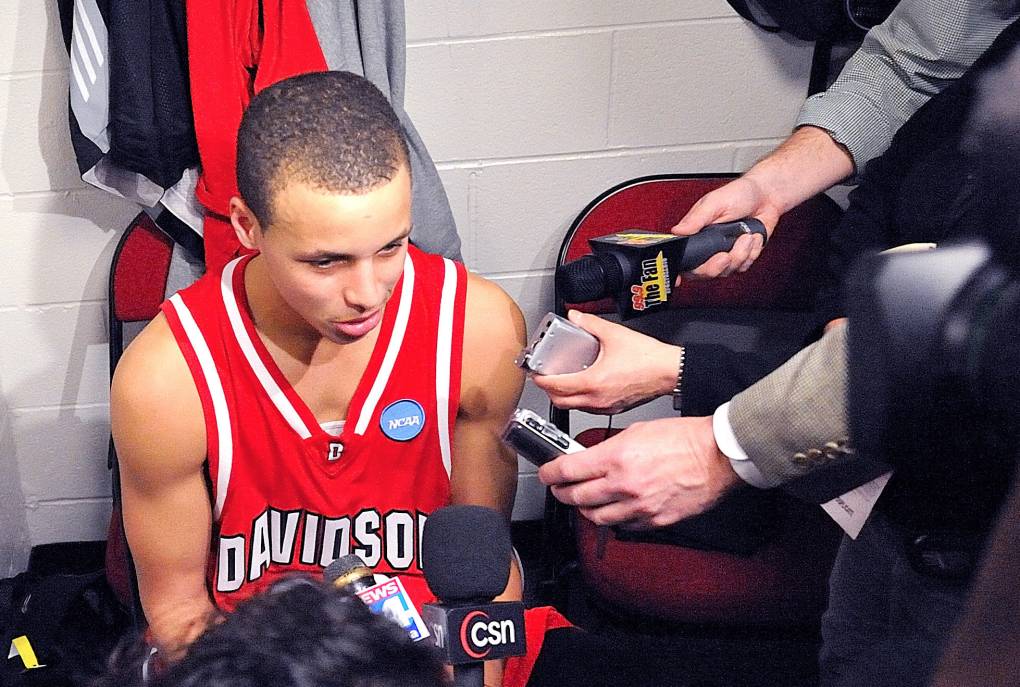
"caption": "Before NBA superstardom, Stephen Curry was a doubted prospect at Davidson College.",
"description": null,
"title": "Stephen_Curry_Underrated_Photo_0101",
"credit": "Courtesy SFFILM",
"status": "inherit",
"altTag": "A college-aged Black man sits in the locker room with reporter microphones in his face",
"isLoading": false,
"fetchFailed": false
},
"arts_13927566": {
"type": "attachments",
"id": "arts_13927566",
"meta": {
"index": "attachments_1716263798",
"site": "arts",
"id": "13927566",
"found": true
},
"parent": 13927565,
"imgSizes": {
"twentyfourteen-full-width": {
"file": "https://ww2.kqed.org/app/uploads/sites/2/2023/04/gettyimages-1343743220-edit_wide-ac775667cd51469d783cdc71d863b1d50bff65e7-scaled-e1681152224314-1038x576.jpg",
"width": 1038,
"mimeType": "image/jpeg",
"height": 576
},
"thumbnail": {
"file": "https://ww2.kqed.org/app/uploads/sites/2/2023/04/gettyimages-1343743220-edit_wide-ac775667cd51469d783cdc71d863b1d50bff65e7-scaled-e1681152224314-160x90.jpg",
"width": 160,
"mimeType": "image/jpeg",
"height": 90
},
"post-thumbnail": {
"file": "https://ww2.kqed.org/app/uploads/sites/2/2023/04/gettyimages-1343743220-edit_wide-ac775667cd51469d783cdc71d863b1d50bff65e7-scaled-e1681152224314-672x372.jpg",
"width": 672,
"mimeType": "image/jpeg",
"height": 372
},
"kqedFullSize": {
"file": "https://ww2.kqed.org/app/uploads/sites/2/2023/04/gettyimages-1343743220-edit_wide-ac775667cd51469d783cdc71d863b1d50bff65e7-scaled-e1681152224314.jpg",
"width": 1920,
"height": 1080
},
"2048x2048": {
"file": "https://ww2.kqed.org/app/uploads/sites/2/2023/04/gettyimages-1343743220-edit_wide-ac775667cd51469d783cdc71d863b1d50bff65e7-2048x1152.jpg",
"width": 2048,
"mimeType": "image/jpeg",
"height": 1152
},
"large": {
"file": "https://ww2.kqed.org/app/uploads/sites/2/2023/04/gettyimages-1343743220-edit_wide-ac775667cd51469d783cdc71d863b1d50bff65e7-scaled-e1681152224314-1020x574.jpg",
"width": 1020,
"mimeType": "image/jpeg",
"height": 574
},
"1536x1536": {
"file": "https://ww2.kqed.org/app/uploads/sites/2/2023/04/gettyimages-1343743220-edit_wide-ac775667cd51469d783cdc71d863b1d50bff65e7-scaled-e1681152224314-1536x864.jpg",
"width": 1536,
"mimeType": "image/jpeg",
"height": 864
},
"full-width": {
"file": "https://ww2.kqed.org/app/uploads/sites/2/2023/04/gettyimages-1343743220-edit_wide-ac775667cd51469d783cdc71d863b1d50bff65e7-1920x1080.jpg",
"width": 1920,
"mimeType": "image/jpeg",
"height": 1080
},
"medium": {
"file": "https://ww2.kqed.org/app/uploads/sites/2/2023/04/gettyimages-1343743220-edit_wide-ac775667cd51469d783cdc71d863b1d50bff65e7-scaled-e1681152224314-800x450.jpg",
"width": 800,
"mimeType": "image/jpeg",
"height": 450
},
"medium_large": {
"file": "https://ww2.kqed.org/app/uploads/sites/2/2023/04/gettyimages-1343743220-edit_wide-ac775667cd51469d783cdc71d863b1d50bff65e7-scaled-e1681152224314-768x432.jpg",
"width": 768,
"mimeType": "image/jpeg",
"height": 432
}
},
"publishDate": 1681149837,
"modified": 1681152360,
"caption": "Trailers have long been an essential part of the movie-going experience.",
"description": null,
"title": "Trailers have long been an essential part of the movie-going experience.",
"credit": "Antonio Gravante / EyeEm/Getty Images/EyeEm",
"status": "inherit",
"altTag": "A hand reaches into a striped container of popcorn that's resting on the arm of a red movie seat. A screen is visible in the distance.",
"isLoading": false,
"fetchFailed": false
},
"arts_13927557": {
"type": "attachments",
"id": "arts_13927557",
"meta": {
"index": "attachments_1716263798",
"site": "arts",
"id": "13927557",
"found": true
},
"parent": 13927547,
"imgSizes": {
"twentyfourteen-full-width": {
"file": "https://ww2.kqed.org/app/uploads/sites/2/2023/04/Little-Richard-COVER-1038x576.jpg",
"width": 1038,
"mimeType": "image/jpeg",
"height": 576
},
"thumbnail": {
"file": "https://ww2.kqed.org/app/uploads/sites/2/2023/04/Little-Richard-COVER-160x90.jpg",
"width": 160,
"mimeType": "image/jpeg",
"height": 90
},
"post-thumbnail": {
"file": "https://ww2.kqed.org/app/uploads/sites/2/2023/04/Little-Richard-COVER-672x372.jpg",
"width": 672,
"mimeType": "image/jpeg",
"height": 372
},
"kqedFullSize": {
"file": "https://ww2.kqed.org/app/uploads/sites/2/2023/04/Little-Richard-COVER.jpg",
"width": 2500,
"height": 1406
},
"2048x2048": {
"file": "https://ww2.kqed.org/app/uploads/sites/2/2023/04/Little-Richard-COVER-2048x1152.jpg",
"width": 2048,
"mimeType": "image/jpeg",
"height": 1152
},
"large": {
"file": "https://ww2.kqed.org/app/uploads/sites/2/2023/04/Little-Richard-COVER-1020x574.jpg",
"width": 1020,
"mimeType": "image/jpeg",
"height": 574
},
"1536x1536": {
"file": "https://ww2.kqed.org/app/uploads/sites/2/2023/04/Little-Richard-COVER-1536x864.jpg",
"width": 1536,
"mimeType": "image/jpeg",
"height": 864
},
"full-width": {
"file": "https://ww2.kqed.org/app/uploads/sites/2/2023/04/Little-Richard-COVER-1920x1080.jpg",
"width": 1920,
"mimeType": "image/jpeg",
"height": 1080
},
"medium": {
"file": "https://ww2.kqed.org/app/uploads/sites/2/2023/04/Little-Richard-COVER-800x450.jpg",
"width": 800,
"mimeType": "image/jpeg",
"height": 450
},
"medium_large": {
"file": "https://ww2.kqed.org/app/uploads/sites/2/2023/04/Little-Richard-COVER-768x432.jpg",
"width": 768,
"mimeType": "image/jpeg",
"height": 432
}
},
"publishDate": 1681147170,
"modified": 1681147279,
"caption": "Little Richard in 'Little Richard: I Am Everything.'",
"description": null,
"title": "Little-Richard-COVER",
"credit": "Courtesy of Magnolia Pictures",
"status": "inherit",
"altTag": "Black-and-white photograph of young Black man combing his pompadour in mirror",
"isLoading": false,
"fetchFailed": false
},
"arts_13927296": {
"type": "attachments",
"id": "arts_13927296",
"meta": {
"index": "attachments_1716263798",
"site": "arts",
"id": "13927296",
"found": true
},
"parent": 13927295,
"imgSizes": {
"twentyfourteen-full-width": {
"file": "https://ww2.kqed.org/app/uploads/sites/2/2023/04/extrapolations_photo_010101-f552f785792e9a1afdb5252fcc31edaf95846553-scaled-e1680629854889-1038x576.jpg",
"width": 1038,
"mimeType": "image/jpeg",
"height": 576
},
"thumbnail": {
"file": "https://ww2.kqed.org/app/uploads/sites/2/2023/04/extrapolations_photo_010101-f552f785792e9a1afdb5252fcc31edaf95846553-scaled-e1680629854889-160x120.jpg",
"width": 160,
"mimeType": "image/jpeg",
"height": 120
},
"post-thumbnail": {
"file": "https://ww2.kqed.org/app/uploads/sites/2/2023/04/extrapolations_photo_010101-f552f785792e9a1afdb5252fcc31edaf95846553-scaled-e1680629854889-672x372.jpg",
"width": 672,
"mimeType": "image/jpeg",
"height": 372
},
"kqedFullSize": {
"file": "https://ww2.kqed.org/app/uploads/sites/2/2023/04/extrapolations_photo_010101-f552f785792e9a1afdb5252fcc31edaf95846553-scaled-e1680629854889.jpg",
"width": 1920,
"height": 1440
},
"2048x2048": {
"file": "https://ww2.kqed.org/app/uploads/sites/2/2023/04/extrapolations_photo_010101-f552f785792e9a1afdb5252fcc31edaf95846553-2048x1536.jpg",
"width": 2048,
"mimeType": "image/jpeg",
"height": 1536
},
"large": {
"file": "https://ww2.kqed.org/app/uploads/sites/2/2023/04/extrapolations_photo_010101-f552f785792e9a1afdb5252fcc31edaf95846553-scaled-e1680629854889-1020x765.jpg",
"width": 1020,
"mimeType": "image/jpeg",
"height": 765
},
"1536x1536": {
"file": "https://ww2.kqed.org/app/uploads/sites/2/2023/04/extrapolations_photo_010101-f552f785792e9a1afdb5252fcc31edaf95846553-scaled-e1680629854889-1536x1152.jpg",
"width": 1536,
"mimeType": "image/jpeg",
"height": 1152
},
"full-width": {
"file": "https://ww2.kqed.org/app/uploads/sites/2/2023/04/extrapolations_photo_010101-f552f785792e9a1afdb5252fcc31edaf95846553-1920x1440.jpg",
"width": 1920,
"mimeType": "image/jpeg",
"height": 1440
},
"medium": {
"file": "https://ww2.kqed.org/app/uploads/sites/2/2023/04/extrapolations_photo_010101-f552f785792e9a1afdb5252fcc31edaf95846553-scaled-e1680629854889-800x600.jpg",
"width": 800,
"mimeType": "image/jpeg",
"height": 600
},
"medium_large": {
"file": "https://ww2.kqed.org/app/uploads/sites/2/2023/04/extrapolations_photo_010101-f552f785792e9a1afdb5252fcc31edaf95846553-scaled-e1680629854889-768x576.jpg",
"width": 768,
"mimeType": "image/jpeg",
"height": 576
}
},
"publishDate": 1680629278,
"modified": 1680631027,
"caption": "The Apple TV+ anthology series ‘Extrapolations’ tells the story of what’s at stake for our planet over the next few decades. Sienna Miller plays scientist Rebecca Shearer.",
"description": null,
"title": "The Apple TV+ anthology series ‘Extrapolations’ tells the story of what’s at stake for our planet over the next few decades. Sienna Miller plays scientist Rebecca Shearer.",
"credit": "Apple TV+",
"status": "inherit",
"altTag": "A woman dressed for a summer hike leans against the trunk of a tree and gazes up to the sky. Everything is bathed in dark red half-light.",
"isLoading": false,
"fetchFailed": false
},
"arts_13926948": {
"type": "attachments",
"id": "arts_13926948",
"meta": {
"index": "attachments_1716263798",
"site": "arts",
"id": "13926948",
"found": true
},
"parent": 13926947,
"imgSizes": {
"twentyfourteen-full-width": {
"file": "https://ww2.kqed.org/app/uploads/sites/2/2023/03/luckyhank_odenkirk-101_wide-740640bb3e560a176f9fa2609d1a790018206e6b-scaled-e1679687508756-1038x576.jpe",
"width": 1038,
"mimeType": "image/jpeg",
"height": 576
},
"thumbnail": {
"file": "https://ww2.kqed.org/app/uploads/sites/2/2023/03/luckyhank_odenkirk-101_wide-740640bb3e560a176f9fa2609d1a790018206e6b-scaled-e1679687508756-160x90.jpe",
"width": 160,
"mimeType": "image/jpeg",
"height": 90
},
"post-thumbnail": {
"file": "https://ww2.kqed.org/app/uploads/sites/2/2023/03/luckyhank_odenkirk-101_wide-740640bb3e560a176f9fa2609d1a790018206e6b-scaled-e1679687508756-672x372.jpe",
"width": 672,
"mimeType": "image/jpeg",
"height": 372
},
"kqedFullSize": {
"file": "https://ww2.kqed.org/app/uploads/sites/2/2023/03/luckyhank_odenkirk-101_wide-740640bb3e560a176f9fa2609d1a790018206e6b-scaled-e1679687508756.jpe",
"width": 1920,
"height": 1080
},
"2048x2048": {
"file": "https://ww2.kqed.org/app/uploads/sites/2/2023/03/luckyhank_odenkirk-101_wide-740640bb3e560a176f9fa2609d1a790018206e6b-2048x1152.jpe",
"width": 2048,
"mimeType": "image/jpeg",
"height": 1152
},
"large": {
"file": "https://ww2.kqed.org/app/uploads/sites/2/2023/03/luckyhank_odenkirk-101_wide-740640bb3e560a176f9fa2609d1a790018206e6b-scaled-e1679687508756-1020x574.jpe",
"width": 1020,
"mimeType": "image/jpeg",
"height": 574
},
"1536x1536": {
"file": "https://ww2.kqed.org/app/uploads/sites/2/2023/03/luckyhank_odenkirk-101_wide-740640bb3e560a176f9fa2609d1a790018206e6b-scaled-e1679687508756-1536x864.jpe",
"width": 1536,
"mimeType": "image/jpeg",
"height": 864
},
"full-width": {
"file": "https://ww2.kqed.org/app/uploads/sites/2/2023/03/luckyhank_odenkirk-101_wide-740640bb3e560a176f9fa2609d1a790018206e6b-1920x1080.jpe",
"width": 1920,
"mimeType": "image/jpeg",
"height": 1080
},
"medium": {
"file": "https://ww2.kqed.org/app/uploads/sites/2/2023/03/luckyhank_odenkirk-101_wide-740640bb3e560a176f9fa2609d1a790018206e6b-scaled-e1679687508756-800x450.jpe",
"width": 800,
"mimeType": "image/jpeg",
"height": 450
},
"medium_large": {
"file": "https://ww2.kqed.org/app/uploads/sites/2/2023/03/luckyhank_odenkirk-101_wide-740640bb3e560a176f9fa2609d1a790018206e6b-scaled-e1679687508756-768x432.jpe",
"width": 768,
"mimeType": "image/jpeg",
"height": 432
}
},
"publishDate": 1679685207,
"modified": 1679687603,
"caption": "Bob Odenkirk as Hank on AMC’s ‘Lucky Hank.’",
"description": null,
"title": "Bob Odenkirk as Hank on AMC’s ‘Lucky Hank.’",
"credit": "Sergei Bachlakov/AMC",
"status": "inherit",
"altTag": "A white man with grey hair and beard stares at a laptop screen looking stressed. One hand is raised and touching the rim of his spectacles.",
"isLoading": false,
"fetchFailed": false
}
},
"audioPlayerReducer": {
"postId": "stream_live",
"isPaused": true,
"isPlaying": false,
"pfsActive": false,
"pledgeModalIsOpen": true,
"playerDrawerIsOpen": false,
"liveAudioPlayStartedAt": 0,
"liveAudioPlayContext": ""
},
"authorsReducer": {
"byline_arts_13929006": {
"type": "authors",
"id": "byline_arts_13929006",
"meta": {
"override": true
},
"slug": "byline_arts_13929006",
"name": "Krysta Fauria",
"isLoading": false
},
"byline_arts_13928974": {
"type": "authors",
"id": "byline_arts_13928974",
"meta": {
"override": true
},
"slug": "byline_arts_13928974",
"name": "Maureen Corrigan",
"isLoading": false
},
"byline_arts_13928012": {
"type": "authors",
"id": "byline_arts_13928012",
"meta": {
"override": true
},
"slug": "byline_arts_13928012",
"name": "David Bianculli",
"isLoading": false
},
"byline_arts_13927565": {
"type": "authors",
"id": "byline_arts_13927565",
"meta": {
"override": true
},
"slug": "byline_arts_13927565",
"name": "Susannah Broun",
"isLoading": false
},
"byline_arts_13927295": {
"type": "authors",
"id": "byline_arts_13927295",
"meta": {
"override": true
},
"slug": "byline_arts_13927295",
"name": "Chloe Veltman",
"isLoading": false
},
"byline_arts_13926947": {
"type": "authors",
"id": "byline_arts_13926947",
"meta": {
"override": true
},
"slug": "byline_arts_13926947",
"name": "Eric Deggans",
"isLoading": false
},
"mfox": {
"type": "authors",
"id": "22",
"meta": {
"index": "authors_1716337520",
"id": "22",
"found": true
},
"name": "Michael Fox",
"firstName": "Michael",
"lastName": "Fox",
"slug": "mfox",
"email": "foxonfilm@yahoo.com",
"display_author_email": false,
"staff_mastheads": [],
"title": "KQED Contributor",
"bio": "Michael Fox has written about film for dozens of publications since 1987. He is a founding member of the San Francisco Bay Area Film Critics Circle.",
"avatar": "https://secure.gravatar.com/avatar/d9849d6c659c41414795c471d907bb97b396e2a32b88e20e6ff66f65fbdd6dcd?s=600&d=blank&r=g",
"twitter": null,
"bluesky": null,
"facebook": null,
"instagram": null,
"linkedin": null,
"sites": [
{
"site": "arts",
"roles": [
"Contributor",
"contributor"
]
}
],
"headData": {
"title": "Michael Fox | KQED",
"description": "KQED Contributor",
"ogImgSrc": "https://secure.gravatar.com/avatar/d9849d6c659c41414795c471d907bb97b396e2a32b88e20e6ff66f65fbdd6dcd?s=600&d=blank&r=g",
"twImgSrc": "https://secure.gravatar.com/avatar/d9849d6c659c41414795c471d907bb97b396e2a32b88e20e6ff66f65fbdd6dcd?s=600&d=blank&r=g"
},
"isLoading": false,
"link": "/author/mfox"
},
"esilvers": {
"type": "authors",
"id": "7237",
"meta": {
"index": "authors_1716337520",
"id": "7237",
"found": true
},
"name": "Emma Silvers",
"firstName": "Emma",
"lastName": "Silvers",
"slug": "esilvers",
"email": "esilvers@kqed.org",
"display_author_email": false,
"staff_mastheads": [],
"title": "KQED Contributor",
"bio": "Emma Silvers is an editor at KQED Arts and a former digital producer at KQED News. Born and raised in the Bay Area, she has previously been an arts and entertainment editor at the \u003cem>San Francisco Chronicle\u003c/em>, \u003cem>SF Weekly\u003c/em> and the \u003cem>San Francisco Bay Guardian.\u003c/em> \u003ca href=\"https://www.emmasilvers.com\">Her work\u003c/a> has also appeared in \u003cem>Rolling Stone\u003c/em>, Pitchfork and \u003cem>Mother Jones\u003c/em>. In 2017 she was the recipient of the Society of Professional Journalists-Northern California's award for arts and culture reporting. In 1993 she \u003ca href=\"https://www.kqed.org/pop/16759/wait-what-my-coworker-was-a-voice-over-hyperventilator-for-jurassic-park\">hyperventilated in \u003cem>Jurassic Park\u003c/em>\u003c/a>.",
"avatar": "https://secure.gravatar.com/avatar/247beada39b88ea5759db1f51dba05cf?s=600&d=blank&r=g",
"twitter": "emmaruthless",
"facebook": null,
"instagram": null,
"linkedin": null,
"sites": [
{
"site": "arts",
"roles": [
"editor"
]
},
{
"site": "news",
"roles": [
"editor"
]
},
{
"site": "pop",
"roles": [
"contributor"
]
},
{
"site": "bayareabites",
"roles": [
"editor"
]
},
{
"site": "food",
"roles": [
"contributor"
]
},
{
"site": "liveblog",
"roles": [
"editor"
]
}
],
"headData": {
"title": "Emma Silvers | KQED",
"description": "KQED Contributor",
"ogImgSrc": "https://secure.gravatar.com/avatar/247beada39b88ea5759db1f51dba05cf?s=600&d=blank&r=g",
"twImgSrc": "https://secure.gravatar.com/avatar/247beada39b88ea5759db1f51dba05cf?s=600&d=blank&r=g"
},
"isLoading": false,
"link": "/author/esilvers"
},
"achazaro": {
"type": "authors",
"id": "11748",
"meta": {
"index": "authors_1716337520",
"id": "11748",
"found": true
},
"name": "Alan Chazaro",
"firstName": "Alan",
"lastName": "Chazaro",
"slug": "achazaro",
"email": "agchazaro@gmail.com",
"display_author_email": true,
"staff_mastheads": [],
"title": "Food Writer and Reporter",
"bio": "Alan Chazaro is the author of \u003cem>This Is Not a Frank Ocean Cover Album\u003c/em> (Black Lawrence Press, 2019), \u003cem>Piñata Theory\u003c/em> (Black Lawrence Press, 2020), and \u003cem>Notes from the Eastern Span of the Bay Bridge\u003c/em> (Ghost City Press, 2021). He is a graduate of June Jordan’s Poetry for the People program at UC Berkeley and a former Lawrence Ferlinghetti Fellow at the University of San Francisco. He writes about sports, food, art, music, education, and culture while repping the Bay on \u003ca href=\"https://twitter.com/alan_chazaro\">Twitter\u003c/a> and \u003ca href=\"https://www.instagram.com/alan_chazaro/?hl=en\">Instagram\u003c/a> at @alan_chazaro.",
"avatar": "https://secure.gravatar.com/avatar/ea8b6dd970fc5c29e7a188e7d5861df7?s=600&d=blank&r=g",
"twitter": "alan_chazaro",
"facebook": null,
"instagram": null,
"linkedin": null,
"sites": [
{
"site": "arts",
"roles": [
"contributor"
]
},
{
"site": "news",
"roles": [
"editor"
]
}
],
"headData": {
"title": "Alan Chazaro | KQED",
"description": "Food Writer and Reporter",
"ogImgSrc": "https://secure.gravatar.com/avatar/ea8b6dd970fc5c29e7a188e7d5861df7?s=600&d=blank&r=g",
"twImgSrc": "https://secure.gravatar.com/avatar/ea8b6dd970fc5c29e7a188e7d5861df7?s=600&d=blank&r=g"
},
"isLoading": false,
"link": "/author/achazaro"
}
},
"pagesReducer": {
"arts_tag_film": {
"type": "terms",
"id": "arts_977",
"meta": {
"index": "terms_1716263798",
"site": "arts",
"id": "977",
"score": 8.284364
},
"name": "Film",
"slug": "film",
"taxonomy": "tag",
"description": null,
"featImg": null,
"headData": {
"title": "Film Archives | KQED Arts",
"description": null,
"ogTitle": null,
"ogDescription": null,
"ogImgId": null,
"twTitle": null,
"twDescription": null,
"twImgId": null
},
"ttid": 995,
"isLoading": false,
"title": "Film",
"pageMeta": {
"site": "arts",
"WpPageTemplate": "page-topic-editorial",
"currentPage": 13
},
"blocks": [
{
"blockName": "kqed/post-list",
"attrs": {
"layout": "cardArticle2",
"query": "posts/arts?tag=film",
"seeMore": false,
"paginated": true,
"page": 13
}
},
{
"blockName": "kqed/ad"
}
]
}
},
"pfsSessionReducer": {},
"postsReducer": {
"stream_live": {
"type": "live",
"id": "stream_live",
"audioUrl": "https://streams.kqed.org/kqedradio",
"title": "Live Stream",
"excerpt": "Live Stream information currently unavailable.",
"link": "/radio",
"featImg": "",
"label": {
"name": "KQED Live",
"link": "/"
}
},
"stream_kqedNewscast": {
"type": "posts",
"id": "stream_kqedNewscast",
"audioUrl": "https://www.kqed.org/.stream/anon/radio/RDnews/newscast.mp3?_=1",
"title": "KQED Newscast",
"featImg": "",
"label": {
"name": "88.5 FM",
"link": "/"
}
},
"arts_13929679": {
"type": "posts",
"id": "arts_13929679",
"meta": {
"index": "posts_1716263798",
"site": "arts",
"id": "13929679",
"score": null,
"sort": [
1685123449000
]
},
"parent": 0,
"labelTerm": {
"site": "arts",
"term": 140
},
"blocks": [],
"publishDate": 1685123449,
"format": "standard",
"title": "‘Avant to Live’ Is a Monument to Beloved Mission Filmmaker Craig Baldwin",
"headTitle": "‘Avant to Live’ Is a Monument to Beloved Mission Filmmaker Craig Baldwin | KQED",
"content": "\u003cp>An enjoyable exception to the usual prestige books about artists, \u003cem>Craig Baldwin: Avant to Live!\u003c/em> evokes the iconoclastic personality of San Francisco’s preeminent underground filmmaker and The Other Cinema curator.\u003c/p>\n\u003cp>Written and compiled by Bay Area artists and curators Brett Kashmere and Steve Polta (and just published by their respective organizations, INCITE Journal of Experimental Media and \u003ca href=\"https://www.sfcinematheque.org/avant-to-live-events/\" target=\"_blank\" rel=\"noopener\">San Francisco Cinematheque\u003c/a>), the massive tome frontloads a veritable trove of reminiscences, anecdotes, interviews and tributes before presenting an array of critical analyses.\u003c/p>\n\u003cp>For more than 40 years, Craig Baldwin has reappropriated images from discarded and forgotten educational and industrial movies (found footage, in the vernacular of experimental film) to craft brilliant, hyper-dense 16mm films critiquing U.S. exceptionalism, colonialism, capitalism and moviemaking. Given that his works — \u003cem>Tribulation 99: Alien Anomalies Under America\u003c/em>, \u003cem>¡O No Coronado!\u003c/em>, \u003cem>Sonic Outlaws\u003c/em>, \u003cem>Spectres of the Spectrum\u003c/em>, \u003cem>Mock Up on Mu \u003c/em>— are subversive mashups of experimental documentary, science-fiction fantasia and essay film, it’s fitting that \u003cem>Craig Baldwin: Avant to Live\u003c/em> is a hybrid zine, scrapbook, academic treatise and alternate social history of post-1970s San Francisco.\u003c/p>\n\u003cp>The \u003ca href=\"https://roxie.com/series/craig-baldwin-avant-to-live/\" target=\"_blank\" rel=\"noopener\">Roxie\u003c/a> hosts a celebration of the book Sunday, May 28 and a retrospective of Baldwin’s films May 30–31. I met the Mission’s whirling dervish at his home base, the Artists’ Television Access space on Valencia St., for a typically chatty, digressive conversation. Baldwin greeted me with a lament about the current state of the building, where he’s screened thousands of alternative films since the ‘80s, and a brief history of the punk artists who preceded him.\u003c/p>\n\u003cfigure id=\"attachment_13929714\" class=\"wp-caption aligncenter\" style=\"max-width: 800px\">\u003ca href=\"https://ww2.kqed.org/app/uploads/sites/2/2023/05/AVANT_FrontCover-900x1148-1.png\">\u003cimg loading=\"lazy\" decoding=\"async\" class=\"size-medium wp-image-13929714\" src=\"https://ww2.kqed.org/app/uploads/sites/2/2023/05/AVANT_FrontCover-900x1148-1-800x1020.png\" alt=\"a book cover in black and white that reads 'Craig Baldwin' in white and in red 'Avant to live!'\" width=\"800\" height=\"1020\" srcset=\"https://cdn.kqed.org/wp-content/uploads/sites/2/2023/05/AVANT_FrontCover-900x1148-1-800x1020.png 800w, https://cdn.kqed.org/wp-content/uploads/sites/2/2023/05/AVANT_FrontCover-900x1148-1-160x204.png 160w, https://cdn.kqed.org/wp-content/uploads/sites/2/2023/05/AVANT_FrontCover-900x1148-1-768x980.png 768w, https://cdn.kqed.org/wp-content/uploads/sites/2/2023/05/AVANT_FrontCover-900x1148-1.png 900w\" sizes=\"(max-width: 800px) 100vw, 800px\">\u003c/a>\u003cfigcaption class=\"wp-caption-text\">‘Craig Baldwin: Avant to Live!’ was recently published by San Francisco Cinematheque and INCITE: Journal of Experimental Media. \u003ccite>(Courtesy San Francisco Cinematheque)\u003c/cite>\u003c/figcaption>\u003c/figure>\n\u003cp>\u003cstrong>Craig Baldwin:\u003c/strong> The history of this space [is that] it was too big — I think it was a bakery and a family could live here.\u003c/p>\n\u003cp>\u003cstrong>KQED Arts:\u003c/strong> \u003cstrong>A business in the front and the family lived upstairs.\u003c/strong>\u003c/p>\n\u003cp>I think it’s a brilliant idea. And you know what I call it? Live/work. [ATA and The Other] happened to be the destination space for people from the ‘burbs who would check this place out on a Saturday. You can’t get down the sidewalk. I’m not putting that down, by the way. I’m glad they come to the city. It’s too bad it doesn’t happen in their own neighborhoods but I’m glad to be presenting an alternative.\u003c/p>\n\u003cp>But we can hardly afford the rent. You know what’s two doors down? Dogue. If you want to serve your dog a $75 meal. Do you believe that? That is just m************ outrageous.\u003c/p>\n\u003cp>\u003cstrong>I’m here on account of \u003cem>Avant to Live\u003c/em>, which has more love per page than the Kama Sutra.\u003c/strong>\u003c/p>\n\u003cp>I like that. The writers are pouring love on me, if that’s what you mean.\u003c/p>\n\u003cfigure id=\"attachment_13929710\" class=\"wp-caption aligncenter\" style=\"max-width: 800px\">\u003ca href=\"https://ww2.kqed.org/app/uploads/sites/2/2023/05/FIG_13_FlickSkin_018-1.jpg\">\u003cimg loading=\"lazy\" decoding=\"async\" class=\"size-medium wp-image-13929710\" src=\"https://ww2.kqed.org/app/uploads/sites/2/2023/05/FIG_13_FlickSkin_018-1-800x581.jpg\" alt=\"a still from a black and white film of a young woman with light hair\" width=\"800\" height=\"581\" srcset=\"https://cdn.kqed.org/wp-content/uploads/sites/2/2023/05/FIG_13_FlickSkin_018-1-800x581.jpg 800w, https://cdn.kqed.org/wp-content/uploads/sites/2/2023/05/FIG_13_FlickSkin_018-1-1020x741.jpg 1020w, https://cdn.kqed.org/wp-content/uploads/sites/2/2023/05/FIG_13_FlickSkin_018-1-160x116.jpg 160w, https://cdn.kqed.org/wp-content/uploads/sites/2/2023/05/FIG_13_FlickSkin_018-1-768x558.jpg 768w, https://cdn.kqed.org/wp-content/uploads/sites/2/2023/05/FIG_13_FlickSkin_018-1-1536x1116.jpg 1536w, https://cdn.kqed.org/wp-content/uploads/sites/2/2023/05/FIG_13_FlickSkin_018-1-1920x1395.jpg 1920w, https://cdn.kqed.org/wp-content/uploads/sites/2/2023/05/FIG_13_FlickSkin_018-1.jpg 1922w\" sizes=\"(max-width: 800px) 100vw, 800px\">\u003c/a>\u003cfigcaption class=\"wp-caption-text\">A still from Craig Baldwin’s ‘FlickSkin.’ \u003ccite>(Courtesy of San Francisco Cinematheque)\u003c/cite>\u003c/figcaption>\u003c/figure>\n\u003cp>\u003cstrong>Do you recall a formative moment when motion pictures, moving images, captured you more than theater, sports writing and your other adolescent creative pursuits?\u003c/strong>\u003c/p>\n\u003cp>The first movie I ever saw, at the Village Theater when I was growing up in Sacramento. \u003cem>Lorna Doone\u003c/em>. You could look it up. Black-and-white. Anyone can come up with an anecdote like that. There’s nothing particularly meaningful about that … that probably happens to every kid who goes to see their first movie. But I remember that moment to this day.\u003c/p>\n\u003cp>\u003cstrong>But that experience didn’t make you a filmmaker.\u003c/strong>\u003c/p>\n\u003cp>What made me a maker was Super 8. The generation coming up now, they don’t have their Super 8. It was the tractability, flexibility, mutability, portability, ease, comfort of Super 8 that anyone in high school would be doing.\u003c/p>\n\u003cp>You could borrow your best friend’s camera, or your parents might have a camera, and just go out and shoot. That’s probably it. But the found-footage thing, the Craig Baldwin thing, there is a story in the book about \u003cem>Stolen Movie\u003c/em>, which is playing at the Roxie [May 30] and \u003cem>FlickSkin\u003c/em>, the film that I made to get into the film program at [SF] State. I had my paintings in the Crocker Art Gallery in Sacramento. My mother probably sensed something, and she would drive me on a Saturday … many mothers do that, take their kids to art classes.\u003c/p>\n\u003cfigure id=\"attachment_13929709\" class=\"wp-caption aligncenter\" style=\"max-width: 800px\">\u003ca href=\"https://ww2.kqed.org/app/uploads/sites/2/2023/05/StolenMovie.jpg\">\u003cimg loading=\"lazy\" decoding=\"async\" class=\"size-medium wp-image-13929709\" src=\"https://ww2.kqed.org/app/uploads/sites/2/2023/05/StolenMovie-800x573.jpg\" alt=\"A blurry still from a movie, with a man in a red shirt with long blond hair\" width=\"800\" height=\"573\" srcset=\"https://cdn.kqed.org/wp-content/uploads/sites/2/2023/05/StolenMovie-800x573.jpg 800w, https://cdn.kqed.org/wp-content/uploads/sites/2/2023/05/StolenMovie-1020x731.jpg 1020w, https://cdn.kqed.org/wp-content/uploads/sites/2/2023/05/StolenMovie-160x115.jpg 160w, https://cdn.kqed.org/wp-content/uploads/sites/2/2023/05/StolenMovie-768x550.jpg 768w, https://cdn.kqed.org/wp-content/uploads/sites/2/2023/05/StolenMovie-1536x1101.jpg 1536w, https://cdn.kqed.org/wp-content/uploads/sites/2/2023/05/StolenMovie-2048x1468.jpg 2048w, https://cdn.kqed.org/wp-content/uploads/sites/2/2023/05/StolenMovie-1920x1376.jpg 1920w\" sizes=\"(max-width: 800px) 100vw, 800px\">\u003c/a>\u003cfigcaption class=\"wp-caption-text\">A still from ‘Stolen Movie.’ \u003ccite>(Courtesy of San Francisco Cinematheque)\u003c/cite>\u003c/figcaption>\u003c/figure>\n\u003cp>\u003cstrong>Then what made you different?\u003c/strong>\u003c/p>\n\u003cp>Good question. The subcultural thing [for one] … I was impoverished the whole time. I never went the pro route. Accident or nature or coincidence or God or whatever, I ended up having a roommate who had an uncle who ran a porn theater. I ended up sleeping in the projection booth. I saw what film was. Found film, to me —\u003c/p>\n\u003cp>\u003cstrong>That is, film intended for one purpose —\u003c/strong>\u003c/p>\n\u003cp>That I could re-use. But it was more the materiality. It could have been another way but I was in the porn field, I was close to the film, I was demystified, I was radicalized, I understood what it was, just light through a strip of celluloid. This was a public thing that people paid money to see, and it was nothing but that. And the way it was treated in that porn theater was not professional, you understand? It was devalued. It was degraded. It was the lowest, the gutter, and that’s what radicalized me. As a found-footage maker, I realized I could do that. For me, [film was] the artistic opportunity, the potential, the attraction, the allure, the eros, the desire to get your hands on it.\u003c/p>\n\u003cfigure id=\"attachment_13929717\" class=\"wp-caption aligncenter\" style=\"max-width: 800px\">\u003ca href=\"https://ww2.kqed.org/app/uploads/sites/2/2023/05/FIG_78_Baldwin_editing.jpg\">\u003cimg loading=\"lazy\" decoding=\"async\" class=\"wp-image-13929717 size-medium\" src=\"https://ww2.kqed.org/app/uploads/sites/2/2023/05/FIG_78_Baldwin_editing-800x549.jpg\" alt=\"a young man in a black and white striped shirt is seen looking at film \" width=\"800\" height=\"549\" srcset=\"https://cdn.kqed.org/wp-content/uploads/sites/2/2023/05/FIG_78_Baldwin_editing-800x549.jpg 800w, https://cdn.kqed.org/wp-content/uploads/sites/2/2023/05/FIG_78_Baldwin_editing-1020x700.jpg 1020w, https://cdn.kqed.org/wp-content/uploads/sites/2/2023/05/FIG_78_Baldwin_editing-160x110.jpg 160w, https://cdn.kqed.org/wp-content/uploads/sites/2/2023/05/FIG_78_Baldwin_editing-768x527.jpg 768w, https://cdn.kqed.org/wp-content/uploads/sites/2/2023/05/FIG_78_Baldwin_editing.jpg 1494w\" sizes=\"(max-width: 800px) 100vw, 800px\">\u003c/a>\u003cfigcaption class=\"wp-caption-text\">Craig Baldwin in his editing niche at the Russians, cutting RocketKitKongoKit (1986), circa 1984. \u003ccite>(Photographer unknown)\u003c/cite>\u003c/figcaption>\u003c/figure>\n\u003cp>\u003cstrong>Anything else you recall about that porn house?\u003c/strong>\u003c/p>\n\u003cp>It was a very famous theater on the corner of Jones and Golden Gate. It was more like a pickup joint. People would just be standing, the screen would be there and people would be walking around. There were seats, but you weren’t expected to sit down. I said, ‘This is almost like an installation.’ Naïve, you understand. [I realized] film is not untouchable, film is not above me, not something I can’t reach. It is something at my level, it is free, cheap, like what I do here. [Baldwin waves his hand.] All these pieces of furniture were just found on the street. I wouldn’t buy a piece of furniture. It was just the way our generation lived. [Or at least] the way I did.\u003c/p>\n\u003cp>\u003cstrong>The tactile experience of shooting and editing film has been replaced by digital equipment. So what is the meaning of an image now? How does a 20-year-old maker connect with image-making, and does it matter?\u003c/strong>\u003c/p>\n\u003cp>I just don’t know. It’s a rhetorical question. It’s more difficult for me to personally connect, which has something to do with my generation, but also has to do with my sensibility, which is more like a sculptor or a painter. It’s more assemblage.\u003c/p>\n\u003cp>That’s why Bruce Conner connected with me. \u003cem>A Movie\u003c/em> (Conner’s 1958 collage film that became a touchstone of experimental film) was part of an assemblage, part of an installation, of which there were a million things, the projector was part of it and the film was running on the projector. And he just said, “Let’s make this a standalone, let’s take the projector and the film and show it in a theater as opposed to a gallery.” That’s kind of an “aha” moment. Conner always identified himself as a sculptor, a visual artist. Moviemaker came way later in his career.\u003c/p>\n\u003cp>\u003cstrong>Viewers are somewhat more media-savvy than when you were editing shots from 1950s films into \u003cem>Tribulation 99\u003c/em> (1991). Do you think people trust images less than when you started out?\u003c/strong>\u003c/p>\n\u003cp>I never did trust it. I was always doing the fake news thing. Industrial films, educational films — for me the word is ideology. I was always trying to see through, X-ray, strip the whatever: capitalism, sexism, blah blah blah. I was radicalized. I happened to see the Bank of America burn in Isla Vista [in 1970] when I was 17 years old. I lived through it. For me, it was indulgent, silly, trivial to make films that weren’t addressing class war. That’s the dialectical materialism, that’s what you’re talking about. Class war almost seems like a quaint term, though I still believe in it. That’s what I’m still trying to get to.\u003c/p>\n\u003cfigure id=\"attachment_13929711\" class=\"wp-caption aligncenter\" style=\"max-width: 800px\">\u003ca href=\"https://ww2.kqed.org/app/uploads/sites/2/2023/05/TRIB99_creature-scaled.jpg\">\u003cimg loading=\"lazy\" decoding=\"async\" class=\"size-medium wp-image-13929711\" src=\"https://ww2.kqed.org/app/uploads/sites/2/2023/05/TRIB99_creature-800x552.jpg\" alt=\"a still from a black and white movie with a sea monster\" width=\"800\" height=\"552\" srcset=\"https://cdn.kqed.org/wp-content/uploads/sites/2/2023/05/TRIB99_creature-800x552.jpg 800w, https://cdn.kqed.org/wp-content/uploads/sites/2/2023/05/TRIB99_creature-1020x704.jpg 1020w, https://cdn.kqed.org/wp-content/uploads/sites/2/2023/05/TRIB99_creature-160x110.jpg 160w, https://cdn.kqed.org/wp-content/uploads/sites/2/2023/05/TRIB99_creature-768x530.jpg 768w, https://cdn.kqed.org/wp-content/uploads/sites/2/2023/05/TRIB99_creature-1536x1060.jpg 1536w, https://cdn.kqed.org/wp-content/uploads/sites/2/2023/05/TRIB99_creature-2048x1413.jpg 2048w, https://cdn.kqed.org/wp-content/uploads/sites/2/2023/05/TRIB99_creature-1920x1325.jpg 1920w\" sizes=\"(max-width: 800px) 100vw, 800px\">\u003c/a>\u003cfigcaption class=\"wp-caption-text\">A still from Craig Baldwin’s ‘Tribulation 99.’ \u003ccite>(Courtesy of San Francisco Cinematheque)\u003c/cite>\u003c/figcaption>\u003c/figure>\n\u003cp>\u003cstrong>One of the pieces in the book describes a lifestyle that you came to embrace called “masochism on the margins.” \u003c/strong>\u003c/p>\n\u003cp>I’m not saying I change the world, or culture jam. Not that there’s just two paths, but by engagement with the more corporate model, which is the larger model, that doesn’t necessarily guarantee that you are going to be able to make a difference, either. It’s a lose-lose situation, I guess you could say. So I choose the grind-me-up, self-sacrifice, marginal, the first guy they shoot kind of thing.\u003c/p>\n\u003cp>I always point to Jonas Salk, my hero. My father had polio. Big deal. He got through. And I did, because we had our polio shots. A small group of people can make a big difference. It’s not just elite people, like Salk certainly was. But people can propose ideas, and those people themselves might not be “successful,” but their ideas can live a little bit, down the line.\u003c/p>\n\u003cp>\u003cstrong>I learned from the book that you have a work in progress called \u003cem>Invisible Insurrection\u003c/em>. What can you tell me about it?\u003c/strong>\u003c/p>\n\u003cp>I’m not very far along. I’ll finish that film. It’s all down there [points to the basement]. I just haven’t had the time. I’m just crying, screaming, raging overwhelmed right now. It’s a little bit of a review of a cultural history, and this moment where there was a resistance against the Bomb and then there was the move to suburbia, which I’m a product of, and then there were the beatniks, and so on.\u003c/p>\n\u003cp>What happened is, there are particular humans that we can point to and say, “Well, that guy had a pretty good idea what was going on,” and [one] was William Burroughs. Now, how many movies are there about William Burroughs? A lot. In France, the same postwar, the same malaise, “something’s wrong, something’s being screwed up.” The generation there that comes up, that’s the same as Burroughs, had their coterie of thinkers that we might call the Situationists. So it’s a Situationist film.\u003c/p>\n\u003cp>What happens is Burroughs shoots his wife, ends up in Africa, writes \u003cem>Naked Lunch\u003c/em>, puts it together in Paris. Here’s Guy Debord, the guy who wrote \u003cem>The Society of the Spectacle\u003c/em> (1967), which is also filled with quotes and aphorisms and citations — just like Burroughs. So these guys are developing a style which is a little bit reminiscent of everything we’ve been talking about today, which is this acknowledgement of philosophy and ideas that we have inherited that we think might be good, and putting together new combinations postwar, post-Bomb. They’re both writing [what] are arguably the most important books of our generation: \u003cem>Naked Lunch\u003c/em> and \u003cem>The Society of the Spectacle\u003c/em>.\u003c/p>\n\u003cfigure id=\"attachment_13929715\" class=\"wp-caption aligncenter\" style=\"max-width: 800px\">\u003ca href=\"https://ww2.kqed.org/app/uploads/sites/2/2023/05/Spectres-of-the-Spectrum-1.png\">\u003cimg loading=\"lazy\" decoding=\"async\" class=\"size-medium wp-image-13929715\" src=\"https://ww2.kqed.org/app/uploads/sites/2/2023/05/Spectres-of-the-Spectrum-1-800x611.png\" alt=\"a still from a black and white movie of a woman sitting looking into a microsope\" width=\"800\" height=\"611\" srcset=\"https://cdn.kqed.org/wp-content/uploads/sites/2/2023/05/Spectres-of-the-Spectrum-1-800x611.png 800w, https://cdn.kqed.org/wp-content/uploads/sites/2/2023/05/Spectres-of-the-Spectrum-1-1020x779.png 1020w, https://cdn.kqed.org/wp-content/uploads/sites/2/2023/05/Spectres-of-the-Spectrum-1-160x122.png 160w, https://cdn.kqed.org/wp-content/uploads/sites/2/2023/05/Spectres-of-the-Spectrum-1-768x587.png 768w, https://cdn.kqed.org/wp-content/uploads/sites/2/2023/05/Spectres-of-the-Spectrum-1-1536x1173.png 1536w, https://cdn.kqed.org/wp-content/uploads/sites/2/2023/05/Spectres-of-the-Spectrum-1-1920x1466.png 1920w, https://cdn.kqed.org/wp-content/uploads/sites/2/2023/05/Spectres-of-the-Spectrum-1.png 2040w\" sizes=\"(max-width: 800px) 100vw, 800px\">\u003c/a>\u003cfigcaption class=\"wp-caption-text\">A still from Baldwin’s ‘Spectres of the Spectrum.’ \u003ccite>(Courtesy of San Francisco Cinematheque)\u003c/cite>\u003c/figcaption>\u003c/figure>\n\u003cp>\u003cstrong>What does your project do with those works?\u003c/strong>\u003c/p>\n\u003cp>What I am doing is having a conversation, a fistfight, between Burroughs and Debord, set in ’59 in France. I have a trillion French-language films, you understand. The right period, but also a little bit self-reflexive and hilarious. But I could use the voices of Debord and Burroughs. And I can certainly use the actual words, that is to say, what they wrote. Technology has provided that for us: You can get more text than you want.\u003c/p>\n\u003cp>So I can actually have those guys talking. I could recreate something that never happened. They never met. The point is I’m bringing them together. I will be able to have this discussion about intellectual history, about philosophical discourse, but in a para-narrative way. I [just] made that up. We see not only the discussion between Burroughs and Debord that never happened, but also the meeting of these two generations, the subcultures, the undergrounds, the progenitors of the ‘60s. Planting the seeds of resistance. A way of creating this moment postwar, our generation, in which these guys hash it out, in an essay form but not in a written linguistic form — in an enacted, embodied, imagistic form.\u003c/p>\n\u003cp>\u003cimg loading=\"lazy\" decoding=\"async\" class=\"aligncenter size-full wp-image-12127869\" src=\"https://ww2.kqed.org/app/uploads/sites/2/2016/09/Q.Logo_.Break_.jpg\" alt=\"\" width=\"800\" height=\"78\" srcset=\"https://cdn.kqed.org/wp-content/uploads/sites/2/2016/09/Q.Logo_.Break_.jpg 800w, https://cdn.kqed.org/wp-content/uploads/sites/2/2016/09/Q.Logo_.Break_-400x39.jpg 400w, https://cdn.kqed.org/wp-content/uploads/sites/2/2016/09/Q.Logo_.Break_-768x75.jpg 768w\" sizes=\"(max-width: 800px) 100vw, 800px\">\u003c/p>\n\u003cp>\u003cem>‘Craig Baldwin: Avant to Live!’ takes place May 28–31 at the Roxie Theater in San Francisco, kicking off with a book launch on May 28, screenings of Baldwin’s work May 30–31, and in-person appearances by the filmmaker at all events. \u003ca href=\"https://roxie.com/series/craig-baldwin-avant-to-live/\">Tickets and more info here\u003c/a>. \u003c/em>\u003c/p>\n\u003cp>[ad fullwidth]\u003c/p>\n\u003cp>[ad floatright]\u003c/p>\n",
"stats": {
"hasVideo": false,
"hasChartOrMap": false,
"hasAudio": false,
"hasPolis": false,
"wordCount": 2309,
"hasGoogleForm": false,
"hasGallery": false,
"hasHearkenModule": false,
"iframeSrcs": [],
"paragraphCount": 40
},
"modified": 1705005448,
"excerpt": "The publication of a career-spanning book is marked with a retrospective at the Roxie. ",
"headData": {
"twImgId": "",
"twTitle": "",
"ogTitle": "",
"ogImgId": "",
"twDescription": "",
"description": "The publication of a career-spanning book is marked with a retrospective at the Roxie. ",
"title": "‘Avant to Live’ Is a Monument to Beloved Mission Filmmaker Craig Baldwin | KQED",
"ogDescription": "",
"schema": {
"@context": "https://schema.org",
"@type": "Article",
"headline": "‘Avant to Live’ Is a Monument to Beloved Mission Filmmaker Craig Baldwin",
"datePublished": "2023-05-26T10:50:49-07:00",
"dateModified": "2024-01-11T12:37:28-08:00",
"image": "https://cdn.kqed.org/wp-content/uploads/2020/02/KQED-OG-Image@1x.png"
}
},
"guestAuthors": [],
"slug": "avant-to-live-is-a-monument-to-beloved-mission-filmmaker-craig-baldwin",
"status": "publish",
"excludeFromSiteSearch": "Include",
"sticky": false,
"articleAge": "0",
"path": "/arts/13929679/avant-to-live-is-a-monument-to-beloved-mission-filmmaker-craig-baldwin",
"audioTrackLength": null,
"parsedContent": [
{
"type": "contentString",
"content": "\u003cdiv class=\"post-body\">\u003cp>\u003cp>An enjoyable exception to the usual prestige books about artists, \u003cem>Craig Baldwin: Avant to Live!\u003c/em> evokes the iconoclastic personality of San Francisco’s preeminent underground filmmaker and The Other Cinema curator.\u003c/p>\n\u003cp>Written and compiled by Bay Area artists and curators Brett Kashmere and Steve Polta (and just published by their respective organizations, INCITE Journal of Experimental Media and \u003ca href=\"https://www.sfcinematheque.org/avant-to-live-events/\" target=\"_blank\" rel=\"noopener\">San Francisco Cinematheque\u003c/a>), the massive tome frontloads a veritable trove of reminiscences, anecdotes, interviews and tributes before presenting an array of critical analyses.\u003c/p>\n\u003cp>For more than 40 years, Craig Baldwin has reappropriated images from discarded and forgotten educational and industrial movies (found footage, in the vernacular of experimental film) to craft brilliant, hyper-dense 16mm films critiquing U.S. exceptionalism, colonialism, capitalism and moviemaking. Given that his works — \u003cem>Tribulation 99: Alien Anomalies Under America\u003c/em>, \u003cem>¡O No Coronado!\u003c/em>, \u003cem>Sonic Outlaws\u003c/em>, \u003cem>Spectres of the Spectrum\u003c/em>, \u003cem>Mock Up on Mu \u003c/em>— are subversive mashups of experimental documentary, science-fiction fantasia and essay film, it’s fitting that \u003cem>Craig Baldwin: Avant to Live\u003c/em> is a hybrid zine, scrapbook, academic treatise and alternate social history of post-1970s San Francisco.\u003c/p>\n\u003cp>The \u003ca href=\"https://roxie.com/series/craig-baldwin-avant-to-live/\" target=\"_blank\" rel=\"noopener\">Roxie\u003c/a> hosts a celebration of the book Sunday, May 28 and a retrospective of Baldwin’s films May 30–31. I met the Mission’s whirling dervish at his home base, the Artists’ Television Access space on Valencia St., for a typically chatty, digressive conversation. Baldwin greeted me with a lament about the current state of the building, where he’s screened thousands of alternative films since the ‘80s, and a brief history of the punk artists who preceded him.\u003c/p>\n\u003cfigure id=\"attachment_13929714\" class=\"wp-caption aligncenter\" style=\"max-width: 800px\">\u003ca href=\"https://ww2.kqed.org/app/uploads/sites/2/2023/05/AVANT_FrontCover-900x1148-1.png\">\u003cimg loading=\"lazy\" decoding=\"async\" class=\"size-medium wp-image-13929714\" src=\"https://ww2.kqed.org/app/uploads/sites/2/2023/05/AVANT_FrontCover-900x1148-1-800x1020.png\" alt=\"a book cover in black and white that reads 'Craig Baldwin' in white and in red 'Avant to live!'\" width=\"800\" height=\"1020\" srcset=\"https://cdn.kqed.org/wp-content/uploads/sites/2/2023/05/AVANT_FrontCover-900x1148-1-800x1020.png 800w, https://cdn.kqed.org/wp-content/uploads/sites/2/2023/05/AVANT_FrontCover-900x1148-1-160x204.png 160w, https://cdn.kqed.org/wp-content/uploads/sites/2/2023/05/AVANT_FrontCover-900x1148-1-768x980.png 768w, https://cdn.kqed.org/wp-content/uploads/sites/2/2023/05/AVANT_FrontCover-900x1148-1.png 900w\" sizes=\"(max-width: 800px) 100vw, 800px\">\u003c/a>\u003cfigcaption class=\"wp-caption-text\">‘Craig Baldwin: Avant to Live!’ was recently published by San Francisco Cinematheque and INCITE: Journal of Experimental Media. \u003ccite>(Courtesy San Francisco Cinematheque)\u003c/cite>\u003c/figcaption>\u003c/figure>\n\u003cp>\u003cstrong>Craig Baldwin:\u003c/strong> The history of this space [is that] it was too big — I think it was a bakery and a family could live here.\u003c/p>\n\u003cp>\u003cstrong>KQED Arts:\u003c/strong> \u003cstrong>A business in the front and the family lived upstairs.\u003c/strong>\u003c/p>\n\u003cp>I think it’s a brilliant idea. And you know what I call it? Live/work. [ATA and The Other] happened to be the destination space for people from the ‘burbs who would check this place out on a Saturday. You can’t get down the sidewalk. I’m not putting that down, by the way. I’m glad they come to the city. It’s too bad it doesn’t happen in their own neighborhoods but I’m glad to be presenting an alternative.\u003c/p>\n\u003cp>But we can hardly afford the rent. You know what’s two doors down? Dogue. If you want to serve your dog a $75 meal. Do you believe that? That is just m************ outrageous.\u003c/p>\n\u003cp>\u003cstrong>I’m here on account of \u003cem>Avant to Live\u003c/em>, which has more love per page than the Kama Sutra.\u003c/strong>\u003c/p>\n\u003cp>I like that. The writers are pouring love on me, if that’s what you mean.\u003c/p>\n\u003cfigure id=\"attachment_13929710\" class=\"wp-caption aligncenter\" style=\"max-width: 800px\">\u003ca href=\"https://ww2.kqed.org/app/uploads/sites/2/2023/05/FIG_13_FlickSkin_018-1.jpg\">\u003cimg loading=\"lazy\" decoding=\"async\" class=\"size-medium wp-image-13929710\" src=\"https://ww2.kqed.org/app/uploads/sites/2/2023/05/FIG_13_FlickSkin_018-1-800x581.jpg\" alt=\"a still from a black and white film of a young woman with light hair\" width=\"800\" height=\"581\" srcset=\"https://cdn.kqed.org/wp-content/uploads/sites/2/2023/05/FIG_13_FlickSkin_018-1-800x581.jpg 800w, https://cdn.kqed.org/wp-content/uploads/sites/2/2023/05/FIG_13_FlickSkin_018-1-1020x741.jpg 1020w, https://cdn.kqed.org/wp-content/uploads/sites/2/2023/05/FIG_13_FlickSkin_018-1-160x116.jpg 160w, https://cdn.kqed.org/wp-content/uploads/sites/2/2023/05/FIG_13_FlickSkin_018-1-768x558.jpg 768w, https://cdn.kqed.org/wp-content/uploads/sites/2/2023/05/FIG_13_FlickSkin_018-1-1536x1116.jpg 1536w, https://cdn.kqed.org/wp-content/uploads/sites/2/2023/05/FIG_13_FlickSkin_018-1-1920x1395.jpg 1920w, https://cdn.kqed.org/wp-content/uploads/sites/2/2023/05/FIG_13_FlickSkin_018-1.jpg 1922w\" sizes=\"(max-width: 800px) 100vw, 800px\">\u003c/a>\u003cfigcaption class=\"wp-caption-text\">A still from Craig Baldwin’s ‘FlickSkin.’ \u003ccite>(Courtesy of San Francisco Cinematheque)\u003c/cite>\u003c/figcaption>\u003c/figure>\n\u003cp>\u003cstrong>Do you recall a formative moment when motion pictures, moving images, captured you more than theater, sports writing and your other adolescent creative pursuits?\u003c/strong>\u003c/p>\n\u003cp>The first movie I ever saw, at the Village Theater when I was growing up in Sacramento. \u003cem>Lorna Doone\u003c/em>. You could look it up. Black-and-white. Anyone can come up with an anecdote like that. There’s nothing particularly meaningful about that … that probably happens to every kid who goes to see their first movie. But I remember that moment to this day.\u003c/p>\n\u003cp>\u003cstrong>But that experience didn’t make you a filmmaker.\u003c/strong>\u003c/p>\n\u003cp>What made me a maker was Super 8. The generation coming up now, they don’t have their Super 8. It was the tractability, flexibility, mutability, portability, ease, comfort of Super 8 that anyone in high school would be doing.\u003c/p>\n\u003cp>You could borrow your best friend’s camera, or your parents might have a camera, and just go out and shoot. That’s probably it. But the found-footage thing, the Craig Baldwin thing, there is a story in the book about \u003cem>Stolen Movie\u003c/em>, which is playing at the Roxie [May 30] and \u003cem>FlickSkin\u003c/em>, the film that I made to get into the film program at [SF] State. I had my paintings in the Crocker Art Gallery in Sacramento. My mother probably sensed something, and she would drive me on a Saturday … many mothers do that, take their kids to art classes.\u003c/p>\n\u003cfigure id=\"attachment_13929709\" class=\"wp-caption aligncenter\" style=\"max-width: 800px\">\u003ca href=\"https://ww2.kqed.org/app/uploads/sites/2/2023/05/StolenMovie.jpg\">\u003cimg loading=\"lazy\" decoding=\"async\" class=\"size-medium wp-image-13929709\" src=\"https://ww2.kqed.org/app/uploads/sites/2/2023/05/StolenMovie-800x573.jpg\" alt=\"A blurry still from a movie, with a man in a red shirt with long blond hair\" width=\"800\" height=\"573\" srcset=\"https://cdn.kqed.org/wp-content/uploads/sites/2/2023/05/StolenMovie-800x573.jpg 800w, https://cdn.kqed.org/wp-content/uploads/sites/2/2023/05/StolenMovie-1020x731.jpg 1020w, https://cdn.kqed.org/wp-content/uploads/sites/2/2023/05/StolenMovie-160x115.jpg 160w, https://cdn.kqed.org/wp-content/uploads/sites/2/2023/05/StolenMovie-768x550.jpg 768w, https://cdn.kqed.org/wp-content/uploads/sites/2/2023/05/StolenMovie-1536x1101.jpg 1536w, https://cdn.kqed.org/wp-content/uploads/sites/2/2023/05/StolenMovie-2048x1468.jpg 2048w, https://cdn.kqed.org/wp-content/uploads/sites/2/2023/05/StolenMovie-1920x1376.jpg 1920w\" sizes=\"(max-width: 800px) 100vw, 800px\">\u003c/a>\u003cfigcaption class=\"wp-caption-text\">A still from ‘Stolen Movie.’ \u003ccite>(Courtesy of San Francisco Cinematheque)\u003c/cite>\u003c/figcaption>\u003c/figure>\n\u003cp>\u003cstrong>Then what made you different?\u003c/strong>\u003c/p>\n\u003cp>Good question. The subcultural thing [for one] … I was impoverished the whole time. I never went the pro route. Accident or nature or coincidence or God or whatever, I ended up having a roommate who had an uncle who ran a porn theater. I ended up sleeping in the projection booth. I saw what film was. Found film, to me —\u003c/p>\n\u003cp>\u003cstrong>That is, film intended for one purpose —\u003c/strong>\u003c/p>\n\u003cp>That I could re-use. But it was more the materiality. It could have been another way but I was in the porn field, I was close to the film, I was demystified, I was radicalized, I understood what it was, just light through a strip of celluloid. This was a public thing that people paid money to see, and it was nothing but that. And the way it was treated in that porn theater was not professional, you understand? It was devalued. It was degraded. It was the lowest, the gutter, and that’s what radicalized me. As a found-footage maker, I realized I could do that. For me, [film was] the artistic opportunity, the potential, the attraction, the allure, the eros, the desire to get your hands on it.\u003c/p>\n\u003cfigure id=\"attachment_13929717\" class=\"wp-caption aligncenter\" style=\"max-width: 800px\">\u003ca href=\"https://ww2.kqed.org/app/uploads/sites/2/2023/05/FIG_78_Baldwin_editing.jpg\">\u003cimg loading=\"lazy\" decoding=\"async\" class=\"wp-image-13929717 size-medium\" src=\"https://ww2.kqed.org/app/uploads/sites/2/2023/05/FIG_78_Baldwin_editing-800x549.jpg\" alt=\"a young man in a black and white striped shirt is seen looking at film \" width=\"800\" height=\"549\" srcset=\"https://cdn.kqed.org/wp-content/uploads/sites/2/2023/05/FIG_78_Baldwin_editing-800x549.jpg 800w, https://cdn.kqed.org/wp-content/uploads/sites/2/2023/05/FIG_78_Baldwin_editing-1020x700.jpg 1020w, https://cdn.kqed.org/wp-content/uploads/sites/2/2023/05/FIG_78_Baldwin_editing-160x110.jpg 160w, https://cdn.kqed.org/wp-content/uploads/sites/2/2023/05/FIG_78_Baldwin_editing-768x527.jpg 768w, https://cdn.kqed.org/wp-content/uploads/sites/2/2023/05/FIG_78_Baldwin_editing.jpg 1494w\" sizes=\"(max-width: 800px) 100vw, 800px\">\u003c/a>\u003cfigcaption class=\"wp-caption-text\">Craig Baldwin in his editing niche at the Russians, cutting RocketKitKongoKit (1986), circa 1984. \u003ccite>(Photographer unknown)\u003c/cite>\u003c/figcaption>\u003c/figure>\n\u003cp>\u003cstrong>Anything else you recall about that porn house?\u003c/strong>\u003c/p>\n\u003cp>It was a very famous theater on the corner of Jones and Golden Gate. It was more like a pickup joint. People would just be standing, the screen would be there and people would be walking around. There were seats, but you weren’t expected to sit down. I said, ‘This is almost like an installation.’ Naïve, you understand. [I realized] film is not untouchable, film is not above me, not something I can’t reach. It is something at my level, it is free, cheap, like what I do here. [Baldwin waves his hand.] All these pieces of furniture were just found on the street. I wouldn’t buy a piece of furniture. It was just the way our generation lived. [Or at least] the way I did.\u003c/p>\n\u003cp>\u003cstrong>The tactile experience of shooting and editing film has been replaced by digital equipment. So what is the meaning of an image now? How does a 20-year-old maker connect with image-making, and does it matter?\u003c/strong>\u003c/p>\n\u003cp>I just don’t know. It’s a rhetorical question. It’s more difficult for me to personally connect, which has something to do with my generation, but also has to do with my sensibility, which is more like a sculptor or a painter. It’s more assemblage.\u003c/p>\n\u003cp>That’s why Bruce Conner connected with me. \u003cem>A Movie\u003c/em> (Conner’s 1958 collage film that became a touchstone of experimental film) was part of an assemblage, part of an installation, of which there were a million things, the projector was part of it and the film was running on the projector. And he just said, “Let’s make this a standalone, let’s take the projector and the film and show it in a theater as opposed to a gallery.” That’s kind of an “aha” moment. Conner always identified himself as a sculptor, a visual artist. Moviemaker came way later in his career.\u003c/p>\n\u003cp>\u003cstrong>Viewers are somewhat more media-savvy than when you were editing shots from 1950s films into \u003cem>Tribulation 99\u003c/em> (1991). Do you think people trust images less than when you started out?\u003c/strong>\u003c/p>\n\u003cp>I never did trust it. I was always doing the fake news thing. Industrial films, educational films — for me the word is ideology. I was always trying to see through, X-ray, strip the whatever: capitalism, sexism, blah blah blah. I was radicalized. I happened to see the Bank of America burn in Isla Vista [in 1970] when I was 17 years old. I lived through it. For me, it was indulgent, silly, trivial to make films that weren’t addressing class war. That’s the dialectical materialism, that’s what you’re talking about. Class war almost seems like a quaint term, though I still believe in it. That’s what I’m still trying to get to.\u003c/p>\n\u003cfigure id=\"attachment_13929711\" class=\"wp-caption aligncenter\" style=\"max-width: 800px\">\u003ca href=\"https://ww2.kqed.org/app/uploads/sites/2/2023/05/TRIB99_creature-scaled.jpg\">\u003cimg loading=\"lazy\" decoding=\"async\" class=\"size-medium wp-image-13929711\" src=\"https://ww2.kqed.org/app/uploads/sites/2/2023/05/TRIB99_creature-800x552.jpg\" alt=\"a still from a black and white movie with a sea monster\" width=\"800\" height=\"552\" srcset=\"https://cdn.kqed.org/wp-content/uploads/sites/2/2023/05/TRIB99_creature-800x552.jpg 800w, https://cdn.kqed.org/wp-content/uploads/sites/2/2023/05/TRIB99_creature-1020x704.jpg 1020w, https://cdn.kqed.org/wp-content/uploads/sites/2/2023/05/TRIB99_creature-160x110.jpg 160w, https://cdn.kqed.org/wp-content/uploads/sites/2/2023/05/TRIB99_creature-768x530.jpg 768w, https://cdn.kqed.org/wp-content/uploads/sites/2/2023/05/TRIB99_creature-1536x1060.jpg 1536w, https://cdn.kqed.org/wp-content/uploads/sites/2/2023/05/TRIB99_creature-2048x1413.jpg 2048w, https://cdn.kqed.org/wp-content/uploads/sites/2/2023/05/TRIB99_creature-1920x1325.jpg 1920w\" sizes=\"(max-width: 800px) 100vw, 800px\">\u003c/a>\u003cfigcaption class=\"wp-caption-text\">A still from Craig Baldwin’s ‘Tribulation 99.’ \u003ccite>(Courtesy of San Francisco Cinematheque)\u003c/cite>\u003c/figcaption>\u003c/figure>\n\u003cp>\u003cstrong>One of the pieces in the book describes a lifestyle that you came to embrace called “masochism on the margins.” \u003c/strong>\u003c/p>\n\u003cp>I’m not saying I change the world, or culture jam. Not that there’s just two paths, but by engagement with the more corporate model, which is the larger model, that doesn’t necessarily guarantee that you are going to be able to make a difference, either. It’s a lose-lose situation, I guess you could say. So I choose the grind-me-up, self-sacrifice, marginal, the first guy they shoot kind of thing.\u003c/p>\n\u003cp>I always point to Jonas Salk, my hero. My father had polio. Big deal. He got through. And I did, because we had our polio shots. A small group of people can make a big difference. It’s not just elite people, like Salk certainly was. But people can propose ideas, and those people themselves might not be “successful,” but their ideas can live a little bit, down the line.\u003c/p>\n\u003cp>\u003cstrong>I learned from the book that you have a work in progress called \u003cem>Invisible Insurrection\u003c/em>. What can you tell me about it?\u003c/strong>\u003c/p>\n\u003cp>I’m not very far along. I’ll finish that film. It’s all down there [points to the basement]. I just haven’t had the time. I’m just crying, screaming, raging overwhelmed right now. It’s a little bit of a review of a cultural history, and this moment where there was a resistance against the Bomb and then there was the move to suburbia, which I’m a product of, and then there were the beatniks, and so on.\u003c/p>\n\u003cp>What happened is, there are particular humans that we can point to and say, “Well, that guy had a pretty good idea what was going on,” and [one] was William Burroughs. Now, how many movies are there about William Burroughs? A lot. In France, the same postwar, the same malaise, “something’s wrong, something’s being screwed up.” The generation there that comes up, that’s the same as Burroughs, had their coterie of thinkers that we might call the Situationists. So it’s a Situationist film.\u003c/p>\n\u003cp>What happens is Burroughs shoots his wife, ends up in Africa, writes \u003cem>Naked Lunch\u003c/em>, puts it together in Paris. Here’s Guy Debord, the guy who wrote \u003cem>The Society of the Spectacle\u003c/em> (1967), which is also filled with quotes and aphorisms and citations — just like Burroughs. So these guys are developing a style which is a little bit reminiscent of everything we’ve been talking about today, which is this acknowledgement of philosophy and ideas that we have inherited that we think might be good, and putting together new combinations postwar, post-Bomb. They’re both writing [what] are arguably the most important books of our generation: \u003cem>Naked Lunch\u003c/em> and \u003cem>The Society of the Spectacle\u003c/em>.\u003c/p>\n\u003cfigure id=\"attachment_13929715\" class=\"wp-caption aligncenter\" style=\"max-width: 800px\">\u003ca href=\"https://ww2.kqed.org/app/uploads/sites/2/2023/05/Spectres-of-the-Spectrum-1.png\">\u003cimg loading=\"lazy\" decoding=\"async\" class=\"size-medium wp-image-13929715\" src=\"https://ww2.kqed.org/app/uploads/sites/2/2023/05/Spectres-of-the-Spectrum-1-800x611.png\" alt=\"a still from a black and white movie of a woman sitting looking into a microsope\" width=\"800\" height=\"611\" srcset=\"https://cdn.kqed.org/wp-content/uploads/sites/2/2023/05/Spectres-of-the-Spectrum-1-800x611.png 800w, https://cdn.kqed.org/wp-content/uploads/sites/2/2023/05/Spectres-of-the-Spectrum-1-1020x779.png 1020w, https://cdn.kqed.org/wp-content/uploads/sites/2/2023/05/Spectres-of-the-Spectrum-1-160x122.png 160w, https://cdn.kqed.org/wp-content/uploads/sites/2/2023/05/Spectres-of-the-Spectrum-1-768x587.png 768w, https://cdn.kqed.org/wp-content/uploads/sites/2/2023/05/Spectres-of-the-Spectrum-1-1536x1173.png 1536w, https://cdn.kqed.org/wp-content/uploads/sites/2/2023/05/Spectres-of-the-Spectrum-1-1920x1466.png 1920w, https://cdn.kqed.org/wp-content/uploads/sites/2/2023/05/Spectres-of-the-Spectrum-1.png 2040w\" sizes=\"(max-width: 800px) 100vw, 800px\">\u003c/a>\u003cfigcaption class=\"wp-caption-text\">A still from Baldwin’s ‘Spectres of the Spectrum.’ \u003ccite>(Courtesy of San Francisco Cinematheque)\u003c/cite>\u003c/figcaption>\u003c/figure>\n\u003cp>\u003cstrong>What does your project do with those works?\u003c/strong>\u003c/p>\n\u003cp>What I am doing is having a conversation, a fistfight, between Burroughs and Debord, set in ’59 in France. I have a trillion French-language films, you understand. The right period, but also a little bit self-reflexive and hilarious. But I could use the voices of Debord and Burroughs. And I can certainly use the actual words, that is to say, what they wrote. Technology has provided that for us: You can get more text than you want.\u003c/p>\n\u003cp>So I can actually have those guys talking. I could recreate something that never happened. They never met. The point is I’m bringing them together. I will be able to have this discussion about intellectual history, about philosophical discourse, but in a para-narrative way. I [just] made that up. We see not only the discussion between Burroughs and Debord that never happened, but also the meeting of these two generations, the subcultures, the undergrounds, the progenitors of the ‘60s. Planting the seeds of resistance. A way of creating this moment postwar, our generation, in which these guys hash it out, in an essay form but not in a written linguistic form — in an enacted, embodied, imagistic form.\u003c/p>\n\u003cp>\u003cimg loading=\"lazy\" decoding=\"async\" class=\"aligncenter size-full wp-image-12127869\" src=\"https://ww2.kqed.org/app/uploads/sites/2/2016/09/Q.Logo_.Break_.jpg\" alt=\"\" width=\"800\" height=\"78\" srcset=\"https://cdn.kqed.org/wp-content/uploads/sites/2/2016/09/Q.Logo_.Break_.jpg 800w, https://cdn.kqed.org/wp-content/uploads/sites/2/2016/09/Q.Logo_.Break_-400x39.jpg 400w, https://cdn.kqed.org/wp-content/uploads/sites/2/2016/09/Q.Logo_.Break_-768x75.jpg 768w\" sizes=\"(max-width: 800px) 100vw, 800px\">\u003c/p>\n\u003cp>\u003cem>‘Craig Baldwin: Avant to Live!’ takes place May 28–31 at the Roxie Theater in San Francisco, kicking off with a book launch on May 28, screenings of Baldwin’s work May 30–31, and in-person appearances by the filmmaker at all events. \u003ca href=\"https://roxie.com/series/craig-baldwin-avant-to-live/\">Tickets and more info here\u003c/a>. \u003c/em>\u003c/p>\n\u003cp>\u003c/p>\u003c/div>",
"attributes": {
"named": {},
"numeric": []
}
},
{
"type": "component",
"content": "",
"name": "ad",
"attributes": {
"named": {
"label": "fullwidth"
},
"numeric": [
"fullwidth"
]
}
},
{
"type": "contentString",
"content": "\u003cdiv class=\"post-body\">\u003cp>\u003c/p>\n\u003cp>\u003c/p>\u003c/div>",
"attributes": {
"named": {},
"numeric": []
}
},
{
"type": "component",
"content": "",
"name": "ad",
"attributes": {
"named": {
"label": "floatright"
},
"numeric": [
"floatright"
]
}
},
{
"type": "contentString",
"content": "\u003cdiv class=\"post-body\">\u003cp>\u003c/p>\n\u003c/div>\u003c/p>",
"attributes": {
"named": {},
"numeric": []
}
}
],
"link": "/arts/13929679/avant-to-live-is-a-monument-to-beloved-mission-filmmaker-craig-baldwin",
"authors": [
"22"
],
"programs": [
"arts_140"
],
"categories": [
"arts_73",
"arts_74"
],
"tags": [
"arts_5053",
"arts_977",
"arts_1050",
"arts_1257",
"arts_989",
"arts_9879",
"arts_585"
],
"featImg": "arts_13929704",
"label": "arts_140"
},
"arts_13929418": {
"type": "posts",
"id": "arts_13929418",
"meta": {
"index": "posts_1716263798",
"site": "arts",
"id": "13929418",
"score": null,
"sort": [
1685044841000
]
},
"parent": 0,
"labelTerm": {},
"blocks": [],
"publishDate": 1685044841,
"format": "aside",
"title": "This Summer, a Return of the Return to the Movie Theater",
"headTitle": "This Summer, a Return of the Return to the Movie Theater | KQED",
"content": "\u003cp>\u003cem>\u003cstrong>Be sure to check out our full \u003ca href=\"https://www.kqed.org/summerguide2023\">2023 Summer Arts Guide to live music, movies, art, theater, festivals and more\u003c/a> in the Bay Area.\u003c/strong> \u003c/em>\u003c/p>\n\u003cp>Last year, vaccinated against the virus and reaching escape velocity from the Netflix/Prime Video force field, audiences thronged back to theaters. It wasn’t just teenagers, either: Lobbies and aisles were crammed with adults attracted by the drumbeat of Tom Toms (Cruise in \u003cem>Top Gun: Maverick\u003c/em>, Hanks in \u003cem>Elvis\u003c/em>). \u003c/p>\n\u003cp>Hollywood’s betting even bigger this year that moviegoers want to escape to familiar places with crash-bang sequels of the \u003cem>Spider-Verse\u003c/em>, \u003cem>Transformers\u003c/em>, \u003cem>Mission: Impossible\u003c/em>, \u003cem>Indiana Jones\u003c/em>, \u003cem>Teenage Mutant Ninja Turtles\u003c/em> and \u003cem>Insidious\u003c/em> variety. (Aren’t we lucky these flicks were finished before the writers went on strike!)\u003c/p>\n\u003cp>For escapism with a dash of familiarity, summer screens offer plenty of options.\u003c/p>\n\u003cfigure id=\"attachment_13929558\" class=\"wp-caption aligncenter\" style=\"max-width: 800px\">\u003cimg loading=\"lazy\" decoding=\"async\" src=\"https://ww2.kqed.org/app/uploads/sites/2/2023/05/invasion-800x451.jpg\" alt=\"\" width=\"800\" height=\"451\" class=\"size-medium wp-image-13929558\" srcset=\"https://cdn.kqed.org/wp-content/uploads/sites/2/2023/05/invasion-800x451.jpg 800w, https://cdn.kqed.org/wp-content/uploads/sites/2/2023/05/invasion-1020x575.jpg 1020w, https://cdn.kqed.org/wp-content/uploads/sites/2/2023/05/invasion-160x90.jpg 160w, https://cdn.kqed.org/wp-content/uploads/sites/2/2023/05/invasion-768x433.jpg 768w, https://cdn.kqed.org/wp-content/uploads/sites/2/2023/05/invasion.jpg 1296w\" sizes=\"(max-width: 800px) 100vw, 800px\">\u003cfigcaption class=\"wp-caption-text\">(L–R) Jeff Goldblum and Leonard Nimoy in 1978’s ‘Invasion of the Body Snatchers.’ \u003ccite>(United Artists)\u003c/cite>\u003c/figcaption>\u003c/figure>\n\u003ch2>\u003ca href=\"https://secure.sfparksalliance.org/event/sundown-cinema-member-seating-invasion-of-the-body-snatchers/e486884\" rel=\"noopener\" target=\"_blank\">Sundown Cinema\u003c/a>\u003c/h2>\n\u003cp>\u003cem>Various locations, San Francisco\u003cbr>\nJune 8–Oct. 20\u003c/em>\u003cbr>\nSan Francisco’s free annual outdoor series intriguingly matches seven movies you’ve seen (more than once, probably) to seven allusive settings. Get of your hood and head to the Presidio for the military macho of \u003cem>Top Gun: Maverick\u003c/em> (June 30) or to Dolores Park for the ABBA-infused \u003cem>Mamma Mia!\u003c/em> (Aug. 18). Philip Kaufman’s 1978 \u003cem>Invasion of the Body Snatchers\u003c/em> (June 8 at Alamo Square Park), the best film in the lineup and the only one set in San Francisco, reimagines Don Siegel’s 1956 parable of creeping small-town McCarthyism as a terrifying tale of New Age seduction and smug urban “individualism.”\u003c/p>\n\u003cp>[ad fullwidth]\u003c/p>\n\u003cp>https://www.youtube.com/watch?v=1sgct9yCmHk\u003c/p>\n\u003ch2>\u003ca href=\"https://www.magpictures.com/bluejean/\">\u003cem>Blue Jean\u003c/em>\u003c/a>\u003c/h2>\n\u003cp>\u003cem>Comes Out June 16\u003c/em>\u003cbr>\nGet in gear for Pride Month — if you haven’t already been galvanized by the latest right-wing attacks on LBGTQIA+ folks — with UK writer-director Georgia Oakley’s jangly drama set in the late 1980s. Rosy McEwen plays a lesbian high school P.E. teacher who’s profoundly afraid of being exposed in Thatcher’s England, yet also excited about the love, life and community within her reach. The arrival of a new student upsets Jean’s balancing act.\u003c/p>\n\u003cp>https://www.youtube.com/watch?v=hXzcyx9V0xw\u003c/p>\n\u003ch2>Elemental\u003c/h2>\n\u003cp>\u003cem>Comes Out June 16\u003c/em>\u003cbr>\nVeteran Pixar animator and voice actor Peter Sohn (\u003cem>The Good Dinosaur\u003c/em>) returns to the director’s chair with a fairy tale about diversity, equity and inclusiveness. Think I’m kidding? Fire, water, air and earth residents live together peaceably in the same city, explored by new pals and apparent opposites Ember and Wade. I can’t wait to see Disney’s Florida marketing campaign!\u003c/p>\n\u003cp>https://www.youtube.com/watch?v=moiRCJR4ToY\u003c/p>\n\u003ch2>The Blackening\u003c/h2>\n\u003cp>\u003cem>Comes Out June 16\u003c/em>\u003cbr>\nThe stabs at humor in summer horror films are typically broader than in their autumn cousins, but that doesn’t mean they skimp on the chills. Tracy Oliver (\u003cem>Harlem\u003c/em>) and Dewayne Perkins’s screenplay, helmed by Tim Story, reunites seven Black college friends for a Juneteenth party at the requisite cabin in the woods with the requisite slasher in the wings. Sacred and not-so-sacred genre conventions are cheerfully skewered, along with a raft of stereotypes and (unhappily) a few cast members. Presumably there are breaks in the banter so the audience can scream, “Don’t open that door!” (For fantastical fun from a different Black perspective, check out East Bay multi-talent Boots Riley’s limited series about a 13-foot-tall Oakland native, \u003cem>I’m a Virgo\u003c/em>, premiering June 23 on Prime Video.)\u003c/p>\n\u003cfigure id=\"attachment_13929555\" class=\"wp-caption aligncenter\" style=\"max-width: 800px\">\u003cimg loading=\"lazy\" decoding=\"async\" src=\"https://ww2.kqed.org/app/uploads/sites/2/2023/05/Bunuel_Belle-de-Jour_033-800x490.jpg\" alt=\"\" width=\"800\" height=\"490\" class=\"size-medium wp-image-13929555\" srcset=\"https://cdn.kqed.org/wp-content/uploads/sites/2/2023/05/Bunuel_Belle-de-Jour_033-800x490.jpg 800w, https://cdn.kqed.org/wp-content/uploads/sites/2/2023/05/Bunuel_Belle-de-Jour_033-1020x624.jpg 1020w, https://cdn.kqed.org/wp-content/uploads/sites/2/2023/05/Bunuel_Belle-de-Jour_033-160x98.jpg 160w, https://cdn.kqed.org/wp-content/uploads/sites/2/2023/05/Bunuel_Belle-de-Jour_033-768x470.jpg 768w, https://cdn.kqed.org/wp-content/uploads/sites/2/2023/05/Bunuel_Belle-de-Jour_033-1536x940.jpg 1536w, https://cdn.kqed.org/wp-content/uploads/sites/2/2023/05/Bunuel_Belle-de-Jour_033-2048x1254.jpg 2048w, https://cdn.kqed.org/wp-content/uploads/sites/2/2023/05/Bunuel_Belle-de-Jour_033-1920x1175.jpg 1920w\" sizes=\"(max-width: 800px) 100vw, 800px\">\u003cfigcaption class=\"wp-caption-text\">Catherine Deneuve in a famous scene from Luis Buñuel’s 1967 film ‘Belle de Jour.’ \u003ccite>(Courtesy BAMPFA)\u003c/cite>\u003c/figcaption>\u003c/figure>\n\u003ch2>\u003ca href=\"https://bampfa.org/program/luis-bunuels-magnificent-weapon\" rel=\"noopener\" target=\"_blank\">Luis Buñuel’s Magnificent Weapon\u003c/a>\u003c/h2>\n\u003cp>\u003cem>July 7–Nov. 23 at BAMPFA, Berkeley\u003c/em>\u003cbr>\nThe master of delicious perversity for half of the 20th century, Spanish-born filmmaker Luis Buñuel slid his stiletto into the fatty liver of upper-middle-class entitlement, religious hypocrisy and base sexual desire. Shocking for their time and savagely funny, Buñuel’s social satires used dream sequences and flashbacks to fracture narrative expectations. (A lifelong surrealist, his influence extends to David Lynch, Gaspar Noé and the aforementioned Mr. Riley.) BAMPFA’s retrospective begins with the brilliant ’60s and ’70s films — \u003cem>Viridiana\u003c/em>, \u003cem>Diary of a Chambermaid\u003c/em>, \u003cem>Belle de Jour\u003c/em> and \u003cem>The Discreet Charm of the Bourgeoisie\u003c/em> among them — that cemented Buñuel’s reputation and became rep house staples for a subsequent generation.\u003c/p>\n\u003cfigure id=\"attachment_13929550\" class=\"wp-caption aligncenter\" style=\"max-width: 800px\">\u003cimg loading=\"lazy\" decoding=\"async\" src=\"https://ww2.kqed.org/app/uploads/sites/2/2023/05/Dragon-Painter.13-800x556.jpg\" alt=\"A Japanese man and woman get close near a granite boulder.\" width=\"800\" height=\"556\" class=\"size-medium wp-image-13929550\" srcset=\"https://cdn.kqed.org/wp-content/uploads/sites/2/2023/05/Dragon-Painter.13-800x556.jpg 800w, https://cdn.kqed.org/wp-content/uploads/sites/2/2023/05/Dragon-Painter.13-1020x709.jpg 1020w, https://cdn.kqed.org/wp-content/uploads/sites/2/2023/05/Dragon-Painter.13-160x111.jpg 160w, https://cdn.kqed.org/wp-content/uploads/sites/2/2023/05/Dragon-Painter.13-768x534.jpg 768w, https://cdn.kqed.org/wp-content/uploads/sites/2/2023/05/Dragon-Painter.13-1536x1068.jpg 1536w, https://cdn.kqed.org/wp-content/uploads/sites/2/2023/05/Dragon-Painter.13-1920x1335.jpg 1920w, https://cdn.kqed.org/wp-content/uploads/sites/2/2023/05/Dragon-Painter.13.jpg 1940w\" sizes=\"(max-width: 800px) 100vw, 800px\">\u003cfigcaption class=\"wp-caption-text\">Sessue Hayakawa and Tsuru Aoki in ‘The Dragon Painter,’ directed by William Worthington and filmed in Yosemite National Park (standing in for Japan), 1919. A restoration of the film screens at this year’s San Francisco Silent Film Festival. \u003ccite>(Courtesy SFSFF)\u003c/cite>\u003c/figcaption>\u003c/figure>\n\u003ch2>\u003ca href=\"https://silentfilm.org/\" rel=\"noopener\" target=\"_blank\">San Francisco Silent Film Festival\u003c/a>\u003c/h2>\n\u003cp>\u003cem>July 12–16 at the Castro Theatre\u003c/em>\u003cbr>\nThe uncertain future of the Castro Theatre provides additional incentive, as if it’s needed, to bask in the movie-palace ambience and movie-love sentiment embodied by the venerable SFSFF. I used to think it was a nostalgia-fest for eccentric movie buffs who yearned for the past — until I attended my first show. Innovative storytelling and cinematography (showcased in flawless 35mm prints) by cinema’s most gifted pioneers is always a revelation, and the live performances of witty scores by great musicians is irresistible. Pick any program and you’re bound to have a blast, but the hot tickets are the three premiering restorations: \u003cem>The Dragon Painter\u003c/em> (1919) starring Sessue Hayakawa with musical accompaniment by the Masaru Koga Ensemble, Joseph De Grasse’s 1924 Texas oil melodrama \u003cem>Flowing Gold\u003c/em> accompanied by Utsav Lal, and the prolific-yet-underrated Allan Dwan’s unknown \u003cem>Padlocked\u003c/em> (1926) accompanied by Stephen Horne.\u003c/p>\n\u003cfigure id=\"attachment_13929551\" class=\"wp-caption aligncenter\" style=\"max-width: 800px\">\u003cimg loading=\"lazy\" decoding=\"async\" src=\"https://ww2.kqed.org/app/uploads/sites/2/2023/05/JackieHornerGrossingersdanceteacherLwomaninbluewithhoteldancestaffCREDITJackieHorner-800x641.jpg\" alt=\"\" width=\"800\" height=\"641\" class=\"size-medium wp-image-13929551\" srcset=\"https://cdn.kqed.org/wp-content/uploads/sites/2/2023/05/JackieHornerGrossingersdanceteacherLwomaninbluewithhoteldancestaffCREDITJackieHorner-800x641.jpg 800w, https://cdn.kqed.org/wp-content/uploads/sites/2/2023/05/JackieHornerGrossingersdanceteacherLwomaninbluewithhoteldancestaffCREDITJackieHorner-1020x818.jpg 1020w, https://cdn.kqed.org/wp-content/uploads/sites/2/2023/05/JackieHornerGrossingersdanceteacherLwomaninbluewithhoteldancestaffCREDITJackieHorner-160x128.jpg 160w, https://cdn.kqed.org/wp-content/uploads/sites/2/2023/05/JackieHornerGrossingersdanceteacherLwomaninbluewithhoteldancestaffCREDITJackieHorner-768x616.jpg 768w, https://cdn.kqed.org/wp-content/uploads/sites/2/2023/05/JackieHornerGrossingersdanceteacherLwomaninbluewithhoteldancestaffCREDITJackieHorner-1536x1231.jpg 1536w, https://cdn.kqed.org/wp-content/uploads/sites/2/2023/05/JackieHornerGrossingersdanceteacherLwomaninbluewithhoteldancestaffCREDITJackieHorner.jpg 1920w\" sizes=\"(max-width: 800px) 100vw, 800px\">\u003cfigcaption class=\"wp-caption-text\">In a still from ‘The Catskills,’ Jackie Horner (in blue dress, at left), dances with hotel staff at Grossinger’s Resort. Horner would serve as the real-life inspiration for “Baby” in the 1987 film ‘Dirty Dancing.’ \u003ccite>(Courtesy San Francisco Jewish Film Festival)\u003c/cite>\u003c/figcaption>\u003c/figure>\n\u003ch2>\u003ca href=\"https://jfi.org/film-festival\" rel=\"noopener\" target=\"_blank\">San Francisco Jewish Film Festival\u003c/a>\u003c/h2>\n\u003cp>\u003cem>July 20–Aug. 6 at the Castro and Vogue Theaters; also at the Piedmont Theater in Oakland\u003c/em>\u003cbr>\nThe festival has to navigate a challenging tightrope this year, marking Israel’s 75th anniversary even as an extremist right-wing government continues its clampdown on the Palestinians and seeks to constrain Israeli artists. If controversy isn’t your cup of Sanka, the festival offers several nonfiction portraits of American Jewish culture: Lex Gillespie compiles an oral history of \u003cem>The Catskills\u003c/em>, octogenarian filmmaker Ralph Arlyck disarmingly confronts aging in \u003cem>I Like It Here\u003c/em> and Ruth Reichl embarks on a cross-country odyssey among local farmers, ranchers and chefs in Laura Gabbert’s \u003cem>Food and Country\u003c/em>.\u003c/p>\n\u003cp>https://www.youtube.com/watch?v=DmNDddKcA2s\u003c/p>\n\u003ch2>\u003ca href=\"https://www.barbie-themovie.com/\">Barbie\u003c/a>\u003c/h2>\n\u003cp>\u003cem>Comes Out July 21 \u003c/em>\u003cbr>\nGreta Gerwig’s ambitious (and possibly misguided) satire of conformity and consumerism looks like no other movie this year. Barbie (Margot Robbie) and Ken (Ryan Gosling) live their plastic existence in a cloying candy-cane dollhouse world that will either set your teeth on edge or propel you on a pastel journey for the perfect summer outfit. Will Gerwig (and co-writer and \u003cem>White Noise\u003c/em> director Noah Baumbach) eviscerate gender roles and heterosexual anxieties with laugh-out-loud precision? Or will Mattel and Warner Bros. experience buyers’ remorse for this alt-world swan dive into product placement?\u003c/p>\n\u003cp>https://www.youtube.com/watch?v=uYPbbksJxIg\u003c/p>\n\u003ch2>\u003ca href=\"https://www.oppenheimermovie.com/\">Oppenheimer\u003c/a>\u003c/h2>\n\u003cp>[ad floatright]\u003c/p>\n\u003cp>\u003cem>Comes Out July 21 \u003c/em>\u003cbr>\nChristopher Nolan fancies himself a craftier Kubrick and a smarter Spielberg, an inventor of fantastic worlds (\u003cem>Inception\u003c/em>, \u003cem>Interstellar\u003c/em>, \u003cem>Tenet\u003c/em>) for adults that spin the turnstiles and spark conversations. This three-hour (!) recapitulation of the Manhattan Project, the nuclear-bomb program headed by theoretical physicist J. Robert Oppenheimer (Cillian Murphy) during World War II to defeat the Nazis, employs Nolan’s tried-and-tired formula of nonlinear story structure, gargantuan set pieces and melodramatic acting. \u003cem>A Compassionate Spy\u003c/em> (August 4) provides a nonfiction bookend: Steve James presents the perspective of young Manhattan Project physicist Ted Hall, whose concern about the U.S.’s exclusive ownership of nuclear weapons led him to pass information to the Soviet Union. Summer apocalypse, anyone?\u003c/p>\n\n",
"stats": {
"hasVideo": true,
"hasChartOrMap": false,
"hasAudio": false,
"hasPolis": false,
"wordCount": 1415,
"hasGoogleForm": false,
"hasGallery": false,
"hasHearkenModule": false,
"iframeSrcs": [],
"paragraphCount": 15
},
"modified": 1705005453,
"excerpt": "Our Bay Area summer movie guide has festivals, outdoor screenings, big-budget blockbusters—and no sequels!",
"headData": {
"twImgId": "arts_13929558",
"twTitle": "Summer Film Guide 2023: Return of the Return to the Movie Theater",
"socialTitle": "Summer Movie Guide 2023: Return of the Return to the Theater %%page%% %%sep%% KQED",
"ogTitle": "Summer Film Guide 2023: Return of the Return to the Movie Theater",
"ogImgId": "arts_13929558",
"twDescription": "Our Bay Area summer movie guide has festivals, outdoor screenings, big-budget blockbusters—and no sequels!",
"description": "Our Bay Area summer movie guide has festivals, outdoor screenings, big-budget blockbusters—and no sequels!",
"socialDescription": "Our Bay Area summer movie guide has festivals, outdoor screenings, big-budget blockbusters—and no sequels!",
"title": "Summer Movie Guide 2023: Return of the Return to the Theater | KQED",
"ogDescription": "Our Bay Area summer movie guide has festivals, outdoor screenings, big-budget blockbusters—and no sequels!",
"schema": {
"@context": "https://schema.org",
"@type": "Article",
"headline": "This Summer, a Return of the Return to the Movie Theater",
"datePublished": "2023-05-25T13:00:41-07:00",
"dateModified": "2024-01-11T12:37:33-08:00",
"image": "https://cdn.kqed.org/wp-content/uploads/2020/02/KQED-OG-Image@1x.png"
}
},
"guestAuthors": [],
"slug": "summer-movie-guide-2023",
"status": "publish",
"sourceUrl": "/summerguide2023",
"templateType": "standard",
"excludeFromSiteSearch": "Include",
"featuredImageType": "standard",
"sticky": false,
"subhead": "Dodge the deluge of sequels with a blockbuster with a brain, a festival or a retrospective.",
"source": "Hot Summer Guide 2023",
"articleAge": "0",
"path": "/arts/13929418/summer-movie-guide-2023",
"audioTrackLength": null,
"parsedContent": [
{
"type": "contentString",
"content": "\u003cdiv class=\"post-body\">\u003cp>\u003cp>\u003cem>\u003cstrong>Be sure to check out our full \u003ca href=\"https://www.kqed.org/summerguide2023\">2023 Summer Arts Guide to live music, movies, art, theater, festivals and more\u003c/a> in the Bay Area.\u003c/strong> \u003c/em>\u003c/p>\n\u003cp>Last year, vaccinated against the virus and reaching escape velocity from the Netflix/Prime Video force field, audiences thronged back to theaters. It wasn’t just teenagers, either: Lobbies and aisles were crammed with adults attracted by the drumbeat of Tom Toms (Cruise in \u003cem>Top Gun: Maverick\u003c/em>, Hanks in \u003cem>Elvis\u003c/em>). \u003c/p>\n\u003cp>Hollywood’s betting even bigger this year that moviegoers want to escape to familiar places with crash-bang sequels of the \u003cem>Spider-Verse\u003c/em>, \u003cem>Transformers\u003c/em>, \u003cem>Mission: Impossible\u003c/em>, \u003cem>Indiana Jones\u003c/em>, \u003cem>Teenage Mutant Ninja Turtles\u003c/em> and \u003cem>Insidious\u003c/em> variety. (Aren’t we lucky these flicks were finished before the writers went on strike!)\u003c/p>\n\u003cp>For escapism with a dash of familiarity, summer screens offer plenty of options.\u003c/p>\n\u003cfigure id=\"attachment_13929558\" class=\"wp-caption aligncenter\" style=\"max-width: 800px\">\u003cimg loading=\"lazy\" decoding=\"async\" src=\"https://ww2.kqed.org/app/uploads/sites/2/2023/05/invasion-800x451.jpg\" alt=\"\" width=\"800\" height=\"451\" class=\"size-medium wp-image-13929558\" srcset=\"https://cdn.kqed.org/wp-content/uploads/sites/2/2023/05/invasion-800x451.jpg 800w, https://cdn.kqed.org/wp-content/uploads/sites/2/2023/05/invasion-1020x575.jpg 1020w, https://cdn.kqed.org/wp-content/uploads/sites/2/2023/05/invasion-160x90.jpg 160w, https://cdn.kqed.org/wp-content/uploads/sites/2/2023/05/invasion-768x433.jpg 768w, https://cdn.kqed.org/wp-content/uploads/sites/2/2023/05/invasion.jpg 1296w\" sizes=\"(max-width: 800px) 100vw, 800px\">\u003cfigcaption class=\"wp-caption-text\">(L–R) Jeff Goldblum and Leonard Nimoy in 1978’s ‘Invasion of the Body Snatchers.’ \u003ccite>(United Artists)\u003c/cite>\u003c/figcaption>\u003c/figure>\n\u003ch2>\u003ca href=\"https://secure.sfparksalliance.org/event/sundown-cinema-member-seating-invasion-of-the-body-snatchers/e486884\" rel=\"noopener\" target=\"_blank\">Sundown Cinema\u003c/a>\u003c/h2>\n\u003cp>\u003cem>Various locations, San Francisco\u003cbr>\nJune 8–Oct. 20\u003c/em>\u003cbr>\nSan Francisco’s free annual outdoor series intriguingly matches seven movies you’ve seen (more than once, probably) to seven allusive settings. Get of your hood and head to the Presidio for the military macho of \u003cem>Top Gun: Maverick\u003c/em> (June 30) or to Dolores Park for the ABBA-infused \u003cem>Mamma Mia!\u003c/em> (Aug. 18). Philip Kaufman’s 1978 \u003cem>Invasion of the Body Snatchers\u003c/em> (June 8 at Alamo Square Park), the best film in the lineup and the only one set in San Francisco, reimagines Don Siegel’s 1956 parable of creeping small-town McCarthyism as a terrifying tale of New Age seduction and smug urban “individualism.”\u003c/p>\n\u003cp>\u003c/p>\u003c/div>",
"attributes": {
"named": {},
"numeric": []
}
},
{
"type": "component",
"content": "",
"name": "ad",
"attributes": {
"named": {
"label": "fullwidth"
},
"numeric": [
"fullwidth"
]
}
},
{
"type": "contentString",
"content": "\u003cdiv class=\"post-body\">\u003cp>\u003c/p>\u003c/p>\u003cp>\u003cspan class='utils-parseShortcode-shortcodes-__youtubeShortcode__embedYoutube'>\n \u003cspan class='utils-parseShortcode-shortcodes-__youtubeShortcode__embedYoutubeInside'>\n \u003ciframe\n loading='lazy'\n class='utils-parseShortcode-shortcodes-__youtubeShortcode__youtubePlayer'\n type='text/html'\n src='//www.youtube.com/embed/1sgct9yCmHk'\n title='//www.youtube.com/embed/1sgct9yCmHk'\n allowfullscreen='true'\n style='border:0;'>\u003c/iframe>\n \u003c/span>\n \u003c/span>\u003c/p>\u003cp>\u003ch2>\u003ca href=\"https://www.magpictures.com/bluejean/\">\u003cem>Blue Jean\u003c/em>\u003c/a>\u003c/h2>\n\u003cp>\u003cem>Comes Out June 16\u003c/em>\u003cbr>\nGet in gear for Pride Month — if you haven’t already been galvanized by the latest right-wing attacks on LBGTQIA+ folks — with UK writer-director Georgia Oakley’s jangly drama set in the late 1980s. Rosy McEwen plays a lesbian high school P.E. teacher who’s profoundly afraid of being exposed in Thatcher’s England, yet also excited about the love, life and community within her reach. The arrival of a new student upsets Jean’s balancing act.\u003c/p>\u003c/p>\u003cp>\u003cspan class='utils-parseShortcode-shortcodes-__youtubeShortcode__embedYoutube'>\n \u003cspan class='utils-parseShortcode-shortcodes-__youtubeShortcode__embedYoutubeInside'>\n \u003ciframe\n loading='lazy'\n class='utils-parseShortcode-shortcodes-__youtubeShortcode__youtubePlayer'\n type='text/html'\n src='//www.youtube.com/embed/hXzcyx9V0xw'\n title='//www.youtube.com/embed/hXzcyx9V0xw'\n allowfullscreen='true'\n style='border:0;'>\u003c/iframe>\n \u003c/span>\n \u003c/span>\u003c/p>\u003cp>\u003ch2>Elemental\u003c/h2>\n\u003cp>\u003cem>Comes Out June 16\u003c/em>\u003cbr>\nVeteran Pixar animator and voice actor Peter Sohn (\u003cem>The Good Dinosaur\u003c/em>) returns to the director’s chair with a fairy tale about diversity, equity and inclusiveness. Think I’m kidding? Fire, water, air and earth residents live together peaceably in the same city, explored by new pals and apparent opposites Ember and Wade. I can’t wait to see Disney’s Florida marketing campaign!\u003c/p>\u003c/p>\u003cp>\u003cspan class='utils-parseShortcode-shortcodes-__youtubeShortcode__embedYoutube'>\n \u003cspan class='utils-parseShortcode-shortcodes-__youtubeShortcode__embedYoutubeInside'>\n \u003ciframe\n loading='lazy'\n class='utils-parseShortcode-shortcodes-__youtubeShortcode__youtubePlayer'\n type='text/html'\n src='//www.youtube.com/embed/moiRCJR4ToY'\n title='//www.youtube.com/embed/moiRCJR4ToY'\n allowfullscreen='true'\n style='border:0;'>\u003c/iframe>\n \u003c/span>\n \u003c/span>\u003c/p>\u003cp>\u003ch2>The Blackening\u003c/h2>\n\u003cp>\u003cem>Comes Out June 16\u003c/em>\u003cbr>\nThe stabs at humor in summer horror films are typically broader than in their autumn cousins, but that doesn’t mean they skimp on the chills. Tracy Oliver (\u003cem>Harlem\u003c/em>) and Dewayne Perkins’s screenplay, helmed by Tim Story, reunites seven Black college friends for a Juneteenth party at the requisite cabin in the woods with the requisite slasher in the wings. Sacred and not-so-sacred genre conventions are cheerfully skewered, along with a raft of stereotypes and (unhappily) a few cast members. Presumably there are breaks in the banter so the audience can scream, “Don’t open that door!” (For fantastical fun from a different Black perspective, check out East Bay multi-talent Boots Riley’s limited series about a 13-foot-tall Oakland native, \u003cem>I’m a Virgo\u003c/em>, premiering June 23 on Prime Video.)\u003c/p>\n\u003cfigure id=\"attachment_13929555\" class=\"wp-caption aligncenter\" style=\"max-width: 800px\">\u003cimg loading=\"lazy\" decoding=\"async\" src=\"https://ww2.kqed.org/app/uploads/sites/2/2023/05/Bunuel_Belle-de-Jour_033-800x490.jpg\" alt=\"\" width=\"800\" height=\"490\" class=\"size-medium wp-image-13929555\" srcset=\"https://cdn.kqed.org/wp-content/uploads/sites/2/2023/05/Bunuel_Belle-de-Jour_033-800x490.jpg 800w, https://cdn.kqed.org/wp-content/uploads/sites/2/2023/05/Bunuel_Belle-de-Jour_033-1020x624.jpg 1020w, https://cdn.kqed.org/wp-content/uploads/sites/2/2023/05/Bunuel_Belle-de-Jour_033-160x98.jpg 160w, https://cdn.kqed.org/wp-content/uploads/sites/2/2023/05/Bunuel_Belle-de-Jour_033-768x470.jpg 768w, https://cdn.kqed.org/wp-content/uploads/sites/2/2023/05/Bunuel_Belle-de-Jour_033-1536x940.jpg 1536w, https://cdn.kqed.org/wp-content/uploads/sites/2/2023/05/Bunuel_Belle-de-Jour_033-2048x1254.jpg 2048w, https://cdn.kqed.org/wp-content/uploads/sites/2/2023/05/Bunuel_Belle-de-Jour_033-1920x1175.jpg 1920w\" sizes=\"(max-width: 800px) 100vw, 800px\">\u003cfigcaption class=\"wp-caption-text\">Catherine Deneuve in a famous scene from Luis Buñuel’s 1967 film ‘Belle de Jour.’ \u003ccite>(Courtesy BAMPFA)\u003c/cite>\u003c/figcaption>\u003c/figure>\n\u003ch2>\u003ca href=\"https://bampfa.org/program/luis-bunuels-magnificent-weapon\" rel=\"noopener\" target=\"_blank\">Luis Buñuel’s Magnificent Weapon\u003c/a>\u003c/h2>\n\u003cp>\u003cem>July 7–Nov. 23 at BAMPFA, Berkeley\u003c/em>\u003cbr>\nThe master of delicious perversity for half of the 20th century, Spanish-born filmmaker Luis Buñuel slid his stiletto into the fatty liver of upper-middle-class entitlement, religious hypocrisy and base sexual desire. Shocking for their time and savagely funny, Buñuel’s social satires used dream sequences and flashbacks to fracture narrative expectations. (A lifelong surrealist, his influence extends to David Lynch, Gaspar Noé and the aforementioned Mr. Riley.) BAMPFA’s retrospective begins with the brilliant ’60s and ’70s films — \u003cem>Viridiana\u003c/em>, \u003cem>Diary of a Chambermaid\u003c/em>, \u003cem>Belle de Jour\u003c/em> and \u003cem>The Discreet Charm of the Bourgeoisie\u003c/em> among them — that cemented Buñuel’s reputation and became rep house staples for a subsequent generation.\u003c/p>\n\u003cfigure id=\"attachment_13929550\" class=\"wp-caption aligncenter\" style=\"max-width: 800px\">\u003cimg loading=\"lazy\" decoding=\"async\" src=\"https://ww2.kqed.org/app/uploads/sites/2/2023/05/Dragon-Painter.13-800x556.jpg\" alt=\"A Japanese man and woman get close near a granite boulder.\" width=\"800\" height=\"556\" class=\"size-medium wp-image-13929550\" srcset=\"https://cdn.kqed.org/wp-content/uploads/sites/2/2023/05/Dragon-Painter.13-800x556.jpg 800w, https://cdn.kqed.org/wp-content/uploads/sites/2/2023/05/Dragon-Painter.13-1020x709.jpg 1020w, https://cdn.kqed.org/wp-content/uploads/sites/2/2023/05/Dragon-Painter.13-160x111.jpg 160w, https://cdn.kqed.org/wp-content/uploads/sites/2/2023/05/Dragon-Painter.13-768x534.jpg 768w, https://cdn.kqed.org/wp-content/uploads/sites/2/2023/05/Dragon-Painter.13-1536x1068.jpg 1536w, https://cdn.kqed.org/wp-content/uploads/sites/2/2023/05/Dragon-Painter.13-1920x1335.jpg 1920w, https://cdn.kqed.org/wp-content/uploads/sites/2/2023/05/Dragon-Painter.13.jpg 1940w\" sizes=\"(max-width: 800px) 100vw, 800px\">\u003cfigcaption class=\"wp-caption-text\">Sessue Hayakawa and Tsuru Aoki in ‘The Dragon Painter,’ directed by William Worthington and filmed in Yosemite National Park (standing in for Japan), 1919. A restoration of the film screens at this year’s San Francisco Silent Film Festival. \u003ccite>(Courtesy SFSFF)\u003c/cite>\u003c/figcaption>\u003c/figure>\n\u003ch2>\u003ca href=\"https://silentfilm.org/\" rel=\"noopener\" target=\"_blank\">San Francisco Silent Film Festival\u003c/a>\u003c/h2>\n\u003cp>\u003cem>July 12–16 at the Castro Theatre\u003c/em>\u003cbr>\nThe uncertain future of the Castro Theatre provides additional incentive, as if it’s needed, to bask in the movie-palace ambience and movie-love sentiment embodied by the venerable SFSFF. I used to think it was a nostalgia-fest for eccentric movie buffs who yearned for the past — until I attended my first show. Innovative storytelling and cinematography (showcased in flawless 35mm prints) by cinema’s most gifted pioneers is always a revelation, and the live performances of witty scores by great musicians is irresistible. Pick any program and you’re bound to have a blast, but the hot tickets are the three premiering restorations: \u003cem>The Dragon Painter\u003c/em> (1919) starring Sessue Hayakawa with musical accompaniment by the Masaru Koga Ensemble, Joseph De Grasse’s 1924 Texas oil melodrama \u003cem>Flowing Gold\u003c/em> accompanied by Utsav Lal, and the prolific-yet-underrated Allan Dwan’s unknown \u003cem>Padlocked\u003c/em> (1926) accompanied by Stephen Horne.\u003c/p>\n\u003cfigure id=\"attachment_13929551\" class=\"wp-caption aligncenter\" style=\"max-width: 800px\">\u003cimg loading=\"lazy\" decoding=\"async\" src=\"https://ww2.kqed.org/app/uploads/sites/2/2023/05/JackieHornerGrossingersdanceteacherLwomaninbluewithhoteldancestaffCREDITJackieHorner-800x641.jpg\" alt=\"\" width=\"800\" height=\"641\" class=\"size-medium wp-image-13929551\" srcset=\"https://cdn.kqed.org/wp-content/uploads/sites/2/2023/05/JackieHornerGrossingersdanceteacherLwomaninbluewithhoteldancestaffCREDITJackieHorner-800x641.jpg 800w, https://cdn.kqed.org/wp-content/uploads/sites/2/2023/05/JackieHornerGrossingersdanceteacherLwomaninbluewithhoteldancestaffCREDITJackieHorner-1020x818.jpg 1020w, https://cdn.kqed.org/wp-content/uploads/sites/2/2023/05/JackieHornerGrossingersdanceteacherLwomaninbluewithhoteldancestaffCREDITJackieHorner-160x128.jpg 160w, https://cdn.kqed.org/wp-content/uploads/sites/2/2023/05/JackieHornerGrossingersdanceteacherLwomaninbluewithhoteldancestaffCREDITJackieHorner-768x616.jpg 768w, https://cdn.kqed.org/wp-content/uploads/sites/2/2023/05/JackieHornerGrossingersdanceteacherLwomaninbluewithhoteldancestaffCREDITJackieHorner-1536x1231.jpg 1536w, https://cdn.kqed.org/wp-content/uploads/sites/2/2023/05/JackieHornerGrossingersdanceteacherLwomaninbluewithhoteldancestaffCREDITJackieHorner.jpg 1920w\" sizes=\"(max-width: 800px) 100vw, 800px\">\u003cfigcaption class=\"wp-caption-text\">In a still from ‘The Catskills,’ Jackie Horner (in blue dress, at left), dances with hotel staff at Grossinger’s Resort. Horner would serve as the real-life inspiration for “Baby” in the 1987 film ‘Dirty Dancing.’ \u003ccite>(Courtesy San Francisco Jewish Film Festival)\u003c/cite>\u003c/figcaption>\u003c/figure>\n\u003ch2>\u003ca href=\"https://jfi.org/film-festival\" rel=\"noopener\" target=\"_blank\">San Francisco Jewish Film Festival\u003c/a>\u003c/h2>\n\u003cp>\u003cem>July 20–Aug. 6 at the Castro and Vogue Theaters; also at the Piedmont Theater in Oakland\u003c/em>\u003cbr>\nThe festival has to navigate a challenging tightrope this year, marking Israel’s 75th anniversary even as an extremist right-wing government continues its clampdown on the Palestinians and seeks to constrain Israeli artists. If controversy isn’t your cup of Sanka, the festival offers several nonfiction portraits of American Jewish culture: Lex Gillespie compiles an oral history of \u003cem>The Catskills\u003c/em>, octogenarian filmmaker Ralph Arlyck disarmingly confronts aging in \u003cem>I Like It Here\u003c/em> and Ruth Reichl embarks on a cross-country odyssey among local farmers, ranchers and chefs in Laura Gabbert’s \u003cem>Food and Country\u003c/em>.\u003c/p>\u003c/p>\u003cp>\u003cspan class='utils-parseShortcode-shortcodes-__youtubeShortcode__embedYoutube'>\n \u003cspan class='utils-parseShortcode-shortcodes-__youtubeShortcode__embedYoutubeInside'>\n \u003ciframe\n loading='lazy'\n class='utils-parseShortcode-shortcodes-__youtubeShortcode__youtubePlayer'\n type='text/html'\n src='//www.youtube.com/embed/DmNDddKcA2s'\n title='//www.youtube.com/embed/DmNDddKcA2s'\n allowfullscreen='true'\n style='border:0;'>\u003c/iframe>\n \u003c/span>\n \u003c/span>\u003c/p>\u003cp>\u003ch2>\u003ca href=\"https://www.barbie-themovie.com/\">Barbie\u003c/a>\u003c/h2>\n\u003cp>\u003cem>Comes Out July 21 \u003c/em>\u003cbr>\nGreta Gerwig’s ambitious (and possibly misguided) satire of conformity and consumerism looks like no other movie this year. Barbie (Margot Robbie) and Ken (Ryan Gosling) live their plastic existence in a cloying candy-cane dollhouse world that will either set your teeth on edge or propel you on a pastel journey for the perfect summer outfit. Will Gerwig (and co-writer and \u003cem>White Noise\u003c/em> director Noah Baumbach) eviscerate gender roles and heterosexual anxieties with laugh-out-loud precision? Or will Mattel and Warner Bros. experience buyers’ remorse for this alt-world swan dive into product placement?\u003c/p>\u003c/p>\u003cp>\u003cspan class='utils-parseShortcode-shortcodes-__youtubeShortcode__embedYoutube'>\n \u003cspan class='utils-parseShortcode-shortcodes-__youtubeShortcode__embedYoutubeInside'>\n \u003ciframe\n loading='lazy'\n class='utils-parseShortcode-shortcodes-__youtubeShortcode__youtubePlayer'\n type='text/html'\n src='//www.youtube.com/embed/uYPbbksJxIg'\n title='//www.youtube.com/embed/uYPbbksJxIg'\n allowfullscreen='true'\n style='border:0;'>\u003c/iframe>\n \u003c/span>\n \u003c/span>\u003c/p>\u003cp>\u003ch2>\u003ca href=\"https://www.oppenheimermovie.com/\">Oppenheimer\u003c/a>\u003c/h2>\n\u003cp>\u003c/p>\u003c/div>",
"attributes": {
"named": {},
"numeric": []
}
},
{
"type": "component",
"content": "",
"name": "ad",
"attributes": {
"named": {
"label": "floatright"
},
"numeric": [
"floatright"
]
}
},
{
"type": "contentString",
"content": "\u003cdiv class=\"post-body\">\u003cp>\u003c/p>\n\u003cp>\u003cem>Comes Out July 21 \u003c/em>\u003cbr>\nChristopher Nolan fancies himself a craftier Kubrick and a smarter Spielberg, an inventor of fantastic worlds (\u003cem>Inception\u003c/em>, \u003cem>Interstellar\u003c/em>, \u003cem>Tenet\u003c/em>) for adults that spin the turnstiles and spark conversations. This three-hour (!) recapitulation of the Manhattan Project, the nuclear-bomb program headed by theoretical physicist J. Robert Oppenheimer (Cillian Murphy) during World War II to defeat the Nazis, employs Nolan’s tried-and-tired formula of nonlinear story structure, gargantuan set pieces and melodramatic acting. \u003cem>A Compassionate Spy\u003c/em> (August 4) provides a nonfiction bookend: Steve James presents the perspective of young Manhattan Project physicist Ted Hall, whose concern about the U.S.’s exclusive ownership of nuclear weapons led him to pass information to the Soviet Union. Summer apocalypse, anyone?\u003c/p>\n\n\u003c/div>\u003c/p>",
"attributes": {
"named": {},
"numeric": []
}
}
],
"link": "/arts/13929418/summer-movie-guide-2023",
"authors": [
"22"
],
"programs": [
"arts_140"
],
"categories": [
"arts_1",
"arts_74",
"arts_235"
],
"tags": [
"arts_977",
"arts_20565",
"arts_1072",
"arts_585"
],
"featImg": "arts_13929558",
"label": "source_arts_13929418"
},
"arts_13929006": {
"type": "posts",
"id": "arts_13929006",
"meta": {
"index": "posts_1716263798",
"site": "arts",
"id": "13929006",
"score": null,
"sort": [
1683828438000
]
},
"parent": 0,
"labelTerm": {
"site": "arts"
},
"blocks": [],
"publishDate": 1683828438,
"format": "standard",
"title": "From ‘Psycho’ to a New Crop of Horror Movies, the Genre Has Some Mommy Issues",
"headTitle": "From ‘Psycho’ to a New Crop of Horror Movies, the Genre Has Some Mommy Issues | KQED",
"content": "\u003cp>If you’re stumped for how to spend this Mother’s Day, consider relishing a good scare. Since the genre’s inception, horror movies have tapped into the psychological trauma and terror that can only come from a mother, and a number of recent films are embracing that time-honored tradition.\u003c/p>\n\u003cp>[aside postid='arts_13928607']Take, for example, Brandon Cronenberg’s \u003cem>Infinity Pool\u003c/em>, which became one of the buzziest films to come out of this year’s Sundance Film Festival.\u003c/p>\n\u003cp>It’s no surprise it was replete with disturbing moments. The director, after all, has surely learned a thing or two from his filmmaker dad and giant of the genre, David Cronenberg.\u003c/p>\n\u003cp>In one talked-about scene, Gabi (Mia Goth) exposes her bare chest to James (Alexander Skarsgård) in an invitation to breastfeed, revealing a complicated tension between his actual mother and his understanding of Gabi as his new one.\u003c/p>\n\u003cp>https://www.youtube.com/watch?v=PVnIMvVEkrA\u003c/p>\n\u003cp>[ad fullwidth]\u003c/p>\n\u003cp>While the genre has often been dismissed as low-brow, Adam Lowenstein, a film and media studies professor at the University of Pittsburgh who specializes in horror, said it is well-suited for grappling with these kinds of deep-seated, psychological issues.\u003c/p>\n\u003cp>“Horror is, at its core, a very primal genre,” he said. “It makes absolute sense that things like family, sex, death would all be things that the horror film is constantly mining because those are primal fascinations and experiences.”\u003c/p>\n\u003cp>Perhaps the seminal example of mommy issues in a horror film is Alfred Hitchcock’s \u003cem>Psycho\u003c/em> (1960).\u003c/p>\n\u003cp>https://www.youtube.com/watch?v=xWHYmNrAFlI\u003c/p>\n\u003cp>In it, the infamous Norman Bates of the Bates Motel develops a split personality after killing his controlling mom and her lover out of jealousy. His grief and guilt cause him to keep her corpse stashed away, and assume her personality when he commits violence against women he becomes attracted to.\u003c/p>\n\u003cp>[aside postid='arts_13904911']Part of what makes the maternal bond such a fertile one for exploring psychological trauma, Lowenstein said, is that it is so universal and freighted.\u003c/p>\n\u003cp>“We all have real mothers, just the way we have real constructs about motherhood that we subscribe to. And these things are very hard to separate,” he said. The gap between expectation and reality becomes fruitful territory for a good scare.\u003c/p>\n\u003cp>Zach Cregger’s \u003cem>Barbarian\u003c/em> (2022) also turns breastfeeding into a spectacle, not from an inviting yet depraved sexual partner as in \u003cem>Infinity Pool\u003c/em>, but from a monstrous maternal creature who forces her victims to feast.\u003c/p>\n\u003cp>https://www.youtube.com/watch?v=BqQNO7BzN08\u003c/p>\n\u003cp>Other films let the dynamic between mother and child carry the drama. \u003cem>Evil Dead Rise\u003c/em>, now available to rent on streaming services, plays with the fear-inducing extreme of a mom being possessed by a demon.\u003c/p>\n\u003cp>“I think it’s very terrifying to imagine somebody so familiar to you in your world becoming a subversion of that, and becoming something really dangerous and evil,” said director Lee Cronin. “It just lent itself to this exploration of maternal fears and what it might mean if your mother was to turn on you.”\u003c/p>\n\u003cp>In Ari Aster’s new \u003cem>Beau is Afraid\u003c/em>, the central theme is the fear and pain that can come from the mother-child bond. The movie — about a man trying to get to his mom’s house — is as much a surrealist epic as it is a horror movie.\u003c/p>\n\u003cp>https://www.youtube.com/watch?v=PuiWDn976Ek\u003c/p>\n\u003cp>And while Aster’s third movie is admittedly less scary than his \u003cem>Midsommar\u003c/em> or \u003cem>Hereditary\u003c/em>, another film that exploits the terrors of family dynamics and mother-induced trauma, it is safe to conclude by the end that Beau’s fear of his guilt-inducing mother was warranted.\u003c/p>\n\u003cp>“When I left \u003cem>Beau Is Afraid\u003c/em>, I heard a teenage woman ahead of me walking out of the theater saying to her friends, ‘That just made me want to call my mom and say I’m sorry for everything,’” Lowenstein recounted. “We think horror and we think fear and dread and haunting, but we don’t necessarily think guilt, shame, humiliation. And Ari Aster clearly understands the connection between these things.”\u003c/p>\n\u003cp>It is not insignificant that almost all of these scary movies about protagonists’ relationships with their mothers are directed by men.\u003c/p>\n\u003cp>[aside postid='arts_13923159']But Lowenstein maintains that the genre’s mommy issues began with a woman, and long before film: Mary Shelley’s classic 1818 horror novel, \u003cem>Frankenstein\u003c/em>, is often considered to be the inception of modern horror.\u003c/p>\n\u003cp>“Her story is about a man who wants to be God, but he also wants to be a mother. Really, he wants to create life without the intervention of women,” he said. “What Mary Shelley shows us is what a bad idea this really is, and how male hubris really does monstrous things with motherhood.”\u003c/p>\n\u003cp>\u003c/p>\n\u003cp>\u003cem>Copyright 2023 Associated Press. To see more, \u003ca href=\"https://apnews.com/\" rel=\"noopener\">visit AP\u003c/a>.\u003c/em>\u003c/p>\n\n",
"stats": {
"hasVideo": true,
"hasChartOrMap": false,
"hasAudio": false,
"hasPolis": false,
"wordCount": 856,
"hasGoogleForm": false,
"hasGallery": false,
"hasHearkenModule": false,
"iframeSrcs": [],
"paragraphCount": 22
},
"modified": 1705005511,
"excerpt": "Happy Mother's Day! Horror has long been preoccupied with mother-child dynamics. These are the movies that do it best.",
"headData": {
"twImgId": "",
"twTitle": "From ‘Psycho’ to a New Crop of Horror Movies, the Genre Has Some Mommy Issues",
"socialTitle": "Horror Movies for Mother's Day %%page%% %%sep%% KQED",
"ogTitle": "From ‘Psycho’ to a New Crop of Horror Movies, the Genre Has Some Mommy Issues",
"ogImgId": "",
"twDescription": "",
"description": "Happy Mother's Day! Horror has long been preoccupied with mother-child dynamics. These are the movies that do it best.",
"title": "Horror Movies for Mother's Day | KQED",
"ogDescription": "",
"schema": {
"@context": "https://schema.org",
"@type": "Article",
"headline": "From ‘Psycho’ to a New Crop of Horror Movies, the Genre Has Some Mommy Issues",
"datePublished": "2023-05-11T11:07:18-07:00",
"dateModified": "2024-01-11T12:38:31-08:00",
"image": "https://cdn.kqed.org/wp-content/uploads/2020/02/KQED-OG-Image@1x.png"
}
},
"guestAuthors": [],
"slug": "from-psycho-to-a-new-crop-of-horror-movies-the-genre-has-some-mommy-issues",
"status": "publish",
"templateType": "standard",
"nprByline": "Krysta Fauria",
"excludeFromSiteSearch": "Include",
"featuredImageType": "standard",
"sticky": false,
"showOnAuthorArchivePages": "No",
"articleAge": "0",
"path": "/arts/13929006/from-psycho-to-a-new-crop-of-horror-movies-the-genre-has-some-mommy-issues",
"audioTrackLength": null,
"parsedContent": [
{
"type": "contentString",
"content": "\u003cdiv class=\"post-body\">\u003cp>\u003cp>If you’re stumped for how to spend this Mother’s Day, consider relishing a good scare. Since the genre’s inception, horror movies have tapped into the psychological trauma and terror that can only come from a mother, and a number of recent films are embracing that time-honored tradition.\u003c/p>\n\u003cp>\u003c/p>\u003c/div>",
"attributes": {
"named": {},
"numeric": []
}
},
{
"type": "component",
"content": "",
"name": "aside",
"attributes": {
"named": {
"postid": "arts_13928607",
"label": ""
},
"numeric": []
}
},
{
"type": "contentString",
"content": "\u003cdiv class=\"post-body\">\u003cp>Take, for example, Brandon Cronenberg’s \u003cem>Infinity Pool\u003c/em>, which became one of the buzziest films to come out of this year’s Sundance Film Festival.\u003c/p>\n\u003cp>It’s no surprise it was replete with disturbing moments. The director, after all, has surely learned a thing or two from his filmmaker dad and giant of the genre, David Cronenberg.\u003c/p>\n\u003cp>In one talked-about scene, Gabi (Mia Goth) exposes her bare chest to James (Alexander Skarsgård) in an invitation to breastfeed, revealing a complicated tension between his actual mother and his understanding of Gabi as his new one.\u003c/p>\u003c/p>\u003cp>\u003cspan class='utils-parseShortcode-shortcodes-__youtubeShortcode__embedYoutube'>\n \u003cspan class='utils-parseShortcode-shortcodes-__youtubeShortcode__embedYoutubeInside'>\n \u003ciframe\n loading='lazy'\n class='utils-parseShortcode-shortcodes-__youtubeShortcode__youtubePlayer'\n type='text/html'\n src='//www.youtube.com/embed/PVnIMvVEkrA'\n title='//www.youtube.com/embed/PVnIMvVEkrA'\n allowfullscreen='true'\n style='border:0;'>\u003c/iframe>\n \u003c/span>\n \u003c/span>\u003c/p>\u003cp>\u003cp>\u003c/p>\u003c/div>",
"attributes": {
"named": {},
"numeric": []
}
},
{
"type": "component",
"content": "",
"name": "ad",
"attributes": {
"named": {
"label": "fullwidth"
},
"numeric": [
"fullwidth"
]
}
},
{
"type": "contentString",
"content": "\u003cdiv class=\"post-body\">\u003cp>\u003c/p>\n\u003cp>While the genre has often been dismissed as low-brow, Adam Lowenstein, a film and media studies professor at the University of Pittsburgh who specializes in horror, said it is well-suited for grappling with these kinds of deep-seated, psychological issues.\u003c/p>\n\u003cp>“Horror is, at its core, a very primal genre,” he said. “It makes absolute sense that things like family, sex, death would all be things that the horror film is constantly mining because those are primal fascinations and experiences.”\u003c/p>\n\u003cp>Perhaps the seminal example of mommy issues in a horror film is Alfred Hitchcock’s \u003cem>Psycho\u003c/em> (1960).\u003c/p>\u003c/p>\u003cp>\u003cspan class='utils-parseShortcode-shortcodes-__youtubeShortcode__embedYoutube'>\n \u003cspan class='utils-parseShortcode-shortcodes-__youtubeShortcode__embedYoutubeInside'>\n \u003ciframe\n loading='lazy'\n class='utils-parseShortcode-shortcodes-__youtubeShortcode__youtubePlayer'\n type='text/html'\n src='//www.youtube.com/embed/xWHYmNrAFlI'\n title='//www.youtube.com/embed/xWHYmNrAFlI'\n allowfullscreen='true'\n style='border:0;'>\u003c/iframe>\n \u003c/span>\n \u003c/span>\u003c/p>\u003cp>\u003cp>In it, the infamous Norman Bates of the Bates Motel develops a split personality after killing his controlling mom and her lover out of jealousy. His grief and guilt cause him to keep her corpse stashed away, and assume her personality when he commits violence against women he becomes attracted to.\u003c/p>\n\u003cp>\u003c/p>\u003c/div>",
"attributes": {
"named": {},
"numeric": []
}
},
{
"type": "component",
"content": "",
"name": "aside",
"attributes": {
"named": {
"postid": "arts_13904911",
"label": ""
},
"numeric": []
}
},
{
"type": "contentString",
"content": "\u003cdiv class=\"post-body\">\u003cp>Part of what makes the maternal bond such a fertile one for exploring psychological trauma, Lowenstein said, is that it is so universal and freighted.\u003c/p>\n\u003cp>“We all have real mothers, just the way we have real constructs about motherhood that we subscribe to. And these things are very hard to separate,” he said. The gap between expectation and reality becomes fruitful territory for a good scare.\u003c/p>\n\u003cp>Zach Cregger’s \u003cem>Barbarian\u003c/em> (2022) also turns breastfeeding into a spectacle, not from an inviting yet depraved sexual partner as in \u003cem>Infinity Pool\u003c/em>, but from a monstrous maternal creature who forces her victims to feast.\u003c/p>\u003c/p>\u003cp>\u003cspan class='utils-parseShortcode-shortcodes-__youtubeShortcode__embedYoutube'>\n \u003cspan class='utils-parseShortcode-shortcodes-__youtubeShortcode__embedYoutubeInside'>\n \u003ciframe\n loading='lazy'\n class='utils-parseShortcode-shortcodes-__youtubeShortcode__youtubePlayer'\n type='text/html'\n src='//www.youtube.com/embed/BqQNO7BzN08'\n title='//www.youtube.com/embed/BqQNO7BzN08'\n allowfullscreen='true'\n style='border:0;'>\u003c/iframe>\n \u003c/span>\n \u003c/span>\u003c/p>\u003cp>\u003cp>Other films let the dynamic between mother and child carry the drama. \u003cem>Evil Dead Rise\u003c/em>, now available to rent on streaming services, plays with the fear-inducing extreme of a mom being possessed by a demon.\u003c/p>\n\u003cp>“I think it’s very terrifying to imagine somebody so familiar to you in your world becoming a subversion of that, and becoming something really dangerous and evil,” said director Lee Cronin. “It just lent itself to this exploration of maternal fears and what it might mean if your mother was to turn on you.”\u003c/p>\n\u003cp>In Ari Aster’s new \u003cem>Beau is Afraid\u003c/em>, the central theme is the fear and pain that can come from the mother-child bond. The movie — about a man trying to get to his mom’s house — is as much a surrealist epic as it is a horror movie.\u003c/p>\u003c/p>\u003cp>\u003cspan class='utils-parseShortcode-shortcodes-__youtubeShortcode__embedYoutube'>\n \u003cspan class='utils-parseShortcode-shortcodes-__youtubeShortcode__embedYoutubeInside'>\n \u003ciframe\n loading='lazy'\n class='utils-parseShortcode-shortcodes-__youtubeShortcode__youtubePlayer'\n type='text/html'\n src='//www.youtube.com/embed/PuiWDn976Ek'\n title='//www.youtube.com/embed/PuiWDn976Ek'\n allowfullscreen='true'\n style='border:0;'>\u003c/iframe>\n \u003c/span>\n \u003c/span>\u003c/p>\u003cp>\u003cp>And while Aster’s third movie is admittedly less scary than his \u003cem>Midsommar\u003c/em> or \u003cem>Hereditary\u003c/em>, another film that exploits the terrors of family dynamics and mother-induced trauma, it is safe to conclude by the end that Beau’s fear of his guilt-inducing mother was warranted.\u003c/p>\n\u003cp>“When I left \u003cem>Beau Is Afraid\u003c/em>, I heard a teenage woman ahead of me walking out of the theater saying to her friends, ‘That just made me want to call my mom and say I’m sorry for everything,’” Lowenstein recounted. “We think horror and we think fear and dread and haunting, but we don’t necessarily think guilt, shame, humiliation. And Ari Aster clearly understands the connection between these things.”\u003c/p>\n\u003cp>It is not insignificant that almost all of these scary movies about protagonists’ relationships with their mothers are directed by men.\u003c/p>\n\u003cp>\u003c/p>\u003c/div>",
"attributes": {
"named": {},
"numeric": []
}
},
{
"type": "component",
"content": "",
"name": "aside",
"attributes": {
"named": {
"postid": "arts_13923159",
"label": ""
},
"numeric": []
}
},
{
"type": "contentString",
"content": "\u003cdiv class=\"post-body\">\u003cp>But Lowenstein maintains that the genre’s mommy issues began with a woman, and long before film: Mary Shelley’s classic 1818 horror novel, \u003cem>Frankenstein\u003c/em>, is often considered to be the inception of modern horror.\u003c/p>\n\u003cp>“Her story is about a man who wants to be God, but he also wants to be a mother. Really, he wants to create life without the intervention of women,” he said. “What Mary Shelley shows us is what a bad idea this really is, and how male hubris really does monstrous things with motherhood.”\u003c/p>\n\u003cp>\u003c/p>\n\u003cp>\u003cem>Copyright 2023 Associated Press. To see more, \u003ca href=\"https://apnews.com/\" rel=\"noopener\">visit AP\u003c/a>.\u003c/em>\u003c/p>\n\n\u003c/div>\u003c/p>",
"attributes": {
"named": {},
"numeric": []
}
}
],
"link": "/arts/13929006/from-psycho-to-a-new-crop-of-horror-movies-the-genre-has-some-mommy-issues",
"authors": [
"byline_arts_13929006"
],
"categories": [
"arts_1",
"arts_74",
"arts_75"
],
"tags": [
"arts_3669",
"arts_977",
"arts_4813"
],
"featImg": "arts_13929009",
"label": "arts"
},
"arts_13928974": {
"type": "posts",
"id": "arts_13928974",
"meta": {
"index": "posts_1716263798",
"site": "arts",
"id": "13928974",
"score": null,
"sort": [
1683821377000
]
},
"parent": 0,
"labelTerm": {
"site": "arts",
"term": 140
},
"blocks": [],
"publishDate": 1683821377,
"format": "aside",
"title": "When Art You Love Was Made by ‘Monsters’: A Critic Lays Out the ‘Fan’s Dilemma’",
"headTitle": "When Art You Love Was Made by ‘Monsters’: A Critic Lays Out the ‘Fan’s Dilemma’ | KQED",
"content": "\u003cfigure id=\"attachment_13928975\" class=\"wp-caption aligncenter\" style=\"max-width: 800px\">\u003cimg loading=\"lazy\" decoding=\"async\" class=\"size-medium wp-image-13928975\" src=\"https://ww2.kqed.org/app/uploads/sites/2/2023/05/9780525655114_custom-6207346a1004c379f66a37b2236d641be08625ba-800x1184.jpg\" alt=\"A book cover depicting a shirtless man standing on a beach wearing a horned mask.\" width=\"800\" height=\"1184\" srcset=\"https://cdn.kqed.org/wp-content/uploads/sites/2/2023/05/9780525655114_custom-6207346a1004c379f66a37b2236d641be08625ba-800x1184.jpg 800w, https://cdn.kqed.org/wp-content/uploads/sites/2/2023/05/9780525655114_custom-6207346a1004c379f66a37b2236d641be08625ba-1020x1510.jpg 1020w, https://cdn.kqed.org/wp-content/uploads/sites/2/2023/05/9780525655114_custom-6207346a1004c379f66a37b2236d641be08625ba-160x237.jpg 160w, https://cdn.kqed.org/wp-content/uploads/sites/2/2023/05/9780525655114_custom-6207346a1004c379f66a37b2236d641be08625ba-768x1137.jpg 768w, https://cdn.kqed.org/wp-content/uploads/sites/2/2023/05/9780525655114_custom-6207346a1004c379f66a37b2236d641be08625ba-1038x1536.jpg 1038w, https://cdn.kqed.org/wp-content/uploads/sites/2/2023/05/9780525655114_custom-6207346a1004c379f66a37b2236d641be08625ba.jpg 1206w\" sizes=\"(max-width: 800px) 100vw, 800px\">\u003cfigcaption class=\"wp-caption-text\">‘Monsters: A Fan’s Dilemma,’ by Claire Dederer. \u003ccite>(Penguin Random House)\u003c/cite>\u003c/figcaption>\u003c/figure>\n\u003cp>Last month, I gave a talk at a conference in honor of the late writer \u003ca href=\"https://www.npr.org/2007/11/10/15573385/norman-mailer-author-and-social-critic-dies-at-84\">Norman Mailer\u003c/a>. When I mentioned this conference in class to my Georgetown students, a couple of them blurted out, “But, he stabbed his wife.” I could feel the mood in that classroom shifting: The students seemed puzzled, disappointed even. What was I doing speaking at a conference in honor of a man capable of such an act?\u003c/p>\n\u003cp>[aside postid='forum_2010101892940']The situation was reversed at the conference itself: When I confessed in my talk that, much as I revere Mailer’s nonfiction writing, I was just as glad never to have met him, some audience members were taken aback, offended on Mailer’s behalf.\u003c/p>\n\u003cp>If Mailer’s writing had always been as bad as his \u003ca href=\"https://www.npr.org/2013/10/26/240289747/norman-mailer-warts-and-all-in-a-double-life\">sporadic behavior\u003c/a> there would be no problem. But as \u003ca href=\"https://www.kqed.org/forum/2010101892940/can-you-love-the-art-of-a-person-you-loathe\">Claire Dederer\u003c/a> points out in her superb new book, \u003cem>Monsters\u003c/em>, the problem arises when great art is made by men who’ve done bad things: men like Picasso, \u003ca href=\"https://www.npr.org/2021/03/30/982637327/ken-burns-hemingway-docuseries-dives-into-the-writers-complicated-life\">Hemingway\u003c/a>, \u003ca href=\"https://www.npr.org/2022/07/18/1112004834/polanski-sex-case-sentencing\">Roman Polanski\u003c/a>, Miles Davis, \u003ca href=\"https://www.npr.org/2020/03/06/812687472/after-woody-allens-memoir-was-signed-book-publisher-s-employees-walk-out\">Woody Allen\u003c/a> and, yes, Mailer.\u003c/p>\n\u003cp>Do we put blinders on and just focus on the work? Do geniuses, as Dederer asks, get a “hall pass” for their behavior? Or, do we “cancel” the art of men — and some women — who’ve done “monstrous” things?\u003c/p>\n\u003cp>I hope that Dederer herself doesn’t turn out to be a monster because I flat-out admire her book and want to share it with my students. As a thinker, Dederer is smart, informed, nuanced and very funny. She started out as a film critic and credits Pauline Kael as a model for grounding her judgments in her own subjectivity, her own emotions.\u003c/p>\n\u003cp>[ad fullwidth]\u003c/p>\n\u003cp>[aside postid='arts_13923921']The subtitle of \u003cem>Monsters \u003c/em>is \u003cem>A Fan’s Dilemma\u003c/em>: the dilemma being still loving, say, the music of Wagner or \u003ca href=\"https://www.npr.org/2019/03/05/699995484/michael-jackson-a-quarter-century-of-sexual-abuse-allegations\">Michael Jackson\u003c/a>; still being caught up in movies like \u003cem>Chinatown\u003c/em> or maybe even \u003cem>Manhattan\u003c/em>. In short, Dederer wants to dive deep into the murk of being “unwilling to give up the work [of art you love], and [yet, also being] unwilling to look away from the stain [of the monster who created it].”\u003c/p>\n\u003cp>The \u003ca href=\"https://www.npr.org/2022/10/28/1131500833/me-too-harvey-weinstein-anniversary\">#MeToo \u003c/a>movement propels this exploration but so, too, does our own social media, biography-saturated moment: “When I was young,” Dederer writes, “it was hard to find information about artists whose work I loved. Record albums and books appeared before us as if they had arrived after hurtling through space’s black reaches, unmoored from all context.”\u003c/p>\n\u003cp>These days, however, “[w]e turn on \u003cem>Seinfeld\u003c/em>, and whether we want to or not, we think of Michael Richard’s racist rant … Biography used to be something you sought out, yearned for, actively pursued. Now it falls on your head all day long.”\u003c/p>\n\u003cp>Maybe you can hear in those quotes how alive Dederer’s own critical language is. She also frequently flings open the door of the stuffy seminar room, so to speak, to take her readers along on field trips: There’s a swank dinner in New York with an intimidating “man of letters” who, she says, likes to play the part, “ironically but not — ties and blazers and low-key misogyny and brown alcohol in a tumbler.”\u003c/p>\n\u003cp>When she expresses distaste for Allen’s \u003cem>Manhattan \u003c/em>normalizing a middle-aged man in a relationship with a 17-year-old he tells her to “Get over it. You really need to judge it strictly on aesthetics.” Dederer confesses to finding herself put off-balance in that conversation, doubting herself.\u003c/p>\n\u003cp>[aside postid='arts_13928256']We also march through a Picasso show at the Vancouver Art Gallery in the company of Dederer and her children. At the time, she says they “possessed the fierce moral sense to be found in teenagers and maniacs, [and] were starting to look a bit nettled” at the exhibit’s disclosures of Picasso’s abusive treatment of the women in his life.\u003c/p>\n\u003cp>So where does all this walking and talking and thinking and reacting get us on the issues of monsters and their art? Still in the murk, perhaps, but maybe buoyed up a bit by a sharp question Dederer tosses out in the middle of her book:\u003c/p>\n\u003cblockquote>\u003cp>What if criticism involves trusting our feelings — not just about the crime, which we deplore, but about the work we love.\u003c/p>\u003c/blockquote>\n\u003cp>\u003c/p>\n\u003cp>To do that we’ll have to think \u003cem>and \u003c/em>feel with much greater urgency and, yet, more care than we are currently doing. As Dederer suggests — and \u003ca href=\"https://www.npr.org/2011/11/03/140824540/a-critic-to-remember-pauline-kael-at-the-movies\">Pauline Kael \u003c/a>famously did — we should go ahead and lose it at the movies and then think hard about what we’ve lost.\u003c/p>\n\u003cdiv class=\"fullattribution\">\u003cem>Copyright 2023 Fresh Air. To see more, visit \u003ca href=\"http://www.npr.org/programs/fresh-air/\">Fresh Air\u003c/a>.\u003cimg decoding=\"async\" src=\"https://www.google-analytics.com/__utm.gif?utmac=UA-5828686-4&utmdt=When+art+you+love+was+made+by+%27Monsters%27%3A+A+critic+lays+out+the+%27Fan%27s+Dilemma%27&utme=8(APIKey)9(MDAxOTAwOTE4MDEyMTkxMDAzNjczZDljZA004)\">\u003c/em>\u003c/div>\n\n",
"stats": {
"hasVideo": false,
"hasChartOrMap": false,
"hasAudio": false,
"hasPolis": false,
"wordCount": 839,
"hasGoogleForm": false,
"hasGallery": false,
"hasHearkenModule": false,
"iframeSrcs": [],
"paragraphCount": 16
},
"modified": 1705005513,
"excerpt": "Do geniuses get a hall pass for their behavior? Or, do we cancel the art of artists who've done monstrous things?",
"headData": {
"twImgId": "",
"twTitle": "When Art You Love Was Made by ‘Monsters’: A Critic Lays Out the ‘Fan’s Dilemma’",
"socialTitle": "‘Monsters’ by Claire Dederer Explores the Art vs. Artist Dilemma %%page%% %%sep%% KQED",
"ogTitle": "When Art You Love Was Made by ‘Monsters’: A Critic Lays Out the ‘Fan’s Dilemma’",
"ogImgId": "",
"twDescription": "",
"description": "Do geniuses get a hall pass for their behavior? Or, do we cancel the art of artists who've done monstrous things?",
"title": "‘Monsters’ by Claire Dederer Explores the Art vs. Artist Dilemma | KQED",
"ogDescription": "",
"schema": {
"@context": "https://schema.org",
"@type": "Article",
"headline": "When Art You Love Was Made by ‘Monsters’: A Critic Lays Out the ‘Fan’s Dilemma’",
"datePublished": "2023-05-11T09:09:37-07:00",
"dateModified": "2024-01-11T12:38:33-08:00",
"image": "https://cdn.kqed.org/wp-content/uploads/2020/02/KQED-OG-Image@1x.png"
}
},
"guestAuthors": [],
"slug": "when-art-you-love-was-made-by-monsters-a-critic-lays-out-the-fans-dilemma",
"status": "publish",
"nprApiLink": "http://api.npr.org/query?id=1174293359&apiKey=MDAxOTAwOTE4MDEyMTkxMDAzNjczZDljZA004",
"templateType": "standard",
"nprStoryDate": "Wed, 10 May 2023 05:00:08 -0400",
"excludeFromSiteSearch": "Include",
"nprLastModifiedDate": "Wed, 10 May 2023 10:12:52 -0400",
"featuredImageType": "standard",
"nprHtmlLink": "https://www.npr.org/2023/05/10/1174293359/monsters-a-fans-dilemma-review-claire-dederer?ft=nprml&f=1174293359",
"nprAudio": "https://ondemand.npr.org/anon.npr-mp3/npr/fa/2023/05/20230510_fa_a78cf4bb-7d14-404b-b2be-b67746be2f8a.mp3?orgId=427869011&topicId=1034&d=449&p=13&story=1174293359&ft=nprml&f=1174293359",
"nprImageAgency": "Penguin Random House",
"nprAudioM3u": "http://api.npr.org/m3u/11175261198-5c64e6.m3u?orgId=427869011&topicId=1034&d=449&p=13&story=1174293359&ft=nprml&f=1174293359",
"nprStoryId": "1174293359",
"nprByline": "Maureen Corrigan",
"sticky": false,
"showOnAuthorArchivePages": "No",
"articleAge": "0",
"nprRetrievedStory": "1",
"nprPubDate": "Wed, 10 May 2023 13:50:00 -0400",
"path": "/arts/13928974/when-art-you-love-was-made-by-monsters-a-critic-lays-out-the-fans-dilemma",
"audioUrl": "https://ondemand.npr.org/anon.npr-mp3/npr/fa/2023/05/20230510_fa_a78cf4bb-7d14-404b-b2be-b67746be2f8a.mp3?orgId=427869011&topicId=1034&d=449&p=13&story=1174293359&ft=nprml&f=1174293359",
"audioTrackLength": null,
"parsedContent": [
{
"type": "contentString",
"content": "\u003cdiv class=\"post-body\">\u003cp>\u003cfigure id=\"attachment_13928975\" class=\"wp-caption aligncenter\" style=\"max-width: 800px\">\u003cimg loading=\"lazy\" decoding=\"async\" class=\"size-medium wp-image-13928975\" src=\"https://ww2.kqed.org/app/uploads/sites/2/2023/05/9780525655114_custom-6207346a1004c379f66a37b2236d641be08625ba-800x1184.jpg\" alt=\"A book cover depicting a shirtless man standing on a beach wearing a horned mask.\" width=\"800\" height=\"1184\" srcset=\"https://cdn.kqed.org/wp-content/uploads/sites/2/2023/05/9780525655114_custom-6207346a1004c379f66a37b2236d641be08625ba-800x1184.jpg 800w, https://cdn.kqed.org/wp-content/uploads/sites/2/2023/05/9780525655114_custom-6207346a1004c379f66a37b2236d641be08625ba-1020x1510.jpg 1020w, https://cdn.kqed.org/wp-content/uploads/sites/2/2023/05/9780525655114_custom-6207346a1004c379f66a37b2236d641be08625ba-160x237.jpg 160w, https://cdn.kqed.org/wp-content/uploads/sites/2/2023/05/9780525655114_custom-6207346a1004c379f66a37b2236d641be08625ba-768x1137.jpg 768w, https://cdn.kqed.org/wp-content/uploads/sites/2/2023/05/9780525655114_custom-6207346a1004c379f66a37b2236d641be08625ba-1038x1536.jpg 1038w, https://cdn.kqed.org/wp-content/uploads/sites/2/2023/05/9780525655114_custom-6207346a1004c379f66a37b2236d641be08625ba.jpg 1206w\" sizes=\"(max-width: 800px) 100vw, 800px\">\u003cfigcaption class=\"wp-caption-text\">‘Monsters: A Fan’s Dilemma,’ by Claire Dederer. \u003ccite>(Penguin Random House)\u003c/cite>\u003c/figcaption>\u003c/figure>\n\u003cp>Last month, I gave a talk at a conference in honor of the late writer \u003ca href=\"https://www.npr.org/2007/11/10/15573385/norman-mailer-author-and-social-critic-dies-at-84\">Norman Mailer\u003c/a>. When I mentioned this conference in class to my Georgetown students, a couple of them blurted out, “But, he stabbed his wife.” I could feel the mood in that classroom shifting: The students seemed puzzled, disappointed even. What was I doing speaking at a conference in honor of a man capable of such an act?\u003c/p>\n\u003cp>\u003c/p>\u003c/div>",
"attributes": {
"named": {},
"numeric": []
}
},
{
"type": "component",
"content": "",
"name": "aside",
"attributes": {
"named": {
"postid": "forum_2010101892940",
"label": ""
},
"numeric": []
}
},
{
"type": "contentString",
"content": "\u003cdiv class=\"post-body\">\u003cp>The situation was reversed at the conference itself: When I confessed in my talk that, much as I revere Mailer’s nonfiction writing, I was just as glad never to have met him, some audience members were taken aback, offended on Mailer’s behalf.\u003c/p>\n\u003cp>If Mailer’s writing had always been as bad as his \u003ca href=\"https://www.npr.org/2013/10/26/240289747/norman-mailer-warts-and-all-in-a-double-life\">sporadic behavior\u003c/a> there would be no problem. But as \u003ca href=\"https://www.kqed.org/forum/2010101892940/can-you-love-the-art-of-a-person-you-loathe\">Claire Dederer\u003c/a> points out in her superb new book, \u003cem>Monsters\u003c/em>, the problem arises when great art is made by men who’ve done bad things: men like Picasso, \u003ca href=\"https://www.npr.org/2021/03/30/982637327/ken-burns-hemingway-docuseries-dives-into-the-writers-complicated-life\">Hemingway\u003c/a>, \u003ca href=\"https://www.npr.org/2022/07/18/1112004834/polanski-sex-case-sentencing\">Roman Polanski\u003c/a>, Miles Davis, \u003ca href=\"https://www.npr.org/2020/03/06/812687472/after-woody-allens-memoir-was-signed-book-publisher-s-employees-walk-out\">Woody Allen\u003c/a> and, yes, Mailer.\u003c/p>\n\u003cp>Do we put blinders on and just focus on the work? Do geniuses, as Dederer asks, get a “hall pass” for their behavior? Or, do we “cancel” the art of men — and some women — who’ve done “monstrous” things?\u003c/p>\n\u003cp>I hope that Dederer herself doesn’t turn out to be a monster because I flat-out admire her book and want to share it with my students. As a thinker, Dederer is smart, informed, nuanced and very funny. She started out as a film critic and credits Pauline Kael as a model for grounding her judgments in her own subjectivity, her own emotions.\u003c/p>\n\u003cp>\u003c/p>\u003c/div>",
"attributes": {
"named": {},
"numeric": []
}
},
{
"type": "component",
"content": "",
"name": "ad",
"attributes": {
"named": {
"label": "fullwidth"
},
"numeric": [
"fullwidth"
]
}
},
{
"type": "contentString",
"content": "\u003cdiv class=\"post-body\">\u003cp>\u003c/p>\n\u003cp>\u003c/p>\u003c/div>",
"attributes": {
"named": {},
"numeric": []
}
},
{
"type": "component",
"content": "",
"name": "aside",
"attributes": {
"named": {
"postid": "arts_13923921",
"label": ""
},
"numeric": []
}
},
{
"type": "contentString",
"content": "\u003cdiv class=\"post-body\">\u003cp>The subtitle of \u003cem>Monsters \u003c/em>is \u003cem>A Fan’s Dilemma\u003c/em>: the dilemma being still loving, say, the music of Wagner or \u003ca href=\"https://www.npr.org/2019/03/05/699995484/michael-jackson-a-quarter-century-of-sexual-abuse-allegations\">Michael Jackson\u003c/a>; still being caught up in movies like \u003cem>Chinatown\u003c/em> or maybe even \u003cem>Manhattan\u003c/em>. In short, Dederer wants to dive deep into the murk of being “unwilling to give up the work [of art you love], and [yet, also being] unwilling to look away from the stain [of the monster who created it].”\u003c/p>\n\u003cp>The \u003ca href=\"https://www.npr.org/2022/10/28/1131500833/me-too-harvey-weinstein-anniversary\">#MeToo \u003c/a>movement propels this exploration but so, too, does our own social media, biography-saturated moment: “When I was young,” Dederer writes, “it was hard to find information about artists whose work I loved. Record albums and books appeared before us as if they had arrived after hurtling through space’s black reaches, unmoored from all context.”\u003c/p>\n\u003cp>These days, however, “[w]e turn on \u003cem>Seinfeld\u003c/em>, and whether we want to or not, we think of Michael Richard’s racist rant … Biography used to be something you sought out, yearned for, actively pursued. Now it falls on your head all day long.”\u003c/p>\n\u003cp>Maybe you can hear in those quotes how alive Dederer’s own critical language is. She also frequently flings open the door of the stuffy seminar room, so to speak, to take her readers along on field trips: There’s a swank dinner in New York with an intimidating “man of letters” who, she says, likes to play the part, “ironically but not — ties and blazers and low-key misogyny and brown alcohol in a tumbler.”\u003c/p>\n\u003cp>When she expresses distaste for Allen’s \u003cem>Manhattan \u003c/em>normalizing a middle-aged man in a relationship with a 17-year-old he tells her to “Get over it. You really need to judge it strictly on aesthetics.” Dederer confesses to finding herself put off-balance in that conversation, doubting herself.\u003c/p>\n\u003cp>\u003c/p>\u003c/div>",
"attributes": {
"named": {},
"numeric": []
}
},
{
"type": "component",
"content": "",
"name": "aside",
"attributes": {
"named": {
"postid": "arts_13928256",
"label": ""
},
"numeric": []
}
},
{
"type": "contentString",
"content": "\u003cdiv class=\"post-body\">\u003cp>We also march through a Picasso show at the Vancouver Art Gallery in the company of Dederer and her children. At the time, she says they “possessed the fierce moral sense to be found in teenagers and maniacs, [and] were starting to look a bit nettled” at the exhibit’s disclosures of Picasso’s abusive treatment of the women in his life.\u003c/p>\n\u003cp>So where does all this walking and talking and thinking and reacting get us on the issues of monsters and their art? Still in the murk, perhaps, but maybe buoyed up a bit by a sharp question Dederer tosses out in the middle of her book:\u003c/p>\n\u003cblockquote>\u003cp>What if criticism involves trusting our feelings — not just about the crime, which we deplore, but about the work we love.\u003c/p>\u003c/blockquote>\n\u003cp>\u003c/p>\n\u003cp>To do that we’ll have to think \u003cem>and \u003c/em>feel with much greater urgency and, yet, more care than we are currently doing. As Dederer suggests — and \u003ca href=\"https://www.npr.org/2011/11/03/140824540/a-critic-to-remember-pauline-kael-at-the-movies\">Pauline Kael \u003c/a>famously did — we should go ahead and lose it at the movies and then think hard about what we’ve lost.\u003c/p>\n\u003cdiv class=\"fullattribution\">\u003cem>Copyright 2023 Fresh Air. To see more, visit \u003ca href=\"http://www.npr.org/programs/fresh-air/\">Fresh Air\u003c/a>.\u003cimg decoding=\"async\" src=\"https://www.google-analytics.com/__utm.gif?utmac=UA-5828686-4&utmdt=When+art+you+love+was+made+by+%27Monsters%27%3A+A+critic+lays+out+the+%27Fan%27s+Dilemma%27&utme=8(APIKey)9(MDAxOTAwOTE4MDEyMTkxMDAzNjczZDljZA004)\">\u003c/em>\u003c/div>\n\n\u003c/div>\u003c/p>",
"attributes": {
"named": {},
"numeric": []
}
}
],
"link": "/arts/13928974/when-art-you-love-was-made-by-monsters-a-critic-lays-out-the-fans-dilemma",
"authors": [
"byline_arts_13928974"
],
"programs": [
"arts_140"
],
"categories": [
"arts_1",
"arts_73",
"arts_75"
],
"tags": [
"arts_2798",
"arts_928",
"arts_977",
"arts_1420",
"arts_4919",
"arts_901",
"arts_5050"
],
"affiliates": [
"arts_137"
],
"featImg": "arts_13928981",
"label": "arts_140"
},
"arts_13928012": {
"type": "posts",
"id": "arts_13928012",
"meta": {
"index": "posts_1716263798",
"site": "arts",
"id": "13928012",
"score": null,
"sort": [
1681928124000
]
},
"parent": 0,
"labelTerm": {
"site": "arts",
"term": 140
},
"blocks": [],
"publishDate": 1681928124,
"format": "standard",
"title": "Sinister Twin Sisters Wield All the Power in the Latest ‘Dead Ringers’ Adaptation",
"headTitle": "Sinister Twin Sisters Wield All the Power in the Latest ‘Dead Ringers’ Adaptation | KQED",
"content": "\u003cp>\u003ca href=\"https://www.npr.org/2005/03/17/4934043/david-cronenberg-on-a-history-of-violence\">David Cronenberg\u003c/a>’s 1988 movie \u003cem>Dead Ringers, \u003c/em>like the book on which it was based, was all about birth, death, love and power — but mostly from the male point of view. \u003ca href=\"https://www.npr.org/templates/story/story.php?storyId=4273728\">Jeremy Irons\u003c/a> played twin gynecologists: an impulsive and sometimes predatory doctor named Elliot, and a more reserved doctor named Beverly.\u003c/p>\n\u003cp>Elliot enjoyed using his position of authority to seduce some of his infertility patients, and even some of Beverly’s, by pretending to be his twin brother. This new six-episode Prime Video adaptation of \u003cem>Dead Ringers \u003c/em>preserves all of that. But showrunner Alice Birch, who created this TV version, changes it, too, by giving its female characters all the power.\u003c/p>\n\u003cp>Birch’s credits include \u003ca href=\"https://www.npr.org/2020/04/29/847617296/normal-people-is-a-love-story-to-cherish\">\u003cem>Normal People\u003c/em>\u003c/a>\u003cem>, \u003c/em>\u003ca href=\"https://www.npr.org/2017/07/13/536642559/lady-macbeth-a-new-bride-flouts-the-rigid-rules-of-society-and-humanity\">\u003cem>Lady Macbeth \u003c/em>\u003c/a>and Season 2 of \u003ca href=\"https://www.npr.org/series/1045640636/succession-recaps\">\u003cem>Succession\u003c/em>\u003c/a>. Here she’s assembled a writer’s room populated entirely by women. The result is like a polar opposite of \u003ca href=\"https://www.npr.org/2022/09/15/1123153313/the-handmaids-tale-season-5-recap\">\u003cem>A Handmaid’s Tale. \u003c/em>\u003c/a>Women are in positions of power, both as doctors and as wealthy medical donors, and aggressively pursue both their ambitions and their passions.\u003c/p>\n\u003cp>https://www.youtube.com/watch?v=FA_XOruRFfU\u003c/p>\n\u003cp>For this new \u003cem>Dead Ringers, \u003c/em>the Mantle twins, Beverly and Elliot, are played by \u003ca href=\"https://www.npr.org/2016/08/27/491613525/rachel-weisz-plays-with-identity-in-complete-unknown\">Rachel Weisz\u003c/a>, who was so brilliant opposite Olivia Colman in the period movie \u003ca href=\"https://www.npr.org/2018/11/28/670833369/the-favourite-sou-smart-sou-wicked-sou-witty-sou-gououd\">\u003cem>The Favourite\u003c/em>\u003c/a>\u003cem>. \u003c/em>She’s brilliant here, too, opposite herself. Her Beverly wears her hair in a tight bun, while Elliot wears her hair down and flowing — but viewers can also tell the twins apart by everything from posture to vocal tone.\u003c/p>\n\u003cp>[ad fullwidth]\u003c/p>\n\u003cp>[aside postid='arts_13927815']It’s a masterful acting achievement, up there with such multiple-role showcases as \u003ca href=\"https://www.npr.org/2014/04/18/303758926/tatiana-maslany-on-looking-herself-in-the-eye\">Tatiana Maslany\u003c/a> in \u003ca href=\"https://www.npr.org/2015/04/17/400199569/clone-drama-orphan-black-returns-as-complex-and-complicated-as-ever\">\u003cem>Orphan Black\u003c/em>\u003c/a> and \u003ca href=\"https://www.npr.org/2010/04/01/124902112/toni-collette-keeping-track-of-multiple-personalities\">Toni Collette\u003c/a> in \u003ca href=\"https://www.npr.org/2009/01/16/99454416/the-united-states-of-tara-diablo-cody-serves-up-diablo-cody-goodness\">\u003cem>The United States of Tara. \u003c/em>\u003c/a>As Elliot, she’s in her office, counseling a married couple when the pregnant wife excuses herself to use the bathroom. The amoral Elliot takes the opportunity to focus on the husband, and play with him like a toy — flattering him, seducing him, then humiliating him, all in the space of one quick bathroom break.\u003c/p>\n\u003cp>Twin sister Beverly is a lot more reserved — so much so that when she has the chance to examine Genevieve, an imposingly attractive actress played by Britne Oldford, she runs to Elliot for help. Elliot understands that her sister has a crush on the actress, so Elliot offers to take Beverly’s place in the exam room and not only deliver to Genevieve the bad news about her latest medical results — but, as Beverly, to begin to flirt with her.\u003c/p>\n\u003cp>This relationship turns into a very twisted love triangle. And at the same time, there’s a more professional seduction going on. The twins are courted by a pair of super-wealthy investors, a big pharma billionaire and her trophy wife, who are interested in funding the twins’ research and birthing facilities. Their discussions allow \u003cem>Dead Ringers\u003c/em> to dive deeply, and very heatedly, into such issues as abortion, medical experimentation and the very definition of human life.\u003c/p>\n\u003cp>[aside postid='arts_13927532']One twin sister wants to push the envelope scientifically, and sometimes questionably. The other wants to make the delivery of babies as natural and comfortable a procedure as possible. The twins begin to clash — professionally, personally, romantically — and their reality begins to blur.\u003c/p>\n\u003cp>\u003c/p>\n\u003cp>Directors Sean Durkin and others make the visuals as intense as the psychological rivalry: lots of mirrors and blood, and more and more surprises the longer the drama builds. Michael McKean from \u003ca href=\"https://www.npr.org/2022/08/16/1117671911/better-call-saul-finale-soars-as-a-meditation-on-consequences-and-regret\">\u003cem>Better Call Saul \u003c/em>\u003c/a>has a small but sinister role, but doesn’t show up until episode five. And Brittany Bradford, in a single scene as a ghostly apparition, shows up even later … and, like so much of this new \u003cem>Dead Ringers, \u003c/em>will haunt you in ways you won’t soon forget.\u003c/p>\n\u003cdiv class=\"fullattribution\">\u003cem>Copyright 2023 Fresh Air. To see more, visit \u003ca href=\"http://www.npr.org/programs/fresh-air/\">Fresh Air\u003c/a>.\u003cimg decoding=\"async\" src=\"https://www.google-analytics.com/__utm.gif?utmac=UA-5828686-4&utmdt=Sinister+twin+sisters+wield+all+the+power+in+the+latest+%27Dead+Ringers%27+adaptation&utme=8(APIKey)9(MDAxOTAwOTE4MDEyMTkxMDAzNjczZDljZA004)\">\u003c/em>\u003c/div>\n\n",
"stats": {
"hasVideo": true,
"hasChartOrMap": false,
"hasAudio": false,
"hasPolis": false,
"wordCount": 653,
"hasGoogleForm": false,
"hasGallery": false,
"hasHearkenModule": false,
"iframeSrcs": [],
"paragraphCount": 11
},
"modified": 1705005606,
"excerpt": "Rachel Weisz masterfully plays twin gynecologists who are often at cross purposes in this six-episode Prime Video series.",
"headData": {
"twImgId": "",
"twTitle": "Sinister Twin Sisters Wield All the Power in the Latest ‘Dead Ringers’ Adaptation",
"socialTitle": "‘Dead Ringers’ Review: Rachel Weisz Stuns in New Prime Show %%page%% %%sep%% KQED",
"ogTitle": "Sinister Twin Sisters Wield All the Power in the Latest ‘Dead Ringers’ Adaptation",
"ogImgId": "",
"twDescription": "",
"description": "Rachel Weisz masterfully plays twin gynecologists who are often at cross purposes in this six-episode Prime Video series.",
"title": "‘Dead Ringers’ Review: Rachel Weisz Stuns in New Prime Show | KQED",
"ogDescription": "",
"schema": {
"@context": "https://schema.org",
"@type": "Article",
"headline": "Sinister Twin Sisters Wield All the Power in the Latest ‘Dead Ringers’ Adaptation",
"datePublished": "2023-04-19T11:15:24-07:00",
"dateModified": "2024-01-11T12:40:06-08:00",
"image": "https://cdn.kqed.org/wp-content/uploads/2020/02/KQED-OG-Image@1x.png"
}
},
"guestAuthors": [],
"slug": "sinister-twin-sisters-wield-all-the-power-in-the-latest-dead-ringers-adaptation",
"status": "publish",
"nprApiLink": "http://api.npr.org/query?id=1170631480&apiKey=MDAxOTAwOTE4MDEyMTkxMDAzNjczZDljZA004",
"templateType": "standard",
"nprStoryDate": "Wed, 19 Apr 2023 05:01:01 -0400",
"excludeFromSiteSearch": "Include",
"nprLastModifiedDate": "Wed, 19 Apr 2023 05:01:01 -0400",
"featuredImageType": "standard",
"nprHtmlLink": "https://www.npr.org/2023/04/19/1170631480/dead-ringers-review-rachel-weisz?ft=nprml&f=1170631480",
"nprImageAgency": "Prime Video",
"nprStoryId": "1170631480",
"nprByline": "David Bianculli",
"sticky": false,
"nprImageCredit": "Niko Tavernise",
"showOnAuthorArchivePages": "No",
"articleAge": "0",
"nprRetrievedStory": "1",
"nprPubDate": "Wed, 19 Apr 2023 05:01:00 -0400",
"path": "/arts/13928012/sinister-twin-sisters-wield-all-the-power-in-the-latest-dead-ringers-adaptation",
"audioTrackLength": null,
"parsedContent": [
{
"type": "contentString",
"content": "\u003cdiv class=\"post-body\">\u003cp>\u003cp>\u003ca href=\"https://www.npr.org/2005/03/17/4934043/david-cronenberg-on-a-history-of-violence\">David Cronenberg\u003c/a>’s 1988 movie \u003cem>Dead Ringers, \u003c/em>like the book on which it was based, was all about birth, death, love and power — but mostly from the male point of view. \u003ca href=\"https://www.npr.org/templates/story/story.php?storyId=4273728\">Jeremy Irons\u003c/a> played twin gynecologists: an impulsive and sometimes predatory doctor named Elliot, and a more reserved doctor named Beverly.\u003c/p>\n\u003cp>Elliot enjoyed using his position of authority to seduce some of his infertility patients, and even some of Beverly’s, by pretending to be his twin brother. This new six-episode Prime Video adaptation of \u003cem>Dead Ringers \u003c/em>preserves all of that. But showrunner Alice Birch, who created this TV version, changes it, too, by giving its female characters all the power.\u003c/p>\n\u003cp>Birch’s credits include \u003ca href=\"https://www.npr.org/2020/04/29/847617296/normal-people-is-a-love-story-to-cherish\">\u003cem>Normal People\u003c/em>\u003c/a>\u003cem>, \u003c/em>\u003ca href=\"https://www.npr.org/2017/07/13/536642559/lady-macbeth-a-new-bride-flouts-the-rigid-rules-of-society-and-humanity\">\u003cem>Lady Macbeth \u003c/em>\u003c/a>and Season 2 of \u003ca href=\"https://www.npr.org/series/1045640636/succession-recaps\">\u003cem>Succession\u003c/em>\u003c/a>. Here she’s assembled a writer’s room populated entirely by women. The result is like a polar opposite of \u003ca href=\"https://www.npr.org/2022/09/15/1123153313/the-handmaids-tale-season-5-recap\">\u003cem>A Handmaid’s Tale. \u003c/em>\u003c/a>Women are in positions of power, both as doctors and as wealthy medical donors, and aggressively pursue both their ambitions and their passions.\u003c/p>\u003c/p>\u003cp>\u003cspan class='utils-parseShortcode-shortcodes-__youtubeShortcode__embedYoutube'>\n \u003cspan class='utils-parseShortcode-shortcodes-__youtubeShortcode__embedYoutubeInside'>\n \u003ciframe\n loading='lazy'\n class='utils-parseShortcode-shortcodes-__youtubeShortcode__youtubePlayer'\n type='text/html'\n src='//www.youtube.com/embed/FA_XOruRFfU'\n title='//www.youtube.com/embed/FA_XOruRFfU'\n allowfullscreen='true'\n style='border:0;'>\u003c/iframe>\n \u003c/span>\n \u003c/span>\u003c/p>\u003cp>\u003cp>For this new \u003cem>Dead Ringers, \u003c/em>the Mantle twins, Beverly and Elliot, are played by \u003ca href=\"https://www.npr.org/2016/08/27/491613525/rachel-weisz-plays-with-identity-in-complete-unknown\">Rachel Weisz\u003c/a>, who was so brilliant opposite Olivia Colman in the period movie \u003ca href=\"https://www.npr.org/2018/11/28/670833369/the-favourite-sou-smart-sou-wicked-sou-witty-sou-gououd\">\u003cem>The Favourite\u003c/em>\u003c/a>\u003cem>. \u003c/em>She’s brilliant here, too, opposite herself. Her Beverly wears her hair in a tight bun, while Elliot wears her hair down and flowing — but viewers can also tell the twins apart by everything from posture to vocal tone.\u003c/p>\n\u003cp>\u003c/p>\u003c/div>",
"attributes": {
"named": {},
"numeric": []
}
},
{
"type": "component",
"content": "",
"name": "ad",
"attributes": {
"named": {
"label": "fullwidth"
},
"numeric": [
"fullwidth"
]
}
},
{
"type": "contentString",
"content": "\u003cdiv class=\"post-body\">\u003cp>\u003c/p>\n\u003cp>\u003c/p>\u003c/div>",
"attributes": {
"named": {},
"numeric": []
}
},
{
"type": "component",
"content": "",
"name": "aside",
"attributes": {
"named": {
"postid": "arts_13927815",
"label": ""
},
"numeric": []
}
},
{
"type": "contentString",
"content": "\u003cdiv class=\"post-body\">\u003cp>It’s a masterful acting achievement, up there with such multiple-role showcases as \u003ca href=\"https://www.npr.org/2014/04/18/303758926/tatiana-maslany-on-looking-herself-in-the-eye\">Tatiana Maslany\u003c/a> in \u003ca href=\"https://www.npr.org/2015/04/17/400199569/clone-drama-orphan-black-returns-as-complex-and-complicated-as-ever\">\u003cem>Orphan Black\u003c/em>\u003c/a> and \u003ca href=\"https://www.npr.org/2010/04/01/124902112/toni-collette-keeping-track-of-multiple-personalities\">Toni Collette\u003c/a> in \u003ca href=\"https://www.npr.org/2009/01/16/99454416/the-united-states-of-tara-diablo-cody-serves-up-diablo-cody-goodness\">\u003cem>The United States of Tara. \u003c/em>\u003c/a>As Elliot, she’s in her office, counseling a married couple when the pregnant wife excuses herself to use the bathroom. The amoral Elliot takes the opportunity to focus on the husband, and play with him like a toy — flattering him, seducing him, then humiliating him, all in the space of one quick bathroom break.\u003c/p>\n\u003cp>Twin sister Beverly is a lot more reserved — so much so that when she has the chance to examine Genevieve, an imposingly attractive actress played by Britne Oldford, she runs to Elliot for help. Elliot understands that her sister has a crush on the actress, so Elliot offers to take Beverly’s place in the exam room and not only deliver to Genevieve the bad news about her latest medical results — but, as Beverly, to begin to flirt with her.\u003c/p>\n\u003cp>This relationship turns into a very twisted love triangle. And at the same time, there’s a more professional seduction going on. The twins are courted by a pair of super-wealthy investors, a big pharma billionaire and her trophy wife, who are interested in funding the twins’ research and birthing facilities. Their discussions allow \u003cem>Dead Ringers\u003c/em> to dive deeply, and very heatedly, into such issues as abortion, medical experimentation and the very definition of human life.\u003c/p>\n\u003cp>\u003c/p>\u003c/div>",
"attributes": {
"named": {},
"numeric": []
}
},
{
"type": "component",
"content": "",
"name": "aside",
"attributes": {
"named": {
"postid": "arts_13927532",
"label": ""
},
"numeric": []
}
},
{
"type": "contentString",
"content": "\u003cdiv class=\"post-body\">\u003cp>One twin sister wants to push the envelope scientifically, and sometimes questionably. The other wants to make the delivery of babies as natural and comfortable a procedure as possible. The twins begin to clash — professionally, personally, romantically — and their reality begins to blur.\u003c/p>\n\u003cp>\u003c/p>\n\u003cp>Directors Sean Durkin and others make the visuals as intense as the psychological rivalry: lots of mirrors and blood, and more and more surprises the longer the drama builds. Michael McKean from \u003ca href=\"https://www.npr.org/2022/08/16/1117671911/better-call-saul-finale-soars-as-a-meditation-on-consequences-and-regret\">\u003cem>Better Call Saul \u003c/em>\u003c/a>has a small but sinister role, but doesn’t show up until episode five. And Brittany Bradford, in a single scene as a ghostly apparition, shows up even later … and, like so much of this new \u003cem>Dead Ringers, \u003c/em>will haunt you in ways you won’t soon forget.\u003c/p>\n\u003cdiv class=\"fullattribution\">\u003cem>Copyright 2023 Fresh Air. To see more, visit \u003ca href=\"http://www.npr.org/programs/fresh-air/\">Fresh Air\u003c/a>.\u003cimg decoding=\"async\" src=\"https://www.google-analytics.com/__utm.gif?utmac=UA-5828686-4&utmdt=Sinister+twin+sisters+wield+all+the+power+in+the+latest+%27Dead+Ringers%27+adaptation&utme=8(APIKey)9(MDAxOTAwOTE4MDEyMTkxMDAzNjczZDljZA004)\">\u003c/em>\u003c/div>\n\n\u003c/div>\u003c/p>",
"attributes": {
"named": {},
"numeric": []
}
}
],
"link": "/arts/13928012/sinister-twin-sisters-wield-all-the-power-in-the-latest-dead-ringers-adaptation",
"authors": [
"byline_arts_13928012"
],
"programs": [
"arts_140"
],
"categories": [
"arts_1",
"arts_75",
"arts_990"
],
"tags": [
"arts_977",
"arts_10521",
"arts_585"
],
"affiliates": [
"arts_137"
],
"featImg": "arts_13928013",
"label": "arts_140"
},
"arts_13927774": {
"type": "posts",
"id": "arts_13927774",
"meta": {
"index": "posts_1716263798",
"site": "arts",
"id": "13927774",
"score": null,
"sort": [
1681498849000
]
},
"guestAuthors": [],
"slug": "wild-parrots-filmmaker-surfaces-with-heartwarming-cold-refuge",
"title": "‘Wild Parrots’ Filmmaker Surfaces With Heartwarming ‘Cold Refuge’",
"publishDate": 1681498849,
"format": "standard",
"headTitle": "‘Wild Parrots’ Filmmaker Surfaces With Heartwarming ‘Cold Refuge’ | KQED",
"labelTerm": {
"term": 140,
"site": "arts"
},
"content": "\u003cp>It’s been almost 20 years since Judy Irving’s \u003cem>The Wild Parrots of Telegraph Hill \u003c/em>made her something of a local folk hero. OK, the real folk hero who emerged from the documentary was Mark Bittner, the endearing, erstwhile Telegraph Hill philosopher who befriended the parrots. But what’s a star without a director?\u003c/p>\n\u003cp>Irving reclaimed the spotlight last month when the winged wildlife she made internationally famous topped the \u003ca href=\"https://www.sfchronicle.com/projects/2023/sf-official-animal-vote/\">\u003cem>Chronicle\u003c/em> contest to choose San Francisco’s official animal\u003c/a>. \u003cem>The Washington Post\u003c/em> quoted the filmmaker extensively in a lengthy article, and the Board of Supervisors scheduled a vote to turn the \u003cem>Chron\u003c/em>’s online tally into an official proclamation. (Cue the unofficial song of San Francisco, “\u003ca href=\"https://www.youtube.com/watch?v=1Cin0QzuEss\">White Bird\u003c/a>,” except the color scheme doesn’t match.)[aside postID='arts_10144277']\u003c/p>\n\u003cp>Irving and Bittner fell in love and married in the course of making what became one of the top-grossing docs of 2005. Following in the wake of \u003cem>Pelican Dreams\u003c/em> (2014), which circles outward from the rescue of an off-course bird that tied up traffic on the Golden Gate Bridge, Irving has a new film that solidifies her standing as the Bay Area’s preeminent environmental filmmaker.\u003c/p>\n\u003cp>\u003cem>Cold Refuge\u003c/em> (receiving its world premiere Sunday, April 16 at Cowell Theater in Fort Mason in the \u003ca href=\"https://intloceanfilmfest.org/2023-film-schedule\">International Ocean Film Festival\u003c/a>) recounts the journeys of half a dozen local swimmers to the open waters of San Francisco Bay. Friends of the filmmaker from the South End Rowing Club, where Irving has been a member since 1989, each hurdled a potentially debilitating event via immersing themselves in the quintessential postcard shot.\u003c/p>\n\u003cfigure id=\"attachment_13927806\" class=\"wp-caption aligncenter\" style=\"max-width: 800px\">\u003ca href=\"https://ww2.kqed.org/app/uploads/sites/2/2023/04/Naji-Ali-contemplates-his-longest-swim-c-Pelican-Media.png\">\u003cimg loading=\"lazy\" decoding=\"async\" class=\"size-medium wp-image-13927806\" src=\"https://ww2.kqed.org/app/uploads/sites/2/2023/04/Naji-Ali-contemplates-his-longest-swim-c-Pelican-Media-800x593.png\" alt=\"a man with brown skin stands with his shirt off and hands clasped in a yellow swim cap and goggles\" width=\"800\" height=\"593\" srcset=\"https://cdn.kqed.org/wp-content/uploads/sites/2/2023/04/Naji-Ali-contemplates-his-longest-swim-c-Pelican-Media-800x593.png 800w, https://cdn.kqed.org/wp-content/uploads/sites/2/2023/04/Naji-Ali-contemplates-his-longest-swim-c-Pelican-Media-1020x756.png 1020w, https://cdn.kqed.org/wp-content/uploads/sites/2/2023/04/Naji-Ali-contemplates-his-longest-swim-c-Pelican-Media-160x119.png 160w, https://cdn.kqed.org/wp-content/uploads/sites/2/2023/04/Naji-Ali-contemplates-his-longest-swim-c-Pelican-Media-768x569.png 768w, https://cdn.kqed.org/wp-content/uploads/sites/2/2023/04/Naji-Ali-contemplates-his-longest-swim-c-Pelican-Media-1536x1139.png 1536w, https://cdn.kqed.org/wp-content/uploads/sites/2/2023/04/Naji-Ali-contemplates-his-longest-swim-c-Pelican-Media-1920x1424.png 1920w, https://cdn.kqed.org/wp-content/uploads/sites/2/2023/04/Naji-Ali-contemplates-his-longest-swim-c-Pelican-Media.png 2042w\" sizes=\"(max-width: 800px) 100vw, 800px\">\u003c/a>\u003cfigcaption class=\"wp-caption-text\">Naji Ali, a member of the South End Rowing Club, contemplates the water. \u003ccite>(Courtesy Pelican Media)\u003c/cite>\u003c/figcaption>\u003c/figure>\n\u003cp>“When you go in, you have to be completely focused on what you’re doing,” Irving says, leaning forward in a chair in her North Beach office. “There’s no multi-tasking. You’re paying attention to the tides and the currents and the waves and the wind and you are looking around to see if there are predators, or other swimmers or boats that might knock into you.”\u003c/p>\n\u003cp>Irving swam long distances in the Bay three or four times a week in the 1990s, including not-infrequent forays from the Bay Bridge to the club and around Alcatraz and back. She continues to swim in and around Aquatic Park, albeit less often, and \u003cem>Cold Refuge\u003c/em> combines that insider’s understanding with a birds-eye view of the landscape as well as the static perspective of someone sittin’ on the dock of the Bay watching the tide roll away.\u003c/p>\n\u003cp>The pleasure of watching \u003cem>Cold Refuge \u003c/em>— which provides a collage of inspiring characters, an irresistible bowl of eye candy for jaded locals and a timeless tribute to the revitalizing power of nature — consists of floating from vicarious observer of other folks’ shivery activities to experiencing their triumph and head-clearing submersion alongside them.\u003c/p>\n\u003cp>The cast includes cancer survivor and artist Zina Deretsky as well as Dr. Myles Cope, who was paralyzed from the waist down in a trench accident at 24. Nearly blind and deaf software engineer Corvin Bazgan swims tethered to a guide, while stressed-out employee benefits attorney Lisa Serebin serves as a stand-in for the overcommitted high achievers drowning (metaphorically) in details.\u003c/p>\n\u003cfigure id=\"attachment_13927801\" class=\"wp-caption aligncenter\" style=\"max-width: 800px\">\u003ca href=\"https://ww2.kqed.org/app/uploads/sites/2/2023/04/Myles-Flirtation-With-Death.jpg\">\u003cimg loading=\"lazy\" decoding=\"async\" class=\"wp-image-13927801 size-medium\" src=\"https://ww2.kqed.org/app/uploads/sites/2/2023/04/Myles-Flirtation-With-Death-800x450.jpg\" alt=\"a man in a red shirt sits in a wheelchair with his back to the camera looking out at the bay\" width=\"800\" height=\"450\" srcset=\"https://cdn.kqed.org/wp-content/uploads/sites/2/2023/04/Myles-Flirtation-With-Death-800x450.jpg 800w, https://cdn.kqed.org/wp-content/uploads/sites/2/2023/04/Myles-Flirtation-With-Death-1020x574.jpg 1020w, https://cdn.kqed.org/wp-content/uploads/sites/2/2023/04/Myles-Flirtation-With-Death-160x90.jpg 160w, https://cdn.kqed.org/wp-content/uploads/sites/2/2023/04/Myles-Flirtation-With-Death-768x432.jpg 768w, https://cdn.kqed.org/wp-content/uploads/sites/2/2023/04/Myles-Flirtation-With-Death-1536x864.jpg 1536w, https://cdn.kqed.org/wp-content/uploads/sites/2/2023/04/Myles-Flirtation-With-Death.jpg 1920w\" sizes=\"(max-width: 800px) 100vw, 800px\">\u003c/a>\u003cfigcaption class=\"wp-caption-text\">Dr. Myles Cope in a still from ‘Cold Refuge.’ \u003ccite>(Courtesy Pelican Media)\u003c/cite>\u003c/figcaption>\u003c/figure>\n\u003cp>Irving appears briefly in \u003cem>Cold Refuge\u003c/em>, offscreen, to introduce each swimmer, and delivers a few choice observations at the end. Yet she’s fully present throughout, every frame dripping with her deep connection to her subjects. At the beginning of her career, she hired people to narrate her traditional short documentaries about Bay Area open space and wildlife.\u003c/p>\n\u003cp>The turning point was \u003cem>Dark Circle\u003c/em> (1982), the Emmy-winning exposé she made with Christopher Beaver and Ruth Landy about the links between nuclear power and nuclear weapons. Irving wanted Ellen Burstyn to narrate, but the actress watched the cut and said, “You’re nuts. You have to narrate this thing.”\u003c/p>\n\u003cp>Next time around, Irving felt comfortable including herself in \u003cem>The Wild Parrots of Telegraph Hill\u003c/em>. “I ask pointed questions of Mark, off-screen, like, ‘Why don’t you get a job?’ and ‘Why don’t you cut your hair?’ And then we got together at the end.”\u003c/p>\n\u003cp>Irving’s docs serve as personal expressions in another way: she subconsciously put her late grandfather’s passions in three of them. The filmmaker grew up in New Jersey and spent summers with her family on the north fork of Long Island at her grandparents’ house. “He was so important to my young life as a budding birder,” Irving recalls.\u003c/p>\n\u003cfigure id=\"attachment_13927803\" class=\"wp-caption aligncenter\" style=\"max-width: 800px\">\u003ca href=\"https://ww2.kqed.org/app/uploads/sites/2/2023/04/Curious-harbor-seal-follows-swimmer-300-dpi-copy.jpg\">\u003cimg loading=\"lazy\" decoding=\"async\" class=\"size-medium wp-image-13927803\" src=\"https://ww2.kqed.org/app/uploads/sites/2/2023/04/Curious-harbor-seal-follows-swimmer-300-dpi-copy-800x382.jpg\" alt=\"a harbor seal is seen poking its face out of blue water, following a swimmer in goggles and a swim cap \" width=\"800\" height=\"382\" srcset=\"https://cdn.kqed.org/wp-content/uploads/sites/2/2023/04/Curious-harbor-seal-follows-swimmer-300-dpi-copy-800x382.jpg 800w, https://cdn.kqed.org/wp-content/uploads/sites/2/2023/04/Curious-harbor-seal-follows-swimmer-300-dpi-copy-1020x487.jpg 1020w, https://cdn.kqed.org/wp-content/uploads/sites/2/2023/04/Curious-harbor-seal-follows-swimmer-300-dpi-copy-160x76.jpg 160w, https://cdn.kqed.org/wp-content/uploads/sites/2/2023/04/Curious-harbor-seal-follows-swimmer-300-dpi-copy-768x367.jpg 768w, https://cdn.kqed.org/wp-content/uploads/sites/2/2023/04/Curious-harbor-seal-follows-swimmer-300-dpi-copy-1536x733.jpg 1536w, https://cdn.kqed.org/wp-content/uploads/sites/2/2023/04/Curious-harbor-seal-follows-swimmer-300-dpi-copy-2048x978.jpg 2048w, https://cdn.kqed.org/wp-content/uploads/sites/2/2023/04/Curious-harbor-seal-follows-swimmer-300-dpi-copy-1920x917.jpg 1920w\" sizes=\"(max-width: 800px) 100vw, 800px\">\u003c/a>\u003cfigcaption class=\"wp-caption-text\">A curious seal follows a swimmer in ‘Cold Refuge.’ \u003ccite>(Courtesy Pelican Media)\u003c/cite>\u003c/figcaption>\u003c/figure>\n\u003cp>Irving’s four features, consequently, play like personal films, even though she isn’t the protagonist. It’s a delicate balance that doesn’t feel self-indulgent; to the contrary, her emotional investment in each story raises the stakes.\u003c/p>\n\u003cp>Irving came west in 1970 after working in Montreal trying to make a living as a freelance writer of magazine articles. She hitchhiked across the country and lived on the Queen Charlotte Islands in British Columbia in a hut on a raft for a bit before applying to Stanford’s master’s program in documentary. Irving notes that she made her thesis film in 1973, and this year marks her 50th anniversary behind the camera and the editing table.\u003c/p>\n\u003cp>While Irving has adapted and adjusted to the dramatic changes in technology across the decades, her values haven’t shifted. Nor has her ability to laugh at her quirks.\u003c/p>\n\u003cp>“I am one of the few people left in the world, probably, who does not have a cell phone,” Irving says. “I do not want a cell phone. I don’t want to spend my life looking at a screen, especially a small screen. The irony is that I make movies and people watch them on screens. So they’re watching a mediated experience that I’ve made for them. And I’m sorry about that,” Irving says, laughing, “but I’m a filmmaker.”\u003c/p>\n\u003cp>\u003cimg loading=\"lazy\" decoding=\"async\" class=\"aligncenter size-full wp-image-12127869\" src=\"https://ww2.kqed.org/app/uploads/sites/2/2016/09/Q.Logo_.Break_.jpg\" alt=\"\" width=\"800\" height=\"78\" srcset=\"https://cdn.kqed.org/wp-content/uploads/sites/2/2016/09/Q.Logo_.Break_.jpg 800w, https://cdn.kqed.org/wp-content/uploads/sites/2/2016/09/Q.Logo_.Break_-400x39.jpg 400w, https://cdn.kqed.org/wp-content/uploads/sites/2/2016/09/Q.Logo_.Break_-768x75.jpg 768w\" sizes=\"(max-width: 800px) 100vw, 800px\">\u003c/p>\n\u003cp>\u003cem>‘Cold Refuge’ premieres at 10 a.m. on Sunday, April 16 at the Fort Mason Center’s Cowell Theater (2 Marina Blvd., San Francisco) as part of the International Ocean Film Festival. \u003ca href=\"https://intloceanfilmfest.org/\">More info and tickets here\u003c/a>.\u003c/em>\u003c/p>\n\u003cp>[ad fullwidth]\u003c/p>\n\u003cp>[ad floatright]\u003c/p>\n",
"blocks": [],
"excerpt": "Judy Irving goes deep with some inspiring friends from the South End Rowing Club.",
"status": "publish",
"parent": 0,
"modified": 1726758759,
"stats": {
"hasAudio": false,
"hasVideo": false,
"hasChartOrMap": false,
"iframeSrcs": [],
"hasGoogleForm": false,
"hasGallery": false,
"hasHearkenModule": false,
"hasPolis": false,
"paragraphCount": 20,
"wordCount": 1125
},
"headData": {
"title": "‘Wild Parrots’ Filmmaker Surfaces With Heartwarming ‘Cold Refuge’ | KQED",
"description": "Judy Irving goes deep with some inspiring friends from the South End Rowing Club.",
"ogTitle": "",
"ogDescription": "",
"ogImgId": "",
"twTitle": "",
"twDescription": "",
"twImgId": "",
"schema": {
"@context": "https://schema.org",
"@type": "Article",
"headline": "‘Wild Parrots’ Filmmaker Surfaces With Heartwarming ‘Cold Refuge’",
"datePublished": "2023-04-14T12:00:49-07:00",
"dateModified": "2024-09-19T08:12:39-07:00",
"image": "https://cdn.kqed.org/wp-content/uploads/2020/02/KQED-OG-Image@1x.png"
}
},
"sticky": false,
"excludeFromSiteSearch": "Include",
"articleAge": "0",
"path": "/arts/13927774/wild-parrots-filmmaker-surfaces-with-heartwarming-cold-refuge",
"audioTrackLength": null,
"parsedContent": [
{
"type": "contentString",
"content": "\u003cdiv class=\"post-body\">\u003cp>\u003cp>It’s been almost 20 years since Judy Irving’s \u003cem>The Wild Parrots of Telegraph Hill \u003c/em>made her something of a local folk hero. OK, the real folk hero who emerged from the documentary was Mark Bittner, the endearing, erstwhile Telegraph Hill philosopher who befriended the parrots. But what’s a star without a director?\u003c/p>\n\u003cp>Irving reclaimed the spotlight last month when the winged wildlife she made internationally famous topped the \u003ca href=\"https://www.sfchronicle.com/projects/2023/sf-official-animal-vote/\">\u003cem>Chronicle\u003c/em> contest to choose San Francisco’s official animal\u003c/a>. \u003cem>The Washington Post\u003c/em> quoted the filmmaker extensively in a lengthy article, and the Board of Supervisors scheduled a vote to turn the \u003cem>Chron\u003c/em>’s online tally into an official proclamation. (Cue the unofficial song of San Francisco, “\u003ca href=\"https://www.youtube.com/watch?v=1Cin0QzuEss\">White Bird\u003c/a>,” except the color scheme doesn’t match.)\u003c/p>\u003c/div>",
"attributes": {
"named": {},
"numeric": []
}
},
{
"type": "component",
"content": "",
"name": "aside",
"attributes": {
"named": {
"postid": "arts_10144277",
"label": ""
},
"numeric": []
}
},
{
"type": "contentString",
"content": "\u003cdiv class=\"post-body\">\u003cp>\u003c/p>\n\u003cp>Irving and Bittner fell in love and married in the course of making what became one of the top-grossing docs of 2005. Following in the wake of \u003cem>Pelican Dreams\u003c/em> (2014), which circles outward from the rescue of an off-course bird that tied up traffic on the Golden Gate Bridge, Irving has a new film that solidifies her standing as the Bay Area’s preeminent environmental filmmaker.\u003c/p>\n\u003cp>\u003cem>Cold Refuge\u003c/em> (receiving its world premiere Sunday, April 16 at Cowell Theater in Fort Mason in the \u003ca href=\"https://intloceanfilmfest.org/2023-film-schedule\">International Ocean Film Festival\u003c/a>) recounts the journeys of half a dozen local swimmers to the open waters of San Francisco Bay. Friends of the filmmaker from the South End Rowing Club, where Irving has been a member since 1989, each hurdled a potentially debilitating event via immersing themselves in the quintessential postcard shot.\u003c/p>\n\u003cfigure id=\"attachment_13927806\" class=\"wp-caption aligncenter\" style=\"max-width: 800px\">\u003ca href=\"https://ww2.kqed.org/app/uploads/sites/2/2023/04/Naji-Ali-contemplates-his-longest-swim-c-Pelican-Media.png\">\u003cimg loading=\"lazy\" decoding=\"async\" class=\"size-medium wp-image-13927806\" src=\"https://ww2.kqed.org/app/uploads/sites/2/2023/04/Naji-Ali-contemplates-his-longest-swim-c-Pelican-Media-800x593.png\" alt=\"a man with brown skin stands with his shirt off and hands clasped in a yellow swim cap and goggles\" width=\"800\" height=\"593\" srcset=\"https://cdn.kqed.org/wp-content/uploads/sites/2/2023/04/Naji-Ali-contemplates-his-longest-swim-c-Pelican-Media-800x593.png 800w, https://cdn.kqed.org/wp-content/uploads/sites/2/2023/04/Naji-Ali-contemplates-his-longest-swim-c-Pelican-Media-1020x756.png 1020w, https://cdn.kqed.org/wp-content/uploads/sites/2/2023/04/Naji-Ali-contemplates-his-longest-swim-c-Pelican-Media-160x119.png 160w, https://cdn.kqed.org/wp-content/uploads/sites/2/2023/04/Naji-Ali-contemplates-his-longest-swim-c-Pelican-Media-768x569.png 768w, https://cdn.kqed.org/wp-content/uploads/sites/2/2023/04/Naji-Ali-contemplates-his-longest-swim-c-Pelican-Media-1536x1139.png 1536w, https://cdn.kqed.org/wp-content/uploads/sites/2/2023/04/Naji-Ali-contemplates-his-longest-swim-c-Pelican-Media-1920x1424.png 1920w, https://cdn.kqed.org/wp-content/uploads/sites/2/2023/04/Naji-Ali-contemplates-his-longest-swim-c-Pelican-Media.png 2042w\" sizes=\"(max-width: 800px) 100vw, 800px\">\u003c/a>\u003cfigcaption class=\"wp-caption-text\">Naji Ali, a member of the South End Rowing Club, contemplates the water. \u003ccite>(Courtesy Pelican Media)\u003c/cite>\u003c/figcaption>\u003c/figure>\n\u003cp>“When you go in, you have to be completely focused on what you’re doing,” Irving says, leaning forward in a chair in her North Beach office. “There’s no multi-tasking. You’re paying attention to the tides and the currents and the waves and the wind and you are looking around to see if there are predators, or other swimmers or boats that might knock into you.”\u003c/p>\n\u003cp>Irving swam long distances in the Bay three or four times a week in the 1990s, including not-infrequent forays from the Bay Bridge to the club and around Alcatraz and back. She continues to swim in and around Aquatic Park, albeit less often, and \u003cem>Cold Refuge\u003c/em> combines that insider’s understanding with a birds-eye view of the landscape as well as the static perspective of someone sittin’ on the dock of the Bay watching the tide roll away.\u003c/p>\n\u003cp>The pleasure of watching \u003cem>Cold Refuge \u003c/em>— which provides a collage of inspiring characters, an irresistible bowl of eye candy for jaded locals and a timeless tribute to the revitalizing power of nature — consists of floating from vicarious observer of other folks’ shivery activities to experiencing their triumph and head-clearing submersion alongside them.\u003c/p>\n\u003cp>The cast includes cancer survivor and artist Zina Deretsky as well as Dr. Myles Cope, who was paralyzed from the waist down in a trench accident at 24. Nearly blind and deaf software engineer Corvin Bazgan swims tethered to a guide, while stressed-out employee benefits attorney Lisa Serebin serves as a stand-in for the overcommitted high achievers drowning (metaphorically) in details.\u003c/p>\n\u003cfigure id=\"attachment_13927801\" class=\"wp-caption aligncenter\" style=\"max-width: 800px\">\u003ca href=\"https://ww2.kqed.org/app/uploads/sites/2/2023/04/Myles-Flirtation-With-Death.jpg\">\u003cimg loading=\"lazy\" decoding=\"async\" class=\"wp-image-13927801 size-medium\" src=\"https://ww2.kqed.org/app/uploads/sites/2/2023/04/Myles-Flirtation-With-Death-800x450.jpg\" alt=\"a man in a red shirt sits in a wheelchair with his back to the camera looking out at the bay\" width=\"800\" height=\"450\" srcset=\"https://cdn.kqed.org/wp-content/uploads/sites/2/2023/04/Myles-Flirtation-With-Death-800x450.jpg 800w, https://cdn.kqed.org/wp-content/uploads/sites/2/2023/04/Myles-Flirtation-With-Death-1020x574.jpg 1020w, https://cdn.kqed.org/wp-content/uploads/sites/2/2023/04/Myles-Flirtation-With-Death-160x90.jpg 160w, https://cdn.kqed.org/wp-content/uploads/sites/2/2023/04/Myles-Flirtation-With-Death-768x432.jpg 768w, https://cdn.kqed.org/wp-content/uploads/sites/2/2023/04/Myles-Flirtation-With-Death-1536x864.jpg 1536w, https://cdn.kqed.org/wp-content/uploads/sites/2/2023/04/Myles-Flirtation-With-Death.jpg 1920w\" sizes=\"(max-width: 800px) 100vw, 800px\">\u003c/a>\u003cfigcaption class=\"wp-caption-text\">Dr. Myles Cope in a still from ‘Cold Refuge.’ \u003ccite>(Courtesy Pelican Media)\u003c/cite>\u003c/figcaption>\u003c/figure>\n\u003cp>Irving appears briefly in \u003cem>Cold Refuge\u003c/em>, offscreen, to introduce each swimmer, and delivers a few choice observations at the end. Yet she’s fully present throughout, every frame dripping with her deep connection to her subjects. At the beginning of her career, she hired people to narrate her traditional short documentaries about Bay Area open space and wildlife.\u003c/p>\n\u003cp>The turning point was \u003cem>Dark Circle\u003c/em> (1982), the Emmy-winning exposé she made with Christopher Beaver and Ruth Landy about the links between nuclear power and nuclear weapons. Irving wanted Ellen Burstyn to narrate, but the actress watched the cut and said, “You’re nuts. You have to narrate this thing.”\u003c/p>\n\u003cp>Next time around, Irving felt comfortable including herself in \u003cem>The Wild Parrots of Telegraph Hill\u003c/em>. “I ask pointed questions of Mark, off-screen, like, ‘Why don’t you get a job?’ and ‘Why don’t you cut your hair?’ And then we got together at the end.”\u003c/p>\n\u003cp>Irving’s docs serve as personal expressions in another way: she subconsciously put her late grandfather’s passions in three of them. The filmmaker grew up in New Jersey and spent summers with her family on the north fork of Long Island at her grandparents’ house. “He was so important to my young life as a budding birder,” Irving recalls.\u003c/p>\n\u003cfigure id=\"attachment_13927803\" class=\"wp-caption aligncenter\" style=\"max-width: 800px\">\u003ca href=\"https://ww2.kqed.org/app/uploads/sites/2/2023/04/Curious-harbor-seal-follows-swimmer-300-dpi-copy.jpg\">\u003cimg loading=\"lazy\" decoding=\"async\" class=\"size-medium wp-image-13927803\" src=\"https://ww2.kqed.org/app/uploads/sites/2/2023/04/Curious-harbor-seal-follows-swimmer-300-dpi-copy-800x382.jpg\" alt=\"a harbor seal is seen poking its face out of blue water, following a swimmer in goggles and a swim cap \" width=\"800\" height=\"382\" srcset=\"https://cdn.kqed.org/wp-content/uploads/sites/2/2023/04/Curious-harbor-seal-follows-swimmer-300-dpi-copy-800x382.jpg 800w, https://cdn.kqed.org/wp-content/uploads/sites/2/2023/04/Curious-harbor-seal-follows-swimmer-300-dpi-copy-1020x487.jpg 1020w, https://cdn.kqed.org/wp-content/uploads/sites/2/2023/04/Curious-harbor-seal-follows-swimmer-300-dpi-copy-160x76.jpg 160w, https://cdn.kqed.org/wp-content/uploads/sites/2/2023/04/Curious-harbor-seal-follows-swimmer-300-dpi-copy-768x367.jpg 768w, https://cdn.kqed.org/wp-content/uploads/sites/2/2023/04/Curious-harbor-seal-follows-swimmer-300-dpi-copy-1536x733.jpg 1536w, https://cdn.kqed.org/wp-content/uploads/sites/2/2023/04/Curious-harbor-seal-follows-swimmer-300-dpi-copy-2048x978.jpg 2048w, https://cdn.kqed.org/wp-content/uploads/sites/2/2023/04/Curious-harbor-seal-follows-swimmer-300-dpi-copy-1920x917.jpg 1920w\" sizes=\"(max-width: 800px) 100vw, 800px\">\u003c/a>\u003cfigcaption class=\"wp-caption-text\">A curious seal follows a swimmer in ‘Cold Refuge.’ \u003ccite>(Courtesy Pelican Media)\u003c/cite>\u003c/figcaption>\u003c/figure>\n\u003cp>Irving’s four features, consequently, play like personal films, even though she isn’t the protagonist. It’s a delicate balance that doesn’t feel self-indulgent; to the contrary, her emotional investment in each story raises the stakes.\u003c/p>\n\u003cp>Irving came west in 1970 after working in Montreal trying to make a living as a freelance writer of magazine articles. She hitchhiked across the country and lived on the Queen Charlotte Islands in British Columbia in a hut on a raft for a bit before applying to Stanford’s master’s program in documentary. Irving notes that she made her thesis film in 1973, and this year marks her 50th anniversary behind the camera and the editing table.\u003c/p>\n\u003cp>While Irving has adapted and adjusted to the dramatic changes in technology across the decades, her values haven’t shifted. Nor has her ability to laugh at her quirks.\u003c/p>\n\u003cp>“I am one of the few people left in the world, probably, who does not have a cell phone,” Irving says. “I do not want a cell phone. I don’t want to spend my life looking at a screen, especially a small screen. The irony is that I make movies and people watch them on screens. So they’re watching a mediated experience that I’ve made for them. And I’m sorry about that,” Irving says, laughing, “but I’m a filmmaker.”\u003c/p>\n\u003cp>\u003cimg loading=\"lazy\" decoding=\"async\" class=\"aligncenter size-full wp-image-12127869\" src=\"https://ww2.kqed.org/app/uploads/sites/2/2016/09/Q.Logo_.Break_.jpg\" alt=\"\" width=\"800\" height=\"78\" srcset=\"https://cdn.kqed.org/wp-content/uploads/sites/2/2016/09/Q.Logo_.Break_.jpg 800w, https://cdn.kqed.org/wp-content/uploads/sites/2/2016/09/Q.Logo_.Break_-400x39.jpg 400w, https://cdn.kqed.org/wp-content/uploads/sites/2/2016/09/Q.Logo_.Break_-768x75.jpg 768w\" sizes=\"(max-width: 800px) 100vw, 800px\">\u003c/p>\n\u003cp>\u003cem>‘Cold Refuge’ premieres at 10 a.m. on Sunday, April 16 at the Fort Mason Center’s Cowell Theater (2 Marina Blvd., San Francisco) as part of the International Ocean Film Festival. \u003ca href=\"https://intloceanfilmfest.org/\">More info and tickets here\u003c/a>.\u003c/em>\u003c/p>\n\u003cp>\u003c/p>\u003c/div>",
"attributes": {
"named": {},
"numeric": []
}
},
{
"type": "component",
"content": "",
"name": "ad",
"attributes": {
"named": {
"label": "fullwidth"
},
"numeric": [
"fullwidth"
]
}
},
{
"type": "contentString",
"content": "\u003cdiv class=\"post-body\">\u003cp>\u003c/p>\n\u003cp>\u003c/p>\u003c/div>",
"attributes": {
"named": {},
"numeric": []
}
},
{
"type": "component",
"content": "",
"name": "ad",
"attributes": {
"named": {
"label": "floatright"
},
"numeric": [
"floatright"
]
}
},
{
"type": "contentString",
"content": "\u003cdiv class=\"post-body\">\u003cp>\u003c/p>\n\u003c/div>\u003c/p>",
"attributes": {
"named": {},
"numeric": []
}
}
],
"link": "/arts/13927774/wild-parrots-filmmaker-surfaces-with-heartwarming-cold-refuge",
"authors": [
"22"
],
"programs": [
"arts_140"
],
"categories": [
"arts_1",
"arts_74"
],
"tags": [
"arts_13672",
"arts_977",
"arts_3978",
"arts_585"
],
"featImg": "arts_13927800",
"label": "arts_140"
},
"arts_13927554": {
"type": "posts",
"id": "arts_13927554",
"meta": {
"index": "posts_1716263798",
"site": "arts",
"id": "13927554",
"score": null,
"sort": [
1681231436000
]
},
"guestAuthors": [],
"slug": "barry-jenkins-nicholas-britell-interview-soundbox-san-francisco-symphony",
"title": "How to Write Film Music That Stops Time",
"publishDate": 1681231436,
"format": "standard",
"headTitle": "How to Write Film Music That Stops Time | KQED",
"labelTerm": {
"term": 140,
"site": "arts"
},
"content": "\u003cp>\u003cspan style=\"font-size: 4.6875em;float: left;line-height: 0.733em;padding: 0.05em 0.1em 0 0;font-family: times, serif, georgia\">T\u003c/span>here’s a standout scene in \u003cem>Moonlight\u003c/em>, Barry Jenkins’ widely acclaimed 2016 coming-of-age film, that doesn’t have the typical “pivotal moment” hallmarks of an \u003ca href=\"https://www.youtube.com/watch?v=GCQn_FkFElI\" target=\"_blank\" rel=\"noopener\">Oscars Best Picture winner\u003c/a>. There’s not a big speech. Not a lot really happens, even.\u003c/p>\n\u003cp>But the scene in which Juan (Mahershala Ali) teaches Little (Alex Hibbert) how to swim is rich text for other reasons. There’s the painterly light, athletic camera work. The symbolism is somehow both striking and understated — a rare glimpse of Black masculinity as a nurturing force, as well as what Jenkins has called a “spiritual transference” between these two characters.\u003c/p>\n\u003cp>Then there’s the music. Bright, anxious violins pick up speed as the figurative baptism progresses; over the course of a two-minute piece, composer Nicholas Britell’s score reflects the beauty and danger of the ocean, as well as the complex sea of emotions in our young protagonist: determination, hope and fear. I dare you to find me someone who didn’t sit in the movie theater holding their breath for the entire scene.\u003c/p>\n\u003cp>https://www.youtube.com/watch?v=z6yMItXePG8\u003c/p>\n\u003cp>In the seven years since \u003cem>Moonlight\u003c/em>’s release, with films like \u003cem>If Beale Street Could Talk\u003c/em> and the limited series \u003cem>The Underground Railroad\u003c/em>, the partnership between Jenkins and Britell has produced numerous breathtaking moments like this. Jenkins tells stories of Black America, consistently turning an artful, unflinching eye on protagonists who are limited or literally trapped by injustice, by poverty and incarceration. And while Jenkins’ writing and direction are deeply empathetic, it’s often Britell’s scores — soaring, evocative works that apply R&B and hip-hop production techniques to classical music — that grant these characters their full humanity, reminding us that even people living in the most tragic of circumstances experience a vast range of emotion, including love and yearning along with anguish.[aside postid='forum_2010101892493']\u003c/p>\n\u003cp>A horn line swells, and we remember — oh, right. Every single person I meet has an entire universe of pain and beauty and unfulfilled dreams swirling inside them at all times. And then we weep uncontrollably into our popcorn.\u003c/p>\n\u003cp>Britell, a classically trained pianist, has been a “\u003ca href=\"https://www.sfsymphony.org/About-SFS/Collaborative-Partners\" target=\"_blank\" rel=\"noopener\">collaborative partner\u003c/a>” with the San Francisco Symphony since 2018. But his April 14–15 events with Jenkins at \u003ca href=\"https://www.kqed.org/arts/tag/soundbox\" target=\"_blank\" rel=\"noopener\">SoundBox\u003c/a>, with Symphony musicians performing works from \u003cem>Moonlight,\u003c/em> \u003cem>Beale Street\u003c/em> and \u003cem>The Underground Railroad\u003c/em>, will present his most personal collaboration yet with the organization.\u003c/p>\n\u003cp>\u003cem>This interview has been edited for length and clarity.\u003c/em>\u003c/p>\n\u003cp>\u003cstrong>Emma Silvers: Barry, your projects have always shown a love of music, even going back to \u003ca href=\"https://www.kqed.org/arts/24154/medicine_for_melancholy\">\u003cem>Medicine for Melancholy\u003c/em>\u003c/a>. Can you talk about where music lives in your writing process? \u003c/strong>\u003c/p>\n\u003cp>\u003cstrong>Barry Jenkins:\u003c/strong> Music has always been part of it. I mean, I’ve always been surrounded by music — I grew up in a household where, even though we were so extremely poor, there was always music playing. Or I would go to the flea market and get tapes — and this is terrible as someone who now makes a living from copywritten material — but people would make these cassette tapes with all these different songs on them, and you could get a tape for like five bucks, as opposed to an album, which cost 15 or 20 bucks.\u003c/p>\n\u003cp>[aside postid='arts_13844783']And I’ve always listened to music while I write. When I first got to college and started pursuing creative writing and working on film, I would go to this café to work. And between coffee, wine and music, I found that I could slip into a place where I could translate the feeling of what was happening in the scene in my head to the page.\u003c/p>\n\u003cp>This was also when I was discovering the filmmakers who became foundational to my idea of what cinema was, people like Claire Denis and Wong Kar-wai, and they used music in a very open, very clear way. In film school, I was taught music is meant to be in the background of a film, which is kind of making it elevator music. So I was like, \u003cem>No, no, no:\u003c/em> I’ve seen films where you can use this combination of sound and images and score to really elevate what the character was feeling. That’s the place it’s always had for me.\u003c/p>\n\u003cfigure id=\"attachment_13927608\" class=\"wp-caption aligncenter\" style=\"max-width: 800px\">\u003ca href=\"https://ww2.kqed.org/app/uploads/sites/2/2023/04/3519cb71-3220-4c5f-bd61-a040847310ed-scaled.jpg\">\u003cimg loading=\"lazy\" decoding=\"async\" class=\"size-medium wp-image-13927608\" src=\"https://ww2.kqed.org/app/uploads/sites/2/2023/04/3519cb71-3220-4c5f-bd61-a040847310ed-800x530.jpg\" alt=\"a black and white photo of a young Black man in a dark collared shirt with glasses, smiling at the camera \" width=\"800\" height=\"530\" srcset=\"https://cdn.kqed.org/wp-content/uploads/sites/2/2023/04/3519cb71-3220-4c5f-bd61-a040847310ed-800x530.jpg 800w, https://cdn.kqed.org/wp-content/uploads/sites/2/2023/04/3519cb71-3220-4c5f-bd61-a040847310ed-1020x676.jpg 1020w, https://cdn.kqed.org/wp-content/uploads/sites/2/2023/04/3519cb71-3220-4c5f-bd61-a040847310ed-160x106.jpg 160w, https://cdn.kqed.org/wp-content/uploads/sites/2/2023/04/3519cb71-3220-4c5f-bd61-a040847310ed-768x509.jpg 768w, https://cdn.kqed.org/wp-content/uploads/sites/2/2023/04/3519cb71-3220-4c5f-bd61-a040847310ed-1536x1018.jpg 1536w, https://cdn.kqed.org/wp-content/uploads/sites/2/2023/04/3519cb71-3220-4c5f-bd61-a040847310ed-2048x1358.jpg 2048w, https://cdn.kqed.org/wp-content/uploads/sites/2/2023/04/3519cb71-3220-4c5f-bd61-a040847310ed-1920x1273.jpg 1920w\" sizes=\"(max-width: 800px) 100vw, 800px\">\u003c/a>\u003cfigcaption class=\"wp-caption-text\">Barry Jenkins’ San Francisco-set debut feature, ‘Medicine for Melancholy,’ will be released by The Criterion Collection in June, with new commentary from the filmmaker. \u003ccite>(Matt Morris)\u003c/cite>\u003c/figcaption>\u003c/figure>\n\u003cp>\u003cstrong>You’ve both spoken about not wanting to tell the audience how to feel, that it’s more about music that sounds the way the characters feel — kind of achieving interiority through music. Which, especially as a non-musician, seems mystical to me. Can you talk about what it looks like to get into that headspace and compose for different characters, especially people with very different lived experiences from your own?\u003c/strong>\u003c/p>\n\u003cp>\u003cstrong>Nicholas Britell:\u003c/strong> It can \u003cem>feel\u003c/em> mystical; I also use the word “alchemy” a lot. And so much of it is about this incredibly close collaboration, searching \u003cem>together\u003c/em> for things — I’m never working alone. Which is why it’s so special that Barry and I are doing this show; we get into this stream of consciousness when we’re in the room together.\u003c/p>\n\u003cp>On \u003cem>Beale Street\u003c/em>, for example, Barry said “I’m hearing brass and horns.” So I started thinking about the scene where Tish and Fonny have finally been able to rent that apartment, and they’re in the street and they start shouting to the sky with joy. I think a lot about shapes. I feel that the shapes of things in music actually affect us all in similar ways. So, OK, I want the music to go upward — to shout to the sky. Well, what if it’s a trumpet shouting to the sky? And then I start doing experiments with brass, French horns, clarinet, trumpet, flugelhorn, piccolo trumpet, and I kind of go off into the wilderness and try things.\u003c/p>\n\u003cp>Then, through experimenting together, we realized it was missing cellos. Like, \u003cem>oh, the cellos are the feeling of love.\u003c/em> And all of a sudden, if I take the chords that I was playing with brass but the cellos play them, everything feels different. It’s never, oh, what key signature is this, or what type of chord is this. It ultimately always comes back to feelings.\u003c/p>\n\u003cp>https://www.youtube.com/watch?v=mmK71ZfaZO4\u003c/p>\n\u003cp>\u003cstrong>Audiences have these incredibly poignant, personal responses to these scores, where the music seems to help them access complicated feelings about their own lives. Have you seen \u003ca href=\"https://www.youtube.com/watch?v=eWQ7neoBhCE\" target=\"_blank\" rel=\"noopener\">the comments\u003c/a> on “Agape” on YouTube?\u003c/strong>\u003c/p>\n\u003cp>\u003cstrong>Barry Jenkins:\u003c/strong> They’re nuts. (Laughs.) Nuts! Way more people have listened to that piece than have even heard of this film. Way more people are going to hear that song than will ever watch \u003cem>If Beale Street Could Talk\u003c/em>. And I remember being there at the moment of its creation, in this really diligent but simple process of chasing what that moment felt like, both within the film and within the characters’ lives. It’s this very aspirational moment, when Tish is at her most hopeful, like everything is on the table for this family. And Nick just did this thing where he had the song keep reaching \u003cem>up and up and up\u003c/em>.\u003c/p>\n\u003cp>[pullquote align=\"right\" size=\"medium\" citation=\"Barry Jenkins\"]‘[James] Baldwin was … bottling this nuclear atom of the hopes, the aspirations, the yearning, the melancholy of Black life in America. And Nick somehow found a way to get in there and really translate that into music.’[/pullquote]But the way that piece of music connects with people, and this is me saying this, not Nick — these are Black films and this is Black music. It really is. And it’s amazing to me there are white people all over the world, we’ve seen this on Instagram, who walk down the aisle to this piece of music. I say it’s Black music because what Mr. Baldwin was writing, and what Regina and Stephan and KiKi are doing in that sequence, is bottling this nuclear atom of the hopes, the aspirations, the yearning, the melancholy of Black life in America. And Nick somehow found a way to get in there and really translate that into music.\u003c/p>\n\u003cp>When I get a little tipsy and I go read those comments on YouTube, I see that the whole journey of making that film, even if people only accessed it through hearing this one song, would have been worth it. Because the way people respond to the feeling of that music … I mean, sometimes it knocks me down. If you want to know the power, the effect, the legitimate movement that a piece of score can create, go look up that thing on YouTube and the things that complete strangers — who have no skin in the game on how successful this film is or isn’t! — and they’re just pouring themselves out about what this piece of music means to them.\u003c/p>\n\u003cfigure id=\"attachment_13927605\" class=\"wp-caption aligncenter\" style=\"max-width: 800px\">\u003ca href=\"https://ww2.kqed.org/app/uploads/sites/2/2023/04/image0-scaled.jpg\">\u003cimg loading=\"lazy\" decoding=\"async\" class=\"size-medium wp-image-13927605\" src=\"https://ww2.kqed.org/app/uploads/sites/2/2023/04/image0-800x533.jpg\" alt=\"a young white man with light brown hair in a black button-down shirt and glasses looks down away from the camera\" width=\"800\" height=\"533\" srcset=\"https://cdn.kqed.org/wp-content/uploads/sites/2/2023/04/image0-800x533.jpg 800w, https://cdn.kqed.org/wp-content/uploads/sites/2/2023/04/image0-1020x680.jpg 1020w, https://cdn.kqed.org/wp-content/uploads/sites/2/2023/04/image0-160x107.jpg 160w, https://cdn.kqed.org/wp-content/uploads/sites/2/2023/04/image0-768x512.jpg 768w, https://cdn.kqed.org/wp-content/uploads/sites/2/2023/04/image0-1536x1024.jpg 1536w, https://cdn.kqed.org/wp-content/uploads/sites/2/2023/04/image0-2048x1365.jpg 2048w, https://cdn.kqed.org/wp-content/uploads/sites/2/2023/04/image0-1920x1280.jpg 1920w\" sizes=\"(max-width: 800px) 100vw, 800px\">\u003c/a>\u003cfigcaption class=\"wp-caption-text\">Nicholas Britell’s other scores include collaborations with director Adam McKay, including ‘The Big Short’ and ‘Don’t Look Up,’ as well as the HBO show ‘Succession.’ \u003ccite>(Emma McIntyre)\u003c/cite>\u003c/figcaption>\u003c/figure>\n\u003cp>\u003cstrong>Nicholas Britell:\u003c/strong> I’ll just add that the music that I write with Barry is unlike anything else that I write. In some ways, I think Barry lets me tap into different emotions, and there are certain feelings that I think we are both drawn to. And I get to figure out: what is the sound of that? So much of what we do is experimentation — Barry will like a kernel of something, so we follow that, but we don’t know where we’re going. Just that when we’re there, we’ll know.\u003c/p>\n\u003cp>\u003cstrong>\u003cem>Moonlight\u003c/em> and \u003cem>Beale Street\u003c/em> were both so rooted in Miami and New York, respectively, the cities where they took place. But \u003cem>The Underground Railroad\u003c/em> takes us to so many different locations, and then also has surreal elements. How do you find the sound for something of that scope, especially without the anchor of a specific, singular time or place?\u003c/strong>\u003c/p>\n\u003cp>[aside postid='arts_13897166']\u003cstrong>Nicholas Britell:\u003c/strong> The scale and scope and difficulty of \u003cem>The Underground Railroad\u003c/em> was unlike anything I’d ever done. I remember Barry saying to me, you know, each state is a different state of mind for Cora — and we thought of it almost like different planets. Because that journey is unlike \u003cem>anything\u003c/em>. As a comparison, it’s not \u003cem>Succession,\u003c/em> where, from episode 1 to 2, we’re probably in New York City, probably in the Roy family. This is like we’re in a different \u003cem>universe\u003c/em>. We’re in a different dimension, possibly.\u003c/p>\n\u003cp>Then there’s the sonic experimentation, just the amount that we were going to push… we look at \u003cem>Moonlight\u003c/em>, where there was the idea of using \u003ca href=\"https://ra.co/features/4040\">chopped and screwed\u003c/a> as a technique, or in \u003cem>Beale Street\u003c/em>, where we’re taking the sounds of love and harming them so they’re broken and they become a sound of injustice. On \u003cem>Underground Railroad\u003c/em>, it was times 100. How do we push things to feel beyond what we can even imagine?\u003c/p>\n\u003cp>Then, what is the architecture? Because if you establish a musical idea at the very beginning of a film, part of the beauty, hopefully, is that if it comes back later, you have a memory of having felt it — even just subconsciously. So multiplying that across 10 episodes, when do we echo back? I remember showing Barry some new ideas at one point, and he was like, ‘You know what? No new ideas. We’re done.’\u003c/p>\n\u003cp>https://www.youtube.com/watch?v=-sUIo56q-Qw\u003c/p>\n\u003cp>\u003cstrong>Barry Jenkins: \u003c/strong>\u003cem>The Underground Railroad\u003c/em> was definitely less of a literal journey, but to me it was also a much more clear emotional one: every state is different, because Cora’s mental state has shifted in addition to the setting. What Nick said about planets — I love that because different planets have different atmospheres, and these soundscapes are like those atmospheres. Venus is not like Mars, you know, it’s got to be completely different.\u003c/p>\n\u003cp>And we’re also responding to the world around us. [At one point during production] Nick and Caitlin, his wife, who’s a cellist, had moved out to L.A., and Nick, do you remember Caitlin took up this hobby of birdwatching?\u003c/p>\n\u003cp>\u003cstrong>Nicholas Britell: \u003c/strong>She’s still doing it. She’s an avid birder.\u003c/p>\n\u003cp>\u003cstrong>Barry Jenkins:\u003c/strong> She had all these feeders around, so there were these hummingbirds always around the studio. And I was thinking the other day, Nick, about the track “Fireflies.” And there’s a harp that’s played really fast, and to me, that’s the hummingbird wings.\u003c/p>\n\u003cfigure id=\"attachment_13927602\" class=\"wp-caption aligncenter\" style=\"max-width: 800px\">\u003ca href=\"https://ww2.kqed.org/app/uploads/sites/2/2023/04/DSC09282-grittani-creative-scaled.jpg\">\u003cimg loading=\"lazy\" decoding=\"async\" class=\"size-medium wp-image-13927602\" src=\"https://ww2.kqed.org/app/uploads/sites/2/2023/04/DSC09282-grittani-creative-800x533.jpg\" alt=\"a crowd of people sits watching classical musicians perform in a dark club-like space with large artworks projected onto the walls and ceiling\" width=\"800\" height=\"533\" srcset=\"https://cdn.kqed.org/wp-content/uploads/sites/2/2023/04/DSC09282-grittani-creative-800x533.jpg 800w, https://cdn.kqed.org/wp-content/uploads/sites/2/2023/04/DSC09282-grittani-creative-1020x680.jpg 1020w, https://cdn.kqed.org/wp-content/uploads/sites/2/2023/04/DSC09282-grittani-creative-160x107.jpg 160w, https://cdn.kqed.org/wp-content/uploads/sites/2/2023/04/DSC09282-grittani-creative-768x512.jpg 768w, https://cdn.kqed.org/wp-content/uploads/sites/2/2023/04/DSC09282-grittani-creative-1536x1024.jpg 1536w, https://cdn.kqed.org/wp-content/uploads/sites/2/2023/04/DSC09282-grittani-creative-2048x1365.jpg 2048w, https://cdn.kqed.org/wp-content/uploads/sites/2/2023/04/DSC09282-grittani-creative-1920x1280.jpg 1920w\" sizes=\"(max-width: 800px) 100vw, 800px\">\u003c/a>\u003cfigcaption class=\"wp-caption-text\">‘SoundBox: Modern Sanctuary,’ conducted by Edwin Outwater in February 2020. \u003ccite>(Mike Grittani/Grittani Creative)\u003c/cite>\u003c/figcaption>\u003c/figure>\n\u003cp>\u003cstrong>What do you want people to know going into these SoundBox shows?\u003c/strong>\u003c/p>\n\u003cp>\u003cstrong>Nicholas Britell:\u003c/strong> These performances are something Barry and I have never really done. While we’ve played \u003cem>Moonlight\u003c/em> live to picture before with orchestras, we have never actually performed in the authentic forms of the film with the original orchestrations. This is something we’ve been talking about since these were first written — like, how could we do this? \u003cem>Can\u003c/em> we do this? Because, for example, \u003cem>Beale Street\u003c/em> is as much an orchestration exercise, with these different instrument colors, as it is about these very special reverbs at times, where you hear the sounds sort of floating and soaring and swirling.\u003c/p>\n\u003cp>\u003cstrong>Barry Jenkins: \u003c/strong>We have heard stories about the reverb quality of SoundBox and we are hoping to put it through its paces. We’ve heard it’s legit. And the cats that work there are out to prove to us that it’s legit, so we’re pushing the boundaries with this concert.\u003c/p>\n\u003cp>I’ll also say — I moved to the Bay at a time in my life when I was incredibly down on myself, and I went through some ups and downs there. And I’d walk past the Symphony all the time, and I just never thought … There are going to be images of Black folks projected all throughout this show. These folks are going to be playing music that I think organically reflects the experience of Black people. And I just never, never thought there was a world in which that would ever happen. It’s gonna be very cool.\u003c/p>\n\u003cp>\u003cimg loading=\"lazy\" decoding=\"async\" class=\"aligncenter size-full wp-image-12127869\" src=\"https://ww2.kqed.org/app/uploads/sites/2/2016/09/Q.Logo_.Break_.jpg\" alt=\"\" width=\"800\" height=\"78\" srcset=\"https://cdn.kqed.org/wp-content/uploads/sites/2/2016/09/Q.Logo_.Break_.jpg 800w, https://cdn.kqed.org/wp-content/uploads/sites/2/2016/09/Q.Logo_.Break_-400x39.jpg 400w, https://cdn.kqed.org/wp-content/uploads/sites/2/2016/09/Q.Logo_.Break_-768x75.jpg 768w\" sizes=\"(max-width: 800px) 100vw, 800px\">\u003c/p>\n\u003cp>\u003ci>‘SoundBox: In Conversation With Nicholas Britell and Barry Jenkins’ takes place at 9 p.m. on Friday, April 14 and Saturday, April 15 at the San Francisco Symphony’s SoundBox (300 Franklin St., San Francisco). Tickets start at $99; \u003ca href=\"https://www.sfsymphony.org/Buy-Tickets/2022-23/SBX-NicholasBritell\">details here\u003c/a>.\u003c/i>\u003c/p>\n\u003cp>[ad fullwidth]\u003c/p>\n\u003cp>[ad floatright]\u003c/p>\n",
"blocks": [],
"excerpt": "Barry Jenkins and Nicholas Britell discuss the alchemy behind their breathtaking scores for 'Moonlight' and 'If Beale Street Could Talk.'",
"status": "publish",
"parent": 0,
"modified": 1726758796,
"stats": {
"hasAudio": false,
"hasVideo": true,
"hasChartOrMap": false,
"iframeSrcs": [],
"hasGoogleForm": false,
"hasGallery": false,
"hasHearkenModule": false,
"hasPolis": false,
"paragraphCount": 36,
"wordCount": 2569
},
"headData": {
"title": "Q&A: Barry Jenkins and Nicholas Britell Discuss 'Moonlight,' 'If Beale Street Could Talk' | KQED",
"description": "The director and composer reveal what goes into a breathtaking film score. The two appear in San Francisco April 14–15.",
"ogTitle": "Barry Jenkins, Nicholas Britell, and Film Music That Stops Time",
"ogDescription": "The director and composer reveal what goes into a breathtaking film score. The two appear in San Francisco April 14–15.",
"ogImgId": "",
"twTitle": "Barry Jenkins, Nicholas Britell, and Film Music That Stops Time",
"twDescription": "Barry Jenkins and Nicholas Britell discuss the alchemy of breathtaking film scores for 'Moonlight' and 'If Beale Street Could Talk.'",
"twImgId": "",
"socialTitle": "Q&A: Barry Jenkins and Nicholas Britell Discuss 'Moonlight,' 'If Beale Street Could Talk' %%page%% %%sep%% KQED",
"socialDescription": "The director and composer reveal what goes into a breathtaking film score. The two appear in San Francisco April 14–15.",
"schema": {
"@context": "https://schema.org",
"@type": "Article",
"headline": "How to Write Film Music That Stops Time",
"datePublished": "2023-04-11T09:43:56-07:00",
"dateModified": "2024-09-19T08:13:16-07:00",
"image": "https://cdn.kqed.org/wp-content/uploads/2020/02/KQED-OG-Image@1x.png"
}
},
"sticky": false,
"templateType": "standard",
"featuredImageType": "standard",
"excludeFromSiteSearch": "Include",
"articleAge": "0",
"path": "/arts/13927554/barry-jenkins-nicholas-britell-interview-soundbox-san-francisco-symphony",
"audioTrackLength": null,
"parsedContent": [
{
"type": "contentString",
"content": "\u003cdiv class=\"post-body\">\u003cp>\u003cp>\u003cspan style=\"font-size: 4.6875em;float: left;line-height: 0.733em;padding: 0.05em 0.1em 0 0;font-family: times, serif, georgia\">T\u003c/span>here’s a standout scene in \u003cem>Moonlight\u003c/em>, Barry Jenkins’ widely acclaimed 2016 coming-of-age film, that doesn’t have the typical “pivotal moment” hallmarks of an \u003ca href=\"https://www.youtube.com/watch?v=GCQn_FkFElI\" target=\"_blank\" rel=\"noopener\">Oscars Best Picture winner\u003c/a>. There’s not a big speech. Not a lot really happens, even.\u003c/p>\n\u003cp>But the scene in which Juan (Mahershala Ali) teaches Little (Alex Hibbert) how to swim is rich text for other reasons. There’s the painterly light, athletic camera work. The symbolism is somehow both striking and understated — a rare glimpse of Black masculinity as a nurturing force, as well as what Jenkins has called a “spiritual transference” between these two characters.\u003c/p>\n\u003cp>Then there’s the music. Bright, anxious violins pick up speed as the figurative baptism progresses; over the course of a two-minute piece, composer Nicholas Britell’s score reflects the beauty and danger of the ocean, as well as the complex sea of emotions in our young protagonist: determination, hope and fear. I dare you to find me someone who didn’t sit in the movie theater holding their breath for the entire scene.\u003c/p>\u003c/p>\u003cp>\u003cspan class='utils-parseShortcode-shortcodes-__youtubeShortcode__embedYoutube'>\n \u003cspan class='utils-parseShortcode-shortcodes-__youtubeShortcode__embedYoutubeInside'>\n \u003ciframe\n loading='lazy'\n class='utils-parseShortcode-shortcodes-__youtubeShortcode__youtubePlayer'\n type='text/html'\n src='//www.youtube.com/embed/z6yMItXePG8'\n title='//www.youtube.com/embed/z6yMItXePG8'\n allowfullscreen='true'\n style='border:0;'>\u003c/iframe>\n \u003c/span>\n \u003c/span>\u003c/p>\u003cp>\u003cp>In the seven years since \u003cem>Moonlight\u003c/em>’s release, with films like \u003cem>If Beale Street Could Talk\u003c/em> and the limited series \u003cem>The Underground Railroad\u003c/em>, the partnership between Jenkins and Britell has produced numerous breathtaking moments like this. Jenkins tells stories of Black America, consistently turning an artful, unflinching eye on protagonists who are limited or literally trapped by injustice, by poverty and incarceration. And while Jenkins’ writing and direction are deeply empathetic, it’s often Britell’s scores — soaring, evocative works that apply R&B and hip-hop production techniques to classical music — that grant these characters their full humanity, reminding us that even people living in the most tragic of circumstances experience a vast range of emotion, including love and yearning along with anguish.\u003c/p>\u003c/div>",
"attributes": {
"named": {},
"numeric": []
}
},
{
"type": "component",
"content": "",
"name": "aside",
"attributes": {
"named": {
"postid": "forum_2010101892493",
"label": ""
},
"numeric": []
}
},
{
"type": "contentString",
"content": "\u003cdiv class=\"post-body\">\u003cp>\u003c/p>\n\u003cp>A horn line swells, and we remember — oh, right. Every single person I meet has an entire universe of pain and beauty and unfulfilled dreams swirling inside them at all times. And then we weep uncontrollably into our popcorn.\u003c/p>\n\u003cp>Britell, a classically trained pianist, has been a “\u003ca href=\"https://www.sfsymphony.org/About-SFS/Collaborative-Partners\" target=\"_blank\" rel=\"noopener\">collaborative partner\u003c/a>” with the San Francisco Symphony since 2018. But his April 14–15 events with Jenkins at \u003ca href=\"https://www.kqed.org/arts/tag/soundbox\" target=\"_blank\" rel=\"noopener\">SoundBox\u003c/a>, with Symphony musicians performing works from \u003cem>Moonlight,\u003c/em> \u003cem>Beale Street\u003c/em> and \u003cem>The Underground Railroad\u003c/em>, will present his most personal collaboration yet with the organization.\u003c/p>\n\u003cp>\u003cem>This interview has been edited for length and clarity.\u003c/em>\u003c/p>\n\u003cp>\u003cstrong>Emma Silvers: Barry, your projects have always shown a love of music, even going back to \u003ca href=\"https://www.kqed.org/arts/24154/medicine_for_melancholy\">\u003cem>Medicine for Melancholy\u003c/em>\u003c/a>. Can you talk about where music lives in your writing process? \u003c/strong>\u003c/p>\n\u003cp>\u003cstrong>Barry Jenkins:\u003c/strong> Music has always been part of it. I mean, I’ve always been surrounded by music — I grew up in a household where, even though we were so extremely poor, there was always music playing. Or I would go to the flea market and get tapes — and this is terrible as someone who now makes a living from copywritten material — but people would make these cassette tapes with all these different songs on them, and you could get a tape for like five bucks, as opposed to an album, which cost 15 or 20 bucks.\u003c/p>\n\u003cp>\u003c/p>\u003c/div>",
"attributes": {
"named": {},
"numeric": []
}
},
{
"type": "component",
"content": "",
"name": "aside",
"attributes": {
"named": {
"postid": "arts_13844783",
"label": ""
},
"numeric": []
}
},
{
"type": "contentString",
"content": "\u003cdiv class=\"post-body\">\u003cp>And I’ve always listened to music while I write. When I first got to college and started pursuing creative writing and working on film, I would go to this café to work. And between coffee, wine and music, I found that I could slip into a place where I could translate the feeling of what was happening in the scene in my head to the page.\u003c/p>\n\u003cp>This was also when I was discovering the filmmakers who became foundational to my idea of what cinema was, people like Claire Denis and Wong Kar-wai, and they used music in a very open, very clear way. In film school, I was taught music is meant to be in the background of a film, which is kind of making it elevator music. So I was like, \u003cem>No, no, no:\u003c/em> I’ve seen films where you can use this combination of sound and images and score to really elevate what the character was feeling. That’s the place it’s always had for me.\u003c/p>\n\u003cfigure id=\"attachment_13927608\" class=\"wp-caption aligncenter\" style=\"max-width: 800px\">\u003ca href=\"https://ww2.kqed.org/app/uploads/sites/2/2023/04/3519cb71-3220-4c5f-bd61-a040847310ed-scaled.jpg\">\u003cimg loading=\"lazy\" decoding=\"async\" class=\"size-medium wp-image-13927608\" src=\"https://ww2.kqed.org/app/uploads/sites/2/2023/04/3519cb71-3220-4c5f-bd61-a040847310ed-800x530.jpg\" alt=\"a black and white photo of a young Black man in a dark collared shirt with glasses, smiling at the camera \" width=\"800\" height=\"530\" srcset=\"https://cdn.kqed.org/wp-content/uploads/sites/2/2023/04/3519cb71-3220-4c5f-bd61-a040847310ed-800x530.jpg 800w, https://cdn.kqed.org/wp-content/uploads/sites/2/2023/04/3519cb71-3220-4c5f-bd61-a040847310ed-1020x676.jpg 1020w, https://cdn.kqed.org/wp-content/uploads/sites/2/2023/04/3519cb71-3220-4c5f-bd61-a040847310ed-160x106.jpg 160w, https://cdn.kqed.org/wp-content/uploads/sites/2/2023/04/3519cb71-3220-4c5f-bd61-a040847310ed-768x509.jpg 768w, https://cdn.kqed.org/wp-content/uploads/sites/2/2023/04/3519cb71-3220-4c5f-bd61-a040847310ed-1536x1018.jpg 1536w, https://cdn.kqed.org/wp-content/uploads/sites/2/2023/04/3519cb71-3220-4c5f-bd61-a040847310ed-2048x1358.jpg 2048w, https://cdn.kqed.org/wp-content/uploads/sites/2/2023/04/3519cb71-3220-4c5f-bd61-a040847310ed-1920x1273.jpg 1920w\" sizes=\"(max-width: 800px) 100vw, 800px\">\u003c/a>\u003cfigcaption class=\"wp-caption-text\">Barry Jenkins’ San Francisco-set debut feature, ‘Medicine for Melancholy,’ will be released by The Criterion Collection in June, with new commentary from the filmmaker. \u003ccite>(Matt Morris)\u003c/cite>\u003c/figcaption>\u003c/figure>\n\u003cp>\u003cstrong>You’ve both spoken about not wanting to tell the audience how to feel, that it’s more about music that sounds the way the characters feel — kind of achieving interiority through music. Which, especially as a non-musician, seems mystical to me. Can you talk about what it looks like to get into that headspace and compose for different characters, especially people with very different lived experiences from your own?\u003c/strong>\u003c/p>\n\u003cp>\u003cstrong>Nicholas Britell:\u003c/strong> It can \u003cem>feel\u003c/em> mystical; I also use the word “alchemy” a lot. And so much of it is about this incredibly close collaboration, searching \u003cem>together\u003c/em> for things — I’m never working alone. Which is why it’s so special that Barry and I are doing this show; we get into this stream of consciousness when we’re in the room together.\u003c/p>\n\u003cp>On \u003cem>Beale Street\u003c/em>, for example, Barry said “I’m hearing brass and horns.” So I started thinking about the scene where Tish and Fonny have finally been able to rent that apartment, and they’re in the street and they start shouting to the sky with joy. I think a lot about shapes. I feel that the shapes of things in music actually affect us all in similar ways. So, OK, I want the music to go upward — to shout to the sky. Well, what if it’s a trumpet shouting to the sky? And then I start doing experiments with brass, French horns, clarinet, trumpet, flugelhorn, piccolo trumpet, and I kind of go off into the wilderness and try things.\u003c/p>\n\u003cp>Then, through experimenting together, we realized it was missing cellos. Like, \u003cem>oh, the cellos are the feeling of love.\u003c/em> And all of a sudden, if I take the chords that I was playing with brass but the cellos play them, everything feels different. It’s never, oh, what key signature is this, or what type of chord is this. It ultimately always comes back to feelings.\u003c/p>\u003c/p>\u003cp>\u003cspan class='utils-parseShortcode-shortcodes-__youtubeShortcode__embedYoutube'>\n \u003cspan class='utils-parseShortcode-shortcodes-__youtubeShortcode__embedYoutubeInside'>\n \u003ciframe\n loading='lazy'\n class='utils-parseShortcode-shortcodes-__youtubeShortcode__youtubePlayer'\n type='text/html'\n src='//www.youtube.com/embed/mmK71ZfaZO4'\n title='//www.youtube.com/embed/mmK71ZfaZO4'\n allowfullscreen='true'\n style='border:0;'>\u003c/iframe>\n \u003c/span>\n \u003c/span>\u003c/p>\u003cp>\u003cp>\u003cstrong>Audiences have these incredibly poignant, personal responses to these scores, where the music seems to help them access complicated feelings about their own lives. Have you seen \u003ca href=\"https://www.youtube.com/watch?v=eWQ7neoBhCE\" target=\"_blank\" rel=\"noopener\">the comments\u003c/a> on “Agape” on YouTube?\u003c/strong>\u003c/p>\n\u003cp>\u003cstrong>Barry Jenkins:\u003c/strong> They’re nuts. (Laughs.) Nuts! Way more people have listened to that piece than have even heard of this film. Way more people are going to hear that song than will ever watch \u003cem>If Beale Street Could Talk\u003c/em>. And I remember being there at the moment of its creation, in this really diligent but simple process of chasing what that moment felt like, both within the film and within the characters’ lives. It’s this very aspirational moment, when Tish is at her most hopeful, like everything is on the table for this family. And Nick just did this thing where he had the song keep reaching \u003cem>up and up and up\u003c/em>.\u003c/p>\n\u003cp>\u003c/p>\u003c/div>",
"attributes": {
"named": {},
"numeric": []
}
},
{
"type": "component",
"content": "‘[James] Baldwin was … bottling this nuclear atom of the hopes, the aspirations, the yearning, the melancholy of Black life in America. And Nick somehow found a way to get in there and really translate that into music.’",
"name": "pullquote",
"attributes": {
"named": {
"align": "right",
"size": "medium",
"citation": "Barry Jenkins",
"label": ""
},
"numeric": []
}
},
{
"type": "contentString",
"content": "\u003cdiv class=\"post-body\">\u003cp>But the way that piece of music connects with people, and this is me saying this, not Nick — these are Black films and this is Black music. It really is. And it’s amazing to me there are white people all over the world, we’ve seen this on Instagram, who walk down the aisle to this piece of music. I say it’s Black music because what Mr. Baldwin was writing, and what Regina and Stephan and KiKi are doing in that sequence, is bottling this nuclear atom of the hopes, the aspirations, the yearning, the melancholy of Black life in America. And Nick somehow found a way to get in there and really translate that into music.\u003c/p>\n\u003cp>When I get a little tipsy and I go read those comments on YouTube, I see that the whole journey of making that film, even if people only accessed it through hearing this one song, would have been worth it. Because the way people respond to the feeling of that music … I mean, sometimes it knocks me down. If you want to know the power, the effect, the legitimate movement that a piece of score can create, go look up that thing on YouTube and the things that complete strangers — who have no skin in the game on how successful this film is or isn’t! — and they’re just pouring themselves out about what this piece of music means to them.\u003c/p>\n\u003cfigure id=\"attachment_13927605\" class=\"wp-caption aligncenter\" style=\"max-width: 800px\">\u003ca href=\"https://ww2.kqed.org/app/uploads/sites/2/2023/04/image0-scaled.jpg\">\u003cimg loading=\"lazy\" decoding=\"async\" class=\"size-medium wp-image-13927605\" src=\"https://ww2.kqed.org/app/uploads/sites/2/2023/04/image0-800x533.jpg\" alt=\"a young white man with light brown hair in a black button-down shirt and glasses looks down away from the camera\" width=\"800\" height=\"533\" srcset=\"https://cdn.kqed.org/wp-content/uploads/sites/2/2023/04/image0-800x533.jpg 800w, https://cdn.kqed.org/wp-content/uploads/sites/2/2023/04/image0-1020x680.jpg 1020w, https://cdn.kqed.org/wp-content/uploads/sites/2/2023/04/image0-160x107.jpg 160w, https://cdn.kqed.org/wp-content/uploads/sites/2/2023/04/image0-768x512.jpg 768w, https://cdn.kqed.org/wp-content/uploads/sites/2/2023/04/image0-1536x1024.jpg 1536w, https://cdn.kqed.org/wp-content/uploads/sites/2/2023/04/image0-2048x1365.jpg 2048w, https://cdn.kqed.org/wp-content/uploads/sites/2/2023/04/image0-1920x1280.jpg 1920w\" sizes=\"(max-width: 800px) 100vw, 800px\">\u003c/a>\u003cfigcaption class=\"wp-caption-text\">Nicholas Britell’s other scores include collaborations with director Adam McKay, including ‘The Big Short’ and ‘Don’t Look Up,’ as well as the HBO show ‘Succession.’ \u003ccite>(Emma McIntyre)\u003c/cite>\u003c/figcaption>\u003c/figure>\n\u003cp>\u003cstrong>Nicholas Britell:\u003c/strong> I’ll just add that the music that I write with Barry is unlike anything else that I write. In some ways, I think Barry lets me tap into different emotions, and there are certain feelings that I think we are both drawn to. And I get to figure out: what is the sound of that? So much of what we do is experimentation — Barry will like a kernel of something, so we follow that, but we don’t know where we’re going. Just that when we’re there, we’ll know.\u003c/p>\n\u003cp>\u003cstrong>\u003cem>Moonlight\u003c/em> and \u003cem>Beale Street\u003c/em> were both so rooted in Miami and New York, respectively, the cities where they took place. But \u003cem>The Underground Railroad\u003c/em> takes us to so many different locations, and then also has surreal elements. How do you find the sound for something of that scope, especially without the anchor of a specific, singular time or place?\u003c/strong>\u003c/p>\n\u003cp>\u003c/p>\u003c/div>",
"attributes": {
"named": {},
"numeric": []
}
},
{
"type": "component",
"content": "",
"name": "aside",
"attributes": {
"named": {
"postid": "arts_13897166",
"label": ""
},
"numeric": []
}
},
{
"type": "contentString",
"content": "\u003cdiv class=\"post-body\">\u003cp>\u003cstrong>Nicholas Britell:\u003c/strong> The scale and scope and difficulty of \u003cem>The Underground Railroad\u003c/em> was unlike anything I’d ever done. I remember Barry saying to me, you know, each state is a different state of mind for Cora — and we thought of it almost like different planets. Because that journey is unlike \u003cem>anything\u003c/em>. As a comparison, it’s not \u003cem>Succession,\u003c/em> where, from episode 1 to 2, we’re probably in New York City, probably in the Roy family. This is like we’re in a different \u003cem>universe\u003c/em>. We’re in a different dimension, possibly.\u003c/p>\n\u003cp>Then there’s the sonic experimentation, just the amount that we were going to push… we look at \u003cem>Moonlight\u003c/em>, where there was the idea of using \u003ca href=\"https://ra.co/features/4040\">chopped and screwed\u003c/a> as a technique, or in \u003cem>Beale Street\u003c/em>, where we’re taking the sounds of love and harming them so they’re broken and they become a sound of injustice. On \u003cem>Underground Railroad\u003c/em>, it was times 100. How do we push things to feel beyond what we can even imagine?\u003c/p>\n\u003cp>Then, what is the architecture? Because if you establish a musical idea at the very beginning of a film, part of the beauty, hopefully, is that if it comes back later, you have a memory of having felt it — even just subconsciously. So multiplying that across 10 episodes, when do we echo back? I remember showing Barry some new ideas at one point, and he was like, ‘You know what? No new ideas. We’re done.’\u003c/p>\u003c/p>\u003cp>\u003cspan class='utils-parseShortcode-shortcodes-__youtubeShortcode__embedYoutube'>\n \u003cspan class='utils-parseShortcode-shortcodes-__youtubeShortcode__embedYoutubeInside'>\n \u003ciframe\n loading='lazy'\n class='utils-parseShortcode-shortcodes-__youtubeShortcode__youtubePlayer'\n type='text/html'\n src='//www.youtube.com/embed/-sUIo56q-Qw'\n title='//www.youtube.com/embed/-sUIo56q-Qw'\n allowfullscreen='true'\n style='border:0;'>\u003c/iframe>\n \u003c/span>\n \u003c/span>\u003c/p>\u003cp>\u003cp>\u003cstrong>Barry Jenkins: \u003c/strong>\u003cem>The Underground Railroad\u003c/em> was definitely less of a literal journey, but to me it was also a much more clear emotional one: every state is different, because Cora’s mental state has shifted in addition to the setting. What Nick said about planets — I love that because different planets have different atmospheres, and these soundscapes are like those atmospheres. Venus is not like Mars, you know, it’s got to be completely different.\u003c/p>\n\u003cp>And we’re also responding to the world around us. [At one point during production] Nick and Caitlin, his wife, who’s a cellist, had moved out to L.A., and Nick, do you remember Caitlin took up this hobby of birdwatching?\u003c/p>\n\u003cp>\u003cstrong>Nicholas Britell: \u003c/strong>She’s still doing it. She’s an avid birder.\u003c/p>\n\u003cp>\u003cstrong>Barry Jenkins:\u003c/strong> She had all these feeders around, so there were these hummingbirds always around the studio. And I was thinking the other day, Nick, about the track “Fireflies.” And there’s a harp that’s played really fast, and to me, that’s the hummingbird wings.\u003c/p>\n\u003cfigure id=\"attachment_13927602\" class=\"wp-caption aligncenter\" style=\"max-width: 800px\">\u003ca href=\"https://ww2.kqed.org/app/uploads/sites/2/2023/04/DSC09282-grittani-creative-scaled.jpg\">\u003cimg loading=\"lazy\" decoding=\"async\" class=\"size-medium wp-image-13927602\" src=\"https://ww2.kqed.org/app/uploads/sites/2/2023/04/DSC09282-grittani-creative-800x533.jpg\" alt=\"a crowd of people sits watching classical musicians perform in a dark club-like space with large artworks projected onto the walls and ceiling\" width=\"800\" height=\"533\" srcset=\"https://cdn.kqed.org/wp-content/uploads/sites/2/2023/04/DSC09282-grittani-creative-800x533.jpg 800w, https://cdn.kqed.org/wp-content/uploads/sites/2/2023/04/DSC09282-grittani-creative-1020x680.jpg 1020w, https://cdn.kqed.org/wp-content/uploads/sites/2/2023/04/DSC09282-grittani-creative-160x107.jpg 160w, https://cdn.kqed.org/wp-content/uploads/sites/2/2023/04/DSC09282-grittani-creative-768x512.jpg 768w, https://cdn.kqed.org/wp-content/uploads/sites/2/2023/04/DSC09282-grittani-creative-1536x1024.jpg 1536w, https://cdn.kqed.org/wp-content/uploads/sites/2/2023/04/DSC09282-grittani-creative-2048x1365.jpg 2048w, https://cdn.kqed.org/wp-content/uploads/sites/2/2023/04/DSC09282-grittani-creative-1920x1280.jpg 1920w\" sizes=\"(max-width: 800px) 100vw, 800px\">\u003c/a>\u003cfigcaption class=\"wp-caption-text\">‘SoundBox: Modern Sanctuary,’ conducted by Edwin Outwater in February 2020. \u003ccite>(Mike Grittani/Grittani Creative)\u003c/cite>\u003c/figcaption>\u003c/figure>\n\u003cp>\u003cstrong>What do you want people to know going into these SoundBox shows?\u003c/strong>\u003c/p>\n\u003cp>\u003cstrong>Nicholas Britell:\u003c/strong> These performances are something Barry and I have never really done. While we’ve played \u003cem>Moonlight\u003c/em> live to picture before with orchestras, we have never actually performed in the authentic forms of the film with the original orchestrations. This is something we’ve been talking about since these were first written — like, how could we do this? \u003cem>Can\u003c/em> we do this? Because, for example, \u003cem>Beale Street\u003c/em> is as much an orchestration exercise, with these different instrument colors, as it is about these very special reverbs at times, where you hear the sounds sort of floating and soaring and swirling.\u003c/p>\n\u003cp>\u003cstrong>Barry Jenkins: \u003c/strong>We have heard stories about the reverb quality of SoundBox and we are hoping to put it through its paces. We’ve heard it’s legit. And the cats that work there are out to prove to us that it’s legit, so we’re pushing the boundaries with this concert.\u003c/p>\n\u003cp>I’ll also say — I moved to the Bay at a time in my life when I was incredibly down on myself, and I went through some ups and downs there. And I’d walk past the Symphony all the time, and I just never thought … There are going to be images of Black folks projected all throughout this show. These folks are going to be playing music that I think organically reflects the experience of Black people. And I just never, never thought there was a world in which that would ever happen. It’s gonna be very cool.\u003c/p>\n\u003cp>\u003cimg loading=\"lazy\" decoding=\"async\" class=\"aligncenter size-full wp-image-12127869\" src=\"https://ww2.kqed.org/app/uploads/sites/2/2016/09/Q.Logo_.Break_.jpg\" alt=\"\" width=\"800\" height=\"78\" srcset=\"https://cdn.kqed.org/wp-content/uploads/sites/2/2016/09/Q.Logo_.Break_.jpg 800w, https://cdn.kqed.org/wp-content/uploads/sites/2/2016/09/Q.Logo_.Break_-400x39.jpg 400w, https://cdn.kqed.org/wp-content/uploads/sites/2/2016/09/Q.Logo_.Break_-768x75.jpg 768w\" sizes=\"(max-width: 800px) 100vw, 800px\">\u003c/p>\n\u003cp>\u003ci>‘SoundBox: In Conversation With Nicholas Britell and Barry Jenkins’ takes place at 9 p.m. on Friday, April 14 and Saturday, April 15 at the San Francisco Symphony’s SoundBox (300 Franklin St., San Francisco). Tickets start at $99; \u003ca href=\"https://www.sfsymphony.org/Buy-Tickets/2022-23/SBX-NicholasBritell\">details here\u003c/a>.\u003c/i>\u003c/p>\n\u003cp>\u003c/p>\u003c/div>",
"attributes": {
"named": {},
"numeric": []
}
},
{
"type": "component",
"content": "",
"name": "ad",
"attributes": {
"named": {
"label": "fullwidth"
},
"numeric": [
"fullwidth"
]
}
},
{
"type": "contentString",
"content": "\u003cdiv class=\"post-body\">\u003cp>\u003c/p>\n\u003cp>\u003c/p>\u003c/div>",
"attributes": {
"named": {},
"numeric": []
}
},
{
"type": "component",
"content": "",
"name": "ad",
"attributes": {
"named": {
"label": "floatright"
},
"numeric": [
"floatright"
]
}
},
{
"type": "contentString",
"content": "\u003cdiv class=\"post-body\">\u003cp>\u003c/p>\n\u003c/div>\u003c/p>",
"attributes": {
"named": {},
"numeric": []
}
}
],
"link": "/arts/13927554/barry-jenkins-nicholas-britell-interview-soundbox-san-francisco-symphony",
"authors": [
"7237"
],
"programs": [
"arts_140"
],
"categories": [
"arts_1",
"arts_74",
"arts_69"
],
"tags": [
"arts_928",
"arts_15393",
"arts_1312",
"arts_10278",
"arts_977",
"arts_1050",
"arts_3087",
"arts_989",
"arts_1367",
"arts_8904",
"arts_585"
],
"featImg": "arts_13927583",
"label": "arts_140"
},
"arts_13927474": {
"type": "posts",
"id": "arts_13927474",
"meta": {
"index": "posts_1716263798",
"site": "arts",
"id": "13927474",
"score": null,
"sort": [
1681153995000
]
},
"guestAuthors": [],
"slug": "stephen-curry-underrated-documentary-peter-nicks",
"title": "Peter Nicks Shows a Superstar at His Most Human in New Stephen Curry Documentary",
"publishDate": 1681153995,
"format": "standard",
"headTitle": "Peter Nicks Shows a Superstar at His Most Human in New Stephen Curry Documentary | KQED",
"labelTerm": {
"term": 140,
"site": "arts"
},
"content": "\u003cp>There are countless ways to talk about \u003ca href=\"https://www.kqed.org/arts/13914916/stephen-curry-chef-warriors-game-6-nba-finals-2022\">Golden State Warriors megastar, Stephen Wardell Curry\u003c/a>. Champion. “\u003ca href=\"https://www.davidson.edu/news/2022/12/01/home-team-stephen-curry-10-improbable-journey-began-davidson\">Improbable\u003c/a>.” Future Hall of Famer. “\u003ca href=\"https://www.nbcsports.com/bayarea/warriors/ridiculous-steph-curry-slingshot-pass-resulted-perfect-steve-kerr-reaction\">Absurd\u003c/a>.” Humble. “\u003ca href=\"https://www.youtube.com/watch?v=joxzF51REAE\">So inspirational\u003c/a>.” Father. No singular descriptor can capture \u003ca href=\"https://www.youtube.com/watch?v=flm-cZ7r6eE\">the Three-Point God\u003c/a> in all of his matrix-bending dimensionality, but perhaps one word comes close: underrated.\u003c/p>\n\u003cp>But how can the best shooter in basketball’s history — who boasts one of the sport’s best resumes as a two-time league MVP, four-time NBA champion, eight-time All-NBAer and nine-time All-Star, who has definitively splashed the most three-point field goals of all-time — be undervalued, even underappreciated? It’s a question that Bay Area filmmaker, Peter Nicks, set out to investigate with his latest documentary, \u003ca href=\"https://sffilm.org/event/opening-night-stephen-curry-underrated-2/\">\u003ci>Stephen Curry: Underrated\u003c/i>\u003c/a>.\u003c/p>\n\u003cp>[aside postID='arts_13926757']Premiering April 13, on the opening night at the \u003ca href=\"https://www.kqed.org/arts/13926757/2023-sffilm-festival-bay-area-guide\">2023 SFFILM Festival\u003c/a>, the visual biography takes viewers on an intimate ride-along from the early moments of Curry’s high school days to the present — hot off a triumphant 2022 NBA Finals run. The film presents a story of redemption and endurance, sacrifice and celebration, disappointment and euphoria. At its core, it’s the most human depiction you’ll likely ever get of the global phenomenon.\u003c/p>\n\u003cp>Basketball isn’t at the forefront of this film: a messy, perseverant human life is. There are scenes of Curry doing homework after NBA practice to earn his college degree. There are moments with his three children that teeter between frustration and playfulness. And there are flashbacks — lots of flashbacks — to his years as a scrawny, unknown, often-dismissed teenager who went unrecruited by the nation’s top basketball programs and settled for the only option he had: Davidson College, a small liberal arts school in suburban North Carolina with zero basketball notoriety. It was a program he would drastically transform.\u003c/p>\n\u003cp>Despite his herculean achievements, Curry has remained largely “underrated.” He’s never embodied the desired stature or cocky attitude of a dominant athlete. It’s fitting, then, that Nicks — a Bay Area storyteller who has been documenting Oakland’s institutions for the past decade — would be the perfect person to share Curry’s inspiring story with a national audience. Nicks sat down with KQED to talk about his own journey to becoming a filmmaker and the process of creating \u003ci>Underrated\u003c/i>.\u003c/p>\n\u003cp>[ad fullwidth]\u003c/p>\n\u003cp>\u003ci>This interview has been edited for length and clarity.\u003c/i>\u003c/p>\n\u003cfigure id=\"attachment_13927574\" class=\"wp-caption aligncenter\" style=\"max-width: 1920px\">\u003cimg loading=\"lazy\" decoding=\"async\" class=\"size-full wp-image-13927574\" src=\"https://ww2.kqed.org/app/uploads/sites/2/2023/04/GettyImages-1458963294_1920.jpg\" alt=\"Four men stand smiling in front of Sunday step-and-repeat\" width=\"1920\" height=\"1280\" srcset=\"https://cdn.kqed.org/wp-content/uploads/sites/2/2023/04/GettyImages-1458963294_1920.jpg 1920w, https://cdn.kqed.org/wp-content/uploads/sites/2/2023/04/GettyImages-1458963294_1920-800x533.jpg 800w, https://cdn.kqed.org/wp-content/uploads/sites/2/2023/04/GettyImages-1458963294_1920-1020x680.jpg 1020w, https://cdn.kqed.org/wp-content/uploads/sites/2/2023/04/GettyImages-1458963294_1920-160x107.jpg 160w, https://cdn.kqed.org/wp-content/uploads/sites/2/2023/04/GettyImages-1458963294_1920-768x512.jpg 768w, https://cdn.kqed.org/wp-content/uploads/sites/2/2023/04/GettyImages-1458963294_1920-1536x1024.jpg 1536w\" sizes=\"(max-width: 1920px) 100vw, 1920px\">\u003cfigcaption class=\"wp-caption-text\">Producer Ryan Coogler, director Peter Nicks, Stephen Curry, and producer Erick Peyton at the 2023 Sundance Film Festival for the premiere of ‘Stephen Curry: Underrated.’ \u003ccite>(Photo by Matt Winkelmeyer/Getty Images)\u003c/cite>\u003c/figcaption>\u003c/figure>\n\u003cp>\u003cb>Alan Chazaro: How did your sports fandom influence or inform your approach to this film? Did you grow up rooting for the Warriors?\u003c/b>\u003c/p>\n\u003cp>\u003cb>Peter Nicks:\u003c/b> I grew up a hardcore sports fan from Boston. The \u003ca href=\"https://www.youtube.com/watch?v=pVQUel1Ssq8\">“We Believe” team\u003c/a> was the first time I kinda got shaken out of my complacency and started to pay closer attention [to the Warriors]. The Bay Area in the 2000s was just an incredibly exciting place to be a sports fan.\u003c/p>\n\u003cp>I wasn’t making sports documentaries; I was making films about a community facing challenges — education, criminal justice, healthcare. I noticed that Bay sports arenas were filled with wildly diverse groups of people from all walks of life. I always fantasized making a film about the A’s that celebrated the Bay and the community and how people can come together — like church. Sporting events are a time when people come together for a common purpose. To capture that in film was something I wanted to do.\u003c/p>\n\u003cp>\u003cb>When did the actual recording and interviews happen? What were you most interested in capturing during those moments?\u003c/b>\u003c/p>\n\u003cp>It was several months prior to last year’s season. I met with Steph and explained to him my philosophy of storytelling, which involves observation without filming: hanging out and understanding the ecosystem. If it’s an institution, I spend time with doctors, nurses, patients. In this case, it was with Steph and his family. In a way, he has become his own Bay Area institution, a superstar.\u003c/p>\n\u003cp>How can we make a film about a very well-known athlete that feels unique? Immediately, the first time I met Steph, he got his phone out and started sharing photos and videos from college. He just lit up and you could sense a nostalgia for that moment in his life. You got the sense that this piece of the story hadn’t really been told.\u003c/p>\n\u003cp>\u003cb>Steph and the Warriors ended up winning the NBA Finals in 2022, which aligned perfectly with the theme of Steph’s resilience at Davidson. How did that unlikely Warriors championship shape your filmmaking in the moment? Did the plot evolve while shooting? No pun intended.\u003c/b>\u003c/p>\n\u003cp>[aside postID='arts_13820054']It wasn’t a thought. I encouraged people in meetings to keep a gentle eye on the season. Documentaries are wildly unpredictable. For my film about the police department in Oakland [\u003ci>The Force\u003c/i>], we had to re-edit the entire thing in the final hour because an OPD scandal broke out and it became an integral part of the film. With \u003ci>Homeroom \u003c/i>[about Oakland High School], COVID hit and Black Lives Matter went international. You can’t predict those in a documentary, but if you position yourself to allow those unexpected things to happen and you’re prepared to make a shift in the narrative, that’s where the magical moments happen.\u003c/p>\n\u003cp>The championship was not integral to our narrative. This documentary is a coming-of-age story about an underrated, undersized player who couldn’t even get the opportunity to play at his parent’s alma mater, [Virginia Tech]. The fact that he went on a run in the NBA Finals and it dovetailed with his failed effort in the 2008 [NCAA] tournament was really poignant. It’s beyond serendipity.\u003c/p>\n\u003cp>\u003cb>What are the challenges of piecing all those years and scenes together to tell a coherent narrative?\u003c/b>\u003c/p>\n\u003cp>If you watch the movie, the credit [goes to] JD Marlow, the editor who did a remarkable job, it’s the weaving of three storylines. Maybe four if you count Steph’s relationship with Coach [Bob] McKillop about someone fulfilling their full potential. There’s always a mentor who isn’t a parent in those situations. An uncle, cousin, coach. It makes a difference. In that arc of the Davidson Wildcats, it also tracked the Warriors’ improbable run to a championship and Stephen’s promise to his mom [to complete his college degree].\u003c/p>\n\u003cp>That’s a very difficult task — to weave them together in a coherent way, with pace and entertainment. JD Marlow was the architect behind that. The poignancy of the parallels comes into focus in terms of how [Steph and Coach McKillop] were both able to finally achieve what they couldn’t back in 2008.\u003c/p>\n\u003cp>\u003cb>I’m a Warriors diehard and Steph loyalist, yet even I learned so much and enjoyed lots of the recovered footage in this film. What’s the process of collecting intimate moments to share with an audience? Were you always in the room interviewing Steph?\u003c/b>\u003c/p>\n\u003cp>[aside postID='arts_13914916']I typically don’t do interviews in my movies. It’s observational filming, sometimes filming myself. Hanging out with Steph for an afternoon, he might be working out or with his kids, and it becomes a way to show a behind-the-scenes picture of what it’s like to navigate a crushing schedule while being a husband and father. You don’t know what those scenes are going to ultimately say until you’ve shot them and then watch them with editors.\u003c/p>\n\u003cp>We knew we’d shoot Steph with as much access as we could get. We knew we would interview his parents and the people in his life going back to Davidson to try to understand the impact he had and tell the story of that 2008 run. We interviewed scores of former students from that time to retell that story.\u003c/p>\n\u003cp>The last pieces are archival — personal, family, stuff that students had shot or collected. That was challenging. Matt Fisher was our archival editor; he scraped the internet and reached out to alumni groups, the university, Steph’s family. NCAA and NBA footage [are used] as well. You collect all that stuff and sort of have an idea of where you’re going and then you start putting it together in the editing room. And as the everyday narrative unfolds during the NBA season, you start to shift the narrative more.\u003c/p>\n\u003cfigure id=\"attachment_13926767\" class=\"wp-caption aligncenter\" style=\"max-width: 1920px\">\u003cimg loading=\"lazy\" decoding=\"async\" class=\"size-full wp-image-13926767\" src=\"https://ww2.kqed.org/app/uploads/sites/2/2023/03/STEPHEN-CURRY_2_COVER.jpg\" alt=\"Young Black man with short hair against blurry background\" width=\"1920\" height=\"1205\" srcset=\"https://cdn.kqed.org/wp-content/uploads/sites/2/2023/03/STEPHEN-CURRY_2_COVER.jpg 1920w, https://cdn.kqed.org/wp-content/uploads/sites/2/2023/03/STEPHEN-CURRY_2_COVER-800x502.jpg 800w, https://cdn.kqed.org/wp-content/uploads/sites/2/2023/03/STEPHEN-CURRY_2_COVER-1020x640.jpg 1020w, https://cdn.kqed.org/wp-content/uploads/sites/2/2023/03/STEPHEN-CURRY_2_COVER-160x100.jpg 160w, https://cdn.kqed.org/wp-content/uploads/sites/2/2023/03/STEPHEN-CURRY_2_COVER-768x482.jpg 768w, https://cdn.kqed.org/wp-content/uploads/sites/2/2023/03/STEPHEN-CURRY_2_COVER-1536x964.jpg 1536w\" sizes=\"(max-width: 1920px) 100vw, 1920px\">\u003cfigcaption class=\"wp-caption-text\">Young Stephen Curry in a still from Pete Nicks’ ‘Stephen Curry: Underrated.’ \u003ccite>(Courtesy of SFFILM)\u003c/cite>\u003c/figcaption>\u003c/figure>\n\u003cp>\u003cb>This film is largely about Steph Curry as a fallible, unlikely hero, rather than an invincible superstar. What were the challenges in telling the story in a way that allows audiences to see him — one of the most accomplished players in NBA history — as being underrated? Some would argue he is actually overrated.\u003c/b>\u003c/p>\n\u003cp>The title emerged pretty early. Most of us have gone through some time in our life when we’ve felt underrated, misunderstood, maybe had a chip on our shoulder and felt we had something to prove. Even with a superstar on Steph Curry’s level that can exist. As we got deeper into the details of his early career in high school and him not getting any recognition from D-I schools, we recognized the depth of the lack of vision that people had for his potential.\u003c/p>\n\u003cp>[pullquote size='medium' align='right' citation='Peter Nicks']‘It goes back to the notion that all of us are connected and that we all need a sense of family and community to represent us.’[/pullquote]In a subtle way, I’ve been exploring that theme in Oakland. What’s at stake when people do not fully see you? Ryan [Coogler, this film’s producer,] told a story with extreme stakes with Oscar Grant — a young Black kid in a hoodie — about the consequences of not being seen as a whole person. Steph’s story is a version of that notion of how we only see the surface — a skinny kid, undersized, might get pushed around. With scouts and journalists, there’s a knee-jerk judgment there that gets layered on top of someone’s potential future. When that happens, it’s very difficult to overcome.\u003c/p>\n\u003cp>We found out how whenever family and a community see you and lift you up, and a mentor steps in and believes in you, powerful things happen. We’ve been unpacking that notion of being underrated and how it applies to athletes, communities, universities. It became a driving idea for \u003ci>Underrated\u003c/i>.\u003c/p>\n\u003cp>\u003cb>In his lowest moments, Steph Curry had his family and Coach McKillop. Who was your mentor, and in what ways have you felt underrated?\u003c/b>\u003c/p>\n\u003cp>In college, I had a significant drug problem and was arrested and sent to federal prison. When I got out, I was getting my life back together and went to Howard to study creative writing. That wasn’t even six years removed from me being in federal prison.\u003c/p>\n\u003cp>I got it in my head to study documentaries. UC Berkeley was a great place for that. \u003ca href=\"https://journalism.berkeley.edu/person/else/\">Jon Else\u003c/a> was a filmmaker there, and had been nominated for Oscars. He was a producer for the seminal PBS series about Civil Rights, \u003ci>Eyes on the Prize\u003c/i>. I didn’t think I’d get in because of my grades and my record. [John Else] talked to me, he listened, he heard my story about why I was there and what I was hoping to achieve, what I had planned for the next five years. He advocated for my admission and I got in. That changed my life.\u003c/p>\n\u003cp>Because I was seen, despite what had happened to me and despite me not meeting the eye test, so to speak, I was nevertheless seen. I thought about that while making this movie: the parallels. I’m 6-foot-2. Steph is 6-foot-2. I’m mixed race. Steph is mixed race. I was born in Akron, Ohio. Steph was born in Akron, Ohio. How do you explain that? It goes back to the notion that all of us are connected and that we all need a sense of family and community to represent us.\u003c/p>\n\u003cp>\u003cimg loading=\"lazy\" decoding=\"async\" class=\"alignnone size-medium wp-image-12127869\" src=\"https://ww2.kqed.org/app/uploads/sites/2/2016/09/Q.Logo_.Break_-800x78.jpg\" alt=\"\" width=\"800\" height=\"78\" srcset=\"https://cdn.kqed.org/wp-content/uploads/sites/2/2016/09/Q.Logo_.Break_.jpg 800w, https://cdn.kqed.org/wp-content/uploads/sites/2/2016/09/Q.Logo_.Break_-400x39.jpg 400w, https://cdn.kqed.org/wp-content/uploads/sites/2/2016/09/Q.Logo_.Break_-768x75.jpg 768w\" sizes=\"(max-width: 800px) 100vw, 800px\">\u003c/p>\n\u003cp>[ad floatright]\u003c/p>\n\u003cp>\u003ci>‘Stephen Curry: Underrated’ plays April 13 at the San Francisco International Film Festival with screenings at 6:30 p.m. and 9:30 p.m. at the Grand Lake Theater in Oakland. Peter Nicks and producer Ryan Coogler are expected to attend both screenings. \u003ca href=\"https://sffilm.org/event/opening-night-stephen-curry-underrated/\">Details here\u003c/a>.\u003c/i>\u003c/p>\n\n",
"blocks": [],
"excerpt": "Nicks’ newest documentary examines the stakes — even for a four-time NBA champion — of not being fully seen.",
"status": "publish",
"parent": 0,
"modified": 1726758804,
"stats": {
"hasAudio": false,
"hasVideo": false,
"hasChartOrMap": false,
"iframeSrcs": [],
"hasGoogleForm": false,
"hasGallery": false,
"hasHearkenModule": false,
"hasPolis": false,
"paragraphCount": 34,
"wordCount": 2180
},
"headData": {
"title": "Q&A With ‘Stephen Curry: Underrated’ Director Peter Nicks | KQED",
"description": "Nicks’ newest documentary examines the stakes — even for a four-time NBA champion — of not being fully seen.",
"ogTitle": "Peter Nicks Shows a Superstar at His Most Human in New Stephen Curry Documentary",
"ogDescription": "",
"ogImgId": "",
"twTitle": "Peter Nicks Shows a Superstar at His Most Human in New Stephen Curry Documentary",
"twDescription": "",
"twImgId": "",
"socialTitle": "Q&A With ‘Stephen Curry: Underrated’ Director Peter Nicks %%page%% %%sep%% KQED",
"schema": {
"@context": "https://schema.org",
"@type": "Article",
"headline": "Peter Nicks Shows a Superstar at His Most Human in New Stephen Curry Documentary",
"datePublished": "2023-04-10T12:13:15-07:00",
"dateModified": "2024-09-19T08:13:24-07:00",
"image": "https://cdn.kqed.org/wp-content/uploads/2020/02/KQED-OG-Image@1x.png"
}
},
"sticky": false,
"templateType": "standard",
"featuredImageType": "standard",
"excludeFromSiteSearch": "Include",
"articleAge": "0",
"path": "/arts/13927474/stephen-curry-underrated-documentary-peter-nicks",
"audioTrackLength": null,
"parsedContent": [
{
"type": "contentString",
"content": "\u003cdiv class=\"post-body\">\u003cp>\u003cp>There are countless ways to talk about \u003ca href=\"https://www.kqed.org/arts/13914916/stephen-curry-chef-warriors-game-6-nba-finals-2022\">Golden State Warriors megastar, Stephen Wardell Curry\u003c/a>. Champion. “\u003ca href=\"https://www.davidson.edu/news/2022/12/01/home-team-stephen-curry-10-improbable-journey-began-davidson\">Improbable\u003c/a>.” Future Hall of Famer. “\u003ca href=\"https://www.nbcsports.com/bayarea/warriors/ridiculous-steph-curry-slingshot-pass-resulted-perfect-steve-kerr-reaction\">Absurd\u003c/a>.” Humble. “\u003ca href=\"https://www.youtube.com/watch?v=joxzF51REAE\">So inspirational\u003c/a>.” Father. No singular descriptor can capture \u003ca href=\"https://www.youtube.com/watch?v=flm-cZ7r6eE\">the Three-Point God\u003c/a> in all of his matrix-bending dimensionality, but perhaps one word comes close: underrated.\u003c/p>\n\u003cp>But how can the best shooter in basketball’s history — who boasts one of the sport’s best resumes as a two-time league MVP, four-time NBA champion, eight-time All-NBAer and nine-time All-Star, who has definitively splashed the most three-point field goals of all-time — be undervalued, even underappreciated? It’s a question that Bay Area filmmaker, Peter Nicks, set out to investigate with his latest documentary, \u003ca href=\"https://sffilm.org/event/opening-night-stephen-curry-underrated-2/\">\u003ci>Stephen Curry: Underrated\u003c/i>\u003c/a>.\u003c/p>\n\u003cp>\u003c/p>\u003c/div>",
"attributes": {
"named": {},
"numeric": []
}
},
{
"type": "component",
"content": "",
"name": "aside",
"attributes": {
"named": {
"postid": "arts_13926757",
"label": ""
},
"numeric": []
}
},
{
"type": "contentString",
"content": "\u003cdiv class=\"post-body\">\u003cp>Premiering April 13, on the opening night at the \u003ca href=\"https://www.kqed.org/arts/13926757/2023-sffilm-festival-bay-area-guide\">2023 SFFILM Festival\u003c/a>, the visual biography takes viewers on an intimate ride-along from the early moments of Curry’s high school days to the present — hot off a triumphant 2022 NBA Finals run. The film presents a story of redemption and endurance, sacrifice and celebration, disappointment and euphoria. At its core, it’s the most human depiction you’ll likely ever get of the global phenomenon.\u003c/p>\n\u003cp>Basketball isn’t at the forefront of this film: a messy, perseverant human life is. There are scenes of Curry doing homework after NBA practice to earn his college degree. There are moments with his three children that teeter between frustration and playfulness. And there are flashbacks — lots of flashbacks — to his years as a scrawny, unknown, often-dismissed teenager who went unrecruited by the nation’s top basketball programs and settled for the only option he had: Davidson College, a small liberal arts school in suburban North Carolina with zero basketball notoriety. It was a program he would drastically transform.\u003c/p>\n\u003cp>Despite his herculean achievements, Curry has remained largely “underrated.” He’s never embodied the desired stature or cocky attitude of a dominant athlete. It’s fitting, then, that Nicks — a Bay Area storyteller who has been documenting Oakland’s institutions for the past decade — would be the perfect person to share Curry’s inspiring story with a national audience. Nicks sat down with KQED to talk about his own journey to becoming a filmmaker and the process of creating \u003ci>Underrated\u003c/i>.\u003c/p>\n\u003cp>\u003c/p>\u003c/div>",
"attributes": {
"named": {},
"numeric": []
}
},
{
"type": "component",
"content": "",
"name": "ad",
"attributes": {
"named": {
"label": "fullwidth"
},
"numeric": [
"fullwidth"
]
}
},
{
"type": "contentString",
"content": "\u003cdiv class=\"post-body\">\u003cp>\u003c/p>\n\u003cp>\u003ci>This interview has been edited for length and clarity.\u003c/i>\u003c/p>\n\u003cfigure id=\"attachment_13927574\" class=\"wp-caption aligncenter\" style=\"max-width: 1920px\">\u003cimg loading=\"lazy\" decoding=\"async\" class=\"size-full wp-image-13927574\" src=\"https://ww2.kqed.org/app/uploads/sites/2/2023/04/GettyImages-1458963294_1920.jpg\" alt=\"Four men stand smiling in front of Sunday step-and-repeat\" width=\"1920\" height=\"1280\" srcset=\"https://cdn.kqed.org/wp-content/uploads/sites/2/2023/04/GettyImages-1458963294_1920.jpg 1920w, https://cdn.kqed.org/wp-content/uploads/sites/2/2023/04/GettyImages-1458963294_1920-800x533.jpg 800w, https://cdn.kqed.org/wp-content/uploads/sites/2/2023/04/GettyImages-1458963294_1920-1020x680.jpg 1020w, https://cdn.kqed.org/wp-content/uploads/sites/2/2023/04/GettyImages-1458963294_1920-160x107.jpg 160w, https://cdn.kqed.org/wp-content/uploads/sites/2/2023/04/GettyImages-1458963294_1920-768x512.jpg 768w, https://cdn.kqed.org/wp-content/uploads/sites/2/2023/04/GettyImages-1458963294_1920-1536x1024.jpg 1536w\" sizes=\"(max-width: 1920px) 100vw, 1920px\">\u003cfigcaption class=\"wp-caption-text\">Producer Ryan Coogler, director Peter Nicks, Stephen Curry, and producer Erick Peyton at the 2023 Sundance Film Festival for the premiere of ‘Stephen Curry: Underrated.’ \u003ccite>(Photo by Matt Winkelmeyer/Getty Images)\u003c/cite>\u003c/figcaption>\u003c/figure>\n\u003cp>\u003cb>Alan Chazaro: How did your sports fandom influence or inform your approach to this film? Did you grow up rooting for the Warriors?\u003c/b>\u003c/p>\n\u003cp>\u003cb>Peter Nicks:\u003c/b> I grew up a hardcore sports fan from Boston. The \u003ca href=\"https://www.youtube.com/watch?v=pVQUel1Ssq8\">“We Believe” team\u003c/a> was the first time I kinda got shaken out of my complacency and started to pay closer attention [to the Warriors]. The Bay Area in the 2000s was just an incredibly exciting place to be a sports fan.\u003c/p>\n\u003cp>I wasn’t making sports documentaries; I was making films about a community facing challenges — education, criminal justice, healthcare. I noticed that Bay sports arenas were filled with wildly diverse groups of people from all walks of life. I always fantasized making a film about the A’s that celebrated the Bay and the community and how people can come together — like church. Sporting events are a time when people come together for a common purpose. To capture that in film was something I wanted to do.\u003c/p>\n\u003cp>\u003cb>When did the actual recording and interviews happen? What were you most interested in capturing during those moments?\u003c/b>\u003c/p>\n\u003cp>It was several months prior to last year’s season. I met with Steph and explained to him my philosophy of storytelling, which involves observation without filming: hanging out and understanding the ecosystem. If it’s an institution, I spend time with doctors, nurses, patients. In this case, it was with Steph and his family. In a way, he has become his own Bay Area institution, a superstar.\u003c/p>\n\u003cp>How can we make a film about a very well-known athlete that feels unique? Immediately, the first time I met Steph, he got his phone out and started sharing photos and videos from college. He just lit up and you could sense a nostalgia for that moment in his life. You got the sense that this piece of the story hadn’t really been told.\u003c/p>\n\u003cp>\u003cb>Steph and the Warriors ended up winning the NBA Finals in 2022, which aligned perfectly with the theme of Steph’s resilience at Davidson. How did that unlikely Warriors championship shape your filmmaking in the moment? Did the plot evolve while shooting? No pun intended.\u003c/b>\u003c/p>\n\u003cp>\u003c/p>\u003c/div>",
"attributes": {
"named": {},
"numeric": []
}
},
{
"type": "component",
"content": "",
"name": "aside",
"attributes": {
"named": {
"postid": "arts_13820054",
"label": ""
},
"numeric": []
}
},
{
"type": "contentString",
"content": "\u003cdiv class=\"post-body\">\u003cp>It wasn’t a thought. I encouraged people in meetings to keep a gentle eye on the season. Documentaries are wildly unpredictable. For my film about the police department in Oakland [\u003ci>The Force\u003c/i>], we had to re-edit the entire thing in the final hour because an OPD scandal broke out and it became an integral part of the film. With \u003ci>Homeroom \u003c/i>[about Oakland High School], COVID hit and Black Lives Matter went international. You can’t predict those in a documentary, but if you position yourself to allow those unexpected things to happen and you’re prepared to make a shift in the narrative, that’s where the magical moments happen.\u003c/p>\n\u003cp>The championship was not integral to our narrative. This documentary is a coming-of-age story about an underrated, undersized player who couldn’t even get the opportunity to play at his parent’s alma mater, [Virginia Tech]. The fact that he went on a run in the NBA Finals and it dovetailed with his failed effort in the 2008 [NCAA] tournament was really poignant. It’s beyond serendipity.\u003c/p>\n\u003cp>\u003cb>What are the challenges of piecing all those years and scenes together to tell a coherent narrative?\u003c/b>\u003c/p>\n\u003cp>If you watch the movie, the credit [goes to] JD Marlow, the editor who did a remarkable job, it’s the weaving of three storylines. Maybe four if you count Steph’s relationship with Coach [Bob] McKillop about someone fulfilling their full potential. There’s always a mentor who isn’t a parent in those situations. An uncle, cousin, coach. It makes a difference. In that arc of the Davidson Wildcats, it also tracked the Warriors’ improbable run to a championship and Stephen’s promise to his mom [to complete his college degree].\u003c/p>\n\u003cp>That’s a very difficult task — to weave them together in a coherent way, with pace and entertainment. JD Marlow was the architect behind that. The poignancy of the parallels comes into focus in terms of how [Steph and Coach McKillop] were both able to finally achieve what they couldn’t back in 2008.\u003c/p>\n\u003cp>\u003cb>I’m a Warriors diehard and Steph loyalist, yet even I learned so much and enjoyed lots of the recovered footage in this film. What’s the process of collecting intimate moments to share with an audience? Were you always in the room interviewing Steph?\u003c/b>\u003c/p>\n\u003cp>\u003c/p>\u003c/div>",
"attributes": {
"named": {},
"numeric": []
}
},
{
"type": "component",
"content": "",
"name": "aside",
"attributes": {
"named": {
"postid": "arts_13914916",
"label": ""
},
"numeric": []
}
},
{
"type": "contentString",
"content": "\u003cdiv class=\"post-body\">\u003cp>I typically don’t do interviews in my movies. It’s observational filming, sometimes filming myself. Hanging out with Steph for an afternoon, he might be working out or with his kids, and it becomes a way to show a behind-the-scenes picture of what it’s like to navigate a crushing schedule while being a husband and father. You don’t know what those scenes are going to ultimately say until you’ve shot them and then watch them with editors.\u003c/p>\n\u003cp>We knew we’d shoot Steph with as much access as we could get. We knew we would interview his parents and the people in his life going back to Davidson to try to understand the impact he had and tell the story of that 2008 run. We interviewed scores of former students from that time to retell that story.\u003c/p>\n\u003cp>The last pieces are archival — personal, family, stuff that students had shot or collected. That was challenging. Matt Fisher was our archival editor; he scraped the internet and reached out to alumni groups, the university, Steph’s family. NCAA and NBA footage [are used] as well. You collect all that stuff and sort of have an idea of where you’re going and then you start putting it together in the editing room. And as the everyday narrative unfolds during the NBA season, you start to shift the narrative more.\u003c/p>\n\u003cfigure id=\"attachment_13926767\" class=\"wp-caption aligncenter\" style=\"max-width: 1920px\">\u003cimg loading=\"lazy\" decoding=\"async\" class=\"size-full wp-image-13926767\" src=\"https://ww2.kqed.org/app/uploads/sites/2/2023/03/STEPHEN-CURRY_2_COVER.jpg\" alt=\"Young Black man with short hair against blurry background\" width=\"1920\" height=\"1205\" srcset=\"https://cdn.kqed.org/wp-content/uploads/sites/2/2023/03/STEPHEN-CURRY_2_COVER.jpg 1920w, https://cdn.kqed.org/wp-content/uploads/sites/2/2023/03/STEPHEN-CURRY_2_COVER-800x502.jpg 800w, https://cdn.kqed.org/wp-content/uploads/sites/2/2023/03/STEPHEN-CURRY_2_COVER-1020x640.jpg 1020w, https://cdn.kqed.org/wp-content/uploads/sites/2/2023/03/STEPHEN-CURRY_2_COVER-160x100.jpg 160w, https://cdn.kqed.org/wp-content/uploads/sites/2/2023/03/STEPHEN-CURRY_2_COVER-768x482.jpg 768w, https://cdn.kqed.org/wp-content/uploads/sites/2/2023/03/STEPHEN-CURRY_2_COVER-1536x964.jpg 1536w\" sizes=\"(max-width: 1920px) 100vw, 1920px\">\u003cfigcaption class=\"wp-caption-text\">Young Stephen Curry in a still from Pete Nicks’ ‘Stephen Curry: Underrated.’ \u003ccite>(Courtesy of SFFILM)\u003c/cite>\u003c/figcaption>\u003c/figure>\n\u003cp>\u003cb>This film is largely about Steph Curry as a fallible, unlikely hero, rather than an invincible superstar. What were the challenges in telling the story in a way that allows audiences to see him — one of the most accomplished players in NBA history — as being underrated? Some would argue he is actually overrated.\u003c/b>\u003c/p>\n\u003cp>The title emerged pretty early. Most of us have gone through some time in our life when we’ve felt underrated, misunderstood, maybe had a chip on our shoulder and felt we had something to prove. Even with a superstar on Steph Curry’s level that can exist. As we got deeper into the details of his early career in high school and him not getting any recognition from D-I schools, we recognized the depth of the lack of vision that people had for his potential.\u003c/p>\n\u003cp>\u003c/p>\u003c/div>",
"attributes": {
"named": {},
"numeric": []
}
},
{
"type": "component",
"content": "‘It goes back to the notion that all of us are connected and that we all need a sense of family and community to represent us.’",
"name": "pullquote",
"attributes": {
"named": {
"size": "medium",
"align": "right",
"citation": "Peter Nicks",
"label": ""
},
"numeric": []
}
},
{
"type": "contentString",
"content": "\u003cdiv class=\"post-body\">\u003cp>In a subtle way, I’ve been exploring that theme in Oakland. What’s at stake when people do not fully see you? Ryan [Coogler, this film’s producer,] told a story with extreme stakes with Oscar Grant — a young Black kid in a hoodie — about the consequences of not being seen as a whole person. Steph’s story is a version of that notion of how we only see the surface — a skinny kid, undersized, might get pushed around. With scouts and journalists, there’s a knee-jerk judgment there that gets layered on top of someone’s potential future. When that happens, it’s very difficult to overcome.\u003c/p>\n\u003cp>We found out how whenever family and a community see you and lift you up, and a mentor steps in and believes in you, powerful things happen. We’ve been unpacking that notion of being underrated and how it applies to athletes, communities, universities. It became a driving idea for \u003ci>Underrated\u003c/i>.\u003c/p>\n\u003cp>\u003cb>In his lowest moments, Steph Curry had his family and Coach McKillop. Who was your mentor, and in what ways have you felt underrated?\u003c/b>\u003c/p>\n\u003cp>In college, I had a significant drug problem and was arrested and sent to federal prison. When I got out, I was getting my life back together and went to Howard to study creative writing. That wasn’t even six years removed from me being in federal prison.\u003c/p>\n\u003cp>I got it in my head to study documentaries. UC Berkeley was a great place for that. \u003ca href=\"https://journalism.berkeley.edu/person/else/\">Jon Else\u003c/a> was a filmmaker there, and had been nominated for Oscars. He was a producer for the seminal PBS series about Civil Rights, \u003ci>Eyes on the Prize\u003c/i>. I didn’t think I’d get in because of my grades and my record. [John Else] talked to me, he listened, he heard my story about why I was there and what I was hoping to achieve, what I had planned for the next five years. He advocated for my admission and I got in. That changed my life.\u003c/p>\n\u003cp>Because I was seen, despite what had happened to me and despite me not meeting the eye test, so to speak, I was nevertheless seen. I thought about that while making this movie: the parallels. I’m 6-foot-2. Steph is 6-foot-2. I’m mixed race. Steph is mixed race. I was born in Akron, Ohio. Steph was born in Akron, Ohio. How do you explain that? It goes back to the notion that all of us are connected and that we all need a sense of family and community to represent us.\u003c/p>\n\u003cp>\u003cimg loading=\"lazy\" decoding=\"async\" class=\"alignnone size-medium wp-image-12127869\" src=\"https://ww2.kqed.org/app/uploads/sites/2/2016/09/Q.Logo_.Break_-800x78.jpg\" alt=\"\" width=\"800\" height=\"78\" srcset=\"https://cdn.kqed.org/wp-content/uploads/sites/2/2016/09/Q.Logo_.Break_.jpg 800w, https://cdn.kqed.org/wp-content/uploads/sites/2/2016/09/Q.Logo_.Break_-400x39.jpg 400w, https://cdn.kqed.org/wp-content/uploads/sites/2/2016/09/Q.Logo_.Break_-768x75.jpg 768w\" sizes=\"(max-width: 800px) 100vw, 800px\">\u003c/p>\n\u003cp>\u003c/p>\u003c/div>",
"attributes": {
"named": {},
"numeric": []
}
},
{
"type": "component",
"content": "",
"name": "ad",
"attributes": {
"named": {
"label": "floatright"
},
"numeric": [
"floatright"
]
}
},
{
"type": "contentString",
"content": "\u003cdiv class=\"post-body\">\u003cp>\u003c/p>\n\u003cp>\u003ci>‘Stephen Curry: Underrated’ plays April 13 at the San Francisco International Film Festival with screenings at 6:30 p.m. and 9:30 p.m. at the Grand Lake Theater in Oakland. Peter Nicks and producer Ryan Coogler are expected to attend both screenings. \u003ca href=\"https://sffilm.org/event/opening-night-stephen-curry-underrated/\">Details here\u003c/a>.\u003c/i>\u003c/p>\n\n\u003c/div>\u003c/p>",
"attributes": {
"named": {},
"numeric": []
}
}
],
"link": "/arts/13927474/stephen-curry-underrated-documentary-peter-nicks",
"authors": [
"11748"
],
"programs": [
"arts_140"
],
"categories": [
"arts_1",
"arts_13238"
],
"tags": [
"arts_13672",
"arts_10278",
"arts_977",
"arts_9346",
"arts_3772",
"arts_4506",
"arts_17843",
"arts_585",
"arts_20232"
],
"featImg": "arts_13927475",
"label": "arts_140"
},
"arts_13927565": {
"type": "posts",
"id": "arts_13927565",
"meta": {
"index": "posts_1716263798",
"site": "arts",
"id": "13927565",
"score": null,
"sort": [
1681153305000
]
},
"parent": 0,
"labelTerm": {
"site": "arts",
"term": 137
},
"blocks": [],
"publishDate": 1681153305,
"format": "standard",
"title": "A Love Letter to Movie Trailers and the Joy of Shared Anticipation",
"headTitle": "A Love Letter to Movie Trailers and the Joy of Shared Anticipation | KQED",
"content": "\u003cp>When I saw the \u003ca href=\"https://youtu.be/8zIf0XvoL9Y\">\u003cem>Barbie\u003c/em>\u003c/a> trailer, an homage to \u003ca href=\"https://youtu.be/I6vPuIMAOlA\">\u003cem>2001: A Space Odyssey\u003c/em>\u003c/a>, I was blown away. I was intrigued by the concept of a Greta Gerwig interpretation of the Barbie universe, and when the trailer ended I was completely sold on the project. The trailer brilliantly set a unique tonal expectation and captivated an unexpected demographic through its referential humor.\u003c/p>\n\u003cp>This trailer sparked me to analyze my love for movie trailers.\u003c/p>\n\u003cp>https://www.youtube.com/watch?v=8zIf0XvoL9Y&t=71s\u003c/p>\n\u003cp> \u003c/p>\n\u003cp>Many trailers use genre as a way to sell a film. For example, action trailers follow a clear format. They draw you in with spectacle and show fans of the genre that the film will have all the fight scenes and explosions they could want. Other trailers rely on the persuasive tool of star power — focusing on the biggest names involved in the project. Finally, there are those like the \u003cem>Barbie\u003c/em> trailer that sell you on a movie using eccentric style and creative editing as a marketing tool.\u003c/p>\n\u003cp>[ad fullwidth]\u003c/p>\n\u003cp>For the most part, we’ve moved past the bellowing voice-overs declaring “IN A WORLD…” at the start of a trailer. Nevertheless, a movie trailer is in fact inviting you into their world. When done well, they are a perfectly crafted nugget of persuasion.\u003c/p>\n\u003ch3>The good, the bad and the brilliant\u003c/h3>\n\u003cp>[aside postid='arts_13927547']A common complaint about trailers is that they defeat the purpose of needing to actually see the movie. To skeptics out there, I want you to feel heard: there are some awful trailers. Every plot point spoiled, every punchline told, every twist revealed. But the bad trailers make the good ones even sweeter. A perfect example can be found in two trailers for Stephen King movie adaptations.\u003c/p>\n\u003cp>The trailer for the 1976 horror film \u003ca href=\"https://youtu.be/j9Mg-GRS46Y\">\u003cem>Carrie\u003c/em>\u003c/a> manages to reveal almost every important part of the movie. By the end, there is no feeling of excitement or curiosity about the film.\u003c/p>\n\u003cp>But then you have the trailer for \u003ca href=\"https://youtu.be/GZWnzIaMlBw\">\u003cem>The Shining\u003c/em>\u003c/a>. After some scrolling credits highlighting the big names of the movie, an eerie tune gets increasingly louder and blood begins to rush out of elevator doors. The blood takes over the entire screen and the trailer concludes.\u003c/p>\n\u003cp>https://www.youtube.com/watch?v=A-tgsURVNrI\u003c/p>\n\u003cp>The trailer brilliantly utilizes the power of the well-known novel the movie is based on to create a trailer so compelling it doesn’t need a single word. Even if you haven’t read the book, you know everything you need to know: this movie will be a masterfully terrifying experience.\u003c/p>\n\u003cp>Then you have trailers that expertly montage key moments without actually giving away anything. \u003ca href=\"https://youtu.be/lB95KLmpLR4\">\u003cem>The Social Network\u003c/em>\u003c/a> trailer is one of the most captivating pieces of storytelling. Whoever decided to score this trailer with a Belgian girls choir cover of Radiohead’s “Creep” deserves a raise. It begins with an eerie depiction of social media and builds to a frantic pace, matching the film’s story but leaving the audience wanting more.\u003c/p>\n\u003cp>https://www.youtube.com/watch?v=lB95KLmpLR4\u003c/p>\n\u003cp>From the witty rhythmic pacing of \u003ca href=\"https://youtu.be/vgqG3ITMv1Q\">\u003cem>The Big Short\u003c/em>\u003c/a> trailer, or the unparalleled editing genius of the \u003ca href=\"https://youtu.be/jPU1AYTxwg4\">\u003cem>Dr. Strangelove\u003c/em>\u003c/a> trailer, or the needle drop of “Paper Planes” by M.I.A. in the\u003ca href=\"https://youtu.be/BWZt4v6b1hI\"> \u003cem>Pineapple Express\u003c/em>\u003c/a> trailer, a good trailer plays like a music video. A perfect companion piece to another art form. They allow you to reenter the world of a movie in just a few minutes.\u003c/p>\n\u003ch3>The exhilaration of expectation\u003c/h3>\n\u003cp>I love rewatching trailers for movies I’ve seen, but I want to highlight one of the most magical components of movie trailers: the exhilaration of expectation. Trailers build conversations and community surrounding the anticipation of a movie.\u003c/p>\n\u003cp>[aside postid='arts_13926879']Something special occurs when a compelling preview plays at the theater. The murmur of noise spreads as moviegoers express approval for the upcoming project. In just a couple of minutes, a trailer has given people something to talk about and a shared thrill. Watching a good trailer that captures the essence of a movie builds a lovely bubble of excitement that you get to share, discuss, and develop as you wait for a movie’s release.\u003c/p>\n\u003cp>Whether it is to revisit a beloved movie, to build excitement for an upcoming project, or just to admire a masterclass in curating a vibe, movie trailers are truly an underappreciated art form.\u003c/p>\n\u003chr>\n\u003cp>\u003c/p>\n\u003cp>\u003cstrong>\u003cem>What are you really into? \u003c/em>\u003c/strong>\u003ca href=\"https://www.npr.org/2022/06/28/1105477862/really-into-audience-form\">\u003cem>Fill out this form\u003c/em>\u003c/a>\u003cem> or leave us a voice note at 800-329-4273, and part of your submission may be featured online or on the radio.\u003c/em>\u003c/p>\n\u003cdiv class=\"fullattribution\">\u003cem>Copyright 2023 NPR. To see more, \u003ca href=\"https://www.npr.org\">visit NPR\u003c/a>.\u003cimg decoding=\"async\" src=\"https://www.google-analytics.com/__utm.gif?utmac=UA-5828686-4&utmdt=A+love+letter+to+movie+trailers+and+the+joy+of+shared+anticipation&utme=8(APIKey)9(MDAxOTAwOTE4MDEyMTkxMDAzNjczZDljZA004)\">\u003c/em>\u003c/div>\n\n",
"stats": {
"hasVideo": true,
"hasChartOrMap": false,
"hasAudio": false,
"hasPolis": false,
"wordCount": 788,
"hasGoogleForm": false,
"hasGallery": false,
"hasHearkenModule": false,
"iframeSrcs": [],
"paragraphCount": 16
},
"modified": 1705005645,
"excerpt": "Whether it’s to revisit an old movie or build excitement for a new one, movie trailers are truly an underappreciated art form.",
"headData": {
"twImgId": "",
"twTitle": "",
"ogTitle": "",
"ogImgId": "",
"twDescription": "",
"description": "Whether it’s to revisit an old movie or build excitement for a new one, movie trailers are truly an underappreciated art form.",
"title": "A Love Letter to Movie Trailers and the Joy of Shared Anticipation | KQED",
"ogDescription": "",
"schema": {
"@context": "https://schema.org",
"@type": "Article",
"headline": "A Love Letter to Movie Trailers and the Joy of Shared Anticipation",
"datePublished": "2023-04-10T12:01:45-07:00",
"dateModified": "2024-01-11T12:40:45-08:00",
"image": "https://cdn.kqed.org/wp-content/uploads/2020/02/KQED-OG-Image@1x.png"
}
},
"guestAuthors": [],
"slug": "a-love-letter-to-movie-trailers-and-the-joy-of-shared-anticipation",
"status": "publish",
"nprApiLink": "http://api.npr.org/query?id=1166992845&apiKey=MDAxOTAwOTE4MDEyMTkxMDAzNjczZDljZA004",
"templateType": "standard",
"nprStoryDate": "Mon, 10 Apr 2023 06:01:04 -0400",
"excludeFromSiteSearch": "Include",
"nprLastModifiedDate": "Mon, 10 Apr 2023 06:01:04 -0400",
"featuredImageType": "standard",
"nprHtmlLink": "https://www.npr.org/2023/04/10/1166992845/best-movie-trailers?ft=nprml&f=1166992845",
"nprImageAgency": "Getty Images/EyeEm",
"nprStoryId": "1166992845",
"nprByline": "Susannah Broun",
"sticky": false,
"nprImageCredit": "Antonio Gravante / EyeEm",
"showOnAuthorArchivePages": "No",
"articleAge": "0",
"nprRetrievedStory": "1",
"nprPubDate": "Mon, 10 Apr 2023 06:01:00 -0400",
"path": "/arts/13927565/a-love-letter-to-movie-trailers-and-the-joy-of-shared-anticipation",
"audioTrackLength": null,
"parsedContent": [
{
"type": "contentString",
"content": "\u003cdiv class=\"post-body\">\u003cp>\u003cp>When I saw the \u003ca href=\"https://youtu.be/8zIf0XvoL9Y\">\u003cem>Barbie\u003c/em>\u003c/a> trailer, an homage to \u003ca href=\"https://youtu.be/I6vPuIMAOlA\">\u003cem>2001: A Space Odyssey\u003c/em>\u003c/a>, I was blown away. I was intrigued by the concept of a Greta Gerwig interpretation of the Barbie universe, and when the trailer ended I was completely sold on the project. The trailer brilliantly set a unique tonal expectation and captivated an unexpected demographic through its referential humor.\u003c/p>\n\u003cp>This trailer sparked me to analyze my love for movie trailers.\u003c/p>\u003c/p>\u003cp>\u003cspan class='utils-parseShortcode-shortcodes-__youtubeShortcode__embedYoutube'>\n \u003cspan class='utils-parseShortcode-shortcodes-__youtubeShortcode__embedYoutubeInside'>\n \u003ciframe\n loading='lazy'\n class='utils-parseShortcode-shortcodes-__youtubeShortcode__youtubePlayer'\n type='text/html'\n src='//www.youtube.com/embed/8zIf0XvoL9Y'\n title='//www.youtube.com/embed/8zIf0XvoL9Y'\n allowfullscreen='true'\n style='border:0;'>\u003c/iframe>\n \u003c/span>\n \u003c/span>\u003c/p>\u003cp>\u003cp> \u003c/p>\n\u003cp>Many trailers use genre as a way to sell a film. For example, action trailers follow a clear format. They draw you in with spectacle and show fans of the genre that the film will have all the fight scenes and explosions they could want. Other trailers rely on the persuasive tool of star power — focusing on the biggest names involved in the project. Finally, there are those like the \u003cem>Barbie\u003c/em> trailer that sell you on a movie using eccentric style and creative editing as a marketing tool.\u003c/p>\n\u003cp>\u003c/p>\u003c/div>",
"attributes": {
"named": {},
"numeric": []
}
},
{
"type": "component",
"content": "",
"name": "ad",
"attributes": {
"named": {
"label": "fullwidth"
},
"numeric": [
"fullwidth"
]
}
},
{
"type": "contentString",
"content": "\u003cdiv class=\"post-body\">\u003cp>\u003c/p>\n\u003cp>For the most part, we’ve moved past the bellowing voice-overs declaring “IN A WORLD…” at the start of a trailer. Nevertheless, a movie trailer is in fact inviting you into their world. When done well, they are a perfectly crafted nugget of persuasion.\u003c/p>\n\u003ch3>The good, the bad and the brilliant\u003c/h3>\n\u003cp>\u003c/p>\u003c/div>",
"attributes": {
"named": {},
"numeric": []
}
},
{
"type": "component",
"content": "",
"name": "aside",
"attributes": {
"named": {
"postid": "arts_13927547",
"label": ""
},
"numeric": []
}
},
{
"type": "contentString",
"content": "\u003cdiv class=\"post-body\">\u003cp>A common complaint about trailers is that they defeat the purpose of needing to actually see the movie. To skeptics out there, I want you to feel heard: there are some awful trailers. Every plot point spoiled, every punchline told, every twist revealed. But the bad trailers make the good ones even sweeter. A perfect example can be found in two trailers for Stephen King movie adaptations.\u003c/p>\n\u003cp>The trailer for the 1976 horror film \u003ca href=\"https://youtu.be/j9Mg-GRS46Y\">\u003cem>Carrie\u003c/em>\u003c/a> manages to reveal almost every important part of the movie. By the end, there is no feeling of excitement or curiosity about the film.\u003c/p>\n\u003cp>But then you have the trailer for \u003ca href=\"https://youtu.be/GZWnzIaMlBw\">\u003cem>The Shining\u003c/em>\u003c/a>. After some scrolling credits highlighting the big names of the movie, an eerie tune gets increasingly louder and blood begins to rush out of elevator doors. The blood takes over the entire screen and the trailer concludes.\u003c/p>\u003c/p>\u003cp>\u003cspan class='utils-parseShortcode-shortcodes-__youtubeShortcode__embedYoutube'>\n \u003cspan class='utils-parseShortcode-shortcodes-__youtubeShortcode__embedYoutubeInside'>\n \u003ciframe\n loading='lazy'\n class='utils-parseShortcode-shortcodes-__youtubeShortcode__youtubePlayer'\n type='text/html'\n src='//www.youtube.com/embed/A-tgsURVNrI'\n title='//www.youtube.com/embed/A-tgsURVNrI'\n allowfullscreen='true'\n style='border:0;'>\u003c/iframe>\n \u003c/span>\n \u003c/span>\u003c/p>\u003cp>\u003cp>The trailer brilliantly utilizes the power of the well-known novel the movie is based on to create a trailer so compelling it doesn’t need a single word. Even if you haven’t read the book, you know everything you need to know: this movie will be a masterfully terrifying experience.\u003c/p>\n\u003cp>Then you have trailers that expertly montage key moments without actually giving away anything. \u003ca href=\"https://youtu.be/lB95KLmpLR4\">\u003cem>The Social Network\u003c/em>\u003c/a> trailer is one of the most captivating pieces of storytelling. Whoever decided to score this trailer with a Belgian girls choir cover of Radiohead’s “Creep” deserves a raise. It begins with an eerie depiction of social media and builds to a frantic pace, matching the film’s story but leaving the audience wanting more.\u003c/p>\u003c/p>\u003cp>\u003cspan class='utils-parseShortcode-shortcodes-__youtubeShortcode__embedYoutube'>\n \u003cspan class='utils-parseShortcode-shortcodes-__youtubeShortcode__embedYoutubeInside'>\n \u003ciframe\n loading='lazy'\n class='utils-parseShortcode-shortcodes-__youtubeShortcode__youtubePlayer'\n type='text/html'\n src='//www.youtube.com/embed/lB95KLmpLR4'\n title='//www.youtube.com/embed/lB95KLmpLR4'\n allowfullscreen='true'\n style='border:0;'>\u003c/iframe>\n \u003c/span>\n \u003c/span>\u003c/p>\u003cp>\u003cp>From the witty rhythmic pacing of \u003ca href=\"https://youtu.be/vgqG3ITMv1Q\">\u003cem>The Big Short\u003c/em>\u003c/a> trailer, or the unparalleled editing genius of the \u003ca href=\"https://youtu.be/jPU1AYTxwg4\">\u003cem>Dr. Strangelove\u003c/em>\u003c/a> trailer, or the needle drop of “Paper Planes” by M.I.A. in the\u003ca href=\"https://youtu.be/BWZt4v6b1hI\"> \u003cem>Pineapple Express\u003c/em>\u003c/a> trailer, a good trailer plays like a music video. A perfect companion piece to another art form. They allow you to reenter the world of a movie in just a few minutes.\u003c/p>\n\u003ch3>The exhilaration of expectation\u003c/h3>\n\u003cp>I love rewatching trailers for movies I’ve seen, but I want to highlight one of the most magical components of movie trailers: the exhilaration of expectation. Trailers build conversations and community surrounding the anticipation of a movie.\u003c/p>\n\u003cp>\u003c/p>\u003c/div>",
"attributes": {
"named": {},
"numeric": []
}
},
{
"type": "component",
"content": "",
"name": "aside",
"attributes": {
"named": {
"postid": "arts_13926879",
"label": ""
},
"numeric": []
}
},
{
"type": "contentString",
"content": "\u003cdiv class=\"post-body\">\u003cp>Something special occurs when a compelling preview plays at the theater. The murmur of noise spreads as moviegoers express approval for the upcoming project. In just a couple of minutes, a trailer has given people something to talk about and a shared thrill. Watching a good trailer that captures the essence of a movie builds a lovely bubble of excitement that you get to share, discuss, and develop as you wait for a movie’s release.\u003c/p>\n\u003cp>Whether it is to revisit a beloved movie, to build excitement for an upcoming project, or just to admire a masterclass in curating a vibe, movie trailers are truly an underappreciated art form.\u003c/p>\n\u003chr>\n\u003cp>\u003c/p>\n\u003cp>\u003cstrong>\u003cem>What are you really into? \u003c/em>\u003c/strong>\u003ca href=\"https://www.npr.org/2022/06/28/1105477862/really-into-audience-form\">\u003cem>Fill out this form\u003c/em>\u003c/a>\u003cem> or leave us a voice note at 800-329-4273, and part of your submission may be featured online or on the radio.\u003c/em>\u003c/p>\n\u003cdiv class=\"fullattribution\">\u003cem>Copyright 2023 NPR. To see more, \u003ca href=\"https://www.npr.org\">visit NPR\u003c/a>.\u003cimg decoding=\"async\" src=\"https://www.google-analytics.com/__utm.gif?utmac=UA-5828686-4&utmdt=A+love+letter+to+movie+trailers+and+the+joy+of+shared+anticipation&utme=8(APIKey)9(MDAxOTAwOTE4MDEyMTkxMDAzNjczZDljZA004)\">\u003c/em>\u003c/div>\n\n\u003c/div>\u003c/p>",
"attributes": {
"named": {},
"numeric": []
}
}
],
"link": "/arts/13927565/a-love-letter-to-movie-trailers-and-the-joy-of-shared-anticipation",
"authors": [
"byline_arts_13927565"
],
"categories": [
"arts_1",
"arts_74",
"arts_75"
],
"tags": [
"arts_977"
],
"affiliates": [
"arts_137"
],
"featImg": "arts_13927566",
"label": "arts_137"
},
"arts_13927547": {
"type": "posts",
"id": "arts_13927547",
"meta": {
"index": "posts_1716263798",
"site": "arts",
"id": "13927547",
"score": null,
"sort": [
1681150013000
]
},
"parent": 0,
"labelTerm": {
"site": "arts",
"term": 140
},
"blocks": [],
"publishDate": 1681150013,
"format": "standard",
"title": "Little Richard Documentary Tells a Spectacular, Queer and Complicated Story of Rock ‘n’ Roll",
"headTitle": "Little Richard Documentary Tells a Spectacular, Queer and Complicated Story of Rock ‘n’ Roll | KQED",
"content": "\u003cp>Backstage after a typically sweat-drenched show, Little Richard was greeted by a man with a message. “You will always be the true king of rock and roll,” Elvis Presley told him.\u003c/p>\n\u003cp>That brief royal conclave nails in one line a central theme of \u003ca href=\"https://roxie.com/production/little-richard-i-am-everything/\">\u003cem>Little Richard: I Am Everything\u003c/em>\u003c/a>, namely that the visionary gay Black singer and pianist from Macon, Georgia has never been rightfully recognized and crowned by the public. \u003c/p>\n\u003cp>Lisa Cortés’ endlessly entertaining amalgam of onstage roof-raising, backstage frolicking and up-to-the-minute queer academic analysis, screening Tuesday, April 11 at the \u003ca href=\"https://roxie.com/production/little-richard-i-am-everything/\">Roxie\u003c/a>, persuasively corrects the pop culture record. The chart-topping reason not to miss her fast and furious film, though, is that Richard Penniman was a world-class drama king. \u003c/p>\n\u003cp>I mean that as a compliment. In contrast to the way VH1’s much-parodied \u003cem>Behind the Music\u003c/em> squeezed every molecule of melodrama, irony and pathos out of the rags-to-Rolls-to-rehab (or death) spiral of countless rock stars, \u003cem>Little Richard: I Am Everything\u003c/em> offers the galvanizing spectacle of a man expressing who he was at every moment.\u003c/p>\n\u003cp>“Who he was” was so complicated, contradictory and confounding on so many levels that it seems that Richard’s one constant was extraordinary self-confidence. (“I’m not conceited. I’m convinced,” he told one TV interviewer.) He was also powered and guided by the God instilled in him as a child and whom he stunningly returned to at the peak of his career, turning his back on “the devil’s music” in 1958. \u003c/p>\n\u003cfigure id=\"attachment_13927558\" class=\"wp-caption aligncenter\" style=\"max-width: 2449px\">\u003cimg loading=\"lazy\" decoding=\"async\" src=\"https://ww2.kqed.org/app/uploads/sites/2/2023/04/4-scaled.jpg\" alt=\"Black-and-white photo of Black man with both arms raise and hands in peace signs, in spangled vest and pants\" width=\"2449\" height=\"2560\" class=\"size-full wp-image-13927558\" srcset=\"https://cdn.kqed.org/wp-content/uploads/sites/2/2023/04/4-scaled.jpg 2449w, https://cdn.kqed.org/wp-content/uploads/sites/2/2023/04/4-800x836.jpg 800w, https://cdn.kqed.org/wp-content/uploads/sites/2/2023/04/4-1020x1066.jpg 1020w, https://cdn.kqed.org/wp-content/uploads/sites/2/2023/04/4-160x167.jpg 160w, https://cdn.kqed.org/wp-content/uploads/sites/2/2023/04/4-768x803.jpg 768w, https://cdn.kqed.org/wp-content/uploads/sites/2/2023/04/4-1469x1536.jpg 1469w, https://cdn.kqed.org/wp-content/uploads/sites/2/2023/04/4-1959x2048.jpg 1959w, https://cdn.kqed.org/wp-content/uploads/sites/2/2023/04/4-1920x2007.jpg 1920w\" sizes=\"(max-width: 2449px) 100vw, 2449px\">\u003cfigcaption class=\"wp-caption-text\">Little Richard at Wembley Stadium in London, 1974. \u003ccite>(Photo by Gijsbert Hanekroot; Courtesy of Magnolia Pictures)\u003c/cite>\u003c/figcaption>\u003c/figure>\n\u003cp>Even before the artist hits those heights, \u003cem>Little Richard: I Am Everything\u003c/em> is biography, social history and inspirational video rolled into one manic, full-tilt boogie. The early sections recounting Richard’s youthful evolution from church gospel singer to flamboyant front man — informed and influenced by Sister Rosetta Tharpe’s electrified guitar playing, and the pompadours and makeup of Black gay singers Esquerita and Billy Wright — reasserts an often-forgotten Black history of rock and roll.\u003c/p>\n\u003cp>[ad fullwidth]\u003c/p>\n\u003cp>It’s hard to imagine a garishly dressed gay man in eyeliner tearing it up in Black clubs in the South in the early ’50s. Or that same keyboard-pounding performer getting teenage girls so frenzied they throw their panties onstage. OK, maybe not, for Little Richard’s breakthrough primal singles \u003cem>Tutti Frutti\u003c/em> (whose explicit original lyrics were toned down for the record) and \u003cem>Long Tall Sally\u003c/em> were adrenalized sexual anthems.\u003c/p>\n\u003cp>Lusting and letting go were only the most tangible manifestations of the freedom that Little Richard represented and celebrated. (A clip of Pat Boone’s hormone-excised rendition of \u003cem>Tutti Frutti\u003c/em> is hilarious in its awfulness.) While fans lost their heads (and perhaps their virginity), younger white musicians tuned into his disregard for traditional boundaries. Paul McCartney cops to copping Little Richard’s falsetto scream and Mick Jagger admits to copying his dynamic use of the entire stage (as well as call-and-response) to rouse the crowd.\u003c/p>\n\u003cfigure id=\"attachment_13927559\" class=\"wp-caption aligncenter\" style=\"max-width: 2099px\">\u003cimg loading=\"lazy\" decoding=\"async\" src=\"https://ww2.kqed.org/app/uploads/sites/2/2023/04/4.png\" alt=\"Black man in rainbow deep-V top and with curly pompadour against sparkly blue background\" width=\"2099\" height=\"1175\" class=\"size-full wp-image-13927559\" srcset=\"https://cdn.kqed.org/wp-content/uploads/sites/2/2023/04/4.png 2099w, https://cdn.kqed.org/wp-content/uploads/sites/2/2023/04/4-800x448.png 800w, https://cdn.kqed.org/wp-content/uploads/sites/2/2023/04/4-1020x571.png 1020w, https://cdn.kqed.org/wp-content/uploads/sites/2/2023/04/4-160x90.png 160w, https://cdn.kqed.org/wp-content/uploads/sites/2/2023/04/4-768x430.png 768w, https://cdn.kqed.org/wp-content/uploads/sites/2/2023/04/4-1536x860.png 1536w, https://cdn.kqed.org/wp-content/uploads/sites/2/2023/04/4-2048x1146.png 2048w, https://cdn.kqed.org/wp-content/uploads/sites/2/2023/04/4-1920x1075.png 1920w\" sizes=\"(max-width: 2099px) 100vw, 2099px\">\u003cfigcaption class=\"wp-caption-text\">Billy Porter in ‘Little Richard: I Am Everything.’ \u003ccite>(Courtesy of Magnolia Pictures)\u003c/cite>\u003c/figcaption>\u003c/figure>\n\u003cp>Cortés, abetted throughout by a great lineup of interviewees, isn’t satisfied to assert Little Richard’s influence on the first wave of white rock stars, though, nor for that matter Black superstars James Brown, Jimi Hendrix, Michael Jackson and Prince. She wants us to see, in the late stages of \u003cem>Little Richard: I Am Everything\u003c/em>, every single rocker and pop star \u003cem>into the future\u003c/em> as the product of his innovation, even if they have no awareness of him.\u003c/p>\n\u003cp>That’s the hidden meaning of the title, in my view. (It’s cosmic and spiritual resonances are manifestly clear.) He is the essence and the everything of rock and roll, giving permission to be flamboyant, unbridled, sexual. A fount of freedom, and a beacon of inspiration to be you.\u003c/p>\n\u003cp>Little Richard’s homosexuality, and his ambivalent and shifting attitudes toward his queerness, give the film its most powerful contemporary relevance. Professors Ashon Crawley and Tavia Nyong’o, and the fabulous Billy Porter, insightfully analyze Richard’s words and deeds and legacy. But they can’t get on board with Richard’s renunciation of his homosexuality (when he gave up music to embrace faith a second time), and how he called it “unnatural.”\u003c/p>\n\u003cp>There was nothing thoughtless about Little Richard, even if his TV appearances could be sensational and glib. He was a ferocious artist who aspired to be a force for good. If he wrestled at times with reconciling all the pieces of himself, there is some power in that as well.\u003c/p>\n\u003cp>\u003cimg loading=\"lazy\" decoding=\"async\" src=\"https://ww2.kqed.org/app/uploads/sites/2/2016/09/Q.Logo_.Break_.jpg\" alt=\"\" width=\"800\" height=\"78\" class=\"aligncenter size-full wp-image-12127869\" srcset=\"https://cdn.kqed.org/wp-content/uploads/sites/2/2016/09/Q.Logo_.Break_.jpg 800w, https://cdn.kqed.org/wp-content/uploads/sites/2/2016/09/Q.Logo_.Break_-400x39.jpg 400w, https://cdn.kqed.org/wp-content/uploads/sites/2/2016/09/Q.Logo_.Break_-768x75.jpg 768w\" sizes=\"(max-width: 800px) 100vw, 800px\">\u003c/p>\n\u003cp>\u003c/p>\n\u003cp>\u003ci>‘Little Richard: I Am Everything’ screens Tuesday, April 11 \u003ca href=\"https://roxie.com/production/little-richard-i-am-everything/\">at the Roxie\u003c/a> in San Francisco. It begins streaming on demand April 21.\u003c/i>\u003c/p>\n\n",
"stats": {
"hasVideo": false,
"hasChartOrMap": false,
"hasAudio": false,
"hasPolis": false,
"wordCount": 841,
"hasGoogleForm": false,
"hasGallery": false,
"hasHearkenModule": false,
"iframeSrcs": [],
"paragraphCount": 16
},
"modified": 1705005646,
"excerpt": "Lisa Cortés’ entertaining film is biography, social history and inspirational video rolled into a full-tilt boogie.",
"headData": {
"twImgId": "",
"twTitle": "Little Richard Documentary Tells a Spectacular, Queer and Complicated Story of Rock ‘n’ Roll",
"socialTitle": "‘Little Richard: I Am Everything’: The True King of Rock ‘n’ Roll %%page%% %%sep%% KQED",
"ogTitle": "Little Richard Documentary Tells a Spectacular, Queer and Complicated Story of Rock ‘n’ Roll",
"ogImgId": "",
"twDescription": "",
"description": "Lisa Cortés’ entertaining film is biography, social history and inspirational video rolled into a full-tilt boogie.",
"title": "‘Little Richard: I Am Everything’: The True King of Rock ‘n’ Roll | KQED",
"ogDescription": "",
"schema": {
"@context": "https://schema.org",
"@type": "Article",
"headline": "Little Richard Documentary Tells a Spectacular, Queer and Complicated Story of Rock ‘n’ Roll",
"datePublished": "2023-04-10T11:06:53-07:00",
"dateModified": "2024-01-11T12:40:46-08:00",
"image": "https://cdn.kqed.org/wp-content/uploads/2020/02/KQED-OG-Image@1x.png"
}
},
"guestAuthors": [],
"slug": "little-richard-i-am-everything-review",
"status": "publish",
"templateType": "standard",
"excludeFromSiteSearch": "Include",
"featuredImageType": "standard",
"sticky": false,
"articleAge": "0",
"path": "/arts/13927547/little-richard-i-am-everything-review",
"audioTrackLength": null,
"parsedContent": [
{
"type": "contentString",
"content": "\u003cdiv class=\"post-body\">\u003cp>\u003cp>Backstage after a typically sweat-drenched show, Little Richard was greeted by a man with a message. “You will always be the true king of rock and roll,” Elvis Presley told him.\u003c/p>\n\u003cp>That brief royal conclave nails in one line a central theme of \u003ca href=\"https://roxie.com/production/little-richard-i-am-everything/\">\u003cem>Little Richard: I Am Everything\u003c/em>\u003c/a>, namely that the visionary gay Black singer and pianist from Macon, Georgia has never been rightfully recognized and crowned by the public. \u003c/p>\n\u003cp>Lisa Cortés’ endlessly entertaining amalgam of onstage roof-raising, backstage frolicking and up-to-the-minute queer academic analysis, screening Tuesday, April 11 at the \u003ca href=\"https://roxie.com/production/little-richard-i-am-everything/\">Roxie\u003c/a>, persuasively corrects the pop culture record. The chart-topping reason not to miss her fast and furious film, though, is that Richard Penniman was a world-class drama king. \u003c/p>\n\u003cp>I mean that as a compliment. In contrast to the way VH1’s much-parodied \u003cem>Behind the Music\u003c/em> squeezed every molecule of melodrama, irony and pathos out of the rags-to-Rolls-to-rehab (or death) spiral of countless rock stars, \u003cem>Little Richard: I Am Everything\u003c/em> offers the galvanizing spectacle of a man expressing who he was at every moment.\u003c/p>\n\u003cp>“Who he was” was so complicated, contradictory and confounding on so many levels that it seems that Richard’s one constant was extraordinary self-confidence. (“I’m not conceited. I’m convinced,” he told one TV interviewer.) He was also powered and guided by the God instilled in him as a child and whom he stunningly returned to at the peak of his career, turning his back on “the devil’s music” in 1958. \u003c/p>\n\u003cfigure id=\"attachment_13927558\" class=\"wp-caption aligncenter\" style=\"max-width: 2449px\">\u003cimg loading=\"lazy\" decoding=\"async\" src=\"https://ww2.kqed.org/app/uploads/sites/2/2023/04/4-scaled.jpg\" alt=\"Black-and-white photo of Black man with both arms raise and hands in peace signs, in spangled vest and pants\" width=\"2449\" height=\"2560\" class=\"size-full wp-image-13927558\" srcset=\"https://cdn.kqed.org/wp-content/uploads/sites/2/2023/04/4-scaled.jpg 2449w, https://cdn.kqed.org/wp-content/uploads/sites/2/2023/04/4-800x836.jpg 800w, https://cdn.kqed.org/wp-content/uploads/sites/2/2023/04/4-1020x1066.jpg 1020w, https://cdn.kqed.org/wp-content/uploads/sites/2/2023/04/4-160x167.jpg 160w, https://cdn.kqed.org/wp-content/uploads/sites/2/2023/04/4-768x803.jpg 768w, https://cdn.kqed.org/wp-content/uploads/sites/2/2023/04/4-1469x1536.jpg 1469w, https://cdn.kqed.org/wp-content/uploads/sites/2/2023/04/4-1959x2048.jpg 1959w, https://cdn.kqed.org/wp-content/uploads/sites/2/2023/04/4-1920x2007.jpg 1920w\" sizes=\"(max-width: 2449px) 100vw, 2449px\">\u003cfigcaption class=\"wp-caption-text\">Little Richard at Wembley Stadium in London, 1974. \u003ccite>(Photo by Gijsbert Hanekroot; Courtesy of Magnolia Pictures)\u003c/cite>\u003c/figcaption>\u003c/figure>\n\u003cp>Even before the artist hits those heights, \u003cem>Little Richard: I Am Everything\u003c/em> is biography, social history and inspirational video rolled into one manic, full-tilt boogie. The early sections recounting Richard’s youthful evolution from church gospel singer to flamboyant front man — informed and influenced by Sister Rosetta Tharpe’s electrified guitar playing, and the pompadours and makeup of Black gay singers Esquerita and Billy Wright — reasserts an often-forgotten Black history of rock and roll.\u003c/p>\n\u003cp>\u003c/p>\u003c/div>",
"attributes": {
"named": {},
"numeric": []
}
},
{
"type": "component",
"content": "",
"name": "ad",
"attributes": {
"named": {
"label": "fullwidth"
},
"numeric": [
"fullwidth"
]
}
},
{
"type": "contentString",
"content": "\u003cdiv class=\"post-body\">\u003cp>\u003c/p>\n\u003cp>It’s hard to imagine a garishly dressed gay man in eyeliner tearing it up in Black clubs in the South in the early ’50s. Or that same keyboard-pounding performer getting teenage girls so frenzied they throw their panties onstage. OK, maybe not, for Little Richard’s breakthrough primal singles \u003cem>Tutti Frutti\u003c/em> (whose explicit original lyrics were toned down for the record) and \u003cem>Long Tall Sally\u003c/em> were adrenalized sexual anthems.\u003c/p>\n\u003cp>Lusting and letting go were only the most tangible manifestations of the freedom that Little Richard represented and celebrated. (A clip of Pat Boone’s hormone-excised rendition of \u003cem>Tutti Frutti\u003c/em> is hilarious in its awfulness.) While fans lost their heads (and perhaps their virginity), younger white musicians tuned into his disregard for traditional boundaries. Paul McCartney cops to copping Little Richard’s falsetto scream and Mick Jagger admits to copying his dynamic use of the entire stage (as well as call-and-response) to rouse the crowd.\u003c/p>\n\u003cfigure id=\"attachment_13927559\" class=\"wp-caption aligncenter\" style=\"max-width: 2099px\">\u003cimg loading=\"lazy\" decoding=\"async\" src=\"https://ww2.kqed.org/app/uploads/sites/2/2023/04/4.png\" alt=\"Black man in rainbow deep-V top and with curly pompadour against sparkly blue background\" width=\"2099\" height=\"1175\" class=\"size-full wp-image-13927559\" srcset=\"https://cdn.kqed.org/wp-content/uploads/sites/2/2023/04/4.png 2099w, https://cdn.kqed.org/wp-content/uploads/sites/2/2023/04/4-800x448.png 800w, https://cdn.kqed.org/wp-content/uploads/sites/2/2023/04/4-1020x571.png 1020w, https://cdn.kqed.org/wp-content/uploads/sites/2/2023/04/4-160x90.png 160w, https://cdn.kqed.org/wp-content/uploads/sites/2/2023/04/4-768x430.png 768w, https://cdn.kqed.org/wp-content/uploads/sites/2/2023/04/4-1536x860.png 1536w, https://cdn.kqed.org/wp-content/uploads/sites/2/2023/04/4-2048x1146.png 2048w, https://cdn.kqed.org/wp-content/uploads/sites/2/2023/04/4-1920x1075.png 1920w\" sizes=\"(max-width: 2099px) 100vw, 2099px\">\u003cfigcaption class=\"wp-caption-text\">Billy Porter in ‘Little Richard: I Am Everything.’ \u003ccite>(Courtesy of Magnolia Pictures)\u003c/cite>\u003c/figcaption>\u003c/figure>\n\u003cp>Cortés, abetted throughout by a great lineup of interviewees, isn’t satisfied to assert Little Richard’s influence on the first wave of white rock stars, though, nor for that matter Black superstars James Brown, Jimi Hendrix, Michael Jackson and Prince. She wants us to see, in the late stages of \u003cem>Little Richard: I Am Everything\u003c/em>, every single rocker and pop star \u003cem>into the future\u003c/em> as the product of his innovation, even if they have no awareness of him.\u003c/p>\n\u003cp>That’s the hidden meaning of the title, in my view. (It’s cosmic and spiritual resonances are manifestly clear.) He is the essence and the everything of rock and roll, giving permission to be flamboyant, unbridled, sexual. A fount of freedom, and a beacon of inspiration to be you.\u003c/p>\n\u003cp>Little Richard’s homosexuality, and his ambivalent and shifting attitudes toward his queerness, give the film its most powerful contemporary relevance. Professors Ashon Crawley and Tavia Nyong’o, and the fabulous Billy Porter, insightfully analyze Richard’s words and deeds and legacy. But they can’t get on board with Richard’s renunciation of his homosexuality (when he gave up music to embrace faith a second time), and how he called it “unnatural.”\u003c/p>\n\u003cp>There was nothing thoughtless about Little Richard, even if his TV appearances could be sensational and glib. He was a ferocious artist who aspired to be a force for good. If he wrestled at times with reconciling all the pieces of himself, there is some power in that as well.\u003c/p>\n\u003cp>\u003cimg loading=\"lazy\" decoding=\"async\" src=\"https://ww2.kqed.org/app/uploads/sites/2/2016/09/Q.Logo_.Break_.jpg\" alt=\"\" width=\"800\" height=\"78\" class=\"aligncenter size-full wp-image-12127869\" srcset=\"https://cdn.kqed.org/wp-content/uploads/sites/2/2016/09/Q.Logo_.Break_.jpg 800w, https://cdn.kqed.org/wp-content/uploads/sites/2/2016/09/Q.Logo_.Break_-400x39.jpg 400w, https://cdn.kqed.org/wp-content/uploads/sites/2/2016/09/Q.Logo_.Break_-768x75.jpg 768w\" sizes=\"(max-width: 800px) 100vw, 800px\">\u003c/p>\n\u003cp>\u003c/p>\n\u003cp>\u003ci>‘Little Richard: I Am Everything’ screens Tuesday, April 11 \u003ca href=\"https://roxie.com/production/little-richard-i-am-everything/\">at the Roxie\u003c/a> in San Francisco. It begins streaming on demand April 21.\u003c/i>\u003c/p>\n\n\u003c/div>\u003c/p>",
"attributes": {
"named": {},
"numeric": []
}
}
],
"link": "/arts/13927547/little-richard-i-am-everything-review",
"authors": [
"22"
],
"programs": [
"arts_140"
],
"categories": [
"arts_1",
"arts_74"
],
"tags": [
"arts_977",
"arts_585"
],
"featImg": "arts_13927557",
"label": "arts_140"
},
"arts_13927295": {
"type": "posts",
"id": "arts_13927295",
"meta": {
"index": "posts_1716263798",
"site": "arts",
"id": "13927295",
"score": null,
"sort": [
1680631429000
]
},
"guestAuthors": [],
"slug": "there-are-plenty-of-doomsday-climate-stories-extrapolations-is-about-the-everyday",
"title": "There are Plenty of Doomsday Climate Stories — ‘Extrapolations’ is About the Everyday",
"publishDate": 1680631429,
"format": "standard",
"headTitle": "There are Plenty of Doomsday Climate Stories — ‘Extrapolations’ is About the Everyday | KQED",
"labelTerm": {
"term": 137,
"site": "arts"
},
"content": "\u003cp>In some ways, \u003ca href=\"https://tv.apple.com/us/show/extrapolations/umc.cmc.4uoqxmxlnipm9zsc88bkjyjx4\">\u003cem>Extrapolations\u003c/em>\u003c/a> is typical eco-thriller fare. The Apple TV+ series depicts a planet on the brink of environmental crisis, where ordinary human beings battle increasingly hostile elements, and a villainous tech tycoon seeks to take over the world.\u003c/p>\n\u003cp>Yet in contrast to apocalyptic climate change dramas, like\u003ca href=\"https://www.npr.org/2004/05/28/1915138/questionable-science-behind-the-day-after-tomorrow\"> \u003cem>The Day After Tomorrow\u003c/em> \u003c/a>and \u003ca href=\"https://www.npr.org/2014/06/29/326154752/in-snowpiercer-a-never-ending-train-ride-and-a-society-badly-off-track\">\u003cem>Snowpiercer\u003c/em>, \u003c/a>\u003cem>Extrapolations\u003c/em> doesn’t dwell on the End of Days.\u003c/p>\n\u003cp>“We wanted to focus on what we call the ‘messy middle,’” series creator Scott Burns told NPR in an interview. “Because before we get to the end, there’s a lot of life that we’re all gonna have to go through.”\u003c/p>\n\u003cp>https://www.youtube.com/watch?v=TN6oWKPxwx0\u003c/p>\n\u003cp>Despite the barrage of daily news headlines devoted to climate change, there still aren’t many fictional TV shows and movies that deal with the topic. And those that do tend towards disaster, picturing the end of life on Earth as we know it. But \u003cem>Extrapolations\u003c/em> attempts to walk the line between fiction and scientific fact to tell the story of what’s at stake for our planet over the next few decades.\u003c/p>\n\u003ch3>Dramatizing the ‘messy middle’\u003c/h3>\n\u003cp>The messy middle dramatized in \u003cem>Extrapolations\u003c/em> unfolds over roughly three decades starting about 15 years from now. Burns said he wanted to make climate change feel immediate, especially to young people.\u003c/p>\n\u003cp>[ad fullwidth]\u003c/p>\n\u003cp>“If you are 15 or 16 right now and you watch our show, you’re gonna be alive in 2070 when our show ends,” Burns said.\u003c/p>\n\u003cp>[aside postid='arts_13879441']Burns said much of the show’s sense of immediacy about the near future stems from digging into — and making predictions based on — science. His team drew on the \u003ca href=\"https://www.un.org/en/climatechange/reports?gclid=Cj0KCQjwt_qgBhDFARIsABcDjOcKowrqXgMothLpqDQdMQBek9Xfo8J0tKQi6Hzu2KrFAZU1oDNC6cQaAmLQEALw_wcB\">U.N.’s Intergovernmental Panel on Climate Change reports\u003c/a> and consulted with climate scientists to come up with storylines.\u003c/p>\n\u003cp>In the episode set in the year 2046, for instance, global temperatures have risen to an alarming 1.8 degrees Celsius above pre-industrial levels. Sienna Miller plays a conservationist struggling to save species from going extinct.\u003c/p>\n\u003cp>“Ocean temp is over 90 most days. Krill is gone. Almost. Food column is collapsing,” Miller’s character, Rebecca Shearer, laments.\u003c/p>\n\u003ch3>Putting data on screen\u003c/h3>\n\u003cp>Burns is no stranger to putting climate data on screen. \u003ca href=\"https://www.npr.org/sections/13.7/2016/05/04/476717308/after-10-years-an-inconvenient-truth-is-still-inconvenient\">\u003cem>An Inconvenient Truth\u003c/em>, \u003c/a>the Oscar-winning 2006 documentary he co-produced, is essentially a giant PowerPoint presentation packed with a bunch of statistics about global warming.\u003c/p>\n\u003cp>\u003ca href=\"https://theconversation.com/ten-years-on-how-al-gores-an-inconvenient-truth-made-its-mark-59387\">Studies\u003c/a> demonstrate how \u003cem>An Inconvenient Truth\u003c/em> helped bring climate change into the cultural conversation. But after it came out, Burns found himself asking if there were ways he could harness fiction rooted in science to highlight the problem’s urgency in a more visceral way.\u003c/p>\n\u003cp>[aside postid='arts_13924912']“I think that climate change is different when it’s portrayed on a graph than when it is portrayed in a story with characters who look and feel like the audience,” the producer said.\u003c/p>\n\u003cp>When deciding what story to tell about the climate change future we could face, Burns said he wasn’t interested in depicting worst-case scenarios.\u003c/p>\n\u003cp>“We felt that if we did that the show would be very vulnerable to criticism, that we were just sensationalizing,” he said.\u003c/p>\n\u003ch3>A series grounded in scientific facts\u003c/h3>\n\u003cp>To experts like University of Colorado Boulder environmental studies professor \u003ca href=\"https://www.colorado.edu/envs/maxwell-boykoff\">Max Boykoff\u003c/a>, the predictions in \u003cem>Extrapolations\u003c/em> seem, for the most part, well-grounded in science.\u003c/p>\n\u003cp>“The way in which they talked about forest fires and water scarcity and poor air quality and public health challenges are all the kinds of things that we are writing about,” Boykoff told NPR in an interview.\u003c/p>\n\u003cp>There are some aspects of \u003cem>Extrapolations\u003c/em> that do seem a little far-fetched to the scholar, such as the notion that by 2046, humans would be able to talk to animals in English — among them, a humpback whale voiced by Meryl Streep.\u003c/p>\n\u003cp>[aside postid='arts_13925067']Nevertheless, Boykoff said he’s excited to see a mainstream TV show tackle climate change so credibly.\u003c/p>\n\u003cp>“Few people pick up and read peer-reviewed literature on a daily basis,” Boykoff said. “And so when it comes to climate change, the way in which entertainment media is engaging with it is critically important to helping a global population understand what we’re facing.”\u003c/p>\n\u003cp>That’s why, Boykoff said, in our era of misinformation, it’s crucial for creators to get the science right.\u003c/p>\n\u003ch3>Any climate story is better than no climate story\u003c/h3>\n\u003cp>But other experts say having a firm foundation in science isn’t the most important thing when it comes to telling compelling climate change stories.\u003c/p>\n\u003cp>“I’m less concerned with writers getting it wrong and that being damaging, than I am with us continuing to ignore [climate change] in the worlds of our stories,” said Anna Jane Joyner, the founder and CEO of \u003ca href=\"https://www.goodenergystories.com/\">Good Energy\u003c/a>, a nonprofit that supports movie and TV production in the climate change space with research and connections to experts. The company did consulting work on \u003cem>Extrapolations\u003c/em>. “Even just talking about climate change in your story is more beneficial than not,” Joyner said.\u003c/p>\n\u003cp>A recent \u003ca href=\"https://www.goodenergystories.com/offerings/research\">Good Energy study\u003c/a> revealed that between 2016 and 2020, fewer than three percent of scripted television shows and films even mentioned climate change, let alone had storylines related to the topic.\u003c/p>\n\u003cp>Joyner said she wants this to shift, because she understands how persuasive the types of entertainments can be.\u003c/p>\n\u003cp>[aside postid='arts_13907576']Even over-the-top offerings like \u003cem>The Day After Tomorrow\u003c/em> show how impactful pop culture can be on raising public awareness around climate change, as a \u003ca href=\"https://climatecommunication.yale.edu/wp-content/uploads/2016/02/2004_11_Before-and-after-The-Day-After-Tomorrow.pdf\">2004 study in \u003cem>Environment\u003c/em> journal\u003c/a> focusing on audience responses to that movie showed. The study concluded that, “some commentators had predicted that the film would bring more public attention to the issue of global warming than the publication of most scientific articles, reports, or congressional testimonies, and this prediction appears to have been correct.”\u003c/p>\n\u003cp>Joyner said Good Energy is helping to conduct a similar study around audiences responses to \u003cem>Extrapolations\u003c/em>.\u003c/p>\n\u003cp>\u003c/p>\n\u003cp>\u003cem>Audio and digital stories edited by \u003c/em>\u003ca href=\"https://www.npr.org/people/881642560/ciera-crawford\">\u003cem>Ciera Crawford\u003c/em>\u003c/a> and \u003ca href=\"https://www.npr.org/people/493126084/ravenna-koenig\">\u003cem>Ravenna Koenig\u003c/em>\u003c/a>\u003cem>. Web copy edited by \u003c/em>\u003ca href=\"https://www.npr.org/people/348743704/beth-novey\">\u003cem>Beth Novey\u003c/em>\u003c/a>\u003cem>.\u003c/em>\u003c/p>\n\u003cdiv class=\"fullattribution\">\u003cem>Copyright 2023 NPR. To see more, \u003ca href=\"https://www.npr.org/\">visit NPR\u003c/a>.\u003cimg decoding=\"async\" src=\"https://www.google-analytics.com/__utm.gif?utmac=UA-5828686-4&utmdt=There+are+plenty+of+doomsday+climate+stories+%E2%80%94+%27Extrapolations%27+is+about+the+everyday&utme=8(APIKey)9(MDAxOTAwOTE4MDEyMTkxMDAzNjczZDljZA004)\">\u003c/em>\u003c/div>\n\n",
"blocks": [],
"excerpt": "“We wanted to focus on what we call the ‘messy middle...’” says Scott Burns, creator of the AppleTV+ series.",
"status": "publish",
"parent": 0,
"modified": 1729111665,
"stats": {
"hasAudio": false,
"hasVideo": true,
"hasChartOrMap": false,
"iframeSrcs": [],
"hasGoogleForm": false,
"hasGallery": false,
"hasHearkenModule": false,
"hasPolis": false,
"paragraphCount": 29,
"wordCount": 1064
},
"headData": {
"title": "Apple TV Show ‘Extrapolations’ is Based on Real Climate Science | KQED",
"description": "“We wanted to focus on what we call the ‘messy middle...’” says Scott Burns, creator of the AppleTV+ series.",
"ogTitle": "There are Plenty of Doomsday Climate Stories — ‘Extrapolations’ is About the Everyday",
"ogDescription": "",
"ogImgId": "",
"twTitle": "There are Plenty of Doomsday Climate Stories — ‘Extrapolations’ is About the Everyday",
"twDescription": "",
"twImgId": "",
"socialTitle": "Apple TV Show ‘Extrapolations’ is Based on Real Climate Science %%page%% %%sep%% KQED",
"schema": {
"@context": "https://schema.org",
"@type": "Article",
"headline": "There are Plenty of Doomsday Climate Stories — ‘Extrapolations’ is About the Everyday",
"datePublished": "2023-04-04T11:03:49-07:00",
"dateModified": "2024-10-16T13:47:45-07:00",
"image": "https://cdn.kqed.org/wp-content/uploads/2020/02/KQED-OG-Image@1x.png"
}
},
"sticky": false,
"nprByline": "Chloe Veltman",
"nprImageAgency": "Apple TV+",
"nprStoryId": "1166078098",
"nprApiLink": "http://api.npr.org/query?id=1166078098&apiKey=MDAxOTAwOTE4MDEyMTkxMDAzNjczZDljZA004",
"nprHtmlLink": "https://www.npr.org/2023/04/04/1166078098/extrapolations-apple-tv-climate-change?ft=nprml&f=1166078098",
"nprRetrievedStory": "1",
"nprPubDate": "Tue, 04 Apr 2023 07:00:00 -0400",
"nprStoryDate": "Tue, 04 Apr 2023 07:00:38 -0400",
"nprLastModifiedDate": "Tue, 04 Apr 2023 07:00:38 -0400",
"templateType": "standard",
"featuredImageType": "standard",
"excludeFromSiteSearch": "Include",
"showOnAuthorArchivePages": "No",
"articleAge": "0",
"path": "/arts/13927295/there-are-plenty-of-doomsday-climate-stories-extrapolations-is-about-the-everyday",
"audioTrackLength": null,
"parsedContent": [
{
"type": "contentString",
"content": "\u003cdiv class=\"post-body\">\u003cp>\u003cp>In some ways, \u003ca href=\"https://tv.apple.com/us/show/extrapolations/umc.cmc.4uoqxmxlnipm9zsc88bkjyjx4\">\u003cem>Extrapolations\u003c/em>\u003c/a> is typical eco-thriller fare. The Apple TV+ series depicts a planet on the brink of environmental crisis, where ordinary human beings battle increasingly hostile elements, and a villainous tech tycoon seeks to take over the world.\u003c/p>\n\u003cp>Yet in contrast to apocalyptic climate change dramas, like\u003ca href=\"https://www.npr.org/2004/05/28/1915138/questionable-science-behind-the-day-after-tomorrow\"> \u003cem>The Day After Tomorrow\u003c/em> \u003c/a>and \u003ca href=\"https://www.npr.org/2014/06/29/326154752/in-snowpiercer-a-never-ending-train-ride-and-a-society-badly-off-track\">\u003cem>Snowpiercer\u003c/em>, \u003c/a>\u003cem>Extrapolations\u003c/em> doesn’t dwell on the End of Days.\u003c/p>\n\u003cp>“We wanted to focus on what we call the ‘messy middle,’” series creator Scott Burns told NPR in an interview. “Because before we get to the end, there’s a lot of life that we’re all gonna have to go through.”\u003c/p>\u003c/p>\u003cp>\u003cspan class='utils-parseShortcode-shortcodes-__youtubeShortcode__embedYoutube'>\n \u003cspan class='utils-parseShortcode-shortcodes-__youtubeShortcode__embedYoutubeInside'>\n \u003ciframe\n loading='lazy'\n class='utils-parseShortcode-shortcodes-__youtubeShortcode__youtubePlayer'\n type='text/html'\n src='//www.youtube.com/embed/TN6oWKPxwx0'\n title='//www.youtube.com/embed/TN6oWKPxwx0'\n allowfullscreen='true'\n style='border:0;'>\u003c/iframe>\n \u003c/span>\n \u003c/span>\u003c/p>\u003cp>\u003cp>Despite the barrage of daily news headlines devoted to climate change, there still aren’t many fictional TV shows and movies that deal with the topic. And those that do tend towards disaster, picturing the end of life on Earth as we know it. But \u003cem>Extrapolations\u003c/em> attempts to walk the line between fiction and scientific fact to tell the story of what’s at stake for our planet over the next few decades.\u003c/p>\n\u003ch3>Dramatizing the ‘messy middle’\u003c/h3>\n\u003cp>The messy middle dramatized in \u003cem>Extrapolations\u003c/em> unfolds over roughly three decades starting about 15 years from now. Burns said he wanted to make climate change feel immediate, especially to young people.\u003c/p>\n\u003cp>\u003c/p>\u003c/div>",
"attributes": {
"named": {},
"numeric": []
}
},
{
"type": "component",
"content": "",
"name": "ad",
"attributes": {
"named": {
"label": "fullwidth"
},
"numeric": [
"fullwidth"
]
}
},
{
"type": "contentString",
"content": "\u003cdiv class=\"post-body\">\u003cp>\u003c/p>\n\u003cp>“If you are 15 or 16 right now and you watch our show, you’re gonna be alive in 2070 when our show ends,” Burns said.\u003c/p>\n\u003cp>\u003c/p>\u003c/div>",
"attributes": {
"named": {},
"numeric": []
}
},
{
"type": "component",
"content": "",
"name": "aside",
"attributes": {
"named": {
"postid": "arts_13879441",
"label": ""
},
"numeric": []
}
},
{
"type": "contentString",
"content": "\u003cdiv class=\"post-body\">\u003cp>Burns said much of the show’s sense of immediacy about the near future stems from digging into — and making predictions based on — science. His team drew on the \u003ca href=\"https://www.un.org/en/climatechange/reports?gclid=Cj0KCQjwt_qgBhDFARIsABcDjOcKowrqXgMothLpqDQdMQBek9Xfo8J0tKQi6Hzu2KrFAZU1oDNC6cQaAmLQEALw_wcB\">U.N.’s Intergovernmental Panel on Climate Change reports\u003c/a> and consulted with climate scientists to come up with storylines.\u003c/p>\n\u003cp>In the episode set in the year 2046, for instance, global temperatures have risen to an alarming 1.8 degrees Celsius above pre-industrial levels. Sienna Miller plays a conservationist struggling to save species from going extinct.\u003c/p>\n\u003cp>“Ocean temp is over 90 most days. Krill is gone. Almost. Food column is collapsing,” Miller’s character, Rebecca Shearer, laments.\u003c/p>\n\u003ch3>Putting data on screen\u003c/h3>\n\u003cp>Burns is no stranger to putting climate data on screen. \u003ca href=\"https://www.npr.org/sections/13.7/2016/05/04/476717308/after-10-years-an-inconvenient-truth-is-still-inconvenient\">\u003cem>An Inconvenient Truth\u003c/em>, \u003c/a>the Oscar-winning 2006 documentary he co-produced, is essentially a giant PowerPoint presentation packed with a bunch of statistics about global warming.\u003c/p>\n\u003cp>\u003ca href=\"https://theconversation.com/ten-years-on-how-al-gores-an-inconvenient-truth-made-its-mark-59387\">Studies\u003c/a> demonstrate how \u003cem>An Inconvenient Truth\u003c/em> helped bring climate change into the cultural conversation. But after it came out, Burns found himself asking if there were ways he could harness fiction rooted in science to highlight the problem’s urgency in a more visceral way.\u003c/p>\n\u003cp>\u003c/p>\u003c/div>",
"attributes": {
"named": {},
"numeric": []
}
},
{
"type": "component",
"content": "",
"name": "aside",
"attributes": {
"named": {
"postid": "arts_13924912",
"label": ""
},
"numeric": []
}
},
{
"type": "contentString",
"content": "\u003cdiv class=\"post-body\">\u003cp>“I think that climate change is different when it’s portrayed on a graph than when it is portrayed in a story with characters who look and feel like the audience,” the producer said.\u003c/p>\n\u003cp>When deciding what story to tell about the climate change future we could face, Burns said he wasn’t interested in depicting worst-case scenarios.\u003c/p>\n\u003cp>“We felt that if we did that the show would be very vulnerable to criticism, that we were just sensationalizing,” he said.\u003c/p>\n\u003ch3>A series grounded in scientific facts\u003c/h3>\n\u003cp>To experts like University of Colorado Boulder environmental studies professor \u003ca href=\"https://www.colorado.edu/envs/maxwell-boykoff\">Max Boykoff\u003c/a>, the predictions in \u003cem>Extrapolations\u003c/em> seem, for the most part, well-grounded in science.\u003c/p>\n\u003cp>“The way in which they talked about forest fires and water scarcity and poor air quality and public health challenges are all the kinds of things that we are writing about,” Boykoff told NPR in an interview.\u003c/p>\n\u003cp>There are some aspects of \u003cem>Extrapolations\u003c/em> that do seem a little far-fetched to the scholar, such as the notion that by 2046, humans would be able to talk to animals in English — among them, a humpback whale voiced by Meryl Streep.\u003c/p>\n\u003cp>\u003c/p>\u003c/div>",
"attributes": {
"named": {},
"numeric": []
}
},
{
"type": "component",
"content": "",
"name": "aside",
"attributes": {
"named": {
"postid": "arts_13925067",
"label": ""
},
"numeric": []
}
},
{
"type": "contentString",
"content": "\u003cdiv class=\"post-body\">\u003cp>Nevertheless, Boykoff said he’s excited to see a mainstream TV show tackle climate change so credibly.\u003c/p>\n\u003cp>“Few people pick up and read peer-reviewed literature on a daily basis,” Boykoff said. “And so when it comes to climate change, the way in which entertainment media is engaging with it is critically important to helping a global population understand what we’re facing.”\u003c/p>\n\u003cp>That’s why, Boykoff said, in our era of misinformation, it’s crucial for creators to get the science right.\u003c/p>\n\u003ch3>Any climate story is better than no climate story\u003c/h3>\n\u003cp>But other experts say having a firm foundation in science isn’t the most important thing when it comes to telling compelling climate change stories.\u003c/p>\n\u003cp>“I’m less concerned with writers getting it wrong and that being damaging, than I am with us continuing to ignore [climate change] in the worlds of our stories,” said Anna Jane Joyner, the founder and CEO of \u003ca href=\"https://www.goodenergystories.com/\">Good Energy\u003c/a>, a nonprofit that supports movie and TV production in the climate change space with research and connections to experts. The company did consulting work on \u003cem>Extrapolations\u003c/em>. “Even just talking about climate change in your story is more beneficial than not,” Joyner said.\u003c/p>\n\u003cp>A recent \u003ca href=\"https://www.goodenergystories.com/offerings/research\">Good Energy study\u003c/a> revealed that between 2016 and 2020, fewer than three percent of scripted television shows and films even mentioned climate change, let alone had storylines related to the topic.\u003c/p>\n\u003cp>Joyner said she wants this to shift, because she understands how persuasive the types of entertainments can be.\u003c/p>\n\u003cp>\u003c/p>\u003c/div>",
"attributes": {
"named": {},
"numeric": []
}
},
{
"type": "component",
"content": "",
"name": "aside",
"attributes": {
"named": {
"postid": "arts_13907576",
"label": ""
},
"numeric": []
}
},
{
"type": "contentString",
"content": "\u003cdiv class=\"post-body\">\u003cp>Even over-the-top offerings like \u003cem>The Day After Tomorrow\u003c/em> show how impactful pop culture can be on raising public awareness around climate change, as a \u003ca href=\"https://climatecommunication.yale.edu/wp-content/uploads/2016/02/2004_11_Before-and-after-The-Day-After-Tomorrow.pdf\">2004 study in \u003cem>Environment\u003c/em> journal\u003c/a> focusing on audience responses to that movie showed. The study concluded that, “some commentators had predicted that the film would bring more public attention to the issue of global warming than the publication of most scientific articles, reports, or congressional testimonies, and this prediction appears to have been correct.”\u003c/p>\n\u003cp>Joyner said Good Energy is helping to conduct a similar study around audiences responses to \u003cem>Extrapolations\u003c/em>.\u003c/p>\n\u003cp>\u003c/p>\n\u003cp>\u003cem>Audio and digital stories edited by \u003c/em>\u003ca href=\"https://www.npr.org/people/881642560/ciera-crawford\">\u003cem>Ciera Crawford\u003c/em>\u003c/a> and \u003ca href=\"https://www.npr.org/people/493126084/ravenna-koenig\">\u003cem>Ravenna Koenig\u003c/em>\u003c/a>\u003cem>. Web copy edited by \u003c/em>\u003ca href=\"https://www.npr.org/people/348743704/beth-novey\">\u003cem>Beth Novey\u003c/em>\u003c/a>\u003cem>.\u003c/em>\u003c/p>\n\u003cdiv class=\"fullattribution\">\u003cem>Copyright 2023 NPR. To see more, \u003ca href=\"https://www.npr.org/\">visit NPR\u003c/a>.\u003cimg decoding=\"async\" src=\"https://www.google-analytics.com/__utm.gif?utmac=UA-5828686-4&utmdt=There+are+plenty+of+doomsday+climate+stories+%E2%80%94+%27Extrapolations%27+is+about+the+everyday&utme=8(APIKey)9(MDAxOTAwOTE4MDEyMTkxMDAzNjczZDljZA004)\">\u003c/em>\u003c/div>\n\n\u003c/div>\u003c/p>",
"attributes": {
"named": {},
"numeric": []
}
}
],
"link": "/arts/13927295/there-are-plenty-of-doomsday-climate-stories-extrapolations-is-about-the-everyday",
"authors": [
"byline_arts_13927295"
],
"categories": [
"arts_1",
"arts_22351",
"arts_75",
"arts_990"
],
"tags": [
"arts_9222",
"arts_1407",
"arts_977"
],
"affiliates": [
"arts_137"
],
"featImg": "arts_13927296",
"label": "arts_137"
},
"arts_13926947": {
"type": "posts",
"id": "arts_13926947",
"meta": {
"index": "posts_1716263798",
"site": "arts",
"id": "13926947",
"score": null,
"sort": [
1679688667000
]
},
"parent": 0,
"labelTerm": {
"site": "arts",
"term": 137
},
"blocks": [],
"publishDate": 1679688667,
"format": "standard",
"title": "‘Better Call Saul’ Star’s New Series ‘Lucky Hank’ Makes a Midlife Crisis Compelling",
"headTitle": "‘Better Call Saul’ Star’s New Series ‘Lucky Hank’ Makes a Midlife Crisis Compelling | KQED",
"content": "\u003cp>There is no one who plays the exasperated everyguy like Bob Odenkirk.\u003c/p>\n\u003cp>[aside postid='arts_13926515']It’s the reason why his turn as a hitman-in-schlub’s clothing worked so well in the film \u003cem>Nobody\u003c/em>. And why we \u003ca href=\"https://www.npr.org/2022/08/16/1117671911/better-call-saul-finale-soars-as-a-meditation-on-consequences-and-regret\">rooted for him\u003c/a> as drug lawyer Saul Goodman in both \u003cem>Breaking Bad\u003c/em> and \u003cem>Better Call Saul\u003c/em>.\u003c/p>\n\u003cp>But even a performer who got legions of fans to sympathize with a ruthless drug lawyer-in-the-making that unintentionally railroaded his brother into suicide and got an innocent man murdered, may face the ultimate challenge in his latest series for AMC, \u003cem>Lucky Hank\u003c/em>.\u003c/p>\n\u003cp>He’s trying to make us all care about an entitled, sarcastic, painfully self-aware English professor. On the verge of a midlife crisis.\u003c/p>\n\u003cp>https://www.youtube.com/watch?v=J6STVZUKsOA\u003c/p>\n\u003ch3>Making a life’s unraveling seem entertaining\u003c/h3>\n\u003cp>It’s true, we’ve seen these kinds of stories before (Sandra Oh — another virtuoso of the exasperated everywoman role — just clocked \u003ca href=\"https://www.npr.org/2021/08/29/1032169531/what-netflixs-the-chair-gets-right-about-being-a-woman-of-color-in-academia\">her own masterful performance\u003c/a> in Netflix’s 2021 comedy \u003cem>The Chair\u003c/em>). But Odenkirk offers a next-level turn as William Henry Devereaux, Jr., a professor — and English department chair — who feels trapped at the underfunded, mediocre (also fictional) Railton College, surrounded by underperforming students and dysfunctional colleagues.\u003c/p>\n\u003cp>[ad fullwidth]\u003c/p>\n\u003cp>His department is so backward that when his colleagues decide to unseat him as chair, they screw up and vote him back into the job by mistake. His students are so unimpressive that Devereaux tells one aspiring writer that the proof he is mediocre is that he’s enrolled at a place as bad as Railton.\u003c/p>\n\u003cp>Devereaux also tells the student he can be assured that his teacher is also mediocre, because he’s stuck at Railton, too.\u003c/p>\n\u003cp>[aside postid='arts_13926617']This could be a recipe for annoyance if anyone other than Odenkirk was playing Devereaux — a damaged, bitter guy who can’t help stepping in personal land mines he sets for himself. As viewers quickly learn, he’s struggling with crippling writer’s block, which set in not long after he wrote a well-regarded novel decades ago. Worse, he’s also overshadowed by his famous, more accomplished novelist/professor father, who abandoned Devereaux and his mother.\u003c/p>\n\u003cp>Odenkirk’s likability and ease with a punchline keeps viewers engaged in Devereaux’s story, even as we learn he’s got a beautiful, smart, equally-self aware wife and a supportive friend/boss that he probably doesn’t deserve.\u003c/p>\n\u003cp>These days, I have a low threshold for TV centered on entitled jerks who don’t realize how privileged their lives are. But \u003cem>Lucky Hank\u003c/em> avoids that pitfall by playing up the absurdity of academia, college life and educational bureaucracy in a way that makes almost everyone look both bone-headed and long-suffering.\u003c/p>\n\u003cp>In other words — to distort a phrase — just because these characters are self-sabotaging and often self-involved, that doesn’t mean the system they’re stuck in isn’t also a moronic, life-sucking enterprise that doesn’t constantly fail them.\u003c/p>\n\u003cp>“You can’t help these kids,” Odenkirk’s Devereaux tells one adjunct professor, who aspires to join the tenured, full-time faculty. “There’s more promise in a senior citizen’s yoga class.”\u003c/p>\n\u003ch3>Helped by a killer supporting cast\u003c/h3>\n\u003cp>Odenkirk is aided in this quirky enterprise by an ace supporting cast, which includes \u003cem>The Killing\u003c/em> alum Mireille Enos as the aforementioned wife Lily, \u003cem>The Office\u003c/em> alum Oscar Nunez as the buddy/boss Dean Rose, \u003cem>Drew Carey Show\u003c/em> alum Diedrich Bader as another buddy/colleague Tony and Kyle MacLachlan as Railton’s president, Dickie Pope.\u003c/p>\n\u003cfigure id=\"attachment_13926951\" class=\"wp-caption aligncenter\" style=\"max-width: 800px\">\u003cimg loading=\"lazy\" decoding=\"async\" class=\"size-medium wp-image-13926951\" src=\"https://ww2.kqed.org/app/uploads/sites/2/2023/03/luckyhank_enos-101_vert-0eecdb98d14f4a56ced70bd474b52447f9ce0c24-800x1067.jpe\" alt=\"An attractive, middle-aged white woman with strawberry-blond hair sits at a kitchen table, half-smiling. Next to her is a coffee mug. Behind her is a large window showing trees outside.\" width=\"800\" height=\"1067\" srcset=\"https://cdn.kqed.org/wp-content/uploads/sites/2/2023/03/luckyhank_enos-101_vert-0eecdb98d14f4a56ced70bd474b52447f9ce0c24-800x1067.jpe 800w, https://cdn.kqed.org/wp-content/uploads/sites/2/2023/03/luckyhank_enos-101_vert-0eecdb98d14f4a56ced70bd474b52447f9ce0c24-1020x1360.jpe 1020w, https://cdn.kqed.org/wp-content/uploads/sites/2/2023/03/luckyhank_enos-101_vert-0eecdb98d14f4a56ced70bd474b52447f9ce0c24-160x213.jpe 160w, https://cdn.kqed.org/wp-content/uploads/sites/2/2023/03/luckyhank_enos-101_vert-0eecdb98d14f4a56ced70bd474b52447f9ce0c24-768x1024.jpe 768w, https://cdn.kqed.org/wp-content/uploads/sites/2/2023/03/luckyhank_enos-101_vert-0eecdb98d14f4a56ced70bd474b52447f9ce0c24-1152x1536.jpe 1152w, https://cdn.kqed.org/wp-content/uploads/sites/2/2023/03/luckyhank_enos-101_vert-0eecdb98d14f4a56ced70bd474b52447f9ce0c24-1536x2048.jpe 1536w, https://cdn.kqed.org/wp-content/uploads/sites/2/2023/03/luckyhank_enos-101_vert-0eecdb98d14f4a56ced70bd474b52447f9ce0c24-scaled.jpe 1920w\" sizes=\"(max-width: 800px) 100vw, 800px\">\u003cfigcaption class=\"wp-caption-text\">Mireille Enos as Lily on ‘Lucky Hank.’ \u003ccite>(Sergei Bachlakov/AMC)\u003c/cite>\u003c/figcaption>\u003c/figure>\n\u003cp>They’re all playing characters — with maybe the exception of MacLachlan’s rigid opportunist Pope — who are stuck in variously unfulfilling places, doing the best they can. And they are annoyed to varying degrees by a guy like Deveraux, who can’t help speaking honestly about what he’s going through. No matter how socially unacceptable or damaging his disclosures might be.\u003c/p>\n\u003cp>[aside postid='arts_13926773']For those of us who have had the pleasure of working in academia, the situations described here will feel as familiar as your favorite sweater and annoying as that driver who keeps their left turn signal on for blocks and blocks. But, in truth, anyone of a certain age who has struggled to find fulfillment in a longtime career, relationship or hometown will identify with the characters and situations revealed here, while wondering for many episodes what the show’s ultimate endgame really is.\u003c/p>\n\u003cp>Based on Richard Russo’s 1997 novel \u003cem>Straight Man\u003c/em>, \u003cem>Lucky Hank\u003c/em> also continues Odenkirk’s astronomically good luck in choosing projects, reaching from his work on \u003cem>Breaking Bad\u003c/em> to starring in \u003cem>Better Call Saul\u003c/em> to landing almost immediately in this series — yet another high-quality meditation on the tribulations of an aggravated everyguy.\u003c/p>\n\u003cp>It’s way too early to tell if \u003cem>Lucky Hank\u003c/em> will reach the heights of Odenkirk’s other recent projects. But the first four episodes are a good sign — evidence that the evolution of a midlife crisis can still make compelling television, if the right performer is playing the person going through it all.\u003c/p>\n\u003cp>\u003cem>Copyright 2023 NPR. To see more, \u003ca href=\"https://www.npr.org\">visit NPR\u003c/a>.\u003cimg decoding=\"async\" src=\"https://www.google-analytics.com/__utm.gif?utmac=UA-5828686-4&utmdt=%27Better+Call+Saul%27+star%27s+new+series+%27Lucky+Hank%27+makes+a+midlife+crisis+compelling&utme=8(APIKey)9(MDAxOTAwOTE4MDEyMTkxMDAzNjczZDljZA004)\">\u003c/em>\u003c/p>\n\u003cp>\u003cimg loading=\"lazy\" decoding=\"async\" class=\"aligncenter size-medium wp-image-12127869\" src=\"https://ww2.kqed.org/arts/wp-content/uploads/sites/2/2016/09/Q.Logo_.Break_-800x78.jpg\" alt=\"\" width=\"800\" height=\"78\" srcset=\"https://cdn.kqed.org/wp-content/uploads/sites/2/2016/09/Q.Logo_.Break_.jpg 800w, https://cdn.kqed.org/wp-content/uploads/sites/2/2016/09/Q.Logo_.Break_-400x39.jpg 400w, https://cdn.kqed.org/wp-content/uploads/sites/2/2016/09/Q.Logo_.Break_-768x75.jpg 768w\" sizes=\"(max-width: 800px) 100vw, 800px\">\u003c/p>\n\u003cp>\u003c/p>\n\u003cp>\u003cem>‘Lucky Hank’ premieres on AMC on March 19, 2023.\u003c/em>\u003c/p>\n\n",
"stats": {
"hasVideo": true,
"hasChartOrMap": false,
"hasAudio": false,
"hasPolis": false,
"wordCount": 935,
"hasGoogleForm": false,
"hasGallery": false,
"hasHearkenModule": false,
"iframeSrcs": [],
"paragraphCount": 22
},
"modified": 1705005699,
"excerpt": "Bob Odenkirk strikes gold again in AMC’s ‘Lucky Hank.’ Playing to type, he makes the laconic title character likable.",
"headData": {
"twImgId": "",
"twTitle": "‘Better Call Saul’ Star’s New Series ‘Lucky Hank’ Makes a Midlife Crisis Compelling",
"socialTitle": "‘Lucky Hank’ Review: New AMC Show Lets Odenkirk Shine Again %%page%% %%sep%% KQED",
"ogTitle": "‘Better Call Saul’ Star’s New Series ‘Lucky Hank’ Makes a Midlife Crisis Compelling",
"ogImgId": "",
"twDescription": "",
"description": "Bob Odenkirk strikes gold again in AMC’s ‘Lucky Hank.’ Playing to type, he makes the laconic title character likable.",
"title": "‘Lucky Hank’ Review: New AMC Show Lets Odenkirk Shine Again | KQED",
"ogDescription": "",
"schema": {
"@context": "https://schema.org",
"@type": "Article",
"headline": "‘Better Call Saul’ Star’s New Series ‘Lucky Hank’ Makes a Midlife Crisis Compelling",
"datePublished": "2023-03-24T13:11:07-07:00",
"dateModified": "2024-01-11T12:41:39-08:00",
"image": "https://cdn.kqed.org/wp-content/uploads/2020/02/KQED-OG-Image@1x.png"
}
},
"guestAuthors": [],
"slug": "better-call-saul-stars-new-series-lucky-hank-makes-a-midlife-crisis-compelling",
"status": "publish",
"nprApiLink": "http://api.npr.org/query?id=1165114938&apiKey=MDAxOTAwOTE4MDEyMTkxMDAzNjczZDljZA004",
"templateType": "standard",
"nprStoryDate": "Wed, 22 Mar 2023 09:18:00 -0400",
"excludeFromSiteSearch": "Include",
"nprLastModifiedDate": "Wed, 22 Mar 2023 09:19:15 -0400",
"featuredImageType": "standard",
"nprHtmlLink": "https://www.npr.org/2023/03/22/1165114938/better-call-saul-star-bob-odenkirk-new-series-lucky-hank-review?ft=nprml&f=1165114938",
"nprImageAgency": "Sergei Bachlakov/AMC",
"nprStoryId": "1165114938",
"nprByline": "Eric Deggans",
"sticky": false,
"nprImageCredit": "Sergei Bachlakov",
"showOnAuthorArchivePages": "No",
"articleAge": "0",
"nprRetrievedStory": "1",
"nprPubDate": "Wed, 22 Mar 2023 09:19:00 -0400",
"path": "/arts/13926947/better-call-saul-stars-new-series-lucky-hank-makes-a-midlife-crisis-compelling",
"audioTrackLength": null,
"parsedContent": [
{
"type": "contentString",
"content": "\u003cdiv class=\"post-body\">\u003cp>\u003cp>There is no one who plays the exasperated everyguy like Bob Odenkirk.\u003c/p>\n\u003cp>\u003c/p>\u003c/div>",
"attributes": {
"named": {},
"numeric": []
}
},
{
"type": "component",
"content": "",
"name": "aside",
"attributes": {
"named": {
"postid": "arts_13926515",
"label": ""
},
"numeric": []
}
},
{
"type": "contentString",
"content": "\u003cdiv class=\"post-body\">\u003cp>It’s the reason why his turn as a hitman-in-schlub’s clothing worked so well in the film \u003cem>Nobody\u003c/em>. And why we \u003ca href=\"https://www.npr.org/2022/08/16/1117671911/better-call-saul-finale-soars-as-a-meditation-on-consequences-and-regret\">rooted for him\u003c/a> as drug lawyer Saul Goodman in both \u003cem>Breaking Bad\u003c/em> and \u003cem>Better Call Saul\u003c/em>.\u003c/p>\n\u003cp>But even a performer who got legions of fans to sympathize with a ruthless drug lawyer-in-the-making that unintentionally railroaded his brother into suicide and got an innocent man murdered, may face the ultimate challenge in his latest series for AMC, \u003cem>Lucky Hank\u003c/em>.\u003c/p>\n\u003cp>He’s trying to make us all care about an entitled, sarcastic, painfully self-aware English professor. On the verge of a midlife crisis.\u003c/p>\u003c/p>\u003cp>\u003cspan class='utils-parseShortcode-shortcodes-__youtubeShortcode__embedYoutube'>\n \u003cspan class='utils-parseShortcode-shortcodes-__youtubeShortcode__embedYoutubeInside'>\n \u003ciframe\n loading='lazy'\n class='utils-parseShortcode-shortcodes-__youtubeShortcode__youtubePlayer'\n type='text/html'\n src='//www.youtube.com/embed/J6STVZUKsOA'\n title='//www.youtube.com/embed/J6STVZUKsOA'\n allowfullscreen='true'\n style='border:0;'>\u003c/iframe>\n \u003c/span>\n \u003c/span>\u003c/p>\u003cp>\u003ch3>Making a life’s unraveling seem entertaining\u003c/h3>\n\u003cp>It’s true, we’ve seen these kinds of stories before (Sandra Oh — another virtuoso of the exasperated everywoman role — just clocked \u003ca href=\"https://www.npr.org/2021/08/29/1032169531/what-netflixs-the-chair-gets-right-about-being-a-woman-of-color-in-academia\">her own masterful performance\u003c/a> in Netflix’s 2021 comedy \u003cem>The Chair\u003c/em>). But Odenkirk offers a next-level turn as William Henry Devereaux, Jr., a professor — and English department chair — who feels trapped at the underfunded, mediocre (also fictional) Railton College, surrounded by underperforming students and dysfunctional colleagues.\u003c/p>\n\u003cp>\u003c/p>\u003c/div>",
"attributes": {
"named": {},
"numeric": []
}
},
{
"type": "component",
"content": "",
"name": "ad",
"attributes": {
"named": {
"label": "fullwidth"
},
"numeric": [
"fullwidth"
]
}
},
{
"type": "contentString",
"content": "\u003cdiv class=\"post-body\">\u003cp>\u003c/p>\n\u003cp>His department is so backward that when his colleagues decide to unseat him as chair, they screw up and vote him back into the job by mistake. His students are so unimpressive that Devereaux tells one aspiring writer that the proof he is mediocre is that he’s enrolled at a place as bad as Railton.\u003c/p>\n\u003cp>Devereaux also tells the student he can be assured that his teacher is also mediocre, because he’s stuck at Railton, too.\u003c/p>\n\u003cp>\u003c/p>\u003c/div>",
"attributes": {
"named": {},
"numeric": []
}
},
{
"type": "component",
"content": "",
"name": "aside",
"attributes": {
"named": {
"postid": "arts_13926617",
"label": ""
},
"numeric": []
}
},
{
"type": "contentString",
"content": "\u003cdiv class=\"post-body\">\u003cp>This could be a recipe for annoyance if anyone other than Odenkirk was playing Devereaux — a damaged, bitter guy who can’t help stepping in personal land mines he sets for himself. As viewers quickly learn, he’s struggling with crippling writer’s block, which set in not long after he wrote a well-regarded novel decades ago. Worse, he’s also overshadowed by his famous, more accomplished novelist/professor father, who abandoned Devereaux and his mother.\u003c/p>\n\u003cp>Odenkirk’s likability and ease with a punchline keeps viewers engaged in Devereaux’s story, even as we learn he’s got a beautiful, smart, equally-self aware wife and a supportive friend/boss that he probably doesn’t deserve.\u003c/p>\n\u003cp>These days, I have a low threshold for TV centered on entitled jerks who don’t realize how privileged their lives are. But \u003cem>Lucky Hank\u003c/em> avoids that pitfall by playing up the absurdity of academia, college life and educational bureaucracy in a way that makes almost everyone look both bone-headed and long-suffering.\u003c/p>\n\u003cp>In other words — to distort a phrase — just because these characters are self-sabotaging and often self-involved, that doesn’t mean the system they’re stuck in isn’t also a moronic, life-sucking enterprise that doesn’t constantly fail them.\u003c/p>\n\u003cp>“You can’t help these kids,” Odenkirk’s Devereaux tells one adjunct professor, who aspires to join the tenured, full-time faculty. “There’s more promise in a senior citizen’s yoga class.”\u003c/p>\n\u003ch3>Helped by a killer supporting cast\u003c/h3>\n\u003cp>Odenkirk is aided in this quirky enterprise by an ace supporting cast, which includes \u003cem>The Killing\u003c/em> alum Mireille Enos as the aforementioned wife Lily, \u003cem>The Office\u003c/em> alum Oscar Nunez as the buddy/boss Dean Rose, \u003cem>Drew Carey Show\u003c/em> alum Diedrich Bader as another buddy/colleague Tony and Kyle MacLachlan as Railton’s president, Dickie Pope.\u003c/p>\n\u003cfigure id=\"attachment_13926951\" class=\"wp-caption aligncenter\" style=\"max-width: 800px\">\u003cimg loading=\"lazy\" decoding=\"async\" class=\"size-medium wp-image-13926951\" src=\"https://ww2.kqed.org/app/uploads/sites/2/2023/03/luckyhank_enos-101_vert-0eecdb98d14f4a56ced70bd474b52447f9ce0c24-800x1067.jpe\" alt=\"An attractive, middle-aged white woman with strawberry-blond hair sits at a kitchen table, half-smiling. Next to her is a coffee mug. Behind her is a large window showing trees outside.\" width=\"800\" height=\"1067\" srcset=\"https://cdn.kqed.org/wp-content/uploads/sites/2/2023/03/luckyhank_enos-101_vert-0eecdb98d14f4a56ced70bd474b52447f9ce0c24-800x1067.jpe 800w, https://cdn.kqed.org/wp-content/uploads/sites/2/2023/03/luckyhank_enos-101_vert-0eecdb98d14f4a56ced70bd474b52447f9ce0c24-1020x1360.jpe 1020w, https://cdn.kqed.org/wp-content/uploads/sites/2/2023/03/luckyhank_enos-101_vert-0eecdb98d14f4a56ced70bd474b52447f9ce0c24-160x213.jpe 160w, https://cdn.kqed.org/wp-content/uploads/sites/2/2023/03/luckyhank_enos-101_vert-0eecdb98d14f4a56ced70bd474b52447f9ce0c24-768x1024.jpe 768w, https://cdn.kqed.org/wp-content/uploads/sites/2/2023/03/luckyhank_enos-101_vert-0eecdb98d14f4a56ced70bd474b52447f9ce0c24-1152x1536.jpe 1152w, https://cdn.kqed.org/wp-content/uploads/sites/2/2023/03/luckyhank_enos-101_vert-0eecdb98d14f4a56ced70bd474b52447f9ce0c24-1536x2048.jpe 1536w, https://cdn.kqed.org/wp-content/uploads/sites/2/2023/03/luckyhank_enos-101_vert-0eecdb98d14f4a56ced70bd474b52447f9ce0c24-scaled.jpe 1920w\" sizes=\"(max-width: 800px) 100vw, 800px\">\u003cfigcaption class=\"wp-caption-text\">Mireille Enos as Lily on ‘Lucky Hank.’ \u003ccite>(Sergei Bachlakov/AMC)\u003c/cite>\u003c/figcaption>\u003c/figure>\n\u003cp>They’re all playing characters — with maybe the exception of MacLachlan’s rigid opportunist Pope — who are stuck in variously unfulfilling places, doing the best they can. And they are annoyed to varying degrees by a guy like Deveraux, who can’t help speaking honestly about what he’s going through. No matter how socially unacceptable or damaging his disclosures might be.\u003c/p>\n\u003cp>\u003c/p>\u003c/div>",
"attributes": {
"named": {},
"numeric": []
}
},
{
"type": "component",
"content": "",
"name": "aside",
"attributes": {
"named": {
"postid": "arts_13926773",
"label": ""
},
"numeric": []
}
},
{
"type": "contentString",
"content": "\u003cdiv class=\"post-body\">\u003cp>For those of us who have had the pleasure of working in academia, the situations described here will feel as familiar as your favorite sweater and annoying as that driver who keeps their left turn signal on for blocks and blocks. But, in truth, anyone of a certain age who has struggled to find fulfillment in a longtime career, relationship or hometown will identify with the characters and situations revealed here, while wondering for many episodes what the show’s ultimate endgame really is.\u003c/p>\n\u003cp>Based on Richard Russo’s 1997 novel \u003cem>Straight Man\u003c/em>, \u003cem>Lucky Hank\u003c/em> also continues Odenkirk’s astronomically good luck in choosing projects, reaching from his work on \u003cem>Breaking Bad\u003c/em> to starring in \u003cem>Better Call Saul\u003c/em> to landing almost immediately in this series — yet another high-quality meditation on the tribulations of an aggravated everyguy.\u003c/p>\n\u003cp>It’s way too early to tell if \u003cem>Lucky Hank\u003c/em> will reach the heights of Odenkirk’s other recent projects. But the first four episodes are a good sign — evidence that the evolution of a midlife crisis can still make compelling television, if the right performer is playing the person going through it all.\u003c/p>\n\u003cp>\u003cem>Copyright 2023 NPR. To see more, \u003ca href=\"https://www.npr.org\">visit NPR\u003c/a>.\u003cimg decoding=\"async\" src=\"https://www.google-analytics.com/__utm.gif?utmac=UA-5828686-4&utmdt=%27Better+Call+Saul%27+star%27s+new+series+%27Lucky+Hank%27+makes+a+midlife+crisis+compelling&utme=8(APIKey)9(MDAxOTAwOTE4MDEyMTkxMDAzNjczZDljZA004)\">\u003c/em>\u003c/p>\n\u003cp>\u003cimg loading=\"lazy\" decoding=\"async\" class=\"aligncenter size-medium wp-image-12127869\" src=\"https://ww2.kqed.org/arts/wp-content/uploads/sites/2/2016/09/Q.Logo_.Break_-800x78.jpg\" alt=\"\" width=\"800\" height=\"78\" srcset=\"https://cdn.kqed.org/wp-content/uploads/sites/2/2016/09/Q.Logo_.Break_.jpg 800w, https://cdn.kqed.org/wp-content/uploads/sites/2/2016/09/Q.Logo_.Break_-400x39.jpg 400w, https://cdn.kqed.org/wp-content/uploads/sites/2/2016/09/Q.Logo_.Break_-768x75.jpg 768w\" sizes=\"(max-width: 800px) 100vw, 800px\">\u003c/p>\n\u003cp>\u003c/p>\n\u003cp>\u003cem>‘Lucky Hank’ premieres on AMC on March 19, 2023.\u003c/em>\u003c/p>\n\n\u003c/div>\u003c/p>",
"attributes": {
"named": {},
"numeric": []
}
}
],
"link": "/arts/13926947/better-call-saul-stars-new-series-lucky-hank-makes-a-midlife-crisis-compelling",
"authors": [
"byline_arts_13926947"
],
"categories": [
"arts_1",
"arts_990"
],
"tags": [
"arts_977"
],
"affiliates": [
"arts_137"
],
"featImg": "arts_13926948",
"label": "arts_137"
}
},
"podcastsReducer": {
"isFetching": false,
"fetchFailed": false,
"hasFetched": false,
"podcasts": {}
},
"radioProgramsReducer": {
"isFetching": false,
"fetchFailed": false,
"hasFetched": false,
"radioPrograms": {}
},
"radioSearchSegmentsReducer": {},
"programsReducer": {
"all-things-considered": {
"id": "all-things-considered",
"title": "All Things Considered",
"info": "Every weekday, \u003cem>All Things Considered\u003c/em> hosts Robert Siegel, Audie Cornish, Ari Shapiro, and Kelly McEvers present the program's trademark mix of news, interviews, commentaries, reviews, and offbeat features. Michel Martin hosts on the weekends.",
"airtime": "MON-FRI 1pm-2pm, 4:30pm-6:30pm\u003cbr />SAT-SUN 5pm-6pm",
"imageSrc": "https://cdn.kqed.org/wp-content/uploads/2024/04/All-Things-Considered-Podcast-Tile-360x360-1.jpg",
"officialWebsiteLink": "https://www.npr.org/programs/all-things-considered/",
"meta": {
"site": "news",
"source": "npr"
},
"link": "/radio/program/all-things-considered"
},
"american-suburb-podcast": {
"id": "american-suburb-podcast",
"title": "American Suburb: The Podcast",
"tagline": "The flip side of gentrification, told through one town",
"info": "Gentrification is changing cities across America, forcing people from neighborhoods they have long called home. Call them the displaced. Now those priced out of the Bay Area are looking for a better life in an unlikely place. American Suburb follows this migration to one California town along the Delta, 45 miles from San Francisco. But is this once sleepy suburb ready for them?",
"imageSrc": "https://cdn.kqed.org/wp-content/uploads/2024/04/American-Suburb-Podcast-Tile-703x703-1.jpg",
"officialWebsiteLink": "/news/series/american-suburb-podcast",
"meta": {
"site": "news",
"source": "kqed",
"order": 19
},
"link": "/news/series/american-suburb-podcast/",
"subscribe": {
"npr": "https://rpb3r.app.goo.gl/RBrW",
"apple": "https://itunes.apple.com/WebObjects/MZStore.woa/wa/viewPodcast?mt=2&id=1287748328",
"tuneIn": "https://tunein.com/radio/American-Suburb-p1086805/",
"rss": "https://ww2.kqed.org/news/series/american-suburb-podcast/feed/podcast",
"google": "https://podcasts.google.com/feed/aHR0cHM6Ly9mZWVkcy5tZWdhcGhvbmUuZm0vS1FJTkMzMDExODgxNjA5"
}
},
"baycurious": {
"id": "baycurious",
"title": "Bay Curious",
"tagline": "Exploring the Bay Area, one question at a time",
"info": "KQED’s new podcast, Bay Curious, gets to the bottom of the mysteries — both profound and peculiar — that give the Bay Area its unique identity. And we’ll do it with your help! You ask the questions. You decide what Bay Curious investigates. And you join us on the journey to find the answers.",
"imageSrc": "https://cdn.kqed.org/wp-content/uploads/2024/04/Bay-Curious-Podcast-Tile-703x703-1.jpg",
"imageAlt": "KQED Bay Curious",
"officialWebsiteLink": "/news/series/baycurious",
"meta": {
"site": "news",
"source": "kqed",
"order": 3
},
"link": "/podcasts/baycurious",
"subscribe": {
"apple": "https://podcasts.apple.com/us/podcast/bay-curious/id1172473406",
"npr": "https://www.npr.org/podcasts/500557090/bay-curious",
"rss": "https://ww2.kqed.org/news/category/bay-curious-podcast/feed/podcast",
"amazon": "https://music.amazon.com/podcasts/9a90d476-aa04-455d-9a4c-0871ed6216d4/bay-curious",
"stitcher": "https://www.stitcher.com/podcast/kqed/bay-curious",
"spotify": "https://open.spotify.com/show/6O76IdmhixfijmhTZLIJ8k"
}
},
"bbc-world-service": {
"id": "bbc-world-service",
"title": "BBC World Service",
"info": "The day's top stories from BBC News compiled twice daily in the week, once at weekends.",
"airtime": "MON-FRI 9pm-10pm, TUE-FRI 1am-2am",
"imageSrc": "https://cdn.kqed.org/wp-content/uploads/2024/04/BBC-World-Service-Podcast-Tile-360x360-1.jpg",
"officialWebsiteLink": "https://www.bbc.co.uk/sounds/play/live:bbc_world_service",
"meta": {
"site": "news",
"source": "BBC World Service"
},
"link": "/radio/program/bbc-world-service",
"subscribe": {
"apple": "https://itunes.apple.com/us/podcast/global-news-podcast/id135067274?mt=2",
"tuneIn": "https://tunein.com/radio/BBC-World-Service-p455581/",
"rss": "https://podcasts.files.bbci.co.uk/p02nq0gn.rss"
}
},
"californiareport": {
"id": "californiareport",
"title": "The California Report",
"tagline": "California, day by day",
"info": "KQED’s statewide radio news program providing daily coverage of issues, trends and public policy decisions.",
"imageSrc": "https://cdn.kqed.org/wp-content/uploads/2024/04/The-California-Report-Podcast-Tile-703x703-1.jpg",
"imageAlt": "KQED The California Report",
"officialWebsiteLink": "/californiareport",
"meta": {
"site": "news",
"source": "kqed",
"order": 8
},
"link": "/californiareport",
"subscribe": {
"apple": "https://podcasts.apple.com/us/podcast/kqeds-the-california-report/id79681292",
"amazon": "https://music.amazon.com/podcasts/26099305-72af-4542-9dde-ac1807fe36d5/kqed-s-the-california-report",
"npr": "https://www.npr.org/podcasts/432285393/the-california-report",
"stitcher": "https://www.stitcher.com/podcast/kqedfm-kqeds-the-california-report-podcast-8838",
"rss": "https://ww2.kqed.org/news/tag/tcram/feed/podcast"
}
},
"californiareportmagazine": {
"id": "californiareportmagazine",
"title": "The California Report Magazine",
"tagline": "Your state, your stories",
"info": "Every week, The California Report Magazine takes you on a road trip for the ears: to visit the places and meet the people who make California unique. The in-depth storytelling podcast from the California Report.",
"airtime": "FRI 4:30pm-5pm, 6:30pm-7pm, 11pm-11:30pm",
"imageSrc": "https://cdn.kqed.org/wp-content/uploads/2024/04/The-California-Report-Magazine-Podcast-Tile-703x703-1.jpg",
"imageAlt": "KQED The California Report Magazine",
"officialWebsiteLink": "/californiareportmagazine",
"meta": {
"site": "news",
"source": "kqed",
"order": 10
},
"link": "/californiareportmagazine",
"subscribe": {
"apple": "https://podcasts.apple.com/us/podcast/the-california-report-magazine/id1314750545",
"google": "https://podcasts.google.com/feed/aHR0cHM6Ly9mZWVkcy5tZWdhcGhvbmUuZm0vS1FJTkM3NjkwNjk1OTAz",
"npr": "https://www.npr.org/podcasts/564733126/the-california-report-magazine",
"stitcher": "https://www.stitcher.com/podcast/kqed/the-california-report-magazine",
"rss": "https://ww2.kqed.org/news/tag/tcrmag/feed/podcast"
}
},
"city-arts": {
"id": "city-arts",
"title": "City Arts & Lectures",
"info": "A one-hour radio program to hear celebrated writers, artists and thinkers address contemporary ideas and values, often discussing the creative process. Please note: tapes or transcripts are not available",
"imageSrc": "https://ww2.kqed.org/radio/wp-content/uploads/sites/50/2018/05/cityartsandlecture-300x300.jpg",
"officialWebsiteLink": "https://www.cityarts.net/",
"airtime": "SUN 1pm-2pm, TUE 10pm, WED 1am",
"meta": {
"site": "news",
"source": "City Arts & Lectures"
},
"link": "https://www.cityarts.net",
"subscribe": {
"tuneIn": "https://tunein.com/radio/City-Arts-and-Lectures-p692/",
"rss": "https://www.cityarts.net/feed/"
}
},
"closealltabs": {
"id": "closealltabs",
"title": "Close All Tabs",
"tagline": "Your irreverent guide to the trends redefining our world",
"info": "Close All Tabs breaks down how digital culture shapes our world through thoughtful insights and irreverent humor.",
"imageSrc": "https://cdn.kqed.org/wp-content/uploads/2025/02/CAT_2_Tile-scaled.jpg",
"imageAlt": "KQED Close All Tabs",
"officialWebsiteLink": "/podcasts/closealltabs",
"meta": {
"site": "news",
"source": "kqed",
"order": 1
},
"link": "/podcasts/closealltabs",
"subscribe": {
"apple": "https://podcasts.apple.com/us/podcast/close-all-tabs/id214663465",
"rss": "https://feeds.megaphone.fm/KQINC6993880386",
"amazon": "https://music.amazon.com/podcasts/92d9d4ac-67a3-4eed-b10a-fb45d45b1ef2/close-all-tabs",
"spotify": "https://open.spotify.com/show/6LAJFHnGK1pYXYzv6SIol6?si=deb0cae19813417c"
}
},
"code-switch-life-kit": {
"id": "code-switch-life-kit",
"title": "Code Switch / Life Kit",
"info": "\u003cem>Code Switch\u003c/em>, which listeners will hear in the first part of the hour, has fearless and much-needed conversations about race. Hosted by journalists of color, the show tackles the subject of race head-on, exploring how it impacts every part of society — from politics and pop culture to history, sports and more.\u003cbr />\u003cbr />\u003cem>Life Kit\u003c/em>, which will be in the second part of the hour, guides you through spaces and feelings no one prepares you for — from finances to mental health, from workplace microaggressions to imposter syndrome, from relationships to parenting. The show features experts with real world experience and shares their knowledge. Because everyone needs a little help being human.\u003cbr />\u003cbr />\u003ca href=\"https://www.npr.org/podcasts/510312/codeswitch\">\u003cem>Code Switch\u003c/em> offical site and podcast\u003c/a>\u003cbr />\u003ca href=\"https://www.npr.org/lifekit\">\u003cem>Life Kit\u003c/em> offical site and podcast\u003c/a>\u003cbr />",
"airtime": "SUN 9pm-10pm",
"imageSrc": "https://cdn.kqed.org/wp-content/uploads/2024/04/Code-Switch-Life-Kit-Podcast-Tile-360x360-1.jpg",
"meta": {
"site": "radio",
"source": "npr"
},
"link": "/radio/program/code-switch-life-kit",
"subscribe": {
"apple": "https://podcasts.apple.com/podcast/1112190608?mt=2&at=11l79Y&ct=nprdirectory",
"google": "https://podcasts.google.com/feed/aHR0cHM6Ly93d3cubnByLm9yZy9yc3MvcG9kY2FzdC5waHA_aWQ9NTEwMzEy",
"spotify": "https://open.spotify.com/show/3bExJ9JQpkwNhoHvaIIuyV",
"rss": "https://feeds.npr.org/510312/podcast.xml"
}
},
"commonwealth-club": {
"id": "commonwealth-club",
"title": "Commonwealth Club of California Podcast",
"info": "The Commonwealth Club of California is the nation's oldest and largest public affairs forum. As a non-partisan forum, The Club brings to the public airwaves diverse viewpoints on important topics. The Club's weekly radio broadcast - the oldest in the U.S., dating back to 1924 - is carried across the nation on public radio stations and is now podcasting. Our website archive features audio of our recent programs, as well as selected speeches from our long and distinguished history. This podcast feed is usually updated twice a week and is always un-edited.",
"airtime": "THU 10pm, FRI 1am",
"imageSrc": "https://cdn.kqed.org/wp-content/uploads/2024/04/Commonwealth-Club-Podcast-Tile-360x360-1.jpg",
"officialWebsiteLink": "https://www.commonwealthclub.org/podcasts",
"meta": {
"site": "news",
"source": "Commonwealth Club of California"
},
"link": "/radio/program/commonwealth-club",
"subscribe": {
"apple": "https://itunes.apple.com/us/podcast/commonwealth-club-of-california-podcast/id976334034?mt=2",
"google": "https://podcasts.google.com/feed/aHR0cDovL3d3dy5jb21tb253ZWFsdGhjbHViLm9yZy9hdWRpby9wb2RjYXN0L3dlZWtseS54bWw",
"tuneIn": "https://tunein.com/radio/Commonwealth-Club-of-California-p1060/"
}
},
"forum": {
"id": "forum",
"title": "Forum",
"tagline": "The conversation starts here",
"info": "KQED’s live call-in program discussing local, state, national and international issues, as well as in-depth interviews.",
"airtime": "MON-FRI 9am-11am, 10pm-11pm",
"imageSrc": "https://cdn.kqed.org/wp-content/uploads/2024/04/Forum-Podcast-Tile-703x703-1.jpg",
"imageAlt": "KQED Forum with Mina Kim and Alexis Madrigal",
"officialWebsiteLink": "/forum",
"meta": {
"site": "news",
"source": "kqed",
"order": 9
},
"link": "/forum",
"subscribe": {
"apple": "https://podcasts.apple.com/us/podcast/kqeds-forum/id73329719",
"google": "https://podcasts.google.com/feed/aHR0cHM6Ly9mZWVkcy5tZWdhcGhvbmUuZm0vS1FJTkM5NTU3MzgxNjMz",
"npr": "https://www.npr.org/podcasts/432307980/forum",
"stitcher": "https://www.stitcher.com/podcast/kqedfm-kqeds-forum-podcast",
"rss": "https://feeds.megaphone.fm/KQINC9557381633"
}
},
"freakonomics-radio": {
"id": "freakonomics-radio",
"title": "Freakonomics Radio",
"info": "Freakonomics Radio is a one-hour award-winning podcast and public-radio project hosted by Stephen Dubner, with co-author Steve Levitt as a regular guest. It is produced in partnership with WNYC.",
"imageSrc": "https://ww2.kqed.org/news/wp-content/uploads/sites/10/2018/05/freakonomicsRadio.png",
"officialWebsiteLink": "http://freakonomics.com/",
"airtime": "SUN 1am-2am, SAT 3pm-4pm",
"meta": {
"site": "radio",
"source": "WNYC"
},
"link": "/radio/program/freakonomics-radio",
"subscribe": {
"npr": "https://rpb3r.app.goo.gl/4s8b",
"apple": "https://itunes.apple.com/us/podcast/freakonomics-radio/id354668519",
"tuneIn": "https://tunein.com/podcasts/WNYC-Podcasts/Freakonomics-Radio-p272293/",
"rss": "https://feeds.feedburner.com/freakonomicsradio"
}
},
"fresh-air": {
"id": "fresh-air",
"title": "Fresh Air",
"info": "Hosted by Terry Gross, \u003cem>Fresh Air from WHYY\u003c/em> is the Peabody Award-winning weekday magazine of contemporary arts and issues. One of public radio's most popular programs, Fresh Air features intimate conversations with today's biggest luminaries.",
"airtime": "MON-FRI 7pm-8pm",
"imageSrc": "https://cdn.kqed.org/wp-content/uploads/2024/04/Fresh-Air-Podcast-Tile-360x360-1.jpg",
"officialWebsiteLink": "https://www.npr.org/programs/fresh-air/",
"meta": {
"site": "radio",
"source": "npr"
},
"link": "/radio/program/fresh-air",
"subscribe": {
"npr": "https://rpb3r.app.goo.gl/4s8b",
"apple": "https://itunes.apple.com/WebObjects/MZStore.woa/wa/viewPodcast?s=143441&mt=2&id=214089682&at=11l79Y&ct=nprdirectory",
"tuneIn": "https://tunein.com/radio/Fresh-Air-p17/",
"rss": "https://feeds.npr.org/381444908/podcast.xml"
}
},
"here-and-now": {
"id": "here-and-now",
"title": "Here & Now",
"info": "A live production of NPR and WBUR Boston, in collaboration with stations across the country, Here & Now reflects the fluid world of news as it's happening in the middle of the day, with timely, in-depth news, interviews and conversation. Hosted by Robin Young, Jeremy Hobson and Tonya Mosley.",
"airtime": "MON-THU 11am-12pm",
"imageSrc": "https://cdn.kqed.org/wp-content/uploads/2024/04/Here-And-Now-Podcast-Tile-360x360-1.jpg",
"officialWebsiteLink": "http://www.wbur.org/hereandnow",
"meta": {
"site": "news",
"source": "npr"
},
"link": "/radio/program/here-and-now",
"subsdcribe": {
"apple": "https://itunes.apple.com/WebObjects/MZStore.woa/wa/viewPodcast?mt=2&id=426698661",
"tuneIn": "https://tunein.com/radio/Here--Now-p211/",
"rss": "https://feeds.npr.org/510051/podcast.xml"
}
},
"hidden-brain": {
"id": "hidden-brain",
"title": "Hidden Brain",
"info": "Shankar Vedantam uses science and storytelling to reveal the unconscious patterns that drive human behavior, shape our choices and direct our relationships.",
"imageSrc": "https://ww2.kqed.org/radio/wp-content/uploads/sites/50/2018/05/hiddenbrain.jpg",
"officialWebsiteLink": "https://www.npr.org/series/423302056/hidden-brain",
"airtime": "SUN 7pm-8pm",
"meta": {
"site": "news",
"source": "NPR"
},
"link": "/radio/program/hidden-brain",
"subscribe": {
"apple": "https://itunes.apple.com/us/podcast/hidden-brain/id1028908750?mt=2",
"tuneIn": "https://tunein.com/podcasts/Science-Podcasts/Hidden-Brain-p787503/",
"rss": "https://feeds.npr.org/510308/podcast.xml"
}
},
"how-i-built-this": {
"id": "how-i-built-this",
"title": "How I Built This with Guy Raz",
"info": "Guy Raz dives into the stories behind some of the world's best known companies. How I Built This weaves a narrative journey about innovators, entrepreneurs and idealists—and the movements they built.",
"imageSrc": "https://ww2.kqed.org/news/wp-content/uploads/sites/10/2018/05/howIBuiltThis.png",
"officialWebsiteLink": "https://www.npr.org/podcasts/510313/how-i-built-this",
"airtime": "SUN 7:30pm-8pm",
"meta": {
"site": "news",
"source": "npr"
},
"link": "/radio/program/how-i-built-this",
"subscribe": {
"npr": "https://rpb3r.app.goo.gl/3zxy",
"apple": "https://itunes.apple.com/us/podcast/how-i-built-this-with-guy-raz/id1150510297?mt=2",
"tuneIn": "https://tunein.com/podcasts/Arts--Culture-Podcasts/How-I-Built-This-p910896/",
"rss": "https://feeds.npr.org/510313/podcast.xml"
}
},
"hyphenacion": {
"id": "hyphenacion",
"title": "Hyphenación",
"tagline": "Where conversation and cultura meet",
"info": "What kind of no sabo word is Hyphenación? For us, it’s about living within a hyphenation. Like being a third-gen Mexican-American from the Texas border now living that Bay Area Chicano life. Like Xorje! Each week we bring together a couple of hyphenated Latinos to talk all about personal life choices: family, careers, relationships, belonging … everything is on the table. ",
"imageSrc": "https://cdn.kqed.org/wp-content/uploads/2025/03/Hyphenacion_FinalAssets_PodcastTile.png",
"imageAlt": "KQED Hyphenación",
"officialWebsiteLink": "/podcasts/hyphenacion",
"meta": {
"site": "news",
"source": "kqed",
"order": 15
},
"link": "/podcasts/hyphenacion",
"subscribe": {
"apple": "https://podcasts.apple.com/us/podcast/hyphenaci%C3%B3n/id1191591838",
"spotify": "https://open.spotify.com/show/2p3Fifq96nw9BPcmFdIq0o?si=39209f7b25774f38",
"youtube": "https://www.youtube.com/c/kqedarts",
"amazon": "https://music.amazon.com/podcasts/6c3dd23c-93fb-4aab-97ba-1725fa6315f1/hyphenaci%C3%B3n",
"rss": "https://feeds.megaphone.fm/KQINC2275451163"
}
},
"jerrybrown": {
"id": "jerrybrown",
"title": "The Political Mind of Jerry Brown",
"tagline": "Lessons from a lifetime in politics",
"info": "The Political Mind of Jerry Brown brings listeners the wisdom of the former Governor, Mayor, and presidential candidate. Scott Shafer interviewed Brown for more than 40 hours, covering the former governor's life and half-century in the political game – and Brown has some lessons he'd like to share. ",
"imageSrc": "https://cdn.kqed.org/wp-content/uploads/2024/04/The-Political-Mind-of-Jerry-Brown-Podcast-Tile-703x703-1.jpg",
"imageAlt": "KQED The Political Mind of Jerry Brown",
"officialWebsiteLink": "/podcasts/jerrybrown",
"meta": {
"site": "news",
"source": "kqed",
"order": 18
},
"link": "/podcasts/jerrybrown",
"subscribe": {
"npr": "https://www.npr.org/podcasts/790253322/the-political-mind-of-jerry-brown",
"apple": "https://itunes.apple.com/us/podcast/id1492194549",
"rss": "https://ww2.kqed.org/news/series/jerrybrown/feed/podcast/",
"tuneIn": "http://tun.in/pjGcK",
"stitcher": "https://www.stitcher.com/podcast/kqed/the-political-mind-of-jerry-brown",
"spotify": "https://open.spotify.com/show/54C1dmuyFyKMFttY6X2j6r?si=K8SgRCoISNK6ZbjpXrX5-w",
"amazon": "https://music.amazon.com/podcasts/44420f75-3b0e-4301-ab3b-16da6b09e543/the-political-mind-of-jerry-brown"
}
},
"latino-usa": {
"id": "latino-usa",
"title": "Latino USA",
"airtime": "MON 1am-2am, SUN 6pm-7pm",
"info": "Latino USA, the radio journal of news and culture, is the only national, English-language radio program produced from a Latino perspective.",
"imageSrc": "https://ww2.kqed.org/radio/wp-content/uploads/sites/50/2018/04/latinoUsa.jpg",
"officialWebsiteLink": "http://latinousa.org/",
"meta": {
"site": "news",
"source": "npr"
},
"link": "/radio/program/latino-usa",
"subscribe": {
"npr": "https://rpb3r.app.goo.gl/xtTd",
"apple": "https://itunes.apple.com/WebObjects/MZStore.woa/wa/viewPodcast?s=143441&mt=2&id=79681317&at=11l79Y&ct=nprdirectory",
"tuneIn": "https://tunein.com/radio/Latino-USA-p621/",
"rss": "https://feeds.npr.org/510016/podcast.xml"
}
},
"marketplace": {
"id": "marketplace",
"title": "Marketplace",
"info": "Our flagship program, helmed by Kai Ryssdal, examines what the day in money delivered, through stories, conversations, newsworthy numbers and more. Updated Monday through Friday at about 3:30 p.m. PT.",
"airtime": "MON-FRI 4pm-4:30pm, MON-WED 6:30pm-7pm",
"imageSrc": "https://cdn.kqed.org/wp-content/uploads/2024/04/Marketplace-Podcast-Tile-360x360-1.jpg",
"officialWebsiteLink": "https://www.marketplace.org/",
"meta": {
"site": "news",
"source": "American Public Media"
},
"link": "/radio/program/marketplace",
"subscribe": {
"apple": "https://itunes.apple.com/WebObjects/MZStore.woa/wa/viewPodcast?s=143441&mt=2&id=201853034&at=11l79Y&ct=nprdirectory",
"tuneIn": "https://tunein.com/radio/APM-Marketplace-p88/",
"rss": "https://feeds.publicradio.org/public_feeds/marketplace-pm/rss/rss"
}
},
"masters-of-scale": {
"id": "masters-of-scale",
"title": "Masters of Scale",
"info": "Masters of Scale is an original podcast in which LinkedIn co-founder and Greylock Partner Reid Hoffman sets out to describe and prove theories that explain how great entrepreneurs take their companies from zero to a gazillion in ingenious fashion.",
"airtime": "Every other Wednesday June 12 through October 16 at 8pm (repeats Thursdays at 2am)",
"imageSrc": "https://cdn.kqed.org/wp-content/uploads/2024/04/Masters-of-Scale-Podcast-Tile-360x360-1.jpg",
"officialWebsiteLink": "https://mastersofscale.com/",
"meta": {
"site": "radio",
"source": "WaitWhat"
},
"link": "/radio/program/masters-of-scale",
"subscribe": {
"apple": "http://mastersofscale.app.link/",
"rss": "https://rss.art19.com/masters-of-scale"
}
},
"mindshift": {
"id": "mindshift",
"title": "MindShift",
"tagline": "A podcast about the future of learning and how we raise our kids",
"info": "The MindShift podcast explores the innovations in education that are shaping how kids learn. Hosts Ki Sung and Katrina Schwartz introduce listeners to educators, researchers, parents and students who are developing effective ways to improve how kids learn. We cover topics like how fed-up administrators are developing surprising tactics to deal with classroom disruptions; how listening to podcasts are helping kids develop reading skills; the consequences of overparenting; and why interdisciplinary learning can engage students on all ends of the traditional achievement spectrum. This podcast is part of the MindShift education site, a division of KQED News. KQED is an NPR/PBS member station based in San Francisco. You can also visit the MindShift website for episodes and supplemental blog posts or tweet us \u003ca href=\"https://twitter.com/MindShiftKQED\">@MindShiftKQED\u003c/a> or visit us at \u003ca href=\"/mindshift\">MindShift.KQED.org\u003c/a>",
"imageSrc": "https://cdn.kqed.org/wp-content/uploads/2024/04/Mindshift-Podcast-Tile-703x703-1.jpg",
"imageAlt": "KQED MindShift: How We Will Learn",
"officialWebsiteLink": "/mindshift/",
"meta": {
"site": "news",
"source": "kqed",
"order": 12
},
"link": "/podcasts/mindshift",
"subscribe": {
"apple": "https://podcasts.apple.com/us/podcast/mindshift-podcast/id1078765985",
"google": "https://podcasts.google.com/feed/aHR0cHM6Ly9mZWVkcy5tZWdhcGhvbmUuZm0vS1FJTkM1NzY0NjAwNDI5",
"npr": "https://www.npr.org/podcasts/464615685/mind-shift-podcast",
"stitcher": "https://www.stitcher.com/podcast/kqed/stories-teachers-share",
"spotify": "https://open.spotify.com/show/0MxSpNYZKNprFLCl7eEtyx"
}
},
"morning-edition": {
"id": "morning-edition",
"title": "Morning Edition",
"info": "\u003cem>Morning Edition\u003c/em> takes listeners around the country and the world with multi-faceted stories and commentaries every weekday. Hosts Steve Inskeep, David Greene and Rachel Martin bring you the latest breaking news and features to prepare you for the day.",
"airtime": "MON-FRI 3am-9am",
"imageSrc": "https://cdn.kqed.org/wp-content/uploads/2024/04/Morning-Edition-Podcast-Tile-360x360-1.jpg",
"officialWebsiteLink": "https://www.npr.org/programs/morning-edition/",
"meta": {
"site": "news",
"source": "npr"
},
"link": "/radio/program/morning-edition"
},
"onourwatch": {
"id": "onourwatch",
"title": "On Our Watch",
"tagline": "Deeply-reported investigative journalism",
"info": "For decades, the process for how police police themselves has been inconsistent – if not opaque. In some states, like California, these proceedings were completely hidden. After a new police transparency law unsealed scores of internal affairs files, our reporters set out to examine these cases and the shadow world of police discipline. On Our Watch brings listeners into the rooms where officers are questioned and witnesses are interrogated to find out who this system is really protecting. Is it the officers, or the public they've sworn to serve?",
"imageSrc": "https://cdn.kqed.org/wp-content/uploads/2024/04/On-Our-Watch-Podcast-Tile-703x703-1.jpg",
"imageAlt": "On Our Watch from NPR and KQED",
"officialWebsiteLink": "/podcasts/onourwatch",
"meta": {
"site": "news",
"source": "kqed",
"order": 11
},
"link": "/podcasts/onourwatch",
"subscribe": {
"apple": "https://podcasts.apple.com/podcast/id1567098962",
"google": "https://podcasts.google.com/feed/aHR0cHM6Ly9mZWVkcy5ucHIub3JnLzUxMDM2MC9wb2RjYXN0LnhtbD9zYz1nb29nbGVwb2RjYXN0cw",
"npr": "https://rpb3r.app.goo.gl/onourwatch",
"spotify": "https://open.spotify.com/show/0OLWoyizopu6tY1XiuX70x",
"tuneIn": "https://tunein.com/radio/On-Our-Watch-p1436229/",
"stitcher": "https://www.stitcher.com/show/on-our-watch",
"rss": "https://feeds.npr.org/510360/podcast.xml"
}
},
"on-the-media": {
"id": "on-the-media",
"title": "On The Media",
"info": "Our weekly podcast explores how the media 'sausage' is made, casts an incisive eye on fluctuations in the marketplace of ideas, and examines threats to the freedom of information and expression in America and abroad. For one hour a week, the show tries to lift the veil from the process of \"making media,\" especially news media, because it's through that lens that we see the world and the world sees us",
"airtime": "SUN 2pm-3pm, MON 12am-1am",
"imageSrc": "https://ww2.kqed.org/radio/wp-content/uploads/sites/50/2018/04/onTheMedia.png",
"officialWebsiteLink": "https://www.wnycstudios.org/shows/otm",
"meta": {
"site": "news",
"source": "wnyc"
},
"link": "/radio/program/on-the-media",
"subscribe": {
"apple": "https://itunes.apple.com/us/podcast/on-the-media/id73330715?mt=2",
"tuneIn": "https://tunein.com/radio/On-the-Media-p69/",
"rss": "http://feeds.wnyc.org/onthemedia"
}
},
"pbs-newshour": {
"id": "pbs-newshour",
"title": "PBS NewsHour",
"info": "Analysis, background reports and updates from the PBS NewsHour putting today's news in context.",
"airtime": "MON-FRI 3pm-4pm",
"imageSrc": "https://cdn.kqed.org/wp-content/uploads/2024/04/PBS-News-Hour-Podcast-Tile-360x360-1.jpg",
"officialWebsiteLink": "https://www.pbs.org/newshour/",
"meta": {
"site": "news",
"source": "pbs"
},
"link": "/radio/program/pbs-newshour",
"subscribe": {
"apple": "https://itunes.apple.com/us/podcast/pbs-newshour-full-show/id394432287?mt=2",
"tuneIn": "https://tunein.com/radio/PBS-NewsHour---Full-Show-p425698/",
"rss": "https://www.pbs.org/newshour/feeds/rss/podcasts/show"
}
},
"perspectives": {
"id": "perspectives",
"title": "Perspectives",
"tagline": "KQED's series of daily listener commentaries since 1991",
"info": "KQED's series of daily listener commentaries since 1991.",
"imageSrc": "https://cdn.kqed.org/wp-content/uploads/2025/01/Perspectives_Tile_Final.jpg",
"imageAlt": "KQED Perspectives",
"officialWebsiteLink": "/perspectives/",
"meta": {
"site": "radio",
"source": "kqed",
"order": 14
},
"link": "/perspectives",
"subscribe": {
"apple": "https://podcasts.apple.com/us/podcast/id73801135",
"npr": "https://www.npr.org/podcasts/432309616/perspectives",
"rss": "https://ww2.kqed.org/perspectives/category/perspectives/feed/",
"google": "https://podcasts.google.com/feed/aHR0cHM6Ly93dzIua3FlZC5vcmcvcGVyc3BlY3RpdmVzL2NhdGVnb3J5L3BlcnNwZWN0aXZlcy9mZWVkLw"
}
},
"planet-money": {
"id": "planet-money",
"title": "Planet Money",
"info": "The economy explained. Imagine you could call up a friend and say, Meet me at the bar and tell me what's going on with the economy. Now imagine that's actually a fun evening.",
"airtime": "SUN 3pm-4pm",
"imageSrc": "https://ww2.kqed.org/radio/wp-content/uploads/sites/50/2018/04/planetmoney.jpg",
"officialWebsiteLink": "https://www.npr.org/sections/money/",
"meta": {
"site": "news",
"source": "npr"
},
"link": "/radio/program/planet-money",
"subscribe": {
"npr": "https://rpb3r.app.goo.gl/M4f5",
"apple": "https://itunes.apple.com/us/podcast/planet-money/id290783428?mt=2",
"tuneIn": "https://tunein.com/podcasts/Business--Economics-Podcasts/Planet-Money-p164680/",
"rss": "https://feeds.npr.org/510289/podcast.xml"
}
},
"politicalbreakdown": {
"id": "politicalbreakdown",
"title": "Political Breakdown",
"tagline": "Politics from a personal perspective",
"info": "Political Breakdown is a new series that explores the political intersection of California and the nation. Each week hosts Scott Shafer and Marisa Lagos are joined with a new special guest to unpack politics -- with personality — and offer an insider’s glimpse at how politics happens.",
"airtime": "THU 6:30pm-7pm",
"imageSrc": "https://cdn.kqed.org/wp-content/uploads/2024/04/Political-Breakdown-2024-Podcast-Tile-703x703-1.jpg",
"imageAlt": "KQED Political Breakdown",
"officialWebsiteLink": "/podcasts/politicalbreakdown",
"meta": {
"site": "radio",
"source": "kqed",
"order": 5
},
"link": "/podcasts/politicalbreakdown",
"subscribe": {
"apple": "https://podcasts.apple.com/us/podcast/political-breakdown/id1327641087",
"amazon": "https://music.amazon.com/podcasts/e0c2d153-ad36-4c8d-901d-f1da6a724824/political-breakdown",
"npr": "https://www.npr.org/podcasts/572155894/political-breakdown",
"stitcher": "https://www.stitcher.com/podcast/kqed/political-breakdown",
"spotify": "https://open.spotify.com/show/07RVyIjIdk2WDuVehvBMoN",
"rss": "https://ww2.kqed.org/news/tag/political-breakdown/feed/podcast"
}
},
"possible": {
"id": "possible",
"title": "Possible",
"info": "Possible is hosted by entrepreneur Reid Hoffman and writer Aria Finger. Together in Possible, Hoffman and Finger lead enlightening discussions about building a brighter collective future. The show features interviews with visionary guests like Trevor Noah, Sam Altman and Janette Sadik-Khan. Possible paints an optimistic portrait of the world we can create through science, policy, business, art and our shared humanity. It asks: What if everything goes right for once? How can we get there? Each episode also includes a short fiction story generated by advanced AI GPT-4, serving as a thought-provoking springboard to speculate how humanity could leverage technology for good.",
"airtime": "SUN 2pm",
"imageSrc": "https://cdn.kqed.org/wp-content/uploads/2024/04/Possible-Podcast-Tile-360x360-1.jpg",
"officialWebsiteLink": "https://www.possible.fm/",
"meta": {
"site": "news",
"source": "Possible"
},
"link": "/radio/program/possible",
"subscribe": {
"apple": "https://podcasts.apple.com/us/podcast/possible/id1677184070",
"spotify": "https://open.spotify.com/show/730YpdUSNlMyPQwNnyjp4k"
}
},
"pri-the-world": {
"id": "pri-the-world",
"title": "PRI's The World: Latest Edition",
"info": "Each weekday, host Marco Werman and his team of producers bring you the world's most interesting stories in an hour of radio that reminds us just how small our planet really is.",
"airtime": "MON-FRI 2pm-3pm",
"imageSrc": "https://cdn.kqed.org/wp-content/uploads/2024/04/The-World-Podcast-Tile-360x360-1.jpg",
"officialWebsiteLink": "https://www.pri.org/programs/the-world",
"meta": {
"site": "news",
"source": "PRI"
},
"link": "/radio/program/pri-the-world",
"subscribe": {
"apple": "https://itunes.apple.com/us/podcast/pris-the-world-latest-edition/id278196007?mt=2",
"tuneIn": "https://tunein.com/podcasts/News--Politics-Podcasts/PRIs-The-World-p24/",
"rss": "http://feeds.feedburner.com/pri/theworld"
}
},
"radiolab": {
"id": "radiolab",
"title": "Radiolab",
"info": "A two-time Peabody Award-winner, Radiolab is an investigation told through sounds and stories, and centered around one big idea. In the Radiolab world, information sounds like music and science and culture collide. Hosted by Jad Abumrad and Robert Krulwich, the show is designed for listeners who demand skepticism, but appreciate wonder. WNYC Studios is the producer of other leading podcasts including Freakonomics Radio, Death, Sex & Money, On the Media and many more.",
"airtime": "SUN 12am-1am, SAT 2pm-3pm",
"imageSrc": "https://ww2.kqed.org/radio/wp-content/uploads/sites/50/2018/04/radiolab1400.png",
"officialWebsiteLink": "https://www.wnycstudios.org/shows/radiolab/",
"meta": {
"site": "science",
"source": "WNYC"
},
"link": "/radio/program/radiolab",
"subscribe": {
"apple": "https://itunes.apple.com/us/podcast/radiolab/id152249110?mt=2",
"tuneIn": "https://tunein.com/radio/RadioLab-p68032/",
"rss": "https://feeds.wnyc.org/radiolab"
}
},
"reveal": {
"id": "reveal",
"title": "Reveal",
"info": "Created by The Center for Investigative Reporting and PRX, Reveal is public radios first one-hour weekly radio show and podcast dedicated to investigative reporting. Credible, fact based and without a partisan agenda, Reveal combines the power and artistry of driveway moment storytelling with data-rich reporting on critically important issues. The result is stories that inform and inspire, arming our listeners with information to right injustices, hold the powerful accountable and improve lives.Reveal is hosted by Al Letson and showcases the award-winning work of CIR and newsrooms large and small across the nation. In a radio and podcast market crowded with choices, Reveal focuses on important and often surprising stories that illuminate the world for our listeners.",
"airtime": "SAT 4pm-5pm",
"imageSrc": "https://ww2.kqed.org/radio/wp-content/uploads/sites/50/2018/04/reveal300px.png",
"officialWebsiteLink": "https://www.revealnews.org/episodes/",
"meta": {
"site": "news",
"source": "npr"
},
"link": "/radio/program/reveal",
"subscribe": {
"apple": "https://itunes.apple.com/us/podcast/reveal/id886009669",
"tuneIn": "https://tunein.com/radio/Reveal-p679597/",
"rss": "http://feeds.revealradio.org/revealpodcast"
}
},
"rightnowish": {
"id": "rightnowish",
"title": "Rightnowish",
"tagline": "Art is where you find it",
"info": "Rightnowish digs into life in the Bay Area right now… ish. Journalist Pendarvis Harshaw takes us to galleries painted on the sides of liquor stores in West Oakland. We'll dance in warehouses in the Bayview, make smoothies with kids in South Berkeley, and listen to classical music in a 1984 Cutlass Supreme in Richmond. Every week, Pen talks to movers and shakers about how the Bay Area shapes what they create, and how they shape the place we call home.",
"imageSrc": "https://cdn.kqed.org/wp-content/uploads/2024/04/Rightnowish-Podcast-Tile-500x500-1.jpg",
"imageAlt": "KQED Rightnowish with Pendarvis Harshaw",
"officialWebsiteLink": "/podcasts/rightnowish",
"meta": {
"site": "arts",
"source": "kqed",
"order": 16
},
"link": "/podcasts/rightnowish",
"subscribe": {
"npr": "https://www.npr.org/podcasts/721590300/rightnowish",
"rss": "https://ww2.kqed.org/arts/programs/rightnowish/feed/podcast",
"apple": "https://podcasts.apple.com/us/podcast/rightnowish/id1482187648",
"stitcher": "https://www.stitcher.com/podcast/kqed/rightnowish",
"google": "https://podcasts.google.com/feed/aHR0cHM6Ly9mZWVkcy5tZWdhcGhvbmUuZm0vS1FJTkMxMjU5MTY3NDc4",
"spotify": "https://open.spotify.com/show/7kEJuafTzTVan7B78ttz1I"
}
},
"science-friday": {
"id": "science-friday",
"title": "Science Friday",
"info": "Science Friday is a weekly science talk show, broadcast live over public radio stations nationwide. Each week, the show focuses on science topics that are in the news and tries to bring an educated, balanced discussion to bear on the scientific issues at hand. Panels of expert guests join host Ira Flatow, a veteran science journalist, to discuss science and to take questions from listeners during the call-in portion of the program.",
"airtime": "FRI 11am-1pm",
"imageSrc": "https://cdn.kqed.org/wp-content/uploads/2024/04/Science-Friday-Podcast-Tile-360x360-1.jpg",
"officialWebsiteLink": "https://www.wnycstudios.org/shows/science-friday",
"meta": {
"site": "news",
"source": "npr"
},
"link": "/radio/program/science-friday",
"subscribe": {
"apple": "https://itunes.apple.com/WebObjects/MZStore.woa/wa/viewPodcast?s=143441&mt=2&id=73329284&at=11l79Y&ct=nprdirectory",
"tuneIn": "https://tunein.com/radio/Science-Friday-p394/",
"rss": "http://feeds.wnyc.org/science-friday"
}
},
"snap-judgment": {
"id": "snap-judgment",
"title": "Snap Judgment",
"tagline": "Real stories with killer beats",
"info": "The Snap Judgment radio show and podcast mixes real stories with killer beats to produce cinematic, dramatic radio. Snap's musical brand of storytelling dares listeners to see the world through the eyes of another. This is storytelling... with a BEAT!! Snap first aired on public radio stations nationwide in July 2010. Today, Snap Judgment airs on over 450 public radio stations and is brought to the airwaves by KQED & PRX.",
"airtime": "SAT 1pm-2pm, 9pm-10pm",
"imageSrc": "https://cdn.kqed.org/wp-content/uploads/2024/05/Snap-Judgment-Podcast-Tile-703x703-1.jpg",
"imageAlt": "KQED Snap Judgment",
"officialWebsiteLink": "https://snapjudgment.org",
"meta": {
"site": "arts",
"source": "kqed",
"order": 4
},
"link": "https://snapjudgment.org",
"subscribe": {
"apple": "https://podcasts.apple.com/us/podcast/snap-judgment/id283657561",
"npr": "https://www.npr.org/podcasts/449018144/snap-judgment",
"stitcher": "https://www.pandora.com/podcast/snap-judgment/PC:241?source=stitcher-sunset",
"spotify": "https://open.spotify.com/show/3Cct7ZWmxHNAtLgBTqjC5v",
"rss": "https://snap.feed.snapjudgment.org/"
}
},
"soldout": {
"id": "soldout",
"title": "SOLD OUT: Rethinking Housing in America",
"tagline": "A new future for housing",
"info": "Sold Out: Rethinking Housing in America",
"imageSrc": "https://cdn.kqed.org/wp-content/uploads/2024/04/Sold-Out-Podcast-Tile-703x703-1.jpg",
"imageAlt": "KQED Sold Out: Rethinking Housing in America",
"officialWebsiteLink": "/podcasts/soldout",
"meta": {
"site": "news",
"source": "kqed",
"order": 13
},
"link": "/podcasts/soldout",
"subscribe": {
"npr": "https://www.npr.org/podcasts/911586047/s-o-l-d-o-u-t-a-new-future-for-housing",
"apple": "https://podcasts.apple.com/us/podcast/introducing-sold-out-rethinking-housing-in-america/id1531354937",
"rss": "https://feeds.megaphone.fm/soldout",
"spotify": "https://open.spotify.com/show/38dTBSk2ISFoPiyYNoKn1X",
"stitcher": "https://www.stitcher.com/podcast/kqed/sold-out-rethinking-housing-in-america",
"tunein": "https://tunein.com/radio/SOLD-OUT-Rethinking-Housing-in-America-p1365871/"
}
},
"spooked": {
"id": "spooked",
"title": "Spooked",
"tagline": "True-life supernatural stories",
"info": "",
"imageSrc": "https://cdn.kqed.org/wp-content/uploads/2024/10/Spooked-Podcast-Tile-703x703-1.jpg",
"imageAlt": "KQED Spooked",
"officialWebsiteLink": "https://spookedpodcast.org/",
"meta": {
"site": "news",
"source": "kqed",
"order": 7
},
"link": "https://spookedpodcast.org/",
"subscribe": {
"apple": "https://podcasts.apple.com/us/podcast/spooked/id1279361017",
"npr": "https://www.npr.org/podcasts/549547848/snap-judgment-presents-spooked",
"spotify": "https://open.spotify.com/show/76571Rfl3m7PLJQZKQIGCT",
"rss": "https://feeds.simplecast.com/TBotaapn"
}
},
"tech-nation": {
"id": "tech-nation",
"title": "Tech Nation Radio Podcast",
"info": "Tech Nation is a weekly public radio program, hosted by Dr. Moira Gunn. Founded in 1993, it has grown from a simple interview show to a multi-faceted production, featuring conversations with noted technology and science leaders, and a weekly science and technology-related commentary.",
"airtime": "FRI 10pm",
"imageSrc": "https://cdn.kqed.org/wp-content/uploads/2024/04/Tech-Nation-Radio-Podcast-Tile-360x360-1.jpg",
"officialWebsiteLink": "http://technation.podomatic.com/",
"meta": {
"site": "science",
"source": "Tech Nation Media"
},
"link": "/radio/program/tech-nation",
"subscribe": {
"rss": "https://technation.podomatic.com/rss2.xml"
}
},
"ted-radio-hour": {
"id": "ted-radio-hour",
"title": "TED Radio Hour",
"info": "The TED Radio Hour is a journey through fascinating ideas, astonishing inventions, fresh approaches to old problems, and new ways to think and create.",
"airtime": "SUN 3pm-4pm, SAT 10pm-11pm",
"imageSrc": "https://ww2.kqed.org/radio/wp-content/uploads/sites/50/2018/04/tedRadioHour.jpg",
"officialWebsiteLink": "https://www.npr.org/programs/ted-radio-hour/?showDate=2018-06-22",
"meta": {
"site": "news",
"source": "npr"
},
"link": "/radio/program/ted-radio-hour",
"subscribe": {
"npr": "https://rpb3r.app.goo.gl/8vsS",
"apple": "https://itunes.apple.com/WebObjects/MZStore.woa/wa/viewPodcast?s=143441&mt=2&id=523121474&at=11l79Y&ct=nprdirectory",
"tuneIn": "https://tunein.com/radio/TED-Radio-Hour-p418021/",
"rss": "https://feeds.npr.org/510298/podcast.xml"
}
},
"thebay": {
"id": "thebay",
"title": "The Bay",
"tagline": "Local news to keep you rooted",
"info": "Host Devin Katayama walks you through the biggest story of the day with reporters and newsmakers.",
"imageSrc": "https://cdn.kqed.org/wp-content/uploads/2024/04/The-Bay-Podcast-Tile-703x703-1.jpg",
"imageAlt": "KQED The Bay",
"officialWebsiteLink": "/podcasts/thebay",
"meta": {
"site": "radio",
"source": "kqed",
"order": 2
},
"link": "/podcasts/thebay",
"subscribe": {
"apple": "https://podcasts.apple.com/us/podcast/the-bay/id1350043452",
"amazon": "https://music.amazon.com/podcasts/d800ea4c-7a2c-42f2-b861-edaf78a5db0b/the-bay",
"npr": "https://www.npr.org/podcasts/586725995/the-bay",
"stitcher": "https://www.stitcher.com/podcast/kqed/the-bay",
"spotify": "https://open.spotify.com/show/4BIKBKIujizLHlIlBNaAqQ",
"rss": "https://feeds.megaphone.fm/KQINC8259786327"
}
},
"thelatest": {
"id": "thelatest",
"title": "The Latest",
"tagline": "Trusted local news in real time",
"info": "",
"imageSrc": "https://cdn.kqed.org/wp-content/uploads/2025/05/The-Latest-2025-Podcast-Tile-703x703-1.jpg",
"imageAlt": "KQED The Latest",
"officialWebsiteLink": "/thelatest",
"meta": {
"site": "news",
"source": "kqed",
"order": 6
},
"link": "/thelatest",
"subscribe": {
"apple": "https://podcasts.apple.com/us/podcast/the-latest-from-kqed/id1197721799",
"npr": "https://www.npr.org/podcasts/1257949365/the-latest-from-k-q-e-d",
"spotify": "https://open.spotify.com/show/5KIIXMgM9GTi5AepwOYvIZ?si=bd3053fec7244dba",
"rss": "https://feeds.megaphone.fm/KQINC9137121918"
}
},
"theleap": {
"id": "theleap",
"title": "The Leap",
"tagline": "What if you closed your eyes, and jumped?",
"info": "Stories about people making dramatic, risky changes, told by award-winning public radio reporter Judy Campbell.",
"imageSrc": "https://cdn.kqed.org/wp-content/uploads/2024/04/The-Leap-Podcast-Tile-703x703-1.jpg",
"imageAlt": "KQED The Leap",
"officialWebsiteLink": "/podcasts/theleap",
"meta": {
"site": "news",
"source": "kqed",
"order": 17
},
"link": "/podcasts/theleap",
"subscribe": {
"apple": "https://podcasts.apple.com/us/podcast/the-leap/id1046668171",
"npr": "https://www.npr.org/podcasts/447248267/the-leap",
"stitcher": "https://www.stitcher.com/podcast/kqed/the-leap",
"spotify": "https://open.spotify.com/show/3sSlVHHzU0ytLwuGs1SD1U",
"rss": "https://ww2.kqed.org/news/programs/the-leap/feed/podcast"
}
},
"the-moth-radio-hour": {
"id": "the-moth-radio-hour",
"title": "The Moth Radio Hour",
"info": "Since its launch in 1997, The Moth has presented thousands of true stories, told live and without notes, to standing-room-only crowds worldwide. Moth storytellers stand alone, under a spotlight, with only a microphone and a roomful of strangers. The storyteller and the audience embark on a high-wire act of shared experience which is both terrifying and exhilarating. Since 2008, The Moth podcast has featured many of our favorite stories told live on Moth stages around the country. For information on all of our programs and live events, visit themoth.org.",
"airtime": "SAT 8pm-9pm and SUN 11am-12pm",
"imageSrc": "https://ww2.kqed.org/radio/wp-content/uploads/sites/50/2018/04/theMoth.jpg",
"officialWebsiteLink": "https://themoth.org/",
"meta": {
"site": "arts",
"source": "prx"
},
"link": "/radio/program/the-moth-radio-hour",
"subscribe": {
"apple": "https://itunes.apple.com/us/podcast/the-moth-podcast/id275699983?mt=2",
"tuneIn": "https://tunein.com/radio/The-Moth-p273888/",
"rss": "http://feeds.themoth.org/themothpodcast"
}
},
"the-new-yorker-radio-hour": {
"id": "the-new-yorker-radio-hour",
"title": "The New Yorker Radio Hour",
"info": "The New Yorker Radio Hour is a weekly program presented by the magazine's editor, David Remnick, and produced by WNYC Studios and The New Yorker. Each episode features a diverse mix of interviews, profiles, storytelling, and an occasional burst of humor inspired by the magazine, and shaped by its writers, artists, and editors. This isn't a radio version of a magazine, but something all its own, reflecting the rich possibilities of audio storytelling and conversation. Theme music for the show was composed and performed by Merrill Garbus of tUnE-YArDs.",
"airtime": "SAT 10am-11am",
"imageSrc": "https://cdn.kqed.org/wp-content/uploads/2024/04/The-New-Yorker-Podcast-Tile-360x360-1.jpg",
"officialWebsiteLink": "https://www.wnycstudios.org/shows/tnyradiohour",
"meta": {
"site": "arts",
"source": "WNYC"
},
"link": "/radio/program/the-new-yorker-radio-hour",
"subscribe": {
"apple": "https://itunes.apple.com/us/podcast/id1050430296",
"tuneIn": "https://tunein.com/podcasts/WNYC-Podcasts/New-Yorker-Radio-Hour-p803804/",
"rss": "https://feeds.feedburner.com/newyorkerradiohour"
}
},
"the-sam-sanders-show": {
"id": "the-sam-sanders-show",
"title": "The Sam Sanders Show",
"info": "One of public radio's most dynamic voices, Sam Sanders helped launch The NPR Politics Podcast and hosted NPR's hit show It's Been A Minute. Now, the award-winning host returns with something brand new, The Sam Sanders Show. Every week, Sam Sanders and friends dig into the culture that shapes our lives: what's driving the biggest trends, how artists really think, and even the memes you can't stop scrolling past. Sam is beloved for his way of unpacking the world and bringing you up close to fresh currents and engaging conversations. The Sam Sanders Show is smart, funny and always a good time.",
"airtime": "FRI 12-1pm AND SAT 11am-12pm",
"imageSrc": "https://cdn.kqed.org/wp-content/uploads/2025/11/The-Sam-Sanders-Show-Podcast-Tile-400x400-1.jpg",
"officialWebsiteLink": "https://www.kcrw.com/shows/the-sam-sanders-show/latest",
"meta": {
"site": "arts",
"source": "KCRW"
},
"link": "https://www.kcrw.com/shows/the-sam-sanders-show/latest",
"subscribe": {
"rss": "https://feed.cdnstream1.com/zjb/feed/download/ac/28/59/ac28594c-e1d0-4231-8728-61865cdc80e8.xml"
}
},
"the-splendid-table": {
"id": "the-splendid-table",
"title": "The Splendid Table",
"info": "\u003cem>The Splendid Table\u003c/em> hosts our nation's conversations about cooking, sustainability and food culture.",
"imageSrc": "https://cdn.kqed.org/wp-content/uploads/2024/04/The-Splendid-Table-Podcast-Tile-360x360-1.jpg",
"officialWebsiteLink": "https://www.splendidtable.org/",
"airtime": "SUN 10-11 pm",
"meta": {
"site": "radio",
"source": "npr"
},
"link": "/radio/program/the-splendid-table"
},
"this-american-life": {
"id": "this-american-life",
"title": "This American Life",
"info": "This American Life is a weekly public radio show, heard by 2.2 million people on more than 500 stations. Another 2.5 million people download the weekly podcast. It is hosted by Ira Glass, produced in collaboration with Chicago Public Media, delivered to stations by PRX The Public Radio Exchange, and has won all of the major broadcasting awards.",
"airtime": "SAT 12pm-1pm, 7pm-8pm",
"imageSrc": "https://ww2.kqed.org/radio/wp-content/uploads/sites/50/2018/04/thisAmericanLife.png",
"officialWebsiteLink": "https://www.thisamericanlife.org/",
"meta": {
"site": "news",
"source": "wbez"
},
"link": "/radio/program/this-american-life",
"subscribe": {
"apple": "https://itunes.apple.com/WebObjects/MZStore.woa/wa/viewPodcast?s=143441&mt=2&id=201671138&at=11l79Y&ct=nprdirectory",
"rss": "https://www.thisamericanlife.org/podcast/rss.xml"
}
},
"tinydeskradio": {
"id": "tinydeskradio",
"title": "Tiny Desk Radio",
"info": "We're bringing the best of Tiny Desk to the airwaves, only on public radio.",
"airtime": "SUN 8pm and SAT 9pm",
"imageSrc": "https://cdn.kqed.org/wp-content/uploads/2025/04/300x300-For-Member-Station-Logo-Tiny-Desk-Radio-@2x.png",
"officialWebsiteLink": "https://www.npr.org/series/g-s1-52030/tiny-desk-radio",
"meta": {
"site": "news",
"source": "npr"
},
"link": "/radio/program/tinydeskradio",
"subscribe": {
"rss": "https://feeds.npr.org/g-s1-52030/rss.xml"
}
},
"wait-wait-dont-tell-me": {
"id": "wait-wait-dont-tell-me",
"title": "Wait Wait... Don't Tell Me!",
"info": "Peter Sagal and Bill Kurtis host the weekly NPR News quiz show alongside some of the best and brightest news and entertainment personalities.",
"airtime": "SUN 10am-11am, SAT 11am-12pm, SAT 6pm-7pm",
"imageSrc": "https://cdn.kqed.org/wp-content/uploads/2024/04/Wait-Wait-Podcast-Tile-300x300-1.jpg",
"officialWebsiteLink": "https://www.npr.org/programs/wait-wait-dont-tell-me/",
"meta": {
"site": "news",
"source": "npr"
},
"link": "/radio/program/wait-wait-dont-tell-me",
"subscribe": {
"npr": "https://rpb3r.app.goo.gl/Xogv",
"apple": "https://itunes.apple.com/WebObjects/MZStore.woa/wa/viewPodcast?s=143441&mt=2&id=121493804&at=11l79Y&ct=nprdirectory",
"tuneIn": "https://tunein.com/radio/Wait-Wait-Dont-Tell-Me-p46/",
"rss": "https://feeds.npr.org/344098539/podcast.xml"
}
},
"weekend-edition-saturday": {
"id": "weekend-edition-saturday",
"title": "Weekend Edition Saturday",
"info": "Weekend Edition Saturday wraps up the week's news and offers a mix of analysis and features on a wide range of topics, including arts, sports, entertainment, and human interest stories. The two-hour program is hosted by NPR's Peabody Award-winning Scott Simon.",
"airtime": "SAT 5am-10am",
"imageSrc": "https://cdn.kqed.org/wp-content/uploads/2024/04/Weekend-Edition-Podcast-Tile-360x360-1.jpg",
"officialWebsiteLink": "https://www.npr.org/programs/weekend-edition-saturday/",
"meta": {
"site": "news",
"source": "npr"
},
"link": "/radio/program/weekend-edition-saturday"
},
"weekend-edition-sunday": {
"id": "weekend-edition-sunday",
"title": "Weekend Edition Sunday",
"info": "Weekend Edition Sunday features interviews with newsmakers, artists, scientists, politicians, musicians, writers, theologians and historians. The program has covered news events from Nelson Mandela's 1990 release from a South African prison to the capture of Saddam Hussein.",
"airtime": "SUN 5am-10am",
"imageSrc": "https://cdn.kqed.org/wp-content/uploads/2024/04/Weekend-Edition-Podcast-Tile-360x360-1.jpg",
"officialWebsiteLink": "https://www.npr.org/programs/weekend-edition-sunday/",
"meta": {
"site": "news",
"source": "npr"
},
"link": "/radio/program/weekend-edition-sunday"
}
},
"racesReducer": {},
"racesGenElectionReducer": {},
"racesGenElection2026Reducer": {},
"racesGenElection2026PresidentialReducer": {},
"radioSchedulesReducer": {},
"listsReducer": {
"posts/arts?tag=film": {
"isFetching": false,
"latestQuery": {
"from": 144,
"size": 12
},
"vitalsOnly": false,
"totalRequested": 12,
"isLoading": false,
"isLoadingMore": true,
"total": {
"value": 656,
"relation": "eq"
},
"items": [
"arts_13929679",
"arts_13929418",
"arts_13929006",
"arts_13928974",
"arts_13928012",
"arts_13927774",
"arts_13927554",
"arts_13927474",
"arts_13927565",
"arts_13927547",
"arts_13927295",
"arts_13926947"
],
"complete": true
}
},
"recallGuideReducer": {
"intros": {},
"policy": {},
"candidates": {}
},
"savedArticleReducer": {
"articles": [],
"status": {}
},
"newslettersReducer": {
"isFetching": false,
"fetchFailed": false,
"hasFetched": false,
"newsletters": {},
"isSubscribing": false,
"isUnsubscribing": false,
"subscribedNewsletters": {}
},
"termsReducer": {
"about": {
"name": "About",
"type": "terms",
"id": "about",
"slug": "about",
"link": "/about",
"taxonomy": "site"
},
"arts": {
"name": "Arts & Culture",
"grouping": [
"arts",
"pop",
"trulyca"
],
"description": "KQED Arts provides daily in-depth coverage of the Bay Area's music, art, film, performing arts, literature and arts news, as well as cultural commentary and criticism.",
"type": "terms",
"id": "arts",
"slug": "arts",
"link": "/arts",
"taxonomy": "site"
},
"artschool": {
"name": "Art School",
"parent": "arts",
"type": "terms",
"id": "artschool",
"slug": "artschool",
"link": "/artschool",
"taxonomy": "site"
},
"bayareabites": {
"name": "KQED food",
"grouping": [
"food",
"bayareabites",
"checkplease"
],
"parent": "food",
"type": "terms",
"id": "bayareabites",
"slug": "bayareabites",
"link": "/food",
"taxonomy": "site"
},
"bayareahiphop": {
"name": "Bay Area Hiphop",
"type": "terms",
"id": "bayareahiphop",
"slug": "bayareahiphop",
"link": "/bayareahiphop",
"taxonomy": "site"
},
"campaign21": {
"name": "Campaign 21",
"type": "terms",
"id": "campaign21",
"slug": "campaign21",
"link": "/campaign21",
"taxonomy": "site"
},
"careers": {
"name": "Careers",
"type": "terms",
"id": "careers",
"slug": "careers",
"link": "/careers",
"taxonomy": "site"
},
"checkplease": {
"name": "KQED food",
"grouping": [
"food",
"bayareabites",
"checkplease"
],
"parent": "food",
"type": "terms",
"id": "checkplease",
"slug": "checkplease",
"link": "/food",
"taxonomy": "site"
},
"education": {
"name": "Education",
"grouping": [
"education"
],
"type": "terms",
"id": "education",
"slug": "education",
"link": "/education",
"taxonomy": "site"
},
"elections": {
"name": "Elections",
"type": "terms",
"id": "elections",
"slug": "elections",
"link": "/elections",
"taxonomy": "site"
},
"events": {
"name": "Events",
"type": "terms",
"id": "events",
"slug": "events",
"link": "/events",
"taxonomy": "site"
},
"event": {
"name": "Event",
"alias": "events",
"type": "terms",
"id": "event",
"slug": "event",
"link": "/event",
"taxonomy": "site"
},
"filmschoolshorts": {
"name": "Film School Shorts",
"type": "terms",
"id": "filmschoolshorts",
"slug": "filmschoolshorts",
"link": "/filmschoolshorts",
"taxonomy": "site"
},
"food": {
"name": "KQED food",
"grouping": [
"food",
"bayareabites",
"checkplease"
],
"type": "terms",
"id": "food",
"slug": "food",
"link": "/food",
"taxonomy": "site"
},
"forum": {
"name": "Forum",
"relatedContentQuery": "posts/forum?",
"parent": "news",
"type": "terms",
"id": "forum",
"slug": "forum",
"link": "/forum",
"taxonomy": "site"
},
"futureofyou": {
"name": "Future of You",
"grouping": [
"science",
"futureofyou"
],
"parent": "science",
"type": "terms",
"id": "futureofyou",
"slug": "futureofyou",
"link": "/futureofyou",
"taxonomy": "site"
},
"jpepinheart": {
"name": "KQED food",
"relatedContentQuery": "posts/food,bayareabites,checkplease",
"parent": "food",
"type": "terms",
"id": "jpepinheart",
"slug": "jpepinheart",
"link": "/food",
"taxonomy": "site"
},
"liveblog": {
"name": "Live Blog",
"type": "terms",
"id": "liveblog",
"slug": "liveblog",
"link": "/liveblog",
"taxonomy": "site"
},
"livetv": {
"name": "Live TV",
"parent": "tv",
"type": "terms",
"id": "livetv",
"slug": "livetv",
"link": "/livetv",
"taxonomy": "site"
},
"lowdown": {
"name": "The Lowdown",
"relatedContentQuery": "posts/lowdown?",
"parent": "news",
"type": "terms",
"id": "lowdown",
"slug": "lowdown",
"link": "/lowdown",
"taxonomy": "site"
},
"mindshift": {
"name": "Mindshift",
"parent": "news",
"description": "MindShift explores the future of education by highlighting the innovative – and sometimes counterintuitive – ways educators and parents are helping all children succeed.",
"type": "terms",
"id": "mindshift",
"slug": "mindshift",
"link": "/mindshift",
"taxonomy": "site"
},
"news": {
"name": "News",
"grouping": [
"news",
"forum"
],
"type": "terms",
"id": "news",
"slug": "news",
"link": "/news",
"taxonomy": "site"
},
"newsletters": {
"name": "newsletters",
"type": "terms",
"id": "newsletters",
"slug": "newsletters",
"link": "/newsletters",
"taxonomy": "site"
},
"perspectives": {
"name": "Perspectives",
"parent": "radio",
"type": "terms",
"id": "perspectives",
"slug": "perspectives",
"link": "/perspectives",
"taxonomy": "site"
},
"podcasts": {
"name": "Podcasts",
"type": "terms",
"id": "podcasts",
"slug": "podcasts",
"link": "/podcasts",
"taxonomy": "site"
},
"pop": {
"name": "Pop",
"parent": "arts",
"type": "terms",
"id": "pop",
"slug": "pop",
"link": "/pop",
"taxonomy": "site"
},
"pressroom": {
"name": "Pressroom",
"type": "terms",
"id": "pressroom",
"slug": "pressroom",
"link": "/pressroom",
"taxonomy": "site"
},
"quest": {
"name": "Quest",
"parent": "science",
"type": "terms",
"id": "quest",
"slug": "quest",
"link": "/quest",
"taxonomy": "site"
},
"radio": {
"name": "Radio",
"grouping": [
"forum",
"perspectives"
],
"description": "Listen to KQED Public Radio – home of Forum and The California Report – on 88.5 FM in San Francisco, 89.3 FM in Sacramento, 88.3 FM in Santa Rosa and 88.1 FM in Martinez.",
"type": "terms",
"id": "radio",
"slug": "radio",
"link": "/radio",
"taxonomy": "site"
},
"root": {
"name": "KQED",
"image": "https://ww2.kqed.org/app/uploads/2020/02/KQED-OG-Image@1x.png",
"imageWidth": 1200,
"imageHeight": 630,
"headData": {
"title": "KQED | News, Radio, Podcasts, TV | Public Media for Northern California",
"description": "KQED provides public radio, television, and independent reporting on issues that matter to the Bay Area. We’re the NPR and PBS member station for Northern California."
},
"type": "terms",
"id": "root",
"slug": "root",
"link": "/root",
"taxonomy": "site"
},
"science": {
"name": "Science",
"grouping": [
"science",
"futureofyou"
],
"description": "KQED Science brings you award-winning science and environment coverage from the Bay Area and beyond.",
"type": "terms",
"id": "science",
"slug": "science",
"link": "/science",
"taxonomy": "site"
},
"stateofhealth": {
"name": "State of Health",
"parent": "science",
"type": "terms",
"id": "stateofhealth",
"slug": "stateofhealth",
"link": "/stateofhealth",
"taxonomy": "site"
},
"support": {
"name": "Support",
"type": "terms",
"id": "support",
"slug": "support",
"link": "/support",
"taxonomy": "site"
},
"thedolist": {
"name": "The Do List",
"parent": "arts",
"type": "terms",
"id": "thedolist",
"slug": "thedolist",
"link": "/thedolist",
"taxonomy": "site"
},
"trulyca": {
"name": "Truly CA",
"grouping": [
"arts",
"pop",
"trulyca"
],
"parent": "arts",
"type": "terms",
"id": "trulyca",
"slug": "trulyca",
"link": "/trulyca",
"taxonomy": "site"
},
"tv": {
"name": "TV",
"type": "terms",
"id": "tv",
"slug": "tv",
"link": "/tv",
"taxonomy": "site"
},
"voterguide": {
"name": "Voter Guide",
"parent": "elections",
"alias": "elections",
"type": "terms",
"id": "voterguide",
"slug": "voterguide",
"link": "/voterguide",
"taxonomy": "site"
},
"guiaelectoral": {
"name": "Guia Electoral",
"parent": "elections",
"alias": "elections",
"type": "terms",
"id": "guiaelectoral",
"slug": "guiaelectoral",
"link": "/guiaelectoral",
"taxonomy": "site"
},
"arts_tag_film": {
"isLoading": true
},
"arts_977": {
"type": "terms",
"id": "arts_977",
"meta": {
"index": "terms_1716263798",
"site": "arts",
"id": "977",
"found": true
},
"relationships": {},
"name": "Film",
"slug": "film",
"taxonomy": "tag",
"description": null,
"featImg": null,
"headData": {
"title": "Film Archives | KQED Arts",
"description": null,
"ogTitle": null,
"ogDescription": null,
"ogImgId": null,
"twTitle": null,
"twDescription": null,
"twImgId": null
},
"ttid": 995,
"isLoading": false,
"link": "/arts/tag/film"
},
"source_arts_13929418": {
"type": "terms",
"id": "source_arts_13929418",
"meta": {
"override": true
},
"name": "Hot Summer Guide 2023",
"link": "/summerguide2023",
"isLoading": false
},
"arts_140": {
"type": "terms",
"id": "arts_140",
"meta": {
"index": "terms_1716263798",
"site": "arts",
"id": "140",
"found": true
},
"relationships": {},
"name": "The Do List",
"slug": "the-do-list",
"taxonomy": "program",
"description": null,
"featImg": "https://cdn.kqed.org/wp-content/uploads/sites/2/2015/11/The-Do-LIst-logo-2014-horizontal-015.png",
"headData": {
"title": "The Do List Archives | KQED Arts",
"description": null,
"ogTitle": null,
"ogDescription": null,
"ogImgId": null,
"twTitle": null,
"twDescription": null,
"twImgId": null
},
"ttid": 141,
"isLoading": false,
"link": "/arts/program/the-do-list"
},
"arts_73": {
"type": "terms",
"id": "arts_73",
"meta": {
"index": "terms_1716263798",
"site": "arts",
"id": "73",
"found": true
},
"relationships": {},
"featImg": null,
"name": "Books",
"description": null,
"taxonomy": "category",
"headData": {
"twImgId": null,
"twTitle": null,
"ogTitle": null,
"ogImgId": null,
"twDescription": null,
"description": null,
"title": "Books Archives | KQED Arts",
"ogDescription": null
},
"ttid": 74,
"slug": "literature",
"isLoading": false,
"link": "/arts/category/literature"
},
"arts_74": {
"type": "terms",
"id": "arts_74",
"meta": {
"index": "terms_1716263798",
"site": "arts",
"id": "74",
"found": true
},
"relationships": {},
"featImg": null,
"name": "Movies",
"description": null,
"taxonomy": "category",
"headData": {
"twImgId": null,
"twTitle": null,
"ogTitle": null,
"ogImgId": null,
"twDescription": null,
"description": null,
"title": "Movies Archives | KQED Arts",
"ogDescription": null
},
"ttid": 75,
"slug": "movies",
"isLoading": false,
"link": "/arts/category/movies"
},
"arts_5053": {
"type": "terms",
"id": "arts_5053",
"meta": {
"index": "terms_1716263798",
"site": "arts",
"id": "5053",
"found": true
},
"relationships": {},
"featImg": null,
"name": "experimental film",
"description": null,
"taxonomy": "tag",
"headData": {
"twImgId": null,
"twTitle": null,
"ogTitle": null,
"ogImgId": null,
"twDescription": null,
"description": null,
"title": "experimental film Archives | KQED Arts",
"ogDescription": null
},
"ttid": 5065,
"slug": "experimental-film",
"isLoading": false,
"link": "/arts/tag/experimental-film"
},
"arts_1050": {
"type": "terms",
"id": "arts_1050",
"meta": {
"index": "terms_1716263798",
"site": "arts",
"id": "1050",
"found": true
},
"relationships": {},
"featImg": null,
"name": "interview",
"description": null,
"taxonomy": "tag",
"headData": {
"twImgId": null,
"twTitle": null,
"ogTitle": null,
"ogImgId": null,
"twDescription": null,
"description": null,
"title": "interview Archives | KQED Arts",
"ogDescription": null
},
"ttid": 1067,
"slug": "interview",
"isLoading": false,
"link": "/arts/tag/interview"
},
"arts_1257": {
"type": "terms",
"id": "arts_1257",
"meta": {
"index": "terms_1716263798",
"site": "arts",
"id": "1257",
"found": true
},
"relationships": {},
"featImg": null,
"name": "Mission District",
"description": null,
"taxonomy": "tag",
"headData": {
"twImgId": null,
"twTitle": null,
"ogTitle": null,
"ogImgId": null,
"twDescription": null,
"description": null,
"title": "Mission District Archives | KQED Arts",
"ogDescription": null
},
"ttid": 1269,
"slug": "mission-district",
"isLoading": false,
"link": "/arts/tag/mission-district"
},
"arts_989": {
"type": "terms",
"id": "arts_989",
"meta": {
"index": "terms_1716263798",
"site": "arts",
"id": "989",
"found": true
},
"relationships": {},
"featImg": null,
"name": "Q&A",
"description": null,
"taxonomy": "tag",
"headData": {
"twImgId": null,
"twTitle": null,
"ogTitle": null,
"ogImgId": null,
"twDescription": null,
"description": null,
"title": "Q&A Archives | KQED Arts",
"ogDescription": null
},
"ttid": 1007,
"slug": "qa",
"isLoading": false,
"link": "/arts/tag/qa"
},
"arts_9879": {
"type": "terms",
"id": "arts_9879",
"meta": {
"index": "terms_1716263798",
"site": "arts",
"id": "9879",
"found": true
},
"relationships": {},
"featImg": null,
"name": "steve polta",
"description": null,
"taxonomy": "tag",
"headData": {
"twImgId": null,
"twTitle": null,
"ogTitle": null,
"ogImgId": null,
"twDescription": null,
"description": null,
"title": "steve polta Archives | KQED Arts",
"ogDescription": null
},
"ttid": 9891,
"slug": "steve-polta",
"isLoading": false,
"link": "/arts/tag/steve-polta"
},
"arts_585": {
"type": "terms",
"id": "arts_585",
"meta": {
"index": "terms_1716263798",
"site": "arts",
"id": "585",
"found": true
},
"relationships": {},
"featImg": null,
"name": "thedolist",
"description": null,
"taxonomy": "tag",
"headData": {
"twImgId": null,
"twTitle": null,
"ogTitle": null,
"ogImgId": null,
"twDescription": null,
"description": null,
"title": "thedolist Archives | KQED Arts",
"ogDescription": null
},
"ttid": 590,
"slug": "thedolist",
"isLoading": false,
"link": "/arts/tag/thedolist"
},
"arts_1": {
"type": "terms",
"id": "arts_1",
"meta": {
"index": "terms_1716263798",
"site": "arts",
"id": "1",
"found": true
},
"relationships": {},
"featImg": null,
"name": "Arts",
"description": null,
"taxonomy": "category",
"headData": {
"twImgId": null,
"twTitle": null,
"ogTitle": null,
"ogImgId": null,
"twDescription": null,
"description": null,
"title": "Arts Archives | KQED Arts",
"ogDescription": null
},
"ttid": 1,
"slug": "arts",
"isLoading": false,
"link": "/arts/category/arts"
},
"arts_235": {
"type": "terms",
"id": "arts_235",
"meta": {
"index": "terms_1716263798",
"site": "arts",
"id": "235",
"found": true
},
"relationships": {},
"featImg": null,
"name": "News",
"description": null,
"taxonomy": "category",
"headData": {
"twImgId": null,
"twTitle": null,
"ogTitle": null,
"ogImgId": null,
"twDescription": null,
"description": null,
"title": "News Archives | KQED Arts",
"ogDescription": null
},
"ttid": 236,
"slug": "news",
"isLoading": false,
"link": "/arts/category/news"
},
"arts_20565": {
"type": "terms",
"id": "arts_20565",
"meta": {
"index": "terms_1716263798",
"site": "arts",
"id": "20565",
"found": true
},
"relationships": {},
"featImg": null,
"name": "summerguide2023",
"description": null,
"taxonomy": "tag",
"headData": {
"twImgId": null,
"twTitle": null,
"ogTitle": null,
"ogImgId": null,
"twDescription": null,
"description": null,
"title": "summerguide2023 Archives | KQED Arts",
"ogDescription": null
},
"ttid": 20577,
"slug": "summerguide2023",
"isLoading": false,
"link": "/arts/tag/summerguide2023"
},
"arts_1072": {
"type": "terms",
"id": "arts_1072",
"meta": {
"index": "terms_1716263798",
"site": "arts",
"id": "1072",
"found": true
},
"relationships": {},
"featImg": null,
"name": "theater",
"description": null,
"taxonomy": "tag",
"headData": {
"twImgId": null,
"twTitle": null,
"ogTitle": null,
"ogImgId": null,
"twDescription": null,
"description": null,
"title": "theater Archives | KQED Arts",
"ogDescription": null
},
"ttid": 1089,
"slug": "theater",
"isLoading": false,
"link": "/arts/tag/theater"
},
"arts_75": {
"type": "terms",
"id": "arts_75",
"meta": {
"index": "terms_1716263798",
"site": "arts",
"id": "75",
"found": true
},
"relationships": {},
"featImg": null,
"name": "Pop Culture",
"description": null,
"taxonomy": "category",
"headData": {
"twImgId": null,
"twTitle": null,
"ogTitle": null,
"ogImgId": null,
"twDescription": null,
"description": null,
"title": "Pop Culture Archives | KQED Arts",
"ogDescription": null
},
"ttid": 76,
"slug": "popculture",
"isLoading": false,
"link": "/arts/category/popculture"
},
"arts_3669": {
"type": "terms",
"id": "arts_3669",
"meta": {
"index": "terms_1716263798",
"site": "arts",
"id": "3669",
"found": true
},
"relationships": {},
"featImg": null,
"name": "alfred hitchcock",
"description": null,
"taxonomy": "tag",
"headData": {
"twImgId": null,
"twTitle": null,
"ogTitle": null,
"ogImgId": null,
"twDescription": null,
"description": null,
"title": "alfred hitchcock Archives | KQED Arts",
"ogDescription": null
},
"ttid": 3681,
"slug": "alfred-hitchcock",
"isLoading": false,
"link": "/arts/tag/alfred-hitchcock"
},
"arts_4813": {
"type": "terms",
"id": "arts_4813",
"meta": {
"index": "terms_1716263798",
"site": "arts",
"id": "4813",
"found": true
},
"relationships": {},
"featImg": null,
"name": "mothers day",
"description": null,
"taxonomy": "tag",
"headData": {
"twImgId": null,
"twTitle": null,
"ogTitle": null,
"ogImgId": null,
"twDescription": null,
"description": null,
"title": "mothers day Archives | KQED Arts",
"ogDescription": null
},
"ttid": 4825,
"slug": "mothers-day",
"isLoading": false,
"link": "/arts/tag/mothers-day"
},
"arts_2798": {
"type": "terms",
"id": "arts_2798",
"meta": {
"index": "terms_1716263798",
"site": "arts",
"id": "2798",
"found": true
},
"relationships": {},
"name": "#MeToo",
"slug": "metoo",
"taxonomy": "tag",
"description": null,
"featImg": null,
"headData": {
"title": "#MeToo | KQED Arts",
"description": null,
"ogTitle": null,
"ogDescription": null,
"ogImgId": null,
"twTitle": null,
"twDescription": null,
"twImgId": null
},
"ttid": 2810,
"isLoading": false,
"link": "/arts/tag/metoo"
},
"arts_928": {
"type": "terms",
"id": "arts_928",
"meta": {
"index": "terms_1716263798",
"site": "arts",
"id": "928",
"found": true
},
"relationships": {},
"featImg": null,
"name": "books",
"description": null,
"taxonomy": "tag",
"headData": {
"twImgId": null,
"twTitle": null,
"ogTitle": null,
"ogImgId": null,
"twDescription": null,
"description": null,
"title": "books Archives | KQED Arts",
"ogDescription": null
},
"ttid": 946,
"slug": "books",
"isLoading": false,
"link": "/arts/tag/books"
},
"arts_1420": {
"type": "terms",
"id": "arts_1420",
"meta": {
"index": "terms_1716263798",
"site": "arts",
"id": "1420",
"found": true
},
"relationships": {},
"featImg": null,
"name": "jazz",
"description": null,
"taxonomy": "tag",
"headData": {
"twImgId": null,
"twTitle": null,
"ogTitle": null,
"ogImgId": null,
"twDescription": null,
"description": null,
"title": "jazz Archives | KQED Arts",
"ogDescription": null
},
"ttid": 1432,
"slug": "jazz",
"isLoading": false,
"link": "/arts/tag/jazz"
},
"arts_4919": {
"type": "terms",
"id": "arts_4919",
"meta": {
"index": "terms_1716263798",
"site": "arts",
"id": "4919",
"found": true
},
"relationships": {},
"featImg": null,
"name": "Michael Jackson",
"description": null,
"taxonomy": "tag",
"headData": {
"twImgId": null,
"twTitle": null,
"ogTitle": null,
"ogImgId": null,
"twDescription": null,
"description": null,
"title": "Michael Jackson Archives | KQED Arts",
"ogDescription": null
},
"ttid": 4931,
"slug": "michael-jackson",
"isLoading": false,
"link": "/arts/tag/michael-jackson"
},
"arts_901": {
"type": "terms",
"id": "arts_901",
"meta": {
"index": "terms_1716263798",
"site": "arts",
"id": "901",
"found": true
},
"relationships": {},
"featImg": null,
"name": "visual art",
"description": null,
"taxonomy": "tag",
"headData": {
"twImgId": null,
"twTitle": null,
"ogTitle": null,
"ogImgId": null,
"twDescription": null,
"description": null,
"title": "visual art Archives | KQED Arts",
"ogDescription": null
},
"ttid": 919,
"slug": "visual-art",
"isLoading": false,
"link": "/arts/tag/visual-art"
},
"arts_5050": {
"type": "terms",
"id": "arts_5050",
"meta": {
"index": "terms_1716263798",
"site": "arts",
"id": "5050",
"found": true
},
"relationships": {},
"featImg": null,
"name": "Woody Allen",
"description": null,
"taxonomy": "tag",
"headData": {
"twImgId": null,
"twTitle": null,
"ogTitle": null,
"ogImgId": null,
"twDescription": null,
"description": null,
"title": "Woody Allen Archives | KQED Arts",
"ogDescription": null
},
"ttid": 5062,
"slug": "woody-allen",
"isLoading": false,
"link": "/arts/tag/woody-allen"
},
"arts_137": {
"type": "terms",
"id": "arts_137",
"meta": {
"index": "terms_1716263798",
"site": "arts",
"id": "137",
"found": true
},
"relationships": {},
"featImg": "https://ww2.kqed.org/app/uploads/sites/2/2014/04/logo-npr-lg1.png",
"name": "NPR",
"description": null,
"taxonomy": "affiliate",
"headData": {
"twImgId": null,
"twTitle": null,
"ogTitle": null,
"ogImgId": null,
"twDescription": null,
"description": null,
"title": "NPR Archives | KQED Arts",
"ogDescription": null
},
"ttid": 138,
"slug": "npr",
"isLoading": false,
"link": "/arts/affiliate/npr"
},
"arts_990": {
"type": "terms",
"id": "arts_990",
"meta": {
"index": "terms_1716263798",
"site": "arts",
"id": "990",
"found": true
},
"relationships": {},
"featImg": null,
"name": "TV",
"description": null,
"taxonomy": "category",
"headData": {
"twImgId": null,
"twTitle": null,
"ogTitle": null,
"ogImgId": null,
"twDescription": null,
"description": null,
"title": "TV Archives | KQED Arts",
"ogDescription": null
},
"ttid": 1008,
"slug": "tv",
"isLoading": false,
"link": "/arts/category/tv"
},
"arts_10521": {
"type": "terms",
"id": "arts_10521",
"meta": {
"index": "terms_1716263798",
"site": "arts",
"id": "10521",
"found": true
},
"relationships": {},
"featImg": null,
"name": "Prime Video",
"description": null,
"taxonomy": "tag",
"headData": {
"twImgId": null,
"twTitle": null,
"ogTitle": null,
"ogImgId": null,
"twDescription": null,
"description": null,
"title": "Prime Video Archives | KQED Arts",
"ogDescription": null
},
"ttid": 10533,
"slug": "prime-video",
"isLoading": false,
"link": "/arts/tag/prime-video"
},
"arts_13672": {
"type": "terms",
"id": "arts_13672",
"meta": {
"index": "terms_1716263798",
"site": "arts",
"id": "13672",
"found": true
},
"relationships": {},
"name": "Documentaries",
"slug": "documentaries",
"taxonomy": "tag",
"description": null,
"featImg": null,
"headData": {
"title": "Documentaries | KQED Arts",
"description": null,
"ogTitle": null,
"ogDescription": null,
"ogImgId": null,
"twTitle": null,
"twDescription": null,
"twImgId": null
},
"ttid": 13684,
"isLoading": false,
"link": "/arts/tag/documentaries"
},
"arts_3978": {
"type": "terms",
"id": "arts_3978",
"meta": {
"index": "terms_1716263798",
"site": "arts",
"id": "3978",
"found": true
},
"relationships": {},
"featImg": null,
"name": "Fort Mason",
"description": null,
"taxonomy": "tag",
"headData": {
"twImgId": null,
"twTitle": null,
"ogTitle": null,
"ogImgId": null,
"twDescription": null,
"description": null,
"title": "Fort Mason Archives | KQED Arts",
"ogDescription": null
},
"ttid": 3990,
"slug": "fort-mason",
"isLoading": false,
"link": "/arts/tag/fort-mason"
},
"arts_69": {
"type": "terms",
"id": "arts_69",
"meta": {
"index": "terms_1716263798",
"site": "arts",
"id": "69",
"found": true
},
"relationships": {},
"featImg": null,
"name": "Music",
"description": null,
"taxonomy": "category",
"headData": {
"twImgId": null,
"twTitle": null,
"ogTitle": null,
"ogImgId": null,
"twDescription": null,
"description": null,
"title": "Music Archives | KQED Arts",
"ogDescription": null
},
"ttid": 70,
"slug": "music",
"isLoading": false,
"link": "/arts/category/music"
},
"arts_15393": {
"type": "terms",
"id": "arts_15393",
"meta": {
"index": "terms_1716263798",
"site": "arts",
"id": "15393",
"found": true
},
"relationships": {},
"featImg": null,
"name": "classical",
"description": null,
"taxonomy": "tag",
"headData": {
"twImgId": null,
"twTitle": null,
"ogTitle": null,
"ogImgId": null,
"twDescription": null,
"description": null,
"title": "classical Archives | KQED Arts",
"ogDescription": null
},
"ttid": 15405,
"slug": "classical",
"isLoading": false,
"link": "/arts/tag/classical"
},
"arts_1312": {
"type": "terms",
"id": "arts_1312",
"meta": {
"index": "terms_1716263798",
"site": "arts",
"id": "1312",
"found": true
},
"relationships": {},
"featImg": null,
"name": "classical music",
"description": null,
"taxonomy": "tag",
"headData": {
"twImgId": null,
"twTitle": null,
"socialTitle": "From Symphony Hall to Hidden Gems: Bay Area's Classical Music Stories",
"ogTitle": null,
"ogImgId": null,
"twDescription": null,
"description": "Immerse yourself in the Bay Area's rich classical music world! KQED brings you news, educational resources, and event listings.",
"metaRobotsNoIndex": "index",
"title": "From Symphony Hall to Hidden Gems: Bay Area's Classical Music Stories",
"ogDescription": null
},
"ttid": 1324,
"slug": "classical-music",
"isLoading": false,
"link": "/arts/tag/classical-music"
},
"arts_10278": {
"type": "terms",
"id": "arts_10278",
"meta": {
"index": "terms_1716263798",
"site": "arts",
"id": "10278",
"found": true
},
"relationships": {},
"featImg": null,
"name": "featured-arts",
"description": null,
"taxonomy": "tag",
"headData": {
"twImgId": null,
"twTitle": null,
"ogTitle": null,
"ogImgId": null,
"twDescription": null,
"description": null,
"title": "featured-arts Archives | KQED Arts",
"ogDescription": null
},
"ttid": 10290,
"slug": "featured-arts",
"isLoading": false,
"link": "/arts/tag/featured-arts"
},
"arts_3087": {
"type": "terms",
"id": "arts_3087",
"meta": {
"index": "terms_1716263798",
"site": "arts",
"id": "3087",
"found": true
},
"relationships": {},
"featImg": null,
"name": "james baldwin",
"description": null,
"taxonomy": "tag",
"headData": {
"twImgId": null,
"twTitle": null,
"ogTitle": null,
"ogImgId": null,
"twDescription": null,
"description": null,
"title": "james baldwin Archives | KQED Arts",
"ogDescription": null
},
"ttid": 3099,
"slug": "james-baldwin",
"isLoading": false,
"link": "/arts/tag/james-baldwin"
},
"arts_1367": {
"type": "terms",
"id": "arts_1367",
"meta": {
"index": "terms_1716263798",
"site": "arts",
"id": "1367",
"found": true
},
"relationships": {},
"featImg": null,
"name": "San Francisco Symphony",
"description": null,
"taxonomy": "tag",
"headData": {
"twImgId": null,
"twTitle": null,
"ogTitle": null,
"ogImgId": null,
"twDescription": null,
"description": null,
"title": "San Francisco Symphony Archives | KQED Arts",
"ogDescription": null
},
"ttid": 1379,
"slug": "san-francisco-symphony",
"isLoading": false,
"link": "/arts/tag/san-francisco-symphony"
},
"arts_8904": {
"type": "terms",
"id": "arts_8904",
"meta": {
"index": "terms_1716263798",
"site": "arts",
"id": "8904",
"found": true
},
"relationships": {},
"featImg": null,
"name": "Succession",
"description": null,
"taxonomy": "tag",
"headData": {
"twImgId": null,
"twTitle": null,
"ogTitle": null,
"ogImgId": null,
"twDescription": null,
"description": null,
"title": "Succession Archives | KQED Arts",
"ogDescription": null
},
"ttid": 8916,
"slug": "succession",
"isLoading": false,
"link": "/arts/tag/succession"
},
"arts_13238": {
"type": "terms",
"id": "arts_13238",
"meta": {
"index": "terms_1716263798",
"site": "arts",
"id": "13238",
"found": true
},
"relationships": {},
"featImg": null,
"name": "Sports",
"description": null,
"taxonomy": "category",
"headData": {
"twImgId": null,
"twTitle": null,
"ogTitle": null,
"ogImgId": null,
"twDescription": null,
"description": null,
"title": "Sports Archives | KQED Arts",
"ogDescription": null
},
"ttid": 13250,
"slug": "sports",
"isLoading": false,
"link": "/arts/category/sports"
},
"arts_9346": {
"type": "terms",
"id": "arts_9346",
"meta": {
"index": "terms_1716263798",
"site": "arts",
"id": "9346",
"found": true
},
"relationships": {},
"featImg": null,
"name": "golden state warriors",
"description": null,
"taxonomy": "tag",
"headData": {
"twImgId": null,
"twTitle": null,
"ogTitle": null,
"ogImgId": null,
"twDescription": null,
"description": null,
"title": "golden state warriors Archives | KQED Arts",
"ogDescription": null
},
"ttid": 9358,
"slug": "golden-state-warriors",
"isLoading": false,
"link": "/arts/tag/golden-state-warriors"
},
"arts_3772": {
"type": "terms",
"id": "arts_3772",
"meta": {
"index": "terms_1716263798",
"site": "arts",
"id": "3772",
"found": true
},
"relationships": {},
"name": "SFFILM",
"slug": "sffilm",
"taxonomy": "tag",
"description": null,
"featImg": null,
"headData": {
"title": "SFFILM | KQED Arts",
"description": null,
"ogTitle": null,
"ogDescription": null,
"ogImgId": null,
"twTitle": null,
"twDescription": null,
"twImgId": null
},
"ttid": 3784,
"isLoading": false,
"link": "/arts/tag/sffilm"
},
"arts_4506": {
"type": "terms",
"id": "arts_4506",
"meta": {
"index": "terms_1716263798",
"site": "arts",
"id": "4506",
"found": true
},
"relationships": {},
"featImg": null,
"name": "Sports",
"description": null,
"taxonomy": "tag",
"headData": {
"twImgId": null,
"twTitle": null,
"ogTitle": null,
"ogImgId": null,
"twDescription": null,
"description": null,
"title": "Sports Archives | KQED Arts",
"ogDescription": null
},
"ttid": 4518,
"slug": "sports",
"isLoading": false,
"link": "/arts/tag/sports"
},
"arts_17843": {
"type": "terms",
"id": "arts_17843",
"meta": {
"index": "terms_1716263798",
"site": "arts",
"id": "17843",
"found": true
},
"relationships": {},
"featImg": null,
"name": "stephen curry",
"description": null,
"taxonomy": "tag",
"headData": {
"twImgId": null,
"twTitle": null,
"ogTitle": null,
"ogImgId": null,
"twDescription": null,
"description": null,
"title": "stephen curry Archives | KQED Arts",
"ogDescription": null
},
"ttid": 17855,
"slug": "stephen-curry",
"isLoading": false,
"link": "/arts/tag/stephen-curry"
},
"arts_20232": {
"type": "terms",
"id": "arts_20232",
"meta": {
"index": "terms_1716263798",
"site": "arts",
"id": "20232",
"found": true
},
"relationships": {},
"featImg": null,
"name": "Underrated",
"description": null,
"taxonomy": "tag",
"headData": {
"twImgId": null,
"twTitle": null,
"ogTitle": null,
"ogImgId": null,
"twDescription": null,
"description": null,
"title": "Underrated Archives | KQED Arts",
"ogDescription": null
},
"ttid": 20244,
"slug": "underrated",
"isLoading": false,
"link": "/arts/tag/underrated"
},
"arts_22351": {
"type": "terms",
"id": "arts_22351",
"meta": {
"index": "terms_1716263798",
"site": "arts",
"id": "22351",
"found": true
},
"relationships": {},
"name": "Climate",
"slug": "climate",
"taxonomy": "category",
"description": null,
"featImg": null,
"headData": {
"title": "Climate | KQED Arts",
"description": null,
"ogTitle": null,
"ogDescription": null,
"ogImgId": null,
"twTitle": null,
"twDescription": null,
"twImgId": null
},
"ttid": 22363,
"isLoading": false,
"link": "/arts/category/climate"
},
"arts_9222": {
"type": "terms",
"id": "arts_9222",
"meta": {
"index": "terms_1716263798",
"site": "arts",
"id": "9222",
"found": true
},
"relationships": {},
"featImg": null,
"name": "Apple TV+",
"description": null,
"taxonomy": "tag",
"headData": {
"twImgId": null,
"twTitle": null,
"ogTitle": null,
"ogImgId": null,
"twDescription": null,
"description": null,
"title": "Apple TV+ Archives | KQED Arts",
"ogDescription": null
},
"ttid": 9234,
"slug": "apple-tv",
"isLoading": false,
"link": "/arts/tag/apple-tv"
},
"arts_1407": {
"type": "terms",
"id": "arts_1407",
"meta": {
"index": "terms_1716263798",
"site": "arts",
"id": "1407",
"found": true
},
"relationships": {},
"featImg": null,
"name": "climate change",
"description": null,
"taxonomy": "tag",
"headData": {
"twImgId": null,
"twTitle": null,
"ogTitle": null,
"ogImgId": null,
"twDescription": null,
"description": null,
"title": "climate change Archives | KQED Arts",
"ogDescription": null
},
"ttid": 1419,
"slug": "climate-change",
"isLoading": false,
"link": "/arts/tag/climate-change"
}
},
"userPermissionsReducer": {
"wpLoggedIn": false
},
"eventsReducer": {},
"fssReducer": {},
"tvDailyScheduleReducer": {},
"tvWeeklyScheduleReducer": {},
"tvPrimetimeScheduleReducer": {},
"tvMonthlyScheduleReducer": {},
"userAccountReducer": {
"user": {
"email": null,
"emailStatus": "EMAIL_UNVALIDATED",
"loggedStatus": "LOGGED_OUT",
"loggingChecked": false,
"articles": [],
"firstName": null,
"lastName": null,
"phoneNumber": null,
"fetchingMembership": false,
"membershipError": false,
"memberships": [
{
"id": null,
"startDate": null,
"firstName": null,
"lastName": null,
"familyNumber": null,
"memberNumber": null,
"memberSince": null,
"expirationDate": null,
"pfsEligible": false,
"isSustaining": false,
"membershipLevel": "Prospect",
"membershipStatus": "Non Member",
"lastGiftDate": null,
"renewalDate": null,
"lastDonationAmount": null
}
]
},
"authModal": {
"isOpen": false,
"view": "LANDING_VIEW"
},
"error": null
},
"youthMediaReducer": {},
"checkPleaseReducer": {
"filterData": {
"region": {
"key": "Restaurant Region",
"filters": [
"Any Region"
]
},
"cuisine": {
"key": "Restaurant Cuisine",
"filters": [
"Any Cuisine"
]
}
},
"restaurantDataById": {},
"restaurantIdsSorted": [],
"error": null
},
"userAgentReducer": {
"userAgent": "Mozilla/5.0 AppleWebKit/537.36 (KHTML, like Gecko; compatible; ClaudeBot/1.0; +claudebot@anthropic.com)",
"isBot": true
},
"requestOutcomesReducer": {
"notFound": []
}
}