window.__IS_SSR__=true
window.__INITIAL_STATE__={
"attachmentsReducer": {
"audio_0": {
"type": "attachments",
"id": "audio_0",
"imgSizes": {
"kqedFullSize": {
"file": "https://ww2.kqed.org/news/wp-content/themes/KQED-unified/img/audio_bgs/background0.jpg"
}
}
},
"audio_1": {
"type": "attachments",
"id": "audio_1",
"imgSizes": {
"kqedFullSize": {
"file": "https://ww2.kqed.org/news/wp-content/themes/KQED-unified/img/audio_bgs/background1.jpg"
}
}
},
"audio_2": {
"type": "attachments",
"id": "audio_2",
"imgSizes": {
"kqedFullSize": {
"file": "https://ww2.kqed.org/news/wp-content/themes/KQED-unified/img/audio_bgs/background2.jpg"
}
}
},
"audio_3": {
"type": "attachments",
"id": "audio_3",
"imgSizes": {
"kqedFullSize": {
"file": "https://ww2.kqed.org/news/wp-content/themes/KQED-unified/img/audio_bgs/background3.jpg"
}
}
},
"audio_4": {
"type": "attachments",
"id": "audio_4",
"imgSizes": {
"kqedFullSize": {
"file": "https://ww2.kqed.org/news/wp-content/themes/KQED-unified/img/audio_bgs/background4.jpg"
}
}
},
"placeholder": {
"type": "attachments",
"id": "placeholder",
"imgSizes": {
"thumbnail": {
"file": "https://cdn.kqed.org/wp-content/uploads/2024/12/KQED-Default-Image-816638274-2000x1333-1-160x107.jpg",
"width": 160,
"height": 107,
"mimeType": "image/jpeg"
},
"medium": {
"file": "https://cdn.kqed.org/wp-content/uploads/2024/12/KQED-Default-Image-816638274-2000x1333-1-800x533.jpg",
"width": 800,
"height": 533,
"mimeType": "image/jpeg"
},
"medium_large": {
"file": "https://cdn.kqed.org/wp-content/uploads/2024/12/KQED-Default-Image-816638274-2000x1333-1-768x512.jpg",
"width": 768,
"height": 512,
"mimeType": "image/jpeg"
},
"large": {
"file": "https://cdn.kqed.org/wp-content/uploads/2024/12/KQED-Default-Image-816638274-2000x1333-1-1020x680.jpg",
"width": 1020,
"height": 680,
"mimeType": "image/jpeg"
},
"1536x1536": {
"file": "https://cdn.kqed.org/wp-content/uploads/2024/12/KQED-Default-Image-816638274-2000x1333-1-1536x1024.jpg",
"width": 1536,
"height": 1024,
"mimeType": "image/jpeg"
},
"fd-lrg": {
"file": "https://cdn.kqed.org/wp-content/uploads/2024/12/KQED-Default-Image-816638274-2000x1333-1-1536x1024.jpg",
"width": 1536,
"height": 1024,
"mimeType": "image/jpeg"
},
"fd-med": {
"file": "https://cdn.kqed.org/wp-content/uploads/2024/12/KQED-Default-Image-816638274-2000x1333-1-1020x680.jpg",
"width": 1020,
"height": 680,
"mimeType": "image/jpeg"
},
"fd-sm": {
"file": "https://cdn.kqed.org/wp-content/uploads/2024/12/KQED-Default-Image-816638274-2000x1333-1-800x533.jpg",
"width": 800,
"height": 533,
"mimeType": "image/jpeg"
},
"post-thumbnail": {
"file": "https://cdn.kqed.org/wp-content/uploads/2024/12/KQED-Default-Image-816638274-2000x1333-1-672x372.jpg",
"width": 672,
"height": 372,
"mimeType": "image/jpeg"
},
"twentyfourteen-full-width": {
"file": "https://cdn.kqed.org/wp-content/uploads/2024/12/KQED-Default-Image-816638274-2000x1333-1-1038x576.jpg",
"width": 1038,
"height": 576,
"mimeType": "image/jpeg"
},
"xxsmall": {
"file": "https://cdn.kqed.org/wp-content/uploads/2024/12/KQED-Default-Image-816638274-2000x1333-1-160x107.jpg",
"width": 160,
"height": 107,
"mimeType": "image/jpeg"
},
"xsmall": {
"file": "https://cdn.kqed.org/wp-content/uploads/2024/12/KQED-Default-Image-816638274-2000x1333-1-672x372.jpg",
"width": 672,
"height": 372,
"mimeType": "image/jpeg"
},
"small": {
"file": "https://cdn.kqed.org/wp-content/uploads/2024/12/KQED-Default-Image-816638274-2000x1333-1-672x372.jpg",
"width": 672,
"height": 372,
"mimeType": "image/jpeg"
},
"xlarge": {
"file": "https://cdn.kqed.org/wp-content/uploads/2024/12/KQED-Default-Image-816638274-2000x1333-1-1020x680.jpg",
"width": 1020,
"height": 680,
"mimeType": "image/jpeg"
},
"full-width": {
"file": "https://cdn.kqed.org/wp-content/uploads/2024/12/KQED-Default-Image-816638274-2000x1333-1-1920x1280.jpg",
"width": 1920,
"height": 1280,
"mimeType": "image/jpeg"
},
"guest-author-32": {
"file": "https://cdn.kqed.org/wp-content/uploads/2025/01/KQED-Default-Image-816638274-1333x1333-1-160x160.jpg",
"width": 32,
"height": 32,
"mimeType": "image/jpeg"
},
"guest-author-50": {
"file": "https://cdn.kqed.org/wp-content/uploads/2025/01/KQED-Default-Image-816638274-1333x1333-1-160x160.jpg",
"width": 50,
"height": 50,
"mimeType": "image/jpeg"
},
"guest-author-64": {
"file": "https://cdn.kqed.org/wp-content/uploads/2025/01/KQED-Default-Image-816638274-1333x1333-1-160x160.jpg",
"width": 64,
"height": 64,
"mimeType": "image/jpeg"
},
"guest-author-96": {
"file": "https://cdn.kqed.org/wp-content/uploads/2025/01/KQED-Default-Image-816638274-1333x1333-1-160x160.jpg",
"width": 96,
"height": 96,
"mimeType": "image/jpeg"
},
"guest-author-128": {
"file": "https://cdn.kqed.org/wp-content/uploads/2025/01/KQED-Default-Image-816638274-1333x1333-1-160x160.jpg",
"width": 128,
"height": 128,
"mimeType": "image/jpeg"
},
"detail": {
"file": "https://cdn.kqed.org/wp-content/uploads/2025/01/KQED-Default-Image-816638274-1333x1333-1-160x160.jpg",
"width": 160,
"height": 160,
"mimeType": "image/jpeg"
},
"kqedFullSize": {
"file": "https://cdn.kqed.org/wp-content/uploads/2024/12/KQED-Default-Image-816638274-2000x1333-1.jpg",
"width": 2000,
"height": 1333
}
}
},
"arts_13833269": {
"type": "attachments",
"id": "arts_13833269",
"meta": {
"index": "attachments_1716263798",
"site": "arts",
"id": "13833269",
"found": true
},
"parent": 13833267,
"imgSizes": {
"small": {
"file": "https://ww2.kqed.org/app/uploads/sites/2/2018/05/flying-lotus_red-1-e1527114757603-520x292.jpg",
"width": 520,
"mimeType": "image/jpeg",
"height": 292
},
"twentyfourteen-full-width": {
"file": "https://ww2.kqed.org/app/uploads/sites/2/2018/05/flying-lotus_red-1-e1527114757603-1038x576.jpg",
"width": 1038,
"mimeType": "image/jpeg",
"height": 576
},
"thumbnail": {
"file": "https://ww2.kqed.org/app/uploads/sites/2/2018/05/flying-lotus_red-1-e1527114757603-160x90.jpg",
"width": 160,
"mimeType": "image/jpeg",
"height": 90
},
"fd-sm": {
"file": "https://ww2.kqed.org/app/uploads/sites/2/2018/05/flying-lotus_red-1-e1527114757603-960x540.jpg",
"width": 960,
"mimeType": "image/jpeg",
"height": 540
},
"post-thumbnail": {
"file": "https://ww2.kqed.org/app/uploads/sites/2/2018/05/flying-lotus_red-1-e1527114757603-672x372.jpg",
"width": 672,
"mimeType": "image/jpeg",
"height": 372
},
"xsmall": {
"file": "https://ww2.kqed.org/app/uploads/sites/2/2018/05/flying-lotus_red-1-e1527114757603-375x211.jpg",
"width": 375,
"mimeType": "image/jpeg",
"height": 211
},
"kqedFullSize": {
"file": "https://ww2.kqed.org/app/uploads/sites/2/2018/05/flying-lotus_red-1-e1527114757603.jpg",
"width": 1391,
"height": 782
},
"large": {
"file": "https://ww2.kqed.org/app/uploads/sites/2/2018/05/flying-lotus_red-1-e1527114757603-1020x573.jpg",
"width": 1020,
"mimeType": "image/jpeg",
"height": 573
},
"xlarge": {
"file": "https://ww2.kqed.org/app/uploads/sites/2/2018/05/flying-lotus_red-1-e1527114757603-1180x663.jpg",
"width": 1180,
"mimeType": "image/jpeg",
"height": 663
},
"complete_open_graph": {
"file": "https://ww2.kqed.org/app/uploads/sites/2/2018/05/flying-lotus_red-1-e1527114757603-1200x675.jpg",
"width": 1200,
"mimeType": "image/jpeg",
"height": 675
},
"guest-author-50": {
"file": "https://ww2.kqed.org/app/uploads/sites/2/2018/05/flying-lotus_red-1-e1527114757603-50x50.jpg",
"width": 50,
"mimeType": "image/jpeg",
"height": 50
},
"guest-author-96": {
"file": "https://ww2.kqed.org/app/uploads/sites/2/2018/05/flying-lotus_red-1-e1527114757603-96x96.jpg",
"width": 96,
"mimeType": "image/jpeg",
"height": 96
},
"medium": {
"file": "https://ww2.kqed.org/app/uploads/sites/2/2018/05/flying-lotus_red-1-e1527114757603-800x450.jpg",
"width": 800,
"mimeType": "image/jpeg",
"height": 450
},
"guest-author-64": {
"file": "https://ww2.kqed.org/app/uploads/sites/2/2018/05/flying-lotus_red-1-e1527114757603-64x64.jpg",
"width": 64,
"mimeType": "image/jpeg",
"height": 64
},
"guest-author-32": {
"file": "https://ww2.kqed.org/app/uploads/sites/2/2018/05/flying-lotus_red-1-e1527114757603-32x32.jpg",
"width": 32,
"mimeType": "image/jpeg",
"height": 32
},
"fd-med": {
"file": "https://ww2.kqed.org/app/uploads/sites/2/2018/05/flying-lotus_red-1-e1527114757603-1180x663.jpg",
"width": 1180,
"mimeType": "image/jpeg",
"height": 663
},
"detail": {
"file": "https://ww2.kqed.org/app/uploads/sites/2/2018/05/flying-lotus_red-1-e1527114757603-150x150.jpg",
"width": 150,
"mimeType": "image/jpeg",
"height": 150
},
"medium_large": {
"file": "https://ww2.kqed.org/app/uploads/sites/2/2018/05/flying-lotus_red-1-e1527114757603-768x432.jpg",
"width": 768,
"mimeType": "image/jpeg",
"height": 432
},
"guest-author-128": {
"file": "https://ww2.kqed.org/app/uploads/sites/2/2018/05/flying-lotus_red-1-e1527114757603-128x128.jpg",
"width": 128,
"mimeType": "image/jpeg",
"height": 128
},
"xxsmall": {
"file": "https://ww2.kqed.org/app/uploads/sites/2/2018/05/flying-lotus_red-1-e1527114757603-240x135.jpg",
"width": 240,
"mimeType": "image/jpeg",
"height": 135
}
},
"publishDate": 1527097158,
"modified": 1527097596,
"caption": "Electronic musician Flying Lotus brings their beats to the Greek Theater in June, along with Little Dragon.",
"description": "Electronic musician Flying Lotus brings their beats to the Greek Theater in June, along with Little Dragon.",
"title": "Flying Lotus",
"credit": "Tim Saccenti",
"status": "inherit",
"isLoading": false,
"fetchFailed": false
},
"arts_13830066": {
"type": "attachments",
"id": "arts_13830066",
"meta": {
"index": "attachments_1716263798",
"site": "arts",
"id": "13830066",
"found": true
},
"parent": 13830063,
"imgSizes": {
"small": {
"file": "https://ww2.kqed.org/app/uploads/sites/2/2018/04/GettyImages-182612974-520x349.jpg",
"width": 520,
"mimeType": "image/jpeg",
"height": 349
},
"twentyfourteen-full-width": {
"file": "https://ww2.kqed.org/app/uploads/sites/2/2018/04/GettyImages-182612974-1038x576.jpg",
"width": 1038,
"mimeType": "image/jpeg",
"height": 576
},
"thumbnail": {
"file": "https://ww2.kqed.org/app/uploads/sites/2/2018/04/GettyImages-182612974-160x107.jpg",
"width": 160,
"mimeType": "image/jpeg",
"height": 107
},
"fd-sm": {
"file": "https://ww2.kqed.org/app/uploads/sites/2/2018/04/GettyImages-182612974-960x644.jpg",
"width": 960,
"mimeType": "image/jpeg",
"height": 644
},
"post-thumbnail": {
"file": "https://ww2.kqed.org/app/uploads/sites/2/2018/04/GettyImages-182612974-672x372.jpg",
"width": 672,
"mimeType": "image/jpeg",
"height": 372
},
"xsmall": {
"file": "https://ww2.kqed.org/app/uploads/sites/2/2018/04/GettyImages-182612974-375x252.jpg",
"width": 375,
"mimeType": "image/jpeg",
"height": 252
},
"kqedFullSize": {
"file": "https://ww2.kqed.org/app/uploads/sites/2/2018/04/GettyImages-182612974.jpg",
"width": 1080,
"height": 725
},
"large": {
"file": "https://ww2.kqed.org/app/uploads/sites/2/2018/04/GettyImages-182612974-1020x685.jpg",
"width": 1020,
"mimeType": "image/jpeg",
"height": 685
},
"guest-author-50": {
"file": "https://ww2.kqed.org/app/uploads/sites/2/2018/04/GettyImages-182612974-50x50.jpg",
"width": 50,
"mimeType": "image/jpeg",
"height": 50
},
"guest-author-96": {
"file": "https://ww2.kqed.org/app/uploads/sites/2/2018/04/GettyImages-182612974-96x96.jpg",
"width": 96,
"mimeType": "image/jpeg",
"height": 96
},
"medium": {
"file": "https://ww2.kqed.org/app/uploads/sites/2/2018/04/GettyImages-182612974-800x537.jpg",
"width": 800,
"mimeType": "image/jpeg",
"height": 537
},
"guest-author-64": {
"file": "https://ww2.kqed.org/app/uploads/sites/2/2018/04/GettyImages-182612974-64x64.jpg",
"width": 64,
"mimeType": "image/jpeg",
"height": 64
},
"guest-author-32": {
"file": "https://ww2.kqed.org/app/uploads/sites/2/2018/04/GettyImages-182612974-32x32.jpg",
"width": 32,
"mimeType": "image/jpeg",
"height": 32
},
"detail": {
"file": "https://ww2.kqed.org/app/uploads/sites/2/2018/04/GettyImages-182612974-150x150.jpg",
"width": 150,
"mimeType": "image/jpeg",
"height": 150
},
"medium_large": {
"file": "https://ww2.kqed.org/app/uploads/sites/2/2018/04/GettyImages-182612974-768x516.jpg",
"width": 768,
"mimeType": "image/jpeg",
"height": 516
},
"guest-author-128": {
"file": "https://ww2.kqed.org/app/uploads/sites/2/2018/04/GettyImages-182612974-128x128.jpg",
"width": 128,
"mimeType": "image/jpeg",
"height": 128
},
"xxsmall": {
"file": "https://ww2.kqed.org/app/uploads/sites/2/2018/04/GettyImages-182612974-240x161.jpg",
"width": 240,
"mimeType": "image/jpeg",
"height": 161
}
},
"publishDate": 1524264758,
"modified": 1524264776,
"caption": "Photo by Mike Lawrie/Getty Images",
"description": null,
"title": "GettyImages-182612974",
"credit": null,
"status": "inherit",
"isLoading": false,
"fetchFailed": false
},
"arts_13827123": {
"type": "attachments",
"id": "arts_13827123",
"meta": {
"index": "attachments_1716263798",
"site": "arts",
"id": "13827123",
"found": true
},
"parent": 13827046,
"imgSizes": {
"small": {
"file": "https://ww2.kqed.org/app/uploads/sites/2/2018/03/20180208_SanJuan_Credit_BertJohnson-21-520x293.jpg",
"width": 520,
"mimeType": "image/jpeg",
"height": 293
},
"twentyfourteen-full-width": {
"file": "https://ww2.kqed.org/app/uploads/sites/2/2018/03/20180208_SanJuan_Credit_BertJohnson-21-1038x576.jpg",
"width": 1038,
"mimeType": "image/jpeg",
"height": 576
},
"thumbnail": {
"file": "https://ww2.kqed.org/app/uploads/sites/2/2018/03/20180208_SanJuan_Credit_BertJohnson-21-160x90.jpg",
"width": 160,
"mimeType": "image/jpeg",
"height": 90
},
"fd-sm": {
"file": "https://ww2.kqed.org/app/uploads/sites/2/2018/03/20180208_SanJuan_Credit_BertJohnson-21-960x540.jpg",
"width": 960,
"mimeType": "image/jpeg",
"height": 540
},
"post-thumbnail": {
"file": "https://ww2.kqed.org/app/uploads/sites/2/2018/03/20180208_SanJuan_Credit_BertJohnson-21-672x372.jpg",
"width": 672,
"mimeType": "image/jpeg",
"height": 372
},
"xsmall": {
"file": "https://ww2.kqed.org/app/uploads/sites/2/2018/03/20180208_SanJuan_Credit_BertJohnson-21-375x211.jpg",
"width": 375,
"mimeType": "image/jpeg",
"height": 211
},
"kqedFullSize": {
"file": "https://ww2.kqed.org/app/uploads/sites/2/2018/03/20180208_SanJuan_Credit_BertJohnson-21.jpg",
"width": 1920,
"height": 1080
},
"large": {
"file": "https://ww2.kqed.org/app/uploads/sites/2/2018/03/20180208_SanJuan_Credit_BertJohnson-21-1020x574.jpg",
"width": 1020,
"mimeType": "image/jpeg",
"height": 574
},
"xlarge": {
"file": "https://ww2.kqed.org/app/uploads/sites/2/2018/03/20180208_SanJuan_Credit_BertJohnson-21-1180x664.jpg",
"width": 1180,
"mimeType": "image/jpeg",
"height": 664
},
"guest-author-50": {
"file": "https://ww2.kqed.org/app/uploads/sites/2/2018/03/20180208_SanJuan_Credit_BertJohnson-21-50x50.jpg",
"width": 50,
"mimeType": "image/jpeg",
"height": 50
},
"guest-author-96": {
"file": "https://ww2.kqed.org/app/uploads/sites/2/2018/03/20180208_SanJuan_Credit_BertJohnson-21-96x96.jpg",
"width": 96,
"mimeType": "image/jpeg",
"height": 96
},
"medium": {
"file": "https://ww2.kqed.org/app/uploads/sites/2/2018/03/20180208_SanJuan_Credit_BertJohnson-21-800x450.jpg",
"width": 800,
"mimeType": "image/jpeg",
"height": 450
},
"guest-author-64": {
"file": "https://ww2.kqed.org/app/uploads/sites/2/2018/03/20180208_SanJuan_Credit_BertJohnson-21-64x64.jpg",
"width": 64,
"mimeType": "image/jpeg",
"height": 64
},
"guest-author-32": {
"file": "https://ww2.kqed.org/app/uploads/sites/2/2018/03/20180208_SanJuan_Credit_BertJohnson-21-32x32.jpg",
"width": 32,
"mimeType": "image/jpeg",
"height": 32
},
"fd-lrg": {
"file": "https://ww2.kqed.org/app/uploads/sites/2/2018/03/20180208_SanJuan_Credit_BertJohnson-21-1920x1080.jpg",
"width": 1920,
"mimeType": "image/jpeg",
"height": 1080
},
"fd-med": {
"file": "https://ww2.kqed.org/app/uploads/sites/2/2018/03/20180208_SanJuan_Credit_BertJohnson-21-1180x664.jpg",
"width": 1180,
"mimeType": "image/jpeg",
"height": 664
},
"full-width": {
"file": "https://ww2.kqed.org/app/uploads/sites/2/2018/03/20180208_SanJuan_Credit_BertJohnson-21-1920x1080.jpg",
"width": 1920,
"mimeType": "image/jpeg",
"height": 1080
},
"detail": {
"file": "https://ww2.kqed.org/app/uploads/sites/2/2018/03/20180208_SanJuan_Credit_BertJohnson-21-150x150.jpg",
"width": 150,
"mimeType": "image/jpeg",
"height": 150
},
"medium_large": {
"file": "https://ww2.kqed.org/app/uploads/sites/2/2018/03/20180208_SanJuan_Credit_BertJohnson-21-768x432.jpg",
"width": 768,
"mimeType": "image/jpeg",
"height": 432
},
"guest-author-128": {
"file": "https://ww2.kqed.org/app/uploads/sites/2/2018/03/20180208_SanJuan_Credit_BertJohnson-21-128x128.jpg",
"width": 128,
"mimeType": "image/jpeg",
"height": 128
},
"xxsmall": {
"file": "https://ww2.kqed.org/app/uploads/sites/2/2018/03/20180208_SanJuan_Credit_BertJohnson-21-240x135.jpg",
"width": 240,
"mimeType": "image/jpeg",
"height": 135
}
},
"publishDate": 1520969986,
"modified": 1520970105,
"caption": "After Hurricane Maria hit, Puerto Rican artist Otura Mun got to work rebuilding his recording studio. ",
"description": "After Hurricane Maria hit, Puerto Rican artist Otura Mun got to work rebuilding his recording studio. ",
"title": "20180208_SanJuan_Credit_BertJohnson-21",
"credit": "Bert Johnson",
"status": "inherit",
"isLoading": false,
"fetchFailed": false
},
"arts_13827047": {
"type": "attachments",
"id": "arts_13827047",
"meta": {
"index": "attachments_1716263798",
"site": "arts",
"id": "13827047",
"found": true
},
"parent": 13826840,
"imgSizes": {
"small": {
"file": "https://ww2.kqed.org/app/uploads/sites/2/2018/03/Francesco_Tristano_feat_Derrick_May-Marie-Staggat-520x292.jpg",
"width": 520,
"mimeType": "image/jpeg",
"height": 292
},
"thumbnail": {
"file": "https://ww2.kqed.org/app/uploads/sites/2/2018/03/Francesco_Tristano_feat_Derrick_May-Marie-Staggat-160x90.jpg",
"width": 160,
"mimeType": "image/jpeg",
"height": 90
},
"post-thumbnail": {
"file": "https://ww2.kqed.org/app/uploads/sites/2/2018/03/Francesco_Tristano_feat_Derrick_May-Marie-Staggat-672x372.jpg",
"width": 672,
"mimeType": "image/jpeg",
"height": 372
},
"xsmall": {
"file": "https://ww2.kqed.org/app/uploads/sites/2/2018/03/Francesco_Tristano_feat_Derrick_May-Marie-Staggat-375x211.jpg",
"width": 375,
"mimeType": "image/jpeg",
"height": 211
},
"kqedFullSize": {
"file": "https://ww2.kqed.org/app/uploads/sites/2/2018/03/Francesco_Tristano_feat_Derrick_May-Marie-Staggat.jpg",
"width": 850,
"height": 478
},
"guest-author-50": {
"file": "https://ww2.kqed.org/app/uploads/sites/2/2018/03/Francesco_Tristano_feat_Derrick_May-Marie-Staggat-50x50.jpg",
"width": 50,
"mimeType": "image/jpeg",
"height": 50
},
"guest-author-96": {
"file": "https://ww2.kqed.org/app/uploads/sites/2/2018/03/Francesco_Tristano_feat_Derrick_May-Marie-Staggat-96x96.jpg",
"width": 96,
"mimeType": "image/jpeg",
"height": 96
},
"medium": {
"file": "https://ww2.kqed.org/app/uploads/sites/2/2018/03/Francesco_Tristano_feat_Derrick_May-Marie-Staggat-800x450.jpg",
"width": 800,
"mimeType": "image/jpeg",
"height": 450
},
"guest-author-64": {
"file": "https://ww2.kqed.org/app/uploads/sites/2/2018/03/Francesco_Tristano_feat_Derrick_May-Marie-Staggat-64x64.jpg",
"width": 64,
"mimeType": "image/jpeg",
"height": 64
},
"guest-author-32": {
"file": "https://ww2.kqed.org/app/uploads/sites/2/2018/03/Francesco_Tristano_feat_Derrick_May-Marie-Staggat-32x32.jpg",
"width": 32,
"mimeType": "image/jpeg",
"height": 32
},
"detail": {
"file": "https://ww2.kqed.org/app/uploads/sites/2/2018/03/Francesco_Tristano_feat_Derrick_May-Marie-Staggat-150x150.jpg",
"width": 150,
"mimeType": "image/jpeg",
"height": 150
},
"medium_large": {
"file": "https://ww2.kqed.org/app/uploads/sites/2/2018/03/Francesco_Tristano_feat_Derrick_May-Marie-Staggat-768x432.jpg",
"width": 768,
"mimeType": "image/jpeg",
"height": 432
},
"guest-author-128": {
"file": "https://ww2.kqed.org/app/uploads/sites/2/2018/03/Francesco_Tristano_feat_Derrick_May-Marie-Staggat-128x128.jpg",
"width": 128,
"mimeType": "image/jpeg",
"height": 128
},
"xxsmall": {
"file": "https://ww2.kqed.org/app/uploads/sites/2/2018/03/Francesco_Tristano_feat_Derrick_May-Marie-Staggat-240x135.jpg",
"width": 240,
"mimeType": "image/jpeg",
"height": 135
}
},
"publishDate": 1520893690,
"modified": 1520893731,
"caption": "Mutek headliner Derrick May performing with Francesco Tristano.",
"description": "Mutek headliner Derrick May performing with Francesco Tristano.",
"title": "Francesco_Tristano_feat_Derrick_May-Marie Staggat",
"credit": "Marie Staggat",
"status": "inherit",
"isLoading": false,
"fetchFailed": false
},
"arts_13815228": {
"type": "attachments",
"id": "arts_13815228",
"meta": {
"index": "attachments_1716263798",
"site": "arts",
"id": "13815228",
"found": true
},
"parent": 13814982,
"imgSizes": {
"small": {
"file": "https://ww2.kqed.org/app/uploads/sites/2/2017/11/DSC_0536-1-520x293.jpg",
"width": 520,
"mimeType": "image/jpeg",
"height": 293
},
"twentyfourteen-full-width": {
"file": "https://ww2.kqed.org/app/uploads/sites/2/2017/11/DSC_0536-1-1038x576.jpg",
"width": 1038,
"mimeType": "image/jpeg",
"height": 576
},
"thumbnail": {
"file": "https://ww2.kqed.org/app/uploads/sites/2/2017/11/DSC_0536-1-160x90.jpg",
"width": 160,
"mimeType": "image/jpeg",
"height": 90
},
"fd-sm": {
"file": "https://ww2.kqed.org/app/uploads/sites/2/2017/11/DSC_0536-1-960x540.jpg",
"width": 960,
"mimeType": "image/jpeg",
"height": 540
},
"post-thumbnail": {
"file": "https://ww2.kqed.org/app/uploads/sites/2/2017/11/DSC_0536-1-672x372.jpg",
"width": 672,
"mimeType": "image/jpeg",
"height": 372
},
"xsmall": {
"file": "https://ww2.kqed.org/app/uploads/sites/2/2017/11/DSC_0536-1-375x211.jpg",
"width": 375,
"mimeType": "image/jpeg",
"height": 211
},
"kqedFullSize": {
"file": "https://ww2.kqed.org/app/uploads/sites/2/2017/11/DSC_0536-1-e1510861163942.jpg",
"width": 1920,
"height": 1080
},
"large": {
"file": "https://ww2.kqed.org/app/uploads/sites/2/2017/11/DSC_0536-1-1020x574.jpg",
"width": 1020,
"mimeType": "image/jpeg",
"height": 574
},
"xlarge": {
"file": "https://ww2.kqed.org/app/uploads/sites/2/2017/11/DSC_0536-1-1180x664.jpg",
"width": 1180,
"mimeType": "image/jpeg",
"height": 664
},
"guest-author-50": {
"file": "https://ww2.kqed.org/app/uploads/sites/2/2017/11/DSC_0536-1-50x50.jpg",
"width": 50,
"mimeType": "image/jpeg",
"height": 50
},
"guest-author-96": {
"file": "https://ww2.kqed.org/app/uploads/sites/2/2017/11/DSC_0536-1-96x96.jpg",
"width": 96,
"mimeType": "image/jpeg",
"height": 96
},
"medium": {
"file": "https://ww2.kqed.org/app/uploads/sites/2/2017/11/DSC_0536-1-800x450.jpg",
"width": 800,
"mimeType": "image/jpeg",
"height": 450
},
"guest-author-64": {
"file": "https://ww2.kqed.org/app/uploads/sites/2/2017/11/DSC_0536-1-64x64.jpg",
"width": 64,
"mimeType": "image/jpeg",
"height": 64
},
"guest-author-32": {
"file": "https://ww2.kqed.org/app/uploads/sites/2/2017/11/DSC_0536-1-32x32.jpg",
"width": 32,
"mimeType": "image/jpeg",
"height": 32
},
"fd-lrg": {
"file": "https://ww2.kqed.org/app/uploads/sites/2/2017/11/DSC_0536-1-1920x1080.jpg",
"width": 1920,
"mimeType": "image/jpeg",
"height": 1080
},
"fd-med": {
"file": "https://ww2.kqed.org/app/uploads/sites/2/2017/11/DSC_0536-1-1180x664.jpg",
"width": 1180,
"mimeType": "image/jpeg",
"height": 664
},
"full-width": {
"file": "https://ww2.kqed.org/app/uploads/sites/2/2017/11/DSC_0536-1-1920x1080.jpg",
"width": 1920,
"mimeType": "image/jpeg",
"height": 1080
},
"detail": {
"file": "https://ww2.kqed.org/app/uploads/sites/2/2017/11/DSC_0536-1-150x150.jpg",
"width": 150,
"mimeType": "image/jpeg",
"height": 150
},
"medium_large": {
"file": "https://ww2.kqed.org/app/uploads/sites/2/2017/11/DSC_0536-1-768x432.jpg",
"width": 768,
"mimeType": "image/jpeg",
"height": 432
},
"guest-author-128": {
"file": "https://ww2.kqed.org/app/uploads/sites/2/2017/11/DSC_0536-1-128x128.jpg",
"width": 128,
"mimeType": "image/jpeg",
"height": 128
},
"xxsmall": {
"file": "https://ww2.kqed.org/app/uploads/sites/2/2017/11/DSC_0536-1-240x135.jpg",
"width": 240,
"mimeType": "image/jpeg",
"height": 135
}
},
"publishDate": 1510861133,
"modified": 1510861260,
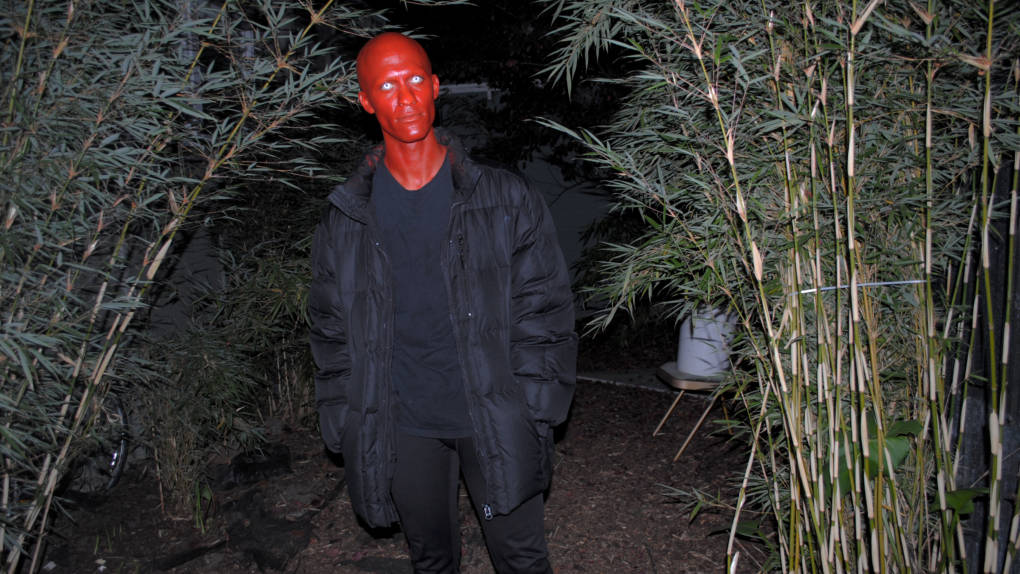
"caption": "Tyler Holmes' eclectic, DIY brand of electronic music is as off-kilter as their daring makeup looks. ",
"description": "Tyler Holmes' eclectic, DIY brand of electronic music is as off-kilter as their daring makeup looks. ",
"title": "DSC_0536",
"credit": "Nastia Voynovskaya",
"status": "inherit",
"isLoading": false,
"fetchFailed": false
},
"arts_13816406": {
"type": "attachments",
"id": "arts_13816406",
"meta": {
"index": "attachments_1716263798",
"site": "arts",
"id": "13816406",
"found": true
},
"parent": 13816362,
"imgSizes": {
"small": {
"file": "https://ww2.kqed.org/app/uploads/sites/2/2017/11/Cherushii.MAIN_.2017-520x315.jpg",
"width": 520,
"mimeType": "image/jpeg",
"height": 315
},
"twentyfourteen-full-width": {
"file": "https://ww2.kqed.org/app/uploads/sites/2/2017/11/Cherushii.MAIN_.2017-1038x576.jpg",
"width": 1038,
"mimeType": "image/jpeg",
"height": 576
},
"thumbnail": {
"file": "https://ww2.kqed.org/app/uploads/sites/2/2017/11/Cherushii.MAIN_.2017-160x97.jpg",
"width": 160,
"mimeType": "image/jpeg",
"height": 97
},
"fd-sm": {
"file": "https://ww2.kqed.org/app/uploads/sites/2/2017/11/Cherushii.MAIN_.2017-960x582.jpg",
"width": 960,
"mimeType": "image/jpeg",
"height": 582
},
"post-thumbnail": {
"file": "https://ww2.kqed.org/app/uploads/sites/2/2017/11/Cherushii.MAIN_.2017-672x372.jpg",
"width": 672,
"mimeType": "image/jpeg",
"height": 372
},
"xsmall": {
"file": "https://ww2.kqed.org/app/uploads/sites/2/2017/11/Cherushii.MAIN_.2017-375x227.jpg",
"width": 375,
"mimeType": "image/jpeg",
"height": 227
},
"kqedFullSize": {
"file": "https://ww2.kqed.org/app/uploads/sites/2/2017/11/Cherushii.MAIN_.2017.jpg",
"width": 1920,
"height": 1164
},
"large": {
"file": "https://ww2.kqed.org/app/uploads/sites/2/2017/11/Cherushii.MAIN_.2017-1020x618.jpg",
"width": 1020,
"mimeType": "image/jpeg",
"height": 618
},
"xlarge": {
"file": "https://ww2.kqed.org/app/uploads/sites/2/2017/11/Cherushii.MAIN_.2017-1180x715.jpg",
"width": 1180,
"mimeType": "image/jpeg",
"height": 715
},
"guest-author-50": {
"file": "https://ww2.kqed.org/app/uploads/sites/2/2017/11/Cherushii.MAIN_.2017-50x50.jpg",
"width": 50,
"mimeType": "image/jpeg",
"height": 50
},
"guest-author-96": {
"file": "https://ww2.kqed.org/app/uploads/sites/2/2017/11/Cherushii.MAIN_.2017-96x96.jpg",
"width": 96,
"mimeType": "image/jpeg",
"height": 96
},
"medium": {
"file": "https://ww2.kqed.org/app/uploads/sites/2/2017/11/Cherushii.MAIN_.2017-800x485.jpg",
"width": 800,
"mimeType": "image/jpeg",
"height": 485
},
"guest-author-64": {
"file": "https://ww2.kqed.org/app/uploads/sites/2/2017/11/Cherushii.MAIN_.2017-64x64.jpg",
"width": 64,
"mimeType": "image/jpeg",
"height": 64
},
"guest-author-32": {
"file": "https://ww2.kqed.org/app/uploads/sites/2/2017/11/Cherushii.MAIN_.2017-32x32.jpg",
"width": 32,
"mimeType": "image/jpeg",
"height": 32
},
"fd-lrg": {
"file": "https://ww2.kqed.org/app/uploads/sites/2/2017/11/Cherushii.MAIN_.2017-1920x1164.jpg",
"width": 1920,
"mimeType": "image/jpeg",
"height": 1164
},
"fd-med": {
"file": "https://ww2.kqed.org/app/uploads/sites/2/2017/11/Cherushii.MAIN_.2017-1180x715.jpg",
"width": 1180,
"mimeType": "image/jpeg",
"height": 715
},
"full-width": {
"file": "https://ww2.kqed.org/app/uploads/sites/2/2017/11/Cherushii.MAIN_.2017-1920x1164.jpg",
"width": 1920,
"mimeType": "image/jpeg",
"height": 1164
},
"detail": {
"file": "https://ww2.kqed.org/app/uploads/sites/2/2017/11/Cherushii.MAIN_.2017-150x150.jpg",
"width": 150,
"mimeType": "image/jpeg",
"height": 150
},
"medium_large": {
"file": "https://ww2.kqed.org/app/uploads/sites/2/2017/11/Cherushii.MAIN_.2017-768x466.jpg",
"width": 768,
"mimeType": "image/jpeg",
"height": 466
},
"guest-author-128": {
"file": "https://ww2.kqed.org/app/uploads/sites/2/2017/11/Cherushii.MAIN_.2017-128x128.jpg",
"width": 128,
"mimeType": "image/jpeg",
"height": 128
},
"xxsmall": {
"file": "https://ww2.kqed.org/app/uploads/sites/2/2017/11/Cherushii.MAIN_.2017-240x146.jpg",
"width": 240,
"mimeType": "image/jpeg",
"height": 146
}
},
"publishDate": 1512114510,
"modified": 1537839206,
"caption": "Chelsea Faith Dolan, a.k.a. Cherushii, is one of the many musicians who died in the Ghost Ship fire. A year after their passing, many of the victims' loved ones are honoring them with posthumous releases.",
"description": "Chelsea Faith Dolan, a.k.a. Cherushii, is one of the many musicians who died in the Ghost Ship fire now honored with posthumous releases issued by loved ones a year after their passing.",
"title": "Cherushii.MAIN.2017",
"credit": "Jeremy Danger",
"status": "inherit",
"isLoading": false,
"fetchFailed": false
},
"arts_13811633": {
"type": "attachments",
"id": "arts_13811633",
"meta": {
"index": "attachments_1716263798",
"site": "arts",
"id": "13811633",
"found": true
},
"parent": 13811631,
"imgSizes": {
"small": {
"file": "https://ww2.kqed.org/app/uploads/sites/2/2017/10/02-a06495cbd9ecfbb48d1c672b0b2c0761ccca5c13-520x390.jpg",
"width": 520,
"mimeType": "image/jpeg",
"height": 390
},
"twentyfourteen-full-width": {
"file": "https://ww2.kqed.org/app/uploads/sites/2/2017/10/02-a06495cbd9ecfbb48d1c672b0b2c0761ccca5c13-1038x576.jpg",
"width": 1038,
"mimeType": "image/jpeg",
"height": 576
},
"thumbnail": {
"file": "https://ww2.kqed.org/app/uploads/sites/2/2017/10/02-a06495cbd9ecfbb48d1c672b0b2c0761ccca5c13-160x120.jpg",
"width": 160,
"mimeType": "image/jpeg",
"height": 120
},
"fd-sm": {
"file": "https://ww2.kqed.org/app/uploads/sites/2/2017/10/02-a06495cbd9ecfbb48d1c672b0b2c0761ccca5c13-960x720.jpg",
"width": 960,
"mimeType": "image/jpeg",
"height": 720
},
"post-thumbnail": {
"file": "https://ww2.kqed.org/app/uploads/sites/2/2017/10/02-a06495cbd9ecfbb48d1c672b0b2c0761ccca5c13-672x372.jpg",
"width": 672,
"mimeType": "image/jpeg",
"height": 372
},
"xsmall": {
"file": "https://ww2.kqed.org/app/uploads/sites/2/2017/10/02-a06495cbd9ecfbb48d1c672b0b2c0761ccca5c13-375x281.jpg",
"width": 375,
"mimeType": "image/jpeg",
"height": 281
},
"kqedFullSize": {
"file": "https://ww2.kqed.org/app/uploads/sites/2/2017/10/02-a06495cbd9ecfbb48d1c672b0b2c0761ccca5c13.jpg",
"width": 1905,
"height": 1428
},
"large": {
"file": "https://ww2.kqed.org/app/uploads/sites/2/2017/10/02-a06495cbd9ecfbb48d1c672b0b2c0761ccca5c13-1020x765.jpg",
"width": 1020,
"mimeType": "image/jpeg",
"height": 765
},
"xlarge": {
"file": "https://ww2.kqed.org/app/uploads/sites/2/2017/10/02-a06495cbd9ecfbb48d1c672b0b2c0761ccca5c13-1180x885.jpg",
"width": 1180,
"mimeType": "image/jpeg",
"height": 885
},
"guest-author-50": {
"file": "https://ww2.kqed.org/app/uploads/sites/2/2017/10/02-a06495cbd9ecfbb48d1c672b0b2c0761ccca5c13-50x50.jpg",
"width": 50,
"mimeType": "image/jpeg",
"height": 50
},
"guest-author-96": {
"file": "https://ww2.kqed.org/app/uploads/sites/2/2017/10/02-a06495cbd9ecfbb48d1c672b0b2c0761ccca5c13-96x96.jpg",
"width": 96,
"mimeType": "image/jpeg",
"height": 96
},
"medium": {
"file": "https://ww2.kqed.org/app/uploads/sites/2/2017/10/02-a06495cbd9ecfbb48d1c672b0b2c0761ccca5c13-800x600.jpg",
"width": 800,
"mimeType": "image/jpeg",
"height": 600
},
"guest-author-64": {
"file": "https://ww2.kqed.org/app/uploads/sites/2/2017/10/02-a06495cbd9ecfbb48d1c672b0b2c0761ccca5c13-64x64.jpg",
"width": 64,
"mimeType": "image/jpeg",
"height": 64
},
"guest-author-32": {
"file": "https://ww2.kqed.org/app/uploads/sites/2/2017/10/02-a06495cbd9ecfbb48d1c672b0b2c0761ccca5c13-32x32.jpg",
"width": 32,
"mimeType": "image/jpeg",
"height": 32
},
"fd-med": {
"file": "https://ww2.kqed.org/app/uploads/sites/2/2017/10/02-a06495cbd9ecfbb48d1c672b0b2c0761ccca5c13-1180x885.jpg",
"width": 1180,
"mimeType": "image/jpeg",
"height": 885
},
"detail": {
"file": "https://ww2.kqed.org/app/uploads/sites/2/2017/10/02-a06495cbd9ecfbb48d1c672b0b2c0761ccca5c13-150x150.jpg",
"width": 150,
"mimeType": "image/jpeg",
"height": 150
},
"medium_large": {
"file": "https://ww2.kqed.org/app/uploads/sites/2/2017/10/02-a06495cbd9ecfbb48d1c672b0b2c0761ccca5c13-768x576.jpg",
"width": 768,
"mimeType": "image/jpeg",
"height": 576
},
"guest-author-128": {
"file": "https://ww2.kqed.org/app/uploads/sites/2/2017/10/02-a06495cbd9ecfbb48d1c672b0b2c0761ccca5c13-128x128.jpg",
"width": 128,
"mimeType": "image/jpeg",
"height": 128
},
"xxsmall": {
"file": "https://ww2.kqed.org/app/uploads/sites/2/2017/10/02-a06495cbd9ecfbb48d1c672b0b2c0761ccca5c13-240x180.jpg",
"width": 240,
"mimeType": "image/jpeg",
"height": 180
}
},
"publishDate": 1507926187,
"modified": 1507928497,
"caption": "Dan Deacon works at his computer while scoring 'Rat Film'",
"description": "Dan Deacon works at his computer while scoring 'Rat Film'",
"title": "Dan Deacon works at his computer while scoring Rat Film",
"credit": "Domino Recording Co/Screenshot by NPR",
"status": "inherit",
"isLoading": false,
"fetchFailed": false
},
"arts_13784232": {
"type": "attachments",
"id": "arts_13784232",
"meta": {
"index": "attachments_1716263798",
"site": "arts",
"id": "13784232",
"found": true
},
"parent": 13783251,
"imgSizes": {
"small": {
"file": "https://ww2.kqed.org/app/uploads/sites/2/2017/07/Spellling.Main_-520x325.jpg",
"width": 520,
"mimeType": "image/jpeg",
"height": 325
},
"twentyfourteen-full-width": {
"file": "https://ww2.kqed.org/app/uploads/sites/2/2017/07/Spellling.Main_-1038x576.jpg",
"width": 1038,
"mimeType": "image/jpeg",
"height": 576
},
"thumbnail": {
"file": "https://ww2.kqed.org/app/uploads/sites/2/2017/07/Spellling.Main_-160x100.jpg",
"width": 160,
"mimeType": "image/jpeg",
"height": 100
},
"fd-sm": {
"file": "https://ww2.kqed.org/app/uploads/sites/2/2017/07/Spellling.Main_-960x600.jpg",
"width": 960,
"mimeType": "image/jpeg",
"height": 600
},
"post-thumbnail": {
"file": "https://ww2.kqed.org/app/uploads/sites/2/2017/07/Spellling.Main_-672x372.jpg",
"width": 672,
"mimeType": "image/jpeg",
"height": 372
},
"xsmall": {
"file": "https://ww2.kqed.org/app/uploads/sites/2/2017/07/Spellling.Main_-375x234.jpg",
"width": 375,
"mimeType": "image/jpeg",
"height": 234
},
"kqedFullSize": {
"file": "https://ww2.kqed.org/app/uploads/sites/2/2017/07/Spellling.Main_.jpg",
"width": 1920,
"height": 1200
},
"large": {
"file": "https://ww2.kqed.org/app/uploads/sites/2/2017/07/Spellling.Main_-1020x638.jpg",
"width": 1020,
"mimeType": "image/jpeg",
"height": 638
},
"xlarge": {
"file": "https://ww2.kqed.org/app/uploads/sites/2/2017/07/Spellling.Main_-1180x738.jpg",
"width": 1180,
"mimeType": "image/jpeg",
"height": 738
},
"guest-author-50": {
"file": "https://ww2.kqed.org/app/uploads/sites/2/2017/07/Spellling.Main_-50x50.jpg",
"width": 50,
"mimeType": "image/jpeg",
"height": 50
},
"guest-author-96": {
"file": "https://ww2.kqed.org/app/uploads/sites/2/2017/07/Spellling.Main_-96x96.jpg",
"width": 96,
"mimeType": "image/jpeg",
"height": 96
},
"medium": {
"file": "https://ww2.kqed.org/app/uploads/sites/2/2017/07/Spellling.Main_-800x500.jpg",
"width": 800,
"mimeType": "image/jpeg",
"height": 500
},
"guest-author-64": {
"file": "https://ww2.kqed.org/app/uploads/sites/2/2017/07/Spellling.Main_-64x64.jpg",
"width": 64,
"mimeType": "image/jpeg",
"height": 64
},
"guest-author-32": {
"file": "https://ww2.kqed.org/app/uploads/sites/2/2017/07/Spellling.Main_-32x32.jpg",
"width": 32,
"mimeType": "image/jpeg",
"height": 32
},
"fd-lrg": {
"file": "https://ww2.kqed.org/app/uploads/sites/2/2017/07/Spellling.Main_-1920x1200.jpg",
"width": 1920,
"mimeType": "image/jpeg",
"height": 1200
},
"fd-med": {
"file": "https://ww2.kqed.org/app/uploads/sites/2/2017/07/Spellling.Main_-1180x738.jpg",
"width": 1180,
"mimeType": "image/jpeg",
"height": 738
},
"full-width": {
"file": "https://ww2.kqed.org/app/uploads/sites/2/2017/07/Spellling.Main_-1920x1200.jpg",
"width": 1920,
"mimeType": "image/jpeg",
"height": 1200
},
"detail": {
"file": "https://ww2.kqed.org/app/uploads/sites/2/2017/07/Spellling.Main_-150x150.jpg",
"width": 150,
"mimeType": "image/jpeg",
"height": 150
},
"medium_large": {
"file": "https://ww2.kqed.org/app/uploads/sites/2/2017/07/Spellling.Main_-768x480.jpg",
"width": 768,
"mimeType": "image/jpeg",
"height": 480
},
"guest-author-128": {
"file": "https://ww2.kqed.org/app/uploads/sites/2/2017/07/Spellling.Main_-128x128.jpg",
"width": 128,
"mimeType": "image/jpeg",
"height": 128
},
"xxsmall": {
"file": "https://ww2.kqed.org/app/uploads/sites/2/2017/07/Spellling.Main_-240x150.jpg",
"width": 240,
"mimeType": "image/jpeg",
"height": 150
}
},
"publishDate": 1501557493,
"modified": 1503440776,
"caption": "SPELLLING's looped sounds and ethereal voice are like the last wisps of punk dissipating into something new.",
"description": "SPELLLING's looped sounds and ethereal voice are like the last wisps of punk dissipating into something new.",
"title": "Spellling.Main",
"credit": "Kristin Cofer",
"status": "inherit",
"isLoading": false,
"fetchFailed": false
},
"arts_13214391": {
"type": "attachments",
"id": "arts_13214391",
"meta": {
"index": "attachments_1716263798",
"site": "arts",
"id": "13214391",
"found": true
},
"parent": 13209143,
"imgSizes": {
"small": {
"file": "https://ww2.kqed.org/app/uploads/sites/2/2017/05/Katabatik.MAIN_-520x293.jpg",
"width": 520,
"mimeType": "image/jpeg",
"height": 293
},
"thumbnail": {
"file": "https://ww2.kqed.org/app/uploads/sites/2/2017/05/Katabatik.MAIN_-160x90.jpg",
"width": 160,
"mimeType": "image/jpeg",
"height": 90
},
"post-thumbnail": {
"file": "https://ww2.kqed.org/app/uploads/sites/2/2017/05/Katabatik.MAIN_-672x372.jpg",
"width": 672,
"mimeType": "image/jpeg",
"height": 372
},
"xsmall": {
"file": "https://ww2.kqed.org/app/uploads/sites/2/2017/05/Katabatik.MAIN_-375x211.jpg",
"width": 375,
"mimeType": "image/jpeg",
"height": 211
},
"kqedFullSize": {
"file": "https://ww2.kqed.org/app/uploads/sites/2/2017/05/Katabatik.MAIN_.jpg",
"width": 800,
"height": 450
},
"guest-author-50": {
"file": "https://ww2.kqed.org/app/uploads/sites/2/2017/05/Katabatik.MAIN_-50x50.jpg",
"width": 50,
"mimeType": "image/jpeg",
"height": 50
},
"guest-author-96": {
"file": "https://ww2.kqed.org/app/uploads/sites/2/2017/05/Katabatik.MAIN_-96x96.jpg",
"width": 96,
"mimeType": "image/jpeg",
"height": 96
},
"medium": {
"file": "https://ww2.kqed.org/app/uploads/sites/2/2017/05/Katabatik.MAIN_-800x450.jpg",
"width": 800,
"mimeType": "image/jpeg",
"height": 450
},
"guest-author-64": {
"file": "https://ww2.kqed.org/app/uploads/sites/2/2017/05/Katabatik.MAIN_-64x64.jpg",
"width": 64,
"mimeType": "image/jpeg",
"height": 64
},
"guest-author-32": {
"file": "https://ww2.kqed.org/app/uploads/sites/2/2017/05/Katabatik.MAIN_-32x32.jpg",
"width": 32,
"mimeType": "image/jpeg",
"height": 32
},
"detail": {
"file": "https://ww2.kqed.org/app/uploads/sites/2/2017/05/Katabatik.MAIN_-150x150.jpg",
"width": 150,
"mimeType": "image/jpeg",
"height": 150
},
"medium_large": {
"file": "https://ww2.kqed.org/app/uploads/sites/2/2017/05/Katabatik.MAIN_-768x432.jpg",
"width": 768,
"mimeType": "image/jpeg",
"height": 432
},
"guest-author-128": {
"file": "https://ww2.kqed.org/app/uploads/sites/2/2017/05/Katabatik.MAIN_-128x128.jpg",
"width": 128,
"mimeType": "image/jpeg",
"height": 128
},
"xxsmall": {
"file": "https://ww2.kqed.org/app/uploads/sites/2/2017/05/Katabatik.MAIN_-240x135.jpg",
"width": 240,
"mimeType": "image/jpeg",
"height": 135
}
},
"publishDate": 1494613683,
"modified": 1494619891,
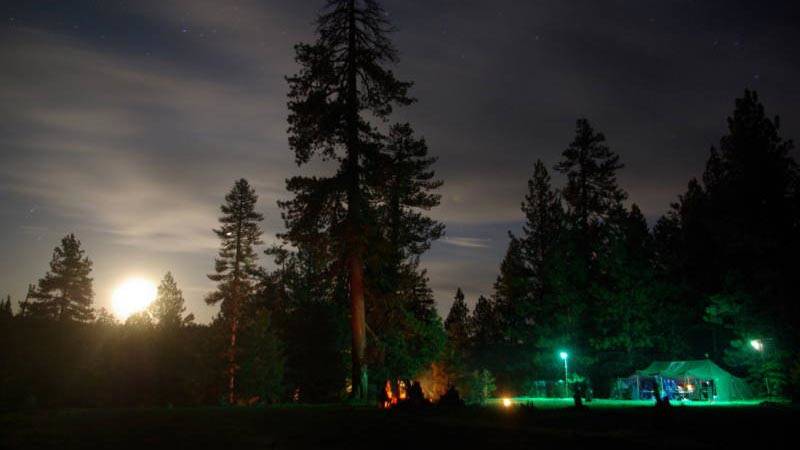
"caption": "A scene from Katabatik's annual Solstice campout. ",
"description": "A scene from Katabatik's annual Solstice campout. ",
"title": "Katabatik.MAIN",
"credit": "Courtesy Katabatik",
"status": "inherit",
"isLoading": false,
"fetchFailed": false
},
"arts_12645541": {
"type": "attachments",
"id": "arts_12645541",
"meta": {
"index": "attachments_1716263798",
"site": "arts",
"id": "12645541",
"found": true
},
"parent": 12642450,
"imgSizes": {
"small": {
"file": "https://ww2.kqed.org/app/uploads/sites/2/2017/01/ClubChai.main_-520x293.jpg",
"width": 520,
"mimeType": "image/jpeg",
"height": 293
},
"twentyfourteen-full-width": {
"file": "https://ww2.kqed.org/app/uploads/sites/2/2017/01/ClubChai.main_-1038x576.jpg",
"width": 1038,
"mimeType": "image/jpeg",
"height": 576
},
"thumbnail": {
"file": "https://ww2.kqed.org/app/uploads/sites/2/2017/01/ClubChai.main_-160x90.jpg",
"width": 160,
"mimeType": "image/jpeg",
"height": 90
},
"fd-sm": {
"file": "https://ww2.kqed.org/app/uploads/sites/2/2017/01/ClubChai.main_-960x540.jpg",
"width": 960,
"mimeType": "image/jpeg",
"height": 540
},
"post-thumbnail": {
"file": "https://ww2.kqed.org/app/uploads/sites/2/2017/01/ClubChai.main_-672x372.jpg",
"width": 672,
"mimeType": "image/jpeg",
"height": 372
},
"xsmall": {
"file": "https://ww2.kqed.org/app/uploads/sites/2/2017/01/ClubChai.main_-375x211.jpg",
"width": 375,
"mimeType": "image/jpeg",
"height": 211
},
"kqedFullSize": {
"file": "https://ww2.kqed.org/app/uploads/sites/2/2017/01/ClubChai.main_.jpg",
"width": 1920,
"height": 1080
},
"large": {
"file": "https://ww2.kqed.org/app/uploads/sites/2/2017/01/ClubChai.main_-1020x574.jpg",
"width": 1020,
"mimeType": "image/jpeg",
"height": 574
},
"xlarge": {
"file": "https://ww2.kqed.org/app/uploads/sites/2/2017/01/ClubChai.main_-1180x664.jpg",
"width": 1180,
"mimeType": "image/jpeg",
"height": 664
},
"guest-author-50": {
"file": "https://ww2.kqed.org/app/uploads/sites/2/2017/01/ClubChai.main_-50x50.jpg",
"width": 50,
"mimeType": "image/jpeg",
"height": 50
},
"guest-author-96": {
"file": "https://ww2.kqed.org/app/uploads/sites/2/2017/01/ClubChai.main_-96x96.jpg",
"width": 96,
"mimeType": "image/jpeg",
"height": 96
},
"medium": {
"file": "https://ww2.kqed.org/app/uploads/sites/2/2017/01/ClubChai.main_-800x450.jpg",
"width": 800,
"mimeType": "image/jpeg",
"height": 450
},
"guest-author-64": {
"file": "https://ww2.kqed.org/app/uploads/sites/2/2017/01/ClubChai.main_-64x64.jpg",
"width": 64,
"mimeType": "image/jpeg",
"height": 64
},
"guest-author-32": {
"file": "https://ww2.kqed.org/app/uploads/sites/2/2017/01/ClubChai.main_-32x32.jpg",
"width": 32,
"mimeType": "image/jpeg",
"height": 32
},
"fd-lrg": {
"file": "https://ww2.kqed.org/app/uploads/sites/2/2017/01/ClubChai.main_-1920x1080.jpg",
"width": 1920,
"mimeType": "image/jpeg",
"height": 1080
},
"fd-med": {
"file": "https://ww2.kqed.org/app/uploads/sites/2/2017/01/ClubChai.main_-1180x664.jpg",
"width": 1180,
"mimeType": "image/jpeg",
"height": 664
},
"full-width": {
"file": "https://ww2.kqed.org/app/uploads/sites/2/2017/01/ClubChai.main_-1920x1080.jpg",
"width": 1920,
"mimeType": "image/jpeg",
"height": 1080
},
"detail": {
"file": "https://ww2.kqed.org/app/uploads/sites/2/2017/01/ClubChai.main_-150x150.jpg",
"width": 150,
"mimeType": "image/jpeg",
"height": 150
},
"medium_large": {
"file": "https://ww2.kqed.org/app/uploads/sites/2/2017/01/ClubChai.main_-768x432.jpg",
"width": 768,
"mimeType": "image/jpeg",
"height": 432
},
"guest-author-128": {
"file": "https://ww2.kqed.org/app/uploads/sites/2/2017/01/ClubChai.main_-128x128.jpg",
"width": 128,
"mimeType": "image/jpeg",
"height": 128
},
"xxsmall": {
"file": "https://ww2.kqed.org/app/uploads/sites/2/2017/01/ClubChai.main_-240x135.jpg",
"width": 240,
"mimeType": "image/jpeg",
"height": 135
}
},
"publishDate": 1484779940,
"modified": 1484779974,
"caption": "8ULENTINA and foozool, founders of Club Chai.",
"description": "8ULENTINA and foozool, founders of Club Chai.",
"title": "ClubChai.main",
"credit": "Artist photo",
"status": "inherit",
"isLoading": false,
"fetchFailed": false
},
"arts_12520206": {
"type": "attachments",
"id": "arts_12520206",
"meta": {
"index": "attachments_1716263798",
"site": "arts",
"id": "12520206",
"found": true
},
"parent": 12518132,
"imgSizes": {
"small": {
"file": "https://ww2.kqed.org/app/uploads/sites/2/2016/12/cher-520x293.jpg",
"width": 520,
"mimeType": "image/jpeg",
"height": 293
},
"twentyfourteen-full-width": {
"file": "https://ww2.kqed.org/app/uploads/sites/2/2016/12/cher-1038x576.jpg",
"width": 1038,
"mimeType": "image/jpeg",
"height": 576
},
"thumbnail": {
"file": "https://ww2.kqed.org/app/uploads/sites/2/2016/12/cher-160x90.jpg",
"width": 160,
"mimeType": "image/jpeg",
"height": 90
},
"fd-sm": {
"file": "https://ww2.kqed.org/app/uploads/sites/2/2016/12/cher-960x540.jpg",
"width": 960,
"mimeType": "image/jpeg",
"height": 540
},
"post-thumbnail": {
"file": "https://ww2.kqed.org/app/uploads/sites/2/2016/12/cher-672x372.jpg",
"width": 672,
"mimeType": "image/jpeg",
"height": 372
},
"xsmall": {
"file": "https://ww2.kqed.org/app/uploads/sites/2/2016/12/cher-375x211.jpg",
"width": 375,
"mimeType": "image/jpeg",
"height": 211
},
"kqedFullSize": {
"file": "https://ww2.kqed.org/app/uploads/sites/2/2016/12/cher.jpg",
"width": 1365,
"height": 768
},
"large": {
"file": "https://ww2.kqed.org/app/uploads/sites/2/2016/12/cher-1020x574.jpg",
"width": 1020,
"mimeType": "image/jpeg",
"height": 574
},
"xlarge": {
"file": "https://ww2.kqed.org/app/uploads/sites/2/2016/12/cher-1180x664.jpg",
"width": 1180,
"mimeType": "image/jpeg",
"height": 664
},
"guest-author-50": {
"file": "https://ww2.kqed.org/app/uploads/sites/2/2016/12/cher-50x50.jpg",
"width": 50,
"mimeType": "image/jpeg",
"height": 50
},
"guest-author-96": {
"file": "https://ww2.kqed.org/app/uploads/sites/2/2016/12/cher-96x96.jpg",
"width": 96,
"mimeType": "image/jpeg",
"height": 96
},
"medium": {
"file": "https://ww2.kqed.org/app/uploads/sites/2/2016/12/cher-800x450.jpg",
"width": 800,
"mimeType": "image/jpeg",
"height": 450
},
"guest-author-64": {
"file": "https://ww2.kqed.org/app/uploads/sites/2/2016/12/cher-64x64.jpg",
"width": 64,
"mimeType": "image/jpeg",
"height": 64
},
"guest-author-32": {
"file": "https://ww2.kqed.org/app/uploads/sites/2/2016/12/cher-32x32.jpg",
"width": 32,
"mimeType": "image/jpeg",
"height": 32
},
"fd-med": {
"file": "https://ww2.kqed.org/app/uploads/sites/2/2016/12/cher-1180x664.jpg",
"width": 1180,
"mimeType": "image/jpeg",
"height": 664
},
"detail": {
"file": "https://ww2.kqed.org/app/uploads/sites/2/2016/12/cher-150x150.jpg",
"width": 150,
"mimeType": "image/jpeg",
"height": 150
},
"medium_large": {
"file": "https://ww2.kqed.org/app/uploads/sites/2/2016/12/cher-768x432.jpg",
"width": 768,
"mimeType": "image/jpeg",
"height": 432
},
"guest-author-128": {
"file": "https://ww2.kqed.org/app/uploads/sites/2/2016/12/cher-128x128.jpg",
"width": 128,
"mimeType": "image/jpeg",
"height": 128
},
"xxsmall": {
"file": "https://ww2.kqed.org/app/uploads/sites/2/2016/12/cher-240x135.jpg",
"width": 240,
"mimeType": "image/jpeg",
"height": 135
}
},
"publishDate": 1482434438,
"modified": 1482434454,
"caption": "David Last and Cherushii, aka Chelsea Faith. ",
"description": null,
"title": "cher",
"credit": null,
"status": "inherit",
"isLoading": false,
"fetchFailed": false
}
},
"audioPlayerReducer": {
"postId": "stream_live",
"isPaused": true,
"isPlaying": false,
"pfsActive": false,
"pledgeModalIsOpen": true,
"playerDrawerIsOpen": false,
"liveAudioPlayStartedAt": 0,
"liveAudioPlayContext": ""
},
"authorsReducer": {
"byline_arts_13830063": {
"type": "authors",
"id": "byline_arts_13830063",
"meta": {
"override": true
},
"slug": "byline_arts_13830063",
"name": "Andrew Flanagan",
"isLoading": false
},
"byline_arts_13827046": {
"type": "authors",
"id": "byline_arts_13827046",
"meta": {
"override": true
},
"slug": "byline_arts_13827046",
"name": "Bert Johnson",
"isLoading": false
},
"byline_arts_13811631": {
"type": "authors",
"id": "byline_arts_13811631",
"meta": {
"override": true
},
"slug": "byline_arts_13811631",
"name": "Robin Hilton",
"isLoading": false
},
"byline_arts_13783251": {
"type": "authors",
"id": "byline_arts_13783251",
"meta": {
"override": true
},
"slug": "byline_arts_13783251",
"name": "Claire Mullen",
"isLoading": false
},
"byline_arts_12642450": {
"type": "authors",
"id": "byline_arts_12642450",
"meta": {
"override": true
},
"slug": "byline_arts_12642450",
"name": "Nastia Voynovskaya",
"isLoading": false
},
"czaldua": {
"type": "authors",
"id": "11317",
"meta": {
"index": "authors_1716337520",
"id": "11317",
"found": true
},
"name": "Chris Zaldua",
"firstName": "Chris",
"lastName": "Zaldua",
"slug": "czaldua",
"email": "czaldua@gmail.com",
"display_author_email": false,
"staff_mastheads": [],
"title": null,
"bio": null,
"avatar": "https://secure.gravatar.com/avatar/007fbd3dbdb5c40175ead4098e89f3b6?s=600&d=blank&r=g",
"twitter": null,
"facebook": null,
"instagram": null,
"linkedin": null,
"sites": [
{
"site": "arts",
"roles": [
"author"
]
}
],
"headData": {
"title": "Chris Zaldua | KQED",
"description": null,
"ogImgSrc": "https://secure.gravatar.com/avatar/007fbd3dbdb5c40175ead4098e89f3b6?s=600&d=blank&r=g",
"twImgSrc": "https://secure.gravatar.com/avatar/007fbd3dbdb5c40175ead4098e89f3b6?s=600&d=blank&r=g"
},
"isLoading": false,
"link": "/author/czaldua"
},
"nvoynovskaya": {
"type": "authors",
"id": "11387",
"meta": {
"index": "authors_1716337520",
"id": "11387",
"found": true
},
"name": "Nastia Voynovskaya",
"firstName": "Nastia",
"lastName": "Voynovskaya",
"slug": "nvoynovskaya",
"email": "nvoynovskaya@kqed.org",
"display_author_email": false,
"staff_mastheads": [
"arts"
],
"title": "Editor and reporter",
"bio": "Nastia Voynovskaya is a reporter, editor and host at KQED Arts & Culture. She's been covering the arts in the Bay Area for over a decade, with a focus on music, queer culture, labor issues and grassroots organizing. She has edited KQED story series such as Trans Bay: A History of San Francisco's Gender-Diverse Community, and co-created KQED's Bay Area hip-hop history project, That's My Word. Nastia's work has been recognized by the Society of Professional Journalists and San Francisco Press Club. She regularly appears on podcasts and radio programs, including NPR's All Songs Considered, and hosts live events where music, culture and conversation meet.",
"avatar": "https://secure.gravatar.com/avatar/5025ee460e5a85d69ca20ea6c6f2f80d7e17795c828f61ea3aecfcd924e9042e?s=600&d=blank&r=g",
"twitter": null,
"bluesky": null,
"facebook": null,
"instagram": "https://www.instagram.com/nananastia/",
"linkedin": null,
"sites": [
{
"site": "",
"roles": [
"editor"
]
},
{
"site": "arts",
"roles": [
"administrator"
]
},
{
"site": "news",
"roles": [
"editor"
]
},
{
"site": "pop",
"roles": [
"administrator"
]
},
{
"site": "bayareabites",
"roles": [
"editor"
]
},
{
"site": "podcasts",
"roles": [
"editor"
]
},
{
"site": "hiphop",
"roles": [
"editor"
]
}
],
"headData": {
"title": "Nastia Voynovskaya | KQED",
"description": "Editor and reporter",
"ogImgSrc": "https://secure.gravatar.com/avatar/5025ee460e5a85d69ca20ea6c6f2f80d7e17795c828f61ea3aecfcd924e9042e?s=600&d=blank&r=g",
"twImgSrc": "https://secure.gravatar.com/avatar/5025ee460e5a85d69ca20ea6c6f2f80d7e17795c828f61ea3aecfcd924e9042e?s=600&d=blank&r=g"
},
"isLoading": false,
"link": "/author/nvoynovskaya"
},
"akrigbaum": {
"type": "authors",
"id": "11510",
"meta": {
"index": "authors_1716337520",
"id": "11510",
"found": true
},
"name": "Ashleyanne Krigbaum",
"firstName": "Ashleyanne",
"lastName": "Krigbaum",
"slug": "akrigbaum",
"email": "akrigbaum@kqed.org",
"display_author_email": false,
"staff_mastheads": [
"news"
],
"title": "Producer, Rightnowish",
"bio": "Ashleyanne Krigbaum is the producer of \u003cem>\u003ca href=\"http://kqed.org/rightnowish\">Rightnowish\u003c/a>\u003c/em>. \u003cem> \u003c/em>She has also made podcasts for Noise Pop, Salon, and award-winning audio tours for SFMOMA, Smithsonian, and the de Young Museum. From 2015 to 2018, she was an announcer and local host of NPR's\u003cem> All Things Considered\u003c/em> at KALW. When she's not making podcasts, she's DJing vinyl at dance parties around the Bay Area.",
"avatar": "https://secure.gravatar.com/avatar/b2293d2c51dd71bb43202016faa0892d?s=600&d=blank&r=g",
"twitter": "wambamash",
"facebook": null,
"instagram": null,
"linkedin": null,
"sites": [
{
"site": "arts",
"roles": [
"subscriber"
]
},
{
"site": "news",
"roles": [
"editor"
]
}
],
"headData": {
"title": "Ashleyanne Krigbaum | KQED",
"description": "Producer, Rightnowish",
"ogImgSrc": "https://secure.gravatar.com/avatar/b2293d2c51dd71bb43202016faa0892d?s=600&d=blank&r=g",
"twImgSrc": "https://secure.gravatar.com/avatar/b2293d2c51dd71bb43202016faa0892d?s=600&d=blank&r=g"
},
"isLoading": false,
"link": "/author/akrigbaum"
}
},
"pagesReducer": {
"arts_tag_electronic-music": {
"type": "terms",
"id": "arts_1501",
"meta": {
"index": "terms_1716263798",
"site": "arts",
"id": "1501",
"score": 9.893174
},
"featImg": null,
"name": "electronic music",
"description": null,
"taxonomy": "tag",
"headData": {
"twImgId": null,
"twTitle": null,
"ogTitle": null,
"ogImgId": null,
"twDescription": null,
"description": null,
"title": "electronic music Archives | KQED Arts",
"ogDescription": null
},
"ttid": 1513,
"slug": "electronic-music",
"isLoading": false,
"title": "electronic music",
"pageMeta": {
"site": "arts",
"WpPageTemplate": "page-topic-editorial",
"currentPage": 6
},
"blocks": [
{
"blockName": "kqed/post-list",
"attrs": {
"layout": "cardArticle2",
"query": "posts/arts?tag=electronic-music",
"seeMore": false,
"paginated": true,
"page": 6
}
},
{
"blockName": "kqed/ad"
}
]
}
},
"pfsSessionReducer": {},
"postsReducer": {
"stream_live": {
"type": "live",
"id": "stream_live",
"audioUrl": "https://streams.kqed.org/kqedradio",
"title": "Live Stream",
"excerpt": "Live Stream information currently unavailable.",
"link": "/radio",
"featImg": "",
"label": {
"name": "KQED Live",
"link": "/"
}
},
"stream_kqedNewscast": {
"type": "posts",
"id": "stream_kqedNewscast",
"audioUrl": "https://www.kqed.org/.stream/anon/radio/RDnews/newscast.mp3?_=1",
"title": "KQED Newscast",
"featImg": "",
"label": {
"name": "88.5 FM",
"link": "/"
}
},
"arts_13833271": {
"type": "posts",
"id": "arts_13833271",
"meta": {
"index": "posts_1716263798",
"site": "arts",
"id": "13833271",
"score": null,
"sort": [
1527101464000
]
},
"parent": 0,
"labelTerm": {
"site": "arts",
"term": 140
},
"blocks": [],
"publishDate": 1527101464,
"format": "standard",
"title": "For Flying Lotus, Jazz is in the Bloodline",
"headTitle": "For Flying Lotus, Jazz is in the Bloodline | KQED",
"content": "\u003cp>Those who saw Flying Lotus open for Solange at the Greek Theater last year got an earful—and eyeful—with a pulsing lightshow, throbbing beats, and 3D visuals. \u003c/p>\n\u003cp>Now, the L.A.-based artist returns to the Greek Theater as a headliner, bringing his hazy, experimental music style and trippy visuals along with him. Flying Lotus brings inventive jazz elements into his electronic sound, possibly inspired by the work of his great-aunt, Alice Coltrane.\u003c/p>\n\u003cp>Sweden’s Grammy-nominated electro-poppers Little Dragon open, along with crossover jazz quartet BADBADNOTGOOD.\u003c/p>\n\u003cp>\u003cem>Flying Lotus, Little Dragon, and BADBADNOTGOOD perform Saturday, June 16, at the Greek Theater in Berkeley. \u003ca href=\"http://thegreekberkeley.com/events/flying-lotus-little-dragon\">Details here\u003c/a>.\u003c/em>\u003c/p>\n\u003cp>[ad fullwidth]\u003c/p>\u003cp>\u003c/p>\n",
"stats": {
"hasVideo": false,
"hasChartOrMap": false,
"hasAudio": false,
"hasPolis": false,
"wordCount": 113,
"hasGoogleForm": false,
"hasGallery": false,
"hasHearkenModule": false,
"iframeSrcs": [],
"paragraphCount": 6
},
"modified": 1705027794,
"excerpt": "The great nephew of Alice Coltrane brings his dazzling visuals and throbbing beats back to the Greek Theater in Berkeley.",
"headData": {
"twImgId": "",
"twTitle": "",
"ogTitle": "",
"ogImgId": "",
"twDescription": "",
"description": "The great nephew of Alice Coltrane brings his dazzling visuals and throbbing beats back to the Greek Theater in Berkeley.",
"title": "For Flying Lotus, Jazz is in the Bloodline | KQED",
"ogDescription": "",
"schema": {
"@context": "https://schema.org",
"@type": "Article",
"headline": "For Flying Lotus, Jazz is in the Bloodline",
"datePublished": "2018-05-23T11:51:04-07:00",
"dateModified": "2024-01-11T18:49:54-08:00",
"image": "https://cdn.kqed.org/wp-content/uploads/2020/02/KQED-OG-Image@1x.png"
}
},
"guestAuthors": [],
"slug": "flying-lotus-and-little-dragon-will-trip-out-in-berkeley",
"status": "publish",
"sticky": false,
"path": "/arts/13833271/flying-lotus-and-little-dragon-will-trip-out-in-berkeley",
"audioTrackLength": null,
"parsedContent": [
{
"type": "contentString",
"content": "\u003cdiv class=\"post-body\">\u003cp>\u003cp>Those who saw Flying Lotus open for Solange at the Greek Theater last year got an earful—and eyeful—with a pulsing lightshow, throbbing beats, and 3D visuals. \u003c/p>\n\u003cp>Now, the L.A.-based artist returns to the Greek Theater as a headliner, bringing his hazy, experimental music style and trippy visuals along with him. Flying Lotus brings inventive jazz elements into his electronic sound, possibly inspired by the work of his great-aunt, Alice Coltrane.\u003c/p>\n\u003cp>Sweden’s Grammy-nominated electro-poppers Little Dragon open, along with crossover jazz quartet BADBADNOTGOOD.\u003c/p>\n\u003cp>\u003cem>Flying Lotus, Little Dragon, and BADBADNOTGOOD perform Saturday, June 16, at the Greek Theater in Berkeley. \u003ca href=\"http://thegreekberkeley.com/events/flying-lotus-little-dragon\">Details here\u003c/a>.\u003c/em>\u003c/p>\n\u003cp>\u003c/p>\u003c/div>",
"attributes": {
"named": {},
"numeric": []
}
},
{
"type": "component",
"content": "",
"name": "ad",
"attributes": {
"named": {
"label": "fullwidth"
},
"numeric": [
"fullwidth"
]
}
},
{
"type": "contentString",
"content": "\u003cdiv class=\"post-body\">\u003cp>\u003c/p>\u003cp>\u003c/p>\n\u003c/div>\u003c/p>",
"attributes": {
"named": {},
"numeric": []
}
}
],
"link": "/arts/13833271/flying-lotus-and-little-dragon-will-trip-out-in-berkeley",
"authors": [
"11510"
],
"programs": [
"arts_140"
],
"categories": [
"arts_69"
],
"tags": [
"arts_1270",
"arts_1501",
"arts_4928",
"arts_6387",
"arts_596",
"arts_1334"
],
"featImg": "arts_13833269",
"label": "arts_140"
},
"arts_13830063": {
"type": "posts",
"id": "arts_13830063",
"meta": {
"index": "posts_1716263798",
"site": "arts",
"id": "13830063",
"score": null,
"sort": [
1524265031000
]
},
"parent": 0,
"labelTerm": {
"site": "arts",
"term": 137
},
"blocks": [],
"publishDate": 1524265031,
"format": "standard",
"title": "Electronic Dance Music Superstar Avicii Dies At 28",
"headTitle": "Electronic Dance Music Superstar Avicii Dies At 28 | KQED",
"content": "\u003cp>\u003cem>\u003cstrong>Updated at 2:56 p.m. ET\u003c/strong>\u003c/em>\u003c/p>\n\u003cp>Avicii, the Swedish producer who was one of the world’s most successful DJs, was found dead today in Muscat, Oman, his publicist confirmed to NPR Music. He was 28. No cause of death was given.\u003c/p>\n\u003cp>Born Tim Bergling, Avicii rose to worldwide fame quickly beginning in 2011 with the release of “Levels” and earning a Grammy nomination just one year later for his David Guetta collaboration “Sunshine.”\u003c/p>\n\u003cp>https://youtu.be/_ovdm2yX4MA\u003c/p>\n\u003cp>Although he never reached the top of \u003cem>Billboard\u003c/em>‘s main album or singles charts, his work was designed to appeal to the largest audiences possible, fusing broad dance textures with pop melodics, an approach that led his song “Wake Me Up” to become the \u003ca href=\"https://www.npr.org/2014/03/09/286897935/putting-a-name-and-face-to-a-famous-voice\">most-streamed song\u003c/a> on Spotify at the time.\u003c/p>\n\u003cp>[ad fullwidth]\u003c/p>\n\u003cp>Eventually, the young artist rose — along with a massive expansion of the dance music festival scene worldwide, thanks in part to the \u003ca href=\"https://www.npr.org/sections/therecord/2015/10/06/445039871/edm-after-the-drop-what-a-wounded-corporate-giant-means-for-dance-music-culture\">promotions company SFX\u003c/a> — to be one of the busiest EDM artists in the world, bringing in \u003ca href=\"https://www.gq.com/story/avicii-tim-bergling-profile-gq-april-2013\">a reported\u003c/a> six figures per show.\u003c/p>\n\u003cp>Because of that, Avicii came to typify the freewheeling, popped-cork escapism of Las Vegas dance clubs and Ibiza nights — even garnering a \u003cem>Saturday Night Live \u003c/em>\u003ca href=\"https://www.youtube.com/watch?v=XCawU6BE8P8\">parody \u003c/a>along the way. As a writer for \u003cem>GQ\u003c/em> put it in a 2013 profile, at the height of his fame, the DJ was “subsisting on a diet of Red Bull, nicotine, and airport food.”\u003c/p>\n\u003cp>And by 2016, he was already sunsetting his own career, in part because of the toll the lifestyle had taken.\u003c/p>\n\u003cp>“Two weeks ago, I took the time to drive across the U.S. with my friends and team, to just look and see and think about things in a new way,” he \u003ca href=\"https://www.billboard.com/articles/news/dance/7325455/avicii-retirement-illness-fame-interview-cannes-dance\">wrote in 2016\u003c/a>. “It really helped me realize that I needed to make the change that I’d been struggling with for a while.”\u003c/p>\n\u003cp>Reportedly suffering from acute pancreatitis caused in part by excessive drinking, Avicii decided to recuse himself from the busy, party-filled life of a world-famous dance DJ, canceling his remaining dates.\u003c/p>\n\u003cp>https://twitter.com/aloeblacc/status/987394281303302144\u003c/p>\n\u003cp>“This was obviously the hardest decision of my life so far,” he told \u003ca href=\"https://www.billboard.com/articles/news/dance/7325455/avicii-retirement-illness-fame-interview-cannes-dance\">The Hollywood Reporter\u003c/a> in 2016. “But so far it has paid off tremendously in terms of well-being for me. I’m happier than I have been in a very very long time. Stress-free more than I have been in a very long time. I can’t say I’m never going to have a show again. I just don’t think I’m going to go back to the touring life.”\u003c/p>\n\u003cp>The producer did, however, return to music in August 2017, one year after his self-imposed exile, releasing the EP \u003cem>Avici (01)\u003c/em> in August. “This is the first year I felt like I’ve been able to kind of live normally for the first time in eight years or something.”\u003c/p>\n\u003cp>\u003c/p>\n\u003cp>Speaking about his 2017 documentary, \u003cem>Avicii: True Stories,\u003c/em> director Levan Tsikurishvili, a personal friend of the DJ’s, \u003ca href=\"http://variety.com/2017/music/news/avicii-documentary-true-stories-director-interview-1202553567/\">told\u003c/a> \u003cem>Variety,\u003c/em> “That life can look exciting and glamorous on Instagram and social media, but you don’t really have any idea what’s going on behind that.”\u003c/p>\n\u003cdiv class=\"fullattribution\">Copyright 2018 NPR. To see more, visit http://www.npr.org/.\u003cimg decoding=\"async\" src=\"https://www.google-analytics.com/__utm.gif?utmac=UA-5828686-4&utmdt=Electronic+Dance+Music+Superstar+Avicii+Dies+At+28&utme=8(APIKey)9(MDAxOTAwOTE4MDEyMTkxMDAzNjczZDljZA004)\">\u003c/div>\n\n",
"stats": {
"hasVideo": false,
"hasChartOrMap": false,
"hasAudio": false,
"hasPolis": false,
"wordCount": 580,
"hasGoogleForm": false,
"hasGallery": false,
"hasHearkenModule": false,
"iframeSrcs": [],
"paragraphCount": 14
},
"modified": 1705028038,
"excerpt": "Tim Bergling, a Swedish dance wunderkind and one of the most successful DJs in the world, was found dead Friday in Oman.",
"headData": {
"twImgId": "",
"twTitle": "",
"ogTitle": "",
"ogImgId": "",
"twDescription": "",
"description": "Tim Bergling, a Swedish dance wunderkind and one of the most successful DJs in the world, was found dead Friday in Oman.",
"title": "Electronic Dance Music Superstar Avicii Dies At 28 | KQED",
"ogDescription": "",
"schema": {
"@context": "https://schema.org",
"@type": "Article",
"headline": "Electronic Dance Music Superstar Avicii Dies At 28",
"datePublished": "2018-04-20T15:57:11-07:00",
"dateModified": "2024-01-11T18:53:58-08:00",
"image": "https://cdn.kqed.org/wp-content/uploads/2020/02/KQED-OG-Image@1x.png"
}
},
"guestAuthors": [],
"slug": "electronic-dance-music-superstar-avicii-dies-at-28",
"status": "publish",
"nprApiLink": "http://api.npr.org/query?id=604371720&apiKey=MDAxOTAwOTE4MDEyMTkxMDAzNjczZDljZA004",
"nprByline": "Andrew Flanagan",
"nprStoryDate": "Fri, 20 Apr 2018 14:14:00 -0400",
"nprLastModifiedDate": "Fri, 20 Apr 2018 15:50:51 -0400",
"sticky": false,
"nprHtmlLink": "https://www.npr.org/sections/thetwo-way/2018/04/20/604371720/edm-superstar-avicii-dies-at-28?ft=nprml&f=604371720",
"nprImageAgency": "Getty Images for CBS Radio Inc.",
"nprImageCredit": "Gabriel Olsen",
"nprStoryId": "604371720",
"nprRetrievedStory": "1",
"nprPubDate": "Fri, 20 Apr 2018 15:50:00 -0400",
"path": "/arts/13830063/electronic-dance-music-superstar-avicii-dies-at-28",
"audioTrackLength": null,
"parsedContent": [
{
"type": "contentString",
"content": "\u003cdiv class=\"post-body\">\u003cp>\u003cp>\u003cem>\u003cstrong>Updated at 2:56 p.m. ET\u003c/strong>\u003c/em>\u003c/p>\n\u003cp>Avicii, the Swedish producer who was one of the world’s most successful DJs, was found dead today in Muscat, Oman, his publicist confirmed to NPR Music. He was 28. No cause of death was given.\u003c/p>\n\u003cp>Born Tim Bergling, Avicii rose to worldwide fame quickly beginning in 2011 with the release of “Levels” and earning a Grammy nomination just one year later for his David Guetta collaboration “Sunshine.”\u003c/p>\u003c/p>\u003cp>\u003cspan class='utils-parseShortcode-shortcodes-__youtubeShortcode__embedYoutube'>\n \u003cspan class='utils-parseShortcode-shortcodes-__youtubeShortcode__embedYoutubeInside'>\n \u003ciframe\n loading='lazy'\n class='utils-parseShortcode-shortcodes-__youtubeShortcode__youtubePlayer'\n type='text/html'\n src='//www.youtube.com/embed/_ovdm2yX4MA'\n title='//www.youtube.com/embed/_ovdm2yX4MA'\n allowfullscreen='true'\n style='border:0;'>\u003c/iframe>\n \u003c/span>\n \u003c/span>\u003c/p>\u003cp>\u003cp>Although he never reached the top of \u003cem>Billboard\u003c/em>‘s main album or singles charts, his work was designed to appeal to the largest audiences possible, fusing broad dance textures with pop melodics, an approach that led his song “Wake Me Up” to become the \u003ca href=\"https://www.npr.org/2014/03/09/286897935/putting-a-name-and-face-to-a-famous-voice\">most-streamed song\u003c/a> on Spotify at the time.\u003c/p>\n\u003cp>\u003c/p>\u003c/div>",
"attributes": {
"named": {},
"numeric": []
}
},
{
"type": "component",
"content": "",
"name": "ad",
"attributes": {
"named": {
"label": "fullwidth"
},
"numeric": [
"fullwidth"
]
}
},
{
"type": "contentString",
"content": "\u003cdiv class=\"post-body\">\u003cp>\u003c/p>\n\u003cp>Eventually, the young artist rose — along with a massive expansion of the dance music festival scene worldwide, thanks in part to the \u003ca href=\"https://www.npr.org/sections/therecord/2015/10/06/445039871/edm-after-the-drop-what-a-wounded-corporate-giant-means-for-dance-music-culture\">promotions company SFX\u003c/a> — to be one of the busiest EDM artists in the world, bringing in \u003ca href=\"https://www.gq.com/story/avicii-tim-bergling-profile-gq-april-2013\">a reported\u003c/a> six figures per show.\u003c/p>\n\u003cp>Because of that, Avicii came to typify the freewheeling, popped-cork escapism of Las Vegas dance clubs and Ibiza nights — even garnering a \u003cem>Saturday Night Live \u003c/em>\u003ca href=\"https://www.youtube.com/watch?v=XCawU6BE8P8\">parody \u003c/a>along the way. As a writer for \u003cem>GQ\u003c/em> put it in a 2013 profile, at the height of his fame, the DJ was “subsisting on a diet of Red Bull, nicotine, and airport food.”\u003c/p>\n\u003cp>And by 2016, he was already sunsetting his own career, in part because of the toll the lifestyle had taken.\u003c/p>\n\u003cp>“Two weeks ago, I took the time to drive across the U.S. with my friends and team, to just look and see and think about things in a new way,” he \u003ca href=\"https://www.billboard.com/articles/news/dance/7325455/avicii-retirement-illness-fame-interview-cannes-dance\">wrote in 2016\u003c/a>. “It really helped me realize that I needed to make the change that I’d been struggling with for a while.”\u003c/p>\n\u003cp>Reportedly suffering from acute pancreatitis caused in part by excessive drinking, Avicii decided to recuse himself from the busy, party-filled life of a world-famous dance DJ, canceling his remaining dates.\u003c/p>\u003c/p>\u003c/div>",
"attributes": {
"named": {},
"numeric": []
}
},
{
"type": "component",
"content": "",
"name": "singleTwitterStatus",
"attributes": {
"named": {
"id": "987394281303302144"
},
"numeric": []
}
},
{
"type": "contentString",
"content": "\u003cdiv class=\"post-body\">\u003cp>\n\u003cp>“This was obviously the hardest decision of my life so far,” he told \u003ca href=\"https://www.billboard.com/articles/news/dance/7325455/avicii-retirement-illness-fame-interview-cannes-dance\">The Hollywood Reporter\u003c/a> in 2016. “But so far it has paid off tremendously in terms of well-being for me. I’m happier than I have been in a very very long time. Stress-free more than I have been in a very long time. I can’t say I’m never going to have a show again. I just don’t think I’m going to go back to the touring life.”\u003c/p>\n\u003cp>The producer did, however, return to music in August 2017, one year after his self-imposed exile, releasing the EP \u003cem>Avici (01)\u003c/em> in August. “This is the first year I felt like I’ve been able to kind of live normally for the first time in eight years or something.”\u003c/p>\n\u003cp>\u003c/p>\n\u003cp>Speaking about his 2017 documentary, \u003cem>Avicii: True Stories,\u003c/em> director Levan Tsikurishvili, a personal friend of the DJ’s, \u003ca href=\"http://variety.com/2017/music/news/avicii-documentary-true-stories-director-interview-1202553567/\">told\u003c/a> \u003cem>Variety,\u003c/em> “That life can look exciting and glamorous on Instagram and social media, but you don’t really have any idea what’s going on behind that.”\u003c/p>\n\u003cdiv class=\"fullattribution\">Copyright 2018 NPR. To see more, visit http://www.npr.org/.\u003cimg decoding=\"async\" src=\"https://www.google-analytics.com/__utm.gif?utmac=UA-5828686-4&utmdt=Electronic+Dance+Music+Superstar+Avicii+Dies+At+28&utme=8(APIKey)9(MDAxOTAwOTE4MDEyMTkxMDAzNjczZDljZA004)\">\u003c/div>\n\n\u003c/div>\u003c/p>",
"attributes": {
"named": {},
"numeric": []
}
}
],
"link": "/arts/13830063/electronic-dance-music-superstar-avicii-dies-at-28",
"authors": [
"byline_arts_13830063"
],
"categories": [
"arts_69",
"arts_1564"
],
"tags": [
"arts_10589",
"arts_879",
"arts_1501",
"arts_596",
"arts_1091"
],
"affiliates": [
"arts_137"
],
"featImg": "arts_13830066",
"label": "arts_137"
},
"arts_13827046": {
"type": "posts",
"id": "arts_13827046",
"meta": {
"index": "posts_1716263798",
"site": "arts",
"id": "13827046",
"score": null,
"sort": [
1521039605000
]
},
"parent": 0,
"labelTerm": {
"site": "arts"
},
"blocks": [],
"publishDate": 1521039605,
"format": "image",
"title": "Six Months After the Storm, Puerto Rican Musicians Search for Solutions",
"headTitle": "Six Months After the Storm, Puerto Rican Musicians Search for Solutions | KQED",
"content": "\u003cp>When Hurricane María hit Puerto Rico in late September, Eduardo Alegría was in his San Juan apartment with his roommate, two dogs, and some freaked out neighbors, anxiously preparing to ride out the storm.\u003c/p>\n\u003cp>“The expectation was one of the worst things,” recalls Alegría, who fronts the experimental pop outfit \u003ca href=\"https://soundcloud.com/alegriarampante/tracks\" target=\"_blank\" rel=\"noopener\">Alegría Rampante\u003c/a>, in a recent interview with KQED Arts. He’d remembered living through the destruction of Hurricane Georges, which struck the island in 1998. María was worse.\u003c/p>\n\u003cp>“This was much bigger. This was sort of like a monster hurricane,” he says, recalling how the storm’s destructive forces stripped away Puerto Rico’s lush foliage, brutally altering the landscape. “It looked like the island had been burned to a crisp.”\u003c/p>\n\u003cp>Somehow, Alegría’s building was spared, but the fear he felt that day stays with him, he says. “It’s still a nightmare,” Alegría admits. In Spanish, the word for hurricane is \u003cem>huracán\u003c/em>, but there’s another word for storm that locals use to describe María: \u003cem>tormenta\u003c/em>.\u003c/p>\n\u003cfigure id=\"attachment_13827124\" class=\"wp-caption aligncenter\" style=\"max-width: 800px\">\u003cimg loading=\"lazy\" decoding=\"async\" class=\"size-medium wp-image-13827124\" src=\"https://ww2.kqed.org/arts/wp-content/uploads/sites/2/2018/03/20180207_Aguada_Credit_BertJohnson-13-800x533.jpg\" alt=\"Residents of Aguada, Puerto Rico, stand in line for food aid at a FEMA distribution center on February 7, 2018. Local officials, including police, distribute supplies provided by FEMA once a week.\" width=\"800\" height=\"533\" srcset=\"https://cdn.kqed.org/wp-content/uploads/sites/2/2018/03/20180207_Aguada_Credit_BertJohnson-13-800x533.jpg 800w, https://cdn.kqed.org/wp-content/uploads/sites/2/2018/03/20180207_Aguada_Credit_BertJohnson-13-160x107.jpg 160w, https://cdn.kqed.org/wp-content/uploads/sites/2/2018/03/20180207_Aguada_Credit_BertJohnson-13-768x512.jpg 768w, https://cdn.kqed.org/wp-content/uploads/sites/2/2018/03/20180207_Aguada_Credit_BertJohnson-13-1020x680.jpg 1020w, https://cdn.kqed.org/wp-content/uploads/sites/2/2018/03/20180207_Aguada_Credit_BertJohnson-13.jpg 1920w, https://cdn.kqed.org/wp-content/uploads/sites/2/2018/03/20180207_Aguada_Credit_BertJohnson-13-1180x787.jpg 1180w, https://cdn.kqed.org/wp-content/uploads/sites/2/2018/03/20180207_Aguada_Credit_BertJohnson-13-960x640.jpg 960w, https://cdn.kqed.org/wp-content/uploads/sites/2/2018/03/20180207_Aguada_Credit_BertJohnson-13-240x160.jpg 240w, https://cdn.kqed.org/wp-content/uploads/sites/2/2018/03/20180207_Aguada_Credit_BertJohnson-13-375x250.jpg 375w, https://cdn.kqed.org/wp-content/uploads/sites/2/2018/03/20180207_Aguada_Credit_BertJohnson-13-520x347.jpg 520w\" sizes=\"(max-width: 800px) 100vw, 800px\">\u003cfigcaption class=\"wp-caption-text\">Residents of Aguada, Puerto Rico stand in line for food aid at a FEMA distribution center on February 7, 2018. Local officials, including police, distribute supplies provided by FEMA once a week. \u003ccite>(Bert Johnson)\u003c/cite>\u003c/figcaption>\u003c/figure>\n\u003cp>For Alegría and other underground artists in Puerto Rico, \u003ca href=\"https://www.treasury.gov/connect/blog/Documents/Puerto_Ricos_fiscal_challenges.pdf\" target=\"_blank\" rel=\"noopener\">recession and a contracting economy\u003c/a> were already making things more difficult by the time Hurricane María hit. Concerts were paying less, and none of the indie artists he knows could afford to have managers anymore. But now, Alegría says, “It’s always been hard, but it somehow feels harder. Can we even keep doing this?”\u003c/p>\n\u003cp>[ad fullwidth]\u003c/p>\n\u003cp>Six months after the hurricane, Puerto Rico faces a staggering list of challenges: \u003ca href=\"https://www.nytimes.com/interactive/2016/business/dealbook/puerto-rico-debt-crisis-explained.html\" target=\"_blank\" rel=\"noopener\">governmental debt\u003c/a>, austerity measures, and what many call \u003ca href=\"http://nymag.com/daily/intelligencer/2018/02/trumps-failure-in-puerto-rico-was-even-worse-than-we-knew.html\" target=\"_blank\" rel=\"noopener\">inadequate support\u003c/a> from the Trump administration. But Puerto Ricans, both on the island and in the mainland U.S., have organized and supported one another. And independent musicians, though they face their own economic challenges, have been key to that effort.\u003c/p>\n\u003cp>Through fundraisers, awareness campaigns, and direct outreach, Puerto Rican artists like Alegría are working to build a brighter, more just future for the island.\u003c/p>\n\u003cfigure id=\"attachment_13827131\" class=\"wp-caption aligncenter\" style=\"max-width: 800px\">\u003cimg loading=\"lazy\" decoding=\"async\" class=\"size-medium wp-image-13827131\" src=\"https://ww2.kqed.org/arts/wp-content/uploads/sites/2/2018/03/20180208_SanJuan_Credit_BertJohnson-8-800x533.jpg\" alt=\"): A toppled tree in Old San Juan that’s been painted with the Puerto Rican flag. Signs of storm damage are evident across the island, including the island’s capital.\" width=\"800\" height=\"533\" srcset=\"https://cdn.kqed.org/wp-content/uploads/sites/2/2018/03/20180208_SanJuan_Credit_BertJohnson-8-800x533.jpg 800w, https://cdn.kqed.org/wp-content/uploads/sites/2/2018/03/20180208_SanJuan_Credit_BertJohnson-8-160x107.jpg 160w, https://cdn.kqed.org/wp-content/uploads/sites/2/2018/03/20180208_SanJuan_Credit_BertJohnson-8-768x512.jpg 768w, https://cdn.kqed.org/wp-content/uploads/sites/2/2018/03/20180208_SanJuan_Credit_BertJohnson-8-1020x680.jpg 1020w, https://cdn.kqed.org/wp-content/uploads/sites/2/2018/03/20180208_SanJuan_Credit_BertJohnson-8.jpg 1920w, https://cdn.kqed.org/wp-content/uploads/sites/2/2018/03/20180208_SanJuan_Credit_BertJohnson-8-1180x787.jpg 1180w, https://cdn.kqed.org/wp-content/uploads/sites/2/2018/03/20180208_SanJuan_Credit_BertJohnson-8-960x640.jpg 960w, https://cdn.kqed.org/wp-content/uploads/sites/2/2018/03/20180208_SanJuan_Credit_BertJohnson-8-240x160.jpg 240w, https://cdn.kqed.org/wp-content/uploads/sites/2/2018/03/20180208_SanJuan_Credit_BertJohnson-8-375x250.jpg 375w, https://cdn.kqed.org/wp-content/uploads/sites/2/2018/03/20180208_SanJuan_Credit_BertJohnson-8-520x347.jpg 520w\" sizes=\"(max-width: 800px) 100vw, 800px\">\u003cfigcaption class=\"wp-caption-text\">A toppled tree in Old San Juan that’s been painted with the Puerto Rican flag. Signs of storm damage are evident across the island, including the island’s capital. \u003ccite>(Bert Johnson)\u003c/cite>\u003c/figcaption>\u003c/figure>\n\u003ch2>A Grassroots Recovery\u003c/h2>\n\u003cp>When Oakland musician \u003ca href=\"https://mariajosemontijo.bandcamp.com/\" target=\"_blank\" rel=\"noopener\">María José Montijo\u003c/a> returned to San Juan in January, she was shocked at how Hurricane María had changed her hometown.\u003c/p>\n\u003cp>“There’s a lot of pockets — even in the metropolitan area where things are a little bit more normalized — that don’t have electricity,” she recalls. Most of the traffic lights were still dead, causing confusion on the roads. “Driving is super insane and scary,” she adds.\u003c/p>\n\u003cp>A licensed acupuncturist and harp player, Montijo calls herself “a healer that makes music in her spare time.” Before her trip, she’d raised money and helped relief efforts from her Bay Area home; \u003ca href=\"https://www.kqed.org/arts/13813342/after-the-hurricane-a-puerto-rican-musician-uses-her-harp-to-heal\" target=\"_blank\" rel=\"noopener\">her concerts\u003c/a> brought in around $4,000 to buy critical supplies like water filters and solar lights. Once on the island, she volunteered with radical healthcare organizations like \u003ca href=\"https://www.facebook.com/saludacupunturapr/\" target=\"_blank\" rel=\"noopener\">Salud y Acupuntura Para el Pueblo\u003c/a>, which runs street clinics for community members.\u003c/p>\n\u003cfigure id=\"attachment_13827125\" class=\"wp-caption aligncenter\" style=\"max-width: 800px\">\u003cimg loading=\"lazy\" decoding=\"async\" class=\"wp-image-13827125 size-medium\" src=\"https://ww2.kqed.org/arts/wp-content/uploads/sites/2/2018/03/28945265_1708409499223529_2002481280_o-800x422.jpg\" alt=\"Oakland musician María José Montijo administers acupuncture to hurricane survivors in Ponce, Puerto Rico. \" width=\"800\" height=\"422\" srcset=\"https://cdn.kqed.org/wp-content/uploads/sites/2/2018/03/28945265_1708409499223529_2002481280_o-800x422.jpg 800w, https://cdn.kqed.org/wp-content/uploads/sites/2/2018/03/28945265_1708409499223529_2002481280_o-160x84.jpg 160w, https://cdn.kqed.org/wp-content/uploads/sites/2/2018/03/28945265_1708409499223529_2002481280_o-768x405.jpg 768w, https://cdn.kqed.org/wp-content/uploads/sites/2/2018/03/28945265_1708409499223529_2002481280_o-1020x538.jpg 1020w, https://cdn.kqed.org/wp-content/uploads/sites/2/2018/03/28945265_1708409499223529_2002481280_o.jpg 1920w, https://cdn.kqed.org/wp-content/uploads/sites/2/2018/03/28945265_1708409499223529_2002481280_o-1180x623.jpg 1180w, https://cdn.kqed.org/wp-content/uploads/sites/2/2018/03/28945265_1708409499223529_2002481280_o-960x507.jpg 960w, https://cdn.kqed.org/wp-content/uploads/sites/2/2018/03/28945265_1708409499223529_2002481280_o-240x127.jpg 240w, https://cdn.kqed.org/wp-content/uploads/sites/2/2018/03/28945265_1708409499223529_2002481280_o-375x198.jpg 375w, https://cdn.kqed.org/wp-content/uploads/sites/2/2018/03/28945265_1708409499223529_2002481280_o-520x274.jpg 520w\" sizes=\"(max-width: 800px) 100vw, 800px\">\u003cfigcaption class=\"wp-caption-text\">Oakland musician María José Montijo administers acupuncture to hurricane survivors in Ponce, Puerto Rico. \u003ccite>(Courtesy of María José Montijo)\u003c/cite>\u003c/figcaption>\u003c/figure>\n\u003cp>But the surprises weren’t all bad, and Montijo was encouraged by the grassroots recovery efforts on the island. “Strangely enough, it was a great trip,” she says. “I felt very inspired by people coming together since day one to help each other out, because the help never came from the government.”\u003c/p>\n\u003cp>Montijo refers to federal and local recovery efforts widely criticized for their inadequacy and marred by scandal. In February, FEMA announced that it would end emergency food and water aid, then retracted the statement after receiving \u003ca href=\"https://www.npr.org/2018/01/31/582056547/lawmakers-respond-to-fema-puerto-rico-cutoff\" target=\"_blank\" rel=\"noopener\">pushback from lawmakers from both parties\u003c/a>. And Puerto Rican officials have been accused of \u003ca href=\"https://www.kqed.org/news/11650250/the-california-report-1860\" target=\"_blank\" rel=\"noopener\">intentionally causing delays\u003c/a> in the reconstruction of the island’s electrical grid so they can build the case for selling it off.\u003c/p>\n\u003cfigure id=\"attachment_13827126\" class=\"wp-caption alignright\" style=\"max-width: 695px\">\u003cimg loading=\"lazy\" decoding=\"async\" class=\"wp-image-13827126 size-full\" src=\"https://ww2.kqed.org/arts/wp-content/uploads/sites/2/2018/03/28907815_1708416062556206_2064486802_n.jpg\" alt=\"María José Montijo (center left) with bomba musicians La Familia Cepeda at a street festival in San Sebastián, Puerto Rico.\" width=\"695\" height=\"753\" srcset=\"https://cdn.kqed.org/wp-content/uploads/sites/2/2018/03/28907815_1708416062556206_2064486802_n.jpg 695w, https://cdn.kqed.org/wp-content/uploads/sites/2/2018/03/28907815_1708416062556206_2064486802_n-160x173.jpg 160w, https://cdn.kqed.org/wp-content/uploads/sites/2/2018/03/28907815_1708416062556206_2064486802_n-240x260.jpg 240w, https://cdn.kqed.org/wp-content/uploads/sites/2/2018/03/28907815_1708416062556206_2064486802_n-375x406.jpg 375w, https://cdn.kqed.org/wp-content/uploads/sites/2/2018/03/28907815_1708416062556206_2064486802_n-520x563.jpg 520w\" sizes=\"(max-width: 695px) 100vw, 695px\">\u003cfigcaption class=\"wp-caption-text\">María José Montijo (center left) with bomba musicians Jesus, Mario, and Carlos of La Familia Cepeda at Las Fiestas de la Calle San Sebastian, the Saint Sebastian Street Festival, in Old San Juan. \u003ccite>(Courtesy of María José Montijo)\u003c/cite>\u003c/figcaption>\u003c/figure>\n\u003cp>Montijo joins a growing number of Puerto Rican-born indie musicians on the U.S. mainland who are helping the island in the face of government inaction. Among those is singer \u003ca href=\"https://www.anicordero.net/\" target=\"_blank\" rel=\"noopener\">Ani Cordero\u003c/a>, who helped spearhead an emergency relief fund from her home in Brooklyn. Along with Raquel Berrios of electronic indie duo \u003ca href=\"https://www.youtube.com/watch?v=OJ6WgRiqoO4\" target=\"_blank\" rel=\"noopener\">Buscabulla\u003c/a>, Cordero founded the \u003ca href=\"https://www.primafund.org/\" target=\"_blank\" rel=\"noopener\">PRIMA Fund\u003c/a>, which offers $500 emergency micro-grants to independent artists on the island.\u003c/p>\n\u003cp>In the storm’s immediate aftermath came a stressful two-week period when communication between the island and the mainland U.S. was completely cut off, Cordero remembers. “All the stateside Boricuas, we were not in touch with our families in a major way for the first time ever,” she says.\u003c/p>\n\u003cp>Once she regained contact, Cordero reached out to her friend Alfredo Richner, editor-in-chief for the arts and culture blog \u003ca href=\"http://puertoricoindie.com/\" target=\"_blank\" rel=\"noopener\">Puerto Rico Indie\u003c/a>. Richner told her that independent artists were struggling to make ends meet. “Within three weeks of the hurricane, people were packing their bags because all the gigs were cancelled, studios were closed, there was no income coming in,” she says.\u003c/p>\n\u003cp>For indie artists, even a temporary lapse of income can spell disaster, and the need for steady work drew many people to the mainland. But that pressure to leave is nothing new: Decades of out-migration have made the Puerto Rican diaspora larger than the population of Puerto Rico itself. (Approximately 5 million \u003cem>Puertorriqueñxs\u003c/em> live in the mainland U.S., according to a recent Pew study, compared to around 3.4 million on the island.) That imbalance is still growing as people continue to leave Puerto Rico in search of opportunity, with an estimated \u003ca href=\"http://www.jacksonville.com/business/metro/2018-01-02/florida-has-handled-nearly-300000-puerto-rican-refugees-hurricane-maria\" target=\"_blank\" rel=\"noopener\">300,000 people\u003c/a> flocking to Florida alone since Hurricane María.\u003c/p>\n\u003cfigure id=\"attachment_13827132\" class=\"wp-caption aligncenter\" style=\"max-width: 800px\">\u003cimg loading=\"lazy\" decoding=\"async\" class=\"size-medium wp-image-13827132\" src=\"https://ww2.kqed.org/arts/wp-content/uploads/sites/2/2018/03/20180208_EasternCoast_Credit_BertJohnson-35-800x533.jpg\" alt=\"An immobilized garbage truck at a beachside resort in Punta Santiago, Puerto Rico. Tourism, an important sector in the Puerto Rican economy, has been slow to recover in the wake of Hurricane María.\" width=\"800\" height=\"533\" srcset=\"https://cdn.kqed.org/wp-content/uploads/sites/2/2018/03/20180208_EasternCoast_Credit_BertJohnson-35-800x533.jpg 800w, https://cdn.kqed.org/wp-content/uploads/sites/2/2018/03/20180208_EasternCoast_Credit_BertJohnson-35-160x107.jpg 160w, https://cdn.kqed.org/wp-content/uploads/sites/2/2018/03/20180208_EasternCoast_Credit_BertJohnson-35-768x512.jpg 768w, https://cdn.kqed.org/wp-content/uploads/sites/2/2018/03/20180208_EasternCoast_Credit_BertJohnson-35-1020x680.jpg 1020w, https://cdn.kqed.org/wp-content/uploads/sites/2/2018/03/20180208_EasternCoast_Credit_BertJohnson-35.jpg 1920w, https://cdn.kqed.org/wp-content/uploads/sites/2/2018/03/20180208_EasternCoast_Credit_BertJohnson-35-1180x787.jpg 1180w, https://cdn.kqed.org/wp-content/uploads/sites/2/2018/03/20180208_EasternCoast_Credit_BertJohnson-35-960x640.jpg 960w, https://cdn.kqed.org/wp-content/uploads/sites/2/2018/03/20180208_EasternCoast_Credit_BertJohnson-35-240x160.jpg 240w, https://cdn.kqed.org/wp-content/uploads/sites/2/2018/03/20180208_EasternCoast_Credit_BertJohnson-35-375x250.jpg 375w, https://cdn.kqed.org/wp-content/uploads/sites/2/2018/03/20180208_EasternCoast_Credit_BertJohnson-35-520x347.jpg 520w\" sizes=\"(max-width: 800px) 100vw, 800px\">\u003cfigcaption class=\"wp-caption-text\">An immobilized garbage truck at a beachside resort in Punta Santiago, Puerto Rico. Tourism, an important sector in the Puerto Rican economy, has been slow to recover in the wake of Hurricane María. \u003ccite>(Bert Johnson)\u003c/cite>\u003c/figcaption>\u003c/figure>\n\u003cp>As for PRIMA Fund’s micro-grants, Cordero says she and her cofounder Raquel Berrios don’t intend them to be a cure-all — but they have been a boon for independent artists who were already struggling before the storm. “Five hundred dollars is not going to permanently change somebody’s life, but it’s rent for a lot of people, or groceries for a lot of people,” she says.\u003c/p>\n\u003cfigure id=\"attachment_13827134\" class=\"wp-caption aligncenter\" style=\"max-width: 800px\">\u003cimg loading=\"lazy\" decoding=\"async\" class=\"size-medium wp-image-13827134\" src=\"https://ww2.kqed.org/arts/wp-content/uploads/sites/2/2018/03/20180222_Santurce_Credit_BertJohnson-11-800x533.jpg\" alt=\"An empty Health Department building on Avenida Juan Ponce de León in San Juan, photographed on February 12, 2018. Many buildings have been left empty in the capitol city due to the twin crises of the government debt crisis and natural disaster.\" width=\"800\" height=\"533\" srcset=\"https://cdn.kqed.org/wp-content/uploads/sites/2/2018/03/20180222_Santurce_Credit_BertJohnson-11-800x533.jpg 800w, https://cdn.kqed.org/wp-content/uploads/sites/2/2018/03/20180222_Santurce_Credit_BertJohnson-11-160x107.jpg 160w, https://cdn.kqed.org/wp-content/uploads/sites/2/2018/03/20180222_Santurce_Credit_BertJohnson-11-768x512.jpg 768w, https://cdn.kqed.org/wp-content/uploads/sites/2/2018/03/20180222_Santurce_Credit_BertJohnson-11-1020x680.jpg 1020w, https://cdn.kqed.org/wp-content/uploads/sites/2/2018/03/20180222_Santurce_Credit_BertJohnson-11.jpg 1920w, https://cdn.kqed.org/wp-content/uploads/sites/2/2018/03/20180222_Santurce_Credit_BertJohnson-11-1180x787.jpg 1180w, https://cdn.kqed.org/wp-content/uploads/sites/2/2018/03/20180222_Santurce_Credit_BertJohnson-11-960x640.jpg 960w, https://cdn.kqed.org/wp-content/uploads/sites/2/2018/03/20180222_Santurce_Credit_BertJohnson-11-240x160.jpg 240w, https://cdn.kqed.org/wp-content/uploads/sites/2/2018/03/20180222_Santurce_Credit_BertJohnson-11-375x250.jpg 375w, https://cdn.kqed.org/wp-content/uploads/sites/2/2018/03/20180222_Santurce_Credit_BertJohnson-11-520x347.jpg 520w\" sizes=\"(max-width: 800px) 100vw, 800px\">\u003cfigcaption class=\"wp-caption-text\">An empty Health Department building on Avenida Juan Ponce de León in San Juan, photographed on February 12, 2018. Many buildings have been left empty in the capitol city due to the twin crises of the government debt crisis and natural disaster. \u003ccite>(Bert Johnson)\u003c/cite>\u003c/figcaption>\u003c/figure>\n\u003cp>Beyond the money itself, the true value of the PRIMA Fund lies in the encouragement it provides to the creative community, Cordero says. “That’s been the biggest gift of the fund, that somebody cares about the work that [these artists] are doing and values it and wants to support it,” she explains, adding that she hopes the fund will set the foundation for a more durable network for artists and their supporters.\u003c/p>\n\u003cp>“The diaspora has really risen up to the call of action and to support the self-organizing movement that’s happening in Puerto Rico,” says Montijo. “Out of need, because the aid is lacking.”\u003c/p>\n\u003ch2>‘We Have Our Work Cut Out For Us’\u003c/h2>\n\u003cp>On a balmy evening in February, Otura Mun takes a break from reassembling his home studio on a narrow street in San Juan to meet with KQED Arts. He lives in a low-slung house, its walls covered in crowded bookshelves, stacks of records, and images of the orichás, the spirits who make up the Yoruba pantheon of deities. Across the street, people spill out of an open-air bar blasting the latest reggaetón hits, interrupting the eerie quiet that still haunts many parts of the city.\u003c/p>\n\u003cp>Mun, who was born in Indiana but moved to Puerto Rico nineteen years ago, leads the Afro-Caribbean futurist ensemble \u003ca href=\"http://www.ife-music.com/\" target=\"_blank\" rel=\"noopener\">ÌFÉ\u003c/a>. In addition to being a DJ and percussionist, he’s a priest in the Yoruba faith, the Nigerian religion that combined with Catholicism and indigenous spiritual practices to create \u003cem>santería\u003c/em>, a tradition still widely practiced on the island. He was away from Puerto Rico when Hurricane María hit, raising money and booking international tour dates. A few days after returning, he got to work rebuilding his studio so that he and his bandmates could start rehearsing again.\u003c/p>\n\u003cfigure id=\"attachment_13827130\" class=\"wp-caption aligncenter\" style=\"max-width: 800px\">\u003cimg loading=\"lazy\" decoding=\"async\" class=\"size-medium wp-image-13827130\" src=\"https://ww2.kqed.org/arts/wp-content/uploads/sites/2/2018/03/20180208_EasternCoast_Credit_BertJohnson-22-800x533.jpg\" alt=\"A damaged home in Yabucoa, Puerto Rico.\" width=\"800\" height=\"533\" srcset=\"https://cdn.kqed.org/wp-content/uploads/sites/2/2018/03/20180208_EasternCoast_Credit_BertJohnson-22-800x533.jpg 800w, https://cdn.kqed.org/wp-content/uploads/sites/2/2018/03/20180208_EasternCoast_Credit_BertJohnson-22-160x107.jpg 160w, https://cdn.kqed.org/wp-content/uploads/sites/2/2018/03/20180208_EasternCoast_Credit_BertJohnson-22-768x512.jpg 768w, https://cdn.kqed.org/wp-content/uploads/sites/2/2018/03/20180208_EasternCoast_Credit_BertJohnson-22-1020x680.jpg 1020w, https://cdn.kqed.org/wp-content/uploads/sites/2/2018/03/20180208_EasternCoast_Credit_BertJohnson-22.jpg 1920w, https://cdn.kqed.org/wp-content/uploads/sites/2/2018/03/20180208_EasternCoast_Credit_BertJohnson-22-1180x787.jpg 1180w, https://cdn.kqed.org/wp-content/uploads/sites/2/2018/03/20180208_EasternCoast_Credit_BertJohnson-22-960x640.jpg 960w, https://cdn.kqed.org/wp-content/uploads/sites/2/2018/03/20180208_EasternCoast_Credit_BertJohnson-22-240x160.jpg 240w, https://cdn.kqed.org/wp-content/uploads/sites/2/2018/03/20180208_EasternCoast_Credit_BertJohnson-22-375x250.jpg 375w, https://cdn.kqed.org/wp-content/uploads/sites/2/2018/03/20180208_EasternCoast_Credit_BertJohnson-22-520x347.jpg 520w\" sizes=\"(max-width: 800px) 100vw, 800px\">\u003cfigcaption class=\"wp-caption-text\">A damaged home in Yabucoa, Puerto Rico. \u003ccite>(Bert Johnson)\u003c/cite>\u003c/figcaption>\u003c/figure>\n\u003cp>In Puerto Rico, Mun explained, influential indie artists like Eduardo Alegría regularly get passed over for opportunities for mainstream acts. And while Mun has busily promoted ÌFÉ to the wider world, his bandmates on the island have seen their lives and income interrupted by the storms. “I don’t know what I can do personally, other than make sure the people that have chosen to work with this project have a future,” he says. “We have our work cut out for us.”\u003c/p>\n\u003cp>Independent artists in Puerto Rico often internalize the lopsided relationship between the island and the mainland, Mun explains, assuming they have to move to New York or Los Angeles if they want to build a successful career. “Artistic or brain drain was a problem in Puerto Rico before the hurricane,” he says. Now that musicians have lost several months of income to cancelled shows and recording delays, the pressure to leave is greater than ever.\u003c/p>\n\u003cfigure id=\"attachment_13827135\" class=\"wp-caption aligncenter\" style=\"max-width: 800px\">\u003cimg loading=\"lazy\" decoding=\"async\" class=\"size-medium wp-image-13827135\" src=\"https://ww2.kqed.org/arts/wp-content/uploads/sites/2/2018/03/20180222_Santurce_Credit_BertJohnson-10-800x533.jpg\" alt=\"Grafitti on the steps of a high school in San Juan reads, “Harvard University wants smart Puerto Ricans.” Out-migration of Puerto Ricans, or “brain drain,” is a long-standing problem that has been accelerated in the wake of Hurricane María. Independent artists are especially vulnerable since shows and recording studios have been slow to recover.\" width=\"800\" height=\"533\" srcset=\"https://cdn.kqed.org/wp-content/uploads/sites/2/2018/03/20180222_Santurce_Credit_BertJohnson-10-800x533.jpg 800w, https://cdn.kqed.org/wp-content/uploads/sites/2/2018/03/20180222_Santurce_Credit_BertJohnson-10-160x107.jpg 160w, https://cdn.kqed.org/wp-content/uploads/sites/2/2018/03/20180222_Santurce_Credit_BertJohnson-10-768x512.jpg 768w, https://cdn.kqed.org/wp-content/uploads/sites/2/2018/03/20180222_Santurce_Credit_BertJohnson-10-1020x680.jpg 1020w, https://cdn.kqed.org/wp-content/uploads/sites/2/2018/03/20180222_Santurce_Credit_BertJohnson-10.jpg 1920w, https://cdn.kqed.org/wp-content/uploads/sites/2/2018/03/20180222_Santurce_Credit_BertJohnson-10-1180x787.jpg 1180w, https://cdn.kqed.org/wp-content/uploads/sites/2/2018/03/20180222_Santurce_Credit_BertJohnson-10-960x640.jpg 960w, https://cdn.kqed.org/wp-content/uploads/sites/2/2018/03/20180222_Santurce_Credit_BertJohnson-10-240x160.jpg 240w, https://cdn.kqed.org/wp-content/uploads/sites/2/2018/03/20180222_Santurce_Credit_BertJohnson-10-375x250.jpg 375w, https://cdn.kqed.org/wp-content/uploads/sites/2/2018/03/20180222_Santurce_Credit_BertJohnson-10-520x347.jpg 520w\" sizes=\"(max-width: 800px) 100vw, 800px\">\u003cfigcaption class=\"wp-caption-text\">Grafitti on the steps of a high school in San Juan reads, “Harvard University wants smart Puerto Ricans.” Out-migration of Puerto Ricans, or “brain drain,” is a long-standing problem that has been accelerated in the wake of Hurricane María. Independent artists are especially vulnerable since shows and recording studios have been slow to recover. \u003ccite>(Bert Johnson)\u003c/cite>\u003c/figcaption>\u003c/figure>\n\u003cp>Sofía Córdova, an interdisciplinary artist and musician born in Puerto Rico, has kept busy helping relief efforts from her home in Oakland. Her band XUXA SANTAMARIA donated the \u003ca href=\"https://www.instagram.com/p/Bcskv6Vj6G-/?taken-by=hi_res_mami\" target=\"_blank\" rel=\"noopener\">proceeds from a recent release\u003c/a> to the \u003ca href=\"https://www.fondoderesilienciapuertorico.org/donate/\" target=\"_blank\" rel=\"noopener\">Puerto Rico Resiliency Fund\u003c/a> and the \u003ca href=\"http://mariafund.org/\" target=\"_blank\" rel=\"noopener\">María Fund\u003c/a>. She says there’s a troubling imbalance in mainstream appetites for Puerto Rican artists like Luis Fonsi, Daddy Yankee, and Ozuna, showing most mainland residents’ poor understanding of the island. “The way the world consumes reggaetón and pop exports like ‘Despacito,’ for example, is to a degree that is totally incongruent with the dividends people back home get for their cultural labor,” she writes in an email to KQED Arts.\u003c/p>\n\u003cp>But Córdova also celebrates the success of “Despacito,” which dominated international charts even while the island struggled. “Encountering this song in its ubiquity post-hurricane has felt so different,” she admits. “Its fatuous lyrics and reductive production melted into something new and sparkly, something that united me, my island, and the diaspora in ways that are ineffable and like, very profound.”\u003c/p>\n\u003cfigure id=\"attachment_13827136\" class=\"wp-caption aligncenter\" style=\"max-width: 800px\">\u003cimg loading=\"lazy\" decoding=\"async\" class=\"size-medium wp-image-13827136\" src=\"https://ww2.kqed.org/arts/wp-content/uploads/sites/2/2018/03/20180313_SofiaCordova_Credit_BertJohnson-3-800x533.jpg\" alt=\"Oakland-based, Puerto Rican-born musician Sofía Córdova raised money for hurricane relief with her recent release. \" width=\"800\" height=\"533\" srcset=\"https://cdn.kqed.org/wp-content/uploads/sites/2/2018/03/20180313_SofiaCordova_Credit_BertJohnson-3-800x533.jpg 800w, https://cdn.kqed.org/wp-content/uploads/sites/2/2018/03/20180313_SofiaCordova_Credit_BertJohnson-3-160x107.jpg 160w, https://cdn.kqed.org/wp-content/uploads/sites/2/2018/03/20180313_SofiaCordova_Credit_BertJohnson-3-768x512.jpg 768w, https://cdn.kqed.org/wp-content/uploads/sites/2/2018/03/20180313_SofiaCordova_Credit_BertJohnson-3-1020x680.jpg 1020w, https://cdn.kqed.org/wp-content/uploads/sites/2/2018/03/20180313_SofiaCordova_Credit_BertJohnson-3.jpg 1920w, https://cdn.kqed.org/wp-content/uploads/sites/2/2018/03/20180313_SofiaCordova_Credit_BertJohnson-3-1180x787.jpg 1180w, https://cdn.kqed.org/wp-content/uploads/sites/2/2018/03/20180313_SofiaCordova_Credit_BertJohnson-3-960x640.jpg 960w, https://cdn.kqed.org/wp-content/uploads/sites/2/2018/03/20180313_SofiaCordova_Credit_BertJohnson-3-240x160.jpg 240w, https://cdn.kqed.org/wp-content/uploads/sites/2/2018/03/20180313_SofiaCordova_Credit_BertJohnson-3-375x250.jpg 375w, https://cdn.kqed.org/wp-content/uploads/sites/2/2018/03/20180313_SofiaCordova_Credit_BertJohnson-3-520x347.jpg 520w\" sizes=\"(max-width: 800px) 100vw, 800px\">\u003cfigcaption class=\"wp-caption-text\">Oakland-based, Puerto Rican-born musician Sofía Córdova raised money for hurricane relief with her recent release. \u003ccite>(Bert Johnson)\u003c/cite>\u003c/figcaption>\u003c/figure>\n\u003cp>According to Córdova, tenuous recovery efforts and general ignorance of the problems afflicting Puerto Rico stem from the colonial relationship between the island and the mainland U.S. “Americans do not want to reckon with their daily lives being built on colony just like they don’t want to reckon with their daily lives being built on slavery,” she says.\u003c/p>\n\u003cp>Ani Cordero echoes her assessment, criticizing the federal government’s delayed response to the crisis. “We’re being treated terribly as a colonized people,” she says.\u003c/p>\n\u003cp>But while Hurricanes Irma and María have brought significant challenges to Puerto Rico, some artists are optimistic that international attention to the crisis has created an opportunity for recognition. “There’s a light on Puerto Rico right now, because people are out here and the storm was brutal,” Otura Mun says. “The storm gives us some exposure that I think we didn’t have before, and the opportunity to realize that our voices are important and people do care what’s going on out here.”\u003c/p>\n\u003cfigure id=\"attachment_13827137\" class=\"wp-caption aligncenter\" style=\"max-width: 800px\">\u003cimg loading=\"lazy\" decoding=\"async\" class=\"size-medium wp-image-13827137\" src=\"https://ww2.kqed.org/arts/wp-content/uploads/sites/2/2018/03/20180222_Santurce_Credit_BertJohnson-1-800x533.jpg\" alt=\"A mural in Santurce, a neighborhood of San Juan that serves as a hub for the independent music and arts scene.\" width=\"800\" height=\"533\" srcset=\"https://cdn.kqed.org/wp-content/uploads/sites/2/2018/03/20180222_Santurce_Credit_BertJohnson-1-800x533.jpg 800w, https://cdn.kqed.org/wp-content/uploads/sites/2/2018/03/20180222_Santurce_Credit_BertJohnson-1-160x107.jpg 160w, https://cdn.kqed.org/wp-content/uploads/sites/2/2018/03/20180222_Santurce_Credit_BertJohnson-1-768x512.jpg 768w, https://cdn.kqed.org/wp-content/uploads/sites/2/2018/03/20180222_Santurce_Credit_BertJohnson-1-1020x680.jpg 1020w, https://cdn.kqed.org/wp-content/uploads/sites/2/2018/03/20180222_Santurce_Credit_BertJohnson-1.jpg 1920w, https://cdn.kqed.org/wp-content/uploads/sites/2/2018/03/20180222_Santurce_Credit_BertJohnson-1-1180x787.jpg 1180w, https://cdn.kqed.org/wp-content/uploads/sites/2/2018/03/20180222_Santurce_Credit_BertJohnson-1-960x640.jpg 960w, https://cdn.kqed.org/wp-content/uploads/sites/2/2018/03/20180222_Santurce_Credit_BertJohnson-1-240x160.jpg 240w, https://cdn.kqed.org/wp-content/uploads/sites/2/2018/03/20180222_Santurce_Credit_BertJohnson-1-375x250.jpg 375w, https://cdn.kqed.org/wp-content/uploads/sites/2/2018/03/20180222_Santurce_Credit_BertJohnson-1-520x347.jpg 520w\" sizes=\"(max-width: 800px) 100vw, 800px\">\u003cfigcaption class=\"wp-caption-text\">A mural in Santurce, a neighborhood of San Juan that serves as a hub for the independent music and arts scene. \u003ccite>(Bert Johnson)\u003c/cite>\u003c/figcaption>\u003c/figure>\n\u003cp>Meanwhile, many Puerto Ricans continue to wait for the lights to come back on. Six months after the storms, \u003ca href=\"https://www.npr.org/2018/03/07/591681107/6-months-after-hurricanes-11-percent-of-puerto-rico-is-still-without-power\" target=\"_blank\" rel=\"noopener\">11 percent of the island still has no power\u003c/a>, and the next hurricane season begins in June. Funding for recovery efforts is in limbo, too. The U.S. Treasury Department recently reduced a promised disaster relief loan, which still hasn’t been disbursed to the Puerto Rican government, from \u003ca href=\"https://www.cbsnews.com/news/puerto-rico-says-treasury-abruptly-cutting-4-7-billion-relief-loan-to-2-billion/\" target=\"_blank\" rel=\"noopener\">$4.7 billion to just $2 billion\u003c/a> without explanation.\u003c/p>\n\u003cp>Sadly, for Eduardo Alegría, none of this comes as a surprise. “It was really evident for a lot of us that we were gonna be hit with a lot of hardcore, cruel, insensitive measures, and that’s how it’s been.”\u003c/p>\n\u003cp>But even amid the crisis, María José Montijo believes there’s an opportunity for the people of Puerto Rico to rebuild their own communities in ways they see fit. Artists, she says, have a crucial role to play in this transformation.\u003c/p>\n\u003cp>“I really appreciate artists that have more visibility that are using their platforms to convey the messages that are going to make changes in people,” she says, “Changes that will affect us in creating a better and more just future.”\u003c/p>\n\u003cp>[ad floatright]\u003c/p>\n\u003cp>\u003cimg loading=\"lazy\" decoding=\"async\" class=\"aligncenter size-medium wp-image-12127869\" src=\"https://ww2.kqed.org/arts/wp-content/uploads/sites/2/2016/09/Q.Logo_.Break_-800x78.jpg\" alt=\"\" width=\"800\" height=\"78\" srcset=\"https://cdn.kqed.org/wp-content/uploads/sites/2/2016/09/Q.Logo_.Break_.jpg 800w, https://cdn.kqed.org/wp-content/uploads/sites/2/2016/09/Q.Logo_.Break_-400x39.jpg 400w, https://cdn.kqed.org/wp-content/uploads/sites/2/2016/09/Q.Logo_.Break_-768x75.jpg 768w\" sizes=\"(max-width: 800px) 100vw, 800px\">\u003c/p>\n\n",
"stats": {
"hasVideo": false,
"hasChartOrMap": false,
"hasAudio": false,
"hasPolis": false,
"wordCount": 2465,
"hasGoogleForm": false,
"hasGallery": false,
"hasHearkenModule": false,
"iframeSrcs": [],
"paragraphCount": 35
},
"modified": 1705028276,
"excerpt": "Puerto Rican musicians, from San Juan to Oakland, lead efforts for healing for the island.",
"headData": {
"twImgId": "",
"twTitle": "",
"ogTitle": "",
"ogImgId": "",
"twDescription": "",
"description": "Puerto Rican musicians, from San Juan to Oakland, lead efforts for healing for the island.",
"title": "Six Months After the Storm, Puerto Rican Musicians Search for Solutions | KQED",
"ogDescription": "",
"schema": {
"@context": "https://schema.org",
"@type": "Article",
"headline": "Six Months After the Storm, Puerto Rican Musicians Search for Solutions",
"datePublished": "2018-03-14T08:00:05-07:00",
"dateModified": "2024-01-11T18:57:56-08:00",
"image": "https://cdn.kqed.org/wp-content/uploads/2020/02/KQED-OG-Image@1x.png"
}
},
"guestAuthors": [],
"slug": "six-months-after-the-storm-puerto-rican-musicians-search-for-solutions",
"status": "publish",
"nprByline": "Bert Johnson",
"sticky": false,
"path": "/arts/13827046/six-months-after-the-storm-puerto-rican-musicians-search-for-solutions",
"audioTrackLength": null,
"parsedContent": [
{
"type": "contentString",
"content": "\u003cdiv class=\"post-body\">\u003cp>\u003cp>When Hurricane María hit Puerto Rico in late September, Eduardo Alegría was in his San Juan apartment with his roommate, two dogs, and some freaked out neighbors, anxiously preparing to ride out the storm.\u003c/p>\n\u003cp>“The expectation was one of the worst things,” recalls Alegría, who fronts the experimental pop outfit \u003ca href=\"https://soundcloud.com/alegriarampante/tracks\" target=\"_blank\" rel=\"noopener\">Alegría Rampante\u003c/a>, in a recent interview with KQED Arts. He’d remembered living through the destruction of Hurricane Georges, which struck the island in 1998. María was worse.\u003c/p>\n\u003cp>“This was much bigger. This was sort of like a monster hurricane,” he says, recalling how the storm’s destructive forces stripped away Puerto Rico’s lush foliage, brutally altering the landscape. “It looked like the island had been burned to a crisp.”\u003c/p>\n\u003cp>Somehow, Alegría’s building was spared, but the fear he felt that day stays with him, he says. “It’s still a nightmare,” Alegría admits. In Spanish, the word for hurricane is \u003cem>huracán\u003c/em>, but there’s another word for storm that locals use to describe María: \u003cem>tormenta\u003c/em>.\u003c/p>\n\u003cfigure id=\"attachment_13827124\" class=\"wp-caption aligncenter\" style=\"max-width: 800px\">\u003cimg loading=\"lazy\" decoding=\"async\" class=\"size-medium wp-image-13827124\" src=\"https://ww2.kqed.org/arts/wp-content/uploads/sites/2/2018/03/20180207_Aguada_Credit_BertJohnson-13-800x533.jpg\" alt=\"Residents of Aguada, Puerto Rico, stand in line for food aid at a FEMA distribution center on February 7, 2018. Local officials, including police, distribute supplies provided by FEMA once a week.\" width=\"800\" height=\"533\" srcset=\"https://cdn.kqed.org/wp-content/uploads/sites/2/2018/03/20180207_Aguada_Credit_BertJohnson-13-800x533.jpg 800w, https://cdn.kqed.org/wp-content/uploads/sites/2/2018/03/20180207_Aguada_Credit_BertJohnson-13-160x107.jpg 160w, https://cdn.kqed.org/wp-content/uploads/sites/2/2018/03/20180207_Aguada_Credit_BertJohnson-13-768x512.jpg 768w, https://cdn.kqed.org/wp-content/uploads/sites/2/2018/03/20180207_Aguada_Credit_BertJohnson-13-1020x680.jpg 1020w, https://cdn.kqed.org/wp-content/uploads/sites/2/2018/03/20180207_Aguada_Credit_BertJohnson-13.jpg 1920w, https://cdn.kqed.org/wp-content/uploads/sites/2/2018/03/20180207_Aguada_Credit_BertJohnson-13-1180x787.jpg 1180w, https://cdn.kqed.org/wp-content/uploads/sites/2/2018/03/20180207_Aguada_Credit_BertJohnson-13-960x640.jpg 960w, https://cdn.kqed.org/wp-content/uploads/sites/2/2018/03/20180207_Aguada_Credit_BertJohnson-13-240x160.jpg 240w, https://cdn.kqed.org/wp-content/uploads/sites/2/2018/03/20180207_Aguada_Credit_BertJohnson-13-375x250.jpg 375w, https://cdn.kqed.org/wp-content/uploads/sites/2/2018/03/20180207_Aguada_Credit_BertJohnson-13-520x347.jpg 520w\" sizes=\"(max-width: 800px) 100vw, 800px\">\u003cfigcaption class=\"wp-caption-text\">Residents of Aguada, Puerto Rico stand in line for food aid at a FEMA distribution center on February 7, 2018. Local officials, including police, distribute supplies provided by FEMA once a week. \u003ccite>(Bert Johnson)\u003c/cite>\u003c/figcaption>\u003c/figure>\n\u003cp>For Alegría and other underground artists in Puerto Rico, \u003ca href=\"https://www.treasury.gov/connect/blog/Documents/Puerto_Ricos_fiscal_challenges.pdf\" target=\"_blank\" rel=\"noopener\">recession and a contracting economy\u003c/a> were already making things more difficult by the time Hurricane María hit. Concerts were paying less, and none of the indie artists he knows could afford to have managers anymore. But now, Alegría says, “It’s always been hard, but it somehow feels harder. Can we even keep doing this?”\u003c/p>\n\u003cp>\u003c/p>\u003c/div>",
"attributes": {
"named": {},
"numeric": []
}
},
{
"type": "component",
"content": "",
"name": "ad",
"attributes": {
"named": {
"label": "fullwidth"
},
"numeric": [
"fullwidth"
]
}
},
{
"type": "contentString",
"content": "\u003cdiv class=\"post-body\">\u003cp>\u003c/p>\n\u003cp>Six months after the hurricane, Puerto Rico faces a staggering list of challenges: \u003ca href=\"https://www.nytimes.com/interactive/2016/business/dealbook/puerto-rico-debt-crisis-explained.html\" target=\"_blank\" rel=\"noopener\">governmental debt\u003c/a>, austerity measures, and what many call \u003ca href=\"http://nymag.com/daily/intelligencer/2018/02/trumps-failure-in-puerto-rico-was-even-worse-than-we-knew.html\" target=\"_blank\" rel=\"noopener\">inadequate support\u003c/a> from the Trump administration. But Puerto Ricans, both on the island and in the mainland U.S., have organized and supported one another. And independent musicians, though they face their own economic challenges, have been key to that effort.\u003c/p>\n\u003cp>Through fundraisers, awareness campaigns, and direct outreach, Puerto Rican artists like Alegría are working to build a brighter, more just future for the island.\u003c/p>\n\u003cfigure id=\"attachment_13827131\" class=\"wp-caption aligncenter\" style=\"max-width: 800px\">\u003cimg loading=\"lazy\" decoding=\"async\" class=\"size-medium wp-image-13827131\" src=\"https://ww2.kqed.org/arts/wp-content/uploads/sites/2/2018/03/20180208_SanJuan_Credit_BertJohnson-8-800x533.jpg\" alt=\"): A toppled tree in Old San Juan that’s been painted with the Puerto Rican flag. Signs of storm damage are evident across the island, including the island’s capital.\" width=\"800\" height=\"533\" srcset=\"https://cdn.kqed.org/wp-content/uploads/sites/2/2018/03/20180208_SanJuan_Credit_BertJohnson-8-800x533.jpg 800w, https://cdn.kqed.org/wp-content/uploads/sites/2/2018/03/20180208_SanJuan_Credit_BertJohnson-8-160x107.jpg 160w, https://cdn.kqed.org/wp-content/uploads/sites/2/2018/03/20180208_SanJuan_Credit_BertJohnson-8-768x512.jpg 768w, https://cdn.kqed.org/wp-content/uploads/sites/2/2018/03/20180208_SanJuan_Credit_BertJohnson-8-1020x680.jpg 1020w, https://cdn.kqed.org/wp-content/uploads/sites/2/2018/03/20180208_SanJuan_Credit_BertJohnson-8.jpg 1920w, https://cdn.kqed.org/wp-content/uploads/sites/2/2018/03/20180208_SanJuan_Credit_BertJohnson-8-1180x787.jpg 1180w, https://cdn.kqed.org/wp-content/uploads/sites/2/2018/03/20180208_SanJuan_Credit_BertJohnson-8-960x640.jpg 960w, https://cdn.kqed.org/wp-content/uploads/sites/2/2018/03/20180208_SanJuan_Credit_BertJohnson-8-240x160.jpg 240w, https://cdn.kqed.org/wp-content/uploads/sites/2/2018/03/20180208_SanJuan_Credit_BertJohnson-8-375x250.jpg 375w, https://cdn.kqed.org/wp-content/uploads/sites/2/2018/03/20180208_SanJuan_Credit_BertJohnson-8-520x347.jpg 520w\" sizes=\"(max-width: 800px) 100vw, 800px\">\u003cfigcaption class=\"wp-caption-text\">A toppled tree in Old San Juan that’s been painted with the Puerto Rican flag. Signs of storm damage are evident across the island, including the island’s capital. \u003ccite>(Bert Johnson)\u003c/cite>\u003c/figcaption>\u003c/figure>\n\u003ch2>A Grassroots Recovery\u003c/h2>\n\u003cp>When Oakland musician \u003ca href=\"https://mariajosemontijo.bandcamp.com/\" target=\"_blank\" rel=\"noopener\">María José Montijo\u003c/a> returned to San Juan in January, she was shocked at how Hurricane María had changed her hometown.\u003c/p>\n\u003cp>“There’s a lot of pockets — even in the metropolitan area where things are a little bit more normalized — that don’t have electricity,” she recalls. Most of the traffic lights were still dead, causing confusion on the roads. “Driving is super insane and scary,” she adds.\u003c/p>\n\u003cp>A licensed acupuncturist and harp player, Montijo calls herself “a healer that makes music in her spare time.” Before her trip, she’d raised money and helped relief efforts from her Bay Area home; \u003ca href=\"https://www.kqed.org/arts/13813342/after-the-hurricane-a-puerto-rican-musician-uses-her-harp-to-heal\" target=\"_blank\" rel=\"noopener\">her concerts\u003c/a> brought in around $4,000 to buy critical supplies like water filters and solar lights. Once on the island, she volunteered with radical healthcare organizations like \u003ca href=\"https://www.facebook.com/saludacupunturapr/\" target=\"_blank\" rel=\"noopener\">Salud y Acupuntura Para el Pueblo\u003c/a>, which runs street clinics for community members.\u003c/p>\n\u003cfigure id=\"attachment_13827125\" class=\"wp-caption aligncenter\" style=\"max-width: 800px\">\u003cimg loading=\"lazy\" decoding=\"async\" class=\"wp-image-13827125 size-medium\" src=\"https://ww2.kqed.org/arts/wp-content/uploads/sites/2/2018/03/28945265_1708409499223529_2002481280_o-800x422.jpg\" alt=\"Oakland musician María José Montijo administers acupuncture to hurricane survivors in Ponce, Puerto Rico. \" width=\"800\" height=\"422\" srcset=\"https://cdn.kqed.org/wp-content/uploads/sites/2/2018/03/28945265_1708409499223529_2002481280_o-800x422.jpg 800w, https://cdn.kqed.org/wp-content/uploads/sites/2/2018/03/28945265_1708409499223529_2002481280_o-160x84.jpg 160w, https://cdn.kqed.org/wp-content/uploads/sites/2/2018/03/28945265_1708409499223529_2002481280_o-768x405.jpg 768w, https://cdn.kqed.org/wp-content/uploads/sites/2/2018/03/28945265_1708409499223529_2002481280_o-1020x538.jpg 1020w, https://cdn.kqed.org/wp-content/uploads/sites/2/2018/03/28945265_1708409499223529_2002481280_o.jpg 1920w, https://cdn.kqed.org/wp-content/uploads/sites/2/2018/03/28945265_1708409499223529_2002481280_o-1180x623.jpg 1180w, https://cdn.kqed.org/wp-content/uploads/sites/2/2018/03/28945265_1708409499223529_2002481280_o-960x507.jpg 960w, https://cdn.kqed.org/wp-content/uploads/sites/2/2018/03/28945265_1708409499223529_2002481280_o-240x127.jpg 240w, https://cdn.kqed.org/wp-content/uploads/sites/2/2018/03/28945265_1708409499223529_2002481280_o-375x198.jpg 375w, https://cdn.kqed.org/wp-content/uploads/sites/2/2018/03/28945265_1708409499223529_2002481280_o-520x274.jpg 520w\" sizes=\"(max-width: 800px) 100vw, 800px\">\u003cfigcaption class=\"wp-caption-text\">Oakland musician María José Montijo administers acupuncture to hurricane survivors in Ponce, Puerto Rico. \u003ccite>(Courtesy of María José Montijo)\u003c/cite>\u003c/figcaption>\u003c/figure>\n\u003cp>But the surprises weren’t all bad, and Montijo was encouraged by the grassroots recovery efforts on the island. “Strangely enough, it was a great trip,” she says. “I felt very inspired by people coming together since day one to help each other out, because the help never came from the government.”\u003c/p>\n\u003cp>Montijo refers to federal and local recovery efforts widely criticized for their inadequacy and marred by scandal. In February, FEMA announced that it would end emergency food and water aid, then retracted the statement after receiving \u003ca href=\"https://www.npr.org/2018/01/31/582056547/lawmakers-respond-to-fema-puerto-rico-cutoff\" target=\"_blank\" rel=\"noopener\">pushback from lawmakers from both parties\u003c/a>. And Puerto Rican officials have been accused of \u003ca href=\"https://www.kqed.org/news/11650250/the-california-report-1860\" target=\"_blank\" rel=\"noopener\">intentionally causing delays\u003c/a> in the reconstruction of the island’s electrical grid so they can build the case for selling it off.\u003c/p>\n\u003cfigure id=\"attachment_13827126\" class=\"wp-caption alignright\" style=\"max-width: 695px\">\u003cimg loading=\"lazy\" decoding=\"async\" class=\"wp-image-13827126 size-full\" src=\"https://ww2.kqed.org/arts/wp-content/uploads/sites/2/2018/03/28907815_1708416062556206_2064486802_n.jpg\" alt=\"María José Montijo (center left) with bomba musicians La Familia Cepeda at a street festival in San Sebastián, Puerto Rico.\" width=\"695\" height=\"753\" srcset=\"https://cdn.kqed.org/wp-content/uploads/sites/2/2018/03/28907815_1708416062556206_2064486802_n.jpg 695w, https://cdn.kqed.org/wp-content/uploads/sites/2/2018/03/28907815_1708416062556206_2064486802_n-160x173.jpg 160w, https://cdn.kqed.org/wp-content/uploads/sites/2/2018/03/28907815_1708416062556206_2064486802_n-240x260.jpg 240w, https://cdn.kqed.org/wp-content/uploads/sites/2/2018/03/28907815_1708416062556206_2064486802_n-375x406.jpg 375w, https://cdn.kqed.org/wp-content/uploads/sites/2/2018/03/28907815_1708416062556206_2064486802_n-520x563.jpg 520w\" sizes=\"(max-width: 695px) 100vw, 695px\">\u003cfigcaption class=\"wp-caption-text\">María José Montijo (center left) with bomba musicians Jesus, Mario, and Carlos of La Familia Cepeda at Las Fiestas de la Calle San Sebastian, the Saint Sebastian Street Festival, in Old San Juan. \u003ccite>(Courtesy of María José Montijo)\u003c/cite>\u003c/figcaption>\u003c/figure>\n\u003cp>Montijo joins a growing number of Puerto Rican-born indie musicians on the U.S. mainland who are helping the island in the face of government inaction. Among those is singer \u003ca href=\"https://www.anicordero.net/\" target=\"_blank\" rel=\"noopener\">Ani Cordero\u003c/a>, who helped spearhead an emergency relief fund from her home in Brooklyn. Along with Raquel Berrios of electronic indie duo \u003ca href=\"https://www.youtube.com/watch?v=OJ6WgRiqoO4\" target=\"_blank\" rel=\"noopener\">Buscabulla\u003c/a>, Cordero founded the \u003ca href=\"https://www.primafund.org/\" target=\"_blank\" rel=\"noopener\">PRIMA Fund\u003c/a>, which offers $500 emergency micro-grants to independent artists on the island.\u003c/p>\n\u003cp>In the storm’s immediate aftermath came a stressful two-week period when communication between the island and the mainland U.S. was completely cut off, Cordero remembers. “All the stateside Boricuas, we were not in touch with our families in a major way for the first time ever,” she says.\u003c/p>\n\u003cp>Once she regained contact, Cordero reached out to her friend Alfredo Richner, editor-in-chief for the arts and culture blog \u003ca href=\"http://puertoricoindie.com/\" target=\"_blank\" rel=\"noopener\">Puerto Rico Indie\u003c/a>. Richner told her that independent artists were struggling to make ends meet. “Within three weeks of the hurricane, people were packing their bags because all the gigs were cancelled, studios were closed, there was no income coming in,” she says.\u003c/p>\n\u003cp>For indie artists, even a temporary lapse of income can spell disaster, and the need for steady work drew many people to the mainland. But that pressure to leave is nothing new: Decades of out-migration have made the Puerto Rican diaspora larger than the population of Puerto Rico itself. (Approximately 5 million \u003cem>Puertorriqueñxs\u003c/em> live in the mainland U.S., according to a recent Pew study, compared to around 3.4 million on the island.) That imbalance is still growing as people continue to leave Puerto Rico in search of opportunity, with an estimated \u003ca href=\"http://www.jacksonville.com/business/metro/2018-01-02/florida-has-handled-nearly-300000-puerto-rican-refugees-hurricane-maria\" target=\"_blank\" rel=\"noopener\">300,000 people\u003c/a> flocking to Florida alone since Hurricane María.\u003c/p>\n\u003cfigure id=\"attachment_13827132\" class=\"wp-caption aligncenter\" style=\"max-width: 800px\">\u003cimg loading=\"lazy\" decoding=\"async\" class=\"size-medium wp-image-13827132\" src=\"https://ww2.kqed.org/arts/wp-content/uploads/sites/2/2018/03/20180208_EasternCoast_Credit_BertJohnson-35-800x533.jpg\" alt=\"An immobilized garbage truck at a beachside resort in Punta Santiago, Puerto Rico. Tourism, an important sector in the Puerto Rican economy, has been slow to recover in the wake of Hurricane María.\" width=\"800\" height=\"533\" srcset=\"https://cdn.kqed.org/wp-content/uploads/sites/2/2018/03/20180208_EasternCoast_Credit_BertJohnson-35-800x533.jpg 800w, https://cdn.kqed.org/wp-content/uploads/sites/2/2018/03/20180208_EasternCoast_Credit_BertJohnson-35-160x107.jpg 160w, https://cdn.kqed.org/wp-content/uploads/sites/2/2018/03/20180208_EasternCoast_Credit_BertJohnson-35-768x512.jpg 768w, https://cdn.kqed.org/wp-content/uploads/sites/2/2018/03/20180208_EasternCoast_Credit_BertJohnson-35-1020x680.jpg 1020w, https://cdn.kqed.org/wp-content/uploads/sites/2/2018/03/20180208_EasternCoast_Credit_BertJohnson-35.jpg 1920w, https://cdn.kqed.org/wp-content/uploads/sites/2/2018/03/20180208_EasternCoast_Credit_BertJohnson-35-1180x787.jpg 1180w, https://cdn.kqed.org/wp-content/uploads/sites/2/2018/03/20180208_EasternCoast_Credit_BertJohnson-35-960x640.jpg 960w, https://cdn.kqed.org/wp-content/uploads/sites/2/2018/03/20180208_EasternCoast_Credit_BertJohnson-35-240x160.jpg 240w, https://cdn.kqed.org/wp-content/uploads/sites/2/2018/03/20180208_EasternCoast_Credit_BertJohnson-35-375x250.jpg 375w, https://cdn.kqed.org/wp-content/uploads/sites/2/2018/03/20180208_EasternCoast_Credit_BertJohnson-35-520x347.jpg 520w\" sizes=\"(max-width: 800px) 100vw, 800px\">\u003cfigcaption class=\"wp-caption-text\">An immobilized garbage truck at a beachside resort in Punta Santiago, Puerto Rico. Tourism, an important sector in the Puerto Rican economy, has been slow to recover in the wake of Hurricane María. \u003ccite>(Bert Johnson)\u003c/cite>\u003c/figcaption>\u003c/figure>\n\u003cp>As for PRIMA Fund’s micro-grants, Cordero says she and her cofounder Raquel Berrios don’t intend them to be a cure-all — but they have been a boon for independent artists who were already struggling before the storm. “Five hundred dollars is not going to permanently change somebody’s life, but it’s rent for a lot of people, or groceries for a lot of people,” she says.\u003c/p>\n\u003cfigure id=\"attachment_13827134\" class=\"wp-caption aligncenter\" style=\"max-width: 800px\">\u003cimg loading=\"lazy\" decoding=\"async\" class=\"size-medium wp-image-13827134\" src=\"https://ww2.kqed.org/arts/wp-content/uploads/sites/2/2018/03/20180222_Santurce_Credit_BertJohnson-11-800x533.jpg\" alt=\"An empty Health Department building on Avenida Juan Ponce de León in San Juan, photographed on February 12, 2018. Many buildings have been left empty in the capitol city due to the twin crises of the government debt crisis and natural disaster.\" width=\"800\" height=\"533\" srcset=\"https://cdn.kqed.org/wp-content/uploads/sites/2/2018/03/20180222_Santurce_Credit_BertJohnson-11-800x533.jpg 800w, https://cdn.kqed.org/wp-content/uploads/sites/2/2018/03/20180222_Santurce_Credit_BertJohnson-11-160x107.jpg 160w, https://cdn.kqed.org/wp-content/uploads/sites/2/2018/03/20180222_Santurce_Credit_BertJohnson-11-768x512.jpg 768w, https://cdn.kqed.org/wp-content/uploads/sites/2/2018/03/20180222_Santurce_Credit_BertJohnson-11-1020x680.jpg 1020w, https://cdn.kqed.org/wp-content/uploads/sites/2/2018/03/20180222_Santurce_Credit_BertJohnson-11.jpg 1920w, https://cdn.kqed.org/wp-content/uploads/sites/2/2018/03/20180222_Santurce_Credit_BertJohnson-11-1180x787.jpg 1180w, https://cdn.kqed.org/wp-content/uploads/sites/2/2018/03/20180222_Santurce_Credit_BertJohnson-11-960x640.jpg 960w, https://cdn.kqed.org/wp-content/uploads/sites/2/2018/03/20180222_Santurce_Credit_BertJohnson-11-240x160.jpg 240w, https://cdn.kqed.org/wp-content/uploads/sites/2/2018/03/20180222_Santurce_Credit_BertJohnson-11-375x250.jpg 375w, https://cdn.kqed.org/wp-content/uploads/sites/2/2018/03/20180222_Santurce_Credit_BertJohnson-11-520x347.jpg 520w\" sizes=\"(max-width: 800px) 100vw, 800px\">\u003cfigcaption class=\"wp-caption-text\">An empty Health Department building on Avenida Juan Ponce de León in San Juan, photographed on February 12, 2018. Many buildings have been left empty in the capitol city due to the twin crises of the government debt crisis and natural disaster. \u003ccite>(Bert Johnson)\u003c/cite>\u003c/figcaption>\u003c/figure>\n\u003cp>Beyond the money itself, the true value of the PRIMA Fund lies in the encouragement it provides to the creative community, Cordero says. “That’s been the biggest gift of the fund, that somebody cares about the work that [these artists] are doing and values it and wants to support it,” she explains, adding that she hopes the fund will set the foundation for a more durable network for artists and their supporters.\u003c/p>\n\u003cp>“The diaspora has really risen up to the call of action and to support the self-organizing movement that’s happening in Puerto Rico,” says Montijo. “Out of need, because the aid is lacking.”\u003c/p>\n\u003ch2>‘We Have Our Work Cut Out For Us’\u003c/h2>\n\u003cp>On a balmy evening in February, Otura Mun takes a break from reassembling his home studio on a narrow street in San Juan to meet with KQED Arts. He lives in a low-slung house, its walls covered in crowded bookshelves, stacks of records, and images of the orichás, the spirits who make up the Yoruba pantheon of deities. Across the street, people spill out of an open-air bar blasting the latest reggaetón hits, interrupting the eerie quiet that still haunts many parts of the city.\u003c/p>\n\u003cp>Mun, who was born in Indiana but moved to Puerto Rico nineteen years ago, leads the Afro-Caribbean futurist ensemble \u003ca href=\"http://www.ife-music.com/\" target=\"_blank\" rel=\"noopener\">ÌFÉ\u003c/a>. In addition to being a DJ and percussionist, he’s a priest in the Yoruba faith, the Nigerian religion that combined with Catholicism and indigenous spiritual practices to create \u003cem>santería\u003c/em>, a tradition still widely practiced on the island. He was away from Puerto Rico when Hurricane María hit, raising money and booking international tour dates. A few days after returning, he got to work rebuilding his studio so that he and his bandmates could start rehearsing again.\u003c/p>\n\u003cfigure id=\"attachment_13827130\" class=\"wp-caption aligncenter\" style=\"max-width: 800px\">\u003cimg loading=\"lazy\" decoding=\"async\" class=\"size-medium wp-image-13827130\" src=\"https://ww2.kqed.org/arts/wp-content/uploads/sites/2/2018/03/20180208_EasternCoast_Credit_BertJohnson-22-800x533.jpg\" alt=\"A damaged home in Yabucoa, Puerto Rico.\" width=\"800\" height=\"533\" srcset=\"https://cdn.kqed.org/wp-content/uploads/sites/2/2018/03/20180208_EasternCoast_Credit_BertJohnson-22-800x533.jpg 800w, https://cdn.kqed.org/wp-content/uploads/sites/2/2018/03/20180208_EasternCoast_Credit_BertJohnson-22-160x107.jpg 160w, https://cdn.kqed.org/wp-content/uploads/sites/2/2018/03/20180208_EasternCoast_Credit_BertJohnson-22-768x512.jpg 768w, https://cdn.kqed.org/wp-content/uploads/sites/2/2018/03/20180208_EasternCoast_Credit_BertJohnson-22-1020x680.jpg 1020w, https://cdn.kqed.org/wp-content/uploads/sites/2/2018/03/20180208_EasternCoast_Credit_BertJohnson-22.jpg 1920w, https://cdn.kqed.org/wp-content/uploads/sites/2/2018/03/20180208_EasternCoast_Credit_BertJohnson-22-1180x787.jpg 1180w, https://cdn.kqed.org/wp-content/uploads/sites/2/2018/03/20180208_EasternCoast_Credit_BertJohnson-22-960x640.jpg 960w, https://cdn.kqed.org/wp-content/uploads/sites/2/2018/03/20180208_EasternCoast_Credit_BertJohnson-22-240x160.jpg 240w, https://cdn.kqed.org/wp-content/uploads/sites/2/2018/03/20180208_EasternCoast_Credit_BertJohnson-22-375x250.jpg 375w, https://cdn.kqed.org/wp-content/uploads/sites/2/2018/03/20180208_EasternCoast_Credit_BertJohnson-22-520x347.jpg 520w\" sizes=\"(max-width: 800px) 100vw, 800px\">\u003cfigcaption class=\"wp-caption-text\">A damaged home in Yabucoa, Puerto Rico. \u003ccite>(Bert Johnson)\u003c/cite>\u003c/figcaption>\u003c/figure>\n\u003cp>In Puerto Rico, Mun explained, influential indie artists like Eduardo Alegría regularly get passed over for opportunities for mainstream acts. And while Mun has busily promoted ÌFÉ to the wider world, his bandmates on the island have seen their lives and income interrupted by the storms. “I don’t know what I can do personally, other than make sure the people that have chosen to work with this project have a future,” he says. “We have our work cut out for us.”\u003c/p>\n\u003cp>Independent artists in Puerto Rico often internalize the lopsided relationship between the island and the mainland, Mun explains, assuming they have to move to New York or Los Angeles if they want to build a successful career. “Artistic or brain drain was a problem in Puerto Rico before the hurricane,” he says. Now that musicians have lost several months of income to cancelled shows and recording delays, the pressure to leave is greater than ever.\u003c/p>\n\u003cfigure id=\"attachment_13827135\" class=\"wp-caption aligncenter\" style=\"max-width: 800px\">\u003cimg loading=\"lazy\" decoding=\"async\" class=\"size-medium wp-image-13827135\" src=\"https://ww2.kqed.org/arts/wp-content/uploads/sites/2/2018/03/20180222_Santurce_Credit_BertJohnson-10-800x533.jpg\" alt=\"Grafitti on the steps of a high school in San Juan reads, “Harvard University wants smart Puerto Ricans.” Out-migration of Puerto Ricans, or “brain drain,” is a long-standing problem that has been accelerated in the wake of Hurricane María. Independent artists are especially vulnerable since shows and recording studios have been slow to recover.\" width=\"800\" height=\"533\" srcset=\"https://cdn.kqed.org/wp-content/uploads/sites/2/2018/03/20180222_Santurce_Credit_BertJohnson-10-800x533.jpg 800w, https://cdn.kqed.org/wp-content/uploads/sites/2/2018/03/20180222_Santurce_Credit_BertJohnson-10-160x107.jpg 160w, https://cdn.kqed.org/wp-content/uploads/sites/2/2018/03/20180222_Santurce_Credit_BertJohnson-10-768x512.jpg 768w, https://cdn.kqed.org/wp-content/uploads/sites/2/2018/03/20180222_Santurce_Credit_BertJohnson-10-1020x680.jpg 1020w, https://cdn.kqed.org/wp-content/uploads/sites/2/2018/03/20180222_Santurce_Credit_BertJohnson-10.jpg 1920w, https://cdn.kqed.org/wp-content/uploads/sites/2/2018/03/20180222_Santurce_Credit_BertJohnson-10-1180x787.jpg 1180w, https://cdn.kqed.org/wp-content/uploads/sites/2/2018/03/20180222_Santurce_Credit_BertJohnson-10-960x640.jpg 960w, https://cdn.kqed.org/wp-content/uploads/sites/2/2018/03/20180222_Santurce_Credit_BertJohnson-10-240x160.jpg 240w, https://cdn.kqed.org/wp-content/uploads/sites/2/2018/03/20180222_Santurce_Credit_BertJohnson-10-375x250.jpg 375w, https://cdn.kqed.org/wp-content/uploads/sites/2/2018/03/20180222_Santurce_Credit_BertJohnson-10-520x347.jpg 520w\" sizes=\"(max-width: 800px) 100vw, 800px\">\u003cfigcaption class=\"wp-caption-text\">Grafitti on the steps of a high school in San Juan reads, “Harvard University wants smart Puerto Ricans.” Out-migration of Puerto Ricans, or “brain drain,” is a long-standing problem that has been accelerated in the wake of Hurricane María. Independent artists are especially vulnerable since shows and recording studios have been slow to recover. \u003ccite>(Bert Johnson)\u003c/cite>\u003c/figcaption>\u003c/figure>\n\u003cp>Sofía Córdova, an interdisciplinary artist and musician born in Puerto Rico, has kept busy helping relief efforts from her home in Oakland. Her band XUXA SANTAMARIA donated the \u003ca href=\"https://www.instagram.com/p/Bcskv6Vj6G-/?taken-by=hi_res_mami\" target=\"_blank\" rel=\"noopener\">proceeds from a recent release\u003c/a> to the \u003ca href=\"https://www.fondoderesilienciapuertorico.org/donate/\" target=\"_blank\" rel=\"noopener\">Puerto Rico Resiliency Fund\u003c/a> and the \u003ca href=\"http://mariafund.org/\" target=\"_blank\" rel=\"noopener\">María Fund\u003c/a>. She says there’s a troubling imbalance in mainstream appetites for Puerto Rican artists like Luis Fonsi, Daddy Yankee, and Ozuna, showing most mainland residents’ poor understanding of the island. “The way the world consumes reggaetón and pop exports like ‘Despacito,’ for example, is to a degree that is totally incongruent with the dividends people back home get for their cultural labor,” she writes in an email to KQED Arts.\u003c/p>\n\u003cp>But Córdova also celebrates the success of “Despacito,” which dominated international charts even while the island struggled. “Encountering this song in its ubiquity post-hurricane has felt so different,” she admits. “Its fatuous lyrics and reductive production melted into something new and sparkly, something that united me, my island, and the diaspora in ways that are ineffable and like, very profound.”\u003c/p>\n\u003cfigure id=\"attachment_13827136\" class=\"wp-caption aligncenter\" style=\"max-width: 800px\">\u003cimg loading=\"lazy\" decoding=\"async\" class=\"size-medium wp-image-13827136\" src=\"https://ww2.kqed.org/arts/wp-content/uploads/sites/2/2018/03/20180313_SofiaCordova_Credit_BertJohnson-3-800x533.jpg\" alt=\"Oakland-based, Puerto Rican-born musician Sofía Córdova raised money for hurricane relief with her recent release. \" width=\"800\" height=\"533\" srcset=\"https://cdn.kqed.org/wp-content/uploads/sites/2/2018/03/20180313_SofiaCordova_Credit_BertJohnson-3-800x533.jpg 800w, https://cdn.kqed.org/wp-content/uploads/sites/2/2018/03/20180313_SofiaCordova_Credit_BertJohnson-3-160x107.jpg 160w, https://cdn.kqed.org/wp-content/uploads/sites/2/2018/03/20180313_SofiaCordova_Credit_BertJohnson-3-768x512.jpg 768w, https://cdn.kqed.org/wp-content/uploads/sites/2/2018/03/20180313_SofiaCordova_Credit_BertJohnson-3-1020x680.jpg 1020w, https://cdn.kqed.org/wp-content/uploads/sites/2/2018/03/20180313_SofiaCordova_Credit_BertJohnson-3.jpg 1920w, https://cdn.kqed.org/wp-content/uploads/sites/2/2018/03/20180313_SofiaCordova_Credit_BertJohnson-3-1180x787.jpg 1180w, https://cdn.kqed.org/wp-content/uploads/sites/2/2018/03/20180313_SofiaCordova_Credit_BertJohnson-3-960x640.jpg 960w, https://cdn.kqed.org/wp-content/uploads/sites/2/2018/03/20180313_SofiaCordova_Credit_BertJohnson-3-240x160.jpg 240w, https://cdn.kqed.org/wp-content/uploads/sites/2/2018/03/20180313_SofiaCordova_Credit_BertJohnson-3-375x250.jpg 375w, https://cdn.kqed.org/wp-content/uploads/sites/2/2018/03/20180313_SofiaCordova_Credit_BertJohnson-3-520x347.jpg 520w\" sizes=\"(max-width: 800px) 100vw, 800px\">\u003cfigcaption class=\"wp-caption-text\">Oakland-based, Puerto Rican-born musician Sofía Córdova raised money for hurricane relief with her recent release. \u003ccite>(Bert Johnson)\u003c/cite>\u003c/figcaption>\u003c/figure>\n\u003cp>According to Córdova, tenuous recovery efforts and general ignorance of the problems afflicting Puerto Rico stem from the colonial relationship between the island and the mainland U.S. “Americans do not want to reckon with their daily lives being built on colony just like they don’t want to reckon with their daily lives being built on slavery,” she says.\u003c/p>\n\u003cp>Ani Cordero echoes her assessment, criticizing the federal government’s delayed response to the crisis. “We’re being treated terribly as a colonized people,” she says.\u003c/p>\n\u003cp>But while Hurricanes Irma and María have brought significant challenges to Puerto Rico, some artists are optimistic that international attention to the crisis has created an opportunity for recognition. “There’s a light on Puerto Rico right now, because people are out here and the storm was brutal,” Otura Mun says. “The storm gives us some exposure that I think we didn’t have before, and the opportunity to realize that our voices are important and people do care what’s going on out here.”\u003c/p>\n\u003cfigure id=\"attachment_13827137\" class=\"wp-caption aligncenter\" style=\"max-width: 800px\">\u003cimg loading=\"lazy\" decoding=\"async\" class=\"size-medium wp-image-13827137\" src=\"https://ww2.kqed.org/arts/wp-content/uploads/sites/2/2018/03/20180222_Santurce_Credit_BertJohnson-1-800x533.jpg\" alt=\"A mural in Santurce, a neighborhood of San Juan that serves as a hub for the independent music and arts scene.\" width=\"800\" height=\"533\" srcset=\"https://cdn.kqed.org/wp-content/uploads/sites/2/2018/03/20180222_Santurce_Credit_BertJohnson-1-800x533.jpg 800w, https://cdn.kqed.org/wp-content/uploads/sites/2/2018/03/20180222_Santurce_Credit_BertJohnson-1-160x107.jpg 160w, https://cdn.kqed.org/wp-content/uploads/sites/2/2018/03/20180222_Santurce_Credit_BertJohnson-1-768x512.jpg 768w, https://cdn.kqed.org/wp-content/uploads/sites/2/2018/03/20180222_Santurce_Credit_BertJohnson-1-1020x680.jpg 1020w, https://cdn.kqed.org/wp-content/uploads/sites/2/2018/03/20180222_Santurce_Credit_BertJohnson-1.jpg 1920w, https://cdn.kqed.org/wp-content/uploads/sites/2/2018/03/20180222_Santurce_Credit_BertJohnson-1-1180x787.jpg 1180w, https://cdn.kqed.org/wp-content/uploads/sites/2/2018/03/20180222_Santurce_Credit_BertJohnson-1-960x640.jpg 960w, https://cdn.kqed.org/wp-content/uploads/sites/2/2018/03/20180222_Santurce_Credit_BertJohnson-1-240x160.jpg 240w, https://cdn.kqed.org/wp-content/uploads/sites/2/2018/03/20180222_Santurce_Credit_BertJohnson-1-375x250.jpg 375w, https://cdn.kqed.org/wp-content/uploads/sites/2/2018/03/20180222_Santurce_Credit_BertJohnson-1-520x347.jpg 520w\" sizes=\"(max-width: 800px) 100vw, 800px\">\u003cfigcaption class=\"wp-caption-text\">A mural in Santurce, a neighborhood of San Juan that serves as a hub for the independent music and arts scene. \u003ccite>(Bert Johnson)\u003c/cite>\u003c/figcaption>\u003c/figure>\n\u003cp>Meanwhile, many Puerto Ricans continue to wait for the lights to come back on. Six months after the storms, \u003ca href=\"https://www.npr.org/2018/03/07/591681107/6-months-after-hurricanes-11-percent-of-puerto-rico-is-still-without-power\" target=\"_blank\" rel=\"noopener\">11 percent of the island still has no power\u003c/a>, and the next hurricane season begins in June. Funding for recovery efforts is in limbo, too. The U.S. Treasury Department recently reduced a promised disaster relief loan, which still hasn’t been disbursed to the Puerto Rican government, from \u003ca href=\"https://www.cbsnews.com/news/puerto-rico-says-treasury-abruptly-cutting-4-7-billion-relief-loan-to-2-billion/\" target=\"_blank\" rel=\"noopener\">$4.7 billion to just $2 billion\u003c/a> without explanation.\u003c/p>\n\u003cp>Sadly, for Eduardo Alegría, none of this comes as a surprise. “It was really evident for a lot of us that we were gonna be hit with a lot of hardcore, cruel, insensitive measures, and that’s how it’s been.”\u003c/p>\n\u003cp>But even amid the crisis, María José Montijo believes there’s an opportunity for the people of Puerto Rico to rebuild their own communities in ways they see fit. Artists, she says, have a crucial role to play in this transformation.\u003c/p>\n\u003cp>“I really appreciate artists that have more visibility that are using their platforms to convey the messages that are going to make changes in people,” she says, “Changes that will affect us in creating a better and more just future.”\u003c/p>\n\u003cp>\u003c/p>\u003c/div>",
"attributes": {
"named": {},
"numeric": []
}
},
{
"type": "component",
"content": "",
"name": "ad",
"attributes": {
"named": {
"label": "floatright"
},
"numeric": [
"floatright"
]
}
},
{
"type": "contentString",
"content": "\u003cdiv class=\"post-body\">\u003cp>\u003c/p>\n\u003cp>\u003cimg loading=\"lazy\" decoding=\"async\" class=\"aligncenter size-medium wp-image-12127869\" src=\"https://ww2.kqed.org/arts/wp-content/uploads/sites/2/2016/09/Q.Logo_.Break_-800x78.jpg\" alt=\"\" width=\"800\" height=\"78\" srcset=\"https://cdn.kqed.org/wp-content/uploads/sites/2/2016/09/Q.Logo_.Break_.jpg 800w, https://cdn.kqed.org/wp-content/uploads/sites/2/2016/09/Q.Logo_.Break_-400x39.jpg 400w, https://cdn.kqed.org/wp-content/uploads/sites/2/2016/09/Q.Logo_.Break_-768x75.jpg 768w\" sizes=\"(max-width: 800px) 100vw, 800px\">\u003c/p>\n\n\u003c/div>\u003c/p>",
"attributes": {
"named": {},
"numeric": []
}
}
],
"link": "/arts/13827046/six-months-after-the-storm-puerto-rican-musicians-search-for-solutions",
"authors": [
"byline_arts_13827046"
],
"categories": [
"arts_69",
"arts_235"
],
"tags": [
"arts_1501",
"arts_1118",
"arts_596",
"arts_4244"
],
"featImg": "arts_13827123",
"label": "arts"
},
"arts_13826840": {
"type": "posts",
"id": "arts_13826840",
"meta": {
"index": "posts_1716263798",
"site": "arts",
"id": "13826840",
"score": null,
"sort": [
1520953256000
]
},
"parent": 0,
"labelTerm": {
"site": "arts",
"term": 140
},
"blocks": [],
"publishDate": 1520953256,
"format": "standard",
"title": "Mutek Brings Next-Level Electronic Music and Interactive Art to San Francisco",
"headTitle": "Mutek Brings Next-Level Electronic Music and Interactive Art to San Francisco | KQED",
"content": "\u003cp>\u003ca href=\"http://www.mutek.org/en/sanfrancisco/2018\" target=\"_blank\" rel=\"noopener\">Mutek\u003c/a> has a cult following among electronic music enthusiasts with a taste for the experimental. The festival, founded in Montreal nearly two decades ago, is also a mainstay in Mexico City, Barcelona, and Buenos Aires, and also recently debuted in Tokyo and Dubai. This May, it’s making its (long overdue) trip stateside May 3-6 in San Francisco — which seems like a natural fit for its eclectic programming at the nexus of art, music, and tech.\u003c/p>\n\u003cp>San Francisco has had a thriving underground electronic music scene since the rave era of the ’90s, but fans and artists often complain that it doesn’t get the same level of recognition as cities like New York. That could change with the arrival of this internationally acclaimed electronic music platform, the inaugural San Francisco event of which features many local artists alongside big names.\u003c/p>\n\u003cp>https://youtu.be/WYBgysU_rlo\u003c/p>\n\u003cp>In addition to veteran ambient producer \u003ca href=\"http://sunblind.net/\" target=\"_blank\" rel=\"noopener\">Tim Hecker\u003c/a> and Detroit techno pioneer \u003ca href=\"https://www.youtube.com/watch?v=WYBgysU_rlo\" target=\"_blank\" rel=\"noopener\">Derrick May\u003c/a>, artists to look forward to include \u003ca href=\"https://soundcloud.com/russellelbutler\" target=\"_blank\" rel=\"noopener\">Russell E.L. Butler\u003c/a>, an Oakland-based producer of vibrant, textural club music; \u003ca href=\"https://watkinspeacock.bandcamp.com/\" target=\"_blank\" rel=\"noopener\">Watkins / Peacock\u003c/a>, a new improvisational trance duo featuring Oakland composer \u003ca href=\"https://www.kqed.org/arts/13819256/tell-em-about-the-dream-kronos-quartet-explores-moment-mlk-went-off-script\" target=\"_blank\" rel=\"noopener\">Zachary James Watkins\u003c/a> of \u003ca href=\"https://www.kqed.org/arts/11864342/the-time-traversing-sound-of-oaklands-black-spirituals\" target=\"_blank\" rel=\"noopener\">Black Spirituals\u003c/a>; and San Francisco producer \u003ca href=\"https://soundcloud.com/anitserk\" target=\"_blank\" rel=\"noopener\">Christina Chatfield\u003c/a>, who works with ambient sounds and a techno backbeat.\u003c/p>\n\u003cp>Mutek’s program of events includes dance parties, audiovisual performances, workshops, and interactive art experiences across nine Bay Area venues including Bimbo’s, the Midway, Heron Arts, Gray Area and more. More details and tickets can be found \u003ca href=\"http://www.mutek.org/en/sanfrancisco/2018\" target=\"_blank\" rel=\"noopener\">here\u003c/a>.\u003c/p>\n\u003cp>[ad fullwidth]\u003c/p>\n\u003cp>\u003c/p>\n\u003cp>\u003cimg loading=\"lazy\" decoding=\"async\" class=\"aligncenter size-medium wp-image-12127869\" src=\"https://ww2.kqed.org/arts/wp-content/uploads/sites/2/2016/09/Q.Logo_.Break_-800x78.jpg\" alt=\"\" width=\"800\" height=\"78\" srcset=\"https://cdn.kqed.org/wp-content/uploads/sites/2/2016/09/Q.Logo_.Break_.jpg 800w, https://cdn.kqed.org/wp-content/uploads/sites/2/2016/09/Q.Logo_.Break_-400x39.jpg 400w, https://cdn.kqed.org/wp-content/uploads/sites/2/2016/09/Q.Logo_.Break_-768x75.jpg 768w\" sizes=\"(max-width: 800px) 100vw, 800px\">\u003c/p>\n\n",
"stats": {
"hasVideo": false,
"hasChartOrMap": false,
"hasAudio": false,
"hasPolis": false,
"wordCount": 257,
"hasGoogleForm": false,
"hasGallery": false,
"hasHearkenModule": false,
"iframeSrcs": [],
"paragraphCount": 7
},
"modified": 1705028280,
"excerpt": "The cutting-edge, Montreal-based festival makes its stateside debut with an eclectic lineup of veteran producers and emerging local artists. ",
"headData": {
"twImgId": "",
"twTitle": "",
"ogTitle": "",
"ogImgId": "",
"twDescription": "",
"description": "The cutting-edge, Montreal-based festival makes its stateside debut with an eclectic lineup of veteran producers and emerging local artists. ",
"title": "Mutek Brings Next-Level Electronic Music and Interactive Art to San Francisco | KQED",
"ogDescription": "",
"schema": {
"@context": "https://schema.org",
"@type": "Article",
"headline": "Mutek Brings Next-Level Electronic Music and Interactive Art to San Francisco",
"datePublished": "2018-03-13T08:00:56-07:00",
"dateModified": "2024-01-11T18:58:00-08:00",
"image": "https://cdn.kqed.org/wp-content/uploads/2020/02/KQED-OG-Image@1x.png"
}
},
"guestAuthors": [],
"slug": "mutek-brings-next-level-electronic-music-and-interactive-art-to-san-francisco",
"status": "publish",
"sticky": false,
"path": "/arts/13826840/mutek-brings-next-level-electronic-music-and-interactive-art-to-san-francisco",
"audioTrackLength": null,
"parsedContent": [
{
"type": "contentString",
"content": "\u003cdiv class=\"post-body\">\u003cp>\u003cp>\u003ca href=\"http://www.mutek.org/en/sanfrancisco/2018\" target=\"_blank\" rel=\"noopener\">Mutek\u003c/a> has a cult following among electronic music enthusiasts with a taste for the experimental. The festival, founded in Montreal nearly two decades ago, is also a mainstay in Mexico City, Barcelona, and Buenos Aires, and also recently debuted in Tokyo and Dubai. This May, it’s making its (long overdue) trip stateside May 3-6 in San Francisco — which seems like a natural fit for its eclectic programming at the nexus of art, music, and tech.\u003c/p>\n\u003cp>San Francisco has had a thriving underground electronic music scene since the rave era of the ’90s, but fans and artists often complain that it doesn’t get the same level of recognition as cities like New York. That could change with the arrival of this internationally acclaimed electronic music platform, the inaugural San Francisco event of which features many local artists alongside big names.\u003c/p>\u003c/p>\u003cp>\u003cspan class='utils-parseShortcode-shortcodes-__youtubeShortcode__embedYoutube'>\n \u003cspan class='utils-parseShortcode-shortcodes-__youtubeShortcode__embedYoutubeInside'>\n \u003ciframe\n loading='lazy'\n class='utils-parseShortcode-shortcodes-__youtubeShortcode__youtubePlayer'\n type='text/html'\n src='//www.youtube.com/embed/WYBgysU_rlo'\n title='//www.youtube.com/embed/WYBgysU_rlo'\n allowfullscreen='true'\n style='border:0;'>\u003c/iframe>\n \u003c/span>\n \u003c/span>\u003c/p>\u003cp>\u003cp>In addition to veteran ambient producer \u003ca href=\"http://sunblind.net/\" target=\"_blank\" rel=\"noopener\">Tim Hecker\u003c/a> and Detroit techno pioneer \u003ca href=\"https://www.youtube.com/watch?v=WYBgysU_rlo\" target=\"_blank\" rel=\"noopener\">Derrick May\u003c/a>, artists to look forward to include \u003ca href=\"https://soundcloud.com/russellelbutler\" target=\"_blank\" rel=\"noopener\">Russell E.L. Butler\u003c/a>, an Oakland-based producer of vibrant, textural club music; \u003ca href=\"https://watkinspeacock.bandcamp.com/\" target=\"_blank\" rel=\"noopener\">Watkins / Peacock\u003c/a>, a new improvisational trance duo featuring Oakland composer \u003ca href=\"https://www.kqed.org/arts/13819256/tell-em-about-the-dream-kronos-quartet-explores-moment-mlk-went-off-script\" target=\"_blank\" rel=\"noopener\">Zachary James Watkins\u003c/a> of \u003ca href=\"https://www.kqed.org/arts/11864342/the-time-traversing-sound-of-oaklands-black-spirituals\" target=\"_blank\" rel=\"noopener\">Black Spirituals\u003c/a>; and San Francisco producer \u003ca href=\"https://soundcloud.com/anitserk\" target=\"_blank\" rel=\"noopener\">Christina Chatfield\u003c/a>, who works with ambient sounds and a techno backbeat.\u003c/p>\n\u003cp>Mutek’s program of events includes dance parties, audiovisual performances, workshops, and interactive art experiences across nine Bay Area venues including Bimbo’s, the Midway, Heron Arts, Gray Area and more. More details and tickets can be found \u003ca href=\"http://www.mutek.org/en/sanfrancisco/2018\" target=\"_blank\" rel=\"noopener\">here\u003c/a>.\u003c/p>\n\u003cp>\u003c/p>\u003c/div>",
"attributes": {
"named": {},
"numeric": []
}
},
{
"type": "component",
"content": "",
"name": "ad",
"attributes": {
"named": {
"label": "fullwidth"
},
"numeric": [
"fullwidth"
]
}
},
{
"type": "contentString",
"content": "\u003cdiv class=\"post-body\">\u003cp>\u003c/p>\n\u003cp>\u003c/p>\n\u003cp>\u003cimg loading=\"lazy\" decoding=\"async\" class=\"aligncenter size-medium wp-image-12127869\" src=\"https://ww2.kqed.org/arts/wp-content/uploads/sites/2/2016/09/Q.Logo_.Break_-800x78.jpg\" alt=\"\" width=\"800\" height=\"78\" srcset=\"https://cdn.kqed.org/wp-content/uploads/sites/2/2016/09/Q.Logo_.Break_.jpg 800w, https://cdn.kqed.org/wp-content/uploads/sites/2/2016/09/Q.Logo_.Break_-400x39.jpg 400w, https://cdn.kqed.org/wp-content/uploads/sites/2/2016/09/Q.Logo_.Break_-768x75.jpg 768w\" sizes=\"(max-width: 800px) 100vw, 800px\">\u003c/p>\n\n\u003c/div>\u003c/p>",
"attributes": {
"named": {},
"numeric": []
}
}
],
"link": "/arts/13826840/mutek-brings-next-level-electronic-music-and-interactive-art-to-san-francisco",
"authors": [
"11387"
],
"programs": [
"arts_140"
],
"categories": [
"arts_69"
],
"tags": [
"arts_1501",
"arts_1118",
"arts_596"
],
"featImg": "arts_13827047",
"label": "arts_140"
},
"arts_13825316": {
"type": "posts",
"id": "arts_13825316",
"meta": {
"index": "posts_1716263798",
"site": "arts",
"id": "13825316",
"score": null,
"sort": [
1519351280000
]
},
"parent": 0,
"labelTerm": {
"site": "arts",
"term": 140
},
"blocks": [],
"publishDate": 1519351280,
"format": "standard",
"title": "A Fashion Show for Freaks",
"headTitle": "A Fashion Show for Freaks | KQED",
"content": "\u003cp>The words “fashion show” probably conjure images of Anna Wintour’s bob in a front row full of poised celebrities in their finest couture. But FILF, the fashion party and concert in Oakland on Mar. 3, is no New York Fashion Week.\u003c/p>\n\u003cp>Organized by singer-producer Juliet Gordon (formerly of the band \u003ca href=\"https://ww2.kqed.org/arts/2017/12/12/the-10-best-bay-area-albums-of-2017-the-classical-survival-of-the-softest/\" target=\"_blank\" rel=\"noopener\">the Classical\u003c/a>) and a crew of collaborators from Oakland’s underground scene, FILF is part runway show and part genre-bending concert.\u003c/p>\n\u003cp>Performing onstage are devilish post-reggaeton duo \u003ca href=\"https://ww2.kqed.org/arts/2016/05/04/wrecking-the-patriarchy-with-oakland-reggaeton-duo-las-sucias/\" target=\"_blank\" rel=\"noopener\">Las Sucias\u003c/a>; \u003ca href=\"https://soundcloud.com/l_f_c\" target=\"_blank\" rel=\"noopener\">LFC\u003c/a>, a collaboration between electronic musicians and drag performers \u003ca href=\"https://ww2.kqed.org/arts/2017/11/16/tyler-holmes-is-here-for-your-inner-freak/\" target=\"_blank\" rel=\"noopener\">Tyler Holmes\u003c/a> (pictured above) and Vain Hein; Gordon’s new band, Luxury Skin; lo-fi electro-punk band No-Ya; and Rosé, a new dance music project with members of Dingbat Superminx. In the mix is DJ Namaste Shawty, host of the spirituality-themed show \u003ca href=\"https://soundcloud.com/namasteshawty/sets/las-brujas-radio\" target=\"_blank\" rel=\"noopener\">Las Brujas\u003c/a> on Lower Grand Radio, as well as DJs Diety and Katsy Pline.\u003c/p>\n\u003cp>Rounding out the night’s fashion is work from over a dozen local fashion designers, including airbrush king \u003ca href=\"http://www.malcolmstuart.com\" target=\"_blank\" rel=\"noopener\">Malcolm Stuart\u003c/a>, an Oakland native who’s created collections for Joy Rich and Ikea; surreal makeup guru and artist \u003ca href=\"http://www.jadervision.com/\" target=\"_blank\" rel=\"noopener\">Jader\u003c/a>; bondage-inspired accessory makers \u003ca href=\"https://www.facebook.com/RichLoveLeather/?fref=mentions&pnref=story\" target=\"_blank\" rel=\"noopener\">Rich Love Leather\u003c/a>; and more.\u003c/p>\n\u003cp>Expect strange designs — and even stranger sounds.\u003c/p>\n\u003cp>[ad fullwidth]\u003c/p>\n\u003cp>\u003cimg loading=\"lazy\" decoding=\"async\" class=\"aligncenter size-medium wp-image-12127869\" src=\"https://ww2.kqed.org/arts/wp-content/uploads/sites/2/2016/09/Q.Logo_.Break_-800x78.jpg\" alt=\"\" width=\"800\" height=\"78\" srcset=\"https://cdn.kqed.org/wp-content/uploads/sites/2/2016/09/Q.Logo_.Break_.jpg 800w, https://cdn.kqed.org/wp-content/uploads/sites/2/2016/09/Q.Logo_.Break_-400x39.jpg 400w, https://cdn.kqed.org/wp-content/uploads/sites/2/2016/09/Q.Logo_.Break_-768x75.jpg 768w\" sizes=\"(max-width: 800px) 100vw, 800px\">\u003c/p>\n\u003cp>\u003c/p>\n\u003cp>\u003cem>‘FILF’ gets underway Saturday, March 3, at the Starline Social Club in Oakland. \u003ca href=\"https://www.eventbrite.com/e/filf-2-filf-2-fabulous-a-live-fashion-music-event-tickets-42923913581\" target=\"_blank\" rel=\"noopener\">Details here\u003c/a>.\u003c/em>\u003c/p>\n\n",
"stats": {
"hasVideo": false,
"hasChartOrMap": false,
"hasAudio": false,
"hasPolis": false,
"wordCount": 234,
"hasGoogleForm": false,
"hasGallery": false,
"hasHearkenModule": false,
"iframeSrcs": [],
"paragraphCount": 9
},
"modified": 1705028429,
"excerpt": "FILF brings together the best of Oakland's underground music and DIY fashion scenes. ",
"headData": {
"twImgId": "",
"twTitle": "",
"ogTitle": "",
"ogImgId": "",
"twDescription": "",
"description": "FILF brings together the best of Oakland's underground music and DIY fashion scenes. ",
"title": "A Fashion Show for Freaks | KQED",
"ogDescription": "",
"schema": {
"@context": "https://schema.org",
"@type": "Article",
"headline": "A Fashion Show for Freaks",
"datePublished": "2018-02-22T18:01:20-08:00",
"dateModified": "2024-01-11T19:00:29-08:00",
"image": "https://cdn.kqed.org/wp-content/uploads/2020/02/KQED-OG-Image@1x.png"
}
},
"guestAuthors": [],
"slug": "a-fashion-show-for-freaks",
"status": "publish",
"sticky": false,
"path": "/arts/13825316/a-fashion-show-for-freaks",
"audioTrackLength": null,
"parsedContent": [
{
"type": "contentString",
"content": "\u003cdiv class=\"post-body\">\u003cp>\u003cp>The words “fashion show” probably conjure images of Anna Wintour’s bob in a front row full of poised celebrities in their finest couture. But FILF, the fashion party and concert in Oakland on Mar. 3, is no New York Fashion Week.\u003c/p>\n\u003cp>Organized by singer-producer Juliet Gordon (formerly of the band \u003ca href=\"https://ww2.kqed.org/arts/2017/12/12/the-10-best-bay-area-albums-of-2017-the-classical-survival-of-the-softest/\" target=\"_blank\" rel=\"noopener\">the Classical\u003c/a>) and a crew of collaborators from Oakland’s underground scene, FILF is part runway show and part genre-bending concert.\u003c/p>\n\u003cp>Performing onstage are devilish post-reggaeton duo \u003ca href=\"https://ww2.kqed.org/arts/2016/05/04/wrecking-the-patriarchy-with-oakland-reggaeton-duo-las-sucias/\" target=\"_blank\" rel=\"noopener\">Las Sucias\u003c/a>; \u003ca href=\"https://soundcloud.com/l_f_c\" target=\"_blank\" rel=\"noopener\">LFC\u003c/a>, a collaboration between electronic musicians and drag performers \u003ca href=\"https://ww2.kqed.org/arts/2017/11/16/tyler-holmes-is-here-for-your-inner-freak/\" target=\"_blank\" rel=\"noopener\">Tyler Holmes\u003c/a> (pictured above) and Vain Hein; Gordon’s new band, Luxury Skin; lo-fi electro-punk band No-Ya; and Rosé, a new dance music project with members of Dingbat Superminx. In the mix is DJ Namaste Shawty, host of the spirituality-themed show \u003ca href=\"https://soundcloud.com/namasteshawty/sets/las-brujas-radio\" target=\"_blank\" rel=\"noopener\">Las Brujas\u003c/a> on Lower Grand Radio, as well as DJs Diety and Katsy Pline.\u003c/p>\n\u003cp>Rounding out the night’s fashion is work from over a dozen local fashion designers, including airbrush king \u003ca href=\"http://www.malcolmstuart.com\" target=\"_blank\" rel=\"noopener\">Malcolm Stuart\u003c/a>, an Oakland native who’s created collections for Joy Rich and Ikea; surreal makeup guru and artist \u003ca href=\"http://www.jadervision.com/\" target=\"_blank\" rel=\"noopener\">Jader\u003c/a>; bondage-inspired accessory makers \u003ca href=\"https://www.facebook.com/RichLoveLeather/?fref=mentions&pnref=story\" target=\"_blank\" rel=\"noopener\">Rich Love Leather\u003c/a>; and more.\u003c/p>\n\u003cp>Expect strange designs — and even stranger sounds.\u003c/p>\n\u003cp>\u003c/p>\u003c/div>",
"attributes": {
"named": {},
"numeric": []
}
},
{
"type": "component",
"content": "",
"name": "ad",
"attributes": {
"named": {
"label": "fullwidth"
},
"numeric": [
"fullwidth"
]
}
},
{
"type": "contentString",
"content": "\u003cdiv class=\"post-body\">\u003cp>\u003c/p>\n\u003cp>\u003cimg loading=\"lazy\" decoding=\"async\" class=\"aligncenter size-medium wp-image-12127869\" src=\"https://ww2.kqed.org/arts/wp-content/uploads/sites/2/2016/09/Q.Logo_.Break_-800x78.jpg\" alt=\"\" width=\"800\" height=\"78\" srcset=\"https://cdn.kqed.org/wp-content/uploads/sites/2/2016/09/Q.Logo_.Break_.jpg 800w, https://cdn.kqed.org/wp-content/uploads/sites/2/2016/09/Q.Logo_.Break_-400x39.jpg 400w, https://cdn.kqed.org/wp-content/uploads/sites/2/2016/09/Q.Logo_.Break_-768x75.jpg 768w\" sizes=\"(max-width: 800px) 100vw, 800px\">\u003c/p>\n\u003cp>\u003c/p>\n\u003cp>\u003cem>‘FILF’ gets underway Saturday, March 3, at the Starline Social Club in Oakland. \u003ca href=\"https://www.eventbrite.com/e/filf-2-filf-2-fabulous-a-live-fashion-music-event-tickets-42923913581\" target=\"_blank\" rel=\"noopener\">Details here\u003c/a>.\u003c/em>\u003c/p>\n\n\u003c/div>\u003c/p>",
"attributes": {
"named": {},
"numeric": []
}
}
],
"link": "/arts/13825316/a-fashion-show-for-freaks",
"authors": [
"11387"
],
"programs": [
"arts_140"
],
"categories": [
"arts_76",
"arts_69"
],
"tags": [
"arts_1501",
"arts_596",
"arts_3139"
],
"featImg": "arts_13815228",
"label": "arts_140"
},
"arts_13816362": {
"type": "posts",
"id": "arts_13816362",
"meta": {
"index": "posts_1716263798",
"site": "arts",
"id": "13816362",
"score": null,
"sort": [
1512158944000
]
},
"parent": 0,
"labelTerm": {
"site": "arts"
},
"blocks": [],
"publishDate": 1512158944,
"format": "image",
"title": "Saving the Music of Ghost Ship Victims Helps Loved Ones Heal",
"headTitle": "Saving the Music of Ghost Ship Victims Helps Loved Ones Heal | KQED",
"content": "\u003cp>When flames engulfed the Ghost Ship warehouse in Oakland on Dec. 2, 2016, claiming the lives of \u003ca href=\"https://ww2.kqed.org/arts/programs/oakland-warehouse-memorial/\" target=\"_blank\" rel=\"noopener noreferrer\">36 partygoers\u003c/a>, Aja Archuleta was the one working the door. Archuleta, an electronic musician who goes by the stage name \u003ca href=\"https://soundcloud.com/ajavision\" target=\"_blank\" rel=\"noopener noreferrer\">Piano Rain\u003c/a>, was scheduled to perform later that night.\u003c/p>\n\u003cp>As she saw the fire spread quickly through the building, she fled.\u003c/p>\n\u003cp>Over coffee in Oakland almost a year after the disaster, Archuleta reminisces about the numerous friends and collaborators she lost that night in the fire. Beneath her smile, her expression is tense from holding back tears. They eventually fall as she remembers \u003ca href=\"https://ww2.kqed.org/arts/2016/12/09/ara-jo-a-multitalented-magnetic-personality-in-oaklands-art-scene/\" target=\"_blank\" rel=\"noopener noreferrer\">Ara Jo\u003c/a>, the outgoing art curator who introduced her to Oakland’s underground scene; \u003ca href=\"https://ww2.kqed.org/arts/2016/12/08/joey-casio/\" target=\"_blank\" rel=\"noopener noreferrer\">Joey Casio\u003c/a>, the techno producer who taught her to use MIDI when she got her first drum machine; and \u003ca href=\"https://ww2.kqed.org/arts/2016/12/12/cash-askew/\" target=\"_blank\" rel=\"noopener noreferrer\">Cash Askew\u003c/a>, the luminous synthpop musician and fellow transwoman with whom she shared a sisterly bond.\u003c/p>\n\u003cp>“Music is how I met people when I first moved here; it’s the only way I meet people,” says Archuleta, originally from Denver, Colorado. “This is the family that I have. I booked a million shows with \u003ca href=\"https://ww2.kqed.org/arts/2016/12/16/micah-danemayer/\" target=\"_blank\" rel=\"noopener noreferrer\">Micah [Danemayer]\u003c/a>; I played once with \u003ca href=\"https://ww2.kqed.org/arts/2016/12/08/chelsea-faith-dolan-peerless-electronic-musician-full-of-exuberant-joy/\" target=\"_blank\" rel=\"noopener noreferrer\">Chelsea [Faith Dolan, a.k.a. Cherushii]\u003c/a>; I got to play with \u003ca href=\"https://ww2.kqed.org/arts/2016/12/15/barrett-clark/\" target=\"_blank\" rel=\"noopener noreferrer\">Barrett [Clark, of Katabatik]\u003c/a> in the forest; and I met \u003ca href=\"https://ww2.kqed.org/arts/2016/12/09/ben-runnels/\" target=\"_blank\" rel=\"noopener noreferrer\">Benjamin [Runnels]\u003c/a> through \u003ca href=\"https://ww2.kqed.org/arts/2016/12/15/nicole-denalda-renae/\" target=\"_blank\" rel=\"noopener noreferrer\">Denalda [Renae]\u003c/a>—he was part of [her band] Introflirt, also. \u003ca href=\"https://ww2.kqed.org/arts/2016/12/11/johnny-igaz-a-pillar-of-community-electronic-musician-and-inspiration/\" target=\"_blank\" rel=\"noopener noreferrer\">Johnny Igaz\u003c/a> and I met the night of the party because we were booked to play together. \u003ca href=\"https://ww2.kqed.org/arts/2016/12/13/jason-jsun-mccarty-boundary-pushing-sound-artist-and-illustrator/\" target=\"_blank\" rel=\"noopener noreferrer\">Jsun [McCarty]\u003c/a> is an old noise friend.”\u003c/p>\n\u003cfigure id=\"attachment_13816388\" class=\"wp-caption aligncenter\" style=\"max-width: 800px\">\u003cimg loading=\"lazy\" decoding=\"async\" class=\"size-medium wp-image-13816388\" src=\"https://ww2.kqed.org/arts/wp-content/uploads/sites/2/2017/11/IMG_2112-2-1024x683-800x534.jpg\" alt=\"Aja Archuleta archived many of the Ghost Ship victims' music in her compilation, 'U.F.O.'\" width=\"800\" height=\"534\" srcset=\"https://cdn.kqed.org/wp-content/uploads/sites/2/2017/11/IMG_2112-2-1024x683-800x534.jpg 800w, https://cdn.kqed.org/wp-content/uploads/sites/2/2017/11/IMG_2112-2-1024x683-160x107.jpg 160w, https://cdn.kqed.org/wp-content/uploads/sites/2/2017/11/IMG_2112-2-1024x683-768x512.jpg 768w, https://cdn.kqed.org/wp-content/uploads/sites/2/2017/11/IMG_2112-2-1024x683-1020x680.jpg 1020w, https://cdn.kqed.org/wp-content/uploads/sites/2/2017/11/IMG_2112-2-1024x683-960x640.jpg 960w, https://cdn.kqed.org/wp-content/uploads/sites/2/2017/11/IMG_2112-2-1024x683-240x160.jpg 240w, https://cdn.kqed.org/wp-content/uploads/sites/2/2017/11/IMG_2112-2-1024x683-375x250.jpg 375w, https://cdn.kqed.org/wp-content/uploads/sites/2/2017/11/IMG_2112-2-1024x683-520x347.jpg 520w, https://cdn.kqed.org/wp-content/uploads/sites/2/2017/11/IMG_2112-2-1024x683.jpg 1024w\" sizes=\"(max-width: 800px) 100vw, 800px\">\u003cfigcaption class=\"wp-caption-text\">Aja Archuleta has archived many of the Ghost Ship victims’ music in her compilation, ‘U.F.O.’ \u003ccite>(Courtesy of Aja Archuleta)\u003c/cite>\u003c/figcaption>\u003c/figure>\n\u003cp>As Archuleta worked through her grief in the months following the tragedy, she began the ambitious project of archiving the music of her lost loved ones. “I felt a deep calling to get my hands on as much music from everyone I knew,” she says. “Ara had just started making music and had recorded a song the week before. And some people, like Barrett, had years of songs and records from when he was a teenager. I felt like I needed to collect as much of that as I could.”\u003c/p>\n\u003cp>[ad fullwidth]\u003c/p>\n\u003cp>The people who died in Ghost Ship were part of a tight-knit creative community that took pride in its outsider status. Many of them lived in off-the-grid warehouses; they made zines and cassettes and performed in clandestine venues for a small circle of peers. Just as many were hitting creative strides, their unfinished music and art projects came to a sudden, unexpected halt.\u003c/p>\n\u003cp>Archuleta is part of a network of loosely affiliated artists, bandmates, collaborators, mentors, and mentees working independently to archive and preserve the artistic legacies of their deceased friends. Taken together, their efforts to issue the Ghost Ship victims’ unreleased music not only serve to archive a forward-thinking, experimental scene now facing \u003ca href=\"https://www.eastbayexpress.com/oakland/evictions-after-ghost-ship/Content?oid=11223343\" target=\"_blank\" rel=\"noopener noreferrer\">evictions and crackdowns\u003c/a>—they also paint a picture of collective healing in the aftermath of the fire.\u003c/p>\n\u003ch2>Archiving the Scene\u003c/h2>\n\u003cp>Archuleta began collecting song files from the deceased with the help of friends and family in the weeks after the fire. She also dug up recordings of live performances, and revisited Voice Memos from her practice sessions with Cash Askew for their new band, Crescendo, and her collaborations with Joey Casio.\u003c/p>\n\u003cfigure id=\"attachment_12474038\" class=\"wp-caption aligncenter\" style=\"max-width: 800px\">\u003cimg loading=\"lazy\" decoding=\"async\" class=\"size-medium wp-image-12474038\" src=\"https://ww2.kqed.org/arts/wp-content/uploads/sites/2/2016/12/CashAskew.Screenshot-800x450.jpg\" alt='Cash Askew in the music video for Chasms’ “Beyond Flesh.\"' width=\"800\" height=\"450\" srcset=\"https://cdn.kqed.org/wp-content/uploads/sites/2/2016/12/CashAskew.Screenshot-800x450.jpg 800w, https://cdn.kqed.org/wp-content/uploads/sites/2/2016/12/CashAskew.Screenshot-160x90.jpg 160w, https://cdn.kqed.org/wp-content/uploads/sites/2/2016/12/CashAskew.Screenshot-768x432.jpg 768w, https://cdn.kqed.org/wp-content/uploads/sites/2/2016/12/CashAskew.Screenshot-1020x574.jpg 1020w, https://cdn.kqed.org/wp-content/uploads/sites/2/2016/12/CashAskew.Screenshot.jpg 1920w, https://cdn.kqed.org/wp-content/uploads/sites/2/2016/12/CashAskew.Screenshot-1180x664.jpg 1180w, https://cdn.kqed.org/wp-content/uploads/sites/2/2016/12/CashAskew.Screenshot-960x540.jpg 960w, https://cdn.kqed.org/wp-content/uploads/sites/2/2016/12/CashAskew.Screenshot-240x135.jpg 240w, https://cdn.kqed.org/wp-content/uploads/sites/2/2016/12/CashAskew.Screenshot-375x211.jpg 375w, https://cdn.kqed.org/wp-content/uploads/sites/2/2016/12/CashAskew.Screenshot-520x293.jpg 520w\" sizes=\"(max-width: 800px) 100vw, 800px\">\u003cfigcaption class=\"wp-caption-text\">Cash Askew in the music video for Chasms’ “Beyond Flesh.” \u003ccite>(YouTube)\u003c/cite>\u003c/figcaption>\u003c/figure>\n\u003cp>The result is a 23-track mixtape called \u003ca href=\"http://dublab.com/united-freaks-organization-mix-for-oakland-02-20-17/\" target=\"_blank\" rel=\"noopener noreferrer\">\u003cem>U.F.O.\u003c/em>\u003c/a>, or \u003cem>United Freaks Organization\u003c/em>, a project that captures the variety of music made by the artists lost in Ghost Ship: hard techno, electronic pop, house, noise, ambient. Nonprofit radio station Dublab posted the mix on their site last February, and with the help of the label Janus Sequence, she released it on cassette under her own imprint, Midnight Society. In the weeks leading up to the anniversary of the tragedy, she’s been working to get the project up on Bandcamp.\u003c/p>\n\u003cp>\u003c!-- iframe plugin v.4.3 wordpress.org/plugins/iframe/ -->\u003cbr>\n\u003ciframe loading=\"lazy\" style=\"border: 0; width: 100%; height: 120px;\" src=\"https://bandcamp.com/EmbeddedPlayer/track=1284284965/size=large/bgcol=ffffff/linkcol=0687f5/tracklist=false/artwork=small/transparent=true/\" width=\"100%\" height=\"500\" scrolling=\"yes\" class=\"iframe-class\" frameborder=\"0\">\u003c/iframe>\u003c/p>\n\u003cp>Ara Jo—who played key roles in the community art space Rock Paper Scissors and Oakland’s famed First Friday art walk—is represented on the compilation with a hyperactive electro-punk song from her band HGS. “She was always the connector,” Archuleta says, adding that Jo, a bubbly, lively personality, seemed to know every interesting person and party in town. “All the rad DIY spaces, Ara knew and was already deep in. As a guide, I couldn’t have asked for anyone better.”\u003c/p>\n\u003cfigure id=\"attachment_12460907\" class=\"wp-caption alignright\" style=\"max-width: 640px\">\u003cimg loading=\"lazy\" decoding=\"async\" class=\"size-large wp-image-12460907\" src=\"https://ww2.kqed.org/arts/wp-content/uploads/sites/2/2016/12/AraJo2-1020x1020.jpg\" alt=\"Ara Jo\" width=\"640\" height=\"640\" srcset=\"https://cdn.kqed.org/wp-content/uploads/sites/2/2016/12/AraJo2-1020x1020.jpg 1020w, https://cdn.kqed.org/wp-content/uploads/sites/2/2016/12/AraJo2-160x160.jpg 160w, https://cdn.kqed.org/wp-content/uploads/sites/2/2016/12/AraJo2-800x800.jpg 800w, https://cdn.kqed.org/wp-content/uploads/sites/2/2016/12/AraJo2-768x768.jpg 768w, https://cdn.kqed.org/wp-content/uploads/sites/2/2016/12/AraJo2-960x960.jpg 960w, https://cdn.kqed.org/wp-content/uploads/sites/2/2016/12/AraJo2-240x240.jpg 240w, https://cdn.kqed.org/wp-content/uploads/sites/2/2016/12/AraJo2-375x375.jpg 375w, https://cdn.kqed.org/wp-content/uploads/sites/2/2016/12/AraJo2-520x520.jpg 520w, https://cdn.kqed.org/wp-content/uploads/sites/2/2016/12/AraJo2-32x32.jpg 32w, https://cdn.kqed.org/wp-content/uploads/sites/2/2016/12/AraJo2-50x50.jpg 50w, https://cdn.kqed.org/wp-content/uploads/sites/2/2016/12/AraJo2-64x64.jpg 64w, https://cdn.kqed.org/wp-content/uploads/sites/2/2016/12/AraJo2-96x96.jpg 96w, https://cdn.kqed.org/wp-content/uploads/sites/2/2016/12/AraJo2-128x128.jpg 128w, https://cdn.kqed.org/wp-content/uploads/sites/2/2016/12/AraJo2-150x150.jpg 150w, https://cdn.kqed.org/wp-content/uploads/sites/2/2016/12/AraJo2.jpg 1080w\" sizes=\"(max-width: 640px) 100vw, 640px\">\u003cfigcaption class=\"wp-caption-text\">Ara Jo. \u003ccite>(Courtesy of Facebook)\u003c/cite>\u003c/figcaption>\u003c/figure>\n\u003cp>Archuleta shared a similarly effortless connection with Cash Askew, whose shoegaze-y synthpop project \u003ca href=\"https://themareustoo.bandcamp.com/\" target=\"_blank\" rel=\"noopener noreferrer\">Them Are Us Too\u003c/a> was beloved in the local music scene, especially in LGBTQ circles. Prior to Askew’s death, the band was starting to get mainstream recognition; tastemaking outlets like \u003ca href=\"https://pitchfork.com/reviews/tracks/17309-them-are-us-too-us-now/\" target=\"_blank\" rel=\"noopener noreferrer\">Pitchfork\u003c/a> and \u003ca href=\"https://noisey.vice.com/en_us/article/6x8d3d/them-are-us-too\" target=\"_blank\" rel=\"noopener noreferrer\">VICE\u003c/a> had written about their work. (Along with music from Crescendo and Them Are Us Too, \u003cem>U.F.O.\u003c/em> features tracks from Askew’s solo project, Prist.)\u003c/p>\n\u003cp>“I don’t remember how we met, but the second we did, there was a sisterhood bond,” says Archuleta, tears silently rolling down her cheeks. “It was a quick and deep and intimate connection, on a friendship level and on a psychic, music level.”\u003c/p>\n\u003cp>“She instantly struck me as an earth angel. I heard Them Are Us Too and I saw how she inspired a younger group of queer and trans people to be themselves and feel emotional.”\u003c/p>\n\u003cp>https://youtu.be/hA2onxrh_9g\u003c/p>\n\u003cp>And then there’s Joey Casio, who Archuleta saw as a mentor and close friend. One of the more experienced artists in the scene, Casio established himself in the electronic music underground in Portland and Olympia prior to moving to Oakland. Archuleta says that he was always generous with sharing skills and helping fellow musicians. “Even when we were just hanging out, he would always be teaching me something. It was always such a natural relationship. I think that’s why I cherish every moment with Joey. Even the little moments taught me huge lessons.”\u003c/p>\n\u003cp>\u003cem>U.F.O.\u003c/em> features several of Casio’s hard techno tracks from his project Obsidian Blade, a beloved fixture at underground parties. “Obsidian Blade was such liberating dance music,” says Archuleta. “People would go wild and I think that’s what his goal was, to change the world through dance music. He inspired me to create more and inspired other people to pick up a drum machine and make some noise with it.”\u003c/p>\n\u003cp>https://youtu.be/xKVfgG8EiTQ\u003c/p>\n\u003cp>Archuleta, Casio, and local artist Najee Renee were part of a band called Opulence, which merged techno house with ballroom and vogue music – with its origins in the New York LGBTQ night life scene – into a more “Oakland style,” as Archuleta put it.\u003c/p>\n\u003cp>Prior to his passing, Casio had been working on an album for the San Francisco label \u003ca href=\"https://lefthandpathwax.bandcamp.com/\" target=\"_blank\" rel=\"noopener noreferrer\">Left Hand Path\u003c/a>, which also recently released a posthumous LP by house producer Johnny Igaz, a.k.a. \u003ca href=\"https://nacktmusic.bandcamp.com/\" target=\"_blank\" rel=\"noopener noreferrer\">Nackt\u003c/a>, another artist who passed away in the Ghost Ship fire. \u003ca href=\"https://soundcloud.com/niharb\" target=\"_blank\" rel=\"noopener noreferrer\">Nihar Bhatt\u003c/a>, the co-founder of Left Hand Path, has spent the past year attempting to recover Casio’s last Obsidian Blade tracks from a failed hard drive, scouring old Facebook chats and notebooks, and consulting the artist’s friends and family with the hope of releasing a posthumous Obsidian Blade album sometime next year.\u003c/p>\n\u003cfigure id=\"attachment_13816389\" class=\"wp-caption aligncenter\" style=\"max-width: 800px\">\u003cimg loading=\"lazy\" decoding=\"async\" class=\"size-medium wp-image-13816389\" src=\"https://ww2.kqed.org/arts/wp-content/uploads/sites/2/2017/11/joey-casio-800x533.jpg\" alt=\"Joey Casio\" width=\"800\" height=\"533\" srcset=\"https://cdn.kqed.org/wp-content/uploads/sites/2/2017/11/joey-casio-800x533.jpg 800w, https://cdn.kqed.org/wp-content/uploads/sites/2/2017/11/joey-casio-160x107.jpg 160w, https://cdn.kqed.org/wp-content/uploads/sites/2/2017/11/joey-casio-768x512.jpg 768w, https://cdn.kqed.org/wp-content/uploads/sites/2/2017/11/joey-casio-1020x680.jpg 1020w, https://cdn.kqed.org/wp-content/uploads/sites/2/2017/11/joey-casio-1180x787.jpg 1180w, https://cdn.kqed.org/wp-content/uploads/sites/2/2017/11/joey-casio-960x640.jpg 960w, https://cdn.kqed.org/wp-content/uploads/sites/2/2017/11/joey-casio-240x160.jpg 240w, https://cdn.kqed.org/wp-content/uploads/sites/2/2017/11/joey-casio-375x250.jpg 375w, https://cdn.kqed.org/wp-content/uploads/sites/2/2017/11/joey-casio-520x347.jpg 520w, https://cdn.kqed.org/wp-content/uploads/sites/2/2017/11/joey-casio.jpg 1500w\" sizes=\"(max-width: 800px) 100vw, 800px\">\u003cfigcaption class=\"wp-caption-text\">Joey Casio. \u003ccite>(Suzy Poling)\u003c/cite>\u003c/figcaption>\u003c/figure>\n\u003cp>So many people have expressed interest in helping with the project, Bhatt explains, because of Casio’s unique, fearless spirit. “There are a lot of adjectives I can think of: psychic warrior, alien mind, cosmic freak,” says Bhatt of the late artist. “He wasn’t afraid to be out there, and people really respected that.”\u003c/p>\n\u003ch2>Losing a Close Collaborator\u003c/h2>\n\u003cp>\u003ca href=\"https://ratskinrecords.bandcamp.com/\" target=\"_blank\" rel=\"noopener noreferrer\">Ratskin Records\u003c/a> label heads Mike Daddona and Victor Vankmen unearthed tracks from artists who passed away in Ghost Ship for \u003ca href=\"https://ratskinrecords.bandcamp.com/album/v-a-rogue-pulse-gravity-collapse-benefit-compilation\" target=\"_blank\" rel=\"noopener noreferrer\">\u003cem>ROGUE PULSE / GRAVITY COLLAPSE\u003c/em>\u003c/a>, an enormous, 185-song compilation released both digitally and as a 10-disc box set last August through their label. They had commissioned tracks for the project in the weeks prior to Ghost Ship, Daddona says, but several of the artists perished in the tragedy before they had the chance to finish their songs.\u003c/p>\n\u003cp>[soundcloud url=”https://api.soundcloud.com/tracks/340557888″ params=”color=#ff5500&auto_play=false&hide_related=false&show_comments=true&show_user=true&show_reposts=false&show_teaser=true” width=”100%” height=”166″ iframe=”true” /]\u003c/p>\n\u003cp>“We started planning the comp about two weeks before Ghost Ship,” he says, “so I was already talking to Cash [Askew] about getting a track; I was talking to Johnny [Igaz] about getting a track; I had already asked Introflirt for tracks.”\u003c/p>\n\u003cp>Ratskin Records had originally planned to release the lengthy project to raise money for \u003ca href=\"https://blacklivesmatter.com/about/herstory/\" target=\"_blank\" rel=\"noopener noreferrer\">Black Lives Matter\u003c/a> and \u003ca href=\"http://stjamesinfirmary.org/\" target=\"_blank\" rel=\"noopener noreferrer\">St. James Infirmary\u003c/a>. After the fire, Daddona and Vankmen decided to split the proceeds between those two organization and the Oakland Immediate Fire Relief Fund.\u003c/p>\n\u003cp>“We raised about five grand,” he says. “It was a lot of work to put together, but it wasn’t that bad.”\u003c/p>\n\u003cp>The compilation isn’t the only major—or deeply personal—project that Daddona has taken on after the tragedy. His longtime friend and bandmate Jsun McCarty was one of the 36 Ghost Ship victims, leaving Daddona with a trove of unfinished material from their noise trio, \u003ca href=\"https://coralremains.bandcamp.com/releases\" target=\"_blank\" rel=\"noopener noreferrer\">Coral Remains\u003c/a>.\u003c/p>\n\u003cp>https://youtu.be/GB19ixZtGhQ\u003c/p>\n\u003cp>In honor of the anniversary of McCarty’s passing, with the help of friends, Daddona curated an \u003ca href=\"https://www.facebook.com/events/1614486275238404/\" target=\"_blank\" rel=\"noopener noreferrer\">exhibit of McCarty’s mixed-media artworks\u003c/a>, which runs at ProArts Gallery Dec. 1–13. In recent months, Daddona and the third member of Coral Remains, Ryan King, have devoted themselves to editing incomplete Coral Remains tracks for a final release coming in 2018. The project has evolved into a double LP, a feature-length film with footage from Coral Remains’ live shows, and a book that includes McCarty’s art and lyrics.\u003c/p>\n\u003cp>McCarty and Daddona met at San Francisco Art Institute over ten years ago, when McCarty was a grad student in the fine art department who secretly lived in his campus art studio.\u003c/p>\n\u003cp>Daddona recalls how McCarty let him stay with him at the studio for days at a time after he discovered his roommate was hiding guns and drugs in their house. “It was always like ‘Are you living here?’ and we’d be like, ‘No,'” Daddona says of their time there. “So then we’d have to go and hide the blankets. Because you couldn’t be sleeping at night there, we’d just work on stuff all night.”\u003c/p>\n\u003cfigure id=\"attachment_13816386\" class=\"wp-caption alignright\" style=\"max-width: 720px\">\u003cimg loading=\"lazy\" decoding=\"async\" class=\"size-full wp-image-13816386\" src=\"https://ww2.kqed.org/arts/wp-content/uploads/sites/2/2017/11/coral-remains.jpg\" alt=\"Jsun McCarty, Ryan King, and Mike Daddona (L–R) of Coral Remains.\" width=\"720\" height=\"960\" srcset=\"https://cdn.kqed.org/wp-content/uploads/sites/2/2017/11/coral-remains.jpg 720w, https://cdn.kqed.org/wp-content/uploads/sites/2/2017/11/coral-remains-160x213.jpg 160w, https://cdn.kqed.org/wp-content/uploads/sites/2/2017/11/coral-remains-240x320.jpg 240w, https://cdn.kqed.org/wp-content/uploads/sites/2/2017/11/coral-remains-375x500.jpg 375w, https://cdn.kqed.org/wp-content/uploads/sites/2/2017/11/coral-remains-520x693.jpg 520w\" sizes=\"(max-width: 720px) 100vw, 720px\">\u003cfigcaption class=\"wp-caption-text\">Jsun McCarty, Ryan King, and Mike Daddona (L–R) of Coral Remains. \u003ccite>(Courtesy of Ratskin Records)\u003c/cite>\u003c/figcaption>\u003c/figure>\n\u003cp>In the years that followed, the two became nearly inseparable: They lived together in various houses in San Francisco and Oakland, where they threw countless house shows, art exhibits, and other events over the years. They also worked together at a beer shop, and were in two other bands together, noise duo Nerfbau and rock outfit Saberteeth.\u003c/p>\n\u003cp>“When I met him, he was pretty obsessive about making work, but he just got more and more into music,” recalls Daddona. “It became a way for him to escape reality, because he was really bored with contemporary existence. He’d just be playing in his room for days and not come out. I’d knock on his door and be like, ‘Dude, you gotta eat, you gotta go to work.’”\u003c/p>\n\u003cp>Daddona says that in the year leading up to his death, McCarty turned his focus back to visual art.\u003c/p>\n\u003cp>“As a visual artist, aesthetic-wise, he blows a lot of people out of the water because he just put in the time,” Dadonna says. “The same way he did with music, he’d go in with these drawings and we wouldn’t see him for a week.”\u003c/p>\n\u003cp>As Coral Remains, McCarty, Daddona, and King made heavy, digitized chaos using old-school synths, drum machines, and home-made electronic instruments, including Styrofoam guitars. The band began under the name Styrofoam Sanchez, and they wore Styrofoam masks that resembled alien-like growths coming out of their bodies—a vision of “a dystopian future where human DNA would be synthesized with trash,” Daddona says.\u003c/p>\n\u003cp>“It was cool because we were able to incorporate friends and make it a fun thing,” recalls King of the band’s chaotic live shows. “It was very participatory. The most memorable performances happened here in the Bay, when we could build a huge sculpture or have other people dressed up as Styrofoam characters. The audience just kind of really took it upon themselves to also be a part, which is what I feel like made it really special.”\u003c/p>\n\u003cfigure id=\"attachment_13816387\" class=\"wp-caption aligncenter\" style=\"max-width: 800px\">\u003cimg loading=\"lazy\" decoding=\"async\" class=\"size-medium wp-image-13816387\" src=\"https://ww2.kqed.org/arts/wp-content/uploads/sites/2/2017/11/24197201_1842019606039481_1490306189_o-800x417.jpg\" alt=\"Coral Remains performed in Styrofoam costumes as a commentary on environmental pollution. \" width=\"800\" height=\"417\" srcset=\"https://cdn.kqed.org/wp-content/uploads/sites/2/2017/11/24197201_1842019606039481_1490306189_o-800x417.jpg 800w, https://cdn.kqed.org/wp-content/uploads/sites/2/2017/11/24197201_1842019606039481_1490306189_o-160x83.jpg 160w, https://cdn.kqed.org/wp-content/uploads/sites/2/2017/11/24197201_1842019606039481_1490306189_o-768x400.jpg 768w, https://cdn.kqed.org/wp-content/uploads/sites/2/2017/11/24197201_1842019606039481_1490306189_o-1020x531.jpg 1020w, https://cdn.kqed.org/wp-content/uploads/sites/2/2017/11/24197201_1842019606039481_1490306189_o-1920x1000.jpg 1920w, https://cdn.kqed.org/wp-content/uploads/sites/2/2017/11/24197201_1842019606039481_1490306189_o-1180x615.jpg 1180w, https://cdn.kqed.org/wp-content/uploads/sites/2/2017/11/24197201_1842019606039481_1490306189_o-960x500.jpg 960w, https://cdn.kqed.org/wp-content/uploads/sites/2/2017/11/24197201_1842019606039481_1490306189_o-240x125.jpg 240w, https://cdn.kqed.org/wp-content/uploads/sites/2/2017/11/24197201_1842019606039481_1490306189_o-375x195.jpg 375w, https://cdn.kqed.org/wp-content/uploads/sites/2/2017/11/24197201_1842019606039481_1490306189_o-520x271.jpg 520w, https://cdn.kqed.org/wp-content/uploads/sites/2/2017/11/24197201_1842019606039481_1490306189_o.jpg 2048w\" sizes=\"(max-width: 800px) 100vw, 800px\">\u003cfigcaption class=\"wp-caption-text\">Coral Remains performed in Styrofoam costumes as a commentary on environmental pollution. \u003ccite>(Courtesy of Ratskin Records)\u003c/cite>\u003c/figcaption>\u003c/figure>\n\u003cp>In paying homage to McCarty with the final Coral Remains release, King and Daddona hope it will bring a sense of closure.\u003c/p>\n\u003cp>“Some of our projects ended abruptly—obviously—and without warning,” says King. “We had a lot of stuff we were working on and plans for the future. So I feel like we wanted to use this release as a way to bring it all together or wrap it up, as opposed to it being open-ended.”\u003c/p>\n\u003cp>“Working on it with Ryan has really been a blessing,” says Daddona. “I’ve tried to do a few things, but listening back by myself can be rough. Sometimes it’s fine, but an hour later after you’re done mixing, you break down.”\u003c/p>\n\u003ch2>‘A Believer in Joyful Possibilities’\u003c/h2>\n\u003cp>Ben Winans and Chelsea Faith Dolan, a.k.a. Cherushii, founded their weekly party \u003ca href=\"https://www.facebook.com/runthelength/\" target=\"_blank\" rel=\"noopener noreferrer\">Run the Length of Your Wildness\u003c/a> as a way to create more DJing opportunities for themselves and their peers. Thanks to Dolan’s upbeat personality and inviting nature, Winans recalls, the Monday-night event quickly grew into a free-spirited space where DJs, producers, and partygoers could let loose in a no-pressure environment.\u003c/p>\n\u003cp>“It’s Monday, no one’s looking. You don’t have to go crazy or be normal either,” he says. “Our party used to be me and Chelsea and one or two other people in the room, and that was when it was probably at its funnest.”\u003c/p>\n\u003cp>Before the fire, Dolan had already garnered a national following for her ebullient, colorful house music. Like others, she left behind several unfinished projects that her loved ones have carried on in her absence. Taken as a whole, her several posthumous releases demonstrate her influence’s vast reach.\u003c/p>\n\u003cp>“She was such a committed fan and believer in the sort of joyful possibilities of electronic music in a dance capacity,” says Britt Brown, co-owner of the L.A. label \u003ca href=\"http://www.listentosilk.com/\" target=\"_blank\" rel=\"noopener noreferrer\">100% Silk\u003c/a>, which reissued Dolan’s 2015 cassette, \u003cem>Memory of Water\u003c/em>, to raise money for fire relief efforts after the tragedy.\u003c/p>\n\u003cp>Several of Dolan’s friends and collaborators recently put together the compilation \u003cem>Run the Length of Your Wildness\u003c/em>, which also features a track from Johnny Igaz, a.k.a. Nackt. The project, which L.A. label \u003ca href=\"https://hobocamp.bandcamp.com/\" target=\"_blank\" rel=\"noopener noreferrer\">Hobo Camp\u003c/a> released on vinyl, also includes Winans’ track, “One for Cherushii,” alongside “All That’s Left” by David Last, Dolan’s boyfriend of a year and a half.\u003c/p>\n\u003cp>Before her death, Last and Dolan set up a recording studio together, \u003ca href=\"https://www.facebook.com/lastfaithstudio\" target=\"_blank\" rel=\"noopener noreferrer\">Last Faith Studio\u003c/a>, which Last is now turning into a \u003ca href=\"https://soundcloud.com/lastfaithstudio\" target=\"_blank\" rel=\"noopener noreferrer\">record label\u003c/a>. He recently archived and mixed some of Dolan’s unreleased tracks, and is working with her family to release them sometime next year.\u003c/p>\n\u003cp>“It’s been tough; it’s bittersweet,” says Last of working on the project. “It feels like being with Chelsea, when I’m working on her materials.”\u003c/p>\n\u003cfigure id=\"attachment_13816384\" class=\"wp-caption aligncenter\" style=\"max-width: 800px\">\u003cimg loading=\"lazy\" decoding=\"async\" class=\"size-medium wp-image-13816384\" src=\"https://ww2.kqed.org/arts/wp-content/uploads/sites/2/2017/11/Chelsea_and_Me_Gorgeous-800x600.jpg\" alt=\"Chelsea Faith Dolan (left) and David Last. \" width=\"800\" height=\"600\" srcset=\"https://cdn.kqed.org/wp-content/uploads/sites/2/2017/11/Chelsea_and_Me_Gorgeous-800x600.jpg 800w, https://cdn.kqed.org/wp-content/uploads/sites/2/2017/11/Chelsea_and_Me_Gorgeous-160x120.jpg 160w, https://cdn.kqed.org/wp-content/uploads/sites/2/2017/11/Chelsea_and_Me_Gorgeous-768x576.jpg 768w, https://cdn.kqed.org/wp-content/uploads/sites/2/2017/11/Chelsea_and_Me_Gorgeous-1020x765.jpg 1020w, https://cdn.kqed.org/wp-content/uploads/sites/2/2017/11/Chelsea_and_Me_Gorgeous-1180x885.jpg 1180w, https://cdn.kqed.org/wp-content/uploads/sites/2/2017/11/Chelsea_and_Me_Gorgeous-960x720.jpg 960w, https://cdn.kqed.org/wp-content/uploads/sites/2/2017/11/Chelsea_and_Me_Gorgeous-240x180.jpg 240w, https://cdn.kqed.org/wp-content/uploads/sites/2/2017/11/Chelsea_and_Me_Gorgeous-375x281.jpg 375w, https://cdn.kqed.org/wp-content/uploads/sites/2/2017/11/Chelsea_and_Me_Gorgeous-520x390.jpg 520w, https://cdn.kqed.org/wp-content/uploads/sites/2/2017/11/Chelsea_and_Me_Gorgeous.jpg 1280w\" sizes=\"(max-width: 800px) 100vw, 800px\">\u003cfigcaption class=\"wp-caption-text\">Chelsea Faith Dolan (left) and David Last. \u003ccite>(Courtesy of David Last)\u003c/cite>\u003c/figcaption>\u003c/figure>\n\u003cp>Dolan’s loved ones describe her as a generous spirit who enjoyed collaborating and mentoring younger artists. Winans, who makes music under the name \u003ca href=\"https://rochesf.bandcamp.com/\" target=\"_blank\" rel=\"noopener noreferrer\">Roche\u003c/a>, grew close with Dolan through a producer’s meetup group where local electronic musicians would get together to workshop tracks. They founded Run the Length of Your Wildness shortly after.\u003c/p>\n\u003cp>“It became an experimental, non-judgmental space pretty quickly, kind of through a fluke,” says Winans. The party still takes place every Monday at Underground SF in the Lower Haight. “Chelsea was definitely really supportive of the unexperienced—or anyone who needed or wanted help.”\u003c/p>\n\u003cp>“She was really focused on trying to create new kinds of music and wanted the Bay to be a place where new scenes could develop,” says Last.\u003c/p>\n\u003cfigure id=\"attachment_13816383\" class=\"wp-caption aligncenter\" style=\"max-width: 800px\">\u003cimg loading=\"lazy\" decoding=\"async\" class=\"size-medium wp-image-13816383\" src=\"https://ww2.kqed.org/arts/wp-content/uploads/sites/2/2017/11/chelsea-and-ben-800x600.jpg\" alt=\"Chelsea Faith Dolan (left) and Ben Winans at a Run the Length of Your Wildness party. \" width=\"800\" height=\"600\" srcset=\"https://cdn.kqed.org/wp-content/uploads/sites/2/2017/11/chelsea-and-ben-800x600.jpg 800w, https://cdn.kqed.org/wp-content/uploads/sites/2/2017/11/chelsea-and-ben-160x120.jpg 160w, https://cdn.kqed.org/wp-content/uploads/sites/2/2017/11/chelsea-and-ben-768x576.jpg 768w, https://cdn.kqed.org/wp-content/uploads/sites/2/2017/11/chelsea-and-ben-1020x765.jpg 1020w, https://cdn.kqed.org/wp-content/uploads/sites/2/2017/11/chelsea-and-ben-1920x1440.jpg 1920w, https://cdn.kqed.org/wp-content/uploads/sites/2/2017/11/chelsea-and-ben-1180x885.jpg 1180w, https://cdn.kqed.org/wp-content/uploads/sites/2/2017/11/chelsea-and-ben-960x720.jpg 960w, https://cdn.kqed.org/wp-content/uploads/sites/2/2017/11/chelsea-and-ben-240x180.jpg 240w, https://cdn.kqed.org/wp-content/uploads/sites/2/2017/11/chelsea-and-ben-375x281.jpg 375w, https://cdn.kqed.org/wp-content/uploads/sites/2/2017/11/chelsea-and-ben-520x390.jpg 520w, https://cdn.kqed.org/wp-content/uploads/sites/2/2017/11/chelsea-and-ben.jpg 2048w\" sizes=\"(max-width: 800px) 100vw, 800px\">\u003cfigcaption class=\"wp-caption-text\">Chelsea Faith Dolan (left) and Ben Winans at a Run the Length of Your Wildness party. \u003ccite>(Stephan Kral)\u003c/cite>\u003c/figcaption>\u003c/figure>\n\u003cp>It’s in that collaborative spirit, Last explains, that he plans to continue with Last Faith Studio. “I thought the best way to continue that space—and the space we were getting ready to inhabit together as a duo—was to create something new, and do what she wanted to do, and push music forward, and encourage people who maybe were very talented but needed some cheerleading to achieve their vision, or maybe needed to collaborate with others as a way to find their own voice.”\u003c/p>\n\u003cp>In addition to the \u003cem>Run the Length of Your Wildness\u003c/em> compilation and the tracks Last plans to release next year, several other people in Dolan’s community have recently put out some of her unheard work: Friend and fellow musician Eric Bateman recently released \u003cem>Into the Stars\u003c/em>, the album Dolan was working on with Easystreet, her disco-pop duo with \u003ca href=\"https://ww2.kqed.org/arts/2016/12/09/travis-hough/\" target=\"_blank\" rel=\"noopener noreferrer\">Travis Hough\u003c/a>, who also died in Ghost Ship.\u003c/p>\n\u003cp>“I’m happy some of her unreleased music is being issued and heard, but I can’t help but feel a lot of it is bittersweet,” says Brown. “She was frustrated more people weren’t paying attention while she was alive.”\u003c/p>\n\u003cp>Last, however, says that in the year before her death, Dolan was heartened she was getting more recognition in the electronic music world. “She knew that she was on an upward trajectory,” he says. “It’s a shame this happened before she was going to take off and fly.”\u003c/p>\n\u003cp>“Now that it’s getting closer and closer [to the anniversary], there are still wounds personally and collectively that I believe will heal in time,” says Aja Archuleta, “but it will take making more art and making more connections and staying together. I feel like building bridges is what’s gonna heal.”\u003c/p>\n\u003cp>[ad floatright]\u003c/p>\n\u003cp> \u003c/p>\n\n",
"stats": {
"hasVideo": false,
"hasChartOrMap": true,
"hasAudio": false,
"hasPolis": false,
"wordCount": 3254,
"hasGoogleForm": false,
"hasGallery": false,
"hasHearkenModule": false,
"iframeSrcs": [
"https://bandcamp.com/EmbeddedPlayer/track=1284284965/size=large/bgcol=ffffff/linkcol=0687f5/tracklist=false/artwork=small/transparent=true/"
],
"paragraphCount": 54
},
"modified": 1705028995,
"excerpt": "Bay Area artists open up about the emotional impact of releasing their friends' music posthumously, a year after the tragic Oakland fire. ",
"headData": {
"twImgId": "",
"twTitle": "",
"ogTitle": "",
"ogImgId": "",
"twDescription": "",
"description": "Bay Area artists open up about the emotional impact of releasing their friends' music posthumously, a year after the tragic Oakland fire. ",
"title": "Saving the Music of Ghost Ship Victims Helps Loved Ones Heal | KQED",
"ogDescription": "",
"schema": {
"@context": "https://schema.org",
"@type": "Article",
"headline": "Saving the Music of Ghost Ship Victims Helps Loved Ones Heal",
"datePublished": "2017-12-01T12:09:04-08:00",
"dateModified": "2024-01-11T19:09:55-08:00",
"image": "https://cdn.kqed.org/wp-content/uploads/2020/02/KQED-OG-Image@1x.png"
}
},
"guestAuthors": [],
"slug": "saving-the-music-of-ghost-ship-victims-helps-loved-ones-heal",
"status": "publish",
"templateType": "standard",
"featuredImageType": "standard",
"sticky": false,
"path": "/arts/13816362/saving-the-music-of-ghost-ship-victims-helps-loved-ones-heal",
"audioTrackLength": null,
"parsedContent": [
{
"type": "contentString",
"content": "\u003cdiv class=\"post-body\">\u003cp>\u003cp>When flames engulfed the Ghost Ship warehouse in Oakland on Dec. 2, 2016, claiming the lives of \u003ca href=\"https://ww2.kqed.org/arts/programs/oakland-warehouse-memorial/\" target=\"_blank\" rel=\"noopener noreferrer\">36 partygoers\u003c/a>, Aja Archuleta was the one working the door. Archuleta, an electronic musician who goes by the stage name \u003ca href=\"https://soundcloud.com/ajavision\" target=\"_blank\" rel=\"noopener noreferrer\">Piano Rain\u003c/a>, was scheduled to perform later that night.\u003c/p>\n\u003cp>As she saw the fire spread quickly through the building, she fled.\u003c/p>\n\u003cp>Over coffee in Oakland almost a year after the disaster, Archuleta reminisces about the numerous friends and collaborators she lost that night in the fire. Beneath her smile, her expression is tense from holding back tears. They eventually fall as she remembers \u003ca href=\"https://ww2.kqed.org/arts/2016/12/09/ara-jo-a-multitalented-magnetic-personality-in-oaklands-art-scene/\" target=\"_blank\" rel=\"noopener noreferrer\">Ara Jo\u003c/a>, the outgoing art curator who introduced her to Oakland’s underground scene; \u003ca href=\"https://ww2.kqed.org/arts/2016/12/08/joey-casio/\" target=\"_blank\" rel=\"noopener noreferrer\">Joey Casio\u003c/a>, the techno producer who taught her to use MIDI when she got her first drum machine; and \u003ca href=\"https://ww2.kqed.org/arts/2016/12/12/cash-askew/\" target=\"_blank\" rel=\"noopener noreferrer\">Cash Askew\u003c/a>, the luminous synthpop musician and fellow transwoman with whom she shared a sisterly bond.\u003c/p>\n\u003cp>“Music is how I met people when I first moved here; it’s the only way I meet people,” says Archuleta, originally from Denver, Colorado. “This is the family that I have. I booked a million shows with \u003ca href=\"https://ww2.kqed.org/arts/2016/12/16/micah-danemayer/\" target=\"_blank\" rel=\"noopener noreferrer\">Micah [Danemayer]\u003c/a>; I played once with \u003ca href=\"https://ww2.kqed.org/arts/2016/12/08/chelsea-faith-dolan-peerless-electronic-musician-full-of-exuberant-joy/\" target=\"_blank\" rel=\"noopener noreferrer\">Chelsea [Faith Dolan, a.k.a. Cherushii]\u003c/a>; I got to play with \u003ca href=\"https://ww2.kqed.org/arts/2016/12/15/barrett-clark/\" target=\"_blank\" rel=\"noopener noreferrer\">Barrett [Clark, of Katabatik]\u003c/a> in the forest; and I met \u003ca href=\"https://ww2.kqed.org/arts/2016/12/09/ben-runnels/\" target=\"_blank\" rel=\"noopener noreferrer\">Benjamin [Runnels]\u003c/a> through \u003ca href=\"https://ww2.kqed.org/arts/2016/12/15/nicole-denalda-renae/\" target=\"_blank\" rel=\"noopener noreferrer\">Denalda [Renae]\u003c/a>—he was part of [her band] Introflirt, also. \u003ca href=\"https://ww2.kqed.org/arts/2016/12/11/johnny-igaz-a-pillar-of-community-electronic-musician-and-inspiration/\" target=\"_blank\" rel=\"noopener noreferrer\">Johnny Igaz\u003c/a> and I met the night of the party because we were booked to play together. \u003ca href=\"https://ww2.kqed.org/arts/2016/12/13/jason-jsun-mccarty-boundary-pushing-sound-artist-and-illustrator/\" target=\"_blank\" rel=\"noopener noreferrer\">Jsun [McCarty]\u003c/a> is an old noise friend.”\u003c/p>\n\u003cfigure id=\"attachment_13816388\" class=\"wp-caption aligncenter\" style=\"max-width: 800px\">\u003cimg loading=\"lazy\" decoding=\"async\" class=\"size-medium wp-image-13816388\" src=\"https://ww2.kqed.org/arts/wp-content/uploads/sites/2/2017/11/IMG_2112-2-1024x683-800x534.jpg\" alt=\"Aja Archuleta archived many of the Ghost Ship victims' music in her compilation, 'U.F.O.'\" width=\"800\" height=\"534\" srcset=\"https://cdn.kqed.org/wp-content/uploads/sites/2/2017/11/IMG_2112-2-1024x683-800x534.jpg 800w, https://cdn.kqed.org/wp-content/uploads/sites/2/2017/11/IMG_2112-2-1024x683-160x107.jpg 160w, https://cdn.kqed.org/wp-content/uploads/sites/2/2017/11/IMG_2112-2-1024x683-768x512.jpg 768w, https://cdn.kqed.org/wp-content/uploads/sites/2/2017/11/IMG_2112-2-1024x683-1020x680.jpg 1020w, https://cdn.kqed.org/wp-content/uploads/sites/2/2017/11/IMG_2112-2-1024x683-960x640.jpg 960w, https://cdn.kqed.org/wp-content/uploads/sites/2/2017/11/IMG_2112-2-1024x683-240x160.jpg 240w, https://cdn.kqed.org/wp-content/uploads/sites/2/2017/11/IMG_2112-2-1024x683-375x250.jpg 375w, https://cdn.kqed.org/wp-content/uploads/sites/2/2017/11/IMG_2112-2-1024x683-520x347.jpg 520w, https://cdn.kqed.org/wp-content/uploads/sites/2/2017/11/IMG_2112-2-1024x683.jpg 1024w\" sizes=\"(max-width: 800px) 100vw, 800px\">\u003cfigcaption class=\"wp-caption-text\">Aja Archuleta has archived many of the Ghost Ship victims’ music in her compilation, ‘U.F.O.’ \u003ccite>(Courtesy of Aja Archuleta)\u003c/cite>\u003c/figcaption>\u003c/figure>\n\u003cp>As Archuleta worked through her grief in the months following the tragedy, she began the ambitious project of archiving the music of her lost loved ones. “I felt a deep calling to get my hands on as much music from everyone I knew,” she says. “Ara had just started making music and had recorded a song the week before. And some people, like Barrett, had years of songs and records from when he was a teenager. I felt like I needed to collect as much of that as I could.”\u003c/p>\n\u003cp>\u003c/p>\u003c/div>",
"attributes": {
"named": {},
"numeric": []
}
},
{
"type": "component",
"content": "",
"name": "ad",
"attributes": {
"named": {
"label": "fullwidth"
},
"numeric": [
"fullwidth"
]
}
},
{
"type": "contentString",
"content": "\u003cdiv class=\"post-body\">\u003cp>\u003c/p>\n\u003cp>The people who died in Ghost Ship were part of a tight-knit creative community that took pride in its outsider status. Many of them lived in off-the-grid warehouses; they made zines and cassettes and performed in clandestine venues for a small circle of peers. Just as many were hitting creative strides, their unfinished music and art projects came to a sudden, unexpected halt.\u003c/p>\n\u003cp>Archuleta is part of a network of loosely affiliated artists, bandmates, collaborators, mentors, and mentees working independently to archive and preserve the artistic legacies of their deceased friends. Taken together, their efforts to issue the Ghost Ship victims’ unreleased music not only serve to archive a forward-thinking, experimental scene now facing \u003ca href=\"https://www.eastbayexpress.com/oakland/evictions-after-ghost-ship/Content?oid=11223343\" target=\"_blank\" rel=\"noopener noreferrer\">evictions and crackdowns\u003c/a>—they also paint a picture of collective healing in the aftermath of the fire.\u003c/p>\n\u003ch2>Archiving the Scene\u003c/h2>\n\u003cp>Archuleta began collecting song files from the deceased with the help of friends and family in the weeks after the fire. She also dug up recordings of live performances, and revisited Voice Memos from her practice sessions with Cash Askew for their new band, Crescendo, and her collaborations with Joey Casio.\u003c/p>\n\u003cfigure id=\"attachment_12474038\" class=\"wp-caption aligncenter\" style=\"max-width: 800px\">\u003cimg loading=\"lazy\" decoding=\"async\" class=\"size-medium wp-image-12474038\" src=\"https://ww2.kqed.org/arts/wp-content/uploads/sites/2/2016/12/CashAskew.Screenshot-800x450.jpg\" alt='Cash Askew in the music video for Chasms’ “Beyond Flesh.\"' width=\"800\" height=\"450\" srcset=\"https://cdn.kqed.org/wp-content/uploads/sites/2/2016/12/CashAskew.Screenshot-800x450.jpg 800w, https://cdn.kqed.org/wp-content/uploads/sites/2/2016/12/CashAskew.Screenshot-160x90.jpg 160w, https://cdn.kqed.org/wp-content/uploads/sites/2/2016/12/CashAskew.Screenshot-768x432.jpg 768w, https://cdn.kqed.org/wp-content/uploads/sites/2/2016/12/CashAskew.Screenshot-1020x574.jpg 1020w, https://cdn.kqed.org/wp-content/uploads/sites/2/2016/12/CashAskew.Screenshot.jpg 1920w, https://cdn.kqed.org/wp-content/uploads/sites/2/2016/12/CashAskew.Screenshot-1180x664.jpg 1180w, https://cdn.kqed.org/wp-content/uploads/sites/2/2016/12/CashAskew.Screenshot-960x540.jpg 960w, https://cdn.kqed.org/wp-content/uploads/sites/2/2016/12/CashAskew.Screenshot-240x135.jpg 240w, https://cdn.kqed.org/wp-content/uploads/sites/2/2016/12/CashAskew.Screenshot-375x211.jpg 375w, https://cdn.kqed.org/wp-content/uploads/sites/2/2016/12/CashAskew.Screenshot-520x293.jpg 520w\" sizes=\"(max-width: 800px) 100vw, 800px\">\u003cfigcaption class=\"wp-caption-text\">Cash Askew in the music video for Chasms’ “Beyond Flesh.” \u003ccite>(YouTube)\u003c/cite>\u003c/figcaption>\u003c/figure>\n\u003cp>The result is a 23-track mixtape called \u003ca href=\"http://dublab.com/united-freaks-organization-mix-for-oakland-02-20-17/\" target=\"_blank\" rel=\"noopener noreferrer\">\u003cem>U.F.O.\u003c/em>\u003c/a>, or \u003cem>United Freaks Organization\u003c/em>, a project that captures the variety of music made by the artists lost in Ghost Ship: hard techno, electronic pop, house, noise, ambient. Nonprofit radio station Dublab posted the mix on their site last February, and with the help of the label Janus Sequence, she released it on cassette under her own imprint, Midnight Society. In the weeks leading up to the anniversary of the tragedy, she’s been working to get the project up on Bandcamp.\u003c/p>\n\u003cp>\u003c!-- iframe plugin v.4.3 wordpress.org/plugins/iframe/ -->\u003cbr>\n\u003ciframe loading=\"lazy\" style=\"border: 0; width: 100%; height: 120px;\" src=\"https://bandcamp.com/EmbeddedPlayer/track=1284284965/size=large/bgcol=ffffff/linkcol=0687f5/tracklist=false/artwork=small/transparent=true/\" width=\"100%\" height=\"500\" scrolling=\"yes\" class=\"iframe-class\" frameborder=\"0\">\u003c/iframe>\u003c/p>\n\u003cp>Ara Jo—who played key roles in the community art space Rock Paper Scissors and Oakland’s famed First Friday art walk—is represented on the compilation with a hyperactive electro-punk song from her band HGS. “She was always the connector,” Archuleta says, adding that Jo, a bubbly, lively personality, seemed to know every interesting person and party in town. “All the rad DIY spaces, Ara knew and was already deep in. As a guide, I couldn’t have asked for anyone better.”\u003c/p>\n\u003cfigure id=\"attachment_12460907\" class=\"wp-caption alignright\" style=\"max-width: 640px\">\u003cimg loading=\"lazy\" decoding=\"async\" class=\"size-large wp-image-12460907\" src=\"https://ww2.kqed.org/arts/wp-content/uploads/sites/2/2016/12/AraJo2-1020x1020.jpg\" alt=\"Ara Jo\" width=\"640\" height=\"640\" srcset=\"https://cdn.kqed.org/wp-content/uploads/sites/2/2016/12/AraJo2-1020x1020.jpg 1020w, https://cdn.kqed.org/wp-content/uploads/sites/2/2016/12/AraJo2-160x160.jpg 160w, https://cdn.kqed.org/wp-content/uploads/sites/2/2016/12/AraJo2-800x800.jpg 800w, https://cdn.kqed.org/wp-content/uploads/sites/2/2016/12/AraJo2-768x768.jpg 768w, https://cdn.kqed.org/wp-content/uploads/sites/2/2016/12/AraJo2-960x960.jpg 960w, https://cdn.kqed.org/wp-content/uploads/sites/2/2016/12/AraJo2-240x240.jpg 240w, https://cdn.kqed.org/wp-content/uploads/sites/2/2016/12/AraJo2-375x375.jpg 375w, https://cdn.kqed.org/wp-content/uploads/sites/2/2016/12/AraJo2-520x520.jpg 520w, https://cdn.kqed.org/wp-content/uploads/sites/2/2016/12/AraJo2-32x32.jpg 32w, https://cdn.kqed.org/wp-content/uploads/sites/2/2016/12/AraJo2-50x50.jpg 50w, https://cdn.kqed.org/wp-content/uploads/sites/2/2016/12/AraJo2-64x64.jpg 64w, https://cdn.kqed.org/wp-content/uploads/sites/2/2016/12/AraJo2-96x96.jpg 96w, https://cdn.kqed.org/wp-content/uploads/sites/2/2016/12/AraJo2-128x128.jpg 128w, https://cdn.kqed.org/wp-content/uploads/sites/2/2016/12/AraJo2-150x150.jpg 150w, https://cdn.kqed.org/wp-content/uploads/sites/2/2016/12/AraJo2.jpg 1080w\" sizes=\"(max-width: 640px) 100vw, 640px\">\u003cfigcaption class=\"wp-caption-text\">Ara Jo. \u003ccite>(Courtesy of Facebook)\u003c/cite>\u003c/figcaption>\u003c/figure>\n\u003cp>Archuleta shared a similarly effortless connection with Cash Askew, whose shoegaze-y synthpop project \u003ca href=\"https://themareustoo.bandcamp.com/\" target=\"_blank\" rel=\"noopener noreferrer\">Them Are Us Too\u003c/a> was beloved in the local music scene, especially in LGBTQ circles. Prior to Askew’s death, the band was starting to get mainstream recognition; tastemaking outlets like \u003ca href=\"https://pitchfork.com/reviews/tracks/17309-them-are-us-too-us-now/\" target=\"_blank\" rel=\"noopener noreferrer\">Pitchfork\u003c/a> and \u003ca href=\"https://noisey.vice.com/en_us/article/6x8d3d/them-are-us-too\" target=\"_blank\" rel=\"noopener noreferrer\">VICE\u003c/a> had written about their work. (Along with music from Crescendo and Them Are Us Too, \u003cem>U.F.O.\u003c/em> features tracks from Askew’s solo project, Prist.)\u003c/p>\n\u003cp>“I don’t remember how we met, but the second we did, there was a sisterhood bond,” says Archuleta, tears silently rolling down her cheeks. “It was a quick and deep and intimate connection, on a friendship level and on a psychic, music level.”\u003c/p>\n\u003cp>“She instantly struck me as an earth angel. I heard Them Are Us Too and I saw how she inspired a younger group of queer and trans people to be themselves and feel emotional.”\u003c/p>\u003c/p>\u003cp>\u003cspan class='utils-parseShortcode-shortcodes-__youtubeShortcode__embedYoutube'>\n \u003cspan class='utils-parseShortcode-shortcodes-__youtubeShortcode__embedYoutubeInside'>\n \u003ciframe\n loading='lazy'\n class='utils-parseShortcode-shortcodes-__youtubeShortcode__youtubePlayer'\n type='text/html'\n src='//www.youtube.com/embed/hA2onxrh_9g'\n title='//www.youtube.com/embed/hA2onxrh_9g'\n allowfullscreen='true'\n style='border:0;'>\u003c/iframe>\n \u003c/span>\n \u003c/span>\u003c/p>\u003cp>\u003cp>And then there’s Joey Casio, who Archuleta saw as a mentor and close friend. One of the more experienced artists in the scene, Casio established himself in the electronic music underground in Portland and Olympia prior to moving to Oakland. Archuleta says that he was always generous with sharing skills and helping fellow musicians. “Even when we were just hanging out, he would always be teaching me something. It was always such a natural relationship. I think that’s why I cherish every moment with Joey. Even the little moments taught me huge lessons.”\u003c/p>\n\u003cp>\u003cem>U.F.O.\u003c/em> features several of Casio’s hard techno tracks from his project Obsidian Blade, a beloved fixture at underground parties. “Obsidian Blade was such liberating dance music,” says Archuleta. “People would go wild and I think that’s what his goal was, to change the world through dance music. He inspired me to create more and inspired other people to pick up a drum machine and make some noise with it.”\u003c/p>\u003c/p>\u003cp>\u003cspan class='utils-parseShortcode-shortcodes-__youtubeShortcode__embedYoutube'>\n \u003cspan class='utils-parseShortcode-shortcodes-__youtubeShortcode__embedYoutubeInside'>\n \u003ciframe\n loading='lazy'\n class='utils-parseShortcode-shortcodes-__youtubeShortcode__youtubePlayer'\n type='text/html'\n src='//www.youtube.com/embed/xKVfgG8EiTQ'\n title='//www.youtube.com/embed/xKVfgG8EiTQ'\n allowfullscreen='true'\n style='border:0;'>\u003c/iframe>\n \u003c/span>\n \u003c/span>\u003c/p>\u003cp>\u003cp>Archuleta, Casio, and local artist Najee Renee were part of a band called Opulence, which merged techno house with ballroom and vogue music – with its origins in the New York LGBTQ night life scene – into a more “Oakland style,” as Archuleta put it.\u003c/p>\n\u003cp>Prior to his passing, Casio had been working on an album for the San Francisco label \u003ca href=\"https://lefthandpathwax.bandcamp.com/\" target=\"_blank\" rel=\"noopener noreferrer\">Left Hand Path\u003c/a>, which also recently released a posthumous LP by house producer Johnny Igaz, a.k.a. \u003ca href=\"https://nacktmusic.bandcamp.com/\" target=\"_blank\" rel=\"noopener noreferrer\">Nackt\u003c/a>, another artist who passed away in the Ghost Ship fire. \u003ca href=\"https://soundcloud.com/niharb\" target=\"_blank\" rel=\"noopener noreferrer\">Nihar Bhatt\u003c/a>, the co-founder of Left Hand Path, has spent the past year attempting to recover Casio’s last Obsidian Blade tracks from a failed hard drive, scouring old Facebook chats and notebooks, and consulting the artist’s friends and family with the hope of releasing a posthumous Obsidian Blade album sometime next year.\u003c/p>\n\u003cfigure id=\"attachment_13816389\" class=\"wp-caption aligncenter\" style=\"max-width: 800px\">\u003cimg loading=\"lazy\" decoding=\"async\" class=\"size-medium wp-image-13816389\" src=\"https://ww2.kqed.org/arts/wp-content/uploads/sites/2/2017/11/joey-casio-800x533.jpg\" alt=\"Joey Casio\" width=\"800\" height=\"533\" srcset=\"https://cdn.kqed.org/wp-content/uploads/sites/2/2017/11/joey-casio-800x533.jpg 800w, https://cdn.kqed.org/wp-content/uploads/sites/2/2017/11/joey-casio-160x107.jpg 160w, https://cdn.kqed.org/wp-content/uploads/sites/2/2017/11/joey-casio-768x512.jpg 768w, https://cdn.kqed.org/wp-content/uploads/sites/2/2017/11/joey-casio-1020x680.jpg 1020w, https://cdn.kqed.org/wp-content/uploads/sites/2/2017/11/joey-casio-1180x787.jpg 1180w, https://cdn.kqed.org/wp-content/uploads/sites/2/2017/11/joey-casio-960x640.jpg 960w, https://cdn.kqed.org/wp-content/uploads/sites/2/2017/11/joey-casio-240x160.jpg 240w, https://cdn.kqed.org/wp-content/uploads/sites/2/2017/11/joey-casio-375x250.jpg 375w, https://cdn.kqed.org/wp-content/uploads/sites/2/2017/11/joey-casio-520x347.jpg 520w, https://cdn.kqed.org/wp-content/uploads/sites/2/2017/11/joey-casio.jpg 1500w\" sizes=\"(max-width: 800px) 100vw, 800px\">\u003cfigcaption class=\"wp-caption-text\">Joey Casio. \u003ccite>(Suzy Poling)\u003c/cite>\u003c/figcaption>\u003c/figure>\n\u003cp>So many people have expressed interest in helping with the project, Bhatt explains, because of Casio’s unique, fearless spirit. “There are a lot of adjectives I can think of: psychic warrior, alien mind, cosmic freak,” says Bhatt of the late artist. “He wasn’t afraid to be out there, and people really respected that.”\u003c/p>\n\u003ch2>Losing a Close Collaborator\u003c/h2>\n\u003cp>\u003ca href=\"https://ratskinrecords.bandcamp.com/\" target=\"_blank\" rel=\"noopener noreferrer\">Ratskin Records\u003c/a> label heads Mike Daddona and Victor Vankmen unearthed tracks from artists who passed away in Ghost Ship for \u003ca href=\"https://ratskinrecords.bandcamp.com/album/v-a-rogue-pulse-gravity-collapse-benefit-compilation\" target=\"_blank\" rel=\"noopener noreferrer\">\u003cem>ROGUE PULSE / GRAVITY COLLAPSE\u003c/em>\u003c/a>, an enormous, 185-song compilation released both digitally and as a 10-disc box set last August through their label. They had commissioned tracks for the project in the weeks prior to Ghost Ship, Daddona says, but several of the artists perished in the tragedy before they had the chance to finish their songs.\u003c/p>\n\u003cp>\u003c/p>\u003cp>\u003cdiv class='utils-parseShortcode-shortcodes-__shortcodes__shortcodeWrapper'>\n \u003ciframe width='”100%”' height='”166″'\n scrolling='no' frameborder='no'\n src='https://w.soundcloud.com/player/?url=”https://api.soundcloud.com/tracks/340557888″&visual=true&”color=#ff5500&auto_play=false&hide_related=false&show_comments=true&show_user=true&show_reposts=false&show_teaser=true”'\n title='”https://api.soundcloud.com/tracks/340557888″'>\n \u003c/iframe>\n \u003c/div>\u003c/p>\u003cp>\u003c/p>\n\u003cp>“We started planning the comp about two weeks before Ghost Ship,” he says, “so I was already talking to Cash [Askew] about getting a track; I was talking to Johnny [Igaz] about getting a track; I had already asked Introflirt for tracks.”\u003c/p>\n\u003cp>Ratskin Records had originally planned to release the lengthy project to raise money for \u003ca href=\"https://blacklivesmatter.com/about/herstory/\" target=\"_blank\" rel=\"noopener noreferrer\">Black Lives Matter\u003c/a> and \u003ca href=\"http://stjamesinfirmary.org/\" target=\"_blank\" rel=\"noopener noreferrer\">St. James Infirmary\u003c/a>. After the fire, Daddona and Vankmen decided to split the proceeds between those two organization and the Oakland Immediate Fire Relief Fund.\u003c/p>\n\u003cp>“We raised about five grand,” he says. “It was a lot of work to put together, but it wasn’t that bad.”\u003c/p>\n\u003cp>The compilation isn’t the only major—or deeply personal—project that Daddona has taken on after the tragedy. His longtime friend and bandmate Jsun McCarty was one of the 36 Ghost Ship victims, leaving Daddona with a trove of unfinished material from their noise trio, \u003ca href=\"https://coralremains.bandcamp.com/releases\" target=\"_blank\" rel=\"noopener noreferrer\">Coral Remains\u003c/a>.\u003c/p>\u003c/p>\u003cp>\u003cspan class='utils-parseShortcode-shortcodes-__youtubeShortcode__embedYoutube'>\n \u003cspan class='utils-parseShortcode-shortcodes-__youtubeShortcode__embedYoutubeInside'>\n \u003ciframe\n loading='lazy'\n class='utils-parseShortcode-shortcodes-__youtubeShortcode__youtubePlayer'\n type='text/html'\n src='//www.youtube.com/embed/GB19ixZtGhQ'\n title='//www.youtube.com/embed/GB19ixZtGhQ'\n allowfullscreen='true'\n style='border:0;'>\u003c/iframe>\n \u003c/span>\n \u003c/span>\u003c/p>\u003cp>\u003cp>In honor of the anniversary of McCarty’s passing, with the help of friends, Daddona curated an \u003ca href=\"https://www.facebook.com/events/1614486275238404/\" target=\"_blank\" rel=\"noopener noreferrer\">exhibit of McCarty’s mixed-media artworks\u003c/a>, which runs at ProArts Gallery Dec. 1–13. In recent months, Daddona and the third member of Coral Remains, Ryan King, have devoted themselves to editing incomplete Coral Remains tracks for a final release coming in 2018. The project has evolved into a double LP, a feature-length film with footage from Coral Remains’ live shows, and a book that includes McCarty’s art and lyrics.\u003c/p>\n\u003cp>McCarty and Daddona met at San Francisco Art Institute over ten years ago, when McCarty was a grad student in the fine art department who secretly lived in his campus art studio.\u003c/p>\n\u003cp>Daddona recalls how McCarty let him stay with him at the studio for days at a time after he discovered his roommate was hiding guns and drugs in their house. “It was always like ‘Are you living here?’ and we’d be like, ‘No,'” Daddona says of their time there. “So then we’d have to go and hide the blankets. Because you couldn’t be sleeping at night there, we’d just work on stuff all night.”\u003c/p>\n\u003cfigure id=\"attachment_13816386\" class=\"wp-caption alignright\" style=\"max-width: 720px\">\u003cimg loading=\"lazy\" decoding=\"async\" class=\"size-full wp-image-13816386\" src=\"https://ww2.kqed.org/arts/wp-content/uploads/sites/2/2017/11/coral-remains.jpg\" alt=\"Jsun McCarty, Ryan King, and Mike Daddona (L–R) of Coral Remains.\" width=\"720\" height=\"960\" srcset=\"https://cdn.kqed.org/wp-content/uploads/sites/2/2017/11/coral-remains.jpg 720w, https://cdn.kqed.org/wp-content/uploads/sites/2/2017/11/coral-remains-160x213.jpg 160w, https://cdn.kqed.org/wp-content/uploads/sites/2/2017/11/coral-remains-240x320.jpg 240w, https://cdn.kqed.org/wp-content/uploads/sites/2/2017/11/coral-remains-375x500.jpg 375w, https://cdn.kqed.org/wp-content/uploads/sites/2/2017/11/coral-remains-520x693.jpg 520w\" sizes=\"(max-width: 720px) 100vw, 720px\">\u003cfigcaption class=\"wp-caption-text\">Jsun McCarty, Ryan King, and Mike Daddona (L–R) of Coral Remains. \u003ccite>(Courtesy of Ratskin Records)\u003c/cite>\u003c/figcaption>\u003c/figure>\n\u003cp>In the years that followed, the two became nearly inseparable: They lived together in various houses in San Francisco and Oakland, where they threw countless house shows, art exhibits, and other events over the years. They also worked together at a beer shop, and were in two other bands together, noise duo Nerfbau and rock outfit Saberteeth.\u003c/p>\n\u003cp>“When I met him, he was pretty obsessive about making work, but he just got more and more into music,” recalls Daddona. “It became a way for him to escape reality, because he was really bored with contemporary existence. He’d just be playing in his room for days and not come out. I’d knock on his door and be like, ‘Dude, you gotta eat, you gotta go to work.’”\u003c/p>\n\u003cp>Daddona says that in the year leading up to his death, McCarty turned his focus back to visual art.\u003c/p>\n\u003cp>“As a visual artist, aesthetic-wise, he blows a lot of people out of the water because he just put in the time,” Dadonna says. “The same way he did with music, he’d go in with these drawings and we wouldn’t see him for a week.”\u003c/p>\n\u003cp>As Coral Remains, McCarty, Daddona, and King made heavy, digitized chaos using old-school synths, drum machines, and home-made electronic instruments, including Styrofoam guitars. The band began under the name Styrofoam Sanchez, and they wore Styrofoam masks that resembled alien-like growths coming out of their bodies—a vision of “a dystopian future where human DNA would be synthesized with trash,” Daddona says.\u003c/p>\n\u003cp>“It was cool because we were able to incorporate friends and make it a fun thing,” recalls King of the band’s chaotic live shows. “It was very participatory. The most memorable performances happened here in the Bay, when we could build a huge sculpture or have other people dressed up as Styrofoam characters. The audience just kind of really took it upon themselves to also be a part, which is what I feel like made it really special.”\u003c/p>\n\u003cfigure id=\"attachment_13816387\" class=\"wp-caption aligncenter\" style=\"max-width: 800px\">\u003cimg loading=\"lazy\" decoding=\"async\" class=\"size-medium wp-image-13816387\" src=\"https://ww2.kqed.org/arts/wp-content/uploads/sites/2/2017/11/24197201_1842019606039481_1490306189_o-800x417.jpg\" alt=\"Coral Remains performed in Styrofoam costumes as a commentary on environmental pollution. \" width=\"800\" height=\"417\" srcset=\"https://cdn.kqed.org/wp-content/uploads/sites/2/2017/11/24197201_1842019606039481_1490306189_o-800x417.jpg 800w, https://cdn.kqed.org/wp-content/uploads/sites/2/2017/11/24197201_1842019606039481_1490306189_o-160x83.jpg 160w, https://cdn.kqed.org/wp-content/uploads/sites/2/2017/11/24197201_1842019606039481_1490306189_o-768x400.jpg 768w, https://cdn.kqed.org/wp-content/uploads/sites/2/2017/11/24197201_1842019606039481_1490306189_o-1020x531.jpg 1020w, https://cdn.kqed.org/wp-content/uploads/sites/2/2017/11/24197201_1842019606039481_1490306189_o-1920x1000.jpg 1920w, https://cdn.kqed.org/wp-content/uploads/sites/2/2017/11/24197201_1842019606039481_1490306189_o-1180x615.jpg 1180w, https://cdn.kqed.org/wp-content/uploads/sites/2/2017/11/24197201_1842019606039481_1490306189_o-960x500.jpg 960w, https://cdn.kqed.org/wp-content/uploads/sites/2/2017/11/24197201_1842019606039481_1490306189_o-240x125.jpg 240w, https://cdn.kqed.org/wp-content/uploads/sites/2/2017/11/24197201_1842019606039481_1490306189_o-375x195.jpg 375w, https://cdn.kqed.org/wp-content/uploads/sites/2/2017/11/24197201_1842019606039481_1490306189_o-520x271.jpg 520w, https://cdn.kqed.org/wp-content/uploads/sites/2/2017/11/24197201_1842019606039481_1490306189_o.jpg 2048w\" sizes=\"(max-width: 800px) 100vw, 800px\">\u003cfigcaption class=\"wp-caption-text\">Coral Remains performed in Styrofoam costumes as a commentary on environmental pollution. \u003ccite>(Courtesy of Ratskin Records)\u003c/cite>\u003c/figcaption>\u003c/figure>\n\u003cp>In paying homage to McCarty with the final Coral Remains release, King and Daddona hope it will bring a sense of closure.\u003c/p>\n\u003cp>“Some of our projects ended abruptly—obviously—and without warning,” says King. “We had a lot of stuff we were working on and plans for the future. So I feel like we wanted to use this release as a way to bring it all together or wrap it up, as opposed to it being open-ended.”\u003c/p>\n\u003cp>“Working on it with Ryan has really been a blessing,” says Daddona. “I’ve tried to do a few things, but listening back by myself can be rough. Sometimes it’s fine, but an hour later after you’re done mixing, you break down.”\u003c/p>\n\u003ch2>‘A Believer in Joyful Possibilities’\u003c/h2>\n\u003cp>Ben Winans and Chelsea Faith Dolan, a.k.a. Cherushii, founded their weekly party \u003ca href=\"https://www.facebook.com/runthelength/\" target=\"_blank\" rel=\"noopener noreferrer\">Run the Length of Your Wildness\u003c/a> as a way to create more DJing opportunities for themselves and their peers. Thanks to Dolan’s upbeat personality and inviting nature, Winans recalls, the Monday-night event quickly grew into a free-spirited space where DJs, producers, and partygoers could let loose in a no-pressure environment.\u003c/p>\n\u003cp>“It’s Monday, no one’s looking. You don’t have to go crazy or be normal either,” he says. “Our party used to be me and Chelsea and one or two other people in the room, and that was when it was probably at its funnest.”\u003c/p>\n\u003cp>Before the fire, Dolan had already garnered a national following for her ebullient, colorful house music. Like others, she left behind several unfinished projects that her loved ones have carried on in her absence. Taken as a whole, her several posthumous releases demonstrate her influence’s vast reach.\u003c/p>\n\u003cp>“She was such a committed fan and believer in the sort of joyful possibilities of electronic music in a dance capacity,” says Britt Brown, co-owner of the L.A. label \u003ca href=\"http://www.listentosilk.com/\" target=\"_blank\" rel=\"noopener noreferrer\">100% Silk\u003c/a>, which reissued Dolan’s 2015 cassette, \u003cem>Memory of Water\u003c/em>, to raise money for fire relief efforts after the tragedy.\u003c/p>\n\u003cp>Several of Dolan’s friends and collaborators recently put together the compilation \u003cem>Run the Length of Your Wildness\u003c/em>, which also features a track from Johnny Igaz, a.k.a. Nackt. The project, which L.A. label \u003ca href=\"https://hobocamp.bandcamp.com/\" target=\"_blank\" rel=\"noopener noreferrer\">Hobo Camp\u003c/a> released on vinyl, also includes Winans’ track, “One for Cherushii,” alongside “All That’s Left” by David Last, Dolan’s boyfriend of a year and a half.\u003c/p>\n\u003cp>Before her death, Last and Dolan set up a recording studio together, \u003ca href=\"https://www.facebook.com/lastfaithstudio\" target=\"_blank\" rel=\"noopener noreferrer\">Last Faith Studio\u003c/a>, which Last is now turning into a \u003ca href=\"https://soundcloud.com/lastfaithstudio\" target=\"_blank\" rel=\"noopener noreferrer\">record label\u003c/a>. He recently archived and mixed some of Dolan’s unreleased tracks, and is working with her family to release them sometime next year.\u003c/p>\n\u003cp>“It’s been tough; it’s bittersweet,” says Last of working on the project. “It feels like being with Chelsea, when I’m working on her materials.”\u003c/p>\n\u003cfigure id=\"attachment_13816384\" class=\"wp-caption aligncenter\" style=\"max-width: 800px\">\u003cimg loading=\"lazy\" decoding=\"async\" class=\"size-medium wp-image-13816384\" src=\"https://ww2.kqed.org/arts/wp-content/uploads/sites/2/2017/11/Chelsea_and_Me_Gorgeous-800x600.jpg\" alt=\"Chelsea Faith Dolan (left) and David Last. \" width=\"800\" height=\"600\" srcset=\"https://cdn.kqed.org/wp-content/uploads/sites/2/2017/11/Chelsea_and_Me_Gorgeous-800x600.jpg 800w, https://cdn.kqed.org/wp-content/uploads/sites/2/2017/11/Chelsea_and_Me_Gorgeous-160x120.jpg 160w, https://cdn.kqed.org/wp-content/uploads/sites/2/2017/11/Chelsea_and_Me_Gorgeous-768x576.jpg 768w, https://cdn.kqed.org/wp-content/uploads/sites/2/2017/11/Chelsea_and_Me_Gorgeous-1020x765.jpg 1020w, https://cdn.kqed.org/wp-content/uploads/sites/2/2017/11/Chelsea_and_Me_Gorgeous-1180x885.jpg 1180w, https://cdn.kqed.org/wp-content/uploads/sites/2/2017/11/Chelsea_and_Me_Gorgeous-960x720.jpg 960w, https://cdn.kqed.org/wp-content/uploads/sites/2/2017/11/Chelsea_and_Me_Gorgeous-240x180.jpg 240w, https://cdn.kqed.org/wp-content/uploads/sites/2/2017/11/Chelsea_and_Me_Gorgeous-375x281.jpg 375w, https://cdn.kqed.org/wp-content/uploads/sites/2/2017/11/Chelsea_and_Me_Gorgeous-520x390.jpg 520w, https://cdn.kqed.org/wp-content/uploads/sites/2/2017/11/Chelsea_and_Me_Gorgeous.jpg 1280w\" sizes=\"(max-width: 800px) 100vw, 800px\">\u003cfigcaption class=\"wp-caption-text\">Chelsea Faith Dolan (left) and David Last. \u003ccite>(Courtesy of David Last)\u003c/cite>\u003c/figcaption>\u003c/figure>\n\u003cp>Dolan’s loved ones describe her as a generous spirit who enjoyed collaborating and mentoring younger artists. Winans, who makes music under the name \u003ca href=\"https://rochesf.bandcamp.com/\" target=\"_blank\" rel=\"noopener noreferrer\">Roche\u003c/a>, grew close with Dolan through a producer’s meetup group where local electronic musicians would get together to workshop tracks. They founded Run the Length of Your Wildness shortly after.\u003c/p>\n\u003cp>“It became an experimental, non-judgmental space pretty quickly, kind of through a fluke,” says Winans. The party still takes place every Monday at Underground SF in the Lower Haight. “Chelsea was definitely really supportive of the unexperienced—or anyone who needed or wanted help.”\u003c/p>\n\u003cp>“She was really focused on trying to create new kinds of music and wanted the Bay to be a place where new scenes could develop,” says Last.\u003c/p>\n\u003cfigure id=\"attachment_13816383\" class=\"wp-caption aligncenter\" style=\"max-width: 800px\">\u003cimg loading=\"lazy\" decoding=\"async\" class=\"size-medium wp-image-13816383\" src=\"https://ww2.kqed.org/arts/wp-content/uploads/sites/2/2017/11/chelsea-and-ben-800x600.jpg\" alt=\"Chelsea Faith Dolan (left) and Ben Winans at a Run the Length of Your Wildness party. \" width=\"800\" height=\"600\" srcset=\"https://cdn.kqed.org/wp-content/uploads/sites/2/2017/11/chelsea-and-ben-800x600.jpg 800w, https://cdn.kqed.org/wp-content/uploads/sites/2/2017/11/chelsea-and-ben-160x120.jpg 160w, https://cdn.kqed.org/wp-content/uploads/sites/2/2017/11/chelsea-and-ben-768x576.jpg 768w, https://cdn.kqed.org/wp-content/uploads/sites/2/2017/11/chelsea-and-ben-1020x765.jpg 1020w, https://cdn.kqed.org/wp-content/uploads/sites/2/2017/11/chelsea-and-ben-1920x1440.jpg 1920w, https://cdn.kqed.org/wp-content/uploads/sites/2/2017/11/chelsea-and-ben-1180x885.jpg 1180w, https://cdn.kqed.org/wp-content/uploads/sites/2/2017/11/chelsea-and-ben-960x720.jpg 960w, https://cdn.kqed.org/wp-content/uploads/sites/2/2017/11/chelsea-and-ben-240x180.jpg 240w, https://cdn.kqed.org/wp-content/uploads/sites/2/2017/11/chelsea-and-ben-375x281.jpg 375w, https://cdn.kqed.org/wp-content/uploads/sites/2/2017/11/chelsea-and-ben-520x390.jpg 520w, https://cdn.kqed.org/wp-content/uploads/sites/2/2017/11/chelsea-and-ben.jpg 2048w\" sizes=\"(max-width: 800px) 100vw, 800px\">\u003cfigcaption class=\"wp-caption-text\">Chelsea Faith Dolan (left) and Ben Winans at a Run the Length of Your Wildness party. \u003ccite>(Stephan Kral)\u003c/cite>\u003c/figcaption>\u003c/figure>\n\u003cp>It’s in that collaborative spirit, Last explains, that he plans to continue with Last Faith Studio. “I thought the best way to continue that space—and the space we were getting ready to inhabit together as a duo—was to create something new, and do what she wanted to do, and push music forward, and encourage people who maybe were very talented but needed some cheerleading to achieve their vision, or maybe needed to collaborate with others as a way to find their own voice.”\u003c/p>\n\u003cp>In addition to the \u003cem>Run the Length of Your Wildness\u003c/em> compilation and the tracks Last plans to release next year, several other people in Dolan’s community have recently put out some of her unheard work: Friend and fellow musician Eric Bateman recently released \u003cem>Into the Stars\u003c/em>, the album Dolan was working on with Easystreet, her disco-pop duo with \u003ca href=\"https://ww2.kqed.org/arts/2016/12/09/travis-hough/\" target=\"_blank\" rel=\"noopener noreferrer\">Travis Hough\u003c/a>, who also died in Ghost Ship.\u003c/p>\n\u003cp>“I’m happy some of her unreleased music is being issued and heard, but I can’t help but feel a lot of it is bittersweet,” says Brown. “She was frustrated more people weren’t paying attention while she was alive.”\u003c/p>\n\u003cp>Last, however, says that in the year before her death, Dolan was heartened she was getting more recognition in the electronic music world. “She knew that she was on an upward trajectory,” he says. “It’s a shame this happened before she was going to take off and fly.”\u003c/p>\n\u003cp>“Now that it’s getting closer and closer [to the anniversary], there are still wounds personally and collectively that I believe will heal in time,” says Aja Archuleta, “but it will take making more art and making more connections and staying together. I feel like building bridges is what’s gonna heal.”\u003c/p>\n\u003cp>\u003c/p>\u003c/div>",
"attributes": {
"named": {},
"numeric": []
}
},
{
"type": "component",
"content": "",
"name": "ad",
"attributes": {
"named": {
"label": "floatright"
},
"numeric": [
"floatright"
]
}
},
{
"type": "contentString",
"content": "\u003cdiv class=\"post-body\">\u003cp>\u003c/p>\n\u003cp> \u003c/p>\n\n\u003c/div>\u003c/p>",
"attributes": {
"named": {},
"numeric": []
}
}
],
"link": "/arts/13816362/saving-the-music-of-ghost-ship-victims-helps-loved-ones-heal",
"authors": [
"11387"
],
"categories": [
"arts_69",
"arts_235"
],
"tags": [
"arts_1501",
"arts_1118",
"arts_1559",
"arts_5849",
"arts_596"
],
"featImg": "arts_13816406",
"label": "arts"
},
"arts_13811631": {
"type": "posts",
"id": "arts_13811631",
"meta": {
"index": "posts_1716263798",
"site": "arts",
"id": "13811631",
"score": null,
"sort": [
1507993219000
]
},
"parent": 0,
"labelTerm": {
"site": "arts",
"term": 137
},
"blocks": [],
"publishDate": 1507993219,
"format": "image",
"title": "How Dan Deacon Collaborated With Rats to Make his Latest Film Score",
"headTitle": "How Dan Deacon Collaborated With Rats to Make his Latest Film Score | KQED",
"content": "\u003cp>It’s not unusual for film composers to make music out of organic sounds found in or related to the movie. Take Nathan Johnson’s stunning \u003ca href=\"http://www.npr.org/2013/01/01/162734982/looper-a-world-of-musical-clicks-and-pops\" target=\"_blank\" rel=\"noopener\">\u003cem>Looper \u003c/em>score\u003c/a> which was built on a foundation of sampled clicks and pops that captured the film’s steampunk creakiness. Or, more elementally, the typewriter rhythms Mark Mothersbaugh used for his \u003cem>Royal Tenenbaums\u003c/em> score, emulating the film’s anachronistic storytelling themes.\u003c/p>\n\u003cp>For \u003cem>Rat Film, \u003c/em>a new documentary that explores Baltimore’s complicated history (as told through the city’s rat infestation), electronic artist Dan Deacon developed an elaborate system to get the rats themselves to make the music. Let’s just say \u003ca href=\"https://www.youtube.com/watch?v=YsJ9NrUtGik\" target=\"_blank\" rel=\"noopener\">it’s technical\u003c/a>. But in this track-by-track breakdown, he explains just how he did it, the challenges of making music that’s simultaneously uplifting and moody, and how he navigated seeming failure and happy accidents.\u003c/p>\n\u003chr>\n\u003ch3>“Redlining”\u003c/h3>\n\u003cp>\u003ciframe loading=\"lazy\" src=\"https://open.spotify.com/embed/album/5DvVMuDY6A8md1iv26XgMv\" align=\"right\" width=\"300\" height=\"380\" frameborder=\"0\" allowtransparency=\"true\">\u003c/iframe>\u003c/p>\n\u003cp>“At the onset of the project, [director] Theo [Anthony] asked me if I could make music with rats. After some thought, my brain landed on the concept of an enclosure made out of theremins (one of the first electronic instruments ever invented and played by hand gestures). As the rats moved from one corner to another, the pitch and volume would change and create these odd harmonies. I was able to record not just the sound, but a digital conversion of the voltage, which proved the most useful. ‘Redlining,’ a piece for a Disklavier player piano (a self-playing piano that takes incoming MIDI data from a computer), is one of the products of that rat theremin performance/experiment. Using the rat movements as rhythmic data and a rough pitch contour, I began the process of editing together my favorite sections and conforming the note data to a scale. I wanted the tone to be emotionally ambivalent, in parallel with the narration. I wanted the viewer/listener to project their own feeling from their reactions to the content Theo was presenting. The music couldn’t be too steering or it would take away from the experience. This ideology was used throughout the film but I tried to most strongly apply it with this track.”\u003c/p>\n\u003cfigure id=\"attachment_13811646\" class=\"wp-caption aligncenter\" style=\"max-width: 800px\">\u003cimg loading=\"lazy\" decoding=\"async\" src=\"https://ww2.kqed.org/arts/wp-content/uploads/sites/2/2017/10/Deacon-box-800x450.jpg\" alt=\"Dan Deacon positions a plexiglass case used to hold rats for the 'Rat Film' score.\" width=\"800\" height=\"450\" class=\"size-medium wp-image-13811646\" srcset=\"https://cdn.kqed.org/wp-content/uploads/sites/2/2017/10/Deacon-box-800x450.jpg 800w, https://cdn.kqed.org/wp-content/uploads/sites/2/2017/10/Deacon-box-160x90.jpg 160w, https://cdn.kqed.org/wp-content/uploads/sites/2/2017/10/Deacon-box-768x432.jpg 768w, https://cdn.kqed.org/wp-content/uploads/sites/2/2017/10/Deacon-box-1020x574.jpg 1020w, https://cdn.kqed.org/wp-content/uploads/sites/2/2017/10/Deacon-box-1180x664.jpg 1180w, https://cdn.kqed.org/wp-content/uploads/sites/2/2017/10/Deacon-box-960x540.jpg 960w, https://cdn.kqed.org/wp-content/uploads/sites/2/2017/10/Deacon-box-240x135.jpg 240w, https://cdn.kqed.org/wp-content/uploads/sites/2/2017/10/Deacon-box-375x211.jpg 375w, https://cdn.kqed.org/wp-content/uploads/sites/2/2017/10/Deacon-box-520x292.jpg 520w, https://cdn.kqed.org/wp-content/uploads/sites/2/2017/10/Deacon-box.jpg 1300w\" sizes=\"(max-width: 800px) 100vw, 800px\">\u003cfigcaption class=\"wp-caption-text\">Dan Deacon positions a plexiglass case used to hold rats for the ‘Rat Film’ score. \u003ccite>(Domino Recording Co./Screenshot by NPR)\u003c/cite>\u003c/figcaption>\u003c/figure>\n\u003ch3>“Horn Phase”\u003c/h3>\n\u003cp>“This is one of the first pieces I wrote after seeing some raw, initial footage from Theo. The slow panning Google Earth footage of Baltimore thought of as a ‘video game’ was really disturbing to me. Sitting so heavy in the uncanny valley, I used the images’ unrealness as inspiration for a hanging, never settling or resolving sextet of synthetic brass. It made me really happy when Theo paired the piece with those images.”\u003c/p>\n\u003ch3>“Pelican”\u003c/h3>\n\u003cp>“‘Pelican’ is the exact opposite of ‘Horn Phase’ and the piece that came with the most input from Theo. It needed the feeling of falling back into your chair with an all-too familiar disbelief, like a musical shaking of your head in disappointment. But it needed to be light and airy, laid back and calm. The brilliant guitarist Steve Strohmeier came in and improvised over a loose structure for a few hours, leaving me with a vast collection of perfect riffs to assemble into a small ensemble of somber guitars.”\u003c/p>\n\u003cfigure id=\"attachment_13811647\" class=\"wp-caption aligncenter\" style=\"max-width: 800px\">\u003cimg loading=\"lazy\" decoding=\"async\" src=\"https://ww2.kqed.org/arts/wp-content/uploads/sites/2/2017/10/Will-and-Greg-Kearney-go-rat-fishing-in-East-Baltimore.-800x450.jpg\" alt=\"Will and Greg Kearney go rat fishing in East Baltimore.\" width=\"800\" height=\"450\" class=\"size-medium wp-image-13811647\" srcset=\"https://cdn.kqed.org/wp-content/uploads/sites/2/2017/10/Will-and-Greg-Kearney-go-rat-fishing-in-East-Baltimore.-800x450.jpg 800w, https://cdn.kqed.org/wp-content/uploads/sites/2/2017/10/Will-and-Greg-Kearney-go-rat-fishing-in-East-Baltimore.-160x90.jpg 160w, https://cdn.kqed.org/wp-content/uploads/sites/2/2017/10/Will-and-Greg-Kearney-go-rat-fishing-in-East-Baltimore.-768x432.jpg 768w, https://cdn.kqed.org/wp-content/uploads/sites/2/2017/10/Will-and-Greg-Kearney-go-rat-fishing-in-East-Baltimore.-1020x574.jpg 1020w, https://cdn.kqed.org/wp-content/uploads/sites/2/2017/10/Will-and-Greg-Kearney-go-rat-fishing-in-East-Baltimore.-1180x664.jpg 1180w, https://cdn.kqed.org/wp-content/uploads/sites/2/2017/10/Will-and-Greg-Kearney-go-rat-fishing-in-East-Baltimore.-960x540.jpg 960w, https://cdn.kqed.org/wp-content/uploads/sites/2/2017/10/Will-and-Greg-Kearney-go-rat-fishing-in-East-Baltimore.-240x135.jpg 240w, https://cdn.kqed.org/wp-content/uploads/sites/2/2017/10/Will-and-Greg-Kearney-go-rat-fishing-in-East-Baltimore.-375x211.jpg 375w, https://cdn.kqed.org/wp-content/uploads/sites/2/2017/10/Will-and-Greg-Kearney-go-rat-fishing-in-East-Baltimore.-520x292.jpg 520w, https://cdn.kqed.org/wp-content/uploads/sites/2/2017/10/Will-and-Greg-Kearney-go-rat-fishing-in-East-Baltimore..jpg 1300w\" sizes=\"(max-width: 800px) 100vw, 800px\">\u003cfigcaption class=\"wp-caption-text\">Will and Greg Kearney go rat fishing in East Baltimore. \u003ccite>(MEMORY/Screenshot by NPR)\u003c/cite>\u003c/figcaption>\u003c/figure>\n\u003ch3>“OCME”\u003c/h3>\n\u003cp>“‘OCME’ was the result of a mistake turned into a blessing at the end of an extremely long and trying day. Theo was over at my studio and we struggled with finding anything either of us felt happy with for this section. I was accidentally moving the MIDI data from the rat-theremin performance and dropped it into a synth-patch channel and all of a sudden these eerie, singing-saw-like sounds began coming out. It was a real ghost in the machine moment that I would never have planned if I tried.”\u003c/p>\n\u003ch3>“Harold”\u003c/h3>\n\u003cp>“Some of the first footage I saw — and one of the only sections I wrote to picture — was the introduction of [a man named] Harold and the Baltimore City Rat Rub Out team playing ping pong. I wanted something that complimented the ping pong sounds and the rat brain clicks that color the sound design at cut points. Growing up, my parents owned and operated a small, two-person pest control company. Harold’s viewpoints and outlook on life come across as very similar to that of my parents.”\u003c/p>\n\u003cfigure id=\"attachment_13811650\" class=\"wp-caption aligncenter\" style=\"max-width: 800px\">\u003cimg loading=\"lazy\" decoding=\"async\" src=\"https://ww2.kqed.org/arts/wp-content/uploads/sites/2/2017/10/Baltimore-rats-800x450.jpg\" alt=\"Baltimore resident Harold Edmond in Theo Anthony's 'Rat Film'\" width=\"800\" height=\"450\" class=\"size-medium wp-image-13811650\" srcset=\"https://cdn.kqed.org/wp-content/uploads/sites/2/2017/10/Baltimore-rats-800x450.jpg 800w, https://cdn.kqed.org/wp-content/uploads/sites/2/2017/10/Baltimore-rats-160x90.jpg 160w, https://cdn.kqed.org/wp-content/uploads/sites/2/2017/10/Baltimore-rats-768x432.jpg 768w, https://cdn.kqed.org/wp-content/uploads/sites/2/2017/10/Baltimore-rats-1020x574.jpg 1020w, https://cdn.kqed.org/wp-content/uploads/sites/2/2017/10/Baltimore-rats-1180x664.jpg 1180w, https://cdn.kqed.org/wp-content/uploads/sites/2/2017/10/Baltimore-rats-960x540.jpg 960w, https://cdn.kqed.org/wp-content/uploads/sites/2/2017/10/Baltimore-rats-240x135.jpg 240w, https://cdn.kqed.org/wp-content/uploads/sites/2/2017/10/Baltimore-rats-375x211.jpg 375w, https://cdn.kqed.org/wp-content/uploads/sites/2/2017/10/Baltimore-rats-520x292.jpg 520w, https://cdn.kqed.org/wp-content/uploads/sites/2/2017/10/Baltimore-rats.jpg 1300w\" sizes=\"(max-width: 800px) 100vw, 800px\">\u003cfigcaption class=\"wp-caption-text\">Baltimore resident Harold Edmond in Theo Anthony’s ‘Rat Film’ \u003ccite>(MEMORY/Screenshot by NPR)\u003c/cite>\u003c/figcaption>\u003c/figure>\n\u003ch3>“Reed Clouds”\u003c/h3>\n\u003cp>“‘Reed Clouds,’ a processed layering of several improvisations by one of my favorite musicians, Andrew Bernstein, was recorded in a large pantry off the kitchen in my apartment that I converted into an isolation booth. Bernie was over for a session to do some takes on another large project I was working on simultaneously. I asked him to improvise free, then to improvise over some loops I prepared. Afterwards, with all the various takes, I began altering and editing them into what I wanted to sound like a cloud or haze. As it was early on in the process, I sent it to Theo with no notes on placement and it lived in a few spots before eventually finding its home being paired with the pops of the rat brain and the images of driving through Baltimore.”\u003c/p>\n\u003ch3>“Seagull”\u003c/h3>\n\u003cp>“For ‘Seagull,’ I recorded cellist Owen Gardner in a similar fashion to the way I recorded Bernie for ‘Reed Clouds.’ A series of improvisations, first free and then directed, ‘Seagull’ is a layering of Owen’s masterful playing of a series of ‘seagull glissandi,’ a technique which yields a beautiful cycling of artificial harmonics. I asked him to play these seagull glisses for an extremely long time (mostly for my own pleasure). After the session, I watched some of the footage Theo had sent over and got inspired to focus on these seagull glisses. I slowed and pitched them down, layered them and applied a series of effects. (I’m now just realizing the other project I was working on also has a song called ‘Seagull’).”\u003c/p>\n\u003ch3>“Calhoun”\u003c/h3>\n\u003cp>“‘Calhoun’ is a variation of ‘Redlining’ with a different voicing realized using vibraphone samples.”\u003c/p>\n\u003cfigure id=\"attachment_13811632\" class=\"wp-caption aligncenter\" style=\"max-width: 800px\">\u003cimg loading=\"lazy\" decoding=\"async\" src=\"https://ww2.kqed.org/arts/wp-content/uploads/sites/2/2017/10/06-f193c12a7ab04e559157b909d57c5d3e30e0c15d-800x599.jpg\" alt=\"A mass of baby rats featured in 'Rat Film.'\" width=\"800\" height=\"599\" class=\"size-medium wp-image-13811632\" srcset=\"https://cdn.kqed.org/wp-content/uploads/sites/2/2017/10/06-f193c12a7ab04e559157b909d57c5d3e30e0c15d-800x599.jpg 800w, https://cdn.kqed.org/wp-content/uploads/sites/2/2017/10/06-f193c12a7ab04e559157b909d57c5d3e30e0c15d-160x120.jpg 160w, https://cdn.kqed.org/wp-content/uploads/sites/2/2017/10/06-f193c12a7ab04e559157b909d57c5d3e30e0c15d-768x575.jpg 768w, https://cdn.kqed.org/wp-content/uploads/sites/2/2017/10/06-f193c12a7ab04e559157b909d57c5d3e30e0c15d-1020x764.jpg 1020w, https://cdn.kqed.org/wp-content/uploads/sites/2/2017/10/06-f193c12a7ab04e559157b909d57c5d3e30e0c15d-1180x884.jpg 1180w, https://cdn.kqed.org/wp-content/uploads/sites/2/2017/10/06-f193c12a7ab04e559157b909d57c5d3e30e0c15d-960x719.jpg 960w, https://cdn.kqed.org/wp-content/uploads/sites/2/2017/10/06-f193c12a7ab04e559157b909d57c5d3e30e0c15d-240x180.jpg 240w, https://cdn.kqed.org/wp-content/uploads/sites/2/2017/10/06-f193c12a7ab04e559157b909d57c5d3e30e0c15d-375x281.jpg 375w, https://cdn.kqed.org/wp-content/uploads/sites/2/2017/10/06-f193c12a7ab04e559157b909d57c5d3e30e0c15d-520x390.jpg 520w, https://cdn.kqed.org/wp-content/uploads/sites/2/2017/10/06-f193c12a7ab04e559157b909d57c5d3e30e0c15d.jpg 1917w\" sizes=\"(max-width: 800px) 100vw, 800px\">\u003cfigcaption class=\"wp-caption-text\">A mass of baby rats featured in ‘Rat Film.’ \u003ccite>(MEMORY/Screenshot by NPR)\u003c/cite>\u003c/figcaption>\u003c/figure>\n\u003ch3>“Rat Poison”\u003c/h3>\n\u003cp>“After watching the raw material Theo gave me, I learned so many details about rampant systematic institutional racism the city and JHU [John’s Hopkins University] have been imposing for decades. It felt like a dreary, sickening haze imagining the boardroom conversations where people justified and normalized their practices. Using that reaction, I also tried to focus on the surface-level subject matter, the actual rat poison. Working towards a drugged-out, hazy feeling, I experimented with chords on a pillowy synth as the framework and then applied some rat Theremin data to a woodwind synth patch for the melodic content towards the end of the piece.”\u003c/p>\n\u003ch3>“Video Game”\u003c/h3>\n\u003cp>“‘Video Game’ is perhaps the first piece I wrote for the score after watching the Google footage of Baltimore and hearing the initial narration Theo has in place about the video game. I really like how digitally corroded the images were, where the streets are growing up into the wheel wells of cars like asphalt weeds, the trees morphing together with the bricks of the row homes. It was a horrifying set of images and I wanted overly synthetic sounds to pair with the corrosion I was seeing.”\u003c/p>\n\u003cfigure id=\"attachment_13811637\" class=\"wp-caption aligncenter\" style=\"max-width: 800px\">\u003cimg loading=\"lazy\" decoding=\"async\" src=\"https://ww2.kqed.org/arts/wp-content/uploads/sites/2/2017/10/05_wide-0adf7d91eac46275ed368b583e93d5ec002ff7a6-800x450.jpg\" alt=\"Matt Fouse, also known as the Rat Czar, shows off his collection of weapons that he uses to hunt for rats in his Baltimore backyard.\" width=\"800\" height=\"450\" class=\"size-medium wp-image-13811637\" srcset=\"https://cdn.kqed.org/wp-content/uploads/sites/2/2017/10/05_wide-0adf7d91eac46275ed368b583e93d5ec002ff7a6-800x450.jpg 800w, https://cdn.kqed.org/wp-content/uploads/sites/2/2017/10/05_wide-0adf7d91eac46275ed368b583e93d5ec002ff7a6-160x90.jpg 160w, https://cdn.kqed.org/wp-content/uploads/sites/2/2017/10/05_wide-0adf7d91eac46275ed368b583e93d5ec002ff7a6-768x432.jpg 768w, https://cdn.kqed.org/wp-content/uploads/sites/2/2017/10/05_wide-0adf7d91eac46275ed368b583e93d5ec002ff7a6-1020x573.jpg 1020w, https://cdn.kqed.org/wp-content/uploads/sites/2/2017/10/05_wide-0adf7d91eac46275ed368b583e93d5ec002ff7a6-1920x1079.jpg 1920w, https://cdn.kqed.org/wp-content/uploads/sites/2/2017/10/05_wide-0adf7d91eac46275ed368b583e93d5ec002ff7a6-1180x663.jpg 1180w, https://cdn.kqed.org/wp-content/uploads/sites/2/2017/10/05_wide-0adf7d91eac46275ed368b583e93d5ec002ff7a6-960x540.jpg 960w, https://cdn.kqed.org/wp-content/uploads/sites/2/2017/10/05_wide-0adf7d91eac46275ed368b583e93d5ec002ff7a6-240x135.jpg 240w, https://cdn.kqed.org/wp-content/uploads/sites/2/2017/10/05_wide-0adf7d91eac46275ed368b583e93d5ec002ff7a6-375x211.jpg 375w, https://cdn.kqed.org/wp-content/uploads/sites/2/2017/10/05_wide-0adf7d91eac46275ed368b583e93d5ec002ff7a6-520x292.jpg 520w\" sizes=\"(max-width: 800px) 100vw, 800px\">\u003cfigcaption class=\"wp-caption-text\">Matt Fouse, also known as the Rat Czar, shows off his collection of weapons that he uses to hunt for rats in his Baltimore backyard. \u003ccite>(MEMORY/Screenshot by NPR)\u003c/cite>\u003c/figcaption>\u003c/figure>\n\u003ch3>“Harold’s Lament”\u003c/h3>\n\u003cp>“‘Harold’s Lament’ is another piece for cello performed by Owen Gardner. One of my favorite parts of this recording is the sound of the creaking Ikea chair Owen was sitting on that I grabbed from my kitchen for the session. Beyond Owen’s extended technique for kitchen chair, the piece is a structured improvisation, asking him to focus on extended techniques and effects, slowly drifting into a series of audio effects, and then layered with various other sections of the take.”\u003c/p>\n\u003ch3>“Map Overlays”\u003c/h3>\n\u003cp>“‘Map Overlays’ is a companion piece to ‘Redlining.’ Another piece of player piano, sculpted from the rat performance session (which, I should note, is seen throughout the film). For a great deal of the rat performance, the rats huddled up into a corner and sat still, leaving the Theremins droning with only very slight variation. At times during the recording, it seemed like the bulk of the experiment was a failure. But after getting the data and seeing these slight variations I found them really inspiring to work with. I applied the sections of stillness to a single note on the piano and octave, and layering of the note would change whenever there was a fluctuation in their small, huddled movements. I really enjoyed the effect and I don’t think I would have scored the section the same without it. We really had no idea what to expect from the rats and the Theremins. In hindsight, I couldn’t be happier with the result of that experiment. Not only for the music it helped create and inspire but because it marked the start of an extremely rewarding collaboration and, more importantly, a strong friendship with Theo.\u003c/p>\n\u003cfigure id=\"attachment_13811651\" class=\"wp-caption aligncenter\" style=\"max-width: 800px\">\u003cimg loading=\"lazy\" decoding=\"async\" src=\"https://ww2.kqed.org/arts/wp-content/uploads/sites/2/2017/10/Rat-King-800x450.jpg\" alt=\"Louis Eagle Warrior, celebrated musician and member of the Lenape Indian Nation, plays the flute in his living room.\" width=\"800\" height=\"450\" class=\"size-medium wp-image-13811651\" srcset=\"https://cdn.kqed.org/wp-content/uploads/sites/2/2017/10/Rat-King-800x450.jpg 800w, https://cdn.kqed.org/wp-content/uploads/sites/2/2017/10/Rat-King-160x90.jpg 160w, https://cdn.kqed.org/wp-content/uploads/sites/2/2017/10/Rat-King-768x432.jpg 768w, https://cdn.kqed.org/wp-content/uploads/sites/2/2017/10/Rat-King-1020x574.jpg 1020w, https://cdn.kqed.org/wp-content/uploads/sites/2/2017/10/Rat-King-1180x664.jpg 1180w, https://cdn.kqed.org/wp-content/uploads/sites/2/2017/10/Rat-King-960x540.jpg 960w, https://cdn.kqed.org/wp-content/uploads/sites/2/2017/10/Rat-King-240x135.jpg 240w, https://cdn.kqed.org/wp-content/uploads/sites/2/2017/10/Rat-King-375x211.jpg 375w, https://cdn.kqed.org/wp-content/uploads/sites/2/2017/10/Rat-King-520x292.jpg 520w, https://cdn.kqed.org/wp-content/uploads/sites/2/2017/10/Rat-King.jpg 1300w\" sizes=\"(max-width: 800px) 100vw, 800px\">\u003cfigcaption class=\"wp-caption-text\">Louis Eagle Warrior, celebrated musician and member of the Lenape Indian Nation, plays the flute in his living room. \u003ccite>(MEMORY/Screenshot by NPR)\u003c/cite>\u003c/figcaption>\u003c/figure>\n\u003cp>“I feel so lucky to have worked on this film with such a thoughtful and brilliant artist. Towards the end of the process, working together side-by-side in my studio was some of the most fun I had that summer. Everything about this process seemed open to experimentation, new directions, recontextualization. Nothing was precious, yet every idea was important and worth exploring to its fullest. I can’t thank Theo enough for entrusting me with the task of scoring this film.” \u003c/p>\n\u003cdiv class=\"fullattribution\">Copyright 2017 NPR. To see more, visit http://www.npr.org/.\u003cimg decoding=\"async\" src=\"https://www.google-analytics.com/__utm.gif?utmac=UA-5828686-4&utmdt=How+Dan+Deacon+Collaborated+With+Rats+To+Make+His+Latest+Film+Score&utme=8(APIKey)9(MDAxOTAwOTE4MDEyMTkxMDAzNjczZDljZA004)\">\u003c/div>\n\u003cp>[ad fullwidth]\u003c/p>\u003cp>[ad floatright]\u003c/p>\n",
"stats": {
"hasVideo": false,
"hasChartOrMap": false,
"hasAudio": false,
"hasPolis": false,
"wordCount": 1801,
"hasGoogleForm": false,
"hasGallery": false,
"hasHearkenModule": false,
"iframeSrcs": [],
"paragraphCount": 18
},
"modified": 1705029336,
"excerpt": "Deacon's music for the documentary 'Rat Film' is a pulsing electronic soundscape made, in part, by rats themselves. He explains how in this track-by-track breakdown of the score.",
"headData": {
"twImgId": "",
"twTitle": "",
"ogTitle": "",
"ogImgId": "",
"twDescription": "",
"description": "Deacon's music for the documentary 'Rat Film' is a pulsing electronic soundscape made, in part, by rats themselves. He explains how in this track-by-track breakdown of the score.",
"title": "How Dan Deacon Collaborated With Rats to Make his Latest Film Score | KQED",
"ogDescription": "",
"schema": {
"@context": "https://schema.org",
"@type": "Article",
"headline": "How Dan Deacon Collaborated With Rats to Make his Latest Film Score",
"datePublished": "2017-10-14T08:00:19-07:00",
"dateModified": "2024-01-11T19:15:36-08:00",
"image": "https://cdn.kqed.org/wp-content/uploads/2020/02/KQED-OG-Image@1x.png"
}
},
"guestAuthors": [],
"slug": "how-dan-deacon-collaborated-with-rats-to-make-his-latest-film-score",
"status": "publish",
"nprApiLink": "http://api.npr.org/query?id=557324946&apiKey=MDAxOTAwOTE4MDEyMTkxMDAzNjczZDljZA004",
"nprByline": "Robin Hilton",
"nprStoryDate": "Fri, 13 Oct 2017 08:44:51 -0400",
"nprLastModifiedDate": "Fri, 13 Oct 2017 08:44:51 -0400",
"sticky": false,
"nprHtmlLink": "http://www.npr.org/sections/allsongs/2017/10/13/557324946/how-dan-deacon-collaborated-with-rats-to-make-his-latest-film-score?ft=nprml&f=557324946",
"nprImageAgency": "Screenshot by NPR",
"nprImageCredit": "MEMORY",
"nprStoryId": "557324946",
"nprRetrievedStory": "1",
"nprPubDate": "Fri, 13 Oct 2017 08:44:00 -0400",
"path": "/arts/13811631/how-dan-deacon-collaborated-with-rats-to-make-his-latest-film-score",
"audioTrackLength": null,
"parsedContent": [
{
"type": "contentString",
"content": "\u003cdiv class=\"post-body\">\u003cp>\u003cp>It’s not unusual for film composers to make music out of organic sounds found in or related to the movie. Take Nathan Johnson’s stunning \u003ca href=\"http://www.npr.org/2013/01/01/162734982/looper-a-world-of-musical-clicks-and-pops\" target=\"_blank\" rel=\"noopener\">\u003cem>Looper \u003c/em>score\u003c/a> which was built on a foundation of sampled clicks and pops that captured the film’s steampunk creakiness. Or, more elementally, the typewriter rhythms Mark Mothersbaugh used for his \u003cem>Royal Tenenbaums\u003c/em> score, emulating the film’s anachronistic storytelling themes.\u003c/p>\n\u003cp>For \u003cem>Rat Film, \u003c/em>a new documentary that explores Baltimore’s complicated history (as told through the city’s rat infestation), electronic artist Dan Deacon developed an elaborate system to get the rats themselves to make the music. Let’s just say \u003ca href=\"https://www.youtube.com/watch?v=YsJ9NrUtGik\" target=\"_blank\" rel=\"noopener\">it’s technical\u003c/a>. But in this track-by-track breakdown, he explains just how he did it, the challenges of making music that’s simultaneously uplifting and moody, and how he navigated seeming failure and happy accidents.\u003c/p>\n\u003chr>\n\u003ch3>“Redlining”\u003c/h3>\n\u003cp>\u003ciframe loading=\"lazy\" src=\"https://open.spotify.com/embed/album/5DvVMuDY6A8md1iv26XgMv\" align=\"right\" width=\"300\" height=\"380\" frameborder=\"0\" allowtransparency=\"true\">\u003c/iframe>\u003c/p>\n\u003cp>“At the onset of the project, [director] Theo [Anthony] asked me if I could make music with rats. After some thought, my brain landed on the concept of an enclosure made out of theremins (one of the first electronic instruments ever invented and played by hand gestures). As the rats moved from one corner to another, the pitch and volume would change and create these odd harmonies. I was able to record not just the sound, but a digital conversion of the voltage, which proved the most useful. ‘Redlining,’ a piece for a Disklavier player piano (a self-playing piano that takes incoming MIDI data from a computer), is one of the products of that rat theremin performance/experiment. Using the rat movements as rhythmic data and a rough pitch contour, I began the process of editing together my favorite sections and conforming the note data to a scale. I wanted the tone to be emotionally ambivalent, in parallel with the narration. I wanted the viewer/listener to project their own feeling from their reactions to the content Theo was presenting. The music couldn’t be too steering or it would take away from the experience. This ideology was used throughout the film but I tried to most strongly apply it with this track.”\u003c/p>\n\u003cfigure id=\"attachment_13811646\" class=\"wp-caption aligncenter\" style=\"max-width: 800px\">\u003cimg loading=\"lazy\" decoding=\"async\" src=\"https://ww2.kqed.org/arts/wp-content/uploads/sites/2/2017/10/Deacon-box-800x450.jpg\" alt=\"Dan Deacon positions a plexiglass case used to hold rats for the 'Rat Film' score.\" width=\"800\" height=\"450\" class=\"size-medium wp-image-13811646\" srcset=\"https://cdn.kqed.org/wp-content/uploads/sites/2/2017/10/Deacon-box-800x450.jpg 800w, https://cdn.kqed.org/wp-content/uploads/sites/2/2017/10/Deacon-box-160x90.jpg 160w, https://cdn.kqed.org/wp-content/uploads/sites/2/2017/10/Deacon-box-768x432.jpg 768w, https://cdn.kqed.org/wp-content/uploads/sites/2/2017/10/Deacon-box-1020x574.jpg 1020w, https://cdn.kqed.org/wp-content/uploads/sites/2/2017/10/Deacon-box-1180x664.jpg 1180w, https://cdn.kqed.org/wp-content/uploads/sites/2/2017/10/Deacon-box-960x540.jpg 960w, https://cdn.kqed.org/wp-content/uploads/sites/2/2017/10/Deacon-box-240x135.jpg 240w, https://cdn.kqed.org/wp-content/uploads/sites/2/2017/10/Deacon-box-375x211.jpg 375w, https://cdn.kqed.org/wp-content/uploads/sites/2/2017/10/Deacon-box-520x292.jpg 520w, https://cdn.kqed.org/wp-content/uploads/sites/2/2017/10/Deacon-box.jpg 1300w\" sizes=\"(max-width: 800px) 100vw, 800px\">\u003cfigcaption class=\"wp-caption-text\">Dan Deacon positions a plexiglass case used to hold rats for the ‘Rat Film’ score. \u003ccite>(Domino Recording Co./Screenshot by NPR)\u003c/cite>\u003c/figcaption>\u003c/figure>\n\u003ch3>“Horn Phase”\u003c/h3>\n\u003cp>“This is one of the first pieces I wrote after seeing some raw, initial footage from Theo. The slow panning Google Earth footage of Baltimore thought of as a ‘video game’ was really disturbing to me. Sitting so heavy in the uncanny valley, I used the images’ unrealness as inspiration for a hanging, never settling or resolving sextet of synthetic brass. It made me really happy when Theo paired the piece with those images.”\u003c/p>\n\u003ch3>“Pelican”\u003c/h3>\n\u003cp>“‘Pelican’ is the exact opposite of ‘Horn Phase’ and the piece that came with the most input from Theo. It needed the feeling of falling back into your chair with an all-too familiar disbelief, like a musical shaking of your head in disappointment. But it needed to be light and airy, laid back and calm. The brilliant guitarist Steve Strohmeier came in and improvised over a loose structure for a few hours, leaving me with a vast collection of perfect riffs to assemble into a small ensemble of somber guitars.”\u003c/p>\n\u003cfigure id=\"attachment_13811647\" class=\"wp-caption aligncenter\" style=\"max-width: 800px\">\u003cimg loading=\"lazy\" decoding=\"async\" src=\"https://ww2.kqed.org/arts/wp-content/uploads/sites/2/2017/10/Will-and-Greg-Kearney-go-rat-fishing-in-East-Baltimore.-800x450.jpg\" alt=\"Will and Greg Kearney go rat fishing in East Baltimore.\" width=\"800\" height=\"450\" class=\"size-medium wp-image-13811647\" srcset=\"https://cdn.kqed.org/wp-content/uploads/sites/2/2017/10/Will-and-Greg-Kearney-go-rat-fishing-in-East-Baltimore.-800x450.jpg 800w, https://cdn.kqed.org/wp-content/uploads/sites/2/2017/10/Will-and-Greg-Kearney-go-rat-fishing-in-East-Baltimore.-160x90.jpg 160w, https://cdn.kqed.org/wp-content/uploads/sites/2/2017/10/Will-and-Greg-Kearney-go-rat-fishing-in-East-Baltimore.-768x432.jpg 768w, https://cdn.kqed.org/wp-content/uploads/sites/2/2017/10/Will-and-Greg-Kearney-go-rat-fishing-in-East-Baltimore.-1020x574.jpg 1020w, https://cdn.kqed.org/wp-content/uploads/sites/2/2017/10/Will-and-Greg-Kearney-go-rat-fishing-in-East-Baltimore.-1180x664.jpg 1180w, https://cdn.kqed.org/wp-content/uploads/sites/2/2017/10/Will-and-Greg-Kearney-go-rat-fishing-in-East-Baltimore.-960x540.jpg 960w, https://cdn.kqed.org/wp-content/uploads/sites/2/2017/10/Will-and-Greg-Kearney-go-rat-fishing-in-East-Baltimore.-240x135.jpg 240w, https://cdn.kqed.org/wp-content/uploads/sites/2/2017/10/Will-and-Greg-Kearney-go-rat-fishing-in-East-Baltimore.-375x211.jpg 375w, https://cdn.kqed.org/wp-content/uploads/sites/2/2017/10/Will-and-Greg-Kearney-go-rat-fishing-in-East-Baltimore.-520x292.jpg 520w, https://cdn.kqed.org/wp-content/uploads/sites/2/2017/10/Will-and-Greg-Kearney-go-rat-fishing-in-East-Baltimore..jpg 1300w\" sizes=\"(max-width: 800px) 100vw, 800px\">\u003cfigcaption class=\"wp-caption-text\">Will and Greg Kearney go rat fishing in East Baltimore. \u003ccite>(MEMORY/Screenshot by NPR)\u003c/cite>\u003c/figcaption>\u003c/figure>\n\u003ch3>“OCME”\u003c/h3>\n\u003cp>“‘OCME’ was the result of a mistake turned into a blessing at the end of an extremely long and trying day. Theo was over at my studio and we struggled with finding anything either of us felt happy with for this section. I was accidentally moving the MIDI data from the rat-theremin performance and dropped it into a synth-patch channel and all of a sudden these eerie, singing-saw-like sounds began coming out. It was a real ghost in the machine moment that I would never have planned if I tried.”\u003c/p>\n\u003ch3>“Harold”\u003c/h3>\n\u003cp>“Some of the first footage I saw — and one of the only sections I wrote to picture — was the introduction of [a man named] Harold and the Baltimore City Rat Rub Out team playing ping pong. I wanted something that complimented the ping pong sounds and the rat brain clicks that color the sound design at cut points. Growing up, my parents owned and operated a small, two-person pest control company. Harold’s viewpoints and outlook on life come across as very similar to that of my parents.”\u003c/p>\n\u003cfigure id=\"attachment_13811650\" class=\"wp-caption aligncenter\" style=\"max-width: 800px\">\u003cimg loading=\"lazy\" decoding=\"async\" src=\"https://ww2.kqed.org/arts/wp-content/uploads/sites/2/2017/10/Baltimore-rats-800x450.jpg\" alt=\"Baltimore resident Harold Edmond in Theo Anthony's 'Rat Film'\" width=\"800\" height=\"450\" class=\"size-medium wp-image-13811650\" srcset=\"https://cdn.kqed.org/wp-content/uploads/sites/2/2017/10/Baltimore-rats-800x450.jpg 800w, https://cdn.kqed.org/wp-content/uploads/sites/2/2017/10/Baltimore-rats-160x90.jpg 160w, https://cdn.kqed.org/wp-content/uploads/sites/2/2017/10/Baltimore-rats-768x432.jpg 768w, https://cdn.kqed.org/wp-content/uploads/sites/2/2017/10/Baltimore-rats-1020x574.jpg 1020w, https://cdn.kqed.org/wp-content/uploads/sites/2/2017/10/Baltimore-rats-1180x664.jpg 1180w, https://cdn.kqed.org/wp-content/uploads/sites/2/2017/10/Baltimore-rats-960x540.jpg 960w, https://cdn.kqed.org/wp-content/uploads/sites/2/2017/10/Baltimore-rats-240x135.jpg 240w, https://cdn.kqed.org/wp-content/uploads/sites/2/2017/10/Baltimore-rats-375x211.jpg 375w, https://cdn.kqed.org/wp-content/uploads/sites/2/2017/10/Baltimore-rats-520x292.jpg 520w, https://cdn.kqed.org/wp-content/uploads/sites/2/2017/10/Baltimore-rats.jpg 1300w\" sizes=\"(max-width: 800px) 100vw, 800px\">\u003cfigcaption class=\"wp-caption-text\">Baltimore resident Harold Edmond in Theo Anthony’s ‘Rat Film’ \u003ccite>(MEMORY/Screenshot by NPR)\u003c/cite>\u003c/figcaption>\u003c/figure>\n\u003ch3>“Reed Clouds”\u003c/h3>\n\u003cp>“‘Reed Clouds,’ a processed layering of several improvisations by one of my favorite musicians, Andrew Bernstein, was recorded in a large pantry off the kitchen in my apartment that I converted into an isolation booth. Bernie was over for a session to do some takes on another large project I was working on simultaneously. I asked him to improvise free, then to improvise over some loops I prepared. Afterwards, with all the various takes, I began altering and editing them into what I wanted to sound like a cloud or haze. As it was early on in the process, I sent it to Theo with no notes on placement and it lived in a few spots before eventually finding its home being paired with the pops of the rat brain and the images of driving through Baltimore.”\u003c/p>\n\u003ch3>“Seagull”\u003c/h3>\n\u003cp>“For ‘Seagull,’ I recorded cellist Owen Gardner in a similar fashion to the way I recorded Bernie for ‘Reed Clouds.’ A series of improvisations, first free and then directed, ‘Seagull’ is a layering of Owen’s masterful playing of a series of ‘seagull glissandi,’ a technique which yields a beautiful cycling of artificial harmonics. I asked him to play these seagull glisses for an extremely long time (mostly for my own pleasure). After the session, I watched some of the footage Theo had sent over and got inspired to focus on these seagull glisses. I slowed and pitched them down, layered them and applied a series of effects. (I’m now just realizing the other project I was working on also has a song called ‘Seagull’).”\u003c/p>\n\u003ch3>“Calhoun”\u003c/h3>\n\u003cp>“‘Calhoun’ is a variation of ‘Redlining’ with a different voicing realized using vibraphone samples.”\u003c/p>\n\u003cfigure id=\"attachment_13811632\" class=\"wp-caption aligncenter\" style=\"max-width: 800px\">\u003cimg loading=\"lazy\" decoding=\"async\" src=\"https://ww2.kqed.org/arts/wp-content/uploads/sites/2/2017/10/06-f193c12a7ab04e559157b909d57c5d3e30e0c15d-800x599.jpg\" alt=\"A mass of baby rats featured in 'Rat Film.'\" width=\"800\" height=\"599\" class=\"size-medium wp-image-13811632\" srcset=\"https://cdn.kqed.org/wp-content/uploads/sites/2/2017/10/06-f193c12a7ab04e559157b909d57c5d3e30e0c15d-800x599.jpg 800w, https://cdn.kqed.org/wp-content/uploads/sites/2/2017/10/06-f193c12a7ab04e559157b909d57c5d3e30e0c15d-160x120.jpg 160w, https://cdn.kqed.org/wp-content/uploads/sites/2/2017/10/06-f193c12a7ab04e559157b909d57c5d3e30e0c15d-768x575.jpg 768w, https://cdn.kqed.org/wp-content/uploads/sites/2/2017/10/06-f193c12a7ab04e559157b909d57c5d3e30e0c15d-1020x764.jpg 1020w, https://cdn.kqed.org/wp-content/uploads/sites/2/2017/10/06-f193c12a7ab04e559157b909d57c5d3e30e0c15d-1180x884.jpg 1180w, https://cdn.kqed.org/wp-content/uploads/sites/2/2017/10/06-f193c12a7ab04e559157b909d57c5d3e30e0c15d-960x719.jpg 960w, https://cdn.kqed.org/wp-content/uploads/sites/2/2017/10/06-f193c12a7ab04e559157b909d57c5d3e30e0c15d-240x180.jpg 240w, https://cdn.kqed.org/wp-content/uploads/sites/2/2017/10/06-f193c12a7ab04e559157b909d57c5d3e30e0c15d-375x281.jpg 375w, https://cdn.kqed.org/wp-content/uploads/sites/2/2017/10/06-f193c12a7ab04e559157b909d57c5d3e30e0c15d-520x390.jpg 520w, https://cdn.kqed.org/wp-content/uploads/sites/2/2017/10/06-f193c12a7ab04e559157b909d57c5d3e30e0c15d.jpg 1917w\" sizes=\"(max-width: 800px) 100vw, 800px\">\u003cfigcaption class=\"wp-caption-text\">A mass of baby rats featured in ‘Rat Film.’ \u003ccite>(MEMORY/Screenshot by NPR)\u003c/cite>\u003c/figcaption>\u003c/figure>\n\u003ch3>“Rat Poison”\u003c/h3>\n\u003cp>“After watching the raw material Theo gave me, I learned so many details about rampant systematic institutional racism the city and JHU [John’s Hopkins University] have been imposing for decades. It felt like a dreary, sickening haze imagining the boardroom conversations where people justified and normalized their practices. Using that reaction, I also tried to focus on the surface-level subject matter, the actual rat poison. Working towards a drugged-out, hazy feeling, I experimented with chords on a pillowy synth as the framework and then applied some rat Theremin data to a woodwind synth patch for the melodic content towards the end of the piece.”\u003c/p>\n\u003ch3>“Video Game”\u003c/h3>\n\u003cp>“‘Video Game’ is perhaps the first piece I wrote for the score after watching the Google footage of Baltimore and hearing the initial narration Theo has in place about the video game. I really like how digitally corroded the images were, where the streets are growing up into the wheel wells of cars like asphalt weeds, the trees morphing together with the bricks of the row homes. It was a horrifying set of images and I wanted overly synthetic sounds to pair with the corrosion I was seeing.”\u003c/p>\n\u003cfigure id=\"attachment_13811637\" class=\"wp-caption aligncenter\" style=\"max-width: 800px\">\u003cimg loading=\"lazy\" decoding=\"async\" src=\"https://ww2.kqed.org/arts/wp-content/uploads/sites/2/2017/10/05_wide-0adf7d91eac46275ed368b583e93d5ec002ff7a6-800x450.jpg\" alt=\"Matt Fouse, also known as the Rat Czar, shows off his collection of weapons that he uses to hunt for rats in his Baltimore backyard.\" width=\"800\" height=\"450\" class=\"size-medium wp-image-13811637\" srcset=\"https://cdn.kqed.org/wp-content/uploads/sites/2/2017/10/05_wide-0adf7d91eac46275ed368b583e93d5ec002ff7a6-800x450.jpg 800w, https://cdn.kqed.org/wp-content/uploads/sites/2/2017/10/05_wide-0adf7d91eac46275ed368b583e93d5ec002ff7a6-160x90.jpg 160w, https://cdn.kqed.org/wp-content/uploads/sites/2/2017/10/05_wide-0adf7d91eac46275ed368b583e93d5ec002ff7a6-768x432.jpg 768w, https://cdn.kqed.org/wp-content/uploads/sites/2/2017/10/05_wide-0adf7d91eac46275ed368b583e93d5ec002ff7a6-1020x573.jpg 1020w, https://cdn.kqed.org/wp-content/uploads/sites/2/2017/10/05_wide-0adf7d91eac46275ed368b583e93d5ec002ff7a6-1920x1079.jpg 1920w, https://cdn.kqed.org/wp-content/uploads/sites/2/2017/10/05_wide-0adf7d91eac46275ed368b583e93d5ec002ff7a6-1180x663.jpg 1180w, https://cdn.kqed.org/wp-content/uploads/sites/2/2017/10/05_wide-0adf7d91eac46275ed368b583e93d5ec002ff7a6-960x540.jpg 960w, https://cdn.kqed.org/wp-content/uploads/sites/2/2017/10/05_wide-0adf7d91eac46275ed368b583e93d5ec002ff7a6-240x135.jpg 240w, https://cdn.kqed.org/wp-content/uploads/sites/2/2017/10/05_wide-0adf7d91eac46275ed368b583e93d5ec002ff7a6-375x211.jpg 375w, https://cdn.kqed.org/wp-content/uploads/sites/2/2017/10/05_wide-0adf7d91eac46275ed368b583e93d5ec002ff7a6-520x292.jpg 520w\" sizes=\"(max-width: 800px) 100vw, 800px\">\u003cfigcaption class=\"wp-caption-text\">Matt Fouse, also known as the Rat Czar, shows off his collection of weapons that he uses to hunt for rats in his Baltimore backyard. \u003ccite>(MEMORY/Screenshot by NPR)\u003c/cite>\u003c/figcaption>\u003c/figure>\n\u003ch3>“Harold’s Lament”\u003c/h3>\n\u003cp>“‘Harold’s Lament’ is another piece for cello performed by Owen Gardner. One of my favorite parts of this recording is the sound of the creaking Ikea chair Owen was sitting on that I grabbed from my kitchen for the session. Beyond Owen’s extended technique for kitchen chair, the piece is a structured improvisation, asking him to focus on extended techniques and effects, slowly drifting into a series of audio effects, and then layered with various other sections of the take.”\u003c/p>\n\u003ch3>“Map Overlays”\u003c/h3>\n\u003cp>“‘Map Overlays’ is a companion piece to ‘Redlining.’ Another piece of player piano, sculpted from the rat performance session (which, I should note, is seen throughout the film). For a great deal of the rat performance, the rats huddled up into a corner and sat still, leaving the Theremins droning with only very slight variation. At times during the recording, it seemed like the bulk of the experiment was a failure. But after getting the data and seeing these slight variations I found them really inspiring to work with. I applied the sections of stillness to a single note on the piano and octave, and layering of the note would change whenever there was a fluctuation in their small, huddled movements. I really enjoyed the effect and I don’t think I would have scored the section the same without it. We really had no idea what to expect from the rats and the Theremins. In hindsight, I couldn’t be happier with the result of that experiment. Not only for the music it helped create and inspire but because it marked the start of an extremely rewarding collaboration and, more importantly, a strong friendship with Theo.\u003c/p>\n\u003cfigure id=\"attachment_13811651\" class=\"wp-caption aligncenter\" style=\"max-width: 800px\">\u003cimg loading=\"lazy\" decoding=\"async\" src=\"https://ww2.kqed.org/arts/wp-content/uploads/sites/2/2017/10/Rat-King-800x450.jpg\" alt=\"Louis Eagle Warrior, celebrated musician and member of the Lenape Indian Nation, plays the flute in his living room.\" width=\"800\" height=\"450\" class=\"size-medium wp-image-13811651\" srcset=\"https://cdn.kqed.org/wp-content/uploads/sites/2/2017/10/Rat-King-800x450.jpg 800w, https://cdn.kqed.org/wp-content/uploads/sites/2/2017/10/Rat-King-160x90.jpg 160w, https://cdn.kqed.org/wp-content/uploads/sites/2/2017/10/Rat-King-768x432.jpg 768w, https://cdn.kqed.org/wp-content/uploads/sites/2/2017/10/Rat-King-1020x574.jpg 1020w, https://cdn.kqed.org/wp-content/uploads/sites/2/2017/10/Rat-King-1180x664.jpg 1180w, https://cdn.kqed.org/wp-content/uploads/sites/2/2017/10/Rat-King-960x540.jpg 960w, https://cdn.kqed.org/wp-content/uploads/sites/2/2017/10/Rat-King-240x135.jpg 240w, https://cdn.kqed.org/wp-content/uploads/sites/2/2017/10/Rat-King-375x211.jpg 375w, https://cdn.kqed.org/wp-content/uploads/sites/2/2017/10/Rat-King-520x292.jpg 520w, https://cdn.kqed.org/wp-content/uploads/sites/2/2017/10/Rat-King.jpg 1300w\" sizes=\"(max-width: 800px) 100vw, 800px\">\u003cfigcaption class=\"wp-caption-text\">Louis Eagle Warrior, celebrated musician and member of the Lenape Indian Nation, plays the flute in his living room. \u003ccite>(MEMORY/Screenshot by NPR)\u003c/cite>\u003c/figcaption>\u003c/figure>\n\u003cp>“I feel so lucky to have worked on this film with such a thoughtful and brilliant artist. Towards the end of the process, working together side-by-side in my studio was some of the most fun I had that summer. Everything about this process seemed open to experimentation, new directions, recontextualization. Nothing was precious, yet every idea was important and worth exploring to its fullest. I can’t thank Theo enough for entrusting me with the task of scoring this film.” \u003c/p>\n\u003cdiv class=\"fullattribution\">Copyright 2017 NPR. To see more, visit http://www.npr.org/.\u003cimg decoding=\"async\" src=\"https://www.google-analytics.com/__utm.gif?utmac=UA-5828686-4&utmdt=How+Dan+Deacon+Collaborated+With+Rats+To+Make+His+Latest+Film+Score&utme=8(APIKey)9(MDAxOTAwOTE4MDEyMTkxMDAzNjczZDljZA004)\">\u003c/div>\n\u003cp>\u003c/p>\u003c/div>",
"attributes": {
"named": {},
"numeric": []
}
},
{
"type": "component",
"content": "",
"name": "ad",
"attributes": {
"named": {
"label": "fullwidth"
},
"numeric": [
"fullwidth"
]
}
},
{
"type": "contentString",
"content": "\u003cdiv class=\"post-body\">\u003cp>\u003c/p>\u003cp>\u003c/p>\u003c/div>",
"attributes": {
"named": {},
"numeric": []
}
},
{
"type": "component",
"content": "",
"name": "ad",
"attributes": {
"named": {
"label": "floatright"
},
"numeric": [
"floatright"
]
}
},
{
"type": "contentString",
"content": "\u003cdiv class=\"post-body\">\u003cp>\u003c/p>\n\u003c/div>\u003c/p>",
"attributes": {
"named": {},
"numeric": []
}
}
],
"link": "/arts/13811631/how-dan-deacon-collaborated-with-rats-to-make-his-latest-film-score",
"authors": [
"byline_arts_13811631"
],
"categories": [
"arts_69"
],
"tags": [
"arts_1448",
"arts_1501",
"arts_1118",
"arts_596"
],
"affiliates": [
"arts_137"
],
"featImg": "arts_13811633",
"label": "arts_137"
},
"arts_13783251": {
"type": "posts",
"id": "arts_13783251",
"meta": {
"index": "posts_1716263798",
"site": "arts",
"id": "13783251",
"score": null,
"sort": [
1501614035000
]
},
"parent": 0,
"labelTerm": {
"site": "arts"
},
"blocks": [],
"publishDate": 1501614035,
"format": "image",
"title": "SPELLLING a Highlight at Three-Day 'Black & Brown' Punk Festival",
"headTitle": "SPELLLING a Highlight at Three-Day ‘Black & Brown’ Punk Festival | KQED",
"content": "\u003cp>As we sit down in Tia Cabral’s apartment in downtown Berkeley to talk about how she has spent the last year — building her one-woman project SPELLLING — she shows me an old cassette tape labeled “Tia’s Greatest Hits.”\u003c/p>\n\u003cp>“I found this recently. My dad had kept it,” she says. “When I was little I had a tiny tape recorder, and I would take my dad’s old cassettes and make talk shows, or use the songs that were on there to introduce them. I thought there was no way it would still work, but I played it, and it’s me when I was about six on the piano. I’d found a way to rewind and dub harmonies, and make it into a song.”\u003c/p>\n\u003cp>As she grew older, she became a visual artist instead of keeping up with music; today, the walls of her bright studio are covered in her own artwork and the work of friends. She says writing songs was always in the back of her mind, “but I never had the right tool for writing songs,” she says. \u003c/p>\n\u003cfigure id=\"attachment_13784231\" class=\"wp-caption aligncenter\" style=\"max-width: 700px\">\u003cimg loading=\"lazy\" decoding=\"async\" src=\"https://ww2.kqed.org/arts/wp-content/uploads/sites/2/2017/07/Spellling.Pantheon.jpg\" alt=\"The cover of SPELLLING's EP, 'Pantheon of Me.'\" width=\"700\" height=\"700\" class=\"size-full wp-image-13784231\" srcset=\"https://cdn.kqed.org/wp-content/uploads/sites/2/2017/07/Spellling.Pantheon.jpg 700w, https://cdn.kqed.org/wp-content/uploads/sites/2/2017/07/Spellling.Pantheon-160x160.jpg 160w, https://cdn.kqed.org/wp-content/uploads/sites/2/2017/07/Spellling.Pantheon-240x240.jpg 240w, https://cdn.kqed.org/wp-content/uploads/sites/2/2017/07/Spellling.Pantheon-375x375.jpg 375w, https://cdn.kqed.org/wp-content/uploads/sites/2/2017/07/Spellling.Pantheon-520x520.jpg 520w, https://cdn.kqed.org/wp-content/uploads/sites/2/2017/07/Spellling.Pantheon-32x32.jpg 32w, https://cdn.kqed.org/wp-content/uploads/sites/2/2017/07/Spellling.Pantheon-50x50.jpg 50w, https://cdn.kqed.org/wp-content/uploads/sites/2/2017/07/Spellling.Pantheon-64x64.jpg 64w, https://cdn.kqed.org/wp-content/uploads/sites/2/2017/07/Spellling.Pantheon-96x96.jpg 96w, https://cdn.kqed.org/wp-content/uploads/sites/2/2017/07/Spellling.Pantheon-128x128.jpg 128w, https://cdn.kqed.org/wp-content/uploads/sites/2/2017/07/Spellling.Pantheon-150x150.jpg 150w\" sizes=\"(max-width: 700px) 100vw, 700px\">\u003cfigcaption class=\"wp-caption-text\">The cover of SPELLLING’s EP, ‘Pantheon of Me.’\u003c/figcaption>\u003c/figure>\n\u003cp>Two events changed things for SPELLLING. First, she moved into the room of a friend who had died suddenly, an artist, which made her feel pressure to begin the creative projects she had always thought about. Then she went to a show at Viracocha, the now-defunct San Francisco venue, and saw a woman perform with a loop pedal. “I just knew, ‘That’s it, that’s my tool,’” she says. “I don’t know how to use instruments or compose in these traditional ways, but this seemed like the way that I could make music.”\u003c/p>\n\u003cp>So she bought her first musical instrument, a loop pedal, and began learning how to produce her own music. By January, she’d released a six song EP, \u003cem>Pantheon of Me\u003c/em>, and this August she plans to release an extended version as her first full-length album. \u003c/p>\n\u003cp>[ad fullwidth]\u003c/p>\n\u003cp>The songs on \u003cem>Pantheon of Me\u003c/em> unspool slowly, meandering between resonant vocals, sludgy bass and ethereal spacey synth. Cabral says she uses spoons, cups, utensils and other objects around her apartment to create texture in sound. \u003c/p>\n\u003cp>https://www.youtube.com/watch?v=pEw-RpqPxuY\u003c/p>\n\u003cp>“The mood and the shape of the sound is important to me,” she says. “I like to hear flaws a lot, I like to hear fragility, and songs that feel vulnerable. I don’t like when identity is lacking in a sound. So a big part of this project is that I want these feelings that I have, of vulnerability and experimentation, to be tangible in the sound. I try to do that with my voice — I am inspired by soul artists and people who make it a point to make their voice vulnerable, and I like to hear the grittiness and the texture in the way that they speak.”\u003c/p>\n\u003cp>She began performing, too. Playing live scared her at first, but it’s since become one of the most important aspects, for her, of being part of a music scene.\u003c/p>\n\u003cp>“I like that it’s gotten me out places I would have never gone before, to meet so many people, artists, and to connect,” she says. “Working with that fear has helped me grow a lot as a person and be more adventurous, more confident, and to continue to be motivated.”\u003c/p>\n\u003cp>That’s especially true, SPELLLING says, in the Bay Area. “The community here feels bottomless, endless,” she says. “There’s something happening every day. Even if it’s not in public, it’s in someone’s home, and that makes it even more special.”\u003c/p>\n\u003cp>\u003cimg loading=\"lazy\" decoding=\"async\" src=\"https://ww2.kqed.org/arts/wp-content/uploads/sites/2/2017/03/Q.Logo_.Break_-400x39.jpg\" alt=\"\" width=\"400\" height=\"39\" class=\"aligncenter size-full wp-image-12904247\" srcset=\"https://cdn.kqed.org/wp-content/uploads/sites/2/2017/03/Q.Logo_.Break_-400x39.jpg 400w, https://cdn.kqed.org/wp-content/uploads/sites/2/2017/03/Q.Logo_.Break_-400x39-160x16.jpg 160w, https://cdn.kqed.org/wp-content/uploads/sites/2/2017/03/Q.Logo_.Break_-400x39-240x23.jpg 240w, https://cdn.kqed.org/wp-content/uploads/sites/2/2017/03/Q.Logo_.Break_-400x39-375x37.jpg 375w\" sizes=\"(max-width: 400px) 100vw, 400px\">\u003c/p>\n\u003cp>SPELLLING’s next performance is on Thursday, Aug. 3, as one of the 43 bands playing at \u003ca href=\"http://www.theuniverseislit.com/\" target=\"_blank\" rel=\"noopener\">The Universe is Lit: Bay Area Black and Brown Punk Festival\u003c/a> running Aug. 3–6 in Oakland and San Francisco. \u003c/p>\n\u003cp>This festival is a true labor of love by three friends, Shawna Shawnté, Titania Kumeh and Jade Ariana Fair, who say they were inspired by similar festivals in Chicago, New Orleans, and Portland with a mission to forge a positive space for black and brown artists making non-conventional music, film, and art here in the Bay Area. \u003c/p>\n\u003cp>“We’re all in bands together, we’re all making music, and we just thought, ‘Why don’t we get people together?’” says Kumeh. “No one else was doing it, so we just decided to organize it.”\u003c/p>\n\u003cfigure id=\"attachment_13784822\" class=\"wp-caption aligncenter\" style=\"max-width: 800px\">\u003cimg loading=\"lazy\" decoding=\"async\" src=\"https://ww2.kqed.org/arts/wp-content/uploads/sites/2/2017/07/MayaSongbird.JazYossarian-800x587.jpg\" alt=\"Maya Songbird is among the 43 performers at The Universe Is Lit's festival.\" width=\"800\" height=\"587\" class=\"size-medium wp-image-13784822\" srcset=\"https://cdn.kqed.org/wp-content/uploads/sites/2/2017/07/MayaSongbird.JazYossarian.jpg 800w, https://cdn.kqed.org/wp-content/uploads/sites/2/2017/07/MayaSongbird.JazYossarian-160x117.jpg 160w, https://cdn.kqed.org/wp-content/uploads/sites/2/2017/07/MayaSongbird.JazYossarian-768x564.jpg 768w, https://cdn.kqed.org/wp-content/uploads/sites/2/2017/07/MayaSongbird.JazYossarian-240x176.jpg 240w, https://cdn.kqed.org/wp-content/uploads/sites/2/2017/07/MayaSongbird.JazYossarian-375x275.jpg 375w, https://cdn.kqed.org/wp-content/uploads/sites/2/2017/07/MayaSongbird.JazYossarian-520x382.jpg 520w\" sizes=\"(max-width: 800px) 100vw, 800px\">\u003cfigcaption class=\"wp-caption-text\">Maya Songbird is among the 43 performers at The Universe Is Lit’s festival. \u003ccite>(Jaz Yossarian)\u003c/cite>\u003c/figcaption>\u003c/figure>\n\u003cp>To that end, they’ve spent the past year fundraising, booking, and finding venues. Mostly a volunteer effort, with friend’s bands hosting over a dozen benefit shows all over the country, the festival is free to attend and even begins with a group dinner. “There are bands coming from all over, as far as Australia, so we’re having a dinner to help everyone meet each other and connect,” says Fair. “Food does that for people. Food, music and art.” \u003c/p>\n\u003cp>The name “The Universe is Lit” was inspired, they say, by the ways people are helping one another and finding inspiration at a time when “everything that wants you \u003cem>not\u003c/em> to radiate is being shown daily,” says Shawnté. “But right now, we’re lit up.” It’s meant to be a celebration of and for the communities that performers like SPELLLING have found so important here — artists who produce music outside of the mainstream, or in private spaces.\u003c/p>\n\u003cfigure id=\"attachment_13784824\" class=\"wp-caption alignright\" style=\"max-width: 400px\">\u003cimg loading=\"lazy\" decoding=\"async\" src=\"https://ww2.kqed.org/arts/wp-content/uploads/sites/2/2017/07/LasSucias.jpg\" alt=\"Las Sucias play The Universe Is Lit festival Aug. 4.\" width=\"400\" height=\"400\" class=\"size-full wp-image-13784824\" srcset=\"https://cdn.kqed.org/wp-content/uploads/sites/2/2017/07/LasSucias.jpg 400w, https://cdn.kqed.org/wp-content/uploads/sites/2/2017/07/LasSucias-160x160.jpg 160w, https://cdn.kqed.org/wp-content/uploads/sites/2/2017/07/LasSucias-240x240.jpg 240w, https://cdn.kqed.org/wp-content/uploads/sites/2/2017/07/LasSucias-375x375.jpg 375w, https://cdn.kqed.org/wp-content/uploads/sites/2/2017/07/LasSucias-32x32.jpg 32w, https://cdn.kqed.org/wp-content/uploads/sites/2/2017/07/LasSucias-50x50.jpg 50w, https://cdn.kqed.org/wp-content/uploads/sites/2/2017/07/LasSucias-64x64.jpg 64w, https://cdn.kqed.org/wp-content/uploads/sites/2/2017/07/LasSucias-96x96.jpg 96w, https://cdn.kqed.org/wp-content/uploads/sites/2/2017/07/LasSucias-128x128.jpg 128w, https://cdn.kqed.org/wp-content/uploads/sites/2/2017/07/LasSucias-150x150.jpg 150w\" sizes=\"(max-width: 400px) 100vw, 400px\">\u003cfigcaption class=\"wp-caption-text\">Las Sucias play The Universe Is Lit festival Aug. 4.\u003c/figcaption>\u003c/figure>\n\u003cp>“In the Bay Area there is so much scarcity and stress about housing, and a lack of ways to create, and needing money, but we wanted to really show that we are doing it, that we are creating,” says Shawnté. “It’s very easy for people to think of punk or freak culture as just automatically a ‘white thing’ but we have this whole community, all of these friends who are doing these things, and there’s a long history of black and brown people making this kind of music.”\u003c/p>\n\u003cp>For Shawnté, Kumeh and Fair, the festival is not about any singular aesthetic, but the act of inclusion for nonlinear, informal approaches to making art. That’s one aspect that SPELLLING especially values.\u003c/p>\n\u003cp>“I relate to punk because I think it’s the ultimate strive,” she says. “Nothing I make is ever going to be perfect. And I relate to that as it not being the goal. The goal is just to let it out, the process.” \u003c/p>\n\u003cp>\u003cimg loading=\"lazy\" decoding=\"async\" src=\"https://ww2.kqed.org/arts/wp-content/uploads/sites/2/2016/09/Q.Logo_.Break_-800x78.jpg\" alt=\"\" width=\"800\" height=\"78\" class=\"aligncenter size-medium wp-image-12127869\" srcset=\"https://cdn.kqed.org/wp-content/uploads/sites/2/2016/09/Q.Logo_.Break_.jpg 800w, https://cdn.kqed.org/wp-content/uploads/sites/2/2016/09/Q.Logo_.Break_-400x39.jpg 400w, https://cdn.kqed.org/wp-content/uploads/sites/2/2016/09/Q.Logo_.Break_-768x75.jpg 768w\" sizes=\"(max-width: 800px) 100vw, 800px\">\u003c/p>\n\u003cp>\u003cem>The Universe is Lit: Black & Brown Punk Festival runs Aug. 3–6 at various venues in Oakland and San Francisco. \u003ca href=\"http://www.theuniverseislit.com/\" target=\"_blank\" rel=\"noopener\">More details here\u003c/a>.\u003c/em>\u003c/p>\n\u003cp>[ad floatright]\u003c/p>\n\u003cp>\u003cem>Find more about SPELLLING \u003ca href=\"https://spellling.bandcamp.com/releases\" target=\"_blank\" rel=\"noopener\">here\u003c/a>.\u003c/em>\u003c/p>\n\n",
"stats": {
"hasVideo": true,
"hasChartOrMap": false,
"hasAudio": false,
"hasPolis": false,
"wordCount": 1228,
"hasGoogleForm": false,
"hasGallery": false,
"hasHearkenModule": false,
"iframeSrcs": [],
"paragraphCount": 24
},
"modified": 1705029886,
"excerpt": "With 43 performers throughout the weekend, The Universe Is Lit's festival celebrates \"non-linear, obscure, cacophonic and melodic works of art\" from musicians of color.",
"headData": {
"twImgId": "",
"twTitle": "",
"ogTitle": "",
"ogImgId": "",
"twDescription": "",
"description": "With 43 performers throughout the weekend, The Universe Is Lit's festival celebrates "non-linear, obscure, cacophonic and melodic works of art" from musicians of color.",
"title": "SPELLLING a Highlight at Three-Day 'Black & Brown' Punk Festival | KQED",
"ogDescription": "",
"schema": {
"@context": "https://schema.org",
"@type": "Article",
"headline": "SPELLLING a Highlight at Three-Day 'Black & Brown' Punk Festival",
"datePublished": "2017-08-01T12:00:35-07:00",
"dateModified": "2024-01-11T19:24:46-08:00",
"image": "https://cdn.kqed.org/wp-content/uploads/2020/02/KQED-OG-Image@1x.png"
}
},
"guestAuthors": [],
"slug": "spellling-a-highlight-at-three-day-black-brown-punk-festival",
"status": "publish",
"nprByline": "Claire Mullen",
"sticky": false,
"path": "/arts/13783251/spellling-a-highlight-at-three-day-black-brown-punk-festival",
"audioTrackLength": null,
"parsedContent": [
{
"type": "contentString",
"content": "\u003cdiv class=\"post-body\">\u003cp>\u003cp>As we sit down in Tia Cabral’s apartment in downtown Berkeley to talk about how she has spent the last year — building her one-woman project SPELLLING — she shows me an old cassette tape labeled “Tia’s Greatest Hits.”\u003c/p>\n\u003cp>“I found this recently. My dad had kept it,” she says. “When I was little I had a tiny tape recorder, and I would take my dad’s old cassettes and make talk shows, or use the songs that were on there to introduce them. I thought there was no way it would still work, but I played it, and it’s me when I was about six on the piano. I’d found a way to rewind and dub harmonies, and make it into a song.”\u003c/p>\n\u003cp>As she grew older, she became a visual artist instead of keeping up with music; today, the walls of her bright studio are covered in her own artwork and the work of friends. She says writing songs was always in the back of her mind, “but I never had the right tool for writing songs,” she says. \u003c/p>\n\u003cfigure id=\"attachment_13784231\" class=\"wp-caption aligncenter\" style=\"max-width: 700px\">\u003cimg loading=\"lazy\" decoding=\"async\" src=\"https://ww2.kqed.org/arts/wp-content/uploads/sites/2/2017/07/Spellling.Pantheon.jpg\" alt=\"The cover of SPELLLING's EP, 'Pantheon of Me.'\" width=\"700\" height=\"700\" class=\"size-full wp-image-13784231\" srcset=\"https://cdn.kqed.org/wp-content/uploads/sites/2/2017/07/Spellling.Pantheon.jpg 700w, https://cdn.kqed.org/wp-content/uploads/sites/2/2017/07/Spellling.Pantheon-160x160.jpg 160w, https://cdn.kqed.org/wp-content/uploads/sites/2/2017/07/Spellling.Pantheon-240x240.jpg 240w, https://cdn.kqed.org/wp-content/uploads/sites/2/2017/07/Spellling.Pantheon-375x375.jpg 375w, https://cdn.kqed.org/wp-content/uploads/sites/2/2017/07/Spellling.Pantheon-520x520.jpg 520w, https://cdn.kqed.org/wp-content/uploads/sites/2/2017/07/Spellling.Pantheon-32x32.jpg 32w, https://cdn.kqed.org/wp-content/uploads/sites/2/2017/07/Spellling.Pantheon-50x50.jpg 50w, https://cdn.kqed.org/wp-content/uploads/sites/2/2017/07/Spellling.Pantheon-64x64.jpg 64w, https://cdn.kqed.org/wp-content/uploads/sites/2/2017/07/Spellling.Pantheon-96x96.jpg 96w, https://cdn.kqed.org/wp-content/uploads/sites/2/2017/07/Spellling.Pantheon-128x128.jpg 128w, https://cdn.kqed.org/wp-content/uploads/sites/2/2017/07/Spellling.Pantheon-150x150.jpg 150w\" sizes=\"(max-width: 700px) 100vw, 700px\">\u003cfigcaption class=\"wp-caption-text\">The cover of SPELLLING’s EP, ‘Pantheon of Me.’\u003c/figcaption>\u003c/figure>\n\u003cp>Two events changed things for SPELLLING. First, she moved into the room of a friend who had died suddenly, an artist, which made her feel pressure to begin the creative projects she had always thought about. Then she went to a show at Viracocha, the now-defunct San Francisco venue, and saw a woman perform with a loop pedal. “I just knew, ‘That’s it, that’s my tool,’” she says. “I don’t know how to use instruments or compose in these traditional ways, but this seemed like the way that I could make music.”\u003c/p>\n\u003cp>So she bought her first musical instrument, a loop pedal, and began learning how to produce her own music. By January, she’d released a six song EP, \u003cem>Pantheon of Me\u003c/em>, and this August she plans to release an extended version as her first full-length album. \u003c/p>\n\u003cp>\u003c/p>\u003c/div>",
"attributes": {
"named": {},
"numeric": []
}
},
{
"type": "component",
"content": "",
"name": "ad",
"attributes": {
"named": {
"label": "fullwidth"
},
"numeric": [
"fullwidth"
]
}
},
{
"type": "contentString",
"content": "\u003cdiv class=\"post-body\">\u003cp>\u003c/p>\n\u003cp>The songs on \u003cem>Pantheon of Me\u003c/em> unspool slowly, meandering between resonant vocals, sludgy bass and ethereal spacey synth. Cabral says she uses spoons, cups, utensils and other objects around her apartment to create texture in sound. \u003c/p>\u003c/p>\u003cp>\u003cspan class='utils-parseShortcode-shortcodes-__youtubeShortcode__embedYoutube'>\n \u003cspan class='utils-parseShortcode-shortcodes-__youtubeShortcode__embedYoutubeInside'>\n \u003ciframe\n loading='lazy'\n class='utils-parseShortcode-shortcodes-__youtubeShortcode__youtubePlayer'\n type='text/html'\n src='//www.youtube.com/embed/pEw-RpqPxuY'\n title='//www.youtube.com/embed/pEw-RpqPxuY'\n allowfullscreen='true'\n style='border:0;'>\u003c/iframe>\n \u003c/span>\n \u003c/span>\u003c/p>\u003cp>\u003cp>“The mood and the shape of the sound is important to me,” she says. “I like to hear flaws a lot, I like to hear fragility, and songs that feel vulnerable. I don’t like when identity is lacking in a sound. So a big part of this project is that I want these feelings that I have, of vulnerability and experimentation, to be tangible in the sound. I try to do that with my voice — I am inspired by soul artists and people who make it a point to make their voice vulnerable, and I like to hear the grittiness and the texture in the way that they speak.”\u003c/p>\n\u003cp>She began performing, too. Playing live scared her at first, but it’s since become one of the most important aspects, for her, of being part of a music scene.\u003c/p>\n\u003cp>“I like that it’s gotten me out places I would have never gone before, to meet so many people, artists, and to connect,” she says. “Working with that fear has helped me grow a lot as a person and be more adventurous, more confident, and to continue to be motivated.”\u003c/p>\n\u003cp>That’s especially true, SPELLLING says, in the Bay Area. “The community here feels bottomless, endless,” she says. “There’s something happening every day. Even if it’s not in public, it’s in someone’s home, and that makes it even more special.”\u003c/p>\n\u003cp>\u003cimg loading=\"lazy\" decoding=\"async\" src=\"https://ww2.kqed.org/arts/wp-content/uploads/sites/2/2017/03/Q.Logo_.Break_-400x39.jpg\" alt=\"\" width=\"400\" height=\"39\" class=\"aligncenter size-full wp-image-12904247\" srcset=\"https://cdn.kqed.org/wp-content/uploads/sites/2/2017/03/Q.Logo_.Break_-400x39.jpg 400w, https://cdn.kqed.org/wp-content/uploads/sites/2/2017/03/Q.Logo_.Break_-400x39-160x16.jpg 160w, https://cdn.kqed.org/wp-content/uploads/sites/2/2017/03/Q.Logo_.Break_-400x39-240x23.jpg 240w, https://cdn.kqed.org/wp-content/uploads/sites/2/2017/03/Q.Logo_.Break_-400x39-375x37.jpg 375w\" sizes=\"(max-width: 400px) 100vw, 400px\">\u003c/p>\n\u003cp>SPELLLING’s next performance is on Thursday, Aug. 3, as one of the 43 bands playing at \u003ca href=\"http://www.theuniverseislit.com/\" target=\"_blank\" rel=\"noopener\">The Universe is Lit: Bay Area Black and Brown Punk Festival\u003c/a> running Aug. 3–6 in Oakland and San Francisco. \u003c/p>\n\u003cp>This festival is a true labor of love by three friends, Shawna Shawnté, Titania Kumeh and Jade Ariana Fair, who say they were inspired by similar festivals in Chicago, New Orleans, and Portland with a mission to forge a positive space for black and brown artists making non-conventional music, film, and art here in the Bay Area. \u003c/p>\n\u003cp>“We’re all in bands together, we’re all making music, and we just thought, ‘Why don’t we get people together?’” says Kumeh. “No one else was doing it, so we just decided to organize it.”\u003c/p>\n\u003cfigure id=\"attachment_13784822\" class=\"wp-caption aligncenter\" style=\"max-width: 800px\">\u003cimg loading=\"lazy\" decoding=\"async\" src=\"https://ww2.kqed.org/arts/wp-content/uploads/sites/2/2017/07/MayaSongbird.JazYossarian-800x587.jpg\" alt=\"Maya Songbird is among the 43 performers at The Universe Is Lit's festival.\" width=\"800\" height=\"587\" class=\"size-medium wp-image-13784822\" srcset=\"https://cdn.kqed.org/wp-content/uploads/sites/2/2017/07/MayaSongbird.JazYossarian.jpg 800w, https://cdn.kqed.org/wp-content/uploads/sites/2/2017/07/MayaSongbird.JazYossarian-160x117.jpg 160w, https://cdn.kqed.org/wp-content/uploads/sites/2/2017/07/MayaSongbird.JazYossarian-768x564.jpg 768w, https://cdn.kqed.org/wp-content/uploads/sites/2/2017/07/MayaSongbird.JazYossarian-240x176.jpg 240w, https://cdn.kqed.org/wp-content/uploads/sites/2/2017/07/MayaSongbird.JazYossarian-375x275.jpg 375w, https://cdn.kqed.org/wp-content/uploads/sites/2/2017/07/MayaSongbird.JazYossarian-520x382.jpg 520w\" sizes=\"(max-width: 800px) 100vw, 800px\">\u003cfigcaption class=\"wp-caption-text\">Maya Songbird is among the 43 performers at The Universe Is Lit’s festival. \u003ccite>(Jaz Yossarian)\u003c/cite>\u003c/figcaption>\u003c/figure>\n\u003cp>To that end, they’ve spent the past year fundraising, booking, and finding venues. Mostly a volunteer effort, with friend’s bands hosting over a dozen benefit shows all over the country, the festival is free to attend and even begins with a group dinner. “There are bands coming from all over, as far as Australia, so we’re having a dinner to help everyone meet each other and connect,” says Fair. “Food does that for people. Food, music and art.” \u003c/p>\n\u003cp>The name “The Universe is Lit” was inspired, they say, by the ways people are helping one another and finding inspiration at a time when “everything that wants you \u003cem>not\u003c/em> to radiate is being shown daily,” says Shawnté. “But right now, we’re lit up.” It’s meant to be a celebration of and for the communities that performers like SPELLLING have found so important here — artists who produce music outside of the mainstream, or in private spaces.\u003c/p>\n\u003cfigure id=\"attachment_13784824\" class=\"wp-caption alignright\" style=\"max-width: 400px\">\u003cimg loading=\"lazy\" decoding=\"async\" src=\"https://ww2.kqed.org/arts/wp-content/uploads/sites/2/2017/07/LasSucias.jpg\" alt=\"Las Sucias play The Universe Is Lit festival Aug. 4.\" width=\"400\" height=\"400\" class=\"size-full wp-image-13784824\" srcset=\"https://cdn.kqed.org/wp-content/uploads/sites/2/2017/07/LasSucias.jpg 400w, https://cdn.kqed.org/wp-content/uploads/sites/2/2017/07/LasSucias-160x160.jpg 160w, https://cdn.kqed.org/wp-content/uploads/sites/2/2017/07/LasSucias-240x240.jpg 240w, https://cdn.kqed.org/wp-content/uploads/sites/2/2017/07/LasSucias-375x375.jpg 375w, https://cdn.kqed.org/wp-content/uploads/sites/2/2017/07/LasSucias-32x32.jpg 32w, https://cdn.kqed.org/wp-content/uploads/sites/2/2017/07/LasSucias-50x50.jpg 50w, https://cdn.kqed.org/wp-content/uploads/sites/2/2017/07/LasSucias-64x64.jpg 64w, https://cdn.kqed.org/wp-content/uploads/sites/2/2017/07/LasSucias-96x96.jpg 96w, https://cdn.kqed.org/wp-content/uploads/sites/2/2017/07/LasSucias-128x128.jpg 128w, https://cdn.kqed.org/wp-content/uploads/sites/2/2017/07/LasSucias-150x150.jpg 150w\" sizes=\"(max-width: 400px) 100vw, 400px\">\u003cfigcaption class=\"wp-caption-text\">Las Sucias play The Universe Is Lit festival Aug. 4.\u003c/figcaption>\u003c/figure>\n\u003cp>“In the Bay Area there is so much scarcity and stress about housing, and a lack of ways to create, and needing money, but we wanted to really show that we are doing it, that we are creating,” says Shawnté. “It’s very easy for people to think of punk or freak culture as just automatically a ‘white thing’ but we have this whole community, all of these friends who are doing these things, and there’s a long history of black and brown people making this kind of music.”\u003c/p>\n\u003cp>For Shawnté, Kumeh and Fair, the festival is not about any singular aesthetic, but the act of inclusion for nonlinear, informal approaches to making art. That’s one aspect that SPELLLING especially values.\u003c/p>\n\u003cp>“I relate to punk because I think it’s the ultimate strive,” she says. “Nothing I make is ever going to be perfect. And I relate to that as it not being the goal. The goal is just to let it out, the process.” \u003c/p>\n\u003cp>\u003cimg loading=\"lazy\" decoding=\"async\" src=\"https://ww2.kqed.org/arts/wp-content/uploads/sites/2/2016/09/Q.Logo_.Break_-800x78.jpg\" alt=\"\" width=\"800\" height=\"78\" class=\"aligncenter size-medium wp-image-12127869\" srcset=\"https://cdn.kqed.org/wp-content/uploads/sites/2/2016/09/Q.Logo_.Break_.jpg 800w, https://cdn.kqed.org/wp-content/uploads/sites/2/2016/09/Q.Logo_.Break_-400x39.jpg 400w, https://cdn.kqed.org/wp-content/uploads/sites/2/2016/09/Q.Logo_.Break_-768x75.jpg 768w\" sizes=\"(max-width: 800px) 100vw, 800px\">\u003c/p>\n\u003cp>\u003cem>The Universe is Lit: Black & Brown Punk Festival runs Aug. 3–6 at various venues in Oakland and San Francisco. \u003ca href=\"http://www.theuniverseislit.com/\" target=\"_blank\" rel=\"noopener\">More details here\u003c/a>.\u003c/em>\u003c/p>\n\u003cp>\u003c/p>\u003c/div>",
"attributes": {
"named": {},
"numeric": []
}
},
{
"type": "component",
"content": "",
"name": "ad",
"attributes": {
"named": {
"label": "floatright"
},
"numeric": [
"floatright"
]
}
},
{
"type": "contentString",
"content": "\u003cdiv class=\"post-body\">\u003cp>\u003c/p>\n\u003cp>\u003cem>Find more about SPELLLING \u003ca href=\"https://spellling.bandcamp.com/releases\" target=\"_blank\" rel=\"noopener\">here\u003c/a>.\u003c/em>\u003c/p>\n\n\u003c/div>\u003c/p>",
"attributes": {
"named": {},
"numeric": []
}
}
],
"link": "/arts/13783251/spellling-a-highlight-at-three-day-black-brown-punk-festival",
"authors": [
"byline_arts_13783251"
],
"categories": [
"arts_69"
],
"tags": [
"arts_1501",
"arts_1118",
"arts_596",
"arts_2021"
],
"featImg": "arts_13784232",
"label": "arts"
},
"arts_13209143": {
"type": "posts",
"id": "arts_13209143",
"meta": {
"index": "posts_1716263798",
"site": "arts",
"id": "13209143",
"score": null,
"sort": [
1494615628000
]
},
"guestAuthors": [],
"slug": "after-ghost-ship-a-music-collective-emerges-from-the-underground",
"title": "After Ghost Ship, a Music Collective Emerges From the Underground",
"publishDate": 1494615628,
"format": "standard",
"headTitle": "After Ghost Ship, a Music Collective Emerges From the Underground | KQED",
"labelTerm": {
"site": "arts"
},
"content": "\u003cp>If a thousand freaks gather in the forest to throw a week-long party and there’s no one around to document it, did it really happen?\u003c/p>\n\u003cp>That’s the essential question being posed by \u003ca href=\"https://katabatik.org/\" target=\"_blank\" rel=\"noopener noreferrer\">Katabatik\u003c/a>: a 17-year-strong collective of artists, electronic musicians, and performers throughout the Pacific Northwest who for many years have produced their own renegade events, shrouded by secrecy and attended only by those in the know. Now, after losing several core members in last year’s tragic Ghost Ship fire, Katabatik are shifting gears, focusing on publicly telling their story and sharing their constituents’ music and art as a record label.\u003c/p>\n\u003cfigure id=\"attachment_13209349\" class=\"wp-caption aligncenter\" style=\"max-width: 800px\">\u003ca href=\"https://ww2.kqed.org/arts/wp-content/uploads/sites/2/2017/05/P1040849.jpg\">\u003cimg loading=\"lazy\" decoding=\"async\" class=\"size-medium wp-image-13209349\" src=\"https://ww2.kqed.org/arts/wp-content/uploads/sites/2/2017/05/P1040849-800x600.jpg\" alt=\"\" width=\"800\" height=\"600\" srcset=\"https://cdn.kqed.org/wp-content/uploads/sites/2/2017/05/P1040849-800x600.jpg 800w, https://cdn.kqed.org/wp-content/uploads/sites/2/2017/05/P1040849-160x120.jpg 160w, https://cdn.kqed.org/wp-content/uploads/sites/2/2017/05/P1040849-768x576.jpg 768w, https://cdn.kqed.org/wp-content/uploads/sites/2/2017/05/P1040849-1020x765.jpg 1020w, https://cdn.kqed.org/wp-content/uploads/sites/2/2017/05/P1040849-1920x1440.jpg 1920w, https://cdn.kqed.org/wp-content/uploads/sites/2/2017/05/P1040849-1180x885.jpg 1180w, https://cdn.kqed.org/wp-content/uploads/sites/2/2017/05/P1040849-960x720.jpg 960w, https://cdn.kqed.org/wp-content/uploads/sites/2/2017/05/P1040849-240x180.jpg 240w, https://cdn.kqed.org/wp-content/uploads/sites/2/2017/05/P1040849-375x281.jpg 375w, https://cdn.kqed.org/wp-content/uploads/sites/2/2017/05/P1040849-520x390.jpg 520w\" sizes=\"(max-width: 800px) 100vw, 800px\">\u003c/a>\u003cfigcaption class=\"wp-caption-text\">The Katabatik insignia.\u003c/figcaption>\u003c/figure>\n\u003cp>“[Katabatik] all share a commitment to pursuing the esoteric, and to hidden paths of creativity,” says Michael Buchanan, aka \u003ca href=\"https://soundcloud.com/identity-theft\" target=\"_blank\" rel=\"noopener noreferrer\">Identity Theft\u003c/a>, one of Katabatik’s co-founders. “Not for the sake of obscurity itself, but for access to certain energies that are perhaps inaccessible and difficult to reach through common means.”\u003c/p>\n\u003cp>Those energies have their roots in the late ’80s and early ’90s, when large-scale, mostly-outdoor gatherings where DJs played music on enormously powerful speakers (the eponymous “soundsystem”) had migrated from Jamaica and taken root throughout the UK. When that culture mixed with Chicago house music, the result came to be known as the “free party” movement — a scene that centered organizers’ “refusal to abide by the rules of contemporary society, capitalism, and a 9-5 life,” according to \u003ca href=\"http://daily.redbullmusicacademy.com/2016/06/spread-of-uk-soundsystem-culture\" target=\"_blank\" rel=\"noopener noreferrer\">those who were there.\u003c/a>\u003c/p>\n\u003cp>But while the free party movement spread across Europe, the culture never made its way to the U.S. mainstream, hampered by a populace low in density and lacking interest in (or awareness of) electronic music. That is, until you scratch beneath the surface.\u003c/p>\n\u003cp>[ad fullwidth]\u003c/p>\n\u003cp>That’s where Katabatik comes in. Started in Anchorage, AK, in 2000, Katabatik — the name a riff on katabatic wind, a particular weather phenomenon that occurs in glacial environments — migrated south to Oregon, finally settling in the Bay Area in 2002.\u003c/p>\n\u003cp>https://soundcloud.com/katabatik/identity-theft-bcnu\u003c/p>\n\u003cp>“We primarily produced our events outdoors in physically remote places, and that rawness and unfettered experience is central to our ethos. Many of us are fairly uninterested in nightclub culture,” says Buchanan. “And we don’t want to depend on bars as the sole venue for our musical expression. There’s a mutual respect [between organizers and attendees] and an innate power that develops when you successfully operate outside of law and commerce.”\u003c/p>\n\u003cp>What does this actually mean in practice, you might ask?\u003c/p>\n\u003cp>Sometime in 2011, I found myself driving solo to a bizarre location in East Oakland, which I would later learn was called “\u003ca href=\"http://archives.sfweekly.com/sanfrancisco/night-crawler/Content?oid=2135915\" target=\"_blank\" rel=\"noopener noreferrer\">Mr. Floppy’s Flophouse\u003c/a>.” Despite the weird majesty of the venue itself — a maze of warrens, attics, basements, and sub-basements — Katabatik’s motley crew of DJs, live electronic musicians, and performance artists left an indelible imprint on me. Equal parts beautiful, harsh, and bizarre, the music sounded simultaneously familiar and unlike anything else I had ever heard.\u003c/p>\n\u003cp>To top it all off, a cavalcade of robed, masked performers enacted a midnight ritual to celebrate the equinox. I left feeling like I had discovered a world I always knew existed, but had never known how to find.\u003c/p>\n\u003cp>https://soundcloud.com/katabatik/scarford-cry-baby\u003c/p>\n\u003cp>Afterward, things proceeded apace, with Katabatik hosting sporadic out-of-bounds events and occasionally releasing their artists’ productions online. That is, until \u003ca href=\"https://ww2.kqed.org/arts/programs/oakland-warehouse-memorial/\" target=\"_blank\" rel=\"noopener noreferrer\">the fire that devastated the Ghost Ship warehouse\u003c/a> on Dec. 2, 2016, killing 36 people — including sound engineer \u003ca href=\"https://ww2.kqed.org/arts/2016/12/15/barrett-clark/\" target=\"_blank\" rel=\"noopener noreferrer\">Barrett Clark\u003c/a>, visual artist \u003ca href=\"https://ww2.kqed.org/arts/2016/12/16/jonathan-bernbaum/\" target=\"_blank\" rel=\"noopener noreferrer\">Jonathan Bernbaum\u003c/a>, and musician \u003ca href=\"https://ww2.kqed.org/arts/2016/12/08/joey-casio/\" target=\"_blank\" rel=\"noopener noreferrer\">Joey Casio\u003c/a>, all members of the Katabatik community.\u003c/p>\n\u003cp>“I met Barrett in 2001, when his group POLAR played on the Katabatik rig,” recounts Buchanan. “Right away we realized his mastery of electronic music, even at an early age. Gradually, as he shifted towards live sound engineering, he became the de facto sound man for Katabatik, and was amazing at it. His career [as an engineer] really took off, but he always remained completely loyal to Katabatik and prioritized our winter and summer solstice events.”\u003c/p>\n\u003cp>Clark was not only one of Katabatik’s most prolific artists; he was instrumental in making their events sound as good as possible.\u003c/p>\n\u003cp>“Barrett was relentless — an irreplaceable human being,” Buchanan says. “Losing him and Jonathan, our main visual artist, was a huge blow, on a personal and a collective level. We’re an extremely tightly knit group, and there weren’t that many of us to begin with.”\u003c/p>\n\u003cp>Still grieving and processing, Buchanan is determined to do justice to Katabatik’s legacy, even if it means diminishing the group’s mystique. “We have a very real ‘thing’ that has grown organically over the years, and deserves an outlet into the greater spheres of public perception,” he says. “There is a huge body of work that has more or less been hidden in our archives for years — but there are also new works being created [by our artists] that possess the same vibrant energy.”\u003c/p>\n\u003cp>https://soundcloud.com/xanopticon/thee-source-none-shall-pass-xanopticon-rmx\u003c/p>\n\u003cp>And so Buchanan, and Katabatik, look ahead.\u003c/p>\n\u003cp>“For years, Barrett and I had discussed actualizing our vision for a record label,” he remembers. “Our plans were underway, but the fire made it painfully clear that our old ways of simply throwing endless underground parties were over, and that releasing our music to a wider audience was crucial,” he says.\u003c/p>\n\u003cp>“It’s a way to establish in a less ephemeral way the basis for our creative praxis,” he says, “and a way for us to move forward.”\u003c/p>\n\u003cp>\u003cimg loading=\"lazy\" decoding=\"async\" class=\"aligncenter size-full wp-image-12127869\" src=\"https://ww2.kqed.org/arts/wp-content/uploads/sites/2/2016/09/Q.Logo_.Break_.jpg\" alt=\"\" width=\"800\" height=\"78\" srcset=\"https://cdn.kqed.org/wp-content/uploads/sites/2/2016/09/Q.Logo_.Break_.jpg 800w, https://cdn.kqed.org/wp-content/uploads/sites/2/2016/09/Q.Logo_.Break_-400x39.jpg 400w, https://cdn.kqed.org/wp-content/uploads/sites/2/2016/09/Q.Logo_.Break_-768x75.jpg 768w\" sizes=\"(max-width: 800px) 100vw, 800px\">\u003c/p>\n\u003cp>\u003c/p>\n\u003cp>\u003cem>Learn more about Katabatik on their \u003ca href=\"https://katabatik.org/\" target=\"_blank\" rel=\"noopener noreferrer\">website\u003c/a> or \u003ca href=\"https://katabatik.bandcamp.com/\" target=\"_blank\" rel=\"noopener noreferrer\">Bandcamp\u003c/a>, which collects their digital releases. Live recordings from past Katabatik events are available via \u003ca href=\"https://soundcloud.com/katabatik\" target=\"_blank\" rel=\"noopener noreferrer\">Soundcloud\u003c/a>. \u003c/em>\u003c/p>\n\n",
"blocks": [],
"excerpt": "Katabatik, a 17-year-old electronic music community that's operated in secrecy, goes above board — in large part, to honor their friends. ",
"status": "publish",
"parent": 0,
"modified": 1726792543,
"stats": {
"hasAudio": true,
"hasVideo": false,
"hasChartOrMap": false,
"iframeSrcs": [],
"hasGoogleForm": false,
"hasGallery": false,
"hasHearkenModule": false,
"hasPolis": false,
"paragraphCount": 22,
"wordCount": 1026
},
"headData": {
"title": "After Ghost Ship, a Music Collective Emerges From the Underground | KQED",
"description": "Katabatik, a 17-year-old electronic music community that's operated in secrecy, goes above board — in large part, to honor their friends. ",
"ogTitle": "",
"ogDescription": "",
"ogImgId": "",
"twTitle": "",
"twDescription": "",
"twImgId": "",
"schema": {
"@context": "https://schema.org",
"@type": "Article",
"headline": "After Ghost Ship, a Music Collective Emerges From the Underground",
"datePublished": "2017-05-12T12:00:28-07:00",
"dateModified": "2024-09-19T17:35:43-07:00",
"image": "https://cdn.kqed.org/wp-content/uploads/2020/02/KQED-OG-Image@1x.png"
}
},
"sticky": false,
"path": "/arts/13209143/after-ghost-ship-a-music-collective-emerges-from-the-underground",
"audioTrackLength": null,
"parsedContent": [
{
"type": "contentString",
"content": "\u003cdiv class=\"post-body\">\u003cp>\u003cp>If a thousand freaks gather in the forest to throw a week-long party and there’s no one around to document it, did it really happen?\u003c/p>\n\u003cp>That’s the essential question being posed by \u003ca href=\"https://katabatik.org/\" target=\"_blank\" rel=\"noopener noreferrer\">Katabatik\u003c/a>: a 17-year-strong collective of artists, electronic musicians, and performers throughout the Pacific Northwest who for many years have produced their own renegade events, shrouded by secrecy and attended only by those in the know. Now, after losing several core members in last year’s tragic Ghost Ship fire, Katabatik are shifting gears, focusing on publicly telling their story and sharing their constituents’ music and art as a record label.\u003c/p>\n\u003cfigure id=\"attachment_13209349\" class=\"wp-caption aligncenter\" style=\"max-width: 800px\">\u003ca href=\"https://ww2.kqed.org/arts/wp-content/uploads/sites/2/2017/05/P1040849.jpg\">\u003cimg loading=\"lazy\" decoding=\"async\" class=\"size-medium wp-image-13209349\" src=\"https://ww2.kqed.org/arts/wp-content/uploads/sites/2/2017/05/P1040849-800x600.jpg\" alt=\"\" width=\"800\" height=\"600\" srcset=\"https://cdn.kqed.org/wp-content/uploads/sites/2/2017/05/P1040849-800x600.jpg 800w, https://cdn.kqed.org/wp-content/uploads/sites/2/2017/05/P1040849-160x120.jpg 160w, https://cdn.kqed.org/wp-content/uploads/sites/2/2017/05/P1040849-768x576.jpg 768w, https://cdn.kqed.org/wp-content/uploads/sites/2/2017/05/P1040849-1020x765.jpg 1020w, https://cdn.kqed.org/wp-content/uploads/sites/2/2017/05/P1040849-1920x1440.jpg 1920w, https://cdn.kqed.org/wp-content/uploads/sites/2/2017/05/P1040849-1180x885.jpg 1180w, https://cdn.kqed.org/wp-content/uploads/sites/2/2017/05/P1040849-960x720.jpg 960w, https://cdn.kqed.org/wp-content/uploads/sites/2/2017/05/P1040849-240x180.jpg 240w, https://cdn.kqed.org/wp-content/uploads/sites/2/2017/05/P1040849-375x281.jpg 375w, https://cdn.kqed.org/wp-content/uploads/sites/2/2017/05/P1040849-520x390.jpg 520w\" sizes=\"(max-width: 800px) 100vw, 800px\">\u003c/a>\u003cfigcaption class=\"wp-caption-text\">The Katabatik insignia.\u003c/figcaption>\u003c/figure>\n\u003cp>“[Katabatik] all share a commitment to pursuing the esoteric, and to hidden paths of creativity,” says Michael Buchanan, aka \u003ca href=\"https://soundcloud.com/identity-theft\" target=\"_blank\" rel=\"noopener noreferrer\">Identity Theft\u003c/a>, one of Katabatik’s co-founders. “Not for the sake of obscurity itself, but for access to certain energies that are perhaps inaccessible and difficult to reach through common means.”\u003c/p>\n\u003cp>Those energies have their roots in the late ’80s and early ’90s, when large-scale, mostly-outdoor gatherings where DJs played music on enormously powerful speakers (the eponymous “soundsystem”) had migrated from Jamaica and taken root throughout the UK. When that culture mixed with Chicago house music, the result came to be known as the “free party” movement — a scene that centered organizers’ “refusal to abide by the rules of contemporary society, capitalism, and a 9-5 life,” according to \u003ca href=\"http://daily.redbullmusicacademy.com/2016/06/spread-of-uk-soundsystem-culture\" target=\"_blank\" rel=\"noopener noreferrer\">those who were there.\u003c/a>\u003c/p>\n\u003cp>But while the free party movement spread across Europe, the culture never made its way to the U.S. mainstream, hampered by a populace low in density and lacking interest in (or awareness of) electronic music. That is, until you scratch beneath the surface.\u003c/p>\n\u003cp>\u003c/p>\u003c/div>",
"attributes": {
"named": {},
"numeric": []
}
},
{
"type": "component",
"content": "",
"name": "ad",
"attributes": {
"named": {
"label": "fullwidth"
},
"numeric": [
"fullwidth"
]
}
},
{
"type": "contentString",
"content": "\u003cdiv class=\"post-body\">\u003cp>\u003c/p>\n\u003cp>That’s where Katabatik comes in. Started in Anchorage, AK, in 2000, Katabatik — the name a riff on katabatic wind, a particular weather phenomenon that occurs in glacial environments — migrated south to Oregon, finally settling in the Bay Area in 2002.\u003c/p>\n\u003cp>https://soundcloud.com/katabatik/identity-theft-bcnu\u003c/p>\n\u003cp>“We primarily produced our events outdoors in physically remote places, and that rawness and unfettered experience is central to our ethos. Many of us are fairly uninterested in nightclub culture,” says Buchanan. “And we don’t want to depend on bars as the sole venue for our musical expression. There’s a mutual respect [between organizers and attendees] and an innate power that develops when you successfully operate outside of law and commerce.”\u003c/p>\n\u003cp>What does this actually mean in practice, you might ask?\u003c/p>\n\u003cp>Sometime in 2011, I found myself driving solo to a bizarre location in East Oakland, which I would later learn was called “\u003ca href=\"http://archives.sfweekly.com/sanfrancisco/night-crawler/Content?oid=2135915\" target=\"_blank\" rel=\"noopener noreferrer\">Mr. Floppy’s Flophouse\u003c/a>.” Despite the weird majesty of the venue itself — a maze of warrens, attics, basements, and sub-basements — Katabatik’s motley crew of DJs, live electronic musicians, and performance artists left an indelible imprint on me. Equal parts beautiful, harsh, and bizarre, the music sounded simultaneously familiar and unlike anything else I had ever heard.\u003c/p>\n\u003cp>To top it all off, a cavalcade of robed, masked performers enacted a midnight ritual to celebrate the equinox. I left feeling like I had discovered a world I always knew existed, but had never known how to find.\u003c/p>\n\u003cp>https://soundcloud.com/katabatik/scarford-cry-baby\u003c/p>\n\u003cp>Afterward, things proceeded apace, with Katabatik hosting sporadic out-of-bounds events and occasionally releasing their artists’ productions online. That is, until \u003ca href=\"https://ww2.kqed.org/arts/programs/oakland-warehouse-memorial/\" target=\"_blank\" rel=\"noopener noreferrer\">the fire that devastated the Ghost Ship warehouse\u003c/a> on Dec. 2, 2016, killing 36 people — including sound engineer \u003ca href=\"https://ww2.kqed.org/arts/2016/12/15/barrett-clark/\" target=\"_blank\" rel=\"noopener noreferrer\">Barrett Clark\u003c/a>, visual artist \u003ca href=\"https://ww2.kqed.org/arts/2016/12/16/jonathan-bernbaum/\" target=\"_blank\" rel=\"noopener noreferrer\">Jonathan Bernbaum\u003c/a>, and musician \u003ca href=\"https://ww2.kqed.org/arts/2016/12/08/joey-casio/\" target=\"_blank\" rel=\"noopener noreferrer\">Joey Casio\u003c/a>, all members of the Katabatik community.\u003c/p>\n\u003cp>“I met Barrett in 2001, when his group POLAR played on the Katabatik rig,” recounts Buchanan. “Right away we realized his mastery of electronic music, even at an early age. Gradually, as he shifted towards live sound engineering, he became the de facto sound man for Katabatik, and was amazing at it. His career [as an engineer] really took off, but he always remained completely loyal to Katabatik and prioritized our winter and summer solstice events.”\u003c/p>\n\u003cp>Clark was not only one of Katabatik’s most prolific artists; he was instrumental in making their events sound as good as possible.\u003c/p>\n\u003cp>“Barrett was relentless — an irreplaceable human being,” Buchanan says. “Losing him and Jonathan, our main visual artist, was a huge blow, on a personal and a collective level. We’re an extremely tightly knit group, and there weren’t that many of us to begin with.”\u003c/p>\n\u003cp>Still grieving and processing, Buchanan is determined to do justice to Katabatik’s legacy, even if it means diminishing the group’s mystique. “We have a very real ‘thing’ that has grown organically over the years, and deserves an outlet into the greater spheres of public perception,” he says. “There is a huge body of work that has more or less been hidden in our archives for years — but there are also new works being created [by our artists] that possess the same vibrant energy.”\u003c/p>\n\u003cp>https://soundcloud.com/xanopticon/thee-source-none-shall-pass-xanopticon-rmx\u003c/p>\n\u003cp>And so Buchanan, and Katabatik, look ahead.\u003c/p>\n\u003cp>“For years, Barrett and I had discussed actualizing our vision for a record label,” he remembers. “Our plans were underway, but the fire made it painfully clear that our old ways of simply throwing endless underground parties were over, and that releasing our music to a wider audience was crucial,” he says.\u003c/p>\n\u003cp>“It’s a way to establish in a less ephemeral way the basis for our creative praxis,” he says, “and a way for us to move forward.”\u003c/p>\n\u003cp>\u003cimg loading=\"lazy\" decoding=\"async\" class=\"aligncenter size-full wp-image-12127869\" src=\"https://ww2.kqed.org/arts/wp-content/uploads/sites/2/2016/09/Q.Logo_.Break_.jpg\" alt=\"\" width=\"800\" height=\"78\" srcset=\"https://cdn.kqed.org/wp-content/uploads/sites/2/2016/09/Q.Logo_.Break_.jpg 800w, https://cdn.kqed.org/wp-content/uploads/sites/2/2016/09/Q.Logo_.Break_-400x39.jpg 400w, https://cdn.kqed.org/wp-content/uploads/sites/2/2016/09/Q.Logo_.Break_-768x75.jpg 768w\" sizes=\"(max-width: 800px) 100vw, 800px\">\u003c/p>\n\u003cp>\u003c/p>\n\u003cp>\u003cem>Learn more about Katabatik on their \u003ca href=\"https://katabatik.org/\" target=\"_blank\" rel=\"noopener noreferrer\">website\u003c/a> or \u003ca href=\"https://katabatik.bandcamp.com/\" target=\"_blank\" rel=\"noopener noreferrer\">Bandcamp\u003c/a>, which collects their digital releases. Live recordings from past Katabatik events are available via \u003ca href=\"https://soundcloud.com/katabatik\" target=\"_blank\" rel=\"noopener noreferrer\">Soundcloud\u003c/a>. \u003c/em>\u003c/p>\n\n\u003c/div>\u003c/p>",
"attributes": {
"named": {},
"numeric": []
}
}
],
"link": "/arts/13209143/after-ghost-ship-a-music-collective-emerges-from-the-underground",
"authors": [
"11317"
],
"categories": [
"arts_69"
],
"tags": [
"arts_1501",
"arts_1118",
"arts_1559",
"arts_596"
],
"featImg": "arts_13214391",
"label": "arts"
},
"arts_12642450": {
"type": "posts",
"id": "arts_12642450",
"meta": {
"index": "posts_1716263798",
"site": "arts",
"id": "12642450",
"score": null,
"sort": [
1484780438000
]
},
"parent": 0,
"labelTerm": {
"site": "arts"
},
"blocks": [],
"publishDate": 1484780438,
"format": "image",
"title": "Middle East Meets West (Oakland) at Party-On-the-Rise Club Chai",
"headTitle": "Middle East Meets West (Oakland) at Party-On-the-Rise Club Chai | KQED",
"content": "\u003cp>The first \u003ca href=\"https://www.facebook.com/clubchaibayarea/?qsefr=1\" target=\"_blank\" rel=\"noopener\">Club Chai\u003c/a> party that DJs 8ULENTINA and foozool threw at a West Oakland warehouse was the sort of event that makes nightlife feel like a spiritual experience.\u003c/p>\n\u003cp>The lineup at its January 2016 party was eclectic, to say the least: The founders — both also music producers — mixed club music, hip-hop, and dancehall with traditional rhythms from their respective heritages. (8ULENTINA is of Turkish and Jewish-American descent, and foozool is Armenian-American by way of Iran.)\u003c/p>\n\u003cp>This take on club music — using it as a place to excavate and reimagine traditional sounds through a modern, multicultural lens — is challenging. But the other DJs at their debut party came ready to surpass that bar. San Jose’s Turbo Sonidero spun electronic cumbia. DJ Haram, who flew in from Philadelphia, left the room humid with sweat after her breakneck Jersey club set. And the audience was just as diverse as the performers, who also included Oakland’s Neto 187 and Jasmine Infiniti.\u003c/p>\n\u003cp>\u003c!-- iframe plugin v.4.3 wordpress.org/plugins/iframe/ -->\u003cbr>\n\u003ciframe loading=\"lazy\" style=\"border: 0; width: 100%; height: 120px;\" src=\"https://bandcamp.com/EmbeddedPlayer/album=1941114977/size=large/bgcol=ffffff/linkcol=0687f5/tracklist=false/artwork=small/track=2031785908/transparent=true/\" width=\"100%\" height=\"500\" scrolling=\"yes\" class=\"iframe-class\" frameborder=\"0\">\u003c/iframe>\u003c/p>\n\u003cp>Just a year later, Club Chai has evolved past its warehouse-party beginnings. Its \u003ca href=\"http://www.starlinesocialclub.com/new-events/2017/1/21/club-chai-1-year-anniversary-compilation-release-party\" target=\"_blank\" rel=\"noopener\">anniversary party\u003c/a>, which takes place at Oakland’s Starline Social Club on Saturday, Jan. 21, also serves as the release event for its first compilation, \u003cem>\u003ca href=\"https://clubchai.bandcamp.com/album/club-chai-vol-1\" target=\"_blank\" rel=\"noopener\">Club Chai Vol. 1\u003c/a>, \u003c/em>which dropped online Jan. 17\u003cem>. \u003c/em>This and other recent projects are the first steps towards transforming the underground club night into a label — and, if the duo’s dreams are realized, a wholly international, multi-disciplinary brand.\u003c/p>\n\u003cp>[ad fullwidth]\u003c/p>\n\u003cp>“We started with the warehouse parties, but we both had a similar vision for it and we knew it was gonna be something that’s gonna branch out,” explains foozool, a 24-year-old San Francisco native, when I meet her at 8ULENTINA’s West Oakland studio on a recent drizzly evening. (Both artists requested to not use their real names for this story.)\u003c/p>\n\u003cp>“I think whenever you do something that’s based in DIY or warehouse or underground, you know it’s gonna be temporary, especially the space you’re using,” says 8ULENTINA, who is 26 and originally from San Diego. “So I think we were always like, ‘How can Club Chai eventually be something that supports people beyond the club nights that we’re doing?’”\u003c/p>\n\u003cp>\u003c!-- iframe plugin v.4.3 wordpress.org/plugins/iframe/ -->\u003cbr>\n\u003ciframe loading=\"lazy\" style=\"border: 0; width: 100%; height: 120px;\" src=\"https://bandcamp.com/EmbeddedPlayer/album=1941114977/size=large/bgcol=ffffff/linkcol=0687f5/tracklist=false/artwork=small/track=1378299782/transparent=true/\" width=\"100%\" height=\"500\" scrolling=\"yes\" class=\"iframe-class\" frameborder=\"0\">\u003c/iframe>\u003c/p>\n\u003cp>After meeting through mutual friends, the pair initially bonded over a shared desire to connect with their respective cultural backgrounds through experimental video and music. After creating the audiovisual mixtape \u003cem>Border_Convos\u003c/em> for the creative collective Browntourage, they began to collaborate on events — first with that collective, and then on their own as Club Chai.\u003c/p>\n\u003cp>The recurring dance party now has a permanent home at Starline Social Club, and 8ULENTINA and foozool have taken it to Los Angeles and London. But the co-founders have also been busy devising ways to expand Club Chai beyond the ephemeral experience of a club night.\u003c/p>\n\u003cp>“We just finished making a mix for Rinse FM,” says foozool, gesturing towards the open audio file on her MacBook screen as 8ULENTINA fixes me a cup of tea. We sit down at their studio table, which is almost entirely taken over by a set of Pioneer CDJs — CD turntables that also function as DJ controllers.\u003c/p>\n\u003cp>Rinse FM, 8ULENTINA explains, is a UK station that started out as pirate radio but eventually got its FM license. “They put on a lot of grime artists,” says 8ULENTINA. “But now they’re branching out to a lot of different sounds and respecting the club scene more internationally. It’s amazing to get the opportunity to play an FM radio mix and be like, ‘There’s people in their cars listening to this.’”\u003c/p>\n\u003cp>The two artists’ overseas appeal is growing, as well; they now host a monthly online radio show on London’s Radar Radio, which they use to showcase up-and-coming electronic talent from the Bay Area. The deftness with which they blend local music with influence from all over the globe — artists they consider part of the Club Chai “extended family” — is apparent in the choices they made selecting tracks for \u003cem>Club Chai Vol. 1\u003c/em>.\u003c/p>\n\u003cp>The compilation puts Bay Area artists at the vanguard of the local electronic music scene — such as Russell E.L. Butler, Jasmine Infiniti, Spellling, and Turbo Sonidero — in dialogue with like-minded folks from a far-reaching range of other underground scenes, like New York’s Stud1nt, Uruguay’s Lechuga Zafino, and Chicago’s Ariel Zetina. The comp features 21 artists in total.\u003c/p>\n\u003cp>\u003c!-- iframe plugin v.4.3 wordpress.org/plugins/iframe/ -->\u003cbr>\n\u003ciframe loading=\"lazy\" style=\"border: 0; width: 100%; height: 120px;\" src=\"https://bandcamp.com/EmbeddedPlayer/album=1941114977/size=large/bgcol=ffffff/linkcol=0687f5/tracklist=false/artwork=small/track=3228184683/transparent=true/\" width=\"100%\" height=\"500\" scrolling=\"yes\" class=\"iframe-class\" frameborder=\"0\">\u003c/iframe>\u003c/p>\n\u003cp>“People don’t always acknowledge that there’s a club culture in the Bay, or that there’s club music coming out of the Bay that has a [specific] sound,” 8ULENTINA reflects. “I think it’s important to be like, ‘We’re out here on the West Coast, we’re making club music, we’re putting on club nights. We’re friends with a lot of these people on the East Coast and in other countries, and we’re all playing each other’s music.’”\u003c/p>\n\u003cp>In cities like New York, argues the duo, mainstream institutions support underground club culture in ways that Bay Area institutions simply don’t. For example, MoMA PS1 hosted an edition of DJ Haram’s Philadelphia party, ATM, in November 2016. And the UK Arts Council gave the British label Tobago Tracks the necessary grant to fly out 8ULENTINA and foozool for the London edition of Club Chai the same month.\u003c/p>\n\u003cp>London partygoers’ response to Club Chai blew the two DJs away. “People there turn up in the club to Middle Eastern music, and I feel like here it took a bit of convincing,” says 8ULENTINA.\u003c/p>\n\u003cp>“It went really well,” interjects foozool. “We were overwhelmed.”\u003c/p>\n\u003cp>Club Chai has always been a bit difficult to define. While the project’s founders and many of their collaborators are of Middle Eastern descent, it celebrates cultural exchange among creators from non-Western backgrounds on a broader level. And while it has a heavy queer and trans presence, it’s never been an explicitly queer party or platform.\u003c/p>\n\u003cp>Thankfully, 8ULENTINA and foozool don’t seem all that interested in streamlining their message into a digestible soundbite. They’re too busy expanding Club Chai, envisioning beyond the club night and record label to become a curatorial platform that will eventually put on art shows and film screenings.\u003c/p>\n\u003cp>It might be tough to sum up in a sentence. But a resistance to following rules or a template is exactly what made that inaugural Club Chai party so exhilarating one year ago — and, as it grows, that’s what its founders hope will keep the sweaty, liberating magic alive.\u003c/p>\n\u003cp>\u003cimg loading=\"lazy\" decoding=\"async\" class=\"aligncenter size-medium wp-image-12127869\" src=\"http://ww2.kqed.org/arts/wp-content/uploads/sites/2/2016/09/Q.Logo_.Break_-800x78.jpg\" alt=\"Q.Logo.Break\" width=\"800\" height=\"78\" srcset=\"https://cdn.kqed.org/wp-content/uploads/sites/2/2016/09/Q.Logo_.Break_.jpg 800w, https://cdn.kqed.org/wp-content/uploads/sites/2/2016/09/Q.Logo_.Break_-400x39.jpg 400w, https://cdn.kqed.org/wp-content/uploads/sites/2/2016/09/Q.Logo_.Break_-768x75.jpg 768w\" sizes=\"(max-width: 800px) 100vw, 800px\">\u003c/p>\n\u003cp>[ad floatright]\u003c/p>\n\u003cp>\u003cem>Club Chai’s anniversary and compilation release party takes place this Saturday, Jan. 21, at the Starline Social Club in Oakland. Free; \u003ca href=\"http://www.starlinesocialclub.com/new-events/2017/1/21/club-chai-1-year-anniversary-compilation-release-party\" target=\"_blank\" rel=\"noopener\">more info here\u003c/a>. \u003c/em>\u003c/p>\n\n",
"stats": {
"hasVideo": false,
"hasChartOrMap": true,
"hasAudio": false,
"hasPolis": false,
"wordCount": 1213,
"hasGoogleForm": false,
"hasGallery": false,
"hasHearkenModule": false,
"iframeSrcs": [
"https://bandcamp.com/EmbeddedPlayer/album=1941114977/size=large/bgcol=ffffff/linkcol=0687f5/tracklist=false/artwork=small/track=2031785908/transparent=true/",
"https://bandcamp.com/EmbeddedPlayer/album=1941114977/size=large/bgcol=ffffff/linkcol=0687f5/tracklist=false/artwork=small/track=1378299782/transparent=true/",
"https://bandcamp.com/EmbeddedPlayer/album=1941114977/size=large/bgcol=ffffff/linkcol=0687f5/tracklist=false/artwork=small/track=3228184683/transparent=true/"
],
"paragraphCount": 26
},
"modified": 1705031859,
"excerpt": "For DJ/producers 8ULENTINA and foozool, club music can be a way to excavate one's cultural heritage — and based on their party's growing fanbase, they're on to something.",
"headData": {
"twImgId": "",
"twTitle": "",
"ogTitle": "",
"ogImgId": "",
"twDescription": "",
"description": "For DJ/producers 8ULENTINA and foozool, club music can be a way to excavate one's cultural heritage — and based on their party's growing fanbase, they're on to something.",
"title": "Middle East Meets West (Oakland) at Party-On-the-Rise Club Chai | KQED",
"ogDescription": "",
"schema": {
"@context": "https://schema.org",
"@type": "Article",
"headline": "Middle East Meets West (Oakland) at Party-On-the-Rise Club Chai",
"datePublished": "2017-01-18T15:00:38-08:00",
"dateModified": "2024-01-11T19:57:39-08:00",
"image": "https://cdn.kqed.org/wp-content/uploads/2020/02/KQED-OG-Image@1x.png"
}
},
"guestAuthors": [],
"slug": "middle-east-meets-west-oakland-at-party-on-the-rise-club-chai",
"status": "publish",
"nprByline": "Nastia Voynovskaya",
"sticky": false,
"path": "/arts/12642450/middle-east-meets-west-oakland-at-party-on-the-rise-club-chai",
"audioTrackLength": null,
"parsedContent": [
{
"type": "contentString",
"content": "\u003cdiv class=\"post-body\">\u003cp>\u003cp>The first \u003ca href=\"https://www.facebook.com/clubchaibayarea/?qsefr=1\" target=\"_blank\" rel=\"noopener\">Club Chai\u003c/a> party that DJs 8ULENTINA and foozool threw at a West Oakland warehouse was the sort of event that makes nightlife feel like a spiritual experience.\u003c/p>\n\u003cp>The lineup at its January 2016 party was eclectic, to say the least: The founders — both also music producers — mixed club music, hip-hop, and dancehall with traditional rhythms from their respective heritages. (8ULENTINA is of Turkish and Jewish-American descent, and foozool is Armenian-American by way of Iran.)\u003c/p>\n\u003cp>This take on club music — using it as a place to excavate and reimagine traditional sounds through a modern, multicultural lens — is challenging. But the other DJs at their debut party came ready to surpass that bar. San Jose’s Turbo Sonidero spun electronic cumbia. DJ Haram, who flew in from Philadelphia, left the room humid with sweat after her breakneck Jersey club set. And the audience was just as diverse as the performers, who also included Oakland’s Neto 187 and Jasmine Infiniti.\u003c/p>\n\u003cp>\u003c!-- iframe plugin v.4.3 wordpress.org/plugins/iframe/ -->\u003cbr>\n\u003ciframe loading=\"lazy\" style=\"border: 0; width: 100%; height: 120px;\" src=\"https://bandcamp.com/EmbeddedPlayer/album=1941114977/size=large/bgcol=ffffff/linkcol=0687f5/tracklist=false/artwork=small/track=2031785908/transparent=true/\" width=\"100%\" height=\"500\" scrolling=\"yes\" class=\"iframe-class\" frameborder=\"0\">\u003c/iframe>\u003c/p>\n\u003cp>Just a year later, Club Chai has evolved past its warehouse-party beginnings. Its \u003ca href=\"http://www.starlinesocialclub.com/new-events/2017/1/21/club-chai-1-year-anniversary-compilation-release-party\" target=\"_blank\" rel=\"noopener\">anniversary party\u003c/a>, which takes place at Oakland’s Starline Social Club on Saturday, Jan. 21, also serves as the release event for its first compilation, \u003cem>\u003ca href=\"https://clubchai.bandcamp.com/album/club-chai-vol-1\" target=\"_blank\" rel=\"noopener\">Club Chai Vol. 1\u003c/a>, \u003c/em>which dropped online Jan. 17\u003cem>. \u003c/em>This and other recent projects are the first steps towards transforming the underground club night into a label — and, if the duo’s dreams are realized, a wholly international, multi-disciplinary brand.\u003c/p>\n\u003cp>\u003c/p>\u003c/div>",
"attributes": {
"named": {},
"numeric": []
}
},
{
"type": "component",
"content": "",
"name": "ad",
"attributes": {
"named": {
"label": "fullwidth"
},
"numeric": [
"fullwidth"
]
}
},
{
"type": "contentString",
"content": "\u003cdiv class=\"post-body\">\u003cp>\u003c/p>\n\u003cp>“We started with the warehouse parties, but we both had a similar vision for it and we knew it was gonna be something that’s gonna branch out,” explains foozool, a 24-year-old San Francisco native, when I meet her at 8ULENTINA’s West Oakland studio on a recent drizzly evening. (Both artists requested to not use their real names for this story.)\u003c/p>\n\u003cp>“I think whenever you do something that’s based in DIY or warehouse or underground, you know it’s gonna be temporary, especially the space you’re using,” says 8ULENTINA, who is 26 and originally from San Diego. “So I think we were always like, ‘How can Club Chai eventually be something that supports people beyond the club nights that we’re doing?’”\u003c/p>\n\u003cp>\u003c!-- iframe plugin v.4.3 wordpress.org/plugins/iframe/ -->\u003cbr>\n\u003ciframe loading=\"lazy\" style=\"border: 0; width: 100%; height: 120px;\" src=\"https://bandcamp.com/EmbeddedPlayer/album=1941114977/size=large/bgcol=ffffff/linkcol=0687f5/tracklist=false/artwork=small/track=1378299782/transparent=true/\" width=\"100%\" height=\"500\" scrolling=\"yes\" class=\"iframe-class\" frameborder=\"0\">\u003c/iframe>\u003c/p>\n\u003cp>After meeting through mutual friends, the pair initially bonded over a shared desire to connect with their respective cultural backgrounds through experimental video and music. After creating the audiovisual mixtape \u003cem>Border_Convos\u003c/em> for the creative collective Browntourage, they began to collaborate on events — first with that collective, and then on their own as Club Chai.\u003c/p>\n\u003cp>The recurring dance party now has a permanent home at Starline Social Club, and 8ULENTINA and foozool have taken it to Los Angeles and London. But the co-founders have also been busy devising ways to expand Club Chai beyond the ephemeral experience of a club night.\u003c/p>\n\u003cp>“We just finished making a mix for Rinse FM,” says foozool, gesturing towards the open audio file on her MacBook screen as 8ULENTINA fixes me a cup of tea. We sit down at their studio table, which is almost entirely taken over by a set of Pioneer CDJs — CD turntables that also function as DJ controllers.\u003c/p>\n\u003cp>Rinse FM, 8ULENTINA explains, is a UK station that started out as pirate radio but eventually got its FM license. “They put on a lot of grime artists,” says 8ULENTINA. “But now they’re branching out to a lot of different sounds and respecting the club scene more internationally. It’s amazing to get the opportunity to play an FM radio mix and be like, ‘There’s people in their cars listening to this.’”\u003c/p>\n\u003cp>The two artists’ overseas appeal is growing, as well; they now host a monthly online radio show on London’s Radar Radio, which they use to showcase up-and-coming electronic talent from the Bay Area. The deftness with which they blend local music with influence from all over the globe — artists they consider part of the Club Chai “extended family” — is apparent in the choices they made selecting tracks for \u003cem>Club Chai Vol. 1\u003c/em>.\u003c/p>\n\u003cp>The compilation puts Bay Area artists at the vanguard of the local electronic music scene — such as Russell E.L. Butler, Jasmine Infiniti, Spellling, and Turbo Sonidero — in dialogue with like-minded folks from a far-reaching range of other underground scenes, like New York’s Stud1nt, Uruguay’s Lechuga Zafino, and Chicago’s Ariel Zetina. The comp features 21 artists in total.\u003c/p>\n\u003cp>\u003c!-- iframe plugin v.4.3 wordpress.org/plugins/iframe/ -->\u003cbr>\n\u003ciframe loading=\"lazy\" style=\"border: 0; width: 100%; height: 120px;\" src=\"https://bandcamp.com/EmbeddedPlayer/album=1941114977/size=large/bgcol=ffffff/linkcol=0687f5/tracklist=false/artwork=small/track=3228184683/transparent=true/\" width=\"100%\" height=\"500\" scrolling=\"yes\" class=\"iframe-class\" frameborder=\"0\">\u003c/iframe>\u003c/p>\n\u003cp>“People don’t always acknowledge that there’s a club culture in the Bay, or that there’s club music coming out of the Bay that has a [specific] sound,” 8ULENTINA reflects. “I think it’s important to be like, ‘We’re out here on the West Coast, we’re making club music, we’re putting on club nights. We’re friends with a lot of these people on the East Coast and in other countries, and we’re all playing each other’s music.’”\u003c/p>\n\u003cp>In cities like New York, argues the duo, mainstream institutions support underground club culture in ways that Bay Area institutions simply don’t. For example, MoMA PS1 hosted an edition of DJ Haram’s Philadelphia party, ATM, in November 2016. And the UK Arts Council gave the British label Tobago Tracks the necessary grant to fly out 8ULENTINA and foozool for the London edition of Club Chai the same month.\u003c/p>\n\u003cp>London partygoers’ response to Club Chai blew the two DJs away. “People there turn up in the club to Middle Eastern music, and I feel like here it took a bit of convincing,” says 8ULENTINA.\u003c/p>\n\u003cp>“It went really well,” interjects foozool. “We were overwhelmed.”\u003c/p>\n\u003cp>Club Chai has always been a bit difficult to define. While the project’s founders and many of their collaborators are of Middle Eastern descent, it celebrates cultural exchange among creators from non-Western backgrounds on a broader level. And while it has a heavy queer and trans presence, it’s never been an explicitly queer party or platform.\u003c/p>\n\u003cp>Thankfully, 8ULENTINA and foozool don’t seem all that interested in streamlining their message into a digestible soundbite. They’re too busy expanding Club Chai, envisioning beyond the club night and record label to become a curatorial platform that will eventually put on art shows and film screenings.\u003c/p>\n\u003cp>It might be tough to sum up in a sentence. But a resistance to following rules or a template is exactly what made that inaugural Club Chai party so exhilarating one year ago — and, as it grows, that’s what its founders hope will keep the sweaty, liberating magic alive.\u003c/p>\n\u003cp>\u003cimg loading=\"lazy\" decoding=\"async\" class=\"aligncenter size-medium wp-image-12127869\" src=\"http://ww2.kqed.org/arts/wp-content/uploads/sites/2/2016/09/Q.Logo_.Break_-800x78.jpg\" alt=\"Q.Logo.Break\" width=\"800\" height=\"78\" srcset=\"https://cdn.kqed.org/wp-content/uploads/sites/2/2016/09/Q.Logo_.Break_.jpg 800w, https://cdn.kqed.org/wp-content/uploads/sites/2/2016/09/Q.Logo_.Break_-400x39.jpg 400w, https://cdn.kqed.org/wp-content/uploads/sites/2/2016/09/Q.Logo_.Break_-768x75.jpg 768w\" sizes=\"(max-width: 800px) 100vw, 800px\">\u003c/p>\n\u003cp>\u003c/p>\u003c/div>",
"attributes": {
"named": {},
"numeric": []
}
},
{
"type": "component",
"content": "",
"name": "ad",
"attributes": {
"named": {
"label": "floatright"
},
"numeric": [
"floatright"
]
}
},
{
"type": "contentString",
"content": "\u003cdiv class=\"post-body\">\u003cp>\u003c/p>\n\u003cp>\u003cem>Club Chai’s anniversary and compilation release party takes place this Saturday, Jan. 21, at the Starline Social Club in Oakland. Free; \u003ca href=\"http://www.starlinesocialclub.com/new-events/2017/1/21/club-chai-1-year-anniversary-compilation-release-party\" target=\"_blank\" rel=\"noopener\">more info here\u003c/a>. \u003c/em>\u003c/p>\n\n\u003c/div>\u003c/p>",
"attributes": {
"named": {},
"numeric": []
}
}
],
"link": "/arts/12642450/middle-east-meets-west-oakland-at-party-on-the-rise-club-chai",
"authors": [
"byline_arts_12642450"
],
"categories": [
"arts_69"
],
"tags": [
"arts_1501",
"arts_1118",
"arts_596",
"arts_1143"
],
"featImg": "arts_12645541",
"label": "arts"
},
"arts_12518132": {
"type": "posts",
"id": "arts_12518132",
"meta": {
"index": "posts_1716263798",
"site": "arts",
"id": "12518132",
"score": null,
"sort": [
1482436825000
]
},
"parent": 0,
"labelTerm": {
"site": "arts"
},
"blocks": [],
"publishDate": 1482436825,
"format": "standard",
"title": "The 10 Best Bay Area Albums of 2016: David Last and Cherushii, 'Plasma Plex'",
"headTitle": "The 10 Best Bay Area Albums of 2016: David Last and Cherushii, ‘Plasma Plex’ | KQED",
"content": "\u003cp>I remember vividly the first time I played a video game. I was young enough (4 or 5) to be so impressionable that “imprintable” seems more accurate, and I visited a friend’s house, where he revealed to me the wonder that was Super Mario Bros. on the Nintendo Entertainment System.\u003c/p>\n\u003cp>Instantly I was hooked, enthralled by the promise of a virtual world whose rules could be easily understood and manipulated for gain, where the myriad limitations of my physical body were meaningless.\u003c/p>\n\u003cp>\u003ca href=\"http://ww2.kqed.org/arts/wp-content/uploads/sites/2/2016/12/CS3146570-02A-BIG.jpg\">\u003cimg loading=\"lazy\" decoding=\"async\" class=\"aligncenter size-full wp-image-12518133\" src=\"http://ww2.kqed.org/arts/wp-content/uploads/sites/2/2016/12/CS3146570-02A-BIG.jpg\" alt=\"cs3146570-02a-big\" width=\"700\" height=\"700\" srcset=\"https://cdn.kqed.org/wp-content/uploads/sites/2/2016/12/CS3146570-02A-BIG.jpg 700w, https://cdn.kqed.org/wp-content/uploads/sites/2/2016/12/CS3146570-02A-BIG-160x160.jpg 160w, https://cdn.kqed.org/wp-content/uploads/sites/2/2016/12/CS3146570-02A-BIG-240x240.jpg 240w, https://cdn.kqed.org/wp-content/uploads/sites/2/2016/12/CS3146570-02A-BIG-375x375.jpg 375w, https://cdn.kqed.org/wp-content/uploads/sites/2/2016/12/CS3146570-02A-BIG-520x520.jpg 520w, https://cdn.kqed.org/wp-content/uploads/sites/2/2016/12/CS3146570-02A-BIG-32x32.jpg 32w, https://cdn.kqed.org/wp-content/uploads/sites/2/2016/12/CS3146570-02A-BIG-50x50.jpg 50w, https://cdn.kqed.org/wp-content/uploads/sites/2/2016/12/CS3146570-02A-BIG-64x64.jpg 64w, https://cdn.kqed.org/wp-content/uploads/sites/2/2016/12/CS3146570-02A-BIG-96x96.jpg 96w, https://cdn.kqed.org/wp-content/uploads/sites/2/2016/12/CS3146570-02A-BIG-128x128.jpg 128w, https://cdn.kqed.org/wp-content/uploads/sites/2/2016/12/CS3146570-02A-BIG-150x150.jpg 150w\" sizes=\"(max-width: 700px) 100vw, 700px\">\u003c/a>\u003c/p>\n\u003cp>Fast forward several decades and video games, once considered the exclusive domain of nerds and social outcasts (this author included humbly therein), have become a multi-billion dollar business whose philosophical trappings can be traced back from Neal Stephenson to William Gibson to the Italian Futurists. \u003cem>Meow Wolf’s Arcade Soundtracks: Wiggy’s Plasma Plex\u003c/em>, from San Francisco producers David Last and Chelsea Faith (aka Cherushii), is a musical love letter to (and from) virtual worlds — and one of 2016’s best records.\u003c/p>\n\u003cp>As its title suggests, \u003cem>Plasma Plex\u003c/em> is a soundtrack — to a video arcade inside Meow Wolf, a multi-disciplinary \u003ca href=\"https://meowwolf.com/\" target=\"_blank\" rel=\"noopener\">semi-permanent art installation\u003c/a> in Santa Fe, NM. (If that sounds confusing, it is, but no matter — this record stands perfectly well enough alone, intended functionality notwithstanding.) Spread across two discs, Plasma Plex is a kaleidoscopic listen, jumping from funky electro-pop to hard-driving techno to nostalgic moody grooves from one song to the next.\u003c/p>\n\u003cp>[ad fullwidth]\u003c/p>\n\u003cp>https://www.youtube.com/watch?v=rw5uK_4rOEw&feature=youtu.be\u003c/p>\n\u003cp>In fact, it’s hard to imagine a better record to introduce someone to the wonders of electronic music: \u003cem>Plasma Plex\u003c/em> flows over with hyperreal sound design and production, but it’s anchored by brilliant songwriting and catchy pop hooks. This record may sound cybernetic, but it’s got real human heart.\u003c/p>\n\u003cp>It would be remiss to end without mentioning that Chelsea Faith (who appears here under a number of monikers — solo as Cherushii and Yvette Sheurich, and in collaboration with David Last as Pleasure Corporation, Tristan Zero, and Soft Crash Crew) was but \u003ca href=\"https://ww2.kqed.org/arts/programs/oakland-warehouse-memorial/\" target=\"_blank\" rel=\"noopener\">one of the many otherworldly talents lost to us in the Oakland fire on Dec. 2\u003c/a>. My selection of \u003cem>Plasma Plex\u003c/em> is not intended as an end-of-life tribute, but a simple recognition of her enormous, seemingly boundless talent. Her spirit lives on in her beautiful music, adding poignant overtones to what was already a remarkable listen.\u003c/p>\n\u003cp>\u003cimg loading=\"lazy\" decoding=\"async\" class=\"aligncenter size-full wp-image-12127869\" src=\"http://ww2.kqed.org/arts/wp-content/uploads/sites/2/2016/09/Q.Logo_.Break_.jpg\" alt=\"Q.Logo.Break\" width=\"800\" height=\"78\" srcset=\"https://cdn.kqed.org/wp-content/uploads/sites/2/2016/09/Q.Logo_.Break_.jpg 800w, https://cdn.kqed.org/wp-content/uploads/sites/2/2016/09/Q.Logo_.Break_-400x39.jpg 400w, https://cdn.kqed.org/wp-content/uploads/sites/2/2016/09/Q.Logo_.Break_-768x75.jpg 768w\" sizes=\"(max-width: 800px) 100vw, 800px\">\u003c/p>\n\u003cp>\u003c/p>\n\u003cp>\u003cem>\u003cstrong>Previously:\u003c/strong>\u003c/em>\u003cbr>\n\u003ca href=\"https://ww2.kqed.org/arts/2016/12/21/the-10-best-bay-area-albums-of-2016-kamaiyah-a-good-night-in-the-ghetto/\" target=\"_blank\" rel=\"noopener\">\u003cem>Kamaiyah, ‘A Good Night in the Ghetto’\u003c/em>\u003c/a>\u003cbr>\n\u003ca href=\"https://ww2.kqed.org/arts/2016/12/20/the-10-best-bay-area-albums-of-2016-musk-musk-2-the-second-skumming/\" target=\"_blank\" rel=\"noopener\">\u003cem>Musk, ‘Musk 2: The Second Skumming’\u003c/em>\u003c/a>\u003cbr>\n\u003ca href=\"https://ww2.kqed.org/arts/2016/12/19/the-10-best-bay-area-albums-of-2016-ccr-headcleaners-tear-down-the-wall/\" target=\"_blank\" rel=\"noopener\">\u003cem>CCR Headcleaner, ‘Tear Down the Wall’\u003c/em>\u003c/a>\u003cbr>\n\u003cem>\u003ca href=\"https://ww2.kqed.org/arts/2016/12/16/the-10-best-bay-area-albums-of-2016-caleborate-1993/\">Caleborate, ‘1993’\u003c/a>\u003c/em>\u003cbr>\n\u003ca href=\"https://ww2.kqed.org/arts/2016/12/15/the-10-best-bay-area-albums-of-2016-e-40-the-d-boy-diaries-books-1-2/\" target=\"_blank\" rel=\"noopener\">\u003cem>E-40, ‘The D-Boy Diaries Books 1 &2’\u003c/em>\u003c/a>\u003cbr>\n\u003ca href=\"https://ww2.kqed.org/arts/2016/12/14/the-10-best-bay-area-albums-of-2016-fantastic-negrito-the-last-days-of-oakland/\" target=\"_blank\" rel=\"noopener\">\u003cem>Fantastic Negrito, ‘The Last Days of Oakland’\u003c/em>\u003c/a>\u003cbr>\n\u003ca href=\"https://ww2.kqed.org/arts/2016/12/13/the-10-best-bay-area-albums-of-2016-thao-the-get-down-stay-down-a-man-alive/\" target=\"_blank\" rel=\"noopener\">\u003cem>Thao & The Get Down Stay Down, ‘A Man Alive’\u003c/em>\u003c/a>\u003cbr>\n\u003ca href=\"https://ww2.kqed.org/arts/2016/12/12/the-10-best-local-records-of-2016-jay-som-turn-into/\" target=\"_blank\" rel=\"noopener\">\u003cem>Jay Som, ‘Turn Into’\u003c/em>\u003c/a>\u003c/p>\n\n",
"stats": {
"hasVideo": true,
"hasChartOrMap": false,
"hasAudio": false,
"hasPolis": false,
"wordCount": 488,
"hasGoogleForm": false,
"hasGallery": false,
"hasHearkenModule": false,
"iframeSrcs": [],
"paragraphCount": 11
},
"modified": 1705032084,
"excerpt": "A soundtrack to a video game arcade inside an art installation might sound a bit inaccessible -- but this collaboration between gifted electronic musicians overflows with personality and heart.",
"headData": {
"twImgId": "",
"twTitle": "",
"ogTitle": "",
"ogImgId": "",
"twDescription": "",
"description": "A soundtrack to a video game arcade inside an art installation might sound a bit inaccessible -- but this collaboration between gifted electronic musicians overflows with personality and heart.",
"title": "The 10 Best Bay Area Albums of 2016: David Last and Cherushii, 'Plasma Plex' | KQED",
"ogDescription": "",
"schema": {
"@context": "https://schema.org",
"@type": "Article",
"headline": "The 10 Best Bay Area Albums of 2016: David Last and Cherushii, 'Plasma Plex'",
"datePublished": "2016-12-22T12:00:25-08:00",
"dateModified": "2024-01-11T20:01:24-08:00",
"image": "https://cdn.kqed.org/wp-content/uploads/2020/02/KQED-OG-Image@1x.png"
}
},
"guestAuthors": [],
"slug": "the-10-best-bay-area-albums-of-2016-david-last-and-cherushii-plasma-plex",
"status": "publish",
"sticky": false,
"path": "/arts/12518132/the-10-best-bay-area-albums-of-2016-david-last-and-cherushii-plasma-plex",
"audioTrackLength": null,
"parsedContent": [
{
"type": "contentString",
"content": "\u003cdiv class=\"post-body\">\u003cp>\u003cp>I remember vividly the first time I played a video game. I was young enough (4 or 5) to be so impressionable that “imprintable” seems more accurate, and I visited a friend’s house, where he revealed to me the wonder that was Super Mario Bros. on the Nintendo Entertainment System.\u003c/p>\n\u003cp>Instantly I was hooked, enthralled by the promise of a virtual world whose rules could be easily understood and manipulated for gain, where the myriad limitations of my physical body were meaningless.\u003c/p>\n\u003cp>\u003ca href=\"http://ww2.kqed.org/arts/wp-content/uploads/sites/2/2016/12/CS3146570-02A-BIG.jpg\">\u003cimg loading=\"lazy\" decoding=\"async\" class=\"aligncenter size-full wp-image-12518133\" src=\"http://ww2.kqed.org/arts/wp-content/uploads/sites/2/2016/12/CS3146570-02A-BIG.jpg\" alt=\"cs3146570-02a-big\" width=\"700\" height=\"700\" srcset=\"https://cdn.kqed.org/wp-content/uploads/sites/2/2016/12/CS3146570-02A-BIG.jpg 700w, https://cdn.kqed.org/wp-content/uploads/sites/2/2016/12/CS3146570-02A-BIG-160x160.jpg 160w, https://cdn.kqed.org/wp-content/uploads/sites/2/2016/12/CS3146570-02A-BIG-240x240.jpg 240w, https://cdn.kqed.org/wp-content/uploads/sites/2/2016/12/CS3146570-02A-BIG-375x375.jpg 375w, https://cdn.kqed.org/wp-content/uploads/sites/2/2016/12/CS3146570-02A-BIG-520x520.jpg 520w, https://cdn.kqed.org/wp-content/uploads/sites/2/2016/12/CS3146570-02A-BIG-32x32.jpg 32w, https://cdn.kqed.org/wp-content/uploads/sites/2/2016/12/CS3146570-02A-BIG-50x50.jpg 50w, https://cdn.kqed.org/wp-content/uploads/sites/2/2016/12/CS3146570-02A-BIG-64x64.jpg 64w, https://cdn.kqed.org/wp-content/uploads/sites/2/2016/12/CS3146570-02A-BIG-96x96.jpg 96w, https://cdn.kqed.org/wp-content/uploads/sites/2/2016/12/CS3146570-02A-BIG-128x128.jpg 128w, https://cdn.kqed.org/wp-content/uploads/sites/2/2016/12/CS3146570-02A-BIG-150x150.jpg 150w\" sizes=\"(max-width: 700px) 100vw, 700px\">\u003c/a>\u003c/p>\n\u003cp>Fast forward several decades and video games, once considered the exclusive domain of nerds and social outcasts (this author included humbly therein), have become a multi-billion dollar business whose philosophical trappings can be traced back from Neal Stephenson to William Gibson to the Italian Futurists. \u003cem>Meow Wolf’s Arcade Soundtracks: Wiggy’s Plasma Plex\u003c/em>, from San Francisco producers David Last and Chelsea Faith (aka Cherushii), is a musical love letter to (and from) virtual worlds — and one of 2016’s best records.\u003c/p>\n\u003cp>As its title suggests, \u003cem>Plasma Plex\u003c/em> is a soundtrack — to a video arcade inside Meow Wolf, a multi-disciplinary \u003ca href=\"https://meowwolf.com/\" target=\"_blank\" rel=\"noopener\">semi-permanent art installation\u003c/a> in Santa Fe, NM. (If that sounds confusing, it is, but no matter — this record stands perfectly well enough alone, intended functionality notwithstanding.) Spread across two discs, Plasma Plex is a kaleidoscopic listen, jumping from funky electro-pop to hard-driving techno to nostalgic moody grooves from one song to the next.\u003c/p>\n\u003cp>\u003c/p>\u003c/div>",
"attributes": {
"named": {},
"numeric": []
}
},
{
"type": "component",
"content": "",
"name": "ad",
"attributes": {
"named": {
"label": "fullwidth"
},
"numeric": [
"fullwidth"
]
}
},
{
"type": "contentString",
"content": "\u003cdiv class=\"post-body\">\u003cp>\u003c/p>\u003c/p>\u003cp>\u003cspan class='utils-parseShortcode-shortcodes-__youtubeShortcode__embedYoutube'>\n \u003cspan class='utils-parseShortcode-shortcodes-__youtubeShortcode__embedYoutubeInside'>\n \u003ciframe\n loading='lazy'\n class='utils-parseShortcode-shortcodes-__youtubeShortcode__youtubePlayer'\n type='text/html'\n src='//www.youtube.com/embed/rw5uK_4rOEw'\n title='//www.youtube.com/embed/rw5uK_4rOEw'\n allowfullscreen='true'\n style='border:0;'>\u003c/iframe>\n \u003c/span>\n \u003c/span>\u003c/p>\u003cp>\u003cp>In fact, it’s hard to imagine a better record to introduce someone to the wonders of electronic music: \u003cem>Plasma Plex\u003c/em> flows over with hyperreal sound design and production, but it’s anchored by brilliant songwriting and catchy pop hooks. This record may sound cybernetic, but it’s got real human heart.\u003c/p>\n\u003cp>It would be remiss to end without mentioning that Chelsea Faith (who appears here under a number of monikers — solo as Cherushii and Yvette Sheurich, and in collaboration with David Last as Pleasure Corporation, Tristan Zero, and Soft Crash Crew) was but \u003ca href=\"https://ww2.kqed.org/arts/programs/oakland-warehouse-memorial/\" target=\"_blank\" rel=\"noopener\">one of the many otherworldly talents lost to us in the Oakland fire on Dec. 2\u003c/a>. My selection of \u003cem>Plasma Plex\u003c/em> is not intended as an end-of-life tribute, but a simple recognition of her enormous, seemingly boundless talent. Her spirit lives on in her beautiful music, adding poignant overtones to what was already a remarkable listen.\u003c/p>\n\u003cp>\u003cimg loading=\"lazy\" decoding=\"async\" class=\"aligncenter size-full wp-image-12127869\" src=\"http://ww2.kqed.org/arts/wp-content/uploads/sites/2/2016/09/Q.Logo_.Break_.jpg\" alt=\"Q.Logo.Break\" width=\"800\" height=\"78\" srcset=\"https://cdn.kqed.org/wp-content/uploads/sites/2/2016/09/Q.Logo_.Break_.jpg 800w, https://cdn.kqed.org/wp-content/uploads/sites/2/2016/09/Q.Logo_.Break_-400x39.jpg 400w, https://cdn.kqed.org/wp-content/uploads/sites/2/2016/09/Q.Logo_.Break_-768x75.jpg 768w\" sizes=\"(max-width: 800px) 100vw, 800px\">\u003c/p>\n\u003cp>\u003c/p>\n\u003cp>\u003cem>\u003cstrong>Previously:\u003c/strong>\u003c/em>\u003cbr>\n\u003ca href=\"https://ww2.kqed.org/arts/2016/12/21/the-10-best-bay-area-albums-of-2016-kamaiyah-a-good-night-in-the-ghetto/\" target=\"_blank\" rel=\"noopener\">\u003cem>Kamaiyah, ‘A Good Night in the Ghetto’\u003c/em>\u003c/a>\u003cbr>\n\u003ca href=\"https://ww2.kqed.org/arts/2016/12/20/the-10-best-bay-area-albums-of-2016-musk-musk-2-the-second-skumming/\" target=\"_blank\" rel=\"noopener\">\u003cem>Musk, ‘Musk 2: The Second Skumming’\u003c/em>\u003c/a>\u003cbr>\n\u003ca href=\"https://ww2.kqed.org/arts/2016/12/19/the-10-best-bay-area-albums-of-2016-ccr-headcleaners-tear-down-the-wall/\" target=\"_blank\" rel=\"noopener\">\u003cem>CCR Headcleaner, ‘Tear Down the Wall’\u003c/em>\u003c/a>\u003cbr>\n\u003cem>\u003ca href=\"https://ww2.kqed.org/arts/2016/12/16/the-10-best-bay-area-albums-of-2016-caleborate-1993/\">Caleborate, ‘1993’\u003c/a>\u003c/em>\u003cbr>\n\u003ca href=\"https://ww2.kqed.org/arts/2016/12/15/the-10-best-bay-area-albums-of-2016-e-40-the-d-boy-diaries-books-1-2/\" target=\"_blank\" rel=\"noopener\">\u003cem>E-40, ‘The D-Boy Diaries Books 1 &2’\u003c/em>\u003c/a>\u003cbr>\n\u003ca href=\"https://ww2.kqed.org/arts/2016/12/14/the-10-best-bay-area-albums-of-2016-fantastic-negrito-the-last-days-of-oakland/\" target=\"_blank\" rel=\"noopener\">\u003cem>Fantastic Negrito, ‘The Last Days of Oakland’\u003c/em>\u003c/a>\u003cbr>\n\u003ca href=\"https://ww2.kqed.org/arts/2016/12/13/the-10-best-bay-area-albums-of-2016-thao-the-get-down-stay-down-a-man-alive/\" target=\"_blank\" rel=\"noopener\">\u003cem>Thao & The Get Down Stay Down, ‘A Man Alive’\u003c/em>\u003c/a>\u003cbr>\n\u003ca href=\"https://ww2.kqed.org/arts/2016/12/12/the-10-best-local-records-of-2016-jay-som-turn-into/\" target=\"_blank\" rel=\"noopener\">\u003cem>Jay Som, ‘Turn Into’\u003c/em>\u003c/a>\u003c/p>\n\n\u003c/div>\u003c/p>",
"attributes": {
"named": {},
"numeric": []
}
}
],
"link": "/arts/12518132/the-10-best-bay-area-albums-of-2016-david-last-and-cherushii-plasma-plex",
"authors": [
"11317"
],
"categories": [
"arts_69"
],
"tags": [
"arts_1580",
"arts_1579",
"arts_1501",
"arts_1118",
"arts_596"
],
"featImg": "arts_12520206",
"label": "arts"
}
},
"podcastsReducer": {
"isFetching": false,
"fetchFailed": false,
"hasFetched": false,
"podcasts": {}
},
"radioProgramsReducer": {
"isFetching": false,
"fetchFailed": false,
"hasFetched": false,
"radioPrograms": {}
},
"radioSearchSegmentsReducer": {},
"programsReducer": {
"all-things-considered": {
"id": "all-things-considered",
"title": "All Things Considered",
"info": "Every weekday, \u003cem>All Things Considered\u003c/em> hosts Robert Siegel, Audie Cornish, Ari Shapiro, and Kelly McEvers present the program's trademark mix of news, interviews, commentaries, reviews, and offbeat features. Michel Martin hosts on the weekends.",
"airtime": "MON-FRI 1pm-2pm, 4:30pm-6:30pm\u003cbr />SAT-SUN 5pm-6pm",
"imageSrc": "https://cdn.kqed.org/wp-content/uploads/2024/04/All-Things-Considered-Podcast-Tile-360x360-1.jpg",
"officialWebsiteLink": "https://www.npr.org/programs/all-things-considered/",
"meta": {
"site": "news",
"source": "npr"
},
"link": "/radio/program/all-things-considered"
},
"american-suburb-podcast": {
"id": "american-suburb-podcast",
"title": "American Suburb: The Podcast",
"tagline": "The flip side of gentrification, told through one town",
"info": "Gentrification is changing cities across America, forcing people from neighborhoods they have long called home. Call them the displaced. Now those priced out of the Bay Area are looking for a better life in an unlikely place. American Suburb follows this migration to one California town along the Delta, 45 miles from San Francisco. But is this once sleepy suburb ready for them?",
"imageSrc": "https://cdn.kqed.org/wp-content/uploads/2024/04/American-Suburb-Podcast-Tile-703x703-1.jpg",
"officialWebsiteLink": "/news/series/american-suburb-podcast",
"meta": {
"site": "news",
"source": "kqed",
"order": 19
},
"link": "/news/series/american-suburb-podcast/",
"subscribe": {
"npr": "https://rpb3r.app.goo.gl/RBrW",
"apple": "https://itunes.apple.com/WebObjects/MZStore.woa/wa/viewPodcast?mt=2&id=1287748328",
"tuneIn": "https://tunein.com/radio/American-Suburb-p1086805/",
"rss": "https://ww2.kqed.org/news/series/american-suburb-podcast/feed/podcast",
"google": "https://podcasts.google.com/feed/aHR0cHM6Ly9mZWVkcy5tZWdhcGhvbmUuZm0vS1FJTkMzMDExODgxNjA5"
}
},
"baycurious": {
"id": "baycurious",
"title": "Bay Curious",
"tagline": "Exploring the Bay Area, one question at a time",
"info": "KQED’s new podcast, Bay Curious, gets to the bottom of the mysteries — both profound and peculiar — that give the Bay Area its unique identity. And we’ll do it with your help! You ask the questions. You decide what Bay Curious investigates. And you join us on the journey to find the answers.",
"imageSrc": "https://cdn.kqed.org/wp-content/uploads/2024/04/Bay-Curious-Podcast-Tile-703x703-1.jpg",
"imageAlt": "KQED Bay Curious",
"officialWebsiteLink": "/news/series/baycurious",
"meta": {
"site": "news",
"source": "kqed",
"order": 3
},
"link": "/podcasts/baycurious",
"subscribe": {
"apple": "https://podcasts.apple.com/us/podcast/bay-curious/id1172473406",
"npr": "https://www.npr.org/podcasts/500557090/bay-curious",
"rss": "https://ww2.kqed.org/news/category/bay-curious-podcast/feed/podcast",
"amazon": "https://music.amazon.com/podcasts/9a90d476-aa04-455d-9a4c-0871ed6216d4/bay-curious",
"stitcher": "https://www.stitcher.com/podcast/kqed/bay-curious",
"spotify": "https://open.spotify.com/show/6O76IdmhixfijmhTZLIJ8k"
}
},
"bbc-world-service": {
"id": "bbc-world-service",
"title": "BBC World Service",
"info": "The day's top stories from BBC News compiled twice daily in the week, once at weekends.",
"airtime": "MON-FRI 9pm-10pm, TUE-FRI 1am-2am",
"imageSrc": "https://cdn.kqed.org/wp-content/uploads/2024/04/BBC-World-Service-Podcast-Tile-360x360-1.jpg",
"officialWebsiteLink": "https://www.bbc.co.uk/sounds/play/live:bbc_world_service",
"meta": {
"site": "news",
"source": "BBC World Service"
},
"link": "/radio/program/bbc-world-service",
"subscribe": {
"apple": "https://itunes.apple.com/us/podcast/global-news-podcast/id135067274?mt=2",
"tuneIn": "https://tunein.com/radio/BBC-World-Service-p455581/",
"rss": "https://podcasts.files.bbci.co.uk/p02nq0gn.rss"
}
},
"californiareport": {
"id": "californiareport",
"title": "The California Report",
"tagline": "California, day by day",
"info": "KQED’s statewide radio news program providing daily coverage of issues, trends and public policy decisions.",
"imageSrc": "https://cdn.kqed.org/wp-content/uploads/2024/04/The-California-Report-Podcast-Tile-703x703-1.jpg",
"imageAlt": "KQED The California Report",
"officialWebsiteLink": "/californiareport",
"meta": {
"site": "news",
"source": "kqed",
"order": 8
},
"link": "/californiareport",
"subscribe": {
"apple": "https://podcasts.apple.com/us/podcast/kqeds-the-california-report/id79681292",
"amazon": "https://music.amazon.com/podcasts/26099305-72af-4542-9dde-ac1807fe36d5/kqed-s-the-california-report",
"npr": "https://www.npr.org/podcasts/432285393/the-california-report",
"stitcher": "https://www.stitcher.com/podcast/kqedfm-kqeds-the-california-report-podcast-8838",
"rss": "https://ww2.kqed.org/news/tag/tcram/feed/podcast"
}
},
"californiareportmagazine": {
"id": "californiareportmagazine",
"title": "The California Report Magazine",
"tagline": "Your state, your stories",
"info": "Every week, The California Report Magazine takes you on a road trip for the ears: to visit the places and meet the people who make California unique. The in-depth storytelling podcast from the California Report.",
"airtime": "FRI 4:30pm-5pm, 6:30pm-7pm, 11pm-11:30pm",
"imageSrc": "https://cdn.kqed.org/wp-content/uploads/2024/04/The-California-Report-Magazine-Podcast-Tile-703x703-1.jpg",
"imageAlt": "KQED The California Report Magazine",
"officialWebsiteLink": "/californiareportmagazine",
"meta": {
"site": "news",
"source": "kqed",
"order": 10
},
"link": "/californiareportmagazine",
"subscribe": {
"apple": "https://podcasts.apple.com/us/podcast/the-california-report-magazine/id1314750545",
"google": "https://podcasts.google.com/feed/aHR0cHM6Ly9mZWVkcy5tZWdhcGhvbmUuZm0vS1FJTkM3NjkwNjk1OTAz",
"npr": "https://www.npr.org/podcasts/564733126/the-california-report-magazine",
"stitcher": "https://www.stitcher.com/podcast/kqed/the-california-report-magazine",
"rss": "https://ww2.kqed.org/news/tag/tcrmag/feed/podcast"
}
},
"city-arts": {
"id": "city-arts",
"title": "City Arts & Lectures",
"info": "A one-hour radio program to hear celebrated writers, artists and thinkers address contemporary ideas and values, often discussing the creative process. Please note: tapes or transcripts are not available",
"imageSrc": "https://ww2.kqed.org/radio/wp-content/uploads/sites/50/2018/05/cityartsandlecture-300x300.jpg",
"officialWebsiteLink": "https://www.cityarts.net/",
"airtime": "SUN 1pm-2pm, TUE 10pm, WED 1am",
"meta": {
"site": "news",
"source": "City Arts & Lectures"
},
"link": "https://www.cityarts.net",
"subscribe": {
"tuneIn": "https://tunein.com/radio/City-Arts-and-Lectures-p692/",
"rss": "https://www.cityarts.net/feed/"
}
},
"closealltabs": {
"id": "closealltabs",
"title": "Close All Tabs",
"tagline": "Your irreverent guide to the trends redefining our world",
"info": "Close All Tabs breaks down how digital culture shapes our world through thoughtful insights and irreverent humor.",
"imageSrc": "https://cdn.kqed.org/wp-content/uploads/2025/02/CAT_2_Tile-scaled.jpg",
"imageAlt": "KQED Close All Tabs",
"officialWebsiteLink": "/podcasts/closealltabs",
"meta": {
"site": "news",
"source": "kqed",
"order": 1
},
"link": "/podcasts/closealltabs",
"subscribe": {
"apple": "https://podcasts.apple.com/us/podcast/close-all-tabs/id214663465",
"rss": "https://feeds.megaphone.fm/KQINC6993880386",
"amazon": "https://music.amazon.com/podcasts/92d9d4ac-67a3-4eed-b10a-fb45d45b1ef2/close-all-tabs",
"spotify": "https://open.spotify.com/show/6LAJFHnGK1pYXYzv6SIol6?si=deb0cae19813417c"
}
},
"code-switch-life-kit": {
"id": "code-switch-life-kit",
"title": "Code Switch / Life Kit",
"info": "\u003cem>Code Switch\u003c/em>, which listeners will hear in the first part of the hour, has fearless and much-needed conversations about race. Hosted by journalists of color, the show tackles the subject of race head-on, exploring how it impacts every part of society — from politics and pop culture to history, sports and more.\u003cbr />\u003cbr />\u003cem>Life Kit\u003c/em>, which will be in the second part of the hour, guides you through spaces and feelings no one prepares you for — from finances to mental health, from workplace microaggressions to imposter syndrome, from relationships to parenting. The show features experts with real world experience and shares their knowledge. Because everyone needs a little help being human.\u003cbr />\u003cbr />\u003ca href=\"https://www.npr.org/podcasts/510312/codeswitch\">\u003cem>Code Switch\u003c/em> offical site and podcast\u003c/a>\u003cbr />\u003ca href=\"https://www.npr.org/lifekit\">\u003cem>Life Kit\u003c/em> offical site and podcast\u003c/a>\u003cbr />",
"airtime": "SUN 9pm-10pm",
"imageSrc": "https://cdn.kqed.org/wp-content/uploads/2024/04/Code-Switch-Life-Kit-Podcast-Tile-360x360-1.jpg",
"meta": {
"site": "radio",
"source": "npr"
},
"link": "/radio/program/code-switch-life-kit",
"subscribe": {
"apple": "https://podcasts.apple.com/podcast/1112190608?mt=2&at=11l79Y&ct=nprdirectory",
"google": "https://podcasts.google.com/feed/aHR0cHM6Ly93d3cubnByLm9yZy9yc3MvcG9kY2FzdC5waHA_aWQ9NTEwMzEy",
"spotify": "https://open.spotify.com/show/3bExJ9JQpkwNhoHvaIIuyV",
"rss": "https://feeds.npr.org/510312/podcast.xml"
}
},
"commonwealth-club": {
"id": "commonwealth-club",
"title": "Commonwealth Club of California Podcast",
"info": "The Commonwealth Club of California is the nation's oldest and largest public affairs forum. As a non-partisan forum, The Club brings to the public airwaves diverse viewpoints on important topics. The Club's weekly radio broadcast - the oldest in the U.S., dating back to 1924 - is carried across the nation on public radio stations and is now podcasting. Our website archive features audio of our recent programs, as well as selected speeches from our long and distinguished history. This podcast feed is usually updated twice a week and is always un-edited.",
"airtime": "THU 10pm, FRI 1am",
"imageSrc": "https://cdn.kqed.org/wp-content/uploads/2024/04/Commonwealth-Club-Podcast-Tile-360x360-1.jpg",
"officialWebsiteLink": "https://www.commonwealthclub.org/podcasts",
"meta": {
"site": "news",
"source": "Commonwealth Club of California"
},
"link": "/radio/program/commonwealth-club",
"subscribe": {
"apple": "https://itunes.apple.com/us/podcast/commonwealth-club-of-california-podcast/id976334034?mt=2",
"google": "https://podcasts.google.com/feed/aHR0cDovL3d3dy5jb21tb253ZWFsdGhjbHViLm9yZy9hdWRpby9wb2RjYXN0L3dlZWtseS54bWw",
"tuneIn": "https://tunein.com/radio/Commonwealth-Club-of-California-p1060/"
}
},
"forum": {
"id": "forum",
"title": "Forum",
"tagline": "The conversation starts here",
"info": "KQED’s live call-in program discussing local, state, national and international issues, as well as in-depth interviews.",
"airtime": "MON-FRI 9am-11am, 10pm-11pm",
"imageSrc": "https://cdn.kqed.org/wp-content/uploads/2024/04/Forum-Podcast-Tile-703x703-1.jpg",
"imageAlt": "KQED Forum with Mina Kim and Alexis Madrigal",
"officialWebsiteLink": "/forum",
"meta": {
"site": "news",
"source": "kqed",
"order": 9
},
"link": "/forum",
"subscribe": {
"apple": "https://podcasts.apple.com/us/podcast/kqeds-forum/id73329719",
"google": "https://podcasts.google.com/feed/aHR0cHM6Ly9mZWVkcy5tZWdhcGhvbmUuZm0vS1FJTkM5NTU3MzgxNjMz",
"npr": "https://www.npr.org/podcasts/432307980/forum",
"stitcher": "https://www.stitcher.com/podcast/kqedfm-kqeds-forum-podcast",
"rss": "https://feeds.megaphone.fm/KQINC9557381633"
}
},
"freakonomics-radio": {
"id": "freakonomics-radio",
"title": "Freakonomics Radio",
"info": "Freakonomics Radio is a one-hour award-winning podcast and public-radio project hosted by Stephen Dubner, with co-author Steve Levitt as a regular guest. It is produced in partnership with WNYC.",
"imageSrc": "https://ww2.kqed.org/news/wp-content/uploads/sites/10/2018/05/freakonomicsRadio.png",
"officialWebsiteLink": "http://freakonomics.com/",
"airtime": "SUN 1am-2am, SAT 3pm-4pm",
"meta": {
"site": "radio",
"source": "WNYC"
},
"link": "/radio/program/freakonomics-radio",
"subscribe": {
"npr": "https://rpb3r.app.goo.gl/4s8b",
"apple": "https://itunes.apple.com/us/podcast/freakonomics-radio/id354668519",
"tuneIn": "https://tunein.com/podcasts/WNYC-Podcasts/Freakonomics-Radio-p272293/",
"rss": "https://feeds.feedburner.com/freakonomicsradio"
}
},
"fresh-air": {
"id": "fresh-air",
"title": "Fresh Air",
"info": "Hosted by Terry Gross, \u003cem>Fresh Air from WHYY\u003c/em> is the Peabody Award-winning weekday magazine of contemporary arts and issues. One of public radio's most popular programs, Fresh Air features intimate conversations with today's biggest luminaries.",
"airtime": "MON-FRI 7pm-8pm",
"imageSrc": "https://cdn.kqed.org/wp-content/uploads/2024/04/Fresh-Air-Podcast-Tile-360x360-1.jpg",
"officialWebsiteLink": "https://www.npr.org/programs/fresh-air/",
"meta": {
"site": "radio",
"source": "npr"
},
"link": "/radio/program/fresh-air",
"subscribe": {
"npr": "https://rpb3r.app.goo.gl/4s8b",
"apple": "https://itunes.apple.com/WebObjects/MZStore.woa/wa/viewPodcast?s=143441&mt=2&id=214089682&at=11l79Y&ct=nprdirectory",
"tuneIn": "https://tunein.com/radio/Fresh-Air-p17/",
"rss": "https://feeds.npr.org/381444908/podcast.xml"
}
},
"here-and-now": {
"id": "here-and-now",
"title": "Here & Now",
"info": "A live production of NPR and WBUR Boston, in collaboration with stations across the country, Here & Now reflects the fluid world of news as it's happening in the middle of the day, with timely, in-depth news, interviews and conversation. Hosted by Robin Young, Jeremy Hobson and Tonya Mosley.",
"airtime": "MON-THU 11am-12pm",
"imageSrc": "https://cdn.kqed.org/wp-content/uploads/2024/04/Here-And-Now-Podcast-Tile-360x360-1.jpg",
"officialWebsiteLink": "http://www.wbur.org/hereandnow",
"meta": {
"site": "news",
"source": "npr"
},
"link": "/radio/program/here-and-now",
"subsdcribe": {
"apple": "https://itunes.apple.com/WebObjects/MZStore.woa/wa/viewPodcast?mt=2&id=426698661",
"tuneIn": "https://tunein.com/radio/Here--Now-p211/",
"rss": "https://feeds.npr.org/510051/podcast.xml"
}
},
"hidden-brain": {
"id": "hidden-brain",
"title": "Hidden Brain",
"info": "Shankar Vedantam uses science and storytelling to reveal the unconscious patterns that drive human behavior, shape our choices and direct our relationships.",
"imageSrc": "https://ww2.kqed.org/radio/wp-content/uploads/sites/50/2018/05/hiddenbrain.jpg",
"officialWebsiteLink": "https://www.npr.org/series/423302056/hidden-brain",
"airtime": "SUN 7pm-8pm",
"meta": {
"site": "news",
"source": "NPR"
},
"link": "/radio/program/hidden-brain",
"subscribe": {
"apple": "https://itunes.apple.com/us/podcast/hidden-brain/id1028908750?mt=2",
"tuneIn": "https://tunein.com/podcasts/Science-Podcasts/Hidden-Brain-p787503/",
"rss": "https://feeds.npr.org/510308/podcast.xml"
}
},
"how-i-built-this": {
"id": "how-i-built-this",
"title": "How I Built This with Guy Raz",
"info": "Guy Raz dives into the stories behind some of the world's best known companies. How I Built This weaves a narrative journey about innovators, entrepreneurs and idealists—and the movements they built.",
"imageSrc": "https://ww2.kqed.org/news/wp-content/uploads/sites/10/2018/05/howIBuiltThis.png",
"officialWebsiteLink": "https://www.npr.org/podcasts/510313/how-i-built-this",
"airtime": "SUN 7:30pm-8pm",
"meta": {
"site": "news",
"source": "npr"
},
"link": "/radio/program/how-i-built-this",
"subscribe": {
"npr": "https://rpb3r.app.goo.gl/3zxy",
"apple": "https://itunes.apple.com/us/podcast/how-i-built-this-with-guy-raz/id1150510297?mt=2",
"tuneIn": "https://tunein.com/podcasts/Arts--Culture-Podcasts/How-I-Built-This-p910896/",
"rss": "https://feeds.npr.org/510313/podcast.xml"
}
},
"hyphenacion": {
"id": "hyphenacion",
"title": "Hyphenación",
"tagline": "Where conversation and cultura meet",
"info": "What kind of no sabo word is Hyphenación? For us, it’s about living within a hyphenation. Like being a third-gen Mexican-American from the Texas border now living that Bay Area Chicano life. Like Xorje! Each week we bring together a couple of hyphenated Latinos to talk all about personal life choices: family, careers, relationships, belonging … everything is on the table. ",
"imageSrc": "https://cdn.kqed.org/wp-content/uploads/2025/03/Hyphenacion_FinalAssets_PodcastTile.png",
"imageAlt": "KQED Hyphenación",
"officialWebsiteLink": "/podcasts/hyphenacion",
"meta": {
"site": "news",
"source": "kqed",
"order": 15
},
"link": "/podcasts/hyphenacion",
"subscribe": {
"apple": "https://podcasts.apple.com/us/podcast/hyphenaci%C3%B3n/id1191591838",
"spotify": "https://open.spotify.com/show/2p3Fifq96nw9BPcmFdIq0o?si=39209f7b25774f38",
"youtube": "https://www.youtube.com/c/kqedarts",
"amazon": "https://music.amazon.com/podcasts/6c3dd23c-93fb-4aab-97ba-1725fa6315f1/hyphenaci%C3%B3n",
"rss": "https://feeds.megaphone.fm/KQINC2275451163"
}
},
"jerrybrown": {
"id": "jerrybrown",
"title": "The Political Mind of Jerry Brown",
"tagline": "Lessons from a lifetime in politics",
"info": "The Political Mind of Jerry Brown brings listeners the wisdom of the former Governor, Mayor, and presidential candidate. Scott Shafer interviewed Brown for more than 40 hours, covering the former governor's life and half-century in the political game – and Brown has some lessons he'd like to share. ",
"imageSrc": "https://cdn.kqed.org/wp-content/uploads/2024/04/The-Political-Mind-of-Jerry-Brown-Podcast-Tile-703x703-1.jpg",
"imageAlt": "KQED The Political Mind of Jerry Brown",
"officialWebsiteLink": "/podcasts/jerrybrown",
"meta": {
"site": "news",
"source": "kqed",
"order": 18
},
"link": "/podcasts/jerrybrown",
"subscribe": {
"npr": "https://www.npr.org/podcasts/790253322/the-political-mind-of-jerry-brown",
"apple": "https://itunes.apple.com/us/podcast/id1492194549",
"rss": "https://ww2.kqed.org/news/series/jerrybrown/feed/podcast/",
"tuneIn": "http://tun.in/pjGcK",
"stitcher": "https://www.stitcher.com/podcast/kqed/the-political-mind-of-jerry-brown",
"spotify": "https://open.spotify.com/show/54C1dmuyFyKMFttY6X2j6r?si=K8SgRCoISNK6ZbjpXrX5-w",
"amazon": "https://music.amazon.com/podcasts/44420f75-3b0e-4301-ab3b-16da6b09e543/the-political-mind-of-jerry-brown"
}
},
"latino-usa": {
"id": "latino-usa",
"title": "Latino USA",
"airtime": "MON 1am-2am, SUN 6pm-7pm",
"info": "Latino USA, the radio journal of news and culture, is the only national, English-language radio program produced from a Latino perspective.",
"imageSrc": "https://ww2.kqed.org/radio/wp-content/uploads/sites/50/2018/04/latinoUsa.jpg",
"officialWebsiteLink": "http://latinousa.org/",
"meta": {
"site": "news",
"source": "npr"
},
"link": "/radio/program/latino-usa",
"subscribe": {
"npr": "https://rpb3r.app.goo.gl/xtTd",
"apple": "https://itunes.apple.com/WebObjects/MZStore.woa/wa/viewPodcast?s=143441&mt=2&id=79681317&at=11l79Y&ct=nprdirectory",
"tuneIn": "https://tunein.com/radio/Latino-USA-p621/",
"rss": "https://feeds.npr.org/510016/podcast.xml"
}
},
"marketplace": {
"id": "marketplace",
"title": "Marketplace",
"info": "Our flagship program, helmed by Kai Ryssdal, examines what the day in money delivered, through stories, conversations, newsworthy numbers and more. Updated Monday through Friday at about 3:30 p.m. PT.",
"airtime": "MON-FRI 4pm-4:30pm, MON-WED 6:30pm-7pm",
"imageSrc": "https://cdn.kqed.org/wp-content/uploads/2024/04/Marketplace-Podcast-Tile-360x360-1.jpg",
"officialWebsiteLink": "https://www.marketplace.org/",
"meta": {
"site": "news",
"source": "American Public Media"
},
"link": "/radio/program/marketplace",
"subscribe": {
"apple": "https://itunes.apple.com/WebObjects/MZStore.woa/wa/viewPodcast?s=143441&mt=2&id=201853034&at=11l79Y&ct=nprdirectory",
"tuneIn": "https://tunein.com/radio/APM-Marketplace-p88/",
"rss": "https://feeds.publicradio.org/public_feeds/marketplace-pm/rss/rss"
}
},
"masters-of-scale": {
"id": "masters-of-scale",
"title": "Masters of Scale",
"info": "Masters of Scale is an original podcast in which LinkedIn co-founder and Greylock Partner Reid Hoffman sets out to describe and prove theories that explain how great entrepreneurs take their companies from zero to a gazillion in ingenious fashion.",
"airtime": "Every other Wednesday June 12 through October 16 at 8pm (repeats Thursdays at 2am)",
"imageSrc": "https://cdn.kqed.org/wp-content/uploads/2024/04/Masters-of-Scale-Podcast-Tile-360x360-1.jpg",
"officialWebsiteLink": "https://mastersofscale.com/",
"meta": {
"site": "radio",
"source": "WaitWhat"
},
"link": "/radio/program/masters-of-scale",
"subscribe": {
"apple": "http://mastersofscale.app.link/",
"rss": "https://rss.art19.com/masters-of-scale"
}
},
"mindshift": {
"id": "mindshift",
"title": "MindShift",
"tagline": "A podcast about the future of learning and how we raise our kids",
"info": "The MindShift podcast explores the innovations in education that are shaping how kids learn. Hosts Ki Sung and Katrina Schwartz introduce listeners to educators, researchers, parents and students who are developing effective ways to improve how kids learn. We cover topics like how fed-up administrators are developing surprising tactics to deal with classroom disruptions; how listening to podcasts are helping kids develop reading skills; the consequences of overparenting; and why interdisciplinary learning can engage students on all ends of the traditional achievement spectrum. This podcast is part of the MindShift education site, a division of KQED News. KQED is an NPR/PBS member station based in San Francisco. You can also visit the MindShift website for episodes and supplemental blog posts or tweet us \u003ca href=\"https://twitter.com/MindShiftKQED\">@MindShiftKQED\u003c/a> or visit us at \u003ca href=\"/mindshift\">MindShift.KQED.org\u003c/a>",
"imageSrc": "https://cdn.kqed.org/wp-content/uploads/2024/04/Mindshift-Podcast-Tile-703x703-1.jpg",
"imageAlt": "KQED MindShift: How We Will Learn",
"officialWebsiteLink": "/mindshift/",
"meta": {
"site": "news",
"source": "kqed",
"order": 12
},
"link": "/podcasts/mindshift",
"subscribe": {
"apple": "https://podcasts.apple.com/us/podcast/mindshift-podcast/id1078765985",
"google": "https://podcasts.google.com/feed/aHR0cHM6Ly9mZWVkcy5tZWdhcGhvbmUuZm0vS1FJTkM1NzY0NjAwNDI5",
"npr": "https://www.npr.org/podcasts/464615685/mind-shift-podcast",
"stitcher": "https://www.stitcher.com/podcast/kqed/stories-teachers-share",
"spotify": "https://open.spotify.com/show/0MxSpNYZKNprFLCl7eEtyx"
}
},
"morning-edition": {
"id": "morning-edition",
"title": "Morning Edition",
"info": "\u003cem>Morning Edition\u003c/em> takes listeners around the country and the world with multi-faceted stories and commentaries every weekday. Hosts Steve Inskeep, David Greene and Rachel Martin bring you the latest breaking news and features to prepare you for the day.",
"airtime": "MON-FRI 3am-9am",
"imageSrc": "https://cdn.kqed.org/wp-content/uploads/2024/04/Morning-Edition-Podcast-Tile-360x360-1.jpg",
"officialWebsiteLink": "https://www.npr.org/programs/morning-edition/",
"meta": {
"site": "news",
"source": "npr"
},
"link": "/radio/program/morning-edition"
},
"onourwatch": {
"id": "onourwatch",
"title": "On Our Watch",
"tagline": "Deeply-reported investigative journalism",
"info": "For decades, the process for how police police themselves has been inconsistent – if not opaque. In some states, like California, these proceedings were completely hidden. After a new police transparency law unsealed scores of internal affairs files, our reporters set out to examine these cases and the shadow world of police discipline. On Our Watch brings listeners into the rooms where officers are questioned and witnesses are interrogated to find out who this system is really protecting. Is it the officers, or the public they've sworn to serve?",
"imageSrc": "https://cdn.kqed.org/wp-content/uploads/2024/04/On-Our-Watch-Podcast-Tile-703x703-1.jpg",
"imageAlt": "On Our Watch from NPR and KQED",
"officialWebsiteLink": "/podcasts/onourwatch",
"meta": {
"site": "news",
"source": "kqed",
"order": 11
},
"link": "/podcasts/onourwatch",
"subscribe": {
"apple": "https://podcasts.apple.com/podcast/id1567098962",
"google": "https://podcasts.google.com/feed/aHR0cHM6Ly9mZWVkcy5ucHIub3JnLzUxMDM2MC9wb2RjYXN0LnhtbD9zYz1nb29nbGVwb2RjYXN0cw",
"npr": "https://rpb3r.app.goo.gl/onourwatch",
"spotify": "https://open.spotify.com/show/0OLWoyizopu6tY1XiuX70x",
"tuneIn": "https://tunein.com/radio/On-Our-Watch-p1436229/",
"stitcher": "https://www.stitcher.com/show/on-our-watch",
"rss": "https://feeds.npr.org/510360/podcast.xml"
}
},
"on-the-media": {
"id": "on-the-media",
"title": "On The Media",
"info": "Our weekly podcast explores how the media 'sausage' is made, casts an incisive eye on fluctuations in the marketplace of ideas, and examines threats to the freedom of information and expression in America and abroad. For one hour a week, the show tries to lift the veil from the process of \"making media,\" especially news media, because it's through that lens that we see the world and the world sees us",
"airtime": "SUN 2pm-3pm, MON 12am-1am",
"imageSrc": "https://ww2.kqed.org/radio/wp-content/uploads/sites/50/2018/04/onTheMedia.png",
"officialWebsiteLink": "https://www.wnycstudios.org/shows/otm",
"meta": {
"site": "news",
"source": "wnyc"
},
"link": "/radio/program/on-the-media",
"subscribe": {
"apple": "https://itunes.apple.com/us/podcast/on-the-media/id73330715?mt=2",
"tuneIn": "https://tunein.com/radio/On-the-Media-p69/",
"rss": "http://feeds.wnyc.org/onthemedia"
}
},
"pbs-newshour": {
"id": "pbs-newshour",
"title": "PBS NewsHour",
"info": "Analysis, background reports and updates from the PBS NewsHour putting today's news in context.",
"airtime": "MON-FRI 3pm-4pm",
"imageSrc": "https://cdn.kqed.org/wp-content/uploads/2024/04/PBS-News-Hour-Podcast-Tile-360x360-1.jpg",
"officialWebsiteLink": "https://www.pbs.org/newshour/",
"meta": {
"site": "news",
"source": "pbs"
},
"link": "/radio/program/pbs-newshour",
"subscribe": {
"apple": "https://itunes.apple.com/us/podcast/pbs-newshour-full-show/id394432287?mt=2",
"tuneIn": "https://tunein.com/radio/PBS-NewsHour---Full-Show-p425698/",
"rss": "https://www.pbs.org/newshour/feeds/rss/podcasts/show"
}
},
"perspectives": {
"id": "perspectives",
"title": "Perspectives",
"tagline": "KQED's series of daily listener commentaries since 1991",
"info": "KQED's series of daily listener commentaries since 1991.",
"imageSrc": "https://cdn.kqed.org/wp-content/uploads/2025/01/Perspectives_Tile_Final.jpg",
"imageAlt": "KQED Perspectives",
"officialWebsiteLink": "/perspectives/",
"meta": {
"site": "radio",
"source": "kqed",
"order": 14
},
"link": "/perspectives",
"subscribe": {
"apple": "https://podcasts.apple.com/us/podcast/id73801135",
"npr": "https://www.npr.org/podcasts/432309616/perspectives",
"rss": "https://ww2.kqed.org/perspectives/category/perspectives/feed/",
"google": "https://podcasts.google.com/feed/aHR0cHM6Ly93dzIua3FlZC5vcmcvcGVyc3BlY3RpdmVzL2NhdGVnb3J5L3BlcnNwZWN0aXZlcy9mZWVkLw"
}
},
"planet-money": {
"id": "planet-money",
"title": "Planet Money",
"info": "The economy explained. Imagine you could call up a friend and say, Meet me at the bar and tell me what's going on with the economy. Now imagine that's actually a fun evening.",
"airtime": "SUN 3pm-4pm",
"imageSrc": "https://ww2.kqed.org/radio/wp-content/uploads/sites/50/2018/04/planetmoney.jpg",
"officialWebsiteLink": "https://www.npr.org/sections/money/",
"meta": {
"site": "news",
"source": "npr"
},
"link": "/radio/program/planet-money",
"subscribe": {
"npr": "https://rpb3r.app.goo.gl/M4f5",
"apple": "https://itunes.apple.com/us/podcast/planet-money/id290783428?mt=2",
"tuneIn": "https://tunein.com/podcasts/Business--Economics-Podcasts/Planet-Money-p164680/",
"rss": "https://feeds.npr.org/510289/podcast.xml"
}
},
"politicalbreakdown": {
"id": "politicalbreakdown",
"title": "Political Breakdown",
"tagline": "Politics from a personal perspective",
"info": "Political Breakdown is a new series that explores the political intersection of California and the nation. Each week hosts Scott Shafer and Marisa Lagos are joined with a new special guest to unpack politics -- with personality — and offer an insider’s glimpse at how politics happens.",
"airtime": "THU 6:30pm-7pm",
"imageSrc": "https://cdn.kqed.org/wp-content/uploads/2024/04/Political-Breakdown-2024-Podcast-Tile-703x703-1.jpg",
"imageAlt": "KQED Political Breakdown",
"officialWebsiteLink": "/podcasts/politicalbreakdown",
"meta": {
"site": "radio",
"source": "kqed",
"order": 5
},
"link": "/podcasts/politicalbreakdown",
"subscribe": {
"apple": "https://podcasts.apple.com/us/podcast/political-breakdown/id1327641087",
"amazon": "https://music.amazon.com/podcasts/e0c2d153-ad36-4c8d-901d-f1da6a724824/political-breakdown",
"npr": "https://www.npr.org/podcasts/572155894/political-breakdown",
"stitcher": "https://www.stitcher.com/podcast/kqed/political-breakdown",
"spotify": "https://open.spotify.com/show/07RVyIjIdk2WDuVehvBMoN",
"rss": "https://ww2.kqed.org/news/tag/political-breakdown/feed/podcast"
}
},
"possible": {
"id": "possible",
"title": "Possible",
"info": "Possible is hosted by entrepreneur Reid Hoffman and writer Aria Finger. Together in Possible, Hoffman and Finger lead enlightening discussions about building a brighter collective future. The show features interviews with visionary guests like Trevor Noah, Sam Altman and Janette Sadik-Khan. Possible paints an optimistic portrait of the world we can create through science, policy, business, art and our shared humanity. It asks: What if everything goes right for once? How can we get there? Each episode also includes a short fiction story generated by advanced AI GPT-4, serving as a thought-provoking springboard to speculate how humanity could leverage technology for good.",
"airtime": "SUN 2pm",
"imageSrc": "https://cdn.kqed.org/wp-content/uploads/2024/04/Possible-Podcast-Tile-360x360-1.jpg",
"officialWebsiteLink": "https://www.possible.fm/",
"meta": {
"site": "news",
"source": "Possible"
},
"link": "/radio/program/possible",
"subscribe": {
"apple": "https://podcasts.apple.com/us/podcast/possible/id1677184070",
"spotify": "https://open.spotify.com/show/730YpdUSNlMyPQwNnyjp4k"
}
},
"pri-the-world": {
"id": "pri-the-world",
"title": "PRI's The World: Latest Edition",
"info": "Each weekday, host Marco Werman and his team of producers bring you the world's most interesting stories in an hour of radio that reminds us just how small our planet really is.",
"airtime": "MON-FRI 2pm-3pm",
"imageSrc": "https://cdn.kqed.org/wp-content/uploads/2024/04/The-World-Podcast-Tile-360x360-1.jpg",
"officialWebsiteLink": "https://www.pri.org/programs/the-world",
"meta": {
"site": "news",
"source": "PRI"
},
"link": "/radio/program/pri-the-world",
"subscribe": {
"apple": "https://itunes.apple.com/us/podcast/pris-the-world-latest-edition/id278196007?mt=2",
"tuneIn": "https://tunein.com/podcasts/News--Politics-Podcasts/PRIs-The-World-p24/",
"rss": "http://feeds.feedburner.com/pri/theworld"
}
},
"radiolab": {
"id": "radiolab",
"title": "Radiolab",
"info": "A two-time Peabody Award-winner, Radiolab is an investigation told through sounds and stories, and centered around one big idea. In the Radiolab world, information sounds like music and science and culture collide. Hosted by Jad Abumrad and Robert Krulwich, the show is designed for listeners who demand skepticism, but appreciate wonder. WNYC Studios is the producer of other leading podcasts including Freakonomics Radio, Death, Sex & Money, On the Media and many more.",
"airtime": "SUN 12am-1am, SAT 2pm-3pm",
"imageSrc": "https://ww2.kqed.org/radio/wp-content/uploads/sites/50/2018/04/radiolab1400.png",
"officialWebsiteLink": "https://www.wnycstudios.org/shows/radiolab/",
"meta": {
"site": "science",
"source": "WNYC"
},
"link": "/radio/program/radiolab",
"subscribe": {
"apple": "https://itunes.apple.com/us/podcast/radiolab/id152249110?mt=2",
"tuneIn": "https://tunein.com/radio/RadioLab-p68032/",
"rss": "https://feeds.wnyc.org/radiolab"
}
},
"reveal": {
"id": "reveal",
"title": "Reveal",
"info": "Created by The Center for Investigative Reporting and PRX, Reveal is public radios first one-hour weekly radio show and podcast dedicated to investigative reporting. Credible, fact based and without a partisan agenda, Reveal combines the power and artistry of driveway moment storytelling with data-rich reporting on critically important issues. The result is stories that inform and inspire, arming our listeners with information to right injustices, hold the powerful accountable and improve lives.Reveal is hosted by Al Letson and showcases the award-winning work of CIR and newsrooms large and small across the nation. In a radio and podcast market crowded with choices, Reveal focuses on important and often surprising stories that illuminate the world for our listeners.",
"airtime": "SAT 4pm-5pm",
"imageSrc": "https://ww2.kqed.org/radio/wp-content/uploads/sites/50/2018/04/reveal300px.png",
"officialWebsiteLink": "https://www.revealnews.org/episodes/",
"meta": {
"site": "news",
"source": "npr"
},
"link": "/radio/program/reveal",
"subscribe": {
"apple": "https://itunes.apple.com/us/podcast/reveal/id886009669",
"tuneIn": "https://tunein.com/radio/Reveal-p679597/",
"rss": "http://feeds.revealradio.org/revealpodcast"
}
},
"rightnowish": {
"id": "rightnowish",
"title": "Rightnowish",
"tagline": "Art is where you find it",
"info": "Rightnowish digs into life in the Bay Area right now… ish. Journalist Pendarvis Harshaw takes us to galleries painted on the sides of liquor stores in West Oakland. We'll dance in warehouses in the Bayview, make smoothies with kids in South Berkeley, and listen to classical music in a 1984 Cutlass Supreme in Richmond. Every week, Pen talks to movers and shakers about how the Bay Area shapes what they create, and how they shape the place we call home.",
"imageSrc": "https://cdn.kqed.org/wp-content/uploads/2024/04/Rightnowish-Podcast-Tile-500x500-1.jpg",
"imageAlt": "KQED Rightnowish with Pendarvis Harshaw",
"officialWebsiteLink": "/podcasts/rightnowish",
"meta": {
"site": "arts",
"source": "kqed",
"order": 16
},
"link": "/podcasts/rightnowish",
"subscribe": {
"npr": "https://www.npr.org/podcasts/721590300/rightnowish",
"rss": "https://ww2.kqed.org/arts/programs/rightnowish/feed/podcast",
"apple": "https://podcasts.apple.com/us/podcast/rightnowish/id1482187648",
"stitcher": "https://www.stitcher.com/podcast/kqed/rightnowish",
"google": "https://podcasts.google.com/feed/aHR0cHM6Ly9mZWVkcy5tZWdhcGhvbmUuZm0vS1FJTkMxMjU5MTY3NDc4",
"spotify": "https://open.spotify.com/show/7kEJuafTzTVan7B78ttz1I"
}
},
"science-friday": {
"id": "science-friday",
"title": "Science Friday",
"info": "Science Friday is a weekly science talk show, broadcast live over public radio stations nationwide. Each week, the show focuses on science topics that are in the news and tries to bring an educated, balanced discussion to bear on the scientific issues at hand. Panels of expert guests join host Ira Flatow, a veteran science journalist, to discuss science and to take questions from listeners during the call-in portion of the program.",
"airtime": "FRI 11am-1pm",
"imageSrc": "https://cdn.kqed.org/wp-content/uploads/2024/04/Science-Friday-Podcast-Tile-360x360-1.jpg",
"officialWebsiteLink": "https://www.wnycstudios.org/shows/science-friday",
"meta": {
"site": "news",
"source": "npr"
},
"link": "/radio/program/science-friday",
"subscribe": {
"apple": "https://itunes.apple.com/WebObjects/MZStore.woa/wa/viewPodcast?s=143441&mt=2&id=73329284&at=11l79Y&ct=nprdirectory",
"tuneIn": "https://tunein.com/radio/Science-Friday-p394/",
"rss": "http://feeds.wnyc.org/science-friday"
}
},
"snap-judgment": {
"id": "snap-judgment",
"title": "Snap Judgment",
"tagline": "Real stories with killer beats",
"info": "The Snap Judgment radio show and podcast mixes real stories with killer beats to produce cinematic, dramatic radio. Snap's musical brand of storytelling dares listeners to see the world through the eyes of another. This is storytelling... with a BEAT!! Snap first aired on public radio stations nationwide in July 2010. Today, Snap Judgment airs on over 450 public radio stations and is brought to the airwaves by KQED & PRX.",
"airtime": "SAT 1pm-2pm, 9pm-10pm",
"imageSrc": "https://cdn.kqed.org/wp-content/uploads/2024/05/Snap-Judgment-Podcast-Tile-703x703-1.jpg",
"imageAlt": "KQED Snap Judgment",
"officialWebsiteLink": "https://snapjudgment.org",
"meta": {
"site": "arts",
"source": "kqed",
"order": 4
},
"link": "https://snapjudgment.org",
"subscribe": {
"apple": "https://podcasts.apple.com/us/podcast/snap-judgment/id283657561",
"npr": "https://www.npr.org/podcasts/449018144/snap-judgment",
"stitcher": "https://www.pandora.com/podcast/snap-judgment/PC:241?source=stitcher-sunset",
"spotify": "https://open.spotify.com/show/3Cct7ZWmxHNAtLgBTqjC5v",
"rss": "https://snap.feed.snapjudgment.org/"
}
},
"soldout": {
"id": "soldout",
"title": "SOLD OUT: Rethinking Housing in America",
"tagline": "A new future for housing",
"info": "Sold Out: Rethinking Housing in America",
"imageSrc": "https://cdn.kqed.org/wp-content/uploads/2024/04/Sold-Out-Podcast-Tile-703x703-1.jpg",
"imageAlt": "KQED Sold Out: Rethinking Housing in America",
"officialWebsiteLink": "/podcasts/soldout",
"meta": {
"site": "news",
"source": "kqed",
"order": 13
},
"link": "/podcasts/soldout",
"subscribe": {
"npr": "https://www.npr.org/podcasts/911586047/s-o-l-d-o-u-t-a-new-future-for-housing",
"apple": "https://podcasts.apple.com/us/podcast/introducing-sold-out-rethinking-housing-in-america/id1531354937",
"rss": "https://feeds.megaphone.fm/soldout",
"spotify": "https://open.spotify.com/show/38dTBSk2ISFoPiyYNoKn1X",
"stitcher": "https://www.stitcher.com/podcast/kqed/sold-out-rethinking-housing-in-america",
"tunein": "https://tunein.com/radio/SOLD-OUT-Rethinking-Housing-in-America-p1365871/"
}
},
"spooked": {
"id": "spooked",
"title": "Spooked",
"tagline": "True-life supernatural stories",
"info": "",
"imageSrc": "https://cdn.kqed.org/wp-content/uploads/2024/10/Spooked-Podcast-Tile-703x703-1.jpg",
"imageAlt": "KQED Spooked",
"officialWebsiteLink": "https://spookedpodcast.org/",
"meta": {
"site": "news",
"source": "kqed",
"order": 7
},
"link": "https://spookedpodcast.org/",
"subscribe": {
"apple": "https://podcasts.apple.com/us/podcast/spooked/id1279361017",
"npr": "https://www.npr.org/podcasts/549547848/snap-judgment-presents-spooked",
"spotify": "https://open.spotify.com/show/76571Rfl3m7PLJQZKQIGCT",
"rss": "https://feeds.simplecast.com/TBotaapn"
}
},
"tech-nation": {
"id": "tech-nation",
"title": "Tech Nation Radio Podcast",
"info": "Tech Nation is a weekly public radio program, hosted by Dr. Moira Gunn. Founded in 1993, it has grown from a simple interview show to a multi-faceted production, featuring conversations with noted technology and science leaders, and a weekly science and technology-related commentary.",
"airtime": "FRI 10pm",
"imageSrc": "https://cdn.kqed.org/wp-content/uploads/2024/04/Tech-Nation-Radio-Podcast-Tile-360x360-1.jpg",
"officialWebsiteLink": "http://technation.podomatic.com/",
"meta": {
"site": "science",
"source": "Tech Nation Media"
},
"link": "/radio/program/tech-nation",
"subscribe": {
"rss": "https://technation.podomatic.com/rss2.xml"
}
},
"ted-radio-hour": {
"id": "ted-radio-hour",
"title": "TED Radio Hour",
"info": "The TED Radio Hour is a journey through fascinating ideas, astonishing inventions, fresh approaches to old problems, and new ways to think and create.",
"airtime": "SUN 3pm-4pm, SAT 10pm-11pm",
"imageSrc": "https://ww2.kqed.org/radio/wp-content/uploads/sites/50/2018/04/tedRadioHour.jpg",
"officialWebsiteLink": "https://www.npr.org/programs/ted-radio-hour/?showDate=2018-06-22",
"meta": {
"site": "news",
"source": "npr"
},
"link": "/radio/program/ted-radio-hour",
"subscribe": {
"npr": "https://rpb3r.app.goo.gl/8vsS",
"apple": "https://itunes.apple.com/WebObjects/MZStore.woa/wa/viewPodcast?s=143441&mt=2&id=523121474&at=11l79Y&ct=nprdirectory",
"tuneIn": "https://tunein.com/radio/TED-Radio-Hour-p418021/",
"rss": "https://feeds.npr.org/510298/podcast.xml"
}
},
"thebay": {
"id": "thebay",
"title": "The Bay",
"tagline": "Local news to keep you rooted",
"info": "Host Devin Katayama walks you through the biggest story of the day with reporters and newsmakers.",
"imageSrc": "https://cdn.kqed.org/wp-content/uploads/2024/04/The-Bay-Podcast-Tile-703x703-1.jpg",
"imageAlt": "KQED The Bay",
"officialWebsiteLink": "/podcasts/thebay",
"meta": {
"site": "radio",
"source": "kqed",
"order": 2
},
"link": "/podcasts/thebay",
"subscribe": {
"apple": "https://podcasts.apple.com/us/podcast/the-bay/id1350043452",
"amazon": "https://music.amazon.com/podcasts/d800ea4c-7a2c-42f2-b861-edaf78a5db0b/the-bay",
"npr": "https://www.npr.org/podcasts/586725995/the-bay",
"stitcher": "https://www.stitcher.com/podcast/kqed/the-bay",
"spotify": "https://open.spotify.com/show/4BIKBKIujizLHlIlBNaAqQ",
"rss": "https://feeds.megaphone.fm/KQINC8259786327"
}
},
"thelatest": {
"id": "thelatest",
"title": "The Latest",
"tagline": "Trusted local news in real time",
"info": "",
"imageSrc": "https://cdn.kqed.org/wp-content/uploads/2025/05/The-Latest-2025-Podcast-Tile-703x703-1.jpg",
"imageAlt": "KQED The Latest",
"officialWebsiteLink": "/thelatest",
"meta": {
"site": "news",
"source": "kqed",
"order": 6
},
"link": "/thelatest",
"subscribe": {
"apple": "https://podcasts.apple.com/us/podcast/the-latest-from-kqed/id1197721799",
"npr": "https://www.npr.org/podcasts/1257949365/the-latest-from-k-q-e-d",
"spotify": "https://open.spotify.com/show/5KIIXMgM9GTi5AepwOYvIZ?si=bd3053fec7244dba",
"rss": "https://feeds.megaphone.fm/KQINC9137121918"
}
},
"theleap": {
"id": "theleap",
"title": "The Leap",
"tagline": "What if you closed your eyes, and jumped?",
"info": "Stories about people making dramatic, risky changes, told by award-winning public radio reporter Judy Campbell.",
"imageSrc": "https://cdn.kqed.org/wp-content/uploads/2024/04/The-Leap-Podcast-Tile-703x703-1.jpg",
"imageAlt": "KQED The Leap",
"officialWebsiteLink": "/podcasts/theleap",
"meta": {
"site": "news",
"source": "kqed",
"order": 17
},
"link": "/podcasts/theleap",
"subscribe": {
"apple": "https://podcasts.apple.com/us/podcast/the-leap/id1046668171",
"npr": "https://www.npr.org/podcasts/447248267/the-leap",
"stitcher": "https://www.stitcher.com/podcast/kqed/the-leap",
"spotify": "https://open.spotify.com/show/3sSlVHHzU0ytLwuGs1SD1U",
"rss": "https://ww2.kqed.org/news/programs/the-leap/feed/podcast"
}
},
"the-moth-radio-hour": {
"id": "the-moth-radio-hour",
"title": "The Moth Radio Hour",
"info": "Since its launch in 1997, The Moth has presented thousands of true stories, told live and without notes, to standing-room-only crowds worldwide. Moth storytellers stand alone, under a spotlight, with only a microphone and a roomful of strangers. The storyteller and the audience embark on a high-wire act of shared experience which is both terrifying and exhilarating. Since 2008, The Moth podcast has featured many of our favorite stories told live on Moth stages around the country. For information on all of our programs and live events, visit themoth.org.",
"airtime": "SAT 8pm-9pm and SUN 11am-12pm",
"imageSrc": "https://ww2.kqed.org/radio/wp-content/uploads/sites/50/2018/04/theMoth.jpg",
"officialWebsiteLink": "https://themoth.org/",
"meta": {
"site": "arts",
"source": "prx"
},
"link": "/radio/program/the-moth-radio-hour",
"subscribe": {
"apple": "https://itunes.apple.com/us/podcast/the-moth-podcast/id275699983?mt=2",
"tuneIn": "https://tunein.com/radio/The-Moth-p273888/",
"rss": "http://feeds.themoth.org/themothpodcast"
}
},
"the-new-yorker-radio-hour": {
"id": "the-new-yorker-radio-hour",
"title": "The New Yorker Radio Hour",
"info": "The New Yorker Radio Hour is a weekly program presented by the magazine's editor, David Remnick, and produced by WNYC Studios and The New Yorker. Each episode features a diverse mix of interviews, profiles, storytelling, and an occasional burst of humor inspired by the magazine, and shaped by its writers, artists, and editors. This isn't a radio version of a magazine, but something all its own, reflecting the rich possibilities of audio storytelling and conversation. Theme music for the show was composed and performed by Merrill Garbus of tUnE-YArDs.",
"airtime": "SAT 10am-11am",
"imageSrc": "https://cdn.kqed.org/wp-content/uploads/2024/04/The-New-Yorker-Podcast-Tile-360x360-1.jpg",
"officialWebsiteLink": "https://www.wnycstudios.org/shows/tnyradiohour",
"meta": {
"site": "arts",
"source": "WNYC"
},
"link": "/radio/program/the-new-yorker-radio-hour",
"subscribe": {
"apple": "https://itunes.apple.com/us/podcast/id1050430296",
"tuneIn": "https://tunein.com/podcasts/WNYC-Podcasts/New-Yorker-Radio-Hour-p803804/",
"rss": "https://feeds.feedburner.com/newyorkerradiohour"
}
},
"the-sam-sanders-show": {
"id": "the-sam-sanders-show",
"title": "The Sam Sanders Show",
"info": "One of public radio's most dynamic voices, Sam Sanders helped launch The NPR Politics Podcast and hosted NPR's hit show It's Been A Minute. Now, the award-winning host returns with something brand new, The Sam Sanders Show. Every week, Sam Sanders and friends dig into the culture that shapes our lives: what's driving the biggest trends, how artists really think, and even the memes you can't stop scrolling past. Sam is beloved for his way of unpacking the world and bringing you up close to fresh currents and engaging conversations. The Sam Sanders Show is smart, funny and always a good time.",
"airtime": "FRI 12-1pm AND SAT 11am-12pm",
"imageSrc": "https://cdn.kqed.org/wp-content/uploads/2025/11/The-Sam-Sanders-Show-Podcast-Tile-400x400-1.jpg",
"officialWebsiteLink": "https://www.kcrw.com/shows/the-sam-sanders-show/latest",
"meta": {
"site": "arts",
"source": "KCRW"
},
"link": "https://www.kcrw.com/shows/the-sam-sanders-show/latest",
"subscribe": {
"rss": "https://feed.cdnstream1.com/zjb/feed/download/ac/28/59/ac28594c-e1d0-4231-8728-61865cdc80e8.xml"
}
},
"the-splendid-table": {
"id": "the-splendid-table",
"title": "The Splendid Table",
"info": "\u003cem>The Splendid Table\u003c/em> hosts our nation's conversations about cooking, sustainability and food culture.",
"imageSrc": "https://cdn.kqed.org/wp-content/uploads/2024/04/The-Splendid-Table-Podcast-Tile-360x360-1.jpg",
"officialWebsiteLink": "https://www.splendidtable.org/",
"airtime": "SUN 10-11 pm",
"meta": {
"site": "radio",
"source": "npr"
},
"link": "/radio/program/the-splendid-table"
},
"this-american-life": {
"id": "this-american-life",
"title": "This American Life",
"info": "This American Life is a weekly public radio show, heard by 2.2 million people on more than 500 stations. Another 2.5 million people download the weekly podcast. It is hosted by Ira Glass, produced in collaboration with Chicago Public Media, delivered to stations by PRX The Public Radio Exchange, and has won all of the major broadcasting awards.",
"airtime": "SAT 12pm-1pm, 7pm-8pm",
"imageSrc": "https://ww2.kqed.org/radio/wp-content/uploads/sites/50/2018/04/thisAmericanLife.png",
"officialWebsiteLink": "https://www.thisamericanlife.org/",
"meta": {
"site": "news",
"source": "wbez"
},
"link": "/radio/program/this-american-life",
"subscribe": {
"apple": "https://itunes.apple.com/WebObjects/MZStore.woa/wa/viewPodcast?s=143441&mt=2&id=201671138&at=11l79Y&ct=nprdirectory",
"rss": "https://www.thisamericanlife.org/podcast/rss.xml"
}
},
"tinydeskradio": {
"id": "tinydeskradio",
"title": "Tiny Desk Radio",
"info": "We're bringing the best of Tiny Desk to the airwaves, only on public radio.",
"airtime": "SUN 8pm and SAT 9pm",
"imageSrc": "https://cdn.kqed.org/wp-content/uploads/2025/04/300x300-For-Member-Station-Logo-Tiny-Desk-Radio-@2x.png",
"officialWebsiteLink": "https://www.npr.org/series/g-s1-52030/tiny-desk-radio",
"meta": {
"site": "news",
"source": "npr"
},
"link": "/radio/program/tinydeskradio",
"subscribe": {
"rss": "https://feeds.npr.org/g-s1-52030/rss.xml"
}
},
"wait-wait-dont-tell-me": {
"id": "wait-wait-dont-tell-me",
"title": "Wait Wait... Don't Tell Me!",
"info": "Peter Sagal and Bill Kurtis host the weekly NPR News quiz show alongside some of the best and brightest news and entertainment personalities.",
"airtime": "SUN 10am-11am, SAT 11am-12pm, SAT 6pm-7pm",
"imageSrc": "https://cdn.kqed.org/wp-content/uploads/2024/04/Wait-Wait-Podcast-Tile-300x300-1.jpg",
"officialWebsiteLink": "https://www.npr.org/programs/wait-wait-dont-tell-me/",
"meta": {
"site": "news",
"source": "npr"
},
"link": "/radio/program/wait-wait-dont-tell-me",
"subscribe": {
"npr": "https://rpb3r.app.goo.gl/Xogv",
"apple": "https://itunes.apple.com/WebObjects/MZStore.woa/wa/viewPodcast?s=143441&mt=2&id=121493804&at=11l79Y&ct=nprdirectory",
"tuneIn": "https://tunein.com/radio/Wait-Wait-Dont-Tell-Me-p46/",
"rss": "https://feeds.npr.org/344098539/podcast.xml"
}
},
"weekend-edition-saturday": {
"id": "weekend-edition-saturday",
"title": "Weekend Edition Saturday",
"info": "Weekend Edition Saturday wraps up the week's news and offers a mix of analysis and features on a wide range of topics, including arts, sports, entertainment, and human interest stories. The two-hour program is hosted by NPR's Peabody Award-winning Scott Simon.",
"airtime": "SAT 5am-10am",
"imageSrc": "https://cdn.kqed.org/wp-content/uploads/2024/04/Weekend-Edition-Podcast-Tile-360x360-1.jpg",
"officialWebsiteLink": "https://www.npr.org/programs/weekend-edition-saturday/",
"meta": {
"site": "news",
"source": "npr"
},
"link": "/radio/program/weekend-edition-saturday"
},
"weekend-edition-sunday": {
"id": "weekend-edition-sunday",
"title": "Weekend Edition Sunday",
"info": "Weekend Edition Sunday features interviews with newsmakers, artists, scientists, politicians, musicians, writers, theologians and historians. The program has covered news events from Nelson Mandela's 1990 release from a South African prison to the capture of Saddam Hussein.",
"airtime": "SUN 5am-10am",
"imageSrc": "https://cdn.kqed.org/wp-content/uploads/2024/04/Weekend-Edition-Podcast-Tile-360x360-1.jpg",
"officialWebsiteLink": "https://www.npr.org/programs/weekend-edition-sunday/",
"meta": {
"site": "news",
"source": "npr"
},
"link": "/radio/program/weekend-edition-sunday"
}
},
"racesReducer": {},
"racesGenElectionReducer": {},
"racesGenElection2026Reducer": {},
"radioSchedulesReducer": {},
"listsReducer": {
"posts/arts?tag=electronic-music": {
"isFetching": false,
"latestQuery": {
"from": 60,
"size": 12
},
"vitalsOnly": false,
"totalRequested": 11,
"isLoading": false,
"isLoadingMore": true,
"total": {
"value": 71,
"relation": "eq"
},
"items": [
"arts_13833271",
"arts_13830063",
"arts_13827046",
"arts_13826840",
"arts_13825316",
"arts_13816362",
"arts_13811631",
"arts_13783251",
"arts_13209143",
"arts_12642450",
"arts_12518132"
],
"complete": true
}
},
"recallGuideReducer": {
"intros": {},
"policy": {},
"candidates": {}
},
"savedArticleReducer": {
"articles": [],
"status": {}
},
"newslettersReducer": {
"isFetching": false,
"fetchFailed": false,
"hasFetched": false,
"newsletters": {},
"isSubscribing": false,
"isUnsubscribing": false,
"subscribedNewsletters": {}
},
"termsReducer": {
"about": {
"name": "About",
"type": "terms",
"id": "about",
"slug": "about",
"link": "/about",
"taxonomy": "site"
},
"arts": {
"name": "Arts & Culture",
"grouping": [
"arts",
"pop",
"trulyca"
],
"description": "KQED Arts provides daily in-depth coverage of the Bay Area's music, art, film, performing arts, literature and arts news, as well as cultural commentary and criticism.",
"type": "terms",
"id": "arts",
"slug": "arts",
"link": "/arts",
"taxonomy": "site"
},
"artschool": {
"name": "Art School",
"parent": "arts",
"type": "terms",
"id": "artschool",
"slug": "artschool",
"link": "/artschool",
"taxonomy": "site"
},
"bayareabites": {
"name": "KQED food",
"grouping": [
"food",
"bayareabites",
"checkplease"
],
"parent": "food",
"type": "terms",
"id": "bayareabites",
"slug": "bayareabites",
"link": "/food",
"taxonomy": "site"
},
"bayareahiphop": {
"name": "Bay Area Hiphop",
"type": "terms",
"id": "bayareahiphop",
"slug": "bayareahiphop",
"link": "/bayareahiphop",
"taxonomy": "site"
},
"campaign21": {
"name": "Campaign 21",
"type": "terms",
"id": "campaign21",
"slug": "campaign21",
"link": "/campaign21",
"taxonomy": "site"
},
"careers": {
"name": "Careers",
"type": "terms",
"id": "careers",
"slug": "careers",
"link": "/careers",
"taxonomy": "site"
},
"checkplease": {
"name": "KQED food",
"grouping": [
"food",
"bayareabites",
"checkplease"
],
"parent": "food",
"type": "terms",
"id": "checkplease",
"slug": "checkplease",
"link": "/food",
"taxonomy": "site"
},
"education": {
"name": "Education",
"grouping": [
"education"
],
"type": "terms",
"id": "education",
"slug": "education",
"link": "/education",
"taxonomy": "site"
},
"elections": {
"name": "Elections",
"type": "terms",
"id": "elections",
"slug": "elections",
"link": "/elections",
"taxonomy": "site"
},
"events": {
"name": "Events",
"type": "terms",
"id": "events",
"slug": "events",
"link": "/events",
"taxonomy": "site"
},
"event": {
"name": "Event",
"alias": "events",
"type": "terms",
"id": "event",
"slug": "event",
"link": "/event",
"taxonomy": "site"
},
"filmschoolshorts": {
"name": "Film School Shorts",
"type": "terms",
"id": "filmschoolshorts",
"slug": "filmschoolshorts",
"link": "/filmschoolshorts",
"taxonomy": "site"
},
"food": {
"name": "KQED food",
"grouping": [
"food",
"bayareabites",
"checkplease"
],
"type": "terms",
"id": "food",
"slug": "food",
"link": "/food",
"taxonomy": "site"
},
"forum": {
"name": "Forum",
"relatedContentQuery": "posts/forum?",
"parent": "news",
"type": "terms",
"id": "forum",
"slug": "forum",
"link": "/forum",
"taxonomy": "site"
},
"futureofyou": {
"name": "Future of You",
"grouping": [
"science",
"futureofyou"
],
"parent": "science",
"type": "terms",
"id": "futureofyou",
"slug": "futureofyou",
"link": "/futureofyou",
"taxonomy": "site"
},
"jpepinheart": {
"name": "KQED food",
"relatedContentQuery": "posts/food,bayareabites,checkplease",
"parent": "food",
"type": "terms",
"id": "jpepinheart",
"slug": "jpepinheart",
"link": "/food",
"taxonomy": "site"
},
"liveblog": {
"name": "Live Blog",
"type": "terms",
"id": "liveblog",
"slug": "liveblog",
"link": "/liveblog",
"taxonomy": "site"
},
"livetv": {
"name": "Live TV",
"parent": "tv",
"type": "terms",
"id": "livetv",
"slug": "livetv",
"link": "/livetv",
"taxonomy": "site"
},
"lowdown": {
"name": "The Lowdown",
"relatedContentQuery": "posts/lowdown?",
"parent": "news",
"type": "terms",
"id": "lowdown",
"slug": "lowdown",
"link": "/lowdown",
"taxonomy": "site"
},
"mindshift": {
"name": "Mindshift",
"parent": "news",
"description": "MindShift explores the future of education by highlighting the innovative – and sometimes counterintuitive – ways educators and parents are helping all children succeed.",
"type": "terms",
"id": "mindshift",
"slug": "mindshift",
"link": "/mindshift",
"taxonomy": "site"
},
"news": {
"name": "News",
"grouping": [
"news",
"forum"
],
"type": "terms",
"id": "news",
"slug": "news",
"link": "/news",
"taxonomy": "site"
},
"newsletters": {
"name": "newsletters",
"type": "terms",
"id": "newsletters",
"slug": "newsletters",
"link": "/newsletters",
"taxonomy": "site"
},
"perspectives": {
"name": "Perspectives",
"parent": "radio",
"type": "terms",
"id": "perspectives",
"slug": "perspectives",
"link": "/perspectives",
"taxonomy": "site"
},
"podcasts": {
"name": "Podcasts",
"type": "terms",
"id": "podcasts",
"slug": "podcasts",
"link": "/podcasts",
"taxonomy": "site"
},
"pop": {
"name": "Pop",
"parent": "arts",
"type": "terms",
"id": "pop",
"slug": "pop",
"link": "/pop",
"taxonomy": "site"
},
"pressroom": {
"name": "Pressroom",
"type": "terms",
"id": "pressroom",
"slug": "pressroom",
"link": "/pressroom",
"taxonomy": "site"
},
"quest": {
"name": "Quest",
"parent": "science",
"type": "terms",
"id": "quest",
"slug": "quest",
"link": "/quest",
"taxonomy": "site"
},
"radio": {
"name": "Radio",
"grouping": [
"forum",
"perspectives"
],
"description": "Listen to KQED Public Radio – home of Forum and The California Report – on 88.5 FM in San Francisco, 89.3 FM in Sacramento, 88.3 FM in Santa Rosa and 88.1 FM in Martinez.",
"type": "terms",
"id": "radio",
"slug": "radio",
"link": "/radio",
"taxonomy": "site"
},
"root": {
"name": "KQED",
"image": "https://ww2.kqed.org/app/uploads/2020/02/KQED-OG-Image@1x.png",
"imageWidth": 1200,
"imageHeight": 630,
"headData": {
"title": "KQED | News, Radio, Podcasts, TV | Public Media for Northern California",
"description": "KQED provides public radio, television, and independent reporting on issues that matter to the Bay Area. We’re the NPR and PBS member station for Northern California."
},
"type": "terms",
"id": "root",
"slug": "root",
"link": "/root",
"taxonomy": "site"
},
"science": {
"name": "Science",
"grouping": [
"science",
"futureofyou"
],
"description": "KQED Science brings you award-winning science and environment coverage from the Bay Area and beyond.",
"type": "terms",
"id": "science",
"slug": "science",
"link": "/science",
"taxonomy": "site"
},
"stateofhealth": {
"name": "State of Health",
"parent": "science",
"type": "terms",
"id": "stateofhealth",
"slug": "stateofhealth",
"link": "/stateofhealth",
"taxonomy": "site"
},
"support": {
"name": "Support",
"type": "terms",
"id": "support",
"slug": "support",
"link": "/support",
"taxonomy": "site"
},
"thedolist": {
"name": "The Do List",
"parent": "arts",
"type": "terms",
"id": "thedolist",
"slug": "thedolist",
"link": "/thedolist",
"taxonomy": "site"
},
"trulyca": {
"name": "Truly CA",
"grouping": [
"arts",
"pop",
"trulyca"
],
"parent": "arts",
"type": "terms",
"id": "trulyca",
"slug": "trulyca",
"link": "/trulyca",
"taxonomy": "site"
},
"tv": {
"name": "TV",
"type": "terms",
"id": "tv",
"slug": "tv",
"link": "/tv",
"taxonomy": "site"
},
"voterguide": {
"name": "Voter Guide",
"parent": "elections",
"alias": "elections",
"type": "terms",
"id": "voterguide",
"slug": "voterguide",
"link": "/voterguide",
"taxonomy": "site"
},
"guiaelectoral": {
"name": "Guia Electoral",
"parent": "elections",
"alias": "elections",
"type": "terms",
"id": "guiaelectoral",
"slug": "guiaelectoral",
"link": "/guiaelectoral",
"taxonomy": "site"
},
"arts_tag_electronic-music": {
"isLoading": true
},
"arts_1501": {
"type": "terms",
"id": "arts_1501",
"meta": {
"index": "terms_1716263798",
"site": "arts",
"id": "1501",
"found": true
},
"relationships": {},
"featImg": null,
"name": "electronic music",
"description": null,
"taxonomy": "tag",
"headData": {
"twImgId": null,
"twTitle": null,
"ogTitle": null,
"ogImgId": null,
"twDescription": null,
"description": null,
"title": "electronic music Archives | KQED Arts",
"ogDescription": null
},
"ttid": 1513,
"slug": "electronic-music",
"isLoading": false,
"link": "/arts/tag/electronic-music"
},
"arts_140": {
"type": "terms",
"id": "arts_140",
"meta": {
"index": "terms_1716263798",
"site": "arts",
"id": "140",
"found": true
},
"relationships": {},
"name": "The Do List",
"slug": "the-do-list",
"taxonomy": "program",
"description": null,
"featImg": "https://cdn.kqed.org/wp-content/uploads/sites/2/2015/11/The-Do-LIst-logo-2014-horizontal-015.png",
"headData": {
"title": "The Do List Archives | KQED Arts",
"description": null,
"ogTitle": null,
"ogDescription": null,
"ogImgId": null,
"twTitle": null,
"twDescription": null,
"twImgId": null
},
"ttid": 141,
"isLoading": false,
"link": "/arts/program/the-do-list"
},
"arts_69": {
"type": "terms",
"id": "arts_69",
"meta": {
"index": "terms_1716263798",
"site": "arts",
"id": "69",
"found": true
},
"relationships": {},
"featImg": null,
"name": "Music",
"description": null,
"taxonomy": "category",
"headData": {
"twImgId": null,
"twTitle": null,
"ogTitle": null,
"ogImgId": null,
"twDescription": null,
"description": null,
"title": "Music Archives | KQED Arts",
"ogDescription": null
},
"ttid": 70,
"slug": "music",
"isLoading": false,
"link": "/arts/category/music"
},
"arts_1270": {
"type": "terms",
"id": "arts_1270",
"meta": {
"index": "terms_1716263798",
"site": "arts",
"id": "1270",
"found": true
},
"relationships": {},
"featImg": null,
"name": "Berkeley",
"description": null,
"taxonomy": "tag",
"headData": {
"twImgId": null,
"twTitle": null,
"ogTitle": null,
"ogImgId": null,
"twDescription": null,
"description": null,
"title": "Berkeley Archives | KQED Arts",
"ogDescription": null
},
"ttid": 1282,
"slug": "berkeley",
"isLoading": false,
"link": "/arts/tag/berkeley"
},
"arts_4928": {
"type": "terms",
"id": "arts_4928",
"meta": {
"index": "terms_1716263798",
"site": "arts",
"id": "4928",
"found": true
},
"relationships": {},
"featImg": null,
"name": "Little Dragon",
"description": null,
"taxonomy": "tag",
"headData": {
"twImgId": null,
"twTitle": null,
"ogTitle": null,
"ogImgId": null,
"twDescription": null,
"description": null,
"title": "Little Dragon Archives | KQED Arts",
"ogDescription": null
},
"ttid": 4940,
"slug": "little-dragon",
"isLoading": false,
"link": "/arts/tag/little-dragon"
},
"arts_6387": {
"type": "terms",
"id": "arts_6387",
"meta": {
"index": "terms_1716263798",
"site": "arts",
"id": "6387",
"found": true
},
"relationships": {},
"featImg": null,
"name": "music venues",
"description": null,
"taxonomy": "tag",
"headData": {
"twImgId": null,
"twTitle": null,
"ogTitle": null,
"ogImgId": null,
"twDescription": null,
"description": null,
"title": "music venues Archives | KQED Arts",
"ogDescription": null
},
"ttid": 6399,
"slug": "music-venues",
"isLoading": false,
"link": "/arts/tag/music-venues"
},
"arts_596": {
"type": "terms",
"id": "arts_596",
"meta": {
"index": "terms_1716263798",
"site": "arts",
"id": "596",
"found": true
},
"relationships": {},
"featImg": null,
"name": "ntv",
"description": null,
"taxonomy": "tag",
"headData": {
"twImgId": null,
"twTitle": null,
"ogTitle": null,
"ogImgId": null,
"twDescription": null,
"description": null,
"title": "ntv Archives | KQED Arts",
"ogDescription": null
},
"ttid": 602,
"slug": "ntv",
"isLoading": false,
"link": "/arts/tag/ntv"
},
"arts_1334": {
"type": "terms",
"id": "arts_1334",
"meta": {
"index": "terms_1716263798",
"site": "arts",
"id": "1334",
"found": true
},
"relationships": {},
"featImg": null,
"name": "the do list",
"description": null,
"taxonomy": "tag",
"headData": {
"twImgId": null,
"twTitle": null,
"ogTitle": null,
"ogImgId": null,
"twDescription": null,
"description": null,
"title": "the do list Archives | KQED Arts",
"ogDescription": null
},
"ttid": 1346,
"slug": "the-do-list",
"isLoading": false,
"link": "/arts/tag/the-do-list"
},
"arts_1564": {
"type": "terms",
"id": "arts_1564",
"meta": {
"index": "terms_1716263798",
"site": "arts",
"id": "1564",
"found": true
},
"relationships": {},
"featImg": null,
"name": "Remembrance",
"description": null,
"taxonomy": "category",
"headData": {
"twImgId": null,
"twTitle": null,
"ogTitle": null,
"ogImgId": null,
"twDescription": null,
"description": null,
"title": "Remembrance Archives | KQED Arts",
"ogDescription": null
},
"ttid": 1576,
"slug": "remembrance",
"isLoading": false,
"link": "/arts/category/remembrance"
},
"arts_10589": {
"type": "terms",
"id": "arts_10589",
"meta": {
"index": "terms_1716263798",
"site": "arts",
"id": "10589",
"found": true
},
"relationships": {},
"featImg": null,
"name": "&Music",
"description": null,
"taxonomy": "tag",
"headData": {
"twImgId": null,
"twTitle": null,
"ogTitle": null,
"ogImgId": null,
"twDescription": null,
"description": null,
"title": "&Music Archives | KQED Arts",
"ogDescription": null
},
"ttid": 10601,
"slug": "music",
"isLoading": false,
"link": "/arts/tag/music"
},
"arts_879": {
"type": "terms",
"id": "arts_879",
"meta": {
"index": "terms_1716263798",
"site": "arts",
"id": "879",
"found": true
},
"relationships": {},
"featImg": null,
"name": "dance",
"description": "Covering dance events in the Bay Area and more.",
"taxonomy": "tag",
"headData": {
"twImgId": null,
"twTitle": null,
"ogTitle": null,
"ogImgId": null,
"twDescription": null,
"description": "Covering dance events in the Bay Area and more.",
"title": "dance Archives | KQED Arts",
"ogDescription": null
},
"ttid": 897,
"slug": "dance",
"isLoading": false,
"link": "/arts/tag/dance"
},
"arts_1091": {
"type": "terms",
"id": "arts_1091",
"meta": {
"index": "terms_1716263798",
"site": "arts",
"id": "1091",
"found": true
},
"relationships": {},
"featImg": null,
"name": "obit",
"description": null,
"taxonomy": "tag",
"headData": {
"twImgId": null,
"twTitle": null,
"ogTitle": null,
"ogImgId": null,
"twDescription": null,
"description": null,
"title": "obit Archives | KQED Arts",
"ogDescription": null
},
"ttid": 1108,
"slug": "obit",
"isLoading": false,
"link": "/arts/tag/obit"
},
"arts_137": {
"type": "terms",
"id": "arts_137",
"meta": {
"index": "terms_1716263798",
"site": "arts",
"id": "137",
"found": true
},
"relationships": {},
"featImg": "https://ww2.kqed.org/app/uploads/sites/2/2014/04/logo-npr-lg1.png",
"name": "NPR",
"description": null,
"taxonomy": "affiliate",
"headData": {
"twImgId": null,
"twTitle": null,
"ogTitle": null,
"ogImgId": null,
"twDescription": null,
"description": null,
"title": "NPR Archives | KQED Arts",
"ogDescription": null
},
"ttid": 138,
"slug": "npr",
"isLoading": false,
"link": "/arts/affiliate/npr"
},
"arts_235": {
"type": "terms",
"id": "arts_235",
"meta": {
"index": "terms_1716263798",
"site": "arts",
"id": "235",
"found": true
},
"relationships": {},
"featImg": null,
"name": "News",
"description": null,
"taxonomy": "category",
"headData": {
"twImgId": null,
"twTitle": null,
"ogTitle": null,
"ogImgId": null,
"twDescription": null,
"description": null,
"title": "News Archives | KQED Arts",
"ogDescription": null
},
"ttid": 236,
"slug": "news",
"isLoading": false,
"link": "/arts/category/news"
},
"arts_1118": {
"type": "terms",
"id": "arts_1118",
"meta": {
"index": "terms_1716263798",
"site": "arts",
"id": "1118",
"found": true
},
"relationships": {},
"featImg": null,
"name": "featured",
"description": null,
"taxonomy": "tag",
"headData": {
"twImgId": null,
"twTitle": null,
"ogTitle": null,
"ogImgId": null,
"twDescription": null,
"description": null,
"title": "featured Archives | KQED Arts",
"ogDescription": null
},
"ttid": 1135,
"slug": "featured",
"isLoading": false,
"link": "/arts/tag/featured"
},
"arts_4244": {
"type": "terms",
"id": "arts_4244",
"meta": {
"index": "terms_1716263798",
"site": "arts",
"id": "4244",
"found": true
},
"relationships": {},
"featImg": null,
"name": "Puerto Rico",
"description": null,
"taxonomy": "tag",
"headData": {
"twImgId": null,
"twTitle": null,
"ogTitle": null,
"ogImgId": null,
"twDescription": null,
"description": null,
"title": "Puerto Rico Archives | KQED Arts",
"ogDescription": null
},
"ttid": 4256,
"slug": "puerto-rico",
"isLoading": false,
"link": "/arts/tag/puerto-rico"
},
"arts_76": {
"type": "terms",
"id": "arts_76",
"meta": {
"index": "terms_1716263798",
"site": "arts",
"id": "76",
"found": true
},
"relationships": {},
"featImg": null,
"name": "Fashion/Design",
"description": null,
"taxonomy": "category",
"headData": {
"twImgId": null,
"twTitle": null,
"ogTitle": null,
"ogImgId": null,
"twDescription": null,
"description": null,
"title": "Fashion/Design Archives | KQED Arts",
"ogDescription": null
},
"ttid": 77,
"slug": "design",
"isLoading": false,
"link": "/arts/category/design"
},
"arts_3139": {
"type": "terms",
"id": "arts_3139",
"meta": {
"index": "terms_1716263798",
"site": "arts",
"id": "3139",
"found": true
},
"relationships": {},
"featImg": null,
"name": "Tyler Holmes",
"description": null,
"taxonomy": "tag",
"headData": {
"twImgId": null,
"twTitle": null,
"ogTitle": null,
"ogImgId": null,
"twDescription": null,
"description": null,
"title": "Tyler Holmes Archives | KQED Arts",
"ogDescription": null
},
"ttid": 3151,
"slug": "tyler-holmes",
"isLoading": false,
"link": "/arts/tag/tyler-holmes"
},
"arts_1559": {
"type": "terms",
"id": "arts_1559",
"meta": {
"index": "terms_1716263798",
"site": "arts",
"id": "1559",
"found": true
},
"relationships": {},
"featImg": null,
"name": "ghost ship",
"description": null,
"taxonomy": "tag",
"headData": {
"twImgId": null,
"twTitle": null,
"ogTitle": null,
"ogImgId": null,
"twDescription": null,
"description": null,
"title": "ghost ship Archives | KQED Arts",
"ogDescription": null
},
"ttid": 1571,
"slug": "ghost-ship",
"isLoading": false,
"link": "/arts/tag/ghost-ship"
},
"arts_5849": {
"type": "terms",
"id": "arts_5849",
"meta": {
"index": "terms_1716263798",
"site": "arts",
"id": "5849",
"found": true
},
"relationships": {},
"featImg": null,
"name": "long",
"description": null,
"taxonomy": "tag",
"headData": {
"twImgId": null,
"twTitle": null,
"ogTitle": null,
"ogImgId": null,
"twDescription": null,
"description": null,
"title": "long Archives | KQED Arts",
"ogDescription": null
},
"ttid": 5861,
"slug": "long",
"isLoading": false,
"link": "/arts/tag/long"
},
"arts_1448": {
"type": "terms",
"id": "arts_1448",
"meta": {
"index": "terms_1716263798",
"site": "arts",
"id": "1448",
"found": true
},
"relationships": {},
"featImg": null,
"name": "art wire",
"description": null,
"taxonomy": "tag",
"headData": {
"twImgId": null,
"twTitle": null,
"ogTitle": null,
"ogImgId": null,
"twDescription": null,
"description": null,
"title": "art wire Archives | KQED Arts",
"ogDescription": null
},
"ttid": 1460,
"slug": "art-wire",
"isLoading": false,
"link": "/arts/tag/art-wire"
},
"arts_2021": {
"type": "terms",
"id": "arts_2021",
"meta": {
"index": "terms_1716263798",
"site": "arts",
"id": "2021",
"found": true
},
"relationships": {},
"featImg": null,
"name": "spellling",
"description": null,
"taxonomy": "tag",
"headData": {
"twImgId": null,
"twTitle": null,
"ogTitle": null,
"ogImgId": null,
"twDescription": null,
"description": null,
"title": "spellling Archives | KQED Arts",
"ogDescription": null
},
"ttid": 2033,
"slug": "spellling",
"isLoading": false,
"link": "/arts/tag/spellling"
},
"arts_1143": {
"type": "terms",
"id": "arts_1143",
"meta": {
"index": "terms_1716263798",
"site": "arts",
"id": "1143",
"found": true
},
"relationships": {},
"featImg": null,
"name": "Oakland",
"description": null,
"taxonomy": "tag",
"headData": {
"twImgId": null,
"twTitle": null,
"ogTitle": null,
"ogImgId": null,
"twDescription": null,
"description": null,
"title": "Oakland Archives | KQED Arts",
"ogDescription": null
},
"ttid": 692,
"slug": "oakland",
"isLoading": false,
"link": "/arts/tag/oakland"
},
"arts_1580": {
"type": "terms",
"id": "arts_1580",
"meta": {
"index": "terms_1716263798",
"site": "arts",
"id": "1580",
"found": true
},
"relationships": {},
"featImg": null,
"name": "best local records of 2016",
"description": null,
"taxonomy": "tag",
"headData": {
"twImgId": null,
"twTitle": null,
"ogTitle": null,
"ogImgId": null,
"twDescription": null,
"description": null,
"title": "best local records of 2016 Archives | KQED Arts",
"ogDescription": null
},
"ttid": 1592,
"slug": "best-local-records-of-2016",
"isLoading": false,
"link": "/arts/tag/best-local-records-of-2016"
},
"arts_1579": {
"type": "terms",
"id": "arts_1579",
"meta": {
"index": "terms_1716263798",
"site": "arts",
"id": "1579",
"found": true
},
"relationships": {},
"featImg": null,
"name": "best of 2016",
"description": null,
"taxonomy": "tag",
"headData": {
"twImgId": null,
"twTitle": null,
"ogTitle": null,
"ogImgId": null,
"twDescription": null,
"description": null,
"title": "best of 2016 Archives | KQED Arts",
"ogDescription": null
},
"ttid": 1591,
"slug": "best-of-2016",
"isLoading": false,
"link": "/arts/tag/best-of-2016"
}
},
"userPermissionsReducer": {
"wpLoggedIn": false
},
"eventsReducer": {},
"fssReducer": {},
"tvDailyScheduleReducer": {},
"tvWeeklyScheduleReducer": {},
"tvPrimetimeScheduleReducer": {},
"tvMonthlyScheduleReducer": {},
"userAccountReducer": {
"user": {
"email": null,
"emailStatus": "EMAIL_UNVALIDATED",
"loggedStatus": "LOGGED_OUT",
"loggingChecked": false,
"articles": [],
"firstName": null,
"lastName": null,
"phoneNumber": null,
"fetchingMembership": false,
"membershipError": false,
"memberships": [
{
"id": null,
"startDate": null,
"firstName": null,
"lastName": null,
"familyNumber": null,
"memberNumber": null,
"memberSince": null,
"expirationDate": null,
"pfsEligible": false,
"isSustaining": false,
"membershipLevel": "Prospect",
"membershipStatus": "Non Member",
"lastGiftDate": null,
"renewalDate": null,
"lastDonationAmount": null
}
]
},
"authModal": {
"isOpen": false,
"view": "LANDING_VIEW"
},
"error": null
},
"youthMediaReducer": {},
"checkPleaseReducer": {
"filterData": {
"region": {
"key": "Restaurant Region",
"filters": [
"Any Region"
]
},
"cuisine": {
"key": "Restaurant Cuisine",
"filters": [
"Any Cuisine"
]
}
},
"restaurantDataById": {},
"restaurantIdsSorted": [],
"error": null
},
"userAgentReducer": {
"userAgent": "Mozilla/5.0 AppleWebKit/537.36 (KHTML, like Gecko; compatible; ClaudeBot/1.0; +claudebot@anthropic.com)",
"isBot": true
},
"requestOutcomesReducer": {
"notFound": []
}
}