window.__IS_SSR__=true
window.__INITIAL_STATE__={
"attachmentsReducer": {
"audio_0": {
"type": "attachments",
"id": "audio_0",
"imgSizes": {
"kqedFullSize": {
"file": "https://ww2.kqed.org/news/wp-content/themes/KQED-unified/img/audio_bgs/background0.jpg"
}
}
},
"audio_1": {
"type": "attachments",
"id": "audio_1",
"imgSizes": {
"kqedFullSize": {
"file": "https://ww2.kqed.org/news/wp-content/themes/KQED-unified/img/audio_bgs/background1.jpg"
}
}
},
"audio_2": {
"type": "attachments",
"id": "audio_2",
"imgSizes": {
"kqedFullSize": {
"file": "https://ww2.kqed.org/news/wp-content/themes/KQED-unified/img/audio_bgs/background2.jpg"
}
}
},
"audio_3": {
"type": "attachments",
"id": "audio_3",
"imgSizes": {
"kqedFullSize": {
"file": "https://ww2.kqed.org/news/wp-content/themes/KQED-unified/img/audio_bgs/background3.jpg"
}
}
},
"audio_4": {
"type": "attachments",
"id": "audio_4",
"imgSizes": {
"kqedFullSize": {
"file": "https://ww2.kqed.org/news/wp-content/themes/KQED-unified/img/audio_bgs/background4.jpg"
}
}
},
"placeholder": {
"type": "attachments",
"id": "placeholder",
"imgSizes": {
"thumbnail": {
"file": "https://cdn.kqed.org/wp-content/uploads/2024/12/KQED-Default-Image-816638274-2000x1333-1-160x107.jpg",
"width": 160,
"height": 107,
"mimeType": "image/jpeg"
},
"medium": {
"file": "https://cdn.kqed.org/wp-content/uploads/2024/12/KQED-Default-Image-816638274-2000x1333-1-800x533.jpg",
"width": 800,
"height": 533,
"mimeType": "image/jpeg"
},
"medium_large": {
"file": "https://cdn.kqed.org/wp-content/uploads/2024/12/KQED-Default-Image-816638274-2000x1333-1-768x512.jpg",
"width": 768,
"height": 512,
"mimeType": "image/jpeg"
},
"large": {
"file": "https://cdn.kqed.org/wp-content/uploads/2024/12/KQED-Default-Image-816638274-2000x1333-1-1020x680.jpg",
"width": 1020,
"height": 680,
"mimeType": "image/jpeg"
},
"1536x1536": {
"file": "https://cdn.kqed.org/wp-content/uploads/2024/12/KQED-Default-Image-816638274-2000x1333-1-1536x1024.jpg",
"width": 1536,
"height": 1024,
"mimeType": "image/jpeg"
},
"fd-lrg": {
"file": "https://cdn.kqed.org/wp-content/uploads/2024/12/KQED-Default-Image-816638274-2000x1333-1-1536x1024.jpg",
"width": 1536,
"height": 1024,
"mimeType": "image/jpeg"
},
"fd-med": {
"file": "https://cdn.kqed.org/wp-content/uploads/2024/12/KQED-Default-Image-816638274-2000x1333-1-1020x680.jpg",
"width": 1020,
"height": 680,
"mimeType": "image/jpeg"
},
"fd-sm": {
"file": "https://cdn.kqed.org/wp-content/uploads/2024/12/KQED-Default-Image-816638274-2000x1333-1-800x533.jpg",
"width": 800,
"height": 533,
"mimeType": "image/jpeg"
},
"post-thumbnail": {
"file": "https://cdn.kqed.org/wp-content/uploads/2024/12/KQED-Default-Image-816638274-2000x1333-1-672x372.jpg",
"width": 672,
"height": 372,
"mimeType": "image/jpeg"
},
"twentyfourteen-full-width": {
"file": "https://cdn.kqed.org/wp-content/uploads/2024/12/KQED-Default-Image-816638274-2000x1333-1-1038x576.jpg",
"width": 1038,
"height": 576,
"mimeType": "image/jpeg"
},
"xxsmall": {
"file": "https://cdn.kqed.org/wp-content/uploads/2024/12/KQED-Default-Image-816638274-2000x1333-1-160x107.jpg",
"width": 160,
"height": 107,
"mimeType": "image/jpeg"
},
"xsmall": {
"file": "https://cdn.kqed.org/wp-content/uploads/2024/12/KQED-Default-Image-816638274-2000x1333-1-672x372.jpg",
"width": 672,
"height": 372,
"mimeType": "image/jpeg"
},
"small": {
"file": "https://cdn.kqed.org/wp-content/uploads/2024/12/KQED-Default-Image-816638274-2000x1333-1-672x372.jpg",
"width": 672,
"height": 372,
"mimeType": "image/jpeg"
},
"xlarge": {
"file": "https://cdn.kqed.org/wp-content/uploads/2024/12/KQED-Default-Image-816638274-2000x1333-1-1020x680.jpg",
"width": 1020,
"height": 680,
"mimeType": "image/jpeg"
},
"full-width": {
"file": "https://cdn.kqed.org/wp-content/uploads/2024/12/KQED-Default-Image-816638274-2000x1333-1-1920x1280.jpg",
"width": 1920,
"height": 1280,
"mimeType": "image/jpeg"
},
"guest-author-32": {
"file": "https://cdn.kqed.org/wp-content/uploads/2025/01/KQED-Default-Image-816638274-1333x1333-1-160x160.jpg",
"width": 32,
"height": 32,
"mimeType": "image/jpeg"
},
"guest-author-50": {
"file": "https://cdn.kqed.org/wp-content/uploads/2025/01/KQED-Default-Image-816638274-1333x1333-1-160x160.jpg",
"width": 50,
"height": 50,
"mimeType": "image/jpeg"
},
"guest-author-64": {
"file": "https://cdn.kqed.org/wp-content/uploads/2025/01/KQED-Default-Image-816638274-1333x1333-1-160x160.jpg",
"width": 64,
"height": 64,
"mimeType": "image/jpeg"
},
"guest-author-96": {
"file": "https://cdn.kqed.org/wp-content/uploads/2025/01/KQED-Default-Image-816638274-1333x1333-1-160x160.jpg",
"width": 96,
"height": 96,
"mimeType": "image/jpeg"
},
"guest-author-128": {
"file": "https://cdn.kqed.org/wp-content/uploads/2025/01/KQED-Default-Image-816638274-1333x1333-1-160x160.jpg",
"width": 128,
"height": 128,
"mimeType": "image/jpeg"
},
"detail": {
"file": "https://cdn.kqed.org/wp-content/uploads/2025/01/KQED-Default-Image-816638274-1333x1333-1-160x160.jpg",
"width": 160,
"height": 160,
"mimeType": "image/jpeg"
},
"kqedFullSize": {
"file": "https://cdn.kqed.org/wp-content/uploads/2024/12/KQED-Default-Image-816638274-2000x1333-1.jpg",
"width": 2000,
"height": 1333
}
}
},
"arts_13934224": {
"type": "attachments",
"id": "arts_13934224",
"meta": {
"index": "attachments_1716263798",
"site": "arts",
"id": "13934224",
"found": true
},
"parent": 0,
"imgSizes": {
"twentyfourteen-full-width": {
"file": "https://ww2.kqed.org/app/uploads/sites/2/2023/08/230830-LRYICS-BORN-MD-07-2-KQED-3-1038x576.jpg",
"width": 1038,
"mimeType": "image/jpeg",
"height": 576
},
"thumbnail": {
"file": "https://ww2.kqed.org/app/uploads/sites/2/2023/08/230830-LRYICS-BORN-MD-07-2-KQED-3-160x107.jpg",
"width": 160,
"mimeType": "image/jpeg",
"height": 107
},
"post-thumbnail": {
"file": "https://ww2.kqed.org/app/uploads/sites/2/2023/08/230830-LRYICS-BORN-MD-07-2-KQED-3-672x372.jpg",
"width": 672,
"mimeType": "image/jpeg",
"height": 372
},
"kqedFullSize": {
"file": "https://ww2.kqed.org/app/uploads/sites/2/2023/08/230830-LRYICS-BORN-MD-07-2-KQED-3.jpg",
"width": 2000,
"height": 1333
},
"large": {
"file": "https://ww2.kqed.org/app/uploads/sites/2/2023/08/230830-LRYICS-BORN-MD-07-2-KQED-3-1020x680.jpg",
"width": 1020,
"mimeType": "image/jpeg",
"height": 680
},
"1536x1536": {
"file": "https://ww2.kqed.org/app/uploads/sites/2/2023/08/230830-LRYICS-BORN-MD-07-2-KQED-3-1536x1024.jpg",
"width": 1536,
"mimeType": "image/jpeg",
"height": 1024
},
"full-width": {
"file": "https://ww2.kqed.org/app/uploads/sites/2/2023/08/230830-LRYICS-BORN-MD-07-2-KQED-3-1920x1280.jpg",
"width": 1920,
"mimeType": "image/jpeg",
"height": 1280
},
"medium": {
"file": "https://ww2.kqed.org/app/uploads/sites/2/2023/08/230830-LRYICS-BORN-MD-07-2-KQED-3-800x533.jpg",
"width": 800,
"mimeType": "image/jpeg",
"height": 533
},
"medium_large": {
"file": "https://ww2.kqed.org/app/uploads/sites/2/2023/08/230830-LRYICS-BORN-MD-07-2-KQED-3-768x512.jpg",
"width": 768,
"mimeType": "image/jpeg",
"height": 512
}
},
"publishDate": 1693526358,
"modified": 1694026364,
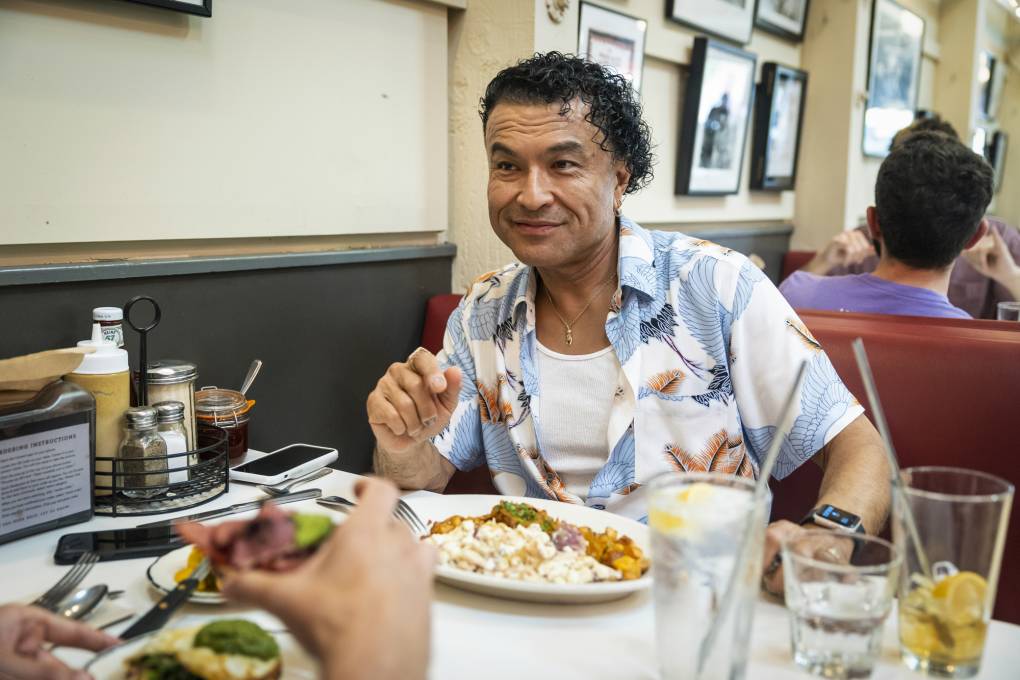
"caption": "Tsutomu Shimura, better known as Lyrics Born, enjoys a meal at Saul's Restaurant and Delicatessen in Berkeley. He grew up eating at Jewish delis similar to Saul's with his grandmother in Los Angeles.",
"description": null,
"title": "230830-LRYICS BORN-MD-07-2-KQED-3",
"credit": "Martin do Nascimento/KQED",
"status": "inherit",
"altTag": "A person sits at a booth in a restaurant.",
"isLoading": false,
"fetchFailed": false
},
"arts_13933723": {
"type": "attachments",
"id": "arts_13933723",
"meta": {
"index": "attachments_1716263798",
"site": "arts",
"id": "13933723",
"found": true
},
"parent": 13933705,
"imgSizes": {
"twentyfourteen-full-width": {
"file": "https://ww2.kqed.org/app/uploads/sites/2/2023/08/delacreamery_nachos_courtesy-1038x576.jpg",
"width": 1038,
"mimeType": "image/jpeg",
"height": 576
},
"thumbnail": {
"file": "https://ww2.kqed.org/app/uploads/sites/2/2023/08/delacreamery_nachos_courtesy-160x90.jpg",
"width": 160,
"mimeType": "image/jpeg",
"height": 90
},
"post-thumbnail": {
"file": "https://ww2.kqed.org/app/uploads/sites/2/2023/08/delacreamery_nachos_courtesy-672x372.jpg",
"width": 672,
"mimeType": "image/jpeg",
"height": 372
},
"kqedFullSize": {
"file": "https://ww2.kqed.org/app/uploads/sites/2/2023/08/delacreamery_nachos_courtesy.jpg",
"width": 1920,
"height": 1081
},
"large": {
"file": "https://ww2.kqed.org/app/uploads/sites/2/2023/08/delacreamery_nachos_courtesy-1020x574.jpg",
"width": 1020,
"mimeType": "image/jpeg",
"height": 574
},
"1536x1536": {
"file": "https://ww2.kqed.org/app/uploads/sites/2/2023/08/delacreamery_nachos_courtesy-1536x865.jpg",
"width": 1536,
"mimeType": "image/jpeg",
"height": 865
},
"medium": {
"file": "https://ww2.kqed.org/app/uploads/sites/2/2023/08/delacreamery_nachos_courtesy-800x450.jpg",
"width": 800,
"mimeType": "image/jpeg",
"height": 450
},
"medium_large": {
"file": "https://ww2.kqed.org/app/uploads/sites/2/2023/08/delacreamery_nachos_courtesy-768x432.jpg",
"width": 768,
"mimeType": "image/jpeg",
"height": 432
}
},
"publishDate": 1692815227,
"modified": 1692816733,
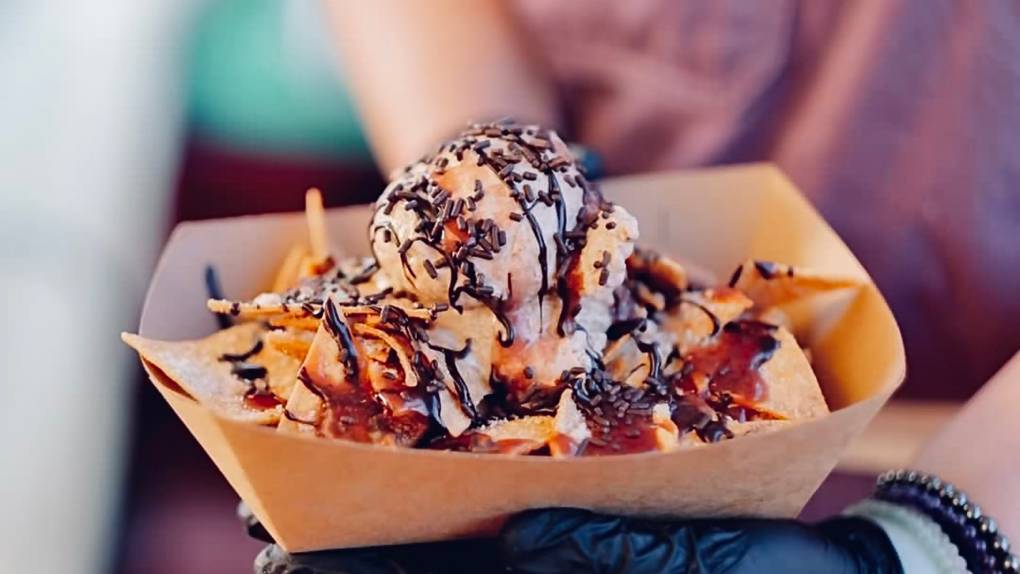
"caption": "The DLC Ice Cream Nachos contain your choice of ice cream, house-made tortilla chips (churro-style), salsa macha, whipped cream and your choice of sauce. ",
"description": null,
"title": "delacreamery_nachos_courtesy",
"credit": "Tim Wong of Keki SF",
"status": "inherit",
"altTag": "a worker at De La Creamery holds up a plate of ice cream topped with chocolate syrup and cinnamon churro-style tortilla chips",
"isLoading": false,
"fetchFailed": false
},
"arts_13933155": {
"type": "attachments",
"id": "arts_13933155",
"meta": {
"index": "attachments_1716263798",
"site": "arts",
"id": "13933155",
"found": true
},
"parent": 13933138,
"imgSizes": {
"twentyfourteen-full-width": {
"file": "https://ww2.kqed.org/app/uploads/sites/2/2023/08/bolita-purple_tortillas-1038x576.jpg",
"width": 1038,
"mimeType": "image/jpeg",
"height": 576
},
"thumbnail": {
"file": "https://ww2.kqed.org/app/uploads/sites/2/2023/08/bolita-purple_tortillas-160x90.jpg",
"width": 160,
"mimeType": "image/jpeg",
"height": 90
},
"post-thumbnail": {
"file": "https://ww2.kqed.org/app/uploads/sites/2/2023/08/bolita-purple_tortillas-672x372.jpg",
"width": 672,
"mimeType": "image/jpeg",
"height": 372
},
"kqedFullSize": {
"file": "https://ww2.kqed.org/app/uploads/sites/2/2023/08/bolita-purple_tortillas.jpg",
"width": 1920,
"height": 1081
},
"large": {
"file": "https://ww2.kqed.org/app/uploads/sites/2/2023/08/bolita-purple_tortillas-1020x574.jpg",
"width": 1020,
"mimeType": "image/jpeg",
"height": 574
},
"1536x1536": {
"file": "https://ww2.kqed.org/app/uploads/sites/2/2023/08/bolita-purple_tortillas-1536x865.jpg",
"width": 1536,
"mimeType": "image/jpeg",
"height": 865
},
"medium": {
"file": "https://ww2.kqed.org/app/uploads/sites/2/2023/08/bolita-purple_tortillas-800x450.jpg",
"width": 800,
"mimeType": "image/jpeg",
"height": 450
},
"medium_large": {
"file": "https://ww2.kqed.org/app/uploads/sites/2/2023/08/bolita-purple_tortillas-768x432.jpg",
"width": 768,
"mimeType": "image/jpeg",
"height": 432
}
},
"publishDate": 1692037091,
"modified": 1692037197,
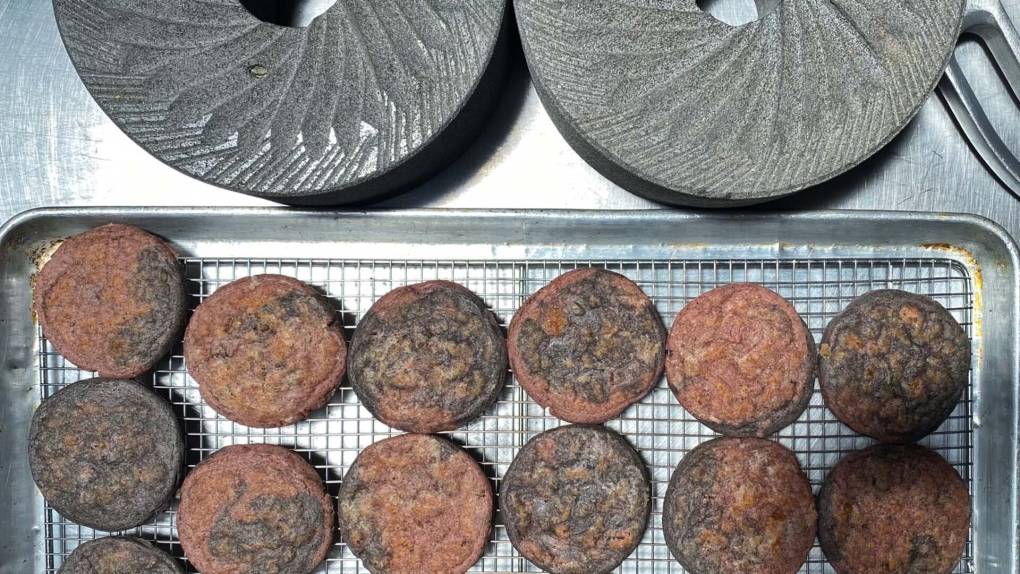
"caption": "These purple tortillas are a signature at Bolita Masa.",
"description": null,
"title": "bolita-purple_tortillas",
"credit": "Emmanuel Galvan",
"status": "inherit",
"altTag": "handmade tortillas using purple masa are prepared on a countertop",
"isLoading": false,
"fetchFailed": false
},
"arts_13932608": {
"type": "attachments",
"id": "arts_13932608",
"meta": {
"index": "attachments_1716263798",
"site": "arts",
"id": "13932608",
"found": true
},
"parent": 13932601,
"imgSizes": {
"twentyfourteen-full-width": {
"file": "https://ww2.kqed.org/app/uploads/sites/2/2023/08/1.Justin-Min-as-Ben-and-Sherry-Cola-as-Alice-in-SHORTCOMINGS.-Photo-credit_-Jon-Pack.-Courtesy-of-Sony-Pictures-Classics_COVER-1038x576.jpg",
"width": 1038,
"mimeType": "image/jpeg",
"height": 576
},
"thumbnail": {
"file": "https://ww2.kqed.org/app/uploads/sites/2/2023/08/1.Justin-Min-as-Ben-and-Sherry-Cola-as-Alice-in-SHORTCOMINGS.-Photo-credit_-Jon-Pack.-Courtesy-of-Sony-Pictures-Classics_COVER-160x107.jpg",
"width": 160,
"mimeType": "image/jpeg",
"height": 107
},
"post-thumbnail": {
"file": "https://ww2.kqed.org/app/uploads/sites/2/2023/08/1.Justin-Min-as-Ben-and-Sherry-Cola-as-Alice-in-SHORTCOMINGS.-Photo-credit_-Jon-Pack.-Courtesy-of-Sony-Pictures-Classics_COVER-672x372.jpg",
"width": 672,
"mimeType": "image/jpeg",
"height": 372
},
"kqedFullSize": {
"file": "https://ww2.kqed.org/app/uploads/sites/2/2023/08/1.Justin-Min-as-Ben-and-Sherry-Cola-as-Alice-in-SHORTCOMINGS.-Photo-credit_-Jon-Pack.-Courtesy-of-Sony-Pictures-Classics_COVER.jpg",
"width": 1600,
"height": 1067
},
"large": {
"file": "https://ww2.kqed.org/app/uploads/sites/2/2023/08/1.Justin-Min-as-Ben-and-Sherry-Cola-as-Alice-in-SHORTCOMINGS.-Photo-credit_-Jon-Pack.-Courtesy-of-Sony-Pictures-Classics_COVER-1020x680.jpg",
"width": 1020,
"mimeType": "image/jpeg",
"height": 680
},
"1536x1536": {
"file": "https://ww2.kqed.org/app/uploads/sites/2/2023/08/1.Justin-Min-as-Ben-and-Sherry-Cola-as-Alice-in-SHORTCOMINGS.-Photo-credit_-Jon-Pack.-Courtesy-of-Sony-Pictures-Classics_COVER-1536x1024.jpg",
"width": 1536,
"mimeType": "image/jpeg",
"height": 1024
},
"medium": {
"file": "https://ww2.kqed.org/app/uploads/sites/2/2023/08/1.Justin-Min-as-Ben-and-Sherry-Cola-as-Alice-in-SHORTCOMINGS.-Photo-credit_-Jon-Pack.-Courtesy-of-Sony-Pictures-Classics_COVER-800x534.jpg",
"width": 800,
"mimeType": "image/jpeg",
"height": 534
},
"medium_large": {
"file": "https://ww2.kqed.org/app/uploads/sites/2/2023/08/1.Justin-Min-as-Ben-and-Sherry-Cola-as-Alice-in-SHORTCOMINGS.-Photo-credit_-Jon-Pack.-Courtesy-of-Sony-Pictures-Classics_COVER-768x512.jpg",
"width": 768,
"mimeType": "image/jpeg",
"height": 512
}
},
"publishDate": 1691082511,
"modified": 1691082603,
"caption": "Justin Min as Ben and Sherry Cola as Alice in 'Shortcomings.'",
"description": null,
"title": "1.Justin-Min-as-Ben-and-Sherry-Cola-as-Alice-in-SHORTCOMINGS.-Photo-credit_-Jon-Pack.-Courtesy-of-Sony-Pictures-Classics_COVER",
"credit": "Photo by Jon Pack; Courtesy of Sony Pictures Classics",
"status": "inherit",
"altTag": "An Asian man and an Asian woman lean right on a city street, looking at something that surprises them",
"isLoading": false,
"fetchFailed": false
},
"arts_13932487": {
"type": "attachments",
"id": "arts_13932487",
"meta": {
"index": "attachments_1716263798",
"site": "arts",
"id": "13932487",
"found": true
},
"parent": 13932089,
"imgSizes": {
"twentyfourteen-full-width": {
"file": "https://ww2.kqed.org/app/uploads/sites/2/2023/08/kaveri_rao-featured-1038x576.jpg",
"width": 1038,
"mimeType": "image/jpeg",
"height": 576
},
"thumbnail": {
"file": "https://ww2.kqed.org/app/uploads/sites/2/2023/08/kaveri_rao-featured-160x90.jpg",
"width": 160,
"mimeType": "image/jpeg",
"height": 90
},
"post-thumbnail": {
"file": "https://ww2.kqed.org/app/uploads/sites/2/2023/08/kaveri_rao-featured-672x372.jpg",
"width": 672,
"mimeType": "image/jpeg",
"height": 372
},
"kqedFullSize": {
"file": "https://ww2.kqed.org/app/uploads/sites/2/2023/08/kaveri_rao-featured.jpg",
"width": 1920,
"height": 1080
},
"large": {
"file": "https://ww2.kqed.org/app/uploads/sites/2/2023/08/kaveri_rao-featured-1020x574.jpg",
"width": 1020,
"mimeType": "image/jpeg",
"height": 574
},
"1536x1536": {
"file": "https://ww2.kqed.org/app/uploads/sites/2/2023/08/kaveri_rao-featured-1536x864.jpg",
"width": 1536,
"mimeType": "image/jpeg",
"height": 864
},
"medium": {
"file": "https://ww2.kqed.org/app/uploads/sites/2/2023/08/kaveri_rao-featured-800x450.jpg",
"width": 800,
"mimeType": "image/jpeg",
"height": 450
},
"medium_large": {
"file": "https://ww2.kqed.org/app/uploads/sites/2/2023/08/kaveri_rao-featured-768x432.jpg",
"width": 768,
"mimeType": "image/jpeg",
"height": 432
}
},
"publishDate": 1690915273,
"modified": 1690915306,
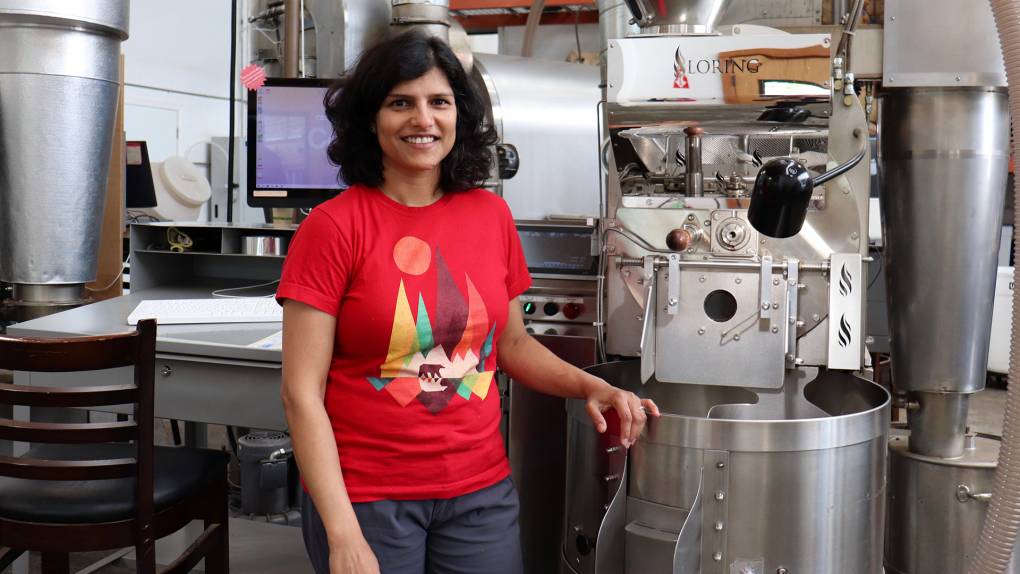
"caption": "Tanya Rao, owner of Kaveri Coffee Works, stands in front of a roasting machine at CoRo in Berkeley.",
"description": null,
"title": "kaveri_rao-featured",
"credit": "Alan Chazaro",
"status": "inherit",
"altTag": "the owner of Kaveri Coffee works stands in front of the roasting machine she uses in Berkeley",
"isLoading": false,
"fetchFailed": false
},
"arts_13932521": {
"type": "attachments",
"id": "arts_13932521",
"meta": {
"index": "attachments_1716263798",
"site": "arts",
"id": "13932521",
"found": true
},
"parent": 13931436,
"imgSizes": {
"twentyfourteen-full-width": {
"file": "https://ww2.kqed.org/app/uploads/sites/2/2023/07/July-2023-1038x576.jpg",
"width": 1038,
"mimeType": "image/jpeg",
"height": 576
},
"thumbnail": {
"file": "https://ww2.kqed.org/app/uploads/sites/2/2023/07/July-2023-160x90.jpg",
"width": 160,
"mimeType": "image/jpeg",
"height": 90
},
"post-thumbnail": {
"file": "https://ww2.kqed.org/app/uploads/sites/2/2023/07/July-2023-672x372.jpg",
"width": 672,
"mimeType": "image/jpeg",
"height": 372
},
"kqedFullSize": {
"file": "https://ww2.kqed.org/app/uploads/sites/2/2023/07/July-2023.jpg",
"width": 1920,
"height": 1080
},
"large": {
"file": "https://ww2.kqed.org/app/uploads/sites/2/2023/07/July-2023-1020x574.jpg",
"width": 1020,
"mimeType": "image/jpeg",
"height": 574
},
"1536x1536": {
"file": "https://ww2.kqed.org/app/uploads/sites/2/2023/07/July-2023-1536x864.jpg",
"width": 1536,
"mimeType": "image/jpeg",
"height": 864
},
"medium": {
"file": "https://ww2.kqed.org/app/uploads/sites/2/2023/07/July-2023-800x450.jpg",
"width": 800,
"mimeType": "image/jpeg",
"height": 450
},
"medium_large": {
"file": "https://ww2.kqed.org/app/uploads/sites/2/2023/07/July-2023-768x432.jpg",
"width": 768,
"mimeType": "image/jpeg",
"height": 432
}
},
"publishDate": 1690935698,
"modified": 1690935771,
"caption": "Frances Albrier in her Red Cross uniform.",
"description": null,
"title": "Frances Albrier in her Red Cross uniform.",
"credit": "Courtesy of the African American Museum and Library at Oakland",
"status": "inherit",
"altTag": "A Black woman in a Red Cross uniform from the 1940s era.",
"isLoading": false,
"fetchFailed": false
},
"arts_13931312": {
"type": "attachments",
"id": "arts_13931312",
"meta": {
"index": "attachments_1716263798",
"site": "arts",
"id": "13931312",
"found": true
},
"parent": 13931296,
"imgSizes": {
"twentyfourteen-full-width": {
"file": "https://ww2.kqed.org/app/uploads/sites/2/2023/07/urelios-lead-crop-1038x576.jpg",
"width": 1038,
"mimeType": "image/jpeg",
"height": 576
},
"thumbnail": {
"file": "https://ww2.kqed.org/app/uploads/sites/2/2023/07/urelios-lead-crop-160x90.jpg",
"width": 160,
"mimeType": "image/jpeg",
"height": 90
},
"post-thumbnail": {
"file": "https://ww2.kqed.org/app/uploads/sites/2/2023/07/urelios-lead-crop-672x372.jpg",
"width": 672,
"mimeType": "image/jpeg",
"height": 372
},
"kqedFullSize": {
"file": "https://ww2.kqed.org/app/uploads/sites/2/2023/07/urelios-lead-crop.jpg",
"width": 1920,
"height": 1080
},
"large": {
"file": "https://ww2.kqed.org/app/uploads/sites/2/2023/07/urelios-lead-crop-1020x574.jpg",
"width": 1020,
"mimeType": "image/jpeg",
"height": 574
},
"1536x1536": {
"file": "https://ww2.kqed.org/app/uploads/sites/2/2023/07/urelios-lead-crop-1536x864.jpg",
"width": 1536,
"mimeType": "image/jpeg",
"height": 864
},
"medium": {
"file": "https://ww2.kqed.org/app/uploads/sites/2/2023/07/urelios-lead-crop-800x450.jpg",
"width": 800,
"mimeType": "image/jpeg",
"height": 450
},
"medium_large": {
"file": "https://ww2.kqed.org/app/uploads/sites/2/2023/07/urelios-lead-crop-768x432.jpg",
"width": 768,
"mimeType": "image/jpeg",
"height": 432
}
},
"publishDate": 1688753150,
"modified": 1688753513,
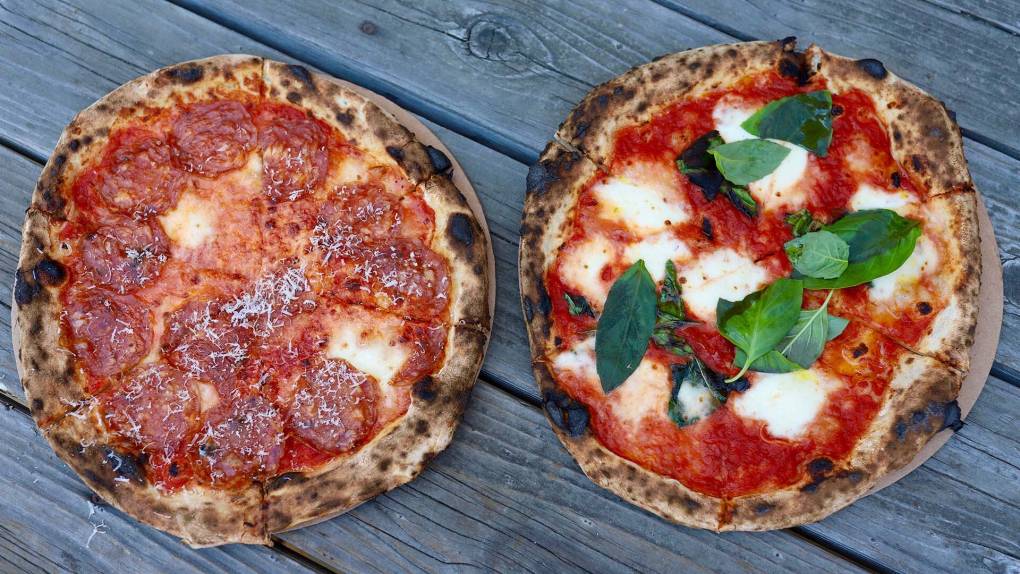
"caption": "Wood-fired pizzas (cheese with durac salami on left; margherita on right) are the stars at Urelio's pizza pop-up.",
"description": null,
"title": "urelios-lead-crop",
"credit": "Alan Chazaro",
"status": "inherit",
"altTag": "Two wood-fired pizzas on a wodden table",
"isLoading": false,
"fetchFailed": false
},
"arts_13931336": {
"type": "attachments",
"id": "arts_13931336",
"meta": {
"index": "attachments_1716263798",
"site": "arts",
"id": "13931336",
"found": true
},
"parent": 13931303,
"imgSizes": {
"twentyfourteen-full-width": {
"file": "https://cdn.kqed.org/wp-content/uploads/sites/2/2023/07/lulu_mezze_lead-1038x576.jpg",
"width": 1038,
"mimeType": "image/jpeg",
"height": 576
},
"thumbnail": {
"file": "https://cdn.kqed.org/wp-content/uploads/sites/2/2023/07/lulu_mezze_lead-160x120.jpg",
"width": 160,
"mimeType": "image/jpeg",
"height": 120
},
"post-thumbnail": {
"file": "https://cdn.kqed.org/wp-content/uploads/sites/2/2023/07/lulu_mezze_lead-672x372.jpg",
"width": 672,
"mimeType": "image/jpeg",
"height": 372
},
"kqedFullSize": {
"file": "https://cdn.kqed.org/wp-content/uploads/sites/2/2023/07/lulu_mezze_lead-scaled.jpg",
"width": 2560,
"height": 1920
},
"2048x2048": {
"file": "https://cdn.kqed.org/wp-content/uploads/sites/2/2023/07/lulu_mezze_lead-2048x1536.jpg",
"width": 2048,
"mimeType": "image/jpeg",
"height": 1536
},
"large": {
"file": "https://cdn.kqed.org/wp-content/uploads/sites/2/2023/07/lulu_mezze_lead-1020x765.jpg",
"width": 1020,
"mimeType": "image/jpeg",
"height": 765
},
"1536x1536": {
"file": "https://cdn.kqed.org/wp-content/uploads/sites/2/2023/07/lulu_mezze_lead-1536x1152.jpg",
"width": 1536,
"mimeType": "image/jpeg",
"height": 1152
},
"full-width": {
"file": "https://cdn.kqed.org/wp-content/uploads/sites/2/2023/07/lulu_mezze_lead-1920x1440.jpg",
"width": 1920,
"mimeType": "image/jpeg",
"height": 1440
},
"medium": {
"file": "https://cdn.kqed.org/wp-content/uploads/sites/2/2023/07/lulu_mezze_lead-800x600.jpg",
"width": 800,
"mimeType": "image/jpeg",
"height": 600
},
"medium_large": {
"file": "https://cdn.kqed.org/wp-content/uploads/sites/2/2023/07/lulu_mezze_lead-768x576.jpg",
"width": 768,
"mimeType": "image/jpeg",
"height": 576
}
},
"publishDate": 1688755313,
"modified": 1702068555,
"caption": "The mezze brunch board at Lulu in West Berkeley is a feast for the eyes and the tastebuds. ",
"description": null,
"title": "lulu_mezze_lead",
"credit": "Luke Tsai/KQED",
"status": "inherit",
"altTag": "An abundant spread of Palestinian mezzes served on a circular wooden board.",
"isLoading": false,
"fetchFailed": false
},
"arts_13930309": {
"type": "attachments",
"id": "arts_13930309",
"meta": {
"index": "attachments_1716263798",
"site": "arts",
"id": "13930309",
"found": true
},
"parent": 13930249,
"imgSizes": {
"twentyfourteen-full-width": {
"file": "https://ww2.kqed.org/app/uploads/sites/2/2023/06/Elena-3-1038x576.jpg",
"width": 1038,
"mimeType": "image/jpeg",
"height": 576
},
"thumbnail": {
"file": "https://ww2.kqed.org/app/uploads/sites/2/2023/06/Elena-3-160x160.jpg",
"width": 160,
"mimeType": "image/jpeg",
"height": 160
},
"post-thumbnail": {
"file": "https://ww2.kqed.org/app/uploads/sites/2/2023/06/Elena-3-672x372.jpg",
"width": 672,
"mimeType": "image/jpeg",
"height": 372
},
"kqedFullSize": {
"file": "https://ww2.kqed.org/app/uploads/sites/2/2023/06/Elena-3-scaled.jpg",
"width": 2560,
"height": 2560
},
"2048x2048": {
"file": "https://ww2.kqed.org/app/uploads/sites/2/2023/06/Elena-3-2048x2048.jpg",
"width": 2048,
"mimeType": "image/jpeg",
"height": 2048
},
"large": {
"file": "https://ww2.kqed.org/app/uploads/sites/2/2023/06/Elena-3-1020x1020.jpg",
"width": 1020,
"mimeType": "image/jpeg",
"height": 1020
},
"1536x1536": {
"file": "https://ww2.kqed.org/app/uploads/sites/2/2023/06/Elena-3-1536x1536.jpg",
"width": 1536,
"mimeType": "image/jpeg",
"height": 1536
},
"full-width": {
"file": "https://ww2.kqed.org/app/uploads/sites/2/2023/06/Elena-3-1920x1920.jpg",
"width": 1920,
"mimeType": "image/jpeg",
"height": 1920
},
"medium": {
"file": "https://ww2.kqed.org/app/uploads/sites/2/2023/06/Elena-3-800x800.jpg",
"width": 800,
"mimeType": "image/jpeg",
"height": 800
},
"medium_large": {
"file": "https://ww2.kqed.org/app/uploads/sites/2/2023/06/Elena-3-768x768.jpg",
"width": 768,
"mimeType": "image/jpeg",
"height": 768
}
},
"publishDate": 1686252101,
"modified": 1686266331,
"caption": "Elena Pinderhughes is an extremely talented flutist and vocalist from Berkeley. ",
"description": "Elena Pinderhughes is an extremely talented flutist and vocalist from Berkeley. ",
"title": "Elena Pinderhughes is an extremely talented flutist and vocalist from Berkeley.",
"credit": "Darrin Baldridge",
"status": "inherit",
"altTag": "Elena Pinderhughes is an extremely talented flutist and vocalist from Berkeley.",
"isLoading": false,
"fetchFailed": false
},
"arts_13931125": {
"type": "attachments",
"id": "arts_13931125",
"meta": {
"index": "attachments_1716263798",
"site": "arts",
"id": "13931125",
"found": true
},
"parent": 13931115,
"imgSizes": {
"twentyfourteen-full-width": {
"file": "https://ww2.kqed.org/app/uploads/sites/2/2023/06/tacos-el-rulas_lead-1038x576.jpg",
"width": 1038,
"mimeType": "image/jpeg",
"height": 576
},
"thumbnail": {
"file": "https://ww2.kqed.org/app/uploads/sites/2/2023/06/tacos-el-rulas_lead-160x90.jpg",
"width": 160,
"mimeType": "image/jpeg",
"height": 90
},
"post-thumbnail": {
"file": "https://ww2.kqed.org/app/uploads/sites/2/2023/06/tacos-el-rulas_lead-672x372.jpg",
"width": 672,
"mimeType": "image/jpeg",
"height": 372
},
"kqedFullSize": {
"file": "https://ww2.kqed.org/app/uploads/sites/2/2023/06/tacos-el-rulas_lead.jpg",
"width": 1920,
"height": 1080
},
"large": {
"file": "https://ww2.kqed.org/app/uploads/sites/2/2023/06/tacos-el-rulas_lead-1020x574.jpg",
"width": 1020,
"mimeType": "image/jpeg",
"height": 574
},
"1536x1536": {
"file": "https://ww2.kqed.org/app/uploads/sites/2/2023/06/tacos-el-rulas_lead-1536x864.jpg",
"width": 1536,
"mimeType": "image/jpeg",
"height": 864
},
"medium": {
"file": "https://ww2.kqed.org/app/uploads/sites/2/2023/06/tacos-el-rulas_lead-800x450.jpg",
"width": 800,
"mimeType": "image/jpeg",
"height": 450
},
"medium_large": {
"file": "https://ww2.kqed.org/app/uploads/sites/2/2023/06/tacos-el-rulas_lead-768x432.jpg",
"width": 768,
"mimeType": "image/jpeg",
"height": 432
}
},
"publishDate": 1688151434,
"modified": 1688151970,
"caption": "Richmond's Tacos El Rulas specializes in cheesy, massively portioned dishes like its papá loca (left) and its alambre, both of which have gotten a lot of attention on social media.",
"description": null,
"title": "tacos el rulas_lead",
"credit": "Luke Tsai",
"status": "inherit",
"altTag": "Overhead view of two Mexican dishes served in aluminum takeout trays, on a picnic table. On the left, potatoes are topped with meat, onions and guacamole. On the right is a cheesy mixed grill of onions, peppers and assorted meats, topped with a stack of tortillas.",
"isLoading": false,
"fetchFailed": false
},
"arts_13930737": {
"type": "attachments",
"id": "arts_13930737",
"meta": {
"index": "attachments_1716263798",
"site": "arts",
"id": "13930737",
"found": true
},
"parent": 13930727,
"imgSizes": {
"twentyfourteen-full-width": {
"file": "https://ww2.kqed.org/app/uploads/sites/2/2023/06/CafesWeHaveLost_BL_Med_1-crop-1038x576.jpg",
"width": 1038,
"mimeType": "image/jpeg",
"height": 576
},
"thumbnail": {
"file": "https://ww2.kqed.org/app/uploads/sites/2/2023/06/CafesWeHaveLost_BL_Med_1-crop-160x90.jpg",
"width": 160,
"mimeType": "image/jpeg",
"height": 90
},
"post-thumbnail": {
"file": "https://ww2.kqed.org/app/uploads/sites/2/2023/06/CafesWeHaveLost_BL_Med_1-crop-672x372.jpg",
"width": 672,
"mimeType": "image/jpeg",
"height": 372
},
"kqedFullSize": {
"file": "https://ww2.kqed.org/app/uploads/sites/2/2023/06/CafesWeHaveLost_BL_Med_1-crop.jpg",
"width": 1920,
"height": 1080
},
"large": {
"file": "https://ww2.kqed.org/app/uploads/sites/2/2023/06/CafesWeHaveLost_BL_Med_1-crop-1020x574.jpg",
"width": 1020,
"mimeType": "image/jpeg",
"height": 574
},
"1536x1536": {
"file": "https://ww2.kqed.org/app/uploads/sites/2/2023/06/CafesWeHaveLost_BL_Med_1-crop-1536x864.jpg",
"width": 1536,
"mimeType": "image/jpeg",
"height": 864
},
"medium": {
"file": "https://ww2.kqed.org/app/uploads/sites/2/2023/06/CafesWeHaveLost_BL_Med_1-crop-800x450.jpg",
"width": 800,
"mimeType": "image/jpeg",
"height": 450
},
"medium_large": {
"file": "https://ww2.kqed.org/app/uploads/sites/2/2023/06/CafesWeHaveLost_BL_Med_1-crop-768x432.jpg",
"width": 768,
"mimeType": "image/jpeg",
"height": 432
}
},
"publishDate": 1687304567,
"modified": 1687304923,
"caption": null,
"description": null,
"title": "CafesWeHaveLost_BL_Med_1-crop",
"credit": "Briana Loewinsohn",
"status": "inherit",
"altTag": "Illustration: A cafe whose green and white striped facade reads, \"Caffe Mediterraneum.\" This is the lead panel for a comic titled \"Please, Don't Forget Me: Cafes We Have Lost,\" by Briana Loewinsohn",
"isLoading": false,
"fetchFailed": false
},
"arts_13930546": {
"type": "attachments",
"id": "arts_13930546",
"meta": {
"index": "attachments_1716263798",
"site": "arts",
"id": "13930546",
"found": true
},
"parent": 0,
"imgSizes": {
"twentyfourteen-full-width": {
"file": "https://ww2.kqed.org/app/uploads/sites/2/2023/06/OhloneKorean_HW_193-crop-1038x576.jpg",
"width": 1038,
"mimeType": "image/jpeg",
"height": 576
},
"thumbnail": {
"file": "https://ww2.kqed.org/app/uploads/sites/2/2023/06/OhloneKorean_HW_193-crop-160x90.jpg",
"width": 160,
"mimeType": "image/jpeg",
"height": 90
},
"post-thumbnail": {
"file": "https://ww2.kqed.org/app/uploads/sites/2/2023/06/OhloneKorean_HW_193-crop-672x372.jpg",
"width": 672,
"mimeType": "image/jpeg",
"height": 372
},
"kqedFullSize": {
"file": "https://ww2.kqed.org/app/uploads/sites/2/2023/06/OhloneKorean_HW_193-crop.jpg",
"width": 1920,
"height": 1080
},
"large": {
"file": "https://ww2.kqed.org/app/uploads/sites/2/2023/06/OhloneKorean_HW_193-crop-1020x574.jpg",
"width": 1020,
"mimeType": "image/jpeg",
"height": 574
},
"1536x1536": {
"file": "https://ww2.kqed.org/app/uploads/sites/2/2023/06/OhloneKorean_HW_193-crop-1536x864.jpg",
"width": 1536,
"mimeType": "image/jpeg",
"height": 864
},
"medium": {
"file": "https://ww2.kqed.org/app/uploads/sites/2/2023/06/OhloneKorean_HW_193-crop-800x450.jpg",
"width": 800,
"mimeType": "image/jpeg",
"height": 450
},
"medium_large": {
"file": "https://ww2.kqed.org/app/uploads/sites/2/2023/06/OhloneKorean_HW_193-crop-768x432.jpg",
"width": 768,
"mimeType": "image/jpeg",
"height": 432
}
},
"publishDate": 1686789521,
"modified": 1686849902,
"caption": "Cafe Ohlone co-owner Vincent Medina shares a moment with Joanne Selby Kim, one of the Korean elders who attended a special Korean-Ohlone meal on Nov. 4, 2022. Organized by Ssi Ya Gi, the event focused on food memories and cross-cultural dialogue.",
"description": null,
"title": "Ohlone+Korean_HW_193-crop",
"credit": "Courtesy of Hardy Wilson",
"status": "inherit",
"altTag": "At a wooden dining table in an outdoor courtyard, an older Korean woman in an old-fashioned decorative hat and purple puffy jacket rests her hand on the arm of an Ohlone man who has squatted down to talk to her.",
"isLoading": false,
"fetchFailed": false
}
},
"audioPlayerReducer": {
"postId": "stream_live",
"isPaused": true,
"isPlaying": false,
"pfsActive": false,
"pledgeModalIsOpen": true,
"playerDrawerIsOpen": false,
"liveAudioPlayStartedAt": 0,
"liveAudioPlayContext": ""
},
"authorsReducer": {
"ralexandra": {
"type": "authors",
"id": "11242",
"meta": {
"index": "authors_1716337520",
"id": "11242",
"found": true
},
"name": "Rae Alexandra",
"firstName": "Rae",
"lastName": "Alexandra",
"slug": "ralexandra",
"email": "ralexandra@kqed.org",
"display_author_email": true,
"staff_mastheads": [
"arts"
],
"title": "Reporter/Producer",
"bio": "Rae Alexandra is a Reporter/Producer for KQED Arts & Culture, and the creator/author of the \u003ca href=\"https://www.kqed.org/arts/program/rebel-girls-from-bay-area-history\">Rebel Girls From Bay Area History\u003c/a> and \u003ca href=\"https://www.kqed.org/bizarrebayarea\">Bizarre Bay Area\u003c/a> series. Her debut book, \u003ca href=\"https://citylights.com/politics-current-events-history/unsung-heroines35-women-who-changed/\">Unsung Heroines: 35 Women Who Changed the Bay Area\u003c/a> was published by City Lights in March 2026. In 2023, Rae was awarded an SPJ Excellence in Journalism Award for Arts & Culture. Rae was born and raised in Wales and subsequently — even after two decades in Northern California — still uses phrases that regularly baffle her coworkers.",
"avatar": "https://secure.gravatar.com/avatar/edfee8176c80cc0a382b051190f5341997df378a934a5774dcb0977732dfd401?s=600&d=blank&r=g",
"twitter": null,
"bluesky": null,
"facebook": null,
"instagram": null,
"linkedin": null,
"sites": [
{
"site": "arts",
"roles": [
"editor"
]
},
{
"site": "news",
"roles": [
"editor"
]
},
{
"site": "pop",
"roles": [
"editor"
]
},
{
"site": "bayareabites",
"roles": [
"editor"
]
},
{
"site": "science",
"roles": [
"editor"
]
}
],
"headData": {
"title": "Rae Alexandra | KQED",
"description": "Reporter/Producer",
"ogImgSrc": "https://secure.gravatar.com/avatar/edfee8176c80cc0a382b051190f5341997df378a934a5774dcb0977732dfd401?s=600&d=blank&r=g",
"twImgSrc": "https://secure.gravatar.com/avatar/edfee8176c80cc0a382b051190f5341997df378a934a5774dcb0977732dfd401?s=600&d=blank&r=g"
},
"isLoading": false,
"link": "/author/ralexandra"
},
"ogpenn": {
"type": "authors",
"id": "11491",
"meta": {
"index": "authors_1716337520",
"id": "11491",
"found": true
},
"name": "Pendarvis Harshaw",
"firstName": "Pendarvis",
"lastName": "Harshaw",
"slug": "ogpenn",
"email": "ogpenn@gmail.com",
"display_author_email": false,
"staff_mastheads": [
"arts"
],
"title": "Community Engagement Reporter",
"bio": "Pendarvis Harshaw is an educator, host and writer with KQED Arts.",
"avatar": "https://secure.gravatar.com/avatar/972b77ee8e3f346ae2b00622661187fbfabd059b5693bbdc1475ea7a722fd4cd?s=600&d=blank&r=g",
"twitter": null,
"bluesky": null,
"facebook": null,
"instagram": "ogpenn",
"linkedin": null,
"sites": [
{
"site": "arts",
"roles": [
"administrator"
]
},
{
"site": "news",
"roles": [
"editor"
]
},
{
"site": "bayareabites",
"roles": [
"author"
]
},
{
"site": "hiphop",
"roles": [
"editor"
]
}
],
"headData": {
"title": "Pendarvis Harshaw | KQED",
"description": "Community Engagement Reporter",
"ogImgSrc": "https://secure.gravatar.com/avatar/972b77ee8e3f346ae2b00622661187fbfabd059b5693bbdc1475ea7a722fd4cd?s=600&d=blank&r=g",
"twImgSrc": "https://secure.gravatar.com/avatar/972b77ee8e3f346ae2b00622661187fbfabd059b5693bbdc1475ea7a722fd4cd?s=600&d=blank&r=g"
},
"isLoading": false,
"link": "/author/ogpenn"
},
"mmedina": {
"type": "authors",
"id": "11528",
"meta": {
"index": "authors_1716337520",
"id": "11528",
"found": true
},
"name": "Marisol Medina-Cadena",
"firstName": "Marisol",
"lastName": "Medina-Cadena",
"slug": "mmedina",
"email": "mmedina@KQED.org",
"display_author_email": true,
"staff_mastheads": [],
"title": "Producer, Rightnowish Podcast",
"bio": "Marisol Medina-Cadena is a radio reporter and podcast producer. Before working at KQED, she produced for PBS member station, KCET, in Los Angeles. In 2017, Marisol won an Emmy Award for her work on the televised documentary, \u003cem>City Rising\u003c/em>, examining California's affordable housing crisis and the historical roots of gentrification.",
"avatar": "https://secure.gravatar.com/avatar/6c3db46a1cabb5e1fe9a365b5f4e681e?s=600&d=blank&r=g",
"twitter": "marisolreports",
"facebook": null,
"instagram": null,
"linkedin": null,
"sites": [
{
"site": "arts",
"roles": []
},
{
"site": "news",
"roles": [
"edit_others_posts"
]
}
],
"headData": {
"title": "Marisol Medina-Cadena | KQED",
"description": "Producer, Rightnowish Podcast",
"ogImgSrc": "https://secure.gravatar.com/avatar/6c3db46a1cabb5e1fe9a365b5f4e681e?s=600&d=blank&r=g",
"twImgSrc": "https://secure.gravatar.com/avatar/6c3db46a1cabb5e1fe9a365b5f4e681e?s=600&d=blank&r=g"
},
"isLoading": false,
"link": "/author/mmedina"
},
"ltsai": {
"type": "authors",
"id": "11743",
"meta": {
"index": "authors_1716337520",
"id": "11743",
"found": true
},
"name": "Luke Tsai",
"firstName": "Luke",
"lastName": "Tsai",
"slug": "ltsai",
"email": "ltsai@kqed.org",
"display_author_email": true,
"staff_mastheads": [
"arts"
],
"title": "Food Editor",
"bio": "Luke Tsai is KQED's food editor and resident stinky tofu connoisseur. Prior to KQED, he was an editor at Eater SF, \u003cem>San Francisco \u003c/em>magazine, and the \u003cem>East Bay Express\u003c/em>, and his work has also appeared in TASTE, the \u003cem>San Francisco Chronicle\u003c/em>, and the \u003cem>Best Food Writing\u003c/em> anthology. When he isn't writing or editing, you'll find him eating most everything he can get his hands on.",
"avatar": "https://secure.gravatar.com/avatar/1e59b45bf191526e7339d6ba46e33a57b2030d25c27660ecc64ea3cb863e34f7?s=600&d=blank&r=g",
"twitter": "theluketsai",
"bluesky": null,
"facebook": null,
"instagram": null,
"linkedin": null,
"sites": [
{
"site": "",
"roles": [
"editor"
]
},
{
"site": "arts",
"roles": [
"administrator"
]
},
{
"site": "news",
"roles": [
"editor",
"contributor"
]
},
{
"site": "bayareabites",
"roles": [
"editor"
]
},
{
"site": "food",
"roles": [
"editor"
]
}
],
"headData": {
"title": "Luke Tsai | KQED",
"description": "Food Editor",
"ogImgSrc": "https://secure.gravatar.com/avatar/1e59b45bf191526e7339d6ba46e33a57b2030d25c27660ecc64ea3cb863e34f7?s=600&d=blank&r=g",
"twImgSrc": "https://secure.gravatar.com/avatar/1e59b45bf191526e7339d6ba46e33a57b2030d25c27660ecc64ea3cb863e34f7?s=600&d=blank&r=g"
},
"isLoading": false,
"link": "/author/ltsai"
},
"achazaro": {
"type": "authors",
"id": "11748",
"meta": {
"index": "authors_1716337520",
"id": "11748",
"found": true
},
"name": "Alan Chazaro",
"firstName": "Alan",
"lastName": "Chazaro",
"slug": "achazaro",
"email": "agchazaro@gmail.com",
"display_author_email": true,
"staff_mastheads": [],
"title": "Food Writer and Reporter",
"bio": "Alan Chazaro is the author of \u003cem>This Is Not a Frank Ocean Cover Album\u003c/em> (Black Lawrence Press, 2019), \u003cem>Piñata Theory\u003c/em> (Black Lawrence Press, 2020), and \u003cem>Notes from the Eastern Span of the Bay Bridge\u003c/em> (Ghost City Press, 2021). He is a graduate of June Jordan’s Poetry for the People program at UC Berkeley and a former Lawrence Ferlinghetti Fellow at the University of San Francisco. He writes about sports, food, art, music, education, and culture while repping the Bay on \u003ca href=\"https://twitter.com/alan_chazaro\">Twitter\u003c/a> and \u003ca href=\"https://www.instagram.com/alan_chazaro/?hl=en\">Instagram\u003c/a> at @alan_chazaro.",
"avatar": "https://secure.gravatar.com/avatar/ea8b6dd970fc5c29e7a188e7d5861df7?s=600&d=blank&r=g",
"twitter": "alan_chazaro",
"facebook": null,
"instagram": null,
"linkedin": null,
"sites": [
{
"site": "arts",
"roles": [
"contributor"
]
},
{
"site": "news",
"roles": [
"editor"
]
}
],
"headData": {
"title": "Alan Chazaro | KQED",
"description": "Food Writer and Reporter",
"ogImgSrc": "https://secure.gravatar.com/avatar/ea8b6dd970fc5c29e7a188e7d5861df7?s=600&d=blank&r=g",
"twImgSrc": "https://secure.gravatar.com/avatar/ea8b6dd970fc5c29e7a188e7d5861df7?s=600&d=blank&r=g"
},
"isLoading": false,
"link": "/author/achazaro"
},
"ksong": {
"type": "authors",
"id": "11813",
"meta": {
"index": "authors_1716337520",
"id": "11813",
"found": true
},
"name": "Kristie Song",
"firstName": "Kristie",
"lastName": "Song",
"slug": "ksong",
"email": "ksong@kqed.org",
"display_author_email": false,
"staff_mastheads": [],
"title": "Editorial Intern ",
"bio": "Kristie Song is an Arts & Culture Intern at KQED. She is currently a graduate student at UC Berkeley, where she studies audio and multimedia journalism. Previously, she covered the local community for Oakland North, produced episodes for The Science of Happiness, and served as news director for KUCI, UC Irvine’s radio station. Outside of reporting, she likes drawing comics, listening to angsty rock, and practicing the guitar.",
"avatar": "https://secure.gravatar.com/avatar/c1149e78c3c44f92d4945a8ab0711af6?s=600&d=blank&r=g",
"twitter": null,
"facebook": null,
"instagram": null,
"linkedin": null,
"sites": [
{
"site": "arts",
"roles": [
"editor"
]
}
],
"headData": {
"title": "Kristie Song | KQED",
"description": "Editorial Intern ",
"ogImgSrc": "https://secure.gravatar.com/avatar/c1149e78c3c44f92d4945a8ab0711af6?s=600&d=blank&r=g",
"twImgSrc": "https://secure.gravatar.com/avatar/c1149e78c3c44f92d4945a8ab0711af6?s=600&d=blank&r=g"
},
"isLoading": false,
"link": "/author/ksong"
},
"bloewinsohn": {
"type": "authors",
"id": "11904",
"meta": {
"index": "authors_1716337520",
"id": "11904",
"found": true
},
"name": "Briana Loewinsohn",
"firstName": "Briana",
"lastName": "Loewinsohn",
"slug": "bloewinsohn",
"email": "brianabreaks@gmail.com",
"display_author_email": false,
"staff_mastheads": [],
"title": "KQED Contributor",
"bio": null,
"avatar": "https://secure.gravatar.com/avatar/3d271841017c9b3e8fd8bf5552758c08?s=600&d=blank&r=g",
"twitter": null,
"facebook": null,
"instagram": null,
"linkedin": null,
"sites": [
{
"site": "arts",
"roles": [
"author"
]
}
],
"headData": {
"title": "Briana Loewinsohn | KQED",
"description": "KQED Contributor",
"ogImgSrc": "https://secure.gravatar.com/avatar/3d271841017c9b3e8fd8bf5552758c08?s=600&d=blank&r=g",
"twImgSrc": "https://secure.gravatar.com/avatar/3d271841017c9b3e8fd8bf5552758c08?s=600&d=blank&r=g"
},
"isLoading": false,
"link": "/author/bloewinsohn"
}
},
"pagesReducer": {
"arts_tag_berkeley": {
"type": "terms",
"id": "arts_1270",
"meta": {
"index": "terms_1716263798",
"site": "arts",
"id": "1270",
"score": 6.9249187
},
"featImg": null,
"name": "Berkeley",
"description": null,
"taxonomy": "tag",
"headData": {
"twImgId": null,
"twTitle": null,
"ogTitle": null,
"ogImgId": null,
"twDescription": null,
"description": null,
"title": "Berkeley Archives | KQED Arts",
"ogDescription": null
},
"ttid": 1282,
"slug": "berkeley",
"isLoading": false,
"title": "Berkeley",
"pageMeta": {
"site": "arts",
"WpPageTemplate": "page-topic-editorial",
"currentPage": 8
},
"blocks": [
{
"blockName": "kqed/post-list",
"attrs": {
"layout": "cardArticle2",
"query": "posts/arts?tag=berkeley",
"seeMore": false,
"paginated": true,
"page": 8
}
},
{
"blockName": "kqed/ad"
}
]
}
},
"pfsSessionReducer": {},
"postsReducer": {
"stream_live": {
"type": "live",
"id": "stream_live",
"audioUrl": "https://streams.kqed.org/kqedradio",
"title": "Live Stream",
"excerpt": "Live Stream information currently unavailable.",
"link": "/radio",
"featImg": "",
"label": {
"name": "KQED Live",
"link": "/"
}
},
"stream_kqedNewscast": {
"type": "posts",
"id": "stream_kqedNewscast",
"audioUrl": "https://www.kqed.org/.stream/anon/radio/RDnews/newscast.mp3?_=1",
"title": "KQED Newscast",
"featImg": "",
"label": {
"name": "88.5 FM",
"link": "/"
}
},
"arts_13934248": {
"type": "posts",
"id": "arts_13934248",
"meta": {
"index": "posts_1716263798",
"site": "arts",
"id": "13934248",
"score": null,
"sort": [
1694102756000
]
},
"guestAuthors": [],
"slug": "lyrics-born-cooking-show-dinner-in-place-berkeley-hella-hungry",
"title": "Berkeley Rap Icon Lyrics Born Now Has His Own Cooking Show",
"publishDate": 1694102756,
"format": "standard",
"headTitle": "Berkeley Rap Icon Lyrics Born Now Has His Own Cooking Show | KQED",
"labelTerm": {},
"content": "\u003cp>\u003cstrong>\u003ci>¡Hella Hungry! is a column about Bay Area foodmakers, exploring the region’s culinary cultures through the mouth of a first-generation local.\u003c/i>\u003c/strong>\u003c/p>\n\u003cp>Saul’s Deli, a bustling Jewish delicatessen serving North Berkeley since 1986, isn’t where you’d expect to kick it with a rap legend. But it’s where Tsutomu Shimura — better known as Lyrics Born, the pioneering Japanese and Jewish American rapper — chose to meet me for lunch on a calm, sunny Wednesday.\u003c/p>\n\u003cp>Shimura is a certified hip-hop veteran. As a founding member of the Bay Area rap group \u003ca href=\"https://www.kqed.org/arts/13929861/latyrx-lateef-lyrics-born-solesides-quannum\">Latryx\u003c/a>, he was one of the first Asian American emcees to gain national fame in the early ’90s. His career stretches across decades with an impressive longevity that only \u003ca href=\"https://www.kqed.org/arts/13932488/e-40-way-magazine-street-renamed-vallejo\">E-40\u003c/a> and \u003ca href=\"https://www.kqed.org/arts/13922548/too-short-way-oakland-street-renamed\">Too $hort\u003c/a> could scoff at. Shimura was the first Asian American rapper to release more than 10 studio albums. He’s so prolific that on the day of our hangout, he also released a song, “\u003ca href=\"https://www.youtube.com/watch?v=eb9epoQCnuA\">Heaven and Armageddon\u003c/a>.”\u003c/p>\n\u003cp>And still, Shimura makes room for his latest creative appetite: food.\u003c/p>\n\u003cfigure id=\"attachment_13934217\" class=\"wp-caption alignnone\" style=\"max-width: 2000px\">\u003cimg loading=\"lazy\" decoding=\"async\" class=\"wp-image-13934217 size-full\" src=\"https://ww2.kqed.org/app/uploads/sites/2/2023/08/230830-LRYICS-BORN-MD-10-KQED.jpg\" alt=\"A bagel with pastrami and a green sauce.\" width=\"2000\" height=\"1333\" srcset=\"https://cdn.kqed.org/wp-content/uploads/sites/2/2023/08/230830-LRYICS-BORN-MD-10-KQED.jpg 2000w, https://cdn.kqed.org/wp-content/uploads/sites/2/2023/08/230830-LRYICS-BORN-MD-10-KQED-800x533.jpg 800w, https://cdn.kqed.org/wp-content/uploads/sites/2/2023/08/230830-LRYICS-BORN-MD-10-KQED-1020x680.jpg 1020w, https://cdn.kqed.org/wp-content/uploads/sites/2/2023/08/230830-LRYICS-BORN-MD-10-KQED-160x107.jpg 160w, https://cdn.kqed.org/wp-content/uploads/sites/2/2023/08/230830-LRYICS-BORN-MD-10-KQED-768x512.jpg 768w, https://cdn.kqed.org/wp-content/uploads/sites/2/2023/08/230830-LRYICS-BORN-MD-10-KQED-1536x1024.jpg 1536w, https://cdn.kqed.org/wp-content/uploads/sites/2/2023/08/230830-LRYICS-BORN-MD-10-KQED-1920x1280.jpg 1920w\" sizes=\"(max-width: 2000px) 100vw, 2000px\">\u003cfigcaption class=\"wp-caption-text\">The author’s’s salami egg bagel with added pastrami. \u003ccite>(Martin do Nascimento/KQED)\u003c/cite>\u003c/figcaption>\u003c/figure>\n\u003cp>“I like to try new things when I’m cooking, just like I would in a song,” he tells me while enjoying an order of trout, eggs and onions with extra pastrami. “It’s creative, there’s no rules. And you’ll probably like what I make, even if you’ve never heard of it before.”\u003c/p>\n\u003cp>[ad fullwidth]\u003c/p>\n\u003cp>\u003ca href=\"https://www.youtube.com/watch?v=QjCJDQP1p-o\">Having appeared on KQED’s \u003ci>Check, Please! Bay Area\u003c/i>\u003c/a>, he’s no stranger to the culinary game. The saucy wordsmith has never been afraid of being front and center, either. So it makes sense that the deep-voiced lyricist and diehard foodie — who grew up in Berkeley with an appreciation for the Bay’s culturally diverse cuisines — now has his own online food series, \u003ca href=\"https://www.youtube.com/playlist?list=PLuFEwujFCNdkNoLfIIOKOwYb1bHpR0v_g\">\u003ci>Dinner In Place\u003c/i>\u003c/a>.\u003c/p>\n\u003cp>https://www.youtube.com/watch?v=SK2yFPkrwhs\u003c/p>\n\u003cp> \u003c/p>\n\u003cp>The show was born in the pandemic when Shimura was unable to tour internationally as frequently as he was accustomed to. A simple Instagram post of him making pasta with clams blew up, and requests from friends, family and fans flooded his inbox: \u003ci>When’s the next one?\u003c/i>\u003c/p>\n\u003cp>Shimura admits he was simply sharing his cooking out of boredom. But he quickly discovered that while on a path to dieting and home cooking in his spare time, he could share his journey with others.\u003c/p>\n\u003cp>Now, \u003ci>Dinner In Place \u003c/i>is entering its fourth season. The show focuses on multiculturalism and culinary innovation with a range of guests — including Señor Sisig chef Gil Payumo and \u003ca href=\"https://www.kqed.org/bayareabites/136410/sobre-mesa-brings-afro-caribbean-cocktails-and-light-bites-to-oakland\">Sobre Mesa\u003c/a> chef Nelson German — tied together by Shimura’s trademark baritone narration.\u003c/p>\n\u003cp>Over a plate of open-faced salami egg bagels (with extra pastrami, following Shimura’s lead), I tuned in to the hip-hop icon as he reflected on his love of food, music and wellness as a nourishing therapy.\u003c/p>\n\u003cp>\u003ci>This interview has been edited for length and clarity.\u003c/i>\u003c/p>\n\u003cp style=\"text-align: center\">********\u003c/p>\n\u003cp>\u003cb>Alan Chazaro: Many of us know you for your music career. But now you’re doing \u003c/b>\u003cb>\u003ci>Dinner In Place\u003c/i>\u003c/b>\u003cb>. How did your journey into making food videos begin?\u003c/b>\u003c/p>\n\u003cp>\u003cb>Lyrics Born:\u003c/b> During the pandemic, I had nothing but time on my hands. Prior to that, to be honest, I was feeling pretty burnt out artistically. Up to 2019, I was doing at least 100 [tour] dates a year. I was exhausted, bro. Putting out albums every 18 months for 20 years straight. I didn’t realize how tired I truly was. When everything shut down I was like wait a minute. No flight? No studio sessions? No gig? I’m sleeping in my own bed for more than a week? I love this. My lifestyle was such that six months prior to lockdown I was having health issues. Soreness, coughing. Shit like that. But then I started having anxiety.\u003c/p>\n\u003cfigure id=\"attachment_13934210\" class=\"wp-caption alignnone\" style=\"max-width: 2000px\">\u003cimg loading=\"lazy\" decoding=\"async\" class=\"wp-image-13934210 size-full\" src=\"https://ww2.kqed.org/app/uploads/sites/2/2023/08/230830-LRYICS-BORN-MD-01-KQED.jpg\" alt=\"The facade of a restaurant painted bright red.\" width=\"2000\" height=\"1333\" srcset=\"https://cdn.kqed.org/wp-content/uploads/sites/2/2023/08/230830-LRYICS-BORN-MD-01-KQED.jpg 2000w, https://cdn.kqed.org/wp-content/uploads/sites/2/2023/08/230830-LRYICS-BORN-MD-01-KQED-800x533.jpg 800w, https://cdn.kqed.org/wp-content/uploads/sites/2/2023/08/230830-LRYICS-BORN-MD-01-KQED-1020x680.jpg 1020w, https://cdn.kqed.org/wp-content/uploads/sites/2/2023/08/230830-LRYICS-BORN-MD-01-KQED-160x107.jpg 160w, https://cdn.kqed.org/wp-content/uploads/sites/2/2023/08/230830-LRYICS-BORN-MD-01-KQED-768x512.jpg 768w, https://cdn.kqed.org/wp-content/uploads/sites/2/2023/08/230830-LRYICS-BORN-MD-01-KQED-1536x1024.jpg 1536w, https://cdn.kqed.org/wp-content/uploads/sites/2/2023/08/230830-LRYICS-BORN-MD-01-KQED-1920x1280.jpg 1920w\" sizes=\"(max-width: 2000px) 100vw, 2000px\">\u003cfigcaption class=\"wp-caption-text\">Saul’s has been a Berkeley institution since 1986. \u003ccite>(Martin do Nascimento/KQED)\u003c/cite>\u003c/figcaption>\u003c/figure>\n\u003cp>So a few months before lockdown, I started to change my diet and exercise. I was up to 225 pounds, and I couldn’t do what I used to on stage, and that was upsetting. I literally couldn’t perform like I used to. So one of the best things I could’ve done was just drop some weight. I started to eat differently and exercise more, and so sliding into quarantine I had some momentum and control over my life. I was at home and started cooking more, since I had been eating out and on the go for years. Because of my health journey, I started to do plant-based stuff. I like to use social media, so I just shot the shit. No editing, just narrating as I went in real time. Everyone was at home also, and it was just a hit. I wasn’t writing anything else, and I didn’t want to do anything with music, so it gave me a new creative outlet instantly.\u003c/p>\n\u003cp>As time went on I started throwing in things from my childhood and travels, and it became weekly. It was cultural, and it was also conceptual like music. Like, wouldn’t it be cool if we took some vegan ground beef and turned it into a kung pao and then made that into a sloppy joe in between two Taiwanese pancakes and just called that a Kung Pao Sloppy Joe? You know what I mean?\u003c/p>\n\u003cfigure id=\"attachment_13934216\" class=\"wp-caption alignnone\" style=\"max-width: 2000px\">\u003cimg loading=\"lazy\" decoding=\"async\" class=\"wp-image-13934216 size-full\" src=\"https://ww2.kqed.org/app/uploads/sites/2/2023/08/230830-LRYICS-BORN-MD-09-KQED.jpg\" alt=\"A plate with homefries and other food on it.\" width=\"2000\" height=\"1333\" srcset=\"https://cdn.kqed.org/wp-content/uploads/sites/2/2023/08/230830-LRYICS-BORN-MD-09-KQED.jpg 2000w, https://cdn.kqed.org/wp-content/uploads/sites/2/2023/08/230830-LRYICS-BORN-MD-09-KQED-800x533.jpg 800w, https://cdn.kqed.org/wp-content/uploads/sites/2/2023/08/230830-LRYICS-BORN-MD-09-KQED-1020x680.jpg 1020w, https://cdn.kqed.org/wp-content/uploads/sites/2/2023/08/230830-LRYICS-BORN-MD-09-KQED-160x107.jpg 160w, https://cdn.kqed.org/wp-content/uploads/sites/2/2023/08/230830-LRYICS-BORN-MD-09-KQED-768x512.jpg 768w, https://cdn.kqed.org/wp-content/uploads/sites/2/2023/08/230830-LRYICS-BORN-MD-09-KQED-1536x1024.jpg 1536w, https://cdn.kqed.org/wp-content/uploads/sites/2/2023/08/230830-LRYICS-BORN-MD-09-KQED-1920x1280.jpg 1920w\" sizes=\"(max-width: 2000px) 100vw, 2000px\">\u003cfigcaption class=\"wp-caption-text\">Lyrics Born’s plate of trout, eggs and onion. \u003ccite>(Martin do Nascimento/KQED)\u003c/cite>\u003c/figcaption>\u003c/figure>\n\u003cp>\u003cb>That’s definitely a rapper’s creative mind at work, just remixing hella ingredients.\u003c/b>\u003c/p>\n\u003cp>That’s all it was. I had time and headspace, and there was nothing else competing with my creativity. It was fun.\u003c/p>\n\u003cp>\u003cb>Bay Area hip-hop has so many anthems — “I Got 5 On It,” “Tell Me When to Go,” “Thizzle Dance.” You put those songs on and Bay Area people will flock to the dance floor and know exactly what to do. What’s the equivalent of that for our region’s food?\u003c/b>\u003c/p>\n\u003cp>There are a few restaurants in Berkeley. That’s what I know, so I’ll speak to that. Everett and Jones is one of them. They’ve been around since I was a kid in multiple locations. The one in Berkeley is the best, truth be told. People will have varying opinions on it all, but I also think Le Cheval — a longtime Vietnamese restaurant in Berkeley that unfortunately closed, where many people would go. Chez Panisse, of course.\u003c/p>\n\u003cp>And in Oakland, you have guys like Chef Nelson from Sobre Mesa. He just reopened \u003ca href=\"https://www.instagram.com/alamaroakland/\">alaMar\u003c/a> with a new Dominican menu. The Bay needs that. Oakland is special because it has that diversity. There’s room, space and audience for it.\u003c/p>\n\u003cp>\u003cb>I noticed you’ve invited local chefs — like Chef Nelson — onto your show this season. What have been some favorite dishes you’ve learned how to make?\u003c/b>\u003c/p>\n\u003cp>We actually released one today that I really love. A “Locrio Japonese.” Japanese curry, stir-fried rice, grilled pork. Dominican and Japanese fusion.\u003c/p>\n\u003cfigure id=\"attachment_13934214\" class=\"wp-caption alignnone\" style=\"max-width: 2000px\">\u003cimg loading=\"lazy\" decoding=\"async\" class=\"wp-image-13934214 size-full\" src=\"https://ww2.kqed.org/app/uploads/sites/2/2023/08/230830-LRYICS-BORN-MD-06-KQED.jpg\" alt=\"A person cuts a pickle with a fork and knife.\" width=\"2000\" height=\"1333\" srcset=\"https://cdn.kqed.org/wp-content/uploads/sites/2/2023/08/230830-LRYICS-BORN-MD-06-KQED.jpg 2000w, https://cdn.kqed.org/wp-content/uploads/sites/2/2023/08/230830-LRYICS-BORN-MD-06-KQED-800x533.jpg 800w, https://cdn.kqed.org/wp-content/uploads/sites/2/2023/08/230830-LRYICS-BORN-MD-06-KQED-1020x680.jpg 1020w, https://cdn.kqed.org/wp-content/uploads/sites/2/2023/08/230830-LRYICS-BORN-MD-06-KQED-160x107.jpg 160w, https://cdn.kqed.org/wp-content/uploads/sites/2/2023/08/230830-LRYICS-BORN-MD-06-KQED-768x512.jpg 768w, https://cdn.kqed.org/wp-content/uploads/sites/2/2023/08/230830-LRYICS-BORN-MD-06-KQED-1536x1024.jpg 1536w, https://cdn.kqed.org/wp-content/uploads/sites/2/2023/08/230830-LRYICS-BORN-MD-06-KQED-1920x1280.jpg 1920w\" sizes=\"(max-width: 2000px) 100vw, 2000px\">\u003cfigcaption class=\"wp-caption-text\">Pickled beets and cucumbers. \u003ccite>(Martin do Nascimento/KQED)\u003c/cite>\u003c/figcaption>\u003c/figure>\n\u003cp>\u003cb>Are these all your original food ideas? Are they just for your private consumption?\u003c/b>\u003c/p>\n\u003cp>We talk about it, bro. With every guest chef — I’ve even had my wife on for an episode — we talk about it, and if we have time, we demo it. I was able to demo the recipes at Señor Sisig and alaMar. Really generous, brilliant chefs. We’re actually doing a pop-up in alaMar, and we’ll be serving the actual dish. It was fun and cute during the pandemic, but I wanted to do more with it.\u003c/p>\n\u003cp>\u003cb>Now that you’re three decades into your career, having broken barriers like becoming the first Asian American rapper to perform at events like Coachella and Lollapalooza, what stands out to you — and how does food play into it all?\u003c/b>\u003c/p>\n\u003cp>The first couple decades of my career I never reflected. I never looked back, I was thinking about what’s next. It wasn’t until I made my greatest hits album that I was forced to reflect. Doing \u003cem>Dinner in Place\u003c/em> and cooking has really led me down a path that I just totally took for granted. I didn’t realize how special it was to make sushi with my father who I saw maybe once a year. And when I saw him, I was young at the time, and we’d make sushi together, or maybe go out for Korean barbecue in Japan. He spent some time in New York City, but he had health issues and went back to Japan. The last 15 years of his life were in Japan, and I’d go back when I could. Even though he was immobile, we still cooked. It was something I did with him.\u003c/p>\n\u003cp>But when I got back, my son asked if I could roll sushi, and I was like fuck yeah, I can. Because I did it with my father. Let me start there. It opened up chapters in my life I could revisit. I didn’t consider that to be significant until later. Same with my grandma. She would take me to Jewish delis in L.A. with that side of the family. I grew up in places like Saul’s. \u003ci>Let’s deli.\u003c/i> That’s a Jewish thing.\u003c/p>\n\u003cp>\u003cb>And you did it all while staying true to yourself and highlighting your heritage.\u003c/b>\u003c/p>\n\u003cp>Thank you. Rappers? Entertainers? There weren’t many who looked like me who were visible. We had a few here and there. And there were people before me, for sure. But \u003ca href=\"https://www.kqed.org/arts/13933283/undiscovered-sf-2023-filipino-culture-festival-food-hip-hop-anniversary-soma\">it was mostly DJs and breakdancers\u003c/a>. We were mostly in the background. But there was nobody — since hip-hop was so young — who I could look to in the way someone can look at me now and say, \u003ci>So that’s how you do it\u003c/i>. To have a 30-year career as an Asian American rapper in hip-hop and to see that path as possible.[pullquote size=\"large\" align=\"right\" citation=\"Lyrics Born\"]“In my experience, being mixed is normal. Everything else is different.”[/pullquote]\u003c/p>\n\u003cp>Those lessons exist now, but they didn’t really exist for me. I mean, hip-hop is turning 50 years old. I’ve been around for 30 of those. I took a lot of my cues from studying my peers, but also the previous generation of artists outside of hip-hop. Sammy Davis Jr. James Brown. Those were long careers. There’s a multitude of mountains you have to simultaneously climb. It’s hard for anyone.\u003c/p>\n\u003cp>The other layer is doing it as a person of color in a system that isn’t built for you to succeed. You’re fighting parallel battles. Then being Asian American, there was even less context as a performer. When I first started touring, I swear to god there were places where I was the only Asian American in the city. But it still sold out. It was about the music. And that’s why food is also so liberating. In my experience, being mixed is normal. Everything else is different.\u003c/p>\n\u003cp>\u003cb>That’s part of the beauty of growing up in the Bay Area, right?\u003c/b>\u003c/p>\n\u003cp>I don’t think my career could have been possible anywhere outside of the Bay Area. My reality has always been multicultural. And that’s even more so now. Everyone I grew up with in Berkeley is mixed.\u003c/p>\n\u003cfigure id=\"attachment_13934213\" class=\"wp-caption alignnone\" style=\"max-width: 2000px\">\u003cimg loading=\"lazy\" decoding=\"async\" class=\"wp-image-13934213 size-full\" src=\"https://ww2.kqed.org/app/uploads/sites/2/2023/08/230830-LRYICS-BORN-MD-05-KQED.jpg\" alt=\"Two people laugh together at a booth in a restaurant.\" width=\"2000\" height=\"1333\" srcset=\"https://cdn.kqed.org/wp-content/uploads/sites/2/2023/08/230830-LRYICS-BORN-MD-05-KQED.jpg 2000w, https://cdn.kqed.org/wp-content/uploads/sites/2/2023/08/230830-LRYICS-BORN-MD-05-KQED-800x533.jpg 800w, https://cdn.kqed.org/wp-content/uploads/sites/2/2023/08/230830-LRYICS-BORN-MD-05-KQED-1020x680.jpg 1020w, https://cdn.kqed.org/wp-content/uploads/sites/2/2023/08/230830-LRYICS-BORN-MD-05-KQED-160x107.jpg 160w, https://cdn.kqed.org/wp-content/uploads/sites/2/2023/08/230830-LRYICS-BORN-MD-05-KQED-768x512.jpg 768w, https://cdn.kqed.org/wp-content/uploads/sites/2/2023/08/230830-LRYICS-BORN-MD-05-KQED-1536x1024.jpg 1536w, https://cdn.kqed.org/wp-content/uploads/sites/2/2023/08/230830-LRYICS-BORN-MD-05-KQED-1920x1280.jpg 1920w\" sizes=\"(max-width: 2000px) 100vw, 2000px\">\u003cfigcaption class=\"wp-caption-text\">Lyrics Born sharing a meal — and reflections on his 30-year career in hip-hop — with KQED food writer Alan Chazaro. \u003ccite>(Martin do Nascimento/KQED)\u003c/cite>\u003c/figcaption>\u003c/figure>\n\u003cp>\u003cb>And you can just hustle your way into different situations and make it work.\u003c/b>\u003c/p>\n\u003cp>\u003cspan style=\"font-weight: 400\">[aside postID='arts_13929861,arts_13930458,arts_13907726']\u003c/span>Bro, I never went to any culinary school. But I’m creative. And the food tastes good. I don’t give a shit about technique. About what is the way you’re supposed to do it. Just taste it. You’ll love it. You don’t need a chef’s coat. Whatever you wear isn’t gonna change the way you cook. I didn’t come from that. Yes, some of these guys can cook circles around me. But I’m a self-taught rapper. I didn’t take piano lessons or guitar lessons. I had a pen and paper and started writing down some words and hoped they rhymed to their own beat.\u003c/p>\n\u003cp>And real chefs understand that. They get the raw creativity, and that’s what it all is for me. The \u003ca href=\"https://www.youtube.com/watch?v=ko2k6RC4MCc\">sinigang ramen\u003c/a>. Nobody’s doing that or presenting it in the way we do. And I say that with pride, not to brag. We’re injecting something new into this. You’ll walk away feeling better, having learned something. And that’s important to me about the show. We wanna make great food, but what’s greater than expanding your horizons on different levels?\u003c/p>\n\u003cp>\u003cb>Is that part of growing up with immigrant parents? \u003c/b>\u003c/p>\n\u003cp>Totally. And the best part is that our experience [as children of immigrants] is mathematically going to be the dominant experience in this country. We’ll see more people like us — literally and figuratively. That’s not an opinion. That’s facts. It’s trending in a certain direction, and nothing can stop that. And we’ll be enjoying those flavors for a long time.\u003c/p>\n\u003cp>\u003cimg loading=\"lazy\" decoding=\"async\" class=\"alignnone size-medium wp-image-12127869\" src=\"https://ww2.kqed.org/app/uploads/sites/2/2016/09/Q.Logo_.Break_-800x78.jpg\" alt=\"\" width=\"800\" height=\"78\" srcset=\"https://cdn.kqed.org/wp-content/uploads/sites/2/2016/09/Q.Logo_.Break_.jpg 800w, https://cdn.kqed.org/wp-content/uploads/sites/2/2016/09/Q.Logo_.Break_-400x39.jpg 400w, https://cdn.kqed.org/wp-content/uploads/sites/2/2016/09/Q.Logo_.Break_-768x75.jpg 768w\" sizes=\"(max-width: 800px) 100vw, 800px\">\u003c/p>\n\u003cp>[ad floatright]\u003c/p>\n\u003cp>\u003ca href=\"https://www.youtube.com/playlist?list=PLuFEwujFCNdkNoLfIIOKOwYb1bHpR0v_g\">\u003cem>‘Dinner In Place’\u003c/em>\u003ci> is available to watch on YouTube on Lyrics Born’s channel\u003c/i>\u003c/a>\u003ci>. Season 4 is now streaming. \u003c/i>\u003ca href=\"https://www.instagram.com/lyricsborn/\">\u003ci>Lyrics Born\u003c/i>\u003c/a>\u003ci> will team up with chef Nelson German at \u003c/i>\u003ca href=\"https://www.instagram.com/alamaroakland/\">\u003ci>alaMar Dominican Kitchen\u003c/i>\u003c/a>\u003ci> (100 Grand Ave. #111, Oakland) for a live “Dinner In Place” pop-up on Thurs. Sep. 14 from 5 p.m. to closing.\u003c/i>\u003c/p>\n\n",
"blocks": [],
"excerpt": "A sit-down interview with the hip-hop veteran and host of 'Dinner In Place,' a food series with extra funk.",
"status": "publish",
"parent": 0,
"modified": 1727131825,
"stats": {
"hasAudio": false,
"hasVideo": true,
"hasChartOrMap": false,
"iframeSrcs": [],
"hasGoogleForm": false,
"hasGallery": false,
"hasHearkenModule": false,
"hasPolis": false,
"paragraphCount": 42,
"wordCount": 2414
},
"headData": {
"title": "Berkeley Rap Icon Lyrics Born Now Has His Own Cooking Show | KQED",
"description": "A sit-down interview with the hip-hop veteran and host of 'Dinner In Place,' a food series with extra funk.",
"ogTitle": "",
"ogDescription": "",
"ogImgId": "",
"twTitle": "",
"twDescription": "",
"twImgId": "",
"schema": {
"@context": "https://schema.org",
"@type": "Article",
"headline": "Berkeley Rap Icon Lyrics Born Now Has His Own Cooking Show",
"datePublished": "2023-09-07T09:05:56-07:00",
"dateModified": "2024-09-23T15:50:25-07:00",
"image": "https://cdn.kqed.org/wp-content/uploads/2020/02/KQED-OG-Image@1x.png"
}
},
"source": "Food",
"sourceUrl": "https://www.kqed.org/food",
"sticky": false,
"excludeFromSiteSearch": "Include",
"articleAge": "0",
"path": "/arts/13934248/lyrics-born-cooking-show-dinner-in-place-berkeley-hella-hungry",
"audioTrackLength": null,
"parsedContent": [
{
"type": "contentString",
"content": "\u003cdiv class=\"post-body\">\u003cp>\u003cp>\u003cstrong>\u003ci>¡Hella Hungry! is a column about Bay Area foodmakers, exploring the region’s culinary cultures through the mouth of a first-generation local.\u003c/i>\u003c/strong>\u003c/p>\n\u003cp>Saul’s Deli, a bustling Jewish delicatessen serving North Berkeley since 1986, isn’t where you’d expect to kick it with a rap legend. But it’s where Tsutomu Shimura — better known as Lyrics Born, the pioneering Japanese and Jewish American rapper — chose to meet me for lunch on a calm, sunny Wednesday.\u003c/p>\n\u003cp>Shimura is a certified hip-hop veteran. As a founding member of the Bay Area rap group \u003ca href=\"https://www.kqed.org/arts/13929861/latyrx-lateef-lyrics-born-solesides-quannum\">Latryx\u003c/a>, he was one of the first Asian American emcees to gain national fame in the early ’90s. His career stretches across decades with an impressive longevity that only \u003ca href=\"https://www.kqed.org/arts/13932488/e-40-way-magazine-street-renamed-vallejo\">E-40\u003c/a> and \u003ca href=\"https://www.kqed.org/arts/13922548/too-short-way-oakland-street-renamed\">Too $hort\u003c/a> could scoff at. Shimura was the first Asian American rapper to release more than 10 studio albums. He’s so prolific that on the day of our hangout, he also released a song, “\u003ca href=\"https://www.youtube.com/watch?v=eb9epoQCnuA\">Heaven and Armageddon\u003c/a>.”\u003c/p>\n\u003cp>And still, Shimura makes room for his latest creative appetite: food.\u003c/p>\n\u003cfigure id=\"attachment_13934217\" class=\"wp-caption alignnone\" style=\"max-width: 2000px\">\u003cimg loading=\"lazy\" decoding=\"async\" class=\"wp-image-13934217 size-full\" src=\"https://ww2.kqed.org/app/uploads/sites/2/2023/08/230830-LRYICS-BORN-MD-10-KQED.jpg\" alt=\"A bagel with pastrami and a green sauce.\" width=\"2000\" height=\"1333\" srcset=\"https://cdn.kqed.org/wp-content/uploads/sites/2/2023/08/230830-LRYICS-BORN-MD-10-KQED.jpg 2000w, https://cdn.kqed.org/wp-content/uploads/sites/2/2023/08/230830-LRYICS-BORN-MD-10-KQED-800x533.jpg 800w, https://cdn.kqed.org/wp-content/uploads/sites/2/2023/08/230830-LRYICS-BORN-MD-10-KQED-1020x680.jpg 1020w, https://cdn.kqed.org/wp-content/uploads/sites/2/2023/08/230830-LRYICS-BORN-MD-10-KQED-160x107.jpg 160w, https://cdn.kqed.org/wp-content/uploads/sites/2/2023/08/230830-LRYICS-BORN-MD-10-KQED-768x512.jpg 768w, https://cdn.kqed.org/wp-content/uploads/sites/2/2023/08/230830-LRYICS-BORN-MD-10-KQED-1536x1024.jpg 1536w, https://cdn.kqed.org/wp-content/uploads/sites/2/2023/08/230830-LRYICS-BORN-MD-10-KQED-1920x1280.jpg 1920w\" sizes=\"(max-width: 2000px) 100vw, 2000px\">\u003cfigcaption class=\"wp-caption-text\">The author’s’s salami egg bagel with added pastrami. \u003ccite>(Martin do Nascimento/KQED)\u003c/cite>\u003c/figcaption>\u003c/figure>\n\u003cp>“I like to try new things when I’m cooking, just like I would in a song,” he tells me while enjoying an order of trout, eggs and onions with extra pastrami. “It’s creative, there’s no rules. And you’ll probably like what I make, even if you’ve never heard of it before.”\u003c/p>\n\u003cp>\u003c/p>\u003c/div>",
"attributes": {
"named": {},
"numeric": []
}
},
{
"type": "component",
"content": "",
"name": "ad",
"attributes": {
"named": {
"label": "fullwidth"
},
"numeric": [
"fullwidth"
]
}
},
{
"type": "contentString",
"content": "\u003cdiv class=\"post-body\">\u003cp>\u003c/p>\n\u003cp>\u003ca href=\"https://www.youtube.com/watch?v=QjCJDQP1p-o\">Having appeared on KQED’s \u003ci>Check, Please! Bay Area\u003c/i>\u003c/a>, he’s no stranger to the culinary game. The saucy wordsmith has never been afraid of being front and center, either. So it makes sense that the deep-voiced lyricist and diehard foodie — who grew up in Berkeley with an appreciation for the Bay’s culturally diverse cuisines — now has his own online food series, \u003ca href=\"https://www.youtube.com/playlist?list=PLuFEwujFCNdkNoLfIIOKOwYb1bHpR0v_g\">\u003ci>Dinner In Place\u003c/i>\u003c/a>.\u003c/p>\u003c/p>\u003cp>\u003cspan class='utils-parseShortcode-shortcodes-__youtubeShortcode__embedYoutube'>\n \u003cspan class='utils-parseShortcode-shortcodes-__youtubeShortcode__embedYoutubeInside'>\n \u003ciframe\n loading='lazy'\n class='utils-parseShortcode-shortcodes-__youtubeShortcode__youtubePlayer'\n type='text/html'\n src='//www.youtube.com/embed/SK2yFPkrwhs'\n title='//www.youtube.com/embed/SK2yFPkrwhs'\n allowfullscreen='true'\n style='border:0;'>\u003c/iframe>\n \u003c/span>\n \u003c/span>\u003c/p>\u003cp>\u003cp> \u003c/p>\n\u003cp>The show was born in the pandemic when Shimura was unable to tour internationally as frequently as he was accustomed to. A simple Instagram post of him making pasta with clams blew up, and requests from friends, family and fans flooded his inbox: \u003ci>When’s the next one?\u003c/i>\u003c/p>\n\u003cp>Shimura admits he was simply sharing his cooking out of boredom. But he quickly discovered that while on a path to dieting and home cooking in his spare time, he could share his journey with others.\u003c/p>\n\u003cp>Now, \u003ci>Dinner In Place \u003c/i>is entering its fourth season. The show focuses on multiculturalism and culinary innovation with a range of guests — including Señor Sisig chef Gil Payumo and \u003ca href=\"https://www.kqed.org/bayareabites/136410/sobre-mesa-brings-afro-caribbean-cocktails-and-light-bites-to-oakland\">Sobre Mesa\u003c/a> chef Nelson German — tied together by Shimura’s trademark baritone narration.\u003c/p>\n\u003cp>Over a plate of open-faced salami egg bagels (with extra pastrami, following Shimura’s lead), I tuned in to the hip-hop icon as he reflected on his love of food, music and wellness as a nourishing therapy.\u003c/p>\n\u003cp>\u003ci>This interview has been edited for length and clarity.\u003c/i>\u003c/p>\n\u003cp style=\"text-align: center\">********\u003c/p>\n\u003cp>\u003cb>Alan Chazaro: Many of us know you for your music career. But now you’re doing \u003c/b>\u003cb>\u003ci>Dinner In Place\u003c/i>\u003c/b>\u003cb>. How did your journey into making food videos begin?\u003c/b>\u003c/p>\n\u003cp>\u003cb>Lyrics Born:\u003c/b> During the pandemic, I had nothing but time on my hands. Prior to that, to be honest, I was feeling pretty burnt out artistically. Up to 2019, I was doing at least 100 [tour] dates a year. I was exhausted, bro. Putting out albums every 18 months for 20 years straight. I didn’t realize how tired I truly was. When everything shut down I was like wait a minute. No flight? No studio sessions? No gig? I’m sleeping in my own bed for more than a week? I love this. My lifestyle was such that six months prior to lockdown I was having health issues. Soreness, coughing. Shit like that. But then I started having anxiety.\u003c/p>\n\u003cfigure id=\"attachment_13934210\" class=\"wp-caption alignnone\" style=\"max-width: 2000px\">\u003cimg loading=\"lazy\" decoding=\"async\" class=\"wp-image-13934210 size-full\" src=\"https://ww2.kqed.org/app/uploads/sites/2/2023/08/230830-LRYICS-BORN-MD-01-KQED.jpg\" alt=\"The facade of a restaurant painted bright red.\" width=\"2000\" height=\"1333\" srcset=\"https://cdn.kqed.org/wp-content/uploads/sites/2/2023/08/230830-LRYICS-BORN-MD-01-KQED.jpg 2000w, https://cdn.kqed.org/wp-content/uploads/sites/2/2023/08/230830-LRYICS-BORN-MD-01-KQED-800x533.jpg 800w, https://cdn.kqed.org/wp-content/uploads/sites/2/2023/08/230830-LRYICS-BORN-MD-01-KQED-1020x680.jpg 1020w, https://cdn.kqed.org/wp-content/uploads/sites/2/2023/08/230830-LRYICS-BORN-MD-01-KQED-160x107.jpg 160w, https://cdn.kqed.org/wp-content/uploads/sites/2/2023/08/230830-LRYICS-BORN-MD-01-KQED-768x512.jpg 768w, https://cdn.kqed.org/wp-content/uploads/sites/2/2023/08/230830-LRYICS-BORN-MD-01-KQED-1536x1024.jpg 1536w, https://cdn.kqed.org/wp-content/uploads/sites/2/2023/08/230830-LRYICS-BORN-MD-01-KQED-1920x1280.jpg 1920w\" sizes=\"(max-width: 2000px) 100vw, 2000px\">\u003cfigcaption class=\"wp-caption-text\">Saul’s has been a Berkeley institution since 1986. \u003ccite>(Martin do Nascimento/KQED)\u003c/cite>\u003c/figcaption>\u003c/figure>\n\u003cp>So a few months before lockdown, I started to change my diet and exercise. I was up to 225 pounds, and I couldn’t do what I used to on stage, and that was upsetting. I literally couldn’t perform like I used to. So one of the best things I could’ve done was just drop some weight. I started to eat differently and exercise more, and so sliding into quarantine I had some momentum and control over my life. I was at home and started cooking more, since I had been eating out and on the go for years. Because of my health journey, I started to do plant-based stuff. I like to use social media, so I just shot the shit. No editing, just narrating as I went in real time. Everyone was at home also, and it was just a hit. I wasn’t writing anything else, and I didn’t want to do anything with music, so it gave me a new creative outlet instantly.\u003c/p>\n\u003cp>As time went on I started throwing in things from my childhood and travels, and it became weekly. It was cultural, and it was also conceptual like music. Like, wouldn’t it be cool if we took some vegan ground beef and turned it into a kung pao and then made that into a sloppy joe in between two Taiwanese pancakes and just called that a Kung Pao Sloppy Joe? You know what I mean?\u003c/p>\n\u003cfigure id=\"attachment_13934216\" class=\"wp-caption alignnone\" style=\"max-width: 2000px\">\u003cimg loading=\"lazy\" decoding=\"async\" class=\"wp-image-13934216 size-full\" src=\"https://ww2.kqed.org/app/uploads/sites/2/2023/08/230830-LRYICS-BORN-MD-09-KQED.jpg\" alt=\"A plate with homefries and other food on it.\" width=\"2000\" height=\"1333\" srcset=\"https://cdn.kqed.org/wp-content/uploads/sites/2/2023/08/230830-LRYICS-BORN-MD-09-KQED.jpg 2000w, https://cdn.kqed.org/wp-content/uploads/sites/2/2023/08/230830-LRYICS-BORN-MD-09-KQED-800x533.jpg 800w, https://cdn.kqed.org/wp-content/uploads/sites/2/2023/08/230830-LRYICS-BORN-MD-09-KQED-1020x680.jpg 1020w, https://cdn.kqed.org/wp-content/uploads/sites/2/2023/08/230830-LRYICS-BORN-MD-09-KQED-160x107.jpg 160w, https://cdn.kqed.org/wp-content/uploads/sites/2/2023/08/230830-LRYICS-BORN-MD-09-KQED-768x512.jpg 768w, https://cdn.kqed.org/wp-content/uploads/sites/2/2023/08/230830-LRYICS-BORN-MD-09-KQED-1536x1024.jpg 1536w, https://cdn.kqed.org/wp-content/uploads/sites/2/2023/08/230830-LRYICS-BORN-MD-09-KQED-1920x1280.jpg 1920w\" sizes=\"(max-width: 2000px) 100vw, 2000px\">\u003cfigcaption class=\"wp-caption-text\">Lyrics Born’s plate of trout, eggs and onion. \u003ccite>(Martin do Nascimento/KQED)\u003c/cite>\u003c/figcaption>\u003c/figure>\n\u003cp>\u003cb>That’s definitely a rapper’s creative mind at work, just remixing hella ingredients.\u003c/b>\u003c/p>\n\u003cp>That’s all it was. I had time and headspace, and there was nothing else competing with my creativity. It was fun.\u003c/p>\n\u003cp>\u003cb>Bay Area hip-hop has so many anthems — “I Got 5 On It,” “Tell Me When to Go,” “Thizzle Dance.” You put those songs on and Bay Area people will flock to the dance floor and know exactly what to do. What’s the equivalent of that for our region’s food?\u003c/b>\u003c/p>\n\u003cp>There are a few restaurants in Berkeley. That’s what I know, so I’ll speak to that. Everett and Jones is one of them. They’ve been around since I was a kid in multiple locations. The one in Berkeley is the best, truth be told. People will have varying opinions on it all, but I also think Le Cheval — a longtime Vietnamese restaurant in Berkeley that unfortunately closed, where many people would go. Chez Panisse, of course.\u003c/p>\n\u003cp>And in Oakland, you have guys like Chef Nelson from Sobre Mesa. He just reopened \u003ca href=\"https://www.instagram.com/alamaroakland/\">alaMar\u003c/a> with a new Dominican menu. The Bay needs that. Oakland is special because it has that diversity. There’s room, space and audience for it.\u003c/p>\n\u003cp>\u003cb>I noticed you’ve invited local chefs — like Chef Nelson — onto your show this season. What have been some favorite dishes you’ve learned how to make?\u003c/b>\u003c/p>\n\u003cp>We actually released one today that I really love. A “Locrio Japonese.” Japanese curry, stir-fried rice, grilled pork. Dominican and Japanese fusion.\u003c/p>\n\u003cfigure id=\"attachment_13934214\" class=\"wp-caption alignnone\" style=\"max-width: 2000px\">\u003cimg loading=\"lazy\" decoding=\"async\" class=\"wp-image-13934214 size-full\" src=\"https://ww2.kqed.org/app/uploads/sites/2/2023/08/230830-LRYICS-BORN-MD-06-KQED.jpg\" alt=\"A person cuts a pickle with a fork and knife.\" width=\"2000\" height=\"1333\" srcset=\"https://cdn.kqed.org/wp-content/uploads/sites/2/2023/08/230830-LRYICS-BORN-MD-06-KQED.jpg 2000w, https://cdn.kqed.org/wp-content/uploads/sites/2/2023/08/230830-LRYICS-BORN-MD-06-KQED-800x533.jpg 800w, https://cdn.kqed.org/wp-content/uploads/sites/2/2023/08/230830-LRYICS-BORN-MD-06-KQED-1020x680.jpg 1020w, https://cdn.kqed.org/wp-content/uploads/sites/2/2023/08/230830-LRYICS-BORN-MD-06-KQED-160x107.jpg 160w, https://cdn.kqed.org/wp-content/uploads/sites/2/2023/08/230830-LRYICS-BORN-MD-06-KQED-768x512.jpg 768w, https://cdn.kqed.org/wp-content/uploads/sites/2/2023/08/230830-LRYICS-BORN-MD-06-KQED-1536x1024.jpg 1536w, https://cdn.kqed.org/wp-content/uploads/sites/2/2023/08/230830-LRYICS-BORN-MD-06-KQED-1920x1280.jpg 1920w\" sizes=\"(max-width: 2000px) 100vw, 2000px\">\u003cfigcaption class=\"wp-caption-text\">Pickled beets and cucumbers. \u003ccite>(Martin do Nascimento/KQED)\u003c/cite>\u003c/figcaption>\u003c/figure>\n\u003cp>\u003cb>Are these all your original food ideas? Are they just for your private consumption?\u003c/b>\u003c/p>\n\u003cp>We talk about it, bro. With every guest chef — I’ve even had my wife on for an episode — we talk about it, and if we have time, we demo it. I was able to demo the recipes at Señor Sisig and alaMar. Really generous, brilliant chefs. We’re actually doing a pop-up in alaMar, and we’ll be serving the actual dish. It was fun and cute during the pandemic, but I wanted to do more with it.\u003c/p>\n\u003cp>\u003cb>Now that you’re three decades into your career, having broken barriers like becoming the first Asian American rapper to perform at events like Coachella and Lollapalooza, what stands out to you — and how does food play into it all?\u003c/b>\u003c/p>\n\u003cp>The first couple decades of my career I never reflected. I never looked back, I was thinking about what’s next. It wasn’t until I made my greatest hits album that I was forced to reflect. Doing \u003cem>Dinner in Place\u003c/em> and cooking has really led me down a path that I just totally took for granted. I didn’t realize how special it was to make sushi with my father who I saw maybe once a year. And when I saw him, I was young at the time, and we’d make sushi together, or maybe go out for Korean barbecue in Japan. He spent some time in New York City, but he had health issues and went back to Japan. The last 15 years of his life were in Japan, and I’d go back when I could. Even though he was immobile, we still cooked. It was something I did with him.\u003c/p>\n\u003cp>But when I got back, my son asked if I could roll sushi, and I was like fuck yeah, I can. Because I did it with my father. Let me start there. It opened up chapters in my life I could revisit. I didn’t consider that to be significant until later. Same with my grandma. She would take me to Jewish delis in L.A. with that side of the family. I grew up in places like Saul’s. \u003ci>Let’s deli.\u003c/i> That’s a Jewish thing.\u003c/p>\n\u003cp>\u003cb>And you did it all while staying true to yourself and highlighting your heritage.\u003c/b>\u003c/p>\n\u003cp>Thank you. Rappers? Entertainers? There weren’t many who looked like me who were visible. We had a few here and there. And there were people before me, for sure. But \u003ca href=\"https://www.kqed.org/arts/13933283/undiscovered-sf-2023-filipino-culture-festival-food-hip-hop-anniversary-soma\">it was mostly DJs and breakdancers\u003c/a>. We were mostly in the background. But there was nobody — since hip-hop was so young — who I could look to in the way someone can look at me now and say, \u003ci>So that’s how you do it\u003c/i>. To have a 30-year career as an Asian American rapper in hip-hop and to see that path as possible.\u003c/p>\u003c/div>",
"attributes": {
"named": {},
"numeric": []
}
},
{
"type": "component",
"content": "“In my experience, being mixed is normal. Everything else is different.”",
"name": "pullquote",
"attributes": {
"named": {
"size": "large",
"align": "right",
"citation": "Lyrics Born",
"label": ""
},
"numeric": []
}
},
{
"type": "contentString",
"content": "\u003cdiv class=\"post-body\">\u003cp>\u003c/p>\n\u003cp>Those lessons exist now, but they didn’t really exist for me. I mean, hip-hop is turning 50 years old. I’ve been around for 30 of those. I took a lot of my cues from studying my peers, but also the previous generation of artists outside of hip-hop. Sammy Davis Jr. James Brown. Those were long careers. There’s a multitude of mountains you have to simultaneously climb. It’s hard for anyone.\u003c/p>\n\u003cp>The other layer is doing it as a person of color in a system that isn’t built for you to succeed. You’re fighting parallel battles. Then being Asian American, there was even less context as a performer. When I first started touring, I swear to god there were places where I was the only Asian American in the city. But it still sold out. It was about the music. And that’s why food is also so liberating. In my experience, being mixed is normal. Everything else is different.\u003c/p>\n\u003cp>\u003cb>That’s part of the beauty of growing up in the Bay Area, right?\u003c/b>\u003c/p>\n\u003cp>I don’t think my career could have been possible anywhere outside of the Bay Area. My reality has always been multicultural. And that’s even more so now. Everyone I grew up with in Berkeley is mixed.\u003c/p>\n\u003cfigure id=\"attachment_13934213\" class=\"wp-caption alignnone\" style=\"max-width: 2000px\">\u003cimg loading=\"lazy\" decoding=\"async\" class=\"wp-image-13934213 size-full\" src=\"https://ww2.kqed.org/app/uploads/sites/2/2023/08/230830-LRYICS-BORN-MD-05-KQED.jpg\" alt=\"Two people laugh together at a booth in a restaurant.\" width=\"2000\" height=\"1333\" srcset=\"https://cdn.kqed.org/wp-content/uploads/sites/2/2023/08/230830-LRYICS-BORN-MD-05-KQED.jpg 2000w, https://cdn.kqed.org/wp-content/uploads/sites/2/2023/08/230830-LRYICS-BORN-MD-05-KQED-800x533.jpg 800w, https://cdn.kqed.org/wp-content/uploads/sites/2/2023/08/230830-LRYICS-BORN-MD-05-KQED-1020x680.jpg 1020w, https://cdn.kqed.org/wp-content/uploads/sites/2/2023/08/230830-LRYICS-BORN-MD-05-KQED-160x107.jpg 160w, https://cdn.kqed.org/wp-content/uploads/sites/2/2023/08/230830-LRYICS-BORN-MD-05-KQED-768x512.jpg 768w, https://cdn.kqed.org/wp-content/uploads/sites/2/2023/08/230830-LRYICS-BORN-MD-05-KQED-1536x1024.jpg 1536w, https://cdn.kqed.org/wp-content/uploads/sites/2/2023/08/230830-LRYICS-BORN-MD-05-KQED-1920x1280.jpg 1920w\" sizes=\"(max-width: 2000px) 100vw, 2000px\">\u003cfigcaption class=\"wp-caption-text\">Lyrics Born sharing a meal — and reflections on his 30-year career in hip-hop — with KQED food writer Alan Chazaro. \u003ccite>(Martin do Nascimento/KQED)\u003c/cite>\u003c/figcaption>\u003c/figure>\n\u003cp>\u003cb>And you can just hustle your way into different situations and make it work.\u003c/b>\u003c/p>\n\u003cp>\u003cspan style=\"font-weight: 400\">\u003c/p>\u003c/div>",
"attributes": {
"named": {},
"numeric": []
}
},
{
"type": "component",
"content": "",
"name": "aside",
"attributes": {
"named": {
"postid": "arts_13929861,arts_13930458,arts_13907726",
"label": ""
},
"numeric": []
}
},
{
"type": "contentString",
"content": "\u003cdiv class=\"post-body\">\u003cp>\u003c/span>Bro, I never went to any culinary school. But I’m creative. And the food tastes good. I don’t give a shit about technique. About what is the way you’re supposed to do it. Just taste it. You’ll love it. You don’t need a chef’s coat. Whatever you wear isn’t gonna change the way you cook. I didn’t come from that. Yes, some of these guys can cook circles around me. But I’m a self-taught rapper. I didn’t take piano lessons or guitar lessons. I had a pen and paper and started writing down some words and hoped they rhymed to their own beat.\u003c/p>\n\u003cp>And real chefs understand that. They get the raw creativity, and that’s what it all is for me. The \u003ca href=\"https://www.youtube.com/watch?v=ko2k6RC4MCc\">sinigang ramen\u003c/a>. Nobody’s doing that or presenting it in the way we do. And I say that with pride, not to brag. We’re injecting something new into this. You’ll walk away feeling better, having learned something. And that’s important to me about the show. We wanna make great food, but what’s greater than expanding your horizons on different levels?\u003c/p>\n\u003cp>\u003cb>Is that part of growing up with immigrant parents? \u003c/b>\u003c/p>\n\u003cp>Totally. And the best part is that our experience [as children of immigrants] is mathematically going to be the dominant experience in this country. We’ll see more people like us — literally and figuratively. That’s not an opinion. That’s facts. It’s trending in a certain direction, and nothing can stop that. And we’ll be enjoying those flavors for a long time.\u003c/p>\n\u003cp>\u003cimg loading=\"lazy\" decoding=\"async\" class=\"alignnone size-medium wp-image-12127869\" src=\"https://ww2.kqed.org/app/uploads/sites/2/2016/09/Q.Logo_.Break_-800x78.jpg\" alt=\"\" width=\"800\" height=\"78\" srcset=\"https://cdn.kqed.org/wp-content/uploads/sites/2/2016/09/Q.Logo_.Break_.jpg 800w, https://cdn.kqed.org/wp-content/uploads/sites/2/2016/09/Q.Logo_.Break_-400x39.jpg 400w, https://cdn.kqed.org/wp-content/uploads/sites/2/2016/09/Q.Logo_.Break_-768x75.jpg 768w\" sizes=\"(max-width: 800px) 100vw, 800px\">\u003c/p>\n\u003cp>\u003c/p>\u003c/div>",
"attributes": {
"named": {},
"numeric": []
}
},
{
"type": "component",
"content": "",
"name": "ad",
"attributes": {
"named": {
"label": "floatright"
},
"numeric": [
"floatright"
]
}
},
{
"type": "contentString",
"content": "\u003cdiv class=\"post-body\">\u003cp>\u003c/p>\n\u003cp>\u003ca href=\"https://www.youtube.com/playlist?list=PLuFEwujFCNdkNoLfIIOKOwYb1bHpR0v_g\">\u003cem>‘Dinner In Place’\u003c/em>\u003ci> is available to watch on YouTube on Lyrics Born’s channel\u003c/i>\u003c/a>\u003ci>. Season 4 is now streaming. \u003c/i>\u003ca href=\"https://www.instagram.com/lyricsborn/\">\u003ci>Lyrics Born\u003c/i>\u003c/a>\u003ci> will team up with chef Nelson German at \u003c/i>\u003ca href=\"https://www.instagram.com/alamaroakland/\">\u003ci>alaMar Dominican Kitchen\u003c/i>\u003c/a>\u003ci> (100 Grand Ave. #111, Oakland) for a live “Dinner In Place” pop-up on Thurs. Sep. 14 from 5 p.m. to closing.\u003c/i>\u003c/p>\n\n\u003c/div>\u003c/p>",
"attributes": {
"named": {},
"numeric": []
}
}
],
"link": "/arts/13934248/lyrics-born-cooking-show-dinner-in-place-berkeley-hella-hungry",
"authors": [
"11748"
],
"programs": [
"arts_140"
],
"series": [
"arts_22307"
],
"categories": [
"arts_1",
"arts_12276"
],
"tags": [
"arts_4672",
"arts_1270",
"arts_10278",
"arts_17573",
"arts_831",
"arts_20719",
"arts_18242",
"arts_10633",
"arts_1334"
],
"featImg": "arts_13934224",
"label": "source_arts_13934248"
},
"arts_13933705": {
"type": "posts",
"id": "arts_13933705",
"meta": {
"index": "posts_1716263798",
"site": "arts",
"id": "13933705",
"score": null,
"sort": [
1692904690000
]
},
"parent": 0,
"labelTerm": {},
"blocks": [],
"publishDate": 1692904690,
"format": "standard",
"title": "Piñata-Flavored Ice Cream Nachos and Other Unique Bay Area Frozen Treats",
"headTitle": "Piñata-Flavored Ice Cream Nachos and Other Unique Bay Area Frozen Treats | KQED",
"content": "\u003cp>\u003cstrong>\u003cem>Find more of KQED’s picks for the \u003ca href=\"https://www.kqed.org/fallguide2023\">best fall 2023 events here\u003c/a>.\u003c/em>\u003c/strong>\u003c/p>\n\u003cp>After two weeks of driving around the Bay Area in pursuit of the region’s best cold desserts, one thing is clearer to me than ever: There are innumerably delicious ways to keep cool and refreshed around here during the notoriously hot months of September and October, from traditional ice cream parlors to funky pop-ups and soft serve stations inside Ethiopian cafes. You just need to know where to look.\u003c/p>\n\u003cp>To help with that, we’ve curated a short list of \u003ca href=\"https://www.kqed.org/arts/13933745/cold-food-hot-weather-sf-bay-area-fall-2023\">food businesses that can withstand any temperature\u003c/a> to deliver a rush of cold, sweet-toothed euphoria.\u003c/p>\n\u003ch2>\u003ca href=\"https://www.instagram.com/delacreamery/\">De La Creamery\u003c/a>\u003c/h2>\n\u003cp>\u003ci>Various East Bay locations\u003c/i>\u003c/p>\n\u003cp>Stephanie De La Cruz of De La Creamery is like a muralist when it comes to imagining her Mexican-forward ice creams. With splashes of bright color, a palette of spices and seasonal fruits and a complex sense of flavor, De La Creamery has become one of the Bay Area’s premier ice cream pop-ups. Exhibit A: “DLC ice cream nachos” — a party of ice cream (I chose the “piñata” flavor, which is like birthday cake but with generous chunks of crushed candy), house-made cinnamon churro chips, spicy salsa macha de cacahuète, chocolate or strawberry sauce and whipped cream. I can honestly say it’s one of the most transcendent ice cream experiences I’ve had — cool, sweet, spicy, delectable. For a more traditionalist approach, try her take on flavors like avocado, horchata, elote and cafe de olla — all concocted in De La Cruz’s experimental kitchen at the \u003ca href=\"https://loards.com/\">legendary local creamery Loard’s\u003c/a>.\u003c/p>\n\u003cfigure id=\"attachment_13933724\" class=\"wp-caption alignnone\" style=\"max-width: 1920px\">\u003cimg loading=\"lazy\" decoding=\"async\" class=\"wp-image-13933724 size-full\" src=\"https://ww2.kqed.org/app/uploads/sites/2/2023/08/double_rainbow_alanchazaro.jpg\" alt=\"a scoop of guava Italian ice and an ice cream cone inside an ice cream parlor\" width=\"1920\" height=\"1280\" srcset=\"https://cdn.kqed.org/wp-content/uploads/sites/2/2023/08/double_rainbow_alanchazaro.jpg 1920w, https://cdn.kqed.org/wp-content/uploads/sites/2/2023/08/double_rainbow_alanchazaro-800x533.jpg 800w, https://cdn.kqed.org/wp-content/uploads/sites/2/2023/08/double_rainbow_alanchazaro-1020x680.jpg 1020w, https://cdn.kqed.org/wp-content/uploads/sites/2/2023/08/double_rainbow_alanchazaro-160x107.jpg 160w, https://cdn.kqed.org/wp-content/uploads/sites/2/2023/08/double_rainbow_alanchazaro-768x512.jpg 768w, https://cdn.kqed.org/wp-content/uploads/sites/2/2023/08/double_rainbow_alanchazaro-1536x1024.jpg 1536w\" sizes=\"(max-width: 1920px) 100vw, 1920px\">\u003cfigcaption class=\"wp-caption-text\">A birthday cake cone and a scoop of guava Italian ice inside the retro Double Rainbow in Benicia. \u003ccite>(Alan Chazaro)\u003c/cite>\u003c/figcaption>\u003c/figure>\n\u003ch2>\u003ca href=\"https://www.beniciadoublerainbow.com/\">Double Rainbow\u003c/a>\u003c/h2>\n\u003cp>\u003ci>560 1st St. # A-105, Benicia\u003c/i>\u003c/p>\n\u003cp>[ad fullwidth]\u003c/p>\n\u003cp>If you grew up in the Bay Area, Double Rainbow likely carries some nostalgic value for you. Though the creamery began as a small-time operation on Coney Island in the 1950s, the business migrated west and opened its first brick-and-mortar in San Francisco in 1976. The original location no longer exists, but the retro outpost in Benicia has been rocking its oversized ice cream sundae–shaped chairs and neon signage since 1995. You can order a childhood favorite like the bubble gum flavor, or you can mix it up with a grilled s’mores ice cream sandwich. Various waffle cones (including birthday cake, red velvet and lavender) keep things interesting. And if you’re like me, you might opt for a fruit freeze featuring Italian ice from \u003ca href=\"https://gunthersicecream.com/\">Gunther’s of Sacramento\u003c/a> (offered only at this location). As a bonus, Benicia’s quiet downtown offers a breezy walk with a gorgeous view of the Carquinez Strait as it flows out into San Pablo Bay.\u003c/p>\n\u003cfigure id=\"attachment_13933823\" class=\"wp-caption alignnone\" style=\"max-width: 1920px\">\u003cimg loading=\"lazy\" decoding=\"async\" class=\"size-full wp-image-13933823\" src=\"https://ww2.kqed.org/app/uploads/sites/2/2023/08/huilaushan-mango_alanchazaro.jpg\" alt=\"a cold dessert dish that includes mango sorbet, mango chunks and mochi-like balls on a wooden counter\" width=\"1920\" height=\"1280\" srcset=\"https://cdn.kqed.org/wp-content/uploads/sites/2/2023/08/huilaushan-mango_alanchazaro.jpg 1920w, https://cdn.kqed.org/wp-content/uploads/sites/2/2023/08/huilaushan-mango_alanchazaro-800x533.jpg 800w, https://cdn.kqed.org/wp-content/uploads/sites/2/2023/08/huilaushan-mango_alanchazaro-1020x680.jpg 1020w, https://cdn.kqed.org/wp-content/uploads/sites/2/2023/08/huilaushan-mango_alanchazaro-160x107.jpg 160w, https://cdn.kqed.org/wp-content/uploads/sites/2/2023/08/huilaushan-mango_alanchazaro-768x512.jpg 768w, https://cdn.kqed.org/wp-content/uploads/sites/2/2023/08/huilaushan-mango_alanchazaro-1536x1024.jpg 1536w\" sizes=\"(max-width: 1920px) 100vw, 1920px\">\u003cfigcaption class=\"wp-caption-text\">The Hong Kong-style Mango Chewy Ball dessert is a hit at Hui Lau Shan in Berkeley. \u003ccite>(Alan Chazaro)\u003c/cite>\u003c/figcaption>\u003c/figure>\n\u003ch2>\u003ca href=\"https://www.hkhls.com/en/\">Hui Lau Shan\u003c/a>\u003c/h2>\n\u003cp>\u003ci>2282 Fulton St., Berkeley\u003c/i>\u003c/p>\n\u003cp>This tiny Hong Kongese storefront dishes out cold desserts two blocks from the Berkeley Art Museum. Though many Americans might be unaccustomed to ingredients like pomelo, \u003ca href=\"https://www.kqed.org/arts/13925835/durian-bay-area-love-letter-singaporean-culture\">durian\u003c/a> and sago (tapioca pearl–like gelatinous balls), Hui Lau Shan’s lineup of icy treats shouldn’t go unnoticed. The flagship dessert is the Mango Chewy Ball — a bowl of mango slush, mango sorbet, fresh mango chunks and spoonfuls of its addicting “chewy balls,” which resemble mochi. For first-timers, the dessert is at once familiar and worlds apart from anything you’ve likely had — and is so good that it has spawned a series of local knockoffs.\u003c/p>\n\u003cfigure id=\"attachment_13933728\" class=\"wp-caption alignnone\" style=\"max-width: 1920px\">\u003cimg loading=\"lazy\" decoding=\"async\" class=\"wp-image-13933728 size-full\" src=\"https://ww2.kqed.org/app/uploads/sites/2/2023/08/swensens_alanchazaro.jpg\" alt=\"a generous scoop of cherry ice cream on a white counter inside an ice cream parlor\" width=\"1920\" height=\"1280\" srcset=\"https://cdn.kqed.org/wp-content/uploads/sites/2/2023/08/swensens_alanchazaro.jpg 1920w, https://cdn.kqed.org/wp-content/uploads/sites/2/2023/08/swensens_alanchazaro-800x533.jpg 800w, https://cdn.kqed.org/wp-content/uploads/sites/2/2023/08/swensens_alanchazaro-1020x680.jpg 1020w, https://cdn.kqed.org/wp-content/uploads/sites/2/2023/08/swensens_alanchazaro-160x107.jpg 160w, https://cdn.kqed.org/wp-content/uploads/sites/2/2023/08/swensens_alanchazaro-768x512.jpg 768w, https://cdn.kqed.org/wp-content/uploads/sites/2/2023/08/swensens_alanchazaro-1536x1024.jpg 1536w\" sizes=\"(max-width: 1920px) 100vw, 1920px\">\u003cfigcaption class=\"wp-caption-text\">The Bordeaux Cherry at Swensen’s is this author’s personal favorite. \u003ccite>(Alan Chazaro)\u003c/cite>\u003c/figcaption>\u003c/figure>\n\u003ch2>\u003ca href=\"https://swensensofsf.com/\">Swensen’s\u003c/a>\u003c/h2>\n\u003cp>\u003ci>1999 Hyde St., San Francisco\u003c/i>\u003c/p>\n\u003cp>On a sleepy, tree-lined stretch of Union Street where the trolley scoots up and down steep inclines, you’ll find Swensen’s, an old-fashioned creamery that has been serving treats since 1948. The small interior has a quaint European vibe (note: there is no seating inside or outside), and even on a random Tuesday afternoon, there will likely be a line snaking out the door. But it’s worth the trek. Specializing in unique, nostalgic flavors like Swiss Orange Chip, the shop has also expanded its offerings over the decades to include lychee, Turkish coffee and their most popular order, Sticky Peanut Butter. My personal go-to is the Bordeaux Cherry, which doubles its potency when it’s served as a milkshake or — checks notes — a root beer float.\u003c/p>\n\u003cfigure id=\"attachment_13933830\" class=\"wp-caption alignnone\" style=\"max-width: 1920px\">\u003cimg loading=\"lazy\" decoding=\"async\" class=\"size-full wp-image-13933830\" src=\"https://ww2.kqed.org/app/uploads/sites/2/2023/08/nieves-cinco-de-mayo_alan_josh.jpg\" alt=\"the author holds up a plastic cup of Tejuino, which is a Mexican beverage made with masa and lime ice cream\" width=\"1920\" height=\"1280\" srcset=\"https://cdn.kqed.org/wp-content/uploads/sites/2/2023/08/nieves-cinco-de-mayo_alan_josh.jpg 1920w, https://cdn.kqed.org/wp-content/uploads/sites/2/2023/08/nieves-cinco-de-mayo_alan_josh-800x533.jpg 800w, https://cdn.kqed.org/wp-content/uploads/sites/2/2023/08/nieves-cinco-de-mayo_alan_josh-1020x680.jpg 1020w, https://cdn.kqed.org/wp-content/uploads/sites/2/2023/08/nieves-cinco-de-mayo_alan_josh-160x107.jpg 160w, https://cdn.kqed.org/wp-content/uploads/sites/2/2023/08/nieves-cinco-de-mayo_alan_josh-768x512.jpg 768w, https://cdn.kqed.org/wp-content/uploads/sites/2/2023/08/nieves-cinco-de-mayo_alan_josh-1536x1024.jpg 1536w\" sizes=\"(max-width: 1920px) 100vw, 1920px\">\u003cfigcaption class=\"wp-caption-text\">The author holds a cup of tejuino, a cold Mexican beverage made from maize and helado de limón, at Nieves Cinco de Mayo in Oakland. \u003ccite>(Joshua Decolongon)\u003c/cite>\u003c/figcaption>\u003c/figure>\n\u003ch2>\u003ca href=\"https://www.instagram.com/nievescincodemayooak/\">Nieves Cinco de Mayo\u003c/a>\u003c/h2>\n\u003cp>\u003ci>3340 E 12th St. Ste. 2, Oakland\u003c/i>\u003c/p>\n\u003cp>Located near Fruitvale BART, this old-school dessert kingdom serves your standard range of Mexican treats: helados (Mexican ice cream), gelatina (Mexican jello) and mangonadas (a smoothie-like mango beverage caked with chamoy). You won’t be upset with any of those. However, if you truly want to taste Mexico as a cold treat, I suggest the tejuino — a cold beverage mixture of masa (the maize dough used to make pupusas and tamales), helado de limón and a dash of salt. Commonly sold from DIY roadside stands in Mexico, it’s not a particularly popular drink in the States, but at Nieves Cinco de Mayo, it’s a hit. You’ll feel transported to a different country inside the shop with its colorful decor, bustling bakery and outdoor patio, where you can sit on a park bench and let your daily worries melt away while sipping on a tangy, liquified tortilla.\u003c/p>\n\u003cfigure id=\"attachment_13933725\" class=\"wp-caption alignnone\" style=\"max-width: 1920px\">\u003cimg loading=\"lazy\" decoding=\"async\" class=\"wp-image-13933725 size-full\" src=\"https://ww2.kqed.org/app/uploads/sites/2/2023/08/gardencreamery_alanchazaro.jpg\" alt=\"a scoop of purple ice cream is held up in front of a pink storefront in San Francisco\" width=\"1920\" height=\"1280\" srcset=\"https://cdn.kqed.org/wp-content/uploads/sites/2/2023/08/gardencreamery_alanchazaro.jpg 1920w, https://cdn.kqed.org/wp-content/uploads/sites/2/2023/08/gardencreamery_alanchazaro-800x533.jpg 800w, https://cdn.kqed.org/wp-content/uploads/sites/2/2023/08/gardencreamery_alanchazaro-1020x680.jpg 1020w, https://cdn.kqed.org/wp-content/uploads/sites/2/2023/08/gardencreamery_alanchazaro-160x107.jpg 160w, https://cdn.kqed.org/wp-content/uploads/sites/2/2023/08/gardencreamery_alanchazaro-768x512.jpg 768w, https://cdn.kqed.org/wp-content/uploads/sites/2/2023/08/gardencreamery_alanchazaro-1536x1024.jpg 1536w\" sizes=\"(max-width: 1920px) 100vw, 1920px\">\u003cfigcaption class=\"wp-caption-text\">Don’t be fooled by the size: This scoop of Ube Pandan at Garden Creamery in San Francisco packs a flavorful punch. \u003ccite>(Alan Chazaro)\u003c/cite>\u003c/figcaption>\u003c/figure>\n\u003ch2>\u003ca href=\"https://www.instagram.com/gardencreamery/?hl=en\">Garden Creamery\u003c/a>\u003c/h2>\n\u003cp>\u003ci>3566 20th St., San Francisco\u003c/i>\u003c/p>\n\u003cp>If you’re in the mood for a lovingly sourced, vibrantly fresh, Asian- and Hawaiian-inspired ice cream experience, this Mission scoopery is for you. Pasteurized on-site and made with Straus barista milk, Garden Creamery’s rich seasonal flavors regularly rotate based on what’s available, while mainstay favorites include spiced chai, black sesame, genmaicha and vegan coconut pandan. They’re all tasty enough to elicit an out-of-body experience. When owners Erin and Donny aren’t at a farmer’s market handpicking ingredients, they’ll likely be behind the counter to tell you about their latest creations (see: this summer’s \u003ca href=\"https://www.instagram.com/p/CvljH5_Mgrd/?hl=en\">Li Hing Lychee Sorbet\u003c/a>).\u003c/p>\n\u003cfigure id=\"attachment_13933727\" class=\"wp-caption alignnone\" style=\"max-width: 1920px\">\u003cimg loading=\"lazy\" decoding=\"async\" class=\"wp-image-13933727 size-full\" src=\"https://ww2.kqed.org/app/uploads/sites/2/2023/08/mygoodnesscreamery_alanchazaro.jpg\" alt=\"two cups of overflowing soft serve ice cream topped with strawberry cake and baklava \" width=\"1920\" height=\"1280\" srcset=\"https://cdn.kqed.org/wp-content/uploads/sites/2/2023/08/mygoodnesscreamery_alanchazaro.jpg 1920w, https://cdn.kqed.org/wp-content/uploads/sites/2/2023/08/mygoodnesscreamery_alanchazaro-800x533.jpg 800w, https://cdn.kqed.org/wp-content/uploads/sites/2/2023/08/mygoodnesscreamery_alanchazaro-1020x680.jpg 1020w, https://cdn.kqed.org/wp-content/uploads/sites/2/2023/08/mygoodnesscreamery_alanchazaro-160x107.jpg 160w, https://cdn.kqed.org/wp-content/uploads/sites/2/2023/08/mygoodnesscreamery_alanchazaro-768x512.jpg 768w, https://cdn.kqed.org/wp-content/uploads/sites/2/2023/08/mygoodnesscreamery_alanchazaro-1536x1024.jpg 1536w\" sizes=\"(max-width: 1920px) 100vw, 1920px\">\u003cfigcaption class=\"wp-caption-text\">Decadent cups of soft serve (topped with strawberry pound cake on the right, baklava on the left) at MyGoodness in Oakland. \u003ccite>(Alan Chazaro)\u003c/cite>\u003c/figcaption>\u003c/figure>\n\u003ch2>\u003ca href=\"https://www.instagram.com/mygoodnessus/?hl=en\">MyGoodness\u003c/a>\u003c/h2>\n\u003cp>\u003ci>2834 Lakeshore Ave., Oakland\u003c/i>\u003c/p>\n\u003cp>For all you soft-serve kings and queens, MyGoodness is swirling up a decadent storm along Lake Merritt’s shores. Launched in 2022, the small-scale business runs a long-term pop-up inside an Ethiopian cafe called Cafe Lakeview. What stands out here isn’t just the naked soft-serve ice cream; it’s the bold pairing of cold treats with other desserts like peach cobbler, strawberry pound cake, apple pie and German chocolate cake. Envision a generously piled cup of soft serve — with crumbling pieces of homemade apple pie or cake dumped on top. It’s not for the faint of mouth. During my visit, I opted for golden chunks of baklava — the flaky Turkish pastry layered with pistachios and honey — over classic vanilla.\u003c/p>\n\u003cfigure id=\"attachment_13933831\" class=\"wp-caption alignnone\" style=\"max-width: 1707px\">\u003cimg loading=\"lazy\" decoding=\"async\" class=\"size-full wp-image-13933831\" src=\"https://ww2.kqed.org/app/uploads/sites/2/2023/08/koolfi_noodler_josh-scaled.jpg\" alt=\"two ice cream-based desserts with Indian toppings and ingredients are displayed on a steel table\" width=\"1707\" height=\"2560\" srcset=\"https://cdn.kqed.org/wp-content/uploads/sites/2/2023/08/koolfi_noodler_josh-scaled.jpg 1707w, https://cdn.kqed.org/wp-content/uploads/sites/2/2023/08/koolfi_noodler_josh-800x1200.jpg 800w, https://cdn.kqed.org/wp-content/uploads/sites/2/2023/08/koolfi_noodler_josh-1020x1530.jpg 1020w, https://cdn.kqed.org/wp-content/uploads/sites/2/2023/08/koolfi_noodler_josh-160x240.jpg 160w, https://cdn.kqed.org/wp-content/uploads/sites/2/2023/08/koolfi_noodler_josh-768x1152.jpg 768w, https://cdn.kqed.org/wp-content/uploads/sites/2/2023/08/koolfi_noodler_josh-1024x1536.jpg 1024w, https://cdn.kqed.org/wp-content/uploads/sites/2/2023/08/koolfi_noodler_josh-1365x2048.jpg 1365w\" sizes=\"(max-width: 1707px) 100vw, 1707px\">\u003cfigcaption class=\"wp-caption-text\">The Falooda Noodler (left) and Gulab Jamun Sundae (right) highlight the Indian-inspired cold desserts at Koolfi in San Leandro. \u003ccite>(Joshua Decolongon)\u003c/cite>\u003c/figcaption>\u003c/figure>\n\u003ch2>\u003ca href=\"https://www.instagram.com/koolficreamery/\">Koolfi Creamery \u003c/a>\u003c/h2>\n\u003cp>\u003ci>599 MacArthur Blvd., San Leandro\u003c/i>\u003c/p>\n\u003cp>[ad floatright]\u003c/p>\n\u003cp>For an Indian-owned creamery that proudly slings \u003ca href=\"https://www.kqed.org/arts/13932089/indian-coffee-roaster-kaveri-berkeley\">Southern Indian kapi (coffee)\u003c/a> ice cream, swing by Koolfi in San Leandro. The specialty small-batch shop can scoop you anything from Mango Koolfi (made with Indian-imported mangoes) and Sweet Paan (betel leaf) to Bombay Butterscotch and Blueberry Goat Cheese. For an even more uniquely Indian experience, there’s the floral Gulab Jamun Sundae (in which the classic donut hole-esque dough ball marinated in sweet syrup gets buried under scoops of ice cream, rose petals and pistachios) or the Falooda Noodler (a sundae-like creation that includes rose water and vermicelli noodles).\u003c/p>\n\n",
"stats": {
"hasVideo": false,
"hasChartOrMap": false,
"hasAudio": false,
"hasPolis": false,
"wordCount": 1435,
"hasGoogleForm": false,
"hasGallery": false,
"hasHearkenModule": false,
"iframeSrcs": [],
"paragraphCount": 21
},
"modified": 1716247483,
"excerpt": "8 sweet ways to stay cool this fall.",
"headData": {
"twImgId": "",
"twTitle": "Piñata-Flavored Ice Cream Nachos and Other Unique Bay Area Frozen Treats",
"socialTitle": "The Best Bay Area Ice Cream and Other Unique Frozen Desserts %%page%% %%sep%% KQED",
"ogTitle": "Piñata-Flavored Ice Cream Nachos and Other Unique Bay Area Frozen Treats",
"ogImgId": "",
"twDescription": "",
"description": "8 sweet ways to stay cool this fall.",
"title": "The Best Bay Area Ice Cream and Other Unique Frozen Desserts | KQED",
"ogDescription": "",
"schema": {
"@context": "https://schema.org",
"@type": "Article",
"headline": "Piñata-Flavored Ice Cream Nachos and Other Unique Bay Area Frozen Treats",
"datePublished": "2023-08-24T12:18:10-07:00",
"dateModified": "2024-05-20T16:24:43-07:00",
"image": "https://cdn.kqed.org/wp-content/uploads/2020/02/KQED-OG-Image@1x.png"
}
},
"guestAuthors": [],
"slug": "best-ice-cream-frozen-desserts-sf-bay-area-fall-2023",
"status": "publish",
"sourceUrl": "https://www.kqed.org/fallguide2023",
"excludeFromSiteSearch": "Include",
"sticky": false,
"source": "Fall Guide 2023",
"articleAge": "0",
"path": "/arts/13933705/best-ice-cream-frozen-desserts-sf-bay-area-fall-2023",
"audioTrackLength": null,
"parsedContent": [
{
"type": "contentString",
"content": "\u003cdiv class=\"post-body\">\u003cp>\u003cp>\u003cstrong>\u003cem>Find more of KQED’s picks for the \u003ca href=\"https://www.kqed.org/fallguide2023\">best fall 2023 events here\u003c/a>.\u003c/em>\u003c/strong>\u003c/p>\n\u003cp>After two weeks of driving around the Bay Area in pursuit of the region’s best cold desserts, one thing is clearer to me than ever: There are innumerably delicious ways to keep cool and refreshed around here during the notoriously hot months of September and October, from traditional ice cream parlors to funky pop-ups and soft serve stations inside Ethiopian cafes. You just need to know where to look.\u003c/p>\n\u003cp>To help with that, we’ve curated a short list of \u003ca href=\"https://www.kqed.org/arts/13933745/cold-food-hot-weather-sf-bay-area-fall-2023\">food businesses that can withstand any temperature\u003c/a> to deliver a rush of cold, sweet-toothed euphoria.\u003c/p>\n\u003ch2>\u003ca href=\"https://www.instagram.com/delacreamery/\">De La Creamery\u003c/a>\u003c/h2>\n\u003cp>\u003ci>Various East Bay locations\u003c/i>\u003c/p>\n\u003cp>Stephanie De La Cruz of De La Creamery is like a muralist when it comes to imagining her Mexican-forward ice creams. With splashes of bright color, a palette of spices and seasonal fruits and a complex sense of flavor, De La Creamery has become one of the Bay Area’s premier ice cream pop-ups. Exhibit A: “DLC ice cream nachos” — a party of ice cream (I chose the “piñata” flavor, which is like birthday cake but with generous chunks of crushed candy), house-made cinnamon churro chips, spicy salsa macha de cacahuète, chocolate or strawberry sauce and whipped cream. I can honestly say it’s one of the most transcendent ice cream experiences I’ve had — cool, sweet, spicy, delectable. For a more traditionalist approach, try her take on flavors like avocado, horchata, elote and cafe de olla — all concocted in De La Cruz’s experimental kitchen at the \u003ca href=\"https://loards.com/\">legendary local creamery Loard’s\u003c/a>.\u003c/p>\n\u003cfigure id=\"attachment_13933724\" class=\"wp-caption alignnone\" style=\"max-width: 1920px\">\u003cimg loading=\"lazy\" decoding=\"async\" class=\"wp-image-13933724 size-full\" src=\"https://ww2.kqed.org/app/uploads/sites/2/2023/08/double_rainbow_alanchazaro.jpg\" alt=\"a scoop of guava Italian ice and an ice cream cone inside an ice cream parlor\" width=\"1920\" height=\"1280\" srcset=\"https://cdn.kqed.org/wp-content/uploads/sites/2/2023/08/double_rainbow_alanchazaro.jpg 1920w, https://cdn.kqed.org/wp-content/uploads/sites/2/2023/08/double_rainbow_alanchazaro-800x533.jpg 800w, https://cdn.kqed.org/wp-content/uploads/sites/2/2023/08/double_rainbow_alanchazaro-1020x680.jpg 1020w, https://cdn.kqed.org/wp-content/uploads/sites/2/2023/08/double_rainbow_alanchazaro-160x107.jpg 160w, https://cdn.kqed.org/wp-content/uploads/sites/2/2023/08/double_rainbow_alanchazaro-768x512.jpg 768w, https://cdn.kqed.org/wp-content/uploads/sites/2/2023/08/double_rainbow_alanchazaro-1536x1024.jpg 1536w\" sizes=\"(max-width: 1920px) 100vw, 1920px\">\u003cfigcaption class=\"wp-caption-text\">A birthday cake cone and a scoop of guava Italian ice inside the retro Double Rainbow in Benicia. \u003ccite>(Alan Chazaro)\u003c/cite>\u003c/figcaption>\u003c/figure>\n\u003ch2>\u003ca href=\"https://www.beniciadoublerainbow.com/\">Double Rainbow\u003c/a>\u003c/h2>\n\u003cp>\u003ci>560 1st St. # A-105, Benicia\u003c/i>\u003c/p>\n\u003cp>\u003c/p>\u003c/div>",
"attributes": {
"named": {},
"numeric": []
}
},
{
"type": "component",
"content": "",
"name": "ad",
"attributes": {
"named": {
"label": "fullwidth"
},
"numeric": [
"fullwidth"
]
}
},
{
"type": "contentString",
"content": "\u003cdiv class=\"post-body\">\u003cp>\u003c/p>\n\u003cp>If you grew up in the Bay Area, Double Rainbow likely carries some nostalgic value for you. Though the creamery began as a small-time operation on Coney Island in the 1950s, the business migrated west and opened its first brick-and-mortar in San Francisco in 1976. The original location no longer exists, but the retro outpost in Benicia has been rocking its oversized ice cream sundae–shaped chairs and neon signage since 1995. You can order a childhood favorite like the bubble gum flavor, or you can mix it up with a grilled s’mores ice cream sandwich. Various waffle cones (including birthday cake, red velvet and lavender) keep things interesting. And if you’re like me, you might opt for a fruit freeze featuring Italian ice from \u003ca href=\"https://gunthersicecream.com/\">Gunther’s of Sacramento\u003c/a> (offered only at this location). As a bonus, Benicia’s quiet downtown offers a breezy walk with a gorgeous view of the Carquinez Strait as it flows out into San Pablo Bay.\u003c/p>\n\u003cfigure id=\"attachment_13933823\" class=\"wp-caption alignnone\" style=\"max-width: 1920px\">\u003cimg loading=\"lazy\" decoding=\"async\" class=\"size-full wp-image-13933823\" src=\"https://ww2.kqed.org/app/uploads/sites/2/2023/08/huilaushan-mango_alanchazaro.jpg\" alt=\"a cold dessert dish that includes mango sorbet, mango chunks and mochi-like balls on a wooden counter\" width=\"1920\" height=\"1280\" srcset=\"https://cdn.kqed.org/wp-content/uploads/sites/2/2023/08/huilaushan-mango_alanchazaro.jpg 1920w, https://cdn.kqed.org/wp-content/uploads/sites/2/2023/08/huilaushan-mango_alanchazaro-800x533.jpg 800w, https://cdn.kqed.org/wp-content/uploads/sites/2/2023/08/huilaushan-mango_alanchazaro-1020x680.jpg 1020w, https://cdn.kqed.org/wp-content/uploads/sites/2/2023/08/huilaushan-mango_alanchazaro-160x107.jpg 160w, https://cdn.kqed.org/wp-content/uploads/sites/2/2023/08/huilaushan-mango_alanchazaro-768x512.jpg 768w, https://cdn.kqed.org/wp-content/uploads/sites/2/2023/08/huilaushan-mango_alanchazaro-1536x1024.jpg 1536w\" sizes=\"(max-width: 1920px) 100vw, 1920px\">\u003cfigcaption class=\"wp-caption-text\">The Hong Kong-style Mango Chewy Ball dessert is a hit at Hui Lau Shan in Berkeley. \u003ccite>(Alan Chazaro)\u003c/cite>\u003c/figcaption>\u003c/figure>\n\u003ch2>\u003ca href=\"https://www.hkhls.com/en/\">Hui Lau Shan\u003c/a>\u003c/h2>\n\u003cp>\u003ci>2282 Fulton St., Berkeley\u003c/i>\u003c/p>\n\u003cp>This tiny Hong Kongese storefront dishes out cold desserts two blocks from the Berkeley Art Museum. Though many Americans might be unaccustomed to ingredients like pomelo, \u003ca href=\"https://www.kqed.org/arts/13925835/durian-bay-area-love-letter-singaporean-culture\">durian\u003c/a> and sago (tapioca pearl–like gelatinous balls), Hui Lau Shan’s lineup of icy treats shouldn’t go unnoticed. The flagship dessert is the Mango Chewy Ball — a bowl of mango slush, mango sorbet, fresh mango chunks and spoonfuls of its addicting “chewy balls,” which resemble mochi. For first-timers, the dessert is at once familiar and worlds apart from anything you’ve likely had — and is so good that it has spawned a series of local knockoffs.\u003c/p>\n\u003cfigure id=\"attachment_13933728\" class=\"wp-caption alignnone\" style=\"max-width: 1920px\">\u003cimg loading=\"lazy\" decoding=\"async\" class=\"wp-image-13933728 size-full\" src=\"https://ww2.kqed.org/app/uploads/sites/2/2023/08/swensens_alanchazaro.jpg\" alt=\"a generous scoop of cherry ice cream on a white counter inside an ice cream parlor\" width=\"1920\" height=\"1280\" srcset=\"https://cdn.kqed.org/wp-content/uploads/sites/2/2023/08/swensens_alanchazaro.jpg 1920w, https://cdn.kqed.org/wp-content/uploads/sites/2/2023/08/swensens_alanchazaro-800x533.jpg 800w, https://cdn.kqed.org/wp-content/uploads/sites/2/2023/08/swensens_alanchazaro-1020x680.jpg 1020w, https://cdn.kqed.org/wp-content/uploads/sites/2/2023/08/swensens_alanchazaro-160x107.jpg 160w, https://cdn.kqed.org/wp-content/uploads/sites/2/2023/08/swensens_alanchazaro-768x512.jpg 768w, https://cdn.kqed.org/wp-content/uploads/sites/2/2023/08/swensens_alanchazaro-1536x1024.jpg 1536w\" sizes=\"(max-width: 1920px) 100vw, 1920px\">\u003cfigcaption class=\"wp-caption-text\">The Bordeaux Cherry at Swensen’s is this author’s personal favorite. \u003ccite>(Alan Chazaro)\u003c/cite>\u003c/figcaption>\u003c/figure>\n\u003ch2>\u003ca href=\"https://swensensofsf.com/\">Swensen’s\u003c/a>\u003c/h2>\n\u003cp>\u003ci>1999 Hyde St., San Francisco\u003c/i>\u003c/p>\n\u003cp>On a sleepy, tree-lined stretch of Union Street where the trolley scoots up and down steep inclines, you’ll find Swensen’s, an old-fashioned creamery that has been serving treats since 1948. The small interior has a quaint European vibe (note: there is no seating inside or outside), and even on a random Tuesday afternoon, there will likely be a line snaking out the door. But it’s worth the trek. Specializing in unique, nostalgic flavors like Swiss Orange Chip, the shop has also expanded its offerings over the decades to include lychee, Turkish coffee and their most popular order, Sticky Peanut Butter. My personal go-to is the Bordeaux Cherry, which doubles its potency when it’s served as a milkshake or — checks notes — a root beer float.\u003c/p>\n\u003cfigure id=\"attachment_13933830\" class=\"wp-caption alignnone\" style=\"max-width: 1920px\">\u003cimg loading=\"lazy\" decoding=\"async\" class=\"size-full wp-image-13933830\" src=\"https://ww2.kqed.org/app/uploads/sites/2/2023/08/nieves-cinco-de-mayo_alan_josh.jpg\" alt=\"the author holds up a plastic cup of Tejuino, which is a Mexican beverage made with masa and lime ice cream\" width=\"1920\" height=\"1280\" srcset=\"https://cdn.kqed.org/wp-content/uploads/sites/2/2023/08/nieves-cinco-de-mayo_alan_josh.jpg 1920w, https://cdn.kqed.org/wp-content/uploads/sites/2/2023/08/nieves-cinco-de-mayo_alan_josh-800x533.jpg 800w, https://cdn.kqed.org/wp-content/uploads/sites/2/2023/08/nieves-cinco-de-mayo_alan_josh-1020x680.jpg 1020w, https://cdn.kqed.org/wp-content/uploads/sites/2/2023/08/nieves-cinco-de-mayo_alan_josh-160x107.jpg 160w, https://cdn.kqed.org/wp-content/uploads/sites/2/2023/08/nieves-cinco-de-mayo_alan_josh-768x512.jpg 768w, https://cdn.kqed.org/wp-content/uploads/sites/2/2023/08/nieves-cinco-de-mayo_alan_josh-1536x1024.jpg 1536w\" sizes=\"(max-width: 1920px) 100vw, 1920px\">\u003cfigcaption class=\"wp-caption-text\">The author holds a cup of tejuino, a cold Mexican beverage made from maize and helado de limón, at Nieves Cinco de Mayo in Oakland. \u003ccite>(Joshua Decolongon)\u003c/cite>\u003c/figcaption>\u003c/figure>\n\u003ch2>\u003ca href=\"https://www.instagram.com/nievescincodemayooak/\">Nieves Cinco de Mayo\u003c/a>\u003c/h2>\n\u003cp>\u003ci>3340 E 12th St. Ste. 2, Oakland\u003c/i>\u003c/p>\n\u003cp>Located near Fruitvale BART, this old-school dessert kingdom serves your standard range of Mexican treats: helados (Mexican ice cream), gelatina (Mexican jello) and mangonadas (a smoothie-like mango beverage caked with chamoy). You won’t be upset with any of those. However, if you truly want to taste Mexico as a cold treat, I suggest the tejuino — a cold beverage mixture of masa (the maize dough used to make pupusas and tamales), helado de limón and a dash of salt. Commonly sold from DIY roadside stands in Mexico, it’s not a particularly popular drink in the States, but at Nieves Cinco de Mayo, it’s a hit. You’ll feel transported to a different country inside the shop with its colorful decor, bustling bakery and outdoor patio, where you can sit on a park bench and let your daily worries melt away while sipping on a tangy, liquified tortilla.\u003c/p>\n\u003cfigure id=\"attachment_13933725\" class=\"wp-caption alignnone\" style=\"max-width: 1920px\">\u003cimg loading=\"lazy\" decoding=\"async\" class=\"wp-image-13933725 size-full\" src=\"https://ww2.kqed.org/app/uploads/sites/2/2023/08/gardencreamery_alanchazaro.jpg\" alt=\"a scoop of purple ice cream is held up in front of a pink storefront in San Francisco\" width=\"1920\" height=\"1280\" srcset=\"https://cdn.kqed.org/wp-content/uploads/sites/2/2023/08/gardencreamery_alanchazaro.jpg 1920w, https://cdn.kqed.org/wp-content/uploads/sites/2/2023/08/gardencreamery_alanchazaro-800x533.jpg 800w, https://cdn.kqed.org/wp-content/uploads/sites/2/2023/08/gardencreamery_alanchazaro-1020x680.jpg 1020w, https://cdn.kqed.org/wp-content/uploads/sites/2/2023/08/gardencreamery_alanchazaro-160x107.jpg 160w, https://cdn.kqed.org/wp-content/uploads/sites/2/2023/08/gardencreamery_alanchazaro-768x512.jpg 768w, https://cdn.kqed.org/wp-content/uploads/sites/2/2023/08/gardencreamery_alanchazaro-1536x1024.jpg 1536w\" sizes=\"(max-width: 1920px) 100vw, 1920px\">\u003cfigcaption class=\"wp-caption-text\">Don’t be fooled by the size: This scoop of Ube Pandan at Garden Creamery in San Francisco packs a flavorful punch. \u003ccite>(Alan Chazaro)\u003c/cite>\u003c/figcaption>\u003c/figure>\n\u003ch2>\u003ca href=\"https://www.instagram.com/gardencreamery/?hl=en\">Garden Creamery\u003c/a>\u003c/h2>\n\u003cp>\u003ci>3566 20th St., San Francisco\u003c/i>\u003c/p>\n\u003cp>If you’re in the mood for a lovingly sourced, vibrantly fresh, Asian- and Hawaiian-inspired ice cream experience, this Mission scoopery is for you. Pasteurized on-site and made with Straus barista milk, Garden Creamery’s rich seasonal flavors regularly rotate based on what’s available, while mainstay favorites include spiced chai, black sesame, genmaicha and vegan coconut pandan. They’re all tasty enough to elicit an out-of-body experience. When owners Erin and Donny aren’t at a farmer’s market handpicking ingredients, they’ll likely be behind the counter to tell you about their latest creations (see: this summer’s \u003ca href=\"https://www.instagram.com/p/CvljH5_Mgrd/?hl=en\">Li Hing Lychee Sorbet\u003c/a>).\u003c/p>\n\u003cfigure id=\"attachment_13933727\" class=\"wp-caption alignnone\" style=\"max-width: 1920px\">\u003cimg loading=\"lazy\" decoding=\"async\" class=\"wp-image-13933727 size-full\" src=\"https://ww2.kqed.org/app/uploads/sites/2/2023/08/mygoodnesscreamery_alanchazaro.jpg\" alt=\"two cups of overflowing soft serve ice cream topped with strawberry cake and baklava \" width=\"1920\" height=\"1280\" srcset=\"https://cdn.kqed.org/wp-content/uploads/sites/2/2023/08/mygoodnesscreamery_alanchazaro.jpg 1920w, https://cdn.kqed.org/wp-content/uploads/sites/2/2023/08/mygoodnesscreamery_alanchazaro-800x533.jpg 800w, https://cdn.kqed.org/wp-content/uploads/sites/2/2023/08/mygoodnesscreamery_alanchazaro-1020x680.jpg 1020w, https://cdn.kqed.org/wp-content/uploads/sites/2/2023/08/mygoodnesscreamery_alanchazaro-160x107.jpg 160w, https://cdn.kqed.org/wp-content/uploads/sites/2/2023/08/mygoodnesscreamery_alanchazaro-768x512.jpg 768w, https://cdn.kqed.org/wp-content/uploads/sites/2/2023/08/mygoodnesscreamery_alanchazaro-1536x1024.jpg 1536w\" sizes=\"(max-width: 1920px) 100vw, 1920px\">\u003cfigcaption class=\"wp-caption-text\">Decadent cups of soft serve (topped with strawberry pound cake on the right, baklava on the left) at MyGoodness in Oakland. \u003ccite>(Alan Chazaro)\u003c/cite>\u003c/figcaption>\u003c/figure>\n\u003ch2>\u003ca href=\"https://www.instagram.com/mygoodnessus/?hl=en\">MyGoodness\u003c/a>\u003c/h2>\n\u003cp>\u003ci>2834 Lakeshore Ave., Oakland\u003c/i>\u003c/p>\n\u003cp>For all you soft-serve kings and queens, MyGoodness is swirling up a decadent storm along Lake Merritt’s shores. Launched in 2022, the small-scale business runs a long-term pop-up inside an Ethiopian cafe called Cafe Lakeview. What stands out here isn’t just the naked soft-serve ice cream; it’s the bold pairing of cold treats with other desserts like peach cobbler, strawberry pound cake, apple pie and German chocolate cake. Envision a generously piled cup of soft serve — with crumbling pieces of homemade apple pie or cake dumped on top. It’s not for the faint of mouth. During my visit, I opted for golden chunks of baklava — the flaky Turkish pastry layered with pistachios and honey — over classic vanilla.\u003c/p>\n\u003cfigure id=\"attachment_13933831\" class=\"wp-caption alignnone\" style=\"max-width: 1707px\">\u003cimg loading=\"lazy\" decoding=\"async\" class=\"size-full wp-image-13933831\" src=\"https://ww2.kqed.org/app/uploads/sites/2/2023/08/koolfi_noodler_josh-scaled.jpg\" alt=\"two ice cream-based desserts with Indian toppings and ingredients are displayed on a steel table\" width=\"1707\" height=\"2560\" srcset=\"https://cdn.kqed.org/wp-content/uploads/sites/2/2023/08/koolfi_noodler_josh-scaled.jpg 1707w, https://cdn.kqed.org/wp-content/uploads/sites/2/2023/08/koolfi_noodler_josh-800x1200.jpg 800w, https://cdn.kqed.org/wp-content/uploads/sites/2/2023/08/koolfi_noodler_josh-1020x1530.jpg 1020w, https://cdn.kqed.org/wp-content/uploads/sites/2/2023/08/koolfi_noodler_josh-160x240.jpg 160w, https://cdn.kqed.org/wp-content/uploads/sites/2/2023/08/koolfi_noodler_josh-768x1152.jpg 768w, https://cdn.kqed.org/wp-content/uploads/sites/2/2023/08/koolfi_noodler_josh-1024x1536.jpg 1024w, https://cdn.kqed.org/wp-content/uploads/sites/2/2023/08/koolfi_noodler_josh-1365x2048.jpg 1365w\" sizes=\"(max-width: 1707px) 100vw, 1707px\">\u003cfigcaption class=\"wp-caption-text\">The Falooda Noodler (left) and Gulab Jamun Sundae (right) highlight the Indian-inspired cold desserts at Koolfi in San Leandro. \u003ccite>(Joshua Decolongon)\u003c/cite>\u003c/figcaption>\u003c/figure>\n\u003ch2>\u003ca href=\"https://www.instagram.com/koolficreamery/\">Koolfi Creamery \u003c/a>\u003c/h2>\n\u003cp>\u003ci>599 MacArthur Blvd., San Leandro\u003c/i>\u003c/p>\n\u003cp>\u003c/p>\u003c/div>",
"attributes": {
"named": {},
"numeric": []
}
},
{
"type": "component",
"content": "",
"name": "ad",
"attributes": {
"named": {
"label": "floatright"
},
"numeric": [
"floatright"
]
}
},
{
"type": "contentString",
"content": "\u003cdiv class=\"post-body\">\u003cp>\u003c/p>\n\u003cp>For an Indian-owned creamery that proudly slings \u003ca href=\"https://www.kqed.org/arts/13932089/indian-coffee-roaster-kaveri-berkeley\">Southern Indian kapi (coffee)\u003c/a> ice cream, swing by Koolfi in San Leandro. The specialty small-batch shop can scoop you anything from Mango Koolfi (made with Indian-imported mangoes) and Sweet Paan (betel leaf) to Bombay Butterscotch and Blueberry Goat Cheese. For an even more uniquely Indian experience, there’s the floral Gulab Jamun Sundae (in which the classic donut hole-esque dough ball marinated in sweet syrup gets buried under scoops of ice cream, rose petals and pistachios) or the Falooda Noodler (a sundae-like creation that includes rose water and vermicelli noodles).\u003c/p>\n\n\u003c/div>\u003c/p>",
"attributes": {
"named": {},
"numeric": []
}
}
],
"link": "/arts/13933705/best-ice-cream-frozen-desserts-sf-bay-area-fall-2023",
"authors": [
"11748"
],
"programs": [
"arts_140"
],
"categories": [
"arts_1",
"arts_12276"
],
"tags": [
"arts_18849",
"arts_1270",
"arts_22144",
"arts_21522",
"arts_10278",
"arts_1297",
"arts_22078",
"arts_1143",
"arts_10172",
"arts_1635",
"arts_585"
],
"featImg": "arts_13933723",
"label": "source_arts_13933705"
},
"arts_13933138": {
"type": "posts",
"id": "arts_13933138",
"meta": {
"index": "posts_1716263798",
"site": "arts",
"id": "13933138",
"score": null,
"sort": [
1692047549000
]
},
"parent": 0,
"labelTerm": {},
"blocks": [],
"publishDate": 1692047549,
"format": "standard",
"title": "Berkeley's Bolita Celebrates the Delicate Art of Mexican Masa",
"headTitle": "Berkeley’s Bolita Celebrates the Delicate Art of Mexican Masa | KQED",
"content": "\u003cp>For Emmanuel Galvan, the founder of \u003ca href=\"https://www.instagram.com/bolitamasa/?hl=en\">Bolita Masa\u003c/a>, turning raw corn into maize dough is part of an ancestral magic.\u003c/p>\n\u003cp>“It’s the humble backbone of [Mexico],” says Galvan, whose Berkeley-based pop-up specializes in Mexican masa. “Corn allowed the Maya and Aztec empires to grow to their sizes as an incredibly important crop. There is so much mythology around it, and it’s instilled in being Mexican. I want to shine a light on that and the work it takes because making masa is fucking hard.”\u003c/p>\n\u003cp>How hard? Start with the fact that he begins by choosing from at least 13 corn varietals at his disposal — each with their own color, texture, flavor and purpose — hailing from wildly distinct regions of Mexico. On some days, Galvan and his team might handle over 200 pounds of corn, from bruised shades of blue and dusky purple kernels to the eternally glowing yellow of classic elote. Alchemizing this colorful crop into masa is as much a delicate art as it is a calculated science.\u003c/p>\n\u003cfigure id=\"attachment_13933157\" class=\"wp-caption alignnone\" style=\"max-width: 800px\">\u003cimg loading=\"lazy\" decoding=\"async\" class=\"size-medium wp-image-13933157\" src=\"https://ww2.kqed.org/app/uploads/sites/2/2023/08/bolita-tricolor-800x1200.jpg\" alt=\"tri color tortillas (yellow, blue and purple) are displayed on a tan plate inside the Berkeley kitchen where they were made\" width=\"800\" height=\"1200\" srcset=\"https://cdn.kqed.org/wp-content/uploads/sites/2/2023/08/bolita-tricolor-800x1200.jpg 800w, https://cdn.kqed.org/wp-content/uploads/sites/2/2023/08/bolita-tricolor-1020x1530.jpg 1020w, https://cdn.kqed.org/wp-content/uploads/sites/2/2023/08/bolita-tricolor-160x240.jpg 160w, https://cdn.kqed.org/wp-content/uploads/sites/2/2023/08/bolita-tricolor-768x1152.jpg 768w, https://cdn.kqed.org/wp-content/uploads/sites/2/2023/08/bolita-tricolor-1024x1536.jpg 1024w, https://cdn.kqed.org/wp-content/uploads/sites/2/2023/08/bolita-tricolor-1365x2048.jpg 1365w, https://cdn.kqed.org/wp-content/uploads/sites/2/2023/08/bolita-tricolor-scaled.jpg 1707w\" sizes=\"(max-width: 800px) 100vw, 800px\">\u003cfigcaption class=\"wp-caption-text\">These tri-color tortillas are displayed inside the Berkeley kitchen where they were made. \u003ccite>(Emmanuel Galvan)\u003c/cite>\u003c/figcaption>\u003c/figure>\n\u003cp>The 28-hour process involves a meticulous amount of measuring, weighing, boiling, soaking, softening and nixtamalizing that ends with a grinder made of volcanic stone crushing the wet, calcified kernels into fresh masa. The result is a nutritious staple in the Mexican and Central American diet that has become a literal foundation for culinary sustenance, forming the base for tamales, tacos, tlayudas, tetelas, tlacoyos, tostadas and more — including foods that don’t start with the letter “T,” such as pupusas.\u003c/p>\n\u003cp>[pullquote size=\"large\" align=\"right\"]“Alchemizing this colorful crop into masa is as much a delicate art as it is a calculated science.”[/pullquote]Bolita, which launched in 2020, sells their pre-packaged masas, as well as some of the Bay Area’s best salsas and moles, at the Mission Mercado farmers market in San Francisco. And the business is now expanding to Oakland’s Grand Lake Farmers Market on Saturdays. For Galvan, working with \u003ca href=\"https://www.instagram.com/tamoamx/?hl=en\">Tamao, an ethical corn supplier in Mexico City\u003c/a>, is a huge reason he can continue to operate. Tamao’s owner, Francisco Musi, maintains close partnerships with farmers around Mexico to bring in a diverse array of corn from 11 states — each with its own unique properties. As Galvan notes, Tamao sells strictly surplus produce that does not impact the local needs or economy in Mexico and de-prioritizes any U.S. demand.\u003c/p>\n\u003cp>[ad fullwidth]\u003c/p>\n\u003cp>\u003cspan style=\"font-weight: 400\">[aside postID='arts_13920076,arts_13931115,arts_13925233']\u003c/span>Most importantly, Galvan deeply honors what masa represents — and its holy place at the top of the Indigenous American food pyramid. The name Bolita comes from a varietal of Oaxacan corn, the bolita, which is round and sturdy, and is often used for making the largest tortillas. But it also reminds Galvan of his roots in Napa, where his immigrant father worked in the local vineyards. His mother would bring home commercially-made masa from the supermarket and have him and his siblings roll it into a ball (or “bolita”) to be pressed into tortillas.\u003c/p>\n\u003cp>Though Galvan prides himself in being able to sell some of the Bay Area’s freshest scratch-made masa for customers to take home as is, he can also throw down in the kitchen with his team of cooks. That’s because Bolita Masa also provides hot meals as a roaming pop-up that embraces various masa-based dishes.\u003c/p>\n\u003cfigure id=\"attachment_13933158\" class=\"wp-caption alignnone\" style=\"max-width: 800px\">\u003cimg loading=\"lazy\" decoding=\"async\" class=\"size-medium wp-image-13933158\" src=\"https://ww2.kqed.org/app/uploads/sites/2/2023/08/bolita1-candid-800x544.jpg\" alt=\"a Mexican American chef smiles inside the kitchen where he makes masa from scratch \" width=\"800\" height=\"544\" srcset=\"https://cdn.kqed.org/wp-content/uploads/sites/2/2023/08/bolita1-candid-800x544.jpg 800w, https://cdn.kqed.org/wp-content/uploads/sites/2/2023/08/bolita1-candid-1020x693.jpg 1020w, https://cdn.kqed.org/wp-content/uploads/sites/2/2023/08/bolita1-candid-160x109.jpg 160w, https://cdn.kqed.org/wp-content/uploads/sites/2/2023/08/bolita1-candid-768x522.jpg 768w, https://cdn.kqed.org/wp-content/uploads/sites/2/2023/08/bolita1-candid-1536x1044.jpg 1536w, https://cdn.kqed.org/wp-content/uploads/sites/2/2023/08/bolita1-candid.jpg 1920w\" sizes=\"(max-width: 800px) 100vw, 800px\">\u003cfigcaption class=\"wp-caption-text\">Emmanuel Galvan has been perfecting the delicate art of Mexican masa in Berkeley. \u003ccite>(ICA Fund/Cayce Clifford)\u003c/cite>\u003c/figcaption>\u003c/figure>\n\u003cp>One must-try for the uninitiated is Bolita’s tetela, a classic Oaxacan snack that Galvan describes as a “simple triangular pocket of masa filled with black beans, gooey quesillo and hoja santa.” For his upcoming one-off pop-up at Birba Wine Bar on Aug. 27, Galvan is preparing a sweet corn tamal with strawberry chamoy, along with a savory tamal stuffed with Jimmy Nardello peppers and quesillo. He tells me there will be four more masa-based dishes in the mix, too. With its newly acquired kitchen in Berkeley, Bolita seems to have found the right recipe.\u003c/p>\n\u003cp>“It’s an ingredient I’ve always been excited about,” Galvan says of his masa-based cuisine. “I’m not doing anything new. People have been using maize to make food for centuries. But I hope to show the importance of these ingredients as something that can be valued.”\u003c/p>\n\u003cp>\u003cimg loading=\"lazy\" decoding=\"async\" class=\"alignnone size-medium wp-image-12127869\" src=\"https://ww2.kqed.org/app/uploads/sites/2/2016/09/Q.Logo_.Break_-800x78.jpg\" alt=\"\" width=\"800\" height=\"78\" srcset=\"https://cdn.kqed.org/wp-content/uploads/sites/2/2016/09/Q.Logo_.Break_.jpg 800w, https://cdn.kqed.org/wp-content/uploads/sites/2/2016/09/Q.Logo_.Break_-400x39.jpg 400w, https://cdn.kqed.org/wp-content/uploads/sites/2/2016/09/Q.Logo_.Break_-768x75.jpg 768w\" sizes=\"(max-width: 800px) 100vw, 800px\">\u003c/p>\n\u003cp>\u003ca href=\"https://www.instagram.com/p/CtsbnGQrmzB/?img_index=1\">\u003ci>Bolita Masa\u003c/i>\u003c/a>\u003ci> sells pre-packed goods at \u003c/i>\u003ca href=\"https://www.instagram.com/missionmercado/?hl=en\">\u003ci>Mission Mercado\u003c/i>\u003c/a>\u003ci> (84 Bartlett St., San Francisco) every Thursday from 3 p.m. to 7 p.m. and \u003c/i>\u003ca href=\"https://www.agriculturalinstitute.org/grand-lake\">\u003ci>Grand Lake Farmers Market\u003c/i>\u003c/a>\u003ci> (746 Grand Ave., Oakland) on Saturdays from 9 a.m. to 2 p.m. \u003c/i>\u003c/p>\n\u003cp>\u003c/p>\n\u003cp>\u003ci>Bolita also appears as a regular food pop-up at \u003c/i>\u003ca href=\"https://www.instagram.com/hammerlingwines/?hl=en\">\u003ci>Hammerling Wines\u003c/i>\u003c/a>\u003ci> (1350 Fifth St., Berkeley) every first Friday of the month from 3 p.m. to 8 p.m. and will be serving food at \u003c/i>\u003ca href=\"https://www.instagram.com/birbawinebar/?hl=en\">\u003ci>Birba\u003c/i>\u003c/a>\u003ci> (458 Grove St., San Francisco) on Sun., Aug. 27 from 1 p.m. to 8 p.m.\u003c/i>\u003c/p>\n\n",
"stats": {
"hasVideo": false,
"hasChartOrMap": false,
"hasAudio": false,
"hasPolis": false,
"wordCount": 873,
"hasGoogleForm": false,
"hasGallery": false,
"hasHearkenModule": false,
"iframeSrcs": [],
"paragraphCount": 14
},
"modified": 1705005149,
"excerpt": "The pop-up specializes in scratch-made masa, tetelas, tamales and more.",
"headData": {
"twImgId": "",
"twTitle": "",
"ogTitle": "",
"ogImgId": "",
"twDescription": "",
"description": "The pop-up specializes in scratch-made masa, tetelas, tamales and more.",
"title": "Berkeley's Bolita Celebrates the Delicate Art of Mexican Masa | KQED",
"ogDescription": "",
"schema": {
"@context": "https://schema.org",
"@type": "Article",
"headline": "Berkeley's Bolita Celebrates the Delicate Art of Mexican Masa",
"datePublished": "2023-08-14T14:12:29-07:00",
"dateModified": "2024-01-11T12:32:29-08:00",
"image": "https://cdn.kqed.org/wp-content/uploads/2020/02/KQED-OG-Image@1x.png"
}
},
"guestAuthors": [],
"slug": "bolita-masa-berkeley-pop-up-farmers-market-tetelas-tamales",
"status": "publish",
"sourceUrl": "https://www.kqed.org/food",
"excludeFromSiteSearch": "Include",
"sticky": false,
"source": "Food",
"articleAge": "0",
"path": "/arts/13933138/bolita-masa-berkeley-pop-up-farmers-market-tetelas-tamales",
"audioTrackLength": null,
"parsedContent": [
{
"type": "contentString",
"content": "\u003cdiv class=\"post-body\">\u003cp>\u003cp>For Emmanuel Galvan, the founder of \u003ca href=\"https://www.instagram.com/bolitamasa/?hl=en\">Bolita Masa\u003c/a>, turning raw corn into maize dough is part of an ancestral magic.\u003c/p>\n\u003cp>“It’s the humble backbone of [Mexico],” says Galvan, whose Berkeley-based pop-up specializes in Mexican masa. “Corn allowed the Maya and Aztec empires to grow to their sizes as an incredibly important crop. There is so much mythology around it, and it’s instilled in being Mexican. I want to shine a light on that and the work it takes because making masa is fucking hard.”\u003c/p>\n\u003cp>How hard? Start with the fact that he begins by choosing from at least 13 corn varietals at his disposal — each with their own color, texture, flavor and purpose — hailing from wildly distinct regions of Mexico. On some days, Galvan and his team might handle over 200 pounds of corn, from bruised shades of blue and dusky purple kernels to the eternally glowing yellow of classic elote. Alchemizing this colorful crop into masa is as much a delicate art as it is a calculated science.\u003c/p>\n\u003cfigure id=\"attachment_13933157\" class=\"wp-caption alignnone\" style=\"max-width: 800px\">\u003cimg loading=\"lazy\" decoding=\"async\" class=\"size-medium wp-image-13933157\" src=\"https://ww2.kqed.org/app/uploads/sites/2/2023/08/bolita-tricolor-800x1200.jpg\" alt=\"tri color tortillas (yellow, blue and purple) are displayed on a tan plate inside the Berkeley kitchen where they were made\" width=\"800\" height=\"1200\" srcset=\"https://cdn.kqed.org/wp-content/uploads/sites/2/2023/08/bolita-tricolor-800x1200.jpg 800w, https://cdn.kqed.org/wp-content/uploads/sites/2/2023/08/bolita-tricolor-1020x1530.jpg 1020w, https://cdn.kqed.org/wp-content/uploads/sites/2/2023/08/bolita-tricolor-160x240.jpg 160w, https://cdn.kqed.org/wp-content/uploads/sites/2/2023/08/bolita-tricolor-768x1152.jpg 768w, https://cdn.kqed.org/wp-content/uploads/sites/2/2023/08/bolita-tricolor-1024x1536.jpg 1024w, https://cdn.kqed.org/wp-content/uploads/sites/2/2023/08/bolita-tricolor-1365x2048.jpg 1365w, https://cdn.kqed.org/wp-content/uploads/sites/2/2023/08/bolita-tricolor-scaled.jpg 1707w\" sizes=\"(max-width: 800px) 100vw, 800px\">\u003cfigcaption class=\"wp-caption-text\">These tri-color tortillas are displayed inside the Berkeley kitchen where they were made. \u003ccite>(Emmanuel Galvan)\u003c/cite>\u003c/figcaption>\u003c/figure>\n\u003cp>The 28-hour process involves a meticulous amount of measuring, weighing, boiling, soaking, softening and nixtamalizing that ends with a grinder made of volcanic stone crushing the wet, calcified kernels into fresh masa. The result is a nutritious staple in the Mexican and Central American diet that has become a literal foundation for culinary sustenance, forming the base for tamales, tacos, tlayudas, tetelas, tlacoyos, tostadas and more — including foods that don’t start with the letter “T,” such as pupusas.\u003c/p>\n\u003cp>\u003c/p>\u003c/div>",
"attributes": {
"named": {},
"numeric": []
}
},
{
"type": "component",
"content": "“Alchemizing this colorful crop into masa is as much a delicate art as it is a calculated science.”",
"name": "pullquote",
"attributes": {
"named": {
"size": "large",
"align": "right",
"label": ""
},
"numeric": []
}
},
{
"type": "contentString",
"content": "\u003cdiv class=\"post-body\">\u003cp>Bolita, which launched in 2020, sells their pre-packaged masas, as well as some of the Bay Area’s best salsas and moles, at the Mission Mercado farmers market in San Francisco. And the business is now expanding to Oakland’s Grand Lake Farmers Market on Saturdays. For Galvan, working with \u003ca href=\"https://www.instagram.com/tamoamx/?hl=en\">Tamao, an ethical corn supplier in Mexico City\u003c/a>, is a huge reason he can continue to operate. Tamao’s owner, Francisco Musi, maintains close partnerships with farmers around Mexico to bring in a diverse array of corn from 11 states — each with its own unique properties. As Galvan notes, Tamao sells strictly surplus produce that does not impact the local needs or economy in Mexico and de-prioritizes any U.S. demand.\u003c/p>\n\u003cp>\u003c/p>\u003c/div>",
"attributes": {
"named": {},
"numeric": []
}
},
{
"type": "component",
"content": "",
"name": "ad",
"attributes": {
"named": {
"label": "fullwidth"
},
"numeric": [
"fullwidth"
]
}
},
{
"type": "contentString",
"content": "\u003cdiv class=\"post-body\">\u003cp>\u003c/p>\n\u003cp>\u003cspan style=\"font-weight: 400\">\u003c/p>\u003c/div>",
"attributes": {
"named": {},
"numeric": []
}
},
{
"type": "component",
"content": "",
"name": "aside",
"attributes": {
"named": {
"postid": "arts_13920076,arts_13931115,arts_13925233",
"label": ""
},
"numeric": []
}
},
{
"type": "contentString",
"content": "\u003cdiv class=\"post-body\">\u003cp>\u003c/span>Most importantly, Galvan deeply honors what masa represents — and its holy place at the top of the Indigenous American food pyramid. The name Bolita comes from a varietal of Oaxacan corn, the bolita, which is round and sturdy, and is often used for making the largest tortillas. But it also reminds Galvan of his roots in Napa, where his immigrant father worked in the local vineyards. His mother would bring home commercially-made masa from the supermarket and have him and his siblings roll it into a ball (or “bolita”) to be pressed into tortillas.\u003c/p>\n\u003cp>Though Galvan prides himself in being able to sell some of the Bay Area’s freshest scratch-made masa for customers to take home as is, he can also throw down in the kitchen with his team of cooks. That’s because Bolita Masa also provides hot meals as a roaming pop-up that embraces various masa-based dishes.\u003c/p>\n\u003cfigure id=\"attachment_13933158\" class=\"wp-caption alignnone\" style=\"max-width: 800px\">\u003cimg loading=\"lazy\" decoding=\"async\" class=\"size-medium wp-image-13933158\" src=\"https://ww2.kqed.org/app/uploads/sites/2/2023/08/bolita1-candid-800x544.jpg\" alt=\"a Mexican American chef smiles inside the kitchen where he makes masa from scratch \" width=\"800\" height=\"544\" srcset=\"https://cdn.kqed.org/wp-content/uploads/sites/2/2023/08/bolita1-candid-800x544.jpg 800w, https://cdn.kqed.org/wp-content/uploads/sites/2/2023/08/bolita1-candid-1020x693.jpg 1020w, https://cdn.kqed.org/wp-content/uploads/sites/2/2023/08/bolita1-candid-160x109.jpg 160w, https://cdn.kqed.org/wp-content/uploads/sites/2/2023/08/bolita1-candid-768x522.jpg 768w, https://cdn.kqed.org/wp-content/uploads/sites/2/2023/08/bolita1-candid-1536x1044.jpg 1536w, https://cdn.kqed.org/wp-content/uploads/sites/2/2023/08/bolita1-candid.jpg 1920w\" sizes=\"(max-width: 800px) 100vw, 800px\">\u003cfigcaption class=\"wp-caption-text\">Emmanuel Galvan has been perfecting the delicate art of Mexican masa in Berkeley. \u003ccite>(ICA Fund/Cayce Clifford)\u003c/cite>\u003c/figcaption>\u003c/figure>\n\u003cp>One must-try for the uninitiated is Bolita’s tetela, a classic Oaxacan snack that Galvan describes as a “simple triangular pocket of masa filled with black beans, gooey quesillo and hoja santa.” For his upcoming one-off pop-up at Birba Wine Bar on Aug. 27, Galvan is preparing a sweet corn tamal with strawberry chamoy, along with a savory tamal stuffed with Jimmy Nardello peppers and quesillo. He tells me there will be four more masa-based dishes in the mix, too. With its newly acquired kitchen in Berkeley, Bolita seems to have found the right recipe.\u003c/p>\n\u003cp>“It’s an ingredient I’ve always been excited about,” Galvan says of his masa-based cuisine. “I’m not doing anything new. People have been using maize to make food for centuries. But I hope to show the importance of these ingredients as something that can be valued.”\u003c/p>\n\u003cp>\u003cimg loading=\"lazy\" decoding=\"async\" class=\"alignnone size-medium wp-image-12127869\" src=\"https://ww2.kqed.org/app/uploads/sites/2/2016/09/Q.Logo_.Break_-800x78.jpg\" alt=\"\" width=\"800\" height=\"78\" srcset=\"https://cdn.kqed.org/wp-content/uploads/sites/2/2016/09/Q.Logo_.Break_.jpg 800w, https://cdn.kqed.org/wp-content/uploads/sites/2/2016/09/Q.Logo_.Break_-400x39.jpg 400w, https://cdn.kqed.org/wp-content/uploads/sites/2/2016/09/Q.Logo_.Break_-768x75.jpg 768w\" sizes=\"(max-width: 800px) 100vw, 800px\">\u003c/p>\n\u003cp>\u003ca href=\"https://www.instagram.com/p/CtsbnGQrmzB/?img_index=1\">\u003ci>Bolita Masa\u003c/i>\u003c/a>\u003ci> sells pre-packed goods at \u003c/i>\u003ca href=\"https://www.instagram.com/missionmercado/?hl=en\">\u003ci>Mission Mercado\u003c/i>\u003c/a>\u003ci> (84 Bartlett St., San Francisco) every Thursday from 3 p.m. to 7 p.m. and \u003c/i>\u003ca href=\"https://www.agriculturalinstitute.org/grand-lake\">\u003ci>Grand Lake Farmers Market\u003c/i>\u003c/a>\u003ci> (746 Grand Ave., Oakland) on Saturdays from 9 a.m. to 2 p.m. \u003c/i>\u003c/p>\n\u003cp>\u003c/p>\n\u003cp>\u003ci>Bolita also appears as a regular food pop-up at \u003c/i>\u003ca href=\"https://www.instagram.com/hammerlingwines/?hl=en\">\u003ci>Hammerling Wines\u003c/i>\u003c/a>\u003ci> (1350 Fifth St., Berkeley) every first Friday of the month from 3 p.m. to 8 p.m. and will be serving food at \u003c/i>\u003ca href=\"https://www.instagram.com/birbawinebar/?hl=en\">\u003ci>Birba\u003c/i>\u003c/a>\u003ci> (458 Grove St., San Francisco) on Sun., Aug. 27 from 1 p.m. to 8 p.m.\u003c/i>\u003c/p>\n\n\u003c/div>\u003c/p>",
"attributes": {
"named": {},
"numeric": []
}
}
],
"link": "/arts/13933138/bolita-masa-berkeley-pop-up-farmers-market-tetelas-tamales",
"authors": [
"11748"
],
"programs": [
"arts_140"
],
"categories": [
"arts_1",
"arts_12276"
],
"tags": [
"arts_1270",
"arts_3419",
"arts_10278",
"arts_1297",
"arts_5542",
"arts_14985",
"arts_1257",
"arts_1855",
"arts_19757",
"arts_14984",
"arts_585"
],
"featImg": "arts_13933155",
"label": "source_arts_13933138"
},
"arts_13932601": {
"type": "posts",
"id": "arts_13932601",
"meta": {
"index": "posts_1716263798",
"site": "arts",
"id": "13932601",
"score": null,
"sort": [
1691085618000
]
},
"guestAuthors": [],
"slug": "shortcomings-randall-park-adrian-tomine-review",
"title": "Randall Park’s ‘Shortcomings’ Adaptation Proves Change Is Hard",
"publishDate": 1691085618,
"format": "standard",
"headTitle": "Randall Park’s ‘Shortcomings’ Adaptation Proves Change Is Hard | KQED",
"labelTerm": {
"term": 140,
"site": "arts"
},
"content": "\u003cp>In comedian and actor Randall Park’s directorial debut \u003cem>Shortcomings\u003c/em> — adapted from Sacramento-born cartoonist Adrian Tomine’s \u003ca href=\"https://drawnandquarterly.com/books/shortcomings/\">2007 graphic novella\u003c/a> of the same name — an eclectic group of Asian American twenty-somethings face and fumble through the inadequacies of their lives, relationships and perspectives. The film’s main protagonist is Ben (Justin Min), a snarky movie theater manager who finds himself at a restless impasse when his longtime girlfriend Miko suddenly leaves their Berkeley home for an internship in New York.\u003c/p>\n\u003cp>Reeling from her departure, Ben continues spending time with his only friend, Alice (Sherry Cola), a queer PhD student, while pursuing new relationships with Autumn (Tavi Gevinson) and Sasha (Debby Ryan). All the while, he wanders past familiar East Bay settings like the cerulean blue exterior of Pegasus Books, the rainbow rounded top of Amoeba Records on Telegraph Avenue and the red brick of the Oakland Cannery.\u003c/p>\n\u003cp>From the start, the film makes it clear that Ben has a fixation on white women — and his ideas about this are contradictory and hypocritical. On Asian women who date white men, he reveals, his voice tinged with disgust: “I just think there’s something kinda creepy about an older white guy who’s horny for skinny Asian girls. I mean, what’s that all about?” But when he is questioned about Asian men who date white women, he declares, without a semblance of self-awareness: “Good for him. Good for both of them. You don’t second-guess that relationship. You’re like, ‘Wow, he must be a really cool guy and she is … really evolved.’”\u003c/p>\n\u003cfigure id=\"attachment_13932613\" class=\"wp-caption aligncenter\" style=\"max-width: 2000px\">\u003cimg loading=\"lazy\" decoding=\"async\" class=\"size-full wp-image-13932613\" src=\"https://ww2.kqed.org/app/uploads/sites/2/2023/08/4.Justin-Min-as-Ben-Ally-Maki-as-Miko-Timothy-Simons-as-Leon-in-SHORTCOMINGS.-Photo-credit_-Jon-Pack.-Courtesy-of-Sony-Pictures-Classics_2000.jpg\" alt=\"A man faces another man on a street corner while making a martial arts gesture with hands, a woman stands by with hands up in gesture to stop\" width=\"2000\" height=\"1333\" srcset=\"https://cdn.kqed.org/wp-content/uploads/sites/2/2023/08/4.Justin-Min-as-Ben-Ally-Maki-as-Miko-Timothy-Simons-as-Leon-in-SHORTCOMINGS.-Photo-credit_-Jon-Pack.-Courtesy-of-Sony-Pictures-Classics_2000.jpg 2000w, https://cdn.kqed.org/wp-content/uploads/sites/2/2023/08/4.Justin-Min-as-Ben-Ally-Maki-as-Miko-Timothy-Simons-as-Leon-in-SHORTCOMINGS.-Photo-credit_-Jon-Pack.-Courtesy-of-Sony-Pictures-Classics_2000-800x533.jpg 800w, https://cdn.kqed.org/wp-content/uploads/sites/2/2023/08/4.Justin-Min-as-Ben-Ally-Maki-as-Miko-Timothy-Simons-as-Leon-in-SHORTCOMINGS.-Photo-credit_-Jon-Pack.-Courtesy-of-Sony-Pictures-Classics_2000-1020x680.jpg 1020w, https://cdn.kqed.org/wp-content/uploads/sites/2/2023/08/4.Justin-Min-as-Ben-Ally-Maki-as-Miko-Timothy-Simons-as-Leon-in-SHORTCOMINGS.-Photo-credit_-Jon-Pack.-Courtesy-of-Sony-Pictures-Classics_2000-160x107.jpg 160w, https://cdn.kqed.org/wp-content/uploads/sites/2/2023/08/4.Justin-Min-as-Ben-Ally-Maki-as-Miko-Timothy-Simons-as-Leon-in-SHORTCOMINGS.-Photo-credit_-Jon-Pack.-Courtesy-of-Sony-Pictures-Classics_2000-768x512.jpg 768w, https://cdn.kqed.org/wp-content/uploads/sites/2/2023/08/4.Justin-Min-as-Ben-Ally-Maki-as-Miko-Timothy-Simons-as-Leon-in-SHORTCOMINGS.-Photo-credit_-Jon-Pack.-Courtesy-of-Sony-Pictures-Classics_2000-1536x1024.jpg 1536w, https://cdn.kqed.org/wp-content/uploads/sites/2/2023/08/4.Justin-Min-as-Ben-Ally-Maki-as-Miko-Timothy-Simons-as-Leon-in-SHORTCOMINGS.-Photo-credit_-Jon-Pack.-Courtesy-of-Sony-Pictures-Classics_2000-1920x1280.jpg 1920w\" sizes=\"auto, (max-width: 2000px) 100vw, 2000px\">\u003cfigcaption class=\"wp-caption-text\">Justin Min as Ben, Ally Maki as Miko and Timothy Simons as Leon in ‘Shortcomings.’ \u003ccite>(Photo by Jon Pack; Courtesy of Sony Pictures Classics)\u003c/cite>\u003c/figcaption>\u003c/figure>\n\u003cp>Hearing this bit of dialogue, my eyes rolled back into their sockets and I was launched back into my third year of college. On a quiet and insignificant afternoon, a close friend told me that Asian women who date white men are subconsciously allowing themselves to be “colonized.” Ben is all-too real, and his on-screen presence exists as a reminder that this misogynistic perspective is more pervasive than imagined.\u003c/p>\n\u003cp>When it comes to the similarities between the comic and adaptation, it seems that Tomine — who also wrote the screenplay — made a concerted effort to add more nuance to the characters than he achieved in his original, 108-page book. In an \u003ca href=\"https://www.youtube.com/watch?v=R4b95hMxJWk&ab_channel=ForReel\">interview\u003c/a> with film critic Thomas Stoneham Judge at this year’s Sundance Film Festival, Tomine described the freedom he allowed himself when approaching the writing for the adaptation. “I think for me it was really important to use the book as inspiration, as a launching pad, but not feel constricted by it,” he said.\u003c/p>\n\u003cp>[ad fullwidth]\u003c/p>\n\u003cp>As a result, this version of Ben feels more human and complex: he is just as kind and sincere as he is condescending and reductive. Paired with Min’s wide emotional acting range, this draft of \u003cem>Shortcomings\u003c/em> makes room for the instability of Ben’s self-loathing — and the ugly ways in which it manifests — while also capturing his potential to change. Tomine addresses the shortcomings of his comic to create a more complete and empathetic portrait of the ways internalized racism impacts a person’s sense of self and their relationships. There is hope, however small, for redemption. In the original novella, there was nearly none.\u003c/p>\n\u003cfigure id=\"attachment_13932611\" class=\"wp-caption aligncenter\" style=\"max-width: 2000px\">\u003cimg loading=\"lazy\" decoding=\"async\" class=\"size-full wp-image-13932611\" src=\"https://ww2.kqed.org/app/uploads/sites/2/2023/08/7.Sherry-Cola-as-Alice-Sonoya-Mizuno-as-Meredith-Justin-Min-as-Ben-in-SHORTCOMINGS.-Photo-credit_-Jon-Pack.-Courtesy-of-Sony-Pictures-Classics_2000.jpg\" alt=\"Two women in an apartment stand smiling at man to the right\" width=\"2000\" height=\"1333\" srcset=\"https://cdn.kqed.org/wp-content/uploads/sites/2/2023/08/7.Sherry-Cola-as-Alice-Sonoya-Mizuno-as-Meredith-Justin-Min-as-Ben-in-SHORTCOMINGS.-Photo-credit_-Jon-Pack.-Courtesy-of-Sony-Pictures-Classics_2000.jpg 2000w, https://cdn.kqed.org/wp-content/uploads/sites/2/2023/08/7.Sherry-Cola-as-Alice-Sonoya-Mizuno-as-Meredith-Justin-Min-as-Ben-in-SHORTCOMINGS.-Photo-credit_-Jon-Pack.-Courtesy-of-Sony-Pictures-Classics_2000-800x533.jpg 800w, https://cdn.kqed.org/wp-content/uploads/sites/2/2023/08/7.Sherry-Cola-as-Alice-Sonoya-Mizuno-as-Meredith-Justin-Min-as-Ben-in-SHORTCOMINGS.-Photo-credit_-Jon-Pack.-Courtesy-of-Sony-Pictures-Classics_2000-1020x680.jpg 1020w, https://cdn.kqed.org/wp-content/uploads/sites/2/2023/08/7.Sherry-Cola-as-Alice-Sonoya-Mizuno-as-Meredith-Justin-Min-as-Ben-in-SHORTCOMINGS.-Photo-credit_-Jon-Pack.-Courtesy-of-Sony-Pictures-Classics_2000-160x107.jpg 160w, https://cdn.kqed.org/wp-content/uploads/sites/2/2023/08/7.Sherry-Cola-as-Alice-Sonoya-Mizuno-as-Meredith-Justin-Min-as-Ben-in-SHORTCOMINGS.-Photo-credit_-Jon-Pack.-Courtesy-of-Sony-Pictures-Classics_2000-768x512.jpg 768w, https://cdn.kqed.org/wp-content/uploads/sites/2/2023/08/7.Sherry-Cola-as-Alice-Sonoya-Mizuno-as-Meredith-Justin-Min-as-Ben-in-SHORTCOMINGS.-Photo-credit_-Jon-Pack.-Courtesy-of-Sony-Pictures-Classics_2000-1536x1024.jpg 1536w, https://cdn.kqed.org/wp-content/uploads/sites/2/2023/08/7.Sherry-Cola-as-Alice-Sonoya-Mizuno-as-Meredith-Justin-Min-as-Ben-in-SHORTCOMINGS.-Photo-credit_-Jon-Pack.-Courtesy-of-Sony-Pictures-Classics_2000-1920x1280.jpg 1920w\" sizes=\"auto, (max-width: 2000px) 100vw, 2000px\">\u003cfigcaption class=\"wp-caption-text\">Sherry Cola as Alice, Sonoya Mizuno as Meredith and Justin Min as Ben in ‘Shortcomings.’ \u003ccite>(Photo by Jon Pack; Courtesy of Sony Pictures Classics)\u003c/cite>\u003c/figcaption>\u003c/figure>\n\u003cp>Other highlights include Cola as Ben’s friend Alice, whose naturalistic performance and presence anchor the film. While some may try to relegate her to the “funny friend” supporting role, she imbues Alice with a level of restraint and avoidance that creates a real sense of history. As a closeted Chinese-Korean American woman, she upholds a facade with her family, introducing Ben as her boyfriend and pursuing an unfulfilling journey in academia. By spinning a false image for her relatives to uphold and believe in, she guarantees they may never truly know her — and she accepts this. Her story contains so much, and I only wish I could have had more of it.\u003c/p>\n\u003cp>Ultimately, \u003cem>Shortcomings\u003c/em> is an easy watch, which is both its strength and its pitfall. While the storyline follows a pretty clear path, some scenes feel forced. Moments aren’t allowed to breathe on their own — it’s as if the film is trying to cushion any sense of discomfort a viewer might, and probably should, be feeling. Romantic background music plays when it shouldn’t, an unnecessary title card signals a new section. The film is strongest without these distractions: when the viewer is allowed to fully slip into the dialogue, mood and environment.\u003c/p>\n\u003cp>At its core, the film is about looking inward to enact change. For much of the plot, Ben’s worth rests on a deluded belief that he is better than certain people while simultaneously projecting his self-loathing onto others. “I’m sure you would’ve hated me anyways,” he tells Meredith, Alice’s new girlfriend.\u003c/p>\n\u003cp>\u003cem>Shortcomings\u003c/em> asks how we move forward despite our failings and the myriad of ways we’ve ruined relationships — with others and with ourselves. When our sense of self is completely shattered, how do we learn to forgive ourselves and change? While it’s unclear if Ben is truly capable of redemption, we as an audience are left with a sense of hope that this breaking point may finally push him to forge a new way forward.\u003c/p>\n\u003cp>\u003cimg loading=\"lazy\" decoding=\"async\" class=\"aligncenter size-full wp-image-12127869\" src=\"https://ww2.kqed.org/app/uploads/sites/2/2016/09/Q.Logo_.Break_.jpg\" alt=\"\" width=\"800\" height=\"78\" srcset=\"https://cdn.kqed.org/wp-content/uploads/sites/2/2016/09/Q.Logo_.Break_.jpg 800w, https://cdn.kqed.org/wp-content/uploads/sites/2/2016/09/Q.Logo_.Break_-400x39.jpg 400w, https://cdn.kqed.org/wp-content/uploads/sites/2/2016/09/Q.Logo_.Break_-768x75.jpg 768w\" sizes=\"auto, (max-width: 800px) 100vw, 800px\">\u003c/p>\n\u003cp>\u003c/p>\n\u003cp>\u003ci>‘Shortcomings’ opens in theaters nationwide on Friday, Aug. 4.\u003c/i>\u003c/p>\n\n",
"blocks": [],
"excerpt": "In Park’s directorial debut, based on Adrian Tomine’s graphic novella, the characters have more nuance, but some scenes feel forced.",
"status": "publish",
"parent": 0,
"modified": 1769638144,
"stats": {
"hasAudio": false,
"hasVideo": false,
"hasChartOrMap": false,
"iframeSrcs": [],
"hasGoogleForm": false,
"hasGallery": false,
"hasHearkenModule": false,
"hasPolis": false,
"paragraphCount": 14,
"wordCount": 992
},
"headData": {
"title": "Randall Park’s ‘Shortcomings’ Adaptation Proves Change Is Hard | KQED",
"description": "In Park’s directorial debut, based on Adrian Tomine’s graphic novella, the characters have more nuance, but some scenes feel forced.",
"ogTitle": "",
"ogDescription": "",
"ogImgId": "",
"twTitle": "",
"twDescription": "",
"twImgId": "",
"schema": {
"@context": "https://schema.org",
"@type": "Article",
"headline": "Randall Park’s ‘Shortcomings’ Adaptation Proves Change Is Hard",
"datePublished": "2023-08-03T11:00:18-07:00",
"dateModified": "2026-01-28T14:09:04-08:00",
"image": "https://cdn.kqed.org/wp-content/uploads/2020/02/KQED-OG-Image@1x.png"
}
},
"primaryCategory": {
"termId": 1,
"slug": "arts",
"name": "Arts"
},
"sticky": false,
"templateType": "standard",
"featuredImageType": "standard",
"excludeFromSiteSearch": "Include",
"articleAge": "0",
"path": "/arts/13932601/shortcomings-randall-park-adrian-tomine-review",
"audioTrackLength": null,
"parsedContent": [
{
"type": "contentString",
"content": "\u003cdiv class=\"post-body\">\u003cp>\u003cp>In comedian and actor Randall Park’s directorial debut \u003cem>Shortcomings\u003c/em> — adapted from Sacramento-born cartoonist Adrian Tomine’s \u003ca href=\"https://drawnandquarterly.com/books/shortcomings/\">2007 graphic novella\u003c/a> of the same name — an eclectic group of Asian American twenty-somethings face and fumble through the inadequacies of their lives, relationships and perspectives. The film’s main protagonist is Ben (Justin Min), a snarky movie theater manager who finds himself at a restless impasse when his longtime girlfriend Miko suddenly leaves their Berkeley home for an internship in New York.\u003c/p>\n\u003cp>Reeling from her departure, Ben continues spending time with his only friend, Alice (Sherry Cola), a queer PhD student, while pursuing new relationships with Autumn (Tavi Gevinson) and Sasha (Debby Ryan). All the while, he wanders past familiar East Bay settings like the cerulean blue exterior of Pegasus Books, the rainbow rounded top of Amoeba Records on Telegraph Avenue and the red brick of the Oakland Cannery.\u003c/p>\n\u003cp>From the start, the film makes it clear that Ben has a fixation on white women — and his ideas about this are contradictory and hypocritical. On Asian women who date white men, he reveals, his voice tinged with disgust: “I just think there’s something kinda creepy about an older white guy who’s horny for skinny Asian girls. I mean, what’s that all about?” But when he is questioned about Asian men who date white women, he declares, without a semblance of self-awareness: “Good for him. Good for both of them. You don’t second-guess that relationship. You’re like, ‘Wow, he must be a really cool guy and she is … really evolved.’”\u003c/p>\n\u003cfigure id=\"attachment_13932613\" class=\"wp-caption aligncenter\" style=\"max-width: 2000px\">\u003cimg loading=\"lazy\" decoding=\"async\" class=\"size-full wp-image-13932613\" src=\"https://ww2.kqed.org/app/uploads/sites/2/2023/08/4.Justin-Min-as-Ben-Ally-Maki-as-Miko-Timothy-Simons-as-Leon-in-SHORTCOMINGS.-Photo-credit_-Jon-Pack.-Courtesy-of-Sony-Pictures-Classics_2000.jpg\" alt=\"A man faces another man on a street corner while making a martial arts gesture with hands, a woman stands by with hands up in gesture to stop\" width=\"2000\" height=\"1333\" srcset=\"https://cdn.kqed.org/wp-content/uploads/sites/2/2023/08/4.Justin-Min-as-Ben-Ally-Maki-as-Miko-Timothy-Simons-as-Leon-in-SHORTCOMINGS.-Photo-credit_-Jon-Pack.-Courtesy-of-Sony-Pictures-Classics_2000.jpg 2000w, https://cdn.kqed.org/wp-content/uploads/sites/2/2023/08/4.Justin-Min-as-Ben-Ally-Maki-as-Miko-Timothy-Simons-as-Leon-in-SHORTCOMINGS.-Photo-credit_-Jon-Pack.-Courtesy-of-Sony-Pictures-Classics_2000-800x533.jpg 800w, https://cdn.kqed.org/wp-content/uploads/sites/2/2023/08/4.Justin-Min-as-Ben-Ally-Maki-as-Miko-Timothy-Simons-as-Leon-in-SHORTCOMINGS.-Photo-credit_-Jon-Pack.-Courtesy-of-Sony-Pictures-Classics_2000-1020x680.jpg 1020w, https://cdn.kqed.org/wp-content/uploads/sites/2/2023/08/4.Justin-Min-as-Ben-Ally-Maki-as-Miko-Timothy-Simons-as-Leon-in-SHORTCOMINGS.-Photo-credit_-Jon-Pack.-Courtesy-of-Sony-Pictures-Classics_2000-160x107.jpg 160w, https://cdn.kqed.org/wp-content/uploads/sites/2/2023/08/4.Justin-Min-as-Ben-Ally-Maki-as-Miko-Timothy-Simons-as-Leon-in-SHORTCOMINGS.-Photo-credit_-Jon-Pack.-Courtesy-of-Sony-Pictures-Classics_2000-768x512.jpg 768w, https://cdn.kqed.org/wp-content/uploads/sites/2/2023/08/4.Justin-Min-as-Ben-Ally-Maki-as-Miko-Timothy-Simons-as-Leon-in-SHORTCOMINGS.-Photo-credit_-Jon-Pack.-Courtesy-of-Sony-Pictures-Classics_2000-1536x1024.jpg 1536w, https://cdn.kqed.org/wp-content/uploads/sites/2/2023/08/4.Justin-Min-as-Ben-Ally-Maki-as-Miko-Timothy-Simons-as-Leon-in-SHORTCOMINGS.-Photo-credit_-Jon-Pack.-Courtesy-of-Sony-Pictures-Classics_2000-1920x1280.jpg 1920w\" sizes=\"auto, (max-width: 2000px) 100vw, 2000px\">\u003cfigcaption class=\"wp-caption-text\">Justin Min as Ben, Ally Maki as Miko and Timothy Simons as Leon in ‘Shortcomings.’ \u003ccite>(Photo by Jon Pack; Courtesy of Sony Pictures Classics)\u003c/cite>\u003c/figcaption>\u003c/figure>\n\u003cp>Hearing this bit of dialogue, my eyes rolled back into their sockets and I was launched back into my third year of college. On a quiet and insignificant afternoon, a close friend told me that Asian women who date white men are subconsciously allowing themselves to be “colonized.” Ben is all-too real, and his on-screen presence exists as a reminder that this misogynistic perspective is more pervasive than imagined.\u003c/p>\n\u003cp>When it comes to the similarities between the comic and adaptation, it seems that Tomine — who also wrote the screenplay — made a concerted effort to add more nuance to the characters than he achieved in his original, 108-page book. In an \u003ca href=\"https://www.youtube.com/watch?v=R4b95hMxJWk&ab_channel=ForReel\">interview\u003c/a> with film critic Thomas Stoneham Judge at this year’s Sundance Film Festival, Tomine described the freedom he allowed himself when approaching the writing for the adaptation. “I think for me it was really important to use the book as inspiration, as a launching pad, but not feel constricted by it,” he said.\u003c/p>\n\u003cp>\u003c/p>\u003c/div>",
"attributes": {
"named": {},
"numeric": []
}
},
{
"type": "component",
"content": "",
"name": "ad",
"attributes": {
"named": {
"label": "fullwidth"
},
"numeric": [
"fullwidth"
]
}
},
{
"type": "contentString",
"content": "\u003cdiv class=\"post-body\">\u003cp>\u003c/p>\n\u003cp>As a result, this version of Ben feels more human and complex: he is just as kind and sincere as he is condescending and reductive. Paired with Min’s wide emotional acting range, this draft of \u003cem>Shortcomings\u003c/em> makes room for the instability of Ben’s self-loathing — and the ugly ways in which it manifests — while also capturing his potential to change. Tomine addresses the shortcomings of his comic to create a more complete and empathetic portrait of the ways internalized racism impacts a person’s sense of self and their relationships. There is hope, however small, for redemption. In the original novella, there was nearly none.\u003c/p>\n\u003cfigure id=\"attachment_13932611\" class=\"wp-caption aligncenter\" style=\"max-width: 2000px\">\u003cimg loading=\"lazy\" decoding=\"async\" class=\"size-full wp-image-13932611\" src=\"https://ww2.kqed.org/app/uploads/sites/2/2023/08/7.Sherry-Cola-as-Alice-Sonoya-Mizuno-as-Meredith-Justin-Min-as-Ben-in-SHORTCOMINGS.-Photo-credit_-Jon-Pack.-Courtesy-of-Sony-Pictures-Classics_2000.jpg\" alt=\"Two women in an apartment stand smiling at man to the right\" width=\"2000\" height=\"1333\" srcset=\"https://cdn.kqed.org/wp-content/uploads/sites/2/2023/08/7.Sherry-Cola-as-Alice-Sonoya-Mizuno-as-Meredith-Justin-Min-as-Ben-in-SHORTCOMINGS.-Photo-credit_-Jon-Pack.-Courtesy-of-Sony-Pictures-Classics_2000.jpg 2000w, https://cdn.kqed.org/wp-content/uploads/sites/2/2023/08/7.Sherry-Cola-as-Alice-Sonoya-Mizuno-as-Meredith-Justin-Min-as-Ben-in-SHORTCOMINGS.-Photo-credit_-Jon-Pack.-Courtesy-of-Sony-Pictures-Classics_2000-800x533.jpg 800w, https://cdn.kqed.org/wp-content/uploads/sites/2/2023/08/7.Sherry-Cola-as-Alice-Sonoya-Mizuno-as-Meredith-Justin-Min-as-Ben-in-SHORTCOMINGS.-Photo-credit_-Jon-Pack.-Courtesy-of-Sony-Pictures-Classics_2000-1020x680.jpg 1020w, https://cdn.kqed.org/wp-content/uploads/sites/2/2023/08/7.Sherry-Cola-as-Alice-Sonoya-Mizuno-as-Meredith-Justin-Min-as-Ben-in-SHORTCOMINGS.-Photo-credit_-Jon-Pack.-Courtesy-of-Sony-Pictures-Classics_2000-160x107.jpg 160w, https://cdn.kqed.org/wp-content/uploads/sites/2/2023/08/7.Sherry-Cola-as-Alice-Sonoya-Mizuno-as-Meredith-Justin-Min-as-Ben-in-SHORTCOMINGS.-Photo-credit_-Jon-Pack.-Courtesy-of-Sony-Pictures-Classics_2000-768x512.jpg 768w, https://cdn.kqed.org/wp-content/uploads/sites/2/2023/08/7.Sherry-Cola-as-Alice-Sonoya-Mizuno-as-Meredith-Justin-Min-as-Ben-in-SHORTCOMINGS.-Photo-credit_-Jon-Pack.-Courtesy-of-Sony-Pictures-Classics_2000-1536x1024.jpg 1536w, https://cdn.kqed.org/wp-content/uploads/sites/2/2023/08/7.Sherry-Cola-as-Alice-Sonoya-Mizuno-as-Meredith-Justin-Min-as-Ben-in-SHORTCOMINGS.-Photo-credit_-Jon-Pack.-Courtesy-of-Sony-Pictures-Classics_2000-1920x1280.jpg 1920w\" sizes=\"auto, (max-width: 2000px) 100vw, 2000px\">\u003cfigcaption class=\"wp-caption-text\">Sherry Cola as Alice, Sonoya Mizuno as Meredith and Justin Min as Ben in ‘Shortcomings.’ \u003ccite>(Photo by Jon Pack; Courtesy of Sony Pictures Classics)\u003c/cite>\u003c/figcaption>\u003c/figure>\n\u003cp>Other highlights include Cola as Ben’s friend Alice, whose naturalistic performance and presence anchor the film. While some may try to relegate her to the “funny friend” supporting role, she imbues Alice with a level of restraint and avoidance that creates a real sense of history. As a closeted Chinese-Korean American woman, she upholds a facade with her family, introducing Ben as her boyfriend and pursuing an unfulfilling journey in academia. By spinning a false image for her relatives to uphold and believe in, she guarantees they may never truly know her — and she accepts this. Her story contains so much, and I only wish I could have had more of it.\u003c/p>\n\u003cp>Ultimately, \u003cem>Shortcomings\u003c/em> is an easy watch, which is both its strength and its pitfall. While the storyline follows a pretty clear path, some scenes feel forced. Moments aren’t allowed to breathe on their own — it’s as if the film is trying to cushion any sense of discomfort a viewer might, and probably should, be feeling. Romantic background music plays when it shouldn’t, an unnecessary title card signals a new section. The film is strongest without these distractions: when the viewer is allowed to fully slip into the dialogue, mood and environment.\u003c/p>\n\u003cp>At its core, the film is about looking inward to enact change. For much of the plot, Ben’s worth rests on a deluded belief that he is better than certain people while simultaneously projecting his self-loathing onto others. “I’m sure you would’ve hated me anyways,” he tells Meredith, Alice’s new girlfriend.\u003c/p>\n\u003cp>\u003cem>Shortcomings\u003c/em> asks how we move forward despite our failings and the myriad of ways we’ve ruined relationships — with others and with ourselves. When our sense of self is completely shattered, how do we learn to forgive ourselves and change? While it’s unclear if Ben is truly capable of redemption, we as an audience are left with a sense of hope that this breaking point may finally push him to forge a new way forward.\u003c/p>\n\u003cp>\u003cimg loading=\"lazy\" decoding=\"async\" class=\"aligncenter size-full wp-image-12127869\" src=\"https://ww2.kqed.org/app/uploads/sites/2/2016/09/Q.Logo_.Break_.jpg\" alt=\"\" width=\"800\" height=\"78\" srcset=\"https://cdn.kqed.org/wp-content/uploads/sites/2/2016/09/Q.Logo_.Break_.jpg 800w, https://cdn.kqed.org/wp-content/uploads/sites/2/2016/09/Q.Logo_.Break_-400x39.jpg 400w, https://cdn.kqed.org/wp-content/uploads/sites/2/2016/09/Q.Logo_.Break_-768x75.jpg 768w\" sizes=\"auto, (max-width: 800px) 100vw, 800px\">\u003c/p>\n\u003cp>\u003c/p>\n\u003cp>\u003ci>‘Shortcomings’ opens in theaters nationwide on Friday, Aug. 4.\u003c/i>\u003c/p>\n\n\u003c/div>\u003c/p>",
"attributes": {
"named": {},
"numeric": []
}
}
],
"link": "/arts/13932601/shortcomings-randall-park-adrian-tomine-review",
"authors": [
"11813"
],
"programs": [
"arts_140"
],
"categories": [
"arts_1",
"arts_74"
],
"tags": [
"arts_1270",
"arts_10629",
"arts_769",
"arts_19551",
"arts_585"
],
"featImg": "arts_13932608",
"label": "arts_140"
},
"arts_13932089": {
"type": "posts",
"id": "arts_13932089",
"meta": {
"index": "posts_1716263798",
"site": "arts",
"id": "13932089",
"score": null,
"sort": [
1690919957000
]
},
"parent": 0,
"labelTerm": {},
"blocks": [],
"publishDate": 1690919957,
"format": "standard",
"title": "A Third-Generation Indian Coffee Roaster Carves Her Own Path in Berkeley",
"headTitle": "A Third-Generation Indian Coffee Roaster Carves Her Own Path in Berkeley | KQED",
"content": "\u003cp>[dropcap]W[/dropcap]hen many Americans think of Indian food, they probably conjure up the buttery scent of tikka masala — those grilled chunks of yogurt-marinated chicken drowned in red sauce. Or they might recall the earthy, kaleidoscopic aromas of cumin, coriander and turmeric from inside an Indian spice aisle. Maybe they imagine the sugary perfume of a hot cup of masala chai.\u003c/p>\n\u003cp>What I’d bet they don’t think of is\u003ca href=\"https://www.worldcoffeeportal.com/5THWAVE/Podcast/2023/A-conversation-with-tata-starbucks\"> coffee\u003c/a>.\u003c/p>\n\u003cp>But for Tanya Rao, owner of \u003ca href=\"https://www.instagram.com/kavericoffee/?hl=en\">Kaveri Coffee Works\u003c/a> — a small-scale, independent roasting business in Berkeley — coffee has been a family tradition for more than half a century. The Raos’ connection to coffee dates back to 1941, when Tanya’s grandfather, M.V. Rao, opened India Coffee Kiosk in Bangalore, India, in the Karnataka region — known for being the country’s largest coffee producer. When M.V. could no longer run the family trade, he passed it on to Tanya’s father, Mohan Rao. Ever since then, coffee has defined a sense of home and purpose for the men in Rao’s family.\u003c/p>\n\u003cp>No one, however, expected or groomed Tanya, the youngest daughter, to take up the mantle. Yet here she is.\u003c/p>\n\u003cp>“I was next in line to get married,” Rao says. “But instead I broke barriers and challenged the status quo by leaving my [former] career to travel and own my business.”\u003c/p>\n\u003cp>[ad fullwidth]\u003c/p>\n\u003cp>Today, Rao is leading a new wave of Bay Area coffee makers with a focus on empowering women of color in the coffee industry, which can often feel male-centric and white-dominant. Even at Berkeley’s \u003ca href=\"https://www.corocoffee.com/\">CoRo, the beautifully collaborative space where Rao roasts her coffee\u003c/a>, there was a visible lack of women during the busy morning I visited. That’s not to say women roasters don’t exist, but to see an Indian woman in a room full of male coffee roasters was scorchingly noticeable to me. Data reveals a gender gap in the coffee industry, with men accumulating a far greater share of the profits. According to \u003ca href=\"https://www.ico.org/documents/cy2017-18/icc-122-11e-gender-equality.pdf\">a report from the International Coffee Organization\u003c/a>, 70% of coffee labor worldwide is provided by women, while only 20% of coffee farms are women-owned. Similarly, \u003ca href=\"https://www.zippia.com/coffee-roaster-jobs/demographics/\">the American coffee roasting industry is heavily male-dominated\u003c/a>.\u003c/p>\n\u003cfigure id=\"attachment_13932434\" class=\"wp-caption alignnone\" style=\"max-width: 800px\">\u003cimg loading=\"lazy\" decoding=\"async\" class=\"size-medium wp-image-13932434\" src=\"https://ww2.kqed.org/app/uploads/sites/2/2023/07/kaveri_bags-800x533.jpg\" alt='two bags of \"specialty coffee of India\" sit inside a coffee roasting warehouse in Berkeley' width=\"800\" height=\"533\" srcset=\"https://cdn.kqed.org/wp-content/uploads/sites/2/2023/07/kaveri_bags-800x533.jpg 800w, https://cdn.kqed.org/wp-content/uploads/sites/2/2023/07/kaveri_bags-1020x680.jpg 1020w, https://cdn.kqed.org/wp-content/uploads/sites/2/2023/07/kaveri_bags-160x107.jpg 160w, https://cdn.kqed.org/wp-content/uploads/sites/2/2023/07/kaveri_bags-768x512.jpg 768w, https://cdn.kqed.org/wp-content/uploads/sites/2/2023/07/kaveri_bags-1536x1024.jpg 1536w, https://cdn.kqed.org/wp-content/uploads/sites/2/2023/07/kaveri_bags.jpg 1920w\" sizes=\"(max-width: 800px) 100vw, 800px\">\u003cfigcaption class=\"wp-caption-text\">Kaveri Coffee Works owner Tanya Rao gets her coffee beans imported directly from growers in her native India. \u003ccite>(Alan Chazaro)\u003c/cite>\u003c/figcaption>\u003c/figure>\n\u003cp>For Rao, however, those disparities are all a part of what fuels her mission to stand out as a radical coffee entrepreneur — one who is introducing Bay Areans to the delectable, relatively little-known world of Indian coffee beans.\u003c/p>\n\u003cp>Though Americans are more likely to associate India with its tea rather than its coffee, South India — particularly the southwestern state of Karnataka — \u003ci>is \u003c/i>known for having a rich coffee culture. Karnataka is where Rao’s grandfather founded his coffee business, and it’s also where a Sufi saint named Baba Budan is believed to have planted India’s first coffee seeds over 300 years ago. The region maintains a year-round high-altitude climate that is lush for coffee cultivation. In fact, it’s helped make India \u003ca href=\"https://www.nescafe.com/gb/understanding-coffee/coffee-producing-countries/#:~:text=Brazil,producer%20for%20over%20150%20years.\">the eighth largest coffee producer in the world\u003c/a>.\u003c/p>\n\u003cp>Yet in much of the Western world, Indian coffee is still largely unappreciated. British colonizers controlled India’s coffee industry for nearly 200 years until the Indian Independence Act was signed in 1947. As a result, most Indian coffee never made it to the Americas. Instead, it wound up being shipped to Europe, Australia and other parts of Asia, while a colonized Latin America developed its own coffee belt along the equator to supply the Western Hemisphere. Rao estimates that only 3% of coffee in the U.S. comes from India, while the majority of India’s coffee gets shipped to Italy.\u003c/p>\n\u003cp>But back in Karnataka? “Coffee is a part of our lives, a real luxury,” Rao says.\u003c/p>\n\u003ch2>\u003cb>Indian Coffee Revolution in the Bay\u003c/b>\u003c/h2>\n\u003cp>Stop me if you’ve heard this one before: A woman from Bangalore who grew up in a patriarchal capitalist society leaves her native country and defies traditional gender expectations to create her own coffee business in Berkeley.\u003c/p>\n\u003cp>Having emigrated from India at age 17, Rao began her winding path with a degree in computer science from the University of Virginia in 2001. It’s what her parents wanted her to do. And for years, she did it. She worked as a finance engineer, trying to “build the perfect American dream.” But everything changed when Rao visited San Francisco for the first time and, after falling in love with the culture here, quit her job to relocate to the Bay Area in 2008.\u003c/p>\n\u003cfigure id=\"attachment_13932435\" class=\"wp-caption alignright\" style=\"max-width: 800px\">\u003cimg loading=\"lazy\" decoding=\"async\" class=\"size-medium wp-image-13932435\" src=\"https://ww2.kqed.org/app/uploads/sites/2/2023/07/kaveri_beans-800x1200.jpg\" alt=\"a woman scoops a handful of Indian coffee beans with her hands inside a roasting warehouse\" width=\"800\" height=\"1200\" srcset=\"https://cdn.kqed.org/wp-content/uploads/sites/2/2023/07/kaveri_beans-800x1200.jpg 800w, https://cdn.kqed.org/wp-content/uploads/sites/2/2023/07/kaveri_beans-1020x1530.jpg 1020w, https://cdn.kqed.org/wp-content/uploads/sites/2/2023/07/kaveri_beans-160x240.jpg 160w, https://cdn.kqed.org/wp-content/uploads/sites/2/2023/07/kaveri_beans-768x1152.jpg 768w, https://cdn.kqed.org/wp-content/uploads/sites/2/2023/07/kaveri_beans-1024x1536.jpg 1024w, https://cdn.kqed.org/wp-content/uploads/sites/2/2023/07/kaveri_beans-1365x2048.jpg 1365w, https://cdn.kqed.org/wp-content/uploads/sites/2/2023/07/kaveri_beans-scaled.jpg 1707w\" sizes=\"(max-width: 800px) 100vw, 800px\">\u003cfigcaption class=\"wp-caption-text\">Tanya Rao holds up a handful of “monsooned” coffee beans, which originated along the southern coast of India. \u003ccite>(Alan Chazaro)\u003c/cite>\u003c/figcaption>\u003c/figure>\n\u003cp>Here, she hiked toward self-discovery, leaving the financial sector behind to study outdoor recreation and tourism at San Francisco State, with an emphasis on social justice and cultural representation. Afterward, she became a women’s backpacking guide, which is about as far as she could’ve veered away from her life as someone with a prestigious career meant to appease her Indian family.\u003c/p>\n\u003cp>“The Bay Area is where people who are curious and want to try something new are,” Rao says. “I wanted something different.”\u003c/p>\n\u003cp>When Rao’s father, who had moved to New Jersey, fell ill, she left everything to take care of him, reconnecting with her childhood memories of coffee. Before his passing, he offered his stake in the family coffee business, which had grown from a humble roadside stand pouring cups of joe during World War II to one of the nation’s first private coffee businesses, rebranding itself as New India Coffee Works in the early ’80s. Rao declined. As a result, the family business wound up shuttering.\u003c/p>\n\u003cp>Instead, Rao decided to carry on her family’s legacy by launching Kaveri Coffee Works — named after a major river in Karnataka — in 2019. With her firsthand knowledge of both India’s coffee riches and the gaps in the Bay Area market for Indian coffee, she wanted to create a business that would bring attention to her home country’s scandalously overlooked brewing culture. She flew out to India to develop partnerships with women-owned farms around the Chikmagalur expanse of South India that now export their beans directly to Rao’s facility in Berkeley.\u003c/p>\n\u003cp>“I attribute the Bay’s entrepreneurial environment to me being able to turn my idea into a business,” Rao says. “I wouldn’t have been able to do this on the East Coast, and it would’ve looked very differently for me in India.”\u003c/p>\n\u003cfigure id=\"attachment_13932439\" class=\"wp-caption alignnone\" style=\"max-width: 800px\">\u003cimg loading=\"lazy\" decoding=\"async\" class=\"size-medium wp-image-13932439\" src=\"https://ww2.kqed.org/app/uploads/sites/2/2023/07/SupriyaYelimeli1_mural-800x600.jpg\" alt=\"a mural of an Indian woman making filter coffee in India\" width=\"800\" height=\"600\" srcset=\"https://cdn.kqed.org/wp-content/uploads/sites/2/2023/07/SupriyaYelimeli1_mural-800x600.jpg 800w, https://cdn.kqed.org/wp-content/uploads/sites/2/2023/07/SupriyaYelimeli1_mural-1020x765.jpg 1020w, https://cdn.kqed.org/wp-content/uploads/sites/2/2023/07/SupriyaYelimeli1_mural-160x120.jpg 160w, https://cdn.kqed.org/wp-content/uploads/sites/2/2023/07/SupriyaYelimeli1_mural-768x576.jpg 768w, https://cdn.kqed.org/wp-content/uploads/sites/2/2023/07/SupriyaYelimeli1_mural-1536x1152.jpg 1536w, https://cdn.kqed.org/wp-content/uploads/sites/2/2023/07/SupriyaYelimeli1_mural.jpg 1920w\" sizes=\"(max-width: 800px) 100vw, 800px\">\u003cfigcaption class=\"wp-caption-text\">A mural of a woman making Indian filter coffee in Karnataka. Painted by \u003ca href=\"https://geechugalu.wordpress.com/2021/10/31/enoch-dheeraj-ebenezer/\">Enoch Dheeraj Ebenezer\u003c/a>. \u003ccite>(Supriya Yelimeli)\u003c/cite>\u003c/figcaption>\u003c/figure>\n\u003cp>With virtually no other Indian specialty coffee makers in the Bay Area, Kaveri is filling a tall order. Surprisingly, for a region where Indian immigrants comprise \u003ca href=\"https://localnewsmatters.org/2022/08/26/ten-maps-that-show-where-asian-american-communities-reside-in-the-bay-area/\">the second largest Asian American community\u003c/a> (making the Bay Area the \u003ca href=\"https://www.worldatlas.com/articles/top-10-us-metropolitan-areas-with-the-highest-population-of-indians.html\">fifth largest Indian diaspora in the nation\u003c/a>), it’s quite rare to find a coffee maker who is strictly dedicated to roasting Indian coffee beans. In fact, Rao might be the only one.\u003c/p>\n\u003cp>“I’m not aware of any Indian coffee makers like her in the Bay Area,” says Supriya Yelimeli, a first-generation Indian American who grew up in Fremont and is now a journalist at \u003ca href=\"https://www.berkeleyside.org/author/supriya-yelimeli\">Berkeleyside\u003c/a>. “My experience with Indian coffee is attached to the home. My parents would get an egregious amount of Colombian coffee from Costco and use a drip coffee machine to try to replicate Indian filter coffee here. When I was growing up, they complained that they couldn’t get the kind of Indian coffee they wanted.”\u003c/p>\n\u003cp>Yelimeli, who also has family roots in Karnataka, draws a distinction between “Indian-grown” coffee and “Indian-style” coffee, which doesn’t necessarily need to be made with Indian-grown coffee beans. Often, it involves some combination of chicory and milk, with a ritualistic preparation that relies on “bisi bisi” (or “piping hot”) temperatures. Brewed using a steel filter, the coffee comes out milky and frothy, and is wildly popular among Indian coffee drinkers.\u003c/p>\n\u003cp>https://www.youtube.com/watch?v=PubmeU451L8\u003c/p>\n\u003cp> \u003c/p>\n\u003cp>Rao, for her part, mostly focuses on roasting Indian-grown coffee beans. But she also wants to use Kaveri as a platform to introduce customers to all different aspects of Indian coffee culture. In India, Rao explains, “pure coffee” is a drink largely reserved for the bourgeoisie. It’s expensive. But watered-down variations, like the chicory coffee, are still commonly consumed by the working classes of India. To make it, the coffee beans get diluted with ground chicory — a spice made from the root of a dandelion plant that was popular among French soldiers, and later adopted and brought to India by the British military. [pullquote size=\"large\" align=\"right\" citation=\"Supriya Yelimeli\"]“When I was growing up, [my parents] complained that they couldn’t get the kind of Indian coffee they wanted.”[/pullquote]\u003c/p>\n\u003cp>In some households, mixing hot water with just the chicory by itself is considered coffee, despite lacking any actual coffee grounds. Along with tea, chicory coffee is the most common (and affordable) drink you’ll find in the region.\u003c/p>\n\u003cp>Selling a version of Indian chicory coffee is just one of the ways that Kaveri Coffee Works pays homage to Rao’s roots in India, \u003ca href=\"https://perfectdailygrind.com/2017/10/indias-specialty-coffee-journey-from-chicory-to-the-chemex/#:~:text=Over%20time%2C%20chicory%20root%20also,%2C%20New%20Orleans%2C%20and%20more.\">where the chicory blend is still extremely common\u003c/a>. Rao offers an 80/20 pre-ground mix that customers can brew at home.\u003c/p>\n\u003cp>“It’s a part of my cultural identity,” she says.\u003c/p>\n\u003ch2>\u003cb>Monsooned Coffee and Espresso Liqueur\u003c/b>\u003c/h2>\n\u003cp>The chicory coffee is only one of the distinctive aspects of Indian coffee that Rao wants to bring to the Bay Area. She explains that in many countries, mass-produced coffee is grown as a “monocrop,” in fields dedicated only to growing coffee. Indian coffee, on the other hand, has maintained its organic essence through “intercropping.” In southern India, coffee is grown in a natural rainforest next to pepper vines, cardamon, citrus, jackfruit, mangoes and other companion crops that enrich the soil. This lends the coffee hints of earthy chocolate and nutty spices.\u003c/p>\n\u003cfigure id=\"attachment_13932436\" class=\"wp-caption alignleft\" style=\"max-width: 800px\">\u003cimg loading=\"lazy\" decoding=\"async\" class=\"size-medium wp-image-13932436\" src=\"https://ww2.kqed.org/app/uploads/sites/2/2023/07/kaveri_ground-coffee-800x1200.jpg\" alt=\"a woman scoops up chicory mix that she blends with her Indian coffee\" width=\"800\" height=\"1200\" srcset=\"https://cdn.kqed.org/wp-content/uploads/sites/2/2023/07/kaveri_ground-coffee-800x1200.jpg 800w, https://cdn.kqed.org/wp-content/uploads/sites/2/2023/07/kaveri_ground-coffee-1020x1530.jpg 1020w, https://cdn.kqed.org/wp-content/uploads/sites/2/2023/07/kaveri_ground-coffee-160x240.jpg 160w, https://cdn.kqed.org/wp-content/uploads/sites/2/2023/07/kaveri_ground-coffee-768x1152.jpg 768w, https://cdn.kqed.org/wp-content/uploads/sites/2/2023/07/kaveri_ground-coffee-1024x1536.jpg 1024w, https://cdn.kqed.org/wp-content/uploads/sites/2/2023/07/kaveri_ground-coffee-1365x2048.jpg 1365w, https://cdn.kqed.org/wp-content/uploads/sites/2/2023/07/kaveri_ground-coffee-scaled.jpg 1707w\" sizes=\"(max-width: 800px) 100vw, 800px\">\u003cfigcaption class=\"wp-caption-text\">Tanya Rao adds chicory to her ground coffee to make a special “chicory blend,” which is popular in India. \u003ccite>(Alan Chazaro)\u003c/cite>\u003c/figcaption>\u003c/figure>\n\u003cp>Because of Indian coffee’s high tolerance to extreme weather conditions, some farmers even expose their beans to monsoon storm conditions for weeks on end, allowing them to engorge and lose their natural acidity. The \u003ca href=\"https://www.goodfoodrevolution.com/monsooned-malabar-how-beards-clippers-and-monsoon-winds-gave-rise-to-a-new-type-of-coffee/\">monsooned malabar is a centuries-old method\u003c/a> that is uniquely specific to the coast of Karnataka — and one that’s become increasingly trendy in recent years. The result is a milder, mellower flavor than regular coffee, allowing for a laidback afternoon of sipping for pleasure rather than urgent morning functionality.\u003c/p>\n\u003cp>Though Kaveri doesn’t sell monsooned beans at the moment, Rao already has a supplier and is currently experimenting with a recipe for roasting these rare single-origin beans in a way that might translate successfully for Bay Area drinkers. Rao notes that since monsoon beans are typically used for espresso drinks, they don’t taste as good when served as a simple drip coffee. If all goes to plan, she’ll start offering batches of her monsoon beans later this month.\u003c/p>\n\u003cp>In addition to these traditional styles of Indian coffee, Rao embraces “the art as much as the science” of it all. She recently collaborated with Dissident Spirits Co., a new distillery in Richmond, to create an \u003ca href=\"https://shop.sipalkalirye.com/products/kaveri-espresso-liqueur\">espresso liqueur made by infusing vodka with Kaveri’s espresso beans\u003c/a>, then aging the boozy concoction in rum barrels. The liqueur might not be the sort of thing her family’s coffee company would have ever sold, but it’s yet another sign that Rao has developed her own personal relationship with coffee outside of what it would look and taste like back in India.\u003c/p>\n\u003cp>She credits Bay Area businesses like Dissident and CoRo for providing a pathway for her to creatively explore her ancestry through experimental coffee roasting. The Bay Area also has a strong ecosystem for start-ups and entrepreneurs, which Rao has utilized by attending master classes at CoRo and participating in coffee cupping classes at \u003ca href=\"https://www.instagram.com/thecrownoak/?hl=en\">the Crown Royal Coffee Lab & Tasting Room\u003c/a> in Oakland — “like wine tasting, but for coffee,” she explains.\u003c/p>\n\u003cp>\u003cspan style=\"font-weight: 400\">[aside postID='arts_13912706,arts_13930727,arts_13916794']\u003c/span>“I’m allowed to put on a different cultural persona here than I would in India,” she says.\u003c/p>\n\u003cp>In spite of Rao’s efforts, for the time being, Indian coffee remains relatively obscure in the Bay Area. Berkeleyside writer Yelimeli believes the reason it hasn’t yet filtered its way into the Bay Area has to do with the geography of where Indian coffee is produced — and the cultural implications of that geography.\u003c/p>\n\u003cp>“As far as Indian influence in the West goes, it usually comes from North India: Bollywood, Hindi language and other known cultural exports including chai. That’s all from the North,” she says. “Northern Indians don’t grow coffee so they don’t drink it as much.”\u003c/p>\n\u003cfigure id=\"attachment_13932441\" class=\"wp-caption alignnone\" style=\"max-width: 800px\">\u003cimg loading=\"lazy\" decoding=\"async\" class=\"size-medium wp-image-13932441\" src=\"https://ww2.kqed.org/app/uploads/sites/2/2023/07/SupriyaYelimeli3_coffeeshop-800x533.jpg\" alt=\"a commercial coffee shop named Gayathri Coffee in India\" width=\"800\" height=\"533\" srcset=\"https://cdn.kqed.org/wp-content/uploads/sites/2/2023/07/SupriyaYelimeli3_coffeeshop-800x533.jpg 800w, https://cdn.kqed.org/wp-content/uploads/sites/2/2023/07/SupriyaYelimeli3_coffeeshop-1020x680.jpg 1020w, https://cdn.kqed.org/wp-content/uploads/sites/2/2023/07/SupriyaYelimeli3_coffeeshop-160x107.jpg 160w, https://cdn.kqed.org/wp-content/uploads/sites/2/2023/07/SupriyaYelimeli3_coffeeshop-768x512.jpg 768w, https://cdn.kqed.org/wp-content/uploads/sites/2/2023/07/SupriyaYelimeli3_coffeeshop-1536x1024.jpg 1536w, https://cdn.kqed.org/wp-content/uploads/sites/2/2023/07/SupriyaYelimeli3_coffeeshop.jpg 1920w\" sizes=\"(max-width: 800px) 100vw, 800px\">\u003cfigcaption class=\"wp-caption-text\">Commercial coffee chains like Gayathri Coffee are becoming increasingly popular in Karnataka. \u003ccite>(Supriya Yelimeli)\u003c/cite>\u003c/figcaption>\u003c/figure>\n\u003cp>With the emergence of Kaveri Coffee, Yelimeli hopes people’s awareness will start to change. Rao certainly thinks so. \u003ca href=\"https://kavericoffee.com/\">She currently only sells her coffee online\u003c/a> and at a fistful of Bay Area \u003ca href=\"https://kavericoffee.com/pages/locations\">markets and coffee shops\u003c/a>, including Albany’s \u003ca href=\"https://www.instagram.com/kitchenette625/\">Kitchenette\u003c/a> and CoRo’s own \u003ca href=\"https://www.corocoffeeroom.com/\">onsite cafe\u003c/a>. But she hopes to continue expanding her business without losing the hands-on intimacy of small-batch coffee roasting. Perhaps a brick-and-mortar is next.\u003c/p>\n\u003cp>“It’s my birthright and duty to serve Indian coffee in the Bay Area,” Rao says. “I’m thinking of ways to do it authentically. I don’t want anything to be lost in translation.”\u003c/p>\n\u003cp>\u003cimg loading=\"lazy\" decoding=\"async\" class=\"size-medium wp-image-12127869 aligncenter\" src=\"https://ww2.kqed.org/app/uploads/sites/2/2016/09/Q.Logo_.Break_-800x78.jpg\" alt=\"\" width=\"800\" height=\"78\" srcset=\"https://cdn.kqed.org/wp-content/uploads/sites/2/2016/09/Q.Logo_.Break_.jpg 800w, https://cdn.kqed.org/wp-content/uploads/sites/2/2016/09/Q.Logo_.Break_-400x39.jpg 400w, https://cdn.kqed.org/wp-content/uploads/sites/2/2016/09/Q.Logo_.Break_-768x75.jpg 768w\" sizes=\"(max-width: 800px) 100vw, 800px\">\u003c/p>\n\u003cp>[ad floatright]\u003c/p>\n\u003cp>\u003ca href=\"https://www.instagram.com/kavericoffee/?hl=en\">\u003ci>Kaveri Coffee\u003c/i>\u003c/a>\u003ci> can be found online and at select Bay Area locations, including CoRo (2322 Fifth St., Berkeley) and Rainbow Grocery Cooperative (1745 Folsom St., San Francisco). Rao will appear at this year’s \u003c/i>\u003ca href=\"https://www.sfcoffeefestival.com/\">\u003ci>San Francisco Coffee Festival \u003c/i>\u003c/a>\u003ci>(Fort Mason Center for Arts & Culture Festival Pavilion, 2 Marina Blvd., SF) on Nov. 11 and 12 from 9 a.m. to 4:30 p.m. \u003c/i>\u003ca href=\"https://www.sfcoffeefestival.com/tickets\">\u003ci>Tickets\u003c/i>\u003c/a>\u003ci> are currently available at a discounted price.\u003c/i>\u003c/p>\n\n",
"stats": {
"hasVideo": true,
"hasChartOrMap": false,
"hasAudio": false,
"hasPolis": false,
"wordCount": 2510,
"hasGoogleForm": false,
"hasGallery": false,
"hasHearkenModule": false,
"iframeSrcs": [],
"paragraphCount": 38
},
"modified": 1705005204,
"excerpt": "Kaveri Coffee Works is introducing customers to India's rich — but often overlooked — coffee culture.",
"headData": {
"twImgId": "",
"twTitle": "A Third-Generation Indian Coffee Roaster Carves Her Own Path in Berkeley",
"socialTitle": "A Third-Generation Indian Coffee Roaster Opens Kaveri Coffee in Berkeley %%page%% %%sep%% KQED",
"ogTitle": "A Third-Generation Indian Coffee Roaster Carves Her Own Path in Berkeley",
"ogImgId": "",
"twDescription": "",
"description": "Kaveri Coffee Works is introducing customers to India's rich — but often overlooked — coffee culture.",
"title": "A Third-Generation Indian Coffee Roaster Opens Kaveri Coffee in Berkeley | KQED",
"ogDescription": "",
"schema": {
"@context": "https://schema.org",
"@type": "Article",
"headline": "A Third-Generation Indian Coffee Roaster Carves Her Own Path in Berkeley",
"datePublished": "2023-08-01T12:59:17-07:00",
"dateModified": "2024-01-11T12:33:24-08:00",
"image": "https://cdn.kqed.org/wp-content/uploads/2020/02/KQED-OG-Image@1x.png"
}
},
"guestAuthors": [],
"slug": "indian-coffee-roaster-kaveri-berkeley",
"status": "publish",
"excludeFromSiteSearch": "Include",
"sticky": false,
"source": "Food",
"articleAge": "0",
"path": "/arts/13932089/indian-coffee-roaster-kaveri-berkeley",
"audioTrackLength": null,
"parsedContent": [
{
"type": "contentString",
"content": "\u003cdiv class=\"post-body\">\u003cp>\u003cp>\u003c/p>\u003cp>\u003cspan class=\"utils-parseShortcode-shortcodes-__dropcapShortcode__dropcap\">W\u003c/span>\u003c/p>\u003cp>hen many Americans think of Indian food, they probably conjure up the buttery scent of tikka masala — those grilled chunks of yogurt-marinated chicken drowned in red sauce. Or they might recall the earthy, kaleidoscopic aromas of cumin, coriander and turmeric from inside an Indian spice aisle. Maybe they imagine the sugary perfume of a hot cup of masala chai.\u003c/p>\n\u003cp>What I’d bet they don’t think of is\u003ca href=\"https://www.worldcoffeeportal.com/5THWAVE/Podcast/2023/A-conversation-with-tata-starbucks\"> coffee\u003c/a>.\u003c/p>\n\u003cp>But for Tanya Rao, owner of \u003ca href=\"https://www.instagram.com/kavericoffee/?hl=en\">Kaveri Coffee Works\u003c/a> — a small-scale, independent roasting business in Berkeley — coffee has been a family tradition for more than half a century. The Raos’ connection to coffee dates back to 1941, when Tanya’s grandfather, M.V. Rao, opened India Coffee Kiosk in Bangalore, India, in the Karnataka region — known for being the country’s largest coffee producer. When M.V. could no longer run the family trade, he passed it on to Tanya’s father, Mohan Rao. Ever since then, coffee has defined a sense of home and purpose for the men in Rao’s family.\u003c/p>\n\u003cp>No one, however, expected or groomed Tanya, the youngest daughter, to take up the mantle. Yet here she is.\u003c/p>\n\u003cp>“I was next in line to get married,” Rao says. “But instead I broke barriers and challenged the status quo by leaving my [former] career to travel and own my business.”\u003c/p>\n\u003cp>\u003c/p>\u003c/div>",
"attributes": {
"named": {},
"numeric": []
}
},
{
"type": "component",
"content": "",
"name": "ad",
"attributes": {
"named": {
"label": "fullwidth"
},
"numeric": [
"fullwidth"
]
}
},
{
"type": "contentString",
"content": "\u003cdiv class=\"post-body\">\u003cp>\u003c/p>\n\u003cp>Today, Rao is leading a new wave of Bay Area coffee makers with a focus on empowering women of color in the coffee industry, which can often feel male-centric and white-dominant. Even at Berkeley’s \u003ca href=\"https://www.corocoffee.com/\">CoRo, the beautifully collaborative space where Rao roasts her coffee\u003c/a>, there was a visible lack of women during the busy morning I visited. That’s not to say women roasters don’t exist, but to see an Indian woman in a room full of male coffee roasters was scorchingly noticeable to me. Data reveals a gender gap in the coffee industry, with men accumulating a far greater share of the profits. According to \u003ca href=\"https://www.ico.org/documents/cy2017-18/icc-122-11e-gender-equality.pdf\">a report from the International Coffee Organization\u003c/a>, 70% of coffee labor worldwide is provided by women, while only 20% of coffee farms are women-owned. Similarly, \u003ca href=\"https://www.zippia.com/coffee-roaster-jobs/demographics/\">the American coffee roasting industry is heavily male-dominated\u003c/a>.\u003c/p>\n\u003cfigure id=\"attachment_13932434\" class=\"wp-caption alignnone\" style=\"max-width: 800px\">\u003cimg loading=\"lazy\" decoding=\"async\" class=\"size-medium wp-image-13932434\" src=\"https://ww2.kqed.org/app/uploads/sites/2/2023/07/kaveri_bags-800x533.jpg\" alt='two bags of \"specialty coffee of India\" sit inside a coffee roasting warehouse in Berkeley' width=\"800\" height=\"533\" srcset=\"https://cdn.kqed.org/wp-content/uploads/sites/2/2023/07/kaveri_bags-800x533.jpg 800w, https://cdn.kqed.org/wp-content/uploads/sites/2/2023/07/kaveri_bags-1020x680.jpg 1020w, https://cdn.kqed.org/wp-content/uploads/sites/2/2023/07/kaveri_bags-160x107.jpg 160w, https://cdn.kqed.org/wp-content/uploads/sites/2/2023/07/kaveri_bags-768x512.jpg 768w, https://cdn.kqed.org/wp-content/uploads/sites/2/2023/07/kaveri_bags-1536x1024.jpg 1536w, https://cdn.kqed.org/wp-content/uploads/sites/2/2023/07/kaveri_bags.jpg 1920w\" sizes=\"(max-width: 800px) 100vw, 800px\">\u003cfigcaption class=\"wp-caption-text\">Kaveri Coffee Works owner Tanya Rao gets her coffee beans imported directly from growers in her native India. \u003ccite>(Alan Chazaro)\u003c/cite>\u003c/figcaption>\u003c/figure>\n\u003cp>For Rao, however, those disparities are all a part of what fuels her mission to stand out as a radical coffee entrepreneur — one who is introducing Bay Areans to the delectable, relatively little-known world of Indian coffee beans.\u003c/p>\n\u003cp>Though Americans are more likely to associate India with its tea rather than its coffee, South India — particularly the southwestern state of Karnataka — \u003ci>is \u003c/i>known for having a rich coffee culture. Karnataka is where Rao’s grandfather founded his coffee business, and it’s also where a Sufi saint named Baba Budan is believed to have planted India’s first coffee seeds over 300 years ago. The region maintains a year-round high-altitude climate that is lush for coffee cultivation. In fact, it’s helped make India \u003ca href=\"https://www.nescafe.com/gb/understanding-coffee/coffee-producing-countries/#:~:text=Brazil,producer%20for%20over%20150%20years.\">the eighth largest coffee producer in the world\u003c/a>.\u003c/p>\n\u003cp>Yet in much of the Western world, Indian coffee is still largely unappreciated. British colonizers controlled India’s coffee industry for nearly 200 years until the Indian Independence Act was signed in 1947. As a result, most Indian coffee never made it to the Americas. Instead, it wound up being shipped to Europe, Australia and other parts of Asia, while a colonized Latin America developed its own coffee belt along the equator to supply the Western Hemisphere. Rao estimates that only 3% of coffee in the U.S. comes from India, while the majority of India’s coffee gets shipped to Italy.\u003c/p>\n\u003cp>But back in Karnataka? “Coffee is a part of our lives, a real luxury,” Rao says.\u003c/p>\n\u003ch2>\u003cb>Indian Coffee Revolution in the Bay\u003c/b>\u003c/h2>\n\u003cp>Stop me if you’ve heard this one before: A woman from Bangalore who grew up in a patriarchal capitalist society leaves her native country and defies traditional gender expectations to create her own coffee business in Berkeley.\u003c/p>\n\u003cp>Having emigrated from India at age 17, Rao began her winding path with a degree in computer science from the University of Virginia in 2001. It’s what her parents wanted her to do. And for years, she did it. She worked as a finance engineer, trying to “build the perfect American dream.” But everything changed when Rao visited San Francisco for the first time and, after falling in love with the culture here, quit her job to relocate to the Bay Area in 2008.\u003c/p>\n\u003cfigure id=\"attachment_13932435\" class=\"wp-caption alignright\" style=\"max-width: 800px\">\u003cimg loading=\"lazy\" decoding=\"async\" class=\"size-medium wp-image-13932435\" src=\"https://ww2.kqed.org/app/uploads/sites/2/2023/07/kaveri_beans-800x1200.jpg\" alt=\"a woman scoops a handful of Indian coffee beans with her hands inside a roasting warehouse\" width=\"800\" height=\"1200\" srcset=\"https://cdn.kqed.org/wp-content/uploads/sites/2/2023/07/kaveri_beans-800x1200.jpg 800w, https://cdn.kqed.org/wp-content/uploads/sites/2/2023/07/kaveri_beans-1020x1530.jpg 1020w, https://cdn.kqed.org/wp-content/uploads/sites/2/2023/07/kaveri_beans-160x240.jpg 160w, https://cdn.kqed.org/wp-content/uploads/sites/2/2023/07/kaveri_beans-768x1152.jpg 768w, https://cdn.kqed.org/wp-content/uploads/sites/2/2023/07/kaveri_beans-1024x1536.jpg 1024w, https://cdn.kqed.org/wp-content/uploads/sites/2/2023/07/kaveri_beans-1365x2048.jpg 1365w, https://cdn.kqed.org/wp-content/uploads/sites/2/2023/07/kaveri_beans-scaled.jpg 1707w\" sizes=\"(max-width: 800px) 100vw, 800px\">\u003cfigcaption class=\"wp-caption-text\">Tanya Rao holds up a handful of “monsooned” coffee beans, which originated along the southern coast of India. \u003ccite>(Alan Chazaro)\u003c/cite>\u003c/figcaption>\u003c/figure>\n\u003cp>Here, she hiked toward self-discovery, leaving the financial sector behind to study outdoor recreation and tourism at San Francisco State, with an emphasis on social justice and cultural representation. Afterward, she became a women’s backpacking guide, which is about as far as she could’ve veered away from her life as someone with a prestigious career meant to appease her Indian family.\u003c/p>\n\u003cp>“The Bay Area is where people who are curious and want to try something new are,” Rao says. “I wanted something different.”\u003c/p>\n\u003cp>When Rao’s father, who had moved to New Jersey, fell ill, she left everything to take care of him, reconnecting with her childhood memories of coffee. Before his passing, he offered his stake in the family coffee business, which had grown from a humble roadside stand pouring cups of joe during World War II to one of the nation’s first private coffee businesses, rebranding itself as New India Coffee Works in the early ’80s. Rao declined. As a result, the family business wound up shuttering.\u003c/p>\n\u003cp>Instead, Rao decided to carry on her family’s legacy by launching Kaveri Coffee Works — named after a major river in Karnataka — in 2019. With her firsthand knowledge of both India’s coffee riches and the gaps in the Bay Area market for Indian coffee, she wanted to create a business that would bring attention to her home country’s scandalously overlooked brewing culture. She flew out to India to develop partnerships with women-owned farms around the Chikmagalur expanse of South India that now export their beans directly to Rao’s facility in Berkeley.\u003c/p>\n\u003cp>“I attribute the Bay’s entrepreneurial environment to me being able to turn my idea into a business,” Rao says. “I wouldn’t have been able to do this on the East Coast, and it would’ve looked very differently for me in India.”\u003c/p>\n\u003cfigure id=\"attachment_13932439\" class=\"wp-caption alignnone\" style=\"max-width: 800px\">\u003cimg loading=\"lazy\" decoding=\"async\" class=\"size-medium wp-image-13932439\" src=\"https://ww2.kqed.org/app/uploads/sites/2/2023/07/SupriyaYelimeli1_mural-800x600.jpg\" alt=\"a mural of an Indian woman making filter coffee in India\" width=\"800\" height=\"600\" srcset=\"https://cdn.kqed.org/wp-content/uploads/sites/2/2023/07/SupriyaYelimeli1_mural-800x600.jpg 800w, https://cdn.kqed.org/wp-content/uploads/sites/2/2023/07/SupriyaYelimeli1_mural-1020x765.jpg 1020w, https://cdn.kqed.org/wp-content/uploads/sites/2/2023/07/SupriyaYelimeli1_mural-160x120.jpg 160w, https://cdn.kqed.org/wp-content/uploads/sites/2/2023/07/SupriyaYelimeli1_mural-768x576.jpg 768w, https://cdn.kqed.org/wp-content/uploads/sites/2/2023/07/SupriyaYelimeli1_mural-1536x1152.jpg 1536w, https://cdn.kqed.org/wp-content/uploads/sites/2/2023/07/SupriyaYelimeli1_mural.jpg 1920w\" sizes=\"(max-width: 800px) 100vw, 800px\">\u003cfigcaption class=\"wp-caption-text\">A mural of a woman making Indian filter coffee in Karnataka. Painted by \u003ca href=\"https://geechugalu.wordpress.com/2021/10/31/enoch-dheeraj-ebenezer/\">Enoch Dheeraj Ebenezer\u003c/a>. \u003ccite>(Supriya Yelimeli)\u003c/cite>\u003c/figcaption>\u003c/figure>\n\u003cp>With virtually no other Indian specialty coffee makers in the Bay Area, Kaveri is filling a tall order. Surprisingly, for a region where Indian immigrants comprise \u003ca href=\"https://localnewsmatters.org/2022/08/26/ten-maps-that-show-where-asian-american-communities-reside-in-the-bay-area/\">the second largest Asian American community\u003c/a> (making the Bay Area the \u003ca href=\"https://www.worldatlas.com/articles/top-10-us-metropolitan-areas-with-the-highest-population-of-indians.html\">fifth largest Indian diaspora in the nation\u003c/a>), it’s quite rare to find a coffee maker who is strictly dedicated to roasting Indian coffee beans. In fact, Rao might be the only one.\u003c/p>\n\u003cp>“I’m not aware of any Indian coffee makers like her in the Bay Area,” says Supriya Yelimeli, a first-generation Indian American who grew up in Fremont and is now a journalist at \u003ca href=\"https://www.berkeleyside.org/author/supriya-yelimeli\">Berkeleyside\u003c/a>. “My experience with Indian coffee is attached to the home. My parents would get an egregious amount of Colombian coffee from Costco and use a drip coffee machine to try to replicate Indian filter coffee here. When I was growing up, they complained that they couldn’t get the kind of Indian coffee they wanted.”\u003c/p>\n\u003cp>Yelimeli, who also has family roots in Karnataka, draws a distinction between “Indian-grown” coffee and “Indian-style” coffee, which doesn’t necessarily need to be made with Indian-grown coffee beans. Often, it involves some combination of chicory and milk, with a ritualistic preparation that relies on “bisi bisi” (or “piping hot”) temperatures. Brewed using a steel filter, the coffee comes out milky and frothy, and is wildly popular among Indian coffee drinkers.\u003c/p>\u003c/p>\u003cp>\u003cspan class='utils-parseShortcode-shortcodes-__youtubeShortcode__embedYoutube'>\n \u003cspan class='utils-parseShortcode-shortcodes-__youtubeShortcode__embedYoutubeInside'>\n \u003ciframe\n loading='lazy'\n class='utils-parseShortcode-shortcodes-__youtubeShortcode__youtubePlayer'\n type='text/html'\n src='//www.youtube.com/embed/PubmeU451L8'\n title='//www.youtube.com/embed/PubmeU451L8'\n allowfullscreen='true'\n style='border:0;'>\u003c/iframe>\n \u003c/span>\n \u003c/span>\u003c/p>\u003cp>\u003cp> \u003c/p>\n\u003cp>Rao, for her part, mostly focuses on roasting Indian-grown coffee beans. But she also wants to use Kaveri as a platform to introduce customers to all different aspects of Indian coffee culture. In India, Rao explains, “pure coffee” is a drink largely reserved for the bourgeoisie. It’s expensive. But watered-down variations, like the chicory coffee, are still commonly consumed by the working classes of India. To make it, the coffee beans get diluted with ground chicory — a spice made from the root of a dandelion plant that was popular among French soldiers, and later adopted and brought to India by the British military. \u003c/p>\u003c/div>",
"attributes": {
"named": {},
"numeric": []
}
},
{
"type": "component",
"content": "“When I was growing up, [my parents] complained that they couldn’t get the kind of Indian coffee they wanted.”",
"name": "pullquote",
"attributes": {
"named": {
"size": "large",
"align": "right",
"citation": "Supriya Yelimeli",
"label": ""
},
"numeric": []
}
},
{
"type": "contentString",
"content": "\u003cdiv class=\"post-body\">\u003cp>\u003c/p>\n\u003cp>In some households, mixing hot water with just the chicory by itself is considered coffee, despite lacking any actual coffee grounds. Along with tea, chicory coffee is the most common (and affordable) drink you’ll find in the region.\u003c/p>\n\u003cp>Selling a version of Indian chicory coffee is just one of the ways that Kaveri Coffee Works pays homage to Rao’s roots in India, \u003ca href=\"https://perfectdailygrind.com/2017/10/indias-specialty-coffee-journey-from-chicory-to-the-chemex/#:~:text=Over%20time%2C%20chicory%20root%20also,%2C%20New%20Orleans%2C%20and%20more.\">where the chicory blend is still extremely common\u003c/a>. Rao offers an 80/20 pre-ground mix that customers can brew at home.\u003c/p>\n\u003cp>“It’s a part of my cultural identity,” she says.\u003c/p>\n\u003ch2>\u003cb>Monsooned Coffee and Espresso Liqueur\u003c/b>\u003c/h2>\n\u003cp>The chicory coffee is only one of the distinctive aspects of Indian coffee that Rao wants to bring to the Bay Area. She explains that in many countries, mass-produced coffee is grown as a “monocrop,” in fields dedicated only to growing coffee. Indian coffee, on the other hand, has maintained its organic essence through “intercropping.” In southern India, coffee is grown in a natural rainforest next to pepper vines, cardamon, citrus, jackfruit, mangoes and other companion crops that enrich the soil. This lends the coffee hints of earthy chocolate and nutty spices.\u003c/p>\n\u003cfigure id=\"attachment_13932436\" class=\"wp-caption alignleft\" style=\"max-width: 800px\">\u003cimg loading=\"lazy\" decoding=\"async\" class=\"size-medium wp-image-13932436\" src=\"https://ww2.kqed.org/app/uploads/sites/2/2023/07/kaveri_ground-coffee-800x1200.jpg\" alt=\"a woman scoops up chicory mix that she blends with her Indian coffee\" width=\"800\" height=\"1200\" srcset=\"https://cdn.kqed.org/wp-content/uploads/sites/2/2023/07/kaveri_ground-coffee-800x1200.jpg 800w, https://cdn.kqed.org/wp-content/uploads/sites/2/2023/07/kaveri_ground-coffee-1020x1530.jpg 1020w, https://cdn.kqed.org/wp-content/uploads/sites/2/2023/07/kaveri_ground-coffee-160x240.jpg 160w, https://cdn.kqed.org/wp-content/uploads/sites/2/2023/07/kaveri_ground-coffee-768x1152.jpg 768w, https://cdn.kqed.org/wp-content/uploads/sites/2/2023/07/kaveri_ground-coffee-1024x1536.jpg 1024w, https://cdn.kqed.org/wp-content/uploads/sites/2/2023/07/kaveri_ground-coffee-1365x2048.jpg 1365w, https://cdn.kqed.org/wp-content/uploads/sites/2/2023/07/kaveri_ground-coffee-scaled.jpg 1707w\" sizes=\"(max-width: 800px) 100vw, 800px\">\u003cfigcaption class=\"wp-caption-text\">Tanya Rao adds chicory to her ground coffee to make a special “chicory blend,” which is popular in India. \u003ccite>(Alan Chazaro)\u003c/cite>\u003c/figcaption>\u003c/figure>\n\u003cp>Because of Indian coffee’s high tolerance to extreme weather conditions, some farmers even expose their beans to monsoon storm conditions for weeks on end, allowing them to engorge and lose their natural acidity. The \u003ca href=\"https://www.goodfoodrevolution.com/monsooned-malabar-how-beards-clippers-and-monsoon-winds-gave-rise-to-a-new-type-of-coffee/\">monsooned malabar is a centuries-old method\u003c/a> that is uniquely specific to the coast of Karnataka — and one that’s become increasingly trendy in recent years. The result is a milder, mellower flavor than regular coffee, allowing for a laidback afternoon of sipping for pleasure rather than urgent morning functionality.\u003c/p>\n\u003cp>Though Kaveri doesn’t sell monsooned beans at the moment, Rao already has a supplier and is currently experimenting with a recipe for roasting these rare single-origin beans in a way that might translate successfully for Bay Area drinkers. Rao notes that since monsoon beans are typically used for espresso drinks, they don’t taste as good when served as a simple drip coffee. If all goes to plan, she’ll start offering batches of her monsoon beans later this month.\u003c/p>\n\u003cp>In addition to these traditional styles of Indian coffee, Rao embraces “the art as much as the science” of it all. She recently collaborated with Dissident Spirits Co., a new distillery in Richmond, to create an \u003ca href=\"https://shop.sipalkalirye.com/products/kaveri-espresso-liqueur\">espresso liqueur made by infusing vodka with Kaveri’s espresso beans\u003c/a>, then aging the boozy concoction in rum barrels. The liqueur might not be the sort of thing her family’s coffee company would have ever sold, but it’s yet another sign that Rao has developed her own personal relationship with coffee outside of what it would look and taste like back in India.\u003c/p>\n\u003cp>She credits Bay Area businesses like Dissident and CoRo for providing a pathway for her to creatively explore her ancestry through experimental coffee roasting. The Bay Area also has a strong ecosystem for start-ups and entrepreneurs, which Rao has utilized by attending master classes at CoRo and participating in coffee cupping classes at \u003ca href=\"https://www.instagram.com/thecrownoak/?hl=en\">the Crown Royal Coffee Lab & Tasting Room\u003c/a> in Oakland — “like wine tasting, but for coffee,” she explains.\u003c/p>\n\u003cp>\u003cspan style=\"font-weight: 400\">\u003c/p>\u003c/div>",
"attributes": {
"named": {},
"numeric": []
}
},
{
"type": "component",
"content": "",
"name": "aside",
"attributes": {
"named": {
"postid": "arts_13912706,arts_13930727,arts_13916794",
"label": ""
},
"numeric": []
}
},
{
"type": "contentString",
"content": "\u003cdiv class=\"post-body\">\u003cp>\u003c/span>“I’m allowed to put on a different cultural persona here than I would in India,” she says.\u003c/p>\n\u003cp>In spite of Rao’s efforts, for the time being, Indian coffee remains relatively obscure in the Bay Area. Berkeleyside writer Yelimeli believes the reason it hasn’t yet filtered its way into the Bay Area has to do with the geography of where Indian coffee is produced — and the cultural implications of that geography.\u003c/p>\n\u003cp>“As far as Indian influence in the West goes, it usually comes from North India: Bollywood, Hindi language and other known cultural exports including chai. That’s all from the North,” she says. “Northern Indians don’t grow coffee so they don’t drink it as much.”\u003c/p>\n\u003cfigure id=\"attachment_13932441\" class=\"wp-caption alignnone\" style=\"max-width: 800px\">\u003cimg loading=\"lazy\" decoding=\"async\" class=\"size-medium wp-image-13932441\" src=\"https://ww2.kqed.org/app/uploads/sites/2/2023/07/SupriyaYelimeli3_coffeeshop-800x533.jpg\" alt=\"a commercial coffee shop named Gayathri Coffee in India\" width=\"800\" height=\"533\" srcset=\"https://cdn.kqed.org/wp-content/uploads/sites/2/2023/07/SupriyaYelimeli3_coffeeshop-800x533.jpg 800w, https://cdn.kqed.org/wp-content/uploads/sites/2/2023/07/SupriyaYelimeli3_coffeeshop-1020x680.jpg 1020w, https://cdn.kqed.org/wp-content/uploads/sites/2/2023/07/SupriyaYelimeli3_coffeeshop-160x107.jpg 160w, https://cdn.kqed.org/wp-content/uploads/sites/2/2023/07/SupriyaYelimeli3_coffeeshop-768x512.jpg 768w, https://cdn.kqed.org/wp-content/uploads/sites/2/2023/07/SupriyaYelimeli3_coffeeshop-1536x1024.jpg 1536w, https://cdn.kqed.org/wp-content/uploads/sites/2/2023/07/SupriyaYelimeli3_coffeeshop.jpg 1920w\" sizes=\"(max-width: 800px) 100vw, 800px\">\u003cfigcaption class=\"wp-caption-text\">Commercial coffee chains like Gayathri Coffee are becoming increasingly popular in Karnataka. \u003ccite>(Supriya Yelimeli)\u003c/cite>\u003c/figcaption>\u003c/figure>\n\u003cp>With the emergence of Kaveri Coffee, Yelimeli hopes people’s awareness will start to change. Rao certainly thinks so. \u003ca href=\"https://kavericoffee.com/\">She currently only sells her coffee online\u003c/a> and at a fistful of Bay Area \u003ca href=\"https://kavericoffee.com/pages/locations\">markets and coffee shops\u003c/a>, including Albany’s \u003ca href=\"https://www.instagram.com/kitchenette625/\">Kitchenette\u003c/a> and CoRo’s own \u003ca href=\"https://www.corocoffeeroom.com/\">onsite cafe\u003c/a>. But she hopes to continue expanding her business without losing the hands-on intimacy of small-batch coffee roasting. Perhaps a brick-and-mortar is next.\u003c/p>\n\u003cp>“It’s my birthright and duty to serve Indian coffee in the Bay Area,” Rao says. “I’m thinking of ways to do it authentically. I don’t want anything to be lost in translation.”\u003c/p>\n\u003cp>\u003cimg loading=\"lazy\" decoding=\"async\" class=\"size-medium wp-image-12127869 aligncenter\" src=\"https://ww2.kqed.org/app/uploads/sites/2/2016/09/Q.Logo_.Break_-800x78.jpg\" alt=\"\" width=\"800\" height=\"78\" srcset=\"https://cdn.kqed.org/wp-content/uploads/sites/2/2016/09/Q.Logo_.Break_.jpg 800w, https://cdn.kqed.org/wp-content/uploads/sites/2/2016/09/Q.Logo_.Break_-400x39.jpg 400w, https://cdn.kqed.org/wp-content/uploads/sites/2/2016/09/Q.Logo_.Break_-768x75.jpg 768w\" sizes=\"(max-width: 800px) 100vw, 800px\">\u003c/p>\n\u003cp>\u003c/p>\u003c/div>",
"attributes": {
"named": {},
"numeric": []
}
},
{
"type": "component",
"content": "",
"name": "ad",
"attributes": {
"named": {
"label": "floatright"
},
"numeric": [
"floatright"
]
}
},
{
"type": "contentString",
"content": "\u003cdiv class=\"post-body\">\u003cp>\u003c/p>\n\u003cp>\u003ca href=\"https://www.instagram.com/kavericoffee/?hl=en\">\u003ci>Kaveri Coffee\u003c/i>\u003c/a>\u003ci> can be found online and at select Bay Area locations, including CoRo (2322 Fifth St., Berkeley) and Rainbow Grocery Cooperative (1745 Folsom St., San Francisco). Rao will appear at this year’s \u003c/i>\u003ca href=\"https://www.sfcoffeefestival.com/\">\u003ci>San Francisco Coffee Festival \u003c/i>\u003c/a>\u003ci>(Fort Mason Center for Arts & Culture Festival Pavilion, 2 Marina Blvd., SF) on Nov. 11 and 12 from 9 a.m. to 4:30 p.m. \u003c/i>\u003ca href=\"https://www.sfcoffeefestival.com/tickets\">\u003ci>Tickets\u003c/i>\u003c/a>\u003ci> are currently available at a discounted price.\u003c/i>\u003c/p>\n\n\u003c/div>\u003c/p>",
"attributes": {
"named": {},
"numeric": []
}
}
],
"link": "/arts/13932089/indian-coffee-roaster-kaveri-berkeley",
"authors": [
"11748"
],
"categories": [
"arts_1",
"arts_12276"
],
"tags": [
"arts_1270",
"arts_20950",
"arts_10278",
"arts_1297",
"arts_14798",
"arts_8238"
],
"featImg": "arts_13932487",
"label": "source_arts_13932089"
},
"arts_13931436": {
"type": "posts",
"id": "arts_13931436",
"meta": {
"index": "posts_1716263798",
"site": "arts",
"id": "13931436",
"score": null,
"sort": [
1690841771000
]
},
"guestAuthors": [],
"slug": "frances-albrier-black-red-cross-naacp-richmond-shipyard-berkeley-wwii-seniors",
"title": "The Red Cross Nurse and Shipyard Welder Who Served Long After World War II",
"publishDate": 1690841771,
"format": "standard",
"headTitle": "The Red Cross Nurse and Shipyard Welder Who Served Long After World War II | KQED",
"labelTerm": {},
"content": "\u003cp>[dropcap]I[/dropcap]n 1940, an industrialist named Henry J. Kaiser was approached by the British government and asked to build ships to aid the United Kingdom’s World War II efforts. Kaiser was one of the main contractors responsible for building the Hoover Dam, and he had an impeccable reputation. To accommodate the UK’s request, Kaiser opened his first shipyard in Richmond, California. As the war ramped up and demand increased, Kaiser’s one shipyard turned into four. By the end of the war, tens of thousands of workers in Richmond had built 747 ships — more than any other shipyard in America.\u003c/p>\n\u003cp>[aside postid='arts_13926548']By 1942, with so many men away at war, this Richmond hub was employing tens of thousands of women. That year, they hired their first ever Black female welder: Frances Albrier. At 44, Albrier had already done her part for the war effort, volunteering with the Red Cross as a nurse and first aid instructor. But presented with any opportunity to contribute to a collective good, the Berkeley resident always grabbed it with both hands.\u003c/p>\n\u003cp>In addition to her nursing and ship-building, Albrier also volunteered at Oakland’s De Fremery Park Hospitality House, a recreation center for soldiers. During this time, Albrier frequently used the letters pages of local newspapers to ask the public for donations that would benefit soldiers stationed all over the Bay. (At one point, she successfully acquired two pianos for a Berkeley camp of servicemen — one for church services, one for downtime. She knew small actions could have hugely positive impacts.)\u003c/p>\n\u003cfigure id=\"attachment_13932774\" class=\"wp-caption aligncenter\" style=\"max-width: 800px\">\u003cimg loading=\"lazy\" decoding=\"async\" class=\"size-medium wp-image-13932774\" src=\"https://ww2.kqed.org/app/uploads/sites/2/2023/08/20230711_121459-1-800x544.jpg\" alt=\"\" width=\"800\" height=\"544\" srcset=\"https://cdn.kqed.org/wp-content/uploads/sites/2/2023/08/20230711_121459-1-800x544.jpg 800w, https://cdn.kqed.org/wp-content/uploads/sites/2/2023/08/20230711_121459-1-1020x693.jpg 1020w, https://cdn.kqed.org/wp-content/uploads/sites/2/2023/08/20230711_121459-1-160x109.jpg 160w, https://cdn.kqed.org/wp-content/uploads/sites/2/2023/08/20230711_121459-1-768x522.jpg 768w, https://cdn.kqed.org/wp-content/uploads/sites/2/2023/08/20230711_121459-1-1536x1044.jpg 1536w, https://cdn.kqed.org/wp-content/uploads/sites/2/2023/08/20230711_121459-1-2048x1391.jpg 2048w, https://cdn.kqed.org/wp-content/uploads/sites/2/2023/08/20230711_121459-1-1920x1304.jpg 1920w\" sizes=\"auto, (max-width: 800px) 100vw, 800px\">\u003cfigcaption class=\"wp-caption-text\">Frances Albrier’s wartime Red Cross card, 1942. \u003ccite>(Courtesy of the African American Museum and Library at Oakland)\u003c/cite>\u003c/figcaption>\u003c/figure>\n\u003cp>Though committed to helping everyone serving in World War II, Albrier was particularly concerned about the welfare of Black soldiers. After an incident of violence against Black servicemen stationed in Louisiana in 1942, Albrier wrote an impassioned plea to the \u003cem>Oakland Tribune\u003c/em>. Her letter said, in part:\u003c/p>\n\u003cblockquote>\u003cp>The Army has taken thousands of Negro men from the Northern, Eastern and Western sections and placed them in localities whose traditions and practices are to insult, beat, shoot and lynch them … Fair minded, liberal Christian white Americans should help their brothers of darker skin by protesting against these insults heaped on citizens who are doing their part to save our democracy, which they hope someday may exist for them also.\u003c/p>\u003c/blockquote>\n\u003cp>[dropcap]A[/dropcap]lbrier’s commitment to assisting the communities around her did not start — nor stop — with the war. Raised in Tuskegee, Alabama by her grandparents following her mother’s death, she graduated with a BA from Howard University in 1920\u003cstrong>.\u003c/strong> Albrier moved to Berkeley that year and, inspired by an Oakland meeting of Marcus Garvey’s Universal Negro Improvement Association, she volunteered as a \u003ca href=\"https://en.wikipedia.org/wiki/Black_Cross_Nurses\">Black Cross Nurse\u003c/a>. The Black Cross was a Red Cross-inspired organization specifically focused on the health needs of the Black community at a time when hospitals and medical offices were still segregated, including in California.\u003c/p>\n\u003cp>[ad fullwidth]\u003c/p>\n\u003cp>Soon after that, during a five-year employment as a maid, manicurist and ticket-taker with Pullman Company first-class trains, Albrier helped her fellow maids and porters to unionize.\u003c/p>\n\u003cp>In 1938, Albrier served on the board of directors of the \u003ca href=\"https://en.wikipedia.org/wiki/National_Negro_Congress\">National Negro Congress\u003c/a> and became the first woman elected to the Alameda County Democratic Ventral Committee. All the while, she also passionately campaigned for Franklin D. Roosevelt, whom she had met on a Pullman train while he was the governor of New York. That same year, Albrier was president of the East Bay Women’s Welfare Club, which campaigned to employ more Black teachers in Berkeley schools and visited classrooms to inspire children of color. The club was also trying to get some Black representation in local government — which led Albrier, in 1939, to become the first ever Black person to run for Berkeley City Council.\u003c/p>\n\u003cp>[aside postid='arts_13916612']“I didn’t think I would be elected,” she said in 1977, “but … I received a great many votes. My idea of running was to meet the people. I knew that if I ran for city council, I would be invited to the clubs and organizations to give my views on the city government.” Albrier went on: “I wanted to tell them that we had 5,000 [Black] taxpayers without any representation in the city government or the schools of Berkeley. That was the message I wanted to get over to them.”\u003c/p>\n\u003cp>Albrier didn’t need to be a political candidate to become embedded with “the clubs” however. Throughout the 1940s, ’50s and ’60s, Albrier held prominent positions at an astonishing number of organizations. These included: the NAACP (both Alameda County and Berkeley branches), the Department of Women in Industry, the California Association of Colored Women’s Clubs, the Citizens Employment Council, National Council of Negro Women (San Francisco chapter), the Ladies Auxiliary Dining Car Union, East Bay Women’s Missionary Fellowship and the Golden Gate Democratic Club. There was also the Negro Cultural and Historical Society, the Democratic Women’s Study Club, the East Bay Negro Historical Society and the Berkeley Women’s Town Council.\u003c/p>\n\u003cfigure id=\"attachment_13932194\" class=\"wp-caption aligncenter\" style=\"max-width: 800px\">\u003cimg loading=\"lazy\" decoding=\"async\" class=\"size-medium wp-image-13932194\" src=\"https://ww2.kqed.org/app/uploads/sites/2/2023/07/Frances-Albriers-Membership-Cards-scaled-e1690502932121-800x800.jpg\" alt=\"Six membership cards belonging to Frances Albrier from the organizations: the National Council of Negro Women, the Negro Non-Partisan League of California Inc., the Southern Pacific Company, The California Farmer-Labor-Consumer Committee to Combat Inflation, the Ladies Auxiliary of Dining Car Employees Union and the State, County and Municipal Workers of America.\" width=\"800\" height=\"800\" srcset=\"https://cdn.kqed.org/wp-content/uploads/sites/2/2023/07/Frances-Albriers-Membership-Cards-scaled-e1690502932121-800x800.jpg 800w, https://cdn.kqed.org/wp-content/uploads/sites/2/2023/07/Frances-Albriers-Membership-Cards-scaled-e1690502932121-1020x1020.jpg 1020w, https://cdn.kqed.org/wp-content/uploads/sites/2/2023/07/Frances-Albriers-Membership-Cards-scaled-e1690502932121-160x160.jpg 160w, https://cdn.kqed.org/wp-content/uploads/sites/2/2023/07/Frances-Albriers-Membership-Cards-scaled-e1690502932121-768x768.jpg 768w, https://cdn.kqed.org/wp-content/uploads/sites/2/2023/07/Frances-Albriers-Membership-Cards-scaled-e1690502932121-1536x1536.jpg 1536w, https://cdn.kqed.org/wp-content/uploads/sites/2/2023/07/Frances-Albriers-Membership-Cards-scaled-e1690502932121.jpg 1920w\" sizes=\"auto, (max-width: 800px) 100vw, 800px\">\u003cfigcaption class=\"wp-caption-text\">A selection of Frances Albrier’s membership cards from throughout her life of service. \u003ccite>(Courtesy of the African American Museum and Library at Oakland)\u003c/cite>\u003c/figcaption>\u003c/figure>\n\u003cp>Albrier’s motivations for being involved in so many different causes were reflected in one “Thought of the day” notecard she wrote to herself in the late 1940s. “We have prayed together during the stirring, anxious, tragic years of war,” she wrote in neat cursive. “Now we have peace and we are profoundly grateful to God. We must, however, continue to pray with the same earnestness, the same faith and constancy. The problems of peace are many, as serious and as disturbing as those of wartime. And they demand a courage equal to that called for by the fiery trials of the war years.”\u003c/p>\n\u003cp>[dropcap]T[/dropcap]he fire that drove Albrier back then never cooled. As she strode towards her senior years, she became concerned about the welfare of the elderly — particularly those that were impoverished and did not have families to fall back on. (Albrier herself had raised three children — William, Betty and Anita — from her first marriage to William Albert Jackson. Four years after Jackson’s death, she married Willie Antoine Albrier.)\u003c/p>\n\u003cp>[aside postid='pop_102326']Once again, Albrier got involved in any way that she could. In 1965, Albrier was appointed to the City of Berkeley’s Committee on Aging. She acted as a senior community representative at the Berkeley Senior Center. By 1971, she’d been called on to act as a delegate at the White House Conference on Aging. (The gathering’s express purpose was to solidify a “comprehensive national policy” for aging Americans.) Albrier spent five years on the board of directors for the South Berkeley Model Cities Neighborhood Council. In that role, she was key in establishing \u003ca href=\"https://www.seniorhousingnet.com/seniorliving-detail/harriet-tubman-terrance_2870-adeline-st_berkeley_ca_94703-530621\">Harriet Tubman Terrace\u003c/a> — housing for low income seniors. Albrier even delivered meals (and companionship) to the elderly and infirm — something the City of Berkeley recognized with an award in 1978.\u003c/p>\n\u003cp>After a life thoroughly well-lived, Frances Albrier died on Aug. 21, 1987. She left behind 11 grandchildren, 15 great-grandchildren and too many admirers, friends and supporters to count. Before she was buried at the Sunset View Cemetery in her beloved Berkeley, her family released an obituary that paid tribute to the incredible impacts Albrier made in her 88 years.\u003c/p>\n\u003cp>“She served as a role model and inspiration for innumerable educators, politicians and community service groups,” they wrote. “It might be said of Frances Albrier that she was a living example of the philosophy ‘Be all you can be.’ Suffice it to say that all of us who have touched the hem of her garment will always serve our communities.”\u003c/p>\n\u003cp>\u003cimg loading=\"lazy\" decoding=\"async\" class=\"aligncenter size-medium wp-image-12127869\" src=\"https://ww2.kqed.org/arts/wp-content/uploads/sites/2/2016/09/Q.Logo_.Break_-800x78.jpg\" alt=\"\" width=\"800\" height=\"78\" srcset=\"https://cdn.kqed.org/wp-content/uploads/sites/2/2016/09/Q.Logo_.Break_.jpg 800w, https://cdn.kqed.org/wp-content/uploads/sites/2/2016/09/Q.Logo_.Break_-400x39.jpg 400w, https://cdn.kqed.org/wp-content/uploads/sites/2/2016/09/Q.Logo_.Break_-768x75.jpg 768w\" sizes=\"auto, (max-width: 800px) 100vw, 800px\">\u003c/p>\n\u003cp>\u003cem>To learn about other Rebel Girls from Bay Area History, visit the \u003ca href=\"https://www.kqed.org/rebelgirls\" target=\"_blank\" rel=\"noopener noreferrer\">Rebel Girls homepage\u003c/a>.\u003c/em>\u003c/p>\n\u003cp>[ad floatright]\u003c/p>\n\u003cp>\u003cem>A book celebrating women from the Rebel Girls series, \u003ca href=\"https://citylights.com/politics-current-events-history/unsung-heroines35-women-who-changed/\">‘Unsung Heroines: 35 Women Who Changed the Bay Area,’\u003c/a> is available now from City Lights.\u003c/em>\u003c/p>\n\n",
"blocks": [],
"excerpt": "Berkeley's Frances Albrier dedicated her life to serving the Black community, women, seniors, workers and soldiers.",
"status": "publish",
"parent": 0,
"modified": 1769719736,
"stats": {
"hasAudio": false,
"hasVideo": false,
"hasChartOrMap": false,
"iframeSrcs": [],
"hasGoogleForm": false,
"hasGallery": false,
"hasHearkenModule": false,
"hasPolis": false,
"paragraphCount": 20,
"wordCount": 1409
},
"headData": {
"title": "Frances Albrier: Remembering the WW2 Nurse, Welder, Activist | KQED",
"description": "Berkeley's Frances Albrier dedicated her life to serving the Black community, women, seniors, workers and soldiers.",
"ogTitle": "The Red Cross Nurse and Shipyard Welder Who Served Long After World War II",
"ogDescription": "",
"ogImgId": "",
"twTitle": "The Red Cross Nurse and Shipyard Welder Who Served Long After World War II",
"twDescription": "",
"twImgId": "",
"socialTitle": "Frances Albrier: Remembering the WW2 Nurse, Welder, Activist %%page%% %%sep%% KQED",
"schema": {
"@context": "https://schema.org",
"@type": "Article",
"headline": "The Red Cross Nurse and Shipyard Welder Who Served Long After World War II",
"datePublished": "2023-07-31T15:16:11-07:00",
"dateModified": "2026-01-29T12:48:56-08:00",
"image": "https://cdn.kqed.org/wp-content/uploads/2020/02/KQED-OG-Image@1x.png"
}
},
"primaryCategory": {
"termId": 7862,
"slug": "history",
"name": "History"
},
"source": "Rebel Girls",
"sourceUrl": "https://www.kqed.org/rebelgirls",
"audioUrl": "https://traffic.omny.fm/d/clips/0af137ef-751e-4b19-a055-aaef00d2d578/ffca7e9f-6831-4[…]f-aaef00f5a073/747c6b62-8869-4b3a-ab4b-b06701489cac/audio.mp3",
"sticky": false,
"templateType": "standard",
"featuredImageType": "standard",
"excludeFromSiteSearch": "Include",
"articleAge": "0",
"path": "/arts/13931436/frances-albrier-black-red-cross-naacp-richmond-shipyard-berkeley-wwii-seniors",
"audioTrackLength": null,
"parsedContent": [
{
"type": "contentString",
"content": "\u003cdiv class=\"post-body\">\u003cp>\u003cp>\u003c/p>\u003cp>\u003cspan class=\"utils-parseShortcode-shortcodes-__dropcapShortcode__dropcap\">I\u003c/span>\u003c/p>\u003cp>n 1940, an industrialist named Henry J. Kaiser was approached by the British government and asked to build ships to aid the United Kingdom’s World War II efforts. Kaiser was one of the main contractors responsible for building the Hoover Dam, and he had an impeccable reputation. To accommodate the UK’s request, Kaiser opened his first shipyard in Richmond, California. As the war ramped up and demand increased, Kaiser’s one shipyard turned into four. By the end of the war, tens of thousands of workers in Richmond had built 747 ships — more than any other shipyard in America.\u003c/p>\n\u003cp>\u003c/p>\u003c/div>",
"attributes": {
"named": {},
"numeric": []
}
},
{
"type": "component",
"content": "",
"name": "aside",
"attributes": {
"named": {
"postid": "arts_13926548",
"label": ""
},
"numeric": []
}
},
{
"type": "contentString",
"content": "\u003cdiv class=\"post-body\">\u003cp>By 1942, with so many men away at war, this Richmond hub was employing tens of thousands of women. That year, they hired their first ever Black female welder: Frances Albrier. At 44, Albrier had already done her part for the war effort, volunteering with the Red Cross as a nurse and first aid instructor. But presented with any opportunity to contribute to a collective good, the Berkeley resident always grabbed it with both hands.\u003c/p>\n\u003cp>In addition to her nursing and ship-building, Albrier also volunteered at Oakland’s De Fremery Park Hospitality House, a recreation center for soldiers. During this time, Albrier frequently used the letters pages of local newspapers to ask the public for donations that would benefit soldiers stationed all over the Bay. (At one point, she successfully acquired two pianos for a Berkeley camp of servicemen — one for church services, one for downtime. She knew small actions could have hugely positive impacts.)\u003c/p>\n\u003cfigure id=\"attachment_13932774\" class=\"wp-caption aligncenter\" style=\"max-width: 800px\">\u003cimg loading=\"lazy\" decoding=\"async\" class=\"size-medium wp-image-13932774\" src=\"https://ww2.kqed.org/app/uploads/sites/2/2023/08/20230711_121459-1-800x544.jpg\" alt=\"\" width=\"800\" height=\"544\" srcset=\"https://cdn.kqed.org/wp-content/uploads/sites/2/2023/08/20230711_121459-1-800x544.jpg 800w, https://cdn.kqed.org/wp-content/uploads/sites/2/2023/08/20230711_121459-1-1020x693.jpg 1020w, https://cdn.kqed.org/wp-content/uploads/sites/2/2023/08/20230711_121459-1-160x109.jpg 160w, https://cdn.kqed.org/wp-content/uploads/sites/2/2023/08/20230711_121459-1-768x522.jpg 768w, https://cdn.kqed.org/wp-content/uploads/sites/2/2023/08/20230711_121459-1-1536x1044.jpg 1536w, https://cdn.kqed.org/wp-content/uploads/sites/2/2023/08/20230711_121459-1-2048x1391.jpg 2048w, https://cdn.kqed.org/wp-content/uploads/sites/2/2023/08/20230711_121459-1-1920x1304.jpg 1920w\" sizes=\"auto, (max-width: 800px) 100vw, 800px\">\u003cfigcaption class=\"wp-caption-text\">Frances Albrier’s wartime Red Cross card, 1942. \u003ccite>(Courtesy of the African American Museum and Library at Oakland)\u003c/cite>\u003c/figcaption>\u003c/figure>\n\u003cp>Though committed to helping everyone serving in World War II, Albrier was particularly concerned about the welfare of Black soldiers. After an incident of violence against Black servicemen stationed in Louisiana in 1942, Albrier wrote an impassioned plea to the \u003cem>Oakland Tribune\u003c/em>. Her letter said, in part:\u003c/p>\n\u003cblockquote>\u003cp>The Army has taken thousands of Negro men from the Northern, Eastern and Western sections and placed them in localities whose traditions and practices are to insult, beat, shoot and lynch them … Fair minded, liberal Christian white Americans should help their brothers of darker skin by protesting against these insults heaped on citizens who are doing their part to save our democracy, which they hope someday may exist for them also.\u003c/p>\u003c/blockquote>\n\u003cp>\u003c/p>\u003cp>\u003cspan class=\"utils-parseShortcode-shortcodes-__dropcapShortcode__dropcap\">A\u003c/span>\u003c/p>\u003cp>lbrier’s commitment to assisting the communities around her did not start — nor stop — with the war. Raised in Tuskegee, Alabama by her grandparents following her mother’s death, she graduated with a BA from Howard University in 1920\u003cstrong>.\u003c/strong> Albrier moved to Berkeley that year and, inspired by an Oakland meeting of Marcus Garvey’s Universal Negro Improvement Association, she volunteered as a \u003ca href=\"https://en.wikipedia.org/wiki/Black_Cross_Nurses\">Black Cross Nurse\u003c/a>. The Black Cross was a Red Cross-inspired organization specifically focused on the health needs of the Black community at a time when hospitals and medical offices were still segregated, including in California.\u003c/p>\n\u003cp>\u003c/p>\u003c/div>",
"attributes": {
"named": {},
"numeric": []
}
},
{
"type": "component",
"content": "",
"name": "ad",
"attributes": {
"named": {
"label": "fullwidth"
},
"numeric": [
"fullwidth"
]
}
},
{
"type": "contentString",
"content": "\u003cdiv class=\"post-body\">\u003cp>\u003c/p>\n\u003cp>Soon after that, during a five-year employment as a maid, manicurist and ticket-taker with Pullman Company first-class trains, Albrier helped her fellow maids and porters to unionize.\u003c/p>\n\u003cp>In 1938, Albrier served on the board of directors of the \u003ca href=\"https://en.wikipedia.org/wiki/National_Negro_Congress\">National Negro Congress\u003c/a> and became the first woman elected to the Alameda County Democratic Ventral Committee. All the while, she also passionately campaigned for Franklin D. Roosevelt, whom she had met on a Pullman train while he was the governor of New York. That same year, Albrier was president of the East Bay Women’s Welfare Club, which campaigned to employ more Black teachers in Berkeley schools and visited classrooms to inspire children of color. The club was also trying to get some Black representation in local government — which led Albrier, in 1939, to become the first ever Black person to run for Berkeley City Council.\u003c/p>\n\u003cp>\u003c/p>\u003c/div>",
"attributes": {
"named": {},
"numeric": []
}
},
{
"type": "component",
"content": "",
"name": "aside",
"attributes": {
"named": {
"postid": "arts_13916612",
"label": ""
},
"numeric": []
}
},
{
"type": "contentString",
"content": "\u003cdiv class=\"post-body\">\u003cp>“I didn’t think I would be elected,” she said in 1977, “but … I received a great many votes. My idea of running was to meet the people. I knew that if I ran for city council, I would be invited to the clubs and organizations to give my views on the city government.” Albrier went on: “I wanted to tell them that we had 5,000 [Black] taxpayers without any representation in the city government or the schools of Berkeley. That was the message I wanted to get over to them.”\u003c/p>\n\u003cp>Albrier didn’t need to be a political candidate to become embedded with “the clubs” however. Throughout the 1940s, ’50s and ’60s, Albrier held prominent positions at an astonishing number of organizations. These included: the NAACP (both Alameda County and Berkeley branches), the Department of Women in Industry, the California Association of Colored Women’s Clubs, the Citizens Employment Council, National Council of Negro Women (San Francisco chapter), the Ladies Auxiliary Dining Car Union, East Bay Women’s Missionary Fellowship and the Golden Gate Democratic Club. There was also the Negro Cultural and Historical Society, the Democratic Women’s Study Club, the East Bay Negro Historical Society and the Berkeley Women’s Town Council.\u003c/p>\n\u003cfigure id=\"attachment_13932194\" class=\"wp-caption aligncenter\" style=\"max-width: 800px\">\u003cimg loading=\"lazy\" decoding=\"async\" class=\"size-medium wp-image-13932194\" src=\"https://ww2.kqed.org/app/uploads/sites/2/2023/07/Frances-Albriers-Membership-Cards-scaled-e1690502932121-800x800.jpg\" alt=\"Six membership cards belonging to Frances Albrier from the organizations: the National Council of Negro Women, the Negro Non-Partisan League of California Inc., the Southern Pacific Company, The California Farmer-Labor-Consumer Committee to Combat Inflation, the Ladies Auxiliary of Dining Car Employees Union and the State, County and Municipal Workers of America.\" width=\"800\" height=\"800\" srcset=\"https://cdn.kqed.org/wp-content/uploads/sites/2/2023/07/Frances-Albriers-Membership-Cards-scaled-e1690502932121-800x800.jpg 800w, https://cdn.kqed.org/wp-content/uploads/sites/2/2023/07/Frances-Albriers-Membership-Cards-scaled-e1690502932121-1020x1020.jpg 1020w, https://cdn.kqed.org/wp-content/uploads/sites/2/2023/07/Frances-Albriers-Membership-Cards-scaled-e1690502932121-160x160.jpg 160w, https://cdn.kqed.org/wp-content/uploads/sites/2/2023/07/Frances-Albriers-Membership-Cards-scaled-e1690502932121-768x768.jpg 768w, https://cdn.kqed.org/wp-content/uploads/sites/2/2023/07/Frances-Albriers-Membership-Cards-scaled-e1690502932121-1536x1536.jpg 1536w, https://cdn.kqed.org/wp-content/uploads/sites/2/2023/07/Frances-Albriers-Membership-Cards-scaled-e1690502932121.jpg 1920w\" sizes=\"auto, (max-width: 800px) 100vw, 800px\">\u003cfigcaption class=\"wp-caption-text\">A selection of Frances Albrier’s membership cards from throughout her life of service. \u003ccite>(Courtesy of the African American Museum and Library at Oakland)\u003c/cite>\u003c/figcaption>\u003c/figure>\n\u003cp>Albrier’s motivations for being involved in so many different causes were reflected in one “Thought of the day” notecard she wrote to herself in the late 1940s. “We have prayed together during the stirring, anxious, tragic years of war,” she wrote in neat cursive. “Now we have peace and we are profoundly grateful to God. We must, however, continue to pray with the same earnestness, the same faith and constancy. The problems of peace are many, as serious and as disturbing as those of wartime. And they demand a courage equal to that called for by the fiery trials of the war years.”\u003c/p>\n\u003cp>\u003c/p>\u003cp>\u003cspan class=\"utils-parseShortcode-shortcodes-__dropcapShortcode__dropcap\">T\u003c/span>\u003c/p>\u003cp>he fire that drove Albrier back then never cooled. As she strode towards her senior years, she became concerned about the welfare of the elderly — particularly those that were impoverished and did not have families to fall back on. (Albrier herself had raised three children — William, Betty and Anita — from her first marriage to William Albert Jackson. Four years after Jackson’s death, she married Willie Antoine Albrier.)\u003c/p>\n\u003cp>\u003c/p>\u003c/div>",
"attributes": {
"named": {},
"numeric": []
}
},
{
"type": "component",
"content": "",
"name": "aside",
"attributes": {
"named": {
"postid": "pop_102326",
"label": ""
},
"numeric": []
}
},
{
"type": "contentString",
"content": "\u003cdiv class=\"post-body\">\u003cp>Once again, Albrier got involved in any way that she could. In 1965, Albrier was appointed to the City of Berkeley’s Committee on Aging. She acted as a senior community representative at the Berkeley Senior Center. By 1971, she’d been called on to act as a delegate at the White House Conference on Aging. (The gathering’s express purpose was to solidify a “comprehensive national policy” for aging Americans.) Albrier spent five years on the board of directors for the South Berkeley Model Cities Neighborhood Council. In that role, she was key in establishing \u003ca href=\"https://www.seniorhousingnet.com/seniorliving-detail/harriet-tubman-terrance_2870-adeline-st_berkeley_ca_94703-530621\">Harriet Tubman Terrace\u003c/a> — housing for low income seniors. Albrier even delivered meals (and companionship) to the elderly and infirm — something the City of Berkeley recognized with an award in 1978.\u003c/p>\n\u003cp>After a life thoroughly well-lived, Frances Albrier died on Aug. 21, 1987. She left behind 11 grandchildren, 15 great-grandchildren and too many admirers, friends and supporters to count. Before she was buried at the Sunset View Cemetery in her beloved Berkeley, her family released an obituary that paid tribute to the incredible impacts Albrier made in her 88 years.\u003c/p>\n\u003cp>“She served as a role model and inspiration for innumerable educators, politicians and community service groups,” they wrote. “It might be said of Frances Albrier that she was a living example of the philosophy ‘Be all you can be.’ Suffice it to say that all of us who have touched the hem of her garment will always serve our communities.”\u003c/p>\n\u003cp>\u003cimg loading=\"lazy\" decoding=\"async\" class=\"aligncenter size-medium wp-image-12127869\" src=\"https://ww2.kqed.org/arts/wp-content/uploads/sites/2/2016/09/Q.Logo_.Break_-800x78.jpg\" alt=\"\" width=\"800\" height=\"78\" srcset=\"https://cdn.kqed.org/wp-content/uploads/sites/2/2016/09/Q.Logo_.Break_.jpg 800w, https://cdn.kqed.org/wp-content/uploads/sites/2/2016/09/Q.Logo_.Break_-400x39.jpg 400w, https://cdn.kqed.org/wp-content/uploads/sites/2/2016/09/Q.Logo_.Break_-768x75.jpg 768w\" sizes=\"auto, (max-width: 800px) 100vw, 800px\">\u003c/p>\n\u003cp>\u003cem>To learn about other Rebel Girls from Bay Area History, visit the \u003ca href=\"https://www.kqed.org/rebelgirls\" target=\"_blank\" rel=\"noopener noreferrer\">Rebel Girls homepage\u003c/a>.\u003c/em>\u003c/p>\n\u003cp>\u003c/p>\u003c/div>",
"attributes": {
"named": {},
"numeric": []
}
},
{
"type": "component",
"content": "",
"name": "ad",
"attributes": {
"named": {
"label": "floatright"
},
"numeric": [
"floatright"
]
}
},
{
"type": "contentString",
"content": "\u003cdiv class=\"post-body\">\u003cp>\u003c/p>\n\u003cp>\u003cem>A book celebrating women from the Rebel Girls series, \u003ca href=\"https://citylights.com/politics-current-events-history/unsung-heroines35-women-who-changed/\">‘Unsung Heroines: 35 Women Who Changed the Bay Area,’\u003c/a> is available now from City Lights.\u003c/em>\u003c/p>\n\n\u003c/div>\u003c/p>",
"attributes": {
"named": {},
"numeric": []
}
}
],
"link": "/arts/13931436/frances-albrier-black-red-cross-naacp-richmond-shipyard-berkeley-wwii-seniors",
"authors": [
"11242"
],
"series": [
"arts_22303"
],
"categories": [
"arts_1",
"arts_7862"
],
"tags": [
"arts_4459",
"arts_1270",
"arts_2733",
"arts_10278",
"arts_21841",
"arts_2479",
"arts_21264",
"arts_3038"
],
"featImg": "arts_13932521",
"label": "source_arts_13931436"
},
"arts_13931296": {
"type": "posts",
"id": "arts_13931296",
"meta": {
"index": "posts_1716263798",
"site": "arts",
"id": "13931296",
"score": null,
"sort": [
1689009530000
]
},
"guestAuthors": [],
"slug": "urelio-s-pizza-west-berkeley-pickup-truck-pop-up-hella-hungry",
"title": "This Pizza-On-Wheels Pop-Up Roams the East Bay’s Streets",
"publishDate": 1689009530,
"format": "standard",
"headTitle": "This Pizza-On-Wheels Pop-Up Roams the East Bay’s Streets | KQED",
"labelTerm": {},
"content": "\u003cp>In my former life as a UC Berkeley student, the industrial blocks around Gilman Street in West Berkeley never seemed to offer much outside of Pyramid Brewing — which was one of the first microbreweries in the region but, sadly, \u003ca href=\"https://eastbayexpress.com/pyramid-alehouses-berkeley-location-shuts-down-2-1/\">no longer exists\u003c/a>. Admittedly, I don’t remember visiting Gilman very often in those days, unless I needed to reach the freeway.\u003c/p>\n\u003cp>In recent years, however, \u003ca href=\"https://www.berkeleyside.org/2023/04/14/berkeley-natural-wine-guide\">a sparkling concentration of wineries and breweries\u003c/a> have emerged to revitalize this particular stretch of the neighborhood, turning sparse lots into an inviting space to imbibe natural wines and explore a constant rotation of the Bay Area’s latest food pop-ups. And I’m here for it.\u003c/p>\n\u003cp>The area — anchored around the intersection of Gilman and Fifth — offers a combination of outdoor seating, chill warehouse vibes and a mingling of young families and hipster adults in an easily overlooked sliver of the East Bay. It’s an ideal location for something like \u003ca href=\"https://www.instagram.com/ureliospizza/?hl=en\">Urelio’s\u003c/a>, a pop-up \u003ca href=\"https://www.kqed.org/arts/tag/pizza\">pizzeria\u003c/a> on wheels run from the back of a 1989 Ford F-250. Owners Samuel Ciccarelli and Rosie Dooley toss their pizzas all over the East Bay, but they most frequently appear at \u003ca href=\"https://www.instagram.com/broccellars/?hl=en\">Broc Cellars\u003c/a>, one of West Berkeley’s most popular upstart wineries.\u003c/p>\n\u003cp>If you’re a pizza traditionalist infatuated with the classically thin Neapolitan crust, then Urelio’s is definitely your kind of slice. Envision an oven-fresh, fire-kissed chewiness with simple, quality toppings. Without question, Ciccarelli, the main pizza chef, has perfected the balance of old-world favorites like the classic margherita and marinara. He also obsesses over seasonal showcases, including a corn, mushroom and lemon pie this summer, and an experimental rendition of vitello tonnato (an elegant Italian dish of veal with tuna sauce).\u003c/p>\n\u003cp>While slammed with orders on a hot July afternoon, Ciccarelli and his team turned naturally leavened sourdough into wood-flamed perfection with nothing more than a bundle of fresh ingredients, patience and a love for excellent pie-making. Here’s what Ciccarelli had to say about his journey from working as a cook in high-end kitchens around the country to shoveling pizzas from the back of his truck.\u003c/p>\n\u003cfigure id=\"attachment_13931322\" class=\"wp-caption alignnone\" style=\"max-width: 800px\">\u003cimg loading=\"lazy\" decoding=\"async\" class=\"size-medium wp-image-13931322\" src=\"https://ww2.kqed.org/app/uploads/sites/2/2023/07/Sam-800x541.jpg\" alt=\"A man wearing a Urelio's Pizza shirt takes a pizza out of an oven that is attached to a pick up truck at an outdoor food pop-up in Berkeley\" width=\"800\" height=\"541\" srcset=\"https://cdn.kqed.org/wp-content/uploads/sites/2/2023/07/Sam-800x541.jpg 800w, https://cdn.kqed.org/wp-content/uploads/sites/2/2023/07/Sam-1020x690.jpg 1020w, https://cdn.kqed.org/wp-content/uploads/sites/2/2023/07/Sam-160x108.jpg 160w, https://cdn.kqed.org/wp-content/uploads/sites/2/2023/07/Sam-768x519.jpg 768w, https://cdn.kqed.org/wp-content/uploads/sites/2/2023/07/Sam-1536x1039.jpg 1536w, https://cdn.kqed.org/wp-content/uploads/sites/2/2023/07/Sam.jpg 1893w\" sizes=\"(max-width: 800px) 100vw, 800px\">\u003cfigcaption class=\"wp-caption-text\">Sam Ciccarelli patiently stokes the fire and handles pizza making from a self-built oven at Urelio’s. \u003ccite>(Alan Chazaro)\u003c/cite>\u003c/figcaption>\u003c/figure>\n\u003cp>\u003ci>This interview has been edited for length and clarity.\u003c/i>\u003c/p>\n\u003cp>[ad fullwidth]\u003c/p>\n\u003cp style=\"text-align: center\">********\u003c/p>\n\u003cp>\u003cb>ALAN CHAZARO: I get the sense that Urelio’s is a tribute to someone important in your life. What’s your connection to that name?\u003c/b>\u003c/p>\n\u003cfigure id=\"attachment_13931313\" class=\"wp-caption alignright\" style=\"max-width: 480px\">\u003cimg loading=\"lazy\" decoding=\"async\" class=\"wp-image-13931313 size-full\" src=\"https://ww2.kqed.org/app/uploads/sites/2/2023/07/urelios_dough_720.jpg\" alt=\"A man wearing a Urelio's Pizza shirt stretches pizza dough at an outdoor food pop-up in Berkeley\" width=\"480\" height=\"720\" srcset=\"https://cdn.kqed.org/wp-content/uploads/sites/2/2023/07/urelios_dough_720.jpg 480w, https://cdn.kqed.org/wp-content/uploads/sites/2/2023/07/urelios_dough_720-160x240.jpg 160w\" sizes=\"(max-width: 480px) 100vw, 480px\">\u003cfigcaption class=\"wp-caption-text\">Naturally leavened dough is prepared for the oven. \u003ccite>(Alan Chazaro)\u003c/cite>\u003c/figcaption>\u003c/figure>\n\u003cp>\u003cb>SAM CICCARELLI:\u003c/b> That’s my great-grandfather’s name. He used to live in Modesto on our family ranch and we’d go to his house for big family gatherings. Full tables of pasta, salad, tri-tip. My earliest food memories were always at his house as a central gathering place. It felt proper to pay respect to him and the atmosphere he curated for the family. His parents immigrated here from Italy, first to San Jose, then Modesto. Back then, they had a family farm that grew almonds and walnuts. Urelio lived on that farm throughout his life, and now my grandfather lives on the ranch. They sold the orchards but still live on the property.\u003c/p>\n\u003cp>\u003cb>Did you grow up in Modesto as well?\u003c/b>\u003c/p>\n\u003cp>I grew up in Modesto, but a lot of our family lives in the Bay Area. I spent summers in San Francisco at my aunt and uncle’s apartment, right near Ghirardelli Square. I would skate around there and eat food. It left a big impression on me. I’ve been fortunate to travel to other places, but every time I visit a new city it makes me reflect on how much I love the Bay and want to invest in this community. My partner, Rosie, feels the same. We’ve both always wanted to have a restaurant in San Francisco, and that’s still our goal.\u003c/p>\n\u003cp>\u003cb>You began by working at restaurants in New York City, and later at Chez Panisse in Berkeley. What was your role there, and what drew you towards pizza making?\u003c/b>\u003c/p>\n\u003cp>My role changed quite a bit at Chez over my four years there. I was an intern at first, then I worked the line — the pizza oven, the grill, the salad station. I always loved pizza. My first job ever was at a place in Modesto that served tapas and pizza. We always ordered pizza there, and it was owned by family friends. I had never really thought too much about making it, though, until I had exposure at Chez. My partner Rosie and I met while working there. When we went on dates, she’d always take us out to pizza places. I realized later on that she was listening to me more than I was listening to myself, since I always talked about pizza.\u003c/p>\n\u003cp>During the pandemic, when \u003ca href=\"https://www.sfgate.com/food/article/Chez-Panisse-Berkeley-takeout-sandwiches-Waters-15446533.php\">Chez began doing a marketplace\u003c/a> because of shelter in place, there came a time when we were going to do pizzas, and the chefs asked me to help get that off the ground. To go from not working with food for months and then being in front of the oven again, starting fires, making pizzas every day, it was a major outlet that I wanted to focus on. Pizza is such a common ground for people. It’s approachable for anyone.\u003c/p>\n\u003cfigure id=\"attachment_13931309\" class=\"wp-caption alignnone\" style=\"max-width: 800px\">\u003cimg loading=\"lazy\" decoding=\"async\" class=\"size-medium wp-image-13931309\" src=\"https://ww2.kqed.org/app/uploads/sites/2/2023/07/urelios_making-800x533.jpg\" alt=\"A man wearing a Urelio's Pizza shirt places toppings on pizzas at an outdoor food pop-up in Berkeley\" width=\"800\" height=\"533\" srcset=\"https://cdn.kqed.org/wp-content/uploads/sites/2/2023/07/urelios_making-800x533.jpg 800w, https://cdn.kqed.org/wp-content/uploads/sites/2/2023/07/urelios_making-1020x680.jpg 1020w, https://cdn.kqed.org/wp-content/uploads/sites/2/2023/07/urelios_making-160x107.jpg 160w, https://cdn.kqed.org/wp-content/uploads/sites/2/2023/07/urelios_making-768x512.jpg 768w, https://cdn.kqed.org/wp-content/uploads/sites/2/2023/07/urelios_making-1536x1024.jpg 1536w, https://cdn.kqed.org/wp-content/uploads/sites/2/2023/07/urelios_making.jpg 1920w\" sizes=\"(max-width: 800px) 100vw, 800px\">\u003cfigcaption class=\"wp-caption-text\">Urelio’s uses naturally leavened dough with seasonal California ingredients. \u003ccite>(Alan Chazaro)\u003c/cite>\u003c/figcaption>\u003c/figure>\n\u003cp>\u003cb>Have you ever been to Italy?\u003c/b>\u003c/p>\n\u003cp>I still have family there along the Adriatic in a tiny fishing village. They visited us about 10 years ago. I’ve been to Europe and interned at Noma in Copenhagen, but I actually haven’t been to Italy yet. We’re due to visit it soon and plan to go on our honeymoon.\u003c/p>\n\u003cp>\u003cb>You operate Urelio’s from a mobile oven attached to a modified Ford F-250 truck. Tell me about the oven — and about the truck — and how it all came together for you.\u003c/b>\u003c/p>\n\u003cp>I knew I really wanted to make pizza and was thinking of a way to get our product out. In a world with a lot of pizza makers doing similar things, I was thinking of doing something different. I’ve always liked classic stuff — old cars, things like that. At first I was thinking of making a pizza trailer, but I’d seen that, and I didn’t even have a trailer. But my family used to have a Ford truck on the family ranch. It’s a simple, clean look. I wondered about building an oven on a truck like that. It’s one of the only vehicles that can actually hold the weight. So I bought [a Ford F-250] from a dairy farmer in Petaluma. That was the first piece for us, and then we conceptualized the oven.\u003c/p>\n\u003cfigure id=\"attachment_13931324\" class=\"wp-caption alignnone\" style=\"max-width: 800px\">\u003cimg loading=\"lazy\" decoding=\"async\" class=\"size-medium wp-image-13931324\" src=\"https://ww2.kqed.org/app/uploads/sites/2/2023/07/urelios_truck-800x533.jpg\" alt=\"a vintage Ford pick up with a Urelio's Pizza logo on the passenger door\" width=\"800\" height=\"533\" srcset=\"https://cdn.kqed.org/wp-content/uploads/sites/2/2023/07/urelios_truck-800x533.jpg 800w, https://cdn.kqed.org/wp-content/uploads/sites/2/2023/07/urelios_truck-1020x680.jpg 1020w, https://cdn.kqed.org/wp-content/uploads/sites/2/2023/07/urelios_truck-160x107.jpg 160w, https://cdn.kqed.org/wp-content/uploads/sites/2/2023/07/urelios_truck-768x512.jpg 768w, https://cdn.kqed.org/wp-content/uploads/sites/2/2023/07/urelios_truck-1536x1024.jpg 1536w, https://cdn.kqed.org/wp-content/uploads/sites/2/2023/07/urelios_truck.jpg 1920w\" sizes=\"(max-width: 800px) 100vw, 800px\">\u003cfigcaption class=\"wp-caption-text\">Urelio’s 1989 Ford F-250 reminds Ciccareli of his great grandfather’s life as a Modesto farmer. \u003ccite>(Alan Chazaro)\u003c/cite>\u003c/figcaption>\u003c/figure>\n\u003cp>\u003cb>How does one build and install a pizza oven on a truck?\u003c/b>\u003c/p>\n\u003cp>\u003cspan style=\"font-weight: 400\">[aside postID='arts_13928196,arts_13917120,arts_13930138']\u003c/span>It’s a lot of work. I bought the core of the oven precast, and we mounted it onto the truck bed and built from there. What goes into building it, you can use a steel core or refractory cement. There’s a specific one I love from Italy. The floor is one piece so there’s no cracks, and it’s better for heat retention and not allowing cold spots. I have no masonry experience, so I couldn’t cast it myself. So you can buy the core and the internal dome. You get about 1,200 pounds of oven. Then you do the rest: a plate on the bottom, vibration isolators under that. You weld a mold around it to hold it all in place. We used aircraft cables over that. It’s fully on the plate. It’ll only come off with a forklift if I unbolt it first.\u003c/p>\n\u003cp>I have another job, so it was a lot to do whenever we could. My friend who helped would come over after his job, and then we’d work on the oven at night with headlamps. It took about two months to build it and make it usable. It was a great workout for the tendons in my wrist and arms that I never even knew I had.\u003c/p>\n\u003cp>\u003cb>It seems laborious, but clearly the results are delicious. What draws you to the grind of making wood-fired pizzas without taking any shortcuts?\u003c/b>\u003c/p>\n\u003cp>I love the romance of it. It feels primal to take a fire in an oven and tend it through the day and then try to control it and make a product that already can be wild, especially when it’s naturally leavened. There’s levels to the details you have to pay attention to. Like making art. If you throw too many logs, the temperature spikes and it won’t come out right. There’s a delicate balance, and I feel connected to that craft. Using fire was one of the first ways pizza was made in Naples. I think it’s cool to be connected to those roots. There’s always tweaks to be made, but if it’s just right — the proofing, the fire, the balanced toppings, a crispy oven bake, the timing — it feels perfect. It’s too nice of an end product to be okay with anything less than that.\u003c/p>\n\u003cfigure id=\"attachment_13931310\" class=\"wp-caption alignleft\" style=\"max-width: 800px\">\u003cimg loading=\"lazy\" decoding=\"async\" class=\"size-medium wp-image-13931310\" src=\"https://ww2.kqed.org/app/uploads/sites/2/2023/07/urelios_mortadella_pie-800x1200.jpg\" alt=\"A woman wearing a Urelio's Pizza shirt slices a baloney and cheese pizza at an outdoor food pop-up in Berkeley\" width=\"800\" height=\"1200\" srcset=\"https://cdn.kqed.org/wp-content/uploads/sites/2/2023/07/urelios_mortadella_pie-800x1200.jpg 800w, https://cdn.kqed.org/wp-content/uploads/sites/2/2023/07/urelios_mortadella_pie-1020x1530.jpg 1020w, https://cdn.kqed.org/wp-content/uploads/sites/2/2023/07/urelios_mortadella_pie-160x240.jpg 160w, https://cdn.kqed.org/wp-content/uploads/sites/2/2023/07/urelios_mortadella_pie-768x1152.jpg 768w, https://cdn.kqed.org/wp-content/uploads/sites/2/2023/07/urelios_mortadella_pie-1024x1536.jpg 1024w, https://cdn.kqed.org/wp-content/uploads/sites/2/2023/07/urelios_mortadella_pie-1365x2048.jpg 1365w, https://cdn.kqed.org/wp-content/uploads/sites/2/2023/07/urelios_mortadella_pie-scaled.jpg 1707w\" sizes=\"(max-width: 800px) 100vw, 800px\">\u003cfigcaption class=\"wp-caption-text\">A whole pie is freshly sliced at Urelio’s. \u003ccite>(Alan Chazaro)\u003c/cite>\u003c/figcaption>\u003c/figure>\n\u003cp>\u003cb>On weeknights my family usually just orders Little Caesars, but I appreciate the artistry and delicacy of the craft.\u003c/b>\u003c/p>\n\u003cp>There’s a place for everything. I love all pizza. I’ll eat it all. That’s the fun thing. There are so many pizza genres. They’re all different kinds of expressions. I personally just love the wood fire. Starting the fire every morning is so peaceful. You continually stoke it for the entire day. It’s a careful balance. You might notice the oven dipping, so you have to choose a certain size of log. Or it might be too intense and you have to scale back. I have to split logs ahead of time and sort them by size at home, and then I stack them in a certain way by the truck so I know which ones to use depending on what the fire needs when I’m on the line. If there are lots of customers that day and I have to pump out more pizzas, I’ll toss in the biggest log. Those kinds of things. It’s a fun challenge.\u003c/p>\n\u003cp>\u003cb>What are your thoughts on the Bay Area’s pizza scene overall, and who — besides yourself — makes your favorite pies?\u003c/b>\u003c/p>\n\u003cp>The Bay Area is having a pizza moment right now. There’s lots of attention on it. Rosie and I love going to \u003ca href=\"https://www.rosepizzeria.com/\">Rose Pizzeria\u003c/a> in Berkeley. It’s a cozy family spot with tasty stuff and great wine. I also enjoy \u003ca href=\"https://www.instagram.com/thatsouttasight/?hl=en\">Outta Sight Pizza\u003c/a> in the Tenderloin. It’s a slice shop. Super cool. It’s run by some skaters, and I used to skateboard, so I like that \u003ca href=\"https://www.kqed.org/arts/13928196/pizza-supreme-being-sourdough-punk-rock-skateboard-merch-sacramento\">connection between pizza makers and people into skating\u003c/a>, punk, surfing. I feel that connection and admire seeing it from afar. I also love Pollara, although \u003ca href=\"https://sf.eater.com/2023/6/12/23758287/berkeley-pollara-pizzeria-closing\">I heard they’re moving back to New Jersey\u003c/a>. Oh, and \u003ca href=\"https://www.instagram.com/pizzeriadelfina/?hl=en\">Delfina\u003c/a>. That’s a classic San Franciscan spot I ate at growing up. One of the people who trained me at Chez worked there for a long time. It’s sentimental.\u003c/p>\n\u003cp>\u003cimg loading=\"lazy\" decoding=\"async\" class=\"alignnone size-medium wp-image-12127869\" src=\"https://ww2.kqed.org/app/uploads/sites/2/2016/09/Q.Logo_.Break_-800x78.jpg\" alt=\"\" width=\"800\" height=\"78\" srcset=\"https://cdn.kqed.org/wp-content/uploads/sites/2/2016/09/Q.Logo_.Break_.jpg 800w, https://cdn.kqed.org/wp-content/uploads/sites/2/2016/09/Q.Logo_.Break_-400x39.jpg 400w, https://cdn.kqed.org/wp-content/uploads/sites/2/2016/09/Q.Logo_.Break_-768x75.jpg 768w\" sizes=\"(max-width: 800px) 100vw, 800px\">\u003c/p>\n\u003cp>[ad floatright]\u003c/p>\n\u003cp>\u003ca href=\"https://www.instagram.com/ureliospizza/?hl=en\">\u003ci>Urelio’s Pizza\u003c/i>\u003c/a>\u003ci> operates on a limited pop-up schedule with rotating locations around the East Bay. \u003c/i>\u003ca href=\"https://www.ureliospizza.com/\">\u003ci>Check their page for details\u003c/i>\u003c/a>\u003ci> about upcoming events.\u003c/i>\u003c/p>\n\n",
"blocks": [],
"excerpt": "Urelio's serves old-world Italian pizza with seasonal California toppings — from the back of a pickup truck.",
"status": "publish",
"parent": 0,
"modified": 1727131845,
"stats": {
"hasAudio": false,
"hasVideo": false,
"hasChartOrMap": false,
"iframeSrcs": [],
"hasGoogleForm": false,
"hasGallery": false,
"hasHearkenModule": false,
"hasPolis": false,
"paragraphCount": 30,
"wordCount": 2040
},
"headData": {
"title": "Urelio's Slings Pizza From the Back of Pickup Truck in Berkeley | KQED",
"description": "Urelio's serves old-world Italian pizza with seasonal California toppings — from the back of a pickup truck.",
"ogTitle": "This Pizza-On-Wheels Pop-Up Roams the East Bay’s Streets",
"ogDescription": "",
"ogImgId": "",
"twTitle": "This Pizza-On-Wheels Pop-Up Roams the East Bay’s Streets",
"twDescription": "",
"twImgId": "",
"socialTitle": "Urelio's Slings Pizza From the Back of Pickup Truck in Berkeley %%page%% %%sep%% KQED",
"schema": {
"@context": "https://schema.org",
"@type": "Article",
"headline": "This Pizza-On-Wheels Pop-Up Roams the East Bay’s Streets",
"datePublished": "2023-07-10T10:18:50-07:00",
"dateModified": "2024-09-23T15:50:45-07:00",
"image": "https://cdn.kqed.org/wp-content/uploads/2020/02/KQED-OG-Image@1x.png"
}
},
"source": "Food",
"sourceUrl": "https://www.kqed.org/food",
"sticky": false,
"excludeFromSiteSearch": "Include",
"articleAge": "0",
"path": "/arts/13931296/urelio-s-pizza-west-berkeley-pickup-truck-pop-up-hella-hungry",
"audioTrackLength": null,
"parsedContent": [
{
"type": "contentString",
"content": "\u003cdiv class=\"post-body\">\u003cp>\u003cp>In my former life as a UC Berkeley student, the industrial blocks around Gilman Street in West Berkeley never seemed to offer much outside of Pyramid Brewing — which was one of the first microbreweries in the region but, sadly, \u003ca href=\"https://eastbayexpress.com/pyramid-alehouses-berkeley-location-shuts-down-2-1/\">no longer exists\u003c/a>. Admittedly, I don’t remember visiting Gilman very often in those days, unless I needed to reach the freeway.\u003c/p>\n\u003cp>In recent years, however, \u003ca href=\"https://www.berkeleyside.org/2023/04/14/berkeley-natural-wine-guide\">a sparkling concentration of wineries and breweries\u003c/a> have emerged to revitalize this particular stretch of the neighborhood, turning sparse lots into an inviting space to imbibe natural wines and explore a constant rotation of the Bay Area’s latest food pop-ups. And I’m here for it.\u003c/p>\n\u003cp>The area — anchored around the intersection of Gilman and Fifth — offers a combination of outdoor seating, chill warehouse vibes and a mingling of young families and hipster adults in an easily overlooked sliver of the East Bay. It’s an ideal location for something like \u003ca href=\"https://www.instagram.com/ureliospizza/?hl=en\">Urelio’s\u003c/a>, a pop-up \u003ca href=\"https://www.kqed.org/arts/tag/pizza\">pizzeria\u003c/a> on wheels run from the back of a 1989 Ford F-250. Owners Samuel Ciccarelli and Rosie Dooley toss their pizzas all over the East Bay, but they most frequently appear at \u003ca href=\"https://www.instagram.com/broccellars/?hl=en\">Broc Cellars\u003c/a>, one of West Berkeley’s most popular upstart wineries.\u003c/p>\n\u003cp>If you’re a pizza traditionalist infatuated with the classically thin Neapolitan crust, then Urelio’s is definitely your kind of slice. Envision an oven-fresh, fire-kissed chewiness with simple, quality toppings. Without question, Ciccarelli, the main pizza chef, has perfected the balance of old-world favorites like the classic margherita and marinara. He also obsesses over seasonal showcases, including a corn, mushroom and lemon pie this summer, and an experimental rendition of vitello tonnato (an elegant Italian dish of veal with tuna sauce).\u003c/p>\n\u003cp>While slammed with orders on a hot July afternoon, Ciccarelli and his team turned naturally leavened sourdough into wood-flamed perfection with nothing more than a bundle of fresh ingredients, patience and a love for excellent pie-making. Here’s what Ciccarelli had to say about his journey from working as a cook in high-end kitchens around the country to shoveling pizzas from the back of his truck.\u003c/p>\n\u003cfigure id=\"attachment_13931322\" class=\"wp-caption alignnone\" style=\"max-width: 800px\">\u003cimg loading=\"lazy\" decoding=\"async\" class=\"size-medium wp-image-13931322\" src=\"https://ww2.kqed.org/app/uploads/sites/2/2023/07/Sam-800x541.jpg\" alt=\"A man wearing a Urelio's Pizza shirt takes a pizza out of an oven that is attached to a pick up truck at an outdoor food pop-up in Berkeley\" width=\"800\" height=\"541\" srcset=\"https://cdn.kqed.org/wp-content/uploads/sites/2/2023/07/Sam-800x541.jpg 800w, https://cdn.kqed.org/wp-content/uploads/sites/2/2023/07/Sam-1020x690.jpg 1020w, https://cdn.kqed.org/wp-content/uploads/sites/2/2023/07/Sam-160x108.jpg 160w, https://cdn.kqed.org/wp-content/uploads/sites/2/2023/07/Sam-768x519.jpg 768w, https://cdn.kqed.org/wp-content/uploads/sites/2/2023/07/Sam-1536x1039.jpg 1536w, https://cdn.kqed.org/wp-content/uploads/sites/2/2023/07/Sam.jpg 1893w\" sizes=\"(max-width: 800px) 100vw, 800px\">\u003cfigcaption class=\"wp-caption-text\">Sam Ciccarelli patiently stokes the fire and handles pizza making from a self-built oven at Urelio’s. \u003ccite>(Alan Chazaro)\u003c/cite>\u003c/figcaption>\u003c/figure>\n\u003cp>\u003ci>This interview has been edited for length and clarity.\u003c/i>\u003c/p>\n\u003cp>\u003c/p>\u003c/div>",
"attributes": {
"named": {},
"numeric": []
}
},
{
"type": "component",
"content": "",
"name": "ad",
"attributes": {
"named": {
"label": "fullwidth"
},
"numeric": [
"fullwidth"
]
}
},
{
"type": "contentString",
"content": "\u003cdiv class=\"post-body\">\u003cp>\u003c/p>\n\u003cp style=\"text-align: center\">********\u003c/p>\n\u003cp>\u003cb>ALAN CHAZARO: I get the sense that Urelio’s is a tribute to someone important in your life. What’s your connection to that name?\u003c/b>\u003c/p>\n\u003cfigure id=\"attachment_13931313\" class=\"wp-caption alignright\" style=\"max-width: 480px\">\u003cimg loading=\"lazy\" decoding=\"async\" class=\"wp-image-13931313 size-full\" src=\"https://ww2.kqed.org/app/uploads/sites/2/2023/07/urelios_dough_720.jpg\" alt=\"A man wearing a Urelio's Pizza shirt stretches pizza dough at an outdoor food pop-up in Berkeley\" width=\"480\" height=\"720\" srcset=\"https://cdn.kqed.org/wp-content/uploads/sites/2/2023/07/urelios_dough_720.jpg 480w, https://cdn.kqed.org/wp-content/uploads/sites/2/2023/07/urelios_dough_720-160x240.jpg 160w\" sizes=\"(max-width: 480px) 100vw, 480px\">\u003cfigcaption class=\"wp-caption-text\">Naturally leavened dough is prepared for the oven. \u003ccite>(Alan Chazaro)\u003c/cite>\u003c/figcaption>\u003c/figure>\n\u003cp>\u003cb>SAM CICCARELLI:\u003c/b> That’s my great-grandfather’s name. He used to live in Modesto on our family ranch and we’d go to his house for big family gatherings. Full tables of pasta, salad, tri-tip. My earliest food memories were always at his house as a central gathering place. It felt proper to pay respect to him and the atmosphere he curated for the family. His parents immigrated here from Italy, first to San Jose, then Modesto. Back then, they had a family farm that grew almonds and walnuts. Urelio lived on that farm throughout his life, and now my grandfather lives on the ranch. They sold the orchards but still live on the property.\u003c/p>\n\u003cp>\u003cb>Did you grow up in Modesto as well?\u003c/b>\u003c/p>\n\u003cp>I grew up in Modesto, but a lot of our family lives in the Bay Area. I spent summers in San Francisco at my aunt and uncle’s apartment, right near Ghirardelli Square. I would skate around there and eat food. It left a big impression on me. I’ve been fortunate to travel to other places, but every time I visit a new city it makes me reflect on how much I love the Bay and want to invest in this community. My partner, Rosie, feels the same. We’ve both always wanted to have a restaurant in San Francisco, and that’s still our goal.\u003c/p>\n\u003cp>\u003cb>You began by working at restaurants in New York City, and later at Chez Panisse in Berkeley. What was your role there, and what drew you towards pizza making?\u003c/b>\u003c/p>\n\u003cp>My role changed quite a bit at Chez over my four years there. I was an intern at first, then I worked the line — the pizza oven, the grill, the salad station. I always loved pizza. My first job ever was at a place in Modesto that served tapas and pizza. We always ordered pizza there, and it was owned by family friends. I had never really thought too much about making it, though, until I had exposure at Chez. My partner Rosie and I met while working there. When we went on dates, she’d always take us out to pizza places. I realized later on that she was listening to me more than I was listening to myself, since I always talked about pizza.\u003c/p>\n\u003cp>During the pandemic, when \u003ca href=\"https://www.sfgate.com/food/article/Chez-Panisse-Berkeley-takeout-sandwiches-Waters-15446533.php\">Chez began doing a marketplace\u003c/a> because of shelter in place, there came a time when we were going to do pizzas, and the chefs asked me to help get that off the ground. To go from not working with food for months and then being in front of the oven again, starting fires, making pizzas every day, it was a major outlet that I wanted to focus on. Pizza is such a common ground for people. It’s approachable for anyone.\u003c/p>\n\u003cfigure id=\"attachment_13931309\" class=\"wp-caption alignnone\" style=\"max-width: 800px\">\u003cimg loading=\"lazy\" decoding=\"async\" class=\"size-medium wp-image-13931309\" src=\"https://ww2.kqed.org/app/uploads/sites/2/2023/07/urelios_making-800x533.jpg\" alt=\"A man wearing a Urelio's Pizza shirt places toppings on pizzas at an outdoor food pop-up in Berkeley\" width=\"800\" height=\"533\" srcset=\"https://cdn.kqed.org/wp-content/uploads/sites/2/2023/07/urelios_making-800x533.jpg 800w, https://cdn.kqed.org/wp-content/uploads/sites/2/2023/07/urelios_making-1020x680.jpg 1020w, https://cdn.kqed.org/wp-content/uploads/sites/2/2023/07/urelios_making-160x107.jpg 160w, https://cdn.kqed.org/wp-content/uploads/sites/2/2023/07/urelios_making-768x512.jpg 768w, https://cdn.kqed.org/wp-content/uploads/sites/2/2023/07/urelios_making-1536x1024.jpg 1536w, https://cdn.kqed.org/wp-content/uploads/sites/2/2023/07/urelios_making.jpg 1920w\" sizes=\"(max-width: 800px) 100vw, 800px\">\u003cfigcaption class=\"wp-caption-text\">Urelio’s uses naturally leavened dough with seasonal California ingredients. \u003ccite>(Alan Chazaro)\u003c/cite>\u003c/figcaption>\u003c/figure>\n\u003cp>\u003cb>Have you ever been to Italy?\u003c/b>\u003c/p>\n\u003cp>I still have family there along the Adriatic in a tiny fishing village. They visited us about 10 years ago. I’ve been to Europe and interned at Noma in Copenhagen, but I actually haven’t been to Italy yet. We’re due to visit it soon and plan to go on our honeymoon.\u003c/p>\n\u003cp>\u003cb>You operate Urelio’s from a mobile oven attached to a modified Ford F-250 truck. Tell me about the oven — and about the truck — and how it all came together for you.\u003c/b>\u003c/p>\n\u003cp>I knew I really wanted to make pizza and was thinking of a way to get our product out. In a world with a lot of pizza makers doing similar things, I was thinking of doing something different. I’ve always liked classic stuff — old cars, things like that. At first I was thinking of making a pizza trailer, but I’d seen that, and I didn’t even have a trailer. But my family used to have a Ford truck on the family ranch. It’s a simple, clean look. I wondered about building an oven on a truck like that. It’s one of the only vehicles that can actually hold the weight. So I bought [a Ford F-250] from a dairy farmer in Petaluma. That was the first piece for us, and then we conceptualized the oven.\u003c/p>\n\u003cfigure id=\"attachment_13931324\" class=\"wp-caption alignnone\" style=\"max-width: 800px\">\u003cimg loading=\"lazy\" decoding=\"async\" class=\"size-medium wp-image-13931324\" src=\"https://ww2.kqed.org/app/uploads/sites/2/2023/07/urelios_truck-800x533.jpg\" alt=\"a vintage Ford pick up with a Urelio's Pizza logo on the passenger door\" width=\"800\" height=\"533\" srcset=\"https://cdn.kqed.org/wp-content/uploads/sites/2/2023/07/urelios_truck-800x533.jpg 800w, https://cdn.kqed.org/wp-content/uploads/sites/2/2023/07/urelios_truck-1020x680.jpg 1020w, https://cdn.kqed.org/wp-content/uploads/sites/2/2023/07/urelios_truck-160x107.jpg 160w, https://cdn.kqed.org/wp-content/uploads/sites/2/2023/07/urelios_truck-768x512.jpg 768w, https://cdn.kqed.org/wp-content/uploads/sites/2/2023/07/urelios_truck-1536x1024.jpg 1536w, https://cdn.kqed.org/wp-content/uploads/sites/2/2023/07/urelios_truck.jpg 1920w\" sizes=\"(max-width: 800px) 100vw, 800px\">\u003cfigcaption class=\"wp-caption-text\">Urelio’s 1989 Ford F-250 reminds Ciccareli of his great grandfather’s life as a Modesto farmer. \u003ccite>(Alan Chazaro)\u003c/cite>\u003c/figcaption>\u003c/figure>\n\u003cp>\u003cb>How does one build and install a pizza oven on a truck?\u003c/b>\u003c/p>\n\u003cp>\u003cspan style=\"font-weight: 400\">\u003c/p>\u003c/div>",
"attributes": {
"named": {},
"numeric": []
}
},
{
"type": "component",
"content": "",
"name": "aside",
"attributes": {
"named": {
"postid": "arts_13928196,arts_13917120,arts_13930138",
"label": ""
},
"numeric": []
}
},
{
"type": "contentString",
"content": "\u003cdiv class=\"post-body\">\u003cp>\u003c/span>It’s a lot of work. I bought the core of the oven precast, and we mounted it onto the truck bed and built from there. What goes into building it, you can use a steel core or refractory cement. There’s a specific one I love from Italy. The floor is one piece so there’s no cracks, and it’s better for heat retention and not allowing cold spots. I have no masonry experience, so I couldn’t cast it myself. So you can buy the core and the internal dome. You get about 1,200 pounds of oven. Then you do the rest: a plate on the bottom, vibration isolators under that. You weld a mold around it to hold it all in place. We used aircraft cables over that. It’s fully on the plate. It’ll only come off with a forklift if I unbolt it first.\u003c/p>\n\u003cp>I have another job, so it was a lot to do whenever we could. My friend who helped would come over after his job, and then we’d work on the oven at night with headlamps. It took about two months to build it and make it usable. It was a great workout for the tendons in my wrist and arms that I never even knew I had.\u003c/p>\n\u003cp>\u003cb>It seems laborious, but clearly the results are delicious. What draws you to the grind of making wood-fired pizzas without taking any shortcuts?\u003c/b>\u003c/p>\n\u003cp>I love the romance of it. It feels primal to take a fire in an oven and tend it through the day and then try to control it and make a product that already can be wild, especially when it’s naturally leavened. There’s levels to the details you have to pay attention to. Like making art. If you throw too many logs, the temperature spikes and it won’t come out right. There’s a delicate balance, and I feel connected to that craft. Using fire was one of the first ways pizza was made in Naples. I think it’s cool to be connected to those roots. There’s always tweaks to be made, but if it’s just right — the proofing, the fire, the balanced toppings, a crispy oven bake, the timing — it feels perfect. It’s too nice of an end product to be okay with anything less than that.\u003c/p>\n\u003cfigure id=\"attachment_13931310\" class=\"wp-caption alignleft\" style=\"max-width: 800px\">\u003cimg loading=\"lazy\" decoding=\"async\" class=\"size-medium wp-image-13931310\" src=\"https://ww2.kqed.org/app/uploads/sites/2/2023/07/urelios_mortadella_pie-800x1200.jpg\" alt=\"A woman wearing a Urelio's Pizza shirt slices a baloney and cheese pizza at an outdoor food pop-up in Berkeley\" width=\"800\" height=\"1200\" srcset=\"https://cdn.kqed.org/wp-content/uploads/sites/2/2023/07/urelios_mortadella_pie-800x1200.jpg 800w, https://cdn.kqed.org/wp-content/uploads/sites/2/2023/07/urelios_mortadella_pie-1020x1530.jpg 1020w, https://cdn.kqed.org/wp-content/uploads/sites/2/2023/07/urelios_mortadella_pie-160x240.jpg 160w, https://cdn.kqed.org/wp-content/uploads/sites/2/2023/07/urelios_mortadella_pie-768x1152.jpg 768w, https://cdn.kqed.org/wp-content/uploads/sites/2/2023/07/urelios_mortadella_pie-1024x1536.jpg 1024w, https://cdn.kqed.org/wp-content/uploads/sites/2/2023/07/urelios_mortadella_pie-1365x2048.jpg 1365w, https://cdn.kqed.org/wp-content/uploads/sites/2/2023/07/urelios_mortadella_pie-scaled.jpg 1707w\" sizes=\"(max-width: 800px) 100vw, 800px\">\u003cfigcaption class=\"wp-caption-text\">A whole pie is freshly sliced at Urelio’s. \u003ccite>(Alan Chazaro)\u003c/cite>\u003c/figcaption>\u003c/figure>\n\u003cp>\u003cb>On weeknights my family usually just orders Little Caesars, but I appreciate the artistry and delicacy of the craft.\u003c/b>\u003c/p>\n\u003cp>There’s a place for everything. I love all pizza. I’ll eat it all. That’s the fun thing. There are so many pizza genres. They’re all different kinds of expressions. I personally just love the wood fire. Starting the fire every morning is so peaceful. You continually stoke it for the entire day. It’s a careful balance. You might notice the oven dipping, so you have to choose a certain size of log. Or it might be too intense and you have to scale back. I have to split logs ahead of time and sort them by size at home, and then I stack them in a certain way by the truck so I know which ones to use depending on what the fire needs when I’m on the line. If there are lots of customers that day and I have to pump out more pizzas, I’ll toss in the biggest log. Those kinds of things. It’s a fun challenge.\u003c/p>\n\u003cp>\u003cb>What are your thoughts on the Bay Area’s pizza scene overall, and who — besides yourself — makes your favorite pies?\u003c/b>\u003c/p>\n\u003cp>The Bay Area is having a pizza moment right now. There’s lots of attention on it. Rosie and I love going to \u003ca href=\"https://www.rosepizzeria.com/\">Rose Pizzeria\u003c/a> in Berkeley. It’s a cozy family spot with tasty stuff and great wine. I also enjoy \u003ca href=\"https://www.instagram.com/thatsouttasight/?hl=en\">Outta Sight Pizza\u003c/a> in the Tenderloin. It’s a slice shop. Super cool. It’s run by some skaters, and I used to skateboard, so I like that \u003ca href=\"https://www.kqed.org/arts/13928196/pizza-supreme-being-sourdough-punk-rock-skateboard-merch-sacramento\">connection between pizza makers and people into skating\u003c/a>, punk, surfing. I feel that connection and admire seeing it from afar. I also love Pollara, although \u003ca href=\"https://sf.eater.com/2023/6/12/23758287/berkeley-pollara-pizzeria-closing\">I heard they’re moving back to New Jersey\u003c/a>. Oh, and \u003ca href=\"https://www.instagram.com/pizzeriadelfina/?hl=en\">Delfina\u003c/a>. That’s a classic San Franciscan spot I ate at growing up. One of the people who trained me at Chez worked there for a long time. It’s sentimental.\u003c/p>\n\u003cp>\u003cimg loading=\"lazy\" decoding=\"async\" class=\"alignnone size-medium wp-image-12127869\" src=\"https://ww2.kqed.org/app/uploads/sites/2/2016/09/Q.Logo_.Break_-800x78.jpg\" alt=\"\" width=\"800\" height=\"78\" srcset=\"https://cdn.kqed.org/wp-content/uploads/sites/2/2016/09/Q.Logo_.Break_.jpg 800w, https://cdn.kqed.org/wp-content/uploads/sites/2/2016/09/Q.Logo_.Break_-400x39.jpg 400w, https://cdn.kqed.org/wp-content/uploads/sites/2/2016/09/Q.Logo_.Break_-768x75.jpg 768w\" sizes=\"(max-width: 800px) 100vw, 800px\">\u003c/p>\n\u003cp>\u003c/p>\u003c/div>",
"attributes": {
"named": {},
"numeric": []
}
},
{
"type": "component",
"content": "",
"name": "ad",
"attributes": {
"named": {
"label": "floatright"
},
"numeric": [
"floatright"
]
}
},
{
"type": "contentString",
"content": "\u003cdiv class=\"post-body\">\u003cp>\u003c/p>\n\u003cp>\u003ca href=\"https://www.instagram.com/ureliospizza/?hl=en\">\u003ci>Urelio’s Pizza\u003c/i>\u003c/a>\u003ci> operates on a limited pop-up schedule with rotating locations around the East Bay. \u003c/i>\u003ca href=\"https://www.ureliospizza.com/\">\u003ci>Check their page for details\u003c/i>\u003c/a>\u003ci> about upcoming events.\u003c/i>\u003c/p>\n\n\u003c/div>\u003c/p>",
"attributes": {
"named": {},
"numeric": []
}
}
],
"link": "/arts/13931296/urelio-s-pizza-west-berkeley-pickup-truck-pop-up-hella-hungry",
"authors": [
"11748"
],
"series": [
"arts_22307"
],
"categories": [
"arts_1",
"arts_12276"
],
"tags": [
"arts_1270",
"arts_21110",
"arts_5569",
"arts_10278",
"arts_1297",
"arts_17573",
"arts_14730",
"arts_14089"
],
"featImg": "arts_13931312",
"label": "source_arts_13931296"
},
"arts_13931303": {
"type": "posts",
"id": "arts_13931303",
"meta": {
"index": "posts_1716263798",
"site": "arts",
"id": "13931303",
"score": null,
"sort": [
1688756111000
]
},
"parent": 0,
"labelTerm": {},
"blocks": [],
"publishDate": 1688756111,
"format": "standard",
"title": "The East Bay’s Hottest Brunch Is a Dip Lover’s Paradise",
"headTitle": "The East Bay’s Hottest Brunch Is a Dip Lover’s Paradise | KQED",
"content": "\u003cp>The first time I tried to eat at \u003ca href=\"https://www.instagram.com/p/CRW2FMbLsRd/\">Lulu\u003c/a>, I had no idea it was one of the hardest-to-snag brunch reservations in the East Bay.\u003c/p>\n\u003cp>A quick Google Maps search had clued me in to the availability of Palestinian mezzes in this sleepy stretch of West Berkeley. But the sign outside said that weekend brunch service was by reservation only — and, as a sweetly apologetic server informed us, they were already fully booked for the day. This proved to be a running refrain: The following weekend, I called first thing in the morning. Fully booked. I planned ahead and tried calling on a Wednesday. Booked all weekend long.\u003c/p>\n\u003cp>By the time I secured a table — more than a week in advance — it felt like a minor miracle. (“Usually you have to call two or three weeks ahead,” a Lulu employee later told me.) But when my family finally sat down for our long-awaited mezze brunch, it didn’t take long to understand why reservations are such a hot ticket. One bite of chef Mona Leena Michael’s silky, umami-forward chili hummus, loaded with pine nuts and shimeiji mushrooms, and I was already making plans for my next visit.\u003c/p>\n\u003cp>\u003ci>This restaurant is a dip lover’s paradise\u003c/i>, I thought to myself, scooping up more hummus with a hunk of rich sumac focaccia. And that was before I’d even tasted the creamy muhammara or the spicy, tangy fava bean dip known as ful. The spreads come as part of Lulu’s abundant and extremely \u003ca href=\"https://www.instagram.com/lulu.berkeley/tagged/\">Instagram-friendly\u003c/a> $30-a-person prix-fixe brunch spread, which takes the time-tested Palestinian tradition of feasting on assorted dips, and things to dip, and turns it into a special occasion.\u003c/p>\n\u003cfigure id=\"attachment_13931334\" class=\"wp-caption alignnone\" style=\"max-width: 1920px\">\u003cimg loading=\"lazy\" decoding=\"async\" class=\"size-full wp-image-13931334\" src=\"https://ww2.kqed.org/app/uploads/sites/2/2023/07/lulu_shouka-quiles.jpg\" alt=\"A woman's hands holding a bowl of pita chips topped with shakshouka sauce and soft-scrambled eggs.\" width=\"1920\" height=\"1281\" srcset=\"https://cdn.kqed.org/wp-content/uploads/sites/2/2023/07/lulu_shouka-quiles.jpg 1920w, https://cdn.kqed.org/wp-content/uploads/sites/2/2023/07/lulu_shouka-quiles-800x534.jpg 800w, https://cdn.kqed.org/wp-content/uploads/sites/2/2023/07/lulu_shouka-quiles-1020x681.jpg 1020w, https://cdn.kqed.org/wp-content/uploads/sites/2/2023/07/lulu_shouka-quiles-160x107.jpg 160w, https://cdn.kqed.org/wp-content/uploads/sites/2/2023/07/lulu_shouka-quiles-768x512.jpg 768w, https://cdn.kqed.org/wp-content/uploads/sites/2/2023/07/lulu_shouka-quiles-1536x1025.jpg 1536w\" sizes=\"(max-width: 1920px) 100vw, 1920px\">\u003cfigcaption class=\"wp-caption-text\">The Early Girl ‘shouka-quiles’ are a cross between shakshouka and chilaquiles. \u003ccite>(Courtesy of Lulu/StarChefs)\u003c/cite>\u003c/figcaption>\u003c/figure>\n\u003cp>As Michael tells it, the restaurant is a particular creature of the pandemic. As soon as lockdown hit, she was laid off from her job as \u003ca href=\"https://www.instagram.com/p/B01UTw6h-5g/?hl=en\">chef at Dyafa\u003c/a>, an upscale Arab restaurant on the Jack London waterfront that never wound up reopening. She hustled flatbreads out of her apartment for a while — as “\u003ca href=\"https://www.instagram.com/themanaeeshlady/\">the Mana’eesh Lady\u003c/a>” — until someone \u003ca href=\"https://www.sfchronicle.com/food/article/A-Palestinian-food-pop-up-was-shut-down-for-15558018.php\">ratted her out\u003c/a> to the Alameda County health department. It was at this point that Michael came across the tiny, out-of-the-way space on Camelia Street that used to be a British tea room. She opened Lulu there in August of 2021.\u003c/p>\n\u003cp>[ad fullwidth]\u003c/p>\n\u003cp>The setting helped shape the concept. Inspired by the charmingly bedecked three-tiered cake stands she’d always loved at classic tea rooms like Lovejoy’s in San Francisco, Michael came up with the idea of doing a big brunch board topped with elegant versions of Palestinian mezzes and dips — a kind of “Arabic high tea,” she explains.\u003c/p>\n\u003cp>\u003cspan style=\"font-weight: 400\">[aside postID='arts_13928345,arts_13894684,arts_13899700']\u003c/span>“The goal was to create something that wasn’t just a basic dining experience,” Michael says. “With the pandemic, people really needed a reason to go out — something special.”\u003c/p>\n\u003cp>What that means, in part, is that aesthetics are a big part of the restaurant’s appeal. A big mezze board is going to be a thing of beauty at almost any Turkish or Palestinian restaurant, but at Lulu, I watched a member of the staff spend several minutes arranging individual sprigs of mint on the board like a master florist. It’s the kind of eye-catching, slightly over-the-top presentation that elicits oohs and ahhs when it hits the table.\u003c/p>\n\u003cp>While the exact makeup of the brunch prix fixe changes from week to week, it generally consists of three dips, three types of bread (mana’eesh, sesame seed–topped Jerusalem bagels and sumac focaccia), crudités, falafel, a seasonal vegetable and one additional item — “something fun,” Michael says, like fried za’atar polenta topped with whipped feta.\u003c/p>\n\u003cfigure id=\"attachment_13931337\" class=\"wp-caption alignnone\" style=\"max-width: 1920px\">\u003cimg loading=\"lazy\" decoding=\"async\" class=\"size-full wp-image-13931337\" src=\"https://ww2.kqed.org/app/uploads/sites/2/2023/07/lulu_chef-leena_courtesy.jpg\" alt=\"Portrait of a chef in a pink shirt and floral apron, standing in front of her restaurant.\" width=\"1920\" height=\"1281\" srcset=\"https://cdn.kqed.org/wp-content/uploads/sites/2/2023/07/lulu_chef-leena_courtesy.jpg 1920w, https://cdn.kqed.org/wp-content/uploads/sites/2/2023/07/lulu_chef-leena_courtesy-800x534.jpg 800w, https://cdn.kqed.org/wp-content/uploads/sites/2/2023/07/lulu_chef-leena_courtesy-1020x681.jpg 1020w, https://cdn.kqed.org/wp-content/uploads/sites/2/2023/07/lulu_chef-leena_courtesy-160x107.jpg 160w, https://cdn.kqed.org/wp-content/uploads/sites/2/2023/07/lulu_chef-leena_courtesy-768x512.jpg 768w, https://cdn.kqed.org/wp-content/uploads/sites/2/2023/07/lulu_chef-leena_courtesy-1536x1025.jpg 1536w\" sizes=\"(max-width: 1920px) 100vw, 1920px\">\u003cfigcaption class=\"wp-caption-text\">Chef Mona Leena Michael’s concept for Lulu was a kind of “Arabic high tea.” \u003ccite>(Courtesy of Lulu/StarChefs)\u003c/cite>\u003c/figcaption>\u003c/figure>\n\u003cp>Really, though, all of the food is meant to be fun and not strictly traditional. “I like to say that Lulu is a California restaurant with Palestinian influence,” Michael says, explaining that she developed an appreciation for all of the Bay Area’s diverse food cultures while growing up in San Jose.\u003c/p>\n\u003cp>“Palestinians don’t flavor their hummus with chilis,” she says. “I didn’t want to open up another Arabic restaurant that just serves the same BS. I didn’t want to just do shawarma and hummus and pita bread.”\u003c/p>\n\u003cp>Every item on Lulu’s bread board takes Michael’s Palestinian family recipes — as well as the Egyptian food traditions of Lulu’s other chef, Peter Girgis — and riffs off of them in playful ways. The falafel comes crowned with a smear of chili-flecked black garlic tahini. The ful — listed on the menu as “refried beans,” in an artful bit of cultural translation — is topped with labneh and chimichurri. “We jazzed it up,” Michael says. She drew the line, though, when Girgis wanted to add a whole bunch of cumin to the ful, in the Egyptian style. (“Abso-fucking-lutely not, bro!” she says, laughing.) The \u003ca href=\"https://www.luluberkeley.com/weekend-brunch\">a la carte menu\u003c/a> includes things like a shakshuka-chilaquiles hybrid and a fried chicken sandwich with “banh mi vibes.”\u003c/p>\n\u003cfigure id=\"attachment_13931341\" class=\"wp-caption alignnone\" style=\"max-width: 1920px\">\u003cimg loading=\"lazy\" decoding=\"async\" class=\"size-full wp-image-13931341\" src=\"https://ww2.kqed.org/app/uploads/sites/2/2023/07/lulu-falafel.jpg\" alt=\"Close-up of hand holding a falafel ball topped with black garlic tahini and a purple flower.\" width=\"1920\" height=\"1440\" srcset=\"https://cdn.kqed.org/wp-content/uploads/sites/2/2023/07/lulu-falafel.jpg 1920w, https://cdn.kqed.org/wp-content/uploads/sites/2/2023/07/lulu-falafel-800x600.jpg 800w, https://cdn.kqed.org/wp-content/uploads/sites/2/2023/07/lulu-falafel-1020x765.jpg 1020w, https://cdn.kqed.org/wp-content/uploads/sites/2/2023/07/lulu-falafel-160x120.jpg 160w, https://cdn.kqed.org/wp-content/uploads/sites/2/2023/07/lulu-falafel-768x576.jpg 768w, https://cdn.kqed.org/wp-content/uploads/sites/2/2023/07/lulu-falafel-1536x1152.jpg 1536w\" sizes=\"(max-width: 1920px) 100vw, 1920px\">\u003cfigcaption class=\"wp-caption-text\">At Lulu, the falafel isn’t exactly traditional: This version is fennel-scented and topped with black garlic tahini and an edible flower. \u003ccite>(Luke Tsai)\u003c/cite>\u003c/figcaption>\u003c/figure>\n\u003cp>In about a month, the restaurant will add dinner service on Wednesdays and Thursdays. While the menu is a work in progress, Michael says customers can expect tapas-style small plates like Girgis’s pickled eggplants (inspired by his mother’s recipe) served with burrata. A signature dish will be a take on shish barak, an Arabic lamb dumpling, reimagined as a soup dumpling.\u003c/p>\n\u003cp>Meanwhile, Michael says she feels bad about how many people she’s had to turn away due to the restaurant’s small size. Fortunately, change is on the way: Sometime in November, she hopes, the restaurant will move to a bigger space a few blocks away, where she’ll have room to seat walk-ups and large groups, as well as a private dining room for special events in the back.\u003c/p>\n\u003cp>“All of our terrible reviews are people who drove from San Bruno with eight people and say, ‘What do you mean you can’t seat us?’” Michael says. “I’m just happy that I’ll be able to accommodate people in a more welcoming manner.”\u003c/p>\n\u003cp>\u003cimg loading=\"lazy\" decoding=\"async\" class=\"aligncenter size-full wp-image-12127869\" src=\"https://ww2.kqed.org/app/uploads/sites/2/2016/09/Q.Logo_.Break_.jpg\" alt=\"\" width=\"800\" height=\"78\" srcset=\"https://cdn.kqed.org/wp-content/uploads/sites/2/2016/09/Q.Logo_.Break_.jpg 800w, https://cdn.kqed.org/wp-content/uploads/sites/2/2016/09/Q.Logo_.Break_-400x39.jpg 400w, https://cdn.kqed.org/wp-content/uploads/sites/2/2016/09/Q.Logo_.Break_-768x75.jpg 768w\" sizes=\"(max-width: 800px) 100vw, 800px\">\u003c/p>\n\u003cp>[ad floatright]\u003c/p>\n\u003cp>\u003ca href=\"https://www.luluberkeley.com/\">\u003ci>Lulu\u003c/i>\u003c/a>\u003ci> is located at 1019 Camelia St. in Berkeley. It’s open for breakfast (9–11 a.m.) and lunch (11:30 a.m.–2:30 p.m.) on Wednesdays and Thursdays. Friday through Sunday, it serves brunch 9:30 a.m.–2:30 p.m., by reservation only. Soon, it will also start dinner service on Wednesdays and Thursdays.\u003c/i>\u003c/p>\n\n",
"stats": {
"hasVideo": false,
"hasChartOrMap": false,
"hasAudio": false,
"hasPolis": false,
"wordCount": 1231,
"hasGoogleForm": false,
"hasGallery": false,
"hasHearkenModule": false,
"iframeSrcs": [],
"paragraphCount": 19
},
"modified": 1705005299,
"excerpt": "Lulu in Berkeley turns California-Palestinian mezzes into an elegant ‘Arabic high tea.’",
"headData": {
"twImgId": "",
"twTitle": "The East Bay’s Hottest Brunch Is a Dip Lover’s Paradise",
"socialTitle": "Lulu in Berkeley is the East Bay’s Hottest Brunch%%page%% %%sep%% KQED",
"ogTitle": "The East Bay’s Hottest Brunch Is a Dip Lover’s Paradise",
"ogImgId": "",
"twDescription": "",
"description": "Lulu in Berkeley turns California-Palestinian mezzes into an elegant ‘Arabic high tea.’",
"title": "Lulu in Berkeley is the East Bay’s Hottest Brunch | KQED",
"ogDescription": "",
"schema": {
"@context": "https://schema.org",
"@type": "Article",
"headline": "The East Bay’s Hottest Brunch Is a Dip Lover’s Paradise",
"datePublished": "2023-07-07T11:55:11-07:00",
"dateModified": "2024-01-11T12:34:59-08:00",
"image": "https://cdn.kqed.org/wp-content/uploads/2020/02/KQED-OG-Image@1x.png"
}
},
"guestAuthors": [],
"slug": "lulu-berkeley-hottest-brunch-palestinian-mezzes",
"status": "publish",
"sourceUrl": "/food/",
"excludeFromSiteSearch": "Include",
"sticky": false,
"source": "Food",
"articleAge": "0",
"path": "/arts/13931303/lulu-berkeley-hottest-brunch-palestinian-mezzes",
"audioTrackLength": null,
"parsedContent": [
{
"type": "contentString",
"content": "\u003cdiv class=\"post-body\">\u003cp>\u003cp>The first time I tried to eat at \u003ca href=\"https://www.instagram.com/p/CRW2FMbLsRd/\">Lulu\u003c/a>, I had no idea it was one of the hardest-to-snag brunch reservations in the East Bay.\u003c/p>\n\u003cp>A quick Google Maps search had clued me in to the availability of Palestinian mezzes in this sleepy stretch of West Berkeley. But the sign outside said that weekend brunch service was by reservation only — and, as a sweetly apologetic server informed us, they were already fully booked for the day. This proved to be a running refrain: The following weekend, I called first thing in the morning. Fully booked. I planned ahead and tried calling on a Wednesday. Booked all weekend long.\u003c/p>\n\u003cp>By the time I secured a table — more than a week in advance — it felt like a minor miracle. (“Usually you have to call two or three weeks ahead,” a Lulu employee later told me.) But when my family finally sat down for our long-awaited mezze brunch, it didn’t take long to understand why reservations are such a hot ticket. One bite of chef Mona Leena Michael’s silky, umami-forward chili hummus, loaded with pine nuts and shimeiji mushrooms, and I was already making plans for my next visit.\u003c/p>\n\u003cp>\u003ci>This restaurant is a dip lover’s paradise\u003c/i>, I thought to myself, scooping up more hummus with a hunk of rich sumac focaccia. And that was before I’d even tasted the creamy muhammara or the spicy, tangy fava bean dip known as ful. The spreads come as part of Lulu’s abundant and extremely \u003ca href=\"https://www.instagram.com/lulu.berkeley/tagged/\">Instagram-friendly\u003c/a> $30-a-person prix-fixe brunch spread, which takes the time-tested Palestinian tradition of feasting on assorted dips, and things to dip, and turns it into a special occasion.\u003c/p>\n\u003cfigure id=\"attachment_13931334\" class=\"wp-caption alignnone\" style=\"max-width: 1920px\">\u003cimg loading=\"lazy\" decoding=\"async\" class=\"size-full wp-image-13931334\" src=\"https://ww2.kqed.org/app/uploads/sites/2/2023/07/lulu_shouka-quiles.jpg\" alt=\"A woman's hands holding a bowl of pita chips topped with shakshouka sauce and soft-scrambled eggs.\" width=\"1920\" height=\"1281\" srcset=\"https://cdn.kqed.org/wp-content/uploads/sites/2/2023/07/lulu_shouka-quiles.jpg 1920w, https://cdn.kqed.org/wp-content/uploads/sites/2/2023/07/lulu_shouka-quiles-800x534.jpg 800w, https://cdn.kqed.org/wp-content/uploads/sites/2/2023/07/lulu_shouka-quiles-1020x681.jpg 1020w, https://cdn.kqed.org/wp-content/uploads/sites/2/2023/07/lulu_shouka-quiles-160x107.jpg 160w, https://cdn.kqed.org/wp-content/uploads/sites/2/2023/07/lulu_shouka-quiles-768x512.jpg 768w, https://cdn.kqed.org/wp-content/uploads/sites/2/2023/07/lulu_shouka-quiles-1536x1025.jpg 1536w\" sizes=\"(max-width: 1920px) 100vw, 1920px\">\u003cfigcaption class=\"wp-caption-text\">The Early Girl ‘shouka-quiles’ are a cross between shakshouka and chilaquiles. \u003ccite>(Courtesy of Lulu/StarChefs)\u003c/cite>\u003c/figcaption>\u003c/figure>\n\u003cp>As Michael tells it, the restaurant is a particular creature of the pandemic. As soon as lockdown hit, she was laid off from her job as \u003ca href=\"https://www.instagram.com/p/B01UTw6h-5g/?hl=en\">chef at Dyafa\u003c/a>, an upscale Arab restaurant on the Jack London waterfront that never wound up reopening. She hustled flatbreads out of her apartment for a while — as “\u003ca href=\"https://www.instagram.com/themanaeeshlady/\">the Mana’eesh Lady\u003c/a>” — until someone \u003ca href=\"https://www.sfchronicle.com/food/article/A-Palestinian-food-pop-up-was-shut-down-for-15558018.php\">ratted her out\u003c/a> to the Alameda County health department. It was at this point that Michael came across the tiny, out-of-the-way space on Camelia Street that used to be a British tea room. She opened Lulu there in August of 2021.\u003c/p>\n\u003cp>\u003c/p>\u003c/div>",
"attributes": {
"named": {},
"numeric": []
}
},
{
"type": "component",
"content": "",
"name": "ad",
"attributes": {
"named": {
"label": "fullwidth"
},
"numeric": [
"fullwidth"
]
}
},
{
"type": "contentString",
"content": "\u003cdiv class=\"post-body\">\u003cp>\u003c/p>\n\u003cp>The setting helped shape the concept. Inspired by the charmingly bedecked three-tiered cake stands she’d always loved at classic tea rooms like Lovejoy’s in San Francisco, Michael came up with the idea of doing a big brunch board topped with elegant versions of Palestinian mezzes and dips — a kind of “Arabic high tea,” she explains.\u003c/p>\n\u003cp>\u003cspan style=\"font-weight: 400\">\u003c/p>\u003c/div>",
"attributes": {
"named": {},
"numeric": []
}
},
{
"type": "component",
"content": "",
"name": "aside",
"attributes": {
"named": {
"postid": "arts_13928345,arts_13894684,arts_13899700",
"label": ""
},
"numeric": []
}
},
{
"type": "contentString",
"content": "\u003cdiv class=\"post-body\">\u003cp>\u003c/span>“The goal was to create something that wasn’t just a basic dining experience,” Michael says. “With the pandemic, people really needed a reason to go out — something special.”\u003c/p>\n\u003cp>What that means, in part, is that aesthetics are a big part of the restaurant’s appeal. A big mezze board is going to be a thing of beauty at almost any Turkish or Palestinian restaurant, but at Lulu, I watched a member of the staff spend several minutes arranging individual sprigs of mint on the board like a master florist. It’s the kind of eye-catching, slightly over-the-top presentation that elicits oohs and ahhs when it hits the table.\u003c/p>\n\u003cp>While the exact makeup of the brunch prix fixe changes from week to week, it generally consists of three dips, three types of bread (mana’eesh, sesame seed–topped Jerusalem bagels and sumac focaccia), crudités, falafel, a seasonal vegetable and one additional item — “something fun,” Michael says, like fried za’atar polenta topped with whipped feta.\u003c/p>\n\u003cfigure id=\"attachment_13931337\" class=\"wp-caption alignnone\" style=\"max-width: 1920px\">\u003cimg loading=\"lazy\" decoding=\"async\" class=\"size-full wp-image-13931337\" src=\"https://ww2.kqed.org/app/uploads/sites/2/2023/07/lulu_chef-leena_courtesy.jpg\" alt=\"Portrait of a chef in a pink shirt and floral apron, standing in front of her restaurant.\" width=\"1920\" height=\"1281\" srcset=\"https://cdn.kqed.org/wp-content/uploads/sites/2/2023/07/lulu_chef-leena_courtesy.jpg 1920w, https://cdn.kqed.org/wp-content/uploads/sites/2/2023/07/lulu_chef-leena_courtesy-800x534.jpg 800w, https://cdn.kqed.org/wp-content/uploads/sites/2/2023/07/lulu_chef-leena_courtesy-1020x681.jpg 1020w, https://cdn.kqed.org/wp-content/uploads/sites/2/2023/07/lulu_chef-leena_courtesy-160x107.jpg 160w, https://cdn.kqed.org/wp-content/uploads/sites/2/2023/07/lulu_chef-leena_courtesy-768x512.jpg 768w, https://cdn.kqed.org/wp-content/uploads/sites/2/2023/07/lulu_chef-leena_courtesy-1536x1025.jpg 1536w\" sizes=\"(max-width: 1920px) 100vw, 1920px\">\u003cfigcaption class=\"wp-caption-text\">Chef Mona Leena Michael’s concept for Lulu was a kind of “Arabic high tea.” \u003ccite>(Courtesy of Lulu/StarChefs)\u003c/cite>\u003c/figcaption>\u003c/figure>\n\u003cp>Really, though, all of the food is meant to be fun and not strictly traditional. “I like to say that Lulu is a California restaurant with Palestinian influence,” Michael says, explaining that she developed an appreciation for all of the Bay Area’s diverse food cultures while growing up in San Jose.\u003c/p>\n\u003cp>“Palestinians don’t flavor their hummus with chilis,” she says. “I didn’t want to open up another Arabic restaurant that just serves the same BS. I didn’t want to just do shawarma and hummus and pita bread.”\u003c/p>\n\u003cp>Every item on Lulu’s bread board takes Michael’s Palestinian family recipes — as well as the Egyptian food traditions of Lulu’s other chef, Peter Girgis — and riffs off of them in playful ways. The falafel comes crowned with a smear of chili-flecked black garlic tahini. The ful — listed on the menu as “refried beans,” in an artful bit of cultural translation — is topped with labneh and chimichurri. “We jazzed it up,” Michael says. She drew the line, though, when Girgis wanted to add a whole bunch of cumin to the ful, in the Egyptian style. (“Abso-fucking-lutely not, bro!” she says, laughing.) The \u003ca href=\"https://www.luluberkeley.com/weekend-brunch\">a la carte menu\u003c/a> includes things like a shakshuka-chilaquiles hybrid and a fried chicken sandwich with “banh mi vibes.”\u003c/p>\n\u003cfigure id=\"attachment_13931341\" class=\"wp-caption alignnone\" style=\"max-width: 1920px\">\u003cimg loading=\"lazy\" decoding=\"async\" class=\"size-full wp-image-13931341\" src=\"https://ww2.kqed.org/app/uploads/sites/2/2023/07/lulu-falafel.jpg\" alt=\"Close-up of hand holding a falafel ball topped with black garlic tahini and a purple flower.\" width=\"1920\" height=\"1440\" srcset=\"https://cdn.kqed.org/wp-content/uploads/sites/2/2023/07/lulu-falafel.jpg 1920w, https://cdn.kqed.org/wp-content/uploads/sites/2/2023/07/lulu-falafel-800x600.jpg 800w, https://cdn.kqed.org/wp-content/uploads/sites/2/2023/07/lulu-falafel-1020x765.jpg 1020w, https://cdn.kqed.org/wp-content/uploads/sites/2/2023/07/lulu-falafel-160x120.jpg 160w, https://cdn.kqed.org/wp-content/uploads/sites/2/2023/07/lulu-falafel-768x576.jpg 768w, https://cdn.kqed.org/wp-content/uploads/sites/2/2023/07/lulu-falafel-1536x1152.jpg 1536w\" sizes=\"(max-width: 1920px) 100vw, 1920px\">\u003cfigcaption class=\"wp-caption-text\">At Lulu, the falafel isn’t exactly traditional: This version is fennel-scented and topped with black garlic tahini and an edible flower. \u003ccite>(Luke Tsai)\u003c/cite>\u003c/figcaption>\u003c/figure>\n\u003cp>In about a month, the restaurant will add dinner service on Wednesdays and Thursdays. While the menu is a work in progress, Michael says customers can expect tapas-style small plates like Girgis’s pickled eggplants (inspired by his mother’s recipe) served with burrata. A signature dish will be a take on shish barak, an Arabic lamb dumpling, reimagined as a soup dumpling.\u003c/p>\n\u003cp>Meanwhile, Michael says she feels bad about how many people she’s had to turn away due to the restaurant’s small size. Fortunately, change is on the way: Sometime in November, she hopes, the restaurant will move to a bigger space a few blocks away, where she’ll have room to seat walk-ups and large groups, as well as a private dining room for special events in the back.\u003c/p>\n\u003cp>“All of our terrible reviews are people who drove from San Bruno with eight people and say, ‘What do you mean you can’t seat us?’” Michael says. “I’m just happy that I’ll be able to accommodate people in a more welcoming manner.”\u003c/p>\n\u003cp>\u003cimg loading=\"lazy\" decoding=\"async\" class=\"aligncenter size-full wp-image-12127869\" src=\"https://ww2.kqed.org/app/uploads/sites/2/2016/09/Q.Logo_.Break_.jpg\" alt=\"\" width=\"800\" height=\"78\" srcset=\"https://cdn.kqed.org/wp-content/uploads/sites/2/2016/09/Q.Logo_.Break_.jpg 800w, https://cdn.kqed.org/wp-content/uploads/sites/2/2016/09/Q.Logo_.Break_-400x39.jpg 400w, https://cdn.kqed.org/wp-content/uploads/sites/2/2016/09/Q.Logo_.Break_-768x75.jpg 768w\" sizes=\"(max-width: 800px) 100vw, 800px\">\u003c/p>\n\u003cp>\u003c/p>\u003c/div>",
"attributes": {
"named": {},
"numeric": []
}
},
{
"type": "component",
"content": "",
"name": "ad",
"attributes": {
"named": {
"label": "floatright"
},
"numeric": [
"floatright"
]
}
},
{
"type": "contentString",
"content": "\u003cdiv class=\"post-body\">\u003cp>\u003c/p>\n\u003cp>\u003ca href=\"https://www.luluberkeley.com/\">\u003ci>Lulu\u003c/i>\u003c/a>\u003ci> is located at 1019 Camelia St. in Berkeley. It’s open for breakfast (9–11 a.m.) and lunch (11:30 a.m.–2:30 p.m.) on Wednesdays and Thursdays. Friday through Sunday, it serves brunch 9:30 a.m.–2:30 p.m., by reservation only. Soon, it will also start dinner service on Wednesdays and Thursdays.\u003c/i>\u003c/p>\n\n\u003c/div>\u003c/p>",
"attributes": {
"named": {},
"numeric": []
}
}
],
"link": "/arts/13931303/lulu-berkeley-hottest-brunch-palestinian-mezzes",
"authors": [
"11743"
],
"categories": [
"arts_1",
"arts_12276"
],
"tags": [
"arts_1270",
"arts_14873",
"arts_10278",
"arts_1297"
],
"featImg": "arts_13931336",
"label": "source_arts_13931303"
},
"arts_13931138": {
"type": "posts",
"id": "arts_13931138",
"meta": {
"index": "posts_1716263798",
"site": "arts",
"id": "13931138",
"score": null,
"sort": [
1688724034000
]
},
"parent": 0,
"labelTerm": {
"site": "arts",
"term": 8720
},
"blocks": [],
"publishDate": 1688724034,
"format": "audio",
"title": "Liner Notes: Flutist and Vocalist Elena Pinderhughes is Limitless",
"headTitle": "Liner Notes: Flutist and Vocalist Elena Pinderhughes is Limitless | KQED",
"content": "\u003cp>\u003ca href=\"https://www.instagram.com/iamelena/\" target=\"_blank\" rel=\"noopener\">Elena Pinderhughes\u003c/a> has been around the East Bay music scene since before she learned how to walk.\u003c/p>\n\u003cp>She recorded her first published work before the age of 10, and has gone on to share stages with Herbie Hancock, and work with Carlos Santana. She’s also played NPR’s Tiny Desk with Chief Xian aTunde Adjuah (formerly Christian Scott) and even played a set at Coachella with Future.\u003c/p>\n\u003cp>But Elena says she wouldn’t be where she is today without family support and the musical institutions of the East Bay. Working with her brother, pianist and vocalist Samora Pinderhughes, assisted her growth at home, while organizations like the \u003ca href=\"https://www.youngmusiciansco.org/\" target=\"_blank\" rel=\"noopener\">Young Musicians Choral Orchestra\u003c/a> aided her progress in the community.\u003c/p>\n\u003cp>As she learned more about music, she learned about the world around her and within herself. Her travels helped her realize the value of the diversity in her community back home. Through playing the flute in male-dominated bands, she gained a deeper understanding of the power she wields as a woman.\u003c/p>\n\u003cp>Now Elena is preparing for the next iteration of her career. She’s relying on the tools given to her by the Bay Area’s multi-talented musical community as she moves into the world of scoring films, making R&B music and more.\u003c/p>\n\u003cp>This week she tells us all about the depths of family bonds, and how jazz is conversation in musical form.\u003c/p>\n\u003ch5 id=\"embed-code\" class=\"inconsolata\">\n\u003c!-- iframe plugin v.4.3 wordpress.org/plugins/iframe/ -->\u003cbr>\n\u003ciframe loading=\"lazy\" frameborder=\"0\" height=\"200\" scrolling=\"no\" src=\"https://playlist.megaphone.fm/?e=KQINC9039639824&light=true\" width=\"100%\" class=\"iframe-class\">\u003c/iframe>\u003cbr>\n\u003c/h5>\n\u003cp> \u003c/p>\n\u003cp>\u003ca href=\"https://bit.ly/3NvYMuh\">Read the transcript\u003c/a>\u003c/p>\n\u003cp>Below are lightly edited excerpts of my conversation with Elena Pinderhughes\u003c/p>\n\u003cp>\u003cb>HARSHAW:\u003c/b>\u003cspan style=\"font-weight: 400\"> What do you define as jazz? \u003c/span>\u003c/p>\n\u003cp>\u003cb>PINDERHUGHES:\u003c/b>\u003cspan style=\"font-weight: 400\"> I don’t know if I have a short answer to that, but I think there’s a couple of parts of it that are really important. \u003c/span>\u003cspan style=\"font-weight: 400\">It’s creativity. It’s freedom. Its legacy. It’s music that stems from the Black experience. I think it’s really a Black cultural expression that stretches and changes with people’s experiences but is rooted in different things like call and response and different harmonic traditions that we’re all familiar with, but have been stretched and changed as the times and different generations have come through. \u003c/span>\u003c/p>\n\u003cp>\u003cspan style=\"font-weight: 400\">At its core I think it’s communication. Because when you’re playing jazz, the biggest thing is you’re listening to everybody around you, reacting. You’re communicating. \u003c/span>\u003c/p>\n\u003cp>[aside tag ='liner-notes' label= 'More From the Liner Notes Series' num='5']\u003c/p>\n\u003cp>\u003cb>HARSHAW: \u003c/b>\u003cspan style=\"font-weight: 400\">What makes the jazz scene in the Bay Area unique? \u003c/span>\u003c/p>\n\u003cp>\u003cb>PINDERHUGHES: \u003c/b>\u003cspan style=\"font-weight: 400\">I think, for me, community. I wouldn’t be who I am without that community, that mentorship, that love. The Bay Area just has this incredible group of people, musicians that lead with love. Everybody’s a mentor. Like you’d never find in the Bay Area that people aren’t willing to teach you and I think that’s unique.\u003c/span>\u003c/p>\n\u003cp>\u003cspan style=\"font-weight: 400\">No one’s going to turn you away for asking questions. They’re going to be like ‘Oh, let me let me bring you to this thing’ or ‘Let me show you where you can get this giant community of people that are just so loving, so special’ and that comes out in the music. \u003c/span>\u003c/p>\n\u003cp>\u003cimg loading=\"lazy\" decoding=\"async\" class=\"aligncenter size-full wp-image-12127869\" src=\"https://ww2.kqed.org/app/uploads/sites/2/2016/09/Q.Logo_.Break_.jpg\" alt=\"\" width=\"800\" height=\"78\" srcset=\"https://cdn.kqed.org/wp-content/uploads/sites/2/2016/09/Q.Logo_.Break_.jpg 800w, https://cdn.kqed.org/wp-content/uploads/sites/2/2016/09/Q.Logo_.Break_-400x39.jpg 400w, https://cdn.kqed.org/wp-content/uploads/sites/2/2016/09/Q.Logo_.Break_-768x75.jpg 768w\" sizes=\"(max-width: 800px) 100vw, 800px\">\u003c/p>\n\u003cp>\u003cstrong>\u003cem>Rightnowish is an arts and culture podcast produced at KQED. Listen to it wherever you get your podcasts or click the play button at the top of this page and subscribe to the show on \u003ca href=\"https://www.npr.org/podcasts/721590300/rightnowish\">NPR One\u003c/a>, \u003ca href=\"https://open.spotify.com/show/7kEJuafTzTVan7B78ttz1I\">Spotify\u003c/a>, \u003ca href=\"https://podcasts.apple.com/us/podcast/rightnowish/id1482187648\">Apple Podcasts\u003c/a>, \u003ca href=\"https://tunein.com/podcasts/Arts--Culture-Podcasts/Rightnowish-p1258245/\">TuneIn\u003c/a>, \u003ca href=\"https://www.stitcher.com/podcast/kqed/rightnowish\">Stitcher\u003c/a> or wherever you get your podcasts. \u003c/em>\u003c/strong>\u003c/p>\n\u003cp>[ad fullwidth]=\u003c/p>\n\u003cp>\u003c/p>\n",
"stats": {
"hasVideo": false,
"hasChartOrMap": false,
"hasAudio": true,
"hasPolis": false,
"wordCount": 609,
"hasGoogleForm": false,
"hasGallery": false,
"hasHearkenModule": false,
"iframeSrcs": [],
"paragraphCount": 19
},
"modified": 1710986556,
"excerpt": "Elena Pinderhughes talks about the depths of family bonds, and how jazz is conversation in musical form.",
"headData": {
"twImgId": "",
"twTitle": "",
"ogTitle": "",
"ogImgId": "",
"twDescription": "",
"description": "Elena Pinderhughes tells us all about the depths of family bonds, how jazz is conversation in musical form, and more.",
"socialDescription": "Elena Pinderhughes tells us all about the depths of family bonds, how jazz is conversation in musical form, and more.",
"title": "Liner Notes: Flutist and Vocalist Elena Pinderhughes is Limitless | KQED",
"ogDescription": "",
"schema": {
"@context": "https://schema.org",
"@type": "Article",
"headline": "Liner Notes: Flutist and Vocalist Elena Pinderhughes is Limitless",
"datePublished": "2023-07-07T03:00:34-07:00",
"dateModified": "2024-03-20T19:02:36-07:00",
"image": "https://cdn.kqed.org/wp-content/uploads/2020/02/KQED-OG-Image@1x.png"
}
},
"guestAuthors": [],
"slug": "liner-notes-flutist-and-vocalist-elena-pinderhughes-is-limitless",
"status": "publish",
"audioUrl": "https://www.podtrac.com/pts/redirect.mp3/chrt.fm/track/G6C7C3/traffic.megaphone.fm/KQINC9039639824.mp3?updated=1688686141",
"excludeFromSiteSearch": "Include",
"sticky": false,
"articleAge": "0",
"path": "/arts/13931138/liner-notes-flutist-and-vocalist-elena-pinderhughes-is-limitless",
"audioTrackLength": null,
"parsedContent": [
{
"type": "contentString",
"content": "\u003cdiv class=\"post-body\">\u003cp>\u003cp>\u003ca href=\"https://www.instagram.com/iamelena/\" target=\"_blank\" rel=\"noopener\">Elena Pinderhughes\u003c/a> has been around the East Bay music scene since before she learned how to walk.\u003c/p>\n\u003cp>She recorded her first published work before the age of 10, and has gone on to share stages with Herbie Hancock, and work with Carlos Santana. She’s also played NPR’s Tiny Desk with Chief Xian aTunde Adjuah (formerly Christian Scott) and even played a set at Coachella with Future.\u003c/p>\n\u003cp>But Elena says she wouldn’t be where she is today without family support and the musical institutions of the East Bay. Working with her brother, pianist and vocalist Samora Pinderhughes, assisted her growth at home, while organizations like the \u003ca href=\"https://www.youngmusiciansco.org/\" target=\"_blank\" rel=\"noopener\">Young Musicians Choral Orchestra\u003c/a> aided her progress in the community.\u003c/p>\n\u003cp>As she learned more about music, she learned about the world around her and within herself. Her travels helped her realize the value of the diversity in her community back home. Through playing the flute in male-dominated bands, she gained a deeper understanding of the power she wields as a woman.\u003c/p>\n\u003cp>Now Elena is preparing for the next iteration of her career. She’s relying on the tools given to her by the Bay Area’s multi-talented musical community as she moves into the world of scoring films, making R&B music and more.\u003c/p>\n\u003cp>This week she tells us all about the depths of family bonds, and how jazz is conversation in musical form.\u003c/p>\n\u003ch5 id=\"embed-code\" class=\"inconsolata\">\n\u003c!-- iframe plugin v.4.3 wordpress.org/plugins/iframe/ -->\u003cbr>\n\u003ciframe loading=\"lazy\" frameborder=\"0\" height=\"200\" scrolling=\"no\" src=\"https://playlist.megaphone.fm/?e=KQINC9039639824&light=true\" width=\"100%\" class=\"iframe-class\">\u003c/iframe>\u003cbr>\n\u003c/h5>\n\u003cp> \u003c/p>\n\u003cp>\u003ca href=\"https://bit.ly/3NvYMuh\">Read the transcript\u003c/a>\u003c/p>\n\u003cp>Below are lightly edited excerpts of my conversation with Elena Pinderhughes\u003c/p>\n\u003cp>\u003cb>HARSHAW:\u003c/b>\u003cspan style=\"font-weight: 400\"> What do you define as jazz? \u003c/span>\u003c/p>\n\u003cp>\u003cb>PINDERHUGHES:\u003c/b>\u003cspan style=\"font-weight: 400\"> I don’t know if I have a short answer to that, but I think there’s a couple of parts of it that are really important. \u003c/span>\u003cspan style=\"font-weight: 400\">It’s creativity. It’s freedom. Its legacy. It’s music that stems from the Black experience. I think it’s really a Black cultural expression that stretches and changes with people’s experiences but is rooted in different things like call and response and different harmonic traditions that we’re all familiar with, but have been stretched and changed as the times and different generations have come through. \u003c/span>\u003c/p>\n\u003cp>\u003cspan style=\"font-weight: 400\">At its core I think it’s communication. Because when you’re playing jazz, the biggest thing is you’re listening to everybody around you, reacting. You’re communicating. \u003c/span>\u003c/p>\n\u003cp>\u003c/p>\u003c/div>",
"attributes": {
"named": {},
"numeric": []
}
},
{
"type": "component",
"content": "",
"name": "aside",
"attributes": {
"named": {
"tag": "liner-notes",
"label": "More From the Liner Notes Series ",
"num": "5"
},
"numeric": []
}
},
{
"type": "contentString",
"content": "\u003cdiv class=\"post-body\">\u003cp>\u003c/p>\n\u003cp>\u003cb>HARSHAW: \u003c/b>\u003cspan style=\"font-weight: 400\">What makes the jazz scene in the Bay Area unique? \u003c/span>\u003c/p>\n\u003cp>\u003cb>PINDERHUGHES: \u003c/b>\u003cspan style=\"font-weight: 400\">I think, for me, community. I wouldn’t be who I am without that community, that mentorship, that love. The Bay Area just has this incredible group of people, musicians that lead with love. Everybody’s a mentor. Like you’d never find in the Bay Area that people aren’t willing to teach you and I think that’s unique.\u003c/span>\u003c/p>\n\u003cp>\u003cspan style=\"font-weight: 400\">No one’s going to turn you away for asking questions. They’re going to be like ‘Oh, let me let me bring you to this thing’ or ‘Let me show you where you can get this giant community of people that are just so loving, so special’ and that comes out in the music. \u003c/span>\u003c/p>\n\u003cp>\u003cimg loading=\"lazy\" decoding=\"async\" class=\"aligncenter size-full wp-image-12127869\" src=\"https://ww2.kqed.org/app/uploads/sites/2/2016/09/Q.Logo_.Break_.jpg\" alt=\"\" width=\"800\" height=\"78\" srcset=\"https://cdn.kqed.org/wp-content/uploads/sites/2/2016/09/Q.Logo_.Break_.jpg 800w, https://cdn.kqed.org/wp-content/uploads/sites/2/2016/09/Q.Logo_.Break_-400x39.jpg 400w, https://cdn.kqed.org/wp-content/uploads/sites/2/2016/09/Q.Logo_.Break_-768x75.jpg 768w\" sizes=\"(max-width: 800px) 100vw, 800px\">\u003c/p>\n\u003cp>\u003cstrong>\u003cem>Rightnowish is an arts and culture podcast produced at KQED. Listen to it wherever you get your podcasts or click the play button at the top of this page and subscribe to the show on \u003ca href=\"https://www.npr.org/podcasts/721590300/rightnowish\">NPR One\u003c/a>, \u003ca href=\"https://open.spotify.com/show/7kEJuafTzTVan7B78ttz1I\">Spotify\u003c/a>, \u003ca href=\"https://podcasts.apple.com/us/podcast/rightnowish/id1482187648\">Apple Podcasts\u003c/a>, \u003ca href=\"https://tunein.com/podcasts/Arts--Culture-Podcasts/Rightnowish-p1258245/\">TuneIn\u003c/a>, \u003ca href=\"https://www.stitcher.com/podcast/kqed/rightnowish\">Stitcher\u003c/a> or wherever you get your podcasts. \u003c/em>\u003c/strong>\u003c/p>\n\u003cp>\u003c/p>\u003c/div>",
"attributes": {
"named": {},
"numeric": []
}
},
{
"type": "component",
"content": "",
"name": "ad",
"attributes": {
"named": {
"label": "fullwidth"
},
"numeric": [
"fullwidth"
]
}
},
{
"type": "contentString",
"content": "\u003cdiv class=\"post-body\">\u003cp>=\u003c/p>\n\u003cp>\u003c/p>\n\u003c/div>\u003c/p>",
"attributes": {
"named": {},
"numeric": []
}
}
],
"link": "/arts/13931138/liner-notes-flutist-and-vocalist-elena-pinderhughes-is-limitless",
"authors": [
"11491",
"11528"
],
"programs": [
"arts_8720"
],
"categories": [
"arts_1",
"arts_69",
"arts_21759"
],
"tags": [
"arts_1270",
"arts_1420",
"arts_22035",
"arts_1143"
],
"featImg": "arts_13930309",
"label": "arts_8720"
},
"arts_13931115": {
"type": "posts",
"id": "arts_13931115",
"meta": {
"index": "posts_1716263798",
"site": "arts",
"id": "13931115",
"score": null,
"sort": [
1688153021000
]
},
"parent": 0,
"labelTerm": {},
"blocks": [],
"publishDate": 1688153021,
"format": "standard",
"title": "This New Richmond Taco Truck Is a Cheesy, Meaty Social Media Sensation",
"headTitle": "This New Richmond Taco Truck Is a Cheesy, Meaty Social Media Sensation | KQED",
"content": "\u003cp>As a crowd lines up in front of the \u003ca href=\"https://www.instagram.com/tacoselrulas/?hl=en\">Tacos El Rulas #2\u003c/a> food truck on a recent Friday night, the real show is happening a few feet away in a long, tented section of the parking lot.\u003c/p>\n\u003cp>Bookended by a big charcoal grill on one side and a spinning, sizzling al pastor trompo on the other, the taqueros work their magic on the flat-tops. They hand-press fresh tortillas, griddle onions and bell peppers in bacon fat, and layer heaps of well-charred meat and melted cheese to assemble the over-the-top creations that have become the truck’s calling card: the “papá loca” (a Mexican American analogue to the fully loaded baked potato) and the alambre — a cheesy, street food–style mixed grill that’s popular in Mexico City.\u003c/p>\n\u003cp>What I love about El Rulas is the backyard party vibe — something about the tight cluster of picnic tables and cheerful banda music and the smell of smoky grilled meats seeping deep into your clothes. All in all, it’s about as fun a place as there is right now to grab tacos in the East Bay.\u003c/p>\n\u003cfigure id=\"attachment_13931128\" class=\"wp-caption alignnone\" style=\"max-width: 1920px\">\u003cimg loading=\"lazy\" decoding=\"async\" class=\"size-full wp-image-13931128\" src=\"https://ww2.kqed.org/app/uploads/sites/2/2023/06/tacos-el-rulas_lot.jpg\" alt=\"The Tacos El Rulas #2 taco truck displays the red, green and white of the Mexican flag. To its left, the truck's taqueros prepare food on flat-top grills. To the right is a tented dining area with picnic tables.\" width=\"1920\" height=\"1440\" srcset=\"https://cdn.kqed.org/wp-content/uploads/sites/2/2023/06/tacos-el-rulas_lot.jpg 1920w, https://cdn.kqed.org/wp-content/uploads/sites/2/2023/06/tacos-el-rulas_lot-800x600.jpg 800w, https://cdn.kqed.org/wp-content/uploads/sites/2/2023/06/tacos-el-rulas_lot-1020x765.jpg 1020w, https://cdn.kqed.org/wp-content/uploads/sites/2/2023/06/tacos-el-rulas_lot-160x120.jpg 160w, https://cdn.kqed.org/wp-content/uploads/sites/2/2023/06/tacos-el-rulas_lot-768x576.jpg 768w, https://cdn.kqed.org/wp-content/uploads/sites/2/2023/06/tacos-el-rulas_lot-1536x1152.jpg 1536w\" sizes=\"(max-width: 1920px) 100vw, 1920px\">\u003cfigcaption class=\"wp-caption-text\">The taco truck’s parking lot setup feels as festive as a backyard party. \u003ccite>(Luke Tsai)\u003c/cite>\u003c/figcaption>\u003c/figure>\n\u003cp>“When a lot of people are here, it just feels like a small get-together,” says Angeles Lopez, a high school senior who helps her father, Raul Ramirez Rodriguez, operate the business. “It doesn’t really feel like I’m working.”\u003c/p>\n\u003cp>Tacos El Rulas isn’t exactly a newcomer to the East Bay taco scene. Early in the pandemic, one of its trucks — known for its \u003ca href=\"https://sf.eater.com/2021/2/11/22275500/tacos-el-rulas-truck-berkeley-quesabirria-torta-cubana-handmade-tortillas\">outlandishly overstuffed tortas\u003c/a> — debuted in the parking lot of a Berkeley auto shop. Its second truck used to be stationed at a smaller, more out-of-the-way location in Richmond, on Rumrill Road, before moving to its current spot on \u003ca href=\"https://eastbayexpress.com/a-richmond-taco-crawl-2-1/\">23rd Street\u003c/a> in March.\u003c/p>\n\u003cp>[ad fullwidth]\u003c/p>\n\u003cp>\u003cspan style=\"font-weight: 400\">[aside postID='arts_13915646,arts_13923359']\u003c/span>The new location’s popularity is, at least in part, a social media success story. I had driven past a few dozen times since it opened but, even as a fan of the Berkeley truck, never got around to stopping by. Then, a few weeks ago, three or four different \u003ca href=\"https://www.instagram.com/p/Csmwe4OpYEd/?hl=en\">food influencer\u003c/a> \u003ca href=\"https://www.instagram.com/p/CsuHiSGtc7I/?hl=en\">videos\u003c/a> featuring Tacos El Rulas popped up on my Instagram feed in the span of a couple of days — this despite the fact that the truck has almost no presence on \u003ca href=\"https://www.yelp.com/biz/tacos-el-rulas-richmond\">Yelp\u003c/a> or in traditional food media.\u003c/p>\n\u003cp>Lopez explains that the viral Instagram and TikTok videos are a deliberate part of their marketing strategy. When business lagged in the taco truck’s first couple of months, her father reached out directly to several prominent Bay Area food influencers to see if they’d be willing to help him promote his food (for a fee, of course). It seems \u003ca href=\"https://www.instagram.com/p/Cs6kFO_rIuI/?hl=en\">nearly all of them\u003c/a> said yes. According to Lopez, early boosters like \u003ca href=\"https://www.instagram.com/p/Csbu6DarI8D/?hl=en\">@booziebrunch\u003c/a> were instrumental in helping to introduce Tacos El Rulas to the Black community, which now forms a large part of the truck’s fanbase.\u003c/p>\n\u003cfigure id=\"attachment_13931130\" class=\"wp-caption alignnone\" style=\"max-width: 1920px\">\u003cimg loading=\"lazy\" decoding=\"async\" class=\"size-full wp-image-13931130\" src=\"https://ww2.kqed.org/app/uploads/sites/2/2023/06/tacos-el-rulas_alambre.jpg\" alt=\"A cheesy mix of meat, bell pappers, and onions served in an aluminum tray with a stack of corn tortillas on top.\" width=\"1920\" height=\"1440\" srcset=\"https://cdn.kqed.org/wp-content/uploads/sites/2/2023/06/tacos-el-rulas_alambre.jpg 1920w, https://cdn.kqed.org/wp-content/uploads/sites/2/2023/06/tacos-el-rulas_alambre-800x600.jpg 800w, https://cdn.kqed.org/wp-content/uploads/sites/2/2023/06/tacos-el-rulas_alambre-1020x765.jpg 1020w, https://cdn.kqed.org/wp-content/uploads/sites/2/2023/06/tacos-el-rulas_alambre-160x120.jpg 160w, https://cdn.kqed.org/wp-content/uploads/sites/2/2023/06/tacos-el-rulas_alambre-768x576.jpg 768w, https://cdn.kqed.org/wp-content/uploads/sites/2/2023/06/tacos-el-rulas_alambre-1536x1152.jpg 1536w\" sizes=\"(max-width: 1920px) 100vw, 1920px\">\u003cfigcaption class=\"wp-caption-text\">The alambre in all its glory. \u003ccite>(Luke Tsai)\u003c/cite>\u003c/figcaption>\u003c/figure>\n\u003cfigure id=\"attachment_13931129\" class=\"wp-caption alignnone\" style=\"max-width: 1920px\">\u003cimg loading=\"lazy\" decoding=\"async\" class=\"size-full wp-image-13931129\" src=\"https://ww2.kqed.org/app/uploads/sites/2/2023/06/tacos-el-rulas_alambre-closeup.jpg\" alt=\"A hand holding a taco stuffed with cheesy meat, onions, and peppers.\" width=\"1920\" height=\"1920\" srcset=\"https://cdn.kqed.org/wp-content/uploads/sites/2/2023/06/tacos-el-rulas_alambre-closeup.jpg 1920w, https://cdn.kqed.org/wp-content/uploads/sites/2/2023/06/tacos-el-rulas_alambre-closeup-800x800.jpg 800w, https://cdn.kqed.org/wp-content/uploads/sites/2/2023/06/tacos-el-rulas_alambre-closeup-1020x1020.jpg 1020w, https://cdn.kqed.org/wp-content/uploads/sites/2/2023/06/tacos-el-rulas_alambre-closeup-160x160.jpg 160w, https://cdn.kqed.org/wp-content/uploads/sites/2/2023/06/tacos-el-rulas_alambre-closeup-768x768.jpg 768w, https://cdn.kqed.org/wp-content/uploads/sites/2/2023/06/tacos-el-rulas_alambre-closeup-1536x1536.jpg 1536w\" sizes=\"(max-width: 1920px) 100vw, 1920px\">\u003cfigcaption class=\"wp-caption-text\">Assemble your own tacos. \u003ccite>(Luke Tsai)\u003c/cite>\u003c/figcaption>\u003c/figure>\n\u003cp>Of course, El Rulas’ massively portioned alambres and papás locas are uniquely suited for social media. (Everyone loves a good cheese pull, after all.) And it doesn’t hurt that those specific items — only available at the Richmond location — are legitimately delicious. The alambre is a gut-busting mix of chorizo, bacon, onions, peppers, pineapple, melted cheese and your choice of meat. As a crowning touch, a squirt of Worcestershire and Maggi seasoning adds a unique, almost stir fry–like savoriness, and the whole thing comes topped with a stack of handmade tortillas.\u003c/p>\n\u003cp>The papá loca is just as much of a crowd-pleaser: a couple of big-ass potatoes topped with an unconscionable amount of butter, bacon, cheese, onions, guacamole and, again, your choice of meat. A day’s worth of calories, probably, though it’s still hard to stop myself from eating the whole thing.\u003c/p>\n\u003cfigure id=\"attachment_13931127\" class=\"wp-caption alignnone\" style=\"max-width: 1920px\">\u003cimg loading=\"lazy\" decoding=\"async\" class=\"size-full wp-image-13931127\" src=\"https://ww2.kqed.org/app/uploads/sites/2/2023/06/tacos-el-rulas_grill.jpg\" alt=\"A man in black uses tongs to flip a rack of ribs cooking on the grill. A long chorizo sausage is coiled overhead on the frame of the grill.\" width=\"1920\" height=\"1440\" srcset=\"https://cdn.kqed.org/wp-content/uploads/sites/2/2023/06/tacos-el-rulas_grill.jpg 1920w, https://cdn.kqed.org/wp-content/uploads/sites/2/2023/06/tacos-el-rulas_grill-800x600.jpg 800w, https://cdn.kqed.org/wp-content/uploads/sites/2/2023/06/tacos-el-rulas_grill-1020x765.jpg 1020w, https://cdn.kqed.org/wp-content/uploads/sites/2/2023/06/tacos-el-rulas_grill-160x120.jpg 160w, https://cdn.kqed.org/wp-content/uploads/sites/2/2023/06/tacos-el-rulas_grill-768x576.jpg 768w, https://cdn.kqed.org/wp-content/uploads/sites/2/2023/06/tacos-el-rulas_grill-1536x1152.jpg 1536w\" sizes=\"(max-width: 1920px) 100vw, 1920px\">\u003cfigcaption class=\"wp-caption-text\">The grill station features whole racks of pork ribs, ribeye steaks and a long coil of chorizo cooking overhead. \u003ccite>(Luke Tsai)\u003c/cite>\u003c/figcaption>\u003c/figure>\n\u003cp>If anything, the Tacos El Rulas menu has so many options that it can be intimidating for a first-timer. Their signature meat is Mexico City–style al pastor sliced off a pineapple-topped vertical spit, but every time I’ve visited, something new has caught my eye: garlic-butter shrimp, racks of pork ribs, flame-grilled ribeye steaks. They do the trendy \u003ca href=\"https://sf.eater.com/2019/11/21/20937687/el-garage-quesabirria-birria-taco-richmond-instagram\">quesabirria tacos\u003c/a> here, as well as extra-crunchy vampiro tacos and quesadillas made with their fresh, hand-pressed tortillas. And while the mammoth torta Cubana has always been a star at the Berkeley truck, the Richmond location has a stand-alone torta menu with a whopping 18 varieties — more than you’ll find just about anywhere other than a dedicated torta shop.\u003c/p>\n\u003cp>“Something for everyone” might not be your typical taco truck credo, but so far, Tacos El Rulas’ maximalist, social media–driven approach seems to be working. Lopez says that customers regularly drive from as far away as Vallejo or San Francisco, often because they saw the alambre or the papá loca on TikTok or Instagram.\u003c/p>\n\u003cp>“Every time someone tells me that, I get amazed and surprised,” Lopez says. “But they always end up liking our food.”\u003c/p>\n\u003cfigure id=\"attachment_13931126\" class=\"wp-caption alignnone\" style=\"max-width: 1920px\">\u003cimg loading=\"lazy\" decoding=\"async\" class=\"size-full wp-image-13931126\" src=\"https://ww2.kqed.org/app/uploads/sites/2/2023/06/tacos-el-rulas_angeles.jpg\" alt=\"A teenage girl in a black long-sleeved Nirvana T-shirt stands in front of a green taco truck.\" width=\"1920\" height=\"1439\" srcset=\"https://cdn.kqed.org/wp-content/uploads/sites/2/2023/06/tacos-el-rulas_angeles.jpg 1920w, https://cdn.kqed.org/wp-content/uploads/sites/2/2023/06/tacos-el-rulas_angeles-800x600.jpg 800w, https://cdn.kqed.org/wp-content/uploads/sites/2/2023/06/tacos-el-rulas_angeles-1020x764.jpg 1020w, https://cdn.kqed.org/wp-content/uploads/sites/2/2023/06/tacos-el-rulas_angeles-160x120.jpg 160w, https://cdn.kqed.org/wp-content/uploads/sites/2/2023/06/tacos-el-rulas_angeles-768x576.jpg 768w, https://cdn.kqed.org/wp-content/uploads/sites/2/2023/06/tacos-el-rulas_angeles-1536x1151.jpg 1536w\" sizes=\"(max-width: 1920px) 100vw, 1920px\">\u003cfigcaption class=\"wp-caption-text\">Angeles Lopez (left), a rising high school senior, helps her father run both of the Tacos El Rulas food trucks. \u003ccite>(Luke Tsai)\u003c/cite>\u003c/figcaption>\u003c/figure>\n\u003cp>\u003c/p>\n\u003cp>\u003cimg loading=\"lazy\" decoding=\"async\" class=\"aligncenter size-full wp-image-12127869\" src=\"https://ww2.kqed.org/app/uploads/sites/2/2016/09/Q.Logo_.Break_.jpg\" alt=\"\" width=\"800\" height=\"78\" srcset=\"https://cdn.kqed.org/wp-content/uploads/sites/2/2016/09/Q.Logo_.Break_.jpg 800w, https://cdn.kqed.org/wp-content/uploads/sites/2/2016/09/Q.Logo_.Break_-400x39.jpg 400w, https://cdn.kqed.org/wp-content/uploads/sites/2/2016/09/Q.Logo_.Break_-768x75.jpg 768w\" sizes=\"(max-width: 800px) 100vw, 800px\">\u003ca href=\"https://www.instagram.com/tacoselrulas/?hl=en\">\u003ci>Tacos El Rulas #2\u003c/i>\u003c/a>\u003ci> is located at 232 23rd St. in Richmond, in a parking lot shared by a beauty salon and an astrology shop. It’s open Sundays–Thursdays from 4 p.m. to midnight, and Fridays–Saurdays from 4 p.m. to 1 a.m.\u003c/i>\u003c/p>\n\n",
"stats": {
"hasVideo": false,
"hasChartOrMap": false,
"hasAudio": false,
"hasPolis": false,
"wordCount": 1012,
"hasGoogleForm": false,
"hasGallery": false,
"hasHearkenModule": false,
"iframeSrcs": [],
"paragraphCount": 15
},
"modified": 1705005320,
"excerpt": "Tacos El Rulas is winning hearts and minds — and Instagram feeds — with its decadent alambres and papás locas.",
"headData": {
"twImgId": "",
"twTitle": "This New Richmond Taco Truck Is a Cheesy, Meaty Social Media Sensation",
"socialTitle": "Richmond's Tacos El Rulas Taco Truck Is an Instagram Sensation %%page%% %%sep%% KQED",
"ogTitle": "This New Richmond Taco Truck Is a Cheesy, Meaty Social Media Sensation",
"ogImgId": "",
"twDescription": "",
"description": "Tacos El Rulas is winning hearts and minds — and Instagram feeds — with its decadent alambres and papás locas.",
"title": "Richmond's Tacos El Rulas Taco Truck Is an Instagram Sensation | KQED",
"ogDescription": "",
"schema": {
"@context": "https://schema.org",
"@type": "Article",
"headline": "This New Richmond Taco Truck Is a Cheesy, Meaty Social Media Sensation",
"datePublished": "2023-06-30T12:23:41-07:00",
"dateModified": "2024-01-11T12:35:20-08:00",
"image": "https://cdn.kqed.org/wp-content/uploads/2020/02/KQED-OG-Image@1x.png"
}
},
"guestAuthors": [],
"slug": "tacos-el-rulas-richmond-taco-truck-alambre-papa-loca-instagram-food-influencer",
"status": "publish",
"sourceUrl": "/food/",
"excludeFromSiteSearch": "Include",
"sticky": false,
"source": "Food",
"articleAge": "0",
"path": "/arts/13931115/tacos-el-rulas-richmond-taco-truck-alambre-papa-loca-instagram-food-influencer",
"audioTrackLength": null,
"parsedContent": [
{
"type": "contentString",
"content": "\u003cdiv class=\"post-body\">\u003cp>\u003cp>As a crowd lines up in front of the \u003ca href=\"https://www.instagram.com/tacoselrulas/?hl=en\">Tacos El Rulas #2\u003c/a> food truck on a recent Friday night, the real show is happening a few feet away in a long, tented section of the parking lot.\u003c/p>\n\u003cp>Bookended by a big charcoal grill on one side and a spinning, sizzling al pastor trompo on the other, the taqueros work their magic on the flat-tops. They hand-press fresh tortillas, griddle onions and bell peppers in bacon fat, and layer heaps of well-charred meat and melted cheese to assemble the over-the-top creations that have become the truck’s calling card: the “papá loca” (a Mexican American analogue to the fully loaded baked potato) and the alambre — a cheesy, street food–style mixed grill that’s popular in Mexico City.\u003c/p>\n\u003cp>What I love about El Rulas is the backyard party vibe — something about the tight cluster of picnic tables and cheerful banda music and the smell of smoky grilled meats seeping deep into your clothes. All in all, it’s about as fun a place as there is right now to grab tacos in the East Bay.\u003c/p>\n\u003cfigure id=\"attachment_13931128\" class=\"wp-caption alignnone\" style=\"max-width: 1920px\">\u003cimg loading=\"lazy\" decoding=\"async\" class=\"size-full wp-image-13931128\" src=\"https://ww2.kqed.org/app/uploads/sites/2/2023/06/tacos-el-rulas_lot.jpg\" alt=\"The Tacos El Rulas #2 taco truck displays the red, green and white of the Mexican flag. To its left, the truck's taqueros prepare food on flat-top grills. To the right is a tented dining area with picnic tables.\" width=\"1920\" height=\"1440\" srcset=\"https://cdn.kqed.org/wp-content/uploads/sites/2/2023/06/tacos-el-rulas_lot.jpg 1920w, https://cdn.kqed.org/wp-content/uploads/sites/2/2023/06/tacos-el-rulas_lot-800x600.jpg 800w, https://cdn.kqed.org/wp-content/uploads/sites/2/2023/06/tacos-el-rulas_lot-1020x765.jpg 1020w, https://cdn.kqed.org/wp-content/uploads/sites/2/2023/06/tacos-el-rulas_lot-160x120.jpg 160w, https://cdn.kqed.org/wp-content/uploads/sites/2/2023/06/tacos-el-rulas_lot-768x576.jpg 768w, https://cdn.kqed.org/wp-content/uploads/sites/2/2023/06/tacos-el-rulas_lot-1536x1152.jpg 1536w\" sizes=\"(max-width: 1920px) 100vw, 1920px\">\u003cfigcaption class=\"wp-caption-text\">The taco truck’s parking lot setup feels as festive as a backyard party. \u003ccite>(Luke Tsai)\u003c/cite>\u003c/figcaption>\u003c/figure>\n\u003cp>“When a lot of people are here, it just feels like a small get-together,” says Angeles Lopez, a high school senior who helps her father, Raul Ramirez Rodriguez, operate the business. “It doesn’t really feel like I’m working.”\u003c/p>\n\u003cp>Tacos El Rulas isn’t exactly a newcomer to the East Bay taco scene. Early in the pandemic, one of its trucks — known for its \u003ca href=\"https://sf.eater.com/2021/2/11/22275500/tacos-el-rulas-truck-berkeley-quesabirria-torta-cubana-handmade-tortillas\">outlandishly overstuffed tortas\u003c/a> — debuted in the parking lot of a Berkeley auto shop. Its second truck used to be stationed at a smaller, more out-of-the-way location in Richmond, on Rumrill Road, before moving to its current spot on \u003ca href=\"https://eastbayexpress.com/a-richmond-taco-crawl-2-1/\">23rd Street\u003c/a> in March.\u003c/p>\n\u003cp>\u003c/p>\u003c/div>",
"attributes": {
"named": {},
"numeric": []
}
},
{
"type": "component",
"content": "",
"name": "ad",
"attributes": {
"named": {
"label": "fullwidth"
},
"numeric": [
"fullwidth"
]
}
},
{
"type": "contentString",
"content": "\u003cdiv class=\"post-body\">\u003cp>\u003c/p>\n\u003cp>\u003cspan style=\"font-weight: 400\">\u003c/p>\u003c/div>",
"attributes": {
"named": {},
"numeric": []
}
},
{
"type": "component",
"content": "",
"name": "aside",
"attributes": {
"named": {
"postid": "arts_13915646,arts_13923359",
"label": ""
},
"numeric": []
}
},
{
"type": "contentString",
"content": "\u003cdiv class=\"post-body\">\u003cp>\u003c/span>The new location’s popularity is, at least in part, a social media success story. I had driven past a few dozen times since it opened but, even as a fan of the Berkeley truck, never got around to stopping by. Then, a few weeks ago, three or four different \u003ca href=\"https://www.instagram.com/p/Csmwe4OpYEd/?hl=en\">food influencer\u003c/a> \u003ca href=\"https://www.instagram.com/p/CsuHiSGtc7I/?hl=en\">videos\u003c/a> featuring Tacos El Rulas popped up on my Instagram feed in the span of a couple of days — this despite the fact that the truck has almost no presence on \u003ca href=\"https://www.yelp.com/biz/tacos-el-rulas-richmond\">Yelp\u003c/a> or in traditional food media.\u003c/p>\n\u003cp>Lopez explains that the viral Instagram and TikTok videos are a deliberate part of their marketing strategy. When business lagged in the taco truck’s first couple of months, her father reached out directly to several prominent Bay Area food influencers to see if they’d be willing to help him promote his food (for a fee, of course). It seems \u003ca href=\"https://www.instagram.com/p/Cs6kFO_rIuI/?hl=en\">nearly all of them\u003c/a> said yes. According to Lopez, early boosters like \u003ca href=\"https://www.instagram.com/p/Csbu6DarI8D/?hl=en\">@booziebrunch\u003c/a> were instrumental in helping to introduce Tacos El Rulas to the Black community, which now forms a large part of the truck’s fanbase.\u003c/p>\n\u003cfigure id=\"attachment_13931130\" class=\"wp-caption alignnone\" style=\"max-width: 1920px\">\u003cimg loading=\"lazy\" decoding=\"async\" class=\"size-full wp-image-13931130\" src=\"https://ww2.kqed.org/app/uploads/sites/2/2023/06/tacos-el-rulas_alambre.jpg\" alt=\"A cheesy mix of meat, bell pappers, and onions served in an aluminum tray with a stack of corn tortillas on top.\" width=\"1920\" height=\"1440\" srcset=\"https://cdn.kqed.org/wp-content/uploads/sites/2/2023/06/tacos-el-rulas_alambre.jpg 1920w, https://cdn.kqed.org/wp-content/uploads/sites/2/2023/06/tacos-el-rulas_alambre-800x600.jpg 800w, https://cdn.kqed.org/wp-content/uploads/sites/2/2023/06/tacos-el-rulas_alambre-1020x765.jpg 1020w, https://cdn.kqed.org/wp-content/uploads/sites/2/2023/06/tacos-el-rulas_alambre-160x120.jpg 160w, https://cdn.kqed.org/wp-content/uploads/sites/2/2023/06/tacos-el-rulas_alambre-768x576.jpg 768w, https://cdn.kqed.org/wp-content/uploads/sites/2/2023/06/tacos-el-rulas_alambre-1536x1152.jpg 1536w\" sizes=\"(max-width: 1920px) 100vw, 1920px\">\u003cfigcaption class=\"wp-caption-text\">The alambre in all its glory. \u003ccite>(Luke Tsai)\u003c/cite>\u003c/figcaption>\u003c/figure>\n\u003cfigure id=\"attachment_13931129\" class=\"wp-caption alignnone\" style=\"max-width: 1920px\">\u003cimg loading=\"lazy\" decoding=\"async\" class=\"size-full wp-image-13931129\" src=\"https://ww2.kqed.org/app/uploads/sites/2/2023/06/tacos-el-rulas_alambre-closeup.jpg\" alt=\"A hand holding a taco stuffed with cheesy meat, onions, and peppers.\" width=\"1920\" height=\"1920\" srcset=\"https://cdn.kqed.org/wp-content/uploads/sites/2/2023/06/tacos-el-rulas_alambre-closeup.jpg 1920w, https://cdn.kqed.org/wp-content/uploads/sites/2/2023/06/tacos-el-rulas_alambre-closeup-800x800.jpg 800w, https://cdn.kqed.org/wp-content/uploads/sites/2/2023/06/tacos-el-rulas_alambre-closeup-1020x1020.jpg 1020w, https://cdn.kqed.org/wp-content/uploads/sites/2/2023/06/tacos-el-rulas_alambre-closeup-160x160.jpg 160w, https://cdn.kqed.org/wp-content/uploads/sites/2/2023/06/tacos-el-rulas_alambre-closeup-768x768.jpg 768w, https://cdn.kqed.org/wp-content/uploads/sites/2/2023/06/tacos-el-rulas_alambre-closeup-1536x1536.jpg 1536w\" sizes=\"(max-width: 1920px) 100vw, 1920px\">\u003cfigcaption class=\"wp-caption-text\">Assemble your own tacos. \u003ccite>(Luke Tsai)\u003c/cite>\u003c/figcaption>\u003c/figure>\n\u003cp>Of course, El Rulas’ massively portioned alambres and papás locas are uniquely suited for social media. (Everyone loves a good cheese pull, after all.) And it doesn’t hurt that those specific items — only available at the Richmond location — are legitimately delicious. The alambre is a gut-busting mix of chorizo, bacon, onions, peppers, pineapple, melted cheese and your choice of meat. As a crowning touch, a squirt of Worcestershire and Maggi seasoning adds a unique, almost stir fry–like savoriness, and the whole thing comes topped with a stack of handmade tortillas.\u003c/p>\n\u003cp>The papá loca is just as much of a crowd-pleaser: a couple of big-ass potatoes topped with an unconscionable amount of butter, bacon, cheese, onions, guacamole and, again, your choice of meat. A day’s worth of calories, probably, though it’s still hard to stop myself from eating the whole thing.\u003c/p>\n\u003cfigure id=\"attachment_13931127\" class=\"wp-caption alignnone\" style=\"max-width: 1920px\">\u003cimg loading=\"lazy\" decoding=\"async\" class=\"size-full wp-image-13931127\" src=\"https://ww2.kqed.org/app/uploads/sites/2/2023/06/tacos-el-rulas_grill.jpg\" alt=\"A man in black uses tongs to flip a rack of ribs cooking on the grill. A long chorizo sausage is coiled overhead on the frame of the grill.\" width=\"1920\" height=\"1440\" srcset=\"https://cdn.kqed.org/wp-content/uploads/sites/2/2023/06/tacos-el-rulas_grill.jpg 1920w, https://cdn.kqed.org/wp-content/uploads/sites/2/2023/06/tacos-el-rulas_grill-800x600.jpg 800w, https://cdn.kqed.org/wp-content/uploads/sites/2/2023/06/tacos-el-rulas_grill-1020x765.jpg 1020w, https://cdn.kqed.org/wp-content/uploads/sites/2/2023/06/tacos-el-rulas_grill-160x120.jpg 160w, https://cdn.kqed.org/wp-content/uploads/sites/2/2023/06/tacos-el-rulas_grill-768x576.jpg 768w, https://cdn.kqed.org/wp-content/uploads/sites/2/2023/06/tacos-el-rulas_grill-1536x1152.jpg 1536w\" sizes=\"(max-width: 1920px) 100vw, 1920px\">\u003cfigcaption class=\"wp-caption-text\">The grill station features whole racks of pork ribs, ribeye steaks and a long coil of chorizo cooking overhead. \u003ccite>(Luke Tsai)\u003c/cite>\u003c/figcaption>\u003c/figure>\n\u003cp>If anything, the Tacos El Rulas menu has so many options that it can be intimidating for a first-timer. Their signature meat is Mexico City–style al pastor sliced off a pineapple-topped vertical spit, but every time I’ve visited, something new has caught my eye: garlic-butter shrimp, racks of pork ribs, flame-grilled ribeye steaks. They do the trendy \u003ca href=\"https://sf.eater.com/2019/11/21/20937687/el-garage-quesabirria-birria-taco-richmond-instagram\">quesabirria tacos\u003c/a> here, as well as extra-crunchy vampiro tacos and quesadillas made with their fresh, hand-pressed tortillas. And while the mammoth torta Cubana has always been a star at the Berkeley truck, the Richmond location has a stand-alone torta menu with a whopping 18 varieties — more than you’ll find just about anywhere other than a dedicated torta shop.\u003c/p>\n\u003cp>“Something for everyone” might not be your typical taco truck credo, but so far, Tacos El Rulas’ maximalist, social media–driven approach seems to be working. Lopez says that customers regularly drive from as far away as Vallejo or San Francisco, often because they saw the alambre or the papá loca on TikTok or Instagram.\u003c/p>\n\u003cp>“Every time someone tells me that, I get amazed and surprised,” Lopez says. “But they always end up liking our food.”\u003c/p>\n\u003cfigure id=\"attachment_13931126\" class=\"wp-caption alignnone\" style=\"max-width: 1920px\">\u003cimg loading=\"lazy\" decoding=\"async\" class=\"size-full wp-image-13931126\" src=\"https://ww2.kqed.org/app/uploads/sites/2/2023/06/tacos-el-rulas_angeles.jpg\" alt=\"A teenage girl in a black long-sleeved Nirvana T-shirt stands in front of a green taco truck.\" width=\"1920\" height=\"1439\" srcset=\"https://cdn.kqed.org/wp-content/uploads/sites/2/2023/06/tacos-el-rulas_angeles.jpg 1920w, https://cdn.kqed.org/wp-content/uploads/sites/2/2023/06/tacos-el-rulas_angeles-800x600.jpg 800w, https://cdn.kqed.org/wp-content/uploads/sites/2/2023/06/tacos-el-rulas_angeles-1020x764.jpg 1020w, https://cdn.kqed.org/wp-content/uploads/sites/2/2023/06/tacos-el-rulas_angeles-160x120.jpg 160w, https://cdn.kqed.org/wp-content/uploads/sites/2/2023/06/tacos-el-rulas_angeles-768x576.jpg 768w, https://cdn.kqed.org/wp-content/uploads/sites/2/2023/06/tacos-el-rulas_angeles-1536x1151.jpg 1536w\" sizes=\"(max-width: 1920px) 100vw, 1920px\">\u003cfigcaption class=\"wp-caption-text\">Angeles Lopez (left), a rising high school senior, helps her father run both of the Tacos El Rulas food trucks. \u003ccite>(Luke Tsai)\u003c/cite>\u003c/figcaption>\u003c/figure>\n\u003cp>\u003c/p>\n\u003cp>\u003cimg loading=\"lazy\" decoding=\"async\" class=\"aligncenter size-full wp-image-12127869\" src=\"https://ww2.kqed.org/app/uploads/sites/2/2016/09/Q.Logo_.Break_.jpg\" alt=\"\" width=\"800\" height=\"78\" srcset=\"https://cdn.kqed.org/wp-content/uploads/sites/2/2016/09/Q.Logo_.Break_.jpg 800w, https://cdn.kqed.org/wp-content/uploads/sites/2/2016/09/Q.Logo_.Break_-400x39.jpg 400w, https://cdn.kqed.org/wp-content/uploads/sites/2/2016/09/Q.Logo_.Break_-768x75.jpg 768w\" sizes=\"(max-width: 800px) 100vw, 800px\">\u003ca href=\"https://www.instagram.com/tacoselrulas/?hl=en\">\u003ci>Tacos El Rulas #2\u003c/i>\u003c/a>\u003ci> is located at 232 23rd St. in Richmond, in a parking lot shared by a beauty salon and an astrology shop. It’s open Sundays–Thursdays from 4 p.m. to midnight, and Fridays–Saurdays from 4 p.m. to 1 a.m.\u003c/i>\u003c/p>\n\n\u003c/div>\u003c/p>",
"attributes": {
"named": {},
"numeric": []
}
}
],
"link": "/arts/13931115/tacos-el-rulas-richmond-taco-truck-alambre-papa-loca-instagram-food-influencer",
"authors": [
"11743"
],
"categories": [
"arts_1",
"arts_12276"
],
"tags": [
"arts_1270",
"arts_10278",
"arts_1297",
"arts_2098",
"arts_14985",
"arts_14062",
"arts_2479",
"arts_2137",
"arts_14984",
"arts_8017"
],
"featImg": "arts_13931125",
"label": "source_arts_13931115"
},
"arts_13930727": {
"type": "posts",
"id": "arts_13930727",
"meta": {
"index": "posts_1716263798",
"site": "arts",
"id": "13930727",
"score": null,
"sort": [
1687455136000
]
},
"guestAuthors": [],
"slug": "comic-lost-cafes-coffee-shops-the-med-au-coquelet-gaylords-oakland-berkeley",
"title": "Please, Don’t Forget Me: Cafes We Have Lost",
"publishDate": 1687455136,
"format": "aside",
"headTitle": "Please, Don’t Forget Me: Cafes We Have Lost | KQED",
"labelTerm": {},
"content": "\u003cp>I was born and grew up in the East Bay. We have seen a lot of change in the last ten years. A lot of great new places have opened, but we have also lost so many beloved establishments. What I covet most are the big, spacious cafes where you could sit for hours and work or do nothing — or a little of both. This piece is a love letter to the places that raised me. They haunt me in the best way possible, and I miss them like crazy.\u003c/p>\n\u003cp>\u003cimg loading=\"lazy\" decoding=\"async\" class=\"alignnone size-full wp-image-13930738\" src=\"https://ww2.kqed.org/app/uploads/sites/2/2023/06/CafesWeHaveLost_BL_Med_1.jpg\" alt=\"Illustration: A man and his young daughter stroll outside of a cafe whose green and white striped facade reads, "Caffe Mediterraneum." This is the lead panel for a comic titled "Please, Don't Forget Me: Cafes We Have Lost," by Briana Loewinsohn\" width=\"1920\" height=\"1920\" srcset=\"https://cdn.kqed.org/wp-content/uploads/sites/2/2023/06/CafesWeHaveLost_BL_Med_1.jpg 1920w, https://cdn.kqed.org/wp-content/uploads/sites/2/2023/06/CafesWeHaveLost_BL_Med_1-800x800.jpg 800w, https://cdn.kqed.org/wp-content/uploads/sites/2/2023/06/CafesWeHaveLost_BL_Med_1-1020x1020.jpg 1020w, https://cdn.kqed.org/wp-content/uploads/sites/2/2023/06/CafesWeHaveLost_BL_Med_1-160x160.jpg 160w, https://cdn.kqed.org/wp-content/uploads/sites/2/2023/06/CafesWeHaveLost_BL_Med_1-768x768.jpg 768w, https://cdn.kqed.org/wp-content/uploads/sites/2/2023/06/CafesWeHaveLost_BL_Med_1-1536x1536.jpg 1536w\" sizes=\"(max-width: 1920px) 100vw, 1920px\" />\u003c/p>\n\u003cp>\u003cimg loading=\"lazy\" decoding=\"async\" class=\"alignnone size-full wp-image-13930736\" src=\"https://ww2.kqed.org/app/uploads/sites/2/2023/06/CafesWeHaveLost_BL_Med_2.jpg\" alt=\"This panel is dated "1987." Balding father and young daughter order at the cafe counter where colorful flavored syrups are displayed in the back. The store employee is wearing a black t-shirt that says, "The Cure." "A cappuccino please," says the dad. "And a lime Italian soda, please," says the girl.\" width=\"1920\" height=\"1920\" srcset=\"https://cdn.kqed.org/wp-content/uploads/sites/2/2023/06/CafesWeHaveLost_BL_Med_2.jpg 1920w, https://cdn.kqed.org/wp-content/uploads/sites/2/2023/06/CafesWeHaveLost_BL_Med_2-800x800.jpg 800w, https://cdn.kqed.org/wp-content/uploads/sites/2/2023/06/CafesWeHaveLost_BL_Med_2-1020x1020.jpg 1020w, https://cdn.kqed.org/wp-content/uploads/sites/2/2023/06/CafesWeHaveLost_BL_Med_2-160x160.jpg 160w, https://cdn.kqed.org/wp-content/uploads/sites/2/2023/06/CafesWeHaveLost_BL_Med_2-768x768.jpg 768w, https://cdn.kqed.org/wp-content/uploads/sites/2/2023/06/CafesWeHaveLost_BL_Med_2-1536x1536.jpg 1536w\" sizes=\"(max-width: 1920px) 100vw, 1920px\" />\u003c/p>\n\u003cp>\u003cimg loading=\"lazy\" decoding=\"async\" class=\"alignnone size-full wp-image-13930735\" src=\"https://ww2.kqed.org/app/uploads/sites/2/2023/06/CafesWeHaveLost_BL_Med_3.jpg\" alt=\"The father, wearing a green A's shirt, sits at a table in the cafe with his daughter, who looks down at her glass of soda.\" width=\"1920\" height=\"1920\" srcset=\"https://cdn.kqed.org/wp-content/uploads/sites/2/2023/06/CafesWeHaveLost_BL_Med_3.jpg 1920w, https://cdn.kqed.org/wp-content/uploads/sites/2/2023/06/CafesWeHaveLost_BL_Med_3-800x800.jpg 800w, https://cdn.kqed.org/wp-content/uploads/sites/2/2023/06/CafesWeHaveLost_BL_Med_3-1020x1020.jpg 1020w, https://cdn.kqed.org/wp-content/uploads/sites/2/2023/06/CafesWeHaveLost_BL_Med_3-160x160.jpg 160w, https://cdn.kqed.org/wp-content/uploads/sites/2/2023/06/CafesWeHaveLost_BL_Med_3-768x768.jpg 768w, https://cdn.kqed.org/wp-content/uploads/sites/2/2023/06/CafesWeHaveLost_BL_Med_3-1536x1536.jpg 1536w\" sizes=\"(max-width: 1920px) 100vw, 1920px\" />\u003c/p>\n\u003cp>\u003cimg loading=\"lazy\" decoding=\"async\" class=\"alignnone size-full wp-image-13930734\" src=\"https://ww2.kqed.org/app/uploads/sites/2/2023/06/CafesWeHaveLost_BL_Med_4.jpg\" alt=\"The dad is now daydreaming. In a sepia-toned thought bubble he pictures the cafe as it was during the 1960s.\" width=\"1920\" height=\"1920\" srcset=\"https://cdn.kqed.org/wp-content/uploads/sites/2/2023/06/CafesWeHaveLost_BL_Med_4.jpg 1920w, https://cdn.kqed.org/wp-content/uploads/sites/2/2023/06/CafesWeHaveLost_BL_Med_4-800x800.jpg 800w, https://cdn.kqed.org/wp-content/uploads/sites/2/2023/06/CafesWeHaveLost_BL_Med_4-1020x1020.jpg 1020w, https://cdn.kqed.org/wp-content/uploads/sites/2/2023/06/CafesWeHaveLost_BL_Med_4-160x160.jpg 160w, https://cdn.kqed.org/wp-content/uploads/sites/2/2023/06/CafesWeHaveLost_BL_Med_4-768x768.jpg 768w, https://cdn.kqed.org/wp-content/uploads/sites/2/2023/06/CafesWeHaveLost_BL_Med_4-1536x1536.jpg 1536w\" sizes=\"(max-width: 1920px) 100vw, 1920px\" />\u003c/p>\n\u003cp>\u003cimg loading=\"lazy\" decoding=\"async\" class=\"alignnone size-full wp-image-13930733\" src=\"https://ww2.kqed.org/app/uploads/sites/2/2023/06/CafesWeHaveLost_BL_Med_5.jpg\" alt=\"The daydream bubble now takes over the entire panel. Beatnik-looking types lounge in the cafe, smoking and drinking coffee. The dad in his younger days sports a big, poofy hairstyle and wears a vest over his green, 60s-style button-down.\" width=\"1920\" height=\"1920\" srcset=\"https://cdn.kqed.org/wp-content/uploads/sites/2/2023/06/CafesWeHaveLost_BL_Med_5.jpg 1920w, https://cdn.kqed.org/wp-content/uploads/sites/2/2023/06/CafesWeHaveLost_BL_Med_5-800x800.jpg 800w, https://cdn.kqed.org/wp-content/uploads/sites/2/2023/06/CafesWeHaveLost_BL_Med_5-1020x1020.jpg 1020w, https://cdn.kqed.org/wp-content/uploads/sites/2/2023/06/CafesWeHaveLost_BL_Med_5-160x160.jpg 160w, https://cdn.kqed.org/wp-content/uploads/sites/2/2023/06/CafesWeHaveLost_BL_Med_5-768x768.jpg 768w, https://cdn.kqed.org/wp-content/uploads/sites/2/2023/06/CafesWeHaveLost_BL_Med_5-1536x1536.jpg 1536w\" sizes=\"(max-width: 1920px) 100vw, 1920px\" />\u003c/p>\n\u003cp>\u003cimg loading=\"lazy\" decoding=\"async\" class=\"alignnone size-full wp-image-13930732\" src=\"https://ww2.kqed.org/app/uploads/sites/2/2023/06/CafesWeHaveLost_BL_Med_6.jpg\" alt=\"Still in his daydream, the dad walks over to two African American men seated at another table. He daps up the one with a beard wearing a turtleneck. The other, in glasses, holds a cigarette over an ashtray.\" width=\"1920\" height=\"1920\" srcset=\"https://cdn.kqed.org/wp-content/uploads/sites/2/2023/06/CafesWeHaveLost_BL_Med_6.jpg 1920w, https://cdn.kqed.org/wp-content/uploads/sites/2/2023/06/CafesWeHaveLost_BL_Med_6-800x800.jpg 800w, https://cdn.kqed.org/wp-content/uploads/sites/2/2023/06/CafesWeHaveLost_BL_Med_6-1020x1020.jpg 1020w, https://cdn.kqed.org/wp-content/uploads/sites/2/2023/06/CafesWeHaveLost_BL_Med_6-160x160.jpg 160w, https://cdn.kqed.org/wp-content/uploads/sites/2/2023/06/CafesWeHaveLost_BL_Med_6-768x768.jpg 768w, https://cdn.kqed.org/wp-content/uploads/sites/2/2023/06/CafesWeHaveLost_BL_Med_6-1536x1536.jpg 1536w\" sizes=\"(max-width: 1920px) 100vw, 1920px\" />\u003c/p>\n\u003cp>\u003cimg loading=\"lazy\" decoding=\"async\" class=\"alignnone size-full wp-image-13930731\" src=\"https://ww2.kqed.org/app/uploads/sites/2/2023/06/CafesWeHaveLost_BL_Med_7.jpg\" alt=\"Still in the daydream, the dad now sits next to an attractive, smiling young woman holding a cigarette between her fingers. The two appear to be flirting.\" width=\"1920\" height=\"1920\" srcset=\"https://cdn.kqed.org/wp-content/uploads/sites/2/2023/06/CafesWeHaveLost_BL_Med_7.jpg 1920w, https://cdn.kqed.org/wp-content/uploads/sites/2/2023/06/CafesWeHaveLost_BL_Med_7-800x800.jpg 800w, https://cdn.kqed.org/wp-content/uploads/sites/2/2023/06/CafesWeHaveLost_BL_Med_7-1020x1020.jpg 1020w, https://cdn.kqed.org/wp-content/uploads/sites/2/2023/06/CafesWeHaveLost_BL_Med_7-160x160.jpg 160w, https://cdn.kqed.org/wp-content/uploads/sites/2/2023/06/CafesWeHaveLost_BL_Med_7-768x768.jpg 768w, https://cdn.kqed.org/wp-content/uploads/sites/2/2023/06/CafesWeHaveLost_BL_Med_7-1536x1536.jpg 1536w\" sizes=\"(max-width: 1920px) 100vw, 1920px\" />\u003c/p>\n\u003cp>\u003cimg loading=\"lazy\" decoding=\"async\" class=\"alignnone size-full wp-image-13930730\" src=\"https://ww2.kqed.org/app/uploads/sites/2/2023/06/CafesWeHaveLost_BL_Med_8.jpg\" alt=\"Back in the present day, the dad stares off into space. Both his coffee cup and the soda glass are now empty. Just outside the panel, the daughter says, "Dad?" "Dad, our drinks are empty."\" width=\"1920\" height=\"1920\" srcset=\"https://cdn.kqed.org/wp-content/uploads/sites/2/2023/06/CafesWeHaveLost_BL_Med_8.jpg 1920w, https://cdn.kqed.org/wp-content/uploads/sites/2/2023/06/CafesWeHaveLost_BL_Med_8-800x800.jpg 800w, https://cdn.kqed.org/wp-content/uploads/sites/2/2023/06/CafesWeHaveLost_BL_Med_8-1020x1020.jpg 1020w, https://cdn.kqed.org/wp-content/uploads/sites/2/2023/06/CafesWeHaveLost_BL_Med_8-160x160.jpg 160w, https://cdn.kqed.org/wp-content/uploads/sites/2/2023/06/CafesWeHaveLost_BL_Med_8-768x768.jpg 768w, https://cdn.kqed.org/wp-content/uploads/sites/2/2023/06/CafesWeHaveLost_BL_Med_8-1536x1536.jpg 1536w\" sizes=\"(max-width: 1920px) 100vw, 1920px\" />\u003c/p>\n\u003cp>\u003cimg loading=\"lazy\" decoding=\"async\" class=\"alignnone size-full wp-image-13930780\" src=\"https://ww2.kqed.org/app/uploads/sites/2/2023/06/CafesWeHaveLost_BL_Med_9-edit.jpg\" alt=\"Roused from his daydream, the dad says, "Oh. Well, let's hit the road, girl." The two are still seated in the cafe. Above them, a plaque reads, "Caffe Mediteraneum, 1956–2022"\" width=\"1920\" height=\"1920\" srcset=\"https://cdn.kqed.org/wp-content/uploads/sites/2/2023/06/CafesWeHaveLost_BL_Med_9-edit.jpg 1920w, https://cdn.kqed.org/wp-content/uploads/sites/2/2023/06/CafesWeHaveLost_BL_Med_9-edit-800x800.jpg 800w, https://cdn.kqed.org/wp-content/uploads/sites/2/2023/06/CafesWeHaveLost_BL_Med_9-edit-1020x1020.jpg 1020w, https://cdn.kqed.org/wp-content/uploads/sites/2/2023/06/CafesWeHaveLost_BL_Med_9-edit-160x160.jpg 160w, https://cdn.kqed.org/wp-content/uploads/sites/2/2023/06/CafesWeHaveLost_BL_Med_9-edit-768x768.jpg 768w, https://cdn.kqed.org/wp-content/uploads/sites/2/2023/06/CafesWeHaveLost_BL_Med_9-edit-1536x1536.jpg 1536w\" sizes=\"(max-width: 1920px) 100vw, 1920px\" />\u003c/p>\n\u003cp>\u003cimg loading=\"lazy\" decoding=\"async\" class=\"alignnone size-full wp-image-13930728\" src=\"https://ww2.kqed.org/app/uploads/sites/2/2023/06/CafesWeHaveLost_BL_Med_10_Note.jpg\" alt=\"A handwritten note reads, "The Med was a place for poets and revolutionaries. Later it was a place for college students and ex-revolutionaries. My dad loved it no matter what. He loved it in the '60s, talking about People's Park with Bobby Seale. He loved it when he dragged us to see how Telegraph Avenue fared after the Rodney King riots. He loved it because it's what he knew. Berkeley native and divorcee, why would he go anywhere else? He took us because where else could we go and just BE for a minute. Where else can you take a kid if you have them all day one Saturday a month? The Ashby Flea Market and the Med. The single dad special. I thought those murals would never ever crumble. We all did."\" width=\"1920\" height=\"1920\" srcset=\"https://cdn.kqed.org/wp-content/uploads/sites/2/2023/06/CafesWeHaveLost_BL_Med_10_Note.jpg 1920w, https://cdn.kqed.org/wp-content/uploads/sites/2/2023/06/CafesWeHaveLost_BL_Med_10_Note-800x800.jpg 800w, https://cdn.kqed.org/wp-content/uploads/sites/2/2023/06/CafesWeHaveLost_BL_Med_10_Note-1020x1020.jpg 1020w, https://cdn.kqed.org/wp-content/uploads/sites/2/2023/06/CafesWeHaveLost_BL_Med_10_Note-160x160.jpg 160w, https://cdn.kqed.org/wp-content/uploads/sites/2/2023/06/CafesWeHaveLost_BL_Med_10_Note-768x768.jpg 768w, https://cdn.kqed.org/wp-content/uploads/sites/2/2023/06/CafesWeHaveLost_BL_Med_10_Note-1536x1536.jpg 1536w\" sizes=\"(max-width: 1920px) 100vw, 1920px\" />\u003c/p>\n\u003cp>\u003cimg loading=\"lazy\" decoding=\"async\" class=\"alignnone size-full wp-image-13930798\" src=\"https://ww2.kqed.org/app/uploads/sites/2/2023/06/CafesWeHaveLost_BL_Au_Coquelet_Title.jpg\" alt=\"Title panel for a comic shows a glass of foam-topped hot chocolate and a camcorder on a table against a brick wall. The text reads, "Please, Don't Forget Me: Cafes We Have Lost" and underneath that, "Au Coquelet".\" width=\"1920\" height=\"1920\" srcset=\"https://cdn.kqed.org/wp-content/uploads/sites/2/2023/06/CafesWeHaveLost_BL_Au_Coquelet_Title.jpg 1920w, https://cdn.kqed.org/wp-content/uploads/sites/2/2023/06/CafesWeHaveLost_BL_Au_Coquelet_Title-800x800.jpg 800w, https://cdn.kqed.org/wp-content/uploads/sites/2/2023/06/CafesWeHaveLost_BL_Au_Coquelet_Title-1020x1020.jpg 1020w, https://cdn.kqed.org/wp-content/uploads/sites/2/2023/06/CafesWeHaveLost_BL_Au_Coquelet_Title-160x160.jpg 160w, https://cdn.kqed.org/wp-content/uploads/sites/2/2023/06/CafesWeHaveLost_BL_Au_Coquelet_Title-768x768.jpg 768w, https://cdn.kqed.org/wp-content/uploads/sites/2/2023/06/CafesWeHaveLost_BL_Au_Coquelet_Title-1536x1536.jpg 1536w\" sizes=\"(max-width: 1920px) 100vw, 1920px\" />\u003c/p>\n\u003cp>\u003cimg loading=\"lazy\" decoding=\"async\" class=\"alignnone size-full wp-image-13930761\" src=\"https://ww2.kqed.org/app/uploads/sites/2/2023/06/CafesWeHaveLost_BL_Au_Coquelet_1.jpg\" alt=\"In this illustrated comic panel (labeled "1997"), we seen two teenage girls — a brunette and a blonde — through the viewfinder of a camcorder. The two girls are drawing in their sketchbooks. "Are you recording?" asks the brown-haired girl. "Yes. Tell us who the real Briana is," says the person holding the camcorder.\" width=\"1920\" height=\"1920\" srcset=\"https://cdn.kqed.org/wp-content/uploads/sites/2/2023/06/CafesWeHaveLost_BL_Au_Coquelet_1.jpg 1920w, https://cdn.kqed.org/wp-content/uploads/sites/2/2023/06/CafesWeHaveLost_BL_Au_Coquelet_1-800x800.jpg 800w, https://cdn.kqed.org/wp-content/uploads/sites/2/2023/06/CafesWeHaveLost_BL_Au_Coquelet_1-1020x1020.jpg 1020w, https://cdn.kqed.org/wp-content/uploads/sites/2/2023/06/CafesWeHaveLost_BL_Au_Coquelet_1-160x160.jpg 160w, https://cdn.kqed.org/wp-content/uploads/sites/2/2023/06/CafesWeHaveLost_BL_Au_Coquelet_1-768x768.jpg 768w, https://cdn.kqed.org/wp-content/uploads/sites/2/2023/06/CafesWeHaveLost_BL_Au_Coquelet_1-1536x1536.jpg 1536w\" sizes=\"(max-width: 1920px) 100vw, 1920px\" />\u003c/p>\n\u003cp>\u003cimg loading=\"lazy\" decoding=\"async\" class=\"alignnone size-full wp-image-13930760\" src=\"https://ww2.kqed.org/app/uploads/sites/2/2023/06/CafesWeHaveLost_BL_Au_Coquelet_2.jpg\" alt=\"Still framed in the viewfinder, Briana says, "Okay. Well, Jacob — oh dang, it's...Ponytail Guy!"\" width=\"1920\" height=\"1920\" srcset=\"https://cdn.kqed.org/wp-content/uploads/sites/2/2023/06/CafesWeHaveLost_BL_Au_Coquelet_2.jpg 1920w, https://cdn.kqed.org/wp-content/uploads/sites/2/2023/06/CafesWeHaveLost_BL_Au_Coquelet_2-800x800.jpg 800w, https://cdn.kqed.org/wp-content/uploads/sites/2/2023/06/CafesWeHaveLost_BL_Au_Coquelet_2-1020x1020.jpg 1020w, https://cdn.kqed.org/wp-content/uploads/sites/2/2023/06/CafesWeHaveLost_BL_Au_Coquelet_2-160x160.jpg 160w, https://cdn.kqed.org/wp-content/uploads/sites/2/2023/06/CafesWeHaveLost_BL_Au_Coquelet_2-768x768.jpg 768w, https://cdn.kqed.org/wp-content/uploads/sites/2/2023/06/CafesWeHaveLost_BL_Au_Coquelet_2-1536x1536.jpg 1536w\" sizes=\"(max-width: 1920px) 100vw, 1920px\" />\u003c/p>\n\u003cp>\u003cimg loading=\"lazy\" decoding=\"async\" class=\"alignnone size-full wp-image-13930759\" src=\"https://ww2.kqed.org/app/uploads/sites/2/2023/06/CafesWeHaveLost_BL_Au_Coquelet_3.jpg\" alt=\"A young man with a blonde ponytail and a keychain attached to his gray pants walks past the three friends' table holding a tray. Briana (in a red shirt) covers her mouth and nudges her friend.\" width=\"1920\" height=\"1920\" srcset=\"https://cdn.kqed.org/wp-content/uploads/sites/2/2023/06/CafesWeHaveLost_BL_Au_Coquelet_3.jpg 1920w, https://cdn.kqed.org/wp-content/uploads/sites/2/2023/06/CafesWeHaveLost_BL_Au_Coquelet_3-800x800.jpg 800w, https://cdn.kqed.org/wp-content/uploads/sites/2/2023/06/CafesWeHaveLost_BL_Au_Coquelet_3-1020x1020.jpg 1020w, https://cdn.kqed.org/wp-content/uploads/sites/2/2023/06/CafesWeHaveLost_BL_Au_Coquelet_3-160x160.jpg 160w, https://cdn.kqed.org/wp-content/uploads/sites/2/2023/06/CafesWeHaveLost_BL_Au_Coquelet_3-768x768.jpg 768w, https://cdn.kqed.org/wp-content/uploads/sites/2/2023/06/CafesWeHaveLost_BL_Au_Coquelet_3-1536x1536.jpg 1536w\" sizes=\"(max-width: 1920px) 100vw, 1920px\" />\u003c/p>\n\u003cp>\u003cimg loading=\"lazy\" decoding=\"async\" class=\"alignnone size-full wp-image-13930758\" src=\"https://ww2.kqed.org/app/uploads/sites/2/2023/06/CafesWeHaveLost_BL_Au_Coquelet_4.jpg\" alt=\"The two girls turn their attention back to their sketchpads. The camcorder guy — wearing glasses and a brown plaid shirt — says, "Hot chocolate time?" Briana says, "And avocado cheese sandwich?" Blonde-haired girl says, "I got five on it."\" width=\"1920\" height=\"1920\" srcset=\"https://cdn.kqed.org/wp-content/uploads/sites/2/2023/06/CafesWeHaveLost_BL_Au_Coquelet_4.jpg 1920w, https://cdn.kqed.org/wp-content/uploads/sites/2/2023/06/CafesWeHaveLost_BL_Au_Coquelet_4-800x800.jpg 800w, https://cdn.kqed.org/wp-content/uploads/sites/2/2023/06/CafesWeHaveLost_BL_Au_Coquelet_4-1020x1020.jpg 1020w, https://cdn.kqed.org/wp-content/uploads/sites/2/2023/06/CafesWeHaveLost_BL_Au_Coquelet_4-160x160.jpg 160w, https://cdn.kqed.org/wp-content/uploads/sites/2/2023/06/CafesWeHaveLost_BL_Au_Coquelet_4-768x768.jpg 768w, https://cdn.kqed.org/wp-content/uploads/sites/2/2023/06/CafesWeHaveLost_BL_Au_Coquelet_4-1536x1536.jpg 1536w\" sizes=\"(max-width: 1920px) 100vw, 1920px\" />\u003c/p>\n\u003cp>\u003cimg loading=\"lazy\" decoding=\"async\" class=\"alignnone size-full wp-image-13930757\" src=\"https://ww2.kqed.org/app/uploads/sites/2/2023/06/CafesWeHaveLost_BL_Au_Coquelet_5.jpg\" alt=\"Briana peers at the cafe's counter display of baked goods: biscotti in a glass jar, a linzer torte with a wedge cut out of it, the last two remaining slices of a cheesecake.\" width=\"1920\" height=\"1920\" srcset=\"https://cdn.kqed.org/wp-content/uploads/sites/2/2023/06/CafesWeHaveLost_BL_Au_Coquelet_5.jpg 1920w, https://cdn.kqed.org/wp-content/uploads/sites/2/2023/06/CafesWeHaveLost_BL_Au_Coquelet_5-800x800.jpg 800w, https://cdn.kqed.org/wp-content/uploads/sites/2/2023/06/CafesWeHaveLost_BL_Au_Coquelet_5-1020x1020.jpg 1020w, https://cdn.kqed.org/wp-content/uploads/sites/2/2023/06/CafesWeHaveLost_BL_Au_Coquelet_5-160x160.jpg 160w, https://cdn.kqed.org/wp-content/uploads/sites/2/2023/06/CafesWeHaveLost_BL_Au_Coquelet_5-768x768.jpg 768w, https://cdn.kqed.org/wp-content/uploads/sites/2/2023/06/CafesWeHaveLost_BL_Au_Coquelet_5-1536x1536.jpg 1536w\" sizes=\"(max-width: 1920px) 100vw, 1920px\" />\u003c/p>\n\u003cp>\u003cimg loading=\"lazy\" decoding=\"async\" class=\"alignnone size-full wp-image-13930756\" src=\"https://ww2.kqed.org/app/uploads/sites/2/2023/06/CafesWeHaveLost_BL_Au_Coquelet_6.jpg\" alt=\"Ponytail guy and a curly red-haired employee look on from behind the counter as Briana walks away with her sandwich and hot chocolate. "Thanks!" she says. On the counter are a few scattered coins and crumpled bills. \" width=\"1920\" height=\"1920\" srcset=\"https://cdn.kqed.org/wp-content/uploads/sites/2/2023/06/CafesWeHaveLost_BL_Au_Coquelet_6.jpg 1920w, https://cdn.kqed.org/wp-content/uploads/sites/2/2023/06/CafesWeHaveLost_BL_Au_Coquelet_6-800x800.jpg 800w, https://cdn.kqed.org/wp-content/uploads/sites/2/2023/06/CafesWeHaveLost_BL_Au_Coquelet_6-1020x1020.jpg 1020w, https://cdn.kqed.org/wp-content/uploads/sites/2/2023/06/CafesWeHaveLost_BL_Au_Coquelet_6-160x160.jpg 160w, https://cdn.kqed.org/wp-content/uploads/sites/2/2023/06/CafesWeHaveLost_BL_Au_Coquelet_6-768x768.jpg 768w, https://cdn.kqed.org/wp-content/uploads/sites/2/2023/06/CafesWeHaveLost_BL_Au_Coquelet_6-1536x1536.jpg 1536w\" sizes=\"(max-width: 1920px) 100vw, 1920px\" />\u003c/p>\n\u003cp>\u003cimg loading=\"lazy\" decoding=\"async\" class=\"alignnone size-full wp-image-13930755\" src=\"https://ww2.kqed.org/app/uploads/sites/2/2023/06/CafesWeHaveLost_BL_Au_Coquelet_7.jpg\" alt=\"Seen through the camcorder viewfinder again, Briana walks back to her table. Off screen, Jacob says, "Watch Briana drop all this stuff!" "I hate you," Briana says in response.\" width=\"1920\" height=\"1920\" srcset=\"https://cdn.kqed.org/wp-content/uploads/sites/2/2023/06/CafesWeHaveLost_BL_Au_Coquelet_7.jpg 1920w, https://cdn.kqed.org/wp-content/uploads/sites/2/2023/06/CafesWeHaveLost_BL_Au_Coquelet_7-800x800.jpg 800w, https://cdn.kqed.org/wp-content/uploads/sites/2/2023/06/CafesWeHaveLost_BL_Au_Coquelet_7-1020x1020.jpg 1020w, https://cdn.kqed.org/wp-content/uploads/sites/2/2023/06/CafesWeHaveLost_BL_Au_Coquelet_7-160x160.jpg 160w, https://cdn.kqed.org/wp-content/uploads/sites/2/2023/06/CafesWeHaveLost_BL_Au_Coquelet_7-768x768.jpg 768w, https://cdn.kqed.org/wp-content/uploads/sites/2/2023/06/CafesWeHaveLost_BL_Au_Coquelet_7-1536x1536.jpg 1536w\" sizes=\"(max-width: 1920px) 100vw, 1920px\" />\u003c/p>\n\u003cp>\u003cimg loading=\"lazy\" decoding=\"async\" class=\"alignnone size-full wp-image-13930754\" src=\"https://ww2.kqed.org/app/uploads/sites/2/2023/06/CafesWeHaveLost_BL_Au_Coquelet_8.jpg\" alt=\"A panned out view from outside the window shows the three friends laughing and chattering away. The awning above reads, "SOUP SALADS OMEL". Underneath, a plaque reads, "Au Coquelet, 1976–2020"\" width=\"1920\" height=\"1920\" srcset=\"https://cdn.kqed.org/wp-content/uploads/sites/2/2023/06/CafesWeHaveLost_BL_Au_Coquelet_8.jpg 1920w, https://cdn.kqed.org/wp-content/uploads/sites/2/2023/06/CafesWeHaveLost_BL_Au_Coquelet_8-800x800.jpg 800w, https://cdn.kqed.org/wp-content/uploads/sites/2/2023/06/CafesWeHaveLost_BL_Au_Coquelet_8-1020x1020.jpg 1020w, https://cdn.kqed.org/wp-content/uploads/sites/2/2023/06/CafesWeHaveLost_BL_Au_Coquelet_8-160x160.jpg 160w, https://cdn.kqed.org/wp-content/uploads/sites/2/2023/06/CafesWeHaveLost_BL_Au_Coquelet_8-768x768.jpg 768w, https://cdn.kqed.org/wp-content/uploads/sites/2/2023/06/CafesWeHaveLost_BL_Au_Coquelet_8-1536x1536.jpg 1536w\" sizes=\"(max-width: 1920px) 100vw, 1920px\" />\u003c/p>\n\u003cp>\u003cimg loading=\"lazy\" decoding=\"async\" class=\"alignnone size-full wp-image-13930753\" src=\"https://ww2.kqed.org/app/uploads/sites/2/2023/06/CafesWeHaveLost_BL_Au_Coquelet_9_Note.jpg\" alt=\"A handwritten note reads, "We ended up at Au Coquelet pretty regularly because it was only a couple blocks from: Mod Lang, Comic Relief, 2am Chinese (I never learned the real name of that place), Paper Heaven, and the UC Theater. It had a lot of tables filled with people who seemed like adults. Being adults. Having adult conversations. Au Coquelet had items that felt fancy like Linzer Torte and steamed almond milk. We drifted in, settled down. Drew, made fun of each other. Made fun of other patrons. Made fun of people playing Dungeons and Dragons. Played Dungeons and Dragons. We escaped our homes, planned for life after high school. We made each other laugh. I'll miss those nights without end."\" width=\"1920\" height=\"1920\" srcset=\"https://cdn.kqed.org/wp-content/uploads/sites/2/2023/06/CafesWeHaveLost_BL_Au_Coquelet_9_Note.jpg 1920w, https://cdn.kqed.org/wp-content/uploads/sites/2/2023/06/CafesWeHaveLost_BL_Au_Coquelet_9_Note-800x800.jpg 800w, https://cdn.kqed.org/wp-content/uploads/sites/2/2023/06/CafesWeHaveLost_BL_Au_Coquelet_9_Note-1020x1020.jpg 1020w, https://cdn.kqed.org/wp-content/uploads/sites/2/2023/06/CafesWeHaveLost_BL_Au_Coquelet_9_Note-160x160.jpg 160w, https://cdn.kqed.org/wp-content/uploads/sites/2/2023/06/CafesWeHaveLost_BL_Au_Coquelet_9_Note-768x768.jpg 768w, https://cdn.kqed.org/wp-content/uploads/sites/2/2023/06/CafesWeHaveLost_BL_Au_Coquelet_9_Note-1536x1536.jpg 1536w\" sizes=\"(max-width: 1920px) 100vw, 1920px\" />\u003c/p>\n\u003cp>\u003cimg loading=\"lazy\" decoding=\"async\" class=\"alignnone size-full wp-image-13930797\" src=\"https://ww2.kqed.org/app/uploads/sites/2/2023/06/CafesWeHaveLost_BL_Gaylord_s_Title.jpg\" alt=\"Title panel for a comic shows a green sketchpad, a pencil and a white disposable coffee cup on a round table. The text reads, "Please, Don't Forget Me: Cafes We Have Lost" and underneath that, "Gaylord's Caffe and Espresso".\" width=\"1920\" height=\"1920\" srcset=\"https://cdn.kqed.org/wp-content/uploads/sites/2/2023/06/CafesWeHaveLost_BL_Gaylord_s_Title.jpg 1920w, https://cdn.kqed.org/wp-content/uploads/sites/2/2023/06/CafesWeHaveLost_BL_Gaylord_s_Title-800x800.jpg 800w, https://cdn.kqed.org/wp-content/uploads/sites/2/2023/06/CafesWeHaveLost_BL_Gaylord_s_Title-1020x1020.jpg 1020w, https://cdn.kqed.org/wp-content/uploads/sites/2/2023/06/CafesWeHaveLost_BL_Gaylord_s_Title-160x160.jpg 160w, https://cdn.kqed.org/wp-content/uploads/sites/2/2023/06/CafesWeHaveLost_BL_Gaylord_s_Title-768x768.jpg 768w, https://cdn.kqed.org/wp-content/uploads/sites/2/2023/06/CafesWeHaveLost_BL_Gaylord_s_Title-1536x1536.jpg 1536w\" sizes=\"(max-width: 1920px) 100vw, 1920px\" />\u003c/p>\n\u003cp>\u003cimg loading=\"lazy\" decoding=\"async\" class=\"alignnone size-full wp-image-13930776\" src=\"https://ww2.kqed.org/app/uploads/sites/2/2023/06/CafesWeHaveLost_BL_Gaylord_s_1.jpg\" alt=\"In a comics panel labeled "2004," a woman wearing a similar red shirt — but older now, with shorter hair — walks into a coffee shop with a worried expression, holding a sketchpad. An older Black gentleman with a white beard sits on a bench near the entrance reading a newspaper. The lettering on the window, seen in reverse, is cut off but the visible portion reads, "GAYL...CAFFE...BREWING"\" width=\"1920\" height=\"1920\" srcset=\"https://cdn.kqed.org/wp-content/uploads/sites/2/2023/06/CafesWeHaveLost_BL_Gaylord_s_1.jpg 1920w, https://cdn.kqed.org/wp-content/uploads/sites/2/2023/06/CafesWeHaveLost_BL_Gaylord_s_1-800x800.jpg 800w, https://cdn.kqed.org/wp-content/uploads/sites/2/2023/06/CafesWeHaveLost_BL_Gaylord_s_1-1020x1020.jpg 1020w, https://cdn.kqed.org/wp-content/uploads/sites/2/2023/06/CafesWeHaveLost_BL_Gaylord_s_1-160x160.jpg 160w, https://cdn.kqed.org/wp-content/uploads/sites/2/2023/06/CafesWeHaveLost_BL_Gaylord_s_1-768x768.jpg 768w, https://cdn.kqed.org/wp-content/uploads/sites/2/2023/06/CafesWeHaveLost_BL_Gaylord_s_1-1536x1536.jpg 1536w\" sizes=\"(max-width: 1920px) 100vw, 1920px\" />\u003c/p>\n\u003cp>\u003cimg loading=\"lazy\" decoding=\"async\" class=\"alignnone size-full wp-image-13930775\" src=\"https://ww2.kqed.org/app/uploads/sites/2/2023/06/CafesWeHaveLost_BL_Gaylord_s_2.jpg\" alt=\"The woman — Briana as an adult — sits at a table and starts sketching. The older Black gentleman gets up to return his empty coffee cup.\" width=\"1920\" height=\"1920\" srcset=\"https://cdn.kqed.org/wp-content/uploads/sites/2/2023/06/CafesWeHaveLost_BL_Gaylord_s_2.jpg 1920w, https://cdn.kqed.org/wp-content/uploads/sites/2/2023/06/CafesWeHaveLost_BL_Gaylord_s_2-800x800.jpg 800w, https://cdn.kqed.org/wp-content/uploads/sites/2/2023/06/CafesWeHaveLost_BL_Gaylord_s_2-1020x1020.jpg 1020w, https://cdn.kqed.org/wp-content/uploads/sites/2/2023/06/CafesWeHaveLost_BL_Gaylord_s_2-160x160.jpg 160w, https://cdn.kqed.org/wp-content/uploads/sites/2/2023/06/CafesWeHaveLost_BL_Gaylord_s_2-768x768.jpg 768w, https://cdn.kqed.org/wp-content/uploads/sites/2/2023/06/CafesWeHaveLost_BL_Gaylord_s_2-1536x1536.jpg 1536w\" sizes=\"(max-width: 1920px) 100vw, 1920px\" />\u003c/p>\n\u003cp>\u003cimg loading=\"lazy\" decoding=\"async\" class=\"alignnone size-full wp-image-13930774\" src=\"https://ww2.kqed.org/app/uploads/sites/2/2023/06/CafesWeHaveLost_BL_Gaylord_s_3.jpg\" alt=\"2005: Now wearing a striped tank top, Briana sits in the same coffee shop but is now joined by a friend — an Asian guy wearing a "Math Olympiad" t-shirt. The two are laughing and talking as they draw. The same older Black gentleman from the previous panel sits on his bench reading the paper.\" width=\"1920\" height=\"1920\" srcset=\"https://cdn.kqed.org/wp-content/uploads/sites/2/2023/06/CafesWeHaveLost_BL_Gaylord_s_3.jpg 1920w, https://cdn.kqed.org/wp-content/uploads/sites/2/2023/06/CafesWeHaveLost_BL_Gaylord_s_3-800x800.jpg 800w, https://cdn.kqed.org/wp-content/uploads/sites/2/2023/06/CafesWeHaveLost_BL_Gaylord_s_3-1020x1020.jpg 1020w, https://cdn.kqed.org/wp-content/uploads/sites/2/2023/06/CafesWeHaveLost_BL_Gaylord_s_3-160x160.jpg 160w, https://cdn.kqed.org/wp-content/uploads/sites/2/2023/06/CafesWeHaveLost_BL_Gaylord_s_3-768x768.jpg 768w, https://cdn.kqed.org/wp-content/uploads/sites/2/2023/06/CafesWeHaveLost_BL_Gaylord_s_3-1536x1536.jpg 1536w\" sizes=\"(max-width: 1920px) 100vw, 1920px\" />\u003c/p>\n\u003cp>\u003cimg loading=\"lazy\" decoding=\"async\" class=\"alignnone size-full wp-image-13930773\" src=\"https://ww2.kqed.org/app/uploads/sites/2/2023/06/CafesWeHaveLost_BL_Gaylord_s_4.jpg\" alt=\"2006: The two friends are still drawing in the same coffee shop. The friend, now in a black T-shirt, waves at a man in an A's cap and orange jacket who is waving back from outside the window. Briana, now in a green shirt, says, "Bro. That's him. Don't say anything!"\" width=\"1920\" height=\"1920\" srcset=\"https://cdn.kqed.org/wp-content/uploads/sites/2/2023/06/CafesWeHaveLost_BL_Gaylord_s_4.jpg 1920w, https://cdn.kqed.org/wp-content/uploads/sites/2/2023/06/CafesWeHaveLost_BL_Gaylord_s_4-800x800.jpg 800w, https://cdn.kqed.org/wp-content/uploads/sites/2/2023/06/CafesWeHaveLost_BL_Gaylord_s_4-1020x1020.jpg 1020w, https://cdn.kqed.org/wp-content/uploads/sites/2/2023/06/CafesWeHaveLost_BL_Gaylord_s_4-160x160.jpg 160w, https://cdn.kqed.org/wp-content/uploads/sites/2/2023/06/CafesWeHaveLost_BL_Gaylord_s_4-768x768.jpg 768w, https://cdn.kqed.org/wp-content/uploads/sites/2/2023/06/CafesWeHaveLost_BL_Gaylord_s_4-1536x1536.jpg 1536w\" sizes=\"(max-width: 1920px) 100vw, 1920px\" />\u003c/p>\n\u003cp>\u003cimg loading=\"lazy\" decoding=\"async\" class=\"alignnone size-full wp-image-13930772\" src=\"https://ww2.kqed.org/app/uploads/sites/2/2023/06/CafesWeHaveLost_BL_Gaylord_s_5.jpg\" alt=\"2014: The two friends are drawing in the same coffee shop, now joined by a toddler who climbs onto a chair to reach a Ms. Pac-Man arcade console. "Careful, Janie Bear," says the friend, now wearing glasses, jeans, flip flops, and a different black t-shirt. The toddler, who has short pigtails, says, "Uncle Thien! It's exciiiting." Briana, busy drawing, doesn't look up as she says, "She's fine, bro." \" width=\"1920\" height=\"1920\" srcset=\"https://cdn.kqed.org/wp-content/uploads/sites/2/2023/06/CafesWeHaveLost_BL_Gaylord_s_5.jpg 1920w, https://cdn.kqed.org/wp-content/uploads/sites/2/2023/06/CafesWeHaveLost_BL_Gaylord_s_5-800x800.jpg 800w, https://cdn.kqed.org/wp-content/uploads/sites/2/2023/06/CafesWeHaveLost_BL_Gaylord_s_5-1020x1020.jpg 1020w, https://cdn.kqed.org/wp-content/uploads/sites/2/2023/06/CafesWeHaveLost_BL_Gaylord_s_5-160x160.jpg 160w, https://cdn.kqed.org/wp-content/uploads/sites/2/2023/06/CafesWeHaveLost_BL_Gaylord_s_5-768x768.jpg 768w, https://cdn.kqed.org/wp-content/uploads/sites/2/2023/06/CafesWeHaveLost_BL_Gaylord_s_5-1536x1536.jpg 1536w\" sizes=\"(max-width: 1920px) 100vw, 1920px\" />\u003c/p>\n\u003cp>\u003cimg loading=\"lazy\" decoding=\"async\" class=\"alignnone size-full wp-image-13930771\" src=\"https://ww2.kqed.org/app/uploads/sites/2/2023/06/CafesWeHaveLost_BL_Gaylord_s_6.jpg\" alt=\"2016: Briana stands on a stool to hang up a poster that reads, "Shirts + Prints by Thien and Briana" on the wall, probably of the same coffee shop. Holding a roll of masking tape, Thien (the friend) helps from below. A t-shirt pinned to a clothesline above depicts a man holding a bowling ball and reads, "Picture Me Bowling."\" width=\"1920\" height=\"1920\" srcset=\"https://cdn.kqed.org/wp-content/uploads/sites/2/2023/06/CafesWeHaveLost_BL_Gaylord_s_6.jpg 1920w, https://cdn.kqed.org/wp-content/uploads/sites/2/2023/06/CafesWeHaveLost_BL_Gaylord_s_6-800x800.jpg 800w, https://cdn.kqed.org/wp-content/uploads/sites/2/2023/06/CafesWeHaveLost_BL_Gaylord_s_6-1020x1020.jpg 1020w, https://cdn.kqed.org/wp-content/uploads/sites/2/2023/06/CafesWeHaveLost_BL_Gaylord_s_6-160x160.jpg 160w, https://cdn.kqed.org/wp-content/uploads/sites/2/2023/06/CafesWeHaveLost_BL_Gaylord_s_6-768x768.jpg 768w, https://cdn.kqed.org/wp-content/uploads/sites/2/2023/06/CafesWeHaveLost_BL_Gaylord_s_6-1536x1536.jpg 1536w\" sizes=\"(max-width: 1920px) 100vw, 1920px\" />\u003c/p>\n\u003cp>\u003cimg loading=\"lazy\" decoding=\"async\" class=\"alignnone size-full wp-image-13930770\" src=\"https://ww2.kqed.org/app/uploads/sites/2/2023/06/CafesWeHaveLost_BL_Gaylord_s_7.jpg\" alt=\"2017: Two kids — the younger one with red hair and freckles — sit in front of what appear to be cups of hot chocolate topped with giant mounds of whipped cream and sprinkles. The older sister says, "Sonny! It might be hot." Briana, older now with glasses and her hair in a bun, sits at the same table across from Thien, still drawing. "He's fine, Janie," she says.\" width=\"1920\" height=\"1920\" srcset=\"https://cdn.kqed.org/wp-content/uploads/sites/2/2023/06/CafesWeHaveLost_BL_Gaylord_s_7.jpg 1920w, https://cdn.kqed.org/wp-content/uploads/sites/2/2023/06/CafesWeHaveLost_BL_Gaylord_s_7-800x800.jpg 800w, https://cdn.kqed.org/wp-content/uploads/sites/2/2023/06/CafesWeHaveLost_BL_Gaylord_s_7-1020x1020.jpg 1020w, https://cdn.kqed.org/wp-content/uploads/sites/2/2023/06/CafesWeHaveLost_BL_Gaylord_s_7-160x160.jpg 160w, https://cdn.kqed.org/wp-content/uploads/sites/2/2023/06/CafesWeHaveLost_BL_Gaylord_s_7-768x768.jpg 768w, https://cdn.kqed.org/wp-content/uploads/sites/2/2023/06/CafesWeHaveLost_BL_Gaylord_s_7-1536x1536.jpg 1536w\" sizes=\"(max-width: 1920px) 100vw, 1920px\" />\u003c/p>\n\u003cp>\u003cimg loading=\"lazy\" decoding=\"async\" class=\"alignnone size-full wp-image-13930769\" src=\"https://ww2.kqed.org/app/uploads/sites/2/2023/06/CafesWeHaveLost_BL_Gaylord_s_8.jpg\" alt=\"Briana in glasses and overall shorts stands outside of the coffee shop with a sad look on her face. The sign on the door says, "CLOSED," and the window lettering now clearly reads, "Gaylord's Caffe Espresso, brewing since 1976!" A plaque overhead reads, "Gaylord's Caffe Espresso, 1976–2020."\" width=\"1920\" height=\"1920\" srcset=\"https://cdn.kqed.org/wp-content/uploads/sites/2/2023/06/CafesWeHaveLost_BL_Gaylord_s_8.jpg 1920w, https://cdn.kqed.org/wp-content/uploads/sites/2/2023/06/CafesWeHaveLost_BL_Gaylord_s_8-800x800.jpg 800w, https://cdn.kqed.org/wp-content/uploads/sites/2/2023/06/CafesWeHaveLost_BL_Gaylord_s_8-1020x1020.jpg 1020w, https://cdn.kqed.org/wp-content/uploads/sites/2/2023/06/CafesWeHaveLost_BL_Gaylord_s_8-160x160.jpg 160w, https://cdn.kqed.org/wp-content/uploads/sites/2/2023/06/CafesWeHaveLost_BL_Gaylord_s_8-768x768.jpg 768w, https://cdn.kqed.org/wp-content/uploads/sites/2/2023/06/CafesWeHaveLost_BL_Gaylord_s_8-1536x1536.jpg 1536w\" sizes=\"(max-width: 1920px) 100vw, 1920px\" />\u003c/p>\n\u003cp>\u003cimg loading=\"lazy\" decoding=\"async\" class=\"alignnone size-full wp-image-13930768\" src=\"https://ww2.kqed.org/app/uploads/sites/2/2023/06/CafesWeHaveLost_BL_Gaylord_s_9_Note.jpg\" alt=\"A handwritten note reads, "I probably went to Gaylord's when I was little, but I don't remember it. When I moved back to the Bay in 2004 I had no one to draw with and nowhere to draw. Gaylord's was the spot. It had good hours and nice people. At first I drew alone, then I drew with my new bestie. We made comics and art. We lived our 20s and 30s at that cafe. I had kids, we drew, we hung our art and took it down, we were pals with the baristas and the regulars, we drew some more. And then in the early pandemic, it was closed. Without warning. We tried to buy the Ms. Pac-Man machine, but that never panned out."\" width=\"1920\" height=\"1920\" srcset=\"https://cdn.kqed.org/wp-content/uploads/sites/2/2023/06/CafesWeHaveLost_BL_Gaylord_s_9_Note.jpg 1920w, https://cdn.kqed.org/wp-content/uploads/sites/2/2023/06/CafesWeHaveLost_BL_Gaylord_s_9_Note-800x800.jpg 800w, https://cdn.kqed.org/wp-content/uploads/sites/2/2023/06/CafesWeHaveLost_BL_Gaylord_s_9_Note-1020x1020.jpg 1020w, https://cdn.kqed.org/wp-content/uploads/sites/2/2023/06/CafesWeHaveLost_BL_Gaylord_s_9_Note-160x160.jpg 160w, https://cdn.kqed.org/wp-content/uploads/sites/2/2023/06/CafesWeHaveLost_BL_Gaylord_s_9_Note-768x768.jpg 768w, https://cdn.kqed.org/wp-content/uploads/sites/2/2023/06/CafesWeHaveLost_BL_Gaylord_s_9_Note-1536x1536.jpg 1536w\" sizes=\"(max-width: 1920px) 100vw, 1920px\" />\u003c/p>\n\u003cp>\u003cimg loading=\"lazy\" decoding=\"async\" class=\"aligncenter size-full wp-image-12127869\" src=\"https://ww2.kqed.org/app/uploads/sites/2/2016/09/Q.Logo_.Break_.jpg\" alt=\"\" width=\"800\" height=\"78\" srcset=\"https://cdn.kqed.org/wp-content/uploads/sites/2/2016/09/Q.Logo_.Break_.jpg 800w, https://cdn.kqed.org/wp-content/uploads/sites/2/2016/09/Q.Logo_.Break_-400x39.jpg 400w, https://cdn.kqed.org/wp-content/uploads/sites/2/2016/09/Q.Logo_.Break_-768x75.jpg 768w\" sizes=\"(max-width: 800px) 100vw, 800px\" />\u003c/p>\n\u003cp>\u003cem>\u003ca href=\"https://www.instagram.com/brianabreaks/\">Briana Loewinsohn\u003c/a> is an American cartoonist. These days she teaches high school art and draws comic books. She is the author of the acclaimed graphic memoir \u003c/em>\u003ca href=\"https://www.kqed.org/arts/13926136/poignant-graphic-novel-ephemera-explores-an-oakland-artists-lonely-childhood\">EPHEMERA\u003c/a>\u003cem>. She lives in Oakland with her husband, daughter and son. If she doesn’t text you back, she is probably gardening.\u003c/em>\u003c/p>\n",
"blocks": [],
"excerpt": "A love letter to the East Bay coffee shops that raised me.",
"status": "publish",
"parent": 0,
"modified": 1732296468,
"stats": {
"hasAudio": false,
"hasVideo": false,
"hasChartOrMap": false,
"iframeSrcs": [],
"hasGoogleForm": false,
"hasGallery": false,
"hasHearkenModule": false,
"hasPolis": false,
"paragraphCount": 33,
"wordCount": 138
},
"headData": {
"title": "Lost Coffee Shops of the East Bay: The Med, Gaylord's, Au Coquelet | KQED",
"description": "A love letter to the East Bay coffee shops that raised me.",
"ogTitle": "Please, Don't Forget Me: Cafes We Have Lost",
"ogDescription": "",
"ogImgId": "",
"twTitle": "Please, Don't Forget Me: Cafes We Have Lost",
"twDescription": "",
"twImgId": "",
"socialTitle": "Lost Coffee Shops of the East Bay: The Med, Gaylord's, Au Coquelet %%page%% %%sep%% KQED",
"schema": {
"@context": "https://schema.org",
"@type": "Article",
"headline": "Please, Don’t Forget Me: Cafes We Have Lost",
"datePublished": "2023-06-22T10:32:16-07:00",
"dateModified": "2024-11-22T09:27:48-08:00",
"image": "https://cdn.kqed.org/wp-content/uploads/2020/02/KQED-OG-Image@1x.png"
}
},
"source": "Food",
"sourceUrl": "https://www.kqed.org/food",
"sticky": false,
"excludeFromSiteSearch": "Include",
"showOnAuthorArchivePages": "No",
"articleAge": "0",
"path": "/arts/13930727/comic-lost-cafes-coffee-shops-the-med-au-coquelet-gaylords-oakland-berkeley",
"audioTrackLength": null,
"parsedContent": [
{
"type": "contentString",
"content": "\u003cdiv class=\"post-body\">\u003cp>\u003cp>I was born and grew up in the East Bay. We have seen a lot of change in the last ten years. A lot of great new places have opened, but we have also lost so many beloved establishments. What I covet most are the big, spacious cafes where you could sit for hours and work or do nothing — or a little of both. This piece is a love letter to the places that raised me. They haunt me in the best way possible, and I miss them like crazy.\u003c/p>\n\u003cp>\u003cimg loading=\"lazy\" decoding=\"async\" class=\"alignnone size-full wp-image-13930738\" src=\"https://ww2.kqed.org/app/uploads/sites/2/2023/06/CafesWeHaveLost_BL_Med_1.jpg\" alt=\"Illustration: A man and his young daughter stroll outside of a cafe whose green and white striped facade reads, "Caffe Mediterraneum." This is the lead panel for a comic titled "Please, Don't Forget Me: Cafes We Have Lost," by Briana Loewinsohn\" width=\"1920\" height=\"1920\" srcset=\"https://cdn.kqed.org/wp-content/uploads/sites/2/2023/06/CafesWeHaveLost_BL_Med_1.jpg 1920w, https://cdn.kqed.org/wp-content/uploads/sites/2/2023/06/CafesWeHaveLost_BL_Med_1-800x800.jpg 800w, https://cdn.kqed.org/wp-content/uploads/sites/2/2023/06/CafesWeHaveLost_BL_Med_1-1020x1020.jpg 1020w, https://cdn.kqed.org/wp-content/uploads/sites/2/2023/06/CafesWeHaveLost_BL_Med_1-160x160.jpg 160w, https://cdn.kqed.org/wp-content/uploads/sites/2/2023/06/CafesWeHaveLost_BL_Med_1-768x768.jpg 768w, https://cdn.kqed.org/wp-content/uploads/sites/2/2023/06/CafesWeHaveLost_BL_Med_1-1536x1536.jpg 1536w\" sizes=\"(max-width: 1920px) 100vw, 1920px\" />\u003c/p>\n\u003cp>\u003cimg loading=\"lazy\" decoding=\"async\" class=\"alignnone size-full wp-image-13930736\" src=\"https://ww2.kqed.org/app/uploads/sites/2/2023/06/CafesWeHaveLost_BL_Med_2.jpg\" alt=\"This panel is dated "1987." Balding father and young daughter order at the cafe counter where colorful flavored syrups are displayed in the back. The store employee is wearing a black t-shirt that says, "The Cure." "A cappuccino please," says the dad. "And a lime Italian soda, please," says the girl.\" width=\"1920\" height=\"1920\" srcset=\"https://cdn.kqed.org/wp-content/uploads/sites/2/2023/06/CafesWeHaveLost_BL_Med_2.jpg 1920w, https://cdn.kqed.org/wp-content/uploads/sites/2/2023/06/CafesWeHaveLost_BL_Med_2-800x800.jpg 800w, https://cdn.kqed.org/wp-content/uploads/sites/2/2023/06/CafesWeHaveLost_BL_Med_2-1020x1020.jpg 1020w, https://cdn.kqed.org/wp-content/uploads/sites/2/2023/06/CafesWeHaveLost_BL_Med_2-160x160.jpg 160w, https://cdn.kqed.org/wp-content/uploads/sites/2/2023/06/CafesWeHaveLost_BL_Med_2-768x768.jpg 768w, https://cdn.kqed.org/wp-content/uploads/sites/2/2023/06/CafesWeHaveLost_BL_Med_2-1536x1536.jpg 1536w\" sizes=\"(max-width: 1920px) 100vw, 1920px\" />\u003c/p>\n\u003cp>\u003cimg loading=\"lazy\" decoding=\"async\" class=\"alignnone size-full wp-image-13930735\" src=\"https://ww2.kqed.org/app/uploads/sites/2/2023/06/CafesWeHaveLost_BL_Med_3.jpg\" alt=\"The father, wearing a green A's shirt, sits at a table in the cafe with his daughter, who looks down at her glass of soda.\" width=\"1920\" height=\"1920\" srcset=\"https://cdn.kqed.org/wp-content/uploads/sites/2/2023/06/CafesWeHaveLost_BL_Med_3.jpg 1920w, https://cdn.kqed.org/wp-content/uploads/sites/2/2023/06/CafesWeHaveLost_BL_Med_3-800x800.jpg 800w, https://cdn.kqed.org/wp-content/uploads/sites/2/2023/06/CafesWeHaveLost_BL_Med_3-1020x1020.jpg 1020w, https://cdn.kqed.org/wp-content/uploads/sites/2/2023/06/CafesWeHaveLost_BL_Med_3-160x160.jpg 160w, https://cdn.kqed.org/wp-content/uploads/sites/2/2023/06/CafesWeHaveLost_BL_Med_3-768x768.jpg 768w, https://cdn.kqed.org/wp-content/uploads/sites/2/2023/06/CafesWeHaveLost_BL_Med_3-1536x1536.jpg 1536w\" sizes=\"(max-width: 1920px) 100vw, 1920px\" />\u003c/p>\n\u003cp>\u003cimg loading=\"lazy\" decoding=\"async\" class=\"alignnone size-full wp-image-13930734\" src=\"https://ww2.kqed.org/app/uploads/sites/2/2023/06/CafesWeHaveLost_BL_Med_4.jpg\" alt=\"The dad is now daydreaming. In a sepia-toned thought bubble he pictures the cafe as it was during the 1960s.\" width=\"1920\" height=\"1920\" srcset=\"https://cdn.kqed.org/wp-content/uploads/sites/2/2023/06/CafesWeHaveLost_BL_Med_4.jpg 1920w, https://cdn.kqed.org/wp-content/uploads/sites/2/2023/06/CafesWeHaveLost_BL_Med_4-800x800.jpg 800w, https://cdn.kqed.org/wp-content/uploads/sites/2/2023/06/CafesWeHaveLost_BL_Med_4-1020x1020.jpg 1020w, https://cdn.kqed.org/wp-content/uploads/sites/2/2023/06/CafesWeHaveLost_BL_Med_4-160x160.jpg 160w, https://cdn.kqed.org/wp-content/uploads/sites/2/2023/06/CafesWeHaveLost_BL_Med_4-768x768.jpg 768w, https://cdn.kqed.org/wp-content/uploads/sites/2/2023/06/CafesWeHaveLost_BL_Med_4-1536x1536.jpg 1536w\" sizes=\"(max-width: 1920px) 100vw, 1920px\" />\u003c/p>\n\u003cp>\u003cimg loading=\"lazy\" decoding=\"async\" class=\"alignnone size-full wp-image-13930733\" src=\"https://ww2.kqed.org/app/uploads/sites/2/2023/06/CafesWeHaveLost_BL_Med_5.jpg\" alt=\"The daydream bubble now takes over the entire panel. Beatnik-looking types lounge in the cafe, smoking and drinking coffee. The dad in his younger days sports a big, poofy hairstyle and wears a vest over his green, 60s-style button-down.\" width=\"1920\" height=\"1920\" srcset=\"https://cdn.kqed.org/wp-content/uploads/sites/2/2023/06/CafesWeHaveLost_BL_Med_5.jpg 1920w, https://cdn.kqed.org/wp-content/uploads/sites/2/2023/06/CafesWeHaveLost_BL_Med_5-800x800.jpg 800w, https://cdn.kqed.org/wp-content/uploads/sites/2/2023/06/CafesWeHaveLost_BL_Med_5-1020x1020.jpg 1020w, https://cdn.kqed.org/wp-content/uploads/sites/2/2023/06/CafesWeHaveLost_BL_Med_5-160x160.jpg 160w, https://cdn.kqed.org/wp-content/uploads/sites/2/2023/06/CafesWeHaveLost_BL_Med_5-768x768.jpg 768w, https://cdn.kqed.org/wp-content/uploads/sites/2/2023/06/CafesWeHaveLost_BL_Med_5-1536x1536.jpg 1536w\" sizes=\"(max-width: 1920px) 100vw, 1920px\" />\u003c/p>\n\u003cp>\u003cimg loading=\"lazy\" decoding=\"async\" class=\"alignnone size-full wp-image-13930732\" src=\"https://ww2.kqed.org/app/uploads/sites/2/2023/06/CafesWeHaveLost_BL_Med_6.jpg\" alt=\"Still in his daydream, the dad walks over to two African American men seated at another table. He daps up the one with a beard wearing a turtleneck. The other, in glasses, holds a cigarette over an ashtray.\" width=\"1920\" height=\"1920\" srcset=\"https://cdn.kqed.org/wp-content/uploads/sites/2/2023/06/CafesWeHaveLost_BL_Med_6.jpg 1920w, https://cdn.kqed.org/wp-content/uploads/sites/2/2023/06/CafesWeHaveLost_BL_Med_6-800x800.jpg 800w, https://cdn.kqed.org/wp-content/uploads/sites/2/2023/06/CafesWeHaveLost_BL_Med_6-1020x1020.jpg 1020w, https://cdn.kqed.org/wp-content/uploads/sites/2/2023/06/CafesWeHaveLost_BL_Med_6-160x160.jpg 160w, https://cdn.kqed.org/wp-content/uploads/sites/2/2023/06/CafesWeHaveLost_BL_Med_6-768x768.jpg 768w, https://cdn.kqed.org/wp-content/uploads/sites/2/2023/06/CafesWeHaveLost_BL_Med_6-1536x1536.jpg 1536w\" sizes=\"(max-width: 1920px) 100vw, 1920px\" />\u003c/p>\n\u003cp>\u003cimg loading=\"lazy\" decoding=\"async\" class=\"alignnone size-full wp-image-13930731\" src=\"https://ww2.kqed.org/app/uploads/sites/2/2023/06/CafesWeHaveLost_BL_Med_7.jpg\" alt=\"Still in the daydream, the dad now sits next to an attractive, smiling young woman holding a cigarette between her fingers. The two appear to be flirting.\" width=\"1920\" height=\"1920\" srcset=\"https://cdn.kqed.org/wp-content/uploads/sites/2/2023/06/CafesWeHaveLost_BL_Med_7.jpg 1920w, https://cdn.kqed.org/wp-content/uploads/sites/2/2023/06/CafesWeHaveLost_BL_Med_7-800x800.jpg 800w, https://cdn.kqed.org/wp-content/uploads/sites/2/2023/06/CafesWeHaveLost_BL_Med_7-1020x1020.jpg 1020w, https://cdn.kqed.org/wp-content/uploads/sites/2/2023/06/CafesWeHaveLost_BL_Med_7-160x160.jpg 160w, https://cdn.kqed.org/wp-content/uploads/sites/2/2023/06/CafesWeHaveLost_BL_Med_7-768x768.jpg 768w, https://cdn.kqed.org/wp-content/uploads/sites/2/2023/06/CafesWeHaveLost_BL_Med_7-1536x1536.jpg 1536w\" sizes=\"(max-width: 1920px) 100vw, 1920px\" />\u003c/p>\n\u003cp>\u003cimg loading=\"lazy\" decoding=\"async\" class=\"alignnone size-full wp-image-13930730\" src=\"https://ww2.kqed.org/app/uploads/sites/2/2023/06/CafesWeHaveLost_BL_Med_8.jpg\" alt=\"Back in the present day, the dad stares off into space. Both his coffee cup and the soda glass are now empty. Just outside the panel, the daughter says, "Dad?" "Dad, our drinks are empty."\" width=\"1920\" height=\"1920\" srcset=\"https://cdn.kqed.org/wp-content/uploads/sites/2/2023/06/CafesWeHaveLost_BL_Med_8.jpg 1920w, https://cdn.kqed.org/wp-content/uploads/sites/2/2023/06/CafesWeHaveLost_BL_Med_8-800x800.jpg 800w, https://cdn.kqed.org/wp-content/uploads/sites/2/2023/06/CafesWeHaveLost_BL_Med_8-1020x1020.jpg 1020w, https://cdn.kqed.org/wp-content/uploads/sites/2/2023/06/CafesWeHaveLost_BL_Med_8-160x160.jpg 160w, https://cdn.kqed.org/wp-content/uploads/sites/2/2023/06/CafesWeHaveLost_BL_Med_8-768x768.jpg 768w, https://cdn.kqed.org/wp-content/uploads/sites/2/2023/06/CafesWeHaveLost_BL_Med_8-1536x1536.jpg 1536w\" sizes=\"(max-width: 1920px) 100vw, 1920px\" />\u003c/p>\n\u003cp>\u003cimg loading=\"lazy\" decoding=\"async\" class=\"alignnone size-full wp-image-13930780\" src=\"https://ww2.kqed.org/app/uploads/sites/2/2023/06/CafesWeHaveLost_BL_Med_9-edit.jpg\" alt=\"Roused from his daydream, the dad says, "Oh. Well, let's hit the road, girl." The two are still seated in the cafe. Above them, a plaque reads, "Caffe Mediteraneum, 1956–2022"\" width=\"1920\" height=\"1920\" srcset=\"https://cdn.kqed.org/wp-content/uploads/sites/2/2023/06/CafesWeHaveLost_BL_Med_9-edit.jpg 1920w, https://cdn.kqed.org/wp-content/uploads/sites/2/2023/06/CafesWeHaveLost_BL_Med_9-edit-800x800.jpg 800w, https://cdn.kqed.org/wp-content/uploads/sites/2/2023/06/CafesWeHaveLost_BL_Med_9-edit-1020x1020.jpg 1020w, https://cdn.kqed.org/wp-content/uploads/sites/2/2023/06/CafesWeHaveLost_BL_Med_9-edit-160x160.jpg 160w, https://cdn.kqed.org/wp-content/uploads/sites/2/2023/06/CafesWeHaveLost_BL_Med_9-edit-768x768.jpg 768w, https://cdn.kqed.org/wp-content/uploads/sites/2/2023/06/CafesWeHaveLost_BL_Med_9-edit-1536x1536.jpg 1536w\" sizes=\"(max-width: 1920px) 100vw, 1920px\" />\u003c/p>\n\u003cp>\u003cimg loading=\"lazy\" decoding=\"async\" class=\"alignnone size-full wp-image-13930728\" src=\"https://ww2.kqed.org/app/uploads/sites/2/2023/06/CafesWeHaveLost_BL_Med_10_Note.jpg\" alt=\"A handwritten note reads, "The Med was a place for poets and revolutionaries. Later it was a place for college students and ex-revolutionaries. My dad loved it no matter what. He loved it in the '60s, talking about People's Park with Bobby Seale. He loved it when he dragged us to see how Telegraph Avenue fared after the Rodney King riots. He loved it because it's what he knew. Berkeley native and divorcee, why would he go anywhere else? He took us because where else could we go and just BE for a minute. Where else can you take a kid if you have them all day one Saturday a month? The Ashby Flea Market and the Med. The single dad special. I thought those murals would never ever crumble. We all did."\" width=\"1920\" height=\"1920\" srcset=\"https://cdn.kqed.org/wp-content/uploads/sites/2/2023/06/CafesWeHaveLost_BL_Med_10_Note.jpg 1920w, https://cdn.kqed.org/wp-content/uploads/sites/2/2023/06/CafesWeHaveLost_BL_Med_10_Note-800x800.jpg 800w, https://cdn.kqed.org/wp-content/uploads/sites/2/2023/06/CafesWeHaveLost_BL_Med_10_Note-1020x1020.jpg 1020w, https://cdn.kqed.org/wp-content/uploads/sites/2/2023/06/CafesWeHaveLost_BL_Med_10_Note-160x160.jpg 160w, https://cdn.kqed.org/wp-content/uploads/sites/2/2023/06/CafesWeHaveLost_BL_Med_10_Note-768x768.jpg 768w, https://cdn.kqed.org/wp-content/uploads/sites/2/2023/06/CafesWeHaveLost_BL_Med_10_Note-1536x1536.jpg 1536w\" sizes=\"(max-width: 1920px) 100vw, 1920px\" />\u003c/p>\n\u003cp>\u003cimg loading=\"lazy\" decoding=\"async\" class=\"alignnone size-full wp-image-13930798\" src=\"https://ww2.kqed.org/app/uploads/sites/2/2023/06/CafesWeHaveLost_BL_Au_Coquelet_Title.jpg\" alt=\"Title panel for a comic shows a glass of foam-topped hot chocolate and a camcorder on a table against a brick wall. The text reads, "Please, Don't Forget Me: Cafes We Have Lost" and underneath that, "Au Coquelet".\" width=\"1920\" height=\"1920\" srcset=\"https://cdn.kqed.org/wp-content/uploads/sites/2/2023/06/CafesWeHaveLost_BL_Au_Coquelet_Title.jpg 1920w, https://cdn.kqed.org/wp-content/uploads/sites/2/2023/06/CafesWeHaveLost_BL_Au_Coquelet_Title-800x800.jpg 800w, https://cdn.kqed.org/wp-content/uploads/sites/2/2023/06/CafesWeHaveLost_BL_Au_Coquelet_Title-1020x1020.jpg 1020w, https://cdn.kqed.org/wp-content/uploads/sites/2/2023/06/CafesWeHaveLost_BL_Au_Coquelet_Title-160x160.jpg 160w, https://cdn.kqed.org/wp-content/uploads/sites/2/2023/06/CafesWeHaveLost_BL_Au_Coquelet_Title-768x768.jpg 768w, https://cdn.kqed.org/wp-content/uploads/sites/2/2023/06/CafesWeHaveLost_BL_Au_Coquelet_Title-1536x1536.jpg 1536w\" sizes=\"(max-width: 1920px) 100vw, 1920px\" />\u003c/p>\n\u003cp>\u003cimg loading=\"lazy\" decoding=\"async\" class=\"alignnone size-full wp-image-13930761\" src=\"https://ww2.kqed.org/app/uploads/sites/2/2023/06/CafesWeHaveLost_BL_Au_Coquelet_1.jpg\" alt=\"In this illustrated comic panel (labeled "1997"), we seen two teenage girls — a brunette and a blonde — through the viewfinder of a camcorder. The two girls are drawing in their sketchbooks. "Are you recording?" asks the brown-haired girl. "Yes. Tell us who the real Briana is," says the person holding the camcorder.\" width=\"1920\" height=\"1920\" srcset=\"https://cdn.kqed.org/wp-content/uploads/sites/2/2023/06/CafesWeHaveLost_BL_Au_Coquelet_1.jpg 1920w, https://cdn.kqed.org/wp-content/uploads/sites/2/2023/06/CafesWeHaveLost_BL_Au_Coquelet_1-800x800.jpg 800w, https://cdn.kqed.org/wp-content/uploads/sites/2/2023/06/CafesWeHaveLost_BL_Au_Coquelet_1-1020x1020.jpg 1020w, https://cdn.kqed.org/wp-content/uploads/sites/2/2023/06/CafesWeHaveLost_BL_Au_Coquelet_1-160x160.jpg 160w, https://cdn.kqed.org/wp-content/uploads/sites/2/2023/06/CafesWeHaveLost_BL_Au_Coquelet_1-768x768.jpg 768w, https://cdn.kqed.org/wp-content/uploads/sites/2/2023/06/CafesWeHaveLost_BL_Au_Coquelet_1-1536x1536.jpg 1536w\" sizes=\"(max-width: 1920px) 100vw, 1920px\" />\u003c/p>\n\u003cp>\u003cimg loading=\"lazy\" decoding=\"async\" class=\"alignnone size-full wp-image-13930760\" src=\"https://ww2.kqed.org/app/uploads/sites/2/2023/06/CafesWeHaveLost_BL_Au_Coquelet_2.jpg\" alt=\"Still framed in the viewfinder, Briana says, "Okay. Well, Jacob — oh dang, it's...Ponytail Guy!"\" width=\"1920\" height=\"1920\" srcset=\"https://cdn.kqed.org/wp-content/uploads/sites/2/2023/06/CafesWeHaveLost_BL_Au_Coquelet_2.jpg 1920w, https://cdn.kqed.org/wp-content/uploads/sites/2/2023/06/CafesWeHaveLost_BL_Au_Coquelet_2-800x800.jpg 800w, https://cdn.kqed.org/wp-content/uploads/sites/2/2023/06/CafesWeHaveLost_BL_Au_Coquelet_2-1020x1020.jpg 1020w, https://cdn.kqed.org/wp-content/uploads/sites/2/2023/06/CafesWeHaveLost_BL_Au_Coquelet_2-160x160.jpg 160w, https://cdn.kqed.org/wp-content/uploads/sites/2/2023/06/CafesWeHaveLost_BL_Au_Coquelet_2-768x768.jpg 768w, https://cdn.kqed.org/wp-content/uploads/sites/2/2023/06/CafesWeHaveLost_BL_Au_Coquelet_2-1536x1536.jpg 1536w\" sizes=\"(max-width: 1920px) 100vw, 1920px\" />\u003c/p>\n\u003cp>\u003cimg loading=\"lazy\" decoding=\"async\" class=\"alignnone size-full wp-image-13930759\" src=\"https://ww2.kqed.org/app/uploads/sites/2/2023/06/CafesWeHaveLost_BL_Au_Coquelet_3.jpg\" alt=\"A young man with a blonde ponytail and a keychain attached to his gray pants walks past the three friends' table holding a tray. Briana (in a red shirt) covers her mouth and nudges her friend.\" width=\"1920\" height=\"1920\" srcset=\"https://cdn.kqed.org/wp-content/uploads/sites/2/2023/06/CafesWeHaveLost_BL_Au_Coquelet_3.jpg 1920w, https://cdn.kqed.org/wp-content/uploads/sites/2/2023/06/CafesWeHaveLost_BL_Au_Coquelet_3-800x800.jpg 800w, https://cdn.kqed.org/wp-content/uploads/sites/2/2023/06/CafesWeHaveLost_BL_Au_Coquelet_3-1020x1020.jpg 1020w, https://cdn.kqed.org/wp-content/uploads/sites/2/2023/06/CafesWeHaveLost_BL_Au_Coquelet_3-160x160.jpg 160w, https://cdn.kqed.org/wp-content/uploads/sites/2/2023/06/CafesWeHaveLost_BL_Au_Coquelet_3-768x768.jpg 768w, https://cdn.kqed.org/wp-content/uploads/sites/2/2023/06/CafesWeHaveLost_BL_Au_Coquelet_3-1536x1536.jpg 1536w\" sizes=\"(max-width: 1920px) 100vw, 1920px\" />\u003c/p>\n\u003cp>\u003cimg loading=\"lazy\" decoding=\"async\" class=\"alignnone size-full wp-image-13930758\" src=\"https://ww2.kqed.org/app/uploads/sites/2/2023/06/CafesWeHaveLost_BL_Au_Coquelet_4.jpg\" alt=\"The two girls turn their attention back to their sketchpads. The camcorder guy — wearing glasses and a brown plaid shirt — says, "Hot chocolate time?" Briana says, "And avocado cheese sandwich?" Blonde-haired girl says, "I got five on it."\" width=\"1920\" height=\"1920\" srcset=\"https://cdn.kqed.org/wp-content/uploads/sites/2/2023/06/CafesWeHaveLost_BL_Au_Coquelet_4.jpg 1920w, https://cdn.kqed.org/wp-content/uploads/sites/2/2023/06/CafesWeHaveLost_BL_Au_Coquelet_4-800x800.jpg 800w, https://cdn.kqed.org/wp-content/uploads/sites/2/2023/06/CafesWeHaveLost_BL_Au_Coquelet_4-1020x1020.jpg 1020w, https://cdn.kqed.org/wp-content/uploads/sites/2/2023/06/CafesWeHaveLost_BL_Au_Coquelet_4-160x160.jpg 160w, https://cdn.kqed.org/wp-content/uploads/sites/2/2023/06/CafesWeHaveLost_BL_Au_Coquelet_4-768x768.jpg 768w, https://cdn.kqed.org/wp-content/uploads/sites/2/2023/06/CafesWeHaveLost_BL_Au_Coquelet_4-1536x1536.jpg 1536w\" sizes=\"(max-width: 1920px) 100vw, 1920px\" />\u003c/p>\n\u003cp>\u003cimg loading=\"lazy\" decoding=\"async\" class=\"alignnone size-full wp-image-13930757\" src=\"https://ww2.kqed.org/app/uploads/sites/2/2023/06/CafesWeHaveLost_BL_Au_Coquelet_5.jpg\" alt=\"Briana peers at the cafe's counter display of baked goods: biscotti in a glass jar, a linzer torte with a wedge cut out of it, the last two remaining slices of a cheesecake.\" width=\"1920\" height=\"1920\" srcset=\"https://cdn.kqed.org/wp-content/uploads/sites/2/2023/06/CafesWeHaveLost_BL_Au_Coquelet_5.jpg 1920w, https://cdn.kqed.org/wp-content/uploads/sites/2/2023/06/CafesWeHaveLost_BL_Au_Coquelet_5-800x800.jpg 800w, https://cdn.kqed.org/wp-content/uploads/sites/2/2023/06/CafesWeHaveLost_BL_Au_Coquelet_5-1020x1020.jpg 1020w, https://cdn.kqed.org/wp-content/uploads/sites/2/2023/06/CafesWeHaveLost_BL_Au_Coquelet_5-160x160.jpg 160w, https://cdn.kqed.org/wp-content/uploads/sites/2/2023/06/CafesWeHaveLost_BL_Au_Coquelet_5-768x768.jpg 768w, https://cdn.kqed.org/wp-content/uploads/sites/2/2023/06/CafesWeHaveLost_BL_Au_Coquelet_5-1536x1536.jpg 1536w\" sizes=\"(max-width: 1920px) 100vw, 1920px\" />\u003c/p>\n\u003cp>\u003cimg loading=\"lazy\" decoding=\"async\" class=\"alignnone size-full wp-image-13930756\" src=\"https://ww2.kqed.org/app/uploads/sites/2/2023/06/CafesWeHaveLost_BL_Au_Coquelet_6.jpg\" alt=\"Ponytail guy and a curly red-haired employee look on from behind the counter as Briana walks away with her sandwich and hot chocolate. "Thanks!" she says. On the counter are a few scattered coins and crumpled bills. \" width=\"1920\" height=\"1920\" srcset=\"https://cdn.kqed.org/wp-content/uploads/sites/2/2023/06/CafesWeHaveLost_BL_Au_Coquelet_6.jpg 1920w, https://cdn.kqed.org/wp-content/uploads/sites/2/2023/06/CafesWeHaveLost_BL_Au_Coquelet_6-800x800.jpg 800w, https://cdn.kqed.org/wp-content/uploads/sites/2/2023/06/CafesWeHaveLost_BL_Au_Coquelet_6-1020x1020.jpg 1020w, https://cdn.kqed.org/wp-content/uploads/sites/2/2023/06/CafesWeHaveLost_BL_Au_Coquelet_6-160x160.jpg 160w, https://cdn.kqed.org/wp-content/uploads/sites/2/2023/06/CafesWeHaveLost_BL_Au_Coquelet_6-768x768.jpg 768w, https://cdn.kqed.org/wp-content/uploads/sites/2/2023/06/CafesWeHaveLost_BL_Au_Coquelet_6-1536x1536.jpg 1536w\" sizes=\"(max-width: 1920px) 100vw, 1920px\" />\u003c/p>\n\u003cp>\u003cimg loading=\"lazy\" decoding=\"async\" class=\"alignnone size-full wp-image-13930755\" src=\"https://ww2.kqed.org/app/uploads/sites/2/2023/06/CafesWeHaveLost_BL_Au_Coquelet_7.jpg\" alt=\"Seen through the camcorder viewfinder again, Briana walks back to her table. Off screen, Jacob says, "Watch Briana drop all this stuff!" "I hate you," Briana says in response.\" width=\"1920\" height=\"1920\" srcset=\"https://cdn.kqed.org/wp-content/uploads/sites/2/2023/06/CafesWeHaveLost_BL_Au_Coquelet_7.jpg 1920w, https://cdn.kqed.org/wp-content/uploads/sites/2/2023/06/CafesWeHaveLost_BL_Au_Coquelet_7-800x800.jpg 800w, https://cdn.kqed.org/wp-content/uploads/sites/2/2023/06/CafesWeHaveLost_BL_Au_Coquelet_7-1020x1020.jpg 1020w, https://cdn.kqed.org/wp-content/uploads/sites/2/2023/06/CafesWeHaveLost_BL_Au_Coquelet_7-160x160.jpg 160w, https://cdn.kqed.org/wp-content/uploads/sites/2/2023/06/CafesWeHaveLost_BL_Au_Coquelet_7-768x768.jpg 768w, https://cdn.kqed.org/wp-content/uploads/sites/2/2023/06/CafesWeHaveLost_BL_Au_Coquelet_7-1536x1536.jpg 1536w\" sizes=\"(max-width: 1920px) 100vw, 1920px\" />\u003c/p>\n\u003cp>\u003cimg loading=\"lazy\" decoding=\"async\" class=\"alignnone size-full wp-image-13930754\" src=\"https://ww2.kqed.org/app/uploads/sites/2/2023/06/CafesWeHaveLost_BL_Au_Coquelet_8.jpg\" alt=\"A panned out view from outside the window shows the three friends laughing and chattering away. The awning above reads, "SOUP SALADS OMEL". Underneath, a plaque reads, "Au Coquelet, 1976–2020"\" width=\"1920\" height=\"1920\" srcset=\"https://cdn.kqed.org/wp-content/uploads/sites/2/2023/06/CafesWeHaveLost_BL_Au_Coquelet_8.jpg 1920w, https://cdn.kqed.org/wp-content/uploads/sites/2/2023/06/CafesWeHaveLost_BL_Au_Coquelet_8-800x800.jpg 800w, https://cdn.kqed.org/wp-content/uploads/sites/2/2023/06/CafesWeHaveLost_BL_Au_Coquelet_8-1020x1020.jpg 1020w, https://cdn.kqed.org/wp-content/uploads/sites/2/2023/06/CafesWeHaveLost_BL_Au_Coquelet_8-160x160.jpg 160w, https://cdn.kqed.org/wp-content/uploads/sites/2/2023/06/CafesWeHaveLost_BL_Au_Coquelet_8-768x768.jpg 768w, https://cdn.kqed.org/wp-content/uploads/sites/2/2023/06/CafesWeHaveLost_BL_Au_Coquelet_8-1536x1536.jpg 1536w\" sizes=\"(max-width: 1920px) 100vw, 1920px\" />\u003c/p>\n\u003cp>\u003cimg loading=\"lazy\" decoding=\"async\" class=\"alignnone size-full wp-image-13930753\" src=\"https://ww2.kqed.org/app/uploads/sites/2/2023/06/CafesWeHaveLost_BL_Au_Coquelet_9_Note.jpg\" alt=\"A handwritten note reads, "We ended up at Au Coquelet pretty regularly because it was only a couple blocks from: Mod Lang, Comic Relief, 2am Chinese (I never learned the real name of that place), Paper Heaven, and the UC Theater. It had a lot of tables filled with people who seemed like adults. Being adults. Having adult conversations. Au Coquelet had items that felt fancy like Linzer Torte and steamed almond milk. We drifted in, settled down. Drew, made fun of each other. Made fun of other patrons. Made fun of people playing Dungeons and Dragons. Played Dungeons and Dragons. We escaped our homes, planned for life after high school. We made each other laugh. I'll miss those nights without end."\" width=\"1920\" height=\"1920\" srcset=\"https://cdn.kqed.org/wp-content/uploads/sites/2/2023/06/CafesWeHaveLost_BL_Au_Coquelet_9_Note.jpg 1920w, https://cdn.kqed.org/wp-content/uploads/sites/2/2023/06/CafesWeHaveLost_BL_Au_Coquelet_9_Note-800x800.jpg 800w, https://cdn.kqed.org/wp-content/uploads/sites/2/2023/06/CafesWeHaveLost_BL_Au_Coquelet_9_Note-1020x1020.jpg 1020w, https://cdn.kqed.org/wp-content/uploads/sites/2/2023/06/CafesWeHaveLost_BL_Au_Coquelet_9_Note-160x160.jpg 160w, https://cdn.kqed.org/wp-content/uploads/sites/2/2023/06/CafesWeHaveLost_BL_Au_Coquelet_9_Note-768x768.jpg 768w, https://cdn.kqed.org/wp-content/uploads/sites/2/2023/06/CafesWeHaveLost_BL_Au_Coquelet_9_Note-1536x1536.jpg 1536w\" sizes=\"(max-width: 1920px) 100vw, 1920px\" />\u003c/p>\n\u003cp>\u003cimg loading=\"lazy\" decoding=\"async\" class=\"alignnone size-full wp-image-13930797\" src=\"https://ww2.kqed.org/app/uploads/sites/2/2023/06/CafesWeHaveLost_BL_Gaylord_s_Title.jpg\" alt=\"Title panel for a comic shows a green sketchpad, a pencil and a white disposable coffee cup on a round table. The text reads, "Please, Don't Forget Me: Cafes We Have Lost" and underneath that, "Gaylord's Caffe and Espresso".\" width=\"1920\" height=\"1920\" srcset=\"https://cdn.kqed.org/wp-content/uploads/sites/2/2023/06/CafesWeHaveLost_BL_Gaylord_s_Title.jpg 1920w, https://cdn.kqed.org/wp-content/uploads/sites/2/2023/06/CafesWeHaveLost_BL_Gaylord_s_Title-800x800.jpg 800w, https://cdn.kqed.org/wp-content/uploads/sites/2/2023/06/CafesWeHaveLost_BL_Gaylord_s_Title-1020x1020.jpg 1020w, https://cdn.kqed.org/wp-content/uploads/sites/2/2023/06/CafesWeHaveLost_BL_Gaylord_s_Title-160x160.jpg 160w, https://cdn.kqed.org/wp-content/uploads/sites/2/2023/06/CafesWeHaveLost_BL_Gaylord_s_Title-768x768.jpg 768w, https://cdn.kqed.org/wp-content/uploads/sites/2/2023/06/CafesWeHaveLost_BL_Gaylord_s_Title-1536x1536.jpg 1536w\" sizes=\"(max-width: 1920px) 100vw, 1920px\" />\u003c/p>\n\u003cp>\u003cimg loading=\"lazy\" decoding=\"async\" class=\"alignnone size-full wp-image-13930776\" src=\"https://ww2.kqed.org/app/uploads/sites/2/2023/06/CafesWeHaveLost_BL_Gaylord_s_1.jpg\" alt=\"In a comics panel labeled "2004," a woman wearing a similar red shirt — but older now, with shorter hair — walks into a coffee shop with a worried expression, holding a sketchpad. An older Black gentleman with a white beard sits on a bench near the entrance reading a newspaper. The lettering on the window, seen in reverse, is cut off but the visible portion reads, "GAYL...CAFFE...BREWING"\" width=\"1920\" height=\"1920\" srcset=\"https://cdn.kqed.org/wp-content/uploads/sites/2/2023/06/CafesWeHaveLost_BL_Gaylord_s_1.jpg 1920w, https://cdn.kqed.org/wp-content/uploads/sites/2/2023/06/CafesWeHaveLost_BL_Gaylord_s_1-800x800.jpg 800w, https://cdn.kqed.org/wp-content/uploads/sites/2/2023/06/CafesWeHaveLost_BL_Gaylord_s_1-1020x1020.jpg 1020w, https://cdn.kqed.org/wp-content/uploads/sites/2/2023/06/CafesWeHaveLost_BL_Gaylord_s_1-160x160.jpg 160w, https://cdn.kqed.org/wp-content/uploads/sites/2/2023/06/CafesWeHaveLost_BL_Gaylord_s_1-768x768.jpg 768w, https://cdn.kqed.org/wp-content/uploads/sites/2/2023/06/CafesWeHaveLost_BL_Gaylord_s_1-1536x1536.jpg 1536w\" sizes=\"(max-width: 1920px) 100vw, 1920px\" />\u003c/p>\n\u003cp>\u003cimg loading=\"lazy\" decoding=\"async\" class=\"alignnone size-full wp-image-13930775\" src=\"https://ww2.kqed.org/app/uploads/sites/2/2023/06/CafesWeHaveLost_BL_Gaylord_s_2.jpg\" alt=\"The woman — Briana as an adult — sits at a table and starts sketching. The older Black gentleman gets up to return his empty coffee cup.\" width=\"1920\" height=\"1920\" srcset=\"https://cdn.kqed.org/wp-content/uploads/sites/2/2023/06/CafesWeHaveLost_BL_Gaylord_s_2.jpg 1920w, https://cdn.kqed.org/wp-content/uploads/sites/2/2023/06/CafesWeHaveLost_BL_Gaylord_s_2-800x800.jpg 800w, https://cdn.kqed.org/wp-content/uploads/sites/2/2023/06/CafesWeHaveLost_BL_Gaylord_s_2-1020x1020.jpg 1020w, https://cdn.kqed.org/wp-content/uploads/sites/2/2023/06/CafesWeHaveLost_BL_Gaylord_s_2-160x160.jpg 160w, https://cdn.kqed.org/wp-content/uploads/sites/2/2023/06/CafesWeHaveLost_BL_Gaylord_s_2-768x768.jpg 768w, https://cdn.kqed.org/wp-content/uploads/sites/2/2023/06/CafesWeHaveLost_BL_Gaylord_s_2-1536x1536.jpg 1536w\" sizes=\"(max-width: 1920px) 100vw, 1920px\" />\u003c/p>\n\u003cp>\u003cimg loading=\"lazy\" decoding=\"async\" class=\"alignnone size-full wp-image-13930774\" src=\"https://ww2.kqed.org/app/uploads/sites/2/2023/06/CafesWeHaveLost_BL_Gaylord_s_3.jpg\" alt=\"2005: Now wearing a striped tank top, Briana sits in the same coffee shop but is now joined by a friend — an Asian guy wearing a "Math Olympiad" t-shirt. The two are laughing and talking as they draw. The same older Black gentleman from the previous panel sits on his bench reading the paper.\" width=\"1920\" height=\"1920\" srcset=\"https://cdn.kqed.org/wp-content/uploads/sites/2/2023/06/CafesWeHaveLost_BL_Gaylord_s_3.jpg 1920w, https://cdn.kqed.org/wp-content/uploads/sites/2/2023/06/CafesWeHaveLost_BL_Gaylord_s_3-800x800.jpg 800w, https://cdn.kqed.org/wp-content/uploads/sites/2/2023/06/CafesWeHaveLost_BL_Gaylord_s_3-1020x1020.jpg 1020w, https://cdn.kqed.org/wp-content/uploads/sites/2/2023/06/CafesWeHaveLost_BL_Gaylord_s_3-160x160.jpg 160w, https://cdn.kqed.org/wp-content/uploads/sites/2/2023/06/CafesWeHaveLost_BL_Gaylord_s_3-768x768.jpg 768w, https://cdn.kqed.org/wp-content/uploads/sites/2/2023/06/CafesWeHaveLost_BL_Gaylord_s_3-1536x1536.jpg 1536w\" sizes=\"(max-width: 1920px) 100vw, 1920px\" />\u003c/p>\n\u003cp>\u003cimg loading=\"lazy\" decoding=\"async\" class=\"alignnone size-full wp-image-13930773\" src=\"https://ww2.kqed.org/app/uploads/sites/2/2023/06/CafesWeHaveLost_BL_Gaylord_s_4.jpg\" alt=\"2006: The two friends are still drawing in the same coffee shop. The friend, now in a black T-shirt, waves at a man in an A's cap and orange jacket who is waving back from outside the window. Briana, now in a green shirt, says, "Bro. That's him. Don't say anything!"\" width=\"1920\" height=\"1920\" srcset=\"https://cdn.kqed.org/wp-content/uploads/sites/2/2023/06/CafesWeHaveLost_BL_Gaylord_s_4.jpg 1920w, https://cdn.kqed.org/wp-content/uploads/sites/2/2023/06/CafesWeHaveLost_BL_Gaylord_s_4-800x800.jpg 800w, https://cdn.kqed.org/wp-content/uploads/sites/2/2023/06/CafesWeHaveLost_BL_Gaylord_s_4-1020x1020.jpg 1020w, https://cdn.kqed.org/wp-content/uploads/sites/2/2023/06/CafesWeHaveLost_BL_Gaylord_s_4-160x160.jpg 160w, https://cdn.kqed.org/wp-content/uploads/sites/2/2023/06/CafesWeHaveLost_BL_Gaylord_s_4-768x768.jpg 768w, https://cdn.kqed.org/wp-content/uploads/sites/2/2023/06/CafesWeHaveLost_BL_Gaylord_s_4-1536x1536.jpg 1536w\" sizes=\"(max-width: 1920px) 100vw, 1920px\" />\u003c/p>\n\u003cp>\u003cimg loading=\"lazy\" decoding=\"async\" class=\"alignnone size-full wp-image-13930772\" src=\"https://ww2.kqed.org/app/uploads/sites/2/2023/06/CafesWeHaveLost_BL_Gaylord_s_5.jpg\" alt=\"2014: The two friends are drawing in the same coffee shop, now joined by a toddler who climbs onto a chair to reach a Ms. Pac-Man arcade console. "Careful, Janie Bear," says the friend, now wearing glasses, jeans, flip flops, and a different black t-shirt. The toddler, who has short pigtails, says, "Uncle Thien! It's exciiiting." Briana, busy drawing, doesn't look up as she says, "She's fine, bro." \" width=\"1920\" height=\"1920\" srcset=\"https://cdn.kqed.org/wp-content/uploads/sites/2/2023/06/CafesWeHaveLost_BL_Gaylord_s_5.jpg 1920w, https://cdn.kqed.org/wp-content/uploads/sites/2/2023/06/CafesWeHaveLost_BL_Gaylord_s_5-800x800.jpg 800w, https://cdn.kqed.org/wp-content/uploads/sites/2/2023/06/CafesWeHaveLost_BL_Gaylord_s_5-1020x1020.jpg 1020w, https://cdn.kqed.org/wp-content/uploads/sites/2/2023/06/CafesWeHaveLost_BL_Gaylord_s_5-160x160.jpg 160w, https://cdn.kqed.org/wp-content/uploads/sites/2/2023/06/CafesWeHaveLost_BL_Gaylord_s_5-768x768.jpg 768w, https://cdn.kqed.org/wp-content/uploads/sites/2/2023/06/CafesWeHaveLost_BL_Gaylord_s_5-1536x1536.jpg 1536w\" sizes=\"(max-width: 1920px) 100vw, 1920px\" />\u003c/p>\n\u003cp>\u003cimg loading=\"lazy\" decoding=\"async\" class=\"alignnone size-full wp-image-13930771\" src=\"https://ww2.kqed.org/app/uploads/sites/2/2023/06/CafesWeHaveLost_BL_Gaylord_s_6.jpg\" alt=\"2016: Briana stands on a stool to hang up a poster that reads, "Shirts + Prints by Thien and Briana" on the wall, probably of the same coffee shop. Holding a roll of masking tape, Thien (the friend) helps from below. A t-shirt pinned to a clothesline above depicts a man holding a bowling ball and reads, "Picture Me Bowling."\" width=\"1920\" height=\"1920\" srcset=\"https://cdn.kqed.org/wp-content/uploads/sites/2/2023/06/CafesWeHaveLost_BL_Gaylord_s_6.jpg 1920w, https://cdn.kqed.org/wp-content/uploads/sites/2/2023/06/CafesWeHaveLost_BL_Gaylord_s_6-800x800.jpg 800w, https://cdn.kqed.org/wp-content/uploads/sites/2/2023/06/CafesWeHaveLost_BL_Gaylord_s_6-1020x1020.jpg 1020w, https://cdn.kqed.org/wp-content/uploads/sites/2/2023/06/CafesWeHaveLost_BL_Gaylord_s_6-160x160.jpg 160w, https://cdn.kqed.org/wp-content/uploads/sites/2/2023/06/CafesWeHaveLost_BL_Gaylord_s_6-768x768.jpg 768w, https://cdn.kqed.org/wp-content/uploads/sites/2/2023/06/CafesWeHaveLost_BL_Gaylord_s_6-1536x1536.jpg 1536w\" sizes=\"(max-width: 1920px) 100vw, 1920px\" />\u003c/p>\n\u003cp>\u003cimg loading=\"lazy\" decoding=\"async\" class=\"alignnone size-full wp-image-13930770\" src=\"https://ww2.kqed.org/app/uploads/sites/2/2023/06/CafesWeHaveLost_BL_Gaylord_s_7.jpg\" alt=\"2017: Two kids — the younger one with red hair and freckles — sit in front of what appear to be cups of hot chocolate topped with giant mounds of whipped cream and sprinkles. The older sister says, "Sonny! It might be hot." Briana, older now with glasses and her hair in a bun, sits at the same table across from Thien, still drawing. "He's fine, Janie," she says.\" width=\"1920\" height=\"1920\" srcset=\"https://cdn.kqed.org/wp-content/uploads/sites/2/2023/06/CafesWeHaveLost_BL_Gaylord_s_7.jpg 1920w, https://cdn.kqed.org/wp-content/uploads/sites/2/2023/06/CafesWeHaveLost_BL_Gaylord_s_7-800x800.jpg 800w, https://cdn.kqed.org/wp-content/uploads/sites/2/2023/06/CafesWeHaveLost_BL_Gaylord_s_7-1020x1020.jpg 1020w, https://cdn.kqed.org/wp-content/uploads/sites/2/2023/06/CafesWeHaveLost_BL_Gaylord_s_7-160x160.jpg 160w, https://cdn.kqed.org/wp-content/uploads/sites/2/2023/06/CafesWeHaveLost_BL_Gaylord_s_7-768x768.jpg 768w, https://cdn.kqed.org/wp-content/uploads/sites/2/2023/06/CafesWeHaveLost_BL_Gaylord_s_7-1536x1536.jpg 1536w\" sizes=\"(max-width: 1920px) 100vw, 1920px\" />\u003c/p>\n\u003cp>\u003cimg loading=\"lazy\" decoding=\"async\" class=\"alignnone size-full wp-image-13930769\" src=\"https://ww2.kqed.org/app/uploads/sites/2/2023/06/CafesWeHaveLost_BL_Gaylord_s_8.jpg\" alt=\"Briana in glasses and overall shorts stands outside of the coffee shop with a sad look on her face. The sign on the door says, "CLOSED," and the window lettering now clearly reads, "Gaylord's Caffe Espresso, brewing since 1976!" A plaque overhead reads, "Gaylord's Caffe Espresso, 1976–2020."\" width=\"1920\" height=\"1920\" srcset=\"https://cdn.kqed.org/wp-content/uploads/sites/2/2023/06/CafesWeHaveLost_BL_Gaylord_s_8.jpg 1920w, https://cdn.kqed.org/wp-content/uploads/sites/2/2023/06/CafesWeHaveLost_BL_Gaylord_s_8-800x800.jpg 800w, https://cdn.kqed.org/wp-content/uploads/sites/2/2023/06/CafesWeHaveLost_BL_Gaylord_s_8-1020x1020.jpg 1020w, https://cdn.kqed.org/wp-content/uploads/sites/2/2023/06/CafesWeHaveLost_BL_Gaylord_s_8-160x160.jpg 160w, https://cdn.kqed.org/wp-content/uploads/sites/2/2023/06/CafesWeHaveLost_BL_Gaylord_s_8-768x768.jpg 768w, https://cdn.kqed.org/wp-content/uploads/sites/2/2023/06/CafesWeHaveLost_BL_Gaylord_s_8-1536x1536.jpg 1536w\" sizes=\"(max-width: 1920px) 100vw, 1920px\" />\u003c/p>\n\u003cp>\u003cimg loading=\"lazy\" decoding=\"async\" class=\"alignnone size-full wp-image-13930768\" src=\"https://ww2.kqed.org/app/uploads/sites/2/2023/06/CafesWeHaveLost_BL_Gaylord_s_9_Note.jpg\" alt=\"A handwritten note reads, "I probably went to Gaylord's when I was little, but I don't remember it. When I moved back to the Bay in 2004 I had no one to draw with and nowhere to draw. Gaylord's was the spot. It had good hours and nice people. At first I drew alone, then I drew with my new bestie. We made comics and art. We lived our 20s and 30s at that cafe. I had kids, we drew, we hung our art and took it down, we were pals with the baristas and the regulars, we drew some more. And then in the early pandemic, it was closed. Without warning. We tried to buy the Ms. Pac-Man machine, but that never panned out."\" width=\"1920\" height=\"1920\" srcset=\"https://cdn.kqed.org/wp-content/uploads/sites/2/2023/06/CafesWeHaveLost_BL_Gaylord_s_9_Note.jpg 1920w, https://cdn.kqed.org/wp-content/uploads/sites/2/2023/06/CafesWeHaveLost_BL_Gaylord_s_9_Note-800x800.jpg 800w, https://cdn.kqed.org/wp-content/uploads/sites/2/2023/06/CafesWeHaveLost_BL_Gaylord_s_9_Note-1020x1020.jpg 1020w, https://cdn.kqed.org/wp-content/uploads/sites/2/2023/06/CafesWeHaveLost_BL_Gaylord_s_9_Note-160x160.jpg 160w, https://cdn.kqed.org/wp-content/uploads/sites/2/2023/06/CafesWeHaveLost_BL_Gaylord_s_9_Note-768x768.jpg 768w, https://cdn.kqed.org/wp-content/uploads/sites/2/2023/06/CafesWeHaveLost_BL_Gaylord_s_9_Note-1536x1536.jpg 1536w\" sizes=\"(max-width: 1920px) 100vw, 1920px\" />\u003c/p>\n\u003cp>\u003cimg loading=\"lazy\" decoding=\"async\" class=\"aligncenter size-full wp-image-12127869\" src=\"https://ww2.kqed.org/app/uploads/sites/2/2016/09/Q.Logo_.Break_.jpg\" alt=\"\" width=\"800\" height=\"78\" srcset=\"https://cdn.kqed.org/wp-content/uploads/sites/2/2016/09/Q.Logo_.Break_.jpg 800w, https://cdn.kqed.org/wp-content/uploads/sites/2/2016/09/Q.Logo_.Break_-400x39.jpg 400w, https://cdn.kqed.org/wp-content/uploads/sites/2/2016/09/Q.Logo_.Break_-768x75.jpg 768w\" sizes=\"(max-width: 800px) 100vw, 800px\" />\u003c/p>\n\u003cp>\u003cem>\u003ca href=\"https://www.instagram.com/brianabreaks/\">Briana Loewinsohn\u003c/a> is an American cartoonist. These days she teaches high school art and draws comic books. She is the author of the acclaimed graphic memoir \u003c/em>\u003ca href=\"https://www.kqed.org/arts/13926136/poignant-graphic-novel-ephemera-explores-an-oakland-artists-lonely-childhood\">EPHEMERA\u003c/a>\u003cem>. She lives in Oakland with her husband, daughter and son. If she doesn’t text you back, she is probably gardening.\u003c/em>\u003c/p>\n\u003c/div>\u003c/p>",
"attributes": {
"named": {},
"numeric": []
}
}
],
"link": "/arts/13930727/comic-lost-cafes-coffee-shops-the-med-au-coquelet-gaylords-oakland-berkeley",
"authors": [
"11904"
],
"categories": [
"arts_1",
"arts_12276"
],
"tags": [
"arts_1270",
"arts_19985",
"arts_20950",
"arts_1942",
"arts_10278",
"arts_10629",
"arts_1143"
],
"featImg": "arts_13930737",
"label": "source_arts_13930727"
},
"arts_13930456": {
"type": "posts",
"id": "arts_13930456",
"meta": {
"index": "posts_1716263798",
"site": "arts",
"id": "13930456",
"score": null,
"sort": [
1686855338000
]
},
"parent": 0,
"labelTerm": {},
"blocks": [],
"publishDate": 1686855338,
"format": "standard",
"title": "Acorns Aren’t the Only Thing Korean and Ohlone Elders Have in Common",
"headTitle": "Acorns Aren’t the Only Thing Korean and Ohlone Elders Have in Common | KQED",
"content": "\u003cp>[dropcap]O[/dropcap]n a crisp Friday afternoon in November, an intimate group of community elders gathered at \u003ca href=\"https://www.kqed.org/arts/tag/cafe-ohlone\">Cafe Ohlone\u003c/a> for a multi-course outdoor feast made with ingredients native to Northern California: acorn flour and fernbrake, pickleweed and sweet huckleberries. Founders Vincent Medina and Louis Trevino greeted the group in the Ohlone Chochenyo language, and as the dappled Berkeley sunlight gave way to evening, they spoke of how important it was for colonized peoples to keep their cultures alive.\u003c/p>\n\u003cp>In many ways, it was a typical dinner service at the Bay Area’s \u003ca href=\"https://www.kqed.org/arts/13912976/cafe-ohlone-hearst-museum-opening-singing-trees\">only dedicated Ohlone restaurant\u003c/a>, except for one notable difference: Nearly all of the diners in attendance were Korean elders, many of them monolingual. They had come to Cafe Ohlone to break bread with Ohlone neighbors they had met for the first time that day — to savor both the Korean \u003ci>and\u003c/i> Ohlone ways of preparing shared cultural ingredients such as acorn, and to hear and share stories that showed the many points of commonality between their two communities.\u003c/p>\n\u003cp>“We both value respect for our elders, making sure that they’re taken care of and loved, and that their wisdom is carried on into the future,” Medina said in his introductory remarks. “Our peoples have also survived hard times, and so we always keep our cultures close.”\u003c/p>\n\u003cfigure id=\"attachment_13930528\" class=\"wp-caption alignnone\" style=\"max-width: 1920px\">\u003cimg loading=\"lazy\" decoding=\"async\" class=\"size-full wp-image-13930528\" src=\"https://ww2.kqed.org/app/uploads/sites/2/2023/06/OhloneKorean_HW_088.jpg\" alt=\"Two indigenous Ohlone men address a group of elderly Koreans while a female Korean translator looks on from the side. \" width=\"1920\" height=\"1281\" srcset=\"https://cdn.kqed.org/wp-content/uploads/sites/2/2023/06/OhloneKorean_HW_088.jpg 1920w, https://cdn.kqed.org/wp-content/uploads/sites/2/2023/06/OhloneKorean_HW_088-800x534.jpg 800w, https://cdn.kqed.org/wp-content/uploads/sites/2/2023/06/OhloneKorean_HW_088-1020x681.jpg 1020w, https://cdn.kqed.org/wp-content/uploads/sites/2/2023/06/OhloneKorean_HW_088-160x107.jpg 160w, https://cdn.kqed.org/wp-content/uploads/sites/2/2023/06/OhloneKorean_HW_088-768x512.jpg 768w, https://cdn.kqed.org/wp-content/uploads/sites/2/2023/06/OhloneKorean_HW_088-1536x1025.jpg 1536w\" sizes=\"(max-width: 1920px) 100vw, 1920px\">\u003cfigcaption class=\"wp-caption-text\">Medina (right) spoke of the many points of connection between the Korean and Ohlone cultures, including a respect for elders and resilience in the face of hardship. \u003ccite>(Courtesy of Hardy Wilson)\u003c/cite>\u003c/figcaption>\u003c/figure>\n\u003cp>The “story sharing supper” was a collaboration between Cafe Ohlone and a Korean American community organization called \u003ca href=\"https://www.ssiyagi.com/\">Ssi Ya Gi\u003c/a> (pronounced “shee-ya-ghee,” meaning “Seed Story” in Korean), whose members are based in Los Angeles and the Bay Area. It was the second in-person event of its kind — and the first in the Bay Area — for a group born out of the heightened sense of isolation that many homebound, elderly Korean immigrants experienced during the pandemic.\u003c/p>\n\u003cp>Hannah Pae, a Los Angeles-based landscape designer who co-founded Ssi Ya Gi in 2021, recalls how her own grandmother was living at a nursing home when the first wave of COVID hit the United States. “During lockdown, when my family could not visit her, her health deteriorated. She wasn’t eating Korean food; people in the nursing home couldn’t speak Korean,” Pae says. “It was just heartbreaking to feel so helpless and see her health decline so rapidly because of the isolation.”\u003c/p>\n\u003cfigure id=\"attachment_13930531\" class=\"wp-caption alignnone\" style=\"max-width: 1920px\">\u003cimg loading=\"lazy\" decoding=\"async\" class=\"size-full wp-image-13930531\" src=\"https://ww2.kqed.org/app/uploads/sites/2/2023/06/OhloneKorean_HW_115.jpg\" alt=\"On a dining table, a boat-shaped paper tray of Korean acorn jellies molded into the shape of actual acorns. Decorative lemons and walnuts in their shell form a centerpiece for the table.\" width=\"1920\" height=\"1281\" srcset=\"https://cdn.kqed.org/wp-content/uploads/sites/2/2023/06/OhloneKorean_HW_115.jpg 1920w, https://cdn.kqed.org/wp-content/uploads/sites/2/2023/06/OhloneKorean_HW_115-800x534.jpg 800w, https://cdn.kqed.org/wp-content/uploads/sites/2/2023/06/OhloneKorean_HW_115-1020x681.jpg 1020w, https://cdn.kqed.org/wp-content/uploads/sites/2/2023/06/OhloneKorean_HW_115-160x107.jpg 160w, https://cdn.kqed.org/wp-content/uploads/sites/2/2023/06/OhloneKorean_HW_115-768x512.jpg 768w, https://cdn.kqed.org/wp-content/uploads/sites/2/2023/06/OhloneKorean_HW_115-1536x1025.jpg 1536w\" sizes=\"(max-width: 1920px) 100vw, 1920px\">\u003cfigcaption class=\"wp-caption-text\">Acorn was served two ways: traditional Ohlone chilled acorn soup and, pictured here, Korean acorn jellies topped with soy sauce and scallions. \u003ccite>(Courtesy of Hardy Wilson)\u003c/cite>\u003c/figcaption>\u003c/figure>\n\u003cp>Pae’s grandmother wound up passing away not long after the start of the pandemic. Driven by that painful experience, Pae started talking to Hyunch Sung, a landscape design colleague based in the East Bay, about putting together a project that would allow young Korean Americans to forge a “human-to-human connection” with seniors in their community to help alleviate some of that isolation. Eventually, the two of them teamed up a handful of other like-minded folks: plant designer Ginny Hwang, Yoon Ju Ellie Lee of the diasporic Korean arts collective \u003ca href=\"https://gyopo.us/\">GYOPO\u003c/a>, and community nonprofit consultant Grace Jiyun Lee, who’d spent those early months of the pandemic organizing hot meal deliveries for Korean elders through San Francisco’s Korean American Community Foundation.\u003c/p>\n\u003cp>[ad fullwidth]\u003c/p>\n\u003cp>“We knew we wanted to connect over food and plants,” Lee says. “We wanted to do this for our seniors but also for ourselves — as a learning for us and also [to share] information that would otherwise be lost with other interested community members.”\u003c/p>\n\u003cfigure id=\"attachment_13930530\" class=\"wp-caption alignnone\" style=\"max-width: 1920px\">\u003cimg loading=\"lazy\" decoding=\"async\" class=\"size-full wp-image-13930530\" src=\"https://ww2.kqed.org/app/uploads/sites/2/2023/06/OhloneKorean_HW_031.jpg\" alt=\"A group of Korean elders seated at an outdoor wooden table toast each other with cups of makgeolli, a type of Korean rice alcohol.\" width=\"1920\" height=\"1281\" srcset=\"https://cdn.kqed.org/wp-content/uploads/sites/2/2023/06/OhloneKorean_HW_031.jpg 1920w, https://cdn.kqed.org/wp-content/uploads/sites/2/2023/06/OhloneKorean_HW_031-800x534.jpg 800w, https://cdn.kqed.org/wp-content/uploads/sites/2/2023/06/OhloneKorean_HW_031-1020x681.jpg 1020w, https://cdn.kqed.org/wp-content/uploads/sites/2/2023/06/OhloneKorean_HW_031-160x107.jpg 160w, https://cdn.kqed.org/wp-content/uploads/sites/2/2023/06/OhloneKorean_HW_031-768x512.jpg 768w, https://cdn.kqed.org/wp-content/uploads/sites/2/2023/06/OhloneKorean_HW_031-1536x1025.jpg 1536w\" sizes=\"(max-width: 1920px) 100vw, 1920px\">\u003cfigcaption class=\"wp-caption-text\">The Korean seniors toasted each other with cups of makgeolli, a milky-white rice liquor that’s traditional to Korea. \u003ccite>(Courtesy of Hardy Wilson)\u003c/cite>\u003c/figcaption>\u003c/figure>\n\u003ch2>The Power of a Zine\u003c/h2>\n\u003cp>What they came up with was a sort of cultural memory program that checked all of those boxes. First, Ssi Ya Gi volunteers would conduct extensive interviews with Korean elders about their food memories, as well as their lives at large. The interviews themselves — the act of \u003ci>really \u003c/i>listening to an elder’s story — helped provide some of the human connection that so many homebound seniors were missing during the pandemic. And because food is such an integral part of Korean culture, Ssi Yagi’s founders all agreed that it would make the perfect interview topic, providing a way to bridge language barriers and intergenerational barriers.\u003c/p>\n\u003cp>\u003cspan style=\"font-weight: 400\">[aside postID='arts_13899524,arts_13911528']\u003c/span>“We were thinking a lot about plants and food sustenance and the fact that historically, before the Industrial Revolution, Korea was a very agrarian country,” Lee explains. “So our seniors would have interesting stories about foods that they had in their childhood that couldn’t be found here — plants they would forage or grow in their home gardens.”\u003c/p>\n\u003cp>After the interviews, Ssi Ya Gi would collaborate with artists to create gorgeously illustrated zines based on each of the seniors’ food stories, both in English and translated back into Korean. The zines served a dual purpose: They made for lovely, personalized gifts to give back to those elders who had shared their stories. They also document a kind of oral history that’s too often lost to time and make those stories accessible to a whole new generation — starting with the zine-collecting folks in their 20s and 30s who make up the majority of Ssi Ya Gi’s \u003ca href=\"https://www.instagram.com/ssiyagi/?hl=en\">social media followers\u003c/a>.\u003c/p>\n\u003cfigure id=\"attachment_13930540\" class=\"wp-caption alignnone\" style=\"max-width: 1920px\">\u003cimg loading=\"lazy\" decoding=\"async\" class=\"size-full wp-image-13930540\" src=\"https://ww2.kqed.org/app/uploads/sites/2/2023/06/OhloneKorean_HW_012.jpg\" alt=\"A young Korean American woman looks on while an elderly Korean man in a face mask reads a zine.\" width=\"1920\" height=\"1281\" srcset=\"https://cdn.kqed.org/wp-content/uploads/sites/2/2023/06/OhloneKorean_HW_012.jpg 1920w, https://cdn.kqed.org/wp-content/uploads/sites/2/2023/06/OhloneKorean_HW_012-800x534.jpg 800w, https://cdn.kqed.org/wp-content/uploads/sites/2/2023/06/OhloneKorean_HW_012-1020x681.jpg 1020w, https://cdn.kqed.org/wp-content/uploads/sites/2/2023/06/OhloneKorean_HW_012-160x107.jpg 160w, https://cdn.kqed.org/wp-content/uploads/sites/2/2023/06/OhloneKorean_HW_012-768x512.jpg 768w, https://cdn.kqed.org/wp-content/uploads/sites/2/2023/06/OhloneKorean_HW_012-1536x1025.jpg 1536w\" sizes=\"(max-width: 1920px) 100vw, 1920px\">\u003cfigcaption class=\"wp-caption-text\">Myung Kwang Shik reads a zine about his own food memories — about jjajangmyeon and his family’s rice farm. Hannah Pae (left), the zine’s author and illustrator, looks on. \u003ccite>(Courtesy of Hardy Wilson)\u003c/cite>\u003c/figcaption>\u003c/figure>\n\u003cp>For Pae, who wrote and illustrated four of the zines herself, the interview process was at times quite challenging, requiring a lot of “gentle digging” to get these older immigrants to open up about their past lives. “Some of our seniors, we found it to be a little bit difficult to ask them about their favorite food memory because there was so little food at that time,” she explains. For Korean immigrants who came of age during Japanese occupation, the Korean War and the war’s aftermath, the hardships were what dominated their memories of those times. In some cases, the stories they eventually shared with Ssi Ya Gi’s interviewers were things they’d never even discussed with their own family members.\u003c/p>\n\u003cp>One senior in Los Angeles’ Koreatown talked about how, as a single mother of five, she had supported her family by working as a dairy farmer. Another recalled the shop in her coastal hometown that specialized in all different cuts of boiled whale meat. (“It tasted similar to pork belly.”) Yet another reveled in the memory of eating freshly harvested rice from his family’s rice farm. “Shiny and greasy,” as the elder described it, Korea’s original rice was, in his memory, so much more delicious than the high-yield, modern-day rice strain that was introduced in the 1970s.\u003c/p>\n\u003cp>In total, Ssi Ya Gi has published 10 zines to date — \u003ca href=\"https://www.ssiyagi.com/portfolio-2\">all available for purchase\u003c/a> as a way to support the organization’s ongoing community work with Korean elders in both Los Angeles and the Bay Area.\u003c/p>\n\u003cfigure id=\"attachment_13930547\" class=\"wp-caption alignnone\" style=\"max-width: 1920px\">\u003cimg loading=\"lazy\" decoding=\"async\" class=\"size-full wp-image-13930547\" src=\"https://ww2.kqed.org/app/uploads/sites/2/2023/06/OhloneKorean_HW_151.jpg\" alt=\"A woman sits in front of a spread of Korean and Ohlone dishes, including a colorful salad flecked with berries and nuts, and a bowl of bright red Korean spicy beef soup.\" width=\"1920\" height=\"1281\" srcset=\"https://cdn.kqed.org/wp-content/uploads/sites/2/2023/06/OhloneKorean_HW_151.jpg 1920w, https://cdn.kqed.org/wp-content/uploads/sites/2/2023/06/OhloneKorean_HW_151-800x534.jpg 800w, https://cdn.kqed.org/wp-content/uploads/sites/2/2023/06/OhloneKorean_HW_151-1020x681.jpg 1020w, https://cdn.kqed.org/wp-content/uploads/sites/2/2023/06/OhloneKorean_HW_151-160x107.jpg 160w, https://cdn.kqed.org/wp-content/uploads/sites/2/2023/06/OhloneKorean_HW_151-768x512.jpg 768w, https://cdn.kqed.org/wp-content/uploads/sites/2/2023/06/OhloneKorean_HW_151-1536x1025.jpg 1536w\" sizes=\"(max-width: 1920px) 100vw, 1920px\">\u003cfigcaption class=\"wp-caption-text\">Ssi Ya Gi’s Yoon Ju Ellie Lee enjoys a spread of Ohlone and Korean dishes, including a bountiful Ohlone salad and a bowl of soul-warming Korean fernbrake soup. \u003ccite>(Courtesy of Hardy Wilson)\u003c/cite>\u003c/figcaption>\u003c/figure>\n\u003ch2>An Acorn Story\u003c/h2>\n\u003cp>The zines featured prominently at Ssi Ya Gi’s Cafe Ohlone dinner. Several elders whose stories had been memorialized in a zine were in attendance, and at one point, Myung Kwang Shik, the Los Angeles-based senior who’d shared the story of his family’s rice farm, stood up and proudly read a short excerpt from his zine. Mostly, Lee says, the dinner was one more way for the Ssi Ya Gi team to show their appreciation to these Korean elders who had entrusted them with their food memories.\u003c/p>\n\u003cp>It was also a part of the group’s plan to expand its work with elders to beyond just the Korean immigrant community. Ssi Ya Gi had hosted an earlier event at a community garden run by \u003ca href=\"https://www.cultivala.org/\">CultivaLA\u003c/a>, an urban agriculture nonprofit focused on providing healthy food access for the local Latinx community. The idea was to provide a forum for intercultural connection — to allow Latino and Korean elders to listen to each other’s stories.\u003c/p>\n\u003cfigure id=\"attachment_13930535\" class=\"wp-caption alignnone\" style=\"max-width: 1920px\">\u003cimg loading=\"lazy\" decoding=\"async\" class=\"size-full wp-image-13930535\" src=\"https://ww2.kqed.org/app/uploads/sites/2/2023/06/OhloneKorean_HW_170.jpg\" alt=\"A elderly Korean woman in glasses looks on with a wistful expression on her face.\" width=\"1920\" height=\"1281\" srcset=\"https://cdn.kqed.org/wp-content/uploads/sites/2/2023/06/OhloneKorean_HW_170.jpg 1920w, https://cdn.kqed.org/wp-content/uploads/sites/2/2023/06/OhloneKorean_HW_170-800x534.jpg 800w, https://cdn.kqed.org/wp-content/uploads/sites/2/2023/06/OhloneKorean_HW_170-1020x681.jpg 1020w, https://cdn.kqed.org/wp-content/uploads/sites/2/2023/06/OhloneKorean_HW_170-160x107.jpg 160w, https://cdn.kqed.org/wp-content/uploads/sites/2/2023/06/OhloneKorean_HW_170-768x512.jpg 768w, https://cdn.kqed.org/wp-content/uploads/sites/2/2023/06/OhloneKorean_HW_170-1536x1025.jpg 1536w\" sizes=\"(max-width: 1920px) 100vw, 1920px\">\u003cfigcaption class=\"wp-caption-text\">Korean elders listened with rapt attention as Cafe Ohlone’s founders spoke of the connections between their two cultures. \u003ccite>(Courtesy of Hardy Wilson)\u003c/cite>\u003c/figcaption>\u003c/figure>\n\u003cp>The dinner at Cafe Ohlone was a strong point of evidence for the Ssi Ya Gi story-sharing model’s power for cross-cultural communication. The collaboration came about because Terremoto, the landscape design firm where Pae and fellow Ssi Ya Gi co-founder Hyunch Sung first met, had helped design \u003ca href=\"https://www.kqed.org/arts/13912976/cafe-ohlone-hearst-museum-opening-singing-trees\">Cafe Ohlone’s new space\u003c/a> at UC Berkeley’s Hearst Museum of Anthropology.\u003c/p>\n\u003cp>Having established a relationship with Medina and Trevino, Pae and Sung were struck by how many similarities there were between the Korean and Ohlone cultures. In addition to their mutual respect for elders and having both experienced the long-lasting effects of being colonized, Koreans and Ohlones also had a surprising number of food staples in common.\u003c/p>\n\u003cp>“There are so few cultures around the world who eat acorn,” Pae says. “We share acorn; we share fernbrake; we share buckwheat and mugwort. And we thought that this could be an incredible way to bridge our cultures.”\u003c/p>\n\u003cfigure id=\"attachment_13930536\" class=\"wp-caption alignnone\" style=\"max-width: 1920px\">\u003cimg loading=\"lazy\" decoding=\"async\" class=\"size-full wp-image-13930536\" src=\"https://ww2.kqed.org/app/uploads/sites/2/2023/06/OhloneKorean_HW_181.jpg\" alt=\"Chia porridge topped with a scattering of berries and roasted hazelnuts. \" width=\"1920\" height=\"1281\" srcset=\"https://cdn.kqed.org/wp-content/uploads/sites/2/2023/06/OhloneKorean_HW_181.jpg 1920w, https://cdn.kqed.org/wp-content/uploads/sites/2/2023/06/OhloneKorean_HW_181-800x534.jpg 800w, https://cdn.kqed.org/wp-content/uploads/sites/2/2023/06/OhloneKorean_HW_181-1020x681.jpg 1020w, https://cdn.kqed.org/wp-content/uploads/sites/2/2023/06/OhloneKorean_HW_181-160x107.jpg 160w, https://cdn.kqed.org/wp-content/uploads/sites/2/2023/06/OhloneKorean_HW_181-768x512.jpg 768w, https://cdn.kqed.org/wp-content/uploads/sites/2/2023/06/OhloneKorean_HW_181-1536x1025.jpg 1536w\" sizes=\"(max-width: 1920px) 100vw, 1920px\">\u003cfigcaption class=\"wp-caption-text\">For dessert, there was Ohlone-style chia porridge topped with sweet huckleberries. \u003ccite>(Courtesy of Hardy Wilson)\u003c/cite>\u003c/figcaption>\u003c/figure>\n\u003cp>To showcase those similarities, Cafe Ohlone and Ssi Ya Gi put together a feast cooked by local Korean chefs and the Cafe Ohlone team. The meal began with two different preparations of acorn: There was cold, velvety Ohlone black oak acorn soup, mild and refreshing. And then there were savory Korean acorn jellies, molded into the shape of actual acorns and topped with soy sauce, green onions and sesame seeds. [pullquote size=\"large\" align=\"right\" citation=\"Hannah Pae\"]“There are so few cultures around the world who eat acorn. … And we thought that this could be an incredible way to bridge our cultures.”[/pullquote]\u003c/p>\n\u003cp>A procession of similarly abundant dishes followed. A spread of variously pickled and fermented Korean banchan to be eaten with steamed rice. A colorful Ohlone salad of watercress, pickleweed, roasted hazelnuts and at least three different kinds of berries, luxuriously dressed in walnut oil and blackberry-bay laurel coulis. And, courtesy of Oakland’s \u003ca href=\"https://seoulgomtang.co/\">Seoul Gom Tang\u003c/a>, bowls of hot, soul-warming yukgaejang, a Korean spicy beef soup made with fernbrake — also a typical Ohlone ingredient — cooked until impossibly tender and delicious.\u003c/p>\n\u003cp>At one point, Cafe Ohlone’s Trevino demonstrated the traditional Ohlone method for removing the skin from acorns using a 100-year-old wooden basket, gently rocking it back and forth in order to toss the peeled acorns up into the air and catch them again. Though most of the Korean elders couldn’t understand what Trevino was saying until after the translator spoke, they watched with rapt attention, completely engrossed in what he was doing. Several of the older Korean ladies imitated his sifting motion, chattering excitedly among themselves.\u003c/p>\n\u003cfigure id=\"attachment_13930533\" class=\"wp-caption alignnone\" style=\"max-width: 1920px\">\u003cimg loading=\"lazy\" decoding=\"async\" class=\"size-full wp-image-13930533\" src=\"https://ww2.kqed.org/app/uploads/sites/2/2023/06/OhloneKorean_HW_120.jpg\" alt=\"Man in glasses tosses acorns into the air using a small wooden basket.\" width=\"1920\" height=\"1281\" srcset=\"https://cdn.kqed.org/wp-content/uploads/sites/2/2023/06/OhloneKorean_HW_120.jpg 1920w, https://cdn.kqed.org/wp-content/uploads/sites/2/2023/06/OhloneKorean_HW_120-800x534.jpg 800w, https://cdn.kqed.org/wp-content/uploads/sites/2/2023/06/OhloneKorean_HW_120-1020x681.jpg 1020w, https://cdn.kqed.org/wp-content/uploads/sites/2/2023/06/OhloneKorean_HW_120-160x107.jpg 160w, https://cdn.kqed.org/wp-content/uploads/sites/2/2023/06/OhloneKorean_HW_120-768x512.jpg 768w, https://cdn.kqed.org/wp-content/uploads/sites/2/2023/06/OhloneKorean_HW_120-1536x1025.jpg 1536w\" sizes=\"(max-width: 1920px) 100vw, 1920px\">\u003cfigcaption class=\"wp-caption-text\">Cafe Ohlone’s Louis Trevino demonstrates the traditional method for winnowing acorns. \u003ccite>(Courtesy of Hardy Wilson)\u003c/cite>\u003c/figcaption>\u003c/figure>\n\u003cfigure id=\"attachment_13930532\" class=\"wp-caption alignnone\" style=\"max-width: 1920px\">\u003cimg loading=\"lazy\" decoding=\"async\" class=\"size-full wp-image-13930532\" src=\"https://ww2.kqed.org/app/uploads/sites/2/2023/06/OhloneKorean_HW_118.jpg\" alt=\"Man in glasses tosses acorns into the air using a small wooden basket.\" width=\"1920\" height=\"1281\" srcset=\"https://cdn.kqed.org/wp-content/uploads/sites/2/2023/06/OhloneKorean_HW_118.jpg 1920w, https://cdn.kqed.org/wp-content/uploads/sites/2/2023/06/OhloneKorean_HW_118-800x534.jpg 800w, https://cdn.kqed.org/wp-content/uploads/sites/2/2023/06/OhloneKorean_HW_118-1020x681.jpg 1020w, https://cdn.kqed.org/wp-content/uploads/sites/2/2023/06/OhloneKorean_HW_118-160x107.jpg 160w, https://cdn.kqed.org/wp-content/uploads/sites/2/2023/06/OhloneKorean_HW_118-768x512.jpg 768w, https://cdn.kqed.org/wp-content/uploads/sites/2/2023/06/OhloneKorean_HW_118-1536x1025.jpg 1536w\" sizes=\"(max-width: 1920px) 100vw, 1920px\">\u003cfigcaption class=\"wp-caption-text\">As it turns out, the technique is nearly identical to the one used in Korea. \u003ccite>(Courtesy of Hardy Wilson)\u003c/cite>\u003c/figcaption>\u003c/figure>\n\u003cp>Finally, one of them stood up and said, “We have that.” As it turns out, the traditional Korean method for winnowing acorns is almost entirely the same.\u003c/p>\n\u003cp>How many people could say they’ve shared in common an experience as specific as that?\u003c/p>\n\u003cp>Ssi Ya Gi’s founders say that’s precisely the kind of intercultural connection that they hope to foster. As Lee puts it, “Even though all of us in the collective are Korean American and our focus has been on interviewing Korean seniors, the themes are universal — and the desire to create community and retain cultural memories.”\u003c/p>\n\u003cfigure id=\"attachment_13930537\" class=\"wp-caption alignnone\" style=\"max-width: 1920px\">\u003cimg loading=\"lazy\" decoding=\"async\" class=\"size-full wp-image-13930537\" src=\"https://ww2.kqed.org/app/uploads/sites/2/2023/06/OhloneKorean_HW_192.jpg\" alt=\"An elderly Korean woman in tinted glasses smiles as she shakes hands with an Ohlone man.\" width=\"1920\" height=\"1281\" srcset=\"https://cdn.kqed.org/wp-content/uploads/sites/2/2023/06/OhloneKorean_HW_192.jpg 1920w, https://cdn.kqed.org/wp-content/uploads/sites/2/2023/06/OhloneKorean_HW_192-800x534.jpg 800w, https://cdn.kqed.org/wp-content/uploads/sites/2/2023/06/OhloneKorean_HW_192-1020x681.jpg 1020w, https://cdn.kqed.org/wp-content/uploads/sites/2/2023/06/OhloneKorean_HW_192-160x107.jpg 160w, https://cdn.kqed.org/wp-content/uploads/sites/2/2023/06/OhloneKorean_HW_192-768x512.jpg 768w, https://cdn.kqed.org/wp-content/uploads/sites/2/2023/06/OhloneKorean_HW_192-1536x1025.jpg 1536w\" sizes=\"(max-width: 1920px) 100vw, 1920px\">\u003cfigcaption class=\"wp-caption-text\">Joanne Selby Kim, the subject of a zine about her memories of her father’s castella cakes, shakes hands with Medina at the end of the evening. \u003ccite>(Courtesy of Hardy Wilson)\u003c/cite>\u003c/figcaption>\u003c/figure>\n\u003cfigure id=\"attachment_13930538\" class=\"wp-caption alignnone\" style=\"max-width: 1920px\">\u003cimg loading=\"lazy\" decoding=\"async\" class=\"size-full wp-image-13930538\" src=\"https://ww2.kqed.org/app/uploads/sites/2/2023/06/OhloneKorean_HW_200.jpg\" alt=\"A Korean elder whimsically wears a colorful Ohlone blanket.\" width=\"1920\" height=\"1281\" srcset=\"https://cdn.kqed.org/wp-content/uploads/sites/2/2023/06/OhloneKorean_HW_200.jpg 1920w, https://cdn.kqed.org/wp-content/uploads/sites/2/2023/06/OhloneKorean_HW_200-800x534.jpg 800w, https://cdn.kqed.org/wp-content/uploads/sites/2/2023/06/OhloneKorean_HW_200-1020x681.jpg 1020w, https://cdn.kqed.org/wp-content/uploads/sites/2/2023/06/OhloneKorean_HW_200-160x107.jpg 160w, https://cdn.kqed.org/wp-content/uploads/sites/2/2023/06/OhloneKorean_HW_200-768x512.jpg 768w, https://cdn.kqed.org/wp-content/uploads/sites/2/2023/06/OhloneKorean_HW_200-1536x1025.jpg 1536w\" sizes=\"(max-width: 1920px) 100vw, 1920px\">\u003cfigcaption class=\"wp-caption-text\">As the evening cooled, the Cafe Ohlone team passed out colorful Ohlone blankets to keep their Korean guests warm. \u003ccite>(Courtesy of Hardy Wilson)\u003c/cite>\u003c/figcaption>\u003c/figure>\n\u003cp>In September, Ssi Ya Gi will continue that work by hosting a similar “listening supper” to celebrate Chuseok, the Korean harvest festival, in collaboration with the AAPI grassroots nonprofit \u003ca href=\"https://www.cutfruitcollective.org/\">Cut Fruit Collective\u003c/a>. Held in Oakland Chinatown, the event will bring together two different communities of elders — Korean and Chinese. Later this winter, the group will also host another event in Los Angeles to showcase oral histories that they’re collecting from both Korean and Latinx elders centered on the gochu, or chili pepper. The focus, once again, will be on cross-cultural exchange.\u003c/p>\n\u003cp>Back in Berkeley, the landmark Korean-Ohlone dinner wound down with laughter and embraces, as the Korean seniors thanked their Ohlone hosts for the delicious, one-of-a-kind meal.\u003c/p>\n\u003cp>“Come visit us again,” Cafe Ohlone’s Medina said as he leaned over to give one elderly Korean woman a hug. “We share so much in common.”\u003c/p>\n\u003cfigure id=\"attachment_13930539\" class=\"wp-caption alignnone\" style=\"max-width: 1920px\">\u003cimg loading=\"lazy\" decoding=\"async\" class=\"size-full wp-image-13930539\" src=\"https://ww2.kqed.org/app/uploads/sites/2/2023/06/OhloneKorean_HW_238.jpg\" alt=\"A group photo features Ssi Ya Gi's staff of Korean American volunteers as well as the Ohlone co-owners of Cafe Ohlone.\" width=\"1920\" height=\"1281\" srcset=\"https://cdn.kqed.org/wp-content/uploads/sites/2/2023/06/OhloneKorean_HW_238.jpg 1920w, https://cdn.kqed.org/wp-content/uploads/sites/2/2023/06/OhloneKorean_HW_238-800x534.jpg 800w, https://cdn.kqed.org/wp-content/uploads/sites/2/2023/06/OhloneKorean_HW_238-1020x681.jpg 1020w, https://cdn.kqed.org/wp-content/uploads/sites/2/2023/06/OhloneKorean_HW_238-160x107.jpg 160w, https://cdn.kqed.org/wp-content/uploads/sites/2/2023/06/OhloneKorean_HW_238-768x512.jpg 768w, https://cdn.kqed.org/wp-content/uploads/sites/2/2023/06/OhloneKorean_HW_238-1536x1025.jpg 1536w\" sizes=\"(max-width: 1920px) 100vw, 1920px\">\u003cfigcaption class=\"wp-caption-text\">Team Ssi Ya Gi + team Cafe Ohlone. \u003ccite>(Courtesy of Hardy Wilson)\u003c/cite>\u003c/figcaption>\u003c/figure>\n\u003cp>\u003cimg loading=\"lazy\" decoding=\"async\" class=\"aligncenter size-full wp-image-12127869\" src=\"https://ww2.kqed.org/app/uploads/sites/2/2016/09/Q.Logo_.Break_.jpg\" alt=\"\" width=\"800\" height=\"78\" srcset=\"https://cdn.kqed.org/wp-content/uploads/sites/2/2016/09/Q.Logo_.Break_.jpg 800w, https://cdn.kqed.org/wp-content/uploads/sites/2/2016/09/Q.Logo_.Break_-400x39.jpg 400w, https://cdn.kqed.org/wp-content/uploads/sites/2/2016/09/Q.Logo_.Break_-768x75.jpg 768w\" sizes=\"(max-width: 800px) 100vw, 800px\">\u003c/p>\n\u003cp>[ad floatright]\u003c/p>\n\u003cp>\u003cem>For updates on Ssi Ya Gi’s upcoming events in both Los Angeles and the Bay Area (specific dates TBD), following them on \u003ca href=\"https://www.instagram.com/ssiyagi/\">Instagram\u003c/a>.\u003c/em>\u003c/p>\n\n",
"stats": {
"hasVideo": false,
"hasChartOrMap": false,
"hasAudio": false,
"hasPolis": false,
"wordCount": 2366,
"hasGoogleForm": false,
"hasGallery": false,
"hasHearkenModule": false,
"iframeSrcs": [],
"paragraphCount": 31
},
"modified": 1705005371,
"excerpt": "Ssi Ya Gi used food memories to connect with elderly Korean immigrants isolated by the pandemic.",
"headData": {
"twImgId": "",
"twTitle": "Acorns Aren’t the Only Thing Korean and Ohlone Elders Have in Common",
"socialTitle": "Ssi Ya Gi Helps Korean Elders Connect Through Food Memories %%page%% %%sep%% KQED",
"ogTitle": "Acorns Aren’t the Only Thing Korean and Ohlone Elders Have in Common",
"ogImgId": "",
"twDescription": "",
"description": "Ssi Ya Gi used food memories to connect with elderly Korean immigrants isolated by the pandemic.",
"title": "Ssi Ya Gi Helps Korean Elders Connect Through Food Memories | KQED",
"ogDescription": "",
"schema": {
"@context": "https://schema.org",
"@type": "Article",
"headline": "Acorns Aren’t the Only Thing Korean and Ohlone Elders Have in Common",
"datePublished": "2023-06-15T11:55:38-07:00",
"dateModified": "2024-01-11T12:36:11-08:00",
"image": "https://cdn.kqed.org/wp-content/uploads/2020/02/KQED-OG-Image@1x.png"
}
},
"guestAuthors": [],
"slug": "ssi-ya-gi-korean-immigrant-elders-cafe-ohlone-food-memories-pandemic-berkeley",
"status": "publish",
"sourceUrl": "/food/",
"excludeFromSiteSearch": "Include",
"sticky": false,
"source": "Food",
"articleAge": "0",
"path": "/arts/13930456/ssi-ya-gi-korean-immigrant-elders-cafe-ohlone-food-memories-pandemic-berkeley",
"audioTrackLength": null,
"parsedContent": [
{
"type": "contentString",
"content": "\u003cdiv class=\"post-body\">\u003cp>\u003cp>\u003c/p>\u003cp>\u003cspan class=\"utils-parseShortcode-shortcodes-__dropcapShortcode__dropcap\">O\u003c/span>\u003c/p>\u003cp>n a crisp Friday afternoon in November, an intimate group of community elders gathered at \u003ca href=\"https://www.kqed.org/arts/tag/cafe-ohlone\">Cafe Ohlone\u003c/a> for a multi-course outdoor feast made with ingredients native to Northern California: acorn flour and fernbrake, pickleweed and sweet huckleberries. Founders Vincent Medina and Louis Trevino greeted the group in the Ohlone Chochenyo language, and as the dappled Berkeley sunlight gave way to evening, they spoke of how important it was for colonized peoples to keep their cultures alive.\u003c/p>\n\u003cp>In many ways, it was a typical dinner service at the Bay Area’s \u003ca href=\"https://www.kqed.org/arts/13912976/cafe-ohlone-hearst-museum-opening-singing-trees\">only dedicated Ohlone restaurant\u003c/a>, except for one notable difference: Nearly all of the diners in attendance were Korean elders, many of them monolingual. They had come to Cafe Ohlone to break bread with Ohlone neighbors they had met for the first time that day — to savor both the Korean \u003ci>and\u003c/i> Ohlone ways of preparing shared cultural ingredients such as acorn, and to hear and share stories that showed the many points of commonality between their two communities.\u003c/p>\n\u003cp>“We both value respect for our elders, making sure that they’re taken care of and loved, and that their wisdom is carried on into the future,” Medina said in his introductory remarks. “Our peoples have also survived hard times, and so we always keep our cultures close.”\u003c/p>\n\u003cfigure id=\"attachment_13930528\" class=\"wp-caption alignnone\" style=\"max-width: 1920px\">\u003cimg loading=\"lazy\" decoding=\"async\" class=\"size-full wp-image-13930528\" src=\"https://ww2.kqed.org/app/uploads/sites/2/2023/06/OhloneKorean_HW_088.jpg\" alt=\"Two indigenous Ohlone men address a group of elderly Koreans while a female Korean translator looks on from the side. \" width=\"1920\" height=\"1281\" srcset=\"https://cdn.kqed.org/wp-content/uploads/sites/2/2023/06/OhloneKorean_HW_088.jpg 1920w, https://cdn.kqed.org/wp-content/uploads/sites/2/2023/06/OhloneKorean_HW_088-800x534.jpg 800w, https://cdn.kqed.org/wp-content/uploads/sites/2/2023/06/OhloneKorean_HW_088-1020x681.jpg 1020w, https://cdn.kqed.org/wp-content/uploads/sites/2/2023/06/OhloneKorean_HW_088-160x107.jpg 160w, https://cdn.kqed.org/wp-content/uploads/sites/2/2023/06/OhloneKorean_HW_088-768x512.jpg 768w, https://cdn.kqed.org/wp-content/uploads/sites/2/2023/06/OhloneKorean_HW_088-1536x1025.jpg 1536w\" sizes=\"(max-width: 1920px) 100vw, 1920px\">\u003cfigcaption class=\"wp-caption-text\">Medina (right) spoke of the many points of connection between the Korean and Ohlone cultures, including a respect for elders and resilience in the face of hardship. \u003ccite>(Courtesy of Hardy Wilson)\u003c/cite>\u003c/figcaption>\u003c/figure>\n\u003cp>The “story sharing supper” was a collaboration between Cafe Ohlone and a Korean American community organization called \u003ca href=\"https://www.ssiyagi.com/\">Ssi Ya Gi\u003c/a> (pronounced “shee-ya-ghee,” meaning “Seed Story” in Korean), whose members are based in Los Angeles and the Bay Area. It was the second in-person event of its kind — and the first in the Bay Area — for a group born out of the heightened sense of isolation that many homebound, elderly Korean immigrants experienced during the pandemic.\u003c/p>\n\u003cp>Hannah Pae, a Los Angeles-based landscape designer who co-founded Ssi Ya Gi in 2021, recalls how her own grandmother was living at a nursing home when the first wave of COVID hit the United States. “During lockdown, when my family could not visit her, her health deteriorated. She wasn’t eating Korean food; people in the nursing home couldn’t speak Korean,” Pae says. “It was just heartbreaking to feel so helpless and see her health decline so rapidly because of the isolation.”\u003c/p>\n\u003cfigure id=\"attachment_13930531\" class=\"wp-caption alignnone\" style=\"max-width: 1920px\">\u003cimg loading=\"lazy\" decoding=\"async\" class=\"size-full wp-image-13930531\" src=\"https://ww2.kqed.org/app/uploads/sites/2/2023/06/OhloneKorean_HW_115.jpg\" alt=\"On a dining table, a boat-shaped paper tray of Korean acorn jellies molded into the shape of actual acorns. Decorative lemons and walnuts in their shell form a centerpiece for the table.\" width=\"1920\" height=\"1281\" srcset=\"https://cdn.kqed.org/wp-content/uploads/sites/2/2023/06/OhloneKorean_HW_115.jpg 1920w, https://cdn.kqed.org/wp-content/uploads/sites/2/2023/06/OhloneKorean_HW_115-800x534.jpg 800w, https://cdn.kqed.org/wp-content/uploads/sites/2/2023/06/OhloneKorean_HW_115-1020x681.jpg 1020w, https://cdn.kqed.org/wp-content/uploads/sites/2/2023/06/OhloneKorean_HW_115-160x107.jpg 160w, https://cdn.kqed.org/wp-content/uploads/sites/2/2023/06/OhloneKorean_HW_115-768x512.jpg 768w, https://cdn.kqed.org/wp-content/uploads/sites/2/2023/06/OhloneKorean_HW_115-1536x1025.jpg 1536w\" sizes=\"(max-width: 1920px) 100vw, 1920px\">\u003cfigcaption class=\"wp-caption-text\">Acorn was served two ways: traditional Ohlone chilled acorn soup and, pictured here, Korean acorn jellies topped with soy sauce and scallions. \u003ccite>(Courtesy of Hardy Wilson)\u003c/cite>\u003c/figcaption>\u003c/figure>\n\u003cp>Pae’s grandmother wound up passing away not long after the start of the pandemic. Driven by that painful experience, Pae started talking to Hyunch Sung, a landscape design colleague based in the East Bay, about putting together a project that would allow young Korean Americans to forge a “human-to-human connection” with seniors in their community to help alleviate some of that isolation. Eventually, the two of them teamed up a handful of other like-minded folks: plant designer Ginny Hwang, Yoon Ju Ellie Lee of the diasporic Korean arts collective \u003ca href=\"https://gyopo.us/\">GYOPO\u003c/a>, and community nonprofit consultant Grace Jiyun Lee, who’d spent those early months of the pandemic organizing hot meal deliveries for Korean elders through San Francisco’s Korean American Community Foundation.\u003c/p>\n\u003cp>\u003c/p>\u003c/div>",
"attributes": {
"named": {},
"numeric": []
}
},
{
"type": "component",
"content": "",
"name": "ad",
"attributes": {
"named": {
"label": "fullwidth"
},
"numeric": [
"fullwidth"
]
}
},
{
"type": "contentString",
"content": "\u003cdiv class=\"post-body\">\u003cp>\u003c/p>\n\u003cp>“We knew we wanted to connect over food and plants,” Lee says. “We wanted to do this for our seniors but also for ourselves — as a learning for us and also [to share] information that would otherwise be lost with other interested community members.”\u003c/p>\n\u003cfigure id=\"attachment_13930530\" class=\"wp-caption alignnone\" style=\"max-width: 1920px\">\u003cimg loading=\"lazy\" decoding=\"async\" class=\"size-full wp-image-13930530\" src=\"https://ww2.kqed.org/app/uploads/sites/2/2023/06/OhloneKorean_HW_031.jpg\" alt=\"A group of Korean elders seated at an outdoor wooden table toast each other with cups of makgeolli, a type of Korean rice alcohol.\" width=\"1920\" height=\"1281\" srcset=\"https://cdn.kqed.org/wp-content/uploads/sites/2/2023/06/OhloneKorean_HW_031.jpg 1920w, https://cdn.kqed.org/wp-content/uploads/sites/2/2023/06/OhloneKorean_HW_031-800x534.jpg 800w, https://cdn.kqed.org/wp-content/uploads/sites/2/2023/06/OhloneKorean_HW_031-1020x681.jpg 1020w, https://cdn.kqed.org/wp-content/uploads/sites/2/2023/06/OhloneKorean_HW_031-160x107.jpg 160w, https://cdn.kqed.org/wp-content/uploads/sites/2/2023/06/OhloneKorean_HW_031-768x512.jpg 768w, https://cdn.kqed.org/wp-content/uploads/sites/2/2023/06/OhloneKorean_HW_031-1536x1025.jpg 1536w\" sizes=\"(max-width: 1920px) 100vw, 1920px\">\u003cfigcaption class=\"wp-caption-text\">The Korean seniors toasted each other with cups of makgeolli, a milky-white rice liquor that’s traditional to Korea. \u003ccite>(Courtesy of Hardy Wilson)\u003c/cite>\u003c/figcaption>\u003c/figure>\n\u003ch2>The Power of a Zine\u003c/h2>\n\u003cp>What they came up with was a sort of cultural memory program that checked all of those boxes. First, Ssi Ya Gi volunteers would conduct extensive interviews with Korean elders about their food memories, as well as their lives at large. The interviews themselves — the act of \u003ci>really \u003c/i>listening to an elder’s story — helped provide some of the human connection that so many homebound seniors were missing during the pandemic. And because food is such an integral part of Korean culture, Ssi Yagi’s founders all agreed that it would make the perfect interview topic, providing a way to bridge language barriers and intergenerational barriers.\u003c/p>\n\u003cp>\u003cspan style=\"font-weight: 400\">\u003c/p>\u003c/div>",
"attributes": {
"named": {},
"numeric": []
}
},
{
"type": "component",
"content": "",
"name": "aside",
"attributes": {
"named": {
"postid": "arts_13899524,arts_13911528",
"label": ""
},
"numeric": []
}
},
{
"type": "contentString",
"content": "\u003cdiv class=\"post-body\">\u003cp>\u003c/span>“We were thinking a lot about plants and food sustenance and the fact that historically, before the Industrial Revolution, Korea was a very agrarian country,” Lee explains. “So our seniors would have interesting stories about foods that they had in their childhood that couldn’t be found here — plants they would forage or grow in their home gardens.”\u003c/p>\n\u003cp>After the interviews, Ssi Ya Gi would collaborate with artists to create gorgeously illustrated zines based on each of the seniors’ food stories, both in English and translated back into Korean. The zines served a dual purpose: They made for lovely, personalized gifts to give back to those elders who had shared their stories. They also document a kind of oral history that’s too often lost to time and make those stories accessible to a whole new generation — starting with the zine-collecting folks in their 20s and 30s who make up the majority of Ssi Ya Gi’s \u003ca href=\"https://www.instagram.com/ssiyagi/?hl=en\">social media followers\u003c/a>.\u003c/p>\n\u003cfigure id=\"attachment_13930540\" class=\"wp-caption alignnone\" style=\"max-width: 1920px\">\u003cimg loading=\"lazy\" decoding=\"async\" class=\"size-full wp-image-13930540\" src=\"https://ww2.kqed.org/app/uploads/sites/2/2023/06/OhloneKorean_HW_012.jpg\" alt=\"A young Korean American woman looks on while an elderly Korean man in a face mask reads a zine.\" width=\"1920\" height=\"1281\" srcset=\"https://cdn.kqed.org/wp-content/uploads/sites/2/2023/06/OhloneKorean_HW_012.jpg 1920w, https://cdn.kqed.org/wp-content/uploads/sites/2/2023/06/OhloneKorean_HW_012-800x534.jpg 800w, https://cdn.kqed.org/wp-content/uploads/sites/2/2023/06/OhloneKorean_HW_012-1020x681.jpg 1020w, https://cdn.kqed.org/wp-content/uploads/sites/2/2023/06/OhloneKorean_HW_012-160x107.jpg 160w, https://cdn.kqed.org/wp-content/uploads/sites/2/2023/06/OhloneKorean_HW_012-768x512.jpg 768w, https://cdn.kqed.org/wp-content/uploads/sites/2/2023/06/OhloneKorean_HW_012-1536x1025.jpg 1536w\" sizes=\"(max-width: 1920px) 100vw, 1920px\">\u003cfigcaption class=\"wp-caption-text\">Myung Kwang Shik reads a zine about his own food memories — about jjajangmyeon and his family’s rice farm. Hannah Pae (left), the zine’s author and illustrator, looks on. \u003ccite>(Courtesy of Hardy Wilson)\u003c/cite>\u003c/figcaption>\u003c/figure>\n\u003cp>For Pae, who wrote and illustrated four of the zines herself, the interview process was at times quite challenging, requiring a lot of “gentle digging” to get these older immigrants to open up about their past lives. “Some of our seniors, we found it to be a little bit difficult to ask them about their favorite food memory because there was so little food at that time,” she explains. For Korean immigrants who came of age during Japanese occupation, the Korean War and the war’s aftermath, the hardships were what dominated their memories of those times. In some cases, the stories they eventually shared with Ssi Ya Gi’s interviewers were things they’d never even discussed with their own family members.\u003c/p>\n\u003cp>One senior in Los Angeles’ Koreatown talked about how, as a single mother of five, she had supported her family by working as a dairy farmer. Another recalled the shop in her coastal hometown that specialized in all different cuts of boiled whale meat. (“It tasted similar to pork belly.”) Yet another reveled in the memory of eating freshly harvested rice from his family’s rice farm. “Shiny and greasy,” as the elder described it, Korea’s original rice was, in his memory, so much more delicious than the high-yield, modern-day rice strain that was introduced in the 1970s.\u003c/p>\n\u003cp>In total, Ssi Ya Gi has published 10 zines to date — \u003ca href=\"https://www.ssiyagi.com/portfolio-2\">all available for purchase\u003c/a> as a way to support the organization’s ongoing community work with Korean elders in both Los Angeles and the Bay Area.\u003c/p>\n\u003cfigure id=\"attachment_13930547\" class=\"wp-caption alignnone\" style=\"max-width: 1920px\">\u003cimg loading=\"lazy\" decoding=\"async\" class=\"size-full wp-image-13930547\" src=\"https://ww2.kqed.org/app/uploads/sites/2/2023/06/OhloneKorean_HW_151.jpg\" alt=\"A woman sits in front of a spread of Korean and Ohlone dishes, including a colorful salad flecked with berries and nuts, and a bowl of bright red Korean spicy beef soup.\" width=\"1920\" height=\"1281\" srcset=\"https://cdn.kqed.org/wp-content/uploads/sites/2/2023/06/OhloneKorean_HW_151.jpg 1920w, https://cdn.kqed.org/wp-content/uploads/sites/2/2023/06/OhloneKorean_HW_151-800x534.jpg 800w, https://cdn.kqed.org/wp-content/uploads/sites/2/2023/06/OhloneKorean_HW_151-1020x681.jpg 1020w, https://cdn.kqed.org/wp-content/uploads/sites/2/2023/06/OhloneKorean_HW_151-160x107.jpg 160w, https://cdn.kqed.org/wp-content/uploads/sites/2/2023/06/OhloneKorean_HW_151-768x512.jpg 768w, https://cdn.kqed.org/wp-content/uploads/sites/2/2023/06/OhloneKorean_HW_151-1536x1025.jpg 1536w\" sizes=\"(max-width: 1920px) 100vw, 1920px\">\u003cfigcaption class=\"wp-caption-text\">Ssi Ya Gi’s Yoon Ju Ellie Lee enjoys a spread of Ohlone and Korean dishes, including a bountiful Ohlone salad and a bowl of soul-warming Korean fernbrake soup. \u003ccite>(Courtesy of Hardy Wilson)\u003c/cite>\u003c/figcaption>\u003c/figure>\n\u003ch2>An Acorn Story\u003c/h2>\n\u003cp>The zines featured prominently at Ssi Ya Gi’s Cafe Ohlone dinner. Several elders whose stories had been memorialized in a zine were in attendance, and at one point, Myung Kwang Shik, the Los Angeles-based senior who’d shared the story of his family’s rice farm, stood up and proudly read a short excerpt from his zine. Mostly, Lee says, the dinner was one more way for the Ssi Ya Gi team to show their appreciation to these Korean elders who had entrusted them with their food memories.\u003c/p>\n\u003cp>It was also a part of the group’s plan to expand its work with elders to beyond just the Korean immigrant community. Ssi Ya Gi had hosted an earlier event at a community garden run by \u003ca href=\"https://www.cultivala.org/\">CultivaLA\u003c/a>, an urban agriculture nonprofit focused on providing healthy food access for the local Latinx community. The idea was to provide a forum for intercultural connection — to allow Latino and Korean elders to listen to each other’s stories.\u003c/p>\n\u003cfigure id=\"attachment_13930535\" class=\"wp-caption alignnone\" style=\"max-width: 1920px\">\u003cimg loading=\"lazy\" decoding=\"async\" class=\"size-full wp-image-13930535\" src=\"https://ww2.kqed.org/app/uploads/sites/2/2023/06/OhloneKorean_HW_170.jpg\" alt=\"A elderly Korean woman in glasses looks on with a wistful expression on her face.\" width=\"1920\" height=\"1281\" srcset=\"https://cdn.kqed.org/wp-content/uploads/sites/2/2023/06/OhloneKorean_HW_170.jpg 1920w, https://cdn.kqed.org/wp-content/uploads/sites/2/2023/06/OhloneKorean_HW_170-800x534.jpg 800w, https://cdn.kqed.org/wp-content/uploads/sites/2/2023/06/OhloneKorean_HW_170-1020x681.jpg 1020w, https://cdn.kqed.org/wp-content/uploads/sites/2/2023/06/OhloneKorean_HW_170-160x107.jpg 160w, https://cdn.kqed.org/wp-content/uploads/sites/2/2023/06/OhloneKorean_HW_170-768x512.jpg 768w, https://cdn.kqed.org/wp-content/uploads/sites/2/2023/06/OhloneKorean_HW_170-1536x1025.jpg 1536w\" sizes=\"(max-width: 1920px) 100vw, 1920px\">\u003cfigcaption class=\"wp-caption-text\">Korean elders listened with rapt attention as Cafe Ohlone’s founders spoke of the connections between their two cultures. \u003ccite>(Courtesy of Hardy Wilson)\u003c/cite>\u003c/figcaption>\u003c/figure>\n\u003cp>The dinner at Cafe Ohlone was a strong point of evidence for the Ssi Ya Gi story-sharing model’s power for cross-cultural communication. The collaboration came about because Terremoto, the landscape design firm where Pae and fellow Ssi Ya Gi co-founder Hyunch Sung first met, had helped design \u003ca href=\"https://www.kqed.org/arts/13912976/cafe-ohlone-hearst-museum-opening-singing-trees\">Cafe Ohlone’s new space\u003c/a> at UC Berkeley’s Hearst Museum of Anthropology.\u003c/p>\n\u003cp>Having established a relationship with Medina and Trevino, Pae and Sung were struck by how many similarities there were between the Korean and Ohlone cultures. In addition to their mutual respect for elders and having both experienced the long-lasting effects of being colonized, Koreans and Ohlones also had a surprising number of food staples in common.\u003c/p>\n\u003cp>“There are so few cultures around the world who eat acorn,” Pae says. “We share acorn; we share fernbrake; we share buckwheat and mugwort. And we thought that this could be an incredible way to bridge our cultures.”\u003c/p>\n\u003cfigure id=\"attachment_13930536\" class=\"wp-caption alignnone\" style=\"max-width: 1920px\">\u003cimg loading=\"lazy\" decoding=\"async\" class=\"size-full wp-image-13930536\" src=\"https://ww2.kqed.org/app/uploads/sites/2/2023/06/OhloneKorean_HW_181.jpg\" alt=\"Chia porridge topped with a scattering of berries and roasted hazelnuts. \" width=\"1920\" height=\"1281\" srcset=\"https://cdn.kqed.org/wp-content/uploads/sites/2/2023/06/OhloneKorean_HW_181.jpg 1920w, https://cdn.kqed.org/wp-content/uploads/sites/2/2023/06/OhloneKorean_HW_181-800x534.jpg 800w, https://cdn.kqed.org/wp-content/uploads/sites/2/2023/06/OhloneKorean_HW_181-1020x681.jpg 1020w, https://cdn.kqed.org/wp-content/uploads/sites/2/2023/06/OhloneKorean_HW_181-160x107.jpg 160w, https://cdn.kqed.org/wp-content/uploads/sites/2/2023/06/OhloneKorean_HW_181-768x512.jpg 768w, https://cdn.kqed.org/wp-content/uploads/sites/2/2023/06/OhloneKorean_HW_181-1536x1025.jpg 1536w\" sizes=\"(max-width: 1920px) 100vw, 1920px\">\u003cfigcaption class=\"wp-caption-text\">For dessert, there was Ohlone-style chia porridge topped with sweet huckleberries. \u003ccite>(Courtesy of Hardy Wilson)\u003c/cite>\u003c/figcaption>\u003c/figure>\n\u003cp>To showcase those similarities, Cafe Ohlone and Ssi Ya Gi put together a feast cooked by local Korean chefs and the Cafe Ohlone team. The meal began with two different preparations of acorn: There was cold, velvety Ohlone black oak acorn soup, mild and refreshing. And then there were savory Korean acorn jellies, molded into the shape of actual acorns and topped with soy sauce, green onions and sesame seeds. \u003c/p>\u003c/div>",
"attributes": {
"named": {},
"numeric": []
}
},
{
"type": "component",
"content": "“There are so few cultures around the world who eat acorn. … And we thought that this could be an incredible way to bridge our cultures.”",
"name": "pullquote",
"attributes": {
"named": {
"size": "large",
"align": "right",
"citation": "Hannah Pae",
"label": ""
},
"numeric": []
}
},
{
"type": "contentString",
"content": "\u003cdiv class=\"post-body\">\u003cp>\u003c/p>\n\u003cp>A procession of similarly abundant dishes followed. A spread of variously pickled and fermented Korean banchan to be eaten with steamed rice. A colorful Ohlone salad of watercress, pickleweed, roasted hazelnuts and at least three different kinds of berries, luxuriously dressed in walnut oil and blackberry-bay laurel coulis. And, courtesy of Oakland’s \u003ca href=\"https://seoulgomtang.co/\">Seoul Gom Tang\u003c/a>, bowls of hot, soul-warming yukgaejang, a Korean spicy beef soup made with fernbrake — also a typical Ohlone ingredient — cooked until impossibly tender and delicious.\u003c/p>\n\u003cp>At one point, Cafe Ohlone’s Trevino demonstrated the traditional Ohlone method for removing the skin from acorns using a 100-year-old wooden basket, gently rocking it back and forth in order to toss the peeled acorns up into the air and catch them again. Though most of the Korean elders couldn’t understand what Trevino was saying until after the translator spoke, they watched with rapt attention, completely engrossed in what he was doing. Several of the older Korean ladies imitated his sifting motion, chattering excitedly among themselves.\u003c/p>\n\u003cfigure id=\"attachment_13930533\" class=\"wp-caption alignnone\" style=\"max-width: 1920px\">\u003cimg loading=\"lazy\" decoding=\"async\" class=\"size-full wp-image-13930533\" src=\"https://ww2.kqed.org/app/uploads/sites/2/2023/06/OhloneKorean_HW_120.jpg\" alt=\"Man in glasses tosses acorns into the air using a small wooden basket.\" width=\"1920\" height=\"1281\" srcset=\"https://cdn.kqed.org/wp-content/uploads/sites/2/2023/06/OhloneKorean_HW_120.jpg 1920w, https://cdn.kqed.org/wp-content/uploads/sites/2/2023/06/OhloneKorean_HW_120-800x534.jpg 800w, https://cdn.kqed.org/wp-content/uploads/sites/2/2023/06/OhloneKorean_HW_120-1020x681.jpg 1020w, https://cdn.kqed.org/wp-content/uploads/sites/2/2023/06/OhloneKorean_HW_120-160x107.jpg 160w, https://cdn.kqed.org/wp-content/uploads/sites/2/2023/06/OhloneKorean_HW_120-768x512.jpg 768w, https://cdn.kqed.org/wp-content/uploads/sites/2/2023/06/OhloneKorean_HW_120-1536x1025.jpg 1536w\" sizes=\"(max-width: 1920px) 100vw, 1920px\">\u003cfigcaption class=\"wp-caption-text\">Cafe Ohlone’s Louis Trevino demonstrates the traditional method for winnowing acorns. \u003ccite>(Courtesy of Hardy Wilson)\u003c/cite>\u003c/figcaption>\u003c/figure>\n\u003cfigure id=\"attachment_13930532\" class=\"wp-caption alignnone\" style=\"max-width: 1920px\">\u003cimg loading=\"lazy\" decoding=\"async\" class=\"size-full wp-image-13930532\" src=\"https://ww2.kqed.org/app/uploads/sites/2/2023/06/OhloneKorean_HW_118.jpg\" alt=\"Man in glasses tosses acorns into the air using a small wooden basket.\" width=\"1920\" height=\"1281\" srcset=\"https://cdn.kqed.org/wp-content/uploads/sites/2/2023/06/OhloneKorean_HW_118.jpg 1920w, https://cdn.kqed.org/wp-content/uploads/sites/2/2023/06/OhloneKorean_HW_118-800x534.jpg 800w, https://cdn.kqed.org/wp-content/uploads/sites/2/2023/06/OhloneKorean_HW_118-1020x681.jpg 1020w, https://cdn.kqed.org/wp-content/uploads/sites/2/2023/06/OhloneKorean_HW_118-160x107.jpg 160w, https://cdn.kqed.org/wp-content/uploads/sites/2/2023/06/OhloneKorean_HW_118-768x512.jpg 768w, https://cdn.kqed.org/wp-content/uploads/sites/2/2023/06/OhloneKorean_HW_118-1536x1025.jpg 1536w\" sizes=\"(max-width: 1920px) 100vw, 1920px\">\u003cfigcaption class=\"wp-caption-text\">As it turns out, the technique is nearly identical to the one used in Korea. \u003ccite>(Courtesy of Hardy Wilson)\u003c/cite>\u003c/figcaption>\u003c/figure>\n\u003cp>Finally, one of them stood up and said, “We have that.” As it turns out, the traditional Korean method for winnowing acorns is almost entirely the same.\u003c/p>\n\u003cp>How many people could say they’ve shared in common an experience as specific as that?\u003c/p>\n\u003cp>Ssi Ya Gi’s founders say that’s precisely the kind of intercultural connection that they hope to foster. As Lee puts it, “Even though all of us in the collective are Korean American and our focus has been on interviewing Korean seniors, the themes are universal — and the desire to create community and retain cultural memories.”\u003c/p>\n\u003cfigure id=\"attachment_13930537\" class=\"wp-caption alignnone\" style=\"max-width: 1920px\">\u003cimg loading=\"lazy\" decoding=\"async\" class=\"size-full wp-image-13930537\" src=\"https://ww2.kqed.org/app/uploads/sites/2/2023/06/OhloneKorean_HW_192.jpg\" alt=\"An elderly Korean woman in tinted glasses smiles as she shakes hands with an Ohlone man.\" width=\"1920\" height=\"1281\" srcset=\"https://cdn.kqed.org/wp-content/uploads/sites/2/2023/06/OhloneKorean_HW_192.jpg 1920w, https://cdn.kqed.org/wp-content/uploads/sites/2/2023/06/OhloneKorean_HW_192-800x534.jpg 800w, https://cdn.kqed.org/wp-content/uploads/sites/2/2023/06/OhloneKorean_HW_192-1020x681.jpg 1020w, https://cdn.kqed.org/wp-content/uploads/sites/2/2023/06/OhloneKorean_HW_192-160x107.jpg 160w, https://cdn.kqed.org/wp-content/uploads/sites/2/2023/06/OhloneKorean_HW_192-768x512.jpg 768w, https://cdn.kqed.org/wp-content/uploads/sites/2/2023/06/OhloneKorean_HW_192-1536x1025.jpg 1536w\" sizes=\"(max-width: 1920px) 100vw, 1920px\">\u003cfigcaption class=\"wp-caption-text\">Joanne Selby Kim, the subject of a zine about her memories of her father’s castella cakes, shakes hands with Medina at the end of the evening. \u003ccite>(Courtesy of Hardy Wilson)\u003c/cite>\u003c/figcaption>\u003c/figure>\n\u003cfigure id=\"attachment_13930538\" class=\"wp-caption alignnone\" style=\"max-width: 1920px\">\u003cimg loading=\"lazy\" decoding=\"async\" class=\"size-full wp-image-13930538\" src=\"https://ww2.kqed.org/app/uploads/sites/2/2023/06/OhloneKorean_HW_200.jpg\" alt=\"A Korean elder whimsically wears a colorful Ohlone blanket.\" width=\"1920\" height=\"1281\" srcset=\"https://cdn.kqed.org/wp-content/uploads/sites/2/2023/06/OhloneKorean_HW_200.jpg 1920w, https://cdn.kqed.org/wp-content/uploads/sites/2/2023/06/OhloneKorean_HW_200-800x534.jpg 800w, https://cdn.kqed.org/wp-content/uploads/sites/2/2023/06/OhloneKorean_HW_200-1020x681.jpg 1020w, https://cdn.kqed.org/wp-content/uploads/sites/2/2023/06/OhloneKorean_HW_200-160x107.jpg 160w, https://cdn.kqed.org/wp-content/uploads/sites/2/2023/06/OhloneKorean_HW_200-768x512.jpg 768w, https://cdn.kqed.org/wp-content/uploads/sites/2/2023/06/OhloneKorean_HW_200-1536x1025.jpg 1536w\" sizes=\"(max-width: 1920px) 100vw, 1920px\">\u003cfigcaption class=\"wp-caption-text\">As the evening cooled, the Cafe Ohlone team passed out colorful Ohlone blankets to keep their Korean guests warm. \u003ccite>(Courtesy of Hardy Wilson)\u003c/cite>\u003c/figcaption>\u003c/figure>\n\u003cp>In September, Ssi Ya Gi will continue that work by hosting a similar “listening supper” to celebrate Chuseok, the Korean harvest festival, in collaboration with the AAPI grassroots nonprofit \u003ca href=\"https://www.cutfruitcollective.org/\">Cut Fruit Collective\u003c/a>. Held in Oakland Chinatown, the event will bring together two different communities of elders — Korean and Chinese. Later this winter, the group will also host another event in Los Angeles to showcase oral histories that they’re collecting from both Korean and Latinx elders centered on the gochu, or chili pepper. The focus, once again, will be on cross-cultural exchange.\u003c/p>\n\u003cp>Back in Berkeley, the landmark Korean-Ohlone dinner wound down with laughter and embraces, as the Korean seniors thanked their Ohlone hosts for the delicious, one-of-a-kind meal.\u003c/p>\n\u003cp>“Come visit us again,” Cafe Ohlone’s Medina said as he leaned over to give one elderly Korean woman a hug. “We share so much in common.”\u003c/p>\n\u003cfigure id=\"attachment_13930539\" class=\"wp-caption alignnone\" style=\"max-width: 1920px\">\u003cimg loading=\"lazy\" decoding=\"async\" class=\"size-full wp-image-13930539\" src=\"https://ww2.kqed.org/app/uploads/sites/2/2023/06/OhloneKorean_HW_238.jpg\" alt=\"A group photo features Ssi Ya Gi's staff of Korean American volunteers as well as the Ohlone co-owners of Cafe Ohlone.\" width=\"1920\" height=\"1281\" srcset=\"https://cdn.kqed.org/wp-content/uploads/sites/2/2023/06/OhloneKorean_HW_238.jpg 1920w, https://cdn.kqed.org/wp-content/uploads/sites/2/2023/06/OhloneKorean_HW_238-800x534.jpg 800w, https://cdn.kqed.org/wp-content/uploads/sites/2/2023/06/OhloneKorean_HW_238-1020x681.jpg 1020w, https://cdn.kqed.org/wp-content/uploads/sites/2/2023/06/OhloneKorean_HW_238-160x107.jpg 160w, https://cdn.kqed.org/wp-content/uploads/sites/2/2023/06/OhloneKorean_HW_238-768x512.jpg 768w, https://cdn.kqed.org/wp-content/uploads/sites/2/2023/06/OhloneKorean_HW_238-1536x1025.jpg 1536w\" sizes=\"(max-width: 1920px) 100vw, 1920px\">\u003cfigcaption class=\"wp-caption-text\">Team Ssi Ya Gi + team Cafe Ohlone. \u003ccite>(Courtesy of Hardy Wilson)\u003c/cite>\u003c/figcaption>\u003c/figure>\n\u003cp>\u003cimg loading=\"lazy\" decoding=\"async\" class=\"aligncenter size-full wp-image-12127869\" src=\"https://ww2.kqed.org/app/uploads/sites/2/2016/09/Q.Logo_.Break_.jpg\" alt=\"\" width=\"800\" height=\"78\" srcset=\"https://cdn.kqed.org/wp-content/uploads/sites/2/2016/09/Q.Logo_.Break_.jpg 800w, https://cdn.kqed.org/wp-content/uploads/sites/2/2016/09/Q.Logo_.Break_-400x39.jpg 400w, https://cdn.kqed.org/wp-content/uploads/sites/2/2016/09/Q.Logo_.Break_-768x75.jpg 768w\" sizes=\"(max-width: 800px) 100vw, 800px\">\u003c/p>\n\u003cp>\u003c/p>\u003c/div>",
"attributes": {
"named": {},
"numeric": []
}
},
{
"type": "component",
"content": "",
"name": "ad",
"attributes": {
"named": {
"label": "floatright"
},
"numeric": [
"floatright"
]
}
},
{
"type": "contentString",
"content": "\u003cdiv class=\"post-body\">\u003cp>\u003c/p>\n\u003cp>\u003cem>For updates on Ssi Ya Gi’s upcoming events in both Los Angeles and the Bay Area (specific dates TBD), following them on \u003ca href=\"https://www.instagram.com/ssiyagi/\">Instagram\u003c/a>.\u003c/em>\u003c/p>\n\n\u003c/div>\u003c/p>",
"attributes": {
"named": {},
"numeric": []
}
}
],
"link": "/arts/13930456/ssi-ya-gi-korean-immigrant-elders-cafe-ohlone-food-memories-pandemic-berkeley",
"authors": [
"11743"
],
"categories": [
"arts_1",
"arts_12276"
],
"tags": [
"arts_1270",
"arts_14835",
"arts_11014",
"arts_10278",
"arts_1297",
"arts_15803",
"arts_4681",
"arts_20871"
],
"featImg": "arts_13930546",
"label": "source_arts_13930456"
}
},
"podcastsReducer": {
"isFetching": false,
"fetchFailed": false,
"hasFetched": false,
"podcasts": {}
},
"radioProgramsReducer": {
"isFetching": false,
"fetchFailed": false,
"hasFetched": false,
"radioPrograms": {}
},
"programsReducer": {
"all-things-considered": {
"id": "all-things-considered",
"title": "All Things Considered",
"info": "Every weekday, \u003cem>All Things Considered\u003c/em> hosts Robert Siegel, Audie Cornish, Ari Shapiro, and Kelly McEvers present the program's trademark mix of news, interviews, commentaries, reviews, and offbeat features. Michel Martin hosts on the weekends.",
"airtime": "MON-FRI 1pm-2pm, 4:30pm-6:30pm\u003cbr />SAT-SUN 5pm-6pm",
"imageSrc": "https://cdn.kqed.org/wp-content/uploads/2024/04/All-Things-Considered-Podcast-Tile-360x360-1.jpg",
"officialWebsiteLink": "https://www.npr.org/programs/all-things-considered/",
"meta": {
"site": "news",
"source": "npr"
},
"link": "/radio/program/all-things-considered"
},
"american-suburb-podcast": {
"id": "american-suburb-podcast",
"title": "American Suburb: The Podcast",
"tagline": "The flip side of gentrification, told through one town",
"info": "Gentrification is changing cities across America, forcing people from neighborhoods they have long called home. Call them the displaced. Now those priced out of the Bay Area are looking for a better life in an unlikely place. American Suburb follows this migration to one California town along the Delta, 45 miles from San Francisco. But is this once sleepy suburb ready for them?",
"imageSrc": "https://cdn.kqed.org/wp-content/uploads/2024/04/American-Suburb-Podcast-Tile-703x703-1.jpg",
"officialWebsiteLink": "/news/series/american-suburb-podcast",
"meta": {
"site": "news",
"source": "kqed",
"order": 19
},
"link": "/news/series/american-suburb-podcast/",
"subscribe": {
"npr": "https://rpb3r.app.goo.gl/RBrW",
"apple": "https://itunes.apple.com/WebObjects/MZStore.woa/wa/viewPodcast?mt=2&id=1287748328",
"tuneIn": "https://tunein.com/radio/American-Suburb-p1086805/",
"rss": "https://ww2.kqed.org/news/series/american-suburb-podcast/feed/podcast",
"google": "https://podcasts.google.com/feed/aHR0cHM6Ly9mZWVkcy5tZWdhcGhvbmUuZm0vS1FJTkMzMDExODgxNjA5"
}
},
"baycurious": {
"id": "baycurious",
"title": "Bay Curious",
"tagline": "Exploring the Bay Area, one question at a time",
"info": "KQED’s new podcast, Bay Curious, gets to the bottom of the mysteries — both profound and peculiar — that give the Bay Area its unique identity. And we’ll do it with your help! You ask the questions. You decide what Bay Curious investigates. And you join us on the journey to find the answers.",
"imageSrc": "https://cdn.kqed.org/wp-content/uploads/2024/04/Bay-Curious-Podcast-Tile-703x703-1.jpg",
"imageAlt": "KQED Bay Curious",
"officialWebsiteLink": "/news/series/baycurious",
"meta": {
"site": "news",
"source": "kqed",
"order": 3
},
"link": "/podcasts/baycurious",
"subscribe": {
"apple": "https://podcasts.apple.com/us/podcast/bay-curious/id1172473406",
"npr": "https://www.npr.org/podcasts/500557090/bay-curious",
"rss": "https://ww2.kqed.org/news/category/bay-curious-podcast/feed/podcast",
"amazon": "https://music.amazon.com/podcasts/9a90d476-aa04-455d-9a4c-0871ed6216d4/bay-curious",
"stitcher": "https://www.stitcher.com/podcast/kqed/bay-curious",
"spotify": "https://open.spotify.com/show/6O76IdmhixfijmhTZLIJ8k"
}
},
"bbc-world-service": {
"id": "bbc-world-service",
"title": "BBC World Service",
"info": "The day's top stories from BBC News compiled twice daily in the week, once at weekends.",
"airtime": "MON-FRI 9pm-10pm, TUE-FRI 1am-2am",
"imageSrc": "https://cdn.kqed.org/wp-content/uploads/2024/04/BBC-World-Service-Podcast-Tile-360x360-1.jpg",
"officialWebsiteLink": "https://www.bbc.co.uk/sounds/play/live:bbc_world_service",
"meta": {
"site": "news",
"source": "BBC World Service"
},
"link": "/radio/program/bbc-world-service",
"subscribe": {
"apple": "https://itunes.apple.com/us/podcast/global-news-podcast/id135067274?mt=2",
"tuneIn": "https://tunein.com/radio/BBC-World-Service-p455581/",
"rss": "https://podcasts.files.bbci.co.uk/p02nq0gn.rss"
}
},
"californiareport": {
"id": "californiareport",
"title": "The California Report",
"tagline": "California, day by day",
"info": "KQED’s statewide radio news program providing daily coverage of issues, trends and public policy decisions.",
"imageSrc": "https://cdn.kqed.org/wp-content/uploads/2024/04/The-California-Report-Podcast-Tile-703x703-1.jpg",
"imageAlt": "KQED The California Report",
"officialWebsiteLink": "/californiareport",
"meta": {
"site": "news",
"source": "kqed",
"order": 8
},
"link": "/californiareport",
"subscribe": {
"apple": "https://podcasts.apple.com/us/podcast/kqeds-the-california-report/id79681292",
"amazon": "https://music.amazon.com/podcasts/26099305-72af-4542-9dde-ac1807fe36d5/kqed-s-the-california-report",
"npr": "https://www.npr.org/podcasts/432285393/the-california-report",
"stitcher": "https://www.stitcher.com/podcast/kqedfm-kqeds-the-california-report-podcast-8838",
"rss": "https://ww2.kqed.org/news/tag/tcram/feed/podcast"
}
},
"californiareportmagazine": {
"id": "californiareportmagazine",
"title": "The California Report Magazine",
"tagline": "Your state, your stories",
"info": "Every week, The California Report Magazine takes you on a road trip for the ears: to visit the places and meet the people who make California unique. The in-depth storytelling podcast from the California Report.",
"airtime": "FRI 4:30pm-5pm, 6:30pm-7pm, 11pm-11:30pm",
"imageSrc": "https://cdn.kqed.org/wp-content/uploads/2024/04/The-California-Report-Magazine-Podcast-Tile-703x703-1.jpg",
"imageAlt": "KQED The California Report Magazine",
"officialWebsiteLink": "/californiareportmagazine",
"meta": {
"site": "news",
"source": "kqed",
"order": 10
},
"link": "/californiareportmagazine",
"subscribe": {
"apple": "https://podcasts.apple.com/us/podcast/the-california-report-magazine/id1314750545",
"google": "https://podcasts.google.com/feed/aHR0cHM6Ly9mZWVkcy5tZWdhcGhvbmUuZm0vS1FJTkM3NjkwNjk1OTAz",
"npr": "https://www.npr.org/podcasts/564733126/the-california-report-magazine",
"stitcher": "https://www.stitcher.com/podcast/kqed/the-california-report-magazine",
"rss": "https://ww2.kqed.org/news/tag/tcrmag/feed/podcast"
}
},
"city-arts": {
"id": "city-arts",
"title": "City Arts & Lectures",
"info": "A one-hour radio program to hear celebrated writers, artists and thinkers address contemporary ideas and values, often discussing the creative process. Please note: tapes or transcripts are not available",
"imageSrc": "https://ww2.kqed.org/radio/wp-content/uploads/sites/50/2018/05/cityartsandlecture-300x300.jpg",
"officialWebsiteLink": "https://www.cityarts.net/",
"airtime": "SUN 1pm-2pm, TUE 10pm, WED 1am",
"meta": {
"site": "news",
"source": "City Arts & Lectures"
},
"link": "https://www.cityarts.net",
"subscribe": {
"tuneIn": "https://tunein.com/radio/City-Arts-and-Lectures-p692/",
"rss": "https://www.cityarts.net/feed/"
}
},
"closealltabs": {
"id": "closealltabs",
"title": "Close All Tabs",
"tagline": "Your irreverent guide to the trends redefining our world",
"info": "Close All Tabs breaks down how digital culture shapes our world through thoughtful insights and irreverent humor.",
"imageSrc": "https://cdn.kqed.org/wp-content/uploads/2025/02/CAT_2_Tile-scaled.jpg",
"imageAlt": "KQED Close All Tabs",
"officialWebsiteLink": "/podcasts/closealltabs",
"meta": {
"site": "news",
"source": "kqed",
"order": 1
},
"link": "/podcasts/closealltabs",
"subscribe": {
"apple": "https://podcasts.apple.com/us/podcast/close-all-tabs/id214663465",
"rss": "https://feeds.megaphone.fm/KQINC6993880386",
"amazon": "https://music.amazon.com/podcasts/92d9d4ac-67a3-4eed-b10a-fb45d45b1ef2/close-all-tabs",
"spotify": "https://open.spotify.com/show/6LAJFHnGK1pYXYzv6SIol6?si=deb0cae19813417c"
}
},
"code-switch-life-kit": {
"id": "code-switch-life-kit",
"title": "Code Switch / Life Kit",
"info": "\u003cem>Code Switch\u003c/em>, which listeners will hear in the first part of the hour, has fearless and much-needed conversations about race. Hosted by journalists of color, the show tackles the subject of race head-on, exploring how it impacts every part of society — from politics and pop culture to history, sports and more.\u003cbr />\u003cbr />\u003cem>Life Kit\u003c/em>, which will be in the second part of the hour, guides you through spaces and feelings no one prepares you for — from finances to mental health, from workplace microaggressions to imposter syndrome, from relationships to parenting. The show features experts with real world experience and shares their knowledge. Because everyone needs a little help being human.\u003cbr />\u003cbr />\u003ca href=\"https://www.npr.org/podcasts/510312/codeswitch\">\u003cem>Code Switch\u003c/em> offical site and podcast\u003c/a>\u003cbr />\u003ca href=\"https://www.npr.org/lifekit\">\u003cem>Life Kit\u003c/em> offical site and podcast\u003c/a>\u003cbr />",
"airtime": "SUN 9pm-10pm",
"imageSrc": "https://cdn.kqed.org/wp-content/uploads/2024/04/Code-Switch-Life-Kit-Podcast-Tile-360x360-1.jpg",
"meta": {
"site": "radio",
"source": "npr"
},
"link": "/radio/program/code-switch-life-kit",
"subscribe": {
"apple": "https://podcasts.apple.com/podcast/1112190608?mt=2&at=11l79Y&ct=nprdirectory",
"google": "https://podcasts.google.com/feed/aHR0cHM6Ly93d3cubnByLm9yZy9yc3MvcG9kY2FzdC5waHA_aWQ9NTEwMzEy",
"spotify": "https://open.spotify.com/show/3bExJ9JQpkwNhoHvaIIuyV",
"rss": "https://feeds.npr.org/510312/podcast.xml"
}
},
"commonwealth-club": {
"id": "commonwealth-club",
"title": "Commonwealth Club of California Podcast",
"info": "The Commonwealth Club of California is the nation's oldest and largest public affairs forum. As a non-partisan forum, The Club brings to the public airwaves diverse viewpoints on important topics. The Club's weekly radio broadcast - the oldest in the U.S., dating back to 1924 - is carried across the nation on public radio stations and is now podcasting. Our website archive features audio of our recent programs, as well as selected speeches from our long and distinguished history. This podcast feed is usually updated twice a week and is always un-edited.",
"airtime": "THU 10pm, FRI 1am",
"imageSrc": "https://cdn.kqed.org/wp-content/uploads/2024/04/Commonwealth-Club-Podcast-Tile-360x360-1.jpg",
"officialWebsiteLink": "https://www.commonwealthclub.org/podcasts",
"meta": {
"site": "news",
"source": "Commonwealth Club of California"
},
"link": "/radio/program/commonwealth-club",
"subscribe": {
"apple": "https://itunes.apple.com/us/podcast/commonwealth-club-of-california-podcast/id976334034?mt=2",
"google": "https://podcasts.google.com/feed/aHR0cDovL3d3dy5jb21tb253ZWFsdGhjbHViLm9yZy9hdWRpby9wb2RjYXN0L3dlZWtseS54bWw",
"tuneIn": "https://tunein.com/radio/Commonwealth-Club-of-California-p1060/"
}
},
"forum": {
"id": "forum",
"title": "Forum",
"tagline": "The conversation starts here",
"info": "KQED’s live call-in program discussing local, state, national and international issues, as well as in-depth interviews.",
"airtime": "MON-FRI 9am-11am, 10pm-11pm",
"imageSrc": "https://cdn.kqed.org/wp-content/uploads/2024/04/Forum-Podcast-Tile-703x703-1.jpg",
"imageAlt": "KQED Forum with Mina Kim and Alexis Madrigal",
"officialWebsiteLink": "/forum",
"meta": {
"site": "news",
"source": "kqed",
"order": 9
},
"link": "/forum",
"subscribe": {
"apple": "https://podcasts.apple.com/us/podcast/kqeds-forum/id73329719",
"google": "https://podcasts.google.com/feed/aHR0cHM6Ly9mZWVkcy5tZWdhcGhvbmUuZm0vS1FJTkM5NTU3MzgxNjMz",
"npr": "https://www.npr.org/podcasts/432307980/forum",
"stitcher": "https://www.stitcher.com/podcast/kqedfm-kqeds-forum-podcast",
"rss": "https://feeds.megaphone.fm/KQINC9557381633"
}
},
"freakonomics-radio": {
"id": "freakonomics-radio",
"title": "Freakonomics Radio",
"info": "Freakonomics Radio is a one-hour award-winning podcast and public-radio project hosted by Stephen Dubner, with co-author Steve Levitt as a regular guest. It is produced in partnership with WNYC.",
"imageSrc": "https://ww2.kqed.org/news/wp-content/uploads/sites/10/2018/05/freakonomicsRadio.png",
"officialWebsiteLink": "http://freakonomics.com/",
"airtime": "SUN 1am-2am, SAT 3pm-4pm",
"meta": {
"site": "radio",
"source": "WNYC"
},
"link": "/radio/program/freakonomics-radio",
"subscribe": {
"npr": "https://rpb3r.app.goo.gl/4s8b",
"apple": "https://itunes.apple.com/us/podcast/freakonomics-radio/id354668519",
"tuneIn": "https://tunein.com/podcasts/WNYC-Podcasts/Freakonomics-Radio-p272293/",
"rss": "https://feeds.feedburner.com/freakonomicsradio"
}
},
"fresh-air": {
"id": "fresh-air",
"title": "Fresh Air",
"info": "Hosted by Terry Gross, \u003cem>Fresh Air from WHYY\u003c/em> is the Peabody Award-winning weekday magazine of contemporary arts and issues. One of public radio's most popular programs, Fresh Air features intimate conversations with today's biggest luminaries.",
"airtime": "MON-FRI 7pm-8pm",
"imageSrc": "https://cdn.kqed.org/wp-content/uploads/2024/04/Fresh-Air-Podcast-Tile-360x360-1.jpg",
"officialWebsiteLink": "https://www.npr.org/programs/fresh-air/",
"meta": {
"site": "radio",
"source": "npr"
},
"link": "/radio/program/fresh-air",
"subscribe": {
"npr": "https://rpb3r.app.goo.gl/4s8b",
"apple": "https://itunes.apple.com/WebObjects/MZStore.woa/wa/viewPodcast?s=143441&mt=2&id=214089682&at=11l79Y&ct=nprdirectory",
"tuneIn": "https://tunein.com/radio/Fresh-Air-p17/",
"rss": "https://feeds.npr.org/381444908/podcast.xml"
}
},
"here-and-now": {
"id": "here-and-now",
"title": "Here & Now",
"info": "A live production of NPR and WBUR Boston, in collaboration with stations across the country, Here & Now reflects the fluid world of news as it's happening in the middle of the day, with timely, in-depth news, interviews and conversation. Hosted by Robin Young, Jeremy Hobson and Tonya Mosley.",
"airtime": "MON-THU 11am-12pm",
"imageSrc": "https://cdn.kqed.org/wp-content/uploads/2024/04/Here-And-Now-Podcast-Tile-360x360-1.jpg",
"officialWebsiteLink": "http://www.wbur.org/hereandnow",
"meta": {
"site": "news",
"source": "npr"
},
"link": "/radio/program/here-and-now",
"subsdcribe": {
"apple": "https://itunes.apple.com/WebObjects/MZStore.woa/wa/viewPodcast?mt=2&id=426698661",
"tuneIn": "https://tunein.com/radio/Here--Now-p211/",
"rss": "https://feeds.npr.org/510051/podcast.xml"
}
},
"hidden-brain": {
"id": "hidden-brain",
"title": "Hidden Brain",
"info": "Shankar Vedantam uses science and storytelling to reveal the unconscious patterns that drive human behavior, shape our choices and direct our relationships.",
"imageSrc": "https://ww2.kqed.org/radio/wp-content/uploads/sites/50/2018/05/hiddenbrain.jpg",
"officialWebsiteLink": "https://www.npr.org/series/423302056/hidden-brain",
"airtime": "SUN 7pm-8pm",
"meta": {
"site": "news",
"source": "NPR"
},
"link": "/radio/program/hidden-brain",
"subscribe": {
"apple": "https://itunes.apple.com/us/podcast/hidden-brain/id1028908750?mt=2",
"tuneIn": "https://tunein.com/podcasts/Science-Podcasts/Hidden-Brain-p787503/",
"rss": "https://feeds.npr.org/510308/podcast.xml"
}
},
"how-i-built-this": {
"id": "how-i-built-this",
"title": "How I Built This with Guy Raz",
"info": "Guy Raz dives into the stories behind some of the world's best known companies. How I Built This weaves a narrative journey about innovators, entrepreneurs and idealists—and the movements they built.",
"imageSrc": "https://ww2.kqed.org/news/wp-content/uploads/sites/10/2018/05/howIBuiltThis.png",
"officialWebsiteLink": "https://www.npr.org/podcasts/510313/how-i-built-this",
"airtime": "SUN 7:30pm-8pm",
"meta": {
"site": "news",
"source": "npr"
},
"link": "/radio/program/how-i-built-this",
"subscribe": {
"npr": "https://rpb3r.app.goo.gl/3zxy",
"apple": "https://itunes.apple.com/us/podcast/how-i-built-this-with-guy-raz/id1150510297?mt=2",
"tuneIn": "https://tunein.com/podcasts/Arts--Culture-Podcasts/How-I-Built-This-p910896/",
"rss": "https://feeds.npr.org/510313/podcast.xml"
}
},
"hyphenacion": {
"id": "hyphenacion",
"title": "Hyphenación",
"tagline": "Where conversation and cultura meet",
"info": "What kind of no sabo word is Hyphenación? For us, it’s about living within a hyphenation. Like being a third-gen Mexican-American from the Texas border now living that Bay Area Chicano life. Like Xorje! Each week we bring together a couple of hyphenated Latinos to talk all about personal life choices: family, careers, relationships, belonging … everything is on the table. ",
"imageSrc": "https://cdn.kqed.org/wp-content/uploads/2025/03/Hyphenacion_FinalAssets_PodcastTile.png",
"imageAlt": "KQED Hyphenación",
"officialWebsiteLink": "/podcasts/hyphenacion",
"meta": {
"site": "news",
"source": "kqed",
"order": 15
},
"link": "/podcasts/hyphenacion",
"subscribe": {
"apple": "https://podcasts.apple.com/us/podcast/hyphenaci%C3%B3n/id1191591838",
"spotify": "https://open.spotify.com/show/2p3Fifq96nw9BPcmFdIq0o?si=39209f7b25774f38",
"youtube": "https://www.youtube.com/c/kqedarts",
"amazon": "https://music.amazon.com/podcasts/6c3dd23c-93fb-4aab-97ba-1725fa6315f1/hyphenaci%C3%B3n",
"rss": "https://feeds.megaphone.fm/KQINC2275451163"
}
},
"jerrybrown": {
"id": "jerrybrown",
"title": "The Political Mind of Jerry Brown",
"tagline": "Lessons from a lifetime in politics",
"info": "The Political Mind of Jerry Brown brings listeners the wisdom of the former Governor, Mayor, and presidential candidate. Scott Shafer interviewed Brown for more than 40 hours, covering the former governor's life and half-century in the political game and Brown has some lessons he'd like to share. ",
"imageSrc": "https://cdn.kqed.org/wp-content/uploads/2024/04/The-Political-Mind-of-Jerry-Brown-Podcast-Tile-703x703-1.jpg",
"imageAlt": "KQED The Political Mind of Jerry Brown",
"officialWebsiteLink": "/podcasts/jerrybrown",
"meta": {
"site": "news",
"source": "kqed",
"order": 18
},
"link": "/podcasts/jerrybrown",
"subscribe": {
"npr": "https://www.npr.org/podcasts/790253322/the-political-mind-of-jerry-brown",
"apple": "https://itunes.apple.com/us/podcast/id1492194549",
"rss": "https://ww2.kqed.org/news/series/jerrybrown/feed/podcast/",
"tuneIn": "http://tun.in/pjGcK",
"stitcher": "https://www.stitcher.com/podcast/kqed/the-political-mind-of-jerry-brown",
"spotify": "https://open.spotify.com/show/54C1dmuyFyKMFttY6X2j6r?si=K8SgRCoISNK6ZbjpXrX5-w",
"amazon": "https://music.amazon.com/podcasts/44420f75-3b0e-4301-ab3b-16da6b09e543/the-political-mind-of-jerry-brown"
}
},
"latino-usa": {
"id": "latino-usa",
"title": "Latino USA",
"airtime": "MON 1am-2am, SUN 6pm-7pm",
"info": "Latino USA, the radio journal of news and culture, is the only national, English-language radio program produced from a Latino perspective.",
"imageSrc": "https://ww2.kqed.org/radio/wp-content/uploads/sites/50/2018/04/latinoUsa.jpg",
"officialWebsiteLink": "http://latinousa.org/",
"meta": {
"site": "news",
"source": "npr"
},
"link": "/radio/program/latino-usa",
"subscribe": {
"npr": "https://rpb3r.app.goo.gl/xtTd",
"apple": "https://itunes.apple.com/WebObjects/MZStore.woa/wa/viewPodcast?s=143441&mt=2&id=79681317&at=11l79Y&ct=nprdirectory",
"tuneIn": "https://tunein.com/radio/Latino-USA-p621/",
"rss": "https://feeds.npr.org/510016/podcast.xml"
}
},
"marketplace": {
"id": "marketplace",
"title": "Marketplace",
"info": "Our flagship program, helmed by Kai Ryssdal, examines what the day in money delivered, through stories, conversations, newsworthy numbers and more. Updated Monday through Friday at about 3:30 p.m. PT.",
"airtime": "MON-FRI 4pm-4:30pm, MON-WED 6:30pm-7pm",
"imageSrc": "https://cdn.kqed.org/wp-content/uploads/2024/04/Marketplace-Podcast-Tile-360x360-1.jpg",
"officialWebsiteLink": "https://www.marketplace.org/",
"meta": {
"site": "news",
"source": "American Public Media"
},
"link": "/radio/program/marketplace",
"subscribe": {
"apple": "https://itunes.apple.com/WebObjects/MZStore.woa/wa/viewPodcast?s=143441&mt=2&id=201853034&at=11l79Y&ct=nprdirectory",
"tuneIn": "https://tunein.com/radio/APM-Marketplace-p88/",
"rss": "https://feeds.publicradio.org/public_feeds/marketplace-pm/rss/rss"
}
},
"masters-of-scale": {
"id": "masters-of-scale",
"title": "Masters of Scale",
"info": "Masters of Scale is an original podcast in which LinkedIn co-founder and Greylock Partner Reid Hoffman sets out to describe and prove theories that explain how great entrepreneurs take their companies from zero to a gazillion in ingenious fashion.",
"airtime": "Every other Wednesday June 12 through October 16 at 8pm (repeats Thursdays at 2am)",
"imageSrc": "https://cdn.kqed.org/wp-content/uploads/2024/04/Masters-of-Scale-Podcast-Tile-360x360-1.jpg",
"officialWebsiteLink": "https://mastersofscale.com/",
"meta": {
"site": "radio",
"source": "WaitWhat"
},
"link": "/radio/program/masters-of-scale",
"subscribe": {
"apple": "http://mastersofscale.app.link/",
"rss": "https://rss.art19.com/masters-of-scale"
}
},
"mindshift": {
"id": "mindshift",
"title": "MindShift",
"tagline": "A podcast about the future of learning and how we raise our kids",
"info": "The MindShift podcast explores the innovations in education that are shaping how kids learn. Hosts Ki Sung and Katrina Schwartz introduce listeners to educators, researchers, parents and students who are developing effective ways to improve how kids learn. We cover topics like how fed-up administrators are developing surprising tactics to deal with classroom disruptions; how listening to podcasts are helping kids develop reading skills; the consequences of overparenting; and why interdisciplinary learning can engage students on all ends of the traditional achievement spectrum. This podcast is part of the MindShift education site, a division of KQED News. KQED is an NPR/PBS member station based in San Francisco. You can also visit the MindShift website for episodes and supplemental blog posts or tweet us \u003ca href=\"https://twitter.com/MindShiftKQED\">@MindShiftKQED\u003c/a> or visit us at \u003ca href=\"/mindshift\">MindShift.KQED.org\u003c/a>",
"imageSrc": "https://cdn.kqed.org/wp-content/uploads/2024/04/Mindshift-Podcast-Tile-703x703-1.jpg",
"imageAlt": "KQED MindShift: How We Will Learn",
"officialWebsiteLink": "/mindshift/",
"meta": {
"site": "news",
"source": "kqed",
"order": 12
},
"link": "/podcasts/mindshift",
"subscribe": {
"apple": "https://podcasts.apple.com/us/podcast/mindshift-podcast/id1078765985",
"google": "https://podcasts.google.com/feed/aHR0cHM6Ly9mZWVkcy5tZWdhcGhvbmUuZm0vS1FJTkM1NzY0NjAwNDI5",
"npr": "https://www.npr.org/podcasts/464615685/mind-shift-podcast",
"stitcher": "https://www.stitcher.com/podcast/kqed/stories-teachers-share",
"spotify": "https://open.spotify.com/show/0MxSpNYZKNprFLCl7eEtyx"
}
},
"morning-edition": {
"id": "morning-edition",
"title": "Morning Edition",
"info": "\u003cem>Morning Edition\u003c/em> takes listeners around the country and the world with multi-faceted stories and commentaries every weekday. Hosts Steve Inskeep, David Greene and Rachel Martin bring you the latest breaking news and features to prepare you for the day.",
"airtime": "MON-FRI 3am-9am",
"imageSrc": "https://cdn.kqed.org/wp-content/uploads/2024/04/Morning-Edition-Podcast-Tile-360x360-1.jpg",
"officialWebsiteLink": "https://www.npr.org/programs/morning-edition/",
"meta": {
"site": "news",
"source": "npr"
},
"link": "/radio/program/morning-edition"
},
"onourwatch": {
"id": "onourwatch",
"title": "On Our Watch",
"tagline": "Deeply-reported investigative journalism",
"info": "For decades, the process for how police police themselves has been inconsistent – if not opaque. In some states, like California, these proceedings were completely hidden. After a new police transparency law unsealed scores of internal affairs files, our reporters set out to examine these cases and the shadow world of police discipline. On Our Watch brings listeners into the rooms where officers are questioned and witnesses are interrogated to find out who this system is really protecting. Is it the officers, or the public they've sworn to serve?",
"imageSrc": "https://cdn.kqed.org/wp-content/uploads/2024/04/On-Our-Watch-Podcast-Tile-703x703-1.jpg",
"imageAlt": "On Our Watch from NPR and KQED",
"officialWebsiteLink": "/podcasts/onourwatch",
"meta": {
"site": "news",
"source": "kqed",
"order": 11
},
"link": "/podcasts/onourwatch",
"subscribe": {
"apple": "https://podcasts.apple.com/podcast/id1567098962",
"google": "https://podcasts.google.com/feed/aHR0cHM6Ly9mZWVkcy5ucHIub3JnLzUxMDM2MC9wb2RjYXN0LnhtbD9zYz1nb29nbGVwb2RjYXN0cw",
"npr": "https://rpb3r.app.goo.gl/onourwatch",
"spotify": "https://open.spotify.com/show/0OLWoyizopu6tY1XiuX70x",
"tuneIn": "https://tunein.com/radio/On-Our-Watch-p1436229/",
"stitcher": "https://www.stitcher.com/show/on-our-watch",
"rss": "https://feeds.npr.org/510360/podcast.xml"
}
},
"on-the-media": {
"id": "on-the-media",
"title": "On The Media",
"info": "Our weekly podcast explores how the media 'sausage' is made, casts an incisive eye on fluctuations in the marketplace of ideas, and examines threats to the freedom of information and expression in America and abroad. For one hour a week, the show tries to lift the veil from the process of \"making media,\" especially news media, because it's through that lens that we see the world and the world sees us",
"airtime": "SUN 2pm-3pm, MON 12am-1am",
"imageSrc": "https://ww2.kqed.org/radio/wp-content/uploads/sites/50/2018/04/onTheMedia.png",
"officialWebsiteLink": "https://www.wnycstudios.org/shows/otm",
"meta": {
"site": "news",
"source": "wnyc"
},
"link": "/radio/program/on-the-media",
"subscribe": {
"apple": "https://itunes.apple.com/us/podcast/on-the-media/id73330715?mt=2",
"tuneIn": "https://tunein.com/radio/On-the-Media-p69/",
"rss": "http://feeds.wnyc.org/onthemedia"
}
},
"pbs-newshour": {
"id": "pbs-newshour",
"title": "PBS NewsHour",
"info": "Analysis, background reports and updates from the PBS NewsHour putting today's news in context.",
"airtime": "MON-FRI 3pm-4pm",
"imageSrc": "https://cdn.kqed.org/wp-content/uploads/2024/04/PBS-News-Hour-Podcast-Tile-360x360-1.jpg",
"officialWebsiteLink": "https://www.pbs.org/newshour/",
"meta": {
"site": "news",
"source": "pbs"
},
"link": "/radio/program/pbs-newshour",
"subscribe": {
"apple": "https://itunes.apple.com/us/podcast/pbs-newshour-full-show/id394432287?mt=2",
"tuneIn": "https://tunein.com/radio/PBS-NewsHour---Full-Show-p425698/",
"rss": "https://www.pbs.org/newshour/feeds/rss/podcasts/show"
}
},
"perspectives": {
"id": "perspectives",
"title": "Perspectives",
"tagline": "KQED's series of daily listener commentaries since 1991",
"info": "KQED's series of daily listener commentaries since 1991.",
"imageSrc": "https://cdn.kqed.org/wp-content/uploads/2025/01/Perspectives_Tile_Final.jpg",
"imageAlt": "KQED Perspectives",
"officialWebsiteLink": "/perspectives/",
"meta": {
"site": "radio",
"source": "kqed",
"order": 14
},
"link": "/perspectives",
"subscribe": {
"apple": "https://podcasts.apple.com/us/podcast/id73801135",
"npr": "https://www.npr.org/podcasts/432309616/perspectives",
"rss": "https://ww2.kqed.org/perspectives/category/perspectives/feed/",
"google": "https://podcasts.google.com/feed/aHR0cHM6Ly93dzIua3FlZC5vcmcvcGVyc3BlY3RpdmVzL2NhdGVnb3J5L3BlcnNwZWN0aXZlcy9mZWVkLw"
}
},
"planet-money": {
"id": "planet-money",
"title": "Planet Money",
"info": "The economy explained. Imagine you could call up a friend and say, Meet me at the bar and tell me what's going on with the economy. Now imagine that's actually a fun evening.",
"airtime": "SUN 3pm-4pm",
"imageSrc": "https://ww2.kqed.org/radio/wp-content/uploads/sites/50/2018/04/planetmoney.jpg",
"officialWebsiteLink": "https://www.npr.org/sections/money/",
"meta": {
"site": "news",
"source": "npr"
},
"link": "/radio/program/planet-money",
"subscribe": {
"npr": "https://rpb3r.app.goo.gl/M4f5",
"apple": "https://itunes.apple.com/us/podcast/planet-money/id290783428?mt=2",
"tuneIn": "https://tunein.com/podcasts/Business--Economics-Podcasts/Planet-Money-p164680/",
"rss": "https://feeds.npr.org/510289/podcast.xml"
}
},
"politicalbreakdown": {
"id": "politicalbreakdown",
"title": "Political Breakdown",
"tagline": "Politics from a personal perspective",
"info": "Political Breakdown is a new series that explores the political intersection of California and the nation. Each week hosts Scott Shafer and Marisa Lagos are joined with a new special guest to unpack politics -- with personality — and offer an insider’s glimpse at how politics happens.",
"airtime": "THU 6:30pm-7pm",
"imageSrc": "https://cdn.kqed.org/wp-content/uploads/2024/04/Political-Breakdown-2024-Podcast-Tile-703x703-1.jpg",
"imageAlt": "KQED Political Breakdown",
"officialWebsiteLink": "/podcasts/politicalbreakdown",
"meta": {
"site": "radio",
"source": "kqed",
"order": 5
},
"link": "/podcasts/politicalbreakdown",
"subscribe": {
"apple": "https://podcasts.apple.com/us/podcast/political-breakdown/id1327641087",
"amazon": "https://music.amazon.com/podcasts/e0c2d153-ad36-4c8d-901d-f1da6a724824/political-breakdown",
"npr": "https://www.npr.org/podcasts/572155894/political-breakdown",
"stitcher": "https://www.stitcher.com/podcast/kqed/political-breakdown",
"spotify": "https://open.spotify.com/show/07RVyIjIdk2WDuVehvBMoN",
"rss": "https://ww2.kqed.org/news/tag/political-breakdown/feed/podcast"
}
},
"possible": {
"id": "possible",
"title": "Possible",
"info": "Possible is hosted by entrepreneur Reid Hoffman and writer Aria Finger. Together in Possible, Hoffman and Finger lead enlightening discussions about building a brighter collective future. The show features interviews with visionary guests like Trevor Noah, Sam Altman and Janette Sadik-Khan. Possible paints an optimistic portrait of the world we can create through science, policy, business, art and our shared humanity. It asks: What if everything goes right for once? How can we get there? Each episode also includes a short fiction story generated by advanced AI GPT-4, serving as a thought-provoking springboard to speculate how humanity could leverage technology for good.",
"airtime": "SUN 2pm",
"imageSrc": "https://cdn.kqed.org/wp-content/uploads/2024/04/Possible-Podcast-Tile-360x360-1.jpg",
"officialWebsiteLink": "https://www.possible.fm/",
"meta": {
"site": "news",
"source": "Possible"
},
"link": "/radio/program/possible",
"subscribe": {
"apple": "https://podcasts.apple.com/us/podcast/possible/id1677184070",
"spotify": "https://open.spotify.com/show/730YpdUSNlMyPQwNnyjp4k"
}
},
"pri-the-world": {
"id": "pri-the-world",
"title": "PRI's The World: Latest Edition",
"info": "Each weekday, host Marco Werman and his team of producers bring you the world's most interesting stories in an hour of radio that reminds us just how small our planet really is.",
"airtime": "MON-FRI 2pm-3pm",
"imageSrc": "https://cdn.kqed.org/wp-content/uploads/2024/04/The-World-Podcast-Tile-360x360-1.jpg",
"officialWebsiteLink": "https://www.pri.org/programs/the-world",
"meta": {
"site": "news",
"source": "PRI"
},
"link": "/radio/program/pri-the-world",
"subscribe": {
"apple": "https://itunes.apple.com/us/podcast/pris-the-world-latest-edition/id278196007?mt=2",
"tuneIn": "https://tunein.com/podcasts/News--Politics-Podcasts/PRIs-The-World-p24/",
"rss": "http://feeds.feedburner.com/pri/theworld"
}
},
"radiolab": {
"id": "radiolab",
"title": "Radiolab",
"info": "A two-time Peabody Award-winner, Radiolab is an investigation told through sounds and stories, and centered around one big idea. In the Radiolab world, information sounds like music and science and culture collide. Hosted by Jad Abumrad and Robert Krulwich, the show is designed for listeners who demand skepticism, but appreciate wonder. WNYC Studios is the producer of other leading podcasts including Freakonomics Radio, Death, Sex & Money, On the Media and many more.",
"airtime": "SUN 12am-1am, SAT 2pm-3pm",
"imageSrc": "https://ww2.kqed.org/radio/wp-content/uploads/sites/50/2018/04/radiolab1400.png",
"officialWebsiteLink": "https://www.wnycstudios.org/shows/radiolab/",
"meta": {
"site": "science",
"source": "WNYC"
},
"link": "/radio/program/radiolab",
"subscribe": {
"apple": "https://itunes.apple.com/us/podcast/radiolab/id152249110?mt=2",
"tuneIn": "https://tunein.com/radio/RadioLab-p68032/",
"rss": "https://feeds.wnyc.org/radiolab"
}
},
"reveal": {
"id": "reveal",
"title": "Reveal",
"info": "Created by The Center for Investigative Reporting and PRX, Reveal is public radios first one-hour weekly radio show and podcast dedicated to investigative reporting. Credible, fact based and without a partisan agenda, Reveal combines the power and artistry of driveway moment storytelling with data-rich reporting on critically important issues. The result is stories that inform and inspire, arming our listeners with information to right injustices, hold the powerful accountable and improve lives.Reveal is hosted by Al Letson and showcases the award-winning work of CIR and newsrooms large and small across the nation. In a radio and podcast market crowded with choices, Reveal focuses on important and often surprising stories that illuminate the world for our listeners.",
"airtime": "SAT 4pm-5pm",
"imageSrc": "https://ww2.kqed.org/radio/wp-content/uploads/sites/50/2018/04/reveal300px.png",
"officialWebsiteLink": "https://www.revealnews.org/episodes/",
"meta": {
"site": "news",
"source": "npr"
},
"link": "/radio/program/reveal",
"subscribe": {
"apple": "https://itunes.apple.com/us/podcast/reveal/id886009669",
"tuneIn": "https://tunein.com/radio/Reveal-p679597/",
"rss": "http://feeds.revealradio.org/revealpodcast"
}
},
"rightnowish": {
"id": "rightnowish",
"title": "Rightnowish",
"tagline": "Art is where you find it",
"info": "Rightnowish digs into life in the Bay Area right now… ish. Journalist Pendarvis Harshaw takes us to galleries painted on the sides of liquor stores in West Oakland. We'll dance in warehouses in the Bayview, make smoothies with kids in South Berkeley, and listen to classical music in a 1984 Cutlass Supreme in Richmond. Every week, Pen talks to movers and shakers about how the Bay Area shapes what they create, and how they shape the place we call home.",
"imageSrc": "https://cdn.kqed.org/wp-content/uploads/2024/04/Rightnowish-Podcast-Tile-500x500-1.jpg",
"imageAlt": "KQED Rightnowish with Pendarvis Harshaw",
"officialWebsiteLink": "/podcasts/rightnowish",
"meta": {
"site": "arts",
"source": "kqed",
"order": 16
},
"link": "/podcasts/rightnowish",
"subscribe": {
"npr": "https://www.npr.org/podcasts/721590300/rightnowish",
"rss": "https://ww2.kqed.org/arts/programs/rightnowish/feed/podcast",
"apple": "https://podcasts.apple.com/us/podcast/rightnowish/id1482187648",
"stitcher": "https://www.stitcher.com/podcast/kqed/rightnowish",
"google": "https://podcasts.google.com/feed/aHR0cHM6Ly9mZWVkcy5tZWdhcGhvbmUuZm0vS1FJTkMxMjU5MTY3NDc4",
"spotify": "https://open.spotify.com/show/7kEJuafTzTVan7B78ttz1I"
}
},
"science-friday": {
"id": "science-friday",
"title": "Science Friday",
"info": "Science Friday is a weekly science talk show, broadcast live over public radio stations nationwide. Each week, the show focuses on science topics that are in the news and tries to bring an educated, balanced discussion to bear on the scientific issues at hand. Panels of expert guests join host Ira Flatow, a veteran science journalist, to discuss science and to take questions from listeners during the call-in portion of the program.",
"airtime": "FRI 11am-1pm",
"imageSrc": "https://cdn.kqed.org/wp-content/uploads/2024/04/Science-Friday-Podcast-Tile-360x360-1.jpg",
"officialWebsiteLink": "https://www.wnycstudios.org/shows/science-friday",
"meta": {
"site": "news",
"source": "npr"
},
"link": "/radio/program/science-friday",
"subscribe": {
"apple": "https://itunes.apple.com/WebObjects/MZStore.woa/wa/viewPodcast?s=143441&mt=2&id=73329284&at=11l79Y&ct=nprdirectory",
"tuneIn": "https://tunein.com/radio/Science-Friday-p394/",
"rss": "http://feeds.wnyc.org/science-friday"
}
},
"snap-judgment": {
"id": "snap-judgment",
"title": "Snap Judgment",
"tagline": "Real stories with killer beats",
"info": "The Snap Judgment radio show and podcast mixes real stories with killer beats to produce cinematic, dramatic radio. Snap's musical brand of storytelling dares listeners to see the world through the eyes of another. This is storytelling... with a BEAT!! Snap first aired on public radio stations nationwide in July 2010. Today, Snap Judgment airs on over 450 public radio stations and is brought to the airwaves by KQED & PRX.",
"airtime": "SAT 1pm-2pm, 9pm-10pm",
"imageSrc": "https://cdn.kqed.org/wp-content/uploads/2024/05/Snap-Judgment-Podcast-Tile-703x703-1.jpg",
"imageAlt": "KQED Snap Judgment",
"officialWebsiteLink": "https://snapjudgment.org",
"meta": {
"site": "arts",
"source": "kqed",
"order": 4
},
"link": "https://snapjudgment.org",
"subscribe": {
"apple": "https://podcasts.apple.com/us/podcast/snap-judgment/id283657561",
"npr": "https://www.npr.org/podcasts/449018144/snap-judgment",
"stitcher": "https://www.pandora.com/podcast/snap-judgment/PC:241?source=stitcher-sunset",
"spotify": "https://open.spotify.com/show/3Cct7ZWmxHNAtLgBTqjC5v",
"rss": "https://snap.feed.snapjudgment.org/"
}
},
"soldout": {
"id": "soldout",
"title": "SOLD OUT: Rethinking Housing in America",
"tagline": "A new future for housing",
"info": "Sold Out: Rethinking Housing in America",
"imageSrc": "https://cdn.kqed.org/wp-content/uploads/2024/04/Sold-Out-Podcast-Tile-703x703-1.jpg",
"imageAlt": "KQED Sold Out: Rethinking Housing in America",
"officialWebsiteLink": "/podcasts/soldout",
"meta": {
"site": "news",
"source": "kqed",
"order": 13
},
"link": "/podcasts/soldout",
"subscribe": {
"npr": "https://www.npr.org/podcasts/911586047/s-o-l-d-o-u-t-a-new-future-for-housing",
"apple": "https://podcasts.apple.com/us/podcast/introducing-sold-out-rethinking-housing-in-america/id1531354937",
"rss": "https://feeds.megaphone.fm/soldout",
"spotify": "https://open.spotify.com/show/38dTBSk2ISFoPiyYNoKn1X",
"stitcher": "https://www.stitcher.com/podcast/kqed/sold-out-rethinking-housing-in-america",
"tunein": "https://tunein.com/radio/SOLD-OUT-Rethinking-Housing-in-America-p1365871/"
}
},
"spooked": {
"id": "spooked",
"title": "Spooked",
"tagline": "True-life supernatural stories",
"info": "",
"imageSrc": "https://cdn.kqed.org/wp-content/uploads/2024/10/Spooked-Podcast-Tile-703x703-1.jpg",
"imageAlt": "KQED Spooked",
"officialWebsiteLink": "https://spookedpodcast.org/",
"meta": {
"site": "news",
"source": "kqed",
"order": 7
},
"link": "https://spookedpodcast.org/",
"subscribe": {
"apple": "https://podcasts.apple.com/us/podcast/spooked/id1279361017",
"npr": "https://www.npr.org/podcasts/549547848/snap-judgment-presents-spooked",
"spotify": "https://open.spotify.com/show/76571Rfl3m7PLJQZKQIGCT",
"rss": "https://feeds.simplecast.com/TBotaapn"
}
},
"tech-nation": {
"id": "tech-nation",
"title": "Tech Nation Radio Podcast",
"info": "Tech Nation is a weekly public radio program, hosted by Dr. Moira Gunn. Founded in 1993, it has grown from a simple interview show to a multi-faceted production, featuring conversations with noted technology and science leaders, and a weekly science and technology-related commentary.",
"airtime": "FRI 10pm",
"imageSrc": "https://cdn.kqed.org/wp-content/uploads/2024/04/Tech-Nation-Radio-Podcast-Tile-360x360-1.jpg",
"officialWebsiteLink": "http://technation.podomatic.com/",
"meta": {
"site": "science",
"source": "Tech Nation Media"
},
"link": "/radio/program/tech-nation",
"subscribe": {
"rss": "https://technation.podomatic.com/rss2.xml"
}
},
"ted-radio-hour": {
"id": "ted-radio-hour",
"title": "TED Radio Hour",
"info": "The TED Radio Hour is a journey through fascinating ideas, astonishing inventions, fresh approaches to old problems, and new ways to think and create.",
"airtime": "SUN 3pm-4pm, SAT 10pm-11pm",
"imageSrc": "https://ww2.kqed.org/radio/wp-content/uploads/sites/50/2018/04/tedRadioHour.jpg",
"officialWebsiteLink": "https://www.npr.org/programs/ted-radio-hour/?showDate=2018-06-22",
"meta": {
"site": "news",
"source": "npr"
},
"link": "/radio/program/ted-radio-hour",
"subscribe": {
"npr": "https://rpb3r.app.goo.gl/8vsS",
"apple": "https://itunes.apple.com/WebObjects/MZStore.woa/wa/viewPodcast?s=143441&mt=2&id=523121474&at=11l79Y&ct=nprdirectory",
"tuneIn": "https://tunein.com/radio/TED-Radio-Hour-p418021/",
"rss": "https://feeds.npr.org/510298/podcast.xml"
}
},
"thebay": {
"id": "thebay",
"title": "The Bay",
"tagline": "Local news to keep you rooted",
"info": "Host Devin Katayama walks you through the biggest story of the day with reporters and newsmakers.",
"imageSrc": "https://cdn.kqed.org/wp-content/uploads/2024/04/The-Bay-Podcast-Tile-703x703-1.jpg",
"imageAlt": "KQED The Bay",
"officialWebsiteLink": "/podcasts/thebay",
"meta": {
"site": "radio",
"source": "kqed",
"order": 2
},
"link": "/podcasts/thebay",
"subscribe": {
"apple": "https://podcasts.apple.com/us/podcast/the-bay/id1350043452",
"amazon": "https://music.amazon.com/podcasts/d800ea4c-7a2c-42f2-b861-edaf78a5db0b/the-bay",
"npr": "https://www.npr.org/podcasts/586725995/the-bay",
"stitcher": "https://www.stitcher.com/podcast/kqed/the-bay",
"spotify": "https://open.spotify.com/show/4BIKBKIujizLHlIlBNaAqQ",
"rss": "https://feeds.megaphone.fm/KQINC8259786327"
}
},
"thelatest": {
"id": "thelatest",
"title": "The Latest",
"tagline": "Trusted local news in real time",
"info": "",
"imageSrc": "https://cdn.kqed.org/wp-content/uploads/2025/05/The-Latest-2025-Podcast-Tile-703x703-1.jpg",
"imageAlt": "KQED The Latest",
"officialWebsiteLink": "/thelatest",
"meta": {
"site": "news",
"source": "kqed",
"order": 6
},
"link": "/thelatest",
"subscribe": {
"apple": "https://podcasts.apple.com/us/podcast/the-latest-from-kqed/id1197721799",
"npr": "https://www.npr.org/podcasts/1257949365/the-latest-from-k-q-e-d",
"spotify": "https://open.spotify.com/show/5KIIXMgM9GTi5AepwOYvIZ?si=bd3053fec7244dba",
"rss": "https://feeds.megaphone.fm/KQINC9137121918"
}
},
"theleap": {
"id": "theleap",
"title": "The Leap",
"tagline": "What if you closed your eyes, and jumped?",
"info": "Stories about people making dramatic, risky changes, told by award-winning public radio reporter Judy Campbell.",
"imageSrc": "https://cdn.kqed.org/wp-content/uploads/2024/04/The-Leap-Podcast-Tile-703x703-1.jpg",
"imageAlt": "KQED The Leap",
"officialWebsiteLink": "/podcasts/theleap",
"meta": {
"site": "news",
"source": "kqed",
"order": 17
},
"link": "/podcasts/theleap",
"subscribe": {
"apple": "https://podcasts.apple.com/us/podcast/the-leap/id1046668171",
"npr": "https://www.npr.org/podcasts/447248267/the-leap",
"stitcher": "https://www.stitcher.com/podcast/kqed/the-leap",
"spotify": "https://open.spotify.com/show/3sSlVHHzU0ytLwuGs1SD1U",
"rss": "https://ww2.kqed.org/news/programs/the-leap/feed/podcast"
}
},
"the-moth-radio-hour": {
"id": "the-moth-radio-hour",
"title": "The Moth Radio Hour",
"info": "Since its launch in 1997, The Moth has presented thousands of true stories, told live and without notes, to standing-room-only crowds worldwide. Moth storytellers stand alone, under a spotlight, with only a microphone and a roomful of strangers. The storyteller and the audience embark on a high-wire act of shared experience which is both terrifying and exhilarating. Since 2008, The Moth podcast has featured many of our favorite stories told live on Moth stages around the country. For information on all of our programs and live events, visit themoth.org.",
"airtime": "SAT 8pm-9pm and SUN 11am-12pm",
"imageSrc": "https://ww2.kqed.org/radio/wp-content/uploads/sites/50/2018/04/theMoth.jpg",
"officialWebsiteLink": "https://themoth.org/",
"meta": {
"site": "arts",
"source": "prx"
},
"link": "/radio/program/the-moth-radio-hour",
"subscribe": {
"apple": "https://itunes.apple.com/us/podcast/the-moth-podcast/id275699983?mt=2",
"tuneIn": "https://tunein.com/radio/The-Moth-p273888/",
"rss": "http://feeds.themoth.org/themothpodcast"
}
},
"the-new-yorker-radio-hour": {
"id": "the-new-yorker-radio-hour",
"title": "The New Yorker Radio Hour",
"info": "The New Yorker Radio Hour is a weekly program presented by the magazine's editor, David Remnick, and produced by WNYC Studios and The New Yorker. Each episode features a diverse mix of interviews, profiles, storytelling, and an occasional burst of humor inspired by the magazine, and shaped by its writers, artists, and editors. This isn't a radio version of a magazine, but something all its own, reflecting the rich possibilities of audio storytelling and conversation. Theme music for the show was composed and performed by Merrill Garbus of tUnE-YArDs.",
"airtime": "SAT 10am-11am",
"imageSrc": "https://cdn.kqed.org/wp-content/uploads/2024/04/The-New-Yorker-Podcast-Tile-360x360-1.jpg",
"officialWebsiteLink": "https://www.wnycstudios.org/shows/tnyradiohour",
"meta": {
"site": "arts",
"source": "WNYC"
},
"link": "/radio/program/the-new-yorker-radio-hour",
"subscribe": {
"apple": "https://itunes.apple.com/us/podcast/id1050430296",
"tuneIn": "https://tunein.com/podcasts/WNYC-Podcasts/New-Yorker-Radio-Hour-p803804/",
"rss": "https://feeds.feedburner.com/newyorkerradiohour"
}
},
"the-sam-sanders-show": {
"id": "the-sam-sanders-show",
"title": "The Sam Sanders Show",
"info": "One of public radio's most dynamic voices, Sam Sanders helped launch The NPR Politics Podcast and hosted NPR's hit show It's Been A Minute. Now, the award-winning host returns with something brand new, The Sam Sanders Show. Every week, Sam Sanders and friends dig into the culture that shapes our lives: what's driving the biggest trends, how artists really think, and even the memes you can't stop scrolling past. Sam is beloved for his way of unpacking the world and bringing you up close to fresh currents and engaging conversations. The Sam Sanders Show is smart, funny and always a good time.",
"airtime": "FRI 12-1pm AND SAT 11am-12pm",
"imageSrc": "https://cdn.kqed.org/wp-content/uploads/2025/11/The-Sam-Sanders-Show-Podcast-Tile-400x400-1.jpg",
"officialWebsiteLink": "https://www.kcrw.com/shows/the-sam-sanders-show/latest",
"meta": {
"site": "arts",
"source": "KCRW"
},
"link": "https://www.kcrw.com/shows/the-sam-sanders-show/latest",
"subscribe": {
"rss": "https://feed.cdnstream1.com/zjb/feed/download/ac/28/59/ac28594c-e1d0-4231-8728-61865cdc80e8.xml"
}
},
"the-splendid-table": {
"id": "the-splendid-table",
"title": "The Splendid Table",
"info": "\u003cem>The Splendid Table\u003c/em> hosts our nation's conversations about cooking, sustainability and food culture.",
"imageSrc": "https://cdn.kqed.org/wp-content/uploads/2024/04/The-Splendid-Table-Podcast-Tile-360x360-1.jpg",
"officialWebsiteLink": "https://www.splendidtable.org/",
"airtime": "SUN 10-11 pm",
"meta": {
"site": "radio",
"source": "npr"
},
"link": "/radio/program/the-splendid-table"
},
"this-american-life": {
"id": "this-american-life",
"title": "This American Life",
"info": "This American Life is a weekly public radio show, heard by 2.2 million people on more than 500 stations. Another 2.5 million people download the weekly podcast. It is hosted by Ira Glass, produced in collaboration with Chicago Public Media, delivered to stations by PRX The Public Radio Exchange, and has won all of the major broadcasting awards.",
"airtime": "SAT 12pm-1pm, 7pm-8pm",
"imageSrc": "https://ww2.kqed.org/radio/wp-content/uploads/sites/50/2018/04/thisAmericanLife.png",
"officialWebsiteLink": "https://www.thisamericanlife.org/",
"meta": {
"site": "news",
"source": "wbez"
},
"link": "/radio/program/this-american-life",
"subscribe": {
"apple": "https://itunes.apple.com/WebObjects/MZStore.woa/wa/viewPodcast?s=143441&mt=2&id=201671138&at=11l79Y&ct=nprdirectory",
"rss": "https://www.thisamericanlife.org/podcast/rss.xml"
}
},
"tinydeskradio": {
"id": "tinydeskradio",
"title": "Tiny Desk Radio",
"info": "We're bringing the best of Tiny Desk to the airwaves, only on public radio.",
"airtime": "SUN 8pm and SAT 9pm",
"imageSrc": "https://cdn.kqed.org/wp-content/uploads/2025/04/300x300-For-Member-Station-Logo-Tiny-Desk-Radio-@2x.png",
"officialWebsiteLink": "https://www.npr.org/series/g-s1-52030/tiny-desk-radio",
"meta": {
"site": "news",
"source": "npr"
},
"link": "/radio/program/tinydeskradio",
"subscribe": {
"rss": "https://feeds.npr.org/g-s1-52030/rss.xml"
}
},
"wait-wait-dont-tell-me": {
"id": "wait-wait-dont-tell-me",
"title": "Wait Wait... Don't Tell Me!",
"info": "Peter Sagal and Bill Kurtis host the weekly NPR News quiz show alongside some of the best and brightest news and entertainment personalities.",
"airtime": "SUN 10am-11am, SAT 11am-12pm, SAT 6pm-7pm",
"imageSrc": "https://cdn.kqed.org/wp-content/uploads/2024/04/Wait-Wait-Podcast-Tile-300x300-1.jpg",
"officialWebsiteLink": "https://www.npr.org/programs/wait-wait-dont-tell-me/",
"meta": {
"site": "news",
"source": "npr"
},
"link": "/radio/program/wait-wait-dont-tell-me",
"subscribe": {
"npr": "https://rpb3r.app.goo.gl/Xogv",
"apple": "https://itunes.apple.com/WebObjects/MZStore.woa/wa/viewPodcast?s=143441&mt=2&id=121493804&at=11l79Y&ct=nprdirectory",
"tuneIn": "https://tunein.com/radio/Wait-Wait-Dont-Tell-Me-p46/",
"rss": "https://feeds.npr.org/344098539/podcast.xml"
}
},
"weekend-edition-saturday": {
"id": "weekend-edition-saturday",
"title": "Weekend Edition Saturday",
"info": "Weekend Edition Saturday wraps up the week's news and offers a mix of analysis and features on a wide range of topics, including arts, sports, entertainment, and human interest stories. The two-hour program is hosted by NPR's Peabody Award-winning Scott Simon.",
"airtime": "SAT 5am-10am",
"imageSrc": "https://cdn.kqed.org/wp-content/uploads/2024/04/Weekend-Edition-Podcast-Tile-360x360-1.jpg",
"officialWebsiteLink": "https://www.npr.org/programs/weekend-edition-saturday/",
"meta": {
"site": "news",
"source": "npr"
},
"link": "/radio/program/weekend-edition-saturday"
},
"weekend-edition-sunday": {
"id": "weekend-edition-sunday",
"title": "Weekend Edition Sunday",
"info": "Weekend Edition Sunday features interviews with newsmakers, artists, scientists, politicians, musicians, writers, theologians and historians. The program has covered news events from Nelson Mandela's 1990 release from a South African prison to the capture of Saddam Hussein.",
"airtime": "SUN 5am-10am",
"imageSrc": "https://cdn.kqed.org/wp-content/uploads/2024/04/Weekend-Edition-Podcast-Tile-360x360-1.jpg",
"officialWebsiteLink": "https://www.npr.org/programs/weekend-edition-sunday/",
"meta": {
"site": "news",
"source": "npr"
},
"link": "/radio/program/weekend-edition-sunday"
}
},
"racesReducer": {},
"racesGenElectionReducer": {},
"racesGenElection2026Reducer": {},
"radioSchedulesReducer": {},
"listsReducer": {
"posts/arts?tag=berkeley": {
"isFetching": false,
"latestQuery": {
"from": 84,
"size": 12
},
"vitalsOnly": false,
"totalRequested": 12,
"isLoading": false,
"isLoadingMore": true,
"total": {
"value": 172,
"relation": "eq"
},
"items": [
"arts_13934248",
"arts_13933705",
"arts_13933138",
"arts_13932601",
"arts_13932089",
"arts_13931436",
"arts_13931296",
"arts_13931303",
"arts_13931138",
"arts_13931115",
"arts_13930727",
"arts_13930456"
],
"complete": true
}
},
"recallGuideReducer": {
"intros": {},
"policy": {},
"candidates": {}
},
"savedArticleReducer": {
"articles": [],
"status": {}
},
"newslettersReducer": {
"isFetching": false,
"fetchFailed": false,
"hasFetched": false,
"newsletters": {},
"isSubscribing": false,
"isUnsubscribing": false,
"subscribedNewsletters": {}
},
"termsReducer": {
"about": {
"name": "About",
"type": "terms",
"id": "about",
"slug": "about",
"link": "/about",
"taxonomy": "site"
},
"arts": {
"name": "Arts & Culture",
"grouping": [
"arts",
"pop",
"trulyca"
],
"description": "KQED Arts provides daily in-depth coverage of the Bay Area's music, art, film, performing arts, literature and arts news, as well as cultural commentary and criticism.",
"type": "terms",
"id": "arts",
"slug": "arts",
"link": "/arts",
"taxonomy": "site"
},
"artschool": {
"name": "Art School",
"parent": "arts",
"type": "terms",
"id": "artschool",
"slug": "artschool",
"link": "/artschool",
"taxonomy": "site"
},
"bayareabites": {
"name": "KQED food",
"grouping": [
"food",
"bayareabites",
"checkplease"
],
"parent": "food",
"type": "terms",
"id": "bayareabites",
"slug": "bayareabites",
"link": "/food",
"taxonomy": "site"
},
"bayareahiphop": {
"name": "Bay Area Hiphop",
"type": "terms",
"id": "bayareahiphop",
"slug": "bayareahiphop",
"link": "/bayareahiphop",
"taxonomy": "site"
},
"campaign21": {
"name": "Campaign 21",
"type": "terms",
"id": "campaign21",
"slug": "campaign21",
"link": "/campaign21",
"taxonomy": "site"
},
"careers": {
"name": "Careers",
"type": "terms",
"id": "careers",
"slug": "careers",
"link": "/careers",
"taxonomy": "site"
},
"checkplease": {
"name": "KQED food",
"grouping": [
"food",
"bayareabites",
"checkplease"
],
"parent": "food",
"type": "terms",
"id": "checkplease",
"slug": "checkplease",
"link": "/food",
"taxonomy": "site"
},
"education": {
"name": "Education",
"grouping": [
"education"
],
"type": "terms",
"id": "education",
"slug": "education",
"link": "/education",
"taxonomy": "site"
},
"elections": {
"name": "Elections",
"type": "terms",
"id": "elections",
"slug": "elections",
"link": "/elections",
"taxonomy": "site"
},
"events": {
"name": "Events",
"type": "terms",
"id": "events",
"slug": "events",
"link": "/events",
"taxonomy": "site"
},
"event": {
"name": "Event",
"alias": "events",
"type": "terms",
"id": "event",
"slug": "event",
"link": "/event",
"taxonomy": "site"
},
"filmschoolshorts": {
"name": "Film School Shorts",
"type": "terms",
"id": "filmschoolshorts",
"slug": "filmschoolshorts",
"link": "/filmschoolshorts",
"taxonomy": "site"
},
"food": {
"name": "KQED food",
"grouping": [
"food",
"bayareabites",
"checkplease"
],
"type": "terms",
"id": "food",
"slug": "food",
"link": "/food",
"taxonomy": "site"
},
"forum": {
"name": "Forum",
"relatedContentQuery": "posts/forum?",
"parent": "news",
"type": "terms",
"id": "forum",
"slug": "forum",
"link": "/forum",
"taxonomy": "site"
},
"futureofyou": {
"name": "Future of You",
"grouping": [
"science",
"futureofyou"
],
"parent": "science",
"type": "terms",
"id": "futureofyou",
"slug": "futureofyou",
"link": "/futureofyou",
"taxonomy": "site"
},
"jpepinheart": {
"name": "KQED food",
"relatedContentQuery": "posts/food,bayareabites,checkplease",
"parent": "food",
"type": "terms",
"id": "jpepinheart",
"slug": "jpepinheart",
"link": "/food",
"taxonomy": "site"
},
"liveblog": {
"name": "Live Blog",
"type": "terms",
"id": "liveblog",
"slug": "liveblog",
"link": "/liveblog",
"taxonomy": "site"
},
"livetv": {
"name": "Live TV",
"parent": "tv",
"type": "terms",
"id": "livetv",
"slug": "livetv",
"link": "/livetv",
"taxonomy": "site"
},
"lowdown": {
"name": "The Lowdown",
"relatedContentQuery": "posts/lowdown?",
"parent": "news",
"type": "terms",
"id": "lowdown",
"slug": "lowdown",
"link": "/lowdown",
"taxonomy": "site"
},
"mindshift": {
"name": "Mindshift",
"parent": "news",
"description": "MindShift explores the future of education by highlighting the innovative – and sometimes counterintuitive – ways educators and parents are helping all children succeed.",
"type": "terms",
"id": "mindshift",
"slug": "mindshift",
"link": "/mindshift",
"taxonomy": "site"
},
"news": {
"name": "News",
"grouping": [
"news",
"forum"
],
"type": "terms",
"id": "news",
"slug": "news",
"link": "/news",
"taxonomy": "site"
},
"newsletters": {
"name": "newsletters",
"type": "terms",
"id": "newsletters",
"slug": "newsletters",
"link": "/newsletters",
"taxonomy": "site"
},
"perspectives": {
"name": "Perspectives",
"parent": "radio",
"type": "terms",
"id": "perspectives",
"slug": "perspectives",
"link": "/perspectives",
"taxonomy": "site"
},
"podcasts": {
"name": "Podcasts",
"type": "terms",
"id": "podcasts",
"slug": "podcasts",
"link": "/podcasts",
"taxonomy": "site"
},
"pop": {
"name": "Pop",
"parent": "arts",
"type": "terms",
"id": "pop",
"slug": "pop",
"link": "/pop",
"taxonomy": "site"
},
"pressroom": {
"name": "Pressroom",
"type": "terms",
"id": "pressroom",
"slug": "pressroom",
"link": "/pressroom",
"taxonomy": "site"
},
"quest": {
"name": "Quest",
"parent": "science",
"type": "terms",
"id": "quest",
"slug": "quest",
"link": "/quest",
"taxonomy": "site"
},
"radio": {
"name": "Radio",
"grouping": [
"forum",
"perspectives"
],
"description": "Listen to KQED Public Radio – home of Forum and The California Report – on 88.5 FM in San Francisco, 89.3 FM in Sacramento, 88.3 FM in Santa Rosa and 88.1 FM in Martinez.",
"type": "terms",
"id": "radio",
"slug": "radio",
"link": "/radio",
"taxonomy": "site"
},
"root": {
"name": "KQED",
"image": "https://ww2.kqed.org/app/uploads/2020/02/KQED-OG-Image@1x.png",
"imageWidth": 1200,
"imageHeight": 630,
"headData": {
"title": "KQED | News, Radio, Podcasts, TV | Public Media for Northern California",
"description": "KQED provides public radio, television, and independent reporting on issues that matter to the Bay Area. We’re the NPR and PBS member station for Northern California."
},
"type": "terms",
"id": "root",
"slug": "root",
"link": "/root",
"taxonomy": "site"
},
"science": {
"name": "Science",
"grouping": [
"science",
"futureofyou"
],
"description": "KQED Science brings you award-winning science and environment coverage from the Bay Area and beyond.",
"type": "terms",
"id": "science",
"slug": "science",
"link": "/science",
"taxonomy": "site"
},
"stateofhealth": {
"name": "State of Health",
"parent": "science",
"type": "terms",
"id": "stateofhealth",
"slug": "stateofhealth",
"link": "/stateofhealth",
"taxonomy": "site"
},
"support": {
"name": "Support",
"type": "terms",
"id": "support",
"slug": "support",
"link": "/support",
"taxonomy": "site"
},
"thedolist": {
"name": "The Do List",
"parent": "arts",
"type": "terms",
"id": "thedolist",
"slug": "thedolist",
"link": "/thedolist",
"taxonomy": "site"
},
"trulyca": {
"name": "Truly CA",
"grouping": [
"arts",
"pop",
"trulyca"
],
"parent": "arts",
"type": "terms",
"id": "trulyca",
"slug": "trulyca",
"link": "/trulyca",
"taxonomy": "site"
},
"tv": {
"name": "TV",
"type": "terms",
"id": "tv",
"slug": "tv",
"link": "/tv",
"taxonomy": "site"
},
"voterguide": {
"name": "Voter Guide",
"parent": "elections",
"alias": "elections",
"type": "terms",
"id": "voterguide",
"slug": "voterguide",
"link": "/voterguide",
"taxonomy": "site"
},
"guiaelectoral": {
"name": "Guia Electoral",
"parent": "elections",
"alias": "elections",
"type": "terms",
"id": "guiaelectoral",
"slug": "guiaelectoral",
"link": "/guiaelectoral",
"taxonomy": "site"
},
"arts_tag_berkeley": {
"isLoading": true
},
"arts_1270": {
"type": "terms",
"id": "arts_1270",
"meta": {
"index": "terms_1716263798",
"site": "arts",
"id": "1270",
"found": true
},
"relationships": {},
"featImg": null,
"name": "Berkeley",
"description": null,
"taxonomy": "tag",
"headData": {
"twImgId": null,
"twTitle": null,
"ogTitle": null,
"ogImgId": null,
"twDescription": null,
"description": null,
"title": "Berkeley Archives | KQED Arts",
"ogDescription": null
},
"ttid": 1282,
"slug": "berkeley",
"isLoading": false,
"link": "/arts/tag/berkeley"
},
"source_arts_13934248": {
"type": "terms",
"id": "source_arts_13934248",
"meta": {
"override": true
},
"name": "Food",
"link": "https://www.kqed.org/food",
"isLoading": false
},
"source_arts_13933705": {
"type": "terms",
"id": "source_arts_13933705",
"meta": {
"override": true
},
"name": "Fall Guide 2023",
"link": "https://www.kqed.org/fallguide2023",
"isLoading": false
},
"source_arts_13933138": {
"type": "terms",
"id": "source_arts_13933138",
"meta": {
"override": true
},
"name": "Food",
"link": "https://www.kqed.org/food",
"isLoading": false
},
"source_arts_13932089": {
"type": "terms",
"id": "source_arts_13932089",
"meta": {
"override": true
},
"name": "Food",
"isLoading": false
},
"source_arts_13931436": {
"type": "terms",
"id": "source_arts_13931436",
"meta": {
"override": true
},
"name": "Rebel Girls",
"link": "https://www.kqed.org/rebelgirls",
"isLoading": false
},
"source_arts_13931296": {
"type": "terms",
"id": "source_arts_13931296",
"meta": {
"override": true
},
"name": "Food",
"link": "https://www.kqed.org/food",
"isLoading": false
},
"source_arts_13931303": {
"type": "terms",
"id": "source_arts_13931303",
"meta": {
"override": true
},
"name": "Food",
"link": "/food/",
"isLoading": false
},
"source_arts_13931115": {
"type": "terms",
"id": "source_arts_13931115",
"meta": {
"override": true
},
"name": "Food",
"link": "/food/",
"isLoading": false
},
"source_arts_13930727": {
"type": "terms",
"id": "source_arts_13930727",
"meta": {
"override": true
},
"name": "Food",
"link": "https://www.kqed.org/food",
"isLoading": false
},
"source_arts_13930456": {
"type": "terms",
"id": "source_arts_13930456",
"meta": {
"override": true
},
"name": "Food",
"link": "/food/",
"isLoading": false
},
"arts_140": {
"type": "terms",
"id": "arts_140",
"meta": {
"index": "terms_1716263798",
"site": "arts",
"id": "140",
"found": true
},
"relationships": {},
"name": "The Do List",
"slug": "the-do-list",
"taxonomy": "program",
"description": null,
"featImg": "https://cdn.kqed.org/wp-content/uploads/sites/2/2015/11/The-Do-LIst-logo-2014-horizontal-015.png",
"headData": {
"title": "The Do List Archives | KQED Arts",
"description": null,
"ogTitle": null,
"ogDescription": null,
"ogImgId": null,
"twTitle": null,
"twDescription": null,
"twImgId": null
},
"ttid": 141,
"isLoading": false,
"link": "/arts/program/the-do-list"
},
"arts_22307": {
"type": "terms",
"id": "arts_22307",
"meta": {
"index": "terms_1716263798",
"site": "arts",
"id": "22307",
"found": true
},
"relationships": {},
"name": "¡Hella Hungry!",
"slug": "hella-hungry",
"taxonomy": "series",
"description": null,
"featImg": null,
"headData": {
"title": "¡Hella Hungry! | KQED Arts",
"description": null,
"ogTitle": null,
"ogDescription": null,
"ogImgId": null,
"twTitle": null,
"twDescription": null,
"twImgId": null
},
"ttid": 22319,
"isLoading": false,
"link": "/arts/series/hella-hungry"
},
"arts_1": {
"type": "terms",
"id": "arts_1",
"meta": {
"index": "terms_1716263798",
"site": "arts",
"id": "1",
"found": true
},
"relationships": {},
"featImg": null,
"name": "Arts",
"description": null,
"taxonomy": "category",
"headData": {
"twImgId": null,
"twTitle": null,
"ogTitle": null,
"ogImgId": null,
"twDescription": null,
"description": null,
"title": "Arts Archives | KQED Arts",
"ogDescription": null
},
"ttid": 1,
"slug": "arts",
"isLoading": false,
"link": "/arts/category/arts"
},
"arts_12276": {
"type": "terms",
"id": "arts_12276",
"meta": {
"index": "terms_1716263798",
"site": "arts",
"id": "12276",
"found": true
},
"relationships": {},
"featImg": null,
"name": "Food",
"description": null,
"taxonomy": "category",
"headData": {
"twImgId": null,
"twTitle": null,
"ogTitle": null,
"ogImgId": null,
"twDescription": null,
"description": "Explore the Bay Area culinary scene through KQED's food stories, recipes, dining experiences, and stories from the diverse tastemakers that define the Bay's cuisines.",
"title": "Bay Area Food Archives, Articles, News, and Reviews | KQED",
"ogDescription": null
},
"ttid": 12288,
"slug": "food",
"isLoading": false,
"link": "/arts/category/food"
},
"arts_4672": {
"type": "terms",
"id": "arts_4672",
"meta": {
"index": "terms_1716263798",
"site": "arts",
"id": "4672",
"found": true
},
"relationships": {},
"featImg": null,
"name": "Asian American",
"description": null,
"taxonomy": "tag",
"headData": {
"twImgId": null,
"twTitle": null,
"ogTitle": null,
"ogImgId": null,
"twDescription": null,
"description": null,
"title": "Asian American Archives | KQED Arts",
"ogDescription": null
},
"ttid": 4684,
"slug": "asian-american",
"isLoading": false,
"link": "/arts/tag/asian-american"
},
"arts_10278": {
"type": "terms",
"id": "arts_10278",
"meta": {
"index": "terms_1716263798",
"site": "arts",
"id": "10278",
"found": true
},
"relationships": {},
"featImg": null,
"name": "featured-arts",
"description": null,
"taxonomy": "tag",
"headData": {
"twImgId": null,
"twTitle": null,
"ogTitle": null,
"ogImgId": null,
"twDescription": null,
"description": null,
"title": "featured-arts Archives | KQED Arts",
"ogDescription": null
},
"ttid": 10290,
"slug": "featured-arts",
"isLoading": false,
"link": "/arts/tag/featured-arts"
},
"arts_17573": {
"type": "terms",
"id": "arts_17573",
"meta": {
"index": "terms_1716263798",
"site": "arts",
"id": "17573",
"found": true
},
"relationships": {},
"featImg": null,
"name": "hella hungry",
"description": null,
"taxonomy": "tag",
"headData": {
"twImgId": null,
"twTitle": null,
"socialTitle": "From Tamales to Trendy Toasts: Hella Hungry Tours Bay Area Flavors",
"ogTitle": null,
"ogImgId": null,
"twDescription": null,
"description": "KQED's food blog, Hella Hungry, dives into the Bay Area's diverse culinary scene. Discover hidden gems, meet passionate chefs, and explore the stories behind the flavors.",
"metaRobotsNoIndex": "index",
"title": "From Tamales to Trendy Toasts: Hella Hungry Tours Bay Area Flavors",
"ogDescription": null
},
"ttid": 17585,
"slug": "hella-hungry",
"isLoading": false,
"link": "/arts/tag/hella-hungry"
},
"arts_831": {
"type": "terms",
"id": "arts_831",
"meta": {
"index": "terms_1716263798",
"site": "arts",
"id": "831",
"found": true
},
"relationships": {},
"featImg": null,
"name": "Hip Hop",
"description": null,
"taxonomy": "tag",
"headData": {
"twImgId": null,
"twTitle": null,
"socialTitle": "Fresh Off the Streets: Get Amped by the Bay's Hottest Hip-Hop Stories",
"ogTitle": null,
"ogImgId": null,
"twDescription": null,
"description": "Discover rising stars, hidden gems, and live events that'll keep your head nodding. Find your next favorite local hip hop artist right here.",
"metaRobotsNoIndex": "index",
"title": "Fresh Off the Streets: Get Amped by the Bay's Hottest Hip-Hop Stories",
"ogDescription": null
},
"ttid": 849,
"slug": "hip-hop",
"isLoading": false,
"link": "/arts/tag/hip-hop"
},
"arts_20719": {
"type": "terms",
"id": "arts_20719",
"meta": {
"index": "terms_1716263798",
"site": "arts",
"id": "20719",
"found": true
},
"relationships": {},
"featImg": null,
"name": "lyrics born",
"description": null,
"taxonomy": "tag",
"headData": {
"twImgId": null,
"twTitle": null,
"ogTitle": null,
"ogImgId": null,
"twDescription": null,
"description": null,
"title": "lyrics born Archives | KQED Arts",
"ogDescription": null
},
"ttid": 20731,
"slug": "lyrics-born",
"isLoading": false,
"link": "/arts/tag/lyrics-born"
},
"arts_18242": {
"type": "terms",
"id": "arts_18242",
"meta": {
"index": "terms_1716263798",
"site": "arts",
"id": "18242",
"found": true
},
"relationships": {},
"featImg": null,
"name": "Pastrami",
"description": null,
"taxonomy": "tag",
"headData": {
"twImgId": null,
"twTitle": null,
"ogTitle": null,
"ogImgId": null,
"twDescription": null,
"description": null,
"title": "Pastrami Archives | KQED Arts",
"ogDescription": null
},
"ttid": 18254,
"slug": "pastrami",
"isLoading": false,
"link": "/arts/tag/pastrami"
},
"arts_10633": {
"type": "terms",
"id": "arts_10633",
"meta": {
"index": "terms_1716263798",
"site": "arts",
"id": "10633",
"found": true
},
"relationships": {},
"featImg": null,
"name": "Sobre Mesa",
"description": null,
"taxonomy": "tag",
"headData": {
"twImgId": null,
"twTitle": null,
"ogTitle": null,
"ogImgId": null,
"twDescription": null,
"description": null,
"title": "Sobre Mesa Archives | KQED Arts",
"ogDescription": null
},
"ttid": 10645,
"slug": "sobre-mesa",
"isLoading": false,
"link": "/arts/tag/sobre-mesa"
},
"arts_1334": {
"type": "terms",
"id": "arts_1334",
"meta": {
"index": "terms_1716263798",
"site": "arts",
"id": "1334",
"found": true
},
"relationships": {},
"featImg": null,
"name": "the do list",
"description": null,
"taxonomy": "tag",
"headData": {
"twImgId": null,
"twTitle": null,
"ogTitle": null,
"ogImgId": null,
"twDescription": null,
"description": null,
"title": "the do list Archives | KQED Arts",
"ogDescription": null
},
"ttid": 1346,
"slug": "the-do-list",
"isLoading": false,
"link": "/arts/tag/the-do-list"
},
"arts_18849": {
"type": "terms",
"id": "arts_18849",
"meta": {
"index": "terms_1716263798",
"site": "arts",
"id": "18849",
"found": true
},
"relationships": {},
"featImg": null,
"name": "Benicia",
"description": null,
"taxonomy": "tag",
"headData": {
"twImgId": null,
"twTitle": null,
"ogTitle": null,
"ogImgId": null,
"twDescription": null,
"description": null,
"title": "Benicia Archives | KQED Arts",
"ogDescription": null
},
"ttid": 18861,
"slug": "benicia",
"isLoading": false,
"link": "/arts/tag/benicia"
},
"arts_22144": {
"type": "terms",
"id": "arts_22144",
"meta": {
"index": "terms_1716263798",
"site": "arts",
"id": "22144",
"found": true
},
"relationships": {},
"featImg": null,
"name": "dessert",
"description": null,
"taxonomy": "tag",
"headData": {
"twImgId": null,
"twTitle": null,
"ogTitle": null,
"ogImgId": null,
"twDescription": null,
"description": null,
"title": "dessert Archives | KQED Arts",
"ogDescription": null
},
"ttid": 22156,
"slug": "dessert",
"isLoading": false,
"link": "/arts/tag/dessert"
},
"arts_21522": {
"type": "terms",
"id": "arts_21522",
"meta": {
"index": "terms_1716263798",
"site": "arts",
"id": "21522",
"found": true
},
"relationships": {},
"featImg": null,
"name": "fallguide2023",
"description": null,
"taxonomy": "tag",
"headData": {
"twImgId": null,
"twTitle": null,
"ogTitle": null,
"ogImgId": null,
"twDescription": null,
"description": null,
"title": "fallguide2023 Archives | KQED Arts",
"ogDescription": null
},
"ttid": 21534,
"slug": "fallguide2023",
"isLoading": false,
"link": "/arts/tag/fallguide2023"
},
"arts_1297": {
"type": "terms",
"id": "arts_1297",
"meta": {
"index": "terms_1716263798",
"site": "arts",
"id": "1297",
"found": true
},
"relationships": {},
"featImg": null,
"name": "food",
"description": null,
"taxonomy": "tag",
"headData": {
"twImgId": null,
"twTitle": null,
"ogTitle": null,
"ogImgId": null,
"twDescription": null,
"description": null,
"title": "food Archives | KQED Arts",
"ogDescription": null
},
"ttid": 1309,
"slug": "food",
"isLoading": false,
"link": "/arts/tag/food"
},
"arts_22078": {
"type": "terms",
"id": "arts_22078",
"meta": {
"index": "terms_1716263798",
"site": "arts",
"id": "22078",
"found": true
},
"relationships": {},
"featImg": null,
"name": "ice cream",
"description": null,
"taxonomy": "tag",
"headData": {
"twImgId": null,
"twTitle": null,
"ogTitle": null,
"ogImgId": null,
"twDescription": null,
"description": null,
"title": "ice cream Archives | KQED Arts",
"ogDescription": null
},
"ttid": 22090,
"slug": "ice-cream",
"isLoading": false,
"link": "/arts/tag/ice-cream"
},
"arts_1143": {
"type": "terms",
"id": "arts_1143",
"meta": {
"index": "terms_1716263798",
"site": "arts",
"id": "1143",
"found": true
},
"relationships": {},
"featImg": null,
"name": "Oakland",
"description": null,
"taxonomy": "tag",
"headData": {
"twImgId": null,
"twTitle": null,
"ogTitle": null,
"ogImgId": null,
"twDescription": null,
"description": null,
"title": "Oakland Archives | KQED Arts",
"ogDescription": null
},
"ttid": 692,
"slug": "oakland",
"isLoading": false,
"link": "/arts/tag/oakland"
},
"arts_10172": {
"type": "terms",
"id": "arts_10172",
"meta": {
"index": "terms_1716263798",
"site": "arts",
"id": "10172",
"found": true
},
"relationships": {},
"featImg": null,
"name": "san francsico",
"description": null,
"taxonomy": "tag",
"headData": {
"twImgId": null,
"twTitle": null,
"ogTitle": null,
"ogImgId": null,
"twDescription": null,
"description": null,
"title": "san francsico Archives | KQED Arts",
"ogDescription": null
},
"ttid": 10184,
"slug": "san-francsico",
"isLoading": false,
"link": "/arts/tag/san-francsico"
},
"arts_1635": {
"type": "terms",
"id": "arts_1635",
"meta": {
"index": "terms_1716263798",
"site": "arts",
"id": "1635",
"found": true
},
"relationships": {},
"featImg": null,
"name": "San Leandro",
"description": null,
"taxonomy": "tag",
"headData": {
"twImgId": null,
"twTitle": null,
"ogTitle": null,
"ogImgId": null,
"twDescription": null,
"description": null,
"title": "San Leandro Archives | KQED Arts",
"ogDescription": null
},
"ttid": 1647,
"slug": "san-leandro",
"isLoading": false,
"link": "/arts/tag/san-leandro"
},
"arts_585": {
"type": "terms",
"id": "arts_585",
"meta": {
"index": "terms_1716263798",
"site": "arts",
"id": "585",
"found": true
},
"relationships": {},
"featImg": null,
"name": "thedolist",
"description": null,
"taxonomy": "tag",
"headData": {
"twImgId": null,
"twTitle": null,
"ogTitle": null,
"ogImgId": null,
"twDescription": null,
"description": null,
"title": "thedolist Archives | KQED Arts",
"ogDescription": null
},
"ttid": 590,
"slug": "thedolist",
"isLoading": false,
"link": "/arts/tag/thedolist"
},
"arts_3419": {
"type": "terms",
"id": "arts_3419",
"meta": {
"index": "terms_1716263798",
"site": "arts",
"id": "3419",
"found": true
},
"relationships": {},
"featImg": null,
"name": "Chicano",
"description": null,
"taxonomy": "tag",
"headData": {
"twImgId": null,
"twTitle": null,
"ogTitle": null,
"ogImgId": null,
"twDescription": null,
"description": null,
"title": "Chicano Archives | KQED Arts",
"ogDescription": null
},
"ttid": 3431,
"slug": "chicano",
"isLoading": false,
"link": "/arts/tag/chicano"
},
"arts_5542": {
"type": "terms",
"id": "arts_5542",
"meta": {
"index": "terms_1716263798",
"site": "arts",
"id": "5542",
"found": true
},
"relationships": {},
"featImg": null,
"name": "grand lake",
"description": null,
"taxonomy": "tag",
"headData": {
"twImgId": null,
"twTitle": null,
"ogTitle": null,
"ogImgId": null,
"twDescription": null,
"description": null,
"title": "grand lake Archives | KQED Arts",
"ogDescription": null
},
"ttid": 5554,
"slug": "grand-lake",
"isLoading": false,
"link": "/arts/tag/grand-lake"
},
"arts_14985": {
"type": "terms",
"id": "arts_14985",
"meta": {
"index": "terms_1716263798",
"site": "arts",
"id": "14985",
"found": true
},
"relationships": {},
"featImg": null,
"name": "mexican food",
"description": null,
"taxonomy": "tag",
"headData": {
"twImgId": null,
"twTitle": null,
"ogTitle": null,
"ogImgId": null,
"twDescription": null,
"description": null,
"title": "mexican food Archives | KQED Arts",
"ogDescription": null
},
"ttid": 14997,
"slug": "mexican-food",
"isLoading": false,
"link": "/arts/tag/mexican-food"
},
"arts_1257": {
"type": "terms",
"id": "arts_1257",
"meta": {
"index": "terms_1716263798",
"site": "arts",
"id": "1257",
"found": true
},
"relationships": {},
"featImg": null,
"name": "Mission District",
"description": null,
"taxonomy": "tag",
"headData": {
"twImgId": null,
"twTitle": null,
"ogTitle": null,
"ogImgId": null,
"twDescription": null,
"description": null,
"title": "Mission District Archives | KQED Arts",
"ogDescription": null
},
"ttid": 1269,
"slug": "mission-district",
"isLoading": false,
"link": "/arts/tag/mission-district"
},
"arts_1855": {
"type": "terms",
"id": "arts_1855",
"meta": {
"index": "terms_1716263798",
"site": "arts",
"id": "1855",
"found": true
},
"relationships": {},
"featImg": null,
"name": "napa",
"description": null,
"taxonomy": "tag",
"headData": {
"twImgId": null,
"twTitle": null,
"ogTitle": null,
"ogImgId": null,
"twDescription": null,
"description": null,
"title": "napa Archives | KQED Arts",
"ogDescription": null
},
"ttid": 1867,
"slug": "napa",
"isLoading": false,
"link": "/arts/tag/napa"
},
"arts_19757": {
"type": "terms",
"id": "arts_19757",
"meta": {
"index": "terms_1716263798",
"site": "arts",
"id": "19757",
"found": true
},
"relationships": {},
"featImg": null,
"name": "nixtamalization",
"description": null,
"taxonomy": "tag",
"headData": {
"twImgId": null,
"twTitle": null,
"ogTitle": null,
"ogImgId": null,
"twDescription": null,
"description": null,
"title": "nixtamalization Archives | KQED Arts",
"ogDescription": null
},
"ttid": 19769,
"slug": "nixtamalization",
"isLoading": false,
"link": "/arts/tag/nixtamalization"
},
"arts_14984": {
"type": "terms",
"id": "arts_14984",
"meta": {
"index": "terms_1716263798",
"site": "arts",
"id": "14984",
"found": true
},
"relationships": {},
"featImg": null,
"name": "tacos",
"description": null,
"taxonomy": "tag",
"headData": {
"twImgId": null,
"twTitle": null,
"ogTitle": null,
"ogImgId": null,
"twDescription": null,
"description": null,
"title": "tacos Archives | KQED Arts",
"ogDescription": null
},
"ttid": 14996,
"slug": "tacos",
"isLoading": false,
"link": "/arts/tag/tacos"
},
"arts_74": {
"type": "terms",
"id": "arts_74",
"meta": {
"index": "terms_1716263798",
"site": "arts",
"id": "74",
"found": true
},
"relationships": {},
"featImg": null,
"name": "Movies",
"description": null,
"taxonomy": "category",
"headData": {
"twImgId": null,
"twTitle": null,
"ogTitle": null,
"ogImgId": null,
"twDescription": null,
"description": null,
"title": "Movies Archives | KQED Arts",
"ogDescription": null
},
"ttid": 75,
"slug": "movies",
"isLoading": false,
"link": "/arts/category/movies"
},
"arts_10629": {
"type": "terms",
"id": "arts_10629",
"meta": {
"index": "terms_1716263798",
"site": "arts",
"id": "10629",
"found": true
},
"relationships": {},
"name": "Graphic Novels",
"slug": "graphic-novels",
"taxonomy": "tag",
"description": null,
"featImg": null,
"headData": {
"title": "Graphic Novels | KQED Arts",
"description": null,
"ogTitle": null,
"ogDescription": null,
"ogImgId": null,
"twTitle": null,
"twDescription": null,
"twImgId": null
},
"ttid": 10641,
"isLoading": false,
"link": "/arts/tag/graphic-novels"
},
"arts_769": {
"type": "terms",
"id": "arts_769",
"meta": {
"index": "terms_1716263798",
"site": "arts",
"id": "769",
"found": true
},
"relationships": {},
"featImg": null,
"name": "review",
"description": null,
"taxonomy": "tag",
"headData": {
"twImgId": null,
"twTitle": null,
"ogTitle": null,
"ogImgId": null,
"twDescription": null,
"description": null,
"title": "review Archives | KQED Arts",
"ogDescription": null
},
"ttid": 787,
"slug": "review",
"isLoading": false,
"link": "/arts/tag/review"
},
"arts_19551": {
"type": "terms",
"id": "arts_19551",
"meta": {
"index": "terms_1716263798",
"site": "arts",
"id": "19551",
"found": true
},
"relationships": {},
"featImg": null,
"name": "Shortcomings",
"description": null,
"taxonomy": "tag",
"headData": {
"twImgId": null,
"twTitle": null,
"ogTitle": null,
"ogImgId": null,
"twDescription": null,
"description": null,
"title": "Shortcomings Archives | KQED Arts",
"ogDescription": null
},
"ttid": 19563,
"slug": "shortcomings",
"isLoading": false,
"link": "/arts/tag/shortcomings"
},
"arts_20950": {
"type": "terms",
"id": "arts_20950",
"meta": {
"index": "terms_1716263798",
"site": "arts",
"id": "20950",
"found": true
},
"relationships": {},
"featImg": null,
"name": "coffee shops",
"description": null,
"taxonomy": "tag",
"headData": {
"twImgId": null,
"twTitle": null,
"ogTitle": null,
"ogImgId": null,
"twDescription": null,
"description": null,
"title": "coffee shops Archives | KQED Arts",
"ogDescription": null
},
"ttid": 20962,
"slug": "coffee-shops",
"isLoading": false,
"link": "/arts/tag/coffee-shops"
},
"arts_14798": {
"type": "terms",
"id": "arts_14798",
"meta": {
"index": "terms_1716263798",
"site": "arts",
"id": "14798",
"found": true
},
"relationships": {},
"featImg": null,
"name": "immigrant",
"description": null,
"taxonomy": "tag",
"headData": {
"twImgId": null,
"twTitle": null,
"ogTitle": null,
"ogImgId": null,
"twDescription": null,
"description": null,
"title": "immigrant Archives | KQED Arts",
"ogDescription": null
},
"ttid": 14810,
"slug": "immigrant",
"isLoading": false,
"link": "/arts/tag/immigrant"
},
"arts_8238": {
"type": "terms",
"id": "arts_8238",
"meta": {
"index": "terms_1716263798",
"site": "arts",
"id": "8238",
"found": true
},
"relationships": {},
"featImg": null,
"name": "India",
"description": null,
"taxonomy": "tag",
"headData": {
"twImgId": null,
"twTitle": null,
"ogTitle": null,
"ogImgId": null,
"twDescription": null,
"description": null,
"title": "India Archives | KQED Arts",
"ogDescription": null
},
"ttid": 8250,
"slug": "india",
"isLoading": false,
"link": "/arts/tag/india"
},
"arts_22303": {
"type": "terms",
"id": "arts_22303",
"meta": {
"index": "terms_1716263798",
"site": "arts",
"id": "22303",
"found": true
},
"relationships": {},
"name": "Rebel Girls from Bay Area History",
"slug": "rebelgirls",
"taxonomy": "series",
"description": null,
"featImg": null,
"headData": {
"title": "Rebel Girls from Bay Area History | KQED Arts",
"description": null,
"ogTitle": null,
"ogDescription": null,
"ogImgId": null,
"twTitle": null,
"twDescription": null,
"twImgId": null
},
"ttid": 22315,
"isLoading": false,
"link": "/arts/series/rebelgirls"
},
"arts_7862": {
"type": "terms",
"id": "arts_7862",
"meta": {
"index": "terms_1716263798",
"site": "arts",
"id": "7862",
"found": true
},
"relationships": {},
"featImg": null,
"name": "History",
"description": null,
"taxonomy": "category",
"headData": {
"twImgId": null,
"twTitle": null,
"ogTitle": null,
"ogImgId": null,
"twDescription": null,
"description": null,
"title": "History Archives | KQED Arts",
"ogDescription": null
},
"ttid": 7874,
"slug": "history",
"isLoading": false,
"link": "/arts/category/history"
},
"arts_4459": {
"type": "terms",
"id": "arts_4459",
"meta": {
"index": "terms_1716263798",
"site": "arts",
"id": "4459",
"found": true
},
"relationships": {},
"featImg": null,
"name": "activism",
"description": null,
"taxonomy": "tag",
"headData": {
"twImgId": null,
"twTitle": null,
"ogTitle": null,
"ogImgId": null,
"twDescription": null,
"description": null,
"title": "activism Archives | KQED Arts",
"ogDescription": null
},
"ttid": 4471,
"slug": "activism",
"isLoading": false,
"link": "/arts/tag/activism"
},
"arts_2733": {
"type": "terms",
"id": "arts_2733",
"meta": {
"index": "terms_1716263798",
"site": "arts",
"id": "2733",
"found": true
},
"relationships": {},
"featImg": null,
"name": "civil rights",
"description": null,
"taxonomy": "tag",
"headData": {
"twImgId": null,
"twTitle": null,
"ogTitle": null,
"ogImgId": null,
"twDescription": null,
"description": null,
"title": "civil rights Archives | KQED Arts",
"ogDescription": null
},
"ttid": 2745,
"slug": "civil-rights",
"isLoading": false,
"link": "/arts/tag/civil-rights"
},
"arts_21841": {
"type": "terms",
"id": "arts_21841",
"meta": {
"index": "terms_1716263798",
"site": "arts",
"id": "21841",
"found": true
},
"relationships": {},
"featImg": null,
"name": "rebelgirls",
"description": null,
"taxonomy": "tag",
"headData": {
"twImgId": null,
"twTitle": null,
"ogTitle": null,
"ogImgId": null,
"twDescription": null,
"description": null,
"title": "rebelgirls Archives | KQED Arts",
"ogDescription": null
},
"ttid": 21853,
"slug": "rebelgirls",
"isLoading": false,
"link": "/arts/tag/rebelgirls"
},
"arts_2479": {
"type": "terms",
"id": "arts_2479",
"meta": {
"index": "terms_1716263798",
"site": "arts",
"id": "2479",
"found": true
},
"relationships": {},
"featImg": null,
"name": "Richmond",
"description": null,
"taxonomy": "tag",
"headData": {
"twImgId": null,
"twTitle": null,
"ogTitle": null,
"ogImgId": null,
"twDescription": null,
"description": null,
"title": "Richmond Archives | KQED Arts",
"ogDescription": null
},
"ttid": 2491,
"slug": "richmond",
"isLoading": false,
"link": "/arts/tag/richmond"
},
"arts_21264": {
"type": "terms",
"id": "arts_21264",
"meta": {
"index": "terms_1716263798",
"site": "arts",
"id": "21264",
"found": true
},
"relationships": {},
"featImg": null,
"name": "unions",
"description": null,
"taxonomy": "tag",
"headData": {
"twImgId": null,
"twTitle": null,
"ogTitle": null,
"ogImgId": null,
"twDescription": null,
"description": null,
"title": "unions Archives | KQED Arts",
"ogDescription": null
},
"ttid": 21276,
"slug": "unions",
"isLoading": false,
"link": "/arts/tag/unions"
},
"arts_3038": {
"type": "terms",
"id": "arts_3038",
"meta": {
"index": "terms_1716263798",
"site": "arts",
"id": "3038",
"found": true
},
"relationships": {},
"featImg": null,
"name": "World War II",
"description": null,
"taxonomy": "tag",
"headData": {
"twImgId": null,
"twTitle": null,
"ogTitle": null,
"ogImgId": null,
"twDescription": null,
"description": null,
"title": "World War II Archives | KQED Arts",
"ogDescription": null
},
"ttid": 3050,
"slug": "world-war-ii",
"isLoading": false,
"link": "/arts/tag/world-war-ii"
},
"arts_21110": {
"type": "terms",
"id": "arts_21110",
"meta": {
"index": "terms_1716263798",
"site": "arts",
"id": "21110",
"found": true
},
"relationships": {},
"featImg": null,
"name": "Broc Cellars",
"description": null,
"taxonomy": "tag",
"headData": {
"twImgId": null,
"twTitle": null,
"ogTitle": null,
"ogImgId": null,
"twDescription": null,
"description": null,
"title": "Broc Cellars Archives | KQED Arts",
"ogDescription": null
},
"ttid": 21122,
"slug": "broc-cellars",
"isLoading": false,
"link": "/arts/tag/broc-cellars"
},
"arts_5569": {
"type": "terms",
"id": "arts_5569",
"meta": {
"index": "terms_1716263798",
"site": "arts",
"id": "5569",
"found": true
},
"relationships": {},
"featImg": null,
"name": "east bay",
"description": null,
"taxonomy": "tag",
"headData": {
"twImgId": null,
"twTitle": null,
"ogTitle": null,
"ogImgId": null,
"twDescription": null,
"description": null,
"title": "east bay Archives | KQED Arts",
"ogDescription": null
},
"ttid": 5581,
"slug": "east-bay",
"isLoading": false,
"link": "/arts/tag/east-bay"
},
"arts_14730": {
"type": "terms",
"id": "arts_14730",
"meta": {
"index": "terms_1716263798",
"site": "arts",
"id": "14730",
"found": true
},
"relationships": {},
"featImg": null,
"name": "pizza",
"description": null,
"taxonomy": "tag",
"headData": {
"twImgId": null,
"twTitle": null,
"ogTitle": null,
"ogImgId": null,
"twDescription": null,
"description": null,
"title": "pizza Archives | KQED Arts",
"ogDescription": null
},
"ttid": 14742,
"slug": "pizza",
"isLoading": false,
"link": "/arts/tag/pizza"
},
"arts_14089": {
"type": "terms",
"id": "arts_14089",
"meta": {
"index": "terms_1716263798",
"site": "arts",
"id": "14089",
"found": true
},
"relationships": {},
"featImg": null,
"name": "pop-up",
"description": null,
"taxonomy": "tag",
"headData": {
"twImgId": null,
"twTitle": null,
"ogTitle": null,
"ogImgId": null,
"twDescription": null,
"description": null,
"title": "pop-up Archives | KQED Arts",
"ogDescription": null
},
"ttid": 14101,
"slug": "pop-up",
"isLoading": false,
"link": "/arts/tag/pop-up"
},
"arts_14873": {
"type": "terms",
"id": "arts_14873",
"meta": {
"index": "terms_1716263798",
"site": "arts",
"id": "14873",
"found": true
},
"relationships": {},
"featImg": null,
"name": "brunch",
"description": null,
"taxonomy": "tag",
"headData": {
"twImgId": null,
"twTitle": null,
"ogTitle": null,
"ogImgId": null,
"twDescription": null,
"description": null,
"title": "brunch Archives | KQED Arts",
"ogDescription": null
},
"ttid": 14885,
"slug": "brunch",
"isLoading": false,
"link": "/arts/tag/brunch"
},
"arts_8720": {
"type": "terms",
"id": "arts_8720",
"meta": {
"index": "terms_1716263798",
"site": "arts",
"id": "8720",
"found": true
},
"relationships": {},
"featImg": null,
"name": "Rightnowish",
"description": null,
"taxonomy": "program",
"headData": {
"twImgId": null,
"twTitle": null,
"ogTitle": null,
"ogImgId": null,
"twDescription": null,
"description": null,
"title": "Rightnowish Archives | KQED Arts",
"ogDescription": null
},
"ttid": 8732,
"slug": "rightnowish",
"isLoading": false,
"link": "/arts/program/rightnowish"
},
"arts_69": {
"type": "terms",
"id": "arts_69",
"meta": {
"index": "terms_1716263798",
"site": "arts",
"id": "69",
"found": true
},
"relationships": {},
"featImg": null,
"name": "Music",
"description": null,
"taxonomy": "category",
"headData": {
"twImgId": null,
"twTitle": null,
"ogTitle": null,
"ogImgId": null,
"twDescription": null,
"description": null,
"title": "Music Archives | KQED Arts",
"ogDescription": null
},
"ttid": 70,
"slug": "music",
"isLoading": false,
"link": "/arts/category/music"
},
"arts_21759": {
"type": "terms",
"id": "arts_21759",
"meta": {
"index": "terms_1716263798",
"site": "arts",
"id": "21759",
"found": true
},
"relationships": {},
"featImg": null,
"name": "Podcast",
"description": null,
"taxonomy": "category",
"headData": {
"twImgId": null,
"twTitle": null,
"ogTitle": null,
"ogImgId": null,
"twDescription": null,
"description": null,
"title": "Podcast Archives | KQED Arts",
"ogDescription": null
},
"ttid": 21771,
"slug": "podcast",
"isLoading": false,
"link": "/arts/category/podcast"
},
"arts_1420": {
"type": "terms",
"id": "arts_1420",
"meta": {
"index": "terms_1716263798",
"site": "arts",
"id": "1420",
"found": true
},
"relationships": {},
"featImg": null,
"name": "jazz",
"description": null,
"taxonomy": "tag",
"headData": {
"twImgId": null,
"twTitle": null,
"ogTitle": null,
"ogImgId": null,
"twDescription": null,
"description": null,
"title": "jazz Archives | KQED Arts",
"ogDescription": null
},
"ttid": 1432,
"slug": "jazz",
"isLoading": false,
"link": "/arts/tag/jazz"
},
"arts_22035": {
"type": "terms",
"id": "arts_22035",
"meta": {
"index": "terms_1716263798",
"site": "arts",
"id": "22035",
"found": true
},
"relationships": {},
"featImg": null,
"name": "liner-notes",
"description": null,
"taxonomy": "tag",
"headData": {
"twImgId": null,
"twTitle": null,
"ogTitle": null,
"ogImgId": null,
"twDescription": null,
"description": null,
"title": "liner-notes Archives | KQED Arts",
"ogDescription": null
},
"ttid": 22047,
"slug": "liner-notes",
"isLoading": false,
"link": "/arts/tag/liner-notes"
},
"arts_2098": {
"type": "terms",
"id": "arts_2098",
"meta": {
"index": "terms_1716263798",
"site": "arts",
"id": "2098",
"found": true
},
"relationships": {},
"featImg": null,
"name": "instagram",
"description": null,
"taxonomy": "tag",
"headData": {
"twImgId": null,
"twTitle": null,
"ogTitle": null,
"ogImgId": null,
"twDescription": null,
"description": null,
"title": "instagram Archives | KQED Arts",
"ogDescription": null
},
"ttid": 2110,
"slug": "instagram",
"isLoading": false,
"link": "/arts/tag/instagram"
},
"arts_14062": {
"type": "terms",
"id": "arts_14062",
"meta": {
"index": "terms_1716263798",
"site": "arts",
"id": "14062",
"found": true
},
"relationships": {},
"featImg": null,
"name": "quesabirria",
"description": null,
"taxonomy": "tag",
"headData": {
"twImgId": null,
"twTitle": null,
"ogTitle": null,
"ogImgId": null,
"twDescription": null,
"description": null,
"title": "quesabirria Archives | KQED Arts",
"ogDescription": null
},
"ttid": 14074,
"slug": "quesabirria",
"isLoading": false,
"link": "/arts/tag/quesabirria"
},
"arts_2137": {
"type": "terms",
"id": "arts_2137",
"meta": {
"index": "terms_1716263798",
"site": "arts",
"id": "2137",
"found": true
},
"relationships": {},
"featImg": null,
"name": "social media",
"description": null,
"taxonomy": "tag",
"headData": {
"twImgId": null,
"twTitle": null,
"ogTitle": null,
"ogImgId": null,
"twDescription": null,
"description": null,
"title": "social media Archives | KQED Arts",
"ogDescription": null
},
"ttid": 2149,
"slug": "social-media",
"isLoading": false,
"link": "/arts/tag/social-media"
},
"arts_8017": {
"type": "terms",
"id": "arts_8017",
"meta": {
"index": "terms_1716263798",
"site": "arts",
"id": "8017",
"found": true
},
"relationships": {},
"featImg": null,
"name": "tiktok",
"description": null,
"taxonomy": "tag",
"headData": {
"twImgId": null,
"twTitle": null,
"ogTitle": null,
"ogImgId": null,
"twDescription": null,
"description": null,
"title": "tiktok Archives | KQED Arts",
"ogDescription": null
},
"ttid": 8029,
"slug": "tiktok",
"isLoading": false,
"link": "/arts/tag/tiktok"
},
"arts_19985": {
"type": "terms",
"id": "arts_19985",
"meta": {
"index": "terms_1716263798",
"site": "arts",
"id": "19985",
"found": true
},
"relationships": {},
"featImg": null,
"name": "Briana Loewinsohn",
"description": null,
"taxonomy": "tag",
"headData": {
"twImgId": null,
"twTitle": null,
"ogTitle": null,
"ogImgId": null,
"twDescription": null,
"description": null,
"title": "Briana Loewinsohn Archives | KQED Arts",
"ogDescription": null
},
"ttid": 19997,
"slug": "briana-loewinsohn",
"isLoading": false,
"link": "/arts/tag/briana-loewinsohn"
},
"arts_1942": {
"type": "terms",
"id": "arts_1942",
"meta": {
"index": "terms_1716263798",
"site": "arts",
"id": "1942",
"found": true
},
"relationships": {},
"featImg": null,
"name": "comics",
"description": null,
"taxonomy": "tag",
"headData": {
"twImgId": null,
"twTitle": null,
"ogTitle": null,
"ogImgId": null,
"twDescription": null,
"description": null,
"title": "comics Archives | KQED Arts",
"ogDescription": null
},
"ttid": 1954,
"slug": "comics",
"isLoading": false,
"link": "/arts/tag/comics"
},
"arts_21866": {
"type": "terms",
"id": "arts_21866",
"meta": {
"index": "terms_1716263798",
"site": "arts",
"id": "21866",
"found": true
},
"relationships": {},
"featImg": null,
"name": "Arts and Culture",
"description": null,
"taxonomy": "interest",
"headData": {
"twImgId": null,
"twTitle": null,
"ogTitle": null,
"ogImgId": null,
"twDescription": null,
"description": null,
"title": "Arts and Culture Archives | KQED Arts",
"ogDescription": null
},
"ttid": 21878,
"slug": "arts-and-culture",
"isLoading": false,
"link": "/arts/interest/arts-and-culture"
},
"arts_21872": {
"type": "terms",
"id": "arts_21872",
"meta": {
"index": "terms_1716263798",
"site": "arts",
"id": "21872",
"found": true
},
"relationships": {},
"featImg": null,
"name": "Berkeley",
"description": null,
"taxonomy": "interest",
"headData": {
"twImgId": null,
"twTitle": null,
"ogTitle": null,
"ogImgId": null,
"twDescription": null,
"description": null,
"title": "Berkeley Archives | KQED Arts",
"ogDescription": null
},
"ttid": 21884,
"slug": "berkeley",
"isLoading": false,
"link": "/arts/interest/berkeley"
},
"arts_21871": {
"type": "terms",
"id": "arts_21871",
"meta": {
"index": "terms_1716263798",
"site": "arts",
"id": "21871",
"found": true
},
"relationships": {},
"featImg": null,
"name": "East Bay",
"description": null,
"taxonomy": "interest",
"headData": {
"twImgId": null,
"twTitle": null,
"ogTitle": null,
"ogImgId": null,
"twDescription": null,
"description": null,
"title": "East Bay Archives | KQED Arts",
"ogDescription": null
},
"ttid": 21883,
"slug": "east-bay",
"isLoading": false,
"link": "/arts/interest/east-bay"
},
"arts_21865": {
"type": "terms",
"id": "arts_21865",
"meta": {
"index": "terms_1716263798",
"site": "arts",
"id": "21865",
"found": true
},
"relationships": {},
"featImg": null,
"name": "Food and Drink",
"description": null,
"taxonomy": "interest",
"headData": {
"twImgId": null,
"twTitle": null,
"ogTitle": null,
"ogImgId": null,
"twDescription": null,
"description": null,
"title": "Food and Drink Archives | KQED Arts",
"ogDescription": null
},
"ttid": 21877,
"slug": "food-and-drink",
"isLoading": false,
"link": "/arts/interest/food-and-drink"
},
"arts_21860": {
"type": "terms",
"id": "arts_21860",
"meta": {
"index": "terms_1716263798",
"site": "arts",
"id": "21860",
"found": true
},
"relationships": {},
"featImg": null,
"name": "Oakland",
"description": null,
"taxonomy": "interest",
"headData": {
"twImgId": null,
"twTitle": null,
"ogTitle": null,
"ogImgId": null,
"twDescription": null,
"description": null,
"title": "Oakland Archives | KQED Arts",
"ogDescription": null
},
"ttid": 21872,
"slug": "oakland",
"isLoading": false,
"link": "/arts/interest/oakland"
},
"arts_14835": {
"type": "terms",
"id": "arts_14835",
"meta": {
"index": "terms_1716263798",
"site": "arts",
"id": "14835",
"found": true
},
"relationships": {},
"featImg": null,
"name": "Cafe Ohlone",
"description": null,
"taxonomy": "tag",
"headData": {
"twImgId": null,
"twTitle": null,
"ogTitle": null,
"ogImgId": null,
"twDescription": null,
"description": null,
"title": "Cafe Ohlone Archives | KQED Arts",
"ogDescription": null
},
"ttid": 14847,
"slug": "cafe-ohlone",
"isLoading": false,
"link": "/arts/tag/cafe-ohlone"
},
"arts_11014": {
"type": "terms",
"id": "arts_11014",
"meta": {
"index": "terms_1716263798",
"site": "arts",
"id": "11014",
"found": true
},
"relationships": {},
"featImg": null,
"name": "COVID",
"description": null,
"taxonomy": "tag",
"headData": {
"twImgId": null,
"twTitle": null,
"ogTitle": null,
"ogImgId": null,
"twDescription": null,
"description": null,
"title": "COVID Archives | KQED Arts",
"ogDescription": null
},
"ttid": 11026,
"slug": "covid",
"isLoading": false,
"link": "/arts/tag/covid"
},
"arts_15803": {
"type": "terms",
"id": "arts_15803",
"meta": {
"index": "terms_1716263798",
"site": "arts",
"id": "15803",
"found": true
},
"relationships": {},
"featImg": null,
"name": "korean food",
"description": null,
"taxonomy": "tag",
"headData": {
"twImgId": null,
"twTitle": null,
"ogTitle": null,
"ogImgId": null,
"twDescription": null,
"description": null,
"title": "korean food Archives | KQED Arts",
"ogDescription": null
},
"ttid": 15815,
"slug": "korean-food",
"isLoading": false,
"link": "/arts/tag/korean-food"
},
"arts_4681": {
"type": "terms",
"id": "arts_4681",
"meta": {
"index": "terms_1716263798",
"site": "arts",
"id": "4681",
"found": true
},
"relationships": {},
"featImg": null,
"name": "los angeles",
"description": null,
"taxonomy": "tag",
"headData": {
"twImgId": null,
"twTitle": null,
"ogTitle": null,
"ogImgId": null,
"twDescription": null,
"description": null,
"title": "los angeles Archives | KQED Arts",
"ogDescription": null
},
"ttid": 4693,
"slug": "los-angeles",
"isLoading": false,
"link": "/arts/tag/los-angeles"
},
"arts_20871": {
"type": "terms",
"id": "arts_20871",
"meta": {
"index": "terms_1716263798",
"site": "arts",
"id": "20871",
"found": true
},
"relationships": {},
"featImg": null,
"name": "Ssi Ya Gi",
"description": null,
"taxonomy": "tag",
"headData": {
"twImgId": null,
"twTitle": null,
"ogTitle": null,
"ogImgId": null,
"twDescription": null,
"description": null,
"title": "Ssi Ya Gi Archives | KQED Arts",
"ogDescription": null
},
"ttid": 20883,
"slug": "ssi-ya-gi",
"isLoading": false,
"link": "/arts/tag/ssi-ya-gi"
}
},
"userPermissionsReducer": {
"wpLoggedIn": false
},
"eventsReducer": {},
"fssReducer": {},
"tvDailyScheduleReducer": {},
"tvWeeklyScheduleReducer": {},
"tvPrimetimeScheduleReducer": {},
"tvMonthlyScheduleReducer": {},
"userAccountReducer": {
"user": {
"email": null,
"emailStatus": "EMAIL_UNVALIDATED",
"loggedStatus": "LOGGED_OUT",
"loggingChecked": false,
"articles": [],
"firstName": null,
"lastName": null,
"phoneNumber": null,
"fetchingMembership": false,
"membershipError": false,
"memberships": [
{
"id": null,
"startDate": null,
"firstName": null,
"lastName": null,
"familyNumber": null,
"memberNumber": null,
"memberSince": null,
"expirationDate": null,
"pfsEligible": false,
"isSustaining": false,
"membershipLevel": "Prospect",
"membershipStatus": "Non Member",
"lastGiftDate": null,
"renewalDate": null,
"lastDonationAmount": null
}
]
},
"authModal": {
"isOpen": false,
"view": "LANDING_VIEW"
},
"error": null
},
"youthMediaReducer": {},
"checkPleaseReducer": {
"filterData": {
"region": {
"key": "Restaurant Region",
"filters": [
"Any Region"
]
},
"cuisine": {
"key": "Restaurant Cuisine",
"filters": [
"Any Cuisine"
]
}
},
"restaurantDataById": {},
"restaurantIdsSorted": [],
"error": null
},
"userAgentReducer": {
"userAgent": "Mozilla/5.0 AppleWebKit/537.36 (KHTML, like Gecko; compatible; ClaudeBot/1.0; +claudebot@anthropic.com)",
"isBot": true
}
}