window.__IS_SSR__=true
window.__INITIAL_STATE__={
"attachmentsReducer": {
"audio_0": {
"type": "attachments",
"id": "audio_0",
"imgSizes": {
"kqedFullSize": {
"file": "https://ww2.kqed.org/news/wp-content/themes/KQED-unified/img/audio_bgs/background0.jpg"
}
}
},
"audio_1": {
"type": "attachments",
"id": "audio_1",
"imgSizes": {
"kqedFullSize": {
"file": "https://ww2.kqed.org/news/wp-content/themes/KQED-unified/img/audio_bgs/background1.jpg"
}
}
},
"audio_2": {
"type": "attachments",
"id": "audio_2",
"imgSizes": {
"kqedFullSize": {
"file": "https://ww2.kqed.org/news/wp-content/themes/KQED-unified/img/audio_bgs/background2.jpg"
}
}
},
"audio_3": {
"type": "attachments",
"id": "audio_3",
"imgSizes": {
"kqedFullSize": {
"file": "https://ww2.kqed.org/news/wp-content/themes/KQED-unified/img/audio_bgs/background3.jpg"
}
}
},
"audio_4": {
"type": "attachments",
"id": "audio_4",
"imgSizes": {
"kqedFullSize": {
"file": "https://ww2.kqed.org/news/wp-content/themes/KQED-unified/img/audio_bgs/background4.jpg"
}
}
},
"placeholder": {
"type": "attachments",
"id": "placeholder",
"imgSizes": {
"thumbnail": {
"file": "https://cdn.kqed.org/wp-content/uploads/2024/12/KQED-Default-Image-816638274-2000x1333-1-160x107.jpg",
"width": 160,
"height": 107,
"mimeType": "image/jpeg"
},
"medium": {
"file": "https://cdn.kqed.org/wp-content/uploads/2024/12/KQED-Default-Image-816638274-2000x1333-1-800x533.jpg",
"width": 800,
"height": 533,
"mimeType": "image/jpeg"
},
"medium_large": {
"file": "https://cdn.kqed.org/wp-content/uploads/2024/12/KQED-Default-Image-816638274-2000x1333-1-768x512.jpg",
"width": 768,
"height": 512,
"mimeType": "image/jpeg"
},
"large": {
"file": "https://cdn.kqed.org/wp-content/uploads/2024/12/KQED-Default-Image-816638274-2000x1333-1-1020x680.jpg",
"width": 1020,
"height": 680,
"mimeType": "image/jpeg"
},
"1536x1536": {
"file": "https://cdn.kqed.org/wp-content/uploads/2024/12/KQED-Default-Image-816638274-2000x1333-1-1536x1024.jpg",
"width": 1536,
"height": 1024,
"mimeType": "image/jpeg"
},
"fd-lrg": {
"file": "https://cdn.kqed.org/wp-content/uploads/2024/12/KQED-Default-Image-816638274-2000x1333-1-1536x1024.jpg",
"width": 1536,
"height": 1024,
"mimeType": "image/jpeg"
},
"fd-med": {
"file": "https://cdn.kqed.org/wp-content/uploads/2024/12/KQED-Default-Image-816638274-2000x1333-1-1020x680.jpg",
"width": 1020,
"height": 680,
"mimeType": "image/jpeg"
},
"fd-sm": {
"file": "https://cdn.kqed.org/wp-content/uploads/2024/12/KQED-Default-Image-816638274-2000x1333-1-800x533.jpg",
"width": 800,
"height": 533,
"mimeType": "image/jpeg"
},
"post-thumbnail": {
"file": "https://cdn.kqed.org/wp-content/uploads/2024/12/KQED-Default-Image-816638274-2000x1333-1-672x372.jpg",
"width": 672,
"height": 372,
"mimeType": "image/jpeg"
},
"twentyfourteen-full-width": {
"file": "https://cdn.kqed.org/wp-content/uploads/2024/12/KQED-Default-Image-816638274-2000x1333-1-1038x576.jpg",
"width": 1038,
"height": 576,
"mimeType": "image/jpeg"
},
"xxsmall": {
"file": "https://cdn.kqed.org/wp-content/uploads/2024/12/KQED-Default-Image-816638274-2000x1333-1-160x107.jpg",
"width": 160,
"height": 107,
"mimeType": "image/jpeg"
},
"xsmall": {
"file": "https://cdn.kqed.org/wp-content/uploads/2024/12/KQED-Default-Image-816638274-2000x1333-1-672x372.jpg",
"width": 672,
"height": 372,
"mimeType": "image/jpeg"
},
"small": {
"file": "https://cdn.kqed.org/wp-content/uploads/2024/12/KQED-Default-Image-816638274-2000x1333-1-672x372.jpg",
"width": 672,
"height": 372,
"mimeType": "image/jpeg"
},
"xlarge": {
"file": "https://cdn.kqed.org/wp-content/uploads/2024/12/KQED-Default-Image-816638274-2000x1333-1-1020x680.jpg",
"width": 1020,
"height": 680,
"mimeType": "image/jpeg"
},
"full-width": {
"file": "https://cdn.kqed.org/wp-content/uploads/2024/12/KQED-Default-Image-816638274-2000x1333-1-1920x1280.jpg",
"width": 1920,
"height": 1280,
"mimeType": "image/jpeg"
},
"guest-author-32": {
"file": "https://cdn.kqed.org/wp-content/uploads/2025/01/KQED-Default-Image-816638274-1333x1333-1-160x160.jpg",
"width": 32,
"height": 32,
"mimeType": "image/jpeg"
},
"guest-author-50": {
"file": "https://cdn.kqed.org/wp-content/uploads/2025/01/KQED-Default-Image-816638274-1333x1333-1-160x160.jpg",
"width": 50,
"height": 50,
"mimeType": "image/jpeg"
},
"guest-author-64": {
"file": "https://cdn.kqed.org/wp-content/uploads/2025/01/KQED-Default-Image-816638274-1333x1333-1-160x160.jpg",
"width": 64,
"height": 64,
"mimeType": "image/jpeg"
},
"guest-author-96": {
"file": "https://cdn.kqed.org/wp-content/uploads/2025/01/KQED-Default-Image-816638274-1333x1333-1-160x160.jpg",
"width": 96,
"height": 96,
"mimeType": "image/jpeg"
},
"guest-author-128": {
"file": "https://cdn.kqed.org/wp-content/uploads/2025/01/KQED-Default-Image-816638274-1333x1333-1-160x160.jpg",
"width": 128,
"height": 128,
"mimeType": "image/jpeg"
},
"detail": {
"file": "https://cdn.kqed.org/wp-content/uploads/2025/01/KQED-Default-Image-816638274-1333x1333-1-160x160.jpg",
"width": 160,
"height": 160,
"mimeType": "image/jpeg"
},
"kqedFullSize": {
"file": "https://cdn.kqed.org/wp-content/uploads/2024/12/KQED-Default-Image-816638274-2000x1333-1.jpg",
"width": 2000,
"height": 1333
}
}
},
"arts_13935514": {
"type": "attachments",
"id": "arts_13935514",
"meta": {
"index": "attachments_1716263798",
"site": "arts",
"id": "13935514",
"found": true
},
"parent": 13935052,
"imgSizes": {
"twentyfourteen-full-width": {
"file": "https://ww2.kqed.org/app/uploads/sites/2/2023/09/Light-Photograph-7-1038x576.png",
"width": 1038,
"mimeType": "image/png",
"height": 576
},
"thumbnail": {
"file": "https://ww2.kqed.org/app/uploads/sites/2/2023/09/Light-Photograph-7-160x90.png",
"width": 160,
"mimeType": "image/png",
"height": 90
},
"post-thumbnail": {
"file": "https://ww2.kqed.org/app/uploads/sites/2/2023/09/Light-Photograph-7-672x372.png",
"width": 672,
"mimeType": "image/png",
"height": 372
},
"kqedFullSize": {
"file": "https://ww2.kqed.org/app/uploads/sites/2/2023/09/Light-Photograph-7.png",
"width": 1920,
"height": 1080
},
"large": {
"file": "https://ww2.kqed.org/app/uploads/sites/2/2023/09/Light-Photograph-7-1020x574.png",
"width": 1020,
"mimeType": "image/png",
"height": 574
},
"1536x1536": {
"file": "https://ww2.kqed.org/app/uploads/sites/2/2023/09/Light-Photograph-7-1536x864.png",
"width": 1536,
"mimeType": "image/png",
"height": 864
},
"medium": {
"file": "https://ww2.kqed.org/app/uploads/sites/2/2023/09/Light-Photograph-7-800x450.png",
"width": 800,
"mimeType": "image/png",
"height": 450
},
"medium_large": {
"file": "https://ww2.kqed.org/app/uploads/sites/2/2023/09/Light-Photograph-7-768x432.png",
"width": 768,
"mimeType": "image/png",
"height": 432
}
},
"publishDate": 1695934108,
"modified": 1695934220,
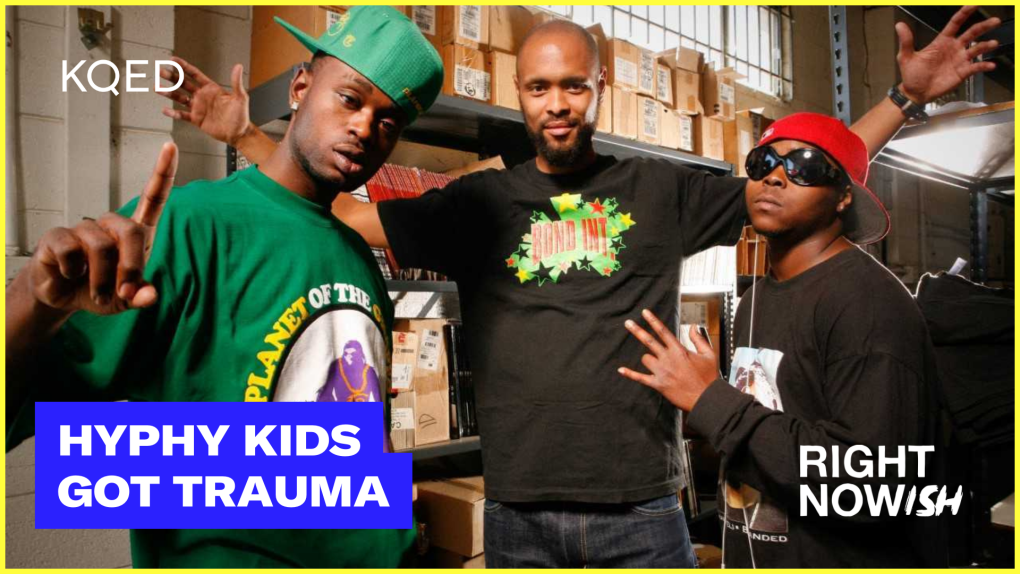
"caption": "East Oakland's Beeda Weeda and Tajai Massey stand alongside West Oakland's J-Stalin, posing for a photo in the warehouse of a building owned by the legendary Hieroglyphics hip-hop crew.",
"description": "Rapper Beeda Weeda wears a green baseball hat turned backwards and a matching green shirt, as he stands alongside Tajai Massey who is wearing a black shirt. On the far right is J-Stalin, wearing a red baseball hat, dark sunglasses and a black shirt.",
"title": "East Oakland's Beeda Weeda and Tajai Massey stand alongside West Oakland's J-Stalin, posing for a photo in the warehouse of a building owned by the legendary Hieroglyphics hip-hop crew.",
"credit": "Alexander Warnow",
"status": "inherit",
"altTag": "East Oakland's Beeda Weeda and Tajai Massey stand alongside West Oakland's J-Stalin, posing for a photo in the warehouse of a building owned by the legendary Hieroglyphics hip-hop crew.",
"isLoading": false,
"fetchFailed": false
},
"arts_13935132": {
"type": "attachments",
"id": "arts_13935132",
"meta": {
"index": "attachments_1716263798",
"site": "arts",
"id": "13935132",
"found": true
},
"parent": 13934874,
"imgSizes": {
"twentyfourteen-full-width": {
"file": "https://ww2.kqed.org/app/uploads/sites/2/2023/09/HKGT.16x9-1038x576.jpg",
"width": 1038,
"mimeType": "image/jpeg",
"height": 576
},
"thumbnail": {
"file": "https://ww2.kqed.org/app/uploads/sites/2/2023/09/HKGT.16x9-160x90.jpg",
"width": 160,
"mimeType": "image/jpeg",
"height": 90
},
"post-thumbnail": {
"file": "https://ww2.kqed.org/app/uploads/sites/2/2023/09/HKGT.16x9-672x372.jpg",
"width": 672,
"mimeType": "image/jpeg",
"height": 372
},
"kqedFullSize": {
"file": "https://ww2.kqed.org/app/uploads/sites/2/2023/09/HKGT.16x9-scaled.jpg",
"width": 2560,
"height": 1440
},
"2048x2048": {
"file": "https://ww2.kqed.org/app/uploads/sites/2/2023/09/HKGT.16x9-2048x1152.jpg",
"width": 2048,
"mimeType": "image/jpeg",
"height": 1152
},
"large": {
"file": "https://ww2.kqed.org/app/uploads/sites/2/2023/09/HKGT.16x9-1020x574.jpg",
"width": 1020,
"mimeType": "image/jpeg",
"height": 574
},
"1536x1536": {
"file": "https://ww2.kqed.org/app/uploads/sites/2/2023/09/HKGT.16x9-1536x864.jpg",
"width": 1536,
"mimeType": "image/jpeg",
"height": 864
},
"full-width": {
"file": "https://ww2.kqed.org/app/uploads/sites/2/2023/09/HKGT.16x9-1920x1080.jpg",
"width": 1920,
"mimeType": "image/jpeg",
"height": 1080
},
"medium": {
"file": "https://ww2.kqed.org/app/uploads/sites/2/2023/09/HKGT.16x9-800x450.jpg",
"width": 800,
"mimeType": "image/jpeg",
"height": 450
},
"medium_large": {
"file": "https://ww2.kqed.org/app/uploads/sites/2/2023/09/HKGT.16x9-768x432.jpg",
"width": 768,
"mimeType": "image/jpeg",
"height": 432
}
},
"publishDate": 1695251125,
"modified": 1695251186,
"caption": null,
"description": "Hyphy Kids Got Trauma, the podcast series from Rightnowish.",
"title": "HKGT.16x9",
"credit": null,
"status": "inherit",
"altTag": "The words Rightnowish Presents Hyphy Kids Got Trauma are airbrushed on a white t-shirt over a yellow background.",
"isLoading": false,
"fetchFailed": false
},
"arts_13935162": {
"type": "attachments",
"id": "arts_13935162",
"meta": {
"index": "attachments_1716263798",
"site": "arts",
"id": "13935162",
"found": true
},
"parent": 13932120,
"imgSizes": {
"thumbnail": {
"file": "https://ww2.kqed.org/app/uploads/sites/2/2023/09/31240_128704903824715_6362977_n-1-160x90.jpg",
"width": 160,
"mimeType": "image/jpeg",
"height": 90
},
"post-thumbnail": {
"file": "https://ww2.kqed.org/app/uploads/sites/2/2023/09/31240_128704903824715_6362977_n-1-672x372.jpg",
"width": 672,
"mimeType": "image/jpeg",
"height": 372
},
"kqedFullSize": {
"file": "https://ww2.kqed.org/app/uploads/sites/2/2023/09/31240_128704903824715_6362977_n-1.jpg",
"width": 720,
"height": 405
}
},
"publishDate": 1695255221,
"modified": 1695403007,
"caption": "Alphabet Soup's blend of acid jazz and hip-hop took them to big stages, including the legendary Monterey Jazz Festival.",
"description": null,
"title": "31240_128704903824715_6362977_n",
"credit": "Dan Burger",
"status": "inherit",
"altTag": "Alphabet Soup, composed of five musicians and an MC, pose in front of a marquee with their band name on it.",
"isLoading": false,
"fetchFailed": false
},
"arts_13935108": {
"type": "attachments",
"id": "arts_13935108",
"meta": {
"index": "attachments_1716263798",
"site": "arts",
"id": "13935108",
"found": true
},
"parent": 13935024,
"imgSizes": {
"twentyfourteen-full-width": {
"file": "https://ww2.kqed.org/app/uploads/sites/2/2023/09/hip-hop-herstory-square-1038x576.jpg",
"width": 1038,
"mimeType": "image/jpeg",
"height": 576
},
"thumbnail": {
"file": "https://ww2.kqed.org/app/uploads/sites/2/2023/09/hip-hop-herstory-square-160x157.jpg",
"width": 160,
"mimeType": "image/jpeg",
"height": 157
},
"post-thumbnail": {
"file": "https://ww2.kqed.org/app/uploads/sites/2/2023/09/hip-hop-herstory-square-672x372.jpg",
"width": 672,
"mimeType": "image/jpeg",
"height": 372
},
"kqedFullSize": {
"file": "https://ww2.kqed.org/app/uploads/sites/2/2023/09/hip-hop-herstory-square.jpg",
"width": 1280,
"height": 1254
},
"large": {
"file": "https://ww2.kqed.org/app/uploads/sites/2/2023/09/hip-hop-herstory-square-1020x999.jpg",
"width": 1020,
"mimeType": "image/jpeg",
"height": 999
},
"medium": {
"file": "https://ww2.kqed.org/app/uploads/sites/2/2023/09/hip-hop-herstory-square-800x784.jpg",
"width": 800,
"mimeType": "image/jpeg",
"height": 784
},
"medium_large": {
"file": "https://ww2.kqed.org/app/uploads/sites/2/2023/09/hip-hop-herstory-square-768x752.jpg",
"width": 768,
"mimeType": "image/jpeg",
"height": 752
}
},
"publishDate": 1695243647,
"modified": 1695243953,
"caption": "From left: Tia NoMore, Stoni, Alien Mac Kitty and RyanNicole at The Commons at KQED on Sept. 14, 2023. ",
"description": null,
"title": "hip-hop herstory square",
"credit": "Estefany Gonzalez for KQED",
"status": "inherit",
"altTag": null,
"isLoading": false,
"fetchFailed": false
},
"arts_13935089": {
"type": "attachments",
"id": "arts_13935089",
"meta": {
"index": "attachments_1716263798",
"site": "arts",
"id": "13935089",
"found": true
},
"parent": 13935024,
"imgSizes": {
"twentyfourteen-full-width": {
"file": "https://ww2.kqed.org/app/uploads/sites/2/2023/09/Hip-Hop-Herstory-Celebrating-Bay-Area-Women-at-KQED-Headquarters-on-Thursday-September-14-Estefany-Gonzalez-071-1038x576.jpg",
"width": 1038,
"mimeType": "image/jpeg",
"height": 576
},
"thumbnail": {
"file": "https://ww2.kqed.org/app/uploads/sites/2/2023/09/Hip-Hop-Herstory-Celebrating-Bay-Area-Women-at-KQED-Headquarters-on-Thursday-September-14-Estefany-Gonzalez-071-160x107.jpg",
"width": 160,
"mimeType": "image/jpeg",
"height": 107
},
"post-thumbnail": {
"file": "https://ww2.kqed.org/app/uploads/sites/2/2023/09/Hip-Hop-Herstory-Celebrating-Bay-Area-Women-at-KQED-Headquarters-on-Thursday-September-14-Estefany-Gonzalez-071-672x372.jpg",
"width": 672,
"mimeType": "image/jpeg",
"height": 372
},
"kqedFullSize": {
"file": "https://ww2.kqed.org/app/uploads/sites/2/2023/09/Hip-Hop-Herstory-Celebrating-Bay-Area-Women-at-KQED-Headquarters-on-Thursday-September-14-Estefany-Gonzalez-071.jpg",
"width": 1920,
"height": 1280
},
"large": {
"file": "https://ww2.kqed.org/app/uploads/sites/2/2023/09/Hip-Hop-Herstory-Celebrating-Bay-Area-Women-at-KQED-Headquarters-on-Thursday-September-14-Estefany-Gonzalez-071-1020x680.jpg",
"width": 1020,
"mimeType": "image/jpeg",
"height": 680
},
"1536x1536": {
"file": "https://ww2.kqed.org/app/uploads/sites/2/2023/09/Hip-Hop-Herstory-Celebrating-Bay-Area-Women-at-KQED-Headquarters-on-Thursday-September-14-Estefany-Gonzalez-071-1536x1024.jpg",
"width": 1536,
"mimeType": "image/jpeg",
"height": 1024
},
"medium": {
"file": "https://ww2.kqed.org/app/uploads/sites/2/2023/09/Hip-Hop-Herstory-Celebrating-Bay-Area-Women-at-KQED-Headquarters-on-Thursday-September-14-Estefany-Gonzalez-071-800x533.jpg",
"width": 800,
"mimeType": "image/jpeg",
"height": 533
},
"medium_large": {
"file": "https://ww2.kqed.org/app/uploads/sites/2/2023/09/Hip-Hop-Herstory-Celebrating-Bay-Area-Women-at-KQED-Headquarters-on-Thursday-September-14-Estefany-Gonzalez-071-768x512.jpg",
"width": 768,
"mimeType": "image/jpeg",
"height": 512
}
},
"publishDate": 1695241825,
"modified": 1695242043,
"caption": "From left: Tia NoMore, Stoni, Alien Mac Kitty, RyanNicole and KQED's Nastia Voynovskaya on stage at The Commons on Sept. 14, 2023. ",
"description": null,
"title": "Hip Hop Herstory Celebrating Bay Area Women at KQED Headquarters on Thursday, September 14 (Estefany Gonzalez) 071",
"credit": "Estefany Gonzalez for KQED",
"status": "inherit",
"altTag": "Five women, four hip-hop artists and a journalist, pose together on stage. The artists hold bouquets and everyone is smiling.",
"isLoading": false,
"fetchFailed": false
},
"arts_13934781": {
"type": "attachments",
"id": "arts_13934781",
"meta": {
"index": "attachments_1716263798",
"site": "arts",
"id": "13934781",
"found": true
},
"parent": 0,
"imgSizes": {
"twentyfourteen-full-width": {
"file": "https://ww2.kqed.org/app/uploads/sites/2/2023/09/KimmieFresh.Headshot.1986.SQUARE-976x576.jpg",
"width": 976,
"mimeType": "image/jpeg",
"height": 576
},
"thumbnail": {
"file": "https://ww2.kqed.org/app/uploads/sites/2/2023/09/KimmieFresh.Headshot.1986.SQUARE-160x160.jpg",
"width": 160,
"mimeType": "image/jpeg",
"height": 160
},
"post-thumbnail": {
"file": "https://ww2.kqed.org/app/uploads/sites/2/2023/09/KimmieFresh.Headshot.1986.SQUARE-672x372.jpg",
"width": 672,
"mimeType": "image/jpeg",
"height": 372
},
"kqedFullSize": {
"file": "https://ww2.kqed.org/app/uploads/sites/2/2023/09/KimmieFresh.Headshot.1986.SQUARE.jpg",
"width": 976,
"height": 976
},
"medium": {
"file": "https://ww2.kqed.org/app/uploads/sites/2/2023/09/KimmieFresh.Headshot.1986.SQUARE-800x800.jpg",
"width": 800,
"mimeType": "image/jpeg",
"height": 800
},
"medium_large": {
"file": "https://ww2.kqed.org/app/uploads/sites/2/2023/09/KimmieFresh.Headshot.1986.SQUARE-768x768.jpg",
"width": 768,
"mimeType": "image/jpeg",
"height": 768
}
},
"publishDate": 1694648339,
"modified": 1694648389,
"caption": "Kimmie Fresh, one of the very first female rappers in the Bay Area to release a full-length album, 'The Real Freaky Tales: The Girls' Story,' in 1988.",
"description": null,
"title": "Kimmie Fresh 1988",
"credit": "Larry Henderson/75 Girls Records",
"status": "inherit",
"altTag": "A Black woman in a large green and white jacket, hoop earrings, and white Mercedes-Benz cap.",
"isLoading": false,
"fetchFailed": false
},
"arts_13934780": {
"type": "attachments",
"id": "arts_13934780",
"meta": {
"index": "attachments_1716263798",
"site": "arts",
"id": "13934780",
"found": true
},
"parent": 13934715,
"imgSizes": {
"thumbnail": {
"file": "https://ww2.kqed.org/app/uploads/sites/2/2023/09/KimmieFresh.1986.MAIN_.16x9-160x90.jpg",
"width": 160,
"mimeType": "image/jpeg",
"height": 90
},
"post-thumbnail": {
"file": "https://ww2.kqed.org/app/uploads/sites/2/2023/09/KimmieFresh.1986.MAIN_.16x9-672x372.jpg",
"width": 672,
"mimeType": "image/jpeg",
"height": 372
},
"kqedFullSize": {
"file": "https://ww2.kqed.org/app/uploads/sites/2/2023/09/KimmieFresh.1986.MAIN_.16x9.jpg",
"width": 976,
"height": 549
},
"medium": {
"file": "https://ww2.kqed.org/app/uploads/sites/2/2023/09/KimmieFresh.1986.MAIN_.16x9-800x450.jpg",
"width": 800,
"mimeType": "image/jpeg",
"height": 450
},
"medium_large": {
"file": "https://ww2.kqed.org/app/uploads/sites/2/2023/09/KimmieFresh.1986.MAIN_.16x9-768x432.jpg",
"width": 768,
"mimeType": "image/jpeg",
"height": 432
}
},
"publishDate": 1694648100,
"modified": 1694648440,
"caption": "Kimmie Fresh, one of the very first female rappers in the Bay Area to release a full-length album, 'The Real Freaky Tales: The Girls' Story,' in 1988.",
"description": null,
"title": "KimmieFresh.1986.MAIN.16x9",
"credit": "Larry Henderson/75 Girls Records",
"status": "inherit",
"altTag": "A Black woman in a large green and white jacket, hoop earrings, and white Mercedes-Benz cap.",
"isLoading": false,
"fetchFailed": false
},
"arts_13934348": {
"type": "attachments",
"id": "arts_13934348",
"meta": {
"index": "attachments_1716263798",
"site": "arts",
"id": "13934348",
"found": true
},
"parent": 13934324,
"imgSizes": {
"twentyfourteen-full-width": {
"file": "https://ww2.kqed.org/app/uploads/sites/2/2023/09/DSC00271-1038x576.jpg",
"width": 1038,
"mimeType": "image/jpeg",
"height": 576
},
"thumbnail": {
"file": "https://ww2.kqed.org/app/uploads/sites/2/2023/09/DSC00271-160x120.jpg",
"width": 160,
"mimeType": "image/jpeg",
"height": 120
},
"post-thumbnail": {
"file": "https://ww2.kqed.org/app/uploads/sites/2/2023/09/DSC00271-672x372.jpg",
"width": 672,
"mimeType": "image/jpeg",
"height": 372
},
"kqedFullSize": {
"file": "https://ww2.kqed.org/app/uploads/sites/2/2023/09/DSC00271.jpg",
"width": 1920,
"height": 1440
},
"large": {
"file": "https://ww2.kqed.org/app/uploads/sites/2/2023/09/DSC00271-1020x765.jpg",
"width": 1020,
"mimeType": "image/jpeg",
"height": 765
},
"1536x1536": {
"file": "https://ww2.kqed.org/app/uploads/sites/2/2023/09/DSC00271-1536x1152.jpg",
"width": 1536,
"mimeType": "image/jpeg",
"height": 1152
},
"medium": {
"file": "https://ww2.kqed.org/app/uploads/sites/2/2023/09/DSC00271-800x600.jpg",
"width": 800,
"mimeType": "image/jpeg",
"height": 600
},
"medium_large": {
"file": "https://ww2.kqed.org/app/uploads/sites/2/2023/09/DSC00271-768x576.jpg",
"width": 768,
"mimeType": "image/jpeg",
"height": 576
}
},
"publishDate": 1693960161,
"modified": 1694193358,
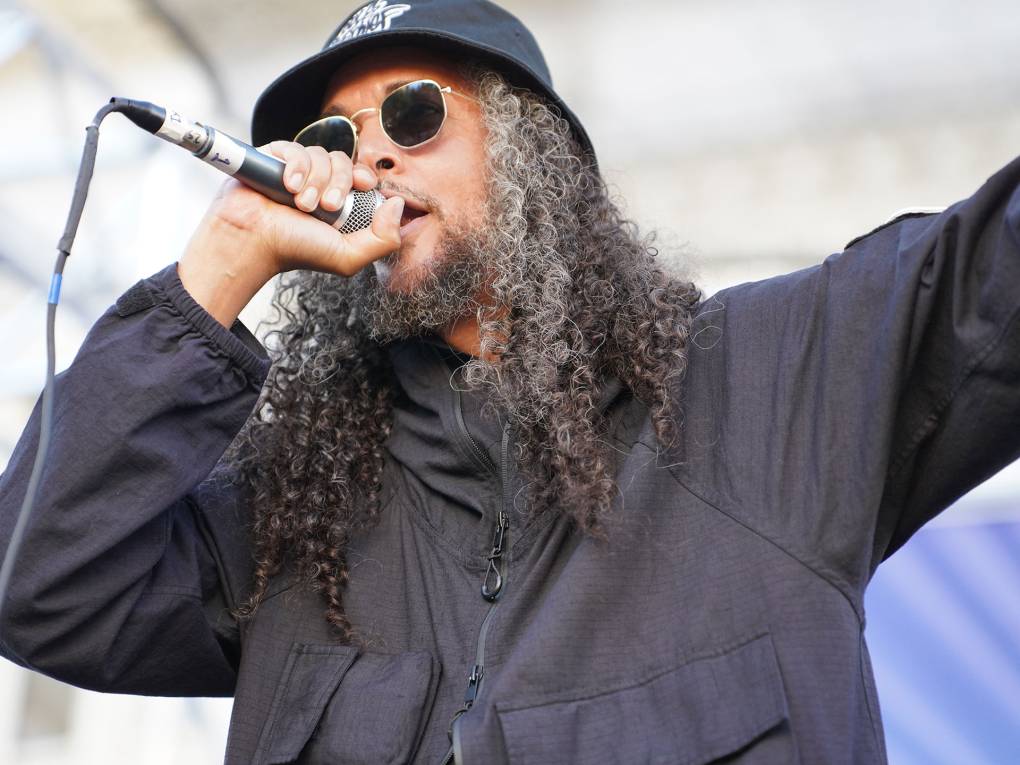
"caption": "Opio of Souls of Mischief onstage at Hiero Day in Frank Ogawa Plaza, Oakland, Sept. 4, 2023.",
"description": null,
"title": "DSC00271",
"credit": "Eric Arnold/KQED",
"status": "inherit",
"altTag": null,
"isLoading": false,
"fetchFailed": false
},
"arts_13934341": {
"type": "attachments",
"id": "arts_13934341",
"meta": {
"index": "attachments_1716263798",
"site": "arts",
"id": "13934341",
"found": true
},
"parent": 0,
"imgSizes": {
"twentyfourteen-full-width": {
"file": "https://ww2.kqed.org/app/uploads/sites/2/2023/09/HieroDay2023.MAIN_-1038x576.jpg",
"width": 1038,
"mimeType": "image/jpeg",
"height": 576
},
"thumbnail": {
"file": "https://ww2.kqed.org/app/uploads/sites/2/2023/09/HieroDay2023.MAIN_-160x90.jpg",
"width": 160,
"mimeType": "image/jpeg",
"height": 90
},
"post-thumbnail": {
"file": "https://ww2.kqed.org/app/uploads/sites/2/2023/09/HieroDay2023.MAIN_-672x372.jpg",
"width": 672,
"mimeType": "image/jpeg",
"height": 372
},
"kqedFullSize": {
"file": "https://ww2.kqed.org/app/uploads/sites/2/2023/09/HieroDay2023.MAIN_.jpg",
"width": 1920,
"height": 1080
},
"large": {
"file": "https://ww2.kqed.org/app/uploads/sites/2/2023/09/HieroDay2023.MAIN_-1020x574.jpg",
"width": 1020,
"mimeType": "image/jpeg",
"height": 574
},
"1536x1536": {
"file": "https://ww2.kqed.org/app/uploads/sites/2/2023/09/HieroDay2023.MAIN_-1536x864.jpg",
"width": 1536,
"mimeType": "image/jpeg",
"height": 864
},
"medium": {
"file": "https://ww2.kqed.org/app/uploads/sites/2/2023/09/HieroDay2023.MAIN_-800x450.jpg",
"width": 800,
"mimeType": "image/jpeg",
"height": 450
},
"medium_large": {
"file": "https://ww2.kqed.org/app/uploads/sites/2/2023/09/HieroDay2023.MAIN_-768x432.jpg",
"width": 768,
"mimeType": "image/jpeg",
"height": 432
}
},
"publishDate": 1693958875,
"modified": 1693959326,
"caption": "Common on stage at Hiero Day in Frank Ogawa Plaza, Oakland, Sept. 4, 2023.",
"description": null,
"title": "HieroDay2023.MAIN",
"credit": "Eric Arnold/KQED",
"status": "inherit",
"altTag": null,
"isLoading": false,
"fetchFailed": false
},
"arts_13934056": {
"type": "attachments",
"id": "arts_13934056",
"meta": {
"index": "attachments_1716263798",
"site": "arts",
"id": "13934056",
"found": true
},
"parent": 13934043,
"imgSizes": {
"thumbnail": {
"file": "https://ww2.kqed.org/app/uploads/sites/2/2023/08/Tupac.Steinberg.SQUARE.crop_-160x160.jpg",
"width": 160,
"mimeType": "image/jpeg",
"height": 160
},
"post-thumbnail": {
"file": "https://ww2.kqed.org/app/uploads/sites/2/2023/08/Tupac.Steinberg.SQUARE.crop_-445x372.jpg",
"width": 445,
"mimeType": "image/jpeg",
"height": 372
},
"kqedFullSize": {
"file": "https://ww2.kqed.org/app/uploads/sites/2/2023/08/Tupac.Steinberg.SQUARE.crop_.jpg",
"width": 445,
"height": 445
}
},
"publishDate": 1693418397,
"modified": 1693418441,
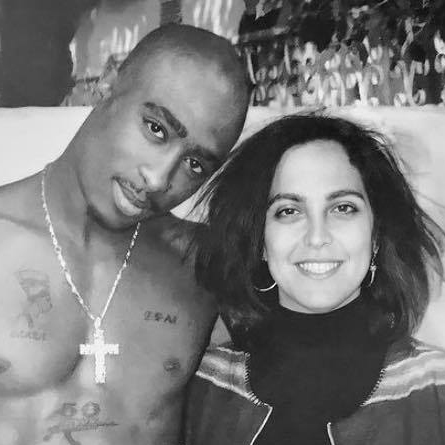
"caption": "Tupac Shakur and Leila Steinberg. Steinberg met Shakur when he was 17, and was his manager from 1989 to 1993. ",
"description": null,
"title": "Tupac.Steinberg.SQUARE.crop",
"credit": "Kathy Crawford",
"status": "inherit",
"altTag": "A shirtless black male with a cross necklace stands with a shorter white woman in jeans and striped top.",
"isLoading": false,
"fetchFailed": false
},
"arts_13933652": {
"type": "attachments",
"id": "arts_13933652",
"meta": {
"index": "attachments_1716263798",
"site": "arts",
"id": "13933652",
"found": true
},
"parent": 0,
"imgSizes": {
"twentyfourteen-full-width": {
"file": "https://ww2.kqed.org/app/uploads/sites/2/2023/08/CMC.Main_.Chuy_.AK_-1038x576.jpg",
"width": 1038,
"mimeType": "image/jpeg",
"height": 576
},
"thumbnail": {
"file": "https://ww2.kqed.org/app/uploads/sites/2/2023/08/CMC.Main_.Chuy_.AK_-160x90.jpg",
"width": 160,
"mimeType": "image/jpeg",
"height": 90
},
"post-thumbnail": {
"file": "https://ww2.kqed.org/app/uploads/sites/2/2023/08/CMC.Main_.Chuy_.AK_-672x372.jpg",
"width": 672,
"mimeType": "image/jpeg",
"height": 372
},
"kqedFullSize": {
"file": "https://ww2.kqed.org/app/uploads/sites/2/2023/08/CMC.Main_.Chuy_.AK_-scaled.jpg",
"width": 2560,
"height": 1440
},
"2048x2048": {
"file": "https://ww2.kqed.org/app/uploads/sites/2/2023/08/CMC.Main_.Chuy_.AK_-2048x1152.jpg",
"width": 2048,
"mimeType": "image/jpeg",
"height": 1152
},
"large": {
"file": "https://ww2.kqed.org/app/uploads/sites/2/2023/08/CMC.Main_.Chuy_.AK_-1020x574.jpg",
"width": 1020,
"mimeType": "image/jpeg",
"height": 574
},
"1536x1536": {
"file": "https://ww2.kqed.org/app/uploads/sites/2/2023/08/CMC.Main_.Chuy_.AK_-1536x864.jpg",
"width": 1536,
"mimeType": "image/jpeg",
"height": 864
},
"full-width": {
"file": "https://ww2.kqed.org/app/uploads/sites/2/2023/08/CMC.Main_.Chuy_.AK_-1920x1080.jpg",
"width": 1920,
"mimeType": "image/jpeg",
"height": 1080
},
"medium": {
"file": "https://ww2.kqed.org/app/uploads/sites/2/2023/08/CMC.Main_.Chuy_.AK_-800x450.jpg",
"width": 800,
"mimeType": "image/jpeg",
"height": 450
},
"medium_large": {
"file": "https://ww2.kqed.org/app/uploads/sites/2/2023/08/CMC.Main_.Chuy_.AK_-768x432.jpg",
"width": 768,
"mimeType": "image/jpeg",
"height": 432
}
},
"publishDate": 1692734757,
"modified": 1692734811,
"caption": "Andy Kawanami and Chuy Gomez (left to right) hosted 'Hip Hop Friday' on the California Music Channel in the '90s. The channel became a crucial outlet for Bay Area rappers on their way to national success. ",
"description": null,
"title": "CMC.Main.Chuy.AK",
"credit": "Courtesy Andy Kawanami",
"status": "inherit",
"altTag": "An old film photo of an Asian American young man and a Mexican American young man behind the scenes in a television studio.",
"isLoading": false,
"fetchFailed": false
},
"arts_13932994": {
"type": "attachments",
"id": "arts_13932994",
"meta": {
"index": "attachments_1716263798",
"site": "arts",
"id": "13932994",
"found": true
},
"parent": 13932993,
"imgSizes": {
"twentyfourteen-full-width": {
"file": "https://ww2.kqed.org/app/uploads/sites/2/2023/08/hiphop50_bayarea2_wide-6078aa39767e231e51c22ed19eb00cc4bded045f-1038x576.jpg",
"width": 1038,
"mimeType": "image/jpeg",
"height": 576
},
"thumbnail": {
"file": "https://ww2.kqed.org/app/uploads/sites/2/2023/08/hiphop50_bayarea2_wide-6078aa39767e231e51c22ed19eb00cc4bded045f-160x90.jpg",
"width": 160,
"mimeType": "image/jpeg",
"height": 90
},
"post-thumbnail": {
"file": "https://ww2.kqed.org/app/uploads/sites/2/2023/08/hiphop50_bayarea2_wide-6078aa39767e231e51c22ed19eb00cc4bded045f-672x372.jpg",
"width": 672,
"mimeType": "image/jpeg",
"height": 372
},
"kqedFullSize": {
"file": "https://ww2.kqed.org/app/uploads/sites/2/2023/08/hiphop50_bayarea2_wide-6078aa39767e231e51c22ed19eb00cc4bded045f.jpg",
"width": 1916,
"height": 1078
},
"large": {
"file": "https://ww2.kqed.org/app/uploads/sites/2/2023/08/hiphop50_bayarea2_wide-6078aa39767e231e51c22ed19eb00cc4bded045f-1020x574.jpg",
"width": 1020,
"mimeType": "image/jpeg",
"height": 574
},
"1536x1536": {
"file": "https://ww2.kqed.org/app/uploads/sites/2/2023/08/hiphop50_bayarea2_wide-6078aa39767e231e51c22ed19eb00cc4bded045f-1536x864.jpg",
"width": 1536,
"mimeType": "image/jpeg",
"height": 864
},
"medium": {
"file": "https://ww2.kqed.org/app/uploads/sites/2/2023/08/hiphop50_bayarea2_wide-6078aa39767e231e51c22ed19eb00cc4bded045f-800x450.jpg",
"width": 800,
"mimeType": "image/jpeg",
"height": 450
},
"medium_large": {
"file": "https://ww2.kqed.org/app/uploads/sites/2/2023/08/hiphop50_bayarea2_wide-6078aa39767e231e51c22ed19eb00cc4bded045f-768x432.jpg",
"width": 768,
"mimeType": "image/jpeg",
"height": 432
}
},
"publishDate": 1691724532,
"modified": 1691724532,
"caption": null,
"description": null,
"title": "E-40, Lil B, Too $hort and Kamaiyah. Collage by Jackie Lay / NPR.",
"credit": null,
"status": "inherit",
"altTag": null,
"isLoading": false,
"fetchFailed": false
},
"arts_13932908": {
"type": "attachments",
"id": "arts_13932908",
"meta": {
"index": "attachments_1716263798",
"site": "arts",
"id": "13932908",
"found": true
},
"parent": 0,
"imgSizes": {
"twentyfourteen-full-width": {
"file": "https://ww2.kqed.org/app/uploads/sites/2/2023/08/Gary_6.SQUARE-1038x576.jpg",
"width": 1038,
"mimeType": "image/jpeg",
"height": 576
},
"thumbnail": {
"file": "https://ww2.kqed.org/app/uploads/sites/2/2023/08/Gary_6.SQUARE-160x160.jpg",
"width": 160,
"mimeType": "image/jpeg",
"height": 160
},
"post-thumbnail": {
"file": "https://ww2.kqed.org/app/uploads/sites/2/2023/08/Gary_6.SQUARE-672x372.jpg",
"width": 672,
"mimeType": "image/jpeg",
"height": 372
},
"kqedFullSize": {
"file": "https://ww2.kqed.org/app/uploads/sites/2/2023/08/Gary_6.SQUARE.jpg",
"width": 1080,
"height": 1080
},
"large": {
"file": "https://ww2.kqed.org/app/uploads/sites/2/2023/08/Gary_6.SQUARE-1020x1020.jpg",
"width": 1020,
"mimeType": "image/jpeg",
"height": 1020
},
"medium": {
"file": "https://ww2.kqed.org/app/uploads/sites/2/2023/08/Gary_6.SQUARE-800x800.jpg",
"width": 800,
"mimeType": "image/jpeg",
"height": 800
},
"medium_large": {
"file": "https://ww2.kqed.org/app/uploads/sites/2/2023/08/Gary_6.SQUARE-768x768.jpg",
"width": 768,
"mimeType": "image/jpeg",
"height": 768
}
},
"publishDate": 1691645109,
"modified": 1691646646,
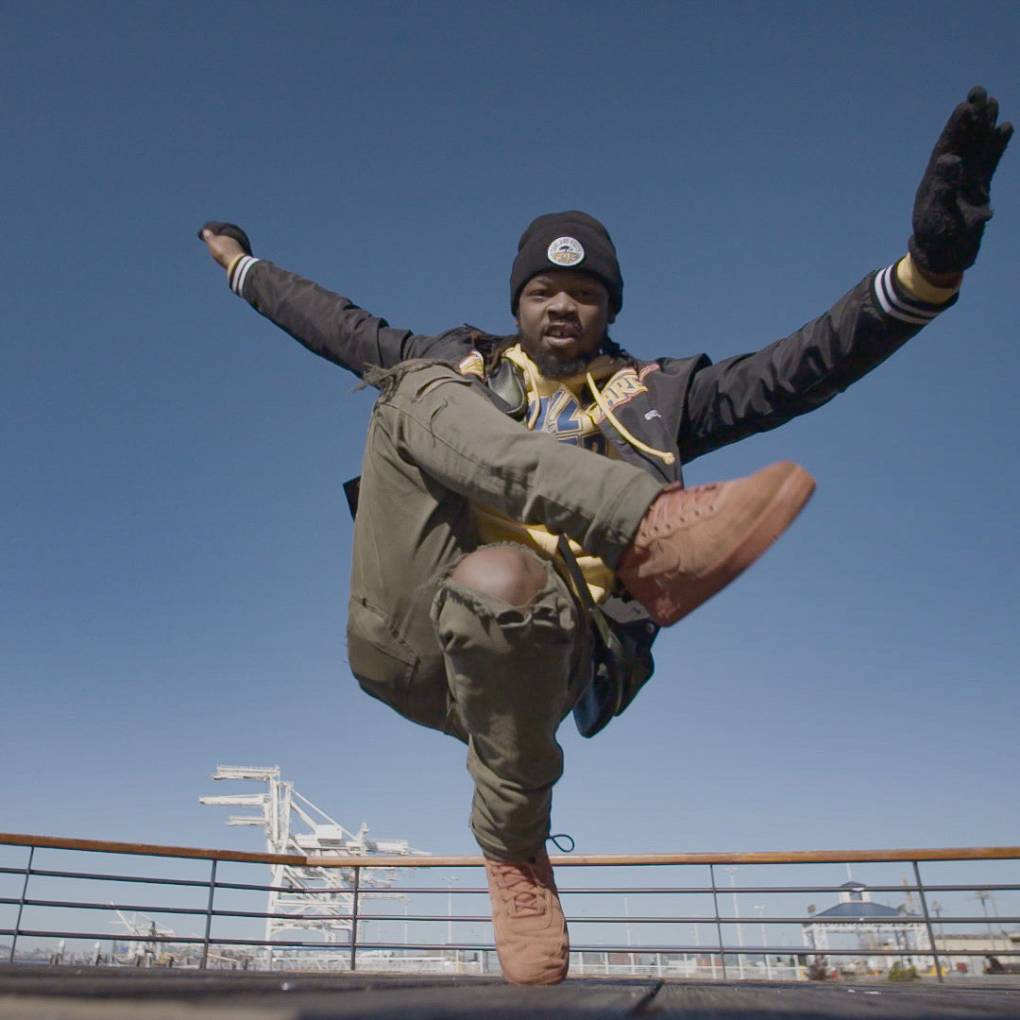
"caption": "Icecold 3000 of the Turf Fienz dances with the Port of Oakland in the background. ",
"description": null,
"title": "Gary_6.SQUARE",
"credit": "Elie M. Khadra",
"status": "inherit",
"altTag": null,
"isLoading": false,
"fetchFailed": false
},
"arts_13932907": {
"type": "attachments",
"id": "arts_13932907",
"meta": {
"index": "attachments_1716263798",
"site": "arts",
"id": "13932907",
"found": true
},
"parent": 13932887,
"imgSizes": {
"twentyfourteen-full-width": {
"file": "https://ww2.kqed.org/app/uploads/sites/2/2023/08/Gary_6-1038x576.jpg",
"width": 1038,
"mimeType": "image/jpeg",
"height": 576
},
"thumbnail": {
"file": "https://ww2.kqed.org/app/uploads/sites/2/2023/08/Gary_6-160x90.jpg",
"width": 160,
"mimeType": "image/jpeg",
"height": 90
},
"post-thumbnail": {
"file": "https://ww2.kqed.org/app/uploads/sites/2/2023/08/Gary_6-672x372.jpg",
"width": 672,
"mimeType": "image/jpeg",
"height": 372
},
"kqedFullSize": {
"file": "https://ww2.kqed.org/app/uploads/sites/2/2023/08/Gary_6.jpg",
"width": 1920,
"height": 1080
},
"large": {
"file": "https://ww2.kqed.org/app/uploads/sites/2/2023/08/Gary_6-1020x574.jpg",
"width": 1020,
"mimeType": "image/jpeg",
"height": 574
},
"1536x1536": {
"file": "https://ww2.kqed.org/app/uploads/sites/2/2023/08/Gary_6-1536x864.jpg",
"width": 1536,
"mimeType": "image/jpeg",
"height": 864
},
"medium": {
"file": "https://ww2.kqed.org/app/uploads/sites/2/2023/08/Gary_6-800x450.jpg",
"width": 800,
"mimeType": "image/jpeg",
"height": 450
},
"medium_large": {
"file": "https://ww2.kqed.org/app/uploads/sites/2/2023/08/Gary_6-768x432.jpg",
"width": 768,
"mimeType": "image/jpeg",
"height": 432
}
},
"publishDate": 1691645102,
"modified": 1691647336,
"caption": "Garion Morgan, a.k.a. Icecold 3000 of the Turf Fienz, dancing near the Port of Oakland in 2019. ",
"description": null,
"title": "Gary_6",
"credit": "Elie M. Khadra",
"status": "inherit",
"altTag": "Garion Morgan, a.k.a. Icecold 3000 of the Turf Fienz, dancing near the Port of Oakland in 2019.",
"isLoading": false,
"fetchFailed": false
},
"arts_13932536": {
"type": "attachments",
"id": "arts_13932536",
"meta": {
"index": "attachments_1716263798",
"site": "arts",
"id": "13932536",
"found": true
},
"parent": 13932465,
"imgSizes": {
"twentyfourteen-full-width": {
"file": "https://ww2.kqed.org/app/uploads/sites/2/2023/08/Goapele.SQUARE.thumb_-1038x576.jpg",
"width": 1038,
"mimeType": "image/jpeg",
"height": 576
},
"thumbnail": {
"file": "https://ww2.kqed.org/app/uploads/sites/2/2023/08/Goapele.SQUARE.thumb_-160x160.jpg",
"width": 160,
"mimeType": "image/jpeg",
"height": 160
},
"post-thumbnail": {
"file": "https://ww2.kqed.org/app/uploads/sites/2/2023/08/Goapele.SQUARE.thumb_-672x372.jpg",
"width": 672,
"mimeType": "image/jpeg",
"height": 372
},
"kqedFullSize": {
"file": "https://ww2.kqed.org/app/uploads/sites/2/2023/08/Goapele.SQUARE.thumb_.jpg",
"width": 1763,
"height": 1763
},
"large": {
"file": "https://ww2.kqed.org/app/uploads/sites/2/2023/08/Goapele.SQUARE.thumb_-1020x1020.jpg",
"width": 1020,
"mimeType": "image/jpeg",
"height": 1020
},
"1536x1536": {
"file": "https://ww2.kqed.org/app/uploads/sites/2/2023/08/Goapele.SQUARE.thumb_-1536x1536.jpg",
"width": 1536,
"mimeType": "image/jpeg",
"height": 1536
},
"medium": {
"file": "https://ww2.kqed.org/app/uploads/sites/2/2023/08/Goapele.SQUARE.thumb_-800x800.jpg",
"width": 800,
"mimeType": "image/jpeg",
"height": 800
},
"medium_large": {
"file": "https://ww2.kqed.org/app/uploads/sites/2/2023/08/Goapele.SQUARE.thumb_-768x768.jpg",
"width": 768,
"mimeType": "image/jpeg",
"height": 768
}
},
"publishDate": 1690990735,
"modified": 1691023108,
"caption": "Goapele performs at the Days With Zahrah Getaway in Napa, May 2023.",
"description": null,
"title": "Goapele.SQUARE.thumb",
"credit": "Eric Arnold/KQED",
"status": "inherit",
"altTag": null,
"isLoading": false,
"fetchFailed": false
},
"arts_13932084": {
"type": "attachments",
"id": "arts_13932084",
"meta": {
"index": "attachments_1716263798",
"site": "arts",
"id": "13932084",
"found": true
},
"parent": 13932030,
"imgSizes": {
"twentyfourteen-full-width": {
"file": "https://ww2.kqed.org/app/uploads/sites/2/2023/07/dregs-panel-square-1038x576.jpg",
"width": 1038,
"mimeType": "image/jpeg",
"height": 576
},
"thumbnail": {
"file": "https://ww2.kqed.org/app/uploads/sites/2/2023/07/dregs-panel-square-160x160.jpg",
"width": 160,
"mimeType": "image/jpeg",
"height": 160
},
"post-thumbnail": {
"file": "https://ww2.kqed.org/app/uploads/sites/2/2023/07/dregs-panel-square-672x372.jpg",
"width": 672,
"mimeType": "image/jpeg",
"height": 372
},
"kqedFullSize": {
"file": "https://ww2.kqed.org/app/uploads/sites/2/2023/07/dregs-panel-square.jpg",
"width": 1920,
"height": 1920
},
"large": {
"file": "https://ww2.kqed.org/app/uploads/sites/2/2023/07/dregs-panel-square-1020x1020.jpg",
"width": 1020,
"mimeType": "image/jpeg",
"height": 1020
},
"1536x1536": {
"file": "https://ww2.kqed.org/app/uploads/sites/2/2023/07/dregs-panel-square-1536x1536.jpg",
"width": 1536,
"mimeType": "image/jpeg",
"height": 1536
},
"medium": {
"file": "https://ww2.kqed.org/app/uploads/sites/2/2023/07/dregs-panel-square-800x800.jpg",
"width": 800,
"mimeType": "image/jpeg",
"height": 800
},
"medium_large": {
"file": "https://ww2.kqed.org/app/uploads/sites/2/2023/07/dregs-panel-square-768x768.jpg",
"width": 768,
"mimeType": "image/jpeg",
"height": 768
}
},
"publishDate": 1690393988,
"modified": 1690394299,
"caption": "The Conscious Daughters' CMG, KQED's Nastia Voynovskaya, photographer D-Ray, graffiti artist Dime and Dregs One pose together at Dregs' History of the Bay Day Party at the Midway in San Francisco on July 9, 2023. ",
"description": null,
"title": "dregs-panel-square",
"credit": "\u003ca href='https://www.instagram.com/b707__/>@b707__\u003c/a>",
"status": "inherit",
"altTag": "A Black woman in her 50s, a white woman in her 30s, a mixed-race woman in her 40s, a Latina in her 40s and a Black man in his 30s pose together on a stage after filming a live podcast episode.",
"isLoading": false,
"fetchFailed": false
},
"arts_13932087": {
"type": "attachments",
"id": "arts_13932087",
"meta": {
"index": "attachments_1716263798",
"site": "arts",
"id": "13932087",
"found": true
},
"parent": 13932030,
"imgSizes": {
"twentyfourteen-full-width": {
"file": "https://ww2.kqed.org/app/uploads/sites/2/2023/07/dregs-pabel-16x9-1-1038x576.jpg",
"width": 1038,
"mimeType": "image/jpeg",
"height": 576
},
"thumbnail": {
"file": "https://ww2.kqed.org/app/uploads/sites/2/2023/07/dregs-pabel-16x9-1-160x90.jpg",
"width": 160,
"mimeType": "image/jpeg",
"height": 90
},
"post-thumbnail": {
"file": "https://ww2.kqed.org/app/uploads/sites/2/2023/07/dregs-pabel-16x9-1-672x372.jpg",
"width": 672,
"mimeType": "image/jpeg",
"height": 372
},
"kqedFullSize": {
"file": "https://ww2.kqed.org/app/uploads/sites/2/2023/07/dregs-pabel-16x9-1.jpg",
"width": 1920,
"height": 1080
},
"large": {
"file": "https://ww2.kqed.org/app/uploads/sites/2/2023/07/dregs-pabel-16x9-1-1020x574.jpg",
"width": 1020,
"mimeType": "image/jpeg",
"height": 574
},
"1536x1536": {
"file": "https://ww2.kqed.org/app/uploads/sites/2/2023/07/dregs-pabel-16x9-1-1536x864.jpg",
"width": 1536,
"mimeType": "image/jpeg",
"height": 864
},
"medium": {
"file": "https://ww2.kqed.org/app/uploads/sites/2/2023/07/dregs-pabel-16x9-1-800x450.jpg",
"width": 800,
"mimeType": "image/jpeg",
"height": 450
},
"medium_large": {
"file": "https://ww2.kqed.org/app/uploads/sites/2/2023/07/dregs-pabel-16x9-1-768x432.jpg",
"width": 768,
"mimeType": "image/jpeg",
"height": 432
}
},
"publishDate": 1690394316,
"modified": 1690394353,
"caption": "The Conscious Daughters' CMG, KQED's Nastia Voynovskaya, photographer D-Ray, graffiti artist Dime and Dregs One pose together at Dregs' History of the Bay Day Party at the Midway in San Francisco on July 9, 2023. ",
"description": null,
"title": "dregs-pabel-16x9",
"credit": "\u003ca href='https://www.instagram.com/b707__/>@b707__\u003c/a>",
"status": "inherit",
"altTag": null,
"isLoading": false,
"fetchFailed": false
}
},
"audioPlayerReducer": {
"postId": "stream_live",
"isPaused": true,
"isPlaying": false,
"pfsActive": false,
"pledgeModalIsOpen": true,
"playerDrawerIsOpen": false,
"liveAudioPlayStartedAt": 0,
"liveAudioPlayContext": ""
},
"authorsReducer": {
"byline_arts_13934043": {
"type": "authors",
"id": "byline_arts_13934043",
"meta": {
"override": true
},
"slug": "byline_arts_13934043",
"name": "Andrew Esensten",
"isLoading": false
},
"byline_arts_13933590": {
"type": "authors",
"id": "byline_arts_13933590",
"meta": {
"override": true
},
"slug": "byline_arts_13933590",
"name": "D'Andre Ball",
"isLoading": false
},
"byline_arts_13932993": {
"type": "authors",
"id": "byline_arts_13932993",
"meta": {
"override": true
},
"slug": "byline_arts_13932993",
"name": "Andrew Nosnitsky",
"isLoading": false
},
"agilbert": {
"type": "authors",
"id": "86",
"meta": {
"index": "authors_1716337520",
"id": "86",
"found": true
},
"name": "Andrew Gilbert",
"firstName": "Andrew",
"lastName": "Gilbert",
"slug": "agilbert",
"email": "jazzscribe@aol.com",
"display_author_email": false,
"staff_mastheads": [],
"title": "KQED Contributor",
"bio": "A Los Angeles native based in the Berkeley area since 1996, Andrew Gilbert covers jazz, international music and dance for KQED's \u003ci>California Report, \u003c/i>the\u003ci> Mercury News\u003c/i>, \u003ci>San Francisco Chronicle\u003c/i>, \u003ci>Berkeleyside.com\u003c/i>, and other publications. He is available for weddings and bar and bat mitzvahs. #jazzscribe",
"avatar": "https://secure.gravatar.com/avatar/d7bcafdbefdd39e9a68f88724ca616eb4e7a5a6bff9cdfb62de652a1e1751471?s=600&d=blank&r=g",
"twitter": null,
"bluesky": null,
"facebook": null,
"instagram": null,
"linkedin": null,
"sites": [
{
"site": "arts",
"roles": [
"Contributor",
"author"
]
},
{
"site": "news",
"roles": [
"author"
]
}
],
"headData": {
"title": "Andrew Gilbert | KQED",
"description": "KQED Contributor",
"ogImgSrc": "https://secure.gravatar.com/avatar/d7bcafdbefdd39e9a68f88724ca616eb4e7a5a6bff9cdfb62de652a1e1751471?s=600&d=blank&r=g",
"twImgSrc": "https://secure.gravatar.com/avatar/d7bcafdbefdd39e9a68f88724ca616eb4e7a5a6bff9cdfb62de652a1e1751471?s=600&d=blank&r=g"
},
"isLoading": false,
"link": "/author/agilbert"
},
"gmeline": {
"type": "authors",
"id": "185",
"meta": {
"index": "authors_1716337520",
"id": "185",
"found": true
},
"name": "Gabe Meline",
"firstName": "Gabe",
"lastName": "Meline",
"slug": "gmeline",
"email": "gmeline@kqed.org",
"display_author_email": true,
"staff_mastheads": [
"arts"
],
"title": "Senior Editor, KQED Arts & Culture",
"bio": "Gabe Meline entered journalism at age 15 making photocopied zines, and has since earned awards from the Edward R. Murrow Awards, the Society for Professional Journalists, the Online Journalism Awards, the Association of Alternative Newsweeklies and the California Newspaper Publishers Association. Prior to KQED, he was the editor of the \u003cem>North Bay Bohemian\u003c/em> and a touring musician. He lives with his wife and daughter in his hometown of Santa Rosa, CA.",
"avatar": "https://secure.gravatar.com/avatar/5bebe57be0d8bc2dd318934feb47299e2d2d10cba28d09d8d7afb389a2ce2bdd?s=600&d=blank&r=g",
"twitter": null,
"bluesky": null,
"facebook": null,
"instagram": null,
"linkedin": null,
"sites": [
{
"site": "",
"roles": [
"editor"
]
},
{
"site": "arts",
"roles": [
"administrator"
]
},
{
"site": "artschool",
"roles": [
"editor"
]
},
{
"site": "news",
"roles": [
"author"
]
},
{
"site": "pop",
"roles": [
"editor"
]
},
{
"site": "bayareabites",
"roles": [
"editor"
]
},
{
"site": "food",
"roles": [
"editor"
]
},
{
"site": "forum",
"roles": [
"administrator"
]
},
{
"site": "liveblog",
"roles": [
"editor"
]
},
{
"site": "hiphop",
"roles": [
"editor"
]
}
],
"headData": {
"title": "Gabe Meline | KQED",
"description": "Senior Editor, KQED Arts & Culture",
"ogImgSrc": "https://secure.gravatar.com/avatar/5bebe57be0d8bc2dd318934feb47299e2d2d10cba28d09d8d7afb389a2ce2bdd?s=600&d=blank&r=g",
"twImgSrc": "https://secure.gravatar.com/avatar/5bebe57be0d8bc2dd318934feb47299e2d2d10cba28d09d8d7afb389a2ce2bdd?s=600&d=blank&r=g"
},
"isLoading": false,
"link": "/author/gmeline"
},
"nvoynovskaya": {
"type": "authors",
"id": "11387",
"meta": {
"index": "authors_1716337520",
"id": "11387",
"found": true
},
"name": "Nastia Voynovskaya",
"firstName": "Nastia",
"lastName": "Voynovskaya",
"slug": "nvoynovskaya",
"email": "nvoynovskaya@kqed.org",
"display_author_email": false,
"staff_mastheads": [
"arts"
],
"title": "Editor and reporter",
"bio": "Nastia Voynovskaya is a reporter, editor and host at KQED Arts & Culture. She's been covering the arts in the Bay Area for over a decade, with a focus on music, queer culture, labor issues and grassroots organizing. She has edited KQED story series such as Trans Bay: A History of San Francisco's Gender-Diverse Community, and co-created KQED's Bay Area hip-hop history project, That's My Word. Nastia's work has been recognized by the Society of Professional Journalists and San Francisco Press Club. She regularly appears on podcasts and radio programs, including NPR's All Songs Considered, and hosts live events where music, culture and conversation meet.",
"avatar": "https://secure.gravatar.com/avatar/5025ee460e5a85d69ca20ea6c6f2f80d7e17795c828f61ea3aecfcd924e9042e?s=600&d=blank&r=g",
"twitter": null,
"bluesky": null,
"facebook": null,
"instagram": "https://www.instagram.com/nananastia/",
"linkedin": null,
"sites": [
{
"site": "",
"roles": [
"editor"
]
},
{
"site": "arts",
"roles": [
"administrator"
]
},
{
"site": "news",
"roles": [
"editor"
]
},
{
"site": "pop",
"roles": [
"administrator"
]
},
{
"site": "bayareabites",
"roles": [
"editor"
]
},
{
"site": "podcasts",
"roles": [
"editor"
]
},
{
"site": "hiphop",
"roles": [
"editor"
]
}
],
"headData": {
"title": "Nastia Voynovskaya | KQED",
"description": "Editor and reporter",
"ogImgSrc": "https://secure.gravatar.com/avatar/5025ee460e5a85d69ca20ea6c6f2f80d7e17795c828f61ea3aecfcd924e9042e?s=600&d=blank&r=g",
"twImgSrc": "https://secure.gravatar.com/avatar/5025ee460e5a85d69ca20ea6c6f2f80d7e17795c828f61ea3aecfcd924e9042e?s=600&d=blank&r=g"
},
"isLoading": false,
"link": "/author/nvoynovskaya"
},
"ogpenn": {
"type": "authors",
"id": "11491",
"meta": {
"index": "authors_1716337520",
"id": "11491",
"found": true
},
"name": "Pendarvis Harshaw",
"firstName": "Pendarvis",
"lastName": "Harshaw",
"slug": "ogpenn",
"email": "ogpenn@gmail.com",
"display_author_email": false,
"staff_mastheads": [
"arts"
],
"title": "Community Engagement Reporter",
"bio": "Pendarvis Harshaw is an educator, host and writer with KQED Arts.",
"avatar": "https://secure.gravatar.com/avatar/972b77ee8e3f346ae2b00622661187fbfabd059b5693bbdc1475ea7a722fd4cd?s=600&d=blank&r=g",
"twitter": null,
"bluesky": null,
"facebook": null,
"instagram": "ogpenn",
"linkedin": null,
"sites": [
{
"site": "arts",
"roles": [
"administrator"
]
},
{
"site": "news",
"roles": [
"editor"
]
},
{
"site": "bayareabites",
"roles": [
"author"
]
},
{
"site": "hiphop",
"roles": [
"editor"
]
}
],
"headData": {
"title": "Pendarvis Harshaw | KQED",
"description": "Community Engagement Reporter",
"ogImgSrc": "https://secure.gravatar.com/avatar/972b77ee8e3f346ae2b00622661187fbfabd059b5693bbdc1475ea7a722fd4cd?s=600&d=blank&r=g",
"twImgSrc": "https://secure.gravatar.com/avatar/972b77ee8e3f346ae2b00622661187fbfabd059b5693bbdc1475ea7a722fd4cd?s=600&d=blank&r=g"
},
"isLoading": false,
"link": "/author/ogpenn"
},
"earnold": {
"type": "authors",
"id": "11839",
"meta": {
"index": "authors_1716337520",
"id": "11839",
"found": true
},
"name": "Eric Arnold",
"firstName": "Eric",
"lastName": "Arnold",
"slug": "earnold",
"email": "earnold@kqed.org",
"display_author_email": false,
"staff_mastheads": [],
"title": "Contributing Editor, 'That's My Word'",
"bio": "Eric Arnold has covered hip-hop locally and nationally for over 30 years. Formerly the managing editor of \u003cem>4080\u003c/em> and columnist for \u003cem>The Source\u003c/em>, he chronicled hyphy’s rise and fall, co-curated the Oakland Museum of California’s first hip-hop exhibit in 2018 and won a 2022 Northern California Emmy Award for a mini-documentary on Oakland’s Boogaloo dance culture. He is a contributing editor for \u003cem>That’s My Word\u003c/em>, KQED's series on the history of Bay Area hip-hop.",
"avatar": "https://secure.gravatar.com/avatar/ede45b04898456ad0893a2811e78b0a2?s=600&d=blank&r=g",
"twitter": null,
"facebook": null,
"instagram": null,
"linkedin": null,
"sites": [
{
"site": "arts",
"roles": [
"contributor"
]
},
{
"site": "news",
"roles": [
"contributor"
]
},
{
"site": "hiphop",
"roles": [
"contributor"
]
}
],
"headData": {
"title": "Eric Arnold | KQED",
"description": "Contributing Editor, 'That's My Word'",
"ogImgSrc": "https://secure.gravatar.com/avatar/ede45b04898456ad0893a2811e78b0a2?s=600&d=blank&r=g",
"twImgSrc": "https://secure.gravatar.com/avatar/ede45b04898456ad0893a2811e78b0a2?s=600&d=blank&r=g"
},
"isLoading": false,
"link": "/author/earnold"
}
},
"pagesReducer": {
"arts_series_thats-my-word": {
"type": "terms",
"id": "arts_22314",
"meta": {
"index": "terms_1716263798",
"site": "arts",
"id": "22314",
"score": 14.901979
},
"name": "That’s My Word",
"slug": "thats-my-word",
"taxonomy": "series",
"description": null,
"featImg": null,
"headData": {
"title": "That’s My Word | KQED Arts",
"description": null,
"ogTitle": null,
"ogDescription": null,
"ogImgId": null,
"twTitle": null,
"twDescription": null,
"twImgId": null
},
"ttid": 22326,
"isLoading": false,
"title": "That’s My Word",
"pageMeta": {
"site": "arts",
"WpPageTemplate": "page-topic-editorial",
"currentPage": 3
},
"blocks": [
{
"blockName": "kqed/post-list",
"attrs": {
"layout": "cardArticle2",
"query": "posts/arts?series=thats-my-word",
"seeMore": false,
"paginated": true,
"page": 3
}
},
{
"blockName": "kqed/ad"
}
]
}
},
"pfsSessionReducer": {},
"postsReducer": {
"stream_live": {
"type": "live",
"id": "stream_live",
"audioUrl": "https://streams.kqed.org/kqedradio",
"title": "Live Stream",
"excerpt": "Live Stream information currently unavailable.",
"link": "/radio",
"featImg": "",
"label": {
"name": "KQED Live",
"link": "/"
}
},
"stream_kqedNewscast": {
"type": "posts",
"id": "stream_kqedNewscast",
"audioUrl": "https://www.kqed.org/.stream/anon/radio/RDnews/newscast.mp3?_=1",
"title": "KQED Newscast",
"featImg": "",
"label": {
"name": "88.5 FM",
"link": "/"
}
},
"arts_13935052": {
"type": "posts",
"id": "arts_13935052",
"meta": {
"index": "posts_1716263798",
"site": "arts",
"id": "13935052",
"score": null,
"sort": [
1695290459000
]
},
"guestAuthors": [],
"slug": "hyphy-kids-got-trauma-pt-1-in-the-building",
"title": "Hyphy Kids Got Trauma Pt. 1, ‘In the Building’",
"publishDate": 1695290459,
"format": "audio",
"headTitle": "Hyphy Kids Got Trauma Pt. 1, ‘In the Building’ | KQED",
"labelTerm": {
"term": 8720,
"site": "arts"
},
"content": "\u003cp>\u003ca href=\"#episode-transcript\">\u003cspan style=\"font-weight: 400\">\u003ci>View the full episode transcript.\u003c/i>\u003c/span>\u003c/a>\u003c/p>\n\u003cp>\u003cspan style=\"font-weight: 400\">Welcome to \u003ca href=\"https://www.kqed.org/arts/13934874\">Hyphy Kids Got Trauma\u003c/a>, a four-part series about the Bay Area, hip-hop culture and the significance of the year 2006. \u003c/span>\u003c/p>\n\u003cp>\u003cspan style=\"font-weight: 400\">Back then I was a baby journalist, laying the foundation for my career path and getting ready for college. I was also trying to stay out of the way of the drama, while moving in and out of traffic with my patnas. \u003c/span>\u003c/p>\n\u003cp>\u003cspan style=\"font-weight: 400\">We stayed out late, smoking, drinking and partying to no end. We found fun during hard times, and celebrated everyday as if it were our last– and honestly, it very well could’ve been.\u003c/span>\u003c/p>\n\u003cp>\u003cspan style=\"font-weight: 400\">In January of that year, an unfortunate chain of events in the neighborhood I hung out in led to a friend, Willie Clay, losing his life to gun violence.\u003c/span>\u003c/p>\n\u003cp>\u003cspan style=\"font-weight: 400\">Around that same time, a neighborhood rap star on the rise by the name of Beeda Weeda released two projects that I listened to as a reprieve from the stress of the world. And as his music helped me to cope, it did the same for Beeda, as he not only knew Will, he was one of the last people to see him alive. \u003c/span>\u003c/p>\n\u003cp>\u003cspan style=\"font-weight: 400\">As Beeda’s stock was rising, another shooting led to him relocating his studio, working with Tajai Massey of Souls of Mischief/ Hieroglyphics and opening a door to the Hiero building, a place that would allow a new generation of hip-hop artists from the community to make music. \u003c/span>\u003c/p>\n\u003cp>\u003cspan style=\"font-weight: 400\">“You hear about how the murder rate was so high, how that was like one of the worst years of Oakland,” says Beeda Weeda. “But, bruh, I had so much fun.”\u003c/span>\u003c/p>\n\u003cp>\u003cspan style=\"font-weight: 400\">If you ask anyone who was in the Bay Area and into hip-hop in 2006, I’m sure they’ll have a story for you. As Beeda Weeda told me, “‘06 was very special, bro.”\u003c/span>\u003c/p>\n\u003cfigure id=\"attachment_13935062\" class=\"wp-caption aligncenter\" style=\"max-width: 800px\">\u003cimg loading=\"lazy\" decoding=\"async\" class=\"size-medium wp-image-13935062\" src=\"https://ww2.kqed.org/app/uploads/sites/2/2023/09/dscf1186-800x533.jpg\" alt=\"A picnic table outside of the Manzanita Youth Center in East Oakland, inscribed with the names of people from the community who've passed. \" width=\"800\" height=\"533\" srcset=\"https://cdn.kqed.org/wp-content/uploads/sites/2/2023/09/dscf1186-800x533.jpg 800w, https://cdn.kqed.org/wp-content/uploads/sites/2/2023/09/dscf1186-1020x680.jpg 1020w, https://cdn.kqed.org/wp-content/uploads/sites/2/2023/09/dscf1186-160x107.jpg 160w, https://cdn.kqed.org/wp-content/uploads/sites/2/2023/09/dscf1186-768x512.jpg 768w, https://cdn.kqed.org/wp-content/uploads/sites/2/2023/09/dscf1186-1536x1024.jpg 1536w, https://cdn.kqed.org/wp-content/uploads/sites/2/2023/09/dscf1186-2048x1365.jpg 2048w, https://cdn.kqed.org/wp-content/uploads/sites/2/2023/09/dscf1186-1920x1280.jpg 1920w\" sizes=\"(max-width: 800px) 100vw, 800px\">\u003cfigcaption class=\"wp-caption-text\">A picnic table outside of the Manzanita Youth Center in East Oakland, inscribed with the names of people from the community who’ve passed. \u003ccite>(Pendarvis Harshaw)\u003c/cite>\u003c/figcaption>\u003c/figure>\n\u003cp>\u003c!-- iframe plugin v.4.3 wordpress.org/plugins/iframe/ -->\u003cbr>\n\u003ciframe loading=\"lazy\" frameborder=\"0\" height=\"200\" scrolling=\"no\" src=\"https://playlist.megaphone.fm/?e=KQINC3485225341&light=true\" width=\"100%\" class=\"iframe-class\">\u003c/iframe>\u003c/p>\n\u003ch2 id=\"episode-transcript\">Episode Transcript\u003c/h2>\n\u003cp>\u003cb>Pendarvis Harshaw, host: \u003c/b>\u003cspan style=\"font-weight: 400\">Heads up, this podcast contains explicit language. \u003c/span>\u003c/p>\n\u003cp>\u003ci>\u003cspan style=\"font-weight: 400\">[Music] \u003c/span>\u003c/i>\u003c/p>\n\u003cp>\u003cb>Pendarvis Harshaw:\u003c/b>\u003cspan style=\"font-weight: 400\"> In 2006, \u003c/span>\u003cspan style=\"font-weight: 400\">I was 18 going on 19, one year removed from high school. And\u003c/span>\u003cspan style=\"font-weight: 400\"> I had a front row seat to one of the most notable times in Bay Area hip-hop history– a period often referred to as “the hyphy movement”. \u003c/span>\u003c/p>\n\u003cp>\u003cspan style=\"font-weight: 400\">It was an era of uptempo-bass-heavy music, oversized airbrushed white t-shirts, candy painted cars and big-ass sunglasses — stunna shades. There was exuberant dancing, extravagant slang, and goofy party antics. \u003c/span>\u003c/p>\n\u003cp>\u003ci>\u003cspan style=\"font-weight: 400\">[crowd cheering]\u003c/span>\u003c/i>\u003c/p>\n\u003cp>\u003cb>Pendarvis Harshaw:\u003c/b>\u003cspan style=\"font-weight: 400\"> The grand daddy was purple, the incredible hulk was green and the pills came in every color that Crayola has ever seen. \u003c/span>\u003c/p>\n\u003cp>\u003cspan style=\"font-weight: 400\">While it’s easy to get all nostalgic about the music and partying as a time of celebration and bliss, I’m here to discuss how the culture was fueled by pain. That year a reported \u003c/span>\u003ca href=\"https://www.sfgate.com/bayarea/article/most-oakland-homicides-in-2006-were-shootings-2659579.php\">\u003cspan style=\"font-weight: 400\">148 people\u003c/span>\u003c/a>\u003cspan style=\"font-weight: 400\"> were killed in Oakland. It’s the second highest annual homicide total the town has ever seen. And nationally it was much the same, as crime– specifically robberies in big cities– increased significantly from the year prior. \u003c/span>\u003c/p>\n\u003cp>\u003ci>\u003cspan style=\"font-weight: 400\">[ambient music]\u003c/span>\u003c/i>\u003c/p>\n\u003cp>\u003cspan style=\"font-weight: 400\">I think about that, in addition to the folks who I knew who were lost to substance abuse, people who were sent to jail or prison, families who lost homes, careers that were ended, and lives that were forever changed. Yeah, there’s more to the story of “the hyphy movement” than just going stupid.\u003c/span>\u003c/p>\n\u003cp>\u003cspan style=\"font-weight: 400\"> \u003c/span>\u003cspan style=\"font-weight: 400\">I should know, I was there. \u003c/span>\u003c/p>\n\u003cp>\u003ci>\u003cspan style=\"font-weight: 400\">[chatter of voices]\u003c/span>\u003c/i>\u003c/p>\n\u003cp>\u003cb>Pendarvis Harshaw: \u003c/b>\u003cspan style=\"font-weight: 400\">The date on my LG flip phone reads January 26, 2006. I’m staring at the digital screen, posted in the lobby of this fancy-ass hotel in downtown San Jose. Business casual attire means that I’m sporting the same button-up collared shirt, baggy khakis and Steve Madden shoes that I wear to funerals and club functions. But today, I’m at a journalism gala. \u003c/span>\u003c/p>\n\u003cp>\u003cspan style=\"font-weight: 400\">I’m a baby reporter, 18 years-old. The beard hasn’t connected and the hairline hasn’t receded. Folks are all dressed fancy and eating tiny sandwiches. \u003c/span>\u003ci>\u003cspan style=\"font-weight: 400\">This is journalism? \u003c/span>\u003c/i>\u003cspan style=\"font-weight: 400\">I’m with my folks from New America Media’s Youth Outlook publication, a nonprofit that helps young writers get their foot into the journalism world. \u003c/span>\u003c/p>\n\u003cp>\u003cspan style=\"font-weight: 400\">I’m in the right place to be, but still kind of nervous. So in the middle of all the lobby chatter, I’m tucked off, hiding behind my illuminated screen of my phone. No games on that joint, no social media or internet browser either. I’m just messing with the ringtones and reading old text messages. And then— \u003c/span>\u003ci>\u003cspan style=\"font-weight: 400\">[phone vibrates]\u003c/span>\u003c/i> \u003cspan style=\"font-weight: 400\">A new message from my patna Malcolm.\u003c/span>\u003c/p>\n\u003cp>\u003cspan style=\"font-weight: 400\">“They killed Will.” \u003c/span>\u003c/p>\n\u003cp>\u003cspan style=\"font-weight: 400\">After a quick call for further clarification, I hang up and I throw \u003c/span>\u003ci>\u003cspan style=\"font-weight: 400\">[phone cracks] \u003c/span>\u003c/i>\u003cspan style=\"font-weight: 400\">my phone, quarterback Hail Mary style– chuck that muthaf—a smooth across the room. The phone was ok. I broke.\u003c/span>\u003c/p>\n\u003cp>\u003ci>\u003cspan style=\"font-weight: 400\">[car door slams, engine rumbles as car drives off]\u003c/span>\u003c/i>\u003c/p>\n\u003cp>\u003ci>\u003cspan style=\"font-weight: 400\">[Music]\u003c/span>\u003c/i>\u003c/p>\n\u003cp>\u003cb>Pendarvis Harshaw: \u003c/b>\u003cspan style=\"font-weight: 400\">I leave the event in a drunken blur, and get a ride back to Oakland with some co-workers. Yeah, drunk at 18. But what does that mean? \u003c/span>\u003c/p>\n\u003cp>\u003cspan style=\"font-weight: 400\">I mean I’d been smoking and drinking since middle school– around the same time I met Willie Clay. We were classmates, and outside of school we kicked it at the Manzanita Center – a youth center on East 28th street in East Oakland, in a neighborhood we call the Dubs – or Murder Dubs.\u003c/span>\u003c/p>\n\u003cp>\u003cspan style=\"font-weight: 400\">Will was part of a circle of folks who hung out there, played basketball, rode scooters. Y’all remember those Razor joints? He loved those and the motorized ones, too. We used to smoke, shoot dice, rap, crack jokes. He was a funny dude who loved the neighborhood. And last we talked, he had a baby on the way. \u003c/span>\u003c/p>\n\u003cp>\u003cspan style=\"font-weight: 400\">Life changed that day, for me, and a lot of folks in my circle. And that was just\u003c/span> \u003cspan style=\"font-weight: 400\">one day,\u003c/span> \u003cspan style=\"font-weight: 400\">in the midst of a year that would bring my friends and I some of the highest highs and the lowest lows, leaving magnificent memories and deep seated scars. \u003c/span>\u003c/p>\n\u003cp>\u003ci>\u003cspan style=\"font-weight: 400\">[Music]\u003c/span>\u003c/i>\u003c/p>\n\u003cp>\u003ci>\u003cspan style=\"font-weight: 400\">[Car engine rumbles]\u003c/span>\u003c/i>\u003c/p>\n\u003cp>\u003cb>Pendarvis Harshaw: \u003c/b>\u003cspan style=\"font-weight: 400\">A few years ago, I was bending corners around town, when I saw a couple of words written in aerosol spray on a wall underneath an overpass: “Hyphy Kids Got Trauma.” Bingo. Say less.\u003c/span>\u003c/p>\n\u003cp>\u003cspan style=\"font-weight: 400\">That’s the untold story. Our story. My story. There was a lot of pain and grief intertwined in that era. It was the catalyst for the exuberant lifestyle. \u003c/span>\u003c/p>\n\u003cp>\u003ci>\u003cspan style=\"font-weight: 400\">[Music]\u003c/span>\u003c/i>\u003c/p>\n\u003cp>\u003cb>Pendarvis Harshaw:\u003c/b>\u003cspan style=\"font-weight: 400\"> It made us party more aggressively, gig harder, roll fatter blunts, buy bigger bottles, stunt with all four car doors open with a RIP memorial pamphlet on the dashboard of the Buick. Ecstasy pills were popped like vitamins. And goofy glasses – they masked the weight of the reality we were facing. And somehow, that’s all the outside world saw—that goofy shit. \u003c/span>\u003c/p>\n\u003cp>\u003cspan style=\"font-weight: 400\">So in this podcast, I’m going to bring you into the real meaning of the word “hyphy” and why we dance a little different. We’ll talk about where the media failed us and we’ll show you what grew out of the pain. \u003c/span>\u003c/p>\n\u003cp>\u003cspan style=\"font-weight: 400\">I’m Pendarvis Harshaw, and this is \u003c/span>\u003ci>\u003cspan style=\"font-weight: 400\">Hyphy Kids Got Trauma\u003c/span>\u003c/i>\u003cspan style=\"font-weight: 400\">. \u003c/span>\u003c/p>\n\u003cp>\u003ci>\u003cspan style=\"font-weight: 400\">[Music]\u003c/span>\u003c/i>\u003c/p>\n\u003cp>\u003cb>Pendarvis Harshaw: \u003c/b>\u003cspan style=\"font-weight: 400\">On \u003c/span>\u003ca href=\"https://www.complex.com/music/a/david-drake/how-did-blow-the-whistle-become-hyphys-biggest-anthem\">\u003cspan style=\"font-weight: 400\">March 7th, 2006\u003c/span>\u003c/a>\u003cspan style=\"font-weight: 400\"> legendary Oakland rapper Too $hort teamed up with super producer Lil Jon to drop the hit song, “Blow The Whistle.” \u003c/span>\u003c/p>\n\u003cp>\u003ci>\u003cspan style=\"font-weight: 400\">[Blow The Whistle by Too Short plays]\u003c/span>\u003c/i>\u003c/p>\n\u003cp>\u003cb>Pendarvis Harshaw: \u003c/b>\u003cspan style=\"font-weight: 400\">Stupid slap, a bass line that could awaken gargoyles, with energetic drums and a catchy hook, it was a union of Atlanta’s popular krunk sound with the Bay Area’s hyphy wave. \u003c/span>\u003c/p>\n\u003cp>\u003ci>\u003cspan style=\"font-weight: 400\">[Tell Me When To Go by E-40 plays]\u003c/span>\u003c/i>\u003c/p>\n\u003cp>\u003cb>Pendarvis Harshaw:\u003c/b>\u003cspan style=\"font-weight: 400\"> The very next week, on \u003c/span>\u003ca href=\"https://www.discogs.com/release/1629312-E-40-My-Ghetto-Report-Card\">\u003cspan style=\"font-weight: 400\">March 14, 2006\u003c/span>\u003c/a>\u003cspan style=\"font-weight: 400\"> legendary Vallejo rapper E-40 dropped his album, \u003c/span>\u003ci>\u003cspan style=\"font-weight: 400\">My Ghetto Report Card\u003c/span>\u003c/i>\u003cspan style=\"font-weight: 400\">. The lead single, “Tell Me When to Go,” was also produced by Lil Jon and featured fan favorite, East Oakland rapper Keak Da Sneak. \u003c/span>\u003c/p>\n\u003cp>\u003cspan style=\"font-weight: 400\">The drums sounded like two kangaroos kicking the trunk of your car—the hook, simple, catchy and cool. The beat was another uptempo marriage of krunk and hyphy, and it also made for a classic track. \u003c/span>\u003c/p>\n\u003cp>\u003ci>\u003cspan style=\"font-weight: 400\">[Music]\u003c/span>\u003c/i>\u003c/p>\n\u003cp>\u003cb>Pendarvis Harshaw: \u003c/b>\u003cspan style=\"font-weight: 400\">Those releases were just the tip of the iceberg in a year that brought about some of the most notable hip-hop and R&B songs from my region. On a given day, I’d ride shotgun in my friend’s scraper, blasting San Francisco rappers Messy Marv or San Quinn. \u003c/span>\u003c/p>\n\u003cp>\u003cspan style=\"font-weight: 400\">We’d pull up next to a Classic Chevy van, custom designed with flatscreens in the headrests, sound system knockin’ East Bay rappers The Jacka or Bavgate, E-A-Ski or Mistah FAB. We’d pull up to an event and the DJ would be spinning one of the mega hits by The Pack or Keyshia Cole. I’d dip out early, hop the BART turnstile and put my headphones on, listening to Zion-I or Goapele. \u003c/span>\u003c/p>\n\u003cp>\u003cspan style=\"font-weight: 400\">There was a bunch of music to pull from. But for me, the track that kicked things off in 2006 was a song called “Turf’s Up” by an artist named Beeda Weeda.\u003c/span>\u003c/p>\n\u003cp>\u003ci>\u003cspan style=\"font-weight: 400\">[Turfs Up by Beeda Weeda plays]\u003c/span>\u003c/i>\u003c/p>\n\u003cp>\u003cb>Pendarvis Harshaw: \u003c/b>\u003cspan style=\"font-weight: 400\">Beeda Weeda is a neighborhood star, a fly dresser, but not overly flashy, a dark-skinned brotha with deep waves who knows a little bit of everybody. He’s a rapper and a producer, as well as an owner of a clothing brand and a line of cannabis. \u003c/span>\u003c/p>\n\u003cp>\u003cspan style=\"font-weight: 400\">Back in 2006, he had just released his first studio mixtape, called\u003c/span>\u003ci>\u003cspan style=\"font-weight: 400\"> Homework,\u003c/span>\u003c/i>\u003cspan style=\"font-weight: 400\"> and a subsequent album, \u003c/span>\u003ci>\u003cspan style=\"font-weight: 400\">Turfology 101\u003c/span>\u003c/i>\u003cspan style=\"font-weight: 400\">. \u003c/span>\u003c/p>\n\u003cp>\u003cspan style=\"font-weight: 400\">The album’s lead single, “Turfs Up” got radio play and the video had a slew of cameos. The remix featured an all star line-up from that era, including Too Short and E-40.\u003c/span> \u003cspan style=\"font-weight: 400\">The song is an uptempo, braggadocious track—something to dance to, ride to, throw your neighborhood up to. For Beeda, he was simply putting his real life on wax.\u003c/span>\u003c/p>\n\u003cp>\u003cb>Beeda Weeda, guest:\u003c/b>\u003cspan style=\"font-weight: 400\"> We was youngstas, we couldn’t get into the club and shit like that. So like, we would just get in the car, get alcohol, just ride through the East all day trying to knock bitches, you know what I’m saying? And just, the East was our playground. We turned it to like a club on wheels, you know what I’m saying? So that’s basically what the song was just about. I was just talking about the shit that we be doing out here. And, you know, the shit just like, took off, bro. \u003c/span>\u003c/p>\n\u003cp>\u003cb>Pendarvis Harshaw: \u003c/b>\u003cspan style=\"font-weight: 400\">The album also featured a few songs that spoke to trends of the time, like rippa slippas.\u003c/span>\u003c/p>\n\u003cp>\u003cspan style=\"font-weight: 400\"> \u003c/span>\u003ci>\u003cspan style=\"font-weight: 400\">[Rippa Slippas by Beeda Weeda plays]\u003c/span>\u003c/i>\u003c/p>\n\u003cp>\u003cb>Beeda Weeda:\u003c/b>\u003cspan style=\"font-weight: 400\"> You remember the rippa slippas? That was the shoes that all the little females would get from the uh, beauty supply shit, the Chinese slippers, you know, I’m saying. So it was just like everything that literally was going on in the culture, I was just explaining shit, just you know, letting people know how we was getting down out here. You know what I mean?\u003c/span>\u003c/p>\n\u003cp>\u003cb>Pendarvis Harshaw: \u003c/b>\u003cspan style=\"font-weight: 400\">Beeda was painting pictures of how folks were living, from partying to pimpin’, and even the more militant mindset. On his \u003c/span>\u003ci>\u003cspan style=\"font-weight: 400\">Homework\u003c/span>\u003c/i>\u003cspan style=\"font-weight: 400\"> mixtape Beeda Weeda dropped this one song that spoke directly to that radical ideology that so many young folks have here in the Bay. The track was simply called “We Ain’t Listening.” \u003c/span>\u003c/p>\n\u003cp>\u003ci>\u003cspan style=\"font-weight: 400\">[We Ain’t Listening by Beeda Weeda plays]\u003c/span>\u003c/i>\u003c/p>\n\u003cp>\u003cb>Beeda Weeda:\u003c/b>\u003cspan style=\"font-weight: 400\"> That was just the energy of Oakland. Like we was the young niggas. That’s what… what our whole mentality was. We weren’t listening to shit. \u003c/span>\u003c/p>\n\u003cp>\u003cb>Pendarvis Harshaw: \u003c/b>\u003cspan style=\"font-weight: 400\">A mixture of revolutionary spirit, cool player shit and mob mentality, the track exemplifies a lot of the elements that were going on at the time. \u003c/span>\u003c/p>\n\u003cp>\u003cb>Beeda Weeda:\u003c/b>\u003cspan style=\"font-weight: 400\"> I was just expressing, you know, what we were going through and just giving the world a light on what we got going on. Because I always felt like Oakland was different. We was different, you know what I’m saying? I knew it was something different about us. You feel me? And I kind of just wanted to share that with the world, you know what I’m saying?\u003c/span>\u003ci>\u003cspan style=\"font-weight: 400\"> \u003c/span>\u003c/i>\u003c/p>\n\u003cp>\u003cb>Pendarvis Harshaw: \u003c/b>\u003cspan style=\"font-weight: 400\">He’s right, Oakland \u003c/span>\u003ci>\u003cspan style=\"font-weight: 400\">was\u003c/span>\u003c/i>\u003cspan style=\"font-weight: 400\"> different. It was an epicenter of culture, caught in an upwind of creativity. And in 2006, at the same time, there were plenty of reasons for young folks in the Town to ignore every single word from authority figures. \u003c/span>\u003c/p>\n\u003cp>\u003cspan style=\"font-weight: 400\">Oakland had long been under-resourced and over-policed. Families were facing predatory housing loans and rising rents. After decades of constant growth, the 2000 Census marked the last time the Black population in Oakland increased. \u003c/span>\u003c/p>\n\u003cp>\u003ci>\u003cspan style=\"font-weight: 400\">[Music]\u003c/span>\u003c/i>\u003c/p>\n\u003cp>\u003cb>Pendarvis Harshaw: \u003c/b>\u003cspan style=\"font-weight: 400\">I had homies move to Antioch, Las Vegas and Texas. I started seeing more white folks jogging through the hood. It was the onset of gentrification. \u003c/span>\u003c/p>\n\u003cp>\u003cspan style=\"font-weight: 400\">Mayor Jerry Brown was focused on redeveloping downtown, adding thousands of new residents and cracking down on sideshows– the illegal car shows native to the Bay Area.\u003c/span>\u003c/p>\n\u003cp>\u003ci>\u003cspan style=\"font-weight: 400\">[car engine rumbles and wheels screech]\u003c/span>\u003c/i>\u003c/p>\n\u003cp>\u003cb>Pendarvis Harshaw: \u003c/b>\u003cspan style=\"font-weight: 400\">I watched as downtown changed and new people came. Things shifted, but the sideshows remained. The police department, then entering the third year of a mandatory federal oversight, had its own issues. \u003c/span>\u003c/p>\n\u003cp>\u003cspan style=\"font-weight: 400\">I saw conflicts of all types: people in my family struggling financially, and people close to me going to fight in the War on Terror overseas. \u003c/span>\u003c/p>\n\u003cp>\u003ci>\u003cspan style=\"font-weight: 400\">[police sirens]\u003c/span>\u003c/i>\u003c/p>\n\u003cp>\u003cb>Pendarvis Harshaw:\u003c/b>\u003cspan style=\"font-weight: 400\"> And personally, for me, the biggest conflict was the community violence– that left the deepest wounds. Just weeks after my friend Will was killed, Beeda Weeda released his first project and his music helped me get through that hard time—hard for me, and arguably harder for Beeda, as he not only knew Will, he was one of the last people to see him alive.\u003c/span>\u003c/p>\n\u003cp>\u003cb>Beeda Weeda:\u003c/b>\u003cspan style=\"font-weight: 400\"> Man, you know, I always say bro, what’s crazy is bro… I was supposed to be dead, bro.\u003c/span>\u003c/p>\n\u003cp>\u003ci>\u003cspan style=\"font-weight: 400\">[Music]\u003c/span>\u003c/i>\u003c/p>\n\u003cp>\u003cb>Pendarvis Harshaw: \u003c/b>\u003cspan style=\"font-weight: 400\">That day, Beeda Weeda and a crew of folks were coming back from a performance at a party in Chico, a small town about three and a half hours north of Oakland. Rich in agriculture and full of nature, it’s a college town that sits at the northern end of the Sacramento Valley, a drastic difference from Oakland. \u003c/span>\u003c/p>\n\u003cp>\u003cb>Beeda Weeda:\u003c/b>\u003cspan style=\"font-weight: 400\"> So we slide out there. We had hella fun, did hella promoting. And I’ll never forget how it was, like because it was hella of us from the hood that went out there… just how much fun we had, bro. We didn’t have to look over our shoulders, uh, none of that shit. You know what I’m saying?\u003c/span>\u003c/p>\n\u003cp>\u003cb>Pendarvis Harshaw: \u003c/b>\u003cspan style=\"font-weight: 400\">But Beeda says that after they left and made their way back to Oakland, that energy shifted. \u003c/span>\u003c/p>\n\u003cp>\u003ci>\u003cspan style=\"font-weight: 400\">[Music]\u003c/span>\u003c/i>\u003c/p>\n\u003cp>\u003cb>Beeda Weeda: \u003c/b>\u003cspan style=\"font-weight: 400\">Bro, it was just like a dark ass cloud. It just got dark. And then I never forget like my um my big bro, he was in the front. He’s like, “alright, we back in the shit. You know, y’all keep ya’ll, put your head on a swivel. You know what I’m saying? Ya’ll know what time it is, you feel me?” \u003c/span>\u003c/p>\n\u003cp>\u003cb>Pendarvis Harshaw: \u003c/b>\u003cspan style=\"font-weight: 400\">The crew pulled back into Oakland and Beeda kicked up at a spot in the Dubs. He gave a friend a haircut, and then he realized it was getting late and he didn’t have his car, so he called another friend to give him a ride across town to his lady’s crib.\u003c/span>\u003c/p>\n\u003cp>\u003cb>Beeda Weeda:\u003c/b>\u003cspan style=\"font-weight: 400\"> So my homie come pick me up. Boom, he come pick me up, take me to the West. I’m hella tired cause we were just doing hella shit, I had been up all night from being in Chico and shit, instantly pass out, right? My phone die. You feel me? So my phone go off. You know what I’m saying? I wake up in the morning, I turn my phone on. Soon as I turn my phone on my shit ringing, you feel me? [phone vibrates]\u003c/span>\u003c/p>\n\u003cp>\u003cspan style=\"font-weight: 400\">I answer it. You feel me? Like, “nigga where you at? Whoop, whoop, whoop”\u003c/span>\u003c/p>\n\u003cp>\u003cspan style=\"font-weight: 400\">I’m like, “Bro, I’m good.” And I just remember the nigga was like, “everybody dead”. I’m like, “huh, everybody dead?” \u003c/span>\u003c/p>\n\u003cp>\u003cb>Pendarvis Harshaw: \u003c/b>\u003cspan style=\"font-weight: 400\">A short period after Beeda left the neighborhood, someone came to a main intersection and started spraying bullets. Five people were hit in total. Will and another brother by the name of J-Black died. Before the shooting happened, and before Beeda left the ‘hood, he saw Will on the block.\u003c/span>\u003c/p>\n\u003cp>\u003cb>Beeda Weeda:\u003c/b>\u003cspan style=\"font-weight: 400\"> And I’ll never forget the look on Willie’s face when I drove… like, I just looked at him. You feel me? Like I never forget that shit, you know what I’m saying? He was just standing on the corner. I don’t know, I just looked at him, you know what I’m saying, we looked at each other. I don’t know, it was weird bro. But I’ll never forget that shit. And you know, I just be trippin’ off that shit. Like you feel me? Like I coulda been– if I would’ve been up there a little bit longer, ain’t no tellin’… you know what I’m sayin’? \u003c/span>\u003c/p>\n\u003cp>\u003cb>Pendarvis Harshaw: \u003c/b>\u003cspan style=\"font-weight: 400\">As all of this was happening, Beeda’s music was blowing up. \u003c/span>\u003c/p>\n\u003cp>\u003cspan style=\"font-weight: 400\">Behind the scenes he was working with Tajai of the legendary Souls of Mischief hip-hop group. \u003c/span>\u003c/p>\n\u003cp>\u003ci>\u003cspan style=\"font-weight: 400\">[Music]\u003c/span>\u003c/i>\u003c/p>\n\u003cp>\u003cb>Pendarvis Harshaw: \u003c/b>\u003cspan style=\"font-weight: 400\">They’re a branch of the Almighty Hieroglyphics crew– the folks who brought you the song ‘93 Til Infinity and one of the most well-known logos in hip-hop.\u003c/span>\u003c/p>\n\u003cp>\u003cspan style=\"font-weight: 400\">Tajai is a slim brown-skinned brother from East Oakland, who can get loud when it’s time. And, most times, he has a calm aura that makes sense once you learn that he’s trained in martial arts and is a full-time architectural designer. \u003c/span>\u003c/p>\n\u003cp>\u003cspan style=\"font-weight: 400\">Back in 2006, he had been in the rap game for over a decade, and was looking to put other artists on. \u003c/span>\u003c/p>\n\u003cp>\u003cspan style=\"font-weight: 400\">Beeda Weeda’s music — specifically the song, “We Ain’t Listening” — caught Tajai’s ear. \u003c/span>\u003c/p>\n\u003cp>\u003cb>Tajai Massey, guest:\u003c/b> \u003cspan style=\"font-weight: 400\">It just sounded scary, like, man, oh, wow. This is… this sounds like um like, if you listen to this song, it sounds very tribal, like, hey, hey. It’s just like um when you think about rap music and you think about the stereotypes about it, it’s scary Negro music from the inner city, that song exemplified that. \u003c/span>\u003c/p>\n\u003cp>\u003cb>Pendarvis Harshaw: \u003c/b>\u003cspan style=\"font-weight: 400\">Tajai says that fear factor was a driving force that made the song powerful. \u003c/span>\u003c/p>\n\u003cp>\u003cb>Tajai Massey: \u003c/b>\u003cspan style=\"font-weight: 400\">Like, like obviously it was music, but it was scary. And that’s, I think, what I liked about it. You know, I’m saying I felt like a suburban kid, almost like, “what is this? Oooooooh! This is what those Negroes are talking about in the… in the inner city.”\u003c/span> \u003cspan style=\"font-weight: 400\">You know what I mean though? \u003c/span>\u003c/p>\n\u003cp>\u003cb>Pendarvis Harshaw:\u003c/b> \u003cspan style=\"font-weight: 400\">You say scary, but you say it with a smile on your face. \u003c/span>\u003c/p>\n\u003cp>\u003cb>Tajai Massey: \u003c/b>\u003cspan style=\"font-weight: 400\">Oh, yeah, I mean because I’m, I’m Black and I’m from the inner city like, so I know it’s just young niggas letting off steam musically. You feel what I’m saying though? But that’s really what Hip Hop is in general, rapping, like we just rapping, you know what I’m saying? So to me, it exemplified the same… the same feeling that maybe, you know, Raising Hell or Rock Box or something, “dun, nuh-nuh-nuh,” you know, or uh it’s “like a jungle sometimes.” Like, it exemplified that spirit of there’s a whole other world out here that you are not being exposed to, and we’re going to make it sound beautiful over music\u003c/span>\u003ci>\u003cspan style=\"font-weight: 400\">.\u003c/span>\u003c/i>\u003c/p>\n\u003cp>\u003cb>Pendarvis Harshaw: \u003c/b>\u003cspan style=\"font-weight: 400\">A few weeks after the release of Beeda’s first project, there was another shooting in the Dubs. Bullet holes rattled Beeda’s custom designed van. No one was injured, but the shooting left holes in the image of Beeda’s album cover that wrapped the vehicle. \u003c/span>\u003c/p>\n\u003cp>\u003cspan style=\"font-weight: 400\">The incident pushed Beeda, Tajai, and Beeda’s manager, J.Moe, to put a plan into play.\u003c/span>\u003c/p>\n\u003cp>\u003cspan style=\"font-weight: 400\">Tajai and the Hieroglyphics crew own a building in East Oakland, a few miles from the Dubs. Tajai invited Beeda to start using that space as his homebase, and once Beeda had a foot in the door, he started bringing in other artists from the community. \u003c/span>\u003c/p>\n\u003cp>\u003cb>Beeda Weeda: \u003c/b>\u003cspan style=\"font-weight: 400\">Once Tajai started seeing the talent, he coulda been on some like ‘nah Beeda you doing too much,’ you feel me, ‘like, just you.’ He opened up the whole motherf—-n’ downstairs for us and was like f— it, ya’ll can have this shit down here, you know what I’m saying? And, like, that whole situation, like, basically sparked a lot of careers.\u003c/span>\u003c/p>\n\u003cp>\u003cb>Pendarvis Harshaw: \u003c/b>\u003cspan style=\"font-weight: 400\">Tajai saw the Hiero building as more than just a recording studio for the East Bay’s emerging talent. It was almost like an anti-violence initiative. \u003c/span>\u003c/p>\n\u003cp>\u003cb>Tajai Massey: \u003c/b>\u003cspan style=\"font-weight: 400\">I mean, literally, this place was so active that crime went down in the Dubs. You feel what I’m saying though, because all the criminals was here recording records, you know what I’m saying though? Like forreal though, you know what I’m saying though? I mean you know, all the factors was in here making music you know what I’m saying though?\u003c/span>\u003c/p>\n\u003cp>\u003cb>Pendarvis Harshaw:\u003c/b>\u003cspan style=\"font-weight: 400\"> The roster of folks who came through those doors and made music and or contributed to the culture included Philthy Rich and DJ Fresh, Moses Music, Big Hongry, and J. Stalin. \u003c/span>\u003c/p>\n\u003cp>\u003cspan style=\"font-weight: 400\">Shady Nate, Tower, and the late Zoe Tha Roasta. It’s where a few years later D-LO would record and film the video for his anthem, “No Hoe.” \u003c/span>\u003c/p>\n\u003cp>\u003cspan style=\"font-weight: 400\">It’s where I would eventually work with Jamon Dru and Young Gully to record the Grant Station Project, dedicated to Oscar Grant. \u003c/span>\u003c/p>\n\u003cp>\u003cspan style=\"font-weight: 400\">It was these artists who’d contribute to Bay Area hip-hop for the next decade-plus, making hyphy songs as well as mobb music, underground hits, selling thousands of records and rocking shows across the country. These were dudes from the neighborhood, making music to express pain, celebrate life and document culture. \u003c/span>\u003c/p>\n\u003cp> \u003c/p>\n\u003cp>\u003cspan style=\"font-weight: 400\">But nationally, that wasn’t the narrative. The way the Bay Area culture was being depicted wasn’t exactly what was really happening on the streets. Yes, there were some goofy dances and some funny fashion. But man, it was so much deeper than just going dumb on top of cars. \u003c/span>\u003c/p>\n\u003cp> \u003c/p>\n\u003cp>\u003cspan style=\"font-weight: 400\">If you ask Tajai, that rebellious hyperactive energy is really in our DNA. \u003c/span>\u003cb> \u003c/b>\u003c/p>\n\u003cp>\u003cb>Tajai Massey: \u003c/b>\u003cspan style=\"font-weight: 400\">Mean mugging and all that kind of stuff and you know what I’m saying shaking your dreads and all that. \u003c/span>\u003c/p>\n\u003cp>\u003cspan style=\"font-weight: 400\">To me it was a very African vibe, you know, I’m saying though? Dancing hard, you know what I’m saying though? Very, very within the lineage of the diaspora, like you know what I’m saying though?\u003c/span>\u003c/p>\n\u003cp>\u003cb>Pendarvis Harshaw: \u003c/b>\u003cspan style=\"font-weight: 400\">I could see that. I could see that.\u003c/span>\u003c/p>\n\u003cp>\u003cb>Tajai Massey: \u003c/b>\u003cspan style=\"font-weight: 400\">Kind of like how breakdancing is or popping or all that kind of stuff, right?\u003c/span>\u003c/p>\n\u003cp>\u003cb>Pendarvis Harshaw: \u003c/b>\u003cspan style=\"font-weight: 400\">Yeah. \u003c/span>\u003c/p>\n\u003cp>\u003cb>Tajai Massey:\u003c/b>\u003cspan style=\"font-weight: 400\"> So to me it was more tribal like and this how our, these are tribal dances that we do out here in the Bay where we are the hyphy tribe.\u003c/span>\u003c/p>\n\u003cp>\u003cb>Pendarvis Harshaw: \u003c/b>\u003cspan style=\"font-weight: 400\">And the people of that “hyphy tribe,” we were at war, fighting against club security and local police, fighting against East Coast hip-hop biases, and corporate run-radio stations and culture vultures, fighting against other community members, and sometimes even fighting against ourselves.\u003c/span>\u003c/p>\n\u003cp>\u003cspan style=\"font-weight: 400\">We’re talking about a generation of kids who were born into the crack-cocaine induced era of the War on Drugs, and raised by people who saw Civil Rights leaders slain. There were already issues here, as Tajai reminds us:\u003c/span>\u003c/p>\n\u003cp>\u003cb>Tajai Massey: \u003c/b>\u003cspan style=\"font-weight: 400\">The trauma pre-existed the hyphy movement, and I think the hyphy movement helped to free up and help people to unpack or at least evade a little bit of the trauma.\u003c/span>\u003cb> \u003c/b>\u003c/p>\n\u003cp>\u003ci>\u003cspan style=\"font-weight: 400\">[Music]\u003c/span>\u003c/i>\u003c/p>\n\u003cp>\u003cb>Pendarvis Harshaw: \u003c/b>\u003cspan style=\"font-weight: 400\">We didn’t know it at the time, but that “unpacking” of generational trauma, was unfettered joy while dancing off a pill at a gas station, or driving on the wrong side of the road while listening to your favorite song at a high volume. \u003c/span>\u003c/p>\n\u003cp>\u003cspan style=\"font-weight: 400\">For me, it was smoking and drinking as if everyday were the weekend. It was pills and syrup. It was parties. It was riding around with my patnas, hanging out of the sunroof of this plum colored Sebring that I got from an auction–having fun, despite all of the danger and despair. \u003c/span>\u003c/p>\n\u003cp>\u003cspan style=\"font-weight: 400\">Maybe we were numbing ourselves to get through the trauma. Maybe the hyphy movement kept us alive. Whatever the case, the dichotomy of that era, specifically the year 2006, left a mark that I can never erase. And I’m not the only one, just ask Beeda.\u003c/span>\u003c/p>\n\u003cp>\u003cb>Beeda Weeda: \u003c/b>\u003cspan style=\"font-weight: 400\">You hear about how the murder rate was so high, how that was like one of the worst years of Oakland but, bruh, I had so much fun. Like, like it didn’t seem like that, you know what I’m saying? It didn’t seem like I was around all that. You know what I mean? It just seemed like a lot of love. Like, yeah, we had our ups and downs, we was broke you know what I’m saying? But we didn’t care. We all took care of each other. ‘06 was very special, bro. \u003c/span>\u003c/p>\n\u003cp>\u003cb>Pendarvis Harshaw:\u003c/b>\u003cspan style=\"font-weight: 400\"> Maybe it was that contrast that created the fun, how life and death happened all at once. It made it memorable for us. And unfortunately, only a portion of the story was told, until now. \u003c/span>\u003c/p>\n\u003cp>\u003cspan style=\"font-weight: 400\">On the next episode, we go deeper into community and culture, the year ‘06, and why we dance a little different.\u003c/span>\u003c/p>\n\u003cp>\u003cb>Jeriel Bay: \u003c/b>\u003cspan style=\"font-weight: 400\">We’re not Hyphy dancers. Hyphy was kind of like the energy, the… the spirit, the movement. But, you know , turfing is how we was able to separate ourselves from the energy, you know, we was turf dancing. We wasn’t hyphy dancing.\u003c/span>\u003c/p>\n\u003cp>\u003cb>Pendarvis Harshaw: \u003c/b>\u003cspan style=\"font-weight: 400\">This is Hyphy kids Got Trauma.\u003c/span>\u003cb> \u003c/b>\u003c/p>\n\u003cp>\u003cspan style=\"font-weight: 400\">Hosted by me, Pendarvis Harshaw\u003c/span>\u003c/p>\n\u003cp>\u003cspan style=\"font-weight: 400\">Produced by Maya Cueva\u003c/span>\u003c/p>\n\u003cp>\u003cspan style=\"font-weight: 400\">Edited by Chris Hambrick\u003c/span>\u003c/p>\n\u003cp>\u003cspan style=\"font-weight: 400\">Sound designed and mixed by Trackademics\u003c/span>\u003c/p>\n\u003cp>\u003cspan style=\"font-weight: 400\">With support from \u003c/span>\u003c/p>\n\u003cp>\u003cspan style=\"font-weight: 400\">Eric Arnold, Jen Chien, Holly Kernan, Victoria Mauleon, Marisol Medina-Cadena, Gabe Meline, Xorje Olivares, Delency Parham, Cesar Saldaña, Sayre Quevedo, Katie Sprenger, Nastia Voynovskaya, and Ryce Stoughtenborough. \u003c/span>\u003c/p>\n\u003cp>\u003cspan style=\"font-weight: 400\">This project was produced with support from PRX and is made possible, in part, by a grant from the John S. and James L. Knight Foundation. \u003c/span>\u003c/p>\n\u003cp>\u003cspan style=\"font-weight: 400\">And this is a part of KQED’s That’s My Word project, a year-long exploration of Bay Area Hip-Hop history. Find more at \u003ca href=\"https://www.kqed.org/bayareahiphop\">BayAreaHipHop.Com\u003c/a>\u003c/span>\u003c/p>\n\u003cp>\u003cspan style=\"font-weight: 400\">RIP Will, J-Black and so many more. \u003c/span>\u003c/p>\n\u003cp>\u003cspan style=\"font-weight: 400\">Until next time, peace. \u003c/span>\u003c/p>\n\u003cp>\u003cimg loading=\"lazy\" decoding=\"async\" class=\"aligncenter size-full wp-image-12127869\" src=\"https://ww2.kqed.org/app/uploads/sites/2/2016/09/Q.Logo_.Break_.jpg\" alt=\"\" width=\"800\" height=\"78\" srcset=\"https://cdn.kqed.org/wp-content/uploads/sites/2/2016/09/Q.Logo_.Break_.jpg 800w, https://cdn.kqed.org/wp-content/uploads/sites/2/2016/09/Q.Logo_.Break_-400x39.jpg 400w, https://cdn.kqed.org/wp-content/uploads/sites/2/2016/09/Q.Logo_.Break_-768x75.jpg 768w\" sizes=\"(max-width: 800px) 100vw, 800px\">\u003c/p>\n\u003cp>\u003cstrong>\u003cem>Rightnowish is an arts and culture podcast produced at KQED. Listen to it wherever you get your podcasts or click the play button at the top of this page and subscribe to the show on \u003ca href=\"https://www.npr.org/podcasts/721590300/rightnowish\">NPR One\u003c/a>, \u003ca href=\"https://open.spotify.com/show/7kEJuafTzTVan7B78ttz1I\">Spotify\u003c/a>, \u003ca href=\"https://podcasts.apple.com/us/podcast/rightnowish/id1482187648\">Apple Podcasts\u003c/a>, \u003ca href=\"https://tunein.com/podcasts/Arts--Culture-Podcasts/Rightnowish-p1258245/\">TuneIn\u003c/a>, \u003ca href=\"https://www.stitcher.com/podcast/kqed/rightnowish\">Stitcher\u003c/a> or wherever you get your podcasts. \u003c/em>\u003c/strong>\u003c/p>\n\u003cp>[ad fullwidth]=\u003c/p>\n\u003cp>[ad floatright]\u003c/p>\n",
"blocks": [],
"excerpt": "A four-part series about the Bay Area, hip-hop culture and the significance of the year 2006.\r\n",
"status": "publish",
"parent": 0,
"modified": 1726790654,
"stats": {
"hasAudio": true,
"hasVideo": false,
"hasChartOrMap": false,
"iframeSrcs": [],
"hasGoogleForm": false,
"hasGallery": false,
"hasHearkenModule": false,
"hasPolis": false,
"paragraphCount": 141,
"wordCount": 4968
},
"headData": {
"title": "Hyphy Kids Got Trauma Pt. 1, ‘In the Building’ | KQED",
"description": "In part one of Hyphy Kids Got Trauma, we land in Oakland and meet host Pendarvis Harshaw, a budding journalist at 18 years old. We see the highs and lows, the songs and scars, of the year 2006 through his eyes, and meet a few of the artists behind the music in San Francisco Bay Area hip-hop culture.",
"ogTitle": "",
"ogDescription": "",
"ogImgId": "",
"twTitle": "",
"twDescription": "",
"twImgId": "",
"socialDescription": "In part one of Hyphy Kids Got Trauma, we land in Oakland and meet host Pendarvis Harshaw, a budding journalist at 18 years old. We see the highs and lows, the songs and scars, of the year 2006 through his eyes, and meet a few of the artists behind the music in San Francisco Bay Area hip-hop culture.",
"schema": {
"@context": "https://schema.org",
"@type": "Article",
"headline": "Hyphy Kids Got Trauma Pt. 1, ‘In the Building’",
"datePublished": "2023-09-21T03:00:59-07:00",
"dateModified": "2024-09-19T17:04:14-07:00",
"image": "https://cdn.kqed.org/wp-content/uploads/2020/02/KQED-OG-Image@1x.png"
}
},
"audioUrl": "https://www.podtrac.com/pts/redirect.mp3/chrt.fm/track/G6C7C3/traffic.megaphone.fm/KQINC3485225341.mp3?updated=1695249942",
"sticky": false,
"templateType": "standard",
"featuredImageType": "standard",
"excludeFromSiteSearch": "Include",
"articleAge": "0",
"path": "/arts/13935052/hyphy-kids-got-trauma-pt-1-in-the-building",
"audioTrackLength": null,
"parsedContent": [
{
"type": "contentString",
"content": "\u003cdiv class=\"post-body\">\u003cp>\u003cp>\u003ca href=\"#episode-transcript\">\u003cspan style=\"font-weight: 400\">\u003ci>View the full episode transcript.\u003c/i>\u003c/span>\u003c/a>\u003c/p>\n\u003cp>\u003cspan style=\"font-weight: 400\">Welcome to \u003ca href=\"https://www.kqed.org/arts/13934874\">Hyphy Kids Got Trauma\u003c/a>, a four-part series about the Bay Area, hip-hop culture and the significance of the year 2006. \u003c/span>\u003c/p>\n\u003cp>\u003cspan style=\"font-weight: 400\">Back then I was a baby journalist, laying the foundation for my career path and getting ready for college. I was also trying to stay out of the way of the drama, while moving in and out of traffic with my patnas. \u003c/span>\u003c/p>\n\u003cp>\u003cspan style=\"font-weight: 400\">We stayed out late, smoking, drinking and partying to no end. We found fun during hard times, and celebrated everyday as if it were our last– and honestly, it very well could’ve been.\u003c/span>\u003c/p>\n\u003cp>\u003cspan style=\"font-weight: 400\">In January of that year, an unfortunate chain of events in the neighborhood I hung out in led to a friend, Willie Clay, losing his life to gun violence.\u003c/span>\u003c/p>\n\u003cp>\u003cspan style=\"font-weight: 400\">Around that same time, a neighborhood rap star on the rise by the name of Beeda Weeda released two projects that I listened to as a reprieve from the stress of the world. And as his music helped me to cope, it did the same for Beeda, as he not only knew Will, he was one of the last people to see him alive. \u003c/span>\u003c/p>\n\u003cp>\u003cspan style=\"font-weight: 400\">As Beeda’s stock was rising, another shooting led to him relocating his studio, working with Tajai Massey of Souls of Mischief/ Hieroglyphics and opening a door to the Hiero building, a place that would allow a new generation of hip-hop artists from the community to make music. \u003c/span>\u003c/p>\n\u003cp>\u003cspan style=\"font-weight: 400\">“You hear about how the murder rate was so high, how that was like one of the worst years of Oakland,” says Beeda Weeda. “But, bruh, I had so much fun.”\u003c/span>\u003c/p>\n\u003cp>\u003cspan style=\"font-weight: 400\">If you ask anyone who was in the Bay Area and into hip-hop in 2006, I’m sure they’ll have a story for you. As Beeda Weeda told me, “‘06 was very special, bro.”\u003c/span>\u003c/p>\n\u003cfigure id=\"attachment_13935062\" class=\"wp-caption aligncenter\" style=\"max-width: 800px\">\u003cimg loading=\"lazy\" decoding=\"async\" class=\"size-medium wp-image-13935062\" src=\"https://ww2.kqed.org/app/uploads/sites/2/2023/09/dscf1186-800x533.jpg\" alt=\"A picnic table outside of the Manzanita Youth Center in East Oakland, inscribed with the names of people from the community who've passed. \" width=\"800\" height=\"533\" srcset=\"https://cdn.kqed.org/wp-content/uploads/sites/2/2023/09/dscf1186-800x533.jpg 800w, https://cdn.kqed.org/wp-content/uploads/sites/2/2023/09/dscf1186-1020x680.jpg 1020w, https://cdn.kqed.org/wp-content/uploads/sites/2/2023/09/dscf1186-160x107.jpg 160w, https://cdn.kqed.org/wp-content/uploads/sites/2/2023/09/dscf1186-768x512.jpg 768w, https://cdn.kqed.org/wp-content/uploads/sites/2/2023/09/dscf1186-1536x1024.jpg 1536w, https://cdn.kqed.org/wp-content/uploads/sites/2/2023/09/dscf1186-2048x1365.jpg 2048w, https://cdn.kqed.org/wp-content/uploads/sites/2/2023/09/dscf1186-1920x1280.jpg 1920w\" sizes=\"(max-width: 800px) 100vw, 800px\">\u003cfigcaption class=\"wp-caption-text\">A picnic table outside of the Manzanita Youth Center in East Oakland, inscribed with the names of people from the community who’ve passed. \u003ccite>(Pendarvis Harshaw)\u003c/cite>\u003c/figcaption>\u003c/figure>\n\u003cp>\u003c!-- iframe plugin v.4.3 wordpress.org/plugins/iframe/ -->\u003cbr>\n\u003ciframe loading=\"lazy\" frameborder=\"0\" height=\"200\" scrolling=\"no\" src=\"https://playlist.megaphone.fm/?e=KQINC3485225341&light=true\" width=\"100%\" class=\"iframe-class\">\u003c/iframe>\u003c/div>",
"attributes": {
"named": {},
"numeric": []
}
},
{
"type": "contentString",
"content": "\u003cdiv class=\"post-content post-body\">\u003ch2 id=\"episode-transcript\">Episode Transcript\u003c/h2>\n\u003cp>\u003cb>Pendarvis Harshaw, host: \u003c/b>\u003cspan style=\"font-weight: 400\">Heads up, this podcast contains explicit language. \u003c/span>\u003c/p>\n\u003cp>\u003ci>\u003cspan style=\"font-weight: 400\">[Music] \u003c/span>\u003c/i>\u003c/p>\n\u003cp>\u003cb>Pendarvis Harshaw:\u003c/b>\u003cspan style=\"font-weight: 400\"> In 2006, \u003c/span>\u003cspan style=\"font-weight: 400\">I was 18 going on 19, one year removed from high school. And\u003c/span>\u003cspan style=\"font-weight: 400\"> I had a front row seat to one of the most notable times in Bay Area hip-hop history– a period often referred to as “the hyphy movement”. \u003c/span>\u003c/p>\n\u003cp>\u003cspan style=\"font-weight: 400\">It was an era of uptempo-bass-heavy music, oversized airbrushed white t-shirts, candy painted cars and big-ass sunglasses — stunna shades. There was exuberant dancing, extravagant slang, and goofy party antics. \u003c/span>\u003c/p>\n\u003cp>\u003ci>\u003cspan style=\"font-weight: 400\">[crowd cheering]\u003c/span>\u003c/i>\u003c/p>\n\u003cp>\u003cb>Pendarvis Harshaw:\u003c/b>\u003cspan style=\"font-weight: 400\"> The grand daddy was purple, the incredible hulk was green and the pills came in every color that Crayola has ever seen. \u003c/span>\u003c/p>\n\u003cp>\u003cspan style=\"font-weight: 400\">While it’s easy to get all nostalgic about the music and partying as a time of celebration and bliss, I’m here to discuss how the culture was fueled by pain. That year a reported \u003c/span>\u003ca href=\"https://www.sfgate.com/bayarea/article/most-oakland-homicides-in-2006-were-shootings-2659579.php\">\u003cspan style=\"font-weight: 400\">148 people\u003c/span>\u003c/a>\u003cspan style=\"font-weight: 400\"> were killed in Oakland. It’s the second highest annual homicide total the town has ever seen. And nationally it was much the same, as crime– specifically robberies in big cities– increased significantly from the year prior. \u003c/span>\u003c/p>\n\u003cp>\u003ci>\u003cspan style=\"font-weight: 400\">[ambient music]\u003c/span>\u003c/i>\u003c/p>\n\u003cp>\u003cspan style=\"font-weight: 400\">I think about that, in addition to the folks who I knew who were lost to substance abuse, people who were sent to jail or prison, families who lost homes, careers that were ended, and lives that were forever changed. Yeah, there’s more to the story of “the hyphy movement” than just going stupid.\u003c/span>\u003c/p>\n\u003cp>\u003cspan style=\"font-weight: 400\"> \u003c/span>\u003cspan style=\"font-weight: 400\">I should know, I was there. \u003c/span>\u003c/p>\n\u003cp>\u003ci>\u003cspan style=\"font-weight: 400\">[chatter of voices]\u003c/span>\u003c/i>\u003c/p>\n\u003cp>\u003cb>Pendarvis Harshaw: \u003c/b>\u003cspan style=\"font-weight: 400\">The date on my LG flip phone reads January 26, 2006. I’m staring at the digital screen, posted in the lobby of this fancy-ass hotel in downtown San Jose. Business casual attire means that I’m sporting the same button-up collared shirt, baggy khakis and Steve Madden shoes that I wear to funerals and club functions. But today, I’m at a journalism gala. \u003c/span>\u003c/p>\n\u003cp>\u003cspan style=\"font-weight: 400\">I’m a baby reporter, 18 years-old. The beard hasn’t connected and the hairline hasn’t receded. Folks are all dressed fancy and eating tiny sandwiches. \u003c/span>\u003ci>\u003cspan style=\"font-weight: 400\">This is journalism? \u003c/span>\u003c/i>\u003cspan style=\"font-weight: 400\">I’m with my folks from New America Media’s Youth Outlook publication, a nonprofit that helps young writers get their foot into the journalism world. \u003c/span>\u003c/p>\n\u003cp>\u003cspan style=\"font-weight: 400\">I’m in the right place to be, but still kind of nervous. So in the middle of all the lobby chatter, I’m tucked off, hiding behind my illuminated screen of my phone. No games on that joint, no social media or internet browser either. I’m just messing with the ringtones and reading old text messages. And then— \u003c/span>\u003ci>\u003cspan style=\"font-weight: 400\">[phone vibrates]\u003c/span>\u003c/i> \u003cspan style=\"font-weight: 400\">A new message from my patna Malcolm.\u003c/span>\u003c/p>\n\u003cp>\u003cspan style=\"font-weight: 400\">“They killed Will.” \u003c/span>\u003c/p>\n\u003cp>\u003cspan style=\"font-weight: 400\">After a quick call for further clarification, I hang up and I throw \u003c/span>\u003ci>\u003cspan style=\"font-weight: 400\">[phone cracks] \u003c/span>\u003c/i>\u003cspan style=\"font-weight: 400\">my phone, quarterback Hail Mary style– chuck that muthaf—a smooth across the room. The phone was ok. I broke.\u003c/span>\u003c/p>\n\u003cp>\u003ci>\u003cspan style=\"font-weight: 400\">[car door slams, engine rumbles as car drives off]\u003c/span>\u003c/i>\u003c/p>\n\u003cp>\u003ci>\u003cspan style=\"font-weight: 400\">[Music]\u003c/span>\u003c/i>\u003c/p>\n\u003cp>\u003cb>Pendarvis Harshaw: \u003c/b>\u003cspan style=\"font-weight: 400\">I leave the event in a drunken blur, and get a ride back to Oakland with some co-workers. Yeah, drunk at 18. But what does that mean? \u003c/span>\u003c/p>\n\u003cp>\u003cspan style=\"font-weight: 400\">I mean I’d been smoking and drinking since middle school– around the same time I met Willie Clay. We were classmates, and outside of school we kicked it at the Manzanita Center – a youth center on East 28th street in East Oakland, in a neighborhood we call the Dubs – or Murder Dubs.\u003c/span>\u003c/p>\n\u003cp>\u003cspan style=\"font-weight: 400\">Will was part of a circle of folks who hung out there, played basketball, rode scooters. Y’all remember those Razor joints? He loved those and the motorized ones, too. We used to smoke, shoot dice, rap, crack jokes. He was a funny dude who loved the neighborhood. And last we talked, he had a baby on the way. \u003c/span>\u003c/p>\n\u003cp>\u003cspan style=\"font-weight: 400\">Life changed that day, for me, and a lot of folks in my circle. And that was just\u003c/span> \u003cspan style=\"font-weight: 400\">one day,\u003c/span> \u003cspan style=\"font-weight: 400\">in the midst of a year that would bring my friends and I some of the highest highs and the lowest lows, leaving magnificent memories and deep seated scars. \u003c/span>\u003c/p>\n\u003cp>\u003ci>\u003cspan style=\"font-weight: 400\">[Music]\u003c/span>\u003c/i>\u003c/p>\n\u003cp>\u003ci>\u003cspan style=\"font-weight: 400\">[Car engine rumbles]\u003c/span>\u003c/i>\u003c/p>\n\u003cp>\u003cb>Pendarvis Harshaw: \u003c/b>\u003cspan style=\"font-weight: 400\">A few years ago, I was bending corners around town, when I saw a couple of words written in aerosol spray on a wall underneath an overpass: “Hyphy Kids Got Trauma.” Bingo. Say less.\u003c/span>\u003c/p>\n\u003cp>\u003cspan style=\"font-weight: 400\">That’s the untold story. Our story. My story. There was a lot of pain and grief intertwined in that era. It was the catalyst for the exuberant lifestyle. \u003c/span>\u003c/p>\n\u003cp>\u003ci>\u003cspan style=\"font-weight: 400\">[Music]\u003c/span>\u003c/i>\u003c/p>\n\u003cp>\u003cb>Pendarvis Harshaw:\u003c/b>\u003cspan style=\"font-weight: 400\"> It made us party more aggressively, gig harder, roll fatter blunts, buy bigger bottles, stunt with all four car doors open with a RIP memorial pamphlet on the dashboard of the Buick. Ecstasy pills were popped like vitamins. And goofy glasses – they masked the weight of the reality we were facing. And somehow, that’s all the outside world saw—that goofy shit. \u003c/span>\u003c/p>\n\u003cp>\u003cspan style=\"font-weight: 400\">So in this podcast, I’m going to bring you into the real meaning of the word “hyphy” and why we dance a little different. We’ll talk about where the media failed us and we’ll show you what grew out of the pain. \u003c/span>\u003c/p>\n\u003cp>\u003cspan style=\"font-weight: 400\">I’m Pendarvis Harshaw, and this is \u003c/span>\u003ci>\u003cspan style=\"font-weight: 400\">Hyphy Kids Got Trauma\u003c/span>\u003c/i>\u003cspan style=\"font-weight: 400\">. \u003c/span>\u003c/p>\n\u003cp>\u003ci>\u003cspan style=\"font-weight: 400\">[Music]\u003c/span>\u003c/i>\u003c/p>\n\u003cp>\u003cb>Pendarvis Harshaw: \u003c/b>\u003cspan style=\"font-weight: 400\">On \u003c/span>\u003ca href=\"https://www.complex.com/music/a/david-drake/how-did-blow-the-whistle-become-hyphys-biggest-anthem\">\u003cspan style=\"font-weight: 400\">March 7th, 2006\u003c/span>\u003c/a>\u003cspan style=\"font-weight: 400\"> legendary Oakland rapper Too $hort teamed up with super producer Lil Jon to drop the hit song, “Blow The Whistle.” \u003c/span>\u003c/p>\n\u003cp>\u003ci>\u003cspan style=\"font-weight: 400\">[Blow The Whistle by Too Short plays]\u003c/span>\u003c/i>\u003c/p>\n\u003cp>\u003cb>Pendarvis Harshaw: \u003c/b>\u003cspan style=\"font-weight: 400\">Stupid slap, a bass line that could awaken gargoyles, with energetic drums and a catchy hook, it was a union of Atlanta’s popular krunk sound with the Bay Area’s hyphy wave. \u003c/span>\u003c/p>\n\u003cp>\u003ci>\u003cspan style=\"font-weight: 400\">[Tell Me When To Go by E-40 plays]\u003c/span>\u003c/i>\u003c/p>\n\u003cp>\u003cb>Pendarvis Harshaw:\u003c/b>\u003cspan style=\"font-weight: 400\"> The very next week, on \u003c/span>\u003ca href=\"https://www.discogs.com/release/1629312-E-40-My-Ghetto-Report-Card\">\u003cspan style=\"font-weight: 400\">March 14, 2006\u003c/span>\u003c/a>\u003cspan style=\"font-weight: 400\"> legendary Vallejo rapper E-40 dropped his album, \u003c/span>\u003ci>\u003cspan style=\"font-weight: 400\">My Ghetto Report Card\u003c/span>\u003c/i>\u003cspan style=\"font-weight: 400\">. The lead single, “Tell Me When to Go,” was also produced by Lil Jon and featured fan favorite, East Oakland rapper Keak Da Sneak. \u003c/span>\u003c/p>\n\u003cp>\u003cspan style=\"font-weight: 400\">The drums sounded like two kangaroos kicking the trunk of your car—the hook, simple, catchy and cool. The beat was another uptempo marriage of krunk and hyphy, and it also made for a classic track. \u003c/span>\u003c/p>\n\u003cp>\u003ci>\u003cspan style=\"font-weight: 400\">[Music]\u003c/span>\u003c/i>\u003c/p>\n\u003cp>\u003cb>Pendarvis Harshaw: \u003c/b>\u003cspan style=\"font-weight: 400\">Those releases were just the tip of the iceberg in a year that brought about some of the most notable hip-hop and R&B songs from my region. On a given day, I’d ride shotgun in my friend’s scraper, blasting San Francisco rappers Messy Marv or San Quinn. \u003c/span>\u003c/p>\n\u003cp>\u003cspan style=\"font-weight: 400\">We’d pull up next to a Classic Chevy van, custom designed with flatscreens in the headrests, sound system knockin’ East Bay rappers The Jacka or Bavgate, E-A-Ski or Mistah FAB. We’d pull up to an event and the DJ would be spinning one of the mega hits by The Pack or Keyshia Cole. I’d dip out early, hop the BART turnstile and put my headphones on, listening to Zion-I or Goapele. \u003c/span>\u003c/p>\n\u003cp>\u003cspan style=\"font-weight: 400\">There was a bunch of music to pull from. But for me, the track that kicked things off in 2006 was a song called “Turf’s Up” by an artist named Beeda Weeda.\u003c/span>\u003c/p>\n\u003cp>\u003ci>\u003cspan style=\"font-weight: 400\">[Turfs Up by Beeda Weeda plays]\u003c/span>\u003c/i>\u003c/p>\n\u003cp>\u003cb>Pendarvis Harshaw: \u003c/b>\u003cspan style=\"font-weight: 400\">Beeda Weeda is a neighborhood star, a fly dresser, but not overly flashy, a dark-skinned brotha with deep waves who knows a little bit of everybody. He’s a rapper and a producer, as well as an owner of a clothing brand and a line of cannabis. \u003c/span>\u003c/p>\n\u003cp>\u003cspan style=\"font-weight: 400\">Back in 2006, he had just released his first studio mixtape, called\u003c/span>\u003ci>\u003cspan style=\"font-weight: 400\"> Homework,\u003c/span>\u003c/i>\u003cspan style=\"font-weight: 400\"> and a subsequent album, \u003c/span>\u003ci>\u003cspan style=\"font-weight: 400\">Turfology 101\u003c/span>\u003c/i>\u003cspan style=\"font-weight: 400\">. \u003c/span>\u003c/p>\n\u003cp>\u003cspan style=\"font-weight: 400\">The album’s lead single, “Turfs Up” got radio play and the video had a slew of cameos. The remix featured an all star line-up from that era, including Too Short and E-40.\u003c/span> \u003cspan style=\"font-weight: 400\">The song is an uptempo, braggadocious track—something to dance to, ride to, throw your neighborhood up to. For Beeda, he was simply putting his real life on wax.\u003c/span>\u003c/p>\n\u003cp>\u003cb>Beeda Weeda, guest:\u003c/b>\u003cspan style=\"font-weight: 400\"> We was youngstas, we couldn’t get into the club and shit like that. So like, we would just get in the car, get alcohol, just ride through the East all day trying to knock bitches, you know what I’m saying? And just, the East was our playground. We turned it to like a club on wheels, you know what I’m saying? So that’s basically what the song was just about. I was just talking about the shit that we be doing out here. And, you know, the shit just like, took off, bro. \u003c/span>\u003c/p>\n\u003cp>\u003cb>Pendarvis Harshaw: \u003c/b>\u003cspan style=\"font-weight: 400\">The album also featured a few songs that spoke to trends of the time, like rippa slippas.\u003c/span>\u003c/p>\n\u003cp>\u003cspan style=\"font-weight: 400\"> \u003c/span>\u003ci>\u003cspan style=\"font-weight: 400\">[Rippa Slippas by Beeda Weeda plays]\u003c/span>\u003c/i>\u003c/p>\n\u003cp>\u003cb>Beeda Weeda:\u003c/b>\u003cspan style=\"font-weight: 400\"> You remember the rippa slippas? That was the shoes that all the little females would get from the uh, beauty supply shit, the Chinese slippers, you know, I’m saying. So it was just like everything that literally was going on in the culture, I was just explaining shit, just you know, letting people know how we was getting down out here. You know what I mean?\u003c/span>\u003c/p>\n\u003cp>\u003cb>Pendarvis Harshaw: \u003c/b>\u003cspan style=\"font-weight: 400\">Beeda was painting pictures of how folks were living, from partying to pimpin’, and even the more militant mindset. On his \u003c/span>\u003ci>\u003cspan style=\"font-weight: 400\">Homework\u003c/span>\u003c/i>\u003cspan style=\"font-weight: 400\"> mixtape Beeda Weeda dropped this one song that spoke directly to that radical ideology that so many young folks have here in the Bay. The track was simply called “We Ain’t Listening.” \u003c/span>\u003c/p>\n\u003cp>\u003ci>\u003cspan style=\"font-weight: 400\">[We Ain’t Listening by Beeda Weeda plays]\u003c/span>\u003c/i>\u003c/p>\n\u003cp>\u003cb>Beeda Weeda:\u003c/b>\u003cspan style=\"font-weight: 400\"> That was just the energy of Oakland. Like we was the young niggas. That’s what… what our whole mentality was. We weren’t listening to shit. \u003c/span>\u003c/p>\n\u003cp>\u003cb>Pendarvis Harshaw: \u003c/b>\u003cspan style=\"font-weight: 400\">A mixture of revolutionary spirit, cool player shit and mob mentality, the track exemplifies a lot of the elements that were going on at the time. \u003c/span>\u003c/p>\n\u003cp>\u003cb>Beeda Weeda:\u003c/b>\u003cspan style=\"font-weight: 400\"> I was just expressing, you know, what we were going through and just giving the world a light on what we got going on. Because I always felt like Oakland was different. We was different, you know what I’m saying? I knew it was something different about us. You feel me? And I kind of just wanted to share that with the world, you know what I’m saying?\u003c/span>\u003ci>\u003cspan style=\"font-weight: 400\"> \u003c/span>\u003c/i>\u003c/p>\n\u003cp>\u003cb>Pendarvis Harshaw: \u003c/b>\u003cspan style=\"font-weight: 400\">He’s right, Oakland \u003c/span>\u003ci>\u003cspan style=\"font-weight: 400\">was\u003c/span>\u003c/i>\u003cspan style=\"font-weight: 400\"> different. It was an epicenter of culture, caught in an upwind of creativity. And in 2006, at the same time, there were plenty of reasons for young folks in the Town to ignore every single word from authority figures. \u003c/span>\u003c/p>\n\u003cp>\u003cspan style=\"font-weight: 400\">Oakland had long been under-resourced and over-policed. Families were facing predatory housing loans and rising rents. After decades of constant growth, the 2000 Census marked the last time the Black population in Oakland increased. \u003c/span>\u003c/p>\n\u003cp>\u003ci>\u003cspan style=\"font-weight: 400\">[Music]\u003c/span>\u003c/i>\u003c/p>\n\u003cp>\u003cb>Pendarvis Harshaw: \u003c/b>\u003cspan style=\"font-weight: 400\">I had homies move to Antioch, Las Vegas and Texas. I started seeing more white folks jogging through the hood. It was the onset of gentrification. \u003c/span>\u003c/p>\n\u003cp>\u003cspan style=\"font-weight: 400\">Mayor Jerry Brown was focused on redeveloping downtown, adding thousands of new residents and cracking down on sideshows– the illegal car shows native to the Bay Area.\u003c/span>\u003c/p>\n\u003cp>\u003ci>\u003cspan style=\"font-weight: 400\">[car engine rumbles and wheels screech]\u003c/span>\u003c/i>\u003c/p>\n\u003cp>\u003cb>Pendarvis Harshaw: \u003c/b>\u003cspan style=\"font-weight: 400\">I watched as downtown changed and new people came. Things shifted, but the sideshows remained. The police department, then entering the third year of a mandatory federal oversight, had its own issues. \u003c/span>\u003c/p>\n\u003cp>\u003cspan style=\"font-weight: 400\">I saw conflicts of all types: people in my family struggling financially, and people close to me going to fight in the War on Terror overseas. \u003c/span>\u003c/p>\n\u003cp>\u003ci>\u003cspan style=\"font-weight: 400\">[police sirens]\u003c/span>\u003c/i>\u003c/p>\n\u003cp>\u003cb>Pendarvis Harshaw:\u003c/b>\u003cspan style=\"font-weight: 400\"> And personally, for me, the biggest conflict was the community violence– that left the deepest wounds. Just weeks after my friend Will was killed, Beeda Weeda released his first project and his music helped me get through that hard time—hard for me, and arguably harder for Beeda, as he not only knew Will, he was one of the last people to see him alive.\u003c/span>\u003c/p>\n\u003cp>\u003cb>Beeda Weeda:\u003c/b>\u003cspan style=\"font-weight: 400\"> Man, you know, I always say bro, what’s crazy is bro… I was supposed to be dead, bro.\u003c/span>\u003c/p>\n\u003cp>\u003ci>\u003cspan style=\"font-weight: 400\">[Music]\u003c/span>\u003c/i>\u003c/p>\n\u003cp>\u003cb>Pendarvis Harshaw: \u003c/b>\u003cspan style=\"font-weight: 400\">That day, Beeda Weeda and a crew of folks were coming back from a performance at a party in Chico, a small town about three and a half hours north of Oakland. Rich in agriculture and full of nature, it’s a college town that sits at the northern end of the Sacramento Valley, a drastic difference from Oakland. \u003c/span>\u003c/p>\n\u003cp>\u003cb>Beeda Weeda:\u003c/b>\u003cspan style=\"font-weight: 400\"> So we slide out there. We had hella fun, did hella promoting. And I’ll never forget how it was, like because it was hella of us from the hood that went out there… just how much fun we had, bro. We didn’t have to look over our shoulders, uh, none of that shit. You know what I’m saying?\u003c/span>\u003c/p>\n\u003cp>\u003cb>Pendarvis Harshaw: \u003c/b>\u003cspan style=\"font-weight: 400\">But Beeda says that after they left and made their way back to Oakland, that energy shifted. \u003c/span>\u003c/p>\n\u003cp>\u003ci>\u003cspan style=\"font-weight: 400\">[Music]\u003c/span>\u003c/i>\u003c/p>\n\u003cp>\u003cb>Beeda Weeda: \u003c/b>\u003cspan style=\"font-weight: 400\">Bro, it was just like a dark ass cloud. It just got dark. And then I never forget like my um my big bro, he was in the front. He’s like, “alright, we back in the shit. You know, y’all keep ya’ll, put your head on a swivel. You know what I’m saying? Ya’ll know what time it is, you feel me?” \u003c/span>\u003c/p>\n\u003cp>\u003cb>Pendarvis Harshaw: \u003c/b>\u003cspan style=\"font-weight: 400\">The crew pulled back into Oakland and Beeda kicked up at a spot in the Dubs. He gave a friend a haircut, and then he realized it was getting late and he didn’t have his car, so he called another friend to give him a ride across town to his lady’s crib.\u003c/span>\u003c/p>\n\u003cp>\u003cb>Beeda Weeda:\u003c/b>\u003cspan style=\"font-weight: 400\"> So my homie come pick me up. Boom, he come pick me up, take me to the West. I’m hella tired cause we were just doing hella shit, I had been up all night from being in Chico and shit, instantly pass out, right? My phone die. You feel me? So my phone go off. You know what I’m saying? I wake up in the morning, I turn my phone on. Soon as I turn my phone on my shit ringing, you feel me? [phone vibrates]\u003c/span>\u003c/p>\n\u003cp>\u003cspan style=\"font-weight: 400\">I answer it. You feel me? Like, “nigga where you at? Whoop, whoop, whoop”\u003c/span>\u003c/p>\n\u003cp>\u003cspan style=\"font-weight: 400\">I’m like, “Bro, I’m good.” And I just remember the nigga was like, “everybody dead”. I’m like, “huh, everybody dead?” \u003c/span>\u003c/p>\n\u003cp>\u003cb>Pendarvis Harshaw: \u003c/b>\u003cspan style=\"font-weight: 400\">A short period after Beeda left the neighborhood, someone came to a main intersection and started spraying bullets. Five people were hit in total. Will and another brother by the name of J-Black died. Before the shooting happened, and before Beeda left the ‘hood, he saw Will on the block.\u003c/span>\u003c/p>\n\u003cp>\u003cb>Beeda Weeda:\u003c/b>\u003cspan style=\"font-weight: 400\"> And I’ll never forget the look on Willie’s face when I drove… like, I just looked at him. You feel me? Like I never forget that shit, you know what I’m saying? He was just standing on the corner. I don’t know, I just looked at him, you know what I’m saying, we looked at each other. I don’t know, it was weird bro. But I’ll never forget that shit. And you know, I just be trippin’ off that shit. Like you feel me? Like I coulda been– if I would’ve been up there a little bit longer, ain’t no tellin’… you know what I’m sayin’? \u003c/span>\u003c/p>\n\u003cp>\u003cb>Pendarvis Harshaw: \u003c/b>\u003cspan style=\"font-weight: 400\">As all of this was happening, Beeda’s music was blowing up. \u003c/span>\u003c/p>\n\u003cp>\u003cspan style=\"font-weight: 400\">Behind the scenes he was working with Tajai of the legendary Souls of Mischief hip-hop group. \u003c/span>\u003c/p>\n\u003cp>\u003ci>\u003cspan style=\"font-weight: 400\">[Music]\u003c/span>\u003c/i>\u003c/p>\n\u003cp>\u003cb>Pendarvis Harshaw: \u003c/b>\u003cspan style=\"font-weight: 400\">They’re a branch of the Almighty Hieroglyphics crew– the folks who brought you the song ‘93 Til Infinity and one of the most well-known logos in hip-hop.\u003c/span>\u003c/p>\n\u003cp>\u003cspan style=\"font-weight: 400\">Tajai is a slim brown-skinned brother from East Oakland, who can get loud when it’s time. And, most times, he has a calm aura that makes sense once you learn that he’s trained in martial arts and is a full-time architectural designer. \u003c/span>\u003c/p>\n\u003cp>\u003cspan style=\"font-weight: 400\">Back in 2006, he had been in the rap game for over a decade, and was looking to put other artists on. \u003c/span>\u003c/p>\n\u003cp>\u003cspan style=\"font-weight: 400\">Beeda Weeda’s music — specifically the song, “We Ain’t Listening” — caught Tajai’s ear. \u003c/span>\u003c/p>\n\u003cp>\u003cb>Tajai Massey, guest:\u003c/b> \u003cspan style=\"font-weight: 400\">It just sounded scary, like, man, oh, wow. This is… this sounds like um like, if you listen to this song, it sounds very tribal, like, hey, hey. It’s just like um when you think about rap music and you think about the stereotypes about it, it’s scary Negro music from the inner city, that song exemplified that. \u003c/span>\u003c/p>\n\u003cp>\u003cb>Pendarvis Harshaw: \u003c/b>\u003cspan style=\"font-weight: 400\">Tajai says that fear factor was a driving force that made the song powerful. \u003c/span>\u003c/p>\n\u003cp>\u003cb>Tajai Massey: \u003c/b>\u003cspan style=\"font-weight: 400\">Like, like obviously it was music, but it was scary. And that’s, I think, what I liked about it. You know, I’m saying I felt like a suburban kid, almost like, “what is this? Oooooooh! This is what those Negroes are talking about in the… in the inner city.”\u003c/span> \u003cspan style=\"font-weight: 400\">You know what I mean though? \u003c/span>\u003c/p>\n\u003cp>\u003cb>Pendarvis Harshaw:\u003c/b> \u003cspan style=\"font-weight: 400\">You say scary, but you say it with a smile on your face. \u003c/span>\u003c/p>\n\u003cp>\u003cb>Tajai Massey: \u003c/b>\u003cspan style=\"font-weight: 400\">Oh, yeah, I mean because I’m, I’m Black and I’m from the inner city like, so I know it’s just young niggas letting off steam musically. You feel what I’m saying though? But that’s really what Hip Hop is in general, rapping, like we just rapping, you know what I’m saying? So to me, it exemplified the same… the same feeling that maybe, you know, Raising Hell or Rock Box or something, “dun, nuh-nuh-nuh,” you know, or uh it’s “like a jungle sometimes.” Like, it exemplified that spirit of there’s a whole other world out here that you are not being exposed to, and we’re going to make it sound beautiful over music\u003c/span>\u003ci>\u003cspan style=\"font-weight: 400\">.\u003c/span>\u003c/i>\u003c/p>\n\u003cp>\u003cb>Pendarvis Harshaw: \u003c/b>\u003cspan style=\"font-weight: 400\">A few weeks after the release of Beeda’s first project, there was another shooting in the Dubs. Bullet holes rattled Beeda’s custom designed van. No one was injured, but the shooting left holes in the image of Beeda’s album cover that wrapped the vehicle. \u003c/span>\u003c/p>\n\u003cp>\u003cspan style=\"font-weight: 400\">The incident pushed Beeda, Tajai, and Beeda’s manager, J.Moe, to put a plan into play.\u003c/span>\u003c/p>\n\u003cp>\u003cspan style=\"font-weight: 400\">Tajai and the Hieroglyphics crew own a building in East Oakland, a few miles from the Dubs. Tajai invited Beeda to start using that space as his homebase, and once Beeda had a foot in the door, he started bringing in other artists from the community. \u003c/span>\u003c/p>\n\u003cp>\u003cb>Beeda Weeda: \u003c/b>\u003cspan style=\"font-weight: 400\">Once Tajai started seeing the talent, he coulda been on some like ‘nah Beeda you doing too much,’ you feel me, ‘like, just you.’ He opened up the whole motherf—-n’ downstairs for us and was like f— it, ya’ll can have this shit down here, you know what I’m saying? And, like, that whole situation, like, basically sparked a lot of careers.\u003c/span>\u003c/p>\n\u003cp>\u003cb>Pendarvis Harshaw: \u003c/b>\u003cspan style=\"font-weight: 400\">Tajai saw the Hiero building as more than just a recording studio for the East Bay’s emerging talent. It was almost like an anti-violence initiative. \u003c/span>\u003c/p>\n\u003cp>\u003cb>Tajai Massey: \u003c/b>\u003cspan style=\"font-weight: 400\">I mean, literally, this place was so active that crime went down in the Dubs. You feel what I’m saying though, because all the criminals was here recording records, you know what I’m saying though? Like forreal though, you know what I’m saying though? I mean you know, all the factors was in here making music you know what I’m saying though?\u003c/span>\u003c/p>\n\u003cp>\u003cb>Pendarvis Harshaw:\u003c/b>\u003cspan style=\"font-weight: 400\"> The roster of folks who came through those doors and made music and or contributed to the culture included Philthy Rich and DJ Fresh, Moses Music, Big Hongry, and J. Stalin. \u003c/span>\u003c/p>\n\u003cp>\u003cspan style=\"font-weight: 400\">Shady Nate, Tower, and the late Zoe Tha Roasta. It’s where a few years later D-LO would record and film the video for his anthem, “No Hoe.” \u003c/span>\u003c/p>\n\u003cp>\u003cspan style=\"font-weight: 400\">It’s where I would eventually work with Jamon Dru and Young Gully to record the Grant Station Project, dedicated to Oscar Grant. \u003c/span>\u003c/p>\n\u003cp>\u003cspan style=\"font-weight: 400\">It was these artists who’d contribute to Bay Area hip-hop for the next decade-plus, making hyphy songs as well as mobb music, underground hits, selling thousands of records and rocking shows across the country. These were dudes from the neighborhood, making music to express pain, celebrate life and document culture. \u003c/span>\u003c/p>\n\u003cp> \u003c/p>\n\u003cp>\u003cspan style=\"font-weight: 400\">But nationally, that wasn’t the narrative. The way the Bay Area culture was being depicted wasn’t exactly what was really happening on the streets. Yes, there were some goofy dances and some funny fashion. But man, it was so much deeper than just going dumb on top of cars. \u003c/span>\u003c/p>\n\u003cp> \u003c/p>\n\u003cp>\u003cspan style=\"font-weight: 400\">If you ask Tajai, that rebellious hyperactive energy is really in our DNA. \u003c/span>\u003cb> \u003c/b>\u003c/p>\n\u003cp>\u003cb>Tajai Massey: \u003c/b>\u003cspan style=\"font-weight: 400\">Mean mugging and all that kind of stuff and you know what I’m saying shaking your dreads and all that. \u003c/span>\u003c/p>\n\u003cp>\u003cspan style=\"font-weight: 400\">To me it was a very African vibe, you know, I’m saying though? Dancing hard, you know what I’m saying though? Very, very within the lineage of the diaspora, like you know what I’m saying though?\u003c/span>\u003c/p>\n\u003cp>\u003cb>Pendarvis Harshaw: \u003c/b>\u003cspan style=\"font-weight: 400\">I could see that. I could see that.\u003c/span>\u003c/p>\n\u003cp>\u003cb>Tajai Massey: \u003c/b>\u003cspan style=\"font-weight: 400\">Kind of like how breakdancing is or popping or all that kind of stuff, right?\u003c/span>\u003c/p>\n\u003cp>\u003cb>Pendarvis Harshaw: \u003c/b>\u003cspan style=\"font-weight: 400\">Yeah. \u003c/span>\u003c/p>\n\u003cp>\u003cb>Tajai Massey:\u003c/b>\u003cspan style=\"font-weight: 400\"> So to me it was more tribal like and this how our, these are tribal dances that we do out here in the Bay where we are the hyphy tribe.\u003c/span>\u003c/p>\n\u003cp>\u003cb>Pendarvis Harshaw: \u003c/b>\u003cspan style=\"font-weight: 400\">And the people of that “hyphy tribe,” we were at war, fighting against club security and local police, fighting against East Coast hip-hop biases, and corporate run-radio stations and culture vultures, fighting against other community members, and sometimes even fighting against ourselves.\u003c/span>\u003c/p>\n\u003cp>\u003cspan style=\"font-weight: 400\">We’re talking about a generation of kids who were born into the crack-cocaine induced era of the War on Drugs, and raised by people who saw Civil Rights leaders slain. There were already issues here, as Tajai reminds us:\u003c/span>\u003c/p>\n\u003cp>\u003cb>Tajai Massey: \u003c/b>\u003cspan style=\"font-weight: 400\">The trauma pre-existed the hyphy movement, and I think the hyphy movement helped to free up and help people to unpack or at least evade a little bit of the trauma.\u003c/span>\u003cb> \u003c/b>\u003c/p>\n\u003cp>\u003ci>\u003cspan style=\"font-weight: 400\">[Music]\u003c/span>\u003c/i>\u003c/p>\n\u003cp>\u003cb>Pendarvis Harshaw: \u003c/b>\u003cspan style=\"font-weight: 400\">We didn’t know it at the time, but that “unpacking” of generational trauma, was unfettered joy while dancing off a pill at a gas station, or driving on the wrong side of the road while listening to your favorite song at a high volume. \u003c/span>\u003c/p>\n\u003cp>\u003cspan style=\"font-weight: 400\">For me, it was smoking and drinking as if everyday were the weekend. It was pills and syrup. It was parties. It was riding around with my patnas, hanging out of the sunroof of this plum colored Sebring that I got from an auction–having fun, despite all of the danger and despair. \u003c/span>\u003c/p>\n\u003cp>\u003cspan style=\"font-weight: 400\">Maybe we were numbing ourselves to get through the trauma. Maybe the hyphy movement kept us alive. Whatever the case, the dichotomy of that era, specifically the year 2006, left a mark that I can never erase. And I’m not the only one, just ask Beeda.\u003c/span>\u003c/p>\n\u003cp>\u003cb>Beeda Weeda: \u003c/b>\u003cspan style=\"font-weight: 400\">You hear about how the murder rate was so high, how that was like one of the worst years of Oakland but, bruh, I had so much fun. Like, like it didn’t seem like that, you know what I’m saying? It didn’t seem like I was around all that. You know what I mean? It just seemed like a lot of love. Like, yeah, we had our ups and downs, we was broke you know what I’m saying? But we didn’t care. We all took care of each other. ‘06 was very special, bro. \u003c/span>\u003c/p>\n\u003cp>\u003cb>Pendarvis Harshaw:\u003c/b>\u003cspan style=\"font-weight: 400\"> Maybe it was that contrast that created the fun, how life and death happened all at once. It made it memorable for us. And unfortunately, only a portion of the story was told, until now. \u003c/span>\u003c/p>\n\u003cp>\u003cspan style=\"font-weight: 400\">On the next episode, we go deeper into community and culture, the year ‘06, and why we dance a little different.\u003c/span>\u003c/p>\n\u003cp>\u003cb>Jeriel Bay: \u003c/b>\u003cspan style=\"font-weight: 400\">We’re not Hyphy dancers. Hyphy was kind of like the energy, the… the spirit, the movement. But, you know , turfing is how we was able to separate ourselves from the energy, you know, we was turf dancing. We wasn’t hyphy dancing.\u003c/span>\u003c/p>\n\u003cp>\u003cb>Pendarvis Harshaw: \u003c/b>\u003cspan style=\"font-weight: 400\">This is Hyphy kids Got Trauma.\u003c/span>\u003cb> \u003c/b>\u003c/p>\n\u003cp>\u003cspan style=\"font-weight: 400\">Hosted by me, Pendarvis Harshaw\u003c/span>\u003c/p>\n\u003cp>\u003cspan style=\"font-weight: 400\">Produced by Maya Cueva\u003c/span>\u003c/p>\n\u003cp>\u003cspan style=\"font-weight: 400\">Edited by Chris Hambrick\u003c/span>\u003c/p>\n\u003cp>\u003cspan style=\"font-weight: 400\">Sound designed and mixed by Trackademics\u003c/span>\u003c/p>\n\u003cp>\u003cspan style=\"font-weight: 400\">With support from \u003c/span>\u003c/p>\n\u003cp>\u003cspan style=\"font-weight: 400\">Eric Arnold, Jen Chien, Holly Kernan, Victoria Mauleon, Marisol Medina-Cadena, Gabe Meline, Xorje Olivares, Delency Parham, Cesar Saldaña, Sayre Quevedo, Katie Sprenger, Nastia Voynovskaya, and Ryce Stoughtenborough. \u003c/span>\u003c/p>\n\u003cp>\u003cspan style=\"font-weight: 400\">This project was produced with support from PRX and is made possible, in part, by a grant from the John S. and James L. Knight Foundation. \u003c/span>\u003c/p>\n\u003cp>\u003cspan style=\"font-weight: 400\">And this is a part of KQED’s That’s My Word project, a year-long exploration of Bay Area Hip-Hop history. Find more at \u003ca href=\"https://www.kqed.org/bayareahiphop\">BayAreaHipHop.Com\u003c/a>\u003c/span>\u003c/p>\n\u003cp>\u003cspan style=\"font-weight: 400\">RIP Will, J-Black and so many more. \u003c/span>\u003c/p>\n\u003cp>\u003cspan style=\"font-weight: 400\">Until next time, peace. \u003c/span>\u003c/p>\n\u003cp>\u003cimg loading=\"lazy\" decoding=\"async\" class=\"aligncenter size-full wp-image-12127869\" src=\"https://ww2.kqed.org/app/uploads/sites/2/2016/09/Q.Logo_.Break_.jpg\" alt=\"\" width=\"800\" height=\"78\" srcset=\"https://cdn.kqed.org/wp-content/uploads/sites/2/2016/09/Q.Logo_.Break_.jpg 800w, https://cdn.kqed.org/wp-content/uploads/sites/2/2016/09/Q.Logo_.Break_-400x39.jpg 400w, https://cdn.kqed.org/wp-content/uploads/sites/2/2016/09/Q.Logo_.Break_-768x75.jpg 768w\" sizes=\"(max-width: 800px) 100vw, 800px\">\u003c/p>\n\u003cp>\u003cstrong>\u003cem>Rightnowish is an arts and culture podcast produced at KQED. Listen to it wherever you get your podcasts or click the play button at the top of this page and subscribe to the show on \u003ca href=\"https://www.npr.org/podcasts/721590300/rightnowish\">NPR One\u003c/a>, \u003ca href=\"https://open.spotify.com/show/7kEJuafTzTVan7B78ttz1I\">Spotify\u003c/a>, \u003ca href=\"https://podcasts.apple.com/us/podcast/rightnowish/id1482187648\">Apple Podcasts\u003c/a>, \u003ca href=\"https://tunein.com/podcasts/Arts--Culture-Podcasts/Rightnowish-p1258245/\">TuneIn\u003c/a>, \u003ca href=\"https://www.stitcher.com/podcast/kqed/rightnowish\">Stitcher\u003c/a> or wherever you get your podcasts. \u003c/em>\u003c/strong>\u003c/p>\n\u003cp>=\u003c/p>\n\u003cp>\u003c/p>\n\u003c/div>"
}
],
"link": "/arts/13935052/hyphy-kids-got-trauma-pt-1-in-the-building",
"authors": [
"11491"
],
"programs": [
"arts_8720"
],
"series": [
"arts_22314"
],
"categories": [
"arts_1",
"arts_21759"
],
"tags": [
"arts_13815",
"arts_2284",
"arts_6975",
"arts_21568",
"arts_1143",
"arts_6764",
"arts_15379",
"arts_19347"
],
"featImg": "arts_13935514",
"label": "arts_8720"
},
"arts_13934874": {
"type": "posts",
"id": "arts_13934874",
"meta": {
"index": "posts_1716263798",
"site": "arts",
"id": "13934874",
"score": null,
"sort": [
1695286815000
]
},
"guestAuthors": [],
"slug": "hyphy-kids-got-trauma",
"title": "Hyphy Kids Got Trauma: A Rightnowish Podcast Series",
"publishDate": 1695286815,
"format": "aside",
"headTitle": "Hyphy Kids Got Trauma: A Rightnowish Podcast Series | KQED",
"labelTerm": {
"term": 8720,
"site": "arts"
},
"content": "\u003cfigure id=\"attachment_13935051\" class=\"wp-caption aligncenter\" style=\"max-width: 3000px\">\u003cimg loading=\"lazy\" decoding=\"async\" class=\"size-full wp-image-13935051\" src=\"https://ww2.kqed.org/app/uploads/sites/2/2023/09/HKGTFinalTile_Hyphy-Kids-Got-Trauma-1.png\" alt=\"The words Rightnowish Presents Hyphy Kids Got Trauma are airbrushed on a white t-shirt over a yellow background.\" width=\"3000\" height=\"3000\" srcset=\"https://cdn.kqed.org/wp-content/uploads/sites/2/2023/09/HKGTFinalTile_Hyphy-Kids-Got-Trauma-1.png 3000w, https://cdn.kqed.org/wp-content/uploads/sites/2/2023/09/HKGTFinalTile_Hyphy-Kids-Got-Trauma-1-800x800.png 800w, https://cdn.kqed.org/wp-content/uploads/sites/2/2023/09/HKGTFinalTile_Hyphy-Kids-Got-Trauma-1-1020x1020.png 1020w, https://cdn.kqed.org/wp-content/uploads/sites/2/2023/09/HKGTFinalTile_Hyphy-Kids-Got-Trauma-1-160x160.png 160w, https://cdn.kqed.org/wp-content/uploads/sites/2/2023/09/HKGTFinalTile_Hyphy-Kids-Got-Trauma-1-768x768.png 768w, https://cdn.kqed.org/wp-content/uploads/sites/2/2023/09/HKGTFinalTile_Hyphy-Kids-Got-Trauma-1-1536x1536.png 1536w, https://cdn.kqed.org/wp-content/uploads/sites/2/2023/09/HKGTFinalTile_Hyphy-Kids-Got-Trauma-1-2048x2048.png 2048w, https://cdn.kqed.org/wp-content/uploads/sites/2/2023/09/HKGTFinalTile_Hyphy-Kids-Got-Trauma-1-1920x1920.png 1920w\" sizes=\"(max-width: 3000px) 100vw, 3000px\">\u003cfigcaption class=\"wp-caption-text\">Hyphy Kids Got Trauma, the podcast series from Rightnowish. \u003ccite>(Rebecca Kao)\u003c/cite>\u003c/figcaption>\u003c/figure>\n\u003cp>[dropcap]T[/dropcap]he year 2006 was a wild one in the Bay Area, especially if, like me, you were into hip-hop.\u003c/p>\n\u003cp>The scene was dominated by the \u003ca href=\"https://www.kqed.org/news/11881696/how-hyphy-came-to-define-bay-area-hip-hop\">hyphy movement\u003c/a>, a youth culture driven by uptempo music, oversized airbrushed white T-shirts, big-ass sunglasses called stunna shades and candy painted cars doing donuts in intersections. Music blasted out of speakers lodged in the cars’ front grills as crowds of people gathered around, screaming “swang that shit.”\u003c/p>\n\u003cp>The people fueled the music, and in turn, the music moved the people. It was unbridled energy, livewire behavior, and communal celebration.\u003c/p>\n\u003cp>But beneath it all? That’s where it gets real — and why we’re calling this special Rightnowish podcast series Hyphy Kids Got Trauma.\u003c/p>\n\u003cp>\u003c!-- iframe plugin v.4.3 wordpress.org/plugins/iframe/ -->\u003cbr>\n\u003ciframe loading=\"lazy\" frameborder=\"0\" height=\"200\" scrolling=\"no\" src=\"https://playlist.megaphone.fm/?e=KQINC3485225341&light=true\" width=\"100%\" class=\"iframe-class\">\u003c/iframe>\u003c/p>\n\u003cfigure id=\"attachment_13932929\" class=\"wp-caption aligncenter\" style=\"max-width: 2560px\">\u003cimg loading=\"lazy\" decoding=\"async\" class=\"size-full wp-image-13932929\" src=\"https://ww2.kqed.org/app/uploads/sites/2/2023/08/HyphyKids.Dray_-scaled.jpg\" alt=\"\" width=\"2560\" height=\"1707\" srcset=\"https://cdn.kqed.org/wp-content/uploads/sites/2/2023/08/HyphyKids.Dray_-scaled.jpg 2560w, https://cdn.kqed.org/wp-content/uploads/sites/2/2023/08/HyphyKids.Dray_-800x533.jpg 800w, https://cdn.kqed.org/wp-content/uploads/sites/2/2023/08/HyphyKids.Dray_-1020x680.jpg 1020w, https://cdn.kqed.org/wp-content/uploads/sites/2/2023/08/HyphyKids.Dray_-160x107.jpg 160w, https://cdn.kqed.org/wp-content/uploads/sites/2/2023/08/HyphyKids.Dray_-768x512.jpg 768w, https://cdn.kqed.org/wp-content/uploads/sites/2/2023/08/HyphyKids.Dray_-1536x1024.jpg 1536w, https://cdn.kqed.org/wp-content/uploads/sites/2/2023/08/HyphyKids.Dray_-2048x1365.jpg 2048w, https://cdn.kqed.org/wp-content/uploads/sites/2/2023/08/HyphyKids.Dray_-1920x1280.jpg 1920w\" sizes=\"(max-width: 2560px) 100vw, 2560px\">\u003cfigcaption class=\"wp-caption-text\">Hyphy was known as a high-energy, flamboyant movement, but layered beneath it surface was no small amount of pain. \u003ccite>(D-Ray)\u003c/cite>\u003c/figcaption>\u003c/figure>\n\u003cp>[dropcap]O[/dropcap]n March 7, 2006, Oakland rapper Too Short dropped the single “Blow The Whistle.” Produced by one of Atlanta’s most acclaimed artists, Lil Jon, it perfectly married the energy of hyphy music with the power of crunk music. With a sinister bass line, energetic drums, a simple hook and Too Short’s cocky flow, the song was a smash, and still gets present-day crowds turnt.\u003c/p>\n\u003cp>[ad fullwidth]\u003c/p>\n\u003cp>The very next week, on March 14, Vallejo’s legendary lyricist and esteemed entrepreneur E-40 released \u003cem>My Ghetto Report Card\u003c/em>, a landmark project that featured the hit song “Tell Me When to Go.” Also produced by Lil Jon, and featuring fan favorite Keak Da Sneak from East Oakland, the song and accompanying video caused a cultural earthquake, the aftershocks of which are felt to this day.\u003c/p>\n\u003cp>\u003c!-- iframe plugin v.4.3 wordpress.org/plugins/iframe/ -->\u003cbr>\n\u003ciframe loading=\"lazy\" frameborder=\"0\" height=\"200\" scrolling=\"no\" src=\"https://playlist.megaphone.fm/?e=KQINC4775019711&light=true\" width=\"100%\" class=\"iframe-class\">\u003c/iframe>\u003c/p>\n\u003cfigure id=\"attachment_13935137\" class=\"wp-caption aligncenter\" style=\"max-width: 2560px\">\u003cimg loading=\"lazy\" decoding=\"async\" class=\"size-full wp-image-13935137\" src=\"https://ww2.kqed.org/app/uploads/sites/2/2023/09/e-40_video_photo_s_by_dray_keak_da_sneak___e-40-scaled.jpg\" alt=\"(L–R) Keak da Sneak and E-40 on the set of the music video for 'Tell Me When To Go' in 2006. \" width=\"2560\" height=\"1707\" srcset=\"https://cdn.kqed.org/wp-content/uploads/sites/2/2023/09/e-40_video_photo_s_by_dray_keak_da_sneak___e-40-scaled.jpg 2560w, https://cdn.kqed.org/wp-content/uploads/sites/2/2023/09/e-40_video_photo_s_by_dray_keak_da_sneak___e-40-800x533.jpg 800w, https://cdn.kqed.org/wp-content/uploads/sites/2/2023/09/e-40_video_photo_s_by_dray_keak_da_sneak___e-40-1020x680.jpg 1020w, https://cdn.kqed.org/wp-content/uploads/sites/2/2023/09/e-40_video_photo_s_by_dray_keak_da_sneak___e-40-160x107.jpg 160w, https://cdn.kqed.org/wp-content/uploads/sites/2/2023/09/e-40_video_photo_s_by_dray_keak_da_sneak___e-40-768x512.jpg 768w, https://cdn.kqed.org/wp-content/uploads/sites/2/2023/09/e-40_video_photo_s_by_dray_keak_da_sneak___e-40-1536x1024.jpg 1536w, https://cdn.kqed.org/wp-content/uploads/sites/2/2023/09/e-40_video_photo_s_by_dray_keak_da_sneak___e-40-2048x1365.jpg 2048w, https://cdn.kqed.org/wp-content/uploads/sites/2/2023/09/e-40_video_photo_s_by_dray_keak_da_sneak___e-40-1920x1280.jpg 1920w\" sizes=\"(max-width: 2560px) 100vw, 2560px\">\u003cfigcaption class=\"wp-caption-text\">(L–R) Keak da Sneak and E-40 on the set of the music video for ‘Tell Me When To Go’ in 2006. \u003ccite>(D-Ray)\u003c/cite>\u003c/figcaption>\u003c/figure>\n\u003cp>That year also brought about landmark projects from San Francisco’s San Quinn, Big Rich, and Messy Marv. West Oakland’s J-Stalin teamed up with DJ Fresh for a banger. North Oakland’s Mistah F.A.B. and Pittsburg’s late lyricist The Jacka both rode the wave of big projects they individually dropped the year prior. And at the end of 2006, Berkeley’s The Pack stepped into the rap game with the hit song “Vans.”\u003c/p>\n\u003cp>There was this one artist, Beeda Weeda, from a neighborhood in East Oakland known as the Dubs — or Murder Dubs — who made this one song I couldn’t stop slappin’.\u003c/p>\n\u003cp>[aside postID='arts_13923938']The track was simply titled “\u003ca href=\"https://www.youtube.com/watch?v=lXx3oATdjeg\">We Ain’t Listening\u003c/a>,” and it was pure youth rebellion over drums and synths. The lyrics provided a vent for me, a frustrated teenager. I was one of the many young adults who’d consumed too much dark liquor while celebrating each drug-induced day as if it were my last. Maybe because it very well could’ve been.\u003c/p>\n\u003cp>Almost 20 years later, with the benefit of hindsight and the language to express it, I can see how I was partying while simultaneously mourning, and living in a constant, traumatic state of fear.\u003c/p>\n\u003cp>In January of 2006, my friend Willie Clay, who I’d known since middle school, was shot and killed in the Dubs. Multiple people were hit; one other person died. That year, 148 people were killed in Oakland, one of the Town’s highest homicide totals ever recorded.\u003c/p>\n\u003cfigure id=\"attachment_13935136\" class=\"wp-caption aligncenter\" style=\"max-width: 2560px\">\u003cimg loading=\"lazy\" decoding=\"async\" class=\"size-full wp-image-13935136\" src=\"https://ww2.kqed.org/app/uploads/sites/2/2023/09/Dubs.ParkBench.2011.CredPEN-scaled.jpg\" alt=\"A park bench in the Dubs, pictured in 2011, memorializes loved ones from the neighborhood.\" width=\"2560\" height=\"1707\" srcset=\"https://cdn.kqed.org/wp-content/uploads/sites/2/2023/09/Dubs.ParkBench.2011.CredPEN-scaled.jpg 2560w, https://cdn.kqed.org/wp-content/uploads/sites/2/2023/09/Dubs.ParkBench.2011.CredPEN-800x533.jpg 800w, https://cdn.kqed.org/wp-content/uploads/sites/2/2023/09/Dubs.ParkBench.2011.CredPEN-1020x680.jpg 1020w, https://cdn.kqed.org/wp-content/uploads/sites/2/2023/09/Dubs.ParkBench.2011.CredPEN-160x107.jpg 160w, https://cdn.kqed.org/wp-content/uploads/sites/2/2023/09/Dubs.ParkBench.2011.CredPEN-768x512.jpg 768w, https://cdn.kqed.org/wp-content/uploads/sites/2/2023/09/Dubs.ParkBench.2011.CredPEN-1536x1024.jpg 1536w, https://cdn.kqed.org/wp-content/uploads/sites/2/2023/09/Dubs.ParkBench.2011.CredPEN-2048x1365.jpg 2048w, https://cdn.kqed.org/wp-content/uploads/sites/2/2023/09/Dubs.ParkBench.2011.CredPEN-1920x1280.jpg 1920w\" sizes=\"(max-width: 2560px) 100vw, 2560px\">\u003cfigcaption class=\"wp-caption-text\">A park bench in the Dubs, pictured in 2011, memorializes loved ones from the neighborhood. \u003ccite>(Pendarvis Harshaw)\u003c/cite>\u003c/figcaption>\u003c/figure>\n\u003cp>[dropcap]W[/dropcap]hen people talk about the hyphy movement, it’s often remembered as fun-loving and goofy. And while there were definitely some comical dances and corny songs, the origins of hyphy are far from funny.\u003c/p>\n\u003cp>“Hyphy” originally meant hyperactive, and not in a good way. Like an aggressive loose dog, a driver speeding on the wrong side of the street, or rebellious teenagers who tell oppressive authority figures “we ain’t listening” without giving it a second thought.\u003c/p>\n\u003cp>As the culture grew, though, the term got watered down. There was actually a lot of pain in that era. Some of the scars were specific to that year, while others were the latest incarnation of larger societal issues (systemic racism, sexism, capitalism and imperialism, to name a few) that have oppressed folks in this country for centuries. But no matter what the cause was, the pain gave us a reason to party.\u003c/p>\n\u003cp>The music was an outlet; a salve for the wounds caused by the world.\u003c/p>\n\u003cp>\u003c!-- iframe plugin v.4.3 wordpress.org/plugins/iframe/ -->\u003cbr>\n\u003ciframe loading=\"lazy\" frameborder=\"0\" height=\"200\" scrolling=\"no\" src=\"https://playlist.megaphone.fm/?e=KQINC3978396932&light=true\" width=\"100%\" class=\"iframe-class\">\u003c/iframe>\u003c/p>\n\u003cfigure id=\"attachment_13935139\" class=\"wp-caption aligncenter\" style=\"max-width: 1280px\">\u003cimg loading=\"lazy\" decoding=\"async\" class=\"size-full wp-image-13935139\" src=\"https://ww2.kqed.org/app/uploads/sites/2/2023/09/CRED.AlexanderWarnow.jpg\" alt=\"Beeda Weeda, Tajai from Souls of Mischief, and J. Stalin.\" width=\"1280\" height=\"853\" srcset=\"https://cdn.kqed.org/wp-content/uploads/sites/2/2023/09/CRED.AlexanderWarnow.jpg 1280w, https://cdn.kqed.org/wp-content/uploads/sites/2/2023/09/CRED.AlexanderWarnow-800x533.jpg 800w, https://cdn.kqed.org/wp-content/uploads/sites/2/2023/09/CRED.AlexanderWarnow-1020x680.jpg 1020w, https://cdn.kqed.org/wp-content/uploads/sites/2/2023/09/CRED.AlexanderWarnow-160x107.jpg 160w, https://cdn.kqed.org/wp-content/uploads/sites/2/2023/09/CRED.AlexanderWarnow-768x512.jpg 768w\" sizes=\"(max-width: 1280px) 100vw, 1280px\">\u003cfigcaption class=\"wp-caption-text\">(L–R) Beeda Weeda, Tajai from Souls of Mischief, and J. Stalin. \u003ccite>(Alexander Warnow)\u003c/cite>\u003c/figcaption>\u003c/figure>\n\u003cp>In addition to festering neighborhood beefs and unfortunate acts of community violence, we were facing the onset of gentrification. Banks were handing out predatory housing loans, rents were increasing and \u003ca href=\"https://www.nytimes.com/2010/09/03/us/politics/03bcbrown.html\" target=\"_blank\" rel=\"noopener\">former Oakland Mayor Jerry Brown laid out a plan\u003c/a> to redevelop downtown and usher in thousands of new residents. \u003ca href=\"https://www.theguardian.com/us-news/2018/jun/01/from-black-panthers-to-bbq-becky-the-displacement-of-black-oakland\" target=\"_blank\" rel=\"noopener\">Black folks were pushed out of Oakland in droves\u003c/a>, relocating to California’s Central Valley, Nevada, Arizona or one of the southern states. We were also dealing with over-policing from a corrupt Oakland Police Department that had entered its third year of federal oversight.\u003c/p>\n\u003cp>At the same time, the unjust system of mass incarceration in California hit its peak. In 2006, the state’s prisons operated at \u003ca href=\"https://www.library.ca.gov/wp-content/uploads/GovernmentPublications/executive-order-proclamation/38-Proc-2006-93.pdf\" target=\"_blank\" rel=\"noopener\">200% of their capacity\u003c/a>.\u003c/p>\n\u003cp>And nationally, as the United States hurtled toward its worst economic downturn since the Great Depression, the military was sending my peers to Afghanistan to fight the War on Terror, a conflict that would eventually become the longest war this country has ever seen.\u003c/p>\n\u003cp>Yeah, we were dealing with a lot.\u003c/p>\n\u003cp>How did we cope? We went stupid. We shook dreads. We dodged cops. We smoked grapes, sipped drank and shoved pills in our faces. We turned up the music, revved engines and screamed “Yee!” ’til our voices shook the concrete, causing the nation to take note of us. \u003cem>That’s\u003c/em> how we dealt with pain.\u003c/p>\n\u003cp>\u003c!-- iframe plugin v.4.3 wordpress.org/plugins/iframe/ -->\u003cbr>\n\u003ciframe loading=\"lazy\" frameborder=\"0\" height=\"200\" scrolling=\"no\" src=\"https://playlist.megaphone.fm/?e=KQINC6098869655&light=true\" width=\"100%\" class=\"iframe-class\">\u003c/iframe>\u003c/p>\n\u003cfigure id=\"attachment_13935138\" class=\"wp-caption aligncenter\" style=\"max-width: 2560px\">\u003cimg loading=\"lazy\" decoding=\"async\" class=\"size-full wp-image-13935138\" src=\"https://ww2.kqed.org/app/uploads/sites/2/2023/09/FabVideoShoot.Scraper.Dray_-scaled.jpg\" alt=\"A scraper bike on the set of E-40's music video 'Tell Me When to Go' in 2006.\" width=\"2560\" height=\"1700\" srcset=\"https://cdn.kqed.org/wp-content/uploads/sites/2/2023/09/FabVideoShoot.Scraper.Dray_-scaled.jpg 2560w, https://cdn.kqed.org/wp-content/uploads/sites/2/2023/09/FabVideoShoot.Scraper.Dray_-800x531.jpg 800w, https://cdn.kqed.org/wp-content/uploads/sites/2/2023/09/FabVideoShoot.Scraper.Dray_-1020x677.jpg 1020w, https://cdn.kqed.org/wp-content/uploads/sites/2/2023/09/FabVideoShoot.Scraper.Dray_-160x106.jpg 160w, https://cdn.kqed.org/wp-content/uploads/sites/2/2023/09/FabVideoShoot.Scraper.Dray_-768x510.jpg 768w, https://cdn.kqed.org/wp-content/uploads/sites/2/2023/09/FabVideoShoot.Scraper.Dray_-1536x1020.jpg 1536w, https://cdn.kqed.org/wp-content/uploads/sites/2/2023/09/FabVideoShoot.Scraper.Dray_-2048x1360.jpg 2048w, https://cdn.kqed.org/wp-content/uploads/sites/2/2023/09/FabVideoShoot.Scraper.Dray_-1920x1275.jpg 1920w\" sizes=\"(max-width: 2560px) 100vw, 2560px\">\u003cfigcaption class=\"wp-caption-text\">A scraper bike on the set of E-40’s music video ‘Tell Me When to Go’ in 2006. \u003ccite>(D-Ray)\u003c/cite>\u003c/figcaption>\u003c/figure>\n\u003cp>[dropcap]A[/dropcap] few years ago I was bending corners around West Oakland and saw some graffiti on an underpass that stuck with me. The words were simple: “hyphy kids got trauma.”\u003c/p>\n\u003cp>The piece I saw, inspired by lyrics from San Francisco’s \u003ca href=\"https://www.textmerecords.com/rich-iyala\" target=\"_blank\" rel=\"noopener\">Rich Iyala\u003c/a>, was by a graffiti writer named Nasty. But then I saw it in a few other places too, by different writers.\u003c/p>\n\u003cp>Evidently the idea resonated with folks. I wasn’t the only one.\u003c/p>\n\u003cp>I have fond memories of watching cars dance at sideshows, and seeing homies gig during turf dance battles at East Oakland’s Youth Uprising Center. But those sweet reflections, of kicking it with my friends at the teenage club — the Candy Shop, or hotboxing with the homies in the parking lot — are met with the unsavory realities of the the hyphy movement. It wasn’t all fun and games. There were a lot of people with the letters RIP airbrushed on their white t-shirts, and folks with funeral pamphlets on the front dashboard of their Buick scrapers. Evidence of the pain.\u003c/p>\n\u003cp>As a hip-hop loving, budding journalist, laying the foundation for my career path while trying to stay out of harm’s way, I took note of it all. Now, as an adult, I see it with a new perspective.\u003c/p>\n\u003cp>[ad floatright]\u003c/p>\n\u003cp>The year 2006 truly was a wild year for the Bay Area. I’m still healing from it, and I’m not the only one.\u003c/p>\n\n",
"blocks": [],
"excerpt": "In 2006, unbridled young energy fueled the hyphy movement. But beneath it all? That's where it gets real.",
"status": "publish",
"parent": 0,
"modified": 1726790656,
"stats": {
"hasAudio": true,
"hasVideo": false,
"hasChartOrMap": false,
"iframeSrcs": [],
"hasGoogleForm": false,
"hasGallery": false,
"hasHearkenModule": false,
"hasPolis": false,
"paragraphCount": 32,
"wordCount": 1336
},
"headData": {
"title": "Hyphy Kids Got Trauma: A Rightnowish Podcast Series | KQED",
"description": "In 2006, unbridled young energy fueled the hyphy movement. But beneath it all? That's where it gets real.",
"ogTitle": "",
"ogDescription": "",
"ogImgId": "",
"twTitle": "",
"twDescription": "",
"twImgId": "",
"schema": {
"@context": "https://schema.org",
"@type": "Article",
"headline": "Hyphy Kids Got Trauma: A Rightnowish Podcast Series",
"datePublished": "2023-09-21T02:00:15-07:00",
"dateModified": "2024-09-19T17:04:16-07:00",
"image": "https://cdn.kqed.org/wp-content/uploads/2020/02/KQED-OG-Image@1x.png"
}
},
"sticky": false,
"templateType": "standard",
"featuredImageType": "standard",
"excludeFromSiteSearch": "Include",
"articleAge": "0",
"path": "/arts/13934874/hyphy-kids-got-trauma",
"audioTrackLength": null,
"parsedContent": [
{
"type": "contentString",
"content": "\u003cdiv class=\"post-body\">\u003cp>\u003cfigure id=\"attachment_13935051\" class=\"wp-caption aligncenter\" style=\"max-width: 3000px\">\u003cimg loading=\"lazy\" decoding=\"async\" class=\"size-full wp-image-13935051\" src=\"https://ww2.kqed.org/app/uploads/sites/2/2023/09/HKGTFinalTile_Hyphy-Kids-Got-Trauma-1.png\" alt=\"The words Rightnowish Presents Hyphy Kids Got Trauma are airbrushed on a white t-shirt over a yellow background.\" width=\"3000\" height=\"3000\" srcset=\"https://cdn.kqed.org/wp-content/uploads/sites/2/2023/09/HKGTFinalTile_Hyphy-Kids-Got-Trauma-1.png 3000w, https://cdn.kqed.org/wp-content/uploads/sites/2/2023/09/HKGTFinalTile_Hyphy-Kids-Got-Trauma-1-800x800.png 800w, https://cdn.kqed.org/wp-content/uploads/sites/2/2023/09/HKGTFinalTile_Hyphy-Kids-Got-Trauma-1-1020x1020.png 1020w, https://cdn.kqed.org/wp-content/uploads/sites/2/2023/09/HKGTFinalTile_Hyphy-Kids-Got-Trauma-1-160x160.png 160w, https://cdn.kqed.org/wp-content/uploads/sites/2/2023/09/HKGTFinalTile_Hyphy-Kids-Got-Trauma-1-768x768.png 768w, https://cdn.kqed.org/wp-content/uploads/sites/2/2023/09/HKGTFinalTile_Hyphy-Kids-Got-Trauma-1-1536x1536.png 1536w, https://cdn.kqed.org/wp-content/uploads/sites/2/2023/09/HKGTFinalTile_Hyphy-Kids-Got-Trauma-1-2048x2048.png 2048w, https://cdn.kqed.org/wp-content/uploads/sites/2/2023/09/HKGTFinalTile_Hyphy-Kids-Got-Trauma-1-1920x1920.png 1920w\" sizes=\"(max-width: 3000px) 100vw, 3000px\">\u003cfigcaption class=\"wp-caption-text\">Hyphy Kids Got Trauma, the podcast series from Rightnowish. \u003ccite>(Rebecca Kao)\u003c/cite>\u003c/figcaption>\u003c/figure>\n\u003cp>\u003c/p>\u003cp>\u003cspan class=\"utils-parseShortcode-shortcodes-__dropcapShortcode__dropcap\">T\u003c/span>\u003c/p>\u003cp>he year 2006 was a wild one in the Bay Area, especially if, like me, you were into hip-hop.\u003c/p>\n\u003cp>The scene was dominated by the \u003ca href=\"https://www.kqed.org/news/11881696/how-hyphy-came-to-define-bay-area-hip-hop\">hyphy movement\u003c/a>, a youth culture driven by uptempo music, oversized airbrushed white T-shirts, big-ass sunglasses called stunna shades and candy painted cars doing donuts in intersections. Music blasted out of speakers lodged in the cars’ front grills as crowds of people gathered around, screaming “swang that shit.”\u003c/p>\n\u003cp>The people fueled the music, and in turn, the music moved the people. It was unbridled energy, livewire behavior, and communal celebration.\u003c/p>\n\u003cp>But beneath it all? That’s where it gets real — and why we’re calling this special Rightnowish podcast series Hyphy Kids Got Trauma.\u003c/p>\n\u003cp>\u003c!-- iframe plugin v.4.3 wordpress.org/plugins/iframe/ -->\u003cbr>\n\u003ciframe loading=\"lazy\" frameborder=\"0\" height=\"200\" scrolling=\"no\" src=\"https://playlist.megaphone.fm/?e=KQINC3485225341&light=true\" width=\"100%\" class=\"iframe-class\">\u003c/iframe>\u003c/p>\n\u003cfigure id=\"attachment_13932929\" class=\"wp-caption aligncenter\" style=\"max-width: 2560px\">\u003cimg loading=\"lazy\" decoding=\"async\" class=\"size-full wp-image-13932929\" src=\"https://ww2.kqed.org/app/uploads/sites/2/2023/08/HyphyKids.Dray_-scaled.jpg\" alt=\"\" width=\"2560\" height=\"1707\" srcset=\"https://cdn.kqed.org/wp-content/uploads/sites/2/2023/08/HyphyKids.Dray_-scaled.jpg 2560w, https://cdn.kqed.org/wp-content/uploads/sites/2/2023/08/HyphyKids.Dray_-800x533.jpg 800w, https://cdn.kqed.org/wp-content/uploads/sites/2/2023/08/HyphyKids.Dray_-1020x680.jpg 1020w, https://cdn.kqed.org/wp-content/uploads/sites/2/2023/08/HyphyKids.Dray_-160x107.jpg 160w, https://cdn.kqed.org/wp-content/uploads/sites/2/2023/08/HyphyKids.Dray_-768x512.jpg 768w, https://cdn.kqed.org/wp-content/uploads/sites/2/2023/08/HyphyKids.Dray_-1536x1024.jpg 1536w, https://cdn.kqed.org/wp-content/uploads/sites/2/2023/08/HyphyKids.Dray_-2048x1365.jpg 2048w, https://cdn.kqed.org/wp-content/uploads/sites/2/2023/08/HyphyKids.Dray_-1920x1280.jpg 1920w\" sizes=\"(max-width: 2560px) 100vw, 2560px\">\u003cfigcaption class=\"wp-caption-text\">Hyphy was known as a high-energy, flamboyant movement, but layered beneath it surface was no small amount of pain. \u003ccite>(D-Ray)\u003c/cite>\u003c/figcaption>\u003c/figure>\n\u003cp>\u003c/p>\u003cp>\u003cspan class=\"utils-parseShortcode-shortcodes-__dropcapShortcode__dropcap\">O\u003c/span>\u003c/p>\u003cp>n March 7, 2006, Oakland rapper Too Short dropped the single “Blow The Whistle.” Produced by one of Atlanta’s most acclaimed artists, Lil Jon, it perfectly married the energy of hyphy music with the power of crunk music. With a sinister bass line, energetic drums, a simple hook and Too Short’s cocky flow, the song was a smash, and still gets present-day crowds turnt.\u003c/p>\n\u003cp>\u003c/p>\u003c/div>",
"attributes": {
"named": {},
"numeric": []
}
},
{
"type": "component",
"content": "",
"name": "ad",
"attributes": {
"named": {
"label": "fullwidth"
},
"numeric": [
"fullwidth"
]
}
},
{
"type": "contentString",
"content": "\u003cdiv class=\"post-body\">\u003cp>\u003c/p>\n\u003cp>The very next week, on March 14, Vallejo’s legendary lyricist and esteemed entrepreneur E-40 released \u003cem>My Ghetto Report Card\u003c/em>, a landmark project that featured the hit song “Tell Me When to Go.” Also produced by Lil Jon, and featuring fan favorite Keak Da Sneak from East Oakland, the song and accompanying video caused a cultural earthquake, the aftershocks of which are felt to this day.\u003c/p>\n\u003cp>\u003c!-- iframe plugin v.4.3 wordpress.org/plugins/iframe/ -->\u003cbr>\n\u003ciframe loading=\"lazy\" frameborder=\"0\" height=\"200\" scrolling=\"no\" src=\"https://playlist.megaphone.fm/?e=KQINC4775019711&light=true\" width=\"100%\" class=\"iframe-class\">\u003c/iframe>\u003c/p>\n\u003cfigure id=\"attachment_13935137\" class=\"wp-caption aligncenter\" style=\"max-width: 2560px\">\u003cimg loading=\"lazy\" decoding=\"async\" class=\"size-full wp-image-13935137\" src=\"https://ww2.kqed.org/app/uploads/sites/2/2023/09/e-40_video_photo_s_by_dray_keak_da_sneak___e-40-scaled.jpg\" alt=\"(L–R) Keak da Sneak and E-40 on the set of the music video for 'Tell Me When To Go' in 2006. \" width=\"2560\" height=\"1707\" srcset=\"https://cdn.kqed.org/wp-content/uploads/sites/2/2023/09/e-40_video_photo_s_by_dray_keak_da_sneak___e-40-scaled.jpg 2560w, https://cdn.kqed.org/wp-content/uploads/sites/2/2023/09/e-40_video_photo_s_by_dray_keak_da_sneak___e-40-800x533.jpg 800w, https://cdn.kqed.org/wp-content/uploads/sites/2/2023/09/e-40_video_photo_s_by_dray_keak_da_sneak___e-40-1020x680.jpg 1020w, https://cdn.kqed.org/wp-content/uploads/sites/2/2023/09/e-40_video_photo_s_by_dray_keak_da_sneak___e-40-160x107.jpg 160w, https://cdn.kqed.org/wp-content/uploads/sites/2/2023/09/e-40_video_photo_s_by_dray_keak_da_sneak___e-40-768x512.jpg 768w, https://cdn.kqed.org/wp-content/uploads/sites/2/2023/09/e-40_video_photo_s_by_dray_keak_da_sneak___e-40-1536x1024.jpg 1536w, https://cdn.kqed.org/wp-content/uploads/sites/2/2023/09/e-40_video_photo_s_by_dray_keak_da_sneak___e-40-2048x1365.jpg 2048w, https://cdn.kqed.org/wp-content/uploads/sites/2/2023/09/e-40_video_photo_s_by_dray_keak_da_sneak___e-40-1920x1280.jpg 1920w\" sizes=\"(max-width: 2560px) 100vw, 2560px\">\u003cfigcaption class=\"wp-caption-text\">(L–R) Keak da Sneak and E-40 on the set of the music video for ‘Tell Me When To Go’ in 2006. \u003ccite>(D-Ray)\u003c/cite>\u003c/figcaption>\u003c/figure>\n\u003cp>That year also brought about landmark projects from San Francisco’s San Quinn, Big Rich, and Messy Marv. West Oakland’s J-Stalin teamed up with DJ Fresh for a banger. North Oakland’s Mistah F.A.B. and Pittsburg’s late lyricist The Jacka both rode the wave of big projects they individually dropped the year prior. And at the end of 2006, Berkeley’s The Pack stepped into the rap game with the hit song “Vans.”\u003c/p>\n\u003cp>There was this one artist, Beeda Weeda, from a neighborhood in East Oakland known as the Dubs — or Murder Dubs — who made this one song I couldn’t stop slappin’.\u003c/p>\n\u003cp>\u003c/p>\u003c/div>",
"attributes": {
"named": {},
"numeric": []
}
},
{
"type": "component",
"content": "",
"name": "aside",
"attributes": {
"named": {
"postid": "arts_13923938",
"label": ""
},
"numeric": []
}
},
{
"type": "contentString",
"content": "\u003cdiv class=\"post-body\">\u003cp>The track was simply titled “\u003ca href=\"https://www.youtube.com/watch?v=lXx3oATdjeg\">We Ain’t Listening\u003c/a>,” and it was pure youth rebellion over drums and synths. The lyrics provided a vent for me, a frustrated teenager. I was one of the many young adults who’d consumed too much dark liquor while celebrating each drug-induced day as if it were my last. Maybe because it very well could’ve been.\u003c/p>\n\u003cp>Almost 20 years later, with the benefit of hindsight and the language to express it, I can see how I was partying while simultaneously mourning, and living in a constant, traumatic state of fear.\u003c/p>\n\u003cp>In January of 2006, my friend Willie Clay, who I’d known since middle school, was shot and killed in the Dubs. Multiple people were hit; one other person died. That year, 148 people were killed in Oakland, one of the Town’s highest homicide totals ever recorded.\u003c/p>\n\u003cfigure id=\"attachment_13935136\" class=\"wp-caption aligncenter\" style=\"max-width: 2560px\">\u003cimg loading=\"lazy\" decoding=\"async\" class=\"size-full wp-image-13935136\" src=\"https://ww2.kqed.org/app/uploads/sites/2/2023/09/Dubs.ParkBench.2011.CredPEN-scaled.jpg\" alt=\"A park bench in the Dubs, pictured in 2011, memorializes loved ones from the neighborhood.\" width=\"2560\" height=\"1707\" srcset=\"https://cdn.kqed.org/wp-content/uploads/sites/2/2023/09/Dubs.ParkBench.2011.CredPEN-scaled.jpg 2560w, https://cdn.kqed.org/wp-content/uploads/sites/2/2023/09/Dubs.ParkBench.2011.CredPEN-800x533.jpg 800w, https://cdn.kqed.org/wp-content/uploads/sites/2/2023/09/Dubs.ParkBench.2011.CredPEN-1020x680.jpg 1020w, https://cdn.kqed.org/wp-content/uploads/sites/2/2023/09/Dubs.ParkBench.2011.CredPEN-160x107.jpg 160w, https://cdn.kqed.org/wp-content/uploads/sites/2/2023/09/Dubs.ParkBench.2011.CredPEN-768x512.jpg 768w, https://cdn.kqed.org/wp-content/uploads/sites/2/2023/09/Dubs.ParkBench.2011.CredPEN-1536x1024.jpg 1536w, https://cdn.kqed.org/wp-content/uploads/sites/2/2023/09/Dubs.ParkBench.2011.CredPEN-2048x1365.jpg 2048w, https://cdn.kqed.org/wp-content/uploads/sites/2/2023/09/Dubs.ParkBench.2011.CredPEN-1920x1280.jpg 1920w\" sizes=\"(max-width: 2560px) 100vw, 2560px\">\u003cfigcaption class=\"wp-caption-text\">A park bench in the Dubs, pictured in 2011, memorializes loved ones from the neighborhood. \u003ccite>(Pendarvis Harshaw)\u003c/cite>\u003c/figcaption>\u003c/figure>\n\u003cp>\u003c/p>\u003cp>\u003cspan class=\"utils-parseShortcode-shortcodes-__dropcapShortcode__dropcap\">W\u003c/span>\u003c/p>\u003cp>hen people talk about the hyphy movement, it’s often remembered as fun-loving and goofy. And while there were definitely some comical dances and corny songs, the origins of hyphy are far from funny.\u003c/p>\n\u003cp>“Hyphy” originally meant hyperactive, and not in a good way. Like an aggressive loose dog, a driver speeding on the wrong side of the street, or rebellious teenagers who tell oppressive authority figures “we ain’t listening” without giving it a second thought.\u003c/p>\n\u003cp>As the culture grew, though, the term got watered down. There was actually a lot of pain in that era. Some of the scars were specific to that year, while others were the latest incarnation of larger societal issues (systemic racism, sexism, capitalism and imperialism, to name a few) that have oppressed folks in this country for centuries. But no matter what the cause was, the pain gave us a reason to party.\u003c/p>\n\u003cp>The music was an outlet; a salve for the wounds caused by the world.\u003c/p>\n\u003cp>\u003c!-- iframe plugin v.4.3 wordpress.org/plugins/iframe/ -->\u003cbr>\n\u003ciframe loading=\"lazy\" frameborder=\"0\" height=\"200\" scrolling=\"no\" src=\"https://playlist.megaphone.fm/?e=KQINC3978396932&light=true\" width=\"100%\" class=\"iframe-class\">\u003c/iframe>\u003c/p>\n\u003cfigure id=\"attachment_13935139\" class=\"wp-caption aligncenter\" style=\"max-width: 1280px\">\u003cimg loading=\"lazy\" decoding=\"async\" class=\"size-full wp-image-13935139\" src=\"https://ww2.kqed.org/app/uploads/sites/2/2023/09/CRED.AlexanderWarnow.jpg\" alt=\"Beeda Weeda, Tajai from Souls of Mischief, and J. Stalin.\" width=\"1280\" height=\"853\" srcset=\"https://cdn.kqed.org/wp-content/uploads/sites/2/2023/09/CRED.AlexanderWarnow.jpg 1280w, https://cdn.kqed.org/wp-content/uploads/sites/2/2023/09/CRED.AlexanderWarnow-800x533.jpg 800w, https://cdn.kqed.org/wp-content/uploads/sites/2/2023/09/CRED.AlexanderWarnow-1020x680.jpg 1020w, https://cdn.kqed.org/wp-content/uploads/sites/2/2023/09/CRED.AlexanderWarnow-160x107.jpg 160w, https://cdn.kqed.org/wp-content/uploads/sites/2/2023/09/CRED.AlexanderWarnow-768x512.jpg 768w\" sizes=\"(max-width: 1280px) 100vw, 1280px\">\u003cfigcaption class=\"wp-caption-text\">(L–R) Beeda Weeda, Tajai from Souls of Mischief, and J. Stalin. \u003ccite>(Alexander Warnow)\u003c/cite>\u003c/figcaption>\u003c/figure>\n\u003cp>In addition to festering neighborhood beefs and unfortunate acts of community violence, we were facing the onset of gentrification. Banks were handing out predatory housing loans, rents were increasing and \u003ca href=\"https://www.nytimes.com/2010/09/03/us/politics/03bcbrown.html\" target=\"_blank\" rel=\"noopener\">former Oakland Mayor Jerry Brown laid out a plan\u003c/a> to redevelop downtown and usher in thousands of new residents. \u003ca href=\"https://www.theguardian.com/us-news/2018/jun/01/from-black-panthers-to-bbq-becky-the-displacement-of-black-oakland\" target=\"_blank\" rel=\"noopener\">Black folks were pushed out of Oakland in droves\u003c/a>, relocating to California’s Central Valley, Nevada, Arizona or one of the southern states. We were also dealing with over-policing from a corrupt Oakland Police Department that had entered its third year of federal oversight.\u003c/p>\n\u003cp>At the same time, the unjust system of mass incarceration in California hit its peak. In 2006, the state’s prisons operated at \u003ca href=\"https://www.library.ca.gov/wp-content/uploads/GovernmentPublications/executive-order-proclamation/38-Proc-2006-93.pdf\" target=\"_blank\" rel=\"noopener\">200% of their capacity\u003c/a>.\u003c/p>\n\u003cp>And nationally, as the United States hurtled toward its worst economic downturn since the Great Depression, the military was sending my peers to Afghanistan to fight the War on Terror, a conflict that would eventually become the longest war this country has ever seen.\u003c/p>\n\u003cp>Yeah, we were dealing with a lot.\u003c/p>\n\u003cp>How did we cope? We went stupid. We shook dreads. We dodged cops. We smoked grapes, sipped drank and shoved pills in our faces. We turned up the music, revved engines and screamed “Yee!” ’til our voices shook the concrete, causing the nation to take note of us. \u003cem>That’s\u003c/em> how we dealt with pain.\u003c/p>\n\u003cp>\u003c!-- iframe plugin v.4.3 wordpress.org/plugins/iframe/ -->\u003cbr>\n\u003ciframe loading=\"lazy\" frameborder=\"0\" height=\"200\" scrolling=\"no\" src=\"https://playlist.megaphone.fm/?e=KQINC6098869655&light=true\" width=\"100%\" class=\"iframe-class\">\u003c/iframe>\u003c/p>\n\u003cfigure id=\"attachment_13935138\" class=\"wp-caption aligncenter\" style=\"max-width: 2560px\">\u003cimg loading=\"lazy\" decoding=\"async\" class=\"size-full wp-image-13935138\" src=\"https://ww2.kqed.org/app/uploads/sites/2/2023/09/FabVideoShoot.Scraper.Dray_-scaled.jpg\" alt=\"A scraper bike on the set of E-40's music video 'Tell Me When to Go' in 2006.\" width=\"2560\" height=\"1700\" srcset=\"https://cdn.kqed.org/wp-content/uploads/sites/2/2023/09/FabVideoShoot.Scraper.Dray_-scaled.jpg 2560w, https://cdn.kqed.org/wp-content/uploads/sites/2/2023/09/FabVideoShoot.Scraper.Dray_-800x531.jpg 800w, https://cdn.kqed.org/wp-content/uploads/sites/2/2023/09/FabVideoShoot.Scraper.Dray_-1020x677.jpg 1020w, https://cdn.kqed.org/wp-content/uploads/sites/2/2023/09/FabVideoShoot.Scraper.Dray_-160x106.jpg 160w, https://cdn.kqed.org/wp-content/uploads/sites/2/2023/09/FabVideoShoot.Scraper.Dray_-768x510.jpg 768w, https://cdn.kqed.org/wp-content/uploads/sites/2/2023/09/FabVideoShoot.Scraper.Dray_-1536x1020.jpg 1536w, https://cdn.kqed.org/wp-content/uploads/sites/2/2023/09/FabVideoShoot.Scraper.Dray_-2048x1360.jpg 2048w, https://cdn.kqed.org/wp-content/uploads/sites/2/2023/09/FabVideoShoot.Scraper.Dray_-1920x1275.jpg 1920w\" sizes=\"(max-width: 2560px) 100vw, 2560px\">\u003cfigcaption class=\"wp-caption-text\">A scraper bike on the set of E-40’s music video ‘Tell Me When to Go’ in 2006. \u003ccite>(D-Ray)\u003c/cite>\u003c/figcaption>\u003c/figure>\n\u003cp>\u003c/p>\u003cp>\u003cspan class=\"utils-parseShortcode-shortcodes-__dropcapShortcode__dropcap\">A\u003c/span>\u003c/p>\u003cp> few years ago I was bending corners around West Oakland and saw some graffiti on an underpass that stuck with me. The words were simple: “hyphy kids got trauma.”\u003c/p>\n\u003cp>The piece I saw, inspired by lyrics from San Francisco’s \u003ca href=\"https://www.textmerecords.com/rich-iyala\" target=\"_blank\" rel=\"noopener\">Rich Iyala\u003c/a>, was by a graffiti writer named Nasty. But then I saw it in a few other places too, by different writers.\u003c/p>\n\u003cp>Evidently the idea resonated with folks. I wasn’t the only one.\u003c/p>\n\u003cp>I have fond memories of watching cars dance at sideshows, and seeing homies gig during turf dance battles at East Oakland’s Youth Uprising Center. But those sweet reflections, of kicking it with my friends at the teenage club — the Candy Shop, or hotboxing with the homies in the parking lot — are met with the unsavory realities of the the hyphy movement. It wasn’t all fun and games. There were a lot of people with the letters RIP airbrushed on their white t-shirts, and folks with funeral pamphlets on the front dashboard of their Buick scrapers. Evidence of the pain.\u003c/p>\n\u003cp>As a hip-hop loving, budding journalist, laying the foundation for my career path while trying to stay out of harm’s way, I took note of it all. Now, as an adult, I see it with a new perspective.\u003c/p>\n\u003cp>\u003c/p>\u003c/div>",
"attributes": {
"named": {},
"numeric": []
}
},
{
"type": "component",
"content": "",
"name": "ad",
"attributes": {
"named": {
"label": "floatright"
},
"numeric": [
"floatright"
]
}
},
{
"type": "contentString",
"content": "\u003cdiv class=\"post-body\">\u003cp>\u003c/p>\n\u003cp>The year 2006 truly was a wild year for the Bay Area. I’m still healing from it, and I’m not the only one.\u003c/p>\n\n\u003c/div>\u003c/p>",
"attributes": {
"named": {},
"numeric": []
}
}
],
"link": "/arts/13934874/hyphy-kids-got-trauma",
"authors": [
"11491"
],
"programs": [
"arts_8720"
],
"series": [
"arts_22314"
],
"categories": [
"arts_1",
"arts_69",
"arts_235",
"arts_21759"
],
"tags": [
"arts_1601",
"arts_10342",
"arts_10278",
"arts_6975",
"arts_21568",
"arts_1143",
"arts_19347",
"arts_3478"
],
"featImg": "arts_13935132",
"label": "arts_8720"
},
"arts_13932120": {
"type": "posts",
"id": "arts_13932120",
"meta": {
"index": "posts_1716263798",
"site": "arts",
"id": "13932120",
"score": null,
"sort": [
1695255303000
]
},
"guestAuthors": [],
"slug": "alphabet-soup-spelled-out-jazz-and-hip-hop-fusion-in-the-90s",
"title": "Alphabet Soup Spelled Out Jazz and Hip-Hop Fusion in the ’90s",
"publishDate": 1695255303,
"format": "aside",
"headTitle": "Alphabet Soup Spelled Out Jazz and Hip-Hop Fusion in the ’90s | KQED",
"labelTerm": {},
"content": "\u003cfigure id=\"attachment_13935133\" class=\"wp-caption aligncenter\" style=\"max-width: 720px\">\u003cimg loading=\"lazy\" decoding=\"async\" class=\"wp-image-13935133 size-full\" src=\"https://ww2.kqed.org/app/uploads/sites/2/2023/09/31240_128704903824715_6362977_n.jpg\" alt=\"Alphabet Soup, composed of five musicians and an MC, pose in front of a marquee with their band name on it.\" width=\"720\" height=\"540\" srcset=\"https://cdn.kqed.org/wp-content/uploads/sites/2/2023/09/31240_128704903824715_6362977_n.jpg 720w, https://cdn.kqed.org/wp-content/uploads/sites/2/2023/09/31240_128704903824715_6362977_n-160x120.jpg 160w\" sizes=\"(max-width: 720px) 100vw, 720px\">\u003cfigcaption class=\"wp-caption-text\">Alphabet Soup’s blend of acid jazz and hip-hop took them to big stages, including the legendary Monterey Jazz Festival. \u003ccite>(Dan Burger)\u003c/cite>\u003c/figcaption>\u003c/figure>\n\u003cp>\u003cem>\u003cstrong>Editor’s note:\u003c/strong> This story is part of \u003c/em>\u003ca href=\"https://www.kqed.org/bayareahiphop\">That’s My Word\u003c/a>\u003cem>, KQED’s year-long exploration of \u003ca href=\"https://www.kqed.org/bayareahiphop\">Bay Area hip-hop\u003c/a> history.\u003c/em>\u003c/p>\n\u003cp>[dropcap]U[/dropcap]C Berkeley’s \u003ca href=\"https://www.kqed.org/arts/13923978/davey-d-hip-hop-1984\">Sproul Plaza\u003c/a> doesn’t figure prominently into the advent of the Bay Area’s hip-hop scene. But it was the initial proving ground for Alphabet Soup, one of the first groups to build live instrumental performances around a rapper.\u003c/p>\n\u003cp>In the first half of the ’90s, the Bay Area nurtured a burgeoning acid jazz scene, a creative cauldron fueled by vinylphiles rediscovering 1960s organ-driven jazz funk. One of its key players, Alphabet Soup, ushered hip-hop into realms where it had never before tread \u003cspan style=\"font-weight: 400\">—\u003c/span> including the legendary Monterey Jazz Festival.\u003c/p>\n\u003cp>Launched in 1991 by saxophonist Kenny Brooks, pianist Dred Scott, rapper Chris Burger and drummer Jay Lane, the group was at the center of the Bay Area’s roiling ’90s scene, even winning best urban contemporary album at the BAMMIE (Bay Area Music) Awards for their 1995 debut, \u003cem>Layin’ Low In The Cut\u003c/em>.\u003c/p>\n\u003cfigure id=\"attachment_13935134\" class=\"wp-caption aligncenter\" style=\"max-width: 567px\">\u003cimg loading=\"lazy\" decoding=\"async\" class=\"size-full wp-image-13935134\" src=\"https://ww2.kqed.org/app/uploads/sites/2/2023/09/R-523901-1466034123-4501.jpg\" alt=\"A collage-like image with a photo of a man eating soup at a diner counter superimposed over a photo of a radio. \" width=\"567\" height=\"599\" srcset=\"https://cdn.kqed.org/wp-content/uploads/sites/2/2023/09/R-523901-1466034123-4501.jpg 567w, https://cdn.kqed.org/wp-content/uploads/sites/2/2023/09/R-523901-1466034123-4501-160x169.jpg 160w\" sizes=\"(max-width: 567px) 100vw, 567px\">\u003cfigcaption class=\"wp-caption-text\">The cover of Alphabet Soup’s ‘Layin’ Low in the Cut.’ \u003ccite>(Courtesy of the artists)\u003c/cite>\u003c/figcaption>\u003c/figure>\n\u003cp>The initial spark ignited on the Cal campus in 1991. “Kenny and I would play drum-sax duets at Sproul,” says Scott, whose drum work never threatened to overshadow his far more formidable skills as a pianist and keyboardist. “He was living in the rectory of a church on Durant Avenue where his mom was a minister. We’d hang there and smoke weed. Sometimes go down and play outside BART, but Sproul was our main spot, and one day this guy came by and said, ‘I’m friends with this rapper and we’re having a party. Would you guys like to play beats?’”\u003c/p>\n\u003cp>[ad fullwidth]\u003c/p>\n\u003cp>That guy was budding Berkeley impresario Gary Jones, who played an essential role in the formation and rise of Alphabet Soup. The group began to coalesce at a West Oakland gathering that brought Scott and Brooks together with Chris Burger, an omnivorously creative musician who’d been a track star at Berkeley High.\u003c/p>\n\u003cp>Rather than shedding influences as he rolled along in life, Burger added new sounds to his love of Jimi Hendrix and his infatuation with heavy metal. He’d caught the hip-hop bug seeing Run DMC on the 1984 Fresh Fest Tour at the Oakland Coliseum, and with his literary bent, he took to writing and honing his own rap verses.\u003c/p>\n\u003cp>https://www.youtube.com/watch?v=-QBKEkePOVc\u003c/p>\n\u003cp>The youngest of 10 kids with an older brother in and out of jail, Burger saw music as a path to avoid trouble. He started a rap group called Death Court at Berkeley High, “but my identity was a runner,” he says. “Thinking beats and rhythm helped me when I was running. It was really about pouring energy into rhythm.”\u003c/p>\n\u003cp>Burger’s manic intensity made that first encounter with Scott and Brooks potent, and the group’s early gigs brought bassist Arlington Houston and drummer Jay Lane into the Alphabet Soup pot. Scott soon realized his love of P-Funk drummer Jerome “Bigfoot” Brailey wasn’t what the situation called for, and Brooks supplied Scott with mixtapes to get him up to speed on hip-hop. As the group cohered, it rapidly established its innovative jazz and hip-hop-meets-East-Bay-grease sound on the burgeoning Mission District club scene.\u003c/p>\n\u003cp>Alphabet Soup wasn’t the only hip-hop group drawing on live jazz; A Tribe Called Quest set the standard for sampling jazz and deploying Ron Carter’s live bass with 1991’s \u003cem>The Low End Theory\u003c/em>. But when Alphabet Soup shared bills with Us3, the British rap group known for sampling classic hard bop Blue Note tracks, they weren’t impressed. “We were like, you don’t have a band, you suck,” Scott says. “About that time, The Roots started to be known in Philly. They’d come out west and we’d get on bills with them, and that was cool.”\u003c/p>\n\u003cp>[dropcap]I[/dropcap]t was a heady time in San Francisco for a multiplicity of acts who reconfigured old and new idioms of Black American music. With labels like Ubiquity and its reissue-driven imprint Luv N’ Haight putting out tracks and albums, the overlapping groove scenes gained national traction.\u003c/p>\n\u003cp>In the Bay Area, the Mo’Fessionals earned an avid following by blending hip-hop, funk and R&B (featuring Chris Burger’s raps). But the 13-piece horn-driven combo made a bigger impression on the punk and new wave scene than in jazz and hip-hop.\u003c/p>\n\u003cp>https://www.youtube.com/watch?v=UoRHsto3XZs\u003c/p>\n\u003cp>Vocalist Lavay Smith and Her Red Hot Skillet Lickers turned Café du Nord into a jump blues joint, while guitarist Charlie Hunter brought low-down funk to the Elbo Room. Pianist Graham Connah turned Bruno’s into a protean jazz workshop with an array of ensembles, while vocalist Paula West started her rise to national prominence. Drummer Josh Jones brought a vivifying jolt of Afro-Cuban beats to the Up & Down Club on Folsom Street, which became ground zero for many of the era’s most exciting acts.\u003c/p>\n\u003cp>Two 1995 compilation albums released by Mammoth Records, \u003cem>Up & Down Club Sessions Vol. 1 & 2\u003c/em>, captured this creative frisson with tracks by Alphabet Soup, Charlie Hunter, Kenny Brooks, Will Bernard, Josh Jones, Scheherazade Stone’s Hueman Flavor and the Eddie Marshall Hip-Hop Jazz Band, a group led by the veteran jazz drummer who’d played in the influential fusion band the Fourth Way a quarter century earlier (and served as unofficial house drummer at the 1970s North Beach jazz mecca Keystone Korner). Several members of the San Francisco 49ers frequented the club, which cross-pollinated its audiences as well as its musicians.\u003c/p>\n\u003cp>“I always thought that the hip-hop element turned that generation on to the jazz element,” says J.J. Morgan, who owned and ran the Up & Down Club from when it opened in 1992 until he sold it in 1997. “The hip-hop element made it the cool thing. With Alphabet Soup, the rapper didn’t come on until the second or third set. The first set was instrumental, so these 20-something kids are basically listening to this high-energy jazz. It was seven nights a week, but when you’re in it you don’t realize it’s special.” [aside postid='arts_13934676']\u003c/p>\n\u003cp>As Alphabet Soup’s personnel evolved through the ’90s, Burger often shared MC duties with Michael Blake, a laconic rapper with a Snoop Dogg-like drawl that often became indecipherable. “We called him Captain Cryptic, and he made for a good contrast with Chris,” who combined trenchant commentary and brilliant wordplay, says Scott.\u003c/p>\n\u003cp>“He was electrifying, and you could understand every fucking word,” he continues. “Didn’t matter the PA or the monitor. He connected with people, every single song, with some erudite, funny rapping. If you’ve got something to say, this is a good art form. When other rappers would come up, we’d tell them do \u003cem>not\u003c/em> do that cliched shit. Do not tell people to put their hands in the air like they just don’t care.”\u003c/p>\n\u003cp>While Alphabet Soup maintained a steady core of players for several years, everyone maintained other bands and projects. The Soup’s drum seat saw some heavy hitters. Deszon Claiborne took care of business much of the time, but Mike Clark, who made funk history with Herbie Hancock’s Headhunters band, filled in several nights, as did Journey’s Steve Smith and even Meters legend Zigaboo Modeliste. (“Not a great fit,” Scott says. “It got pretty swampy.”)\u003c/p>\n\u003cfigure id=\"attachment_13935135\" class=\"wp-caption aligncenter\" style=\"max-width: 2464px\">\u003cimg loading=\"lazy\" decoding=\"async\" class=\"size-full wp-image-13935135\" src=\"https://ww2.kqed.org/app/uploads/sites/2/2023/09/GettyImages-1321530121.jpg\" alt=\"A dynamic performance photo featuring two rappers jamming out with a jazz band.\" width=\"2464\" height=\"1648\" srcset=\"https://cdn.kqed.org/wp-content/uploads/sites/2/2023/09/GettyImages-1321530121.jpg 2464w, https://cdn.kqed.org/wp-content/uploads/sites/2/2023/09/GettyImages-1321530121-800x535.jpg 800w, https://cdn.kqed.org/wp-content/uploads/sites/2/2023/09/GettyImages-1321530121-1020x682.jpg 1020w, https://cdn.kqed.org/wp-content/uploads/sites/2/2023/09/GettyImages-1321530121-160x107.jpg 160w, https://cdn.kqed.org/wp-content/uploads/sites/2/2023/09/GettyImages-1321530121-768x514.jpg 768w, https://cdn.kqed.org/wp-content/uploads/sites/2/2023/09/GettyImages-1321530121-1536x1027.jpg 1536w, https://cdn.kqed.org/wp-content/uploads/sites/2/2023/09/GettyImages-1321530121-2048x1370.jpg 2048w, https://cdn.kqed.org/wp-content/uploads/sites/2/2023/09/GettyImages-1321530121-1920x1284.jpg 1920w\" sizes=\"(max-width: 2464px) 100vw, 2464px\">\u003cfigcaption class=\"wp-caption-text\">From left to right: Rapper C.B. (short sleeve button-up shirt), rapper Lexxx Luthor (A’s hat), 6 string bass player Troy Lampkin (behind), and saxophonist Kenny Brooks (right, front) perform with Alphabet Soup at Bruno’s in San Francisco in 2007. \u003ccite>( Photo By Liz Hafalia/The San Francisco Chronicle via Getty Images)\u003c/cite>\u003c/figcaption>\u003c/figure>\n\u003cp>[dropcap]T[/dropcap]im Jackson was just two years into his three-decade tenure running the Monterey Jazz Festival when he started to hear about Alphabet Soup and San Francisco’s acid jazz scene. The festival had become depressingly predictable when he came on board in 1991, and by adding more stages Jackson significantly expanded the sounds heard on the fairgrounds. Raising eyebrows among longtime festivalgoers, he booked Alphabet Soup for an opening set on the outdoor Garden Stage in 1993.\u003c/p>\n\u003cp>“I don’t remember how I first heard about Alphabet Soup, but I did my best to stay in tune with what was happening,” Jackson says. “I think the festival has always looked to what was going on in San Francisco and the whole Bay Area, and Alphabet Soup was doing something new.”\u003c/p>\n\u003cp>He didn’t get many complaints about the set, (“People knew the festival needed to be updated,” Jackson says), which turned the oak-shaded outdoor venue into an afternoon party. But it didn’t usher in a new era either.\u003c/p>\n\u003cp>While hip-hop is now a major part of other jazz festivals, such as \u003ca href=\"https://www.kqed.org/arts/13932390/blue-note-robert-glasper-rakim-chance-nas-mary-j-blige\">Blue Note\u003c/a>, it hasn’t become a regular presence on the Monterey County Fairgrounds, though countless artists who came of age after the 1970s have presented music inspired by rap and hip-hop beats. Oakland-based Puerto Rican MC Rico Pabón has performed with John Santos’s Latin jazz group, and Common headlined in 2017. [aside postid='arts_13931735']\u003c/p>\n\u003cp>As for Alphabet Soup, the group never did break through, and largely stopped performing after the turn of the century. “My sense was nobody knew what the fuck we were doing,” Scott says. “Jay Lane thought it was because we were a mixed band. And we were a pretty hard-partying band, but that’s never stopped certain bands for blowing up. Eventually it’ll catch up with you, but not from breaking big.”\u003c/p>\n\u003cp>So where are they now? Jay Lane just finished the final tour with Dead & Company, playing tandem drums with Mickey Hart. [aside postid='arts_13933590']\u003c/p>\n\u003cp>Dred Scott is a supremely versatile New York pianist and keyboardist. Chris Burger continues to work as a rapper and songwriter via his project Luv Phenomena, and serves as technology program manager at an affordable housing organization. Kenny Brooks is a New York City saxophonist who spent years touring with Bob Weir’s Ratdog, and J.J. Morgan owns and runs Moody’s Bistro Bar & Beats in Truckee, and he still looks back on those years as a remarkable era.\u003c/p>\n\u003cp>“At the time it seemed like Alphabet Soup was going to blow up and become a success story, become a famous band,” he says. “There were a of couple bands you felt that about, that would have Charlie Hunter success. And of all the groups, Alphabet Soup live was the special part.”\u003c/p>\n\u003cp>\u003cimg loading=\"lazy\" decoding=\"async\" class=\"aligncenter size-full wp-image-12127869\" src=\"https://ww2.kqed.org/app/uploads/sites/2/2016/09/Q.Logo_.Break_.jpg\" alt=\"\" width=\"800\" height=\"78\" srcset=\"https://cdn.kqed.org/wp-content/uploads/sites/2/2016/09/Q.Logo_.Break_.jpg 800w, https://cdn.kqed.org/wp-content/uploads/sites/2/2016/09/Q.Logo_.Break_-400x39.jpg 400w, https://cdn.kqed.org/wp-content/uploads/sites/2/2016/09/Q.Logo_.Break_-768x75.jpg 768w\" sizes=\"(max-width: 800px) 100vw, 800px\">\u003c/p>\n\u003cp>[ad floatright]\u003c/p>\n\u003cp>\u003cem>The \u003ca href=\"https://montereyjazzfestival.org/\">Monterey Jazz Festival\u003c/a> takes place Sept. 22-24, with Herbie Hancock, Thundercat and more. \u003c/em>\u003c/p>\n\n",
"blocks": [],
"excerpt": "The band came out of the acid jazz scene, and ushered hip-hop onto the Monterrey Jazz Festival stage.",
"status": "publish",
"parent": 0,
"modified": 1726790657,
"stats": {
"hasAudio": false,
"hasVideo": true,
"hasChartOrMap": false,
"iframeSrcs": [],
"hasGoogleForm": false,
"hasGallery": false,
"hasHearkenModule": false,
"hasPolis": false,
"paragraphCount": 30,
"wordCount": 1970
},
"headData": {
"title": "Alphabet Soup Spelled Out Jazz and Hip-Hop Fusion in the ’90s | KQED",
"description": "The band came out of the acid jazz scene, and ushered hip-hop onto the Monterrey Jazz Festival stage.",
"ogTitle": "",
"ogDescription": "",
"ogImgId": "",
"twTitle": "",
"twDescription": "",
"twImgId": "",
"schema": {
"@context": "https://schema.org",
"@type": "Article",
"headline": "Alphabet Soup Spelled Out Jazz and Hip-Hop Fusion in the ’90s",
"datePublished": "2023-09-20T17:15:03-07:00",
"dateModified": "2024-09-19T17:04:17-07:00",
"image": "https://cdn.kqed.org/wp-content/uploads/2020/02/KQED-OG-Image@1x.png"
}
},
"source": "That's My Word",
"sourceUrl": "https://www.kqed.org/bayareahiphop",
"sticky": false,
"templateType": "standard",
"featuredImageType": "standard",
"excludeFromSiteSearch": "Include",
"articleAge": "0",
"path": "/arts/13932120/alphabet-soup-spelled-out-jazz-and-hip-hop-fusion-in-the-90s",
"audioTrackLength": null,
"parsedContent": [
{
"type": "contentString",
"content": "\u003cdiv class=\"post-body\">\u003cp>\u003cfigure id=\"attachment_13935133\" class=\"wp-caption aligncenter\" style=\"max-width: 720px\">\u003cimg loading=\"lazy\" decoding=\"async\" class=\"wp-image-13935133 size-full\" src=\"https://ww2.kqed.org/app/uploads/sites/2/2023/09/31240_128704903824715_6362977_n.jpg\" alt=\"Alphabet Soup, composed of five musicians and an MC, pose in front of a marquee with their band name on it.\" width=\"720\" height=\"540\" srcset=\"https://cdn.kqed.org/wp-content/uploads/sites/2/2023/09/31240_128704903824715_6362977_n.jpg 720w, https://cdn.kqed.org/wp-content/uploads/sites/2/2023/09/31240_128704903824715_6362977_n-160x120.jpg 160w\" sizes=\"(max-width: 720px) 100vw, 720px\">\u003cfigcaption class=\"wp-caption-text\">Alphabet Soup’s blend of acid jazz and hip-hop took them to big stages, including the legendary Monterey Jazz Festival. \u003ccite>(Dan Burger)\u003c/cite>\u003c/figcaption>\u003c/figure>\n\u003cp>\u003cem>\u003cstrong>Editor’s note:\u003c/strong> This story is part of \u003c/em>\u003ca href=\"https://www.kqed.org/bayareahiphop\">That’s My Word\u003c/a>\u003cem>, KQED’s year-long exploration of \u003ca href=\"https://www.kqed.org/bayareahiphop\">Bay Area hip-hop\u003c/a> history.\u003c/em>\u003c/p>\n\u003cp>\u003c/p>\u003cp>\u003cspan class=\"utils-parseShortcode-shortcodes-__dropcapShortcode__dropcap\">U\u003c/span>\u003c/p>\u003cp>C Berkeley’s \u003ca href=\"https://www.kqed.org/arts/13923978/davey-d-hip-hop-1984\">Sproul Plaza\u003c/a> doesn’t figure prominently into the advent of the Bay Area’s hip-hop scene. But it was the initial proving ground for Alphabet Soup, one of the first groups to build live instrumental performances around a rapper.\u003c/p>\n\u003cp>In the first half of the ’90s, the Bay Area nurtured a burgeoning acid jazz scene, a creative cauldron fueled by vinylphiles rediscovering 1960s organ-driven jazz funk. One of its key players, Alphabet Soup, ushered hip-hop into realms where it had never before tread \u003cspan style=\"font-weight: 400\">—\u003c/span> including the legendary Monterey Jazz Festival.\u003c/p>\n\u003cp>Launched in 1991 by saxophonist Kenny Brooks, pianist Dred Scott, rapper Chris Burger and drummer Jay Lane, the group was at the center of the Bay Area’s roiling ’90s scene, even winning best urban contemporary album at the BAMMIE (Bay Area Music) Awards for their 1995 debut, \u003cem>Layin’ Low In The Cut\u003c/em>.\u003c/p>\n\u003cfigure id=\"attachment_13935134\" class=\"wp-caption aligncenter\" style=\"max-width: 567px\">\u003cimg loading=\"lazy\" decoding=\"async\" class=\"size-full wp-image-13935134\" src=\"https://ww2.kqed.org/app/uploads/sites/2/2023/09/R-523901-1466034123-4501.jpg\" alt=\"A collage-like image with a photo of a man eating soup at a diner counter superimposed over a photo of a radio. \" width=\"567\" height=\"599\" srcset=\"https://cdn.kqed.org/wp-content/uploads/sites/2/2023/09/R-523901-1466034123-4501.jpg 567w, https://cdn.kqed.org/wp-content/uploads/sites/2/2023/09/R-523901-1466034123-4501-160x169.jpg 160w\" sizes=\"(max-width: 567px) 100vw, 567px\">\u003cfigcaption class=\"wp-caption-text\">The cover of Alphabet Soup’s ‘Layin’ Low in the Cut.’ \u003ccite>(Courtesy of the artists)\u003c/cite>\u003c/figcaption>\u003c/figure>\n\u003cp>The initial spark ignited on the Cal campus in 1991. “Kenny and I would play drum-sax duets at Sproul,” says Scott, whose drum work never threatened to overshadow his far more formidable skills as a pianist and keyboardist. “He was living in the rectory of a church on Durant Avenue where his mom was a minister. We’d hang there and smoke weed. Sometimes go down and play outside BART, but Sproul was our main spot, and one day this guy came by and said, ‘I’m friends with this rapper and we’re having a party. Would you guys like to play beats?’”\u003c/p>\n\u003cp>\u003c/p>\u003c/div>",
"attributes": {
"named": {},
"numeric": []
}
},
{
"type": "component",
"content": "",
"name": "ad",
"attributes": {
"named": {
"label": "fullwidth"
},
"numeric": [
"fullwidth"
]
}
},
{
"type": "contentString",
"content": "\u003cdiv class=\"post-body\">\u003cp>\u003c/p>\n\u003cp>That guy was budding Berkeley impresario Gary Jones, who played an essential role in the formation and rise of Alphabet Soup. The group began to coalesce at a West Oakland gathering that brought Scott and Brooks together with Chris Burger, an omnivorously creative musician who’d been a track star at Berkeley High.\u003c/p>\n\u003cp>Rather than shedding influences as he rolled along in life, Burger added new sounds to his love of Jimi Hendrix and his infatuation with heavy metal. He’d caught the hip-hop bug seeing Run DMC on the 1984 Fresh Fest Tour at the Oakland Coliseum, and with his literary bent, he took to writing and honing his own rap verses.\u003c/p>\u003c/p>\u003cp>\u003cspan class='utils-parseShortcode-shortcodes-__youtubeShortcode__embedYoutube'>\n \u003cspan class='utils-parseShortcode-shortcodes-__youtubeShortcode__embedYoutubeInside'>\n \u003ciframe\n loading='lazy'\n class='utils-parseShortcode-shortcodes-__youtubeShortcode__youtubePlayer'\n type='text/html'\n src='//www.youtube.com/embed/-QBKEkePOVc'\n title='//www.youtube.com/embed/-QBKEkePOVc'\n allowfullscreen='true'\n style='border:0;'>\u003c/iframe>\n \u003c/span>\n \u003c/span>\u003c/p>\u003cp>\u003cp>The youngest of 10 kids with an older brother in and out of jail, Burger saw music as a path to avoid trouble. He started a rap group called Death Court at Berkeley High, “but my identity was a runner,” he says. “Thinking beats and rhythm helped me when I was running. It was really about pouring energy into rhythm.”\u003c/p>\n\u003cp>Burger’s manic intensity made that first encounter with Scott and Brooks potent, and the group’s early gigs brought bassist Arlington Houston and drummer Jay Lane into the Alphabet Soup pot. Scott soon realized his love of P-Funk drummer Jerome “Bigfoot” Brailey wasn’t what the situation called for, and Brooks supplied Scott with mixtapes to get him up to speed on hip-hop. As the group cohered, it rapidly established its innovative jazz and hip-hop-meets-East-Bay-grease sound on the burgeoning Mission District club scene.\u003c/p>\n\u003cp>Alphabet Soup wasn’t the only hip-hop group drawing on live jazz; A Tribe Called Quest set the standard for sampling jazz and deploying Ron Carter’s live bass with 1991’s \u003cem>The Low End Theory\u003c/em>. But when Alphabet Soup shared bills with Us3, the British rap group known for sampling classic hard bop Blue Note tracks, they weren’t impressed. “We were like, you don’t have a band, you suck,” Scott says. “About that time, The Roots started to be known in Philly. They’d come out west and we’d get on bills with them, and that was cool.”\u003c/p>\n\u003cp>\u003c/p>\u003cp>\u003cspan class=\"utils-parseShortcode-shortcodes-__dropcapShortcode__dropcap\">I\u003c/span>\u003c/p>\u003cp>t was a heady time in San Francisco for a multiplicity of acts who reconfigured old and new idioms of Black American music. With labels like Ubiquity and its reissue-driven imprint Luv N’ Haight putting out tracks and albums, the overlapping groove scenes gained national traction.\u003c/p>\n\u003cp>In the Bay Area, the Mo’Fessionals earned an avid following by blending hip-hop, funk and R&B (featuring Chris Burger’s raps). But the 13-piece horn-driven combo made a bigger impression on the punk and new wave scene than in jazz and hip-hop.\u003c/p>\u003c/p>\u003cp>\u003cspan class='utils-parseShortcode-shortcodes-__youtubeShortcode__embedYoutube'>\n \u003cspan class='utils-parseShortcode-shortcodes-__youtubeShortcode__embedYoutubeInside'>\n \u003ciframe\n loading='lazy'\n class='utils-parseShortcode-shortcodes-__youtubeShortcode__youtubePlayer'\n type='text/html'\n src='//www.youtube.com/embed/UoRHsto3XZs'\n title='//www.youtube.com/embed/UoRHsto3XZs'\n allowfullscreen='true'\n style='border:0;'>\u003c/iframe>\n \u003c/span>\n \u003c/span>\u003c/p>\u003cp>\u003cp>Vocalist Lavay Smith and Her Red Hot Skillet Lickers turned Café du Nord into a jump blues joint, while guitarist Charlie Hunter brought low-down funk to the Elbo Room. Pianist Graham Connah turned Bruno’s into a protean jazz workshop with an array of ensembles, while vocalist Paula West started her rise to national prominence. Drummer Josh Jones brought a vivifying jolt of Afro-Cuban beats to the Up & Down Club on Folsom Street, which became ground zero for many of the era’s most exciting acts.\u003c/p>\n\u003cp>Two 1995 compilation albums released by Mammoth Records, \u003cem>Up & Down Club Sessions Vol. 1 & 2\u003c/em>, captured this creative frisson with tracks by Alphabet Soup, Charlie Hunter, Kenny Brooks, Will Bernard, Josh Jones, Scheherazade Stone’s Hueman Flavor and the Eddie Marshall Hip-Hop Jazz Band, a group led by the veteran jazz drummer who’d played in the influential fusion band the Fourth Way a quarter century earlier (and served as unofficial house drummer at the 1970s North Beach jazz mecca Keystone Korner). Several members of the San Francisco 49ers frequented the club, which cross-pollinated its audiences as well as its musicians.\u003c/p>\n\u003cp>“I always thought that the hip-hop element turned that generation on to the jazz element,” says J.J. Morgan, who owned and ran the Up & Down Club from when it opened in 1992 until he sold it in 1997. “The hip-hop element made it the cool thing. With Alphabet Soup, the rapper didn’t come on until the second or third set. The first set was instrumental, so these 20-something kids are basically listening to this high-energy jazz. It was seven nights a week, but when you’re in it you don’t realize it’s special.” \u003c/p>\u003c/div>",
"attributes": {
"named": {},
"numeric": []
}
},
{
"type": "component",
"content": "",
"name": "aside",
"attributes": {
"named": {
"postid": "arts_13934676",
"label": ""
},
"numeric": []
}
},
{
"type": "contentString",
"content": "\u003cdiv class=\"post-body\">\u003cp>\u003c/p>\n\u003cp>As Alphabet Soup’s personnel evolved through the ’90s, Burger often shared MC duties with Michael Blake, a laconic rapper with a Snoop Dogg-like drawl that often became indecipherable. “We called him Captain Cryptic, and he made for a good contrast with Chris,” who combined trenchant commentary and brilliant wordplay, says Scott.\u003c/p>\n\u003cp>“He was electrifying, and you could understand every fucking word,” he continues. “Didn’t matter the PA or the monitor. He connected with people, every single song, with some erudite, funny rapping. If you’ve got something to say, this is a good art form. When other rappers would come up, we’d tell them do \u003cem>not\u003c/em> do that cliched shit. Do not tell people to put their hands in the air like they just don’t care.”\u003c/p>\n\u003cp>While Alphabet Soup maintained a steady core of players for several years, everyone maintained other bands and projects. The Soup’s drum seat saw some heavy hitters. Deszon Claiborne took care of business much of the time, but Mike Clark, who made funk history with Herbie Hancock’s Headhunters band, filled in several nights, as did Journey’s Steve Smith and even Meters legend Zigaboo Modeliste. (“Not a great fit,” Scott says. “It got pretty swampy.”)\u003c/p>\n\u003cfigure id=\"attachment_13935135\" class=\"wp-caption aligncenter\" style=\"max-width: 2464px\">\u003cimg loading=\"lazy\" decoding=\"async\" class=\"size-full wp-image-13935135\" src=\"https://ww2.kqed.org/app/uploads/sites/2/2023/09/GettyImages-1321530121.jpg\" alt=\"A dynamic performance photo featuring two rappers jamming out with a jazz band.\" width=\"2464\" height=\"1648\" srcset=\"https://cdn.kqed.org/wp-content/uploads/sites/2/2023/09/GettyImages-1321530121.jpg 2464w, https://cdn.kqed.org/wp-content/uploads/sites/2/2023/09/GettyImages-1321530121-800x535.jpg 800w, https://cdn.kqed.org/wp-content/uploads/sites/2/2023/09/GettyImages-1321530121-1020x682.jpg 1020w, https://cdn.kqed.org/wp-content/uploads/sites/2/2023/09/GettyImages-1321530121-160x107.jpg 160w, https://cdn.kqed.org/wp-content/uploads/sites/2/2023/09/GettyImages-1321530121-768x514.jpg 768w, https://cdn.kqed.org/wp-content/uploads/sites/2/2023/09/GettyImages-1321530121-1536x1027.jpg 1536w, https://cdn.kqed.org/wp-content/uploads/sites/2/2023/09/GettyImages-1321530121-2048x1370.jpg 2048w, https://cdn.kqed.org/wp-content/uploads/sites/2/2023/09/GettyImages-1321530121-1920x1284.jpg 1920w\" sizes=\"(max-width: 2464px) 100vw, 2464px\">\u003cfigcaption class=\"wp-caption-text\">From left to right: Rapper C.B. (short sleeve button-up shirt), rapper Lexxx Luthor (A’s hat), 6 string bass player Troy Lampkin (behind), and saxophonist Kenny Brooks (right, front) perform with Alphabet Soup at Bruno’s in San Francisco in 2007. \u003ccite>( Photo By Liz Hafalia/The San Francisco Chronicle via Getty Images)\u003c/cite>\u003c/figcaption>\u003c/figure>\n\u003cp>\u003c/p>\u003cp>\u003cspan class=\"utils-parseShortcode-shortcodes-__dropcapShortcode__dropcap\">T\u003c/span>\u003c/p>\u003cp>im Jackson was just two years into his three-decade tenure running the Monterey Jazz Festival when he started to hear about Alphabet Soup and San Francisco’s acid jazz scene. The festival had become depressingly predictable when he came on board in 1991, and by adding more stages Jackson significantly expanded the sounds heard on the fairgrounds. Raising eyebrows among longtime festivalgoers, he booked Alphabet Soup for an opening set on the outdoor Garden Stage in 1993.\u003c/p>\n\u003cp>“I don’t remember how I first heard about Alphabet Soup, but I did my best to stay in tune with what was happening,” Jackson says. “I think the festival has always looked to what was going on in San Francisco and the whole Bay Area, and Alphabet Soup was doing something new.”\u003c/p>\n\u003cp>He didn’t get many complaints about the set, (“People knew the festival needed to be updated,” Jackson says), which turned the oak-shaded outdoor venue into an afternoon party. But it didn’t usher in a new era either.\u003c/p>\n\u003cp>While hip-hop is now a major part of other jazz festivals, such as \u003ca href=\"https://www.kqed.org/arts/13932390/blue-note-robert-glasper-rakim-chance-nas-mary-j-blige\">Blue Note\u003c/a>, it hasn’t become a regular presence on the Monterey County Fairgrounds, though countless artists who came of age after the 1970s have presented music inspired by rap and hip-hop beats. Oakland-based Puerto Rican MC Rico Pabón has performed with John Santos’s Latin jazz group, and Common headlined in 2017. \u003c/p>\u003c/div>",
"attributes": {
"named": {},
"numeric": []
}
},
{
"type": "component",
"content": "",
"name": "aside",
"attributes": {
"named": {
"postid": "arts_13931735",
"label": ""
},
"numeric": []
}
},
{
"type": "contentString",
"content": "\u003cdiv class=\"post-body\">\u003cp>\u003c/p>\n\u003cp>As for Alphabet Soup, the group never did break through, and largely stopped performing after the turn of the century. “My sense was nobody knew what the fuck we were doing,” Scott says. “Jay Lane thought it was because we were a mixed band. And we were a pretty hard-partying band, but that’s never stopped certain bands for blowing up. Eventually it’ll catch up with you, but not from breaking big.”\u003c/p>\n\u003cp>So where are they now? Jay Lane just finished the final tour with Dead & Company, playing tandem drums with Mickey Hart. \u003c/p>\u003c/div>",
"attributes": {
"named": {},
"numeric": []
}
},
{
"type": "component",
"content": "",
"name": "aside",
"attributes": {
"named": {
"postid": "arts_13933590",
"label": ""
},
"numeric": []
}
},
{
"type": "contentString",
"content": "\u003cdiv class=\"post-body\">\u003cp>\u003c/p>\n\u003cp>Dred Scott is a supremely versatile New York pianist and keyboardist. Chris Burger continues to work as a rapper and songwriter via his project Luv Phenomena, and serves as technology program manager at an affordable housing organization. Kenny Brooks is a New York City saxophonist who spent years touring with Bob Weir’s Ratdog, and J.J. Morgan owns and runs Moody’s Bistro Bar & Beats in Truckee, and he still looks back on those years as a remarkable era.\u003c/p>\n\u003cp>“At the time it seemed like Alphabet Soup was going to blow up and become a success story, become a famous band,” he says. “There were a of couple bands you felt that about, that would have Charlie Hunter success. And of all the groups, Alphabet Soup live was the special part.”\u003c/p>\n\u003cp>\u003cimg loading=\"lazy\" decoding=\"async\" class=\"aligncenter size-full wp-image-12127869\" src=\"https://ww2.kqed.org/app/uploads/sites/2/2016/09/Q.Logo_.Break_.jpg\" alt=\"\" width=\"800\" height=\"78\" srcset=\"https://cdn.kqed.org/wp-content/uploads/sites/2/2016/09/Q.Logo_.Break_.jpg 800w, https://cdn.kqed.org/wp-content/uploads/sites/2/2016/09/Q.Logo_.Break_-400x39.jpg 400w, https://cdn.kqed.org/wp-content/uploads/sites/2/2016/09/Q.Logo_.Break_-768x75.jpg 768w\" sizes=\"(max-width: 800px) 100vw, 800px\">\u003c/p>\n\u003cp>\u003c/p>\u003c/div>",
"attributes": {
"named": {},
"numeric": []
}
},
{
"type": "component",
"content": "",
"name": "ad",
"attributes": {
"named": {
"label": "floatright"
},
"numeric": [
"floatright"
]
}
},
{
"type": "contentString",
"content": "\u003cdiv class=\"post-body\">\u003cp>\u003c/p>\n\u003cp>\u003cem>The \u003ca href=\"https://montereyjazzfestival.org/\">Monterey Jazz Festival\u003c/a> takes place Sept. 22-24, with Herbie Hancock, Thundercat and more. \u003c/em>\u003c/p>\n\n\u003c/div>\u003c/p>",
"attributes": {
"named": {},
"numeric": []
}
}
],
"link": "/arts/13932120/alphabet-soup-spelled-out-jazz-and-hip-hop-fusion-in-the-90s",
"authors": [
"86"
],
"series": [
"arts_22314"
],
"categories": [
"arts_1"
],
"tags": [
"arts_8505",
"arts_10278",
"arts_1420",
"arts_19347"
],
"featImg": "arts_13935162",
"label": "source_arts_13932120"
},
"arts_13935024": {
"type": "posts",
"id": "arts_13935024",
"meta": {
"index": "posts_1716263798",
"site": "arts",
"id": "13935024",
"score": null,
"sort": [
1695244101000
]
},
"guestAuthors": [],
"slug": "hip-hop-herstory-kqed-live-commons-video-recap",
"title": "Watch: ‘Hip-Hop Herstory’ Celebrates 5 Mega-Talented Bay Area Women",
"publishDate": 1695244101,
"format": "video",
"headTitle": "Watch: ‘Hip-Hop Herstory’ Celebrates 5 Mega-Talented Bay Area Women | KQED",
"labelTerm": {},
"content": "\u003cp>\u003cb>\u003ci>Editor’s note:\u003c/i>\u003c/b>\u003ci> This story is part of \u003c/i>\u003ca href=\"http://kqed.org/bayareahiphop\">That’s My Word\u003c/a>\u003ci>, KQED’s year-long exploration of \u003ca href=\"https://www.kqed.org/bayareahiphop\">Bay Area hip-hop history\u003c/a>, with new content dropping all throughout 2023.\u003c/i>\u003c/p>\n\u003cp>As our celebration of hip-hop’s 50th anniversary continues, we wanted to give a special spotlight to the barrier-breaking women who’ve shaped this music and culture over the decades. On Sept. 14 in our San Francisco event space, \u003ca href=\"https://www.kqed.org/events\">The Commons\u003c/a>, we celebrated five of them at a night of performances and discussions called Hip-Hop Herstory, which I had the honor of hosting.\u003c/p>\n\u003cfigure id=\"attachment_13935093\" class=\"wp-caption aligncenter\" style=\"max-width: 800px\">\u003cimg loading=\"lazy\" decoding=\"async\" class=\"size-medium wp-image-13935093\" src=\"https://ww2.kqed.org/app/uploads/sites/2/2023/09/Hip-Hop-Herstory-Celebrating-Bay-Area-Women-at-KQED-Headquarters-on-Thursday-September-14-Estefany-Gonzalez-008-800x533.jpg\" alt=\"A hip-hop artist and journalist excitedly chat while seated on stage. \" width=\"800\" height=\"533\" srcset=\"https://cdn.kqed.org/wp-content/uploads/sites/2/2023/09/Hip-Hop-Herstory-Celebrating-Bay-Area-Women-at-KQED-Headquarters-on-Thursday-September-14-Estefany-Gonzalez-008-800x533.jpg 800w, https://cdn.kqed.org/wp-content/uploads/sites/2/2023/09/Hip-Hop-Herstory-Celebrating-Bay-Area-Women-at-KQED-Headquarters-on-Thursday-September-14-Estefany-Gonzalez-008-1020x680.jpg 1020w, https://cdn.kqed.org/wp-content/uploads/sites/2/2023/09/Hip-Hop-Herstory-Celebrating-Bay-Area-Women-at-KQED-Headquarters-on-Thursday-September-14-Estefany-Gonzalez-008-160x107.jpg 160w, https://cdn.kqed.org/wp-content/uploads/sites/2/2023/09/Hip-Hop-Herstory-Celebrating-Bay-Area-Women-at-KQED-Headquarters-on-Thursday-September-14-Estefany-Gonzalez-008-768x512.jpg 768w, https://cdn.kqed.org/wp-content/uploads/sites/2/2023/09/Hip-Hop-Herstory-Celebrating-Bay-Area-Women-at-KQED-Headquarters-on-Thursday-September-14-Estefany-Gonzalez-008-1536x1024.jpg 1536w, https://cdn.kqed.org/wp-content/uploads/sites/2/2023/09/Hip-Hop-Herstory-Celebrating-Bay-Area-Women-at-KQED-Headquarters-on-Thursday-September-14-Estefany-Gonzalez-008.jpg 1920w\" sizes=\"(max-width: 800px) 100vw, 800px\">\u003cfigcaption class=\"wp-caption-text\">Kimmie Fresh (right) on stage with KQED’s Nastia Voynovskaya on Sept. 14, 2023. \u003ccite>(Estefany Gonzalez for KQED)\u003c/cite>\u003c/figcaption>\u003c/figure>\n\u003cp>The event began with an interview with \u003ca href=\"https://www.kqed.org/arts/13934715/kimmie-fresh-real-freaky-tales-oakland\">Kimmie Fresh\u003c/a>, who paved the way as one of the first female rappers in the Bay Area to record an album. The artist is now the chef and owner of \u003ca href=\"https://www.yelp.com/biz/kimmies-kitchin-oakland-3\">Kimmie’s Kitchin\u003c/a>, a soul-food cafe in East Oakland, where she was born and raised. In the ’80s, the \u003ca href=\"https://www.kqed.org/arts/13927349/bay-area-hip-hop-1980s\">decade Bay Area hip-hop exploded\u003c/a> onto the national stage, she made her bold presence known with “\u003ca href=\"https://youtu.be/TJZ1hVfdBso?si=X7Ky3hoeN7knWnza\">The Real Freaky Tales, The Girls Story,\u003c/a>” an X-rated Too Short diss track and album of the same name. Kimmie told us the inside story of her version of “Freaky Tales,” and shared some never-before-seen home videos from the early days of her rap career — including one with an MC Hammer cameo.\u003c/p>\n\u003cfigure id=\"attachment_13935095\" class=\"wp-caption aligncenter\" style=\"max-width: 800px\">\u003cimg loading=\"lazy\" decoding=\"async\" class=\"size-medium wp-image-13935095\" src=\"https://ww2.kqed.org/app/uploads/sites/2/2023/09/Hip-Hop-Herstory-Celebrating-Bay-Area-Women-at-KQED-Headquarters-on-Thursday-September-14-Estefany-Gonzalez-019-800x1200.jpg\" alt=\"RyanNicole animatedly explains something while seated on a couch. \" width=\"800\" height=\"1200\" srcset=\"https://cdn.kqed.org/wp-content/uploads/sites/2/2023/09/Hip-Hop-Herstory-Celebrating-Bay-Area-Women-at-KQED-Headquarters-on-Thursday-September-14-Estefany-Gonzalez-019-800x1200.jpg 800w, https://cdn.kqed.org/wp-content/uploads/sites/2/2023/09/Hip-Hop-Herstory-Celebrating-Bay-Area-Women-at-KQED-Headquarters-on-Thursday-September-14-Estefany-Gonzalez-019-160x240.jpg 160w, https://cdn.kqed.org/wp-content/uploads/sites/2/2023/09/Hip-Hop-Herstory-Celebrating-Bay-Area-Women-at-KQED-Headquarters-on-Thursday-September-14-Estefany-Gonzalez-019-768x1152.jpg 768w, https://cdn.kqed.org/wp-content/uploads/sites/2/2023/09/Hip-Hop-Herstory-Celebrating-Bay-Area-Women-at-KQED-Headquarters-on-Thursday-September-14-Estefany-Gonzalez-019.jpg 853w\" sizes=\"(max-width: 800px) 100vw, 800px\">\u003cfigcaption class=\"wp-caption-text\">RyanNicole on stage at The Commons on Sept. 14, 2023. \u003ccite>(Estefany Gonzalez for KQED)\u003c/cite>\u003c/figcaption>\u003c/figure>\n\u003cp>Next, we heard from \u003ca href=\"https://www.kqed.org/arts/13890558/with-labor-ryannicole-uplifts-black-womens-invisible-work\">RyanNicole\u003c/a>, the multi-talented MC, poet, activist, actress and host of \u003ca href=\"https://www.kqed.org/whatspimpin\">\u003ci>What’s Pimpin’?\u003c/i>\u003c/a>, a vodcast co-produced by KQED. In \u003ci>What’s Pimpin’?\u003c/i>, Ryan, Maddy Clifford and Coco Peila break down misogynoir — the intersection of racism and sexism Black women face — and dig into pimp culture and its influence on Bay Area hip-hop. On stage, Ryan discussed why she keeps returning to the theme of capitalism, and how the exploitation of women reflects a larger system of domination.\u003c/p>\n\u003cfigure id=\"attachment_13935097\" class=\"wp-caption aligncenter\" style=\"max-width: 800px\">\u003cimg loading=\"lazy\" decoding=\"async\" class=\"size-medium wp-image-13935097\" src=\"https://ww2.kqed.org/app/uploads/sites/2/2023/09/Hip-Hop-Herstory-Celebrating-Bay-Area-Women-at-KQED-Headquarters-on-Thursday-September-14-Estefany-Gonzalez-047-800x533.jpg\" alt=\"A close-up shot of Tia rapping into the microphone. \" width=\"800\" height=\"533\" srcset=\"https://cdn.kqed.org/wp-content/uploads/sites/2/2023/09/Hip-Hop-Herstory-Celebrating-Bay-Area-Women-at-KQED-Headquarters-on-Thursday-September-14-Estefany-Gonzalez-047-800x533.jpg 800w, https://cdn.kqed.org/wp-content/uploads/sites/2/2023/09/Hip-Hop-Herstory-Celebrating-Bay-Area-Women-at-KQED-Headquarters-on-Thursday-September-14-Estefany-Gonzalez-047-1020x680.jpg 1020w, https://cdn.kqed.org/wp-content/uploads/sites/2/2023/09/Hip-Hop-Herstory-Celebrating-Bay-Area-Women-at-KQED-Headquarters-on-Thursday-September-14-Estefany-Gonzalez-047-160x107.jpg 160w, https://cdn.kqed.org/wp-content/uploads/sites/2/2023/09/Hip-Hop-Herstory-Celebrating-Bay-Area-Women-at-KQED-Headquarters-on-Thursday-September-14-Estefany-Gonzalez-047-768x512.jpg 768w, https://cdn.kqed.org/wp-content/uploads/sites/2/2023/09/Hip-Hop-Herstory-Celebrating-Bay-Area-Women-at-KQED-Headquarters-on-Thursday-September-14-Estefany-Gonzalez-047-1536x1024.jpg 1536w, https://cdn.kqed.org/wp-content/uploads/sites/2/2023/09/Hip-Hop-Herstory-Celebrating-Bay-Area-Women-at-KQED-Headquarters-on-Thursday-September-14-Estefany-Gonzalez-047.jpg 1920w\" sizes=\"(max-width: 800px) 100vw, 800px\">\u003cfigcaption class=\"wp-caption-text\">Tia NoMore on stage at The Commons on Sept. 14., 2023. \u003ccite>(Estefany Gonzalez for KQED)\u003c/cite>\u003c/figcaption>\u003c/figure>\n\u003cp>Rising star \u003ca href=\"https://www.kqed.org/arts/13925590/noise-pop-festival-2023-review\">Stoni\u003c/a> delivered a scorching performance that began with the introspective track “Mental Clarity” and ended with the sold-out audience — which included author Rebecca Solnit and Frisco rap legend JT the Bigga Figga — chanting along to the smack-talking bars of “FTB.” While she caught her breath, we invited mega-talented rappers \u003ca href=\"https://www.kqed.org/arts/13925905/tia-nomore-earth-mama-a24-savanah-leaf\">Tia NoMore\u003c/a> (who recently made her critically acclaimed acting debut in \u003ci>Earth Mama\u003c/i>) and \u003ca href=\"https://www.kqed.org/arts/13928057/alien-mac-kitty-cougnut-daughter-san-francisco-frisco-rap-legacy\">Alien Mac Kitty\u003c/a> to the stage. Along with Stoni, they broke down why it’s important for women to support one another in the music industry, and shared insights about their individual artistic and personal journeys.\u003c/p>\n\u003cfigure id=\"attachment_13935096\" class=\"wp-caption aligncenter\" style=\"max-width: 800px\">\u003cimg loading=\"lazy\" decoding=\"async\" class=\"size-medium wp-image-13935096\" src=\"https://ww2.kqed.org/app/uploads/sites/2/2023/09/Hip-Hop-Herstory-Celebrating-Bay-Area-Women-at-KQED-Headquarters-on-Thursday-September-14-Estefany-Gonzalez-025-800x533.jpg\" alt=\"Stoni raps into the microphone.\" width=\"800\" height=\"533\" srcset=\"https://cdn.kqed.org/wp-content/uploads/sites/2/2023/09/Hip-Hop-Herstory-Celebrating-Bay-Area-Women-at-KQED-Headquarters-on-Thursday-September-14-Estefany-Gonzalez-025-800x533.jpg 800w, https://cdn.kqed.org/wp-content/uploads/sites/2/2023/09/Hip-Hop-Herstory-Celebrating-Bay-Area-Women-at-KQED-Headquarters-on-Thursday-September-14-Estefany-Gonzalez-025-1020x680.jpg 1020w, https://cdn.kqed.org/wp-content/uploads/sites/2/2023/09/Hip-Hop-Herstory-Celebrating-Bay-Area-Women-at-KQED-Headquarters-on-Thursday-September-14-Estefany-Gonzalez-025-160x107.jpg 160w, https://cdn.kqed.org/wp-content/uploads/sites/2/2023/09/Hip-Hop-Herstory-Celebrating-Bay-Area-Women-at-KQED-Headquarters-on-Thursday-September-14-Estefany-Gonzalez-025-768x512.jpg 768w, https://cdn.kqed.org/wp-content/uploads/sites/2/2023/09/Hip-Hop-Herstory-Celebrating-Bay-Area-Women-at-KQED-Headquarters-on-Thursday-September-14-Estefany-Gonzalez-025-1536x1024.jpg 1536w, https://cdn.kqed.org/wp-content/uploads/sites/2/2023/09/Hip-Hop-Herstory-Celebrating-Bay-Area-Women-at-KQED-Headquarters-on-Thursday-September-14-Estefany-Gonzalez-025.jpg 1920w\" sizes=\"(max-width: 800px) 100vw, 800px\">\u003cfigcaption class=\"wp-caption-text\">Stoni performs at The Commons on Sept. 14, 2023. \u003ccite>(Estefany Gonzalez for KQED)\u003c/cite>\u003c/figcaption>\u003c/figure>\n\u003cp>[aside postid=’[aside postid='arts_13932030,forum_2010101892837']We ended the evening with a dance party. Tia had the audience feeling themselves with her expertly delivered, hyphy-inflected bars, and AMK took us on an emotional journey that began with a tribute to her late parents (her dad was the SF rap icon Cougnut) and ended with braids swinging, bunny hops and chants of “f— Charles” (her way of casting away the negative energy).\u003c/p>\n\u003cp>The night wound down with lots of hugs, love and gratitude for these incredible Bay Area women and their sisterhood. If you missed it, watch Hip-Hop Herstory in its entirety in the video above.\u003c/p>\n\u003cfigure id=\"attachment_13935106\" class=\"wp-caption aligncenter\" style=\"max-width: 800px\">\u003cimg loading=\"lazy\" decoding=\"async\" class=\"size-medium wp-image-13935106\" src=\"https://ww2.kqed.org/app/uploads/sites/2/2023/09/Hip-Hop-Herstory-Celebrating-Bay-Area-Women-at-KQED-Headquarters-on-Thursday-September-14-Estefany-Gonzalez-055-800x533.jpg\" alt=\"\" width=\"800\" height=\"533\" srcset=\"https://cdn.kqed.org/wp-content/uploads/sites/2/2023/09/Hip-Hop-Herstory-Celebrating-Bay-Area-Women-at-KQED-Headquarters-on-Thursday-September-14-Estefany-Gonzalez-055-800x533.jpg 800w, https://cdn.kqed.org/wp-content/uploads/sites/2/2023/09/Hip-Hop-Herstory-Celebrating-Bay-Area-Women-at-KQED-Headquarters-on-Thursday-September-14-Estefany-Gonzalez-055-1020x680.jpg 1020w, https://cdn.kqed.org/wp-content/uploads/sites/2/2023/09/Hip-Hop-Herstory-Celebrating-Bay-Area-Women-at-KQED-Headquarters-on-Thursday-September-14-Estefany-Gonzalez-055-160x107.jpg 160w, https://cdn.kqed.org/wp-content/uploads/sites/2/2023/09/Hip-Hop-Herstory-Celebrating-Bay-Area-Women-at-KQED-Headquarters-on-Thursday-September-14-Estefany-Gonzalez-055-768x512.jpg 768w, https://cdn.kqed.org/wp-content/uploads/sites/2/2023/09/Hip-Hop-Herstory-Celebrating-Bay-Area-Women-at-KQED-Headquarters-on-Thursday-September-14-Estefany-Gonzalez-055-1536x1024.jpg 1536w, https://cdn.kqed.org/wp-content/uploads/sites/2/2023/09/Hip-Hop-Herstory-Celebrating-Bay-Area-Women-at-KQED-Headquarters-on-Thursday-September-14-Estefany-Gonzalez-055.jpg 1598w\" sizes=\"(max-width: 800px) 100vw, 800px\">\u003cfigcaption class=\"wp-caption-text\">Alien Mac Kitty performs at The Commons on Sept. 14, 2023. \u003ccite>(Estefany Gonzalez for KQED)\u003c/cite>\u003c/figcaption>\u003c/figure>\n\u003cp>[ad fullwidth]\u003c/p>\n\u003cp>\u003c/p>\n",
"blocks": [],
"excerpt": "Kimmie Fresh, RyanNicole, Stoni, Tia NoMore and Alien Mac Kitty offered powerful insights and ended the night in a dance party.",
"status": "publish",
"parent": 0,
"modified": 1726790659,
"stats": {
"hasAudio": false,
"hasVideo": false,
"hasChartOrMap": false,
"iframeSrcs": [],
"hasGoogleForm": false,
"hasGallery": false,
"hasHearkenModule": false,
"hasPolis": false,
"paragraphCount": 9,
"wordCount": 630
},
"headData": {
"title": "Watch: ‘Hip-Hop Herstory’ Celebrates 5 Mega-Talented Bay Area Women | KQED",
"description": "Kimmie Fresh, RyanNicole, Stoni, Tia NoMore and Alien Mac Kitty offered powerful insights and ended the night in a dance party.",
"ogTitle": "",
"ogDescription": "",
"ogImgId": "arts_13935089",
"twTitle": "",
"twDescription": "",
"twImgId": "arts_13935089",
"schema": {
"@context": "https://schema.org",
"@type": "Article",
"headline": "Watch: ‘Hip-Hop Herstory’ Celebrates 5 Mega-Talented Bay Area Women",
"datePublished": "2023-09-20T14:08:21-07:00",
"dateModified": "2024-09-19T17:04:19-07:00",
"image": "https://cdn.kqed.org/wp-content/uploads/2020/02/KQED-OG-Image@1x.png"
}
},
"videoEmbed": "https://www.youtube.com/embed/g0ybaf3Indo?si=GL_l6pNpjc5kg3Pv",
"source": "That's My Word",
"sourceUrl": "https://www.kqed.org/bayareahiphop",
"sticky": false,
"templateType": "standard",
"featuredImageType": "standard",
"excludeFromSiteSearch": "Include",
"articleAge": "0",
"path": "/arts/13935024/hip-hop-herstory-kqed-live-commons-video-recap",
"audioTrackLength": null,
"parsedContent": [
{
"type": "contentString",
"content": "\u003cdiv class=\"post-body\">\u003cp>\u003cp>\u003cb>\u003ci>Editor’s note:\u003c/i>\u003c/b>\u003ci> This story is part of \u003c/i>\u003ca href=\"http://kqed.org/bayareahiphop\">That’s My Word\u003c/a>\u003ci>, KQED’s year-long exploration of \u003ca href=\"https://www.kqed.org/bayareahiphop\">Bay Area hip-hop history\u003c/a>, with new content dropping all throughout 2023.\u003c/i>\u003c/p>\n\u003cp>As our celebration of hip-hop’s 50th anniversary continues, we wanted to give a special spotlight to the barrier-breaking women who’ve shaped this music and culture over the decades. On Sept. 14 in our San Francisco event space, \u003ca href=\"https://www.kqed.org/events\">The Commons\u003c/a>, we celebrated five of them at a night of performances and discussions called Hip-Hop Herstory, which I had the honor of hosting.\u003c/p>\n\u003cfigure id=\"attachment_13935093\" class=\"wp-caption aligncenter\" style=\"max-width: 800px\">\u003cimg loading=\"lazy\" decoding=\"async\" class=\"size-medium wp-image-13935093\" src=\"https://ww2.kqed.org/app/uploads/sites/2/2023/09/Hip-Hop-Herstory-Celebrating-Bay-Area-Women-at-KQED-Headquarters-on-Thursday-September-14-Estefany-Gonzalez-008-800x533.jpg\" alt=\"A hip-hop artist and journalist excitedly chat while seated on stage. \" width=\"800\" height=\"533\" srcset=\"https://cdn.kqed.org/wp-content/uploads/sites/2/2023/09/Hip-Hop-Herstory-Celebrating-Bay-Area-Women-at-KQED-Headquarters-on-Thursday-September-14-Estefany-Gonzalez-008-800x533.jpg 800w, https://cdn.kqed.org/wp-content/uploads/sites/2/2023/09/Hip-Hop-Herstory-Celebrating-Bay-Area-Women-at-KQED-Headquarters-on-Thursday-September-14-Estefany-Gonzalez-008-1020x680.jpg 1020w, https://cdn.kqed.org/wp-content/uploads/sites/2/2023/09/Hip-Hop-Herstory-Celebrating-Bay-Area-Women-at-KQED-Headquarters-on-Thursday-September-14-Estefany-Gonzalez-008-160x107.jpg 160w, https://cdn.kqed.org/wp-content/uploads/sites/2/2023/09/Hip-Hop-Herstory-Celebrating-Bay-Area-Women-at-KQED-Headquarters-on-Thursday-September-14-Estefany-Gonzalez-008-768x512.jpg 768w, https://cdn.kqed.org/wp-content/uploads/sites/2/2023/09/Hip-Hop-Herstory-Celebrating-Bay-Area-Women-at-KQED-Headquarters-on-Thursday-September-14-Estefany-Gonzalez-008-1536x1024.jpg 1536w, https://cdn.kqed.org/wp-content/uploads/sites/2/2023/09/Hip-Hop-Herstory-Celebrating-Bay-Area-Women-at-KQED-Headquarters-on-Thursday-September-14-Estefany-Gonzalez-008.jpg 1920w\" sizes=\"(max-width: 800px) 100vw, 800px\">\u003cfigcaption class=\"wp-caption-text\">Kimmie Fresh (right) on stage with KQED’s Nastia Voynovskaya on Sept. 14, 2023. \u003ccite>(Estefany Gonzalez for KQED)\u003c/cite>\u003c/figcaption>\u003c/figure>\n\u003cp>The event began with an interview with \u003ca href=\"https://www.kqed.org/arts/13934715/kimmie-fresh-real-freaky-tales-oakland\">Kimmie Fresh\u003c/a>, who paved the way as one of the first female rappers in the Bay Area to record an album. The artist is now the chef and owner of \u003ca href=\"https://www.yelp.com/biz/kimmies-kitchin-oakland-3\">Kimmie’s Kitchin\u003c/a>, a soul-food cafe in East Oakland, where she was born and raised. In the ’80s, the \u003ca href=\"https://www.kqed.org/arts/13927349/bay-area-hip-hop-1980s\">decade Bay Area hip-hop exploded\u003c/a> onto the national stage, she made her bold presence known with “\u003ca href=\"https://youtu.be/TJZ1hVfdBso?si=X7Ky3hoeN7knWnza\">The Real Freaky Tales, The Girls Story,\u003c/a>” an X-rated Too Short diss track and album of the same name. Kimmie told us the inside story of her version of “Freaky Tales,” and shared some never-before-seen home videos from the early days of her rap career — including one with an MC Hammer cameo.\u003c/p>\n\u003cfigure id=\"attachment_13935095\" class=\"wp-caption aligncenter\" style=\"max-width: 800px\">\u003cimg loading=\"lazy\" decoding=\"async\" class=\"size-medium wp-image-13935095\" src=\"https://ww2.kqed.org/app/uploads/sites/2/2023/09/Hip-Hop-Herstory-Celebrating-Bay-Area-Women-at-KQED-Headquarters-on-Thursday-September-14-Estefany-Gonzalez-019-800x1200.jpg\" alt=\"RyanNicole animatedly explains something while seated on a couch. \" width=\"800\" height=\"1200\" srcset=\"https://cdn.kqed.org/wp-content/uploads/sites/2/2023/09/Hip-Hop-Herstory-Celebrating-Bay-Area-Women-at-KQED-Headquarters-on-Thursday-September-14-Estefany-Gonzalez-019-800x1200.jpg 800w, https://cdn.kqed.org/wp-content/uploads/sites/2/2023/09/Hip-Hop-Herstory-Celebrating-Bay-Area-Women-at-KQED-Headquarters-on-Thursday-September-14-Estefany-Gonzalez-019-160x240.jpg 160w, https://cdn.kqed.org/wp-content/uploads/sites/2/2023/09/Hip-Hop-Herstory-Celebrating-Bay-Area-Women-at-KQED-Headquarters-on-Thursday-September-14-Estefany-Gonzalez-019-768x1152.jpg 768w, https://cdn.kqed.org/wp-content/uploads/sites/2/2023/09/Hip-Hop-Herstory-Celebrating-Bay-Area-Women-at-KQED-Headquarters-on-Thursday-September-14-Estefany-Gonzalez-019.jpg 853w\" sizes=\"(max-width: 800px) 100vw, 800px\">\u003cfigcaption class=\"wp-caption-text\">RyanNicole on stage at The Commons on Sept. 14, 2023. \u003ccite>(Estefany Gonzalez for KQED)\u003c/cite>\u003c/figcaption>\u003c/figure>\n\u003cp>Next, we heard from \u003ca href=\"https://www.kqed.org/arts/13890558/with-labor-ryannicole-uplifts-black-womens-invisible-work\">RyanNicole\u003c/a>, the multi-talented MC, poet, activist, actress and host of \u003ca href=\"https://www.kqed.org/whatspimpin\">\u003ci>What’s Pimpin’?\u003c/i>\u003c/a>, a vodcast co-produced by KQED. In \u003ci>What’s Pimpin’?\u003c/i>, Ryan, Maddy Clifford and Coco Peila break down misogynoir — the intersection of racism and sexism Black women face — and dig into pimp culture and its influence on Bay Area hip-hop. On stage, Ryan discussed why she keeps returning to the theme of capitalism, and how the exploitation of women reflects a larger system of domination.\u003c/p>\n\u003cfigure id=\"attachment_13935097\" class=\"wp-caption aligncenter\" style=\"max-width: 800px\">\u003cimg loading=\"lazy\" decoding=\"async\" class=\"size-medium wp-image-13935097\" src=\"https://ww2.kqed.org/app/uploads/sites/2/2023/09/Hip-Hop-Herstory-Celebrating-Bay-Area-Women-at-KQED-Headquarters-on-Thursday-September-14-Estefany-Gonzalez-047-800x533.jpg\" alt=\"A close-up shot of Tia rapping into the microphone. \" width=\"800\" height=\"533\" srcset=\"https://cdn.kqed.org/wp-content/uploads/sites/2/2023/09/Hip-Hop-Herstory-Celebrating-Bay-Area-Women-at-KQED-Headquarters-on-Thursday-September-14-Estefany-Gonzalez-047-800x533.jpg 800w, https://cdn.kqed.org/wp-content/uploads/sites/2/2023/09/Hip-Hop-Herstory-Celebrating-Bay-Area-Women-at-KQED-Headquarters-on-Thursday-September-14-Estefany-Gonzalez-047-1020x680.jpg 1020w, https://cdn.kqed.org/wp-content/uploads/sites/2/2023/09/Hip-Hop-Herstory-Celebrating-Bay-Area-Women-at-KQED-Headquarters-on-Thursday-September-14-Estefany-Gonzalez-047-160x107.jpg 160w, https://cdn.kqed.org/wp-content/uploads/sites/2/2023/09/Hip-Hop-Herstory-Celebrating-Bay-Area-Women-at-KQED-Headquarters-on-Thursday-September-14-Estefany-Gonzalez-047-768x512.jpg 768w, https://cdn.kqed.org/wp-content/uploads/sites/2/2023/09/Hip-Hop-Herstory-Celebrating-Bay-Area-Women-at-KQED-Headquarters-on-Thursday-September-14-Estefany-Gonzalez-047-1536x1024.jpg 1536w, https://cdn.kqed.org/wp-content/uploads/sites/2/2023/09/Hip-Hop-Herstory-Celebrating-Bay-Area-Women-at-KQED-Headquarters-on-Thursday-September-14-Estefany-Gonzalez-047.jpg 1920w\" sizes=\"(max-width: 800px) 100vw, 800px\">\u003cfigcaption class=\"wp-caption-text\">Tia NoMore on stage at The Commons on Sept. 14., 2023. \u003ccite>(Estefany Gonzalez for KQED)\u003c/cite>\u003c/figcaption>\u003c/figure>\n\u003cp>Rising star \u003ca href=\"https://www.kqed.org/arts/13925590/noise-pop-festival-2023-review\">Stoni\u003c/a> delivered a scorching performance that began with the introspective track “Mental Clarity” and ended with the sold-out audience — which included author Rebecca Solnit and Frisco rap legend JT the Bigga Figga — chanting along to the smack-talking bars of “FTB.” While she caught her breath, we invited mega-talented rappers \u003ca href=\"https://www.kqed.org/arts/13925905/tia-nomore-earth-mama-a24-savanah-leaf\">Tia NoMore\u003c/a> (who recently made her critically acclaimed acting debut in \u003ci>Earth Mama\u003c/i>) and \u003ca href=\"https://www.kqed.org/arts/13928057/alien-mac-kitty-cougnut-daughter-san-francisco-frisco-rap-legacy\">Alien Mac Kitty\u003c/a> to the stage. Along with Stoni, they broke down why it’s important for women to support one another in the music industry, and shared insights about their individual artistic and personal journeys.\u003c/p>\n\u003cfigure id=\"attachment_13935096\" class=\"wp-caption aligncenter\" style=\"max-width: 800px\">\u003cimg loading=\"lazy\" decoding=\"async\" class=\"size-medium wp-image-13935096\" src=\"https://ww2.kqed.org/app/uploads/sites/2/2023/09/Hip-Hop-Herstory-Celebrating-Bay-Area-Women-at-KQED-Headquarters-on-Thursday-September-14-Estefany-Gonzalez-025-800x533.jpg\" alt=\"Stoni raps into the microphone.\" width=\"800\" height=\"533\" srcset=\"https://cdn.kqed.org/wp-content/uploads/sites/2/2023/09/Hip-Hop-Herstory-Celebrating-Bay-Area-Women-at-KQED-Headquarters-on-Thursday-September-14-Estefany-Gonzalez-025-800x533.jpg 800w, https://cdn.kqed.org/wp-content/uploads/sites/2/2023/09/Hip-Hop-Herstory-Celebrating-Bay-Area-Women-at-KQED-Headquarters-on-Thursday-September-14-Estefany-Gonzalez-025-1020x680.jpg 1020w, https://cdn.kqed.org/wp-content/uploads/sites/2/2023/09/Hip-Hop-Herstory-Celebrating-Bay-Area-Women-at-KQED-Headquarters-on-Thursday-September-14-Estefany-Gonzalez-025-160x107.jpg 160w, https://cdn.kqed.org/wp-content/uploads/sites/2/2023/09/Hip-Hop-Herstory-Celebrating-Bay-Area-Women-at-KQED-Headquarters-on-Thursday-September-14-Estefany-Gonzalez-025-768x512.jpg 768w, https://cdn.kqed.org/wp-content/uploads/sites/2/2023/09/Hip-Hop-Herstory-Celebrating-Bay-Area-Women-at-KQED-Headquarters-on-Thursday-September-14-Estefany-Gonzalez-025-1536x1024.jpg 1536w, https://cdn.kqed.org/wp-content/uploads/sites/2/2023/09/Hip-Hop-Herstory-Celebrating-Bay-Area-Women-at-KQED-Headquarters-on-Thursday-September-14-Estefany-Gonzalez-025.jpg 1920w\" sizes=\"(max-width: 800px) 100vw, 800px\">\u003cfigcaption class=\"wp-caption-text\">Stoni performs at The Commons on Sept. 14, 2023. \u003ccite>(Estefany Gonzalez for KQED)\u003c/cite>\u003c/figcaption>\u003c/figure>\n\u003cp>\u003c/p>\u003c/div>",
"attributes": {
"named": {},
"numeric": []
}
},
{
"type": "component",
"content": "",
"name": "aside",
"attributes": {
"named": {
"postid": "arts_13932030,forum_2010101892837",
"label": ""
},
"numeric": []
}
},
{
"type": "contentString",
"content": "\u003cdiv class=\"post-body\">\u003cp>We ended the evening with a dance party. Tia had the audience feeling themselves with her expertly delivered, hyphy-inflected bars, and AMK took us on an emotional journey that began with a tribute to her late parents (her dad was the SF rap icon Cougnut) and ended with braids swinging, bunny hops and chants of “f— Charles” (her way of casting away the negative energy).\u003c/p>\n\u003cp>The night wound down with lots of hugs, love and gratitude for these incredible Bay Area women and their sisterhood. If you missed it, watch Hip-Hop Herstory in its entirety in the video above.\u003c/p>\n\u003cfigure id=\"attachment_13935106\" class=\"wp-caption aligncenter\" style=\"max-width: 800px\">\u003cimg loading=\"lazy\" decoding=\"async\" class=\"size-medium wp-image-13935106\" src=\"https://ww2.kqed.org/app/uploads/sites/2/2023/09/Hip-Hop-Herstory-Celebrating-Bay-Area-Women-at-KQED-Headquarters-on-Thursday-September-14-Estefany-Gonzalez-055-800x533.jpg\" alt=\"\" width=\"800\" height=\"533\" srcset=\"https://cdn.kqed.org/wp-content/uploads/sites/2/2023/09/Hip-Hop-Herstory-Celebrating-Bay-Area-Women-at-KQED-Headquarters-on-Thursday-September-14-Estefany-Gonzalez-055-800x533.jpg 800w, https://cdn.kqed.org/wp-content/uploads/sites/2/2023/09/Hip-Hop-Herstory-Celebrating-Bay-Area-Women-at-KQED-Headquarters-on-Thursday-September-14-Estefany-Gonzalez-055-1020x680.jpg 1020w, https://cdn.kqed.org/wp-content/uploads/sites/2/2023/09/Hip-Hop-Herstory-Celebrating-Bay-Area-Women-at-KQED-Headquarters-on-Thursday-September-14-Estefany-Gonzalez-055-160x107.jpg 160w, https://cdn.kqed.org/wp-content/uploads/sites/2/2023/09/Hip-Hop-Herstory-Celebrating-Bay-Area-Women-at-KQED-Headquarters-on-Thursday-September-14-Estefany-Gonzalez-055-768x512.jpg 768w, https://cdn.kqed.org/wp-content/uploads/sites/2/2023/09/Hip-Hop-Herstory-Celebrating-Bay-Area-Women-at-KQED-Headquarters-on-Thursday-September-14-Estefany-Gonzalez-055-1536x1024.jpg 1536w, https://cdn.kqed.org/wp-content/uploads/sites/2/2023/09/Hip-Hop-Herstory-Celebrating-Bay-Area-Women-at-KQED-Headquarters-on-Thursday-September-14-Estefany-Gonzalez-055.jpg 1598w\" sizes=\"(max-width: 800px) 100vw, 800px\">\u003cfigcaption class=\"wp-caption-text\">Alien Mac Kitty performs at The Commons on Sept. 14, 2023. \u003ccite>(Estefany Gonzalez for KQED)\u003c/cite>\u003c/figcaption>\u003c/figure>\n\u003cp>\u003c/p>\u003c/div>",
"attributes": {
"named": {},
"numeric": []
}
},
{
"type": "component",
"content": "",
"name": "ad",
"attributes": {
"named": {
"label": "fullwidth"
},
"numeric": [
"fullwidth"
]
}
},
{
"type": "contentString",
"content": "\u003cdiv class=\"post-body\">\u003cp>\u003c/p>\n\u003cp>\u003c/p>\n\u003c/div>\u003c/p>",
"attributes": {
"named": {},
"numeric": []
}
}
],
"link": "/arts/13935024/hip-hop-herstory-kqed-live-commons-video-recap",
"authors": [
"11387"
],
"series": [
"arts_22314"
],
"categories": [
"arts_1"
],
"tags": [
"arts_20326",
"arts_10278",
"arts_831",
"arts_19862",
"arts_19347"
],
"featImg": "arts_13935108",
"label": "source_arts_13935024"
},
"arts_13934715": {
"type": "posts",
"id": "arts_13934715",
"meta": {
"index": "posts_1716263798",
"site": "arts",
"id": "13934715",
"score": null,
"sort": [
1694649555000
]
},
"guestAuthors": [],
"slug": "kimmie-fresh-real-freaky-tales-oakland",
"title": "Meet Kimmie Fresh, Who Fired Back at Too Short With Her Own 'Freaky Tales' in 1988",
"publishDate": 1694649555,
"format": "standard",
"headTitle": "Meet Kimmie Fresh, Who Fired Back at Too Short With Her Own ‘Freaky Tales’ in 1988 | KQED",
"labelTerm": {},
"content": "\u003cp>\u003cem>Editor’s note: This story is part of \u003c/em>\u003ca href=\"https://www.kqed.org/bayareahiphop\">That’s My Word\u003c/a>\u003cem>, KQED’s year-long exploration of \u003ca href=\"https://www.kqed.org/bayareahiphop\">Bay Area hip-hop\u003c/a> history.\u003c/em>\u003c/p>\n\u003cp>[dropcap]B[/dropcap]efore the \u003ca href=\"https://www.kqed.org/arts/13925177/the-conscious-daughters-raps-sucka-free-thelma-and-louise-rewrote-the-rules\">Conscious Daughters\u003c/a>, before \u003ca href=\"https://www.kqed.org/arts/13906176/in-hip-hop-and-academia-mystic-defines-her-own-success-story\">Mystic\u003c/a>, \u003ca href=\"https://www.kqed.org/arts/13825052/kamaiyah-surprises-hayward-high-school-with-black-panther-tickets\">Kamaiyah\u003c/a>, \u003ca href=\"https://www.kqed.org/arts/13928057/alien-mac-kitty-cougnut-daughter-san-francisco-frisco-rap-legacy\">Alien Mac Kitty\u003c/a> and \u003ca href=\"https://www.kqed.org/arts/13917611/life-between-the-stages-lil-kayla-and-san-jose-jazz\">Lil Kayla\u003c/a>, there was Kimmie Fresh, one of the very first female rappers from the Bay Area.\u003c/p>\n\u003cp>She performed at local venues as large as the Henry J. Kaiser Auditorium and as small as Kesha’s Inn. She went on tour opening for Morris Day from The Time, and appeared on local TV. And, in 1988, she recorded the groundbreaking album \u003cem>The Real Freaky Tales: The Girls’ Story\u003c/em>, with its title track, a XXX-rated, woman-centric revenge fantasy response to Too Short’s “Freaky Tales.”\u003c/p>\n\u003cp>[aside postID='arts_13973907']But now, Kimmie Fresh is almost entirely forgotten. Her album is long out of print. She hasn’t been \u003ca href=\"https://www.kqed.org/arts/13934460/mayoral-proclamation-sheng-thao-women-hip-hop\">honored by the mayor\u003c/a> or \u003ca href=\"https://www.instagram.com/p/CwBtpcjJFuj/\">inducted into a formal archive\u003c/a> like other women in hip-hop who came after her. Her name was in \u003cem>The Source\u003c/em> just once, in the background of a record store advertisement. No interviews with her exist online. For years, I wondered if I’d ever locate her at all.\u003c/p>\n\u003cp>When I eventually caught up with Kimmie Fresh, this important early Bay Area hip-hop artist, it was at a place not far from where she made history in the 1980s: \u003ca href=\"https://www.instagram.com/kimmieskitchin/\">Kimmie’s Kitchin\u003c/a>, her soul food counter she now runs inside an East Oakland liquor store.\u003c/p>\n\u003cfigure id=\"attachment_13934701\" class=\"wp-caption aligncenter\" style=\"max-width: 2560px\">\u003cimg loading=\"lazy\" decoding=\"async\" src=\"https://ww2.kqed.org/app/uploads/sites/2/2023/09/Kimmie.holdingalbum.web_-scaled.jpg\" alt=\"A Black woman in black tank top and apron holds a record album, and looks down on it reflectingly.\" width=\"2560\" height=\"1920\" class=\"size-full wp-image-13934701\" srcset=\"https://cdn.kqed.org/wp-content/uploads/sites/2/2023/09/Kimmie.holdingalbum.web_-scaled.jpg 2560w, https://cdn.kqed.org/wp-content/uploads/sites/2/2023/09/Kimmie.holdingalbum.web_-800x600.jpg 800w, https://cdn.kqed.org/wp-content/uploads/sites/2/2023/09/Kimmie.holdingalbum.web_-1020x765.jpg 1020w, https://cdn.kqed.org/wp-content/uploads/sites/2/2023/09/Kimmie.holdingalbum.web_-160x120.jpg 160w, https://cdn.kqed.org/wp-content/uploads/sites/2/2023/09/Kimmie.holdingalbum.web_-768x576.jpg 768w, https://cdn.kqed.org/wp-content/uploads/sites/2/2023/09/Kimmie.holdingalbum.web_-1536x1152.jpg 1536w, https://cdn.kqed.org/wp-content/uploads/sites/2/2023/09/Kimmie.holdingalbum.web_-2048x1536.jpg 2048w, https://cdn.kqed.org/wp-content/uploads/sites/2/2023/09/Kimmie.holdingalbum.web_-1920x1440.jpg 1920w\" sizes=\"auto, (max-width: 2560px) 100vw, 2560px\">\u003cfigcaption class=\"wp-caption-text\">Kimmie Fresh today, holding a copy of ‘The Real Freaky Tales: The Girls’ Story.’ She remembers receiving royalty checks in amounts up to $16,000 for the album. \u003ccite>(Gabe Meline/KQED)\u003c/cite>\u003c/figcaption>\u003c/figure>\n\u003ch2>Turning the Tables With ‘The Real Freaky Tales’\u003c/h2>\n\u003cp>To hear Kimmie Fresh tell it, “The Real Freaky Tales” started as a simple answer record, in the mold of Roxanne Shanté’s “Roxanne’s Revenge.” At 21, she heard Too Short’s exaggerated sexual braggadocio and simply turned the tables, firing back by writing an eight-minute song using the same girls’ names from his explicit street hit “\u003ca href=\"https://www.youtube.com/watch?v=YwVJTvOO4yY\">Freaky Tales\u003c/a>.”\u003c/p>\n\u003cp>[ad fullwidth]\u003c/p>\n\u003cp>“And instead of what he was doing to them,” she says of the song today, sitting at Kimmie’s Kitchin inside Two Star Market, “\u003cem>they\u003c/em> were doing to \u003cem>him\u003c/em>.”\u003c/p>\n\u003cp>https://www.youtube.com/watch?v=TJZ1hVfdBso\u003c/p>\n\u003cp>In “The Real Freaky Tales,” Too Short is objectified. He’s used for cunnilingus by the women, and then pimped out by them. He’s thrown in a car trunk and driven to a house full of women who force him into sexually pleasing them at gunpoint. Against his will, he’s violated by a foreign object — and comes to enjoy it. He stops being a rapper and becomes a streetwalker. It was more than an answer record – in the hyper-masculine world of Oakland pimp rap, this was a wholesale murder.\u003c/p>\n\u003cp>What did Too Short think when he heard it? “He laughed! When he heard the full song, he laughed,” says Kimmie Fresh. “And then he said, ‘We gon’ make some money.’”\u003c/p>\n\u003cp>Even in the mid-’80s, Short knew the mutual benefit to be had from a public rap beef. He invited Kimmie to open for him at the Turf Club, at Golden Gate Fields in Albany, she recalls, “and the crowd just went crazy.” While he worked out a major-label deal for her with Jive Records, she recorded songs with affiliates of his \u003ca href=\"http://www.kqed.org/bayareahiphop/timeline#too-short-forms-dangerous-music\">Dangerous Music\u003c/a> label at Different Fur studios in San Francisco. At the time, no female rapper in the Bay Area had ever released a full album.\u003c/p>\n\u003cfigure id=\"attachment_13934697\" class=\"wp-caption aligncenter\" style=\"max-width: 2560px\">\u003cimg loading=\"lazy\" decoding=\"async\" src=\"https://ww2.kqed.org/app/uploads/sites/2/2023/09/KimmieFresh.AlbumCoverPhoto-scaled.jpg\" alt=\"A group of Black teenagers in large jackets and faded jeans pose in front of a lake.\" width=\"2560\" height=\"1908\" class=\"size-full wp-image-13934697\" srcset=\"https://cdn.kqed.org/wp-content/uploads/sites/2/2023/09/KimmieFresh.AlbumCoverPhoto-scaled.jpg 2560w, https://cdn.kqed.org/wp-content/uploads/sites/2/2023/09/KimmieFresh.AlbumCoverPhoto-800x596.jpg 800w, https://cdn.kqed.org/wp-content/uploads/sites/2/2023/09/KimmieFresh.AlbumCoverPhoto-1020x760.jpg 1020w, https://cdn.kqed.org/wp-content/uploads/sites/2/2023/09/KimmieFresh.AlbumCoverPhoto-160x119.jpg 160w, https://cdn.kqed.org/wp-content/uploads/sites/2/2023/09/KimmieFresh.AlbumCoverPhoto-768x572.jpg 768w, https://cdn.kqed.org/wp-content/uploads/sites/2/2023/09/KimmieFresh.AlbumCoverPhoto-1536x1145.jpg 1536w, https://cdn.kqed.org/wp-content/uploads/sites/2/2023/09/KimmieFresh.AlbumCoverPhoto-2048x1526.jpg 2048w, https://cdn.kqed.org/wp-content/uploads/sites/2/2023/09/KimmieFresh.AlbumCoverPhoto-1920x1431.jpg 1920w\" sizes=\"auto, (max-width: 2560px) 100vw, 2560px\">\u003cfigcaption class=\"wp-caption-text\">The album cover photo for ‘The Real Freaky Tales’ was shot on the west shore of Lake Merritt. L-R: Rachel Deprizio, Paul Dancer, Kimmie Fresh, Donald Barrett, Ashley, and Tracie Edmonds.\u003cbr> \u003ccite>(Larry Henderson/75 Girls Records)\u003c/cite>\u003c/figcaption>\u003c/figure>\n\u003cp>And then she got impatient. As the months dragged on, she ran into Dean Hodges, owner of the small local label \u003ca href=\"http://www.kqed.org/bayareahiphop/timeline#75-girls-records-formed\">75 Girls\u003c/a>, which his top-selling artist Too Short had just left. Hodges relished the idea of releasing a Too Short diss track. Having already started working with another young female rapper from Oakland named Cassidine, he offered to pay to re-record the songs and release a Kimmie Fresh album with the quickness.\u003c/p>\n\u003cp>At her food counter, Kimmie Fresh pulls up \u003ca href=\"https://www.youtube.com/live/g0ybaf3Indo?si=-CyxkXTO2vGC01sO&t=1089\">vintage home video footage\u003c/a> on her iPad, rescued from a VHS tape bought at a garage sale, which captures the excitement of her 75 Girls deal. She and her friends shoot photos for the album at Lake Merritt and Eastmont Mall; MC Hammer even stops by and lends his support. They rehearse in her small living room on 75th Avenue, dancing and rapping in formation. They hold up a banner in the street advertising their four-city tour in the south opening for Morris Day and Pebbles, giddy with disbelief.\u003c/p>\n\u003cp>One person, though, didn’t appear too happy. On the back cover of his next LP, Too Short concluded his liner notes with a none-too-subtle message: “Kimmie Fresh, THANKS FOR NOTHING. Biiiiiiiitch!!!”\u003c/p>\n\u003cfigure id=\"attachment_13934699\" class=\"wp-caption aligncenter\" style=\"max-width: 946px\">\u003cimg loading=\"lazy\" decoding=\"async\" src=\"https://ww2.kqed.org/app/uploads/sites/2/2023/09/KimmieFresh.Short_.2.jpg\" alt=\"A Black man and Black woman pose for a selfie, smiling at the camera\" width=\"946\" height=\"960\" class=\"size-full wp-image-13934699\" srcset=\"https://cdn.kqed.org/wp-content/uploads/sites/2/2023/09/KimmieFresh.Short_.2.jpg 946w, https://cdn.kqed.org/wp-content/uploads/sites/2/2023/09/KimmieFresh.Short_.2-800x812.jpg 800w, https://cdn.kqed.org/wp-content/uploads/sites/2/2023/09/KimmieFresh.Short_.2-160x162.jpg 160w, https://cdn.kqed.org/wp-content/uploads/sites/2/2023/09/KimmieFresh.Short_.2-768x779.jpg 768w\" sizes=\"auto, (max-width: 946px) 100vw, 946px\">\u003cfigcaption class=\"wp-caption-text\">Too Short and Kimmie Fresh still see each other periodically. Of their sparring in the 1980s, which brought attention to both of them, ‘it was game recognize game,’ she says. \u003ccite>(Courtesy Kimmie Fresh)\u003c/cite>\u003c/figcaption>\u003c/figure>\n\u003ch2>Pimp Rap and the Crack Epidemic\u003c/h2>\n\u003cp>Remember the power of a public rap beef? These days, Short and Kimmie are cool, and still see each other periodically. Part of it may be because Kimmie Fresh was more than a novelty, but a genuinely fierce rapper.\u003c/p>\n\u003cp>If you can find a copy of \u003cem>The Real Freaky Tales\u003c/em> — now a collectors’ item that has sold for as much as $300 — you’ll hear a vivid portrait of Oakland in the 1980s. “\u003ca href=\"https://www.youtube.com/watch?v=oCSdG_187UY\">I Love My Microphone\u003c/a>” is a high-speed litany of boasts. “\u003ca href=\"https://www.youtube.com/watch?v=-vJFltVGDeg\">Tear the Roof Off\u003c/a>” and “\u003ca href=\"https://www.youtube.com/watch?v=fyanRV2I2CU\">The Crowd Be Lovin’ Me\u003c/a>” take on challenges and pickup attempts from men, shouting out Jody Watley, Janet Jackson and women in Kimmie’s own crew from 75th Avenue.\u003c/p>\n\u003cp>https://www.youtube.com/watch?v=DE0drk3Uk_U\u003c/p>\n\u003cp>Then there’s “\u003ca href=\"https://www.youtube.com/watch?v=DE0drk3Uk_U\">Don’t Let That Be the Reason\u003c/a>,” which chronicles the rise and fall of a wealthy Mercedes Benz-driving player who gets hooked on crack and lands in jail. The judge asks him to snitch, but he refuses, even though his friends won’t bail him out. After prison, he loses everything, and watches old associates walk by while he sleeps in the gutter.\u003c/p>\n\u003cp>As we talk, Kimmie Fresh spontaneously raps these songs at the table, still in possession of her skills. The songs are personal for her, after all: “Don’t Let That Be the Reason” was a composite sketch of friends and family in East Oakland who fell victim to the crack epidemic, Kimmie says, nodding in reflection.\u003c/p>\n\u003cp>“That was many people I knew,” she says. “Many, many people I knew.”\u003c/p>\n\u003cfigure id=\"attachment_13934694\" class=\"wp-caption aligncenter\" style=\"max-width: 720px\">\u003cimg loading=\"lazy\" decoding=\"async\" src=\"https://ww2.kqed.org/app/uploads/sites/2/2023/09/KimmieFresh.RollerRink.jpg\" alt=\"A flyer for a concert, with block lettering\" width=\"720\" height=\"945\" class=\"size-full wp-image-13934694\" srcset=\"https://cdn.kqed.org/wp-content/uploads/sites/2/2023/09/KimmieFresh.RollerRink.jpg 720w, https://cdn.kqed.org/wp-content/uploads/sites/2/2023/09/KimmieFresh.RollerRink-160x210.jpg 160w\" sizes=\"auto, (max-width: 720px) 100vw, 720px\">\u003cfigcaption class=\"wp-caption-text\">Kimmie Fresh performed at various venues in the Bay Area, including the San Leandro Skating Rink. \u003ccite>(Courtesy Kimmie Fresh)\u003c/cite>\u003c/figcaption>\u003c/figure>\n\u003cp>As for prostitution, Kimmie wasn’t the only young woman in the 1980s Bay Area rapping explicitly about sex. Cassidine’s “\u003ca href=\"https://www.youtube.com/watch?v=xIfUjnJp5KM\">Secret Weapon\u003c/a>” was a graphic salute to prostitutes, some just 16 years old, working the strip on E. 14th Street, and a rebuke to their male customers. Under the group name Danger Zone, Barbie and Entice (who had been on “The Real Freaky Tales”) had the song “\u003ca href=\"https://www.youtube.com/watch?v=SvMjOBASvbc\">Jailbait\u003c/a>,” a warning about predatory men to “all you girls out there who are under 18.”\u003c/p>\n\u003cp>Both serve as a balance to the male-centric Bay Area pimp rap of the 1980s from Too Short and \u003ca href=\"https://www.kqed.org/arts/13925761/magic-mike-richmond-calvin-t-rap-hip-hop\">Magic Mike and Calvin T\u003c/a>. Kimmie herself came up around a lot of pimps: she mentions Frank the Bank, Gangsta Brown, even her own brothers. They all told her the same thing: “Don’t ever let a man treat you like we treat these hoes.”\u003c/p>\n\u003cp>“So I’ve always been strong,” Kimmie says, matter-of-factly. “They instilled that in me.”\u003c/p>\n\u003cfigure id=\"attachment_13934703\" class=\"wp-caption aligncenter\" style=\"max-width: 2560px\">\u003cimg loading=\"lazy\" decoding=\"async\" src=\"https://ww2.kqed.org/app/uploads/sites/2/2023/09/Kimmie.kitchen.web_-scaled.jpg\" alt=\"A Black woman in tank top and black apron and gold hoop earrings poses in an industrial kitchen, next to a range.\" width=\"2560\" height=\"1920\" class=\"size-full wp-image-13934703\" srcset=\"https://cdn.kqed.org/wp-content/uploads/sites/2/2023/09/Kimmie.kitchen.web_-scaled.jpg 2560w, https://cdn.kqed.org/wp-content/uploads/sites/2/2023/09/Kimmie.kitchen.web_-800x600.jpg 800w, https://cdn.kqed.org/wp-content/uploads/sites/2/2023/09/Kimmie.kitchen.web_-1020x765.jpg 1020w, https://cdn.kqed.org/wp-content/uploads/sites/2/2023/09/Kimmie.kitchen.web_-160x120.jpg 160w, https://cdn.kqed.org/wp-content/uploads/sites/2/2023/09/Kimmie.kitchen.web_-768x576.jpg 768w, https://cdn.kqed.org/wp-content/uploads/sites/2/2023/09/Kimmie.kitchen.web_-1536x1152.jpg 1536w, https://cdn.kqed.org/wp-content/uploads/sites/2/2023/09/Kimmie.kitchen.web_-2048x1536.jpg 2048w, https://cdn.kqed.org/wp-content/uploads/sites/2/2023/09/Kimmie.kitchen.web_-1920x1440.jpg 1920w\" sizes=\"auto, (max-width: 2560px) 100vw, 2560px\">\u003cfigcaption class=\"wp-caption-text\">Kimmie Fresh, pictured at her soul food counter Kimmie’s Kitchin in East Oakland. \u003ccite>(Gabe Meline/KQED)\u003c/cite>\u003c/figcaption>\u003c/figure>\n\u003ch2>A Life After Rap\u003c/h2>\n\u003cp>Strong or not, life finds a way of derailing rap careers. Motherhood, especially, took up Kimmie’s time and energy. She worked various jobs: at a bank, a pawn shop, Mervyn’s, a hair salon. At one point, she spent almost a year in jail for a setup, she says, when her boyfriend was accused of murder. (“It was something that he was accused of, and he tried to say that I was there,” she says, insisting that she was not. “I got my first royalty check, and then I almost lost my life.”)\u003c/p>\n\u003cfigure id=\"attachment_13934698\" class=\"wp-caption aligncenter\" style=\"max-width: 705px\">\u003cimg loading=\"lazy\" decoding=\"async\" src=\"https://ww2.kqed.org/app/uploads/sites/2/2023/09/KimmieFresh.90s.jpg\" alt=\"A Black woman in short hair and a Raiders starter jacket and watch crouches in a photo studio.\" width=\"705\" height=\"721\" class=\"size-full wp-image-13934698\" srcset=\"https://cdn.kqed.org/wp-content/uploads/sites/2/2023/09/KimmieFresh.90s.jpg 705w, https://cdn.kqed.org/wp-content/uploads/sites/2/2023/09/KimmieFresh.90s-160x164.jpg 160w\" sizes=\"auto, (max-width: 705px) 100vw, 705px\">\u003cfigcaption class=\"wp-caption-text\">Kimmie Fresh in a promotional photo from the 1990s. \u003ccite>(Courtesy Kimmie Fresh)\u003c/cite>\u003c/figcaption>\u003c/figure>\n\u003cp>She moved to Las Vegas for a while, but after watching an ailing close friend, the rapper \u003ca href=\"https://www.youtube.com/watch?v=_PbWW_25Z7c\">Tee-Mail\u003c/a>, die of cancer back home in Oakland, “I was destroyed.” She decided to stay, sleeping on a friend’s couch. By then, the Town had largely forgotten about Kimmie Fresh.\u003c/p>\n\u003cp>While D’Wayne Wiggins from Tony Toni Toné built her a cafe in his studio to start Kimmie’s Kitchin in 2019, and artists like Keak da Sneak, Mistah F.A.B. and Dru Down have all visited, the general public remains widely unaware of Kimmie Fresh. She’s often mistaken, she says, for a member of the Conscious Daughters or Oaktown’s 3.5.7. When she’s brought on stage with Too Short, the DJ inevitably plays “\u003ca href=\"https://www.youtube.com/watch?v=MfSYngzHOsY\">Don’t Fight the Feelin’\u003c/a>,” which features Barbie and Entice, and she’s expected to rap their verses, as if all women rappers are interchangeable.\u003c/p>\n\u003cp>Her music lives exclusively in fan-ripped uploads on YouTube. It hasn’t been put on streaming, or reissued on vinyl. Getting it on Spotify is something she’s working on, but her old label boss, Dean Hodges, sold the rights to the 75 Girls catalog in the 1990s, and last Kimmie’s heard, he’s living in a West Oakland homeless encampment. She’s lost touch with Cassidine, her old labelmate on 75 Girls. She doesn’t know where her old masters are, nor the recordings she made for Jive, so long ago.\u003c/p>\n\u003cfigure id=\"attachment_13934695\" class=\"wp-caption aligncenter\" style=\"max-width: 1432px\">\u003cimg loading=\"lazy\" decoding=\"async\" src=\"https://ww2.kqed.org/app/uploads/sites/2/2023/09/KimmieFresh.Eastmont.jpg\" alt=\"A group of Black teenagers in large jackets and faded jeans dance in a parking lot.\" width=\"1432\" height=\"848\" class=\"size-full wp-image-13934695\" srcset=\"https://cdn.kqed.org/wp-content/uploads/sites/2/2023/09/KimmieFresh.Eastmont.jpg 1432w, https://cdn.kqed.org/wp-content/uploads/sites/2/2023/09/KimmieFresh.Eastmont-800x474.jpg 800w, https://cdn.kqed.org/wp-content/uploads/sites/2/2023/09/KimmieFresh.Eastmont-1020x604.jpg 1020w, https://cdn.kqed.org/wp-content/uploads/sites/2/2023/09/KimmieFresh.Eastmont-160x95.jpg 160w, https://cdn.kqed.org/wp-content/uploads/sites/2/2023/09/KimmieFresh.Eastmont-768x455.jpg 768w\" sizes=\"auto, (max-width: 1432px) 100vw, 1432px\">\u003cfigcaption class=\"wp-caption-text\">The photoshoot for ‘The Real Freaky Tales’ LP, in the parking lot of the Eastmont Mall. At one point in the day, MC Hammer stopped by. \u003ccite>(Larry Henderson/75 Girls Records)\u003c/cite>\u003c/figcaption>\u003c/figure>\n\u003cp>Still, Kimmie is happy to still be active at her counter, cooking dishes like oxtail tacos, shrimp and grits, and chicken and waffles. She’s especially proud of her family. There are stains on her apron and a cook’s burn marks on her forearms, right near her tattoos of her four son’s names. People come in from time to time to bring her old photos of a different life, 35 years ago, from back when she says rap was better and more fun.\u003c/p>\n\u003cp>At the end of our interview, when presented with a cassette copy of \u003cem>The Real Freaky Tales\u003c/em>, she calls across the liquor store to summon an employee.\u003c/p>\n\u003cp>“Angel! Come over here… have you ever seen my album?”\u003c/p>\n\u003cp>\u003cimg loading=\"lazy\" decoding=\"async\" class=\"aligncenter size-full wp-image-11687704\" src=\"https://ww2.kqed.org/app/uploads/sites/2/2016/06/Turntable.Break_.jpg\" alt=\"\" width=\"800\" height=\"60\" srcset=\"https://cdn.kqed.org/wp-content/uploads/sites/2/2016/06/Turntable.Break_.jpg 800w, https://cdn.kqed.org/wp-content/uploads/sites/2/2016/06/Turntable.Break_-400x30.jpg 400w, https://cdn.kqed.org/wp-content/uploads/sites/2/2016/06/Turntable.Break_-768x58.jpg 768w\" sizes=\"auto, (max-width: 800px) 100vw, 800px\">\u003c/p>\n\u003cp>[ad floatright]\u003c/p>\n\u003cp>\u003cem>Kimmie Fresh appears live in conversation with KQED’s Nastia Voynovskaya as part of ‘Hip-Hop Herstory: Celebrating Bay Area Women’ on Thursday, Sept. 14, at The Commons at KQED. Also appearing are Tia Nomore, RyanNicole, Stoni and Alien Mac Kitty. \u003ca href=\"https://www.kqed.org/event/3402\">Details here\u003c/a>. \u003c/em>\u003c/p>\n\n",
"blocks": [],
"excerpt": "From East Oakland, Kimmie Fresh was among the very first female rappers from the Bay Area to release a full album.",
"status": "publish",
"parent": 0,
"modified": 1754856431,
"stats": {
"hasAudio": false,
"hasVideo": true,
"hasChartOrMap": false,
"iframeSrcs": [],
"hasGoogleForm": false,
"hasGallery": false,
"hasHearkenModule": false,
"hasPolis": false,
"paragraphCount": 32,
"wordCount": 2032
},
"headData": {
"title": "Meet Kimmie Fresh, Who Fired Back at Too Short With Her Own 'Freaky Tales' in 1988 | KQED",
"description": "From East Oakland, Kimmie Fresh was among the very first female rappers from the Bay Area to release a full album.",
"ogTitle": "Meet Kimmie Fresh, Who Fired Back at Too Short With Her Own 'Freaky Tales' in 1988",
"ogDescription": "",
"ogImgId": "arts_13934780",
"twTitle": "Meet Kimmie Fresh, Who Fired Back at Too Short With Her Own 'Freaky Tales' in 1988",
"twDescription": "",
"twImgId": "arts_13934780",
"schema": {
"@context": "https://schema.org",
"@type": "Article",
"headline": "Meet Kimmie Fresh, Who Fired Back at Too Short With Her Own 'Freaky Tales' in 1988",
"datePublished": "2023-09-13T16:59:15-07:00",
"dateModified": "2025-08-10T13:07:11-07:00",
"image": "https://cdn.kqed.org/wp-content/uploads/2020/02/KQED-OG-Image@1x.png"
}
},
"primaryCategory": {
"termId": 1,
"slug": "arts",
"name": "Arts"
},
"source": "That's My Word",
"sourceUrl": "https://www.kqed.org/bayareahiphop",
"sticky": false,
"templateType": "standard",
"featuredImageType": "standard",
"excludeFromSiteSearch": "Include",
"articleAge": "0",
"path": "/arts/13934715/kimmie-fresh-real-freaky-tales-oakland",
"audioTrackLength": null,
"parsedContent": [
{
"type": "contentString",
"content": "\u003cdiv class=\"post-body\">\u003cp>\u003cp>\u003cem>Editor’s note: This story is part of \u003c/em>\u003ca href=\"https://www.kqed.org/bayareahiphop\">That’s My Word\u003c/a>\u003cem>, KQED’s year-long exploration of \u003ca href=\"https://www.kqed.org/bayareahiphop\">Bay Area hip-hop\u003c/a> history.\u003c/em>\u003c/p>\n\u003cp>\u003c/p>\u003cp>\u003cspan class=\"utils-parseShortcode-shortcodes-__dropcapShortcode__dropcap\">B\u003c/span>\u003c/p>\u003cp>efore the \u003ca href=\"https://www.kqed.org/arts/13925177/the-conscious-daughters-raps-sucka-free-thelma-and-louise-rewrote-the-rules\">Conscious Daughters\u003c/a>, before \u003ca href=\"https://www.kqed.org/arts/13906176/in-hip-hop-and-academia-mystic-defines-her-own-success-story\">Mystic\u003c/a>, \u003ca href=\"https://www.kqed.org/arts/13825052/kamaiyah-surprises-hayward-high-school-with-black-panther-tickets\">Kamaiyah\u003c/a>, \u003ca href=\"https://www.kqed.org/arts/13928057/alien-mac-kitty-cougnut-daughter-san-francisco-frisco-rap-legacy\">Alien Mac Kitty\u003c/a> and \u003ca href=\"https://www.kqed.org/arts/13917611/life-between-the-stages-lil-kayla-and-san-jose-jazz\">Lil Kayla\u003c/a>, there was Kimmie Fresh, one of the very first female rappers from the Bay Area.\u003c/p>\n\u003cp>She performed at local venues as large as the Henry J. Kaiser Auditorium and as small as Kesha’s Inn. She went on tour opening for Morris Day from The Time, and appeared on local TV. And, in 1988, she recorded the groundbreaking album \u003cem>The Real Freaky Tales: The Girls’ Story\u003c/em>, with its title track, a XXX-rated, woman-centric revenge fantasy response to Too Short’s “Freaky Tales.”\u003c/p>\n\u003cp>\u003c/p>\u003c/div>",
"attributes": {
"named": {},
"numeric": []
}
},
{
"type": "component",
"content": "",
"name": "aside",
"attributes": {
"named": {
"postid": "arts_13973907",
"label": ""
},
"numeric": []
}
},
{
"type": "contentString",
"content": "\u003cdiv class=\"post-body\">\u003cp>But now, Kimmie Fresh is almost entirely forgotten. Her album is long out of print. She hasn’t been \u003ca href=\"https://www.kqed.org/arts/13934460/mayoral-proclamation-sheng-thao-women-hip-hop\">honored by the mayor\u003c/a> or \u003ca href=\"https://www.instagram.com/p/CwBtpcjJFuj/\">inducted into a formal archive\u003c/a> like other women in hip-hop who came after her. Her name was in \u003cem>The Source\u003c/em> just once, in the background of a record store advertisement. No interviews with her exist online. For years, I wondered if I’d ever locate her at all.\u003c/p>\n\u003cp>When I eventually caught up with Kimmie Fresh, this important early Bay Area hip-hop artist, it was at a place not far from where she made history in the 1980s: \u003ca href=\"https://www.instagram.com/kimmieskitchin/\">Kimmie’s Kitchin\u003c/a>, her soul food counter she now runs inside an East Oakland liquor store.\u003c/p>\n\u003cfigure id=\"attachment_13934701\" class=\"wp-caption aligncenter\" style=\"max-width: 2560px\">\u003cimg loading=\"lazy\" decoding=\"async\" src=\"https://ww2.kqed.org/app/uploads/sites/2/2023/09/Kimmie.holdingalbum.web_-scaled.jpg\" alt=\"A Black woman in black tank top and apron holds a record album, and looks down on it reflectingly.\" width=\"2560\" height=\"1920\" class=\"size-full wp-image-13934701\" srcset=\"https://cdn.kqed.org/wp-content/uploads/sites/2/2023/09/Kimmie.holdingalbum.web_-scaled.jpg 2560w, https://cdn.kqed.org/wp-content/uploads/sites/2/2023/09/Kimmie.holdingalbum.web_-800x600.jpg 800w, https://cdn.kqed.org/wp-content/uploads/sites/2/2023/09/Kimmie.holdingalbum.web_-1020x765.jpg 1020w, https://cdn.kqed.org/wp-content/uploads/sites/2/2023/09/Kimmie.holdingalbum.web_-160x120.jpg 160w, https://cdn.kqed.org/wp-content/uploads/sites/2/2023/09/Kimmie.holdingalbum.web_-768x576.jpg 768w, https://cdn.kqed.org/wp-content/uploads/sites/2/2023/09/Kimmie.holdingalbum.web_-1536x1152.jpg 1536w, https://cdn.kqed.org/wp-content/uploads/sites/2/2023/09/Kimmie.holdingalbum.web_-2048x1536.jpg 2048w, https://cdn.kqed.org/wp-content/uploads/sites/2/2023/09/Kimmie.holdingalbum.web_-1920x1440.jpg 1920w\" sizes=\"auto, (max-width: 2560px) 100vw, 2560px\">\u003cfigcaption class=\"wp-caption-text\">Kimmie Fresh today, holding a copy of ‘The Real Freaky Tales: The Girls’ Story.’ She remembers receiving royalty checks in amounts up to $16,000 for the album. \u003ccite>(Gabe Meline/KQED)\u003c/cite>\u003c/figcaption>\u003c/figure>\n\u003ch2>Turning the Tables With ‘The Real Freaky Tales’\u003c/h2>\n\u003cp>To hear Kimmie Fresh tell it, “The Real Freaky Tales” started as a simple answer record, in the mold of Roxanne Shanté’s “Roxanne’s Revenge.” At 21, she heard Too Short’s exaggerated sexual braggadocio and simply turned the tables, firing back by writing an eight-minute song using the same girls’ names from his explicit street hit “\u003ca href=\"https://www.youtube.com/watch?v=YwVJTvOO4yY\">Freaky Tales\u003c/a>.”\u003c/p>\n\u003cp>\u003c/p>\u003c/div>",
"attributes": {
"named": {},
"numeric": []
}
},
{
"type": "component",
"content": "",
"name": "ad",
"attributes": {
"named": {
"label": "fullwidth"
},
"numeric": [
"fullwidth"
]
}
},
{
"type": "contentString",
"content": "\u003cdiv class=\"post-body\">\u003cp>\u003c/p>\n\u003cp>“And instead of what he was doing to them,” she says of the song today, sitting at Kimmie’s Kitchin inside Two Star Market, “\u003cem>they\u003c/em> were doing to \u003cem>him\u003c/em>.”\u003c/p>\u003c/p>\u003cp>\u003cspan class='utils-parseShortcode-shortcodes-__youtubeShortcode__embedYoutube'>\n \u003cspan class='utils-parseShortcode-shortcodes-__youtubeShortcode__embedYoutubeInside'>\n \u003ciframe\n loading='lazy'\n class='utils-parseShortcode-shortcodes-__youtubeShortcode__youtubePlayer'\n type='text/html'\n src='//www.youtube.com/embed/TJZ1hVfdBso'\n title='//www.youtube.com/embed/TJZ1hVfdBso'\n allowfullscreen='true'\n style='border:0;'>\u003c/iframe>\n \u003c/span>\n \u003c/span>\u003c/p>\u003cp>\u003cp>In “The Real Freaky Tales,” Too Short is objectified. He’s used for cunnilingus by the women, and then pimped out by them. He’s thrown in a car trunk and driven to a house full of women who force him into sexually pleasing them at gunpoint. Against his will, he’s violated by a foreign object — and comes to enjoy it. He stops being a rapper and becomes a streetwalker. It was more than an answer record – in the hyper-masculine world of Oakland pimp rap, this was a wholesale murder.\u003c/p>\n\u003cp>What did Too Short think when he heard it? “He laughed! When he heard the full song, he laughed,” says Kimmie Fresh. “And then he said, ‘We gon’ make some money.’”\u003c/p>\n\u003cp>Even in the mid-’80s, Short knew the mutual benefit to be had from a public rap beef. He invited Kimmie to open for him at the Turf Club, at Golden Gate Fields in Albany, she recalls, “and the crowd just went crazy.” While he worked out a major-label deal for her with Jive Records, she recorded songs with affiliates of his \u003ca href=\"http://www.kqed.org/bayareahiphop/timeline#too-short-forms-dangerous-music\">Dangerous Music\u003c/a> label at Different Fur studios in San Francisco. At the time, no female rapper in the Bay Area had ever released a full album.\u003c/p>\n\u003cfigure id=\"attachment_13934697\" class=\"wp-caption aligncenter\" style=\"max-width: 2560px\">\u003cimg loading=\"lazy\" decoding=\"async\" src=\"https://ww2.kqed.org/app/uploads/sites/2/2023/09/KimmieFresh.AlbumCoverPhoto-scaled.jpg\" alt=\"A group of Black teenagers in large jackets and faded jeans pose in front of a lake.\" width=\"2560\" height=\"1908\" class=\"size-full wp-image-13934697\" srcset=\"https://cdn.kqed.org/wp-content/uploads/sites/2/2023/09/KimmieFresh.AlbumCoverPhoto-scaled.jpg 2560w, https://cdn.kqed.org/wp-content/uploads/sites/2/2023/09/KimmieFresh.AlbumCoverPhoto-800x596.jpg 800w, https://cdn.kqed.org/wp-content/uploads/sites/2/2023/09/KimmieFresh.AlbumCoverPhoto-1020x760.jpg 1020w, https://cdn.kqed.org/wp-content/uploads/sites/2/2023/09/KimmieFresh.AlbumCoverPhoto-160x119.jpg 160w, https://cdn.kqed.org/wp-content/uploads/sites/2/2023/09/KimmieFresh.AlbumCoverPhoto-768x572.jpg 768w, https://cdn.kqed.org/wp-content/uploads/sites/2/2023/09/KimmieFresh.AlbumCoverPhoto-1536x1145.jpg 1536w, https://cdn.kqed.org/wp-content/uploads/sites/2/2023/09/KimmieFresh.AlbumCoverPhoto-2048x1526.jpg 2048w, https://cdn.kqed.org/wp-content/uploads/sites/2/2023/09/KimmieFresh.AlbumCoverPhoto-1920x1431.jpg 1920w\" sizes=\"auto, (max-width: 2560px) 100vw, 2560px\">\u003cfigcaption class=\"wp-caption-text\">The album cover photo for ‘The Real Freaky Tales’ was shot on the west shore of Lake Merritt. L-R: Rachel Deprizio, Paul Dancer, Kimmie Fresh, Donald Barrett, Ashley, and Tracie Edmonds.\u003cbr> \u003ccite>(Larry Henderson/75 Girls Records)\u003c/cite>\u003c/figcaption>\u003c/figure>\n\u003cp>And then she got impatient. As the months dragged on, she ran into Dean Hodges, owner of the small local label \u003ca href=\"http://www.kqed.org/bayareahiphop/timeline#75-girls-records-formed\">75 Girls\u003c/a>, which his top-selling artist Too Short had just left. Hodges relished the idea of releasing a Too Short diss track. Having already started working with another young female rapper from Oakland named Cassidine, he offered to pay to re-record the songs and release a Kimmie Fresh album with the quickness.\u003c/p>\n\u003cp>At her food counter, Kimmie Fresh pulls up \u003ca href=\"https://www.youtube.com/live/g0ybaf3Indo?si=-CyxkXTO2vGC01sO&t=1089\">vintage home video footage\u003c/a> on her iPad, rescued from a VHS tape bought at a garage sale, which captures the excitement of her 75 Girls deal. She and her friends shoot photos for the album at Lake Merritt and Eastmont Mall; MC Hammer even stops by and lends his support. They rehearse in her small living room on 75th Avenue, dancing and rapping in formation. They hold up a banner in the street advertising their four-city tour in the south opening for Morris Day and Pebbles, giddy with disbelief.\u003c/p>\n\u003cp>One person, though, didn’t appear too happy. On the back cover of his next LP, Too Short concluded his liner notes with a none-too-subtle message: “Kimmie Fresh, THANKS FOR NOTHING. Biiiiiiiitch!!!”\u003c/p>\n\u003cfigure id=\"attachment_13934699\" class=\"wp-caption aligncenter\" style=\"max-width: 946px\">\u003cimg loading=\"lazy\" decoding=\"async\" src=\"https://ww2.kqed.org/app/uploads/sites/2/2023/09/KimmieFresh.Short_.2.jpg\" alt=\"A Black man and Black woman pose for a selfie, smiling at the camera\" width=\"946\" height=\"960\" class=\"size-full wp-image-13934699\" srcset=\"https://cdn.kqed.org/wp-content/uploads/sites/2/2023/09/KimmieFresh.Short_.2.jpg 946w, https://cdn.kqed.org/wp-content/uploads/sites/2/2023/09/KimmieFresh.Short_.2-800x812.jpg 800w, https://cdn.kqed.org/wp-content/uploads/sites/2/2023/09/KimmieFresh.Short_.2-160x162.jpg 160w, https://cdn.kqed.org/wp-content/uploads/sites/2/2023/09/KimmieFresh.Short_.2-768x779.jpg 768w\" sizes=\"auto, (max-width: 946px) 100vw, 946px\">\u003cfigcaption class=\"wp-caption-text\">Too Short and Kimmie Fresh still see each other periodically. Of their sparring in the 1980s, which brought attention to both of them, ‘it was game recognize game,’ she says. \u003ccite>(Courtesy Kimmie Fresh)\u003c/cite>\u003c/figcaption>\u003c/figure>\n\u003ch2>Pimp Rap and the Crack Epidemic\u003c/h2>\n\u003cp>Remember the power of a public rap beef? These days, Short and Kimmie are cool, and still see each other periodically. Part of it may be because Kimmie Fresh was more than a novelty, but a genuinely fierce rapper.\u003c/p>\n\u003cp>If you can find a copy of \u003cem>The Real Freaky Tales\u003c/em> — now a collectors’ item that has sold for as much as $300 — you’ll hear a vivid portrait of Oakland in the 1980s. “\u003ca href=\"https://www.youtube.com/watch?v=oCSdG_187UY\">I Love My Microphone\u003c/a>” is a high-speed litany of boasts. “\u003ca href=\"https://www.youtube.com/watch?v=-vJFltVGDeg\">Tear the Roof Off\u003c/a>” and “\u003ca href=\"https://www.youtube.com/watch?v=fyanRV2I2CU\">The Crowd Be Lovin’ Me\u003c/a>” take on challenges and pickup attempts from men, shouting out Jody Watley, Janet Jackson and women in Kimmie’s own crew from 75th Avenue.\u003c/p>\u003c/p>\u003cp>\u003cspan class='utils-parseShortcode-shortcodes-__youtubeShortcode__embedYoutube'>\n \u003cspan class='utils-parseShortcode-shortcodes-__youtubeShortcode__embedYoutubeInside'>\n \u003ciframe\n loading='lazy'\n class='utils-parseShortcode-shortcodes-__youtubeShortcode__youtubePlayer'\n type='text/html'\n src='//www.youtube.com/embed/DE0drk3Uk_U'\n title='//www.youtube.com/embed/DE0drk3Uk_U'\n allowfullscreen='true'\n style='border:0;'>\u003c/iframe>\n \u003c/span>\n \u003c/span>\u003c/p>\u003cp>\u003cp>Then there’s “\u003ca href=\"https://www.youtube.com/watch?v=DE0drk3Uk_U\">Don’t Let That Be the Reason\u003c/a>,” which chronicles the rise and fall of a wealthy Mercedes Benz-driving player who gets hooked on crack and lands in jail. The judge asks him to snitch, but he refuses, even though his friends won’t bail him out. After prison, he loses everything, and watches old associates walk by while he sleeps in the gutter.\u003c/p>\n\u003cp>As we talk, Kimmie Fresh spontaneously raps these songs at the table, still in possession of her skills. The songs are personal for her, after all: “Don’t Let That Be the Reason” was a composite sketch of friends and family in East Oakland who fell victim to the crack epidemic, Kimmie says, nodding in reflection.\u003c/p>\n\u003cp>“That was many people I knew,” she says. “Many, many people I knew.”\u003c/p>\n\u003cfigure id=\"attachment_13934694\" class=\"wp-caption aligncenter\" style=\"max-width: 720px\">\u003cimg loading=\"lazy\" decoding=\"async\" src=\"https://ww2.kqed.org/app/uploads/sites/2/2023/09/KimmieFresh.RollerRink.jpg\" alt=\"A flyer for a concert, with block lettering\" width=\"720\" height=\"945\" class=\"size-full wp-image-13934694\" srcset=\"https://cdn.kqed.org/wp-content/uploads/sites/2/2023/09/KimmieFresh.RollerRink.jpg 720w, https://cdn.kqed.org/wp-content/uploads/sites/2/2023/09/KimmieFresh.RollerRink-160x210.jpg 160w\" sizes=\"auto, (max-width: 720px) 100vw, 720px\">\u003cfigcaption class=\"wp-caption-text\">Kimmie Fresh performed at various venues in the Bay Area, including the San Leandro Skating Rink. \u003ccite>(Courtesy Kimmie Fresh)\u003c/cite>\u003c/figcaption>\u003c/figure>\n\u003cp>As for prostitution, Kimmie wasn’t the only young woman in the 1980s Bay Area rapping explicitly about sex. Cassidine’s “\u003ca href=\"https://www.youtube.com/watch?v=xIfUjnJp5KM\">Secret Weapon\u003c/a>” was a graphic salute to prostitutes, some just 16 years old, working the strip on E. 14th Street, and a rebuke to their male customers. Under the group name Danger Zone, Barbie and Entice (who had been on “The Real Freaky Tales”) had the song “\u003ca href=\"https://www.youtube.com/watch?v=SvMjOBASvbc\">Jailbait\u003c/a>,” a warning about predatory men to “all you girls out there who are under 18.”\u003c/p>\n\u003cp>Both serve as a balance to the male-centric Bay Area pimp rap of the 1980s from Too Short and \u003ca href=\"https://www.kqed.org/arts/13925761/magic-mike-richmond-calvin-t-rap-hip-hop\">Magic Mike and Calvin T\u003c/a>. Kimmie herself came up around a lot of pimps: she mentions Frank the Bank, Gangsta Brown, even her own brothers. They all told her the same thing: “Don’t ever let a man treat you like we treat these hoes.”\u003c/p>\n\u003cp>“So I’ve always been strong,” Kimmie says, matter-of-factly. “They instilled that in me.”\u003c/p>\n\u003cfigure id=\"attachment_13934703\" class=\"wp-caption aligncenter\" style=\"max-width: 2560px\">\u003cimg loading=\"lazy\" decoding=\"async\" src=\"https://ww2.kqed.org/app/uploads/sites/2/2023/09/Kimmie.kitchen.web_-scaled.jpg\" alt=\"A Black woman in tank top and black apron and gold hoop earrings poses in an industrial kitchen, next to a range.\" width=\"2560\" height=\"1920\" class=\"size-full wp-image-13934703\" srcset=\"https://cdn.kqed.org/wp-content/uploads/sites/2/2023/09/Kimmie.kitchen.web_-scaled.jpg 2560w, https://cdn.kqed.org/wp-content/uploads/sites/2/2023/09/Kimmie.kitchen.web_-800x600.jpg 800w, https://cdn.kqed.org/wp-content/uploads/sites/2/2023/09/Kimmie.kitchen.web_-1020x765.jpg 1020w, https://cdn.kqed.org/wp-content/uploads/sites/2/2023/09/Kimmie.kitchen.web_-160x120.jpg 160w, https://cdn.kqed.org/wp-content/uploads/sites/2/2023/09/Kimmie.kitchen.web_-768x576.jpg 768w, https://cdn.kqed.org/wp-content/uploads/sites/2/2023/09/Kimmie.kitchen.web_-1536x1152.jpg 1536w, https://cdn.kqed.org/wp-content/uploads/sites/2/2023/09/Kimmie.kitchen.web_-2048x1536.jpg 2048w, https://cdn.kqed.org/wp-content/uploads/sites/2/2023/09/Kimmie.kitchen.web_-1920x1440.jpg 1920w\" sizes=\"auto, (max-width: 2560px) 100vw, 2560px\">\u003cfigcaption class=\"wp-caption-text\">Kimmie Fresh, pictured at her soul food counter Kimmie’s Kitchin in East Oakland. \u003ccite>(Gabe Meline/KQED)\u003c/cite>\u003c/figcaption>\u003c/figure>\n\u003ch2>A Life After Rap\u003c/h2>\n\u003cp>Strong or not, life finds a way of derailing rap careers. Motherhood, especially, took up Kimmie’s time and energy. She worked various jobs: at a bank, a pawn shop, Mervyn’s, a hair salon. At one point, she spent almost a year in jail for a setup, she says, when her boyfriend was accused of murder. (“It was something that he was accused of, and he tried to say that I was there,” she says, insisting that she was not. “I got my first royalty check, and then I almost lost my life.”)\u003c/p>\n\u003cfigure id=\"attachment_13934698\" class=\"wp-caption aligncenter\" style=\"max-width: 705px\">\u003cimg loading=\"lazy\" decoding=\"async\" src=\"https://ww2.kqed.org/app/uploads/sites/2/2023/09/KimmieFresh.90s.jpg\" alt=\"A Black woman in short hair and a Raiders starter jacket and watch crouches in a photo studio.\" width=\"705\" height=\"721\" class=\"size-full wp-image-13934698\" srcset=\"https://cdn.kqed.org/wp-content/uploads/sites/2/2023/09/KimmieFresh.90s.jpg 705w, https://cdn.kqed.org/wp-content/uploads/sites/2/2023/09/KimmieFresh.90s-160x164.jpg 160w\" sizes=\"auto, (max-width: 705px) 100vw, 705px\">\u003cfigcaption class=\"wp-caption-text\">Kimmie Fresh in a promotional photo from the 1990s. \u003ccite>(Courtesy Kimmie Fresh)\u003c/cite>\u003c/figcaption>\u003c/figure>\n\u003cp>She moved to Las Vegas for a while, but after watching an ailing close friend, the rapper \u003ca href=\"https://www.youtube.com/watch?v=_PbWW_25Z7c\">Tee-Mail\u003c/a>, die of cancer back home in Oakland, “I was destroyed.” She decided to stay, sleeping on a friend’s couch. By then, the Town had largely forgotten about Kimmie Fresh.\u003c/p>\n\u003cp>While D’Wayne Wiggins from Tony Toni Toné built her a cafe in his studio to start Kimmie’s Kitchin in 2019, and artists like Keak da Sneak, Mistah F.A.B. and Dru Down have all visited, the general public remains widely unaware of Kimmie Fresh. She’s often mistaken, she says, for a member of the Conscious Daughters or Oaktown’s 3.5.7. When she’s brought on stage with Too Short, the DJ inevitably plays “\u003ca href=\"https://www.youtube.com/watch?v=MfSYngzHOsY\">Don’t Fight the Feelin’\u003c/a>,” which features Barbie and Entice, and she’s expected to rap their verses, as if all women rappers are interchangeable.\u003c/p>\n\u003cp>Her music lives exclusively in fan-ripped uploads on YouTube. It hasn’t been put on streaming, or reissued on vinyl. Getting it on Spotify is something she’s working on, but her old label boss, Dean Hodges, sold the rights to the 75 Girls catalog in the 1990s, and last Kimmie’s heard, he’s living in a West Oakland homeless encampment. She’s lost touch with Cassidine, her old labelmate on 75 Girls. She doesn’t know where her old masters are, nor the recordings she made for Jive, so long ago.\u003c/p>\n\u003cfigure id=\"attachment_13934695\" class=\"wp-caption aligncenter\" style=\"max-width: 1432px\">\u003cimg loading=\"lazy\" decoding=\"async\" src=\"https://ww2.kqed.org/app/uploads/sites/2/2023/09/KimmieFresh.Eastmont.jpg\" alt=\"A group of Black teenagers in large jackets and faded jeans dance in a parking lot.\" width=\"1432\" height=\"848\" class=\"size-full wp-image-13934695\" srcset=\"https://cdn.kqed.org/wp-content/uploads/sites/2/2023/09/KimmieFresh.Eastmont.jpg 1432w, https://cdn.kqed.org/wp-content/uploads/sites/2/2023/09/KimmieFresh.Eastmont-800x474.jpg 800w, https://cdn.kqed.org/wp-content/uploads/sites/2/2023/09/KimmieFresh.Eastmont-1020x604.jpg 1020w, https://cdn.kqed.org/wp-content/uploads/sites/2/2023/09/KimmieFresh.Eastmont-160x95.jpg 160w, https://cdn.kqed.org/wp-content/uploads/sites/2/2023/09/KimmieFresh.Eastmont-768x455.jpg 768w\" sizes=\"auto, (max-width: 1432px) 100vw, 1432px\">\u003cfigcaption class=\"wp-caption-text\">The photoshoot for ‘The Real Freaky Tales’ LP, in the parking lot of the Eastmont Mall. At one point in the day, MC Hammer stopped by. \u003ccite>(Larry Henderson/75 Girls Records)\u003c/cite>\u003c/figcaption>\u003c/figure>\n\u003cp>Still, Kimmie is happy to still be active at her counter, cooking dishes like oxtail tacos, shrimp and grits, and chicken and waffles. She’s especially proud of her family. There are stains on her apron and a cook’s burn marks on her forearms, right near her tattoos of her four son’s names. People come in from time to time to bring her old photos of a different life, 35 years ago, from back when she says rap was better and more fun.\u003c/p>\n\u003cp>At the end of our interview, when presented with a cassette copy of \u003cem>The Real Freaky Tales\u003c/em>, she calls across the liquor store to summon an employee.\u003c/p>\n\u003cp>“Angel! Come over here… have you ever seen my album?”\u003c/p>\n\u003cp>\u003cimg loading=\"lazy\" decoding=\"async\" class=\"aligncenter size-full wp-image-11687704\" src=\"https://ww2.kqed.org/app/uploads/sites/2/2016/06/Turntable.Break_.jpg\" alt=\"\" width=\"800\" height=\"60\" srcset=\"https://cdn.kqed.org/wp-content/uploads/sites/2/2016/06/Turntable.Break_.jpg 800w, https://cdn.kqed.org/wp-content/uploads/sites/2/2016/06/Turntable.Break_-400x30.jpg 400w, https://cdn.kqed.org/wp-content/uploads/sites/2/2016/06/Turntable.Break_-768x58.jpg 768w\" sizes=\"auto, (max-width: 800px) 100vw, 800px\">\u003c/p>\n\u003cp>\u003c/p>\u003c/div>",
"attributes": {
"named": {},
"numeric": []
}
},
{
"type": "component",
"content": "",
"name": "ad",
"attributes": {
"named": {
"label": "floatright"
},
"numeric": [
"floatright"
]
}
},
{
"type": "contentString",
"content": "\u003cdiv class=\"post-body\">\u003cp>\u003c/p>\n\u003cp>\u003cem>Kimmie Fresh appears live in conversation with KQED’s Nastia Voynovskaya as part of ‘Hip-Hop Herstory: Celebrating Bay Area Women’ on Thursday, Sept. 14, at The Commons at KQED. Also appearing are Tia Nomore, RyanNicole, Stoni and Alien Mac Kitty. \u003ca href=\"https://www.kqed.org/event/3402\">Details here\u003c/a>. \u003c/em>\u003c/p>\n\n\u003c/div>\u003c/p>",
"attributes": {
"named": {},
"numeric": []
}
}
],
"link": "/arts/13934715/kimmie-fresh-real-freaky-tales-oakland",
"authors": [
"185"
],
"series": [
"arts_22314"
],
"categories": [
"arts_1",
"arts_69",
"arts_75"
],
"tags": [
"arts_8505",
"arts_5016",
"arts_10342",
"arts_10278",
"arts_831",
"arts_1143",
"arts_19347",
"arts_20141"
],
"featImg": "arts_13934781",
"label": "source_arts_13934715"
},
"arts_13934324": {
"type": "posts",
"id": "arts_13934324",
"meta": {
"index": "posts_1716263798",
"site": "arts",
"id": "13934324",
"score": null,
"sort": [
1693960844000
]
},
"guestAuthors": [],
"slug": "hiero-day-2023-oakland-review-photos",
"title": "Hiero Day 2023 Affirmed Hip-Hop’s Local Essence — and National Gravity",
"publishDate": 1693960844,
"format": "aside",
"headTitle": "Hiero Day 2023 Affirmed Hip-Hop’s Local Essence — and National Gravity | KQED",
"labelTerm": {},
"content": "\u003cfigure id=\"attachment_13934333\" class=\"wp-caption aligncenter\" style=\"max-width: 1920px\">\u003cimg loading=\"lazy\" decoding=\"async\" src=\"https://ww2.kqed.org/app/uploads/sites/2/2023/09/DSC00413.jpg\" alt=\"\" width=\"1920\" height=\"1440\" class=\"size-full wp-image-13934333\" srcset=\"https://cdn.kqed.org/wp-content/uploads/sites/2/2023/09/DSC00413.jpg 1920w, https://cdn.kqed.org/wp-content/uploads/sites/2/2023/09/DSC00413-800x600.jpg 800w, https://cdn.kqed.org/wp-content/uploads/sites/2/2023/09/DSC00413-1020x765.jpg 1020w, https://cdn.kqed.org/wp-content/uploads/sites/2/2023/09/DSC00413-160x120.jpg 160w, https://cdn.kqed.org/wp-content/uploads/sites/2/2023/09/DSC00413-768x576.jpg 768w, https://cdn.kqed.org/wp-content/uploads/sites/2/2023/09/DSC00413-1536x1152.jpg 1536w\" sizes=\"(max-width: 1920px) 100vw, 1920px\">\u003cfigcaption class=\"wp-caption-text\">Common on stage at Hiero Day in Frank Ogawa Plaza, Oakland, Sept. 4, 2023. \u003ccite>(Eric Arnold/KQED)\u003c/cite>\u003c/figcaption>\u003c/figure>\n\u003cp>\u003cem>\u003cstrong>Editor’s note\u003c/strong>: This story is part of \u003c/em>\u003ca href=\"https://www.kqed.org/bayareahiphop\">That’s My Word\u003c/a>\u003cem>, KQED’s year-long exploration of \u003ca href=\"https://www.kqed.org/bayareahiphop\">Bay Area hip-hop\u003c/a> history.\u003c/em>\u003c/p>\n\u003cp>With stellar performances from headlining act Common and the eponymous Hieroglyphics crew, Hiero Day 2023 did not disappoint.\u003c/p>\n\u003cp>In its second year at Frank Ogawa Plaza, in front of Oakland City Hall – downsized from the previous location at Third Street and Linden, which saw crowds in excess of 20,000 – the daylong hip-hop festival felt just right. With little crowd congestion, one could easily stroll through the vendors and food options, or traverse between two stages. Yet it was dense enough to evoke a sense of collective excitement amongst attendees – a mix of hip-hop fans from seemingly all ages, walks of life, and ethnic backgrounds.\u003c/p>\n\u003cp>[aside postID='arts_13924126']It’s safe to say people will be talking about Common’s Oakland appearance long afterwards. The Chicago emcee, actor, activist and philanthropist delivered a top-notch set that interspersed his own hits with iconic hip-hop songs by other artists, in honor of “Hip Hop 50” – the 50th anniversary of hip-hop, a through-line for many acts throughout the day. Colorfully dressed in a short sleeve button-down shirt, Common’s charisma and commanding stage presence were in evidence for all to see. \u003c/p>\n\u003cfigure id=\"attachment_13934339\" class=\"wp-caption aligncenter\" style=\"max-width: 1920px\">\u003cimg loading=\"lazy\" decoding=\"async\" src=\"https://ww2.kqed.org/app/uploads/sites/2/2023/09/DSC00335.jpg\" alt=\"\" width=\"1920\" height=\"1440\" class=\"size-full wp-image-13934339\" srcset=\"https://cdn.kqed.org/wp-content/uploads/sites/2/2023/09/DSC00335.jpg 1920w, https://cdn.kqed.org/wp-content/uploads/sites/2/2023/09/DSC00335-800x600.jpg 800w, https://cdn.kqed.org/wp-content/uploads/sites/2/2023/09/DSC00335-1020x765.jpg 1020w, https://cdn.kqed.org/wp-content/uploads/sites/2/2023/09/DSC00335-160x120.jpg 160w, https://cdn.kqed.org/wp-content/uploads/sites/2/2023/09/DSC00335-768x576.jpg 768w, https://cdn.kqed.org/wp-content/uploads/sites/2/2023/09/DSC00335-1536x1152.jpg 1536w\" sizes=\"(max-width: 1920px) 100vw, 1920px\">\u003cfigcaption class=\"wp-caption-text\">Common talking with Davey D backstage at Hiero Day in Frank Ogawa Plaza, Oakland, Sept. 4, 2023. \u003ccite>(Eric Arnold/KQED)\u003c/cite>\u003c/figcaption>\u003c/figure>\n\u003cp>Common began his set with his ode to hip-hop culture, “I Used to Love H.E.R.,” which first catapulted him to national attention in the mid-’90s. Like De La Soul’s “Stakes Is High,” the song stands as a cautionary tale, warning against cultural co-option and commodification while underscoring what’s attractive and endearing about the culture in the first place. With poetic flair, Common spins his tale by metaphorically referring to hip-hop as a girl he fell in love with at the age of 10, who “was fresh, yo, when she was underground.” \u003c/p>\n\u003cp>[ad fullwidth]\u003c/p>\n\u003cp>At first “original, pure, untampered, a down sister,” she changed – moving to the West Coast and embracing a gangsta lifestyle instead of Afrocentricity, then becoming popular with suburban crowds. Though his love has been defiled and degraded, Common pledges at the end of the song: “I’ma take her back, hopin’ that the shit stop / ‘Cause who I’m talkin’ about, y’all, is hip-hop.”\u003c/p>\n\u003cp>It proved to be the perfect set opener, a classic tune made before many in the audience were born, that remains relevant in its message while aligning with the Hip Hop 50 theme. Another highlight was “The Corner,” from the album \u003cem>Be\u003c/em>, produced by Kanye West (back when he was hip-hop’s rising star on the boards), the album version of which features Umar Bin Hassan of the Last Poets, the socially-conscious spoken word artists known as the godfathers of rap. It was a solid selection that peeled back Common’s Hollywood sheen for some authentic grit. \u003c/p>\n\u003cfigure id=\"attachment_13934336\" class=\"wp-caption aligncenter\" style=\"max-width: 1920px\">\u003cimg loading=\"lazy\" decoding=\"async\" src=\"https://ww2.kqed.org/app/uploads/sites/2/2023/09/DSC00132.jpg\" alt=\"\" width=\"1920\" height=\"1440\" class=\"size-full wp-image-13934336\" srcset=\"https://cdn.kqed.org/wp-content/uploads/sites/2/2023/09/DSC00132.jpg 1920w, https://cdn.kqed.org/wp-content/uploads/sites/2/2023/09/DSC00132-800x600.jpg 800w, https://cdn.kqed.org/wp-content/uploads/sites/2/2023/09/DSC00132-1020x765.jpg 1020w, https://cdn.kqed.org/wp-content/uploads/sites/2/2023/09/DSC00132-160x120.jpg 160w, https://cdn.kqed.org/wp-content/uploads/sites/2/2023/09/DSC00132-768x576.jpg 768w, https://cdn.kqed.org/wp-content/uploads/sites/2/2023/09/DSC00132-1536x1152.jpg 1536w\" sizes=\"(max-width: 1920px) 100vw, 1920px\">\u003cfigcaption class=\"wp-caption-text\">Del the Funky Homosapien and Ras Ceylon backstage at Hiero Day in Frank Ogawa Plaza, Oakland, Sept. 4, 2023. \u003ccite>(Eric Arnold/KQED)\u003c/cite>\u003c/figcaption>\u003c/figure>\n\u003cp>Common closed his set, and the show, with “The Light,” a single from the heyday of the neo-soul era that remains one of hip-hop’s sweetest love songs. Though Common has a reputation as a ladies’ man – Oakland mayor Sheng Thao gushed over him earlier in the day – his approach to the opposite sex has always been respectful. So it wasn’t difficult for the ladies in the house to get completely into the song’s mellow, feel-good vibe, singing along to the chorus lifted from the late Bobby Caldwell: “There are times, when you need someone / I will be by your side / There is a light that shines / Special for me and you.”\u003c/p>\n\u003cp>Right before Common’s set, Hieroglyphics performed a short but impactful set that seemed to roll back the clock 30 years in terms of their on-stage energy – except their kineticism was tempered by veteran savvy. Up-and coming emcees in the crowd were likely taking notes; this was a masterclass in live performance dynamics. Kicking off with 1998’s “Oakland Blackouts,” the fan favorite’s laid-back album version donned a supercharged carapace live, as Del the Funky Homosapien and Opio traded verses well-qualified to be hip-hop quotables. This may be the only rap song in history to compare emcees to “platypuses,” and the two emcees’ internal rhyme schemes were impeccable throughout. \u003c/p>\n\u003cp>“Oakland Blackouts” set the tone for the rest of the set, as the other Hieros fed off Del and Opio with lots of crowd-amping gestures and hand raises. There were noticeable rushes from the audience for particularly nasty lyrical flurries by Tajai and Pep Love, although there really wasn’t a weak flow to be found amongst any of the Hieros. It would have been nice had the set afforded more exposition of deep cuts from the collective’s three-decade catalog – “The Powers That Be,” from 2003’s \u003cem>Full Circle\u003c/em>, sounded epic. \u003c/p>\n\u003cfigure id=\"attachment_13934882\" class=\"wp-caption aligncenter\" style=\"max-width: 2560px\">\u003cimg loading=\"lazy\" decoding=\"async\" src=\"https://ww2.kqed.org/app/uploads/sites/2/2023/09/Hiero.Group_.2023-scaled.jpg\" alt=\"\" width=\"2560\" height=\"1920\" class=\"size-full wp-image-13934882\" srcset=\"https://cdn.kqed.org/wp-content/uploads/sites/2/2023/09/Hiero.Group_.2023-scaled.jpg 2560w, https://cdn.kqed.org/wp-content/uploads/sites/2/2023/09/Hiero.Group_.2023-800x600.jpg 800w, https://cdn.kqed.org/wp-content/uploads/sites/2/2023/09/Hiero.Group_.2023-1020x765.jpg 1020w, https://cdn.kqed.org/wp-content/uploads/sites/2/2023/09/Hiero.Group_.2023-160x120.jpg 160w, https://cdn.kqed.org/wp-content/uploads/sites/2/2023/09/Hiero.Group_.2023-768x576.jpg 768w, https://cdn.kqed.org/wp-content/uploads/sites/2/2023/09/Hiero.Group_.2023-1536x1152.jpg 1536w, https://cdn.kqed.org/wp-content/uploads/sites/2/2023/09/Hiero.Group_.2023-2048x1536.jpg 2048w, https://cdn.kqed.org/wp-content/uploads/sites/2/2023/09/Hiero.Group_.2023-1920x1440.jpg 1920w\" sizes=\"(max-width: 2560px) 100vw, 2560px\">\u003cfigcaption class=\"wp-caption-text\">Hieroglyphics on stage at Hiero Day in Frank Ogawa Plaza, Oakland, Sept. 4, 2023. \u003ccite>(Eric Arnold/KQED)\u003c/cite>\u003c/figcaption>\u003c/figure>\n\u003cp>The song’s bouncy, boom-bap beat shows why Domino is highly underrated as a producer, while the verses from Opio, Tajai, Del and Pep Love were a wicked whirlwind of battle-rap braggadocio and pop culture references (including Chow Yun Fat and Voltron). When Del says “I’m kinda different yo / what I say is thought-provoking,” he could easily be referring to his entire crew. “This is rap Olympics / Hieroglyphics, the dream team,” Pep Love proclaimed. In that moment, no one witnessing the show would have reasonably disagreed.\u003c/p>\n\u003cp>[aside postID='arts_13927692']Hieroglyphics closed their set with Souls of Mischief’s iconic “93 Til Infinity,” which has to be one of the top hip-hop anthems of all time. There’s just something about the A-Plus-produced track that makes you feel warm and fuzzy inside. Maybe it’s the pitch-shifted Billy Cobham sample, or maybe it’s the breezy lyrics which evoke the epitome of laid-back Cali cool (“Now we feel the good vibrations / So many females, so much inspiration”). The song never gets old.\u003c/p>\n\u003cp>An unexpected highlight took place between Hieroglyphics and Common’s sets, when Oakland Mayor Sheng Thao and Mystik Journeymen/Living Legends emcee Corey “Sunspot Jonz” Johnson announced that the City has partnered with Hiero Day – a development that illustrates just how far hip-hop has come. Some may recall when Oakland’s annual Art & Soul festival avoided booking hip-hop acts altogether, or Oakland’s year-long moratorium on rap shows at City-owned facilities. Just as Hieroglyphics broke the mold by performing at Art & Soul, this year’s Hiero Day appeared to usher in a new era of municipal collaboration with the hip-hop community. \u003c/p>\n\u003cfigure id=\"attachment_13934330\" class=\"wp-caption aligncenter\" style=\"max-width: 1920px\">\u003cimg loading=\"lazy\" decoding=\"async\" src=\"https://ww2.kqed.org/app/uploads/sites/2/2023/09/DSC00356.jpg\" alt=\"\" width=\"1920\" height=\"1440\" class=\"size-full wp-image-13934330\" srcset=\"https://cdn.kqed.org/wp-content/uploads/sites/2/2023/09/DSC00356.jpg 1920w, https://cdn.kqed.org/wp-content/uploads/sites/2/2023/09/DSC00356-800x600.jpg 800w, https://cdn.kqed.org/wp-content/uploads/sites/2/2023/09/DSC00356-1020x765.jpg 1020w, https://cdn.kqed.org/wp-content/uploads/sites/2/2023/09/DSC00356-160x120.jpg 160w, https://cdn.kqed.org/wp-content/uploads/sites/2/2023/09/DSC00356-768x576.jpg 768w, https://cdn.kqed.org/wp-content/uploads/sites/2/2023/09/DSC00356-1536x1152.jpg 1536w\" sizes=\"(max-width: 1920px) 100vw, 1920px\">\u003cfigcaption class=\"wp-caption-text\">Oakland Mayor Shen Thao on stage at Hiero Day in Frank Ogawa Plaza, Oakland, Sept. 4, 2023. \u003ccite>(Eric Arnold/KQED)\u003c/cite>\u003c/figcaption>\u003c/figure>\n\u003cp>Thao, for her part, certainly seemed to embrace the culture. Dressed in a hella fresh varsity-style jacket with Oakland’s tree logo embroidered on the back, she looked amped to be able to talk about something other than rising crime rates, police scandals, and the deteriorating relationship with the Oakland A’s. She handed out a series of commemorative proclamations honoring the contributions of community mainstays and culture keepers, including Johnson; radio personality, DJ, and educator Davey D; Eastside Arts Alliance co-founders Elena Serrano and Traci Bartlow; visual artist and filmmaker Shomari Smith; and rapper, entrepreneur and activist Mistah F.A.B. \u003c/p>\n\u003cp>Each of the honorees gave a short speech. “I brought the underground here,” Johnson remarked, while Serrano noted that her association with hip-hop predates Eastside’s founding, going back to the late ’90s at Berkeley’s La Pena. F.A.B. made a point of speaking to underserved kids dealing with trauma: “It’s possible. Whether your father’s incarcerated or your mother’s on drugs, it’s possible to make it” – referring to his own uncertain upbringing and triumphant transformation into a certified cultural hero. \u003c/p>\n\u003cfigure id=\"attachment_13934335\" class=\"wp-caption aligncenter\" style=\"max-width: 2560px\">\u003cimg loading=\"lazy\" decoding=\"async\" src=\"https://ww2.kqed.org/app/uploads/sites/2/2023/09/DSC00062-scaled.jpg\" alt=\"\" width=\"2560\" height=\"1920\" class=\"size-full wp-image-13934335\" srcset=\"https://cdn.kqed.org/wp-content/uploads/sites/2/2023/09/DSC00062-scaled.jpg 2560w, https://cdn.kqed.org/wp-content/uploads/sites/2/2023/09/DSC00062-800x600.jpg 800w, https://cdn.kqed.org/wp-content/uploads/sites/2/2023/09/DSC00062-1020x765.jpg 1020w, https://cdn.kqed.org/wp-content/uploads/sites/2/2023/09/DSC00062-160x120.jpg 160w, https://cdn.kqed.org/wp-content/uploads/sites/2/2023/09/DSC00062-768x576.jpg 768w, https://cdn.kqed.org/wp-content/uploads/sites/2/2023/09/DSC00062-1536x1152.jpg 1536w, https://cdn.kqed.org/wp-content/uploads/sites/2/2023/09/DSC00062-2048x1536.jpg 2048w, https://cdn.kqed.org/wp-content/uploads/sites/2/2023/09/DSC00062-1920x1440.jpg 1920w\" sizes=\"(max-width: 2560px) 100vw, 2560px\">\u003cfigcaption class=\"wp-caption-text\">Chuck Johnson and Mistah F.A.B. pose with singer Alanis Morissette, husband and rapper Soul Eye and their family at Hiero Day in Oakland’s Frank Ogawa Plaza on Sept. 4, 2023. \u003ccite>(Eric Arnold/KQED)\u003c/cite>\u003c/figcaption>\u003c/figure>\n\u003cp>The presentations closed with Thao handing Common a heavyweight boxing-style belt, acknowledging his community work. Later, during his set, the rapper noted that he had been inspired by “the Town”’s examples, citing both Hieroglyphics and the Black Panthers, and name-checking Fred Hampton, the martyred leader of Chicago’s Panther chapter and subject of the recent film \u003cem>Judas and the Black Messiah\u003c/em>. \u003c/p>\n\u003cp>The pacing at the end — Hiero, Thao, and Common — capped a day that started at noon and gradually built up momentum, as up-and-coming artists rocked both stages and attendees filtered into the venue. Some of the undercard was hit-or-miss, and the production’s timing got skewed, forcing some set times to be shortened, but there were still plenty of highlights.\u003c/p>\n\u003cfigure id=\"attachment_13934360\" class=\"wp-caption aligncenter\" style=\"max-width: 1920px\">\u003cimg loading=\"lazy\" decoding=\"async\" src=\"https://ww2.kqed.org/app/uploads/sites/2/2023/09/DSC00040.jpg\" alt=\"\" width=\"1920\" height=\"1440\" class=\"size-full wp-image-13934360\" srcset=\"https://cdn.kqed.org/wp-content/uploads/sites/2/2023/09/DSC00040.jpg 1920w, https://cdn.kqed.org/wp-content/uploads/sites/2/2023/09/DSC00040-800x600.jpg 800w, https://cdn.kqed.org/wp-content/uploads/sites/2/2023/09/DSC00040-1020x765.jpg 1020w, https://cdn.kqed.org/wp-content/uploads/sites/2/2023/09/DSC00040-160x120.jpg 160w, https://cdn.kqed.org/wp-content/uploads/sites/2/2023/09/DSC00040-768x576.jpg 768w, https://cdn.kqed.org/wp-content/uploads/sites/2/2023/09/DSC00040-1536x1152.jpg 1536w\" sizes=\"(max-width: 1920px) 100vw, 1920px\">\u003cfigcaption class=\"wp-caption-text\">Richie Cunning on stage at Hiero Day in Frank Ogawa Plaza, Oakland, Sept. 4, 2023. \u003ccite>(Eric Arnold/KQED)\u003c/cite>\u003c/figcaption>\u003c/figure>\n\u003cp>A sparsely-attended early set by Richie Cunning on the second stage probably deserved a bigger audience. Cunning has been an emcee on the rise for many years now, and his flow, delivery, and punchline game seem increasingly ready for prime time. For fans of hardcore Bay Area mobb music, it was great to see Cellski with DJ T.C. the Enhancer. The Kev Choice Ensemble added jazzy musicality with a trip through hip-hop history, from Chic’s “Good Times” to a nod to Zumbi of Zion-I with “Don’t Lose Your Head.” \u003c/p>\n\u003cfigure id=\"attachment_13934334\" class=\"wp-caption aligncenter\" style=\"max-width: 1920px\">\u003cimg loading=\"lazy\" decoding=\"async\" src=\"https://ww2.kqed.org/app/uploads/sites/2/2023/09/DSC00230.jpg\" alt=\"\" width=\"1920\" height=\"1440\" class=\"size-full wp-image-13934334\" srcset=\"https://cdn.kqed.org/wp-content/uploads/sites/2/2023/09/DSC00230.jpg 1920w, https://cdn.kqed.org/wp-content/uploads/sites/2/2023/09/DSC00230-800x600.jpg 800w, https://cdn.kqed.org/wp-content/uploads/sites/2/2023/09/DSC00230-1020x765.jpg 1020w, https://cdn.kqed.org/wp-content/uploads/sites/2/2023/09/DSC00230-160x120.jpg 160w, https://cdn.kqed.org/wp-content/uploads/sites/2/2023/09/DSC00230-768x576.jpg 768w, https://cdn.kqed.org/wp-content/uploads/sites/2/2023/09/DSC00230-1536x1152.jpg 1536w\" sizes=\"(max-width: 1920px) 100vw, 1920px\">\u003cfigcaption class=\"wp-caption-text\">Kev Choice on stage at Hiero Day in Frank Ogawa Plaza, Oakland, Sept. 4, 2023. \u003ccite>(Eric Arnold/KQED)\u003c/cite>\u003c/figcaption>\u003c/figure>\n\u003cp>L.A. underground legend Medusa, who once bested Eminem in a rap battle back in the ’90s, delivered a fiery and fierce-as-fuck set. It was great to see the former member of duo Feline Science and Project Blowed alumnus still doing her thing. Her set was unfortunately truncated, but not before she ripped the recent single “Catch Yo Feelinz” (“You better catch your feelings / I’m about to jump off!”), which shows she can flow over anything, even a contemporary-sounding trap beat. \u003c/p>\n\u003cp>\u003cem>Ultimate Breaks and Beats\u003c/em> curator Breakbeat Lou performed a high-level DJ set with sublime segues, like the Funky Four + 1’s “That’s The Joint” into Naughty By Nature’s “Uptown Anthem,” The Whole Darn Family’s “Seven Minutes of Funk” into Dru Down’s “Pimp of the Year,” and Digable Planets’ “Rebirth of Slick” into E-40’s “Yay Area.” Blending original songs with later tracks that used them as sample sources further carried the theme of hip-hop history as a progression and evolution of a cultural movement that started from the bottom and ended up at City Hall – literally. Yadidahmean?\u003c/p>\n\u003cfigure id=\"attachment_13934340\" class=\"wp-caption aligncenter\" style=\"max-width: 1920px\">\u003cimg loading=\"lazy\" decoding=\"async\" src=\"https://ww2.kqed.org/app/uploads/sites/2/2023/09/DSC00110.jpg\" alt=\"\" width=\"1920\" height=\"1440\" class=\"size-full wp-image-13934340\" srcset=\"https://cdn.kqed.org/wp-content/uploads/sites/2/2023/09/DSC00110.jpg 1920w, https://cdn.kqed.org/wp-content/uploads/sites/2/2023/09/DSC00110-800x600.jpg 800w, https://cdn.kqed.org/wp-content/uploads/sites/2/2023/09/DSC00110-1020x765.jpg 1020w, https://cdn.kqed.org/wp-content/uploads/sites/2/2023/09/DSC00110-160x120.jpg 160w, https://cdn.kqed.org/wp-content/uploads/sites/2/2023/09/DSC00110-768x576.jpg 768w, https://cdn.kqed.org/wp-content/uploads/sites/2/2023/09/DSC00110-1536x1152.jpg 1536w\" sizes=\"(max-width: 1920px) 100vw, 1920px\">\u003cfigcaption class=\"wp-caption-text\">Cellski on stage at Hiero Day in Frank Ogawa Plaza, Oakland, Sept. 4, 2023. \u003ccite>(Eric Arnold/KQED)\u003c/cite>\u003c/figcaption>\u003c/figure>\n\u003cp>Throughout the day, several of the artists spoke backstage about hip-hop’s evolution and their personal journeys through the culture. Del, reflecting on 50 years of hip-hop, said, “I just want our values and everything we based it on to live on.” Those values include“self-improvement goals and knowing your environment, being able to deal with motherfuckers in a competitive way instead of fighting or killing each other.” \u003c/p>\n\u003cfigure id=\"attachment_13934348\" class=\"wp-caption aligncenter\" style=\"max-width: 1920px\">\u003cimg loading=\"lazy\" decoding=\"async\" src=\"https://ww2.kqed.org/app/uploads/sites/2/2023/09/DSC00271.jpg\" alt=\"\" width=\"1920\" height=\"1440\" class=\"size-full wp-image-13934348\" srcset=\"https://cdn.kqed.org/wp-content/uploads/sites/2/2023/09/DSC00271.jpg 1920w, https://cdn.kqed.org/wp-content/uploads/sites/2/2023/09/DSC00271-800x600.jpg 800w, https://cdn.kqed.org/wp-content/uploads/sites/2/2023/09/DSC00271-1020x765.jpg 1020w, https://cdn.kqed.org/wp-content/uploads/sites/2/2023/09/DSC00271-160x120.jpg 160w, https://cdn.kqed.org/wp-content/uploads/sites/2/2023/09/DSC00271-768x576.jpg 768w, https://cdn.kqed.org/wp-content/uploads/sites/2/2023/09/DSC00271-1536x1152.jpg 1536w\" sizes=\"(max-width: 1920px) 100vw, 1920px\">\u003cfigcaption class=\"wp-caption-text\">Opio on stage at Hiero Day in Frank Ogawa Plaza, Oakland, Sept. 4, 2023. \u003ccite>(Eric Arnold/KQED)\u003c/cite>\u003c/figcaption>\u003c/figure>\n\u003cp>A-Plus remarked on the longevity of “93 Til Infinity”: “I feel appreciative, honored. You know that I produce many different things, man. But that one is certainly special. It’s done everything for Souls of Mischief and for Hiero. The ways it’s aged, and the new generation with streaming, they’re looking back at it and then finding their own way with music.”\u003c/p>\n\u003cp>That’s enabled Hiero’s fanbase to expand beyond old heads, he says. “Young kids are part of our demo at this point. And it’s just really surreal. You don’t think that far ahead, like 30 years from now, young kids are going to think your song is the shit.”\u003c/p>\n\u003cfigure id=\"attachment_13934887\" class=\"wp-caption aligncenter\" style=\"max-width: 2560px\">\u003cimg loading=\"lazy\" decoding=\"async\" src=\"https://ww2.kqed.org/app/uploads/sites/2/2023/09/Medusa.HieroDay2023-scaled.jpg\" alt=\"\" width=\"2560\" height=\"1920\" class=\"size-full wp-image-13934887\" srcset=\"https://cdn.kqed.org/wp-content/uploads/sites/2/2023/09/Medusa.HieroDay2023-scaled.jpg 2560w, https://cdn.kqed.org/wp-content/uploads/sites/2/2023/09/Medusa.HieroDay2023-800x600.jpg 800w, https://cdn.kqed.org/wp-content/uploads/sites/2/2023/09/Medusa.HieroDay2023-1020x765.jpg 1020w, https://cdn.kqed.org/wp-content/uploads/sites/2/2023/09/Medusa.HieroDay2023-160x120.jpg 160w, https://cdn.kqed.org/wp-content/uploads/sites/2/2023/09/Medusa.HieroDay2023-768x576.jpg 768w, https://cdn.kqed.org/wp-content/uploads/sites/2/2023/09/Medusa.HieroDay2023-1536x1152.jpg 1536w, https://cdn.kqed.org/wp-content/uploads/sites/2/2023/09/Medusa.HieroDay2023-2048x1536.jpg 2048w, https://cdn.kqed.org/wp-content/uploads/sites/2/2023/09/Medusa.HieroDay2023-1920x1440.jpg 1920w\" sizes=\"(max-width: 2560px) 100vw, 2560px\">\u003cfigcaption class=\"wp-caption-text\">Medusa on stage at Hiero Day in Frank Ogawa Plaza, Oakland, Sept. 4, 2023. \u003ccite>(Eric Arnold/KQED)\u003c/cite>\u003c/figcaption>\u003c/figure>\n\u003cp>Mistah F.A.B. specifically saluted Souls of Mischief’s milestone and what it means for the Bay Area and for Oakland. “To me, Hip Hop 30 is more important to Hip Hop 50, which is kind of weird. Crazy. But Hip Hop 30 for Hiero is very important, man. And I just love the fact that we’ve been included (in the Hiero Day celebration) to be able to watch our hometown guys come through, and for years continue to maintain relevancy, and continue to keep pushing and representing Oakland.”\u003c/p>\n\u003cfigure id=\"attachment_13934346\" class=\"wp-caption aligncenter\" style=\"max-width: 1920px\">\u003cimg loading=\"lazy\" decoding=\"async\" src=\"https://ww2.kqed.org/app/uploads/sites/2/2023/09/DSC00055.jpg\" alt=\"\" width=\"1920\" height=\"1440\" class=\"size-full wp-image-13934346\" srcset=\"https://cdn.kqed.org/wp-content/uploads/sites/2/2023/09/DSC00055.jpg 1920w, https://cdn.kqed.org/wp-content/uploads/sites/2/2023/09/DSC00055-800x600.jpg 800w, https://cdn.kqed.org/wp-content/uploads/sites/2/2023/09/DSC00055-1020x765.jpg 1020w, https://cdn.kqed.org/wp-content/uploads/sites/2/2023/09/DSC00055-160x120.jpg 160w, https://cdn.kqed.org/wp-content/uploads/sites/2/2023/09/DSC00055-768x576.jpg 768w, https://cdn.kqed.org/wp-content/uploads/sites/2/2023/09/DSC00055-1536x1152.jpg 1536w\" sizes=\"(max-width: 1920px) 100vw, 1920px\">\u003cfigcaption class=\"wp-caption-text\">Mistah F.A.B. at Hiero Day in Frank Ogawa Plaza, Oakland, Sept. 4, 2023. \u003ccite>(Eric Arnold/KQED)\u003c/cite>\u003c/figcaption>\u003c/figure>\n\u003cp>That said, there would be no 30th anniversary for Souls had the culture never existed in the first place. F.A.B. continued: “Big shout out to the forefathers that opened up the doors. We’re happy to be here. Let’s continue to get another 50 up out of it, and not let the culture die, by preserving and respecting our elders and continuing to keep doing new work.”\u003c/p>\n\u003cfigure id=\"attachment_13934344\" class=\"wp-caption aligncenter\" style=\"max-width: 1920px\">\u003cimg loading=\"lazy\" decoding=\"async\" src=\"https://ww2.kqed.org/app/uploads/sites/2/2023/09/DSC00348.jpg\" alt=\"\" width=\"1920\" height=\"1440\" class=\"size-full wp-image-13934344\" srcset=\"https://cdn.kqed.org/wp-content/uploads/sites/2/2023/09/DSC00348.jpg 1920w, https://cdn.kqed.org/wp-content/uploads/sites/2/2023/09/DSC00348-800x600.jpg 800w, https://cdn.kqed.org/wp-content/uploads/sites/2/2023/09/DSC00348-1020x765.jpg 1020w, https://cdn.kqed.org/wp-content/uploads/sites/2/2023/09/DSC00348-160x120.jpg 160w, https://cdn.kqed.org/wp-content/uploads/sites/2/2023/09/DSC00348-768x576.jpg 768w, https://cdn.kqed.org/wp-content/uploads/sites/2/2023/09/DSC00348-1536x1152.jpg 1536w\" sizes=\"(max-width: 1920px) 100vw, 1920px\">\u003cfigcaption class=\"wp-caption-text\">The crowd at Hiero Day in Frank Ogawa Plaza, Oakland, Sept. 4, 2023. \u003ccite>(Eric Arnold/KQED)\u003c/cite>\u003c/figcaption>\u003c/figure>\n\u003cp>[ad floatright]\u003c/p>\n\u003cp>\u003cimg loading=\"lazy\" decoding=\"async\" src=\"https://ww2.kqed.org/app/uploads/sites/2/2016/09/Q.Logo_.Break_.jpg\" alt=\"\" width=\"800\" height=\"78\" class=\"aligncenter size-full wp-image-12127869\" srcset=\"https://cdn.kqed.org/wp-content/uploads/sites/2/2016/09/Q.Logo_.Break_.jpg 800w, https://cdn.kqed.org/wp-content/uploads/sites/2/2016/09/Q.Logo_.Break_-400x39.jpg 400w, https://cdn.kqed.org/wp-content/uploads/sites/2/2016/09/Q.Logo_.Break_-768x75.jpg 768w\" sizes=\"(max-width: 800px) 100vw, 800px\">\u003c/p>\n\n",
"blocks": [],
"excerpt": "With headliner Common, the Hieroglyphics crew celebrated 30 years of '93 Til Infinity' in front of Oakland City Hall. ",
"status": "publish",
"parent": 0,
"modified": 1726790663,
"stats": {
"hasAudio": false,
"hasVideo": false,
"hasChartOrMap": false,
"iframeSrcs": [],
"hasGoogleForm": false,
"hasGallery": false,
"hasHearkenModule": false,
"hasPolis": false,
"paragraphCount": 28,
"wordCount": 2469
},
"headData": {
"title": "Hiero Day 2023 Affirmed Hip-Hop’s Local Essence — and National Gravity | KQED",
"description": "With headliner Common, the Hieroglyphics crew celebrated 30 years of '93 Til Infinity' in front of Oakland City Hall. ",
"ogTitle": "",
"ogDescription": "",
"ogImgId": "arts_13934341",
"twTitle": "",
"twDescription": "",
"twImgId": "arts_13934341",
"schema": {
"@context": "https://schema.org",
"@type": "Article",
"headline": "Hiero Day 2023 Affirmed Hip-Hop’s Local Essence — and National Gravity",
"datePublished": "2023-09-05T17:40:44-07:00",
"dateModified": "2024-09-19T17:04:23-07:00",
"image": "https://cdn.kqed.org/wp-content/uploads/2020/02/KQED-OG-Image@1x.png"
}
},
"source": "That's My Word",
"sourceUrl": "https://www.kqed.org/bayareahiphop",
"sticky": false,
"WpOldSlug": "hiero-day-2023-affirmed-hip-hops-local-essence-and-national-gravity",
"templateType": "standard",
"featuredImageType": "standard",
"excludeFromSiteSearch": "Include",
"articleAge": "0",
"path": "/arts/13934324/hiero-day-2023-oakland-review-photos",
"audioTrackLength": null,
"parsedContent": [
{
"type": "contentString",
"content": "\u003cdiv class=\"post-body\">\u003cp>\u003cfigure id=\"attachment_13934333\" class=\"wp-caption aligncenter\" style=\"max-width: 1920px\">\u003cimg loading=\"lazy\" decoding=\"async\" src=\"https://ww2.kqed.org/app/uploads/sites/2/2023/09/DSC00413.jpg\" alt=\"\" width=\"1920\" height=\"1440\" class=\"size-full wp-image-13934333\" srcset=\"https://cdn.kqed.org/wp-content/uploads/sites/2/2023/09/DSC00413.jpg 1920w, https://cdn.kqed.org/wp-content/uploads/sites/2/2023/09/DSC00413-800x600.jpg 800w, https://cdn.kqed.org/wp-content/uploads/sites/2/2023/09/DSC00413-1020x765.jpg 1020w, https://cdn.kqed.org/wp-content/uploads/sites/2/2023/09/DSC00413-160x120.jpg 160w, https://cdn.kqed.org/wp-content/uploads/sites/2/2023/09/DSC00413-768x576.jpg 768w, https://cdn.kqed.org/wp-content/uploads/sites/2/2023/09/DSC00413-1536x1152.jpg 1536w\" sizes=\"(max-width: 1920px) 100vw, 1920px\">\u003cfigcaption class=\"wp-caption-text\">Common on stage at Hiero Day in Frank Ogawa Plaza, Oakland, Sept. 4, 2023. \u003ccite>(Eric Arnold/KQED)\u003c/cite>\u003c/figcaption>\u003c/figure>\n\u003cp>\u003cem>\u003cstrong>Editor’s note\u003c/strong>: This story is part of \u003c/em>\u003ca href=\"https://www.kqed.org/bayareahiphop\">That’s My Word\u003c/a>\u003cem>, KQED’s year-long exploration of \u003ca href=\"https://www.kqed.org/bayareahiphop\">Bay Area hip-hop\u003c/a> history.\u003c/em>\u003c/p>\n\u003cp>With stellar performances from headlining act Common and the eponymous Hieroglyphics crew, Hiero Day 2023 did not disappoint.\u003c/p>\n\u003cp>In its second year at Frank Ogawa Plaza, in front of Oakland City Hall – downsized from the previous location at Third Street and Linden, which saw crowds in excess of 20,000 – the daylong hip-hop festival felt just right. With little crowd congestion, one could easily stroll through the vendors and food options, or traverse between two stages. Yet it was dense enough to evoke a sense of collective excitement amongst attendees – a mix of hip-hop fans from seemingly all ages, walks of life, and ethnic backgrounds.\u003c/p>\n\u003cp>\u003c/p>\u003c/div>",
"attributes": {
"named": {},
"numeric": []
}
},
{
"type": "component",
"content": "",
"name": "aside",
"attributes": {
"named": {
"postid": "arts_13924126",
"label": ""
},
"numeric": []
}
},
{
"type": "contentString",
"content": "\u003cdiv class=\"post-body\">\u003cp>It’s safe to say people will be talking about Common’s Oakland appearance long afterwards. The Chicago emcee, actor, activist and philanthropist delivered a top-notch set that interspersed his own hits with iconic hip-hop songs by other artists, in honor of “Hip Hop 50” – the 50th anniversary of hip-hop, a through-line for many acts throughout the day. Colorfully dressed in a short sleeve button-down shirt, Common’s charisma and commanding stage presence were in evidence for all to see. \u003c/p>\n\u003cfigure id=\"attachment_13934339\" class=\"wp-caption aligncenter\" style=\"max-width: 1920px\">\u003cimg loading=\"lazy\" decoding=\"async\" src=\"https://ww2.kqed.org/app/uploads/sites/2/2023/09/DSC00335.jpg\" alt=\"\" width=\"1920\" height=\"1440\" class=\"size-full wp-image-13934339\" srcset=\"https://cdn.kqed.org/wp-content/uploads/sites/2/2023/09/DSC00335.jpg 1920w, https://cdn.kqed.org/wp-content/uploads/sites/2/2023/09/DSC00335-800x600.jpg 800w, https://cdn.kqed.org/wp-content/uploads/sites/2/2023/09/DSC00335-1020x765.jpg 1020w, https://cdn.kqed.org/wp-content/uploads/sites/2/2023/09/DSC00335-160x120.jpg 160w, https://cdn.kqed.org/wp-content/uploads/sites/2/2023/09/DSC00335-768x576.jpg 768w, https://cdn.kqed.org/wp-content/uploads/sites/2/2023/09/DSC00335-1536x1152.jpg 1536w\" sizes=\"(max-width: 1920px) 100vw, 1920px\">\u003cfigcaption class=\"wp-caption-text\">Common talking with Davey D backstage at Hiero Day in Frank Ogawa Plaza, Oakland, Sept. 4, 2023. \u003ccite>(Eric Arnold/KQED)\u003c/cite>\u003c/figcaption>\u003c/figure>\n\u003cp>Common began his set with his ode to hip-hop culture, “I Used to Love H.E.R.,” which first catapulted him to national attention in the mid-’90s. Like De La Soul’s “Stakes Is High,” the song stands as a cautionary tale, warning against cultural co-option and commodification while underscoring what’s attractive and endearing about the culture in the first place. With poetic flair, Common spins his tale by metaphorically referring to hip-hop as a girl he fell in love with at the age of 10, who “was fresh, yo, when she was underground.” \u003c/p>\n\u003cp>\u003c/p>\u003c/div>",
"attributes": {
"named": {},
"numeric": []
}
},
{
"type": "component",
"content": "",
"name": "ad",
"attributes": {
"named": {
"label": "fullwidth"
},
"numeric": [
"fullwidth"
]
}
},
{
"type": "contentString",
"content": "\u003cdiv class=\"post-body\">\u003cp>\u003c/p>\n\u003cp>At first “original, pure, untampered, a down sister,” she changed – moving to the West Coast and embracing a gangsta lifestyle instead of Afrocentricity, then becoming popular with suburban crowds. Though his love has been defiled and degraded, Common pledges at the end of the song: “I’ma take her back, hopin’ that the shit stop / ‘Cause who I’m talkin’ about, y’all, is hip-hop.”\u003c/p>\n\u003cp>It proved to be the perfect set opener, a classic tune made before many in the audience were born, that remains relevant in its message while aligning with the Hip Hop 50 theme. Another highlight was “The Corner,” from the album \u003cem>Be\u003c/em>, produced by Kanye West (back when he was hip-hop’s rising star on the boards), the album version of which features Umar Bin Hassan of the Last Poets, the socially-conscious spoken word artists known as the godfathers of rap. It was a solid selection that peeled back Common’s Hollywood sheen for some authentic grit. \u003c/p>\n\u003cfigure id=\"attachment_13934336\" class=\"wp-caption aligncenter\" style=\"max-width: 1920px\">\u003cimg loading=\"lazy\" decoding=\"async\" src=\"https://ww2.kqed.org/app/uploads/sites/2/2023/09/DSC00132.jpg\" alt=\"\" width=\"1920\" height=\"1440\" class=\"size-full wp-image-13934336\" srcset=\"https://cdn.kqed.org/wp-content/uploads/sites/2/2023/09/DSC00132.jpg 1920w, https://cdn.kqed.org/wp-content/uploads/sites/2/2023/09/DSC00132-800x600.jpg 800w, https://cdn.kqed.org/wp-content/uploads/sites/2/2023/09/DSC00132-1020x765.jpg 1020w, https://cdn.kqed.org/wp-content/uploads/sites/2/2023/09/DSC00132-160x120.jpg 160w, https://cdn.kqed.org/wp-content/uploads/sites/2/2023/09/DSC00132-768x576.jpg 768w, https://cdn.kqed.org/wp-content/uploads/sites/2/2023/09/DSC00132-1536x1152.jpg 1536w\" sizes=\"(max-width: 1920px) 100vw, 1920px\">\u003cfigcaption class=\"wp-caption-text\">Del the Funky Homosapien and Ras Ceylon backstage at Hiero Day in Frank Ogawa Plaza, Oakland, Sept. 4, 2023. \u003ccite>(Eric Arnold/KQED)\u003c/cite>\u003c/figcaption>\u003c/figure>\n\u003cp>Common closed his set, and the show, with “The Light,” a single from the heyday of the neo-soul era that remains one of hip-hop’s sweetest love songs. Though Common has a reputation as a ladies’ man – Oakland mayor Sheng Thao gushed over him earlier in the day – his approach to the opposite sex has always been respectful. So it wasn’t difficult for the ladies in the house to get completely into the song’s mellow, feel-good vibe, singing along to the chorus lifted from the late Bobby Caldwell: “There are times, when you need someone / I will be by your side / There is a light that shines / Special for me and you.”\u003c/p>\n\u003cp>Right before Common’s set, Hieroglyphics performed a short but impactful set that seemed to roll back the clock 30 years in terms of their on-stage energy – except their kineticism was tempered by veteran savvy. Up-and coming emcees in the crowd were likely taking notes; this was a masterclass in live performance dynamics. Kicking off with 1998’s “Oakland Blackouts,” the fan favorite’s laid-back album version donned a supercharged carapace live, as Del the Funky Homosapien and Opio traded verses well-qualified to be hip-hop quotables. This may be the only rap song in history to compare emcees to “platypuses,” and the two emcees’ internal rhyme schemes were impeccable throughout. \u003c/p>\n\u003cp>“Oakland Blackouts” set the tone for the rest of the set, as the other Hieros fed off Del and Opio with lots of crowd-amping gestures and hand raises. There were noticeable rushes from the audience for particularly nasty lyrical flurries by Tajai and Pep Love, although there really wasn’t a weak flow to be found amongst any of the Hieros. It would have been nice had the set afforded more exposition of deep cuts from the collective’s three-decade catalog – “The Powers That Be,” from 2003’s \u003cem>Full Circle\u003c/em>, sounded epic. \u003c/p>\n\u003cfigure id=\"attachment_13934882\" class=\"wp-caption aligncenter\" style=\"max-width: 2560px\">\u003cimg loading=\"lazy\" decoding=\"async\" src=\"https://ww2.kqed.org/app/uploads/sites/2/2023/09/Hiero.Group_.2023-scaled.jpg\" alt=\"\" width=\"2560\" height=\"1920\" class=\"size-full wp-image-13934882\" srcset=\"https://cdn.kqed.org/wp-content/uploads/sites/2/2023/09/Hiero.Group_.2023-scaled.jpg 2560w, https://cdn.kqed.org/wp-content/uploads/sites/2/2023/09/Hiero.Group_.2023-800x600.jpg 800w, https://cdn.kqed.org/wp-content/uploads/sites/2/2023/09/Hiero.Group_.2023-1020x765.jpg 1020w, https://cdn.kqed.org/wp-content/uploads/sites/2/2023/09/Hiero.Group_.2023-160x120.jpg 160w, https://cdn.kqed.org/wp-content/uploads/sites/2/2023/09/Hiero.Group_.2023-768x576.jpg 768w, https://cdn.kqed.org/wp-content/uploads/sites/2/2023/09/Hiero.Group_.2023-1536x1152.jpg 1536w, https://cdn.kqed.org/wp-content/uploads/sites/2/2023/09/Hiero.Group_.2023-2048x1536.jpg 2048w, https://cdn.kqed.org/wp-content/uploads/sites/2/2023/09/Hiero.Group_.2023-1920x1440.jpg 1920w\" sizes=\"(max-width: 2560px) 100vw, 2560px\">\u003cfigcaption class=\"wp-caption-text\">Hieroglyphics on stage at Hiero Day in Frank Ogawa Plaza, Oakland, Sept. 4, 2023. \u003ccite>(Eric Arnold/KQED)\u003c/cite>\u003c/figcaption>\u003c/figure>\n\u003cp>The song’s bouncy, boom-bap beat shows why Domino is highly underrated as a producer, while the verses from Opio, Tajai, Del and Pep Love were a wicked whirlwind of battle-rap braggadocio and pop culture references (including Chow Yun Fat and Voltron). When Del says “I’m kinda different yo / what I say is thought-provoking,” he could easily be referring to his entire crew. “This is rap Olympics / Hieroglyphics, the dream team,” Pep Love proclaimed. In that moment, no one witnessing the show would have reasonably disagreed.\u003c/p>\n\u003cp>\u003c/p>\u003c/div>",
"attributes": {
"named": {},
"numeric": []
}
},
{
"type": "component",
"content": "",
"name": "aside",
"attributes": {
"named": {
"postid": "arts_13927692",
"label": ""
},
"numeric": []
}
},
{
"type": "contentString",
"content": "\u003cdiv class=\"post-body\">\u003cp>Hieroglyphics closed their set with Souls of Mischief’s iconic “93 Til Infinity,” which has to be one of the top hip-hop anthems of all time. There’s just something about the A-Plus-produced track that makes you feel warm and fuzzy inside. Maybe it’s the pitch-shifted Billy Cobham sample, or maybe it’s the breezy lyrics which evoke the epitome of laid-back Cali cool (“Now we feel the good vibrations / So many females, so much inspiration”). The song never gets old.\u003c/p>\n\u003cp>An unexpected highlight took place between Hieroglyphics and Common’s sets, when Oakland Mayor Sheng Thao and Mystik Journeymen/Living Legends emcee Corey “Sunspot Jonz” Johnson announced that the City has partnered with Hiero Day – a development that illustrates just how far hip-hop has come. Some may recall when Oakland’s annual Art & Soul festival avoided booking hip-hop acts altogether, or Oakland’s year-long moratorium on rap shows at City-owned facilities. Just as Hieroglyphics broke the mold by performing at Art & Soul, this year’s Hiero Day appeared to usher in a new era of municipal collaboration with the hip-hop community. \u003c/p>\n\u003cfigure id=\"attachment_13934330\" class=\"wp-caption aligncenter\" style=\"max-width: 1920px\">\u003cimg loading=\"lazy\" decoding=\"async\" src=\"https://ww2.kqed.org/app/uploads/sites/2/2023/09/DSC00356.jpg\" alt=\"\" width=\"1920\" height=\"1440\" class=\"size-full wp-image-13934330\" srcset=\"https://cdn.kqed.org/wp-content/uploads/sites/2/2023/09/DSC00356.jpg 1920w, https://cdn.kqed.org/wp-content/uploads/sites/2/2023/09/DSC00356-800x600.jpg 800w, https://cdn.kqed.org/wp-content/uploads/sites/2/2023/09/DSC00356-1020x765.jpg 1020w, https://cdn.kqed.org/wp-content/uploads/sites/2/2023/09/DSC00356-160x120.jpg 160w, https://cdn.kqed.org/wp-content/uploads/sites/2/2023/09/DSC00356-768x576.jpg 768w, https://cdn.kqed.org/wp-content/uploads/sites/2/2023/09/DSC00356-1536x1152.jpg 1536w\" sizes=\"(max-width: 1920px) 100vw, 1920px\">\u003cfigcaption class=\"wp-caption-text\">Oakland Mayor Shen Thao on stage at Hiero Day in Frank Ogawa Plaza, Oakland, Sept. 4, 2023. \u003ccite>(Eric Arnold/KQED)\u003c/cite>\u003c/figcaption>\u003c/figure>\n\u003cp>Thao, for her part, certainly seemed to embrace the culture. Dressed in a hella fresh varsity-style jacket with Oakland’s tree logo embroidered on the back, she looked amped to be able to talk about something other than rising crime rates, police scandals, and the deteriorating relationship with the Oakland A’s. She handed out a series of commemorative proclamations honoring the contributions of community mainstays and culture keepers, including Johnson; radio personality, DJ, and educator Davey D; Eastside Arts Alliance co-founders Elena Serrano and Traci Bartlow; visual artist and filmmaker Shomari Smith; and rapper, entrepreneur and activist Mistah F.A.B. \u003c/p>\n\u003cp>Each of the honorees gave a short speech. “I brought the underground here,” Johnson remarked, while Serrano noted that her association with hip-hop predates Eastside’s founding, going back to the late ’90s at Berkeley’s La Pena. F.A.B. made a point of speaking to underserved kids dealing with trauma: “It’s possible. Whether your father’s incarcerated or your mother’s on drugs, it’s possible to make it” – referring to his own uncertain upbringing and triumphant transformation into a certified cultural hero. \u003c/p>\n\u003cfigure id=\"attachment_13934335\" class=\"wp-caption aligncenter\" style=\"max-width: 2560px\">\u003cimg loading=\"lazy\" decoding=\"async\" src=\"https://ww2.kqed.org/app/uploads/sites/2/2023/09/DSC00062-scaled.jpg\" alt=\"\" width=\"2560\" height=\"1920\" class=\"size-full wp-image-13934335\" srcset=\"https://cdn.kqed.org/wp-content/uploads/sites/2/2023/09/DSC00062-scaled.jpg 2560w, https://cdn.kqed.org/wp-content/uploads/sites/2/2023/09/DSC00062-800x600.jpg 800w, https://cdn.kqed.org/wp-content/uploads/sites/2/2023/09/DSC00062-1020x765.jpg 1020w, https://cdn.kqed.org/wp-content/uploads/sites/2/2023/09/DSC00062-160x120.jpg 160w, https://cdn.kqed.org/wp-content/uploads/sites/2/2023/09/DSC00062-768x576.jpg 768w, https://cdn.kqed.org/wp-content/uploads/sites/2/2023/09/DSC00062-1536x1152.jpg 1536w, https://cdn.kqed.org/wp-content/uploads/sites/2/2023/09/DSC00062-2048x1536.jpg 2048w, https://cdn.kqed.org/wp-content/uploads/sites/2/2023/09/DSC00062-1920x1440.jpg 1920w\" sizes=\"(max-width: 2560px) 100vw, 2560px\">\u003cfigcaption class=\"wp-caption-text\">Chuck Johnson and Mistah F.A.B. pose with singer Alanis Morissette, husband and rapper Soul Eye and their family at Hiero Day in Oakland’s Frank Ogawa Plaza on Sept. 4, 2023. \u003ccite>(Eric Arnold/KQED)\u003c/cite>\u003c/figcaption>\u003c/figure>\n\u003cp>The presentations closed with Thao handing Common a heavyweight boxing-style belt, acknowledging his community work. Later, during his set, the rapper noted that he had been inspired by “the Town”’s examples, citing both Hieroglyphics and the Black Panthers, and name-checking Fred Hampton, the martyred leader of Chicago’s Panther chapter and subject of the recent film \u003cem>Judas and the Black Messiah\u003c/em>. \u003c/p>\n\u003cp>The pacing at the end — Hiero, Thao, and Common — capped a day that started at noon and gradually built up momentum, as up-and-coming artists rocked both stages and attendees filtered into the venue. Some of the undercard was hit-or-miss, and the production’s timing got skewed, forcing some set times to be shortened, but there were still plenty of highlights.\u003c/p>\n\u003cfigure id=\"attachment_13934360\" class=\"wp-caption aligncenter\" style=\"max-width: 1920px\">\u003cimg loading=\"lazy\" decoding=\"async\" src=\"https://ww2.kqed.org/app/uploads/sites/2/2023/09/DSC00040.jpg\" alt=\"\" width=\"1920\" height=\"1440\" class=\"size-full wp-image-13934360\" srcset=\"https://cdn.kqed.org/wp-content/uploads/sites/2/2023/09/DSC00040.jpg 1920w, https://cdn.kqed.org/wp-content/uploads/sites/2/2023/09/DSC00040-800x600.jpg 800w, https://cdn.kqed.org/wp-content/uploads/sites/2/2023/09/DSC00040-1020x765.jpg 1020w, https://cdn.kqed.org/wp-content/uploads/sites/2/2023/09/DSC00040-160x120.jpg 160w, https://cdn.kqed.org/wp-content/uploads/sites/2/2023/09/DSC00040-768x576.jpg 768w, https://cdn.kqed.org/wp-content/uploads/sites/2/2023/09/DSC00040-1536x1152.jpg 1536w\" sizes=\"(max-width: 1920px) 100vw, 1920px\">\u003cfigcaption class=\"wp-caption-text\">Richie Cunning on stage at Hiero Day in Frank Ogawa Plaza, Oakland, Sept. 4, 2023. \u003ccite>(Eric Arnold/KQED)\u003c/cite>\u003c/figcaption>\u003c/figure>\n\u003cp>A sparsely-attended early set by Richie Cunning on the second stage probably deserved a bigger audience. Cunning has been an emcee on the rise for many years now, and his flow, delivery, and punchline game seem increasingly ready for prime time. For fans of hardcore Bay Area mobb music, it was great to see Cellski with DJ T.C. the Enhancer. The Kev Choice Ensemble added jazzy musicality with a trip through hip-hop history, from Chic’s “Good Times” to a nod to Zumbi of Zion-I with “Don’t Lose Your Head.” \u003c/p>\n\u003cfigure id=\"attachment_13934334\" class=\"wp-caption aligncenter\" style=\"max-width: 1920px\">\u003cimg loading=\"lazy\" decoding=\"async\" src=\"https://ww2.kqed.org/app/uploads/sites/2/2023/09/DSC00230.jpg\" alt=\"\" width=\"1920\" height=\"1440\" class=\"size-full wp-image-13934334\" srcset=\"https://cdn.kqed.org/wp-content/uploads/sites/2/2023/09/DSC00230.jpg 1920w, https://cdn.kqed.org/wp-content/uploads/sites/2/2023/09/DSC00230-800x600.jpg 800w, https://cdn.kqed.org/wp-content/uploads/sites/2/2023/09/DSC00230-1020x765.jpg 1020w, https://cdn.kqed.org/wp-content/uploads/sites/2/2023/09/DSC00230-160x120.jpg 160w, https://cdn.kqed.org/wp-content/uploads/sites/2/2023/09/DSC00230-768x576.jpg 768w, https://cdn.kqed.org/wp-content/uploads/sites/2/2023/09/DSC00230-1536x1152.jpg 1536w\" sizes=\"(max-width: 1920px) 100vw, 1920px\">\u003cfigcaption class=\"wp-caption-text\">Kev Choice on stage at Hiero Day in Frank Ogawa Plaza, Oakland, Sept. 4, 2023. \u003ccite>(Eric Arnold/KQED)\u003c/cite>\u003c/figcaption>\u003c/figure>\n\u003cp>L.A. underground legend Medusa, who once bested Eminem in a rap battle back in the ’90s, delivered a fiery and fierce-as-fuck set. It was great to see the former member of duo Feline Science and Project Blowed alumnus still doing her thing. Her set was unfortunately truncated, but not before she ripped the recent single “Catch Yo Feelinz” (“You better catch your feelings / I’m about to jump off!”), which shows she can flow over anything, even a contemporary-sounding trap beat. \u003c/p>\n\u003cp>\u003cem>Ultimate Breaks and Beats\u003c/em> curator Breakbeat Lou performed a high-level DJ set with sublime segues, like the Funky Four + 1’s “That’s The Joint” into Naughty By Nature’s “Uptown Anthem,” The Whole Darn Family’s “Seven Minutes of Funk” into Dru Down’s “Pimp of the Year,” and Digable Planets’ “Rebirth of Slick” into E-40’s “Yay Area.” Blending original songs with later tracks that used them as sample sources further carried the theme of hip-hop history as a progression and evolution of a cultural movement that started from the bottom and ended up at City Hall – literally. Yadidahmean?\u003c/p>\n\u003cfigure id=\"attachment_13934340\" class=\"wp-caption aligncenter\" style=\"max-width: 1920px\">\u003cimg loading=\"lazy\" decoding=\"async\" src=\"https://ww2.kqed.org/app/uploads/sites/2/2023/09/DSC00110.jpg\" alt=\"\" width=\"1920\" height=\"1440\" class=\"size-full wp-image-13934340\" srcset=\"https://cdn.kqed.org/wp-content/uploads/sites/2/2023/09/DSC00110.jpg 1920w, https://cdn.kqed.org/wp-content/uploads/sites/2/2023/09/DSC00110-800x600.jpg 800w, https://cdn.kqed.org/wp-content/uploads/sites/2/2023/09/DSC00110-1020x765.jpg 1020w, https://cdn.kqed.org/wp-content/uploads/sites/2/2023/09/DSC00110-160x120.jpg 160w, https://cdn.kqed.org/wp-content/uploads/sites/2/2023/09/DSC00110-768x576.jpg 768w, https://cdn.kqed.org/wp-content/uploads/sites/2/2023/09/DSC00110-1536x1152.jpg 1536w\" sizes=\"(max-width: 1920px) 100vw, 1920px\">\u003cfigcaption class=\"wp-caption-text\">Cellski on stage at Hiero Day in Frank Ogawa Plaza, Oakland, Sept. 4, 2023. \u003ccite>(Eric Arnold/KQED)\u003c/cite>\u003c/figcaption>\u003c/figure>\n\u003cp>Throughout the day, several of the artists spoke backstage about hip-hop’s evolution and their personal journeys through the culture. Del, reflecting on 50 years of hip-hop, said, “I just want our values and everything we based it on to live on.” Those values include“self-improvement goals and knowing your environment, being able to deal with motherfuckers in a competitive way instead of fighting or killing each other.” \u003c/p>\n\u003cfigure id=\"attachment_13934348\" class=\"wp-caption aligncenter\" style=\"max-width: 1920px\">\u003cimg loading=\"lazy\" decoding=\"async\" src=\"https://ww2.kqed.org/app/uploads/sites/2/2023/09/DSC00271.jpg\" alt=\"\" width=\"1920\" height=\"1440\" class=\"size-full wp-image-13934348\" srcset=\"https://cdn.kqed.org/wp-content/uploads/sites/2/2023/09/DSC00271.jpg 1920w, https://cdn.kqed.org/wp-content/uploads/sites/2/2023/09/DSC00271-800x600.jpg 800w, https://cdn.kqed.org/wp-content/uploads/sites/2/2023/09/DSC00271-1020x765.jpg 1020w, https://cdn.kqed.org/wp-content/uploads/sites/2/2023/09/DSC00271-160x120.jpg 160w, https://cdn.kqed.org/wp-content/uploads/sites/2/2023/09/DSC00271-768x576.jpg 768w, https://cdn.kqed.org/wp-content/uploads/sites/2/2023/09/DSC00271-1536x1152.jpg 1536w\" sizes=\"(max-width: 1920px) 100vw, 1920px\">\u003cfigcaption class=\"wp-caption-text\">Opio on stage at Hiero Day in Frank Ogawa Plaza, Oakland, Sept. 4, 2023. \u003ccite>(Eric Arnold/KQED)\u003c/cite>\u003c/figcaption>\u003c/figure>\n\u003cp>A-Plus remarked on the longevity of “93 Til Infinity”: “I feel appreciative, honored. You know that I produce many different things, man. But that one is certainly special. It’s done everything for Souls of Mischief and for Hiero. The ways it’s aged, and the new generation with streaming, they’re looking back at it and then finding their own way with music.”\u003c/p>\n\u003cp>That’s enabled Hiero’s fanbase to expand beyond old heads, he says. “Young kids are part of our demo at this point. And it’s just really surreal. You don’t think that far ahead, like 30 years from now, young kids are going to think your song is the shit.”\u003c/p>\n\u003cfigure id=\"attachment_13934887\" class=\"wp-caption aligncenter\" style=\"max-width: 2560px\">\u003cimg loading=\"lazy\" decoding=\"async\" src=\"https://ww2.kqed.org/app/uploads/sites/2/2023/09/Medusa.HieroDay2023-scaled.jpg\" alt=\"\" width=\"2560\" height=\"1920\" class=\"size-full wp-image-13934887\" srcset=\"https://cdn.kqed.org/wp-content/uploads/sites/2/2023/09/Medusa.HieroDay2023-scaled.jpg 2560w, https://cdn.kqed.org/wp-content/uploads/sites/2/2023/09/Medusa.HieroDay2023-800x600.jpg 800w, https://cdn.kqed.org/wp-content/uploads/sites/2/2023/09/Medusa.HieroDay2023-1020x765.jpg 1020w, https://cdn.kqed.org/wp-content/uploads/sites/2/2023/09/Medusa.HieroDay2023-160x120.jpg 160w, https://cdn.kqed.org/wp-content/uploads/sites/2/2023/09/Medusa.HieroDay2023-768x576.jpg 768w, https://cdn.kqed.org/wp-content/uploads/sites/2/2023/09/Medusa.HieroDay2023-1536x1152.jpg 1536w, https://cdn.kqed.org/wp-content/uploads/sites/2/2023/09/Medusa.HieroDay2023-2048x1536.jpg 2048w, https://cdn.kqed.org/wp-content/uploads/sites/2/2023/09/Medusa.HieroDay2023-1920x1440.jpg 1920w\" sizes=\"(max-width: 2560px) 100vw, 2560px\">\u003cfigcaption class=\"wp-caption-text\">Medusa on stage at Hiero Day in Frank Ogawa Plaza, Oakland, Sept. 4, 2023. \u003ccite>(Eric Arnold/KQED)\u003c/cite>\u003c/figcaption>\u003c/figure>\n\u003cp>Mistah F.A.B. specifically saluted Souls of Mischief’s milestone and what it means for the Bay Area and for Oakland. “To me, Hip Hop 30 is more important to Hip Hop 50, which is kind of weird. Crazy. But Hip Hop 30 for Hiero is very important, man. And I just love the fact that we’ve been included (in the Hiero Day celebration) to be able to watch our hometown guys come through, and for years continue to maintain relevancy, and continue to keep pushing and representing Oakland.”\u003c/p>\n\u003cfigure id=\"attachment_13934346\" class=\"wp-caption aligncenter\" style=\"max-width: 1920px\">\u003cimg loading=\"lazy\" decoding=\"async\" src=\"https://ww2.kqed.org/app/uploads/sites/2/2023/09/DSC00055.jpg\" alt=\"\" width=\"1920\" height=\"1440\" class=\"size-full wp-image-13934346\" srcset=\"https://cdn.kqed.org/wp-content/uploads/sites/2/2023/09/DSC00055.jpg 1920w, https://cdn.kqed.org/wp-content/uploads/sites/2/2023/09/DSC00055-800x600.jpg 800w, https://cdn.kqed.org/wp-content/uploads/sites/2/2023/09/DSC00055-1020x765.jpg 1020w, https://cdn.kqed.org/wp-content/uploads/sites/2/2023/09/DSC00055-160x120.jpg 160w, https://cdn.kqed.org/wp-content/uploads/sites/2/2023/09/DSC00055-768x576.jpg 768w, https://cdn.kqed.org/wp-content/uploads/sites/2/2023/09/DSC00055-1536x1152.jpg 1536w\" sizes=\"(max-width: 1920px) 100vw, 1920px\">\u003cfigcaption class=\"wp-caption-text\">Mistah F.A.B. at Hiero Day in Frank Ogawa Plaza, Oakland, Sept. 4, 2023. \u003ccite>(Eric Arnold/KQED)\u003c/cite>\u003c/figcaption>\u003c/figure>\n\u003cp>That said, there would be no 30th anniversary for Souls had the culture never existed in the first place. F.A.B. continued: “Big shout out to the forefathers that opened up the doors. We’re happy to be here. Let’s continue to get another 50 up out of it, and not let the culture die, by preserving and respecting our elders and continuing to keep doing new work.”\u003c/p>\n\u003cfigure id=\"attachment_13934344\" class=\"wp-caption aligncenter\" style=\"max-width: 1920px\">\u003cimg loading=\"lazy\" decoding=\"async\" src=\"https://ww2.kqed.org/app/uploads/sites/2/2023/09/DSC00348.jpg\" alt=\"\" width=\"1920\" height=\"1440\" class=\"size-full wp-image-13934344\" srcset=\"https://cdn.kqed.org/wp-content/uploads/sites/2/2023/09/DSC00348.jpg 1920w, https://cdn.kqed.org/wp-content/uploads/sites/2/2023/09/DSC00348-800x600.jpg 800w, https://cdn.kqed.org/wp-content/uploads/sites/2/2023/09/DSC00348-1020x765.jpg 1020w, https://cdn.kqed.org/wp-content/uploads/sites/2/2023/09/DSC00348-160x120.jpg 160w, https://cdn.kqed.org/wp-content/uploads/sites/2/2023/09/DSC00348-768x576.jpg 768w, https://cdn.kqed.org/wp-content/uploads/sites/2/2023/09/DSC00348-1536x1152.jpg 1536w\" sizes=\"(max-width: 1920px) 100vw, 1920px\">\u003cfigcaption class=\"wp-caption-text\">The crowd at Hiero Day in Frank Ogawa Plaza, Oakland, Sept. 4, 2023. \u003ccite>(Eric Arnold/KQED)\u003c/cite>\u003c/figcaption>\u003c/figure>\n\u003cp>\u003c/p>\u003c/div>",
"attributes": {
"named": {},
"numeric": []
}
},
{
"type": "component",
"content": "",
"name": "ad",
"attributes": {
"named": {
"label": "floatright"
},
"numeric": [
"floatright"
]
}
},
{
"type": "contentString",
"content": "\u003cdiv class=\"post-body\">\u003cp>\u003c/p>\n\u003cp>\u003cimg loading=\"lazy\" decoding=\"async\" src=\"https://ww2.kqed.org/app/uploads/sites/2/2016/09/Q.Logo_.Break_.jpg\" alt=\"\" width=\"800\" height=\"78\" class=\"aligncenter size-full wp-image-12127869\" srcset=\"https://cdn.kqed.org/wp-content/uploads/sites/2/2016/09/Q.Logo_.Break_.jpg 800w, https://cdn.kqed.org/wp-content/uploads/sites/2/2016/09/Q.Logo_.Break_-400x39.jpg 400w, https://cdn.kqed.org/wp-content/uploads/sites/2/2016/09/Q.Logo_.Break_-768x75.jpg 768w\" sizes=\"(max-width: 800px) 100vw, 800px\">\u003c/p>\n\n\u003c/div>\u003c/p>",
"attributes": {
"named": {},
"numeric": []
}
}
],
"link": "/arts/13934324/hiero-day-2023-oakland-review-photos",
"authors": [
"11839"
],
"series": [
"arts_22314"
],
"categories": [
"arts_1",
"arts_69"
],
"tags": [
"arts_8505",
"arts_10342",
"arts_10278",
"arts_1088",
"arts_2284",
"arts_831",
"arts_1694",
"arts_1143",
"arts_19347"
],
"featImg": "arts_13934348",
"label": "source_arts_13934324"
},
"arts_13934043": {
"type": "posts",
"id": "arts_13934043",
"meta": {
"index": "posts_1716263798",
"site": "arts",
"id": "13934043",
"score": null,
"sort": [
1693424966000
]
},
"guestAuthors": [],
"slug": "leila-steinberg-tupac-shakur-manager",
"title": "Leila Steinberg, Tupac Shakur’s First Manager: I 'Still Feel Him' Here",
"publishDate": 1693424966,
"format": "aside",
"headTitle": "Leila Steinberg, Tupac Shakur’s First Manager: I ‘Still Feel Him’ Here | KQED",
"labelTerm": {},
"content": "\u003cfigure id=\"attachment_13934055\" class=\"wp-caption aligncenter\" style=\"max-width: 828px\">\u003cimg loading=\"lazy\" decoding=\"async\" class=\"size-full wp-image-13934055\" src=\"https://ww2.kqed.org/app/uploads/sites/2/2023/08/Tupac.Steinberg.jpg\" alt=\"A shirtless black male with a cross necklace stands with a shorter white woman in jeans and striped top.\" width=\"828\" height=\"1030\" srcset=\"https://cdn.kqed.org/wp-content/uploads/sites/2/2023/08/Tupac.Steinberg.jpg 828w, https://cdn.kqed.org/wp-content/uploads/sites/2/2023/08/Tupac.Steinberg-800x995.jpg 800w, https://cdn.kqed.org/wp-content/uploads/sites/2/2023/08/Tupac.Steinberg-160x199.jpg 160w, https://cdn.kqed.org/wp-content/uploads/sites/2/2023/08/Tupac.Steinberg-768x955.jpg 768w\" sizes=\"(max-width: 828px) 100vw, 828px\">\u003cfigcaption class=\"wp-caption-text\">Tupac Shakur and Leila Steinberg. Steinberg met Shakur when he was 17, and was his manager from 1989 to 1993. \u003ccite>(Kathy Crawford)\u003c/cite>\u003c/figcaption>\u003c/figure>\n\u003cp>\u003cem>Editor’s note: This story is part of \u003c/em>\u003ca href=\"https://www.kqed.org/bayareahiphop/\">That’s My Word\u003c/a>\u003cem>, KQED’s year-long exploration of \u003ca href=\"https://www.kqed.org/bayareahiphop/\">Bay Area hip-hop\u003c/a> history.\u003c/em>\u003c/p>\n\u003cp>[dropcap]I[/dropcap]n the late 1980s, Leila Steinberg was a concert promoter and arts educator living in Rohnert Park. Each week, she hosted writing circles for young poets, rappers and actors in her living room. She would give the participants a prompt, and then invite the best ones to perform their pieces during assemblies at schools across the Bay Area.\u003c/p>\n\u003cp>One evening in 1988, a senior at Tamalpais High School in Mill Valley showed up and challenged Steinberg’s approach, telling her the participants should have more input on the content of the assemblies. That \u003ca href=\"https://marinmagazine.com/people/tupac/\">brash 17-year-old\u003c/a> would have a profound impact on Steinberg’s life, and on the lives of so many others around the world.\u003c/p>\n\u003cp>“It was my group until Tupac came,” Steinberg recalled in a recent phone interview. “I was in my 20s, and it was just a passion project that I wanted to do. His joining really allowed me to rethink and reshape what it was to be in a leadership role.”\u003c/p>\n\u003cp>[aside postID='arts_13927810']Steinberg was part of a multicultural community of mentors and friends who helped mold Tupac Shakur, both as an artist and a man, during the years he lived in Northern California. After making his commercial recording debut with Oakland-based rap group \u003ca href=\"https://www.kqed.org/arts/13929900/shock-g-revolutionized-hip-hop-and-created-a-secret-trove-of-funky-art\">Digital Underground\u003c/a>, Shakur achieved enormous success as a solo rapper and actor before being murdered in 1996 at age 25.\u003c/p>\n\u003cp>[ad fullwidth]\u003c/p>\n\u003cp>In addition to promoting his first shows, Steinberg was Shakur’s first manager, as well as a substitute mother of sorts to him at a time when his own mother, Afeni, was struggling with drug addiction. He would eventually leave his Marin City home and crash on Steinberg’s couch, living with her and her family in Rohnert Park.\u003c/p>\n\u003cfigure id=\"attachment_13934059\" class=\"wp-caption aligncenter\" style=\"max-width: 640px\">\u003cimg loading=\"lazy\" decoding=\"async\" class=\"size-full wp-image-13934059\" src=\"https://ww2.kqed.org/app/uploads/sites/2/2023/08/StrictlyDope.jpg\" alt=\"A group of young black males pose in a late 1980s black and white photo\" width=\"640\" height=\"640\" srcset=\"https://cdn.kqed.org/wp-content/uploads/sites/2/2023/08/StrictlyDope.jpg 640w, https://cdn.kqed.org/wp-content/uploads/sites/2/2023/08/StrictlyDope-160x160.jpg 160w\" sizes=\"(max-width: 640px) 100vw, 640px\">\u003cfigcaption class=\"wp-caption-text\">Tupac Shakur, top center, with the Santa Rosa-based group Strictly Dope, circa 1989. Ray Luv is seen at lower right. \u003ccite>(Strictly Dope)\u003c/cite>\u003c/figcaption>\u003c/figure>\n\u003cp>For years, Steinberg wrestled with feelings of guilt over the “toxic” quality of some of the later music Shakur released, and the poor decisions he made that may have contributed to his untimely death.\u003c/p>\n\u003cp>“Tupac was a kid, and he needed a lot more guidance,” she said. “I was too young to understand what I know now. I wish that I could have had more influence, because I always stayed connected to him.”\u003c/p>\n\u003ch2>Finding her role in hip-hop\u003c/h2>\n\u003cp>Steinberg, 61, lived and worked in the Bay Area for about 15 years in the 1980s and ’90s. Today she lives in Los Angeles, where she grew up, though she returns periodically to visit her mother in Santa Rosa. “The Bay is one of the most revolutionary areas you can live in, in this entire country, whether it’s education, politics, religion,” she said.\u003c/p>\n\u003cp>In addition to managing Shakur from 1989 until 1993 (with guidance from Digital Underground’s manager, Atron Gregory), Steinberg managed \u003ca href=\"http://www.kqed.org/bayareahiphop/timeline#tupac-moves-to-santa-rosa-attends-the-poetry-circle-and-forms-strictly-dope\">Ray Luv\u003c/a> and \u003ca href=\"https://www.kqed.org/arts/13924167/mac-mall-illegal-business-my-opinion-excerpt\">Mac Mall\u003c/a>, and she remains close to both of them. She \u003ca href=\"https://www.npr.org/sections/microphonecheck/2015/03/09/391893500/leila-steinberg-with-earl-its-a-journey\">still manages artists\u003c/a>, including the rapper Earl Sweatshirt, through her company Steinberg Management International. It’s a career she fell into by accident. “I was horrible at math and business, so it’s weird that I ended up negotiating million-dollar contracts,” she said.\u003c/p>\n\u003cfigure id=\"attachment_13934054\" class=\"wp-caption aligncenter\" style=\"max-width: 2560px\">\u003cimg loading=\"lazy\" decoding=\"async\" class=\"size-full wp-image-13934054\" src=\"https://ww2.kqed.org/app/uploads/sites/2/2023/08/Steinberg.whiteboard-scaled.jpg\" alt=\"A woman in front of a whiteboard, with the backs of attendees in the foreground.\" width=\"2560\" height=\"1829\" srcset=\"https://cdn.kqed.org/wp-content/uploads/sites/2/2023/08/Steinberg.whiteboard-scaled.jpg 2560w, https://cdn.kqed.org/wp-content/uploads/sites/2/2023/08/Steinberg.whiteboard-800x571.jpg 800w, https://cdn.kqed.org/wp-content/uploads/sites/2/2023/08/Steinberg.whiteboard-1020x729.jpg 1020w, https://cdn.kqed.org/wp-content/uploads/sites/2/2023/08/Steinberg.whiteboard-160x114.jpg 160w, https://cdn.kqed.org/wp-content/uploads/sites/2/2023/08/Steinberg.whiteboard-768x549.jpg 768w, https://cdn.kqed.org/wp-content/uploads/sites/2/2023/08/Steinberg.whiteboard-1536x1097.jpg 1536w, https://cdn.kqed.org/wp-content/uploads/sites/2/2023/08/Steinberg.whiteboard-2048x1463.jpg 2048w, https://cdn.kqed.org/wp-content/uploads/sites/2/2023/08/Steinberg.whiteboard-1920x1372.jpg 1920w\" sizes=\"(max-width: 2560px) 100vw, 2560px\">\u003cfigcaption class=\"wp-caption-text\">Through her nonprofit, Aim4theHeart, Steinberg gives workshops for young people on emotional literacy. \u003ccite>(Louis King)\u003c/cite>\u003c/figcaption>\u003c/figure>\n\u003cp>The daughter of a white, Jewish father who worked as a criminal defense lawyer and a Mexican-born mother with \u003ca href=\"https://www.myjewishlearning.com/article/who-are-sephardic-jews/\">Sephardic Jewish heritage\u003c/a> who was involved in different social movements, Steinberg first became aware of the power of music while sitting in the pews of a synagogue. “When Cantor Behar sang, I felt like that was the deepest connection to God,” she said, referring to Cantor Isaac Behar of L.A.’s \u003ca href=\"https://sephardictemple.org/history/\">Sephardic Temple Tifereth Israel\u003c/a>.\u003c/p>\n\u003cp>She attended a predominantly Black and Latino elementary school in L.A. until sixth grade, when her family moved to a “pretty WASP-y” community in Santa Monica, she said. She gravitated to the arts, singing in youth choirs and taking African dance classes at a cultural center. “I began to learn about African culture and the gift that came from Africa that I didn’t have in my family, in my community,” she said during a \u003ca href=\"https://www.youtube.com/live/EldWC_6B6Fk?feature=share\">2021 forum at UC Berkeley\u003c/a>.\u003c/p>\n\u003cp>[pullquote size='large' align='right' citation='Tupac Shakur, on Leila Steinberg']She understood a lot of things that I was doing that other people couldn’t understand. [/pullquote]Although she studied sports therapy at Sonoma State University and worked at a physical therapy office in Sebastopol, she always thought of herself as an artist. She toured with the band O.J. Ekemode and the Nigerian Allstars for a few years, the only non-Black singer-dancer in the Afrobeat group. On the group’s first U.S. tour, she realized she could have a greater impact in music by helping artists of color get more exposure, so she started organizing shows around the Bay Area and, with her DJ husband, promoting local hip-hop acts.\u003c/p>\n\u003cp>“I never planned on being in hip-hop or rap music,” she said at UC Berkeley. “I really understood the eruption of pain, and that this art form was a very important conversation.” However, she added, “I also struggled with what my role would be.”\u003c/p>\n\u003cp>In \u003cem>Dear Mama\u003c/em>, a 2023 FX docuseries (now streaming on Hulu) that interweaves Shakur’s story with his activist mother’s, Shakur talks about Steinberg’s influence on him.\u003c/p>\n\u003cp>“She was older, she was white, and she’s the one that I used to let look at my poetry,” he says in a clip from a 1995 deposition. “She understood a lot of things that I was doing that other people couldn’t understand. And she’s the one that stayed on me about working hard to do my music.”\u003c/p>\n\u003cfigure id=\"attachment_13924484\" class=\"wp-caption aligncenter\" style=\"max-width: 1240px\">\u003cimg loading=\"lazy\" decoding=\"async\" class=\"size-full wp-image-13924484\" src=\"https://ww2.kqed.org/app/uploads/sites/2/2023/01/Tupac.MacMall..RayLuv.jpg\" alt=\"Three young men, two of them sitting on car hoods, on a city street\" width=\"1240\" height=\"1488\" srcset=\"https://cdn.kqed.org/wp-content/uploads/sites/2/2023/01/Tupac.MacMall..RayLuv.jpg 1240w, https://cdn.kqed.org/wp-content/uploads/sites/2/2023/01/Tupac.MacMall..RayLuv-800x960.jpg 800w, https://cdn.kqed.org/wp-content/uploads/sites/2/2023/01/Tupac.MacMall..RayLuv-1020x1224.jpg 1020w, https://cdn.kqed.org/wp-content/uploads/sites/2/2023/01/Tupac.MacMall..RayLuv-160x192.jpg 160w, https://cdn.kqed.org/wp-content/uploads/sites/2/2023/01/Tupac.MacMall..RayLuv-768x922.jpg 768w\" sizes=\"(max-width: 1240px) 100vw, 1240px\">\u003cfigcaption class=\"wp-caption-text\">(L–R) Tupac Shakur, Mac Mall and Ray Luv on the set of Mac Mall’s music video for ‘Ghetto Theme,’ directed by Tupac. \u003ccite>(Courtesy Mac Mall / 'My Opinion')\u003c/cite>\u003c/figcaption>\u003c/figure>\n\u003ch2>‘She required us to be honest’\u003c/h2>\n\u003cp>Ray Luv met Steinberg when he was 15, and in an interview, he described her as an educator at heart. “She wants people to be aware of what’s going on, and to not just be blowing in the wind, but to have a voice and to use it,” he said.\u003c/p>\n\u003cp>Luv grew up in Santa Rosa, participated in Steinberg’s poetry circles in the late 1980s, and performed with Shakur as a member of the rap group Strictly Dope from 1988 to 1990. He recalled how Steinberg drove them back and forth between the North Bay and recording studios in the East Bay, even when she was several months pregnant.\u003c/p>\n\u003cp>“It had to put an incredible strain on her family,” he said of her commitment to him and his peers. “She was also feeding some of us and putting us up at different times when we didn’t have a place to stay. I’ve seen her acts of kindness.”\u003c/p>\n\u003cp>In return, he added, “She required us to be honest. She required us to give back to the community.”\u003c/p>\n\u003cfigure id=\"attachment_13934062\" class=\"wp-caption aligncenter\" style=\"max-width: 2560px\">\u003cimg loading=\"lazy\" decoding=\"async\" class=\"size-full wp-image-13934062\" src=\"https://ww2.kqed.org/app/uploads/sites/2/2023/08/StarlightSound.Richmond.GabeMeline.web_-scaled.jpg\" alt=\"A vacant commercial corner building with a 1970s-style stone facade\" width=\"2560\" height=\"1920\" srcset=\"https://cdn.kqed.org/wp-content/uploads/sites/2/2023/08/StarlightSound.Richmond.GabeMeline.web_-scaled.jpg 2560w, https://cdn.kqed.org/wp-content/uploads/sites/2/2023/08/StarlightSound.Richmond.GabeMeline.web_-800x600.jpg 800w, https://cdn.kqed.org/wp-content/uploads/sites/2/2023/08/StarlightSound.Richmond.GabeMeline.web_-1020x765.jpg 1020w, https://cdn.kqed.org/wp-content/uploads/sites/2/2023/08/StarlightSound.Richmond.GabeMeline.web_-160x120.jpg 160w, https://cdn.kqed.org/wp-content/uploads/sites/2/2023/08/StarlightSound.Richmond.GabeMeline.web_-768x576.jpg 768w, https://cdn.kqed.org/wp-content/uploads/sites/2/2023/08/StarlightSound.Richmond.GabeMeline.web_-1536x1152.jpg 1536w, https://cdn.kqed.org/wp-content/uploads/sites/2/2023/08/StarlightSound.Richmond.GabeMeline.web_-2048x1536.jpg 2048w, https://cdn.kqed.org/wp-content/uploads/sites/2/2023/08/StarlightSound.Richmond.GabeMeline.web_-1920x1440.jpg 1920w\" sizes=\"(max-width: 2560px) 100vw, 2560px\">\u003cfigcaption class=\"wp-caption-text\">Starlight Sound in Richmond, the recording studio where Leila Steinberg first brought Tupac Shakur to meet Digital Underground, as seen today. \u003ccite>(Gabe Meline/KQED)\u003c/cite>\u003c/figcaption>\u003c/figure>\n\u003cp>Steinberg approached the job of managing Shakur as if she were running a political campaign, drawing upon lessons she learned from an uncle who worked in politics in L.A. “I instinctively began to look at throwing parties and events and shows like a political campaign, and I understood music moves masses,” she said.\u003c/p>\n\u003cp>Yet Shakur did not see himself as a politician. Instead, as Steinberg says in \u003cem>Dear Mama\u003c/em>, “Tupac wanted to seduce the children of white America.”\u003c/p>\n\u003cp>What did she mean by that? “He really wanted to be like the Pied Piper, and he wanted to lure a generation of white children who grew up not understanding struggle or justice, or what’s happened to Black people in this country,” she said in the interview. “He felt through his lyrics and songs he could be a roadmap to empathy and change and transformation.”\u003c/p>\n\u003ch2>Ain’t a woman alive that could take my mama’s place\u003c/h2>\n\u003cp>The documentary \u003cem>Dear Mama\u003c/em> takes its title from one of Shakur’s best-known songs, a loving tribute to his mother included on his 1995 album \u003cem>Me Against the World\u003c/em>.\u003c/p>\n\u003cp>\u003ca href=\"https://www.kqed.org/pop/23762/you-cant-kill-the-revolution-davey-d-on-tupacs-mother-afeni-shakur\">Afeni Shakur\u003c/a> was one of the Panther 21, a group of Black Panthers arrested in New York City in 1969 and charged with conspiring to bomb department stores and police stations. She was pregnant with Shakur while in jail, and defended herself at trial, despite having no legal training. She and the other defendants were \u003ca href=\"https://www.nytimes.com/1971/05/14/archives/black-panther-party-members-freed-after-being-cleared-of-charges-13.html\">acquitted\u003c/a> in 1971, and she raised Shakur and his half-sister in poverty in Harlem, Baltimore and Marin City.\u003c/p>\n\u003cp>[aside postID='pop_23762']Although they came from very different worlds, Steinberg and Shakur bonded over their shared commitment to racial justice.\u003c/p>\n\u003cp>As the Jewish daughter of a dark-skinned Mexican immigrant, Steinberg said she was aware of antisemitism and racism from a young age. “I understood that Jews were not liked, but they could disappear in their Jewishness,” she said. When she got married, she considered changing her last name, “but I felt that I needed to be OK and not hide, because Black people couldn’t hide their skin.”\u003c/p>\n\u003cp>Another thing she had in common with Shakur, she said, was “mother issues.”\u003c/p>\n\u003cp>“We shared a pain of having mothers who came out of ’60s activism and were taken away from their children because of their choices at times,” she said. “The ’60s activism included drugs, sexual behavior and a lifestyle that is really not healthy for a family.” Steinberg’s mother, Corina Abouaf, was involved in the farmworkers’ and women’s movements. Today, mother and daughter are close, Steinberg said.\u003c/p>\n\u003cp>As for her relationship with Afeni, Shakur’s mother, who lived in Sausalito in her later years and died in 2016, Steinberg says it was complicated.\u003c/p>\n\u003cp>“I don’t think that I would have been as involved in pushing Pac’s career forward, and just being there for him, if she wasn’t in the place she was in,” she said. “But I know she loved me and my kids, and I have immense respect and love for her.”\u003c/p>\n\u003cfigure id=\"attachment_13929237\" class=\"wp-caption aligncenter\" style=\"max-width: 1716px\">\u003cimg loading=\"lazy\" decoding=\"async\" class=\"size-full wp-image-13929237\" src=\"https://ww2.kqed.org/app/uploads/sites/2/2023/05/Tupac.Square.jpg\" alt=\"\" width=\"1716\" height=\"1716\" srcset=\"https://cdn.kqed.org/wp-content/uploads/sites/2/2023/05/Tupac.Square.jpg 1716w, https://cdn.kqed.org/wp-content/uploads/sites/2/2023/05/Tupac.Square-800x800.jpg 800w, https://cdn.kqed.org/wp-content/uploads/sites/2/2023/05/Tupac.Square-1020x1020.jpg 1020w, https://cdn.kqed.org/wp-content/uploads/sites/2/2023/05/Tupac.Square-160x160.jpg 160w, https://cdn.kqed.org/wp-content/uploads/sites/2/2023/05/Tupac.Square-768x768.jpg 768w, https://cdn.kqed.org/wp-content/uploads/sites/2/2023/05/Tupac.Square-1536x1536.jpg 1536w\" sizes=\"(max-width: 1716px) 100vw, 1716px\">\u003cfigcaption class=\"wp-caption-text\">Tupac Shakur pictured in Oakland in 1992. \u003ccite>(Gary Reyes / Oakland Tribune Staff Archives (MediaNews Group/Bay Area News via Getty Images))\u003c/cite>\u003c/figcaption>\u003c/figure>\n\u003ch2>‘I still feel his partnership’\u003c/h2>\n\u003cp>Tupac Shakur’s time in the Bay Area was often turbulent. In October 1991, he was \u003ca href=\"https://www.kqed.org/arts/11696060/its-tupac-day-in-oakland-where-he-once-sued-the-police-for-10-million\">beaten by Oakland police officers\u003c/a> after they stopped him for jaywalking; he subsequently sued the police department and received a settlement. The following year, he was involved in \u003ca href=\"https://www.sfgate.com/news/article/PAGE-ONE-Marin-City-Haunted-By-Boy-s-Shooting-3021515.php\">a fight at the Marin City Festival\u003c/a>, during which a 6-year-old boy was killed by a bullet fired from a gun that was registered to Shakur. (He was never charged with a crime.)\u003c/p>\n\u003cp>“I don’t want people to think I condone all his behavior,” Steinberg said. “I fought with him all the time.”\u003c/p>\n\u003cp>[aside postID='arts_11696060']Steinberg doesn’t believe he sexually assaulted a female fan in a New York City hotel room, a crime he was \u003ca href=\"https://www.nytimes.com/1995/02/08/nyregion/rapper-faces-prison-term-for-sex-abuse.html\">convicted\u003c/a> of in 1995, and for which he served nine months in jail. His road manager was also convicted of assaulting the woman, and Steinberg said Shakur should have had better control over the members of his entourage.\u003c/p>\n\u003cp>She has said she \u003ca href=\"https://www.xxlmag.com/changes-2pacs-manager-leila-steinberg-excerpt-from-sept-2011-issue/\">fell in love with Shakur in a spiritual sense\u003c/a>, and the two of them talked about everything. After Shakur was shot in a drive-by shooting in Las Vegas in 1996, Steinberg said she was convinced he would pull through.\u003c/p>\n\u003cp>After he died several days later in a hospital, “I was in shock for a very long time,” she recalled. “I’ve been operating for so long from so much trauma, and I’m finally in a really healthy place.” (His murder has never been solved, but in 2002 the \u003cem>Los Angeles Times\u003c/em> identified a since-deceased gang member from Compton as the probable shooter.)\u003c/p>\n\u003cp>[pullquote size='large' align='right' citation='Leila Steinberg']I don’t want people to think I condone all his behavior. I fought with him all the time.[/pullquote]Steinberg saved many of the poems Shakur wrote between the ages of 17 and 19 and published them, with his prior permission, in the 1999 book \u003cem>\u003ca href=\"https://www.amazon.com/Rose-That-Grew-Concrete/dp/0671028456\">The Rose That Grew From Concrete\u003c/a>\u003c/em>. Her portion of the sales has helped to fund her “Mic Sessions” workshops, which she offers at school, universities and other venues through her nonprofit \u003ca href=\"https://www.aim4theheart.org/\">Aim4theHeart\u003c/a>, and which are designed to promote emotional literacy.\u003c/p>\n\u003cp>For three decades, she \u003ca href=\"https://youtu.be/esm5A-_cIAA\">worked with prisoners at San Quentin State Prison\u003c/a>, until the pandemic forced her to press pause. She is a self-described nomad who often travels with Earl Sweatshirt, explaining that the 29-year-old rapper has allowed her to redeem herself “after all the mistakes with Tupac.” She is the mother of four adult children, including a musician son known as \u003ca href=\"https://soundcloud.com/nykkuu\">Nyku\u003c/a>, and a grandmother. She is writing a memoir.\u003c/p>\n\u003cp>Even today, she said, Shakur is still very much a part of her life.\u003c/p>\n\u003cp>“I thought he would be alive doing the work with me,” she said. “I still feel his partnership in the work. I still feel him tapping me on the shoulder and saying, ‘You have a responsibility. Keep going.’”\u003c/p>\n\u003cp>\u003cimg loading=\"lazy\" decoding=\"async\" class=\"aligncenter size-full wp-image-11687704\" src=\"https://ww2.kqed.org/app/uploads/sites/2/2016/06/Turntable.Break_.jpg\" alt=\"\" width=\"800\" height=\"60\" srcset=\"https://cdn.kqed.org/wp-content/uploads/sites/2/2016/06/Turntable.Break_.jpg 800w, https://cdn.kqed.org/wp-content/uploads/sites/2/2016/06/Turntable.Break_-400x30.jpg 400w, https://cdn.kqed.org/wp-content/uploads/sites/2/2016/06/Turntable.Break_-768x58.jpg 768w\" sizes=\"(max-width: 800px) 100vw, 800px\">\u003c/p>\n\u003cp>[ad floatright]\u003c/p>\n\u003cp>\u003cem>\u003ca href=\"https://jweekly.com/2023/05/09/dear-mama-leila-steinberg-tupacs-first-manager-sees-new-docuseries-series-as-a-chance-to-heal/\">A version of this story first appeared in J. The Jewish News of Northern California\u003c/a>.\u003c/em>\u003c/p>\n\n",
"blocks": [],
"excerpt": "Steinberg was a guiding force for Tupac during his teen years in Marin and Sonoma County, when his career was just getting started.",
"status": "publish",
"parent": 0,
"modified": 1726790665,
"stats": {
"hasAudio": false,
"hasVideo": false,
"hasChartOrMap": false,
"iframeSrcs": [],
"hasGoogleForm": false,
"hasGallery": false,
"hasHearkenModule": false,
"hasPolis": false,
"paragraphCount": 44,
"wordCount": 2433
},
"headData": {
"title": "Leila Steinberg, Tupac Shakur’s First Manager: I 'Still Feel Him' Here | KQED",
"description": "Steinberg was a guiding force for Tupac during his teen years in Marin and Sonoma County, when his career was just getting started.",
"ogTitle": "",
"ogDescription": "",
"ogImgId": "",
"twTitle": "",
"twDescription": "",
"twImgId": "",
"schema": {
"@context": "https://schema.org",
"@type": "Article",
"headline": "Leila Steinberg, Tupac Shakur’s First Manager: I 'Still Feel Him' Here",
"datePublished": "2023-08-30T12:49:26-07:00",
"dateModified": "2024-09-19T17:04:25-07:00",
"image": "https://cdn.kqed.org/wp-content/uploads/2020/02/KQED-OG-Image@1x.png"
}
},
"source": "That's My Word",
"sourceUrl": "/bayareahiphop",
"sticky": false,
"WpOldSlug": "leila-steinberg-tupac-shakurs-first-manager-i-still-feel-him-here",
"nprByline": "Andrew Esensten",
"templateType": "standard",
"featuredImageType": "standard",
"excludeFromSiteSearch": "Include",
"showOnAuthorArchivePages": "No",
"articleAge": "0",
"path": "/arts/13934043/leila-steinberg-tupac-shakur-manager",
"audioTrackLength": null,
"parsedContent": [
{
"type": "contentString",
"content": "\u003cdiv class=\"post-body\">\u003cp>\u003cfigure id=\"attachment_13934055\" class=\"wp-caption aligncenter\" style=\"max-width: 828px\">\u003cimg loading=\"lazy\" decoding=\"async\" class=\"size-full wp-image-13934055\" src=\"https://ww2.kqed.org/app/uploads/sites/2/2023/08/Tupac.Steinberg.jpg\" alt=\"A shirtless black male with a cross necklace stands with a shorter white woman in jeans and striped top.\" width=\"828\" height=\"1030\" srcset=\"https://cdn.kqed.org/wp-content/uploads/sites/2/2023/08/Tupac.Steinberg.jpg 828w, https://cdn.kqed.org/wp-content/uploads/sites/2/2023/08/Tupac.Steinberg-800x995.jpg 800w, https://cdn.kqed.org/wp-content/uploads/sites/2/2023/08/Tupac.Steinberg-160x199.jpg 160w, https://cdn.kqed.org/wp-content/uploads/sites/2/2023/08/Tupac.Steinberg-768x955.jpg 768w\" sizes=\"(max-width: 828px) 100vw, 828px\">\u003cfigcaption class=\"wp-caption-text\">Tupac Shakur and Leila Steinberg. Steinberg met Shakur when he was 17, and was his manager from 1989 to 1993. \u003ccite>(Kathy Crawford)\u003c/cite>\u003c/figcaption>\u003c/figure>\n\u003cp>\u003cem>Editor’s note: This story is part of \u003c/em>\u003ca href=\"https://www.kqed.org/bayareahiphop/\">That’s My Word\u003c/a>\u003cem>, KQED’s year-long exploration of \u003ca href=\"https://www.kqed.org/bayareahiphop/\">Bay Area hip-hop\u003c/a> history.\u003c/em>\u003c/p>\n\u003cp>\u003c/p>\u003cp>\u003cspan class=\"utils-parseShortcode-shortcodes-__dropcapShortcode__dropcap\">I\u003c/span>\u003c/p>\u003cp>n the late 1980s, Leila Steinberg was a concert promoter and arts educator living in Rohnert Park. Each week, she hosted writing circles for young poets, rappers and actors in her living room. She would give the participants a prompt, and then invite the best ones to perform their pieces during assemblies at schools across the Bay Area.\u003c/p>\n\u003cp>One evening in 1988, a senior at Tamalpais High School in Mill Valley showed up and challenged Steinberg’s approach, telling her the participants should have more input on the content of the assemblies. That \u003ca href=\"https://marinmagazine.com/people/tupac/\">brash 17-year-old\u003c/a> would have a profound impact on Steinberg’s life, and on the lives of so many others around the world.\u003c/p>\n\u003cp>“It was my group until Tupac came,” Steinberg recalled in a recent phone interview. “I was in my 20s, and it was just a passion project that I wanted to do. His joining really allowed me to rethink and reshape what it was to be in a leadership role.”\u003c/p>\n\u003cp>\u003c/p>\u003c/div>",
"attributes": {
"named": {},
"numeric": []
}
},
{
"type": "component",
"content": "",
"name": "aside",
"attributes": {
"named": {
"postid": "arts_13927810",
"label": ""
},
"numeric": []
}
},
{
"type": "contentString",
"content": "\u003cdiv class=\"post-body\">\u003cp>Steinberg was part of a multicultural community of mentors and friends who helped mold Tupac Shakur, both as an artist and a man, during the years he lived in Northern California. After making his commercial recording debut with Oakland-based rap group \u003ca href=\"https://www.kqed.org/arts/13929900/shock-g-revolutionized-hip-hop-and-created-a-secret-trove-of-funky-art\">Digital Underground\u003c/a>, Shakur achieved enormous success as a solo rapper and actor before being murdered in 1996 at age 25.\u003c/p>\n\u003cp>\u003c/p>\u003c/div>",
"attributes": {
"named": {},
"numeric": []
}
},
{
"type": "component",
"content": "",
"name": "ad",
"attributes": {
"named": {
"label": "fullwidth"
},
"numeric": [
"fullwidth"
]
}
},
{
"type": "contentString",
"content": "\u003cdiv class=\"post-body\">\u003cp>\u003c/p>\n\u003cp>In addition to promoting his first shows, Steinberg was Shakur’s first manager, as well as a substitute mother of sorts to him at a time when his own mother, Afeni, was struggling with drug addiction. He would eventually leave his Marin City home and crash on Steinberg’s couch, living with her and her family in Rohnert Park.\u003c/p>\n\u003cfigure id=\"attachment_13934059\" class=\"wp-caption aligncenter\" style=\"max-width: 640px\">\u003cimg loading=\"lazy\" decoding=\"async\" class=\"size-full wp-image-13934059\" src=\"https://ww2.kqed.org/app/uploads/sites/2/2023/08/StrictlyDope.jpg\" alt=\"A group of young black males pose in a late 1980s black and white photo\" width=\"640\" height=\"640\" srcset=\"https://cdn.kqed.org/wp-content/uploads/sites/2/2023/08/StrictlyDope.jpg 640w, https://cdn.kqed.org/wp-content/uploads/sites/2/2023/08/StrictlyDope-160x160.jpg 160w\" sizes=\"(max-width: 640px) 100vw, 640px\">\u003cfigcaption class=\"wp-caption-text\">Tupac Shakur, top center, with the Santa Rosa-based group Strictly Dope, circa 1989. Ray Luv is seen at lower right. \u003ccite>(Strictly Dope)\u003c/cite>\u003c/figcaption>\u003c/figure>\n\u003cp>For years, Steinberg wrestled with feelings of guilt over the “toxic” quality of some of the later music Shakur released, and the poor decisions he made that may have contributed to his untimely death.\u003c/p>\n\u003cp>“Tupac was a kid, and he needed a lot more guidance,” she said. “I was too young to understand what I know now. I wish that I could have had more influence, because I always stayed connected to him.”\u003c/p>\n\u003ch2>Finding her role in hip-hop\u003c/h2>\n\u003cp>Steinberg, 61, lived and worked in the Bay Area for about 15 years in the 1980s and ’90s. Today she lives in Los Angeles, where she grew up, though she returns periodically to visit her mother in Santa Rosa. “The Bay is one of the most revolutionary areas you can live in, in this entire country, whether it’s education, politics, religion,” she said.\u003c/p>\n\u003cp>In addition to managing Shakur from 1989 until 1993 (with guidance from Digital Underground’s manager, Atron Gregory), Steinberg managed \u003ca href=\"http://www.kqed.org/bayareahiphop/timeline#tupac-moves-to-santa-rosa-attends-the-poetry-circle-and-forms-strictly-dope\">Ray Luv\u003c/a> and \u003ca href=\"https://www.kqed.org/arts/13924167/mac-mall-illegal-business-my-opinion-excerpt\">Mac Mall\u003c/a>, and she remains close to both of them. She \u003ca href=\"https://www.npr.org/sections/microphonecheck/2015/03/09/391893500/leila-steinberg-with-earl-its-a-journey\">still manages artists\u003c/a>, including the rapper Earl Sweatshirt, through her company Steinberg Management International. It’s a career she fell into by accident. “I was horrible at math and business, so it’s weird that I ended up negotiating million-dollar contracts,” she said.\u003c/p>\n\u003cfigure id=\"attachment_13934054\" class=\"wp-caption aligncenter\" style=\"max-width: 2560px\">\u003cimg loading=\"lazy\" decoding=\"async\" class=\"size-full wp-image-13934054\" src=\"https://ww2.kqed.org/app/uploads/sites/2/2023/08/Steinberg.whiteboard-scaled.jpg\" alt=\"A woman in front of a whiteboard, with the backs of attendees in the foreground.\" width=\"2560\" height=\"1829\" srcset=\"https://cdn.kqed.org/wp-content/uploads/sites/2/2023/08/Steinberg.whiteboard-scaled.jpg 2560w, https://cdn.kqed.org/wp-content/uploads/sites/2/2023/08/Steinberg.whiteboard-800x571.jpg 800w, https://cdn.kqed.org/wp-content/uploads/sites/2/2023/08/Steinberg.whiteboard-1020x729.jpg 1020w, https://cdn.kqed.org/wp-content/uploads/sites/2/2023/08/Steinberg.whiteboard-160x114.jpg 160w, https://cdn.kqed.org/wp-content/uploads/sites/2/2023/08/Steinberg.whiteboard-768x549.jpg 768w, https://cdn.kqed.org/wp-content/uploads/sites/2/2023/08/Steinberg.whiteboard-1536x1097.jpg 1536w, https://cdn.kqed.org/wp-content/uploads/sites/2/2023/08/Steinberg.whiteboard-2048x1463.jpg 2048w, https://cdn.kqed.org/wp-content/uploads/sites/2/2023/08/Steinberg.whiteboard-1920x1372.jpg 1920w\" sizes=\"(max-width: 2560px) 100vw, 2560px\">\u003cfigcaption class=\"wp-caption-text\">Through her nonprofit, Aim4theHeart, Steinberg gives workshops for young people on emotional literacy. \u003ccite>(Louis King)\u003c/cite>\u003c/figcaption>\u003c/figure>\n\u003cp>The daughter of a white, Jewish father who worked as a criminal defense lawyer and a Mexican-born mother with \u003ca href=\"https://www.myjewishlearning.com/article/who-are-sephardic-jews/\">Sephardic Jewish heritage\u003c/a> who was involved in different social movements, Steinberg first became aware of the power of music while sitting in the pews of a synagogue. “When Cantor Behar sang, I felt like that was the deepest connection to God,” she said, referring to Cantor Isaac Behar of L.A.’s \u003ca href=\"https://sephardictemple.org/history/\">Sephardic Temple Tifereth Israel\u003c/a>.\u003c/p>\n\u003cp>She attended a predominantly Black and Latino elementary school in L.A. until sixth grade, when her family moved to a “pretty WASP-y” community in Santa Monica, she said. She gravitated to the arts, singing in youth choirs and taking African dance classes at a cultural center. “I began to learn about African culture and the gift that came from Africa that I didn’t have in my family, in my community,” she said during a \u003ca href=\"https://www.youtube.com/live/EldWC_6B6Fk?feature=share\">2021 forum at UC Berkeley\u003c/a>.\u003c/p>\n\u003cp>\u003c/p>\u003c/div>",
"attributes": {
"named": {},
"numeric": []
}
},
{
"type": "component",
"content": "She understood a lot of things that I was doing that other people couldn’t understand. ",
"name": "pullquote",
"attributes": {
"named": {
"size": "large",
"align": "right",
"citation": "Tupac Shakur, on Leila Steinberg",
"label": ""
},
"numeric": []
}
},
{
"type": "contentString",
"content": "\u003cdiv class=\"post-body\">\u003cp>Although she studied sports therapy at Sonoma State University and worked at a physical therapy office in Sebastopol, she always thought of herself as an artist. She toured with the band O.J. Ekemode and the Nigerian Allstars for a few years, the only non-Black singer-dancer in the Afrobeat group. On the group’s first U.S. tour, she realized she could have a greater impact in music by helping artists of color get more exposure, so she started organizing shows around the Bay Area and, with her DJ husband, promoting local hip-hop acts.\u003c/p>\n\u003cp>“I never planned on being in hip-hop or rap music,” she said at UC Berkeley. “I really understood the eruption of pain, and that this art form was a very important conversation.” However, she added, “I also struggled with what my role would be.”\u003c/p>\n\u003cp>In \u003cem>Dear Mama\u003c/em>, a 2023 FX docuseries (now streaming on Hulu) that interweaves Shakur’s story with his activist mother’s, Shakur talks about Steinberg’s influence on him.\u003c/p>\n\u003cp>“She was older, she was white, and she’s the one that I used to let look at my poetry,” he says in a clip from a 1995 deposition. “She understood a lot of things that I was doing that other people couldn’t understand. And she’s the one that stayed on me about working hard to do my music.”\u003c/p>\n\u003cfigure id=\"attachment_13924484\" class=\"wp-caption aligncenter\" style=\"max-width: 1240px\">\u003cimg loading=\"lazy\" decoding=\"async\" class=\"size-full wp-image-13924484\" src=\"https://ww2.kqed.org/app/uploads/sites/2/2023/01/Tupac.MacMall..RayLuv.jpg\" alt=\"Three young men, two of them sitting on car hoods, on a city street\" width=\"1240\" height=\"1488\" srcset=\"https://cdn.kqed.org/wp-content/uploads/sites/2/2023/01/Tupac.MacMall..RayLuv.jpg 1240w, https://cdn.kqed.org/wp-content/uploads/sites/2/2023/01/Tupac.MacMall..RayLuv-800x960.jpg 800w, https://cdn.kqed.org/wp-content/uploads/sites/2/2023/01/Tupac.MacMall..RayLuv-1020x1224.jpg 1020w, https://cdn.kqed.org/wp-content/uploads/sites/2/2023/01/Tupac.MacMall..RayLuv-160x192.jpg 160w, https://cdn.kqed.org/wp-content/uploads/sites/2/2023/01/Tupac.MacMall..RayLuv-768x922.jpg 768w\" sizes=\"(max-width: 1240px) 100vw, 1240px\">\u003cfigcaption class=\"wp-caption-text\">(L–R) Tupac Shakur, Mac Mall and Ray Luv on the set of Mac Mall’s music video for ‘Ghetto Theme,’ directed by Tupac. \u003ccite>(Courtesy Mac Mall / 'My Opinion')\u003c/cite>\u003c/figcaption>\u003c/figure>\n\u003ch2>‘She required us to be honest’\u003c/h2>\n\u003cp>Ray Luv met Steinberg when he was 15, and in an interview, he described her as an educator at heart. “She wants people to be aware of what’s going on, and to not just be blowing in the wind, but to have a voice and to use it,” he said.\u003c/p>\n\u003cp>Luv grew up in Santa Rosa, participated in Steinberg’s poetry circles in the late 1980s, and performed with Shakur as a member of the rap group Strictly Dope from 1988 to 1990. He recalled how Steinberg drove them back and forth between the North Bay and recording studios in the East Bay, even when she was several months pregnant.\u003c/p>\n\u003cp>“It had to put an incredible strain on her family,” he said of her commitment to him and his peers. “She was also feeding some of us and putting us up at different times when we didn’t have a place to stay. I’ve seen her acts of kindness.”\u003c/p>\n\u003cp>In return, he added, “She required us to be honest. She required us to give back to the community.”\u003c/p>\n\u003cfigure id=\"attachment_13934062\" class=\"wp-caption aligncenter\" style=\"max-width: 2560px\">\u003cimg loading=\"lazy\" decoding=\"async\" class=\"size-full wp-image-13934062\" src=\"https://ww2.kqed.org/app/uploads/sites/2/2023/08/StarlightSound.Richmond.GabeMeline.web_-scaled.jpg\" alt=\"A vacant commercial corner building with a 1970s-style stone facade\" width=\"2560\" height=\"1920\" srcset=\"https://cdn.kqed.org/wp-content/uploads/sites/2/2023/08/StarlightSound.Richmond.GabeMeline.web_-scaled.jpg 2560w, https://cdn.kqed.org/wp-content/uploads/sites/2/2023/08/StarlightSound.Richmond.GabeMeline.web_-800x600.jpg 800w, https://cdn.kqed.org/wp-content/uploads/sites/2/2023/08/StarlightSound.Richmond.GabeMeline.web_-1020x765.jpg 1020w, https://cdn.kqed.org/wp-content/uploads/sites/2/2023/08/StarlightSound.Richmond.GabeMeline.web_-160x120.jpg 160w, https://cdn.kqed.org/wp-content/uploads/sites/2/2023/08/StarlightSound.Richmond.GabeMeline.web_-768x576.jpg 768w, https://cdn.kqed.org/wp-content/uploads/sites/2/2023/08/StarlightSound.Richmond.GabeMeline.web_-1536x1152.jpg 1536w, https://cdn.kqed.org/wp-content/uploads/sites/2/2023/08/StarlightSound.Richmond.GabeMeline.web_-2048x1536.jpg 2048w, https://cdn.kqed.org/wp-content/uploads/sites/2/2023/08/StarlightSound.Richmond.GabeMeline.web_-1920x1440.jpg 1920w\" sizes=\"(max-width: 2560px) 100vw, 2560px\">\u003cfigcaption class=\"wp-caption-text\">Starlight Sound in Richmond, the recording studio where Leila Steinberg first brought Tupac Shakur to meet Digital Underground, as seen today. \u003ccite>(Gabe Meline/KQED)\u003c/cite>\u003c/figcaption>\u003c/figure>\n\u003cp>Steinberg approached the job of managing Shakur as if she were running a political campaign, drawing upon lessons she learned from an uncle who worked in politics in L.A. “I instinctively began to look at throwing parties and events and shows like a political campaign, and I understood music moves masses,” she said.\u003c/p>\n\u003cp>Yet Shakur did not see himself as a politician. Instead, as Steinberg says in \u003cem>Dear Mama\u003c/em>, “Tupac wanted to seduce the children of white America.”\u003c/p>\n\u003cp>What did she mean by that? “He really wanted to be like the Pied Piper, and he wanted to lure a generation of white children who grew up not understanding struggle or justice, or what’s happened to Black people in this country,” she said in the interview. “He felt through his lyrics and songs he could be a roadmap to empathy and change and transformation.”\u003c/p>\n\u003ch2>Ain’t a woman alive that could take my mama’s place\u003c/h2>\n\u003cp>The documentary \u003cem>Dear Mama\u003c/em> takes its title from one of Shakur’s best-known songs, a loving tribute to his mother included on his 1995 album \u003cem>Me Against the World\u003c/em>.\u003c/p>\n\u003cp>\u003ca href=\"https://www.kqed.org/pop/23762/you-cant-kill-the-revolution-davey-d-on-tupacs-mother-afeni-shakur\">Afeni Shakur\u003c/a> was one of the Panther 21, a group of Black Panthers arrested in New York City in 1969 and charged with conspiring to bomb department stores and police stations. She was pregnant with Shakur while in jail, and defended herself at trial, despite having no legal training. She and the other defendants were \u003ca href=\"https://www.nytimes.com/1971/05/14/archives/black-panther-party-members-freed-after-being-cleared-of-charges-13.html\">acquitted\u003c/a> in 1971, and she raised Shakur and his half-sister in poverty in Harlem, Baltimore and Marin City.\u003c/p>\n\u003cp>\u003c/p>\u003c/div>",
"attributes": {
"named": {},
"numeric": []
}
},
{
"type": "component",
"content": "",
"name": "aside",
"attributes": {
"named": {
"postid": "pop_23762",
"label": ""
},
"numeric": []
}
},
{
"type": "contentString",
"content": "\u003cdiv class=\"post-body\">\u003cp>Although they came from very different worlds, Steinberg and Shakur bonded over their shared commitment to racial justice.\u003c/p>\n\u003cp>As the Jewish daughter of a dark-skinned Mexican immigrant, Steinberg said she was aware of antisemitism and racism from a young age. “I understood that Jews were not liked, but they could disappear in their Jewishness,” she said. When she got married, she considered changing her last name, “but I felt that I needed to be OK and not hide, because Black people couldn’t hide their skin.”\u003c/p>\n\u003cp>Another thing she had in common with Shakur, she said, was “mother issues.”\u003c/p>\n\u003cp>“We shared a pain of having mothers who came out of ’60s activism and were taken away from their children because of their choices at times,” she said. “The ’60s activism included drugs, sexual behavior and a lifestyle that is really not healthy for a family.” Steinberg’s mother, Corina Abouaf, was involved in the farmworkers’ and women’s movements. Today, mother and daughter are close, Steinberg said.\u003c/p>\n\u003cp>As for her relationship with Afeni, Shakur’s mother, who lived in Sausalito in her later years and died in 2016, Steinberg says it was complicated.\u003c/p>\n\u003cp>“I don’t think that I would have been as involved in pushing Pac’s career forward, and just being there for him, if she wasn’t in the place she was in,” she said. “But I know she loved me and my kids, and I have immense respect and love for her.”\u003c/p>\n\u003cfigure id=\"attachment_13929237\" class=\"wp-caption aligncenter\" style=\"max-width: 1716px\">\u003cimg loading=\"lazy\" decoding=\"async\" class=\"size-full wp-image-13929237\" src=\"https://ww2.kqed.org/app/uploads/sites/2/2023/05/Tupac.Square.jpg\" alt=\"\" width=\"1716\" height=\"1716\" srcset=\"https://cdn.kqed.org/wp-content/uploads/sites/2/2023/05/Tupac.Square.jpg 1716w, https://cdn.kqed.org/wp-content/uploads/sites/2/2023/05/Tupac.Square-800x800.jpg 800w, https://cdn.kqed.org/wp-content/uploads/sites/2/2023/05/Tupac.Square-1020x1020.jpg 1020w, https://cdn.kqed.org/wp-content/uploads/sites/2/2023/05/Tupac.Square-160x160.jpg 160w, https://cdn.kqed.org/wp-content/uploads/sites/2/2023/05/Tupac.Square-768x768.jpg 768w, https://cdn.kqed.org/wp-content/uploads/sites/2/2023/05/Tupac.Square-1536x1536.jpg 1536w\" sizes=\"(max-width: 1716px) 100vw, 1716px\">\u003cfigcaption class=\"wp-caption-text\">Tupac Shakur pictured in Oakland in 1992. \u003ccite>(Gary Reyes / Oakland Tribune Staff Archives (MediaNews Group/Bay Area News via Getty Images))\u003c/cite>\u003c/figcaption>\u003c/figure>\n\u003ch2>‘I still feel his partnership’\u003c/h2>\n\u003cp>Tupac Shakur’s time in the Bay Area was often turbulent. In October 1991, he was \u003ca href=\"https://www.kqed.org/arts/11696060/its-tupac-day-in-oakland-where-he-once-sued-the-police-for-10-million\">beaten by Oakland police officers\u003c/a> after they stopped him for jaywalking; he subsequently sued the police department and received a settlement. The following year, he was involved in \u003ca href=\"https://www.sfgate.com/news/article/PAGE-ONE-Marin-City-Haunted-By-Boy-s-Shooting-3021515.php\">a fight at the Marin City Festival\u003c/a>, during which a 6-year-old boy was killed by a bullet fired from a gun that was registered to Shakur. (He was never charged with a crime.)\u003c/p>\n\u003cp>“I don’t want people to think I condone all his behavior,” Steinberg said. “I fought with him all the time.”\u003c/p>\n\u003cp>\u003c/p>\u003c/div>",
"attributes": {
"named": {},
"numeric": []
}
},
{
"type": "component",
"content": "",
"name": "aside",
"attributes": {
"named": {
"postid": "arts_11696060",
"label": ""
},
"numeric": []
}
},
{
"type": "contentString",
"content": "\u003cdiv class=\"post-body\">\u003cp>Steinberg doesn’t believe he sexually assaulted a female fan in a New York City hotel room, a crime he was \u003ca href=\"https://www.nytimes.com/1995/02/08/nyregion/rapper-faces-prison-term-for-sex-abuse.html\">convicted\u003c/a> of in 1995, and for which he served nine months in jail. His road manager was also convicted of assaulting the woman, and Steinberg said Shakur should have had better control over the members of his entourage.\u003c/p>\n\u003cp>She has said she \u003ca href=\"https://www.xxlmag.com/changes-2pacs-manager-leila-steinberg-excerpt-from-sept-2011-issue/\">fell in love with Shakur in a spiritual sense\u003c/a>, and the two of them talked about everything. After Shakur was shot in a drive-by shooting in Las Vegas in 1996, Steinberg said she was convinced he would pull through.\u003c/p>\n\u003cp>After he died several days later in a hospital, “I was in shock for a very long time,” she recalled. “I’ve been operating for so long from so much trauma, and I’m finally in a really healthy place.” (His murder has never been solved, but in 2002 the \u003cem>Los Angeles Times\u003c/em> identified a since-deceased gang member from Compton as the probable shooter.)\u003c/p>\n\u003cp>\u003c/p>\u003c/div>",
"attributes": {
"named": {},
"numeric": []
}
},
{
"type": "component",
"content": "I don’t want people to think I condone all his behavior. I fought with him all the time.",
"name": "pullquote",
"attributes": {
"named": {
"size": "large",
"align": "right",
"citation": "Leila Steinberg",
"label": ""
},
"numeric": []
}
},
{
"type": "contentString",
"content": "\u003cdiv class=\"post-body\">\u003cp>Steinberg saved many of the poems Shakur wrote between the ages of 17 and 19 and published them, with his prior permission, in the 1999 book \u003cem>\u003ca href=\"https://www.amazon.com/Rose-That-Grew-Concrete/dp/0671028456\">The Rose That Grew From Concrete\u003c/a>\u003c/em>. Her portion of the sales has helped to fund her “Mic Sessions” workshops, which she offers at school, universities and other venues through her nonprofit \u003ca href=\"https://www.aim4theheart.org/\">Aim4theHeart\u003c/a>, and which are designed to promote emotional literacy.\u003c/p>\n\u003cp>For three decades, she \u003ca href=\"https://youtu.be/esm5A-_cIAA\">worked with prisoners at San Quentin State Prison\u003c/a>, until the pandemic forced her to press pause. She is a self-described nomad who often travels with Earl Sweatshirt, explaining that the 29-year-old rapper has allowed her to redeem herself “after all the mistakes with Tupac.” She is the mother of four adult children, including a musician son known as \u003ca href=\"https://soundcloud.com/nykkuu\">Nyku\u003c/a>, and a grandmother. She is writing a memoir.\u003c/p>\n\u003cp>Even today, she said, Shakur is still very much a part of her life.\u003c/p>\n\u003cp>“I thought he would be alive doing the work with me,” she said. “I still feel his partnership in the work. I still feel him tapping me on the shoulder and saying, ‘You have a responsibility. Keep going.’”\u003c/p>\n\u003cp>\u003cimg loading=\"lazy\" decoding=\"async\" class=\"aligncenter size-full wp-image-11687704\" src=\"https://ww2.kqed.org/app/uploads/sites/2/2016/06/Turntable.Break_.jpg\" alt=\"\" width=\"800\" height=\"60\" srcset=\"https://cdn.kqed.org/wp-content/uploads/sites/2/2016/06/Turntable.Break_.jpg 800w, https://cdn.kqed.org/wp-content/uploads/sites/2/2016/06/Turntable.Break_-400x30.jpg 400w, https://cdn.kqed.org/wp-content/uploads/sites/2/2016/06/Turntable.Break_-768x58.jpg 768w\" sizes=\"(max-width: 800px) 100vw, 800px\">\u003c/p>\n\u003cp>\u003c/p>\u003c/div>",
"attributes": {
"named": {},
"numeric": []
}
},
{
"type": "component",
"content": "",
"name": "ad",
"attributes": {
"named": {
"label": "floatright"
},
"numeric": [
"floatright"
]
}
},
{
"type": "contentString",
"content": "\u003cdiv class=\"post-body\">\u003cp>\u003c/p>\n\u003cp>\u003cem>\u003ca href=\"https://jweekly.com/2023/05/09/dear-mama-leila-steinberg-tupacs-first-manager-sees-new-docuseries-series-as-a-chance-to-heal/\">A version of this story first appeared in J. The Jewish News of Northern California\u003c/a>.\u003c/em>\u003c/p>\n\n\u003c/div>\u003c/p>",
"attributes": {
"named": {},
"numeric": []
}
}
],
"link": "/arts/13934043/leila-steinberg-tupac-shakur-manager",
"authors": [
"byline_arts_13934043"
],
"series": [
"arts_22314"
],
"categories": [
"arts_1",
"arts_69"
],
"tags": [
"arts_14230",
"arts_10278",
"arts_831",
"arts_19565",
"arts_2721",
"arts_19347",
"arts_4269"
],
"featImg": "arts_13934056",
"label": "source_arts_13934043"
},
"arts_13933590": {
"type": "posts",
"id": "arts_13933590",
"meta": {
"index": "posts_1716263798",
"site": "arts",
"id": "13933590",
"score": null,
"sort": [
1692817256000
]
},
"guestAuthors": [],
"slug": "california-music-channel-hip-hop-friday-andy-kawanami-chuy-gomez",
"title": "In the ’90s, California Music Channel Became the MTV of Bay Area Rap",
"publishDate": 1692817256,
"format": "aside",
"headTitle": "In the ’90s, California Music Channel Became the MTV of Bay Area Rap | KQED",
"labelTerm": {},
"content": "\u003cfigure id=\"attachment_13933610\" class=\"wp-caption aligncenter\" style=\"max-width: 800px\">\u003cimg loading=\"lazy\" decoding=\"async\" class=\"size-medium wp-image-13933610\" src=\"https://ww2.kqed.org/app/uploads/sites/2/2023/08/Chuy_Ak_CMC-800x450.jpg\" alt=\"An old film photo of an Asian American young man and a Mexican American young man behind the scenes in a television studio.\" width=\"800\" height=\"450\" srcset=\"https://cdn.kqed.org/wp-content/uploads/sites/2/2023/08/Chuy_Ak_CMC-800x450.jpg 800w, https://cdn.kqed.org/wp-content/uploads/sites/2/2023/08/Chuy_Ak_CMC-1020x574.jpg 1020w, https://cdn.kqed.org/wp-content/uploads/sites/2/2023/08/Chuy_Ak_CMC-160x90.jpg 160w, https://cdn.kqed.org/wp-content/uploads/sites/2/2023/08/Chuy_Ak_CMC-768x432.jpg 768w, https://cdn.kqed.org/wp-content/uploads/sites/2/2023/08/Chuy_Ak_CMC-1536x864.jpg 1536w, https://cdn.kqed.org/wp-content/uploads/sites/2/2023/08/Chuy_Ak_CMC-2048x1152.jpg 2048w, https://cdn.kqed.org/wp-content/uploads/sites/2/2023/08/Chuy_Ak_CMC-1920x1080.jpg 1920w\" sizes=\"(max-width: 800px) 100vw, 800px\">\u003cfigcaption class=\"wp-caption-text\">Andy Kawanami and Chuy Gomez (left to right) hosted ‘Hip Hop Friday’ on the California Music Channel in the ’90s. The channel became a crucial outlet for Bay Area rappers on their way to national success. \u003ccite>(Courtesy of Andy Kawanami)\u003c/cite>\u003c/figcaption>\u003c/figure>\n\u003cp>\u003cem>\u003cstrong>Editor’s note:\u003c/strong> This story is part of \u003c/em>\u003ca href=\"https://www.kqed.org/bayareahiphop\">That’s My Word\u003c/a>\u003cem>, KQED’s year-long exploration of \u003ca href=\"https://www.kqed.org/bayareahiphop\">Bay Area hip-hop\u003c/a> history.\u003c/em>\u003c/p>\n\u003cp>My family didn’t have cable television, but music videos from Andre Nickatina, \u003ca href=\"https://www.kqed.org/news/11954252/did-mac-dre-really-go-to-prison-because-of-his-lyrics\">Mac Dre\u003c/a> and Spice 1 were in steady rotation in our home. To catch glimpses of our favorite Bay Area rappers, my siblings and I would rush home from school and tune into the \u003ca href=\"https://cmctv.com/cmc/\">California Music Channel\u003c/a>.\u003c/p>\n\u003cp>I still have VHS tapes I recorded in the ’90s of my favorite CMC broadcasts: Messy Marv running plays as a mob boss in “\u003ca href=\"https://youtu.be/kDyrCQCaSbQ\">On the DL\u003c/a>.” Mr. ILL and Devon spitting game at a house party in “\u003ca href=\"https://youtu.be/N30BQ4R2AHc\">Can U Swing It\u003c/a>.” Dancers strutting in San Quinn’s “\u003ca href=\"https://youtu.be/SRFhLkrx_9M\">Shock the Party\u003c/a>.” It was CMC that encouraged my generation to revere Bay Area artists as much as we did their internationally known counterparts.\u003c/p>\n\u003cfigure id=\"attachment_13933608\" class=\"wp-caption aligncenter\" style=\"max-width: 800px\">\u003cimg loading=\"lazy\" decoding=\"async\" class=\"size-medium wp-image-13933608\" src=\"https://ww2.kqed.org/app/uploads/sites/2/2023/08/40-800x800.jpg\" alt=\"A film photo from the '90s of E-40, wearing a large hat and sunglasses, with Andy Kawanami, who wears a crewneck and smiles. \" width=\"800\" height=\"800\" srcset=\"https://cdn.kqed.org/wp-content/uploads/sites/2/2023/08/40-800x800.jpg 800w, https://cdn.kqed.org/wp-content/uploads/sites/2/2023/08/40-1020x1020.jpg 1020w, https://cdn.kqed.org/wp-content/uploads/sites/2/2023/08/40-160x160.jpg 160w, https://cdn.kqed.org/wp-content/uploads/sites/2/2023/08/40-768x768.jpg 768w, https://cdn.kqed.org/wp-content/uploads/sites/2/2023/08/40-1536x1536.jpg 1536w, https://cdn.kqed.org/wp-content/uploads/sites/2/2023/08/40-2048x2048.jpg 2048w, https://cdn.kqed.org/wp-content/uploads/sites/2/2023/08/40-1920x1920.jpg 1920w\" sizes=\"(max-width: 800px) 100vw, 800px\">\u003cfigcaption class=\"wp-caption-text\">CMC host Andy Kawanami (right) with E-40. \u003ccite>(Courtesy of Andy Kawanami)\u003c/cite>\u003c/figcaption>\u003c/figure>\n\u003cp>Looking back three decades later, CMC’s influence on Bay Area hip-hop is undeniable. The small station allowed artists to share their music, style and slang on television screens from Vallejo to Daly City, paving the way for bigger opportunities. And it became an early-career stepping stone for beloved media personalities like Chuy Gomez, Sway Calloway and San Francisco Giants announcer Renel Brooks-Moon.\u003c/p>\n\u003cp>“It’s funny, because we actually had some videos that were shown on CMC before they went national, or got picked up by the major labels,” says Gomez.\u003c/p>\n\u003cp>[ad fullwidth]\u003c/p>\n\u003cp>In a region that prides itself on out-the-trunk, independent hustle, CMC created infrastructure for the Bay Area rap ecosystem of the ’90s to thrive.\u003c/p>\n\u003cp>https://youtu.be/kDyrCQCaSbQ\u003c/p>\n\u003ch2>The Bay’s own MTV\u003c/h2>\n\u003cp>Rick Kurkjian didn’t know CMC would become a hip-hop destination when he founded it on Aug. 31, 1981. He was starting out in his radio career, and music videos had begun to emerge as a new medium. In 1980, KTZO ran a program called \u003cem>TV-20 Dance Party\u003c/em>, a Top 40 show featuring local high school students. BET went on air that same year, and MTV played its first music video in 1981. Locally, KSTS launched Magic Number Video.\u003c/p>\n\u003cp>Kurkjian was fascinated. After seeing Doobie Brothers and Michael Jackson videos on \u003ca href=\"https://www.kqed.org/arts/13877570/a-tribute-to-soul-beat-tv-the-black-owned-network-of-east-oakland\">Soul Beat\u003c/a>, the Black-owned network out of Oakland, he knew he was ready to take a chance. On March 1, 1982, CMC premiered to 25,000 households as a half-hour show that came on twelve times a week on Oakland Cable Channel 12.\u003c/p>\n\u003cfigure id=\"attachment_13933603\" class=\"wp-caption aligncenter\" style=\"max-width: 800px\">\u003cimg loading=\"lazy\" decoding=\"async\" class=\"size-medium wp-image-13933603\" src=\"https://ww2.kqed.org/app/uploads/sites/2/2023/08/RS64735_052_KQED_CaliforniaMusicChannel_04142023-qut-800x533.jpg\" alt=\"\" width=\"800\" height=\"533\" srcset=\"https://cdn.kqed.org/wp-content/uploads/sites/2/2023/08/RS64735_052_KQED_CaliforniaMusicChannel_04142023-qut-800x533.jpg 800w, https://cdn.kqed.org/wp-content/uploads/sites/2/2023/08/RS64735_052_KQED_CaliforniaMusicChannel_04142023-qut-1020x680.jpg 1020w, https://cdn.kqed.org/wp-content/uploads/sites/2/2023/08/RS64735_052_KQED_CaliforniaMusicChannel_04142023-qut-160x107.jpg 160w, https://cdn.kqed.org/wp-content/uploads/sites/2/2023/08/RS64735_052_KQED_CaliforniaMusicChannel_04142023-qut-768x512.jpg 768w, https://cdn.kqed.org/wp-content/uploads/sites/2/2023/08/RS64735_052_KQED_CaliforniaMusicChannel_04142023-qut-1536x1024.jpg 1536w, https://cdn.kqed.org/wp-content/uploads/sites/2/2023/08/RS64735_052_KQED_CaliforniaMusicChannel_04142023-qut.jpg 1920w\" sizes=\"(max-width: 800px) 100vw, 800px\">\u003cfigcaption class=\"wp-caption-text\">CMC founder Rick Kurkjian (from left), hosts Chuy Gomez and Andy Kawanami pose for a photo at the California Music Channel office in Oakland on April 14, 2023. \u003ccite>(Beth LaBerge/KQED)\u003c/cite>\u003c/figcaption>\u003c/figure>\n\u003cp>In its early years, CMC had a pop focus: Some of its first music videos were by the Village People, British new wave band Bow Wow Wow and Scottish singer Sheena Easton. Kurkjian remembers visiting labels like Capitol, A&M and RCA to request music videos for the station.\u003c/p>\n\u003cp>“I’d come down from San Francisco in my three-piece Aberdeen suit, which was the only suit I had. I’d walk in and it’s all dark, and I go back to this artist promotion guy’s office, and he’s in a Hawaiian shirt,” Kurkjian recalls. “It was great. I felt so out of place but I also felt like I was representing San Francisco, the city. It was kind of fun.”\u003c/p>\n\u003cp>By 1983, CMC reached over two million households on Saturday nights on KCSM, an educational access station out of San Mateo. A year later, CMC went on to broadcast Monday through Friday at 4 p.m. on KTSF until 2018.\u003c/p>\n\u003ch2>CMC becomes a home for hip-hop\u003c/h2>\n\u003cp>In the late ’80s, hip-hop grew from a Black and brown youth subculture into a commercial force, and its music videos began to play in living rooms across the country. A hip-hop-oriented video request show called The Box began broadcasting out of Miami in 1985. \u003cem>Yo! MTV Raps\u003c/em> aired in 1988, and BET debuted a competing show, \u003cem>Rap City\u003c/em>, in 1989. This was also an exciting time for Bay Area rap: Too Short and MC Hammer went platinum, and the Bay found itself in the national spotlight.\u003c/p>\n\u003cp>CMC’s programming began to shift with the arrival of Andy Kawanami in 1992. “I was just an intern answering the phones, and came to Rick with a crazy idea of, ‘Let’s do a hip-hop late night show,’” says Kawanami, who eventually became CMC’s program director. “He let us run with it.”\u003c/p>\n\u003cp>After the first\u003cem> Hip Hop Friday\u003c/em> episode aired, Kurkjian got a voicemail from a concerned viewer in Berkeley who was in disbelief at what they had just seen. But Kurkjian wasn’t discouraged.\u003c/p>\n\u003cp>“I said, ‘Andy, you lit some fires. Let’s go with this. You do it every night,’” he recalls. “So it was hip-hop late night on CMC, and that became very popular.”\u003c/p>\n\u003cp>https://youtu.be/duHsIZP71Uk\u003c/p>\n\u003cp>Soon, Kawanami recruited Chuy Gomez, whom he had met while interning at the radio station KSOL. At first, Gomez was skeptical: “I didn’t want to be on TV,” he recalls.\u003c/p>\n\u003cp>But Gomez agreed to fill in for Kawanami, and eventually took over as host. “After being on it for a few years, it was just awesome to have folks recognize you and see you — but it was weird because all of a sudden I felt like Dennis Richmond,” Gomez recalls, referring to the beloved KTVU anchor.\u003c/p>\n\u003cp>CMC gave Black artists a platform to take up space beyond their neighborhoods, which helped spread their music and message throughout the greater Bay Area. The music video for “Game Recognize Game,” a 1993 track by San Francisco rapper JT the Bigga Figga, is a perfect example. When it dropped, millions of CMC viewers watched JT do the Get Low, an iconic dance from the Fillmore, in a crowd rocking his Get Low Recordz merch. Though hyper-local, the video had wide appeal. Two years later, JT signed to Priority Records, one of the most influential rap labels of the ’90s.\u003c/p>\n\u003cp>https://youtu.be/bHkI6u2hXi4\u003c/p>\n\u003cp>“Bay Area artists knew that if they wanted video exposure, they’d have to come through us at some point,” says Gomez. “So there’s definitely relationships that form — everybody from JT the Bigga Figga, to Mac Dre, to Boots from The Coup. They were in constant communication with us to try and get on the show.”\u003c/p>\n\u003cp>CMC also played a role in the success of San Francisco group 11/5. At first, members Taydatay, Hennessy and the late Maine-O didn’t have expectations for their careers — they simply wanted to make party music for the people of Hunters Point. After releasing their hit single “Garcia Vegas,” an ode to cannabis, they shot a music video for “Brousin’” and pitched it to CMC.\u003c/p>\n\u003cp>Once “Brousin’” hit the airwaves, fan requests for the video started coming in. 11/5’s album \u003cem>Fiendin’ 4 tha Funk\u003c/em> sold 60,000 units in it first four weeks, and went on to reach #76 on the Billboard Top Hip-Hop/R&B Albums charts.\u003c/p>\n\u003cp>“[CMC was] able to help us show ourselves visually, we were able to do it vocally,” says Taydatay. “Shoutout to Andy Kawanami and Chuy Gomez. They opened up the door and made an outlet for us. We appreciate that.”\u003c/p>\n\u003cp>https://youtu.be/riCAmhoITsQ\u003c/p>\n\u003ch2>CMC’s legacy lives on\u003c/h2>\n\u003cp>By the late ’90s, Kawanami transitioned from hosting to working behind the scenes. He directed the music video for Mac Mall’s 2000 hit “\u003ca href=\"https://www.youtube.com/watch?v=q33qDzGOaWM\">Wide Open\u003c/a>,” and eventually partnered with director Bernard Gourley to executive produce music videos for M.I.A.’s “Paper Planes,” E-40’s “Tell Me When To Go” and more.\u003c/p>\n\u003cp>Gomez went on to have a 20-year career on KMEL. He now spins hip-hop, R&B and pop throwbacks on 102 JAMS every Monday through Friday.\u003c/p>\n\u003cfigure id=\"attachment_13933606\" class=\"wp-caption aligncenter\" style=\"max-width: 800px\">\u003cimg loading=\"lazy\" decoding=\"async\" class=\"size-medium wp-image-13933606\" src=\"https://ww2.kqed.org/app/uploads/sites/2/2023/08/RS64712_011_KQED_CaliforniaMusicChannel_04142023-qut-800x533.jpg\" alt=\"\" width=\"800\" height=\"533\" srcset=\"https://cdn.kqed.org/wp-content/uploads/sites/2/2023/08/RS64712_011_KQED_CaliforniaMusicChannel_04142023-qut-800x533.jpg 800w, https://cdn.kqed.org/wp-content/uploads/sites/2/2023/08/RS64712_011_KQED_CaliforniaMusicChannel_04142023-qut-1020x680.jpg 1020w, https://cdn.kqed.org/wp-content/uploads/sites/2/2023/08/RS64712_011_KQED_CaliforniaMusicChannel_04142023-qut-160x107.jpg 160w, https://cdn.kqed.org/wp-content/uploads/sites/2/2023/08/RS64712_011_KQED_CaliforniaMusicChannel_04142023-qut-768x512.jpg 768w, https://cdn.kqed.org/wp-content/uploads/sites/2/2023/08/RS64712_011_KQED_CaliforniaMusicChannel_04142023-qut-1536x1024.jpg 1536w, https://cdn.kqed.org/wp-content/uploads/sites/2/2023/08/RS64712_011_KQED_CaliforniaMusicChannel_04142023-qut.jpg 1920w\" sizes=\"(max-width: 800px) 100vw, 800px\">\u003cfigcaption class=\"wp-caption-text\">Andy Kawanami (from left) and Rick Kurkjian, CEO of CMC Broadcasting Company, and Chuy Gomez look through a photo album at the California Music Channel office in Oakland on April 14, 2023. \u003ccite>(Beth LaBerge/KQED)\u003c/cite>\u003c/figcaption>\u003c/figure>\n\u003cp>Meanwhile, 42 years after he founded CMC, Kurkjian still operates it as president and CEO. It’s one of the longest running local music video television stations in the world, and is available on the CMC app, Roku, Amazon, Apple TV and local broadcast television throughout Northern California and Boise, Idaho. Kurkjian is still motivated by the success of “radio with pictures,” and looks back fondly on the channel’s legacy in hip-hop and beyond.\u003c/p>\n\u003cp>“It is the connection with people, whether it’s the advertisers, whether it’s the viewers, whether it’s the artists,” he says. “It’s all part of the wonder and the joy of doing this work. So we’re happy that hip-hop is part of that.”\u003c/p>\n\u003cp>[ad floatright]\u003c/p>\n\u003cp>\u003cimg loading=\"lazy\" decoding=\"async\" class=\"aligncenter size-medium wp-image-12127869\" src=\"https://ww2.kqed.org/app/uploads/sites/2/2016/09/Q.Logo_.Break_-800x78.jpg\" alt=\"\" width=\"800\" height=\"78\" srcset=\"https://cdn.kqed.org/wp-content/uploads/sites/2/2016/09/Q.Logo_.Break_.jpg 800w, https://cdn.kqed.org/wp-content/uploads/sites/2/2016/09/Q.Logo_.Break_-400x39.jpg 400w, https://cdn.kqed.org/wp-content/uploads/sites/2/2016/09/Q.Logo_.Break_-768x75.jpg 768w\" sizes=\"(max-width: 800px) 100vw, 800px\">\u003c/p>\n\n",
"blocks": [],
"excerpt": "The network aired videos by Mac Dre, San Quinn and JT the Bigga Figga, and was a key driver of independent rap. ",
"status": "publish",
"parent": 0,
"modified": 1726790667,
"stats": {
"hasAudio": false,
"hasVideo": false,
"hasChartOrMap": false,
"iframeSrcs": [],
"hasGoogleForm": false,
"hasGallery": false,
"hasHearkenModule": false,
"hasPolis": false,
"paragraphCount": 29,
"wordCount": 1649
},
"headData": {
"title": "In the ’90s, California Music Channel Became the MTV of Bay Area Rap | KQED",
"description": "The network aired videos by Mac Dre, San Quinn and JT the Bigga Figga, and was a key driver of independent rap. ",
"ogTitle": "",
"ogDescription": "",
"ogImgId": "",
"twTitle": "",
"twDescription": "",
"twImgId": "",
"schema": {
"@context": "https://schema.org",
"@type": "Article",
"headline": "In the ’90s, California Music Channel Became the MTV of Bay Area Rap",
"datePublished": "2023-08-23T12:00:56-07:00",
"dateModified": "2024-09-19T17:04:27-07:00",
"image": "https://cdn.kqed.org/wp-content/uploads/2020/02/KQED-OG-Image@1x.png"
}
},
"source": "That's My Word",
"sourceUrl": "https://www.kqed.org/bayareahiphop",
"sticky": false,
"nprByline": "D'Andre Ball",
"templateType": "standard",
"featuredImageType": "standard",
"excludeFromSiteSearch": "Include",
"showOnAuthorArchivePages": "No",
"articleAge": "0",
"path": "/arts/13933590/california-music-channel-hip-hop-friday-andy-kawanami-chuy-gomez",
"audioTrackLength": null,
"parsedContent": [
{
"type": "contentString",
"content": "\u003cdiv class=\"post-body\">\u003cp>\u003cfigure id=\"attachment_13933610\" class=\"wp-caption aligncenter\" style=\"max-width: 800px\">\u003cimg loading=\"lazy\" decoding=\"async\" class=\"size-medium wp-image-13933610\" src=\"https://ww2.kqed.org/app/uploads/sites/2/2023/08/Chuy_Ak_CMC-800x450.jpg\" alt=\"An old film photo of an Asian American young man and a Mexican American young man behind the scenes in a television studio.\" width=\"800\" height=\"450\" srcset=\"https://cdn.kqed.org/wp-content/uploads/sites/2/2023/08/Chuy_Ak_CMC-800x450.jpg 800w, https://cdn.kqed.org/wp-content/uploads/sites/2/2023/08/Chuy_Ak_CMC-1020x574.jpg 1020w, https://cdn.kqed.org/wp-content/uploads/sites/2/2023/08/Chuy_Ak_CMC-160x90.jpg 160w, https://cdn.kqed.org/wp-content/uploads/sites/2/2023/08/Chuy_Ak_CMC-768x432.jpg 768w, https://cdn.kqed.org/wp-content/uploads/sites/2/2023/08/Chuy_Ak_CMC-1536x864.jpg 1536w, https://cdn.kqed.org/wp-content/uploads/sites/2/2023/08/Chuy_Ak_CMC-2048x1152.jpg 2048w, https://cdn.kqed.org/wp-content/uploads/sites/2/2023/08/Chuy_Ak_CMC-1920x1080.jpg 1920w\" sizes=\"(max-width: 800px) 100vw, 800px\">\u003cfigcaption class=\"wp-caption-text\">Andy Kawanami and Chuy Gomez (left to right) hosted ‘Hip Hop Friday’ on the California Music Channel in the ’90s. The channel became a crucial outlet for Bay Area rappers on their way to national success. \u003ccite>(Courtesy of Andy Kawanami)\u003c/cite>\u003c/figcaption>\u003c/figure>\n\u003cp>\u003cem>\u003cstrong>Editor’s note:\u003c/strong> This story is part of \u003c/em>\u003ca href=\"https://www.kqed.org/bayareahiphop\">That’s My Word\u003c/a>\u003cem>, KQED’s year-long exploration of \u003ca href=\"https://www.kqed.org/bayareahiphop\">Bay Area hip-hop\u003c/a> history.\u003c/em>\u003c/p>\n\u003cp>My family didn’t have cable television, but music videos from Andre Nickatina, \u003ca href=\"https://www.kqed.org/news/11954252/did-mac-dre-really-go-to-prison-because-of-his-lyrics\">Mac Dre\u003c/a> and Spice 1 were in steady rotation in our home. To catch glimpses of our favorite Bay Area rappers, my siblings and I would rush home from school and tune into the \u003ca href=\"https://cmctv.com/cmc/\">California Music Channel\u003c/a>.\u003c/p>\n\u003cp>I still have VHS tapes I recorded in the ’90s of my favorite CMC broadcasts: Messy Marv running plays as a mob boss in “\u003ca href=\"https://youtu.be/kDyrCQCaSbQ\">On the DL\u003c/a>.” Mr. ILL and Devon spitting game at a house party in “\u003ca href=\"https://youtu.be/N30BQ4R2AHc\">Can U Swing It\u003c/a>.” Dancers strutting in San Quinn’s “\u003ca href=\"https://youtu.be/SRFhLkrx_9M\">Shock the Party\u003c/a>.” It was CMC that encouraged my generation to revere Bay Area artists as much as we did their internationally known counterparts.\u003c/p>\n\u003cfigure id=\"attachment_13933608\" class=\"wp-caption aligncenter\" style=\"max-width: 800px\">\u003cimg loading=\"lazy\" decoding=\"async\" class=\"size-medium wp-image-13933608\" src=\"https://ww2.kqed.org/app/uploads/sites/2/2023/08/40-800x800.jpg\" alt=\"A film photo from the '90s of E-40, wearing a large hat and sunglasses, with Andy Kawanami, who wears a crewneck and smiles. \" width=\"800\" height=\"800\" srcset=\"https://cdn.kqed.org/wp-content/uploads/sites/2/2023/08/40-800x800.jpg 800w, https://cdn.kqed.org/wp-content/uploads/sites/2/2023/08/40-1020x1020.jpg 1020w, https://cdn.kqed.org/wp-content/uploads/sites/2/2023/08/40-160x160.jpg 160w, https://cdn.kqed.org/wp-content/uploads/sites/2/2023/08/40-768x768.jpg 768w, https://cdn.kqed.org/wp-content/uploads/sites/2/2023/08/40-1536x1536.jpg 1536w, https://cdn.kqed.org/wp-content/uploads/sites/2/2023/08/40-2048x2048.jpg 2048w, https://cdn.kqed.org/wp-content/uploads/sites/2/2023/08/40-1920x1920.jpg 1920w\" sizes=\"(max-width: 800px) 100vw, 800px\">\u003cfigcaption class=\"wp-caption-text\">CMC host Andy Kawanami (right) with E-40. \u003ccite>(Courtesy of Andy Kawanami)\u003c/cite>\u003c/figcaption>\u003c/figure>\n\u003cp>Looking back three decades later, CMC’s influence on Bay Area hip-hop is undeniable. The small station allowed artists to share their music, style and slang on television screens from Vallejo to Daly City, paving the way for bigger opportunities. And it became an early-career stepping stone for beloved media personalities like Chuy Gomez, Sway Calloway and San Francisco Giants announcer Renel Brooks-Moon.\u003c/p>\n\u003cp>“It’s funny, because we actually had some videos that were shown on CMC before they went national, or got picked up by the major labels,” says Gomez.\u003c/p>\n\u003cp>\u003c/p>\u003c/div>",
"attributes": {
"named": {},
"numeric": []
}
},
{
"type": "component",
"content": "",
"name": "ad",
"attributes": {
"named": {
"label": "fullwidth"
},
"numeric": [
"fullwidth"
]
}
},
{
"type": "contentString",
"content": "\u003cdiv class=\"post-body\">\u003cp>\u003c/p>\n\u003cp>In a region that prides itself on out-the-trunk, independent hustle, CMC created infrastructure for the Bay Area rap ecosystem of the ’90s to thrive.\u003c/p>\u003c/p>\u003cp>\u003cspan class='utils-parseShortcode-shortcodes-__youtubeShortcode__embedYoutube'>\n \u003cspan class='utils-parseShortcode-shortcodes-__youtubeShortcode__embedYoutubeInside'>\n \u003ciframe\n loading='lazy'\n class='utils-parseShortcode-shortcodes-__youtubeShortcode__youtubePlayer'\n type='text/html'\n src='//www.youtube.com/embed/kDyrCQCaSbQ'\n title='//www.youtube.com/embed/kDyrCQCaSbQ'\n allowfullscreen='true'\n style='border:0;'>\u003c/iframe>\n \u003c/span>\n \u003c/span>\u003c/p>\u003cp>\u003ch2>The Bay’s own MTV\u003c/h2>\n\u003cp>Rick Kurkjian didn’t know CMC would become a hip-hop destination when he founded it on Aug. 31, 1981. He was starting out in his radio career, and music videos had begun to emerge as a new medium. In 1980, KTZO ran a program called \u003cem>TV-20 Dance Party\u003c/em>, a Top 40 show featuring local high school students. BET went on air that same year, and MTV played its first music video in 1981. Locally, KSTS launched Magic Number Video.\u003c/p>\n\u003cp>Kurkjian was fascinated. After seeing Doobie Brothers and Michael Jackson videos on \u003ca href=\"https://www.kqed.org/arts/13877570/a-tribute-to-soul-beat-tv-the-black-owned-network-of-east-oakland\">Soul Beat\u003c/a>, the Black-owned network out of Oakland, he knew he was ready to take a chance. On March 1, 1982, CMC premiered to 25,000 households as a half-hour show that came on twelve times a week on Oakland Cable Channel 12.\u003c/p>\n\u003cfigure id=\"attachment_13933603\" class=\"wp-caption aligncenter\" style=\"max-width: 800px\">\u003cimg loading=\"lazy\" decoding=\"async\" class=\"size-medium wp-image-13933603\" src=\"https://ww2.kqed.org/app/uploads/sites/2/2023/08/RS64735_052_KQED_CaliforniaMusicChannel_04142023-qut-800x533.jpg\" alt=\"\" width=\"800\" height=\"533\" srcset=\"https://cdn.kqed.org/wp-content/uploads/sites/2/2023/08/RS64735_052_KQED_CaliforniaMusicChannel_04142023-qut-800x533.jpg 800w, https://cdn.kqed.org/wp-content/uploads/sites/2/2023/08/RS64735_052_KQED_CaliforniaMusicChannel_04142023-qut-1020x680.jpg 1020w, https://cdn.kqed.org/wp-content/uploads/sites/2/2023/08/RS64735_052_KQED_CaliforniaMusicChannel_04142023-qut-160x107.jpg 160w, https://cdn.kqed.org/wp-content/uploads/sites/2/2023/08/RS64735_052_KQED_CaliforniaMusicChannel_04142023-qut-768x512.jpg 768w, https://cdn.kqed.org/wp-content/uploads/sites/2/2023/08/RS64735_052_KQED_CaliforniaMusicChannel_04142023-qut-1536x1024.jpg 1536w, https://cdn.kqed.org/wp-content/uploads/sites/2/2023/08/RS64735_052_KQED_CaliforniaMusicChannel_04142023-qut.jpg 1920w\" sizes=\"(max-width: 800px) 100vw, 800px\">\u003cfigcaption class=\"wp-caption-text\">CMC founder Rick Kurkjian (from left), hosts Chuy Gomez and Andy Kawanami pose for a photo at the California Music Channel office in Oakland on April 14, 2023. \u003ccite>(Beth LaBerge/KQED)\u003c/cite>\u003c/figcaption>\u003c/figure>\n\u003cp>In its early years, CMC had a pop focus: Some of its first music videos were by the Village People, British new wave band Bow Wow Wow and Scottish singer Sheena Easton. Kurkjian remembers visiting labels like Capitol, A&M and RCA to request music videos for the station.\u003c/p>\n\u003cp>“I’d come down from San Francisco in my three-piece Aberdeen suit, which was the only suit I had. I’d walk in and it’s all dark, and I go back to this artist promotion guy’s office, and he’s in a Hawaiian shirt,” Kurkjian recalls. “It was great. I felt so out of place but I also felt like I was representing San Francisco, the city. It was kind of fun.”\u003c/p>\n\u003cp>By 1983, CMC reached over two million households on Saturday nights on KCSM, an educational access station out of San Mateo. A year later, CMC went on to broadcast Monday through Friday at 4 p.m. on KTSF until 2018.\u003c/p>\n\u003ch2>CMC becomes a home for hip-hop\u003c/h2>\n\u003cp>In the late ’80s, hip-hop grew from a Black and brown youth subculture into a commercial force, and its music videos began to play in living rooms across the country. A hip-hop-oriented video request show called The Box began broadcasting out of Miami in 1985. \u003cem>Yo! MTV Raps\u003c/em> aired in 1988, and BET debuted a competing show, \u003cem>Rap City\u003c/em>, in 1989. This was also an exciting time for Bay Area rap: Too Short and MC Hammer went platinum, and the Bay found itself in the national spotlight.\u003c/p>\n\u003cp>CMC’s programming began to shift with the arrival of Andy Kawanami in 1992. “I was just an intern answering the phones, and came to Rick with a crazy idea of, ‘Let’s do a hip-hop late night show,’” says Kawanami, who eventually became CMC’s program director. “He let us run with it.”\u003c/p>\n\u003cp>After the first\u003cem> Hip Hop Friday\u003c/em> episode aired, Kurkjian got a voicemail from a concerned viewer in Berkeley who was in disbelief at what they had just seen. But Kurkjian wasn’t discouraged.\u003c/p>\n\u003cp>“I said, ‘Andy, you lit some fires. Let’s go with this. You do it every night,’” he recalls. “So it was hip-hop late night on CMC, and that became very popular.”\u003c/p>\u003c/p>\u003cp>\u003cspan class='utils-parseShortcode-shortcodes-__youtubeShortcode__embedYoutube'>\n \u003cspan class='utils-parseShortcode-shortcodes-__youtubeShortcode__embedYoutubeInside'>\n \u003ciframe\n loading='lazy'\n class='utils-parseShortcode-shortcodes-__youtubeShortcode__youtubePlayer'\n type='text/html'\n src='//www.youtube.com/embed/duHsIZP71Uk'\n title='//www.youtube.com/embed/duHsIZP71Uk'\n allowfullscreen='true'\n style='border:0;'>\u003c/iframe>\n \u003c/span>\n \u003c/span>\u003c/p>\u003cp>\u003cp>Soon, Kawanami recruited Chuy Gomez, whom he had met while interning at the radio station KSOL. At first, Gomez was skeptical: “I didn’t want to be on TV,” he recalls.\u003c/p>\n\u003cp>But Gomez agreed to fill in for Kawanami, and eventually took over as host. “After being on it for a few years, it was just awesome to have folks recognize you and see you — but it was weird because all of a sudden I felt like Dennis Richmond,” Gomez recalls, referring to the beloved KTVU anchor.\u003c/p>\n\u003cp>CMC gave Black artists a platform to take up space beyond their neighborhoods, which helped spread their music and message throughout the greater Bay Area. The music video for “Game Recognize Game,” a 1993 track by San Francisco rapper JT the Bigga Figga, is a perfect example. When it dropped, millions of CMC viewers watched JT do the Get Low, an iconic dance from the Fillmore, in a crowd rocking his Get Low Recordz merch. Though hyper-local, the video had wide appeal. Two years later, JT signed to Priority Records, one of the most influential rap labels of the ’90s.\u003c/p>\u003c/p>\u003cp>\u003cspan class='utils-parseShortcode-shortcodes-__youtubeShortcode__embedYoutube'>\n \u003cspan class='utils-parseShortcode-shortcodes-__youtubeShortcode__embedYoutubeInside'>\n \u003ciframe\n loading='lazy'\n class='utils-parseShortcode-shortcodes-__youtubeShortcode__youtubePlayer'\n type='text/html'\n src='//www.youtube.com/embed/bHkI6u2hXi4'\n title='//www.youtube.com/embed/bHkI6u2hXi4'\n allowfullscreen='true'\n style='border:0;'>\u003c/iframe>\n \u003c/span>\n \u003c/span>\u003c/p>\u003cp>\u003cp>“Bay Area artists knew that if they wanted video exposure, they’d have to come through us at some point,” says Gomez. “So there’s definitely relationships that form — everybody from JT the Bigga Figga, to Mac Dre, to Boots from The Coup. They were in constant communication with us to try and get on the show.”\u003c/p>\n\u003cp>CMC also played a role in the success of San Francisco group 11/5. At first, members Taydatay, Hennessy and the late Maine-O didn’t have expectations for their careers — they simply wanted to make party music for the people of Hunters Point. After releasing their hit single “Garcia Vegas,” an ode to cannabis, they shot a music video for “Brousin’” and pitched it to CMC.\u003c/p>\n\u003cp>Once “Brousin’” hit the airwaves, fan requests for the video started coming in. 11/5’s album \u003cem>Fiendin’ 4 tha Funk\u003c/em> sold 60,000 units in it first four weeks, and went on to reach #76 on the Billboard Top Hip-Hop/R&B Albums charts.\u003c/p>\n\u003cp>“[CMC was] able to help us show ourselves visually, we were able to do it vocally,” says Taydatay. “Shoutout to Andy Kawanami and Chuy Gomez. They opened up the door and made an outlet for us. We appreciate that.”\u003c/p>\u003c/p>\u003cp>\u003cspan class='utils-parseShortcode-shortcodes-__youtubeShortcode__embedYoutube'>\n \u003cspan class='utils-parseShortcode-shortcodes-__youtubeShortcode__embedYoutubeInside'>\n \u003ciframe\n loading='lazy'\n class='utils-parseShortcode-shortcodes-__youtubeShortcode__youtubePlayer'\n type='text/html'\n src='//www.youtube.com/embed/riCAmhoITsQ'\n title='//www.youtube.com/embed/riCAmhoITsQ'\n allowfullscreen='true'\n style='border:0;'>\u003c/iframe>\n \u003c/span>\n \u003c/span>\u003c/p>\u003cp>\u003ch2>CMC’s legacy lives on\u003c/h2>\n\u003cp>By the late ’90s, Kawanami transitioned from hosting to working behind the scenes. He directed the music video for Mac Mall’s 2000 hit “\u003ca href=\"https://www.youtube.com/watch?v=q33qDzGOaWM\">Wide Open\u003c/a>,” and eventually partnered with director Bernard Gourley to executive produce music videos for M.I.A.’s “Paper Planes,” E-40’s “Tell Me When To Go” and more.\u003c/p>\n\u003cp>Gomez went on to have a 20-year career on KMEL. He now spins hip-hop, R&B and pop throwbacks on 102 JAMS every Monday through Friday.\u003c/p>\n\u003cfigure id=\"attachment_13933606\" class=\"wp-caption aligncenter\" style=\"max-width: 800px\">\u003cimg loading=\"lazy\" decoding=\"async\" class=\"size-medium wp-image-13933606\" src=\"https://ww2.kqed.org/app/uploads/sites/2/2023/08/RS64712_011_KQED_CaliforniaMusicChannel_04142023-qut-800x533.jpg\" alt=\"\" width=\"800\" height=\"533\" srcset=\"https://cdn.kqed.org/wp-content/uploads/sites/2/2023/08/RS64712_011_KQED_CaliforniaMusicChannel_04142023-qut-800x533.jpg 800w, https://cdn.kqed.org/wp-content/uploads/sites/2/2023/08/RS64712_011_KQED_CaliforniaMusicChannel_04142023-qut-1020x680.jpg 1020w, https://cdn.kqed.org/wp-content/uploads/sites/2/2023/08/RS64712_011_KQED_CaliforniaMusicChannel_04142023-qut-160x107.jpg 160w, https://cdn.kqed.org/wp-content/uploads/sites/2/2023/08/RS64712_011_KQED_CaliforniaMusicChannel_04142023-qut-768x512.jpg 768w, https://cdn.kqed.org/wp-content/uploads/sites/2/2023/08/RS64712_011_KQED_CaliforniaMusicChannel_04142023-qut-1536x1024.jpg 1536w, https://cdn.kqed.org/wp-content/uploads/sites/2/2023/08/RS64712_011_KQED_CaliforniaMusicChannel_04142023-qut.jpg 1920w\" sizes=\"(max-width: 800px) 100vw, 800px\">\u003cfigcaption class=\"wp-caption-text\">Andy Kawanami (from left) and Rick Kurkjian, CEO of CMC Broadcasting Company, and Chuy Gomez look through a photo album at the California Music Channel office in Oakland on April 14, 2023. \u003ccite>(Beth LaBerge/KQED)\u003c/cite>\u003c/figcaption>\u003c/figure>\n\u003cp>Meanwhile, 42 years after he founded CMC, Kurkjian still operates it as president and CEO. It’s one of the longest running local music video television stations in the world, and is available on the CMC app, Roku, Amazon, Apple TV and local broadcast television throughout Northern California and Boise, Idaho. Kurkjian is still motivated by the success of “radio with pictures,” and looks back fondly on the channel’s legacy in hip-hop and beyond.\u003c/p>\n\u003cp>“It is the connection with people, whether it’s the advertisers, whether it’s the viewers, whether it’s the artists,” he says. “It’s all part of the wonder and the joy of doing this work. So we’re happy that hip-hop is part of that.”\u003c/p>\n\u003cp>\u003c/p>\u003c/div>",
"attributes": {
"named": {},
"numeric": []
}
},
{
"type": "component",
"content": "",
"name": "ad",
"attributes": {
"named": {
"label": "floatright"
},
"numeric": [
"floatright"
]
}
},
{
"type": "contentString",
"content": "\u003cdiv class=\"post-body\">\u003cp>\u003c/p>\n\u003cp>\u003cimg loading=\"lazy\" decoding=\"async\" class=\"aligncenter size-medium wp-image-12127869\" src=\"https://ww2.kqed.org/app/uploads/sites/2/2016/09/Q.Logo_.Break_-800x78.jpg\" alt=\"\" width=\"800\" height=\"78\" srcset=\"https://cdn.kqed.org/wp-content/uploads/sites/2/2016/09/Q.Logo_.Break_.jpg 800w, https://cdn.kqed.org/wp-content/uploads/sites/2/2016/09/Q.Logo_.Break_-400x39.jpg 400w, https://cdn.kqed.org/wp-content/uploads/sites/2/2016/09/Q.Logo_.Break_-768x75.jpg 768w\" sizes=\"(max-width: 800px) 100vw, 800px\">\u003c/p>\n\n\u003c/div>\u003c/p>",
"attributes": {
"named": {},
"numeric": []
}
}
],
"link": "/arts/13933590/california-music-channel-hip-hop-friday-andy-kawanami-chuy-gomez",
"authors": [
"byline_arts_13933590"
],
"series": [
"arts_22314"
],
"categories": [
"arts_1",
"arts_69"
],
"tags": [
"arts_8505",
"arts_1601",
"arts_10342",
"arts_10278",
"arts_831",
"arts_17464",
"arts_19347"
],
"featImg": "arts_13933652",
"label": "source_arts_13933590"
},
"arts_13932993": {
"type": "posts",
"id": "arts_13932993",
"meta": {
"index": "posts_1716263798",
"site": "arts",
"id": "13932993",
"score": null,
"sort": [
1691766013000
]
},
"guestAuthors": [],
"slug": "bay-area-rap-noz-incubator",
"title": "How the Bay Area Became a Rap Incubator With a Chip on its Shoulder",
"publishDate": 1691766013,
"format": "standard",
"headTitle": "How the Bay Area Became a Rap Incubator With a Chip on its Shoulder | KQED",
"labelTerm": {},
"content": "\u003cp>\u003cem>As hip-hop celebrates its 50th birthday, NPR is mapping hip-hop’s story with more than a dozen city-specific histories of the music and culture. \u003ca href=\"http://www.npr.org/2023/07/17/1187363952/hip-hop-50-all-rap-is-local\">Click here to see the entire list\u003c/a>, and find KQED’s year-long series on \u003ca href=\"https://www.kqed.org/bayareahiphop\">Bay Area hip-hop history \u003c/a>\u003c/em>That’s My Word\u003cem> \u003ca href=\"https://www.kqed.org/bayareahiphop\">here\u003c/a>. \u003c/em>\u003c/p>\n\u003chr>\n\u003cp>The first song on \u003cstrong>E-40\u003c/strong>‘s seventh album is a plea for recognition. “Why They Don’t F*** Wit Us,” from 2002’s \u003cem>Grit & Grind\u003c/em>, finds the multiplatinum Vallejo rapper airing a bevy of grievances — he’s been stolen from, slept on, \u003ca href=\"https://www.npr.org/2021/03/11/976229350/e-40-rap-legend\">eternally underrated\u003c/a>. “They never put me on the cover of \u003cem>The Source!\u003c/em>” If you’ve talked to a certain type of Bay Area rap fan — or artist, for that matter — in the decades since, you might be familiar with this sentiment. 40 was speaking in the singular but representing for an entire class of perpetually aggrieved rap listeners, whose cries of “quit hatin’ the bay!” would get so loud by the early ’10s that the phrase became the name of a popular mixtape series. There’s some truth in those complaints, though, even if it is more likely a matter of hate-by-omission.\u003c/p>\n\u003cp>Drawing on a complex and sometimes contradictory set of regionally dominant impulses — pimp culture, social justice, car culture, drug culture, funk music — the San Francisco Bay Area has long been one of the deepest, most insular and most inscrutable rap regions. It’s also one of the more influential ones. Ever since the early ’80s, \u003ca href=\"https://www.kqed.org/arts/13922548/too-short-way-oakland-street-renamed\">when Oakland’s\u003c/a> \u003cstrong>Too $hort\u003c/strong> began selling homemade tapes full of “dirty rapps” set to menacing synth lines and trunk-rattling 808s, the Bay’s formulas for low-end slaps, linguistic elasticity, independent entrepreneurship and flamboyant personalities have gradually trickled outward. The \u003ca href=\"https://www.kqed.org/arts/13927349/bay-area-hip-hop-1980s\">first major crossover pop-rap star \u003c/a>came from Oakland (\u003cstrong>MC Hammer\u003c/strong>). The most important street rapper of all time cut his teeth in the North Bay projects of Marin City (2Pac). The \u003ca href=\"https://www.npr.org/2017/09/21/552449582/how-master-p-gamed-the-music-industry-and-laid-a-path-to-generational-wealth\">most successful rapper-turned-record-mogul\u003c/a> of the ’90s started his empire with a tiny record store in Richmond (Master P). Today, you can find traces of Bay game sprinkled throughout \u003ca href=\"http://www.npr.org/1192466118\">Los Angeles\u003c/a>, \u003ca href=\"https://www.npr.org/2023/07/27/1189985872/hip-hop-50-detroit-flint\">Detroit\u003c/a>, \u003ca href=\"https://www.npr.org/2023/08/01/1191059697/hip-hop-50-houston\">Texas\u003c/a>, \u003ca href=\"https://www.npr.org/2023/07/19/1188417703/hip-hop-50-atlanta\">Atlanta\u003c/a>, Kansas City, San Diego, \u003ca href=\"http://www.npr.org/1192466118\">Seattle\u003c/a> … practically everywhere except, of course, New York.\u003c/p>\n\u003cp>[aside postID='arts_13923938']And yet, as 40 so eloquently put it, still \u003cem>they don’t f*** wit us\u003c/em>. For all of the influence the Bay Area has had on contemporary rap, it feels disproportionately undervalued and misunderstood, if not completely ignored, in the national conversation. (Or, worse still, reduced to a mere punchline — search Twitter for “E-40 raps like.”) Sure, many Bay Area rap styles can be acquired tastes in their undiluted form (E-40 does, admittedly, rap like he has Jell-O falling out of his mouth, and yes, it sounds fantastic), but I suspect it has more to do with context collapse. The Bay Area rap canon is enormous; it was certainly the most prolific of all pre-internet rap scenes. In 1994, Berkeley radio journalist Billy Jam was quoted in \u003cem>Billboard\u003c/em> estimating that local rappers had been putting out “15 to 30 new releases every week.” When we talk about Bay Area rap we are talking about hundreds of idiosyncratic artists, \u003cem>significant\u003c/em> ones at that, each of them in conversation with one another, working towards building a new collective rap language. The holy trinity of 40, $hort and the late Vallejo legend \u003cstrong>Mac Dre\u003c/strong> only tell a fraction of the story. The handful of crossover classics from the region — “Tell Me When to Go,” “Blow the Whistle,” “I Got 5 On It,” “I Get Around,” “93 ‘Til Infinity,” “The Humpty Dance,” “U Can’t Touch This” — barely scratch the surface of its legacy. \u003c/p>\n\u003cp>The roughest sketch of Bay rap history goes like this: $hort’s tape hustle spread up I-80, first into Richmond where teenagers \u003cstrong>Magic Mike\u003c/strong> and \u003cstrong>Calvin T\u003c/strong> applied their real-life experience in the streets on similarly homebrewed underground tapes, arguably inventing the genre of pimp rap in the process. They, in turn, would inspire an entire generation of Vallejo rappers, including E-40 and Mac Dre, perhaps the most naturally charismatic lyricist to ever come out of the region. \u003c/p>\n\u003cp>[ad fullwidth]\u003c/p>\n\u003cp>[aside postID='arts_13927349']By the mid-’90s, the skeletal bedroom beats first heard on trunk tapes had evolved into a denser, more musical sort of funk known as mobb music, spearheaded by Vallejo producers like \u003cstrong>Khayree\u003c/strong> and \u003cstrong>Mike Mosley\u003c/strong>. San Francisco was also developing its own stable of \u003ca href=\"https://www.kqed.org/arts/13923766/rbl-posse-a-lesson-to-be-learned-album-cover\">hard-headed street rappers\u003c/a> like \u003cstrong>RBL Posse\u003c/strong> and \u003cstrong>I.M.P.\u003c/strong>, whose frontman \u003cstrong>Cougnut\u003c/strong> sounded like he had smoked a hundred thousand cigarettes before each session. Meanwhile a parallel scene of under-underground “backpack” rappers was also taking form, led by crews like \u003cstrong>Hieroglyphics\u003c/strong> and \u003cstrong>Living\u003c/strong> \u003cstrong>Legends\u003c/strong>, who typically favored more traditionalist East Coast boom bap production but infused it with a Bay Area neo-hippie sensibility and distinctly experimental West Coast flows. They had their own hustles going too, slanging tapes to college kids in Berkeley and becoming some of the first rappers anywhere to take full advantage of the internet as a marketplace. (A few of the more fascinating Bay rappers to emerge were the ones who were able to keep one foot in both of these otherwise disparate scenes — like \u003cstrong>Saafir\u003c/strong>, a street-savvy West Oakland MC whose stop-and-go flow channeled Eric Dolphy solos, or \u003cstrong>The Coup\u003c/strong>, fellow Oakland residents who would split the difference between mobb music and Marxism.)\u003c/p>\n\u003cp>As the ’90s came to a close, the Bay seemed like it was beginning to fizzle. Some of its biggest stars had either outgrown the scene or gotten stuck in go-nowhere major label deals. But Mac Dre, who sat out much of the decade while serving time in prison on \u003ca href=\"https://www.kqed.org/news/11954252/did-mac-dre-really-go-to-prison-because-of-his-lyrics\">trumped-up conspiracy charges\u003c/a> related to a bank robbery that never actually happened, was back. He came home in 1996 with a new outlook on life, forgoing the gangsta pretenses of mobb music in favor of a looser, freer, sillier persona. Maybe he was just echoing the trends around him — ecstasy usage was on the rise and sideshows, the impromptu street car shows that had been popular since the Too $hort era, were more chaotic than ever — or maybe he helped to trigger them. Either way, by the early ’00s, producers like Fairfield-by-way-of-Alabama emigrant \u003cstrong>Rick Rock\u003c/strong> and San Jose’s \u003cstrong>Traxamillion\u003c/strong> had begun to catch up to this energy by \u003ca href=\"https://www.kqed.org/news/11901142/an-audio-love-letter-to-traxamillion-an-architect-of-the-hyphy-movement\">stripping the funk back down to its bare essentials\u003c/a> — just that 808 slap and some simple synths, but they also cranked the tempo. This new sound helped give second wind to E-40’s style and launched the solo career of East Oakland’s \u003cstrong>Keak Da Sneak\u003c/strong>, formerly of the mobb-era group \u003cstrong>3X Krazy\u003c/strong>. Keak gave the movement a name — \u003ca href=\"https://www.kqed.org/news/11901142/an-audio-love-letter-to-traxamillion-an-architect-of-the-hyphy-movement\">hyphy, short for hyperactive\u003c/a> — and its distinctive voice, merging 40-type Jell-O flows with an almost incomprehensible rasp in the Cougnut lineage.\u003c/p>\n\u003cp>[aside postID='news_11954252']Tragically, Dre was murdered in 2004, and he became a martyr to the scene just as major labels were beginning to catch wind of it, signing up hyphy acts like \u003cstrong>The Federation\u003c/strong> and \u003cstrong>Mistah F.A.B.\u003c/strong> and pegging them as the Bay’s answer to Atlanta’s crunk movement (a comparison that vastly underestimated the caliber of rapping involved in \u003ca href=\"https://www.kqed.org/arts/13929461/at-mistah-f-a-b-s-hyphy-tour-going-dumb-was-spiritual\">hyphy music\u003c/a>). That crossover never quite happened — only 40 & Keak’s Lil Jon-produced “Tell Me When to Go” got any real traction nationally — but the hyphy impulse continued to resonate locally well into the ’10s, with artists like Richmond’s \u003cstrong>HBK Gang\u003c/strong> going minimal and Oakland’s \u003cstrong>Ezale\u003c/strong> and Vallejo’s \u003cstrong>SOB x RBE\u003c/strong> cranking it to further extremes, reconciling it with its earliest roots via big ’80s electro funk and freestyle samples. Even today, the hyphy spirit lives on in the Bay: “Tell Me When to Go” and other ’00s hits like Dre’s “Feelin Myself” and $hort’s “Blow the Whistle” remain in permanent rotation, while next-gen rappers like SF’s \u003cstrong>Stunnaman02\u003c/strong> and HBK’s \u003cstrong>P-Lo\u003c/strong> still rack up post-hyphy hits.\u003c/p>\n\u003cp>The True Bay Rap Fans reading this are surely clocking its many omissions, because the full story is infinite. \u003cem>Where is \u003c/em>\u003cstrong>\u003cem>The Jacka\u003c/em>\u003c/strong>\u003cem>? Where is \u003c/em>\u003cstrong>\u003cem>415\u003c/em>\u003c/strong>\u003cem>? \u003c/em>\u003cstrong>\u003cem>Nickatina\u003c/em>\u003c/strong>\u003cem>? \u003c/em>\u003cstrong>\u003cem>The Pack\u003c/em>\u003c/strong>\u003cem>? \u003c/em>\u003cstrong>\u003cem>Cellski\u003c/em>\u003c/strong>\u003cem>? \u003c/em>\u003cstrong>\u003cem>Kamaiyah?\u003c/em>\u003c/strong>\u003cem> \u003c/em>\u003cstrong>\u003cem>Berner\u003c/em>\u003c/strong>\u003cem>!?\u003c/em> I feel you, I really do, but there may not be enough space anywhere to contain all of the stories.\u003c/p>\n\u003cp>[aside postID='arts_13924167']And once the rest of you have been Bay-pilled, you, too, will experience these slights just as intensely. You’ll begin to see the region’s under-acknowledged impact on everything around you: Why don’t we talk about how Too $hort producer \u003cstrong>Ant Banks\u003c/strong> and \u003cstrong>Shock G\u003c/strong> of \u003cstrong>Digital Underground\u003c/strong> were both fusing rich Parliament-Funkadelic-inspired instrumentation with traditional hip-hop production methods long before Southern California claimed “G-Funk” as its own brand? Or how HBK’s production prefigured YG and DJ Mustard’s “ratchet music” blow-up? Did the slowed hook on E-40’s “Carlos Rossi” directly inspire Houston’s DJ Screw? Would the currently buzzing Michigan rap renaissance have happened at all without years of social and sonic kinship with the Bay? Could SoundCloud rap even exist if not for the warped vision and compulsive productivity of Berkeley eccentric \u003cstrong>Lil B The BasedGod\u003c/strong>? Has East Oakland’s \u003cstrong>Kreayshawn\u003c/strong> been underrated as an influence on the current wave of bratty female rappers? How many Drake songs have directly ripped lyrics from Bay rappers? And did you know Outkast cited \u003cstrong>Souls of Mischief\u003c/strong> as a primary inspiration? Or that E-40 is one of Kendrick Lamar’s favorite rappers? Or that Zaytoven, the melodic architect of Atlanta trap, got his start in San Francisco? How about LA’s The Game, who also came up under SF pioneer \u003cstrong>JT the Bigga Figga\u003c/strong>? Oh, and have you heard of \u003cstrong>Filthy Phil\u003c/strong>, the Richmond rapper who coined the phrase “player haters”?\u003c/p>\n\u003cp>You see it now, right? \u003cem>Right\u003c/em>? Why won’t anyone anywhere else ever acknowledge any of this? They must be hating the Bay.\u003c/p>\n\u003chr>\n\u003cp>[ad floatright]\u003c/p>\n\u003cp>\u003cstrong>Where to start with Bay Area rap\u003c/strong>:\u003c/p>\n\u003cul>\n\u003cli>Too $hort, “\u003ca href=\"https://www.youtube.com/watch?v=JSmWAY4TCWA\">Cusswords\u003c/a>” (1989)\u003c/li>\n\u003cli>IMP, “\u003ca href=\"https://www.youtube.com/watch?v=rwwC4b7f2tc\">Scandlous\u003c/a>” (1989)\u003c/li>\n\u003cli>E-40, “\u003ca href=\"https://www.youtube.com/watch?v=jD5x4TUS3T8\">Mr. Flamboyant\u003c/a>” (1991)\u003c/li>\n\u003cli>RBL Posse, “\u003ca href=\"https://www.youtube.com/watch?v=_Bd5GLQeTQM\">Don’t Give Me No Bammer\u003c/a>” (1992)\u003c/li>\n\u003cli>Saafir, “\u003ca href=\"https://www.youtube.com/watch?v=e05XZ_iRWmE\">Light Sleeper\u003c/a>” (1994)\u003c/li>\n\u003cli>Keak Da Sneak, “\u003ca href=\"https://www.youtube.com/watch?v=xP_rBSYFAwg\">T-Shirt, Blue Jeans & Nikes\u003c/a>” [feat. E-40] (2003)\u003c/li>\n\u003cli>Mac Dre, “\u003ca href=\"https://www.youtube.com/watch?v=wcDyBLv0Aas\">Get Stupid (Remix)\u003c/a>” (2004)\u003c/li>\n\u003cli>The Jacka, “\u003ca href=\"https://www.youtube.com/watch?v=FDVuLlts9HU\">Never Blink\u003c/a>” [feat. J. Stalin & Dubb 20] (2005)\u003c/li>\n\u003cli>Lil B The Based God, “\u003ca href=\"https://www.youtube.com/watch?v=ISHPumshGgA\">Like A Martian\u003c/a>” (2009)\u003c/li>\n\u003cli>Ezale, “\u003ca href=\"https://www.youtube.com/watch?v=fiW9qdxlZg0\">5 Minutes Of Funktown\u003c/a>” (2009)\u003c/li>\n\u003c/ul>\n\u003cdiv class=\"fullattribution\">Copyright 2023 NPR. To see more, visit \u003ca href=\"https://www.npr.org\">NPR\u003c/a>.\u003cimg decoding=\"async\" src=\"https://www.google-analytics.com/__utm.gif?utmac=UA-5828686-4&utmdt=How+the+Bay+Area+became+a+rap+incubator+with+a+chip+on+its+shoulder&utme=8(APIKey)9(MDAxOTAwOTE4MDEyMTkxMDAzNjczZDljZA004)\">\u003c/div>\n\n",
"blocks": [],
"excerpt": "For all the Bay Area's influence on contemporary rap, it feels disproportionately undervalued and misunderstood, if not completely ignored, in the national conversation.",
"status": "publish",
"parent": 0,
"modified": 1726790668,
"stats": {
"hasAudio": false,
"hasVideo": false,
"hasChartOrMap": false,
"iframeSrcs": [],
"hasGoogleForm": false,
"hasGallery": false,
"hasHearkenModule": false,
"hasPolis": false,
"paragraphCount": 14,
"wordCount": 1911
},
"headData": {
"title": "How the Bay Area Became a Rap Incubator With a Chip on its Shoulder | KQED",
"description": "For all the Bay Area's influence on contemporary rap, it feels disproportionately undervalued and misunderstood, if not completely ignored, in the national conversation.",
"ogTitle": "",
"ogDescription": "",
"ogImgId": "",
"twTitle": "",
"twDescription": "",
"twImgId": "",
"schema": {
"@context": "https://schema.org",
"@type": "Article",
"headline": "How the Bay Area Became a Rap Incubator With a Chip on its Shoulder",
"datePublished": "2023-08-11T08:00:13-07:00",
"dateModified": "2024-09-19T17:04:28-07:00",
"image": "https://cdn.kqed.org/wp-content/uploads/2020/02/KQED-OG-Image@1x.png"
}
},
"source": "That's My Word",
"sourceUrl": "/bayareahiphop",
"sticky": false,
"WpOldSlug": "how-the-bay-area-became-a-rap-incubator-with-a-chip-on-its-shoulder",
"nprImageCredit": "Bennett Raglin / Randy Shropshire / Taylor Hill / Gaelle Beri",
"nprByline": "Andrew Nosnitsky",
"nprImageAgency": "Getty Images",
"nprStoryId": "1192465852",
"nprApiLink": "http://api.npr.org/query?id=1192465852&apiKey=MDAxOTAwOTE4MDEyMTkxMDAzNjczZDljZA004",
"nprHtmlLink": "https://www.npr.org/2023/08/09/1192465852/hip-hop-50-bay-area?ft=nprml&f=1192465852",
"nprRetrievedStory": "1",
"nprPubDate": "Thu, 10 Aug 2023 23:24:00 -0400",
"nprStoryDate": "Wed, 09 Aug 2023 10:59:40 -0400",
"nprLastModifiedDate": "Thu, 10 Aug 2023 23:24:47 -0400",
"templateType": "standard",
"featuredImageType": "standard",
"excludeFromSiteSearch": "Include",
"showOnAuthorArchivePages": "No",
"articleAge": "0",
"path": "/arts/13932993/bay-area-rap-noz-incubator",
"audioTrackLength": null,
"parsedContent": [
{
"type": "contentString",
"content": "\u003cdiv class=\"post-body\">\u003cp>\u003cp>\u003cem>As hip-hop celebrates its 50th birthday, NPR is mapping hip-hop’s story with more than a dozen city-specific histories of the music and culture. \u003ca href=\"http://www.npr.org/2023/07/17/1187363952/hip-hop-50-all-rap-is-local\">Click here to see the entire list\u003c/a>, and find KQED’s year-long series on \u003ca href=\"https://www.kqed.org/bayareahiphop\">Bay Area hip-hop history \u003c/a>\u003c/em>That’s My Word\u003cem> \u003ca href=\"https://www.kqed.org/bayareahiphop\">here\u003c/a>. \u003c/em>\u003c/p>\n\u003chr>\n\u003cp>The first song on \u003cstrong>E-40\u003c/strong>‘s seventh album is a plea for recognition. “Why They Don’t F*** Wit Us,” from 2002’s \u003cem>Grit & Grind\u003c/em>, finds the multiplatinum Vallejo rapper airing a bevy of grievances — he’s been stolen from, slept on, \u003ca href=\"https://www.npr.org/2021/03/11/976229350/e-40-rap-legend\">eternally underrated\u003c/a>. “They never put me on the cover of \u003cem>The Source!\u003c/em>” If you’ve talked to a certain type of Bay Area rap fan — or artist, for that matter — in the decades since, you might be familiar with this sentiment. 40 was speaking in the singular but representing for an entire class of perpetually aggrieved rap listeners, whose cries of “quit hatin’ the bay!” would get so loud by the early ’10s that the phrase became the name of a popular mixtape series. There’s some truth in those complaints, though, even if it is more likely a matter of hate-by-omission.\u003c/p>\n\u003cp>Drawing on a complex and sometimes contradictory set of regionally dominant impulses — pimp culture, social justice, car culture, drug culture, funk music — the San Francisco Bay Area has long been one of the deepest, most insular and most inscrutable rap regions. It’s also one of the more influential ones. Ever since the early ’80s, \u003ca href=\"https://www.kqed.org/arts/13922548/too-short-way-oakland-street-renamed\">when Oakland’s\u003c/a> \u003cstrong>Too $hort\u003c/strong> began selling homemade tapes full of “dirty rapps” set to menacing synth lines and trunk-rattling 808s, the Bay’s formulas for low-end slaps, linguistic elasticity, independent entrepreneurship and flamboyant personalities have gradually trickled outward. The \u003ca href=\"https://www.kqed.org/arts/13927349/bay-area-hip-hop-1980s\">first major crossover pop-rap star \u003c/a>came from Oakland (\u003cstrong>MC Hammer\u003c/strong>). The most important street rapper of all time cut his teeth in the North Bay projects of Marin City (2Pac). The \u003ca href=\"https://www.npr.org/2017/09/21/552449582/how-master-p-gamed-the-music-industry-and-laid-a-path-to-generational-wealth\">most successful rapper-turned-record-mogul\u003c/a> of the ’90s started his empire with a tiny record store in Richmond (Master P). Today, you can find traces of Bay game sprinkled throughout \u003ca href=\"http://www.npr.org/1192466118\">Los Angeles\u003c/a>, \u003ca href=\"https://www.npr.org/2023/07/27/1189985872/hip-hop-50-detroit-flint\">Detroit\u003c/a>, \u003ca href=\"https://www.npr.org/2023/08/01/1191059697/hip-hop-50-houston\">Texas\u003c/a>, \u003ca href=\"https://www.npr.org/2023/07/19/1188417703/hip-hop-50-atlanta\">Atlanta\u003c/a>, Kansas City, San Diego, \u003ca href=\"http://www.npr.org/1192466118\">Seattle\u003c/a> … practically everywhere except, of course, New York.\u003c/p>\n\u003cp>\u003c/p>\u003c/div>",
"attributes": {
"named": {},
"numeric": []
}
},
{
"type": "component",
"content": "",
"name": "aside",
"attributes": {
"named": {
"postid": "arts_13923938",
"label": ""
},
"numeric": []
}
},
{
"type": "contentString",
"content": "\u003cdiv class=\"post-body\">\u003cp>And yet, as 40 so eloquently put it, still \u003cem>they don’t f*** wit us\u003c/em>. For all of the influence the Bay Area has had on contemporary rap, it feels disproportionately undervalued and misunderstood, if not completely ignored, in the national conversation. (Or, worse still, reduced to a mere punchline — search Twitter for “E-40 raps like.”) Sure, many Bay Area rap styles can be acquired tastes in their undiluted form (E-40 does, admittedly, rap like he has Jell-O falling out of his mouth, and yes, it sounds fantastic), but I suspect it has more to do with context collapse. The Bay Area rap canon is enormous; it was certainly the most prolific of all pre-internet rap scenes. In 1994, Berkeley radio journalist Billy Jam was quoted in \u003cem>Billboard\u003c/em> estimating that local rappers had been putting out “15 to 30 new releases every week.” When we talk about Bay Area rap we are talking about hundreds of idiosyncratic artists, \u003cem>significant\u003c/em> ones at that, each of them in conversation with one another, working towards building a new collective rap language. The holy trinity of 40, $hort and the late Vallejo legend \u003cstrong>Mac Dre\u003c/strong> only tell a fraction of the story. The handful of crossover classics from the region — “Tell Me When to Go,” “Blow the Whistle,” “I Got 5 On It,” “I Get Around,” “93 ‘Til Infinity,” “The Humpty Dance,” “U Can’t Touch This” — barely scratch the surface of its legacy. \u003c/p>\n\u003cp>The roughest sketch of Bay rap history goes like this: $hort’s tape hustle spread up I-80, first into Richmond where teenagers \u003cstrong>Magic Mike\u003c/strong> and \u003cstrong>Calvin T\u003c/strong> applied their real-life experience in the streets on similarly homebrewed underground tapes, arguably inventing the genre of pimp rap in the process. They, in turn, would inspire an entire generation of Vallejo rappers, including E-40 and Mac Dre, perhaps the most naturally charismatic lyricist to ever come out of the region. \u003c/p>\n\u003cp>\u003c/p>\u003c/div>",
"attributes": {
"named": {},
"numeric": []
}
},
{
"type": "component",
"content": "",
"name": "ad",
"attributes": {
"named": {
"label": "fullwidth"
},
"numeric": [
"fullwidth"
]
}
},
{
"type": "contentString",
"content": "\u003cdiv class=\"post-body\">\u003cp>\u003c/p>\n\u003cp>\u003c/p>\u003c/div>",
"attributes": {
"named": {},
"numeric": []
}
},
{
"type": "component",
"content": "",
"name": "aside",
"attributes": {
"named": {
"postid": "arts_13927349",
"label": ""
},
"numeric": []
}
},
{
"type": "contentString",
"content": "\u003cdiv class=\"post-body\">\u003cp>By the mid-’90s, the skeletal bedroom beats first heard on trunk tapes had evolved into a denser, more musical sort of funk known as mobb music, spearheaded by Vallejo producers like \u003cstrong>Khayree\u003c/strong> and \u003cstrong>Mike Mosley\u003c/strong>. San Francisco was also developing its own stable of \u003ca href=\"https://www.kqed.org/arts/13923766/rbl-posse-a-lesson-to-be-learned-album-cover\">hard-headed street rappers\u003c/a> like \u003cstrong>RBL Posse\u003c/strong> and \u003cstrong>I.M.P.\u003c/strong>, whose frontman \u003cstrong>Cougnut\u003c/strong> sounded like he had smoked a hundred thousand cigarettes before each session. Meanwhile a parallel scene of under-underground “backpack” rappers was also taking form, led by crews like \u003cstrong>Hieroglyphics\u003c/strong> and \u003cstrong>Living\u003c/strong> \u003cstrong>Legends\u003c/strong>, who typically favored more traditionalist East Coast boom bap production but infused it with a Bay Area neo-hippie sensibility and distinctly experimental West Coast flows. They had their own hustles going too, slanging tapes to college kids in Berkeley and becoming some of the first rappers anywhere to take full advantage of the internet as a marketplace. (A few of the more fascinating Bay rappers to emerge were the ones who were able to keep one foot in both of these otherwise disparate scenes — like \u003cstrong>Saafir\u003c/strong>, a street-savvy West Oakland MC whose stop-and-go flow channeled Eric Dolphy solos, or \u003cstrong>The Coup\u003c/strong>, fellow Oakland residents who would split the difference between mobb music and Marxism.)\u003c/p>\n\u003cp>As the ’90s came to a close, the Bay seemed like it was beginning to fizzle. Some of its biggest stars had either outgrown the scene or gotten stuck in go-nowhere major label deals. But Mac Dre, who sat out much of the decade while serving time in prison on \u003ca href=\"https://www.kqed.org/news/11954252/did-mac-dre-really-go-to-prison-because-of-his-lyrics\">trumped-up conspiracy charges\u003c/a> related to a bank robbery that never actually happened, was back. He came home in 1996 with a new outlook on life, forgoing the gangsta pretenses of mobb music in favor of a looser, freer, sillier persona. Maybe he was just echoing the trends around him — ecstasy usage was on the rise and sideshows, the impromptu street car shows that had been popular since the Too $hort era, were more chaotic than ever — or maybe he helped to trigger them. Either way, by the early ’00s, producers like Fairfield-by-way-of-Alabama emigrant \u003cstrong>Rick Rock\u003c/strong> and San Jose’s \u003cstrong>Traxamillion\u003c/strong> had begun to catch up to this energy by \u003ca href=\"https://www.kqed.org/news/11901142/an-audio-love-letter-to-traxamillion-an-architect-of-the-hyphy-movement\">stripping the funk back down to its bare essentials\u003c/a> — just that 808 slap and some simple synths, but they also cranked the tempo. This new sound helped give second wind to E-40’s style and launched the solo career of East Oakland’s \u003cstrong>Keak Da Sneak\u003c/strong>, formerly of the mobb-era group \u003cstrong>3X Krazy\u003c/strong>. Keak gave the movement a name — \u003ca href=\"https://www.kqed.org/news/11901142/an-audio-love-letter-to-traxamillion-an-architect-of-the-hyphy-movement\">hyphy, short for hyperactive\u003c/a> — and its distinctive voice, merging 40-type Jell-O flows with an almost incomprehensible rasp in the Cougnut lineage.\u003c/p>\n\u003cp>\u003c/p>\u003c/div>",
"attributes": {
"named": {},
"numeric": []
}
},
{
"type": "component",
"content": "",
"name": "aside",
"attributes": {
"named": {
"postid": "news_11954252",
"label": ""
},
"numeric": []
}
},
{
"type": "contentString",
"content": "\u003cdiv class=\"post-body\">\u003cp>Tragically, Dre was murdered in 2004, and he became a martyr to the scene just as major labels were beginning to catch wind of it, signing up hyphy acts like \u003cstrong>The Federation\u003c/strong> and \u003cstrong>Mistah F.A.B.\u003c/strong> and pegging them as the Bay’s answer to Atlanta’s crunk movement (a comparison that vastly underestimated the caliber of rapping involved in \u003ca href=\"https://www.kqed.org/arts/13929461/at-mistah-f-a-b-s-hyphy-tour-going-dumb-was-spiritual\">hyphy music\u003c/a>). That crossover never quite happened — only 40 & Keak’s Lil Jon-produced “Tell Me When to Go” got any real traction nationally — but the hyphy impulse continued to resonate locally well into the ’10s, with artists like Richmond’s \u003cstrong>HBK Gang\u003c/strong> going minimal and Oakland’s \u003cstrong>Ezale\u003c/strong> and Vallejo’s \u003cstrong>SOB x RBE\u003c/strong> cranking it to further extremes, reconciling it with its earliest roots via big ’80s electro funk and freestyle samples. Even today, the hyphy spirit lives on in the Bay: “Tell Me When to Go” and other ’00s hits like Dre’s “Feelin Myself” and $hort’s “Blow the Whistle” remain in permanent rotation, while next-gen rappers like SF’s \u003cstrong>Stunnaman02\u003c/strong> and HBK’s \u003cstrong>P-Lo\u003c/strong> still rack up post-hyphy hits.\u003c/p>\n\u003cp>The True Bay Rap Fans reading this are surely clocking its many omissions, because the full story is infinite. \u003cem>Where is \u003c/em>\u003cstrong>\u003cem>The Jacka\u003c/em>\u003c/strong>\u003cem>? Where is \u003c/em>\u003cstrong>\u003cem>415\u003c/em>\u003c/strong>\u003cem>? \u003c/em>\u003cstrong>\u003cem>Nickatina\u003c/em>\u003c/strong>\u003cem>? \u003c/em>\u003cstrong>\u003cem>The Pack\u003c/em>\u003c/strong>\u003cem>? \u003c/em>\u003cstrong>\u003cem>Cellski\u003c/em>\u003c/strong>\u003cem>? \u003c/em>\u003cstrong>\u003cem>Kamaiyah?\u003c/em>\u003c/strong>\u003cem> \u003c/em>\u003cstrong>\u003cem>Berner\u003c/em>\u003c/strong>\u003cem>!?\u003c/em> I feel you, I really do, but there may not be enough space anywhere to contain all of the stories.\u003c/p>\n\u003cp>\u003c/p>\u003c/div>",
"attributes": {
"named": {},
"numeric": []
}
},
{
"type": "component",
"content": "",
"name": "aside",
"attributes": {
"named": {
"postid": "arts_13924167",
"label": ""
},
"numeric": []
}
},
{
"type": "contentString",
"content": "\u003cdiv class=\"post-body\">\u003cp>And once the rest of you have been Bay-pilled, you, too, will experience these slights just as intensely. You’ll begin to see the region’s under-acknowledged impact on everything around you: Why don’t we talk about how Too $hort producer \u003cstrong>Ant Banks\u003c/strong> and \u003cstrong>Shock G\u003c/strong> of \u003cstrong>Digital Underground\u003c/strong> were both fusing rich Parliament-Funkadelic-inspired instrumentation with traditional hip-hop production methods long before Southern California claimed “G-Funk” as its own brand? Or how HBK’s production prefigured YG and DJ Mustard’s “ratchet music” blow-up? Did the slowed hook on E-40’s “Carlos Rossi” directly inspire Houston’s DJ Screw? Would the currently buzzing Michigan rap renaissance have happened at all without years of social and sonic kinship with the Bay? Could SoundCloud rap even exist if not for the warped vision and compulsive productivity of Berkeley eccentric \u003cstrong>Lil B The BasedGod\u003c/strong>? Has East Oakland’s \u003cstrong>Kreayshawn\u003c/strong> been underrated as an influence on the current wave of bratty female rappers? How many Drake songs have directly ripped lyrics from Bay rappers? And did you know Outkast cited \u003cstrong>Souls of Mischief\u003c/strong> as a primary inspiration? Or that E-40 is one of Kendrick Lamar’s favorite rappers? Or that Zaytoven, the melodic architect of Atlanta trap, got his start in San Francisco? How about LA’s The Game, who also came up under SF pioneer \u003cstrong>JT the Bigga Figga\u003c/strong>? Oh, and have you heard of \u003cstrong>Filthy Phil\u003c/strong>, the Richmond rapper who coined the phrase “player haters”?\u003c/p>\n\u003cp>You see it now, right? \u003cem>Right\u003c/em>? Why won’t anyone anywhere else ever acknowledge any of this? They must be hating the Bay.\u003c/p>\n\u003chr>\n\u003cp>\u003c/p>\u003c/div>",
"attributes": {
"named": {},
"numeric": []
}
},
{
"type": "component",
"content": "",
"name": "ad",
"attributes": {
"named": {
"label": "floatright"
},
"numeric": [
"floatright"
]
}
},
{
"type": "contentString",
"content": "\u003cdiv class=\"post-body\">\u003cp>\u003c/p>\n\u003cp>\u003cstrong>Where to start with Bay Area rap\u003c/strong>:\u003c/p>\n\u003cul>\n\u003cli>Too $hort, “\u003ca href=\"https://www.youtube.com/watch?v=JSmWAY4TCWA\">Cusswords\u003c/a>” (1989)\u003c/li>\n\u003cli>IMP, “\u003ca href=\"https://www.youtube.com/watch?v=rwwC4b7f2tc\">Scandlous\u003c/a>” (1989)\u003c/li>\n\u003cli>E-40, “\u003ca href=\"https://www.youtube.com/watch?v=jD5x4TUS3T8\">Mr. Flamboyant\u003c/a>” (1991)\u003c/li>\n\u003cli>RBL Posse, “\u003ca href=\"https://www.youtube.com/watch?v=_Bd5GLQeTQM\">Don’t Give Me No Bammer\u003c/a>” (1992)\u003c/li>\n\u003cli>Saafir, “\u003ca href=\"https://www.youtube.com/watch?v=e05XZ_iRWmE\">Light Sleeper\u003c/a>” (1994)\u003c/li>\n\u003cli>Keak Da Sneak, “\u003ca href=\"https://www.youtube.com/watch?v=xP_rBSYFAwg\">T-Shirt, Blue Jeans & Nikes\u003c/a>” [feat. E-40] (2003)\u003c/li>\n\u003cli>Mac Dre, “\u003ca href=\"https://www.youtube.com/watch?v=wcDyBLv0Aas\">Get Stupid (Remix)\u003c/a>” (2004)\u003c/li>\n\u003cli>The Jacka, “\u003ca href=\"https://www.youtube.com/watch?v=FDVuLlts9HU\">Never Blink\u003c/a>” [feat. J. Stalin & Dubb 20] (2005)\u003c/li>\n\u003cli>Lil B The Based God, “\u003ca href=\"https://www.youtube.com/watch?v=ISHPumshGgA\">Like A Martian\u003c/a>” (2009)\u003c/li>\n\u003cli>Ezale, “\u003ca href=\"https://www.youtube.com/watch?v=fiW9qdxlZg0\">5 Minutes Of Funktown\u003c/a>” (2009)\u003c/li>\n\u003c/ul>\n\u003cdiv class=\"fullattribution\">Copyright 2023 NPR. To see more, visit \u003ca href=\"https://www.npr.org\">NPR\u003c/a>.\u003cimg decoding=\"async\" src=\"https://www.google-analytics.com/__utm.gif?utmac=UA-5828686-4&utmdt=How+the+Bay+Area+became+a+rap+incubator+with+a+chip+on+its+shoulder&utme=8(APIKey)9(MDAxOTAwOTE4MDEyMTkxMDAzNjczZDljZA004)\">\u003c/div>\n\n\u003c/div>\u003c/p>",
"attributes": {
"named": {},
"numeric": []
}
}
],
"link": "/arts/13932993/bay-area-rap-noz-incubator",
"authors": [
"byline_arts_13932993"
],
"series": [
"arts_22314"
],
"categories": [
"arts_1",
"arts_69"
],
"tags": [
"arts_8505",
"arts_10278",
"arts_10422",
"arts_831",
"arts_19347"
],
"featImg": "arts_13932994",
"label": "source_arts_13932993"
},
"arts_13932887": {
"type": "posts",
"id": "arts_13932887",
"meta": {
"index": "posts_1716263798",
"site": "arts",
"id": "13932887",
"score": null,
"sort": [
1691688631000
]
},
"guestAuthors": [],
"slug": "turf-dancing-oakland-street-dance",
"title": "How Turf Dancing Came to Define Oakland Street Dance",
"publishDate": 1691688631,
"format": "aside",
"headTitle": "How Turf Dancing Came to Define Oakland Street Dance | KQED",
"labelTerm": {},
"content": "\u003cfigure id=\"attachment_13932907\" class=\"wp-caption aligncenter\" style=\"max-width: 1920px\">\u003cimg loading=\"lazy\" decoding=\"async\" src=\"https://ww2.kqed.org/app/uploads/sites/2/2023/08/Gary_6.jpg\" alt=\"Garion Morgan, a.k.a. Icecold 3000 of the Turf Fienz, dancing near the Port of Oakland in 2019.\" width=\"1920\" height=\"1080\" class=\"size-full wp-image-13932907\" srcset=\"https://cdn.kqed.org/wp-content/uploads/sites/2/2023/08/Gary_6.jpg 1920w, https://cdn.kqed.org/wp-content/uploads/sites/2/2023/08/Gary_6-800x450.jpg 800w, https://cdn.kqed.org/wp-content/uploads/sites/2/2023/08/Gary_6-1020x574.jpg 1020w, https://cdn.kqed.org/wp-content/uploads/sites/2/2023/08/Gary_6-160x90.jpg 160w, https://cdn.kqed.org/wp-content/uploads/sites/2/2023/08/Gary_6-768x432.jpg 768w, https://cdn.kqed.org/wp-content/uploads/sites/2/2023/08/Gary_6-1536x864.jpg 1536w\" sizes=\"(max-width: 1920px) 100vw, 1920px\">\u003cfigcaption class=\"wp-caption-text\">Garion Morgan, a.k.a. Icecold 3000 of the Turf Fienz, dancing near the Port of Oakland in 2019. In recent years, turf dancing has undergone a revival, extending and building upon its hyphy-era origins. \u003ccite>(Elie M. Khadra)\u003c/cite>\u003c/figcaption>\u003c/figure>\n\u003cp>\u003cem>Editor’s note: This story is part of \u003c/em>\u003ca href=\"https://www.kqed.org/bayareahiphop\">That’s My Word\u003c/a>\u003cem>, KQED’s year-long exploration of \u003ca href=\"https://www.kqed.org/bayareahiphop\">Bay Area hip-hop\u003c/a> history.\u003c/em>\u003c/p>\n\u003cp>[dropcap]I[/dropcap]t was a hard-fought dance battle in front of a live audience, with some of the region’s top turfers competing against an array of styles, from popping to fusion. After a rained-out Oakland contest, Red Bull’s Dance Your Style had reconvened in San Jose, and turf dancing — the Oakland-originated street dance form integral to Bay Area hyphy culture — took center stage. \u003c/p>\n\u003cp>When the smoke cleared, Oakland’s rising star Hector “Intricate” Ascencio stood alone at the top. With a flurry of Wing Chun-esque hand motions, floor drops, pantomimed gut punches, and expressive footwork, Intricate earned the right to compete in the National Finals, held in Chicago on May 20. Though he didn’t win, owing to tough competition and a song selected by the DJ that wasn’t especially turf-friendly (Ghost Town DJ’s “My Boo”), he represented the Bay to the fullest.\u003c/p>\n\u003cp>“Just winning for Oakland and in the Bay Area in general means so much, because we deserve to get put on the map,” Intricate said, a few days after his victory. “It’s a very rich culture in the Bay Area that obviously needs to be exposed more to the nation and to the world.”\u003c/p>\n\u003cfigure id=\"attachment_13932912\" class=\"wp-caption aligncenter\" style=\"max-width: 1920px\">\u003cimg loading=\"lazy\" decoding=\"async\" src=\"https://ww2.kqed.org/app/uploads/sites/2/2023/08/Hector-Intricate-Ascencio-wins-the-Red-Bull-Dance-Your-Style-competition-on-Friday-May-12-2023.-Estefany-Gonzalez002.jpg\" alt=\"\" width=\"1920\" height=\"1280\" class=\"size-full wp-image-13932912\" srcset=\"https://cdn.kqed.org/wp-content/uploads/sites/2/2023/08/Hector-Intricate-Ascencio-wins-the-Red-Bull-Dance-Your-Style-competition-on-Friday-May-12-2023.-Estefany-Gonzalez002.jpg 1920w, https://cdn.kqed.org/wp-content/uploads/sites/2/2023/08/Hector-Intricate-Ascencio-wins-the-Red-Bull-Dance-Your-Style-competition-on-Friday-May-12-2023.-Estefany-Gonzalez002-800x533.jpg 800w, https://cdn.kqed.org/wp-content/uploads/sites/2/2023/08/Hector-Intricate-Ascencio-wins-the-Red-Bull-Dance-Your-Style-competition-on-Friday-May-12-2023.-Estefany-Gonzalez002-1020x680.jpg 1020w, https://cdn.kqed.org/wp-content/uploads/sites/2/2023/08/Hector-Intricate-Ascencio-wins-the-Red-Bull-Dance-Your-Style-competition-on-Friday-May-12-2023.-Estefany-Gonzalez002-160x107.jpg 160w, https://cdn.kqed.org/wp-content/uploads/sites/2/2023/08/Hector-Intricate-Ascencio-wins-the-Red-Bull-Dance-Your-Style-competition-on-Friday-May-12-2023.-Estefany-Gonzalez002-768x512.jpg 768w, https://cdn.kqed.org/wp-content/uploads/sites/2/2023/08/Hector-Intricate-Ascencio-wins-the-Red-Bull-Dance-Your-Style-competition-on-Friday-May-12-2023.-Estefany-Gonzalez002-1536x1024.jpg 1536w\" sizes=\"(max-width: 1920px) 100vw, 1920px\">\u003cfigcaption class=\"wp-caption-text\">Hector ‘Intricate’ Ascencio wins the Red Bull Dance Your Style competition on Friday, May 12, 2023. \u003ccite>(Estefany Gonzalez for KQED)\u003c/cite>\u003c/figcaption>\u003c/figure>\n\u003cp>Indeed, turf dancing has undergone a resurgence, returning to local repute and national stages in the past few years. For the second year in a row, Red Bull’s Dance Your Style has chosen Oakland as one of its host cities around the globe. Platforms like TikTok have introduced turfing to a new generation, and this month, E-40 — who included turfing in his landmark “Tell Me When to Go” video — brought back turf dancers for his newest video, “\u003ca href=\"https://www.youtube.com/watch?v=HW1Xxbalqh4\">The Bay\u003c/a>.”\u003c/p>\n\u003cp>[ad fullwidth]\u003c/p>\n\u003cp>Red Bull has also named Turf Inc. founder Johnny “Johnny 5” Lopez a cultural ambassador, and spotlighted Oakland turfer \u003ca href=\"https://www.youtube.com/watch?v=pcsqyp85HmY\">Yung Phil in a mini-documentary\u003c/a>. In 2020, GoDaddy produced a \u003ca href=\"https://www.youtube.com/watch?v=N8IDHKWepzQ\">mini-doc on turfing\u003c/a>, featuring Ice Cold 3000 and T7, founding members of iconic Oakland crew the Turf Feinz. And this year, the Oakland Museum of California featured turf dancing as part of its 2023 Black History Month events. \u003c/p>\n\u003cp>With renewed attention on the culture coming from multiple sources, “I feel like turf dancing is at a renaissance point right now,” says Intricate. “Actually, it’s at a point of reviving, and keeping itself alive. The dancers in my generation, right now, are bringing it back to the people.”\u003c/p>\n\u003cp>https://www.youtube.com/watch?v=x2rYCB-DszM\u003c/p>\n\u003cp>\u003cspan style=\"color: #ffffff\">p\u003c/span>\u003c/p>\n\u003ch2>Street Origins and Early Battles\u003c/h2>\n\u003cp>Oakland’s street dance culture started with boogaloo in the 1960s, and predates the emergence of hip-hop dance by almost a decade. And yet its influential history – which includes turfing – is frequently overlooked. Media reports have mistakenly pegged turf dancing as a derivative of breakdancing, and until recently, many in the dance community assumed popping originated in Los Angeles, not Oakland. \u003c/p>\n\u003cp>The exact origin point of turf dancing is unknown. Some accounts date it back as far as the mid-’90s, as an improvisational, informal neighborhood dance that started in West Oakland’s Lower Bottoms and adapted stylistically as it spread to other parts of the city. But its cultural roots date back to the boogaloo era, which introduced now-ubiquitous moves like creeping, tutting, ticking, animation, and “the Oakland hit” (which became known as “the pop” when it traveled down to Southern California during the 1970s).\u003c/p>\n\u003cp>[aside postID='arts_13923938']Turfing added its own moves and aesthetic of expressive storytelling to the boogaloo blueprint – free-form Brookfield glides, buoyant West Oakland bounces, backflips, ballet-like jetes and \u003cem>en pointe\u003c/em> maneuvers, as well as “bone-breaking,” or disarticulation of limbs. It was more balanced than boogaloo in terms of upper- and lower-body movements, and typically didn’t incorporate breaking’s established footwork routines or power moves like windmills or headspins.\u003c/p>\n\u003cp>Originally, turfing was known as gigging, and was practiced by inner-city youth and even some adults as a form or creative expression — and a way to resolve hood disputes without resorting to violence. \u003c/p>\n\u003cfigure id=\"attachment_13932910\" class=\"wp-caption aligncenter\" style=\"max-width: 2264px\">\u003cimg loading=\"lazy\" decoding=\"async\" src=\"https://ww2.kqed.org/app/uploads/sites/2/2023/08/GettyImages-1408863528.jpg\" alt=\"\" width=\"2264\" height=\"2336\" class=\"size-full wp-image-13932910\" srcset=\"https://cdn.kqed.org/wp-content/uploads/sites/2/2023/08/GettyImages-1408863528.jpg 2264w, https://cdn.kqed.org/wp-content/uploads/sites/2/2023/08/GettyImages-1408863528-800x825.jpg 800w, https://cdn.kqed.org/wp-content/uploads/sites/2/2023/08/GettyImages-1408863528-1020x1052.jpg 1020w, https://cdn.kqed.org/wp-content/uploads/sites/2/2023/08/GettyImages-1408863528-160x165.jpg 160w, https://cdn.kqed.org/wp-content/uploads/sites/2/2023/08/GettyImages-1408863528-768x792.jpg 768w, https://cdn.kqed.org/wp-content/uploads/sites/2/2023/08/GettyImages-1408863528-1489x1536.jpg 1489w, https://cdn.kqed.org/wp-content/uploads/sites/2/2023/08/GettyImages-1408863528-1985x2048.jpg 1985w, https://cdn.kqed.org/wp-content/uploads/sites/2/2023/08/GettyImages-1408863528-1920x1981.jpg 1920w\" sizes=\"(max-width: 2264px) 100vw, 2264px\">\u003cfigcaption class=\"wp-caption-text\">Jeriel Bey teaches dance techniques to Toby Hall at Berkeley High School in 2007. \u003ccite>(Carlos Avila Gonzalez/San Francisco Chronicle/Getty Images )\u003c/cite>\u003c/figcaption>\u003c/figure>\n\u003cp>In 2000, Jeriel Bey, a dancer, educator and promoter originally from L.A., moved to West Oakland, next door to the Wood Street studio of musician D’Wayne Wiggins’ (of Tony Toni Toné). Bey had linked up with Richmond dance group Housing Authority, and was taking classes at Oakland’s Alice Arts Center. One day he was in his driveway practicing his steps when a neighborhood youth, Demetrius Zigler, rode up on his bike. \u003c/p>\n\u003cp>“Man, I’ll chew you,” Bey recalls Zigler saying, adding confidently. “I be fucking with it.” As the two began to show off their dance moves, Zigler danced in a way Bey had never seen. “What is that?” Bey said. “Man, I don’t know, I just be gigging,” Zigler replied. \u003c/p>\n\u003cp>“That turned into an everyday thing,” Bey says. “He’d come by the house and we’d be dancing.” Soon Zigler would bring other neighborhood kids to Bey, and they would all jump into Wiggins’ minivan and dance at birthday parties. Bey saw the potential to market the dance. But first it needed a name.\u003c/p>\n\u003cp>[aside postID='arts_13891300']Bey went to visit his cousin in San Diego, and that’s when the lightbulb moment happened. “I was like, I got these kids that come to my apartment all the time. They all be dancing. They say they be fucking with it, but I cant really market that. It’s like turf dancing, they all be turfing, but I can’t sell that either, because white people gonna look at that and think it’s some kind of gang shit. So I came up with the acronym Taking Up Room on the Floor. When I came back to Oakland, I said, look, when people ask what we’re doing next time we do these birthday parties, we tell them we’re turf dancing, and it stands for taking up room on the floor. The name kinda stuck.”\u003c/p>\n\u003cp>Bey organized the first turf dance competition in late 2004, held at Laney College. “For the first hour, no one showed up,” he recalls. “Maybe like 30 minutes later, two thousand people hit the corner. Boom! I didn’t have no security or nothing. I had kids from South Central L.A., some krump dancers, and I had some kids from West Oakland, some turf dancers, you know what I’m saying?”\u003c/p>\n\u003cp>A month later, the wide-release movie \u003cem>Rize\u003c/em> featured some L.A. dancers from the Laney battle. Word on the streets was “some little kids from West Oakland beat the kids from this movie,” Bey says with a laugh. “After that it just kind of took off from there.”\u003c/p>\n\u003cfigure id=\"attachment_13932911\" class=\"wp-caption aligncenter\" style=\"max-width: 2560px\">\u003cimg loading=\"lazy\" decoding=\"async\" src=\"https://ww2.kqed.org/app/uploads/sites/2/2023/08/GettyImages-1408863565-scaled.jpg\" alt=\"\" width=\"2560\" height=\"1995\" class=\"size-full wp-image-13932911\" srcset=\"https://cdn.kqed.org/wp-content/uploads/sites/2/2023/08/GettyImages-1408863565-scaled.jpg 2560w, https://cdn.kqed.org/wp-content/uploads/sites/2/2023/08/GettyImages-1408863565-800x623.jpg 800w, https://cdn.kqed.org/wp-content/uploads/sites/2/2023/08/GettyImages-1408863565-1020x795.jpg 1020w, https://cdn.kqed.org/wp-content/uploads/sites/2/2023/08/GettyImages-1408863565-160x125.jpg 160w, https://cdn.kqed.org/wp-content/uploads/sites/2/2023/08/GettyImages-1408863565-768x598.jpg 768w, https://cdn.kqed.org/wp-content/uploads/sites/2/2023/08/GettyImages-1408863565-1536x1197.jpg 1536w, https://cdn.kqed.org/wp-content/uploads/sites/2/2023/08/GettyImages-1408863565-2048x1596.jpg 2048w, https://cdn.kqed.org/wp-content/uploads/sites/2/2023/08/GettyImages-1408863565-1920x1496.jpg 1920w\" sizes=\"(max-width: 2560px) 100vw, 2560px\">\u003cfigcaption class=\"wp-caption-text\">Jeriel Bey teaches turf dance techniques to students at Berkeley High School in 2007. \u003ccite>(Carlos Avila Gonzalez/San Francisco Chronicle/Getty Images )\u003c/cite>\u003c/figcaption>\u003c/figure>\n\u003cp>In November 2005, Bey was preparing for a rehearsal when he got the news that Zigler had been shot and killed right down the street. In his honor, Bey says, “I made a promise to myself that no matter what happens, I’m gonna keep promoting the culture.” He continued to organize street dance battles between turfers and dancers from Los Angeles and Memphis. \u003c/p>\n\u003cp>“City-to-city hood dance battles is what I’m known for,” Bey says, noting that his events were “something different” from what had been done before. “I didn’t come up with the \u003cem>dance\u003c/em> turf dancing, but I coined the term, to give it some life and bring attention to it.”\u003c/p>\n\u003cp>Turf dancing, he says, “is a way of telling a story. It’s an attitude.”\u003c/p>\n\u003cp>At that time, he says, “There wasn’t really a lot of people doing what I was doing in the community.” Back in the day, he continues, “there was the Black Resurgents, Gentlemen of Production, Demons of the Mind – a lot of the founding fathers of the Bay Area, strutters, robotters, breakdancers – set the precedent for us. So now we’re able to look at that, and add to it.”\u003c/p>\n\u003cfigure id=\"attachment_13932906\" class=\"wp-caption aligncenter\" style=\"max-width: 1920px\">\u003cimg loading=\"lazy\" decoding=\"async\" src=\"https://ww2.kqed.org/app/uploads/sites/2/2023/08/Dopey-Fresh-competes-at-the-Red-Bull-Dance-Your-Style-event-on-Friday-May-12-2023.-Estefany-Gonzalez001.jpg\" alt=\"\" width=\"1920\" height=\"1280\" class=\"size-full wp-image-13932906\" srcset=\"https://cdn.kqed.org/wp-content/uploads/sites/2/2023/08/Dopey-Fresh-competes-at-the-Red-Bull-Dance-Your-Style-event-on-Friday-May-12-2023.-Estefany-Gonzalez001.jpg 1920w, https://cdn.kqed.org/wp-content/uploads/sites/2/2023/08/Dopey-Fresh-competes-at-the-Red-Bull-Dance-Your-Style-event-on-Friday-May-12-2023.-Estefany-Gonzalez001-800x533.jpg 800w, https://cdn.kqed.org/wp-content/uploads/sites/2/2023/08/Dopey-Fresh-competes-at-the-Red-Bull-Dance-Your-Style-event-on-Friday-May-12-2023.-Estefany-Gonzalez001-1020x680.jpg 1020w, https://cdn.kqed.org/wp-content/uploads/sites/2/2023/08/Dopey-Fresh-competes-at-the-Red-Bull-Dance-Your-Style-event-on-Friday-May-12-2023.-Estefany-Gonzalez001-160x107.jpg 160w, https://cdn.kqed.org/wp-content/uploads/sites/2/2023/08/Dopey-Fresh-competes-at-the-Red-Bull-Dance-Your-Style-event-on-Friday-May-12-2023.-Estefany-Gonzalez001-768x512.jpg 768w, https://cdn.kqed.org/wp-content/uploads/sites/2/2023/08/Dopey-Fresh-competes-at-the-Red-Bull-Dance-Your-Style-event-on-Friday-May-12-2023.-Estefany-Gonzalez001-1536x1024.jpg 1536w\" sizes=\"(max-width: 1920px) 100vw, 1920px\">\u003cfigcaption class=\"wp-caption-text\">Dopey Fresh competes at the Red Bull Dance Your Style event on Friday, May 12, 2023. \u003ccite>(Estefany Gonzalez for KQED)\u003c/cite>\u003c/figcaption>\u003c/figure>\n\u003cp>Bey eventually formed the pioneering turf dance crew the Architectz with the kids from his West Oakland neighborhood, and used his music industry connections to get the crew featured in the original video for Keak Da Sneak’s iconic song “Super Hyphy.” (Bey himself is the one saying “fa sho” and “fa sheezy” on the song’s hook.)\u003c/p>\n\u003cp>By that time, some older turf dancers had already appeared in music videos by Baby Bash and the Federation, and as the hyphy movement unfolded, turfing became its unofficial dance. As a street-bred phenomenon, turf dancing wasn’t initially regarded as a legitimate art form; Bey had championed the dance as part of a community health initiative, but that view wasn’t shared by the city of Oakland.\u003c/p>\n\u003cp>“We were a little too street for the Art & Soul festival,” he says. \u003c/p>\n\u003ch2>The Hyphy Explosion Meets the Youth Center\u003c/h2>\n\u003cp>Other institutions, however, welcomed turfers. In 2005, Bey recalls organizing turf dance battles at East Oakland youth development center Youth UpRising, a one-stop shop that offered wraparound services including music and video production, academic preparedness, job training, teenage pregnancy services and mental health counseling.\u003c/p>\n\u003cp>Bey remembers Wiggins telling him about the center and suggesting he do events there. So he went down to meet with the staff and said, “If I throw battles here, a whole lot of kids are going to show up.” Which was exactly what the center – part of a multi-agency initiative aimed at curbing violence and improving academic performance – wanted to happen.\u003c/p>\n\u003cfigure id=\"attachment_13932915\" class=\"wp-caption aligncenter\" style=\"max-width: 2560px\">\u003cimg loading=\"lazy\" decoding=\"async\" src=\"https://ww2.kqed.org/app/uploads/sites/2/2023/08/Oakland_Turfing_Still_2-scaled.jpg\" alt=\"\" width=\"2560\" height=\"1441\" class=\"size-full wp-image-13932915\" srcset=\"https://cdn.kqed.org/wp-content/uploads/sites/2/2023/08/Oakland_Turfing_Still_2-scaled.jpg 2560w, https://cdn.kqed.org/wp-content/uploads/sites/2/2023/08/Oakland_Turfing_Still_2-800x450.jpg 800w, https://cdn.kqed.org/wp-content/uploads/sites/2/2023/08/Oakland_Turfing_Still_2-1020x574.jpg 1020w, https://cdn.kqed.org/wp-content/uploads/sites/2/2023/08/Oakland_Turfing_Still_2-160x90.jpg 160w, https://cdn.kqed.org/wp-content/uploads/sites/2/2023/08/Oakland_Turfing_Still_2-768x432.jpg 768w, https://cdn.kqed.org/wp-content/uploads/sites/2/2023/08/Oakland_Turfing_Still_2-1536x865.jpg 1536w, https://cdn.kqed.org/wp-content/uploads/sites/2/2023/08/Oakland_Turfing_Still_2-2048x1153.jpg 2048w, https://cdn.kqed.org/wp-content/uploads/sites/2/2023/08/Oakland_Turfing_Still_2-1920x1081.jpg 1920w\" sizes=\"(max-width: 2560px) 100vw, 2560px\">\u003cfigcaption class=\"wp-caption-text\">(L-R) Zel Koozi, Tee Seven, Yung Phil and Icecold 3000 of the Turf Fienz in 2019. \u003ccite>(Elie M. Khadra)\u003c/cite>\u003c/figcaption>\u003c/figure>\n\u003cp>Jacky Johnson, currently Digital Services and Events Manager for Oakland non-profit Urban Peace Movement, recalls, “When I started at Youth UpRising, we were trying to figure out how we were going to get young people into the center. We had this big 25,000-square-foot space, programming was free, it was for 13- to 24-year-olds, and we were a very small staff.”\u003c/p>\n\u003cp>The turf battles started out small and informal, but soon ballooned to hundreds of kids, Johnson recalls. The Architectz were involved early on, as were offshoots like the Animaniaks. “Some of the Turf Fienz were affiliated with a group called the Goon Stars, and there were dancers in our battles that weren’t affiliated with any of the groups.” \u003c/p>\n\u003cp>Youth UpRising also hosted turf dancing classes and, combined with the ongoing battles, shifted turfing culture’s epicenter from West Oakland to the Eastside. According to Johnson, “There definitely has always been a void for safe spaces that the culture can be celebrated and housed in. And I think that it was just a lot of energy around the center.”\u003c/p>\n\u003cp>https://www.youtube.com/watch?v=2GZbaXdK8Js\u003c/p>\n\u003cp>\u003cspan style=\"color: #ffffff\">p\u003c/span>\u003cbr>\nAfter E-40’s representatives called Johnson to organize a music video shoot at the location, Bey was asked to choreograph turfers for what became the national hit “Tell Me When to Go.” Following this, the Architectz were featured in the Federation’s “18 Dummy” video and went on tour with E-40. Bey later choreographed music videos for artists like Snoop Dogg, while the Amimaniaks added vocals to DJ Shadow’s 2006 single “Turf Dancing” (which, curiously, did not have a video).\u003c/p>\n\u003cp>Now 27, Intricate began turf dancing at 12 years old. He was in the sixth grade when a friend, Raymond Silviera, whose turf name is Nemesis, showed him some moves in the school library. Later, they watched turfing videos on YouTube. “It got addictive, like a good drug,” he says. \u003c/p>\n\u003cp>Intricate recalls turf dancing’s prominence in the hyphy movement. “It was just such a big inspiration in the Bay Area and the culture, within the turf dancing (community), it was just beautiful. It was the main dance for that movement, you know, just being hyphy, going dumb, going stupid, going to the sideshows in Oakland, and just going crazy.”\u003c/p>\n\u003cfigure id=\"attachment_13932905\" class=\"wp-caption aligncenter\" style=\"max-width: 1920px\">\u003cimg loading=\"lazy\" decoding=\"async\" src=\"https://ww2.kqed.org/app/uploads/sites/2/2023/08/Intricate-competes-at-the-Red-Bull-Dance-Your-Style-event-on-Friday-May-12-2023.-Estefany-Gonzalez003.jpg\" alt=\"\" width=\"1920\" height=\"1280\" class=\"size-full wp-image-13932905\" srcset=\"https://cdn.kqed.org/wp-content/uploads/sites/2/2023/08/Intricate-competes-at-the-Red-Bull-Dance-Your-Style-event-on-Friday-May-12-2023.-Estefany-Gonzalez003.jpg 1920w, https://cdn.kqed.org/wp-content/uploads/sites/2/2023/08/Intricate-competes-at-the-Red-Bull-Dance-Your-Style-event-on-Friday-May-12-2023.-Estefany-Gonzalez003-800x533.jpg 800w, https://cdn.kqed.org/wp-content/uploads/sites/2/2023/08/Intricate-competes-at-the-Red-Bull-Dance-Your-Style-event-on-Friday-May-12-2023.-Estefany-Gonzalez003-1020x680.jpg 1020w, https://cdn.kqed.org/wp-content/uploads/sites/2/2023/08/Intricate-competes-at-the-Red-Bull-Dance-Your-Style-event-on-Friday-May-12-2023.-Estefany-Gonzalez003-160x107.jpg 160w, https://cdn.kqed.org/wp-content/uploads/sites/2/2023/08/Intricate-competes-at-the-Red-Bull-Dance-Your-Style-event-on-Friday-May-12-2023.-Estefany-Gonzalez003-768x512.jpg 768w, https://cdn.kqed.org/wp-content/uploads/sites/2/2023/08/Intricate-competes-at-the-Red-Bull-Dance-Your-Style-event-on-Friday-May-12-2023.-Estefany-Gonzalez003-1536x1024.jpg 1536w\" sizes=\"(max-width: 1920px) 100vw, 1920px\">\u003cfigcaption class=\"wp-caption-text\">Hector ‘Intricate’ Ascencio competes at the Red Bull Dance Your Style event on Friday, May 12, 2023. \u003ccite>(Estefany Gonzalez for KQED)\u003c/cite>\u003c/figcaption>\u003c/figure>\n\u003cp>Jesus “Zeus” El, a former member of the Architectz and the Anamaniaks, has been turf dancing since the age of 10. Now 35, he says turfing is “something that you didn’t even have to really be a dancer to know how to interpret. It’s just part of the culture and atmosphere. I got involved just being in West Oakland in the neighborhood.”\u003c/p>\n\u003cp>Turf dance, he says, is “definitely a style with its own swag, it kind of encompasses Bay Area type of energy, the culture we all share already. It’s that energy mixed with animation and popping and different breakdown moves that we’ve had, as our foundational moves. But mainly, it’s a feeling. Like in the hyphy era, the feeling we had around rebelliousness and self-expression and movement and creativity.”\u003c/p>\n\u003cp>https://www.youtube.com/watch?v=bD42PYx5hdM\u003c/p>\n\u003cp>\u003cspan style=\"color: #ffffff\">p\u003c/span>\u003cbr>\nFor Zeus, turf dancing is a way to tell stories, but also a spiritual practice. When he’s dancing, he says, he forgets about stress and trauma, and enters a zone of blissful joy. He’s able to communicate non-verbally through movement and miming with unhoused people on his block; he fondly remembers the rapport he shared with his former neighbor \u003ca href=\"https://www.kqed.org/arts/13920198/zumbi-zion-i-improper-restraint-at-hospital\">Zumbi of Zion-I\u003c/a>, who used to watch the turfer freestyle dance moves from outside his window.\u003c/p>\n\u003cp>Turf dancing’s raw energy often comes from deeply-rooted emotions. In “Liquid Flow,” a 2019 mini-documentary produced for the Oakland Museum of California (OMCA) featuring the Turf Fienz and directed by YAK Films, Darrell “D-Real” Amstead says, “Oakland is a city of artists. Layer on layer. That pressure, the need to express yourself? It’s everywhere. Homicide. Housing. Money flowing out but never in. Somebody you know dead. Some people say all this, that we do now, came from all that.”\u003c/p>\n\u003ch2>A Viral Moment, Born From Grief\u003c/h2>\n\u003cp>Yoram Savion, founder and principal of YAK Films, was born in France but grew up in East Oakland and attended Castlemont High School. In 2006, while an undergrad at UC Berkeley, working as a teacher at San Quentin State Prison and a multimedia instructor at Youth UpRising, he shifted from digital photography to video production. In 2008, he began documenting turf dancers as part of OMCA’s “Cool Remixed” project. This led to him befriending the Turf Feinz, and to one of turf dancing’s most high-visibility moments, filmed on a Monday morning on the corner of MacArthur and 90th.\u003c/p>\n\u003cp>https://www.youtube.com/watch?v=JQRRnAhmB58\u003c/p>\n\u003cp>\u003cspan style=\"color: #ffffff\">p\u003c/span>\u003cbr>\n“RIP Rich D” is a dance suite in memory of Rich D., the brother of one of the dancers. “It was a rainy morning,” Savion says. “D-Real’s brother had just passed away in a car accident on MacArthur, and we all felt very emotional and needed to save some of those emotions.”\u003c/p>\n\u003cp>The video, sometimes known as “Dancing in the Rain,” is a haunting, poetic demonstration of street ballet. Shot handheld in a cinema verite style complete with cars passing by, the Turf Fienz met the moment with glides, pirouettes, head-to-toe animation, freezes, handspins, splits, reverse somersaults, backflips, and handstands – all set to a slow-rolling, hypnotic hip-hop beat by Yung FX, Erk tha Jerk & COOP.\u003c/p>\n\u003cp>[aside postID='arts_13924109']The video went viral on multiple online platforms, ultimately notching more than eight million views on YouTube alone. “That kind of made everything take off,” Savion says. \u003c/p>\n\u003cp>For many, “RIP Rich D” was their first exposure to turf dancing. Many of the views, Savion says, came from outside the United States. “I heard Jay-Z being interviewed by a famous DJ in London at the time, and he brought it up as a cultural reference,” Savion says. “Pretty much everybody in England has heard or seen it, and it was in an exhibit at the Oakland Museum that retraced the history of hyphy or turf. It’s often included when people are doing, you know, an homage to the Oakland cultural legacy.”\u003c/p>\n\u003cfigure id=\"attachment_13932929\" class=\"wp-caption aligncenter\" style=\"max-width: 2560px\">\u003cimg loading=\"lazy\" decoding=\"async\" src=\"https://ww2.kqed.org/app/uploads/sites/2/2023/08/HyphyKids.Dray_-scaled.jpg\" alt=\"\" width=\"2560\" height=\"1707\" class=\"size-full wp-image-13932929\" srcset=\"https://cdn.kqed.org/wp-content/uploads/sites/2/2023/08/HyphyKids.Dray_-scaled.jpg 2560w, https://cdn.kqed.org/wp-content/uploads/sites/2/2023/08/HyphyKids.Dray_-800x533.jpg 800w, https://cdn.kqed.org/wp-content/uploads/sites/2/2023/08/HyphyKids.Dray_-1020x680.jpg 1020w, https://cdn.kqed.org/wp-content/uploads/sites/2/2023/08/HyphyKids.Dray_-160x107.jpg 160w, https://cdn.kqed.org/wp-content/uploads/sites/2/2023/08/HyphyKids.Dray_-768x512.jpg 768w, https://cdn.kqed.org/wp-content/uploads/sites/2/2023/08/HyphyKids.Dray_-1536x1024.jpg 1536w, https://cdn.kqed.org/wp-content/uploads/sites/2/2023/08/HyphyKids.Dray_-2048x1365.jpg 2048w, https://cdn.kqed.org/wp-content/uploads/sites/2/2023/08/HyphyKids.Dray_-1920x1280.jpg 1920w\" sizes=\"(max-width: 2560px) 100vw, 2560px\">\u003cfigcaption class=\"wp-caption-text\">Hyphy was known as a high-energy, flamboyant movement, but layered beneath its Bay Area traditions was no small amount of trauma. \u003ccite>(D-Ray)\u003c/cite>\u003c/figcaption>\u003c/figure>\n\u003cp>But, Savion emphasizes, “it’s very important to remember where that video came from.”\u003c/p>\n\u003cp>It’s not just entertainment for entertainment’s sake, he says. “The video came from loss and grief, and a celebration of life. And so its purpose is very deep and meaningful for us who were involved in making it. The music is from the Town. We made it right there in Oakland. All the dancers are from Oakland.” The emotion in the dancing is immediately felt, Savion adds. “It also speaks on a lot of the things we were talking about at the time – criminalization and mass incarceration.”\u003c/p>\n\u003cp>Savion went on to make dozens of videos of the Turf Fienz and other dancers with the same stripped-down aesthetic. By going viral online, he bypassed many of the media gatekeepers who had overlooked Oakland in the past, while opening doors to others. “At the time,” Savion says, “we really felt there was an alternative to the mainstream. It was very noticeable to us when these videos started going viral and we got more fame online. A lot of the local news stations hit us; we even were on ABC’s \u003cem>Nightline\u003c/em>.”\u003c/p>\n\u003cp>https://www.youtube.com/watch?v=K_Vc4HXqM8E\u003c/p>\n\u003cp>\u003cspan style=\"color: #ffffff\">p\u003c/span>\u003cbr>\nThese interactions, though, revealed a sociocultural dynamic not uncommon in mainstream news reporting: inherent bias. “To see the reactions of these TV crews when they would come to the neighborhood — these are places that we were at every day, with cameras in hand. And I never felt threatened or in danger in that way. And to see how their news crews were reacting, you could tell that there was this real sense of fear.”\u003c/p>\n\u003cp>To Savion, the hood documentarian and former prison educator, “That fear is something that comes through in a lot of the social interactions with people in neighborhoods that have been overly policed, or where people have been sent to mass incarceration in disproportionate rates,” leading to what he terms “a changing of the culture.”\u003c/p>\n\u003cp>The politics of gentrification aside, YAK Films helped make inner-city Oakland culture attractive to mainstream media outlets, while also creating opportunities for crews like the Turf Fienz and dancers like Zeus to travel and to work overseas. Perhaps most importantly, this exposure created renewed interest in turf dancing among the younger generation.\u003c/p>\n\u003cp>This became especially critical as hyphy’s hot streak cooled off in the 2010s. \u003c/p>\n\u003cfigure id=\"attachment_13932916\" class=\"wp-caption aligncenter\" style=\"max-width: 1920px\">\u003cimg loading=\"lazy\" decoding=\"async\" src=\"https://ww2.kqed.org/app/uploads/sites/2/2023/08/Oakland_Turfing_Still_3.jpg\" alt=\"\" width=\"1920\" height=\"1080\" class=\"size-full wp-image-13932916\" srcset=\"https://cdn.kqed.org/wp-content/uploads/sites/2/2023/08/Oakland_Turfing_Still_3.jpg 1920w, https://cdn.kqed.org/wp-content/uploads/sites/2/2023/08/Oakland_Turfing_Still_3-800x450.jpg 800w, https://cdn.kqed.org/wp-content/uploads/sites/2/2023/08/Oakland_Turfing_Still_3-1020x574.jpg 1020w, https://cdn.kqed.org/wp-content/uploads/sites/2/2023/08/Oakland_Turfing_Still_3-160x90.jpg 160w, https://cdn.kqed.org/wp-content/uploads/sites/2/2023/08/Oakland_Turfing_Still_3-768x432.jpg 768w, https://cdn.kqed.org/wp-content/uploads/sites/2/2023/08/Oakland_Turfing_Still_3-1536x864.jpg 1536w\" sizes=\"(max-width: 1920px) 100vw, 1920px\">\u003cfigcaption class=\"wp-caption-text\">Yung Phil dances at MacArthur BART in 2019. \u003ccite>(Elie M. Khadra)\u003c/cite>\u003c/figcaption>\u003c/figure>\n\u003ch2>For Some, a Bittersweet Return to the Limelight \u003c/h2>\n\u003cp>In 2012, Turf Fienz member Johnny “Johnny 5” Lopez founded his own production company, Turf Inc., and began producing turf battles in conjunction with event producer Sarah Sexton’s Oakland Indie Mayhem. The events soon widened to include boogaloo demonstrations by Oakland dance OGs and “all-styles” battles open to poppers, krumpers, and breakers.\u003c/p>\n\u003cp>In the mid-2010s, Turf Inc. began producing events on its own and organized a turf dance battle produced by YAK Films and held during the Art & Soul festival in Oakland’s Ogawa Plaza – keeping the dance visible, engaging veteran dancers like iDummy and Krow the God, and drawing a rapt audience of kids, teenagers and young adults. \u003c/p>\n\u003cp>That wave of momentum has continued through the present day, as Turf Inc. has grown into the Bay Area turf dance production company of record, producing larger and larger events and eventually getting Red Bull to come on board.\u003c/p>\n\u003cfigure id=\"attachment_13932914\" class=\"wp-caption aligncenter\" style=\"max-width: 1920px\">\u003cimg loading=\"lazy\" decoding=\"async\" src=\"https://ww2.kqed.org/app/uploads/sites/2/2023/08/Johnny-5-dances-in-front-of-Guildhouse-in-San-Jose-on-Friday-May-12-2023.-Estefany-Gonzalez001.jpg\" alt=\"\" width=\"1920\" height=\"1280\" class=\"size-full wp-image-13932914\" srcset=\"https://cdn.kqed.org/wp-content/uploads/sites/2/2023/08/Johnny-5-dances-in-front-of-Guildhouse-in-San-Jose-on-Friday-May-12-2023.-Estefany-Gonzalez001.jpg 1920w, https://cdn.kqed.org/wp-content/uploads/sites/2/2023/08/Johnny-5-dances-in-front-of-Guildhouse-in-San-Jose-on-Friday-May-12-2023.-Estefany-Gonzalez001-800x533.jpg 800w, https://cdn.kqed.org/wp-content/uploads/sites/2/2023/08/Johnny-5-dances-in-front-of-Guildhouse-in-San-Jose-on-Friday-May-12-2023.-Estefany-Gonzalez001-1020x680.jpg 1020w, https://cdn.kqed.org/wp-content/uploads/sites/2/2023/08/Johnny-5-dances-in-front-of-Guildhouse-in-San-Jose-on-Friday-May-12-2023.-Estefany-Gonzalez001-160x107.jpg 160w, https://cdn.kqed.org/wp-content/uploads/sites/2/2023/08/Johnny-5-dances-in-front-of-Guildhouse-in-San-Jose-on-Friday-May-12-2023.-Estefany-Gonzalez001-768x512.jpg 768w, https://cdn.kqed.org/wp-content/uploads/sites/2/2023/08/Johnny-5-dances-in-front-of-Guildhouse-in-San-Jose-on-Friday-May-12-2023.-Estefany-Gonzalez001-1536x1024.jpg 1536w\" sizes=\"(max-width: 1920px) 100vw, 1920px\">\u003cfigcaption class=\"wp-caption-text\">Johnny 5 of Turf Inc. dances on the sidewalk in San Jose on Friday, May 12, 2023. \u003ccite>(Estefany Gonzalez for KQED)\u003c/cite>\u003c/figcaption>\u003c/figure>\n\u003cp>Lopez was first exposed to turfing as a youngster in the 2000s during a sideshow in his East Oakland neighborhood. Now he’s one of the culture’s most prominent faces, having been involved with music videos for Kanye West, Kendrick Lamar and Britney Spears. In the past year, he’s hosted an international delegation of Oakland turfers traveling to South America; and produced local events at San Francisco’s Westfield Center and Oakland nightclubs Complex and the New Parish.\u003c/p>\n\u003cp>Possessed of an ostentatious sense of style – he’s been known to sport a slicked-up flattop in various shades of neon – with acrobatic moves to match, Lopez has at times turf danced while wearing cowboy boots, a maneuver not recommended for folks at home.\u003c/p>\n\u003cp>[aside postID='arts_13924126']Two things he doesn’t lack are confidence and a belief in himself. As he says, “Almost every major thing that I’ve done in my life, I manifested.”\u003c/p>\n\u003cp>Dance Your Style debuted in Oakland in 2022; in the process, Lopez became a producer and consultant for Red Bull. The first event was a pilot, “but I knew it was going to work.” Afterward, he says, “the whole Global (Red Bull network) was talking about the Oakland event, and that’s how they got more information about hyphy and boogaloo.” \u003c/p>\n\u003cfigure id=\"attachment_13932918\" class=\"wp-caption aligncenter\" style=\"max-width: 1920px\">\u003cimg loading=\"lazy\" decoding=\"async\" src=\"https://ww2.kqed.org/app/uploads/sites/2/2023/08/Telice-Summerfield-at-Guildhouse-in-San-Jose-on-Friday-May-12-2023.-Estefany-Gonzalez003.jpg\" alt=\"\" width=\"1920\" height=\"1280\" class=\"size-full wp-image-13932918\" srcset=\"https://cdn.kqed.org/wp-content/uploads/sites/2/2023/08/Telice-Summerfield-at-Guildhouse-in-San-Jose-on-Friday-May-12-2023.-Estefany-Gonzalez003.jpg 1920w, https://cdn.kqed.org/wp-content/uploads/sites/2/2023/08/Telice-Summerfield-at-Guildhouse-in-San-Jose-on-Friday-May-12-2023.-Estefany-Gonzalez003-800x533.jpg 800w, https://cdn.kqed.org/wp-content/uploads/sites/2/2023/08/Telice-Summerfield-at-Guildhouse-in-San-Jose-on-Friday-May-12-2023.-Estefany-Gonzalez003-1020x680.jpg 1020w, https://cdn.kqed.org/wp-content/uploads/sites/2/2023/08/Telice-Summerfield-at-Guildhouse-in-San-Jose-on-Friday-May-12-2023.-Estefany-Gonzalez003-160x107.jpg 160w, https://cdn.kqed.org/wp-content/uploads/sites/2/2023/08/Telice-Summerfield-at-Guildhouse-in-San-Jose-on-Friday-May-12-2023.-Estefany-Gonzalez003-768x512.jpg 768w, https://cdn.kqed.org/wp-content/uploads/sites/2/2023/08/Telice-Summerfield-at-Guildhouse-in-San-Jose-on-Friday-May-12-2023.-Estefany-Gonzalez003-1536x1024.jpg 1536w\" sizes=\"(max-width: 1920px) 100vw, 1920px\">\u003cfigcaption class=\"wp-caption-text\">Telice Summerfield at Guildhouse in San Jose on Friday, May 12, 2023. \u003ccite>(Estefany Gonzalez for KQED)\u003c/cite>\u003c/figcaption>\u003c/figure>\n\u003cp>For Intricate, the 2023 Oakland champion, opportunities abound, and being on a big stage only makes him want to compete more. “It could be a very well-known dancer with a big name, and I know a lot of dancers outside of our community who tend to just submit to that dancer. I love turf dancers because if we see even a bigger name against us, we’re going to go for it.”\u003c/p>\n\u003cp>Turf dancing’s future appears to be so bright, it’ll need to keep its stunna shades on. But to some veterans, the shinier lights offer bittersweet feelings and cautionary tales.\u003c/p>\n\u003cp>Savion readily admits he’s more into the artistically pure aspect of the culture. He’s discovered he doesn’t really enjoy producing events, except for the annual Life is Living festival, held at Oakland’s DeFremery Park. He views big corporate sponsors with a bit of a side-eye: in his estimation, they see the dance as a product to be marketed, and their involvement can dilute the grassroots aspects of the culture without creating true sustainability for its practitioners. \u003c/p>\n\u003cp>[aside postID='news_11954252']For Zeus, who built a side career as an \u003ca href=\"https://www.kqed.org/arts/13832672/remembering-a-warriors-superhero-on-and-off-the-court\">acrobatic dunker for the Golden State Warriors\u003c/a> and other NBA teams, and now works with restorative justice youth programs, turf dancing is “sacred.” Despite being seen by younger turfers as a legendary figure, and still occasionally getting flown to cities like L.A. to perform, he likens the current state of turfing to an ex-girlfriend: “You still love her, but you gonna give her some static.” \u003c/p>\n\u003cp>Apologizing during a long interview – the recent death of his brother weighing heavily on his mind – he collects his thoughts for a moment of clarity: “What turf dancing means to me is the ability to express yourself. Without worry, without judgment, and you’re able to create the pictures and paint the pictures that you like the most. Good or bad.”\u003c/p>\n\u003cp>Bey, the originator of the acronym T.U.R.F., worries he will be forgotten by history. He admits to making mistakes as a younger person, and blames “Oakland politics” for his work not being as accepted or revered as it deserves. Although born in L.A., he reiterates that he was back and forth between the two regions in his youth; the “not from Oakland” tag has left him admittedly hurt, although he refuses to be bitter. \u003c/p>\n\u003cp>“For me, the brand turfing was something I coined, something I wanted to protect. Because of a student who inspired me, who got murdered many years ago. And now, so much has happened.” \u003c/p>\n\u003cp>[ad floatright]\u003c/p>\n\u003cp>\u003cimg loading=\"lazy\" decoding=\"async\" src=\"https://ww2.kqed.org/app/uploads/sites/2/2016/06/Turntable.Break_.jpg\" alt=\"\" width=\"800\" height=\"60\" class=\"aligncenter size-full wp-image-11687704\" srcset=\"https://cdn.kqed.org/wp-content/uploads/sites/2/2016/06/Turntable.Break_.jpg 800w, https://cdn.kqed.org/wp-content/uploads/sites/2/2016/06/Turntable.Break_-400x30.jpg 400w, https://cdn.kqed.org/wp-content/uploads/sites/2/2016/06/Turntable.Break_-768x58.jpg 768w\" sizes=\"(max-width: 800px) 100vw, 800px\">\u003c/p>\n\n",
"blocks": [],
"excerpt": "Hyphy videos, youth centers and street battles all propelled Oakland's 'street ballet' of turfing, now known around the world. ",
"status": "publish",
"parent": 0,
"modified": 1726790279,
"stats": {
"hasAudio": false,
"hasVideo": true,
"hasChartOrMap": false,
"iframeSrcs": [],
"hasGoogleForm": false,
"hasGallery": false,
"hasHearkenModule": false,
"hasPolis": false,
"paragraphCount": 66,
"wordCount": 4373
},
"headData": {
"title": "How Turf Dancing Came to Define Oakland Street Dance | KQED",
"description": "Hyphy videos, youth centers and street battles all propelled Oakland's 'street ballet' of turfing, now known around the world. ",
"ogTitle": "How Turf Dancing Came to Define Oakland Street Dance",
"ogDescription": "Hyphy videos, youth centers and street battles all cultivated Oakland's 'street ballet' of turfing, now known around the world.",
"ogImgId": "arts_13932907",
"twTitle": "How Turf Dancing Came to Define Oakland Street Dance",
"twDescription": "Hyphy videos, youth centers and street battles all cultivated Oakland's 'street ballet' of turfing, now known around the world.",
"twImgId": "arts_13932907",
"schema": {
"@context": "https://schema.org",
"@type": "Article",
"headline": "How Turf Dancing Came to Define Oakland Street Dance",
"datePublished": "2023-08-10T10:30:31-07:00",
"dateModified": "2024-09-19T16:57:59-07:00",
"image": "https://cdn.kqed.org/wp-content/uploads/2020/02/KQED-OG-Image@1x.png"
}
},
"source": "That's My Word",
"sourceUrl": "https://www.kqed.org/bayareahiphop",
"sticky": false,
"WpOldSlug": "how-turf-dancing-came-to-define-oakland-street-dance",
"templateType": "standard",
"featuredImageType": "standard",
"excludeFromSiteSearch": "Include",
"articleAge": "0",
"path": "/arts/13932887/turf-dancing-oakland-street-dance",
"audioTrackLength": null,
"parsedContent": [
{
"type": "contentString",
"content": "\u003cdiv class=\"post-body\">\u003cp>\u003cfigure id=\"attachment_13932907\" class=\"wp-caption aligncenter\" style=\"max-width: 1920px\">\u003cimg loading=\"lazy\" decoding=\"async\" src=\"https://ww2.kqed.org/app/uploads/sites/2/2023/08/Gary_6.jpg\" alt=\"Garion Morgan, a.k.a. Icecold 3000 of the Turf Fienz, dancing near the Port of Oakland in 2019.\" width=\"1920\" height=\"1080\" class=\"size-full wp-image-13932907\" srcset=\"https://cdn.kqed.org/wp-content/uploads/sites/2/2023/08/Gary_6.jpg 1920w, https://cdn.kqed.org/wp-content/uploads/sites/2/2023/08/Gary_6-800x450.jpg 800w, https://cdn.kqed.org/wp-content/uploads/sites/2/2023/08/Gary_6-1020x574.jpg 1020w, https://cdn.kqed.org/wp-content/uploads/sites/2/2023/08/Gary_6-160x90.jpg 160w, https://cdn.kqed.org/wp-content/uploads/sites/2/2023/08/Gary_6-768x432.jpg 768w, https://cdn.kqed.org/wp-content/uploads/sites/2/2023/08/Gary_6-1536x864.jpg 1536w\" sizes=\"(max-width: 1920px) 100vw, 1920px\">\u003cfigcaption class=\"wp-caption-text\">Garion Morgan, a.k.a. Icecold 3000 of the Turf Fienz, dancing near the Port of Oakland in 2019. In recent years, turf dancing has undergone a revival, extending and building upon its hyphy-era origins. \u003ccite>(Elie M. Khadra)\u003c/cite>\u003c/figcaption>\u003c/figure>\n\u003cp>\u003cem>Editor’s note: This story is part of \u003c/em>\u003ca href=\"https://www.kqed.org/bayareahiphop\">That’s My Word\u003c/a>\u003cem>, KQED’s year-long exploration of \u003ca href=\"https://www.kqed.org/bayareahiphop\">Bay Area hip-hop\u003c/a> history.\u003c/em>\u003c/p>\n\u003cp>\u003c/p>\u003cp>\u003cspan class=\"utils-parseShortcode-shortcodes-__dropcapShortcode__dropcap\">I\u003c/span>\u003c/p>\u003cp>t was a hard-fought dance battle in front of a live audience, with some of the region’s top turfers competing against an array of styles, from popping to fusion. After a rained-out Oakland contest, Red Bull’s Dance Your Style had reconvened in San Jose, and turf dancing — the Oakland-originated street dance form integral to Bay Area hyphy culture — took center stage. \u003c/p>\n\u003cp>When the smoke cleared, Oakland’s rising star Hector “Intricate” Ascencio stood alone at the top. With a flurry of Wing Chun-esque hand motions, floor drops, pantomimed gut punches, and expressive footwork, Intricate earned the right to compete in the National Finals, held in Chicago on May 20. Though he didn’t win, owing to tough competition and a song selected by the DJ that wasn’t especially turf-friendly (Ghost Town DJ’s “My Boo”), he represented the Bay to the fullest.\u003c/p>\n\u003cp>“Just winning for Oakland and in the Bay Area in general means so much, because we deserve to get put on the map,” Intricate said, a few days after his victory. “It’s a very rich culture in the Bay Area that obviously needs to be exposed more to the nation and to the world.”\u003c/p>\n\u003cfigure id=\"attachment_13932912\" class=\"wp-caption aligncenter\" style=\"max-width: 1920px\">\u003cimg loading=\"lazy\" decoding=\"async\" src=\"https://ww2.kqed.org/app/uploads/sites/2/2023/08/Hector-Intricate-Ascencio-wins-the-Red-Bull-Dance-Your-Style-competition-on-Friday-May-12-2023.-Estefany-Gonzalez002.jpg\" alt=\"\" width=\"1920\" height=\"1280\" class=\"size-full wp-image-13932912\" srcset=\"https://cdn.kqed.org/wp-content/uploads/sites/2/2023/08/Hector-Intricate-Ascencio-wins-the-Red-Bull-Dance-Your-Style-competition-on-Friday-May-12-2023.-Estefany-Gonzalez002.jpg 1920w, https://cdn.kqed.org/wp-content/uploads/sites/2/2023/08/Hector-Intricate-Ascencio-wins-the-Red-Bull-Dance-Your-Style-competition-on-Friday-May-12-2023.-Estefany-Gonzalez002-800x533.jpg 800w, https://cdn.kqed.org/wp-content/uploads/sites/2/2023/08/Hector-Intricate-Ascencio-wins-the-Red-Bull-Dance-Your-Style-competition-on-Friday-May-12-2023.-Estefany-Gonzalez002-1020x680.jpg 1020w, https://cdn.kqed.org/wp-content/uploads/sites/2/2023/08/Hector-Intricate-Ascencio-wins-the-Red-Bull-Dance-Your-Style-competition-on-Friday-May-12-2023.-Estefany-Gonzalez002-160x107.jpg 160w, https://cdn.kqed.org/wp-content/uploads/sites/2/2023/08/Hector-Intricate-Ascencio-wins-the-Red-Bull-Dance-Your-Style-competition-on-Friday-May-12-2023.-Estefany-Gonzalez002-768x512.jpg 768w, https://cdn.kqed.org/wp-content/uploads/sites/2/2023/08/Hector-Intricate-Ascencio-wins-the-Red-Bull-Dance-Your-Style-competition-on-Friday-May-12-2023.-Estefany-Gonzalez002-1536x1024.jpg 1536w\" sizes=\"(max-width: 1920px) 100vw, 1920px\">\u003cfigcaption class=\"wp-caption-text\">Hector ‘Intricate’ Ascencio wins the Red Bull Dance Your Style competition on Friday, May 12, 2023. \u003ccite>(Estefany Gonzalez for KQED)\u003c/cite>\u003c/figcaption>\u003c/figure>\n\u003cp>Indeed, turf dancing has undergone a resurgence, returning to local repute and national stages in the past few years. For the second year in a row, Red Bull’s Dance Your Style has chosen Oakland as one of its host cities around the globe. Platforms like TikTok have introduced turfing to a new generation, and this month, E-40 — who included turfing in his landmark “Tell Me When to Go” video — brought back turf dancers for his newest video, “\u003ca href=\"https://www.youtube.com/watch?v=HW1Xxbalqh4\">The Bay\u003c/a>.”\u003c/p>\n\u003cp>\u003c/p>\u003c/div>",
"attributes": {
"named": {},
"numeric": []
}
},
{
"type": "component",
"content": "",
"name": "ad",
"attributes": {
"named": {
"label": "fullwidth"
},
"numeric": [
"fullwidth"
]
}
},
{
"type": "contentString",
"content": "\u003cdiv class=\"post-body\">\u003cp>\u003c/p>\n\u003cp>Red Bull has also named Turf Inc. founder Johnny “Johnny 5” Lopez a cultural ambassador, and spotlighted Oakland turfer \u003ca href=\"https://www.youtube.com/watch?v=pcsqyp85HmY\">Yung Phil in a mini-documentary\u003c/a>. In 2020, GoDaddy produced a \u003ca href=\"https://www.youtube.com/watch?v=N8IDHKWepzQ\">mini-doc on turfing\u003c/a>, featuring Ice Cold 3000 and T7, founding members of iconic Oakland crew the Turf Feinz. And this year, the Oakland Museum of California featured turf dancing as part of its 2023 Black History Month events. \u003c/p>\n\u003cp>With renewed attention on the culture coming from multiple sources, “I feel like turf dancing is at a renaissance point right now,” says Intricate. “Actually, it’s at a point of reviving, and keeping itself alive. The dancers in my generation, right now, are bringing it back to the people.”\u003c/p>\u003c/p>\u003cp>\u003cspan class='utils-parseShortcode-shortcodes-__youtubeShortcode__embedYoutube'>\n \u003cspan class='utils-parseShortcode-shortcodes-__youtubeShortcode__embedYoutubeInside'>\n \u003ciframe\n loading='lazy'\n class='utils-parseShortcode-shortcodes-__youtubeShortcode__youtubePlayer'\n type='text/html'\n src='//www.youtube.com/embed/x2rYCB-DszM'\n title='//www.youtube.com/embed/x2rYCB-DszM'\n allowfullscreen='true'\n style='border:0;'>\u003c/iframe>\n \u003c/span>\n \u003c/span>\u003c/p>\u003cp>\u003cp>\u003cspan style=\"color: #ffffff\">p\u003c/span>\u003c/p>\n\u003ch2>Street Origins and Early Battles\u003c/h2>\n\u003cp>Oakland’s street dance culture started with boogaloo in the 1960s, and predates the emergence of hip-hop dance by almost a decade. And yet its influential history – which includes turfing – is frequently overlooked. Media reports have mistakenly pegged turf dancing as a derivative of breakdancing, and until recently, many in the dance community assumed popping originated in Los Angeles, not Oakland. \u003c/p>\n\u003cp>The exact origin point of turf dancing is unknown. Some accounts date it back as far as the mid-’90s, as an improvisational, informal neighborhood dance that started in West Oakland’s Lower Bottoms and adapted stylistically as it spread to other parts of the city. But its cultural roots date back to the boogaloo era, which introduced now-ubiquitous moves like creeping, tutting, ticking, animation, and “the Oakland hit” (which became known as “the pop” when it traveled down to Southern California during the 1970s).\u003c/p>\n\u003cp>\u003c/p>\u003c/div>",
"attributes": {
"named": {},
"numeric": []
}
},
{
"type": "component",
"content": "",
"name": "aside",
"attributes": {
"named": {
"postid": "arts_13923938",
"label": ""
},
"numeric": []
}
},
{
"type": "contentString",
"content": "\u003cdiv class=\"post-body\">\u003cp>Turfing added its own moves and aesthetic of expressive storytelling to the boogaloo blueprint – free-form Brookfield glides, buoyant West Oakland bounces, backflips, ballet-like jetes and \u003cem>en pointe\u003c/em> maneuvers, as well as “bone-breaking,” or disarticulation of limbs. It was more balanced than boogaloo in terms of upper- and lower-body movements, and typically didn’t incorporate breaking’s established footwork routines or power moves like windmills or headspins.\u003c/p>\n\u003cp>Originally, turfing was known as gigging, and was practiced by inner-city youth and even some adults as a form or creative expression — and a way to resolve hood disputes without resorting to violence. \u003c/p>\n\u003cfigure id=\"attachment_13932910\" class=\"wp-caption aligncenter\" style=\"max-width: 2264px\">\u003cimg loading=\"lazy\" decoding=\"async\" src=\"https://ww2.kqed.org/app/uploads/sites/2/2023/08/GettyImages-1408863528.jpg\" alt=\"\" width=\"2264\" height=\"2336\" class=\"size-full wp-image-13932910\" srcset=\"https://cdn.kqed.org/wp-content/uploads/sites/2/2023/08/GettyImages-1408863528.jpg 2264w, https://cdn.kqed.org/wp-content/uploads/sites/2/2023/08/GettyImages-1408863528-800x825.jpg 800w, https://cdn.kqed.org/wp-content/uploads/sites/2/2023/08/GettyImages-1408863528-1020x1052.jpg 1020w, https://cdn.kqed.org/wp-content/uploads/sites/2/2023/08/GettyImages-1408863528-160x165.jpg 160w, https://cdn.kqed.org/wp-content/uploads/sites/2/2023/08/GettyImages-1408863528-768x792.jpg 768w, https://cdn.kqed.org/wp-content/uploads/sites/2/2023/08/GettyImages-1408863528-1489x1536.jpg 1489w, https://cdn.kqed.org/wp-content/uploads/sites/2/2023/08/GettyImages-1408863528-1985x2048.jpg 1985w, https://cdn.kqed.org/wp-content/uploads/sites/2/2023/08/GettyImages-1408863528-1920x1981.jpg 1920w\" sizes=\"(max-width: 2264px) 100vw, 2264px\">\u003cfigcaption class=\"wp-caption-text\">Jeriel Bey teaches dance techniques to Toby Hall at Berkeley High School in 2007. \u003ccite>(Carlos Avila Gonzalez/San Francisco Chronicle/Getty Images )\u003c/cite>\u003c/figcaption>\u003c/figure>\n\u003cp>In 2000, Jeriel Bey, a dancer, educator and promoter originally from L.A., moved to West Oakland, next door to the Wood Street studio of musician D’Wayne Wiggins’ (of Tony Toni Toné). Bey had linked up with Richmond dance group Housing Authority, and was taking classes at Oakland’s Alice Arts Center. One day he was in his driveway practicing his steps when a neighborhood youth, Demetrius Zigler, rode up on his bike. \u003c/p>\n\u003cp>“Man, I’ll chew you,” Bey recalls Zigler saying, adding confidently. “I be fucking with it.” As the two began to show off their dance moves, Zigler danced in a way Bey had never seen. “What is that?” Bey said. “Man, I don’t know, I just be gigging,” Zigler replied. \u003c/p>\n\u003cp>“That turned into an everyday thing,” Bey says. “He’d come by the house and we’d be dancing.” Soon Zigler would bring other neighborhood kids to Bey, and they would all jump into Wiggins’ minivan and dance at birthday parties. Bey saw the potential to market the dance. But first it needed a name.\u003c/p>\n\u003cp>\u003c/p>\u003c/div>",
"attributes": {
"named": {},
"numeric": []
}
},
{
"type": "component",
"content": "",
"name": "aside",
"attributes": {
"named": {
"postid": "arts_13891300",
"label": ""
},
"numeric": []
}
},
{
"type": "contentString",
"content": "\u003cdiv class=\"post-body\">\u003cp>Bey went to visit his cousin in San Diego, and that’s when the lightbulb moment happened. “I was like, I got these kids that come to my apartment all the time. They all be dancing. They say they be fucking with it, but I cant really market that. It’s like turf dancing, they all be turfing, but I can’t sell that either, because white people gonna look at that and think it’s some kind of gang shit. So I came up with the acronym Taking Up Room on the Floor. When I came back to Oakland, I said, look, when people ask what we’re doing next time we do these birthday parties, we tell them we’re turf dancing, and it stands for taking up room on the floor. The name kinda stuck.”\u003c/p>\n\u003cp>Bey organized the first turf dance competition in late 2004, held at Laney College. “For the first hour, no one showed up,” he recalls. “Maybe like 30 minutes later, two thousand people hit the corner. Boom! I didn’t have no security or nothing. I had kids from South Central L.A., some krump dancers, and I had some kids from West Oakland, some turf dancers, you know what I’m saying?”\u003c/p>\n\u003cp>A month later, the wide-release movie \u003cem>Rize\u003c/em> featured some L.A. dancers from the Laney battle. Word on the streets was “some little kids from West Oakland beat the kids from this movie,” Bey says with a laugh. “After that it just kind of took off from there.”\u003c/p>\n\u003cfigure id=\"attachment_13932911\" class=\"wp-caption aligncenter\" style=\"max-width: 2560px\">\u003cimg loading=\"lazy\" decoding=\"async\" src=\"https://ww2.kqed.org/app/uploads/sites/2/2023/08/GettyImages-1408863565-scaled.jpg\" alt=\"\" width=\"2560\" height=\"1995\" class=\"size-full wp-image-13932911\" srcset=\"https://cdn.kqed.org/wp-content/uploads/sites/2/2023/08/GettyImages-1408863565-scaled.jpg 2560w, https://cdn.kqed.org/wp-content/uploads/sites/2/2023/08/GettyImages-1408863565-800x623.jpg 800w, https://cdn.kqed.org/wp-content/uploads/sites/2/2023/08/GettyImages-1408863565-1020x795.jpg 1020w, https://cdn.kqed.org/wp-content/uploads/sites/2/2023/08/GettyImages-1408863565-160x125.jpg 160w, https://cdn.kqed.org/wp-content/uploads/sites/2/2023/08/GettyImages-1408863565-768x598.jpg 768w, https://cdn.kqed.org/wp-content/uploads/sites/2/2023/08/GettyImages-1408863565-1536x1197.jpg 1536w, https://cdn.kqed.org/wp-content/uploads/sites/2/2023/08/GettyImages-1408863565-2048x1596.jpg 2048w, https://cdn.kqed.org/wp-content/uploads/sites/2/2023/08/GettyImages-1408863565-1920x1496.jpg 1920w\" sizes=\"(max-width: 2560px) 100vw, 2560px\">\u003cfigcaption class=\"wp-caption-text\">Jeriel Bey teaches turf dance techniques to students at Berkeley High School in 2007. \u003ccite>(Carlos Avila Gonzalez/San Francisco Chronicle/Getty Images )\u003c/cite>\u003c/figcaption>\u003c/figure>\n\u003cp>In November 2005, Bey was preparing for a rehearsal when he got the news that Zigler had been shot and killed right down the street. In his honor, Bey says, “I made a promise to myself that no matter what happens, I’m gonna keep promoting the culture.” He continued to organize street dance battles between turfers and dancers from Los Angeles and Memphis. \u003c/p>\n\u003cp>“City-to-city hood dance battles is what I’m known for,” Bey says, noting that his events were “something different” from what had been done before. “I didn’t come up with the \u003cem>dance\u003c/em> turf dancing, but I coined the term, to give it some life and bring attention to it.”\u003c/p>\n\u003cp>Turf dancing, he says, “is a way of telling a story. It’s an attitude.”\u003c/p>\n\u003cp>At that time, he says, “There wasn’t really a lot of people doing what I was doing in the community.” Back in the day, he continues, “there was the Black Resurgents, Gentlemen of Production, Demons of the Mind – a lot of the founding fathers of the Bay Area, strutters, robotters, breakdancers – set the precedent for us. So now we’re able to look at that, and add to it.”\u003c/p>\n\u003cfigure id=\"attachment_13932906\" class=\"wp-caption aligncenter\" style=\"max-width: 1920px\">\u003cimg loading=\"lazy\" decoding=\"async\" src=\"https://ww2.kqed.org/app/uploads/sites/2/2023/08/Dopey-Fresh-competes-at-the-Red-Bull-Dance-Your-Style-event-on-Friday-May-12-2023.-Estefany-Gonzalez001.jpg\" alt=\"\" width=\"1920\" height=\"1280\" class=\"size-full wp-image-13932906\" srcset=\"https://cdn.kqed.org/wp-content/uploads/sites/2/2023/08/Dopey-Fresh-competes-at-the-Red-Bull-Dance-Your-Style-event-on-Friday-May-12-2023.-Estefany-Gonzalez001.jpg 1920w, https://cdn.kqed.org/wp-content/uploads/sites/2/2023/08/Dopey-Fresh-competes-at-the-Red-Bull-Dance-Your-Style-event-on-Friday-May-12-2023.-Estefany-Gonzalez001-800x533.jpg 800w, https://cdn.kqed.org/wp-content/uploads/sites/2/2023/08/Dopey-Fresh-competes-at-the-Red-Bull-Dance-Your-Style-event-on-Friday-May-12-2023.-Estefany-Gonzalez001-1020x680.jpg 1020w, https://cdn.kqed.org/wp-content/uploads/sites/2/2023/08/Dopey-Fresh-competes-at-the-Red-Bull-Dance-Your-Style-event-on-Friday-May-12-2023.-Estefany-Gonzalez001-160x107.jpg 160w, https://cdn.kqed.org/wp-content/uploads/sites/2/2023/08/Dopey-Fresh-competes-at-the-Red-Bull-Dance-Your-Style-event-on-Friday-May-12-2023.-Estefany-Gonzalez001-768x512.jpg 768w, https://cdn.kqed.org/wp-content/uploads/sites/2/2023/08/Dopey-Fresh-competes-at-the-Red-Bull-Dance-Your-Style-event-on-Friday-May-12-2023.-Estefany-Gonzalez001-1536x1024.jpg 1536w\" sizes=\"(max-width: 1920px) 100vw, 1920px\">\u003cfigcaption class=\"wp-caption-text\">Dopey Fresh competes at the Red Bull Dance Your Style event on Friday, May 12, 2023. \u003ccite>(Estefany Gonzalez for KQED)\u003c/cite>\u003c/figcaption>\u003c/figure>\n\u003cp>Bey eventually formed the pioneering turf dance crew the Architectz with the kids from his West Oakland neighborhood, and used his music industry connections to get the crew featured in the original video for Keak Da Sneak’s iconic song “Super Hyphy.” (Bey himself is the one saying “fa sho” and “fa sheezy” on the song’s hook.)\u003c/p>\n\u003cp>By that time, some older turf dancers had already appeared in music videos by Baby Bash and the Federation, and as the hyphy movement unfolded, turfing became its unofficial dance. As a street-bred phenomenon, turf dancing wasn’t initially regarded as a legitimate art form; Bey had championed the dance as part of a community health initiative, but that view wasn’t shared by the city of Oakland.\u003c/p>\n\u003cp>“We were a little too street for the Art & Soul festival,” he says. \u003c/p>\n\u003ch2>The Hyphy Explosion Meets the Youth Center\u003c/h2>\n\u003cp>Other institutions, however, welcomed turfers. In 2005, Bey recalls organizing turf dance battles at East Oakland youth development center Youth UpRising, a one-stop shop that offered wraparound services including music and video production, academic preparedness, job training, teenage pregnancy services and mental health counseling.\u003c/p>\n\u003cp>Bey remembers Wiggins telling him about the center and suggesting he do events there. So he went down to meet with the staff and said, “If I throw battles here, a whole lot of kids are going to show up.” Which was exactly what the center – part of a multi-agency initiative aimed at curbing violence and improving academic performance – wanted to happen.\u003c/p>\n\u003cfigure id=\"attachment_13932915\" class=\"wp-caption aligncenter\" style=\"max-width: 2560px\">\u003cimg loading=\"lazy\" decoding=\"async\" src=\"https://ww2.kqed.org/app/uploads/sites/2/2023/08/Oakland_Turfing_Still_2-scaled.jpg\" alt=\"\" width=\"2560\" height=\"1441\" class=\"size-full wp-image-13932915\" srcset=\"https://cdn.kqed.org/wp-content/uploads/sites/2/2023/08/Oakland_Turfing_Still_2-scaled.jpg 2560w, https://cdn.kqed.org/wp-content/uploads/sites/2/2023/08/Oakland_Turfing_Still_2-800x450.jpg 800w, https://cdn.kqed.org/wp-content/uploads/sites/2/2023/08/Oakland_Turfing_Still_2-1020x574.jpg 1020w, https://cdn.kqed.org/wp-content/uploads/sites/2/2023/08/Oakland_Turfing_Still_2-160x90.jpg 160w, https://cdn.kqed.org/wp-content/uploads/sites/2/2023/08/Oakland_Turfing_Still_2-768x432.jpg 768w, https://cdn.kqed.org/wp-content/uploads/sites/2/2023/08/Oakland_Turfing_Still_2-1536x865.jpg 1536w, https://cdn.kqed.org/wp-content/uploads/sites/2/2023/08/Oakland_Turfing_Still_2-2048x1153.jpg 2048w, https://cdn.kqed.org/wp-content/uploads/sites/2/2023/08/Oakland_Turfing_Still_2-1920x1081.jpg 1920w\" sizes=\"(max-width: 2560px) 100vw, 2560px\">\u003cfigcaption class=\"wp-caption-text\">(L-R) Zel Koozi, Tee Seven, Yung Phil and Icecold 3000 of the Turf Fienz in 2019. \u003ccite>(Elie M. Khadra)\u003c/cite>\u003c/figcaption>\u003c/figure>\n\u003cp>Jacky Johnson, currently Digital Services and Events Manager for Oakland non-profit Urban Peace Movement, recalls, “When I started at Youth UpRising, we were trying to figure out how we were going to get young people into the center. We had this big 25,000-square-foot space, programming was free, it was for 13- to 24-year-olds, and we were a very small staff.”\u003c/p>\n\u003cp>The turf battles started out small and informal, but soon ballooned to hundreds of kids, Johnson recalls. The Architectz were involved early on, as were offshoots like the Animaniaks. “Some of the Turf Fienz were affiliated with a group called the Goon Stars, and there were dancers in our battles that weren’t affiliated with any of the groups.” \u003c/p>\n\u003cp>Youth UpRising also hosted turf dancing classes and, combined with the ongoing battles, shifted turfing culture’s epicenter from West Oakland to the Eastside. According to Johnson, “There definitely has always been a void for safe spaces that the culture can be celebrated and housed in. And I think that it was just a lot of energy around the center.”\u003c/p>\u003c/p>\u003cp>\u003cspan class='utils-parseShortcode-shortcodes-__youtubeShortcode__embedYoutube'>\n \u003cspan class='utils-parseShortcode-shortcodes-__youtubeShortcode__embedYoutubeInside'>\n \u003ciframe\n loading='lazy'\n class='utils-parseShortcode-shortcodes-__youtubeShortcode__youtubePlayer'\n type='text/html'\n src='//www.youtube.com/embed/2GZbaXdK8Js'\n title='//www.youtube.com/embed/2GZbaXdK8Js'\n allowfullscreen='true'\n style='border:0;'>\u003c/iframe>\n \u003c/span>\n \u003c/span>\u003c/p>\u003cp>\u003cp>\u003cspan style=\"color: #ffffff\">p\u003c/span>\u003cbr>\nAfter E-40’s representatives called Johnson to organize a music video shoot at the location, Bey was asked to choreograph turfers for what became the national hit “Tell Me When to Go.” Following this, the Architectz were featured in the Federation’s “18 Dummy” video and went on tour with E-40. Bey later choreographed music videos for artists like Snoop Dogg, while the Amimaniaks added vocals to DJ Shadow’s 2006 single “Turf Dancing” (which, curiously, did not have a video).\u003c/p>\n\u003cp>Now 27, Intricate began turf dancing at 12 years old. He was in the sixth grade when a friend, Raymond Silviera, whose turf name is Nemesis, showed him some moves in the school library. Later, they watched turfing videos on YouTube. “It got addictive, like a good drug,” he says. \u003c/p>\n\u003cp>Intricate recalls turf dancing’s prominence in the hyphy movement. “It was just such a big inspiration in the Bay Area and the culture, within the turf dancing (community), it was just beautiful. It was the main dance for that movement, you know, just being hyphy, going dumb, going stupid, going to the sideshows in Oakland, and just going crazy.”\u003c/p>\n\u003cfigure id=\"attachment_13932905\" class=\"wp-caption aligncenter\" style=\"max-width: 1920px\">\u003cimg loading=\"lazy\" decoding=\"async\" src=\"https://ww2.kqed.org/app/uploads/sites/2/2023/08/Intricate-competes-at-the-Red-Bull-Dance-Your-Style-event-on-Friday-May-12-2023.-Estefany-Gonzalez003.jpg\" alt=\"\" width=\"1920\" height=\"1280\" class=\"size-full wp-image-13932905\" srcset=\"https://cdn.kqed.org/wp-content/uploads/sites/2/2023/08/Intricate-competes-at-the-Red-Bull-Dance-Your-Style-event-on-Friday-May-12-2023.-Estefany-Gonzalez003.jpg 1920w, https://cdn.kqed.org/wp-content/uploads/sites/2/2023/08/Intricate-competes-at-the-Red-Bull-Dance-Your-Style-event-on-Friday-May-12-2023.-Estefany-Gonzalez003-800x533.jpg 800w, https://cdn.kqed.org/wp-content/uploads/sites/2/2023/08/Intricate-competes-at-the-Red-Bull-Dance-Your-Style-event-on-Friday-May-12-2023.-Estefany-Gonzalez003-1020x680.jpg 1020w, https://cdn.kqed.org/wp-content/uploads/sites/2/2023/08/Intricate-competes-at-the-Red-Bull-Dance-Your-Style-event-on-Friday-May-12-2023.-Estefany-Gonzalez003-160x107.jpg 160w, https://cdn.kqed.org/wp-content/uploads/sites/2/2023/08/Intricate-competes-at-the-Red-Bull-Dance-Your-Style-event-on-Friday-May-12-2023.-Estefany-Gonzalez003-768x512.jpg 768w, https://cdn.kqed.org/wp-content/uploads/sites/2/2023/08/Intricate-competes-at-the-Red-Bull-Dance-Your-Style-event-on-Friday-May-12-2023.-Estefany-Gonzalez003-1536x1024.jpg 1536w\" sizes=\"(max-width: 1920px) 100vw, 1920px\">\u003cfigcaption class=\"wp-caption-text\">Hector ‘Intricate’ Ascencio competes at the Red Bull Dance Your Style event on Friday, May 12, 2023. \u003ccite>(Estefany Gonzalez for KQED)\u003c/cite>\u003c/figcaption>\u003c/figure>\n\u003cp>Jesus “Zeus” El, a former member of the Architectz and the Anamaniaks, has been turf dancing since the age of 10. Now 35, he says turfing is “something that you didn’t even have to really be a dancer to know how to interpret. It’s just part of the culture and atmosphere. I got involved just being in West Oakland in the neighborhood.”\u003c/p>\n\u003cp>Turf dance, he says, is “definitely a style with its own swag, it kind of encompasses Bay Area type of energy, the culture we all share already. It’s that energy mixed with animation and popping and different breakdown moves that we’ve had, as our foundational moves. But mainly, it’s a feeling. Like in the hyphy era, the feeling we had around rebelliousness and self-expression and movement and creativity.”\u003c/p>\u003c/p>\u003cp>\u003cspan class='utils-parseShortcode-shortcodes-__youtubeShortcode__embedYoutube'>\n \u003cspan class='utils-parseShortcode-shortcodes-__youtubeShortcode__embedYoutubeInside'>\n \u003ciframe\n loading='lazy'\n class='utils-parseShortcode-shortcodes-__youtubeShortcode__youtubePlayer'\n type='text/html'\n src='//www.youtube.com/embed/bD42PYx5hdM'\n title='//www.youtube.com/embed/bD42PYx5hdM'\n allowfullscreen='true'\n style='border:0;'>\u003c/iframe>\n \u003c/span>\n \u003c/span>\u003c/p>\u003cp>\u003cp>\u003cspan style=\"color: #ffffff\">p\u003c/span>\u003cbr>\nFor Zeus, turf dancing is a way to tell stories, but also a spiritual practice. When he’s dancing, he says, he forgets about stress and trauma, and enters a zone of blissful joy. He’s able to communicate non-verbally through movement and miming with unhoused people on his block; he fondly remembers the rapport he shared with his former neighbor \u003ca href=\"https://www.kqed.org/arts/13920198/zumbi-zion-i-improper-restraint-at-hospital\">Zumbi of Zion-I\u003c/a>, who used to watch the turfer freestyle dance moves from outside his window.\u003c/p>\n\u003cp>Turf dancing’s raw energy often comes from deeply-rooted emotions. In “Liquid Flow,” a 2019 mini-documentary produced for the Oakland Museum of California (OMCA) featuring the Turf Fienz and directed by YAK Films, Darrell “D-Real” Amstead says, “Oakland is a city of artists. Layer on layer. That pressure, the need to express yourself? It’s everywhere. Homicide. Housing. Money flowing out but never in. Somebody you know dead. Some people say all this, that we do now, came from all that.”\u003c/p>\n\u003ch2>A Viral Moment, Born From Grief\u003c/h2>\n\u003cp>Yoram Savion, founder and principal of YAK Films, was born in France but grew up in East Oakland and attended Castlemont High School. In 2006, while an undergrad at UC Berkeley, working as a teacher at San Quentin State Prison and a multimedia instructor at Youth UpRising, he shifted from digital photography to video production. In 2008, he began documenting turf dancers as part of OMCA’s “Cool Remixed” project. This led to him befriending the Turf Feinz, and to one of turf dancing’s most high-visibility moments, filmed on a Monday morning on the corner of MacArthur and 90th.\u003c/p>\u003c/p>\u003cp>\u003cspan class='utils-parseShortcode-shortcodes-__youtubeShortcode__embedYoutube'>\n \u003cspan class='utils-parseShortcode-shortcodes-__youtubeShortcode__embedYoutubeInside'>\n \u003ciframe\n loading='lazy'\n class='utils-parseShortcode-shortcodes-__youtubeShortcode__youtubePlayer'\n type='text/html'\n src='//www.youtube.com/embed/JQRRnAhmB58'\n title='//www.youtube.com/embed/JQRRnAhmB58'\n allowfullscreen='true'\n style='border:0;'>\u003c/iframe>\n \u003c/span>\n \u003c/span>\u003c/p>\u003cp>\u003cp>\u003cspan style=\"color: #ffffff\">p\u003c/span>\u003cbr>\n“RIP Rich D” is a dance suite in memory of Rich D., the brother of one of the dancers. “It was a rainy morning,” Savion says. “D-Real’s brother had just passed away in a car accident on MacArthur, and we all felt very emotional and needed to save some of those emotions.”\u003c/p>\n\u003cp>The video, sometimes known as “Dancing in the Rain,” is a haunting, poetic demonstration of street ballet. Shot handheld in a cinema verite style complete with cars passing by, the Turf Fienz met the moment with glides, pirouettes, head-to-toe animation, freezes, handspins, splits, reverse somersaults, backflips, and handstands – all set to a slow-rolling, hypnotic hip-hop beat by Yung FX, Erk tha Jerk & COOP.\u003c/p>\n\u003cp>\u003c/p>\u003c/div>",
"attributes": {
"named": {},
"numeric": []
}
},
{
"type": "component",
"content": "",
"name": "aside",
"attributes": {
"named": {
"postid": "arts_13924109",
"label": ""
},
"numeric": []
}
},
{
"type": "contentString",
"content": "\u003cdiv class=\"post-body\">\u003cp>The video went viral on multiple online platforms, ultimately notching more than eight million views on YouTube alone. “That kind of made everything take off,” Savion says. \u003c/p>\n\u003cp>For many, “RIP Rich D” was their first exposure to turf dancing. Many of the views, Savion says, came from outside the United States. “I heard Jay-Z being interviewed by a famous DJ in London at the time, and he brought it up as a cultural reference,” Savion says. “Pretty much everybody in England has heard or seen it, and it was in an exhibit at the Oakland Museum that retraced the history of hyphy or turf. It’s often included when people are doing, you know, an homage to the Oakland cultural legacy.”\u003c/p>\n\u003cfigure id=\"attachment_13932929\" class=\"wp-caption aligncenter\" style=\"max-width: 2560px\">\u003cimg loading=\"lazy\" decoding=\"async\" src=\"https://ww2.kqed.org/app/uploads/sites/2/2023/08/HyphyKids.Dray_-scaled.jpg\" alt=\"\" width=\"2560\" height=\"1707\" class=\"size-full wp-image-13932929\" srcset=\"https://cdn.kqed.org/wp-content/uploads/sites/2/2023/08/HyphyKids.Dray_-scaled.jpg 2560w, https://cdn.kqed.org/wp-content/uploads/sites/2/2023/08/HyphyKids.Dray_-800x533.jpg 800w, https://cdn.kqed.org/wp-content/uploads/sites/2/2023/08/HyphyKids.Dray_-1020x680.jpg 1020w, https://cdn.kqed.org/wp-content/uploads/sites/2/2023/08/HyphyKids.Dray_-160x107.jpg 160w, https://cdn.kqed.org/wp-content/uploads/sites/2/2023/08/HyphyKids.Dray_-768x512.jpg 768w, https://cdn.kqed.org/wp-content/uploads/sites/2/2023/08/HyphyKids.Dray_-1536x1024.jpg 1536w, https://cdn.kqed.org/wp-content/uploads/sites/2/2023/08/HyphyKids.Dray_-2048x1365.jpg 2048w, https://cdn.kqed.org/wp-content/uploads/sites/2/2023/08/HyphyKids.Dray_-1920x1280.jpg 1920w\" sizes=\"(max-width: 2560px) 100vw, 2560px\">\u003cfigcaption class=\"wp-caption-text\">Hyphy was known as a high-energy, flamboyant movement, but layered beneath its Bay Area traditions was no small amount of trauma. \u003ccite>(D-Ray)\u003c/cite>\u003c/figcaption>\u003c/figure>\n\u003cp>But, Savion emphasizes, “it’s very important to remember where that video came from.”\u003c/p>\n\u003cp>It’s not just entertainment for entertainment’s sake, he says. “The video came from loss and grief, and a celebration of life. And so its purpose is very deep and meaningful for us who were involved in making it. The music is from the Town. We made it right there in Oakland. All the dancers are from Oakland.” The emotion in the dancing is immediately felt, Savion adds. “It also speaks on a lot of the things we were talking about at the time – criminalization and mass incarceration.”\u003c/p>\n\u003cp>Savion went on to make dozens of videos of the Turf Fienz and other dancers with the same stripped-down aesthetic. By going viral online, he bypassed many of the media gatekeepers who had overlooked Oakland in the past, while opening doors to others. “At the time,” Savion says, “we really felt there was an alternative to the mainstream. It was very noticeable to us when these videos started going viral and we got more fame online. A lot of the local news stations hit us; we even were on ABC’s \u003cem>Nightline\u003c/em>.”\u003c/p>\u003c/p>\u003cp>\u003cspan class='utils-parseShortcode-shortcodes-__youtubeShortcode__embedYoutube'>\n \u003cspan class='utils-parseShortcode-shortcodes-__youtubeShortcode__embedYoutubeInside'>\n \u003ciframe\n loading='lazy'\n class='utils-parseShortcode-shortcodes-__youtubeShortcode__youtubePlayer'\n type='text/html'\n src='//www.youtube.com/embed/K_Vc4HXqM8E'\n title='//www.youtube.com/embed/K_Vc4HXqM8E'\n allowfullscreen='true'\n style='border:0;'>\u003c/iframe>\n \u003c/span>\n \u003c/span>\u003c/p>\u003cp>\u003cp>\u003cspan style=\"color: #ffffff\">p\u003c/span>\u003cbr>\nThese interactions, though, revealed a sociocultural dynamic not uncommon in mainstream news reporting: inherent bias. “To see the reactions of these TV crews when they would come to the neighborhood — these are places that we were at every day, with cameras in hand. And I never felt threatened or in danger in that way. And to see how their news crews were reacting, you could tell that there was this real sense of fear.”\u003c/p>\n\u003cp>To Savion, the hood documentarian and former prison educator, “That fear is something that comes through in a lot of the social interactions with people in neighborhoods that have been overly policed, or where people have been sent to mass incarceration in disproportionate rates,” leading to what he terms “a changing of the culture.”\u003c/p>\n\u003cp>The politics of gentrification aside, YAK Films helped make inner-city Oakland culture attractive to mainstream media outlets, while also creating opportunities for crews like the Turf Fienz and dancers like Zeus to travel and to work overseas. Perhaps most importantly, this exposure created renewed interest in turf dancing among the younger generation.\u003c/p>\n\u003cp>This became especially critical as hyphy’s hot streak cooled off in the 2010s. \u003c/p>\n\u003cfigure id=\"attachment_13932916\" class=\"wp-caption aligncenter\" style=\"max-width: 1920px\">\u003cimg loading=\"lazy\" decoding=\"async\" src=\"https://ww2.kqed.org/app/uploads/sites/2/2023/08/Oakland_Turfing_Still_3.jpg\" alt=\"\" width=\"1920\" height=\"1080\" class=\"size-full wp-image-13932916\" srcset=\"https://cdn.kqed.org/wp-content/uploads/sites/2/2023/08/Oakland_Turfing_Still_3.jpg 1920w, https://cdn.kqed.org/wp-content/uploads/sites/2/2023/08/Oakland_Turfing_Still_3-800x450.jpg 800w, https://cdn.kqed.org/wp-content/uploads/sites/2/2023/08/Oakland_Turfing_Still_3-1020x574.jpg 1020w, https://cdn.kqed.org/wp-content/uploads/sites/2/2023/08/Oakland_Turfing_Still_3-160x90.jpg 160w, https://cdn.kqed.org/wp-content/uploads/sites/2/2023/08/Oakland_Turfing_Still_3-768x432.jpg 768w, https://cdn.kqed.org/wp-content/uploads/sites/2/2023/08/Oakland_Turfing_Still_3-1536x864.jpg 1536w\" sizes=\"(max-width: 1920px) 100vw, 1920px\">\u003cfigcaption class=\"wp-caption-text\">Yung Phil dances at MacArthur BART in 2019. \u003ccite>(Elie M. Khadra)\u003c/cite>\u003c/figcaption>\u003c/figure>\n\u003ch2>For Some, a Bittersweet Return to the Limelight \u003c/h2>\n\u003cp>In 2012, Turf Fienz member Johnny “Johnny 5” Lopez founded his own production company, Turf Inc., and began producing turf battles in conjunction with event producer Sarah Sexton’s Oakland Indie Mayhem. The events soon widened to include boogaloo demonstrations by Oakland dance OGs and “all-styles” battles open to poppers, krumpers, and breakers.\u003c/p>\n\u003cp>In the mid-2010s, Turf Inc. began producing events on its own and organized a turf dance battle produced by YAK Films and held during the Art & Soul festival in Oakland’s Ogawa Plaza – keeping the dance visible, engaging veteran dancers like iDummy and Krow the God, and drawing a rapt audience of kids, teenagers and young adults. \u003c/p>\n\u003cp>That wave of momentum has continued through the present day, as Turf Inc. has grown into the Bay Area turf dance production company of record, producing larger and larger events and eventually getting Red Bull to come on board.\u003c/p>\n\u003cfigure id=\"attachment_13932914\" class=\"wp-caption aligncenter\" style=\"max-width: 1920px\">\u003cimg loading=\"lazy\" decoding=\"async\" src=\"https://ww2.kqed.org/app/uploads/sites/2/2023/08/Johnny-5-dances-in-front-of-Guildhouse-in-San-Jose-on-Friday-May-12-2023.-Estefany-Gonzalez001.jpg\" alt=\"\" width=\"1920\" height=\"1280\" class=\"size-full wp-image-13932914\" srcset=\"https://cdn.kqed.org/wp-content/uploads/sites/2/2023/08/Johnny-5-dances-in-front-of-Guildhouse-in-San-Jose-on-Friday-May-12-2023.-Estefany-Gonzalez001.jpg 1920w, https://cdn.kqed.org/wp-content/uploads/sites/2/2023/08/Johnny-5-dances-in-front-of-Guildhouse-in-San-Jose-on-Friday-May-12-2023.-Estefany-Gonzalez001-800x533.jpg 800w, https://cdn.kqed.org/wp-content/uploads/sites/2/2023/08/Johnny-5-dances-in-front-of-Guildhouse-in-San-Jose-on-Friday-May-12-2023.-Estefany-Gonzalez001-1020x680.jpg 1020w, https://cdn.kqed.org/wp-content/uploads/sites/2/2023/08/Johnny-5-dances-in-front-of-Guildhouse-in-San-Jose-on-Friday-May-12-2023.-Estefany-Gonzalez001-160x107.jpg 160w, https://cdn.kqed.org/wp-content/uploads/sites/2/2023/08/Johnny-5-dances-in-front-of-Guildhouse-in-San-Jose-on-Friday-May-12-2023.-Estefany-Gonzalez001-768x512.jpg 768w, https://cdn.kqed.org/wp-content/uploads/sites/2/2023/08/Johnny-5-dances-in-front-of-Guildhouse-in-San-Jose-on-Friday-May-12-2023.-Estefany-Gonzalez001-1536x1024.jpg 1536w\" sizes=\"(max-width: 1920px) 100vw, 1920px\">\u003cfigcaption class=\"wp-caption-text\">Johnny 5 of Turf Inc. dances on the sidewalk in San Jose on Friday, May 12, 2023. \u003ccite>(Estefany Gonzalez for KQED)\u003c/cite>\u003c/figcaption>\u003c/figure>\n\u003cp>Lopez was first exposed to turfing as a youngster in the 2000s during a sideshow in his East Oakland neighborhood. Now he’s one of the culture’s most prominent faces, having been involved with music videos for Kanye West, Kendrick Lamar and Britney Spears. In the past year, he’s hosted an international delegation of Oakland turfers traveling to South America; and produced local events at San Francisco’s Westfield Center and Oakland nightclubs Complex and the New Parish.\u003c/p>\n\u003cp>Possessed of an ostentatious sense of style – he’s been known to sport a slicked-up flattop in various shades of neon – with acrobatic moves to match, Lopez has at times turf danced while wearing cowboy boots, a maneuver not recommended for folks at home.\u003c/p>\n\u003cp>\u003c/p>\u003c/div>",
"attributes": {
"named": {},
"numeric": []
}
},
{
"type": "component",
"content": "",
"name": "aside",
"attributes": {
"named": {
"postid": "arts_13924126",
"label": ""
},
"numeric": []
}
},
{
"type": "contentString",
"content": "\u003cdiv class=\"post-body\">\u003cp>Two things he doesn’t lack are confidence and a belief in himself. As he says, “Almost every major thing that I’ve done in my life, I manifested.”\u003c/p>\n\u003cp>Dance Your Style debuted in Oakland in 2022; in the process, Lopez became a producer and consultant for Red Bull. The first event was a pilot, “but I knew it was going to work.” Afterward, he says, “the whole Global (Red Bull network) was talking about the Oakland event, and that’s how they got more information about hyphy and boogaloo.” \u003c/p>\n\u003cfigure id=\"attachment_13932918\" class=\"wp-caption aligncenter\" style=\"max-width: 1920px\">\u003cimg loading=\"lazy\" decoding=\"async\" src=\"https://ww2.kqed.org/app/uploads/sites/2/2023/08/Telice-Summerfield-at-Guildhouse-in-San-Jose-on-Friday-May-12-2023.-Estefany-Gonzalez003.jpg\" alt=\"\" width=\"1920\" height=\"1280\" class=\"size-full wp-image-13932918\" srcset=\"https://cdn.kqed.org/wp-content/uploads/sites/2/2023/08/Telice-Summerfield-at-Guildhouse-in-San-Jose-on-Friday-May-12-2023.-Estefany-Gonzalez003.jpg 1920w, https://cdn.kqed.org/wp-content/uploads/sites/2/2023/08/Telice-Summerfield-at-Guildhouse-in-San-Jose-on-Friday-May-12-2023.-Estefany-Gonzalez003-800x533.jpg 800w, https://cdn.kqed.org/wp-content/uploads/sites/2/2023/08/Telice-Summerfield-at-Guildhouse-in-San-Jose-on-Friday-May-12-2023.-Estefany-Gonzalez003-1020x680.jpg 1020w, https://cdn.kqed.org/wp-content/uploads/sites/2/2023/08/Telice-Summerfield-at-Guildhouse-in-San-Jose-on-Friday-May-12-2023.-Estefany-Gonzalez003-160x107.jpg 160w, https://cdn.kqed.org/wp-content/uploads/sites/2/2023/08/Telice-Summerfield-at-Guildhouse-in-San-Jose-on-Friday-May-12-2023.-Estefany-Gonzalez003-768x512.jpg 768w, https://cdn.kqed.org/wp-content/uploads/sites/2/2023/08/Telice-Summerfield-at-Guildhouse-in-San-Jose-on-Friday-May-12-2023.-Estefany-Gonzalez003-1536x1024.jpg 1536w\" sizes=\"(max-width: 1920px) 100vw, 1920px\">\u003cfigcaption class=\"wp-caption-text\">Telice Summerfield at Guildhouse in San Jose on Friday, May 12, 2023. \u003ccite>(Estefany Gonzalez for KQED)\u003c/cite>\u003c/figcaption>\u003c/figure>\n\u003cp>For Intricate, the 2023 Oakland champion, opportunities abound, and being on a big stage only makes him want to compete more. “It could be a very well-known dancer with a big name, and I know a lot of dancers outside of our community who tend to just submit to that dancer. I love turf dancers because if we see even a bigger name against us, we’re going to go for it.”\u003c/p>\n\u003cp>Turf dancing’s future appears to be so bright, it’ll need to keep its stunna shades on. But to some veterans, the shinier lights offer bittersweet feelings and cautionary tales.\u003c/p>\n\u003cp>Savion readily admits he’s more into the artistically pure aspect of the culture. He’s discovered he doesn’t really enjoy producing events, except for the annual Life is Living festival, held at Oakland’s DeFremery Park. He views big corporate sponsors with a bit of a side-eye: in his estimation, they see the dance as a product to be marketed, and their involvement can dilute the grassroots aspects of the culture without creating true sustainability for its practitioners. \u003c/p>\n\u003cp>\u003c/p>\u003c/div>",
"attributes": {
"named": {},
"numeric": []
}
},
{
"type": "component",
"content": "",
"name": "aside",
"attributes": {
"named": {
"postid": "news_11954252",
"label": ""
},
"numeric": []
}
},
{
"type": "contentString",
"content": "\u003cdiv class=\"post-body\">\u003cp>For Zeus, who built a side career as an \u003ca href=\"https://www.kqed.org/arts/13832672/remembering-a-warriors-superhero-on-and-off-the-court\">acrobatic dunker for the Golden State Warriors\u003c/a> and other NBA teams, and now works with restorative justice youth programs, turf dancing is “sacred.” Despite being seen by younger turfers as a legendary figure, and still occasionally getting flown to cities like L.A. to perform, he likens the current state of turfing to an ex-girlfriend: “You still love her, but you gonna give her some static.” \u003c/p>\n\u003cp>Apologizing during a long interview – the recent death of his brother weighing heavily on his mind – he collects his thoughts for a moment of clarity: “What turf dancing means to me is the ability to express yourself. Without worry, without judgment, and you’re able to create the pictures and paint the pictures that you like the most. Good or bad.”\u003c/p>\n\u003cp>Bey, the originator of the acronym T.U.R.F., worries he will be forgotten by history. He admits to making mistakes as a younger person, and blames “Oakland politics” for his work not being as accepted or revered as it deserves. Although born in L.A., he reiterates that he was back and forth between the two regions in his youth; the “not from Oakland” tag has left him admittedly hurt, although he refuses to be bitter. \u003c/p>\n\u003cp>“For me, the brand turfing was something I coined, something I wanted to protect. Because of a student who inspired me, who got murdered many years ago. And now, so much has happened.” \u003c/p>\n\u003cp>\u003c/p>\u003c/div>",
"attributes": {
"named": {},
"numeric": []
}
},
{
"type": "component",
"content": "",
"name": "ad",
"attributes": {
"named": {
"label": "floatright"
},
"numeric": [
"floatright"
]
}
},
{
"type": "contentString",
"content": "\u003cdiv class=\"post-body\">\u003cp>\u003c/p>\n\u003cp>\u003cimg loading=\"lazy\" decoding=\"async\" src=\"https://ww2.kqed.org/app/uploads/sites/2/2016/06/Turntable.Break_.jpg\" alt=\"\" width=\"800\" height=\"60\" class=\"aligncenter size-full wp-image-11687704\" srcset=\"https://cdn.kqed.org/wp-content/uploads/sites/2/2016/06/Turntable.Break_.jpg 800w, https://cdn.kqed.org/wp-content/uploads/sites/2/2016/06/Turntable.Break_-400x30.jpg 400w, https://cdn.kqed.org/wp-content/uploads/sites/2/2016/06/Turntable.Break_-768x58.jpg 768w\" sizes=\"(max-width: 800px) 100vw, 800px\">\u003c/p>\n\n\u003c/div>\u003c/p>",
"attributes": {
"named": {},
"numeric": []
}
}
],
"link": "/arts/13932887/turf-dancing-oakland-street-dance",
"authors": [
"11839"
],
"series": [
"arts_22314"
],
"categories": [
"arts_1",
"arts_966",
"arts_69",
"arts_235"
],
"tags": [
"arts_879",
"arts_10342",
"arts_10278",
"arts_6975",
"arts_21424",
"arts_19346",
"arts_7046"
],
"featImg": "arts_13932908",
"label": "source_arts_13932887"
},
"arts_13932465": {
"type": "posts",
"id": "arts_13932465",
"meta": {
"index": "posts_1716263798",
"site": "arts",
"id": "13932465",
"score": null,
"sort": [
1691008167000
]
},
"guestAuthors": [],
"slug": "goapele-closer-to-hip-hop",
"title": "Goapele: Closer to Hip-Hop Than You Knew",
"publishDate": 1691008167,
"format": "aside",
"headTitle": "Goapele: Closer to Hip-Hop Than You Knew | KQED",
"labelTerm": {},
"content": "\u003cfigure id=\"attachment_13932533\" class=\"wp-caption aligncenter\" style=\"max-width: 2560px\">\u003cimg loading=\"lazy\" decoding=\"async\" class=\"size-full wp-image-13932533\" src=\"https://ww2.kqed.org/app/uploads/sites/2/2023/08/Goapele.MAIN_.EKA_-scaled.jpg\" alt=\"\" width=\"2560\" height=\"1920\" srcset=\"https://cdn.kqed.org/wp-content/uploads/sites/2/2023/08/Goapele.MAIN_.EKA_-scaled.jpg 2560w, https://cdn.kqed.org/wp-content/uploads/sites/2/2023/08/Goapele.MAIN_.EKA_-800x600.jpg 800w, https://cdn.kqed.org/wp-content/uploads/sites/2/2023/08/Goapele.MAIN_.EKA_-1020x765.jpg 1020w, https://cdn.kqed.org/wp-content/uploads/sites/2/2023/08/Goapele.MAIN_.EKA_-160x120.jpg 160w, https://cdn.kqed.org/wp-content/uploads/sites/2/2023/08/Goapele.MAIN_.EKA_-768x576.jpg 768w, https://cdn.kqed.org/wp-content/uploads/sites/2/2023/08/Goapele.MAIN_.EKA_-1536x1152.jpg 1536w, https://cdn.kqed.org/wp-content/uploads/sites/2/2023/08/Goapele.MAIN_.EKA_-2048x1536.jpg 2048w, https://cdn.kqed.org/wp-content/uploads/sites/2/2023/08/Goapele.MAIN_.EKA_-1920x1440.jpg 1920w\" sizes=\"auto, (max-width: 2560px) 100vw, 2560px\">\u003cfigcaption class=\"wp-caption-text\">Goapele performs at the Days With Zahrah Getaway in Napa, May 2023. \u003ccite>(Eric Arnold/KQED)\u003c/cite>\u003c/figcaption>\u003c/figure>\n\u003cp>\u003cem>Editor’s note: This story is part of \u003c/em>\u003ca href=\"https://www.kqed.org/bayareahiphop\">That’s My Word\u003c/a>\u003cem>, KQED’s year-long exploration of \u003ca href=\"https://www.kqed.org/bayareahiphop\">Bay Area hip-hop\u003c/a> history.\u003c/em>\u003c/p>\n\u003cp>Goapele has never been a typical R&B singer. From the start of her career in the late ’90s, the Oakland-born vocalist has defied categorization. Her breakthrough 2001 single “Closer” arrived amidst a landscape of slickly produced, radio-friendly R&B, hip-hop/soul hybrids, and then-trendy neo-soul. Produced by Amp Live of hip-hop duo Zion I, with keyboards by Mike Tiger, “Closer” broke the mold with its warm, organic sound and inspirational, near-universal message of moving closer to one’s dream.\u003c/p>\n\u003cp>The song quickly became a Bay Area staple, landing in KMEL rotation — a rarity for an independently released R&B song. Before long, “Closer” entered the station’s nightly “7 at 7” countdown, and began moving up in the rankings.\u003c/p>\n\u003cp>“There was one point where they were going down the list, and 50 Cent was number two,” the singer recalls today. “And I was like, damn, I was bumped off the list. And then it got to number one and I was so happy.”\u003c/p>\n\u003cp>https://www.youtube.com/watch?v=Tb9fkGCCV1o\u003c/p>\n\u003cp>\u003cspan style=\"color: #ffffff\">p\u003c/span>\u003cbr>\nThat moment literally moved Goapele closer to her dreams. “It was just so affirming for my city to embrace what I was doing, and music that was so close to my heart, and music that I didn’t know what genre it fit into.” It was also a validation of the Bay’s independent spirit, rather than “emanating something that’s already out there,” she says.\u003c/p>\n\u003cp>“Closer” became an anthem for people achieving a goal or moving forward in life. “I’ve sung it at a lot of colleges over the years. I’ve sung at weddings. I’ve ran into a lot of people that said it was their high school graduation song,” the singer recalls. The song has been embraced by rappers and singers alike, including Drake, YG, Kendrick Lamar and Chris Brown, as well as countless freestyle and mix-tape emcees. “I’m really grateful that it has stood the test of time and resonated with people.”\u003c/p>\n\u003cp>[aside postID='arts_13923938']She attributes this phenomenon to “how the drums hit” and how Tiger’s chord progression “just gives a certain feeling of like, upliftment and frustration at the same time that I think so many of us relate to.” People also relate to its central theme of “striving to get to the next level. And it can feel like a struggle sometimes even in the midst of glimpses of, you know, success.”\u003c/p>\n\u003cp>The song remains a staple of Goapele’s live sets, even though she’s recorded plenty of new music in the 20-plus years since “Closer”’s release. She admits there was a time when she was over it, and wanted to focus on fresh material. But then she realized, “people in the audience really wanted to hear it. And I just, I had to take a step back and think about my favorite artists. Like, I love a lot of their old music. You know what I mean?”\u003c/p>\n\u003cfigure id=\"attachment_13932556\" class=\"wp-caption aligncenter\" style=\"max-width: 800px\">\u003ca href=\"https://ww2.kqed.org/app/uploads/sites/2/2023/08/GettyImages-452943763-scaled.jpg\">\u003cimg loading=\"lazy\" decoding=\"async\" class=\"size-medium wp-image-13932556\" src=\"https://ww2.kqed.org/app/uploads/sites/2/2023/08/GettyImages-452943763-800x661.jpg\" alt=\"a young Black woman in a black flowy top performs while smiling at a microphone\" width=\"800\" height=\"661\" srcset=\"https://cdn.kqed.org/wp-content/uploads/sites/2/2023/08/GettyImages-452943763-800x661.jpg 800w, https://cdn.kqed.org/wp-content/uploads/sites/2/2023/08/GettyImages-452943763-1020x842.jpg 1020w, https://cdn.kqed.org/wp-content/uploads/sites/2/2023/08/GettyImages-452943763-160x132.jpg 160w, https://cdn.kqed.org/wp-content/uploads/sites/2/2023/08/GettyImages-452943763-768x634.jpg 768w, https://cdn.kqed.org/wp-content/uploads/sites/2/2023/08/GettyImages-452943763-1536x1268.jpg 1536w, https://cdn.kqed.org/wp-content/uploads/sites/2/2023/08/GettyImages-452943763-2048x1691.jpg 2048w, https://cdn.kqed.org/wp-content/uploads/sites/2/2023/08/GettyImages-452943763-1920x1585.jpg 1920w\" sizes=\"auto, (max-width: 800px) 100vw, 800px\">\u003c/a>\u003cfigcaption class=\"wp-caption-text\">Goapele performs at S.O.B.’s in New York City in 2003. \u003ccite>(Johnny Nunez/WireImage)\u003c/cite>\u003c/figcaption>\u003c/figure>\n\u003cp>Goapele’s 2001 album of the same name sold approximately 65,000 units on consignment, launching her as a viable new artist with a strong following. Since then, the singer has released four full-length albums and an EP, numerous music videos and a lifestyle brand (Dreamseekers) while performing live all over the world. She’s carved out a lane as a true original, never following current trends, yet always relevant, as her range has expanded from soulful, slow-tempo ballads to pulse-pounding club jams.\u003c/p>\n\u003cp>Shortly after her live performance at the inaugural Days with Zahra festival in Napa — as she readies herself for the release of another album, titled \u003cem>Colors\u003c/em> — she reflected on her long association with Bay Area hip-hop.\u003c/p>\n\u003ch2>An agent for social change\u003c/h2>\n\u003cp>As it turns out, Bay Area hip-hop was an important part of Goapele’s experience growing up, one that shaped her path as an artist. The first local rapper she recalls listening to was MC Hammer, when she was in junior high school, followed by Hieroglyphics. By the time she got to high school, she says, “for me it was all about underground hip-hop.”\u003c/p>\n\u003cp>Early in her career, she sang over hip-hop instrumentals at local spots like Mingles and La Peña. “My brother was a DJ. And so, you know, dub plates were popular.” A dub plate-style version sung over the remix of Supercat’s “Dolly My Baby” turned into one of her first singles, “Childhood Drama” — which she recently sung live in Jamaica with DJ Shortkut after not performing it in years.\u003c/p>\n\u003cp>Goapele’s first local rap collaborations were with Zion I, \u003ca href=\"https://youtu.be/Y1oB29QockI\">E-40\u003c/a>, and Hieroglyphics members A-Plus, Casual, and \u003ca href=\"https://youtu.be/CEKiGFLJRoA\">Pep Love\u003c/a>; the Oakland hip-hop collective also helped her independent label Skyblaze get distribution. She went on to team up with many Bay artists including \u003ca href=\"https://www.youtube.com/watch?v=RHXi7Cr9sIQ\">Mac Mall\u003c/a>, Clyde Carson, and Keak Da Sneak, and, more recently, \u003ca href=\"https://www.youtube.com/watch?v=ksJxJ6TV8do\">Rexx Life Raj\u003c/a>. “I was definitely surrounded by a lot of rappers,” she reminisces.\u003c/p>\n\u003cp>https://www.youtube.com/watch?v=CEKiGFLJRoA\u003c/p>\n\u003cp>\u003cspan style=\"color: #ffffff\">p\u003c/span>\u003cbr>\nShe’s since recorded with national artists like Dwele and West Coast rap legends \u003ca href=\"https://www.youtube.com/watch?v=_PKwYCW7IDc\">Snoop Dogg\u003c/a>, Aceyalone and Planet Asia. But she says she won’t work with just any artist. “My criteria for working with anyone is just that it’s a positive vibe and we mutually want to work together… I’m open to, you know, so many different stories. But when it comes to the music I’m putting out, I just don’t want it to have a negative effect on the culture.”\u003c/p>\n\u003cp>Goapele’s standards for collaboration and her value system reflect both her cultural background and the values of her native region — known for its activists, community-based organizations and political and social discourse in its artistic output and cultural aesthetic.\u003c/p>\n\u003cp>[aside postID='arts_13250203']As the daughter of South African exile Douglas Mohlabane and the sister of Namane Mohlabane — a co-founder of DJ collective Local 1200 — activism came naturally to Goapele. Her father was active in the anti-apartheid movement and a mainstay of a Bay Area South African exile community, while Local 1200 was known not just for their DJ skills, but their support of social justice causes.\u003c/p>\n\u003cp>During the campaign against California’s draconian youth crime bill, \u003ca href=\"https://lao.ca.gov/ballot/2000/21_03_2000.html\">Prop. 21\u003c/a>, Goapele collaborated with singer Kimiko Joy and female emcee Toy for an updated version of Billie Holiday’s “Don’t Explain” that tackled the weighty issue of the criminalization of youth and the prison-industrial complex. The title track of her 2005 major label debut, “\u003ca href=\"https://www.youtube.com/watch?v=ulxiCibEfgc\">Change It All\u003c/a>,” addressed school closures, economic inequality, and the need to do better as a society. In 2006, she was named a Human Rights Cultural Hero by the Ella Baker Center for Human Rights during the nonprofit’s 10th anniversary celebration.\u003c/p>\n\u003cp>While not an overtly political artist who spouts rhetoric and ideology at every opportunity, she’s stayed down and still “got a pound for the cause,” to paraphrase Digital Underground’s Shock G — another of the artists she says inspired her when she was coming up.\u003c/p>\n\u003cfigure id=\"attachment_13932559\" class=\"wp-caption aligncenter\" style=\"max-width: 729px\">\u003ca href=\"https://ww2.kqed.org/app/uploads/sites/2/2023/08/GettyImages-138528249.jpg\">\u003cimg loading=\"lazy\" decoding=\"async\" class=\"size-full wp-image-13932559\" src=\"https://ww2.kqed.org/app/uploads/sites/2/2023/08/GettyImages-138528249.jpg\" alt=\"a Black woman with short hair in a suit poses in front of a display about the Black Power movement\" width=\"729\" height=\"1024\" srcset=\"https://cdn.kqed.org/wp-content/uploads/sites/2/2023/08/GettyImages-138528249.jpg 729w, https://cdn.kqed.org/wp-content/uploads/sites/2/2023/08/GettyImages-138528249-160x225.jpg 160w\" sizes=\"auto, (max-width: 729px) 100vw, 729px\">\u003c/a>\u003cfigcaption class=\"wp-caption-text\">Goapele poses in the Grammy Museum in Los Angeles after a 2012 performance. \u003ccite>(Mark Sullivan/WireImage)\u003c/cite>\u003c/figcaption>\u003c/figure>\n\u003cp>Transformative change and revolutionary content can take many forms — including music that adds something different and compelling to the sonic landscape. At the time of its release, Zion-I’s 2003 album \u003cem>Deep Water Slang V2.0\u003c/em> was dismissed by some critics who had trouble relating to its diverse influences and experimental qualities. Those qualities, however, are precisely what make the album stand out some 20 years later.\u003c/p>\n\u003cp>Goapele contributed vocals to three of the album’s standout tracks — “Flow,” “Sorry” and “Boom Bip.” Producer Amp Live plays around with ambient textures and non-cliched sonic approaches that seemingly expand hip-hop’s reach; meanwhile, Goapele supplies the hooks, reinforcing Zumbi’s conscious manifestos and emotional Zen-states.\u003c/p>\n\u003cp>https://www.youtube.com/watch?v=gsOQdKhEsFQ\u003c/p>\n\u003cp>\u003cspan style=\"color: #ffffff\">p\u003c/span>\u003cbr>\n“So don’t fight the feeling / what we got right here / we ain’t going nowhere / open your mind / what we got right here / we ain’t going nowhere,” she sings on “Boom Bip” — subverting a pimpish credo associated with Too Short and Rappin’ 4-Tay to express a more holistic and spiritually affirming mentality. On “Flow,” the hook places the word “flow,” sung by Goapele, up against a bed of minimal keyboards, upright bass, and Vin Roc’s turntable cuts. Her vocals on “Sorry” are buried deep within a mix of flute, viola, electric piano and cello — all of which contribute to an emotionally resonant song that’s more about feeling than swagger.\u003c/p>\n\u003cp>Despite “Flow” being one of her favorite collaborations, Goapele can’t quite recall how it came about. “I worked with Zion I off and on for years,” she says. “We even had a studio right next to them at 880 (Studios in Oakland)… Amp just like, had a way of creating things like a puzzle. And sometimes, I would come in there and record an idea over a piece of a song. And by the time I heard it, you know, he had, like, made this whole new arrangement.”\u003c/p>\n\u003cp>[aside postID='forum_2010101889218']Then there was “\u003ca href=\"https://www.youtube.com/watch?v=CEKiGFLJRoA\">The Daze\u003c/a>,” a track from her \u003cem>Even Closer\u003c/em> album featuring Zion I and Casual of Hieroglyphics, which was recorded at Amp’s home studio in El Cerrito.\u003c/p>\n\u003cp>“I was walking into the home studio and Amp had the vibe, you know, already set in. And Steve (Zumbi) was working on his verses. And I was just like, adding whatever I could… I can remember the night that we recorded that just by the raw energy. And it was really just like a couple takes, you know what I mean?”\u003c/p>\n\u003cfigure id=\"attachment_13932557\" class=\"wp-caption aligncenter\" style=\"max-width: 800px\">\u003ca href=\"https://ww2.kqed.org/app/uploads/sites/2/2023/08/GettyImages-106227057.jpg\">\u003cimg loading=\"lazy\" decoding=\"async\" class=\"size-medium wp-image-13932557\" src=\"https://ww2.kqed.org/app/uploads/sites/2/2023/08/GettyImages-106227057-800x547.jpg\" alt=\"a young Black woman in a white and red dress and black and white sneakers performs onstage at a music festival in Golden Gate Park\" width=\"800\" height=\"547\" srcset=\"https://cdn.kqed.org/wp-content/uploads/sites/2/2023/08/GettyImages-106227057-800x547.jpg 800w, https://cdn.kqed.org/wp-content/uploads/sites/2/2023/08/GettyImages-106227057-1020x697.jpg 1020w, https://cdn.kqed.org/wp-content/uploads/sites/2/2023/08/GettyImages-106227057-160x109.jpg 160w, https://cdn.kqed.org/wp-content/uploads/sites/2/2023/08/GettyImages-106227057-768x525.jpg 768w, https://cdn.kqed.org/wp-content/uploads/sites/2/2023/08/GettyImages-106227057.jpg 1024w\" sizes=\"auto, (max-width: 800px) 100vw, 800px\">\u003c/a>\u003cfigcaption class=\"wp-caption-text\">Goapele performs onstage during the 2008 Outside Lands Festival in San Francisco. \u003ccite>(Jason Merritt/FilmMagic)\u003c/cite>\u003c/figcaption>\u003c/figure>\n\u003cp>Ten years later, in 2013, Goapele again collaborated with Zion I on the sublime hip-hop love song, “Life’s Work” — which eschews playerisms in favor of committed monogamy. Zumbi’s love-affirming testimonials contrast beautifully with Goapele’s romantic vocals, and it’s difficult to imagine the song working as well without her contribution.\u003c/p>\n\u003cp>Goapele’s association with Hieroglyphics also spanned many projects. She’s made songs with Pep Love, Casual and A-Plus, along with the single and video, “Soweto,” which features the entire crew. She remembers Hiero had rented a house with a home studio in Venice Beach, and A-Plus asked her to drop some vocals on a track he was working on. “The guitar was just giving me African highlife vibes,” and the song’s hook, she says, was “just what I was feeling like, no matter where you go. We’re the same. We have the same story.”\u003c/p>\n\u003cp>The video, she recalls, was shot in Joshua Tree National Park on one of the hottest days of the year — the temperature reached 120 Fahrenheit. “I almost did not make it through that video, but the video ended up being beautiful.”\u003c/p>\n\u003cp>https://www.youtube.com/watch?v=XJHtCG5wqYs\u003c/p>\n\u003ch2>The Motherland and the Bay\u003c/h2>\n\u003cp>One of Goapele’s more interesting collaborations came about in 2010, when she worked with South African emcee Hip Hop Pantsula for “\u003ca href=\"https://www.youtube.com/watch?v=IpEPNCz98_c\">Victory\u003c/a>,” a song recorded in English, Setswana, and Xhosa, which drew attention to humanitarian efforts in South Africa and the African Diaspora. Pantsula, she says, “was incredibly talented, and I want to say kind of spearheaded or was big in the Motswako movement, which was a South African/SWANA hip-hop scene.”\u003c/p>\n\u003cp>Pantsula, aka Double HP, who joined the ancestors in 2018, was hailed as a “musical icon” by the African National Congress. Goapele remembers being in South Africa and seeing some of his concerts.\u003c/p>\n\u003cp>“There was a lot of rapping in Setswana and English… But the song “Victory,” it was just so exciting that the World Cup was in South Africa. I definitely was feeling a sense of pride even from afar. And I went out there to perform at the MAMA Awards. It was like an MTV Africa show, and they flew me out there along with The Game, and Clyde Carson from the Bay, who I also worked with on a bunch of other songs.”\u003c/p>\n\u003cfigure id=\"attachment_13932534\" class=\"wp-caption aligncenter\" style=\"max-width: 800px\">\u003ca href=\"https://ww2.kqed.org/app/uploads/sites/2/2023/08/Goapele.live_.EKA_-scaled.jpg\">\u003cimg loading=\"lazy\" decoding=\"async\" class=\"wp-image-13932534 size-medium\" src=\"https://ww2.kqed.org/app/uploads/sites/2/2023/08/Goapele.live_.EKA_-800x600.jpg\" alt=\"a Black woman with braids smiles holding a microphone on stage\" width=\"800\" height=\"600\" srcset=\"https://cdn.kqed.org/wp-content/uploads/sites/2/2023/08/Goapele.live_.EKA_-800x600.jpg 800w, https://cdn.kqed.org/wp-content/uploads/sites/2/2023/08/Goapele.live_.EKA_-1020x765.jpg 1020w, https://cdn.kqed.org/wp-content/uploads/sites/2/2023/08/Goapele.live_.EKA_-160x120.jpg 160w, https://cdn.kqed.org/wp-content/uploads/sites/2/2023/08/Goapele.live_.EKA_-768x576.jpg 768w, https://cdn.kqed.org/wp-content/uploads/sites/2/2023/08/Goapele.live_.EKA_-1536x1152.jpg 1536w, https://cdn.kqed.org/wp-content/uploads/sites/2/2023/08/Goapele.live_.EKA_-2048x1536.jpg 2048w, https://cdn.kqed.org/wp-content/uploads/sites/2/2023/08/Goapele.live_.EKA_-1920x1440.jpg 1920w\" sizes=\"auto, (max-width: 800px) 100vw, 800px\">\u003c/a>\u003cfigcaption class=\"wp-caption-text\">Goapele performs at the Days With Zahrah Getaway in Napa, May 2023. \u003ccite>(Eric Arnold/KQED)\u003c/cite>\u003c/figcaption>\u003c/figure>\n\u003cp>Asked to draw a comparison between South African and Bay Area hip-hop, she says, “There wasn’t a huge music industry in the Bay Area. There’s a lot of labels in South Africa, but I feel like people have really had to create their thing from the ground up. And so there’s like maybe an organic feel to it and an edge and a soulfulness that it has.”\u003c/p>\n\u003cp>She recalls listening to the South African band Shava, who sing in her native tongue of Setswana. “The production was just so beautiful and vibey. The drums are always a little behind the beat. There’s similar production and feels that I think probably come out of a context of influences, like the culture just being soulful and raw and there’s definitely a spirit of resistance, you know?\u003c/p>\n\u003cp>https://www.youtube.com/watch?v=IpEPNCz98_c\u003c/p>\n\u003cp>\u003cspan style=\"color: #ffffff\">p\u003c/span>\u003cbr>\n“But in South Africa, it’s the triumph and struggle that’s still there. Like, my dad had to leave because of the apartheid system and, in the nineties, so much turmoil and turnover in leadership. Equality is something that’s still trying to come about. There’s so much economic disparity. People were pushed out to almost like, reservations … I came out of that.”\u003c/p>\n\u003cp>That struggle has bred not just resistance, but cultural resilience. “There’s so much depth and raw talent that has come back, persevered through that. So there’s something to be said for that. How that affects the sound and the vibe.”\u003c/p>\n\u003cp>In other words, in some ways, South Africa is exactly like the Bay Area. But in other ways, it’s completely different. Goapele remains connected to both places and cultures. It’s who she is.\u003c/p>\n\u003cp>\u003cimg loading=\"lazy\" decoding=\"async\" class=\"aligncenter size-full wp-image-11687704\" src=\"https://ww2.kqed.org/app/uploads/sites/2/2016/06/Turntable.Break_.jpg\" alt=\"\" width=\"800\" height=\"60\" srcset=\"https://cdn.kqed.org/wp-content/uploads/sites/2/2016/06/Turntable.Break_.jpg 800w, https://cdn.kqed.org/wp-content/uploads/sites/2/2016/06/Turntable.Break_-400x30.jpg 400w, https://cdn.kqed.org/wp-content/uploads/sites/2/2016/06/Turntable.Break_-768x58.jpg 768w\" sizes=\"auto, (max-width: 800px) 100vw, 800px\">\u003c/p>\n\u003cp>[ad fullwidth]\u003c/p>\n\u003cp>[ad floatright]\u003c/p>\n",
"blocks": [],
"excerpt": "The Oakland-raised singer reflects on Bay Area hip-hop's abiding influence.",
"status": "publish",
"parent": 0,
"modified": 1747065623,
"stats": {
"hasAudio": false,
"hasVideo": true,
"hasChartOrMap": false,
"iframeSrcs": [],
"hasGoogleForm": false,
"hasGallery": false,
"hasHearkenModule": false,
"hasPolis": false,
"paragraphCount": 38,
"wordCount": 2597
},
"headData": {
"title": "Goapele: Closer to Hip-Hop Than You Knew | KQED",
"description": "The Oakland-raised singer reflects on Bay Area hip-hop's abiding influence.",
"ogTitle": "",
"ogDescription": "",
"ogImgId": "",
"twTitle": "",
"twDescription": "",
"twImgId": "",
"schema": {
"@context": "https://schema.org",
"@type": "Article",
"headline": "Goapele: Closer to Hip-Hop Than You Knew",
"datePublished": "2023-08-02T13:29:27-07:00",
"dateModified": "2025-05-12T09:00:23-07:00",
"image": "https://cdn.kqed.org/wp-content/uploads/2020/02/KQED-OG-Image@1x.png"
}
},
"source": "That's My Word",
"sourceUrl": "https://bayareahiphop.com/",
"sticky": false,
"templateType": "standard",
"featuredImageType": "standard",
"excludeFromSiteSearch": "Include",
"articleAge": "0",
"path": "/arts/13932465/goapele-closer-to-hip-hop",
"audioTrackLength": null,
"parsedContent": [
{
"type": "contentString",
"content": "\u003cdiv class=\"post-body\">\u003cp>\u003cfigure id=\"attachment_13932533\" class=\"wp-caption aligncenter\" style=\"max-width: 2560px\">\u003cimg loading=\"lazy\" decoding=\"async\" class=\"size-full wp-image-13932533\" src=\"https://ww2.kqed.org/app/uploads/sites/2/2023/08/Goapele.MAIN_.EKA_-scaled.jpg\" alt=\"\" width=\"2560\" height=\"1920\" srcset=\"https://cdn.kqed.org/wp-content/uploads/sites/2/2023/08/Goapele.MAIN_.EKA_-scaled.jpg 2560w, https://cdn.kqed.org/wp-content/uploads/sites/2/2023/08/Goapele.MAIN_.EKA_-800x600.jpg 800w, https://cdn.kqed.org/wp-content/uploads/sites/2/2023/08/Goapele.MAIN_.EKA_-1020x765.jpg 1020w, https://cdn.kqed.org/wp-content/uploads/sites/2/2023/08/Goapele.MAIN_.EKA_-160x120.jpg 160w, https://cdn.kqed.org/wp-content/uploads/sites/2/2023/08/Goapele.MAIN_.EKA_-768x576.jpg 768w, https://cdn.kqed.org/wp-content/uploads/sites/2/2023/08/Goapele.MAIN_.EKA_-1536x1152.jpg 1536w, https://cdn.kqed.org/wp-content/uploads/sites/2/2023/08/Goapele.MAIN_.EKA_-2048x1536.jpg 2048w, https://cdn.kqed.org/wp-content/uploads/sites/2/2023/08/Goapele.MAIN_.EKA_-1920x1440.jpg 1920w\" sizes=\"auto, (max-width: 2560px) 100vw, 2560px\">\u003cfigcaption class=\"wp-caption-text\">Goapele performs at the Days With Zahrah Getaway in Napa, May 2023. \u003ccite>(Eric Arnold/KQED)\u003c/cite>\u003c/figcaption>\u003c/figure>\n\u003cp>\u003cem>Editor’s note: This story is part of \u003c/em>\u003ca href=\"https://www.kqed.org/bayareahiphop\">That’s My Word\u003c/a>\u003cem>, KQED’s year-long exploration of \u003ca href=\"https://www.kqed.org/bayareahiphop\">Bay Area hip-hop\u003c/a> history.\u003c/em>\u003c/p>\n\u003cp>Goapele has never been a typical R&B singer. From the start of her career in the late ’90s, the Oakland-born vocalist has defied categorization. Her breakthrough 2001 single “Closer” arrived amidst a landscape of slickly produced, radio-friendly R&B, hip-hop/soul hybrids, and then-trendy neo-soul. Produced by Amp Live of hip-hop duo Zion I, with keyboards by Mike Tiger, “Closer” broke the mold with its warm, organic sound and inspirational, near-universal message of moving closer to one’s dream.\u003c/p>\n\u003cp>The song quickly became a Bay Area staple, landing in KMEL rotation — a rarity for an independently released R&B song. Before long, “Closer” entered the station’s nightly “7 at 7” countdown, and began moving up in the rankings.\u003c/p>\n\u003cp>“There was one point where they were going down the list, and 50 Cent was number two,” the singer recalls today. “And I was like, damn, I was bumped off the list. And then it got to number one and I was so happy.”\u003c/p>\u003c/p>\u003cp>\u003cspan class='utils-parseShortcode-shortcodes-__youtubeShortcode__embedYoutube'>\n \u003cspan class='utils-parseShortcode-shortcodes-__youtubeShortcode__embedYoutubeInside'>\n \u003ciframe\n loading='lazy'\n class='utils-parseShortcode-shortcodes-__youtubeShortcode__youtubePlayer'\n type='text/html'\n src='//www.youtube.com/embed/Tb9fkGCCV1o'\n title='//www.youtube.com/embed/Tb9fkGCCV1o'\n allowfullscreen='true'\n style='border:0;'>\u003c/iframe>\n \u003c/span>\n \u003c/span>\u003c/p>\u003cp>\u003cp>\u003cspan style=\"color: #ffffff\">p\u003c/span>\u003cbr>\nThat moment literally moved Goapele closer to her dreams. “It was just so affirming for my city to embrace what I was doing, and music that was so close to my heart, and music that I didn’t know what genre it fit into.” It was also a validation of the Bay’s independent spirit, rather than “emanating something that’s already out there,” she says.\u003c/p>\n\u003cp>“Closer” became an anthem for people achieving a goal or moving forward in life. “I’ve sung it at a lot of colleges over the years. I’ve sung at weddings. I’ve ran into a lot of people that said it was their high school graduation song,” the singer recalls. The song has been embraced by rappers and singers alike, including Drake, YG, Kendrick Lamar and Chris Brown, as well as countless freestyle and mix-tape emcees. “I’m really grateful that it has stood the test of time and resonated with people.”\u003c/p>\n\u003cp>\u003c/p>\u003c/div>",
"attributes": {
"named": {},
"numeric": []
}
},
{
"type": "component",
"content": "",
"name": "aside",
"attributes": {
"named": {
"postid": "arts_13923938",
"label": ""
},
"numeric": []
}
},
{
"type": "contentString",
"content": "\u003cdiv class=\"post-body\">\u003cp>She attributes this phenomenon to “how the drums hit” and how Tiger’s chord progression “just gives a certain feeling of like, upliftment and frustration at the same time that I think so many of us relate to.” People also relate to its central theme of “striving to get to the next level. And it can feel like a struggle sometimes even in the midst of glimpses of, you know, success.”\u003c/p>\n\u003cp>The song remains a staple of Goapele’s live sets, even though she’s recorded plenty of new music in the 20-plus years since “Closer”’s release. She admits there was a time when she was over it, and wanted to focus on fresh material. But then she realized, “people in the audience really wanted to hear it. And I just, I had to take a step back and think about my favorite artists. Like, I love a lot of their old music. You know what I mean?”\u003c/p>\n\u003cfigure id=\"attachment_13932556\" class=\"wp-caption aligncenter\" style=\"max-width: 800px\">\u003ca href=\"https://ww2.kqed.org/app/uploads/sites/2/2023/08/GettyImages-452943763-scaled.jpg\">\u003cimg loading=\"lazy\" decoding=\"async\" class=\"size-medium wp-image-13932556\" src=\"https://ww2.kqed.org/app/uploads/sites/2/2023/08/GettyImages-452943763-800x661.jpg\" alt=\"a young Black woman in a black flowy top performs while smiling at a microphone\" width=\"800\" height=\"661\" srcset=\"https://cdn.kqed.org/wp-content/uploads/sites/2/2023/08/GettyImages-452943763-800x661.jpg 800w, https://cdn.kqed.org/wp-content/uploads/sites/2/2023/08/GettyImages-452943763-1020x842.jpg 1020w, https://cdn.kqed.org/wp-content/uploads/sites/2/2023/08/GettyImages-452943763-160x132.jpg 160w, https://cdn.kqed.org/wp-content/uploads/sites/2/2023/08/GettyImages-452943763-768x634.jpg 768w, https://cdn.kqed.org/wp-content/uploads/sites/2/2023/08/GettyImages-452943763-1536x1268.jpg 1536w, https://cdn.kqed.org/wp-content/uploads/sites/2/2023/08/GettyImages-452943763-2048x1691.jpg 2048w, https://cdn.kqed.org/wp-content/uploads/sites/2/2023/08/GettyImages-452943763-1920x1585.jpg 1920w\" sizes=\"auto, (max-width: 800px) 100vw, 800px\">\u003c/a>\u003cfigcaption class=\"wp-caption-text\">Goapele performs at S.O.B.’s in New York City in 2003. \u003ccite>(Johnny Nunez/WireImage)\u003c/cite>\u003c/figcaption>\u003c/figure>\n\u003cp>Goapele’s 2001 album of the same name sold approximately 65,000 units on consignment, launching her as a viable new artist with a strong following. Since then, the singer has released four full-length albums and an EP, numerous music videos and a lifestyle brand (Dreamseekers) while performing live all over the world. She’s carved out a lane as a true original, never following current trends, yet always relevant, as her range has expanded from soulful, slow-tempo ballads to pulse-pounding club jams.\u003c/p>\n\u003cp>Shortly after her live performance at the inaugural Days with Zahra festival in Napa — as she readies herself for the release of another album, titled \u003cem>Colors\u003c/em> — she reflected on her long association with Bay Area hip-hop.\u003c/p>\n\u003ch2>An agent for social change\u003c/h2>\n\u003cp>As it turns out, Bay Area hip-hop was an important part of Goapele’s experience growing up, one that shaped her path as an artist. The first local rapper she recalls listening to was MC Hammer, when she was in junior high school, followed by Hieroglyphics. By the time she got to high school, she says, “for me it was all about underground hip-hop.”\u003c/p>\n\u003cp>Early in her career, she sang over hip-hop instrumentals at local spots like Mingles and La Peña. “My brother was a DJ. And so, you know, dub plates were popular.” A dub plate-style version sung over the remix of Supercat’s “Dolly My Baby” turned into one of her first singles, “Childhood Drama” — which she recently sung live in Jamaica with DJ Shortkut after not performing it in years.\u003c/p>\n\u003cp>Goapele’s first local rap collaborations were with Zion I, \u003ca href=\"https://youtu.be/Y1oB29QockI\">E-40\u003c/a>, and Hieroglyphics members A-Plus, Casual, and \u003ca href=\"https://youtu.be/CEKiGFLJRoA\">Pep Love\u003c/a>; the Oakland hip-hop collective also helped her independent label Skyblaze get distribution. She went on to team up with many Bay artists including \u003ca href=\"https://www.youtube.com/watch?v=RHXi7Cr9sIQ\">Mac Mall\u003c/a>, Clyde Carson, and Keak Da Sneak, and, more recently, \u003ca href=\"https://www.youtube.com/watch?v=ksJxJ6TV8do\">Rexx Life Raj\u003c/a>. “I was definitely surrounded by a lot of rappers,” she reminisces.\u003c/p>\u003c/p>\u003cp>\u003cspan class='utils-parseShortcode-shortcodes-__youtubeShortcode__embedYoutube'>\n \u003cspan class='utils-parseShortcode-shortcodes-__youtubeShortcode__embedYoutubeInside'>\n \u003ciframe\n loading='lazy'\n class='utils-parseShortcode-shortcodes-__youtubeShortcode__youtubePlayer'\n type='text/html'\n src='//www.youtube.com/embed/CEKiGFLJRoA'\n title='//www.youtube.com/embed/CEKiGFLJRoA'\n allowfullscreen='true'\n style='border:0;'>\u003c/iframe>\n \u003c/span>\n \u003c/span>\u003c/p>\u003cp>\u003cp>\u003cspan style=\"color: #ffffff\">p\u003c/span>\u003cbr>\nShe’s since recorded with national artists like Dwele and West Coast rap legends \u003ca href=\"https://www.youtube.com/watch?v=_PKwYCW7IDc\">Snoop Dogg\u003c/a>, Aceyalone and Planet Asia. But she says she won’t work with just any artist. “My criteria for working with anyone is just that it’s a positive vibe and we mutually want to work together… I’m open to, you know, so many different stories. But when it comes to the music I’m putting out, I just don’t want it to have a negative effect on the culture.”\u003c/p>\n\u003cp>Goapele’s standards for collaboration and her value system reflect both her cultural background and the values of her native region — known for its activists, community-based organizations and political and social discourse in its artistic output and cultural aesthetic.\u003c/p>\n\u003cp>\u003c/p>\u003c/div>",
"attributes": {
"named": {},
"numeric": []
}
},
{
"type": "component",
"content": "",
"name": "aside",
"attributes": {
"named": {
"postid": "arts_13250203",
"label": ""
},
"numeric": []
}
},
{
"type": "contentString",
"content": "\u003cdiv class=\"post-body\">\u003cp>As the daughter of South African exile Douglas Mohlabane and the sister of Namane Mohlabane — a co-founder of DJ collective Local 1200 — activism came naturally to Goapele. Her father was active in the anti-apartheid movement and a mainstay of a Bay Area South African exile community, while Local 1200 was known not just for their DJ skills, but their support of social justice causes.\u003c/p>\n\u003cp>During the campaign against California’s draconian youth crime bill, \u003ca href=\"https://lao.ca.gov/ballot/2000/21_03_2000.html\">Prop. 21\u003c/a>, Goapele collaborated with singer Kimiko Joy and female emcee Toy for an updated version of Billie Holiday’s “Don’t Explain” that tackled the weighty issue of the criminalization of youth and the prison-industrial complex. The title track of her 2005 major label debut, “\u003ca href=\"https://www.youtube.com/watch?v=ulxiCibEfgc\">Change It All\u003c/a>,” addressed school closures, economic inequality, and the need to do better as a society. In 2006, she was named a Human Rights Cultural Hero by the Ella Baker Center for Human Rights during the nonprofit’s 10th anniversary celebration.\u003c/p>\n\u003cp>While not an overtly political artist who spouts rhetoric and ideology at every opportunity, she’s stayed down and still “got a pound for the cause,” to paraphrase Digital Underground’s Shock G — another of the artists she says inspired her when she was coming up.\u003c/p>\n\u003cfigure id=\"attachment_13932559\" class=\"wp-caption aligncenter\" style=\"max-width: 729px\">\u003ca href=\"https://ww2.kqed.org/app/uploads/sites/2/2023/08/GettyImages-138528249.jpg\">\u003cimg loading=\"lazy\" decoding=\"async\" class=\"size-full wp-image-13932559\" src=\"https://ww2.kqed.org/app/uploads/sites/2/2023/08/GettyImages-138528249.jpg\" alt=\"a Black woman with short hair in a suit poses in front of a display about the Black Power movement\" width=\"729\" height=\"1024\" srcset=\"https://cdn.kqed.org/wp-content/uploads/sites/2/2023/08/GettyImages-138528249.jpg 729w, https://cdn.kqed.org/wp-content/uploads/sites/2/2023/08/GettyImages-138528249-160x225.jpg 160w\" sizes=\"auto, (max-width: 729px) 100vw, 729px\">\u003c/a>\u003cfigcaption class=\"wp-caption-text\">Goapele poses in the Grammy Museum in Los Angeles after a 2012 performance. \u003ccite>(Mark Sullivan/WireImage)\u003c/cite>\u003c/figcaption>\u003c/figure>\n\u003cp>Transformative change and revolutionary content can take many forms — including music that adds something different and compelling to the sonic landscape. At the time of its release, Zion-I’s 2003 album \u003cem>Deep Water Slang V2.0\u003c/em> was dismissed by some critics who had trouble relating to its diverse influences and experimental qualities. Those qualities, however, are precisely what make the album stand out some 20 years later.\u003c/p>\n\u003cp>Goapele contributed vocals to three of the album’s standout tracks — “Flow,” “Sorry” and “Boom Bip.” Producer Amp Live plays around with ambient textures and non-cliched sonic approaches that seemingly expand hip-hop’s reach; meanwhile, Goapele supplies the hooks, reinforcing Zumbi’s conscious manifestos and emotional Zen-states.\u003c/p>\u003c/p>\u003cp>\u003cspan class='utils-parseShortcode-shortcodes-__youtubeShortcode__embedYoutube'>\n \u003cspan class='utils-parseShortcode-shortcodes-__youtubeShortcode__embedYoutubeInside'>\n \u003ciframe\n loading='lazy'\n class='utils-parseShortcode-shortcodes-__youtubeShortcode__youtubePlayer'\n type='text/html'\n src='//www.youtube.com/embed/gsOQdKhEsFQ'\n title='//www.youtube.com/embed/gsOQdKhEsFQ'\n allowfullscreen='true'\n style='border:0;'>\u003c/iframe>\n \u003c/span>\n \u003c/span>\u003c/p>\u003cp>\u003cp>\u003cspan style=\"color: #ffffff\">p\u003c/span>\u003cbr>\n“So don’t fight the feeling / what we got right here / we ain’t going nowhere / open your mind / what we got right here / we ain’t going nowhere,” she sings on “Boom Bip” — subverting a pimpish credo associated with Too Short and Rappin’ 4-Tay to express a more holistic and spiritually affirming mentality. On “Flow,” the hook places the word “flow,” sung by Goapele, up against a bed of minimal keyboards, upright bass, and Vin Roc’s turntable cuts. Her vocals on “Sorry” are buried deep within a mix of flute, viola, electric piano and cello — all of which contribute to an emotionally resonant song that’s more about feeling than swagger.\u003c/p>\n\u003cp>Despite “Flow” being one of her favorite collaborations, Goapele can’t quite recall how it came about. “I worked with Zion I off and on for years,” she says. “We even had a studio right next to them at 880 (Studios in Oakland)… Amp just like, had a way of creating things like a puzzle. And sometimes, I would come in there and record an idea over a piece of a song. And by the time I heard it, you know, he had, like, made this whole new arrangement.”\u003c/p>\n\u003cp>\u003c/p>\u003c/div>",
"attributes": {
"named": {},
"numeric": []
}
},
{
"type": "component",
"content": "",
"name": "aside",
"attributes": {
"named": {
"postid": "forum_2010101889218",
"label": ""
},
"numeric": []
}
},
{
"type": "contentString",
"content": "\u003cdiv class=\"post-body\">\u003cp>Then there was “\u003ca href=\"https://www.youtube.com/watch?v=CEKiGFLJRoA\">The Daze\u003c/a>,” a track from her \u003cem>Even Closer\u003c/em> album featuring Zion I and Casual of Hieroglyphics, which was recorded at Amp’s home studio in El Cerrito.\u003c/p>\n\u003cp>“I was walking into the home studio and Amp had the vibe, you know, already set in. And Steve (Zumbi) was working on his verses. And I was just like, adding whatever I could… I can remember the night that we recorded that just by the raw energy. And it was really just like a couple takes, you know what I mean?”\u003c/p>\n\u003cfigure id=\"attachment_13932557\" class=\"wp-caption aligncenter\" style=\"max-width: 800px\">\u003ca href=\"https://ww2.kqed.org/app/uploads/sites/2/2023/08/GettyImages-106227057.jpg\">\u003cimg loading=\"lazy\" decoding=\"async\" class=\"size-medium wp-image-13932557\" src=\"https://ww2.kqed.org/app/uploads/sites/2/2023/08/GettyImages-106227057-800x547.jpg\" alt=\"a young Black woman in a white and red dress and black and white sneakers performs onstage at a music festival in Golden Gate Park\" width=\"800\" height=\"547\" srcset=\"https://cdn.kqed.org/wp-content/uploads/sites/2/2023/08/GettyImages-106227057-800x547.jpg 800w, https://cdn.kqed.org/wp-content/uploads/sites/2/2023/08/GettyImages-106227057-1020x697.jpg 1020w, https://cdn.kqed.org/wp-content/uploads/sites/2/2023/08/GettyImages-106227057-160x109.jpg 160w, https://cdn.kqed.org/wp-content/uploads/sites/2/2023/08/GettyImages-106227057-768x525.jpg 768w, https://cdn.kqed.org/wp-content/uploads/sites/2/2023/08/GettyImages-106227057.jpg 1024w\" sizes=\"auto, (max-width: 800px) 100vw, 800px\">\u003c/a>\u003cfigcaption class=\"wp-caption-text\">Goapele performs onstage during the 2008 Outside Lands Festival in San Francisco. \u003ccite>(Jason Merritt/FilmMagic)\u003c/cite>\u003c/figcaption>\u003c/figure>\n\u003cp>Ten years later, in 2013, Goapele again collaborated with Zion I on the sublime hip-hop love song, “Life’s Work” — which eschews playerisms in favor of committed monogamy. Zumbi’s love-affirming testimonials contrast beautifully with Goapele’s romantic vocals, and it’s difficult to imagine the song working as well without her contribution.\u003c/p>\n\u003cp>Goapele’s association with Hieroglyphics also spanned many projects. She’s made songs with Pep Love, Casual and A-Plus, along with the single and video, “Soweto,” which features the entire crew. She remembers Hiero had rented a house with a home studio in Venice Beach, and A-Plus asked her to drop some vocals on a track he was working on. “The guitar was just giving me African highlife vibes,” and the song’s hook, she says, was “just what I was feeling like, no matter where you go. We’re the same. We have the same story.”\u003c/p>\n\u003cp>The video, she recalls, was shot in Joshua Tree National Park on one of the hottest days of the year — the temperature reached 120 Fahrenheit. “I almost did not make it through that video, but the video ended up being beautiful.”\u003c/p>\u003c/p>\u003cp>\u003cspan class='utils-parseShortcode-shortcodes-__youtubeShortcode__embedYoutube'>\n \u003cspan class='utils-parseShortcode-shortcodes-__youtubeShortcode__embedYoutubeInside'>\n \u003ciframe\n loading='lazy'\n class='utils-parseShortcode-shortcodes-__youtubeShortcode__youtubePlayer'\n type='text/html'\n src='//www.youtube.com/embed/XJHtCG5wqYs'\n title='//www.youtube.com/embed/XJHtCG5wqYs'\n allowfullscreen='true'\n style='border:0;'>\u003c/iframe>\n \u003c/span>\n \u003c/span>\u003c/p>\u003cp>\u003ch2>The Motherland and the Bay\u003c/h2>\n\u003cp>One of Goapele’s more interesting collaborations came about in 2010, when she worked with South African emcee Hip Hop Pantsula for “\u003ca href=\"https://www.youtube.com/watch?v=IpEPNCz98_c\">Victory\u003c/a>,” a song recorded in English, Setswana, and Xhosa, which drew attention to humanitarian efforts in South Africa and the African Diaspora. Pantsula, she says, “was incredibly talented, and I want to say kind of spearheaded or was big in the Motswako movement, which was a South African/SWANA hip-hop scene.”\u003c/p>\n\u003cp>Pantsula, aka Double HP, who joined the ancestors in 2018, was hailed as a “musical icon” by the African National Congress. Goapele remembers being in South Africa and seeing some of his concerts.\u003c/p>\n\u003cp>“There was a lot of rapping in Setswana and English… But the song “Victory,” it was just so exciting that the World Cup was in South Africa. I definitely was feeling a sense of pride even from afar. And I went out there to perform at the MAMA Awards. It was like an MTV Africa show, and they flew me out there along with The Game, and Clyde Carson from the Bay, who I also worked with on a bunch of other songs.”\u003c/p>\n\u003cfigure id=\"attachment_13932534\" class=\"wp-caption aligncenter\" style=\"max-width: 800px\">\u003ca href=\"https://ww2.kqed.org/app/uploads/sites/2/2023/08/Goapele.live_.EKA_-scaled.jpg\">\u003cimg loading=\"lazy\" decoding=\"async\" class=\"wp-image-13932534 size-medium\" src=\"https://ww2.kqed.org/app/uploads/sites/2/2023/08/Goapele.live_.EKA_-800x600.jpg\" alt=\"a Black woman with braids smiles holding a microphone on stage\" width=\"800\" height=\"600\" srcset=\"https://cdn.kqed.org/wp-content/uploads/sites/2/2023/08/Goapele.live_.EKA_-800x600.jpg 800w, https://cdn.kqed.org/wp-content/uploads/sites/2/2023/08/Goapele.live_.EKA_-1020x765.jpg 1020w, https://cdn.kqed.org/wp-content/uploads/sites/2/2023/08/Goapele.live_.EKA_-160x120.jpg 160w, https://cdn.kqed.org/wp-content/uploads/sites/2/2023/08/Goapele.live_.EKA_-768x576.jpg 768w, https://cdn.kqed.org/wp-content/uploads/sites/2/2023/08/Goapele.live_.EKA_-1536x1152.jpg 1536w, https://cdn.kqed.org/wp-content/uploads/sites/2/2023/08/Goapele.live_.EKA_-2048x1536.jpg 2048w, https://cdn.kqed.org/wp-content/uploads/sites/2/2023/08/Goapele.live_.EKA_-1920x1440.jpg 1920w\" sizes=\"auto, (max-width: 800px) 100vw, 800px\">\u003c/a>\u003cfigcaption class=\"wp-caption-text\">Goapele performs at the Days With Zahrah Getaway in Napa, May 2023. \u003ccite>(Eric Arnold/KQED)\u003c/cite>\u003c/figcaption>\u003c/figure>\n\u003cp>Asked to draw a comparison between South African and Bay Area hip-hop, she says, “There wasn’t a huge music industry in the Bay Area. There’s a lot of labels in South Africa, but I feel like people have really had to create their thing from the ground up. And so there’s like maybe an organic feel to it and an edge and a soulfulness that it has.”\u003c/p>\n\u003cp>She recalls listening to the South African band Shava, who sing in her native tongue of Setswana. “The production was just so beautiful and vibey. The drums are always a little behind the beat. There’s similar production and feels that I think probably come out of a context of influences, like the culture just being soulful and raw and there’s definitely a spirit of resistance, you know?\u003c/p>\u003c/p>\u003cp>\u003cspan class='utils-parseShortcode-shortcodes-__youtubeShortcode__embedYoutube'>\n \u003cspan class='utils-parseShortcode-shortcodes-__youtubeShortcode__embedYoutubeInside'>\n \u003ciframe\n loading='lazy'\n class='utils-parseShortcode-shortcodes-__youtubeShortcode__youtubePlayer'\n type='text/html'\n src='//www.youtube.com/embed/IpEPNCz98_c'\n title='//www.youtube.com/embed/IpEPNCz98_c'\n allowfullscreen='true'\n style='border:0;'>\u003c/iframe>\n \u003c/span>\n \u003c/span>\u003c/p>\u003cp>\u003cp>\u003cspan style=\"color: #ffffff\">p\u003c/span>\u003cbr>\n“But in South Africa, it’s the triumph and struggle that’s still there. Like, my dad had to leave because of the apartheid system and, in the nineties, so much turmoil and turnover in leadership. Equality is something that’s still trying to come about. There’s so much economic disparity. People were pushed out to almost like, reservations … I came out of that.”\u003c/p>\n\u003cp>That struggle has bred not just resistance, but cultural resilience. “There’s so much depth and raw talent that has come back, persevered through that. So there’s something to be said for that. How that affects the sound and the vibe.”\u003c/p>\n\u003cp>In other words, in some ways, South Africa is exactly like the Bay Area. But in other ways, it’s completely different. Goapele remains connected to both places and cultures. It’s who she is.\u003c/p>\n\u003cp>\u003cimg loading=\"lazy\" decoding=\"async\" class=\"aligncenter size-full wp-image-11687704\" src=\"https://ww2.kqed.org/app/uploads/sites/2/2016/06/Turntable.Break_.jpg\" alt=\"\" width=\"800\" height=\"60\" srcset=\"https://cdn.kqed.org/wp-content/uploads/sites/2/2016/06/Turntable.Break_.jpg 800w, https://cdn.kqed.org/wp-content/uploads/sites/2/2016/06/Turntable.Break_-400x30.jpg 400w, https://cdn.kqed.org/wp-content/uploads/sites/2/2016/06/Turntable.Break_-768x58.jpg 768w\" sizes=\"auto, (max-width: 800px) 100vw, 800px\">\u003c/p>\n\u003cp>\u003c/p>\u003c/div>",
"attributes": {
"named": {},
"numeric": []
}
},
{
"type": "component",
"content": "",
"name": "ad",
"attributes": {
"named": {
"label": "fullwidth"
},
"numeric": [
"fullwidth"
]
}
},
{
"type": "contentString",
"content": "\u003cdiv class=\"post-body\">\u003cp>\u003c/p>\n\u003cp>\u003c/p>\u003c/div>",
"attributes": {
"named": {},
"numeric": []
}
},
{
"type": "component",
"content": "",
"name": "ad",
"attributes": {
"named": {
"label": "floatright"
},
"numeric": [
"floatright"
]
}
},
{
"type": "contentString",
"content": "\u003cdiv class=\"post-body\">\u003cp>\u003c/p>\n\u003c/div>\u003c/p>",
"attributes": {
"named": {},
"numeric": []
}
}
],
"link": "/arts/13932465/goapele-closer-to-hip-hop",
"authors": [
"11839"
],
"series": [
"arts_22314"
],
"categories": [
"arts_1",
"arts_69"
],
"tags": [
"arts_1828",
"arts_2284",
"arts_3539",
"arts_19347",
"arts_15217",
"arts_15215"
],
"featImg": "arts_13932536",
"label": "source_arts_13932465"
},
"arts_13932030": {
"type": "posts",
"id": "arts_13932030",
"meta": {
"index": "posts_1716263798",
"site": "arts",
"id": "13932030",
"score": null,
"sort": [
1690406668000
]
},
"guestAuthors": [],
"slug": "womens-panel-cmg-dray-dime-history-bay-area-dregs",
"title": "Watch: How Women Shaped Bay Area Hip-Hop With D-Ray, Dime and CMG",
"publishDate": 1690406668,
"format": "video",
"headTitle": "Watch: How Women Shaped Bay Area Hip-Hop With D-Ray, Dime and CMG | KQED",
"labelTerm": {},
"content": "\u003cp>\u003cb>\u003ci>Editor’s note:\u003c/i>\u003c/b>\u003ci> This story is part of \u003c/i>\u003ca href=\"http://kqed.org/bayareahiphop\">That’s My Word\u003c/a>\u003ci>, KQED’s year-long exploration of \u003ca href=\"https://www.kqed.org/bayareahiphop\">Bay Area hip-hop history\u003c/a>, with new content dropping all throughout 2023.\u003c/i>\u003c/p>\n\u003cp>Much has been said about the post-Nicki Minaj tidal wave of chart-topping female rappers, but the truth is that women have been essential to hip-hop since its birth.\u003c/p>\n\u003cp>Fifty years ago, on August 11, 1973, DJ Kool Herc spun records at a Bronx back-to-school party that became known as the genesis of hip-hop culture. But a lesser-known detail of this origin story is that Kool Herc’s sister Cindy Campbell organized the party, and hand-drew and passed out flyers to spread the word, making her hip-hop’s first promoter.\u003c/p>\n\u003cp>As hip-hop entered the mainstream in the ’80s, female rappers, DJs, graffiti writers, dancers and photographers perfected their crafts, laying the foundation for a global culture that flourished in the following decades. But their stories have often gone untold. Historically, women have been pitted against each other, cut out of crucial deals and punished for speaking out about their experiences. And because of the pressure to be a ride-or-die chick, or the cool girl who can hang with the guys, many of their stories are \u003ca href=\"https://www.npr.org/podcasts/510357/louder-than-a-riot\">only recently starting to emerge\u003c/a>.\u003c/p>\n\u003cp>That’s why, as part of our coverage celebrating \u003ca href=\"https://www.kqed.org/bayareahiphop\">Bay Area hip-hop history\u003c/a>, we’ve made it a priority to highlight the women who’ve helped make this region a center of originality and independence. At Dregs One’s recent \u003ca href=\"https://www.kqed.org/arts/13931387/photos-history-of-the-bay-day-party-dregs-one-review\">History of the Bay Day Party\u003c/a> at the Midway in San Francisco, I had the honor of moderating a panel with three of these influential women: \u003ca href=\"https://www.instagram.com/cmgflowz/?hl=en\">Carla “CMG” Green\u003c/a> of \u003ca href=\"https://www.kqed.org/arts/13925177/the-conscious-daughters-raps-sucka-free-thelma-and-louise-rewrote-the-rules\">The Conscious Daughters\u003c/a>; graffiti artist and \u003ca href=\"https://www.eastsideartsalliance.org/\">EastSide Arts Alliance\u003c/a> visual arts director \u003ca href=\"https://www.instagram.com/ladimeuna/?hl=en\">Dime\u003c/a>, also of the collective \u003ca href=\"https://www.instagram.com/fewandfarwomen/?hl=en\">Few and Far Women\u003c/a>; and \u003ca href=\"https://www.instagram.com/isawdray/?hl=en\">D-Ray\u003c/a>, the Thizz Nation photographer who documented the hyphy movement’s rise and later served as the West Coast editor of \u003cem>Ozone Magazine\u003c/em>.\u003c/p>\n\u003cp>[ad fullwidth]\u003c/p>\n\u003cp>Watch the full conversation above, and read an edited excerpt from our interview below.\u003c/p>\n\u003cfigure id=\"attachment_13932122\" class=\"wp-caption aligncenter\" style=\"max-width: 800px\">\u003cimg loading=\"lazy\" decoding=\"async\" class=\"size-medium wp-image-13932122\" src=\"https://ww2.kqed.org/app/uploads/sites/2/2023/07/panel2-800x535.jpg\" alt=\"A white, female journalist in her 30s interviews a Latina artist in her 40s, a Black rapper in her 50s and a mixed-race photographer in her 40s. \" width=\"800\" height=\"535\" srcset=\"https://cdn.kqed.org/wp-content/uploads/sites/2/2023/07/panel2-800x535.jpg 800w, https://cdn.kqed.org/wp-content/uploads/sites/2/2023/07/panel2-1020x682.jpg 1020w, https://cdn.kqed.org/wp-content/uploads/sites/2/2023/07/panel2-160x107.jpg 160w, https://cdn.kqed.org/wp-content/uploads/sites/2/2023/07/panel2-768x513.jpg 768w, https://cdn.kqed.org/wp-content/uploads/sites/2/2023/07/panel2-1536x1026.jpg 1536w, https://cdn.kqed.org/wp-content/uploads/sites/2/2023/07/panel2.jpg 1920w\" sizes=\"(max-width: 800px) 100vw, 800px\">\u003cfigcaption class=\"wp-caption-text\">From left to right: KQED Arts & Culture’s Nastia Voynovskaya, graffiti artist Dime, The Conscious Daughters’ CMG and photographer D-Ray at Dregs One’s History of the Bay Day Party at the Midway in San Francisco on July 9, 2023. \u003ccite>(Milly Millions @millavellz )\u003c/cite>\u003c/figcaption>\u003c/figure>\n\u003cp>\u003cb>Nastia Voynovskaya: My first question is for you, Carla. For a long time, there has been this narrative that there can only be one queen of rap. But as The Conscious Daughters were coming up in the ’90s, making hit singles and touring the country, you were also \u003ca href=\"https://www.kqed.org/forum/2010101892837/how-women-pioneers-of-bay-area-hip-hop-made-their-own-rules\">building a sisterhood of Bay Area rappers\u003c/a> that included Suga-T and Mystic. Tell us about those days and the camaraderie among female artists.\u003c/b>\u003c/p>\n\u003cp>\u003cb>Carla Green:\u003c/b> You know, it was just a good time back in the ’90s. I remember those days when we used to hit the club and we had those cyphers, and at the same time we were all coming up together. The Luniz, Digital Underground, Conscious Daughters, Forte, San Quinn, Souls of Mischief, E-40 and The Click. It was like the melting pot of the up-and-coming rappers of the ’90s, and we were all really good friends. So every time we would go out, even though Suga-T would be with The Click, but she would hang out with us because we were the only two girls, right? So this has been my sister now at this point for over 30-some years. [aside postid='arts_13925177']\u003c/p>\n\u003cp>I met Mystic at a club also. You know, we all started hanging out together because we were the women who were at these venues, at these clubs, gettin’ on these mics, getting in these cyphers. And so it’s very unique. You know, you go to New York, you don’t see that kind of stuff in New York. I mean, I know that the ladies know each other, but I don’t think they have a sisterhood — like we would literally spend holidays and stuff together. We know each other’s families and kids.\u003c/p>\n\u003cp>\u003cb>Dime, I want to hear from you. Graffiti can be this hyper-competitive, male-dominated scene. You started in it when you were just 12 years old. What were your early experiences like in graffiti? And what led you to eventually becoming a founding member of Few and Far? \u003c/b>\u003c/p>\n\u003cp>\u003cb>Dime:\u003c/b> It was so fun. We were kids, like literally kids. I grew up in East Oakland, down the street from the train yard. There was no art school around. The streets were our classrooms, the yards were our classrooms. I was really fortunate — the foundation of my values as a woman writer really came from painting with my brother and really close friends and family. That taught me respect is number one. [aside postid='arts_13930886']\u003c/p>\n\u003cp>So as I wanted to really make a name for myself and I wanted to go bigger and learn my style and do my own shit, I really set values for myself as a woman artist and I wanted to follow that. It was always painting my own shit. It was always drawing my own style. It was always never letting nobody fill in my stuff, and really doing my own stunts. Really getting chased and fucking climbing buildings and shit. It was an adrenaline rush. And I was right there with the fellas doing what I had to do.\u003c/p>\n\u003cp>I was lucky, I was a tomboy too. So that kind of helped me be a little under, because as women in this field we’re faced with so much shit on the street. We got the people living on the tracks, to the women working on the tracks, to the pimps that are constantly harassing us for painting, to the cops that are harassing us for painting.\u003c/p>\n\u003cp>And I really wanted to gain my own shit from myself. You know, I didn’t want nobody to say, “Oh, that’s so-and-so’s girlfriend.” I was never going to be so-and-so’s anything. So that was really a way that I wanted to carry myself as an artist. And that’s how I survived, finding my own haven in my secret backyard. [aside postid='arts_13924109']\u003c/p>\n\u003cp>\u003cb>D-Ray, you’ve been a bit more behind the scenes. In fact, you told me you don’t really do interviews, so it’s a rare treat to have you on this stage. You came up with Thizz Nation when the hyphy movement was taking off, and you were the woman in that boys’ club. What was that experience like?\u003c/b>\u003c/p>\n\u003cp>\u003cstrong>D-Ray:\u003c/strong> Coming up with Thizz Nation was very challenging in the beginning. It was multiple personalities. But lucky them, I grew up with all boys, was able to take that and just be their sister, and so it was really a family. So the highlights, I mean, to be honest with you, is just being able to watch the boys grow, just seeing every state, every city just love them, like show them real energy of, “I love what you guys are doing. I love this movement.” You know, go to other states and they’re doing sideshows. It’s what, 24 years later and \u003ca href=\"https://www.kqed.org/arts/13929461/at-mistah-f-a-b-s-hyphy-tour-going-dumb-was-spiritual\">people are still excited to go do hyphy shit\u003c/a>, you know what I mean? Hyphy was an energy, and the boys had it.\u003c/p>\n\u003cp>And when Dre had this dream to do that with the boys, and we followed through with the dream of Dre after he passed away, it was a beautiful thing because it was the whole Bay. It was everybody. I was the only female in the actual machine running it. So did I feel awkward? No. Nobody messed with me. My brothers never let nothing bad happen to me. I’ll say this, I won’t say who, but I’ve socked two dudes in the chest for being disrespectful.\u003c/p>\n\u003cp>[ad floatright]\u003c/p>\n\u003cp>\u003cimg loading=\"lazy\" decoding=\"async\" class=\"aligncenter size-medium wp-image-11687704\" src=\"https://ww2.kqed.org/app/uploads/sites/2/2016/06/Turntable.Break_-800x60.jpg\" alt=\"\" width=\"800\" height=\"60\" srcset=\"https://cdn.kqed.org/wp-content/uploads/sites/2/2016/06/Turntable.Break_.jpg 800w, https://cdn.kqed.org/wp-content/uploads/sites/2/2016/06/Turntable.Break_-400x30.jpg 400w, https://cdn.kqed.org/wp-content/uploads/sites/2/2016/06/Turntable.Break_-768x58.jpg 768w\" sizes=\"(max-width: 800px) 100vw, 800px\">\u003c/p>\n\n",
"blocks": [],
"excerpt": "The photographer, graffiti artist and MC trade stories about their hard-won come-ups in their fields.",
"status": "publish",
"parent": 0,
"modified": 1726790672,
"stats": {
"hasAudio": false,
"hasVideo": false,
"hasChartOrMap": false,
"iframeSrcs": [],
"hasGoogleForm": false,
"hasGallery": false,
"hasHearkenModule": false,
"hasPolis": false,
"paragraphCount": 20,
"wordCount": 1391
},
"headData": {
"title": "Watch: How Women Shaped Bay Area Hip-Hop With D-Ray, Dime and CMG | KQED",
"description": "The photographer, graffiti artist and MC trade stories about their hard-won come-ups in their fields.",
"ogTitle": "",
"ogDescription": "",
"ogImgId": "arts_13932087",
"twTitle": "",
"twDescription": "",
"twImgId": "arts_13932087",
"schema": {
"@context": "https://schema.org",
"@type": "Article",
"headline": "Watch: How Women Shaped Bay Area Hip-Hop With D-Ray, Dime and CMG",
"datePublished": "2023-07-26T14:24:28-07:00",
"dateModified": "2024-09-19T17:04:32-07:00",
"image": "https://cdn.kqed.org/wp-content/uploads/2020/02/KQED-OG-Image@1x.png"
}
},
"videoEmbed": "https://youtu.be/ILYY4wuPIAU",
"source": "That's My Word",
"sourceUrl": "https://www.kqed.org/bayareahiphop",
"sticky": false,
"templateType": "standard",
"featuredImageType": "standard",
"excludeFromSiteSearch": "Include",
"articleAge": "0",
"path": "/arts/13932030/womens-panel-cmg-dray-dime-history-bay-area-dregs",
"audioTrackLength": null,
"parsedContent": [
{
"type": "contentString",
"content": "\u003cdiv class=\"post-body\">\u003cp>\u003cp>\u003cb>\u003ci>Editor’s note:\u003c/i>\u003c/b>\u003ci> This story is part of \u003c/i>\u003ca href=\"http://kqed.org/bayareahiphop\">That’s My Word\u003c/a>\u003ci>, KQED’s year-long exploration of \u003ca href=\"https://www.kqed.org/bayareahiphop\">Bay Area hip-hop history\u003c/a>, with new content dropping all throughout 2023.\u003c/i>\u003c/p>\n\u003cp>Much has been said about the post-Nicki Minaj tidal wave of chart-topping female rappers, but the truth is that women have been essential to hip-hop since its birth.\u003c/p>\n\u003cp>Fifty years ago, on August 11, 1973, DJ Kool Herc spun records at a Bronx back-to-school party that became known as the genesis of hip-hop culture. But a lesser-known detail of this origin story is that Kool Herc’s sister Cindy Campbell organized the party, and hand-drew and passed out flyers to spread the word, making her hip-hop’s first promoter.\u003c/p>\n\u003cp>As hip-hop entered the mainstream in the ’80s, female rappers, DJs, graffiti writers, dancers and photographers perfected their crafts, laying the foundation for a global culture that flourished in the following decades. But their stories have often gone untold. Historically, women have been pitted against each other, cut out of crucial deals and punished for speaking out about their experiences. And because of the pressure to be a ride-or-die chick, or the cool girl who can hang with the guys, many of their stories are \u003ca href=\"https://www.npr.org/podcasts/510357/louder-than-a-riot\">only recently starting to emerge\u003c/a>.\u003c/p>\n\u003cp>That’s why, as part of our coverage celebrating \u003ca href=\"https://www.kqed.org/bayareahiphop\">Bay Area hip-hop history\u003c/a>, we’ve made it a priority to highlight the women who’ve helped make this region a center of originality and independence. At Dregs One’s recent \u003ca href=\"https://www.kqed.org/arts/13931387/photos-history-of-the-bay-day-party-dregs-one-review\">History of the Bay Day Party\u003c/a> at the Midway in San Francisco, I had the honor of moderating a panel with three of these influential women: \u003ca href=\"https://www.instagram.com/cmgflowz/?hl=en\">Carla “CMG” Green\u003c/a> of \u003ca href=\"https://www.kqed.org/arts/13925177/the-conscious-daughters-raps-sucka-free-thelma-and-louise-rewrote-the-rules\">The Conscious Daughters\u003c/a>; graffiti artist and \u003ca href=\"https://www.eastsideartsalliance.org/\">EastSide Arts Alliance\u003c/a> visual arts director \u003ca href=\"https://www.instagram.com/ladimeuna/?hl=en\">Dime\u003c/a>, also of the collective \u003ca href=\"https://www.instagram.com/fewandfarwomen/?hl=en\">Few and Far Women\u003c/a>; and \u003ca href=\"https://www.instagram.com/isawdray/?hl=en\">D-Ray\u003c/a>, the Thizz Nation photographer who documented the hyphy movement’s rise and later served as the West Coast editor of \u003cem>Ozone Magazine\u003c/em>.\u003c/p>\n\u003cp>\u003c/p>\u003c/div>",
"attributes": {
"named": {},
"numeric": []
}
},
{
"type": "component",
"content": "",
"name": "ad",
"attributes": {
"named": {
"label": "fullwidth"
},
"numeric": [
"fullwidth"
]
}
},
{
"type": "contentString",
"content": "\u003cdiv class=\"post-body\">\u003cp>\u003c/p>\n\u003cp>Watch the full conversation above, and read an edited excerpt from our interview below.\u003c/p>\n\u003cfigure id=\"attachment_13932122\" class=\"wp-caption aligncenter\" style=\"max-width: 800px\">\u003cimg loading=\"lazy\" decoding=\"async\" class=\"size-medium wp-image-13932122\" src=\"https://ww2.kqed.org/app/uploads/sites/2/2023/07/panel2-800x535.jpg\" alt=\"A white, female journalist in her 30s interviews a Latina artist in her 40s, a Black rapper in her 50s and a mixed-race photographer in her 40s. \" width=\"800\" height=\"535\" srcset=\"https://cdn.kqed.org/wp-content/uploads/sites/2/2023/07/panel2-800x535.jpg 800w, https://cdn.kqed.org/wp-content/uploads/sites/2/2023/07/panel2-1020x682.jpg 1020w, https://cdn.kqed.org/wp-content/uploads/sites/2/2023/07/panel2-160x107.jpg 160w, https://cdn.kqed.org/wp-content/uploads/sites/2/2023/07/panel2-768x513.jpg 768w, https://cdn.kqed.org/wp-content/uploads/sites/2/2023/07/panel2-1536x1026.jpg 1536w, https://cdn.kqed.org/wp-content/uploads/sites/2/2023/07/panel2.jpg 1920w\" sizes=\"(max-width: 800px) 100vw, 800px\">\u003cfigcaption class=\"wp-caption-text\">From left to right: KQED Arts & Culture’s Nastia Voynovskaya, graffiti artist Dime, The Conscious Daughters’ CMG and photographer D-Ray at Dregs One’s History of the Bay Day Party at the Midway in San Francisco on July 9, 2023. \u003ccite>(Milly Millions @millavellz )\u003c/cite>\u003c/figcaption>\u003c/figure>\n\u003cp>\u003cb>Nastia Voynovskaya: My first question is for you, Carla. For a long time, there has been this narrative that there can only be one queen of rap. But as The Conscious Daughters were coming up in the ’90s, making hit singles and touring the country, you were also \u003ca href=\"https://www.kqed.org/forum/2010101892837/how-women-pioneers-of-bay-area-hip-hop-made-their-own-rules\">building a sisterhood of Bay Area rappers\u003c/a> that included Suga-T and Mystic. Tell us about those days and the camaraderie among female artists.\u003c/b>\u003c/p>\n\u003cp>\u003cb>Carla Green:\u003c/b> You know, it was just a good time back in the ’90s. I remember those days when we used to hit the club and we had those cyphers, and at the same time we were all coming up together. The Luniz, Digital Underground, Conscious Daughters, Forte, San Quinn, Souls of Mischief, E-40 and The Click. It was like the melting pot of the up-and-coming rappers of the ’90s, and we were all really good friends. So every time we would go out, even though Suga-T would be with The Click, but she would hang out with us because we were the only two girls, right? So this has been my sister now at this point for over 30-some years. \u003c/p>\u003c/div>",
"attributes": {
"named": {},
"numeric": []
}
},
{
"type": "component",
"content": "",
"name": "aside",
"attributes": {
"named": {
"postid": "arts_13925177",
"label": ""
},
"numeric": []
}
},
{
"type": "contentString",
"content": "\u003cdiv class=\"post-body\">\u003cp>\u003c/p>\n\u003cp>I met Mystic at a club also. You know, we all started hanging out together because we were the women who were at these venues, at these clubs, gettin’ on these mics, getting in these cyphers. And so it’s very unique. You know, you go to New York, you don’t see that kind of stuff in New York. I mean, I know that the ladies know each other, but I don’t think they have a sisterhood — like we would literally spend holidays and stuff together. We know each other’s families and kids.\u003c/p>\n\u003cp>\u003cb>Dime, I want to hear from you. Graffiti can be this hyper-competitive, male-dominated scene. You started in it when you were just 12 years old. What were your early experiences like in graffiti? And what led you to eventually becoming a founding member of Few and Far? \u003c/b>\u003c/p>\n\u003cp>\u003cb>Dime:\u003c/b> It was so fun. We were kids, like literally kids. I grew up in East Oakland, down the street from the train yard. There was no art school around. The streets were our classrooms, the yards were our classrooms. I was really fortunate — the foundation of my values as a woman writer really came from painting with my brother and really close friends and family. That taught me respect is number one. \u003c/p>\u003c/div>",
"attributes": {
"named": {},
"numeric": []
}
},
{
"type": "component",
"content": "",
"name": "aside",
"attributes": {
"named": {
"postid": "arts_13930886",
"label": ""
},
"numeric": []
}
},
{
"type": "contentString",
"content": "\u003cdiv class=\"post-body\">\u003cp>\u003c/p>\n\u003cp>So as I wanted to really make a name for myself and I wanted to go bigger and learn my style and do my own shit, I really set values for myself as a woman artist and I wanted to follow that. It was always painting my own shit. It was always drawing my own style. It was always never letting nobody fill in my stuff, and really doing my own stunts. Really getting chased and fucking climbing buildings and shit. It was an adrenaline rush. And I was right there with the fellas doing what I had to do.\u003c/p>\n\u003cp>I was lucky, I was a tomboy too. So that kind of helped me be a little under, because as women in this field we’re faced with so much shit on the street. We got the people living on the tracks, to the women working on the tracks, to the pimps that are constantly harassing us for painting, to the cops that are harassing us for painting.\u003c/p>\n\u003cp>And I really wanted to gain my own shit from myself. You know, I didn’t want nobody to say, “Oh, that’s so-and-so’s girlfriend.” I was never going to be so-and-so’s anything. So that was really a way that I wanted to carry myself as an artist. And that’s how I survived, finding my own haven in my secret backyard. \u003c/p>\u003c/div>",
"attributes": {
"named": {},
"numeric": []
}
},
{
"type": "component",
"content": "",
"name": "aside",
"attributes": {
"named": {
"postid": "arts_13924109",
"label": ""
},
"numeric": []
}
},
{
"type": "contentString",
"content": "\u003cdiv class=\"post-body\">\u003cp>\u003c/p>\n\u003cp>\u003cb>D-Ray, you’ve been a bit more behind the scenes. In fact, you told me you don’t really do interviews, so it’s a rare treat to have you on this stage. You came up with Thizz Nation when the hyphy movement was taking off, and you were the woman in that boys’ club. What was that experience like?\u003c/b>\u003c/p>\n\u003cp>\u003cstrong>D-Ray:\u003c/strong> Coming up with Thizz Nation was very challenging in the beginning. It was multiple personalities. But lucky them, I grew up with all boys, was able to take that and just be their sister, and so it was really a family. So the highlights, I mean, to be honest with you, is just being able to watch the boys grow, just seeing every state, every city just love them, like show them real energy of, “I love what you guys are doing. I love this movement.” You know, go to other states and they’re doing sideshows. It’s what, 24 years later and \u003ca href=\"https://www.kqed.org/arts/13929461/at-mistah-f-a-b-s-hyphy-tour-going-dumb-was-spiritual\">people are still excited to go do hyphy shit\u003c/a>, you know what I mean? Hyphy was an energy, and the boys had it.\u003c/p>\n\u003cp>And when Dre had this dream to do that with the boys, and we followed through with the dream of Dre after he passed away, it was a beautiful thing because it was the whole Bay. It was everybody. I was the only female in the actual machine running it. So did I feel awkward? No. Nobody messed with me. My brothers never let nothing bad happen to me. I’ll say this, I won’t say who, but I’ve socked two dudes in the chest for being disrespectful.\u003c/p>\n\u003cp>\u003c/p>\u003c/div>",
"attributes": {
"named": {},
"numeric": []
}
},
{
"type": "component",
"content": "",
"name": "ad",
"attributes": {
"named": {
"label": "floatright"
},
"numeric": [
"floatright"
]
}
},
{
"type": "contentString",
"content": "\u003cdiv class=\"post-body\">\u003cp>\u003c/p>\n\u003cp>\u003cimg loading=\"lazy\" decoding=\"async\" class=\"aligncenter size-medium wp-image-11687704\" src=\"https://ww2.kqed.org/app/uploads/sites/2/2016/06/Turntable.Break_-800x60.jpg\" alt=\"\" width=\"800\" height=\"60\" srcset=\"https://cdn.kqed.org/wp-content/uploads/sites/2/2016/06/Turntable.Break_.jpg 800w, https://cdn.kqed.org/wp-content/uploads/sites/2/2016/06/Turntable.Break_-400x30.jpg 400w, https://cdn.kqed.org/wp-content/uploads/sites/2/2016/06/Turntable.Break_-768x58.jpg 768w\" sizes=\"(max-width: 800px) 100vw, 800px\">\u003c/p>\n\n\u003c/div>\u003c/p>",
"attributes": {
"named": {},
"numeric": []
}
}
],
"link": "/arts/13932030/womens-panel-cmg-dray-dime-history-bay-area-dregs",
"authors": [
"11387"
],
"series": [
"arts_22314"
],
"categories": [
"arts_1",
"arts_69"
],
"tags": [
"arts_8505",
"arts_19561",
"arts_10278",
"arts_10836",
"arts_831",
"arts_6975",
"arts_19347"
],
"featImg": "arts_13932084",
"label": "source_arts_13932030"
}
},
"podcastsReducer": {
"isFetching": false,
"fetchFailed": false,
"hasFetched": false,
"podcasts": {}
},
"radioProgramsReducer": {
"isFetching": false,
"fetchFailed": false,
"hasFetched": false,
"radioPrograms": {}
},
"radioSearchSegmentsReducer": {},
"programsReducer": {
"all-things-considered": {
"id": "all-things-considered",
"title": "All Things Considered",
"info": "Every weekday, \u003cem>All Things Considered\u003c/em> hosts Robert Siegel, Audie Cornish, Ari Shapiro, and Kelly McEvers present the program's trademark mix of news, interviews, commentaries, reviews, and offbeat features. Michel Martin hosts on the weekends.",
"airtime": "MON-FRI 1pm-2pm, 4:30pm-6:30pm\u003cbr />SAT-SUN 5pm-6pm",
"imageSrc": "https://cdn.kqed.org/wp-content/uploads/2024/04/All-Things-Considered-Podcast-Tile-360x360-1.jpg",
"officialWebsiteLink": "https://www.npr.org/programs/all-things-considered/",
"meta": {
"site": "news",
"source": "npr"
},
"link": "/radio/program/all-things-considered"
},
"american-suburb-podcast": {
"id": "american-suburb-podcast",
"title": "American Suburb: The Podcast",
"tagline": "The flip side of gentrification, told through one town",
"info": "Gentrification is changing cities across America, forcing people from neighborhoods they have long called home. Call them the displaced. Now those priced out of the Bay Area are looking for a better life in an unlikely place. American Suburb follows this migration to one California town along the Delta, 45 miles from San Francisco. But is this once sleepy suburb ready for them?",
"imageSrc": "https://cdn.kqed.org/wp-content/uploads/2024/04/American-Suburb-Podcast-Tile-703x703-1.jpg",
"officialWebsiteLink": "/news/series/american-suburb-podcast",
"meta": {
"site": "news",
"source": "kqed",
"order": 19
},
"link": "/news/series/american-suburb-podcast/",
"subscribe": {
"npr": "https://rpb3r.app.goo.gl/RBrW",
"apple": "https://itunes.apple.com/WebObjects/MZStore.woa/wa/viewPodcast?mt=2&id=1287748328",
"tuneIn": "https://tunein.com/radio/American-Suburb-p1086805/",
"rss": "https://ww2.kqed.org/news/series/american-suburb-podcast/feed/podcast",
"google": "https://podcasts.google.com/feed/aHR0cHM6Ly9mZWVkcy5tZWdhcGhvbmUuZm0vS1FJTkMzMDExODgxNjA5"
}
},
"baycurious": {
"id": "baycurious",
"title": "Bay Curious",
"tagline": "Exploring the Bay Area, one question at a time",
"info": "KQED’s new podcast, Bay Curious, gets to the bottom of the mysteries — both profound and peculiar — that give the Bay Area its unique identity. And we’ll do it with your help! You ask the questions. You decide what Bay Curious investigates. And you join us on the journey to find the answers.",
"imageSrc": "https://cdn.kqed.org/wp-content/uploads/2024/04/Bay-Curious-Podcast-Tile-703x703-1.jpg",
"imageAlt": "KQED Bay Curious",
"officialWebsiteLink": "/news/series/baycurious",
"meta": {
"site": "news",
"source": "kqed",
"order": 3
},
"link": "/podcasts/baycurious",
"subscribe": {
"apple": "https://podcasts.apple.com/us/podcast/bay-curious/id1172473406",
"npr": "https://www.npr.org/podcasts/500557090/bay-curious",
"rss": "https://ww2.kqed.org/news/category/bay-curious-podcast/feed/podcast",
"amazon": "https://music.amazon.com/podcasts/9a90d476-aa04-455d-9a4c-0871ed6216d4/bay-curious",
"stitcher": "https://www.stitcher.com/podcast/kqed/bay-curious",
"spotify": "https://open.spotify.com/show/6O76IdmhixfijmhTZLIJ8k"
}
},
"bbc-world-service": {
"id": "bbc-world-service",
"title": "BBC World Service",
"info": "The day's top stories from BBC News compiled twice daily in the week, once at weekends.",
"airtime": "MON-FRI 9pm-10pm, TUE-FRI 1am-2am",
"imageSrc": "https://cdn.kqed.org/wp-content/uploads/2024/04/BBC-World-Service-Podcast-Tile-360x360-1.jpg",
"officialWebsiteLink": "https://www.bbc.co.uk/sounds/play/live:bbc_world_service",
"meta": {
"site": "news",
"source": "BBC World Service"
},
"link": "/radio/program/bbc-world-service",
"subscribe": {
"apple": "https://itunes.apple.com/us/podcast/global-news-podcast/id135067274?mt=2",
"tuneIn": "https://tunein.com/radio/BBC-World-Service-p455581/",
"rss": "https://podcasts.files.bbci.co.uk/p02nq0gn.rss"
}
},
"californiareport": {
"id": "californiareport",
"title": "The California Report",
"tagline": "California, day by day",
"info": "KQED’s statewide radio news program providing daily coverage of issues, trends and public policy decisions.",
"imageSrc": "https://cdn.kqed.org/wp-content/uploads/2024/04/The-California-Report-Podcast-Tile-703x703-1.jpg",
"imageAlt": "KQED The California Report",
"officialWebsiteLink": "/californiareport",
"meta": {
"site": "news",
"source": "kqed",
"order": 8
},
"link": "/californiareport",
"subscribe": {
"apple": "https://podcasts.apple.com/us/podcast/kqeds-the-california-report/id79681292",
"amazon": "https://music.amazon.com/podcasts/26099305-72af-4542-9dde-ac1807fe36d5/kqed-s-the-california-report",
"npr": "https://www.npr.org/podcasts/432285393/the-california-report",
"stitcher": "https://www.stitcher.com/podcast/kqedfm-kqeds-the-california-report-podcast-8838",
"rss": "https://ww2.kqed.org/news/tag/tcram/feed/podcast"
}
},
"californiareportmagazine": {
"id": "californiareportmagazine",
"title": "The California Report Magazine",
"tagline": "Your state, your stories",
"info": "Every week, The California Report Magazine takes you on a road trip for the ears: to visit the places and meet the people who make California unique. The in-depth storytelling podcast from the California Report.",
"airtime": "FRI 4:30pm-5pm, 6:30pm-7pm, 11pm-11:30pm",
"imageSrc": "https://cdn.kqed.org/wp-content/uploads/2024/04/The-California-Report-Magazine-Podcast-Tile-703x703-1.jpg",
"imageAlt": "KQED The California Report Magazine",
"officialWebsiteLink": "/californiareportmagazine",
"meta": {
"site": "news",
"source": "kqed",
"order": 10
},
"link": "/californiareportmagazine",
"subscribe": {
"apple": "https://podcasts.apple.com/us/podcast/the-california-report-magazine/id1314750545",
"google": "https://podcasts.google.com/feed/aHR0cHM6Ly9mZWVkcy5tZWdhcGhvbmUuZm0vS1FJTkM3NjkwNjk1OTAz",
"npr": "https://www.npr.org/podcasts/564733126/the-california-report-magazine",
"stitcher": "https://www.stitcher.com/podcast/kqed/the-california-report-magazine",
"rss": "https://ww2.kqed.org/news/tag/tcrmag/feed/podcast"
}
},
"city-arts": {
"id": "city-arts",
"title": "City Arts & Lectures",
"info": "A one-hour radio program to hear celebrated writers, artists and thinkers address contemporary ideas and values, often discussing the creative process. Please note: tapes or transcripts are not available",
"imageSrc": "https://ww2.kqed.org/radio/wp-content/uploads/sites/50/2018/05/cityartsandlecture-300x300.jpg",
"officialWebsiteLink": "https://www.cityarts.net/",
"airtime": "SUN 1pm-2pm, TUE 10pm, WED 1am",
"meta": {
"site": "news",
"source": "City Arts & Lectures"
},
"link": "https://www.cityarts.net",
"subscribe": {
"tuneIn": "https://tunein.com/radio/City-Arts-and-Lectures-p692/",
"rss": "https://www.cityarts.net/feed/"
}
},
"closealltabs": {
"id": "closealltabs",
"title": "Close All Tabs",
"tagline": "Your irreverent guide to the trends redefining our world",
"info": "Close All Tabs breaks down how digital culture shapes our world through thoughtful insights and irreverent humor.",
"imageSrc": "https://cdn.kqed.org/wp-content/uploads/2025/02/CAT_2_Tile-scaled.jpg",
"imageAlt": "KQED Close All Tabs",
"officialWebsiteLink": "/podcasts/closealltabs",
"meta": {
"site": "news",
"source": "kqed",
"order": 1
},
"link": "/podcasts/closealltabs",
"subscribe": {
"apple": "https://podcasts.apple.com/us/podcast/close-all-tabs/id214663465",
"rss": "https://feeds.megaphone.fm/KQINC6993880386",
"amazon": "https://music.amazon.com/podcasts/92d9d4ac-67a3-4eed-b10a-fb45d45b1ef2/close-all-tabs",
"spotify": "https://open.spotify.com/show/6LAJFHnGK1pYXYzv6SIol6?si=deb0cae19813417c"
}
},
"code-switch-life-kit": {
"id": "code-switch-life-kit",
"title": "Code Switch / Life Kit",
"info": "\u003cem>Code Switch\u003c/em>, which listeners will hear in the first part of the hour, has fearless and much-needed conversations about race. Hosted by journalists of color, the show tackles the subject of race head-on, exploring how it impacts every part of society — from politics and pop culture to history, sports and more.\u003cbr />\u003cbr />\u003cem>Life Kit\u003c/em>, which will be in the second part of the hour, guides you through spaces and feelings no one prepares you for — from finances to mental health, from workplace microaggressions to imposter syndrome, from relationships to parenting. The show features experts with real world experience and shares their knowledge. Because everyone needs a little help being human.\u003cbr />\u003cbr />\u003ca href=\"https://www.npr.org/podcasts/510312/codeswitch\">\u003cem>Code Switch\u003c/em> offical site and podcast\u003c/a>\u003cbr />\u003ca href=\"https://www.npr.org/lifekit\">\u003cem>Life Kit\u003c/em> offical site and podcast\u003c/a>\u003cbr />",
"airtime": "SUN 9pm-10pm",
"imageSrc": "https://cdn.kqed.org/wp-content/uploads/2024/04/Code-Switch-Life-Kit-Podcast-Tile-360x360-1.jpg",
"meta": {
"site": "radio",
"source": "npr"
},
"link": "/radio/program/code-switch-life-kit",
"subscribe": {
"apple": "https://podcasts.apple.com/podcast/1112190608?mt=2&at=11l79Y&ct=nprdirectory",
"google": "https://podcasts.google.com/feed/aHR0cHM6Ly93d3cubnByLm9yZy9yc3MvcG9kY2FzdC5waHA_aWQ9NTEwMzEy",
"spotify": "https://open.spotify.com/show/3bExJ9JQpkwNhoHvaIIuyV",
"rss": "https://feeds.npr.org/510312/podcast.xml"
}
},
"commonwealth-club": {
"id": "commonwealth-club",
"title": "Commonwealth Club of California Podcast",
"info": "The Commonwealth Club of California is the nation's oldest and largest public affairs forum. As a non-partisan forum, The Club brings to the public airwaves diverse viewpoints on important topics. The Club's weekly radio broadcast - the oldest in the U.S., dating back to 1924 - is carried across the nation on public radio stations and is now podcasting. Our website archive features audio of our recent programs, as well as selected speeches from our long and distinguished history. This podcast feed is usually updated twice a week and is always un-edited.",
"airtime": "THU 10pm, FRI 1am",
"imageSrc": "https://cdn.kqed.org/wp-content/uploads/2024/04/Commonwealth-Club-Podcast-Tile-360x360-1.jpg",
"officialWebsiteLink": "https://www.commonwealthclub.org/podcasts",
"meta": {
"site": "news",
"source": "Commonwealth Club of California"
},
"link": "/radio/program/commonwealth-club",
"subscribe": {
"apple": "https://itunes.apple.com/us/podcast/commonwealth-club-of-california-podcast/id976334034?mt=2",
"google": "https://podcasts.google.com/feed/aHR0cDovL3d3dy5jb21tb253ZWFsdGhjbHViLm9yZy9hdWRpby9wb2RjYXN0L3dlZWtseS54bWw",
"tuneIn": "https://tunein.com/radio/Commonwealth-Club-of-California-p1060/"
}
},
"forum": {
"id": "forum",
"title": "Forum",
"tagline": "The conversation starts here",
"info": "KQED’s live call-in program discussing local, state, national and international issues, as well as in-depth interviews.",
"airtime": "MON-FRI 9am-11am, 10pm-11pm",
"imageSrc": "https://cdn.kqed.org/wp-content/uploads/2024/04/Forum-Podcast-Tile-703x703-1.jpg",
"imageAlt": "KQED Forum with Mina Kim and Alexis Madrigal",
"officialWebsiteLink": "/forum",
"meta": {
"site": "news",
"source": "kqed",
"order": 9
},
"link": "/forum",
"subscribe": {
"apple": "https://podcasts.apple.com/us/podcast/kqeds-forum/id73329719",
"google": "https://podcasts.google.com/feed/aHR0cHM6Ly9mZWVkcy5tZWdhcGhvbmUuZm0vS1FJTkM5NTU3MzgxNjMz",
"npr": "https://www.npr.org/podcasts/432307980/forum",
"stitcher": "https://www.stitcher.com/podcast/kqedfm-kqeds-forum-podcast",
"rss": "https://feeds.megaphone.fm/KQINC9557381633"
}
},
"freakonomics-radio": {
"id": "freakonomics-radio",
"title": "Freakonomics Radio",
"info": "Freakonomics Radio is a one-hour award-winning podcast and public-radio project hosted by Stephen Dubner, with co-author Steve Levitt as a regular guest. It is produced in partnership with WNYC.",
"imageSrc": "https://ww2.kqed.org/news/wp-content/uploads/sites/10/2018/05/freakonomicsRadio.png",
"officialWebsiteLink": "http://freakonomics.com/",
"airtime": "SUN 1am-2am, SAT 3pm-4pm",
"meta": {
"site": "radio",
"source": "WNYC"
},
"link": "/radio/program/freakonomics-radio",
"subscribe": {
"npr": "https://rpb3r.app.goo.gl/4s8b",
"apple": "https://itunes.apple.com/us/podcast/freakonomics-radio/id354668519",
"tuneIn": "https://tunein.com/podcasts/WNYC-Podcasts/Freakonomics-Radio-p272293/",
"rss": "https://feeds.feedburner.com/freakonomicsradio"
}
},
"fresh-air": {
"id": "fresh-air",
"title": "Fresh Air",
"info": "Hosted by Terry Gross, \u003cem>Fresh Air from WHYY\u003c/em> is the Peabody Award-winning weekday magazine of contemporary arts and issues. One of public radio's most popular programs, Fresh Air features intimate conversations with today's biggest luminaries.",
"airtime": "MON-FRI 7pm-8pm",
"imageSrc": "https://cdn.kqed.org/wp-content/uploads/2024/04/Fresh-Air-Podcast-Tile-360x360-1.jpg",
"officialWebsiteLink": "https://www.npr.org/programs/fresh-air/",
"meta": {
"site": "radio",
"source": "npr"
},
"link": "/radio/program/fresh-air",
"subscribe": {
"npr": "https://rpb3r.app.goo.gl/4s8b",
"apple": "https://itunes.apple.com/WebObjects/MZStore.woa/wa/viewPodcast?s=143441&mt=2&id=214089682&at=11l79Y&ct=nprdirectory",
"tuneIn": "https://tunein.com/radio/Fresh-Air-p17/",
"rss": "https://feeds.npr.org/381444908/podcast.xml"
}
},
"here-and-now": {
"id": "here-and-now",
"title": "Here & Now",
"info": "A live production of NPR and WBUR Boston, in collaboration with stations across the country, Here & Now reflects the fluid world of news as it's happening in the middle of the day, with timely, in-depth news, interviews and conversation. Hosted by Robin Young, Jeremy Hobson and Tonya Mosley.",
"airtime": "MON-THU 11am-12pm",
"imageSrc": "https://cdn.kqed.org/wp-content/uploads/2024/04/Here-And-Now-Podcast-Tile-360x360-1.jpg",
"officialWebsiteLink": "http://www.wbur.org/hereandnow",
"meta": {
"site": "news",
"source": "npr"
},
"link": "/radio/program/here-and-now",
"subsdcribe": {
"apple": "https://itunes.apple.com/WebObjects/MZStore.woa/wa/viewPodcast?mt=2&id=426698661",
"tuneIn": "https://tunein.com/radio/Here--Now-p211/",
"rss": "https://feeds.npr.org/510051/podcast.xml"
}
},
"hidden-brain": {
"id": "hidden-brain",
"title": "Hidden Brain",
"info": "Shankar Vedantam uses science and storytelling to reveal the unconscious patterns that drive human behavior, shape our choices and direct our relationships.",
"imageSrc": "https://ww2.kqed.org/radio/wp-content/uploads/sites/50/2018/05/hiddenbrain.jpg",
"officialWebsiteLink": "https://www.npr.org/series/423302056/hidden-brain",
"airtime": "SUN 7pm-8pm",
"meta": {
"site": "news",
"source": "NPR"
},
"link": "/radio/program/hidden-brain",
"subscribe": {
"apple": "https://itunes.apple.com/us/podcast/hidden-brain/id1028908750?mt=2",
"tuneIn": "https://tunein.com/podcasts/Science-Podcasts/Hidden-Brain-p787503/",
"rss": "https://feeds.npr.org/510308/podcast.xml"
}
},
"how-i-built-this": {
"id": "how-i-built-this",
"title": "How I Built This with Guy Raz",
"info": "Guy Raz dives into the stories behind some of the world's best known companies. How I Built This weaves a narrative journey about innovators, entrepreneurs and idealists—and the movements they built.",
"imageSrc": "https://ww2.kqed.org/news/wp-content/uploads/sites/10/2018/05/howIBuiltThis.png",
"officialWebsiteLink": "https://www.npr.org/podcasts/510313/how-i-built-this",
"airtime": "SUN 7:30pm-8pm",
"meta": {
"site": "news",
"source": "npr"
},
"link": "/radio/program/how-i-built-this",
"subscribe": {
"npr": "https://rpb3r.app.goo.gl/3zxy",
"apple": "https://itunes.apple.com/us/podcast/how-i-built-this-with-guy-raz/id1150510297?mt=2",
"tuneIn": "https://tunein.com/podcasts/Arts--Culture-Podcasts/How-I-Built-This-p910896/",
"rss": "https://feeds.npr.org/510313/podcast.xml"
}
},
"hyphenacion": {
"id": "hyphenacion",
"title": "Hyphenación",
"tagline": "Where conversation and cultura meet",
"info": "What kind of no sabo word is Hyphenación? For us, it’s about living within a hyphenation. Like being a third-gen Mexican-American from the Texas border now living that Bay Area Chicano life. Like Xorje! Each week we bring together a couple of hyphenated Latinos to talk all about personal life choices: family, careers, relationships, belonging … everything is on the table. ",
"imageSrc": "https://cdn.kqed.org/wp-content/uploads/2025/03/Hyphenacion_FinalAssets_PodcastTile.png",
"imageAlt": "KQED Hyphenación",
"officialWebsiteLink": "/podcasts/hyphenacion",
"meta": {
"site": "news",
"source": "kqed",
"order": 15
},
"link": "/podcasts/hyphenacion",
"subscribe": {
"apple": "https://podcasts.apple.com/us/podcast/hyphenaci%C3%B3n/id1191591838",
"spotify": "https://open.spotify.com/show/2p3Fifq96nw9BPcmFdIq0o?si=39209f7b25774f38",
"youtube": "https://www.youtube.com/c/kqedarts",
"amazon": "https://music.amazon.com/podcasts/6c3dd23c-93fb-4aab-97ba-1725fa6315f1/hyphenaci%C3%B3n",
"rss": "https://feeds.megaphone.fm/KQINC2275451163"
}
},
"jerrybrown": {
"id": "jerrybrown",
"title": "The Political Mind of Jerry Brown",
"tagline": "Lessons from a lifetime in politics",
"info": "The Political Mind of Jerry Brown brings listeners the wisdom of the former Governor, Mayor, and presidential candidate. Scott Shafer interviewed Brown for more than 40 hours, covering the former governor's life and half-century in the political game – and Brown has some lessons he'd like to share. ",
"imageSrc": "https://cdn.kqed.org/wp-content/uploads/2024/04/The-Political-Mind-of-Jerry-Brown-Podcast-Tile-703x703-1.jpg",
"imageAlt": "KQED The Political Mind of Jerry Brown",
"officialWebsiteLink": "/podcasts/jerrybrown",
"meta": {
"site": "news",
"source": "kqed",
"order": 18
},
"link": "/podcasts/jerrybrown",
"subscribe": {
"npr": "https://www.npr.org/podcasts/790253322/the-political-mind-of-jerry-brown",
"apple": "https://itunes.apple.com/us/podcast/id1492194549",
"rss": "https://ww2.kqed.org/news/series/jerrybrown/feed/podcast/",
"tuneIn": "http://tun.in/pjGcK",
"stitcher": "https://www.stitcher.com/podcast/kqed/the-political-mind-of-jerry-brown",
"spotify": "https://open.spotify.com/show/54C1dmuyFyKMFttY6X2j6r?si=K8SgRCoISNK6ZbjpXrX5-w",
"amazon": "https://music.amazon.com/podcasts/44420f75-3b0e-4301-ab3b-16da6b09e543/the-political-mind-of-jerry-brown"
}
},
"latino-usa": {
"id": "latino-usa",
"title": "Latino USA",
"airtime": "MON 1am-2am, SUN 6pm-7pm",
"info": "Latino USA, the radio journal of news and culture, is the only national, English-language radio program produced from a Latino perspective.",
"imageSrc": "https://ww2.kqed.org/radio/wp-content/uploads/sites/50/2018/04/latinoUsa.jpg",
"officialWebsiteLink": "http://latinousa.org/",
"meta": {
"site": "news",
"source": "npr"
},
"link": "/radio/program/latino-usa",
"subscribe": {
"npr": "https://rpb3r.app.goo.gl/xtTd",
"apple": "https://itunes.apple.com/WebObjects/MZStore.woa/wa/viewPodcast?s=143441&mt=2&id=79681317&at=11l79Y&ct=nprdirectory",
"tuneIn": "https://tunein.com/radio/Latino-USA-p621/",
"rss": "https://feeds.npr.org/510016/podcast.xml"
}
},
"marketplace": {
"id": "marketplace",
"title": "Marketplace",
"info": "Our flagship program, helmed by Kai Ryssdal, examines what the day in money delivered, through stories, conversations, newsworthy numbers and more. Updated Monday through Friday at about 3:30 p.m. PT.",
"airtime": "MON-FRI 4pm-4:30pm, MON-WED 6:30pm-7pm",
"imageSrc": "https://cdn.kqed.org/wp-content/uploads/2024/04/Marketplace-Podcast-Tile-360x360-1.jpg",
"officialWebsiteLink": "https://www.marketplace.org/",
"meta": {
"site": "news",
"source": "American Public Media"
},
"link": "/radio/program/marketplace",
"subscribe": {
"apple": "https://itunes.apple.com/WebObjects/MZStore.woa/wa/viewPodcast?s=143441&mt=2&id=201853034&at=11l79Y&ct=nprdirectory",
"tuneIn": "https://tunein.com/radio/APM-Marketplace-p88/",
"rss": "https://feeds.publicradio.org/public_feeds/marketplace-pm/rss/rss"
}
},
"masters-of-scale": {
"id": "masters-of-scale",
"title": "Masters of Scale",
"info": "Masters of Scale is an original podcast in which LinkedIn co-founder and Greylock Partner Reid Hoffman sets out to describe and prove theories that explain how great entrepreneurs take their companies from zero to a gazillion in ingenious fashion.",
"airtime": "Every other Wednesday June 12 through October 16 at 8pm (repeats Thursdays at 2am)",
"imageSrc": "https://cdn.kqed.org/wp-content/uploads/2024/04/Masters-of-Scale-Podcast-Tile-360x360-1.jpg",
"officialWebsiteLink": "https://mastersofscale.com/",
"meta": {
"site": "radio",
"source": "WaitWhat"
},
"link": "/radio/program/masters-of-scale",
"subscribe": {
"apple": "http://mastersofscale.app.link/",
"rss": "https://rss.art19.com/masters-of-scale"
}
},
"mindshift": {
"id": "mindshift",
"title": "MindShift",
"tagline": "A podcast about the future of learning and how we raise our kids",
"info": "The MindShift podcast explores the innovations in education that are shaping how kids learn. Hosts Ki Sung and Katrina Schwartz introduce listeners to educators, researchers, parents and students who are developing effective ways to improve how kids learn. We cover topics like how fed-up administrators are developing surprising tactics to deal with classroom disruptions; how listening to podcasts are helping kids develop reading skills; the consequences of overparenting; and why interdisciplinary learning can engage students on all ends of the traditional achievement spectrum. This podcast is part of the MindShift education site, a division of KQED News. KQED is an NPR/PBS member station based in San Francisco. You can also visit the MindShift website for episodes and supplemental blog posts or tweet us \u003ca href=\"https://twitter.com/MindShiftKQED\">@MindShiftKQED\u003c/a> or visit us at \u003ca href=\"/mindshift\">MindShift.KQED.org\u003c/a>",
"imageSrc": "https://cdn.kqed.org/wp-content/uploads/2024/04/Mindshift-Podcast-Tile-703x703-1.jpg",
"imageAlt": "KQED MindShift: How We Will Learn",
"officialWebsiteLink": "/mindshift/",
"meta": {
"site": "news",
"source": "kqed",
"order": 12
},
"link": "/podcasts/mindshift",
"subscribe": {
"apple": "https://podcasts.apple.com/us/podcast/mindshift-podcast/id1078765985",
"google": "https://podcasts.google.com/feed/aHR0cHM6Ly9mZWVkcy5tZWdhcGhvbmUuZm0vS1FJTkM1NzY0NjAwNDI5",
"npr": "https://www.npr.org/podcasts/464615685/mind-shift-podcast",
"stitcher": "https://www.stitcher.com/podcast/kqed/stories-teachers-share",
"spotify": "https://open.spotify.com/show/0MxSpNYZKNprFLCl7eEtyx"
}
},
"morning-edition": {
"id": "morning-edition",
"title": "Morning Edition",
"info": "\u003cem>Morning Edition\u003c/em> takes listeners around the country and the world with multi-faceted stories and commentaries every weekday. Hosts Steve Inskeep, David Greene and Rachel Martin bring you the latest breaking news and features to prepare you for the day.",
"airtime": "MON-FRI 3am-9am",
"imageSrc": "https://cdn.kqed.org/wp-content/uploads/2024/04/Morning-Edition-Podcast-Tile-360x360-1.jpg",
"officialWebsiteLink": "https://www.npr.org/programs/morning-edition/",
"meta": {
"site": "news",
"source": "npr"
},
"link": "/radio/program/morning-edition"
},
"onourwatch": {
"id": "onourwatch",
"title": "On Our Watch",
"tagline": "Deeply-reported investigative journalism",
"info": "For decades, the process for how police police themselves has been inconsistent – if not opaque. In some states, like California, these proceedings were completely hidden. After a new police transparency law unsealed scores of internal affairs files, our reporters set out to examine these cases and the shadow world of police discipline. On Our Watch brings listeners into the rooms where officers are questioned and witnesses are interrogated to find out who this system is really protecting. Is it the officers, or the public they've sworn to serve?",
"imageSrc": "https://cdn.kqed.org/wp-content/uploads/2024/04/On-Our-Watch-Podcast-Tile-703x703-1.jpg",
"imageAlt": "On Our Watch from NPR and KQED",
"officialWebsiteLink": "/podcasts/onourwatch",
"meta": {
"site": "news",
"source": "kqed",
"order": 11
},
"link": "/podcasts/onourwatch",
"subscribe": {
"apple": "https://podcasts.apple.com/podcast/id1567098962",
"google": "https://podcasts.google.com/feed/aHR0cHM6Ly9mZWVkcy5ucHIub3JnLzUxMDM2MC9wb2RjYXN0LnhtbD9zYz1nb29nbGVwb2RjYXN0cw",
"npr": "https://rpb3r.app.goo.gl/onourwatch",
"spotify": "https://open.spotify.com/show/0OLWoyizopu6tY1XiuX70x",
"tuneIn": "https://tunein.com/radio/On-Our-Watch-p1436229/",
"stitcher": "https://www.stitcher.com/show/on-our-watch",
"rss": "https://feeds.npr.org/510360/podcast.xml"
}
},
"on-the-media": {
"id": "on-the-media",
"title": "On The Media",
"info": "Our weekly podcast explores how the media 'sausage' is made, casts an incisive eye on fluctuations in the marketplace of ideas, and examines threats to the freedom of information and expression in America and abroad. For one hour a week, the show tries to lift the veil from the process of \"making media,\" especially news media, because it's through that lens that we see the world and the world sees us",
"airtime": "SUN 2pm-3pm, MON 12am-1am",
"imageSrc": "https://ww2.kqed.org/radio/wp-content/uploads/sites/50/2018/04/onTheMedia.png",
"officialWebsiteLink": "https://www.wnycstudios.org/shows/otm",
"meta": {
"site": "news",
"source": "wnyc"
},
"link": "/radio/program/on-the-media",
"subscribe": {
"apple": "https://itunes.apple.com/us/podcast/on-the-media/id73330715?mt=2",
"tuneIn": "https://tunein.com/radio/On-the-Media-p69/",
"rss": "http://feeds.wnyc.org/onthemedia"
}
},
"pbs-newshour": {
"id": "pbs-newshour",
"title": "PBS NewsHour",
"info": "Analysis, background reports and updates from the PBS NewsHour putting today's news in context.",
"airtime": "MON-FRI 3pm-4pm",
"imageSrc": "https://cdn.kqed.org/wp-content/uploads/2024/04/PBS-News-Hour-Podcast-Tile-360x360-1.jpg",
"officialWebsiteLink": "https://www.pbs.org/newshour/",
"meta": {
"site": "news",
"source": "pbs"
},
"link": "/radio/program/pbs-newshour",
"subscribe": {
"apple": "https://itunes.apple.com/us/podcast/pbs-newshour-full-show/id394432287?mt=2",
"tuneIn": "https://tunein.com/radio/PBS-NewsHour---Full-Show-p425698/",
"rss": "https://www.pbs.org/newshour/feeds/rss/podcasts/show"
}
},
"perspectives": {
"id": "perspectives",
"title": "Perspectives",
"tagline": "KQED's series of daily listener commentaries since 1991",
"info": "KQED's series of daily listener commentaries since 1991.",
"imageSrc": "https://cdn.kqed.org/wp-content/uploads/2025/01/Perspectives_Tile_Final.jpg",
"imageAlt": "KQED Perspectives",
"officialWebsiteLink": "/perspectives/",
"meta": {
"site": "radio",
"source": "kqed",
"order": 14
},
"link": "/perspectives",
"subscribe": {
"apple": "https://podcasts.apple.com/us/podcast/id73801135",
"npr": "https://www.npr.org/podcasts/432309616/perspectives",
"rss": "https://ww2.kqed.org/perspectives/category/perspectives/feed/",
"google": "https://podcasts.google.com/feed/aHR0cHM6Ly93dzIua3FlZC5vcmcvcGVyc3BlY3RpdmVzL2NhdGVnb3J5L3BlcnNwZWN0aXZlcy9mZWVkLw"
}
},
"planet-money": {
"id": "planet-money",
"title": "Planet Money",
"info": "The economy explained. Imagine you could call up a friend and say, Meet me at the bar and tell me what's going on with the economy. Now imagine that's actually a fun evening.",
"airtime": "SUN 3pm-4pm",
"imageSrc": "https://ww2.kqed.org/radio/wp-content/uploads/sites/50/2018/04/planetmoney.jpg",
"officialWebsiteLink": "https://www.npr.org/sections/money/",
"meta": {
"site": "news",
"source": "npr"
},
"link": "/radio/program/planet-money",
"subscribe": {
"npr": "https://rpb3r.app.goo.gl/M4f5",
"apple": "https://itunes.apple.com/us/podcast/planet-money/id290783428?mt=2",
"tuneIn": "https://tunein.com/podcasts/Business--Economics-Podcasts/Planet-Money-p164680/",
"rss": "https://feeds.npr.org/510289/podcast.xml"
}
},
"politicalbreakdown": {
"id": "politicalbreakdown",
"title": "Political Breakdown",
"tagline": "Politics from a personal perspective",
"info": "Political Breakdown is a new series that explores the political intersection of California and the nation. Each week hosts Scott Shafer and Marisa Lagos are joined with a new special guest to unpack politics -- with personality — and offer an insider’s glimpse at how politics happens.",
"airtime": "THU 6:30pm-7pm",
"imageSrc": "https://cdn.kqed.org/wp-content/uploads/2024/04/Political-Breakdown-2024-Podcast-Tile-703x703-1.jpg",
"imageAlt": "KQED Political Breakdown",
"officialWebsiteLink": "/podcasts/politicalbreakdown",
"meta": {
"site": "radio",
"source": "kqed",
"order": 5
},
"link": "/podcasts/politicalbreakdown",
"subscribe": {
"apple": "https://podcasts.apple.com/us/podcast/political-breakdown/id1327641087",
"amazon": "https://music.amazon.com/podcasts/e0c2d153-ad36-4c8d-901d-f1da6a724824/political-breakdown",
"npr": "https://www.npr.org/podcasts/572155894/political-breakdown",
"stitcher": "https://www.stitcher.com/podcast/kqed/political-breakdown",
"spotify": "https://open.spotify.com/show/07RVyIjIdk2WDuVehvBMoN",
"rss": "https://ww2.kqed.org/news/tag/political-breakdown/feed/podcast"
}
},
"possible": {
"id": "possible",
"title": "Possible",
"info": "Possible is hosted by entrepreneur Reid Hoffman and writer Aria Finger. Together in Possible, Hoffman and Finger lead enlightening discussions about building a brighter collective future. The show features interviews with visionary guests like Trevor Noah, Sam Altman and Janette Sadik-Khan. Possible paints an optimistic portrait of the world we can create through science, policy, business, art and our shared humanity. It asks: What if everything goes right for once? How can we get there? Each episode also includes a short fiction story generated by advanced AI GPT-4, serving as a thought-provoking springboard to speculate how humanity could leverage technology for good.",
"airtime": "SUN 2pm",
"imageSrc": "https://cdn.kqed.org/wp-content/uploads/2024/04/Possible-Podcast-Tile-360x360-1.jpg",
"officialWebsiteLink": "https://www.possible.fm/",
"meta": {
"site": "news",
"source": "Possible"
},
"link": "/radio/program/possible",
"subscribe": {
"apple": "https://podcasts.apple.com/us/podcast/possible/id1677184070",
"spotify": "https://open.spotify.com/show/730YpdUSNlMyPQwNnyjp4k"
}
},
"pri-the-world": {
"id": "pri-the-world",
"title": "PRI's The World: Latest Edition",
"info": "Each weekday, host Marco Werman and his team of producers bring you the world's most interesting stories in an hour of radio that reminds us just how small our planet really is.",
"airtime": "MON-FRI 2pm-3pm",
"imageSrc": "https://cdn.kqed.org/wp-content/uploads/2024/04/The-World-Podcast-Tile-360x360-1.jpg",
"officialWebsiteLink": "https://www.pri.org/programs/the-world",
"meta": {
"site": "news",
"source": "PRI"
},
"link": "/radio/program/pri-the-world",
"subscribe": {
"apple": "https://itunes.apple.com/us/podcast/pris-the-world-latest-edition/id278196007?mt=2",
"tuneIn": "https://tunein.com/podcasts/News--Politics-Podcasts/PRIs-The-World-p24/",
"rss": "http://feeds.feedburner.com/pri/theworld"
}
},
"radiolab": {
"id": "radiolab",
"title": "Radiolab",
"info": "A two-time Peabody Award-winner, Radiolab is an investigation told through sounds and stories, and centered around one big idea. In the Radiolab world, information sounds like music and science and culture collide. Hosted by Jad Abumrad and Robert Krulwich, the show is designed for listeners who demand skepticism, but appreciate wonder. WNYC Studios is the producer of other leading podcasts including Freakonomics Radio, Death, Sex & Money, On the Media and many more.",
"airtime": "SUN 12am-1am, SAT 2pm-3pm",
"imageSrc": "https://ww2.kqed.org/radio/wp-content/uploads/sites/50/2018/04/radiolab1400.png",
"officialWebsiteLink": "https://www.wnycstudios.org/shows/radiolab/",
"meta": {
"site": "science",
"source": "WNYC"
},
"link": "/radio/program/radiolab",
"subscribe": {
"apple": "https://itunes.apple.com/us/podcast/radiolab/id152249110?mt=2",
"tuneIn": "https://tunein.com/radio/RadioLab-p68032/",
"rss": "https://feeds.wnyc.org/radiolab"
}
},
"reveal": {
"id": "reveal",
"title": "Reveal",
"info": "Created by The Center for Investigative Reporting and PRX, Reveal is public radios first one-hour weekly radio show and podcast dedicated to investigative reporting. Credible, fact based and without a partisan agenda, Reveal combines the power and artistry of driveway moment storytelling with data-rich reporting on critically important issues. The result is stories that inform and inspire, arming our listeners with information to right injustices, hold the powerful accountable and improve lives.Reveal is hosted by Al Letson and showcases the award-winning work of CIR and newsrooms large and small across the nation. In a radio and podcast market crowded with choices, Reveal focuses on important and often surprising stories that illuminate the world for our listeners.",
"airtime": "SAT 4pm-5pm",
"imageSrc": "https://ww2.kqed.org/radio/wp-content/uploads/sites/50/2018/04/reveal300px.png",
"officialWebsiteLink": "https://www.revealnews.org/episodes/",
"meta": {
"site": "news",
"source": "npr"
},
"link": "/radio/program/reveal",
"subscribe": {
"apple": "https://itunes.apple.com/us/podcast/reveal/id886009669",
"tuneIn": "https://tunein.com/radio/Reveal-p679597/",
"rss": "http://feeds.revealradio.org/revealpodcast"
}
},
"rightnowish": {
"id": "rightnowish",
"title": "Rightnowish",
"tagline": "Art is where you find it",
"info": "Rightnowish digs into life in the Bay Area right now… ish. Journalist Pendarvis Harshaw takes us to galleries painted on the sides of liquor stores in West Oakland. We'll dance in warehouses in the Bayview, make smoothies with kids in South Berkeley, and listen to classical music in a 1984 Cutlass Supreme in Richmond. Every week, Pen talks to movers and shakers about how the Bay Area shapes what they create, and how they shape the place we call home.",
"imageSrc": "https://cdn.kqed.org/wp-content/uploads/2024/04/Rightnowish-Podcast-Tile-500x500-1.jpg",
"imageAlt": "KQED Rightnowish with Pendarvis Harshaw",
"officialWebsiteLink": "/podcasts/rightnowish",
"meta": {
"site": "arts",
"source": "kqed",
"order": 16
},
"link": "/podcasts/rightnowish",
"subscribe": {
"npr": "https://www.npr.org/podcasts/721590300/rightnowish",
"rss": "https://ww2.kqed.org/arts/programs/rightnowish/feed/podcast",
"apple": "https://podcasts.apple.com/us/podcast/rightnowish/id1482187648",
"stitcher": "https://www.stitcher.com/podcast/kqed/rightnowish",
"google": "https://podcasts.google.com/feed/aHR0cHM6Ly9mZWVkcy5tZWdhcGhvbmUuZm0vS1FJTkMxMjU5MTY3NDc4",
"spotify": "https://open.spotify.com/show/7kEJuafTzTVan7B78ttz1I"
}
},
"science-friday": {
"id": "science-friday",
"title": "Science Friday",
"info": "Science Friday is a weekly science talk show, broadcast live over public radio stations nationwide. Each week, the show focuses on science topics that are in the news and tries to bring an educated, balanced discussion to bear on the scientific issues at hand. Panels of expert guests join host Ira Flatow, a veteran science journalist, to discuss science and to take questions from listeners during the call-in portion of the program.",
"airtime": "FRI 11am-1pm",
"imageSrc": "https://cdn.kqed.org/wp-content/uploads/2024/04/Science-Friday-Podcast-Tile-360x360-1.jpg",
"officialWebsiteLink": "https://www.wnycstudios.org/shows/science-friday",
"meta": {
"site": "news",
"source": "npr"
},
"link": "/radio/program/science-friday",
"subscribe": {
"apple": "https://itunes.apple.com/WebObjects/MZStore.woa/wa/viewPodcast?s=143441&mt=2&id=73329284&at=11l79Y&ct=nprdirectory",
"tuneIn": "https://tunein.com/radio/Science-Friday-p394/",
"rss": "http://feeds.wnyc.org/science-friday"
}
},
"snap-judgment": {
"id": "snap-judgment",
"title": "Snap Judgment",
"tagline": "Real stories with killer beats",
"info": "The Snap Judgment radio show and podcast mixes real stories with killer beats to produce cinematic, dramatic radio. Snap's musical brand of storytelling dares listeners to see the world through the eyes of another. This is storytelling... with a BEAT!! Snap first aired on public radio stations nationwide in July 2010. Today, Snap Judgment airs on over 450 public radio stations and is brought to the airwaves by KQED & PRX.",
"airtime": "SAT 1pm-2pm, 9pm-10pm",
"imageSrc": "https://cdn.kqed.org/wp-content/uploads/2024/05/Snap-Judgment-Podcast-Tile-703x703-1.jpg",
"imageAlt": "KQED Snap Judgment",
"officialWebsiteLink": "https://snapjudgment.org",
"meta": {
"site": "arts",
"source": "kqed",
"order": 4
},
"link": "https://snapjudgment.org",
"subscribe": {
"apple": "https://podcasts.apple.com/us/podcast/snap-judgment/id283657561",
"npr": "https://www.npr.org/podcasts/449018144/snap-judgment",
"stitcher": "https://www.pandora.com/podcast/snap-judgment/PC:241?source=stitcher-sunset",
"spotify": "https://open.spotify.com/show/3Cct7ZWmxHNAtLgBTqjC5v",
"rss": "https://snap.feed.snapjudgment.org/"
}
},
"soldout": {
"id": "soldout",
"title": "SOLD OUT: Rethinking Housing in America",
"tagline": "A new future for housing",
"info": "Sold Out: Rethinking Housing in America",
"imageSrc": "https://cdn.kqed.org/wp-content/uploads/2024/04/Sold-Out-Podcast-Tile-703x703-1.jpg",
"imageAlt": "KQED Sold Out: Rethinking Housing in America",
"officialWebsiteLink": "/podcasts/soldout",
"meta": {
"site": "news",
"source": "kqed",
"order": 13
},
"link": "/podcasts/soldout",
"subscribe": {
"npr": "https://www.npr.org/podcasts/911586047/s-o-l-d-o-u-t-a-new-future-for-housing",
"apple": "https://podcasts.apple.com/us/podcast/introducing-sold-out-rethinking-housing-in-america/id1531354937",
"rss": "https://feeds.megaphone.fm/soldout",
"spotify": "https://open.spotify.com/show/38dTBSk2ISFoPiyYNoKn1X",
"stitcher": "https://www.stitcher.com/podcast/kqed/sold-out-rethinking-housing-in-america",
"tunein": "https://tunein.com/radio/SOLD-OUT-Rethinking-Housing-in-America-p1365871/"
}
},
"spooked": {
"id": "spooked",
"title": "Spooked",
"tagline": "True-life supernatural stories",
"info": "",
"imageSrc": "https://cdn.kqed.org/wp-content/uploads/2024/10/Spooked-Podcast-Tile-703x703-1.jpg",
"imageAlt": "KQED Spooked",
"officialWebsiteLink": "https://spookedpodcast.org/",
"meta": {
"site": "news",
"source": "kqed",
"order": 7
},
"link": "https://spookedpodcast.org/",
"subscribe": {
"apple": "https://podcasts.apple.com/us/podcast/spooked/id1279361017",
"npr": "https://www.npr.org/podcasts/549547848/snap-judgment-presents-spooked",
"spotify": "https://open.spotify.com/show/76571Rfl3m7PLJQZKQIGCT",
"rss": "https://feeds.simplecast.com/TBotaapn"
}
},
"tech-nation": {
"id": "tech-nation",
"title": "Tech Nation Radio Podcast",
"info": "Tech Nation is a weekly public radio program, hosted by Dr. Moira Gunn. Founded in 1993, it has grown from a simple interview show to a multi-faceted production, featuring conversations with noted technology and science leaders, and a weekly science and technology-related commentary.",
"airtime": "FRI 10pm",
"imageSrc": "https://cdn.kqed.org/wp-content/uploads/2024/04/Tech-Nation-Radio-Podcast-Tile-360x360-1.jpg",
"officialWebsiteLink": "http://technation.podomatic.com/",
"meta": {
"site": "science",
"source": "Tech Nation Media"
},
"link": "/radio/program/tech-nation",
"subscribe": {
"rss": "https://technation.podomatic.com/rss2.xml"
}
},
"ted-radio-hour": {
"id": "ted-radio-hour",
"title": "TED Radio Hour",
"info": "The TED Radio Hour is a journey through fascinating ideas, astonishing inventions, fresh approaches to old problems, and new ways to think and create.",
"airtime": "SUN 3pm-4pm, SAT 10pm-11pm",
"imageSrc": "https://ww2.kqed.org/radio/wp-content/uploads/sites/50/2018/04/tedRadioHour.jpg",
"officialWebsiteLink": "https://www.npr.org/programs/ted-radio-hour/?showDate=2018-06-22",
"meta": {
"site": "news",
"source": "npr"
},
"link": "/radio/program/ted-radio-hour",
"subscribe": {
"npr": "https://rpb3r.app.goo.gl/8vsS",
"apple": "https://itunes.apple.com/WebObjects/MZStore.woa/wa/viewPodcast?s=143441&mt=2&id=523121474&at=11l79Y&ct=nprdirectory",
"tuneIn": "https://tunein.com/radio/TED-Radio-Hour-p418021/",
"rss": "https://feeds.npr.org/510298/podcast.xml"
}
},
"thebay": {
"id": "thebay",
"title": "The Bay",
"tagline": "Local news to keep you rooted",
"info": "Host Devin Katayama walks you through the biggest story of the day with reporters and newsmakers.",
"imageSrc": "https://cdn.kqed.org/wp-content/uploads/2024/04/The-Bay-Podcast-Tile-703x703-1.jpg",
"imageAlt": "KQED The Bay",
"officialWebsiteLink": "/podcasts/thebay",
"meta": {
"site": "radio",
"source": "kqed",
"order": 2
},
"link": "/podcasts/thebay",
"subscribe": {
"apple": "https://podcasts.apple.com/us/podcast/the-bay/id1350043452",
"amazon": "https://music.amazon.com/podcasts/d800ea4c-7a2c-42f2-b861-edaf78a5db0b/the-bay",
"npr": "https://www.npr.org/podcasts/586725995/the-bay",
"stitcher": "https://www.stitcher.com/podcast/kqed/the-bay",
"spotify": "https://open.spotify.com/show/4BIKBKIujizLHlIlBNaAqQ",
"rss": "https://feeds.megaphone.fm/KQINC8259786327"
}
},
"thelatest": {
"id": "thelatest",
"title": "The Latest",
"tagline": "Trusted local news in real time",
"info": "",
"imageSrc": "https://cdn.kqed.org/wp-content/uploads/2025/05/The-Latest-2025-Podcast-Tile-703x703-1.jpg",
"imageAlt": "KQED The Latest",
"officialWebsiteLink": "/thelatest",
"meta": {
"site": "news",
"source": "kqed",
"order": 6
},
"link": "/thelatest",
"subscribe": {
"apple": "https://podcasts.apple.com/us/podcast/the-latest-from-kqed/id1197721799",
"npr": "https://www.npr.org/podcasts/1257949365/the-latest-from-k-q-e-d",
"spotify": "https://open.spotify.com/show/5KIIXMgM9GTi5AepwOYvIZ?si=bd3053fec7244dba",
"rss": "https://feeds.megaphone.fm/KQINC9137121918"
}
},
"theleap": {
"id": "theleap",
"title": "The Leap",
"tagline": "What if you closed your eyes, and jumped?",
"info": "Stories about people making dramatic, risky changes, told by award-winning public radio reporter Judy Campbell.",
"imageSrc": "https://cdn.kqed.org/wp-content/uploads/2024/04/The-Leap-Podcast-Tile-703x703-1.jpg",
"imageAlt": "KQED The Leap",
"officialWebsiteLink": "/podcasts/theleap",
"meta": {
"site": "news",
"source": "kqed",
"order": 17
},
"link": "/podcasts/theleap",
"subscribe": {
"apple": "https://podcasts.apple.com/us/podcast/the-leap/id1046668171",
"npr": "https://www.npr.org/podcasts/447248267/the-leap",
"stitcher": "https://www.stitcher.com/podcast/kqed/the-leap",
"spotify": "https://open.spotify.com/show/3sSlVHHzU0ytLwuGs1SD1U",
"rss": "https://ww2.kqed.org/news/programs/the-leap/feed/podcast"
}
},
"the-moth-radio-hour": {
"id": "the-moth-radio-hour",
"title": "The Moth Radio Hour",
"info": "Since its launch in 1997, The Moth has presented thousands of true stories, told live and without notes, to standing-room-only crowds worldwide. Moth storytellers stand alone, under a spotlight, with only a microphone and a roomful of strangers. The storyteller and the audience embark on a high-wire act of shared experience which is both terrifying and exhilarating. Since 2008, The Moth podcast has featured many of our favorite stories told live on Moth stages around the country. For information on all of our programs and live events, visit themoth.org.",
"airtime": "SAT 8pm-9pm and SUN 11am-12pm",
"imageSrc": "https://ww2.kqed.org/radio/wp-content/uploads/sites/50/2018/04/theMoth.jpg",
"officialWebsiteLink": "https://themoth.org/",
"meta": {
"site": "arts",
"source": "prx"
},
"link": "/radio/program/the-moth-radio-hour",
"subscribe": {
"apple": "https://itunes.apple.com/us/podcast/the-moth-podcast/id275699983?mt=2",
"tuneIn": "https://tunein.com/radio/The-Moth-p273888/",
"rss": "http://feeds.themoth.org/themothpodcast"
}
},
"the-new-yorker-radio-hour": {
"id": "the-new-yorker-radio-hour",
"title": "The New Yorker Radio Hour",
"info": "The New Yorker Radio Hour is a weekly program presented by the magazine's editor, David Remnick, and produced by WNYC Studios and The New Yorker. Each episode features a diverse mix of interviews, profiles, storytelling, and an occasional burst of humor inspired by the magazine, and shaped by its writers, artists, and editors. This isn't a radio version of a magazine, but something all its own, reflecting the rich possibilities of audio storytelling and conversation. Theme music for the show was composed and performed by Merrill Garbus of tUnE-YArDs.",
"airtime": "SAT 10am-11am",
"imageSrc": "https://cdn.kqed.org/wp-content/uploads/2024/04/The-New-Yorker-Podcast-Tile-360x360-1.jpg",
"officialWebsiteLink": "https://www.wnycstudios.org/shows/tnyradiohour",
"meta": {
"site": "arts",
"source": "WNYC"
},
"link": "/radio/program/the-new-yorker-radio-hour",
"subscribe": {
"apple": "https://itunes.apple.com/us/podcast/id1050430296",
"tuneIn": "https://tunein.com/podcasts/WNYC-Podcasts/New-Yorker-Radio-Hour-p803804/",
"rss": "https://feeds.feedburner.com/newyorkerradiohour"
}
},
"the-sam-sanders-show": {
"id": "the-sam-sanders-show",
"title": "The Sam Sanders Show",
"info": "One of public radio's most dynamic voices, Sam Sanders helped launch The NPR Politics Podcast and hosted NPR's hit show It's Been A Minute. Now, the award-winning host returns with something brand new, The Sam Sanders Show. Every week, Sam Sanders and friends dig into the culture that shapes our lives: what's driving the biggest trends, how artists really think, and even the memes you can't stop scrolling past. Sam is beloved for his way of unpacking the world and bringing you up close to fresh currents and engaging conversations. The Sam Sanders Show is smart, funny and always a good time.",
"airtime": "FRI 12-1pm AND SAT 11am-12pm",
"imageSrc": "https://cdn.kqed.org/wp-content/uploads/2025/11/The-Sam-Sanders-Show-Podcast-Tile-400x400-1.jpg",
"officialWebsiteLink": "https://www.kcrw.com/shows/the-sam-sanders-show/latest",
"meta": {
"site": "arts",
"source": "KCRW"
},
"link": "https://www.kcrw.com/shows/the-sam-sanders-show/latest",
"subscribe": {
"rss": "https://feed.cdnstream1.com/zjb/feed/download/ac/28/59/ac28594c-e1d0-4231-8728-61865cdc80e8.xml"
}
},
"the-splendid-table": {
"id": "the-splendid-table",
"title": "The Splendid Table",
"info": "\u003cem>The Splendid Table\u003c/em> hosts our nation's conversations about cooking, sustainability and food culture.",
"imageSrc": "https://cdn.kqed.org/wp-content/uploads/2024/04/The-Splendid-Table-Podcast-Tile-360x360-1.jpg",
"officialWebsiteLink": "https://www.splendidtable.org/",
"airtime": "SUN 10-11 pm",
"meta": {
"site": "radio",
"source": "npr"
},
"link": "/radio/program/the-splendid-table"
},
"this-american-life": {
"id": "this-american-life",
"title": "This American Life",
"info": "This American Life is a weekly public radio show, heard by 2.2 million people on more than 500 stations. Another 2.5 million people download the weekly podcast. It is hosted by Ira Glass, produced in collaboration with Chicago Public Media, delivered to stations by PRX The Public Radio Exchange, and has won all of the major broadcasting awards.",
"airtime": "SAT 12pm-1pm, 7pm-8pm",
"imageSrc": "https://ww2.kqed.org/radio/wp-content/uploads/sites/50/2018/04/thisAmericanLife.png",
"officialWebsiteLink": "https://www.thisamericanlife.org/",
"meta": {
"site": "news",
"source": "wbez"
},
"link": "/radio/program/this-american-life",
"subscribe": {
"apple": "https://itunes.apple.com/WebObjects/MZStore.woa/wa/viewPodcast?s=143441&mt=2&id=201671138&at=11l79Y&ct=nprdirectory",
"rss": "https://www.thisamericanlife.org/podcast/rss.xml"
}
},
"tinydeskradio": {
"id": "tinydeskradio",
"title": "Tiny Desk Radio",
"info": "We're bringing the best of Tiny Desk to the airwaves, only on public radio.",
"airtime": "SUN 8pm and SAT 9pm",
"imageSrc": "https://cdn.kqed.org/wp-content/uploads/2025/04/300x300-For-Member-Station-Logo-Tiny-Desk-Radio-@2x.png",
"officialWebsiteLink": "https://www.npr.org/series/g-s1-52030/tiny-desk-radio",
"meta": {
"site": "news",
"source": "npr"
},
"link": "/radio/program/tinydeskradio",
"subscribe": {
"rss": "https://feeds.npr.org/g-s1-52030/rss.xml"
}
},
"wait-wait-dont-tell-me": {
"id": "wait-wait-dont-tell-me",
"title": "Wait Wait... Don't Tell Me!",
"info": "Peter Sagal and Bill Kurtis host the weekly NPR News quiz show alongside some of the best and brightest news and entertainment personalities.",
"airtime": "SUN 10am-11am, SAT 11am-12pm, SAT 6pm-7pm",
"imageSrc": "https://cdn.kqed.org/wp-content/uploads/2024/04/Wait-Wait-Podcast-Tile-300x300-1.jpg",
"officialWebsiteLink": "https://www.npr.org/programs/wait-wait-dont-tell-me/",
"meta": {
"site": "news",
"source": "npr"
},
"link": "/radio/program/wait-wait-dont-tell-me",
"subscribe": {
"npr": "https://rpb3r.app.goo.gl/Xogv",
"apple": "https://itunes.apple.com/WebObjects/MZStore.woa/wa/viewPodcast?s=143441&mt=2&id=121493804&at=11l79Y&ct=nprdirectory",
"tuneIn": "https://tunein.com/radio/Wait-Wait-Dont-Tell-Me-p46/",
"rss": "https://feeds.npr.org/344098539/podcast.xml"
}
},
"weekend-edition-saturday": {
"id": "weekend-edition-saturday",
"title": "Weekend Edition Saturday",
"info": "Weekend Edition Saturday wraps up the week's news and offers a mix of analysis and features on a wide range of topics, including arts, sports, entertainment, and human interest stories. The two-hour program is hosted by NPR's Peabody Award-winning Scott Simon.",
"airtime": "SAT 5am-10am",
"imageSrc": "https://cdn.kqed.org/wp-content/uploads/2024/04/Weekend-Edition-Podcast-Tile-360x360-1.jpg",
"officialWebsiteLink": "https://www.npr.org/programs/weekend-edition-saturday/",
"meta": {
"site": "news",
"source": "npr"
},
"link": "/radio/program/weekend-edition-saturday"
},
"weekend-edition-sunday": {
"id": "weekend-edition-sunday",
"title": "Weekend Edition Sunday",
"info": "Weekend Edition Sunday features interviews with newsmakers, artists, scientists, politicians, musicians, writers, theologians and historians. The program has covered news events from Nelson Mandela's 1990 release from a South African prison to the capture of Saddam Hussein.",
"airtime": "SUN 5am-10am",
"imageSrc": "https://cdn.kqed.org/wp-content/uploads/2024/04/Weekend-Edition-Podcast-Tile-360x360-1.jpg",
"officialWebsiteLink": "https://www.npr.org/programs/weekend-edition-sunday/",
"meta": {
"site": "news",
"source": "npr"
},
"link": "/radio/program/weekend-edition-sunday"
}
},
"racesReducer": {},
"racesGenElectionReducer": {},
"racesGenElection2026Reducer": {},
"racesGenElection2026PresidentialReducer": {},
"radioSchedulesReducer": {},
"listsReducer": {
"posts/arts?series=thats-my-word": {
"isFetching": false,
"latestQuery": {
"from": 24,
"size": 12
},
"vitalsOnly": false,
"totalRequested": 12,
"isLoading": false,
"isLoadingMore": true,
"total": {
"value": 86,
"relation": "eq"
},
"items": [
"arts_13935052",
"arts_13934874",
"arts_13932120",
"arts_13935024",
"arts_13934715",
"arts_13934324",
"arts_13934043",
"arts_13933590",
"arts_13932993",
"arts_13932887",
"arts_13932465",
"arts_13932030"
],
"complete": true
}
},
"recallGuideReducer": {
"intros": {},
"policy": {},
"candidates": {}
},
"savedArticleReducer": {
"articles": [],
"status": {}
},
"newslettersReducer": {
"isFetching": false,
"fetchFailed": false,
"hasFetched": false,
"newsletters": {},
"isSubscribing": false,
"isUnsubscribing": false,
"subscribedNewsletters": {}
},
"termsReducer": {
"about": {
"name": "About",
"type": "terms",
"id": "about",
"slug": "about",
"link": "/about",
"taxonomy": "site"
},
"arts": {
"name": "Arts & Culture",
"grouping": [
"arts",
"pop",
"trulyca"
],
"description": "KQED Arts provides daily in-depth coverage of the Bay Area's music, art, film, performing arts, literature and arts news, as well as cultural commentary and criticism.",
"type": "terms",
"id": "arts",
"slug": "arts",
"link": "/arts",
"taxonomy": "site"
},
"artschool": {
"name": "Art School",
"parent": "arts",
"type": "terms",
"id": "artschool",
"slug": "artschool",
"link": "/artschool",
"taxonomy": "site"
},
"bayareabites": {
"name": "KQED food",
"grouping": [
"food",
"bayareabites",
"checkplease"
],
"parent": "food",
"type": "terms",
"id": "bayareabites",
"slug": "bayareabites",
"link": "/food",
"taxonomy": "site"
},
"bayareahiphop": {
"name": "Bay Area Hiphop",
"type": "terms",
"id": "bayareahiphop",
"slug": "bayareahiphop",
"link": "/bayareahiphop",
"taxonomy": "site"
},
"campaign21": {
"name": "Campaign 21",
"type": "terms",
"id": "campaign21",
"slug": "campaign21",
"link": "/campaign21",
"taxonomy": "site"
},
"careers": {
"name": "Careers",
"type": "terms",
"id": "careers",
"slug": "careers",
"link": "/careers",
"taxonomy": "site"
},
"checkplease": {
"name": "KQED food",
"grouping": [
"food",
"bayareabites",
"checkplease"
],
"parent": "food",
"type": "terms",
"id": "checkplease",
"slug": "checkplease",
"link": "/food",
"taxonomy": "site"
},
"education": {
"name": "Education",
"grouping": [
"education"
],
"type": "terms",
"id": "education",
"slug": "education",
"link": "/education",
"taxonomy": "site"
},
"elections": {
"name": "Elections",
"type": "terms",
"id": "elections",
"slug": "elections",
"link": "/elections",
"taxonomy": "site"
},
"events": {
"name": "Events",
"type": "terms",
"id": "events",
"slug": "events",
"link": "/events",
"taxonomy": "site"
},
"event": {
"name": "Event",
"alias": "events",
"type": "terms",
"id": "event",
"slug": "event",
"link": "/event",
"taxonomy": "site"
},
"filmschoolshorts": {
"name": "Film School Shorts",
"type": "terms",
"id": "filmschoolshorts",
"slug": "filmschoolshorts",
"link": "/filmschoolshorts",
"taxonomy": "site"
},
"food": {
"name": "KQED food",
"grouping": [
"food",
"bayareabites",
"checkplease"
],
"type": "terms",
"id": "food",
"slug": "food",
"link": "/food",
"taxonomy": "site"
},
"forum": {
"name": "Forum",
"relatedContentQuery": "posts/forum?",
"parent": "news",
"type": "terms",
"id": "forum",
"slug": "forum",
"link": "/forum",
"taxonomy": "site"
},
"futureofyou": {
"name": "Future of You",
"grouping": [
"science",
"futureofyou"
],
"parent": "science",
"type": "terms",
"id": "futureofyou",
"slug": "futureofyou",
"link": "/futureofyou",
"taxonomy": "site"
},
"jpepinheart": {
"name": "KQED food",
"relatedContentQuery": "posts/food,bayareabites,checkplease",
"parent": "food",
"type": "terms",
"id": "jpepinheart",
"slug": "jpepinheart",
"link": "/food",
"taxonomy": "site"
},
"liveblog": {
"name": "Live Blog",
"type": "terms",
"id": "liveblog",
"slug": "liveblog",
"link": "/liveblog",
"taxonomy": "site"
},
"livetv": {
"name": "Live TV",
"parent": "tv",
"type": "terms",
"id": "livetv",
"slug": "livetv",
"link": "/livetv",
"taxonomy": "site"
},
"lowdown": {
"name": "The Lowdown",
"relatedContentQuery": "posts/lowdown?",
"parent": "news",
"type": "terms",
"id": "lowdown",
"slug": "lowdown",
"link": "/lowdown",
"taxonomy": "site"
},
"mindshift": {
"name": "Mindshift",
"parent": "news",
"description": "MindShift explores the future of education by highlighting the innovative – and sometimes counterintuitive – ways educators and parents are helping all children succeed.",
"type": "terms",
"id": "mindshift",
"slug": "mindshift",
"link": "/mindshift",
"taxonomy": "site"
},
"news": {
"name": "News",
"grouping": [
"news",
"forum"
],
"type": "terms",
"id": "news",
"slug": "news",
"link": "/news",
"taxonomy": "site"
},
"newsletters": {
"name": "newsletters",
"type": "terms",
"id": "newsletters",
"slug": "newsletters",
"link": "/newsletters",
"taxonomy": "site"
},
"perspectives": {
"name": "Perspectives",
"parent": "radio",
"type": "terms",
"id": "perspectives",
"slug": "perspectives",
"link": "/perspectives",
"taxonomy": "site"
},
"podcasts": {
"name": "Podcasts",
"type": "terms",
"id": "podcasts",
"slug": "podcasts",
"link": "/podcasts",
"taxonomy": "site"
},
"pop": {
"name": "Pop",
"parent": "arts",
"type": "terms",
"id": "pop",
"slug": "pop",
"link": "/pop",
"taxonomy": "site"
},
"pressroom": {
"name": "Pressroom",
"type": "terms",
"id": "pressroom",
"slug": "pressroom",
"link": "/pressroom",
"taxonomy": "site"
},
"quest": {
"name": "Quest",
"parent": "science",
"type": "terms",
"id": "quest",
"slug": "quest",
"link": "/quest",
"taxonomy": "site"
},
"radio": {
"name": "Radio",
"grouping": [
"forum",
"perspectives"
],
"description": "Listen to KQED Public Radio – home of Forum and The California Report – on 88.5 FM in San Francisco, 89.3 FM in Sacramento, 88.3 FM in Santa Rosa and 88.1 FM in Martinez.",
"type": "terms",
"id": "radio",
"slug": "radio",
"link": "/radio",
"taxonomy": "site"
},
"root": {
"name": "KQED",
"image": "https://ww2.kqed.org/app/uploads/2020/02/KQED-OG-Image@1x.png",
"imageWidth": 1200,
"imageHeight": 630,
"headData": {
"title": "KQED | News, Radio, Podcasts, TV | Public Media for Northern California",
"description": "KQED provides public radio, television, and independent reporting on issues that matter to the Bay Area. We’re the NPR and PBS member station for Northern California."
},
"type": "terms",
"id": "root",
"slug": "root",
"link": "/root",
"taxonomy": "site"
},
"science": {
"name": "Science",
"grouping": [
"science",
"futureofyou"
],
"description": "KQED Science brings you award-winning science and environment coverage from the Bay Area and beyond.",
"type": "terms",
"id": "science",
"slug": "science",
"link": "/science",
"taxonomy": "site"
},
"stateofhealth": {
"name": "State of Health",
"parent": "science",
"type": "terms",
"id": "stateofhealth",
"slug": "stateofhealth",
"link": "/stateofhealth",
"taxonomy": "site"
},
"support": {
"name": "Support",
"type": "terms",
"id": "support",
"slug": "support",
"link": "/support",
"taxonomy": "site"
},
"thedolist": {
"name": "The Do List",
"parent": "arts",
"type": "terms",
"id": "thedolist",
"slug": "thedolist",
"link": "/thedolist",
"taxonomy": "site"
},
"trulyca": {
"name": "Truly CA",
"grouping": [
"arts",
"pop",
"trulyca"
],
"parent": "arts",
"type": "terms",
"id": "trulyca",
"slug": "trulyca",
"link": "/trulyca",
"taxonomy": "site"
},
"tv": {
"name": "TV",
"type": "terms",
"id": "tv",
"slug": "tv",
"link": "/tv",
"taxonomy": "site"
},
"voterguide": {
"name": "Voter Guide",
"parent": "elections",
"alias": "elections",
"type": "terms",
"id": "voterguide",
"slug": "voterguide",
"link": "/voterguide",
"taxonomy": "site"
},
"guiaelectoral": {
"name": "Guia Electoral",
"parent": "elections",
"alias": "elections",
"type": "terms",
"id": "guiaelectoral",
"slug": "guiaelectoral",
"link": "/guiaelectoral",
"taxonomy": "site"
},
"arts_series_thats-my-word": {
"isLoading": true
},
"arts_22314": {
"type": "terms",
"id": "arts_22314",
"meta": {
"index": "terms_1716263798",
"site": "arts",
"id": "22314",
"found": true
},
"relationships": {},
"name": "That’s My Word",
"slug": "thats-my-word",
"taxonomy": "series",
"description": null,
"featImg": null,
"headData": {
"title": "That’s My Word | KQED Arts",
"description": null,
"ogTitle": null,
"ogDescription": null,
"ogImgId": null,
"twTitle": null,
"twDescription": null,
"twImgId": null
},
"ttid": 22326,
"isLoading": false,
"link": "/arts/series/thats-my-word"
},
"source_arts_13932120": {
"type": "terms",
"id": "source_arts_13932120",
"meta": {
"override": true
},
"name": "That's My Word",
"link": "https://www.kqed.org/bayareahiphop",
"isLoading": false
},
"source_arts_13935024": {
"type": "terms",
"id": "source_arts_13935024",
"meta": {
"override": true
},
"name": "That's My Word",
"link": "https://www.kqed.org/bayareahiphop",
"isLoading": false
},
"source_arts_13934715": {
"type": "terms",
"id": "source_arts_13934715",
"meta": {
"override": true
},
"name": "That's My Word",
"link": "https://www.kqed.org/bayareahiphop",
"isLoading": false
},
"source_arts_13934324": {
"type": "terms",
"id": "source_arts_13934324",
"meta": {
"override": true
},
"name": "That's My Word",
"link": "https://www.kqed.org/bayareahiphop",
"isLoading": false
},
"source_arts_13934043": {
"type": "terms",
"id": "source_arts_13934043",
"meta": {
"override": true
},
"name": "That's My Word",
"link": "/bayareahiphop",
"isLoading": false
},
"source_arts_13933590": {
"type": "terms",
"id": "source_arts_13933590",
"meta": {
"override": true
},
"name": "That's My Word",
"link": "https://www.kqed.org/bayareahiphop",
"isLoading": false
},
"source_arts_13932993": {
"type": "terms",
"id": "source_arts_13932993",
"meta": {
"override": true
},
"name": "That's My Word",
"link": "/bayareahiphop",
"isLoading": false
},
"source_arts_13932887": {
"type": "terms",
"id": "source_arts_13932887",
"meta": {
"override": true
},
"name": "That's My Word",
"link": "https://www.kqed.org/bayareahiphop",
"isLoading": false
},
"source_arts_13932465": {
"type": "terms",
"id": "source_arts_13932465",
"meta": {
"override": true
},
"name": "That's My Word",
"link": "https://bayareahiphop.com/",
"isLoading": false
},
"source_arts_13932030": {
"type": "terms",
"id": "source_arts_13932030",
"meta": {
"override": true
},
"name": "That's My Word",
"link": "https://www.kqed.org/bayareahiphop",
"isLoading": false
},
"arts_8720": {
"type": "terms",
"id": "arts_8720",
"meta": {
"index": "terms_1716263798",
"site": "arts",
"id": "8720",
"found": true
},
"relationships": {},
"featImg": null,
"name": "Rightnowish",
"description": null,
"taxonomy": "program",
"headData": {
"twImgId": null,
"twTitle": null,
"ogTitle": null,
"ogImgId": null,
"twDescription": null,
"description": null,
"title": "Rightnowish Archives | KQED Arts",
"ogDescription": null
},
"ttid": 8732,
"slug": "rightnowish",
"isLoading": false,
"link": "/arts/program/rightnowish"
},
"arts_1": {
"type": "terms",
"id": "arts_1",
"meta": {
"index": "terms_1716263798",
"site": "arts",
"id": "1",
"found": true
},
"relationships": {},
"featImg": null,
"name": "Arts",
"description": null,
"taxonomy": "category",
"headData": {
"twImgId": null,
"twTitle": null,
"ogTitle": null,
"ogImgId": null,
"twDescription": null,
"description": null,
"title": "Arts Archives | KQED Arts",
"ogDescription": null
},
"ttid": 1,
"slug": "arts",
"isLoading": false,
"link": "/arts/category/arts"
},
"arts_21759": {
"type": "terms",
"id": "arts_21759",
"meta": {
"index": "terms_1716263798",
"site": "arts",
"id": "21759",
"found": true
},
"relationships": {},
"featImg": null,
"name": "Podcast",
"description": null,
"taxonomy": "category",
"headData": {
"twImgId": null,
"twTitle": null,
"ogTitle": null,
"ogImgId": null,
"twDescription": null,
"description": null,
"title": "Podcast Archives | KQED Arts",
"ogDescription": null
},
"ttid": 21771,
"slug": "podcast",
"isLoading": false,
"link": "/arts/category/podcast"
},
"arts_13815": {
"type": "terms",
"id": "arts_13815",
"meta": {
"index": "terms_1716263798",
"site": "arts",
"id": "13815",
"found": true
},
"relationships": {},
"featImg": null,
"name": "Beeda Weeda",
"description": null,
"taxonomy": "tag",
"headData": {
"twImgId": null,
"twTitle": null,
"ogTitle": null,
"ogImgId": null,
"twDescription": null,
"description": null,
"title": "Beeda Weeda Archives | KQED Arts",
"ogDescription": null
},
"ttid": 13827,
"slug": "beeda-weeda",
"isLoading": false,
"link": "/arts/tag/beeda-weeda"
},
"arts_2284": {
"type": "terms",
"id": "arts_2284",
"meta": {
"index": "terms_1716263798",
"site": "arts",
"id": "2284",
"found": true
},
"relationships": {},
"featImg": null,
"name": "Hieroglyphics",
"description": null,
"taxonomy": "tag",
"headData": {
"twImgId": null,
"twTitle": null,
"ogTitle": null,
"ogImgId": null,
"twDescription": null,
"description": null,
"title": "Hieroglyphics Archives | KQED Arts",
"ogDescription": null
},
"ttid": 2296,
"slug": "hieroglyphics",
"isLoading": false,
"link": "/arts/tag/hieroglyphics"
},
"arts_6975": {
"type": "terms",
"id": "arts_6975",
"meta": {
"index": "terms_1716263798",
"site": "arts",
"id": "6975",
"found": true
},
"relationships": {},
"featImg": null,
"name": "Hyphy",
"description": null,
"taxonomy": "tag",
"headData": {
"twImgId": null,
"twTitle": null,
"ogTitle": null,
"ogImgId": null,
"twDescription": null,
"description": null,
"title": "Hyphy Archives | KQED Arts",
"ogDescription": null
},
"ttid": 6987,
"slug": "hyphy",
"isLoading": false,
"link": "/arts/tag/hyphy"
},
"arts_21568": {
"type": "terms",
"id": "arts_21568",
"meta": {
"index": "terms_1716263798",
"site": "arts",
"id": "21568",
"found": true
},
"relationships": {},
"featImg": null,
"name": "Hyphy Kids Got Trauma",
"description": null,
"taxonomy": "tag",
"headData": {
"twImgId": null,
"twTitle": null,
"ogTitle": null,
"ogImgId": null,
"twDescription": null,
"description": null,
"title": "Hyphy Kids Got Trauma Archives | KQED Arts",
"ogDescription": null
},
"ttid": 21580,
"slug": "hyphy-kids-got-trauma",
"isLoading": false,
"link": "/arts/tag/hyphy-kids-got-trauma"
},
"arts_1143": {
"type": "terms",
"id": "arts_1143",
"meta": {
"index": "terms_1716263798",
"site": "arts",
"id": "1143",
"found": true
},
"relationships": {},
"featImg": null,
"name": "Oakland",
"description": null,
"taxonomy": "tag",
"headData": {
"twImgId": null,
"twTitle": null,
"ogTitle": null,
"ogImgId": null,
"twDescription": null,
"description": null,
"title": "Oakland Archives | KQED Arts",
"ogDescription": null
},
"ttid": 692,
"slug": "oakland",
"isLoading": false,
"link": "/arts/tag/oakland"
},
"arts_6764": {
"type": "terms",
"id": "arts_6764",
"meta": {
"index": "terms_1716263798",
"site": "arts",
"id": "6764",
"found": true
},
"relationships": {},
"featImg": "https://ww2.kqed.org/app/uploads/sites/2/2019/02/Rightnowish-Link-for-Social.jpg",
"name": "Rightnowish",
"description": "Art is where you find it. Each week, follow lifelong Oaklander, Pendarvis Harshaw, on a brief but memorable trip through the Bay Area’s creative hubs. ",
"taxonomy": "tag",
"headData": {
"twImgId": null,
"twTitle": null,
"ogTitle": null,
"ogImgId": null,
"twDescription": null,
"description": "Art is where you find it. Each week, follow lifelong Oaklander, Pendarvis Harshaw, on a brief but memorable trip through the Bay Area’s creative hubs.",
"title": "Rightnowish Archives | KQED Arts",
"ogDescription": null
},
"ttid": 6776,
"slug": "rightnowish",
"isLoading": false,
"link": "/arts/tag/rightnowish"
},
"arts_15379": {
"type": "terms",
"id": "arts_15379",
"meta": {
"index": "terms_1716263798",
"site": "arts",
"id": "15379",
"found": true
},
"relationships": {},
"featImg": null,
"name": "Tajai Massey",
"description": null,
"taxonomy": "tag",
"headData": {
"twImgId": null,
"twTitle": null,
"ogTitle": null,
"ogImgId": null,
"twDescription": null,
"description": null,
"title": "Tajai Massey Archives | KQED Arts",
"ogDescription": null
},
"ttid": 15391,
"slug": "tajai-massey",
"isLoading": false,
"link": "/arts/tag/tajai-massey"
},
"arts_19347": {
"type": "terms",
"id": "arts_19347",
"meta": {
"index": "terms_1716263798",
"site": "arts",
"id": "19347",
"found": true
},
"relationships": {},
"featImg": null,
"name": "tmw-latest",
"description": null,
"taxonomy": "tag",
"headData": {
"twImgId": null,
"twTitle": null,
"ogTitle": null,
"ogImgId": null,
"twDescription": null,
"description": null,
"title": "tmw-latest Archives | KQED Arts",
"ogDescription": null
},
"ttid": 19359,
"slug": "tmw-latest",
"isLoading": false,
"link": "/arts/tag/tmw-latest"
},
"arts_69": {
"type": "terms",
"id": "arts_69",
"meta": {
"index": "terms_1716263798",
"site": "arts",
"id": "69",
"found": true
},
"relationships": {},
"featImg": null,
"name": "Music",
"description": null,
"taxonomy": "category",
"headData": {
"twImgId": null,
"twTitle": null,
"ogTitle": null,
"ogImgId": null,
"twDescription": null,
"description": null,
"title": "Music Archives | KQED Arts",
"ogDescription": null
},
"ttid": 70,
"slug": "music",
"isLoading": false,
"link": "/arts/category/music"
},
"arts_235": {
"type": "terms",
"id": "arts_235",
"meta": {
"index": "terms_1716263798",
"site": "arts",
"id": "235",
"found": true
},
"relationships": {},
"featImg": null,
"name": "News",
"description": null,
"taxonomy": "category",
"headData": {
"twImgId": null,
"twTitle": null,
"ogTitle": null,
"ogImgId": null,
"twDescription": null,
"description": null,
"title": "News Archives | KQED Arts",
"ogDescription": null
},
"ttid": 236,
"slug": "news",
"isLoading": false,
"link": "/arts/category/news"
},
"arts_1601": {
"type": "terms",
"id": "arts_1601",
"meta": {
"index": "terms_1716263798",
"site": "arts",
"id": "1601",
"found": true
},
"relationships": {},
"featImg": null,
"name": "E-40",
"description": null,
"taxonomy": "tag",
"headData": {
"twImgId": null,
"twTitle": null,
"ogTitle": null,
"ogImgId": null,
"twDescription": null,
"description": null,
"title": "E-40 Archives | KQED Arts",
"ogDescription": null
},
"ttid": 1613,
"slug": "e-40",
"isLoading": false,
"link": "/arts/tag/e-40"
},
"arts_10342": {
"type": "terms",
"id": "arts_10342",
"meta": {
"index": "terms_1716263798",
"site": "arts",
"id": "10342",
"found": true
},
"relationships": {},
"featImg": null,
"name": "editorspick",
"description": null,
"taxonomy": "tag",
"headData": {
"twImgId": null,
"twTitle": null,
"ogTitle": null,
"ogImgId": null,
"twDescription": null,
"description": null,
"title": "editorspick Archives | KQED Arts",
"ogDescription": null
},
"ttid": 10354,
"slug": "editorspick",
"isLoading": false,
"link": "/arts/tag/editorspick"
},
"arts_10278": {
"type": "terms",
"id": "arts_10278",
"meta": {
"index": "terms_1716263798",
"site": "arts",
"id": "10278",
"found": true
},
"relationships": {},
"featImg": null,
"name": "featured-arts",
"description": null,
"taxonomy": "tag",
"headData": {
"twImgId": null,
"twTitle": null,
"ogTitle": null,
"ogImgId": null,
"twDescription": null,
"description": null,
"title": "featured-arts Archives | KQED Arts",
"ogDescription": null
},
"ttid": 10290,
"slug": "featured-arts",
"isLoading": false,
"link": "/arts/tag/featured-arts"
},
"arts_3478": {
"type": "terms",
"id": "arts_3478",
"meta": {
"index": "terms_1716263798",
"site": "arts",
"id": "3478",
"found": true
},
"relationships": {},
"featImg": null,
"name": "Too Short",
"description": null,
"taxonomy": "tag",
"headData": {
"twImgId": null,
"twTitle": null,
"ogTitle": null,
"ogImgId": null,
"twDescription": null,
"description": null,
"title": "Too Short Archives | KQED Arts",
"ogDescription": null
},
"ttid": 3490,
"slug": "too-short",
"isLoading": false,
"link": "/arts/tag/too-short"
},
"arts_8505": {
"type": "terms",
"id": "arts_8505",
"meta": {
"index": "terms_1716263798",
"site": "arts",
"id": "8505",
"found": true
},
"relationships": {},
"featImg": null,
"name": "bay area hip-hop",
"description": null,
"taxonomy": "tag",
"headData": {
"twImgId": null,
"twTitle": null,
"ogTitle": null,
"ogImgId": null,
"twDescription": null,
"description": null,
"title": "bay area hip-hop Archives | KQED Arts",
"ogDescription": null
},
"ttid": 8517,
"slug": "bay-area-hip-hop",
"isLoading": false,
"link": "/arts/tag/bay-area-hip-hop"
},
"arts_1420": {
"type": "terms",
"id": "arts_1420",
"meta": {
"index": "terms_1716263798",
"site": "arts",
"id": "1420",
"found": true
},
"relationships": {},
"featImg": null,
"name": "jazz",
"description": null,
"taxonomy": "tag",
"headData": {
"twImgId": null,
"twTitle": null,
"ogTitle": null,
"ogImgId": null,
"twDescription": null,
"description": null,
"title": "jazz Archives | KQED Arts",
"ogDescription": null
},
"ttid": 1432,
"slug": "jazz",
"isLoading": false,
"link": "/arts/tag/jazz"
},
"arts_20326": {
"type": "terms",
"id": "arts_20326",
"meta": {
"index": "terms_1716263798",
"site": "arts",
"id": "20326",
"found": true
},
"relationships": {},
"featImg": null,
"name": "Alien Mac Kitty",
"description": null,
"taxonomy": "tag",
"headData": {
"twImgId": null,
"twTitle": null,
"ogTitle": null,
"ogImgId": null,
"twDescription": null,
"description": null,
"title": "Alien Mac Kitty Archives | KQED Arts",
"ogDescription": null
},
"ttid": 20338,
"slug": "alien-mac-kitty",
"isLoading": false,
"link": "/arts/tag/alien-mac-kitty"
},
"arts_831": {
"type": "terms",
"id": "arts_831",
"meta": {
"index": "terms_1716263798",
"site": "arts",
"id": "831",
"found": true
},
"relationships": {},
"featImg": null,
"name": "Hip Hop",
"description": null,
"taxonomy": "tag",
"headData": {
"twImgId": null,
"twTitle": null,
"socialTitle": "Fresh Off the Streets: Get Amped by the Bay's Hottest Hip-Hop Stories",
"ogTitle": null,
"ogImgId": null,
"twDescription": null,
"description": "Discover rising stars, hidden gems, and live events that'll keep your head nodding. Find your next favorite local hip hop artist right here.",
"metaRobotsNoIndex": "index",
"title": "Fresh Off the Streets: Get Amped by the Bay's Hottest Hip-Hop Stories",
"ogDescription": null
},
"ttid": 849,
"slug": "hip-hop",
"isLoading": false,
"link": "/arts/tag/hip-hop"
},
"arts_19862": {
"type": "terms",
"id": "arts_19862",
"meta": {
"index": "terms_1716263798",
"site": "arts",
"id": "19862",
"found": true
},
"relationships": {},
"featImg": null,
"name": "Stoni",
"description": null,
"taxonomy": "tag",
"headData": {
"twImgId": null,
"twTitle": null,
"ogTitle": null,
"ogImgId": null,
"twDescription": null,
"description": null,
"title": "Stoni Archives | KQED Arts",
"ogDescription": null
},
"ttid": 19874,
"slug": "stoni",
"isLoading": false,
"link": "/arts/tag/stoni"
},
"arts_75": {
"type": "terms",
"id": "arts_75",
"meta": {
"index": "terms_1716263798",
"site": "arts",
"id": "75",
"found": true
},
"relationships": {},
"featImg": null,
"name": "Pop Culture",
"description": null,
"taxonomy": "category",
"headData": {
"twImgId": null,
"twTitle": null,
"ogTitle": null,
"ogImgId": null,
"twDescription": null,
"description": null,
"title": "Pop Culture Archives | KQED Arts",
"ogDescription": null
},
"ttid": 76,
"slug": "popculture",
"isLoading": false,
"link": "/arts/category/popculture"
},
"arts_5016": {
"type": "terms",
"id": "arts_5016",
"meta": {
"index": "terms_1716263798",
"site": "arts",
"id": "5016",
"found": true
},
"relationships": {},
"featImg": null,
"name": "east oakland",
"description": null,
"taxonomy": "tag",
"headData": {
"twImgId": null,
"twTitle": null,
"ogTitle": null,
"ogImgId": null,
"twDescription": null,
"description": null,
"title": "east oakland Archives | KQED Arts",
"ogDescription": null
},
"ttid": 5028,
"slug": "east-oakland",
"isLoading": false,
"link": "/arts/tag/east-oakland"
},
"arts_20141": {
"type": "terms",
"id": "arts_20141",
"meta": {
"index": "terms_1716263798",
"site": "arts",
"id": "20141",
"found": true
},
"relationships": {},
"featImg": null,
"name": "women in hip-hop",
"description": null,
"taxonomy": "tag",
"headData": {
"twImgId": null,
"twTitle": null,
"ogTitle": null,
"ogImgId": null,
"twDescription": null,
"description": null,
"title": "women in hip-hop Archives | KQED Arts",
"ogDescription": null
},
"ttid": 20153,
"slug": "women-in-hip-hop",
"isLoading": false,
"link": "/arts/tag/women-in-hip-hop"
},
"arts_1088": {
"type": "terms",
"id": "arts_1088",
"meta": {
"index": "terms_1716263798",
"site": "arts",
"id": "1088",
"found": true
},
"relationships": {},
"featImg": null,
"name": "Hiero Day",
"description": null,
"taxonomy": "tag",
"headData": {
"twImgId": null,
"twTitle": null,
"ogTitle": null,
"ogImgId": null,
"twDescription": null,
"description": null,
"title": "Hiero Day Archives | KQED Arts",
"ogDescription": null
},
"ttid": 1105,
"slug": "hiero-day",
"isLoading": false,
"link": "/arts/tag/hiero-day"
},
"arts_1694": {
"type": "terms",
"id": "arts_1694",
"meta": {
"index": "terms_1716263798",
"site": "arts",
"id": "1694",
"found": true
},
"relationships": {},
"featImg": null,
"name": "music festivals",
"description": null,
"taxonomy": "tag",
"headData": {
"twImgId": null,
"twTitle": null,
"ogTitle": null,
"ogImgId": null,
"twDescription": null,
"description": null,
"title": "music festivals Archives | KQED Arts",
"ogDescription": null
},
"ttid": 1706,
"slug": "music-festivals",
"isLoading": false,
"link": "/arts/tag/music-festivals"
},
"arts_14230": {
"type": "terms",
"id": "arts_14230",
"meta": {
"index": "terms_1716263798",
"site": "arts",
"id": "14230",
"found": true
},
"relationships": {},
"featImg": null,
"name": "digital underground",
"description": null,
"taxonomy": "tag",
"headData": {
"twImgId": null,
"twTitle": null,
"ogTitle": null,
"ogImgId": null,
"twDescription": null,
"description": null,
"title": "digital underground Archives | KQED Arts",
"ogDescription": null
},
"ttid": 14242,
"slug": "digital-underground",
"isLoading": false,
"link": "/arts/tag/digital-underground"
},
"arts_19565": {
"type": "terms",
"id": "arts_19565",
"meta": {
"index": "terms_1716263798",
"site": "arts",
"id": "19565",
"found": true
},
"relationships": {},
"featImg": null,
"name": "leila steinberg",
"description": null,
"taxonomy": "tag",
"headData": {
"twImgId": null,
"twTitle": null,
"ogTitle": null,
"ogImgId": null,
"twDescription": null,
"description": null,
"title": "leila steinberg Archives | KQED Arts",
"ogDescription": null
},
"ttid": 19577,
"slug": "leila-steinberg",
"isLoading": false,
"link": "/arts/tag/leila-steinberg"
},
"arts_2721": {
"type": "terms",
"id": "arts_2721",
"meta": {
"index": "terms_1716263798",
"site": "arts",
"id": "2721",
"found": true
},
"relationships": {},
"featImg": null,
"name": "Santa Rosa",
"description": null,
"taxonomy": "tag",
"headData": {
"twImgId": null,
"twTitle": null,
"ogTitle": null,
"ogImgId": null,
"twDescription": null,
"description": null,
"title": "Santa Rosa Archives | KQED Arts",
"ogDescription": null
},
"ttid": 2733,
"slug": "santa-rosa",
"isLoading": false,
"link": "/arts/tag/santa-rosa"
},
"arts_4269": {
"type": "terms",
"id": "arts_4269",
"meta": {
"index": "terms_1716263798",
"site": "arts",
"id": "4269",
"found": true
},
"relationships": {},
"featImg": null,
"name": "tupac shakur",
"description": null,
"taxonomy": "tag",
"headData": {
"twImgId": null,
"twTitle": null,
"ogTitle": null,
"ogImgId": null,
"twDescription": null,
"description": null,
"title": "tupac shakur Archives | KQED Arts",
"ogDescription": null
},
"ttid": 4281,
"slug": "tupac-shakur",
"isLoading": false,
"link": "/arts/tag/tupac-shakur"
},
"arts_17464": {
"type": "terms",
"id": "arts_17464",
"meta": {
"index": "terms_1716263798",
"site": "arts",
"id": "17464",
"found": true
},
"relationships": {},
"featImg": null,
"name": "Mac Dre",
"description": null,
"taxonomy": "tag",
"headData": {
"twImgId": null,
"twTitle": null,
"ogTitle": null,
"ogImgId": null,
"twDescription": null,
"description": null,
"title": "Mac Dre Archives | KQED Arts",
"ogDescription": null
},
"ttid": 17476,
"slug": "mac-dre",
"isLoading": false,
"link": "/arts/tag/mac-dre"
},
"arts_10422": {
"type": "terms",
"id": "arts_10422",
"meta": {
"index": "terms_1716263798",
"site": "arts",
"id": "10422",
"found": true
},
"relationships": {},
"featImg": null,
"name": "featured-news",
"description": null,
"taxonomy": "tag",
"headData": {
"twImgId": null,
"twTitle": null,
"ogTitle": null,
"ogImgId": null,
"twDescription": null,
"description": null,
"title": "featured-news Archives | KQED Arts",
"ogDescription": null
},
"ttid": 10434,
"slug": "featured-news",
"isLoading": false,
"link": "/arts/tag/featured-news"
},
"arts_966": {
"type": "terms",
"id": "arts_966",
"meta": {
"index": "terms_1716263798",
"site": "arts",
"id": "966",
"found": true
},
"relationships": {},
"featImg": null,
"name": "Dance",
"description": null,
"taxonomy": "category",
"headData": {
"twImgId": null,
"twTitle": null,
"ogTitle": null,
"ogImgId": null,
"twDescription": null,
"description": null,
"title": "Dance Archives | KQED Arts",
"ogDescription": null
},
"ttid": 984,
"slug": "dance",
"isLoading": false,
"link": "/arts/category/dance"
},
"arts_879": {
"type": "terms",
"id": "arts_879",
"meta": {
"index": "terms_1716263798",
"site": "arts",
"id": "879",
"found": true
},
"relationships": {},
"featImg": null,
"name": "dance",
"description": "Covering dance events in the Bay Area and more.",
"taxonomy": "tag",
"headData": {
"twImgId": null,
"twTitle": null,
"ogTitle": null,
"ogImgId": null,
"twDescription": null,
"description": "Covering dance events in the Bay Area and more.",
"title": "dance Archives | KQED Arts",
"ogDescription": null
},
"ttid": 897,
"slug": "dance",
"isLoading": false,
"link": "/arts/tag/dance"
},
"arts_21424": {
"type": "terms",
"id": "arts_21424",
"meta": {
"index": "terms_1716263798",
"site": "arts",
"id": "21424",
"found": true
},
"relationships": {},
"featImg": null,
"name": "jeriel bey",
"description": null,
"taxonomy": "tag",
"headData": {
"twImgId": null,
"twTitle": null,
"ogTitle": null,
"ogImgId": null,
"twDescription": null,
"description": null,
"title": "jeriel bey Archives | KQED Arts",
"ogDescription": null
},
"ttid": 21436,
"slug": "jeriel-bey",
"isLoading": false,
"link": "/arts/tag/jeriel-bey"
},
"arts_19346": {
"type": "terms",
"id": "arts_19346",
"meta": {
"index": "terms_1716263798",
"site": "arts",
"id": "19346",
"found": true
},
"relationships": {},
"featImg": null,
"name": "tmw-featured",
"description": null,
"taxonomy": "tag",
"headData": {
"twImgId": null,
"twTitle": null,
"ogTitle": null,
"ogImgId": null,
"twDescription": null,
"description": null,
"title": "tmw-featured Archives | KQED Arts",
"ogDescription": null
},
"ttid": 19358,
"slug": "tmw-featured",
"isLoading": false,
"link": "/arts/tag/tmw-featured"
},
"arts_7046": {
"type": "terms",
"id": "arts_7046",
"meta": {
"index": "terms_1716263798",
"site": "arts",
"id": "7046",
"found": true
},
"relationships": {},
"featImg": null,
"name": "Yung Phil",
"description": null,
"taxonomy": "tag",
"headData": {
"twImgId": null,
"twTitle": null,
"ogTitle": null,
"ogImgId": null,
"twDescription": null,
"description": null,
"title": "Yung Phil Archives | KQED Arts",
"ogDescription": null
},
"ttid": 7058,
"slug": "yung-phil",
"isLoading": false,
"link": "/arts/tag/yung-phil"
},
"arts_1828": {
"type": "terms",
"id": "arts_1828",
"meta": {
"index": "terms_1716263798",
"site": "arts",
"id": "1828",
"found": true
},
"relationships": {},
"featImg": null,
"name": "goapele",
"description": null,
"taxonomy": "tag",
"headData": {
"twImgId": null,
"twTitle": null,
"ogTitle": null,
"ogImgId": null,
"twDescription": null,
"description": null,
"title": "goapele Archives | KQED Arts",
"ogDescription": null
},
"ttid": 1840,
"slug": "goapele",
"isLoading": false,
"link": "/arts/tag/goapele"
},
"arts_3539": {
"type": "terms",
"id": "arts_3539",
"meta": {
"index": "terms_1716263798",
"site": "arts",
"id": "3539",
"found": true
},
"relationships": {},
"featImg": null,
"name": "south africa",
"description": null,
"taxonomy": "tag",
"headData": {
"twImgId": null,
"twTitle": null,
"ogTitle": null,
"ogImgId": null,
"twDescription": null,
"description": null,
"title": "south africa Archives | KQED Arts",
"ogDescription": null
},
"ttid": 3551,
"slug": "south-africa",
"isLoading": false,
"link": "/arts/tag/south-africa"
},
"arts_15217": {
"type": "terms",
"id": "arts_15217",
"meta": {
"index": "terms_1716263798",
"site": "arts",
"id": "15217",
"found": true
},
"relationships": {},
"featImg": null,
"name": "zion i",
"description": null,
"taxonomy": "tag",
"headData": {
"twImgId": null,
"twTitle": null,
"ogTitle": null,
"ogImgId": null,
"twDescription": null,
"description": null,
"title": "zion i Archives | KQED Arts",
"ogDescription": null
},
"ttid": 15229,
"slug": "zion-i",
"isLoading": false,
"link": "/arts/tag/zion-i"
},
"arts_15215": {
"type": "terms",
"id": "arts_15215",
"meta": {
"index": "terms_1716263798",
"site": "arts",
"id": "15215",
"found": true
},
"relationships": {},
"featImg": null,
"name": "zumbi",
"description": null,
"taxonomy": "tag",
"headData": {
"twImgId": null,
"twTitle": null,
"ogTitle": null,
"ogImgId": null,
"twDescription": null,
"description": null,
"title": "zumbi Archives | KQED Arts",
"ogDescription": null
},
"ttid": 15227,
"slug": "zumbi",
"isLoading": false,
"link": "/arts/tag/zumbi"
},
"arts_19561": {
"type": "terms",
"id": "arts_19561",
"meta": {
"index": "terms_1716263798",
"site": "arts",
"id": "19561",
"found": true
},
"relationships": {},
"featImg": null,
"name": "D-Ray",
"description": null,
"taxonomy": "tag",
"headData": {
"twImgId": null,
"twTitle": null,
"ogTitle": null,
"ogImgId": null,
"twDescription": null,
"description": null,
"title": "D-Ray Archives | KQED Arts",
"ogDescription": null
},
"ttid": 19573,
"slug": "d-ray",
"isLoading": false,
"link": "/arts/tag/d-ray"
},
"arts_10836": {
"type": "terms",
"id": "arts_10836",
"meta": {
"index": "terms_1716263798",
"site": "arts",
"id": "10836",
"found": true
},
"relationships": {},
"featImg": null,
"name": "few and far",
"description": null,
"taxonomy": "tag",
"headData": {
"twImgId": null,
"twTitle": null,
"ogTitle": null,
"ogImgId": null,
"twDescription": null,
"description": null,
"title": "few and far Archives | KQED Arts",
"ogDescription": null
},
"ttid": 10848,
"slug": "few-and-far",
"isLoading": false,
"link": "/arts/tag/few-and-far"
}
},
"userPermissionsReducer": {
"wpLoggedIn": false
},
"eventsReducer": {},
"fssReducer": {},
"tvDailyScheduleReducer": {},
"tvWeeklyScheduleReducer": {},
"tvPrimetimeScheduleReducer": {},
"tvMonthlyScheduleReducer": {},
"userAccountReducer": {
"user": {
"email": null,
"emailStatus": "EMAIL_UNVALIDATED",
"loggedStatus": "LOGGED_OUT",
"loggingChecked": false,
"articles": [],
"firstName": null,
"lastName": null,
"phoneNumber": null,
"fetchingMembership": false,
"membershipError": false,
"memberships": [
{
"id": null,
"startDate": null,
"firstName": null,
"lastName": null,
"familyNumber": null,
"memberNumber": null,
"memberSince": null,
"expirationDate": null,
"pfsEligible": false,
"isSustaining": false,
"membershipLevel": "Prospect",
"membershipStatus": "Non Member",
"lastGiftDate": null,
"renewalDate": null,
"lastDonationAmount": null
}
]
},
"authModal": {
"isOpen": false,
"view": "LANDING_VIEW"
},
"error": null
},
"youthMediaReducer": {},
"checkPleaseReducer": {
"filterData": {
"region": {
"key": "Restaurant Region",
"filters": [
"Any Region"
]
},
"cuisine": {
"key": "Restaurant Cuisine",
"filters": [
"Any Cuisine"
]
}
},
"restaurantDataById": {},
"restaurantIdsSorted": [],
"error": null
},
"userAgentReducer": {
"userAgent": "Mozilla/5.0 AppleWebKit/537.36 (KHTML, like Gecko; compatible; ClaudeBot/1.0; +claudebot@anthropic.com)",
"isBot": true
},
"requestOutcomesReducer": {
"notFound": []
}
}