window.__IS_SSR__=true
window.__INITIAL_STATE__={
"attachmentsReducer": {
"audio_0": {
"type": "attachments",
"id": "audio_0",
"imgSizes": {
"kqedFullSize": {
"file": "https://ww2.kqed.org/news/wp-content/themes/KQED-unified/img/audio_bgs/background0.jpg"
}
}
},
"audio_1": {
"type": "attachments",
"id": "audio_1",
"imgSizes": {
"kqedFullSize": {
"file": "https://ww2.kqed.org/news/wp-content/themes/KQED-unified/img/audio_bgs/background1.jpg"
}
}
},
"audio_2": {
"type": "attachments",
"id": "audio_2",
"imgSizes": {
"kqedFullSize": {
"file": "https://ww2.kqed.org/news/wp-content/themes/KQED-unified/img/audio_bgs/background2.jpg"
}
}
},
"audio_3": {
"type": "attachments",
"id": "audio_3",
"imgSizes": {
"kqedFullSize": {
"file": "https://ww2.kqed.org/news/wp-content/themes/KQED-unified/img/audio_bgs/background3.jpg"
}
}
},
"audio_4": {
"type": "attachments",
"id": "audio_4",
"imgSizes": {
"kqedFullSize": {
"file": "https://ww2.kqed.org/news/wp-content/themes/KQED-unified/img/audio_bgs/background4.jpg"
}
}
},
"placeholder": {
"type": "attachments",
"id": "placeholder",
"imgSizes": {
"thumbnail": {
"file": "https://cdn.kqed.org/wp-content/uploads/2024/12/KQED-Default-Image-816638274-2000x1333-1-160x107.jpg",
"width": 160,
"height": 107,
"mimeType": "image/jpeg"
},
"medium": {
"file": "https://cdn.kqed.org/wp-content/uploads/2024/12/KQED-Default-Image-816638274-2000x1333-1-800x533.jpg",
"width": 800,
"height": 533,
"mimeType": "image/jpeg"
},
"medium_large": {
"file": "https://cdn.kqed.org/wp-content/uploads/2024/12/KQED-Default-Image-816638274-2000x1333-1-768x512.jpg",
"width": 768,
"height": 512,
"mimeType": "image/jpeg"
},
"large": {
"file": "https://cdn.kqed.org/wp-content/uploads/2024/12/KQED-Default-Image-816638274-2000x1333-1-1020x680.jpg",
"width": 1020,
"height": 680,
"mimeType": "image/jpeg"
},
"1536x1536": {
"file": "https://cdn.kqed.org/wp-content/uploads/2024/12/KQED-Default-Image-816638274-2000x1333-1-1536x1024.jpg",
"width": 1536,
"height": 1024,
"mimeType": "image/jpeg"
},
"fd-lrg": {
"file": "https://cdn.kqed.org/wp-content/uploads/2024/12/KQED-Default-Image-816638274-2000x1333-1-1536x1024.jpg",
"width": 1536,
"height": 1024,
"mimeType": "image/jpeg"
},
"fd-med": {
"file": "https://cdn.kqed.org/wp-content/uploads/2024/12/KQED-Default-Image-816638274-2000x1333-1-1020x680.jpg",
"width": 1020,
"height": 680,
"mimeType": "image/jpeg"
},
"fd-sm": {
"file": "https://cdn.kqed.org/wp-content/uploads/2024/12/KQED-Default-Image-816638274-2000x1333-1-800x533.jpg",
"width": 800,
"height": 533,
"mimeType": "image/jpeg"
},
"post-thumbnail": {
"file": "https://cdn.kqed.org/wp-content/uploads/2024/12/KQED-Default-Image-816638274-2000x1333-1-672x372.jpg",
"width": 672,
"height": 372,
"mimeType": "image/jpeg"
},
"twentyfourteen-full-width": {
"file": "https://cdn.kqed.org/wp-content/uploads/2024/12/KQED-Default-Image-816638274-2000x1333-1-1038x576.jpg",
"width": 1038,
"height": 576,
"mimeType": "image/jpeg"
},
"xxsmall": {
"file": "https://cdn.kqed.org/wp-content/uploads/2024/12/KQED-Default-Image-816638274-2000x1333-1-160x107.jpg",
"width": 160,
"height": 107,
"mimeType": "image/jpeg"
},
"xsmall": {
"file": "https://cdn.kqed.org/wp-content/uploads/2024/12/KQED-Default-Image-816638274-2000x1333-1-672x372.jpg",
"width": 672,
"height": 372,
"mimeType": "image/jpeg"
},
"small": {
"file": "https://cdn.kqed.org/wp-content/uploads/2024/12/KQED-Default-Image-816638274-2000x1333-1-672x372.jpg",
"width": 672,
"height": 372,
"mimeType": "image/jpeg"
},
"xlarge": {
"file": "https://cdn.kqed.org/wp-content/uploads/2024/12/KQED-Default-Image-816638274-2000x1333-1-1020x680.jpg",
"width": 1020,
"height": 680,
"mimeType": "image/jpeg"
},
"full-width": {
"file": "https://cdn.kqed.org/wp-content/uploads/2024/12/KQED-Default-Image-816638274-2000x1333-1-1920x1280.jpg",
"width": 1920,
"height": 1280,
"mimeType": "image/jpeg"
},
"guest-author-32": {
"file": "https://cdn.kqed.org/wp-content/uploads/2025/01/KQED-Default-Image-816638274-1333x1333-1-160x160.jpg",
"width": 32,
"height": 32,
"mimeType": "image/jpeg"
},
"guest-author-50": {
"file": "https://cdn.kqed.org/wp-content/uploads/2025/01/KQED-Default-Image-816638274-1333x1333-1-160x160.jpg",
"width": 50,
"height": 50,
"mimeType": "image/jpeg"
},
"guest-author-64": {
"file": "https://cdn.kqed.org/wp-content/uploads/2025/01/KQED-Default-Image-816638274-1333x1333-1-160x160.jpg",
"width": 64,
"height": 64,
"mimeType": "image/jpeg"
},
"guest-author-96": {
"file": "https://cdn.kqed.org/wp-content/uploads/2025/01/KQED-Default-Image-816638274-1333x1333-1-160x160.jpg",
"width": 96,
"height": 96,
"mimeType": "image/jpeg"
},
"guest-author-128": {
"file": "https://cdn.kqed.org/wp-content/uploads/2025/01/KQED-Default-Image-816638274-1333x1333-1-160x160.jpg",
"width": 128,
"height": 128,
"mimeType": "image/jpeg"
},
"detail": {
"file": "https://cdn.kqed.org/wp-content/uploads/2025/01/KQED-Default-Image-816638274-1333x1333-1-160x160.jpg",
"width": 160,
"height": 160,
"mimeType": "image/jpeg"
},
"kqedFullSize": {
"file": "https://cdn.kqed.org/wp-content/uploads/2024/12/KQED-Default-Image-816638274-2000x1333-1.jpg",
"width": 2000,
"height": 1333
}
}
},
"arts_13986364": {
"type": "attachments",
"id": "arts_13986364",
"meta": {
"index": "attachments_1716263798",
"site": "arts",
"id": "13986364",
"found": true
},
"title": "02_Cha_Aveugle-Voix-(1975)_2000",
"publishDate": 1770333961,
"status": "inherit",
"parent": 13986355,
"modified": 1770335149,
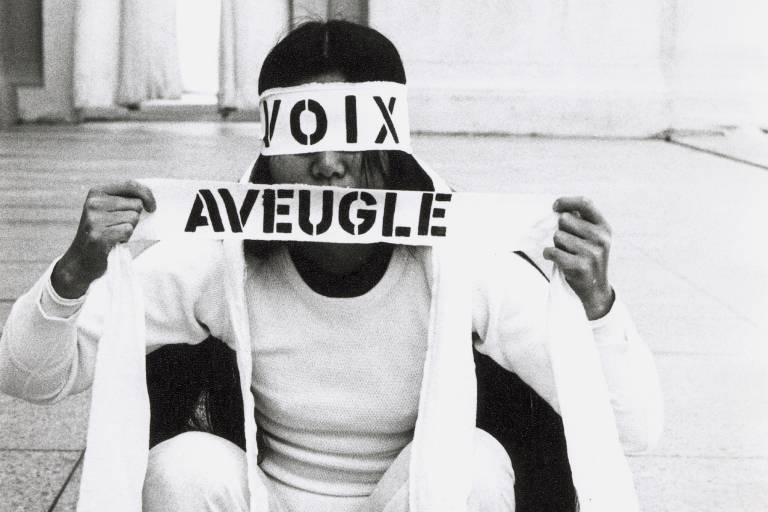
"caption": "Theresa Hak Kyung Cha, 'Aveugle Voix,' 1975; Documentation of performance rehearsal at the Greek Theatre, University of California, Berkeley.",
"credit": "Photo by Trip Callaghan",
"altTag": "black and white image of woman squatting in white with eyes and mouth covered by 'voix' and 'aveugle'",
"description": null,
"imgSizes": {
"thumbnail": {
"file": "https://cdn.kqed.org/wp-content/uploads/sites/2/2026/02/02_Cha_Aveugle-Voix-1975_2000-160x107.jpg",
"width": 160,
"height": 107,
"mimeType": "image/jpeg"
},
"medium_large": {
"file": "https://cdn.kqed.org/wp-content/uploads/sites/2/2026/02/02_Cha_Aveugle-Voix-1975_2000-768x512.jpg",
"width": 768,
"height": 512,
"mimeType": "image/jpeg"
},
"1536x1536": {
"file": "https://cdn.kqed.org/wp-content/uploads/sites/2/2026/02/02_Cha_Aveugle-Voix-1975_2000-1536x1024.jpg",
"width": 1536,
"height": 1024,
"mimeType": "image/jpeg"
},
"post-thumbnail": {
"file": "https://cdn.kqed.org/wp-content/uploads/sites/2/2026/02/02_Cha_Aveugle-Voix-1975_2000-672x372.jpg",
"width": 672,
"height": 372,
"mimeType": "image/jpeg"
},
"twentyfourteen-full-width": {
"file": "https://cdn.kqed.org/wp-content/uploads/sites/2/2026/02/02_Cha_Aveugle-Voix-1975_2000-1038x576.jpg",
"width": 1038,
"height": 576,
"mimeType": "image/jpeg"
},
"npr-cds-wide": {
"file": "https://cdn.kqed.org/wp-content/uploads/sites/2/2026/02/02_Cha_Aveugle-Voix-1975_2000-1200x675.jpg",
"width": 1200,
"height": 675,
"mimeType": "image/jpeg"
},
"kqedFullSize": {
"file": "https://cdn.kqed.org/wp-content/uploads/sites/2/2026/02/02_Cha_Aveugle-Voix-1975_2000.jpg",
"width": 1795,
"height": 1197
}
},
"isLoading": false,
"fetchFailed": false
},
"arts_13986216": {
"type": "attachments",
"id": "arts_13986216",
"meta": {
"index": "attachments_1716263798",
"site": "arts",
"id": "13986216",
"found": true
},
"title": "Carpio.Crop",
"publishDate": 1770146116,
"status": "inherit",
"parent": 13986135,
"modified": 1770146143,
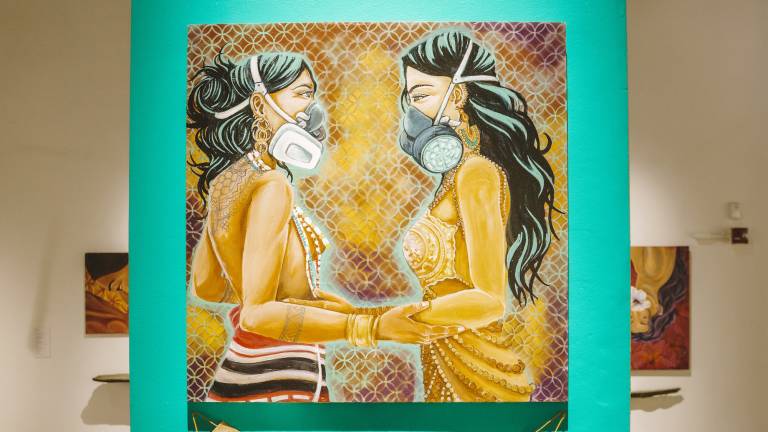
"caption": "Cece Carpio. 'Brass and Copper,' 2017.",
"credit": "Brandon Robinson",
"altTag": "A painting of two women wearing masks, facing each other, mounted on a green background in an art gallery.",
"description": null,
"imgSizes": {
"thumbnail": {
"file": "https://cdn.kqed.org/wp-content/uploads/sites/2/2026/02/Carpio.Crop_-160x90.jpg",
"width": 160,
"height": 90,
"mimeType": "image/jpeg"
},
"medium_large": {
"file": "https://cdn.kqed.org/wp-content/uploads/sites/2/2026/02/Carpio.Crop_-768x432.jpg",
"width": 768,
"height": 432,
"mimeType": "image/jpeg"
},
"1536x1536": {
"file": "https://cdn.kqed.org/wp-content/uploads/sites/2/2026/02/Carpio.Crop_-1536x864.jpg",
"width": 1536,
"height": 864,
"mimeType": "image/jpeg"
},
"post-thumbnail": {
"file": "https://cdn.kqed.org/wp-content/uploads/sites/2/2026/02/Carpio.Crop_-672x372.jpg",
"width": 672,
"height": 372,
"mimeType": "image/jpeg"
},
"twentyfourteen-full-width": {
"file": "https://cdn.kqed.org/wp-content/uploads/sites/2/2026/02/Carpio.Crop_-1038x576.jpg",
"width": 1038,
"height": 576,
"mimeType": "image/jpeg"
},
"npr-cds-wide": {
"file": "https://cdn.kqed.org/wp-content/uploads/sites/2/2026/02/Carpio.Crop_-1200x675.jpg",
"width": 1200,
"height": 675,
"mimeType": "image/jpeg"
},
"kqedFullSize": {
"file": "https://cdn.kqed.org/wp-content/uploads/sites/2/2026/02/Carpio.Crop_.jpg",
"width": 2000,
"height": 1125
}
},
"isLoading": false,
"fetchFailed": false
},
"arts_13853236": {
"type": "attachments",
"id": "arts_13853236",
"meta": {
"index": "attachments_1716263798",
"site": "arts",
"id": "13853236",
"found": true
},
"parent": 13853224,
"imgSizes": {
"twentyfourteen-full-width": {
"file": "https://ww2.kqed.org/app/uploads/sites/2/2019/03/SFMOMA-1038x576.jpg",
"width": 1038,
"mimeType": "image/jpeg",
"height": 576
},
"thumbnail": {
"file": "https://ww2.kqed.org/app/uploads/sites/2/2019/03/SFMOMA-160x90.jpg",
"width": 160,
"mimeType": "image/jpeg",
"height": 90
},
"post-thumbnail": {
"file": "https://ww2.kqed.org/app/uploads/sites/2/2019/03/SFMOMA-672x372.jpg",
"width": 672,
"mimeType": "image/jpeg",
"height": 372
},
"kqedFullSize": {
"file": "https://ww2.kqed.org/app/uploads/sites/2/2019/03/SFMOMA.jpg",
"width": 1920,
"height": 1080
},
"large": {
"file": "https://ww2.kqed.org/app/uploads/sites/2/2019/03/SFMOMA-1020x574.jpg",
"width": 1020,
"mimeType": "image/jpeg",
"height": 574
},
"complete_open_graph": {
"file": "https://ww2.kqed.org/app/uploads/sites/2/2019/03/SFMOMA-1200x675.jpg",
"width": 1200,
"mimeType": "image/jpeg",
"height": 675
},
"guest-author-50": {
"file": "https://ww2.kqed.org/app/uploads/sites/2/2019/03/SFMOMA-50x50.jpg",
"width": 50,
"mimeType": "image/jpeg",
"height": 50
},
"guest-author-96": {
"file": "https://ww2.kqed.org/app/uploads/sites/2/2019/03/SFMOMA-96x96.jpg",
"width": 96,
"mimeType": "image/jpeg",
"height": 96
},
"medium": {
"file": "https://ww2.kqed.org/app/uploads/sites/2/2019/03/SFMOMA-800x450.jpg",
"width": 800,
"mimeType": "image/jpeg",
"height": 450
},
"guest-author-64": {
"file": "https://ww2.kqed.org/app/uploads/sites/2/2019/03/SFMOMA-64x64.jpg",
"width": 64,
"mimeType": "image/jpeg",
"height": 64
},
"guest-author-32": {
"file": "https://ww2.kqed.org/app/uploads/sites/2/2019/03/SFMOMA-32x32.jpg",
"width": 32,
"mimeType": "image/jpeg",
"height": 32
},
"full-width": {
"file": "https://ww2.kqed.org/app/uploads/sites/2/2019/03/SFMOMA-1920x1080.jpg",
"width": 1920,
"mimeType": "image/jpeg",
"height": 1080
},
"medium_large": {
"file": "https://ww2.kqed.org/app/uploads/sites/2/2019/03/SFMOMA-768x432.jpg",
"width": 768,
"mimeType": "image/jpeg",
"height": 432
},
"guest-author-128": {
"file": "https://ww2.kqed.org/app/uploads/sites/2/2019/03/SFMOMA-128x128.jpg",
"width": 128,
"mimeType": "image/jpeg",
"height": 128
}
},
"publishDate": 1552950158,
"modified": 1552950211,
"caption": "The San Francisco Museum of Modern Art.",
"description": "The San Francisco Museum of Modern Art.",
"title": "US-TECH-SFMOMA-ART",
"credit": "Josh Edelson/AFP/Getty Images",
"status": "inherit",
"isLoading": false,
"fetchFailed": false
},
"arts_13985983": {
"type": "attachments",
"id": "arts_13985983",
"meta": {
"index": "attachments_1716263798",
"site": "arts",
"id": "13985983",
"found": true
},
"title": "Kota-Ezawa_NationalAnthem_Still1-web",
"publishDate": 1769704465,
"status": "inherit",
"parent": 0,
"modified": 1769704832,
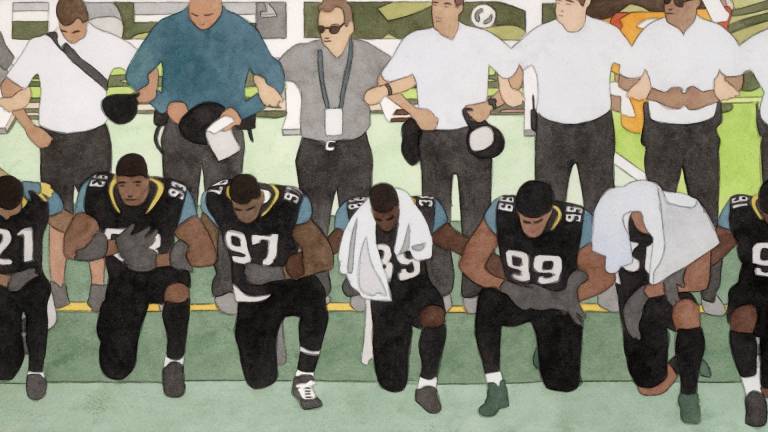
"caption": "A still from Kota Ezawa’s short film ‘National Anthem.’",
"credit": "Kota Ezawa / de Saisset Museum",
"altTag": "More than a half dozen football players kneel along the sidelines of a field while coaches and others stand behind them, seen in a watercolor illustration",
"description": null,
"imgSizes": {
"thumbnail": {
"file": "https://cdn.kqed.org/wp-content/uploads/sites/2/2026/01/Kota-Ezawa_NationalAnthem_Still1-web-160x90.jpg",
"width": 160,
"height": 90,
"mimeType": "image/jpeg"
},
"medium_large": {
"file": "https://cdn.kqed.org/wp-content/uploads/sites/2/2026/01/Kota-Ezawa_NationalAnthem_Still1-web-768x432.jpg",
"width": 768,
"height": 432,
"mimeType": "image/jpeg"
},
"1536x1536": {
"file": "https://cdn.kqed.org/wp-content/uploads/sites/2/2026/01/Kota-Ezawa_NationalAnthem_Still1-web-1536x864.jpg",
"width": 1536,
"height": 864,
"mimeType": "image/jpeg"
},
"post-thumbnail": {
"file": "https://cdn.kqed.org/wp-content/uploads/sites/2/2026/01/Kota-Ezawa_NationalAnthem_Still1-web-672x372.jpg",
"width": 672,
"height": 372,
"mimeType": "image/jpeg"
},
"twentyfourteen-full-width": {
"file": "https://cdn.kqed.org/wp-content/uploads/sites/2/2026/01/Kota-Ezawa_NationalAnthem_Still1-web-1038x576.jpg",
"width": 1038,
"height": 576,
"mimeType": "image/jpeg"
},
"npr-cds-wide": {
"file": "https://cdn.kqed.org/wp-content/uploads/sites/2/2026/01/Kota-Ezawa_NationalAnthem_Still1-web-1200x675.jpg",
"width": 1200,
"height": 675,
"mimeType": "image/jpeg"
},
"kqedFullSize": {
"file": "https://cdn.kqed.org/wp-content/uploads/sites/2/2026/01/Kota-Ezawa_NationalAnthem_Still1-web.jpg",
"width": 1920,
"height": 1080
}
},
"isLoading": false,
"fetchFailed": false
},
"arts_13985997": {
"type": "attachments",
"id": "arts_13985997",
"meta": {
"index": "attachments_1716263798",
"site": "arts",
"id": "13985997",
"found": true
},
"title": "WandaJohnson.CROP",
"publishDate": 1769716065,
"status": "inherit",
"parent": 13985813,
"modified": 1769730432,
"caption": "Rev. Wanda Johnson, mother of the late Oscar Grant. ",
"credit": "Mohammad Gorjestani",
"altTag": "An African American woman wearing glasses and a leather jacket stands at a phone booth holding a phone and looking into the distance.",
"description": null,
"imgSizes": {
"thumbnail": {
"file": "https://cdn.kqed.org/wp-content/uploads/sites/2/2026/01/WandaJohnson.CROP_-160x107.jpg",
"width": 160,
"height": 107,
"mimeType": "image/jpeg"
},
"medium_large": {
"file": "https://cdn.kqed.org/wp-content/uploads/sites/2/2026/01/WandaJohnson.CROP_-768x512.jpg",
"width": 768,
"height": 512,
"mimeType": "image/jpeg"
},
"1536x1536": {
"file": "https://cdn.kqed.org/wp-content/uploads/sites/2/2026/01/WandaJohnson.CROP_-1536x1024.jpg",
"width": 1536,
"height": 1024,
"mimeType": "image/jpeg"
},
"post-thumbnail": {
"file": "https://cdn.kqed.org/wp-content/uploads/sites/2/2026/01/WandaJohnson.CROP_-672x372.jpg",
"width": 672,
"height": 372,
"mimeType": "image/jpeg"
},
"twentyfourteen-full-width": {
"file": "https://cdn.kqed.org/wp-content/uploads/sites/2/2026/01/WandaJohnson.CROP_-1038x576.jpg",
"width": 1038,
"height": 576,
"mimeType": "image/jpeg"
},
"npr-cds-wide": {
"file": "https://cdn.kqed.org/wp-content/uploads/sites/2/2026/01/WandaJohnson.CROP_-1200x675.jpg",
"width": 1200,
"height": 675,
"mimeType": "image/jpeg"
},
"kqedFullSize": {
"file": "https://cdn.kqed.org/wp-content/uploads/sites/2/2026/01/WandaJohnson.CROP_.jpg",
"width": 2000,
"height": 1333
}
},
"isLoading": false,
"fetchFailed": false
},
"arts_13985918": {
"type": "attachments",
"id": "arts_13985918",
"meta": {
"index": "attachments_1716263798",
"site": "arts",
"id": "13985918",
"found": true
},
"title": "0T5A4703_V3_2000",
"publishDate": 1769546889,
"status": "inherit",
"parent": 13985914,
"modified": 1769547073,
"caption": "An installation view of Anoushka Mirchandani's 'All Us Come Cross the Water' in her show 'My Body Was A River Once,' at the Institute of Contemporary Art San José.",
"credit": "ICA San José",
"altTag": "wide landscape painting with nude figures lounging, framed by spiky wooden sculptures",
"description": null,
"imgSizes": {
"thumbnail": {
"file": "https://cdn.kqed.org/wp-content/uploads/sites/2/2026/01/0T5A4703_V3_2000-160x100.jpg",
"width": 160,
"height": 100,
"mimeType": "image/jpeg"
},
"medium_large": {
"file": "https://cdn.kqed.org/wp-content/uploads/sites/2/2026/01/0T5A4703_V3_2000-768x480.jpg",
"width": 768,
"height": 480,
"mimeType": "image/jpeg"
},
"1536x1536": {
"file": "https://cdn.kqed.org/wp-content/uploads/sites/2/2026/01/0T5A4703_V3_2000-1536x959.jpg",
"width": 1536,
"height": 959,
"mimeType": "image/jpeg"
},
"post-thumbnail": {
"file": "https://cdn.kqed.org/wp-content/uploads/sites/2/2026/01/0T5A4703_V3_2000-672x372.jpg",
"width": 672,
"height": 372,
"mimeType": "image/jpeg"
},
"twentyfourteen-full-width": {
"file": "https://cdn.kqed.org/wp-content/uploads/sites/2/2026/01/0T5A4703_V3_2000-1038x576.jpg",
"width": 1038,
"height": 576,
"mimeType": "image/jpeg"
},
"npr-cds-wide": {
"file": "https://cdn.kqed.org/wp-content/uploads/sites/2/2026/01/0T5A4703_V3_2000-1200x675.jpg",
"width": 1200,
"height": 675,
"mimeType": "image/jpeg"
},
"kqedFullSize": {
"file": "https://cdn.kqed.org/wp-content/uploads/sites/2/2026/01/0T5A4703_V3_2000.jpg",
"width": 2000,
"height": 1249
}
},
"isLoading": false,
"fetchFailed": false
},
"arts_13985859": {
"type": "attachments",
"id": "arts_13985859",
"meta": {
"index": "attachments_1716263798",
"site": "arts",
"id": "13985859",
"found": true
},
"title": "3_Rupy-C.-Tut_2024-SECA-Art-Award-Installation-View_2000",
"publishDate": 1769478691,
"status": "inherit",
"parent": 13985855,
"modified": 1769478782,
"caption": "An installation view of Rupy C. Tut's work at SFMOMA in the 2024 SECA show.",
"credit": "Don Ross",
"altTag": "navy walls with paintings and framed works on paper, pedestal with origami in center of room",
"description": null,
"imgSizes": {
"thumbnail": {
"file": "https://cdn.kqed.org/wp-content/uploads/sites/2/2026/01/3_Rupy-C.-Tut_2024-SECA-Art-Award-Installation-View_2000-160x107.jpg",
"width": 160,
"height": 107,
"mimeType": "image/jpeg"
},
"medium_large": {
"file": "https://cdn.kqed.org/wp-content/uploads/sites/2/2026/01/3_Rupy-C.-Tut_2024-SECA-Art-Award-Installation-View_2000-768x512.jpg",
"width": 768,
"height": 512,
"mimeType": "image/jpeg"
},
"1536x1536": {
"file": "https://cdn.kqed.org/wp-content/uploads/sites/2/2026/01/3_Rupy-C.-Tut_2024-SECA-Art-Award-Installation-View_2000-1536x1025.jpg",
"width": 1536,
"height": 1025,
"mimeType": "image/jpeg"
},
"post-thumbnail": {
"file": "https://cdn.kqed.org/wp-content/uploads/sites/2/2026/01/3_Rupy-C.-Tut_2024-SECA-Art-Award-Installation-View_2000-672x372.jpg",
"width": 672,
"height": 372,
"mimeType": "image/jpeg"
},
"twentyfourteen-full-width": {
"file": "https://cdn.kqed.org/wp-content/uploads/sites/2/2026/01/3_Rupy-C.-Tut_2024-SECA-Art-Award-Installation-View_2000-1038x576.jpg",
"width": 1038,
"height": 576,
"mimeType": "image/jpeg"
},
"npr-cds-wide": {
"file": "https://cdn.kqed.org/wp-content/uploads/sites/2/2026/01/3_Rupy-C.-Tut_2024-SECA-Art-Award-Installation-View_2000-1200x675.jpg",
"width": 1200,
"height": 675,
"mimeType": "image/jpeg"
},
"kqedFullSize": {
"file": "https://cdn.kqed.org/wp-content/uploads/sites/2/2026/01/3_Rupy-C.-Tut_2024-SECA-Art-Award-Installation-View_2000.jpg",
"width": 2000,
"height": 1334
}
},
"isLoading": false,
"fetchFailed": false
},
"arts_13985802": {
"type": "attachments",
"id": "arts_13985802",
"meta": {
"index": "attachments_1716263798",
"site": "arts",
"id": "13985802",
"found": true
},
"title": "3d27f623-c74c-4466-afec-4e9af9205ba2",
"publishDate": 1769194956,
"status": "inherit",
"parent": 13985799,
"modified": 1769195488,
"caption": "Wet Leg’s ‘Moisturizer’ album is nominated in a new Grammy Awards category for best album cover.",
"credit": "Domino Recording Company",
"altTag": "A woman with long reddish hair and long socks crouches in an insect-like stance in a bare living room, while another woman sits with her back turned",
"description": null,
"imgSizes": {
"thumbnail": {
"file": "https://cdn.kqed.org/wp-content/uploads/sites/2/2026/01/3d27f623-c74c-4466-afec-4e9af9205ba2-160x107.jpg",
"width": 160,
"height": 107,
"mimeType": "image/jpeg"
},
"medium_large": {
"file": "https://cdn.kqed.org/wp-content/uploads/sites/2/2026/01/3d27f623-c74c-4466-afec-4e9af9205ba2-768x512.jpg",
"width": 768,
"height": 512,
"mimeType": "image/jpeg"
},
"1536x1536": {
"file": "https://cdn.kqed.org/wp-content/uploads/sites/2/2026/01/3d27f623-c74c-4466-afec-4e9af9205ba2-1536x1025.jpg",
"width": 1536,
"height": 1025,
"mimeType": "image/jpeg"
},
"post-thumbnail": {
"file": "https://cdn.kqed.org/wp-content/uploads/sites/2/2026/01/3d27f623-c74c-4466-afec-4e9af9205ba2-672x372.jpg",
"width": 672,
"height": 372,
"mimeType": "image/jpeg"
},
"twentyfourteen-full-width": {
"file": "https://cdn.kqed.org/wp-content/uploads/sites/2/2026/01/3d27f623-c74c-4466-afec-4e9af9205ba2-1038x576.jpg",
"width": 1038,
"height": 576,
"mimeType": "image/jpeg"
},
"npr-cds-wide": {
"file": "https://cdn.kqed.org/wp-content/uploads/sites/2/2026/01/3d27f623-c74c-4466-afec-4e9af9205ba2-1200x675.jpg",
"width": 1200,
"height": 675,
"mimeType": "image/jpeg"
},
"kqedFullSize": {
"file": "https://cdn.kqed.org/wp-content/uploads/sites/2/2026/01/3d27f623-c74c-4466-afec-4e9af9205ba2.jpg",
"width": 2000,
"height": 1334
}
},
"isLoading": false,
"fetchFailed": false
},
"arts_13985765": {
"type": "attachments",
"id": "arts_13985765",
"meta": {
"index": "attachments_1716263798",
"site": "arts",
"id": "13985765",
"found": true
},
"title": "exhibition-view01_2000b",
"publishDate": 1769116509,
"status": "inherit",
"parent": 13985756,
"modified": 1769116537,
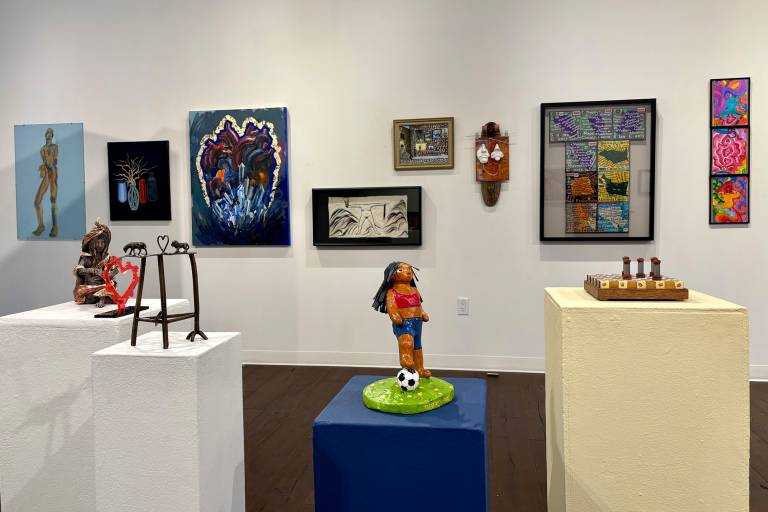
"caption": "An installation view of 'Super Hunger Anti-Valentine Bowl Games Part LX' at Works/San José.",
"credit": "Joe Miller",
"altTag": "pedestals with small sculptures and salon-style hanging of wall works behind",
"description": null,
"imgSizes": {
"thumbnail": {
"file": "https://cdn.kqed.org/wp-content/uploads/sites/2/2026/01/exhibition-view01_2000b-160x107.jpg",
"width": 160,
"height": 107,
"mimeType": "image/jpeg"
},
"medium_large": {
"file": "https://cdn.kqed.org/wp-content/uploads/sites/2/2026/01/exhibition-view01_2000b-768x512.jpg",
"width": 768,
"height": 512,
"mimeType": "image/jpeg"
},
"1536x1536": {
"file": "https://cdn.kqed.org/wp-content/uploads/sites/2/2026/01/exhibition-view01_2000b-1536x1025.jpg",
"width": 1536,
"height": 1025,
"mimeType": "image/jpeg"
},
"post-thumbnail": {
"file": "https://cdn.kqed.org/wp-content/uploads/sites/2/2026/01/exhibition-view01_2000b-672x372.jpg",
"width": 672,
"height": 372,
"mimeType": "image/jpeg"
},
"twentyfourteen-full-width": {
"file": "https://cdn.kqed.org/wp-content/uploads/sites/2/2026/01/exhibition-view01_2000b-1038x576.jpg",
"width": 1038,
"height": 576,
"mimeType": "image/jpeg"
},
"npr-cds-wide": {
"file": "https://cdn.kqed.org/wp-content/uploads/sites/2/2026/01/exhibition-view01_2000b-1200x675.jpg",
"width": 1200,
"height": 675,
"mimeType": "image/jpeg"
},
"kqedFullSize": {
"file": "https://cdn.kqed.org/wp-content/uploads/sites/2/2026/01/exhibition-view01_2000b.jpg",
"width": 2000,
"height": 1334
}
},
"isLoading": false,
"fetchFailed": false
},
"arts_13985339": {
"type": "attachments",
"id": "arts_13985339",
"meta": {
"index": "attachments_1716263798",
"site": "arts",
"id": "13985339",
"found": true
},
"title": "USA at 250",
"publishDate": 1768265368,
"status": "inherit",
"parent": 13985338,
"modified": 1769126480,
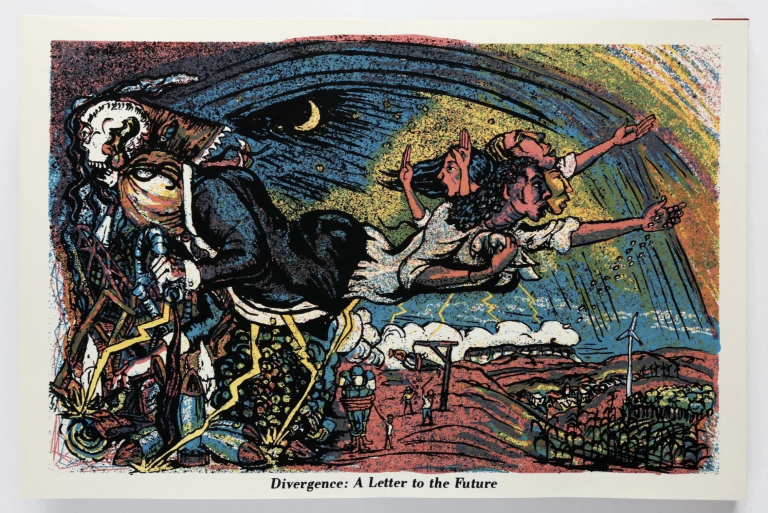
"caption": "‘Tipping Point’ by Art Hazelwood.",
"credit": "Von Span",
"altTag": "An abstract swirling depiction of a death figure, clad in a business suit clutching a bag of money and flying through the air. In the opposite direction flies three figures clad in white and reaching out for brighter skies.",
"description": null,
"imgSizes": {
"thumbnail": {
"file": "https://cdn.kqed.org/wp-content/uploads/sites/2/2026/01/USA-at-250-160x107.png",
"width": 160,
"height": 107,
"mimeType": "image/png"
},
"medium_large": {
"file": "https://cdn.kqed.org/wp-content/uploads/sites/2/2026/01/USA-at-250-768x513.png",
"width": 768,
"height": 513,
"mimeType": "image/png"
},
"1536x1536": {
"file": "https://cdn.kqed.org/wp-content/uploads/sites/2/2026/01/USA-at-250-1536x1025.png",
"width": 1536,
"height": 1025,
"mimeType": "image/png"
},
"post-thumbnail": {
"file": "https://cdn.kqed.org/wp-content/uploads/sites/2/2026/01/USA-at-250-672x372.png",
"width": 672,
"height": 372,
"mimeType": "image/png"
},
"twentyfourteen-full-width": {
"file": "https://cdn.kqed.org/wp-content/uploads/sites/2/2026/01/USA-at-250-1038x576.png",
"width": 1038,
"height": 576,
"mimeType": "image/png"
},
"npr-cds-wide": {
"file": "https://cdn.kqed.org/wp-content/uploads/sites/2/2026/01/USA-at-250-1200x675.png",
"width": 1200,
"height": 675,
"mimeType": "image/png"
},
"kqedFullSize": {
"file": "https://cdn.kqed.org/wp-content/uploads/sites/2/2026/01/USA-at-250.png",
"width": 2000,
"height": 1335
}
},
"isLoading": false,
"fetchFailed": false
},
"arts_13985465": {
"type": "attachments",
"id": "arts_13985465",
"meta": {
"index": "attachments_1716263798",
"site": "arts",
"id": "13985465",
"found": true
},
"title": "MLKDay.Chalk.Moad",
"publishDate": 1768505012,
"status": "inherit",
"parent": 13985432,
"modified": 1768505049,
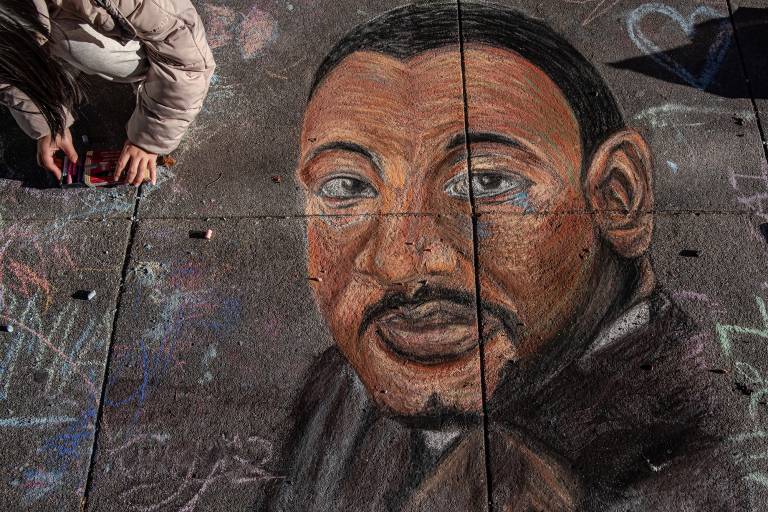
"caption": "A portrait of Martin Luther King Jr. made in chalk on the sidewalk of the Museum of the African Diaspora, Jan. 20, 2025. ",
"credit": "Najee Tobin/ Courtesy MoAD",
"altTag": null,
"description": null,
"imgSizes": {
"thumbnail": {
"file": "https://cdn.kqed.org/wp-content/uploads/sites/2/2026/01/MLKDay.Chalk_.Moad_-160x107.jpg",
"width": 160,
"height": 107,
"mimeType": "image/jpeg"
},
"medium_large": {
"file": "https://cdn.kqed.org/wp-content/uploads/sites/2/2026/01/MLKDay.Chalk_.Moad_-768x512.jpg",
"width": 768,
"height": 512,
"mimeType": "image/jpeg"
},
"1536x1536": {
"file": "https://cdn.kqed.org/wp-content/uploads/sites/2/2026/01/MLKDay.Chalk_.Moad_-1536x1024.jpg",
"width": 1536,
"height": 1024,
"mimeType": "image/jpeg"
},
"post-thumbnail": {
"file": "https://cdn.kqed.org/wp-content/uploads/sites/2/2026/01/MLKDay.Chalk_.Moad_-672x372.jpg",
"width": 672,
"height": 372,
"mimeType": "image/jpeg"
},
"twentyfourteen-full-width": {
"file": "https://cdn.kqed.org/wp-content/uploads/sites/2/2026/01/MLKDay.Chalk_.Moad_-1038x576.jpg",
"width": 1038,
"height": 576,
"mimeType": "image/jpeg"
},
"npr-cds-wide": {
"file": "https://cdn.kqed.org/wp-content/uploads/sites/2/2026/01/MLKDay.Chalk_.Moad_-1200x675.jpg",
"width": 1200,
"height": 675,
"mimeType": "image/jpeg"
},
"kqedFullSize": {
"file": "https://cdn.kqed.org/wp-content/uploads/sites/2/2026/01/MLKDay.Chalk_.Moad_.jpg",
"width": 2000,
"height": 1333
}
},
"isLoading": false,
"fetchFailed": false
},
"arts_13925878": {
"type": "attachments",
"id": "arts_13925878",
"meta": {
"index": "attachments_1716263798",
"site": "arts",
"id": "13925878",
"found": true
},
"parent": 13925875,
"imgSizes": {
"twentyfourteen-full-width": {
"file": "https://ww2.kqed.org/app/uploads/sites/2/2023/03/CCA_COVER-1038x576.jpg",
"width": 1038,
"mimeType": "image/jpeg",
"height": 576
},
"thumbnail": {
"file": "https://ww2.kqed.org/app/uploads/sites/2/2023/03/CCA_COVER-160x90.jpg",
"width": 160,
"mimeType": "image/jpeg",
"height": 90
},
"post-thumbnail": {
"file": "https://ww2.kqed.org/app/uploads/sites/2/2023/03/CCA_COVER-672x372.jpg",
"width": 672,
"mimeType": "image/jpeg",
"height": 372
},
"kqedFullSize": {
"file": "https://ww2.kqed.org/app/uploads/sites/2/2023/03/CCA_COVER.jpg",
"width": 1920,
"height": 1080
},
"large": {
"file": "https://ww2.kqed.org/app/uploads/sites/2/2023/03/CCA_COVER-1020x574.jpg",
"width": 1020,
"mimeType": "image/jpeg",
"height": 574
},
"1536x1536": {
"file": "https://ww2.kqed.org/app/uploads/sites/2/2023/03/CCA_COVER-1536x864.jpg",
"width": 1536,
"mimeType": "image/jpeg",
"height": 864
},
"medium": {
"file": "https://ww2.kqed.org/app/uploads/sites/2/2023/03/CCA_COVER-800x450.jpg",
"width": 800,
"mimeType": "image/jpeg",
"height": 450
},
"medium_large": {
"file": "https://ww2.kqed.org/app/uploads/sites/2/2023/03/CCA_COVER-768x432.jpg",
"width": 768,
"mimeType": "image/jpeg",
"height": 432
}
},
"publishDate": 1678138107,
"modified": 1678148991,
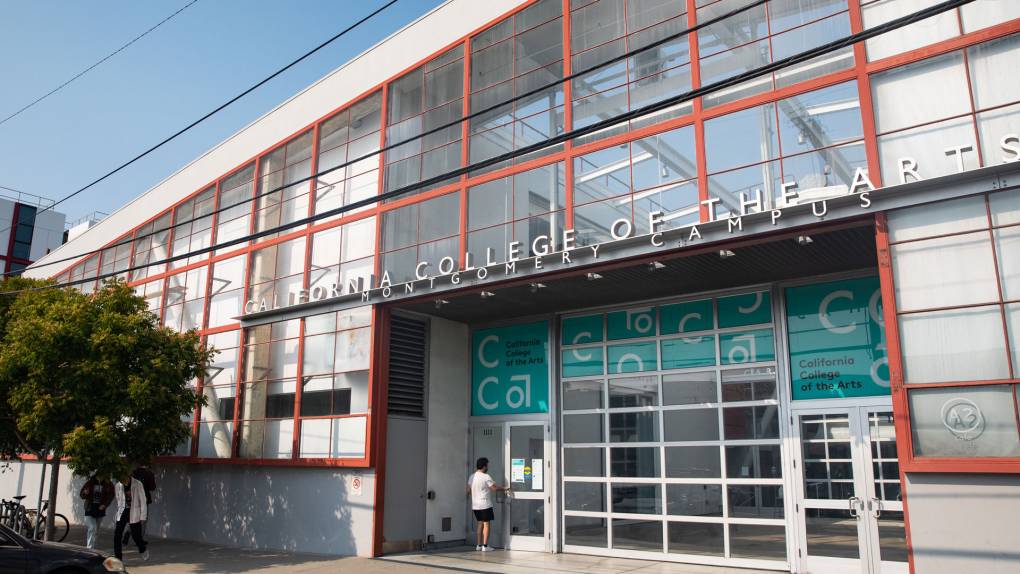
"caption": "California College of the Arts' San Francisco campus, where the curatorial practice master's program has run since 2002.",
"description": null,
"title": "CCA_COVER",
"credit": "Courtesy of CCA",
"status": "inherit",
"altTag": "View of building exterior with glass and school name above doorway",
"isLoading": false,
"fetchFailed": false
}
},
"audioPlayerReducer": {
"postId": "stream_live",
"isPaused": true,
"isPlaying": false,
"pfsActive": false,
"pledgeModalIsOpen": true,
"playerDrawerIsOpen": false,
"liveAudioPlayStartedAt": 0,
"liveAudioPlayContext": ""
},
"authorsReducer": {
"byline_arts_13985799": {
"type": "authors",
"id": "byline_arts_13985799",
"meta": {
"override": true
},
"slug": "byline_arts_13985799",
"name": "Elise Ryan, Associated Press",
"isLoading": false
},
"shotchkiss": {
"type": "authors",
"id": "61",
"meta": {
"index": "authors_1716337520",
"id": "61",
"found": true
},
"name": "Sarah Hotchkiss",
"firstName": "Sarah",
"lastName": "Hotchkiss",
"slug": "shotchkiss",
"email": "shotchkiss@kqed.org",
"display_author_email": true,
"staff_mastheads": [
"arts"
],
"title": "Senior Editor",
"bio": "Sarah Hotchkiss is a San Francisco \u003ca href=\"http://www.sarahhotchkiss.com\">artist\u003c/a> and arts writer. In 2019, she received the Dorothea & Leo Rabkin Foundation grant for visual art journalism and in 2020 she received a Society of Professional Journalists, Northern California award for excellence in arts and culture reporting.",
"avatar": "https://secure.gravatar.com/avatar/bc662df144b3d27fd8b1b6f1c2a420d34e91e53154d411bb7ad353cc8b6cea8d?s=600&d=blank&r=g",
"twitter": null,
"bluesky": null,
"facebook": null,
"instagram": null,
"linkedin": null,
"sites": [
{
"site": "",
"roles": [
"editor"
]
},
{
"site": "arts",
"roles": [
"Contributor",
"administrator"
]
},
{
"site": "artschool",
"roles": [
"administrator"
]
},
{
"site": "news",
"roles": [
"editor"
]
},
{
"site": "pop",
"roles": [
"administrator"
]
},
{
"site": "bayareabites",
"roles": [
"editor"
]
},
{
"site": "spark",
"roles": [
"editor"
]
},
{
"site": "checkplease",
"roles": [
"editor"
]
}
],
"headData": {
"title": "Sarah Hotchkiss | KQED",
"description": "Senior Editor",
"ogImgSrc": "https://secure.gravatar.com/avatar/bc662df144b3d27fd8b1b6f1c2a420d34e91e53154d411bb7ad353cc8b6cea8d?s=600&d=blank&r=g",
"twImgSrc": "https://secure.gravatar.com/avatar/bc662df144b3d27fd8b1b6f1c2a420d34e91e53154d411bb7ad353cc8b6cea8d?s=600&d=blank&r=g"
},
"isLoading": false,
"link": "/author/shotchkiss"
},
"ralexandra": {
"type": "authors",
"id": "11242",
"meta": {
"index": "authors_1716337520",
"id": "11242",
"found": true
},
"name": "Rae Alexandra",
"firstName": "Rae",
"lastName": "Alexandra",
"slug": "ralexandra",
"email": "ralexandra@kqed.org",
"display_author_email": true,
"staff_mastheads": [],
"title": "Reporter/Producer",
"bio": "Rae Alexandra is a Reporter/Producer for KQED Arts & Culture, and the creator/author of the \u003ca href=\"https://www.kqed.org/arts/program/rebel-girls-from-bay-area-history\">Rebel Girls From Bay Area History\u003c/a> and \u003ca href=\"https://www.kqed.org/bizarrebayarea\">Bizarre Bay Area\u003c/a> series. Her debut book, \u003ca href=\"https://citylights.com/politics-current-events-history/unsung-heroines35-women-who-changed/\">Unsung Heroines: 35 Women Who Changed the Bay Area\u003c/a> was published by City Lights in March 2026. In 2023, Rae was awarded an SPJ Excellence in Journalism Award for Arts & Culture. Rae was born and raised in Wales and subsequently — even after two decades in Northern California — still uses phrases that regularly baffle her coworkers.",
"avatar": "https://secure.gravatar.com/avatar/edfee8176c80cc0a382b051190f5341997df378a934a5774dcb0977732dfd401?s=600&d=blank&r=g",
"twitter": null,
"bluesky": null,
"facebook": null,
"instagram": null,
"linkedin": null,
"sites": [
{
"site": "arts",
"roles": [
"subscriber"
]
},
{
"site": "news",
"roles": [
"subscriber"
]
},
{
"site": "pop",
"roles": [
"subscriber"
]
},
{
"site": "bayareabites",
"roles": [
"subscriber"
]
},
{
"site": "science",
"roles": [
"subscriber"
]
}
],
"headData": {
"title": "Rae Alexandra | KQED",
"description": "Reporter/Producer",
"ogImgSrc": "https://secure.gravatar.com/avatar/edfee8176c80cc0a382b051190f5341997df378a934a5774dcb0977732dfd401?s=600&d=blank&r=g",
"twImgSrc": "https://secure.gravatar.com/avatar/edfee8176c80cc0a382b051190f5341997df378a934a5774dcb0977732dfd401?s=600&d=blank&r=g"
},
"isLoading": false,
"link": "/author/ralexandra"
},
"ogpenn": {
"type": "authors",
"id": "11491",
"meta": {
"index": "authors_1716337520",
"id": "11491",
"found": true
},
"name": "Pendarvis Harshaw",
"firstName": "Pendarvis",
"lastName": "Harshaw",
"slug": "ogpenn",
"email": "ogpenn@gmail.com",
"display_author_email": false,
"staff_mastheads": [
"arts"
],
"title": "Community Engagement Reporter",
"bio": "Pendarvis Harshaw is an educator, host and writer with KQED Arts.",
"avatar": "https://secure.gravatar.com/avatar/972b77ee8e3f346ae2b00622661187fbfabd059b5693bbdc1475ea7a722fd4cd?s=600&d=blank&r=g",
"twitter": null,
"bluesky": null,
"facebook": null,
"instagram": "ogpenn",
"linkedin": null,
"sites": [
{
"site": "arts",
"roles": [
"administrator"
]
},
{
"site": "news",
"roles": [
"editor"
]
},
{
"site": "bayareabites",
"roles": [
"author"
]
},
{
"site": "hiphop",
"roles": [
"editor"
]
}
],
"headData": {
"title": "Pendarvis Harshaw | KQED",
"description": "Community Engagement Reporter",
"ogImgSrc": "https://secure.gravatar.com/avatar/972b77ee8e3f346ae2b00622661187fbfabd059b5693bbdc1475ea7a722fd4cd?s=600&d=blank&r=g",
"twImgSrc": "https://secure.gravatar.com/avatar/972b77ee8e3f346ae2b00622661187fbfabd059b5693bbdc1475ea7a722fd4cd?s=600&d=blank&r=g"
},
"isLoading": false,
"link": "/author/ogpenn"
},
"mblue": {
"type": "authors",
"id": "11917",
"meta": {
"index": "authors_1716337520",
"id": "11917",
"found": true
},
"name": "Max Blue",
"firstName": "Max",
"lastName": "Blue",
"slug": "mblue",
"email": "maxbluewriter@gmail.com",
"display_author_email": false,
"staff_mastheads": [],
"title": "KQED Contributor",
"bio": "Max Blue has contributed art criticism and reporting to Artsy, Cultured and Hyperallergic, among others. His short fiction has appeared in The MacGuffin and North Dakota Quarterly, among others. He lives in San Francisco.",
"avatar": "https://secure.gravatar.com/avatar/cf3bc08316ae54aaf34b606edc5721301b3306703234df5bee49a54e69d29843?s=600&d=blank&r=g",
"twitter": null,
"bluesky": null,
"facebook": null,
"instagram": "maxblueofficial",
"linkedin": null,
"sites": [
{
"site": "arts",
"roles": [
"contributor"
]
}
],
"headData": {
"title": "Max Blue | KQED",
"description": "KQED Contributor",
"ogImgSrc": "https://secure.gravatar.com/avatar/cf3bc08316ae54aaf34b606edc5721301b3306703234df5bee49a54e69d29843?s=600&d=blank&r=g",
"twImgSrc": "https://secure.gravatar.com/avatar/cf3bc08316ae54aaf34b606edc5721301b3306703234df5bee49a54e69d29843?s=600&d=blank&r=g"
},
"isLoading": false,
"link": "/author/mblue"
},
"jmelido": {
"type": "authors",
"id": "11972",
"meta": {
"index": "authors_1716337520",
"id": "11972",
"found": true
},
"name": "Janea Melido",
"firstName": "Janea",
"lastName": "Melido",
"slug": "jmelido",
"email": "jmelido@kqed.org",
"display_author_email": true,
"staff_mastheads": [
"arts"
],
"title": "Contributor, KQED Arts & Culture",
"bio": "Janea Melido holds a Bachelor of Arts in English and minor in Ethnic Studies from the University of Portland. She's drawn to the quiet power of everyday stories, especially ones that often go overlooked. When she's not reporting, she enjoys cutting up her old print stories and making collages out of them. She served as an intern for KQED Arts & Culture in 2025–26.",
"avatar": "https://secure.gravatar.com/avatar/a29821c5951064ade16b01245ce4604a599e1d4609df1ff590a8de6c7728826a?s=600&d=blank&r=g",
"twitter": null,
"bluesky": null,
"facebook": null,
"instagram": null,
"linkedin": null,
"sites": [
{
"site": "arts",
"roles": [
"contributor"
]
}
],
"headData": {
"title": "Janea Melido | KQED",
"description": "Contributor, KQED Arts & Culture",
"ogImgSrc": "https://secure.gravatar.com/avatar/a29821c5951064ade16b01245ce4604a599e1d4609df1ff590a8de6c7728826a?s=600&d=blank&r=g",
"twImgSrc": "https://secure.gravatar.com/avatar/a29821c5951064ade16b01245ce4604a599e1d4609df1ff590a8de6c7728826a?s=600&d=blank&r=g"
},
"isLoading": false,
"link": "/author/jmelido"
}
},
"pagesReducer": {
"arts_category_visualarts": {
"type": "terms",
"id": "arts_70",
"meta": {
"index": "terms_1716263798",
"site": "arts",
"id": "70",
"score": 14.406956
},
"featImg": null,
"name": "Visual Arts",
"description": null,
"taxonomy": "category",
"headData": {
"twImgId": null,
"twTitle": null,
"ogTitle": null,
"ogImgId": null,
"twDescription": null,
"description": null,
"title": "Visual Arts Archives | KQED Arts",
"ogDescription": null
},
"ttid": 71,
"slug": "visualarts",
"isLoading": false,
"title": "Visual Arts",
"pageMeta": {
"site": "arts",
"WpPageTemplate": "page-topic-editorial",
"currentPage": 6
},
"blocks": [
{
"blockName": "kqed/post-list",
"attrs": {
"layout": "cardArticle2",
"query": "posts/arts?category=visualarts",
"seeMore": false,
"paginated": true,
"page": 6
}
},
{
"blockName": "kqed/ad"
}
]
}
},
"pfsSessionReducer": {},
"postsReducer": {
"stream_live": {
"type": "live",
"id": "stream_live",
"audioUrl": "https://streams.kqed.org/kqedradio",
"title": "Live Stream",
"excerpt": "Live Stream information currently unavailable.",
"link": "/radio",
"featImg": "",
"label": {
"name": "KQED Live",
"link": "/"
}
},
"stream_kqedNewscast": {
"type": "posts",
"id": "stream_kqedNewscast",
"audioUrl": "https://www.kqed.org/.stream/anon/radio/RDnews/newscast.mp3?_=1",
"title": "KQED Newscast",
"featImg": "",
"label": {
"name": "88.5 FM",
"link": "/"
}
},
"arts_13986355": {
"type": "posts",
"id": "arts_13986355",
"meta": {
"index": "posts_1716263798",
"site": "arts",
"id": "13986355",
"score": null,
"sort": [
1770338773000
]
},
"guestAuthors": [],
"slug": "theresa-hak-kyung-cha-multiple-offerings-bampfa-review",
"title": "At BAMPFA, Theresa Hak Kyung Cha’s Eloquent Art Lives On",
"publishDate": 1770338773,
"format": "standard",
"headTitle": "At BAMPFA, Theresa Hak Kyung Cha’s Eloquent Art Lives On | KQED",
"labelTerm": {},
"content": "\u003cp>There are so many words in \u003ci>\u003ca href=\"https://bampfa.org/program/theresa-hak-kyung-cha-multiple-offerings\">Theresa Hak Kyung Cha: Multiple Offerings\u003c/a>\u003c/i> that it can be a bit daunting to form a written response of one’s own. The retrospective at the \u003ca href=\"https://www.kqed.org/arts/tag/bampfa\">Berkeley Art Museum and Pacific Film Archive\u003c/a>, curated by Victoria Sung with assistance from Tausif Noor, presents a decade of work by an artist who died too soon: in 1982, at the age of 31. The museum has housed her art and archives since 1992.\u003c/p>\n\u003cp>Cha’s practice transcended media, but words — spoken, recorded, written — are nearly always at the center. Born in Busan, South Korea in 1951, she immigrated with her family to Hawaii in 1962. They moved to San Francisco two years later. Words in Korean, English and French punctuated and inscribed her practice, which included performances, sound pieces, films, artist books and mail art.\u003c/p>\n\u003cp>Berkeley isn’t just the starting point for this traveling retrospective, it’s the geographical backdrop of Cha’s commitment to art. The artist spent eight years at UC Berkeley, getting bachelor’s degrees in comparative literature and art, then an MA and an MFA. She worked at the Pacific Film Archive, and as a preparator and video technician at the University Art Museum, BAMPFA’s precursor. Along the way, she showed at a mix of major Bay Area institutions and artist-run spaces: 63 Bluxome, La Mamelle, the San Francisco Art Institute, the San Francisco Museum of Modern Art, 80 Langton Street.\u003c/p>\n\u003cfigure id=\"attachment_13986357\" class=\"wp-caption aligncenter\" style=\"max-width: 2000px\">\u003cimg loading=\"lazy\" decoding=\"async\" class=\"size-full wp-image-13986357\" src=\"https://cdn.kqed.org/wp-content/uploads/sites/2/2026/02/01_Theresa-Hak-Kyung-Cha_Portrait-in-Studio_2000.jpg\" alt=\"image of Asian woman in black, one hand tucked in pocket, the other leaning on window she looks out of; stenciled text piece on raw canvas\" width=\"2000\" height=\"1404\" srcset=\"https://cdn.kqed.org/wp-content/uploads/sites/2/2026/02/01_Theresa-Hak-Kyung-Cha_Portrait-in-Studio_2000.jpg 2000w, https://cdn.kqed.org/wp-content/uploads/sites/2/2026/02/01_Theresa-Hak-Kyung-Cha_Portrait-in-Studio_2000-160x112.jpg 160w, https://cdn.kqed.org/wp-content/uploads/sites/2/2026/02/01_Theresa-Hak-Kyung-Cha_Portrait-in-Studio_2000-768x539.jpg 768w, https://cdn.kqed.org/wp-content/uploads/sites/2/2026/02/01_Theresa-Hak-Kyung-Cha_Portrait-in-Studio_2000-1536x1078.jpg 1536w\" sizes=\"auto, (max-width: 2000px) 100vw, 2000px\">\u003cfigcaption class=\"wp-caption-text\">L: Theresa Hak Kyung Cha in 1979. R: Theresa Hak Kyung Cha, ‘Repetitive Pattern,’ 1975. \u003ccite>(Photo by James H. Cha; Courtesy of BAMPFA)\u003c/cite>\u003c/figcaption>\u003c/figure>\n\u003cp>“The main body of my work is with language,” she wrote in an artist statement in the late ’70s, “‘looking for the roots of the language before it is born on the tip of the tongue.’” Later in the same text, she used the phrase “multiple telling with multiple offering” to describe how she combined images, text and sound to give audiences a variety of entry points into the works.\u003c/p>\n\u003cp>Despite Cha’s short career, \u003ci>Multiple Offerings\u003c/i> contains over 100 works, starting with early ’70s forays into ceramics and weaving, and ending with \u003ci>\u003ca href=\"https://www.ucpress.edu/books/dictee/paper\">Dictée\u003c/a>\u003c/i>, an 1982 experimental book published by Tanam Press. Shortly after the book was published, Cha was raped and murdered in New York City, where she moved in 1980.\u003c/p>\n\u003cp>[ad fullwidth]\u003c/p>\n\u003cp>That staggering loss — of a full life and career — threatens to overshadow any posthumous reception of Cha’s work. In the beautiful catalog that accompanies BAMPFA’s exhibition, Mason Leaver-Yap cautions against solely focusing on “absence” in Cha’s work. “The repeated emphasis on its ‘ghostliness’ congeals uncomfortably to a retrospective biographical lensing,” Leaver-Yap writes. Cha had no presentiment of her own death. In the mid-’70s she began a piece of text with “i have time.”\u003c/p>\n\u003cp>\u003ci>Multiple Offerings\u003c/i> fleshes out the art historical context of Cha’s years at Berkeley with show posters, sketchbooks and the contemporaries who influenced her work. Wrapping around one corner of the first gallery, documentation of a 1975 rehearsal for \u003ci>Aveugle Voix\u003c/i> (“blind voice”) shows Cha in large, warmly framed black-and-white photos, wrapping fabric around her eyes and mouth at Berkeley’s Greek Theatre. She unfurls a long white cloth with words stenciled down its center, then crouches, barefoot, head tucked into arms.\u003c/p>\n\u003cfigure id=\"attachment_13986358\" class=\"wp-caption aligncenter\" style=\"max-width: 2000px\">\u003cimg loading=\"lazy\" decoding=\"async\" class=\"size-full wp-image-13986358\" src=\"https://cdn.kqed.org/wp-content/uploads/sites/2/2026/02/Install_Multiple-Offerings_2026_002_hpr_2000.jpg\" alt=\"gallery view with framed black and white photographs and a table of ceramics\" width=\"2000\" height=\"1500\" srcset=\"https://cdn.kqed.org/wp-content/uploads/sites/2/2026/02/Install_Multiple-Offerings_2026_002_hpr_2000.jpg 2000w, https://cdn.kqed.org/wp-content/uploads/sites/2/2026/02/Install_Multiple-Offerings_2026_002_hpr_2000-160x120.jpg 160w, https://cdn.kqed.org/wp-content/uploads/sites/2/2026/02/Install_Multiple-Offerings_2026_002_hpr_2000-768x576.jpg 768w, https://cdn.kqed.org/wp-content/uploads/sites/2/2026/02/Install_Multiple-Offerings_2026_002_hpr_2000-1536x1152.jpg 1536w\" sizes=\"auto, (max-width: 2000px) 100vw, 2000px\">\u003cfigcaption class=\"wp-caption-text\">Installation view of ‘Theresa Hak Kyung Cha: Multiple Offerings’ at BAMPFA with ‘Aveugle Voix’ in the corner. \u003ccite>(Courtesy of BAMPFA)\u003c/cite>\u003c/figcaption>\u003c/figure>\n\u003cp>Much of Cha’s work was temporal — her body took up time and space in the moment of performance, then flattened into a series of still images, onto film or video footage. Save for her early ceramic vessels, very little of Cha’s work at BAMPFA extends beyond the thickness of a book. But \u003ci>Multiple Offerings\u003c/i> is far from immaterial. Unfolding gracefully via sound and moving image, the show rewards a slower pace.\u003c/p>\n\u003cp>The formal spareness of Cha’s work, mainly rendered in a spectrum of black and white, belies its playfulness and generosity. She delighted in wordplay, printing text upside down and backwards, prying words apart into new formulations. \u003ci>A Ble Wail\u003c/i>, a 1975 performance piece, is read as “a blue whale.” In \u003ci>Dictée\u003c/i>, “afar” becomes “a far.”\u003c/p>\n\u003cp>Sometimes her art looked like a magic trick. In the 1974 performance \u003ci>Barren Cave Mute\u003c/i>, she marked large sheets of white paper with invisible wax letters. As she held a candle to the paper, the wax melted to reveal the hidden message of the artwork’s title.\u003c/p>\n\u003cp>The 1976 film \u003ci>Permutations\u003c/i> is made up of six one-second shots of Cha’s younger sister Bernadette, ordered and repeated by chance. Cha embedded herself in the film like a secret message, spliced between her sister’s images. In BAMPFA’s presentation, a suspended scrim catches the projection for a double-sided presentation.\u003c/p>\n\u003cfigure id=\"attachment_13986376\" class=\"wp-caption aligncenter\" style=\"max-width: 2000px\">\u003cimg loading=\"lazy\" decoding=\"async\" src=\"https://cdn.kqed.org/wp-content/uploads/sites/2/2026/02/Install_Multiple-Offerings_2026_130_hpr_2000.jpg\" alt=\"thick black edged envelopes mounted sticking out from burgundy wall\" width=\"2000\" height=\"1500\" class=\"size-full wp-image-13986376\" srcset=\"https://cdn.kqed.org/wp-content/uploads/sites/2/2026/02/Install_Multiple-Offerings_2026_130_hpr_2000.jpg 2000w, https://cdn.kqed.org/wp-content/uploads/sites/2/2026/02/Install_Multiple-Offerings_2026_130_hpr_2000-160x120.jpg 160w, https://cdn.kqed.org/wp-content/uploads/sites/2/2026/02/Install_Multiple-Offerings_2026_130_hpr_2000-768x576.jpg 768w, https://cdn.kqed.org/wp-content/uploads/sites/2/2026/02/Install_Multiple-Offerings_2026_130_hpr_2000-1536x1152.jpg 1536w\" sizes=\"auto, (max-width: 2000px) 100vw, 2000px\">\u003cfigcaption class=\"wp-caption-text\">Theresa Hak Kyung Cha, ‘Faire-Part,’ 1976; Ink and press type on fifteen envelopes. \u003ccite>(Courtesy of BAMPFA)\u003c/cite>\u003c/figcaption>\u003c/figure>\n\u003cp>The exhibition moves chronologically and geographically, following Cha’s semester abroad in Paris in 1976 and her trips back to Korea in 1979 and 1980. European travel brought her into contact with Fluxus, mail art and, in Amsterdam, the conceptual artist and bookmaker Ulises Carrión. In Korea, she traveled with her brother James, shooting footage for \u003ci>White Dust from Mongolia\u003c/i>, a film that remained unfinished at her death.\u003c/p>\n\u003cp>Scattered throughout the show are works by her antecedents and successors. A sound and textile installation by Cecila Vicuña (subject of her own \u003ca href=\"https://www.kqed.org/arts/13838208/at-bampfa-the-discarded-and-forgotten-become-prayers-for-the-future\">stunning BAMPFA retrospective\u003c/a> in 2018) adds vertical columns of gauzy color to the show’s restrained palette. \u003ca href=\"https://www.na-mira.com/\">Na Mira\u003c/a>’s video installation \u003ci>Marquee\u003c/i>, deploys some of Cha’s now-familiar tactics (reflection, text, a proxy figure) around a transistor radio tuned to the Los Angeles AM station Radio Korea.\u003c/p>\n\u003cp>Distance, displacement, memory, grief — Cha addressed these seemingly inexpressible things from as many angles as possible, and sometimes from every angle at once. It’s an approach, an offering, that still feels instructive, even 44 years after her death. Cha made her work with generosity, curiosity and rigor, reminding us now that no matter how difficult it is to form the words, there’s great value in trying.\u003c/p>\n\u003chr>\n\u003cp>[ad floatright]\u003c/p>\n\u003cp>\u003ci>‘\u003ca href=\"https://bampfa.org/program/theresa-hak-kyung-cha-multiple-offerings\">Theresa Hak Kyung Cha: Multiple Offerings\u003c/a>’ is on view at the Berkeley Art Museum and Pacific Film Archive (2155 Center St.) through April 19, 2026.\u003c/i>\u003c/p>\n\n",
"blocks": [],
"excerpt": "In ‘Multiple Offerings,’ BAMPFA presents the late artist’s first retrospective in 25 years.",
"status": "publish",
"parent": 0,
"modified": 1770664144,
"stats": {
"hasAudio": false,
"hasVideo": false,
"hasChartOrMap": false,
"iframeSrcs": [],
"hasGoogleForm": false,
"hasGallery": false,
"hasHearkenModule": false,
"hasPolis": false,
"paragraphCount": 17,
"wordCount": 1131
},
"headData": {
"title": "Review: Theresa Hak Kyung Cha Retrospective at BAMPFA | KQED",
"description": "In ‘Multiple Offerings,’ BAMPFA presents the late artist’s first retrospective in 25 years.",
"ogTitle": "At BAMPFA, Theresa Hak Kyung Cha’s Eloquent Art Lives On",
"ogDescription": "",
"ogImgId": "",
"twTitle": "At BAMPFA, Theresa Hak Kyung Cha’s Eloquent Art Lives On",
"twDescription": "",
"twImgId": "",
"socialTitle": "Review: Theresa Hak Kyung Cha Retrospective at BAMPFA %%page%% %%sep%% KQED",
"schema": {
"@context": "https://schema.org",
"@type": "Article",
"headline": "At BAMPFA, Theresa Hak Kyung Cha’s Eloquent Art Lives On",
"datePublished": "2026-02-05T16:46:13-08:00",
"dateModified": "2026-02-09T11:09:04-08:00",
"image": "https://cdn.kqed.org/wp-content/uploads/2020/02/KQED-OG-Image@1x.png"
}
},
"primaryCategory": {
"termId": 1,
"slug": "arts",
"name": "Arts"
},
"source": "The Do List",
"sourceUrl": "https://www.kqed.org/thedolist",
"sticky": false,
"nprStoryId": "kqed-13986355",
"templateType": "standard",
"featuredImageType": "standard",
"excludeFromSiteSearch": "Include",
"articleAge": "0",
"path": "/arts/13986355/theresa-hak-kyung-cha-multiple-offerings-bampfa-review",
"audioTrackLength": null,
"parsedContent": [
{
"type": "contentString",
"content": "\u003cdiv class=\"post-body\">\u003cp>\u003cp>There are so many words in \u003ci>\u003ca href=\"https://bampfa.org/program/theresa-hak-kyung-cha-multiple-offerings\">Theresa Hak Kyung Cha: Multiple Offerings\u003c/a>\u003c/i> that it can be a bit daunting to form a written response of one’s own. The retrospective at the \u003ca href=\"https://www.kqed.org/arts/tag/bampfa\">Berkeley Art Museum and Pacific Film Archive\u003c/a>, curated by Victoria Sung with assistance from Tausif Noor, presents a decade of work by an artist who died too soon: in 1982, at the age of 31. The museum has housed her art and archives since 1992.\u003c/p>\n\u003cp>Cha’s practice transcended media, but words — spoken, recorded, written — are nearly always at the center. Born in Busan, South Korea in 1951, she immigrated with her family to Hawaii in 1962. They moved to San Francisco two years later. Words in Korean, English and French punctuated and inscribed her practice, which included performances, sound pieces, films, artist books and mail art.\u003c/p>\n\u003cp>Berkeley isn’t just the starting point for this traveling retrospective, it’s the geographical backdrop of Cha’s commitment to art. The artist spent eight years at UC Berkeley, getting bachelor’s degrees in comparative literature and art, then an MA and an MFA. She worked at the Pacific Film Archive, and as a preparator and video technician at the University Art Museum, BAMPFA’s precursor. Along the way, she showed at a mix of major Bay Area institutions and artist-run spaces: 63 Bluxome, La Mamelle, the San Francisco Art Institute, the San Francisco Museum of Modern Art, 80 Langton Street.\u003c/p>\n\u003cfigure id=\"attachment_13986357\" class=\"wp-caption aligncenter\" style=\"max-width: 2000px\">\u003cimg loading=\"lazy\" decoding=\"async\" class=\"size-full wp-image-13986357\" src=\"https://cdn.kqed.org/wp-content/uploads/sites/2/2026/02/01_Theresa-Hak-Kyung-Cha_Portrait-in-Studio_2000.jpg\" alt=\"image of Asian woman in black, one hand tucked in pocket, the other leaning on window she looks out of; stenciled text piece on raw canvas\" width=\"2000\" height=\"1404\" srcset=\"https://cdn.kqed.org/wp-content/uploads/sites/2/2026/02/01_Theresa-Hak-Kyung-Cha_Portrait-in-Studio_2000.jpg 2000w, https://cdn.kqed.org/wp-content/uploads/sites/2/2026/02/01_Theresa-Hak-Kyung-Cha_Portrait-in-Studio_2000-160x112.jpg 160w, https://cdn.kqed.org/wp-content/uploads/sites/2/2026/02/01_Theresa-Hak-Kyung-Cha_Portrait-in-Studio_2000-768x539.jpg 768w, https://cdn.kqed.org/wp-content/uploads/sites/2/2026/02/01_Theresa-Hak-Kyung-Cha_Portrait-in-Studio_2000-1536x1078.jpg 1536w\" sizes=\"auto, (max-width: 2000px) 100vw, 2000px\">\u003cfigcaption class=\"wp-caption-text\">L: Theresa Hak Kyung Cha in 1979. R: Theresa Hak Kyung Cha, ‘Repetitive Pattern,’ 1975. \u003ccite>(Photo by James H. Cha; Courtesy of BAMPFA)\u003c/cite>\u003c/figcaption>\u003c/figure>\n\u003cp>“The main body of my work is with language,” she wrote in an artist statement in the late ’70s, “‘looking for the roots of the language before it is born on the tip of the tongue.’” Later in the same text, she used the phrase “multiple telling with multiple offering” to describe how she combined images, text and sound to give audiences a variety of entry points into the works.\u003c/p>\n\u003cp>Despite Cha’s short career, \u003ci>Multiple Offerings\u003c/i> contains over 100 works, starting with early ’70s forays into ceramics and weaving, and ending with \u003ci>\u003ca href=\"https://www.ucpress.edu/books/dictee/paper\">Dictée\u003c/a>\u003c/i>, an 1982 experimental book published by Tanam Press. Shortly after the book was published, Cha was raped and murdered in New York City, where she moved in 1980.\u003c/p>\n\u003cp>\u003c/p>\u003c/div>",
"attributes": {
"named": {},
"numeric": []
}
},
{
"type": "component",
"content": "",
"name": "ad",
"attributes": {
"named": {
"label": "fullwidth"
},
"numeric": [
"fullwidth"
]
}
},
{
"type": "contentString",
"content": "\u003cdiv class=\"post-body\">\u003cp>\u003c/p>\n\u003cp>That staggering loss — of a full life and career — threatens to overshadow any posthumous reception of Cha’s work. In the beautiful catalog that accompanies BAMPFA’s exhibition, Mason Leaver-Yap cautions against solely focusing on “absence” in Cha’s work. “The repeated emphasis on its ‘ghostliness’ congeals uncomfortably to a retrospective biographical lensing,” Leaver-Yap writes. Cha had no presentiment of her own death. In the mid-’70s she began a piece of text with “i have time.”\u003c/p>\n\u003cp>\u003ci>Multiple Offerings\u003c/i> fleshes out the art historical context of Cha’s years at Berkeley with show posters, sketchbooks and the contemporaries who influenced her work. Wrapping around one corner of the first gallery, documentation of a 1975 rehearsal for \u003ci>Aveugle Voix\u003c/i> (“blind voice”) shows Cha in large, warmly framed black-and-white photos, wrapping fabric around her eyes and mouth at Berkeley’s Greek Theatre. She unfurls a long white cloth with words stenciled down its center, then crouches, barefoot, head tucked into arms.\u003c/p>\n\u003cfigure id=\"attachment_13986358\" class=\"wp-caption aligncenter\" style=\"max-width: 2000px\">\u003cimg loading=\"lazy\" decoding=\"async\" class=\"size-full wp-image-13986358\" src=\"https://cdn.kqed.org/wp-content/uploads/sites/2/2026/02/Install_Multiple-Offerings_2026_002_hpr_2000.jpg\" alt=\"gallery view with framed black and white photographs and a table of ceramics\" width=\"2000\" height=\"1500\" srcset=\"https://cdn.kqed.org/wp-content/uploads/sites/2/2026/02/Install_Multiple-Offerings_2026_002_hpr_2000.jpg 2000w, https://cdn.kqed.org/wp-content/uploads/sites/2/2026/02/Install_Multiple-Offerings_2026_002_hpr_2000-160x120.jpg 160w, https://cdn.kqed.org/wp-content/uploads/sites/2/2026/02/Install_Multiple-Offerings_2026_002_hpr_2000-768x576.jpg 768w, https://cdn.kqed.org/wp-content/uploads/sites/2/2026/02/Install_Multiple-Offerings_2026_002_hpr_2000-1536x1152.jpg 1536w\" sizes=\"auto, (max-width: 2000px) 100vw, 2000px\">\u003cfigcaption class=\"wp-caption-text\">Installation view of ‘Theresa Hak Kyung Cha: Multiple Offerings’ at BAMPFA with ‘Aveugle Voix’ in the corner. \u003ccite>(Courtesy of BAMPFA)\u003c/cite>\u003c/figcaption>\u003c/figure>\n\u003cp>Much of Cha’s work was temporal — her body took up time and space in the moment of performance, then flattened into a series of still images, onto film or video footage. Save for her early ceramic vessels, very little of Cha’s work at BAMPFA extends beyond the thickness of a book. But \u003ci>Multiple Offerings\u003c/i> is far from immaterial. Unfolding gracefully via sound and moving image, the show rewards a slower pace.\u003c/p>\n\u003cp>The formal spareness of Cha’s work, mainly rendered in a spectrum of black and white, belies its playfulness and generosity. She delighted in wordplay, printing text upside down and backwards, prying words apart into new formulations. \u003ci>A Ble Wail\u003c/i>, a 1975 performance piece, is read as “a blue whale.” In \u003ci>Dictée\u003c/i>, “afar” becomes “a far.”\u003c/p>\n\u003cp>Sometimes her art looked like a magic trick. In the 1974 performance \u003ci>Barren Cave Mute\u003c/i>, she marked large sheets of white paper with invisible wax letters. As she held a candle to the paper, the wax melted to reveal the hidden message of the artwork’s title.\u003c/p>\n\u003cp>The 1976 film \u003ci>Permutations\u003c/i> is made up of six one-second shots of Cha’s younger sister Bernadette, ordered and repeated by chance. Cha embedded herself in the film like a secret message, spliced between her sister’s images. In BAMPFA’s presentation, a suspended scrim catches the projection for a double-sided presentation.\u003c/p>\n\u003cfigure id=\"attachment_13986376\" class=\"wp-caption aligncenter\" style=\"max-width: 2000px\">\u003cimg loading=\"lazy\" decoding=\"async\" src=\"https://cdn.kqed.org/wp-content/uploads/sites/2/2026/02/Install_Multiple-Offerings_2026_130_hpr_2000.jpg\" alt=\"thick black edged envelopes mounted sticking out from burgundy wall\" width=\"2000\" height=\"1500\" class=\"size-full wp-image-13986376\" srcset=\"https://cdn.kqed.org/wp-content/uploads/sites/2/2026/02/Install_Multiple-Offerings_2026_130_hpr_2000.jpg 2000w, https://cdn.kqed.org/wp-content/uploads/sites/2/2026/02/Install_Multiple-Offerings_2026_130_hpr_2000-160x120.jpg 160w, https://cdn.kqed.org/wp-content/uploads/sites/2/2026/02/Install_Multiple-Offerings_2026_130_hpr_2000-768x576.jpg 768w, https://cdn.kqed.org/wp-content/uploads/sites/2/2026/02/Install_Multiple-Offerings_2026_130_hpr_2000-1536x1152.jpg 1536w\" sizes=\"auto, (max-width: 2000px) 100vw, 2000px\">\u003cfigcaption class=\"wp-caption-text\">Theresa Hak Kyung Cha, ‘Faire-Part,’ 1976; Ink and press type on fifteen envelopes. \u003ccite>(Courtesy of BAMPFA)\u003c/cite>\u003c/figcaption>\u003c/figure>\n\u003cp>The exhibition moves chronologically and geographically, following Cha’s semester abroad in Paris in 1976 and her trips back to Korea in 1979 and 1980. European travel brought her into contact with Fluxus, mail art and, in Amsterdam, the conceptual artist and bookmaker Ulises Carrión. In Korea, she traveled with her brother James, shooting footage for \u003ci>White Dust from Mongolia\u003c/i>, a film that remained unfinished at her death.\u003c/p>\n\u003cp>Scattered throughout the show are works by her antecedents and successors. A sound and textile installation by Cecila Vicuña (subject of her own \u003ca href=\"https://www.kqed.org/arts/13838208/at-bampfa-the-discarded-and-forgotten-become-prayers-for-the-future\">stunning BAMPFA retrospective\u003c/a> in 2018) adds vertical columns of gauzy color to the show’s restrained palette. \u003ca href=\"https://www.na-mira.com/\">Na Mira\u003c/a>’s video installation \u003ci>Marquee\u003c/i>, deploys some of Cha’s now-familiar tactics (reflection, text, a proxy figure) around a transistor radio tuned to the Los Angeles AM station Radio Korea.\u003c/p>\n\u003cp>Distance, displacement, memory, grief — Cha addressed these seemingly inexpressible things from as many angles as possible, and sometimes from every angle at once. It’s an approach, an offering, that still feels instructive, even 44 years after her death. Cha made her work with generosity, curiosity and rigor, reminding us now that no matter how difficult it is to form the words, there’s great value in trying.\u003c/p>\n\u003chr>\n\u003cp>\u003c/p>\u003c/div>",
"attributes": {
"named": {},
"numeric": []
}
},
{
"type": "component",
"content": "",
"name": "ad",
"attributes": {
"named": {
"label": "floatright"
},
"numeric": [
"floatright"
]
}
},
{
"type": "contentString",
"content": "\u003cdiv class=\"post-body\">\u003cp>\u003c/p>\n\u003cp>\u003ci>‘\u003ca href=\"https://bampfa.org/program/theresa-hak-kyung-cha-multiple-offerings\">Theresa Hak Kyung Cha: Multiple Offerings\u003c/a>’ is on view at the Berkeley Art Museum and Pacific Film Archive (2155 Center St.) through April 19, 2026.\u003c/i>\u003c/p>\n\n\u003c/div>\u003c/p>",
"attributes": {
"named": {},
"numeric": []
}
}
],
"link": "/arts/13986355/theresa-hak-kyung-cha-multiple-offerings-bampfa-review",
"authors": [
"61"
],
"programs": [
"arts_140"
],
"categories": [
"arts_1",
"arts_22313",
"arts_70"
],
"tags": [
"arts_2227",
"arts_10342",
"arts_769",
"arts_585"
],
"featImg": "arts_13986364",
"label": "source_arts_13986355"
},
"arts_13986135": {
"type": "posts",
"id": "arts_13986135",
"meta": {
"index": "posts_1716263798",
"site": "arts",
"id": "13986135",
"score": null,
"sort": [
1770149958000
]
},
"guestAuthors": [],
"slug": "cece-carpio-somarts-exhibition",
"title": "Time Traveling Through Cece Carpio’s New Exhibition at SOMArts",
"publishDate": 1770149958,
"format": "aside",
"headTitle": "Time Traveling Through Cece Carpio’s New Exhibition at SOMArts | KQED",
"labelTerm": {},
"content": "\u003cfigure id=\"attachment_13986215\" class=\"wp-caption aligncenter\" style=\"max-width: 2000px\">\u003cimg loading=\"lazy\" decoding=\"async\" class=\"size-full wp-image-13986215\" src=\"https://cdn.kqed.org/wp-content/uploads/sites/2/2026/02/A7R05930-1.jpg\" alt=\"A painting of two women wearing masks, facing each other, mounted on a green background in an art gallery.\" width=\"2000\" height=\"2000\" srcset=\"https://cdn.kqed.org/wp-content/uploads/sites/2/2026/02/A7R05930-1.jpg 2000w, https://cdn.kqed.org/wp-content/uploads/sites/2/2026/02/A7R05930-1-160x160.jpg 160w, https://cdn.kqed.org/wp-content/uploads/sites/2/2026/02/A7R05930-1-768x768.jpg 768w, https://cdn.kqed.org/wp-content/uploads/sites/2/2026/02/A7R05930-1-1536x1536.jpg 1536w\" sizes=\"auto, (max-width: 2000px) 100vw, 2000px\">\u003cfigcaption class=\"wp-caption-text\">Cece Carpio. ‘Brass and Copper,’ 2017. \u003ccite>(Brandon Robinson)\u003c/cite>\u003c/figcaption>\u003c/figure>\n\u003cp>Inside SOMArts gallery, the walls are adorned with sharp machete blades everywhere, and a pair of adorable, covertly embedded dangly earrings. Bold depictions of goddesses, painted in acrylic on wood and canvas, are surrounded by real bird feathers, wicker fans and seashells.\u003c/p>\n\u003cp>In one corner, a suspended pile of sticks rotating counterclockwise is accentuated with miscellaneous objects, including a mug with the face of Gromit from \u003cem>Wallace and Gromit\u003c/em>. In another corner, a multimedia installation airs an archival video from the \u003ca href=\"http://news.bbc.co.uk/2/hi/programmes/documentary_archive/4713466.stm\">EDSA People Power Revolution of February 1986\u003c/a> in Manila, Philippines.\u003c/p>\n\u003cfigure id=\"attachment_13986202\" class=\"wp-caption aligncenter\" style=\"max-width: 1707px\">\u003cimg loading=\"lazy\" decoding=\"async\" class=\"wp-image-13986202 size-full\" src=\"https://cdn.kqed.org/wp-content/uploads/sites/2/2026/02/A7R05926-scaled.jpg\" alt=\"A colorful display of paintings on two vertically standing surf boards that bookend a shrine-like display of arts. \" width=\"1707\" height=\"2560\" srcset=\"https://cdn.kqed.org/wp-content/uploads/sites/2/2026/02/A7R05926-scaled.jpg 1707w, https://cdn.kqed.org/wp-content/uploads/sites/2/2026/02/A7R05926-160x240.jpg 160w, https://cdn.kqed.org/wp-content/uploads/sites/2/2026/02/A7R05926-768x1152.jpg 768w, https://cdn.kqed.org/wp-content/uploads/sites/2/2026/02/A7R05926-1024x1536.jpg 1024w, https://cdn.kqed.org/wp-content/uploads/sites/2/2026/02/A7R05926-1365x2048.jpg 1365w\" sizes=\"auto, (max-width: 1707px) 100vw, 1707px\">\u003cfigcaption class=\"wp-caption-text\">Cece Carpio, ‘The Central Altar,’ 2026. \u003ccite>(Brandon Robinson)\u003c/cite>\u003c/figcaption>\u003c/figure>\n\u003cp>The wide range of materials — which also includes boots, a bottle of small-batch rum, surf boards, driftwood, brass bowls, copper containers and more blades than one can count — is all part of renowned visual artist \u003ca href=\"https://www.cececarpio.com/\">Cece Carpio\u003c/a>’s first solo gallery exhibition, \u003ci>\u003ca href=\"https://somarts.org/exhibition/tabitabipo/\">Tabi Tabi Po: Come Out with the Spirits! You Are Welcome Here\u003c/a>.\u003c/i>\u003c/p>\n\u003cp>“The literal translation is ‘set aside, set aside,'” Carpio says of the exhibition’s title during a video call, noting the cultural norm of repeating a word for of emphasis. The title derives from the belief that spirits live in the forest, where one must “carve pathways” and “ask for permission to be able to walk through where they’re living.”\u003c/p>\n\u003cp>The exhibition, on view through March 29, provides a look into the heritage, heart and mind of a longtime painter whose work can be found on walls of the streets around the Bay Area, and in countries around the world.\u003c/p>\n\u003cp>[ad fullwidth]\u003c/p>\n\u003cp>Using more than paint, Carpio combines multiple mediums with poetically penned descriptions, bringing audiences into a world where time travel and mysticism overlap with oral traditions and family history. Ultimately, her work reimagines what we understand, and creatively fills in the gaps where knowledge is lacking.\u003c/p>\n\u003cfigure id=\"attachment_13986203\" class=\"wp-caption aligncenter\" style=\"max-width: 1707px\">\u003cimg loading=\"lazy\" decoding=\"async\" class=\"size-full wp-image-13986203\" src=\"https://cdn.kqed.org/wp-content/uploads/sites/2/2026/02/A7R05917-scaled.jpg\" alt=\"A painted image of three brown-skinned faces, all with their eyes closed, next to each other as they're surrounded by pink flower pedals. \" width=\"1707\" height=\"2560\" srcset=\"https://cdn.kqed.org/wp-content/uploads/sites/2/2026/02/A7R05917-scaled.jpg 1707w, https://cdn.kqed.org/wp-content/uploads/sites/2/2026/02/A7R05917-160x240.jpg 160w, https://cdn.kqed.org/wp-content/uploads/sites/2/2026/02/A7R05917-768x1152.jpg 768w, https://cdn.kqed.org/wp-content/uploads/sites/2/2026/02/A7R05917-1024x1536.jpg 1024w, https://cdn.kqed.org/wp-content/uploads/sites/2/2026/02/A7R05917-1365x2048.jpg 1365w\" sizes=\"auto, (max-width: 1707px) 100vw, 1707px\">\u003cfigcaption class=\"wp-caption-text\">Cece Carpio, ‘Bugambilia,’ 2025. \u003ccite>(Brandon Williams)\u003c/cite>\u003c/figcaption>\u003c/figure>\n\u003cp>Born in the Philippines and raised by her great-grandmother until the age of 12, Carpio attests that, in many ways, this exhibition is an ode to the matriarch of her family.\u003c/p>\n\u003cp>“She passed away in 1998 when she was 99 years old,” Carpio says of her great-grandmother. The year of her birth, 1899, is now tattooed on the artist’s neck.\u003c/p>\n\u003cp>Carpio’s great-grandmother was a midwife, an herbalist, a farmer and more. She survived wars and outlived her husband, as well as her own children. “She raised my mother, who then left [for America] when I was like three months old, and then she raised me,” says Carpio, affirming that her great-grandmother raised five generations in total. “Her story \u003cem>is\u003c/em> time travel.”\u003c/p>\n\u003cp>Childhood interactions with her great-grandmother brought about Carpio’s earliest art pieces. Living in a farming village where tropical fruits readily grew, Carpio would illustrate things that were rare to her, like apples brought back from the United States by her parents during visits. When Carpio wasn’t teaching her great-grandmother how to read numbers, she would illustrate stories she’d learned at school.\u003c/p>\n\u003cp>“I wanted share that with her,” Carpio tells me. “Obviously, there were words” — at the time, she was also learning English herself — “but sometimes, the images actually say so much more.”\u003c/p>\n\u003cfigure id=\"attachment_13986204\" class=\"wp-caption aligncenter\" style=\"max-width: 2000px\">\u003cimg loading=\"lazy\" decoding=\"async\" class=\"size-full wp-image-13986204\" src=\"https://cdn.kqed.org/wp-content/uploads/sites/2/2026/02/A7R05918.jpg\" alt=\"Through white clothing on a clothes line a painted picture is revealed, depicting a woman balancing a gourd on her head with one hand. \" width=\"2000\" height=\"1333\" srcset=\"https://cdn.kqed.org/wp-content/uploads/sites/2/2026/02/A7R05918.jpg 2000w, https://cdn.kqed.org/wp-content/uploads/sites/2/2026/02/A7R05918-160x107.jpg 160w, https://cdn.kqed.org/wp-content/uploads/sites/2/2026/02/A7R05918-768x512.jpg 768w, https://cdn.kqed.org/wp-content/uploads/sites/2/2026/02/A7R05918-1536x1024.jpg 1536w\" sizes=\"auto, (max-width: 2000px) 100vw, 2000px\">\u003cfigcaption class=\"wp-caption-text\">Cece Carpio, ‘Indianale: Goddess of Labor,’ 2019. \u003ccite>(Brandon Robinson)\u003c/cite>\u003c/figcaption>\u003c/figure>\n\u003cp>Education went both ways. Carpio’s great-grandmother, not a woman of many words, would wake every morning and sweep the leaves in the front yard before burning them; a custom in their village. Carpio sees this seemingly mundane practice, a morning meditation of sorts, as a microcosm of the lack of understanding about indigenous cultures.\u003c/p>\n\u003cp>“If you’re an outsider looking in, then it’s something unfamiliar. I guess that’s what they make a lot of movies and animation about,” she posits, referencing the scene from \u003cem>The Little Mermaid\u003c/em> where Ariel sees a fork and thinks it’s a comb.\u003c/p>\n\u003cp>“If it’s not familiar in people’s eyes, then it is going to be odd, it is going to be awkward, it’s going to be weird,” Carpio says sharply. “But if you practice it every day, and you have a whole community practicing every day, you don’t necessarily question it anymore.”\u003c/p>\n\u003cfigure id=\"attachment_13986205\" class=\"wp-caption aligncenter\" style=\"max-width: 1707px\">\u003cimg loading=\"lazy\" decoding=\"async\" class=\"wp-image-13986205 size-full\" src=\"https://cdn.kqed.org/wp-content/uploads/sites/2/2026/02/A7R05934-scaled.jpg\" alt=\"A small figurine placed in a pile of foliage, mounted on a bamboo-raft like object. \" width=\"1707\" height=\"2560\" srcset=\"https://cdn.kqed.org/wp-content/uploads/sites/2/2026/02/A7R05934-scaled.jpg 1707w, https://cdn.kqed.org/wp-content/uploads/sites/2/2026/02/A7R05934-160x240.jpg 160w, https://cdn.kqed.org/wp-content/uploads/sites/2/2026/02/A7R05934-768x1152.jpg 768w, https://cdn.kqed.org/wp-content/uploads/sites/2/2026/02/A7R05934-1024x1536.jpg 1024w, https://cdn.kqed.org/wp-content/uploads/sites/2/2026/02/A7R05934-1365x2048.jpg 1365w\" sizes=\"auto, (max-width: 1707px) 100vw, 1707px\">\u003cfigcaption class=\"wp-caption-text\">A small community offering sits atop Cece Carpio’s ‘Maganda at Malakas,’ 2023. \u003ccite>(Brandon Robinson)\u003c/cite>\u003c/figcaption>\u003c/figure>\n\u003cp>Navigating “the norm” has been prevalent throughout Carpio’s life. As a kid she accepted that her parents living nearly 7,000 miles away was the way things were. When Carpio herself moved to the United States as a preteen, she learned to deal with cultural differences — namely, her accent — by drawing.\u003c/p>\n\u003cp>“Art became a tool of communication,” she says, recalling middle school days where she’d draw characters and flyers for folks’ birthday parties in exchange for a dollar or two. “And that made me cool,” Carpio says with a laugh. “It’s like, ‘It’s that girl who, I don’t know if she talks, but she can draw.'”\u003c/p>\n\u003cp>Blessed to have landed in the Bay Area, Carpio still celebrates finding “like-hearted and like-minded people.” She’s built deep bonds with others also raised by their grandparents or great-grandparents. She’s befriended folks who listened to bedtime stories that didn’t come from books, but from the mouths of elders. She’s found community in people who were also allowed to play with machetes at five years old.\u003c/p>\n\u003cfigure id=\"attachment_13986206\" class=\"wp-caption aligncenter\" style=\"max-width: 2000px\">\u003cimg loading=\"lazy\" decoding=\"async\" class=\"size-medium wp-image-13986206\" src=\"https://cdn.kqed.org/wp-content/uploads/sites/2/2026/02/A7R05959-2000x1333.jpg\" alt=\"A broad view of multiple art pieces inside of a gallery with moody lighting. \" width=\"2000\" height=\"1333\" srcset=\"https://cdn.kqed.org/wp-content/uploads/sites/2/2026/02/A7R05959-2000x1333.jpg 2000w, https://cdn.kqed.org/wp-content/uploads/sites/2/2026/02/A7R05959-160x107.jpg 160w, https://cdn.kqed.org/wp-content/uploads/sites/2/2026/02/A7R05959-768x512.jpg 768w, https://cdn.kqed.org/wp-content/uploads/sites/2/2026/02/A7R05959-1536x1024.jpg 1536w, https://cdn.kqed.org/wp-content/uploads/sites/2/2026/02/A7R05959-2048x1365.jpg 2048w\" sizes=\"auto, (max-width: 2000px) 100vw, 2000px\">\u003cfigcaption class=\"wp-caption-text\">A installation view of Cece Carpio’s exhibition ‘Tabi Tabi Po: Come Out with the Spirits! You Are Welcome Here’ at SOMArts in San Francisco. \u003ccite>(Brandon Robinson)\u003c/cite>\u003c/figcaption>\u003c/figure>\n\u003cp>To this day, Carpio, a member of the \u003ca href=\"https://www.trustyourstruggle.org/\">Trust Your Struggle Collective\u003c/a>, says that members of her crew sometimes gift small daggers to each other. Both practical and symbolic, Carpio says the daggers are a reminder that “we are trying to cut the injustices of… all those things that we know are not working.”\u003c/p>\n\u003cp>Growing up poor, she says, forced Carpio to dream. In turn, her imagination became a tool of survival. She learned to change things she couldn’t control, and create things when there was a lack. She used story, myths and folklore to explain the incomprehensible.\u003c/p>\n\u003cp>And that’s on par with how she lives now. “In this show,” she says, “I’m highlighting some of those mythologies.”\u003c/p>\n\u003cp>Using folklore and mythology, she says, is more normal than not. And, she adds, it plays a big part in her process of creating art.\u003c/p>\n\u003cp>“We create things that we not only imagine,” she professes, “but we \u003cem>see\u003c/em> and we \u003cem>believe\u003c/em>. At least that’s a hope.”\u003c/p>\n\u003chr>\n\u003cp>[ad floatright]\u003c/p>\n\u003cp>\u003cem>‘\u003ca href=\"https://somarts.org/exhibition/tabitabipo/\">Tabi Tabi Po: Come Out with the Spirits! You Are Welcome Here\u003c/a>’ is on view through March 29 at SOMArts (934 Brannan St, San Francisco). \u003ca href=\"https://somarts.org/exhibition/tabitabipo/\">Details and more information here\u003c/a>.\u003c/em>\u003c/p>\n\n",
"blocks": [],
"excerpt": "‘Tabi Tabi Po: Come Out with the Spirits! You Are Welcome Here’ utilizes storytelling and ancestry.",
"status": "publish",
"parent": 0,
"modified": 1770152381,
"stats": {
"hasAudio": false,
"hasVideo": false,
"hasChartOrMap": false,
"iframeSrcs": [],
"hasGoogleForm": false,
"hasGallery": false,
"hasHearkenModule": false,
"hasPolis": false,
"paragraphCount": 25,
"wordCount": 1231
},
"headData": {
"title": "Time Traveling Through Cece Carpio’s New Exhibition at SOMArts | KQED",
"description": "‘Tabi Tabi Po: Come Out with the Spirits! You Are Welcome Here’ utilizes storytelling and ancestry.",
"ogTitle": "",
"ogDescription": "",
"ogImgId": "",
"twTitle": "",
"twDescription": "",
"twImgId": "",
"schema": {
"@context": "https://schema.org",
"@type": "Article",
"headline": "Time Traveling Through Cece Carpio’s New Exhibition at SOMArts",
"datePublished": "2026-02-03T12:19:18-08:00",
"dateModified": "2026-02-03T12:59:41-08:00",
"image": "https://cdn.kqed.org/wp-content/uploads/2020/02/KQED-OG-Image@1x.png"
}
},
"primaryCategory": {
"termId": 1,
"slug": "arts",
"name": "Arts"
},
"source": "The Do List",
"sourceUrl": "https://www.kqed.org/thedolist",
"sticky": false,
"nprStoryId": "kqed-13986135",
"templateType": "standard",
"featuredImageType": "standard",
"subhead": "Cece Carpio's 'Tabi Tabi Po: Come Out with the Spirits! You Are Welcome Here' is a window into her mind.",
"excludeFromSiteSearch": "Include",
"articleAge": "0",
"path": "/arts/13986135/cece-carpio-somarts-exhibition",
"audioTrackLength": null,
"parsedContent": [
{
"type": "contentString",
"content": "\u003cdiv class=\"post-body\">\u003cp>\u003cfigure id=\"attachment_13986215\" class=\"wp-caption aligncenter\" style=\"max-width: 2000px\">\u003cimg loading=\"lazy\" decoding=\"async\" class=\"size-full wp-image-13986215\" src=\"https://cdn.kqed.org/wp-content/uploads/sites/2/2026/02/A7R05930-1.jpg\" alt=\"A painting of two women wearing masks, facing each other, mounted on a green background in an art gallery.\" width=\"2000\" height=\"2000\" srcset=\"https://cdn.kqed.org/wp-content/uploads/sites/2/2026/02/A7R05930-1.jpg 2000w, https://cdn.kqed.org/wp-content/uploads/sites/2/2026/02/A7R05930-1-160x160.jpg 160w, https://cdn.kqed.org/wp-content/uploads/sites/2/2026/02/A7R05930-1-768x768.jpg 768w, https://cdn.kqed.org/wp-content/uploads/sites/2/2026/02/A7R05930-1-1536x1536.jpg 1536w\" sizes=\"auto, (max-width: 2000px) 100vw, 2000px\">\u003cfigcaption class=\"wp-caption-text\">Cece Carpio. ‘Brass and Copper,’ 2017. \u003ccite>(Brandon Robinson)\u003c/cite>\u003c/figcaption>\u003c/figure>\n\u003cp>Inside SOMArts gallery, the walls are adorned with sharp machete blades everywhere, and a pair of adorable, covertly embedded dangly earrings. Bold depictions of goddesses, painted in acrylic on wood and canvas, are surrounded by real bird feathers, wicker fans and seashells.\u003c/p>\n\u003cp>In one corner, a suspended pile of sticks rotating counterclockwise is accentuated with miscellaneous objects, including a mug with the face of Gromit from \u003cem>Wallace and Gromit\u003c/em>. In another corner, a multimedia installation airs an archival video from the \u003ca href=\"http://news.bbc.co.uk/2/hi/programmes/documentary_archive/4713466.stm\">EDSA People Power Revolution of February 1986\u003c/a> in Manila, Philippines.\u003c/p>\n\u003cfigure id=\"attachment_13986202\" class=\"wp-caption aligncenter\" style=\"max-width: 1707px\">\u003cimg loading=\"lazy\" decoding=\"async\" class=\"wp-image-13986202 size-full\" src=\"https://cdn.kqed.org/wp-content/uploads/sites/2/2026/02/A7R05926-scaled.jpg\" alt=\"A colorful display of paintings on two vertically standing surf boards that bookend a shrine-like display of arts. \" width=\"1707\" height=\"2560\" srcset=\"https://cdn.kqed.org/wp-content/uploads/sites/2/2026/02/A7R05926-scaled.jpg 1707w, https://cdn.kqed.org/wp-content/uploads/sites/2/2026/02/A7R05926-160x240.jpg 160w, https://cdn.kqed.org/wp-content/uploads/sites/2/2026/02/A7R05926-768x1152.jpg 768w, https://cdn.kqed.org/wp-content/uploads/sites/2/2026/02/A7R05926-1024x1536.jpg 1024w, https://cdn.kqed.org/wp-content/uploads/sites/2/2026/02/A7R05926-1365x2048.jpg 1365w\" sizes=\"auto, (max-width: 1707px) 100vw, 1707px\">\u003cfigcaption class=\"wp-caption-text\">Cece Carpio, ‘The Central Altar,’ 2026. \u003ccite>(Brandon Robinson)\u003c/cite>\u003c/figcaption>\u003c/figure>\n\u003cp>The wide range of materials — which also includes boots, a bottle of small-batch rum, surf boards, driftwood, brass bowls, copper containers and more blades than one can count — is all part of renowned visual artist \u003ca href=\"https://www.cececarpio.com/\">Cece Carpio\u003c/a>’s first solo gallery exhibition, \u003ci>\u003ca href=\"https://somarts.org/exhibition/tabitabipo/\">Tabi Tabi Po: Come Out with the Spirits! You Are Welcome Here\u003c/a>.\u003c/i>\u003c/p>\n\u003cp>“The literal translation is ‘set aside, set aside,'” Carpio says of the exhibition’s title during a video call, noting the cultural norm of repeating a word for of emphasis. The title derives from the belief that spirits live in the forest, where one must “carve pathways” and “ask for permission to be able to walk through where they’re living.”\u003c/p>\n\u003cp>The exhibition, on view through March 29, provides a look into the heritage, heart and mind of a longtime painter whose work can be found on walls of the streets around the Bay Area, and in countries around the world.\u003c/p>\n\u003cp>\u003c/p>\u003c/div>",
"attributes": {
"named": {},
"numeric": []
}
},
{
"type": "component",
"content": "",
"name": "ad",
"attributes": {
"named": {
"label": "fullwidth"
},
"numeric": [
"fullwidth"
]
}
},
{
"type": "contentString",
"content": "\u003cdiv class=\"post-body\">\u003cp>\u003c/p>\n\u003cp>Using more than paint, Carpio combines multiple mediums with poetically penned descriptions, bringing audiences into a world where time travel and mysticism overlap with oral traditions and family history. Ultimately, her work reimagines what we understand, and creatively fills in the gaps where knowledge is lacking.\u003c/p>\n\u003cfigure id=\"attachment_13986203\" class=\"wp-caption aligncenter\" style=\"max-width: 1707px\">\u003cimg loading=\"lazy\" decoding=\"async\" class=\"size-full wp-image-13986203\" src=\"https://cdn.kqed.org/wp-content/uploads/sites/2/2026/02/A7R05917-scaled.jpg\" alt=\"A painted image of three brown-skinned faces, all with their eyes closed, next to each other as they're surrounded by pink flower pedals. \" width=\"1707\" height=\"2560\" srcset=\"https://cdn.kqed.org/wp-content/uploads/sites/2/2026/02/A7R05917-scaled.jpg 1707w, https://cdn.kqed.org/wp-content/uploads/sites/2/2026/02/A7R05917-160x240.jpg 160w, https://cdn.kqed.org/wp-content/uploads/sites/2/2026/02/A7R05917-768x1152.jpg 768w, https://cdn.kqed.org/wp-content/uploads/sites/2/2026/02/A7R05917-1024x1536.jpg 1024w, https://cdn.kqed.org/wp-content/uploads/sites/2/2026/02/A7R05917-1365x2048.jpg 1365w\" sizes=\"auto, (max-width: 1707px) 100vw, 1707px\">\u003cfigcaption class=\"wp-caption-text\">Cece Carpio, ‘Bugambilia,’ 2025. \u003ccite>(Brandon Williams)\u003c/cite>\u003c/figcaption>\u003c/figure>\n\u003cp>Born in the Philippines and raised by her great-grandmother until the age of 12, Carpio attests that, in many ways, this exhibition is an ode to the matriarch of her family.\u003c/p>\n\u003cp>“She passed away in 1998 when she was 99 years old,” Carpio says of her great-grandmother. The year of her birth, 1899, is now tattooed on the artist’s neck.\u003c/p>\n\u003cp>Carpio’s great-grandmother was a midwife, an herbalist, a farmer and more. She survived wars and outlived her husband, as well as her own children. “She raised my mother, who then left [for America] when I was like three months old, and then she raised me,” says Carpio, affirming that her great-grandmother raised five generations in total. “Her story \u003cem>is\u003c/em> time travel.”\u003c/p>\n\u003cp>Childhood interactions with her great-grandmother brought about Carpio’s earliest art pieces. Living in a farming village where tropical fruits readily grew, Carpio would illustrate things that were rare to her, like apples brought back from the United States by her parents during visits. When Carpio wasn’t teaching her great-grandmother how to read numbers, she would illustrate stories she’d learned at school.\u003c/p>\n\u003cp>“I wanted share that with her,” Carpio tells me. “Obviously, there were words” — at the time, she was also learning English herself — “but sometimes, the images actually say so much more.”\u003c/p>\n\u003cfigure id=\"attachment_13986204\" class=\"wp-caption aligncenter\" style=\"max-width: 2000px\">\u003cimg loading=\"lazy\" decoding=\"async\" class=\"size-full wp-image-13986204\" src=\"https://cdn.kqed.org/wp-content/uploads/sites/2/2026/02/A7R05918.jpg\" alt=\"Through white clothing on a clothes line a painted picture is revealed, depicting a woman balancing a gourd on her head with one hand. \" width=\"2000\" height=\"1333\" srcset=\"https://cdn.kqed.org/wp-content/uploads/sites/2/2026/02/A7R05918.jpg 2000w, https://cdn.kqed.org/wp-content/uploads/sites/2/2026/02/A7R05918-160x107.jpg 160w, https://cdn.kqed.org/wp-content/uploads/sites/2/2026/02/A7R05918-768x512.jpg 768w, https://cdn.kqed.org/wp-content/uploads/sites/2/2026/02/A7R05918-1536x1024.jpg 1536w\" sizes=\"auto, (max-width: 2000px) 100vw, 2000px\">\u003cfigcaption class=\"wp-caption-text\">Cece Carpio, ‘Indianale: Goddess of Labor,’ 2019. \u003ccite>(Brandon Robinson)\u003c/cite>\u003c/figcaption>\u003c/figure>\n\u003cp>Education went both ways. Carpio’s great-grandmother, not a woman of many words, would wake every morning and sweep the leaves in the front yard before burning them; a custom in their village. Carpio sees this seemingly mundane practice, a morning meditation of sorts, as a microcosm of the lack of understanding about indigenous cultures.\u003c/p>\n\u003cp>“If you’re an outsider looking in, then it’s something unfamiliar. I guess that’s what they make a lot of movies and animation about,” she posits, referencing the scene from \u003cem>The Little Mermaid\u003c/em> where Ariel sees a fork and thinks it’s a comb.\u003c/p>\n\u003cp>“If it’s not familiar in people’s eyes, then it is going to be odd, it is going to be awkward, it’s going to be weird,” Carpio says sharply. “But if you practice it every day, and you have a whole community practicing every day, you don’t necessarily question it anymore.”\u003c/p>\n\u003cfigure id=\"attachment_13986205\" class=\"wp-caption aligncenter\" style=\"max-width: 1707px\">\u003cimg loading=\"lazy\" decoding=\"async\" class=\"wp-image-13986205 size-full\" src=\"https://cdn.kqed.org/wp-content/uploads/sites/2/2026/02/A7R05934-scaled.jpg\" alt=\"A small figurine placed in a pile of foliage, mounted on a bamboo-raft like object. \" width=\"1707\" height=\"2560\" srcset=\"https://cdn.kqed.org/wp-content/uploads/sites/2/2026/02/A7R05934-scaled.jpg 1707w, https://cdn.kqed.org/wp-content/uploads/sites/2/2026/02/A7R05934-160x240.jpg 160w, https://cdn.kqed.org/wp-content/uploads/sites/2/2026/02/A7R05934-768x1152.jpg 768w, https://cdn.kqed.org/wp-content/uploads/sites/2/2026/02/A7R05934-1024x1536.jpg 1024w, https://cdn.kqed.org/wp-content/uploads/sites/2/2026/02/A7R05934-1365x2048.jpg 1365w\" sizes=\"auto, (max-width: 1707px) 100vw, 1707px\">\u003cfigcaption class=\"wp-caption-text\">A small community offering sits atop Cece Carpio’s ‘Maganda at Malakas,’ 2023. \u003ccite>(Brandon Robinson)\u003c/cite>\u003c/figcaption>\u003c/figure>\n\u003cp>Navigating “the norm” has been prevalent throughout Carpio’s life. As a kid she accepted that her parents living nearly 7,000 miles away was the way things were. When Carpio herself moved to the United States as a preteen, she learned to deal with cultural differences — namely, her accent — by drawing.\u003c/p>\n\u003cp>“Art became a tool of communication,” she says, recalling middle school days where she’d draw characters and flyers for folks’ birthday parties in exchange for a dollar or two. “And that made me cool,” Carpio says with a laugh. “It’s like, ‘It’s that girl who, I don’t know if she talks, but she can draw.'”\u003c/p>\n\u003cp>Blessed to have landed in the Bay Area, Carpio still celebrates finding “like-hearted and like-minded people.” She’s built deep bonds with others also raised by their grandparents or great-grandparents. She’s befriended folks who listened to bedtime stories that didn’t come from books, but from the mouths of elders. She’s found community in people who were also allowed to play with machetes at five years old.\u003c/p>\n\u003cfigure id=\"attachment_13986206\" class=\"wp-caption aligncenter\" style=\"max-width: 2000px\">\u003cimg loading=\"lazy\" decoding=\"async\" class=\"size-medium wp-image-13986206\" src=\"https://cdn.kqed.org/wp-content/uploads/sites/2/2026/02/A7R05959-2000x1333.jpg\" alt=\"A broad view of multiple art pieces inside of a gallery with moody lighting. \" width=\"2000\" height=\"1333\" srcset=\"https://cdn.kqed.org/wp-content/uploads/sites/2/2026/02/A7R05959-2000x1333.jpg 2000w, https://cdn.kqed.org/wp-content/uploads/sites/2/2026/02/A7R05959-160x107.jpg 160w, https://cdn.kqed.org/wp-content/uploads/sites/2/2026/02/A7R05959-768x512.jpg 768w, https://cdn.kqed.org/wp-content/uploads/sites/2/2026/02/A7R05959-1536x1024.jpg 1536w, https://cdn.kqed.org/wp-content/uploads/sites/2/2026/02/A7R05959-2048x1365.jpg 2048w\" sizes=\"auto, (max-width: 2000px) 100vw, 2000px\">\u003cfigcaption class=\"wp-caption-text\">A installation view of Cece Carpio’s exhibition ‘Tabi Tabi Po: Come Out with the Spirits! You Are Welcome Here’ at SOMArts in San Francisco. \u003ccite>(Brandon Robinson)\u003c/cite>\u003c/figcaption>\u003c/figure>\n\u003cp>To this day, Carpio, a member of the \u003ca href=\"https://www.trustyourstruggle.org/\">Trust Your Struggle Collective\u003c/a>, says that members of her crew sometimes gift small daggers to each other. Both practical and symbolic, Carpio says the daggers are a reminder that “we are trying to cut the injustices of… all those things that we know are not working.”\u003c/p>\n\u003cp>Growing up poor, she says, forced Carpio to dream. In turn, her imagination became a tool of survival. She learned to change things she couldn’t control, and create things when there was a lack. She used story, myths and folklore to explain the incomprehensible.\u003c/p>\n\u003cp>And that’s on par with how she lives now. “In this show,” she says, “I’m highlighting some of those mythologies.”\u003c/p>\n\u003cp>Using folklore and mythology, she says, is more normal than not. And, she adds, it plays a big part in her process of creating art.\u003c/p>\n\u003cp>“We create things that we not only imagine,” she professes, “but we \u003cem>see\u003c/em> and we \u003cem>believe\u003c/em>. At least that’s a hope.”\u003c/p>\n\u003chr>\n\u003cp>\u003c/p>\u003c/div>",
"attributes": {
"named": {},
"numeric": []
}
},
{
"type": "component",
"content": "",
"name": "ad",
"attributes": {
"named": {
"label": "floatright"
},
"numeric": [
"floatright"
]
}
},
{
"type": "contentString",
"content": "\u003cdiv class=\"post-body\">\u003cp>\u003c/p>\n\u003cp>\u003cem>‘\u003ca href=\"https://somarts.org/exhibition/tabitabipo/\">Tabi Tabi Po: Come Out with the Spirits! You Are Welcome Here\u003c/a>’ is on view through March 29 at SOMArts (934 Brannan St, San Francisco). \u003ca href=\"https://somarts.org/exhibition/tabitabipo/\">Details and more information here\u003c/a>.\u003c/em>\u003c/p>\n\n\u003c/div>\u003c/p>",
"attributes": {
"named": {},
"numeric": []
}
}
],
"link": "/arts/13986135/cece-carpio-somarts-exhibition",
"authors": [
"11491"
],
"programs": [
"arts_140"
],
"categories": [
"arts_1",
"arts_22313",
"arts_70"
],
"tags": [
"arts_10278",
"arts_2636",
"arts_769",
"arts_1146",
"arts_2207"
],
"featImg": "arts_13986216",
"label": "source_arts_13986135"
},
"arts_13986137": {
"type": "posts",
"id": "arts_13986137",
"meta": {
"index": "posts_1716263798",
"site": "arts",
"id": "13986137",
"score": null,
"sort": [
1770143018000
]
},
"guestAuthors": [],
"slug": "sfmoma-free-first-thursdays-paused",
"title": "ISO a Patron to Bring Back SFMOMA’s Free First Thursdays",
"publishDate": 1770143018,
"format": "standard",
"headTitle": "ISO a Patron to Bring Back SFMOMA’s Free First Thursdays | KQED",
"labelTerm": {
"site": "arts"
},
"content": "\u003cp>Luck has run out for the budget-conscious arts lover: starting this week, the \u003ca href=\"https://www.kqed.org/arts/tag/sfmoma\">San Francisco Museum of Modern Art\u003c/a> is pausing its First Thursdays program indefinitely. That four-hour window of free general admission once made for a great after-work activity or a budget date night, but in the absence of sustained outside funding, the museum will now “reassess” the program. SFMOMA hopes to relaunch it at a later date.\u003c/p>\n\u003cp>The move comes after a year of budget woes and \u003ca href=\"https://www.kqed.org/news/12039221/sfmoma-lays-off-29-employees-citing-low-attendance-financial-strain\">staff layoffs\u003c/a>, and during \u003ca href=\"https://www.kqed.org/arts/13986059/arts-culture-executive-director-san-francisco-lurie-sfac-gfta-film-sf\">a particularly hard time\u003c/a> for the local arts sector, which is seeing galleries, museums and longstanding arts institutions closing. \u003c/p>\n\u003cp>For residents struggling with an ever-rising cost of living in the Bay Area, free entry is no insignificant thing; currently, SFMOMA’s general admission is $30 a ticket.\u003c/p>\n\u003cp>It might feel like First Thursdays have been around forever, but the program kicked off only five years ago in 2021, in the wake of the museum’s pandemic closures. Over the years, the monthly event has been supported by a variety of sponsors and individual funders, including, recently, \u003ca href=\"https://www.sfmoma.org/press-release/sfmoma-receives-1-5m-grant-from-google-org-in-support-of-major-ruth-asawa-retrospective-premiering-in-san-francisco/\">Google\u003c/a>. The next First Thursday would have taken place on Feb. 5, 4–8 p.m. \u003c/p>\n\u003cp>And they weren’t just open hours: First Thursdays were usually marked by special events and programming like December’s “\u003ca href=\"https://www.sfmoma.org/event/gift-lab/\">Gift Lab\u003c/a>.” That event saw artists and educators hosting drop-in workshops on the museum’s third floor, where visitors could make their own crafty gifts by hand. \u003c/p>\n\u003cp>[ad fullwidth]\u003c/p>\n\u003cp>\u003ca href=\"https://www.instagram.com/risa_iwasaki_culbertson/?hl=en\">Risa Iwasaki Culbertson\u003c/a>, an interdisciplinary artist who specializes in fiber arts and illustration, was one of December’s workshop leaders. With funds from SFMOMA, she created custom designs for participants to block print their own postcards. \u003c/p>\n\u003cp>“People could actually make art inspired by the museum, \u003ci>in\u003c/i> the museum,” she says. “It was just so nice to connect and meet new people — and see familiar faces — within such a beautiful institution like that.” \u003c/p>\n\u003cp>[aside postID='news_11943906' hero='https://cdn.kqed.org/wp-content/uploads/sites/10/2022/05/RS47523_009_SanFrancisco_SkyStarWheel_03042021-qut-1020x680.jpg']SFMOMA does offer other \u003ca href=\"https://www.sfmoma.org/free-days/\">free entry days\u003c/a>, including family days (the next one is scheduled for June 14, 2026) and free community days (dates TBD). And programs like \u003ca href=\"https://sfpl.discoverandgo.net/\">Discover & Go\u003c/a> allow San Francisco residents to get free museum tickets with their library cards, while \u003ca href=\"https://www.sfhsa.org/san-francisco-museums-all\">Museums for All\u003c/a> offers free entry for EBT and Medi-Cal cardholders. (KQED has put together \u003ca href=\"https://www.kqed.org/news/11943906/how-to-find-free-museum-tickets-in-the-bay-area\">a handy guide\u003c/a> to visiting local museums for free and discounted rates, SFMOMA included.)\u003c/p>\n\u003cp>Other coordinated art nights, like the Tenderloin’s \u003ca href=\"https://www.instagram.com/sffirstthursday\">First Thursday Art Walk\u003c/a> (Feb. 5, 6–10 p.m.) and the Castro’s \u003ca href=\"https://www.instagram.com/castroartwalk\">Art Walk\u003c/a> (Feb. 6, 5–8 p.m.) are always free. A show of \u003ca href=\"https://www.mag-galleries.com/\">Culbertson’s work\u003c/a> opens at MAG Galleries as part of this Friday’s Casto Art Walk.\u003c/p>\n\u003cp>The desire to gather in-person is there, she says. In her experience leading workshops at the Asian Art Museum, Workshop SF and Make It! On Market, she sees a hunger for arts and community. \u003c/p>\n\u003cp>\u003c/p>\n\u003cp>“Any event that I’m doing or any program that I am seeing out there, people are showing up,” she says. “[The San Francisco art scene] is very much alive.”\u003c/p>\n\n",
"blocks": [],
"excerpt": "The long-running program, which lost its outside funding, is paused as of this week.",
"status": "publish",
"parent": 0,
"modified": 1770144554,
"stats": {
"hasAudio": false,
"hasVideo": false,
"hasChartOrMap": false,
"iframeSrcs": [],
"hasGoogleForm": false,
"hasGallery": false,
"hasHearkenModule": false,
"hasPolis": false,
"paragraphCount": 13,
"wordCount": 560
},
"headData": {
"title": "SFMOMA Pauses Free First Thursdays Program | KQED",
"description": "The long-running program, which lost its outside funding, is paused as of this week.",
"ogTitle": "ISO a Patron to Bring Back SFMOMA’s Free First Thursdays",
"ogDescription": "",
"ogImgId": "",
"twTitle": "ISO a Patron to Bring Back SFMOMA’s Free First Thursdays",
"twDescription": "",
"twImgId": "",
"socialTitle": "SFMOMA Pauses Free First Thursdays Program %%page%% %%sep%% KQED",
"schema": {
"@context": "https://schema.org",
"@type": "Article",
"headline": "ISO a Patron to Bring Back SFMOMA’s Free First Thursdays",
"datePublished": "2026-02-03T10:23:38-08:00",
"dateModified": "2026-02-03T10:49:14-08:00",
"image": "https://cdn.kqed.org/wp-content/uploads/2020/02/KQED-OG-Image@1x.png"
}
},
"primaryCategory": {
"termId": 1,
"slug": "arts",
"name": "Arts"
},
"sticky": false,
"nprStoryId": "kqed-13986137",
"templateType": "standard",
"featuredImageType": "standard",
"excludeFromSiteSearch": "Include",
"articleAge": "0",
"path": "/arts/13986137/sfmoma-free-first-thursdays-paused",
"audioTrackLength": null,
"parsedContent": [
{
"type": "contentString",
"content": "\u003cdiv class=\"post-body\">\u003cp>\u003cp>Luck has run out for the budget-conscious arts lover: starting this week, the \u003ca href=\"https://www.kqed.org/arts/tag/sfmoma\">San Francisco Museum of Modern Art\u003c/a> is pausing its First Thursdays program indefinitely. That four-hour window of free general admission once made for a great after-work activity or a budget date night, but in the absence of sustained outside funding, the museum will now “reassess” the program. SFMOMA hopes to relaunch it at a later date.\u003c/p>\n\u003cp>The move comes after a year of budget woes and \u003ca href=\"https://www.kqed.org/news/12039221/sfmoma-lays-off-29-employees-citing-low-attendance-financial-strain\">staff layoffs\u003c/a>, and during \u003ca href=\"https://www.kqed.org/arts/13986059/arts-culture-executive-director-san-francisco-lurie-sfac-gfta-film-sf\">a particularly hard time\u003c/a> for the local arts sector, which is seeing galleries, museums and longstanding arts institutions closing. \u003c/p>\n\u003cp>For residents struggling with an ever-rising cost of living in the Bay Area, free entry is no insignificant thing; currently, SFMOMA’s general admission is $30 a ticket.\u003c/p>\n\u003cp>It might feel like First Thursdays have been around forever, but the program kicked off only five years ago in 2021, in the wake of the museum’s pandemic closures. Over the years, the monthly event has been supported by a variety of sponsors and individual funders, including, recently, \u003ca href=\"https://www.sfmoma.org/press-release/sfmoma-receives-1-5m-grant-from-google-org-in-support-of-major-ruth-asawa-retrospective-premiering-in-san-francisco/\">Google\u003c/a>. The next First Thursday would have taken place on Feb. 5, 4–8 p.m. \u003c/p>\n\u003cp>And they weren’t just open hours: First Thursdays were usually marked by special events and programming like December’s “\u003ca href=\"https://www.sfmoma.org/event/gift-lab/\">Gift Lab\u003c/a>.” That event saw artists and educators hosting drop-in workshops on the museum’s third floor, where visitors could make their own crafty gifts by hand. \u003c/p>\n\u003cp>\u003c/p>\u003c/div>",
"attributes": {
"named": {},
"numeric": []
}
},
{
"type": "component",
"content": "",
"name": "ad",
"attributes": {
"named": {
"label": "fullwidth"
},
"numeric": [
"fullwidth"
]
}
},
{
"type": "contentString",
"content": "\u003cdiv class=\"post-body\">\u003cp>\u003c/p>\n\u003cp>\u003ca href=\"https://www.instagram.com/risa_iwasaki_culbertson/?hl=en\">Risa Iwasaki Culbertson\u003c/a>, an interdisciplinary artist who specializes in fiber arts and illustration, was one of December’s workshop leaders. With funds from SFMOMA, she created custom designs for participants to block print their own postcards. \u003c/p>\n\u003cp>“People could actually make art inspired by the museum, \u003ci>in\u003c/i> the museum,” she says. “It was just so nice to connect and meet new people — and see familiar faces — within such a beautiful institution like that.” \u003c/p>\n\u003cp>\u003c/p>\u003c/div>",
"attributes": {
"named": {},
"numeric": []
}
},
{
"type": "component",
"content": "",
"name": "aside",
"attributes": {
"named": {
"postid": "news_11943906",
"hero": "https://cdn.kqed.org/wp-content/uploads/sites/10/2022/05/RS47523_009_SanFrancisco_SkyStarWheel_03042021-qut-1020x680.jpg",
"label": ""
},
"numeric": []
}
},
{
"type": "contentString",
"content": "\u003cdiv class=\"post-body\">\u003cp>SFMOMA does offer other \u003ca href=\"https://www.sfmoma.org/free-days/\">free entry days\u003c/a>, including family days (the next one is scheduled for June 14, 2026) and free community days (dates TBD). And programs like \u003ca href=\"https://sfpl.discoverandgo.net/\">Discover & Go\u003c/a> allow San Francisco residents to get free museum tickets with their library cards, while \u003ca href=\"https://www.sfhsa.org/san-francisco-museums-all\">Museums for All\u003c/a> offers free entry for EBT and Medi-Cal cardholders. (KQED has put together \u003ca href=\"https://www.kqed.org/news/11943906/how-to-find-free-museum-tickets-in-the-bay-area\">a handy guide\u003c/a> to visiting local museums for free and discounted rates, SFMOMA included.)\u003c/p>\n\u003cp>Other coordinated art nights, like the Tenderloin’s \u003ca href=\"https://www.instagram.com/sffirstthursday\">First Thursday Art Walk\u003c/a> (Feb. 5, 6–10 p.m.) and the Castro’s \u003ca href=\"https://www.instagram.com/castroartwalk\">Art Walk\u003c/a> (Feb. 6, 5–8 p.m.) are always free. A show of \u003ca href=\"https://www.mag-galleries.com/\">Culbertson’s work\u003c/a> opens at MAG Galleries as part of this Friday’s Casto Art Walk.\u003c/p>\n\u003cp>The desire to gather in-person is there, she says. In her experience leading workshops at the Asian Art Museum, Workshop SF and Make It! On Market, she sees a hunger for arts and community. \u003c/p>\n\u003cp>\u003c/p>\n\u003cp>“Any event that I’m doing or any program that I am seeing out there, people are showing up,” she says. “[The San Francisco art scene] is very much alive.”\u003c/p>\n\n\u003c/div>\u003c/p>",
"attributes": {
"named": {},
"numeric": []
}
}
],
"link": "/arts/13986137/sfmoma-free-first-thursdays-paused",
"authors": [
"61"
],
"categories": [
"arts_1",
"arts_70"
],
"tags": [
"arts_10278",
"arts_6536",
"arts_1381"
],
"featImg": "arts_13853236",
"label": "arts"
},
"arts_13985976": {
"type": "posts",
"id": "arts_13985976",
"meta": {
"index": "posts_1716263798",
"site": "arts",
"id": "13985976",
"score": null,
"sort": [
1769788829000
]
},
"guestAuthors": [],
"slug": "super-bowl-alt-events",
"title": "Not That Into Football? Try These Super Bowl Alt-Events",
"publishDate": 1769788829,
"format": "standard",
"headTitle": "Not That Into Football? Try These Super Bowl Alt-Events | KQED",
"labelTerm": {},
"content": "\u003cp>\u003ca href=\"https://www.kqed.org/arts/tag/super-bowl\">Super Bowl\u003c/a> week is upon us, and by now you’ve likely heard of all the big-time hotshot corporate parties. Kehlani and Dom Dolla are coming to San José, Illenium is performing at the Cow Palace, and Calvin Harris is making his appearance at the Midway. The Bay Area is packed with watch parties, concerts and block parties to celebrate the game.\u003c/p>\n\u003cp>But for those who favor more chill, less commercialized sports-oriented events, there’s no shortage of options. Whether it’s because you’re not a huge football fan yourself, or your team didn’t make it into the mix, here’s a list of game-week events that aren’t exceedingly big, brawny and Super Bowl-centric. Even though you may not be into the game, it doesn’t mean you can’t have a little bit of fun too.\u003c/p>\n\u003cfigure id=\"attachment_13985982\" class=\"wp-caption aligncenter\" style=\"max-width: 2000px\">\u003cimg loading=\"lazy\" decoding=\"async\" class=\"size-full wp-image-13985982\" src=\"https://cdn.kqed.org/wp-content/uploads/sites/2/2026/01/Jon-Kermit-Inexplicable.and_.Mario_.Dimas_.jpg\" alt=\"\" width=\"2000\" height=\"941\" srcset=\"https://cdn.kqed.org/wp-content/uploads/sites/2/2026/01/Jon-Kermit-Inexplicable.and_.Mario_.Dimas_.jpg 2000w, https://cdn.kqed.org/wp-content/uploads/sites/2/2026/01/Jon-Kermit-Inexplicable.and_.Mario_.Dimas_-160x75.jpg 160w, https://cdn.kqed.org/wp-content/uploads/sites/2/2026/01/Jon-Kermit-Inexplicable.and_.Mario_.Dimas_-768x361.jpg 768w, https://cdn.kqed.org/wp-content/uploads/sites/2/2026/01/Jon-Kermit-Inexplicable.and_.Mario_.Dimas_-1536x723.jpg 1536w\" sizes=\"auto, (max-width: 2000px) 100vw, 2000px\">\u003cfigcaption class=\"wp-caption-text\">Work by Jonathan Kermit (left) and Mario Dimas included in ‘Super Hunger Anti Valentine Bowl Games Part LX’ at San José Works. \u003ccite>(San José Works)\u003c/cite>\u003c/figcaption>\u003c/figure>\n\u003cp>\u003ca href=\"https://workssanjose.org/\">\u003cb>Super Hunger Anti Valentine Bowl Games Part LX \u003c/b>\u003c/a>\u003cbr>\n\u003ci>Through Feb. 15\u003c/i>\u003cbr>\n\u003ci>San José Works, San José \u003c/i>\u003c/p>\n\u003cp>Works/San José is hosting their second ever Super Hunger Anti Valentine Bowl Games exhibition. Combining their biennial Anti Valentine exhibit with the excitement around the Super Bowl and upcoming \u003ci>Hunger Games\u003c/i> movie release, this open-call exhibit explores themes of love, hate, sports and brutality.\u003c/p>\n\u003cp>\u003ca href=\"https://sj26.sanjose.org/the-big-game?eventid=OTE3MTFfMjAyNi0wMi0wMg%253D%253D\">\u003cb>The Big Game Opening Night Drone Show\u003c/b>\u003c/a>\u003cbr>\n\u003ci>Feb. 2\u003c/i>\u003cbr>\n\u003ci>Discovery Meadow, San José \u003c/i>\u003c/p>\n\u003cp>[ad fullwidth]\u003c/p>\n\u003cp>Super Bowl week kicks off with drones lighting up the night sky in downtown San José. It’s free, family friendly, and you don’t have to know the names of the starting quarterbacks to enjoy it.\u003c/p>\n\u003cp>[aside postID='news_12071347']\u003ca href=\"https://www.eventbrite.com/e/bad-bunny-lookalike-contest-loteria-night-at-tacolicious-tickets-1980892840811?aff=erelexpmlt\">\u003cb>Bad Bunny Lookalike Contest and Lotería Party \u003c/b>\u003c/a>\u003cbr>\n\u003ci>Feb. 5\u003c/i>\u003cbr>\n\u003ci>Tacolicious, San Francisco \u003c/i>\u003c/p>\n\u003cp>Maybe you’re more of a Bad Bunny fan than a football fan. While many people won’t be able to see the Puerto Rican star perform live in person, they’ll have the chance to catch his look-a-likes at Tacolicous’s contest while playing Lotería.\u003c/p>\n\u003cp>\u003ca href=\"https://visitunionsquaresf.com/park-programs\">\u003cb>Big Game Days in Union Square\u003c/b>\u003c/a>\u003cbr>\n\u003ci>Feb. 5–7 \u003c/i>\u003cbr>\n\u003ci>Union Square Plaza, San Francisco \u003c/i>\u003c/p>\n\u003cp>The days leading up to the game promise action in the heart of San Francisco. Free family-friendly events in Union Square serve up inflatable footballs, high-flying CheerSF stunts, Salsa in the Square, a Cal Band performance and a spicy hot wings showdown.\u003c/p>\n\u003cfigure id=\"attachment_13985984\" class=\"wp-caption aligncenter\" style=\"max-width: 1440px\">\u003cimg loading=\"lazy\" decoding=\"async\" class=\"size-full wp-image-13985984\" src=\"https://cdn.kqed.org/wp-content/uploads/sites/2/2026/01/SanJoseDowntownIce.jpg\" alt=\"\" width=\"1440\" height=\"1920\" srcset=\"https://cdn.kqed.org/wp-content/uploads/sites/2/2026/01/SanJoseDowntownIce.jpg 1440w, https://cdn.kqed.org/wp-content/uploads/sites/2/2026/01/SanJoseDowntownIce-160x213.jpg 160w, https://cdn.kqed.org/wp-content/uploads/sites/2/2026/01/SanJoseDowntownIce-768x1024.jpg 768w, https://cdn.kqed.org/wp-content/uploads/sites/2/2026/01/SanJoseDowntownIce-1152x1536.jpg 1152w\" sizes=\"auto, (max-width: 1440px) 100vw, 1440px\">\u003cfigcaption class=\"wp-caption-text\">San José’s downtown ice rink will be open throughout Super Bowl weekend. \u003ccite>(San José Downtown Ice)\u003c/cite>\u003c/figcaption>\u003c/figure>\n\u003cp>\u003ca href=\"https://www.instagram.com/p/DTbFWfKkox6/\">\u003cb>Downtown Ice Skating \u003c/b>\u003c/a>\u003cbr>\n\u003ci>Through Feb. 8\u003c/i>\u003cbr>\n\u003ci>120 S. Market St., San José \u003c/i>\u003c/p>\n\u003cp>Although the holiday season has melted away, Downtown San José’s ice rink stays frozen in place. While it usually closes down by the time Super Bowl season comes around, DTSJ has extended their “Downtown Ice” through Super Bowl weekend.\u003c/p>\n\u003cp>\u003ca href=\"https://events.scu.edu/de-saisset/event/369470-kota-ezawa-artist-talk-one-day-screening-of-national-\">\u003cb>Kota Ezawa: Artist Talk & One-Day Screening of ‘National Anthem\u003c/b>\u003c/a>\u003cb>’\u003c/b>\u003cbr>\n\u003ci>Feb. 7 \u003c/i>\u003cbr>\n\u003ci>de Saisset Museum, Santa Clara University\u003c/i>\u003c/p>\n\u003cp>If peaceful protests, racial injustice or police brutality are on your mind, Oakland-based artist Kota Ezawa’s watercolor animation, \u003ci>National Anthem\u003c/i>, will play on loop at SCU’s de Saisset Museum. The piece documents athletes “taking a knee” during the national anthem. Ezawa will speak at 12:30 p.m., and a reception follows.\u003c/p>\n\u003cp>[aside postID='arts_13985599']\u003ca href=\"https://www.eventbrite.com/o/fan-love-llc-31428601917\">\u003cb>Paint, Sip, Perrero! \u003c/b>\u003c/a>\u003cbr>\n\u003ci>Feb. 7–8\u003c/i>\u003cbr>\n\u003ci>Theory, Oakland\u003c/i>\u003c/p>\n\u003cp>Reggaetón sets the tone at this Bad Bunny-themed paint-and-sip in Oakland, taking place both the day before and the day of the Super Bowl. Pre-sketched canvases celebrate Bad Bunny’s style, a curated playlist keeps the beats going, and cocktails keep the creativity flowing.\u003c/p>\n\u003cp>\u003ca href=\"https://www.visitoakland.com/event/super-bowl-weekend-art-party%3A-benito-bowl/34988/\">\u003cb>Super Bowl Weekend Rooftop Art Party \u003c/b>\u003c/a>\u003cbr>\n\u003ci>Feb. 8 \u003c/i>\u003cbr>\n\u003ci>Torch Oakland Rooftop Bar \u003c/i>\u003c/p>\n\u003cp>The classic paint-and-sip meets the Super Bowl at Oakland’s Torch Rooftop Bar. Champagne, wine, mimosas – regardless of your drink of preference, here’s the chance to get boozy with brushstrokes as the big game plays in the background.\u003c/p>\n\u003cfigure id=\"attachment_13985985\" class=\"wp-caption aligncenter\" style=\"max-width: 1024px\">\u003cimg loading=\"lazy\" decoding=\"async\" class=\"size-full wp-image-13985985\" src=\"https://cdn.kqed.org/wp-content/uploads/sites/2/2026/01/SFMOMA.FamilySTudi.Workshop.CRED_.Myleen.Hollero.jpg\" alt=\"\" width=\"1024\" height=\"683\" srcset=\"https://cdn.kqed.org/wp-content/uploads/sites/2/2026/01/SFMOMA.FamilySTudi.Workshop.CRED_.Myleen.Hollero.jpg 1024w, https://cdn.kqed.org/wp-content/uploads/sites/2/2026/01/SFMOMA.FamilySTudi.Workshop.CRED_.Myleen.Hollero-160x107.jpg 160w, https://cdn.kqed.org/wp-content/uploads/sites/2/2026/01/SFMOMA.FamilySTudi.Workshop.CRED_.Myleen.Hollero-768x512.jpg 768w\" sizes=\"auto, (max-width: 1024px) 100vw, 1024px\">\u003cfigcaption class=\"wp-caption-text\">A family attends one of SFMOMA’s Family Studio workshops.\u003c/figcaption>\u003c/figure>\n\u003cp>\u003ca href=\"https://www.sfmoma.org/event/family-studio-sports-pennants/\">\u003cb>SFMOMA Sports Pennant Making\u003c/b>\u003c/a>\u003cbr>\n\u003ci>Feb. 8 \u003c/i>\u003cbr>\n\u003ci>SFMOMA, San Francisco \u003c/i>\u003c/p>\n\u003cp>If you’d rather spend your day crafting rather than watching the big game, SFMOMA is hosting a free craft session for families to create sports pennants of their favorite teams as part of their Family Sundays program.\u003c/p>\n\u003cp>\u003ca href=\"http://sjdowntown.com/event/tackle-san-jose-clean-up-with-the-mayor/2026-07-11/\">\u003cb>Tackle San José: Clean Up With the Mayor \u003c/b>\u003c/a>\u003cbr>\n\u003ci>Various dates and locations\u003c/i>\u003c/p>\n\u003cp>\u003c/p>\n\u003cp>A volunteer clean-up service is another way of bringing the community together for the big game. This year, BeautifySJ and San José’s Mayor (and \u003ca href=\"https://www.kqed.org/news/12071306/san-jose-mayor-matt-mahan-announces-run-for-california-governor\">candidate for governor\u003c/a>) Matt Mahan are hosting multiple clean-up events downtown every weekend leading up to the Super Bowl.\u003c/p>\n\n",
"blocks": [],
"excerpt": "Artsy ’n’ chill Super Bowl events abound for the less football-inclined this week.",
"status": "publish",
"parent": 0,
"modified": 1769794567,
"stats": {
"hasAudio": false,
"hasVideo": false,
"hasChartOrMap": false,
"iframeSrcs": [],
"hasGoogleForm": false,
"hasGallery": false,
"hasHearkenModule": false,
"hasPolis": false,
"paragraphCount": 24,
"wordCount": 830
},
"headData": {
"title": "Not That Into Football? Try These Super Bowl Alt-Events | KQED",
"description": "Artsy ’n’ chill Super Bowl events abound for the less football-inclined this week.",
"ogTitle": "",
"ogDescription": "",
"ogImgId": "",
"twTitle": "",
"twDescription": "",
"twImgId": "",
"schema": {
"@context": "https://schema.org",
"@type": "Article",
"headline": "Not That Into Football? Try These Super Bowl Alt-Events",
"datePublished": "2026-01-30T08:00:29-08:00",
"dateModified": "2026-01-30T09:36:07-08:00",
"image": "https://cdn.kqed.org/wp-content/uploads/2020/02/KQED-OG-Image@1x.png"
}
},
"primaryCategory": {
"termId": 1,
"slug": "arts",
"name": "Arts"
},
"source": "The Do List",
"sourceUrl": "https://www.kqed.org/thedolist",
"sticky": false,
"nprStoryId": "kqed-13985976",
"templateType": "standard",
"featuredImageType": "standard",
"excludeFromSiteSearch": "Include",
"articleAge": "0",
"path": "/arts/13985976/super-bowl-alt-events",
"audioTrackLength": null,
"parsedContent": [
{
"type": "contentString",
"content": "\u003cdiv class=\"post-body\">\u003cp>\u003cp>\u003ca href=\"https://www.kqed.org/arts/tag/super-bowl\">Super Bowl\u003c/a> week is upon us, and by now you’ve likely heard of all the big-time hotshot corporate parties. Kehlani and Dom Dolla are coming to San José, Illenium is performing at the Cow Palace, and Calvin Harris is making his appearance at the Midway. The Bay Area is packed with watch parties, concerts and block parties to celebrate the game.\u003c/p>\n\u003cp>But for those who favor more chill, less commercialized sports-oriented events, there’s no shortage of options. Whether it’s because you’re not a huge football fan yourself, or your team didn’t make it into the mix, here’s a list of game-week events that aren’t exceedingly big, brawny and Super Bowl-centric. Even though you may not be into the game, it doesn’t mean you can’t have a little bit of fun too.\u003c/p>\n\u003cfigure id=\"attachment_13985982\" class=\"wp-caption aligncenter\" style=\"max-width: 2000px\">\u003cimg loading=\"lazy\" decoding=\"async\" class=\"size-full wp-image-13985982\" src=\"https://cdn.kqed.org/wp-content/uploads/sites/2/2026/01/Jon-Kermit-Inexplicable.and_.Mario_.Dimas_.jpg\" alt=\"\" width=\"2000\" height=\"941\" srcset=\"https://cdn.kqed.org/wp-content/uploads/sites/2/2026/01/Jon-Kermit-Inexplicable.and_.Mario_.Dimas_.jpg 2000w, https://cdn.kqed.org/wp-content/uploads/sites/2/2026/01/Jon-Kermit-Inexplicable.and_.Mario_.Dimas_-160x75.jpg 160w, https://cdn.kqed.org/wp-content/uploads/sites/2/2026/01/Jon-Kermit-Inexplicable.and_.Mario_.Dimas_-768x361.jpg 768w, https://cdn.kqed.org/wp-content/uploads/sites/2/2026/01/Jon-Kermit-Inexplicable.and_.Mario_.Dimas_-1536x723.jpg 1536w\" sizes=\"auto, (max-width: 2000px) 100vw, 2000px\">\u003cfigcaption class=\"wp-caption-text\">Work by Jonathan Kermit (left) and Mario Dimas included in ‘Super Hunger Anti Valentine Bowl Games Part LX’ at San José Works. \u003ccite>(San José Works)\u003c/cite>\u003c/figcaption>\u003c/figure>\n\u003cp>\u003ca href=\"https://workssanjose.org/\">\u003cb>Super Hunger Anti Valentine Bowl Games Part LX \u003c/b>\u003c/a>\u003cbr>\n\u003ci>Through Feb. 15\u003c/i>\u003cbr>\n\u003ci>San José Works, San José \u003c/i>\u003c/p>\n\u003cp>Works/San José is hosting their second ever Super Hunger Anti Valentine Bowl Games exhibition. Combining their biennial Anti Valentine exhibit with the excitement around the Super Bowl and upcoming \u003ci>Hunger Games\u003c/i> movie release, this open-call exhibit explores themes of love, hate, sports and brutality.\u003c/p>\n\u003cp>\u003ca href=\"https://sj26.sanjose.org/the-big-game?eventid=OTE3MTFfMjAyNi0wMi0wMg%253D%253D\">\u003cb>The Big Game Opening Night Drone Show\u003c/b>\u003c/a>\u003cbr>\n\u003ci>Feb. 2\u003c/i>\u003cbr>\n\u003ci>Discovery Meadow, San José \u003c/i>\u003c/p>\n\u003cp>\u003c/p>\u003c/div>",
"attributes": {
"named": {},
"numeric": []
}
},
{
"type": "component",
"content": "",
"name": "ad",
"attributes": {
"named": {
"label": "fullwidth"
},
"numeric": [
"fullwidth"
]
}
},
{
"type": "contentString",
"content": "\u003cdiv class=\"post-body\">\u003cp>\u003c/p>\n\u003cp>Super Bowl week kicks off with drones lighting up the night sky in downtown San José. It’s free, family friendly, and you don’t have to know the names of the starting quarterbacks to enjoy it.\u003c/p>\n\u003cp>\u003c/p>\u003c/div>",
"attributes": {
"named": {},
"numeric": []
}
},
{
"type": "component",
"content": "",
"name": "aside",
"attributes": {
"named": {
"postid": "news_12071347",
"label": ""
},
"numeric": []
}
},
{
"type": "contentString",
"content": "\u003cdiv class=\"post-body\">\u003cp>\u003ca href=\"https://www.eventbrite.com/e/bad-bunny-lookalike-contest-loteria-night-at-tacolicious-tickets-1980892840811?aff=erelexpmlt\">\u003cb>Bad Bunny Lookalike Contest and Lotería Party \u003c/b>\u003c/a>\u003cbr>\n\u003ci>Feb. 5\u003c/i>\u003cbr>\n\u003ci>Tacolicious, San Francisco \u003c/i>\u003c/p>\n\u003cp>Maybe you’re more of a Bad Bunny fan than a football fan. While many people won’t be able to see the Puerto Rican star perform live in person, they’ll have the chance to catch his look-a-likes at Tacolicous’s contest while playing Lotería.\u003c/p>\n\u003cp>\u003ca href=\"https://visitunionsquaresf.com/park-programs\">\u003cb>Big Game Days in Union Square\u003c/b>\u003c/a>\u003cbr>\n\u003ci>Feb. 5–7 \u003c/i>\u003cbr>\n\u003ci>Union Square Plaza, San Francisco \u003c/i>\u003c/p>\n\u003cp>The days leading up to the game promise action in the heart of San Francisco. Free family-friendly events in Union Square serve up inflatable footballs, high-flying CheerSF stunts, Salsa in the Square, a Cal Band performance and a spicy hot wings showdown.\u003c/p>\n\u003cfigure id=\"attachment_13985984\" class=\"wp-caption aligncenter\" style=\"max-width: 1440px\">\u003cimg loading=\"lazy\" decoding=\"async\" class=\"size-full wp-image-13985984\" src=\"https://cdn.kqed.org/wp-content/uploads/sites/2/2026/01/SanJoseDowntownIce.jpg\" alt=\"\" width=\"1440\" height=\"1920\" srcset=\"https://cdn.kqed.org/wp-content/uploads/sites/2/2026/01/SanJoseDowntownIce.jpg 1440w, https://cdn.kqed.org/wp-content/uploads/sites/2/2026/01/SanJoseDowntownIce-160x213.jpg 160w, https://cdn.kqed.org/wp-content/uploads/sites/2/2026/01/SanJoseDowntownIce-768x1024.jpg 768w, https://cdn.kqed.org/wp-content/uploads/sites/2/2026/01/SanJoseDowntownIce-1152x1536.jpg 1152w\" sizes=\"auto, (max-width: 1440px) 100vw, 1440px\">\u003cfigcaption class=\"wp-caption-text\">San José’s downtown ice rink will be open throughout Super Bowl weekend. \u003ccite>(San José Downtown Ice)\u003c/cite>\u003c/figcaption>\u003c/figure>\n\u003cp>\u003ca href=\"https://www.instagram.com/p/DTbFWfKkox6/\">\u003cb>Downtown Ice Skating \u003c/b>\u003c/a>\u003cbr>\n\u003ci>Through Feb. 8\u003c/i>\u003cbr>\n\u003ci>120 S. Market St., San José \u003c/i>\u003c/p>\n\u003cp>Although the holiday season has melted away, Downtown San José’s ice rink stays frozen in place. While it usually closes down by the time Super Bowl season comes around, DTSJ has extended their “Downtown Ice” through Super Bowl weekend.\u003c/p>\n\u003cp>\u003ca href=\"https://events.scu.edu/de-saisset/event/369470-kota-ezawa-artist-talk-one-day-screening-of-national-\">\u003cb>Kota Ezawa: Artist Talk & One-Day Screening of ‘National Anthem\u003c/b>\u003c/a>\u003cb>’\u003c/b>\u003cbr>\n\u003ci>Feb. 7 \u003c/i>\u003cbr>\n\u003ci>de Saisset Museum, Santa Clara University\u003c/i>\u003c/p>\n\u003cp>If peaceful protests, racial injustice or police brutality are on your mind, Oakland-based artist Kota Ezawa’s watercolor animation, \u003ci>National Anthem\u003c/i>, will play on loop at SCU’s de Saisset Museum. The piece documents athletes “taking a knee” during the national anthem. Ezawa will speak at 12:30 p.m., and a reception follows.\u003c/p>\n\u003cp>\u003c/p>\u003c/div>",
"attributes": {
"named": {},
"numeric": []
}
},
{
"type": "component",
"content": "",
"name": "aside",
"attributes": {
"named": {
"postid": "arts_13985599",
"label": ""
},
"numeric": []
}
},
{
"type": "contentString",
"content": "\u003cdiv class=\"post-body\">\u003cp>\u003ca href=\"https://www.eventbrite.com/o/fan-love-llc-31428601917\">\u003cb>Paint, Sip, Perrero! \u003c/b>\u003c/a>\u003cbr>\n\u003ci>Feb. 7–8\u003c/i>\u003cbr>\n\u003ci>Theory, Oakland\u003c/i>\u003c/p>\n\u003cp>Reggaetón sets the tone at this Bad Bunny-themed paint-and-sip in Oakland, taking place both the day before and the day of the Super Bowl. Pre-sketched canvases celebrate Bad Bunny’s style, a curated playlist keeps the beats going, and cocktails keep the creativity flowing.\u003c/p>\n\u003cp>\u003ca href=\"https://www.visitoakland.com/event/super-bowl-weekend-art-party%3A-benito-bowl/34988/\">\u003cb>Super Bowl Weekend Rooftop Art Party \u003c/b>\u003c/a>\u003cbr>\n\u003ci>Feb. 8 \u003c/i>\u003cbr>\n\u003ci>Torch Oakland Rooftop Bar \u003c/i>\u003c/p>\n\u003cp>The classic paint-and-sip meets the Super Bowl at Oakland’s Torch Rooftop Bar. Champagne, wine, mimosas – regardless of your drink of preference, here’s the chance to get boozy with brushstrokes as the big game plays in the background.\u003c/p>\n\u003cfigure id=\"attachment_13985985\" class=\"wp-caption aligncenter\" style=\"max-width: 1024px\">\u003cimg loading=\"lazy\" decoding=\"async\" class=\"size-full wp-image-13985985\" src=\"https://cdn.kqed.org/wp-content/uploads/sites/2/2026/01/SFMOMA.FamilySTudi.Workshop.CRED_.Myleen.Hollero.jpg\" alt=\"\" width=\"1024\" height=\"683\" srcset=\"https://cdn.kqed.org/wp-content/uploads/sites/2/2026/01/SFMOMA.FamilySTudi.Workshop.CRED_.Myleen.Hollero.jpg 1024w, https://cdn.kqed.org/wp-content/uploads/sites/2/2026/01/SFMOMA.FamilySTudi.Workshop.CRED_.Myleen.Hollero-160x107.jpg 160w, https://cdn.kqed.org/wp-content/uploads/sites/2/2026/01/SFMOMA.FamilySTudi.Workshop.CRED_.Myleen.Hollero-768x512.jpg 768w\" sizes=\"auto, (max-width: 1024px) 100vw, 1024px\">\u003cfigcaption class=\"wp-caption-text\">A family attends one of SFMOMA’s Family Studio workshops.\u003c/figcaption>\u003c/figure>\n\u003cp>\u003ca href=\"https://www.sfmoma.org/event/family-studio-sports-pennants/\">\u003cb>SFMOMA Sports Pennant Making\u003c/b>\u003c/a>\u003cbr>\n\u003ci>Feb. 8 \u003c/i>\u003cbr>\n\u003ci>SFMOMA, San Francisco \u003c/i>\u003c/p>\n\u003cp>If you’d rather spend your day crafting rather than watching the big game, SFMOMA is hosting a free craft session for families to create sports pennants of their favorite teams as part of their Family Sundays program.\u003c/p>\n\u003cp>\u003ca href=\"http://sjdowntown.com/event/tackle-san-jose-clean-up-with-the-mayor/2026-07-11/\">\u003cb>Tackle San José: Clean Up With the Mayor \u003c/b>\u003c/a>\u003cbr>\n\u003ci>Various dates and locations\u003c/i>\u003c/p>\n\u003cp>\u003c/p>\n\u003cp>A volunteer clean-up service is another way of bringing the community together for the big game. This year, BeautifySJ and San José’s Mayor (and \u003ca href=\"https://www.kqed.org/news/12071306/san-jose-mayor-matt-mahan-announces-run-for-california-governor\">candidate for governor\u003c/a>) Matt Mahan are hosting multiple clean-up events downtown every weekend leading up to the Super Bowl.\u003c/p>\n\n\u003c/div>\u003c/p>",
"attributes": {
"named": {},
"numeric": []
}
}
],
"link": "/arts/13985976/super-bowl-alt-events",
"authors": [
"11972"
],
"programs": [
"arts_140"
],
"categories": [
"arts_1",
"arts_69",
"arts_235",
"arts_13238",
"arts_22313",
"arts_70"
],
"tags": [
"arts_21742",
"arts_22609",
"arts_10278",
"arts_8273",
"arts_3842",
"arts_585"
],
"featImg": "arts_13985983",
"label": "source_arts_13985976"
},
"arts_13985813": {
"type": "posts",
"id": "arts_13985813",
"meta": {
"index": "posts_1716263798",
"site": "arts",
"id": "13985813",
"score": null,
"sort": [
1769725856000
]
},
"guestAuthors": [],
"slug": "a-new-art-installation-celebrates-oscar-grants-40th-birthday",
"title": "A New Art Installation Celebrates Oscar Grant’s 40th Birthday",
"publishDate": 1769725856,
"format": "aside",
"headTitle": "A New Art Installation Celebrates Oscar Grant’s 40th Birthday | KQED",
"labelTerm": {
"site": "arts"
},
"content": "\u003cfigure id=\"attachment_13985966\" class=\"wp-caption aligncenter\" style=\"max-width: 1829px\">\u003cimg loading=\"lazy\" decoding=\"async\" class=\"size-full wp-image-13985966\" src=\"https://cdn.kqed.org/wp-content/uploads/sites/2/2026/01/wEoi8Bnw-scaled.jpg\" alt=\"An African American woman wearing glasses and a leather jacket stands at a phone booth holding a phone and looking into the distance.\" width=\"1829\" height=\"2560\" srcset=\"https://cdn.kqed.org/wp-content/uploads/sites/2/2026/01/wEoi8Bnw-scaled.jpg 1829w, https://cdn.kqed.org/wp-content/uploads/sites/2/2026/01/wEoi8Bnw-160x224.jpg 160w, https://cdn.kqed.org/wp-content/uploads/sites/2/2026/01/wEoi8Bnw-768x1075.jpg 768w, https://cdn.kqed.org/wp-content/uploads/sites/2/2026/01/wEoi8Bnw-1097x1536.jpg 1097w, https://cdn.kqed.org/wp-content/uploads/sites/2/2026/01/wEoi8Bnw-1463x2048.jpg 1463w\" sizes=\"auto, (max-width: 1829px) 100vw, 1829px\">\u003cfigcaption class=\"wp-caption-text\">Rev. Wanda Johnson, mother of the late Oscar Grant. \u003ccite>(Mohammad Gorjestani)\u003c/cite>\u003c/figcaption>\u003c/figure>\n\u003cp>February 27, 2026 will mark \u003ca href=\"https://www.kqed.org/news/tag/oscar-grant\">Oscar Grant\u003c/a>’s 40th birthday.\u003c/p>\n\u003cp>Grant was killed at the age of 22 on New Year’s Day 2009, when he was shot on a platform at Oakland’s Fruitvale BART station by then-transit cop Johannes Mehserle.\u003c/p>\n\u003cp>The widely shared video of Grant’s murder set off a chain of protests and calls for police accountability, along with plays, music, and films — including Ryan Coogler’s \u003ca href=\"https://staging.yr.media/news/fruitvale-the-movie-will-the-world-feel-it-like-we-do-in-oakland/\">\u003cem>Fruitvale Station\u003c/em>\u003c/a>.\u003c/p>\n\u003cp>On Grant’s birthday this year, and every year since his killing, his mother Rev. Wanda Johnson and the \u003ca href=\"https://oscargrantfoundation.org/event/15th-annual-oscar-grant-foundation-fundraiser-gala/\">Oscar Grant Foundation\u003c/a> host an annual fundraiser and gala.\u003c/p>\n\u003cp>[aside postID='news_11823246']Ahead of this year’s event, the multimedia project \u003ca href=\"https://1800happybirthday.com/\">\u003cem>1-800 Happy Birthday\u003c/em>\u003c/a> will celebrate the life of Grant on Sunday, Feb. 1, with a free \u003ca href=\"https://worthlessstudios.org/events/1800-happy-birthday-bpp?utm_source=ig&utm_medium=social&utm_content=link_in_bio&fbclid=PAZXh0bgNhZW0CMTEAc3J0YwZhcHBfaWQMMjU2MjgxMDQwNTU4AAGnp8VemYm4U2ph3tqZDISocsR8xbzirvuMrxLQmUvo67hIwIyX7dV9ixcUhFY_aem_RkpUrhtqScYiWqwQXPfHsg\">event showcasing an art installation at Oakland’s Black Panther Party Musuem\u003c/a>.\u003c/p>\n\u003cp>[ad fullwidth]\u003c/p>\n\u003cp>The installation, which will run through Feb. 28, takes the form of a phone booth that displays intimate family photos and birthday balloons. By lifting the phone receiver, audiences are able to hear audio recordings submitted by loved ones and community members, sharing their sentiments about the man whose life was stolen 17 years ago.\u003c/p>\n\u003cp>“If you want to see something that’s amazing,” \u003ca href=\"https://www.kqed.org/news/11639679/nine-years-after-oscar-grants-death-his-mother-continues-to-speak-out\">Johnson\u003c/a> tells me during a recent conversation, “go look at the booth.”\u003c/p>\n\u003cp>Johnson’s son is one of many “celebrants” honored by \u003cem>1-800-Happy Birthday\u003c/em>, a project created by San Jose-raised filmmaker and co-founder of \u003ca href=\"https://evenodd.studio/\">Even/Odd Studio\u003c/a>, \u003ca href=\"https://www.kqed.org/arts/13928650/pens-pals-putting-on-for-tehran-in-the-bay\">Mohammad Gorjestani\u003c/a>. At the time of Grant’s death, Gorjestani, now based in San Francisco, recalls being too young to fully process it but infuriated nonetheless.\u003c/p>\n\u003cfigure id=\"attachment_13985954\" class=\"wp-caption aligncenter\" style=\"max-width: 2000px\">\u003cimg loading=\"lazy\" decoding=\"async\" class=\"size-full wp-image-13985954\" src=\"https://cdn.kqed.org/wp-content/uploads/sites/2/2026/01/EpTP0KT_.jpg\" alt=\"A candid photo of a man with a black and orange SF Giants hat and a black hoodie, as he stands behind a microphone addressing an audience. \" width=\"2000\" height=\"1333\" srcset=\"https://cdn.kqed.org/wp-content/uploads/sites/2/2026/01/EpTP0KT_.jpg 2000w, https://cdn.kqed.org/wp-content/uploads/sites/2/2026/01/EpTP0KT_-160x107.jpg 160w, https://cdn.kqed.org/wp-content/uploads/sites/2/2026/01/EpTP0KT_-768x512.jpg 768w, https://cdn.kqed.org/wp-content/uploads/sites/2/2026/01/EpTP0KT_-1536x1024.jpg 1536w\" sizes=\"auto, (max-width: 2000px) 100vw, 2000px\">\u003cfigcaption class=\"wp-caption-text\">Raised in San Jose and based in San Francisco, filmmaker and multimedia artist Mohammad Gorjestani says the killing of Oscar Grant in 2009 inspired his ‘1-800 Happy Birthday’ project. \u003ccite>(Erick Salazar)\u003c/cite>\u003c/figcaption>\u003c/figure>\n\u003cp>“Seeing Oscar’s mom on television,” Gorjestani says, recalling the interviews of Johnson in the wake of Grant’s killing, “the pain that she was feeling, I couldn’t really approach it too much because it was just so overwhelming.”\u003c/p>\n\u003cp>Sensitive to Johnson’s emotions, Gorjestani was inspired to do more than protest — he wanted to serve the community.\u003c/p>\n\u003cp>“\u003cem>1-800 Happy Birthday\u003c/em> is really meant to be an honoring, an intervention, and a confrontation of the epidemic of police killings in America and state-sanctioned violence,” he tells me.\u003c/p>\n\u003cp>The project’s first iteration came in 2014, when Gorjestani debuted his short film, \u003cem>Happy Birthday Oscar Grant\u003c/em>. That was followed by two more films dedicated to people killed by armed police officers: \u003cem>\u003ci>Happy Birthday \u003ca href=\"https://www.kqed.org/news/tag/mario-woods\">Mario Woods \u003c/a>\u003c/i>\u003c/em>and\u003cem>\u003ci> Happy Birthday \u003ca href=\"https://www.npr.org/sections/thetwo-way/2016/07/07/485066807/police-stop-ends-in-black-mans-death-aftermath-is-livestreamed-online-video\">Philando Castile\u003c/a>.\u003c/i>\u003c/em>\u003c/p>\n\u003cfigure id=\"attachment_13985962\" class=\"wp-caption aligncenter\" style=\"max-width: 1707px\">\u003cimg loading=\"lazy\" decoding=\"async\" class=\"size-full wp-image-13985962\" src=\"https://cdn.kqed.org/wp-content/uploads/sites/2/2026/01/joiJIDcD-scaled.jpg\" alt='A photo of a payphone booth surrounded by lit candles, the words \"1-800 Happy Birthday\" inscribed at the top.' width=\"1707\" height=\"2560\" srcset=\"https://cdn.kqed.org/wp-content/uploads/sites/2/2026/01/joiJIDcD-scaled.jpg 1707w, https://cdn.kqed.org/wp-content/uploads/sites/2/2026/01/joiJIDcD-160x240.jpg 160w, https://cdn.kqed.org/wp-content/uploads/sites/2/2026/01/joiJIDcD-768x1152.jpg 768w, https://cdn.kqed.org/wp-content/uploads/sites/2/2026/01/joiJIDcD-1024x1536.jpg 1024w, https://cdn.kqed.org/wp-content/uploads/sites/2/2026/01/joiJIDcD-1365x2048.jpg 1365w\" sizes=\"auto, (max-width: 1707px) 100vw, 1707px\">\u003cfigcaption class=\"wp-caption-text\">The ‘1-800 Happy Birthday’ voicemails bring audiences into intimate dialogue. ‘Listening to someone speak in the second-person‘ moves [celebrants] out of a name and a headline, and more into a person that you might have known as well,’ says Mohammad Gorjestani, the installation’s creator. \u003ccite>(Courtesy of FOR-SITE; Photo by Shaun Roberts)\u003c/cite>\u003c/figcaption>\u003c/figure>\n\u003cp>Filmmaking proved to be taxing, and the COVID-19 pandemic added even more hurdles to that process. So, in July of 2020, Gorjestani pivoted, creating a hotline people could call to leave voicemails celebrating the life of Mario Woods. After receiving over 100 calls, he put the recordings on a website, where they could be heard publicly.\u003c/p>\n\u003cp>\u003cspan style=\"font-weight: 400\">Gorjestani then replicated this process for over a dozen other families.\u003c/span>\u003c/p>\n\u003cp>The online project expanded to an in-person art installation in the fall of 2022, when Gorjestani teamed up with the New York-based arts nonprofit \u003ca href=\"https://worthlessstudios.org/\">WORTHLESSSTUDIOS\u003c/a>. They created a \u003cem>1-800 Happy Birthday\u003c/em> exhibition in Brooklyn, where people listened to voicemails honoring celebrants on refurbished New York City pay phones.\u003c/p>\n\u003cp>“We try to really pivot the way people engage with these tragedies,” says Gorjestani of the project. He stresses the importance of language, rephrasing “victims” to “celebrants,” highlighting that people who’ve had their lives taken also had birthdays.\u003c/p>\n\u003cfigure id=\"attachment_13985963\" class=\"wp-caption aligncenter\" style=\"max-width: 1280px\">\u003cimg loading=\"lazy\" decoding=\"async\" class=\"size-full wp-image-13985963\" src=\"https://cdn.kqed.org/wp-content/uploads/sites/2/2026/01/R45R_RL4.jpg\" alt='A colorful photo showing a wall of framed images and a banner that reads \"happy birthday\"' width=\"1280\" height=\"898\" srcset=\"https://cdn.kqed.org/wp-content/uploads/sites/2/2026/01/R45R_RL4.jpg 1280w, https://cdn.kqed.org/wp-content/uploads/sites/2/2026/01/R45R_RL4-160x112.jpg 160w, https://cdn.kqed.org/wp-content/uploads/sites/2/2026/01/R45R_RL4-768x539.jpg 768w\" sizes=\"auto, (max-width: 1280px) 100vw, 1280px\">\u003cfigcaption class=\"wp-caption-text\">The ‘celebrants’ featured in the ‘1-800 Happy Birthday’ project span a wide range of people from across the U.S. who’ve been killed by police violence. \u003ccite>(Courtesy of FOR-SITE; Photo by Shaun Roberts)\u003c/cite>\u003c/figcaption>\u003c/figure>\n\u003cp>By viewing people by the the day they were born instead of the day they died, their story becomes more relatable. “This was a person who had a birthday just like you,” Gorjestani says, “[a person] who had dreams and aspirations just like you, bad days and good days just like you.”\u003c/p>\n\u003cp>Late last year, WORTHLESSSTUDIOS, Gorjestani’s Even/Odd studio and the police reform group \u003ca class=\"color-link\" title=\"https://campaignzero.org/\" href=\"https://campaignzero.org/\" target=\"_blank\" rel=\"nofollow noopener noreferrer\" data-ga-track=\"ExternalLink:https://campaignzero.org/\" aria-label=\"police reform organization Campaign Zero\">Campaign Zero\u003c/a> secured\u003ca href=\"https://www.forbes.com/sites/chaddscott/2025/12/03/1-million-for-1-800-happy-birthday-to-continue-work-celebrating-lives-of-victims-of-police-violence/\"> $1 million\u003c/a> in funding from the \u003ca class=\"color-link\" title=\"https://www.mellon.org/article/the-monuments-project-initiative\" href=\"https://www.mellon.org/article/the-monuments-project-initiative\" target=\"_blank\" rel=\"nofollow noopener noreferrer\" data-ga-track=\"ExternalLink:https://www.mellon.org/article/the-monuments-project-initiative\" aria-label=\"Mellon Foundation\">Mellon Foundation\u003c/a>, \u003cspan style=\"color: black\">\u003ca href=\"https://sff.org/\">the San Francisco Foundation\u003c/a>, \u003ca href=\"https://www.calendow.org/\">the California Endowment\u003c/a> and \u003ca href=\"https://www.ebcf.org/?gad_source=1&gad_campaignid=22475534524&gbraid=0AAAAAo7ul84HdjeEL5jiuvhIhm8ecJJxd&gclid=Cj0KCQiAyvHLBhDlARIsAHxl6xrbL_jisYD9Q1f77UEzAljpkb8uVi6mCuPqyoBABmqLLkip27ov_X0aAsa4EALw_wcB\">the East Bay Community Foundation\u003c/a>\u003c/span> to support a national expansion of the exhibition.\u003c/p>\n\u003cp>They debuted the latest iteration earlier this month at San Francisco’s FOG Art Fair at Fort Mason. With curatorial support from \u003ca href=\"https://www.instagram.com/bjmcbride23\" target=\"_blank\" rel=\"noreferrer noopener\">Benjamin “BJ” McBride,\u003c/a> \u003ca href=\"https://www.instagram.com/freeasnow?igsh=NTc4MTIwNjQ2YQ%3D%3D\">Free Alexander Tripp’s\u003c/a> insights on exhibition design and the backing of \u003ca href=\"https://www.for-site.org/the-guardhouse-program\">FOR-SITE’s Guardhouse Program\u003c/a>, they created a space where community members and families who’ve lost children to police violence could celebrate their loved ones’ legacies.\u003c/p>\n\u003cp>As Oscar Grant’s mother, Johnson was one of the many people present.\u003c/p>\n\u003cp>Johnson says many of the project’s messages for her son have come from people who didn’t know Oscar personally. “They will tell you, ‘I don’t know you Oscar, but I’m praying for your family,'” she says, adding that people have also left happy birthday wishes, along with songs and poems. “It’s beautiful to see, and it’s beautiful to hear.”\u003c/p>\n\u003cfigure id=\"attachment_13985964\" class=\"wp-caption aligncenter\" style=\"max-width: 2000px\">\u003cimg loading=\"lazy\" decoding=\"async\" class=\"size-full wp-image-13985964\" src=\"https://cdn.kqed.org/wp-content/uploads/sites/2/2026/01/hzLRqjnK.jpg\" alt=\"A photo of a woman in a hat, jacket and glasses holding a microphone while speaking to a crowd outside of a building at night. \" width=\"2000\" height=\"1333\" srcset=\"https://cdn.kqed.org/wp-content/uploads/sites/2/2026/01/hzLRqjnK.jpg 2000w, https://cdn.kqed.org/wp-content/uploads/sites/2/2026/01/hzLRqjnK-160x107.jpg 160w, https://cdn.kqed.org/wp-content/uploads/sites/2/2026/01/hzLRqjnK-768x512.jpg 768w, https://cdn.kqed.org/wp-content/uploads/sites/2/2026/01/hzLRqjnK-1536x1024.jpg 1536w\" sizes=\"auto, (max-width: 2000px) 100vw, 2000px\">\u003cfigcaption class=\"wp-caption-text\">Rev. Wanda Johnson speaks to the crowd at the opening for ‘1-800 Happy Birthday’ at Fort Mason in San Francisco. \u003ccite>(Erick Salazar)\u003c/cite>\u003c/figcaption>\u003c/figure>\n\u003cp>Visitors get to learn intimate details about people who they might only know as names in news headlines or hashtags on social media, Johnson says.\u003c/p>\n\u003cp>“You get to see some of the clothing that they [wore], you get to see some beautiful photos that they’ve taken,” she explains. “It’s really an eye-opener. It’s sad, but it’s beautiful.”\u003c/p>\n\u003cp>The artwork also gives those like Johnson a chance to speak on the continued legacy of their family members. Since Grant’s killing, there have been numerous murals painted in his honor, \u003ca href=\"https://www.kqed.org/news/11753459/bart-unveils-oscar-grant-mural-and-street-sign-at-fruitvale-station\">a street sign mounted at Fruitvale BART\u003c/a> that bears his name and the creation of a community center operated by the nonprofit \u003ca href=\"https://curyj.org/\">CURYJ\u003c/a> called the \u003ca href=\"https://curyj.org/website-style-reference/\">Oscar Grant Youth Power Zone\u003c/a>.\u003c/p>\n\u003cp>In the policy realm, \u003ca href=\"https://www.bart.gov/news/articles/2010/news20100716\">modifications to police practices on BART\u003c/a> have been instituted, as well as significant changes to policing policies in the state of California. Most notably, 2018’s police transparency bill SB 1421 led to the release of \u003ca href=\"https://www.kqed.org/news/11744106/bart-releases-report-with-new-details-of-officers-roles-in-oscar-grant-killing\">BART’s police records on Oscar Grant’s killing.\u003c/a>\u003c/p>\n\u003cp>The ripple effect of Grant’s legacy has also \u003ca href=\"https://www.kqed.org/forum/2010101868925/10-years-later-oscar-grants-legacy-continues-to-inspire-artists-and-activists\">inspired artists and activists to create organizations that still stand to this day\u003c/a>.\u003c/p>\n\u003cfigure id=\"attachment_13985951\" class=\"wp-caption aligncenter\" style=\"max-width: 1829px\">\u003cimg loading=\"lazy\" decoding=\"async\" class=\"size-full wp-image-13985951\" src=\"https://cdn.kqed.org/wp-content/uploads/sites/2/2026/01/hRY3W_mA-scaled.jpg\" alt='A black and white image of an African American woman in a black leather jacket and glasses standing at a phone booth where two \"happy birthday\" balloons are mounted. ' width=\"1829\" height=\"2560\" srcset=\"https://cdn.kqed.org/wp-content/uploads/sites/2/2026/01/hRY3W_mA-scaled.jpg 1829w, https://cdn.kqed.org/wp-content/uploads/sites/2/2026/01/hRY3W_mA-160x224.jpg 160w, https://cdn.kqed.org/wp-content/uploads/sites/2/2026/01/hRY3W_mA-768x1075.jpg 768w, https://cdn.kqed.org/wp-content/uploads/sites/2/2026/01/hRY3W_mA-1097x1536.jpg 1097w, https://cdn.kqed.org/wp-content/uploads/sites/2/2026/01/hRY3W_mA-1463x2048.jpg 1463w\" sizes=\"auto, (max-width: 1829px) 100vw, 1829px\">\u003cfigcaption class=\"wp-caption-text\">Rev. Wanda Johnson, mother of Oscar Grant, poses for a photo at the 1-800 Happy Birthday installation in Brooklyn in 2022. \u003ccite>(Mohammad Gorjestani)\u003c/cite>\u003c/figcaption>\u003c/figure>\n\u003cp>Johnson has also evolved. She’s now an internationally recognized activist who works with families who’ve lost children to gun violence, as well as a seminary student.\u003c/p>\n\u003cp>“My end goal is to have a doctorate in theology,” she says, elaborating that her intention is to combine religious research with her work in quelling community violence.\u003c/p>\n\u003cp>As for addressing the root cause of malicious acts, Johnson first points out the commonalities we all share as human beings. “It doesn’t matter what color you are,” Johnson professes, “if we cut each other, we bleed red blood, right?”\u003c/p>\n\u003cp>It’s not just about understanding the reason for hate, she explains.\u003c/p>\n\u003cp>“In order for our society to become a more productive society,” she says, “it’s going to require some love.”\u003c/p>\n\u003chr>\n\u003cp>[ad floatright]\u003c/p>\n\u003cp>\u003cem>The opening event for \u003ca href=\"https://worthlessstudios.org/events/1800-happy-birthday-bpp\">‘1-800 Happy Birthday’\u003c/a> takes place Sunday, Feb. 1, at the Black Panther Party Museum (1427 Broadway, Oakland); the exhibition runs through Feb. 28. \u003ca href=\"https://worthlessstudios.org/events/1800-happy-birthday-bpp\">More information here\u003c/a>. \u003c/em>\u003c/p>\n\n",
"blocks": [],
"excerpt": "‘1-800 Happy Birthday’ is a phone booth playing voicemails celebrating those whose lives were taken by police.",
"status": "publish",
"parent": 0,
"modified": 1770677317,
"stats": {
"hasAudio": false,
"hasVideo": false,
"hasChartOrMap": false,
"iframeSrcs": [],
"hasGoogleForm": false,
"hasGallery": false,
"hasHearkenModule": false,
"hasPolis": false,
"paragraphCount": 34,
"wordCount": 1454
},
"headData": {
"title": "A New Art Installation Celebrates Oscar Grant’s 40th Birthday | KQED",
"description": "‘1-800 Happy Birthday’ is a phone booth playing voicemails celebrating those whose lives were taken by police.",
"ogTitle": "",
"ogDescription": "",
"ogImgId": "",
"twTitle": "",
"twDescription": "",
"twImgId": "",
"schema": {
"@context": "https://schema.org",
"@type": "Article",
"headline": "A New Art Installation Celebrates Oscar Grant’s 40th Birthday",
"datePublished": "2026-01-29T14:30:56-08:00",
"dateModified": "2026-02-09T14:48:37-08:00",
"image": "https://cdn.kqed.org/wp-content/uploads/2020/02/KQED-OG-Image@1x.png"
}
},
"primaryCategory": {
"termId": 1,
"slug": "arts",
"name": "Arts"
},
"sticky": false,
"nprStoryId": "kqed-13985813",
"templateType": "standard",
"featuredImageType": "standard",
"subhead": "These audio recordings reframe history, one person at a time. ",
"excludeFromSiteSearch": "Include",
"articleAge": "0",
"path": "/arts/13985813/a-new-art-installation-celebrates-oscar-grants-40th-birthday",
"audioTrackLength": null,
"parsedContent": [
{
"type": "contentString",
"content": "\u003cdiv class=\"post-body\">\u003cp>\u003cfigure id=\"attachment_13985966\" class=\"wp-caption aligncenter\" style=\"max-width: 1829px\">\u003cimg loading=\"lazy\" decoding=\"async\" class=\"size-full wp-image-13985966\" src=\"https://cdn.kqed.org/wp-content/uploads/sites/2/2026/01/wEoi8Bnw-scaled.jpg\" alt=\"An African American woman wearing glasses and a leather jacket stands at a phone booth holding a phone and looking into the distance.\" width=\"1829\" height=\"2560\" srcset=\"https://cdn.kqed.org/wp-content/uploads/sites/2/2026/01/wEoi8Bnw-scaled.jpg 1829w, https://cdn.kqed.org/wp-content/uploads/sites/2/2026/01/wEoi8Bnw-160x224.jpg 160w, https://cdn.kqed.org/wp-content/uploads/sites/2/2026/01/wEoi8Bnw-768x1075.jpg 768w, https://cdn.kqed.org/wp-content/uploads/sites/2/2026/01/wEoi8Bnw-1097x1536.jpg 1097w, https://cdn.kqed.org/wp-content/uploads/sites/2/2026/01/wEoi8Bnw-1463x2048.jpg 1463w\" sizes=\"auto, (max-width: 1829px) 100vw, 1829px\">\u003cfigcaption class=\"wp-caption-text\">Rev. Wanda Johnson, mother of the late Oscar Grant. \u003ccite>(Mohammad Gorjestani)\u003c/cite>\u003c/figcaption>\u003c/figure>\n\u003cp>February 27, 2026 will mark \u003ca href=\"https://www.kqed.org/news/tag/oscar-grant\">Oscar Grant\u003c/a>’s 40th birthday.\u003c/p>\n\u003cp>Grant was killed at the age of 22 on New Year’s Day 2009, when he was shot on a platform at Oakland’s Fruitvale BART station by then-transit cop Johannes Mehserle.\u003c/p>\n\u003cp>The widely shared video of Grant’s murder set off a chain of protests and calls for police accountability, along with plays, music, and films — including Ryan Coogler’s \u003ca href=\"https://staging.yr.media/news/fruitvale-the-movie-will-the-world-feel-it-like-we-do-in-oakland/\">\u003cem>Fruitvale Station\u003c/em>\u003c/a>.\u003c/p>\n\u003cp>On Grant’s birthday this year, and every year since his killing, his mother Rev. Wanda Johnson and the \u003ca href=\"https://oscargrantfoundation.org/event/15th-annual-oscar-grant-foundation-fundraiser-gala/\">Oscar Grant Foundation\u003c/a> host an annual fundraiser and gala.\u003c/p>\n\u003cp>\u003c/p>\u003c/div>",
"attributes": {
"named": {},
"numeric": []
}
},
{
"type": "component",
"content": "",
"name": "aside",
"attributes": {
"named": {
"postid": "news_11823246",
"label": ""
},
"numeric": []
}
},
{
"type": "contentString",
"content": "\u003cdiv class=\"post-body\">\u003cp>Ahead of this year’s event, the multimedia project \u003ca href=\"https://1800happybirthday.com/\">\u003cem>1-800 Happy Birthday\u003c/em>\u003c/a> will celebrate the life of Grant on Sunday, Feb. 1, with a free \u003ca href=\"https://worthlessstudios.org/events/1800-happy-birthday-bpp?utm_source=ig&utm_medium=social&utm_content=link_in_bio&fbclid=PAZXh0bgNhZW0CMTEAc3J0YwZhcHBfaWQMMjU2MjgxMDQwNTU4AAGnp8VemYm4U2ph3tqZDISocsR8xbzirvuMrxLQmUvo67hIwIyX7dV9ixcUhFY_aem_RkpUrhtqScYiWqwQXPfHsg\">event showcasing an art installation at Oakland’s Black Panther Party Musuem\u003c/a>.\u003c/p>\n\u003cp>\u003c/p>\u003c/div>",
"attributes": {
"named": {},
"numeric": []
}
},
{
"type": "component",
"content": "",
"name": "ad",
"attributes": {
"named": {
"label": "fullwidth"
},
"numeric": [
"fullwidth"
]
}
},
{
"type": "contentString",
"content": "\u003cdiv class=\"post-body\">\u003cp>\u003c/p>\n\u003cp>The installation, which will run through Feb. 28, takes the form of a phone booth that displays intimate family photos and birthday balloons. By lifting the phone receiver, audiences are able to hear audio recordings submitted by loved ones and community members, sharing their sentiments about the man whose life was stolen 17 years ago.\u003c/p>\n\u003cp>“If you want to see something that’s amazing,” \u003ca href=\"https://www.kqed.org/news/11639679/nine-years-after-oscar-grants-death-his-mother-continues-to-speak-out\">Johnson\u003c/a> tells me during a recent conversation, “go look at the booth.”\u003c/p>\n\u003cp>Johnson’s son is one of many “celebrants” honored by \u003cem>1-800-Happy Birthday\u003c/em>, a project created by San Jose-raised filmmaker and co-founder of \u003ca href=\"https://evenodd.studio/\">Even/Odd Studio\u003c/a>, \u003ca href=\"https://www.kqed.org/arts/13928650/pens-pals-putting-on-for-tehran-in-the-bay\">Mohammad Gorjestani\u003c/a>. At the time of Grant’s death, Gorjestani, now based in San Francisco, recalls being too young to fully process it but infuriated nonetheless.\u003c/p>\n\u003cfigure id=\"attachment_13985954\" class=\"wp-caption aligncenter\" style=\"max-width: 2000px\">\u003cimg loading=\"lazy\" decoding=\"async\" class=\"size-full wp-image-13985954\" src=\"https://cdn.kqed.org/wp-content/uploads/sites/2/2026/01/EpTP0KT_.jpg\" alt=\"A candid photo of a man with a black and orange SF Giants hat and a black hoodie, as he stands behind a microphone addressing an audience. \" width=\"2000\" height=\"1333\" srcset=\"https://cdn.kqed.org/wp-content/uploads/sites/2/2026/01/EpTP0KT_.jpg 2000w, https://cdn.kqed.org/wp-content/uploads/sites/2/2026/01/EpTP0KT_-160x107.jpg 160w, https://cdn.kqed.org/wp-content/uploads/sites/2/2026/01/EpTP0KT_-768x512.jpg 768w, https://cdn.kqed.org/wp-content/uploads/sites/2/2026/01/EpTP0KT_-1536x1024.jpg 1536w\" sizes=\"auto, (max-width: 2000px) 100vw, 2000px\">\u003cfigcaption class=\"wp-caption-text\">Raised in San Jose and based in San Francisco, filmmaker and multimedia artist Mohammad Gorjestani says the killing of Oscar Grant in 2009 inspired his ‘1-800 Happy Birthday’ project. \u003ccite>(Erick Salazar)\u003c/cite>\u003c/figcaption>\u003c/figure>\n\u003cp>“Seeing Oscar’s mom on television,” Gorjestani says, recalling the interviews of Johnson in the wake of Grant’s killing, “the pain that she was feeling, I couldn’t really approach it too much because it was just so overwhelming.”\u003c/p>\n\u003cp>Sensitive to Johnson’s emotions, Gorjestani was inspired to do more than protest — he wanted to serve the community.\u003c/p>\n\u003cp>“\u003cem>1-800 Happy Birthday\u003c/em> is really meant to be an honoring, an intervention, and a confrontation of the epidemic of police killings in America and state-sanctioned violence,” he tells me.\u003c/p>\n\u003cp>The project’s first iteration came in 2014, when Gorjestani debuted his short film, \u003cem>Happy Birthday Oscar Grant\u003c/em>. That was followed by two more films dedicated to people killed by armed police officers: \u003cem>\u003ci>Happy Birthday \u003ca href=\"https://www.kqed.org/news/tag/mario-woods\">Mario Woods \u003c/a>\u003c/i>\u003c/em>and\u003cem>\u003ci> Happy Birthday \u003ca href=\"https://www.npr.org/sections/thetwo-way/2016/07/07/485066807/police-stop-ends-in-black-mans-death-aftermath-is-livestreamed-online-video\">Philando Castile\u003c/a>.\u003c/i>\u003c/em>\u003c/p>\n\u003cfigure id=\"attachment_13985962\" class=\"wp-caption aligncenter\" style=\"max-width: 1707px\">\u003cimg loading=\"lazy\" decoding=\"async\" class=\"size-full wp-image-13985962\" src=\"https://cdn.kqed.org/wp-content/uploads/sites/2/2026/01/joiJIDcD-scaled.jpg\" alt='A photo of a payphone booth surrounded by lit candles, the words \"1-800 Happy Birthday\" inscribed at the top.' width=\"1707\" height=\"2560\" srcset=\"https://cdn.kqed.org/wp-content/uploads/sites/2/2026/01/joiJIDcD-scaled.jpg 1707w, https://cdn.kqed.org/wp-content/uploads/sites/2/2026/01/joiJIDcD-160x240.jpg 160w, https://cdn.kqed.org/wp-content/uploads/sites/2/2026/01/joiJIDcD-768x1152.jpg 768w, https://cdn.kqed.org/wp-content/uploads/sites/2/2026/01/joiJIDcD-1024x1536.jpg 1024w, https://cdn.kqed.org/wp-content/uploads/sites/2/2026/01/joiJIDcD-1365x2048.jpg 1365w\" sizes=\"auto, (max-width: 1707px) 100vw, 1707px\">\u003cfigcaption class=\"wp-caption-text\">The ‘1-800 Happy Birthday’ voicemails bring audiences into intimate dialogue. ‘Listening to someone speak in the second-person‘ moves [celebrants] out of a name and a headline, and more into a person that you might have known as well,’ says Mohammad Gorjestani, the installation’s creator. \u003ccite>(Courtesy of FOR-SITE; Photo by Shaun Roberts)\u003c/cite>\u003c/figcaption>\u003c/figure>\n\u003cp>Filmmaking proved to be taxing, and the COVID-19 pandemic added even more hurdles to that process. So, in July of 2020, Gorjestani pivoted, creating a hotline people could call to leave voicemails celebrating the life of Mario Woods. After receiving over 100 calls, he put the recordings on a website, where they could be heard publicly.\u003c/p>\n\u003cp>\u003cspan style=\"font-weight: 400\">Gorjestani then replicated this process for over a dozen other families.\u003c/span>\u003c/p>\n\u003cp>The online project expanded to an in-person art installation in the fall of 2022, when Gorjestani teamed up with the New York-based arts nonprofit \u003ca href=\"https://worthlessstudios.org/\">WORTHLESSSTUDIOS\u003c/a>. They created a \u003cem>1-800 Happy Birthday\u003c/em> exhibition in Brooklyn, where people listened to voicemails honoring celebrants on refurbished New York City pay phones.\u003c/p>\n\u003cp>“We try to really pivot the way people engage with these tragedies,” says Gorjestani of the project. He stresses the importance of language, rephrasing “victims” to “celebrants,” highlighting that people who’ve had their lives taken also had birthdays.\u003c/p>\n\u003cfigure id=\"attachment_13985963\" class=\"wp-caption aligncenter\" style=\"max-width: 1280px\">\u003cimg loading=\"lazy\" decoding=\"async\" class=\"size-full wp-image-13985963\" src=\"https://cdn.kqed.org/wp-content/uploads/sites/2/2026/01/R45R_RL4.jpg\" alt='A colorful photo showing a wall of framed images and a banner that reads \"happy birthday\"' width=\"1280\" height=\"898\" srcset=\"https://cdn.kqed.org/wp-content/uploads/sites/2/2026/01/R45R_RL4.jpg 1280w, https://cdn.kqed.org/wp-content/uploads/sites/2/2026/01/R45R_RL4-160x112.jpg 160w, https://cdn.kqed.org/wp-content/uploads/sites/2/2026/01/R45R_RL4-768x539.jpg 768w\" sizes=\"auto, (max-width: 1280px) 100vw, 1280px\">\u003cfigcaption class=\"wp-caption-text\">The ‘celebrants’ featured in the ‘1-800 Happy Birthday’ project span a wide range of people from across the U.S. who’ve been killed by police violence. \u003ccite>(Courtesy of FOR-SITE; Photo by Shaun Roberts)\u003c/cite>\u003c/figcaption>\u003c/figure>\n\u003cp>By viewing people by the the day they were born instead of the day they died, their story becomes more relatable. “This was a person who had a birthday just like you,” Gorjestani says, “[a person] who had dreams and aspirations just like you, bad days and good days just like you.”\u003c/p>\n\u003cp>Late last year, WORTHLESSSTUDIOS, Gorjestani’s Even/Odd studio and the police reform group \u003ca class=\"color-link\" title=\"https://campaignzero.org/\" href=\"https://campaignzero.org/\" target=\"_blank\" rel=\"nofollow noopener noreferrer\" data-ga-track=\"ExternalLink:https://campaignzero.org/\" aria-label=\"police reform organization Campaign Zero\">Campaign Zero\u003c/a> secured\u003ca href=\"https://www.forbes.com/sites/chaddscott/2025/12/03/1-million-for-1-800-happy-birthday-to-continue-work-celebrating-lives-of-victims-of-police-violence/\"> $1 million\u003c/a> in funding from the \u003ca class=\"color-link\" title=\"https://www.mellon.org/article/the-monuments-project-initiative\" href=\"https://www.mellon.org/article/the-monuments-project-initiative\" target=\"_blank\" rel=\"nofollow noopener noreferrer\" data-ga-track=\"ExternalLink:https://www.mellon.org/article/the-monuments-project-initiative\" aria-label=\"Mellon Foundation\">Mellon Foundation\u003c/a>, \u003cspan style=\"color: black\">\u003ca href=\"https://sff.org/\">the San Francisco Foundation\u003c/a>, \u003ca href=\"https://www.calendow.org/\">the California Endowment\u003c/a> and \u003ca href=\"https://www.ebcf.org/?gad_source=1&gad_campaignid=22475534524&gbraid=0AAAAAo7ul84HdjeEL5jiuvhIhm8ecJJxd&gclid=Cj0KCQiAyvHLBhDlARIsAHxl6xrbL_jisYD9Q1f77UEzAljpkb8uVi6mCuPqyoBABmqLLkip27ov_X0aAsa4EALw_wcB\">the East Bay Community Foundation\u003c/a>\u003c/span> to support a national expansion of the exhibition.\u003c/p>\n\u003cp>They debuted the latest iteration earlier this month at San Francisco’s FOG Art Fair at Fort Mason. With curatorial support from \u003ca href=\"https://www.instagram.com/bjmcbride23\" target=\"_blank\" rel=\"noreferrer noopener\">Benjamin “BJ” McBride,\u003c/a> \u003ca href=\"https://www.instagram.com/freeasnow?igsh=NTc4MTIwNjQ2YQ%3D%3D\">Free Alexander Tripp’s\u003c/a> insights on exhibition design and the backing of \u003ca href=\"https://www.for-site.org/the-guardhouse-program\">FOR-SITE’s Guardhouse Program\u003c/a>, they created a space where community members and families who’ve lost children to police violence could celebrate their loved ones’ legacies.\u003c/p>\n\u003cp>As Oscar Grant’s mother, Johnson was one of the many people present.\u003c/p>\n\u003cp>Johnson says many of the project’s messages for her son have come from people who didn’t know Oscar personally. “They will tell you, ‘I don’t know you Oscar, but I’m praying for your family,'” she says, adding that people have also left happy birthday wishes, along with songs and poems. “It’s beautiful to see, and it’s beautiful to hear.”\u003c/p>\n\u003cfigure id=\"attachment_13985964\" class=\"wp-caption aligncenter\" style=\"max-width: 2000px\">\u003cimg loading=\"lazy\" decoding=\"async\" class=\"size-full wp-image-13985964\" src=\"https://cdn.kqed.org/wp-content/uploads/sites/2/2026/01/hzLRqjnK.jpg\" alt=\"A photo of a woman in a hat, jacket and glasses holding a microphone while speaking to a crowd outside of a building at night. \" width=\"2000\" height=\"1333\" srcset=\"https://cdn.kqed.org/wp-content/uploads/sites/2/2026/01/hzLRqjnK.jpg 2000w, https://cdn.kqed.org/wp-content/uploads/sites/2/2026/01/hzLRqjnK-160x107.jpg 160w, https://cdn.kqed.org/wp-content/uploads/sites/2/2026/01/hzLRqjnK-768x512.jpg 768w, https://cdn.kqed.org/wp-content/uploads/sites/2/2026/01/hzLRqjnK-1536x1024.jpg 1536w\" sizes=\"auto, (max-width: 2000px) 100vw, 2000px\">\u003cfigcaption class=\"wp-caption-text\">Rev. Wanda Johnson speaks to the crowd at the opening for ‘1-800 Happy Birthday’ at Fort Mason in San Francisco. \u003ccite>(Erick Salazar)\u003c/cite>\u003c/figcaption>\u003c/figure>\n\u003cp>Visitors get to learn intimate details about people who they might only know as names in news headlines or hashtags on social media, Johnson says.\u003c/p>\n\u003cp>“You get to see some of the clothing that they [wore], you get to see some beautiful photos that they’ve taken,” she explains. “It’s really an eye-opener. It’s sad, but it’s beautiful.”\u003c/p>\n\u003cp>The artwork also gives those like Johnson a chance to speak on the continued legacy of their family members. Since Grant’s killing, there have been numerous murals painted in his honor, \u003ca href=\"https://www.kqed.org/news/11753459/bart-unveils-oscar-grant-mural-and-street-sign-at-fruitvale-station\">a street sign mounted at Fruitvale BART\u003c/a> that bears his name and the creation of a community center operated by the nonprofit \u003ca href=\"https://curyj.org/\">CURYJ\u003c/a> called the \u003ca href=\"https://curyj.org/website-style-reference/\">Oscar Grant Youth Power Zone\u003c/a>.\u003c/p>\n\u003cp>In the policy realm, \u003ca href=\"https://www.bart.gov/news/articles/2010/news20100716\">modifications to police practices on BART\u003c/a> have been instituted, as well as significant changes to policing policies in the state of California. Most notably, 2018’s police transparency bill SB 1421 led to the release of \u003ca href=\"https://www.kqed.org/news/11744106/bart-releases-report-with-new-details-of-officers-roles-in-oscar-grant-killing\">BART’s police records on Oscar Grant’s killing.\u003c/a>\u003c/p>\n\u003cp>The ripple effect of Grant’s legacy has also \u003ca href=\"https://www.kqed.org/forum/2010101868925/10-years-later-oscar-grants-legacy-continues-to-inspire-artists-and-activists\">inspired artists and activists to create organizations that still stand to this day\u003c/a>.\u003c/p>\n\u003cfigure id=\"attachment_13985951\" class=\"wp-caption aligncenter\" style=\"max-width: 1829px\">\u003cimg loading=\"lazy\" decoding=\"async\" class=\"size-full wp-image-13985951\" src=\"https://cdn.kqed.org/wp-content/uploads/sites/2/2026/01/hRY3W_mA-scaled.jpg\" alt='A black and white image of an African American woman in a black leather jacket and glasses standing at a phone booth where two \"happy birthday\" balloons are mounted. ' width=\"1829\" height=\"2560\" srcset=\"https://cdn.kqed.org/wp-content/uploads/sites/2/2026/01/hRY3W_mA-scaled.jpg 1829w, https://cdn.kqed.org/wp-content/uploads/sites/2/2026/01/hRY3W_mA-160x224.jpg 160w, https://cdn.kqed.org/wp-content/uploads/sites/2/2026/01/hRY3W_mA-768x1075.jpg 768w, https://cdn.kqed.org/wp-content/uploads/sites/2/2026/01/hRY3W_mA-1097x1536.jpg 1097w, https://cdn.kqed.org/wp-content/uploads/sites/2/2026/01/hRY3W_mA-1463x2048.jpg 1463w\" sizes=\"auto, (max-width: 1829px) 100vw, 1829px\">\u003cfigcaption class=\"wp-caption-text\">Rev. Wanda Johnson, mother of Oscar Grant, poses for a photo at the 1-800 Happy Birthday installation in Brooklyn in 2022. \u003ccite>(Mohammad Gorjestani)\u003c/cite>\u003c/figcaption>\u003c/figure>\n\u003cp>Johnson has also evolved. She’s now an internationally recognized activist who works with families who’ve lost children to gun violence, as well as a seminary student.\u003c/p>\n\u003cp>“My end goal is to have a doctorate in theology,” she says, elaborating that her intention is to combine religious research with her work in quelling community violence.\u003c/p>\n\u003cp>As for addressing the root cause of malicious acts, Johnson first points out the commonalities we all share as human beings. “It doesn’t matter what color you are,” Johnson professes, “if we cut each other, we bleed red blood, right?”\u003c/p>\n\u003cp>It’s not just about understanding the reason for hate, she explains.\u003c/p>\n\u003cp>“In order for our society to become a more productive society,” she says, “it’s going to require some love.”\u003c/p>\n\u003chr>\n\u003cp>\u003c/p>\u003c/div>",
"attributes": {
"named": {},
"numeric": []
}
},
{
"type": "component",
"content": "",
"name": "ad",
"attributes": {
"named": {
"label": "floatright"
},
"numeric": [
"floatright"
]
}
},
{
"type": "contentString",
"content": "\u003cdiv class=\"post-body\">\u003cp>\u003c/p>\n\u003cp>\u003cem>The opening event for \u003ca href=\"https://worthlessstudios.org/events/1800-happy-birthday-bpp\">‘1-800 Happy Birthday’\u003c/a> takes place Sunday, Feb. 1, at the Black Panther Party Museum (1427 Broadway, Oakland); the exhibition runs through Feb. 28. \u003ca href=\"https://worthlessstudios.org/events/1800-happy-birthday-bpp\">More information here\u003c/a>. \u003c/em>\u003c/p>\n\n\u003c/div>\u003c/p>",
"attributes": {
"named": {},
"numeric": []
}
}
],
"link": "/arts/13985813/a-new-art-installation-celebrates-oscar-grants-40th-birthday",
"authors": [
"11491"
],
"categories": [
"arts_1",
"arts_235",
"arts_70"
],
"tags": [
"arts_10278",
"arts_1143"
],
"featImg": "arts_13985997",
"label": "arts"
},
"arts_13985914": {
"type": "posts",
"id": "arts_13985914",
"meta": {
"index": "posts_1716263798",
"site": "arts",
"id": "13985914",
"score": null,
"sort": [
1769554195000
]
},
"guestAuthors": [],
"slug": "ica-san-jose-anoushka-mirchandani-my-body-river-once-review",
"title": "In ICA San José Show, Landscapes Offer a Makeshift Home for Ghostly Figures",
"publishDate": 1769554195,
"format": "standard",
"headTitle": "In ICA San José Show, Landscapes Offer a Makeshift Home for Ghostly Figures | KQED",
"labelTerm": {},
"content": "\u003cp>Home is a complicated place for \u003ca href=\"https://www.anoushkamirchandani.com/\">Anoushka Mirchandani\u003c/a>. The India-born, San Francisco-based painter — currently an artist in residence at Silver Art Projects in New York City — has recently returned to the Bay Area for her first solo museum show, \u003cem>\u003ca href=\"https://www.icasanjose.org/current-exhibitions/mybodywasariveronce/\">My Body Was A River Once\u003c/a>\u003c/em>, at the Institute of Contemporary Art San José. Here, Mirchandani transmutes transience and diasporic experience into four distinct bodies of work: medium- to large-scale oil-on-canvas paintings, paintings on silk organza, wooden and glass sculptures, and an audio installation.\u003c/p>\n\u003cp>[aside postID='arts_13985855']The first gallery in the exhibition features eight paintings that blend Mirchandani’s signature and spare figurative style with her recent exploration of landscape painting. Her nude female subjects wander and recline amidst foliage and bathe in pools of water, immersed in the landscape to the point of becoming indistinguishable. Body parts fade in and out of the natural surroundings. The background of the painting overtakes a figure’s form in some places, the figure breaks from its environment dramatically in others. \u003c/p>\n\u003cp>Often, these wanderers are solitary. In \u003cem>All Us Come Cross the Water\u003c/em>, a group of women bathe together in a mountain lake — or perhaps it is a single figure, seen at different moments in time.\u003c/p>\n\u003cp>Mirchandani has long painted these types of figures: outlined in oil stick, blending with their environments, a play between background and foreground creating a dynamic visual and conceptual motif. Previously, the majority of her settings have been architectural — balconies, bedrooms, doorways. Here, her figures blur and meld with their surrounding landscapes more seamlessly than in past work. Set loose from a built environment they once resisted or assimilated into, their disappearance into a nature now speaks to transience.\u003c/p>\n\u003cfigure id=\"attachment_13985916\" class=\"wp-caption aligncenter\" style=\"max-width: 2000px\">\u003cimg loading=\"lazy\" decoding=\"async\" src=\"https://cdn.kqed.org/wp-content/uploads/sites/2/2026/01/0T5A1968_V3_2000.jpg\" alt=\"large paining of woman in landscape with wooden sculptures surrounding\" width=\"2000\" height=\"1333\" class=\"size-full wp-image-13985916\" srcset=\"https://cdn.kqed.org/wp-content/uploads/sites/2/2026/01/0T5A1968_V3_2000.jpg 2000w, https://cdn.kqed.org/wp-content/uploads/sites/2/2026/01/0T5A1968_V3_2000-160x107.jpg 160w, https://cdn.kqed.org/wp-content/uploads/sites/2/2026/01/0T5A1968_V3_2000-768x512.jpg 768w, https://cdn.kqed.org/wp-content/uploads/sites/2/2026/01/0T5A1968_V3_2000-1536x1024.jpg 1536w\" sizes=\"auto, (max-width: 2000px) 100vw, 2000px\">\u003cfigcaption class=\"wp-caption-text\">Installation view of Anoushka Mirchandani’s show ‘My Body Was A River Once’ at the Institute of Contemporary Art San José. \u003ccite>(ICA San José)\u003c/cite>\u003c/figcaption>\u003c/figure>\n\u003cp>For Mirchandani, these figures reference apsaras, shapeshifting water spirits in Hindu and Buddhist mythology. Their supernatural mutability correlates to a diasporic sense of displacement and assimilation, a process of reinventing oneself in order to locate a sense of belonging. \u003c/p>\n\u003cp>[ad fullwidth]\u003c/p>\n\u003cp>Mirchandani’s natural settings are themselves collaged from a number of reference photos taken across the globe — India, Mount Tamalpais, New Mexico. The combined landscapes are not quite real, but not entirely imagined, either. They provide a makeshift home for Mirchandani’s ghostly characters.\u003c/p>\n\u003cp>“My family has a history of treating home like an anxious attachment with a lover,” the painter tells KQED. There is a sense of yearning throughout the work on view.\u003c/p>\n\u003cp>In each of her canvases, Mirchandani uses the same color for the underpainting, a dark red that pays homage to the natural clay of Maharashtra, the Indian state she’s from. In some places, the color bleeds through thinner parts of the overpainting; it’s a literal foundation for both the artist and her work. In her search for a sense of belonging, Mirchandani can’t quite let go of the past.\u003c/p>\n\u003cfigure id=\"attachment_13985923\" class=\"wp-caption aligncenter\" style=\"max-width: 1333px\">\u003cimg loading=\"lazy\" decoding=\"async\" src=\"https://cdn.kqed.org/wp-content/uploads/sites/2/2026/01/Photo-credit_-Paul-Rho_2000b.jpg\" alt=\"nude female figure sits beside pool of water\" width=\"1333\" height=\"2000\" class=\"size-full wp-image-13985923\" srcset=\"https://cdn.kqed.org/wp-content/uploads/sites/2/2026/01/Photo-credit_-Paul-Rho_2000b.jpg 1333w, https://cdn.kqed.org/wp-content/uploads/sites/2/2026/01/Photo-credit_-Paul-Rho_2000b-160x240.jpg 160w, https://cdn.kqed.org/wp-content/uploads/sites/2/2026/01/Photo-credit_-Paul-Rho_2000b-768x1152.jpg 768w, https://cdn.kqed.org/wp-content/uploads/sites/2/2026/01/Photo-credit_-Paul-Rho_2000b-1024x1536.jpg 1024w\" sizes=\"auto, (max-width: 1333px) 100vw, 1333px\">\u003cfigcaption class=\"wp-caption-text\">Anoushka Mirchandani, ‘Cherry Springs,’ 2025; Oil, oil stick, and oil pastel on canvas. \u003ccite>(Courtesy the artist and Yossi Milo, New York; Photo by Paul Rho)\u003c/cite>\u003c/figcaption>\u003c/figure>\n\u003cp>In this vein, a fraught tension between place and displacement shows up in material juxtapositions throughout the show. Wall-mounted wooden sculptures dot the exhibition’s main gallery, curving around the room’s corners and bending to frame individual paintings like the gnarled limbs of trees. Each branch bears an unexpected fruit. Several wooden and glass spines sprout from the sculptures, giving them the appearance of large cacti or strange sea urchins. The glass spines glitter brilliantly at certain angles and turn invisible at others, like drops of water. \u003c/p>\n\u003cp>The sculptural forms lend to the organic theme of the landscape paintings but the spikes speak of hostility, drawing the viewer in and simultaneously warning “keep your distance.” The hostile installation feels like a declaration of possession by the artist, safeguarding her story.\u003c/p>\n\u003cp>A group of long silk paintings hang ceiling to floor in a darkened second gallery that also includes an audio installation, both titled \u003cem>I Am Everywhere the Water Has Been\u003c/em>. The silks, featuring more female bathers, function as a single, multi-panel artwork. Some panels float behind others, blurring and obscuring painted images like a view through water. The specialized audio installation, a collaboration with producer Sanaya Ardeshir, layers interviews with Mirchandani’s grandmother; field recordings from Western Ghats; and the artist’s own abstract vocalizations.\u003c/p>\n\u003cfigure id=\"attachment_13985917\" class=\"wp-caption aligncenter\" style=\"max-width: 2000px\">\u003cimg loading=\"lazy\" decoding=\"async\" src=\"https://cdn.kqed.org/wp-content/uploads/sites/2/2026/01/0T5A2146_V2_2000.jpg\" alt=\"paintings frame doorway with hanging silk pieces\" width=\"2000\" height=\"1333\" class=\"size-full wp-image-13985917\" srcset=\"https://cdn.kqed.org/wp-content/uploads/sites/2/2026/01/0T5A2146_V2_2000.jpg 2000w, https://cdn.kqed.org/wp-content/uploads/sites/2/2026/01/0T5A2146_V2_2000-160x107.jpg 160w, https://cdn.kqed.org/wp-content/uploads/sites/2/2026/01/0T5A2146_V2_2000-768x512.jpg 768w, https://cdn.kqed.org/wp-content/uploads/sites/2/2026/01/0T5A2146_V2_2000-1536x1024.jpg 1536w\" sizes=\"auto, (max-width: 2000px) 100vw, 2000px\">\u003cfigcaption class=\"wp-caption-text\">Installation view of Anoushka Mirchandani’s show ‘My Body Was A River Once’ at the Institute of Contemporary Art San José. \u003ccite>(ICA San José)\u003c/cite>\u003c/figcaption>\u003c/figure>\n\u003cp>Mirchandani only recently began talking to her grandmother, who lived through the 1947 partition of India, about her experiences of migration. She has recorded and compiled the conversations into an archive that’s now starting to inform her painting practice, as well as her 2024 documentary short \u003cem>\u003ca href=\"https://www.anoushkamirchandani.com/new-page-3\">Landscapes of Longing\u003c/a>\u003c/em>. The archive itself is part reality, part fiction and part myth, and the audio installation at the ICA San José is similarly fragmented, layered intentionally to further obscure any coherent narrative.\u003c/p>\n\u003cp>“My archive is very fluid and amorphous,” Mirchandani says. “My family doesn’t have any heirlooms — just oral history and a few photos.”\u003c/p>\n\u003cp>Mirchandani’s family history is as collaged as the landscapes her figures occupy. It exists as snatches of memory and second-hand knowledge passed down through generations. So it follows that her representation of that history would feel pieced together, too. \u003c/p>\n\u003cp>The artist’s fragmented approach to this narrative is in some ways intentional, and in other ways symptomatic. In conveying the experience of an unsettled state of being, \u003cem>My Body Was A River Once\u003c/em> also feels full of potential, on the verge of something more expansive. While the show is a bold departure into new territory for the artist, it’s clearly just the first step. I can’t wait to see where in the world Mirchandani goes next.\u003c/p>\n\u003chr>\n\u003cp>\u003c/p>\n\u003cp>\u003ci>‘\u003ca href=\"https://www.icasanjose.org/current-exhibitions/mybodywasariveronce/\">My Body Was A River Once\u003c/a>’ is on view at the ICA San José (560 S 1st St., San José) through Aug. 23, 2026.\u003c/i>\u003c/p>\n\n",
"blocks": [],
"excerpt": "Anoushka Mirchandani’s solo exhibition captures a transient and diasporic experience.",
"status": "publish",
"parent": 0,
"modified": 1770670906,
"stats": {
"hasAudio": false,
"hasVideo": false,
"hasChartOrMap": false,
"iframeSrcs": [],
"hasGoogleForm": false,
"hasGallery": false,
"hasHearkenModule": false,
"hasPolis": false,
"paragraphCount": 18,
"wordCount": 1061
},
"headData": {
"title": "Review: Anoushka Mirchandani at ICA San José | KQED",
"description": "Anoushka Mirchandani’s solo exhibition captures a transient and diasporic experience.",
"ogTitle": "In ICA San José Show, Landscapes Offer a Makeshift Home for Ghostly Figures",
"ogDescription": "",
"ogImgId": "",
"twTitle": "In ICA San José Show, Landscapes Offer a Makeshift Home for Ghostly Figures",
"twDescription": "",
"twImgId": "",
"socialTitle": "Review: Anoushka Mirchandani at ICA San José %%page%% %%sep%% KQED",
"schema": {
"@context": "https://schema.org",
"@type": "Article",
"headline": "In ICA San José Show, Landscapes Offer a Makeshift Home for Ghostly Figures",
"datePublished": "2026-01-27T14:49:55-08:00",
"dateModified": "2026-02-09T13:01:46-08:00",
"image": "https://cdn.kqed.org/wp-content/uploads/2020/02/KQED-OG-Image@1x.png"
}
},
"primaryCategory": {
"termId": 1,
"slug": "arts",
"name": "Arts"
},
"source": "The Do List",
"sourceUrl": "https://www.kqed.org/thedolist",
"sticky": false,
"WpOldSlug": "in-ica-san-jose-show-landscapes-offer-a-makeshift-home-for-ghostly-figures",
"nprStoryId": "kqed-13985914",
"templateType": "standard",
"featuredImageType": "standard",
"excludeFromSiteSearch": "Include",
"articleAge": "0",
"path": "/arts/13985914/ica-san-jose-anoushka-mirchandani-my-body-river-once-review",
"audioTrackLength": null,
"parsedContent": [
{
"type": "contentString",
"content": "\u003cdiv class=\"post-body\">\u003cp>\u003cp>Home is a complicated place for \u003ca href=\"https://www.anoushkamirchandani.com/\">Anoushka Mirchandani\u003c/a>. The India-born, San Francisco-based painter — currently an artist in residence at Silver Art Projects in New York City — has recently returned to the Bay Area for her first solo museum show, \u003cem>\u003ca href=\"https://www.icasanjose.org/current-exhibitions/mybodywasariveronce/\">My Body Was A River Once\u003c/a>\u003c/em>, at the Institute of Contemporary Art San José. Here, Mirchandani transmutes transience and diasporic experience into four distinct bodies of work: medium- to large-scale oil-on-canvas paintings, paintings on silk organza, wooden and glass sculptures, and an audio installation.\u003c/p>\n\u003cp>\u003c/p>\u003c/div>",
"attributes": {
"named": {},
"numeric": []
}
},
{
"type": "component",
"content": "",
"name": "aside",
"attributes": {
"named": {
"postid": "arts_13985855",
"label": ""
},
"numeric": []
}
},
{
"type": "contentString",
"content": "\u003cdiv class=\"post-body\">\u003cp>The first gallery in the exhibition features eight paintings that blend Mirchandani’s signature and spare figurative style with her recent exploration of landscape painting. Her nude female subjects wander and recline amidst foliage and bathe in pools of water, immersed in the landscape to the point of becoming indistinguishable. Body parts fade in and out of the natural surroundings. The background of the painting overtakes a figure’s form in some places, the figure breaks from its environment dramatically in others. \u003c/p>\n\u003cp>Often, these wanderers are solitary. In \u003cem>All Us Come Cross the Water\u003c/em>, a group of women bathe together in a mountain lake — or perhaps it is a single figure, seen at different moments in time.\u003c/p>\n\u003cp>Mirchandani has long painted these types of figures: outlined in oil stick, blending with their environments, a play between background and foreground creating a dynamic visual and conceptual motif. Previously, the majority of her settings have been architectural — balconies, bedrooms, doorways. Here, her figures blur and meld with their surrounding landscapes more seamlessly than in past work. Set loose from a built environment they once resisted or assimilated into, their disappearance into a nature now speaks to transience.\u003c/p>\n\u003cfigure id=\"attachment_13985916\" class=\"wp-caption aligncenter\" style=\"max-width: 2000px\">\u003cimg loading=\"lazy\" decoding=\"async\" src=\"https://cdn.kqed.org/wp-content/uploads/sites/2/2026/01/0T5A1968_V3_2000.jpg\" alt=\"large paining of woman in landscape with wooden sculptures surrounding\" width=\"2000\" height=\"1333\" class=\"size-full wp-image-13985916\" srcset=\"https://cdn.kqed.org/wp-content/uploads/sites/2/2026/01/0T5A1968_V3_2000.jpg 2000w, https://cdn.kqed.org/wp-content/uploads/sites/2/2026/01/0T5A1968_V3_2000-160x107.jpg 160w, https://cdn.kqed.org/wp-content/uploads/sites/2/2026/01/0T5A1968_V3_2000-768x512.jpg 768w, https://cdn.kqed.org/wp-content/uploads/sites/2/2026/01/0T5A1968_V3_2000-1536x1024.jpg 1536w\" sizes=\"auto, (max-width: 2000px) 100vw, 2000px\">\u003cfigcaption class=\"wp-caption-text\">Installation view of Anoushka Mirchandani’s show ‘My Body Was A River Once’ at the Institute of Contemporary Art San José. \u003ccite>(ICA San José)\u003c/cite>\u003c/figcaption>\u003c/figure>\n\u003cp>For Mirchandani, these figures reference apsaras, shapeshifting water spirits in Hindu and Buddhist mythology. Their supernatural mutability correlates to a diasporic sense of displacement and assimilation, a process of reinventing oneself in order to locate a sense of belonging. \u003c/p>\n\u003cp>\u003c/p>\u003c/div>",
"attributes": {
"named": {},
"numeric": []
}
},
{
"type": "component",
"content": "",
"name": "ad",
"attributes": {
"named": {
"label": "fullwidth"
},
"numeric": [
"fullwidth"
]
}
},
{
"type": "contentString",
"content": "\u003cdiv class=\"post-body\">\u003cp>\u003c/p>\n\u003cp>Mirchandani’s natural settings are themselves collaged from a number of reference photos taken across the globe — India, Mount Tamalpais, New Mexico. The combined landscapes are not quite real, but not entirely imagined, either. They provide a makeshift home for Mirchandani’s ghostly characters.\u003c/p>\n\u003cp>“My family has a history of treating home like an anxious attachment with a lover,” the painter tells KQED. There is a sense of yearning throughout the work on view.\u003c/p>\n\u003cp>In each of her canvases, Mirchandani uses the same color for the underpainting, a dark red that pays homage to the natural clay of Maharashtra, the Indian state she’s from. In some places, the color bleeds through thinner parts of the overpainting; it’s a literal foundation for both the artist and her work. In her search for a sense of belonging, Mirchandani can’t quite let go of the past.\u003c/p>\n\u003cfigure id=\"attachment_13985923\" class=\"wp-caption aligncenter\" style=\"max-width: 1333px\">\u003cimg loading=\"lazy\" decoding=\"async\" src=\"https://cdn.kqed.org/wp-content/uploads/sites/2/2026/01/Photo-credit_-Paul-Rho_2000b.jpg\" alt=\"nude female figure sits beside pool of water\" width=\"1333\" height=\"2000\" class=\"size-full wp-image-13985923\" srcset=\"https://cdn.kqed.org/wp-content/uploads/sites/2/2026/01/Photo-credit_-Paul-Rho_2000b.jpg 1333w, https://cdn.kqed.org/wp-content/uploads/sites/2/2026/01/Photo-credit_-Paul-Rho_2000b-160x240.jpg 160w, https://cdn.kqed.org/wp-content/uploads/sites/2/2026/01/Photo-credit_-Paul-Rho_2000b-768x1152.jpg 768w, https://cdn.kqed.org/wp-content/uploads/sites/2/2026/01/Photo-credit_-Paul-Rho_2000b-1024x1536.jpg 1024w\" sizes=\"auto, (max-width: 1333px) 100vw, 1333px\">\u003cfigcaption class=\"wp-caption-text\">Anoushka Mirchandani, ‘Cherry Springs,’ 2025; Oil, oil stick, and oil pastel on canvas. \u003ccite>(Courtesy the artist and Yossi Milo, New York; Photo by Paul Rho)\u003c/cite>\u003c/figcaption>\u003c/figure>\n\u003cp>In this vein, a fraught tension between place and displacement shows up in material juxtapositions throughout the show. Wall-mounted wooden sculptures dot the exhibition’s main gallery, curving around the room’s corners and bending to frame individual paintings like the gnarled limbs of trees. Each branch bears an unexpected fruit. Several wooden and glass spines sprout from the sculptures, giving them the appearance of large cacti or strange sea urchins. The glass spines glitter brilliantly at certain angles and turn invisible at others, like drops of water. \u003c/p>\n\u003cp>The sculptural forms lend to the organic theme of the landscape paintings but the spikes speak of hostility, drawing the viewer in and simultaneously warning “keep your distance.” The hostile installation feels like a declaration of possession by the artist, safeguarding her story.\u003c/p>\n\u003cp>A group of long silk paintings hang ceiling to floor in a darkened second gallery that also includes an audio installation, both titled \u003cem>I Am Everywhere the Water Has Been\u003c/em>. The silks, featuring more female bathers, function as a single, multi-panel artwork. Some panels float behind others, blurring and obscuring painted images like a view through water. The specialized audio installation, a collaboration with producer Sanaya Ardeshir, layers interviews with Mirchandani’s grandmother; field recordings from Western Ghats; and the artist’s own abstract vocalizations.\u003c/p>\n\u003cfigure id=\"attachment_13985917\" class=\"wp-caption aligncenter\" style=\"max-width: 2000px\">\u003cimg loading=\"lazy\" decoding=\"async\" src=\"https://cdn.kqed.org/wp-content/uploads/sites/2/2026/01/0T5A2146_V2_2000.jpg\" alt=\"paintings frame doorway with hanging silk pieces\" width=\"2000\" height=\"1333\" class=\"size-full wp-image-13985917\" srcset=\"https://cdn.kqed.org/wp-content/uploads/sites/2/2026/01/0T5A2146_V2_2000.jpg 2000w, https://cdn.kqed.org/wp-content/uploads/sites/2/2026/01/0T5A2146_V2_2000-160x107.jpg 160w, https://cdn.kqed.org/wp-content/uploads/sites/2/2026/01/0T5A2146_V2_2000-768x512.jpg 768w, https://cdn.kqed.org/wp-content/uploads/sites/2/2026/01/0T5A2146_V2_2000-1536x1024.jpg 1536w\" sizes=\"auto, (max-width: 2000px) 100vw, 2000px\">\u003cfigcaption class=\"wp-caption-text\">Installation view of Anoushka Mirchandani’s show ‘My Body Was A River Once’ at the Institute of Contemporary Art San José. \u003ccite>(ICA San José)\u003c/cite>\u003c/figcaption>\u003c/figure>\n\u003cp>Mirchandani only recently began talking to her grandmother, who lived through the 1947 partition of India, about her experiences of migration. She has recorded and compiled the conversations into an archive that’s now starting to inform her painting practice, as well as her 2024 documentary short \u003cem>\u003ca href=\"https://www.anoushkamirchandani.com/new-page-3\">Landscapes of Longing\u003c/a>\u003c/em>. The archive itself is part reality, part fiction and part myth, and the audio installation at the ICA San José is similarly fragmented, layered intentionally to further obscure any coherent narrative.\u003c/p>\n\u003cp>“My archive is very fluid and amorphous,” Mirchandani says. “My family doesn’t have any heirlooms — just oral history and a few photos.”\u003c/p>\n\u003cp>Mirchandani’s family history is as collaged as the landscapes her figures occupy. It exists as snatches of memory and second-hand knowledge passed down through generations. So it follows that her representation of that history would feel pieced together, too. \u003c/p>\n\u003cp>The artist’s fragmented approach to this narrative is in some ways intentional, and in other ways symptomatic. In conveying the experience of an unsettled state of being, \u003cem>My Body Was A River Once\u003c/em> also feels full of potential, on the verge of something more expansive. While the show is a bold departure into new territory for the artist, it’s clearly just the first step. I can’t wait to see where in the world Mirchandani goes next.\u003c/p>\n\u003chr>\n\u003cp>\u003c/p>\n\u003cp>\u003ci>‘\u003ca href=\"https://www.icasanjose.org/current-exhibitions/mybodywasariveronce/\">My Body Was A River Once\u003c/a>’ is on view at the ICA San José (560 S 1st St., San José) through Aug. 23, 2026.\u003c/i>\u003c/p>\n\n\u003c/div>\u003c/p>",
"attributes": {
"named": {},
"numeric": []
}
}
],
"link": "/arts/13985914/ica-san-jose-anoushka-mirchandani-my-body-river-once-review",
"authors": [
"11917"
],
"programs": [
"arts_140"
],
"categories": [
"arts_1",
"arts_22313",
"arts_70"
],
"tags": [
"arts_10278",
"arts_769",
"arts_1084"
],
"featImg": "arts_13985918",
"label": "source_arts_13985914"
},
"arts_13985855": {
"type": "posts",
"id": "arts_13985855",
"meta": {
"index": "posts_1716263798",
"site": "arts",
"id": "13985855",
"score": null,
"sort": [
1769538359000
]
},
"guestAuthors": [],
"slug": "sfmoma-seca-art-award-finalists-2026",
"title": "SFMOMA Announces 16 Finalists for the 2026 SECA Art Award",
"publishDate": 1769538359,
"format": "standard",
"headTitle": "SFMOMA Announces 16 Finalists for the 2026 SECA Art Award | KQED",
"labelTerm": {
"site": "arts"
},
"content": "\u003cp>Just when \u003ca href=\"https://www.kqed.org/arts/13985413/california-college-of-the-arts-sfai-mills-art-school-closures\">the local scene could most use it\u003c/a>, we’ve got some good news: The San Francisco Museum of Modern Art has named the 16 finalists for the \u003ca href=\"http://sfmoma.org/seca\">2026 SECA Art Award\u003c/a>.\u003c/p>\n\u003cp>This year’s SECA curators, Assistant Curator of Painting and Sculpture Alison Guh and Assistant Curator of Photography Delphine Sims, along with members of the \u003ca href=\"https://www.sfmoma.org/membership/seca/\">Society for the Encouragement of Contemporary Art\u003c/a> (a donor group at the museum), will conduct studio visits with each of the finalists over the next few months.\u003c/p>\n\u003cp>Winners of the award will be announced in April, with an exhibition on the museum’s second floor opening Dec. 12, 2026. The show typically includes three or four artists who are early in their careers — or who haven’t previously received “substantial recognition” from a major institution.\u003c/p>\n\u003cp>Finalists are selected from an application process that asks local artists, curators and gallerists to nominate three artists each. This year, the curators reviewed over 140 submissions by nominated artists.\u003c/p>\n\u003cp>[ad fullwidth]\u003c/p>\n\u003cp>\u003cstrong>The 2026 SECA finalists:\u003c/strong>\u003c/p>\n\u003cp>\u003ca href=\"https://www.sholehasgary.com/\">Sholeh Asgary\u003c/a>\u003cbr>\n\u003ca href=\"https://www.windychien.com/\">Windy Chien\u003c/a>\u003cbr>\n\u003ca href=\"https://www.instagram.com/crosslypka/\">CrossLypka\u003c/a>\u003cbr>\n\u003ca href=\"https://www.soleedarrell.com/\">Soleé Darrell\u003c/a>\u003cbr>\n\u003ca href=\"https://www.hughenstarkweather.com/\">Hughen/Starkweather\u003c/a>\u003cbr>\n\u003ca href=\"https://www.xandraibarra.com/\">Xandra Ibarra\u003c/a>\u003cbr>\n\u003ca href=\"https://www.emkettner.com/\">Em Kettner\u003c/a>\u003cbr>\n\u003ca href=\"https://www.instagram.com/ohhh_so_sirius\">Charles H. Lee\u003c/a>\u003cbr>\n\u003ca href=\"https://www.yamengleethorp.com/\">Yameng Lee Thorp\u003c/a>\u003cbr>\n\u003ca href=\"https://www.aspenmays.com/\">Aspen Mays\u003c/a>\u003cbr>\n\u003ca href=\"https://www.adiamillett.com/\">Adia Millett\u003c/a>\u003cbr>\n\u003ca href=\"https://www.lorenamolina.com/\">Lorena Molina\u003c/a>\u003cbr>\n\u003ca href=\"https://www.triciarainwaterart.com/\">Tricia Rainwater\u003c/a>\u003cbr>\n\u003ca href=\"https://www.chanellstone.com/\">Chanell Stone\u003c/a>\u003cbr>\n\u003ca href=\"https://livienyin.com/\">Livien Yin\u003c/a>\u003cbr>\n\u003ca href=\"https://www.jess-young.com/\">Jes Young\u003c/a>\u003c/p>\n\u003cp>The list represents the true range of practices in the Bay Area, and includes artists working in \u003ca href=\"https://www.kqed.org/arts/13960799/cross-lypka-tarantula-house-of-seiko-review\">collaborative ceramics\u003c/a>, \u003ca href=\"https://www.kqed.org/arts/13899291/how-oakland-photographer-chanell-stone-is-reframing-nature-photography\">black-and-white photography\u003c/a>, \u003ca href=\"https://museum.stanford.edu/exhibitions/livien-yin-thirsty\">luscious oil paintings\u003c/a> and \u003ca href=\"https://www.kqed.org/arts/13982211/em-kettner-cyrano-rebecca-camacho-presents-review\">small-scale sculpture\u003c/a>. The SECA show will run through May 30, 2027, and will include a publication.\u003c/p>\n\u003cp>\u003c/p>\n",
"blocks": [],
"excerpt": "The museum named 16 artists as finalists for an award that leads to an exhibition in December 2026.",
"status": "publish",
"parent": 0,
"modified": 1769495855,
"stats": {
"hasAudio": false,
"hasVideo": false,
"hasChartOrMap": false,
"iframeSrcs": [],
"hasGoogleForm": false,
"hasGallery": false,
"hasHearkenModule": false,
"hasPolis": false,
"paragraphCount": 9,
"wordCount": 254
},
"headData": {
"title": "SFMOMA Names 16 Finalists for 2026 SECA Art Award | KQED",
"description": "The museum named 16 artists as finalists for an award that leads to an exhibition in December 2026.",
"ogTitle": "",
"ogDescription": "",
"ogImgId": "",
"twTitle": "",
"twDescription": "",
"twImgId": "",
"socialTitle": "SFMOMA Names 16 Finalists for 2026 SECA Art Award %%page%% %%sep%% KQED",
"schema": {
"@context": "https://schema.org",
"@type": "Article",
"headline": "SFMOMA Announces 16 Finalists for the 2026 SECA Art Award",
"datePublished": "2026-01-27T10:25:59-08:00",
"dateModified": "2026-01-26T22:37:35-08:00",
"image": "https://cdn.kqed.org/wp-content/uploads/2020/02/KQED-OG-Image@1x.png"
}
},
"primaryCategory": {
"termId": 1,
"slug": "arts",
"name": "Arts"
},
"sticky": false,
"templateType": "standard",
"featuredImageType": "standard",
"excludeFromSiteSearch": "Include",
"articleAge": "0",
"path": "/arts/13985855/sfmoma-seca-art-award-finalists-2026",
"audioTrackLength": null,
"parsedContent": [
{
"type": "contentString",
"content": "\u003cdiv class=\"post-body\">\u003cp>\u003cp>Just when \u003ca href=\"https://www.kqed.org/arts/13985413/california-college-of-the-arts-sfai-mills-art-school-closures\">the local scene could most use it\u003c/a>, we’ve got some good news: The San Francisco Museum of Modern Art has named the 16 finalists for the \u003ca href=\"http://sfmoma.org/seca\">2026 SECA Art Award\u003c/a>.\u003c/p>\n\u003cp>This year’s SECA curators, Assistant Curator of Painting and Sculpture Alison Guh and Assistant Curator of Photography Delphine Sims, along with members of the \u003ca href=\"https://www.sfmoma.org/membership/seca/\">Society for the Encouragement of Contemporary Art\u003c/a> (a donor group at the museum), will conduct studio visits with each of the finalists over the next few months.\u003c/p>\n\u003cp>Winners of the award will be announced in April, with an exhibition on the museum’s second floor opening Dec. 12, 2026. The show typically includes three or four artists who are early in their careers — or who haven’t previously received “substantial recognition” from a major institution.\u003c/p>\n\u003cp>Finalists are selected from an application process that asks local artists, curators and gallerists to nominate three artists each. This year, the curators reviewed over 140 submissions by nominated artists.\u003c/p>\n\u003cp>\u003c/p>\u003c/div>",
"attributes": {
"named": {},
"numeric": []
}
},
{
"type": "component",
"content": "",
"name": "ad",
"attributes": {
"named": {
"label": "fullwidth"
},
"numeric": [
"fullwidth"
]
}
},
{
"type": "contentString",
"content": "\u003cdiv class=\"post-body\">\u003cp>\u003c/p>\n\u003cp>\u003cstrong>The 2026 SECA finalists:\u003c/strong>\u003c/p>\n\u003cp>\u003ca href=\"https://www.sholehasgary.com/\">Sholeh Asgary\u003c/a>\u003cbr>\n\u003ca href=\"https://www.windychien.com/\">Windy Chien\u003c/a>\u003cbr>\n\u003ca href=\"https://www.instagram.com/crosslypka/\">CrossLypka\u003c/a>\u003cbr>\n\u003ca href=\"https://www.soleedarrell.com/\">Soleé Darrell\u003c/a>\u003cbr>\n\u003ca href=\"https://www.hughenstarkweather.com/\">Hughen/Starkweather\u003c/a>\u003cbr>\n\u003ca href=\"https://www.xandraibarra.com/\">Xandra Ibarra\u003c/a>\u003cbr>\n\u003ca href=\"https://www.emkettner.com/\">Em Kettner\u003c/a>\u003cbr>\n\u003ca href=\"https://www.instagram.com/ohhh_so_sirius\">Charles H. Lee\u003c/a>\u003cbr>\n\u003ca href=\"https://www.yamengleethorp.com/\">Yameng Lee Thorp\u003c/a>\u003cbr>\n\u003ca href=\"https://www.aspenmays.com/\">Aspen Mays\u003c/a>\u003cbr>\n\u003ca href=\"https://www.adiamillett.com/\">Adia Millett\u003c/a>\u003cbr>\n\u003ca href=\"https://www.lorenamolina.com/\">Lorena Molina\u003c/a>\u003cbr>\n\u003ca href=\"https://www.triciarainwaterart.com/\">Tricia Rainwater\u003c/a>\u003cbr>\n\u003ca href=\"https://www.chanellstone.com/\">Chanell Stone\u003c/a>\u003cbr>\n\u003ca href=\"https://livienyin.com/\">Livien Yin\u003c/a>\u003cbr>\n\u003ca href=\"https://www.jess-young.com/\">Jes Young\u003c/a>\u003c/p>\n\u003cp>The list represents the true range of practices in the Bay Area, and includes artists working in \u003ca href=\"https://www.kqed.org/arts/13960799/cross-lypka-tarantula-house-of-seiko-review\">collaborative ceramics\u003c/a>, \u003ca href=\"https://www.kqed.org/arts/13899291/how-oakland-photographer-chanell-stone-is-reframing-nature-photography\">black-and-white photography\u003c/a>, \u003ca href=\"https://museum.stanford.edu/exhibitions/livien-yin-thirsty\">luscious oil paintings\u003c/a> and \u003ca href=\"https://www.kqed.org/arts/13982211/em-kettner-cyrano-rebecca-camacho-presents-review\">small-scale sculpture\u003c/a>. The SECA show will run through May 30, 2027, and will include a publication.\u003c/p>\n\u003cp>\u003c/p>\n\u003c/div>\u003c/p>",
"attributes": {
"named": {},
"numeric": []
}
}
],
"link": "/arts/13985855/sfmoma-seca-art-award-finalists-2026",
"authors": [
"61"
],
"categories": [
"arts_1",
"arts_70"
],
"tags": [
"arts_10278",
"arts_1381",
"arts_901"
],
"featImg": "arts_13985859",
"label": "arts"
},
"arts_13985799": {
"type": "posts",
"id": "arts_13985799",
"meta": {
"index": "posts_1716263798",
"site": "arts",
"id": "13985799",
"score": null,
"sort": [
1769195835000
]
},
"guestAuthors": [],
"slug": "new-grammy-category-honors-album-covers-and-the-artists-behind-them",
"title": "New Grammy Category Honors Album Covers and the Artists Behind Them",
"publishDate": 1769195835,
"format": "standard",
"headTitle": "New Grammy Category Honors Album Covers and the Artists Behind Them | KQED",
"labelTerm": {
"site": "arts"
},
"content": "\u003cp>When it came time to decide the cover image for Wet Leg’s sophomore album, the British \u003ca href=\"https://www.kqed.org/arts/tag/indie-rock\">indie rock\u003c/a> band packed items that might provide inspiration — velvet worms sewn by guitarist Hester Chambers, an oversized head of hair from a music video shoot, lizard-like gloves — and headed to an Airbnb.\u003c/p>\n\u003cp>“I wanted it to be something that was both super girly and feminine, but then at the same time, just totally repulsive,” said lead singer Rhian Teasdale, who art-directed the \u003cem>Moisturizer\u003c/em> cover with Iris Luz and Lava La Rue. “That juxtaposition, I don’t know, it just creates something that’s evocative.”\u003c/p>\n\u003cp>[aside postID='arts_13985738']The final image, inspired by a photo from that weekend, earned Teasdale, Luz and La Rue a Grammy nomination for best album cover — a category that will be awarded this year for the first time in over 50 years.\u003c/p>\n\u003cp>The other evocative covers nominated are Bad Bunny’s \u003cem>Debí Tirar Más Fotos\u003c/em>, Tyler, the Creator’s \u003cem>Chromakopia\u003c/em>, Perfume Genius’ \u003cem>Glory\u003c/em> and Djo’s \u003cem>The Crux\u003c/em>. The award goes to the project’s art directors: This year, the recording artists are included as nominees in all cases except for \u003cem>Glory\u003c/em>.\u003c/p>\n\u003cp>In recent years, covers had been assessed as part of the best recording package category, which considers all physical materials and images. The package for \u003cem>Brat\u003c/em>, with its pop culture-infiltrating green, earned Charli XCX, Brent David Freaney and Imogene Strauss a Grammy last year.\u003c/p>\n\u003cfigure id=\"attachment_13985805\" class=\"wp-caption aligncenter\" style=\"max-width: 2000px\">\u003cimg loading=\"lazy\" decoding=\"async\" src=\"https://cdn.kqed.org/wp-content/uploads/sites/2/2026/01/2000x2000bb_b4f9966a-89fc-4c4e-97e8-858b0431a7cc.jpg\" alt=\"\" width=\"2000\" height=\"2000\" class=\"size-full wp-image-13985805\" srcset=\"https://cdn.kqed.org/wp-content/uploads/sites/2/2026/01/2000x2000bb_b4f9966a-89fc-4c4e-97e8-858b0431a7cc.jpg 2000w, https://cdn.kqed.org/wp-content/uploads/sites/2/2026/01/2000x2000bb_b4f9966a-89fc-4c4e-97e8-858b0431a7cc-160x160.jpg 160w, https://cdn.kqed.org/wp-content/uploads/sites/2/2026/01/2000x2000bb_b4f9966a-89fc-4c4e-97e8-858b0431a7cc-768x768.jpg 768w, https://cdn.kqed.org/wp-content/uploads/sites/2/2026/01/2000x2000bb_b4f9966a-89fc-4c4e-97e8-858b0431a7cc-1536x1536.jpg 1536w\" sizes=\"auto, (max-width: 2000px) 100vw, 2000px\">\u003cfigcaption class=\"wp-caption-text\">The album cover for Tyler, the Creator’s ‘Chromakopia.’ \u003ccite>(Columbia Records)\u003c/cite>\u003c/figcaption>\u003c/figure>\n\u003cp>Recording Academy CEO Harvey Mason Jr. told Grammy.com that the split is an effort to recognize the impact of cover art in the digital age. It also aligns with the Academy’s goal to recognize more of the artists that shape music, Mason said.\u003c/p>\n\u003cp>[ad fullwidth]\u003c/p>\n\u003cp>For the creative teams, the revived award amplifies what goes into building the visual worlds of music. “When a cover in a campaign hits right,” said photographer Neil Krug, nominated for \u003cem>The Crux\u003c/em>, “it’s part of the language and the fabric of what makes a great record a great record.”\u003c/p>\n\u003ch2>Capturing an energy\u003c/h2>\n\u003cp>The defining portrait of \u003cem>Chromakopia\u003c/em> — a monochrome close-up of Tyler, face concealed by a mask — was the last shot captured. Luis “Panch” Perez, the director of photography, said the expression in Tyler’s eyes stood out.\u003c/p>\n\u003cp>Getting there, he said, required tapping into a shared “unspoken language,” built by pulling references for the project’s surrealist, old Hollywood aesthetic — and by years of collaboration. “Tyler knows exactly how to move his body, he’s so well in control of that. I just have to be ready for whatever he’s going to do in front of the lens,” Perez said.\u003c/p>\n\u003cp>Perfume Genius worked with art directors Cody Critcheloe and Andrew J.S. on the cover for \u003cem>Glory\u003c/em>. He splays on a patchwork carpet inside a dark, homey interior, his stiletto boots extending toward a bright window. Colorful cords snake across the floor like microphone cords onstage.\u003c/p>\n\u003cfigure id=\"attachment_13985803\" class=\"wp-caption aligncenter\" style=\"max-width: 2000px\">\u003cimg loading=\"lazy\" decoding=\"async\" src=\"https://cdn.kqed.org/wp-content/uploads/sites/2/2026/01/perfume-genius-glory-exclusive-blue-vinyl.jpg\" alt=\"\" width=\"2000\" height=\"1999\" class=\"size-full wp-image-13985803\" srcset=\"https://cdn.kqed.org/wp-content/uploads/sites/2/2026/01/perfume-genius-glory-exclusive-blue-vinyl.jpg 2000w, https://cdn.kqed.org/wp-content/uploads/sites/2/2026/01/perfume-genius-glory-exclusive-blue-vinyl-160x160.jpg 160w, https://cdn.kqed.org/wp-content/uploads/sites/2/2026/01/perfume-genius-glory-exclusive-blue-vinyl-768x768.jpg 768w, https://cdn.kqed.org/wp-content/uploads/sites/2/2026/01/perfume-genius-glory-exclusive-blue-vinyl-1536x1536.jpg 1536w\" sizes=\"auto, (max-width: 2000px) 100vw, 2000px\">\u003cfigcaption class=\"wp-caption-text\">The album cover for Perfume Genius’ ‘Glory.’ \u003ccite>(Matador Records)\u003c/cite>\u003c/figcaption>\u003c/figure>\n\u003cp>He said the image reflects the push and pull he found himself exploring while writing the album: the comfort and avoidance of an introverted, private life, versus the confidence required of his “maximal” public-facing persona: “How do I have each of those things season my life?”\u003c/p>\n\u003cp>The goal wasn’t to capture a specific scene, or choreography. “It was mostly about an energy,” said Critcheloe, who photographed the cover.\u003c/p>\n\u003cp>“People have said to both of us that they can’t figure out what the aesthetic of the album cover is,” he added. “That’s the best thing to hear.”\u003c/p>\n\u003cp>The creature-like version of Teasdale that appears on Wet Leg’s \u003cem>Moisturizer\u003c/em> cover — squatting, hands outstretched, eerie grin trained toward the camera — is also meant to evoke friction. “The album explores themes of love and longing. But also, there are a couple moments on the album that are so, you know, just feral,” she said.\u003c/p>\n\u003ch2>Crafting, casting and styling a world\u003c/h2>\n\u003cp>The pivotal setting of \u003cem>The Crux\u003c/em> — the third album by Djo, the musical moniker for actor Joe Keery — was a fictional hotel on the Brooklyn-inspired section of the Paramount Studios backlot.\u003c/p>\n\u003cp>Krug, Djo and collaborator Jake Hirshland looked at dense scenes, like Alfred Hitchcock’s 1954 film \u003cem>Rear Window\u003c/em> (also shot on a Paramount Studios lot), for inspiration. They considered locations in (the real) New York and Atlanta, where the artist was filming \u003cem>Stranger Things\u003c/em>, before locking the lot in.\u003c/p>\n\u003cfigure id=\"attachment_13985804\" class=\"wp-caption aligncenter\" style=\"max-width: 2000px\">\u003cimg loading=\"lazy\" decoding=\"async\" src=\"https://cdn.kqed.org/wp-content/uploads/sites/2/2026/01/20000000273413_1d6cf227_thumbnail_4096.jpg\" alt=\"a four-story brick building with various scenes in its windows stands in front of a street with cars and people\" width=\"2000\" height=\"2000\" class=\"size-full wp-image-13985804\" srcset=\"https://cdn.kqed.org/wp-content/uploads/sites/2/2026/01/20000000273413_1d6cf227_thumbnail_4096.jpg 2000w, https://cdn.kqed.org/wp-content/uploads/sites/2/2026/01/20000000273413_1d6cf227_thumbnail_4096-160x160.jpg 160w, https://cdn.kqed.org/wp-content/uploads/sites/2/2026/01/20000000273413_1d6cf227_thumbnail_4096-768x768.jpg 768w, https://cdn.kqed.org/wp-content/uploads/sites/2/2026/01/20000000273413_1d6cf227_thumbnail_4096-1536x1536.jpg 1536w\" sizes=\"auto, (max-width: 2000px) 100vw, 2000px\">\u003cfigcaption class=\"wp-caption-text\">The album cover for Djo’s ‘The Crux.’ \u003ccite>(AWAL)\u003c/cite>\u003c/figcaption>\u003c/figure>\n\u003cp>Next came casting the characters that make up the scene. “Anything that we could come up with, we were just like throwing it at the canvas,” Krug said. A couple kiss in a window. A man fights a parking ticket in the foreground. Djo is seen only from the back, dangling from a window in a white suit.\u003c/p>\n\u003cp>Art director William Wesley II oversaw production details, including designing the neon sign that bears the album’s name — an homage to iconic hotels like the Chateau Marmont. “Everything is intentional,” he said. “It’s really a sum of its parts and it’s the sum of many people’s contributions.”\u003c/p>\n\u003cp>A pair of white plastic chairs are the only props on the cover of \u003cem>Debí Tirar Más Fotos\u003c/em>, which translates to “I should have taken more photos.” Art directed by Bad Bunny himself, the image by Puerto Rican photographer Eric Rojas also features plantain trees — a symbol of the island, but also of the Caribbean and Latin America overall. There is a nostalgia to the simple combination — conjuring a day at the beach, or a backyard gathering — that also mirrors the album’s diasporic, history-making storytelling.\u003c/p>\n\u003cp>“Debí Tirar Más Fotos” and “Chromakopia” are also nominated for album of the year.\u003c/p>\n\u003cfigure id=\"attachment_13985801\" class=\"wp-caption aligncenter\" style=\"max-width: 2000px\">\u003cimg loading=\"lazy\" decoding=\"async\" src=\"https://cdn.kqed.org/wp-content/uploads/sites/2/2026/01/197020-680e20078d4ad-l.jpg\" alt=\"Two white plastic patio chairs sit amongst tropical foliage on the lawn\" width=\"2000\" height=\"2000\" class=\"size-full wp-image-13985801\" srcset=\"https://cdn.kqed.org/wp-content/uploads/sites/2/2026/01/197020-680e20078d4ad-l.jpg 2000w, https://cdn.kqed.org/wp-content/uploads/sites/2/2026/01/197020-680e20078d4ad-l-160x160.jpg 160w, https://cdn.kqed.org/wp-content/uploads/sites/2/2026/01/197020-680e20078d4ad-l-768x768.jpg 768w, https://cdn.kqed.org/wp-content/uploads/sites/2/2026/01/197020-680e20078d4ad-l-1536x1536.jpg 1536w\" sizes=\"auto, (max-width: 2000px) 100vw, 2000px\">\u003cfigcaption class=\"wp-caption-text\">The album cover for Bad Bunny’s ‘Debí Tirar Más Fotos .’ \u003ccite>(Rimas)\u003c/cite>\u003c/figcaption>\u003c/figure>\n\u003ch2>What makes a cover Grammy-eligible?\u003c/h2>\n\u003cp>Official Grammy rules say albums do not need to exist physically to be considered in this category — a key point in differentiating the award from its package counterpart.\u003c/p>\n\u003cp>This year’s nominees, however, are all available on vinyl or CD. Krug, who has worked on covers for Lana Del Rey and Tame Impala, said the vinyl presentation is often the first point discussed.\u003c/p>\n\u003cp>“When you have the physical vinyls in your home or your apartment, that stuff lives with you. It’s out in your space, whether you’re having a good day or a bad day, you’re getting married or breaking up with whomever,” Krug said. “There’s this rediscovery of the art form.”\u003c/p>\n\u003cp>Voters must consider the cover’s creativity and design, alongside the illustration, photography or graphic elements. Trophies go to the winning art directors, and certificates to designers, illustrators or photographers, if applicable.\u003c/p>\n\u003cp>In a sign of the growing pains of a new category, this year’s list of nominees saw edits ahead of the voting window’s opening — a process not uncommon in other categories with multiple nominees. Djo, Krug, Hirshland and Taylor Vandergrift were added alongside Wesley for \u003cem>The Crux\u003c/em>; Perez and photographer Shaun Llewellyn were removed for \u003cem>Chromakopia\u003c/em>, replaced by just Tyler. Luz and La Rue joined Teasdale for \u003cem>Moisturizer\u003c/em>, while several others — including the rest of the band — were removed.\u003c/p>\n\u003cp>“I was super surprised and really excited because I wasn’t aware that it was a category,” Critcheloe said of his nomination. “I love the idea of making things that are strange and subversive and irreverent, and having an audience that is bigger than it’s supposed to be.”\u003c/p>\n\u003chr>\n\u003cp>[ad floatright]\u003c/p>\n\u003cp>\u003cem>The 68th Grammy Awards are held Feb. 1, 2026, at Crypto.com Arena in Los Angeles. The show will air on CBS and stream on Paramount+.\u003c/em>\u003c/p>\n\n",
"blocks": [],
"excerpt": "Album art for Wet Leg, Djo, Bad Bunny, Perfume Genius and Tyler, the Creator is nominated. ",
"status": "publish",
"parent": 0,
"modified": 1769195835,
"stats": {
"hasAudio": false,
"hasVideo": false,
"hasChartOrMap": false,
"iframeSrcs": [],
"hasGoogleForm": false,
"hasGallery": false,
"hasHearkenModule": false,
"hasPolis": false,
"paragraphCount": 29,
"wordCount": 1417
},
"headData": {
"title": "New Grammy Category Honors Album Covers and the Artists Behind Them | KQED",
"description": "Album art for Wet Leg, Djo, Bad Bunny, Perfume Genius and Tyler, the Creator is nominated. ",
"ogTitle": "",
"ogDescription": "",
"ogImgId": "",
"twTitle": "",
"twDescription": "",
"twImgId": "",
"schema": {
"@context": "https://schema.org",
"@type": "Article",
"headline": "New Grammy Category Honors Album Covers and the Artists Behind Them",
"datePublished": "2026-01-23T11:17:15-08:00",
"dateModified": "2026-01-23T11:17:15-08:00",
"image": "https://cdn.kqed.org/wp-content/uploads/2020/02/KQED-OG-Image@1x.png"
}
},
"primaryCategory": {
"termId": 1,
"slug": "arts",
"name": "Arts"
},
"sticky": false,
"nprByline": "Elise Ryan, Associated Press",
"templateType": "standard",
"featuredImageType": "standard",
"excludeFromSiteSearch": "Include",
"showOnAuthorArchivePages": "No",
"articleAge": "0",
"path": "/arts/13985799/new-grammy-category-honors-album-covers-and-the-artists-behind-them",
"audioTrackLength": null,
"parsedContent": [
{
"type": "contentString",
"content": "\u003cdiv class=\"post-body\">\u003cp>\u003cp>When it came time to decide the cover image for Wet Leg’s sophomore album, the British \u003ca href=\"https://www.kqed.org/arts/tag/indie-rock\">indie rock\u003c/a> band packed items that might provide inspiration — velvet worms sewn by guitarist Hester Chambers, an oversized head of hair from a music video shoot, lizard-like gloves — and headed to an Airbnb.\u003c/p>\n\u003cp>“I wanted it to be something that was both super girly and feminine, but then at the same time, just totally repulsive,” said lead singer Rhian Teasdale, who art-directed the \u003cem>Moisturizer\u003c/em> cover with Iris Luz and Lava La Rue. “That juxtaposition, I don’t know, it just creates something that’s evocative.”\u003c/p>\n\u003cp>\u003c/p>\u003c/div>",
"attributes": {
"named": {},
"numeric": []
}
},
{
"type": "component",
"content": "",
"name": "aside",
"attributes": {
"named": {
"postid": "arts_13985738",
"label": ""
},
"numeric": []
}
},
{
"type": "contentString",
"content": "\u003cdiv class=\"post-body\">\u003cp>The final image, inspired by a photo from that weekend, earned Teasdale, Luz and La Rue a Grammy nomination for best album cover — a category that will be awarded this year for the first time in over 50 years.\u003c/p>\n\u003cp>The other evocative covers nominated are Bad Bunny’s \u003cem>Debí Tirar Más Fotos\u003c/em>, Tyler, the Creator’s \u003cem>Chromakopia\u003c/em>, Perfume Genius’ \u003cem>Glory\u003c/em> and Djo’s \u003cem>The Crux\u003c/em>. The award goes to the project’s art directors: This year, the recording artists are included as nominees in all cases except for \u003cem>Glory\u003c/em>.\u003c/p>\n\u003cp>In recent years, covers had been assessed as part of the best recording package category, which considers all physical materials and images. The package for \u003cem>Brat\u003c/em>, with its pop culture-infiltrating green, earned Charli XCX, Brent David Freaney and Imogene Strauss a Grammy last year.\u003c/p>\n\u003cfigure id=\"attachment_13985805\" class=\"wp-caption aligncenter\" style=\"max-width: 2000px\">\u003cimg loading=\"lazy\" decoding=\"async\" src=\"https://cdn.kqed.org/wp-content/uploads/sites/2/2026/01/2000x2000bb_b4f9966a-89fc-4c4e-97e8-858b0431a7cc.jpg\" alt=\"\" width=\"2000\" height=\"2000\" class=\"size-full wp-image-13985805\" srcset=\"https://cdn.kqed.org/wp-content/uploads/sites/2/2026/01/2000x2000bb_b4f9966a-89fc-4c4e-97e8-858b0431a7cc.jpg 2000w, https://cdn.kqed.org/wp-content/uploads/sites/2/2026/01/2000x2000bb_b4f9966a-89fc-4c4e-97e8-858b0431a7cc-160x160.jpg 160w, https://cdn.kqed.org/wp-content/uploads/sites/2/2026/01/2000x2000bb_b4f9966a-89fc-4c4e-97e8-858b0431a7cc-768x768.jpg 768w, https://cdn.kqed.org/wp-content/uploads/sites/2/2026/01/2000x2000bb_b4f9966a-89fc-4c4e-97e8-858b0431a7cc-1536x1536.jpg 1536w\" sizes=\"auto, (max-width: 2000px) 100vw, 2000px\">\u003cfigcaption class=\"wp-caption-text\">The album cover for Tyler, the Creator’s ‘Chromakopia.’ \u003ccite>(Columbia Records)\u003c/cite>\u003c/figcaption>\u003c/figure>\n\u003cp>Recording Academy CEO Harvey Mason Jr. told Grammy.com that the split is an effort to recognize the impact of cover art in the digital age. It also aligns with the Academy’s goal to recognize more of the artists that shape music, Mason said.\u003c/p>\n\u003cp>\u003c/p>\u003c/div>",
"attributes": {
"named": {},
"numeric": []
}
},
{
"type": "component",
"content": "",
"name": "ad",
"attributes": {
"named": {
"label": "fullwidth"
},
"numeric": [
"fullwidth"
]
}
},
{
"type": "contentString",
"content": "\u003cdiv class=\"post-body\">\u003cp>\u003c/p>\n\u003cp>For the creative teams, the revived award amplifies what goes into building the visual worlds of music. “When a cover in a campaign hits right,” said photographer Neil Krug, nominated for \u003cem>The Crux\u003c/em>, “it’s part of the language and the fabric of what makes a great record a great record.”\u003c/p>\n\u003ch2>Capturing an energy\u003c/h2>\n\u003cp>The defining portrait of \u003cem>Chromakopia\u003c/em> — a monochrome close-up of Tyler, face concealed by a mask — was the last shot captured. Luis “Panch” Perez, the director of photography, said the expression in Tyler’s eyes stood out.\u003c/p>\n\u003cp>Getting there, he said, required tapping into a shared “unspoken language,” built by pulling references for the project’s surrealist, old Hollywood aesthetic — and by years of collaboration. “Tyler knows exactly how to move his body, he’s so well in control of that. I just have to be ready for whatever he’s going to do in front of the lens,” Perez said.\u003c/p>\n\u003cp>Perfume Genius worked with art directors Cody Critcheloe and Andrew J.S. on the cover for \u003cem>Glory\u003c/em>. He splays on a patchwork carpet inside a dark, homey interior, his stiletto boots extending toward a bright window. Colorful cords snake across the floor like microphone cords onstage.\u003c/p>\n\u003cfigure id=\"attachment_13985803\" class=\"wp-caption aligncenter\" style=\"max-width: 2000px\">\u003cimg loading=\"lazy\" decoding=\"async\" src=\"https://cdn.kqed.org/wp-content/uploads/sites/2/2026/01/perfume-genius-glory-exclusive-blue-vinyl.jpg\" alt=\"\" width=\"2000\" height=\"1999\" class=\"size-full wp-image-13985803\" srcset=\"https://cdn.kqed.org/wp-content/uploads/sites/2/2026/01/perfume-genius-glory-exclusive-blue-vinyl.jpg 2000w, https://cdn.kqed.org/wp-content/uploads/sites/2/2026/01/perfume-genius-glory-exclusive-blue-vinyl-160x160.jpg 160w, https://cdn.kqed.org/wp-content/uploads/sites/2/2026/01/perfume-genius-glory-exclusive-blue-vinyl-768x768.jpg 768w, https://cdn.kqed.org/wp-content/uploads/sites/2/2026/01/perfume-genius-glory-exclusive-blue-vinyl-1536x1536.jpg 1536w\" sizes=\"auto, (max-width: 2000px) 100vw, 2000px\">\u003cfigcaption class=\"wp-caption-text\">The album cover for Perfume Genius’ ‘Glory.’ \u003ccite>(Matador Records)\u003c/cite>\u003c/figcaption>\u003c/figure>\n\u003cp>He said the image reflects the push and pull he found himself exploring while writing the album: the comfort and avoidance of an introverted, private life, versus the confidence required of his “maximal” public-facing persona: “How do I have each of those things season my life?”\u003c/p>\n\u003cp>The goal wasn’t to capture a specific scene, or choreography. “It was mostly about an energy,” said Critcheloe, who photographed the cover.\u003c/p>\n\u003cp>“People have said to both of us that they can’t figure out what the aesthetic of the album cover is,” he added. “That’s the best thing to hear.”\u003c/p>\n\u003cp>The creature-like version of Teasdale that appears on Wet Leg’s \u003cem>Moisturizer\u003c/em> cover — squatting, hands outstretched, eerie grin trained toward the camera — is also meant to evoke friction. “The album explores themes of love and longing. But also, there are a couple moments on the album that are so, you know, just feral,” she said.\u003c/p>\n\u003ch2>Crafting, casting and styling a world\u003c/h2>\n\u003cp>The pivotal setting of \u003cem>The Crux\u003c/em> — the third album by Djo, the musical moniker for actor Joe Keery — was a fictional hotel on the Brooklyn-inspired section of the Paramount Studios backlot.\u003c/p>\n\u003cp>Krug, Djo and collaborator Jake Hirshland looked at dense scenes, like Alfred Hitchcock’s 1954 film \u003cem>Rear Window\u003c/em> (also shot on a Paramount Studios lot), for inspiration. They considered locations in (the real) New York and Atlanta, where the artist was filming \u003cem>Stranger Things\u003c/em>, before locking the lot in.\u003c/p>\n\u003cfigure id=\"attachment_13985804\" class=\"wp-caption aligncenter\" style=\"max-width: 2000px\">\u003cimg loading=\"lazy\" decoding=\"async\" src=\"https://cdn.kqed.org/wp-content/uploads/sites/2/2026/01/20000000273413_1d6cf227_thumbnail_4096.jpg\" alt=\"a four-story brick building with various scenes in its windows stands in front of a street with cars and people\" width=\"2000\" height=\"2000\" class=\"size-full wp-image-13985804\" srcset=\"https://cdn.kqed.org/wp-content/uploads/sites/2/2026/01/20000000273413_1d6cf227_thumbnail_4096.jpg 2000w, https://cdn.kqed.org/wp-content/uploads/sites/2/2026/01/20000000273413_1d6cf227_thumbnail_4096-160x160.jpg 160w, https://cdn.kqed.org/wp-content/uploads/sites/2/2026/01/20000000273413_1d6cf227_thumbnail_4096-768x768.jpg 768w, https://cdn.kqed.org/wp-content/uploads/sites/2/2026/01/20000000273413_1d6cf227_thumbnail_4096-1536x1536.jpg 1536w\" sizes=\"auto, (max-width: 2000px) 100vw, 2000px\">\u003cfigcaption class=\"wp-caption-text\">The album cover for Djo’s ‘The Crux.’ \u003ccite>(AWAL)\u003c/cite>\u003c/figcaption>\u003c/figure>\n\u003cp>Next came casting the characters that make up the scene. “Anything that we could come up with, we were just like throwing it at the canvas,” Krug said. A couple kiss in a window. A man fights a parking ticket in the foreground. Djo is seen only from the back, dangling from a window in a white suit.\u003c/p>\n\u003cp>Art director William Wesley II oversaw production details, including designing the neon sign that bears the album’s name — an homage to iconic hotels like the Chateau Marmont. “Everything is intentional,” he said. “It’s really a sum of its parts and it’s the sum of many people’s contributions.”\u003c/p>\n\u003cp>A pair of white plastic chairs are the only props on the cover of \u003cem>Debí Tirar Más Fotos\u003c/em>, which translates to “I should have taken more photos.” Art directed by Bad Bunny himself, the image by Puerto Rican photographer Eric Rojas also features plantain trees — a symbol of the island, but also of the Caribbean and Latin America overall. There is a nostalgia to the simple combination — conjuring a day at the beach, or a backyard gathering — that also mirrors the album’s diasporic, history-making storytelling.\u003c/p>\n\u003cp>“Debí Tirar Más Fotos” and “Chromakopia” are also nominated for album of the year.\u003c/p>\n\u003cfigure id=\"attachment_13985801\" class=\"wp-caption aligncenter\" style=\"max-width: 2000px\">\u003cimg loading=\"lazy\" decoding=\"async\" src=\"https://cdn.kqed.org/wp-content/uploads/sites/2/2026/01/197020-680e20078d4ad-l.jpg\" alt=\"Two white plastic patio chairs sit amongst tropical foliage on the lawn\" width=\"2000\" height=\"2000\" class=\"size-full wp-image-13985801\" srcset=\"https://cdn.kqed.org/wp-content/uploads/sites/2/2026/01/197020-680e20078d4ad-l.jpg 2000w, https://cdn.kqed.org/wp-content/uploads/sites/2/2026/01/197020-680e20078d4ad-l-160x160.jpg 160w, https://cdn.kqed.org/wp-content/uploads/sites/2/2026/01/197020-680e20078d4ad-l-768x768.jpg 768w, https://cdn.kqed.org/wp-content/uploads/sites/2/2026/01/197020-680e20078d4ad-l-1536x1536.jpg 1536w\" sizes=\"auto, (max-width: 2000px) 100vw, 2000px\">\u003cfigcaption class=\"wp-caption-text\">The album cover for Bad Bunny’s ‘Debí Tirar Más Fotos .’ \u003ccite>(Rimas)\u003c/cite>\u003c/figcaption>\u003c/figure>\n\u003ch2>What makes a cover Grammy-eligible?\u003c/h2>\n\u003cp>Official Grammy rules say albums do not need to exist physically to be considered in this category — a key point in differentiating the award from its package counterpart.\u003c/p>\n\u003cp>This year’s nominees, however, are all available on vinyl or CD. Krug, who has worked on covers for Lana Del Rey and Tame Impala, said the vinyl presentation is often the first point discussed.\u003c/p>\n\u003cp>“When you have the physical vinyls in your home or your apartment, that stuff lives with you. It’s out in your space, whether you’re having a good day or a bad day, you’re getting married or breaking up with whomever,” Krug said. “There’s this rediscovery of the art form.”\u003c/p>\n\u003cp>Voters must consider the cover’s creativity and design, alongside the illustration, photography or graphic elements. Trophies go to the winning art directors, and certificates to designers, illustrators or photographers, if applicable.\u003c/p>\n\u003cp>In a sign of the growing pains of a new category, this year’s list of nominees saw edits ahead of the voting window’s opening — a process not uncommon in other categories with multiple nominees. Djo, Krug, Hirshland and Taylor Vandergrift were added alongside Wesley for \u003cem>The Crux\u003c/em>; Perez and photographer Shaun Llewellyn were removed for \u003cem>Chromakopia\u003c/em>, replaced by just Tyler. Luz and La Rue joined Teasdale for \u003cem>Moisturizer\u003c/em>, while several others — including the rest of the band — were removed.\u003c/p>\n\u003cp>“I was super surprised and really excited because I wasn’t aware that it was a category,” Critcheloe said of his nomination. “I love the idea of making things that are strange and subversive and irreverent, and having an audience that is bigger than it’s supposed to be.”\u003c/p>\n\u003chr>\n\u003cp>\u003c/p>\u003c/div>",
"attributes": {
"named": {},
"numeric": []
}
},
{
"type": "component",
"content": "",
"name": "ad",
"attributes": {
"named": {
"label": "floatright"
},
"numeric": [
"floatright"
]
}
},
{
"type": "contentString",
"content": "\u003cdiv class=\"post-body\">\u003cp>\u003c/p>\n\u003cp>\u003cem>The 68th Grammy Awards are held Feb. 1, 2026, at Crypto.com Arena in Los Angeles. The show will air on CBS and stream on Paramount+.\u003c/em>\u003c/p>\n\n\u003c/div>\u003c/p>",
"attributes": {
"named": {},
"numeric": []
}
}
],
"link": "/arts/13985799/new-grammy-category-honors-album-covers-and-the-artists-behind-them",
"authors": [
"byline_arts_13985799"
],
"categories": [
"arts_1",
"arts_69",
"arts_75",
"arts_70"
],
"tags": [
"arts_21916",
"arts_831",
"arts_21788",
"arts_6012"
],
"featImg": "arts_13985802",
"label": "arts"
},
"arts_13985756": {
"type": "posts",
"id": "arts_13985756",
"meta": {
"index": "posts_1716263798",
"site": "arts",
"id": "13985756",
"score": null,
"sort": [
1769116820000
]
},
"guestAuthors": [],
"slug": "works-san-jose-super-hunger-anti-valentine-bowl-games-part-lx",
"title": "An Eclectic, Open-Call Art Show Returns to Works/San José",
"publishDate": 1769116820,
"format": "standard",
"headTitle": "An Eclectic, Open-Call Art Show Returns to Works/San José | KQED",
"labelTerm": {},
"content": "\u003cp>\u003ca href=\"http://www.hadiaghaeefineart.com/\">Hadi Aghaee\u003c/a> paints former President Joe Biden with three heads: One as a demonic caricature, another as the Joker, and another as a figure frozen in rage. Biden orders soldiers as he stands atop the back of an American taxpayer whose money is being siphoned to fund wars and global conflicts. Yet the center of attention is on the painting’s namesakes: \u003cem>Baseball, Booze and Beyoncé\u003c/em>!\u003c/p>\n\u003cp>In this visually stimulating scene inspired by Biden’s final year in office, Aghaee critiques America’s fascination with sports and entertainment, and how spectacle distracts from social and political struggles.\u003c/p>\n\u003cp>“[The government] keeps you busy with entertainment,” Aghaee tells KQED, “so you don’t have time to think about or question what they’re doing.”\u003c/p>\n\u003cp>His painting will appear in Works/San José’s open-call exhibition, \u003cem>\u003ca href=\"https://workssanjose.org/2026/01/10/super-hunger-anti-valentine-bowl-games-returns-with-part-lx/\">Super Hunger Anti-Valentine Bowl Games Part LX\u003c/a>\u003c/em>, on view Jan. 24–Feb. 15, 2026.\u003c/p>\n\u003cfigure id=\"attachment_13985762\" class=\"wp-caption aligncenter\" style=\"max-width: 2000px\">\u003cimg loading=\"lazy\" decoding=\"async\" class=\"size-full wp-image-13985762\" src=\"https://cdn.kqed.org/wp-content/uploads/sites/2/2026/01/HadiAghaee_Baseball-Booze-n-Beyonce_acrylic_48X48_2000.jpg\" alt=\"painting with central figure, soldiers, crowds, animals and flags emerging from fires\" width=\"2000\" height=\"2000\" srcset=\"https://cdn.kqed.org/wp-content/uploads/sites/2/2026/01/HadiAghaee_Baseball-Booze-n-Beyonce_acrylic_48X48_2000.jpg 2000w, https://cdn.kqed.org/wp-content/uploads/sites/2/2026/01/HadiAghaee_Baseball-Booze-n-Beyonce_acrylic_48X48_2000-160x160.jpg 160w, https://cdn.kqed.org/wp-content/uploads/sites/2/2026/01/HadiAghaee_Baseball-Booze-n-Beyonce_acrylic_48X48_2000-768x768.jpg 768w, https://cdn.kqed.org/wp-content/uploads/sites/2/2026/01/HadiAghaee_Baseball-Booze-n-Beyonce_acrylic_48X48_2000-1536x1536.jpg 1536w\" sizes=\"auto, (max-width: 2000px) 100vw, 2000px\">\u003cfigcaption class=\"wp-caption-text\">Hadi Aghaee, ‘Baseball, Booze and Beyoncé!’ 2025. \u003ccite>(Courtesy of the artist)\u003c/cite>\u003c/figcaption>\u003c/figure>\n\u003cp>A similar show was staged there 10 years ago, when the Denver Broncos faced off against the Carolina Panthers at Levi’s Stadium. Back then, the gallery created a deliberate hodgepodge exhibition as part of San José’s broader Super Bowl cultural programming.\u003c/p>\n\u003cp>[ad fullwidth]\u003c/p>\n\u003cp>Works combined its biennial Anti-Valentine show; America’s obsession with sports; and excitement around \u003cem>The Hunger Games: Mockingjay Part 2\u003c/em> movie, released in late 2015. A decade later, these elements have aligned once again: the \u003ca href=\"https://www.kqed.org/news/12062767/nfl-unveils-super-bowl-lx-events-spanning-san-francisco-san-jose-and-east-bay\">Super Bowl returns to Levi’s Stadium\u003c/a>, anti-Valentine season is back at Works, and a new \u003cem>Hunger Games\u003c/em> film will hit theaters in November.\u003c/p>\n\u003cp>“The mashup thing is just to have fun,” Works President Joe Miller says. “Works is always pushing the envelope a little bit, things that other art spaces say, ‘That’s a little too raw, or that makes me uncomfortable.’ … We’re not concerned about those things. We’re just concerned about: Is it something we haven’t done before? Is it somebody we haven’t shown before? And is their work worth seeing?”\u003c/p>\n\u003cp>This year’s open call features artwork that pertains to one, two or all three of the respective themes, like Aghaee’s painting, which captures the intersection between sports, love and violence.\u003c/p>\n\u003cfigure id=\"attachment_13985763\" class=\"wp-caption aligncenter\" style=\"max-width: 2000px\">\u003cimg loading=\"lazy\" decoding=\"async\" class=\"size-full wp-image-13985763\" src=\"https://cdn.kqed.org/wp-content/uploads/sites/2/2026/01/Mireya-Villanueva_2000.jpg\" alt=\"man being taken away from a crying child within heart-shaped bouquet of flowers\" width=\"2000\" height=\"1500\" srcset=\"https://cdn.kqed.org/wp-content/uploads/sites/2/2026/01/Mireya-Villanueva_2000.jpg 2000w, https://cdn.kqed.org/wp-content/uploads/sites/2/2026/01/Mireya-Villanueva_2000-160x120.jpg 160w, https://cdn.kqed.org/wp-content/uploads/sites/2/2026/01/Mireya-Villanueva_2000-768x576.jpg 768w, https://cdn.kqed.org/wp-content/uploads/sites/2/2026/01/Mireya-Villanueva_2000-1536x1152.jpg 1536w\" sizes=\"auto, (max-width: 2000px) 100vw, 2000px\">\u003cfigcaption class=\"wp-caption-text\">A painting by Mireya Villanueva in ‘Super Hunger Anti-Valentine Bowl Games Part LX’ at Works/San José. \u003ccite>(Joe Miller)\u003c/cite>\u003c/figcaption>\u003c/figure>\n\u003cp>A longtime San José resident, Aghaee moved from Shiraz, Iran as a 19-year-old to pursue an engineering degree at Southern Illinois University. Drawing was a hobby he maintained growing up, but immigrating to a new country while learning English and working three jobs to stay afloat put a 35-year halt to his artistic endeavors. It wasn’t until 2014, when a friend recommended he get back into art, that he learned a new medium altogether: painting.\u003c/p>\n\u003cp>Painting not only became a therapeutic outlet, but a way to comment on the social and political issues going on around him.\u003c/p>\n\u003cp>[aside postID='arts_13985338']“I returned to art, and boy, it’s the best medicine for any problem,” Aghaee says. “Pick up art, whether it’s music or painting or whatever, it really heals. To make it heal even faster, if you think of other people who have problems bigger than yours, you forget about your own problem. It’s all solved, it’s all gone. That’s why I picked up social issues and politics, because when I look at what other people are going through, my problem is nothing.”\u003c/p>\n\u003cp>Since returning to art making, Aghaee has shown at a variety of Bay Area institutions, including San Francisco’s de Young Museum, the Euphrat Museum of Art at De Anza College, and Santa Clara’s Triton Museum. A common theme in his works are people — a lot of them. Many of his paintings depict crowds in crisis; whether grappling with COVID-19 or experiencing the chaos of election season, his subjects are constantly in turmoil.\u003c/p>\n\u003cp>Aghaee’s \u003cem>Baseball, Booze and Beyoncé!\u003c/em> reflects a different year and different administration, but he finds that imbalance of power remains unresolved in 2026. Those same concerns extend beyond the U.S., as protests in Iran have surged against the Islamic Republic.\u003c/p>\n\u003cp>Aghaee has watched his home country’s unrest with both urgency and personal grief. These events will inform his next body of work, he says. They are another example of how political power repeatedly fails the people it governs.\u003c/p>\n\u003cp>“The message is the same,” Aghaee says. “The message even goes with other countries, it’s not just the U.S. A lot of countries put too much of their budget toward military and war. That’s why they don’t have enough money to use for social needs.”\u003c/p>\n\u003chr>\n\u003cp>\u003c/p>\n\u003cp>\u003ci>‘\u003ca href=\"https://workssanjose.org/2026/01/10/super-hunger-anti-valentine-bowl-games-returns-with-part-lx/\">Super Hunger Anti-Valentine Bowl Games Part LX\u003c/a>’ is on view at Works/San José (38 South Second St., San José) on weekends, Jan. 24–Feb. 15, 2026.\u003c/i>\u003c/p>\n\n",
"blocks": [],
"excerpt": "‘Super Hunger Anti-Valentine Bowl Games Part LX’ isn’t afraid to challenge viewers and push the envelope.",
"status": "publish",
"parent": 0,
"modified": 1769134422,
"stats": {
"hasAudio": false,
"hasVideo": false,
"hasChartOrMap": false,
"iframeSrcs": [],
"hasGoogleForm": false,
"hasGallery": false,
"hasHearkenModule": false,
"hasPolis": false,
"paragraphCount": 18,
"wordCount": 882
},
"headData": {
"title": "An Eclectic, Open-Call Art Show Returns to Works/San José | KQED",
"description": "‘Super Hunger Anti-Valentine Bowl Games Part LX’ isn’t afraid to challenge viewers and push the envelope.",
"ogTitle": "",
"ogDescription": "",
"ogImgId": "",
"twTitle": "",
"twDescription": "",
"twImgId": "",
"schema": {
"@context": "https://schema.org",
"@type": "Article",
"headline": "An Eclectic, Open-Call Art Show Returns to Works/San José",
"datePublished": "2026-01-22T13:20:20-08:00",
"dateModified": "2026-01-22T18:13:42-08:00",
"image": "https://cdn.kqed.org/wp-content/uploads/2020/02/KQED-OG-Image@1x.png"
}
},
"primaryCategory": {
"termId": 1,
"slug": "arts",
"name": "Arts"
},
"source": "The Do List",
"sourceUrl": "https://www.kqed.org/thedolist",
"sticky": false,
"nprStoryId": "kqed-13985756",
"templateType": "standard",
"featuredImageType": "standard",
"excludeFromSiteSearch": "Include",
"articleAge": "0",
"path": "/arts/13985756/works-san-jose-super-hunger-anti-valentine-bowl-games-part-lx",
"audioTrackLength": null,
"parsedContent": [
{
"type": "contentString",
"content": "\u003cdiv class=\"post-body\">\u003cp>\u003cp>\u003ca href=\"http://www.hadiaghaeefineart.com/\">Hadi Aghaee\u003c/a> paints former President Joe Biden with three heads: One as a demonic caricature, another as the Joker, and another as a figure frozen in rage. Biden orders soldiers as he stands atop the back of an American taxpayer whose money is being siphoned to fund wars and global conflicts. Yet the center of attention is on the painting’s namesakes: \u003cem>Baseball, Booze and Beyoncé\u003c/em>!\u003c/p>\n\u003cp>In this visually stimulating scene inspired by Biden’s final year in office, Aghaee critiques America’s fascination with sports and entertainment, and how spectacle distracts from social and political struggles.\u003c/p>\n\u003cp>“[The government] keeps you busy with entertainment,” Aghaee tells KQED, “so you don’t have time to think about or question what they’re doing.”\u003c/p>\n\u003cp>His painting will appear in Works/San José’s open-call exhibition, \u003cem>\u003ca href=\"https://workssanjose.org/2026/01/10/super-hunger-anti-valentine-bowl-games-returns-with-part-lx/\">Super Hunger Anti-Valentine Bowl Games Part LX\u003c/a>\u003c/em>, on view Jan. 24–Feb. 15, 2026.\u003c/p>\n\u003cfigure id=\"attachment_13985762\" class=\"wp-caption aligncenter\" style=\"max-width: 2000px\">\u003cimg loading=\"lazy\" decoding=\"async\" class=\"size-full wp-image-13985762\" src=\"https://cdn.kqed.org/wp-content/uploads/sites/2/2026/01/HadiAghaee_Baseball-Booze-n-Beyonce_acrylic_48X48_2000.jpg\" alt=\"painting with central figure, soldiers, crowds, animals and flags emerging from fires\" width=\"2000\" height=\"2000\" srcset=\"https://cdn.kqed.org/wp-content/uploads/sites/2/2026/01/HadiAghaee_Baseball-Booze-n-Beyonce_acrylic_48X48_2000.jpg 2000w, https://cdn.kqed.org/wp-content/uploads/sites/2/2026/01/HadiAghaee_Baseball-Booze-n-Beyonce_acrylic_48X48_2000-160x160.jpg 160w, https://cdn.kqed.org/wp-content/uploads/sites/2/2026/01/HadiAghaee_Baseball-Booze-n-Beyonce_acrylic_48X48_2000-768x768.jpg 768w, https://cdn.kqed.org/wp-content/uploads/sites/2/2026/01/HadiAghaee_Baseball-Booze-n-Beyonce_acrylic_48X48_2000-1536x1536.jpg 1536w\" sizes=\"auto, (max-width: 2000px) 100vw, 2000px\">\u003cfigcaption class=\"wp-caption-text\">Hadi Aghaee, ‘Baseball, Booze and Beyoncé!’ 2025. \u003ccite>(Courtesy of the artist)\u003c/cite>\u003c/figcaption>\u003c/figure>\n\u003cp>A similar show was staged there 10 years ago, when the Denver Broncos faced off against the Carolina Panthers at Levi’s Stadium. Back then, the gallery created a deliberate hodgepodge exhibition as part of San José’s broader Super Bowl cultural programming.\u003c/p>\n\u003cp>\u003c/p>\u003c/div>",
"attributes": {
"named": {},
"numeric": []
}
},
{
"type": "component",
"content": "",
"name": "ad",
"attributes": {
"named": {
"label": "fullwidth"
},
"numeric": [
"fullwidth"
]
}
},
{
"type": "contentString",
"content": "\u003cdiv class=\"post-body\">\u003cp>\u003c/p>\n\u003cp>Works combined its biennial Anti-Valentine show; America’s obsession with sports; and excitement around \u003cem>The Hunger Games: Mockingjay Part 2\u003c/em> movie, released in late 2015. A decade later, these elements have aligned once again: the \u003ca href=\"https://www.kqed.org/news/12062767/nfl-unveils-super-bowl-lx-events-spanning-san-francisco-san-jose-and-east-bay\">Super Bowl returns to Levi’s Stadium\u003c/a>, anti-Valentine season is back at Works, and a new \u003cem>Hunger Games\u003c/em> film will hit theaters in November.\u003c/p>\n\u003cp>“The mashup thing is just to have fun,” Works President Joe Miller says. “Works is always pushing the envelope a little bit, things that other art spaces say, ‘That’s a little too raw, or that makes me uncomfortable.’ … We’re not concerned about those things. We’re just concerned about: Is it something we haven’t done before? Is it somebody we haven’t shown before? And is their work worth seeing?”\u003c/p>\n\u003cp>This year’s open call features artwork that pertains to one, two or all three of the respective themes, like Aghaee’s painting, which captures the intersection between sports, love and violence.\u003c/p>\n\u003cfigure id=\"attachment_13985763\" class=\"wp-caption aligncenter\" style=\"max-width: 2000px\">\u003cimg loading=\"lazy\" decoding=\"async\" class=\"size-full wp-image-13985763\" src=\"https://cdn.kqed.org/wp-content/uploads/sites/2/2026/01/Mireya-Villanueva_2000.jpg\" alt=\"man being taken away from a crying child within heart-shaped bouquet of flowers\" width=\"2000\" height=\"1500\" srcset=\"https://cdn.kqed.org/wp-content/uploads/sites/2/2026/01/Mireya-Villanueva_2000.jpg 2000w, https://cdn.kqed.org/wp-content/uploads/sites/2/2026/01/Mireya-Villanueva_2000-160x120.jpg 160w, https://cdn.kqed.org/wp-content/uploads/sites/2/2026/01/Mireya-Villanueva_2000-768x576.jpg 768w, https://cdn.kqed.org/wp-content/uploads/sites/2/2026/01/Mireya-Villanueva_2000-1536x1152.jpg 1536w\" sizes=\"auto, (max-width: 2000px) 100vw, 2000px\">\u003cfigcaption class=\"wp-caption-text\">A painting by Mireya Villanueva in ‘Super Hunger Anti-Valentine Bowl Games Part LX’ at Works/San José. \u003ccite>(Joe Miller)\u003c/cite>\u003c/figcaption>\u003c/figure>\n\u003cp>A longtime San José resident, Aghaee moved from Shiraz, Iran as a 19-year-old to pursue an engineering degree at Southern Illinois University. Drawing was a hobby he maintained growing up, but immigrating to a new country while learning English and working three jobs to stay afloat put a 35-year halt to his artistic endeavors. It wasn’t until 2014, when a friend recommended he get back into art, that he learned a new medium altogether: painting.\u003c/p>\n\u003cp>Painting not only became a therapeutic outlet, but a way to comment on the social and political issues going on around him.\u003c/p>\n\u003cp>\u003c/p>\u003c/div>",
"attributes": {
"named": {},
"numeric": []
}
},
{
"type": "component",
"content": "",
"name": "aside",
"attributes": {
"named": {
"postid": "arts_13985338",
"label": ""
},
"numeric": []
}
},
{
"type": "contentString",
"content": "\u003cdiv class=\"post-body\">\u003cp>“I returned to art, and boy, it’s the best medicine for any problem,” Aghaee says. “Pick up art, whether it’s music or painting or whatever, it really heals. To make it heal even faster, if you think of other people who have problems bigger than yours, you forget about your own problem. It’s all solved, it’s all gone. That’s why I picked up social issues and politics, because when I look at what other people are going through, my problem is nothing.”\u003c/p>\n\u003cp>Since returning to art making, Aghaee has shown at a variety of Bay Area institutions, including San Francisco’s de Young Museum, the Euphrat Museum of Art at De Anza College, and Santa Clara’s Triton Museum. A common theme in his works are people — a lot of them. Many of his paintings depict crowds in crisis; whether grappling with COVID-19 or experiencing the chaos of election season, his subjects are constantly in turmoil.\u003c/p>\n\u003cp>Aghaee’s \u003cem>Baseball, Booze and Beyoncé!\u003c/em> reflects a different year and different administration, but he finds that imbalance of power remains unresolved in 2026. Those same concerns extend beyond the U.S., as protests in Iran have surged against the Islamic Republic.\u003c/p>\n\u003cp>Aghaee has watched his home country’s unrest with both urgency and personal grief. These events will inform his next body of work, he says. They are another example of how political power repeatedly fails the people it governs.\u003c/p>\n\u003cp>“The message is the same,” Aghaee says. “The message even goes with other countries, it’s not just the U.S. A lot of countries put too much of their budget toward military and war. That’s why they don’t have enough money to use for social needs.”\u003c/p>\n\u003chr>\n\u003cp>\u003c/p>\n\u003cp>\u003ci>‘\u003ca href=\"https://workssanjose.org/2026/01/10/super-hunger-anti-valentine-bowl-games-returns-with-part-lx/\">Super Hunger Anti-Valentine Bowl Games Part LX\u003c/a>’ is on view at Works/San José (38 South Second St., San José) on weekends, Jan. 24–Feb. 15, 2026.\u003c/i>\u003c/p>\n\n\u003c/div>\u003c/p>",
"attributes": {
"named": {},
"numeric": []
}
}
],
"link": "/arts/13985756/works-san-jose-super-hunger-anti-valentine-bowl-games-part-lx",
"authors": [
"11972"
],
"programs": [
"arts_140"
],
"categories": [
"arts_1",
"arts_22313",
"arts_70"
],
"tags": [
"arts_10278",
"arts_769",
"arts_1084"
],
"featImg": "arts_13985765",
"label": "source_arts_13985756"
},
"arts_13985338": {
"type": "posts",
"id": "arts_13985338",
"meta": {
"index": "posts_1716263798",
"site": "arts",
"id": "13985338",
"score": null,
"sort": [
1768938460000
]
},
"guestAuthors": [],
"slug": "who-is-america-at-250-exhibition-san-francisco-center-for-the-book-sestercentennial",
"title": "‘Who Is America at 250?’ Interrogates the Principles of the Land of the Free",
"publishDate": 1768938460,
"format": "standard",
"headTitle": "‘Who Is America at 250?’ Interrogates the Principles of the Land of the Free | KQED",
"labelTerm": {},
"content": "\u003cp>This year marks the United States’ bisesquicentennial, or semiquincentennial, or sestercentennial, depending on what you feel like calling America’s 250th birthday. Whichever word you choose, it’s zero fun to pronounce. Even less fun is thinking about how free the United States \u003cem>doesn’t\u003c/em> feel in this moment.\u003c/p>\n\u003cp>[aside postid='arts_13985145']God bless the San Francisco Center for the Book, then, for reflecting the anxieties of everyone in this fine land who’s despaired at — oh, I don’t know — tax dollars paying to \u003ca href=\"https://www.kqed.org/news/12069211/after-maduros-capture-venezuela-faces-old-u-s-shadows-and-uncertain-future\">bomb other countries\u003c/a>, an ICE agent \u003ca href=\"https://www.kqed.org/news/12069104/bay-area-immigrant-defense-groups-report-surge-in-support-after-minneapolis-ice-killing\">fatally shooting Renee Good in the face\u003c/a>, and the federal defunding of pretty much anything that helps the \u003ca href=\"https://www.kqed.org/arts/13975661/national-endowment-for-the-arts-grants-canceled-nonprofits\">arts\u003c/a>, the \u003ca href=\"https://www.kqed.org/forum/2010101909572/how-president-trump-aims-to-dismantle-environmental-protections\">environment\u003c/a> and the most vulnerable people living on this soil.\u003c/p>\n\u003cp>SFCB’s current exhibit, \u003cem>Who Is America at 250? Artists’ Books on the State of Democracy\u003c/em>, takes a long, uneasy look at the issues plaguing the nation two and a half centuries after the signing of the Declaration of Independence. The exhibit examines what it means to be an American, what rights citizens really have, and how — and where — law and order is wielded.\u003c/p>\n\u003cfigure id=\"attachment_13985430\" class=\"wp-caption aligncenter\" style=\"max-width: 2000px\">\u003cimg loading=\"lazy\" decoding=\"async\" class=\"size-full wp-image-13985430\" src=\"https://cdn.kqed.org/wp-content/uploads/sites/2/2026/01/kakeart-01.jpg\" alt=\"An open magazine. The left page features a close up illustration of a human ear with the word FEARS. The right page features the text 'Everyone has the right to life, liberty and security of person.'\" width=\"2000\" height=\"1333\" srcset=\"https://cdn.kqed.org/wp-content/uploads/sites/2/2026/01/kakeart-01.jpg 2000w, https://cdn.kqed.org/wp-content/uploads/sites/2/2026/01/kakeart-01-160x107.jpg 160w, https://cdn.kqed.org/wp-content/uploads/sites/2/2026/01/kakeart-01-768x512.jpg 768w, https://cdn.kqed.org/wp-content/uploads/sites/2/2026/01/kakeart-01-1536x1024.jpg 1536w\" sizes=\"auto, (max-width: 2000px) 100vw, 2000px\">\u003cfigcaption class=\"wp-caption-text\">‘Whereas We Declare’ by KaKeART (Ann Kalmbach, Tatana Kellner). \u003ccite>(Von Span, 2025)\u003c/cite>\u003c/figcaption>\u003c/figure>\n\u003cp>Curated by \u003ca href=\"https://bettybrightbookart.com/\">Betty Bright\u003c/a>, \u003ca href=\"https://www.instagram.com/dimunation/?hl=en\">Mark Dimunation\u003c/a>, \u003ca href=\"https://maymanahfarhat.com/\">Maymanah Farhat\u003c/a>, \u003ca href=\"https://www.yukapetz.com/\">Yuka Petz\u003c/a> and \u003ca href=\"https://www.wellesley.edu/people/ruth-rogers\">Ruth Rogers\u003c/a>, the exhibit is both an interrogation of where the U.S. is today and a look back at how we got here. Technically, the exhibit is broken up into four distinct sections: (1) Hope / Possibility / Transformation / Vision, (2) Truth / Awareness / Responsibility / Questioning, (3) Justice / Equality / Rights / Resistance, and (4) Belonging / Memory / Compassion / Voice.\u003c/p>\n\u003cp>If there’s a single overarching thread, however, it concerns white supremacy — how racial inequalities weaved their way into the fabric of the nation, how they continue to impact daily culture, and what bigotry has taken away from citizens. Many of \u003cem>Who Is America at 250?\u003c/em>’s most impactful pieces encompass these themes.\u003c/p>\n\u003cp>[ad fullwidth]\u003c/p>\n\u003cp>The book formats on display vary wildly. Messages are conveyed via screenprints, building blocks, accordion books, wood engravings, hand-stitched pages, leather panels, formica boxes and more. Viewed together, the diversity of textures used to convey the artists’ perspectives only strengthens their individual points.\u003c/p>\n\u003cp>[aside postid='arts_13984778']One standout is Beth Theilen’s \u003cem>The Tower Book\u003c/em>, appearing as screenprints constructed to look like a prison tower but with a base that flips open to reveal four handmade books. Thielen created the piece in collaboration with incarcerated women and men, some of them at San Quentin. Pages from one book in SFCB’s display case are left open to reveal the words of Shonna Larabee, describing her arrival at the California Rehabilitation Center in Norco.\u003c/p>\n\u003cp>“Walking to the R and R department,” Larabee writes, “I remember seeing all new faces watching me and someone yelling from the window above, ‘Welcome to Hell and Satan is your coordinator.’”\u003c/p>\n\u003cfigure id=\"attachment_13985582\" class=\"wp-caption aligncenter\" style=\"max-width: 1432px\">\u003cimg loading=\"lazy\" decoding=\"async\" class=\"size-full wp-image-13985582\" src=\"https://cdn.kqed.org/wp-content/uploads/sites/2/2026/01/beth-tower-book.png\" alt=\"An artist's rendition of a prison guard tower constructed out of screenprinted materials with four books unfolding from the central column.\" width=\"1432\" height=\"1394\" srcset=\"https://cdn.kqed.org/wp-content/uploads/sites/2/2026/01/beth-tower-book.png 1432w, https://cdn.kqed.org/wp-content/uploads/sites/2/2026/01/beth-tower-book-160x156.png 160w, https://cdn.kqed.org/wp-content/uploads/sites/2/2026/01/beth-tower-book-768x748.png 768w\" sizes=\"auto, (max-width: 1432px) 100vw, 1432px\">\u003cfigcaption class=\"wp-caption-text\">Beth Theilen’s ‘The Tower Book.’ (2020) \u003ccite>(Courtesy of the San Francisco Center for the Book)\u003c/cite>\u003c/figcaption>\u003c/figure>\n\u003cp>Another memorable moment is provided by \u003ca href=\"https://www.kylegoen.net/#/black-panther-party-stamp-book-2021/\">Kyle Goen’s \u003cem>The Black Panther Party Stamp Book\u003c/em>\u003c/a> (2021). This blue clamshell box emblazoned with the Black Panthers’ logo contains sheets of postage stamps honoring Angela Davis, George Jackson, political prisoners, and 22 other designs. Goen created the piece inspired by a single line in Public Enemy’s “Fight the Power”: “Most of my heroes still don’t appear on no stamp.”\u003c/p>\n\u003cp>[aside postid='arts_13985413']Uncomfortable though it may be to hold the United States under a microscope at the very moment we’re supposed to be celebrating it, \u003cem>Who Is America at 250?\u003c/em> reminds the viewer that independent, critical thinking is as American as stars and stripes. More than that, the exhibit constitutes an important reminder of something else: the healing power of the arts, and how art itself can guide us through turbulent times.\u003c/p>\n\u003chr>\n\u003cp>\u003c/p>\n\u003cp>\u003cem>An opening reception for ‘Who is America at 250? Artists’ Books on the State of Democracy’ takes place on Jan. 23, 2026, at 6 p.m. at the \u003ca href=\"https://www.sfcb.org/events/calendar/who-is-america-opening-reception\">San Francisco Center for the Book\u003c/a> (375 Rhode Island St., San Francisco). The exhibition will be on view through March 8 before traveling to venues in Boston and Minnesota.\u003c/em>\u003c/p>\n\n",
"blocks": [],
"excerpt": "An exhibit at the San Francisco Center for the Book addresses U.S. law and order and how it’s wielded in 2026.",
"status": "publish",
"parent": 0,
"modified": 1770150985,
"stats": {
"hasAudio": false,
"hasVideo": false,
"hasChartOrMap": false,
"iframeSrcs": [],
"hasGoogleForm": false,
"hasGallery": false,
"hasHearkenModule": false,
"hasPolis": false,
"paragraphCount": 13,
"wordCount": 731
},
"headData": {
"title": "Review: ‘Who is America at 250?’ at SF Center for the Book | KQED",
"description": "An exhibit at the San Francisco Center for the Book addresses U.S. law and order and how it’s wielded in 2026.",
"ogTitle": "‘Who is America at 250?’ Interrogates the (So-Called) Land of the Free",
"ogDescription": "",
"ogImgId": "",
"twTitle": "‘Who is America at 250?’ Interrogates the (So-Called) Land of the Free",
"twDescription": "",
"twImgId": "",
"socialTitle": "Review: ‘Who is America at 250?’ at SF Center for the Book %%page%% %%sep%% KQED",
"schema": {
"@context": "https://schema.org",
"@type": "Article",
"headline": "‘Who Is America at 250?’ Interrogates the Principles of the Land of the Free",
"datePublished": "2026-01-20T11:47:40-08:00",
"dateModified": "2026-02-03T12:36:25-08:00",
"image": "https://cdn.kqed.org/wp-content/uploads/2020/02/KQED-OG-Image@1x.png"
}
},
"primaryCategory": {
"termId": 70,
"slug": "visualarts",
"name": "Visual Arts"
},
"source": "The Do List",
"sourceUrl": "https://www.kqed.org/thedolist",
"sticky": false,
"nprStoryId": "kqed-13985338",
"templateType": "standard",
"featuredImageType": "standard",
"excludeFromSiteSearch": "Include",
"articleAge": "0",
"path": "/arts/13985338/who-is-america-at-250-exhibition-san-francisco-center-for-the-book-sestercentennial",
"audioTrackLength": null,
"parsedContent": [
{
"type": "contentString",
"content": "\u003cdiv class=\"post-body\">\u003cp>\u003cp>This year marks the United States’ bisesquicentennial, or semiquincentennial, or sestercentennial, depending on what you feel like calling America’s 250th birthday. Whichever word you choose, it’s zero fun to pronounce. Even less fun is thinking about how free the United States \u003cem>doesn’t\u003c/em> feel in this moment.\u003c/p>\n\u003cp>\u003c/p>\u003c/div>",
"attributes": {
"named": {},
"numeric": []
}
},
{
"type": "component",
"content": "",
"name": "aside",
"attributes": {
"named": {
"postid": "arts_13985145",
"label": ""
},
"numeric": []
}
},
{
"type": "contentString",
"content": "\u003cdiv class=\"post-body\">\u003cp>God bless the San Francisco Center for the Book, then, for reflecting the anxieties of everyone in this fine land who’s despaired at — oh, I don’t know — tax dollars paying to \u003ca href=\"https://www.kqed.org/news/12069211/after-maduros-capture-venezuela-faces-old-u-s-shadows-and-uncertain-future\">bomb other countries\u003c/a>, an ICE agent \u003ca href=\"https://www.kqed.org/news/12069104/bay-area-immigrant-defense-groups-report-surge-in-support-after-minneapolis-ice-killing\">fatally shooting Renee Good in the face\u003c/a>, and the federal defunding of pretty much anything that helps the \u003ca href=\"https://www.kqed.org/arts/13975661/national-endowment-for-the-arts-grants-canceled-nonprofits\">arts\u003c/a>, the \u003ca href=\"https://www.kqed.org/forum/2010101909572/how-president-trump-aims-to-dismantle-environmental-protections\">environment\u003c/a> and the most vulnerable people living on this soil.\u003c/p>\n\u003cp>SFCB’s current exhibit, \u003cem>Who Is America at 250? Artists’ Books on the State of Democracy\u003c/em>, takes a long, uneasy look at the issues plaguing the nation two and a half centuries after the signing of the Declaration of Independence. The exhibit examines what it means to be an American, what rights citizens really have, and how — and where — law and order is wielded.\u003c/p>\n\u003cfigure id=\"attachment_13985430\" class=\"wp-caption aligncenter\" style=\"max-width: 2000px\">\u003cimg loading=\"lazy\" decoding=\"async\" class=\"size-full wp-image-13985430\" src=\"https://cdn.kqed.org/wp-content/uploads/sites/2/2026/01/kakeart-01.jpg\" alt=\"An open magazine. The left page features a close up illustration of a human ear with the word FEARS. The right page features the text 'Everyone has the right to life, liberty and security of person.'\" width=\"2000\" height=\"1333\" srcset=\"https://cdn.kqed.org/wp-content/uploads/sites/2/2026/01/kakeart-01.jpg 2000w, https://cdn.kqed.org/wp-content/uploads/sites/2/2026/01/kakeart-01-160x107.jpg 160w, https://cdn.kqed.org/wp-content/uploads/sites/2/2026/01/kakeart-01-768x512.jpg 768w, https://cdn.kqed.org/wp-content/uploads/sites/2/2026/01/kakeart-01-1536x1024.jpg 1536w\" sizes=\"auto, (max-width: 2000px) 100vw, 2000px\">\u003cfigcaption class=\"wp-caption-text\">‘Whereas We Declare’ by KaKeART (Ann Kalmbach, Tatana Kellner). \u003ccite>(Von Span, 2025)\u003c/cite>\u003c/figcaption>\u003c/figure>\n\u003cp>Curated by \u003ca href=\"https://bettybrightbookart.com/\">Betty Bright\u003c/a>, \u003ca href=\"https://www.instagram.com/dimunation/?hl=en\">Mark Dimunation\u003c/a>, \u003ca href=\"https://maymanahfarhat.com/\">Maymanah Farhat\u003c/a>, \u003ca href=\"https://www.yukapetz.com/\">Yuka Petz\u003c/a> and \u003ca href=\"https://www.wellesley.edu/people/ruth-rogers\">Ruth Rogers\u003c/a>, the exhibit is both an interrogation of where the U.S. is today and a look back at how we got here. Technically, the exhibit is broken up into four distinct sections: (1) Hope / Possibility / Transformation / Vision, (2) Truth / Awareness / Responsibility / Questioning, (3) Justice / Equality / Rights / Resistance, and (4) Belonging / Memory / Compassion / Voice.\u003c/p>\n\u003cp>If there’s a single overarching thread, however, it concerns white supremacy — how racial inequalities weaved their way into the fabric of the nation, how they continue to impact daily culture, and what bigotry has taken away from citizens. Many of \u003cem>Who Is America at 250?\u003c/em>’s most impactful pieces encompass these themes.\u003c/p>\n\u003cp>\u003c/p>\u003c/div>",
"attributes": {
"named": {},
"numeric": []
}
},
{
"type": "component",
"content": "",
"name": "ad",
"attributes": {
"named": {
"label": "fullwidth"
},
"numeric": [
"fullwidth"
]
}
},
{
"type": "contentString",
"content": "\u003cdiv class=\"post-body\">\u003cp>\u003c/p>\n\u003cp>The book formats on display vary wildly. Messages are conveyed via screenprints, building blocks, accordion books, wood engravings, hand-stitched pages, leather panels, formica boxes and more. Viewed together, the diversity of textures used to convey the artists’ perspectives only strengthens their individual points.\u003c/p>\n\u003cp>\u003c/p>\u003c/div>",
"attributes": {
"named": {},
"numeric": []
}
},
{
"type": "component",
"content": "",
"name": "aside",
"attributes": {
"named": {
"postid": "arts_13984778",
"label": ""
},
"numeric": []
}
},
{
"type": "contentString",
"content": "\u003cdiv class=\"post-body\">\u003cp>One standout is Beth Theilen’s \u003cem>The Tower Book\u003c/em>, appearing as screenprints constructed to look like a prison tower but with a base that flips open to reveal four handmade books. Thielen created the piece in collaboration with incarcerated women and men, some of them at San Quentin. Pages from one book in SFCB’s display case are left open to reveal the words of Shonna Larabee, describing her arrival at the California Rehabilitation Center in Norco.\u003c/p>\n\u003cp>“Walking to the R and R department,” Larabee writes, “I remember seeing all new faces watching me and someone yelling from the window above, ‘Welcome to Hell and Satan is your coordinator.’”\u003c/p>\n\u003cfigure id=\"attachment_13985582\" class=\"wp-caption aligncenter\" style=\"max-width: 1432px\">\u003cimg loading=\"lazy\" decoding=\"async\" class=\"size-full wp-image-13985582\" src=\"https://cdn.kqed.org/wp-content/uploads/sites/2/2026/01/beth-tower-book.png\" alt=\"An artist's rendition of a prison guard tower constructed out of screenprinted materials with four books unfolding from the central column.\" width=\"1432\" height=\"1394\" srcset=\"https://cdn.kqed.org/wp-content/uploads/sites/2/2026/01/beth-tower-book.png 1432w, https://cdn.kqed.org/wp-content/uploads/sites/2/2026/01/beth-tower-book-160x156.png 160w, https://cdn.kqed.org/wp-content/uploads/sites/2/2026/01/beth-tower-book-768x748.png 768w\" sizes=\"auto, (max-width: 1432px) 100vw, 1432px\">\u003cfigcaption class=\"wp-caption-text\">Beth Theilen’s ‘The Tower Book.’ (2020) \u003ccite>(Courtesy of the San Francisco Center for the Book)\u003c/cite>\u003c/figcaption>\u003c/figure>\n\u003cp>Another memorable moment is provided by \u003ca href=\"https://www.kylegoen.net/#/black-panther-party-stamp-book-2021/\">Kyle Goen’s \u003cem>The Black Panther Party Stamp Book\u003c/em>\u003c/a> (2021). This blue clamshell box emblazoned with the Black Panthers’ logo contains sheets of postage stamps honoring Angela Davis, George Jackson, political prisoners, and 22 other designs. Goen created the piece inspired by a single line in Public Enemy’s “Fight the Power”: “Most of my heroes still don’t appear on no stamp.”\u003c/p>\n\u003cp>\u003c/p>\u003c/div>",
"attributes": {
"named": {},
"numeric": []
}
},
{
"type": "component",
"content": "",
"name": "aside",
"attributes": {
"named": {
"postid": "arts_13985413",
"label": ""
},
"numeric": []
}
},
{
"type": "contentString",
"content": "\u003cdiv class=\"post-body\">\u003cp>Uncomfortable though it may be to hold the United States under a microscope at the very moment we’re supposed to be celebrating it, \u003cem>Who Is America at 250?\u003c/em> reminds the viewer that independent, critical thinking is as American as stars and stripes. More than that, the exhibit constitutes an important reminder of something else: the healing power of the arts, and how art itself can guide us through turbulent times.\u003c/p>\n\u003chr>\n\u003cp>\u003c/p>\n\u003cp>\u003cem>An opening reception for ‘Who is America at 250? Artists’ Books on the State of Democracy’ takes place on Jan. 23, 2026, at 6 p.m. at the \u003ca href=\"https://www.sfcb.org/events/calendar/who-is-america-opening-reception\">San Francisco Center for the Book\u003c/a> (375 Rhode Island St., San Francisco). The exhibition will be on view through March 8 before traveling to venues in Boston and Minnesota.\u003c/em>\u003c/p>\n\n\u003c/div>\u003c/p>",
"attributes": {
"named": {},
"numeric": []
}
}
],
"link": "/arts/13985338/who-is-america-at-250-exhibition-san-francisco-center-for-the-book-sestercentennial",
"authors": [
"11242"
],
"programs": [
"arts_140"
],
"categories": [
"arts_1",
"arts_73",
"arts_22313",
"arts_70"
],
"tags": [
"arts_928",
"arts_10278",
"arts_769",
"arts_585"
],
"featImg": "arts_13985339",
"label": "source_arts_13985338"
},
"arts_13985432": {
"type": "posts",
"id": "arts_13985432",
"meta": {
"index": "posts_1716263798",
"site": "arts",
"id": "13985432",
"score": null,
"sort": [
1768505442000
]
},
"guestAuthors": [],
"slug": "mlk-day-events-bay-area-guide-2026",
"title": "Your Guide to MLK Day Events Around the Bay Area",
"publishDate": 1768505442,
"format": "aside",
"headTitle": "Your Guide to MLK Day Events Around the Bay Area | KQED",
"labelTerm": {},
"content": "\u003cp>This year’s \u003ca href=\"https://www.kqed.org/arts/tag/martin-luther-king-jr\">Martin Luther King Jr.\u003c/a> Day marks the first year the federal holiday is \u003ca href=\"https://www.npr.org/2025/12/06/g-s1-101090/national-parks-fee-free-calendar-mlk-juneteenth\">not included on the list of entrance fee-free days\u003c/a> to national parks, a choice made by the Trump administration towards the end of 2025. Despite this regression and ongoing attacks on civil rights nationwide, the Bay Area stands strong with a range of events this weekend to honor King’s enduring vision.\u003c/p>\n\u003cp>From volunteer opportunities to live performances, here’s a roundup of select ways to commemorate the day.\u003c/p>\n\u003cfigure id=\"attachment_13985454\" class=\"wp-caption aligncenter\" style=\"max-width: 1981px\">\u003cimg loading=\"lazy\" decoding=\"async\" src=\"https://cdn.kqed.org/wp-content/uploads/sites/2/2026/01/MLK.YerbaBuena.MLK2026.jpg\" alt=\"\" width=\"1981\" height=\"1052\" class=\"size-full wp-image-13985454\" srcset=\"https://cdn.kqed.org/wp-content/uploads/sites/2/2026/01/MLK.YerbaBuena.MLK2026.jpg 1981w, https://cdn.kqed.org/wp-content/uploads/sites/2/2026/01/MLK.YerbaBuena.MLK2026-160x85.jpg 160w, https://cdn.kqed.org/wp-content/uploads/sites/2/2026/01/MLK.YerbaBuena.MLK2026-768x408.jpg 768w, https://cdn.kqed.org/wp-content/uploads/sites/2/2026/01/MLK.YerbaBuena.MLK2026-1536x816.jpg 1536w\" sizes=\"auto, (max-width: 1981px) 100vw, 1981px\">\u003cfigcaption class=\"wp-caption-text\">The \u003ca href=\"https://norcalmlkfoundation.org/mlkcelebration/mlk2026/2026-mlk-music-festival/\">2026 MLK Music Festival \u003c/a>takes place on Monday, Jan. 19 at Yerba Buena Gardens as part of the ‘MLK2026’ series. \u003ccite>(MLK2026)\u003c/cite>\u003c/figcaption>\u003c/figure>\n\u003ch2>\u003ca href=\"https://norcalmlkfoundation.org/mlkcelebration/mlk2026/\">MLK2026\u003c/a>\u003c/h2>\n\u003cp>\u003ci>Ongoing through Jan. 19, 2026\u003c/i>\u003cbr>\n\u003ci>Various locations, San Francisco\u003c/i>\u003c/p>\n\u003cp>MLK2026 features a week of programs exploring human and civil rights in a time of technological and legal uncertainty. Events include conversations with distinguished thinkers, a tribute to Howard Thurman, prayers, music, readings and workshops on diversity and immigration. The week also includes the MLK Labor and Community Breakfast, the Willie B. Kennedy Civic Service Award, a memorial reflection, and a music festival. \u003ca href=\"https://norcalmlkfoundation.org/mlkcelebration/mlk2026/2026-mlk-commemorative-transportation\">Free commemorative passes\u003c/a> for Bay Area transit systems are available for attendees.\u003c/p>\n\u003cp>[ad fullwidth]\u003c/p>\n\u003ch2>\u003ca href=\"https://www.sanleandro.org/979/MLK-Celebration\">Oratorical Festival and Poetry Slam\u003c/a>\u003c/h2>\n\u003cp>\u003ci>Jan. 17, 2026 \u003c/i>\u003cbr>\n\u003ci>Marina Community Center, San Leandro \u003c/i>\u003c/p>\n\u003cp>The power of words will take center stage as San Leandro students perform original and well-known works that celebrate King’s message of peace and social justice. The day also includes live entertainment, crafts and light refreshments.\u003c/p>\n\u003cfigure id=\"attachment_13898274\" class=\"wp-caption aligncenter\" style=\"max-width: 2560px\">\u003cimg loading=\"lazy\" decoding=\"async\" src=\"https://cdn.kqed.org/wp-content/uploads/sites/2/2021/06/0SUMMER_OF_SOUL_-_Sly_Stone._Courtesy_of_Mass_Distraction_Media_1.jpg\" alt=\"\" width=\"2560\" height=\"1440\" class=\"size-full wp-image-13898274\" srcset=\"https://cdn.kqed.org/wp-content/uploads/sites/2/2021/06/0SUMMER_OF_SOUL_-_Sly_Stone._Courtesy_of_Mass_Distraction_Media_1.jpg 2560w, https://cdn.kqed.org/wp-content/uploads/sites/2/2021/06/0SUMMER_OF_SOUL_-_Sly_Stone._Courtesy_of_Mass_Distraction_Media_1-800x450.jpg 800w, https://cdn.kqed.org/wp-content/uploads/sites/2/2021/06/0SUMMER_OF_SOUL_-_Sly_Stone._Courtesy_of_Mass_Distraction_Media_1-1020x574.jpg 1020w, https://cdn.kqed.org/wp-content/uploads/sites/2/2021/06/0SUMMER_OF_SOUL_-_Sly_Stone._Courtesy_of_Mass_Distraction_Media_1-160x90.jpg 160w, https://cdn.kqed.org/wp-content/uploads/sites/2/2021/06/0SUMMER_OF_SOUL_-_Sly_Stone._Courtesy_of_Mass_Distraction_Media_1-768x432.jpg 768w, https://cdn.kqed.org/wp-content/uploads/sites/2/2021/06/0SUMMER_OF_SOUL_-_Sly_Stone._Courtesy_of_Mass_Distraction_Media_1-1536x864.jpg 1536w, https://cdn.kqed.org/wp-content/uploads/sites/2/2021/06/0SUMMER_OF_SOUL_-_Sly_Stone._Courtesy_of_Mass_Distraction_Media_1-2048x1152.jpg 2048w, https://cdn.kqed.org/wp-content/uploads/sites/2/2021/06/0SUMMER_OF_SOUL_-_Sly_Stone._Courtesy_of_Mass_Distraction_Media_1-1920x1080.jpg 1920w\" sizes=\"auto, (max-width: 2560px) 100vw, 2560px\">\u003cfigcaption class=\"wp-caption-text\">On Jan. 17 at the Paramount Theatre, Oakland musicians will pay homage to Sly Stone at ‘In the Name of Love,’ a concert in honor of Martin Luther King Jr. \u003ccite>(Courtesy of Mass Distraction Media)\u003c/cite>\u003c/figcaption>\u003c/figure>\n\u003ch2>\u003ca href=\"https://www.kqed.org/arts/13985328/for-mlk-day-living-jazz-in-the-name-of-love-sly-stone\">In the Name of Love: A Tribute to Martin Luther King Jr.\u003c/a>\u003c/h2>\n\u003cp>\u003ci>Jan. 17, 2026\u003c/i>\u003cbr>\n\u003ci>Paramount Theatre, Oakland \u003c/i>\u003c/p>\n\u003cp>A night of music-driven celebration, Living Jazz remembers King’s legacy while also paying tribute to the revolutionary sounds of Bay Area icon \u003ca href=\"https://www.kqed.org/arts/13977353/sly-stone-dead-at-82-obituary\">Sly Stone.\u003c/a> Former Sly and the Family Stone bassist Rustee Allen joins the night alongside an ensemble of powerful singers and musicians — including Kev Choice, Adrian Marcel, Black London, Martin Luther McCoy, August Lee Stevens and B DeVeaux — performing reimagined versions of classics like “Everyday People” and “Dance to the Music.”\u003c/p>\n\u003ch2>\u003ca href=\"https://mlk365.org/the-march/?emci=e6b5bd9a-bbb8-ef11-88d0-000d3a9d5840&emdi=94a03b33-efd1-ef11-88d0-0022482a9d92&ceid=83345443\">44th Annual March for the Dream\u003c/a>\u003c/h2>\n\u003cp>\u003ci>Jan. 19, 2026\u003c/i>\u003cbr>\n\u003ci>Various locations, Sacramento\u003c/i>\u003c/p>\n\u003cp>This community walk honors King’s legacy and desire to strengthen community. Starting at Sacramento City College, marchers will walk the 4.6-mile route to the SAFE Credit Union Convention Center. The first mile will be symbolically walked in silence as a protest to ongoing injustices and as an opportunity to reflect on the past.\u003c/p>\n\u003cfigure id=\"attachment_13985458\" class=\"wp-caption aligncenter\" style=\"max-width: 2560px\">\u003cimg loading=\"lazy\" decoding=\"async\" src=\"https://cdn.kqed.org/wp-content/uploads/sites/2/2026/01/Final_Thesis-54-scaled.jpg\" alt=\"\" width=\"2560\" height=\"2048\" class=\"size-full wp-image-13985458\" srcset=\"https://cdn.kqed.org/wp-content/uploads/sites/2/2026/01/Final_Thesis-54-scaled.jpg 2560w, https://cdn.kqed.org/wp-content/uploads/sites/2/2026/01/Final_Thesis-54-2000x1600.jpg 2000w, https://cdn.kqed.org/wp-content/uploads/sites/2/2026/01/Final_Thesis-54-160x128.jpg 160w, https://cdn.kqed.org/wp-content/uploads/sites/2/2026/01/Final_Thesis-54-768x614.jpg 768w, https://cdn.kqed.org/wp-content/uploads/sites/2/2026/01/Final_Thesis-54-1536x1229.jpg 1536w, https://cdn.kqed.org/wp-content/uploads/sites/2/2026/01/Final_Thesis-54-2048x1638.jpg 2048w\" sizes=\"auto, (max-width: 2560px) 100vw, 2560px\">\u003cfigcaption class=\"wp-caption-text\">Members of the Glide Ensemble perform at the Museum of the African Diaspora’s MLK Day celebration in 2025. \u003ccite>(Najee Tobin/ Courtesy MoAD)\u003c/cite>\u003c/figcaption>\u003c/figure>\n\u003ch2>\u003ca href=\"https://www.moadsf.org/event/dr-martin-luther-king-jr-free-community-day-free-admission\">MoAD Dr. Martin Luther King Jr. Free Community Day\u003c/a>\u003c/h2>\n\u003cp>\u003ci>Jan. 19, 2026\u003c/i>\u003cbr>\n\u003ci>Museum of the African Diaspora, San Francisco \u003c/i>\u003c/p>\n\u003cp>The Museum of the African Diaspora opens its doors for a full day of free admission and programs honoring MLK. The schedule includes performances from Prescott Circus Theatre and the Glide Memorial Ensemble, as well as a presentation by Mahealani Uchiyama, who explores the connections between MLK and Indigenous rights movements in Hawai’i. There will also be a scavenger hunt to explore the museum’s current exhibitions.\u003c/p>\n\u003cp>[ad fullwidth]\u003c/p>\n\u003ch2>\u003ca href=\"https://www.antipoliceterrorproject.org/reclaim-mlk-2025\">March to Reclaim MLK’s Radical Legacy\u003c/a>\u003c/h2>\n\u003cp>\u003ci>Jan. 19, 2026\u003c/i>\u003cbr>\n\u003ci>Various locations, Oakland\u003c/i>\u003c/p>\n\u003cp>This 12th annual march centers around King’s “uncompromising vision for anti-capitalist, anti-war, racial and economic justice.” The march anchors the Anti-Police Terror Project’s Two Weeks of Action, which consists of various trainings, discussions, and community events.\u003c/p>\n\u003cp>The Urban Peace Movement, Youth Together, AYPAL, 67 Sueños, BAY-Peace and CURYJ are all participating as part of this year’s youth contingent, which will feature events like an art build and political education workshop.\u003c/p>\n\u003cfigure id=\"attachment_13985456\" class=\"wp-caption aligncenter\" style=\"max-width: 800px\">\u003cimg loading=\"lazy\" decoding=\"async\" src=\"https://cdn.kqed.org/wp-content/uploads/sites/2/2026/01/skynews-martin-luther-king-jr_5228310.jpg\" alt=\"\" width=\"800\" height=\"450\" class=\"size-full wp-image-13985456\" srcset=\"https://cdn.kqed.org/wp-content/uploads/sites/2/2026/01/skynews-martin-luther-king-jr_5228310.jpg 800w, https://cdn.kqed.org/wp-content/uploads/sites/2/2026/01/skynews-martin-luther-king-jr_5228310-160x90.jpg 160w, https://cdn.kqed.org/wp-content/uploads/sites/2/2026/01/skynews-martin-luther-king-jr_5228310-768x432.jpg 768w\" sizes=\"auto, (max-width: 800px) 100vw, 800px\">\u003cfigcaption class=\"wp-caption-text\">A still from the documentary ‘MLK/FBI,’ which explores J. Edgar Hoover’s relentless pursuit of the civil rights leader. \u003ccite>(IFC Films)\u003c/cite>\u003c/figcaption>\u003c/figure>\n\u003ch2>\u003ca href=\"https://oaklandlibrary.bibliocommons.com/events/694b31954be11d3d00d9a4a8\">Dr. Martin Luther King Jr. Film Festival\u003c/a>\u003c/h2>\n\u003cp>\u003ci>Jan. 19, 2026\u003c/i>\u003cbr>\n\u003ci>African American Museum and Library, Oakland \u003c/i>\u003c/p>\n\u003cp>For a full day of film screenings, AAMLO will show five documentaries that trace back to major moments in Black history and the civil rights movement. Including \u003cem>Mighty Times: The Children’s March\u003c/em> and \u003cem>MLK/FBI\u003c/em>, all films are kid-friendly, inviting families into a space for learning and celebration.\u003c/p>\n\u003cp>[aside postID='news_12070047']\u003c/p>\n\u003ch2>\u003ca href=\"https://www.padc.info/mlk26\">29th Annual Dr. Martin Luther King, Jr. Celebration\u003c/a>\u003c/h2>\n\u003cp>\u003ci>Jan. 19\u003c/i>\u003cbr>\n\u003ci>Alan Harvey Theater, Piedmont\u003c/i>\u003c/p>\n\u003cp>For their 29th annual MLK Day celebration, the Piedmont Anti-Racism and Diversity Committee is offering a program featuring a keynote presentation by congresswoman Lateefah Simon. There will also be performances by the Destiny Junior Company dance team, a writing showcase and more.\u003c/p>\n\u003ch2>\u003ca href=\"https://www.contracosta.ca.gov/5307/Dr-Martin-Luther-King-Jr-Ceremony\">Democracy as a Verb: Building on Dr. King’s Legacy in Contra Costa\u003c/a>\u003c/h2>\n\u003cp>\u003ci>Jan. 20, 2026\u003c/i>\u003cbr>\n\u003ci>Contra Costa County Administration Building, Contra Costa\u003c/i>\u003c/p>\n\u003cp>Contra Costa County celebrates King’s legacy with an hour-long ceremony honoring the 2025 Humanitarian of the Year and Student Humanitarian of the Year. The event includes live recognition, community reflections, and a free buffet lunch. Streaming is available online and on Contra Costa Television.\u003c/p>\n\u003cp>[ad fullwidth]\u003c/p>\n\u003chr>\n\u003ch2>Volunteering/Day of Service\u003c/h2>\n\u003ch2>\u003ca href=\"https://www.antiochca.gov/214/Martin-Luther-King-Jr-Day-of-Service\">\u003cb>Antioch MLK Day of Service\u003c/b>\u003c/a>\u003c/h2>\n\u003cp>\u003ci>Jan. 19, 2026\u003c/i>\u003cbr>\n\u003ci>Various locations, Antioch\u003c/i>\u003c/p>\n\u003cp>For Antioch’s MLK Day of Service, volunteers will restore the Antioch Skatepark, tackling projects from graffiti removals to bench restorations, while other volunteers will lead the way for an art-filled senior day of engagement at the community center. The day also highlights the Alameda Unified School District Poetry Contest, where students grade 3 through 12 from across the district share their poems under the theme of “Keeping The Dream Alive In Our Community.”\u003c/p>\n\u003ch2>\u003ca href=\"https://www.eventbrite.com/e/16th-annual-martin-luther-king-jr-day-of-service-tickets-1977136302905\">16th Annual Martin Luther King Jr. Day of Service\u003c/a>\u003c/h2>\n\u003cp>\u003ci>Jan. 19 2026\u003c/i>\u003cbr>\n\u003ci>Lodestar School, Oakland \u003c/i>\u003c/p>\n\u003cp>The 16th annual MLK Day of Service brings together community members for a range of volunteer projects organized in collaboration with \u003ca href=\"https://www.highergroundndc.com/neighborhood-development\">Higher Ground\u003c/a>, \u003ca href=\"https://rootscommunityhealth.org/\">ROOTS Community Health\u003c/a> and \u003ca href=\"https://rootscommunityhealth.org/\">Lighthouse Community Public Schools.\u003c/a> Activities include a mural painting, greenway beautifications and follower installations, as well as cleanup and restoration efforts at Sobrante Park, MLK Shoreline, and San Leandro Creek.\u003c/p>\n\u003cfigure id=\"attachment_13985463\" class=\"wp-caption aligncenter\" style=\"max-width: 1359px\">\u003cimg loading=\"lazy\" decoding=\"async\" src=\"https://cdn.kqed.org/wp-content/uploads/sites/2/2026/01/MLK.SantaRosa.png\" alt=\"\" width=\"1359\" height=\"812\" class=\"size-full wp-image-13985463\" srcset=\"https://cdn.kqed.org/wp-content/uploads/sites/2/2026/01/MLK.SantaRosa.png 1359w, https://cdn.kqed.org/wp-content/uploads/sites/2/2026/01/MLK.SantaRosa-160x96.png 160w, https://cdn.kqed.org/wp-content/uploads/sites/2/2026/01/MLK.SantaRosa-768x459.png 768w\" sizes=\"auto, (max-width: 1359px) 100vw, 1359px\">\u003cfigcaption class=\"wp-caption-text\">MLK Day volunteers at Martin Luther King Jr. Park in Santa Rosa. \u003ccite>(Community Equity Foundation)\u003c/cite>\u003c/figcaption>\u003c/figure>\n\u003ch2>\u003ca href=\"https://communityequityfdn.wixsite.com/community-equity-fou/events/a-day-on-not-a-day-off\">Santa Rosa Day of Service\u003c/a>\u003c/h2>\n\u003cp>\u003ci>Jan. 19, 2026\u003c/i>\u003cbr>\n\u003ci>Martin Luther King Jr. Park, Santa Rosa\u003c/i>\u003c/p>\n\u003cp>Volunteers can help clean up Martin Luther King Jr. Park in the South Park area of Santa Rosa, hosted by Community Baptist Church and the Community Equity Foundation. Picking up litter, spreading mulch, weeding and general polishing-up are the order of the day. Tools and snacks provided. \u003c/p>\n\u003ch2>\u003ca href=\"https://www.ebparks.org/MLK-day-service\">East Bay MLK Day of Service\u003c/a>\u003c/h2>\n\u003cp>\u003ci>Jan. 19, 2026 \u003c/i>\u003cbr>\n\u003ci>Various locations\u003c/i>\u003c/p>\n\u003cp>Volunteers can sign up for groundskeeping at Martin Luther King Jr. Memorial Grove or for shoreline cleanup at either Oakport Staging Area or Arrowhead Marsh.\u003c/p>\n\u003ch2>\u003ca href=\"https://portal.caclimateactioncorps.org/opportunities/zpzT4AGWPz\">\u003cb>MLK Tree Planting and Resource Fair\u003c/b>\u003c/a>\u003c/h2>\n\u003cp>\u003ci>Jan. 19, 2026\u003c/i>\u003cbr>\n\u003ci>951 O’Connor St., East Palo Alto \u003c/i>\u003c/p>\n\u003cp>\u003ca href=\"https://canopy.org/\">Canopy\u003c/a> and Ravenswood City School District have partnered together to plant trees at the space that will become East Palo Alto’s largest infant-toddler childcare center. Happening simultaneously will be an MLK park cleanup, which is followed by a barbecue lunch and resource fair. Free shuttles are available for volunteers to travel between sites.\u003c/p>\n\u003ch2>\u003ca href=\"https://www.eventbrite.com/e/mlk-day-of-service-planting-with-our-city-forest-at-rainbow-park-tickets-1976927825343?aff=ebdssbdestsearch\">San Jose MLK Day of Service\u003c/a>\u003c/h2>\n\u003cp>\u003ci>Jan. 19, 2026\u003c/i>\u003cbr>\n\u003ci>Rainbow Park, San Jose\u003c/i>\u003c/p>\n\u003cp>San Jose nonprofit \u003ca href=\"https://www.ourcityforest.org/\">Our City Forest\u003c/a> is hosting a tree planting volunteer opportunity for their day of service. Volunteers will learn the basics of tree planting from digging holes to mulching soil.\u003c/p>\n\u003cp>[ad floatright]\u003c/p>\n",
"blocks": [],
"excerpt": "Musical performances, film screenings, marches, tributes, poetry slams and more honor the civil rights leader.",
"status": "publish",
"parent": 0,
"modified": 1768883529,
"stats": {
"hasAudio": false,
"hasVideo": false,
"hasChartOrMap": false,
"iframeSrcs": [],
"hasGoogleForm": false,
"hasGallery": false,
"hasHearkenModule": false,
"hasPolis": false,
"paragraphCount": 38,
"wordCount": 1295
},
"headData": {
"title": "Your Guide to MLK Day Events Around the Bay Area | KQED",
"description": "Musical performances, film screenings, marches, tributes, poetry slams and more honor the civil rights leader.",
"ogTitle": "",
"ogDescription": "",
"ogImgId": "",
"twTitle": "",
"twDescription": "",
"twImgId": "",
"schema": {
"@context": "https://schema.org",
"@type": "Article",
"headline": "Your Guide to MLK Day Events Around the Bay Area",
"datePublished": "2026-01-15T11:30:42-08:00",
"dateModified": "2026-01-19T20:32:09-08:00",
"image": "https://cdn.kqed.org/wp-content/uploads/2020/02/KQED-OG-Image@1x.png"
}
},
"primaryCategory": {
"termId": 1,
"slug": "arts",
"name": "Arts"
},
"source": "The Do List",
"sourceUrl": "https://www.kqed.org/thedolist",
"sticky": false,
"nprStoryId": "kqed-13985432",
"templateType": "standard",
"featuredImageType": "standard",
"excludeFromSiteSearch": "Include",
"articleAge": "0",
"path": "/arts/13985432/mlk-day-events-bay-area-guide-2026",
"audioTrackLength": null,
"parsedContent": [
{
"type": "contentString",
"content": "\u003cdiv class=\"post-body\">\u003cp>\u003cp>This year’s \u003ca href=\"https://www.kqed.org/arts/tag/martin-luther-king-jr\">Martin Luther King Jr.\u003c/a> Day marks the first year the federal holiday is \u003ca href=\"https://www.npr.org/2025/12/06/g-s1-101090/national-parks-fee-free-calendar-mlk-juneteenth\">not included on the list of entrance fee-free days\u003c/a> to national parks, a choice made by the Trump administration towards the end of 2025. Despite this regression and ongoing attacks on civil rights nationwide, the Bay Area stands strong with a range of events this weekend to honor King’s enduring vision.\u003c/p>\n\u003cp>From volunteer opportunities to live performances, here’s a roundup of select ways to commemorate the day.\u003c/p>\n\u003cfigure id=\"attachment_13985454\" class=\"wp-caption aligncenter\" style=\"max-width: 1981px\">\u003cimg loading=\"lazy\" decoding=\"async\" src=\"https://cdn.kqed.org/wp-content/uploads/sites/2/2026/01/MLK.YerbaBuena.MLK2026.jpg\" alt=\"\" width=\"1981\" height=\"1052\" class=\"size-full wp-image-13985454\" srcset=\"https://cdn.kqed.org/wp-content/uploads/sites/2/2026/01/MLK.YerbaBuena.MLK2026.jpg 1981w, https://cdn.kqed.org/wp-content/uploads/sites/2/2026/01/MLK.YerbaBuena.MLK2026-160x85.jpg 160w, https://cdn.kqed.org/wp-content/uploads/sites/2/2026/01/MLK.YerbaBuena.MLK2026-768x408.jpg 768w, https://cdn.kqed.org/wp-content/uploads/sites/2/2026/01/MLK.YerbaBuena.MLK2026-1536x816.jpg 1536w\" sizes=\"auto, (max-width: 1981px) 100vw, 1981px\">\u003cfigcaption class=\"wp-caption-text\">The \u003ca href=\"https://norcalmlkfoundation.org/mlkcelebration/mlk2026/2026-mlk-music-festival/\">2026 MLK Music Festival \u003c/a>takes place on Monday, Jan. 19 at Yerba Buena Gardens as part of the ‘MLK2026’ series. \u003ccite>(MLK2026)\u003c/cite>\u003c/figcaption>\u003c/figure>\n\u003ch2>\u003ca href=\"https://norcalmlkfoundation.org/mlkcelebration/mlk2026/\">MLK2026\u003c/a>\u003c/h2>\n\u003cp>\u003ci>Ongoing through Jan. 19, 2026\u003c/i>\u003cbr>\n\u003ci>Various locations, San Francisco\u003c/i>\u003c/p>\n\u003cp>MLK2026 features a week of programs exploring human and civil rights in a time of technological and legal uncertainty. Events include conversations with distinguished thinkers, a tribute to Howard Thurman, prayers, music, readings and workshops on diversity and immigration. The week also includes the MLK Labor and Community Breakfast, the Willie B. Kennedy Civic Service Award, a memorial reflection, and a music festival. \u003ca href=\"https://norcalmlkfoundation.org/mlkcelebration/mlk2026/2026-mlk-commemorative-transportation\">Free commemorative passes\u003c/a> for Bay Area transit systems are available for attendees.\u003c/p>\n\u003cp>\u003c/p>\u003c/div>",
"attributes": {
"named": {},
"numeric": []
}
},
{
"type": "component",
"content": "",
"name": "ad",
"attributes": {
"named": {
"label": "fullwidth"
},
"numeric": [
"fullwidth"
]
}
},
{
"type": "contentString",
"content": "\u003cdiv class=\"post-body\">\u003cp>\u003c/p>\n\u003ch2>\u003ca href=\"https://www.sanleandro.org/979/MLK-Celebration\">Oratorical Festival and Poetry Slam\u003c/a>\u003c/h2>\n\u003cp>\u003ci>Jan. 17, 2026 \u003c/i>\u003cbr>\n\u003ci>Marina Community Center, San Leandro \u003c/i>\u003c/p>\n\u003cp>The power of words will take center stage as San Leandro students perform original and well-known works that celebrate King’s message of peace and social justice. The day also includes live entertainment, crafts and light refreshments.\u003c/p>\n\u003cfigure id=\"attachment_13898274\" class=\"wp-caption aligncenter\" style=\"max-width: 2560px\">\u003cimg loading=\"lazy\" decoding=\"async\" src=\"https://cdn.kqed.org/wp-content/uploads/sites/2/2021/06/0SUMMER_OF_SOUL_-_Sly_Stone._Courtesy_of_Mass_Distraction_Media_1.jpg\" alt=\"\" width=\"2560\" height=\"1440\" class=\"size-full wp-image-13898274\" srcset=\"https://cdn.kqed.org/wp-content/uploads/sites/2/2021/06/0SUMMER_OF_SOUL_-_Sly_Stone._Courtesy_of_Mass_Distraction_Media_1.jpg 2560w, https://cdn.kqed.org/wp-content/uploads/sites/2/2021/06/0SUMMER_OF_SOUL_-_Sly_Stone._Courtesy_of_Mass_Distraction_Media_1-800x450.jpg 800w, https://cdn.kqed.org/wp-content/uploads/sites/2/2021/06/0SUMMER_OF_SOUL_-_Sly_Stone._Courtesy_of_Mass_Distraction_Media_1-1020x574.jpg 1020w, https://cdn.kqed.org/wp-content/uploads/sites/2/2021/06/0SUMMER_OF_SOUL_-_Sly_Stone._Courtesy_of_Mass_Distraction_Media_1-160x90.jpg 160w, https://cdn.kqed.org/wp-content/uploads/sites/2/2021/06/0SUMMER_OF_SOUL_-_Sly_Stone._Courtesy_of_Mass_Distraction_Media_1-768x432.jpg 768w, https://cdn.kqed.org/wp-content/uploads/sites/2/2021/06/0SUMMER_OF_SOUL_-_Sly_Stone._Courtesy_of_Mass_Distraction_Media_1-1536x864.jpg 1536w, https://cdn.kqed.org/wp-content/uploads/sites/2/2021/06/0SUMMER_OF_SOUL_-_Sly_Stone._Courtesy_of_Mass_Distraction_Media_1-2048x1152.jpg 2048w, https://cdn.kqed.org/wp-content/uploads/sites/2/2021/06/0SUMMER_OF_SOUL_-_Sly_Stone._Courtesy_of_Mass_Distraction_Media_1-1920x1080.jpg 1920w\" sizes=\"auto, (max-width: 2560px) 100vw, 2560px\">\u003cfigcaption class=\"wp-caption-text\">On Jan. 17 at the Paramount Theatre, Oakland musicians will pay homage to Sly Stone at ‘In the Name of Love,’ a concert in honor of Martin Luther King Jr. \u003ccite>(Courtesy of Mass Distraction Media)\u003c/cite>\u003c/figcaption>\u003c/figure>\n\u003ch2>\u003ca href=\"https://www.kqed.org/arts/13985328/for-mlk-day-living-jazz-in-the-name-of-love-sly-stone\">In the Name of Love: A Tribute to Martin Luther King Jr.\u003c/a>\u003c/h2>\n\u003cp>\u003ci>Jan. 17, 2026\u003c/i>\u003cbr>\n\u003ci>Paramount Theatre, Oakland \u003c/i>\u003c/p>\n\u003cp>A night of music-driven celebration, Living Jazz remembers King’s legacy while also paying tribute to the revolutionary sounds of Bay Area icon \u003ca href=\"https://www.kqed.org/arts/13977353/sly-stone-dead-at-82-obituary\">Sly Stone.\u003c/a> Former Sly and the Family Stone bassist Rustee Allen joins the night alongside an ensemble of powerful singers and musicians — including Kev Choice, Adrian Marcel, Black London, Martin Luther McCoy, August Lee Stevens and B DeVeaux — performing reimagined versions of classics like “Everyday People” and “Dance to the Music.”\u003c/p>\n\u003ch2>\u003ca href=\"https://mlk365.org/the-march/?emci=e6b5bd9a-bbb8-ef11-88d0-000d3a9d5840&emdi=94a03b33-efd1-ef11-88d0-0022482a9d92&ceid=83345443\">44th Annual March for the Dream\u003c/a>\u003c/h2>\n\u003cp>\u003ci>Jan. 19, 2026\u003c/i>\u003cbr>\n\u003ci>Various locations, Sacramento\u003c/i>\u003c/p>\n\u003cp>This community walk honors King’s legacy and desire to strengthen community. Starting at Sacramento City College, marchers will walk the 4.6-mile route to the SAFE Credit Union Convention Center. The first mile will be symbolically walked in silence as a protest to ongoing injustices and as an opportunity to reflect on the past.\u003c/p>\n\u003cfigure id=\"attachment_13985458\" class=\"wp-caption aligncenter\" style=\"max-width: 2560px\">\u003cimg loading=\"lazy\" decoding=\"async\" src=\"https://cdn.kqed.org/wp-content/uploads/sites/2/2026/01/Final_Thesis-54-scaled.jpg\" alt=\"\" width=\"2560\" height=\"2048\" class=\"size-full wp-image-13985458\" srcset=\"https://cdn.kqed.org/wp-content/uploads/sites/2/2026/01/Final_Thesis-54-scaled.jpg 2560w, https://cdn.kqed.org/wp-content/uploads/sites/2/2026/01/Final_Thesis-54-2000x1600.jpg 2000w, https://cdn.kqed.org/wp-content/uploads/sites/2/2026/01/Final_Thesis-54-160x128.jpg 160w, https://cdn.kqed.org/wp-content/uploads/sites/2/2026/01/Final_Thesis-54-768x614.jpg 768w, https://cdn.kqed.org/wp-content/uploads/sites/2/2026/01/Final_Thesis-54-1536x1229.jpg 1536w, https://cdn.kqed.org/wp-content/uploads/sites/2/2026/01/Final_Thesis-54-2048x1638.jpg 2048w\" sizes=\"auto, (max-width: 2560px) 100vw, 2560px\">\u003cfigcaption class=\"wp-caption-text\">Members of the Glide Ensemble perform at the Museum of the African Diaspora’s MLK Day celebration in 2025. \u003ccite>(Najee Tobin/ Courtesy MoAD)\u003c/cite>\u003c/figcaption>\u003c/figure>\n\u003ch2>\u003ca href=\"https://www.moadsf.org/event/dr-martin-luther-king-jr-free-community-day-free-admission\">MoAD Dr. Martin Luther King Jr. Free Community Day\u003c/a>\u003c/h2>\n\u003cp>\u003ci>Jan. 19, 2026\u003c/i>\u003cbr>\n\u003ci>Museum of the African Diaspora, San Francisco \u003c/i>\u003c/p>\n\u003cp>The Museum of the African Diaspora opens its doors for a full day of free admission and programs honoring MLK. The schedule includes performances from Prescott Circus Theatre and the Glide Memorial Ensemble, as well as a presentation by Mahealani Uchiyama, who explores the connections between MLK and Indigenous rights movements in Hawai’i. There will also be a scavenger hunt to explore the museum’s current exhibitions.\u003c/p>\n\u003cp>\u003c/p>\u003c/div>",
"attributes": {
"named": {},
"numeric": []
}
},
{
"type": "component",
"content": "",
"name": "ad",
"attributes": {
"named": {
"label": "fullwidth"
},
"numeric": [
"fullwidth"
]
}
},
{
"type": "contentString",
"content": "\u003cdiv class=\"post-body\">\u003cp>\u003c/p>\n\u003ch2>\u003ca href=\"https://www.antipoliceterrorproject.org/reclaim-mlk-2025\">March to Reclaim MLK’s Radical Legacy\u003c/a>\u003c/h2>\n\u003cp>\u003ci>Jan. 19, 2026\u003c/i>\u003cbr>\n\u003ci>Various locations, Oakland\u003c/i>\u003c/p>\n\u003cp>This 12th annual march centers around King’s “uncompromising vision for anti-capitalist, anti-war, racial and economic justice.” The march anchors the Anti-Police Terror Project’s Two Weeks of Action, which consists of various trainings, discussions, and community events.\u003c/p>\n\u003cp>The Urban Peace Movement, Youth Together, AYPAL, 67 Sueños, BAY-Peace and CURYJ are all participating as part of this year’s youth contingent, which will feature events like an art build and political education workshop.\u003c/p>\n\u003cfigure id=\"attachment_13985456\" class=\"wp-caption aligncenter\" style=\"max-width: 800px\">\u003cimg loading=\"lazy\" decoding=\"async\" src=\"https://cdn.kqed.org/wp-content/uploads/sites/2/2026/01/skynews-martin-luther-king-jr_5228310.jpg\" alt=\"\" width=\"800\" height=\"450\" class=\"size-full wp-image-13985456\" srcset=\"https://cdn.kqed.org/wp-content/uploads/sites/2/2026/01/skynews-martin-luther-king-jr_5228310.jpg 800w, https://cdn.kqed.org/wp-content/uploads/sites/2/2026/01/skynews-martin-luther-king-jr_5228310-160x90.jpg 160w, https://cdn.kqed.org/wp-content/uploads/sites/2/2026/01/skynews-martin-luther-king-jr_5228310-768x432.jpg 768w\" sizes=\"auto, (max-width: 800px) 100vw, 800px\">\u003cfigcaption class=\"wp-caption-text\">A still from the documentary ‘MLK/FBI,’ which explores J. Edgar Hoover’s relentless pursuit of the civil rights leader. \u003ccite>(IFC Films)\u003c/cite>\u003c/figcaption>\u003c/figure>\n\u003ch2>\u003ca href=\"https://oaklandlibrary.bibliocommons.com/events/694b31954be11d3d00d9a4a8\">Dr. Martin Luther King Jr. Film Festival\u003c/a>\u003c/h2>\n\u003cp>\u003ci>Jan. 19, 2026\u003c/i>\u003cbr>\n\u003ci>African American Museum and Library, Oakland \u003c/i>\u003c/p>\n\u003cp>For a full day of film screenings, AAMLO will show five documentaries that trace back to major moments in Black history and the civil rights movement. Including \u003cem>Mighty Times: The Children’s March\u003c/em> and \u003cem>MLK/FBI\u003c/em>, all films are kid-friendly, inviting families into a space for learning and celebration.\u003c/p>\n\u003cp>\u003c/p>\u003c/div>",
"attributes": {
"named": {},
"numeric": []
}
},
{
"type": "component",
"content": "",
"name": "aside",
"attributes": {
"named": {
"postid": "news_12070047",
"label": ""
},
"numeric": []
}
},
{
"type": "contentString",
"content": "\u003cdiv class=\"post-body\">\u003cp>\u003c/p>\n\u003ch2>\u003ca href=\"https://www.padc.info/mlk26\">29th Annual Dr. Martin Luther King, Jr. Celebration\u003c/a>\u003c/h2>\n\u003cp>\u003ci>Jan. 19\u003c/i>\u003cbr>\n\u003ci>Alan Harvey Theater, Piedmont\u003c/i>\u003c/p>\n\u003cp>For their 29th annual MLK Day celebration, the Piedmont Anti-Racism and Diversity Committee is offering a program featuring a keynote presentation by congresswoman Lateefah Simon. There will also be performances by the Destiny Junior Company dance team, a writing showcase and more.\u003c/p>\n\u003ch2>\u003ca href=\"https://www.contracosta.ca.gov/5307/Dr-Martin-Luther-King-Jr-Ceremony\">Democracy as a Verb: Building on Dr. King’s Legacy in Contra Costa\u003c/a>\u003c/h2>\n\u003cp>\u003ci>Jan. 20, 2026\u003c/i>\u003cbr>\n\u003ci>Contra Costa County Administration Building, Contra Costa\u003c/i>\u003c/p>\n\u003cp>Contra Costa County celebrates King’s legacy with an hour-long ceremony honoring the 2025 Humanitarian of the Year and Student Humanitarian of the Year. The event includes live recognition, community reflections, and a free buffet lunch. Streaming is available online and on Contra Costa Television.\u003c/p>\n\u003cp>\u003c/p>\u003c/div>",
"attributes": {
"named": {},
"numeric": []
}
},
{
"type": "component",
"content": "",
"name": "ad",
"attributes": {
"named": {
"label": "fullwidth"
},
"numeric": [
"fullwidth"
]
}
},
{
"type": "contentString",
"content": "\u003cdiv class=\"post-body\">\u003cp>\u003c/p>\n\u003chr>\n\u003ch2>Volunteering/Day of Service\u003c/h2>\n\u003ch2>\u003ca href=\"https://www.antiochca.gov/214/Martin-Luther-King-Jr-Day-of-Service\">\u003cb>Antioch MLK Day of Service\u003c/b>\u003c/a>\u003c/h2>\n\u003cp>\u003ci>Jan. 19, 2026\u003c/i>\u003cbr>\n\u003ci>Various locations, Antioch\u003c/i>\u003c/p>\n\u003cp>For Antioch’s MLK Day of Service, volunteers will restore the Antioch Skatepark, tackling projects from graffiti removals to bench restorations, while other volunteers will lead the way for an art-filled senior day of engagement at the community center. The day also highlights the Alameda Unified School District Poetry Contest, where students grade 3 through 12 from across the district share their poems under the theme of “Keeping The Dream Alive In Our Community.”\u003c/p>\n\u003ch2>\u003ca href=\"https://www.eventbrite.com/e/16th-annual-martin-luther-king-jr-day-of-service-tickets-1977136302905\">16th Annual Martin Luther King Jr. Day of Service\u003c/a>\u003c/h2>\n\u003cp>\u003ci>Jan. 19 2026\u003c/i>\u003cbr>\n\u003ci>Lodestar School, Oakland \u003c/i>\u003c/p>\n\u003cp>The 16th annual MLK Day of Service brings together community members for a range of volunteer projects organized in collaboration with \u003ca href=\"https://www.highergroundndc.com/neighborhood-development\">Higher Ground\u003c/a>, \u003ca href=\"https://rootscommunityhealth.org/\">ROOTS Community Health\u003c/a> and \u003ca href=\"https://rootscommunityhealth.org/\">Lighthouse Community Public Schools.\u003c/a> Activities include a mural painting, greenway beautifications and follower installations, as well as cleanup and restoration efforts at Sobrante Park, MLK Shoreline, and San Leandro Creek.\u003c/p>\n\u003cfigure id=\"attachment_13985463\" class=\"wp-caption aligncenter\" style=\"max-width: 1359px\">\u003cimg loading=\"lazy\" decoding=\"async\" src=\"https://cdn.kqed.org/wp-content/uploads/sites/2/2026/01/MLK.SantaRosa.png\" alt=\"\" width=\"1359\" height=\"812\" class=\"size-full wp-image-13985463\" srcset=\"https://cdn.kqed.org/wp-content/uploads/sites/2/2026/01/MLK.SantaRosa.png 1359w, https://cdn.kqed.org/wp-content/uploads/sites/2/2026/01/MLK.SantaRosa-160x96.png 160w, https://cdn.kqed.org/wp-content/uploads/sites/2/2026/01/MLK.SantaRosa-768x459.png 768w\" sizes=\"auto, (max-width: 1359px) 100vw, 1359px\">\u003cfigcaption class=\"wp-caption-text\">MLK Day volunteers at Martin Luther King Jr. Park in Santa Rosa. \u003ccite>(Community Equity Foundation)\u003c/cite>\u003c/figcaption>\u003c/figure>\n\u003ch2>\u003ca href=\"https://communityequityfdn.wixsite.com/community-equity-fou/events/a-day-on-not-a-day-off\">Santa Rosa Day of Service\u003c/a>\u003c/h2>\n\u003cp>\u003ci>Jan. 19, 2026\u003c/i>\u003cbr>\n\u003ci>Martin Luther King Jr. Park, Santa Rosa\u003c/i>\u003c/p>\n\u003cp>Volunteers can help clean up Martin Luther King Jr. Park in the South Park area of Santa Rosa, hosted by Community Baptist Church and the Community Equity Foundation. Picking up litter, spreading mulch, weeding and general polishing-up are the order of the day. Tools and snacks provided. \u003c/p>\n\u003ch2>\u003ca href=\"https://www.ebparks.org/MLK-day-service\">East Bay MLK Day of Service\u003c/a>\u003c/h2>\n\u003cp>\u003ci>Jan. 19, 2026 \u003c/i>\u003cbr>\n\u003ci>Various locations\u003c/i>\u003c/p>\n\u003cp>Volunteers can sign up for groundskeeping at Martin Luther King Jr. Memorial Grove or for shoreline cleanup at either Oakport Staging Area or Arrowhead Marsh.\u003c/p>\n\u003ch2>\u003ca href=\"https://portal.caclimateactioncorps.org/opportunities/zpzT4AGWPz\">\u003cb>MLK Tree Planting and Resource Fair\u003c/b>\u003c/a>\u003c/h2>\n\u003cp>\u003ci>Jan. 19, 2026\u003c/i>\u003cbr>\n\u003ci>951 O’Connor St., East Palo Alto \u003c/i>\u003c/p>\n\u003cp>\u003ca href=\"https://canopy.org/\">Canopy\u003c/a> and Ravenswood City School District have partnered together to plant trees at the space that will become East Palo Alto’s largest infant-toddler childcare center. Happening simultaneously will be an MLK park cleanup, which is followed by a barbecue lunch and resource fair. Free shuttles are available for volunteers to travel between sites.\u003c/p>\n\u003ch2>\u003ca href=\"https://www.eventbrite.com/e/mlk-day-of-service-planting-with-our-city-forest-at-rainbow-park-tickets-1976927825343?aff=ebdssbdestsearch\">San Jose MLK Day of Service\u003c/a>\u003c/h2>\n\u003cp>\u003ci>Jan. 19, 2026\u003c/i>\u003cbr>\n\u003ci>Rainbow Park, San Jose\u003c/i>\u003c/p>\n\u003cp>San Jose nonprofit \u003ca href=\"https://www.ourcityforest.org/\">Our City Forest\u003c/a> is hosting a tree planting volunteer opportunity for their day of service. Volunteers will learn the basics of tree planting from digging holes to mulching soil.\u003c/p>\n\u003cp>\u003c/p>\u003c/div>",
"attributes": {
"named": {},
"numeric": []
}
},
{
"type": "component",
"content": "",
"name": "ad",
"attributes": {
"named": {
"label": "floatright"
},
"numeric": [
"floatright"
]
}
},
{
"type": "contentString",
"content": "\u003cdiv class=\"post-body\">\u003cp>\u003c/p>\n\u003c/div>\u003c/p>",
"attributes": {
"named": {},
"numeric": []
}
}
],
"link": "/arts/13985432/mlk-day-events-bay-area-guide-2026",
"authors": [
"11972",
"11491"
],
"programs": [
"arts_140"
],
"categories": [
"arts_1",
"arts_69",
"arts_235",
"arts_22313",
"arts_70"
],
"tags": [
"arts_21742",
"arts_22609",
"arts_10278",
"arts_2123",
"arts_7102",
"arts_1987",
"arts_585"
],
"featImg": "arts_13985465",
"label": "source_arts_13985432"
},
"arts_13985413": {
"type": "posts",
"id": "arts_13985413",
"meta": {
"index": "posts_1716263798",
"site": "arts",
"id": "13985413",
"score": null,
"sort": [
1768427259000
]
},
"guestAuthors": [],
"slug": "california-college-of-the-arts-sfai-mills-art-school-closures",
"title": "What We Will Lose When California College of the Arts Closes",
"publishDate": 1768427259,
"format": "standard",
"headTitle": "What We Will Lose When California College of the Arts Closes | KQED",
"labelTerm": {},
"content": "\u003cp>On Tuesday morning at City Hall, Mayor Daniel Lurie made the \u003ca href=\"https://www.kqed.org/arts/13985359/california-college-of-the-arts-closing-vanderbilt-university\">surprise announcement\u003c/a> that Vanderbilt University would open a campus in San Francisco. \u003c/p>\n\u003cp>“Today is a big day for our city,” Lurie said, in his now-familiar role of cheerleader. “Vanderbilt’s decision sends a powerful message. It says that San Francisco remains one of the world’s great places to live, to learn and to innovate.”\u003c/p>\n\u003cp>[aside postID='arts_13985359']Just hours earlier, \u003ca href=\"https://www.kqed.org/arts/tag/california-college-of-the-arts\">California College of the Arts\u003c/a> students, staff, faculty and alumni learned via email that Vanderbilt’s expansion would follow the dissolution of their own school. The 119-year-old institution, Northern California’s last nonprofit art and design college, will close at the end of the 2026–2027 academic year.\u003c/p>\n\u003cp>At City Hall, Lurie stated that CCA’s “artists, designers, educators, and alumni have helped define the Bay Area’s global influence in art, architecture, and design.” Honoring that legacy, he said, “will be an important responsibility” for Vanderbilt and the city. He then moved on, to emphasize how Vanderbilt is part of making San Francisco “better than ever.”\u003c/p>\n\u003cp>So relentless is the mayor’s spin machine that the livelihoods of 530 faculty and staff, the educational future of 1,080 current CCA students, the memories of thousands of alumni and over a century of local art history received minimal acknowledgement. \u003c/p>\n\u003cfigure id=\"attachment_13985421\" class=\"wp-caption aligncenter\" style=\"max-width: 2000px\">\u003cimg loading=\"lazy\" decoding=\"async\" src=\"https://cdn.kqed.org/wp-content/uploads/sites/2/2026/01/LurieVanderbilt_2000.jpg\" alt=\"two men seated before standing man at podium in grand rotunda\" width=\"2000\" height=\"1500\" class=\"size-full wp-image-13985421\" srcset=\"https://cdn.kqed.org/wp-content/uploads/sites/2/2026/01/LurieVanderbilt_2000.jpg 2000w, https://cdn.kqed.org/wp-content/uploads/sites/2/2026/01/LurieVanderbilt_2000-160x120.jpg 160w, https://cdn.kqed.org/wp-content/uploads/sites/2/2026/01/LurieVanderbilt_2000-768x576.jpg 768w, https://cdn.kqed.org/wp-content/uploads/sites/2/2026/01/LurieVanderbilt_2000-1536x1152.jpg 1536w\" sizes=\"auto, (max-width: 2000px) 100vw, 2000px\">\u003cfigcaption class=\"wp-caption-text\">Mayor Daniel Lurie is seated at left while Vanderbilt University Chancellor Daniel Diermeier speaks at a press conference announcing the university’s move to CCA’s campus, at San Francisco City Hall on Jan. 13, 2026. \u003ccite>(Sydney Johnson/KQED)\u003c/cite>\u003c/figcaption>\u003c/figure>\n\u003cp>Even more jarring is the mayor’s \u003ca href=\"https://www.instagram.com/p/DTdt2e9EiVS/?hl=en\">accompanying post on social media\u003c/a>. “Anchor down!” he says in the video, referencing a Vanderbilt sports mantra. “Let’s go, San Francisco!” He sits in his office, in front of a painting made by CCA alum and current faculty member \u003ca href=\"https://www.kqed.org/arts/13911456/at-moad-david-huffmans-terra-incognita-explores-black-trauma-among-the-stars\">David Huffman\u003c/a>, never mentioning the art school once.\u003c/p>\n\u003cp>[ad fullwidth]\u003c/p>\n\u003cp>One year in, we’re used to Lurie’s optimism. It’s as pervasive as his habit of claiming existing programs and projects as his own accomplishments. Changing the public perception of San Francisco is, as \u003ca href=\"https://missionlocal.org/2026/01/daniel-lurie-instagram/\">Mission Local has noted\u003c/a>, a key part of the job.\u003c/p>\n\u003cp>But unlike the international chain stores moving into empty storefronts in Union Square, Vanderbilt’s annexation of the CCA campus does not fill a gaping void. We \u003ci>have\u003c/i> a school here, and celebrating its closure as a win is a glaring insult to an already bereaved community.\u003c/p>\n\u003ch2>This hits triply hard\u003c/h2>\n\u003cp>In the small Bay Area arts scene, thousands were affected by the 2022 closure of the \u003ca href=\"https://www.kqed.org/arts/13916517/sfai-closed-students-for-action-usf-aquisition\">San Francisco Art Institute\u003c/a> and the “merger” that same year of \u003ca href=\"https://www.kqed.org/news/11914203/celebrating-with-a-tinge-of-grief-mills-colleges-last-class-graduates-before-merger\">Mills College with Northeastern University\u003c/a>. Lost with both of those schools were staff and faculty positions for local artists, legendary degree programs and yearly batches of graduating artists to shape the region’s artistic future. \u003c/p>\n\u003cp>[aside postID='arts_13975081']This time around, it’s even more personal. CCA is the reason I’m in San Francisco, in this job, in the arts. It was in CCA’s MFA program that I met some of my closest friends, my first KQED editor, and a network of professional artists who taught me how to make my way in the Bay Area art world. \u003c/p>\n\u003cp>My final semester of grad school, I took a required class called “Real World.” Taught by Stephanie Syjuco and Glen Helfand, it gave me a crash course in pragmatic skills: how to hang a painting at eye level; how to write an artist statement; how to approach the intimidating people higher up the food chain; how to navigate — and cobble together — a life in the arts.\u003c/p>\n\u003cp>The class represented what was different about CCA, especially in comparison to the more \u003ca href=\"https://www.kqed.org/arts/13889433/sfais-unruly-past-goes-online-in-bampfas-latest-matrix-show\">unruly, exclusively fine-art focus of SFAI\u003c/a>. Local logic reasoned that CCA was the more stable art school. CCA’s MFA program required everyone to write a thesis; it offered an MBA in design strategy; its alums got real jobs at places like Apple and Ideo. CCA spawned not just talented fine artists, but fiction writers, architects, industrial designers and fashion brands.\u003c/p>\n\u003cfigure id=\"attachment_13975125\" class=\"wp-caption aligncenter\" style=\"max-width: 2000px\">\u003cimg loading=\"lazy\" decoding=\"async\" src=\"https://cdn.kqed.org/wp-content/uploads/sites/2/2025/04/20240927_CCA_Aerial-of-Upper-Ground_cJason-ORear_2000.jpg\" alt=\"aerial view of large plaza, new building and old warehouse with foggy SF skyline behind\" width=\"2000\" height=\"1090\" class=\"size-full wp-image-13975125\" srcset=\"https://cdn.kqed.org/wp-content/uploads/sites/2/2025/04/20240927_CCA_Aerial-of-Upper-Ground_cJason-ORear_2000.jpg 2000w, https://cdn.kqed.org/wp-content/uploads/sites/2/2025/04/20240927_CCA_Aerial-of-Upper-Ground_cJason-ORear_2000-800x436.jpg 800w, https://cdn.kqed.org/wp-content/uploads/sites/2/2025/04/20240927_CCA_Aerial-of-Upper-Ground_cJason-ORear_2000-1020x556.jpg 1020w, https://cdn.kqed.org/wp-content/uploads/sites/2/2025/04/20240927_CCA_Aerial-of-Upper-Ground_cJason-ORear_2000-160x87.jpg 160w, https://cdn.kqed.org/wp-content/uploads/sites/2/2025/04/20240927_CCA_Aerial-of-Upper-Ground_cJason-ORear_2000-768x419.jpg 768w, https://cdn.kqed.org/wp-content/uploads/sites/2/2025/04/20240927_CCA_Aerial-of-Upper-Ground_cJason-ORear_2000-1536x837.jpg 1536w, https://cdn.kqed.org/wp-content/uploads/sites/2/2025/04/20240927_CCA_Aerial-of-Upper-Ground_cJason-ORear_2000-1920x1046.jpg 1920w\" sizes=\"auto, (max-width: 2000px) 100vw, 2000px\">\u003cfigcaption class=\"wp-caption-text\">CCA opened an expanded single campus in San Francisco on Oct. 19, 2024. \u003ccite>(Jason O'Rear)\u003c/cite>\u003c/figcaption>\u003c/figure>\n\u003cp>Yet SFAI and CCA shared some crucial things in common. Both undertook expensive expansion projects. Both had declining enrollment rates. Both relied too much on tuition fees. The stories coming out of CCA over the past two years have been filled with familiar themes: a deficit of millions, layoffs, short-term stop-gap fundraising. And now, closure has become, according to CCA President David Howse, “\u003ca href=\"https://cca.edu/about/vanderbilt-agreement/\">the necessary step to take\u003c/a>.”\u003c/p>\n\u003ch2>The next three semesters\u003c/h2>\n\u003cp>After reporting on the slow and heart-wrenching demise of SFAI, I’m almost glad that CCA is closing down in a more straightforward manner. Except it isn’t, not really. Completely missing from Tuesday’s announcements by CCA, Lurie and Vanderbilt was any sense of the chaos this will cause for CCA’s students, faculty and staff. \u003c/p>\n\u003cp>Students who can graduate by the end of the 2026–2027 year will get their degrees, but they will do so in a gradually diminishing institution: new students won’t enter the school, and faculty and staff will depart to secure their own futures. \u003c/p>\n\u003cp>Students who can’t finish up will have to undergo the confusing and time-consuming process of transferring elsewhere, which can end up costing far more. There’s no guarantee students would receive comparable financial aid, and schools often have limits on the number of transfer credits they’ll accept. No one will be automatically enrolled at Vanderbilt, which does not offer any specialized art and design degrees, and which promises to serve even fewer students than CCA currently does. Many current CCA students will abandon their studies altogether. \u003c/p>\n\u003cfigure id=\"attachment_13985422\" class=\"wp-caption aligncenter\" style=\"max-width: 2000px\">\u003cimg loading=\"lazy\" decoding=\"async\" src=\"https://cdn.kqed.org/wp-content/uploads/sites/2/2026/01/large_digital_jpg-CCA_welcome-week_FA23-164_2000.jpg\" alt=\"young people crowded together smiling in candid shot\" width=\"2000\" height=\"1333\" class=\"size-full wp-image-13985422\" srcset=\"https://cdn.kqed.org/wp-content/uploads/sites/2/2026/01/large_digital_jpg-CCA_welcome-week_FA23-164_2000.jpg 2000w, https://cdn.kqed.org/wp-content/uploads/sites/2/2026/01/large_digital_jpg-CCA_welcome-week_FA23-164_2000-160x107.jpg 160w, https://cdn.kqed.org/wp-content/uploads/sites/2/2026/01/large_digital_jpg-CCA_welcome-week_FA23-164_2000-768x512.jpg 768w, https://cdn.kqed.org/wp-content/uploads/sites/2/2026/01/large_digital_jpg-CCA_welcome-week_FA23-164_2000-1536x1024.jpg 1536w\" sizes=\"auto, (max-width: 2000px) 100vw, 2000px\">\u003cfigcaption class=\"wp-caption-text\">CCA first-years during their fall 2023 welcome week. \u003ccite>(Courtesy CCA)\u003c/cite>\u003c/figcaption>\u003c/figure>\n\u003cp>Laid-off faculty and staff, most of them artists themselves, may no longer be able to afford living in one of the most expensive regions in the country. When SFAI and Mills closed, CCA was able to absorb some of the fallout by accepting transfer students and hiring those schools’ former employees. Program cuts and layoffs at \u003ca href=\"https://next.kqed.org/arts/13975081/art-school-degrees-bay-area-closures\">Sonoma State University\u003c/a> and San Francisco State University now further limit local options for study and employment.\u003c/p>\n\u003cp>Art school is not the only way to become an artist, but it is an incredible shortcut to it. At its best, art school provides access to skills, knowledge, collaborators and supporters. At its simultaneous worst, it can underpay its workers, saddle students with debt, and contort itself into \u003ca href=\"https://www.kqed.org/arts/13981240/nvidia-california-college-of-the-arts-partnership\">unsustainable shapes\u003c/a> in hopes of courting financial salvation.\u003c/p>\n\u003cp>And while press junkets aren’t known for nuance, the Bay Area arts community deserved better than Tuesday’s tone-deaf celebration. Replace every unique legacy institution and \u003ca href=\"https://www.kqed.org/news/12069424/iconic-often-reviled-sf-fountain-is-down-to-its-last-chance-to-stave-off-removal\">landmark\u003c/a> with a “this could be anywhere” substitute, sand down all the rough and interesting edges of San Francisco’s history and see what’s left.\u003c/p>\n\u003cp>[ad floatright]\u003c/p>\n\u003cp>Certainly not artists.\u003c/p>\n\n",
"blocks": [],
"excerpt": "After the closures of the San Francisco Art Institute and Mills College, the announced end of CCA hits triply hard.",
"status": "publish",
"parent": 0,
"modified": 1769187754,
"stats": {
"hasAudio": false,
"hasVideo": false,
"hasChartOrMap": false,
"iframeSrcs": [],
"hasGoogleForm": false,
"hasGallery": false,
"hasHearkenModule": false,
"hasPolis": false,
"paragraphCount": 22,
"wordCount": 1227
},
"headData": {
"title": "What the Closure of California College of the Arts Means | KQED",
"description": "After the closures of the San Francisco Art Institute and Mills College, the announced end of CCA hits triply hard.",
"ogTitle": "What We Will Lose When California College of the Arts Closes",
"ogDescription": "",
"ogImgId": "",
"twTitle": "What We Will Lose When California College of the Arts Closes",
"twDescription": "",
"twImgId": "",
"socialTitle": "What the Closure of California College of the Arts Means %%page%% %%sep%% KQED",
"schema": {
"@context": "https://schema.org",
"@type": "Article",
"headline": "What We Will Lose When California College of the Arts Closes",
"datePublished": "2026-01-14T13:47:39-08:00",
"dateModified": "2026-01-23T09:02:34-08:00",
"image": "https://cdn.kqed.org/wp-content/uploads/2020/02/KQED-OG-Image@1x.png"
}
},
"primaryCategory": {
"termId": 1,
"slug": "arts",
"name": "Arts"
},
"source": "Commentary",
"sticky": false,
"nprStoryId": "kqed-13985413",
"templateType": "standard",
"featuredImageType": "standard",
"excludeFromSiteSearch": "Include",
"articleAge": "0",
"path": "/arts/13985413/california-college-of-the-arts-sfai-mills-art-school-closures",
"audioTrackLength": null,
"parsedContent": [
{
"type": "contentString",
"content": "\u003cdiv class=\"post-body\">\u003cp>\u003cp>On Tuesday morning at City Hall, Mayor Daniel Lurie made the \u003ca href=\"https://www.kqed.org/arts/13985359/california-college-of-the-arts-closing-vanderbilt-university\">surprise announcement\u003c/a> that Vanderbilt University would open a campus in San Francisco. \u003c/p>\n\u003cp>“Today is a big day for our city,” Lurie said, in his now-familiar role of cheerleader. “Vanderbilt’s decision sends a powerful message. It says that San Francisco remains one of the world’s great places to live, to learn and to innovate.”\u003c/p>\n\u003cp>\u003c/p>\u003c/div>",
"attributes": {
"named": {},
"numeric": []
}
},
{
"type": "component",
"content": "",
"name": "aside",
"attributes": {
"named": {
"postid": "arts_13985359",
"label": ""
},
"numeric": []
}
},
{
"type": "contentString",
"content": "\u003cdiv class=\"post-body\">\u003cp>Just hours earlier, \u003ca href=\"https://www.kqed.org/arts/tag/california-college-of-the-arts\">California College of the Arts\u003c/a> students, staff, faculty and alumni learned via email that Vanderbilt’s expansion would follow the dissolution of their own school. The 119-year-old institution, Northern California’s last nonprofit art and design college, will close at the end of the 2026–2027 academic year.\u003c/p>\n\u003cp>At City Hall, Lurie stated that CCA’s “artists, designers, educators, and alumni have helped define the Bay Area’s global influence in art, architecture, and design.” Honoring that legacy, he said, “will be an important responsibility” for Vanderbilt and the city. He then moved on, to emphasize how Vanderbilt is part of making San Francisco “better than ever.”\u003c/p>\n\u003cp>So relentless is the mayor’s spin machine that the livelihoods of 530 faculty and staff, the educational future of 1,080 current CCA students, the memories of thousands of alumni and over a century of local art history received minimal acknowledgement. \u003c/p>\n\u003cfigure id=\"attachment_13985421\" class=\"wp-caption aligncenter\" style=\"max-width: 2000px\">\u003cimg loading=\"lazy\" decoding=\"async\" src=\"https://cdn.kqed.org/wp-content/uploads/sites/2/2026/01/LurieVanderbilt_2000.jpg\" alt=\"two men seated before standing man at podium in grand rotunda\" width=\"2000\" height=\"1500\" class=\"size-full wp-image-13985421\" srcset=\"https://cdn.kqed.org/wp-content/uploads/sites/2/2026/01/LurieVanderbilt_2000.jpg 2000w, https://cdn.kqed.org/wp-content/uploads/sites/2/2026/01/LurieVanderbilt_2000-160x120.jpg 160w, https://cdn.kqed.org/wp-content/uploads/sites/2/2026/01/LurieVanderbilt_2000-768x576.jpg 768w, https://cdn.kqed.org/wp-content/uploads/sites/2/2026/01/LurieVanderbilt_2000-1536x1152.jpg 1536w\" sizes=\"auto, (max-width: 2000px) 100vw, 2000px\">\u003cfigcaption class=\"wp-caption-text\">Mayor Daniel Lurie is seated at left while Vanderbilt University Chancellor Daniel Diermeier speaks at a press conference announcing the university’s move to CCA’s campus, at San Francisco City Hall on Jan. 13, 2026. \u003ccite>(Sydney Johnson/KQED)\u003c/cite>\u003c/figcaption>\u003c/figure>\n\u003cp>Even more jarring is the mayor’s \u003ca href=\"https://www.instagram.com/p/DTdt2e9EiVS/?hl=en\">accompanying post on social media\u003c/a>. “Anchor down!” he says in the video, referencing a Vanderbilt sports mantra. “Let’s go, San Francisco!” He sits in his office, in front of a painting made by CCA alum and current faculty member \u003ca href=\"https://www.kqed.org/arts/13911456/at-moad-david-huffmans-terra-incognita-explores-black-trauma-among-the-stars\">David Huffman\u003c/a>, never mentioning the art school once.\u003c/p>\n\u003cp>\u003c/p>\u003c/div>",
"attributes": {
"named": {},
"numeric": []
}
},
{
"type": "component",
"content": "",
"name": "ad",
"attributes": {
"named": {
"label": "fullwidth"
},
"numeric": [
"fullwidth"
]
}
},
{
"type": "contentString",
"content": "\u003cdiv class=\"post-body\">\u003cp>\u003c/p>\n\u003cp>One year in, we’re used to Lurie’s optimism. It’s as pervasive as his habit of claiming existing programs and projects as his own accomplishments. Changing the public perception of San Francisco is, as \u003ca href=\"https://missionlocal.org/2026/01/daniel-lurie-instagram/\">Mission Local has noted\u003c/a>, a key part of the job.\u003c/p>\n\u003cp>But unlike the international chain stores moving into empty storefronts in Union Square, Vanderbilt’s annexation of the CCA campus does not fill a gaping void. We \u003ci>have\u003c/i> a school here, and celebrating its closure as a win is a glaring insult to an already bereaved community.\u003c/p>\n\u003ch2>This hits triply hard\u003c/h2>\n\u003cp>In the small Bay Area arts scene, thousands were affected by the 2022 closure of the \u003ca href=\"https://www.kqed.org/arts/13916517/sfai-closed-students-for-action-usf-aquisition\">San Francisco Art Institute\u003c/a> and the “merger” that same year of \u003ca href=\"https://www.kqed.org/news/11914203/celebrating-with-a-tinge-of-grief-mills-colleges-last-class-graduates-before-merger\">Mills College with Northeastern University\u003c/a>. Lost with both of those schools were staff and faculty positions for local artists, legendary degree programs and yearly batches of graduating artists to shape the region’s artistic future. \u003c/p>\n\u003cp>\u003c/p>\u003c/div>",
"attributes": {
"named": {},
"numeric": []
}
},
{
"type": "component",
"content": "",
"name": "aside",
"attributes": {
"named": {
"postid": "arts_13975081",
"label": ""
},
"numeric": []
}
},
{
"type": "contentString",
"content": "\u003cdiv class=\"post-body\">\u003cp>This time around, it’s even more personal. CCA is the reason I’m in San Francisco, in this job, in the arts. It was in CCA’s MFA program that I met some of my closest friends, my first KQED editor, and a network of professional artists who taught me how to make my way in the Bay Area art world. \u003c/p>\n\u003cp>My final semester of grad school, I took a required class called “Real World.” Taught by Stephanie Syjuco and Glen Helfand, it gave me a crash course in pragmatic skills: how to hang a painting at eye level; how to write an artist statement; how to approach the intimidating people higher up the food chain; how to navigate — and cobble together — a life in the arts.\u003c/p>\n\u003cp>The class represented what was different about CCA, especially in comparison to the more \u003ca href=\"https://www.kqed.org/arts/13889433/sfais-unruly-past-goes-online-in-bampfas-latest-matrix-show\">unruly, exclusively fine-art focus of SFAI\u003c/a>. Local logic reasoned that CCA was the more stable art school. CCA’s MFA program required everyone to write a thesis; it offered an MBA in design strategy; its alums got real jobs at places like Apple and Ideo. CCA spawned not just talented fine artists, but fiction writers, architects, industrial designers and fashion brands.\u003c/p>\n\u003cfigure id=\"attachment_13975125\" class=\"wp-caption aligncenter\" style=\"max-width: 2000px\">\u003cimg loading=\"lazy\" decoding=\"async\" src=\"https://cdn.kqed.org/wp-content/uploads/sites/2/2025/04/20240927_CCA_Aerial-of-Upper-Ground_cJason-ORear_2000.jpg\" alt=\"aerial view of large plaza, new building and old warehouse with foggy SF skyline behind\" width=\"2000\" height=\"1090\" class=\"size-full wp-image-13975125\" srcset=\"https://cdn.kqed.org/wp-content/uploads/sites/2/2025/04/20240927_CCA_Aerial-of-Upper-Ground_cJason-ORear_2000.jpg 2000w, https://cdn.kqed.org/wp-content/uploads/sites/2/2025/04/20240927_CCA_Aerial-of-Upper-Ground_cJason-ORear_2000-800x436.jpg 800w, https://cdn.kqed.org/wp-content/uploads/sites/2/2025/04/20240927_CCA_Aerial-of-Upper-Ground_cJason-ORear_2000-1020x556.jpg 1020w, https://cdn.kqed.org/wp-content/uploads/sites/2/2025/04/20240927_CCA_Aerial-of-Upper-Ground_cJason-ORear_2000-160x87.jpg 160w, https://cdn.kqed.org/wp-content/uploads/sites/2/2025/04/20240927_CCA_Aerial-of-Upper-Ground_cJason-ORear_2000-768x419.jpg 768w, https://cdn.kqed.org/wp-content/uploads/sites/2/2025/04/20240927_CCA_Aerial-of-Upper-Ground_cJason-ORear_2000-1536x837.jpg 1536w, https://cdn.kqed.org/wp-content/uploads/sites/2/2025/04/20240927_CCA_Aerial-of-Upper-Ground_cJason-ORear_2000-1920x1046.jpg 1920w\" sizes=\"auto, (max-width: 2000px) 100vw, 2000px\">\u003cfigcaption class=\"wp-caption-text\">CCA opened an expanded single campus in San Francisco on Oct. 19, 2024. \u003ccite>(Jason O'Rear)\u003c/cite>\u003c/figcaption>\u003c/figure>\n\u003cp>Yet SFAI and CCA shared some crucial things in common. Both undertook expensive expansion projects. Both had declining enrollment rates. Both relied too much on tuition fees. The stories coming out of CCA over the past two years have been filled with familiar themes: a deficit of millions, layoffs, short-term stop-gap fundraising. And now, closure has become, according to CCA President David Howse, “\u003ca href=\"https://cca.edu/about/vanderbilt-agreement/\">the necessary step to take\u003c/a>.”\u003c/p>\n\u003ch2>The next three semesters\u003c/h2>\n\u003cp>After reporting on the slow and heart-wrenching demise of SFAI, I’m almost glad that CCA is closing down in a more straightforward manner. Except it isn’t, not really. Completely missing from Tuesday’s announcements by CCA, Lurie and Vanderbilt was any sense of the chaos this will cause for CCA’s students, faculty and staff. \u003c/p>\n\u003cp>Students who can graduate by the end of the 2026–2027 year will get their degrees, but they will do so in a gradually diminishing institution: new students won’t enter the school, and faculty and staff will depart to secure their own futures. \u003c/p>\n\u003cp>Students who can’t finish up will have to undergo the confusing and time-consuming process of transferring elsewhere, which can end up costing far more. There’s no guarantee students would receive comparable financial aid, and schools often have limits on the number of transfer credits they’ll accept. No one will be automatically enrolled at Vanderbilt, which does not offer any specialized art and design degrees, and which promises to serve even fewer students than CCA currently does. Many current CCA students will abandon their studies altogether. \u003c/p>\n\u003cfigure id=\"attachment_13985422\" class=\"wp-caption aligncenter\" style=\"max-width: 2000px\">\u003cimg loading=\"lazy\" decoding=\"async\" src=\"https://cdn.kqed.org/wp-content/uploads/sites/2/2026/01/large_digital_jpg-CCA_welcome-week_FA23-164_2000.jpg\" alt=\"young people crowded together smiling in candid shot\" width=\"2000\" height=\"1333\" class=\"size-full wp-image-13985422\" srcset=\"https://cdn.kqed.org/wp-content/uploads/sites/2/2026/01/large_digital_jpg-CCA_welcome-week_FA23-164_2000.jpg 2000w, https://cdn.kqed.org/wp-content/uploads/sites/2/2026/01/large_digital_jpg-CCA_welcome-week_FA23-164_2000-160x107.jpg 160w, https://cdn.kqed.org/wp-content/uploads/sites/2/2026/01/large_digital_jpg-CCA_welcome-week_FA23-164_2000-768x512.jpg 768w, https://cdn.kqed.org/wp-content/uploads/sites/2/2026/01/large_digital_jpg-CCA_welcome-week_FA23-164_2000-1536x1024.jpg 1536w\" sizes=\"auto, (max-width: 2000px) 100vw, 2000px\">\u003cfigcaption class=\"wp-caption-text\">CCA first-years during their fall 2023 welcome week. \u003ccite>(Courtesy CCA)\u003c/cite>\u003c/figcaption>\u003c/figure>\n\u003cp>Laid-off faculty and staff, most of them artists themselves, may no longer be able to afford living in one of the most expensive regions in the country. When SFAI and Mills closed, CCA was able to absorb some of the fallout by accepting transfer students and hiring those schools’ former employees. Program cuts and layoffs at \u003ca href=\"https://next.kqed.org/arts/13975081/art-school-degrees-bay-area-closures\">Sonoma State University\u003c/a> and San Francisco State University now further limit local options for study and employment.\u003c/p>\n\u003cp>Art school is not the only way to become an artist, but it is an incredible shortcut to it. At its best, art school provides access to skills, knowledge, collaborators and supporters. At its simultaneous worst, it can underpay its workers, saddle students with debt, and contort itself into \u003ca href=\"https://www.kqed.org/arts/13981240/nvidia-california-college-of-the-arts-partnership\">unsustainable shapes\u003c/a> in hopes of courting financial salvation.\u003c/p>\n\u003cp>And while press junkets aren’t known for nuance, the Bay Area arts community deserved better than Tuesday’s tone-deaf celebration. Replace every unique legacy institution and \u003ca href=\"https://www.kqed.org/news/12069424/iconic-often-reviled-sf-fountain-is-down-to-its-last-chance-to-stave-off-removal\">landmark\u003c/a> with a “this could be anywhere” substitute, sand down all the rough and interesting edges of San Francisco’s history and see what’s left.\u003c/p>\n\u003cp>\u003c/p>\u003c/div>",
"attributes": {
"named": {},
"numeric": []
}
},
{
"type": "component",
"content": "",
"name": "ad",
"attributes": {
"named": {
"label": "floatright"
},
"numeric": [
"floatright"
]
}
},
{
"type": "contentString",
"content": "\u003cdiv class=\"post-body\">\u003cp>\u003c/p>\n\u003cp>Certainly not artists.\u003c/p>\n\n\u003c/div>\u003c/p>",
"attributes": {
"named": {},
"numeric": []
}
}
],
"link": "/arts/13985413/california-college-of-the-arts-sfai-mills-art-school-closures",
"authors": [
"61"
],
"categories": [
"arts_1",
"arts_7862",
"arts_235",
"arts_70"
],
"tags": [
"arts_5936",
"arts_10342",
"arts_10278",
"arts_2299",
"arts_3992"
],
"featImg": "arts_13925878",
"label": "source_arts_13985413"
}
},
"podcastsReducer": {
"isFetching": false,
"fetchFailed": false,
"hasFetched": false,
"podcasts": {}
},
"radioProgramsReducer": {
"isFetching": false,
"fetchFailed": false,
"hasFetched": false,
"radioPrograms": {}
},
"radioSearchSegmentsReducer": {},
"programsReducer": {
"all-things-considered": {
"id": "all-things-considered",
"title": "All Things Considered",
"info": "Every weekday, \u003cem>All Things Considered\u003c/em> hosts Robert Siegel, Audie Cornish, Ari Shapiro, and Kelly McEvers present the program's trademark mix of news, interviews, commentaries, reviews, and offbeat features. Michel Martin hosts on the weekends.",
"airtime": "MON-FRI 1pm-2pm, 4:30pm-6:30pm\u003cbr />SAT-SUN 5pm-6pm",
"imageSrc": "https://cdn.kqed.org/wp-content/uploads/2024/04/All-Things-Considered-Podcast-Tile-360x360-1.jpg",
"officialWebsiteLink": "https://www.npr.org/programs/all-things-considered/",
"meta": {
"site": "news",
"source": "npr"
},
"link": "/radio/program/all-things-considered"
},
"american-suburb-podcast": {
"id": "american-suburb-podcast",
"title": "American Suburb: The Podcast",
"tagline": "The flip side of gentrification, told through one town",
"info": "Gentrification is changing cities across America, forcing people from neighborhoods they have long called home. Call them the displaced. Now those priced out of the Bay Area are looking for a better life in an unlikely place. American Suburb follows this migration to one California town along the Delta, 45 miles from San Francisco. But is this once sleepy suburb ready for them?",
"imageSrc": "https://cdn.kqed.org/wp-content/uploads/2024/04/American-Suburb-Podcast-Tile-703x703-1.jpg",
"officialWebsiteLink": "/news/series/american-suburb-podcast",
"meta": {
"site": "news",
"source": "kqed",
"order": 19
},
"link": "/news/series/american-suburb-podcast/",
"subscribe": {
"npr": "https://rpb3r.app.goo.gl/RBrW",
"apple": "https://itunes.apple.com/WebObjects/MZStore.woa/wa/viewPodcast?mt=2&id=1287748328",
"tuneIn": "https://tunein.com/radio/American-Suburb-p1086805/",
"rss": "https://ww2.kqed.org/news/series/american-suburb-podcast/feed/podcast",
"google": "https://podcasts.google.com/feed/aHR0cHM6Ly9mZWVkcy5tZWdhcGhvbmUuZm0vS1FJTkMzMDExODgxNjA5"
}
},
"baycurious": {
"id": "baycurious",
"title": "Bay Curious",
"tagline": "Exploring the Bay Area, one question at a time",
"info": "KQED’s new podcast, Bay Curious, gets to the bottom of the mysteries — both profound and peculiar — that give the Bay Area its unique identity. And we’ll do it with your help! You ask the questions. You decide what Bay Curious investigates. And you join us on the journey to find the answers.",
"imageSrc": "https://cdn.kqed.org/wp-content/uploads/2024/04/Bay-Curious-Podcast-Tile-703x703-1.jpg",
"imageAlt": "KQED Bay Curious",
"officialWebsiteLink": "/news/series/baycurious",
"meta": {
"site": "news",
"source": "kqed",
"order": 3
},
"link": "/podcasts/baycurious",
"subscribe": {
"apple": "https://podcasts.apple.com/us/podcast/bay-curious/id1172473406",
"npr": "https://www.npr.org/podcasts/500557090/bay-curious",
"rss": "https://ww2.kqed.org/news/category/bay-curious-podcast/feed/podcast",
"amazon": "https://music.amazon.com/podcasts/9a90d476-aa04-455d-9a4c-0871ed6216d4/bay-curious",
"stitcher": "https://www.stitcher.com/podcast/kqed/bay-curious",
"spotify": "https://open.spotify.com/show/6O76IdmhixfijmhTZLIJ8k"
}
},
"bbc-world-service": {
"id": "bbc-world-service",
"title": "BBC World Service",
"info": "The day's top stories from BBC News compiled twice daily in the week, once at weekends.",
"airtime": "MON-FRI 9pm-10pm, TUE-FRI 1am-2am",
"imageSrc": "https://cdn.kqed.org/wp-content/uploads/2024/04/BBC-World-Service-Podcast-Tile-360x360-1.jpg",
"officialWebsiteLink": "https://www.bbc.co.uk/sounds/play/live:bbc_world_service",
"meta": {
"site": "news",
"source": "BBC World Service"
},
"link": "/radio/program/bbc-world-service",
"subscribe": {
"apple": "https://itunes.apple.com/us/podcast/global-news-podcast/id135067274?mt=2",
"tuneIn": "https://tunein.com/radio/BBC-World-Service-p455581/",
"rss": "https://podcasts.files.bbci.co.uk/p02nq0gn.rss"
}
},
"californiareport": {
"id": "californiareport",
"title": "The California Report",
"tagline": "California, day by day",
"info": "KQED’s statewide radio news program providing daily coverage of issues, trends and public policy decisions.",
"imageSrc": "https://cdn.kqed.org/wp-content/uploads/2024/04/The-California-Report-Podcast-Tile-703x703-1.jpg",
"imageAlt": "KQED The California Report",
"officialWebsiteLink": "/californiareport",
"meta": {
"site": "news",
"source": "kqed",
"order": 8
},
"link": "/californiareport",
"subscribe": {
"apple": "https://podcasts.apple.com/us/podcast/kqeds-the-california-report/id79681292",
"amazon": "https://music.amazon.com/podcasts/26099305-72af-4542-9dde-ac1807fe36d5/kqed-s-the-california-report",
"npr": "https://www.npr.org/podcasts/432285393/the-california-report",
"stitcher": "https://www.stitcher.com/podcast/kqedfm-kqeds-the-california-report-podcast-8838",
"rss": "https://ww2.kqed.org/news/tag/tcram/feed/podcast"
}
},
"californiareportmagazine": {
"id": "californiareportmagazine",
"title": "The California Report Magazine",
"tagline": "Your state, your stories",
"info": "Every week, The California Report Magazine takes you on a road trip for the ears: to visit the places and meet the people who make California unique. The in-depth storytelling podcast from the California Report.",
"airtime": "FRI 4:30pm-5pm, 6:30pm-7pm, 11pm-11:30pm",
"imageSrc": "https://cdn.kqed.org/wp-content/uploads/2024/04/The-California-Report-Magazine-Podcast-Tile-703x703-1.jpg",
"imageAlt": "KQED The California Report Magazine",
"officialWebsiteLink": "/californiareportmagazine",
"meta": {
"site": "news",
"source": "kqed",
"order": 10
},
"link": "/californiareportmagazine",
"subscribe": {
"apple": "https://podcasts.apple.com/us/podcast/the-california-report-magazine/id1314750545",
"google": "https://podcasts.google.com/feed/aHR0cHM6Ly9mZWVkcy5tZWdhcGhvbmUuZm0vS1FJTkM3NjkwNjk1OTAz",
"npr": "https://www.npr.org/podcasts/564733126/the-california-report-magazine",
"stitcher": "https://www.stitcher.com/podcast/kqed/the-california-report-magazine",
"rss": "https://ww2.kqed.org/news/tag/tcrmag/feed/podcast"
}
},
"city-arts": {
"id": "city-arts",
"title": "City Arts & Lectures",
"info": "A one-hour radio program to hear celebrated writers, artists and thinkers address contemporary ideas and values, often discussing the creative process. Please note: tapes or transcripts are not available",
"imageSrc": "https://ww2.kqed.org/radio/wp-content/uploads/sites/50/2018/05/cityartsandlecture-300x300.jpg",
"officialWebsiteLink": "https://www.cityarts.net/",
"airtime": "SUN 1pm-2pm, TUE 10pm, WED 1am",
"meta": {
"site": "news",
"source": "City Arts & Lectures"
},
"link": "https://www.cityarts.net",
"subscribe": {
"tuneIn": "https://tunein.com/radio/City-Arts-and-Lectures-p692/",
"rss": "https://www.cityarts.net/feed/"
}
},
"closealltabs": {
"id": "closealltabs",
"title": "Close All Tabs",
"tagline": "Your irreverent guide to the trends redefining our world",
"info": "Close All Tabs breaks down how digital culture shapes our world through thoughtful insights and irreverent humor.",
"imageSrc": "https://cdn.kqed.org/wp-content/uploads/2025/02/CAT_2_Tile-scaled.jpg",
"imageAlt": "KQED Close All Tabs",
"officialWebsiteLink": "/podcasts/closealltabs",
"meta": {
"site": "news",
"source": "kqed",
"order": 1
},
"link": "/podcasts/closealltabs",
"subscribe": {
"apple": "https://podcasts.apple.com/us/podcast/close-all-tabs/id214663465",
"rss": "https://feeds.megaphone.fm/KQINC6993880386",
"amazon": "https://music.amazon.com/podcasts/92d9d4ac-67a3-4eed-b10a-fb45d45b1ef2/close-all-tabs",
"spotify": "https://open.spotify.com/show/6LAJFHnGK1pYXYzv6SIol6?si=deb0cae19813417c"
}
},
"code-switch-life-kit": {
"id": "code-switch-life-kit",
"title": "Code Switch / Life Kit",
"info": "\u003cem>Code Switch\u003c/em>, which listeners will hear in the first part of the hour, has fearless and much-needed conversations about race. Hosted by journalists of color, the show tackles the subject of race head-on, exploring how it impacts every part of society — from politics and pop culture to history, sports and more.\u003cbr />\u003cbr />\u003cem>Life Kit\u003c/em>, which will be in the second part of the hour, guides you through spaces and feelings no one prepares you for — from finances to mental health, from workplace microaggressions to imposter syndrome, from relationships to parenting. The show features experts with real world experience and shares their knowledge. Because everyone needs a little help being human.\u003cbr />\u003cbr />\u003ca href=\"https://www.npr.org/podcasts/510312/codeswitch\">\u003cem>Code Switch\u003c/em> offical site and podcast\u003c/a>\u003cbr />\u003ca href=\"https://www.npr.org/lifekit\">\u003cem>Life Kit\u003c/em> offical site and podcast\u003c/a>\u003cbr />",
"airtime": "SUN 9pm-10pm",
"imageSrc": "https://cdn.kqed.org/wp-content/uploads/2024/04/Code-Switch-Life-Kit-Podcast-Tile-360x360-1.jpg",
"meta": {
"site": "radio",
"source": "npr"
},
"link": "/radio/program/code-switch-life-kit",
"subscribe": {
"apple": "https://podcasts.apple.com/podcast/1112190608?mt=2&at=11l79Y&ct=nprdirectory",
"google": "https://podcasts.google.com/feed/aHR0cHM6Ly93d3cubnByLm9yZy9yc3MvcG9kY2FzdC5waHA_aWQ9NTEwMzEy",
"spotify": "https://open.spotify.com/show/3bExJ9JQpkwNhoHvaIIuyV",
"rss": "https://feeds.npr.org/510312/podcast.xml"
}
},
"commonwealth-club": {
"id": "commonwealth-club",
"title": "Commonwealth Club of California Podcast",
"info": "The Commonwealth Club of California is the nation's oldest and largest public affairs forum. As a non-partisan forum, The Club brings to the public airwaves diverse viewpoints on important topics. The Club's weekly radio broadcast - the oldest in the U.S., dating back to 1924 - is carried across the nation on public radio stations and is now podcasting. Our website archive features audio of our recent programs, as well as selected speeches from our long and distinguished history. This podcast feed is usually updated twice a week and is always un-edited.",
"airtime": "THU 10pm, FRI 1am",
"imageSrc": "https://cdn.kqed.org/wp-content/uploads/2024/04/Commonwealth-Club-Podcast-Tile-360x360-1.jpg",
"officialWebsiteLink": "https://www.commonwealthclub.org/podcasts",
"meta": {
"site": "news",
"source": "Commonwealth Club of California"
},
"link": "/radio/program/commonwealth-club",
"subscribe": {
"apple": "https://itunes.apple.com/us/podcast/commonwealth-club-of-california-podcast/id976334034?mt=2",
"google": "https://podcasts.google.com/feed/aHR0cDovL3d3dy5jb21tb253ZWFsdGhjbHViLm9yZy9hdWRpby9wb2RjYXN0L3dlZWtseS54bWw",
"tuneIn": "https://tunein.com/radio/Commonwealth-Club-of-California-p1060/"
}
},
"forum": {
"id": "forum",
"title": "Forum",
"tagline": "The conversation starts here",
"info": "KQED’s live call-in program discussing local, state, national and international issues, as well as in-depth interviews.",
"airtime": "MON-FRI 9am-11am, 10pm-11pm",
"imageSrc": "https://cdn.kqed.org/wp-content/uploads/2024/04/Forum-Podcast-Tile-703x703-1.jpg",
"imageAlt": "KQED Forum with Mina Kim and Alexis Madrigal",
"officialWebsiteLink": "/forum",
"meta": {
"site": "news",
"source": "kqed",
"order": 9
},
"link": "/forum",
"subscribe": {
"apple": "https://podcasts.apple.com/us/podcast/kqeds-forum/id73329719",
"google": "https://podcasts.google.com/feed/aHR0cHM6Ly9mZWVkcy5tZWdhcGhvbmUuZm0vS1FJTkM5NTU3MzgxNjMz",
"npr": "https://www.npr.org/podcasts/432307980/forum",
"stitcher": "https://www.stitcher.com/podcast/kqedfm-kqeds-forum-podcast",
"rss": "https://feeds.megaphone.fm/KQINC9557381633"
}
},
"freakonomics-radio": {
"id": "freakonomics-radio",
"title": "Freakonomics Radio",
"info": "Freakonomics Radio is a one-hour award-winning podcast and public-radio project hosted by Stephen Dubner, with co-author Steve Levitt as a regular guest. It is produced in partnership with WNYC.",
"imageSrc": "https://ww2.kqed.org/news/wp-content/uploads/sites/10/2018/05/freakonomicsRadio.png",
"officialWebsiteLink": "http://freakonomics.com/",
"airtime": "SUN 1am-2am, SAT 3pm-4pm",
"meta": {
"site": "radio",
"source": "WNYC"
},
"link": "/radio/program/freakonomics-radio",
"subscribe": {
"npr": "https://rpb3r.app.goo.gl/4s8b",
"apple": "https://itunes.apple.com/us/podcast/freakonomics-radio/id354668519",
"tuneIn": "https://tunein.com/podcasts/WNYC-Podcasts/Freakonomics-Radio-p272293/",
"rss": "https://feeds.feedburner.com/freakonomicsradio"
}
},
"fresh-air": {
"id": "fresh-air",
"title": "Fresh Air",
"info": "Hosted by Terry Gross, \u003cem>Fresh Air from WHYY\u003c/em> is the Peabody Award-winning weekday magazine of contemporary arts and issues. One of public radio's most popular programs, Fresh Air features intimate conversations with today's biggest luminaries.",
"airtime": "MON-FRI 7pm-8pm",
"imageSrc": "https://cdn.kqed.org/wp-content/uploads/2024/04/Fresh-Air-Podcast-Tile-360x360-1.jpg",
"officialWebsiteLink": "https://www.npr.org/programs/fresh-air/",
"meta": {
"site": "radio",
"source": "npr"
},
"link": "/radio/program/fresh-air",
"subscribe": {
"npr": "https://rpb3r.app.goo.gl/4s8b",
"apple": "https://itunes.apple.com/WebObjects/MZStore.woa/wa/viewPodcast?s=143441&mt=2&id=214089682&at=11l79Y&ct=nprdirectory",
"tuneIn": "https://tunein.com/radio/Fresh-Air-p17/",
"rss": "https://feeds.npr.org/381444908/podcast.xml"
}
},
"here-and-now": {
"id": "here-and-now",
"title": "Here & Now",
"info": "A live production of NPR and WBUR Boston, in collaboration with stations across the country, Here & Now reflects the fluid world of news as it's happening in the middle of the day, with timely, in-depth news, interviews and conversation. Hosted by Robin Young, Jeremy Hobson and Tonya Mosley.",
"airtime": "MON-THU 11am-12pm",
"imageSrc": "https://cdn.kqed.org/wp-content/uploads/2024/04/Here-And-Now-Podcast-Tile-360x360-1.jpg",
"officialWebsiteLink": "http://www.wbur.org/hereandnow",
"meta": {
"site": "news",
"source": "npr"
},
"link": "/radio/program/here-and-now",
"subsdcribe": {
"apple": "https://itunes.apple.com/WebObjects/MZStore.woa/wa/viewPodcast?mt=2&id=426698661",
"tuneIn": "https://tunein.com/radio/Here--Now-p211/",
"rss": "https://feeds.npr.org/510051/podcast.xml"
}
},
"hidden-brain": {
"id": "hidden-brain",
"title": "Hidden Brain",
"info": "Shankar Vedantam uses science and storytelling to reveal the unconscious patterns that drive human behavior, shape our choices and direct our relationships.",
"imageSrc": "https://ww2.kqed.org/radio/wp-content/uploads/sites/50/2018/05/hiddenbrain.jpg",
"officialWebsiteLink": "https://www.npr.org/series/423302056/hidden-brain",
"airtime": "SUN 7pm-8pm",
"meta": {
"site": "news",
"source": "NPR"
},
"link": "/radio/program/hidden-brain",
"subscribe": {
"apple": "https://itunes.apple.com/us/podcast/hidden-brain/id1028908750?mt=2",
"tuneIn": "https://tunein.com/podcasts/Science-Podcasts/Hidden-Brain-p787503/",
"rss": "https://feeds.npr.org/510308/podcast.xml"
}
},
"how-i-built-this": {
"id": "how-i-built-this",
"title": "How I Built This with Guy Raz",
"info": "Guy Raz dives into the stories behind some of the world's best known companies. How I Built This weaves a narrative journey about innovators, entrepreneurs and idealists—and the movements they built.",
"imageSrc": "https://ww2.kqed.org/news/wp-content/uploads/sites/10/2018/05/howIBuiltThis.png",
"officialWebsiteLink": "https://www.npr.org/podcasts/510313/how-i-built-this",
"airtime": "SUN 7:30pm-8pm",
"meta": {
"site": "news",
"source": "npr"
},
"link": "/radio/program/how-i-built-this",
"subscribe": {
"npr": "https://rpb3r.app.goo.gl/3zxy",
"apple": "https://itunes.apple.com/us/podcast/how-i-built-this-with-guy-raz/id1150510297?mt=2",
"tuneIn": "https://tunein.com/podcasts/Arts--Culture-Podcasts/How-I-Built-This-p910896/",
"rss": "https://feeds.npr.org/510313/podcast.xml"
}
},
"hyphenacion": {
"id": "hyphenacion",
"title": "Hyphenación",
"tagline": "Where conversation and cultura meet",
"info": "What kind of no sabo word is Hyphenación? For us, it’s about living within a hyphenation. Like being a third-gen Mexican-American from the Texas border now living that Bay Area Chicano life. Like Xorje! Each week we bring together a couple of hyphenated Latinos to talk all about personal life choices: family, careers, relationships, belonging … everything is on the table. ",
"imageSrc": "https://cdn.kqed.org/wp-content/uploads/2025/03/Hyphenacion_FinalAssets_PodcastTile.png",
"imageAlt": "KQED Hyphenación",
"officialWebsiteLink": "/podcasts/hyphenacion",
"meta": {
"site": "news",
"source": "kqed",
"order": 15
},
"link": "/podcasts/hyphenacion",
"subscribe": {
"apple": "https://podcasts.apple.com/us/podcast/hyphenaci%C3%B3n/id1191591838",
"spotify": "https://open.spotify.com/show/2p3Fifq96nw9BPcmFdIq0o?si=39209f7b25774f38",
"youtube": "https://www.youtube.com/c/kqedarts",
"amazon": "https://music.amazon.com/podcasts/6c3dd23c-93fb-4aab-97ba-1725fa6315f1/hyphenaci%C3%B3n",
"rss": "https://feeds.megaphone.fm/KQINC2275451163"
}
},
"jerrybrown": {
"id": "jerrybrown",
"title": "The Political Mind of Jerry Brown",
"tagline": "Lessons from a lifetime in politics",
"info": "The Political Mind of Jerry Brown brings listeners the wisdom of the former Governor, Mayor, and presidential candidate. Scott Shafer interviewed Brown for more than 40 hours, covering the former governor's life and half-century in the political game – and Brown has some lessons he'd like to share. ",
"imageSrc": "https://cdn.kqed.org/wp-content/uploads/2024/04/The-Political-Mind-of-Jerry-Brown-Podcast-Tile-703x703-1.jpg",
"imageAlt": "KQED The Political Mind of Jerry Brown",
"officialWebsiteLink": "/podcasts/jerrybrown",
"meta": {
"site": "news",
"source": "kqed",
"order": 18
},
"link": "/podcasts/jerrybrown",
"subscribe": {
"npr": "https://www.npr.org/podcasts/790253322/the-political-mind-of-jerry-brown",
"apple": "https://itunes.apple.com/us/podcast/id1492194549",
"rss": "https://ww2.kqed.org/news/series/jerrybrown/feed/podcast/",
"tuneIn": "http://tun.in/pjGcK",
"stitcher": "https://www.stitcher.com/podcast/kqed/the-political-mind-of-jerry-brown",
"spotify": "https://open.spotify.com/show/54C1dmuyFyKMFttY6X2j6r?si=K8SgRCoISNK6ZbjpXrX5-w",
"amazon": "https://music.amazon.com/podcasts/44420f75-3b0e-4301-ab3b-16da6b09e543/the-political-mind-of-jerry-brown"
}
},
"latino-usa": {
"id": "latino-usa",
"title": "Latino USA",
"airtime": "MON 1am-2am, SUN 6pm-7pm",
"info": "Latino USA, the radio journal of news and culture, is the only national, English-language radio program produced from a Latino perspective.",
"imageSrc": "https://ww2.kqed.org/radio/wp-content/uploads/sites/50/2018/04/latinoUsa.jpg",
"officialWebsiteLink": "http://latinousa.org/",
"meta": {
"site": "news",
"source": "npr"
},
"link": "/radio/program/latino-usa",
"subscribe": {
"npr": "https://rpb3r.app.goo.gl/xtTd",
"apple": "https://itunes.apple.com/WebObjects/MZStore.woa/wa/viewPodcast?s=143441&mt=2&id=79681317&at=11l79Y&ct=nprdirectory",
"tuneIn": "https://tunein.com/radio/Latino-USA-p621/",
"rss": "https://feeds.npr.org/510016/podcast.xml"
}
},
"marketplace": {
"id": "marketplace",
"title": "Marketplace",
"info": "Our flagship program, helmed by Kai Ryssdal, examines what the day in money delivered, through stories, conversations, newsworthy numbers and more. Updated Monday through Friday at about 3:30 p.m. PT.",
"airtime": "MON-FRI 4pm-4:30pm, MON-WED 6:30pm-7pm",
"imageSrc": "https://cdn.kqed.org/wp-content/uploads/2024/04/Marketplace-Podcast-Tile-360x360-1.jpg",
"officialWebsiteLink": "https://www.marketplace.org/",
"meta": {
"site": "news",
"source": "American Public Media"
},
"link": "/radio/program/marketplace",
"subscribe": {
"apple": "https://itunes.apple.com/WebObjects/MZStore.woa/wa/viewPodcast?s=143441&mt=2&id=201853034&at=11l79Y&ct=nprdirectory",
"tuneIn": "https://tunein.com/radio/APM-Marketplace-p88/",
"rss": "https://feeds.publicradio.org/public_feeds/marketplace-pm/rss/rss"
}
},
"masters-of-scale": {
"id": "masters-of-scale",
"title": "Masters of Scale",
"info": "Masters of Scale is an original podcast in which LinkedIn co-founder and Greylock Partner Reid Hoffman sets out to describe and prove theories that explain how great entrepreneurs take their companies from zero to a gazillion in ingenious fashion.",
"airtime": "Every other Wednesday June 12 through October 16 at 8pm (repeats Thursdays at 2am)",
"imageSrc": "https://cdn.kqed.org/wp-content/uploads/2024/04/Masters-of-Scale-Podcast-Tile-360x360-1.jpg",
"officialWebsiteLink": "https://mastersofscale.com/",
"meta": {
"site": "radio",
"source": "WaitWhat"
},
"link": "/radio/program/masters-of-scale",
"subscribe": {
"apple": "http://mastersofscale.app.link/",
"rss": "https://rss.art19.com/masters-of-scale"
}
},
"mindshift": {
"id": "mindshift",
"title": "MindShift",
"tagline": "A podcast about the future of learning and how we raise our kids",
"info": "The MindShift podcast explores the innovations in education that are shaping how kids learn. Hosts Ki Sung and Katrina Schwartz introduce listeners to educators, researchers, parents and students who are developing effective ways to improve how kids learn. We cover topics like how fed-up administrators are developing surprising tactics to deal with classroom disruptions; how listening to podcasts are helping kids develop reading skills; the consequences of overparenting; and why interdisciplinary learning can engage students on all ends of the traditional achievement spectrum. This podcast is part of the MindShift education site, a division of KQED News. KQED is an NPR/PBS member station based in San Francisco. You can also visit the MindShift website for episodes and supplemental blog posts or tweet us \u003ca href=\"https://twitter.com/MindShiftKQED\">@MindShiftKQED\u003c/a> or visit us at \u003ca href=\"/mindshift\">MindShift.KQED.org\u003c/a>",
"imageSrc": "https://cdn.kqed.org/wp-content/uploads/2024/04/Mindshift-Podcast-Tile-703x703-1.jpg",
"imageAlt": "KQED MindShift: How We Will Learn",
"officialWebsiteLink": "/mindshift/",
"meta": {
"site": "news",
"source": "kqed",
"order": 12
},
"link": "/podcasts/mindshift",
"subscribe": {
"apple": "https://podcasts.apple.com/us/podcast/mindshift-podcast/id1078765985",
"google": "https://podcasts.google.com/feed/aHR0cHM6Ly9mZWVkcy5tZWdhcGhvbmUuZm0vS1FJTkM1NzY0NjAwNDI5",
"npr": "https://www.npr.org/podcasts/464615685/mind-shift-podcast",
"stitcher": "https://www.stitcher.com/podcast/kqed/stories-teachers-share",
"spotify": "https://open.spotify.com/show/0MxSpNYZKNprFLCl7eEtyx"
}
},
"morning-edition": {
"id": "morning-edition",
"title": "Morning Edition",
"info": "\u003cem>Morning Edition\u003c/em> takes listeners around the country and the world with multi-faceted stories and commentaries every weekday. Hosts Steve Inskeep, David Greene and Rachel Martin bring you the latest breaking news and features to prepare you for the day.",
"airtime": "MON-FRI 3am-9am",
"imageSrc": "https://cdn.kqed.org/wp-content/uploads/2024/04/Morning-Edition-Podcast-Tile-360x360-1.jpg",
"officialWebsiteLink": "https://www.npr.org/programs/morning-edition/",
"meta": {
"site": "news",
"source": "npr"
},
"link": "/radio/program/morning-edition"
},
"onourwatch": {
"id": "onourwatch",
"title": "On Our Watch",
"tagline": "Deeply-reported investigative journalism",
"info": "For decades, the process for how police police themselves has been inconsistent – if not opaque. In some states, like California, these proceedings were completely hidden. After a new police transparency law unsealed scores of internal affairs files, our reporters set out to examine these cases and the shadow world of police discipline. On Our Watch brings listeners into the rooms where officers are questioned and witnesses are interrogated to find out who this system is really protecting. Is it the officers, or the public they've sworn to serve?",
"imageSrc": "https://cdn.kqed.org/wp-content/uploads/2024/04/On-Our-Watch-Podcast-Tile-703x703-1.jpg",
"imageAlt": "On Our Watch from NPR and KQED",
"officialWebsiteLink": "/podcasts/onourwatch",
"meta": {
"site": "news",
"source": "kqed",
"order": 11
},
"link": "/podcasts/onourwatch",
"subscribe": {
"apple": "https://podcasts.apple.com/podcast/id1567098962",
"google": "https://podcasts.google.com/feed/aHR0cHM6Ly9mZWVkcy5ucHIub3JnLzUxMDM2MC9wb2RjYXN0LnhtbD9zYz1nb29nbGVwb2RjYXN0cw",
"npr": "https://rpb3r.app.goo.gl/onourwatch",
"spotify": "https://open.spotify.com/show/0OLWoyizopu6tY1XiuX70x",
"tuneIn": "https://tunein.com/radio/On-Our-Watch-p1436229/",
"stitcher": "https://www.stitcher.com/show/on-our-watch",
"rss": "https://feeds.npr.org/510360/podcast.xml"
}
},
"on-the-media": {
"id": "on-the-media",
"title": "On The Media",
"info": "Our weekly podcast explores how the media 'sausage' is made, casts an incisive eye on fluctuations in the marketplace of ideas, and examines threats to the freedom of information and expression in America and abroad. For one hour a week, the show tries to lift the veil from the process of \"making media,\" especially news media, because it's through that lens that we see the world and the world sees us",
"airtime": "SUN 2pm-3pm, MON 12am-1am",
"imageSrc": "https://ww2.kqed.org/radio/wp-content/uploads/sites/50/2018/04/onTheMedia.png",
"officialWebsiteLink": "https://www.wnycstudios.org/shows/otm",
"meta": {
"site": "news",
"source": "wnyc"
},
"link": "/radio/program/on-the-media",
"subscribe": {
"apple": "https://itunes.apple.com/us/podcast/on-the-media/id73330715?mt=2",
"tuneIn": "https://tunein.com/radio/On-the-Media-p69/",
"rss": "http://feeds.wnyc.org/onthemedia"
}
},
"pbs-newshour": {
"id": "pbs-newshour",
"title": "PBS NewsHour",
"info": "Analysis, background reports and updates from the PBS NewsHour putting today's news in context.",
"airtime": "MON-FRI 3pm-4pm",
"imageSrc": "https://cdn.kqed.org/wp-content/uploads/2024/04/PBS-News-Hour-Podcast-Tile-360x360-1.jpg",
"officialWebsiteLink": "https://www.pbs.org/newshour/",
"meta": {
"site": "news",
"source": "pbs"
},
"link": "/radio/program/pbs-newshour",
"subscribe": {
"apple": "https://itunes.apple.com/us/podcast/pbs-newshour-full-show/id394432287?mt=2",
"tuneIn": "https://tunein.com/radio/PBS-NewsHour---Full-Show-p425698/",
"rss": "https://www.pbs.org/newshour/feeds/rss/podcasts/show"
}
},
"perspectives": {
"id": "perspectives",
"title": "Perspectives",
"tagline": "KQED's series of daily listener commentaries since 1991",
"info": "KQED's series of daily listener commentaries since 1991.",
"imageSrc": "https://cdn.kqed.org/wp-content/uploads/2025/01/Perspectives_Tile_Final.jpg",
"imageAlt": "KQED Perspectives",
"officialWebsiteLink": "/perspectives/",
"meta": {
"site": "radio",
"source": "kqed",
"order": 14
},
"link": "/perspectives",
"subscribe": {
"apple": "https://podcasts.apple.com/us/podcast/id73801135",
"npr": "https://www.npr.org/podcasts/432309616/perspectives",
"rss": "https://ww2.kqed.org/perspectives/category/perspectives/feed/",
"google": "https://podcasts.google.com/feed/aHR0cHM6Ly93dzIua3FlZC5vcmcvcGVyc3BlY3RpdmVzL2NhdGVnb3J5L3BlcnNwZWN0aXZlcy9mZWVkLw"
}
},
"planet-money": {
"id": "planet-money",
"title": "Planet Money",
"info": "The economy explained. Imagine you could call up a friend and say, Meet me at the bar and tell me what's going on with the economy. Now imagine that's actually a fun evening.",
"airtime": "SUN 3pm-4pm",
"imageSrc": "https://ww2.kqed.org/radio/wp-content/uploads/sites/50/2018/04/planetmoney.jpg",
"officialWebsiteLink": "https://www.npr.org/sections/money/",
"meta": {
"site": "news",
"source": "npr"
},
"link": "/radio/program/planet-money",
"subscribe": {
"npr": "https://rpb3r.app.goo.gl/M4f5",
"apple": "https://itunes.apple.com/us/podcast/planet-money/id290783428?mt=2",
"tuneIn": "https://tunein.com/podcasts/Business--Economics-Podcasts/Planet-Money-p164680/",
"rss": "https://feeds.npr.org/510289/podcast.xml"
}
},
"politicalbreakdown": {
"id": "politicalbreakdown",
"title": "Political Breakdown",
"tagline": "Politics from a personal perspective",
"info": "Political Breakdown is a new series that explores the political intersection of California and the nation. Each week hosts Scott Shafer and Marisa Lagos are joined with a new special guest to unpack politics -- with personality — and offer an insider’s glimpse at how politics happens.",
"airtime": "THU 6:30pm-7pm",
"imageSrc": "https://cdn.kqed.org/wp-content/uploads/2024/04/Political-Breakdown-2024-Podcast-Tile-703x703-1.jpg",
"imageAlt": "KQED Political Breakdown",
"officialWebsiteLink": "/podcasts/politicalbreakdown",
"meta": {
"site": "radio",
"source": "kqed",
"order": 5
},
"link": "/podcasts/politicalbreakdown",
"subscribe": {
"apple": "https://podcasts.apple.com/us/podcast/political-breakdown/id1327641087",
"amazon": "https://music.amazon.com/podcasts/e0c2d153-ad36-4c8d-901d-f1da6a724824/political-breakdown",
"npr": "https://www.npr.org/podcasts/572155894/political-breakdown",
"stitcher": "https://www.stitcher.com/podcast/kqed/political-breakdown",
"spotify": "https://open.spotify.com/show/07RVyIjIdk2WDuVehvBMoN",
"rss": "https://ww2.kqed.org/news/tag/political-breakdown/feed/podcast"
}
},
"possible": {
"id": "possible",
"title": "Possible",
"info": "Possible is hosted by entrepreneur Reid Hoffman and writer Aria Finger. Together in Possible, Hoffman and Finger lead enlightening discussions about building a brighter collective future. The show features interviews with visionary guests like Trevor Noah, Sam Altman and Janette Sadik-Khan. Possible paints an optimistic portrait of the world we can create through science, policy, business, art and our shared humanity. It asks: What if everything goes right for once? How can we get there? Each episode also includes a short fiction story generated by advanced AI GPT-4, serving as a thought-provoking springboard to speculate how humanity could leverage technology for good.",
"airtime": "SUN 2pm",
"imageSrc": "https://cdn.kqed.org/wp-content/uploads/2024/04/Possible-Podcast-Tile-360x360-1.jpg",
"officialWebsiteLink": "https://www.possible.fm/",
"meta": {
"site": "news",
"source": "Possible"
},
"link": "/radio/program/possible",
"subscribe": {
"apple": "https://podcasts.apple.com/us/podcast/possible/id1677184070",
"spotify": "https://open.spotify.com/show/730YpdUSNlMyPQwNnyjp4k"
}
},
"pri-the-world": {
"id": "pri-the-world",
"title": "PRI's The World: Latest Edition",
"info": "Each weekday, host Marco Werman and his team of producers bring you the world's most interesting stories in an hour of radio that reminds us just how small our planet really is.",
"airtime": "MON-FRI 2pm-3pm",
"imageSrc": "https://cdn.kqed.org/wp-content/uploads/2024/04/The-World-Podcast-Tile-360x360-1.jpg",
"officialWebsiteLink": "https://www.pri.org/programs/the-world",
"meta": {
"site": "news",
"source": "PRI"
},
"link": "/radio/program/pri-the-world",
"subscribe": {
"apple": "https://itunes.apple.com/us/podcast/pris-the-world-latest-edition/id278196007?mt=2",
"tuneIn": "https://tunein.com/podcasts/News--Politics-Podcasts/PRIs-The-World-p24/",
"rss": "http://feeds.feedburner.com/pri/theworld"
}
},
"radiolab": {
"id": "radiolab",
"title": "Radiolab",
"info": "A two-time Peabody Award-winner, Radiolab is an investigation told through sounds and stories, and centered around one big idea. In the Radiolab world, information sounds like music and science and culture collide. Hosted by Jad Abumrad and Robert Krulwich, the show is designed for listeners who demand skepticism, but appreciate wonder. WNYC Studios is the producer of other leading podcasts including Freakonomics Radio, Death, Sex & Money, On the Media and many more.",
"airtime": "SUN 12am-1am, SAT 2pm-3pm",
"imageSrc": "https://ww2.kqed.org/radio/wp-content/uploads/sites/50/2018/04/radiolab1400.png",
"officialWebsiteLink": "https://www.wnycstudios.org/shows/radiolab/",
"meta": {
"site": "science",
"source": "WNYC"
},
"link": "/radio/program/radiolab",
"subscribe": {
"apple": "https://itunes.apple.com/us/podcast/radiolab/id152249110?mt=2",
"tuneIn": "https://tunein.com/radio/RadioLab-p68032/",
"rss": "https://feeds.wnyc.org/radiolab"
}
},
"reveal": {
"id": "reveal",
"title": "Reveal",
"info": "Created by The Center for Investigative Reporting and PRX, Reveal is public radios first one-hour weekly radio show and podcast dedicated to investigative reporting. Credible, fact based and without a partisan agenda, Reveal combines the power and artistry of driveway moment storytelling with data-rich reporting on critically important issues. The result is stories that inform and inspire, arming our listeners with information to right injustices, hold the powerful accountable and improve lives.Reveal is hosted by Al Letson and showcases the award-winning work of CIR and newsrooms large and small across the nation. In a radio and podcast market crowded with choices, Reveal focuses on important and often surprising stories that illuminate the world for our listeners.",
"airtime": "SAT 4pm-5pm",
"imageSrc": "https://ww2.kqed.org/radio/wp-content/uploads/sites/50/2018/04/reveal300px.png",
"officialWebsiteLink": "https://www.revealnews.org/episodes/",
"meta": {
"site": "news",
"source": "npr"
},
"link": "/radio/program/reveal",
"subscribe": {
"apple": "https://itunes.apple.com/us/podcast/reveal/id886009669",
"tuneIn": "https://tunein.com/radio/Reveal-p679597/",
"rss": "http://feeds.revealradio.org/revealpodcast"
}
},
"rightnowish": {
"id": "rightnowish",
"title": "Rightnowish",
"tagline": "Art is where you find it",
"info": "Rightnowish digs into life in the Bay Area right now… ish. Journalist Pendarvis Harshaw takes us to galleries painted on the sides of liquor stores in West Oakland. We'll dance in warehouses in the Bayview, make smoothies with kids in South Berkeley, and listen to classical music in a 1984 Cutlass Supreme in Richmond. Every week, Pen talks to movers and shakers about how the Bay Area shapes what they create, and how they shape the place we call home.",
"imageSrc": "https://cdn.kqed.org/wp-content/uploads/2024/04/Rightnowish-Podcast-Tile-500x500-1.jpg",
"imageAlt": "KQED Rightnowish with Pendarvis Harshaw",
"officialWebsiteLink": "/podcasts/rightnowish",
"meta": {
"site": "arts",
"source": "kqed",
"order": 16
},
"link": "/podcasts/rightnowish",
"subscribe": {
"npr": "https://www.npr.org/podcasts/721590300/rightnowish",
"rss": "https://ww2.kqed.org/arts/programs/rightnowish/feed/podcast",
"apple": "https://podcasts.apple.com/us/podcast/rightnowish/id1482187648",
"stitcher": "https://www.stitcher.com/podcast/kqed/rightnowish",
"google": "https://podcasts.google.com/feed/aHR0cHM6Ly9mZWVkcy5tZWdhcGhvbmUuZm0vS1FJTkMxMjU5MTY3NDc4",
"spotify": "https://open.spotify.com/show/7kEJuafTzTVan7B78ttz1I"
}
},
"science-friday": {
"id": "science-friday",
"title": "Science Friday",
"info": "Science Friday is a weekly science talk show, broadcast live over public radio stations nationwide. Each week, the show focuses on science topics that are in the news and tries to bring an educated, balanced discussion to bear on the scientific issues at hand. Panels of expert guests join host Ira Flatow, a veteran science journalist, to discuss science and to take questions from listeners during the call-in portion of the program.",
"airtime": "FRI 11am-1pm",
"imageSrc": "https://cdn.kqed.org/wp-content/uploads/2024/04/Science-Friday-Podcast-Tile-360x360-1.jpg",
"officialWebsiteLink": "https://www.wnycstudios.org/shows/science-friday",
"meta": {
"site": "news",
"source": "npr"
},
"link": "/radio/program/science-friday",
"subscribe": {
"apple": "https://itunes.apple.com/WebObjects/MZStore.woa/wa/viewPodcast?s=143441&mt=2&id=73329284&at=11l79Y&ct=nprdirectory",
"tuneIn": "https://tunein.com/radio/Science-Friday-p394/",
"rss": "http://feeds.wnyc.org/science-friday"
}
},
"snap-judgment": {
"id": "snap-judgment",
"title": "Snap Judgment",
"tagline": "Real stories with killer beats",
"info": "The Snap Judgment radio show and podcast mixes real stories with killer beats to produce cinematic, dramatic radio. Snap's musical brand of storytelling dares listeners to see the world through the eyes of another. This is storytelling... with a BEAT!! Snap first aired on public radio stations nationwide in July 2010. Today, Snap Judgment airs on over 450 public radio stations and is brought to the airwaves by KQED & PRX.",
"airtime": "SAT 1pm-2pm, 9pm-10pm",
"imageSrc": "https://cdn.kqed.org/wp-content/uploads/2024/05/Snap-Judgment-Podcast-Tile-703x703-1.jpg",
"imageAlt": "KQED Snap Judgment",
"officialWebsiteLink": "https://snapjudgment.org",
"meta": {
"site": "arts",
"source": "kqed",
"order": 4
},
"link": "https://snapjudgment.org",
"subscribe": {
"apple": "https://podcasts.apple.com/us/podcast/snap-judgment/id283657561",
"npr": "https://www.npr.org/podcasts/449018144/snap-judgment",
"stitcher": "https://www.pandora.com/podcast/snap-judgment/PC:241?source=stitcher-sunset",
"spotify": "https://open.spotify.com/show/3Cct7ZWmxHNAtLgBTqjC5v",
"rss": "https://snap.feed.snapjudgment.org/"
}
},
"soldout": {
"id": "soldout",
"title": "SOLD OUT: Rethinking Housing in America",
"tagline": "A new future for housing",
"info": "Sold Out: Rethinking Housing in America",
"imageSrc": "https://cdn.kqed.org/wp-content/uploads/2024/04/Sold-Out-Podcast-Tile-703x703-1.jpg",
"imageAlt": "KQED Sold Out: Rethinking Housing in America",
"officialWebsiteLink": "/podcasts/soldout",
"meta": {
"site": "news",
"source": "kqed",
"order": 13
},
"link": "/podcasts/soldout",
"subscribe": {
"npr": "https://www.npr.org/podcasts/911586047/s-o-l-d-o-u-t-a-new-future-for-housing",
"apple": "https://podcasts.apple.com/us/podcast/introducing-sold-out-rethinking-housing-in-america/id1531354937",
"rss": "https://feeds.megaphone.fm/soldout",
"spotify": "https://open.spotify.com/show/38dTBSk2ISFoPiyYNoKn1X",
"stitcher": "https://www.stitcher.com/podcast/kqed/sold-out-rethinking-housing-in-america",
"tunein": "https://tunein.com/radio/SOLD-OUT-Rethinking-Housing-in-America-p1365871/"
}
},
"spooked": {
"id": "spooked",
"title": "Spooked",
"tagline": "True-life supernatural stories",
"info": "",
"imageSrc": "https://cdn.kqed.org/wp-content/uploads/2024/10/Spooked-Podcast-Tile-703x703-1.jpg",
"imageAlt": "KQED Spooked",
"officialWebsiteLink": "https://spookedpodcast.org/",
"meta": {
"site": "news",
"source": "kqed",
"order": 7
},
"link": "https://spookedpodcast.org/",
"subscribe": {
"apple": "https://podcasts.apple.com/us/podcast/spooked/id1279361017",
"npr": "https://www.npr.org/podcasts/549547848/snap-judgment-presents-spooked",
"spotify": "https://open.spotify.com/show/76571Rfl3m7PLJQZKQIGCT",
"rss": "https://feeds.simplecast.com/TBotaapn"
}
},
"tech-nation": {
"id": "tech-nation",
"title": "Tech Nation Radio Podcast",
"info": "Tech Nation is a weekly public radio program, hosted by Dr. Moira Gunn. Founded in 1993, it has grown from a simple interview show to a multi-faceted production, featuring conversations with noted technology and science leaders, and a weekly science and technology-related commentary.",
"airtime": "FRI 10pm",
"imageSrc": "https://cdn.kqed.org/wp-content/uploads/2024/04/Tech-Nation-Radio-Podcast-Tile-360x360-1.jpg",
"officialWebsiteLink": "http://technation.podomatic.com/",
"meta": {
"site": "science",
"source": "Tech Nation Media"
},
"link": "/radio/program/tech-nation",
"subscribe": {
"rss": "https://technation.podomatic.com/rss2.xml"
}
},
"ted-radio-hour": {
"id": "ted-radio-hour",
"title": "TED Radio Hour",
"info": "The TED Radio Hour is a journey through fascinating ideas, astonishing inventions, fresh approaches to old problems, and new ways to think and create.",
"airtime": "SUN 3pm-4pm, SAT 10pm-11pm",
"imageSrc": "https://ww2.kqed.org/radio/wp-content/uploads/sites/50/2018/04/tedRadioHour.jpg",
"officialWebsiteLink": "https://www.npr.org/programs/ted-radio-hour/?showDate=2018-06-22",
"meta": {
"site": "news",
"source": "npr"
},
"link": "/radio/program/ted-radio-hour",
"subscribe": {
"npr": "https://rpb3r.app.goo.gl/8vsS",
"apple": "https://itunes.apple.com/WebObjects/MZStore.woa/wa/viewPodcast?s=143441&mt=2&id=523121474&at=11l79Y&ct=nprdirectory",
"tuneIn": "https://tunein.com/radio/TED-Radio-Hour-p418021/",
"rss": "https://feeds.npr.org/510298/podcast.xml"
}
},
"thebay": {
"id": "thebay",
"title": "The Bay",
"tagline": "Local news to keep you rooted",
"info": "Host Devin Katayama walks you through the biggest story of the day with reporters and newsmakers.",
"imageSrc": "https://cdn.kqed.org/wp-content/uploads/2024/04/The-Bay-Podcast-Tile-703x703-1.jpg",
"imageAlt": "KQED The Bay",
"officialWebsiteLink": "/podcasts/thebay",
"meta": {
"site": "radio",
"source": "kqed",
"order": 2
},
"link": "/podcasts/thebay",
"subscribe": {
"apple": "https://podcasts.apple.com/us/podcast/the-bay/id1350043452",
"amazon": "https://music.amazon.com/podcasts/d800ea4c-7a2c-42f2-b861-edaf78a5db0b/the-bay",
"npr": "https://www.npr.org/podcasts/586725995/the-bay",
"stitcher": "https://www.stitcher.com/podcast/kqed/the-bay",
"spotify": "https://open.spotify.com/show/4BIKBKIujizLHlIlBNaAqQ",
"rss": "https://feeds.megaphone.fm/KQINC8259786327"
}
},
"thelatest": {
"id": "thelatest",
"title": "The Latest",
"tagline": "Trusted local news in real time",
"info": "",
"imageSrc": "https://cdn.kqed.org/wp-content/uploads/2025/05/The-Latest-2025-Podcast-Tile-703x703-1.jpg",
"imageAlt": "KQED The Latest",
"officialWebsiteLink": "/thelatest",
"meta": {
"site": "news",
"source": "kqed",
"order": 6
},
"link": "/thelatest",
"subscribe": {
"apple": "https://podcasts.apple.com/us/podcast/the-latest-from-kqed/id1197721799",
"npr": "https://www.npr.org/podcasts/1257949365/the-latest-from-k-q-e-d",
"spotify": "https://open.spotify.com/show/5KIIXMgM9GTi5AepwOYvIZ?si=bd3053fec7244dba",
"rss": "https://feeds.megaphone.fm/KQINC9137121918"
}
},
"theleap": {
"id": "theleap",
"title": "The Leap",
"tagline": "What if you closed your eyes, and jumped?",
"info": "Stories about people making dramatic, risky changes, told by award-winning public radio reporter Judy Campbell.",
"imageSrc": "https://cdn.kqed.org/wp-content/uploads/2024/04/The-Leap-Podcast-Tile-703x703-1.jpg",
"imageAlt": "KQED The Leap",
"officialWebsiteLink": "/podcasts/theleap",
"meta": {
"site": "news",
"source": "kqed",
"order": 17
},
"link": "/podcasts/theleap",
"subscribe": {
"apple": "https://podcasts.apple.com/us/podcast/the-leap/id1046668171",
"npr": "https://www.npr.org/podcasts/447248267/the-leap",
"stitcher": "https://www.stitcher.com/podcast/kqed/the-leap",
"spotify": "https://open.spotify.com/show/3sSlVHHzU0ytLwuGs1SD1U",
"rss": "https://ww2.kqed.org/news/programs/the-leap/feed/podcast"
}
},
"the-moth-radio-hour": {
"id": "the-moth-radio-hour",
"title": "The Moth Radio Hour",
"info": "Since its launch in 1997, The Moth has presented thousands of true stories, told live and without notes, to standing-room-only crowds worldwide. Moth storytellers stand alone, under a spotlight, with only a microphone and a roomful of strangers. The storyteller and the audience embark on a high-wire act of shared experience which is both terrifying and exhilarating. Since 2008, The Moth podcast has featured many of our favorite stories told live on Moth stages around the country. For information on all of our programs and live events, visit themoth.org.",
"airtime": "SAT 8pm-9pm and SUN 11am-12pm",
"imageSrc": "https://ww2.kqed.org/radio/wp-content/uploads/sites/50/2018/04/theMoth.jpg",
"officialWebsiteLink": "https://themoth.org/",
"meta": {
"site": "arts",
"source": "prx"
},
"link": "/radio/program/the-moth-radio-hour",
"subscribe": {
"apple": "https://itunes.apple.com/us/podcast/the-moth-podcast/id275699983?mt=2",
"tuneIn": "https://tunein.com/radio/The-Moth-p273888/",
"rss": "http://feeds.themoth.org/themothpodcast"
}
},
"the-new-yorker-radio-hour": {
"id": "the-new-yorker-radio-hour",
"title": "The New Yorker Radio Hour",
"info": "The New Yorker Radio Hour is a weekly program presented by the magazine's editor, David Remnick, and produced by WNYC Studios and The New Yorker. Each episode features a diverse mix of interviews, profiles, storytelling, and an occasional burst of humor inspired by the magazine, and shaped by its writers, artists, and editors. This isn't a radio version of a magazine, but something all its own, reflecting the rich possibilities of audio storytelling and conversation. Theme music for the show was composed and performed by Merrill Garbus of tUnE-YArDs.",
"airtime": "SAT 10am-11am",
"imageSrc": "https://cdn.kqed.org/wp-content/uploads/2024/04/The-New-Yorker-Podcast-Tile-360x360-1.jpg",
"officialWebsiteLink": "https://www.wnycstudios.org/shows/tnyradiohour",
"meta": {
"site": "arts",
"source": "WNYC"
},
"link": "/radio/program/the-new-yorker-radio-hour",
"subscribe": {
"apple": "https://itunes.apple.com/us/podcast/id1050430296",
"tuneIn": "https://tunein.com/podcasts/WNYC-Podcasts/New-Yorker-Radio-Hour-p803804/",
"rss": "https://feeds.feedburner.com/newyorkerradiohour"
}
},
"the-sam-sanders-show": {
"id": "the-sam-sanders-show",
"title": "The Sam Sanders Show",
"info": "One of public radio's most dynamic voices, Sam Sanders helped launch The NPR Politics Podcast and hosted NPR's hit show It's Been A Minute. Now, the award-winning host returns with something brand new, The Sam Sanders Show. Every week, Sam Sanders and friends dig into the culture that shapes our lives: what's driving the biggest trends, how artists really think, and even the memes you can't stop scrolling past. Sam is beloved for his way of unpacking the world and bringing you up close to fresh currents and engaging conversations. The Sam Sanders Show is smart, funny and always a good time.",
"airtime": "FRI 12-1pm AND SAT 11am-12pm",
"imageSrc": "https://cdn.kqed.org/wp-content/uploads/2025/11/The-Sam-Sanders-Show-Podcast-Tile-400x400-1.jpg",
"officialWebsiteLink": "https://www.kcrw.com/shows/the-sam-sanders-show/latest",
"meta": {
"site": "arts",
"source": "KCRW"
},
"link": "https://www.kcrw.com/shows/the-sam-sanders-show/latest",
"subscribe": {
"rss": "https://feed.cdnstream1.com/zjb/feed/download/ac/28/59/ac28594c-e1d0-4231-8728-61865cdc80e8.xml"
}
},
"the-splendid-table": {
"id": "the-splendid-table",
"title": "The Splendid Table",
"info": "\u003cem>The Splendid Table\u003c/em> hosts our nation's conversations about cooking, sustainability and food culture.",
"imageSrc": "https://cdn.kqed.org/wp-content/uploads/2024/04/The-Splendid-Table-Podcast-Tile-360x360-1.jpg",
"officialWebsiteLink": "https://www.splendidtable.org/",
"airtime": "SUN 10-11 pm",
"meta": {
"site": "radio",
"source": "npr"
},
"link": "/radio/program/the-splendid-table"
},
"this-american-life": {
"id": "this-american-life",
"title": "This American Life",
"info": "This American Life is a weekly public radio show, heard by 2.2 million people on more than 500 stations. Another 2.5 million people download the weekly podcast. It is hosted by Ira Glass, produced in collaboration with Chicago Public Media, delivered to stations by PRX The Public Radio Exchange, and has won all of the major broadcasting awards.",
"airtime": "SAT 12pm-1pm, 7pm-8pm",
"imageSrc": "https://ww2.kqed.org/radio/wp-content/uploads/sites/50/2018/04/thisAmericanLife.png",
"officialWebsiteLink": "https://www.thisamericanlife.org/",
"meta": {
"site": "news",
"source": "wbez"
},
"link": "/radio/program/this-american-life",
"subscribe": {
"apple": "https://itunes.apple.com/WebObjects/MZStore.woa/wa/viewPodcast?s=143441&mt=2&id=201671138&at=11l79Y&ct=nprdirectory",
"rss": "https://www.thisamericanlife.org/podcast/rss.xml"
}
},
"tinydeskradio": {
"id": "tinydeskradio",
"title": "Tiny Desk Radio",
"info": "We're bringing the best of Tiny Desk to the airwaves, only on public radio.",
"airtime": "SUN 8pm and SAT 9pm",
"imageSrc": "https://cdn.kqed.org/wp-content/uploads/2025/04/300x300-For-Member-Station-Logo-Tiny-Desk-Radio-@2x.png",
"officialWebsiteLink": "https://www.npr.org/series/g-s1-52030/tiny-desk-radio",
"meta": {
"site": "news",
"source": "npr"
},
"link": "/radio/program/tinydeskradio",
"subscribe": {
"rss": "https://feeds.npr.org/g-s1-52030/rss.xml"
}
},
"wait-wait-dont-tell-me": {
"id": "wait-wait-dont-tell-me",
"title": "Wait Wait... Don't Tell Me!",
"info": "Peter Sagal and Bill Kurtis host the weekly NPR News quiz show alongside some of the best and brightest news and entertainment personalities.",
"airtime": "SUN 10am-11am, SAT 11am-12pm, SAT 6pm-7pm",
"imageSrc": "https://cdn.kqed.org/wp-content/uploads/2024/04/Wait-Wait-Podcast-Tile-300x300-1.jpg",
"officialWebsiteLink": "https://www.npr.org/programs/wait-wait-dont-tell-me/",
"meta": {
"site": "news",
"source": "npr"
},
"link": "/radio/program/wait-wait-dont-tell-me",
"subscribe": {
"npr": "https://rpb3r.app.goo.gl/Xogv",
"apple": "https://itunes.apple.com/WebObjects/MZStore.woa/wa/viewPodcast?s=143441&mt=2&id=121493804&at=11l79Y&ct=nprdirectory",
"tuneIn": "https://tunein.com/radio/Wait-Wait-Dont-Tell-Me-p46/",
"rss": "https://feeds.npr.org/344098539/podcast.xml"
}
},
"weekend-edition-saturday": {
"id": "weekend-edition-saturday",
"title": "Weekend Edition Saturday",
"info": "Weekend Edition Saturday wraps up the week's news and offers a mix of analysis and features on a wide range of topics, including arts, sports, entertainment, and human interest stories. The two-hour program is hosted by NPR's Peabody Award-winning Scott Simon.",
"airtime": "SAT 5am-10am",
"imageSrc": "https://cdn.kqed.org/wp-content/uploads/2024/04/Weekend-Edition-Podcast-Tile-360x360-1.jpg",
"officialWebsiteLink": "https://www.npr.org/programs/weekend-edition-saturday/",
"meta": {
"site": "news",
"source": "npr"
},
"link": "/radio/program/weekend-edition-saturday"
},
"weekend-edition-sunday": {
"id": "weekend-edition-sunday",
"title": "Weekend Edition Sunday",
"info": "Weekend Edition Sunday features interviews with newsmakers, artists, scientists, politicians, musicians, writers, theologians and historians. The program has covered news events from Nelson Mandela's 1990 release from a South African prison to the capture of Saddam Hussein.",
"airtime": "SUN 5am-10am",
"imageSrc": "https://cdn.kqed.org/wp-content/uploads/2024/04/Weekend-Edition-Podcast-Tile-360x360-1.jpg",
"officialWebsiteLink": "https://www.npr.org/programs/weekend-edition-sunday/",
"meta": {
"site": "news",
"source": "npr"
},
"link": "/radio/program/weekend-edition-sunday"
}
},
"racesReducer": {},
"racesGenElectionReducer": {},
"racesGenElection2026Reducer": {},
"racesGenElection2026PresidentialReducer": {},
"radioSchedulesReducer": {},
"listsReducer": {
"posts/arts?category=visualarts": {
"isFetching": false,
"latestQuery": {
"from": 60,
"size": 12
},
"vitalsOnly": false,
"totalRequested": 12,
"isLoading": false,
"isLoadingMore": true,
"total": {
"value": 2494,
"relation": "eq"
},
"items": [
"arts_13986355",
"arts_13986135",
"arts_13986137",
"arts_13985976",
"arts_13985813",
"arts_13985914",
"arts_13985855",
"arts_13985799",
"arts_13985756",
"arts_13985338",
"arts_13985432",
"arts_13985413"
],
"complete": true
}
},
"recallGuideReducer": {
"intros": {},
"policy": {},
"candidates": {}
},
"savedArticleReducer": {
"articles": [],
"status": {}
},
"newslettersReducer": {
"isFetching": false,
"fetchFailed": false,
"hasFetched": false,
"newsletters": {},
"isSubscribing": false,
"isUnsubscribing": false,
"subscribedNewsletters": {}
},
"termsReducer": {
"about": {
"name": "About",
"type": "terms",
"id": "about",
"slug": "about",
"link": "/about",
"taxonomy": "site"
},
"arts": {
"name": "Arts & Culture",
"grouping": [
"arts",
"pop",
"trulyca"
],
"description": "KQED Arts provides daily in-depth coverage of the Bay Area's music, art, film, performing arts, literature and arts news, as well as cultural commentary and criticism.",
"type": "terms",
"id": "arts",
"slug": "arts",
"link": "/arts",
"taxonomy": "site"
},
"artschool": {
"name": "Art School",
"parent": "arts",
"type": "terms",
"id": "artschool",
"slug": "artschool",
"link": "/artschool",
"taxonomy": "site"
},
"bayareabites": {
"name": "KQED food",
"grouping": [
"food",
"bayareabites",
"checkplease"
],
"parent": "food",
"type": "terms",
"id": "bayareabites",
"slug": "bayareabites",
"link": "/food",
"taxonomy": "site"
},
"bayareahiphop": {
"name": "Bay Area Hiphop",
"type": "terms",
"id": "bayareahiphop",
"slug": "bayareahiphop",
"link": "/bayareahiphop",
"taxonomy": "site"
},
"campaign21": {
"name": "Campaign 21",
"type": "terms",
"id": "campaign21",
"slug": "campaign21",
"link": "/campaign21",
"taxonomy": "site"
},
"careers": {
"name": "Careers",
"type": "terms",
"id": "careers",
"slug": "careers",
"link": "/careers",
"taxonomy": "site"
},
"checkplease": {
"name": "KQED food",
"grouping": [
"food",
"bayareabites",
"checkplease"
],
"parent": "food",
"type": "terms",
"id": "checkplease",
"slug": "checkplease",
"link": "/food",
"taxonomy": "site"
},
"education": {
"name": "Education",
"grouping": [
"education"
],
"type": "terms",
"id": "education",
"slug": "education",
"link": "/education",
"taxonomy": "site"
},
"elections": {
"name": "Elections",
"type": "terms",
"id": "elections",
"slug": "elections",
"link": "/elections",
"taxonomy": "site"
},
"events": {
"name": "Events",
"type": "terms",
"id": "events",
"slug": "events",
"link": "/events",
"taxonomy": "site"
},
"event": {
"name": "Event",
"alias": "events",
"type": "terms",
"id": "event",
"slug": "event",
"link": "/event",
"taxonomy": "site"
},
"filmschoolshorts": {
"name": "Film School Shorts",
"type": "terms",
"id": "filmschoolshorts",
"slug": "filmschoolshorts",
"link": "/filmschoolshorts",
"taxonomy": "site"
},
"food": {
"name": "KQED food",
"grouping": [
"food",
"bayareabites",
"checkplease"
],
"type": "terms",
"id": "food",
"slug": "food",
"link": "/food",
"taxonomy": "site"
},
"forum": {
"name": "Forum",
"relatedContentQuery": "posts/forum?",
"parent": "news",
"type": "terms",
"id": "forum",
"slug": "forum",
"link": "/forum",
"taxonomy": "site"
},
"futureofyou": {
"name": "Future of You",
"grouping": [
"science",
"futureofyou"
],
"parent": "science",
"type": "terms",
"id": "futureofyou",
"slug": "futureofyou",
"link": "/futureofyou",
"taxonomy": "site"
},
"jpepinheart": {
"name": "KQED food",
"relatedContentQuery": "posts/food,bayareabites,checkplease",
"parent": "food",
"type": "terms",
"id": "jpepinheart",
"slug": "jpepinheart",
"link": "/food",
"taxonomy": "site"
},
"liveblog": {
"name": "Live Blog",
"type": "terms",
"id": "liveblog",
"slug": "liveblog",
"link": "/liveblog",
"taxonomy": "site"
},
"livetv": {
"name": "Live TV",
"parent": "tv",
"type": "terms",
"id": "livetv",
"slug": "livetv",
"link": "/livetv",
"taxonomy": "site"
},
"lowdown": {
"name": "The Lowdown",
"relatedContentQuery": "posts/lowdown?",
"parent": "news",
"type": "terms",
"id": "lowdown",
"slug": "lowdown",
"link": "/lowdown",
"taxonomy": "site"
},
"mindshift": {
"name": "Mindshift",
"parent": "news",
"description": "MindShift explores the future of education by highlighting the innovative – and sometimes counterintuitive – ways educators and parents are helping all children succeed.",
"type": "terms",
"id": "mindshift",
"slug": "mindshift",
"link": "/mindshift",
"taxonomy": "site"
},
"news": {
"name": "News",
"grouping": [
"news",
"forum"
],
"type": "terms",
"id": "news",
"slug": "news",
"link": "/news",
"taxonomy": "site"
},
"newsletters": {
"name": "newsletters",
"type": "terms",
"id": "newsletters",
"slug": "newsletters",
"link": "/newsletters",
"taxonomy": "site"
},
"perspectives": {
"name": "Perspectives",
"parent": "radio",
"type": "terms",
"id": "perspectives",
"slug": "perspectives",
"link": "/perspectives",
"taxonomy": "site"
},
"podcasts": {
"name": "Podcasts",
"type": "terms",
"id": "podcasts",
"slug": "podcasts",
"link": "/podcasts",
"taxonomy": "site"
},
"pop": {
"name": "Pop",
"parent": "arts",
"type": "terms",
"id": "pop",
"slug": "pop",
"link": "/pop",
"taxonomy": "site"
},
"pressroom": {
"name": "Pressroom",
"type": "terms",
"id": "pressroom",
"slug": "pressroom",
"link": "/pressroom",
"taxonomy": "site"
},
"quest": {
"name": "Quest",
"parent": "science",
"type": "terms",
"id": "quest",
"slug": "quest",
"link": "/quest",
"taxonomy": "site"
},
"radio": {
"name": "Radio",
"grouping": [
"forum",
"perspectives"
],
"description": "Listen to KQED Public Radio – home of Forum and The California Report – on 88.5 FM in San Francisco, 89.3 FM in Sacramento, 88.3 FM in Santa Rosa and 88.1 FM in Martinez.",
"type": "terms",
"id": "radio",
"slug": "radio",
"link": "/radio",
"taxonomy": "site"
},
"root": {
"name": "KQED",
"image": "https://ww2.kqed.org/app/uploads/2020/02/KQED-OG-Image@1x.png",
"imageWidth": 1200,
"imageHeight": 630,
"headData": {
"title": "KQED | News, Radio, Podcasts, TV | Public Media for Northern California",
"description": "KQED provides public radio, television, and independent reporting on issues that matter to the Bay Area. We’re the NPR and PBS member station for Northern California."
},
"type": "terms",
"id": "root",
"slug": "root",
"link": "/root",
"taxonomy": "site"
},
"science": {
"name": "Science",
"grouping": [
"science",
"futureofyou"
],
"description": "KQED Science brings you award-winning science and environment coverage from the Bay Area and beyond.",
"type": "terms",
"id": "science",
"slug": "science",
"link": "/science",
"taxonomy": "site"
},
"stateofhealth": {
"name": "State of Health",
"parent": "science",
"type": "terms",
"id": "stateofhealth",
"slug": "stateofhealth",
"link": "/stateofhealth",
"taxonomy": "site"
},
"support": {
"name": "Support",
"type": "terms",
"id": "support",
"slug": "support",
"link": "/support",
"taxonomy": "site"
},
"thedolist": {
"name": "The Do List",
"parent": "arts",
"type": "terms",
"id": "thedolist",
"slug": "thedolist",
"link": "/thedolist",
"taxonomy": "site"
},
"trulyca": {
"name": "Truly CA",
"grouping": [
"arts",
"pop",
"trulyca"
],
"parent": "arts",
"type": "terms",
"id": "trulyca",
"slug": "trulyca",
"link": "/trulyca",
"taxonomy": "site"
},
"tv": {
"name": "TV",
"type": "terms",
"id": "tv",
"slug": "tv",
"link": "/tv",
"taxonomy": "site"
},
"voterguide": {
"name": "Voter Guide",
"parent": "elections",
"alias": "elections",
"type": "terms",
"id": "voterguide",
"slug": "voterguide",
"link": "/voterguide",
"taxonomy": "site"
},
"guiaelectoral": {
"name": "Guia Electoral",
"parent": "elections",
"alias": "elections",
"type": "terms",
"id": "guiaelectoral",
"slug": "guiaelectoral",
"link": "/guiaelectoral",
"taxonomy": "site"
},
"arts_category_visualarts": {
"isLoading": true
},
"arts_70": {
"type": "terms",
"id": "arts_70",
"meta": {
"index": "terms_1716263798",
"site": "arts",
"id": "70",
"found": true
},
"relationships": {},
"featImg": null,
"name": "Visual Arts",
"description": null,
"taxonomy": "category",
"headData": {
"twImgId": null,
"twTitle": null,
"ogTitle": null,
"ogImgId": null,
"twDescription": null,
"description": null,
"title": "Visual Arts Archives | KQED Arts",
"ogDescription": null
},
"ttid": 71,
"slug": "visualarts",
"isLoading": false,
"link": "/arts/category/visualarts"
},
"source_arts_13986355": {
"type": "terms",
"id": "source_arts_13986355",
"meta": {
"override": true
},
"name": "The Do List",
"link": "https://www.kqed.org/thedolist",
"isLoading": false
},
"source_arts_13986135": {
"type": "terms",
"id": "source_arts_13986135",
"meta": {
"override": true
},
"name": "The Do List",
"link": "https://www.kqed.org/thedolist",
"isLoading": false
},
"source_arts_13985976": {
"type": "terms",
"id": "source_arts_13985976",
"meta": {
"override": true
},
"name": "The Do List",
"link": "https://www.kqed.org/thedolist",
"isLoading": false
},
"source_arts_13985914": {
"type": "terms",
"id": "source_arts_13985914",
"meta": {
"override": true
},
"name": "The Do List",
"link": "https://www.kqed.org/thedolist",
"isLoading": false
},
"source_arts_13985756": {
"type": "terms",
"id": "source_arts_13985756",
"meta": {
"override": true
},
"name": "The Do List",
"link": "https://www.kqed.org/thedolist",
"isLoading": false
},
"source_arts_13985338": {
"type": "terms",
"id": "source_arts_13985338",
"meta": {
"override": true
},
"name": "The Do List",
"link": "https://www.kqed.org/thedolist",
"isLoading": false
},
"source_arts_13985432": {
"type": "terms",
"id": "source_arts_13985432",
"meta": {
"override": true
},
"name": "The Do List",
"link": "https://www.kqed.org/thedolist",
"isLoading": false
},
"source_arts_13985413": {
"type": "terms",
"id": "source_arts_13985413",
"meta": {
"override": true
},
"name": "Commentary",
"isLoading": false
},
"arts_140": {
"type": "terms",
"id": "arts_140",
"meta": {
"index": "terms_1716263798",
"site": "arts",
"id": "140",
"found": true
},
"relationships": {},
"name": "The Do List",
"slug": "the-do-list",
"taxonomy": "program",
"description": null,
"featImg": "https://cdn.kqed.org/wp-content/uploads/sites/2/2015/11/The-Do-LIst-logo-2014-horizontal-015.png",
"headData": {
"title": "The Do List Archives | KQED Arts",
"description": null,
"ogTitle": null,
"ogDescription": null,
"ogImgId": null,
"twTitle": null,
"twDescription": null,
"twImgId": null
},
"ttid": 141,
"isLoading": false,
"link": "/arts/program/the-do-list"
},
"arts_1": {
"type": "terms",
"id": "arts_1",
"meta": {
"index": "terms_1716263798",
"site": "arts",
"id": "1",
"found": true
},
"relationships": {},
"featImg": null,
"name": "Arts",
"description": null,
"taxonomy": "category",
"headData": {
"twImgId": null,
"twTitle": null,
"ogTitle": null,
"ogImgId": null,
"twDescription": null,
"description": null,
"title": "Arts Archives | KQED Arts",
"ogDescription": null
},
"ttid": 1,
"slug": "arts",
"isLoading": false,
"link": "/arts/category/arts"
},
"arts_22313": {
"type": "terms",
"id": "arts_22313",
"meta": {
"index": "terms_1716263798",
"site": "arts",
"id": "22313",
"found": true
},
"relationships": {},
"name": "The Do List",
"slug": "the-do-list",
"taxonomy": "category",
"description": null,
"featImg": null,
"headData": {
"title": "The Do List | KQED Arts",
"description": null,
"ogTitle": null,
"ogDescription": null,
"ogImgId": null,
"twTitle": null,
"twDescription": null,
"twImgId": null
},
"ttid": 22325,
"isLoading": false,
"link": "/arts/category/the-do-list"
},
"arts_2227": {
"type": "terms",
"id": "arts_2227",
"meta": {
"index": "terms_1716263798",
"site": "arts",
"id": "2227",
"found": true
},
"relationships": {},
"featImg": null,
"name": "BAMPFA",
"description": null,
"taxonomy": "tag",
"headData": {
"twImgId": null,
"twTitle": null,
"ogTitle": null,
"ogImgId": null,
"twDescription": null,
"description": null,
"title": "BAMPFA Archives | KQED Arts",
"ogDescription": null
},
"ttid": 2239,
"slug": "bampfa",
"isLoading": false,
"link": "/arts/tag/bampfa"
},
"arts_10342": {
"type": "terms",
"id": "arts_10342",
"meta": {
"index": "terms_1716263798",
"site": "arts",
"id": "10342",
"found": true
},
"relationships": {},
"featImg": null,
"name": "editorspick",
"description": null,
"taxonomy": "tag",
"headData": {
"twImgId": null,
"twTitle": null,
"ogTitle": null,
"ogImgId": null,
"twDescription": null,
"description": null,
"title": "editorspick Archives | KQED Arts",
"ogDescription": null
},
"ttid": 10354,
"slug": "editorspick",
"isLoading": false,
"link": "/arts/tag/editorspick"
},
"arts_769": {
"type": "terms",
"id": "arts_769",
"meta": {
"index": "terms_1716263798",
"site": "arts",
"id": "769",
"found": true
},
"relationships": {},
"featImg": null,
"name": "review",
"description": null,
"taxonomy": "tag",
"headData": {
"twImgId": null,
"twTitle": null,
"ogTitle": null,
"ogImgId": null,
"twDescription": null,
"description": null,
"title": "review Archives | KQED Arts",
"ogDescription": null
},
"ttid": 787,
"slug": "review",
"isLoading": false,
"link": "/arts/tag/review"
},
"arts_585": {
"type": "terms",
"id": "arts_585",
"meta": {
"index": "terms_1716263798",
"site": "arts",
"id": "585",
"found": true
},
"relationships": {},
"featImg": null,
"name": "thedolist",
"description": null,
"taxonomy": "tag",
"headData": {
"twImgId": null,
"twTitle": null,
"ogTitle": null,
"ogImgId": null,
"twDescription": null,
"description": null,
"title": "thedolist Archives | KQED Arts",
"ogDescription": null
},
"ttid": 590,
"slug": "thedolist",
"isLoading": false,
"link": "/arts/tag/thedolist"
},
"arts_21866": {
"type": "terms",
"id": "arts_21866",
"meta": {
"index": "terms_1716263798",
"site": "arts",
"id": "21866",
"found": true
},
"relationships": {},
"featImg": null,
"name": "Arts and Culture",
"description": null,
"taxonomy": "interest",
"headData": {
"twImgId": null,
"twTitle": null,
"ogTitle": null,
"ogImgId": null,
"twDescription": null,
"description": null,
"title": "Arts and Culture Archives | KQED Arts",
"ogDescription": null
},
"ttid": 21878,
"slug": "arts-and-culture",
"isLoading": false,
"link": "/arts/interest/arts-and-culture"
},
"arts_21872": {
"type": "terms",
"id": "arts_21872",
"meta": {
"index": "terms_1716263798",
"site": "arts",
"id": "21872",
"found": true
},
"relationships": {},
"featImg": null,
"name": "Berkeley",
"description": null,
"taxonomy": "interest",
"headData": {
"twImgId": null,
"twTitle": null,
"ogTitle": null,
"ogImgId": null,
"twDescription": null,
"description": null,
"title": "Berkeley Archives | KQED Arts",
"ogDescription": null
},
"ttid": 21884,
"slug": "berkeley",
"isLoading": false,
"link": "/arts/interest/berkeley"
},
"arts_21879": {
"type": "terms",
"id": "arts_21879",
"meta": {
"index": "terms_1716263798",
"site": "arts",
"id": "21879",
"found": true
},
"relationships": {},
"featImg": null,
"name": "Entertainment",
"description": null,
"taxonomy": "interest",
"headData": {
"twImgId": null,
"twTitle": null,
"ogTitle": null,
"ogImgId": null,
"twDescription": null,
"description": null,
"title": "Entertainment Archives | KQED Arts",
"ogDescription": null
},
"ttid": 21891,
"slug": "entertainment",
"isLoading": false,
"link": "/arts/interest/entertainment"
},
"arts_21870": {
"type": "terms",
"id": "arts_21870",
"meta": {
"index": "terms_1716263798",
"site": "arts",
"id": "21870",
"found": true
},
"relationships": {},
"featImg": null,
"name": "Events",
"description": null,
"taxonomy": "interest",
"headData": {
"twImgId": null,
"twTitle": null,
"ogTitle": null,
"ogImgId": null,
"twDescription": null,
"description": null,
"title": "Events Archives | KQED Arts",
"ogDescription": null
},
"ttid": 21882,
"slug": "events",
"isLoading": false,
"link": "/arts/interest/events"
},
"arts_10278": {
"type": "terms",
"id": "arts_10278",
"meta": {
"index": "terms_1716263798",
"site": "arts",
"id": "10278",
"found": true
},
"relationships": {},
"featImg": null,
"name": "featured-arts",
"description": null,
"taxonomy": "tag",
"headData": {
"twImgId": null,
"twTitle": null,
"ogTitle": null,
"ogImgId": null,
"twDescription": null,
"description": null,
"title": "featured-arts Archives | KQED Arts",
"ogDescription": null
},
"ttid": 10290,
"slug": "featured-arts",
"isLoading": false,
"link": "/arts/tag/featured-arts"
},
"arts_2636": {
"type": "terms",
"id": "arts_2636",
"meta": {
"index": "terms_1716263798",
"site": "arts",
"id": "2636",
"found": true
},
"relationships": {},
"featImg": null,
"name": "painting",
"description": null,
"taxonomy": "tag",
"headData": {
"twImgId": null,
"twTitle": null,
"ogTitle": null,
"ogImgId": null,
"twDescription": null,
"description": null,
"title": "painting Archives | KQED Arts",
"ogDescription": null
},
"ttid": 2648,
"slug": "painting",
"isLoading": false,
"link": "/arts/tag/painting"
},
"arts_1146": {
"type": "terms",
"id": "arts_1146",
"meta": {
"index": "terms_1716263798",
"site": "arts",
"id": "1146",
"found": true
},
"relationships": {},
"featImg": null,
"name": "San Francisco",
"description": null,
"taxonomy": "tag",
"headData": {
"twImgId": null,
"twTitle": null,
"ogTitle": null,
"ogImgId": null,
"twDescription": null,
"description": null,
"title": "San Francisco Archives | KQED Arts",
"ogDescription": null
},
"ttid": 701,
"slug": "san-francisco",
"isLoading": false,
"link": "/arts/tag/san-francisco"
},
"arts_2207": {
"type": "terms",
"id": "arts_2207",
"meta": {
"index": "terms_1716263798",
"site": "arts",
"id": "2207",
"found": true
},
"relationships": {},
"featImg": null,
"name": "SOMArts",
"description": null,
"taxonomy": "tag",
"headData": {
"twImgId": null,
"twTitle": null,
"ogTitle": null,
"ogImgId": null,
"twDescription": null,
"description": null,
"title": "SOMArts Archives | KQED Arts",
"ogDescription": null
},
"ttid": 2219,
"slug": "somarts",
"isLoading": false,
"link": "/arts/tag/somarts"
},
"arts_21859": {
"type": "terms",
"id": "arts_21859",
"meta": {
"index": "terms_1716263798",
"site": "arts",
"id": "21859",
"found": true
},
"relationships": {},
"featImg": null,
"name": "San Francisco",
"description": null,
"taxonomy": "interest",
"headData": {
"twImgId": null,
"twTitle": null,
"ogTitle": null,
"ogImgId": null,
"twDescription": null,
"description": null,
"title": "San Francisco Archives | KQED Arts",
"ogDescription": null
},
"ttid": 21871,
"slug": "san-francisco",
"isLoading": false,
"link": "/arts/interest/san-francisco"
},
"arts_6536": {
"type": "terms",
"id": "arts_6536",
"meta": {
"index": "terms_1716263798",
"site": "arts",
"id": "6536",
"found": true
},
"relationships": {},
"featImg": null,
"name": "free admission",
"description": null,
"taxonomy": "tag",
"headData": {
"twImgId": null,
"twTitle": null,
"ogTitle": null,
"ogImgId": null,
"twDescription": null,
"description": null,
"title": "free admission Archives | KQED Arts",
"ogDescription": null
},
"ttid": 6548,
"slug": "free-admission",
"isLoading": false,
"link": "/arts/tag/free-admission"
},
"arts_1381": {
"type": "terms",
"id": "arts_1381",
"meta": {
"index": "terms_1716263798",
"site": "arts",
"id": "1381",
"found": true
},
"relationships": {},
"featImg": null,
"name": "SFMOMA",
"description": null,
"taxonomy": "tag",
"headData": {
"twImgId": null,
"twTitle": null,
"ogTitle": null,
"ogImgId": null,
"twDescription": null,
"description": null,
"title": "SFMOMA Archives | KQED Arts",
"ogDescription": null
},
"ttid": 1393,
"slug": "sfmoma",
"isLoading": false,
"link": "/arts/tag/sfmoma"
},
"arts_69": {
"type": "terms",
"id": "arts_69",
"meta": {
"index": "terms_1716263798",
"site": "arts",
"id": "69",
"found": true
},
"relationships": {},
"featImg": null,
"name": "Music",
"description": null,
"taxonomy": "category",
"headData": {
"twImgId": null,
"twTitle": null,
"ogTitle": null,
"ogImgId": null,
"twDescription": null,
"description": null,
"title": "Music Archives | KQED Arts",
"ogDescription": null
},
"ttid": 70,
"slug": "music",
"isLoading": false,
"link": "/arts/category/music"
},
"arts_235": {
"type": "terms",
"id": "arts_235",
"meta": {
"index": "terms_1716263798",
"site": "arts",
"id": "235",
"found": true
},
"relationships": {},
"featImg": null,
"name": "News",
"description": null,
"taxonomy": "category",
"headData": {
"twImgId": null,
"twTitle": null,
"ogTitle": null,
"ogImgId": null,
"twDescription": null,
"description": null,
"title": "News Archives | KQED Arts",
"ogDescription": null
},
"ttid": 236,
"slug": "news",
"isLoading": false,
"link": "/arts/category/news"
},
"arts_13238": {
"type": "terms",
"id": "arts_13238",
"meta": {
"index": "terms_1716263798",
"site": "arts",
"id": "13238",
"found": true
},
"relationships": {},
"featImg": null,
"name": "Sports",
"description": null,
"taxonomy": "category",
"headData": {
"twImgId": null,
"twTitle": null,
"ogTitle": null,
"ogImgId": null,
"twDescription": null,
"description": null,
"title": "Sports Archives | KQED Arts",
"ogDescription": null
},
"ttid": 13250,
"slug": "sports",
"isLoading": false,
"link": "/arts/category/sports"
},
"arts_21742": {
"type": "terms",
"id": "arts_21742",
"meta": {
"index": "terms_1716263798",
"site": "arts",
"id": "21742",
"found": true
},
"relationships": {},
"featImg": null,
"name": "audience-news",
"description": null,
"taxonomy": "tag",
"headData": {
"twImgId": null,
"twTitle": null,
"ogTitle": null,
"ogImgId": null,
"twDescription": null,
"description": null,
"title": "audience-news Archives | KQED Arts",
"ogDescription": null
},
"ttid": 21754,
"slug": "audience-news",
"isLoading": false,
"link": "/arts/tag/audience-news"
},
"arts_22609": {
"type": "terms",
"id": "arts_22609",
"meta": {
"index": "terms_1716263798",
"site": "arts",
"id": "22609",
"found": true
},
"relationships": {},
"name": "events",
"slug": "events",
"taxonomy": "tag",
"description": null,
"featImg": null,
"headData": {
"title": "events | KQED Arts",
"description": null,
"ogTitle": null,
"ogDescription": null,
"ogImgId": null,
"twTitle": null,
"twDescription": null,
"twImgId": null
},
"ttid": 22621,
"isLoading": false,
"link": "/arts/tag/events"
},
"arts_8273": {
"type": "terms",
"id": "arts_8273",
"meta": {
"index": "terms_1716263798",
"site": "arts",
"id": "8273",
"found": true
},
"relationships": {},
"featImg": null,
"name": "football",
"description": null,
"taxonomy": "tag",
"headData": {
"twImgId": null,
"twTitle": null,
"ogTitle": null,
"ogImgId": null,
"twDescription": null,
"description": null,
"title": "football Archives | KQED Arts",
"ogDescription": null
},
"ttid": 8285,
"slug": "football",
"isLoading": false,
"link": "/arts/tag/football"
},
"arts_3842": {
"type": "terms",
"id": "arts_3842",
"meta": {
"index": "terms_1716263798",
"site": "arts",
"id": "3842",
"found": true
},
"relationships": {},
"featImg": null,
"name": "Super Bowl",
"description": null,
"taxonomy": "tag",
"headData": {
"twImgId": null,
"twTitle": null,
"ogTitle": null,
"ogImgId": null,
"twDescription": null,
"description": null,
"title": "Super Bowl Archives | KQED Arts",
"ogDescription": null
},
"ttid": 3854,
"slug": "super-bowl",
"isLoading": false,
"link": "/arts/tag/super-bowl"
},
"arts_1143": {
"type": "terms",
"id": "arts_1143",
"meta": {
"index": "terms_1716263798",
"site": "arts",
"id": "1143",
"found": true
},
"relationships": {},
"featImg": null,
"name": "Oakland",
"description": null,
"taxonomy": "tag",
"headData": {
"twImgId": null,
"twTitle": null,
"ogTitle": null,
"ogImgId": null,
"twDescription": null,
"description": null,
"title": "Oakland Archives | KQED Arts",
"ogDescription": null
},
"ttid": 692,
"slug": "oakland",
"isLoading": false,
"link": "/arts/tag/oakland"
},
"arts_21863": {
"type": "terms",
"id": "arts_21863",
"meta": {
"index": "terms_1716263798",
"site": "arts",
"id": "21863",
"found": true
},
"relationships": {},
"featImg": null,
"name": "News",
"description": null,
"taxonomy": "interest",
"headData": {
"twImgId": null,
"twTitle": null,
"ogTitle": null,
"ogImgId": null,
"twDescription": null,
"description": null,
"title": "News Archives | KQED Arts",
"ogDescription": null
},
"ttid": 21875,
"slug": "news",
"isLoading": false,
"link": "/arts/interest/news"
},
"arts_21860": {
"type": "terms",
"id": "arts_21860",
"meta": {
"index": "terms_1716263798",
"site": "arts",
"id": "21860",
"found": true
},
"relationships": {},
"featImg": null,
"name": "Oakland",
"description": null,
"taxonomy": "interest",
"headData": {
"twImgId": null,
"twTitle": null,
"ogTitle": null,
"ogImgId": null,
"twDescription": null,
"description": null,
"title": "Oakland Archives | KQED Arts",
"ogDescription": null
},
"ttid": 21872,
"slug": "oakland",
"isLoading": false,
"link": "/arts/interest/oakland"
},
"arts_1084": {
"type": "terms",
"id": "arts_1084",
"meta": {
"index": "terms_1716263798",
"site": "arts",
"id": "1084",
"found": true
},
"relationships": {},
"featImg": null,
"name": "San Jose",
"description": null,
"taxonomy": "tag",
"headData": {
"twImgId": null,
"twTitle": null,
"ogTitle": null,
"ogImgId": null,
"twDescription": null,
"description": null,
"title": "San Jose Archives | KQED Arts",
"ogDescription": null
},
"ttid": 1101,
"slug": "san-jose",
"isLoading": false,
"link": "/arts/tag/san-jose"
},
"arts_21861": {
"type": "terms",
"id": "arts_21861",
"meta": {
"index": "terms_1716263798",
"site": "arts",
"id": "21861",
"found": true
},
"relationships": {},
"featImg": null,
"name": "South Bay",
"description": null,
"taxonomy": "interest",
"headData": {
"twImgId": null,
"twTitle": null,
"ogTitle": null,
"ogImgId": null,
"twDescription": null,
"description": null,
"title": "South Bay Archives | KQED Arts",
"ogDescription": null
},
"ttid": 21873,
"slug": "south-bay",
"isLoading": false,
"link": "/arts/interest/south-bay"
},
"arts_901": {
"type": "terms",
"id": "arts_901",
"meta": {
"index": "terms_1716263798",
"site": "arts",
"id": "901",
"found": true
},
"relationships": {},
"featImg": null,
"name": "visual art",
"description": null,
"taxonomy": "tag",
"headData": {
"twImgId": null,
"twTitle": null,
"ogTitle": null,
"ogImgId": null,
"twDescription": null,
"description": null,
"title": "visual art Archives | KQED Arts",
"ogDescription": null
},
"ttid": 919,
"slug": "visual-art",
"isLoading": false,
"link": "/arts/tag/visual-art"
},
"arts_75": {
"type": "terms",
"id": "arts_75",
"meta": {
"index": "terms_1716263798",
"site": "arts",
"id": "75",
"found": true
},
"relationships": {},
"featImg": null,
"name": "Pop Culture",
"description": null,
"taxonomy": "category",
"headData": {
"twImgId": null,
"twTitle": null,
"ogTitle": null,
"ogImgId": null,
"twDescription": null,
"description": null,
"title": "Pop Culture Archives | KQED Arts",
"ogDescription": null
},
"ttid": 76,
"slug": "popculture",
"isLoading": false,
"link": "/arts/category/popculture"
},
"arts_21916": {
"type": "terms",
"id": "arts_21916",
"meta": {
"index": "terms_1716263798",
"site": "arts",
"id": "21916",
"found": true
},
"relationships": {},
"featImg": null,
"name": "grammy awards",
"description": null,
"taxonomy": "tag",
"headData": {
"twImgId": null,
"twTitle": null,
"ogTitle": null,
"ogImgId": null,
"twDescription": null,
"description": null,
"title": "grammy awards Archives | KQED Arts",
"ogDescription": null
},
"ttid": 21928,
"slug": "grammy-awards",
"isLoading": false,
"link": "/arts/tag/grammy-awards"
},
"arts_831": {
"type": "terms",
"id": "arts_831",
"meta": {
"index": "terms_1716263798",
"site": "arts",
"id": "831",
"found": true
},
"relationships": {},
"featImg": null,
"name": "Hip Hop",
"description": null,
"taxonomy": "tag",
"headData": {
"twImgId": null,
"twTitle": null,
"socialTitle": "Fresh Off the Streets: Get Amped by the Bay's Hottest Hip-Hop Stories",
"ogTitle": null,
"ogImgId": null,
"twDescription": null,
"description": "Discover rising stars, hidden gems, and live events that'll keep your head nodding. Find your next favorite local hip hop artist right here.",
"metaRobotsNoIndex": "index",
"title": "Fresh Off the Streets: Get Amped by the Bay's Hottest Hip-Hop Stories",
"ogDescription": null
},
"ttid": 849,
"slug": "hip-hop",
"isLoading": false,
"link": "/arts/tag/hip-hop"
},
"arts_21788": {
"type": "terms",
"id": "arts_21788",
"meta": {
"index": "terms_1716263798",
"site": "arts",
"id": "21788",
"found": true
},
"relationships": {},
"featImg": null,
"name": "indie rock",
"description": null,
"taxonomy": "tag",
"headData": {
"twImgId": null,
"twTitle": null,
"ogTitle": null,
"ogImgId": null,
"twDescription": null,
"description": null,
"title": "indie rock Archives | KQED Arts",
"ogDescription": null
},
"ttid": 21800,
"slug": "indie-rock",
"isLoading": false,
"link": "/arts/tag/indie-rock"
},
"arts_6012": {
"type": "terms",
"id": "arts_6012",
"meta": {
"index": "terms_1716263798",
"site": "arts",
"id": "6012",
"found": true
},
"relationships": {},
"featImg": null,
"name": "pop music",
"description": null,
"taxonomy": "tag",
"headData": {
"twImgId": null,
"twTitle": null,
"ogTitle": null,
"ogImgId": null,
"twDescription": null,
"description": null,
"title": "pop music Archives | KQED Arts",
"ogDescription": null
},
"ttid": 6024,
"slug": "pop-music",
"isLoading": false,
"link": "/arts/tag/pop-music"
},
"arts_73": {
"type": "terms",
"id": "arts_73",
"meta": {
"index": "terms_1716263798",
"site": "arts",
"id": "73",
"found": true
},
"relationships": {},
"featImg": null,
"name": "Books",
"description": null,
"taxonomy": "category",
"headData": {
"twImgId": null,
"twTitle": null,
"ogTitle": null,
"ogImgId": null,
"twDescription": null,
"description": null,
"title": "Books Archives | KQED Arts",
"ogDescription": null
},
"ttid": 74,
"slug": "literature",
"isLoading": false,
"link": "/arts/category/literature"
},
"arts_928": {
"type": "terms",
"id": "arts_928",
"meta": {
"index": "terms_1716263798",
"site": "arts",
"id": "928",
"found": true
},
"relationships": {},
"featImg": null,
"name": "books",
"description": null,
"taxonomy": "tag",
"headData": {
"twImgId": null,
"twTitle": null,
"ogTitle": null,
"ogImgId": null,
"twDescription": null,
"description": null,
"title": "books Archives | KQED Arts",
"ogDescription": null
},
"ttid": 946,
"slug": "books",
"isLoading": false,
"link": "/arts/tag/books"
},
"arts_2123": {
"type": "terms",
"id": "arts_2123",
"meta": {
"index": "terms_1716263798",
"site": "arts",
"id": "2123",
"found": true
},
"relationships": {},
"featImg": null,
"name": "martin luther king jr",
"description": null,
"taxonomy": "tag",
"headData": {
"twImgId": null,
"twTitle": null,
"ogTitle": null,
"ogImgId": null,
"twDescription": null,
"description": null,
"title": "martin luther king jr Archives | KQED Arts",
"ogDescription": null
},
"ttid": 2135,
"slug": "martin-luther-king-jr",
"isLoading": false,
"link": "/arts/tag/martin-luther-king-jr"
},
"arts_7102": {
"type": "terms",
"id": "arts_7102",
"meta": {
"index": "terms_1716263798",
"site": "arts",
"id": "7102",
"found": true
},
"relationships": {},
"featImg": null,
"name": "MLK",
"description": null,
"taxonomy": "tag",
"headData": {
"twImgId": null,
"twTitle": null,
"ogTitle": null,
"ogImgId": null,
"twDescription": null,
"description": null,
"title": "MLK Archives | KQED Arts",
"ogDescription": null
},
"ttid": 7114,
"slug": "mlk",
"isLoading": false,
"link": "/arts/tag/mlk"
},
"arts_1987": {
"type": "terms",
"id": "arts_1987",
"meta": {
"index": "terms_1716263798",
"site": "arts",
"id": "1987",
"found": true
},
"relationships": {},
"featImg": null,
"name": "Museum of the African Diaspora",
"description": null,
"taxonomy": "tag",
"headData": {
"twImgId": null,
"twTitle": null,
"ogTitle": null,
"ogImgId": null,
"twDescription": null,
"description": null,
"title": "Museum of the African Diaspora Archives | KQED Arts",
"ogDescription": null
},
"ttid": 1999,
"slug": "museum-of-the-african-diaspora",
"isLoading": false,
"link": "/arts/tag/museum-of-the-african-diaspora"
},
"arts_7862": {
"type": "terms",
"id": "arts_7862",
"meta": {
"index": "terms_1716263798",
"site": "arts",
"id": "7862",
"found": true
},
"relationships": {},
"featImg": null,
"name": "History",
"description": null,
"taxonomy": "category",
"headData": {
"twImgId": null,
"twTitle": null,
"ogTitle": null,
"ogImgId": null,
"twDescription": null,
"description": null,
"title": "History Archives | KQED Arts",
"ogDescription": null
},
"ttid": 7874,
"slug": "history",
"isLoading": false,
"link": "/arts/category/history"
},
"arts_5936": {
"type": "terms",
"id": "arts_5936",
"meta": {
"index": "terms_1716263798",
"site": "arts",
"id": "5936",
"found": true
},
"relationships": {},
"featImg": null,
"name": "California College of the Arts",
"description": null,
"taxonomy": "tag",
"headData": {
"twImgId": null,
"twTitle": null,
"ogTitle": null,
"ogImgId": null,
"twDescription": null,
"description": null,
"title": "California College of the Arts Archives | KQED Arts",
"ogDescription": null
},
"ttid": 5948,
"slug": "california-college-of-the-arts",
"isLoading": false,
"link": "/arts/tag/california-college-of-the-arts"
},
"arts_2299": {
"type": "terms",
"id": "arts_2299",
"meta": {
"index": "terms_1716263798",
"site": "arts",
"id": "2299",
"found": true
},
"relationships": {},
"featImg": null,
"name": "Mills College",
"description": null,
"taxonomy": "tag",
"headData": {
"twImgId": null,
"twTitle": null,
"ogTitle": null,
"ogImgId": null,
"twDescription": null,
"description": null,
"title": "Mills College Archives | KQED Arts",
"ogDescription": null
},
"ttid": 2311,
"slug": "mills-college",
"isLoading": false,
"link": "/arts/tag/mills-college"
},
"arts_3992": {
"type": "terms",
"id": "arts_3992",
"meta": {
"index": "terms_1716263798",
"site": "arts",
"id": "3992",
"found": true
},
"relationships": {},
"featImg": null,
"name": "SFAI",
"description": null,
"taxonomy": "tag",
"headData": {
"twImgId": null,
"twTitle": null,
"ogTitle": null,
"ogImgId": null,
"twDescription": null,
"description": null,
"title": "SFAI Archives | KQED Arts",
"ogDescription": null
},
"ttid": 4004,
"slug": "sfai",
"isLoading": false,
"link": "/arts/tag/sfai"
}
},
"userPermissionsReducer": {
"wpLoggedIn": false
},
"eventsReducer": {},
"fssReducer": {},
"tvDailyScheduleReducer": {},
"tvWeeklyScheduleReducer": {},
"tvPrimetimeScheduleReducer": {},
"tvMonthlyScheduleReducer": {},
"userAccountReducer": {
"user": {
"email": null,
"emailStatus": "EMAIL_UNVALIDATED",
"loggedStatus": "LOGGED_OUT",
"loggingChecked": false,
"articles": [],
"firstName": null,
"lastName": null,
"phoneNumber": null,
"fetchingMembership": false,
"membershipError": false,
"memberships": [
{
"id": null,
"startDate": null,
"firstName": null,
"lastName": null,
"familyNumber": null,
"memberNumber": null,
"memberSince": null,
"expirationDate": null,
"pfsEligible": false,
"isSustaining": false,
"membershipLevel": "Prospect",
"membershipStatus": "Non Member",
"lastGiftDate": null,
"renewalDate": null,
"lastDonationAmount": null
}
]
},
"authModal": {
"isOpen": false,
"view": "LANDING_VIEW"
},
"error": null
},
"youthMediaReducer": {},
"checkPleaseReducer": {
"filterData": {
"region": {
"key": "Restaurant Region",
"filters": [
"Any Region"
]
},
"cuisine": {
"key": "Restaurant Cuisine",
"filters": [
"Any Cuisine"
]
}
},
"restaurantDataById": {},
"restaurantIdsSorted": [],
"error": null
},
"userAgentReducer": {
"userAgent": "Mozilla/5.0 AppleWebKit/537.36 (KHTML, like Gecko; compatible; ClaudeBot/1.0; +claudebot@anthropic.com)",
"isBot": true
},
"requestOutcomesReducer": {
"notFound": []
}
}