window.__IS_SSR__=true
window.__INITIAL_STATE__={
"attachmentsReducer": {
"audio_0": {
"type": "attachments",
"id": "audio_0",
"imgSizes": {
"kqedFullSize": {
"file": "https://ww2.kqed.org/news/wp-content/themes/KQED-unified/img/audio_bgs/background0.jpg"
}
}
},
"audio_1": {
"type": "attachments",
"id": "audio_1",
"imgSizes": {
"kqedFullSize": {
"file": "https://ww2.kqed.org/news/wp-content/themes/KQED-unified/img/audio_bgs/background1.jpg"
}
}
},
"audio_2": {
"type": "attachments",
"id": "audio_2",
"imgSizes": {
"kqedFullSize": {
"file": "https://ww2.kqed.org/news/wp-content/themes/KQED-unified/img/audio_bgs/background2.jpg"
}
}
},
"audio_3": {
"type": "attachments",
"id": "audio_3",
"imgSizes": {
"kqedFullSize": {
"file": "https://ww2.kqed.org/news/wp-content/themes/KQED-unified/img/audio_bgs/background3.jpg"
}
}
},
"audio_4": {
"type": "attachments",
"id": "audio_4",
"imgSizes": {
"kqedFullSize": {
"file": "https://ww2.kqed.org/news/wp-content/themes/KQED-unified/img/audio_bgs/background4.jpg"
}
}
},
"placeholder": {
"type": "attachments",
"id": "placeholder",
"imgSizes": {
"thumbnail": {
"file": "https://cdn.kqed.org/wp-content/uploads/2024/12/KQED-Default-Image-816638274-2000x1333-1-160x107.jpg",
"width": 160,
"height": 107,
"mimeType": "image/jpeg"
},
"medium": {
"file": "https://cdn.kqed.org/wp-content/uploads/2024/12/KQED-Default-Image-816638274-2000x1333-1-800x533.jpg",
"width": 800,
"height": 533,
"mimeType": "image/jpeg"
},
"medium_large": {
"file": "https://cdn.kqed.org/wp-content/uploads/2024/12/KQED-Default-Image-816638274-2000x1333-1-768x512.jpg",
"width": 768,
"height": 512,
"mimeType": "image/jpeg"
},
"large": {
"file": "https://cdn.kqed.org/wp-content/uploads/2024/12/KQED-Default-Image-816638274-2000x1333-1-1020x680.jpg",
"width": 1020,
"height": 680,
"mimeType": "image/jpeg"
},
"1536x1536": {
"file": "https://cdn.kqed.org/wp-content/uploads/2024/12/KQED-Default-Image-816638274-2000x1333-1-1536x1024.jpg",
"width": 1536,
"height": 1024,
"mimeType": "image/jpeg"
},
"fd-lrg": {
"file": "https://cdn.kqed.org/wp-content/uploads/2024/12/KQED-Default-Image-816638274-2000x1333-1-1536x1024.jpg",
"width": 1536,
"height": 1024,
"mimeType": "image/jpeg"
},
"fd-med": {
"file": "https://cdn.kqed.org/wp-content/uploads/2024/12/KQED-Default-Image-816638274-2000x1333-1-1020x680.jpg",
"width": 1020,
"height": 680,
"mimeType": "image/jpeg"
},
"fd-sm": {
"file": "https://cdn.kqed.org/wp-content/uploads/2024/12/KQED-Default-Image-816638274-2000x1333-1-800x533.jpg",
"width": 800,
"height": 533,
"mimeType": "image/jpeg"
},
"post-thumbnail": {
"file": "https://cdn.kqed.org/wp-content/uploads/2024/12/KQED-Default-Image-816638274-2000x1333-1-672x372.jpg",
"width": 672,
"height": 372,
"mimeType": "image/jpeg"
},
"twentyfourteen-full-width": {
"file": "https://cdn.kqed.org/wp-content/uploads/2024/12/KQED-Default-Image-816638274-2000x1333-1-1038x576.jpg",
"width": 1038,
"height": 576,
"mimeType": "image/jpeg"
},
"xxsmall": {
"file": "https://cdn.kqed.org/wp-content/uploads/2024/12/KQED-Default-Image-816638274-2000x1333-1-160x107.jpg",
"width": 160,
"height": 107,
"mimeType": "image/jpeg"
},
"xsmall": {
"file": "https://cdn.kqed.org/wp-content/uploads/2024/12/KQED-Default-Image-816638274-2000x1333-1-672x372.jpg",
"width": 672,
"height": 372,
"mimeType": "image/jpeg"
},
"small": {
"file": "https://cdn.kqed.org/wp-content/uploads/2024/12/KQED-Default-Image-816638274-2000x1333-1-672x372.jpg",
"width": 672,
"height": 372,
"mimeType": "image/jpeg"
},
"xlarge": {
"file": "https://cdn.kqed.org/wp-content/uploads/2024/12/KQED-Default-Image-816638274-2000x1333-1-1020x680.jpg",
"width": 1020,
"height": 680,
"mimeType": "image/jpeg"
},
"full-width": {
"file": "https://cdn.kqed.org/wp-content/uploads/2024/12/KQED-Default-Image-816638274-2000x1333-1-1920x1280.jpg",
"width": 1920,
"height": 1280,
"mimeType": "image/jpeg"
},
"guest-author-32": {
"file": "https://cdn.kqed.org/wp-content/uploads/2025/01/KQED-Default-Image-816638274-1333x1333-1-160x160.jpg",
"width": 32,
"height": 32,
"mimeType": "image/jpeg"
},
"guest-author-50": {
"file": "https://cdn.kqed.org/wp-content/uploads/2025/01/KQED-Default-Image-816638274-1333x1333-1-160x160.jpg",
"width": 50,
"height": 50,
"mimeType": "image/jpeg"
},
"guest-author-64": {
"file": "https://cdn.kqed.org/wp-content/uploads/2025/01/KQED-Default-Image-816638274-1333x1333-1-160x160.jpg",
"width": 64,
"height": 64,
"mimeType": "image/jpeg"
},
"guest-author-96": {
"file": "https://cdn.kqed.org/wp-content/uploads/2025/01/KQED-Default-Image-816638274-1333x1333-1-160x160.jpg",
"width": 96,
"height": 96,
"mimeType": "image/jpeg"
},
"guest-author-128": {
"file": "https://cdn.kqed.org/wp-content/uploads/2025/01/KQED-Default-Image-816638274-1333x1333-1-160x160.jpg",
"width": 128,
"height": 128,
"mimeType": "image/jpeg"
},
"detail": {
"file": "https://cdn.kqed.org/wp-content/uploads/2025/01/KQED-Default-Image-816638274-1333x1333-1-160x160.jpg",
"width": 160,
"height": 160,
"mimeType": "image/jpeg"
},
"kqedFullSize": {
"file": "https://cdn.kqed.org/wp-content/uploads/2024/12/KQED-Default-Image-816638274-2000x1333-1.jpg",
"width": 2000,
"height": 1333
}
}
},
"arts_10188373": {
"type": "attachments",
"id": "arts_10188373",
"meta": {
"index": "attachments_1716263798",
"site": "arts",
"id": "10188373",
"found": true
},
"parent": 10183252,
"imgSizes": {
"thumbnail": {
"file": "https://ww2.kqed.org/app/uploads/sites/2/2014/12/Keane-art-blog-400x225.jpg",
"width": 400,
"mimeType": "image/jpeg",
"height": 225
},
"post-thumbnail": {
"file": "https://ww2.kqed.org/app/uploads/sites/2/2014/12/Keane-art-blog-672x372.jpg",
"width": 672,
"mimeType": "image/jpeg",
"height": 372
},
"kqedFullSize": {
"file": "https://ww2.kqed.org/app/uploads/sites/2/2014/12/Keane-art-blog.jpg",
"width": 798,
"height": 449
},
"guest-author-96": {
"file": "https://ww2.kqed.org/app/uploads/sites/2/2014/12/Keane-art-blog-96x96.jpg",
"width": 96,
"mimeType": "image/jpeg",
"height": 96
},
"guest-author-64": {
"file": "https://ww2.kqed.org/app/uploads/sites/2/2014/12/Keane-art-blog-64x64.jpg",
"width": 64,
"mimeType": "image/jpeg",
"height": 64
},
"detail": {
"file": "https://ww2.kqed.org/app/uploads/sites/2/2014/12/Keane-art-blog-75x75.jpg",
"width": 75,
"mimeType": "image/jpeg",
"height": 75
},
"guest-author-32": {
"file": "https://ww2.kqed.org/app/uploads/sites/2/2014/12/Keane-art-blog-32x32.jpg",
"width": 32,
"mimeType": "image/jpeg",
"height": 32
},
"guest-author-128": {
"file": "https://ww2.kqed.org/app/uploads/sites/2/2014/12/Keane-art-blog-128x128.jpg",
"width": 128,
"mimeType": "image/jpeg",
"height": 128
}
},
"publishDate": 1417723811,
"modified": 1417723835,
"caption": "\u003ci>It's Playtime\u003c/i> by Margaret Keane, 2005",
"description": "\u003ci>It's Playtime\u003c/i> by Margaret Keane, 2005",
"title": "Keane art blog",
"credit": null,
"status": "inherit",
"isLoading": false,
"fetchFailed": false
},
"arts_10158672": {
"type": "attachments",
"id": "arts_10158672",
"meta": {
"index": "attachments_1716263798",
"site": "arts",
"id": "10158672",
"found": true
},
"parent": 10158665,
"imgSizes": {
"thumbnail": {
"file": "https://ww2.kqed.org/app/uploads/sites/2/2014/11/NeonB-400x225.jpg",
"width": 400,
"mimeType": "image/jpeg",
"height": 225
},
"post-thumbnail": {
"file": "https://ww2.kqed.org/app/uploads/sites/2/2014/11/NeonB-672x372.jpg",
"width": 672,
"mimeType": "image/jpeg",
"height": 372
},
"kqedFullSize": {
"file": "https://ww2.kqed.org/app/uploads/sites/2/2014/11/NeonB.jpg",
"width": 800,
"height": 450
},
"guest-author-96": {
"file": "https://ww2.kqed.org/app/uploads/sites/2/2014/11/NeonB-96x96.jpg",
"width": 96,
"mimeType": "image/jpeg",
"height": 96
},
"guest-author-64": {
"file": "https://ww2.kqed.org/app/uploads/sites/2/2014/11/NeonB-64x64.jpg",
"width": 64,
"mimeType": "image/jpeg",
"height": 64
},
"detail": {
"file": "https://ww2.kqed.org/app/uploads/sites/2/2014/11/NeonB-75x75.jpg",
"width": 75,
"mimeType": "image/jpeg",
"height": 75
},
"guest-author-32": {
"file": "https://ww2.kqed.org/app/uploads/sites/2/2014/11/NeonB-32x32.jpg",
"width": 32,
"mimeType": "image/jpeg",
"height": 32
},
"guest-author-128": {
"file": "https://ww2.kqed.org/app/uploads/sites/2/2014/11/NeonB-128x128.jpg",
"width": 128,
"mimeType": "image/jpeg",
"height": 128
}
},
"publishDate": 1416818375,
"modified": 1418064622,
"caption": "Twin Peaks Tavern, 2011, from \u003ci>San Francisco Neon\u003c/i>; Photo by Al Barna",
"description": null,
"title": "NeonB",
"credit": null,
"status": "inherit",
"isLoading": false,
"fetchFailed": false
},
"arts_10148991": {
"type": "attachments",
"id": "arts_10148991",
"meta": {
"index": "attachments_1716263798",
"site": "arts",
"id": "10148991",
"found": true
},
"parent": 10145914,
"imgSizes": {
"thumbnail": {
"file": "https://ww2.kqed.org/app/uploads/sites/2/2014/11/battery800-400x266.jpg",
"width": 400,
"mimeType": "image/jpeg",
"height": 266
},
"post-thumbnail": {
"file": "https://ww2.kqed.org/app/uploads/sites/2/2014/11/battery800-672x372.jpg",
"width": 672,
"mimeType": "image/jpeg",
"height": 372
},
"kqedFullSize": {
"file": "https://ww2.kqed.org/app/uploads/sites/2/2014/11/battery800.jpg",
"width": 800,
"height": 533
},
"guest-author-96": {
"file": "https://ww2.kqed.org/app/uploads/sites/2/2014/11/battery800-96x96.jpg",
"width": 96,
"mimeType": "image/jpeg",
"height": 96
},
"guest-author-64": {
"file": "https://ww2.kqed.org/app/uploads/sites/2/2014/11/battery800-64x64.jpg",
"width": 64,
"mimeType": "image/jpeg",
"height": 64
},
"detail": {
"file": "https://ww2.kqed.org/app/uploads/sites/2/2014/11/battery800-75x75.jpg",
"width": 75,
"mimeType": "image/jpeg",
"height": 75
},
"guest-author-32": {
"file": "https://ww2.kqed.org/app/uploads/sites/2/2014/11/battery800-32x32.jpg",
"width": 32,
"mimeType": "image/jpeg",
"height": 32
},
"guest-author-128": {
"file": "https://ww2.kqed.org/app/uploads/sites/2/2014/11/battery800-128x128.jpg",
"width": 128,
"mimeType": "image/jpeg",
"height": 128
}
},
"publishDate": 1416525010,
"modified": 1416525023,
"caption": "Artwork at The Battery",
"description": null,
"title": "battery800",
"credit": null,
"status": "inherit",
"isLoading": false,
"fetchFailed": false
},
"arts_10145595": {
"type": "attachments",
"id": "arts_10145595",
"meta": {
"index": "attachments_1716263798",
"site": "arts",
"id": "10145595",
"found": true
},
"parent": 10145544,
"imgSizes": {
"thumbnail": {
"file": "https://ww2.kqed.org/app/uploads/sites/2/2014/11/membership_image-via-whitney-400x213.jpg",
"width": 400,
"mimeType": "image/jpeg",
"height": 213
},
"post-thumbnail": {
"file": "https://ww2.kqed.org/app/uploads/sites/2/2014/11/membership_image-via-whitney-672x372.jpg",
"width": 672,
"mimeType": "image/jpeg",
"height": 372
},
"kqedFullSize": {
"file": "https://ww2.kqed.org/app/uploads/sites/2/2014/11/membership_image-via-whitney.jpg",
"width": 800,
"height": 427
},
"guest-author-96": {
"file": "https://ww2.kqed.org/app/uploads/sites/2/2014/11/membership_image-via-whitney-96x96.jpg",
"width": 96,
"mimeType": "image/jpeg",
"height": 96
},
"guest-author-64": {
"file": "https://ww2.kqed.org/app/uploads/sites/2/2014/11/membership_image-via-whitney-64x64.jpg",
"width": 64,
"mimeType": "image/jpeg",
"height": 64
},
"detail": {
"file": "https://ww2.kqed.org/app/uploads/sites/2/2014/11/membership_image-via-whitney-75x75.jpg",
"width": 75,
"mimeType": "image/jpeg",
"height": 75
},
"guest-author-32": {
"file": "https://ww2.kqed.org/app/uploads/sites/2/2014/11/membership_image-via-whitney-32x32.jpg",
"width": 32,
"mimeType": "image/jpeg",
"height": 32
},
"guest-author-128": {
"file": "https://ww2.kqed.org/app/uploads/sites/2/2014/11/membership_image-via-whitney-128x128.jpg",
"width": 128,
"mimeType": "image/jpeg",
"height": 128
}
},
"publishDate": 1415837689,
"modified": 1415837717,
"caption": "image via whitney.org",
"description": null,
"title": "membership_image via whitney",
"credit": null,
"status": "inherit",
"isLoading": false,
"fetchFailed": false
},
"arts_10145346": {
"type": "attachments",
"id": "arts_10145346",
"meta": {
"index": "attachments_1716263798",
"site": "arts",
"id": "10145346",
"found": true
},
"parent": 10145333,
"imgSizes": {
"thumbnail": {
"file": "https://ww2.kqed.org/app/uploads/sites/2/2014/11/KiriaKoulaB-400x225.jpg",
"width": 400,
"mimeType": "image/jpeg",
"height": 225
},
"post-thumbnail": {
"file": "https://ww2.kqed.org/app/uploads/sites/2/2014/11/KiriaKoulaB-672x372.jpg",
"width": 672,
"mimeType": "image/jpeg",
"height": 372
},
"kqedFullSize": {
"file": "https://ww2.kqed.org/app/uploads/sites/2/2014/11/KiriaKoulaB.jpg",
"width": 800,
"height": 450
},
"guest-author-96": {
"file": "https://ww2.kqed.org/app/uploads/sites/2/2014/11/KiriaKoulaB-96x96.jpg",
"width": 96,
"mimeType": "image/jpeg",
"height": 96
},
"guest-author-64": {
"file": "https://ww2.kqed.org/app/uploads/sites/2/2014/11/KiriaKoulaB-64x64.jpg",
"width": 64,
"mimeType": "image/jpeg",
"height": 64
},
"detail": {
"file": "https://ww2.kqed.org/app/uploads/sites/2/2014/11/KiriaKoulaB-75x75.jpg",
"width": 75,
"mimeType": "image/jpeg",
"height": 75
},
"guest-author-32": {
"file": "https://ww2.kqed.org/app/uploads/sites/2/2014/11/KiriaKoulaB-32x32.jpg",
"width": 32,
"mimeType": "image/jpeg",
"height": 32
},
"guest-author-128": {
"file": "https://ww2.kqed.org/app/uploads/sites/2/2014/11/KiriaKoulaB-128x128.jpg",
"width": 128,
"mimeType": "image/jpeg",
"height": 128
}
},
"publishDate": 1415603338,
"modified": 1415603386,
"caption": "Installation view of José León Cerrillo, 2014; Courtesy of Kiria Koula",
"description": null,
"title": "KiriaKoulaB",
"credit": null,
"status": "inherit",
"isLoading": false,
"fetchFailed": false
},
"arts_10145508": {
"type": "attachments",
"id": "arts_10145508",
"meta": {
"index": "attachments_1716263798",
"site": "arts",
"id": "10145508",
"found": true
},
"parent": 10145507,
"imgSizes": {
"thumbnail": {
"file": "https://ww2.kqed.org/app/uploads/sites/2/2014/11/JaiTanju_KQED1-400x225.jpg",
"width": 400,
"mimeType": "image/jpeg",
"height": 225
},
"post-thumbnail": {
"file": "https://ww2.kqed.org/app/uploads/sites/2/2014/11/JaiTanju_KQED1-672x372.jpg",
"width": 672,
"mimeType": "image/jpeg",
"height": 372
},
"kqedFullSize": {
"file": "https://ww2.kqed.org/app/uploads/sites/2/2014/11/JaiTanju_KQED1.jpg",
"width": 800,
"height": 450
},
"guest-author-96": {
"file": "https://ww2.kqed.org/app/uploads/sites/2/2014/11/JaiTanju_KQED1-96x96.jpg",
"width": 96,
"mimeType": "image/jpeg",
"height": 96
},
"guest-author-64": {
"file": "https://ww2.kqed.org/app/uploads/sites/2/2014/11/JaiTanju_KQED1-64x64.jpg",
"width": 64,
"mimeType": "image/jpeg",
"height": 64
},
"detail": {
"file": "https://ww2.kqed.org/app/uploads/sites/2/2014/11/JaiTanju_KQED1-75x75.jpg",
"width": 75,
"mimeType": "image/jpeg",
"height": 75
},
"guest-author-32": {
"file": "https://ww2.kqed.org/app/uploads/sites/2/2014/11/JaiTanju_KQED1-32x32.jpg",
"width": 32,
"mimeType": "image/jpeg",
"height": 32
},
"guest-author-128": {
"file": "https://ww2.kqed.org/app/uploads/sites/2/2014/11/JaiTanju_KQED1-128x128.jpg",
"width": 128,
"mimeType": "image/jpeg",
"height": 128
}
},
"publishDate": 1415696462,
"modified": 1415924286,
"caption": "Photo by Cherri Lakey",
"description": null,
"title": "JaiTanju_KQED1",
"credit": null,
"status": "inherit",
"isLoading": false,
"fetchFailed": false
},
"arts_10145452": {
"type": "attachments",
"id": "arts_10145452",
"meta": {
"index": "attachments_1716263798",
"site": "arts",
"id": "10145452",
"found": true
},
"parent": 10145451,
"imgSizes": {
"thumbnail": {
"file": "https://ww2.kqed.org/app/uploads/sites/2/2014/11/GiantCameraAndSeal-400x225.jpg",
"width": 400,
"mimeType": "image/jpeg",
"height": 225
},
"post-thumbnail": {
"file": "https://ww2.kqed.org/app/uploads/sites/2/2014/11/GiantCameraAndSeal-672x372.jpg",
"width": 672,
"mimeType": "image/jpeg",
"height": 372
},
"kqedFullSize": {
"file": "https://ww2.kqed.org/app/uploads/sites/2/2014/11/GiantCameraAndSeal.jpg",
"width": 800,
"height": 450
},
"guest-author-96": {
"file": "https://ww2.kqed.org/app/uploads/sites/2/2014/11/GiantCameraAndSeal-96x96.jpg",
"width": 96,
"mimeType": "image/jpeg",
"height": 96
},
"guest-author-64": {
"file": "https://ww2.kqed.org/app/uploads/sites/2/2014/11/GiantCameraAndSeal-64x64.jpg",
"width": 64,
"mimeType": "image/jpeg",
"height": 64
},
"detail": {
"file": "https://ww2.kqed.org/app/uploads/sites/2/2014/11/GiantCameraAndSeal-75x75.jpg",
"width": 75,
"mimeType": "image/jpeg",
"height": 75
},
"guest-author-32": {
"file": "https://ww2.kqed.org/app/uploads/sites/2/2014/11/GiantCameraAndSeal-32x32.jpg",
"width": 32,
"mimeType": "image/jpeg",
"height": 32
},
"guest-author-128": {
"file": "https://ww2.kqed.org/app/uploads/sites/2/2014/11/GiantCameraAndSeal-128x128.jpg",
"width": 128,
"mimeType": "image/jpeg",
"height": 128
}
},
"publishDate": 1415676604,
"modified": 1415676652,
"caption": "Binh Danh. \u003ci>Giant Camera and Seal Rocks\u003c/i>, 2014; daguerreotype. Courtesy of the Artist and Haines Gallery.",
"description": "Binh Danh. \u003ci>Giant Camera and Seal Rocks\u003c/i>, 2014; daguerreotype. Courtesy of the Artist and Haines Gallery.",
"title": "Giant Camera and Seal Rocks",
"credit": null,
"status": "inherit",
"isLoading": false,
"fetchFailed": false
},
"arts_10145536": {
"type": "attachments",
"id": "arts_10145536",
"meta": {
"index": "attachments_1716263798",
"site": "arts",
"id": "10145536",
"found": true
},
"parent": 10145525,
"imgSizes": {
"thumbnail": {
"file": "https://ww2.kqed.org/app/uploads/sites/2/2014/11/haring800-400x201.jpg",
"width": 400,
"mimeType": "image/jpeg",
"height": 201
},
"post-thumbnail": {
"file": "https://ww2.kqed.org/app/uploads/sites/2/2014/11/haring800-672x372.jpg",
"width": 672,
"mimeType": "image/jpeg",
"height": 372
},
"kqedFullSize": {
"file": "https://ww2.kqed.org/app/uploads/sites/2/2014/11/haring800.jpg",
"width": 800,
"height": 402
},
"guest-author-96": {
"file": "https://ww2.kqed.org/app/uploads/sites/2/2014/11/haring800-96x96.jpg",
"width": 96,
"mimeType": "image/jpeg",
"height": 96
},
"guest-author-64": {
"file": "https://ww2.kqed.org/app/uploads/sites/2/2014/11/haring800-64x64.jpg",
"width": 64,
"mimeType": "image/jpeg",
"height": 64
},
"detail": {
"file": "https://ww2.kqed.org/app/uploads/sites/2/2014/11/haring800-75x75.jpg",
"width": 75,
"mimeType": "image/jpeg",
"height": 75
},
"guest-author-32": {
"file": "https://ww2.kqed.org/app/uploads/sites/2/2014/11/haring800-32x32.jpg",
"width": 32,
"mimeType": "image/jpeg",
"height": 32
},
"guest-author-128": {
"file": "https://ww2.kqed.org/app/uploads/sites/2/2014/11/haring800-128x128.jpg",
"width": 128,
"mimeType": "image/jpeg",
"height": 128
}
},
"publishDate": 1415740015,
"modified": 1415740115,
"caption": "Keith Haring, \u003ci>Untitled (Self-Portrait)\u003c/i>, 1985 and Keith Haring, \u003ci>Untitled\u003c/i>, 1982; c. Keith Haring Foundation",
"description": null,
"title": "haring800",
"credit": null,
"status": "inherit",
"isLoading": false,
"fetchFailed": false
},
"arts_10145070": {
"type": "attachments",
"id": "arts_10145070",
"meta": {
"index": "attachments_1716263798",
"site": "arts",
"id": "10145070",
"found": true
},
"parent": 10144999,
"imgSizes": {
"thumbnail": {
"file": "https://ww2.kqed.org/app/uploads/sites/2/2014/11/FredLyonFoggyNight_800x450-400x225.png",
"width": 400,
"mimeType": "image/png",
"height": 225
},
"post-thumbnail": {
"file": "https://ww2.kqed.org/app/uploads/sites/2/2014/11/FredLyonFoggyNight_800x450-672x372.png",
"width": 672,
"mimeType": "image/png",
"height": 372
},
"kqedFullSize": {
"file": "https://ww2.kqed.org/app/uploads/sites/2/2014/11/FredLyonFoggyNight_800x450.png",
"width": 800,
"height": 450
},
"guest-author-96": {
"file": "https://ww2.kqed.org/app/uploads/sites/2/2014/11/FredLyonFoggyNight_800x450-96x96.png",
"width": 96,
"mimeType": "image/png",
"height": 96
},
"guest-author-64": {
"file": "https://ww2.kqed.org/app/uploads/sites/2/2014/11/FredLyonFoggyNight_800x450-64x64.png",
"width": 64,
"mimeType": "image/png",
"height": 64
},
"detail": {
"file": "https://ww2.kqed.org/app/uploads/sites/2/2014/11/FredLyonFoggyNight_800x450-75x75.png",
"width": 75,
"mimeType": "image/png",
"height": 75
},
"guest-author-32": {
"file": "https://ww2.kqed.org/app/uploads/sites/2/2014/11/FredLyonFoggyNight_800x450-32x32.png",
"width": 32,
"mimeType": "image/png",
"height": 32
},
"guest-author-128": {
"file": "https://ww2.kqed.org/app/uploads/sites/2/2014/11/FredLyonFoggyNight_800x450-128x128.png",
"width": 128,
"mimeType": "image/png",
"height": 128
}
},
"publishDate": 1415201417,
"modified": 1415201505,
"caption": "Fred Lyon \"Foggy night, Land's End, San Francisco, 1953\"",
"description": null,
"title": "Fred Lyon \"Foggy night, Land's End, San Francisco, 1953\"",
"credit": "Fred Lyon 2011",
"status": "inherit",
"isLoading": false,
"fetchFailed": false
},
"arts_10145272": {
"type": "attachments",
"id": "arts_10145272",
"meta": {
"index": "attachments_1716263798",
"site": "arts",
"id": "10145272",
"found": true
},
"parent": 10145184,
"imgSizes": {
"thumbnail": {
"file": "https://ww2.kqed.org/app/uploads/sites/2/2014/11/craftfairs-400x267.jpg",
"width": 400,
"mimeType": "image/jpeg",
"height": 267
},
"post-thumbnail": {
"file": "https://ww2.kqed.org/app/uploads/sites/2/2014/11/craftfairs-672x372.jpg",
"width": 672,
"mimeType": "image/jpeg",
"height": 372
},
"kqedFullSize": {
"file": "https://ww2.kqed.org/app/uploads/sites/2/2014/11/craftfairs.jpg",
"width": 800,
"height": 534
},
"guest-author-96": {
"file": "https://ww2.kqed.org/app/uploads/sites/2/2014/11/craftfairs-96x96.jpg",
"width": 96,
"mimeType": "image/jpeg",
"height": 96
},
"guest-author-64": {
"file": "https://ww2.kqed.org/app/uploads/sites/2/2014/11/craftfairs-64x64.jpg",
"width": 64,
"mimeType": "image/jpeg",
"height": 64
},
"detail": {
"file": "https://ww2.kqed.org/app/uploads/sites/2/2014/11/craftfairs-75x75.jpg",
"width": 75,
"mimeType": "image/jpeg",
"height": 75
},
"guest-author-32": {
"file": "https://ww2.kqed.org/app/uploads/sites/2/2014/11/craftfairs-32x32.jpg",
"width": 32,
"mimeType": "image/jpeg",
"height": 32
},
"guest-author-128": {
"file": "https://ww2.kqed.org/app/uploads/sites/2/2014/11/craftfairs-128x128.jpg",
"width": 128,
"mimeType": "image/jpeg",
"height": 128
}
},
"publishDate": 1415393177,
"modified": 1415393194,
"caption": "Image courtesy Renegade Craft Fair",
"description": null,
"title": "craftfairs",
"credit": null,
"status": "inherit",
"isLoading": false,
"fetchFailed": false
},
"arts_10144912": {
"type": "attachments",
"id": "arts_10144912",
"meta": {
"index": "attachments_1716263798",
"site": "arts",
"id": "10144912",
"found": true
},
"parent": 10144911,
"imgSizes": {
"twentyfourteen-full-width": {
"file": "https://ww2.kqed.org/app/uploads/sites/2/2014/11/ChorBoogie-900x576.jpg",
"width": 900,
"mimeType": "image/jpeg",
"height": 576
},
"thumbnail": {
"file": "https://ww2.kqed.org/app/uploads/sites/2/2014/11/ChorBoogie-400x297.jpg",
"width": 400,
"mimeType": "image/jpeg",
"height": 297
},
"post-thumbnail": {
"file": "https://ww2.kqed.org/app/uploads/sites/2/2014/11/ChorBoogie-672x372.jpg",
"width": 672,
"mimeType": "image/jpeg",
"height": 372
},
"kqedFullSize": {
"file": "https://ww2.kqed.org/app/uploads/sites/2/2014/11/ChorBoogie.jpg",
"width": 900,
"height": 669
},
"guest-author-96": {
"file": "https://ww2.kqed.org/app/uploads/sites/2/2014/11/ChorBoogie-96x96.jpg",
"width": 96,
"mimeType": "image/jpeg",
"height": 96
},
"medium": {
"file": "https://ww2.kqed.org/app/uploads/sites/2/2014/11/ChorBoogie-800x594.jpg",
"width": 800,
"mimeType": "image/jpeg",
"height": 594
},
"guest-author-64": {
"file": "https://ww2.kqed.org/app/uploads/sites/2/2014/11/ChorBoogie-64x64.jpg",
"width": 64,
"mimeType": "image/jpeg",
"height": 64
},
"detail": {
"file": "https://ww2.kqed.org/app/uploads/sites/2/2014/11/ChorBoogie-75x75.jpg",
"width": 75,
"mimeType": "image/jpeg",
"height": 75
},
"guest-author-32": {
"file": "https://ww2.kqed.org/app/uploads/sites/2/2014/11/ChorBoogie-32x32.jpg",
"width": 32,
"mimeType": "image/jpeg",
"height": 32
},
"guest-author-128": {
"file": "https://ww2.kqed.org/app/uploads/sites/2/2014/11/ChorBoogie-128x128.jpg",
"width": 128,
"mimeType": "image/jpeg",
"height": 128
}
},
"publishDate": 1414870896,
"modified": 1414870913,
"caption": null,
"description": null,
"title": "ChorBoogie",
"credit": "Chor Boogie",
"status": "inherit",
"isLoading": false,
"fetchFailed": false
},
"artschool_501": {
"type": "attachments",
"id": "artschool_501",
"meta": {
"index": "attachments_1716263798",
"site": "artschool",
"id": "501",
"found": true
},
"parent": 499,
"imgSizes": {
"thumbnail": {
"file": "https://ww2.kqed.org/app/uploads/sites/4/2014/11/featured-image-800x4501-400x225.png",
"width": 400,
"mimeType": "image/png",
"height": 225
},
"post-thumbnail": {
"file": "https://ww2.kqed.org/app/uploads/sites/4/2014/11/featured-image-800x4501-672x372.png",
"width": 672,
"mimeType": "image/png",
"height": 372
},
"kqedFullSize": {
"file": "https://ww2.kqed.org/app/uploads/sites/4/2014/11/featured-image-800x4501.png",
"width": 800,
"height": 450
},
"guest-author-96": {
"file": "https://ww2.kqed.org/app/uploads/sites/4/2014/11/featured-image-800x4501-96x96.png",
"width": 96,
"mimeType": "image/png",
"height": 96
},
"guest-author-64": {
"file": "https://ww2.kqed.org/app/uploads/sites/4/2014/11/featured-image-800x4501-64x64.png",
"width": 64,
"mimeType": "image/png",
"height": 64
},
"detail": {
"file": "https://ww2.kqed.org/app/uploads/sites/4/2014/11/featured-image-800x4501-75x75.png",
"width": 75,
"mimeType": "image/png",
"height": 75
},
"guest-author-32": {
"file": "https://ww2.kqed.org/app/uploads/sites/4/2014/11/featured-image-800x4501-32x32.png",
"width": 32,
"mimeType": "image/png",
"height": 32
},
"guest-author-128": {
"file": "https://ww2.kqed.org/app/uploads/sites/4/2014/11/featured-image-800x4501-128x128.png",
"width": 128,
"mimeType": "image/png",
"height": 128
}
},
"publishDate": 1415239328,
"modified": 1415239354,
"caption": null,
"description": null,
"title": "Neofolk Art with Kristin Farr",
"credit": "Joel Wanek",
"status": "inherit",
"isLoading": false,
"fetchFailed": false
}
},
"audioPlayerReducer": {
"postId": "stream_live",
"isPaused": true,
"isPlaying": false,
"pfsActive": false,
"pledgeModalIsOpen": true,
"playerDrawerIsOpen": false,
"liveAudioPlayStartedAt": 0,
"liveAudioPlayContext": ""
},
"authorsReducer": {
"kfarr": {
"type": "authors",
"id": "16",
"meta": {
"index": "authors_1716337520",
"id": "16",
"found": true
},
"name": "Kristin Farr",
"firstName": "Kristin",
"lastName": "Farr",
"slug": "kfarr",
"email": "kfarr@kqed.org",
"display_author_email": false,
"staff_mastheads": [],
"title": null,
"bio": "Kristin Farr is the creator and producer of KQED's Emmy Award-winning web video series, Art School, and she is also a contributing editor for Juxtapoz magazine. Her artwork has been exhibited at galleries around the Bay Area including YBCA, Fifty24SF, Anno Domini and The Bedford Gallery. Her FarrOut art app for iOS was released in 2013. She lives in the East Bay and her favorite color is all of them.",
"avatar": "https://secure.gravatar.com/avatar/96aae7842c46004b98e00051e9e0d71f?s=600&d=blank&r=g",
"twitter": "kristinfarr",
"facebook": null,
"instagram": null,
"linkedin": null,
"sites": [
{
"site": "arts",
"roles": [
"Contributor",
"contributor"
]
},
{
"site": "artschool",
"roles": [
"subscriber"
]
}
],
"headData": {
"title": "Kristin Farr | KQED",
"description": null,
"ogImgSrc": "https://secure.gravatar.com/avatar/96aae7842c46004b98e00051e9e0d71f?s=600&d=blank&r=g",
"twImgSrc": "https://secure.gravatar.com/avatar/96aae7842c46004b98e00051e9e0d71f?s=600&d=blank&r=g"
},
"isLoading": false,
"link": "/author/kfarr"
},
"cfrock": {
"type": "authors",
"id": "58",
"meta": {
"index": "authors_1716337520",
"id": "58",
"found": true
},
"name": "Christian L. Frock",
"firstName": "Christian L.",
"lastName": "Frock",
"slug": "cfrock",
"email": "christian@invisiblevenue.com",
"display_author_email": false,
"staff_mastheads": [
"arts"
],
"title": "KQED Contributor",
"bio": null,
"avatar": "https://secure.gravatar.com/avatar/da93aa5c1bc6f6561a99d5073186102c?s=600&d=blank&r=g",
"twitter": null,
"facebook": null,
"instagram": null,
"linkedin": null,
"sites": [
{
"site": "arts",
"roles": [
"Contributor",
"contributor"
]
}
],
"headData": {
"title": "Christian L. Frock | KQED",
"description": "KQED Contributor",
"ogImgSrc": "https://secure.gravatar.com/avatar/da93aa5c1bc6f6561a99d5073186102c?s=600&d=blank&r=g",
"twImgSrc": "https://secure.gravatar.com/avatar/da93aa5c1bc6f6561a99d5073186102c?s=600&d=blank&r=g"
},
"isLoading": false,
"link": "/author/cfrock"
},
"shotchkiss": {
"type": "authors",
"id": "61",
"meta": {
"index": "authors_1716337520",
"id": "61",
"found": true
},
"name": "Sarah Hotchkiss",
"firstName": "Sarah",
"lastName": "Hotchkiss",
"slug": "shotchkiss",
"email": "shotchkiss@kqed.org",
"display_author_email": true,
"staff_mastheads": [
"arts"
],
"title": "Senior Editor",
"bio": "Sarah Hotchkiss is a San Francisco \u003ca href=\"http://www.sarahhotchkiss.com\">artist\u003c/a> and arts writer. In 2019, she received the Dorothea & Leo Rabkin Foundation grant for visual art journalism and in 2020 she received a Society of Professional Journalists, Northern California award for excellence in arts and culture reporting.",
"avatar": "https://secure.gravatar.com/avatar/bc662df144b3d27fd8b1b6f1c2a420d34e91e53154d411bb7ad353cc8b6cea8d?s=600&d=blank&r=g",
"twitter": null,
"bluesky": null,
"facebook": null,
"instagram": null,
"linkedin": null,
"sites": [
{
"site": "",
"roles": [
"editor"
]
},
{
"site": "arts",
"roles": [
"Contributor",
"administrator"
]
},
{
"site": "artschool",
"roles": [
"administrator"
]
},
{
"site": "news",
"roles": [
"editor"
]
},
{
"site": "pop",
"roles": [
"administrator"
]
},
{
"site": "bayareabites",
"roles": [
"editor"
]
},
{
"site": "spark",
"roles": [
"editor"
]
},
{
"site": "checkplease",
"roles": [
"editor"
]
}
],
"headData": {
"title": "Sarah Hotchkiss | KQED",
"description": "Senior Editor",
"ogImgSrc": "https://secure.gravatar.com/avatar/bc662df144b3d27fd8b1b6f1c2a420d34e91e53154d411bb7ad353cc8b6cea8d?s=600&d=blank&r=g",
"twImgSrc": "https://secure.gravatar.com/avatar/bc662df144b3d27fd8b1b6f1c2a420d34e91e53154d411bb7ad353cc8b6cea8d?s=600&d=blank&r=g"
},
"isLoading": false,
"link": "/author/shotchkiss"
},
"kjones": {
"type": "authors",
"id": "93",
"meta": {
"index": "authors_1716337520",
"id": "93",
"found": true
},
"name": "Kevin L. Jones",
"firstName": "Kevin",
"lastName": "Jones",
"slug": "kjones",
"email": "kjones@kqed.org",
"display_author_email": false,
"staff_mastheads": [],
"title": null,
"bio": null,
"avatar": "https://secure.gravatar.com/avatar/12c65b5633ed39d0a59bb7f497eff645?s=600&d=blank&r=g",
"twitter": null,
"facebook": null,
"instagram": null,
"linkedin": null,
"sites": [
{
"site": "arts",
"roles": [
"subscriber"
]
},
{
"site": "styleguide",
"roles": [
"contributor"
]
},
{
"site": "artschool",
"roles": [
"subscriber"
]
},
{
"site": "news",
"roles": [
"subscriber"
]
},
{
"site": "pop",
"roles": [
"subscriber"
]
}
],
"headData": {
"title": "Kevin L. Jones | KQED",
"description": null,
"ogImgSrc": "https://secure.gravatar.com/avatar/12c65b5633ed39d0a59bb7f497eff645?s=600&d=blank&r=g",
"twImgSrc": "https://secure.gravatar.com/avatar/12c65b5633ed39d0a59bb7f497eff645?s=600&d=blank&r=g"
},
"isLoading": false,
"link": "/author/kjones"
},
"jwanek": {
"type": "authors",
"id": "97",
"meta": {
"index": "authors_1716337520",
"id": "97",
"found": true
},
"name": "Joel Wanek",
"firstName": "Joel",
"lastName": "Wanek",
"slug": "jwanek",
"email": "jwanek@kqed.org",
"display_author_email": false,
"staff_mastheads": [],
"title": "KQED Contributor",
"bio": null,
"avatar": "https://secure.gravatar.com/avatar/d2a3949750a996b6d9f110582a5259711c707df009b12dc2179084c5349f542b?s=600&d=blank&r=g",
"twitter": null,
"bluesky": null,
"facebook": null,
"instagram": null,
"linkedin": null,
"sites": [
{
"site": "arts",
"roles": [
"subscriber"
]
},
{
"site": "artschool",
"roles": [
"subscriber"
]
}
],
"headData": {
"title": "Joel Wanek | KQED",
"description": "KQED Contributor",
"ogImgSrc": "https://secure.gravatar.com/avatar/d2a3949750a996b6d9f110582a5259711c707df009b12dc2179084c5349f542b?s=600&d=blank&r=g",
"twImgSrc": "https://secure.gravatar.com/avatar/d2a3949750a996b6d9f110582a5259711c707df009b12dc2179084c5349f542b?s=600&d=blank&r=g"
},
"isLoading": false,
"link": "/author/jwanek"
},
"gmeline": {
"type": "authors",
"id": "185",
"meta": {
"index": "authors_1716337520",
"id": "185",
"found": true
},
"name": "Gabe Meline",
"firstName": "Gabe",
"lastName": "Meline",
"slug": "gmeline",
"email": "gmeline@kqed.org",
"display_author_email": true,
"staff_mastheads": [
"arts"
],
"title": "Senior Editor, KQED Arts & Culture",
"bio": "Gabe Meline entered journalism at age 15 making photocopied zines, and has since earned awards from the Edward R. Murrow Awards, the Society for Professional Journalists, the Online Journalism Awards, the Association of Alternative Newsweeklies and the California Newspaper Publishers Association. Prior to KQED, he was the editor of the \u003cem>North Bay Bohemian\u003c/em> and a touring musician. He lives with his wife and daughter in his hometown of Santa Rosa, CA.",
"avatar": "https://secure.gravatar.com/avatar/5bebe57be0d8bc2dd318934feb47299e2d2d10cba28d09d8d7afb389a2ce2bdd?s=600&d=blank&r=g",
"twitter": null,
"bluesky": null,
"facebook": null,
"instagram": null,
"linkedin": null,
"sites": [
{
"site": "",
"roles": [
"editor"
]
},
{
"site": "arts",
"roles": [
"administrator"
]
},
{
"site": "artschool",
"roles": [
"editor"
]
},
{
"site": "news",
"roles": [
"author"
]
},
{
"site": "pop",
"roles": [
"editor"
]
},
{
"site": "bayareabites",
"roles": [
"editor"
]
},
{
"site": "food",
"roles": [
"editor"
]
},
{
"site": "forum",
"roles": [
"administrator"
]
},
{
"site": "liveblog",
"roles": [
"editor"
]
},
{
"site": "hiphop",
"roles": [
"editor"
]
}
],
"headData": {
"title": "Gabe Meline | KQED",
"description": "Senior Editor, KQED Arts & Culture",
"ogImgSrc": "https://secure.gravatar.com/avatar/5bebe57be0d8bc2dd318934feb47299e2d2d10cba28d09d8d7afb389a2ce2bdd?s=600&d=blank&r=g",
"twImgSrc": "https://secure.gravatar.com/avatar/5bebe57be0d8bc2dd318934feb47299e2d2d10cba28d09d8d7afb389a2ce2bdd?s=600&d=blank&r=g"
},
"isLoading": false,
"link": "/author/gmeline"
},
"mtedford": {
"type": "authors",
"id": "187",
"meta": {
"index": "authors_1716337520",
"id": "187",
"found": true
},
"name": "Matthew Harrison Tedford",
"firstName": "Matthew Harrison",
"lastName": "Tedford",
"slug": "mtedford",
"email": "mhtedford@gmail.com",
"display_author_email": false,
"staff_mastheads": [],
"title": null,
"bio": "\u003ca href=\"http://www.mhtedford.com\">Matthew Harrison Tedford\u003c/a> is a writer whose work focuses on contemporary art, film, and California history. His writing has appeared in \u003cem id=\"yui_3_17_2_1_1403197832753_7692\">Art Practical\u003c/em>, \u003cem>Daily Serving\u003c/em>, \u003cem>Glance\u003c/em> (California College of the Arts), the \u003cem>Huffington Post\u003c/em>, \u003cem>Oakland Standard\u003c/em> (Oakland Museum of California), \u003cem>Open Space\u003c/em> (SFMOMA), \u003cem>Poor Taste Magazine\u003c/em>, \u003cem>SF Weekly\u003c/em>, and \u003cem>Wilder Quarterly\u003c/em>.",
"avatar": "https://secure.gravatar.com/avatar/f6ae15e4c10b73a2ee9215e669ca0328?s=600&d=blank&r=g",
"twitter": null,
"facebook": null,
"instagram": null,
"linkedin": null,
"sites": [
{
"site": "arts",
"roles": [
"contributor"
]
}
],
"headData": {
"title": "Matthew Harrison Tedford | KQED",
"description": null,
"ogImgSrc": "https://secure.gravatar.com/avatar/f6ae15e4c10b73a2ee9215e669ca0328?s=600&d=blank&r=g",
"twImgSrc": "https://secure.gravatar.com/avatar/f6ae15e4c10b73a2ee9215e669ca0328?s=600&d=blank&r=g"
},
"isLoading": false,
"link": "/author/mtedford"
},
"clakey": {
"type": "authors",
"id": "191",
"meta": {
"index": "authors_1716337520",
"id": "191",
"found": true
},
"name": "Cherri Lakey",
"firstName": "Cherri",
"lastName": "Lakey",
"slug": "clakey",
"email": "cherri@galleryad.com",
"display_author_email": false,
"staff_mastheads": [],
"title": "KQED Contributor",
"bio": "Co-owner/curator of urban contemporary art and culture gallery \u003ca href=\"http://www.galleryAD.com\">ANNO DOMINI\u003c/a> // the second coming of Art & Design and producer of a bunch of other cool projects with partner \u003ca href=\"http://ww2.kqed.org/arts/author/beder/\" target=\"_blank\">Brian Eder.\u003c/a> \u003ca href=\"https://twitter.com/astrogirl\">Follow @astrogirl\u003c/a>\r\n// ",
"avatar": "https://secure.gravatar.com/avatar/29642fbd8e9eef623a3f07213c5b739fbbfe7e1efe98571b1093fabcaade6f08?s=600&d=blank&r=g",
"twitter": null,
"bluesky": null,
"facebook": null,
"instagram": null,
"linkedin": null,
"sites": [
{
"site": "arts",
"roles": [
"subscriber"
]
}
],
"headData": {
"title": "Cherri Lakey | KQED",
"description": "KQED Contributor",
"ogImgSrc": "https://secure.gravatar.com/avatar/29642fbd8e9eef623a3f07213c5b739fbbfe7e1efe98571b1093fabcaade6f08?s=600&d=blank&r=g",
"twImgSrc": "https://secure.gravatar.com/avatar/29642fbd8e9eef623a3f07213c5b739fbbfe7e1efe98571b1093fabcaade6f08?s=600&d=blank&r=g"
},
"isLoading": false,
"link": "/author/clakey"
},
"amorablanco": {
"type": "authors",
"id": "204",
"meta": {
"index": "authors_1716337520",
"id": "204",
"found": true
},
"name": "Aldo Mora-Blanco",
"firstName": "Aldo",
"lastName": "Mora-Blanco",
"slug": "amorablanco",
"email": "amorablanco@kqed.org",
"display_author_email": false,
"staff_mastheads": [],
"title": "KQED Contributor",
"bio": null,
"avatar": "https://secure.gravatar.com/avatar/fc4ab4c37aaa1334f1d030e6cba221570b3448f57795eba42b377e801b1077b7?s=600&d=blank&r=g",
"twitter": null,
"bluesky": null,
"facebook": null,
"instagram": null,
"linkedin": null,
"sites": [
{
"site": "arts",
"roles": [
"subscriber"
]
},
{
"site": "about",
"roles": [
"subscriber"
]
}
],
"headData": {
"title": "Aldo Mora-Blanco | KQED",
"description": "KQED Contributor",
"ogImgSrc": "https://secure.gravatar.com/avatar/fc4ab4c37aaa1334f1d030e6cba221570b3448f57795eba42b377e801b1077b7?s=600&d=blank&r=g",
"twImgSrc": "https://secure.gravatar.com/avatar/fc4ab4c37aaa1334f1d030e6cba221570b3448f57795eba42b377e801b1077b7?s=600&d=blank&r=g"
},
"isLoading": false,
"link": "/author/amorablanco"
},
"kpawlowska": {
"type": "authors",
"id": "3212",
"meta": {
"index": "authors_1716337520",
"id": "3212",
"found": true
},
"name": "Kasia Pawlowska",
"firstName": "Kasia",
"lastName": "Pawlowska",
"slug": "kpawlowska",
"email": "ohhkasia@gmail.com",
"display_author_email": false,
"staff_mastheads": [],
"title": null,
"bio": "Kasia is a San Francisco based writer. You can follow her on Twitter \u003ca title=\"kasia twitter\" href=\"https://twitter.com/ohhkasia\" target=\"_blank\">@ohhkasia\u003c/a>.",
"avatar": "https://secure.gravatar.com/avatar/b6bb6987474c7c311f305b672d81dc87?s=600&d=blank&r=g",
"twitter": null,
"facebook": null,
"instagram": null,
"linkedin": null,
"sites": [
{
"site": "arts",
"roles": [
"contributor"
]
}
],
"headData": {
"title": "Kasia Pawlowska | KQED",
"description": null,
"ogImgSrc": "https://secure.gravatar.com/avatar/b6bb6987474c7c311f305b672d81dc87?s=600&d=blank&r=g",
"twImgSrc": "https://secure.gravatar.com/avatar/b6bb6987474c7c311f305b672d81dc87?s=600&d=blank&r=g"
},
"isLoading": false,
"link": "/author/kpawlowska"
}
},
"pagesReducer": {
"arts_category_visualarts": {
"type": "terms",
"id": "arts_70",
"meta": {
"index": "terms_1716263798",
"site": "arts",
"id": "70",
"score": 14.4079685
},
"featImg": null,
"name": "Visual Arts",
"description": null,
"taxonomy": "category",
"headData": {
"twImgId": null,
"twTitle": null,
"ogTitle": null,
"ogImgId": null,
"twDescription": null,
"description": null,
"title": "Visual Arts Archives | KQED Arts",
"ogDescription": null
},
"ttid": 71,
"slug": "visualarts",
"isLoading": false,
"title": "Visual Arts",
"pageMeta": {
"site": "arts",
"WpPageTemplate": "page-topic-editorial",
"currentPage": 160
},
"blocks": [
{
"blockName": "kqed/post-list",
"attrs": {
"layout": "cardArticle2",
"query": "posts/arts?category=visualarts",
"seeMore": false,
"paginated": true,
"page": 160
}
},
{
"blockName": "kqed/ad"
}
]
}
},
"pfsSessionReducer": {},
"postsReducer": {
"stream_live": {
"type": "live",
"id": "stream_live",
"audioUrl": "https://streams.kqed.org/kqedradio",
"title": "Live Stream",
"excerpt": "Live Stream information currently unavailable.",
"link": "/radio",
"featImg": "",
"label": {
"name": "KQED Live",
"link": "/"
}
},
"stream_kqedNewscast": {
"type": "posts",
"id": "stream_kqedNewscast",
"audioUrl": "https://www.kqed.org/.stream/anon/radio/RDnews/newscast.mp3?_=1",
"title": "KQED Newscast",
"featImg": "",
"label": {
"name": "88.5 FM",
"link": "/"
}
},
"arts_10183252": {
"type": "posts",
"id": "arts_10183252",
"meta": {
"index": "posts_1716263798",
"site": "arts",
"id": "10183252",
"score": null,
"sort": [
1417728646000
]
},
"parent": 0,
"labelTerm": {
"site": "arts"
},
"blocks": [],
"publishDate": 1417728646,
"format": "video",
"title": "Video: Margaret Keane, the Painter Behind Tim Burton's ‘Big Eyes’",
"headTitle": "Video: Margaret Keane, the Painter Behind Tim Burton’s ‘Big Eyes’ | KQED",
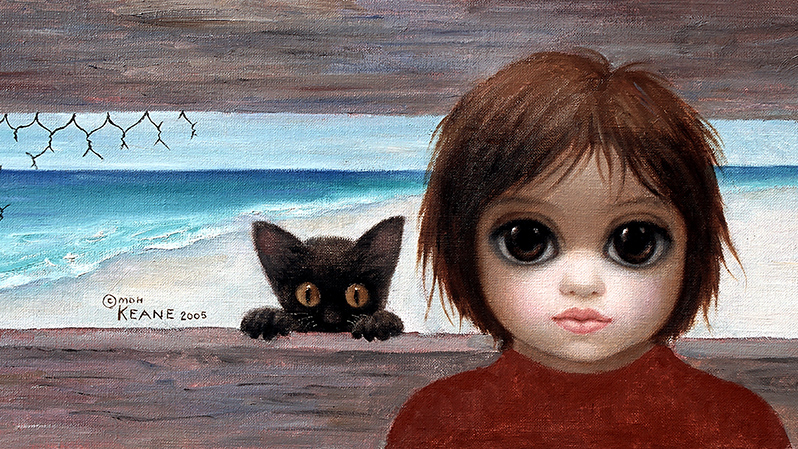
"content": "\u003cp>Napa, California-based painter Margaret Keane is the subject of the newest film from director Tim Burton, \u003cem>\u003ca href=\"http://youtu.be/YOavDSErmak\" target=\"_blank\" rel=\"noopener\">Big Eyes\u003c/a>\u003c/em>, which opens December 25, 2014. The director had collected the artist’s work for many years when he was asked to direct a film about her life.\u003c/p>\n\u003cp>Margaret Keane’s paintings of wide-eyed children, or “waifs,” were ubiquitous starting in the early ’60s and then became synonymous with “thrift store art” and kitsch, though the artist would never describe them that way. Today her “Big Eye Art” style, widely copied at the time, continues to inspire a new generation of visual artists, including contemporary pop surrealists like \u003ca href=\"https://www.google.com/search?q=%22Mark+Ryden%22+painter&client=firefox-a&rls=org.mozilla:en-US:official&channel=sb&biw=1920&bih=885&source=lnms&tbm=isch&sa=X&ei=jMSAVKedGseyoQTMioG4AQ&ved=0CAYQ_AUoAQ\" target=\"_blank\" rel=\"noopener\">Mark Ryden\u003c/a>.\u003c/p>\n\u003cp>Many people still mistakenly credit Margaret’s paintings to her former husband, Walter Keane, who convinced Margaret to let him take credit for her art in an attempt to achieve success during the late ’50s, a time when female artists’ work was undervalued. Margaret developed a second style of art she could call her own, and continued painting both styles for over a decade, living a lie and what she describes as a nightmare, “an impossible situation.”\u003c/p>\n\u003cp>The Keanes’ marriage ended in 1965, and in 1970 Margaret bravely revealed that she was the actual painter of the famous big-eyed waifs. In 1986, a court case proved her right. Although Margaret never collected the restitution fees the court ordered Walter to pay, the recognition she gained for her work was invaluable to the artist.\u003c/p>\n\u003cp>I had the opportunity to sit down with Margaret at the gallery dedicated to her work, Keane Eyes Gallery, in San Francisco, to find out more about her history as an artist and what it was like to watch a painful decade of her life play out on the big screen.\u003c/p>\n\u003cp>[ad fullwidth]\u003c/p>\n\u003cp>\u003c/p>\n\u003cp>\u003ci>Special thanks to Nigel Horsley for use of his Tim Burton photo. Follow his work on \u003ca href=\"https://www.flickr.com/photos/49347467@N05/with/9326808302\" target=\"_blank\" rel=\"noopener\">Flickr\u003c/a>.\u003c/i>\u003c/p>\n\n",
"stats": {
"hasVideo": false,
"hasChartOrMap": false,
"hasAudio": false,
"hasPolis": false,
"wordCount": 332,
"hasGoogleForm": false,
"hasGallery": false,
"hasHearkenModule": false,
"iframeSrcs": [],
"paragraphCount": 8
},
"modified": 1705047900,
"excerpt": "We sat down with Margaret Keane, who is known for her ubiquitous paintings of wide-eyed children. Her husband Walter infamously claimed credit for her work, and she is the subject of Tim Burton’s new film, \u003ci>Big Eyes\u003c/i>.",
"headData": {
"twImgId": "",
"twTitle": "",
"ogTitle": "",
"ogImgId": "",
"twDescription": "",
"description": "We sat down with Margaret Keane, who is known for her ubiquitous paintings of wide-eyed children. Her husband Walter infamously claimed credit for her work, and she is the subject of Tim Burton’s new film, Big Eyes.",
"title": "Video: Margaret Keane, the Painter Behind Tim Burton's ‘Big Eyes’ | KQED",
"ogDescription": "",
"schema": {
"@context": "https://schema.org",
"@type": "Article",
"headline": "Video: Margaret Keane, the Painter Behind Tim Burton's ‘Big Eyes’",
"datePublished": "2014-12-04T13:30:46-08:00",
"dateModified": "2024-01-12T00:25:00-08:00",
"image": "https://cdn.kqed.org/wp-content/uploads/2020/02/KQED-OG-Image@1x.png"
}
},
"guestAuthors": [],
"slug": "video-margaret-keane-the-painter-behind-tim-burtons-big-eyes",
"status": "publish",
"videoEmbed": "https://www.youtube.com/watch?v=OMKnuhNe3Pc",
"sticky": false,
"path": "/arts/10183252/video-margaret-keane-the-painter-behind-tim-burtons-big-eyes",
"audioTrackLength": null,
"parsedContent": [
{
"type": "contentString",
"content": "\u003cdiv class=\"post-body\">\u003cp>\u003cp>Napa, California-based painter Margaret Keane is the subject of the newest film from director Tim Burton, \u003cem>\u003ca href=\"http://youtu.be/YOavDSErmak\" target=\"_blank\" rel=\"noopener\">Big Eyes\u003c/a>\u003c/em>, which opens December 25, 2014. The director had collected the artist’s work for many years when he was asked to direct a film about her life.\u003c/p>\n\u003cp>Margaret Keane’s paintings of wide-eyed children, or “waifs,” were ubiquitous starting in the early ’60s and then became synonymous with “thrift store art” and kitsch, though the artist would never describe them that way. Today her “Big Eye Art” style, widely copied at the time, continues to inspire a new generation of visual artists, including contemporary pop surrealists like \u003ca href=\"https://www.google.com/search?q=%22Mark+Ryden%22+painter&client=firefox-a&rls=org.mozilla:en-US:official&channel=sb&biw=1920&bih=885&source=lnms&tbm=isch&sa=X&ei=jMSAVKedGseyoQTMioG4AQ&ved=0CAYQ_AUoAQ\" target=\"_blank\" rel=\"noopener\">Mark Ryden\u003c/a>.\u003c/p>\n\u003cp>Many people still mistakenly credit Margaret’s paintings to her former husband, Walter Keane, who convinced Margaret to let him take credit for her art in an attempt to achieve success during the late ’50s, a time when female artists’ work was undervalued. Margaret developed a second style of art she could call her own, and continued painting both styles for over a decade, living a lie and what she describes as a nightmare, “an impossible situation.”\u003c/p>\n\u003cp>The Keanes’ marriage ended in 1965, and in 1970 Margaret bravely revealed that she was the actual painter of the famous big-eyed waifs. In 1986, a court case proved her right. Although Margaret never collected the restitution fees the court ordered Walter to pay, the recognition she gained for her work was invaluable to the artist.\u003c/p>\n\u003cp>I had the opportunity to sit down with Margaret at the gallery dedicated to her work, Keane Eyes Gallery, in San Francisco, to find out more about her history as an artist and what it was like to watch a painful decade of her life play out on the big screen.\u003c/p>\n\u003cp>\u003c/p>\u003c/div>",
"attributes": {
"named": {},
"numeric": []
}
},
{
"type": "component",
"content": "",
"name": "ad",
"attributes": {
"named": {
"label": "fullwidth"
},
"numeric": [
"fullwidth"
]
}
},
{
"type": "contentString",
"content": "\u003cdiv class=\"post-body\">\u003cp>\u003c/p>\n\u003cp>\u003c/p>\n\u003cp>\u003ci>Special thanks to Nigel Horsley for use of his Tim Burton photo. Follow his work on \u003ca href=\"https://www.flickr.com/photos/49347467@N05/with/9326808302\" target=\"_blank\" rel=\"noopener\">Flickr\u003c/a>.\u003c/i>\u003c/p>\n\n\u003c/div>\u003c/p>",
"attributes": {
"named": {},
"numeric": []
}
}
],
"link": "/arts/10183252/video-margaret-keane-the-painter-behind-tim-burtons-big-eyes",
"authors": [
"16",
"93"
],
"categories": [
"arts_70"
],
"tags": [
"arts_596"
],
"featImg": "arts_10188373",
"label": "arts"
},
"arts_10158665": {
"type": "posts",
"id": "arts_10158665",
"meta": {
"index": "posts_1716263798",
"site": "arts",
"id": "10158665",
"score": null,
"sort": [
1417442438000
]
},
"guestAuthors": [],
"slug": "page-turners-a-2014-art-book-gift-guide",
"title": "Page Turners: A 2014 Art Book Gift Guide",
"publishDate": 1417442438,
"format": "standard",
"headTitle": "Page Turners: A 2014 Art Book Gift Guide | KQED",
"labelTerm": {
"site": "arts"
},
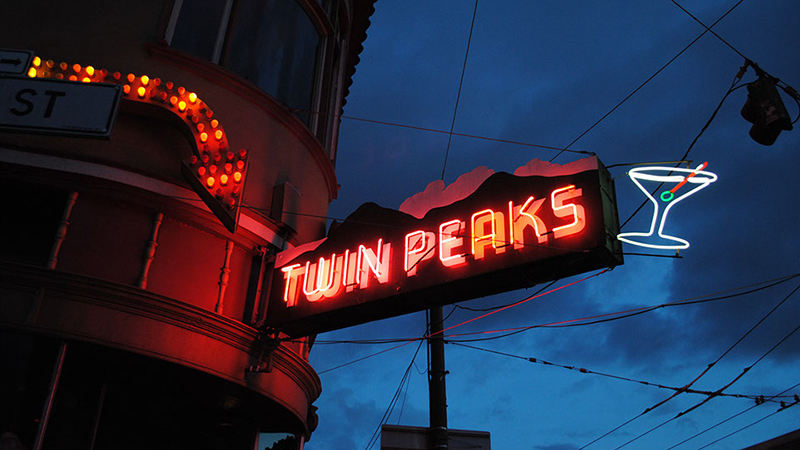
"content": "\u003cp>It’s that time of year. Time to think about what to get the special people in your life. Here in the Bay Area, chances are your loved ones don’t have a lot of space (physically and temporally) for presents. Apartments are small, schedules are full. So this year, forget the carbonation machine, they’ll use it for a month and go back to Perrier. Don’t bother with the latest technology — it’ll be obsolete in a season. And forget the activity-based gifts — there’s no time for that cooking lesson or wine tasting train ride. Instead, go with the foolproof present your recipient can use and admire at her leisure: a well-chosen art book.\u003c/p>\n\u003cp>Here are eight books for the art lover in your life, including books about art and books that are art. And when those holidays roll around, don’t say you couldn’t think of a good present.\u003c/p>\n\u003cp>\u003cimg loading=\"lazy\" decoding=\"async\" class=\"alignright size-full wp-image-10158666\" src=\"http://ww2.kqed.org/arts/wp-content/uploads/sites/2/2014/11/BestAmericanBook.jpg\" alt=\"BestAmericanBook\" width=\"372\" height=\"600\">\u003c/p>\n\u003ch3>\u003ci>The Best American Book of the 20th Century: A Novel\u003c/i>, Société Réaliste\u003c/h3>\n\u003ch5>\u003ca href=\"http://www.onomatopee.net/project.php?progID=019f131ccccd023b1808bdb9d7bef9ff\" target=\"_blank\" rel=\"noopener\">Onomatopee\u003c/a>, 2014, 112 pages\u003c/h5>\n\u003cp>Cleverly assembled from “the first sentence of the first best-selling book of 1900, the second sentence of the second best-selling book of 1900… and so on up to the end of the century, to the thousandth sentence of the tenth best-selling book of 1999,” \u003ci>The Best American Book\u003c/i> is an amalgamation of populist American literature, from Ernest Hemingway to Ayn Rand, John Steinbeck to Toni Morrison. Perfectly pocket-sized to mimic its source material, the book replaces proper nouns with pronouns to enhance readability. “The work of the day being over,” reads the first sentence of Mary Johnston’s \u003ci>To Have and To Hold \u003c/i>(and the first sentence of \u003ci>The Best American Book\u003c/i>), “he sat down upon his doorstep, pipe in hand, to rest awhile in the cool of the evening.” Could it be that these authors, across time, subject and writing style, are essentially telling the same story?\u003c/p>\n\u003cp>\u003cimg loading=\"lazy\" decoding=\"async\" class=\"alignright size-full wp-image-10158667\" src=\"http://ww2.kqed.org/arts/wp-content/uploads/sites/2/2014/11/CathedralesB.jpg\" alt=\"CathedralesB\" width=\"640\" height=\"480\" srcset=\"https://cdn.kqed.org/wp-content/uploads/sites/2/2014/11/CathedralesB.jpg 640w, https://cdn.kqed.org/wp-content/uploads/sites/2/2014/11/CathedralesB-400x300.jpg 400w\" sizes=\"(max-width: 640px) 100vw, 640px\">\u003c/p>\n\u003ch3>\u003ci>Cathédrales\u003c/i>, Laurence Aëgerter\u003c/h3>\n\u003ch5>\u003ca href=\"http://www.rvb-books.com/book.php?id_book=63\" target=\"_blank\" rel=\"noopener\">RVB Books\u003c/a>, 2014, 248 pages\u003c/h5>\n\u003cp>Starting with an official 1949 tourism catalog of French cathedrals and churches, Laurence Aëgerter placed the book by her studio window, allowing light and shadows to fall across a reproduction of the façade of the Saint-Étienne cathedral in Bourges. Taking one photograph every minute for two hours, she captured 120 variations of light across the printed page. Referencing Monet’s Rouen cathedrals in an age of mechanical reproduction, \u003ci>Cathédrales\u003c/i> is an elegant photo book perfectly suited to its form. As the pages turn, time passes, shadows shift and the cathedral is slowly shrouded in darkness. A simple, beautiful, and thoughtful book, consider \u003ci>Cathédrales\u003c/i> for the Francophile in your circle, or for the Instagram-frenzied friend who could use a reminder about quiet, contemplative moments.\u003c/p>\n\u003cp>[ad fullwidth]\u003c/p>\n\u003cp>\u003cimg loading=\"lazy\" decoding=\"async\" class=\"alignright size-full wp-image-10158668\" src=\"http://ww2.kqed.org/arts/wp-content/uploads/sites/2/2014/11/LettersPatterns.jpeg\" alt=\"LettersPatterns\" width=\"640\" height=\"562\" srcset=\"https://cdn.kqed.org/wp-content/uploads/sites/2/2014/11/LettersPatterns.jpeg 640w, https://cdn.kqed.org/wp-content/uploads/sites/2/2014/11/LettersPatterns-400x351.jpeg 400w\" sizes=\"(max-width: 640px) 100vw, 640px\">\u003c/p>\n\u003ch3>\u003ci>Letters Become Patterns\u003c/i>, Sigrid Calon\u003c/h3>\n\u003ch5>\u003ca href=\"http://shopsigridcalon.nl/product/letters-become-patterns\" target=\"_blank\" rel=\"noopener\">Self-published\u003c/a>, 2014, 56 pages\u003c/h5>\n\u003cp>Sigrid Calon, based in Amsterdam, is something of a star on the art book fair circuit. Using a Risograph machine (a trendy form of automatic screen printing) she creates prints and books of graphic patterns, layering colors to achieve lovely tonal shifts and optical effects. At the 2014 New York Art Book Fair, she unveiled \u003ci>Letters Become Patterns\u003c/i>, a square spiral bound book with a clear perspex cover and pleasing rounded corners. Each spread shows patterns derived from the letters of the alphabet, shapes repeated until they become abstract. A perfect gift for a graphic designer, a precocious alphabet learner, or simply anyone who enjoys dramatic combinations of color and form.\u003c/p>\n\u003cp>\u003cimg loading=\"lazy\" decoding=\"async\" class=\"alignright size-full wp-image-10158669\" src=\"http://ww2.kqed.org/arts/wp-content/uploads/sites/2/2014/11/Miraculous.jpg\" alt=\"Untitled-1\" width=\"620\" height=\"515\" srcset=\"https://cdn.kqed.org/wp-content/uploads/sites/2/2014/11/Miraculous.jpg 620w, https://cdn.kqed.org/wp-content/uploads/sites/2/2014/11/Miraculous-400x332.jpg 400w\" sizes=\"(max-width: 620px) 100vw, 620px\">\u003c/p>\n\u003ch3>\u003ci>The Miraculous\u003c/i>, Raphael Rubinstein\u003c/h3>\n\u003ch5>\u003ca href=\"http://www.papermonument.com/web-only/the-miraculous-raphael-rubinstein/\" target=\"_blank\" rel=\"noopener\">Paper Monument\u003c/a>, 2014, 72 pages\u003c/h5>\n\u003cp>\u003ci>The Miraculous\u003c/i> retells legendary moments from the past five decades of art history as fable-like stories. In fifty episodes, Rubinstein withholds the names of famous artists to detail the conception of a particular piece, the happy accident that led to a fruitful career, the moment when a particular artwork became legendary. While many of the chapters in \u003ci>The Miraculous\u003c/i> may be familiar, the book distances itself from the traditional narrative of contemporary art by eliminating authorship and intention. With dry yet mesmerising prose, \u003ci>The Miraculous\u003c/i> is a fast read you’ll return to again and again for its ability to make the quotidian otherworldly, like the artists it profiles. Select this inspiring experiment in arts writing for the art historian, the artist, or the storyteller in your life.\u003c/p>\n\u003cp>\u003cimg loading=\"lazy\" decoding=\"async\" class=\"alignright size-full wp-image-10158670\" src=\"http://ww2.kqed.org/arts/wp-content/uploads/sites/2/2014/11/Mothernism.jpg\" alt=\"Mothernism\" width=\"640\" height=\"427\" srcset=\"https://cdn.kqed.org/wp-content/uploads/sites/2/2014/11/Mothernism.jpg 640w, https://cdn.kqed.org/wp-content/uploads/sites/2/2014/11/Mothernism-400x266.jpg 400w\" sizes=\"(max-width: 640px) 100vw, 640px\">\u003c/p>\n\u003ch3>\u003ci>Mothernism\u003c/i>, Lise Haller Baggesen\u003c/h3>\n\u003ch5>\u003ca href=\"http://sector2337.com/green-lantern-press/green-lantern-press-catalog/\" target=\"_blank\" rel=\"noopener\">Green Lantern Press\u003c/a>, 2014, 152 pages\u003c/h5>\n\u003cp>The book’s tagline reads: “At the intersection of feminism, science fiction, and disco, \u003ci>Mothernism\u003c/i> aims to locate the mother-shaped hole in contemporary art discourse.” There’s no way to explain how these themes mesh completely and effortlessly in Baggesen’s writing without simply saying: they do. Each chapter is a letter addressed to nameless “Dear” (it could be her daughter, her sister, her mother, the reader). Mixing pop lyrics with art criticism, feminist theory and gender politics, she issues calls to arms, makes jokes, delves into engaging personal histories and signs off on each one, “Love, Mom.” The book itself is beautiful — printed in purple ink, the edges gilded in silver.\u003c/p>\n\u003cp>\u003cimg loading=\"lazy\" decoding=\"async\" class=\"alignright size-full wp-image-10158673\" src=\"http://ww2.kqed.org/arts/wp-content/uploads/sites/2/2014/11/PlumbB.jpg\" alt=\"PlumbB\" width=\"640\" height=\"640\" srcset=\"https://cdn.kqed.org/wp-content/uploads/sites/2/2014/11/PlumbB.jpg 640w, https://cdn.kqed.org/wp-content/uploads/sites/2/2014/11/PlumbB-400x400.jpg 400w, https://cdn.kqed.org/wp-content/uploads/sites/2/2014/11/PlumbB-600x600.jpg 600w, https://cdn.kqed.org/wp-content/uploads/sites/2/2014/11/PlumbB-32x32.jpg 32w, https://cdn.kqed.org/wp-content/uploads/sites/2/2014/11/PlumbB-64x64.jpg 64w, https://cdn.kqed.org/wp-content/uploads/sites/2/2014/11/PlumbB-96x96.jpg 96w, https://cdn.kqed.org/wp-content/uploads/sites/2/2014/11/PlumbB-128x128.jpg 128w, https://cdn.kqed.org/wp-content/uploads/sites/2/2014/11/PlumbB-75x75.jpg 75w\" sizes=\"(max-width: 640px) 100vw, 640px\">\u003c/p>\n\u003ch3>Various notebooks, \u003ca href=\"http://knockknockstuff.com/plumb/\" target=\"_blank\" rel=\"noopener\">Plumb\u003c/a>\u003c/h3>\n\u003cp>A collaboration between Knock Knock, artist Tucker Nichols and designers MacFadden & Thorpe, Plumb is an unconventional line of artist-conceived notebooks. Working with three artists per season, their second batch of goods is even more exciting than the first. Artist and musician Nathaniel Russell contributes a “Fake-Jacket Journal,” a blank booklet with four absurd cover options to conceal its true nature from passersby. Painter Linda Geary’s “Stack Book” uses her homemade color swatches to enclose nearly 300 pages of thick white sketch paper. And Jason Polan’s “Observation Notebook,” spiral-bound stenographer style, prompts observational sketches with the question, “What are you looking at?”\u003c/p>\n\u003cp>\u003cimg loading=\"lazy\" decoding=\"async\" class=\"alignright size-full wp-image-10158671\" src=\"http://ww2.kqed.org/arts/wp-content/uploads/sites/2/2014/11/Neon.png\" alt=\"Neon\" width=\"640\" height=\"563\" srcset=\"https://cdn.kqed.org/wp-content/uploads/sites/2/2014/11/Neon.png 640w, https://cdn.kqed.org/wp-content/uploads/sites/2/2014/11/Neon-400x351.png 400w\" sizes=\"(max-width: 640px) 100vw, 640px\">\u003c/p>\n\u003ch3>\u003ci>San Francisco Neon: Survivors and Lost Icons\u003c/i>, Al Barna and Randall Ann Homan\u003c/h3>\n\u003ch5>\u003ca href=\"http://www.neonbook.xyz/\" target=\"_blank\" rel=\"noopener\">Giant Orange Press\u003c/a>, 2014, 160 pages\u003c/h5>\n\u003cp>According to Tom Downs’ forward, “Neon is best in context,” but if you’re not interested in roaming the 49 square miles of San Francisco after dark, second-best is via the photographs in this book. San Francisco’s neon signs — some long gone, others currently operating, high class to mundane — get glossy attention in \u003ci>San Francisco Neon\u003c/i>. Something about the red and green glow of many of the signs makes even images from 2014 look nostalgic. In the endnotes, signs are granted condition reports, charming and personal bits of text from the photographers, who obviously care deeply about the subject matter. The stories “can be a catalyst for San Franciscans to preserve their neon landscape,” they write. This might be the perfect gift for a friend who just moved to town, clueless as to where to start learning about San Francisco’s rich (and rapidly disappearing) history.\u003c/p>\n\u003cp>\u003cimg loading=\"lazy\" decoding=\"async\" class=\"alignright size-full wp-image-10158674\" src=\"http://ww2.kqed.org/arts/wp-content/uploads/sites/2/2014/11/SugarSkull.jpeg\" alt=\"SugarSkull\" width=\"343\" height=\"450\">\u003c/p>\n\u003ch3>\u003ci>Sugar Skull\u003c/i>, Charles Burns\u003c/h3>\n\u003ch5>\u003ca href=\"http://knopfdoubleday.com/book/220319/sugar-skull/\" target=\"_blank\" rel=\"noopener\">Pantheon\u003c/a>, 2014, 64 pages\u003c/h5>\n\u003cp>[ad floatright]\u003c/p>\n\u003cp>It began in 2010 with \u003ci>X’ed Out\u003c/i>. Two agonizing years later, \u003ci>The Hive\u003c/i> arrived. And finally after another unbearable wait, \u003ci>Sugar Skull\u003c/i>, the conclusion of Charles Burns’ epic graphic fiction trilogy about Doug, a young man in a doomed relationship who vacillates between a nightmarish netherworld and memories of his past. \u003ci>Sugar Skull\u003c/i> reaches a “mind-bending, heartbreaking end” through Burns’ sumptuous colors and delicate line-work. The books are continuously rewarding, inviting return visits down the rabbit hole. Burns leads the reader into a labyrinth of memory, horror-tinged fantasy and myriad visual references, from which the return to everyday life is always jarring.\u003c/p>\n\n",
"blocks": [],
"excerpt": "Eight books for the art lover in your life, including books about art and books that are art. ",
"status": "publish",
"parent": 0,
"modified": 1726701856,
"stats": {
"hasAudio": false,
"hasVideo": false,
"hasChartOrMap": false,
"iframeSrcs": [],
"hasGoogleForm": false,
"hasGallery": false,
"hasHearkenModule": false,
"hasPolis": false,
"paragraphCount": 20,
"wordCount": 1307
},
"headData": {
"title": "Page Turners: A 2014 Art Book Gift Guide | KQED",
"description": "Eight books for the art lover in your life, including books about art and books that are art. ",
"ogTitle": "",
"ogDescription": "",
"ogImgId": "",
"twTitle": "",
"twDescription": "",
"twImgId": "",
"schema": {
"@context": "https://schema.org",
"@type": "Article",
"headline": "Page Turners: A 2014 Art Book Gift Guide",
"datePublished": "2014-12-01T06:00:38-08:00",
"dateModified": "2024-09-18T16:24:16-07:00",
"image": "https://cdn.kqed.org/wp-content/uploads/2020/02/KQED-OG-Image@1x.png"
}
},
"sticky": false,
"path": "/arts/10158665/page-turners-a-2014-art-book-gift-guide",
"audioTrackLength": null,
"parsedContent": [
{
"type": "contentString",
"content": "\u003cdiv class=\"post-body\">\u003cp>\u003cp>It’s that time of year. Time to think about what to get the special people in your life. Here in the Bay Area, chances are your loved ones don’t have a lot of space (physically and temporally) for presents. Apartments are small, schedules are full. So this year, forget the carbonation machine, they’ll use it for a month and go back to Perrier. Don’t bother with the latest technology — it’ll be obsolete in a season. And forget the activity-based gifts — there’s no time for that cooking lesson or wine tasting train ride. Instead, go with the foolproof present your recipient can use and admire at her leisure: a well-chosen art book.\u003c/p>\n\u003cp>Here are eight books for the art lover in your life, including books about art and books that are art. And when those holidays roll around, don’t say you couldn’t think of a good present.\u003c/p>\n\u003cp>\u003cimg loading=\"lazy\" decoding=\"async\" class=\"alignright size-full wp-image-10158666\" src=\"http://ww2.kqed.org/arts/wp-content/uploads/sites/2/2014/11/BestAmericanBook.jpg\" alt=\"BestAmericanBook\" width=\"372\" height=\"600\">\u003c/p>\n\u003ch3>\u003ci>The Best American Book of the 20th Century: A Novel\u003c/i>, Société Réaliste\u003c/h3>\n\u003ch5>\u003ca href=\"http://www.onomatopee.net/project.php?progID=019f131ccccd023b1808bdb9d7bef9ff\" target=\"_blank\" rel=\"noopener\">Onomatopee\u003c/a>, 2014, 112 pages\u003c/h5>\n\u003cp>Cleverly assembled from “the first sentence of the first best-selling book of 1900, the second sentence of the second best-selling book of 1900… and so on up to the end of the century, to the thousandth sentence of the tenth best-selling book of 1999,” \u003ci>The Best American Book\u003c/i> is an amalgamation of populist American literature, from Ernest Hemingway to Ayn Rand, John Steinbeck to Toni Morrison. Perfectly pocket-sized to mimic its source material, the book replaces proper nouns with pronouns to enhance readability. “The work of the day being over,” reads the first sentence of Mary Johnston’s \u003ci>To Have and To Hold \u003c/i>(and the first sentence of \u003ci>The Best American Book\u003c/i>), “he sat down upon his doorstep, pipe in hand, to rest awhile in the cool of the evening.” Could it be that these authors, across time, subject and writing style, are essentially telling the same story?\u003c/p>\n\u003cp>\u003cimg loading=\"lazy\" decoding=\"async\" class=\"alignright size-full wp-image-10158667\" src=\"http://ww2.kqed.org/arts/wp-content/uploads/sites/2/2014/11/CathedralesB.jpg\" alt=\"CathedralesB\" width=\"640\" height=\"480\" srcset=\"https://cdn.kqed.org/wp-content/uploads/sites/2/2014/11/CathedralesB.jpg 640w, https://cdn.kqed.org/wp-content/uploads/sites/2/2014/11/CathedralesB-400x300.jpg 400w\" sizes=\"(max-width: 640px) 100vw, 640px\">\u003c/p>\n\u003ch3>\u003ci>Cathédrales\u003c/i>, Laurence Aëgerter\u003c/h3>\n\u003ch5>\u003ca href=\"http://www.rvb-books.com/book.php?id_book=63\" target=\"_blank\" rel=\"noopener\">RVB Books\u003c/a>, 2014, 248 pages\u003c/h5>\n\u003cp>Starting with an official 1949 tourism catalog of French cathedrals and churches, Laurence Aëgerter placed the book by her studio window, allowing light and shadows to fall across a reproduction of the façade of the Saint-Étienne cathedral in Bourges. Taking one photograph every minute for two hours, she captured 120 variations of light across the printed page. Referencing Monet’s Rouen cathedrals in an age of mechanical reproduction, \u003ci>Cathédrales\u003c/i> is an elegant photo book perfectly suited to its form. As the pages turn, time passes, shadows shift and the cathedral is slowly shrouded in darkness. A simple, beautiful, and thoughtful book, consider \u003ci>Cathédrales\u003c/i> for the Francophile in your circle, or for the Instagram-frenzied friend who could use a reminder about quiet, contemplative moments.\u003c/p>\n\u003cp>\u003c/p>\u003c/div>",
"attributes": {
"named": {},
"numeric": []
}
},
{
"type": "component",
"content": "",
"name": "ad",
"attributes": {
"named": {
"label": "fullwidth"
},
"numeric": [
"fullwidth"
]
}
},
{
"type": "contentString",
"content": "\u003cdiv class=\"post-body\">\u003cp>\u003c/p>\n\u003cp>\u003cimg loading=\"lazy\" decoding=\"async\" class=\"alignright size-full wp-image-10158668\" src=\"http://ww2.kqed.org/arts/wp-content/uploads/sites/2/2014/11/LettersPatterns.jpeg\" alt=\"LettersPatterns\" width=\"640\" height=\"562\" srcset=\"https://cdn.kqed.org/wp-content/uploads/sites/2/2014/11/LettersPatterns.jpeg 640w, https://cdn.kqed.org/wp-content/uploads/sites/2/2014/11/LettersPatterns-400x351.jpeg 400w\" sizes=\"(max-width: 640px) 100vw, 640px\">\u003c/p>\n\u003ch3>\u003ci>Letters Become Patterns\u003c/i>, Sigrid Calon\u003c/h3>\n\u003ch5>\u003ca href=\"http://shopsigridcalon.nl/product/letters-become-patterns\" target=\"_blank\" rel=\"noopener\">Self-published\u003c/a>, 2014, 56 pages\u003c/h5>\n\u003cp>Sigrid Calon, based in Amsterdam, is something of a star on the art book fair circuit. Using a Risograph machine (a trendy form of automatic screen printing) she creates prints and books of graphic patterns, layering colors to achieve lovely tonal shifts and optical effects. At the 2014 New York Art Book Fair, she unveiled \u003ci>Letters Become Patterns\u003c/i>, a square spiral bound book with a clear perspex cover and pleasing rounded corners. Each spread shows patterns derived from the letters of the alphabet, shapes repeated until they become abstract. A perfect gift for a graphic designer, a precocious alphabet learner, or simply anyone who enjoys dramatic combinations of color and form.\u003c/p>\n\u003cp>\u003cimg loading=\"lazy\" decoding=\"async\" class=\"alignright size-full wp-image-10158669\" src=\"http://ww2.kqed.org/arts/wp-content/uploads/sites/2/2014/11/Miraculous.jpg\" alt=\"Untitled-1\" width=\"620\" height=\"515\" srcset=\"https://cdn.kqed.org/wp-content/uploads/sites/2/2014/11/Miraculous.jpg 620w, https://cdn.kqed.org/wp-content/uploads/sites/2/2014/11/Miraculous-400x332.jpg 400w\" sizes=\"(max-width: 620px) 100vw, 620px\">\u003c/p>\n\u003ch3>\u003ci>The Miraculous\u003c/i>, Raphael Rubinstein\u003c/h3>\n\u003ch5>\u003ca href=\"http://www.papermonument.com/web-only/the-miraculous-raphael-rubinstein/\" target=\"_blank\" rel=\"noopener\">Paper Monument\u003c/a>, 2014, 72 pages\u003c/h5>\n\u003cp>\u003ci>The Miraculous\u003c/i> retells legendary moments from the past five decades of art history as fable-like stories. In fifty episodes, Rubinstein withholds the names of famous artists to detail the conception of a particular piece, the happy accident that led to a fruitful career, the moment when a particular artwork became legendary. While many of the chapters in \u003ci>The Miraculous\u003c/i> may be familiar, the book distances itself from the traditional narrative of contemporary art by eliminating authorship and intention. With dry yet mesmerising prose, \u003ci>The Miraculous\u003c/i> is a fast read you’ll return to again and again for its ability to make the quotidian otherworldly, like the artists it profiles. Select this inspiring experiment in arts writing for the art historian, the artist, or the storyteller in your life.\u003c/p>\n\u003cp>\u003cimg loading=\"lazy\" decoding=\"async\" class=\"alignright size-full wp-image-10158670\" src=\"http://ww2.kqed.org/arts/wp-content/uploads/sites/2/2014/11/Mothernism.jpg\" alt=\"Mothernism\" width=\"640\" height=\"427\" srcset=\"https://cdn.kqed.org/wp-content/uploads/sites/2/2014/11/Mothernism.jpg 640w, https://cdn.kqed.org/wp-content/uploads/sites/2/2014/11/Mothernism-400x266.jpg 400w\" sizes=\"(max-width: 640px) 100vw, 640px\">\u003c/p>\n\u003ch3>\u003ci>Mothernism\u003c/i>, Lise Haller Baggesen\u003c/h3>\n\u003ch5>\u003ca href=\"http://sector2337.com/green-lantern-press/green-lantern-press-catalog/\" target=\"_blank\" rel=\"noopener\">Green Lantern Press\u003c/a>, 2014, 152 pages\u003c/h5>\n\u003cp>The book’s tagline reads: “At the intersection of feminism, science fiction, and disco, \u003ci>Mothernism\u003c/i> aims to locate the mother-shaped hole in contemporary art discourse.” There’s no way to explain how these themes mesh completely and effortlessly in Baggesen’s writing without simply saying: they do. Each chapter is a letter addressed to nameless “Dear” (it could be her daughter, her sister, her mother, the reader). Mixing pop lyrics with art criticism, feminist theory and gender politics, she issues calls to arms, makes jokes, delves into engaging personal histories and signs off on each one, “Love, Mom.” The book itself is beautiful — printed in purple ink, the edges gilded in silver.\u003c/p>\n\u003cp>\u003cimg loading=\"lazy\" decoding=\"async\" class=\"alignright size-full wp-image-10158673\" src=\"http://ww2.kqed.org/arts/wp-content/uploads/sites/2/2014/11/PlumbB.jpg\" alt=\"PlumbB\" width=\"640\" height=\"640\" srcset=\"https://cdn.kqed.org/wp-content/uploads/sites/2/2014/11/PlumbB.jpg 640w, https://cdn.kqed.org/wp-content/uploads/sites/2/2014/11/PlumbB-400x400.jpg 400w, https://cdn.kqed.org/wp-content/uploads/sites/2/2014/11/PlumbB-600x600.jpg 600w, https://cdn.kqed.org/wp-content/uploads/sites/2/2014/11/PlumbB-32x32.jpg 32w, https://cdn.kqed.org/wp-content/uploads/sites/2/2014/11/PlumbB-64x64.jpg 64w, https://cdn.kqed.org/wp-content/uploads/sites/2/2014/11/PlumbB-96x96.jpg 96w, https://cdn.kqed.org/wp-content/uploads/sites/2/2014/11/PlumbB-128x128.jpg 128w, https://cdn.kqed.org/wp-content/uploads/sites/2/2014/11/PlumbB-75x75.jpg 75w\" sizes=\"(max-width: 640px) 100vw, 640px\">\u003c/p>\n\u003ch3>Various notebooks, \u003ca href=\"http://knockknockstuff.com/plumb/\" target=\"_blank\" rel=\"noopener\">Plumb\u003c/a>\u003c/h3>\n\u003cp>A collaboration between Knock Knock, artist Tucker Nichols and designers MacFadden & Thorpe, Plumb is an unconventional line of artist-conceived notebooks. Working with three artists per season, their second batch of goods is even more exciting than the first. Artist and musician Nathaniel Russell contributes a “Fake-Jacket Journal,” a blank booklet with four absurd cover options to conceal its true nature from passersby. Painter Linda Geary’s “Stack Book” uses her homemade color swatches to enclose nearly 300 pages of thick white sketch paper. And Jason Polan’s “Observation Notebook,” spiral-bound stenographer style, prompts observational sketches with the question, “What are you looking at?”\u003c/p>\n\u003cp>\u003cimg loading=\"lazy\" decoding=\"async\" class=\"alignright size-full wp-image-10158671\" src=\"http://ww2.kqed.org/arts/wp-content/uploads/sites/2/2014/11/Neon.png\" alt=\"Neon\" width=\"640\" height=\"563\" srcset=\"https://cdn.kqed.org/wp-content/uploads/sites/2/2014/11/Neon.png 640w, https://cdn.kqed.org/wp-content/uploads/sites/2/2014/11/Neon-400x351.png 400w\" sizes=\"(max-width: 640px) 100vw, 640px\">\u003c/p>\n\u003ch3>\u003ci>San Francisco Neon: Survivors and Lost Icons\u003c/i>, Al Barna and Randall Ann Homan\u003c/h3>\n\u003ch5>\u003ca href=\"http://www.neonbook.xyz/\" target=\"_blank\" rel=\"noopener\">Giant Orange Press\u003c/a>, 2014, 160 pages\u003c/h5>\n\u003cp>According to Tom Downs’ forward, “Neon is best in context,” but if you’re not interested in roaming the 49 square miles of San Francisco after dark, second-best is via the photographs in this book. San Francisco’s neon signs — some long gone, others currently operating, high class to mundane — get glossy attention in \u003ci>San Francisco Neon\u003c/i>. Something about the red and green glow of many of the signs makes even images from 2014 look nostalgic. In the endnotes, signs are granted condition reports, charming and personal bits of text from the photographers, who obviously care deeply about the subject matter. The stories “can be a catalyst for San Franciscans to preserve their neon landscape,” they write. This might be the perfect gift for a friend who just moved to town, clueless as to where to start learning about San Francisco’s rich (and rapidly disappearing) history.\u003c/p>\n\u003cp>\u003cimg loading=\"lazy\" decoding=\"async\" class=\"alignright size-full wp-image-10158674\" src=\"http://ww2.kqed.org/arts/wp-content/uploads/sites/2/2014/11/SugarSkull.jpeg\" alt=\"SugarSkull\" width=\"343\" height=\"450\">\u003c/p>\n\u003ch3>\u003ci>Sugar Skull\u003c/i>, Charles Burns\u003c/h3>\n\u003ch5>\u003ca href=\"http://knopfdoubleday.com/book/220319/sugar-skull/\" target=\"_blank\" rel=\"noopener\">Pantheon\u003c/a>, 2014, 64 pages\u003c/h5>\n\u003cp>\u003c/p>\u003c/div>",
"attributes": {
"named": {},
"numeric": []
}
},
{
"type": "component",
"content": "",
"name": "ad",
"attributes": {
"named": {
"label": "floatright"
},
"numeric": [
"floatright"
]
}
},
{
"type": "contentString",
"content": "\u003cdiv class=\"post-body\">\u003cp>\u003c/p>\n\u003cp>It began in 2010 with \u003ci>X’ed Out\u003c/i>. Two agonizing years later, \u003ci>The Hive\u003c/i> arrived. And finally after another unbearable wait, \u003ci>Sugar Skull\u003c/i>, the conclusion of Charles Burns’ epic graphic fiction trilogy about Doug, a young man in a doomed relationship who vacillates between a nightmarish netherworld and memories of his past. \u003ci>Sugar Skull\u003c/i> reaches a “mind-bending, heartbreaking end” through Burns’ sumptuous colors and delicate line-work. The books are continuously rewarding, inviting return visits down the rabbit hole. Burns leads the reader into a labyrinth of memory, horror-tinged fantasy and myriad visual references, from which the return to everyday life is always jarring.\u003c/p>\n\n\u003c/div>\u003c/p>",
"attributes": {
"named": {},
"numeric": []
}
}
],
"link": "/arts/10158665/page-turners-a-2014-art-book-gift-guide",
"authors": [
"61"
],
"categories": [
"arts_70"
],
"tags": [
"arts_596"
],
"featImg": "arts_10158672",
"label": "arts"
},
"arts_10145914": {
"type": "posts",
"id": "arts_10145914",
"meta": {
"index": "posts_1716263798",
"site": "arts",
"id": "10145914",
"score": null,
"sort": [
1416837631000
]
},
"parent": 0,
"labelTerm": {
"site": "arts"
},
"blocks": [],
"publishDate": 1416837631,
"format": "standard",
"title": "Inside The Battery's Quest to Cultivate Art Patrons and Philanthropists",
"headTitle": "Inside The Battery’s Quest to Cultivate Art Patrons and Philanthropists | KQED",
"content": "\u003cp>Last fall San Francisco saw the debut of The Battery, a private social club in the Financial District with the usual amenities, including a spa, a bar and a restaurant — it also offers a widely regarded live music and lecture series, as well as an art program. While The Battery may have been a welcome addition for some, it was criticized for being elitist at a time when new wealth is displacing many city residents. Coming as I do from the so-called art world, and mindful of the fact that art is also something of an exclusive enterprise, it is simplest to concede up front that (by virtue of being a private club with an internal nomination process and steep fees) The Battery is exclusive. To this I would say, playing devil’s advocate, so what? Much of the system of art schools, publications, galleries and institutions relies on the buyers and patrons that can afford the expense. As commercial galleries and nonprofits struggle to find a toehold in San Francisco, new models for fostering art patronage and philanthropy are sorely needed. Even as they are exclusive, The Battery’s member events to cultivate art collecting and charitable giving are unexpected amenities that aim to benefit the wider community, at least as they are described. A year into The Battery’s art program, I wanted to know, can a private club effectively cultivate personal investments in art and public life?\u003c/p>\n\u003cfigure id=\"attachment_10148993\" class=\"wp-caption alignright\" style=\"max-width: 640px\">\u003ca href=\"http://ww2.kqed.org/arts/wp-content/uploads/sites/2/2014/11/batterycybelelyle.jpg\">\u003cimg loading=\"lazy\" decoding=\"async\" class=\"wp-image-10148993 size-full\" src=\"http://ww2.kqed.org/arts/wp-content/uploads/sites/2/2014/11/batterycybelelyle.jpg\" alt=\"Cybele Lyle on view at The Battery\" width=\"640\" height=\"427\" srcset=\"https://cdn.kqed.org/wp-content/uploads/sites/2/2014/11/batterycybelelyle.jpg 640w, https://cdn.kqed.org/wp-content/uploads/sites/2/2014/11/batterycybelelyle-400x266.jpg 400w\" sizes=\"(max-width: 640px) 100vw, 640px\">\u003c/a>\u003cfigcaption class=\"wp-caption-text\">Installation detail: (Foreground) Works by Cybele Lyle on view at The Battery, (Background) Chris Hood.\u003c/figcaption>\u003c/figure>\n\u003cp>The art program is multi-pronged; it features quarterly exhibitions integrated throughout its elaborately designed interior spaces, as well gallery tours, artist talks and guided art fair visits. Anyone will tell you that the space is a challenge for art. It is a busy environment with difficult lighting. Tricky transitory spaces are reserved for the art program, including the central stairwell and adjoining hallways. Some work manages to transcend these difficulties and some doesn’t — in all fairness, the same can be said of the architecture in some star-architect designed galleries and museums. Whether by choice or by convenience, the art program eschews a white cube environment in favor of functioning spaces and to a certain extent this makes sense when trying to cultivate new collectors, who often want to see that it’s possible to live with art in everyday life.\u003c/p>\n\u003cfigure id=\"attachment_10148994\" class=\"wp-caption alignright\" style=\"max-width: 640px\">\u003ca href=\"http://ww2.kqed.org/arts/wp-content/uploads/sites/2/2014/11/batteryunderstairs.jpg\">\u003cimg loading=\"lazy\" decoding=\"async\" class=\"wp-image-10148994 size-full\" src=\"http://ww2.kqed.org/arts/wp-content/uploads/sites/2/2014/11/batteryunderstairs.jpg\" alt=\"The Battery\" width=\"640\" height=\"427\" srcset=\"https://cdn.kqed.org/wp-content/uploads/sites/2/2014/11/batteryunderstairs.jpg 640w, https://cdn.kqed.org/wp-content/uploads/sites/2/2014/11/batteryunderstairs-400x266.jpg 400w\" sizes=\"(max-width: 640px) 100vw, 640px\">\u003c/a>\u003cfigcaption class=\"wp-caption-text\">Installation detail: Works by Aaron Finnis, on view at The Battery\u003c/figcaption>\u003c/figure>\n\u003cp>The current show is organized by former Yerba Buena Center for the Arts adjunct curator and Queen’s Nails director, Julio Cesar Morales, now curator at Arizona State University’s Art Museum, in partnership with The Battery’s art program director Thomas Moller and assistant director Matt Bernstein. Though the space is difficult — and I’ve seen all kinds of difficult, including art displayed next to toilets in hotel art fairs — I was struck by the fact that some work looked exceptional in some really difficult spaces. Aaron Finnis’ \u003ci>MTURK1 (3,000 Workers)\u003c/i> is a sculptural installation featuring a fluorescent light, a houseplant and laundry soap, among other quotidian sundries that would otherwise never be on display in such a luxurious venue. It is placed beneath the stairwell, essentially in the basement, and is a perfect intervention with no explanatory text other than the artist’s name. The provocative abruptness of this choice of conceptual work demonstrates something interesting about the Battery’s commitment to showing difficult and challenging art, as does the choice to allow it to speak for itself. Cybele Lyle’s \u003ci>Untitled (Rolling Hills, 2)\u003c/i> also looks great projected in the stairwell, as if it belongs in such an unusual space.\u003c/p>\n\u003cfigure id=\"attachment_10149113\" class=\"wp-caption alignright\" style=\"max-width: 640px\">\u003ca href=\"http://ww2.kqed.org/arts/wp-content/uploads/sites/2/2014/11/batteryvideo.jpg\">\u003cimg loading=\"lazy\" decoding=\"async\" class=\"wp-image-10149113 size-full\" src=\"http://ww2.kqed.org/arts/wp-content/uploads/sites/2/2014/11/batteryvideo.jpg\" alt=\"The Battery\" width=\"640\" height=\"427\" srcset=\"https://cdn.kqed.org/wp-content/uploads/sites/2/2014/11/batteryvideo.jpg 640w, https://cdn.kqed.org/wp-content/uploads/sites/2/2014/11/batteryvideo-400x266.jpg 400w\" sizes=\"(max-width: 640px) 100vw, 640px\">\u003c/a>\u003cfigcaption class=\"wp-caption-text\">Installation detail: Video projection by Cybele Lyle, \u003ci>Untitled (Rolling Hills, 2)\u003c/i>, 2013 on view at The Battery\u003c/figcaption>\u003c/figure>\n\u003cp>It is worth mentioning that I visited mid-morning on two occasions, when The Battery was sparsely populated and a little sleepy — it is possible that members might linger with the art during more densely attended social events, but I doubt it. My sense is that though The Battery exhibits artwork on site, it relies more on social engagement to knit interest in the art scene. In addition to the exhibitions, Moller regularly sends out emails with information about gallery walks or events, including an extensive and impressive list of shows in all four corners of the Bay Area.\u003c/p>\n\u003cp>Moller triangulated his time between Asia, New York and his native Germany before coming to San Francisco to run the Battery’s art program. He once ran an experimental gallery in New York’s meatpacking district that required exhibiting artists to speak with interested audiences at events and abides by the personal mandate “if art demands a place in society, art has to take responsibility in society.” Regular talks with artists take place in The Battery’s library filled with leather chairs and a plethora of taxidermy. Some 30 – 40 people attended a recent talk with artists and curators from Et al., an experimental gallery. Director Jackie Im said the talk seemed like a success and noted, “It felt full but also intimate enough that people didn’t feel intimidated to ask questions.” Im sees the program as “a way to get people to see art that they might not see otherwise. For us, being in a basement in Chinatown and being fairly new, we don’t get the same traffic as, say, Haines Gallery [in 49 Geary]. We try to take on most opportunities to get our artists work out into the world.”\u003c/p>\n\u003cp>[ad fullwidth]\u003c/p>\n\u003cp>Moller tries to achieve this through varied means: exhibitions are also accompanied by print catalogs sent to every member, whether or not they participate in art events. The catalogs feature images and biographical information, along with credit lines for representative galleries, but they really function more like price lists — the greatest emphasis is placed on availability, as most of the work is also for sale through The Battery. Though many gallery owners have a lot of praise for the art program’s intentions, there is also some skepticism around The Battery’s required 30% commission, well above the 10 – 20% industry standard, and how the program might impact artists and galleries as time goes on.\u003c/p>\n\u003cp>Gallery 16 owner Griff Williams, who has shown several artists at The Battery, wrote in an email for this article, “The gallery is the only part of the art world that supports living contemporary artists. These new hybrids — like The Battery — or consultants or museums or non-profit entities all offer a kind of support, but one that is quite different than the long-term obligations represented in the artist/gallery model.”\u003c/p>\n\u003cp>Jack Fischer, owner of Jack Fischer Gallery, declined to participate in the program because of the “outrageous” commission fee and how it might impact representation. He added, via email, “The Battery or the ‘Silicon Valley art fairs’ will not be the answer artists and dealers hope to have new tech wealth become interested in collecting art. These poor and pandering efforts will only cheapen our efforts and ultimately cause a backlash towards artists and dealers.”\u003c/p>\n\u003cp>Galleries, after all, are the first line of financial support for artists. They assume the costs of promoting artists and marketing the work for years or decades, while offering free exhibitions and public programs on a rolling basis. The Battery’s art program benefits from all of this work and has built its own program by making selections from San Francisco’s galleries, with no long-term commitments to specific artists or to any of the grassroots organizations that foster the larger arts ecosystem beyond the commercial gallery system. Many gallery owners I spoke with felt disempowered to argue against The Battery’s terms, in light of the access the program offers to potential clients — and as a result several also declined to speak on the record.\u003c/p>\n\u003cfigure id=\"attachment_10149114\" class=\"wp-caption alignright\" style=\"max-width: 640px\">\u003ca href=\"http://ww2.kqed.org/arts/wp-content/uploads/sites/2/2014/11/batterypainting.jpg\">\u003cimg loading=\"lazy\" decoding=\"async\" class=\"wp-image-10149114 size-full\" src=\"http://ww2.kqed.org/arts/wp-content/uploads/sites/2/2014/11/batterypainting.jpg\" alt=\"... on view at The Battery\" width=\"640\" height=\"400\" srcset=\"https://cdn.kqed.org/wp-content/uploads/sites/2/2014/11/batterypainting.jpg 640w, https://cdn.kqed.org/wp-content/uploads/sites/2/2014/11/batterypainting-400x250.jpg 400w\" sizes=\"(max-width: 640px) 100vw, 640px\">\u003c/a>\u003cfigcaption class=\"wp-caption-text\">Installation detail: Work by Leslie Shows on view at The Battery\u003c/figcaption>\u003c/figure>\n\u003cp>“It’s great that The Battery’s owners had the intention with the program to create a connection between the new elite and the art world, a hard nut to crack in the Bay Area,” said Andrew McClintock, owner/director of Ever Gold Gallery and publisher/editor-in-chief of \u003cem>San Francisco Arts Quarterly\u003c/em> (SFAQ), who has also sold some work through The Battery. “However like a lot of non-art specific spaces that have “art programs,” the intentions sometimes cannot keep up with the actuality of the situation. The real problem has to do with society, San Francisco’s shifting landscape, private clubs, elitism, and lack of education for the new young and rich.”\u003c/p>\n\u003cfigure id=\"attachment_10149115\" class=\"wp-caption alignright\" style=\"max-width: 640px\">\u003ca href=\"http://ww2.kqed.org/arts/wp-content/uploads/sites/2/2014/11/batterycouch.jpg\">\u003cimg loading=\"lazy\" decoding=\"async\" class=\"wp-image-10149115 size-full\" src=\"http://ww2.kqed.org/arts/wp-content/uploads/sites/2/2014/11/batterycouch.jpg\" alt=\"A lounge space at The Battery\" width=\"640\" height=\"427\" srcset=\"https://cdn.kqed.org/wp-content/uploads/sites/2/2014/11/batterycouch.jpg 640w, https://cdn.kqed.org/wp-content/uploads/sites/2/2014/11/batterycouch-400x266.jpg 400w\" sizes=\"(max-width: 640px) 100vw, 640px\">\u003c/a>\u003cfigcaption class=\"wp-caption-text\">Installation detail: Works by Christian Maychack on view at The Battery.\u003c/figcaption>\u003c/figure>\n\u003cp>My prevailing impression is that The Battery is a living experiment, refining and developing its programs in response to the members’ needs and interests — the art program could also potentially shift according to members’ demands. In September the organization launched \u003cem>Battery Powered\u003c/em>, a program focused on “activating generosity” with crowd-funded philanthropy based on member-selected quarterly themes. The pilot challenges participating members to think about reforming the California prison system and “breaking the cycle of incarceration.” Members make an annual financial commitment to be allocated quarterly and attend a series of educational lectures; Piper Kerman, author and activist behind hit television show \u003cem>Orange Is the New Black\u003c/em> is a scheduled speaker this quarter. 100% of the donations go to organizations chosen by the members. Michael and Xochi Birch, owners of The Battery, personally cover the costs of running the program. \u003cem>Battery Powered\u003c/em> will allocate its first award in December.\u003c/p>\n\u003cfigure id=\"attachment_10149116\" class=\"wp-caption alignright\" style=\"max-width: 640px\">\u003ca href=\"http://ww2.kqed.org/arts/wp-content/uploads/sites/2/2014/11/batterysculpture.jpg\">\u003cimg loading=\"lazy\" decoding=\"async\" class=\"wp-image-10149116 size-full\" src=\"http://ww2.kqed.org/arts/wp-content/uploads/sites/2/2014/11/batterysculpture.jpg\" alt=\"Permanent installation of Randy Colosky sculpture at The Battery\" width=\"640\" height=\"960\" srcset=\"https://cdn.kqed.org/wp-content/uploads/sites/2/2014/11/batterysculpture.jpg 640w, https://cdn.kqed.org/wp-content/uploads/sites/2/2014/11/batterysculpture-400x600.jpg 400w\" sizes=\"(max-width: 640px) 100vw, 640px\">\u003c/a>\u003cfigcaption class=\"wp-caption-text\">Installation detail: Sculpture by Randy Colosky on permanent view at The Battery\u003c/figcaption>\u003c/figure>\n\u003cp>“When Michael and I started The Battery, we always hoped it would be a place where people could do more then just enjoy a nice meal over a bottle of wine,” Birch wrote in a recent email. “Giving back is a value shared throughout our club and we felt an educational program would be a great way to bring members together. We’ve learned that to give responsibly, there’s a lot of listening involved.”\u003c/p>\n\u003cp>Dianne Dec, longtime director of Hosfelt Gallery echoed this sentiment in her impressions of the art program. “I see our relationship with The Battery as more about exposure and marketing than sales. In truth becoming a collector of serious contemporary art almost always requires a lot of exposure and education first. I appreciate Thomas Moller’s efforts to involve the local community of artists and galleries.”\u003c/p>\n\u003cp>Morales, who has exhibited in the art program as an artist and a curator, as well as DJing his own recent event, takes a measured approach to The Battery’s experiment, “I trust Thomas and Matt and admire what they are attempting to do. They might fail, but that is one of the central and critical roles of art and its possibilities to educate, inform and transform.”\u003c/p>\n\u003cp>It is this embedded spirit of risk taking that gives The Battery’s art and philanthropy programs the most promise. When it launched a year ago, the Birches expected to cap The Battery’s membership at 1200, but, as a result of greater interest, membership has nearly tripled that number — perhaps due to its extraordinary programs. One gallery owner referred to The Battery’s membership as “a powerful captive audience” and there is some truth to that idea. If this captive audience takes an interest in local artists and galleries, as well as non-profits, perhaps someday The Battery will be credited with cultivating a new generation of benefactors on par with civic-minded figures such as Phyllis Wattis, Mimi Haas, Lucile Packard, or Charles Schwab, all historically significant members of the wealthy elite whose commitment to social good is evident everywhere in public life in the Bay Area. Certainly the power and wealth is there, as is the initiative — what remains to be seen is the impact.\u003c/p>\n\u003cp>[ad floatright]\u003c/p>\n\u003cp>The Battery is located at 717 Battery Street, San Francisco. For \u003ca href=\"https://thebatterysf.com/\">more information\u003c/a> visit thebatterysf.com.\u003c/p>\n\n",
"stats": {
"hasVideo": false,
"hasChartOrMap": false,
"hasAudio": false,
"hasPolis": false,
"wordCount": 2091,
"hasGoogleForm": false,
"hasGallery": false,
"hasHearkenModule": false,
"iframeSrcs": [],
"paragraphCount": 18
},
"modified": 1705047936,
"excerpt": "Can a private club effectively promote personal investments in art and public life?",
"headData": {
"twImgId": "",
"twTitle": "",
"ogTitle": "",
"ogImgId": "",
"twDescription": "",
"description": "Can a private club effectively promote personal investments in art and public life?",
"title": "Inside The Battery's Quest to Cultivate Art Patrons and Philanthropists | KQED",
"ogDescription": "",
"schema": {
"@context": "https://schema.org",
"@type": "Article",
"headline": "Inside The Battery's Quest to Cultivate Art Patrons and Philanthropists",
"datePublished": "2014-11-24T06:00:31-08:00",
"dateModified": "2024-01-12T00:25:36-08:00",
"image": "https://cdn.kqed.org/wp-content/uploads/2020/02/KQED-OG-Image@1x.png"
}
},
"guestAuthors": [],
"slug": "inside-the-batterys-quest-to-cultivate-art-patrons-and-philanthropists",
"status": "publish",
"sticky": false,
"path": "/arts/10145914/inside-the-batterys-quest-to-cultivate-art-patrons-and-philanthropists",
"audioTrackLength": null,
"parsedContent": [
{
"type": "contentString",
"content": "\u003cdiv class=\"post-body\">\u003cp>\u003cp>Last fall San Francisco saw the debut of The Battery, a private social club in the Financial District with the usual amenities, including a spa, a bar and a restaurant — it also offers a widely regarded live music and lecture series, as well as an art program. While The Battery may have been a welcome addition for some, it was criticized for being elitist at a time when new wealth is displacing many city residents. Coming as I do from the so-called art world, and mindful of the fact that art is also something of an exclusive enterprise, it is simplest to concede up front that (by virtue of being a private club with an internal nomination process and steep fees) The Battery is exclusive. To this I would say, playing devil’s advocate, so what? Much of the system of art schools, publications, galleries and institutions relies on the buyers and patrons that can afford the expense. As commercial galleries and nonprofits struggle to find a toehold in San Francisco, new models for fostering art patronage and philanthropy are sorely needed. Even as they are exclusive, The Battery’s member events to cultivate art collecting and charitable giving are unexpected amenities that aim to benefit the wider community, at least as they are described. A year into The Battery’s art program, I wanted to know, can a private club effectively cultivate personal investments in art and public life?\u003c/p>\n\u003cfigure id=\"attachment_10148993\" class=\"wp-caption alignright\" style=\"max-width: 640px\">\u003ca href=\"http://ww2.kqed.org/arts/wp-content/uploads/sites/2/2014/11/batterycybelelyle.jpg\">\u003cimg loading=\"lazy\" decoding=\"async\" class=\"wp-image-10148993 size-full\" src=\"http://ww2.kqed.org/arts/wp-content/uploads/sites/2/2014/11/batterycybelelyle.jpg\" alt=\"Cybele Lyle on view at The Battery\" width=\"640\" height=\"427\" srcset=\"https://cdn.kqed.org/wp-content/uploads/sites/2/2014/11/batterycybelelyle.jpg 640w, https://cdn.kqed.org/wp-content/uploads/sites/2/2014/11/batterycybelelyle-400x266.jpg 400w\" sizes=\"(max-width: 640px) 100vw, 640px\">\u003c/a>\u003cfigcaption class=\"wp-caption-text\">Installation detail: (Foreground) Works by Cybele Lyle on view at The Battery, (Background) Chris Hood.\u003c/figcaption>\u003c/figure>\n\u003cp>The art program is multi-pronged; it features quarterly exhibitions integrated throughout its elaborately designed interior spaces, as well gallery tours, artist talks and guided art fair visits. Anyone will tell you that the space is a challenge for art. It is a busy environment with difficult lighting. Tricky transitory spaces are reserved for the art program, including the central stairwell and adjoining hallways. Some work manages to transcend these difficulties and some doesn’t — in all fairness, the same can be said of the architecture in some star-architect designed galleries and museums. Whether by choice or by convenience, the art program eschews a white cube environment in favor of functioning spaces and to a certain extent this makes sense when trying to cultivate new collectors, who often want to see that it’s possible to live with art in everyday life.\u003c/p>\n\u003cfigure id=\"attachment_10148994\" class=\"wp-caption alignright\" style=\"max-width: 640px\">\u003ca href=\"http://ww2.kqed.org/arts/wp-content/uploads/sites/2/2014/11/batteryunderstairs.jpg\">\u003cimg loading=\"lazy\" decoding=\"async\" class=\"wp-image-10148994 size-full\" src=\"http://ww2.kqed.org/arts/wp-content/uploads/sites/2/2014/11/batteryunderstairs.jpg\" alt=\"The Battery\" width=\"640\" height=\"427\" srcset=\"https://cdn.kqed.org/wp-content/uploads/sites/2/2014/11/batteryunderstairs.jpg 640w, https://cdn.kqed.org/wp-content/uploads/sites/2/2014/11/batteryunderstairs-400x266.jpg 400w\" sizes=\"(max-width: 640px) 100vw, 640px\">\u003c/a>\u003cfigcaption class=\"wp-caption-text\">Installation detail: Works by Aaron Finnis, on view at The Battery\u003c/figcaption>\u003c/figure>\n\u003cp>The current show is organized by former Yerba Buena Center for the Arts adjunct curator and Queen’s Nails director, Julio Cesar Morales, now curator at Arizona State University’s Art Museum, in partnership with The Battery’s art program director Thomas Moller and assistant director Matt Bernstein. Though the space is difficult — and I’ve seen all kinds of difficult, including art displayed next to toilets in hotel art fairs — I was struck by the fact that some work looked exceptional in some really difficult spaces. Aaron Finnis’ \u003ci>MTURK1 (3,000 Workers)\u003c/i> is a sculptural installation featuring a fluorescent light, a houseplant and laundry soap, among other quotidian sundries that would otherwise never be on display in such a luxurious venue. It is placed beneath the stairwell, essentially in the basement, and is a perfect intervention with no explanatory text other than the artist’s name. The provocative abruptness of this choice of conceptual work demonstrates something interesting about the Battery’s commitment to showing difficult and challenging art, as does the choice to allow it to speak for itself. Cybele Lyle’s \u003ci>Untitled (Rolling Hills, 2)\u003c/i> also looks great projected in the stairwell, as if it belongs in such an unusual space.\u003c/p>\n\u003cfigure id=\"attachment_10149113\" class=\"wp-caption alignright\" style=\"max-width: 640px\">\u003ca href=\"http://ww2.kqed.org/arts/wp-content/uploads/sites/2/2014/11/batteryvideo.jpg\">\u003cimg loading=\"lazy\" decoding=\"async\" class=\"wp-image-10149113 size-full\" src=\"http://ww2.kqed.org/arts/wp-content/uploads/sites/2/2014/11/batteryvideo.jpg\" alt=\"The Battery\" width=\"640\" height=\"427\" srcset=\"https://cdn.kqed.org/wp-content/uploads/sites/2/2014/11/batteryvideo.jpg 640w, https://cdn.kqed.org/wp-content/uploads/sites/2/2014/11/batteryvideo-400x266.jpg 400w\" sizes=\"(max-width: 640px) 100vw, 640px\">\u003c/a>\u003cfigcaption class=\"wp-caption-text\">Installation detail: Video projection by Cybele Lyle, \u003ci>Untitled (Rolling Hills, 2)\u003c/i>, 2013 on view at The Battery\u003c/figcaption>\u003c/figure>\n\u003cp>It is worth mentioning that I visited mid-morning on two occasions, when The Battery was sparsely populated and a little sleepy — it is possible that members might linger with the art during more densely attended social events, but I doubt it. My sense is that though The Battery exhibits artwork on site, it relies more on social engagement to knit interest in the art scene. In addition to the exhibitions, Moller regularly sends out emails with information about gallery walks or events, including an extensive and impressive list of shows in all four corners of the Bay Area.\u003c/p>\n\u003cp>Moller triangulated his time between Asia, New York and his native Germany before coming to San Francisco to run the Battery’s art program. He once ran an experimental gallery in New York’s meatpacking district that required exhibiting artists to speak with interested audiences at events and abides by the personal mandate “if art demands a place in society, art has to take responsibility in society.” Regular talks with artists take place in The Battery’s library filled with leather chairs and a plethora of taxidermy. Some 30 – 40 people attended a recent talk with artists and curators from Et al., an experimental gallery. Director Jackie Im said the talk seemed like a success and noted, “It felt full but also intimate enough that people didn’t feel intimidated to ask questions.” Im sees the program as “a way to get people to see art that they might not see otherwise. For us, being in a basement in Chinatown and being fairly new, we don’t get the same traffic as, say, Haines Gallery [in 49 Geary]. We try to take on most opportunities to get our artists work out into the world.”\u003c/p>\n\u003cp>\u003c/p>\u003c/div>",
"attributes": {
"named": {},
"numeric": []
}
},
{
"type": "component",
"content": "",
"name": "ad",
"attributes": {
"named": {
"label": "fullwidth"
},
"numeric": [
"fullwidth"
]
}
},
{
"type": "contentString",
"content": "\u003cdiv class=\"post-body\">\u003cp>\u003c/p>\n\u003cp>Moller tries to achieve this through varied means: exhibitions are also accompanied by print catalogs sent to every member, whether or not they participate in art events. The catalogs feature images and biographical information, along with credit lines for representative galleries, but they really function more like price lists — the greatest emphasis is placed on availability, as most of the work is also for sale through The Battery. Though many gallery owners have a lot of praise for the art program’s intentions, there is also some skepticism around The Battery’s required 30% commission, well above the 10 – 20% industry standard, and how the program might impact artists and galleries as time goes on.\u003c/p>\n\u003cp>Gallery 16 owner Griff Williams, who has shown several artists at The Battery, wrote in an email for this article, “The gallery is the only part of the art world that supports living contemporary artists. These new hybrids — like The Battery — or consultants or museums or non-profit entities all offer a kind of support, but one that is quite different than the long-term obligations represented in the artist/gallery model.”\u003c/p>\n\u003cp>Jack Fischer, owner of Jack Fischer Gallery, declined to participate in the program because of the “outrageous” commission fee and how it might impact representation. He added, via email, “The Battery or the ‘Silicon Valley art fairs’ will not be the answer artists and dealers hope to have new tech wealth become interested in collecting art. These poor and pandering efforts will only cheapen our efforts and ultimately cause a backlash towards artists and dealers.”\u003c/p>\n\u003cp>Galleries, after all, are the first line of financial support for artists. They assume the costs of promoting artists and marketing the work for years or decades, while offering free exhibitions and public programs on a rolling basis. The Battery’s art program benefits from all of this work and has built its own program by making selections from San Francisco’s galleries, with no long-term commitments to specific artists or to any of the grassroots organizations that foster the larger arts ecosystem beyond the commercial gallery system. Many gallery owners I spoke with felt disempowered to argue against The Battery’s terms, in light of the access the program offers to potential clients — and as a result several also declined to speak on the record.\u003c/p>\n\u003cfigure id=\"attachment_10149114\" class=\"wp-caption alignright\" style=\"max-width: 640px\">\u003ca href=\"http://ww2.kqed.org/arts/wp-content/uploads/sites/2/2014/11/batterypainting.jpg\">\u003cimg loading=\"lazy\" decoding=\"async\" class=\"wp-image-10149114 size-full\" src=\"http://ww2.kqed.org/arts/wp-content/uploads/sites/2/2014/11/batterypainting.jpg\" alt=\"... on view at The Battery\" width=\"640\" height=\"400\" srcset=\"https://cdn.kqed.org/wp-content/uploads/sites/2/2014/11/batterypainting.jpg 640w, https://cdn.kqed.org/wp-content/uploads/sites/2/2014/11/batterypainting-400x250.jpg 400w\" sizes=\"(max-width: 640px) 100vw, 640px\">\u003c/a>\u003cfigcaption class=\"wp-caption-text\">Installation detail: Work by Leslie Shows on view at The Battery\u003c/figcaption>\u003c/figure>\n\u003cp>“It’s great that The Battery’s owners had the intention with the program to create a connection between the new elite and the art world, a hard nut to crack in the Bay Area,” said Andrew McClintock, owner/director of Ever Gold Gallery and publisher/editor-in-chief of \u003cem>San Francisco Arts Quarterly\u003c/em> (SFAQ), who has also sold some work through The Battery. “However like a lot of non-art specific spaces that have “art programs,” the intentions sometimes cannot keep up with the actuality of the situation. The real problem has to do with society, San Francisco’s shifting landscape, private clubs, elitism, and lack of education for the new young and rich.”\u003c/p>\n\u003cfigure id=\"attachment_10149115\" class=\"wp-caption alignright\" style=\"max-width: 640px\">\u003ca href=\"http://ww2.kqed.org/arts/wp-content/uploads/sites/2/2014/11/batterycouch.jpg\">\u003cimg loading=\"lazy\" decoding=\"async\" class=\"wp-image-10149115 size-full\" src=\"http://ww2.kqed.org/arts/wp-content/uploads/sites/2/2014/11/batterycouch.jpg\" alt=\"A lounge space at The Battery\" width=\"640\" height=\"427\" srcset=\"https://cdn.kqed.org/wp-content/uploads/sites/2/2014/11/batterycouch.jpg 640w, https://cdn.kqed.org/wp-content/uploads/sites/2/2014/11/batterycouch-400x266.jpg 400w\" sizes=\"(max-width: 640px) 100vw, 640px\">\u003c/a>\u003cfigcaption class=\"wp-caption-text\">Installation detail: Works by Christian Maychack on view at The Battery.\u003c/figcaption>\u003c/figure>\n\u003cp>My prevailing impression is that The Battery is a living experiment, refining and developing its programs in response to the members’ needs and interests — the art program could also potentially shift according to members’ demands. In September the organization launched \u003cem>Battery Powered\u003c/em>, a program focused on “activating generosity” with crowd-funded philanthropy based on member-selected quarterly themes. The pilot challenges participating members to think about reforming the California prison system and “breaking the cycle of incarceration.” Members make an annual financial commitment to be allocated quarterly and attend a series of educational lectures; Piper Kerman, author and activist behind hit television show \u003cem>Orange Is the New Black\u003c/em> is a scheduled speaker this quarter. 100% of the donations go to organizations chosen by the members. Michael and Xochi Birch, owners of The Battery, personally cover the costs of running the program. \u003cem>Battery Powered\u003c/em> will allocate its first award in December.\u003c/p>\n\u003cfigure id=\"attachment_10149116\" class=\"wp-caption alignright\" style=\"max-width: 640px\">\u003ca href=\"http://ww2.kqed.org/arts/wp-content/uploads/sites/2/2014/11/batterysculpture.jpg\">\u003cimg loading=\"lazy\" decoding=\"async\" class=\"wp-image-10149116 size-full\" src=\"http://ww2.kqed.org/arts/wp-content/uploads/sites/2/2014/11/batterysculpture.jpg\" alt=\"Permanent installation of Randy Colosky sculpture at The Battery\" width=\"640\" height=\"960\" srcset=\"https://cdn.kqed.org/wp-content/uploads/sites/2/2014/11/batterysculpture.jpg 640w, https://cdn.kqed.org/wp-content/uploads/sites/2/2014/11/batterysculpture-400x600.jpg 400w\" sizes=\"(max-width: 640px) 100vw, 640px\">\u003c/a>\u003cfigcaption class=\"wp-caption-text\">Installation detail: Sculpture by Randy Colosky on permanent view at The Battery\u003c/figcaption>\u003c/figure>\n\u003cp>“When Michael and I started The Battery, we always hoped it would be a place where people could do more then just enjoy a nice meal over a bottle of wine,” Birch wrote in a recent email. “Giving back is a value shared throughout our club and we felt an educational program would be a great way to bring members together. We’ve learned that to give responsibly, there’s a lot of listening involved.”\u003c/p>\n\u003cp>Dianne Dec, longtime director of Hosfelt Gallery echoed this sentiment in her impressions of the art program. “I see our relationship with The Battery as more about exposure and marketing than sales. In truth becoming a collector of serious contemporary art almost always requires a lot of exposure and education first. I appreciate Thomas Moller’s efforts to involve the local community of artists and galleries.”\u003c/p>\n\u003cp>Morales, who has exhibited in the art program as an artist and a curator, as well as DJing his own recent event, takes a measured approach to The Battery’s experiment, “I trust Thomas and Matt and admire what they are attempting to do. They might fail, but that is one of the central and critical roles of art and its possibilities to educate, inform and transform.”\u003c/p>\n\u003cp>It is this embedded spirit of risk taking that gives The Battery’s art and philanthropy programs the most promise. When it launched a year ago, the Birches expected to cap The Battery’s membership at 1200, but, as a result of greater interest, membership has nearly tripled that number — perhaps due to its extraordinary programs. One gallery owner referred to The Battery’s membership as “a powerful captive audience” and there is some truth to that idea. If this captive audience takes an interest in local artists and galleries, as well as non-profits, perhaps someday The Battery will be credited with cultivating a new generation of benefactors on par with civic-minded figures such as Phyllis Wattis, Mimi Haas, Lucile Packard, or Charles Schwab, all historically significant members of the wealthy elite whose commitment to social good is evident everywhere in public life in the Bay Area. Certainly the power and wealth is there, as is the initiative — what remains to be seen is the impact.\u003c/p>\n\u003cp>\u003c/p>\u003c/div>",
"attributes": {
"named": {},
"numeric": []
}
},
{
"type": "component",
"content": "",
"name": "ad",
"attributes": {
"named": {
"label": "floatright"
},
"numeric": [
"floatright"
]
}
},
{
"type": "contentString",
"content": "\u003cdiv class=\"post-body\">\u003cp>\u003c/p>\n\u003cp>The Battery is located at 717 Battery Street, San Francisco. For \u003ca href=\"https://thebatterysf.com/\">more information\u003c/a> visit thebatterysf.com.\u003c/p>\n\n\u003c/div>\u003c/p>",
"attributes": {
"named": {},
"numeric": []
}
}
],
"link": "/arts/10145914/inside-the-batterys-quest-to-cultivate-art-patrons-and-philanthropists",
"authors": [
"58"
],
"categories": [
"arts_70"
],
"tags": [
"arts_596"
],
"featImg": "arts_10148991",
"label": "arts"
},
"arts_10145544": {
"type": "posts",
"id": "arts_10145544",
"meta": {
"index": "posts_1716263798",
"site": "arts",
"id": "10145544",
"score": null,
"sort": [
1416492042000
]
},
"guestAuthors": [],
"slug": "force-your-friends-to-look-at-art-this-holiday-season",
"title": "Force Your Friends to Look at Art This Holiday Season",
"publishDate": 1416492042,
"format": "standard",
"headTitle": "Force Your Friends to Look at Art This Holiday Season | KQED",
"labelTerm": {
"site": "arts"
},
"content": "\u003cp>The gift of an art experience gently tells your loved ones, “Hey, you need to get out more.” It also indicates that you are a highly cultured supporter of the arts who wants nothing more than for your friends and family to achieve your level of well-rounded artiness.\u003c/p>\n\u003cp>But giving someone tickets to an arty event is a risky business. Picture, for example, your good friend cursing you as they haul ass to BART on a Saturday for the matinee of \u003ci>Kinky Boots\u003c/i>. But then the magic of art will happen, and they’ll have an incredibly enjoyable time! It will be an experience of a lifetime, thanks to you, their super-smart and cool friend who wouldn’t dare add more material goods to the world.\u003c/p>\n\u003cp>Here are some suggestions that will make you a gift-giving champ if you’re willing to risk it. Pro tip: Attach a magnet to your gift so it can be hung on the fridge. That way it won’t get lost before it can be enjoyed.\u003c/p>\n\u003cdiv class=\"callout noborder\">\n\u003cfigure id=\"attachment_10145591\" class=\"wp-caption alignleft\" style=\"max-width: 400px\">\u003cimg loading=\"lazy\" decoding=\"async\" class=\"size-thumbnail wp-image-10145591\" src=\"http://ww2.kqed.org/arts/wp-content/uploads/sites/2/2014/11/kinky-boots-400x281.jpg\" alt=\"Scene from <i>Kinky Boots</i>\" width=\"400\" height=\"281\" srcset=\"https://cdn.kqed.org/wp-content/uploads/sites/2/2014/11/kinky-boots-400x281.jpg 400w, https://cdn.kqed.org/wp-content/uploads/sites/2/2014/11/kinky-boots.jpg 540w\" sizes=\"(max-width: 400px) 100vw, 400px\">\u003cfigcaption class=\"wp-caption-text\">A scene from \u003ci>Kinky Boots\u003c/i>\u003c/figcaption>\u003c/figure>\n\u003ch3>Tickets to \u003ci>Kinky Boots\u003c/i>\u003c/h3>\n\u003ch5>Dec. 2 – Dec. 28, 2014\u003cbr>\nSHN Orpheum Theatre\u003cbr>\n\u003ca href=\"https://www.shnsf.com/Online/default.asp?BOparam::WScontent::loadArticle::permalink=kinkyboots&BOparam::WScontent::loadArticle::context_id=&gclid=CjwKEAiAhIejBRCKm_fTxIWyyXcSJABXY0XYxJ_A62C9DFEqGm1ZZEalW4KeLyKDO_jsVuSRR6sEphoCYknw_wcB\" target=\"_blank\" rel=\"noopener\">More Information\u003c/a>\u003c/h5>\n\u003cp>For your flamboyant party people who love a good show, you can’t go wrong with a score written by our favorite unusual girl, Cyndi Lauper, with a story by legendary Tony winner Harvey Fierstein. Send your friend this \u003ca href=\"https://www.youtube.com/watch?v=EXaUFDQgims\" target=\"_blank\" rel=\"noopener\">funny video of Cyndi and Harvey getting weird at KQED\u003c/a> to announce your gift. Kinky boots only runs through Dec. 28, but your friend can surely make time for a show in those lazy days just before New Year’s Eve.\u003c/p>\n\u003c/div>\n\u003cdiv class=\"callout noborder\">\n\u003cfigure id=\"attachment_10145589\" class=\"wp-caption alignleft\" style=\"max-width: 400px\">\u003cimg loading=\"lazy\" decoding=\"async\" class=\"size-thumbnail wp-image-10145589\" src=\"http://ww2.kqed.org/arts/wp-content/uploads/sites/2/2014/11/oddyssea-inside-400x300.jpg\" alt=\"Interior of the Oddyssea\" width=\"400\" height=\"300\" srcset=\"https://cdn.kqed.org/wp-content/uploads/sites/2/2014/11/oddyssea-inside-400x300.jpg 400w, https://cdn.kqed.org/wp-content/uploads/sites/2/2014/11/oddyssea-inside-800x600.jpg 800w, https://cdn.kqed.org/wp-content/uploads/sites/2/2014/11/oddyssea-inside.jpg 1024w\" sizes=\"(max-width: 400px) 100vw, 400px\">\u003cfigcaption class=\"wp-caption-text\">Interior of the Oddyssea\u003c/figcaption>\u003c/figure>\n\u003ch3>Party at The Oddyssea\u003c/h3>\n\u003ch5>\u003ca href=\"http://oddyssea.com/\" target=\"_blank\" rel=\"noopener\">More information\u003c/a>\u003c/h5>\n\u003cp>The world’s largest marble ruin? A full-on shipwreck? A fleet of pirate bicycles? All this exists in one place? Apparently, yes, on Main Street in Half Moon Bay. The Oddyssea is available for parties, and they have regular activities, like making a terrarium or breaking your own geode! The Oddyssea appears to be a labor of love for a family that builds treasures from junk. Their website explains that over 90 percent of the materials used to build The Oddyssea’s outside wonderland have been salvaged, reclaimed and re-purposed. I haven’t been there yet, but a friend described it as the “826 Valencia pirate shop mixed with Paxton Gate, but better.”\u003c/p>\n\u003c/div>\n\u003cdiv class=\"callout noborder\">\n\u003cfigure id=\"attachment_10145592\" class=\"wp-caption alignleft\" style=\"max-width: 400px\">\u003cimg loading=\"lazy\" decoding=\"async\" class=\"size-thumbnail wp-image-10145592\" src=\"http://ww2.kqed.org/arts/wp-content/uploads/sites/2/2014/11/audium_1-400x300.jpg\" alt=\"The Audium\" width=\"400\" height=\"300\" srcset=\"https://cdn.kqed.org/wp-content/uploads/sites/2/2014/11/audium_1-400x300.jpg 400w, https://cdn.kqed.org/wp-content/uploads/sites/2/2014/11/audium_1-800x600.jpg 800w, https://cdn.kqed.org/wp-content/uploads/sites/2/2014/11/audium_1-1180x885.jpg 1180w, https://cdn.kqed.org/wp-content/uploads/sites/2/2014/11/audium_1.jpg 1365w\" sizes=\"(max-width: 400px) 100vw, 400px\">\u003cfigcaption class=\"wp-caption-text\">The Audium\u003c/figcaption>\u003c/figure>\n\u003ch3>Soundscapes at The Audium\u003c/h3>\n\u003ch5>\u003ca href=\"http://audium.org/\" target=\"_blank\" rel=\"noopener\">More information\u003c/a>\u003c/h5>\n\u003cp>You know your moody friend, the tall, lanky one? The one with a beard and a vast record collection? He will enjoy The Audium’s “exploration of space in music” experience, listening to audio sculptures as he is “bathed in sounds that move past, over and under” him. Doesn’t that sound soothing? It’s an excellent gift for any audiophile. A trusted source tells me, “It’s like visiting a hippie relic relative from the ‘70s who’s into experimental sound — in the dark.” This is a sleeper gift. It will sound weird and lame, but the recipient’s mind will be blown, and you will remain a gift-giving legend within your circle of friends.\u003c/p>\n\u003c/div>\n\u003cdiv class=\"callout noborder\">\n\u003cfigure id=\"attachment_10145593\" class=\"wp-caption alignleft\" style=\"max-width: 400px\">\u003cimg loading=\"lazy\" decoding=\"async\" class=\"size-thumbnail wp-image-10145593\" src=\"http://ww2.kqed.org/arts/wp-content/uploads/sites/2/2014/11/Djerassi_Yield-to-Whim_Frank-Foreman-400x300.jpg\" alt=\"<i>Yield to Whim</i> by Frank Foreman. One example of work on the Djerassi Sculpture Tour\" width=\"400\" height=\"300\" srcset=\"https://cdn.kqed.org/wp-content/uploads/sites/2/2014/11/Djerassi_Yield-to-Whim_Frank-Foreman-400x300.jpg 400w, https://cdn.kqed.org/wp-content/uploads/sites/2/2014/11/Djerassi_Yield-to-Whim_Frank-Foreman.jpg 604w\" sizes=\"(max-width: 400px) 100vw, 400px\">\u003cfigcaption class=\"wp-caption-text\">\u003ci>Yield to Whim\u003c/i> by Frank Foreman. One example of work on the Djerassi Sculpture Tour\u003c/figcaption>\u003c/figure>\n\u003ch3>Djerassi Sculpture Tour\u003c/h3>\n\u003ch5>\u003ca href=\"http://www.djerassi.org/sculpturetours.html\" target=\"_blank\" rel=\"noopener\">More Information\u003c/a>\u003c/h5>\n\u003cp>Djerassi is a residency program in the Santa Cruz mountains, a picturesque setting among rolling California hills. Artists, composers, writers and performers from around the world spend time on the ranch, creating new works that are in dialogue with the surrounding natural environment. There are over 40 site-specific sculptures on this incredible walking tour, which is perfect for your outdoorsy friend who loves hiking and sack lunches. Tours only take place April-June, so this is a gift with a delayed but worthwhile return.\u003c/p>\n\u003c/div>\n\u003cdiv class=\"callout noborder\">\n\u003cfigure id=\"attachment_10136303\" class=\"wp-caption alignleft\" style=\"max-width: 400px\">\u003cimg loading=\"lazy\" decoding=\"async\" class=\"wp-image-10136303 size-thumbnail\" src=\"http://ww2.kqed.org/arts/wp-content/uploads/sites/2/2014/05/di_Rosa-DesireeHolman_install1-400x592.jpg\" alt=\"A work by Desiree Holman at di Rosa\" width=\"400\" height=\"592\" srcset=\"https://cdn.kqed.org/wp-content/uploads/sites/2/2014/05/di_Rosa-DesireeHolman_install1-400x592.jpg 400w, https://cdn.kqed.org/wp-content/uploads/sites/2/2014/05/di_Rosa-DesireeHolman_install1-202x300.jpg 202w, https://cdn.kqed.org/wp-content/uploads/sites/2/2014/05/di_Rosa-DesireeHolman_install1.jpg 506w\" sizes=\"(max-width: 400px) 100vw, 400px\">\u003cfigcaption class=\"wp-caption-text\">A work by Desiree Holman at di Rosa\u003c/figcaption>\u003c/figure>\n\u003ch3>Art Museum Membership\u003c/h3>\n\u003ch5>\u003ca href=\"http://en.wikipedia.org/wiki/List_of_museums_in_the_San_Francisco_Bay_Area\" target=\"_blank\" rel=\"noopener\">List of Bay Area museums\u003c/a>\u003c/h5>\n\u003cp>The Bay Area has many museums, and you can easily find one that matches your pal’s persona. From cartoons to modern art to kooky collections, the Bay Area has a museum for everyone on your list. History buff? \u003ca href=\"http://museumca.org/\" target=\"_blank\" rel=\"noopener\">Oakland Museum of California\u003c/a>. Wine Lover? \u003ca href=\"http://www.dirosaart.org/\" target=\"_blank\" rel=\"noopener\">di Rosa Art and Nature Preserve \u003c/a>in Napa. \u003ca href=\"https://www.youtube.com/watch?v=L0MK7qz13bU\" target=\"_blank\" rel=\"noopener\">\u003ci>Frozen\u003c/i> \u003c/a>fan? \u003ca href=\"http://www.waltdisney.org/\" target=\"_blank\" rel=\"noopener\">Walt Disney Family Museum\u003c/a>. Kids? \u003ca href=\"http://creativity.org/\">Children’s Creativity Museum\u003c/a>. Oddball? \u003ca href=\"http://www.ripleys.com/sanfrancisco/\" target=\"_blank\" rel=\"noopener\">Ripley’s Believe it or Not! Museum\u003c/a>. Just kidding, Ripley’s doesn’t have memberships, but they \u003cem>are\u003c/em> open 365 days a year. Art museum memberships can be acquired in any location, and they will have your loved ones thinking of you fondly anytime they sail past the lines to the exclusive membership desk. You just gave them the gift of VIP status.\u003c/p>\n\u003c/div>\n\u003cp>Have more arty experience gifts to recommend? Share them in the comments below.\u003c/p>\n\u003cp>[ad fullwidth]\u003c/p>\u003cp>\u003c/p>\n",
"blocks": [],
"excerpt": "The gift of an art experience gently tells your loved ones, “Hey, you need to get out more.” ",
"status": "publish",
"parent": 0,
"modified": 1726788474,
"stats": {
"hasAudio": false,
"hasVideo": false,
"hasChartOrMap": false,
"iframeSrcs": [],
"hasGoogleForm": false,
"hasGallery": false,
"hasHearkenModule": false,
"hasPolis": false,
"paragraphCount": 11,
"wordCount": 821
},
"headData": {
"title": "Force Your Friends to Look at Art This Holiday Season | KQED",
"description": "The gift of an art experience gently tells your loved ones, “Hey, you need to get out more.” ",
"ogTitle": "",
"ogDescription": "",
"ogImgId": "",
"twTitle": "",
"twDescription": "",
"twImgId": "",
"schema": {
"@context": "https://schema.org",
"@type": "Article",
"headline": "Force Your Friends to Look at Art This Holiday Season",
"datePublished": "2014-11-20T06:00:42-08:00",
"dateModified": "2024-09-19T16:27:54-07:00",
"image": "https://cdn.kqed.org/wp-content/uploads/2020/02/KQED-OG-Image@1x.png"
}
},
"sticky": false,
"path": "/arts/10145544/force-your-friends-to-look-at-art-this-holiday-season",
"audioTrackLength": null,
"parsedContent": [
{
"type": "contentString",
"content": "\u003cdiv class=\"post-body\">\u003cp>\u003cp>The gift of an art experience gently tells your loved ones, “Hey, you need to get out more.” It also indicates that you are a highly cultured supporter of the arts who wants nothing more than for your friends and family to achieve your level of well-rounded artiness.\u003c/p>\n\u003cp>But giving someone tickets to an arty event is a risky business. Picture, for example, your good friend cursing you as they haul ass to BART on a Saturday for the matinee of \u003ci>Kinky Boots\u003c/i>. But then the magic of art will happen, and they’ll have an incredibly enjoyable time! It will be an experience of a lifetime, thanks to you, their super-smart and cool friend who wouldn’t dare add more material goods to the world.\u003c/p>\n\u003cp>Here are some suggestions that will make you a gift-giving champ if you’re willing to risk it. Pro tip: Attach a magnet to your gift so it can be hung on the fridge. That way it won’t get lost before it can be enjoyed.\u003c/p>\n\u003cdiv class=\"callout noborder\">\n\u003cfigure id=\"attachment_10145591\" class=\"wp-caption alignleft\" style=\"max-width: 400px\">\u003cimg loading=\"lazy\" decoding=\"async\" class=\"size-thumbnail wp-image-10145591\" src=\"http://ww2.kqed.org/arts/wp-content/uploads/sites/2/2014/11/kinky-boots-400x281.jpg\" alt=\"Scene from <i>Kinky Boots</i>\" width=\"400\" height=\"281\" srcset=\"https://cdn.kqed.org/wp-content/uploads/sites/2/2014/11/kinky-boots-400x281.jpg 400w, https://cdn.kqed.org/wp-content/uploads/sites/2/2014/11/kinky-boots.jpg 540w\" sizes=\"(max-width: 400px) 100vw, 400px\">\u003cfigcaption class=\"wp-caption-text\">A scene from \u003ci>Kinky Boots\u003c/i>\u003c/figcaption>\u003c/figure>\n\u003ch3>Tickets to \u003ci>Kinky Boots\u003c/i>\u003c/h3>\n\u003ch5>Dec. 2 – Dec. 28, 2014\u003cbr>\nSHN Orpheum Theatre\u003cbr>\n\u003ca href=\"https://www.shnsf.com/Online/default.asp?BOparam::WScontent::loadArticle::permalink=kinkyboots&BOparam::WScontent::loadArticle::context_id=&gclid=CjwKEAiAhIejBRCKm_fTxIWyyXcSJABXY0XYxJ_A62C9DFEqGm1ZZEalW4KeLyKDO_jsVuSRR6sEphoCYknw_wcB\" target=\"_blank\" rel=\"noopener\">More Information\u003c/a>\u003c/h5>\n\u003cp>For your flamboyant party people who love a good show, you can’t go wrong with a score written by our favorite unusual girl, Cyndi Lauper, with a story by legendary Tony winner Harvey Fierstein. Send your friend this \u003ca href=\"https://www.youtube.com/watch?v=EXaUFDQgims\" target=\"_blank\" rel=\"noopener\">funny video of Cyndi and Harvey getting weird at KQED\u003c/a> to announce your gift. Kinky boots only runs through Dec. 28, but your friend can surely make time for a show in those lazy days just before New Year’s Eve.\u003c/p>\n\u003c/div>\n\u003cdiv class=\"callout noborder\">\n\u003cfigure id=\"attachment_10145589\" class=\"wp-caption alignleft\" style=\"max-width: 400px\">\u003cimg loading=\"lazy\" decoding=\"async\" class=\"size-thumbnail wp-image-10145589\" src=\"http://ww2.kqed.org/arts/wp-content/uploads/sites/2/2014/11/oddyssea-inside-400x300.jpg\" alt=\"Interior of the Oddyssea\" width=\"400\" height=\"300\" srcset=\"https://cdn.kqed.org/wp-content/uploads/sites/2/2014/11/oddyssea-inside-400x300.jpg 400w, https://cdn.kqed.org/wp-content/uploads/sites/2/2014/11/oddyssea-inside-800x600.jpg 800w, https://cdn.kqed.org/wp-content/uploads/sites/2/2014/11/oddyssea-inside.jpg 1024w\" sizes=\"(max-width: 400px) 100vw, 400px\">\u003cfigcaption class=\"wp-caption-text\">Interior of the Oddyssea\u003c/figcaption>\u003c/figure>\n\u003ch3>Party at The Oddyssea\u003c/h3>\n\u003ch5>\u003ca href=\"http://oddyssea.com/\" target=\"_blank\" rel=\"noopener\">More information\u003c/a>\u003c/h5>\n\u003cp>The world’s largest marble ruin? A full-on shipwreck? A fleet of pirate bicycles? All this exists in one place? Apparently, yes, on Main Street in Half Moon Bay. The Oddyssea is available for parties, and they have regular activities, like making a terrarium or breaking your own geode! The Oddyssea appears to be a labor of love for a family that builds treasures from junk. Their website explains that over 90 percent of the materials used to build The Oddyssea’s outside wonderland have been salvaged, reclaimed and re-purposed. I haven’t been there yet, but a friend described it as the “826 Valencia pirate shop mixed with Paxton Gate, but better.”\u003c/p>\n\u003c/div>\n\u003cdiv class=\"callout noborder\">\n\u003cfigure id=\"attachment_10145592\" class=\"wp-caption alignleft\" style=\"max-width: 400px\">\u003cimg loading=\"lazy\" decoding=\"async\" class=\"size-thumbnail wp-image-10145592\" src=\"http://ww2.kqed.org/arts/wp-content/uploads/sites/2/2014/11/audium_1-400x300.jpg\" alt=\"The Audium\" width=\"400\" height=\"300\" srcset=\"https://cdn.kqed.org/wp-content/uploads/sites/2/2014/11/audium_1-400x300.jpg 400w, https://cdn.kqed.org/wp-content/uploads/sites/2/2014/11/audium_1-800x600.jpg 800w, https://cdn.kqed.org/wp-content/uploads/sites/2/2014/11/audium_1-1180x885.jpg 1180w, https://cdn.kqed.org/wp-content/uploads/sites/2/2014/11/audium_1.jpg 1365w\" sizes=\"(max-width: 400px) 100vw, 400px\">\u003cfigcaption class=\"wp-caption-text\">The Audium\u003c/figcaption>\u003c/figure>\n\u003ch3>Soundscapes at The Audium\u003c/h3>\n\u003ch5>\u003ca href=\"http://audium.org/\" target=\"_blank\" rel=\"noopener\">More information\u003c/a>\u003c/h5>\n\u003cp>You know your moody friend, the tall, lanky one? The one with a beard and a vast record collection? He will enjoy The Audium’s “exploration of space in music” experience, listening to audio sculptures as he is “bathed in sounds that move past, over and under” him. Doesn’t that sound soothing? It’s an excellent gift for any audiophile. A trusted source tells me, “It’s like visiting a hippie relic relative from the ‘70s who’s into experimental sound — in the dark.” This is a sleeper gift. It will sound weird and lame, but the recipient’s mind will be blown, and you will remain a gift-giving legend within your circle of friends.\u003c/p>\n\u003c/div>\n\u003cdiv class=\"callout noborder\">\n\u003cfigure id=\"attachment_10145593\" class=\"wp-caption alignleft\" style=\"max-width: 400px\">\u003cimg loading=\"lazy\" decoding=\"async\" class=\"size-thumbnail wp-image-10145593\" src=\"http://ww2.kqed.org/arts/wp-content/uploads/sites/2/2014/11/Djerassi_Yield-to-Whim_Frank-Foreman-400x300.jpg\" alt=\"<i>Yield to Whim</i> by Frank Foreman. One example of work on the Djerassi Sculpture Tour\" width=\"400\" height=\"300\" srcset=\"https://cdn.kqed.org/wp-content/uploads/sites/2/2014/11/Djerassi_Yield-to-Whim_Frank-Foreman-400x300.jpg 400w, https://cdn.kqed.org/wp-content/uploads/sites/2/2014/11/Djerassi_Yield-to-Whim_Frank-Foreman.jpg 604w\" sizes=\"(max-width: 400px) 100vw, 400px\">\u003cfigcaption class=\"wp-caption-text\">\u003ci>Yield to Whim\u003c/i> by Frank Foreman. One example of work on the Djerassi Sculpture Tour\u003c/figcaption>\u003c/figure>\n\u003ch3>Djerassi Sculpture Tour\u003c/h3>\n\u003ch5>\u003ca href=\"http://www.djerassi.org/sculpturetours.html\" target=\"_blank\" rel=\"noopener\">More Information\u003c/a>\u003c/h5>\n\u003cp>Djerassi is a residency program in the Santa Cruz mountains, a picturesque setting among rolling California hills. Artists, composers, writers and performers from around the world spend time on the ranch, creating new works that are in dialogue with the surrounding natural environment. There are over 40 site-specific sculptures on this incredible walking tour, which is perfect for your outdoorsy friend who loves hiking and sack lunches. Tours only take place April-June, so this is a gift with a delayed but worthwhile return.\u003c/p>\n\u003c/div>\n\u003cdiv class=\"callout noborder\">\n\u003cfigure id=\"attachment_10136303\" class=\"wp-caption alignleft\" style=\"max-width: 400px\">\u003cimg loading=\"lazy\" decoding=\"async\" class=\"wp-image-10136303 size-thumbnail\" src=\"http://ww2.kqed.org/arts/wp-content/uploads/sites/2/2014/05/di_Rosa-DesireeHolman_install1-400x592.jpg\" alt=\"A work by Desiree Holman at di Rosa\" width=\"400\" height=\"592\" srcset=\"https://cdn.kqed.org/wp-content/uploads/sites/2/2014/05/di_Rosa-DesireeHolman_install1-400x592.jpg 400w, https://cdn.kqed.org/wp-content/uploads/sites/2/2014/05/di_Rosa-DesireeHolman_install1-202x300.jpg 202w, https://cdn.kqed.org/wp-content/uploads/sites/2/2014/05/di_Rosa-DesireeHolman_install1.jpg 506w\" sizes=\"(max-width: 400px) 100vw, 400px\">\u003cfigcaption class=\"wp-caption-text\">A work by Desiree Holman at di Rosa\u003c/figcaption>\u003c/figure>\n\u003ch3>Art Museum Membership\u003c/h3>\n\u003ch5>\u003ca href=\"http://en.wikipedia.org/wiki/List_of_museums_in_the_San_Francisco_Bay_Area\" target=\"_blank\" rel=\"noopener\">List of Bay Area museums\u003c/a>\u003c/h5>\n\u003cp>The Bay Area has many museums, and you can easily find one that matches your pal’s persona. From cartoons to modern art to kooky collections, the Bay Area has a museum for everyone on your list. History buff? \u003ca href=\"http://museumca.org/\" target=\"_blank\" rel=\"noopener\">Oakland Museum of California\u003c/a>. Wine Lover? \u003ca href=\"http://www.dirosaart.org/\" target=\"_blank\" rel=\"noopener\">di Rosa Art and Nature Preserve \u003c/a>in Napa. \u003ca href=\"https://www.youtube.com/watch?v=L0MK7qz13bU\" target=\"_blank\" rel=\"noopener\">\u003ci>Frozen\u003c/i> \u003c/a>fan? \u003ca href=\"http://www.waltdisney.org/\" target=\"_blank\" rel=\"noopener\">Walt Disney Family Museum\u003c/a>. Kids? \u003ca href=\"http://creativity.org/\">Children’s Creativity Museum\u003c/a>. Oddball? \u003ca href=\"http://www.ripleys.com/sanfrancisco/\" target=\"_blank\" rel=\"noopener\">Ripley’s Believe it or Not! Museum\u003c/a>. Just kidding, Ripley’s doesn’t have memberships, but they \u003cem>are\u003c/em> open 365 days a year. Art museum memberships can be acquired in any location, and they will have your loved ones thinking of you fondly anytime they sail past the lines to the exclusive membership desk. You just gave them the gift of VIP status.\u003c/p>\n\u003c/div>\n\u003cp>Have more arty experience gifts to recommend? Share them in the comments below.\u003c/p>\n\u003cp>\u003c/p>\u003c/div>",
"attributes": {
"named": {},
"numeric": []
}
},
{
"type": "component",
"content": "",
"name": "ad",
"attributes": {
"named": {
"label": "fullwidth"
},
"numeric": [
"fullwidth"
]
}
},
{
"type": "contentString",
"content": "\u003cdiv class=\"post-body\">\u003cp>\u003c/p>\u003cp>\u003c/p>\n\u003c/div>\u003c/p>",
"attributes": {
"named": {},
"numeric": []
}
}
],
"link": "/arts/10145544/force-your-friends-to-look-at-art-this-holiday-season",
"authors": [
"16"
],
"categories": [
"arts_70"
],
"tags": [
"arts_1006",
"arts_596"
],
"featImg": "arts_10145595",
"label": "arts"
},
"arts_10145333": {
"type": "posts",
"id": "arts_10145333",
"meta": {
"index": "posts_1716263798",
"site": "arts",
"id": "10145333",
"score": null,
"sort": [
1416319255000
]
},
"guestAuthors": [],
"slug": "arts-not-dead-15-new-projects-and-spaces-in-the-bay-area",
"title": "Art's Not Dead: 15 New Projects and Spaces in the Bay Area",
"publishDate": 1416319255,
"format": "standard",
"headTitle": "Art’s Not Dead: 15 New Projects and Spaces in the Bay Area | KQED",
"labelTerm": {
"site": "arts"
},
"content": "\u003cp>At the November 6 opening of Kiria Koula, a brand new art space in the Mission, the atmosphere was undeniably optimistic. “It feels like things are good, right?” a friend asked. With its well-executed installations, pristine walls and the kind of crisp fluorescent lighting that lends any space an air of credibility, could the Kiria Koula opening, along with a flurry of other new projects, spaces, expansions and initiatives that popped up in the past year, mean all is not lost?\u003c/p>\n\u003cp>Here are 15 counterarguments for those who think the Bay Area art scene is dwindling. Some are fledgling spaces, others expansions of preexisting projects. Many are dematerialized, a telling marker of the still impossibly high Bay Area rents. A smattering are commercial, but most are run out of pocket. Have other suggestions for burgeoning arts-related endeavors? Leave them in the comments section below!\u003c/p>\n\u003ch3>ampersand international arts\u003c/h3>\n\u003ch5>1001 Tennessee Street, San Francisco\u003cbr>\n\u003ca href=\"http://www.ampersandinternationalarts.com/\" target=\"_blank\" rel=\"noopener\">ampersandinternationalarts.com\u003c/a>\u003c/h5>\n\u003cp>Founded in 1999 by Bruno Mauro, ampersand international arts is a contemporary art gallery in San Francisco’s Dogpatch neighborhood. Closed for several years after Mauro’s passing, ampersand reopened in September 2014 under the direction of his daughter, Theodora Mauro. “With so many galleries closing or moving out of San Francisco,” she says, “I decided this was the right time to make sure there is another venue for exhibitions and experimentation in the arts.” The first exhibition was an homage to the gallery’s past — each of the seven artists exhibited previously in the space. Reconfigured in this group exhibition, the artists usher in a new era while attesting to the lasting (and continuing) influence of ampersand on the Bay Area arts community.\u003c/p>\n\u003cfigure id=\"attachment_10145335\" class=\"wp-caption alignright\" style=\"max-width: 640px\">\u003cimg loading=\"lazy\" decoding=\"async\" class=\"size-full wp-image-10145335\" src=\"http://ww2.kqed.org/arts/wp-content/uploads/sites/2/2014/11/Archive_image.jpg\" alt=\"Courtesy of Archive and Kala Art Institute\" width=\"640\" height=\"486\" srcset=\"https://cdn.kqed.org/wp-content/uploads/sites/2/2014/11/Archive_image.jpg 640w, https://cdn.kqed.org/wp-content/uploads/sites/2/2014/11/Archive_image-400x303.jpg 400w\" sizes=\"(max-width: 640px) 100vw, 640px\">\u003cfigcaption class=\"wp-caption-text\">Courtesy of Archive and Kala Art Institute\u003c/figcaption>\u003c/figure>\n\u003ch3>Archive\u003c/h3>\n\u003ch5>\u003ca href=\"http://archive-project.com/\" target=\"_blank\" rel=\"noopener\">archive-project.com\u003c/a>\u003c/h5>\n\u003cp>Archive is a collection of books sourced from the personal libraries of notable people. Asking participants to identify the guides, sources of inspiration or points of reference for their own creative practices, Archive puts the tomes on view, creating a library that is as much an exhibition as it is the foundation for artistic activity in the Bay Area. September through October 2014, Archive lived as a pop-up at Berkeley’s Kala Art Institute, part of the \u003ca href=\"http://www.kala.org/print_public/\" target=\"_blank\" rel=\"noopener\">Print Public Program\u003c/a>. Though Archive is currently a roving project, founder and organizer Lacey Haslam hopes to open a permanent location and provide public access to the books. Until then, look forward to more pop-ups in 2015 and a growing online catalog.\u003c/p>\n\u003ch3>The Bay Area Art Workers Alliance\u003c/h3>\n\u003ch5>\u003ca href=\"http://www.bayareaartworkersalliance.org/\" target=\"_blank\" rel=\"noopener\">bayareaartworkersalliance.org\u003c/a>\u003c/h5>\n\u003cp>With the aurally-pleasing acronym BAAWA, the Bay Area Art Workers Alliance is a support network of laborers involved in the installation and fabrication of art exhibitions. Founder Aurora Crispin points out, “As the Bay Area economic surge/displacement/fissure/debate continues to bubble up and ooze in a variety of forms, the wild call for solidarity among artists as mutual supporters of one another becomes more crucial.” Interested? Visit the BAAWA site and stay tuned for the next meeting at \u003ca href=\"https://omnicommons.org/\" target=\"_blank\" rel=\"noopener\">Omni Commons\u003c/a> later this month.\u003c/p>\n\u003ch3>c2c project space\u003c/h3>\n\u003ch5>1695 18th Street #413, San Francisco\u003cbr>\n\u003ca href=\"http://c2cprojectspace.com/\" target=\"_blank\" rel=\"noopener\">c2cprojectspace.com\u003c/a>\u003c/h5>\n\u003cp>Run out of the San Francisco apartment of artist Kirk Stoller, c2c pairs a New York City artist with a local counterpart in a two-person show. Part residency program, part exchange program, part artist workspace and part exhibition space, c2c is a unique hybrid. “It is important for artists to support each other as it gets more difficult to live and create,” says Stoller. “I thought that having a way for artists from different cities to be introduced to each others’ work might allow for not only the sharing of ideas, but also help the work get seen by others beyond the immediate communities.” The next project (the space’s fifth) features work by NY artist Tamara Zahaykevich and SF artist Amanda Hughen with an opening on February 21, 2015.\u003c/p>\n\u003cfigure id=\"attachment_10145343\" class=\"wp-caption alignright\" style=\"max-width: 640px\">\u003cimg loading=\"lazy\" decoding=\"async\" class=\"size-full wp-image-10145343\" src=\"http://ww2.kqed.org/arts/wp-content/uploads/sites/2/2014/11/trapperkeeper4.jpg\" alt=\"Detail of work by Lana Williams in <i>Trapper Keeper</i>, 2014; Courtesy of City Limits\" width=\"640\" height=\"427\" srcset=\"https://cdn.kqed.org/wp-content/uploads/sites/2/2014/11/trapperkeeper4.jpg 640w, https://cdn.kqed.org/wp-content/uploads/sites/2/2014/11/trapperkeeper4-400x266.jpg 400w\" sizes=\"(max-width: 640px) 100vw, 640px\">\u003cfigcaption class=\"wp-caption-text\">Detail of work by Lana Williams in \u003ci>Trapper Keeper\u003c/i>, 2014; Courtesy of City Limits\u003c/figcaption>\u003c/figure>\n\u003ch3>City Limits\u003c/h3>\n\u003ch5>300 Jefferson Street, Oakland\u003cbr>\n\u003ca href=\"http://citylimitsgallery.com/\" target=\"_blank\" rel=\"noopener\">citylimitsgallery.com\u003c/a>\u003c/h5>\n\u003cp>Though City Limits has technically been around since March 2012, when it operated as an apartment gallery in the Outer Mission, in December 2013 it reopened as a white-walled artist-run gallery space in Oakland’s Jack London Square. For each exhibition, artists are asked to show brand new work in deviation from their usual art practice. The results range from a 60-person group show to an installation with 4,000 pounds of small rocks covering the gallery floor (a.k.a. consistently exciting). For curators Evan Reiser and Stephanie Rohlfs, both SFAI MFA alums, there is a real need for “more spaces to serve the quantity and quality of artists working here.” Continually experimenting with new ways of funding the project, City Limits will soon boast a flat files program and an online store, launching in December 2014.\u003c/p>\n\u003ch3>Congratulations Pine Tree\u003c/h3>\n\u003ch5>\u003ca href=\"http://congratulationspinetree.blogspot.com/\" target=\"_blank\" rel=\"noopener\">congratulationspinetree.blogspot.com\u003c/a>\u003c/h5>\n\u003cp>Congratulations Pine Tree is the self-proclaimed number one arts and culture podcast in the Bay Area. More specifically, it’s artist Kate Rhoades and curator Maysoun Wazwaz chatting about any number of arts-related subjects, from \u003ca href=\"http://wageforwork.com/calculator/\" target=\"_blank\" rel=\"noopener\">W.A.G.E. certification\u003c/a> to interviews with local artists. While listening to podcasts in her studio, Rhoades recalls, “It was frustrating that most focused on art were based in New York or Chicago, and didn’t have much content relevant to the Bay Area.” For Wazwaz, the project started while conversations about tech’s negative influence on the Bay Area were at their height. “The podcast became a way for us to voice our concerns and frustrations with what’s been going on, but through an arts perspective,” Wazwaz says. CPT is charming, opinionated and asking all the right questions — highly recommended.\u003c/p>\n\u003cfigure id=\"attachment_10145341\" class=\"wp-caption alignright\" style=\"max-width: 640px\">\u003cimg loading=\"lazy\" decoding=\"async\" class=\"size-full wp-image-10145341\" src=\"http://ww2.kqed.org/arts/wp-content/uploads/sites/2/2014/11/Goldstein_installation_2.jpg\" alt=\"Installation view, <i>Rebekah Goldstein: Passenger<i>, 2014; Courtesy of CULT\" width=\"640\" height=\"420\" srcset=\"https://cdn.kqed.org/wp-content/uploads/sites/2/2014/11/Goldstein_installation_2.jpg 640w, https://cdn.kqed.org/wp-content/uploads/sites/2/2014/11/Goldstein_installation_2-400x262.jpg 400w\" sizes=\"(max-width: 640px) 100vw, 640px\">\u003cfigcaption class=\"wp-caption-text\">Installation view, \u003ci>Rebekah Goldstein: Passenger\u003ci>, 2014; Courtesy of CULT\u003c/i>\u003c/i>\u003c/figcaption>\u003c/figure>\n\u003ch3>CULT | Aimee Friberg Exhibitions\u003c/h3>\n\u003ch5>3191 Mission Street, San Francisco\u003cbr>\n\u003ca href=\"http://cultexhibitions.com/\" target=\"_blank\" rel=\"noopener\">cultexhibitions.com\u003c/a>\u003c/h5>\n\u003cp>Occupying the former Queen’s Nails space, CULT is a commercial gallery showing emerging and mid-career artists in drawing, video, performance, installation, sculpture and painting. “Like any good cult,” director Aimee Friberg writes, “I hope CULT is a place where people feel an identification or a sense of belonging.” With its first year anniversary party coming up later in November, CULT continues to be a meeting place for artists and their audiences in the midst of more formalized presentations.\u003c/p>\n\u003cfigure id=\"attachment_10145803\" class=\"wp-caption alignright\" style=\"max-width: 640px\">\u003ca href=\"http://ww2.kqed.org/arts/wp-content/uploads/sites/2/2014/11/kiriakoula.jpg\">\u003cimg loading=\"lazy\" decoding=\"async\" src=\"http://ww2.kqed.org/arts/wp-content/uploads/sites/2/2014/11/kiriakoula.jpg\" alt=\"Kiria Koula's opening night; courtesy of Kiria Koula\" width=\"640\" height=\"480\" class=\"size-full wp-image-10145803\" srcset=\"https://cdn.kqed.org/wp-content/uploads/sites/2/2014/11/kiriakoula.jpg 640w, https://cdn.kqed.org/wp-content/uploads/sites/2/2014/11/kiriakoula-400x300.jpg 400w\" sizes=\"(max-width: 640px) 100vw, 640px\">\u003c/a>\u003cfigcaption class=\"wp-caption-text\">Courtesy of Kiria Koula\u003c/figcaption>\u003c/figure>\n\u003ch3>Kiria Koula\u003c/h3>\n\u003ch5>3148 22nd Street, San Francisco\u003cbr>\n\u003ca href=\"http://www.kiriakoula.com/\" target=\"_blank\" rel=\"noopener\">kiriakoula.com\u003c/a>\u003c/h5>\n\u003cp>Kiria Koula is a brand new gallery and bookstore in the Mission dedicated to contemporary art and ideas. The exhibitions feature new works by national and international emerging and mid-career artists while the bookstore space hosts an artist’s current research interests. Now on view: playful graphic sculptures by José León Cerrillo (based in Mexico City), video and installation works by Ilja Karilampi (based in Berlin) and a collection of books from New York artist Paul Chan. According to director and curator Juana Berrío, “The Bay Area needs places to see and talk about contemporary art. I hope Kiria Koula can be a place where artists, writers, collectors, curators, scholars and students can come to spend some time with art and exchange ideas on a regular basis.” If the opening night attendance is any indication, this was the gathering place many were waiting for.\u003c/p>\n\u003ch3>The Lab\u003c/h3>\n\u003ch5>2948 16th Street, San Francisco\u003cbr>\n\u003ca href=\"http://www.thelab.org/\" target=\"_blank\" rel=\"noopener\">thelab.org\u003c/a>\u003c/h5>\n\u003cp>The Lab is old in terms of this list (30 years old), but it’s about to become new. Under the leadership of new Executive Director Dena Beard, The Lab is currently raising money to finish an ambitious restoration project, bringing the space closer to its original identity as a union meeting hall. The Lab’s experimental approach to programming extends to its fundraising efforts, including last weekend’s successful \u003ci>24-Hour Telethon\u003c/i>. Beard’s call to action is undeniable: “The Lab has been a hub of avant-garde activity, alongside Kiki, New Langton Arts, Jack Hanley and others. Now, it stands alone in the homogenous condo-village that once was the great city of San Francisco. The Lab will model the alternative, investing in artists, providing artists with the resources and space they need to change the rules of the game. If we focus on that freedom all else will follow.”\u003c/p>\n\u003cfigure id=\"attachment_10145804\" class=\"wp-caption alignright\" style=\"max-width: 640px\">\u003ca href=\"http://ww2.kqed.org/arts/wp-content/uploads/sites/2/2014/11/moroso.jpg\">\u003cimg loading=\"lazy\" decoding=\"async\" src=\"http://ww2.kqed.org/arts/wp-content/uploads/sites/2/2014/11/moroso.jpg\" alt=\"Courtesy of Moroso Projects\" width=\"640\" height=\"427\" class=\"size-full wp-image-10145804\" srcset=\"https://cdn.kqed.org/wp-content/uploads/sites/2/2014/11/moroso.jpg 640w, https://cdn.kqed.org/wp-content/uploads/sites/2/2014/11/moroso-400x266.jpg 400w\" sizes=\"(max-width: 640px) 100vw, 640px\">\u003c/a>\u003cfigcaption class=\"wp-caption-text\">Courtesy of Moroso Projects\u003c/figcaption>\u003c/figure>\n\u003ch3>Moroso Projects\u003c/h3>\n\u003ch5>582 6th Street , San Francisco\u003cbr>\n\u003ca href=\"http://moroso-projects.tumblr.com/\" target=\"_blank\" rel=\"noopener\">moroso-projects.tumblr.com\u003c/a>\u003c/h5>\n\u003cp>Moroso Projects is an alternative exhibition space occupying the SOMA lobby of Moroso Construction. Co-curator Nate Hooper notes the importance of having their own domain, “A big part of the curating we’ve tried to do at Moroso is about assembling cohesive, experiential and visually rhythmic exhibitions… Having a space to showcase these visual and spacial dialogues has been integral.” Showing experimental emerging artists without the financial pressures of running a commercial gallery, Moroso Projects offers a different approach to the white-walled space, a symbiotic one for both gallery and business host.\u003c/p>\n\u003ch3>Park Life Gallery\u003c/h3>\n\u003ch5>3049 22nd Street, San Francisco\u003cbr>\n\u003ca href=\"http://www.parklifestore.com/gallery/\" target=\"_blank\" rel=\"noopener\">parklifestore.com/gallery\u003c/a>\u003c/h5>\n\u003cp>In March 2014, the Inner Richmond destination Park Life opened a second retail location in the Mission, but quickly realized they had a unique opportunity to convert this locale into a self-contained gallery. This shift allowed them to maximize retail space on Clement Street while creating a dedicated space for exhibitions. “Even though we miss the gallery aspect of our Clement Street store,” co-owner Jamie Alexander notes, “we are a part of something bigger in the Mission art community.” Coming up next: a ceramics show featuring Paul Wackers and Jessica Hans.\u003c/p>\n\u003cfigure id=\"attachment_10145339\" class=\"wp-caption alignright\" style=\"max-width: 640px\">\u003cimg loading=\"lazy\" decoding=\"async\" class=\"wp-image-10145339 size-full\" src=\"http://ww2.kqed.org/arts/wp-content/uploads/sites/2/2014/11/Putnam-2014-installation-1.jpg\" alt=\"Installation view <i>Robb Putnam: Foundlings</i>, 2014; Photo by John Janca, Courtesy of Rena Bransten Projects\" width=\"640\" height=\"427\" srcset=\"https://cdn.kqed.org/wp-content/uploads/sites/2/2014/11/Putnam-2014-installation-1.jpg 640w, https://cdn.kqed.org/wp-content/uploads/sites/2/2014/11/Putnam-2014-installation-1-400x266.jpg 400w\" sizes=\"(max-width: 640px) 100vw, 640px\">\u003cfigcaption class=\"wp-caption-text\">Installation view \u003ci>Robb Putnam: Foundlings\u003c/i>, 2014; Photo by John Janca, Courtesy of Rena Bransten Projects\u003c/figcaption>\u003c/figure>\n\u003ch3>Rena Bransten Projects\u003c/h3>\n\u003ch5>1639 Market Street, San Francisco\u003cbr>\n\u003ca href=\"http://renabranstengallery.com/\" target=\"_blank\" rel=\"noopener\">renabranstengallery.com\u003c/a>\u003c/h5>\n\u003cp>In 2014, Rena Bransten Gallery relocated from 77 Geary, its home for 27 years, to a space on Market Street. According to the gallery’s website: “Re-opening as Rena Bransten Projects, the focus of the program will shift to site-specific installations and explorations of non-traditional exhibition models.” Gallery programming continued from one space to the other almost completely uninterrupted, save for a brief period during the move. Director Trish Bransten attests to the importance of remaining publicly accessible: “Art is a public good, and the opportunity to have an authentic experience physically is a rapidly diminishing opportunity. Art galleries are free, with the directors and employees accessible to discuss the work; art galleries are a community builder.”\u003c/p>\n\u003cfigure id=\"attachment_10145338\" class=\"wp-caption alignright\" style=\"max-width: 427px\">\u003cimg loading=\"lazy\" decoding=\"async\" class=\"size-full wp-image-10145338\" src=\"http://ww2.kqed.org/arts/wp-content/uploads/sites/2/2014/11/tumblr_ncsf52ErnH1teqqvoo1_1280.jpg\" alt=\"Detail view of Daniel Bouthot's installation <i>La Machine Célibataire No. 2</i>; Courtesy of Service Industries\" width=\"427\" height=\"640\" srcset=\"https://cdn.kqed.org/wp-content/uploads/sites/2/2014/11/tumblr_ncsf52ErnH1teqqvoo1_1280.jpg 427w, https://cdn.kqed.org/wp-content/uploads/sites/2/2014/11/tumblr_ncsf52ErnH1teqqvoo1_1280-400x600.jpg 400w\" sizes=\"(max-width: 427px) 100vw, 427px\">\u003cfigcaption class=\"wp-caption-text\">Detail view of Daniel Bouthot’s installation \u003ci>La Machine Célibataire No. 2\u003c/i>; Courtesy of Service Industries\u003c/figcaption>\u003c/figure>\n\u003ch3>Service Industries\u003c/h3>\n\u003ch5>\u003ca href=\"http://serviceindustries.org/\" target=\"_blank\" rel=\"noopener\">serviceindustries.org\u003c/a>\u003c/h5>\n\u003cp>Billed as “a working gallery for working artists,” Service Industries is a proposed series of galleries inside bars, restaurants, hotels and other public venues that display art by artists with jobs in the service industry. Open source in nature, the pilot Service Industries installation is a four-tiered glass case inside the Inner Sunset’s Little Shamrock bar. Featuring a bitcoin project by artist Daniel Bouthot curated by Marion Cousin, the “sculpture” makes money through rapid online transactions, to be shared with the bar’s service staff as tip income. Co-founders David Kasprzak and Luca Antonucci note, “Artists in the current climate work several day jobs to be able to continue living in the Bay, and we would like to honor that rather than looking at working a day job as something to be ashamed of.” Next up, an installation at Rock Bar and a second show at the Little Shamrock, featuring artist and service industry worker Lindsay Tully.\u003c/p>\n\u003cfigure id=\"attachment_10145805\" class=\"wp-caption alignright\" style=\"max-width: 640px\">\u003ca href=\"http://ww2.kqed.org/arts/wp-content/uploads/sites/2/2014/11/shadowoffice.jpg\">\u003cimg loading=\"lazy\" decoding=\"async\" src=\"http://ww2.kqed.org/arts/wp-content/uploads/sites/2/2014/11/shadowoffice.jpg\" alt=\"Courtesy of Shadow Office\" width=\"640\" height=\"640\" class=\"size-full wp-image-10145805\" srcset=\"https://cdn.kqed.org/wp-content/uploads/sites/2/2014/11/shadowoffice.jpg 640w, https://cdn.kqed.org/wp-content/uploads/sites/2/2014/11/shadowoffice-400x400.jpg 400w, https://cdn.kqed.org/wp-content/uploads/sites/2/2014/11/shadowoffice-600x600.jpg 600w, https://cdn.kqed.org/wp-content/uploads/sites/2/2014/11/shadowoffice-32x32.jpg 32w, https://cdn.kqed.org/wp-content/uploads/sites/2/2014/11/shadowoffice-64x64.jpg 64w, https://cdn.kqed.org/wp-content/uploads/sites/2/2014/11/shadowoffice-96x96.jpg 96w, https://cdn.kqed.org/wp-content/uploads/sites/2/2014/11/shadowoffice-128x128.jpg 128w, https://cdn.kqed.org/wp-content/uploads/sites/2/2014/11/shadowoffice-75x75.jpg 75w\" sizes=\"(max-width: 640px) 100vw, 640px\">\u003c/a>\u003cfigcaption class=\"wp-caption-text\">Courtesy of Shadow Office\u003c/figcaption>\u003c/figure>\n\u003ch3>Shadow Office\u003c/h3>\n\u003ch5>308 15th Street, Oakland\u003cbr>\n\u003ca href=\"http://shadowoffice.org/\" target=\"_blank\" rel=\"noopener\">shadowoffice.org\u003c/a>\u003c/h5>\n\u003cp>Opened in September 2014, Shadow Office is a brick and mortar home base for Shipping + Receiving, the art collective of Torreya Cummings, Cristalle Irons, Audrey Nieh and HR Smith. With the main window operating as a sometimes gallery, sometimes gathering, sometimes retail space, the back rooms serve as artist studios. Instead of keeping things narrowly focused, their motto is “Whatever, We Do What We Want.” So far, Shadow Office has played host to a pig roast, a sale of ceramic wares and beautiful embroidery work by local artist Lauren Hartman. “The only criteria is that we believe in it,” writes Cummings. \u003c/p>\n\u003ch3>unexpected projects\u003c/h3>\n\u003ch5>\u003ca href=\"http://www.unexpectedprojects.com/\" target=\"_blank\" rel=\"noopener\">unexpectedprojects.com\u003c/a>\u003c/h5>\n\u003cp>Another effort eschewing capital letters, unexpected projects is a collaboration between organizers Jenny Salomon and Jennifer Stager. Their first undertaking, Xbus, is the transformation of a former prisoner-transport bus into a roving art space. Working with artists like Gisela Insuaste, Deirdre O’Dwyer, Ali Natschke-Messing and Kija Lucas, Xbus will wander the Bay Area to connect with disparate art communities and a wide range of audiences. Without a lease to tie them down and with access to an undeniably experimental project space, Xbus and unexpected projects are a testament to a current Bay Area ethos of adaptability and versatility — qualities often yielding the most interesting (and challenging) visual art.\u003c/p>\n\u003cp>[ad fullwidth]\u003c/p>\u003cp>[ad floatright]\u003c/p>\n",
"blocks": [],
"excerpt": "Fifteen reasons to believe art is alive and well in the Bay Area. ",
"status": "publish",
"parent": 0,
"modified": 1726701939,
"stats": {
"hasAudio": false,
"hasVideo": false,
"hasChartOrMap": false,
"iframeSrcs": [],
"hasGoogleForm": false,
"hasGallery": false,
"hasHearkenModule": false,
"hasPolis": false,
"paragraphCount": 19,
"wordCount": 2234
},
"headData": {
"title": "Art's Not Dead: 15 New Projects and Spaces in the Bay Area | KQED",
"description": "Fifteen reasons to believe art is alive and well in the Bay Area. ",
"ogTitle": "",
"ogDescription": "",
"ogImgId": "",
"twTitle": "",
"twDescription": "",
"twImgId": "",
"schema": {
"@context": "https://schema.org",
"@type": "Article",
"headline": "Art's Not Dead: 15 New Projects and Spaces in the Bay Area",
"datePublished": "2014-11-18T06:00:55-08:00",
"dateModified": "2024-09-18T16:25:39-07:00",
"image": "https://cdn.kqed.org/wp-content/uploads/2020/02/KQED-OG-Image@1x.png"
}
},
"sticky": false,
"path": "/arts/10145333/arts-not-dead-15-new-projects-and-spaces-in-the-bay-area",
"audioTrackLength": null,
"parsedContent": [
{
"type": "contentString",
"content": "\u003cdiv class=\"post-body\">\u003cp>\u003cp>At the November 6 opening of Kiria Koula, a brand new art space in the Mission, the atmosphere was undeniably optimistic. “It feels like things are good, right?” a friend asked. With its well-executed installations, pristine walls and the kind of crisp fluorescent lighting that lends any space an air of credibility, could the Kiria Koula opening, along with a flurry of other new projects, spaces, expansions and initiatives that popped up in the past year, mean all is not lost?\u003c/p>\n\u003cp>Here are 15 counterarguments for those who think the Bay Area art scene is dwindling. Some are fledgling spaces, others expansions of preexisting projects. Many are dematerialized, a telling marker of the still impossibly high Bay Area rents. A smattering are commercial, but most are run out of pocket. Have other suggestions for burgeoning arts-related endeavors? Leave them in the comments section below!\u003c/p>\n\u003ch3>ampersand international arts\u003c/h3>\n\u003ch5>1001 Tennessee Street, San Francisco\u003cbr>\n\u003ca href=\"http://www.ampersandinternationalarts.com/\" target=\"_blank\" rel=\"noopener\">ampersandinternationalarts.com\u003c/a>\u003c/h5>\n\u003cp>Founded in 1999 by Bruno Mauro, ampersand international arts is a contemporary art gallery in San Francisco’s Dogpatch neighborhood. Closed for several years after Mauro’s passing, ampersand reopened in September 2014 under the direction of his daughter, Theodora Mauro. “With so many galleries closing or moving out of San Francisco,” she says, “I decided this was the right time to make sure there is another venue for exhibitions and experimentation in the arts.” The first exhibition was an homage to the gallery’s past — each of the seven artists exhibited previously in the space. Reconfigured in this group exhibition, the artists usher in a new era while attesting to the lasting (and continuing) influence of ampersand on the Bay Area arts community.\u003c/p>\n\u003cfigure id=\"attachment_10145335\" class=\"wp-caption alignright\" style=\"max-width: 640px\">\u003cimg loading=\"lazy\" decoding=\"async\" class=\"size-full wp-image-10145335\" src=\"http://ww2.kqed.org/arts/wp-content/uploads/sites/2/2014/11/Archive_image.jpg\" alt=\"Courtesy of Archive and Kala Art Institute\" width=\"640\" height=\"486\" srcset=\"https://cdn.kqed.org/wp-content/uploads/sites/2/2014/11/Archive_image.jpg 640w, https://cdn.kqed.org/wp-content/uploads/sites/2/2014/11/Archive_image-400x303.jpg 400w\" sizes=\"(max-width: 640px) 100vw, 640px\">\u003cfigcaption class=\"wp-caption-text\">Courtesy of Archive and Kala Art Institute\u003c/figcaption>\u003c/figure>\n\u003ch3>Archive\u003c/h3>\n\u003ch5>\u003ca href=\"http://archive-project.com/\" target=\"_blank\" rel=\"noopener\">archive-project.com\u003c/a>\u003c/h5>\n\u003cp>Archive is a collection of books sourced from the personal libraries of notable people. Asking participants to identify the guides, sources of inspiration or points of reference for their own creative practices, Archive puts the tomes on view, creating a library that is as much an exhibition as it is the foundation for artistic activity in the Bay Area. September through October 2014, Archive lived as a pop-up at Berkeley’s Kala Art Institute, part of the \u003ca href=\"http://www.kala.org/print_public/\" target=\"_blank\" rel=\"noopener\">Print Public Program\u003c/a>. Though Archive is currently a roving project, founder and organizer Lacey Haslam hopes to open a permanent location and provide public access to the books. Until then, look forward to more pop-ups in 2015 and a growing online catalog.\u003c/p>\n\u003ch3>The Bay Area Art Workers Alliance\u003c/h3>\n\u003ch5>\u003ca href=\"http://www.bayareaartworkersalliance.org/\" target=\"_blank\" rel=\"noopener\">bayareaartworkersalliance.org\u003c/a>\u003c/h5>\n\u003cp>With the aurally-pleasing acronym BAAWA, the Bay Area Art Workers Alliance is a support network of laborers involved in the installation and fabrication of art exhibitions. Founder Aurora Crispin points out, “As the Bay Area economic surge/displacement/fissure/debate continues to bubble up and ooze in a variety of forms, the wild call for solidarity among artists as mutual supporters of one another becomes more crucial.” Interested? Visit the BAAWA site and stay tuned for the next meeting at \u003ca href=\"https://omnicommons.org/\" target=\"_blank\" rel=\"noopener\">Omni Commons\u003c/a> later this month.\u003c/p>\n\u003ch3>c2c project space\u003c/h3>\n\u003ch5>1695 18th Street #413, San Francisco\u003cbr>\n\u003ca href=\"http://c2cprojectspace.com/\" target=\"_blank\" rel=\"noopener\">c2cprojectspace.com\u003c/a>\u003c/h5>\n\u003cp>Run out of the San Francisco apartment of artist Kirk Stoller, c2c pairs a New York City artist with a local counterpart in a two-person show. Part residency program, part exchange program, part artist workspace and part exhibition space, c2c is a unique hybrid. “It is important for artists to support each other as it gets more difficult to live and create,” says Stoller. “I thought that having a way for artists from different cities to be introduced to each others’ work might allow for not only the sharing of ideas, but also help the work get seen by others beyond the immediate communities.” The next project (the space’s fifth) features work by NY artist Tamara Zahaykevich and SF artist Amanda Hughen with an opening on February 21, 2015.\u003c/p>\n\u003cfigure id=\"attachment_10145343\" class=\"wp-caption alignright\" style=\"max-width: 640px\">\u003cimg loading=\"lazy\" decoding=\"async\" class=\"size-full wp-image-10145343\" src=\"http://ww2.kqed.org/arts/wp-content/uploads/sites/2/2014/11/trapperkeeper4.jpg\" alt=\"Detail of work by Lana Williams in <i>Trapper Keeper</i>, 2014; Courtesy of City Limits\" width=\"640\" height=\"427\" srcset=\"https://cdn.kqed.org/wp-content/uploads/sites/2/2014/11/trapperkeeper4.jpg 640w, https://cdn.kqed.org/wp-content/uploads/sites/2/2014/11/trapperkeeper4-400x266.jpg 400w\" sizes=\"(max-width: 640px) 100vw, 640px\">\u003cfigcaption class=\"wp-caption-text\">Detail of work by Lana Williams in \u003ci>Trapper Keeper\u003c/i>, 2014; Courtesy of City Limits\u003c/figcaption>\u003c/figure>\n\u003ch3>City Limits\u003c/h3>\n\u003ch5>300 Jefferson Street, Oakland\u003cbr>\n\u003ca href=\"http://citylimitsgallery.com/\" target=\"_blank\" rel=\"noopener\">citylimitsgallery.com\u003c/a>\u003c/h5>\n\u003cp>Though City Limits has technically been around since March 2012, when it operated as an apartment gallery in the Outer Mission, in December 2013 it reopened as a white-walled artist-run gallery space in Oakland’s Jack London Square. For each exhibition, artists are asked to show brand new work in deviation from their usual art practice. The results range from a 60-person group show to an installation with 4,000 pounds of small rocks covering the gallery floor (a.k.a. consistently exciting). For curators Evan Reiser and Stephanie Rohlfs, both SFAI MFA alums, there is a real need for “more spaces to serve the quantity and quality of artists working here.” Continually experimenting with new ways of funding the project, City Limits will soon boast a flat files program and an online store, launching in December 2014.\u003c/p>\n\u003ch3>Congratulations Pine Tree\u003c/h3>\n\u003ch5>\u003ca href=\"http://congratulationspinetree.blogspot.com/\" target=\"_blank\" rel=\"noopener\">congratulationspinetree.blogspot.com\u003c/a>\u003c/h5>\n\u003cp>Congratulations Pine Tree is the self-proclaimed number one arts and culture podcast in the Bay Area. More specifically, it’s artist Kate Rhoades and curator Maysoun Wazwaz chatting about any number of arts-related subjects, from \u003ca href=\"http://wageforwork.com/calculator/\" target=\"_blank\" rel=\"noopener\">W.A.G.E. certification\u003c/a> to interviews with local artists. While listening to podcasts in her studio, Rhoades recalls, “It was frustrating that most focused on art were based in New York or Chicago, and didn’t have much content relevant to the Bay Area.” For Wazwaz, the project started while conversations about tech’s negative influence on the Bay Area were at their height. “The podcast became a way for us to voice our concerns and frustrations with what’s been going on, but through an arts perspective,” Wazwaz says. CPT is charming, opinionated and asking all the right questions — highly recommended.\u003c/p>\n\u003cfigure id=\"attachment_10145341\" class=\"wp-caption alignright\" style=\"max-width: 640px\">\u003cimg loading=\"lazy\" decoding=\"async\" class=\"size-full wp-image-10145341\" src=\"http://ww2.kqed.org/arts/wp-content/uploads/sites/2/2014/11/Goldstein_installation_2.jpg\" alt=\"Installation view, <i>Rebekah Goldstein: Passenger<i>, 2014; Courtesy of CULT\" width=\"640\" height=\"420\" srcset=\"https://cdn.kqed.org/wp-content/uploads/sites/2/2014/11/Goldstein_installation_2.jpg 640w, https://cdn.kqed.org/wp-content/uploads/sites/2/2014/11/Goldstein_installation_2-400x262.jpg 400w\" sizes=\"(max-width: 640px) 100vw, 640px\">\u003cfigcaption class=\"wp-caption-text\">Installation view, \u003ci>Rebekah Goldstein: Passenger\u003ci>, 2014; Courtesy of CULT\u003c/i>\u003c/i>\u003c/figcaption>\u003c/figure>\n\u003ch3>CULT | Aimee Friberg Exhibitions\u003c/h3>\n\u003ch5>3191 Mission Street, San Francisco\u003cbr>\n\u003ca href=\"http://cultexhibitions.com/\" target=\"_blank\" rel=\"noopener\">cultexhibitions.com\u003c/a>\u003c/h5>\n\u003cp>Occupying the former Queen’s Nails space, CULT is a commercial gallery showing emerging and mid-career artists in drawing, video, performance, installation, sculpture and painting. “Like any good cult,” director Aimee Friberg writes, “I hope CULT is a place where people feel an identification or a sense of belonging.” With its first year anniversary party coming up later in November, CULT continues to be a meeting place for artists and their audiences in the midst of more formalized presentations.\u003c/p>\n\u003cfigure id=\"attachment_10145803\" class=\"wp-caption alignright\" style=\"max-width: 640px\">\u003ca href=\"http://ww2.kqed.org/arts/wp-content/uploads/sites/2/2014/11/kiriakoula.jpg\">\u003cimg loading=\"lazy\" decoding=\"async\" src=\"http://ww2.kqed.org/arts/wp-content/uploads/sites/2/2014/11/kiriakoula.jpg\" alt=\"Kiria Koula's opening night; courtesy of Kiria Koula\" width=\"640\" height=\"480\" class=\"size-full wp-image-10145803\" srcset=\"https://cdn.kqed.org/wp-content/uploads/sites/2/2014/11/kiriakoula.jpg 640w, https://cdn.kqed.org/wp-content/uploads/sites/2/2014/11/kiriakoula-400x300.jpg 400w\" sizes=\"(max-width: 640px) 100vw, 640px\">\u003c/a>\u003cfigcaption class=\"wp-caption-text\">Courtesy of Kiria Koula\u003c/figcaption>\u003c/figure>\n\u003ch3>Kiria Koula\u003c/h3>\n\u003ch5>3148 22nd Street, San Francisco\u003cbr>\n\u003ca href=\"http://www.kiriakoula.com/\" target=\"_blank\" rel=\"noopener\">kiriakoula.com\u003c/a>\u003c/h5>\n\u003cp>Kiria Koula is a brand new gallery and bookstore in the Mission dedicated to contemporary art and ideas. The exhibitions feature new works by national and international emerging and mid-career artists while the bookstore space hosts an artist’s current research interests. Now on view: playful graphic sculptures by José León Cerrillo (based in Mexico City), video and installation works by Ilja Karilampi (based in Berlin) and a collection of books from New York artist Paul Chan. According to director and curator Juana Berrío, “The Bay Area needs places to see and talk about contemporary art. I hope Kiria Koula can be a place where artists, writers, collectors, curators, scholars and students can come to spend some time with art and exchange ideas on a regular basis.” If the opening night attendance is any indication, this was the gathering place many were waiting for.\u003c/p>\n\u003ch3>The Lab\u003c/h3>\n\u003ch5>2948 16th Street, San Francisco\u003cbr>\n\u003ca href=\"http://www.thelab.org/\" target=\"_blank\" rel=\"noopener\">thelab.org\u003c/a>\u003c/h5>\n\u003cp>The Lab is old in terms of this list (30 years old), but it’s about to become new. Under the leadership of new Executive Director Dena Beard, The Lab is currently raising money to finish an ambitious restoration project, bringing the space closer to its original identity as a union meeting hall. The Lab’s experimental approach to programming extends to its fundraising efforts, including last weekend’s successful \u003ci>24-Hour Telethon\u003c/i>. Beard’s call to action is undeniable: “The Lab has been a hub of avant-garde activity, alongside Kiki, New Langton Arts, Jack Hanley and others. Now, it stands alone in the homogenous condo-village that once was the great city of San Francisco. The Lab will model the alternative, investing in artists, providing artists with the resources and space they need to change the rules of the game. If we focus on that freedom all else will follow.”\u003c/p>\n\u003cfigure id=\"attachment_10145804\" class=\"wp-caption alignright\" style=\"max-width: 640px\">\u003ca href=\"http://ww2.kqed.org/arts/wp-content/uploads/sites/2/2014/11/moroso.jpg\">\u003cimg loading=\"lazy\" decoding=\"async\" src=\"http://ww2.kqed.org/arts/wp-content/uploads/sites/2/2014/11/moroso.jpg\" alt=\"Courtesy of Moroso Projects\" width=\"640\" height=\"427\" class=\"size-full wp-image-10145804\" srcset=\"https://cdn.kqed.org/wp-content/uploads/sites/2/2014/11/moroso.jpg 640w, https://cdn.kqed.org/wp-content/uploads/sites/2/2014/11/moroso-400x266.jpg 400w\" sizes=\"(max-width: 640px) 100vw, 640px\">\u003c/a>\u003cfigcaption class=\"wp-caption-text\">Courtesy of Moroso Projects\u003c/figcaption>\u003c/figure>\n\u003ch3>Moroso Projects\u003c/h3>\n\u003ch5>582 6th Street , San Francisco\u003cbr>\n\u003ca href=\"http://moroso-projects.tumblr.com/\" target=\"_blank\" rel=\"noopener\">moroso-projects.tumblr.com\u003c/a>\u003c/h5>\n\u003cp>Moroso Projects is an alternative exhibition space occupying the SOMA lobby of Moroso Construction. Co-curator Nate Hooper notes the importance of having their own domain, “A big part of the curating we’ve tried to do at Moroso is about assembling cohesive, experiential and visually rhythmic exhibitions… Having a space to showcase these visual and spacial dialogues has been integral.” Showing experimental emerging artists without the financial pressures of running a commercial gallery, Moroso Projects offers a different approach to the white-walled space, a symbiotic one for both gallery and business host.\u003c/p>\n\u003ch3>Park Life Gallery\u003c/h3>\n\u003ch5>3049 22nd Street, San Francisco\u003cbr>\n\u003ca href=\"http://www.parklifestore.com/gallery/\" target=\"_blank\" rel=\"noopener\">parklifestore.com/gallery\u003c/a>\u003c/h5>\n\u003cp>In March 2014, the Inner Richmond destination Park Life opened a second retail location in the Mission, but quickly realized they had a unique opportunity to convert this locale into a self-contained gallery. This shift allowed them to maximize retail space on Clement Street while creating a dedicated space for exhibitions. “Even though we miss the gallery aspect of our Clement Street store,” co-owner Jamie Alexander notes, “we are a part of something bigger in the Mission art community.” Coming up next: a ceramics show featuring Paul Wackers and Jessica Hans.\u003c/p>\n\u003cfigure id=\"attachment_10145339\" class=\"wp-caption alignright\" style=\"max-width: 640px\">\u003cimg loading=\"lazy\" decoding=\"async\" class=\"wp-image-10145339 size-full\" src=\"http://ww2.kqed.org/arts/wp-content/uploads/sites/2/2014/11/Putnam-2014-installation-1.jpg\" alt=\"Installation view <i>Robb Putnam: Foundlings</i>, 2014; Photo by John Janca, Courtesy of Rena Bransten Projects\" width=\"640\" height=\"427\" srcset=\"https://cdn.kqed.org/wp-content/uploads/sites/2/2014/11/Putnam-2014-installation-1.jpg 640w, https://cdn.kqed.org/wp-content/uploads/sites/2/2014/11/Putnam-2014-installation-1-400x266.jpg 400w\" sizes=\"(max-width: 640px) 100vw, 640px\">\u003cfigcaption class=\"wp-caption-text\">Installation view \u003ci>Robb Putnam: Foundlings\u003c/i>, 2014; Photo by John Janca, Courtesy of Rena Bransten Projects\u003c/figcaption>\u003c/figure>\n\u003ch3>Rena Bransten Projects\u003c/h3>\n\u003ch5>1639 Market Street, San Francisco\u003cbr>\n\u003ca href=\"http://renabranstengallery.com/\" target=\"_blank\" rel=\"noopener\">renabranstengallery.com\u003c/a>\u003c/h5>\n\u003cp>In 2014, Rena Bransten Gallery relocated from 77 Geary, its home for 27 years, to a space on Market Street. According to the gallery’s website: “Re-opening as Rena Bransten Projects, the focus of the program will shift to site-specific installations and explorations of non-traditional exhibition models.” Gallery programming continued from one space to the other almost completely uninterrupted, save for a brief period during the move. Director Trish Bransten attests to the importance of remaining publicly accessible: “Art is a public good, and the opportunity to have an authentic experience physically is a rapidly diminishing opportunity. Art galleries are free, with the directors and employees accessible to discuss the work; art galleries are a community builder.”\u003c/p>\n\u003cfigure id=\"attachment_10145338\" class=\"wp-caption alignright\" style=\"max-width: 427px\">\u003cimg loading=\"lazy\" decoding=\"async\" class=\"size-full wp-image-10145338\" src=\"http://ww2.kqed.org/arts/wp-content/uploads/sites/2/2014/11/tumblr_ncsf52ErnH1teqqvoo1_1280.jpg\" alt=\"Detail view of Daniel Bouthot's installation <i>La Machine Célibataire No. 2</i>; Courtesy of Service Industries\" width=\"427\" height=\"640\" srcset=\"https://cdn.kqed.org/wp-content/uploads/sites/2/2014/11/tumblr_ncsf52ErnH1teqqvoo1_1280.jpg 427w, https://cdn.kqed.org/wp-content/uploads/sites/2/2014/11/tumblr_ncsf52ErnH1teqqvoo1_1280-400x600.jpg 400w\" sizes=\"(max-width: 427px) 100vw, 427px\">\u003cfigcaption class=\"wp-caption-text\">Detail view of Daniel Bouthot’s installation \u003ci>La Machine Célibataire No. 2\u003c/i>; Courtesy of Service Industries\u003c/figcaption>\u003c/figure>\n\u003ch3>Service Industries\u003c/h3>\n\u003ch5>\u003ca href=\"http://serviceindustries.org/\" target=\"_blank\" rel=\"noopener\">serviceindustries.org\u003c/a>\u003c/h5>\n\u003cp>Billed as “a working gallery for working artists,” Service Industries is a proposed series of galleries inside bars, restaurants, hotels and other public venues that display art by artists with jobs in the service industry. Open source in nature, the pilot Service Industries installation is a four-tiered glass case inside the Inner Sunset’s Little Shamrock bar. Featuring a bitcoin project by artist Daniel Bouthot curated by Marion Cousin, the “sculpture” makes money through rapid online transactions, to be shared with the bar’s service staff as tip income. Co-founders David Kasprzak and Luca Antonucci note, “Artists in the current climate work several day jobs to be able to continue living in the Bay, and we would like to honor that rather than looking at working a day job as something to be ashamed of.” Next up, an installation at Rock Bar and a second show at the Little Shamrock, featuring artist and service industry worker Lindsay Tully.\u003c/p>\n\u003cfigure id=\"attachment_10145805\" class=\"wp-caption alignright\" style=\"max-width: 640px\">\u003ca href=\"http://ww2.kqed.org/arts/wp-content/uploads/sites/2/2014/11/shadowoffice.jpg\">\u003cimg loading=\"lazy\" decoding=\"async\" src=\"http://ww2.kqed.org/arts/wp-content/uploads/sites/2/2014/11/shadowoffice.jpg\" alt=\"Courtesy of Shadow Office\" width=\"640\" height=\"640\" class=\"size-full wp-image-10145805\" srcset=\"https://cdn.kqed.org/wp-content/uploads/sites/2/2014/11/shadowoffice.jpg 640w, https://cdn.kqed.org/wp-content/uploads/sites/2/2014/11/shadowoffice-400x400.jpg 400w, https://cdn.kqed.org/wp-content/uploads/sites/2/2014/11/shadowoffice-600x600.jpg 600w, https://cdn.kqed.org/wp-content/uploads/sites/2/2014/11/shadowoffice-32x32.jpg 32w, https://cdn.kqed.org/wp-content/uploads/sites/2/2014/11/shadowoffice-64x64.jpg 64w, https://cdn.kqed.org/wp-content/uploads/sites/2/2014/11/shadowoffice-96x96.jpg 96w, https://cdn.kqed.org/wp-content/uploads/sites/2/2014/11/shadowoffice-128x128.jpg 128w, https://cdn.kqed.org/wp-content/uploads/sites/2/2014/11/shadowoffice-75x75.jpg 75w\" sizes=\"(max-width: 640px) 100vw, 640px\">\u003c/a>\u003cfigcaption class=\"wp-caption-text\">Courtesy of Shadow Office\u003c/figcaption>\u003c/figure>\n\u003ch3>Shadow Office\u003c/h3>\n\u003ch5>308 15th Street, Oakland\u003cbr>\n\u003ca href=\"http://shadowoffice.org/\" target=\"_blank\" rel=\"noopener\">shadowoffice.org\u003c/a>\u003c/h5>\n\u003cp>Opened in September 2014, Shadow Office is a brick and mortar home base for Shipping + Receiving, the art collective of Torreya Cummings, Cristalle Irons, Audrey Nieh and HR Smith. With the main window operating as a sometimes gallery, sometimes gathering, sometimes retail space, the back rooms serve as artist studios. Instead of keeping things narrowly focused, their motto is “Whatever, We Do What We Want.” So far, Shadow Office has played host to a pig roast, a sale of ceramic wares and beautiful embroidery work by local artist Lauren Hartman. “The only criteria is that we believe in it,” writes Cummings. \u003c/p>\n\u003ch3>unexpected projects\u003c/h3>\n\u003ch5>\u003ca href=\"http://www.unexpectedprojects.com/\" target=\"_blank\" rel=\"noopener\">unexpectedprojects.com\u003c/a>\u003c/h5>\n\u003cp>Another effort eschewing capital letters, unexpected projects is a collaboration between organizers Jenny Salomon and Jennifer Stager. Their first undertaking, Xbus, is the transformation of a former prisoner-transport bus into a roving art space. Working with artists like Gisela Insuaste, Deirdre O’Dwyer, Ali Natschke-Messing and Kija Lucas, Xbus will wander the Bay Area to connect with disparate art communities and a wide range of audiences. Without a lease to tie them down and with access to an undeniably experimental project space, Xbus and unexpected projects are a testament to a current Bay Area ethos of adaptability and versatility — qualities often yielding the most interesting (and challenging) visual art.\u003c/p>\n\u003cp>\u003c/p>\u003c/div>",
"attributes": {
"named": {},
"numeric": []
}
},
{
"type": "component",
"content": "",
"name": "ad",
"attributes": {
"named": {
"label": "fullwidth"
},
"numeric": [
"fullwidth"
]
}
},
{
"type": "contentString",
"content": "\u003cdiv class=\"post-body\">\u003cp>\u003c/p>\u003cp>\u003c/p>\u003c/div>",
"attributes": {
"named": {},
"numeric": []
}
},
{
"type": "component",
"content": "",
"name": "ad",
"attributes": {
"named": {
"label": "floatright"
},
"numeric": [
"floatright"
]
}
},
{
"type": "contentString",
"content": "\u003cdiv class=\"post-body\">\u003cp>\u003c/p>\n\u003c/div>\u003c/p>",
"attributes": {
"named": {},
"numeric": []
}
}
],
"link": "/arts/10145333/arts-not-dead-15-new-projects-and-spaces-in-the-bay-area",
"authors": [
"61"
],
"categories": [
"arts_70"
],
"tags": [
"arts_596"
],
"featImg": "arts_10145346",
"label": "arts"
},
"arts_10145507": {
"type": "posts",
"id": "arts_10145507",
"meta": {
"index": "posts_1716263798",
"site": "arts",
"id": "10145507",
"score": null,
"sort": [
1416232854000
]
},
"parent": 0,
"labelTerm": {
"site": "arts"
},
"blocks": [],
"publishDate": 1416232854,
"format": "standard",
"title": "Seeing Things in San Jose with Jai Tanju",
"headTitle": "Seeing Things in San Jose with Jai Tanju | KQED",
"content": "\u003cp>Scrolling through Jai Tanju’s \u003ca href=\"http://filmporvida.blogspot.com/\" target=\"_blank\" rel=\"noopener\">\u003ci>Film Por Vida\u003c/i>\u003c/a> blog is addictive. You encounter image after image of people you don’t know, doing things you don’t always understand, in geographical areas you’ve never seen before, and swear at the end of each page that this one will be your last.\u003c/p>\n\u003cfigure id=\"attachment_10145695\" class=\"wp-caption alignright\" style=\"max-width: 640px\">\u003ca href=\"http://ww2.kqed.org/arts/wp-content/uploads/sites/2/2014/11/skate-2.jpg\">\u003cimg loading=\"lazy\" decoding=\"async\" src=\"http://ww2.kqed.org/arts/wp-content/uploads/sites/2/2014/11/skate-2.jpg\" alt=\"Photo by Jai Tanju\" width=\"640\" height=\"477\" class=\"size-full wp-image-10145695\" srcset=\"https://cdn.kqed.org/wp-content/uploads/sites/2/2014/11/skate-2.jpg 640w, https://cdn.kqed.org/wp-content/uploads/sites/2/2014/11/skate-2-400x298.jpg 400w\" sizes=\"(max-width: 640px) 100vw, 640px\">\u003c/a>\u003cfigcaption class=\"wp-caption-text\">Photo by Jai Tanju\u003c/figcaption>\u003c/figure>\n\u003cp>Tanju is a self-taught freelance photographer from San Jose. He’s well known in skateboard and street photography circles for his gritty sensibility, his undying love of film and his constant companion Frida the dog.\u003c/p>\n\u003cp>Seven years ago Tanju started the Print Exchange, an international photo / mail art project, as a way to keep connected with friends and make use of the hundreds of photo prints he had stored in drawers and shoe boxes that rarely saw the light of day. “Being a skateboard photographer is a lot like NOT having a job,” says Tanju. “Your job is to wait around for other people to do things. And when there is a shoot, it’s typically in the late afternoon. Being a natural early riser, I had all this time on my hands.”\u003c/p>\n\u003cfigure id=\"attachment_10145697\" class=\"wp-caption alignright\" style=\"max-width: 640px\">\u003ca href=\"http://ww2.kqed.org/arts/wp-content/uploads/sites/2/2014/11/skate-3.jpg\">\u003cimg loading=\"lazy\" decoding=\"async\" src=\"http://ww2.kqed.org/arts/wp-content/uploads/sites/2/2014/11/skate-3.jpg\" alt=\"Photo by Jai Tanju\" width=\"640\" height=\"959\" class=\"size-full wp-image-10145697\" srcset=\"https://cdn.kqed.org/wp-content/uploads/sites/2/2014/11/skate-3.jpg 640w, https://cdn.kqed.org/wp-content/uploads/sites/2/2014/11/skate-3-400x600.jpg 400w\" sizes=\"(max-width: 640px) 100vw, 640px\">\u003c/a>\u003cfigcaption class=\"wp-caption-text\">Photo by Jai Tanju\u003c/figcaption>\u003c/figure>\n\u003cp>An artist friend gave Tanju a stack of DVDs to watch as a way to make use of all that spare time. The one he remembers the most vividly is the 2002 documentary \u003ca href=\"http://www.rayjohnsonestate.com/films/how-to-draw-a-bunny\">\u003cem>How to Draw A Bunny\u003c/em>\u003c/a> about the relatively unknown New York artist Ray Johnson. Now hailed as an important figure in Pop Art with his collage work and his “\u003ca href=\"http://en.wikipedia.org/wiki/Mail_art#Ray_Johnson.2C_the_New_York_Correspondance_School.2C_and_Fluxus\" target=\"_blank\" rel=\"noopener\">New York Correspondance School\u003c/a>” (sic) project, Johnson mailed hundreds of his art works to others though the U.S. postal service and encouraged recipients to add to them and send them on to others. Tanju finished watching the film and immediately thought: “Why don’t I get any good mail? It’s all junk.”\u003c/p>\n\u003cp>Looking at his wall and the pictures he had pinned up there, Tanju pulled down a postcard from his friend, photographer \u003ca href=\"http://joebrook.com/\" target=\"_blank\" rel=\"noopener\">Joe Brook\u003c/a>. “It was basically a photograph of him with a hand-written ‘happy holiday’ note and I thought, ‘Why don’t I get this stuff from Joe anymore?’ And realized – well, because you never sent him anything, so why would he send you more?” Grabbing a photo print out of an over-stuffed drawer, Tanju sent it to Brook, and sure enough, Brook sent him one back. \u003c/p>\n\u003cfigure id=\"attachment_10145509\" class=\"wp-caption alignright\" style=\"max-width: 486px\">\u003ca href=\"http://ww2.kqed.org/arts/wp-content/uploads/sites/2/2014/11/JaiTanju_KQED_2.jpg\">\u003cimg loading=\"lazy\" decoding=\"async\" class=\"wp-image-10145509 size-full\" src=\"http://ww2.kqed.org/arts/wp-content/uploads/sites/2/2014/11/JaiTanju_KQED_2.jpg\" alt=\"JaiTanju_KQED_2\" width=\"486\" height=\"720\" srcset=\"https://cdn.kqed.org/wp-content/uploads/sites/2/2014/11/JaiTanju_KQED_2.jpg 486w, https://cdn.kqed.org/wp-content/uploads/sites/2/2014/11/JaiTanju_KQED_2-400x592.jpg 400w, https://cdn.kqed.org/wp-content/uploads/sites/2/2014/11/JaiTanju_KQED_2-405x600.jpg 405w\" sizes=\"(max-width: 486px) 100vw, 486px\">\u003c/a>\u003cfigcaption class=\"wp-caption-text\">Photo by Cherri Lakey \u003ccite>(Cherri Lakey)\u003c/cite>\u003c/figcaption>\u003c/figure>\n\u003cp>Wanting more “good mail,” Tanju considered that more people could be involved and came up with the name “Print Exchange,” which let the receiver know that he wanted something in return. He sent mail art to his family and friends and posted it on his myspace page. “Anybody want mail?” he asked. It was slow going the first year, about 5 responses, then 10 joined the next year, but the exchange eventually grew to its 300+ current members. Everyone sends out photo prints not only to Tanju, but to each other as well.\u003c/p>\n\u003cp>[ad fullwidth]\u003c/p>\n\u003cp>At about this same time, Tanju started the \u003ca href=\"http://filmporvida.blogspot.com/\" target=\"_blank\" rel=\"noopener\">\u003ci>Film Por Vida (Film for Life)\u003c/i>\u003c/a> blog and began posting the front image and address side of each piece of photo mail he received. “I find the sender’s name, their location, what they write, their drawings and even the stamp interesting. I thought other people would find it interesting too.” For five years he was dedicated to the project, answering anywhere from 2 to 10 pieces of mail a day, and posting them for the world to see. He was building a real world-wide web of acquaintances and friends for himself and others, one piece of correspondence at a time.\u003c/p>\n\u003cfigure id=\"attachment_10145699\" class=\"wp-caption alignright\" style=\"max-width: 640px\">\u003ca href=\"http://ww2.kqed.org/arts/wp-content/uploads/sites/2/2014/11/p.e.p.-2.jpg\">\u003cimg loading=\"lazy\" decoding=\"async\" src=\"http://ww2.kqed.org/arts/wp-content/uploads/sites/2/2014/11/p.e.p.-2.jpg\" alt=\"Print Exchange postcard\" width=\"640\" height=\"478\" class=\"size-full wp-image-10145699\" srcset=\"https://cdn.kqed.org/wp-content/uploads/sites/2/2014/11/p.e.p.-2.jpg 640w, https://cdn.kqed.org/wp-content/uploads/sites/2/2014/11/p.e.p.-2-400x298.jpg 400w\" sizes=\"(max-width: 640px) 100vw, 640px\">\u003c/a>\u003cfigcaption class=\"wp-caption-text\">Print Exchange postcard\u003c/figcaption>\u003c/figure>\n\u003cp>In 2010, heavy metal photographer (and Print Exchange member) \u003ca href=\"http://www.angelaboatwright.com/\">Angela Boatwright\u003c/a> offered Tanju an opportunity to co-curate a photo exhibit in New York City at a friend’s gallery. Tanju hung 1000 pieces from his mail art collection on string so that the viewer could turn the pieces to see both sides of the mailed art. “It was cool seeing people interact with it, and because they were randomly flipping the photos, it became this ever-changing exhibit.”\u003c/p>\n\u003cp>As a result of the NYC show, Jai received offers from Print Exchange friends to take the collection to London, Salt Lake City, Norway, San Francisco and Japan. He caught the curator bug and began wanting his own gallery, but thought there was no way he’d ever be able to afford storefront space in San Jose. Tanju’s wife Blanche kept encouraging him to at least look for a space, and after years of searching, they happened upon the Sperry Building in downtown, a mix-and-match retail hub about to open with the \u003ca href=\"http://sjrockshop.com/\">SJ Rock Shop\u003c/a> as its main tenant. Jai and Blanche sealed a deal for a 400 sq. ft. street-facing space and opened the \u003ca href=\"http://seeingthingsgallery.com/\">Seeing Things Gallery\u003c/a> in November 2012. They show the art they like, which covers a broad range of genres, but feature many of the photographers that Jai met through the Print Exchange.\u003c/p>\n\u003cfigure id=\"attachment_10145723\" class=\"wp-caption alignright\" style=\"max-width: 640px\">\u003ca href=\"http://ww2.kqed.org/arts/wp-content/uploads/sites/2/2014/11/p.e.p.-10.jpg\">\u003cimg loading=\"lazy\" decoding=\"async\" src=\"http://ww2.kqed.org/arts/wp-content/uploads/sites/2/2014/11/p.e.p.-10.jpg\" alt=\"Print Exchange postcard\" width=\"640\" height=\"877\" class=\"size-full wp-image-10145723\" srcset=\"https://cdn.kqed.org/wp-content/uploads/sites/2/2014/11/p.e.p.-10.jpg 640w, https://cdn.kqed.org/wp-content/uploads/sites/2/2014/11/p.e.p.-10-400x548.jpg 400w, https://cdn.kqed.org/wp-content/uploads/sites/2/2014/11/p.e.p.-10-437x600.jpg 437w\" sizes=\"(max-width: 640px) 100vw, 640px\">\u003c/a>\u003cfigcaption class=\"wp-caption-text\">Print Exchange postcard\u003c/figcaption>\u003c/figure>\n\u003cp>Seeing Things has had over 30 exhibitions in its short two years. Its rapid-fire schedule includes exhibitions that range from a few days to a few weeks and every once in a while the exhibits are by artists that have rented the gallery. It’s not an unusual model for today’s independent gallery owner in Silicon Valley — we all piece together whatever is needed to make it work.\u003c/p>\n\u003cp>When I asked Tanju what he hopes to accomplish with the gallery, he laughs and says, “I was dreading this question… I just would like to add to what’s happening here and bring what I have and the artists that I know — bring some of that to San Jose. I want to add to what we’re all doing here. Most of the people that we know and show are based in skateboarding, zines and photography.”\u003c/p>\n\u003cp>Tanju points out that our art scene has grown up a bit in the last five years with more independent galleries and creative retail stores opening in the downtown and outer areas and hopes it inspires more people to open more galleries. “I don’t know what the future holds. It’s definitely not easy to sell art, but it is the people here that keep us here. I think it’s a great thing – I think we’ve already achieved a lot.”\u003c/p>\n\u003cp>And what of the future of the Print Exchange project? “Having a gallery is a lot of work and you feel consumed; there is always a list of things to check off. I don’t know what would be the end of Print Exchange, but I want to keep it going.” It seems to be working out in his favor. An intern has come on to help document the incoming mail art and Tanju recently received a grant from the \u003ca href=\"http://knightfoundation.org/\" target=\"_blank\" rel=\"noopener\">Knight Foundation\u003c/a> to print a series of postcards featuring Print Exchange images. “We’ll have a station with pens, postcards and stamps… basically free correspondence so anyone can send art to anyone else.” Tanju thinks this is just the project get new people interested in mail art.\u003c/p>\n\u003cp>“I think people are coming around to seeing that tangible things are cooler than digital ones,” he says. “Everyone says records are dead, but people are buying records; they say film cameras are dead, ‘no not really;’ that magazines are dead but yet, people are making books, and zines. People are producing things, it’s becoming relevant, they want things; the blogs just aren’t doing it for them.”\u003c/p>\n\u003cp>[ad floatright]\u003c/p>\n\u003cp>Check out Seeing Things Gallery at 30 North 3rd St. in San Jose. Visit the \u003ca href=\"http://www.filmporvida.blogspot.com/\" target=\"_blank\" rel=\"noopener\">Film Por Vida\u003c/a> blog at filmporvida.blogspot.com. For \u003ca href=\"http://www.seeingthingsgallery.com/\" target=\"_blank\" rel=\"noopener\">more information\u003c/a> on the gallery, visit seeingthingsgallery.com.\u003c/p>\n\n",
"stats": {
"hasVideo": false,
"hasChartOrMap": false,
"hasAudio": false,
"hasPolis": false,
"wordCount": 1382,
"hasGoogleForm": false,
"hasGallery": false,
"hasHearkenModule": false,
"iframeSrcs": [],
"paragraphCount": 17
},
"modified": 1705047971,
"excerpt": "When he's not managing the Print Exchange, his ongoing mail art project, or shooting skateboarders, Jai Tanju runs Seeing Things Gallery with his wife Blanche in downtown San Jose. ",
"headData": {
"twImgId": "",
"twTitle": "",
"ogTitle": "",
"ogImgId": "",
"twDescription": "",
"description": "When he's not managing the Print Exchange, his ongoing mail art project, or shooting skateboarders, Jai Tanju runs Seeing Things Gallery with his wife Blanche in downtown San Jose. ",
"title": "Seeing Things in San Jose with Jai Tanju | KQED",
"ogDescription": "",
"schema": {
"@context": "https://schema.org",
"@type": "Article",
"headline": "Seeing Things in San Jose with Jai Tanju",
"datePublished": "2014-11-17T06:00:54-08:00",
"dateModified": "2024-01-12T00:26:11-08:00",
"image": "https://cdn.kqed.org/wp-content/uploads/2020/02/KQED-OG-Image@1x.png"
}
},
"guestAuthors": [],
"slug": "seeing-things-in-san-jose-with-jai-tanju",
"status": "publish",
"sticky": false,
"path": "/arts/10145507/seeing-things-in-san-jose-with-jai-tanju",
"audioTrackLength": null,
"parsedContent": [
{
"type": "contentString",
"content": "\u003cdiv class=\"post-body\">\u003cp>\u003cp>Scrolling through Jai Tanju’s \u003ca href=\"http://filmporvida.blogspot.com/\" target=\"_blank\" rel=\"noopener\">\u003ci>Film Por Vida\u003c/i>\u003c/a> blog is addictive. You encounter image after image of people you don’t know, doing things you don’t always understand, in geographical areas you’ve never seen before, and swear at the end of each page that this one will be your last.\u003c/p>\n\u003cfigure id=\"attachment_10145695\" class=\"wp-caption alignright\" style=\"max-width: 640px\">\u003ca href=\"http://ww2.kqed.org/arts/wp-content/uploads/sites/2/2014/11/skate-2.jpg\">\u003cimg loading=\"lazy\" decoding=\"async\" src=\"http://ww2.kqed.org/arts/wp-content/uploads/sites/2/2014/11/skate-2.jpg\" alt=\"Photo by Jai Tanju\" width=\"640\" height=\"477\" class=\"size-full wp-image-10145695\" srcset=\"https://cdn.kqed.org/wp-content/uploads/sites/2/2014/11/skate-2.jpg 640w, https://cdn.kqed.org/wp-content/uploads/sites/2/2014/11/skate-2-400x298.jpg 400w\" sizes=\"(max-width: 640px) 100vw, 640px\">\u003c/a>\u003cfigcaption class=\"wp-caption-text\">Photo by Jai Tanju\u003c/figcaption>\u003c/figure>\n\u003cp>Tanju is a self-taught freelance photographer from San Jose. He’s well known in skateboard and street photography circles for his gritty sensibility, his undying love of film and his constant companion Frida the dog.\u003c/p>\n\u003cp>Seven years ago Tanju started the Print Exchange, an international photo / mail art project, as a way to keep connected with friends and make use of the hundreds of photo prints he had stored in drawers and shoe boxes that rarely saw the light of day. “Being a skateboard photographer is a lot like NOT having a job,” says Tanju. “Your job is to wait around for other people to do things. And when there is a shoot, it’s typically in the late afternoon. Being a natural early riser, I had all this time on my hands.”\u003c/p>\n\u003cfigure id=\"attachment_10145697\" class=\"wp-caption alignright\" style=\"max-width: 640px\">\u003ca href=\"http://ww2.kqed.org/arts/wp-content/uploads/sites/2/2014/11/skate-3.jpg\">\u003cimg loading=\"lazy\" decoding=\"async\" src=\"http://ww2.kqed.org/arts/wp-content/uploads/sites/2/2014/11/skate-3.jpg\" alt=\"Photo by Jai Tanju\" width=\"640\" height=\"959\" class=\"size-full wp-image-10145697\" srcset=\"https://cdn.kqed.org/wp-content/uploads/sites/2/2014/11/skate-3.jpg 640w, https://cdn.kqed.org/wp-content/uploads/sites/2/2014/11/skate-3-400x600.jpg 400w\" sizes=\"(max-width: 640px) 100vw, 640px\">\u003c/a>\u003cfigcaption class=\"wp-caption-text\">Photo by Jai Tanju\u003c/figcaption>\u003c/figure>\n\u003cp>An artist friend gave Tanju a stack of DVDs to watch as a way to make use of all that spare time. The one he remembers the most vividly is the 2002 documentary \u003ca href=\"http://www.rayjohnsonestate.com/films/how-to-draw-a-bunny\">\u003cem>How to Draw A Bunny\u003c/em>\u003c/a> about the relatively unknown New York artist Ray Johnson. Now hailed as an important figure in Pop Art with his collage work and his “\u003ca href=\"http://en.wikipedia.org/wiki/Mail_art#Ray_Johnson.2C_the_New_York_Correspondance_School.2C_and_Fluxus\" target=\"_blank\" rel=\"noopener\">New York Correspondance School\u003c/a>” (sic) project, Johnson mailed hundreds of his art works to others though the U.S. postal service and encouraged recipients to add to them and send them on to others. Tanju finished watching the film and immediately thought: “Why don’t I get any good mail? It’s all junk.”\u003c/p>\n\u003cp>Looking at his wall and the pictures he had pinned up there, Tanju pulled down a postcard from his friend, photographer \u003ca href=\"http://joebrook.com/\" target=\"_blank\" rel=\"noopener\">Joe Brook\u003c/a>. “It was basically a photograph of him with a hand-written ‘happy holiday’ note and I thought, ‘Why don’t I get this stuff from Joe anymore?’ And realized – well, because you never sent him anything, so why would he send you more?” Grabbing a photo print out of an over-stuffed drawer, Tanju sent it to Brook, and sure enough, Brook sent him one back. \u003c/p>\n\u003cfigure id=\"attachment_10145509\" class=\"wp-caption alignright\" style=\"max-width: 486px\">\u003ca href=\"http://ww2.kqed.org/arts/wp-content/uploads/sites/2/2014/11/JaiTanju_KQED_2.jpg\">\u003cimg loading=\"lazy\" decoding=\"async\" class=\"wp-image-10145509 size-full\" src=\"http://ww2.kqed.org/arts/wp-content/uploads/sites/2/2014/11/JaiTanju_KQED_2.jpg\" alt=\"JaiTanju_KQED_2\" width=\"486\" height=\"720\" srcset=\"https://cdn.kqed.org/wp-content/uploads/sites/2/2014/11/JaiTanju_KQED_2.jpg 486w, https://cdn.kqed.org/wp-content/uploads/sites/2/2014/11/JaiTanju_KQED_2-400x592.jpg 400w, https://cdn.kqed.org/wp-content/uploads/sites/2/2014/11/JaiTanju_KQED_2-405x600.jpg 405w\" sizes=\"(max-width: 486px) 100vw, 486px\">\u003c/a>\u003cfigcaption class=\"wp-caption-text\">Photo by Cherri Lakey \u003ccite>(Cherri Lakey)\u003c/cite>\u003c/figcaption>\u003c/figure>\n\u003cp>Wanting more “good mail,” Tanju considered that more people could be involved and came up with the name “Print Exchange,” which let the receiver know that he wanted something in return. He sent mail art to his family and friends and posted it on his myspace page. “Anybody want mail?” he asked. It was slow going the first year, about 5 responses, then 10 joined the next year, but the exchange eventually grew to its 300+ current members. Everyone sends out photo prints not only to Tanju, but to each other as well.\u003c/p>\n\u003cp>\u003c/p>\u003c/div>",
"attributes": {
"named": {},
"numeric": []
}
},
{
"type": "component",
"content": "",
"name": "ad",
"attributes": {
"named": {
"label": "fullwidth"
},
"numeric": [
"fullwidth"
]
}
},
{
"type": "contentString",
"content": "\u003cdiv class=\"post-body\">\u003cp>\u003c/p>\n\u003cp>At about this same time, Tanju started the \u003ca href=\"http://filmporvida.blogspot.com/\" target=\"_blank\" rel=\"noopener\">\u003ci>Film Por Vida (Film for Life)\u003c/i>\u003c/a> blog and began posting the front image and address side of each piece of photo mail he received. “I find the sender’s name, their location, what they write, their drawings and even the stamp interesting. I thought other people would find it interesting too.” For five years he was dedicated to the project, answering anywhere from 2 to 10 pieces of mail a day, and posting them for the world to see. He was building a real world-wide web of acquaintances and friends for himself and others, one piece of correspondence at a time.\u003c/p>\n\u003cfigure id=\"attachment_10145699\" class=\"wp-caption alignright\" style=\"max-width: 640px\">\u003ca href=\"http://ww2.kqed.org/arts/wp-content/uploads/sites/2/2014/11/p.e.p.-2.jpg\">\u003cimg loading=\"lazy\" decoding=\"async\" src=\"http://ww2.kqed.org/arts/wp-content/uploads/sites/2/2014/11/p.e.p.-2.jpg\" alt=\"Print Exchange postcard\" width=\"640\" height=\"478\" class=\"size-full wp-image-10145699\" srcset=\"https://cdn.kqed.org/wp-content/uploads/sites/2/2014/11/p.e.p.-2.jpg 640w, https://cdn.kqed.org/wp-content/uploads/sites/2/2014/11/p.e.p.-2-400x298.jpg 400w\" sizes=\"(max-width: 640px) 100vw, 640px\">\u003c/a>\u003cfigcaption class=\"wp-caption-text\">Print Exchange postcard\u003c/figcaption>\u003c/figure>\n\u003cp>In 2010, heavy metal photographer (and Print Exchange member) \u003ca href=\"http://www.angelaboatwright.com/\">Angela Boatwright\u003c/a> offered Tanju an opportunity to co-curate a photo exhibit in New York City at a friend’s gallery. Tanju hung 1000 pieces from his mail art collection on string so that the viewer could turn the pieces to see both sides of the mailed art. “It was cool seeing people interact with it, and because they were randomly flipping the photos, it became this ever-changing exhibit.”\u003c/p>\n\u003cp>As a result of the NYC show, Jai received offers from Print Exchange friends to take the collection to London, Salt Lake City, Norway, San Francisco and Japan. He caught the curator bug and began wanting his own gallery, but thought there was no way he’d ever be able to afford storefront space in San Jose. Tanju’s wife Blanche kept encouraging him to at least look for a space, and after years of searching, they happened upon the Sperry Building in downtown, a mix-and-match retail hub about to open with the \u003ca href=\"http://sjrockshop.com/\">SJ Rock Shop\u003c/a> as its main tenant. Jai and Blanche sealed a deal for a 400 sq. ft. street-facing space and opened the \u003ca href=\"http://seeingthingsgallery.com/\">Seeing Things Gallery\u003c/a> in November 2012. They show the art they like, which covers a broad range of genres, but feature many of the photographers that Jai met through the Print Exchange.\u003c/p>\n\u003cfigure id=\"attachment_10145723\" class=\"wp-caption alignright\" style=\"max-width: 640px\">\u003ca href=\"http://ww2.kqed.org/arts/wp-content/uploads/sites/2/2014/11/p.e.p.-10.jpg\">\u003cimg loading=\"lazy\" decoding=\"async\" src=\"http://ww2.kqed.org/arts/wp-content/uploads/sites/2/2014/11/p.e.p.-10.jpg\" alt=\"Print Exchange postcard\" width=\"640\" height=\"877\" class=\"size-full wp-image-10145723\" srcset=\"https://cdn.kqed.org/wp-content/uploads/sites/2/2014/11/p.e.p.-10.jpg 640w, https://cdn.kqed.org/wp-content/uploads/sites/2/2014/11/p.e.p.-10-400x548.jpg 400w, https://cdn.kqed.org/wp-content/uploads/sites/2/2014/11/p.e.p.-10-437x600.jpg 437w\" sizes=\"(max-width: 640px) 100vw, 640px\">\u003c/a>\u003cfigcaption class=\"wp-caption-text\">Print Exchange postcard\u003c/figcaption>\u003c/figure>\n\u003cp>Seeing Things has had over 30 exhibitions in its short two years. Its rapid-fire schedule includes exhibitions that range from a few days to a few weeks and every once in a while the exhibits are by artists that have rented the gallery. It’s not an unusual model for today’s independent gallery owner in Silicon Valley — we all piece together whatever is needed to make it work.\u003c/p>\n\u003cp>When I asked Tanju what he hopes to accomplish with the gallery, he laughs and says, “I was dreading this question… I just would like to add to what’s happening here and bring what I have and the artists that I know — bring some of that to San Jose. I want to add to what we’re all doing here. Most of the people that we know and show are based in skateboarding, zines and photography.”\u003c/p>\n\u003cp>Tanju points out that our art scene has grown up a bit in the last five years with more independent galleries and creative retail stores opening in the downtown and outer areas and hopes it inspires more people to open more galleries. “I don’t know what the future holds. It’s definitely not easy to sell art, but it is the people here that keep us here. I think it’s a great thing – I think we’ve already achieved a lot.”\u003c/p>\n\u003cp>And what of the future of the Print Exchange project? “Having a gallery is a lot of work and you feel consumed; there is always a list of things to check off. I don’t know what would be the end of Print Exchange, but I want to keep it going.” It seems to be working out in his favor. An intern has come on to help document the incoming mail art and Tanju recently received a grant from the \u003ca href=\"http://knightfoundation.org/\" target=\"_blank\" rel=\"noopener\">Knight Foundation\u003c/a> to print a series of postcards featuring Print Exchange images. “We’ll have a station with pens, postcards and stamps… basically free correspondence so anyone can send art to anyone else.” Tanju thinks this is just the project get new people interested in mail art.\u003c/p>\n\u003cp>“I think people are coming around to seeing that tangible things are cooler than digital ones,” he says. “Everyone says records are dead, but people are buying records; they say film cameras are dead, ‘no not really;’ that magazines are dead but yet, people are making books, and zines. People are producing things, it’s becoming relevant, they want things; the blogs just aren’t doing it for them.”\u003c/p>\n\u003cp>\u003c/p>\u003c/div>",
"attributes": {
"named": {},
"numeric": []
}
},
{
"type": "component",
"content": "",
"name": "ad",
"attributes": {
"named": {
"label": "floatright"
},
"numeric": [
"floatright"
]
}
},
{
"type": "contentString",
"content": "\u003cdiv class=\"post-body\">\u003cp>\u003c/p>\n\u003cp>Check out Seeing Things Gallery at 30 North 3rd St. in San Jose. Visit the \u003ca href=\"http://www.filmporvida.blogspot.com/\" target=\"_blank\" rel=\"noopener\">Film Por Vida\u003c/a> blog at filmporvida.blogspot.com. For \u003ca href=\"http://www.seeingthingsgallery.com/\" target=\"_blank\" rel=\"noopener\">more information\u003c/a> on the gallery, visit seeingthingsgallery.com.\u003c/p>\n\n\u003c/div>\u003c/p>",
"attributes": {
"named": {},
"numeric": []
}
}
],
"link": "/arts/10145507/seeing-things-in-san-jose-with-jai-tanju",
"authors": [
"191"
],
"categories": [
"arts_70"
],
"tags": [
"arts_596"
],
"featImg": "arts_10145508",
"label": "arts"
},
"arts_10145451": {
"type": "posts",
"id": "arts_10145451",
"meta": {
"index": "posts_1716263798",
"site": "arts",
"id": "10145451",
"score": null,
"sort": [
1415887244000
]
},
"parent": 0,
"labelTerm": {
"site": "arts"
},
"blocks": [],
"publishDate": 1415887244,
"format": "standard",
"title": "Binh Danh's 19th-Century Photographs of Contemporary San Francisco",
"headTitle": "Binh Danh’s 19th-Century Photographs of Contemporary San Francisco | KQED",
"content": "\u003cp>The history of San Francisco is intimately linked with the daguerreotype and other early photographic methods. Daguerreotypes, one-of-a-kind photographs on silver-coated copper plates, were developed in the late 1830s and gained popularity in the 1840s. During that time, the small California town of Yerba Buena transferred from Mexican to U.S. hands, welcomed Mormon emigrants, and briefly boasted a Hudson’s Bay Company trading post. But when gold was found in the Sierra Nevada foothills to the east, the recently renamed San Francisco exploded with speculation fever.\u003c/p>\n\u003cp>The oldest known photograph of San Francisco is from 1850, the same year the city was incorporated and California joined the Union. The remarkable boom that occurred over the next several decades was captured on high-tech media like the daguerreotype and its successors, such as the albumen print. Though there are famous daguerreotypes from Paris, London, and New York, none of them so fortuitously captured the birth of great city, forever linking San Francisco with the history of photography.\u003c/p>\n\u003cfigure id=\"attachment_10145455\" class=\"wp-caption alignright\" style=\"max-width: 640px\">\u003ca href=\"http://ww2.kqed.org/arts/wp-content/uploads/sites/2/2014/11/CityLightsBooksellers.jpg\">\u003cimg loading=\"lazy\" decoding=\"async\" class=\"size-full wp-image-10145455\" src=\"http://ww2.kqed.org/arts/wp-content/uploads/sites/2/2014/11/CityLightsBooksellers.jpg\" alt=\"Binh Danh. <i>City Lights Booksellers and Publishers</i>, 2014; daguerreotype. Courtesy of the Artist and Haines Gallery.\" width=\"640\" height=\"512\" srcset=\"https://cdn.kqed.org/wp-content/uploads/sites/2/2014/11/CityLightsBooksellers.jpg 640w, https://cdn.kqed.org/wp-content/uploads/sites/2/2014/11/CityLightsBooksellers-400x320.jpg 400w\" sizes=\"(max-width: 640px) 100vw, 640px\">\u003c/a>\u003cfigcaption class=\"wp-caption-text\">Binh Danh. \u003ci>City Lights Booksellers and Publishers\u003c/i>, 2014; daguerreotype. Courtesy of the Artist and Haines Gallery.\u003c/figcaption>\u003c/figure>\n\u003cp>In this context, Binh Danh’s daguerreotypes of contemporary San Francisco, on view in \u003cb>This, Then, is San Francisco\u003c/b> at Haines Gallery, are inseparable from the city’s history. Photographs like \u003ci>City Lights Booksellers and Publishers\u003c/i> (2014) at times appear both modern and historic. The twenty-first century sedan zipping by, the bike rack, and the still-active bookstore all note the city we are familiar with. Yet, the building depicted was constructed in 1907, long after the gold mines dried up, but older than most buildings in the city and still reminiscent of a nebulous “old” San Francisco. The Chinatown buildings in the background and the street car wires conjure images of the city’s past, even more so because of the daguerreotype’s antique coloring and mirror image.\u003c/p>\n\u003cp>\u003ci>B and C Laundromat Barbary Coast Trail, Chinatown\u003c/i> (2014) looks north on Waverly Place in Chinatown, showing a laundromat housed in a building from 1906 and a row of signs for other businesses. At the end of the street is the historic Goong Quon Cheong building, now home to Kam Lok Restaurant and the Gee How Oak Tin Benevolent Association. Chinatown’s distinctive and tourist-friendly architecture only arose from the ashes of the 1906 earthquake. Prior to the tremor, Chinatown, within the bounds of the raucous Barbary Coast, was a dense collection of uninspiring wooden tenements. The Chinatown recalled in this image is historic, but it is nothing like the Chinatown that stood on the same spot in the daguerreotype’s heyday. Danh’s photograph is a historical pastiche, but is there a more appropriate way to depict San Francisco?\u003c/p>\n\u003cfigure id=\"attachment_10145456\" class=\"wp-caption alignright\" style=\"max-width: 640px\">\u003ca href=\"http://ww2.kqed.org/arts/wp-content/uploads/sites/2/2014/11/BAndCLaundromatBarbary.jpg\">\u003cimg loading=\"lazy\" decoding=\"async\" class=\"size-full wp-image-10145456\" src=\"http://ww2.kqed.org/arts/wp-content/uploads/sites/2/2014/11/BAndCLaundromatBarbary.jpg\" alt=\"Binh Danh. <i>B and C Laundromat Barbary Coast Trail, Chinatown</i>, 2014; daguerreotype. Courtesy of the Artist and Haines Gallery.\" width=\"640\" height=\"512\" srcset=\"https://cdn.kqed.org/wp-content/uploads/sites/2/2014/11/BAndCLaundromatBarbary.jpg 640w, https://cdn.kqed.org/wp-content/uploads/sites/2/2014/11/BAndCLaundromatBarbary-400x320.jpg 400w\" sizes=\"(max-width: 640px) 100vw, 640px\">\u003c/a>\u003cfigcaption class=\"wp-caption-text\">Binh Danh. \u003ci>B and C Laundromat Barbary Coast Trail, Chinatown\u003c/i>, 2014; daguerreotype. Courtesy of the Artist and Haines Gallery.\u003c/figcaption>\u003c/figure>\n\u003cp>\u003cb>This, Then, is San Francisco\u003c/b> is not just of interest to lay historians; it is of equal value to aesthetes. \u003ci>Cliff House and Seal Rocks from Sutro Heights Park\u003c/i> (2014) is among the most stunning works in the exhibition. Shot on the western edge of the city, San Francisco’s trademark fog hugs the reflective copper plate like greasy fingerprint smudges. The sun beams on Seal Rocks, radiating like the nuclear waste on the bottom of the ocean near the Farallon Islands. The Pacific Ocean, often tempestuous, is pacified by the camera’s long exposure, looking more like a sedate pool of mercury than a wrecker of ships. The Cliff House, one of three to adorn the site and the best so far at avoiding fire, is partly obscured by a monolith of trees and shrubbery in the foreground.\u003c/p>\n\u003cp>[ad fullwidth]\u003c/p>\n\u003cp>When I was a child I thought my grandparents lived in a world of black and white; still a bit naive, I can picture Adolph Sutro, real estate magnate and twenty-fourth mayor of San Francisco, standing on the same cliff as Danh, looking out at this eerie and phosphorescent scene as he surveyed the land he would soon transform.\u003c/p>\n\u003cfigure id=\"attachment_10145457\" class=\"wp-caption alignright\" style=\"max-width: 640px\">\u003ca href=\"http://ww2.kqed.org/arts/wp-content/uploads/sites/2/2014/11/CliffHouseAndSeal.jpg\">\u003cimg loading=\"lazy\" decoding=\"async\" class=\"size-full wp-image-10145457\" src=\"http://ww2.kqed.org/arts/wp-content/uploads/sites/2/2014/11/CliffHouseAndSeal.jpg\" alt=\"Binh Danh. <i>Cliff House and Seal Rocks from Sutro Heights Park</i>, 2014; daguerreotype. Courtesy of the Artist and Haines Gallery.\" width=\"640\" height=\"512\" srcset=\"https://cdn.kqed.org/wp-content/uploads/sites/2/2014/11/CliffHouseAndSeal.jpg 640w, https://cdn.kqed.org/wp-content/uploads/sites/2/2014/11/CliffHouseAndSeal-400x320.jpg 400w\" sizes=\"(max-width: 640px) 100vw, 640px\">\u003c/a>\u003cfigcaption class=\"wp-caption-text\">Binh Danh. \u003ci>Cliff House and Seal Rocks from Sutro Heights Park\u003c/i>, 2014; daguerreotype. Courtesy of the Artist and Haines Gallery.\u003c/figcaption>\u003c/figure>\n\u003cp>\u003ci>San Francisco City Hall (Mother’s Day 2014) Rally for Black Youths Whose Killers Have Never Been Found by the San Francisco Police Department \u003c/i>(2014) showcases the formal power of daguerreotypes. In the photograph, a dozen or so individuals sit in folding chairs at the steps of City Hall. Five women stand to give what one imagines is a moving speech, given the work’s somber title. The photographic process captured ghostly figures that are largely eclipsed by those subjects who remained still during Dahn’s long exposure. Though they are clearly audience members and passersby, they evoke the specters of the murdered youths. It appears as if one apparition in the center of the photograph has returned to hear his mother’s voice one last time.\u003c/p>\n\u003cfigure id=\"attachment_10145458\" class=\"wp-caption alignright\" style=\"max-width: 640px\">\u003ca href=\"http://ww2.kqed.org/arts/wp-content/uploads/sites/2/2014/11/SanFranciscoRally.jpg\">\u003cimg loading=\"lazy\" decoding=\"async\" class=\"size-full wp-image-10145458\" src=\"http://ww2.kqed.org/arts/wp-content/uploads/sites/2/2014/11/SanFranciscoRally.jpg\" alt=\"Binh Danh. <i>San Francisco City Hall (Mother's Day 2014) Rally for Black Youths Whose Killers Have Never Been Found by the San Francisco Police Department</i>, 2014; daguerreotype. Courtesy of the Artist and Haines Gallery.\" width=\"640\" height=\"512\" srcset=\"https://cdn.kqed.org/wp-content/uploads/sites/2/2014/11/SanFranciscoRally.jpg 640w, https://cdn.kqed.org/wp-content/uploads/sites/2/2014/11/SanFranciscoRally-400x320.jpg 400w\" sizes=\"(max-width: 640px) 100vw, 640px\">\u003c/a>\u003cfigcaption class=\"wp-caption-text\">Binh Danh. \u003ci>San Francisco City Hall (Mother’s Day 2014) Rally for Black Youths Whose Killers Have Never Been Found by the San Francisco Police Department\u003c/i>, 2014; daguerreotype. Courtesy of the Artist and Haines Gallery.\u003c/figcaption>\u003c/figure>\n\u003cp>The exhibition’s title is a play on the opening lines of poet William Vaughn Moody’s “The Daguerreotype”: “This, then, is she, / My mother as she looked at seventeen, / When she first met my father. Young incredibly…” Unlike Moody’s daguerreotype, Danh’s photographs present San Francisco as it is now, not its distant past, but memories of that past haunt almost any scene in the city. The rocks out past Ocean Beach are primordial, or at least date from the beginning of the Holocene period. Houses and office buildings throughout the city are historic, or at least as historic as the fault lines will permit. But by the standards of almost anywhere else on earth, San Francisco is still incredibly young. For Moody, the memory preserved by the daguerreotype is of a vanished moment, but for Danh the memories revealed are living and inhabit the photographs and the city’s streets.\u003c/p>\n\u003cp>[ad floatright]\u003c/p>\n\u003cp>\u003cstrong>This, Then, is San Francisco\u003c/strong> runs through December 20, 2014 at Haines Gallery in San Francisco. For \u003ca href=\"http://www.hainesgallery.com\">more information\u003c/a> visit hainesgallery.com.\u003c/p>\n\n",
"stats": {
"hasVideo": false,
"hasChartOrMap": false,
"hasAudio": false,
"hasPolis": false,
"wordCount": 1064,
"hasGoogleForm": false,
"hasGallery": false,
"hasHearkenModule": false,
"iframeSrcs": [],
"paragraphCount": 11
},
"modified": 1705047990,
"excerpt": "Binh Danh uses daguerreotypes, the earliest form of photography, to document San Francisco today, drawing connections between the past and present.",
"headData": {
"twImgId": "",
"twTitle": "",
"ogTitle": "",
"ogImgId": "",
"twDescription": "",
"description": "Binh Danh uses daguerreotypes, the earliest form of photography, to document San Francisco today, drawing connections between the past and present.",
"title": "Binh Danh's 19th-Century Photographs of Contemporary San Francisco | KQED",
"ogDescription": "",
"schema": {
"@context": "https://schema.org",
"@type": "Article",
"headline": "Binh Danh's 19th-Century Photographs of Contemporary San Francisco",
"datePublished": "2014-11-13T06:00:44-08:00",
"dateModified": "2024-01-12T00:26:30-08:00",
"image": "https://cdn.kqed.org/wp-content/uploads/2020/02/KQED-OG-Image@1x.png"
}
},
"guestAuthors": [],
"slug": "binh-danhs-19th-century-photographs-of-contemporary-san-francisco",
"status": "publish",
"sticky": false,
"path": "/arts/10145451/binh-danhs-19th-century-photographs-of-contemporary-san-francisco",
"audioTrackLength": null,
"parsedContent": [
{
"type": "contentString",
"content": "\u003cdiv class=\"post-body\">\u003cp>\u003cp>The history of San Francisco is intimately linked with the daguerreotype and other early photographic methods. Daguerreotypes, one-of-a-kind photographs on silver-coated copper plates, were developed in the late 1830s and gained popularity in the 1840s. During that time, the small California town of Yerba Buena transferred from Mexican to U.S. hands, welcomed Mormon emigrants, and briefly boasted a Hudson’s Bay Company trading post. But when gold was found in the Sierra Nevada foothills to the east, the recently renamed San Francisco exploded with speculation fever.\u003c/p>\n\u003cp>The oldest known photograph of San Francisco is from 1850, the same year the city was incorporated and California joined the Union. The remarkable boom that occurred over the next several decades was captured on high-tech media like the daguerreotype and its successors, such as the albumen print. Though there are famous daguerreotypes from Paris, London, and New York, none of them so fortuitously captured the birth of great city, forever linking San Francisco with the history of photography.\u003c/p>\n\u003cfigure id=\"attachment_10145455\" class=\"wp-caption alignright\" style=\"max-width: 640px\">\u003ca href=\"http://ww2.kqed.org/arts/wp-content/uploads/sites/2/2014/11/CityLightsBooksellers.jpg\">\u003cimg loading=\"lazy\" decoding=\"async\" class=\"size-full wp-image-10145455\" src=\"http://ww2.kqed.org/arts/wp-content/uploads/sites/2/2014/11/CityLightsBooksellers.jpg\" alt=\"Binh Danh. <i>City Lights Booksellers and Publishers</i>, 2014; daguerreotype. Courtesy of the Artist and Haines Gallery.\" width=\"640\" height=\"512\" srcset=\"https://cdn.kqed.org/wp-content/uploads/sites/2/2014/11/CityLightsBooksellers.jpg 640w, https://cdn.kqed.org/wp-content/uploads/sites/2/2014/11/CityLightsBooksellers-400x320.jpg 400w\" sizes=\"(max-width: 640px) 100vw, 640px\">\u003c/a>\u003cfigcaption class=\"wp-caption-text\">Binh Danh. \u003ci>City Lights Booksellers and Publishers\u003c/i>, 2014; daguerreotype. Courtesy of the Artist and Haines Gallery.\u003c/figcaption>\u003c/figure>\n\u003cp>In this context, Binh Danh’s daguerreotypes of contemporary San Francisco, on view in \u003cb>This, Then, is San Francisco\u003c/b> at Haines Gallery, are inseparable from the city’s history. Photographs like \u003ci>City Lights Booksellers and Publishers\u003c/i> (2014) at times appear both modern and historic. The twenty-first century sedan zipping by, the bike rack, and the still-active bookstore all note the city we are familiar with. Yet, the building depicted was constructed in 1907, long after the gold mines dried up, but older than most buildings in the city and still reminiscent of a nebulous “old” San Francisco. The Chinatown buildings in the background and the street car wires conjure images of the city’s past, even more so because of the daguerreotype’s antique coloring and mirror image.\u003c/p>\n\u003cp>\u003ci>B and C Laundromat Barbary Coast Trail, Chinatown\u003c/i> (2014) looks north on Waverly Place in Chinatown, showing a laundromat housed in a building from 1906 and a row of signs for other businesses. At the end of the street is the historic Goong Quon Cheong building, now home to Kam Lok Restaurant and the Gee How Oak Tin Benevolent Association. Chinatown’s distinctive and tourist-friendly architecture only arose from the ashes of the 1906 earthquake. Prior to the tremor, Chinatown, within the bounds of the raucous Barbary Coast, was a dense collection of uninspiring wooden tenements. The Chinatown recalled in this image is historic, but it is nothing like the Chinatown that stood on the same spot in the daguerreotype’s heyday. Danh’s photograph is a historical pastiche, but is there a more appropriate way to depict San Francisco?\u003c/p>\n\u003cfigure id=\"attachment_10145456\" class=\"wp-caption alignright\" style=\"max-width: 640px\">\u003ca href=\"http://ww2.kqed.org/arts/wp-content/uploads/sites/2/2014/11/BAndCLaundromatBarbary.jpg\">\u003cimg loading=\"lazy\" decoding=\"async\" class=\"size-full wp-image-10145456\" src=\"http://ww2.kqed.org/arts/wp-content/uploads/sites/2/2014/11/BAndCLaundromatBarbary.jpg\" alt=\"Binh Danh. <i>B and C Laundromat Barbary Coast Trail, Chinatown</i>, 2014; daguerreotype. Courtesy of the Artist and Haines Gallery.\" width=\"640\" height=\"512\" srcset=\"https://cdn.kqed.org/wp-content/uploads/sites/2/2014/11/BAndCLaundromatBarbary.jpg 640w, https://cdn.kqed.org/wp-content/uploads/sites/2/2014/11/BAndCLaundromatBarbary-400x320.jpg 400w\" sizes=\"(max-width: 640px) 100vw, 640px\">\u003c/a>\u003cfigcaption class=\"wp-caption-text\">Binh Danh. \u003ci>B and C Laundromat Barbary Coast Trail, Chinatown\u003c/i>, 2014; daguerreotype. Courtesy of the Artist and Haines Gallery.\u003c/figcaption>\u003c/figure>\n\u003cp>\u003cb>This, Then, is San Francisco\u003c/b> is not just of interest to lay historians; it is of equal value to aesthetes. \u003ci>Cliff House and Seal Rocks from Sutro Heights Park\u003c/i> (2014) is among the most stunning works in the exhibition. Shot on the western edge of the city, San Francisco’s trademark fog hugs the reflective copper plate like greasy fingerprint smudges. The sun beams on Seal Rocks, radiating like the nuclear waste on the bottom of the ocean near the Farallon Islands. The Pacific Ocean, often tempestuous, is pacified by the camera’s long exposure, looking more like a sedate pool of mercury than a wrecker of ships. The Cliff House, one of three to adorn the site and the best so far at avoiding fire, is partly obscured by a monolith of trees and shrubbery in the foreground.\u003c/p>\n\u003cp>\u003c/p>\u003c/div>",
"attributes": {
"named": {},
"numeric": []
}
},
{
"type": "component",
"content": "",
"name": "ad",
"attributes": {
"named": {
"label": "fullwidth"
},
"numeric": [
"fullwidth"
]
}
},
{
"type": "contentString",
"content": "\u003cdiv class=\"post-body\">\u003cp>\u003c/p>\n\u003cp>When I was a child I thought my grandparents lived in a world of black and white; still a bit naive, I can picture Adolph Sutro, real estate magnate and twenty-fourth mayor of San Francisco, standing on the same cliff as Danh, looking out at this eerie and phosphorescent scene as he surveyed the land he would soon transform.\u003c/p>\n\u003cfigure id=\"attachment_10145457\" class=\"wp-caption alignright\" style=\"max-width: 640px\">\u003ca href=\"http://ww2.kqed.org/arts/wp-content/uploads/sites/2/2014/11/CliffHouseAndSeal.jpg\">\u003cimg loading=\"lazy\" decoding=\"async\" class=\"size-full wp-image-10145457\" src=\"http://ww2.kqed.org/arts/wp-content/uploads/sites/2/2014/11/CliffHouseAndSeal.jpg\" alt=\"Binh Danh. <i>Cliff House and Seal Rocks from Sutro Heights Park</i>, 2014; daguerreotype. Courtesy of the Artist and Haines Gallery.\" width=\"640\" height=\"512\" srcset=\"https://cdn.kqed.org/wp-content/uploads/sites/2/2014/11/CliffHouseAndSeal.jpg 640w, https://cdn.kqed.org/wp-content/uploads/sites/2/2014/11/CliffHouseAndSeal-400x320.jpg 400w\" sizes=\"(max-width: 640px) 100vw, 640px\">\u003c/a>\u003cfigcaption class=\"wp-caption-text\">Binh Danh. \u003ci>Cliff House and Seal Rocks from Sutro Heights Park\u003c/i>, 2014; daguerreotype. Courtesy of the Artist and Haines Gallery.\u003c/figcaption>\u003c/figure>\n\u003cp>\u003ci>San Francisco City Hall (Mother’s Day 2014) Rally for Black Youths Whose Killers Have Never Been Found by the San Francisco Police Department \u003c/i>(2014) showcases the formal power of daguerreotypes. In the photograph, a dozen or so individuals sit in folding chairs at the steps of City Hall. Five women stand to give what one imagines is a moving speech, given the work’s somber title. The photographic process captured ghostly figures that are largely eclipsed by those subjects who remained still during Dahn’s long exposure. Though they are clearly audience members and passersby, they evoke the specters of the murdered youths. It appears as if one apparition in the center of the photograph has returned to hear his mother’s voice one last time.\u003c/p>\n\u003cfigure id=\"attachment_10145458\" class=\"wp-caption alignright\" style=\"max-width: 640px\">\u003ca href=\"http://ww2.kqed.org/arts/wp-content/uploads/sites/2/2014/11/SanFranciscoRally.jpg\">\u003cimg loading=\"lazy\" decoding=\"async\" class=\"size-full wp-image-10145458\" src=\"http://ww2.kqed.org/arts/wp-content/uploads/sites/2/2014/11/SanFranciscoRally.jpg\" alt=\"Binh Danh. <i>San Francisco City Hall (Mother's Day 2014) Rally for Black Youths Whose Killers Have Never Been Found by the San Francisco Police Department</i>, 2014; daguerreotype. Courtesy of the Artist and Haines Gallery.\" width=\"640\" height=\"512\" srcset=\"https://cdn.kqed.org/wp-content/uploads/sites/2/2014/11/SanFranciscoRally.jpg 640w, https://cdn.kqed.org/wp-content/uploads/sites/2/2014/11/SanFranciscoRally-400x320.jpg 400w\" sizes=\"(max-width: 640px) 100vw, 640px\">\u003c/a>\u003cfigcaption class=\"wp-caption-text\">Binh Danh. \u003ci>San Francisco City Hall (Mother’s Day 2014) Rally for Black Youths Whose Killers Have Never Been Found by the San Francisco Police Department\u003c/i>, 2014; daguerreotype. Courtesy of the Artist and Haines Gallery.\u003c/figcaption>\u003c/figure>\n\u003cp>The exhibition’s title is a play on the opening lines of poet William Vaughn Moody’s “The Daguerreotype”: “This, then, is she, / My mother as she looked at seventeen, / When she first met my father. Young incredibly…” Unlike Moody’s daguerreotype, Danh’s photographs present San Francisco as it is now, not its distant past, but memories of that past haunt almost any scene in the city. The rocks out past Ocean Beach are primordial, or at least date from the beginning of the Holocene period. Houses and office buildings throughout the city are historic, or at least as historic as the fault lines will permit. But by the standards of almost anywhere else on earth, San Francisco is still incredibly young. For Moody, the memory preserved by the daguerreotype is of a vanished moment, but for Danh the memories revealed are living and inhabit the photographs and the city’s streets.\u003c/p>\n\u003cp>\u003c/p>\u003c/div>",
"attributes": {
"named": {},
"numeric": []
}
},
{
"type": "component",
"content": "",
"name": "ad",
"attributes": {
"named": {
"label": "floatright"
},
"numeric": [
"floatright"
]
}
},
{
"type": "contentString",
"content": "\u003cdiv class=\"post-body\">\u003cp>\u003c/p>\n\u003cp>\u003cstrong>This, Then, is San Francisco\u003c/strong> runs through December 20, 2014 at Haines Gallery in San Francisco. For \u003ca href=\"http://www.hainesgallery.com\">more information\u003c/a> visit hainesgallery.com.\u003c/p>\n\n\u003c/div>\u003c/p>",
"attributes": {
"named": {},
"numeric": []
}
}
],
"link": "/arts/10145451/binh-danhs-19th-century-photographs-of-contemporary-san-francisco",
"authors": [
"187"
],
"categories": [
"arts_70"
],
"tags": [
"arts_596"
],
"featImg": "arts_10145452",
"label": "arts"
},
"arts_10145525": {
"type": "posts",
"id": "arts_10145525",
"meta": {
"index": "posts_1716263798",
"site": "arts",
"id": "10145525",
"score": null,
"sort": [
1415808045000
]
},
"guestAuthors": [],
"slug": "the-de-youngs-keith-haring-the-political-line-revisits-a-pop-radical",
"title": "The de Young's 'Keith Haring: The Political Line' Revisits A Pop Radical",
"publishDate": 1415808045,
"format": "standard",
"headTitle": "The de Young’s ‘Keith Haring: The Political Line’ Revisits A Pop Radical | KQED",
"labelTerm": {
"site": "arts"
},
"content": "\u003caside class=\"event-info alignright\">\n\u003cfigure>\u003ca href=\"http://ww2.kqed.org/arts/programs/the-do-list/\">\u003cimg decoding=\"async\" src=\"http://ww2.kqed.org/wp-content/themes/KQED-unified/img/thedolist_icon.png\" alt=\"\" width=\"100\">\u003c/a>\u003c/figure>\n\u003ch3>\u003ca href=\"http://ww2.kqed.org/arts/the-do-list/keith-haring-the-political-line/\">Event Information\u003c/a>\u003c/h3>\n\u003ch4>Keith Haring: The Political Line\u003c/h4>\n\u003cdiv class=\"event-desc\">Revisiting Haring’s Legacy\u003c/div>\n\u003cdiv class=\"event-dates\">\n\u003ch4>Nov. 8, 2014 – Feb. 16, 2015\u003c/h4>\n\u003c/div>\n\u003cdiv class=\"event-venue\">de Young Museum\u003c/div>\n\u003cul>\n\u003cli>\u003ca href=\"http://ww2.kqed.org/arts/the-do-list/keith-haring-the-political-line/\">Details and tickets\u003c/a>\u003c/li>\n\u003c/ul>\n\u003c/aside>\n\u003cp>In the late 1980s Keith Haring’s work was ubiquitous to the point of being overwhelming. The fact that his style was widely ripped off only seemed to extend his reach. Haring-esque dancing figures and crawling babies were everywhere, populating the world with squiggly lines detached from meaning; personally, I couldn’t stand it at the time. \u003cstrong>Keith Haring: The Political Line\u003c/strong> at the de Young will radically recalibrate the artist’s work for late converts like myself.\u003c/p>\n\u003cfigure id=\"attachment_10145532\" class=\"wp-caption alignright\" style=\"max-width: 640px\">\u003ca href=\"http://ww2.kqed.org/arts/wp-content/uploads/sites/2/2014/11/haringpolaroid.jpg\">\u003cimg loading=\"lazy\" decoding=\"async\" class=\"size-full wp-image-10145532\" src=\"http://ww2.kqed.org/arts/wp-content/uploads/sites/2/2014/11/haringpolaroid.jpg\" alt=\"Keith Haring, self-portrait, 1980–81; Collection of the Keith Haring Foundation\" width=\"640\" height=\"781\" srcset=\"https://cdn.kqed.org/wp-content/uploads/sites/2/2014/11/haringpolaroid.jpg 640w, https://cdn.kqed.org/wp-content/uploads/sites/2/2014/11/haringpolaroid-400x488.jpg 400w, https://cdn.kqed.org/wp-content/uploads/sites/2/2014/11/haringpolaroid-491x600.jpg 491w\" sizes=\"(max-width: 640px) 100vw, 640px\">\u003c/a>\u003cfigcaption class=\"wp-caption-text\">Keith Haring, self-portrait, 1980–81; Collection of the Keith Haring Foundation\u003c/figcaption>\u003c/figure>\n\u003cp>Though the artist has been gone nearly twenty-five years — he passed away in 1990, just shy of age 32, from AIDS-related complications — the cogent politics in his work are reborn with great vigor in this extensive survey. Seeing his work now with fresh eyes, much of it is astonishingly prescient in its ability to address so many present day issues, especially with regards to technology, surveillance, public space, commerce and social justice. If I didn’t like Haring’s work in the ’80s, I realize now, it may be because I never actually saw it in a sea of depoliticized knock-offs.\u003c/p>\n\u003cp>Uncharacteristically, and perhaps amusingly given the venue, the web page for the show at the de Young begins with this disclaimer: “Please note that the exhibition contains certain artworks that are adult in nature; images included on this site may be violent, sexual, and/or political in content.” And indeed, there are \u003cem>a lot\u003c/em> of erect penises, if you will, among other explicit stick figure images in this densely packed display of 130 works ranging from graffiti, literally ripped from the walls of New York’s subway, drawing, painting and sculpture. Images of copulation, bestiality and fellatio are everywhere.\u003c/p>\n\u003cfigure id=\"attachment_10145533\" class=\"wp-caption alignright\" style=\"max-width: 640px\">\u003ca href=\"http://ww2.kqed.org/arts/wp-content/uploads/sites/2/2014/11/apartheid.jpg\">\u003cimg loading=\"lazy\" decoding=\"async\" class=\"size-full wp-image-10145533\" src=\"http://ww2.kqed.org/arts/wp-content/uploads/sites/2/2014/11/apartheid.jpg\" alt=\"Keith Haring, Untitled (Apartheid), 1984; c. Keith Haring Foundation\" width=\"640\" height=\"524\" srcset=\"https://cdn.kqed.org/wp-content/uploads/sites/2/2014/11/apartheid.jpg 640w, https://cdn.kqed.org/wp-content/uploads/sites/2/2014/11/apartheid-400x327.jpg 400w\" sizes=\"(max-width: 640px) 100vw, 640px\">\u003c/a>\u003cfigcaption class=\"wp-caption-text\">Keith Haring, \u003ci>Untitled (Apartheid)\u003c/i>, 1984; c. Keith Haring Foundation\u003c/figcaption>\u003c/figure>\n\u003cp>Beyond this titillating entre, there is also overt protest and dissent presented as thrilling disruptions and interventions. The earlier work is understandably more rough-hewn and experimental, while the later work is more polished. Throughout, Haring’s irreverence never wavers. In the last room, we see his many layered final paintings; each presents a shift in line quality and a palpable sense of urgency. In an era when an AIDS diagnosis was essentially a death sentence, primarily targeting young men, the artist seemed to spend every last ounce of energy racing the clock.\u003c/p>\n\u003cp>Whereas the exhibition reminds us how much Haring had to say in his relatively short career, with these final works we are also made aware of how much more he could have said. What, one wonders, would he have made out of the world we live in now, when so much of his work seems to anticipate the future?\u003c/p>\n\u003cfigure id=\"attachment_10145534\" class=\"wp-caption alignright\" style=\"max-width: 640px\">\u003ca href=\"http://ww2.kqed.org/arts/wp-content/uploads/sites/2/2014/11/haringnosee.jpg\">\u003cimg loading=\"lazy\" decoding=\"async\" class=\"size-full wp-image-10145534\" src=\"http://ww2.kqed.org/arts/wp-content/uploads/sites/2/2014/11/haringnosee.jpg\" alt=\"Keith Haring, Untitled, c. 2014, Keith Haring Foundation\" width=\"640\" height=\"638\" srcset=\"https://cdn.kqed.org/wp-content/uploads/sites/2/2014/11/haringnosee.jpg 640w, https://cdn.kqed.org/wp-content/uploads/sites/2/2014/11/haringnosee-400x398.jpg 400w, https://cdn.kqed.org/wp-content/uploads/sites/2/2014/11/haringnosee-601x600.jpg 601w, https://cdn.kqed.org/wp-content/uploads/sites/2/2014/11/haringnosee-32x32.jpg 32w, https://cdn.kqed.org/wp-content/uploads/sites/2/2014/11/haringnosee-64x64.jpg 64w, https://cdn.kqed.org/wp-content/uploads/sites/2/2014/11/haringnosee-96x96.jpg 96w, https://cdn.kqed.org/wp-content/uploads/sites/2/2014/11/haringnosee-128x128.jpg 128w, https://cdn.kqed.org/wp-content/uploads/sites/2/2014/11/haringnosee-75x75.jpg 75w\" sizes=\"(max-width: 640px) 100vw, 640px\">\u003c/a>\u003cfigcaption class=\"wp-caption-text\">Keith Haring, \u003ci>Untitled\u003c/i>, c. 2014, Keith Haring Foundation\u003c/figcaption>\u003c/figure>\n\u003cp>A 1983 untitled enamel on incised wood sculpture, created in collaboration with Kermit Oswald, seems to have anticipated our contemporary dependence on technology; the figure with a computer for a brain is rife with salient symbolism. It is inscribed with images of people with telephones for heads and radiating calculators that resemble smart phones; one hand morphs into a barking dog, a symbol of evil, its face a surveillance camera tethered to a prone figure inscribed on its unhinged jaw, ready to consume itself. With this work in particular, Haring’s images are like future-tense hieroglyphics, chronicling much of a world yet to come in a visual language that seemed to anticipate vector line graphics and emoticons.\u003c/p>\n\u003cfigure id=\"attachment_10145547\" class=\"wp-caption alignright\" style=\"max-width: 640px\">\u003ca href=\"http://ww2.kqed.org/arts/wp-content/uploads/sites/2/2014/11/mouseandy.jpg\">\u003cimg loading=\"lazy\" decoding=\"async\" class=\"size-full wp-image-10145547\" src=\"http://ww2.kqed.org/arts/wp-content/uploads/sites/2/2014/11/mouseandy.jpg\" alt=\"Keith Haring, Andy Mouse, 1985; c. Keith Haring Foundation\" width=\"640\" height=\"634\" srcset=\"https://cdn.kqed.org/wp-content/uploads/sites/2/2014/11/mouseandy.jpg 640w, https://cdn.kqed.org/wp-content/uploads/sites/2/2014/11/mouseandy-400x396.jpg 400w, https://cdn.kqed.org/wp-content/uploads/sites/2/2014/11/mouseandy-605x600.jpg 605w, https://cdn.kqed.org/wp-content/uploads/sites/2/2014/11/mouseandy-32x32.jpg 32w, https://cdn.kqed.org/wp-content/uploads/sites/2/2014/11/mouseandy-64x64.jpg 64w, https://cdn.kqed.org/wp-content/uploads/sites/2/2014/11/mouseandy-96x96.jpg 96w, https://cdn.kqed.org/wp-content/uploads/sites/2/2014/11/mouseandy-128x128.jpg 128w, https://cdn.kqed.org/wp-content/uploads/sites/2/2014/11/mouseandy-75x75.jpg 75w\" sizes=\"(max-width: 640px) 100vw, 640px\">\u003c/a>\u003cfigcaption class=\"wp-caption-text\">Keith Haring, \u003ci>Andy Mouse\u003c/i>, 1985; c. Keith Haring Foundation\u003c/figcaption>\u003c/figure>\n\u003cp>Haring was especially wise to the commercial potential of his work in ways that were also way ahead of his time. Even the scrim outside the museum reflects a copyright mark, suggesting, perhaps, that the museum may have had to license the artist’s work in order to promote it. His \u003ca href=\"http://www.pop-shop.com/\">Pop Shop\u003c/a> in Manhattan, and another later briefly in Tokyo, sold everything from calendars to books to clothing. It closed in 2005, but maintains an active online store today. Its overt commercialism rankled an art world that prefers to see artists oblivious to their own commercial interests, but today Haring seems to have anticipated Etsy and, indeed, Kickstarter.\u003c/p>\n\u003cp>[ad fullwidth]\u003c/p>\n\u003cp>Prior to his death, the artist established \u003ca href=\"http://www.haring.com/!/#.VGJSI4c3Y_0\">the Keith Haring Foundation\u003c/a> to preserve his radical legacy and to support non-profits focused on children and AIDS education, research and care initiatives. Quoted on the foundation’s website, Haring said, “The use of commercial projects has enabled me to reach millions of people whom I would not have reached by remaining an unknown artist.”\u003c/p>\n\u003cp>Knowing about his deep commitment to access complicates the de Young’s exhibition somewhat — with \u003ca href=\"http://ww2.kqed.org/events/pick/keith-haring-the-political-line/\">ticket prices ranging between $26 – $46\u003c/a>, a visit to the show is an expensive and uncommon privilege, something that might not have jived well with an artist who gave himself so willingly to public consumption. (However, the first Tuesday of each month general admission to the museum is free. You can pay a $15 surcharge to see \u003cb>The Political Line\u003c/b> that day. For more information visit the \u003ca href=\"http://deyoung.famsf.org/visit/promotions\" target=\"_blank\" rel=\"noopener\">de Young’s Promotions page\u003c/a>.) Still there is something truly wonderful about seeing this politically savage work in such a hallowed institution as the de Young. Haring didn’t have the chance to see his work properly canonized by the art world in his lifetime, but he sowed the seeds of his own immortality in his art. For those who didn’t get the message the first time around, Haring’s work is a revelation. Even if you think you know him, look again, and see the world anew.\u003c/p>\n\u003cp>\u003c/p>\n\u003cp>\u003cstrong>Keith Haring: The Political Line\u003c/strong> is on view at the de Young through February 16, 2015. For \u003ca href=\"https://deyoung.famsf.org/haring\" target=\"_blank\" rel=\"noopener\">tickets and more information\u003c/a> visit deyoung.famsf.org.\u003c/p>\n\n",
"blocks": [],
"excerpt": "Though Haring has been gone nearly twenty-five years -- he passed away in 1990, just shy of age 32, from AIDS-related complications -- the cogent politics in his work are reborn with great vigor in this extensive survey. ",
"status": "publish",
"parent": 0,
"modified": 1726700424,
"stats": {
"hasAudio": false,
"hasVideo": false,
"hasChartOrMap": false,
"iframeSrcs": [],
"hasGoogleForm": false,
"hasGallery": false,
"hasHearkenModule": false,
"hasPolis": false,
"paragraphCount": 12,
"wordCount": 1011
},
"headData": {
"title": "The de Young's 'Keith Haring: The Political Line' Revisits A Pop Radical | KQED",
"description": "Though Haring has been gone nearly twenty-five years -- he passed away in 1990, just shy of age 32, from AIDS-related complications -- the cogent politics in his work are reborn with great vigor in this extensive survey. ",
"ogTitle": "",
"ogDescription": "",
"ogImgId": "",
"twTitle": "",
"twDescription": "",
"twImgId": "",
"schema": {
"@context": "https://schema.org",
"@type": "Article",
"headline": "The de Young's 'Keith Haring: The Political Line' Revisits A Pop Radical",
"datePublished": "2014-11-12T08:00:45-08:00",
"dateModified": "2024-09-18T16:00:24-07:00",
"image": "https://cdn.kqed.org/wp-content/uploads/2020/02/KQED-OG-Image@1x.png"
}
},
"sticky": false,
"path": "/arts/10145525/the-de-youngs-keith-haring-the-political-line-revisits-a-pop-radical",
"audioTrackLength": null,
"parsedContent": [
{
"type": "contentString",
"content": "\u003cdiv class=\"post-body\">\u003cp>\u003caside class=\"event-info alignright\">\n\u003cfigure>\u003ca href=\"http://ww2.kqed.org/arts/programs/the-do-list/\">\u003cimg decoding=\"async\" src=\"http://ww2.kqed.org/wp-content/themes/KQED-unified/img/thedolist_icon.png\" alt=\"\" width=\"100\">\u003c/a>\u003c/figure>\n\u003ch3>\u003ca href=\"http://ww2.kqed.org/arts/the-do-list/keith-haring-the-political-line/\">Event Information\u003c/a>\u003c/h3>\n\u003ch4>Keith Haring: The Political Line\u003c/h4>\n\u003cdiv class=\"event-desc\">Revisiting Haring’s Legacy\u003c/div>\n\u003cdiv class=\"event-dates\">\n\u003ch4>Nov. 8, 2014 – Feb. 16, 2015\u003c/h4>\n\u003c/div>\n\u003cdiv class=\"event-venue\">de Young Museum\u003c/div>\n\u003cul>\n\u003cli>\u003ca href=\"http://ww2.kqed.org/arts/the-do-list/keith-haring-the-political-line/\">Details and tickets\u003c/a>\u003c/li>\n\u003c/ul>\n\u003c/aside>\n\u003cp>In the late 1980s Keith Haring’s work was ubiquitous to the point of being overwhelming. The fact that his style was widely ripped off only seemed to extend his reach. Haring-esque dancing figures and crawling babies were everywhere, populating the world with squiggly lines detached from meaning; personally, I couldn’t stand it at the time. \u003cstrong>Keith Haring: The Political Line\u003c/strong> at the de Young will radically recalibrate the artist’s work for late converts like myself.\u003c/p>\n\u003cfigure id=\"attachment_10145532\" class=\"wp-caption alignright\" style=\"max-width: 640px\">\u003ca href=\"http://ww2.kqed.org/arts/wp-content/uploads/sites/2/2014/11/haringpolaroid.jpg\">\u003cimg loading=\"lazy\" decoding=\"async\" class=\"size-full wp-image-10145532\" src=\"http://ww2.kqed.org/arts/wp-content/uploads/sites/2/2014/11/haringpolaroid.jpg\" alt=\"Keith Haring, self-portrait, 1980–81; Collection of the Keith Haring Foundation\" width=\"640\" height=\"781\" srcset=\"https://cdn.kqed.org/wp-content/uploads/sites/2/2014/11/haringpolaroid.jpg 640w, https://cdn.kqed.org/wp-content/uploads/sites/2/2014/11/haringpolaroid-400x488.jpg 400w, https://cdn.kqed.org/wp-content/uploads/sites/2/2014/11/haringpolaroid-491x600.jpg 491w\" sizes=\"(max-width: 640px) 100vw, 640px\">\u003c/a>\u003cfigcaption class=\"wp-caption-text\">Keith Haring, self-portrait, 1980–81; Collection of the Keith Haring Foundation\u003c/figcaption>\u003c/figure>\n\u003cp>Though the artist has been gone nearly twenty-five years — he passed away in 1990, just shy of age 32, from AIDS-related complications — the cogent politics in his work are reborn with great vigor in this extensive survey. Seeing his work now with fresh eyes, much of it is astonishingly prescient in its ability to address so many present day issues, especially with regards to technology, surveillance, public space, commerce and social justice. If I didn’t like Haring’s work in the ’80s, I realize now, it may be because I never actually saw it in a sea of depoliticized knock-offs.\u003c/p>\n\u003cp>Uncharacteristically, and perhaps amusingly given the venue, the web page for the show at the de Young begins with this disclaimer: “Please note that the exhibition contains certain artworks that are adult in nature; images included on this site may be violent, sexual, and/or political in content.” And indeed, there are \u003cem>a lot\u003c/em> of erect penises, if you will, among other explicit stick figure images in this densely packed display of 130 works ranging from graffiti, literally ripped from the walls of New York’s subway, drawing, painting and sculpture. Images of copulation, bestiality and fellatio are everywhere.\u003c/p>\n\u003cfigure id=\"attachment_10145533\" class=\"wp-caption alignright\" style=\"max-width: 640px\">\u003ca href=\"http://ww2.kqed.org/arts/wp-content/uploads/sites/2/2014/11/apartheid.jpg\">\u003cimg loading=\"lazy\" decoding=\"async\" class=\"size-full wp-image-10145533\" src=\"http://ww2.kqed.org/arts/wp-content/uploads/sites/2/2014/11/apartheid.jpg\" alt=\"Keith Haring, Untitled (Apartheid), 1984; c. Keith Haring Foundation\" width=\"640\" height=\"524\" srcset=\"https://cdn.kqed.org/wp-content/uploads/sites/2/2014/11/apartheid.jpg 640w, https://cdn.kqed.org/wp-content/uploads/sites/2/2014/11/apartheid-400x327.jpg 400w\" sizes=\"(max-width: 640px) 100vw, 640px\">\u003c/a>\u003cfigcaption class=\"wp-caption-text\">Keith Haring, \u003ci>Untitled (Apartheid)\u003c/i>, 1984; c. Keith Haring Foundation\u003c/figcaption>\u003c/figure>\n\u003cp>Beyond this titillating entre, there is also overt protest and dissent presented as thrilling disruptions and interventions. The earlier work is understandably more rough-hewn and experimental, while the later work is more polished. Throughout, Haring’s irreverence never wavers. In the last room, we see his many layered final paintings; each presents a shift in line quality and a palpable sense of urgency. In an era when an AIDS diagnosis was essentially a death sentence, primarily targeting young men, the artist seemed to spend every last ounce of energy racing the clock.\u003c/p>\n\u003cp>Whereas the exhibition reminds us how much Haring had to say in his relatively short career, with these final works we are also made aware of how much more he could have said. What, one wonders, would he have made out of the world we live in now, when so much of his work seems to anticipate the future?\u003c/p>\n\u003cfigure id=\"attachment_10145534\" class=\"wp-caption alignright\" style=\"max-width: 640px\">\u003ca href=\"http://ww2.kqed.org/arts/wp-content/uploads/sites/2/2014/11/haringnosee.jpg\">\u003cimg loading=\"lazy\" decoding=\"async\" class=\"size-full wp-image-10145534\" src=\"http://ww2.kqed.org/arts/wp-content/uploads/sites/2/2014/11/haringnosee.jpg\" alt=\"Keith Haring, Untitled, c. 2014, Keith Haring Foundation\" width=\"640\" height=\"638\" srcset=\"https://cdn.kqed.org/wp-content/uploads/sites/2/2014/11/haringnosee.jpg 640w, https://cdn.kqed.org/wp-content/uploads/sites/2/2014/11/haringnosee-400x398.jpg 400w, https://cdn.kqed.org/wp-content/uploads/sites/2/2014/11/haringnosee-601x600.jpg 601w, https://cdn.kqed.org/wp-content/uploads/sites/2/2014/11/haringnosee-32x32.jpg 32w, https://cdn.kqed.org/wp-content/uploads/sites/2/2014/11/haringnosee-64x64.jpg 64w, https://cdn.kqed.org/wp-content/uploads/sites/2/2014/11/haringnosee-96x96.jpg 96w, https://cdn.kqed.org/wp-content/uploads/sites/2/2014/11/haringnosee-128x128.jpg 128w, https://cdn.kqed.org/wp-content/uploads/sites/2/2014/11/haringnosee-75x75.jpg 75w\" sizes=\"(max-width: 640px) 100vw, 640px\">\u003c/a>\u003cfigcaption class=\"wp-caption-text\">Keith Haring, \u003ci>Untitled\u003c/i>, c. 2014, Keith Haring Foundation\u003c/figcaption>\u003c/figure>\n\u003cp>A 1983 untitled enamel on incised wood sculpture, created in collaboration with Kermit Oswald, seems to have anticipated our contemporary dependence on technology; the figure with a computer for a brain is rife with salient symbolism. It is inscribed with images of people with telephones for heads and radiating calculators that resemble smart phones; one hand morphs into a barking dog, a symbol of evil, its face a surveillance camera tethered to a prone figure inscribed on its unhinged jaw, ready to consume itself. With this work in particular, Haring’s images are like future-tense hieroglyphics, chronicling much of a world yet to come in a visual language that seemed to anticipate vector line graphics and emoticons.\u003c/p>\n\u003cfigure id=\"attachment_10145547\" class=\"wp-caption alignright\" style=\"max-width: 640px\">\u003ca href=\"http://ww2.kqed.org/arts/wp-content/uploads/sites/2/2014/11/mouseandy.jpg\">\u003cimg loading=\"lazy\" decoding=\"async\" class=\"size-full wp-image-10145547\" src=\"http://ww2.kqed.org/arts/wp-content/uploads/sites/2/2014/11/mouseandy.jpg\" alt=\"Keith Haring, Andy Mouse, 1985; c. Keith Haring Foundation\" width=\"640\" height=\"634\" srcset=\"https://cdn.kqed.org/wp-content/uploads/sites/2/2014/11/mouseandy.jpg 640w, https://cdn.kqed.org/wp-content/uploads/sites/2/2014/11/mouseandy-400x396.jpg 400w, https://cdn.kqed.org/wp-content/uploads/sites/2/2014/11/mouseandy-605x600.jpg 605w, https://cdn.kqed.org/wp-content/uploads/sites/2/2014/11/mouseandy-32x32.jpg 32w, https://cdn.kqed.org/wp-content/uploads/sites/2/2014/11/mouseandy-64x64.jpg 64w, https://cdn.kqed.org/wp-content/uploads/sites/2/2014/11/mouseandy-96x96.jpg 96w, https://cdn.kqed.org/wp-content/uploads/sites/2/2014/11/mouseandy-128x128.jpg 128w, https://cdn.kqed.org/wp-content/uploads/sites/2/2014/11/mouseandy-75x75.jpg 75w\" sizes=\"(max-width: 640px) 100vw, 640px\">\u003c/a>\u003cfigcaption class=\"wp-caption-text\">Keith Haring, \u003ci>Andy Mouse\u003c/i>, 1985; c. Keith Haring Foundation\u003c/figcaption>\u003c/figure>\n\u003cp>Haring was especially wise to the commercial potential of his work in ways that were also way ahead of his time. Even the scrim outside the museum reflects a copyright mark, suggesting, perhaps, that the museum may have had to license the artist’s work in order to promote it. His \u003ca href=\"http://www.pop-shop.com/\">Pop Shop\u003c/a> in Manhattan, and another later briefly in Tokyo, sold everything from calendars to books to clothing. It closed in 2005, but maintains an active online store today. Its overt commercialism rankled an art world that prefers to see artists oblivious to their own commercial interests, but today Haring seems to have anticipated Etsy and, indeed, Kickstarter.\u003c/p>\n\u003cp>\u003c/p>\u003c/div>",
"attributes": {
"named": {},
"numeric": []
}
},
{
"type": "component",
"content": "",
"name": "ad",
"attributes": {
"named": {
"label": "fullwidth"
},
"numeric": [
"fullwidth"
]
}
},
{
"type": "contentString",
"content": "\u003cdiv class=\"post-body\">\u003cp>\u003c/p>\n\u003cp>Prior to his death, the artist established \u003ca href=\"http://www.haring.com/!/#.VGJSI4c3Y_0\">the Keith Haring Foundation\u003c/a> to preserve his radical legacy and to support non-profits focused on children and AIDS education, research and care initiatives. Quoted on the foundation’s website, Haring said, “The use of commercial projects has enabled me to reach millions of people whom I would not have reached by remaining an unknown artist.”\u003c/p>\n\u003cp>Knowing about his deep commitment to access complicates the de Young’s exhibition somewhat — with \u003ca href=\"http://ww2.kqed.org/events/pick/keith-haring-the-political-line/\">ticket prices ranging between $26 – $46\u003c/a>, a visit to the show is an expensive and uncommon privilege, something that might not have jived well with an artist who gave himself so willingly to public consumption. (However, the first Tuesday of each month general admission to the museum is free. You can pay a $15 surcharge to see \u003cb>The Political Line\u003c/b> that day. For more information visit the \u003ca href=\"http://deyoung.famsf.org/visit/promotions\" target=\"_blank\" rel=\"noopener\">de Young’s Promotions page\u003c/a>.) Still there is something truly wonderful about seeing this politically savage work in such a hallowed institution as the de Young. Haring didn’t have the chance to see his work properly canonized by the art world in his lifetime, but he sowed the seeds of his own immortality in his art. For those who didn’t get the message the first time around, Haring’s work is a revelation. Even if you think you know him, look again, and see the world anew.\u003c/p>\n\u003cp>\u003c/p>\n\u003cp>\u003cstrong>Keith Haring: The Political Line\u003c/strong> is on view at the de Young through February 16, 2015. For \u003ca href=\"https://deyoung.famsf.org/haring\" target=\"_blank\" rel=\"noopener\">tickets and more information\u003c/a> visit deyoung.famsf.org.\u003c/p>\n\n\u003c/div>\u003c/p>",
"attributes": {
"named": {},
"numeric": []
}
}
],
"link": "/arts/10145525/the-de-youngs-keith-haring-the-political-line-revisits-a-pop-radical",
"authors": [
"58"
],
"categories": [
"arts_70"
],
"tags": [
"arts_596"
],
"featImg": "arts_10145536",
"label": "arts"
},
"arts_10144999": {
"type": "posts",
"id": "arts_10144999",
"meta": {
"index": "posts_1716263798",
"site": "arts",
"id": "10144999",
"score": null,
"sort": [
1415455247000
]
},
"guestAuthors": [],
"slug": "san-francisco-legend-fred-lyon-defined-city-living-through-his-photographs",
"title": "San Francisco Legend Fred Lyon Defined City Living Through His Photographs",
"publishDate": 1415455247,
"format": "video",
"headTitle": "San Francisco Legend Fred Lyon Defined City Living Through His Photographs | KQED",
"labelTerm": {
"site": "arts"
},
"content": "\u003cp>Seven decades after first stepping behind a camera, San Francisco photographer Fred Lyon is still capturing the stories of the city and its people. Although best known for his \u003ci>Mad Men\u003c/i>-like photographs from the ’50s and ’60s, Lyon’s reputation also stems from his innovative commercial work in interior design, advertising, architecture, food, wine and travel photography. Lyon remains unwilling to typecast himself and continues to experiment in all aspects of the medium. His story is told in Michael House’s tender documentary \u003ci>Fred Lyon: Living Through the Lens\u003c/i>.\u003c/p>\n\u003cp>Join the Harvey Milk Photo Center for an opening reception Saturday, November 8, 2014 to celebrate the Fred Lyon Photography Exhibit, which will showcase 60 photo prints by the legendary San Francisco photographer. Lyon will be on hand at the event to sign copies of his recently released book.\u003c/p>\n\u003cp>The Fred Lyon Photography Exhibit runs through January 10, 2015 at the Harvey Milk Photo Center in San Francisco. For \u003ca href=\"http://harveymilkphotocenter.org/exhibits/fred-lyon/\" target=\"_blank\" rel=\"noopener\">more information\u003c/a>, visit harveymilkphotocenter.org.\u003c/p>\n\u003cp>[ad fullwidth]\u003c/p>\u003cp>\u003c/p>\n",
"blocks": [],
"excerpt": "Check out Michael House's documentary about legendary local photographer Fred Lyon -- and then go see an exhibition of his photos at San Francisco's Harvey Milk Photo Center. ",
"status": "publish",
"parent": 0,
"modified": 1726705313,
"stats": {
"hasAudio": false,
"hasVideo": false,
"hasChartOrMap": false,
"iframeSrcs": [],
"hasGoogleForm": false,
"hasGallery": false,
"hasHearkenModule": false,
"hasPolis": false,
"paragraphCount": 5,
"wordCount": 170
},
"headData": {
"title": "San Francisco Legend Fred Lyon Defined City Living Through His Photographs | KQED",
"description": "Check out Michael House's documentary about legendary local photographer Fred Lyon -- and then go see an exhibition of his photos at San Francisco's Harvey Milk Photo Center. ",
"ogTitle": "",
"ogDescription": "",
"ogImgId": "",
"twTitle": "",
"twDescription": "",
"twImgId": "",
"schema": {
"@context": "https://schema.org",
"@type": "Article",
"headline": "San Francisco Legend Fred Lyon Defined City Living Through His Photographs",
"datePublished": "2014-11-08T06:00:47-08:00",
"dateModified": "2024-09-18T17:21:53-07:00",
"image": "https://cdn.kqed.org/wp-content/uploads/2020/02/KQED-OG-Image@1x.png"
}
},
"videoEmbed": "https://www.youtube.com/watch?v=Kgb82Y1KUSo",
"sticky": false,
"path": "/arts/10144999/san-francisco-legend-fred-lyon-defined-city-living-through-his-photographs",
"audioTrackLength": null,
"parsedContent": [
{
"type": "contentString",
"content": "\u003cdiv class=\"post-body\">\u003cp>\u003cp>Seven decades after first stepping behind a camera, San Francisco photographer Fred Lyon is still capturing the stories of the city and its people. Although best known for his \u003ci>Mad Men\u003c/i>-like photographs from the ’50s and ’60s, Lyon’s reputation also stems from his innovative commercial work in interior design, advertising, architecture, food, wine and travel photography. Lyon remains unwilling to typecast himself and continues to experiment in all aspects of the medium. His story is told in Michael House’s tender documentary \u003ci>Fred Lyon: Living Through the Lens\u003c/i>.\u003c/p>\n\u003cp>Join the Harvey Milk Photo Center for an opening reception Saturday, November 8, 2014 to celebrate the Fred Lyon Photography Exhibit, which will showcase 60 photo prints by the legendary San Francisco photographer. Lyon will be on hand at the event to sign copies of his recently released book.\u003c/p>\n\u003cp>The Fred Lyon Photography Exhibit runs through January 10, 2015 at the Harvey Milk Photo Center in San Francisco. For \u003ca href=\"http://harveymilkphotocenter.org/exhibits/fred-lyon/\" target=\"_blank\" rel=\"noopener\">more information\u003c/a>, visit harveymilkphotocenter.org.\u003c/p>\n\u003cp>\u003c/p>\u003c/div>",
"attributes": {
"named": {},
"numeric": []
}
},
{
"type": "component",
"content": "",
"name": "ad",
"attributes": {
"named": {
"label": "fullwidth"
},
"numeric": [
"fullwidth"
]
}
},
{
"type": "contentString",
"content": "\u003cdiv class=\"post-body\">\u003cp>\u003c/p>\u003cp>\u003c/p>\n\u003c/div>\u003c/p>",
"attributes": {
"named": {},
"numeric": []
}
}
],
"link": "/arts/10144999/san-francisco-legend-fred-lyon-defined-city-living-through-his-photographs",
"authors": [
"204"
],
"categories": [
"arts_70"
],
"tags": [
"arts_596"
],
"featImg": "arts_10145070",
"label": "arts"
},
"arts_10145184": {
"type": "posts",
"id": "arts_10145184",
"meta": {
"index": "posts_1716263798",
"site": "arts",
"id": "10145184",
"score": null,
"sort": [
1415394035000
]
},
"guestAuthors": [],
"slug": "trade-cash-for-craft-find-the-perfect-gift-at-these-11-holiday-art-events",
"title": "Trade Cash for Craft: Find the Perfect Gift at These 11 Holiday Art Events",
"publishDate": 1415394035,
"format": "standard",
"headTitle": "Trade Cash for Craft: Find the Perfect Gift at These 11 Holiday Art Events | KQED",
"labelTerm": {
"site": "arts"
},
"content": "\u003cp>Yup. It’s that time again. The decorations on our Starbucks cups and rising anxiety levels confirm it: holiday season is upon us. Before you start to stress, check out this handy guide for finding unique, handmade gifts for everyone on your holiday gift list — including yourself. We feature familiar favorites (with new names), as well as up-and-coming newbies, and most everything in between. Happy shopping!\u003c/p>\n\u003cdiv class=\"callout noborder\">\n\u003cfigure id=\"attachment_10145188\" class=\"wp-caption alignleft\" style=\"max-width: 400px\">\u003ca href=\"http://ww2.kqed.org/arts/wp-content/uploads/sites/2/2014/11/renegadecraft.jpg\">\u003cimg loading=\"lazy\" decoding=\"async\" src=\"http://ww2.kqed.org/arts/wp-content/uploads/sites/2/2014/11/renegadecraft-400x400.jpg\" alt=\"SF Winter 2013 Renegade Craft Fair by Sarah Deragon\" width=\"400\" height=\"400\" class=\"size-thumbnail wp-image-10145188\" srcset=\"https://cdn.kqed.org/wp-content/uploads/sites/2/2014/11/renegadecraft-400x400.jpg 400w, https://cdn.kqed.org/wp-content/uploads/sites/2/2014/11/renegadecraft-32x32.jpg 32w, https://cdn.kqed.org/wp-content/uploads/sites/2/2014/11/renegadecraft-64x64.jpg 64w, https://cdn.kqed.org/wp-content/uploads/sites/2/2014/11/renegadecraft-96x96.jpg 96w, https://cdn.kqed.org/wp-content/uploads/sites/2/2014/11/renegadecraft-128x128.jpg 128w, https://cdn.kqed.org/wp-content/uploads/sites/2/2014/11/renegadecraft-75x75.jpg 75w, https://cdn.kqed.org/wp-content/uploads/sites/2/2014/11/renegadecraft.jpg 500w\" sizes=\"(max-width: 400px) 100vw, 400px\">\u003c/a>\u003cfigcaption class=\"wp-caption-text\">SF Winter 2013 Renegade Craft Fair by Sarah Deragon\u003c/figcaption>\u003c/figure>\n\u003ch3>Renegade Craft Fair\u003c/h3>\n\u003ch5>Nov. 8-9\u003cbr>\nFort Mason’s Festival Pavilion, San Francisco\u003cbr>\n\u003ca title=\"Renegade Craft\" href=\"http://www.renegadecraft.com/sanfrancisco-november-market-details\" target=\"_blank\" rel=\"noopener\">More information\u003c/a> at renegadecraft.com\u003c/h5>\n\u003cp>The granddaddy of all indie craft fairs, the Renegade Craft Fair returns to San Francisco this weekend and will likely continue to dazzle with over 300 makers, enough food options to make Costco jealous, and \u003ca href=\"http://www.yellowleafhammocks.com/\" target=\"_blank\" rel=\"noopener\">hammocks\u003c/a>, which should come in handy after all the shopping and grub. The offerings encompass everything from Pendleton-esque pillows by \u003ca href=\"http://www.barringtonblue.com\" target=\"_blank\" rel=\"noopener\">Barrington Blue\u003c/a> to Claire Vivier-style clutches by \u003ca href=\"http://www.minniegeorge.com/\" target=\"_blank\" rel=\"noopener\">Minnie + George\u003c/a>, one-of-a-kind jewelry and cards, and of course, TERRARIUMS. Fortunately, event sponsors Square and Shyp are prepared to help you with your spending-and-sending needs — stop by the Shyp booth to mail gifts straight from the fair and use enter the code RENEGADE14 into the app to get a $10 shipping credit. Pretty solid. Be sure to commemorate all of your accomplishments at the end of the day with a free photo shoot courtesy of the Magnolia Photo Booth Co.\u003c/p>\u003c/div>\n\u003cdiv class=\"callout noborder\">\n\u003cfigure id=\"attachment_10145268\" class=\"wp-caption alignleft\" style=\"max-width: 400px\">\u003ca href=\"http://ww2.kqed.org/arts/wp-content/uploads/sites/2/2014/11/jackofalltrades.jpg\">\u003cimg loading=\"lazy\" decoding=\"async\" src=\"http://ww2.kqed.org/arts/wp-content/uploads/sites/2/2014/11/jackofalltrades.jpg\" alt=\"Courtesy Jack of All Trades website.\" width=\"400\" height=\"483\" class=\"size-full wp-image-10145268\">\u003c/a>\u003cfigcaption class=\"wp-caption-text\">Courtesy Jack of All Trades website.\u003c/figcaption>\u003c/figure>\n\u003ch3>Jack of All Trades Market\u003c/h3>\n\u003ch5>Nov. 8, 11-5pm\u003cbr>\nJack London Square, Oakland\u003cbr>\n\u003ca href=\"http://www.jackofalltradesoakland.com/\" target=\"_blank\" rel=\"noopener\">More information\u003c/a> at jackofalltradesoakland.com\u003c/h5>\n\u003cp>The second Saturday of each month, the Jack of All Trades Market features loads of local goodness, including over 100 makers and artists, food start-ups and food trucks, and numerous DIY workshops like the sure-to-be-popular — wait for it — “make your own terrarium.” Take advantage of free performances by local bands, street dancers and musicians as you peruse the vintage clothes and antiques on display. The event is pet friendly, so feel free to bring your dog, cat, rat, or \u003ca href=\"https://www.youtube.com/watch?v=D85yrIgA4Nk\" target=\"_blank\" rel=\"noopener\">all of the above\u003c/a>. If you’re coming over from San Francisco, consider taking a ferry from the Ferry Building — grab a little \u003ca href=\"http://www.cowgirlcreamery.com/san-francisco-ferry-building-cheese-shop\" target=\"_blank\" rel=\"noopener\">cheese from Cowgirl Creamery\u003c/a> and some \u003ca href=\"http://www.acmebread.com/locations\" target=\"_blank\" rel=\"noopener\">Acme bread\u003c/a> to snack on as you’re whisked across the bay and dropped off right at Jack London Square.\u003c/p>\u003c/div>\n\u003cdiv class=\"callout noborder\">\n\u003cfigure id=\"attachment_10145191\" class=\"wp-caption alignleft\" style=\"max-width: 400px\">\u003ca href=\"http://ww2.kqed.org/arts/wp-content/uploads/sites/2/2014/11/thelab.jpg\">\u003cimg loading=\"lazy\" decoding=\"async\" src=\"http://ww2.kqed.org/arts/wp-content/uploads/sites/2/2014/11/thelab-400x324.jpg\" alt=\"Zoë Yuristy, <i>A Chance Shot</i>, From the <i>After William Notman</i> series \" width=\"400\" height=\"324\" class=\"size-thumbnail wp-image-10145191\" srcset=\"https://cdn.kqed.org/wp-content/uploads/sites/2/2014/11/thelab-400x324.jpg 400w, https://cdn.kqed.org/wp-content/uploads/sites/2/2014/11/thelab.jpg 500w\" sizes=\"(max-width: 400px) 100vw, 400px\">\u003c/a>\u003cfigcaption class=\"wp-caption-text\">Zoë Yuristy,\u003cbr>\u003ci>A Chance Shot\u003c/i>,\u003cbr>From the \u003ci>After William Notman\u003c/i> series\u003c/figcaption>\u003c/figure>\n\u003ch3>The Lab’s 24-Hour Telethon\u003c/h3>\n\u003ch5>Nov. 15-16, 12pm to 12pm\u003cbr>\nThe Lab, 2948 16th Street, San Francisco\u003cbr>\n\u003ca href=\"http://www.thelab.org/\" target=\"_blank\" rel=\"noopener\">more information\u003c/a> at thelab.org\u003c/h5>\n\u003cp>If we’re being totally honest, the majority of us can probably admit that gift shopping goes something like, “one for you, one for me, another one for me…” So thankfully The Lab is here to help you create a little more balance in that equation. The experimental art and music venue is ending its Kickstarter campaign with a \u003ca href=\"https://www.kickstarter.com/projects/buildthelab/build-the-lab?ref=nav_search\" target=\"_blank\" rel=\"noopener\">24-hour live telethon\u003c/a> to gather money to finish renovations and — if they reach 150K — fund a program of new commissions by local and international artists and musicians in 2015. This is something we want, people. Help build The Lab by making a tax-deductible donation, and be rewarded in a variety of ways: singing telegram, seat at the telethon, use of the space for your own purpose, or — the old public media favorite — a tote bag! As with all things, the size of your reward is dependent on how much you give. How rewarding will it be to support vibrant new arts programming in a venerable old space?\u003c/p>\u003c/div>\n\u003cdiv class=\"callout noborder\">\n\u003cfigure id=\"attachment_10145193\" class=\"wp-caption alignleft\" style=\"max-width: 400px\">\u003ca href=\"http://ww2.kqed.org/arts/wp-content/uploads/sites/2/2014/11/3rdonthird.jpg\">\u003cimg loading=\"lazy\" decoding=\"async\" src=\"http://ww2.kqed.org/arts/wp-content/uploads/sites/2/2014/11/3rdonthird-400x296.jpg\" alt=\"Mural at Third and Palou by artist Bryana Fleming\" width=\"400\" height=\"296\" class=\"size-thumbnail wp-image-10145193\" srcset=\"https://cdn.kqed.org/wp-content/uploads/sites/2/2014/11/3rdonthird-400x296.jpg 400w, https://cdn.kqed.org/wp-content/uploads/sites/2/2014/11/3rdonthird.jpg 640w\" sizes=\"(max-width: 400px) 100vw, 400px\">\u003c/a>\u003cfigcaption class=\"wp-caption-text\">Mural at Third and Palou by artist Bryana Fleming\u003c/figcaption>\u003c/figure>\n\u003ch3>“3rd on Third” Holiday Market\u003c/h3>\n\u003ch5>Nov. 21, 5pm-8pm\u003cbr>\n3rd Street and Newcomb Ave., San Francisco\u003cbr>\n\u003ca title=\"3rd on third\" href=\"http://www.3rdonthird.com/\" target=\"_blank\" rel=\"noopener\">More information\u003c/a> at 3rdonthird.com\u003c/h5>\n\u003cp>Once each month, \u003ci>3rd on Third\u003c/i> throws a block party in the Bayview/Hunters Point district. (October’s event included a haunted house, a trick-or-treat trail and a Michael Jackson \u003ci>Thriller\u003c/i> Extravaganza.) November’s edition is a holiday street fair and block party featuring locally made gifts, food vendors and the annual Community Tree Lighting at the Bayview Opera House (\u003ca href=\"http://www.bvoh.org/aboutUs/index.shtml\" target=\"_blank\" rel=\"noopener\">the city’s oldest theater\u003c/a>).\u003c/p>\u003c/div>\n\u003cdiv class=\"callout noborder\">\n\u003cfigure id=\"attachment_10145194\" class=\"wp-caption alignleft\" style=\"max-width: 400px\">\u003ca href=\"http://ww2.kqed.org/arts/wp-content/uploads/sites/2/2014/11/sfcenterbook.jpg\">\u003cimg loading=\"lazy\" decoding=\"async\" src=\"http://ww2.kqed.org/arts/wp-content/uploads/sites/2/2014/11/sfcenterbook-400x300.jpg\" alt=\"Sf Center for the Book Fair\" width=\"400\" height=\"300\" class=\"size-thumbnail wp-image-10145194\" srcset=\"https://cdn.kqed.org/wp-content/uploads/sites/2/2014/11/sfcenterbook-400x300.jpg 400w, https://cdn.kqed.org/wp-content/uploads/sites/2/2014/11/sfcenterbook.jpg 500w\" sizes=\"(max-width: 400px) 100vw, 400px\">\u003c/a>\u003cfigcaption class=\"wp-caption-text\">Sf Center for the Book Holiday Fair\u003c/figcaption>\u003c/figure>\n\u003ch3>San Francisco Center for the Book’s Holiday Fair\u003c/h3>\n\u003ch5>Nov. 22, 11am-6pm\u003cbr>\nSan Francisco Center for the Book, 375 Rhode Island Street, San Francsico\u003cbr>\n\u003ca href=\"https://sfcb.org/node/212\" target=\"_blank\" rel=\"noopener\">More information\u003c/a> at sfcb.org\u003c/h5>\n\u003cp>Things that constitute the majority of my mail: Trader Joe’s \u003ci>Fearless Flyers\u003c/i>, credit card offers, Golden Gate Bridge toll invoices, and DirecTV bills for that guy who lived here two tenants ago. Then, one day, a card. Ahh… the joy of getting a card in the mail! Don’t you want to bring that kind of joy into another person’s life? San Francisco Center for the Book’s Holiday Fair has your back. The eighteen-year-old SFCB moved to a 7,000-square-foot space — around the corner from its old address — last year and houses pretty much all things book-related. The Holiday Fair features a wide selection of artist books, letterpress prints and cards, and other handmade ephemera. Stop by to peruse the limited-edition works by a wide variety of printers, bookbinders and artists and check out the 300+ workshops that are offered at the center each year. Note for this season: giving the gift of learning is sexy. Aim to send out a card that won’t be discarded — shoot for the stars.. or the mantle… or the fridge…\u003c/p>\u003c/div>\n\u003cdiv class=\"callout noborder\">\n\u003cfigure id=\"attachment_10145195\" class=\"wp-caption alignleft\" style=\"max-width: 400px\">\u003ca href=\"http://ww2.kqed.org/arts/wp-content/uploads/sites/2/2014/11/CofC-Artist_Judy-Stone.jpg\">\u003cimg loading=\"lazy\" decoding=\"async\" src=\"http://ww2.kqed.org/arts/wp-content/uploads/sites/2/2014/11/CofC-Artist_Judy-Stone-400x312.jpg\" alt=\"Artist: Judy Stone\" width=\"400\" height=\"312\" class=\"size-thumbnail wp-image-10145195\" srcset=\"https://cdn.kqed.org/wp-content/uploads/sites/2/2014/11/CofC-Artist_Judy-Stone-400x312.jpg 400w, https://cdn.kqed.org/wp-content/uploads/sites/2/2014/11/CofC-Artist_Judy-Stone.jpg 500w\" sizes=\"(max-width: 400px) 100vw, 400px\">\u003c/a>\u003cfigcaption class=\"wp-caption-text\">Artist: Judy Stone\u003c/figcaption>\u003c/figure>\n\u003ch3>Celebration of Craftswomen\u003c/h3>\n\u003ch5>Nov. 28 – Nov. 30\u003cbr>\nFort Mason’s Herbst Pavilion, San Francisco\u003cbr>\n\u003ca href=\"http://www.celebrationofcraftswomen.org/\" target=\"_blank\" rel=\"noopener\">More information\u003c/a> at celebrationofcraftswomen.org\u003c/h5>\n\u003cp>If you want to set the proper tone for your holiday season, you might start by avoiding the annual “several die, dozens injured in bargain hunting stampede” tradition at big box stores this \u003ca href=\"http://www.huffingtonpost.com/2014/11/05/jcpenney-black-friday-hours-thanksgiving_n_6108204.html\" target=\"_blank\" rel=\"noopener\">\u003cdel>Thursday evening\u003c/del> \u003c/a>Black Friday. Instead, start your Thanksgiving weekend shopping in a civilized manner for distinctive gifts hand-crafted by 150 women artists. The largest and most-respected women’s arts and crafts show in the U.S., the annual Celebration of Craftswomen includes fine art, jewelry, ceramics, metal, leather, wood, glass, candles, enamel, the list goes on… New features added this year include gourmet food trucks and live craft demonstrations. While there has been no explicit talk of terrariums, this year’s event sounds like a Pinterest fantasy come true. As always, proceeds benefit The Women’s Building, \u003ca href=\"http://www.womensbuilding.org/twb/\" target=\"_blank\" rel=\"noopener\">a community center \u003c/a>that increases economic security and promotes social change to improve the status of women and girls.\u003c/p>\u003c/div>\n\u003cdiv class=\"callout noborder\">\n\u003cfigure id=\"attachment_10145196\" class=\"wp-caption alignleft\" style=\"max-width: 400px\">\u003ca href=\"http://ww2.kqed.org/arts/wp-content/uploads/sites/2/2014/11/omca.jpg\">\u003cimg loading=\"lazy\" decoding=\"async\" src=\"http://ww2.kqed.org/arts/wp-content/uploads/sites/2/2014/11/omca-400x265.jpg\" alt=\"Friday Nights @ OMCA\" width=\"400\" height=\"265\" class=\"size-thumbnail wp-image-10145196\" srcset=\"https://cdn.kqed.org/wp-content/uploads/sites/2/2014/11/omca-400x265.jpg 400w, https://cdn.kqed.org/wp-content/uploads/sites/2/2014/11/omca.jpg 640w\" sizes=\"(max-width: 400px) 100vw, 400px\">\u003c/a>\u003cfigcaption class=\"wp-caption-text\">Friday Nights @ OMCA\u003c/figcaption>\u003c/figure>\n\u003ch3>Oakland Museum of California Holiday Festivities\u003c/h3>\n\u003ch5>Fridays, Nov. 28 – Dec. 19\u003cbr>\nOakland Museum of California, 1000 Oak Street, Oakland\u003cbr>\n\u003ca href=\"http://www.museumca.org/2014/friday-nights-omca-black-friday\" target=\"_blank\" rel=\"noopener\">More information\u003c/a> at museumca.org\u003c/h5>\n\u003cp>In addition to the OMCA Store, which already offers a wide selection of art prints, apparel, toys, games, home décor, artisanal jewelry, and cookbooks, the Oakland Museum of California has highjacked its “Friday Nights @ OMCA” series with a schedule of events designed to celebrate the holiday season, starting on \u003ca href=\"http://www.museumca.org/2014/friday-nights-omca-black-friday\" target=\"_blank\" rel=\"noopener\">Black Friday\u003c/a> with music, wine, and food from Off the Grid. Don’t miss the \u003ca href=\"http://www.museumca.org/2014/omca-store-holiday-trunk-show-december-5\" target=\"_blank\" rel=\"noopener\">OMCA Store Holiday Trunk Show\u003c/a> on Dec. 5 featuring work by local artisans specially curated by the museum store staff. On Dec. 12, \u003ca href=\"http://www.museumca.org/2014/omca-store-holiday-trunk-show-cca-made\" target=\"_blank\" rel=\"noopener\">CCA MADE\u003c/a> showcases work for sale by twelve California College of the Arts students. Check out the \u003ca href=\"http://www.museumca.org/2014/omca-family-diwali\" target=\"_blank\" rel=\"noopener\">Diwali celebration\u003c/a> (\u003ca href=\"http://vimeo.com/53444736\" target=\"_blank\" rel=\"noopener\">no, it’s not Indian Halloween\u003c/a>) in November and \u003ca href=\"http://www.museumca.org/2014/omca-family-drop-workshop-winterfest\" target=\"_blank\" rel=\"noopener\">WinterFest\u003c/a> in December, which explores diverse holiday traditions including Kwanzaa, Hanukkah, and Mexican Christmas.\u003c/p>\u003c/div>\n\u003cdiv class=\"callout noborder\">\n\u003cfigure id=\"attachment_10145269\" class=\"wp-caption alignleft\" style=\"max-width: 400px\">\u003ca href=\"http://ww2.kqed.org/arts/wp-content/uploads/sites/2/2014/11/mercado.jpg\">\u003cimg loading=\"lazy\" decoding=\"async\" src=\"http://ww2.kqed.org/arts/wp-content/uploads/sites/2/2014/11/mercado.jpg\" alt=\"Promo image for El Mercado\" width=\"400\" height=\"485\" class=\"size-full wp-image-10145269\">\u003c/a>\u003cfigcaption class=\"wp-caption-text\">Promo image for El Mercado\u003c/figcaption>\u003c/figure>\n\u003ch3>El Mercado\u003c/h3>\n\u003ch5>Dec. 5-7\u003cbr>\nGhirardelli Square, San Francisco\u003cbr>\n\u003ca href=\"http://www.elmercadosf.com/index.php\" target=\"_blank\" rel=\"noopener\">More information\u003c/a> at elmercadosf.com\u003c/h5>\n\u003cp>La Cocina and Do415 join forces to provide food, merch and entertainment for this holiday pop-up right in the heart of S.F.’s tourist territory. Featuring 20 food vendors and 40 DIY artisans, the festival aims to “focus on the small businesses that underpin our economy.” But what sounds really delicious is the Friday night kick-off “O, Mole Night” dinner, featuring James Beard Award winner and \u003ci>Top Chef\u003c/i> contestant Traci des Jardins and host of other high-profile chefs serving up every kind of mole sauce imaginable. The mercado closes out on Sunday with the La Tamalada Cooking Class. Learn to make tamales from the best, including Alicia Villanueva, Dilsa Lugo, Guadalupe Guerrero, and Isabel Pazos. Shop and play for the rest of the fest while a host of local indie bands provide the holiday soundtrack — curated by our pals at Noise Pop.\u003c/p>\u003c/div>\n\u003cdiv class=\"callout noborder\">\n\u003cfigure id=\"attachment_10145197\" class=\"wp-caption alignleft\" style=\"max-width: 400px\">\u003ca href=\"http://ww2.kqed.org/arts/wp-content/uploads/sites/2/2014/11/wcc.jpg\">\u003cimg loading=\"lazy\" decoding=\"async\" src=\"http://ww2.kqed.org/arts/wp-content/uploads/sites/2/2014/11/wcc-400x400.jpg\" alt=\"Herbst Pavilion \" width=\"400\" height=\"400\" class=\"size-thumbnail wp-image-10145197\" srcset=\"https://cdn.kqed.org/wp-content/uploads/sites/2/2014/11/wcc-400x400.jpg 400w, https://cdn.kqed.org/wp-content/uploads/sites/2/2014/11/wcc-32x32.jpg 32w, https://cdn.kqed.org/wp-content/uploads/sites/2/2014/11/wcc-64x64.jpg 64w, https://cdn.kqed.org/wp-content/uploads/sites/2/2014/11/wcc-96x96.jpg 96w, https://cdn.kqed.org/wp-content/uploads/sites/2/2014/11/wcc-128x128.jpg 128w, https://cdn.kqed.org/wp-content/uploads/sites/2/2014/11/wcc-75x75.jpg 75w, https://cdn.kqed.org/wp-content/uploads/sites/2/2014/11/wcc.jpg 500w\" sizes=\"(max-width: 400px) 100vw, 400px\">\u003c/a>\u003cfigcaption class=\"wp-caption-text\">Herbst Pavilion\u003c/figcaption>\u003c/figure>\n\u003ch3>West Coast Craft\u003c/h3>\n\u003ch5>Dec. 6-7, 10am-6pm\u003cbr>\nFort Mason’s Herbst Pavilion, San Francisco\u003cbr>\n\u003ca href=\"http://westcoastcraft.com/\" target=\"_blank\" rel=\"noopener\">More information\u003c/a> at westcoastcraft.com\u003c/h5>\n\u003cp>The West Coast Craft fair distinguishes itself by carefully selecting designers, artists and craftspeople who reflect the mood and aesthetics of the West Coast lifestyle. You’ll see familiar locals such as \u003ca href=\"http://taylorstitch.com/\" target=\"_blank\" rel=\"noopener\">Taylor Stitch \u003c/a> and \u003ca href=\"http://www.fourbarrelcoffee.com/\" target=\"_blank\" rel=\"noopener\">Four Barrel\u003c/a>, alongside Inner Richmond favorites \u003ca href=\"http://www.foggy-notion.com/\" target=\"_blank\" rel=\"noopener\">Foggy Notion\u003c/a> and pretty-little-things-paradise \u003ca href=\"http://gravelandgold.com/\" target=\"_blank\" rel=\"noopener\">Gravel & Gold\u003c/a>. Tempting as it may be, don’t limit yourself to things you can access easily year-round, this is your chance to explore goods from other parts of the west coast. Get your rain (fingers crossed) jackets from Portland’s \u003ca href=\"http://www.otterwax.com/\" target=\"_blank\" rel=\"noopener\">Otter Wax\u003c/a> and bring some character to your living room with Eric Trine’s \u003ca href=\"http://erictrine.com/\" target=\"_blank\" rel=\"noopener\">home furnishings\u003c/a>.\u003c/p>\u003c/div>\n\u003cdiv class=\"callout noborder\">\n\u003cfigure id=\"attachment_10145198\" class=\"wp-caption alignleft\" style=\"max-width: 400px\">\u003ca href=\"http://ww2.kqed.org/arts/wp-content/uploads/sites/2/2014/11/sfbazaar.jpg\">\u003cimg loading=\"lazy\" decoding=\"async\" src=\"http://ww2.kqed.org/arts/wp-content/uploads/sites/2/2014/11/sfbazaar-400x300.jpg\" alt=\"S.F. Bazaar\" width=\"400\" height=\"300\" class=\"size-thumbnail wp-image-10145198\" srcset=\"https://cdn.kqed.org/wp-content/uploads/sites/2/2014/11/sfbazaar-400x300.jpg 400w, https://cdn.kqed.org/wp-content/uploads/sites/2/2014/11/sfbazaar.jpg 640w\" sizes=\"(max-width: 400px) 100vw, 400px\">\u003c/a>\u003cfigcaption class=\"wp-caption-text\">S.F. Bazaar\u003c/figcaption>\u003c/figure>\n\u003ch3>San Francisco Bazaar Holiday Show\u003c/h3>\n\u003ch5>Dec. 13-14, 11am-6pm\u003cbr>\nFort Mason’s Herbst Pavilion, San Francisco\u003cbr>\n\u003ca href=\"http://sanfranciscobazaar.org/shows/holidayshow/\" target=\"_blank\" rel=\"noopener\">More information\u003c/a> at sanfranciscobazaar.org\u003c/h5>\n\u003cp>San Francisco Bazaar, formerly Bazaar Bizarre, comes to Fort Mason to close out a busy shopping season, filling up Herbst Pavilion with over 150 artisans from the Bay Area (“it’s by locals for locals,” people) one last time before 2015. If you’ve been procrastinating this long, you’re surely not alone, but don’t resign yourself to that Cheesecake Factory gift card you picked up by at the Safeway check out — it doesn’t need to end like that. Get to the Bazaar early; the first 200 visitors at the door each day will be rewarded with an art print and a limited-edition tote. Free DIY workshops will take place throughout the weekend with The DJ Project and DJ Questosahn providing beats to fuel your creative endeavors. And the free goodies don’t stop there; there are free snaps by \u003ca href=\"http://www.magbooth.com/\" target=\"_blank\" rel=\"noopener\">Magnolia Photo Booth Co.\u003c/a> and a “Crafty Raffle” is scheduled to take place at some point during the festivities.\u003c/p>\u003c/div>\n\u003cdiv class=\"callout noborder\">\n\u003cfigure id=\"attachment_10145199\" class=\"wp-caption alignleft\" style=\"max-width: 400px\">\u003ca href=\"http://ww2.kqed.org/arts/wp-content/uploads/sites/2/2014/11/craneway-pavillion.jpg\">\u003cimg loading=\"lazy\" decoding=\"async\" src=\"http://ww2.kqed.org/arts/wp-content/uploads/sites/2/2014/11/craneway-pavillion-400x258.jpg\" alt=\"Craneway Pavilion \" width=\"400\" height=\"258\" class=\"size-thumbnail wp-image-10145199\" srcset=\"https://cdn.kqed.org/wp-content/uploads/sites/2/2014/11/craneway-pavillion-400x258.jpg 400w, https://cdn.kqed.org/wp-content/uploads/sites/2/2014/11/craneway-pavillion.jpg 500w\" sizes=\"(max-width: 400px) 100vw, 400px\">\u003c/a>\u003cfigcaption class=\"wp-caption-text\">Craneway Pavilion\u003c/figcaption>\u003c/figure>\n\u003ch3>KPFA Crafts Fair\u003c/h3>\n\u003ch5>Dec. 20-21, 10am-5pm\u003cbr>\nCraneway Pavilion, Richmond\u003cbr>\n\u003ca href=\"http://www.kpfa.org/craftsfair/index.html\" target=\"_blank\" rel=\"noopener\">More information\u003c/a> at kpfa.org\u003c/h5>\n\u003cp>Berkeley public radio station KPFA returns 44-year-old annual Crafts Fair to the East Bay this year (after spending 19 years in S.F.). A juried vetting process that prioritizes originality and a high level of craft ensures a wide array of quality exhibitors at the show. The fair continues to provide the community with reliable gift options, featuring 200 artists and designers who produce one-of-a-kind, handmade and limited-edition goods in a wide variety of media. The Fair’s \u003ca href=\"http://www.craneway.com/\" target=\"_blank\" rel=\"noopener\">new venue\u003c/a>, Richmond’s Craneway Pavilion was originally a Ford Motor plant before it was transformed in WWII for the war effort. End your shopping season by supporting a beloved local radio station and finding the right gift for that final person on your list.\u003c/p>\u003c/div>\n\u003cp>[ad fullwidth]\u003c/p>\u003cp>[ad floatright]\u003c/p>\n",
"blocks": [],
"excerpt": "A Bay Area holiday art and craft festival guide for unique gifts, including THIS WEEKEND's popular Renegade Craft Fair as well as newcomer West Coast Craft and a whole mess of shopping goodness in between.",
"status": "publish",
"parent": 0,
"modified": 1726701949,
"stats": {
"hasAudio": false,
"hasVideo": false,
"hasChartOrMap": false,
"iframeSrcs": [],
"hasGoogleForm": false,
"hasGallery": false,
"hasHearkenModule": false,
"hasPolis": false,
"paragraphCount": 14,
"wordCount": 1964
},
"headData": {
"title": "Trade Cash for Craft: Find the Perfect Gift at These 11 Holiday Art Events | KQED",
"description": "A Bay Area holiday art and craft festival guide for unique gifts, including THIS WEEKEND's popular Renegade Craft Fair as well as newcomer West Coast Craft and a whole mess of shopping goodness in between.",
"ogTitle": "",
"ogDescription": "",
"ogImgId": "",
"twTitle": "",
"twDescription": "",
"twImgId": "",
"schema": {
"@context": "https://schema.org",
"@type": "Article",
"headline": "Trade Cash for Craft: Find the Perfect Gift at These 11 Holiday Art Events",
"datePublished": "2014-11-07T13:00:35-08:00",
"dateModified": "2024-09-18T16:25:49-07:00",
"image": "https://cdn.kqed.org/wp-content/uploads/2020/02/KQED-OG-Image@1x.png"
}
},
"sticky": false,
"path": "/arts/10145184/trade-cash-for-craft-find-the-perfect-gift-at-these-11-holiday-art-events",
"audioTrackLength": null,
"parsedContent": [
{
"type": "contentString",
"content": "\u003cdiv class=\"post-body\">\u003cp>\u003cp>Yup. It’s that time again. The decorations on our Starbucks cups and rising anxiety levels confirm it: holiday season is upon us. Before you start to stress, check out this handy guide for finding unique, handmade gifts for everyone on your holiday gift list — including yourself. We feature familiar favorites (with new names), as well as up-and-coming newbies, and most everything in between. Happy shopping!\u003c/p>\n\u003cdiv class=\"callout noborder\">\n\u003cfigure id=\"attachment_10145188\" class=\"wp-caption alignleft\" style=\"max-width: 400px\">\u003ca href=\"http://ww2.kqed.org/arts/wp-content/uploads/sites/2/2014/11/renegadecraft.jpg\">\u003cimg loading=\"lazy\" decoding=\"async\" src=\"http://ww2.kqed.org/arts/wp-content/uploads/sites/2/2014/11/renegadecraft-400x400.jpg\" alt=\"SF Winter 2013 Renegade Craft Fair by Sarah Deragon\" width=\"400\" height=\"400\" class=\"size-thumbnail wp-image-10145188\" srcset=\"https://cdn.kqed.org/wp-content/uploads/sites/2/2014/11/renegadecraft-400x400.jpg 400w, https://cdn.kqed.org/wp-content/uploads/sites/2/2014/11/renegadecraft-32x32.jpg 32w, https://cdn.kqed.org/wp-content/uploads/sites/2/2014/11/renegadecraft-64x64.jpg 64w, https://cdn.kqed.org/wp-content/uploads/sites/2/2014/11/renegadecraft-96x96.jpg 96w, https://cdn.kqed.org/wp-content/uploads/sites/2/2014/11/renegadecraft-128x128.jpg 128w, https://cdn.kqed.org/wp-content/uploads/sites/2/2014/11/renegadecraft-75x75.jpg 75w, https://cdn.kqed.org/wp-content/uploads/sites/2/2014/11/renegadecraft.jpg 500w\" sizes=\"(max-width: 400px) 100vw, 400px\">\u003c/a>\u003cfigcaption class=\"wp-caption-text\">SF Winter 2013 Renegade Craft Fair by Sarah Deragon\u003c/figcaption>\u003c/figure>\n\u003ch3>Renegade Craft Fair\u003c/h3>\n\u003ch5>Nov. 8-9\u003cbr>\nFort Mason’s Festival Pavilion, San Francisco\u003cbr>\n\u003ca title=\"Renegade Craft\" href=\"http://www.renegadecraft.com/sanfrancisco-november-market-details\" target=\"_blank\" rel=\"noopener\">More information\u003c/a> at renegadecraft.com\u003c/h5>\n\u003cp>The granddaddy of all indie craft fairs, the Renegade Craft Fair returns to San Francisco this weekend and will likely continue to dazzle with over 300 makers, enough food options to make Costco jealous, and \u003ca href=\"http://www.yellowleafhammocks.com/\" target=\"_blank\" rel=\"noopener\">hammocks\u003c/a>, which should come in handy after all the shopping and grub. The offerings encompass everything from Pendleton-esque pillows by \u003ca href=\"http://www.barringtonblue.com\" target=\"_blank\" rel=\"noopener\">Barrington Blue\u003c/a> to Claire Vivier-style clutches by \u003ca href=\"http://www.minniegeorge.com/\" target=\"_blank\" rel=\"noopener\">Minnie + George\u003c/a>, one-of-a-kind jewelry and cards, and of course, TERRARIUMS. Fortunately, event sponsors Square and Shyp are prepared to help you with your spending-and-sending needs — stop by the Shyp booth to mail gifts straight from the fair and use enter the code RENEGADE14 into the app to get a $10 shipping credit. Pretty solid. Be sure to commemorate all of your accomplishments at the end of the day with a free photo shoot courtesy of the Magnolia Photo Booth Co.\u003c/p>\u003c/div>\n\u003cdiv class=\"callout noborder\">\n\u003cfigure id=\"attachment_10145268\" class=\"wp-caption alignleft\" style=\"max-width: 400px\">\u003ca href=\"http://ww2.kqed.org/arts/wp-content/uploads/sites/2/2014/11/jackofalltrades.jpg\">\u003cimg loading=\"lazy\" decoding=\"async\" src=\"http://ww2.kqed.org/arts/wp-content/uploads/sites/2/2014/11/jackofalltrades.jpg\" alt=\"Courtesy Jack of All Trades website.\" width=\"400\" height=\"483\" class=\"size-full wp-image-10145268\">\u003c/a>\u003cfigcaption class=\"wp-caption-text\">Courtesy Jack of All Trades website.\u003c/figcaption>\u003c/figure>\n\u003ch3>Jack of All Trades Market\u003c/h3>\n\u003ch5>Nov. 8, 11-5pm\u003cbr>\nJack London Square, Oakland\u003cbr>\n\u003ca href=\"http://www.jackofalltradesoakland.com/\" target=\"_blank\" rel=\"noopener\">More information\u003c/a> at jackofalltradesoakland.com\u003c/h5>\n\u003cp>The second Saturday of each month, the Jack of All Trades Market features loads of local goodness, including over 100 makers and artists, food start-ups and food trucks, and numerous DIY workshops like the sure-to-be-popular — wait for it — “make your own terrarium.” Take advantage of free performances by local bands, street dancers and musicians as you peruse the vintage clothes and antiques on display. The event is pet friendly, so feel free to bring your dog, cat, rat, or \u003ca href=\"https://www.youtube.com/watch?v=D85yrIgA4Nk\" target=\"_blank\" rel=\"noopener\">all of the above\u003c/a>. If you’re coming over from San Francisco, consider taking a ferry from the Ferry Building — grab a little \u003ca href=\"http://www.cowgirlcreamery.com/san-francisco-ferry-building-cheese-shop\" target=\"_blank\" rel=\"noopener\">cheese from Cowgirl Creamery\u003c/a> and some \u003ca href=\"http://www.acmebread.com/locations\" target=\"_blank\" rel=\"noopener\">Acme bread\u003c/a> to snack on as you’re whisked across the bay and dropped off right at Jack London Square.\u003c/p>\u003c/div>\n\u003cdiv class=\"callout noborder\">\n\u003cfigure id=\"attachment_10145191\" class=\"wp-caption alignleft\" style=\"max-width: 400px\">\u003ca href=\"http://ww2.kqed.org/arts/wp-content/uploads/sites/2/2014/11/thelab.jpg\">\u003cimg loading=\"lazy\" decoding=\"async\" src=\"http://ww2.kqed.org/arts/wp-content/uploads/sites/2/2014/11/thelab-400x324.jpg\" alt=\"Zoë Yuristy, <i>A Chance Shot</i>, From the <i>After William Notman</i> series \" width=\"400\" height=\"324\" class=\"size-thumbnail wp-image-10145191\" srcset=\"https://cdn.kqed.org/wp-content/uploads/sites/2/2014/11/thelab-400x324.jpg 400w, https://cdn.kqed.org/wp-content/uploads/sites/2/2014/11/thelab.jpg 500w\" sizes=\"(max-width: 400px) 100vw, 400px\">\u003c/a>\u003cfigcaption class=\"wp-caption-text\">Zoë Yuristy,\u003cbr>\u003ci>A Chance Shot\u003c/i>,\u003cbr>From the \u003ci>After William Notman\u003c/i> series\u003c/figcaption>\u003c/figure>\n\u003ch3>The Lab’s 24-Hour Telethon\u003c/h3>\n\u003ch5>Nov. 15-16, 12pm to 12pm\u003cbr>\nThe Lab, 2948 16th Street, San Francisco\u003cbr>\n\u003ca href=\"http://www.thelab.org/\" target=\"_blank\" rel=\"noopener\">more information\u003c/a> at thelab.org\u003c/h5>\n\u003cp>If we’re being totally honest, the majority of us can probably admit that gift shopping goes something like, “one for you, one for me, another one for me…” So thankfully The Lab is here to help you create a little more balance in that equation. The experimental art and music venue is ending its Kickstarter campaign with a \u003ca href=\"https://www.kickstarter.com/projects/buildthelab/build-the-lab?ref=nav_search\" target=\"_blank\" rel=\"noopener\">24-hour live telethon\u003c/a> to gather money to finish renovations and — if they reach 150K — fund a program of new commissions by local and international artists and musicians in 2015. This is something we want, people. Help build The Lab by making a tax-deductible donation, and be rewarded in a variety of ways: singing telegram, seat at the telethon, use of the space for your own purpose, or — the old public media favorite — a tote bag! As with all things, the size of your reward is dependent on how much you give. How rewarding will it be to support vibrant new arts programming in a venerable old space?\u003c/p>\u003c/div>\n\u003cdiv class=\"callout noborder\">\n\u003cfigure id=\"attachment_10145193\" class=\"wp-caption alignleft\" style=\"max-width: 400px\">\u003ca href=\"http://ww2.kqed.org/arts/wp-content/uploads/sites/2/2014/11/3rdonthird.jpg\">\u003cimg loading=\"lazy\" decoding=\"async\" src=\"http://ww2.kqed.org/arts/wp-content/uploads/sites/2/2014/11/3rdonthird-400x296.jpg\" alt=\"Mural at Third and Palou by artist Bryana Fleming\" width=\"400\" height=\"296\" class=\"size-thumbnail wp-image-10145193\" srcset=\"https://cdn.kqed.org/wp-content/uploads/sites/2/2014/11/3rdonthird-400x296.jpg 400w, https://cdn.kqed.org/wp-content/uploads/sites/2/2014/11/3rdonthird.jpg 640w\" sizes=\"(max-width: 400px) 100vw, 400px\">\u003c/a>\u003cfigcaption class=\"wp-caption-text\">Mural at Third and Palou by artist Bryana Fleming\u003c/figcaption>\u003c/figure>\n\u003ch3>“3rd on Third” Holiday Market\u003c/h3>\n\u003ch5>Nov. 21, 5pm-8pm\u003cbr>\n3rd Street and Newcomb Ave., San Francisco\u003cbr>\n\u003ca title=\"3rd on third\" href=\"http://www.3rdonthird.com/\" target=\"_blank\" rel=\"noopener\">More information\u003c/a> at 3rdonthird.com\u003c/h5>\n\u003cp>Once each month, \u003ci>3rd on Third\u003c/i> throws a block party in the Bayview/Hunters Point district. (October’s event included a haunted house, a trick-or-treat trail and a Michael Jackson \u003ci>Thriller\u003c/i> Extravaganza.) November’s edition is a holiday street fair and block party featuring locally made gifts, food vendors and the annual Community Tree Lighting at the Bayview Opera House (\u003ca href=\"http://www.bvoh.org/aboutUs/index.shtml\" target=\"_blank\" rel=\"noopener\">the city’s oldest theater\u003c/a>).\u003c/p>\u003c/div>\n\u003cdiv class=\"callout noborder\">\n\u003cfigure id=\"attachment_10145194\" class=\"wp-caption alignleft\" style=\"max-width: 400px\">\u003ca href=\"http://ww2.kqed.org/arts/wp-content/uploads/sites/2/2014/11/sfcenterbook.jpg\">\u003cimg loading=\"lazy\" decoding=\"async\" src=\"http://ww2.kqed.org/arts/wp-content/uploads/sites/2/2014/11/sfcenterbook-400x300.jpg\" alt=\"Sf Center for the Book Fair\" width=\"400\" height=\"300\" class=\"size-thumbnail wp-image-10145194\" srcset=\"https://cdn.kqed.org/wp-content/uploads/sites/2/2014/11/sfcenterbook-400x300.jpg 400w, https://cdn.kqed.org/wp-content/uploads/sites/2/2014/11/sfcenterbook.jpg 500w\" sizes=\"(max-width: 400px) 100vw, 400px\">\u003c/a>\u003cfigcaption class=\"wp-caption-text\">Sf Center for the Book Holiday Fair\u003c/figcaption>\u003c/figure>\n\u003ch3>San Francisco Center for the Book’s Holiday Fair\u003c/h3>\n\u003ch5>Nov. 22, 11am-6pm\u003cbr>\nSan Francisco Center for the Book, 375 Rhode Island Street, San Francsico\u003cbr>\n\u003ca href=\"https://sfcb.org/node/212\" target=\"_blank\" rel=\"noopener\">More information\u003c/a> at sfcb.org\u003c/h5>\n\u003cp>Things that constitute the majority of my mail: Trader Joe’s \u003ci>Fearless Flyers\u003c/i>, credit card offers, Golden Gate Bridge toll invoices, and DirecTV bills for that guy who lived here two tenants ago. Then, one day, a card. Ahh… the joy of getting a card in the mail! Don’t you want to bring that kind of joy into another person’s life? San Francisco Center for the Book’s Holiday Fair has your back. The eighteen-year-old SFCB moved to a 7,000-square-foot space — around the corner from its old address — last year and houses pretty much all things book-related. The Holiday Fair features a wide selection of artist books, letterpress prints and cards, and other handmade ephemera. Stop by to peruse the limited-edition works by a wide variety of printers, bookbinders and artists and check out the 300+ workshops that are offered at the center each year. Note for this season: giving the gift of learning is sexy. Aim to send out a card that won’t be discarded — shoot for the stars.. or the mantle… or the fridge…\u003c/p>\u003c/div>\n\u003cdiv class=\"callout noborder\">\n\u003cfigure id=\"attachment_10145195\" class=\"wp-caption alignleft\" style=\"max-width: 400px\">\u003ca href=\"http://ww2.kqed.org/arts/wp-content/uploads/sites/2/2014/11/CofC-Artist_Judy-Stone.jpg\">\u003cimg loading=\"lazy\" decoding=\"async\" src=\"http://ww2.kqed.org/arts/wp-content/uploads/sites/2/2014/11/CofC-Artist_Judy-Stone-400x312.jpg\" alt=\"Artist: Judy Stone\" width=\"400\" height=\"312\" class=\"size-thumbnail wp-image-10145195\" srcset=\"https://cdn.kqed.org/wp-content/uploads/sites/2/2014/11/CofC-Artist_Judy-Stone-400x312.jpg 400w, https://cdn.kqed.org/wp-content/uploads/sites/2/2014/11/CofC-Artist_Judy-Stone.jpg 500w\" sizes=\"(max-width: 400px) 100vw, 400px\">\u003c/a>\u003cfigcaption class=\"wp-caption-text\">Artist: Judy Stone\u003c/figcaption>\u003c/figure>\n\u003ch3>Celebration of Craftswomen\u003c/h3>\n\u003ch5>Nov. 28 – Nov. 30\u003cbr>\nFort Mason’s Herbst Pavilion, San Francisco\u003cbr>\n\u003ca href=\"http://www.celebrationofcraftswomen.org/\" target=\"_blank\" rel=\"noopener\">More information\u003c/a> at celebrationofcraftswomen.org\u003c/h5>\n\u003cp>If you want to set the proper tone for your holiday season, you might start by avoiding the annual “several die, dozens injured in bargain hunting stampede” tradition at big box stores this \u003ca href=\"http://www.huffingtonpost.com/2014/11/05/jcpenney-black-friday-hours-thanksgiving_n_6108204.html\" target=\"_blank\" rel=\"noopener\">\u003cdel>Thursday evening\u003c/del> \u003c/a>Black Friday. Instead, start your Thanksgiving weekend shopping in a civilized manner for distinctive gifts hand-crafted by 150 women artists. The largest and most-respected women’s arts and crafts show in the U.S., the annual Celebration of Craftswomen includes fine art, jewelry, ceramics, metal, leather, wood, glass, candles, enamel, the list goes on… New features added this year include gourmet food trucks and live craft demonstrations. While there has been no explicit talk of terrariums, this year’s event sounds like a Pinterest fantasy come true. As always, proceeds benefit The Women’s Building, \u003ca href=\"http://www.womensbuilding.org/twb/\" target=\"_blank\" rel=\"noopener\">a community center \u003c/a>that increases economic security and promotes social change to improve the status of women and girls.\u003c/p>\u003c/div>\n\u003cdiv class=\"callout noborder\">\n\u003cfigure id=\"attachment_10145196\" class=\"wp-caption alignleft\" style=\"max-width: 400px\">\u003ca href=\"http://ww2.kqed.org/arts/wp-content/uploads/sites/2/2014/11/omca.jpg\">\u003cimg loading=\"lazy\" decoding=\"async\" src=\"http://ww2.kqed.org/arts/wp-content/uploads/sites/2/2014/11/omca-400x265.jpg\" alt=\"Friday Nights @ OMCA\" width=\"400\" height=\"265\" class=\"size-thumbnail wp-image-10145196\" srcset=\"https://cdn.kqed.org/wp-content/uploads/sites/2/2014/11/omca-400x265.jpg 400w, https://cdn.kqed.org/wp-content/uploads/sites/2/2014/11/omca.jpg 640w\" sizes=\"(max-width: 400px) 100vw, 400px\">\u003c/a>\u003cfigcaption class=\"wp-caption-text\">Friday Nights @ OMCA\u003c/figcaption>\u003c/figure>\n\u003ch3>Oakland Museum of California Holiday Festivities\u003c/h3>\n\u003ch5>Fridays, Nov. 28 – Dec. 19\u003cbr>\nOakland Museum of California, 1000 Oak Street, Oakland\u003cbr>\n\u003ca href=\"http://www.museumca.org/2014/friday-nights-omca-black-friday\" target=\"_blank\" rel=\"noopener\">More information\u003c/a> at museumca.org\u003c/h5>\n\u003cp>In addition to the OMCA Store, which already offers a wide selection of art prints, apparel, toys, games, home décor, artisanal jewelry, and cookbooks, the Oakland Museum of California has highjacked its “Friday Nights @ OMCA” series with a schedule of events designed to celebrate the holiday season, starting on \u003ca href=\"http://www.museumca.org/2014/friday-nights-omca-black-friday\" target=\"_blank\" rel=\"noopener\">Black Friday\u003c/a> with music, wine, and food from Off the Grid. Don’t miss the \u003ca href=\"http://www.museumca.org/2014/omca-store-holiday-trunk-show-december-5\" target=\"_blank\" rel=\"noopener\">OMCA Store Holiday Trunk Show\u003c/a> on Dec. 5 featuring work by local artisans specially curated by the museum store staff. On Dec. 12, \u003ca href=\"http://www.museumca.org/2014/omca-store-holiday-trunk-show-cca-made\" target=\"_blank\" rel=\"noopener\">CCA MADE\u003c/a> showcases work for sale by twelve California College of the Arts students. Check out the \u003ca href=\"http://www.museumca.org/2014/omca-family-diwali\" target=\"_blank\" rel=\"noopener\">Diwali celebration\u003c/a> (\u003ca href=\"http://vimeo.com/53444736\" target=\"_blank\" rel=\"noopener\">no, it’s not Indian Halloween\u003c/a>) in November and \u003ca href=\"http://www.museumca.org/2014/omca-family-drop-workshop-winterfest\" target=\"_blank\" rel=\"noopener\">WinterFest\u003c/a> in December, which explores diverse holiday traditions including Kwanzaa, Hanukkah, and Mexican Christmas.\u003c/p>\u003c/div>\n\u003cdiv class=\"callout noborder\">\n\u003cfigure id=\"attachment_10145269\" class=\"wp-caption alignleft\" style=\"max-width: 400px\">\u003ca href=\"http://ww2.kqed.org/arts/wp-content/uploads/sites/2/2014/11/mercado.jpg\">\u003cimg loading=\"lazy\" decoding=\"async\" src=\"http://ww2.kqed.org/arts/wp-content/uploads/sites/2/2014/11/mercado.jpg\" alt=\"Promo image for El Mercado\" width=\"400\" height=\"485\" class=\"size-full wp-image-10145269\">\u003c/a>\u003cfigcaption class=\"wp-caption-text\">Promo image for El Mercado\u003c/figcaption>\u003c/figure>\n\u003ch3>El Mercado\u003c/h3>\n\u003ch5>Dec. 5-7\u003cbr>\nGhirardelli Square, San Francisco\u003cbr>\n\u003ca href=\"http://www.elmercadosf.com/index.php\" target=\"_blank\" rel=\"noopener\">More information\u003c/a> at elmercadosf.com\u003c/h5>\n\u003cp>La Cocina and Do415 join forces to provide food, merch and entertainment for this holiday pop-up right in the heart of S.F.’s tourist territory. Featuring 20 food vendors and 40 DIY artisans, the festival aims to “focus on the small businesses that underpin our economy.” But what sounds really delicious is the Friday night kick-off “O, Mole Night” dinner, featuring James Beard Award winner and \u003ci>Top Chef\u003c/i> contestant Traci des Jardins and host of other high-profile chefs serving up every kind of mole sauce imaginable. The mercado closes out on Sunday with the La Tamalada Cooking Class. Learn to make tamales from the best, including Alicia Villanueva, Dilsa Lugo, Guadalupe Guerrero, and Isabel Pazos. Shop and play for the rest of the fest while a host of local indie bands provide the holiday soundtrack — curated by our pals at Noise Pop.\u003c/p>\u003c/div>\n\u003cdiv class=\"callout noborder\">\n\u003cfigure id=\"attachment_10145197\" class=\"wp-caption alignleft\" style=\"max-width: 400px\">\u003ca href=\"http://ww2.kqed.org/arts/wp-content/uploads/sites/2/2014/11/wcc.jpg\">\u003cimg loading=\"lazy\" decoding=\"async\" src=\"http://ww2.kqed.org/arts/wp-content/uploads/sites/2/2014/11/wcc-400x400.jpg\" alt=\"Herbst Pavilion \" width=\"400\" height=\"400\" class=\"size-thumbnail wp-image-10145197\" srcset=\"https://cdn.kqed.org/wp-content/uploads/sites/2/2014/11/wcc-400x400.jpg 400w, https://cdn.kqed.org/wp-content/uploads/sites/2/2014/11/wcc-32x32.jpg 32w, https://cdn.kqed.org/wp-content/uploads/sites/2/2014/11/wcc-64x64.jpg 64w, https://cdn.kqed.org/wp-content/uploads/sites/2/2014/11/wcc-96x96.jpg 96w, https://cdn.kqed.org/wp-content/uploads/sites/2/2014/11/wcc-128x128.jpg 128w, https://cdn.kqed.org/wp-content/uploads/sites/2/2014/11/wcc-75x75.jpg 75w, https://cdn.kqed.org/wp-content/uploads/sites/2/2014/11/wcc.jpg 500w\" sizes=\"(max-width: 400px) 100vw, 400px\">\u003c/a>\u003cfigcaption class=\"wp-caption-text\">Herbst Pavilion\u003c/figcaption>\u003c/figure>\n\u003ch3>West Coast Craft\u003c/h3>\n\u003ch5>Dec. 6-7, 10am-6pm\u003cbr>\nFort Mason’s Herbst Pavilion, San Francisco\u003cbr>\n\u003ca href=\"http://westcoastcraft.com/\" target=\"_blank\" rel=\"noopener\">More information\u003c/a> at westcoastcraft.com\u003c/h5>\n\u003cp>The West Coast Craft fair distinguishes itself by carefully selecting designers, artists and craftspeople who reflect the mood and aesthetics of the West Coast lifestyle. You’ll see familiar locals such as \u003ca href=\"http://taylorstitch.com/\" target=\"_blank\" rel=\"noopener\">Taylor Stitch \u003c/a> and \u003ca href=\"http://www.fourbarrelcoffee.com/\" target=\"_blank\" rel=\"noopener\">Four Barrel\u003c/a>, alongside Inner Richmond favorites \u003ca href=\"http://www.foggy-notion.com/\" target=\"_blank\" rel=\"noopener\">Foggy Notion\u003c/a> and pretty-little-things-paradise \u003ca href=\"http://gravelandgold.com/\" target=\"_blank\" rel=\"noopener\">Gravel & Gold\u003c/a>. Tempting as it may be, don’t limit yourself to things you can access easily year-round, this is your chance to explore goods from other parts of the west coast. Get your rain (fingers crossed) jackets from Portland’s \u003ca href=\"http://www.otterwax.com/\" target=\"_blank\" rel=\"noopener\">Otter Wax\u003c/a> and bring some character to your living room with Eric Trine’s \u003ca href=\"http://erictrine.com/\" target=\"_blank\" rel=\"noopener\">home furnishings\u003c/a>.\u003c/p>\u003c/div>\n\u003cdiv class=\"callout noborder\">\n\u003cfigure id=\"attachment_10145198\" class=\"wp-caption alignleft\" style=\"max-width: 400px\">\u003ca href=\"http://ww2.kqed.org/arts/wp-content/uploads/sites/2/2014/11/sfbazaar.jpg\">\u003cimg loading=\"lazy\" decoding=\"async\" src=\"http://ww2.kqed.org/arts/wp-content/uploads/sites/2/2014/11/sfbazaar-400x300.jpg\" alt=\"S.F. Bazaar\" width=\"400\" height=\"300\" class=\"size-thumbnail wp-image-10145198\" srcset=\"https://cdn.kqed.org/wp-content/uploads/sites/2/2014/11/sfbazaar-400x300.jpg 400w, https://cdn.kqed.org/wp-content/uploads/sites/2/2014/11/sfbazaar.jpg 640w\" sizes=\"(max-width: 400px) 100vw, 400px\">\u003c/a>\u003cfigcaption class=\"wp-caption-text\">S.F. Bazaar\u003c/figcaption>\u003c/figure>\n\u003ch3>San Francisco Bazaar Holiday Show\u003c/h3>\n\u003ch5>Dec. 13-14, 11am-6pm\u003cbr>\nFort Mason’s Herbst Pavilion, San Francisco\u003cbr>\n\u003ca href=\"http://sanfranciscobazaar.org/shows/holidayshow/\" target=\"_blank\" rel=\"noopener\">More information\u003c/a> at sanfranciscobazaar.org\u003c/h5>\n\u003cp>San Francisco Bazaar, formerly Bazaar Bizarre, comes to Fort Mason to close out a busy shopping season, filling up Herbst Pavilion with over 150 artisans from the Bay Area (“it’s by locals for locals,” people) one last time before 2015. If you’ve been procrastinating this long, you’re surely not alone, but don’t resign yourself to that Cheesecake Factory gift card you picked up by at the Safeway check out — it doesn’t need to end like that. Get to the Bazaar early; the first 200 visitors at the door each day will be rewarded with an art print and a limited-edition tote. Free DIY workshops will take place throughout the weekend with The DJ Project and DJ Questosahn providing beats to fuel your creative endeavors. And the free goodies don’t stop there; there are free snaps by \u003ca href=\"http://www.magbooth.com/\" target=\"_blank\" rel=\"noopener\">Magnolia Photo Booth Co.\u003c/a> and a “Crafty Raffle” is scheduled to take place at some point during the festivities.\u003c/p>\u003c/div>\n\u003cdiv class=\"callout noborder\">\n\u003cfigure id=\"attachment_10145199\" class=\"wp-caption alignleft\" style=\"max-width: 400px\">\u003ca href=\"http://ww2.kqed.org/arts/wp-content/uploads/sites/2/2014/11/craneway-pavillion.jpg\">\u003cimg loading=\"lazy\" decoding=\"async\" src=\"http://ww2.kqed.org/arts/wp-content/uploads/sites/2/2014/11/craneway-pavillion-400x258.jpg\" alt=\"Craneway Pavilion \" width=\"400\" height=\"258\" class=\"size-thumbnail wp-image-10145199\" srcset=\"https://cdn.kqed.org/wp-content/uploads/sites/2/2014/11/craneway-pavillion-400x258.jpg 400w, https://cdn.kqed.org/wp-content/uploads/sites/2/2014/11/craneway-pavillion.jpg 500w\" sizes=\"(max-width: 400px) 100vw, 400px\">\u003c/a>\u003cfigcaption class=\"wp-caption-text\">Craneway Pavilion\u003c/figcaption>\u003c/figure>\n\u003ch3>KPFA Crafts Fair\u003c/h3>\n\u003ch5>Dec. 20-21, 10am-5pm\u003cbr>\nCraneway Pavilion, Richmond\u003cbr>\n\u003ca href=\"http://www.kpfa.org/craftsfair/index.html\" target=\"_blank\" rel=\"noopener\">More information\u003c/a> at kpfa.org\u003c/h5>\n\u003cp>Berkeley public radio station KPFA returns 44-year-old annual Crafts Fair to the East Bay this year (after spending 19 years in S.F.). A juried vetting process that prioritizes originality and a high level of craft ensures a wide array of quality exhibitors at the show. The fair continues to provide the community with reliable gift options, featuring 200 artists and designers who produce one-of-a-kind, handmade and limited-edition goods in a wide variety of media. The Fair’s \u003ca href=\"http://www.craneway.com/\" target=\"_blank\" rel=\"noopener\">new venue\u003c/a>, Richmond’s Craneway Pavilion was originally a Ford Motor plant before it was transformed in WWII for the war effort. End your shopping season by supporting a beloved local radio station and finding the right gift for that final person on your list.\u003c/p>\u003c/div>\n\u003cp>\u003c/p>\u003c/div>",
"attributes": {
"named": {},
"numeric": []
}
},
{
"type": "component",
"content": "",
"name": "ad",
"attributes": {
"named": {
"label": "fullwidth"
},
"numeric": [
"fullwidth"
]
}
},
{
"type": "contentString",
"content": "\u003cdiv class=\"post-body\">\u003cp>\u003c/p>\u003cp>\u003c/p>\u003c/div>",
"attributes": {
"named": {},
"numeric": []
}
},
{
"type": "component",
"content": "",
"name": "ad",
"attributes": {
"named": {
"label": "floatright"
},
"numeric": [
"floatright"
]
}
},
{
"type": "contentString",
"content": "\u003cdiv class=\"post-body\">\u003cp>\u003c/p>\n\u003c/div>\u003c/p>",
"attributes": {
"named": {},
"numeric": []
}
}
],
"link": "/arts/10145184/trade-cash-for-craft-find-the-perfect-gift-at-these-11-holiday-art-events",
"authors": [
"3212"
],
"categories": [
"arts_70"
],
"tags": [
"arts_1006",
"arts_596"
],
"featImg": "arts_10145272",
"label": "arts"
},
"arts_10144911": {
"type": "posts",
"id": "arts_10144911",
"meta": {
"index": "posts_1716263798",
"site": "arts",
"id": "10144911",
"score": null,
"sort": [
1415311207000
]
},
"guestAuthors": [],
"slug": "street-artists-chor-boogie-jet-martinez-111-minna",
"title": "Street Artists Chor Boogie and Jet Martinez Explore the Love Factor",
"publishDate": 1415311207,
"format": "standard",
"headTitle": "Street Artists Chor Boogie and Jet Martinez Explore the Love Factor | KQED",
"labelTerm": {
"term": 140,
"site": "arts"
},
"content": "\u003caside class=\"event-info alignright\">\n\u003cfigure>\u003ca href=\"http://ww2.kqed.org/arts/programs/the-do-list/\">\u003cimg decoding=\"async\" src=\"http://ww2.kqed.org/wp-content/themes/KQED-unified/img/thedolist_icon.png\" alt=\"\" width=\"100\">\u003c/a>\u003c/figure>\n\u003ch3>\u003ca href=\"http://ww2.kqed.org/arts/the-do-list/balance/\">\u003cbr>\nEvent Information\u003c/a>\u003c/h3>\n\u003ch4>‘Balance’\u003c/h4>\n\u003cdiv class=\"event-desc\">New work by street artists Chor Boogie and Jet Martinez.\u003c/div>\n\u003cdiv class=\"event-dates\">\n\u003ch4>Nov. 7, 2014-Jan. 3, 2015\u003c/h4>\n\u003c/div>\n\u003cdiv class=\"event-venue\">111 Minna Gallery\u003c/div>\n\u003cul>\n\u003cli>\u003ca href=\"http://ww2.kqed.org/arts/the-do-list/balance/\">Details and tickets\u003c/a>\u003c/li>\n\u003c/ul>\n\u003c/aside>\n\u003cp>Even if you’re not looking for it, chances are you’ve seen the art of Chor Boogie and Jet Martinez around. The two friends, active street artists, have work \u003ca href=\"https://c1.staticflickr.com/3/2684/4393345939_d185a613eb_b.jpg\" target=\"_blank\" rel=\"noopener\">along Market Street\u003c/a>, on storefronts \u003ca href=\"https://33.media.tumblr.com/14faeee5d2a6770db6de9f39ff5290f8/tumblr_ncncj1Fz9c1tf5l11o1_500.jpg\" target=\"_blank\" rel=\"noopener\">in Oakland\u003c/a> and \u003ca href=\"https://hoodline.com/2014/05/jet-martinez-mural-in-the-works-at-fluevog\" target=\"_blank\" rel=\"noopener\">the Haight\u003c/a>, and in \u003ca href=\"https://www.facebook.com/pages/Clarion-Alley-Mural-Project/127102311571\" target=\"_blank\" rel=\"noopener\">Clarion Alley\u003c/a> in the Mission—to name just a few.\u003c/p>\n\u003cp>But this weekend, the duo aim their brushes and aerosol cans toward canvas instead of concrete in a gallery show at 111 Minna titled \u003cem>Balance\u003c/em>. The title refers to a balance between street painting and gallery work as much as it hints to new directions for both artists.\u003c/p>\n\u003cfigure id=\"attachment_10145224\" class=\"wp-caption alignleft\" style=\"max-width: 400px\">\u003cimg loading=\"lazy\" decoding=\"async\" class=\"size-thumbnail wp-image-10145224\" src=\"http://ww2.kqed.org/arts/wp-content/uploads/sites/2/2014/11/Light-Purple-680x948-400x557.jpg\" alt=\"“Light Purple” by Chor Boogie, aerosol enamel on canvas, 2014\" width=\"400\" height=\"557\" srcset=\"https://cdn.kqed.org/wp-content/uploads/sites/2/2014/11/Light-Purple-680x948-400x557.jpg 400w, https://cdn.kqed.org/wp-content/uploads/sites/2/2014/11/Light-Purple-680x948-430x600.jpg 430w, https://cdn.kqed.org/wp-content/uploads/sites/2/2014/11/Light-Purple-680x948.jpg 680w\" sizes=\"auto, (max-width: 400px) 100vw, 400px\">\u003cfigcaption class=\"wp-caption-text\">“Light Purple” by Chor Boogie, aerosol enamel on canvas, 2014\u003c/figcaption>\u003c/figure>\n\u003cp>“People do know me for using mass amounts of color on murals,” says Chor, 35, on the phone last week. But after painting on the street for 25 years, “with these canvas works, there’s color, but there’s a lot of white, light space within all these pieces.”\u003c/p>\n\u003cp>Across 15 portrait-based pieces, including some based on photographs of his wife in Virgin Mary-like poses, Chor’s new style incorporates far more negative space and light than his followers might be used to. It’s a new direction that he credits to an experience earlier this year with Iboga, in Costa Rica, which made him “more tuned in with the love aspect” of life.\u003c/p>\n\u003cp>“These works are a more simplistic approach,” Chor says, “and I plan on incorporating this in other works as well. I’ve tried the other approach for years, and it’s time for a change.”\u003c/p>\n\u003cfigure id=\"attachment_10145225\" class=\"wp-caption alignright\" style=\"max-width: 400px\">\u003cimg loading=\"lazy\" decoding=\"async\" class=\"size-thumbnail wp-image-10145225\" src=\"http://ww2.kqed.org/arts/wp-content/uploads/sites/2/2014/11/Te-Amo_Jet_24x20-680x810-400x476.jpg\" alt=\"“Te Amo” by Jet Martinez, mixed-media on panel, 2014\" width=\"400\" height=\"476\" srcset=\"https://cdn.kqed.org/wp-content/uploads/sites/2/2014/11/Te-Amo_Jet_24x20-680x810-400x476.jpg 400w, https://cdn.kqed.org/wp-content/uploads/sites/2/2014/11/Te-Amo_Jet_24x20-680x810-503x600.jpg 503w, https://cdn.kqed.org/wp-content/uploads/sites/2/2014/11/Te-Amo_Jet_24x20-680x810.jpg 680w\" sizes=\"auto, (max-width: 400px) 100vw, 400px\">\u003cfigcaption class=\"wp-caption-text\">“Te Amo” by Jet Martinez, mixed-media on panel, 2014\u003c/figcaption>\u003c/figure>\n\u003cp>As for Martinez, his 20 new works in \u003cem>Balance\u003c/em> contain “ a lot of closed-in feeling, a lot of filled-in space,” he tells me. Drawing inspiration from lacquered plates in Michocán and other folk art of Mexico, where he was born, his paintings appear like smaller swatches of a larger textile, replete with tight, colorful flowers and vibrant backgrounds.\u003c/p>\n\u003cp>[ad fullwidth]\u003c/p>\n\u003cp>“It used to be that I pushed new themes with murals, and then I’d catch up in the paintings,” Martinez says of the relationship between working on sidewalks and laboring in the studio. That started to change when he began accepting commissions from people and companies who specifically wanted his signature style on their buildings and storefronts. “Now, it’s studio work where I’m pushing new things,” the 41 year-old Oakland resident adds. “I can be more experimental.”\u003c/p>\n\u003cp>After seven years of knowing each other and working around the Bay Area, this is Chor and Martinez’s first show together; the opening night at 111 Minna on Nov. 7 features a burlesque show from Leila Bizzani and Lady Eternal Love, as BAST, in collaboration with Chor.\u003c/p>\n\u003cp>\u003c/p>\n\u003cp>Naturally, the burlesque performance itself is “experimental,” too. Says Chor, “\u003cem>Everything\u003c/em> is experimental. That’s not gonna stop.”\u003c/p>\n\u003cfigure id=\"attachment_10145226\" class=\"wp-caption aligncenter\" style=\"max-width: 640px\">\u003cimg loading=\"lazy\" decoding=\"async\" class=\"size-full wp-image-10145226\" src=\"http://ww2.kqed.org/arts/wp-content/uploads/sites/2/2014/11/3_BAST_Image1.jpg\" alt=\"BAST's live burlesque performers (in collaboration with Chor Boogie).\" width=\"640\" height=\"427\" srcset=\"https://cdn.kqed.org/wp-content/uploads/sites/2/2014/11/3_BAST_Image1.jpg 640w, https://cdn.kqed.org/wp-content/uploads/sites/2/2014/11/3_BAST_Image1-400x266.jpg 400w\" sizes=\"auto, (max-width: 640px) 100vw, 640px\">\u003cfigcaption class=\"wp-caption-text\">BAST’s live burlesque performers (in collaboration with Chor Boogie).\u003c/figcaption>\u003c/figure>\n\n",
"blocks": [],
"excerpt": "Bay Area street muralists move into the gallery space with experimental burlesque performers and a whole new outlook in 'Balance.'\r\n",
"status": "publish",
"parent": 0,
"modified": 1755536567,
"stats": {
"hasAudio": false,
"hasVideo": false,
"hasChartOrMap": false,
"iframeSrcs": [],
"hasGoogleForm": false,
"hasGallery": false,
"hasHearkenModule": false,
"hasPolis": false,
"paragraphCount": 11,
"wordCount": 560
},
"headData": {
"title": "Street Artists Chor Boogie and Jet Martinez Explore the Love Factor | KQED",
"description": "Bay Area street muralists move into the gallery space with experimental burlesque performers and a whole new outlook in 'Balance.'\r\n",
"ogTitle": "",
"ogDescription": "",
"ogImgId": "",
"twTitle": "",
"twDescription": "",
"twImgId": "",
"schema": {
"@context": "https://schema.org",
"@type": "Article",
"headline": "Street Artists Chor Boogie and Jet Martinez Explore the Love Factor",
"datePublished": "2014-11-06T14:00:07-08:00",
"dateModified": "2025-08-18T10:02:47-07:00",
"image": "https://cdn.kqed.org/wp-content/uploads/2020/02/KQED-OG-Image@1x.png"
}
},
"sticky": false,
"nprStoryId": "kqed-10144911",
"templateType": "standard",
"featuredImageType": "standard",
"excludeFromSiteSearch": "Include",
"articleAge": "0",
"path": "/arts/10144911/street-artists-chor-boogie-jet-martinez-111-minna",
"audioTrackLength": null,
"parsedContent": [
{
"type": "contentString",
"content": "\u003cdiv class=\"post-body\">\u003cp>\u003caside class=\"event-info alignright\">\n\u003cfigure>\u003ca href=\"http://ww2.kqed.org/arts/programs/the-do-list/\">\u003cimg decoding=\"async\" src=\"http://ww2.kqed.org/wp-content/themes/KQED-unified/img/thedolist_icon.png\" alt=\"\" width=\"100\">\u003c/a>\u003c/figure>\n\u003ch3>\u003ca href=\"http://ww2.kqed.org/arts/the-do-list/balance/\">\u003cbr>\nEvent Information\u003c/a>\u003c/h3>\n\u003ch4>‘Balance’\u003c/h4>\n\u003cdiv class=\"event-desc\">New work by street artists Chor Boogie and Jet Martinez.\u003c/div>\n\u003cdiv class=\"event-dates\">\n\u003ch4>Nov. 7, 2014-Jan. 3, 2015\u003c/h4>\n\u003c/div>\n\u003cdiv class=\"event-venue\">111 Minna Gallery\u003c/div>\n\u003cul>\n\u003cli>\u003ca href=\"http://ww2.kqed.org/arts/the-do-list/balance/\">Details and tickets\u003c/a>\u003c/li>\n\u003c/ul>\n\u003c/aside>\n\u003cp>Even if you’re not looking for it, chances are you’ve seen the art of Chor Boogie and Jet Martinez around. The two friends, active street artists, have work \u003ca href=\"https://c1.staticflickr.com/3/2684/4393345939_d185a613eb_b.jpg\" target=\"_blank\" rel=\"noopener\">along Market Street\u003c/a>, on storefronts \u003ca href=\"https://33.media.tumblr.com/14faeee5d2a6770db6de9f39ff5290f8/tumblr_ncncj1Fz9c1tf5l11o1_500.jpg\" target=\"_blank\" rel=\"noopener\">in Oakland\u003c/a> and \u003ca href=\"https://hoodline.com/2014/05/jet-martinez-mural-in-the-works-at-fluevog\" target=\"_blank\" rel=\"noopener\">the Haight\u003c/a>, and in \u003ca href=\"https://www.facebook.com/pages/Clarion-Alley-Mural-Project/127102311571\" target=\"_blank\" rel=\"noopener\">Clarion Alley\u003c/a> in the Mission—to name just a few.\u003c/p>\n\u003cp>But this weekend, the duo aim their brushes and aerosol cans toward canvas instead of concrete in a gallery show at 111 Minna titled \u003cem>Balance\u003c/em>. The title refers to a balance between street painting and gallery work as much as it hints to new directions for both artists.\u003c/p>\n\u003cfigure id=\"attachment_10145224\" class=\"wp-caption alignleft\" style=\"max-width: 400px\">\u003cimg loading=\"lazy\" decoding=\"async\" class=\"size-thumbnail wp-image-10145224\" src=\"http://ww2.kqed.org/arts/wp-content/uploads/sites/2/2014/11/Light-Purple-680x948-400x557.jpg\" alt=\"“Light Purple” by Chor Boogie, aerosol enamel on canvas, 2014\" width=\"400\" height=\"557\" srcset=\"https://cdn.kqed.org/wp-content/uploads/sites/2/2014/11/Light-Purple-680x948-400x557.jpg 400w, https://cdn.kqed.org/wp-content/uploads/sites/2/2014/11/Light-Purple-680x948-430x600.jpg 430w, https://cdn.kqed.org/wp-content/uploads/sites/2/2014/11/Light-Purple-680x948.jpg 680w\" sizes=\"auto, (max-width: 400px) 100vw, 400px\">\u003cfigcaption class=\"wp-caption-text\">“Light Purple” by Chor Boogie, aerosol enamel on canvas, 2014\u003c/figcaption>\u003c/figure>\n\u003cp>“People do know me for using mass amounts of color on murals,” says Chor, 35, on the phone last week. But after painting on the street for 25 years, “with these canvas works, there’s color, but there’s a lot of white, light space within all these pieces.”\u003c/p>\n\u003cp>Across 15 portrait-based pieces, including some based on photographs of his wife in Virgin Mary-like poses, Chor’s new style incorporates far more negative space and light than his followers might be used to. It’s a new direction that he credits to an experience earlier this year with Iboga, in Costa Rica, which made him “more tuned in with the love aspect” of life.\u003c/p>\n\u003cp>“These works are a more simplistic approach,” Chor says, “and I plan on incorporating this in other works as well. I’ve tried the other approach for years, and it’s time for a change.”\u003c/p>\n\u003cfigure id=\"attachment_10145225\" class=\"wp-caption alignright\" style=\"max-width: 400px\">\u003cimg loading=\"lazy\" decoding=\"async\" class=\"size-thumbnail wp-image-10145225\" src=\"http://ww2.kqed.org/arts/wp-content/uploads/sites/2/2014/11/Te-Amo_Jet_24x20-680x810-400x476.jpg\" alt=\"“Te Amo” by Jet Martinez, mixed-media on panel, 2014\" width=\"400\" height=\"476\" srcset=\"https://cdn.kqed.org/wp-content/uploads/sites/2/2014/11/Te-Amo_Jet_24x20-680x810-400x476.jpg 400w, https://cdn.kqed.org/wp-content/uploads/sites/2/2014/11/Te-Amo_Jet_24x20-680x810-503x600.jpg 503w, https://cdn.kqed.org/wp-content/uploads/sites/2/2014/11/Te-Amo_Jet_24x20-680x810.jpg 680w\" sizes=\"auto, (max-width: 400px) 100vw, 400px\">\u003cfigcaption class=\"wp-caption-text\">“Te Amo” by Jet Martinez, mixed-media on panel, 2014\u003c/figcaption>\u003c/figure>\n\u003cp>As for Martinez, his 20 new works in \u003cem>Balance\u003c/em> contain “ a lot of closed-in feeling, a lot of filled-in space,” he tells me. Drawing inspiration from lacquered plates in Michocán and other folk art of Mexico, where he was born, his paintings appear like smaller swatches of a larger textile, replete with tight, colorful flowers and vibrant backgrounds.\u003c/p>\n\u003cp>\u003c/p>\u003c/div>",
"attributes": {
"named": {},
"numeric": []
}
},
{
"type": "component",
"content": "",
"name": "ad",
"attributes": {
"named": {
"label": "fullwidth"
},
"numeric": [
"fullwidth"
]
}
},
{
"type": "contentString",
"content": "\u003cdiv class=\"post-body\">\u003cp>\u003c/p>\n\u003cp>“It used to be that I pushed new themes with murals, and then I’d catch up in the paintings,” Martinez says of the relationship between working on sidewalks and laboring in the studio. That started to change when he began accepting commissions from people and companies who specifically wanted his signature style on their buildings and storefronts. “Now, it’s studio work where I’m pushing new things,” the 41 year-old Oakland resident adds. “I can be more experimental.”\u003c/p>\n\u003cp>After seven years of knowing each other and working around the Bay Area, this is Chor and Martinez’s first show together; the opening night at 111 Minna on Nov. 7 features a burlesque show from Leila Bizzani and Lady Eternal Love, as BAST, in collaboration with Chor.\u003c/p>\n\u003cp>\u003c/p>\n\u003cp>Naturally, the burlesque performance itself is “experimental,” too. Says Chor, “\u003cem>Everything\u003c/em> is experimental. That’s not gonna stop.”\u003c/p>\n\u003cfigure id=\"attachment_10145226\" class=\"wp-caption aligncenter\" style=\"max-width: 640px\">\u003cimg loading=\"lazy\" decoding=\"async\" class=\"size-full wp-image-10145226\" src=\"http://ww2.kqed.org/arts/wp-content/uploads/sites/2/2014/11/3_BAST_Image1.jpg\" alt=\"BAST's live burlesque performers (in collaboration with Chor Boogie).\" width=\"640\" height=\"427\" srcset=\"https://cdn.kqed.org/wp-content/uploads/sites/2/2014/11/3_BAST_Image1.jpg 640w, https://cdn.kqed.org/wp-content/uploads/sites/2/2014/11/3_BAST_Image1-400x266.jpg 400w\" sizes=\"auto, (max-width: 640px) 100vw, 640px\">\u003cfigcaption class=\"wp-caption-text\">BAST’s live burlesque performers (in collaboration with Chor Boogie).\u003c/figcaption>\u003c/figure>\n\n\u003c/div>\u003c/p>",
"attributes": {
"named": {},
"numeric": []
}
}
],
"link": "/arts/10144911/street-artists-chor-boogie-jet-martinez-111-minna",
"authors": [
"185"
],
"programs": [
"arts_140"
],
"categories": [
"arts_70"
],
"tags": [
"arts_22553",
"arts_596"
],
"featImg": "arts_10144912",
"label": "arts_140"
},
"artschool_499": {
"type": "posts",
"id": "artschool_499",
"meta": {
"index": "posts_1716263798",
"site": "artschool",
"id": "499",
"score": null,
"sort": [
1415275238000
]
},
"parent": 0,
"labelTerm": {
"site": "artschool"
},
"blocks": [],
"publishDate": 1415275238,
"format": "video",
"disqusTitle": "Neo-Folk Art with Kristin Farr",
"title": "Neo-Folk Art with Kristin Farr",
"headTitle": "KQED Art School | KQED Arts",
"content": "\u003cp>KQED’s own Kristin Farr leads several parallel lives. Not only is she the founder and co-producer of \u003cem>Art School\u003c/em> but she is also a successful journalist and artist. She regularly interviews artists for the art magazine Juxtapoz and has shown her paintings, sculptures, digital art, murals, and animations all over the Bay Area. Recently she has even done some public art projects overseas.\u003c/p>\n\u003cp>Her current artistic obsession is colorful, painted geometric designs that she calls \u003cem>Magic Hecksagons. \u003c/em>Inspired by traditional art forms and vibrant, neon colors of the '80s that she grew up with, Kristin explores a legacy of folk art infused with her own contemporary viewpoint.\u003c/p>\n\u003cp>In this episode of Art School we hang out with Farr in her Richmond studio as she works on a new painting. Spinning a web of colors from her paint brush, she discusses how she explores ideas about comfort, nostalgia, color psychology and folk magic through her art.\u003c/p>\n\u003cp>After you’re hypnotized and energized by the bright colors, follow along with Kristin as she walks you through how to create your own \u003cem>Magic Hecksagon\u003c/em>.\u003c/p>\n\u003cp>https://www.youtube.com/watch?v=9gpnmZc7F9M&feature=youtu.be\u003c/p>\n\u003cp>[ad fullwidth]\u003c/p>\n\u003cp>\u003c/p>\n\u003cp>Look out for Kristin's public art if you live here in the Bay Area or collaborate with her anytime via her iOS app #FarrOut.\u003c/p>\n\n",
"disqusIdentifier": "499 http://ww2.kqed.org/artschool/?p=499",
"disqusUrl": "https://ww2.kqed.org/artschool/2014/11/06/neo-folk-art-with-kristin-farr/",
"stats": {
"hasVideo": true,
"hasChartOrMap": false,
"hasAudio": false,
"hasPolis": false,
"wordCount": 223,
"hasGoogleForm": false,
"hasGallery": false,
"hasHearkenModule": false,
"iframeSrcs": [],
"paragraphCount": 7
},
"modified": 1415294688,
"excerpt": "KQED’s own Kristin Farr leads several alternate lives. Not only is she the founder and co-producer of Art School but she is also a successful journalist and artist. Her current artistic obsession is colorful, painted geometric designs that she calls 'Magic Hecksagons'. Inspired by traditional art forms and vibrant, neon colors of the '80s that she grew up with, Kristin explores a legacy of folk art infused with her own contemporary viewpoint.",
"headData": {
"twImgId": "",
"twTitle": "",
"ogTitle": "",
"ogImgId": "",
"twDescription": "",
"description": "KQED’s own Kristin Farr leads several alternate lives. Not only is she the founder and co-producer of Art School but she is also a successful journalist and artist. Her current artistic obsession is colorful, painted geometric designs that she calls 'Magic Hecksagons'. Inspired by traditional art forms and vibrant, neon colors of the '80s that she grew up with, Kristin explores a legacy of folk art infused with her own contemporary viewpoint.",
"title": "Neo-Folk Art with Kristin Farr | KQED",
"ogDescription": "",
"schema": {
"@context": "https://schema.org",
"@type": "Article",
"headline": "Neo-Folk Art with Kristin Farr",
"datePublished": "2014-11-06T04:00:38-08:00",
"dateModified": "2014-11-06T09:24:48-08:00",
"image": "https://cdn.kqed.org/wp-content/uploads/2020/02/KQED-OG-Image@1x.png"
}
},
"guestAuthors": [],
"slug": "neo-folk-art-with-kristin-farr",
"status": "publish",
"videoEmbed": "https://www.youtube.com/watch?v=OX1r-3-VK-0",
"path": "/artschool/499/neo-folk-art-with-kristin-farr",
"audioTrackLength": null,
"parsedContent": [
{
"type": "contentString",
"content": "\u003cdiv class=\"post-body\">\u003cp>\u003cp>KQED’s own Kristin Farr leads several parallel lives. Not only is she the founder and co-producer of \u003cem>Art School\u003c/em> but she is also a successful journalist and artist. She regularly interviews artists for the art magazine Juxtapoz and has shown her paintings, sculptures, digital art, murals, and animations all over the Bay Area. Recently she has even done some public art projects overseas.\u003c/p>\n\u003cp>Her current artistic obsession is colorful, painted geometric designs that she calls \u003cem>Magic Hecksagons. \u003c/em>Inspired by traditional art forms and vibrant, neon colors of the '80s that she grew up with, Kristin explores a legacy of folk art infused with her own contemporary viewpoint.\u003c/p>\n\u003cp>In this episode of Art School we hang out with Farr in her Richmond studio as she works on a new painting. Spinning a web of colors from her paint brush, she discusses how she explores ideas about comfort, nostalgia, color psychology and folk magic through her art.\u003c/p>\n\u003cp>After you’re hypnotized and energized by the bright colors, follow along with Kristin as she walks you through how to create your own \u003cem>Magic Hecksagon\u003c/em>.\u003c/p>\u003c/p>\u003cp>\u003cspan class='utils-parseShortcode-shortcodes-__youtubeShortcode__embedYoutube'>\n \u003cspan class='utils-parseShortcode-shortcodes-__youtubeShortcode__embedYoutubeInside'>\n \u003ciframe\n loading='lazy'\n class='utils-parseShortcode-shortcodes-__youtubeShortcode__youtubePlayer'\n type='text/html'\n src='//www.youtube.com/embed/9gpnmZc7F9M'\n title='//www.youtube.com/embed/9gpnmZc7F9M'\n allowfullscreen='true'\n style='border:0;'>\u003c/iframe>\n \u003c/span>\n \u003c/span>\u003c/p>\u003cp>\u003cp>\u003c/p>\u003c/div>",
"attributes": {
"named": {},
"numeric": []
}
},
{
"type": "component",
"content": "",
"name": "ad",
"attributes": {
"named": {
"label": "fullwidth"
},
"numeric": [
"fullwidth"
]
}
},
{
"type": "contentString",
"content": "\u003cdiv class=\"post-body\">\u003cp>\u003c/p>\n\u003cp>\u003c/p>\n\u003cp>Look out for Kristin's public art if you live here in the Bay Area or collaborate with her anytime via her iOS app #FarrOut.\u003c/p>\n\n\u003c/div>\u003c/p>",
"attributes": {
"named": {},
"numeric": []
}
}
],
"link": "/artschool/499/neo-folk-art-with-kristin-farr",
"authors": [
"97"
],
"categories": [
"artschool_6",
"artschool_21"
],
"tags": [
"artschool_11"
],
"featImg": "artschool_501",
"label": "artschool"
}
},
"podcastsReducer": {
"isFetching": false,
"fetchFailed": false,
"hasFetched": false,
"podcasts": {}
},
"radioProgramsReducer": {
"isFetching": false,
"fetchFailed": false,
"hasFetched": false,
"radioPrograms": {}
},
"radioSearchSegmentsReducer": {},
"programsReducer": {
"all-things-considered": {
"id": "all-things-considered",
"title": "All Things Considered",
"info": "Every weekday, \u003cem>All Things Considered\u003c/em> hosts Robert Siegel, Audie Cornish, Ari Shapiro, and Kelly McEvers present the program's trademark mix of news, interviews, commentaries, reviews, and offbeat features. Michel Martin hosts on the weekends.",
"airtime": "MON-FRI 1pm-2pm, 4:30pm-6:30pm\u003cbr />SAT-SUN 5pm-6pm",
"imageSrc": "https://cdn.kqed.org/wp-content/uploads/2024/04/All-Things-Considered-Podcast-Tile-360x360-1.jpg",
"officialWebsiteLink": "https://www.npr.org/programs/all-things-considered/",
"meta": {
"site": "news",
"source": "npr"
},
"link": "/radio/program/all-things-considered"
},
"american-suburb-podcast": {
"id": "american-suburb-podcast",
"title": "American Suburb: The Podcast",
"tagline": "The flip side of gentrification, told through one town",
"info": "Gentrification is changing cities across America, forcing people from neighborhoods they have long called home. Call them the displaced. Now those priced out of the Bay Area are looking for a better life in an unlikely place. American Suburb follows this migration to one California town along the Delta, 45 miles from San Francisco. But is this once sleepy suburb ready for them?",
"imageSrc": "https://cdn.kqed.org/wp-content/uploads/2024/04/American-Suburb-Podcast-Tile-703x703-1.jpg",
"officialWebsiteLink": "/news/series/american-suburb-podcast",
"meta": {
"site": "news",
"source": "kqed",
"order": 19
},
"link": "/news/series/american-suburb-podcast/",
"subscribe": {
"npr": "https://rpb3r.app.goo.gl/RBrW",
"apple": "https://itunes.apple.com/WebObjects/MZStore.woa/wa/viewPodcast?mt=2&id=1287748328",
"tuneIn": "https://tunein.com/radio/American-Suburb-p1086805/",
"rss": "https://ww2.kqed.org/news/series/american-suburb-podcast/feed/podcast",
"google": "https://podcasts.google.com/feed/aHR0cHM6Ly9mZWVkcy5tZWdhcGhvbmUuZm0vS1FJTkMzMDExODgxNjA5"
}
},
"baycurious": {
"id": "baycurious",
"title": "Bay Curious",
"tagline": "Exploring the Bay Area, one question at a time",
"info": "KQED’s new podcast, Bay Curious, gets to the bottom of the mysteries — both profound and peculiar — that give the Bay Area its unique identity. And we’ll do it with your help! You ask the questions. You decide what Bay Curious investigates. And you join us on the journey to find the answers.",
"imageSrc": "https://cdn.kqed.org/wp-content/uploads/2024/04/Bay-Curious-Podcast-Tile-703x703-1.jpg",
"imageAlt": "KQED Bay Curious",
"officialWebsiteLink": "/news/series/baycurious",
"meta": {
"site": "news",
"source": "kqed",
"order": 3
},
"link": "/podcasts/baycurious",
"subscribe": {
"apple": "https://podcasts.apple.com/us/podcast/bay-curious/id1172473406",
"npr": "https://www.npr.org/podcasts/500557090/bay-curious",
"rss": "https://ww2.kqed.org/news/category/bay-curious-podcast/feed/podcast",
"amazon": "https://music.amazon.com/podcasts/9a90d476-aa04-455d-9a4c-0871ed6216d4/bay-curious",
"stitcher": "https://www.stitcher.com/podcast/kqed/bay-curious",
"spotify": "https://open.spotify.com/show/6O76IdmhixfijmhTZLIJ8k"
}
},
"bbc-world-service": {
"id": "bbc-world-service",
"title": "BBC World Service",
"info": "The day's top stories from BBC News compiled twice daily in the week, once at weekends.",
"airtime": "MON-FRI 9pm-10pm, TUE-FRI 1am-2am",
"imageSrc": "https://cdn.kqed.org/wp-content/uploads/2024/04/BBC-World-Service-Podcast-Tile-360x360-1.jpg",
"officialWebsiteLink": "https://www.bbc.co.uk/sounds/play/live:bbc_world_service",
"meta": {
"site": "news",
"source": "BBC World Service"
},
"link": "/radio/program/bbc-world-service",
"subscribe": {
"apple": "https://itunes.apple.com/us/podcast/global-news-podcast/id135067274?mt=2",
"tuneIn": "https://tunein.com/radio/BBC-World-Service-p455581/",
"rss": "https://podcasts.files.bbci.co.uk/p02nq0gn.rss"
}
},
"californiareport": {
"id": "californiareport",
"title": "The California Report",
"tagline": "California, day by day",
"info": "KQED’s statewide radio news program providing daily coverage of issues, trends and public policy decisions.",
"imageSrc": "https://cdn.kqed.org/wp-content/uploads/2024/04/The-California-Report-Podcast-Tile-703x703-1.jpg",
"imageAlt": "KQED The California Report",
"officialWebsiteLink": "/californiareport",
"meta": {
"site": "news",
"source": "kqed",
"order": 8
},
"link": "/californiareport",
"subscribe": {
"apple": "https://podcasts.apple.com/us/podcast/kqeds-the-california-report/id79681292",
"amazon": "https://music.amazon.com/podcasts/26099305-72af-4542-9dde-ac1807fe36d5/kqed-s-the-california-report",
"npr": "https://www.npr.org/podcasts/432285393/the-california-report",
"stitcher": "https://www.stitcher.com/podcast/kqedfm-kqeds-the-california-report-podcast-8838",
"rss": "https://ww2.kqed.org/news/tag/tcram/feed/podcast"
}
},
"californiareportmagazine": {
"id": "californiareportmagazine",
"title": "The California Report Magazine",
"tagline": "Your state, your stories",
"info": "Every week, The California Report Magazine takes you on a road trip for the ears: to visit the places and meet the people who make California unique. The in-depth storytelling podcast from the California Report.",
"airtime": "FRI 4:30pm-5pm, 6:30pm-7pm, 11pm-11:30pm",
"imageSrc": "https://cdn.kqed.org/wp-content/uploads/2024/04/The-California-Report-Magazine-Podcast-Tile-703x703-1.jpg",
"imageAlt": "KQED The California Report Magazine",
"officialWebsiteLink": "/californiareportmagazine",
"meta": {
"site": "news",
"source": "kqed",
"order": 10
},
"link": "/californiareportmagazine",
"subscribe": {
"apple": "https://podcasts.apple.com/us/podcast/the-california-report-magazine/id1314750545",
"google": "https://podcasts.google.com/feed/aHR0cHM6Ly9mZWVkcy5tZWdhcGhvbmUuZm0vS1FJTkM3NjkwNjk1OTAz",
"npr": "https://www.npr.org/podcasts/564733126/the-california-report-magazine",
"stitcher": "https://www.stitcher.com/podcast/kqed/the-california-report-magazine",
"rss": "https://ww2.kqed.org/news/tag/tcrmag/feed/podcast"
}
},
"city-arts": {
"id": "city-arts",
"title": "City Arts & Lectures",
"info": "A one-hour radio program to hear celebrated writers, artists and thinkers address contemporary ideas and values, often discussing the creative process. Please note: tapes or transcripts are not available",
"imageSrc": "https://ww2.kqed.org/radio/wp-content/uploads/sites/50/2018/05/cityartsandlecture-300x300.jpg",
"officialWebsiteLink": "https://www.cityarts.net/",
"airtime": "SUN 1pm-2pm, TUE 10pm, WED 1am",
"meta": {
"site": "news",
"source": "City Arts & Lectures"
},
"link": "https://www.cityarts.net",
"subscribe": {
"tuneIn": "https://tunein.com/radio/City-Arts-and-Lectures-p692/",
"rss": "https://www.cityarts.net/feed/"
}
},
"closealltabs": {
"id": "closealltabs",
"title": "Close All Tabs",
"tagline": "Your irreverent guide to the trends redefining our world",
"info": "Close All Tabs breaks down how digital culture shapes our world through thoughtful insights and irreverent humor.",
"imageSrc": "https://cdn.kqed.org/wp-content/uploads/2025/02/CAT_2_Tile-scaled.jpg",
"imageAlt": "KQED Close All Tabs",
"officialWebsiteLink": "/podcasts/closealltabs",
"meta": {
"site": "news",
"source": "kqed",
"order": 1
},
"link": "/podcasts/closealltabs",
"subscribe": {
"apple": "https://podcasts.apple.com/us/podcast/close-all-tabs/id214663465",
"rss": "https://feeds.megaphone.fm/KQINC6993880386",
"amazon": "https://music.amazon.com/podcasts/92d9d4ac-67a3-4eed-b10a-fb45d45b1ef2/close-all-tabs",
"spotify": "https://open.spotify.com/show/6LAJFHnGK1pYXYzv6SIol6?si=deb0cae19813417c"
}
},
"code-switch-life-kit": {
"id": "code-switch-life-kit",
"title": "Code Switch / Life Kit",
"info": "\u003cem>Code Switch\u003c/em>, which listeners will hear in the first part of the hour, has fearless and much-needed conversations about race. Hosted by journalists of color, the show tackles the subject of race head-on, exploring how it impacts every part of society — from politics and pop culture to history, sports and more.\u003cbr />\u003cbr />\u003cem>Life Kit\u003c/em>, which will be in the second part of the hour, guides you through spaces and feelings no one prepares you for — from finances to mental health, from workplace microaggressions to imposter syndrome, from relationships to parenting. The show features experts with real world experience and shares their knowledge. Because everyone needs a little help being human.\u003cbr />\u003cbr />\u003ca href=\"https://www.npr.org/podcasts/510312/codeswitch\">\u003cem>Code Switch\u003c/em> offical site and podcast\u003c/a>\u003cbr />\u003ca href=\"https://www.npr.org/lifekit\">\u003cem>Life Kit\u003c/em> offical site and podcast\u003c/a>\u003cbr />",
"airtime": "SUN 9pm-10pm",
"imageSrc": "https://cdn.kqed.org/wp-content/uploads/2024/04/Code-Switch-Life-Kit-Podcast-Tile-360x360-1.jpg",
"meta": {
"site": "radio",
"source": "npr"
},
"link": "/radio/program/code-switch-life-kit",
"subscribe": {
"apple": "https://podcasts.apple.com/podcast/1112190608?mt=2&at=11l79Y&ct=nprdirectory",
"google": "https://podcasts.google.com/feed/aHR0cHM6Ly93d3cubnByLm9yZy9yc3MvcG9kY2FzdC5waHA_aWQ9NTEwMzEy",
"spotify": "https://open.spotify.com/show/3bExJ9JQpkwNhoHvaIIuyV",
"rss": "https://feeds.npr.org/510312/podcast.xml"
}
},
"commonwealth-club": {
"id": "commonwealth-club",
"title": "Commonwealth Club of California Podcast",
"info": "The Commonwealth Club of California is the nation's oldest and largest public affairs forum. As a non-partisan forum, The Club brings to the public airwaves diverse viewpoints on important topics. The Club's weekly radio broadcast - the oldest in the U.S., dating back to 1924 - is carried across the nation on public radio stations and is now podcasting. Our website archive features audio of our recent programs, as well as selected speeches from our long and distinguished history. This podcast feed is usually updated twice a week and is always un-edited.",
"airtime": "THU 10pm, FRI 1am",
"imageSrc": "https://cdn.kqed.org/wp-content/uploads/2024/04/Commonwealth-Club-Podcast-Tile-360x360-1.jpg",
"officialWebsiteLink": "https://www.commonwealthclub.org/podcasts",
"meta": {
"site": "news",
"source": "Commonwealth Club of California"
},
"link": "/radio/program/commonwealth-club",
"subscribe": {
"apple": "https://itunes.apple.com/us/podcast/commonwealth-club-of-california-podcast/id976334034?mt=2",
"google": "https://podcasts.google.com/feed/aHR0cDovL3d3dy5jb21tb253ZWFsdGhjbHViLm9yZy9hdWRpby9wb2RjYXN0L3dlZWtseS54bWw",
"tuneIn": "https://tunein.com/radio/Commonwealth-Club-of-California-p1060/"
}
},
"forum": {
"id": "forum",
"title": "Forum",
"tagline": "The conversation starts here",
"info": "KQED’s live call-in program discussing local, state, national and international issues, as well as in-depth interviews.",
"airtime": "MON-FRI 9am-11am, 10pm-11pm",
"imageSrc": "https://cdn.kqed.org/wp-content/uploads/2024/04/Forum-Podcast-Tile-703x703-1.jpg",
"imageAlt": "KQED Forum with Mina Kim and Alexis Madrigal",
"officialWebsiteLink": "/forum",
"meta": {
"site": "news",
"source": "kqed",
"order": 9
},
"link": "/forum",
"subscribe": {
"apple": "https://podcasts.apple.com/us/podcast/kqeds-forum/id73329719",
"google": "https://podcasts.google.com/feed/aHR0cHM6Ly9mZWVkcy5tZWdhcGhvbmUuZm0vS1FJTkM5NTU3MzgxNjMz",
"npr": "https://www.npr.org/podcasts/432307980/forum",
"stitcher": "https://www.stitcher.com/podcast/kqedfm-kqeds-forum-podcast",
"rss": "https://feeds.megaphone.fm/KQINC9557381633"
}
},
"freakonomics-radio": {
"id": "freakonomics-radio",
"title": "Freakonomics Radio",
"info": "Freakonomics Radio is a one-hour award-winning podcast and public-radio project hosted by Stephen Dubner, with co-author Steve Levitt as a regular guest. It is produced in partnership with WNYC.",
"imageSrc": "https://ww2.kqed.org/news/wp-content/uploads/sites/10/2018/05/freakonomicsRadio.png",
"officialWebsiteLink": "http://freakonomics.com/",
"airtime": "SUN 1am-2am, SAT 3pm-4pm",
"meta": {
"site": "radio",
"source": "WNYC"
},
"link": "/radio/program/freakonomics-radio",
"subscribe": {
"npr": "https://rpb3r.app.goo.gl/4s8b",
"apple": "https://itunes.apple.com/us/podcast/freakonomics-radio/id354668519",
"tuneIn": "https://tunein.com/podcasts/WNYC-Podcasts/Freakonomics-Radio-p272293/",
"rss": "https://feeds.feedburner.com/freakonomicsradio"
}
},
"fresh-air": {
"id": "fresh-air",
"title": "Fresh Air",
"info": "Hosted by Terry Gross, \u003cem>Fresh Air from WHYY\u003c/em> is the Peabody Award-winning weekday magazine of contemporary arts and issues. One of public radio's most popular programs, Fresh Air features intimate conversations with today's biggest luminaries.",
"airtime": "MON-FRI 7pm-8pm",
"imageSrc": "https://cdn.kqed.org/wp-content/uploads/2024/04/Fresh-Air-Podcast-Tile-360x360-1.jpg",
"officialWebsiteLink": "https://www.npr.org/programs/fresh-air/",
"meta": {
"site": "radio",
"source": "npr"
},
"link": "/radio/program/fresh-air",
"subscribe": {
"npr": "https://rpb3r.app.goo.gl/4s8b",
"apple": "https://itunes.apple.com/WebObjects/MZStore.woa/wa/viewPodcast?s=143441&mt=2&id=214089682&at=11l79Y&ct=nprdirectory",
"tuneIn": "https://tunein.com/radio/Fresh-Air-p17/",
"rss": "https://feeds.npr.org/381444908/podcast.xml"
}
},
"here-and-now": {
"id": "here-and-now",
"title": "Here & Now",
"info": "A live production of NPR and WBUR Boston, in collaboration with stations across the country, Here & Now reflects the fluid world of news as it's happening in the middle of the day, with timely, in-depth news, interviews and conversation. Hosted by Robin Young, Jeremy Hobson and Tonya Mosley.",
"airtime": "MON-THU 11am-12pm",
"imageSrc": "https://cdn.kqed.org/wp-content/uploads/2024/04/Here-And-Now-Podcast-Tile-360x360-1.jpg",
"officialWebsiteLink": "http://www.wbur.org/hereandnow",
"meta": {
"site": "news",
"source": "npr"
},
"link": "/radio/program/here-and-now",
"subsdcribe": {
"apple": "https://itunes.apple.com/WebObjects/MZStore.woa/wa/viewPodcast?mt=2&id=426698661",
"tuneIn": "https://tunein.com/radio/Here--Now-p211/",
"rss": "https://feeds.npr.org/510051/podcast.xml"
}
},
"hidden-brain": {
"id": "hidden-brain",
"title": "Hidden Brain",
"info": "Shankar Vedantam uses science and storytelling to reveal the unconscious patterns that drive human behavior, shape our choices and direct our relationships.",
"imageSrc": "https://ww2.kqed.org/radio/wp-content/uploads/sites/50/2018/05/hiddenbrain.jpg",
"officialWebsiteLink": "https://www.npr.org/series/423302056/hidden-brain",
"airtime": "SUN 7pm-8pm",
"meta": {
"site": "news",
"source": "NPR"
},
"link": "/radio/program/hidden-brain",
"subscribe": {
"apple": "https://itunes.apple.com/us/podcast/hidden-brain/id1028908750?mt=2",
"tuneIn": "https://tunein.com/podcasts/Science-Podcasts/Hidden-Brain-p787503/",
"rss": "https://feeds.npr.org/510308/podcast.xml"
}
},
"how-i-built-this": {
"id": "how-i-built-this",
"title": "How I Built This with Guy Raz",
"info": "Guy Raz dives into the stories behind some of the world's best known companies. How I Built This weaves a narrative journey about innovators, entrepreneurs and idealists—and the movements they built.",
"imageSrc": "https://ww2.kqed.org/news/wp-content/uploads/sites/10/2018/05/howIBuiltThis.png",
"officialWebsiteLink": "https://www.npr.org/podcasts/510313/how-i-built-this",
"airtime": "SUN 7:30pm-8pm",
"meta": {
"site": "news",
"source": "npr"
},
"link": "/radio/program/how-i-built-this",
"subscribe": {
"npr": "https://rpb3r.app.goo.gl/3zxy",
"apple": "https://itunes.apple.com/us/podcast/how-i-built-this-with-guy-raz/id1150510297?mt=2",
"tuneIn": "https://tunein.com/podcasts/Arts--Culture-Podcasts/How-I-Built-This-p910896/",
"rss": "https://feeds.npr.org/510313/podcast.xml"
}
},
"hyphenacion": {
"id": "hyphenacion",
"title": "Hyphenación",
"tagline": "Where conversation and cultura meet",
"info": "What kind of no sabo word is Hyphenación? For us, it’s about living within a hyphenation. Like being a third-gen Mexican-American from the Texas border now living that Bay Area Chicano life. Like Xorje! Each week we bring together a couple of hyphenated Latinos to talk all about personal life choices: family, careers, relationships, belonging … everything is on the table. ",
"imageSrc": "https://cdn.kqed.org/wp-content/uploads/2025/03/Hyphenacion_FinalAssets_PodcastTile.png",
"imageAlt": "KQED Hyphenación",
"officialWebsiteLink": "/podcasts/hyphenacion",
"meta": {
"site": "news",
"source": "kqed",
"order": 15
},
"link": "/podcasts/hyphenacion",
"subscribe": {
"apple": "https://podcasts.apple.com/us/podcast/hyphenaci%C3%B3n/id1191591838",
"spotify": "https://open.spotify.com/show/2p3Fifq96nw9BPcmFdIq0o?si=39209f7b25774f38",
"youtube": "https://www.youtube.com/c/kqedarts",
"amazon": "https://music.amazon.com/podcasts/6c3dd23c-93fb-4aab-97ba-1725fa6315f1/hyphenaci%C3%B3n",
"rss": "https://feeds.megaphone.fm/KQINC2275451163"
}
},
"jerrybrown": {
"id": "jerrybrown",
"title": "The Political Mind of Jerry Brown",
"tagline": "Lessons from a lifetime in politics",
"info": "The Political Mind of Jerry Brown brings listeners the wisdom of the former Governor, Mayor, and presidential candidate. Scott Shafer interviewed Brown for more than 40 hours, covering the former governor's life and half-century in the political game – and Brown has some lessons he'd like to share. ",
"imageSrc": "https://cdn.kqed.org/wp-content/uploads/2024/04/The-Political-Mind-of-Jerry-Brown-Podcast-Tile-703x703-1.jpg",
"imageAlt": "KQED The Political Mind of Jerry Brown",
"officialWebsiteLink": "/podcasts/jerrybrown",
"meta": {
"site": "news",
"source": "kqed",
"order": 18
},
"link": "/podcasts/jerrybrown",
"subscribe": {
"npr": "https://www.npr.org/podcasts/790253322/the-political-mind-of-jerry-brown",
"apple": "https://itunes.apple.com/us/podcast/id1492194549",
"rss": "https://ww2.kqed.org/news/series/jerrybrown/feed/podcast/",
"tuneIn": "http://tun.in/pjGcK",
"stitcher": "https://www.stitcher.com/podcast/kqed/the-political-mind-of-jerry-brown",
"spotify": "https://open.spotify.com/show/54C1dmuyFyKMFttY6X2j6r?si=K8SgRCoISNK6ZbjpXrX5-w",
"amazon": "https://music.amazon.com/podcasts/44420f75-3b0e-4301-ab3b-16da6b09e543/the-political-mind-of-jerry-brown"
}
},
"latino-usa": {
"id": "latino-usa",
"title": "Latino USA",
"airtime": "MON 1am-2am, SUN 6pm-7pm",
"info": "Latino USA, the radio journal of news and culture, is the only national, English-language radio program produced from a Latino perspective.",
"imageSrc": "https://ww2.kqed.org/radio/wp-content/uploads/sites/50/2018/04/latinoUsa.jpg",
"officialWebsiteLink": "http://latinousa.org/",
"meta": {
"site": "news",
"source": "npr"
},
"link": "/radio/program/latino-usa",
"subscribe": {
"npr": "https://rpb3r.app.goo.gl/xtTd",
"apple": "https://itunes.apple.com/WebObjects/MZStore.woa/wa/viewPodcast?s=143441&mt=2&id=79681317&at=11l79Y&ct=nprdirectory",
"tuneIn": "https://tunein.com/radio/Latino-USA-p621/",
"rss": "https://feeds.npr.org/510016/podcast.xml"
}
},
"marketplace": {
"id": "marketplace",
"title": "Marketplace",
"info": "Our flagship program, helmed by Kai Ryssdal, examines what the day in money delivered, through stories, conversations, newsworthy numbers and more. Updated Monday through Friday at about 3:30 p.m. PT.",
"airtime": "MON-FRI 4pm-4:30pm, MON-WED 6:30pm-7pm",
"imageSrc": "https://cdn.kqed.org/wp-content/uploads/2024/04/Marketplace-Podcast-Tile-360x360-1.jpg",
"officialWebsiteLink": "https://www.marketplace.org/",
"meta": {
"site": "news",
"source": "American Public Media"
},
"link": "/radio/program/marketplace",
"subscribe": {
"apple": "https://itunes.apple.com/WebObjects/MZStore.woa/wa/viewPodcast?s=143441&mt=2&id=201853034&at=11l79Y&ct=nprdirectory",
"tuneIn": "https://tunein.com/radio/APM-Marketplace-p88/",
"rss": "https://feeds.publicradio.org/public_feeds/marketplace-pm/rss/rss"
}
},
"masters-of-scale": {
"id": "masters-of-scale",
"title": "Masters of Scale",
"info": "Masters of Scale is an original podcast in which LinkedIn co-founder and Greylock Partner Reid Hoffman sets out to describe and prove theories that explain how great entrepreneurs take their companies from zero to a gazillion in ingenious fashion.",
"airtime": "Every other Wednesday June 12 through October 16 at 8pm (repeats Thursdays at 2am)",
"imageSrc": "https://cdn.kqed.org/wp-content/uploads/2024/04/Masters-of-Scale-Podcast-Tile-360x360-1.jpg",
"officialWebsiteLink": "https://mastersofscale.com/",
"meta": {
"site": "radio",
"source": "WaitWhat"
},
"link": "/radio/program/masters-of-scale",
"subscribe": {
"apple": "http://mastersofscale.app.link/",
"rss": "https://rss.art19.com/masters-of-scale"
}
},
"mindshift": {
"id": "mindshift",
"title": "MindShift",
"tagline": "A podcast about the future of learning and how we raise our kids",
"info": "The MindShift podcast explores the innovations in education that are shaping how kids learn. Hosts Ki Sung and Katrina Schwartz introduce listeners to educators, researchers, parents and students who are developing effective ways to improve how kids learn. We cover topics like how fed-up administrators are developing surprising tactics to deal with classroom disruptions; how listening to podcasts are helping kids develop reading skills; the consequences of overparenting; and why interdisciplinary learning can engage students on all ends of the traditional achievement spectrum. This podcast is part of the MindShift education site, a division of KQED News. KQED is an NPR/PBS member station based in San Francisco. You can also visit the MindShift website for episodes and supplemental blog posts or tweet us \u003ca href=\"https://twitter.com/MindShiftKQED\">@MindShiftKQED\u003c/a> or visit us at \u003ca href=\"/mindshift\">MindShift.KQED.org\u003c/a>",
"imageSrc": "https://cdn.kqed.org/wp-content/uploads/2024/04/Mindshift-Podcast-Tile-703x703-1.jpg",
"imageAlt": "KQED MindShift: How We Will Learn",
"officialWebsiteLink": "/mindshift/",
"meta": {
"site": "news",
"source": "kqed",
"order": 12
},
"link": "/podcasts/mindshift",
"subscribe": {
"apple": "https://podcasts.apple.com/us/podcast/mindshift-podcast/id1078765985",
"google": "https://podcasts.google.com/feed/aHR0cHM6Ly9mZWVkcy5tZWdhcGhvbmUuZm0vS1FJTkM1NzY0NjAwNDI5",
"npr": "https://www.npr.org/podcasts/464615685/mind-shift-podcast",
"stitcher": "https://www.stitcher.com/podcast/kqed/stories-teachers-share",
"spotify": "https://open.spotify.com/show/0MxSpNYZKNprFLCl7eEtyx"
}
},
"morning-edition": {
"id": "morning-edition",
"title": "Morning Edition",
"info": "\u003cem>Morning Edition\u003c/em> takes listeners around the country and the world with multi-faceted stories and commentaries every weekday. Hosts Steve Inskeep, David Greene and Rachel Martin bring you the latest breaking news and features to prepare you for the day.",
"airtime": "MON-FRI 3am-9am",
"imageSrc": "https://cdn.kqed.org/wp-content/uploads/2024/04/Morning-Edition-Podcast-Tile-360x360-1.jpg",
"officialWebsiteLink": "https://www.npr.org/programs/morning-edition/",
"meta": {
"site": "news",
"source": "npr"
},
"link": "/radio/program/morning-edition"
},
"onourwatch": {
"id": "onourwatch",
"title": "On Our Watch",
"tagline": "Deeply-reported investigative journalism",
"info": "For decades, the process for how police police themselves has been inconsistent – if not opaque. In some states, like California, these proceedings were completely hidden. After a new police transparency law unsealed scores of internal affairs files, our reporters set out to examine these cases and the shadow world of police discipline. On Our Watch brings listeners into the rooms where officers are questioned and witnesses are interrogated to find out who this system is really protecting. Is it the officers, or the public they've sworn to serve?",
"imageSrc": "https://cdn.kqed.org/wp-content/uploads/2024/04/On-Our-Watch-Podcast-Tile-703x703-1.jpg",
"imageAlt": "On Our Watch from NPR and KQED",
"officialWebsiteLink": "/podcasts/onourwatch",
"meta": {
"site": "news",
"source": "kqed",
"order": 11
},
"link": "/podcasts/onourwatch",
"subscribe": {
"apple": "https://podcasts.apple.com/podcast/id1567098962",
"google": "https://podcasts.google.com/feed/aHR0cHM6Ly9mZWVkcy5ucHIub3JnLzUxMDM2MC9wb2RjYXN0LnhtbD9zYz1nb29nbGVwb2RjYXN0cw",
"npr": "https://rpb3r.app.goo.gl/onourwatch",
"spotify": "https://open.spotify.com/show/0OLWoyizopu6tY1XiuX70x",
"tuneIn": "https://tunein.com/radio/On-Our-Watch-p1436229/",
"stitcher": "https://www.stitcher.com/show/on-our-watch",
"rss": "https://feeds.npr.org/510360/podcast.xml"
}
},
"on-the-media": {
"id": "on-the-media",
"title": "On The Media",
"info": "Our weekly podcast explores how the media 'sausage' is made, casts an incisive eye on fluctuations in the marketplace of ideas, and examines threats to the freedom of information and expression in America and abroad. For one hour a week, the show tries to lift the veil from the process of \"making media,\" especially news media, because it's through that lens that we see the world and the world sees us",
"airtime": "SUN 2pm-3pm, MON 12am-1am",
"imageSrc": "https://ww2.kqed.org/radio/wp-content/uploads/sites/50/2018/04/onTheMedia.png",
"officialWebsiteLink": "https://www.wnycstudios.org/shows/otm",
"meta": {
"site": "news",
"source": "wnyc"
},
"link": "/radio/program/on-the-media",
"subscribe": {
"apple": "https://itunes.apple.com/us/podcast/on-the-media/id73330715?mt=2",
"tuneIn": "https://tunein.com/radio/On-the-Media-p69/",
"rss": "http://feeds.wnyc.org/onthemedia"
}
},
"pbs-newshour": {
"id": "pbs-newshour",
"title": "PBS NewsHour",
"info": "Analysis, background reports and updates from the PBS NewsHour putting today's news in context.",
"airtime": "MON-FRI 3pm-4pm",
"imageSrc": "https://cdn.kqed.org/wp-content/uploads/2024/04/PBS-News-Hour-Podcast-Tile-360x360-1.jpg",
"officialWebsiteLink": "https://www.pbs.org/newshour/",
"meta": {
"site": "news",
"source": "pbs"
},
"link": "/radio/program/pbs-newshour",
"subscribe": {
"apple": "https://itunes.apple.com/us/podcast/pbs-newshour-full-show/id394432287?mt=2",
"tuneIn": "https://tunein.com/radio/PBS-NewsHour---Full-Show-p425698/",
"rss": "https://www.pbs.org/newshour/feeds/rss/podcasts/show"
}
},
"perspectives": {
"id": "perspectives",
"title": "Perspectives",
"tagline": "KQED's series of daily listener commentaries since 1991",
"info": "KQED's series of daily listener commentaries since 1991.",
"imageSrc": "https://cdn.kqed.org/wp-content/uploads/2025/01/Perspectives_Tile_Final.jpg",
"imageAlt": "KQED Perspectives",
"officialWebsiteLink": "/perspectives/",
"meta": {
"site": "radio",
"source": "kqed",
"order": 14
},
"link": "/perspectives",
"subscribe": {
"apple": "https://podcasts.apple.com/us/podcast/id73801135",
"npr": "https://www.npr.org/podcasts/432309616/perspectives",
"rss": "https://ww2.kqed.org/perspectives/category/perspectives/feed/",
"google": "https://podcasts.google.com/feed/aHR0cHM6Ly93dzIua3FlZC5vcmcvcGVyc3BlY3RpdmVzL2NhdGVnb3J5L3BlcnNwZWN0aXZlcy9mZWVkLw"
}
},
"planet-money": {
"id": "planet-money",
"title": "Planet Money",
"info": "The economy explained. Imagine you could call up a friend and say, Meet me at the bar and tell me what's going on with the economy. Now imagine that's actually a fun evening.",
"airtime": "SUN 3pm-4pm",
"imageSrc": "https://ww2.kqed.org/radio/wp-content/uploads/sites/50/2018/04/planetmoney.jpg",
"officialWebsiteLink": "https://www.npr.org/sections/money/",
"meta": {
"site": "news",
"source": "npr"
},
"link": "/radio/program/planet-money",
"subscribe": {
"npr": "https://rpb3r.app.goo.gl/M4f5",
"apple": "https://itunes.apple.com/us/podcast/planet-money/id290783428?mt=2",
"tuneIn": "https://tunein.com/podcasts/Business--Economics-Podcasts/Planet-Money-p164680/",
"rss": "https://feeds.npr.org/510289/podcast.xml"
}
},
"politicalbreakdown": {
"id": "politicalbreakdown",
"title": "Political Breakdown",
"tagline": "Politics from a personal perspective",
"info": "Political Breakdown is a new series that explores the political intersection of California and the nation. Each week hosts Scott Shafer and Marisa Lagos are joined with a new special guest to unpack politics -- with personality — and offer an insider’s glimpse at how politics happens.",
"airtime": "THU 6:30pm-7pm",
"imageSrc": "https://cdn.kqed.org/wp-content/uploads/2024/04/Political-Breakdown-2024-Podcast-Tile-703x703-1.jpg",
"imageAlt": "KQED Political Breakdown",
"officialWebsiteLink": "/podcasts/politicalbreakdown",
"meta": {
"site": "radio",
"source": "kqed",
"order": 5
},
"link": "/podcasts/politicalbreakdown",
"subscribe": {
"apple": "https://podcasts.apple.com/us/podcast/political-breakdown/id1327641087",
"amazon": "https://music.amazon.com/podcasts/e0c2d153-ad36-4c8d-901d-f1da6a724824/political-breakdown",
"npr": "https://www.npr.org/podcasts/572155894/political-breakdown",
"stitcher": "https://www.stitcher.com/podcast/kqed/political-breakdown",
"spotify": "https://open.spotify.com/show/07RVyIjIdk2WDuVehvBMoN",
"rss": "https://ww2.kqed.org/news/tag/political-breakdown/feed/podcast"
}
},
"possible": {
"id": "possible",
"title": "Possible",
"info": "Possible is hosted by entrepreneur Reid Hoffman and writer Aria Finger. Together in Possible, Hoffman and Finger lead enlightening discussions about building a brighter collective future. The show features interviews with visionary guests like Trevor Noah, Sam Altman and Janette Sadik-Khan. Possible paints an optimistic portrait of the world we can create through science, policy, business, art and our shared humanity. It asks: What if everything goes right for once? How can we get there? Each episode also includes a short fiction story generated by advanced AI GPT-4, serving as a thought-provoking springboard to speculate how humanity could leverage technology for good.",
"airtime": "SUN 2pm",
"imageSrc": "https://cdn.kqed.org/wp-content/uploads/2024/04/Possible-Podcast-Tile-360x360-1.jpg",
"officialWebsiteLink": "https://www.possible.fm/",
"meta": {
"site": "news",
"source": "Possible"
},
"link": "/radio/program/possible",
"subscribe": {
"apple": "https://podcasts.apple.com/us/podcast/possible/id1677184070",
"spotify": "https://open.spotify.com/show/730YpdUSNlMyPQwNnyjp4k"
}
},
"pri-the-world": {
"id": "pri-the-world",
"title": "PRI's The World: Latest Edition",
"info": "Each weekday, host Marco Werman and his team of producers bring you the world's most interesting stories in an hour of radio that reminds us just how small our planet really is.",
"airtime": "MON-FRI 2pm-3pm",
"imageSrc": "https://cdn.kqed.org/wp-content/uploads/2024/04/The-World-Podcast-Tile-360x360-1.jpg",
"officialWebsiteLink": "https://www.pri.org/programs/the-world",
"meta": {
"site": "news",
"source": "PRI"
},
"link": "/radio/program/pri-the-world",
"subscribe": {
"apple": "https://itunes.apple.com/us/podcast/pris-the-world-latest-edition/id278196007?mt=2",
"tuneIn": "https://tunein.com/podcasts/News--Politics-Podcasts/PRIs-The-World-p24/",
"rss": "http://feeds.feedburner.com/pri/theworld"
}
},
"radiolab": {
"id": "radiolab",
"title": "Radiolab",
"info": "A two-time Peabody Award-winner, Radiolab is an investigation told through sounds and stories, and centered around one big idea. In the Radiolab world, information sounds like music and science and culture collide. Hosted by Jad Abumrad and Robert Krulwich, the show is designed for listeners who demand skepticism, but appreciate wonder. WNYC Studios is the producer of other leading podcasts including Freakonomics Radio, Death, Sex & Money, On the Media and many more.",
"airtime": "SUN 12am-1am, SAT 2pm-3pm",
"imageSrc": "https://ww2.kqed.org/radio/wp-content/uploads/sites/50/2018/04/radiolab1400.png",
"officialWebsiteLink": "https://www.wnycstudios.org/shows/radiolab/",
"meta": {
"site": "science",
"source": "WNYC"
},
"link": "/radio/program/radiolab",
"subscribe": {
"apple": "https://itunes.apple.com/us/podcast/radiolab/id152249110?mt=2",
"tuneIn": "https://tunein.com/radio/RadioLab-p68032/",
"rss": "https://feeds.wnyc.org/radiolab"
}
},
"reveal": {
"id": "reveal",
"title": "Reveal",
"info": "Created by The Center for Investigative Reporting and PRX, Reveal is public radios first one-hour weekly radio show and podcast dedicated to investigative reporting. Credible, fact based and without a partisan agenda, Reveal combines the power and artistry of driveway moment storytelling with data-rich reporting on critically important issues. The result is stories that inform and inspire, arming our listeners with information to right injustices, hold the powerful accountable and improve lives.Reveal is hosted by Al Letson and showcases the award-winning work of CIR and newsrooms large and small across the nation. In a radio and podcast market crowded with choices, Reveal focuses on important and often surprising stories that illuminate the world for our listeners.",
"airtime": "SAT 4pm-5pm",
"imageSrc": "https://ww2.kqed.org/radio/wp-content/uploads/sites/50/2018/04/reveal300px.png",
"officialWebsiteLink": "https://www.revealnews.org/episodes/",
"meta": {
"site": "news",
"source": "npr"
},
"link": "/radio/program/reveal",
"subscribe": {
"apple": "https://itunes.apple.com/us/podcast/reveal/id886009669",
"tuneIn": "https://tunein.com/radio/Reveal-p679597/",
"rss": "http://feeds.revealradio.org/revealpodcast"
}
},
"rightnowish": {
"id": "rightnowish",
"title": "Rightnowish",
"tagline": "Art is where you find it",
"info": "Rightnowish digs into life in the Bay Area right now… ish. Journalist Pendarvis Harshaw takes us to galleries painted on the sides of liquor stores in West Oakland. We'll dance in warehouses in the Bayview, make smoothies with kids in South Berkeley, and listen to classical music in a 1984 Cutlass Supreme in Richmond. Every week, Pen talks to movers and shakers about how the Bay Area shapes what they create, and how they shape the place we call home.",
"imageSrc": "https://cdn.kqed.org/wp-content/uploads/2024/04/Rightnowish-Podcast-Tile-500x500-1.jpg",
"imageAlt": "KQED Rightnowish with Pendarvis Harshaw",
"officialWebsiteLink": "/podcasts/rightnowish",
"meta": {
"site": "arts",
"source": "kqed",
"order": 16
},
"link": "/podcasts/rightnowish",
"subscribe": {
"npr": "https://www.npr.org/podcasts/721590300/rightnowish",
"rss": "https://ww2.kqed.org/arts/programs/rightnowish/feed/podcast",
"apple": "https://podcasts.apple.com/us/podcast/rightnowish/id1482187648",
"stitcher": "https://www.stitcher.com/podcast/kqed/rightnowish",
"google": "https://podcasts.google.com/feed/aHR0cHM6Ly9mZWVkcy5tZWdhcGhvbmUuZm0vS1FJTkMxMjU5MTY3NDc4",
"spotify": "https://open.spotify.com/show/7kEJuafTzTVan7B78ttz1I"
}
},
"science-friday": {
"id": "science-friday",
"title": "Science Friday",
"info": "Science Friday is a weekly science talk show, broadcast live over public radio stations nationwide. Each week, the show focuses on science topics that are in the news and tries to bring an educated, balanced discussion to bear on the scientific issues at hand. Panels of expert guests join host Ira Flatow, a veteran science journalist, to discuss science and to take questions from listeners during the call-in portion of the program.",
"airtime": "FRI 11am-1pm",
"imageSrc": "https://cdn.kqed.org/wp-content/uploads/2024/04/Science-Friday-Podcast-Tile-360x360-1.jpg",
"officialWebsiteLink": "https://www.wnycstudios.org/shows/science-friday",
"meta": {
"site": "news",
"source": "npr"
},
"link": "/radio/program/science-friday",
"subscribe": {
"apple": "https://itunes.apple.com/WebObjects/MZStore.woa/wa/viewPodcast?s=143441&mt=2&id=73329284&at=11l79Y&ct=nprdirectory",
"tuneIn": "https://tunein.com/radio/Science-Friday-p394/",
"rss": "http://feeds.wnyc.org/science-friday"
}
},
"snap-judgment": {
"id": "snap-judgment",
"title": "Snap Judgment",
"tagline": "Real stories with killer beats",
"info": "The Snap Judgment radio show and podcast mixes real stories with killer beats to produce cinematic, dramatic radio. Snap's musical brand of storytelling dares listeners to see the world through the eyes of another. This is storytelling... with a BEAT!! Snap first aired on public radio stations nationwide in July 2010. Today, Snap Judgment airs on over 450 public radio stations and is brought to the airwaves by KQED & PRX.",
"airtime": "SAT 1pm-2pm, 9pm-10pm",
"imageSrc": "https://cdn.kqed.org/wp-content/uploads/2024/05/Snap-Judgment-Podcast-Tile-703x703-1.jpg",
"imageAlt": "KQED Snap Judgment",
"officialWebsiteLink": "https://snapjudgment.org",
"meta": {
"site": "arts",
"source": "kqed",
"order": 4
},
"link": "https://snapjudgment.org",
"subscribe": {
"apple": "https://podcasts.apple.com/us/podcast/snap-judgment/id283657561",
"npr": "https://www.npr.org/podcasts/449018144/snap-judgment",
"stitcher": "https://www.pandora.com/podcast/snap-judgment/PC:241?source=stitcher-sunset",
"spotify": "https://open.spotify.com/show/3Cct7ZWmxHNAtLgBTqjC5v",
"rss": "https://snap.feed.snapjudgment.org/"
}
},
"soldout": {
"id": "soldout",
"title": "SOLD OUT: Rethinking Housing in America",
"tagline": "A new future for housing",
"info": "Sold Out: Rethinking Housing in America",
"imageSrc": "https://cdn.kqed.org/wp-content/uploads/2024/04/Sold-Out-Podcast-Tile-703x703-1.jpg",
"imageAlt": "KQED Sold Out: Rethinking Housing in America",
"officialWebsiteLink": "/podcasts/soldout",
"meta": {
"site": "news",
"source": "kqed",
"order": 13
},
"link": "/podcasts/soldout",
"subscribe": {
"npr": "https://www.npr.org/podcasts/911586047/s-o-l-d-o-u-t-a-new-future-for-housing",
"apple": "https://podcasts.apple.com/us/podcast/introducing-sold-out-rethinking-housing-in-america/id1531354937",
"rss": "https://feeds.megaphone.fm/soldout",
"spotify": "https://open.spotify.com/show/38dTBSk2ISFoPiyYNoKn1X",
"stitcher": "https://www.stitcher.com/podcast/kqed/sold-out-rethinking-housing-in-america",
"tunein": "https://tunein.com/radio/SOLD-OUT-Rethinking-Housing-in-America-p1365871/"
}
},
"spooked": {
"id": "spooked",
"title": "Spooked",
"tagline": "True-life supernatural stories",
"info": "",
"imageSrc": "https://cdn.kqed.org/wp-content/uploads/2024/10/Spooked-Podcast-Tile-703x703-1.jpg",
"imageAlt": "KQED Spooked",
"officialWebsiteLink": "https://spookedpodcast.org/",
"meta": {
"site": "news",
"source": "kqed",
"order": 7
},
"link": "https://spookedpodcast.org/",
"subscribe": {
"apple": "https://podcasts.apple.com/us/podcast/spooked/id1279361017",
"npr": "https://www.npr.org/podcasts/549547848/snap-judgment-presents-spooked",
"spotify": "https://open.spotify.com/show/76571Rfl3m7PLJQZKQIGCT",
"rss": "https://feeds.simplecast.com/TBotaapn"
}
},
"tech-nation": {
"id": "tech-nation",
"title": "Tech Nation Radio Podcast",
"info": "Tech Nation is a weekly public radio program, hosted by Dr. Moira Gunn. Founded in 1993, it has grown from a simple interview show to a multi-faceted production, featuring conversations with noted technology and science leaders, and a weekly science and technology-related commentary.",
"airtime": "FRI 10pm",
"imageSrc": "https://cdn.kqed.org/wp-content/uploads/2024/04/Tech-Nation-Radio-Podcast-Tile-360x360-1.jpg",
"officialWebsiteLink": "http://technation.podomatic.com/",
"meta": {
"site": "science",
"source": "Tech Nation Media"
},
"link": "/radio/program/tech-nation",
"subscribe": {
"rss": "https://technation.podomatic.com/rss2.xml"
}
},
"ted-radio-hour": {
"id": "ted-radio-hour",
"title": "TED Radio Hour",
"info": "The TED Radio Hour is a journey through fascinating ideas, astonishing inventions, fresh approaches to old problems, and new ways to think and create.",
"airtime": "SUN 3pm-4pm, SAT 10pm-11pm",
"imageSrc": "https://ww2.kqed.org/radio/wp-content/uploads/sites/50/2018/04/tedRadioHour.jpg",
"officialWebsiteLink": "https://www.npr.org/programs/ted-radio-hour/?showDate=2018-06-22",
"meta": {
"site": "news",
"source": "npr"
},
"link": "/radio/program/ted-radio-hour",
"subscribe": {
"npr": "https://rpb3r.app.goo.gl/8vsS",
"apple": "https://itunes.apple.com/WebObjects/MZStore.woa/wa/viewPodcast?s=143441&mt=2&id=523121474&at=11l79Y&ct=nprdirectory",
"tuneIn": "https://tunein.com/radio/TED-Radio-Hour-p418021/",
"rss": "https://feeds.npr.org/510298/podcast.xml"
}
},
"thebay": {
"id": "thebay",
"title": "The Bay",
"tagline": "Local news to keep you rooted",
"info": "Host Devin Katayama walks you through the biggest story of the day with reporters and newsmakers.",
"imageSrc": "https://cdn.kqed.org/wp-content/uploads/2024/04/The-Bay-Podcast-Tile-703x703-1.jpg",
"imageAlt": "KQED The Bay",
"officialWebsiteLink": "/podcasts/thebay",
"meta": {
"site": "radio",
"source": "kqed",
"order": 2
},
"link": "/podcasts/thebay",
"subscribe": {
"apple": "https://podcasts.apple.com/us/podcast/the-bay/id1350043452",
"amazon": "https://music.amazon.com/podcasts/d800ea4c-7a2c-42f2-b861-edaf78a5db0b/the-bay",
"npr": "https://www.npr.org/podcasts/586725995/the-bay",
"stitcher": "https://www.stitcher.com/podcast/kqed/the-bay",
"spotify": "https://open.spotify.com/show/4BIKBKIujizLHlIlBNaAqQ",
"rss": "https://feeds.megaphone.fm/KQINC8259786327"
}
},
"thelatest": {
"id": "thelatest",
"title": "The Latest",
"tagline": "Trusted local news in real time",
"info": "",
"imageSrc": "https://cdn.kqed.org/wp-content/uploads/2025/05/The-Latest-2025-Podcast-Tile-703x703-1.jpg",
"imageAlt": "KQED The Latest",
"officialWebsiteLink": "/thelatest",
"meta": {
"site": "news",
"source": "kqed",
"order": 6
},
"link": "/thelatest",
"subscribe": {
"apple": "https://podcasts.apple.com/us/podcast/the-latest-from-kqed/id1197721799",
"npr": "https://www.npr.org/podcasts/1257949365/the-latest-from-k-q-e-d",
"spotify": "https://open.spotify.com/show/5KIIXMgM9GTi5AepwOYvIZ?si=bd3053fec7244dba",
"rss": "https://feeds.megaphone.fm/KQINC9137121918"
}
},
"theleap": {
"id": "theleap",
"title": "The Leap",
"tagline": "What if you closed your eyes, and jumped?",
"info": "Stories about people making dramatic, risky changes, told by award-winning public radio reporter Judy Campbell.",
"imageSrc": "https://cdn.kqed.org/wp-content/uploads/2024/04/The-Leap-Podcast-Tile-703x703-1.jpg",
"imageAlt": "KQED The Leap",
"officialWebsiteLink": "/podcasts/theleap",
"meta": {
"site": "news",
"source": "kqed",
"order": 17
},
"link": "/podcasts/theleap",
"subscribe": {
"apple": "https://podcasts.apple.com/us/podcast/the-leap/id1046668171",
"npr": "https://www.npr.org/podcasts/447248267/the-leap",
"stitcher": "https://www.stitcher.com/podcast/kqed/the-leap",
"spotify": "https://open.spotify.com/show/3sSlVHHzU0ytLwuGs1SD1U",
"rss": "https://ww2.kqed.org/news/programs/the-leap/feed/podcast"
}
},
"the-moth-radio-hour": {
"id": "the-moth-radio-hour",
"title": "The Moth Radio Hour",
"info": "Since its launch in 1997, The Moth has presented thousands of true stories, told live and without notes, to standing-room-only crowds worldwide. Moth storytellers stand alone, under a spotlight, with only a microphone and a roomful of strangers. The storyteller and the audience embark on a high-wire act of shared experience which is both terrifying and exhilarating. Since 2008, The Moth podcast has featured many of our favorite stories told live on Moth stages around the country. For information on all of our programs and live events, visit themoth.org.",
"airtime": "SAT 8pm-9pm and SUN 11am-12pm",
"imageSrc": "https://ww2.kqed.org/radio/wp-content/uploads/sites/50/2018/04/theMoth.jpg",
"officialWebsiteLink": "https://themoth.org/",
"meta": {
"site": "arts",
"source": "prx"
},
"link": "/radio/program/the-moth-radio-hour",
"subscribe": {
"apple": "https://itunes.apple.com/us/podcast/the-moth-podcast/id275699983?mt=2",
"tuneIn": "https://tunein.com/radio/The-Moth-p273888/",
"rss": "http://feeds.themoth.org/themothpodcast"
}
},
"the-new-yorker-radio-hour": {
"id": "the-new-yorker-radio-hour",
"title": "The New Yorker Radio Hour",
"info": "The New Yorker Radio Hour is a weekly program presented by the magazine's editor, David Remnick, and produced by WNYC Studios and The New Yorker. Each episode features a diverse mix of interviews, profiles, storytelling, and an occasional burst of humor inspired by the magazine, and shaped by its writers, artists, and editors. This isn't a radio version of a magazine, but something all its own, reflecting the rich possibilities of audio storytelling and conversation. Theme music for the show was composed and performed by Merrill Garbus of tUnE-YArDs.",
"airtime": "SAT 10am-11am",
"imageSrc": "https://cdn.kqed.org/wp-content/uploads/2024/04/The-New-Yorker-Podcast-Tile-360x360-1.jpg",
"officialWebsiteLink": "https://www.wnycstudios.org/shows/tnyradiohour",
"meta": {
"site": "arts",
"source": "WNYC"
},
"link": "/radio/program/the-new-yorker-radio-hour",
"subscribe": {
"apple": "https://itunes.apple.com/us/podcast/id1050430296",
"tuneIn": "https://tunein.com/podcasts/WNYC-Podcasts/New-Yorker-Radio-Hour-p803804/",
"rss": "https://feeds.feedburner.com/newyorkerradiohour"
}
},
"the-sam-sanders-show": {
"id": "the-sam-sanders-show",
"title": "The Sam Sanders Show",
"info": "One of public radio's most dynamic voices, Sam Sanders helped launch The NPR Politics Podcast and hosted NPR's hit show It's Been A Minute. Now, the award-winning host returns with something brand new, The Sam Sanders Show. Every week, Sam Sanders and friends dig into the culture that shapes our lives: what's driving the biggest trends, how artists really think, and even the memes you can't stop scrolling past. Sam is beloved for his way of unpacking the world and bringing you up close to fresh currents and engaging conversations. The Sam Sanders Show is smart, funny and always a good time.",
"airtime": "FRI 12-1pm AND SAT 11am-12pm",
"imageSrc": "https://cdn.kqed.org/wp-content/uploads/2025/11/The-Sam-Sanders-Show-Podcast-Tile-400x400-1.jpg",
"officialWebsiteLink": "https://www.kcrw.com/shows/the-sam-sanders-show/latest",
"meta": {
"site": "arts",
"source": "KCRW"
},
"link": "https://www.kcrw.com/shows/the-sam-sanders-show/latest",
"subscribe": {
"rss": "https://feed.cdnstream1.com/zjb/feed/download/ac/28/59/ac28594c-e1d0-4231-8728-61865cdc80e8.xml"
}
},
"the-splendid-table": {
"id": "the-splendid-table",
"title": "The Splendid Table",
"info": "\u003cem>The Splendid Table\u003c/em> hosts our nation's conversations about cooking, sustainability and food culture.",
"imageSrc": "https://cdn.kqed.org/wp-content/uploads/2024/04/The-Splendid-Table-Podcast-Tile-360x360-1.jpg",
"officialWebsiteLink": "https://www.splendidtable.org/",
"airtime": "SUN 10-11 pm",
"meta": {
"site": "radio",
"source": "npr"
},
"link": "/radio/program/the-splendid-table"
},
"this-american-life": {
"id": "this-american-life",
"title": "This American Life",
"info": "This American Life is a weekly public radio show, heard by 2.2 million people on more than 500 stations. Another 2.5 million people download the weekly podcast. It is hosted by Ira Glass, produced in collaboration with Chicago Public Media, delivered to stations by PRX The Public Radio Exchange, and has won all of the major broadcasting awards.",
"airtime": "SAT 12pm-1pm, 7pm-8pm",
"imageSrc": "https://ww2.kqed.org/radio/wp-content/uploads/sites/50/2018/04/thisAmericanLife.png",
"officialWebsiteLink": "https://www.thisamericanlife.org/",
"meta": {
"site": "news",
"source": "wbez"
},
"link": "/radio/program/this-american-life",
"subscribe": {
"apple": "https://itunes.apple.com/WebObjects/MZStore.woa/wa/viewPodcast?s=143441&mt=2&id=201671138&at=11l79Y&ct=nprdirectory",
"rss": "https://www.thisamericanlife.org/podcast/rss.xml"
}
},
"tinydeskradio": {
"id": "tinydeskradio",
"title": "Tiny Desk Radio",
"info": "We're bringing the best of Tiny Desk to the airwaves, only on public radio.",
"airtime": "SUN 8pm and SAT 9pm",
"imageSrc": "https://cdn.kqed.org/wp-content/uploads/2025/04/300x300-For-Member-Station-Logo-Tiny-Desk-Radio-@2x.png",
"officialWebsiteLink": "https://www.npr.org/series/g-s1-52030/tiny-desk-radio",
"meta": {
"site": "news",
"source": "npr"
},
"link": "/radio/program/tinydeskradio",
"subscribe": {
"rss": "https://feeds.npr.org/g-s1-52030/rss.xml"
}
},
"wait-wait-dont-tell-me": {
"id": "wait-wait-dont-tell-me",
"title": "Wait Wait... Don't Tell Me!",
"info": "Peter Sagal and Bill Kurtis host the weekly NPR News quiz show alongside some of the best and brightest news and entertainment personalities.",
"airtime": "SUN 10am-11am, SAT 11am-12pm, SAT 6pm-7pm",
"imageSrc": "https://cdn.kqed.org/wp-content/uploads/2024/04/Wait-Wait-Podcast-Tile-300x300-1.jpg",
"officialWebsiteLink": "https://www.npr.org/programs/wait-wait-dont-tell-me/",
"meta": {
"site": "news",
"source": "npr"
},
"link": "/radio/program/wait-wait-dont-tell-me",
"subscribe": {
"npr": "https://rpb3r.app.goo.gl/Xogv",
"apple": "https://itunes.apple.com/WebObjects/MZStore.woa/wa/viewPodcast?s=143441&mt=2&id=121493804&at=11l79Y&ct=nprdirectory",
"tuneIn": "https://tunein.com/radio/Wait-Wait-Dont-Tell-Me-p46/",
"rss": "https://feeds.npr.org/344098539/podcast.xml"
}
},
"weekend-edition-saturday": {
"id": "weekend-edition-saturday",
"title": "Weekend Edition Saturday",
"info": "Weekend Edition Saturday wraps up the week's news and offers a mix of analysis and features on a wide range of topics, including arts, sports, entertainment, and human interest stories. The two-hour program is hosted by NPR's Peabody Award-winning Scott Simon.",
"airtime": "SAT 5am-10am",
"imageSrc": "https://cdn.kqed.org/wp-content/uploads/2024/04/Weekend-Edition-Podcast-Tile-360x360-1.jpg",
"officialWebsiteLink": "https://www.npr.org/programs/weekend-edition-saturday/",
"meta": {
"site": "news",
"source": "npr"
},
"link": "/radio/program/weekend-edition-saturday"
},
"weekend-edition-sunday": {
"id": "weekend-edition-sunday",
"title": "Weekend Edition Sunday",
"info": "Weekend Edition Sunday features interviews with newsmakers, artists, scientists, politicians, musicians, writers, theologians and historians. The program has covered news events from Nelson Mandela's 1990 release from a South African prison to the capture of Saddam Hussein.",
"airtime": "SUN 5am-10am",
"imageSrc": "https://cdn.kqed.org/wp-content/uploads/2024/04/Weekend-Edition-Podcast-Tile-360x360-1.jpg",
"officialWebsiteLink": "https://www.npr.org/programs/weekend-edition-sunday/",
"meta": {
"site": "news",
"source": "npr"
},
"link": "/radio/program/weekend-edition-sunday"
}
},
"racesReducer": {},
"racesGenElectionReducer": {},
"racesGenElection2026Reducer": {},
"racesGenElection2026PresidentialReducer": {},
"radioSchedulesReducer": {},
"listsReducer": {
"posts/arts?category=visualarts": {
"isFetching": false,
"latestQuery": {
"from": 1908,
"size": 12
},
"vitalsOnly": false,
"totalRequested": 12,
"isLoading": false,
"isLoadingMore": true,
"total": {
"value": 2494,
"relation": "eq"
},
"items": [
"arts_10183252",
"arts_10158665",
"arts_10145914",
"arts_10145544",
"arts_10145333",
"arts_10145507",
"arts_10145451",
"arts_10145525",
"arts_10144999",
"arts_10145184",
"arts_10144911",
"artschool_499"
],
"complete": true
}
},
"recallGuideReducer": {
"intros": {},
"policy": {},
"candidates": {}
},
"savedArticleReducer": {
"articles": [],
"status": {}
},
"newslettersReducer": {
"isFetching": false,
"fetchFailed": false,
"hasFetched": false,
"newsletters": {},
"isSubscribing": false,
"isUnsubscribing": false,
"subscribedNewsletters": {}
},
"termsReducer": {
"about": {
"name": "About",
"type": "terms",
"id": "about",
"slug": "about",
"link": "/about",
"taxonomy": "site"
},
"arts": {
"name": "Arts & Culture",
"grouping": [
"arts",
"pop",
"trulyca"
],
"description": "KQED Arts provides daily in-depth coverage of the Bay Area's music, art, film, performing arts, literature and arts news, as well as cultural commentary and criticism.",
"type": "terms",
"id": "arts",
"slug": "arts",
"link": "/arts",
"taxonomy": "site"
},
"artschool": {
"name": "Art School",
"parent": "arts",
"type": "terms",
"id": "artschool",
"slug": "artschool",
"link": "/artschool",
"taxonomy": "site"
},
"bayareabites": {
"name": "KQED food",
"grouping": [
"food",
"bayareabites",
"checkplease"
],
"parent": "food",
"type": "terms",
"id": "bayareabites",
"slug": "bayareabites",
"link": "/food",
"taxonomy": "site"
},
"bayareahiphop": {
"name": "Bay Area Hiphop",
"type": "terms",
"id": "bayareahiphop",
"slug": "bayareahiphop",
"link": "/bayareahiphop",
"taxonomy": "site"
},
"campaign21": {
"name": "Campaign 21",
"type": "terms",
"id": "campaign21",
"slug": "campaign21",
"link": "/campaign21",
"taxonomy": "site"
},
"careers": {
"name": "Careers",
"type": "terms",
"id": "careers",
"slug": "careers",
"link": "/careers",
"taxonomy": "site"
},
"checkplease": {
"name": "KQED food",
"grouping": [
"food",
"bayareabites",
"checkplease"
],
"parent": "food",
"type": "terms",
"id": "checkplease",
"slug": "checkplease",
"link": "/food",
"taxonomy": "site"
},
"education": {
"name": "Education",
"grouping": [
"education"
],
"type": "terms",
"id": "education",
"slug": "education",
"link": "/education",
"taxonomy": "site"
},
"elections": {
"name": "Elections",
"type": "terms",
"id": "elections",
"slug": "elections",
"link": "/elections",
"taxonomy": "site"
},
"events": {
"name": "Events",
"type": "terms",
"id": "events",
"slug": "events",
"link": "/events",
"taxonomy": "site"
},
"event": {
"name": "Event",
"alias": "events",
"type": "terms",
"id": "event",
"slug": "event",
"link": "/event",
"taxonomy": "site"
},
"filmschoolshorts": {
"name": "Film School Shorts",
"type": "terms",
"id": "filmschoolshorts",
"slug": "filmschoolshorts",
"link": "/filmschoolshorts",
"taxonomy": "site"
},
"food": {
"name": "KQED food",
"grouping": [
"food",
"bayareabites",
"checkplease"
],
"type": "terms",
"id": "food",
"slug": "food",
"link": "/food",
"taxonomy": "site"
},
"forum": {
"name": "Forum",
"relatedContentQuery": "posts/forum?",
"parent": "news",
"type": "terms",
"id": "forum",
"slug": "forum",
"link": "/forum",
"taxonomy": "site"
},
"futureofyou": {
"name": "Future of You",
"grouping": [
"science",
"futureofyou"
],
"parent": "science",
"type": "terms",
"id": "futureofyou",
"slug": "futureofyou",
"link": "/futureofyou",
"taxonomy": "site"
},
"jpepinheart": {
"name": "KQED food",
"relatedContentQuery": "posts/food,bayareabites,checkplease",
"parent": "food",
"type": "terms",
"id": "jpepinheart",
"slug": "jpepinheart",
"link": "/food",
"taxonomy": "site"
},
"liveblog": {
"name": "Live Blog",
"type": "terms",
"id": "liveblog",
"slug": "liveblog",
"link": "/liveblog",
"taxonomy": "site"
},
"livetv": {
"name": "Live TV",
"parent": "tv",
"type": "terms",
"id": "livetv",
"slug": "livetv",
"link": "/livetv",
"taxonomy": "site"
},
"lowdown": {
"name": "The Lowdown",
"relatedContentQuery": "posts/lowdown?",
"parent": "news",
"type": "terms",
"id": "lowdown",
"slug": "lowdown",
"link": "/lowdown",
"taxonomy": "site"
},
"mindshift": {
"name": "Mindshift",
"parent": "news",
"description": "MindShift explores the future of education by highlighting the innovative – and sometimes counterintuitive – ways educators and parents are helping all children succeed.",
"type": "terms",
"id": "mindshift",
"slug": "mindshift",
"link": "/mindshift",
"taxonomy": "site"
},
"news": {
"name": "News",
"grouping": [
"news",
"forum"
],
"type": "terms",
"id": "news",
"slug": "news",
"link": "/news",
"taxonomy": "site"
},
"newsletters": {
"name": "newsletters",
"type": "terms",
"id": "newsletters",
"slug": "newsletters",
"link": "/newsletters",
"taxonomy": "site"
},
"perspectives": {
"name": "Perspectives",
"parent": "radio",
"type": "terms",
"id": "perspectives",
"slug": "perspectives",
"link": "/perspectives",
"taxonomy": "site"
},
"podcasts": {
"name": "Podcasts",
"type": "terms",
"id": "podcasts",
"slug": "podcasts",
"link": "/podcasts",
"taxonomy": "site"
},
"pop": {
"name": "Pop",
"parent": "arts",
"type": "terms",
"id": "pop",
"slug": "pop",
"link": "/pop",
"taxonomy": "site"
},
"pressroom": {
"name": "Pressroom",
"type": "terms",
"id": "pressroom",
"slug": "pressroom",
"link": "/pressroom",
"taxonomy": "site"
},
"quest": {
"name": "Quest",
"parent": "science",
"type": "terms",
"id": "quest",
"slug": "quest",
"link": "/quest",
"taxonomy": "site"
},
"radio": {
"name": "Radio",
"grouping": [
"forum",
"perspectives"
],
"description": "Listen to KQED Public Radio – home of Forum and The California Report – on 88.5 FM in San Francisco, 89.3 FM in Sacramento, 88.3 FM in Santa Rosa and 88.1 FM in Martinez.",
"type": "terms",
"id": "radio",
"slug": "radio",
"link": "/radio",
"taxonomy": "site"
},
"root": {
"name": "KQED",
"image": "https://ww2.kqed.org/app/uploads/2020/02/KQED-OG-Image@1x.png",
"imageWidth": 1200,
"imageHeight": 630,
"headData": {
"title": "KQED | News, Radio, Podcasts, TV | Public Media for Northern California",
"description": "KQED provides public radio, television, and independent reporting on issues that matter to the Bay Area. We’re the NPR and PBS member station for Northern California."
},
"type": "terms",
"id": "root",
"slug": "root",
"link": "/root",
"taxonomy": "site"
},
"science": {
"name": "Science",
"grouping": [
"science",
"futureofyou"
],
"description": "KQED Science brings you award-winning science and environment coverage from the Bay Area and beyond.",
"type": "terms",
"id": "science",
"slug": "science",
"link": "/science",
"taxonomy": "site"
},
"stateofhealth": {
"name": "State of Health",
"parent": "science",
"type": "terms",
"id": "stateofhealth",
"slug": "stateofhealth",
"link": "/stateofhealth",
"taxonomy": "site"
},
"support": {
"name": "Support",
"type": "terms",
"id": "support",
"slug": "support",
"link": "/support",
"taxonomy": "site"
},
"thedolist": {
"name": "The Do List",
"parent": "arts",
"type": "terms",
"id": "thedolist",
"slug": "thedolist",
"link": "/thedolist",
"taxonomy": "site"
},
"trulyca": {
"name": "Truly CA",
"grouping": [
"arts",
"pop",
"trulyca"
],
"parent": "arts",
"type": "terms",
"id": "trulyca",
"slug": "trulyca",
"link": "/trulyca",
"taxonomy": "site"
},
"tv": {
"name": "TV",
"type": "terms",
"id": "tv",
"slug": "tv",
"link": "/tv",
"taxonomy": "site"
},
"voterguide": {
"name": "Voter Guide",
"parent": "elections",
"alias": "elections",
"type": "terms",
"id": "voterguide",
"slug": "voterguide",
"link": "/voterguide",
"taxonomy": "site"
},
"guiaelectoral": {
"name": "Guia Electoral",
"parent": "elections",
"alias": "elections",
"type": "terms",
"id": "guiaelectoral",
"slug": "guiaelectoral",
"link": "/guiaelectoral",
"taxonomy": "site"
},
"arts_category_visualarts": {
"isLoading": true
},
"arts_70": {
"type": "terms",
"id": "arts_70",
"meta": {
"index": "terms_1716263798",
"site": "arts",
"id": "70",
"found": true
},
"relationships": {},
"featImg": null,
"name": "Visual Arts",
"description": null,
"taxonomy": "category",
"headData": {
"twImgId": null,
"twTitle": null,
"ogTitle": null,
"ogImgId": null,
"twDescription": null,
"description": null,
"title": "Visual Arts Archives | KQED Arts",
"ogDescription": null
},
"ttid": 71,
"slug": "visualarts",
"isLoading": false,
"link": "/arts/category/visualarts"
},
"arts_596": {
"type": "terms",
"id": "arts_596",
"meta": {
"index": "terms_1716263798",
"site": "arts",
"id": "596",
"found": true
},
"relationships": {},
"featImg": null,
"name": "ntv",
"description": null,
"taxonomy": "tag",
"headData": {
"twImgId": null,
"twTitle": null,
"ogTitle": null,
"ogImgId": null,
"twDescription": null,
"description": null,
"title": "ntv Archives | KQED Arts",
"ogDescription": null
},
"ttid": 602,
"slug": "ntv",
"isLoading": false,
"link": "/arts/tag/ntv"
},
"arts_1006": {
"type": "terms",
"id": "arts_1006",
"meta": {
"index": "terms_1716263798",
"site": "arts",
"id": "1006",
"found": true
},
"relationships": {},
"featImg": null,
"name": "guide",
"description": null,
"taxonomy": "tag",
"headData": {
"twImgId": null,
"twTitle": null,
"ogTitle": null,
"ogImgId": null,
"twDescription": null,
"description": null,
"title": "guide Archives | KQED Arts",
"ogDescription": null
},
"ttid": 1023,
"slug": "guide",
"isLoading": false,
"link": "/arts/tag/guide"
},
"arts_140": {
"type": "terms",
"id": "arts_140",
"meta": {
"index": "terms_1716263798",
"site": "arts",
"id": "140",
"found": true
},
"relationships": {},
"name": "The Do List",
"slug": "the-do-list",
"taxonomy": "program",
"description": null,
"featImg": "https://cdn.kqed.org/wp-content/uploads/sites/2/2015/11/The-Do-LIst-logo-2014-horizontal-015.png",
"headData": {
"title": "The Do List Archives | KQED Arts",
"description": null,
"ogTitle": null,
"ogDescription": null,
"ogImgId": null,
"twTitle": null,
"twDescription": null,
"twImgId": null
},
"ttid": 141,
"isLoading": false,
"link": "/arts/program/the-do-list"
},
"arts_22553": {
"type": "terms",
"id": "arts_22553",
"meta": {
"index": "terms_1716263798",
"site": "arts",
"id": "22553",
"found": true
},
"relationships": {},
"name": "111 Minna",
"slug": "111-minna",
"taxonomy": "tag",
"description": null,
"featImg": null,
"headData": {
"title": "111 Minna | KQED Arts",
"description": null,
"ogTitle": null,
"ogDescription": null,
"ogImgId": null,
"twTitle": null,
"twDescription": null,
"twImgId": null
},
"ttid": 22565,
"isLoading": false,
"link": "/arts/tag/111-minna"
},
"artschool_6": {
"type": "terms",
"id": "artschool_6",
"meta": {
"index": "terms_1716263798",
"site": "artschool",
"id": "6",
"found": true
},
"relationships": {},
"featImg": null,
"name": "Painting",
"description": null,
"taxonomy": "category",
"headData": {
"twImgId": null,
"twTitle": null,
"ogTitle": null,
"ogImgId": null,
"twDescription": null,
"description": null,
"title": "Painting Archives | KQED Arts",
"ogDescription": null
},
"ttid": 6,
"slug": "painting",
"isLoading": false,
"link": "/artschool/category/painting"
},
"artschool_21": {
"type": "terms",
"id": "artschool_21",
"meta": {
"index": "terms_1716263798",
"site": "artschool",
"id": "21",
"found": true
},
"relationships": {},
"featImg": null,
"name": "Visual Arts",
"description": null,
"taxonomy": "category",
"headData": {
"twImgId": null,
"twTitle": null,
"ogTitle": null,
"ogImgId": null,
"twDescription": null,
"description": null,
"title": "Visual Arts Archives | KQED Arts",
"ogDescription": null
},
"ttid": 21,
"slug": "visual-arts",
"isLoading": false,
"link": "/artschool/category/visual-arts"
},
"artschool_11": {
"type": "terms",
"id": "artschool_11",
"meta": {
"index": "terms_1716263798",
"site": "artschool",
"id": "11",
"found": true
},
"relationships": {},
"featImg": null,
"name": "featured",
"description": null,
"taxonomy": "tag",
"headData": {
"twImgId": null,
"twTitle": null,
"ogTitle": null,
"ogImgId": null,
"twDescription": null,
"description": null,
"title": "featured Archives | KQED Arts",
"ogDescription": null
},
"ttid": 11,
"slug": "featured",
"isLoading": false,
"link": "/artschool/tag/featured"
}
},
"userPermissionsReducer": {
"wpLoggedIn": false
},
"eventsReducer": {},
"fssReducer": {},
"tvDailyScheduleReducer": {},
"tvWeeklyScheduleReducer": {},
"tvPrimetimeScheduleReducer": {},
"tvMonthlyScheduleReducer": {},
"userAccountReducer": {
"user": {
"email": null,
"emailStatus": "EMAIL_UNVALIDATED",
"loggedStatus": "LOGGED_OUT",
"loggingChecked": false,
"articles": [],
"firstName": null,
"lastName": null,
"phoneNumber": null,
"fetchingMembership": false,
"membershipError": false,
"memberships": [
{
"id": null,
"startDate": null,
"firstName": null,
"lastName": null,
"familyNumber": null,
"memberNumber": null,
"memberSince": null,
"expirationDate": null,
"pfsEligible": false,
"isSustaining": false,
"membershipLevel": "Prospect",
"membershipStatus": "Non Member",
"lastGiftDate": null,
"renewalDate": null,
"lastDonationAmount": null
}
]
},
"authModal": {
"isOpen": false,
"view": "LANDING_VIEW"
},
"error": null
},
"youthMediaReducer": {},
"checkPleaseReducer": {
"filterData": {
"region": {
"key": "Restaurant Region",
"filters": [
"Any Region"
]
},
"cuisine": {
"key": "Restaurant Cuisine",
"filters": [
"Any Cuisine"
]
}
},
"restaurantDataById": {},
"restaurantIdsSorted": [],
"error": null
},
"userAgentReducer": {
"userAgent": "Mozilla/5.0 AppleWebKit/537.36 (KHTML, like Gecko; compatible; ClaudeBot/1.0; +claudebot@anthropic.com)",
"isBot": true
},
"requestOutcomesReducer": {
"notFound": []
}
}