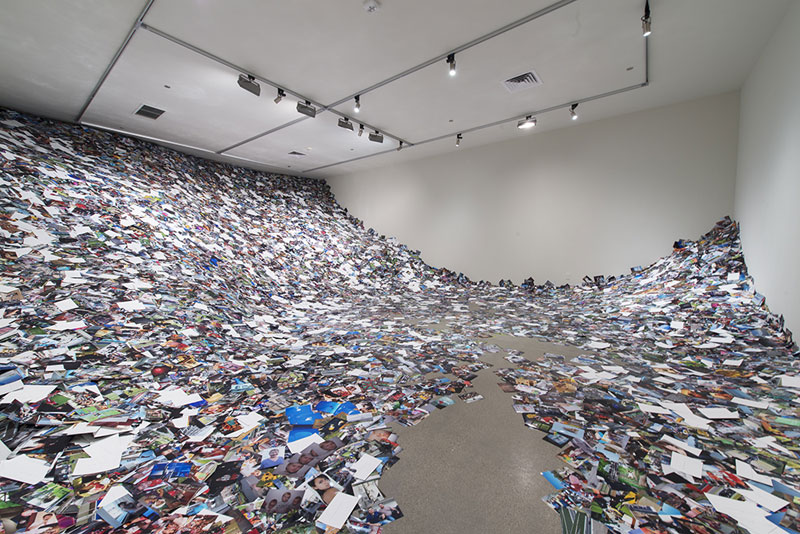
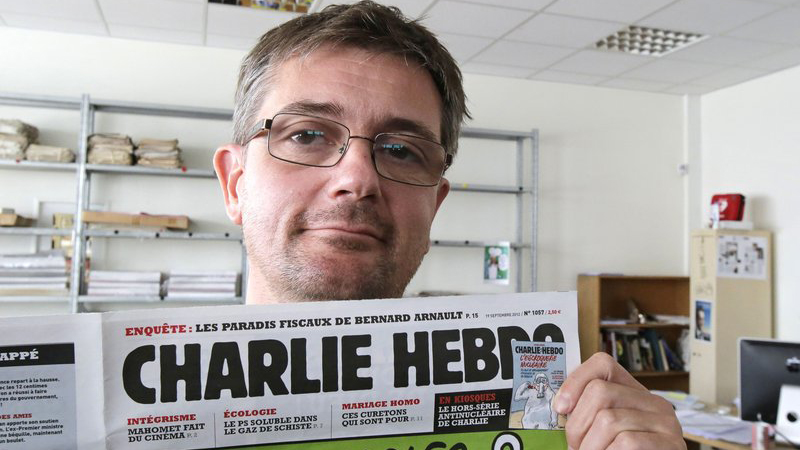
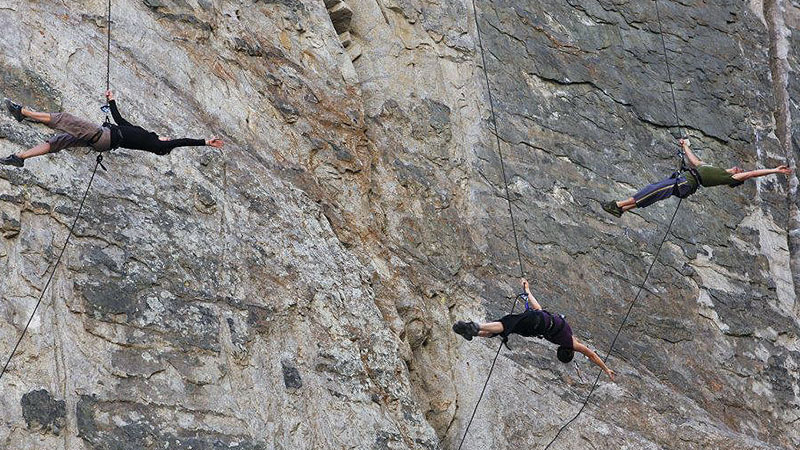
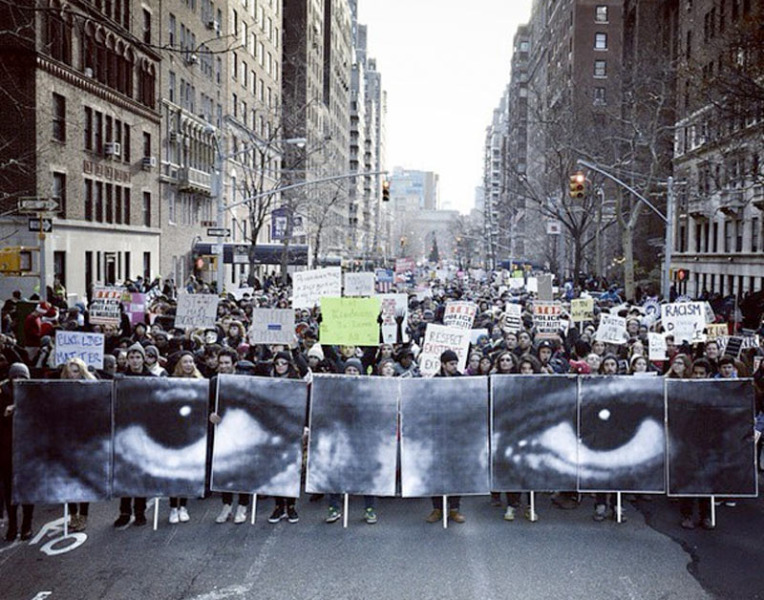
window.__IS_SSR__=true
window.__INITIAL_STATE__={
"attachmentsReducer": {
"audio_0": {
"type": "attachments",
"id": "audio_0",
"imgSizes": {
"kqedFullSize": {
"file": "https://ww2.kqed.org/news/wp-content/themes/KQED-unified/img/audio_bgs/background0.jpg"
}
}
},
"audio_1": {
"type": "attachments",
"id": "audio_1",
"imgSizes": {
"kqedFullSize": {
"file": "https://ww2.kqed.org/news/wp-content/themes/KQED-unified/img/audio_bgs/background1.jpg"
}
}
},
"audio_2": {
"type": "attachments",
"id": "audio_2",
"imgSizes": {
"kqedFullSize": {
"file": "https://ww2.kqed.org/news/wp-content/themes/KQED-unified/img/audio_bgs/background2.jpg"
}
}
},
"audio_3": {
"type": "attachments",
"id": "audio_3",
"imgSizes": {
"kqedFullSize": {
"file": "https://ww2.kqed.org/news/wp-content/themes/KQED-unified/img/audio_bgs/background3.jpg"
}
}
},
"audio_4": {
"type": "attachments",
"id": "audio_4",
"imgSizes": {
"kqedFullSize": {
"file": "https://ww2.kqed.org/news/wp-content/themes/KQED-unified/img/audio_bgs/background4.jpg"
}
}
},
"placeholder": {
"type": "attachments",
"id": "placeholder",
"imgSizes": {
"thumbnail": {
"file": "https://cdn.kqed.org/wp-content/uploads/2024/12/KQED-Default-Image-816638274-2000x1333-1-160x107.jpg",
"width": 160,
"height": 107,
"mimeType": "image/jpeg"
},
"medium": {
"file": "https://cdn.kqed.org/wp-content/uploads/2024/12/KQED-Default-Image-816638274-2000x1333-1-800x533.jpg",
"width": 800,
"height": 533,
"mimeType": "image/jpeg"
},
"medium_large": {
"file": "https://cdn.kqed.org/wp-content/uploads/2024/12/KQED-Default-Image-816638274-2000x1333-1-768x512.jpg",
"width": 768,
"height": 512,
"mimeType": "image/jpeg"
},
"large": {
"file": "https://cdn.kqed.org/wp-content/uploads/2024/12/KQED-Default-Image-816638274-2000x1333-1-1020x680.jpg",
"width": 1020,
"height": 680,
"mimeType": "image/jpeg"
},
"1536x1536": {
"file": "https://cdn.kqed.org/wp-content/uploads/2024/12/KQED-Default-Image-816638274-2000x1333-1-1536x1024.jpg",
"width": 1536,
"height": 1024,
"mimeType": "image/jpeg"
},
"fd-lrg": {
"file": "https://cdn.kqed.org/wp-content/uploads/2024/12/KQED-Default-Image-816638274-2000x1333-1-1536x1024.jpg",
"width": 1536,
"height": 1024,
"mimeType": "image/jpeg"
},
"fd-med": {
"file": "https://cdn.kqed.org/wp-content/uploads/2024/12/KQED-Default-Image-816638274-2000x1333-1-1020x680.jpg",
"width": 1020,
"height": 680,
"mimeType": "image/jpeg"
},
"fd-sm": {
"file": "https://cdn.kqed.org/wp-content/uploads/2024/12/KQED-Default-Image-816638274-2000x1333-1-800x533.jpg",
"width": 800,
"height": 533,
"mimeType": "image/jpeg"
},
"post-thumbnail": {
"file": "https://cdn.kqed.org/wp-content/uploads/2024/12/KQED-Default-Image-816638274-2000x1333-1-672x372.jpg",
"width": 672,
"height": 372,
"mimeType": "image/jpeg"
},
"twentyfourteen-full-width": {
"file": "https://cdn.kqed.org/wp-content/uploads/2024/12/KQED-Default-Image-816638274-2000x1333-1-1038x576.jpg",
"width": 1038,
"height": 576,
"mimeType": "image/jpeg"
},
"xxsmall": {
"file": "https://cdn.kqed.org/wp-content/uploads/2024/12/KQED-Default-Image-816638274-2000x1333-1-160x107.jpg",
"width": 160,
"height": 107,
"mimeType": "image/jpeg"
},
"xsmall": {
"file": "https://cdn.kqed.org/wp-content/uploads/2024/12/KQED-Default-Image-816638274-2000x1333-1-672x372.jpg",
"width": 672,
"height": 372,
"mimeType": "image/jpeg"
},
"small": {
"file": "https://cdn.kqed.org/wp-content/uploads/2024/12/KQED-Default-Image-816638274-2000x1333-1-672x372.jpg",
"width": 672,
"height": 372,
"mimeType": "image/jpeg"
},
"xlarge": {
"file": "https://cdn.kqed.org/wp-content/uploads/2024/12/KQED-Default-Image-816638274-2000x1333-1-1020x680.jpg",
"width": 1020,
"height": 680,
"mimeType": "image/jpeg"
},
"full-width": {
"file": "https://cdn.kqed.org/wp-content/uploads/2024/12/KQED-Default-Image-816638274-2000x1333-1-1920x1280.jpg",
"width": 1920,
"height": 1280,
"mimeType": "image/jpeg"
},
"guest-author-32": {
"file": "https://cdn.kqed.org/wp-content/uploads/2025/01/KQED-Default-Image-816638274-1333x1333-1-160x160.jpg",
"width": 32,
"height": 32,
"mimeType": "image/jpeg"
},
"guest-author-50": {
"file": "https://cdn.kqed.org/wp-content/uploads/2025/01/KQED-Default-Image-816638274-1333x1333-1-160x160.jpg",
"width": 50,
"height": 50,
"mimeType": "image/jpeg"
},
"guest-author-64": {
"file": "https://cdn.kqed.org/wp-content/uploads/2025/01/KQED-Default-Image-816638274-1333x1333-1-160x160.jpg",
"width": 64,
"height": 64,
"mimeType": "image/jpeg"
},
"guest-author-96": {
"file": "https://cdn.kqed.org/wp-content/uploads/2025/01/KQED-Default-Image-816638274-1333x1333-1-160x160.jpg",
"width": 96,
"height": 96,
"mimeType": "image/jpeg"
},
"guest-author-128": {
"file": "https://cdn.kqed.org/wp-content/uploads/2025/01/KQED-Default-Image-816638274-1333x1333-1-160x160.jpg",
"width": 128,
"height": 128,
"mimeType": "image/jpeg"
},
"detail": {
"file": "https://cdn.kqed.org/wp-content/uploads/2025/01/KQED-Default-Image-816638274-1333x1333-1-160x160.jpg",
"width": 160,
"height": 160,
"mimeType": "image/jpeg"
},
"kqedFullSize": {
"file": "https://cdn.kqed.org/wp-content/uploads/2024/12/KQED-Default-Image-816638274-2000x1333-1.jpg",
"width": 2000,
"height": 1333
}
}
},
"arts_10280631": {
"type": "attachments",
"id": "arts_10280631",
"meta": {
"index": "attachments_1716263798",
"site": "arts",
"id": "10280631",
"found": true
},
"parent": 10280623,
"imgSizes": {
"thumbnail": {
"file": "https://ww2.kqed.org/app/uploads/sites/2/2015/01/kessels800-400x267.jpg",
"width": 400,
"mimeType": "image/jpeg",
"height": 267
},
"post-thumbnail": {
"file": "https://ww2.kqed.org/app/uploads/sites/2/2015/01/kessels800-672x372.jpg",
"width": 672,
"mimeType": "image/jpeg",
"height": 372
},
"kqedFullSize": {
"file": "https://ww2.kqed.org/app/uploads/sites/2/2015/01/kessels800.jpg",
"width": 800,
"height": 534
},
"guest-author-96": {
"file": "https://ww2.kqed.org/app/uploads/sites/2/2015/01/kessels800-96x96.jpg",
"width": 96,
"mimeType": "image/jpeg",
"height": 96
},
"guest-author-64": {
"file": "https://ww2.kqed.org/app/uploads/sites/2/2015/01/kessels800-64x64.jpg",
"width": 64,
"mimeType": "image/jpeg",
"height": 64
},
"detail": {
"file": "https://ww2.kqed.org/app/uploads/sites/2/2015/01/kessels800-75x75.jpg",
"width": 75,
"mimeType": "image/jpeg",
"height": 75
},
"guest-author-32": {
"file": "https://ww2.kqed.org/app/uploads/sites/2/2015/01/kessels800-32x32.jpg",
"width": 32,
"mimeType": "image/jpeg",
"height": 32
},
"guest-author-128": {
"file": "https://ww2.kqed.org/app/uploads/sites/2/2015/01/kessels800-128x128.jpg",
"width": 128,
"mimeType": "image/jpeg",
"height": 128
}
},
"publishDate": 1420582276,
"modified": 1420582330,
"caption": "Erik Kessels, \u003ci>24 HRS in Photos\u003c/i> installation view, 2013; Courtesy Pier 24 Photography, San Francisco",
"description": null,
"title": "kessels800",
"credit": null,
"status": "inherit",
"isLoading": false,
"fetchFailed": false
},
"arts_10283299": {
"type": "attachments",
"id": "arts_10283299",
"meta": {
"index": "attachments_1716263798",
"site": "arts",
"id": "10283299",
"found": true
},
"parent": 10283284,
"imgSizes": {
"thumbnail": {
"file": "https://ww2.kqed.org/app/uploads/sites/2/2015/01/Charlie-Hebdo1-400x225.jpg",
"width": 400,
"mimeType": "image/jpeg",
"height": 225
},
"post-thumbnail": {
"file": "https://ww2.kqed.org/app/uploads/sites/2/2015/01/Charlie-Hebdo1-672x372.jpg",
"width": 672,
"mimeType": "image/jpeg",
"height": 372
},
"kqedFullSize": {
"file": "https://ww2.kqed.org/app/uploads/sites/2/2015/01/Charlie-Hebdo1.jpg",
"width": 800,
"height": 450
},
"guest-author-96": {
"file": "https://ww2.kqed.org/app/uploads/sites/2/2015/01/Charlie-Hebdo1-96x96.jpg",
"width": 96,
"mimeType": "image/jpeg",
"height": 96
},
"guest-author-64": {
"file": "https://ww2.kqed.org/app/uploads/sites/2/2015/01/Charlie-Hebdo1-64x64.jpg",
"width": 64,
"mimeType": "image/jpeg",
"height": 64
},
"detail": {
"file": "https://ww2.kqed.org/app/uploads/sites/2/2015/01/Charlie-Hebdo1-75x75.jpg",
"width": 75,
"mimeType": "image/jpeg",
"height": 75
},
"guest-author-32": {
"file": "https://ww2.kqed.org/app/uploads/sites/2/2015/01/Charlie-Hebdo1-32x32.jpg",
"width": 32,
"mimeType": "image/jpeg",
"height": 32
},
"guest-author-128": {
"file": "https://ww2.kqed.org/app/uploads/sites/2/2015/01/Charlie-Hebdo1-128x128.jpg",
"width": 128,
"mimeType": "image/jpeg",
"height": 128
}
},
"publishDate": 1420667819,
"modified": 1420667833,
"caption": "Stephane Charbonnier, the editor of Charlie Hebdo, poses with his magazine on Sept. 19, 2012. The magazine, which was attacked today, is part of a long tradition of French satire.",
"description": "Stephane Charbonnier, the editor of Charlie Hebdo, poses with his magazine on Sept. 19, 2012. The magazine, which was attacked today, is part of a long tradition of French satire.",
"title": "Charlie Hebdo",
"credit": "Michel Euler/AP",
"status": "inherit",
"isLoading": false,
"fetchFailed": false
},
"arts_10276354": {
"type": "attachments",
"id": "arts_10276354",
"meta": {
"index": "attachments_1716263798",
"site": "arts",
"id": "10276354",
"found": true
},
"parent": 10276352,
"imgSizes": {
"twentyfourteen-full-width": {
"file": "https://ww2.kqed.org/app/uploads/sites/2/2015/01/BOOMTOWN-1038x576.jpg",
"width": 1038,
"mimeType": "image/jpeg",
"height": 576
},
"thumbnail": {
"file": "https://ww2.kqed.org/app/uploads/sites/2/2015/01/BOOMTOWN-400x225.jpg",
"width": 400,
"mimeType": "image/jpeg",
"height": 225
},
"post-thumbnail": {
"file": "https://ww2.kqed.org/app/uploads/sites/2/2015/01/BOOMTOWN-672x372.jpg",
"width": 672,
"mimeType": "image/jpeg",
"height": 372
},
"kqedFullSize": {
"file": "https://ww2.kqed.org/app/uploads/sites/2/2015/01/BOOMTOWN-e1420578897299.jpg",
"width": 800,
"height": 450
},
"large": {
"file": "https://ww2.kqed.org/app/uploads/sites/2/2015/01/BOOMTOWN-1180x664.jpg",
"width": 1180,
"mimeType": "image/jpeg",
"height": 664
},
"guest-author-96": {
"file": "https://ww2.kqed.org/app/uploads/sites/2/2015/01/BOOMTOWN-96x96.jpg",
"width": 96,
"mimeType": "image/jpeg",
"height": 96
},
"medium": {
"file": "https://ww2.kqed.org/app/uploads/sites/2/2015/01/BOOMTOWN-800x450.jpg",
"width": 800,
"mimeType": "image/jpeg",
"height": 450
},
"guest-author-64": {
"file": "https://ww2.kqed.org/app/uploads/sites/2/2015/01/BOOMTOWN-64x64.jpg",
"width": 64,
"mimeType": "image/jpeg",
"height": 64
},
"detail": {
"file": "https://ww2.kqed.org/app/uploads/sites/2/2015/01/BOOMTOWN-75x75.jpg",
"width": 75,
"mimeType": "image/jpeg",
"height": 75
},
"guest-author-32": {
"file": "https://ww2.kqed.org/app/uploads/sites/2/2015/01/BOOMTOWN-32x32.jpg",
"width": 32,
"mimeType": "image/jpeg",
"height": 32
},
"guest-author-128": {
"file": "https://ww2.kqed.org/app/uploads/sites/2/2015/01/BOOMTOWN-128x128.jpg",
"width": 128,
"mimeType": "image/jpeg",
"height": 128
}
},
"publishDate": 1420446052,
"modified": 1420447658,
"caption": "Illustration by Carolyn Porras. \u003ca href=\"http://carolynporrasart.com/\" target=\"_blank\">carolynporrasart.com\u003c/a>",
"description": null,
"title": "BOOMTOWN",
"credit": null,
"status": "inherit",
"isLoading": false,
"fetchFailed": false
},
"arts_10222160": {
"type": "attachments",
"id": "arts_10222160",
"meta": {
"index": "attachments_1716263798",
"site": "arts",
"id": "10222160",
"found": true
},
"parent": 10222031,
"imgSizes": {
"thumbnail": {
"file": "https://ww2.kqed.org/app/uploads/sites/2/2014/12/projectbandaloop-400x225.jpg",
"width": 400,
"mimeType": "image/jpeg",
"height": 225
},
"post-thumbnail": {
"file": "https://ww2.kqed.org/app/uploads/sites/2/2014/12/projectbandaloop-672x372.jpg",
"width": 672,
"mimeType": "image/jpeg",
"height": 372
},
"kqedFullSize": {
"file": "https://ww2.kqed.org/app/uploads/sites/2/2014/12/projectbandaloop.jpg",
"width": 800,
"height": 450
},
"guest-author-96": {
"file": "https://ww2.kqed.org/app/uploads/sites/2/2014/12/projectbandaloop-96x96.jpg",
"width": 96,
"mimeType": "image/jpeg",
"height": 96
},
"guest-author-64": {
"file": "https://ww2.kqed.org/app/uploads/sites/2/2014/12/projectbandaloop-64x64.jpg",
"width": 64,
"mimeType": "image/jpeg",
"height": 64
},
"detail": {
"file": "https://ww2.kqed.org/app/uploads/sites/2/2014/12/projectbandaloop-75x75.jpg",
"width": 75,
"mimeType": "image/jpeg",
"height": 75
},
"guest-author-32": {
"file": "https://ww2.kqed.org/app/uploads/sites/2/2014/12/projectbandaloop-32x32.jpg",
"width": 32,
"mimeType": "image/jpeg",
"height": 32
},
"guest-author-128": {
"file": "https://ww2.kqed.org/app/uploads/sites/2/2014/12/projectbandaloop-128x128.jpg",
"width": 128,
"mimeType": "image/jpeg",
"height": 128
}
},
"publishDate": 1418762618,
"modified": 1420499969,
"caption": "Bandaloop workshop at Eastern Sierra. Photo: Conrad Chan.",
"description": null,
"title": "Bandaloop",
"credit": null,
"status": "inherit",
"isLoading": false,
"fetchFailed": false
},
"arts_10238878": {
"type": "attachments",
"id": "arts_10238878",
"meta": {
"index": "attachments_1716263798",
"site": "arts",
"id": "10238878",
"found": true
},
"parent": 10225049,
"imgSizes": {
"twentyfourteen-full-width": {
"file": "https://ww2.kqed.org/app/uploads/sites/2/2014/12/ericeyes-800x576.jpg",
"width": 800,
"mimeType": "image/jpeg",
"height": 576
},
"thumbnail": {
"file": "https://ww2.kqed.org/app/uploads/sites/2/2014/12/ericeyes-400x314.jpg",
"width": 400,
"mimeType": "image/jpeg",
"height": 314
},
"post-thumbnail": {
"file": "https://ww2.kqed.org/app/uploads/sites/2/2014/12/ericeyes-672x372.jpg",
"width": 672,
"mimeType": "image/jpeg",
"height": 372
},
"kqedFullSize": {
"file": "https://ww2.kqed.org/app/uploads/sites/2/2014/12/ericeyes.jpg",
"width": 800,
"height": 628
},
"guest-author-96": {
"file": "https://ww2.kqed.org/app/uploads/sites/2/2014/12/ericeyes-96x96.jpg",
"width": 96,
"mimeType": "image/jpeg",
"height": 96
},
"medium": {
"file": "https://ww2.kqed.org/app/uploads/sites/2/2014/12/ericeyes-764x600.jpg",
"width": 764,
"mimeType": "image/jpeg",
"height": 600
},
"guest-author-64": {
"file": "https://ww2.kqed.org/app/uploads/sites/2/2014/12/ericeyes-64x64.jpg",
"width": 64,
"mimeType": "image/jpeg",
"height": 64
},
"detail": {
"file": "https://ww2.kqed.org/app/uploads/sites/2/2014/12/ericeyes-75x75.jpg",
"width": 75,
"mimeType": "image/jpeg",
"height": 75
},
"guest-author-32": {
"file": "https://ww2.kqed.org/app/uploads/sites/2/2014/12/ericeyes-32x32.jpg",
"width": 32,
"mimeType": "image/jpeg",
"height": 32
},
"guest-author-128": {
"file": "https://ww2.kqed.org/app/uploads/sites/2/2014/12/ericeyes-128x128.jpg",
"width": 128,
"mimeType": "image/jpeg",
"height": 128
}
},
"publishDate": 1419283796,
"modified": 1419283951,
"caption": "At the \"millions march\" with the eyes of Eric Garner; Photo source: \u003ca href=\"http://instagram.com/p/wj8bGkxAWe/\">insideoutproject\u003c/a>",
"description": null,
"title": "ericeyes",
"credit": null,
"status": "inherit",
"isLoading": false,
"fetchFailed": false
},
"arts_10219172": {
"type": "attachments",
"id": "arts_10219172",
"meta": {
"index": "attachments_1716263798",
"site": "arts",
"id": "10219172",
"found": true
},
"parent": 10218934,
"imgSizes": {
"twentyfourteen-full-width": {
"file": "https://ww2.kqed.org/app/uploads/sites/2/2014/12/JMprocess_HongKong_800w-800x576.jpg",
"width": 800,
"mimeType": "image/jpeg",
"height": 576
},
"thumbnail": {
"file": "https://ww2.kqed.org/app/uploads/sites/2/2014/12/JMprocess_HongKong_800w-400x300.jpg",
"width": 400,
"mimeType": "image/jpeg",
"height": 300
},
"post-thumbnail": {
"file": "https://ww2.kqed.org/app/uploads/sites/2/2014/12/JMprocess_HongKong_800w-672x372.jpg",
"width": 672,
"mimeType": "image/jpeg",
"height": 372
},
"kqedFullSize": {
"file": "https://ww2.kqed.org/app/uploads/sites/2/2014/12/JMprocess_HongKong_800w.jpg",
"width": 800,
"height": 600
},
"guest-author-96": {
"file": "https://ww2.kqed.org/app/uploads/sites/2/2014/12/JMprocess_HongKong_800w-96x96.jpg",
"width": 96,
"mimeType": "image/jpeg",
"height": 96
},
"medium": {
"file": "https://ww2.kqed.org/app/uploads/sites/2/2014/12/JMprocess_HongKong_800w-800x600.jpg",
"width": 800,
"mimeType": "image/jpeg",
"height": 600
},
"guest-author-64": {
"file": "https://ww2.kqed.org/app/uploads/sites/2/2014/12/JMprocess_HongKong_800w-64x64.jpg",
"width": 64,
"mimeType": "image/jpeg",
"height": 64
},
"detail": {
"file": "https://ww2.kqed.org/app/uploads/sites/2/2014/12/JMprocess_HongKong_800w-75x75.jpg",
"width": 75,
"mimeType": "image/jpeg",
"height": 75
},
"guest-author-32": {
"file": "https://ww2.kqed.org/app/uploads/sites/2/2014/12/JMprocess_HongKong_800w-32x32.jpg",
"width": 32,
"mimeType": "image/jpeg",
"height": 32
},
"guest-author-128": {
"file": "https://ww2.kqed.org/app/uploads/sites/2/2014/12/JMprocess_HongKong_800w-128x128.jpg",
"width": 128,
"mimeType": "image/jpeg",
"height": 128
}
},
"publishDate": 1418672273,
"modified": 1418672333,
"caption": "Work in Progress by Jason McHenry",
"description": null,
"title": "JMprocess_HongKong_800w",
"credit": "photo courtesy One Thousand Thousand",
"status": "inherit",
"isLoading": false,
"fetchFailed": false
},
"arts_10231078": {
"type": "attachments",
"id": "arts_10231078",
"meta": {
"index": "attachments_1716263798",
"site": "arts",
"id": "10231078",
"found": true
},
"parent": 10231062,
"imgSizes": {
"thumbnail": {
"file": "https://ww2.kqed.org/app/uploads/sites/2/2014/12/Illuminated-City-lead-image-400x225.jpg",
"width": 400,
"mimeType": "image/jpeg",
"height": 225
},
"post-thumbnail": {
"file": "https://ww2.kqed.org/app/uploads/sites/2/2014/12/Illuminated-City-lead-image-672x372.jpg",
"width": 672,
"mimeType": "image/jpeg",
"height": 372
},
"kqedFullSize": {
"file": "https://ww2.kqed.org/app/uploads/sites/2/2014/12/Illuminated-City-lead-image.jpg",
"width": 1000,
"height": 563
},
"guest-author-96": {
"file": "https://ww2.kqed.org/app/uploads/sites/2/2014/12/Illuminated-City-lead-image-96x96.jpg",
"width": 96,
"mimeType": "image/jpeg",
"height": 96
},
"medium": {
"file": "https://ww2.kqed.org/app/uploads/sites/2/2014/12/Illuminated-City-lead-image-800x450.jpg",
"width": 800,
"mimeType": "image/jpeg",
"height": 450
},
"guest-author-64": {
"file": "https://ww2.kqed.org/app/uploads/sites/2/2014/12/Illuminated-City-lead-image-64x64.jpg",
"width": 64,
"mimeType": "image/jpeg",
"height": 64
},
"detail": {
"file": "https://ww2.kqed.org/app/uploads/sites/2/2014/12/Illuminated-City-lead-image-75x75.jpg",
"width": 75,
"mimeType": "image/jpeg",
"height": 75
},
"guest-author-32": {
"file": "https://ww2.kqed.org/app/uploads/sites/2/2014/12/Illuminated-City-lead-image-32x32.jpg",
"width": 32,
"mimeType": "image/jpeg",
"height": 32
},
"guest-author-128": {
"file": "https://ww2.kqed.org/app/uploads/sites/2/2014/12/Illuminated-City-lead-image-128x128.jpg",
"width": 128,
"mimeType": "image/jpeg",
"height": 128
}
},
"publishDate": 1419040649,
"modified": 1419040665,
"caption": null,
"description": null,
"title": "Illuminated-City-lead-image",
"credit": "Peter Ruocco",
"status": "inherit",
"isLoading": false,
"fetchFailed": false
},
"arts_10220634": {
"type": "attachments",
"id": "arts_10220634",
"meta": {
"index": "attachments_1716263798",
"site": "arts",
"id": "10220634",
"found": true
},
"parent": 10220517,
"imgSizes": {
"thumbnail": {
"file": "https://ww2.kqed.org/app/uploads/sites/2/2014/12/LightWalk800-400x225.jpg",
"width": 400,
"mimeType": "image/jpeg",
"height": 225
},
"post-thumbnail": {
"file": "https://ww2.kqed.org/app/uploads/sites/2/2014/12/LightWalk800-672x372.jpg",
"width": 672,
"mimeType": "image/jpeg",
"height": 372
},
"kqedFullSize": {
"file": "https://ww2.kqed.org/app/uploads/sites/2/2014/12/LightWalk800.jpg",
"width": 800,
"height": 450
},
"guest-author-96": {
"file": "https://ww2.kqed.org/app/uploads/sites/2/2014/12/LightWalk800-96x96.jpg",
"width": 96,
"mimeType": "image/jpeg",
"height": 96
},
"guest-author-64": {
"file": "https://ww2.kqed.org/app/uploads/sites/2/2014/12/LightWalk800-64x64.jpg",
"width": 64,
"mimeType": "image/jpeg",
"height": 64
},
"detail": {
"file": "https://ww2.kqed.org/app/uploads/sites/2/2014/12/LightWalk800-75x75.jpg",
"width": 75,
"mimeType": "image/jpeg",
"height": 75
},
"guest-author-32": {
"file": "https://ww2.kqed.org/app/uploads/sites/2/2014/12/LightWalk800-32x32.jpg",
"width": 32,
"mimeType": "image/jpeg",
"height": 32
},
"guest-author-128": {
"file": "https://ww2.kqed.org/app/uploads/sites/2/2014/12/LightWalk800-128x128.jpg",
"width": 128,
"mimeType": "image/jpeg",
"height": 128
}
},
"publishDate": 1418714135,
"modified": 1418714164,
"caption": "A moment from Bob Miller's \u003ci>Light Walk\u003c/i>; Courtesy of the Exploratorium.",
"description": null,
"title": null,
"credit": null,
"status": "inherit",
"isLoading": false,
"fetchFailed": false
},
"arts_10225177": {
"type": "attachments",
"id": "arts_10225177",
"meta": {
"index": "attachments_1716263798",
"site": "arts",
"id": "10225177",
"found": true
},
"parent": 10219186,
"imgSizes": {
"thumbnail": {
"file": "https://ww2.kqed.org/app/uploads/sites/2/2014/12/lights-800-400x266.jpg",
"width": 400,
"mimeType": "image/jpeg",
"height": 266
},
"post-thumbnail": {
"file": "https://ww2.kqed.org/app/uploads/sites/2/2014/12/lights-800-672x372.jpg",
"width": 672,
"mimeType": "image/jpeg",
"height": 372
},
"kqedFullSize": {
"file": "https://ww2.kqed.org/app/uploads/sites/2/2014/12/lights-800.jpg",
"width": 800,
"height": 533
},
"guest-author-96": {
"file": "https://ww2.kqed.org/app/uploads/sites/2/2014/12/lights-800-96x96.jpg",
"width": 96,
"mimeType": "image/jpeg",
"height": 96
},
"guest-author-64": {
"file": "https://ww2.kqed.org/app/uploads/sites/2/2014/12/lights-800-64x64.jpg",
"width": 64,
"mimeType": "image/jpeg",
"height": 64
},
"detail": {
"file": "https://ww2.kqed.org/app/uploads/sites/2/2014/12/lights-800-75x75.jpg",
"width": 75,
"mimeType": "image/jpeg",
"height": 75
},
"guest-author-32": {
"file": "https://ww2.kqed.org/app/uploads/sites/2/2014/12/lights-800-32x32.jpg",
"width": 32,
"mimeType": "image/jpeg",
"height": 32
},
"guest-author-128": {
"file": "https://ww2.kqed.org/app/uploads/sites/2/2014/12/lights-800-128x128.jpg",
"width": 128,
"mimeType": "image/jpeg",
"height": 128
}
},
"publishDate": 1418854737,
"modified": 1418854748,
"caption": "Haddad and Drugan, \u003cem>Bayview Rise \u003c/em>",
"description": null,
"title": "lights-800",
"credit": null,
"status": "inherit",
"isLoading": false,
"fetchFailed": false
},
"arts_10219566": {
"type": "attachments",
"id": "arts_10219566",
"meta": {
"index": "attachments_1716263798",
"site": "arts",
"id": "10219566",
"found": true
},
"parent": 10219319,
"imgSizes": {
"twentyfourteen-full-width": {
"file": "https://ww2.kqed.org/app/uploads/sites/2/2014/12/amc-800-800x576.jpg",
"width": 800,
"mimeType": "image/jpeg",
"height": 576
},
"thumbnail": {
"file": "https://ww2.kqed.org/app/uploads/sites/2/2014/12/amc-800-400x308.jpg",
"width": 400,
"mimeType": "image/jpeg",
"height": 308
},
"post-thumbnail": {
"file": "https://ww2.kqed.org/app/uploads/sites/2/2014/12/amc-800-672x372.jpg",
"width": 672,
"mimeType": "image/jpeg",
"height": 372
},
"kqedFullSize": {
"file": "https://ww2.kqed.org/app/uploads/sites/2/2014/12/amc-800.jpg",
"width": 800,
"height": 616
},
"guest-author-96": {
"file": "https://ww2.kqed.org/app/uploads/sites/2/2014/12/amc-800-96x96.jpg",
"width": 96,
"mimeType": "image/jpeg",
"height": 96
},
"medium": {
"file": "https://ww2.kqed.org/app/uploads/sites/2/2014/12/amc-800-779x600.jpg",
"width": 779,
"mimeType": "image/jpeg",
"height": 600
},
"guest-author-64": {
"file": "https://ww2.kqed.org/app/uploads/sites/2/2014/12/amc-800-64x64.jpg",
"width": 64,
"mimeType": "image/jpeg",
"height": 64
},
"detail": {
"file": "https://ww2.kqed.org/app/uploads/sites/2/2014/12/amc-800-75x75.jpg",
"width": 75,
"mimeType": "image/jpeg",
"height": 75
},
"guest-author-32": {
"file": "https://ww2.kqed.org/app/uploads/sites/2/2014/12/amc-800-32x32.jpg",
"width": 32,
"mimeType": "image/jpeg",
"height": 32
},
"guest-author-128": {
"file": "https://ww2.kqed.org/app/uploads/sites/2/2014/12/amc-800-128x128.jpg",
"width": 128,
"mimeType": "image/jpeg",
"height": 128
}
},
"publishDate": 1418683038,
"modified": 1418683126,
"caption": "Unknown photographer, \nSunken three-masted ship, c1870; Courtesy The Archive of Modern Conflict and Pier 24 Photography, San Francisco\n",
"description": null,
"title": "amc-800",
"credit": null,
"status": "inherit",
"isLoading": false,
"fetchFailed": false
},
"arts_10202138": {
"type": "attachments",
"id": "arts_10202138",
"meta": {
"index": "attachments_1716263798",
"site": "arts",
"id": "10202138",
"found": true
},
"parent": 10200040,
"imgSizes": {
"thumbnail": {
"file": "https://ww2.kqed.org/app/uploads/sites/2/2014/12/norval-morrisseau-bear-walker-society-lead-400x225.jpg",
"width": 400,
"mimeType": "image/jpeg",
"height": 225
},
"post-thumbnail": {
"file": "https://ww2.kqed.org/app/uploads/sites/2/2014/12/norval-morrisseau-bear-walker-society-lead-672x372.jpg",
"width": 672,
"mimeType": "image/jpeg",
"height": 372
},
"kqedFullSize": {
"file": "https://ww2.kqed.org/app/uploads/sites/2/2014/12/norval-morrisseau-bear-walker-society-lead.jpg",
"width": 800,
"height": 450
},
"guest-author-96": {
"file": "https://ww2.kqed.org/app/uploads/sites/2/2014/12/norval-morrisseau-bear-walker-society-lead-96x96.jpg",
"width": 96,
"mimeType": "image/jpeg",
"height": 96
},
"guest-author-64": {
"file": "https://ww2.kqed.org/app/uploads/sites/2/2014/12/norval-morrisseau-bear-walker-society-lead-64x64.jpg",
"width": 64,
"mimeType": "image/jpeg",
"height": 64
},
"detail": {
"file": "https://ww2.kqed.org/app/uploads/sites/2/2014/12/norval-morrisseau-bear-walker-society-lead-75x75.jpg",
"width": 75,
"mimeType": "image/jpeg",
"height": 75
},
"guest-author-32": {
"file": "https://ww2.kqed.org/app/uploads/sites/2/2014/12/norval-morrisseau-bear-walker-society-lead-32x32.jpg",
"width": 32,
"mimeType": "image/jpeg",
"height": 32
},
"guest-author-128": {
"file": "https://ww2.kqed.org/app/uploads/sites/2/2014/12/norval-morrisseau-bear-walker-society-lead-128x128.jpg",
"width": 128,
"mimeType": "image/jpeg",
"height": 128
}
},
"publishDate": 1418147434,
"modified": 1418147444,
"caption": "Norval Morrisseau. \u003ci>Bear Walker Society\u003c/i>, 1992; screenprint. Courtesy of the Cantor Arts Center.",
"description": "Norval Morrisseau. \u003ci>Bear Walker Society\u003c/i>, 1992; screenprint. Courtesy of the Cantor Arts Center.",
"title": "norval-morrisseau-bear-walker-society-lead",
"credit": null,
"status": "inherit",
"isLoading": false,
"fetchFailed": false
},
"arts_10201428": {
"type": "attachments",
"id": "arts_10201428",
"meta": {
"index": "attachments_1716263798",
"site": "arts",
"id": "10201428",
"found": true
},
"parent": 10201427,
"imgSizes": {
"thumbnail": {
"file": "https://ww2.kqed.org/app/uploads/sites/2/2014/12/DSCF0004-400x279.jpg",
"width": 400,
"mimeType": "image/jpeg",
"height": 279
},
"post-thumbnail": {
"file": "https://ww2.kqed.org/app/uploads/sites/2/2014/12/DSCF0004-672x372.jpg",
"width": 672,
"mimeType": "image/jpeg",
"height": 372
},
"kqedFullSize": {
"file": "https://ww2.kqed.org/app/uploads/sites/2/2014/12/DSCF0004.jpg",
"width": 800,
"height": 558
},
"guest-author-96": {
"file": "https://ww2.kqed.org/app/uploads/sites/2/2014/12/DSCF0004-96x96.jpg",
"width": 96,
"mimeType": "image/jpeg",
"height": 96
},
"guest-author-64": {
"file": "https://ww2.kqed.org/app/uploads/sites/2/2014/12/DSCF0004-64x64.jpg",
"width": 64,
"mimeType": "image/jpeg",
"height": 64
},
"detail": {
"file": "https://ww2.kqed.org/app/uploads/sites/2/2014/12/DSCF0004-75x75.jpg",
"width": 75,
"mimeType": "image/jpeg",
"height": 75
},
"guest-author-32": {
"file": "https://ww2.kqed.org/app/uploads/sites/2/2014/12/DSCF0004-32x32.jpg",
"width": 32,
"mimeType": "image/jpeg",
"height": 32
},
"guest-author-128": {
"file": "https://ww2.kqed.org/app/uploads/sites/2/2014/12/DSCF0004-128x128.jpg",
"width": 128,
"mimeType": "image/jpeg",
"height": 128
}
},
"publishDate": 1418126596,
"modified": 1418158357,
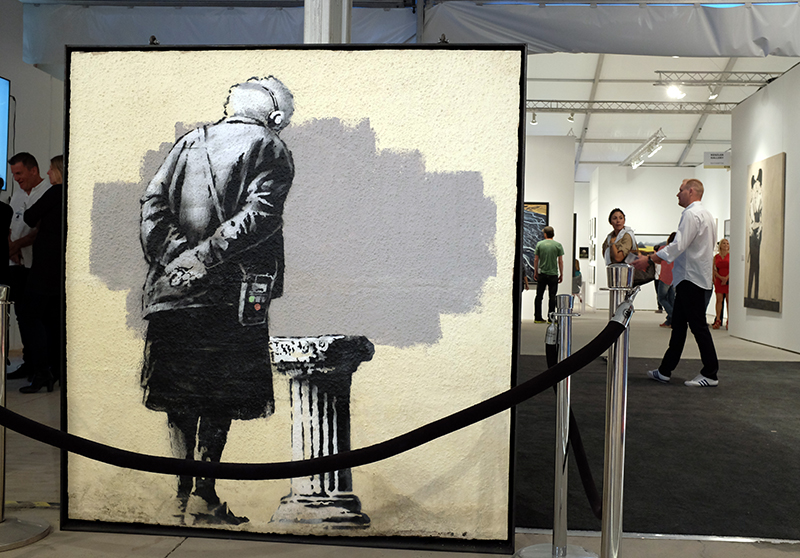
"caption": "Artwork by Banksy at Art Miami; Photo by Cherri Lakey ",
"description": null,
"title": "Artist: Banksy",
"credit": null,
"status": "inherit",
"isLoading": false,
"fetchFailed": false
}
},
"audioPlayerReducer": {
"postId": "stream_live",
"isPaused": true,
"isPlaying": false,
"pfsActive": false,
"pledgeModalIsOpen": true,
"playerDrawerIsOpen": false,
"liveAudioPlayStartedAt": 0,
"liveAudioPlayContext": ""
},
"authorsReducer": {
"byline_arts_10280623": {
"type": "authors",
"id": "byline_arts_10280623",
"meta": {
"override": true
},
"slug": "byline_arts_10280623",
"name": "Rebecca Najdowski",
"isLoading": false
},
"byline_arts_10283284": {
"type": "authors",
"id": "byline_arts_10283284",
"meta": {
"override": true
},
"slug": "byline_arts_10283284",
"name": "Krishnadev Calamur",
"isLoading": false
},
"byline_arts_10231062": {
"type": "authors",
"id": "byline_arts_10231062",
"meta": {
"override": true
},
"slug": "byline_arts_10231062",
"name": "Peter Ruocco",
"isLoading": false
},
"byline_arts_10219319": {
"type": "authors",
"id": "byline_arts_10219319",
"meta": {
"override": true
},
"slug": "byline_arts_10219319",
"name": "Carrie Hott",
"isLoading": false
},
"mlee": {
"type": "authors",
"id": "21",
"meta": {
"index": "authors_1716337520",
"id": "21",
"found": true
},
"name": "Marie K. Lee",
"firstName": "Marie K.",
"lastName": "Lee",
"slug": "mlee",
"email": "mklee@kqed.org",
"display_author_email": false,
"staff_mastheads": [],
"title": null,
"bio": "Marie K. Lee is a product manager at KQED. Lee produces sites for \u003ca href=\"http://blogs.kqed.org/makingof/\">\u003cb>The Making Of...\u003c/b>\u003c/a>, \u003ca href=\"http://www.pbs.org/soundtracks/\">\u003cb>Sound Tracks\u003c/b>\u003c/a>, \u003ca href=\"http://www.kqed.org/w/filmschoolshorts/\">\u003cb>Film School Shorts\u003c/b>\u003c/a>, \u003ca href=\"http://www.kqed.org/arts/programs/trulyca/\">\u003cb>Truly CA\u003c/b>\u003c/a>, \u003ca href=\"http://www.kqed.org/arts/programs/imagemakers/\">\u003cb>ImageMakers\u003c/b>\u003c/a>, and \u003ca href=\"http://www.kqed.org/arts/programs/spark/\">\u003cb>Spark\u003c/b>\u003c/a>. For her work on the \u003cb>Spark\u003c/b> site, she garnered a 2003 Northern California Area EMMY Award for Interactivity. Together with Mark Taylor, Lee created the video podcast \u003ca href=\"http://www.kqed.org/arts/programs/gallerycrawl/\">\u003cb>Gallery Crawl\u003c/b>\u003c/a>, which she co-produced from 2005-07. She was also on the reading panel of the audio podcast \u003ca href=\"http://www.kqed.org/arts/programs/writersblock/\">\u003cb>The Writers' Block\u003c/b>\u003c/a>.\r\n\r\n She earned a B.A. in visual arts at Bowdoin College. Being a farm gal from Maine, she's obsessed with crafting and will not give-up wearing her threadbare flannel shirts. Her other passions include eating, sleeping, dancing, traveling, watching films, playing Scrabble, and checking out art galleries.",
"avatar": "https://secure.gravatar.com/avatar/672c2170de4adaa3348f7be01e3a15a5?s=600&d=blank&r=g",
"twitter": null,
"facebook": null,
"instagram": null,
"linkedin": null,
"sites": [
{
"site": "arts",
"roles": [
"Contributor",
"subscriber"
]
},
{
"site": "styleguide",
"roles": [
"subscriber"
]
},
{
"site": "imagemakers",
"roles": [
"subscriber"
]
}
],
"headData": {
"title": "Marie K. Lee | KQED",
"description": null,
"ogImgSrc": "https://secure.gravatar.com/avatar/672c2170de4adaa3348f7be01e3a15a5?s=600&d=blank&r=g",
"twImgSrc": "https://secure.gravatar.com/avatar/672c2170de4adaa3348f7be01e3a15a5?s=600&d=blank&r=g"
},
"isLoading": false,
"link": "/author/mlee"
},
"cfrock": {
"type": "authors",
"id": "58",
"meta": {
"index": "authors_1716337520",
"id": "58",
"found": true
},
"name": "Christian L. Frock",
"firstName": "Christian L.",
"lastName": "Frock",
"slug": "cfrock",
"email": "christian@invisiblevenue.com",
"display_author_email": false,
"staff_mastheads": [
"arts"
],
"title": "KQED Contributor",
"bio": null,
"avatar": "https://secure.gravatar.com/avatar/da93aa5c1bc6f6561a99d5073186102c?s=600&d=blank&r=g",
"twitter": null,
"facebook": null,
"instagram": null,
"linkedin": null,
"sites": [
{
"site": "arts",
"roles": [
"Contributor",
"contributor"
]
}
],
"headData": {
"title": "Christian L. Frock | KQED",
"description": "KQED Contributor",
"ogImgSrc": "https://secure.gravatar.com/avatar/da93aa5c1bc6f6561a99d5073186102c?s=600&d=blank&r=g",
"twImgSrc": "https://secure.gravatar.com/avatar/da93aa5c1bc6f6561a99d5073186102c?s=600&d=blank&r=g"
},
"isLoading": false,
"link": "/author/cfrock"
},
"shotchkiss": {
"type": "authors",
"id": "61",
"meta": {
"index": "authors_1716337520",
"id": "61",
"found": true
},
"name": "Sarah Hotchkiss",
"firstName": "Sarah",
"lastName": "Hotchkiss",
"slug": "shotchkiss",
"email": "shotchkiss@kqed.org",
"display_author_email": true,
"staff_mastheads": [
"arts"
],
"title": "Senior Editor",
"bio": "Sarah Hotchkiss is a San Francisco \u003ca href=\"http://www.sarahhotchkiss.com\">artist\u003c/a> and arts writer. In 2019, she received the Dorothea & Leo Rabkin Foundation grant for visual art journalism and in 2020 she received a Society of Professional Journalists, Northern California award for excellence in arts and culture reporting.",
"avatar": "https://secure.gravatar.com/avatar/bc662df144b3d27fd8b1b6f1c2a420d34e91e53154d411bb7ad353cc8b6cea8d?s=600&d=blank&r=g",
"twitter": null,
"bluesky": null,
"facebook": null,
"instagram": null,
"linkedin": null,
"sites": [
{
"site": "",
"roles": [
"editor"
]
},
{
"site": "arts",
"roles": [
"Contributor",
"administrator"
]
},
{
"site": "artschool",
"roles": [
"administrator"
]
},
{
"site": "news",
"roles": [
"editor"
]
},
{
"site": "pop",
"roles": [
"administrator"
]
},
{
"site": "bayareabites",
"roles": [
"editor"
]
},
{
"site": "spark",
"roles": [
"editor"
]
},
{
"site": "checkplease",
"roles": [
"editor"
]
}
],
"headData": {
"title": "Sarah Hotchkiss | KQED",
"description": "Senior Editor",
"ogImgSrc": "https://secure.gravatar.com/avatar/bc662df144b3d27fd8b1b6f1c2a420d34e91e53154d411bb7ad353cc8b6cea8d?s=600&d=blank&r=g",
"twImgSrc": "https://secure.gravatar.com/avatar/bc662df144b3d27fd8b1b6f1c2a420d34e91e53154d411bb7ad353cc8b6cea8d?s=600&d=blank&r=g"
},
"isLoading": false,
"link": "/author/shotchkiss"
},
"mtedford": {
"type": "authors",
"id": "187",
"meta": {
"index": "authors_1716337520",
"id": "187",
"found": true
},
"name": "Matthew Harrison Tedford",
"firstName": "Matthew Harrison",
"lastName": "Tedford",
"slug": "mtedford",
"email": "mhtedford@gmail.com",
"display_author_email": false,
"staff_mastheads": [],
"title": null,
"bio": "\u003ca href=\"http://www.mhtedford.com\">Matthew Harrison Tedford\u003c/a> is a writer whose work focuses on contemporary art, film, and California history. His writing has appeared in \u003cem id=\"yui_3_17_2_1_1403197832753_7692\">Art Practical\u003c/em>, \u003cem>Daily Serving\u003c/em>, \u003cem>Glance\u003c/em> (California College of the Arts), the \u003cem>Huffington Post\u003c/em>, \u003cem>Oakland Standard\u003c/em> (Oakland Museum of California), \u003cem>Open Space\u003c/em> (SFMOMA), \u003cem>Poor Taste Magazine\u003c/em>, \u003cem>SF Weekly\u003c/em>, and \u003cem>Wilder Quarterly\u003c/em>.",
"avatar": "https://secure.gravatar.com/avatar/f6ae15e4c10b73a2ee9215e669ca0328?s=600&d=blank&r=g",
"twitter": null,
"facebook": null,
"instagram": null,
"linkedin": null,
"sites": [
{
"site": "arts",
"roles": [
"contributor"
]
}
],
"headData": {
"title": "Matthew Harrison Tedford | KQED",
"description": null,
"ogImgSrc": "https://secure.gravatar.com/avatar/f6ae15e4c10b73a2ee9215e669ca0328?s=600&d=blank&r=g",
"twImgSrc": "https://secure.gravatar.com/avatar/f6ae15e4c10b73a2ee9215e669ca0328?s=600&d=blank&r=g"
},
"isLoading": false,
"link": "/author/mtedford"
},
"clakey": {
"type": "authors",
"id": "191",
"meta": {
"index": "authors_1716337520",
"id": "191",
"found": true
},
"name": "Cherri Lakey",
"firstName": "Cherri",
"lastName": "Lakey",
"slug": "clakey",
"email": "cherri@galleryad.com",
"display_author_email": false,
"staff_mastheads": [],
"title": "KQED Contributor",
"bio": "Co-owner/curator of urban contemporary art and culture gallery \u003ca href=\"http://www.galleryAD.com\">ANNO DOMINI\u003c/a> // the second coming of Art & Design and producer of a bunch of other cool projects with partner \u003ca href=\"http://ww2.kqed.org/arts/author/beder/\" target=\"_blank\">Brian Eder.\u003c/a> \u003ca href=\"https://twitter.com/astrogirl\">Follow @astrogirl\u003c/a>\r\n// ",
"avatar": "https://secure.gravatar.com/avatar/29642fbd8e9eef623a3f07213c5b739fbbfe7e1efe98571b1093fabcaade6f08?s=600&d=blank&r=g",
"twitter": null,
"bluesky": null,
"facebook": null,
"instagram": null,
"linkedin": null,
"sites": [
{
"site": "arts",
"roles": [
"subscriber"
]
}
],
"headData": {
"title": "Cherri Lakey | KQED",
"description": "KQED Contributor",
"ogImgSrc": "https://secure.gravatar.com/avatar/29642fbd8e9eef623a3f07213c5b739fbbfe7e1efe98571b1093fabcaade6f08?s=600&d=blank&r=g",
"twImgSrc": "https://secure.gravatar.com/avatar/29642fbd8e9eef623a3f07213c5b739fbbfe7e1efe98571b1093fabcaade6f08?s=600&d=blank&r=g"
},
"isLoading": false,
"link": "/author/clakey"
},
"beder": {
"type": "authors",
"id": "192",
"meta": {
"index": "authors_1716337520",
"id": "192",
"found": true
},
"name": "Brian Eder",
"firstName": "Brian",
"lastName": "Eder",
"slug": "beder",
"email": "brian@galleryad.com",
"display_author_email": false,
"staff_mastheads": [],
"title": null,
"bio": "Brian Eder lives and works in the industrious city of San Jose, CA. He's best known for his role as the co-curator of \u003ca title=\"ANNO DOMINI Gallery\" href=\"http://www.galleryAD.com\" target=\"_blank\">ANNO DOMINI Gallery\u003c/a> that he and his partner, \u003ca href=\"http://ww2.kqed.org/arts/author/clakey/\" target=\"_blank\">Cherri Lakey\u003c/a>, founded in 2000. He's also the co-producer of San Jose's SubZERO Festival, an annual gathering of the progenitors of culture promoting subculture and indie music since 2008. He joins KQED Arts as one of their newest Contributors beginning in the Fall of 2014. \u003ca class=\"twitter-follow-button\" href=\"https://twitter.com/atmcmnk\" data-show-count=\"false\">Follow @atmcmnk\u003c/a>\r\n\u003cscript>// \u003c![CDATA[\r\n!function(d,s,id){var js,fjs=d.getElementsByTagName(s)[0],p=/^http:/.test(d.location)?'http':'https';if(!d.getElementById(id)){js=d.createElement(s);js.id=id;js.src=p+'://platform.twitter.com/widgets.js';fjs.parentNode.insertBefore(js,fjs);}}(document, 'script', 'twitter-wjs');\r\n// ]]>\u003c/script>",
"avatar": "https://secure.gravatar.com/avatar/980f18af12a51783dd04f6283a4f0e61?s=600&d=blank&r=g",
"twitter": null,
"facebook": null,
"instagram": null,
"linkedin": null,
"sites": [
{
"site": "arts",
"roles": [
"contributor"
]
}
],
"headData": {
"title": "Brian Eder | KQED",
"description": null,
"ogImgSrc": "https://secure.gravatar.com/avatar/980f18af12a51783dd04f6283a4f0e61?s=600&d=blank&r=g",
"twImgSrc": "https://secure.gravatar.com/avatar/980f18af12a51783dd04f6283a4f0e61?s=600&d=blank&r=g"
},
"isLoading": false,
"link": "/author/beder"
}
},
"pagesReducer": {
"arts_category_visualarts": {
"type": "terms",
"id": "arts_70",
"meta": {
"index": "terms_1716263798",
"site": "arts",
"id": "70",
"score": 14.407927
},
"featImg": null,
"name": "Visual Arts",
"description": null,
"taxonomy": "category",
"headData": {
"twImgId": null,
"twTitle": null,
"ogTitle": null,
"ogImgId": null,
"twDescription": null,
"description": null,
"title": "Visual Arts Archives | KQED Arts",
"ogDescription": null
},
"ttid": 71,
"slug": "visualarts",
"isLoading": false,
"title": "Visual Arts",
"pageMeta": {
"site": "arts",
"WpPageTemplate": "page-topic-editorial",
"currentPage": 159
},
"blocks": [
{
"blockName": "kqed/post-list",
"attrs": {
"layout": "cardArticle2",
"query": "posts/arts?category=visualarts",
"seeMore": false,
"paginated": true,
"page": 159
}
},
{
"blockName": "kqed/ad"
}
]
}
},
"pfsSessionReducer": {},
"postsReducer": {
"stream_live": {
"type": "live",
"id": "stream_live",
"audioUrl": "https://streams.kqed.org/kqedradio",
"title": "Live Stream",
"excerpt": "Live Stream information currently unavailable.",
"link": "/radio",
"featImg": "",
"label": {
"name": "KQED Live",
"link": "/"
}
},
"stream_kqedNewscast": {
"type": "posts",
"id": "stream_kqedNewscast",
"audioUrl": "https://www.kqed.org/.stream/anon/radio/RDnews/newscast.mp3?_=1",
"title": "KQED Newscast",
"featImg": "",
"label": {
"name": "88.5 FM",
"link": "/"
}
},
"arts_10280623": {
"type": "posts",
"id": "arts_10280623",
"meta": {
"index": "posts_1716263798",
"site": "arts",
"id": "10280623",
"score": null,
"sort": [
1420725651000
]
},
"parent": 0,
"labelTerm": {
"site": "arts"
},
"blocks": [],
"publishDate": 1420725651,
"format": "standard",
"title": "Amateur Photography Gets a Fresh Look from Erik Kessels in 'Secondhand '",
"headTitle": "Amateur Photography Gets a Fresh Look from Erik Kessels in ‘Secondhand ‘ | KQED",
"content": "\u003cp>Erik Kessels is looking at your photos. On your Flickr stream, on your blog, in your family album for sale at the flea market. He plucks them out of the growing mass of images, online and discarded, to discover the unusual beauty of flaws or the unique narratives that build over time through photographs. Kessels is a Dutch designer/curator/artist and the co-founder of communications agency KesselsKramer.\u003c/p>\n\u003cp>Pier24 Photography in San Francisco, one of the largest exhibition spaces for photography in the world, has dedicated three large galleries to Kessels’ explorations of appropriated imagery for the current exhibition, \u003cb>Secondhand\u003c/b>.\u003c/p>\n\u003cp>In one room, a mass of 3×4-inch printed photographs extends from floor to ceiling. Thousands of photographs are piled on top of each other: images of flowers, family gatherings, sports events, landscapes, proms, pets. None are privileged, and the strewn-about quality beckons you to poke through them, which you can. This mountain is the physical manifestation of the magnitude of photographs collectively uploaded in a single day to the image sharing site Flickr. \u003cem>24 Hours in Photos\u003c/em> makes palpable the vigor with which we take and share photographs online. The experience is awe-inducing, unsettling, and at the same time it reveals something that we instinctively understand — there are abundant images online, most of them don’t matter, they are lost in the geological strata of Internet time. As \u003cem>24 Hours in Photos\u003c/em> is a representation of the contemporary condition of vernacular photography, Kessels’ other installation project, \u003cem>Album Beauty\u003c/em>, is an antidote. \u003c/p>\n\u003cfigure id=\"attachment_10280744\" class=\"wp-caption alignright\" style=\"max-width: 640px\">\u003ca href=\"http://ww2.kqed.org/arts/wp-content/uploads/sites/2/2015/01/albumbeauty.jpg\">\u003cimg loading=\"lazy\" decoding=\"async\" src=\"http://ww2.kqed.org/arts/wp-content/uploads/sites/2/2015/01/albumbeauty.jpg\" alt=\"Erik Kessels, Album Beauty Installation view, 2014; Courtesy Pier 24 Photography, San Francisco\" width=\"640\" height=\"465\" class=\"size-full wp-image-10280744\" srcset=\"https://cdn.kqed.org/wp-content/uploads/sites/2/2015/01/albumbeauty.jpg 640w, https://cdn.kqed.org/wp-content/uploads/sites/2/2015/01/albumbeauty-400x290.jpg 400w\" sizes=\"(max-width: 640px) 100vw, 640px\">\u003c/a>\u003cfigcaption class=\"wp-caption-text\">Erik Kessels, \u003ci>Album Beauty\u003c/i> Installation view, 2014; Courtesy Pier 24 Photography, San Francisco\u003c/figcaption>\u003c/figure>\n\u003cp>\u003cem>Album Beauty\u003c/em> also monumentalizes snapshot photography. But here it’s the idiosyncratic manner in which family albums are constructed, from the collaged arrangements to the inclusions of “mistake” photographs, that is brought to our attention. For years Kessels has been collecting discarded family albums at flea markets and antique shops. For the installation, reproductions of individual photographs and full album pages are blown up and made sculptural. This has an \u003cem>Alice in Wonderland\u003c/em> effect as the viewer moves through strangers’ memorialized lives, faded and flawed and colossal. Indeed, \u003cem>Album Beauty\u003c/em> is itself a memorial; Kessels considers the installation to be a celebration of a now-defunct practice. Included in the installation are what appear to be dozens of original albums, stacked and wrapped in twine. The cord impedes the viewer from accessing the tactile quality of the images and the delight of flipping through pages to discover a beautifully strange, collaged composition or an accidental double exposure. We are given those quirky and surreal moments outright. This may be a bit troublesome to those familiar with the pleasures of the “hunt” for that ineffable something of a flea market treasure, but it does in fact correspond to the carefully curated connoisseurship of many photographic blogs. \u003c/p>\n\u003cfigure id=\"attachment_10280746\" class=\"wp-caption alignright\" style=\"max-width: 640px\">\u003ca href=\"http://ww2.kqed.org/arts/wp-content/uploads/sites/2/2015/01/iaep2.jpg\">\u003cimg loading=\"lazy\" decoding=\"async\" src=\"http://ww2.kqed.org/arts/wp-content/uploads/sites/2/2015/01/iaep2.jpg\" alt=\"Erik Kessels, in almost every picture, installation view, 2014; Courtesy Pier 24 Photography, San Francisco\" width=\"640\" height=\"427\" class=\"size-full wp-image-10280746\" srcset=\"https://cdn.kqed.org/wp-content/uploads/sites/2/2015/01/iaep2.jpg 640w, https://cdn.kqed.org/wp-content/uploads/sites/2/2015/01/iaep2-400x266.jpg 400w\" sizes=\"(max-width: 640px) 100vw, 640px\">\u003c/a>\u003cfigcaption class=\"wp-caption-text\">Erik Kessels, \u003ci>in almost every picture\u003c/i>, installation view, 2014; Courtesy Pier 24 Photography, San Francisco\u003c/figcaption>\u003c/figure>\n\u003cp>\u003cem>In almost every picture\u003c/em> is a third room of Kessels’ work, which contains highlights from his publishing project of the same name. For over ten years Kessels has been producing books of amateur photography through the publishing arm of his communications agency. He explained his process to me this way: “I’m almost like a detective going into these photographs and trying to find certain stories in them. And they might not always be 100% true, but when I put them together and without explaining too much of it, people also make their own stories out of it.” In the exhibition, we see what Kessels sees as he pours over endless images, looking for patterns and anomalies that can generate compelling narratives. Kessels’ editing is particularly successful here and the works are thoughtfully displayed. In the series, \u003cem>in almost every picture #3\u003c/em>, large light boxes illuminate photographs — culled from a hunting website — of deer that have triggered their own portraits by motion sensors. The deer eyes glow from the flash bulb and the light boxes mimic the experience of looking at nature from a radiating computer screen.\u003c/p>\n\u003cfigure id=\"attachment_10280745\" class=\"wp-caption alignright\" style=\"max-width: 640px\">\u003ca href=\"http://ww2.kqed.org/arts/wp-content/uploads/sites/2/2015/01/iaep.jpg\">\u003cimg loading=\"lazy\" decoding=\"async\" src=\"http://ww2.kqed.org/arts/wp-content/uploads/sites/2/2015/01/iaep.jpg\" alt=\"Erik Kessels, in almost every picture #11, 2012; Courtesy Pier 24 Photography, San Francisco\" width=\"640\" height=\"440\" class=\"size-full wp-image-10280745\" srcset=\"https://cdn.kqed.org/wp-content/uploads/sites/2/2015/01/iaep.jpg 640w, https://cdn.kqed.org/wp-content/uploads/sites/2/2015/01/iaep-400x275.jpg 400w\" sizes=\"(max-width: 640px) 100vw, 640px\">\u003c/a>\u003cfigcaption class=\"wp-caption-text\">Erik Kessels, \u003ci>in almost every picture #11\u003c/i>, 2012; Courtesy Pier 24 Photography, San Francisco\u003c/figcaption>\u003c/figure>\n\u003cp>In a particularly mesmerizing series presented as a slideshow video, \u003cem>in almost every picture #11\u003c/em>, a woman is photographed throughout the years in different bodies of water — oceans, pools, bathtubs — always fully dressed. I asked Kessels to tell me about this particular project and how he came across the photographs. “I first found one image on Google… I was for some reason looking for somebody standing with their clothes on in water for something else, and I stumbled across this image… Fred is the photographer and Valerie is his wife, and they had a whole photo stream on Flickr. As I stayed in contact with them, I got to know the whole story. They had a wet-clothes adventures very frequently. For them, it’s a form of freedom… He, as a photographer, is a very good amateur, which I never mean [in a] negative [way], an amateur is someone who dares to make mistakes, and dares to take more and more risks, more than a professional.”\u003c/p>\n\u003cp>[ad fullwidth]\u003c/p>\n\u003cp>When I mentioned to Kessels that the \u003cem>in almost every picture \u003c/em>publishing projects seemed to function as guides for how to stop and look at photographs, he quipped: \u003c/p>\n\u003cp>“Yeah, because we also live in an age where images become more and more important. Now we see more images before lunch than somebody in the 19th century would see in their whole life. It’s a different way of consuming images. But now that you see, for instance, that people have almost become editors. Everyday people, they have to become editors in what they would like to see and what they would not like to see, because it is such a bombardment of imagery coming at them. That’s an interesting thing — what kind of choices people make. For me it’s the same thing. The books are purely there to focus on a certain thing, highlight that and put a magnifying glass on that, so that people can view this just on its own.”\u003c/p>\n\u003cp>[ad floatright]\u003c/p>\n\u003cp>\u003cstrong>Secondhand \u003c/strong>runs through May 2015 at Pier 24 Photography in San Francisco. For\u003ca href=\"http://pier24.org/\" target=\"_blank\" rel=\"noopener\"> more information\u003c/a> and to make an appointment to see the exhibition, visit pier24.org.\u003c/p>\n\n",
"stats": {
"hasVideo": false,
"hasChartOrMap": false,
"hasAudio": false,
"hasPolis": false,
"wordCount": 1084,
"hasGoogleForm": false,
"hasGallery": false,
"hasHearkenModule": false,
"iframeSrcs": [],
"paragraphCount": 11
},
"modified": 1705047768,
"excerpt": "Dutch designer/curator/artist Erik Kessels plucks photographs out of the growing mass of images, online and discarded, to discover the unusual beauty of flaws or the unique narratives that build over time.",
"headData": {
"twImgId": "",
"twTitle": "",
"ogTitle": "",
"ogImgId": "",
"twDescription": "",
"description": "Dutch designer/curator/artist Erik Kessels plucks photographs out of the growing mass of images, online and discarded, to discover the unusual beauty of flaws or the unique narratives that build over time.",
"title": "Amateur Photography Gets a Fresh Look from Erik Kessels in 'Secondhand ' | KQED",
"ogDescription": "",
"schema": {
"@context": "https://schema.org",
"@type": "Article",
"headline": "Amateur Photography Gets a Fresh Look from Erik Kessels in 'Secondhand '",
"datePublished": "2015-01-08T06:00:51-08:00",
"dateModified": "2024-01-12T00:22:48-08:00",
"image": "https://cdn.kqed.org/wp-content/uploads/2020/02/KQED-OG-Image@1x.png"
}
},
"guestAuthors": [],
"slug": "amateur-photography-gets-a-fresh-look-from-erik-kessels-in-secondhand",
"status": "publish",
"nprByline": "Rebecca Najdowski",
"sticky": false,
"path": "/arts/10280623/amateur-photography-gets-a-fresh-look-from-erik-kessels-in-secondhand",
"audioTrackLength": null,
"parsedContent": [
{
"type": "contentString",
"content": "\u003cdiv class=\"post-body\">\u003cp>\u003cp>Erik Kessels is looking at your photos. On your Flickr stream, on your blog, in your family album for sale at the flea market. He plucks them out of the growing mass of images, online and discarded, to discover the unusual beauty of flaws or the unique narratives that build over time through photographs. Kessels is a Dutch designer/curator/artist and the co-founder of communications agency KesselsKramer.\u003c/p>\n\u003cp>Pier24 Photography in San Francisco, one of the largest exhibition spaces for photography in the world, has dedicated three large galleries to Kessels’ explorations of appropriated imagery for the current exhibition, \u003cb>Secondhand\u003c/b>.\u003c/p>\n\u003cp>In one room, a mass of 3×4-inch printed photographs extends from floor to ceiling. Thousands of photographs are piled on top of each other: images of flowers, family gatherings, sports events, landscapes, proms, pets. None are privileged, and the strewn-about quality beckons you to poke through them, which you can. This mountain is the physical manifestation of the magnitude of photographs collectively uploaded in a single day to the image sharing site Flickr. \u003cem>24 Hours in Photos\u003c/em> makes palpable the vigor with which we take and share photographs online. The experience is awe-inducing, unsettling, and at the same time it reveals something that we instinctively understand — there are abundant images online, most of them don’t matter, they are lost in the geological strata of Internet time. As \u003cem>24 Hours in Photos\u003c/em> is a representation of the contemporary condition of vernacular photography, Kessels’ other installation project, \u003cem>Album Beauty\u003c/em>, is an antidote. \u003c/p>\n\u003cfigure id=\"attachment_10280744\" class=\"wp-caption alignright\" style=\"max-width: 640px\">\u003ca href=\"http://ww2.kqed.org/arts/wp-content/uploads/sites/2/2015/01/albumbeauty.jpg\">\u003cimg loading=\"lazy\" decoding=\"async\" src=\"http://ww2.kqed.org/arts/wp-content/uploads/sites/2/2015/01/albumbeauty.jpg\" alt=\"Erik Kessels, Album Beauty Installation view, 2014; Courtesy Pier 24 Photography, San Francisco\" width=\"640\" height=\"465\" class=\"size-full wp-image-10280744\" srcset=\"https://cdn.kqed.org/wp-content/uploads/sites/2/2015/01/albumbeauty.jpg 640w, https://cdn.kqed.org/wp-content/uploads/sites/2/2015/01/albumbeauty-400x290.jpg 400w\" sizes=\"(max-width: 640px) 100vw, 640px\">\u003c/a>\u003cfigcaption class=\"wp-caption-text\">Erik Kessels, \u003ci>Album Beauty\u003c/i> Installation view, 2014; Courtesy Pier 24 Photography, San Francisco\u003c/figcaption>\u003c/figure>\n\u003cp>\u003cem>Album Beauty\u003c/em> also monumentalizes snapshot photography. But here it’s the idiosyncratic manner in which family albums are constructed, from the collaged arrangements to the inclusions of “mistake” photographs, that is brought to our attention. For years Kessels has been collecting discarded family albums at flea markets and antique shops. For the installation, reproductions of individual photographs and full album pages are blown up and made sculptural. This has an \u003cem>Alice in Wonderland\u003c/em> effect as the viewer moves through strangers’ memorialized lives, faded and flawed and colossal. Indeed, \u003cem>Album Beauty\u003c/em> is itself a memorial; Kessels considers the installation to be a celebration of a now-defunct practice. Included in the installation are what appear to be dozens of original albums, stacked and wrapped in twine. The cord impedes the viewer from accessing the tactile quality of the images and the delight of flipping through pages to discover a beautifully strange, collaged composition or an accidental double exposure. We are given those quirky and surreal moments outright. This may be a bit troublesome to those familiar with the pleasures of the “hunt” for that ineffable something of a flea market treasure, but it does in fact correspond to the carefully curated connoisseurship of many photographic blogs. \u003c/p>\n\u003cfigure id=\"attachment_10280746\" class=\"wp-caption alignright\" style=\"max-width: 640px\">\u003ca href=\"http://ww2.kqed.org/arts/wp-content/uploads/sites/2/2015/01/iaep2.jpg\">\u003cimg loading=\"lazy\" decoding=\"async\" src=\"http://ww2.kqed.org/arts/wp-content/uploads/sites/2/2015/01/iaep2.jpg\" alt=\"Erik Kessels, in almost every picture, installation view, 2014; Courtesy Pier 24 Photography, San Francisco\" width=\"640\" height=\"427\" class=\"size-full wp-image-10280746\" srcset=\"https://cdn.kqed.org/wp-content/uploads/sites/2/2015/01/iaep2.jpg 640w, https://cdn.kqed.org/wp-content/uploads/sites/2/2015/01/iaep2-400x266.jpg 400w\" sizes=\"(max-width: 640px) 100vw, 640px\">\u003c/a>\u003cfigcaption class=\"wp-caption-text\">Erik Kessels, \u003ci>in almost every picture\u003c/i>, installation view, 2014; Courtesy Pier 24 Photography, San Francisco\u003c/figcaption>\u003c/figure>\n\u003cp>\u003cem>In almost every picture\u003c/em> is a third room of Kessels’ work, which contains highlights from his publishing project of the same name. For over ten years Kessels has been producing books of amateur photography through the publishing arm of his communications agency. He explained his process to me this way: “I’m almost like a detective going into these photographs and trying to find certain stories in them. And they might not always be 100% true, but when I put them together and without explaining too much of it, people also make their own stories out of it.” In the exhibition, we see what Kessels sees as he pours over endless images, looking for patterns and anomalies that can generate compelling narratives. Kessels’ editing is particularly successful here and the works are thoughtfully displayed. In the series, \u003cem>in almost every picture #3\u003c/em>, large light boxes illuminate photographs — culled from a hunting website — of deer that have triggered their own portraits by motion sensors. The deer eyes glow from the flash bulb and the light boxes mimic the experience of looking at nature from a radiating computer screen.\u003c/p>\n\u003cfigure id=\"attachment_10280745\" class=\"wp-caption alignright\" style=\"max-width: 640px\">\u003ca href=\"http://ww2.kqed.org/arts/wp-content/uploads/sites/2/2015/01/iaep.jpg\">\u003cimg loading=\"lazy\" decoding=\"async\" src=\"http://ww2.kqed.org/arts/wp-content/uploads/sites/2/2015/01/iaep.jpg\" alt=\"Erik Kessels, in almost every picture #11, 2012; Courtesy Pier 24 Photography, San Francisco\" width=\"640\" height=\"440\" class=\"size-full wp-image-10280745\" srcset=\"https://cdn.kqed.org/wp-content/uploads/sites/2/2015/01/iaep.jpg 640w, https://cdn.kqed.org/wp-content/uploads/sites/2/2015/01/iaep-400x275.jpg 400w\" sizes=\"(max-width: 640px) 100vw, 640px\">\u003c/a>\u003cfigcaption class=\"wp-caption-text\">Erik Kessels, \u003ci>in almost every picture #11\u003c/i>, 2012; Courtesy Pier 24 Photography, San Francisco\u003c/figcaption>\u003c/figure>\n\u003cp>In a particularly mesmerizing series presented as a slideshow video, \u003cem>in almost every picture #11\u003c/em>, a woman is photographed throughout the years in different bodies of water — oceans, pools, bathtubs — always fully dressed. I asked Kessels to tell me about this particular project and how he came across the photographs. “I first found one image on Google… I was for some reason looking for somebody standing with their clothes on in water for something else, and I stumbled across this image… Fred is the photographer and Valerie is his wife, and they had a whole photo stream on Flickr. As I stayed in contact with them, I got to know the whole story. They had a wet-clothes adventures very frequently. For them, it’s a form of freedom… He, as a photographer, is a very good amateur, which I never mean [in a] negative [way], an amateur is someone who dares to make mistakes, and dares to take more and more risks, more than a professional.”\u003c/p>\n\u003cp>\u003c/p>\u003c/div>",
"attributes": {
"named": {},
"numeric": []
}
},
{
"type": "component",
"content": "",
"name": "ad",
"attributes": {
"named": {
"label": "fullwidth"
},
"numeric": [
"fullwidth"
]
}
},
{
"type": "contentString",
"content": "\u003cdiv class=\"post-body\">\u003cp>\u003c/p>\n\u003cp>When I mentioned to Kessels that the \u003cem>in almost every picture \u003c/em>publishing projects seemed to function as guides for how to stop and look at photographs, he quipped: \u003c/p>\n\u003cp>“Yeah, because we also live in an age where images become more and more important. Now we see more images before lunch than somebody in the 19th century would see in their whole life. It’s a different way of consuming images. But now that you see, for instance, that people have almost become editors. Everyday people, they have to become editors in what they would like to see and what they would not like to see, because it is such a bombardment of imagery coming at them. That’s an interesting thing — what kind of choices people make. For me it’s the same thing. The books are purely there to focus on a certain thing, highlight that and put a magnifying glass on that, so that people can view this just on its own.”\u003c/p>\n\u003cp>\u003c/p>\u003c/div>",
"attributes": {
"named": {},
"numeric": []
}
},
{
"type": "component",
"content": "",
"name": "ad",
"attributes": {
"named": {
"label": "floatright"
},
"numeric": [
"floatright"
]
}
},
{
"type": "contentString",
"content": "\u003cdiv class=\"post-body\">\u003cp>\u003c/p>\n\u003cp>\u003cstrong>Secondhand \u003c/strong>runs through May 2015 at Pier 24 Photography in San Francisco. For\u003ca href=\"http://pier24.org/\" target=\"_blank\" rel=\"noopener\"> more information\u003c/a> and to make an appointment to see the exhibition, visit pier24.org.\u003c/p>\n\n\u003c/div>\u003c/p>",
"attributes": {
"named": {},
"numeric": []
}
}
],
"link": "/arts/10280623/amateur-photography-gets-a-fresh-look-from-erik-kessels-in-secondhand",
"authors": [
"byline_arts_10280623"
],
"categories": [
"arts_70"
],
"tags": [
"arts_596"
],
"featImg": "arts_10280631",
"label": "arts"
},
"arts_10283284": {
"type": "posts",
"id": "arts_10283284",
"meta": {
"index": "posts_1716263798",
"site": "arts",
"id": "10283284",
"score": null,
"sort": [
1420667859000
]
},
"parent": 0,
"labelTerm": {
"site": "arts",
"term": 137
},
"blocks": [],
"publishDate": 1420667859,
"format": "standard",
"title": "'Charlie Hebdo,' a Magazine of Satire, Mocks Politics, Religion",
"headTitle": "‘Charlie Hebdo,’ a Magazine of Satire, Mocks Politics, Religion | KQED",
"content": "\u003cp>\u003cem>Charlie Hebdo\u003c/em>, the satirical French magazine that was \u003ca href=\"http://www.npr.org/blogs/thetwo-way/2015/01/07/375561888/10-dead-after-shootout-at-satirical-magazines-office-in-paris\" target=\"_blank\" rel=\"noopener\">the target of a deadly attack today\u003c/a>, is part of \u003ca href=\"http://www.bbc.com/news/world-europe-15551998\" target=\"_blank\" rel=\"noopener\">a long tradition of French satire\u003c/a> dating to the days before the French Revolution.\u003c/p>\n\u003cp>The left-wing magazine is known for its biting takedowns. Its past targets include the political right wing, capitalism, Christianity, Judaism and Islam.\u003c/p>\n\u003cp>It most recently came to the world’s attention when \u003ca href=\"http://www.npr.org/blogs/thetwo-way/2012/09/19/161394146/france-on-alert-closing-embassies-after-magazine-publishes-muhammad-cartoons\" target=\"_blank\" rel=\"noopener\">it published cartoons of Islam’s Prophet Muhammad\u003c/a> soon after the deadly 2012 attack on the U.S. consulate in Benghazi that killed Chris Stevens, the U.S. ambassador to Libya. Initially, it was thought that an anti-Islam film had fanned the violence. The magazine, in its cartoons, referred to that film. At the time, editor Stephane Charbonnier said the cartoons would “shock those who want to be shocked.”\u003c/p>\n\u003cp>Many Muslims consider the depiction of their prophet to be blasphemous.\u003c/p>\n\u003cp>A year earlier, \u003cem>Charlie Hebdo’s \u003c/em>\u003ca href=\"http://www.npr.org/blogs/thetwo-way/2011/11/02/141928567/french-newspaper-firebombed-after-satire-involving-prophet-muhammad\" target=\"_blank\" rel=\"noopener\">offices were firebombed\u003c/a> after it published an issue that invited the Prophet Muhammad to be guest editor; the issue included an article about what a soft version of Sharia might look like. The magazine was renamed \u003cem>Charia Hebdo\u003c/em> for the issue, and its cover included an image of the prophet with the line, “A thousand lashes if you don’t die laughing.”\u003c/p>\n\u003cp>[ad fullwidth]\u003c/p>\n\u003cp>The magazine was also part of the controversy over the publication in 2005 by the Danish newspaper \u003cem>Jyllands-Posten\u003c/em> of cartoons depicting Islam’s prophet. The newspaper said the decision to publish the 12 editorial cartoons would contribute to the debate over Islam and free speech. The move resulted in violent protests worldwide and threats against \u003cem>Jyllands-Posten\u003c/em>. In solidarity, \u003cem>Charlie Hebdo \u003c/em>reprinted the 12 cartoons in 2006. Its headline for the feature was “Muhammad Overwhelmed By Fundamentalists.”\u003c/p>\n\u003cp>Jacques Chirac, then-president of France, condemned what he called the magazine’s “overt provocation.” The magazine and then-editor Philippe Val were accused of insulting Muslims, \u003ca href=\"http://news.bbc.co.uk/2/hi/6479673.stm\" target=\"_blank\" rel=\"noopener\">but a French court ultimately ruled\u003c/a> that the cartoons were covered by France’s laws on freedom of expression.\u003c/p>\n\u003cp>The BBC offers a rundown of what else \u003cem>Charlie Hebdo\u003c/em> printed: “Police would be shown holding the dripping heads of immigrants; there would be masturbating nuns; popes wearing condoms — anything to make a point.”\u003c/p>\n\u003cp>The folks over at the \u003ca href=\"http://www.thedailybeast.com/galleries/2011/11/02/charlie-hebdo-french-satire-magazine-s-shocking-covers-photos.html#78cc5a13-e7f3-4428-b0ff-a53e4d42d8f9\" target=\"_blank\" rel=\"noopener\">Daily Beast\u003c/a> have put together a slideshow of some of the magazine’s most controversial covers. You can find that \u003ca href=\"http://www.thedailybeast.com/galleries/2011/11/02/charlie-hebdo-french-satire-magazine-s-shocking-covers-photos.html#78cc5a13-e7f3-4428-b0ff-a53e4d42d8f9\" target=\"_blank\" rel=\"noopener\">here\u003c/a>.\u003c/p>\n\u003cp>The magazine has its roots in the 1960s, when many of its journalists worked at another satirical magazine, called \u003cem>Hara-Kiri\u003c/em>.\u003c/p>\n\u003cp>That magazine was banned after it published \u003ca href=\"http://www.ladepeche.fr/article/2011/11/03/1207143-de-hara-kiri-a-charlie-plus-de-40-ans-de-provocations.html\" target=\"_blank\" rel=\"noopener\">a mocking headline\u003c/a> in 1970 following two events that dominated the news at the time: the death of French President Charles de Gaulle and a fire at a discotheque that killed more than 100 people. In response, its staff started \u003cem>Charlie Hebdo\u003c/em>, the “Charlie” an apparent reference to the character from the Peanuts comic strip, which the magazine printed in its pages.\u003c/p>\n\u003cp>It’s important to note here that the magazine’s influence has gone far beyond its limited circulation. In fact, it has been in financial trouble. Its website \u003ca href=\"http://www.charliehebdo.fr/news/charlie-est-en-danger-107213.html\">noted today\u003c/a> that it needed to find ways to continue to exist.\u003c/p>\n\u003cp>\u003c/p>\n\u003cp>Financial worries aren’t new. It previously closed in 1981 because it ran out of money. The magazine was revived a decade later and continued publication — with its mixture of polemic wit and satire, offensive or hilarious depending on your point of view — until the attack on its offices today. \u003c/p>\n\u003cdiv class=\"fullattribution\">Copyright 2015 NPR. To see more, visit http://www.npr.org/.\u003cimg decoding=\"async\" src=\"http://www.google-analytics.com/__utm.gif?utmac=UA-5828686-4&utmdt=%27Charlie+Hebdo%2C%27+A+Magazine+Of+Satire%2C+Mocks+Politics%2C+Religion&utme=8(APIKey)9(MDAxOTAwOTE4MDEyMTkxMDAzNjczZDljZA004)\">\u003c/div>\n\n",
"stats": {
"hasVideo": false,
"hasChartOrMap": false,
"hasAudio": false,
"hasPolis": false,
"wordCount": 617,
"hasGoogleForm": false,
"hasGallery": false,
"hasHearkenModule": false,
"iframeSrcs": [],
"paragraphCount": 15
},
"modified": 1705047771,
"excerpt": "The publication that was the target of a deadly attack is part of a long tradition of French satire dating to the days before the French Revolution.",
"headData": {
"twImgId": "",
"twTitle": "",
"ogTitle": "",
"ogImgId": "",
"twDescription": "",
"description": "The publication that was the target of a deadly attack is part of a long tradition of French satire dating to the days before the French Revolution.",
"title": "'Charlie Hebdo,' a Magazine of Satire, Mocks Politics, Religion | KQED",
"ogDescription": "",
"schema": {
"@context": "https://schema.org",
"@type": "Article",
"headline": "'Charlie Hebdo,' a Magazine of Satire, Mocks Politics, Religion",
"datePublished": "2015-01-07T13:57:39-08:00",
"dateModified": "2024-01-12T00:22:51-08:00",
"image": "https://cdn.kqed.org/wp-content/uploads/2020/02/KQED-OG-Image@1x.png"
}
},
"guestAuthors": [],
"slug": "charlie-hebdo-a-magazine-of-satire-mocks-politics-religion",
"status": "publish",
"nprApiLink": "http://api.npr.org/query?id=375599183&apiKey=MDAxOTAwOTE4MDEyMTkxMDAzNjczZDljZA004",
"nprByline": "Krishnadev Calamur",
"nprStoryDate": "Wed, 07 Jan 2015 10:14:00 -0500",
"nprLastModifiedDate": "Wed, 07 Jan 2015 11:38:21 -0500",
"sticky": false,
"nprHtmlLink": "http://www.npr.org/blogs/thetwo-way/2015/01/07/375599183/charlie-hebdo-a-magazine-of-satire-mocks-politics-religion?ft=3&f=375599183",
"nprStoryId": "375599183",
"nprRetrievedStory": "1",
"nprPubDate": "Wed, 07 Jan 2015 11:38:00 -0500",
"path": "/arts/10283284/charlie-hebdo-a-magazine-of-satire-mocks-politics-religion",
"audioTrackLength": null,
"parsedContent": [
{
"type": "contentString",
"content": "\u003cdiv class=\"post-body\">\u003cp>\u003cp>\u003cem>Charlie Hebdo\u003c/em>, the satirical French magazine that was \u003ca href=\"http://www.npr.org/blogs/thetwo-way/2015/01/07/375561888/10-dead-after-shootout-at-satirical-magazines-office-in-paris\" target=\"_blank\" rel=\"noopener\">the target of a deadly attack today\u003c/a>, is part of \u003ca href=\"http://www.bbc.com/news/world-europe-15551998\" target=\"_blank\" rel=\"noopener\">a long tradition of French satire\u003c/a> dating to the days before the French Revolution.\u003c/p>\n\u003cp>The left-wing magazine is known for its biting takedowns. Its past targets include the political right wing, capitalism, Christianity, Judaism and Islam.\u003c/p>\n\u003cp>It most recently came to the world’s attention when \u003ca href=\"http://www.npr.org/blogs/thetwo-way/2012/09/19/161394146/france-on-alert-closing-embassies-after-magazine-publishes-muhammad-cartoons\" target=\"_blank\" rel=\"noopener\">it published cartoons of Islam’s Prophet Muhammad\u003c/a> soon after the deadly 2012 attack on the U.S. consulate in Benghazi that killed Chris Stevens, the U.S. ambassador to Libya. Initially, it was thought that an anti-Islam film had fanned the violence. The magazine, in its cartoons, referred to that film. At the time, editor Stephane Charbonnier said the cartoons would “shock those who want to be shocked.”\u003c/p>\n\u003cp>Many Muslims consider the depiction of their prophet to be blasphemous.\u003c/p>\n\u003cp>A year earlier, \u003cem>Charlie Hebdo’s \u003c/em>\u003ca href=\"http://www.npr.org/blogs/thetwo-way/2011/11/02/141928567/french-newspaper-firebombed-after-satire-involving-prophet-muhammad\" target=\"_blank\" rel=\"noopener\">offices were firebombed\u003c/a> after it published an issue that invited the Prophet Muhammad to be guest editor; the issue included an article about what a soft version of Sharia might look like. The magazine was renamed \u003cem>Charia Hebdo\u003c/em> for the issue, and its cover included an image of the prophet with the line, “A thousand lashes if you don’t die laughing.”\u003c/p>\n\u003cp>\u003c/p>\u003c/div>",
"attributes": {
"named": {},
"numeric": []
}
},
{
"type": "component",
"content": "",
"name": "ad",
"attributes": {
"named": {
"label": "fullwidth"
},
"numeric": [
"fullwidth"
]
}
},
{
"type": "contentString",
"content": "\u003cdiv class=\"post-body\">\u003cp>\u003c/p>\n\u003cp>The magazine was also part of the controversy over the publication in 2005 by the Danish newspaper \u003cem>Jyllands-Posten\u003c/em> of cartoons depicting Islam’s prophet. The newspaper said the decision to publish the 12 editorial cartoons would contribute to the debate over Islam and free speech. The move resulted in violent protests worldwide and threats against \u003cem>Jyllands-Posten\u003c/em>. In solidarity, \u003cem>Charlie Hebdo \u003c/em>reprinted the 12 cartoons in 2006. Its headline for the feature was “Muhammad Overwhelmed By Fundamentalists.”\u003c/p>\n\u003cp>Jacques Chirac, then-president of France, condemned what he called the magazine’s “overt provocation.” The magazine and then-editor Philippe Val were accused of insulting Muslims, \u003ca href=\"http://news.bbc.co.uk/2/hi/6479673.stm\" target=\"_blank\" rel=\"noopener\">but a French court ultimately ruled\u003c/a> that the cartoons were covered by France’s laws on freedom of expression.\u003c/p>\n\u003cp>The BBC offers a rundown of what else \u003cem>Charlie Hebdo\u003c/em> printed: “Police would be shown holding the dripping heads of immigrants; there would be masturbating nuns; popes wearing condoms — anything to make a point.”\u003c/p>\n\u003cp>The folks over at the \u003ca href=\"http://www.thedailybeast.com/galleries/2011/11/02/charlie-hebdo-french-satire-magazine-s-shocking-covers-photos.html#78cc5a13-e7f3-4428-b0ff-a53e4d42d8f9\" target=\"_blank\" rel=\"noopener\">Daily Beast\u003c/a> have put together a slideshow of some of the magazine’s most controversial covers. You can find that \u003ca href=\"http://www.thedailybeast.com/galleries/2011/11/02/charlie-hebdo-french-satire-magazine-s-shocking-covers-photos.html#78cc5a13-e7f3-4428-b0ff-a53e4d42d8f9\" target=\"_blank\" rel=\"noopener\">here\u003c/a>.\u003c/p>\n\u003cp>The magazine has its roots in the 1960s, when many of its journalists worked at another satirical magazine, called \u003cem>Hara-Kiri\u003c/em>.\u003c/p>\n\u003cp>That magazine was banned after it published \u003ca href=\"http://www.ladepeche.fr/article/2011/11/03/1207143-de-hara-kiri-a-charlie-plus-de-40-ans-de-provocations.html\" target=\"_blank\" rel=\"noopener\">a mocking headline\u003c/a> in 1970 following two events that dominated the news at the time: the death of French President Charles de Gaulle and a fire at a discotheque that killed more than 100 people. In response, its staff started \u003cem>Charlie Hebdo\u003c/em>, the “Charlie” an apparent reference to the character from the Peanuts comic strip, which the magazine printed in its pages.\u003c/p>\n\u003cp>It’s important to note here that the magazine’s influence has gone far beyond its limited circulation. In fact, it has been in financial trouble. Its website \u003ca href=\"http://www.charliehebdo.fr/news/charlie-est-en-danger-107213.html\">noted today\u003c/a> that it needed to find ways to continue to exist.\u003c/p>\n\u003cp>\u003c/p>\n\u003cp>Financial worries aren’t new. It previously closed in 1981 because it ran out of money. The magazine was revived a decade later and continued publication — with its mixture of polemic wit and satire, offensive or hilarious depending on your point of view — until the attack on its offices today. \u003c/p>\n\u003cdiv class=\"fullattribution\">Copyright 2015 NPR. To see more, visit http://www.npr.org/.\u003cimg decoding=\"async\" src=\"http://www.google-analytics.com/__utm.gif?utmac=UA-5828686-4&utmdt=%27Charlie+Hebdo%2C%27+A+Magazine+Of+Satire%2C+Mocks+Politics%2C+Religion&utme=8(APIKey)9(MDAxOTAwOTE4MDEyMTkxMDAzNjczZDljZA004)\">\u003c/div>\n\n\u003c/div>\u003c/p>",
"attributes": {
"named": {},
"numeric": []
}
}
],
"link": "/arts/10283284/charlie-hebdo-a-magazine-of-satire-mocks-politics-religion",
"authors": [
"byline_arts_10283284"
],
"categories": [
"arts_235",
"arts_70"
],
"affiliates": [
"arts_137"
],
"featImg": "arts_10283299",
"label": "arts_137"
},
"arts_10276352": {
"type": "posts",
"id": "arts_10276352",
"meta": {
"index": "posts_1716263798",
"site": "arts",
"id": "10276352",
"score": null,
"sort": [
1420639229000
]
},
"parent": 0,
"labelTerm": {
"site": "arts"
},
"blocks": [],
"publishDate": 1420639229,
"format": "standard",
"title": "BART Gallery Pt. 1: Take the Train to Oakland's Art Boom",
"headTitle": "BART Gallery Pt. 1: Take the Train to Oakland’s Art Boom | KQED",
"content": "\u003cp>Want to escape the crush of First Fridays and still spend some quality time with the Oakland art scene? Whether you dwell in 94704 or 94110, a web of art spaces, from commercial galleries to nomadic projects, is just a BART ride away. So top up your Clipper card, hop on a train and take a ride to bask in the rich visual culture on the bright side of the Bay.\u003c/p>\n\u003ch2>12th St BART\u003c/h2>\n\u003cfigure id=\"attachment_10280872\" class=\"wp-caption alignright\" style=\"max-width: 483px\">\u003ca href=\"http://ww2.kqed.org/arts/wp-content/uploads/sites/2/2015/01/proarts.jpg\">\u003cimg loading=\"lazy\" decoding=\"async\" src=\"http://ww2.kqed.org/arts/wp-content/uploads/sites/2/2015/01/proarts.jpg\" alt=\"Works by Rhonda Holberton, 2014; Courtesy Pro Arts, Oakland \" width=\"483\" height=\"640\" class=\"size-full wp-image-10280872\" srcset=\"https://cdn.kqed.org/wp-content/uploads/sites/2/2015/01/proarts.jpg 483w, https://cdn.kqed.org/wp-content/uploads/sites/2/2015/01/proarts-400x530.jpg 400w, https://cdn.kqed.org/wp-content/uploads/sites/2/2015/01/proarts-452x600.jpg 452w\" sizes=\"(max-width: 483px) 100vw, 483px\">\u003c/a>\u003cfigcaption class=\"wp-caption-text\">Works by Rhonda Holberton, 2014; Courtesy Pro Arts, Oakland\u003cbr>\u003c/figcaption>\u003c/figure>\n\u003ch3>Pro Arts\u003c/h3>\n\u003ch5>150 Frank H Ogawa Plaza\u003cbr>\n\u003ca href=\"http://proartsgallery.org\" target=\"_blank\" rel=\"noopener\">proartsgallery.org\u003c/a>\u003c/h5>\n\u003cp>This nonprofit space looking out on Frank H. Ogawa Plaza is an important launching pad for some of the most exciting up-and-coming Bay Area artists, especially via their \u003cb>2 x 2 Solos\u003c/b> series, exhibitions not to be missed. Pro Arts provides not just exposure, but artist services (organized open studios weekends and opportunity listings) and conducts an education program, offering over 700 art classes to local youth each year. In January, Pro Arts hosts \u003cb>2015 Re-Create Art Contest\u003c/b>, Oakland’s annual recycled art competition for grade-school artists.\u003c/p>\n\u003ch3>Shadow Office\u003c/h3>\n\u003ch5>308 15th Street\u003cbr>\n\u003ca href=\"http://shadowoffice.org/\" target=\"_blank\" rel=\"noopener\">shadowoffice.org\u003c/a>\u003c/h5>\n\u003cp>Run by the collaborative group Shipping + Receiving (a quartet of “interdisciplinary artists, writers, designers, food and drink people”), Shadow Office is a hybrid storefront space. In an all-too familiar story, the organizers were evicted from their former live-work warehouse, their building slated for demolition and future condo development. What is now Shadow Office opened up at just the right time, bringing with it the opportunity to put on experimental programming. “There is a lot of good energy on the block and we’re stoked to be part of it,” wrote Torreya Cummings last year. Their eclectic offerings have thus far included a pig roast, a ceramics sale, a free cat petting zoo and an exhibition of nautical-themed embroidery pieces.\u003c/p>\n\u003cfigure id=\"attachment_10280758\" class=\"wp-caption alignright\" style=\"max-width: 640px\">\u003ca href=\"http://ww2.kqed.org/arts/wp-content/uploads/sites/2/2015/01/citylimits.jpg\">\u003cimg loading=\"lazy\" decoding=\"async\" src=\"http://ww2.kqed.org/arts/wp-content/uploads/sites/2/2015/01/citylimits.jpg\" alt=\"Tamra Seal, Bubbles; Courtesy City Limits Gallery, Oakland\" width=\"640\" height=\"480\" class=\"size-full wp-image-10280758\" srcset=\"https://cdn.kqed.org/wp-content/uploads/sites/2/2015/01/citylimits.jpg 640w, https://cdn.kqed.org/wp-content/uploads/sites/2/2015/01/citylimits-400x300.jpg 400w\" sizes=\"(max-width: 640px) 100vw, 640px\">\u003c/a>\u003cfigcaption class=\"wp-caption-text\">Tamra Seal, \u003ci>Bubbles\u003c/i>; Courtesy City Limits Gallery, Oakland\u003c/figcaption>\u003c/figure>\n\u003ch3>City Limits\u003c/h3>\n\u003ch5>300 Jefferson Street\u003cbr>\n\u003ca href=\"http://citylimitsgallery.com/\" target=\"_blank\" rel=\"noopener\">citylimitsgallery.com\u003c/a>\u003c/h5>\n\u003cp>This bright artist-run space perched on the edge of Jack London Square is an energetic and youthful gallery. With a brand-new flat files program and a fluid approach to exhibition making, the community around the gallery is a vibrant and optimistic one. Showcasing sculpture, painting, installations, video and photographic works, each visit to City Limits is a completely different experience. This is one of those outlier spaces most lively on opening nights or First Fridays, but co-directors Evan Reiser and Stephanie Rohlfs maintain regular Saturday hours for the weekend gallery goer.\u003c/p>\n\u003ch2>19th St BART\u003c/h2>\n\u003cfigure id=\"attachment_10280869\" class=\"wp-caption alignright\" style=\"max-width: 640px\">\u003ca href=\"http://ww2.kqed.org/arts/wp-content/uploads/sites/2/2015/01/cringe.jpg\">\u003cimg loading=\"lazy\" decoding=\"async\" src=\"http://ww2.kqed.org/arts/wp-content/uploads/sites/2/2015/01/cringe.jpg\" alt=\"Rachel Yurkovich, Still from Five-Second Rule; Courtesy Aggregate Space\" width=\"640\" height=\"294\" class=\"size-full wp-image-10280869\" srcset=\"https://cdn.kqed.org/wp-content/uploads/sites/2/2015/01/cringe.jpg 640w, https://cdn.kqed.org/wp-content/uploads/sites/2/2015/01/cringe-400x183.jpg 400w\" sizes=\"(max-width: 640px) 100vw, 640px\">\u003c/a>\u003cfigcaption class=\"wp-caption-text\">Rachel Yurkovich, Still from \u003ci>Five-Second Rule\u003c/i>; Courtesy Aggregate Space\u003c/figcaption>\u003c/figure>\n\u003ch3>Aggregate Space\u003c/h3>\n\u003ch5>801 W Grand Avenue\u003cbr>\n\u003ca href=\"http://www.aggregatespace.com/\" target=\"_blank\" rel=\"noopener\">aggregatespace.com\u003c/a>\u003c/h5>\n\u003cp>This sleek warehouse gallery space is run by co-founders Conrad M. Meyers II and S D Willis with a writing residency directed by Steffi Drewes. Its street entrance does little to prepare visitors for what’s inside: 15-foot ceilings, a fabrication shop, darkroom and screening lounge replete with theater seating. Dedicated to showcasing emerging local artists across media, Aggregate Space hosts exhibitions, artist talks, chapbook releases and film screenings, maintaining a full schedule of programming with the help of curatorial interns. They’ll start the year with a juried video show, \u003cb>Cringe\u003c/b>, featuring work by 9 artists selected from over 100 submissions.\u003c/p>\n\u003cfigure id=\"attachment_10280988\" class=\"wp-caption alignright\" style=\"max-width: 512px\">\u003ca href=\"http://ww2.kqed.org/arts/wp-content/uploads/sites/2/2015/01/colosky.jpg\">\u003cimg loading=\"lazy\" decoding=\"async\" src=\"http://ww2.kqed.org/arts/wp-content/uploads/sites/2/2015/01/colosky.jpg\" alt=\"Randy Colosky, Slab #3, 2014; Courtesy of Chandra Cerrito Contemporary, Oakland\" width=\"512\" height=\"640\" class=\"size-full wp-image-10280988\" srcset=\"https://cdn.kqed.org/wp-content/uploads/sites/2/2015/01/colosky.jpg 512w, https://cdn.kqed.org/wp-content/uploads/sites/2/2015/01/colosky-400x500.jpg 400w, https://cdn.kqed.org/wp-content/uploads/sites/2/2015/01/colosky-480x600.jpg 480w\" sizes=\"(max-width: 512px) 100vw, 512px\">\u003c/a>\u003cfigcaption class=\"wp-caption-text\">Randy Colosky, \u003ci>Slab #3\u003c/i>, 2014; Courtesy of Chandra Cerrito Contemporary, Oakland\u003c/figcaption>\u003c/figure>\n\u003ch3>Chandra Cerrito Contemporary\u003c/h3>\n\u003ch5>480 23rd Street\u003cbr>\n\u003ca href=\"http://chandracerritocontemporary.com/\" target=\"_blank\" rel=\"noopener\">chandracerritocontemporary.com\u003c/a>\u003c/h5>\n\u003cp>Chandra Cerrito Contemporary has come a long way from its humble 2007 beginnings on the mezzanine of Mercury 20 Gallery’s former Grand Avenue space. Actually, only two short blocks, but the current accommodations are a tad roomier. From Randy Colosky’s engineered ceramics to Amy M. Ho’s illusory architectural spaces, the gallery doesn’t shy away from thought-provoking installations. In fact, Chandra Cerrito represents an impressive number of sculptors at a time when 2D works are a safer bet for sales. Stop by for the ambitious shows and to peruse the Collectors Editions, affordable “limited edition and serial small works by gallery artists.”\u003c/p>\n\u003cfigure id=\"attachment_10280749\" class=\"wp-caption alignright\" style=\"max-width: 474px\">\u003ca href=\"http://ww2.kqed.org/arts/wp-content/uploads/sites/2/2015/01/judithscott.jpg\">\u003cimg loading=\"lazy\" decoding=\"async\" src=\"http://ww2.kqed.org/arts/wp-content/uploads/sites/2/2015/01/judithscott.jpg\" alt=\"Judith Scott, Untitled, 2003; Photo courtesy of Creative Growth Art Center, Oakland\" width=\"474\" height=\"640\" class=\"size-full wp-image-10280749\" srcset=\"https://cdn.kqed.org/wp-content/uploads/sites/2/2015/01/judithscott.jpg 474w, https://cdn.kqed.org/wp-content/uploads/sites/2/2015/01/judithscott-400x540.jpg 400w, https://cdn.kqed.org/wp-content/uploads/sites/2/2015/01/judithscott-444x600.jpg 444w\" sizes=\"(max-width: 474px) 100vw, 474px\">\u003c/a>\u003cfigcaption class=\"wp-caption-text\">Judith Scott, \u003ci>Untitled\u003c/i>, 2003; Photo courtesy of Creative Growth Art Center, Oakland\u003c/figcaption>\u003c/figure>\n\u003ch3>Creative Growth Art Center\u003c/h3>\n\u003ch5>355 24th Street\u003cbr>\n\u003ca href=\"http://creativegrowth.org/\" target=\"_blank\" rel=\"noopener\">creativegrowth.org\u003c/a>\u003c/h5>\n\u003cp>Serving artists with developmental disabilities, Creative Growth provides not only resources and services to their community of talented artists, but a gallery space showcasing seven well-considered exhibitions a year. The art center just celebrated its 40th year as the “oldest and largest” organization of its kind. For anyone seeking a break from the mundane, a visit to Creative Growth provides a refreshing jolt of the unexpected: colliding colors, material experimentation, energy harnessed into exciting mark making. Serving “approximately 150 clients from around the Bay Area,” Creative Growth is a must-stop on any gallery tour.\u003c/p>\n\u003cfigure id=\"attachment_10280502\" class=\"wp-caption alignright\" style=\"max-width: 640px\">\u003ca href=\"http://ww2.kqed.org/arts/wp-content/uploads/sites/2/2015/01/johansson.jpg\">\u003cimg loading=\"lazy\" decoding=\"async\" src=\"http://ww2.kqed.org/arts/wp-content/uploads/sites/2/2015/01/johansson.jpg\" alt=\"Jennie Ottinger, White and Tan Head, 2014; Courtesy J\" width=\"640\" height=\"642\" class=\"size-full wp-image-10280502\" srcset=\"https://cdn.kqed.org/wp-content/uploads/sites/2/2015/01/johansson.jpg 640w, https://cdn.kqed.org/wp-content/uploads/sites/2/2015/01/johansson-400x401.jpg 400w, https://cdn.kqed.org/wp-content/uploads/sites/2/2015/01/johansson-598x600.jpg 598w, https://cdn.kqed.org/wp-content/uploads/sites/2/2015/01/johansson-32x32.jpg 32w, https://cdn.kqed.org/wp-content/uploads/sites/2/2015/01/johansson-64x64.jpg 64w, https://cdn.kqed.org/wp-content/uploads/sites/2/2015/01/johansson-96x96.jpg 96w, https://cdn.kqed.org/wp-content/uploads/sites/2/2015/01/johansson-128x128.jpg 128w, https://cdn.kqed.org/wp-content/uploads/sites/2/2015/01/johansson-75x75.jpg 75w\" sizes=\"(max-width: 640px) 100vw, 640px\">\u003c/a>\u003cfigcaption class=\"wp-caption-text\">Jennie Ottinger, \u003ci>White and Tan Head\u003c/i>, 2014; Courtesy Johansson Projects\u003c/figcaption>\u003c/figure>\n\u003ch3>Johansson Projects\u003c/h3>\n\u003ch5>2300 Telegraph Avenue\u003cbr>\n\u003ca href=\"http://johanssonprojects.com/\" target=\"_blank\" rel=\"noopener\">johanssonprojects.com\u003c/a>\u003c/h5>\n\u003cp>At the corner of Telegraph and 23rd, Johansson Projects’ elegant archways provide portals for sunlight-suffused exhibitions. Always eminently professional, this commercial space puts on shows of both well-known Bay Area artists (Michael Arcega, Alicia McCarthy) and recent MFA grads whose careers are on the rise (Margo Wolowiec, Jenny Sharaf). The 2015 season opens with an exhibition of paintings and sculptures by Jennie Ottinger on January 10, \u003cb>Letters to the Predator\u003c/b>.\u003c/p>\n\u003cfigure id=\"attachment_10280618\" class=\"wp-caption alignright\" style=\"max-width: 640px\">\u003ca href=\"http://ww2.kqed.org/arts/wp-content/uploads/sites/2/2015/01/SylviaFein_TogetherForEver_KQED.jpg\">\u003cimg loading=\"lazy\" decoding=\"async\" src=\"http://ww2.kqed.org/arts/wp-content/uploads/sites/2/2015/01/SylviaFein_TogetherForEver_KQED.jpg\" alt=\"Sylvia Fein, Together For Ever, 2013; Photo by Nick Pishvanov, courtesy of the artist and Krowswork, Oakland \" width=\"640\" height=\"483\" class=\"size-full wp-image-10280618\" srcset=\"https://cdn.kqed.org/wp-content/uploads/sites/2/2015/01/SylviaFein_TogetherForEver_KQED.jpg 640w, https://cdn.kqed.org/wp-content/uploads/sites/2/2015/01/SylviaFein_TogetherForEver_KQED-400x301.jpg 400w\" sizes=\"(max-width: 640px) 100vw, 640px\">\u003c/a>\u003cfigcaption class=\"wp-caption-text\">Sylvia Fein, \u003ci>Together For Ever\u003c/i>, 2013; Photo by Nick Pishvanov, courtesy of the artist and Krowswork, Oakland\u003cbr>\u003c/figcaption>\u003c/figure>\n\u003ch3>Krowswork\u003c/h3>\n\u003ch5>480 23rd Street (side street entrance)\u003cbr>\n\u003ca href=\"http://www.krowswork.com/\" target=\"_blank\" rel=\"noopener\">krowswork.com\u003c/a>\u003c/h5>\n\u003cp>Krowswork just turned five years old, a remarkable fact alone. Director Jasmine Moorhead originally focused on contemporary video and photographic work, but now brings all media into her expansive gallery space. Krowswork’s programming is especially unique in its retrospectives of under-recognized artists (including Sylvia Fein and Jack Wright) whose lives are richly intertwined with the history of Northern California art. The gallery’s rigorous academic approach produces exhibitions that are neither staid nor didactic, but deeply informative and engaging. Also, it \u003cem>must\u003c/em> be noted that Krowswork is a palindrome.\u003c/p>\n\u003cp>[ad fullwidth]\u003c/p>\n\u003cp>\u003c/p>\n\u003cp>\u003cb>Editor’s Note:\u003c/b> We corrected this post after being informed that Aggregate Space was actually closer to the 19th Street BART Station.\u003c/p>\n\n",
"stats": {
"hasVideo": false,
"hasChartOrMap": false,
"hasAudio": false,
"hasPolis": false,
"wordCount": 1048,
"hasGoogleForm": false,
"hasGallery": false,
"hasHearkenModule": false,
"iframeSrcs": [],
"paragraphCount": 12
},
"modified": 1705047772,
"excerpt": "While the climate has become more challenging for local art galleries in San Francisco, the East Bay art scene is booming. This is the first in our handy guide to art close to BART.",
"headData": {
"twImgId": "",
"twTitle": "",
"ogTitle": "",
"ogImgId": "",
"twDescription": "",
"description": "While the climate has become more challenging for local art galleries in San Francisco, the East Bay art scene is booming. This is the first in our handy guide to art close to BART.",
"title": "BART Gallery Pt. 1: Take the Train to Oakland's Art Boom | KQED",
"ogDescription": "",
"schema": {
"@context": "https://schema.org",
"@type": "Article",
"headline": "BART Gallery Pt. 1: Take the Train to Oakland's Art Boom",
"datePublished": "2015-01-07T06:00:29-08:00",
"dateModified": "2024-01-12T00:22:52-08:00",
"image": "https://cdn.kqed.org/wp-content/uploads/2020/02/KQED-OG-Image@1x.png"
}
},
"guestAuthors": [],
"slug": "bart-gallery-pt-1-take-the-train-to-oaklands-art-boom",
"status": "publish",
"sticky": false,
"WpOldSlug": "bart-gallery-pt-1-sfs-art-bust-fuels-oaklands-art-boom",
"path": "/arts/10276352/bart-gallery-pt-1-take-the-train-to-oaklands-art-boom",
"audioTrackLength": null,
"parsedContent": [
{
"type": "contentString",
"content": "\u003cdiv class=\"post-body\">\u003cp>\u003cp>Want to escape the crush of First Fridays and still spend some quality time with the Oakland art scene? Whether you dwell in 94704 or 94110, a web of art spaces, from commercial galleries to nomadic projects, is just a BART ride away. So top up your Clipper card, hop on a train and take a ride to bask in the rich visual culture on the bright side of the Bay.\u003c/p>\n\u003ch2>12th St BART\u003c/h2>\n\u003cfigure id=\"attachment_10280872\" class=\"wp-caption alignright\" style=\"max-width: 483px\">\u003ca href=\"http://ww2.kqed.org/arts/wp-content/uploads/sites/2/2015/01/proarts.jpg\">\u003cimg loading=\"lazy\" decoding=\"async\" src=\"http://ww2.kqed.org/arts/wp-content/uploads/sites/2/2015/01/proarts.jpg\" alt=\"Works by Rhonda Holberton, 2014; Courtesy Pro Arts, Oakland \" width=\"483\" height=\"640\" class=\"size-full wp-image-10280872\" srcset=\"https://cdn.kqed.org/wp-content/uploads/sites/2/2015/01/proarts.jpg 483w, https://cdn.kqed.org/wp-content/uploads/sites/2/2015/01/proarts-400x530.jpg 400w, https://cdn.kqed.org/wp-content/uploads/sites/2/2015/01/proarts-452x600.jpg 452w\" sizes=\"(max-width: 483px) 100vw, 483px\">\u003c/a>\u003cfigcaption class=\"wp-caption-text\">Works by Rhonda Holberton, 2014; Courtesy Pro Arts, Oakland\u003cbr>\u003c/figcaption>\u003c/figure>\n\u003ch3>Pro Arts\u003c/h3>\n\u003ch5>150 Frank H Ogawa Plaza\u003cbr>\n\u003ca href=\"http://proartsgallery.org\" target=\"_blank\" rel=\"noopener\">proartsgallery.org\u003c/a>\u003c/h5>\n\u003cp>This nonprofit space looking out on Frank H. Ogawa Plaza is an important launching pad for some of the most exciting up-and-coming Bay Area artists, especially via their \u003cb>2 x 2 Solos\u003c/b> series, exhibitions not to be missed. Pro Arts provides not just exposure, but artist services (organized open studios weekends and opportunity listings) and conducts an education program, offering over 700 art classes to local youth each year. In January, Pro Arts hosts \u003cb>2015 Re-Create Art Contest\u003c/b>, Oakland’s annual recycled art competition for grade-school artists.\u003c/p>\n\u003ch3>Shadow Office\u003c/h3>\n\u003ch5>308 15th Street\u003cbr>\n\u003ca href=\"http://shadowoffice.org/\" target=\"_blank\" rel=\"noopener\">shadowoffice.org\u003c/a>\u003c/h5>\n\u003cp>Run by the collaborative group Shipping + Receiving (a quartet of “interdisciplinary artists, writers, designers, food and drink people”), Shadow Office is a hybrid storefront space. In an all-too familiar story, the organizers were evicted from their former live-work warehouse, their building slated for demolition and future condo development. What is now Shadow Office opened up at just the right time, bringing with it the opportunity to put on experimental programming. “There is a lot of good energy on the block and we’re stoked to be part of it,” wrote Torreya Cummings last year. Their eclectic offerings have thus far included a pig roast, a ceramics sale, a free cat petting zoo and an exhibition of nautical-themed embroidery pieces.\u003c/p>\n\u003cfigure id=\"attachment_10280758\" class=\"wp-caption alignright\" style=\"max-width: 640px\">\u003ca href=\"http://ww2.kqed.org/arts/wp-content/uploads/sites/2/2015/01/citylimits.jpg\">\u003cimg loading=\"lazy\" decoding=\"async\" src=\"http://ww2.kqed.org/arts/wp-content/uploads/sites/2/2015/01/citylimits.jpg\" alt=\"Tamra Seal, Bubbles; Courtesy City Limits Gallery, Oakland\" width=\"640\" height=\"480\" class=\"size-full wp-image-10280758\" srcset=\"https://cdn.kqed.org/wp-content/uploads/sites/2/2015/01/citylimits.jpg 640w, https://cdn.kqed.org/wp-content/uploads/sites/2/2015/01/citylimits-400x300.jpg 400w\" sizes=\"(max-width: 640px) 100vw, 640px\">\u003c/a>\u003cfigcaption class=\"wp-caption-text\">Tamra Seal, \u003ci>Bubbles\u003c/i>; Courtesy City Limits Gallery, Oakland\u003c/figcaption>\u003c/figure>\n\u003ch3>City Limits\u003c/h3>\n\u003ch5>300 Jefferson Street\u003cbr>\n\u003ca href=\"http://citylimitsgallery.com/\" target=\"_blank\" rel=\"noopener\">citylimitsgallery.com\u003c/a>\u003c/h5>\n\u003cp>This bright artist-run space perched on the edge of Jack London Square is an energetic and youthful gallery. With a brand-new flat files program and a fluid approach to exhibition making, the community around the gallery is a vibrant and optimistic one. Showcasing sculpture, painting, installations, video and photographic works, each visit to City Limits is a completely different experience. This is one of those outlier spaces most lively on opening nights or First Fridays, but co-directors Evan Reiser and Stephanie Rohlfs maintain regular Saturday hours for the weekend gallery goer.\u003c/p>\n\u003ch2>19th St BART\u003c/h2>\n\u003cfigure id=\"attachment_10280869\" class=\"wp-caption alignright\" style=\"max-width: 640px\">\u003ca href=\"http://ww2.kqed.org/arts/wp-content/uploads/sites/2/2015/01/cringe.jpg\">\u003cimg loading=\"lazy\" decoding=\"async\" src=\"http://ww2.kqed.org/arts/wp-content/uploads/sites/2/2015/01/cringe.jpg\" alt=\"Rachel Yurkovich, Still from Five-Second Rule; Courtesy Aggregate Space\" width=\"640\" height=\"294\" class=\"size-full wp-image-10280869\" srcset=\"https://cdn.kqed.org/wp-content/uploads/sites/2/2015/01/cringe.jpg 640w, https://cdn.kqed.org/wp-content/uploads/sites/2/2015/01/cringe-400x183.jpg 400w\" sizes=\"(max-width: 640px) 100vw, 640px\">\u003c/a>\u003cfigcaption class=\"wp-caption-text\">Rachel Yurkovich, Still from \u003ci>Five-Second Rule\u003c/i>; Courtesy Aggregate Space\u003c/figcaption>\u003c/figure>\n\u003ch3>Aggregate Space\u003c/h3>\n\u003ch5>801 W Grand Avenue\u003cbr>\n\u003ca href=\"http://www.aggregatespace.com/\" target=\"_blank\" rel=\"noopener\">aggregatespace.com\u003c/a>\u003c/h5>\n\u003cp>This sleek warehouse gallery space is run by co-founders Conrad M. Meyers II and S D Willis with a writing residency directed by Steffi Drewes. Its street entrance does little to prepare visitors for what’s inside: 15-foot ceilings, a fabrication shop, darkroom and screening lounge replete with theater seating. Dedicated to showcasing emerging local artists across media, Aggregate Space hosts exhibitions, artist talks, chapbook releases and film screenings, maintaining a full schedule of programming with the help of curatorial interns. They’ll start the year with a juried video show, \u003cb>Cringe\u003c/b>, featuring work by 9 artists selected from over 100 submissions.\u003c/p>\n\u003cfigure id=\"attachment_10280988\" class=\"wp-caption alignright\" style=\"max-width: 512px\">\u003ca href=\"http://ww2.kqed.org/arts/wp-content/uploads/sites/2/2015/01/colosky.jpg\">\u003cimg loading=\"lazy\" decoding=\"async\" src=\"http://ww2.kqed.org/arts/wp-content/uploads/sites/2/2015/01/colosky.jpg\" alt=\"Randy Colosky, Slab #3, 2014; Courtesy of Chandra Cerrito Contemporary, Oakland\" width=\"512\" height=\"640\" class=\"size-full wp-image-10280988\" srcset=\"https://cdn.kqed.org/wp-content/uploads/sites/2/2015/01/colosky.jpg 512w, https://cdn.kqed.org/wp-content/uploads/sites/2/2015/01/colosky-400x500.jpg 400w, https://cdn.kqed.org/wp-content/uploads/sites/2/2015/01/colosky-480x600.jpg 480w\" sizes=\"(max-width: 512px) 100vw, 512px\">\u003c/a>\u003cfigcaption class=\"wp-caption-text\">Randy Colosky, \u003ci>Slab #3\u003c/i>, 2014; Courtesy of Chandra Cerrito Contemporary, Oakland\u003c/figcaption>\u003c/figure>\n\u003ch3>Chandra Cerrito Contemporary\u003c/h3>\n\u003ch5>480 23rd Street\u003cbr>\n\u003ca href=\"http://chandracerritocontemporary.com/\" target=\"_blank\" rel=\"noopener\">chandracerritocontemporary.com\u003c/a>\u003c/h5>\n\u003cp>Chandra Cerrito Contemporary has come a long way from its humble 2007 beginnings on the mezzanine of Mercury 20 Gallery’s former Grand Avenue space. Actually, only two short blocks, but the current accommodations are a tad roomier. From Randy Colosky’s engineered ceramics to Amy M. Ho’s illusory architectural spaces, the gallery doesn’t shy away from thought-provoking installations. In fact, Chandra Cerrito represents an impressive number of sculptors at a time when 2D works are a safer bet for sales. Stop by for the ambitious shows and to peruse the Collectors Editions, affordable “limited edition and serial small works by gallery artists.”\u003c/p>\n\u003cfigure id=\"attachment_10280749\" class=\"wp-caption alignright\" style=\"max-width: 474px\">\u003ca href=\"http://ww2.kqed.org/arts/wp-content/uploads/sites/2/2015/01/judithscott.jpg\">\u003cimg loading=\"lazy\" decoding=\"async\" src=\"http://ww2.kqed.org/arts/wp-content/uploads/sites/2/2015/01/judithscott.jpg\" alt=\"Judith Scott, Untitled, 2003; Photo courtesy of Creative Growth Art Center, Oakland\" width=\"474\" height=\"640\" class=\"size-full wp-image-10280749\" srcset=\"https://cdn.kqed.org/wp-content/uploads/sites/2/2015/01/judithscott.jpg 474w, https://cdn.kqed.org/wp-content/uploads/sites/2/2015/01/judithscott-400x540.jpg 400w, https://cdn.kqed.org/wp-content/uploads/sites/2/2015/01/judithscott-444x600.jpg 444w\" sizes=\"(max-width: 474px) 100vw, 474px\">\u003c/a>\u003cfigcaption class=\"wp-caption-text\">Judith Scott, \u003ci>Untitled\u003c/i>, 2003; Photo courtesy of Creative Growth Art Center, Oakland\u003c/figcaption>\u003c/figure>\n\u003ch3>Creative Growth Art Center\u003c/h3>\n\u003ch5>355 24th Street\u003cbr>\n\u003ca href=\"http://creativegrowth.org/\" target=\"_blank\" rel=\"noopener\">creativegrowth.org\u003c/a>\u003c/h5>\n\u003cp>Serving artists with developmental disabilities, Creative Growth provides not only resources and services to their community of talented artists, but a gallery space showcasing seven well-considered exhibitions a year. The art center just celebrated its 40th year as the “oldest and largest” organization of its kind. For anyone seeking a break from the mundane, a visit to Creative Growth provides a refreshing jolt of the unexpected: colliding colors, material experimentation, energy harnessed into exciting mark making. Serving “approximately 150 clients from around the Bay Area,” Creative Growth is a must-stop on any gallery tour.\u003c/p>\n\u003cfigure id=\"attachment_10280502\" class=\"wp-caption alignright\" style=\"max-width: 640px\">\u003ca href=\"http://ww2.kqed.org/arts/wp-content/uploads/sites/2/2015/01/johansson.jpg\">\u003cimg loading=\"lazy\" decoding=\"async\" src=\"http://ww2.kqed.org/arts/wp-content/uploads/sites/2/2015/01/johansson.jpg\" alt=\"Jennie Ottinger, White and Tan Head, 2014; Courtesy J\" width=\"640\" height=\"642\" class=\"size-full wp-image-10280502\" srcset=\"https://cdn.kqed.org/wp-content/uploads/sites/2/2015/01/johansson.jpg 640w, https://cdn.kqed.org/wp-content/uploads/sites/2/2015/01/johansson-400x401.jpg 400w, https://cdn.kqed.org/wp-content/uploads/sites/2/2015/01/johansson-598x600.jpg 598w, https://cdn.kqed.org/wp-content/uploads/sites/2/2015/01/johansson-32x32.jpg 32w, https://cdn.kqed.org/wp-content/uploads/sites/2/2015/01/johansson-64x64.jpg 64w, https://cdn.kqed.org/wp-content/uploads/sites/2/2015/01/johansson-96x96.jpg 96w, https://cdn.kqed.org/wp-content/uploads/sites/2/2015/01/johansson-128x128.jpg 128w, https://cdn.kqed.org/wp-content/uploads/sites/2/2015/01/johansson-75x75.jpg 75w\" sizes=\"(max-width: 640px) 100vw, 640px\">\u003c/a>\u003cfigcaption class=\"wp-caption-text\">Jennie Ottinger, \u003ci>White and Tan Head\u003c/i>, 2014; Courtesy Johansson Projects\u003c/figcaption>\u003c/figure>\n\u003ch3>Johansson Projects\u003c/h3>\n\u003ch5>2300 Telegraph Avenue\u003cbr>\n\u003ca href=\"http://johanssonprojects.com/\" target=\"_blank\" rel=\"noopener\">johanssonprojects.com\u003c/a>\u003c/h5>\n\u003cp>At the corner of Telegraph and 23rd, Johansson Projects’ elegant archways provide portals for sunlight-suffused exhibitions. Always eminently professional, this commercial space puts on shows of both well-known Bay Area artists (Michael Arcega, Alicia McCarthy) and recent MFA grads whose careers are on the rise (Margo Wolowiec, Jenny Sharaf). The 2015 season opens with an exhibition of paintings and sculptures by Jennie Ottinger on January 10, \u003cb>Letters to the Predator\u003c/b>.\u003c/p>\n\u003cfigure id=\"attachment_10280618\" class=\"wp-caption alignright\" style=\"max-width: 640px\">\u003ca href=\"http://ww2.kqed.org/arts/wp-content/uploads/sites/2/2015/01/SylviaFein_TogetherForEver_KQED.jpg\">\u003cimg loading=\"lazy\" decoding=\"async\" src=\"http://ww2.kqed.org/arts/wp-content/uploads/sites/2/2015/01/SylviaFein_TogetherForEver_KQED.jpg\" alt=\"Sylvia Fein, Together For Ever, 2013; Photo by Nick Pishvanov, courtesy of the artist and Krowswork, Oakland \" width=\"640\" height=\"483\" class=\"size-full wp-image-10280618\" srcset=\"https://cdn.kqed.org/wp-content/uploads/sites/2/2015/01/SylviaFein_TogetherForEver_KQED.jpg 640w, https://cdn.kqed.org/wp-content/uploads/sites/2/2015/01/SylviaFein_TogetherForEver_KQED-400x301.jpg 400w\" sizes=\"(max-width: 640px) 100vw, 640px\">\u003c/a>\u003cfigcaption class=\"wp-caption-text\">Sylvia Fein, \u003ci>Together For Ever\u003c/i>, 2013; Photo by Nick Pishvanov, courtesy of the artist and Krowswork, Oakland\u003cbr>\u003c/figcaption>\u003c/figure>\n\u003ch3>Krowswork\u003c/h3>\n\u003ch5>480 23rd Street (side street entrance)\u003cbr>\n\u003ca href=\"http://www.krowswork.com/\" target=\"_blank\" rel=\"noopener\">krowswork.com\u003c/a>\u003c/h5>\n\u003cp>Krowswork just turned five years old, a remarkable fact alone. Director Jasmine Moorhead originally focused on contemporary video and photographic work, but now brings all media into her expansive gallery space. Krowswork’s programming is especially unique in its retrospectives of under-recognized artists (including Sylvia Fein and Jack Wright) whose lives are richly intertwined with the history of Northern California art. The gallery’s rigorous academic approach produces exhibitions that are neither staid nor didactic, but deeply informative and engaging. Also, it \u003cem>must\u003c/em> be noted that Krowswork is a palindrome.\u003c/p>\n\u003cp>\u003c/p>\u003c/div>",
"attributes": {
"named": {},
"numeric": []
}
},
{
"type": "component",
"content": "",
"name": "ad",
"attributes": {
"named": {
"label": "fullwidth"
},
"numeric": [
"fullwidth"
]
}
},
{
"type": "contentString",
"content": "\u003cdiv class=\"post-body\">\u003cp>\u003c/p>\n\u003cp>\u003c/p>\n\u003cp>\u003cb>Editor’s Note:\u003c/b> We corrected this post after being informed that Aggregate Space was actually closer to the 19th Street BART Station.\u003c/p>\n\n\u003c/div>\u003c/p>",
"attributes": {
"named": {},
"numeric": []
}
}
],
"link": "/arts/10276352/bart-gallery-pt-1-take-the-train-to-oaklands-art-boom",
"authors": [
"61"
],
"categories": [
"arts_235",
"arts_70"
],
"tags": [
"arts_596"
],
"featImg": "arts_10276354",
"label": "arts"
},
"arts_10222031": {
"type": "posts",
"id": "arts_10222031",
"meta": {
"index": "posts_1716263798",
"site": "arts",
"id": "10222031",
"score": null,
"sort": [
1420293650000
]
},
"parent": 0,
"labelTerm": {
"site": "arts"
},
"blocks": [],
"publishDate": 1420293650,
"format": "standard",
"title": "10 Fun Ways to Get in Shape While Supporting the Arts",
"headTitle": "10 Fun Ways to Get in Shape While Supporting the Arts | KQED",
"content": "\u003cp>It’s that very special time of the year when you can’t escape people (including yourself) bemoaning their New Year’s resolution to get in shape and banish that holiday pudge. Lately, people have also been ranting about the \u003ca href=\"http://ww2.kqed.org/arts/series/pricedout/\">exodus of artists and the diminishing art spaces in the Bay Area\u003c/a>. So I decided to put together a list of fun ways to get in shape in the New Year while also supporting local arts organizations.\u003c/p>\n\u003cp>If you can still afford to live here, you can put your money (rather than all of those holiday sweets) were your mouth is. Oh, and if you think that you are too old or not physically fit enough to dance, (re)watch this viral gem:\u003cbr>\nhttp://youtu.be/fgMBUIIt8TE\u003c/p>\n\u003col>\n\u003cli>\n\u003ch3>Aerial Dance:\u003c/h3>\n\u003cp>For the more adventurous types, aerial dance is an amazing way to whittle away at that pesky arm waddle. \u003ca title=\"Zaccho\" href=\"http://www.zaccho.org/classes.html\" target=\"_blank\" rel=\"noopener\">Zaccho Dance Theater\u003c/a> offers weekly aerial yoga and dance classes. Both \u003ca title=\"Flyaway Productions\" href=\"http://flyawayproductions.com/upcoming-events/\" target=\"_blank\" rel=\"noopener\">Flyaway Productions\u003c/a> and \u003ca title=\"Bandaloop\" href=\"http://bandaloop.org/school/workshop-registration/\" target=\"_blank\" rel=\"noopener\">Bandaloop\u003c/a> in Oakland (pictured above) offer workshops throughout the year. And if you are afraid of heights, then at least check out these groups’ inspiring performances.\u003c/p>\u003c/li>\n\u003cli>\n\u003ch3>Ballroom:\u003c/h3>\n\u003cp>If, from the comfort of your couch, you’ve ever watched \u003ci>Dancing with the Stars\u003c/i> and thought, “Geez, I could totally do that,” then maybe it’s time you give it a twirl. And you can even take classes at the studio founded by \u003ca title=\"Cheryl Burke\" href=\"http://www.cherylburkedance.com/classes/\" target=\"_blank\" rel=\"noopener\">Cheryl Burke\u003c/a>, one of the \u003ci>Dancing with the Stars\u003c/i> champs, in Mountain View. For those in the north, there’s the \u003ca title=\"Arthur Murray Dance \" href=\"http://www.sonomadancesport.com/medalist-programs/\" target=\"_blank\" rel=\"noopener\">Arthur Murray Dance Center \u003c/a>(Santa Rosa), which is currently offering one free private lesson for new customers. Additionally, \u003ca href=\"http://metronomesf.com/schedules.php\" title=\"The Metronome\" target=\"_blank\" rel=\"noopener\">The Metronome\u003c/a> on Potrero Hill in San Francisco offers a variety of beginning classes on a weekly basis, as well as hosting a number of social events to practice your fancy new steps with partners — or complete strangers.\u003c/p>\u003c/li>\n\u003cli>\n\u003ch3>Bhangra:\u003c/h3>\n\u003cp>For fans of Bollywood films, check out bhangra, which is a high-energy workout for both men and women. \u003ca title=\"Dholrhythms\" href=\"http://dholrhythms.com\" target=\"_blank\" rel=\"noopener\">Dholrythms\u003c/a> offers bhangra classes in both San Francisco and Berkeley. \u003ca title=\"Dance Mission\" href=\"http://www.dancemission.com/adult_program/index.html\" target=\"_blank\" rel=\"noopener\">Dance Mission\u003c/a> offers a class on Monday nights. And once you’ve got some moves under your sari, you can show them off at \u003ca title=\"Non Stop Bhangra\" href=\"http://nonstopbhangra.com/non-stop-bhangra/\" target=\"_blank\" rel=\"noopener\">Non Stop Bhangra\u003c/a>, a monthly dance party at \u003ca title=\"Public Works\" href=\"http://publicsf.com/listing\" target=\"_blank\" rel=\"noopener\">Public Works\u003c/a>. No idea what I’m talking about? Get schooled along with Conan O’Brien.\u003c/p>\u003c/li>\n\u003cp>http://youtu.be/vi8zF2lm3BU\u003c/p>\n\u003cli>\n\u003ch3>Circus Arts:\u003c/h3>\n\u003cp>On the (very) rare occasion that I’m asked how I stay in shape, people tend to be surprised to hear that my answer is acrobatics. Although I’m not sure why the amazement, since who doesn’t want to do cartwheels (in a very safe environment)? You too can get your tumbling on at the \u003ca title=\"Circus Center\" href=\"http://circuscenter.org/class-descriptions/\" target=\"_blank\" rel=\"noopener\">Circus Center\u003c/a> and at \u003ca title=\"Acrosports\" href=\"http://www.acrosports.org/classes/teen-adult-classes/\" target=\"_blank\" rel=\"noopener\">Acrosports\u003c/a>. Both offer acrobatics as well as introductory classes in many other circus arts, like contortion, tight rope walking, trampoline, and tissu. \u003ca title=\"Athletic Playground\" href=\"http://www.athleticplayground.com/schedule.html\" target=\"_blank\" rel=\"noopener\">Athletic Playground\u003c/a> in Emeryville also offers beginning classes in acrobatics, aerial skills, and acroyoga. For the adrenaline junkie, check out trapeze classes at the \u003ca title=\"Circus Center\" href=\"http://circuscenter.org/class-descriptions/\" target=\"_blank\" rel=\"noopener\">Circus Center\u003c/a> or at \u003ca title=\"Kinetic Arts\" href=\"http://www.kineticartscenter.com/classes/\" target=\"_blank\" rel=\"noopener\">Kinetic Arts\u003c/a> in Oakland.\u003c/p>\u003c/li>\n\u003cli>\n\u003ch3>Dance-Pop:\u003c/h3>\n\u003cp>To be honest, before writing this article I didn’t know that “\u003ca title=\"Wikipedia\" href=\"http://en.wikipedia.org/wiki/Dance-pop\" target=\"_blank\" rel=\"noopener\">dance-pop\u003c/a>” was the terminology used for the choreography that one tends to see in popular music videos from the likes of Lady Gaga and Britney Spears. It’s ironic since it is one of my favorite genres! Both \u003ca title=\"ODC\" href=\"https://clients.mindbodyonline.com/classic/home?studioid=2717\" target=\"_blank\" rel=\"noopener\">ODC\u003c/a> and \u003ca title=\"Dance Mission\" href=\"http://www.dancemission.com/adult_program/index.html\" target=\"_blank\" rel=\"noopener\">Dance Mission\u003c/a> offer a Vogue and Tone class — yes, we are talking about Vogueing a la Madonna-style. And there’s a group out there, called \u003ca href=\"http://www.popstartechnique.com/#!classes/cwlb\" title=\"Pop Star Technique\" target=\"_blank\" rel=\"noopener\">Pop Star Technique\u003c/a> that teaches a Beyonce-inspired dance class, which we hear might be hard to get into (since it fills up quickly and is not offered regularly), but is worth the effort if you can get a coveted spot. Read more about it on \u003ca href=\"http://ww2.kqed.org/pop/2014/09/19/learn-how-to-move-like-beyonce-thanks-to-bay-area-dance-teacher/\">KQED Pop.\u003c/a>\u003c/p>\n\u003cp>But wait, there’s more… Yes, that same group is dedicated to choreographing to crowd favorites like Michael Jackson and Justin Timberlake, rehearsing for weeks, and then performing the routines as the \u003ca title=\"Bay Area Flash Mob\" href=\"http://www.bayareaflashmob.com/\" target=\"_blank\" rel=\"noopener\">Bay Area Flash Mob\u003c/a>. They are always looking for more dancers. Here’s one their performances:\u003c/p>\u003c/li>\n\u003cp>http://youtu.be/gA5dFHHHHic\u003c/p>\n\u003cli>\n\u003ch3>Fire Performance:\u003c/h3>\n\u003cp> For those with tendencies towards pyromania, you can build up to dancing with fire at \u003ca title=\"Temple of Poi\" href=\"http://templeofpoi.wordpress.com/schedule/\" target=\"_blank\" rel=\"noopener\">Temple of Poi\u003c/a>, starting with a 6-week series for absolute beginners. \u003ca title=\"The Crucible\" href=\"http://thecrucible.org/classes/departments/fire-performance/\" target=\"_blank\" rel=\"noopener\">The Crucible\u003c/a> in Oakland also offers classes in a variety of genres, including poi, fire staff, and fire eating.\u003c/p>\u003c/li>\n\u003cli>\n\u003ch3>Hip Hop and Break Dancing:\u003c/h3>\n\u003cp>Have you seen this KQED video yet?\u003cbr>\nhttp://youtu.be/pLVGrZGSFXg\u003cbr>\nIf that inspired you to do some popping and locking in front of the mirror, then head over to \u003ca title=\"City Dance\" href=\"http://www.citydance.org/\" target=\"_blank\" rel=\"noopener\">City Dance\u003c/a>, where they offer weekly classes devoted to both of these classic moves. They also offer beginning break dancing and hip hop. \u003ca title=\"Acrosports\" href=\"http://www.acrosports.org/classes/teen-adult-classes/\" target=\"_blank\" rel=\"noopener\">Acrosports\u003c/a> offers a beginning break dancing class as well, but in a room that has a decent supply of padding should you be brave enough to try something more ambitious, like wind milling or the worm. And for those who just want plain old, hip hop classes, you can find them at a variety of places including \u003ca title=\"ODC\" href=\"https://clients.mindbodyonline.com/classic/home?studioid=2717\" target=\"_blank\" rel=\"noopener\">ODC\u003c/a>, \u003ca title=\"Dance Mission\" href=\"http://www.dancemission.com/adult_program/index.html\" target=\"_blank\" rel=\"noopener\">Dance Mission\u003c/a>, and the \u003ca title=\"Malonga\" href=\"http://mccatheater.com/class-schedule/\" target=\"_blank\" rel=\"noopener\">Malonga Casquelourd Center for the Arts\u003c/a> in Oakland.\u003c/p>\u003c/li>\n\u003cli>\n\u003ch3>Hula Hooping:\u003c/h3>\n\u003cp>Battling muffin-top? Want to look cool on The Playa? Then check out a workshop series with \u003ca title=\"Cherry Hoops\" href=\"http://www.cherryhoops.com/Services.html\" target=\"_blank\" rel=\"noopener\">Cherry Hoop\u003c/a> or at \u003ca title=\"Hoop the Flow\" href=\"http://www.hooptheflow.com\" target=\"_blank\" rel=\"noopener\">Hoop the Flow\u003c/a>. If you are feeling particularly hardcore, \u003ca title=\"The Crucible\" href=\"http://thecrucible.org/classes/departments/fire-performance/\" target=\"_blank\" rel=\"noopener\">The Crucible\u003c/a> offers a fire hooping class. Hot.\u003c/p>\u003c/li>\n\u003cli>\n\u003ch3>Roller Skating:\u003c/h3>\n\u003cp>Is retro more your thing? Disco skaters have been gathering in Golden Gate Park (near 6th Avenue and JKF Drive) weekly since the ’70s. Why not join them? You can also take lessons or just practice at \u003ca title=\"Church of 8 Wheels\" href=\"http://www.churchof8wheels.com/\" target=\"_blank\" rel=\"noopener\">The Church of 8 Wheels\u003c/a>. They are open to the public Tuesday through Saturday. Plus, they have a roller disco themed camp at Burning Man.\u003c/p>\u003c/li>\n\u003cli>\n\u003ch3>World Dance:\u003c/h3>\n\u003cp> Are you a world traveler? Indulge in the wide variety of world dance classes around the Bay Area while you daydream about your next trip. You can learn Mexican folk dance, Argentine tango, or Brazilian samba at the \u003ca title=\"Mission Cultural Center\" href=\"http://www.missionculturalcenter.org/MCCLA_New/classes.html\" target=\"_blank\" rel=\"noopener\">Mission Cultural Center\u003c/a>. \u003ca title=\"ODC\" href=\"https://clients.mindbodyonline.com/classic/home?studioid=2717\" target=\"_blank\" rel=\"noopener\">ODC\u003c/a> also offers samba, along with flamenco, hula, and many more. Live in the East Bay? Then why not try Balkan dance, Cape Breton Scottish-style step, or Egyptian belly dancing at \u003ca title=\"Ashkenaz\" href=\"http://www.ashkenaz.com/classes.php\" target=\"_blank\" rel=\"noopener\">Ashkenaz\u003c/a> in Berkeley? Or Congolese dance, Chicago stepping, or Haitian folkoric dance at the \u003ca title=\"Malonga\" href=\"http://mccatheater.com/class-schedule/\" target=\"_blank\" rel=\"noopener\">Malonga Casquelourd Center for the Arts\u003c/a>?\u003c/p>\u003c/li>\n\u003c/ol>\n\u003cp>If you have any other ideas of fun ways to get in shape while supporting our vibrant art scene, please include suggestions in the comments below.\u003c/p>\n\u003cp>\u003cstrong>Editor’s Note: The following changes were made to this post: On January, 7, 2015: Dyon Lain was replaced with Pop Star Technique; On January 22, 2015: “… take classes with Cheryl Burke” was replaced with “… take classes at the studio founded by Cheryl Burke.”\u003c/strong>\u003c/p>\n\u003cp>[ad fullwidth]\u003c/p>\u003cp>[ad floatright]\u003c/p>\n",
"stats": {
"hasVideo": false,
"hasChartOrMap": false,
"hasAudio": false,
"hasPolis": false,
"wordCount": 1171,
"hasGoogleForm": false,
"hasGallery": false,
"hasHearkenModule": false,
"iframeSrcs": [],
"paragraphCount": 17
},
"modified": 1705047793,
"excerpt": "Keep that resolution to burn off holiday fat while supporting the arts.",
"headData": {
"twImgId": "",
"twTitle": "",
"ogTitle": "",
"ogImgId": "",
"twDescription": "",
"description": "Keep that resolution to burn off holiday fat while supporting the arts.",
"title": "10 Fun Ways to Get in Shape While Supporting the Arts | KQED",
"ogDescription": "",
"schema": {
"@context": "https://schema.org",
"@type": "Article",
"headline": "10 Fun Ways to Get in Shape While Supporting the Arts",
"datePublished": "2015-01-03T06:00:50-08:00",
"dateModified": "2024-01-12T00:23:13-08:00",
"image": "https://cdn.kqed.org/wp-content/uploads/2020/02/KQED-OG-Image@1x.png"
}
},
"guestAuthors": [],
"slug": "10-fun-ways-to-get-in-shape-while-supporting-the-arts",
"status": "publish",
"sticky": false,
"path": "/arts/10222031/10-fun-ways-to-get-in-shape-while-supporting-the-arts",
"audioTrackLength": null,
"parsedContent": [
{
"type": "contentString",
"content": "\u003cdiv class=\"post-body\">\u003cp>\u003cp>It’s that very special time of the year when you can’t escape people (including yourself) bemoaning their New Year’s resolution to get in shape and banish that holiday pudge. Lately, people have also been ranting about the \u003ca href=\"http://ww2.kqed.org/arts/series/pricedout/\">exodus of artists and the diminishing art spaces in the Bay Area\u003c/a>. So I decided to put together a list of fun ways to get in shape in the New Year while also supporting local arts organizations.\u003c/p>\n\u003cp>If you can still afford to live here, you can put your money (rather than all of those holiday sweets) were your mouth is. Oh, and if you think that you are too old or not physically fit enough to dance, (re)watch this viral gem:\u003cbr>\u003c/p>\u003cp>\u003cspan class='utils-parseShortcode-shortcodes-__youtubeShortcode__embedYoutube'>\n \u003cspan class='utils-parseShortcode-shortcodes-__youtubeShortcode__embedYoutubeInside'>\n \u003ciframe\n loading='lazy'\n class='utils-parseShortcode-shortcodes-__youtubeShortcode__youtubePlayer'\n type='text/html'\n src='//www.youtube.com/embed/fgMBUIIt8TE'\n title='//www.youtube.com/embed/fgMBUIIt8TE'\n allowfullscreen='true'\n style='border:0;'>\u003c/iframe>\n \u003c/span>\n \u003c/span>\u003c/p>\u003cp>\u003col>\n\u003cli>\n\u003ch3>Aerial Dance:\u003c/h3>\n\u003cp>For the more adventurous types, aerial dance is an amazing way to whittle away at that pesky arm waddle. \u003ca title=\"Zaccho\" href=\"http://www.zaccho.org/classes.html\" target=\"_blank\" rel=\"noopener\">Zaccho Dance Theater\u003c/a> offers weekly aerial yoga and dance classes. Both \u003ca title=\"Flyaway Productions\" href=\"http://flyawayproductions.com/upcoming-events/\" target=\"_blank\" rel=\"noopener\">Flyaway Productions\u003c/a> and \u003ca title=\"Bandaloop\" href=\"http://bandaloop.org/school/workshop-registration/\" target=\"_blank\" rel=\"noopener\">Bandaloop\u003c/a> in Oakland (pictured above) offer workshops throughout the year. And if you are afraid of heights, then at least check out these groups’ inspiring performances.\u003c/p>\u003c/li>\n\u003cli>\n\u003ch3>Ballroom:\u003c/h3>\n\u003cp>If, from the comfort of your couch, you’ve ever watched \u003ci>Dancing with the Stars\u003c/i> and thought, “Geez, I could totally do that,” then maybe it’s time you give it a twirl. And you can even take classes at the studio founded by \u003ca title=\"Cheryl Burke\" href=\"http://www.cherylburkedance.com/classes/\" target=\"_blank\" rel=\"noopener\">Cheryl Burke\u003c/a>, one of the \u003ci>Dancing with the Stars\u003c/i> champs, in Mountain View. For those in the north, there’s the \u003ca title=\"Arthur Murray Dance \" href=\"http://www.sonomadancesport.com/medalist-programs/\" target=\"_blank\" rel=\"noopener\">Arthur Murray Dance Center \u003c/a>(Santa Rosa), which is currently offering one free private lesson for new customers. Additionally, \u003ca href=\"http://metronomesf.com/schedules.php\" title=\"The Metronome\" target=\"_blank\" rel=\"noopener\">The Metronome\u003c/a> on Potrero Hill in San Francisco offers a variety of beginning classes on a weekly basis, as well as hosting a number of social events to practice your fancy new steps with partners — or complete strangers.\u003c/p>\u003c/li>\n\u003cli>\n\u003ch3>Bhangra:\u003c/h3>\n\u003cp>For fans of Bollywood films, check out bhangra, which is a high-energy workout for both men and women. \u003ca title=\"Dholrhythms\" href=\"http://dholrhythms.com\" target=\"_blank\" rel=\"noopener\">Dholrythms\u003c/a> offers bhangra classes in both San Francisco and Berkeley. \u003ca title=\"Dance Mission\" href=\"http://www.dancemission.com/adult_program/index.html\" target=\"_blank\" rel=\"noopener\">Dance Mission\u003c/a> offers a class on Monday nights. And once you’ve got some moves under your sari, you can show them off at \u003ca title=\"Non Stop Bhangra\" href=\"http://nonstopbhangra.com/non-stop-bhangra/\" target=\"_blank\" rel=\"noopener\">Non Stop Bhangra\u003c/a>, a monthly dance party at \u003ca title=\"Public Works\" href=\"http://publicsf.com/listing\" target=\"_blank\" rel=\"noopener\">Public Works\u003c/a>. No idea what I’m talking about? Get schooled along with Conan O’Brien.\u003c/p>\u003c/li>\u003c/p>\u003cp>\u003cspan class='utils-parseShortcode-shortcodes-__youtubeShortcode__embedYoutube'>\n \u003cspan class='utils-parseShortcode-shortcodes-__youtubeShortcode__embedYoutubeInside'>\n \u003ciframe\n loading='lazy'\n class='utils-parseShortcode-shortcodes-__youtubeShortcode__youtubePlayer'\n type='text/html'\n src='//www.youtube.com/embed/vi8zF2lm3BU'\n title='//www.youtube.com/embed/vi8zF2lm3BU'\n allowfullscreen='true'\n style='border:0;'>\u003c/iframe>\n \u003c/span>\n \u003c/span>\u003c/p>\u003cp>\u003cli>\n\u003ch3>Circus Arts:\u003c/h3>\n\u003cp>On the (very) rare occasion that I’m asked how I stay in shape, people tend to be surprised to hear that my answer is acrobatics. Although I’m not sure why the amazement, since who doesn’t want to do cartwheels (in a very safe environment)? You too can get your tumbling on at the \u003ca title=\"Circus Center\" href=\"http://circuscenter.org/class-descriptions/\" target=\"_blank\" rel=\"noopener\">Circus Center\u003c/a> and at \u003ca title=\"Acrosports\" href=\"http://www.acrosports.org/classes/teen-adult-classes/\" target=\"_blank\" rel=\"noopener\">Acrosports\u003c/a>. Both offer acrobatics as well as introductory classes in many other circus arts, like contortion, tight rope walking, trampoline, and tissu. \u003ca title=\"Athletic Playground\" href=\"http://www.athleticplayground.com/schedule.html\" target=\"_blank\" rel=\"noopener\">Athletic Playground\u003c/a> in Emeryville also offers beginning classes in acrobatics, aerial skills, and acroyoga. For the adrenaline junkie, check out trapeze classes at the \u003ca title=\"Circus Center\" href=\"http://circuscenter.org/class-descriptions/\" target=\"_blank\" rel=\"noopener\">Circus Center\u003c/a> or at \u003ca title=\"Kinetic Arts\" href=\"http://www.kineticartscenter.com/classes/\" target=\"_blank\" rel=\"noopener\">Kinetic Arts\u003c/a> in Oakland.\u003c/p>\u003c/li>\n\u003cli>\n\u003ch3>Dance-Pop:\u003c/h3>\n\u003cp>To be honest, before writing this article I didn’t know that “\u003ca title=\"Wikipedia\" href=\"http://en.wikipedia.org/wiki/Dance-pop\" target=\"_blank\" rel=\"noopener\">dance-pop\u003c/a>” was the terminology used for the choreography that one tends to see in popular music videos from the likes of Lady Gaga and Britney Spears. It’s ironic since it is one of my favorite genres! Both \u003ca title=\"ODC\" href=\"https://clients.mindbodyonline.com/classic/home?studioid=2717\" target=\"_blank\" rel=\"noopener\">ODC\u003c/a> and \u003ca title=\"Dance Mission\" href=\"http://www.dancemission.com/adult_program/index.html\" target=\"_blank\" rel=\"noopener\">Dance Mission\u003c/a> offer a Vogue and Tone class — yes, we are talking about Vogueing a la Madonna-style. And there’s a group out there, called \u003ca href=\"http://www.popstartechnique.com/#!classes/cwlb\" title=\"Pop Star Technique\" target=\"_blank\" rel=\"noopener\">Pop Star Technique\u003c/a> that teaches a Beyonce-inspired dance class, which we hear might be hard to get into (since it fills up quickly and is not offered regularly), but is worth the effort if you can get a coveted spot. Read more about it on \u003ca href=\"http://ww2.kqed.org/pop/2014/09/19/learn-how-to-move-like-beyonce-thanks-to-bay-area-dance-teacher/\">KQED Pop.\u003c/a>\u003c/p>\n\u003cp>But wait, there’s more… Yes, that same group is dedicated to choreographing to crowd favorites like Michael Jackson and Justin Timberlake, rehearsing for weeks, and then performing the routines as the \u003ca title=\"Bay Area Flash Mob\" href=\"http://www.bayareaflashmob.com/\" target=\"_blank\" rel=\"noopener\">Bay Area Flash Mob\u003c/a>. They are always looking for more dancers. Here’s one their performances:\u003c/p>\u003c/li>\u003c/p>\u003cp>\u003cspan class='utils-parseShortcode-shortcodes-__youtubeShortcode__embedYoutube'>\n \u003cspan class='utils-parseShortcode-shortcodes-__youtubeShortcode__embedYoutubeInside'>\n \u003ciframe\n loading='lazy'\n class='utils-parseShortcode-shortcodes-__youtubeShortcode__youtubePlayer'\n type='text/html'\n src='//www.youtube.com/embed/gA5dFHHHHic'\n title='//www.youtube.com/embed/gA5dFHHHHic'\n allowfullscreen='true'\n style='border:0;'>\u003c/iframe>\n \u003c/span>\n \u003c/span>\u003c/p>\u003cp>\u003cli>\n\u003ch3>Fire Performance:\u003c/h3>\n\u003cp> For those with tendencies towards pyromania, you can build up to dancing with fire at \u003ca title=\"Temple of Poi\" href=\"http://templeofpoi.wordpress.com/schedule/\" target=\"_blank\" rel=\"noopener\">Temple of Poi\u003c/a>, starting with a 6-week series for absolute beginners. \u003ca title=\"The Crucible\" href=\"http://thecrucible.org/classes/departments/fire-performance/\" target=\"_blank\" rel=\"noopener\">The Crucible\u003c/a> in Oakland also offers classes in a variety of genres, including poi, fire staff, and fire eating.\u003c/p>\u003c/li>\n\u003cli>\n\u003ch3>Hip Hop and Break Dancing:\u003c/h3>\n\u003cp>Have you seen this KQED video yet?\u003cbr>\nhttp://youtu.be/pLVGrZGSFXg\u003cbr>\nIf that inspired you to do some popping and locking in front of the mirror, then head over to \u003ca title=\"City Dance\" href=\"http://www.citydance.org/\" target=\"_blank\" rel=\"noopener\">City Dance\u003c/a>, where they offer weekly classes devoted to both of these classic moves. They also offer beginning break dancing and hip hop. \u003ca title=\"Acrosports\" href=\"http://www.acrosports.org/classes/teen-adult-classes/\" target=\"_blank\" rel=\"noopener\">Acrosports\u003c/a> offers a beginning break dancing class as well, but in a room that has a decent supply of padding should you be brave enough to try something more ambitious, like wind milling or the worm. And for those who just want plain old, hip hop classes, you can find them at a variety of places including \u003ca title=\"ODC\" href=\"https://clients.mindbodyonline.com/classic/home?studioid=2717\" target=\"_blank\" rel=\"noopener\">ODC\u003c/a>, \u003ca title=\"Dance Mission\" href=\"http://www.dancemission.com/adult_program/index.html\" target=\"_blank\" rel=\"noopener\">Dance Mission\u003c/a>, and the \u003ca title=\"Malonga\" href=\"http://mccatheater.com/class-schedule/\" target=\"_blank\" rel=\"noopener\">Malonga Casquelourd Center for the Arts\u003c/a> in Oakland.\u003c/p>\u003c/li>\n\u003cli>\n\u003ch3>Hula Hooping:\u003c/h3>\n\u003cp>Battling muffin-top? Want to look cool on The Playa? Then check out a workshop series with \u003ca title=\"Cherry Hoops\" href=\"http://www.cherryhoops.com/Services.html\" target=\"_blank\" rel=\"noopener\">Cherry Hoop\u003c/a> or at \u003ca title=\"Hoop the Flow\" href=\"http://www.hooptheflow.com\" target=\"_blank\" rel=\"noopener\">Hoop the Flow\u003c/a>. If you are feeling particularly hardcore, \u003ca title=\"The Crucible\" href=\"http://thecrucible.org/classes/departments/fire-performance/\" target=\"_blank\" rel=\"noopener\">The Crucible\u003c/a> offers a fire hooping class. Hot.\u003c/p>\u003c/li>\n\u003cli>\n\u003ch3>Roller Skating:\u003c/h3>\n\u003cp>Is retro more your thing? Disco skaters have been gathering in Golden Gate Park (near 6th Avenue and JKF Drive) weekly since the ’70s. Why not join them? You can also take lessons or just practice at \u003ca title=\"Church of 8 Wheels\" href=\"http://www.churchof8wheels.com/\" target=\"_blank\" rel=\"noopener\">The Church of 8 Wheels\u003c/a>. They are open to the public Tuesday through Saturday. Plus, they have a roller disco themed camp at Burning Man.\u003c/p>\u003c/li>\n\u003cli>\n\u003ch3>World Dance:\u003c/h3>\n\u003cp> Are you a world traveler? Indulge in the wide variety of world dance classes around the Bay Area while you daydream about your next trip. You can learn Mexican folk dance, Argentine tango, or Brazilian samba at the \u003ca title=\"Mission Cultural Center\" href=\"http://www.missionculturalcenter.org/MCCLA_New/classes.html\" target=\"_blank\" rel=\"noopener\">Mission Cultural Center\u003c/a>. \u003ca title=\"ODC\" href=\"https://clients.mindbodyonline.com/classic/home?studioid=2717\" target=\"_blank\" rel=\"noopener\">ODC\u003c/a> also offers samba, along with flamenco, hula, and many more. Live in the East Bay? Then why not try Balkan dance, Cape Breton Scottish-style step, or Egyptian belly dancing at \u003ca title=\"Ashkenaz\" href=\"http://www.ashkenaz.com/classes.php\" target=\"_blank\" rel=\"noopener\">Ashkenaz\u003c/a> in Berkeley? Or Congolese dance, Chicago stepping, or Haitian folkoric dance at the \u003ca title=\"Malonga\" href=\"http://mccatheater.com/class-schedule/\" target=\"_blank\" rel=\"noopener\">Malonga Casquelourd Center for the Arts\u003c/a>?\u003c/p>\u003c/li>\n\u003c/ol>\n\u003cp>If you have any other ideas of fun ways to get in shape while supporting our vibrant art scene, please include suggestions in the comments below.\u003c/p>\n\u003cp>\u003cstrong>Editor’s Note: The following changes were made to this post: On January, 7, 2015: Dyon Lain was replaced with Pop Star Technique; On January 22, 2015: “… take classes with Cheryl Burke” was replaced with “… take classes at the studio founded by Cheryl Burke.”\u003c/strong>\u003c/p>\n\u003cp>\u003c/p>\u003c/div>",
"attributes": {
"named": {},
"numeric": []
}
},
{
"type": "component",
"content": "",
"name": "ad",
"attributes": {
"named": {
"label": "fullwidth"
},
"numeric": [
"fullwidth"
]
}
},
{
"type": "contentString",
"content": "\u003cdiv class=\"post-body\">\u003cp>\u003c/p>\u003cp>\u003c/p>\u003c/div>",
"attributes": {
"named": {},
"numeric": []
}
},
{
"type": "component",
"content": "",
"name": "ad",
"attributes": {
"named": {
"label": "floatright"
},
"numeric": [
"floatright"
]
}
},
{
"type": "contentString",
"content": "\u003cdiv class=\"post-body\">\u003cp>\u003c/p>\n\u003c/div>\u003c/p>",
"attributes": {
"named": {},
"numeric": []
}
}
],
"link": "/arts/10222031/10-fun-ways-to-get-in-shape-while-supporting-the-arts",
"authors": [
"21"
],
"categories": [
"arts_967",
"arts_70"
],
"tags": [
"arts_1006",
"arts_596"
],
"featImg": "arts_10222160",
"label": "arts"
},
"arts_10225049": {
"type": "posts",
"id": "arts_10225049",
"meta": {
"index": "posts_1716263798",
"site": "arts",
"id": "10225049",
"score": null,
"sort": [
1419861602000
]
},
"guestAuthors": [],
"slug": "hell-no-we-wont-go-outstanding-radical-art-and-global-movements-in-2014",
"title": "Hell No, We Won't Go: Outstanding Radical Art and Global Movements in 2014",
"publishDate": 1419861602,
"format": "standard",
"headTitle": "Hell No, We Won’t Go: Outstanding Radical Art and Global Movements in 2014 | KQED",
"labelTerm": {
"site": "arts"
},
"content": "\u003cp>Recently \u003cem>New York Times\u003c/em> film critic A. O. Scott \u003ca href=\"http://www.nytimes.com/2014/11/30/arts/is-our-art-equal-to-the-challenges-of-our-times.html?_r=0\" target=\"_blank\" rel=\"noopener\">asked\u003c/a>, “Is our art equal to the challenge of our times?” Querying the role of culture en masse (films, music, books, theatre and, yes, visual art), Scott expressed a vague disappointment with today’s artists in addressing the issues of our era, from wealth disparity to racial inequality to climate change to violence, and so on. To this question, I would say if you don’t know, you haven’t been paying attention — or perhaps more gently put, look beyond what you think you already know. \u003c/p>\n\u003cp>Expecting today’s radical culture to look like the radical culture of yesteryear is a mistake. Scott cites select standards of bygone eras as iconic masterworks in times of upheaval, including \u003cem>A Raisin in the Sun\u003c/em> and Woody Guthrie songs, without seeming to dwell much on the contemporary shifts that have enabled far greater opportunities for self-expression and resistance, chiefly social media and a networked global community. In the future, 2014 will be considered a watershed historical moment with radical shifts in art, culture, collective communities and action — this article is a mere sample of highlights from the year in which art, collective action and social media changed everything.\u003c/p>\n\u003cp>But first, take note: As is well known, in July the world witnessed the homicide of Staten Island resident Eric Garner at the hands of police — Garner’s death was filmed with a cell phone camera by his friend Ramsey Orta in a video that went viral online. It is one of the most astonishing examples of citizen journalism the world has seen, for the way in which it presents a clear miscarriage of justice and for the way in which it has been freely and publicly distributed, bypassing conventional journalism and documentary filmmaking. \u003c/p>\n\u003cp>Soon after, Orta was indicted on unrelated weapons charges, in an act of possible retribution for exposing the police — a online \u003ca href=\"https://www.change.org/p/nypd-drop-the-weapons-charge-against-ramsey-orta-the-filmmaker-of-eric-garner-s-death\" target=\"_blank\" rel=\"noopener\">petition\u003c/a> calls upon the NYPD to drop these charges, not only as a matter of protecting Orta as a whistleblower, but to also defend the rights of citizens to film or photograph the police. \u003c/p>\n\u003cp>It is impossible to imagine this historical moment without the evidence of Orta’s video. I am not arguing that Orta’s video is an artwork, but it has been a catalyst for many of the actions, artworks and generative dialogs about racism, police brutality/militarization, civil rights and protest that have come after it. The precariousness of his situation now, and his virtual disappearance from the media, represents a grave threat not only to his own personal freedom, but to our own. Speaking up on Orta’s behalf now is a matter of protecting everyone’s freedom to stand up to injustice in the future.\u003c/p>\n\u003ch3>#BlackLivesMatter #BrownLivesMatter #Ferguson #Eric Garner #ICantBreathe #AllLivesMatter #NoJusticeNoPeace\u003c/h3>\n\u003cp>This was the year \u003ca href=\"http://www.huffingtonpost.com/2014/08/30/un-police-brutality-stand-your-ground_n_5740734.html\" target=\"_blank\" rel=\"noopener\">the United Nations condemned U.S. police brutality\u003c/a> on the global stage. It was also the year \u003ca href=\"http://www.theguardian.com/culture/2014/mar/08/steve-mcqueen-artist-big-screen-oscar-12-years-a-slave\" target=\"_blank\" rel=\"noopener\">artist Steve McQueen won an Oscar at the Academy Awards\u003c/a> for Best Picture with \u003cem>12 Years a Slave\u003c/em>, the first black filmmaker and the first visual artist in history to win the award. \u003c/p>\n\u003cp>[ad fullwidth]\u003c/p>\n\u003cp>https://www.youtube.com/watch?v=T_7ErkQFduQ\u003c/p>\n\u003cp>In Missouri, protestors took to the streets to demonstrate against the killing of Michael Brown, an unarmed 18-year-old African American, and some took to the St. Louis Symphony to disrupt business as usual, captured in videos that went viral on YouTube. Mary Engelbreit, the sweetly saccharine illustrator of cherry pies and cats, among other innocuous images, created \u003ca href=\"https://www.maryengelbreit.com/store/In-The-USA-Fine-Print.html\">a protest print to benefit the Brown family\u003c/a> – at last count, she had raised more than $100,000. \u003c/p>\n\u003cp>This fall, St. Louis-based street artist Damon Davis wheat-pasted iconic images of hands throughout Ferguson, in a gesture that has been \u003ca href=\"http://mic.com/articles/104908/ferguson-now-has-the-most-powerful-street-art-in-america\" target=\"_blank\" rel=\"noopener\">called\u003c/a> by some “the most powerful street art in America.” \u003c/p>\n\u003cp>https://www.youtube.com/watch?v=rwsg3pnyxd4\u003c/p>\n\u003cp>Immediately following the non-indictment in the Garner case, Congressman Hank Johnson performed an original protest poem on the floor of the U.S. House of Representatives, in an unconventional example of government moving more quickly than artists. (Congress has artists, who knew?)\u003c/p>\n\u003cp>https://www.youtube.com/watch?v=_K_l7802qZ8\u003c/p>\n\u003cp>Perhaps the most iconic moments of resistance in 2014 include mass die-in protests all over the world — from Grand Central Station to shopping malls to city streets to schools to hospitals, people laid down in protest to declare that black lives matter, brown lives matter and all lives matter. Twitter released a\u003ca href=\"http://srogers.cartodb.com/viz/3ecef0b4-7cae-11e4-8bbb-0e9d821ea90d/embed_map\" target=\"_blank\" rel=\"noopener\"> data rendering of iconic hashtags tweeted around the world in a single day\u003c/a> and the image was captivating, yielding the powerful objections of a dispersed global community. Organizers in New York initiated Millions March, “A Day of Anger,” and millions took to the street everywhere – \u003ca href=\"http://instagram.com/p/wj8bGkxAWe/\">French Street artist JR’s protest images of Eric Garner’s eyes\u003c/a> became an icon of the movement.\u003c/p>\n\u003cp>In the Bay Area we saw many gestures of solidarity with local victims of police brutality. \u003ca href=\"http://justice4alexnieto.org/\">Justice 4 Alex Nieto\u003c/a>, a community action group organized around the unresolved homicide of Mission resident Alex Nieto at the hands of SFPD in March of this year, organized numerous actions and disruptions, including \u003ca href=\"https://secure.flickr.com/photos/justice4alexnieto/15370949524/\">protest banners at AT&T Park featuring the work of local artist Oree Originol\u003c/a> during the playoffs and World Series. (Remember those \u003ca href=\"https://secure.flickr.com/photos/justice4alexnieto/15373522863/\" target=\"_blank\" rel=\"noopener\">iconic sails\u003c/a> in McCovey Cove?) \u003c/p>\n\u003cp>The Anti-Eviction Mapping Project (AMP), an action group spearheaded by artist and organizer Erin McEloy, among other organizers, released a new \u003ca href=\"http://antievictionmap.squarespace.com/#/new-gallery-1/\" target=\"_blank\" rel=\"noopener\">map detailing police-related deaths in Oakland\u003c/a> from the 1970s to today, revealing that 99% of the victims have been people of color. AMP, of course, has also been instrumental in revealing lopsided data associated with gentrification, evictions and displacement as a result of new tech wealth in the city – to the extent that their work is regularly cited in \u003ca href=\"http://justice4alexnieto.org/2014/12/10/news-supervisor-avalos-introduces-resolution-to-address-racial-profiling-and-use-of-force-by-sfpd-upholds-right-to-nonviolent-protest-alex-nieto-case-cited/\" target=\"_blank\" rel=\"noopener\">the development of new city policies\u003c/a> regarding both police brutality and gentrification.\u003c/p>\n\u003cp>This summer, longtime San Francisco resident and pioneering Chicana artist Yolanda López forced the issues of elder displacement and gentrification with \u003ca href=\"http://ww2.kqed.org/arts/2014/07/01/notes-from-yolanda-m-lopezs-accessories-to-an-eviction/\">her performance project \u003cem>Accessories to an Eviction\u003c/em>\u003c/a> and held public rummage sales in various art venues to narrow her lifetime possessions and raise money in the face of her forthcoming eviction from her home of several decades.\u003c/p>\n\u003cp>Meanwhile, on the heels of numerous nonprofit and commercial galleries being forced to relocate or shutter and in the wake of \u003ca href=\"http://ww2.kqed.org/arts/2014/05/22/san-franciscos-intersection-for-the-arts-suspends-programs-lays-off-curators/\">Intersection for the Arts, the city’s oldest nonprofit, suspending programs\u003c/a>, the Bay Area art community rallied around the revival of The Lab and raised more than $54,000 via \u003ca href=\"https://www.kickstarter.com/projects/buildthelab/build-the-lab\" target=\"_blank\" rel=\"noopener\">Kickstarter\u003c/a> with 601 micro-funders. (In March, Kickstarter announced a milestone billion dollars in crowd-funding initiatives, with more than 5.7M funders worldwide.)\u003c/p>\n\u003cp>Digital rights and privacy were never far from public discourse – this fall Edward Snowden \u003ca href=\"http://www.npr.org/blogs/thetwo-way/2014/01/29/268421741/edward-snowden-is-nominated-for-the-nobel-peace-prize\" target=\"_blank\" rel=\"noopener\">was nominated for\u003c/a> the Nobel Peace Prize for outing government surveillance, a story that was featured in the Laura Poitras-directed documentary \u003ca href=\"https://citizenfourfilm.com/\" target=\"_blank\" rel=\"noopener\">\u003cem>Citizenfour\u003c/em>\u003c/a>. \u003c/p>\n\u003cp>Artist Trevor Paglen, who also contributed cinematography to the film, was recognized by the \u003ca href=\"http://ww2.kqed.org/arts/2014/10/07/the-electronic-frontier-foundation-honors-counter-surveillance-artist-trevor-paglen/\">Electronic Frontier Foundation with the Pioneer Award\u003c/a>, the first in the prize’s history to go to a visual artist, for his open source photographs of secret government agencies, the NSA among them.\u003c/p>\n\u003ch3>#YesAllWomen #IBelieveHer #BringBackOurGirls\u003cbr>\n\u003c/h3>\n\u003cp>https://www.youtube.com/watch?v=zyNa9kqq8mk\u003c/p>\n\u003cp>Women’s rights came to the fore in the national dialog about violence against women. In her Ray Rice-inspired make-up tutorial on YouTube, after the athlete was exposed for spousal abuse, young filmmaker Megan MacKay asked, while applying orange-tinted makeup, “Orange you sad that the American news source most dedicated to truthful journalism turned out to be TMZ?” \u003c/p>\n\u003cp>https://www.youtube.com/watch?v=mpepzxQJ-AA\u003c/p>\n\u003cp>Meanwhile in New York, Colombia University art student Emma Sulkowicz has exposed the rampant college sexual violence epidemic by carrying her dorm mattress everywhere — and will continue to do so until her alleged rapist is expelled – and spawned a movement of collective support. Images of Sulkowicz carrying her unwieldy mattress on her own are provocative, images wherein her peers voluntarily help her are only more so.\u003c/p>\n\u003ch3>#FreePalestine #UmbrellaRevolution #YaMeCanse #Ayotzinapa\u003c/h3>\n\u003cp>In Pittsburgh, Conflict Kitchen, the socially engaged artwork/take-out restaurant run by artist Jon Rubin and Dawn Weleski and featuring cuisine from locales around the world in conflict with the U.S., \u003ca href=\"http://hyperallergic.com/161454/conflict-kitchens-palestinian-programming-under-siege/\" target=\"_blank\" rel=\"noopener\">received credible death threats for serving Palestinian food and landed in a media frenzy\u003c/a> when a funder publicly expressed discomfort with the project’s aims. Here in the Bay Area, the \u003ca href=\"http://artforces.org/projects/murals/usa/oakland-palestine-solidarity-mural/\" target=\"_blank\" rel=\"noopener\">Oakland Palestine Solidarity Mural\u003c/a> commanded a city block and featured contributions by a host of artists, including the legendary artist and former Black Panther Minister of Culture Emory Douglas.\u003c/p>\n\u003cp>Further afield, artists initiated global actions to address unrest – In April, \u003ca href=\"http://gizmodo.com/giant-portrait-shows-drone-operators-that-people-arent-1559460573\" target=\"_blank\" rel=\"noopener\">artists created giant “aerial portraits” to remind drone operators that they were bombing people on the ground in Pakistan\u003c/a>, and not “bug splats.” \u003c/p>\n\u003cp>In Damascus, \u003ca href=\"http://motherbeing-news.com/?p=17748\" target=\"_blank\" rel=\"noopener\">artists gathered shards of pottery from the refuse of the Syrian War to create the world’s largest mosaic\u003c/a>. \u003c/p>\n\u003cp>In Hong Kong, myriad artists participated in the \u003ca href=\"http://www.cnn.com/2014/09/30/world/asia/objects-hong-kong-protest/index.html\" target=\"_blank\" rel=\"noopener\">Umbrella Revolution, launching countless icons of resistance\u003c/a> in the digital ether. \u003c/p>\n\u003cp>In New York, the 2014 Climate March was the largest the world had ever seen and \u003ca href=\"http://floodwallstreet.net/\" target=\"_blank\" rel=\"noopener\">#floodwallstreet\u003c/a> initiated a day of artistic action, summoning people to wear blue and to take to the streets in a river of human forms. \u003c/p>\n\u003cp>The murder of 43 teaching students in the rural community of Ayotzinapa, Mexico exposed astonishing government corruption and instigated widespread resistance around the world, including \u003ca href=\"http://ilustradoresconayotzinapa.tumblr.com/\" target=\"_blank\" rel=\"noopener\">a Tumblr of images created by artists to stand as a public record\u003c/a>. \u003c/p>\n\u003cp>In Norway \u003ca href=\"http://www.theguardian.com/artanddesign/2014/mar/06/norway-massacre-memorial-jonas-dahlberg-anders-behring-breivik\" target=\"_blank\" rel=\"noopener\">artist Jonas Dahlberg was selected to create a massive land art memorial\u003c/a> to the victims of the 2011 Utøya gun massacre that killed 69 people, mostly youth.\u003c/p>\n\u003cp>Artists also advanced the cause of artists. In Chile, artist Papas Fritas \u003ca href=\"http://www.washingtonpost.com/news/morning-mix/wp/2014/05/19/chilean-artist-steals-and-destroys-500-million-worth-of-student-debt-papers\">allegedly stole and destroyed\u003c/a> $500 million worth of student debt paperwork. Socially engaged \u003ca href=\"http://www.macfound.org/fellows/920/\">artist Rick Lowe won a MacArthur Genius Prize\u003c/a> for his work on \u003cem>Project Row Houses\u003c/em>, a community-based initiative that re-imagines social engagement, housing solutions and artistic action. San Francisco-based artist and 2014 \u003ca href=\"http://speculativepropositions.tumblr.com/post/82861912177/grant-application-guggenheim-fellowship-2014\" target=\"_blank\" rel=\"noopener\">John Simon Guggenheim Fellow Stephanie Syjuco self-published her complete award application online\u003c/a> for the edification and advancement of other artists. New York-based artist \u003ca href=\"http://visitsteve.com/news/no-thanks-artprize/\" target=\"_blank\" rel=\"noopener\">Steve Lambert, co-director of the Center for Artistic Activism, publicly declined his candidacy for the lucrative Art Prize\u003c/a> on the grounds of moral integrity and, in the process, raised important questions about funding in the arts. \u003c/p>\n\u003cp>All across the country, \u003ca href=\"http://ww2.kqed.org/arts/2014/04/28/yay-or-nay-the-push-to-unionize-visiting-faculty-at-bay-area-art-schools/\">adjunct professors voted to create unions, most notably at several Bay Area art schools\u003c/a>, including Mills College, San Francisco Art Institute and California College of the Arts, redefining considerations of artist-driven labor through collective bargaining. \u003ca href=\"http://ww2.kqed.org/arts/2014/10/22/w-a-g-e-against-the-machine-art-and-the-business-of-gettin-paid/\" target=\"_blank\" rel=\"noopener\">W. A. G. E., a New York-based artist advocacy group, released a fee calculator\u003c/a> to encourage artists to collect fees for their work. And, for anyone who still needs encouraging, popular musician and composer \u003ca href=\"http://colorlines.com/archives/2014/12/questlove_urges_artists_to_write_more_protest_songs.html\" target=\"_blank\" rel=\"noopener\">Questlove urged artists to write more protest songs. \u003c/a>As if on cue, singer-songwriter D’Angelo released his first album in fourteen years titled \u003cem>Black Messiah\u003c/em>, and many have already predicted it contains new anthems for these times.\u003c/p>\n\u003cp>As much as 2014 was a year of brutal violence, heartbreak and failures of justice, it was also an incredible year of art and uprising and change. People have become savvy about leveraging the tools at their disposal and connecting online, which means that we don’t have to wait for someone to write and publish the next literary masterpiece to see movement happening around us – it is happening now, in real time, everyday, on the screen. \u003c/p>\n\u003cp>It can be said that today’s radical culture bears little resemblance to the radical culture of bygone eras — this does not mean that art is shrinking from the challenges of our time, on the contrary, art is rushing at these challenges from every angle and from everywhere, en masse, every day, with the promise of more in the days ahead.\u003c/p>\n\u003cp>\u003ca href=\"http://ww2.kqed.org/arts/wp-content/uploads/sites/2/2014/10/CAC-300-e1414012584579.jpg\">\u003cimg loading=\"lazy\" decoding=\"async\" class=\"alignright size-full wp-image-10144333\" src=\"http://ww2.kqed.org/arts/wp-content/uploads/sites/2/2014/10/CAC-300-e1414012584579.jpg\" alt=\"CAC-300\" width=\"250\" height=\"67\">\u003c/a>\u003c/p>\n\u003cp>[ad floatright]\u003c/p>\n\u003cp>\u003ci>Funding for coverage of arts that explore social issues is provided by the California Arts Council.\u003c/i>\u003c/p>\n\n",
"blocks": [],
"excerpt": "Recently \u003cem>New York Times\u003c/em> film critic A. O. Scott \u003ca href=\"http://www.nytimes.com/2014/11/30/arts/is-our-art-equal-to-the-challenges-of-our-times.html?_r=0\" target=\"_blank\" rel=\"noopener\">asked\u003c/a>, “Is our art equal to the challenge of our times?”",
"status": "publish",
"parent": 0,
"modified": 1726700397,
"stats": {
"hasAudio": false,
"hasVideo": true,
"hasChartOrMap": false,
"iframeSrcs": [],
"hasGoogleForm": false,
"hasGallery": false,
"hasHearkenModule": false,
"hasPolis": false,
"paragraphCount": 33,
"wordCount": 2067
},
"headData": {
"title": "Hell No, We Won't Go: Outstanding Radical Art and Global Movements in 2014 | KQED",
"description": "Recently New York Times film critic A. O. Scott asked, “Is our art equal to the challenge of our times?”",
"ogTitle": "",
"ogDescription": "",
"ogImgId": "",
"twTitle": "",
"twDescription": "",
"twImgId": "",
"schema": {
"@context": "https://schema.org",
"@type": "Article",
"headline": "Hell No, We Won't Go: Outstanding Radical Art and Global Movements in 2014",
"datePublished": "2014-12-29T06:00:02-08:00",
"dateModified": "2024-09-18T15:59:57-07:00",
"image": "https://cdn.kqed.org/wp-content/uploads/2020/02/KQED-OG-Image@1x.png"
}
},
"sticky": false,
"path": "/arts/10225049/hell-no-we-wont-go-outstanding-radical-art-and-global-movements-in-2014",
"audioTrackLength": null,
"parsedContent": [
{
"type": "contentString",
"content": "\u003cdiv class=\"post-body\">\u003cp>\u003cp>Recently \u003cem>New York Times\u003c/em> film critic A. O. Scott \u003ca href=\"http://www.nytimes.com/2014/11/30/arts/is-our-art-equal-to-the-challenges-of-our-times.html?_r=0\" target=\"_blank\" rel=\"noopener\">asked\u003c/a>, “Is our art equal to the challenge of our times?” Querying the role of culture en masse (films, music, books, theatre and, yes, visual art), Scott expressed a vague disappointment with today’s artists in addressing the issues of our era, from wealth disparity to racial inequality to climate change to violence, and so on. To this question, I would say if you don’t know, you haven’t been paying attention — or perhaps more gently put, look beyond what you think you already know. \u003c/p>\n\u003cp>Expecting today’s radical culture to look like the radical culture of yesteryear is a mistake. Scott cites select standards of bygone eras as iconic masterworks in times of upheaval, including \u003cem>A Raisin in the Sun\u003c/em> and Woody Guthrie songs, without seeming to dwell much on the contemporary shifts that have enabled far greater opportunities for self-expression and resistance, chiefly social media and a networked global community. In the future, 2014 will be considered a watershed historical moment with radical shifts in art, culture, collective communities and action — this article is a mere sample of highlights from the year in which art, collective action and social media changed everything.\u003c/p>\n\u003cp>But first, take note: As is well known, in July the world witnessed the homicide of Staten Island resident Eric Garner at the hands of police — Garner’s death was filmed with a cell phone camera by his friend Ramsey Orta in a video that went viral online. It is one of the most astonishing examples of citizen journalism the world has seen, for the way in which it presents a clear miscarriage of justice and for the way in which it has been freely and publicly distributed, bypassing conventional journalism and documentary filmmaking. \u003c/p>\n\u003cp>Soon after, Orta was indicted on unrelated weapons charges, in an act of possible retribution for exposing the police — a online \u003ca href=\"https://www.change.org/p/nypd-drop-the-weapons-charge-against-ramsey-orta-the-filmmaker-of-eric-garner-s-death\" target=\"_blank\" rel=\"noopener\">petition\u003c/a> calls upon the NYPD to drop these charges, not only as a matter of protecting Orta as a whistleblower, but to also defend the rights of citizens to film or photograph the police. \u003c/p>\n\u003cp>It is impossible to imagine this historical moment without the evidence of Orta’s video. I am not arguing that Orta’s video is an artwork, but it has been a catalyst for many of the actions, artworks and generative dialogs about racism, police brutality/militarization, civil rights and protest that have come after it. The precariousness of his situation now, and his virtual disappearance from the media, represents a grave threat not only to his own personal freedom, but to our own. Speaking up on Orta’s behalf now is a matter of protecting everyone’s freedom to stand up to injustice in the future.\u003c/p>\n\u003ch3>#BlackLivesMatter #BrownLivesMatter #Ferguson #Eric Garner #ICantBreathe #AllLivesMatter #NoJusticeNoPeace\u003c/h3>\n\u003cp>This was the year \u003ca href=\"http://www.huffingtonpost.com/2014/08/30/un-police-brutality-stand-your-ground_n_5740734.html\" target=\"_blank\" rel=\"noopener\">the United Nations condemned U.S. police brutality\u003c/a> on the global stage. It was also the year \u003ca href=\"http://www.theguardian.com/culture/2014/mar/08/steve-mcqueen-artist-big-screen-oscar-12-years-a-slave\" target=\"_blank\" rel=\"noopener\">artist Steve McQueen won an Oscar at the Academy Awards\u003c/a> for Best Picture with \u003cem>12 Years a Slave\u003c/em>, the first black filmmaker and the first visual artist in history to win the award. \u003c/p>\n\u003cp>\u003c/p>\u003c/div>",
"attributes": {
"named": {},
"numeric": []
}
},
{
"type": "component",
"content": "",
"name": "ad",
"attributes": {
"named": {
"label": "fullwidth"
},
"numeric": [
"fullwidth"
]
}
},
{
"type": "contentString",
"content": "\u003cdiv class=\"post-body\">\u003cp>\u003c/p>\u003c/p>\u003cp>\u003cspan class='utils-parseShortcode-shortcodes-__youtubeShortcode__embedYoutube'>\n \u003cspan class='utils-parseShortcode-shortcodes-__youtubeShortcode__embedYoutubeInside'>\n \u003ciframe\n loading='lazy'\n class='utils-parseShortcode-shortcodes-__youtubeShortcode__youtubePlayer'\n type='text/html'\n src='//www.youtube.com/embed/T_7ErkQFduQ'\n title='//www.youtube.com/embed/T_7ErkQFduQ'\n allowfullscreen='true'\n style='border:0;'>\u003c/iframe>\n \u003c/span>\n \u003c/span>\u003c/p>\u003cp>\u003cp>In Missouri, protestors took to the streets to demonstrate against the killing of Michael Brown, an unarmed 18-year-old African American, and some took to the St. Louis Symphony to disrupt business as usual, captured in videos that went viral on YouTube. Mary Engelbreit, the sweetly saccharine illustrator of cherry pies and cats, among other innocuous images, created \u003ca href=\"https://www.maryengelbreit.com/store/In-The-USA-Fine-Print.html\">a protest print to benefit the Brown family\u003c/a> – at last count, she had raised more than $100,000. \u003c/p>\n\u003cp>This fall, St. Louis-based street artist Damon Davis wheat-pasted iconic images of hands throughout Ferguson, in a gesture that has been \u003ca href=\"http://mic.com/articles/104908/ferguson-now-has-the-most-powerful-street-art-in-america\" target=\"_blank\" rel=\"noopener\">called\u003c/a> by some “the most powerful street art in America.” \u003c/p>\u003c/p>\u003cp>\u003cspan class='utils-parseShortcode-shortcodes-__youtubeShortcode__embedYoutube'>\n \u003cspan class='utils-parseShortcode-shortcodes-__youtubeShortcode__embedYoutubeInside'>\n \u003ciframe\n loading='lazy'\n class='utils-parseShortcode-shortcodes-__youtubeShortcode__youtubePlayer'\n type='text/html'\n src='//www.youtube.com/embed/rwsg3pnyxd4'\n title='//www.youtube.com/embed/rwsg3pnyxd4'\n allowfullscreen='true'\n style='border:0;'>\u003c/iframe>\n \u003c/span>\n \u003c/span>\u003c/p>\u003cp>\u003cp>Immediately following the non-indictment in the Garner case, Congressman Hank Johnson performed an original protest poem on the floor of the U.S. House of Representatives, in an unconventional example of government moving more quickly than artists. (Congress has artists, who knew?)\u003c/p>\u003c/p>\u003cp>\u003cspan class='utils-parseShortcode-shortcodes-__youtubeShortcode__embedYoutube'>\n \u003cspan class='utils-parseShortcode-shortcodes-__youtubeShortcode__embedYoutubeInside'>\n \u003ciframe\n loading='lazy'\n class='utils-parseShortcode-shortcodes-__youtubeShortcode__youtubePlayer'\n type='text/html'\n src='//www.youtube.com/embed/_K_l7802qZ8'\n title='//www.youtube.com/embed/_K_l7802qZ8'\n allowfullscreen='true'\n style='border:0;'>\u003c/iframe>\n \u003c/span>\n \u003c/span>\u003c/p>\u003cp>\u003cp>Perhaps the most iconic moments of resistance in 2014 include mass die-in protests all over the world — from Grand Central Station to shopping malls to city streets to schools to hospitals, people laid down in protest to declare that black lives matter, brown lives matter and all lives matter. Twitter released a\u003ca href=\"http://srogers.cartodb.com/viz/3ecef0b4-7cae-11e4-8bbb-0e9d821ea90d/embed_map\" target=\"_blank\" rel=\"noopener\"> data rendering of iconic hashtags tweeted around the world in a single day\u003c/a> and the image was captivating, yielding the powerful objections of a dispersed global community. Organizers in New York initiated Millions March, “A Day of Anger,” and millions took to the street everywhere – \u003ca href=\"http://instagram.com/p/wj8bGkxAWe/\">French Street artist JR’s protest images of Eric Garner’s eyes\u003c/a> became an icon of the movement.\u003c/p>\n\u003cp>In the Bay Area we saw many gestures of solidarity with local victims of police brutality. \u003ca href=\"http://justice4alexnieto.org/\">Justice 4 Alex Nieto\u003c/a>, a community action group organized around the unresolved homicide of Mission resident Alex Nieto at the hands of SFPD in March of this year, organized numerous actions and disruptions, including \u003ca href=\"https://secure.flickr.com/photos/justice4alexnieto/15370949524/\">protest banners at AT&T Park featuring the work of local artist Oree Originol\u003c/a> during the playoffs and World Series. (Remember those \u003ca href=\"https://secure.flickr.com/photos/justice4alexnieto/15373522863/\" target=\"_blank\" rel=\"noopener\">iconic sails\u003c/a> in McCovey Cove?) \u003c/p>\n\u003cp>The Anti-Eviction Mapping Project (AMP), an action group spearheaded by artist and organizer Erin McEloy, among other organizers, released a new \u003ca href=\"http://antievictionmap.squarespace.com/#/new-gallery-1/\" target=\"_blank\" rel=\"noopener\">map detailing police-related deaths in Oakland\u003c/a> from the 1970s to today, revealing that 99% of the victims have been people of color. AMP, of course, has also been instrumental in revealing lopsided data associated with gentrification, evictions and displacement as a result of new tech wealth in the city – to the extent that their work is regularly cited in \u003ca href=\"http://justice4alexnieto.org/2014/12/10/news-supervisor-avalos-introduces-resolution-to-address-racial-profiling-and-use-of-force-by-sfpd-upholds-right-to-nonviolent-protest-alex-nieto-case-cited/\" target=\"_blank\" rel=\"noopener\">the development of new city policies\u003c/a> regarding both police brutality and gentrification.\u003c/p>\n\u003cp>This summer, longtime San Francisco resident and pioneering Chicana artist Yolanda López forced the issues of elder displacement and gentrification with \u003ca href=\"http://ww2.kqed.org/arts/2014/07/01/notes-from-yolanda-m-lopezs-accessories-to-an-eviction/\">her performance project \u003cem>Accessories to an Eviction\u003c/em>\u003c/a> and held public rummage sales in various art venues to narrow her lifetime possessions and raise money in the face of her forthcoming eviction from her home of several decades.\u003c/p>\n\u003cp>Meanwhile, on the heels of numerous nonprofit and commercial galleries being forced to relocate or shutter and in the wake of \u003ca href=\"http://ww2.kqed.org/arts/2014/05/22/san-franciscos-intersection-for-the-arts-suspends-programs-lays-off-curators/\">Intersection for the Arts, the city’s oldest nonprofit, suspending programs\u003c/a>, the Bay Area art community rallied around the revival of The Lab and raised more than $54,000 via \u003ca href=\"https://www.kickstarter.com/projects/buildthelab/build-the-lab\" target=\"_blank\" rel=\"noopener\">Kickstarter\u003c/a> with 601 micro-funders. (In March, Kickstarter announced a milestone billion dollars in crowd-funding initiatives, with more than 5.7M funders worldwide.)\u003c/p>\n\u003cp>Digital rights and privacy were never far from public discourse – this fall Edward Snowden \u003ca href=\"http://www.npr.org/blogs/thetwo-way/2014/01/29/268421741/edward-snowden-is-nominated-for-the-nobel-peace-prize\" target=\"_blank\" rel=\"noopener\">was nominated for\u003c/a> the Nobel Peace Prize for outing government surveillance, a story that was featured in the Laura Poitras-directed documentary \u003ca href=\"https://citizenfourfilm.com/\" target=\"_blank\" rel=\"noopener\">\u003cem>Citizenfour\u003c/em>\u003c/a>. \u003c/p>\n\u003cp>Artist Trevor Paglen, who also contributed cinematography to the film, was recognized by the \u003ca href=\"http://ww2.kqed.org/arts/2014/10/07/the-electronic-frontier-foundation-honors-counter-surveillance-artist-trevor-paglen/\">Electronic Frontier Foundation with the Pioneer Award\u003c/a>, the first in the prize’s history to go to a visual artist, for his open source photographs of secret government agencies, the NSA among them.\u003c/p>\n\u003ch3>#YesAllWomen #IBelieveHer #BringBackOurGirls\u003cbr>\n\u003c/h3>\u003c/p>\u003cp>\u003cspan class='utils-parseShortcode-shortcodes-__youtubeShortcode__embedYoutube'>\n \u003cspan class='utils-parseShortcode-shortcodes-__youtubeShortcode__embedYoutubeInside'>\n \u003ciframe\n loading='lazy'\n class='utils-parseShortcode-shortcodes-__youtubeShortcode__youtubePlayer'\n type='text/html'\n src='//www.youtube.com/embed/zyNa9kqq8mk'\n title='//www.youtube.com/embed/zyNa9kqq8mk'\n allowfullscreen='true'\n style='border:0;'>\u003c/iframe>\n \u003c/span>\n \u003c/span>\u003c/p>\u003cp>\u003cp>Women’s rights came to the fore in the national dialog about violence against women. In her Ray Rice-inspired make-up tutorial on YouTube, after the athlete was exposed for spousal abuse, young filmmaker Megan MacKay asked, while applying orange-tinted makeup, “Orange you sad that the American news source most dedicated to truthful journalism turned out to be TMZ?” \u003c/p>\u003c/p>\u003cp>\u003cspan class='utils-parseShortcode-shortcodes-__youtubeShortcode__embedYoutube'>\n \u003cspan class='utils-parseShortcode-shortcodes-__youtubeShortcode__embedYoutubeInside'>\n \u003ciframe\n loading='lazy'\n class='utils-parseShortcode-shortcodes-__youtubeShortcode__youtubePlayer'\n type='text/html'\n src='//www.youtube.com/embed/mpepzxQJ-AA'\n title='//www.youtube.com/embed/mpepzxQJ-AA'\n allowfullscreen='true'\n style='border:0;'>\u003c/iframe>\n \u003c/span>\n \u003c/span>\u003c/p>\u003cp>\u003cp>Meanwhile in New York, Colombia University art student Emma Sulkowicz has exposed the rampant college sexual violence epidemic by carrying her dorm mattress everywhere — and will continue to do so until her alleged rapist is expelled – and spawned a movement of collective support. Images of Sulkowicz carrying her unwieldy mattress on her own are provocative, images wherein her peers voluntarily help her are only more so.\u003c/p>\n\u003ch3>#FreePalestine #UmbrellaRevolution #YaMeCanse #Ayotzinapa\u003c/h3>\n\u003cp>In Pittsburgh, Conflict Kitchen, the socially engaged artwork/take-out restaurant run by artist Jon Rubin and Dawn Weleski and featuring cuisine from locales around the world in conflict with the U.S., \u003ca href=\"http://hyperallergic.com/161454/conflict-kitchens-palestinian-programming-under-siege/\" target=\"_blank\" rel=\"noopener\">received credible death threats for serving Palestinian food and landed in a media frenzy\u003c/a> when a funder publicly expressed discomfort with the project’s aims. Here in the Bay Area, the \u003ca href=\"http://artforces.org/projects/murals/usa/oakland-palestine-solidarity-mural/\" target=\"_blank\" rel=\"noopener\">Oakland Palestine Solidarity Mural\u003c/a> commanded a city block and featured contributions by a host of artists, including the legendary artist and former Black Panther Minister of Culture Emory Douglas.\u003c/p>\n\u003cp>Further afield, artists initiated global actions to address unrest – In April, \u003ca href=\"http://gizmodo.com/giant-portrait-shows-drone-operators-that-people-arent-1559460573\" target=\"_blank\" rel=\"noopener\">artists created giant “aerial portraits” to remind drone operators that they were bombing people on the ground in Pakistan\u003c/a>, and not “bug splats.” \u003c/p>\n\u003cp>In Damascus, \u003ca href=\"http://motherbeing-news.com/?p=17748\" target=\"_blank\" rel=\"noopener\">artists gathered shards of pottery from the refuse of the Syrian War to create the world’s largest mosaic\u003c/a>. \u003c/p>\n\u003cp>In Hong Kong, myriad artists participated in the \u003ca href=\"http://www.cnn.com/2014/09/30/world/asia/objects-hong-kong-protest/index.html\" target=\"_blank\" rel=\"noopener\">Umbrella Revolution, launching countless icons of resistance\u003c/a> in the digital ether. \u003c/p>\n\u003cp>In New York, the 2014 Climate March was the largest the world had ever seen and \u003ca href=\"http://floodwallstreet.net/\" target=\"_blank\" rel=\"noopener\">#floodwallstreet\u003c/a> initiated a day of artistic action, summoning people to wear blue and to take to the streets in a river of human forms. \u003c/p>\n\u003cp>The murder of 43 teaching students in the rural community of Ayotzinapa, Mexico exposed astonishing government corruption and instigated widespread resistance around the world, including \u003ca href=\"http://ilustradoresconayotzinapa.tumblr.com/\" target=\"_blank\" rel=\"noopener\">a Tumblr of images created by artists to stand as a public record\u003c/a>. \u003c/p>\n\u003cp>In Norway \u003ca href=\"http://www.theguardian.com/artanddesign/2014/mar/06/norway-massacre-memorial-jonas-dahlberg-anders-behring-breivik\" target=\"_blank\" rel=\"noopener\">artist Jonas Dahlberg was selected to create a massive land art memorial\u003c/a> to the victims of the 2011 Utøya gun massacre that killed 69 people, mostly youth.\u003c/p>\n\u003cp>Artists also advanced the cause of artists. In Chile, artist Papas Fritas \u003ca href=\"http://www.washingtonpost.com/news/morning-mix/wp/2014/05/19/chilean-artist-steals-and-destroys-500-million-worth-of-student-debt-papers\">allegedly stole and destroyed\u003c/a> $500 million worth of student debt paperwork. Socially engaged \u003ca href=\"http://www.macfound.org/fellows/920/\">artist Rick Lowe won a MacArthur Genius Prize\u003c/a> for his work on \u003cem>Project Row Houses\u003c/em>, a community-based initiative that re-imagines social engagement, housing solutions and artistic action. San Francisco-based artist and 2014 \u003ca href=\"http://speculativepropositions.tumblr.com/post/82861912177/grant-application-guggenheim-fellowship-2014\" target=\"_blank\" rel=\"noopener\">John Simon Guggenheim Fellow Stephanie Syjuco self-published her complete award application online\u003c/a> for the edification and advancement of other artists. New York-based artist \u003ca href=\"http://visitsteve.com/news/no-thanks-artprize/\" target=\"_blank\" rel=\"noopener\">Steve Lambert, co-director of the Center for Artistic Activism, publicly declined his candidacy for the lucrative Art Prize\u003c/a> on the grounds of moral integrity and, in the process, raised important questions about funding in the arts. \u003c/p>\n\u003cp>All across the country, \u003ca href=\"http://ww2.kqed.org/arts/2014/04/28/yay-or-nay-the-push-to-unionize-visiting-faculty-at-bay-area-art-schools/\">adjunct professors voted to create unions, most notably at several Bay Area art schools\u003c/a>, including Mills College, San Francisco Art Institute and California College of the Arts, redefining considerations of artist-driven labor through collective bargaining. \u003ca href=\"http://ww2.kqed.org/arts/2014/10/22/w-a-g-e-against-the-machine-art-and-the-business-of-gettin-paid/\" target=\"_blank\" rel=\"noopener\">W. A. G. E., a New York-based artist advocacy group, released a fee calculator\u003c/a> to encourage artists to collect fees for their work. And, for anyone who still needs encouraging, popular musician and composer \u003ca href=\"http://colorlines.com/archives/2014/12/questlove_urges_artists_to_write_more_protest_songs.html\" target=\"_blank\" rel=\"noopener\">Questlove urged artists to write more protest songs. \u003c/a>As if on cue, singer-songwriter D’Angelo released his first album in fourteen years titled \u003cem>Black Messiah\u003c/em>, and many have already predicted it contains new anthems for these times.\u003c/p>\n\u003cp>As much as 2014 was a year of brutal violence, heartbreak and failures of justice, it was also an incredible year of art and uprising and change. People have become savvy about leveraging the tools at their disposal and connecting online, which means that we don’t have to wait for someone to write and publish the next literary masterpiece to see movement happening around us – it is happening now, in real time, everyday, on the screen. \u003c/p>\n\u003cp>It can be said that today’s radical culture bears little resemblance to the radical culture of bygone eras — this does not mean that art is shrinking from the challenges of our time, on the contrary, art is rushing at these challenges from every angle and from everywhere, en masse, every day, with the promise of more in the days ahead.\u003c/p>\n\u003cp>\u003ca href=\"http://ww2.kqed.org/arts/wp-content/uploads/sites/2/2014/10/CAC-300-e1414012584579.jpg\">\u003cimg loading=\"lazy\" decoding=\"async\" class=\"alignright size-full wp-image-10144333\" src=\"http://ww2.kqed.org/arts/wp-content/uploads/sites/2/2014/10/CAC-300-e1414012584579.jpg\" alt=\"CAC-300\" width=\"250\" height=\"67\">\u003c/a>\u003c/p>\n\u003cp>\u003c/p>\u003c/div>",
"attributes": {
"named": {},
"numeric": []
}
},
{
"type": "component",
"content": "",
"name": "ad",
"attributes": {
"named": {
"label": "floatright"
},
"numeric": [
"floatright"
]
}
},
{
"type": "contentString",
"content": "\u003cdiv class=\"post-body\">\u003cp>\u003c/p>\n\u003cp>\u003ci>Funding for coverage of arts that explore social issues is provided by the California Arts Council.\u003c/i>\u003c/p>\n\n\u003c/div>\u003c/p>",
"attributes": {
"named": {},
"numeric": []
}
}
],
"link": "/arts/10225049/hell-no-we-wont-go-outstanding-radical-art-and-global-movements-in-2014",
"authors": [
"58"
],
"categories": [
"arts_70"
],
"tags": [
"arts_596"
],
"featImg": "arts_10238878",
"label": "arts"
},
"arts_10218934": {
"type": "posts",
"id": "arts_10218934",
"meta": {
"index": "posts_1716263798",
"site": "arts",
"id": "10218934",
"score": null,
"sort": [
1419429619000
]
},
"parent": 0,
"labelTerm": {
"site": "arts"
},
"blocks": [],
"publishDate": 1419429619,
"format": "standard",
"title": "Jason McHenry and His Quest for One Million Paintings",
"headTitle": "Jason McHenry and His Quest for One Million Paintings | KQED",
"content": "\u003cp>The intent wasn’t always to create a million paintings. Speaking of his early art-making days with his brothers-in-arms back in high school, where the seeds of the idea were planted, artist Jason McHenry says, “We actually just used them like currency, kind of. We would make little mini paintings. That’s how it started… just amassing a bunch of these things, you know? We would all just push each other to make a new version of our own currency — like one dollar bills and five dollar bills.”\u003c/p>\n\u003cp>McHenry and his best friend Chris Dyer are the only two that stuck to it over the years. Now the project has a name, \u003cem>One Thousand Thousand\u003c/em>, and a mission to produce one million paintings. Although the impetus was simply to make as much art as possible surrounded by his friends, it eventually took McHenry down an often solitary path. Today he is reaching out to other artists to participate in the project to assure the goal is reached in his lifetime.\u003c/p>\n\u003cp>“\u003cem>One Thousand Thousand\u003c/em> is Christopher Dyer and Jason McHenry,” McHenry is quick to point out. “I honestly do more of the work, produce more pieces; he’s a senior executive at a company in Denver. We’re like partners in crime artistically. All the big projects that we’ve done, we’ve done together. So we push each other that way.”\u003c/p>\n\u003cfigure id=\"attachment_10219177\" class=\"wp-caption alignright\" style=\"max-width: 494px\">\u003cimg loading=\"lazy\" decoding=\"async\" class=\"size-full wp-image-10219177\" src=\"http://ww2.kqed.org/arts/wp-content/uploads/sites/2/2014/12/JM_245541_640h.jpg\" alt=\"Every work in the edition is hand stamped and dated.\" width=\"494\" height=\"640\" srcset=\"https://cdn.kqed.org/wp-content/uploads/sites/2/2014/12/JM_245541_640h.jpg 494w, https://cdn.kqed.org/wp-content/uploads/sites/2/2014/12/JM_245541_640h-400x518.jpg 400w, https://cdn.kqed.org/wp-content/uploads/sites/2/2014/12/JM_245541_640h-463x600.jpg 463w\" sizes=\"(max-width: 494px) 100vw, 494px\">\u003cfigcaption class=\"wp-caption-text\">Every work in the edition is hand stamped and dated. \u003ccite>(Photo courtesy One Thousand Thousand)\u003c/cite>\u003c/figcaption>\u003c/figure>\n\u003cp>McHenry, 43, and his wife, Cathy, live in the South Bay now. He was born and raised in St. Louis, MO. His formative years are as colorful as the art he began painting just a short time later. Describing his youth, McHenry says, “I was the worst. I was raised by bikers. My whole family was involved with porn and tattoos.”\u003c/p>\n\u003cp>Like many kids growing up around a family-owned business, McHenry was asked to pitch in and help out from time to time. He earned his allowance by way of a broom and a bucket of bleach. He swept the floors of the family’s adult business and soaked clean the quarters he picked up in his bucket over night. The next day he’d dry them off and head to the arcade to play \u003cem>Pacman\u003c/em>.\u003c/p>\n\u003cfigure id=\"attachment_10219180\" class=\"wp-caption alignright\" style=\"max-width: 480px\">\u003cimg loading=\"lazy\" decoding=\"async\" class=\"size-full wp-image-10219180\" src=\"http://ww2.kqed.org/arts/wp-content/uploads/sites/2/2014/12/JM_325107_640h.jpg\" alt=\"Edition #325107 created on July 17, 2013. \" width=\"480\" height=\"640\" srcset=\"https://cdn.kqed.org/wp-content/uploads/sites/2/2014/12/JM_325107_640h.jpg 480w, https://cdn.kqed.org/wp-content/uploads/sites/2/2014/12/JM_325107_640h-400x533.jpg 400w, https://cdn.kqed.org/wp-content/uploads/sites/2/2014/12/JM_325107_640h-450x600.jpg 450w\" sizes=\"(max-width: 480px) 100vw, 480px\">\u003cfigcaption class=\"wp-caption-text\">Edition #325107 created on July 17, 2013. \u003ccite>(Photo courtesy of One Thousand Thousand.)\u003c/cite>\u003c/figcaption>\u003c/figure>\n\u003cp>McHenry went to four different high schools in the 9th grade. He kept getting kicked out of them. They finally decided to have him tested and realized there wasn’t anything wrong with him; the tests revealed that he was both highly intelligent and exceptionally creative. As a result, he was sent to \u003ca href=\"http://www.slps.org/Page/6777\" target=\"_blank\" rel=\"noopener\">Central Visual and Performing Arts High\u003c/a>, a magnet school in the St. Louis Public School district, which describes itself as being “focused on synergistically developing both the artistic and academic student.”\u003c/p>\n\u003cp>[ad fullwidth]\u003c/p>\n\u003cp>McHenry describes it as being focused and condensed periods for academics with larger blocks of time for creative expression. “It’s a lot like \u003cem>FAME\u003c/em>,” he says.\u003c/p>\n\u003cp>“In high school and when the project first started the whole point of it was that we would just be pushing each other to make new art. So Chris wouldn’t wanna not make anything during the week, because then when it came time for us to show each other what we had done, he’d get savaged. Like ‘What? You didn’t make anthing? Get at it!’ You had to produce, because everybody else was. That was the point of it in a lot of ways.”\u003c/p>\n\u003cp>“We’d also sit around and do them together as a group. There’d be 5 or 6 or 10 people and we’d all make them on the spot. Sort of like artist trading cards before there were artist trading cards — limited, one-offs.”\u003c/p>\n\u003cp>\u003cb>Were you guys thinking of it like a factory?\u003c/b>\u003c/p>\n\u003cp>“In a way, yeah. Those are all big influences. Warhol and stuff like that. That’s when \u003ca href=\"http://www.artinamericamagazine.com/news-features/news/mark-kostabi-con-artist-tribeca-film-fest/\" target=\"_blank\" rel=\"noopener\">Mark Kostabi\u003c/a> really got famous and he was known for not even picking up a brush. He would basically just sign stuff. It was like that kind of dialog. At the same time, the work was the work, but it was really an excuse that we could all just sit and talk about these conversations. Because we’re high school students, but we’re skippin’ school to go up to Chicago to see some opening at the art museum up there.“\u003c/p>\n\u003cp>\u003cb>What about the \u003ca href=\"http://www.finster.com/\" target=\"_blank\" rel=\"noopener\">Reverend Howard Finster\u003c/a>? The way you number your works reminds me a bit of him. Are you aware of Finster yet?\u003c/b>\u003c/p>\n\u003cp>“Yes, in high school around that time. He was a huge influence. That’s where the idea had to have come from at some point. Part of it. Part of it was \u003ca href=\"http://basquiat.com/\" target=\"_blank\" rel=\"noopener\">Jean-Michel Basquiat\u003c/a> doing little anti-product postcards. I think I found Finster by way of \u003ca href=\"http://www.rollingstone.com/music/artists/talking-heads/biography\" target=\"_blank\" rel=\"noopener\">Talking Heads\u003c/a> and \u003cem>Little Creatures\u003c/em>, and \u003ca href=\"http://www.rollingstone.com/music/artists/r-e-m/biography\" target=\"_blank\" rel=\"noopener\">R.E.M.\u003c/a> ‘cause there was an R.E.M. cover in \u003cem>Rolling Stone\u003c/em> around early to mid-eighties with an article inside on Howard Finster.”\u003c/p>\n\u003cfigure id=\"attachment_10219182\" class=\"wp-caption aligncenter\" style=\"max-width: 640px\">\u003cimg loading=\"lazy\" decoding=\"async\" class=\"size-full wp-image-10219182\" src=\"http://ww2.kqed.org/arts/wp-content/uploads/sites/2/2014/12/JM_groupshot_640w.jpg\" alt=\"A collection of works created for One Thousand Thousand. \" width=\"640\" height=\"400\" srcset=\"https://cdn.kqed.org/wp-content/uploads/sites/2/2014/12/JM_groupshot_640w.jpg 640w, https://cdn.kqed.org/wp-content/uploads/sites/2/2014/12/JM_groupshot_640w-400x250.jpg 400w\" sizes=\"(max-width: 640px) 100vw, 640px\">\u003cfigcaption class=\"wp-caption-text\">A collection of works created for One Thousand Thousand. \u003ccite>(Photo courtesy of One Thousand Thousand)\u003c/cite>\u003c/figcaption>\u003c/figure>\n\u003cp>\u003cb>So you keep doing this all through high school. Then what?\u003c/b>\u003c/p>\n\u003cp>“Some of us went to the same college afterwards, so we kept doing it. I had saved them all from that time. I had 100. Then I had 500. Then I had 1000.”\u003c/p>\n\u003cp>“I had awesome scholarship offers based on my portfolio, but I had a crap G.P.A. So I went to a community college at first to get a demonstrable grade point average. And then I got a scholarship to \u003ca href=\"http://www.slu.edu/\" target=\"_blank\" rel=\"noopener\">Saint Louis University\u003c/a> and eventually I finished my degree at \u003ca href=\"http://arts.unco.edu/\" target=\"_blank\" rel=\"noopener\">University of Nothern Colorado\u003c/a>.”\u003c/p>\n\u003cp>\u003cb>You shared with me that you had learned of the outsider artist, \u003ca href=\"http://www.pbs.org/pov/intherealms/\" target=\"_blank\" rel=\"noopener\">Henry Darger\u003c/a>, around your second year in college. How did seeing his work for the first time affect you?\u003c/b>\u003c/p>\n\u003cp>“Oh profoundly. Darger was part of the discipline,” explains McHenry. “There was a Darger exhibit at Chicago Museum, I believe, and one of the pieces was this cross-section of a board that every day, or every other day, or seven times a day, he would do a coat of paint. Just a layer of paint. So what you were looking at was like tree rings basically. The board was a two-by-four, but the thing was like (in my memory at least) a foot and half or so thick. Just a lot. Whoa, that’s like hundreds and hundreds and hundreds of layers of paint. That was remarkable to me.”\u003c/p>\n\u003cp>Like Darger, McHenry and associates have been religiously laying down the layers of paint and mixed media day after day for over twenty years now. He’s created and painstakingly documented more than 330,000 works in the \u003cem>One Thousand Thousand\u003c/em> edition to date. To put that into perspective, imagine laying the 7.125 x 5.25 inch pieces end to end length-wise, that’s over 37 miles of art!\u003c/p>\n\u003cp>While \u003cem>One Thousand Thousand\u003c/em> has never been about making money, you can find \u003ca href=\"http://www.anti-product.com/shop.html\" target=\"_blank\" rel=\"noopener\">available works online\u003c/a> reasonably priced around $5. I’ve also seen them at festivals and events completely framed for just $10.\u003c/p>\n\u003cp>I’m including a Call to Artists from McHenry’s Anti-Product website here. “In the hindsight that is afforded to us after 20 years of going at this project, we have come to realize that it would be a whole lot easier for us to reach our goal of a million paintings in some timely fashion should we get a little help.\u003c/p>\n\u003cp>“If you are interested in participating in this project in some way you are seriously encouraged to \u003ca href=\"http://www.anti-product.com/contact-info.html\" target=\"_blank\" rel=\"noopener\">contact us\u003c/a> and let us know.”\u003c/p>\n\u003cp>[ad floatright]\u003c/p>\n\u003cp>Find out more about the \u003ca href=\"http://www.anti-product.com/1000x1000.html\" target=\"_blank\" rel=\"noopener\">\u003cem>One Thousand Thousand\u003c/em>\u003c/a> project at anti-product.com.\u003c/p>\n\n",
"stats": {
"hasVideo": false,
"hasChartOrMap": false,
"hasAudio": false,
"hasPolis": false,
"wordCount": 1384,
"hasGoogleForm": false,
"hasGallery": false,
"hasHearkenModule": false,
"iframeSrcs": [],
"paragraphCount": 25
},
"modified": 1705047830,
"excerpt": "Though the original intent was to make as much art as possible, the project somehow morphed into a goal of producing a seemingly preposterous number of paintings; now the mission of the \u003cem>One Thousand Thousand\u003c/em> project is to amass that amount with the help of friends. ",
"headData": {
"twImgId": "",
"twTitle": "",
"ogTitle": "",
"ogImgId": "",
"twDescription": "",
"description": "Though the original intent was to make as much art as possible, the project somehow morphed into a goal of producing a seemingly preposterous number of paintings; now the mission of the One Thousand Thousand project is to amass that amount with the help of friends. ",
"title": "Jason McHenry and His Quest for One Million Paintings | KQED",
"ogDescription": "",
"schema": {
"@context": "https://schema.org",
"@type": "Article",
"headline": "Jason McHenry and His Quest for One Million Paintings",
"datePublished": "2014-12-24T06:00:19-08:00",
"dateModified": "2024-01-12T00:23:50-08:00",
"image": "https://cdn.kqed.org/wp-content/uploads/2020/02/KQED-OG-Image@1x.png"
}
},
"guestAuthors": [],
"slug": "jason-mchenry-and-his-quest-to-amass-one-million-paintings",
"status": "publish",
"sticky": false,
"path": "/arts/10218934/jason-mchenry-and-his-quest-to-amass-one-million-paintings",
"audioTrackLength": null,
"parsedContent": [
{
"type": "contentString",
"content": "\u003cdiv class=\"post-body\">\u003cp>\u003cp>The intent wasn’t always to create a million paintings. Speaking of his early art-making days with his brothers-in-arms back in high school, where the seeds of the idea were planted, artist Jason McHenry says, “We actually just used them like currency, kind of. We would make little mini paintings. That’s how it started… just amassing a bunch of these things, you know? We would all just push each other to make a new version of our own currency — like one dollar bills and five dollar bills.”\u003c/p>\n\u003cp>McHenry and his best friend Chris Dyer are the only two that stuck to it over the years. Now the project has a name, \u003cem>One Thousand Thousand\u003c/em>, and a mission to produce one million paintings. Although the impetus was simply to make as much art as possible surrounded by his friends, it eventually took McHenry down an often solitary path. Today he is reaching out to other artists to participate in the project to assure the goal is reached in his lifetime.\u003c/p>\n\u003cp>“\u003cem>One Thousand Thousand\u003c/em> is Christopher Dyer and Jason McHenry,” McHenry is quick to point out. “I honestly do more of the work, produce more pieces; he’s a senior executive at a company in Denver. We’re like partners in crime artistically. All the big projects that we’ve done, we’ve done together. So we push each other that way.”\u003c/p>\n\u003cfigure id=\"attachment_10219177\" class=\"wp-caption alignright\" style=\"max-width: 494px\">\u003cimg loading=\"lazy\" decoding=\"async\" class=\"size-full wp-image-10219177\" src=\"http://ww2.kqed.org/arts/wp-content/uploads/sites/2/2014/12/JM_245541_640h.jpg\" alt=\"Every work in the edition is hand stamped and dated.\" width=\"494\" height=\"640\" srcset=\"https://cdn.kqed.org/wp-content/uploads/sites/2/2014/12/JM_245541_640h.jpg 494w, https://cdn.kqed.org/wp-content/uploads/sites/2/2014/12/JM_245541_640h-400x518.jpg 400w, https://cdn.kqed.org/wp-content/uploads/sites/2/2014/12/JM_245541_640h-463x600.jpg 463w\" sizes=\"(max-width: 494px) 100vw, 494px\">\u003cfigcaption class=\"wp-caption-text\">Every work in the edition is hand stamped and dated. \u003ccite>(Photo courtesy One Thousand Thousand)\u003c/cite>\u003c/figcaption>\u003c/figure>\n\u003cp>McHenry, 43, and his wife, Cathy, live in the South Bay now. He was born and raised in St. Louis, MO. His formative years are as colorful as the art he began painting just a short time later. Describing his youth, McHenry says, “I was the worst. I was raised by bikers. My whole family was involved with porn and tattoos.”\u003c/p>\n\u003cp>Like many kids growing up around a family-owned business, McHenry was asked to pitch in and help out from time to time. He earned his allowance by way of a broom and a bucket of bleach. He swept the floors of the family’s adult business and soaked clean the quarters he picked up in his bucket over night. The next day he’d dry them off and head to the arcade to play \u003cem>Pacman\u003c/em>.\u003c/p>\n\u003cfigure id=\"attachment_10219180\" class=\"wp-caption alignright\" style=\"max-width: 480px\">\u003cimg loading=\"lazy\" decoding=\"async\" class=\"size-full wp-image-10219180\" src=\"http://ww2.kqed.org/arts/wp-content/uploads/sites/2/2014/12/JM_325107_640h.jpg\" alt=\"Edition #325107 created on July 17, 2013. \" width=\"480\" height=\"640\" srcset=\"https://cdn.kqed.org/wp-content/uploads/sites/2/2014/12/JM_325107_640h.jpg 480w, https://cdn.kqed.org/wp-content/uploads/sites/2/2014/12/JM_325107_640h-400x533.jpg 400w, https://cdn.kqed.org/wp-content/uploads/sites/2/2014/12/JM_325107_640h-450x600.jpg 450w\" sizes=\"(max-width: 480px) 100vw, 480px\">\u003cfigcaption class=\"wp-caption-text\">Edition #325107 created on July 17, 2013. \u003ccite>(Photo courtesy of One Thousand Thousand.)\u003c/cite>\u003c/figcaption>\u003c/figure>\n\u003cp>McHenry went to four different high schools in the 9th grade. He kept getting kicked out of them. They finally decided to have him tested and realized there wasn’t anything wrong with him; the tests revealed that he was both highly intelligent and exceptionally creative. As a result, he was sent to \u003ca href=\"http://www.slps.org/Page/6777\" target=\"_blank\" rel=\"noopener\">Central Visual and Performing Arts High\u003c/a>, a magnet school in the St. Louis Public School district, which describes itself as being “focused on synergistically developing both the artistic and academic student.”\u003c/p>\n\u003cp>\u003c/p>\u003c/div>",
"attributes": {
"named": {},
"numeric": []
}
},
{
"type": "component",
"content": "",
"name": "ad",
"attributes": {
"named": {
"label": "fullwidth"
},
"numeric": [
"fullwidth"
]
}
},
{
"type": "contentString",
"content": "\u003cdiv class=\"post-body\">\u003cp>\u003c/p>\n\u003cp>McHenry describes it as being focused and condensed periods for academics with larger blocks of time for creative expression. “It’s a lot like \u003cem>FAME\u003c/em>,” he says.\u003c/p>\n\u003cp>“In high school and when the project first started the whole point of it was that we would just be pushing each other to make new art. So Chris wouldn’t wanna not make anything during the week, because then when it came time for us to show each other what we had done, he’d get savaged. Like ‘What? You didn’t make anthing? Get at it!’ You had to produce, because everybody else was. That was the point of it in a lot of ways.”\u003c/p>\n\u003cp>“We’d also sit around and do them together as a group. There’d be 5 or 6 or 10 people and we’d all make them on the spot. Sort of like artist trading cards before there were artist trading cards — limited, one-offs.”\u003c/p>\n\u003cp>\u003cb>Were you guys thinking of it like a factory?\u003c/b>\u003c/p>\n\u003cp>“In a way, yeah. Those are all big influences. Warhol and stuff like that. That’s when \u003ca href=\"http://www.artinamericamagazine.com/news-features/news/mark-kostabi-con-artist-tribeca-film-fest/\" target=\"_blank\" rel=\"noopener\">Mark Kostabi\u003c/a> really got famous and he was known for not even picking up a brush. He would basically just sign stuff. It was like that kind of dialog. At the same time, the work was the work, but it was really an excuse that we could all just sit and talk about these conversations. Because we’re high school students, but we’re skippin’ school to go up to Chicago to see some opening at the art museum up there.“\u003c/p>\n\u003cp>\u003cb>What about the \u003ca href=\"http://www.finster.com/\" target=\"_blank\" rel=\"noopener\">Reverend Howard Finster\u003c/a>? The way you number your works reminds me a bit of him. Are you aware of Finster yet?\u003c/b>\u003c/p>\n\u003cp>“Yes, in high school around that time. He was a huge influence. That’s where the idea had to have come from at some point. Part of it. Part of it was \u003ca href=\"http://basquiat.com/\" target=\"_blank\" rel=\"noopener\">Jean-Michel Basquiat\u003c/a> doing little anti-product postcards. I think I found Finster by way of \u003ca href=\"http://www.rollingstone.com/music/artists/talking-heads/biography\" target=\"_blank\" rel=\"noopener\">Talking Heads\u003c/a> and \u003cem>Little Creatures\u003c/em>, and \u003ca href=\"http://www.rollingstone.com/music/artists/r-e-m/biography\" target=\"_blank\" rel=\"noopener\">R.E.M.\u003c/a> ‘cause there was an R.E.M. cover in \u003cem>Rolling Stone\u003c/em> around early to mid-eighties with an article inside on Howard Finster.”\u003c/p>\n\u003cfigure id=\"attachment_10219182\" class=\"wp-caption aligncenter\" style=\"max-width: 640px\">\u003cimg loading=\"lazy\" decoding=\"async\" class=\"size-full wp-image-10219182\" src=\"http://ww2.kqed.org/arts/wp-content/uploads/sites/2/2014/12/JM_groupshot_640w.jpg\" alt=\"A collection of works created for One Thousand Thousand. \" width=\"640\" height=\"400\" srcset=\"https://cdn.kqed.org/wp-content/uploads/sites/2/2014/12/JM_groupshot_640w.jpg 640w, https://cdn.kqed.org/wp-content/uploads/sites/2/2014/12/JM_groupshot_640w-400x250.jpg 400w\" sizes=\"(max-width: 640px) 100vw, 640px\">\u003cfigcaption class=\"wp-caption-text\">A collection of works created for One Thousand Thousand. \u003ccite>(Photo courtesy of One Thousand Thousand)\u003c/cite>\u003c/figcaption>\u003c/figure>\n\u003cp>\u003cb>So you keep doing this all through high school. Then what?\u003c/b>\u003c/p>\n\u003cp>“Some of us went to the same college afterwards, so we kept doing it. I had saved them all from that time. I had 100. Then I had 500. Then I had 1000.”\u003c/p>\n\u003cp>“I had awesome scholarship offers based on my portfolio, but I had a crap G.P.A. So I went to a community college at first to get a demonstrable grade point average. And then I got a scholarship to \u003ca href=\"http://www.slu.edu/\" target=\"_blank\" rel=\"noopener\">Saint Louis University\u003c/a> and eventually I finished my degree at \u003ca href=\"http://arts.unco.edu/\" target=\"_blank\" rel=\"noopener\">University of Nothern Colorado\u003c/a>.”\u003c/p>\n\u003cp>\u003cb>You shared with me that you had learned of the outsider artist, \u003ca href=\"http://www.pbs.org/pov/intherealms/\" target=\"_blank\" rel=\"noopener\">Henry Darger\u003c/a>, around your second year in college. How did seeing his work for the first time affect you?\u003c/b>\u003c/p>\n\u003cp>“Oh profoundly. Darger was part of the discipline,” explains McHenry. “There was a Darger exhibit at Chicago Museum, I believe, and one of the pieces was this cross-section of a board that every day, or every other day, or seven times a day, he would do a coat of paint. Just a layer of paint. So what you were looking at was like tree rings basically. The board was a two-by-four, but the thing was like (in my memory at least) a foot and half or so thick. Just a lot. Whoa, that’s like hundreds and hundreds and hundreds of layers of paint. That was remarkable to me.”\u003c/p>\n\u003cp>Like Darger, McHenry and associates have been religiously laying down the layers of paint and mixed media day after day for over twenty years now. He’s created and painstakingly documented more than 330,000 works in the \u003cem>One Thousand Thousand\u003c/em> edition to date. To put that into perspective, imagine laying the 7.125 x 5.25 inch pieces end to end length-wise, that’s over 37 miles of art!\u003c/p>\n\u003cp>While \u003cem>One Thousand Thousand\u003c/em> has never been about making money, you can find \u003ca href=\"http://www.anti-product.com/shop.html\" target=\"_blank\" rel=\"noopener\">available works online\u003c/a> reasonably priced around $5. I’ve also seen them at festivals and events completely framed for just $10.\u003c/p>\n\u003cp>I’m including a Call to Artists from McHenry’s Anti-Product website here. “In the hindsight that is afforded to us after 20 years of going at this project, we have come to realize that it would be a whole lot easier for us to reach our goal of a million paintings in some timely fashion should we get a little help.\u003c/p>\n\u003cp>“If you are interested in participating in this project in some way you are seriously encouraged to \u003ca href=\"http://www.anti-product.com/contact-info.html\" target=\"_blank\" rel=\"noopener\">contact us\u003c/a> and let us know.”\u003c/p>\n\u003cp>\u003c/p>\u003c/div>",
"attributes": {
"named": {},
"numeric": []
}
},
{
"type": "component",
"content": "",
"name": "ad",
"attributes": {
"named": {
"label": "floatright"
},
"numeric": [
"floatright"
]
}
},
{
"type": "contentString",
"content": "\u003cdiv class=\"post-body\">\u003cp>\u003c/p>\n\u003cp>Find out more about the \u003ca href=\"http://www.anti-product.com/1000x1000.html\" target=\"_blank\" rel=\"noopener\">\u003cem>One Thousand Thousand\u003c/em>\u003c/a> project at anti-product.com.\u003c/p>\n\n\u003c/div>\u003c/p>",
"attributes": {
"named": {},
"numeric": []
}
}
],
"link": "/arts/10218934/jason-mchenry-and-his-quest-to-amass-one-million-paintings",
"authors": [
"192"
],
"categories": [
"arts_70"
],
"tags": [
"arts_596"
],
"featImg": "arts_10219172",
"label": "arts"
},
"arts_10231062": {
"type": "posts",
"id": "arts_10231062",
"meta": {
"index": "posts_1716263798",
"site": "arts",
"id": "10231062",
"score": null,
"sort": [
1419170408000
]
},
"guestAuthors": [],
"slug": "on-darkest-nights-illuminated-art-brings-holiday-glow",
"title": "Light Art Brings Holiday Glow to Darkest Nights",
"publishDate": 1419170408,
"format": "video",
"headTitle": "Light Art Brings Holiday Glow to Darkest Nights | KQED",
"labelTerm": {
"site": "arts"
},
"content": "\u003cp>Tonight is midwinter, Yule, the solstice – the longest night. During winter’s dark depths, San Franciscans with an urge to seek the light will find a wealth of illuminated art pieces blinking and blazing around town. Some, like \u003ca href=\"http://www.metaphorm.org/portfolio/carusos-dream/\" target=\"_blank\" rel=\"noopener\">Caruso’s Dream\u003c/a>, are permanent installations. Others, like \u003ca href=\"https://www.kickstarter.com/projects/foldhaus/blumen-lumen-interactive-sculpture-at-burning-man\" target=\"_blank\" rel=\"noopener\">Blumen Lumen\u003c/a> and a selection of illuminated works at the Exploratorium through Jan. 4, will be gone in a flash. Many, such as the \u003ca href=\"http://flaminglotus.com/art/soma/\" target=\"_blank\" rel=\"noopener\">Flaming Lotus Girls’ SOMA\u003c/a>, on Pier 14, come out of the Burning Man movement. All feel appropriate to this season, when we celebrate the sun’s return with fire.\u003c/p>\n\u003cp>If you’re interested in visiting the city’s illuminated installations, the SF Travel Association \u003ca href=\"http://www.illuminatesf.com/#/content/art-map\" target=\"_blank\" rel=\"noopener\">has compiled a map\u003c/a> and a list of \u003ca href=\"http://www.illuminatesf.com/#/content/events\" target=\"_blank\" rel=\"noopener\">tours and other events\u003c/a>. (KQED critic Christian Frock rates the 16 works listed on the map as ranging “from meh to spectacular” — \u003ca href=\"http://ww2.kqed.org/arts/2014/12/18/bigger-brighter-better-will-san-francisco-become-a-light-art-destination/\" target=\"_blank\" rel=\"noopener\">read her commentary\u003c/a>. ) A \u003ca href=\"http://www.discoverystreettours.com/site/?page_id=747\" target=\"_blank\" rel=\"noopener\">free light art bike tour this Saturday\u003c/a> will give cyclists a chance to shine. Meanwhile, enjoy Peter Ruocco’s video exploration of these dazzling works.\u003c/p>\n\u003cp>[ad fullwidth]\u003c/p>\u003cp>\u003c/p>\n",
"blocks": [],
"excerpt": "In the dark of winter, San Franciscans with an urge to celebrate the light can visit a new wealth of illuminated art installations. This video tour offers a preview of some of the more dazzling works.",
"status": "publish",
"parent": 0,
"modified": 1726771453,
"stats": {
"hasAudio": false,
"hasVideo": false,
"hasChartOrMap": false,
"iframeSrcs": [],
"hasGoogleForm": false,
"hasGallery": false,
"hasHearkenModule": false,
"hasPolis": false,
"paragraphCount": 4,
"wordCount": 205
},
"headData": {
"title": "Light Art Brings Holiday Glow to Darkest Nights | KQED",
"description": "In the dark of winter, San Franciscans with an urge to celebrate the light can visit a new wealth of illuminated art installations. This video tour offers a preview of some of the more dazzling works.",
"ogTitle": "",
"ogDescription": "",
"ogImgId": "",
"twTitle": "",
"twDescription": "",
"twImgId": "",
"schema": {
"@context": "https://schema.org",
"@type": "Article",
"headline": "Light Art Brings Holiday Glow to Darkest Nights",
"datePublished": "2014-12-21T06:00:08-08:00",
"dateModified": "2024-09-19T11:44:13-07:00",
"image": "https://cdn.kqed.org/wp-content/uploads/2020/02/KQED-OG-Image@1x.png"
}
},
"videoEmbed": "https://www.youtube.com/watch?v=RJ6rTnqHCc0",
"sticky": false,
"nprByline": "Peter Ruocco",
"path": "/arts/10231062/on-darkest-nights-illuminated-art-brings-holiday-glow",
"audioTrackLength": null,
"parsedContent": [
{
"type": "contentString",
"content": "\u003cdiv class=\"post-body\">\u003cp>\u003cp>Tonight is midwinter, Yule, the solstice – the longest night. During winter’s dark depths, San Franciscans with an urge to seek the light will find a wealth of illuminated art pieces blinking and blazing around town. Some, like \u003ca href=\"http://www.metaphorm.org/portfolio/carusos-dream/\" target=\"_blank\" rel=\"noopener\">Caruso’s Dream\u003c/a>, are permanent installations. Others, like \u003ca href=\"https://www.kickstarter.com/projects/foldhaus/blumen-lumen-interactive-sculpture-at-burning-man\" target=\"_blank\" rel=\"noopener\">Blumen Lumen\u003c/a> and a selection of illuminated works at the Exploratorium through Jan. 4, will be gone in a flash. Many, such as the \u003ca href=\"http://flaminglotus.com/art/soma/\" target=\"_blank\" rel=\"noopener\">Flaming Lotus Girls’ SOMA\u003c/a>, on Pier 14, come out of the Burning Man movement. All feel appropriate to this season, when we celebrate the sun’s return with fire.\u003c/p>\n\u003cp>If you’re interested in visiting the city’s illuminated installations, the SF Travel Association \u003ca href=\"http://www.illuminatesf.com/#/content/art-map\" target=\"_blank\" rel=\"noopener\">has compiled a map\u003c/a> and a list of \u003ca href=\"http://www.illuminatesf.com/#/content/events\" target=\"_blank\" rel=\"noopener\">tours and other events\u003c/a>. (KQED critic Christian Frock rates the 16 works listed on the map as ranging “from meh to spectacular” — \u003ca href=\"http://ww2.kqed.org/arts/2014/12/18/bigger-brighter-better-will-san-francisco-become-a-light-art-destination/\" target=\"_blank\" rel=\"noopener\">read her commentary\u003c/a>. ) A \u003ca href=\"http://www.discoverystreettours.com/site/?page_id=747\" target=\"_blank\" rel=\"noopener\">free light art bike tour this Saturday\u003c/a> will give cyclists a chance to shine. Meanwhile, enjoy Peter Ruocco’s video exploration of these dazzling works.\u003c/p>\n\u003cp>\u003c/p>\u003c/div>",
"attributes": {
"named": {},
"numeric": []
}
},
{
"type": "component",
"content": "",
"name": "ad",
"attributes": {
"named": {
"label": "fullwidth"
},
"numeric": [
"fullwidth"
]
}
},
{
"type": "contentString",
"content": "\u003cdiv class=\"post-body\">\u003cp>\u003c/p>\u003cp>\u003c/p>\n\u003c/div>\u003c/p>",
"attributes": {
"named": {},
"numeric": []
}
}
],
"link": "/arts/10231062/on-darkest-nights-illuminated-art-brings-holiday-glow",
"authors": [
"byline_arts_10231062"
],
"categories": [
"arts_1",
"arts_70"
],
"tags": [
"arts_596"
],
"featImg": "arts_10231078",
"label": "arts"
},
"arts_10220517": {
"type": "posts",
"id": "arts_10220517",
"meta": {
"index": "posts_1716263798",
"site": "arts",
"id": "10220517",
"score": null,
"sort": [
1419084047000
]
},
"parent": 0,
"labelTerm": {
"site": "arts"
},
"blocks": [],
"publishDate": 1419084047,
"format": "standard",
"title": "Bob Miller: Teasing Science Lessons from Everyday Phenomena",
"headTitle": "Bob Miller: Teasing Science Lessons from Everyday Phenomena | KQED",
"content": "\u003cp>Until February 5, 2015, you can visit the main branch of the San Francisco Public Library and be momentarily transported through space and time to the early days of the Exploratorium via the life and work of Bob Miller, who died in 2007.\u003c/p>\n\u003cp>The transportation isn’t entirely complete, especially when unavoidable elements of the library’s physical space interrupt the installation of vitrines, wall text and objects. But reading first-hand accounts by Miller’s colleagues of his various contributions to both the Exploratorium and scientific discovery, I wished I’d wandered the museum with him at any point in his twenty year tenure. Documentation and ephemera will never be as entertaining as the man himself, but \u003cb>Light Walk: Bob Miller and the Exploratorium\u003c/b> presents one man’s creativity, playfulness and lasting impact on an institution, leaving the viewer itching for the simple tools of his trade: sunlight, paper and an irrepressible curiosity.\u003c/p>\n\u003cp>\u003cb>Light Walk \u003c/b>is installed on the library’s fourth floor, rubbing elbows with the art, music and recreation collections. Four large cases present short anecdotes about Miller and related materials from the Exploratorium archives: photographs, magazine clippings, patent documents and museum publications. The bits and pieces coalesce into a picture of Miller — much like his \u003ci>Light Walk\u003c/i>, an exploration of sunlight, shadow, refraction and perception builds on basic demonstrations to build a larger understanding of the natural world.\u003c/p>\n\u003cp>http://www.youtube.com/watch?v=dvmRO5IjW_I\u003c/p>\n\u003cp>Before he met Exploratorium director Frank Oppenheimer in 1970, Miller lived a number of lives. Roaming from the White Sands Proving Ground to India and the South Pacific, he worked in the Army, for IBM, as a postal carrier and merchant marine. After this Renaissance man lifestyle, he helped shape the Exploratorium for nearly two decades, in its exhibits and its ethos.\u003c/p>\n\u003cfigure id=\"attachment_10220518\" class=\"wp-caption alignright\" style=\"max-width: 500px\">\u003cimg loading=\"lazy\" decoding=\"async\" class=\"size-full wp-image-10220518\" src=\"http://ww2.kqed.org/arts/wp-content/uploads/sites/2/2014/12/sun_painting.jpg\" alt=\"Bob Miller, <i>Sun Painting</i>; Courtesy of the Exploratorium.\" width=\"500\" height=\"375\" srcset=\"https://cdn.kqed.org/wp-content/uploads/sites/2/2014/12/sun_painting.jpg 500w, https://cdn.kqed.org/wp-content/uploads/sites/2/2014/12/sun_painting-400x300.jpg 400w\" sizes=\"(max-width: 500px) 100vw, 500px\">\u003cfigcaption class=\"wp-caption-text\">Bob Miller, \u003ci>Sun Painting\u003c/i>; Courtesy of the Exploratorium.\u003c/figcaption>\u003c/figure>\n\u003cp>Peter Richards, another longtime Exploratorium colleague whose name might be familiar as co-creator of \u003ca href=\"http://www.exploratorium.edu/visit/wave-organ\" target=\"_blank\" rel=\"noopener\">\u003ci>The Wave Organ\u003c/i>\u003c/a>, details the development of one of Miller’s signature exhibits. Richards depicts a fledgling institution where getting an NEA grant for the construction of \u003ci>Sun Painting’s\u003c/i> mechanically-mounted mirror is as simple as a letter from Oppenheimer to the federal agency. A prevailing attitude of “we think this might work, let’s find out what happens” makes these early days at the museum seem thrilling.\u003c/p>\n\u003cp>[ad fullwidth]\u003c/p>\n\u003cp>Through simple materials and methods, Miller teased science lessons from everyday phenomena. A display of provisional tools used in \u003cem>Light Walk\u003c/em> demonstrates the dictum of “it’s not the \u003cem>stuff\u003c/em> that’s important, but rather the phenomena that the stuff helps illuminate.”\u003c/p>\n\u003cfigure id=\"attachment_10220635\" class=\"wp-caption alignright\" style=\"max-width: 640px\">\u003cimg loading=\"lazy\" decoding=\"async\" class=\"size-full wp-image-10220635\" src=\"http://ww2.kqed.org/arts/wp-content/uploads/sites/2/2014/12/Stuff.jpg\" alt=\"The <i>stuff</i> that helps illuminate; Courtesy of the Exploratorium.\" width=\"640\" height=\"421\" srcset=\"https://cdn.kqed.org/wp-content/uploads/sites/2/2014/12/Stuff.jpg 640w, https://cdn.kqed.org/wp-content/uploads/sites/2/2014/12/Stuff-400x263.jpg 400w\" sizes=\"(max-width: 640px) 100vw, 640px\">\u003cfigcaption class=\"wp-caption-text\">The \u003ci>stuff\u003c/i> that helps illuminate; Courtesy of the Exploratorium.\u003c/figcaption>\u003c/figure>\n\u003cp>Some of Miller’s exhibitions were based on actual scientific and engineering discoveries. With Sally Duensing, he published “The Cheshire Cat Effect” in the journal \u003ci>Perception\u003c/i>, findings related to the strange things that happen when our eyes see two different and competing things. Based on Duesing’s retelling (and the photographs accompanying her text) it appears Miller really was fulfilling Oppenheimer’s invitation to “come and play” at the Exploratorium.\u003c/p>\n\u003cp>Nowhere is his playful nature more evident than in the short silent video, \u003ci>Bob Miller: A Little Insight\u003c/i>, by David Barker. Against the aural backdrop of the fourth floor elevator bank (“ding! ding!”), reference desk questions, and the busy typing of library patrons, Barker captures Miller fooling around at his home in Cedar Lake, the subject sporting a Willie Nelson-style bandana around his white head. Miller conducts magic tricks with his reflection and demonstrates some of his signature \u003ci>Light Walk\u003c/i> moves. The camera ranges over prisms, mirrors and refracted light.\u003c/p>\n\u003cp>The library’s version of\u003ci> Light Walk\u003c/i> is a selection of good stories punctuated by three of Miller’s creations — a prototype of the \u003ci>Sun Painting\u003c/i> mirror that looks positively ancient, a meticulously crafted rack of mirrored slats, and a pinhole portrait of Miller himself (US patent #6000803). The whole exhibition is encircled by small wall plaques relaying bits of Miller’s \u003ci>Light Walk\u003c/i> lessons in text. The conversational tone and broken structure of the plaques make true comprehension nearly impossible, but necessitate a visit to the present-day Exploratorium for a modern-day \u003ci>Light Walk\u003c/i>, an “institution” the museum still provides, which was perhaps the goal of this installation all along.\u003c/p>\n\u003cp>\u003c/p>\n\u003cp>\u003cb>Light Walk: Bob Miller and the Exploratorium\u003c/b> is on view in the Art, Music & Recreation Center of the San Francisco Public Library, Main Branch, through February 5, 2015. For \u003ca href=\"http://www.exploratorium.edu/visit/calendar/light-walk-bob-miller-and-exploratorium\" target=\"_blank\" rel=\"noopener\">more information\u003c/a> visit exploratorium.edu.\u003c/p>\n\n",
"stats": {
"hasVideo": false,
"hasChartOrMap": false,
"hasAudio": false,
"hasPolis": false,
"wordCount": 793,
"hasGoogleForm": false,
"hasGallery": false,
"hasHearkenModule": false,
"iframeSrcs": [],
"paragraphCount": 12
},
"modified": 1705047842,
"excerpt": "Until February 5, 2015, you can visit the main branch of the San Francisco Public Library and be momentarily transported through space and time to the early days of the Exploratorium via the life and work of Bob Miller, who died in 2007.",
"headData": {
"twImgId": "",
"twTitle": "",
"ogTitle": "",
"ogImgId": "",
"twDescription": "",
"description": "Until February 5, 2015, you can visit the main branch of the San Francisco Public Library and be momentarily transported through space and time to the early days of the Exploratorium via the life and work of Bob Miller, who died in 2007.",
"title": "Bob Miller: Teasing Science Lessons from Everyday Phenomena | KQED",
"ogDescription": "",
"schema": {
"@context": "https://schema.org",
"@type": "Article",
"headline": "Bob Miller: Teasing Science Lessons from Everyday Phenomena",
"datePublished": "2014-12-20T06:00:47-08:00",
"dateModified": "2024-01-12T00:24:02-08:00",
"image": "https://cdn.kqed.org/wp-content/uploads/2020/02/KQED-OG-Image@1x.png"
}
},
"guestAuthors": [],
"slug": "bob-miller-teasing-science-lessons-from-everyday-phenomena",
"status": "publish",
"sticky": false,
"path": "/arts/10220517/bob-miller-teasing-science-lessons-from-everyday-phenomena",
"audioTrackLength": null,
"parsedContent": [
{
"type": "contentString",
"content": "\u003cdiv class=\"post-body\">\u003cp>\u003cp>Until February 5, 2015, you can visit the main branch of the San Francisco Public Library and be momentarily transported through space and time to the early days of the Exploratorium via the life and work of Bob Miller, who died in 2007.\u003c/p>\n\u003cp>The transportation isn’t entirely complete, especially when unavoidable elements of the library’s physical space interrupt the installation of vitrines, wall text and objects. But reading first-hand accounts by Miller’s colleagues of his various contributions to both the Exploratorium and scientific discovery, I wished I’d wandered the museum with him at any point in his twenty year tenure. Documentation and ephemera will never be as entertaining as the man himself, but \u003cb>Light Walk: Bob Miller and the Exploratorium\u003c/b> presents one man’s creativity, playfulness and lasting impact on an institution, leaving the viewer itching for the simple tools of his trade: sunlight, paper and an irrepressible curiosity.\u003c/p>\n\u003cp>\u003cb>Light Walk \u003c/b>is installed on the library’s fourth floor, rubbing elbows with the art, music and recreation collections. Four large cases present short anecdotes about Miller and related materials from the Exploratorium archives: photographs, magazine clippings, patent documents and museum publications. The bits and pieces coalesce into a picture of Miller — much like his \u003ci>Light Walk\u003c/i>, an exploration of sunlight, shadow, refraction and perception builds on basic demonstrations to build a larger understanding of the natural world.\u003c/p>\u003c/p>\u003cp>\u003cspan class='utils-parseShortcode-shortcodes-__youtubeShortcode__embedYoutube'>\n \u003cspan class='utils-parseShortcode-shortcodes-__youtubeShortcode__embedYoutubeInside'>\n \u003ciframe\n loading='lazy'\n class='utils-parseShortcode-shortcodes-__youtubeShortcode__youtubePlayer'\n type='text/html'\n src='//www.youtube.com/embed/dvmRO5IjW_I'\n title='//www.youtube.com/embed/dvmRO5IjW_I'\n allowfullscreen='true'\n style='border:0;'>\u003c/iframe>\n \u003c/span>\n \u003c/span>\u003c/p>\u003cp>\u003cp>Before he met Exploratorium director Frank Oppenheimer in 1970, Miller lived a number of lives. Roaming from the White Sands Proving Ground to India and the South Pacific, he worked in the Army, for IBM, as a postal carrier and merchant marine. After this Renaissance man lifestyle, he helped shape the Exploratorium for nearly two decades, in its exhibits and its ethos.\u003c/p>\n\u003cfigure id=\"attachment_10220518\" class=\"wp-caption alignright\" style=\"max-width: 500px\">\u003cimg loading=\"lazy\" decoding=\"async\" class=\"size-full wp-image-10220518\" src=\"http://ww2.kqed.org/arts/wp-content/uploads/sites/2/2014/12/sun_painting.jpg\" alt=\"Bob Miller, <i>Sun Painting</i>; Courtesy of the Exploratorium.\" width=\"500\" height=\"375\" srcset=\"https://cdn.kqed.org/wp-content/uploads/sites/2/2014/12/sun_painting.jpg 500w, https://cdn.kqed.org/wp-content/uploads/sites/2/2014/12/sun_painting-400x300.jpg 400w\" sizes=\"(max-width: 500px) 100vw, 500px\">\u003cfigcaption class=\"wp-caption-text\">Bob Miller, \u003ci>Sun Painting\u003c/i>; Courtesy of the Exploratorium.\u003c/figcaption>\u003c/figure>\n\u003cp>Peter Richards, another longtime Exploratorium colleague whose name might be familiar as co-creator of \u003ca href=\"http://www.exploratorium.edu/visit/wave-organ\" target=\"_blank\" rel=\"noopener\">\u003ci>The Wave Organ\u003c/i>\u003c/a>, details the development of one of Miller’s signature exhibits. Richards depicts a fledgling institution where getting an NEA grant for the construction of \u003ci>Sun Painting’s\u003c/i> mechanically-mounted mirror is as simple as a letter from Oppenheimer to the federal agency. A prevailing attitude of “we think this might work, let’s find out what happens” makes these early days at the museum seem thrilling.\u003c/p>\n\u003cp>\u003c/p>\u003c/div>",
"attributes": {
"named": {},
"numeric": []
}
},
{
"type": "component",
"content": "",
"name": "ad",
"attributes": {
"named": {
"label": "fullwidth"
},
"numeric": [
"fullwidth"
]
}
},
{
"type": "contentString",
"content": "\u003cdiv class=\"post-body\">\u003cp>\u003c/p>\n\u003cp>Through simple materials and methods, Miller teased science lessons from everyday phenomena. A display of provisional tools used in \u003cem>Light Walk\u003c/em> demonstrates the dictum of “it’s not the \u003cem>stuff\u003c/em> that’s important, but rather the phenomena that the stuff helps illuminate.”\u003c/p>\n\u003cfigure id=\"attachment_10220635\" class=\"wp-caption alignright\" style=\"max-width: 640px\">\u003cimg loading=\"lazy\" decoding=\"async\" class=\"size-full wp-image-10220635\" src=\"http://ww2.kqed.org/arts/wp-content/uploads/sites/2/2014/12/Stuff.jpg\" alt=\"The <i>stuff</i> that helps illuminate; Courtesy of the Exploratorium.\" width=\"640\" height=\"421\" srcset=\"https://cdn.kqed.org/wp-content/uploads/sites/2/2014/12/Stuff.jpg 640w, https://cdn.kqed.org/wp-content/uploads/sites/2/2014/12/Stuff-400x263.jpg 400w\" sizes=\"(max-width: 640px) 100vw, 640px\">\u003cfigcaption class=\"wp-caption-text\">The \u003ci>stuff\u003c/i> that helps illuminate; Courtesy of the Exploratorium.\u003c/figcaption>\u003c/figure>\n\u003cp>Some of Miller’s exhibitions were based on actual scientific and engineering discoveries. With Sally Duensing, he published “The Cheshire Cat Effect” in the journal \u003ci>Perception\u003c/i>, findings related to the strange things that happen when our eyes see two different and competing things. Based on Duesing’s retelling (and the photographs accompanying her text) it appears Miller really was fulfilling Oppenheimer’s invitation to “come and play” at the Exploratorium.\u003c/p>\n\u003cp>Nowhere is his playful nature more evident than in the short silent video, \u003ci>Bob Miller: A Little Insight\u003c/i>, by David Barker. Against the aural backdrop of the fourth floor elevator bank (“ding! ding!”), reference desk questions, and the busy typing of library patrons, Barker captures Miller fooling around at his home in Cedar Lake, the subject sporting a Willie Nelson-style bandana around his white head. Miller conducts magic tricks with his reflection and demonstrates some of his signature \u003ci>Light Walk\u003c/i> moves. The camera ranges over prisms, mirrors and refracted light.\u003c/p>\n\u003cp>The library’s version of\u003ci> Light Walk\u003c/i> is a selection of good stories punctuated by three of Miller’s creations — a prototype of the \u003ci>Sun Painting\u003c/i> mirror that looks positively ancient, a meticulously crafted rack of mirrored slats, and a pinhole portrait of Miller himself (US patent #6000803). The whole exhibition is encircled by small wall plaques relaying bits of Miller’s \u003ci>Light Walk\u003c/i> lessons in text. The conversational tone and broken structure of the plaques make true comprehension nearly impossible, but necessitate a visit to the present-day Exploratorium for a modern-day \u003ci>Light Walk\u003c/i>, an “institution” the museum still provides, which was perhaps the goal of this installation all along.\u003c/p>\n\u003cp>\u003c/p>\n\u003cp>\u003cb>Light Walk: Bob Miller and the Exploratorium\u003c/b> is on view in the Art, Music & Recreation Center of the San Francisco Public Library, Main Branch, through February 5, 2015. For \u003ca href=\"http://www.exploratorium.edu/visit/calendar/light-walk-bob-miller-and-exploratorium\" target=\"_blank\" rel=\"noopener\">more information\u003c/a> visit exploratorium.edu.\u003c/p>\n\n\u003c/div>\u003c/p>",
"attributes": {
"named": {},
"numeric": []
}
}
],
"link": "/arts/10220517/bob-miller-teasing-science-lessons-from-everyday-phenomena",
"authors": [
"61"
],
"categories": [
"arts_70"
],
"tags": [
"arts_596"
],
"featImg": "arts_10220634",
"label": "arts"
},
"arts_10219186": {
"type": "posts",
"id": "arts_10219186",
"meta": {
"index": "posts_1716263798",
"site": "arts",
"id": "10219186",
"score": null,
"sort": [
1418911209000
]
},
"parent": 0,
"labelTerm": {
"site": "arts"
},
"blocks": [],
"publishDate": 1418911209,
"format": "standard",
"title": "Bigger, Brighter, Better? Will San Francisco Become a Light Art Destination?",
"headTitle": "Bigger, Brighter, Better? Will San Francisco Become a Light Art Destination? | KQED",
"content": "\u003cp>Last year a conscious effort to leverage light as part of San Francisco’s city brand, primarily to attract \u003ca href=\"http://ww2.kqed.org/arts/2013/03/02/the_bay_lights_promises_bright_lights_and_big_money_in_the_new_tradition_of_grand_public_art/\">hospitality revenue and tourism\u003c/a>, was initiated with the debut of Leo Villareal’s \u003cem>The Bay Lights\u003c/em>, a privately funded site-specific light installation on the western span of the Bay Bridge. Originally temporary, \u003cem>The Bay Lights\u003c/em> is now being considered for permanent installation. In a recent \u003ca href=\"http://www.sfgate.com/bayarea/williesworld/article/Modest-proposal-for-making-S-F-a-real-city-of-5923846.php#comments\">stream of consciousness\u003c/a> statement in the \u003cem>San Francisco Chronicle\u003c/em>, former Mayor Willie Brown put forth a “modest proposal” for a “Season of Lights” with a contest for the most creatively illuminated building, citing City Hall and Embarcadero Center as great examples of what light can do. This year the San Francisco Travel Association self-branded the city as a “national leader in light art,” with a new website that invites “art and culture lovers” to “embrace the power of light” with a self-guided tour of sixteen disparate light installations around the city ranging from \u003cem>meh \u003c/em>to spectacular. If this all sounds like a fervent grab for the attention of Burning Man aficionados in the off-season, well, it might be. Two new works this year, Brian Goggin’s and Dorka Keehn’s \u003cem>Caruso’s Dream\u003c/em> downtown and \u003cem>Bayview Rise\u003c/em> by Haddad and Drugan on Pier 92, reveal a lot about the possibilities of “light art” and the driving forces behind a movement to light up the city.\u003c/p>\n\u003cfigure id=\"attachment_10225064\" class=\"wp-caption alignright\" style=\"max-width: 640px\">\u003ca href=\"http://ww2.kqed.org/arts/wp-content/uploads/sites/2/2014/12/lights2.jpg\">\u003cimg loading=\"lazy\" decoding=\"async\" src=\"http://ww2.kqed.org/arts/wp-content/uploads/sites/2/2014/12/lights2.jpg\" alt=\"Caruso's Dream\" width=\"640\" height=\"426\" class=\"size-full wp-image-10225064\" srcset=\"https://cdn.kqed.org/wp-content/uploads/sites/2/2014/12/lights2.jpg 640w, https://cdn.kqed.org/wp-content/uploads/sites/2/2014/12/lights2-400x266.jpg 400w\" sizes=\"(max-width: 640px) 100vw, 640px\">\u003c/a>\u003cfigcaption class=\"wp-caption-text\">Brian Goggin and Dorka Keehn, \u003cem>…and my room still rocks like a boat on the sea (Caruso’s Dream)\u003c/em>\u003c/figcaption>\u003c/figure>\n\u003cp>The full title of Goggin and Keehn’s latest public art installation is \u003cem>…and my room still rocks like a boat on the sea (Caruso’s Dream)\u003c/em> — it is situated on the façade of a new residential high-rise at 55 Ninth Street and features thirteen sculptural “pianos” created from vintage chicken-wire glass and salvaged pilings from the old transbay terminal. It references an account of the 1906 earthquake, as told by opera legend Enrico Caruso, who was staying at the Palace Hotel and was unsure if he was awake or dreaming after being roused from his sleep during the calamity. From 4pm – 10am daily, viewers can tune into a short-range broadcast on 90.9 FM to hear a Caruso opera recording that inspired the work — the shifting light of the pianos, lit from within, are timed with the music and it is a bewitching, compelling experience.\u003c/p>\n\u003cp>I tuned in on my car radio from about a block away and listened as the music rose up out of crackly radio static upon approach (the station can only be heard within a block) and I circled back several times to see the work as Ninth Street has become a busy thoroughfare and there is no space to linger in transit. Certainly one could stand on the sidewalk with their handheld radio or boom box, but modern technology has seemed to eclipse these accoutrements, leaving the savvy viewer/listener to rely on the car radio. If you don’t mind circling back a few times, you can take in the work as I did, listening as Caruso fades in and out of range to compliment the work. The combination of sculpture and light and sound, as well as site-specific history and artifacts, is spectacular — as a multi-sensory experience it is, by far, one the most interesting public artworks the city has seen.\u003c/p>\n\u003cp>http://youtu.be/RJ6rTnqHCc0 \u003c/p>\n\u003cp>Public access is an issue – not everyone who sees it on the street will understand the layers available for the experience, few will know to tune in and fewer will just happen to have a radio on hand. As much as I like the radio component, I wonder why the music couldn’t also be broadcast at an acceptable level on the street, to engage a broader, truly public audience and to enable viewers to linger more effectively with the work.\u003c/p>\n\u003cp>[ad fullwidth]\u003c/p>\n\u003cp>It is a provocative continuation of the work of Goggin and Keehn, who also produced \u003cem>Language of the Birds\u003c/em>, a solar powered public art installation near City Lights in North Beach, featuring the appearance of books in flight. Certainly some will also associate \u003cem>Caruso’s Dream \u003c/em>with Goggin’s \u003cem>Defenestration \u003c/em>1997 – 2014, the site-specific sculpture of tumbling furniture aloft on the Hugo Building that was de-commissioned and sold piecemeal earlier this year after the building was slated for redevelopment. Though \u003cem>Defenestration \u003c/em>was never considered a permanent work, its long tenure came to stand in for permanence and it was widely considered a beloved icon of the city. \u003cem>Caruso’s Dream \u003c/em> is a privately funded artwork commissioned by Avalon Bay as part of the One Percent for Art Program, and vetted by a selection process managed by the Black Rock Arts Foundation, an organization developed by several of the founding organizers of Burning Man. Only time will tell how well the work will be maintained — technology driven public art is notoriously challenging. Earlier this year, as \u003ca href=\"http://www.sfgate.com/bayarea/article/Moscone-West-s-1-5-million-artwork-beset-by-5731932.php#photo-6809058\">reported\u003c/a> by the \u003cem>San Francisco Chronicle\u003c/em>, the city opted to remove Diller Scofidio + Renfro’s \u003cem>Facsimile\u003c/em>, an eleven year old $1.5 million LED screen-based public artwork on Moscone West, long complicated by glitches and outmoded technology.\u003c/p>\n\u003cp>Unlike \u003cem>Caruso’s Dream\u003c/em>, Haddad and Drugan’s \u003cem>Bayview Rise \u003c/em>is a temporary installation. It combines a 187-foot tall illuminated mural on the side of a defunct grain elevator and silo on Pier 92 in Bayview Hunters Point; its projected lights transition through changing filters to reveal different fantastical images in the mural. Certainly the work adds something to Pier 92 that was sorely needed and seems to further interest in redeveloping this area of the city. Commissioned by the Port of San Francisco with coordination from the San Francisco Arts Commission, this work openly considers future plans for mixed-use redevelopment of the area: on the other side of the street, placards announce forthcoming real estate ventures.\u003c/p>\n\u003cp>Seen at night \u003cem>Bayview Rise\u003c/em> goes a long way to make the area seem more accessible — certainly this is not an area that lends itself to moonlit walks, but nor was Ninth Street prior to the recent spate of developments. \u003cem>Bayview Rise\u003c/em>, like \u003cem>The Bay Lights, \u003c/em>seems more focused on scale and spectacle than any kind of meaningful engagement with local history or the role it might have to play in shifting perceptions of the city. Whether or not these ideas will be enough to make San Francisco stand out as a “national leader in light art” remains to be seen. \u003c/p>\n\u003cp>[ad floatright]\u003c/p>\n\u003cp>An outstanding question seems to be whether or not it is enough to have the most or the biggest “light art” versus having the best, most interesting work. In his opinion piece for the \u003cem>Chronicle\u003c/em>, Brown suggested that San Francisco might become “a city of lights. Just like our sister city Paris.” It bears mentioning that Parisians widely despised the lighting of the Eiffel Tower. In re-imagining the possibilities for San Francisco, perhaps the larger question should be whether the city wants to reflect the sensibilities and desires of it’s own public audience, or whether it cares more about the whims of tourists, who only ever come and go.\u003c/p>\n\n",
"stats": {
"hasVideo": false,
"hasChartOrMap": false,
"hasAudio": false,
"hasPolis": false,
"wordCount": 1251,
"hasGoogleForm": false,
"hasGallery": false,
"hasHearkenModule": false,
"iframeSrcs": [],
"paragraphCount": 10
},
"modified": 1705047855,
"excerpt": "Two new works, Brian Goggin’s and Dorka Keehn’s \u003cem>Caruso’s Dream\u003c/em> downtown and \u003cem>Bayview Rise\u003c/em> by Haddad and Drugan on Pier 92, reveal a lot about the possibilities of “light art” and the driving forces behind a movement to light up San Francisco.",
"headData": {
"twImgId": "",
"twTitle": "",
"ogTitle": "",
"ogImgId": "",
"twDescription": "",
"description": "Two new works, Brian Goggin’s and Dorka Keehn’s Caruso’s Dream downtown and Bayview Rise by Haddad and Drugan on Pier 92, reveal a lot about the possibilities of “light art” and the driving forces behind a movement to light up San Francisco.",
"title": "Bigger, Brighter, Better? Will San Francisco Become a Light Art Destination? | KQED",
"ogDescription": "",
"schema": {
"@context": "https://schema.org",
"@type": "Article",
"headline": "Bigger, Brighter, Better? Will San Francisco Become a Light Art Destination?",
"datePublished": "2014-12-18T06:00:09-08:00",
"dateModified": "2024-01-12T00:24:15-08:00",
"image": "https://cdn.kqed.org/wp-content/uploads/2020/02/KQED-OG-Image@1x.png"
}
},
"guestAuthors": [],
"slug": "bigger-brighter-better-will-san-francisco-become-a-light-art-destination",
"status": "publish",
"sticky": false,
"path": "/arts/10219186/bigger-brighter-better-will-san-francisco-become-a-light-art-destination",
"audioTrackLength": null,
"parsedContent": [
{
"type": "contentString",
"content": "\u003cdiv class=\"post-body\">\u003cp>\u003cp>Last year a conscious effort to leverage light as part of San Francisco’s city brand, primarily to attract \u003ca href=\"http://ww2.kqed.org/arts/2013/03/02/the_bay_lights_promises_bright_lights_and_big_money_in_the_new_tradition_of_grand_public_art/\">hospitality revenue and tourism\u003c/a>, was initiated with the debut of Leo Villareal’s \u003cem>The Bay Lights\u003c/em>, a privately funded site-specific light installation on the western span of the Bay Bridge. Originally temporary, \u003cem>The Bay Lights\u003c/em> is now being considered for permanent installation. In a recent \u003ca href=\"http://www.sfgate.com/bayarea/williesworld/article/Modest-proposal-for-making-S-F-a-real-city-of-5923846.php#comments\">stream of consciousness\u003c/a> statement in the \u003cem>San Francisco Chronicle\u003c/em>, former Mayor Willie Brown put forth a “modest proposal” for a “Season of Lights” with a contest for the most creatively illuminated building, citing City Hall and Embarcadero Center as great examples of what light can do. This year the San Francisco Travel Association self-branded the city as a “national leader in light art,” with a new website that invites “art and culture lovers” to “embrace the power of light” with a self-guided tour of sixteen disparate light installations around the city ranging from \u003cem>meh \u003c/em>to spectacular. If this all sounds like a fervent grab for the attention of Burning Man aficionados in the off-season, well, it might be. Two new works this year, Brian Goggin’s and Dorka Keehn’s \u003cem>Caruso’s Dream\u003c/em> downtown and \u003cem>Bayview Rise\u003c/em> by Haddad and Drugan on Pier 92, reveal a lot about the possibilities of “light art” and the driving forces behind a movement to light up the city.\u003c/p>\n\u003cfigure id=\"attachment_10225064\" class=\"wp-caption alignright\" style=\"max-width: 640px\">\u003ca href=\"http://ww2.kqed.org/arts/wp-content/uploads/sites/2/2014/12/lights2.jpg\">\u003cimg loading=\"lazy\" decoding=\"async\" src=\"http://ww2.kqed.org/arts/wp-content/uploads/sites/2/2014/12/lights2.jpg\" alt=\"Caruso's Dream\" width=\"640\" height=\"426\" class=\"size-full wp-image-10225064\" srcset=\"https://cdn.kqed.org/wp-content/uploads/sites/2/2014/12/lights2.jpg 640w, https://cdn.kqed.org/wp-content/uploads/sites/2/2014/12/lights2-400x266.jpg 400w\" sizes=\"(max-width: 640px) 100vw, 640px\">\u003c/a>\u003cfigcaption class=\"wp-caption-text\">Brian Goggin and Dorka Keehn, \u003cem>…and my room still rocks like a boat on the sea (Caruso’s Dream)\u003c/em>\u003c/figcaption>\u003c/figure>\n\u003cp>The full title of Goggin and Keehn’s latest public art installation is \u003cem>…and my room still rocks like a boat on the sea (Caruso’s Dream)\u003c/em> — it is situated on the façade of a new residential high-rise at 55 Ninth Street and features thirteen sculptural “pianos” created from vintage chicken-wire glass and salvaged pilings from the old transbay terminal. It references an account of the 1906 earthquake, as told by opera legend Enrico Caruso, who was staying at the Palace Hotel and was unsure if he was awake or dreaming after being roused from his sleep during the calamity. From 4pm – 10am daily, viewers can tune into a short-range broadcast on 90.9 FM to hear a Caruso opera recording that inspired the work — the shifting light of the pianos, lit from within, are timed with the music and it is a bewitching, compelling experience.\u003c/p>\n\u003cp>I tuned in on my car radio from about a block away and listened as the music rose up out of crackly radio static upon approach (the station can only be heard within a block) and I circled back several times to see the work as Ninth Street has become a busy thoroughfare and there is no space to linger in transit. Certainly one could stand on the sidewalk with their handheld radio or boom box, but modern technology has seemed to eclipse these accoutrements, leaving the savvy viewer/listener to rely on the car radio. If you don’t mind circling back a few times, you can take in the work as I did, listening as Caruso fades in and out of range to compliment the work. The combination of sculpture and light and sound, as well as site-specific history and artifacts, is spectacular — as a multi-sensory experience it is, by far, one the most interesting public artworks the city has seen.\u003c/p>\n\u003cp>http://youtu.be/RJ6rTnqHCc0 \u003c/p>\n\u003cp>Public access is an issue – not everyone who sees it on the street will understand the layers available for the experience, few will know to tune in and fewer will just happen to have a radio on hand. As much as I like the radio component, I wonder why the music couldn’t also be broadcast at an acceptable level on the street, to engage a broader, truly public audience and to enable viewers to linger more effectively with the work.\u003c/p>\n\u003cp>\u003c/p>\u003c/div>",
"attributes": {
"named": {},
"numeric": []
}
},
{
"type": "component",
"content": "",
"name": "ad",
"attributes": {
"named": {
"label": "fullwidth"
},
"numeric": [
"fullwidth"
]
}
},
{
"type": "contentString",
"content": "\u003cdiv class=\"post-body\">\u003cp>\u003c/p>\n\u003cp>It is a provocative continuation of the work of Goggin and Keehn, who also produced \u003cem>Language of the Birds\u003c/em>, a solar powered public art installation near City Lights in North Beach, featuring the appearance of books in flight. Certainly some will also associate \u003cem>Caruso’s Dream \u003c/em>with Goggin’s \u003cem>Defenestration \u003c/em>1997 – 2014, the site-specific sculpture of tumbling furniture aloft on the Hugo Building that was de-commissioned and sold piecemeal earlier this year after the building was slated for redevelopment. Though \u003cem>Defenestration \u003c/em>was never considered a permanent work, its long tenure came to stand in for permanence and it was widely considered a beloved icon of the city. \u003cem>Caruso’s Dream \u003c/em> is a privately funded artwork commissioned by Avalon Bay as part of the One Percent for Art Program, and vetted by a selection process managed by the Black Rock Arts Foundation, an organization developed by several of the founding organizers of Burning Man. Only time will tell how well the work will be maintained — technology driven public art is notoriously challenging. Earlier this year, as \u003ca href=\"http://www.sfgate.com/bayarea/article/Moscone-West-s-1-5-million-artwork-beset-by-5731932.php#photo-6809058\">reported\u003c/a> by the \u003cem>San Francisco Chronicle\u003c/em>, the city opted to remove Diller Scofidio + Renfro’s \u003cem>Facsimile\u003c/em>, an eleven year old $1.5 million LED screen-based public artwork on Moscone West, long complicated by glitches and outmoded technology.\u003c/p>\n\u003cp>Unlike \u003cem>Caruso’s Dream\u003c/em>, Haddad and Drugan’s \u003cem>Bayview Rise \u003c/em>is a temporary installation. It combines a 187-foot tall illuminated mural on the side of a defunct grain elevator and silo on Pier 92 in Bayview Hunters Point; its projected lights transition through changing filters to reveal different fantastical images in the mural. Certainly the work adds something to Pier 92 that was sorely needed and seems to further interest in redeveloping this area of the city. Commissioned by the Port of San Francisco with coordination from the San Francisco Arts Commission, this work openly considers future plans for mixed-use redevelopment of the area: on the other side of the street, placards announce forthcoming real estate ventures.\u003c/p>\n\u003cp>Seen at night \u003cem>Bayview Rise\u003c/em> goes a long way to make the area seem more accessible — certainly this is not an area that lends itself to moonlit walks, but nor was Ninth Street prior to the recent spate of developments. \u003cem>Bayview Rise\u003c/em>, like \u003cem>The Bay Lights, \u003c/em>seems more focused on scale and spectacle than any kind of meaningful engagement with local history or the role it might have to play in shifting perceptions of the city. Whether or not these ideas will be enough to make San Francisco stand out as a “national leader in light art” remains to be seen. \u003c/p>\n\u003cp>\u003c/p>\u003c/div>",
"attributes": {
"named": {},
"numeric": []
}
},
{
"type": "component",
"content": "",
"name": "ad",
"attributes": {
"named": {
"label": "floatright"
},
"numeric": [
"floatright"
]
}
},
{
"type": "contentString",
"content": "\u003cdiv class=\"post-body\">\u003cp>\u003c/p>\n\u003cp>An outstanding question seems to be whether or not it is enough to have the most or the biggest “light art” versus having the best, most interesting work. In his opinion piece for the \u003cem>Chronicle\u003c/em>, Brown suggested that San Francisco might become “a city of lights. Just like our sister city Paris.” It bears mentioning that Parisians widely despised the lighting of the Eiffel Tower. In re-imagining the possibilities for San Francisco, perhaps the larger question should be whether the city wants to reflect the sensibilities and desires of it’s own public audience, or whether it cares more about the whims of tourists, who only ever come and go.\u003c/p>\n\n\u003c/div>\u003c/p>",
"attributes": {
"named": {},
"numeric": []
}
}
],
"link": "/arts/10219186/bigger-brighter-better-will-san-francisco-become-a-light-art-destination",
"authors": [
"58"
],
"categories": [
"arts_70"
],
"tags": [
"arts_596"
],
"featImg": "arts_10225177",
"label": "arts"
},
"arts_10219319": {
"type": "posts",
"id": "arts_10219319",
"meta": {
"index": "posts_1716263798",
"site": "arts",
"id": "10219319",
"score": null,
"sort": [
1418738445000
]
},
"parent": 0,
"labelTerm": {
"site": "arts"
},
"blocks": [],
"publishDate": 1418738445,
"format": "standard",
"title": "The Archive of Modern Conflict: 'Collecting Shadows' at Pier 24",
"headTitle": "The Archive of Modern Conflict: ‘Collecting Shadows’ at Pier 24 | KQED",
"content": "\u003cfigure id=\"attachment_10219567\" class=\"wp-caption alignright\" style=\"max-width: 640px\">\u003ca href=\"http://ww2.kqed.org/arts/wp-content/uploads/sites/2/2014/12/amc2.jpg\">\u003cimg loading=\"lazy\" decoding=\"async\" src=\"http://ww2.kqed.org/arts/wp-content/uploads/sites/2/2014/12/amc2.jpg\" alt=\"Frank Coster, Spirit photograph, c1890; Courtesy The Archive of Modern Conflict and Pier 24 Photography, San Francisco\" width=\"640\" height=\"1024\" class=\"size-full wp-image-10219567\" srcset=\"https://cdn.kqed.org/wp-content/uploads/sites/2/2014/12/amc2.jpg 640w, https://cdn.kqed.org/wp-content/uploads/sites/2/2014/12/amc2-400x640.jpg 400w, https://cdn.kqed.org/wp-content/uploads/sites/2/2014/12/amc2-375x600.jpg 375w\" sizes=\"(max-width: 640px) 100vw, 640px\">\u003c/a>\u003cfigcaption class=\"wp-caption-text\">Frank Coster, Spirit photograph, c1890; Courtesy The Archive of Modern Conflict and Pier 24 Photography, San Francisco\u003c/figcaption>\u003c/figure>\n\u003cp>Imagine a constellation of images that span the last one hundred years, accumulating and gapping as heights of activity ebb and flow over the course of a century. This circular map of experience weaves through time, echoing the staccato and reverberating conditions of long-term memory. \u003c/p>\n\u003cp>New experiences call up past occurrences and become arranged, overlapped, and clustered according to sight, feel, effect or impact. As an archive, this sequence follows a uniquely human logic, subjective and driven by impression and visceral observation as opposed to an organization based on time and topic. This archive is not adequate in its ability to represent the past accurately as it happened, but rather it’s sufficient at representing the poetry and cadence of memory itself.\u003c/p>\n\u003cfigure id=\"attachment_10219568\" class=\"wp-caption alignright\" style=\"max-width: 640px\">\u003ca href=\"http://ww2.kqed.org/arts/wp-content/uploads/sites/2/2014/12/amc3.jpg\">\u003cimg loading=\"lazy\" decoding=\"async\" src=\"http://ww2.kqed.org/arts/wp-content/uploads/sites/2/2014/12/amc3.jpg\" alt=\"The Archive of Modern Conflict, Collected Shadows (Installation View 2014); Courtesy Pier 24 Photography, San Francisco \" width=\"640\" height=\"427\" class=\"size-full wp-image-10219568\" srcset=\"https://cdn.kqed.org/wp-content/uploads/sites/2/2014/12/amc3.jpg 640w, https://cdn.kqed.org/wp-content/uploads/sites/2/2014/12/amc3-400x266.jpg 400w\" sizes=\"(max-width: 640px) 100vw, 640px\">\u003c/a>\u003cfigcaption class=\"wp-caption-text\">The Archive of Modern Conflict, \u003ci>Collected Shadows\u003c/i> (Installation View 2014); Courtesy Pier 24 Photography, San Francisco\u003cbr>\u003c/figcaption>\u003c/figure>\n\u003cp>\u003cem>Collected Shadows\u003c/em> is on view at Pier 24 Photography as part of the current exhibition \u003cstrong>Secondhand\u003c/strong>, which features a selection of artists who mine existing archives of mostly found images from which they appropriate, manipulate, edit and sequence in order to create entirely new works of art. \u003cem>Collected Shadows\u003c/em> is one of the London-based Archive of Modern Conflict’s (AMC) curatorial projects. Organized by the AMC’s director and curator, Timothy Prus, it is a semi-encyclopedic and enigmatic display with an accompanying book that spans a wide range of subjects and time periods. \u003c/p>\n\u003cp>The exhibition includes 238 photographs hung salon style through three galleries, the immense array forming a universe made of clusters that only reveal their logic over time, if ever. Positioned mid-way through the vast exhibition space, there is a curiosity cabinet quality to \u003cem>Collected Shadows\u003c/em> that is emphasized by the varying images set against striking dark plum walls (described here by Timothy Prus as “nocturnal purple”).\u003c/p>\n\u003cfigure id=\"attachment_10219569\" class=\"wp-caption alignright\" style=\"max-width: 640px\">\u003ca href=\"http://ww2.kqed.org/arts/wp-content/uploads/sites/2/2014/12/amc7.jpg\">\u003cimg loading=\"lazy\" decoding=\"async\" src=\"http://ww2.kqed.org/arts/wp-content/uploads/sites/2/2014/12/amc7.jpg\" alt=\"Commissariat a l' energie atomique, Atomic trial on Mururoa atoll, Tahiti, 1970; Courtesy The Archive of Modern Conflict and Pier 24 Photography, San Francisco\" width=\"640\" height=\"802\" class=\"size-full wp-image-10219569\" srcset=\"https://cdn.kqed.org/wp-content/uploads/sites/2/2014/12/amc7.jpg 640w, https://cdn.kqed.org/wp-content/uploads/sites/2/2014/12/amc7-400x501.jpg 400w, https://cdn.kqed.org/wp-content/uploads/sites/2/2014/12/amc7-478x600.jpg 478w\" sizes=\"(max-width: 640px) 100vw, 640px\">\u003c/a>\u003cfigcaption class=\"wp-caption-text\">Commissariat a l’ energie atomique, Atomic trial on Mururoa atoll, Tahiti, 1970; Courtesy The Archive of Modern Conflict and Pier 24 Photography, San Francisco\u003c/figcaption>\u003c/figure>\n\u003cp>The expanding map of photographs is revealed around each corner, some images hung well below eye level, and some inching towards the ceiling. There is a rhythm of bright blue from the regular cyanotype print on each wall, punctuated by an occasional rich c-print amidst black and white or sepia photographs. \u003c/p>\n\u003cp>[ad fullwidth]\u003c/p>\n\u003cp>The initial experience of the show is remarkably aesthetic, while the content of each arrangement unfolds over time. The display is visually seductive, supporting documentation that feels familiar, even if seen for the first time. \u003c/p>\n\u003cp>An entire wall is dedicated to the subject of the ocean, and includes photographs taken from the beach or from a boat. Some depict leisure while others refer to the other predominant industrial-age job of the sea, as a bearer for commerce and transportation. \u003c/p>\n\u003cp>The next wall is more cryptic and includes religious iconography, occult references, or the last moments of \u003ca href=\"http://en.wikipedia.org/wiki/Kazimir_Malevich\" target=\"_blank\" rel=\"noopener\">Kazimir Malevich\u003c/a>, and then gives way to clinical views of natural specimens and x-ray images.\u003c/p>\n\u003cp>Around the corner, a wall of women posing for the camera is woven through with images of clouds, while on the next wall, portraits of men mix with depictions of planetary surfaces. \u003c/p>\n\u003cfigure id=\"attachment_10219570\" class=\"wp-caption aligncenter\" style=\"max-width: 1000px\">\u003ca href=\"http://ww2.kqed.org/arts/wp-content/uploads/sites/2/2014/12/amc6.jpg\">\u003cimg loading=\"lazy\" decoding=\"async\" src=\"http://ww2.kqed.org/arts/wp-content/uploads/sites/2/2014/12/amc6.jpg\" alt=\"Unknown photographer Ensembles rythmiques et gymnastiques a Pekin, 1965; Courtesy The Archive of Modern Conflict and Pier 24 Photography, San Francisco\" width=\"1000\" height=\"712\" class=\"size-full wp-image-10219570\" srcset=\"https://cdn.kqed.org/wp-content/uploads/sites/2/2014/12/amc6.jpg 1000w, https://cdn.kqed.org/wp-content/uploads/sites/2/2014/12/amc6-400x284.jpg 400w, https://cdn.kqed.org/wp-content/uploads/sites/2/2014/12/amc6-800x569.jpg 800w\" sizes=\"(max-width: 1000px) 100vw, 1000px\">\u003c/a>\u003cfigcaption class=\"wp-caption-text\">Unknown photographer\u003cbr>Ensembles rythmiques et gymnastiques a Pekin, 1965; Courtesy The Archive of Modern Conflict and Pier 24 Photography, San Francisco\u003c/figcaption>\u003c/figure>\n\u003cp>As groupings become clear, the logic behind their order remains fairly opaque. Attempts to find a linear thread from beginning to end never fully coalesces before you are then led to the next burst of activity. \u003c/p>\n\u003cp>‘To archive’ is defined in the Oxford English Dictionary as to ‘place or store in an archive’. Typically connoting organization along historical or topical lines, there is a sense of inherent hierarchy and institutionalization within the gesture. However when defined, the word still remains somewhat open and self-referential, a loop that contrasts with its impression of an activity that creates clarity and order. \u003c/p>\n\u003cfigure id=\"attachment_10219572\" class=\"wp-caption alignright\" style=\"max-width: 640px\">\u003ca href=\"http://ww2.kqed.org/arts/wp-content/uploads/sites/2/2014/12/amc5.jpg\">\u003cimg loading=\"lazy\" decoding=\"async\" src=\"http://ww2.kqed.org/arts/wp-content/uploads/sites/2/2014/12/amc5.jpg\" alt=\"Dimitri Ivanovich Ermakov, Georgian costumes , 1880s; Courtesy The Archive of Modern Conflict and Pier 24 Photography, San Francisco \" width=\"640\" height=\"881\" class=\"size-full wp-image-10219572\" srcset=\"https://cdn.kqed.org/wp-content/uploads/sites/2/2014/12/amc5.jpg 640w, https://cdn.kqed.org/wp-content/uploads/sites/2/2014/12/amc5-400x550.jpg 400w, https://cdn.kqed.org/wp-content/uploads/sites/2/2014/12/amc5-435x600.jpg 435w\" sizes=\"(max-width: 640px) 100vw, 640px\">\u003c/a>\u003cfigcaption class=\"wp-caption-text\">Dimitri Ivanovich Ermakov, Georgian costumes , 1880s; Courtesy The Archive of Modern Conflict and Pier 24 Photography, San Francisco\u003cbr>\u003c/figcaption>\u003c/figure>\n\u003cp>In \u003cem>Archive Fever\u003c/em>, originally presented as a lecture titled “The Concept of the Archive: A Freudian Impression” given in London in 1995, Jacques Derrida describes the archive as “only a notion, an impression associated with a word, and for which, together with Freud, we do not have a concept. We only have an impression, an insistent impression through the unstable feeling of a shifting figure, of a schema, or of an in-finite or indefinite process.” \u003c/p>\n\u003cp>In-definition and in-finite-ness are apt terms to describe both \u003cem>Collected Shadows\u003c/em> and The Archive of Modern Conflict. An institutional title that creates the anticipation of sobering material, the archive is actually more indeterminate and wandering in its collection. \u003c/p>\n\u003cp>Moving through the exhibition at Pier 24, there are images of what look like burning barns and depictions of atomic tests from World War II — one of the topics from which the archive began twenty years ago. But there are also images of domestic scenes, landscapes and plants, families and outer space, many of unknown origin. The breadth of the representations in \u003cem>Collected Shadows \u003c/em>could be described as alternating views of civilization in the nineteenth and twentieth century. There is a broad lens, with moments of specificity. \u003c/p>\n\u003cfigure id=\"attachment_10219574\" class=\"wp-caption alignright\" style=\"max-width: 640px\">\u003ca href=\"http://ww2.kqed.org/arts/wp-content/uploads/sites/2/2014/12/amc4.jpg\">\u003cimg loading=\"lazy\" decoding=\"async\" src=\"http://ww2.kqed.org/arts/wp-content/uploads/sites/2/2014/12/amc4.jpg\" alt=\"Robert Macpherson, Cloaca Masima, Rome, 1858; Courtesy The Archive of Modern Conflict and Pier 24 Photography, San Francisco\" width=\"640\" height=\"527\" class=\"size-full wp-image-10219574\" srcset=\"https://cdn.kqed.org/wp-content/uploads/sites/2/2014/12/amc4.jpg 640w, https://cdn.kqed.org/wp-content/uploads/sites/2/2014/12/amc4-400x329.jpg 400w\" sizes=\"(max-width: 640px) 100vw, 640px\">\u003c/a>\u003cfigcaption class=\"wp-caption-text\">Robert Macpherson, Cloaca Masima, Rome, 1858; Courtesy The Archive of Modern Conflict and Pier 24 Photography, San Francisco\u003c/figcaption>\u003c/figure>\n\u003cp>As far afield as the images go, it’s not difficult to circle back to conflict, which ultimately reaches into each area of private and public life. The wall dedicated to aerial photography includes documentation of expansive areas of land and parachutists taken from the sky, referring to a time when aerial technology shifted the way humans interacted with one another, especially during times of combat. Balloon warfare began as early as the eighteenth century, but fully mechanized aerial military engagement really picked up in World War II, introducing broader destruction, as well as the need to make newly electrified cities invisible to the sky through wartime blackouts. \u003c/p>\n\u003cp>Returning to the constellation, the inevitable gaps between image groups, like blacked-out cities invisible from overhead, exist with activity, even if unseen. In \u003cem>Collected Shadows\u003c/em>, the photographs in each cluster represent distinct moments in time — people, places, or occurrences — while also referring to pivotal turns in history or moments of collective experience. The images rely on both their context within a particular group of images and the memory of the viewer. What each references can often change according to where it is placed, or its categorization within the archive. In this sense, the organization is both sufficient and inadequate in its coverage, inevitably always leaving a blacked-out gap.\u003c/p>\n\u003cp>[ad floatright]\u003c/p>\n\u003cp>\u003cstrong>Secondhand\u003c/strong> runs through May 2015 at Pier 24 Photography in San Francisco. Read \u003ca href=\"http://ww2.kqed.org/arts/2014/08/14/finding-photography-secondhand-at-pier-24/\">KQED’s review\u003c/a> of the full exhibition. For \u003ca href=\"http://www.pier24.org/\" target=\"_blank\" rel=\"noopener\">more information\u003c/a> visit pier24.org. \u003c/p>\n\n",
"stats": {
"hasVideo": false,
"hasChartOrMap": false,
"hasAudio": false,
"hasPolis": false,
"wordCount": 1166,
"hasGoogleForm": false,
"hasGallery": false,
"hasHearkenModule": false,
"iframeSrcs": [],
"paragraphCount": 19
},
"modified": 1705047862,
"excerpt": "Part of Pier 24 Photography's \u003cb>Secondhand\u003c/b> exhibition, \u003ci>Collected Shadows\u003c/i> includes 238 photographs hung salon style through three galleries, the immense array forming a universe made of clusters that only reveal their logic over time, if ever.",
"headData": {
"twImgId": "",
"twTitle": "",
"ogTitle": "",
"ogImgId": "",
"twDescription": "",
"description": "Part of Pier 24 Photography's Secondhand exhibition, Collected Shadows includes 238 photographs hung salon style through three galleries, the immense array forming a universe made of clusters that only reveal their logic over time, if ever.",
"title": "The Archive of Modern Conflict: 'Collecting Shadows' at Pier 24 | KQED",
"ogDescription": "",
"schema": {
"@context": "https://schema.org",
"@type": "Article",
"headline": "The Archive of Modern Conflict: 'Collecting Shadows' at Pier 24",
"datePublished": "2014-12-16T06:00:45-08:00",
"dateModified": "2024-01-12T00:24:22-08:00",
"image": "https://cdn.kqed.org/wp-content/uploads/2020/02/KQED-OG-Image@1x.png"
}
},
"guestAuthors": [],
"slug": "the-archive-of-modern-conflict-collecting-shadows-at-pier-24",
"status": "publish",
"nprByline": "Carrie Hott",
"sticky": false,
"path": "/arts/10219319/the-archive-of-modern-conflict-collecting-shadows-at-pier-24",
"audioTrackLength": null,
"parsedContent": [
{
"type": "contentString",
"content": "\u003cdiv class=\"post-body\">\u003cp>\u003cfigure id=\"attachment_10219567\" class=\"wp-caption alignright\" style=\"max-width: 640px\">\u003ca href=\"http://ww2.kqed.org/arts/wp-content/uploads/sites/2/2014/12/amc2.jpg\">\u003cimg loading=\"lazy\" decoding=\"async\" src=\"http://ww2.kqed.org/arts/wp-content/uploads/sites/2/2014/12/amc2.jpg\" alt=\"Frank Coster, Spirit photograph, c1890; Courtesy The Archive of Modern Conflict and Pier 24 Photography, San Francisco\" width=\"640\" height=\"1024\" class=\"size-full wp-image-10219567\" srcset=\"https://cdn.kqed.org/wp-content/uploads/sites/2/2014/12/amc2.jpg 640w, https://cdn.kqed.org/wp-content/uploads/sites/2/2014/12/amc2-400x640.jpg 400w, https://cdn.kqed.org/wp-content/uploads/sites/2/2014/12/amc2-375x600.jpg 375w\" sizes=\"(max-width: 640px) 100vw, 640px\">\u003c/a>\u003cfigcaption class=\"wp-caption-text\">Frank Coster, Spirit photograph, c1890; Courtesy The Archive of Modern Conflict and Pier 24 Photography, San Francisco\u003c/figcaption>\u003c/figure>\n\u003cp>Imagine a constellation of images that span the last one hundred years, accumulating and gapping as heights of activity ebb and flow over the course of a century. This circular map of experience weaves through time, echoing the staccato and reverberating conditions of long-term memory. \u003c/p>\n\u003cp>New experiences call up past occurrences and become arranged, overlapped, and clustered according to sight, feel, effect or impact. As an archive, this sequence follows a uniquely human logic, subjective and driven by impression and visceral observation as opposed to an organization based on time and topic. This archive is not adequate in its ability to represent the past accurately as it happened, but rather it’s sufficient at representing the poetry and cadence of memory itself.\u003c/p>\n\u003cfigure id=\"attachment_10219568\" class=\"wp-caption alignright\" style=\"max-width: 640px\">\u003ca href=\"http://ww2.kqed.org/arts/wp-content/uploads/sites/2/2014/12/amc3.jpg\">\u003cimg loading=\"lazy\" decoding=\"async\" src=\"http://ww2.kqed.org/arts/wp-content/uploads/sites/2/2014/12/amc3.jpg\" alt=\"The Archive of Modern Conflict, Collected Shadows (Installation View 2014); Courtesy Pier 24 Photography, San Francisco \" width=\"640\" height=\"427\" class=\"size-full wp-image-10219568\" srcset=\"https://cdn.kqed.org/wp-content/uploads/sites/2/2014/12/amc3.jpg 640w, https://cdn.kqed.org/wp-content/uploads/sites/2/2014/12/amc3-400x266.jpg 400w\" sizes=\"(max-width: 640px) 100vw, 640px\">\u003c/a>\u003cfigcaption class=\"wp-caption-text\">The Archive of Modern Conflict, \u003ci>Collected Shadows\u003c/i> (Installation View 2014); Courtesy Pier 24 Photography, San Francisco\u003cbr>\u003c/figcaption>\u003c/figure>\n\u003cp>\u003cem>Collected Shadows\u003c/em> is on view at Pier 24 Photography as part of the current exhibition \u003cstrong>Secondhand\u003c/strong>, which features a selection of artists who mine existing archives of mostly found images from which they appropriate, manipulate, edit and sequence in order to create entirely new works of art. \u003cem>Collected Shadows\u003c/em> is one of the London-based Archive of Modern Conflict’s (AMC) curatorial projects. Organized by the AMC’s director and curator, Timothy Prus, it is a semi-encyclopedic and enigmatic display with an accompanying book that spans a wide range of subjects and time periods. \u003c/p>\n\u003cp>The exhibition includes 238 photographs hung salon style through three galleries, the immense array forming a universe made of clusters that only reveal their logic over time, if ever. Positioned mid-way through the vast exhibition space, there is a curiosity cabinet quality to \u003cem>Collected Shadows\u003c/em> that is emphasized by the varying images set against striking dark plum walls (described here by Timothy Prus as “nocturnal purple”).\u003c/p>\n\u003cfigure id=\"attachment_10219569\" class=\"wp-caption alignright\" style=\"max-width: 640px\">\u003ca href=\"http://ww2.kqed.org/arts/wp-content/uploads/sites/2/2014/12/amc7.jpg\">\u003cimg loading=\"lazy\" decoding=\"async\" src=\"http://ww2.kqed.org/arts/wp-content/uploads/sites/2/2014/12/amc7.jpg\" alt=\"Commissariat a l' energie atomique, Atomic trial on Mururoa atoll, Tahiti, 1970; Courtesy The Archive of Modern Conflict and Pier 24 Photography, San Francisco\" width=\"640\" height=\"802\" class=\"size-full wp-image-10219569\" srcset=\"https://cdn.kqed.org/wp-content/uploads/sites/2/2014/12/amc7.jpg 640w, https://cdn.kqed.org/wp-content/uploads/sites/2/2014/12/amc7-400x501.jpg 400w, https://cdn.kqed.org/wp-content/uploads/sites/2/2014/12/amc7-478x600.jpg 478w\" sizes=\"(max-width: 640px) 100vw, 640px\">\u003c/a>\u003cfigcaption class=\"wp-caption-text\">Commissariat a l’ energie atomique, Atomic trial on Mururoa atoll, Tahiti, 1970; Courtesy The Archive of Modern Conflict and Pier 24 Photography, San Francisco\u003c/figcaption>\u003c/figure>\n\u003cp>The expanding map of photographs is revealed around each corner, some images hung well below eye level, and some inching towards the ceiling. There is a rhythm of bright blue from the regular cyanotype print on each wall, punctuated by an occasional rich c-print amidst black and white or sepia photographs. \u003c/p>\n\u003cp>\u003c/p>\u003c/div>",
"attributes": {
"named": {},
"numeric": []
}
},
{
"type": "component",
"content": "",
"name": "ad",
"attributes": {
"named": {
"label": "fullwidth"
},
"numeric": [
"fullwidth"
]
}
},
{
"type": "contentString",
"content": "\u003cdiv class=\"post-body\">\u003cp>\u003c/p>\n\u003cp>The initial experience of the show is remarkably aesthetic, while the content of each arrangement unfolds over time. The display is visually seductive, supporting documentation that feels familiar, even if seen for the first time. \u003c/p>\n\u003cp>An entire wall is dedicated to the subject of the ocean, and includes photographs taken from the beach or from a boat. Some depict leisure while others refer to the other predominant industrial-age job of the sea, as a bearer for commerce and transportation. \u003c/p>\n\u003cp>The next wall is more cryptic and includes religious iconography, occult references, or the last moments of \u003ca href=\"http://en.wikipedia.org/wiki/Kazimir_Malevich\" target=\"_blank\" rel=\"noopener\">Kazimir Malevich\u003c/a>, and then gives way to clinical views of natural specimens and x-ray images.\u003c/p>\n\u003cp>Around the corner, a wall of women posing for the camera is woven through with images of clouds, while on the next wall, portraits of men mix with depictions of planetary surfaces. \u003c/p>\n\u003cfigure id=\"attachment_10219570\" class=\"wp-caption aligncenter\" style=\"max-width: 1000px\">\u003ca href=\"http://ww2.kqed.org/arts/wp-content/uploads/sites/2/2014/12/amc6.jpg\">\u003cimg loading=\"lazy\" decoding=\"async\" src=\"http://ww2.kqed.org/arts/wp-content/uploads/sites/2/2014/12/amc6.jpg\" alt=\"Unknown photographer Ensembles rythmiques et gymnastiques a Pekin, 1965; Courtesy The Archive of Modern Conflict and Pier 24 Photography, San Francisco\" width=\"1000\" height=\"712\" class=\"size-full wp-image-10219570\" srcset=\"https://cdn.kqed.org/wp-content/uploads/sites/2/2014/12/amc6.jpg 1000w, https://cdn.kqed.org/wp-content/uploads/sites/2/2014/12/amc6-400x284.jpg 400w, https://cdn.kqed.org/wp-content/uploads/sites/2/2014/12/amc6-800x569.jpg 800w\" sizes=\"(max-width: 1000px) 100vw, 1000px\">\u003c/a>\u003cfigcaption class=\"wp-caption-text\">Unknown photographer\u003cbr>Ensembles rythmiques et gymnastiques a Pekin, 1965; Courtesy The Archive of Modern Conflict and Pier 24 Photography, San Francisco\u003c/figcaption>\u003c/figure>\n\u003cp>As groupings become clear, the logic behind their order remains fairly opaque. Attempts to find a linear thread from beginning to end never fully coalesces before you are then led to the next burst of activity. \u003c/p>\n\u003cp>‘To archive’ is defined in the Oxford English Dictionary as to ‘place or store in an archive’. Typically connoting organization along historical or topical lines, there is a sense of inherent hierarchy and institutionalization within the gesture. However when defined, the word still remains somewhat open and self-referential, a loop that contrasts with its impression of an activity that creates clarity and order. \u003c/p>\n\u003cfigure id=\"attachment_10219572\" class=\"wp-caption alignright\" style=\"max-width: 640px\">\u003ca href=\"http://ww2.kqed.org/arts/wp-content/uploads/sites/2/2014/12/amc5.jpg\">\u003cimg loading=\"lazy\" decoding=\"async\" src=\"http://ww2.kqed.org/arts/wp-content/uploads/sites/2/2014/12/amc5.jpg\" alt=\"Dimitri Ivanovich Ermakov, Georgian costumes , 1880s; Courtesy The Archive of Modern Conflict and Pier 24 Photography, San Francisco \" width=\"640\" height=\"881\" class=\"size-full wp-image-10219572\" srcset=\"https://cdn.kqed.org/wp-content/uploads/sites/2/2014/12/amc5.jpg 640w, https://cdn.kqed.org/wp-content/uploads/sites/2/2014/12/amc5-400x550.jpg 400w, https://cdn.kqed.org/wp-content/uploads/sites/2/2014/12/amc5-435x600.jpg 435w\" sizes=\"(max-width: 640px) 100vw, 640px\">\u003c/a>\u003cfigcaption class=\"wp-caption-text\">Dimitri Ivanovich Ermakov, Georgian costumes , 1880s; Courtesy The Archive of Modern Conflict and Pier 24 Photography, San Francisco\u003cbr>\u003c/figcaption>\u003c/figure>\n\u003cp>In \u003cem>Archive Fever\u003c/em>, originally presented as a lecture titled “The Concept of the Archive: A Freudian Impression” given in London in 1995, Jacques Derrida describes the archive as “only a notion, an impression associated with a word, and for which, together with Freud, we do not have a concept. We only have an impression, an insistent impression through the unstable feeling of a shifting figure, of a schema, or of an in-finite or indefinite process.” \u003c/p>\n\u003cp>In-definition and in-finite-ness are apt terms to describe both \u003cem>Collected Shadows\u003c/em> and The Archive of Modern Conflict. An institutional title that creates the anticipation of sobering material, the archive is actually more indeterminate and wandering in its collection. \u003c/p>\n\u003cp>Moving through the exhibition at Pier 24, there are images of what look like burning barns and depictions of atomic tests from World War II — one of the topics from which the archive began twenty years ago. But there are also images of domestic scenes, landscapes and plants, families and outer space, many of unknown origin. The breadth of the representations in \u003cem>Collected Shadows \u003c/em>could be described as alternating views of civilization in the nineteenth and twentieth century. There is a broad lens, with moments of specificity. \u003c/p>\n\u003cfigure id=\"attachment_10219574\" class=\"wp-caption alignright\" style=\"max-width: 640px\">\u003ca href=\"http://ww2.kqed.org/arts/wp-content/uploads/sites/2/2014/12/amc4.jpg\">\u003cimg loading=\"lazy\" decoding=\"async\" src=\"http://ww2.kqed.org/arts/wp-content/uploads/sites/2/2014/12/amc4.jpg\" alt=\"Robert Macpherson, Cloaca Masima, Rome, 1858; Courtesy The Archive of Modern Conflict and Pier 24 Photography, San Francisco\" width=\"640\" height=\"527\" class=\"size-full wp-image-10219574\" srcset=\"https://cdn.kqed.org/wp-content/uploads/sites/2/2014/12/amc4.jpg 640w, https://cdn.kqed.org/wp-content/uploads/sites/2/2014/12/amc4-400x329.jpg 400w\" sizes=\"(max-width: 640px) 100vw, 640px\">\u003c/a>\u003cfigcaption class=\"wp-caption-text\">Robert Macpherson, Cloaca Masima, Rome, 1858; Courtesy The Archive of Modern Conflict and Pier 24 Photography, San Francisco\u003c/figcaption>\u003c/figure>\n\u003cp>As far afield as the images go, it’s not difficult to circle back to conflict, which ultimately reaches into each area of private and public life. The wall dedicated to aerial photography includes documentation of expansive areas of land and parachutists taken from the sky, referring to a time when aerial technology shifted the way humans interacted with one another, especially during times of combat. Balloon warfare began as early as the eighteenth century, but fully mechanized aerial military engagement really picked up in World War II, introducing broader destruction, as well as the need to make newly electrified cities invisible to the sky through wartime blackouts. \u003c/p>\n\u003cp>Returning to the constellation, the inevitable gaps between image groups, like blacked-out cities invisible from overhead, exist with activity, even if unseen. In \u003cem>Collected Shadows\u003c/em>, the photographs in each cluster represent distinct moments in time — people, places, or occurrences — while also referring to pivotal turns in history or moments of collective experience. The images rely on both their context within a particular group of images and the memory of the viewer. What each references can often change according to where it is placed, or its categorization within the archive. In this sense, the organization is both sufficient and inadequate in its coverage, inevitably always leaving a blacked-out gap.\u003c/p>\n\u003cp>\u003c/p>\u003c/div>",
"attributes": {
"named": {},
"numeric": []
}
},
{
"type": "component",
"content": "",
"name": "ad",
"attributes": {
"named": {
"label": "floatright"
},
"numeric": [
"floatright"
]
}
},
{
"type": "contentString",
"content": "\u003cdiv class=\"post-body\">\u003cp>\u003c/p>\n\u003cp>\u003cstrong>Secondhand\u003c/strong> runs through May 2015 at Pier 24 Photography in San Francisco. Read \u003ca href=\"http://ww2.kqed.org/arts/2014/08/14/finding-photography-secondhand-at-pier-24/\">KQED’s review\u003c/a> of the full exhibition. For \u003ca href=\"http://www.pier24.org/\" target=\"_blank\" rel=\"noopener\">more information\u003c/a> visit pier24.org. \u003c/p>\n\n\u003c/div>\u003c/p>",
"attributes": {
"named": {},
"numeric": []
}
}
],
"link": "/arts/10219319/the-archive-of-modern-conflict-collecting-shadows-at-pier-24",
"authors": [
"byline_arts_10219319"
],
"categories": [
"arts_70"
],
"tags": [
"arts_596"
],
"featImg": "arts_10219566",
"label": "arts"
},
"arts_10200040": {
"type": "posts",
"id": "arts_10200040",
"meta": {
"index": "posts_1716263798",
"site": "arts",
"id": "10200040",
"score": null,
"sort": [
1418220026000
]
},
"parent": 0,
"labelTerm": {
"site": "arts"
},
"blocks": [],
"publishDate": 1418220026,
"format": "aside",
"title": "Bear Walker Society: Exploring Norval Morrisseau's Influences",
"headTitle": "Bear Walker Society: Exploring Norval Morrisseau’s Influences | KQED",
"content": "\u003cfigure id=\"attachment_10202134\" class=\"wp-caption alignleft\" style=\"max-width: 500px\">\u003ca href=\"http://ww2.kqed.org/arts/wp-content/uploads/sites/2/2014/12/norval-morrisseau-bear-walker-society-body.jpg\">\u003cimg loading=\"lazy\" decoding=\"async\" class=\"size-full wp-image-10202134\" src=\"http://ww2.kqed.org/arts/wp-content/uploads/sites/2/2014/12/norval-morrisseau-bear-walker-society-body.jpg\" alt=\"Norval Morrisseau. Bear Walker Society, 1992; screenprint. Courtesy of the Cantor Arts Center.\" width=\"500\" height=\"605\" srcset=\"https://cdn.kqed.org/wp-content/uploads/sites/2/2014/12/norval-morrisseau-bear-walker-society-body.jpg 500w, https://cdn.kqed.org/wp-content/uploads/sites/2/2014/12/norval-morrisseau-bear-walker-society-body-400x484.jpg 400w, https://cdn.kqed.org/wp-content/uploads/sites/2/2014/12/norval-morrisseau-bear-walker-society-body-495x600.jpg 495w\" sizes=\"(max-width: 500px) 100vw, 500px\">\u003c/a>\u003cfigcaption class=\"wp-caption-text\">Norval Morrisseau. \u003ci>Bear Walker Society\u003c/i>, 1992; screenprint. Courtesy of the Cantor Arts Center.\u003c/figcaption>\u003c/figure>\n\u003cp>\u003cb>Bear Walker Society: Explorations in Global Modernism\u003c/b>, at the Cantor Arts Center, is a small exhibit focused on late Canadian painter and printmaker Norval Morrisseau. The exhibition is so small that it borders on being called something else — an exercise maybe. Of the seven works on display only one is from Morrisseau. But the size of \u003cb>Bear Walker Society\u003c/b> and the dearth of Morrisseau’s work is not an impairment to getting to know the artist’s work and is designed to offer entrée into his practice.\u003c/p>\n\u003cp>Morrisseau grew up in Northern Ontario and is the founder of the Woodlands style of painting, which draws heavily on Anishinaabe art from the Great Lakes region. Morrisseau is also a modernist whose work garnered national and international acclaim beginning in the 1960s, eventually earning him the status as one of Canada’s most prominent visual artists. The centerpiece of the bathroom-sized gallery is Morrisseau’s colorful print \u003ci>Bear Walker Society\u003c/i> (1992), created late in the artist’s long career.\u003c/p>\n\u003cp>Modest in size, \u003ci>Bear Walker Society\u003c/i> features a human figure in elaborate dress, depicted with mostly solid segments of bold colors and thick black lines, both indicative of the Woodlands style. A multi-colored bear stands on the horizon behind the human figure, but the lines delineating each figure overlap in places as if they are conjoined. The print references Anishinaabe legends about people who morph into bears at night. Viewers seem to catch this transformation as it happens, with the twilight sky emerging and owl-like figures filling the sky, the figure exists as something between human and bear. Though the simple planes of color can give Woodlands style works a sense of minimalism, \u003ci>Bear Walker Society\u003c/i>, as with much of Morrisseau’s work, is quite visually intricate. Spending time with the piece, new details, objects, and patterns continually emerge.\u003c/p>\n\u003cfigure id=\"attachment_10200042\" class=\"wp-caption alignright\" style=\"max-width: 650px\">\u003ca href=\"http://ww2.kqed.org/arts/wp-content/uploads/sites/2/2014/12/anishinaabe-gloves-norval-morrisseau.jpg\">\u003cimg loading=\"lazy\" decoding=\"async\" class=\"size-full wp-image-10200042\" src=\"http://ww2.kqed.org/arts/wp-content/uploads/sites/2/2014/12/anishinaabe-gloves-norval-morrisseau.jpg\" alt=\"Unknown artist. Pair of gauntlet gloves, 1930; leather and glass beads. Courtesy of the Cantor Arts Center.\" width=\"650\" height=\"368\" srcset=\"https://cdn.kqed.org/wp-content/uploads/sites/2/2014/12/anishinaabe-gloves-norval-morrisseau.jpg 650w, https://cdn.kqed.org/wp-content/uploads/sites/2/2014/12/anishinaabe-gloves-norval-morrisseau-400x226.jpg 400w\" sizes=\"(max-width: 650px) 100vw, 650px\">\u003c/a>\u003cfigcaption class=\"wp-caption-text\">Unknown artist. Pair of gauntlet gloves, 1930; leather and glass beads. Courtesy of the Cantor Arts Center.\u003c/figcaption>\u003c/figure>\n\u003cp>\u003ci>Bear Walker Society\u003c/i> is accompanied by three pieces of Anishinaabe beadwork and three Picasso aquatint and drypoint prints. The beadwork on display includes a pair of leggings, a pair of gauntlet gloves, and a saddle decoration. They range in date from approximately 1890 to 1930, and thus their unknown creators are contemporaries of Picasso and other modernists. Each piece is adorned with a floral design that snakes around the object, but each reveals a different style, particularly the gloves. Unlike the other two pieces, the design on the gloves rests on a white background and the petals and sepals are more rounded and simple. The flowers on the leggings and saddle decoration are much more complex, both in their form and the many shades of colors used. These latter beadworks, like Morrisseau’s work, are elaborate designs created from simple units. The swirl of activity and colors in all three pieces is present in \u003ci>Bear Walker Society\u003c/i> and the influence is discernible.\u003c/p>\n\u003cfigure id=\"attachment_10200043\" class=\"wp-caption alignright\" style=\"max-width: 400px\">\u003ca href=\"http://ww2.kqed.org/arts/wp-content/uploads/sites/2/2014/12/anishinaabe-leggings-norval-morrisseau.jpg\">\u003cimg loading=\"lazy\" decoding=\"async\" class=\"size-thumbnail wp-image-10200043\" src=\"http://ww2.kqed.org/arts/wp-content/uploads/sites/2/2014/12/anishinaabe-leggings-norval-morrisseau-400x532.jpg\" alt=\"Unknown artist. Pair of leggings, 1890-1900; cloth and glass beads. Courtesy of the Cantor Arts Center.\" width=\"400\" height=\"532\" srcset=\"https://cdn.kqed.org/wp-content/uploads/sites/2/2014/12/anishinaabe-leggings-norval-morrisseau-400x532.jpg 400w, https://cdn.kqed.org/wp-content/uploads/sites/2/2014/12/anishinaabe-leggings-norval-morrisseau-450x600.jpg 450w, https://cdn.kqed.org/wp-content/uploads/sites/2/2014/12/anishinaabe-leggings-norval-morrisseau.jpg 650w\" sizes=\"(max-width: 400px) 100vw, 400px\">\u003c/a>\u003cfigcaption class=\"wp-caption-text\">Unknown artist. Pair of leggings, 1890-1900; cloth and glass beads. Courtesy of the Cantor Arts Center.\u003c/figcaption>\u003c/figure>\n\u003cp>Picasso’s prints are from a series of 31 created in 1942 to accompany a publication of George-Louis Leclerc de Buffon’s \u003ci>Histoire Naturelle\u003c/i>. The black and white etchings possess a simplicity not seen in Picasso’s cubist work. \u003ci>Le Papillon\u003c/i>, showing a butterfly suspended in air above a bed of flowers, is raw, even rough, and evokes energy and movement. The lines are scarcely colored-in and though the butterfly’s wings appear static one can imagine the fury of flapping that helps the insect defy gravity’s ceaseless tugging.\u003c/p>\n\u003cp>[ad fullwidth]\u003c/p>\n\u003cp>Though created in a similar style, \u003ci>L’épervier\u003c/i> is more controlled. The solemnity results from Picasso’s solid lines, stillness, and reduced noise. But the subject, a hawk, lends dignity and regality through its associations, so often seen perching on signposts, unflinching but eminently aware of its surrounding, always ready to strike.\u003c/p>\n\u003cp>Visually, \u003ci>L’épervier\u003c/i> has much in common with \u003ci>Bear Walker Society\u003c/i>. The thick, clean lines are a trademark of Morrisseau’s work, especially in \u003ci>Bear Walker Society\u003c/i>, where in some places they nearly become planes of black ink. The human and bear figures share the stillness of Picasso’s hawk and the owl-like figures exhibit the same aerial suspension as the butterfly, as if they are standing on the thickest of air.\u003c/p>\n\u003cfigure id=\"attachment_10200041\" class=\"wp-caption alignright\" style=\"max-width: 650px\">\u003ca href=\"http://ww2.kqed.org/arts/wp-content/uploads/sites/2/2014/12/bear-walker-society-norval-morrisseau-pablo-picasso.jpg\">\u003cimg loading=\"lazy\" decoding=\"async\" class=\"wp-image-10200041 size-full\" src=\"http://ww2.kqed.org/arts/wp-content/uploads/sites/2/2014/12/bear-walker-society-norval-morrisseau-pablo-picasso.jpg\" alt=\"Installation view, Bear Walker Society: Explorations in Global Modernism, 2014; Courtest of Cantor Arts Center.\" width=\"650\" height=\"433\" srcset=\"https://cdn.kqed.org/wp-content/uploads/sites/2/2014/12/bear-walker-society-norval-morrisseau-pablo-picasso.jpg 650w, https://cdn.kqed.org/wp-content/uploads/sites/2/2014/12/bear-walker-society-norval-morrisseau-pablo-picasso-400x266.jpg 400w\" sizes=\"(max-width: 650px) 100vw, 650px\">\u003c/a>\u003cfigcaption class=\"wp-caption-text\">Installation view, \u003ci>Bear Walker Society: Explorations in Global Modernism\u003c/i>, 2014; Courtest of Cantor Arts Center.\u003c/figcaption>\u003c/figure>\n\u003cp>Some may view Morrisseau’s work as either traditional or modernist, which highlights a problem with these reductive categorizations, often aggravating for artist’s who work, or are perceived to work, outside of European traditions. \u003cb>Bear Walker Society\u003c/b> neatly affirms the varied influences that played a role in the development of Morrisseau’s style. The small space and the limited number of works allows viewers to meditate on the works presented to them. In the quiet and dimly lit space, I found myself reflecting upon the works with a depth and intimacy that is sometimes lost in larger exhibitions.\u003c/p>\n\u003cp>\u003c/p>\n\u003cp>\u003cb>Bear Walker Society: Explorations in Global Modernism\u003c/b> runs through March 30, 2015 at the Cantor Arts Center in Palo Alto. For \u003ca href=\"http://museum.stanford.edu\" target=\"_blank\" rel=\"noopener\">more information\u003c/a> visit museum.stanford.edu.\u003c/p>\n\n",
"stats": {
"hasVideo": false,
"hasChartOrMap": false,
"hasAudio": false,
"hasPolis": false,
"wordCount": 911,
"hasGoogleForm": false,
"hasGallery": false,
"hasHearkenModule": false,
"iframeSrcs": [],
"paragraphCount": 11
},
"modified": 1705047879,
"excerpt": "Bear Walker Society at the Cantor Arts Center delves into the varied influences of Norval Morrisseau, one of Canada's most prominent artists.",
"headData": {
"twImgId": "",
"twTitle": "",
"ogTitle": "",
"ogImgId": "",
"twDescription": "",
"description": "Bear Walker Society at the Cantor Arts Center delves into the varied influences of Norval Morrisseau, one of Canada's most prominent artists.",
"title": "Bear Walker Society: Exploring Norval Morrisseau's Influences | KQED",
"ogDescription": "",
"schema": {
"@context": "https://schema.org",
"@type": "Article",
"headline": "Bear Walker Society: Exploring Norval Morrisseau's Influences",
"datePublished": "2014-12-10T06:00:26-08:00",
"dateModified": "2024-01-12T00:24:39-08:00",
"image": "https://cdn.kqed.org/wp-content/uploads/2020/02/KQED-OG-Image@1x.png"
}
},
"guestAuthors": [],
"slug": "bear-walker-society-exploring-norval-morrisseaus-influences",
"status": "publish",
"sticky": false,
"path": "/arts/10200040/bear-walker-society-exploring-norval-morrisseaus-influences",
"audioTrackLength": null,
"parsedContent": [
{
"type": "contentString",
"content": "\u003cdiv class=\"post-body\">\u003cp>\u003cfigure id=\"attachment_10202134\" class=\"wp-caption alignleft\" style=\"max-width: 500px\">\u003ca href=\"http://ww2.kqed.org/arts/wp-content/uploads/sites/2/2014/12/norval-morrisseau-bear-walker-society-body.jpg\">\u003cimg loading=\"lazy\" decoding=\"async\" class=\"size-full wp-image-10202134\" src=\"http://ww2.kqed.org/arts/wp-content/uploads/sites/2/2014/12/norval-morrisseau-bear-walker-society-body.jpg\" alt=\"Norval Morrisseau. Bear Walker Society, 1992; screenprint. Courtesy of the Cantor Arts Center.\" width=\"500\" height=\"605\" srcset=\"https://cdn.kqed.org/wp-content/uploads/sites/2/2014/12/norval-morrisseau-bear-walker-society-body.jpg 500w, https://cdn.kqed.org/wp-content/uploads/sites/2/2014/12/norval-morrisseau-bear-walker-society-body-400x484.jpg 400w, https://cdn.kqed.org/wp-content/uploads/sites/2/2014/12/norval-morrisseau-bear-walker-society-body-495x600.jpg 495w\" sizes=\"(max-width: 500px) 100vw, 500px\">\u003c/a>\u003cfigcaption class=\"wp-caption-text\">Norval Morrisseau. \u003ci>Bear Walker Society\u003c/i>, 1992; screenprint. Courtesy of the Cantor Arts Center.\u003c/figcaption>\u003c/figure>\n\u003cp>\u003cb>Bear Walker Society: Explorations in Global Modernism\u003c/b>, at the Cantor Arts Center, is a small exhibit focused on late Canadian painter and printmaker Norval Morrisseau. The exhibition is so small that it borders on being called something else — an exercise maybe. Of the seven works on display only one is from Morrisseau. But the size of \u003cb>Bear Walker Society\u003c/b> and the dearth of Morrisseau’s work is not an impairment to getting to know the artist’s work and is designed to offer entrée into his practice.\u003c/p>\n\u003cp>Morrisseau grew up in Northern Ontario and is the founder of the Woodlands style of painting, which draws heavily on Anishinaabe art from the Great Lakes region. Morrisseau is also a modernist whose work garnered national and international acclaim beginning in the 1960s, eventually earning him the status as one of Canada’s most prominent visual artists. The centerpiece of the bathroom-sized gallery is Morrisseau’s colorful print \u003ci>Bear Walker Society\u003c/i> (1992), created late in the artist’s long career.\u003c/p>\n\u003cp>Modest in size, \u003ci>Bear Walker Society\u003c/i> features a human figure in elaborate dress, depicted with mostly solid segments of bold colors and thick black lines, both indicative of the Woodlands style. A multi-colored bear stands on the horizon behind the human figure, but the lines delineating each figure overlap in places as if they are conjoined. The print references Anishinaabe legends about people who morph into bears at night. Viewers seem to catch this transformation as it happens, with the twilight sky emerging and owl-like figures filling the sky, the figure exists as something between human and bear. Though the simple planes of color can give Woodlands style works a sense of minimalism, \u003ci>Bear Walker Society\u003c/i>, as with much of Morrisseau’s work, is quite visually intricate. Spending time with the piece, new details, objects, and patterns continually emerge.\u003c/p>\n\u003cfigure id=\"attachment_10200042\" class=\"wp-caption alignright\" style=\"max-width: 650px\">\u003ca href=\"http://ww2.kqed.org/arts/wp-content/uploads/sites/2/2014/12/anishinaabe-gloves-norval-morrisseau.jpg\">\u003cimg loading=\"lazy\" decoding=\"async\" class=\"size-full wp-image-10200042\" src=\"http://ww2.kqed.org/arts/wp-content/uploads/sites/2/2014/12/anishinaabe-gloves-norval-morrisseau.jpg\" alt=\"Unknown artist. Pair of gauntlet gloves, 1930; leather and glass beads. Courtesy of the Cantor Arts Center.\" width=\"650\" height=\"368\" srcset=\"https://cdn.kqed.org/wp-content/uploads/sites/2/2014/12/anishinaabe-gloves-norval-morrisseau.jpg 650w, https://cdn.kqed.org/wp-content/uploads/sites/2/2014/12/anishinaabe-gloves-norval-morrisseau-400x226.jpg 400w\" sizes=\"(max-width: 650px) 100vw, 650px\">\u003c/a>\u003cfigcaption class=\"wp-caption-text\">Unknown artist. Pair of gauntlet gloves, 1930; leather and glass beads. Courtesy of the Cantor Arts Center.\u003c/figcaption>\u003c/figure>\n\u003cp>\u003ci>Bear Walker Society\u003c/i> is accompanied by three pieces of Anishinaabe beadwork and three Picasso aquatint and drypoint prints. The beadwork on display includes a pair of leggings, a pair of gauntlet gloves, and a saddle decoration. They range in date from approximately 1890 to 1930, and thus their unknown creators are contemporaries of Picasso and other modernists. Each piece is adorned with a floral design that snakes around the object, but each reveals a different style, particularly the gloves. Unlike the other two pieces, the design on the gloves rests on a white background and the petals and sepals are more rounded and simple. The flowers on the leggings and saddle decoration are much more complex, both in their form and the many shades of colors used. These latter beadworks, like Morrisseau’s work, are elaborate designs created from simple units. The swirl of activity and colors in all three pieces is present in \u003ci>Bear Walker Society\u003c/i> and the influence is discernible.\u003c/p>\n\u003cfigure id=\"attachment_10200043\" class=\"wp-caption alignright\" style=\"max-width: 400px\">\u003ca href=\"http://ww2.kqed.org/arts/wp-content/uploads/sites/2/2014/12/anishinaabe-leggings-norval-morrisseau.jpg\">\u003cimg loading=\"lazy\" decoding=\"async\" class=\"size-thumbnail wp-image-10200043\" src=\"http://ww2.kqed.org/arts/wp-content/uploads/sites/2/2014/12/anishinaabe-leggings-norval-morrisseau-400x532.jpg\" alt=\"Unknown artist. Pair of leggings, 1890-1900; cloth and glass beads. Courtesy of the Cantor Arts Center.\" width=\"400\" height=\"532\" srcset=\"https://cdn.kqed.org/wp-content/uploads/sites/2/2014/12/anishinaabe-leggings-norval-morrisseau-400x532.jpg 400w, https://cdn.kqed.org/wp-content/uploads/sites/2/2014/12/anishinaabe-leggings-norval-morrisseau-450x600.jpg 450w, https://cdn.kqed.org/wp-content/uploads/sites/2/2014/12/anishinaabe-leggings-norval-morrisseau.jpg 650w\" sizes=\"(max-width: 400px) 100vw, 400px\">\u003c/a>\u003cfigcaption class=\"wp-caption-text\">Unknown artist. Pair of leggings, 1890-1900; cloth and glass beads. Courtesy of the Cantor Arts Center.\u003c/figcaption>\u003c/figure>\n\u003cp>Picasso’s prints are from a series of 31 created in 1942 to accompany a publication of George-Louis Leclerc de Buffon’s \u003ci>Histoire Naturelle\u003c/i>. The black and white etchings possess a simplicity not seen in Picasso’s cubist work. \u003ci>Le Papillon\u003c/i>, showing a butterfly suspended in air above a bed of flowers, is raw, even rough, and evokes energy and movement. The lines are scarcely colored-in and though the butterfly’s wings appear static one can imagine the fury of flapping that helps the insect defy gravity’s ceaseless tugging.\u003c/p>\n\u003cp>\u003c/p>\u003c/div>",
"attributes": {
"named": {},
"numeric": []
}
},
{
"type": "component",
"content": "",
"name": "ad",
"attributes": {
"named": {
"label": "fullwidth"
},
"numeric": [
"fullwidth"
]
}
},
{
"type": "contentString",
"content": "\u003cdiv class=\"post-body\">\u003cp>\u003c/p>\n\u003cp>Though created in a similar style, \u003ci>L’épervier\u003c/i> is more controlled. The solemnity results from Picasso’s solid lines, stillness, and reduced noise. But the subject, a hawk, lends dignity and regality through its associations, so often seen perching on signposts, unflinching but eminently aware of its surrounding, always ready to strike.\u003c/p>\n\u003cp>Visually, \u003ci>L’épervier\u003c/i> has much in common with \u003ci>Bear Walker Society\u003c/i>. The thick, clean lines are a trademark of Morrisseau’s work, especially in \u003ci>Bear Walker Society\u003c/i>, where in some places they nearly become planes of black ink. The human and bear figures share the stillness of Picasso’s hawk and the owl-like figures exhibit the same aerial suspension as the butterfly, as if they are standing on the thickest of air.\u003c/p>\n\u003cfigure id=\"attachment_10200041\" class=\"wp-caption alignright\" style=\"max-width: 650px\">\u003ca href=\"http://ww2.kqed.org/arts/wp-content/uploads/sites/2/2014/12/bear-walker-society-norval-morrisseau-pablo-picasso.jpg\">\u003cimg loading=\"lazy\" decoding=\"async\" class=\"wp-image-10200041 size-full\" src=\"http://ww2.kqed.org/arts/wp-content/uploads/sites/2/2014/12/bear-walker-society-norval-morrisseau-pablo-picasso.jpg\" alt=\"Installation view, Bear Walker Society: Explorations in Global Modernism, 2014; Courtest of Cantor Arts Center.\" width=\"650\" height=\"433\" srcset=\"https://cdn.kqed.org/wp-content/uploads/sites/2/2014/12/bear-walker-society-norval-morrisseau-pablo-picasso.jpg 650w, https://cdn.kqed.org/wp-content/uploads/sites/2/2014/12/bear-walker-society-norval-morrisseau-pablo-picasso-400x266.jpg 400w\" sizes=\"(max-width: 650px) 100vw, 650px\">\u003c/a>\u003cfigcaption class=\"wp-caption-text\">Installation view, \u003ci>Bear Walker Society: Explorations in Global Modernism\u003c/i>, 2014; Courtest of Cantor Arts Center.\u003c/figcaption>\u003c/figure>\n\u003cp>Some may view Morrisseau’s work as either traditional or modernist, which highlights a problem with these reductive categorizations, often aggravating for artist’s who work, or are perceived to work, outside of European traditions. \u003cb>Bear Walker Society\u003c/b> neatly affirms the varied influences that played a role in the development of Morrisseau’s style. The small space and the limited number of works allows viewers to meditate on the works presented to them. In the quiet and dimly lit space, I found myself reflecting upon the works with a depth and intimacy that is sometimes lost in larger exhibitions.\u003c/p>\n\u003cp>\u003c/p>\n\u003cp>\u003cb>Bear Walker Society: Explorations in Global Modernism\u003c/b> runs through March 30, 2015 at the Cantor Arts Center in Palo Alto. For \u003ca href=\"http://museum.stanford.edu\" target=\"_blank\" rel=\"noopener\">more information\u003c/a> visit museum.stanford.edu.\u003c/p>\n\n\u003c/div>\u003c/p>",
"attributes": {
"named": {},
"numeric": []
}
}
],
"link": "/arts/10200040/bear-walker-society-exploring-norval-morrisseaus-influences",
"authors": [
"187"
],
"categories": [
"arts_70"
],
"tags": [
"arts_596"
],
"featImg": "arts_10202138",
"label": "arts"
},
"arts_10201427": {
"type": "posts",
"id": "arts_10201427",
"meta": {
"index": "posts_1716263798",
"site": "arts",
"id": "10201427",
"score": null,
"sort": [
1418158839000
]
},
"parent": 0,
"labelTerm": {
"site": "arts"
},
"blocks": [],
"publishDate": 1418158839,
"format": "standard",
"title": "A First Timer’s Take on Art Fair Week in Miami",
"headTitle": "A First Timer’s Take on Art Fair Week in Miami | KQED",
"content": "\u003cfigure id=\"attachment_10201553\" class=\"wp-caption alignright\" style=\"max-width: 640px\">\u003ca href=\"http://ww2.kqed.org/arts/wp-content/uploads/sites/2/2014/12/DSCF9643-e1418154675970.jpg\">\u003cimg loading=\"lazy\" decoding=\"async\" src=\"http://ww2.kqed.org/arts/wp-content/uploads/sites/2/2014/12/DSCF9643-e1418154675970.jpg\" alt=\"Installation by Urs Fischer at Art Basel; Photo by Cherri Lakey\" width=\"640\" height=\"398\" class=\"size-full wp-image-10201553\">\u003c/a>\u003cfigcaption class=\"wp-caption-text\">Installation by Urs Fischer at Art Basel, Miami; Photo by Cherri Lakey \u003ccite>(Cherri Lakey)\u003c/cite>\u003c/figcaption>\u003c/figure>\n\u003cfigure id=\"attachment_10201431\" class=\"wp-caption alignright\" style=\"max-width: 408px\">\u003ca href=\"http://ww2.kqed.org/arts/wp-content/uploads/sites/2/2014/12/DSCF9659.jpg\">\u003cimg loading=\"lazy\" decoding=\"async\" src=\"http://ww2.kqed.org/arts/wp-content/uploads/sites/2/2014/12/DSCF9659-408x600.jpg\" alt=\"Sculpture by Anish Kapoor at Art Basel, Miami; Photo by Cherri Lakey\" width=\"408\" height=\"600\" class=\"size-medium wp-image-10201431\" srcset=\"https://cdn.kqed.org/wp-content/uploads/sites/2/2014/12/DSCF9659-408x600.jpg 408w, https://cdn.kqed.org/wp-content/uploads/sites/2/2014/12/DSCF9659-400x587.jpg 400w, https://cdn.kqed.org/wp-content/uploads/sites/2/2014/12/DSCF9659.jpg 490w\" sizes=\"(max-width: 408px) 100vw, 408px\">\u003c/a>\u003cfigcaption class=\"wp-caption-text\">Sculpture by Anish Kapoor at Art Basel, Miami; Photo by Cherri Lakey\u003c/figcaption>\u003c/figure>\n\u003cp>Every December the art world buzzes about Art Basel, the main fair that is also used colloquially to refer to all of art week in Miami. Certainly the golden goose at the center of the gaggle of 20+ satellite fairs, Art Basel drew over 70,000 visitors this year to the Miami Convention Center in South Beach over the 5 days running from Dec. 3-7.\u003c/p>\n\u003ch3>Art Basel\u003c/h3>\n\u003cp>Art Basel overall was what I was expecting — mostly paintings and sculptures by modern and contemporary artists, some of which I was familiar with from museum visits and others that I was not familiar with, but were probably in \u003cem>Art Forum\u003c/em> magazine at some time or another. Smart, well executed works that you could easily live with by names that will probably hold their value.\u003c/p>\n\u003cp>Neon popped up in quite a few appearances as did highly reflective works such as this stunning \u003ca href=\"http://anishkapoor.com/\">Anish Kapoor\u003c/a>, which seemed more appreciated for its selfie photo opportunities than its art merit. There were a few moments of welcomed non-commercialism, which included the “Sleeping Exercise” designed by performance artist \u003ca href=\"http://www.mai-hudson.org/\">Marina Abramovic\u003c/a>: a large space with cots and colorful blankets to kick off your high heels, get tucked in and rest up for as long as you wish.\u003c/p>\n\u003cp>The art dealers offer no greetings or casual pleasantries; this is a very costly venture so their focus is to make themselves available to serious inquiries about the artist and, if all goes well, the price to acquire (which is never visible on the title placards).\u003c/p>\n\u003cfigure id=\"attachment_10201429\" class=\"wp-caption aligncenter\" style=\"max-width: 800px\">\u003ca href=\"http://ww2.kqed.org/arts/wp-content/uploads/sites/2/2014/12/DSCF9505.jpg\">\u003cimg loading=\"lazy\" decoding=\"async\" src=\"http://ww2.kqed.org/arts/wp-content/uploads/sites/2/2014/12/DSCF9505.jpg\" alt=\"Marina Abramovic at Art Basel, Miami; Photo by Cherri Lakey\" width=\"800\" height=\"544\" class=\"size-full wp-image-10201429\" srcset=\"https://cdn.kqed.org/wp-content/uploads/sites/2/2014/12/DSCF9505.jpg 800w, https://cdn.kqed.org/wp-content/uploads/sites/2/2014/12/DSCF9505-400x272.jpg 400w\" sizes=\"(max-width: 800px) 100vw, 800px\">\u003c/a>\u003cfigcaption class=\"wp-caption-text\">Marina Abramovic at Art Basel, Miami; Photo by Cherri Lakey\u003c/figcaption>\u003c/figure>\n\u003cfigure id=\"attachment_10201432\" class=\"wp-caption alignright\" style=\"max-width: 480px\">\u003ca href=\"http://ww2.kqed.org/arts/wp-content/uploads/sites/2/2014/12/DSCF9672.jpg\">\u003cimg loading=\"lazy\" decoding=\"async\" src=\"http://ww2.kqed.org/arts/wp-content/uploads/sites/2/2014/12/DSCF9672.jpg\" alt=\"Artwork by Swoon at Scope, Miami; Photo by Cherri Lakey\" width=\"480\" height=\"720\" class=\"size-full wp-image-10201432\" srcset=\"https://cdn.kqed.org/wp-content/uploads/sites/2/2014/12/DSCF9672.jpg 480w, https://cdn.kqed.org/wp-content/uploads/sites/2/2014/12/DSCF9672-400x600.jpg 400w\" sizes=\"(max-width: 480px) 100vw, 480px\">\u003c/a>\u003cfigcaption class=\"wp-caption-text\">Artwork by Swoon at Scope, Miami; Photo by Cherri Lakey\u003c/figcaption>\u003c/figure>\n\u003cfigure id=\"attachment_10201438\" class=\"wp-caption alignright\" style=\"max-width: 640px\">\u003ca href=\"http://ww2.kqed.org/arts/wp-content/uploads/sites/2/2014/12/IMG_5637-e1418156975740.jpg\">\u003cimg loading=\"lazy\" decoding=\"async\" src=\"http://ww2.kqed.org/arts/wp-content/uploads/sites/2/2014/12/IMG_5637-e1418156975740.jpg\" alt=\"Sculpture by Kazuhiro Tsuji at Scope, Miami; Photo by Brian Eder\" width=\"640\" height=\"427\" class=\"size-full wp-image-10201438\">\u003c/a>\u003cfigcaption class=\"wp-caption-text\">Sculpture by Kazuhiro Tsuji at Scope, Miami; Photo by Brian Eder\u003c/figcaption>\u003c/figure>\n\u003ch3>SCOPE\u003c/h3>\n\u003cp>SCOPE is a totally different vibe. Housed in a huge temporary tent right on the beach, this fair is focused on emerging artists and galleries that are serious about what they do, but perhaps a bit less stuffy in attitude. A towering \u003ca href=\"http://shop.swooninprint.com/\">Swoon\u003c/a> dominated the entrance and the sound decibel was quite a bit louder and livelier than at Art Basel. The gallerists were friendly and a few artists were camped out in gallery booths working on art pieces while making themselves available to answer questions about their work. Prices are posted on many of the title placards, ranging from a few hundred dollars to the tens of thousands. Red (sold) dots were scarce but visible.\u003c/p>\n\u003cp>[ad fullwidth]\u003c/p>\n\u003cp>Hyper realistic figurative sculptures by different artists were peppered throughout the fairs, but my hands down favorite was the Salvador Dali sculpture by \u003ca href=\"http://kazustudios.com/\">Kazuhiro Tsuji\u003c/a> at SCOPE.\u003c/p>\n\u003cfigure id=\"attachment_10201436\" class=\"wp-caption alignright\" style=\"max-width: 520px\">\u003ca href=\"http://ww2.kqed.org/arts/wp-content/uploads/sites/2/2014/12/DSCF9858.jpg\">\u003cimg loading=\"lazy\" decoding=\"async\" src=\"http://ww2.kqed.org/arts/wp-content/uploads/sites/2/2014/12/DSCF9858.jpg\" alt=\"Artwork by Anastasia Ax; Photo by Cherri Lakey\" width=\"520\" height=\"720\" class=\"size-full wp-image-10201436\" srcset=\"https://cdn.kqed.org/wp-content/uploads/sites/2/2014/12/DSCF9858.jpg 520w, https://cdn.kqed.org/wp-content/uploads/sites/2/2014/12/DSCF9858-400x553.jpg 400w, https://cdn.kqed.org/wp-content/uploads/sites/2/2014/12/DSCF9858-433x600.jpg 433w\" sizes=\"(max-width: 520px) 100vw, 520px\">\u003c/a>\u003cfigcaption class=\"wp-caption-text\">Artwork by Anastasia Ax at Untitled Art Fair, Miami; Photo by Cherri Lakey\u003c/figcaption>\u003c/figure>\n\u003cfigure id=\"attachment_10201435\" class=\"wp-caption alignright\" style=\"max-width: 471px\">\u003ca href=\"http://ww2.kqed.org/arts/wp-content/uploads/sites/2/2014/12/DSCF9839.jpg\">\u003cimg loading=\"lazy\" decoding=\"async\" src=\"http://ww2.kqed.org/arts/wp-content/uploads/sites/2/2014/12/DSCF9839.jpg\" alt=\"Artwork by Jen Stark at Untitled Art Fair, Miami; Photo by Cherri Lakey\" width=\"471\" height=\"720\" class=\"size-full wp-image-10201435\" srcset=\"https://cdn.kqed.org/wp-content/uploads/sites/2/2014/12/DSCF9839.jpg 471w, https://cdn.kqed.org/wp-content/uploads/sites/2/2014/12/DSCF9839-400x611.jpg 400w, https://cdn.kqed.org/wp-content/uploads/sites/2/2014/12/DSCF9839-392x600.jpg 392w\" sizes=\"(max-width: 471px) 100vw, 471px\">\u003c/a>\u003cfigcaption class=\"wp-caption-text\">Artwork by Jen Stark at Untitled Art Fair, Miami; Photo by Cherri Lakey\u003c/figcaption>\u003c/figure>\n\u003ch3>Untitled Art Fair\u003c/h3>\n\u003cp>A few paces down the beach from SCOPE was the Untitled Art Fair — large airy booths featuring mostly sculpture and installation art with compelling concepts.\u003cbr>\n“Is this work going to be recycled at the end of the fair?” asked a viewer looking at a 3-dimensional mass accumulation of garbage debris created on site, left as a result of a performance by artist \u003ca href=\"http://www.anastasiaax.se/\">Anastasia Ax\u003c/a>. “It will,” assures the gallerist, “unless of course it sells.”\u003c/p>\n\u003cp>Conceptual works require more time and consideration than a brisk walk-through can accommodate, but it is very rewarding if you make the effort as is the case with \u003ca href=\"http://www.jenstark.com/\">Jen Stark\u003c/a>’s pedestal art piece. If you had just glanced at it on your way to somewhere else you would’ve missed the experience of looking down into an infinite abyss of a color burst.\u003c/p>\n\u003ch3>Wynwood District\u003c/h3>\n\u003cp>After 7pm, when all the fairs have called it a day, Wynwood is the party place. Mixed in with the plethora of outdoor murals are the resident galleries, pop-up exhibits and dance parties. The art is almost secondary to the libations but highly accessible, which has its place in the art fair ecosystem. Warehouses served as mural spots outdoors and exhibit space indoors with works by several urban art contemporaries including Os Gemeos, Maya Hayuk, \u003ca href=\"http://www.obeygiant.com/\">Shepard Fairey\u003c/a>, \u003ca href=\"http://www.missvan.com/\">Miss Van\u003c/a>, Lister and Swoon.\u003c/p>\n\u003cfigure id=\"attachment_10201437\" class=\"wp-caption alignright\" style=\"max-width: 528px\">\u003ca href=\"http://ww2.kqed.org/arts/wp-content/uploads/sites/2/2014/12/DSCF9890.jpg\">\u003cimg loading=\"lazy\" decoding=\"async\" src=\"http://ww2.kqed.org/arts/wp-content/uploads/sites/2/2014/12/DSCF9890.jpg\" alt=\"Artwork by Moto Waganari at Art Miami; Photo by Cherri Lakey\" width=\"528\" height=\"720\" class=\"size-full wp-image-10201437\" srcset=\"https://cdn.kqed.org/wp-content/uploads/sites/2/2014/12/DSCF9890.jpg 528w, https://cdn.kqed.org/wp-content/uploads/sites/2/2014/12/DSCF9890-400x545.jpg 400w, https://cdn.kqed.org/wp-content/uploads/sites/2/2014/12/DSCF9890-440x600.jpg 440w\" sizes=\"(max-width: 528px) 100vw, 528px\">\u003c/a>\u003cfigcaption class=\"wp-caption-text\">Artwork by Moto Waganari at Art Miami; Photo by Cherri Lakey\u003c/figcaption>\u003c/figure>\n\u003ch3>Art Miami\u003c/h3>\n\u003cp>Art Miami is the anchor fair on the Miami-proper side of town. It’s best described as “contemporary verging on edgy” with noticeable risks being taken by the galleries. Artists like Banksy that used the streets to circumvent Art World 101 protocol are now behind velvet ropes and mixed in with the likes of Pablo Picasso.\u003c/p>\n\u003cp>And speaking of Picasso, a 1956 $85,000 silver plate entitled \u003ci>Visage aux Mains\u003c/i> and crafted by Pablo Picasso was stolen from the fair early Friday morning. A \u003ca href=\"http://www.miamiherald.com/news/local/crime/article4311520.html\">$5000.00 reward\u003c/a> for its return was being offered by the organizers of Art Miami.\u003c/p>\n\u003cp>Art Miami also owns their own satellite fair, CONTEXT (as well as Aqua in South Beach), conveniently located next door. CONTEXT featured intrepid works by artists that are clever and not afraid to let their playfulness show as seen with the work by street installation artist \u003ca href=\"http://www.xmarkjenkinsx.com/outside.html\">Mark Jenkins\u003c/a> or \u003ca href=\"http://www.motowaganari.com\">Moto Waganarl\u003c/a>’s shadow-casting sculptures.\u003c/p>\n\u003cp>\u003c/p>\n\u003cp>Be assured that art is alive and well around the world with no signs of stopping any time soon. If anything, art fair week in Miami gives you the inspirational shot you need to get back to work and contribute your best to make the world a little more beautiful.\u003c/p>\n\n",
"stats": {
"hasVideo": false,
"hasChartOrMap": false,
"hasAudio": false,
"hasPolis": false,
"wordCount": 952,
"hasGoogleForm": false,
"hasGallery": false,
"hasHearkenModule": false,
"iframeSrcs": [],
"paragraphCount": 15
},
"modified": 1705047882,
"excerpt": "Every December the art world buzzes about Art Basel, the main fair that is also used colloquially to refer to all of art week in Miami. Certainly the golden goose at the center of the gaggle of 20+ satellite fairs, Art Basel drew over 70,000 visitors this year to the Miami Convention Center in South Beach over the 5 days running from Dec. 3-7.",
"headData": {
"twImgId": "",
"twTitle": "",
"ogTitle": "",
"ogImgId": "",
"twDescription": "",
"description": "Every December the art world buzzes about Art Basel, the main fair that is also used colloquially to refer to all of art week in Miami. Certainly the golden goose at the center of the gaggle of 20+ satellite fairs, Art Basel drew over 70,000 visitors this year to the Miami Convention Center in South Beach over the 5 days running from Dec. 3-7.",
"title": "A First Timer’s Take on Art Fair Week in Miami | KQED",
"ogDescription": "",
"schema": {
"@context": "https://schema.org",
"@type": "Article",
"headline": "A First Timer’s Take on Art Fair Week in Miami",
"datePublished": "2014-12-09T13:00:39-08:00",
"dateModified": "2024-01-12T00:24:42-08:00",
"image": "https://cdn.kqed.org/wp-content/uploads/2020/02/KQED-OG-Image@1x.png"
}
},
"guestAuthors": [],
"slug": "a-first-timers-take-on-art-fair-week-in-miami",
"status": "publish",
"sticky": false,
"path": "/arts/10201427/a-first-timers-take-on-art-fair-week-in-miami",
"audioTrackLength": null,
"parsedContent": [
{
"type": "contentString",
"content": "\u003cdiv class=\"post-body\">\u003cp>\u003cfigure id=\"attachment_10201553\" class=\"wp-caption alignright\" style=\"max-width: 640px\">\u003ca href=\"http://ww2.kqed.org/arts/wp-content/uploads/sites/2/2014/12/DSCF9643-e1418154675970.jpg\">\u003cimg loading=\"lazy\" decoding=\"async\" src=\"http://ww2.kqed.org/arts/wp-content/uploads/sites/2/2014/12/DSCF9643-e1418154675970.jpg\" alt=\"Installation by Urs Fischer at Art Basel; Photo by Cherri Lakey\" width=\"640\" height=\"398\" class=\"size-full wp-image-10201553\">\u003c/a>\u003cfigcaption class=\"wp-caption-text\">Installation by Urs Fischer at Art Basel, Miami; Photo by Cherri Lakey \u003ccite>(Cherri Lakey)\u003c/cite>\u003c/figcaption>\u003c/figure>\n\u003cfigure id=\"attachment_10201431\" class=\"wp-caption alignright\" style=\"max-width: 408px\">\u003ca href=\"http://ww2.kqed.org/arts/wp-content/uploads/sites/2/2014/12/DSCF9659.jpg\">\u003cimg loading=\"lazy\" decoding=\"async\" src=\"http://ww2.kqed.org/arts/wp-content/uploads/sites/2/2014/12/DSCF9659-408x600.jpg\" alt=\"Sculpture by Anish Kapoor at Art Basel, Miami; Photo by Cherri Lakey\" width=\"408\" height=\"600\" class=\"size-medium wp-image-10201431\" srcset=\"https://cdn.kqed.org/wp-content/uploads/sites/2/2014/12/DSCF9659-408x600.jpg 408w, https://cdn.kqed.org/wp-content/uploads/sites/2/2014/12/DSCF9659-400x587.jpg 400w, https://cdn.kqed.org/wp-content/uploads/sites/2/2014/12/DSCF9659.jpg 490w\" sizes=\"(max-width: 408px) 100vw, 408px\">\u003c/a>\u003cfigcaption class=\"wp-caption-text\">Sculpture by Anish Kapoor at Art Basel, Miami; Photo by Cherri Lakey\u003c/figcaption>\u003c/figure>\n\u003cp>Every December the art world buzzes about Art Basel, the main fair that is also used colloquially to refer to all of art week in Miami. Certainly the golden goose at the center of the gaggle of 20+ satellite fairs, Art Basel drew over 70,000 visitors this year to the Miami Convention Center in South Beach over the 5 days running from Dec. 3-7.\u003c/p>\n\u003ch3>Art Basel\u003c/h3>\n\u003cp>Art Basel overall was what I was expecting — mostly paintings and sculptures by modern and contemporary artists, some of which I was familiar with from museum visits and others that I was not familiar with, but were probably in \u003cem>Art Forum\u003c/em> magazine at some time or another. Smart, well executed works that you could easily live with by names that will probably hold their value.\u003c/p>\n\u003cp>Neon popped up in quite a few appearances as did highly reflective works such as this stunning \u003ca href=\"http://anishkapoor.com/\">Anish Kapoor\u003c/a>, which seemed more appreciated for its selfie photo opportunities than its art merit. There were a few moments of welcomed non-commercialism, which included the “Sleeping Exercise” designed by performance artist \u003ca href=\"http://www.mai-hudson.org/\">Marina Abramovic\u003c/a>: a large space with cots and colorful blankets to kick off your high heels, get tucked in and rest up for as long as you wish.\u003c/p>\n\u003cp>The art dealers offer no greetings or casual pleasantries; this is a very costly venture so their focus is to make themselves available to serious inquiries about the artist and, if all goes well, the price to acquire (which is never visible on the title placards).\u003c/p>\n\u003cfigure id=\"attachment_10201429\" class=\"wp-caption aligncenter\" style=\"max-width: 800px\">\u003ca href=\"http://ww2.kqed.org/arts/wp-content/uploads/sites/2/2014/12/DSCF9505.jpg\">\u003cimg loading=\"lazy\" decoding=\"async\" src=\"http://ww2.kqed.org/arts/wp-content/uploads/sites/2/2014/12/DSCF9505.jpg\" alt=\"Marina Abramovic at Art Basel, Miami; Photo by Cherri Lakey\" width=\"800\" height=\"544\" class=\"size-full wp-image-10201429\" srcset=\"https://cdn.kqed.org/wp-content/uploads/sites/2/2014/12/DSCF9505.jpg 800w, https://cdn.kqed.org/wp-content/uploads/sites/2/2014/12/DSCF9505-400x272.jpg 400w\" sizes=\"(max-width: 800px) 100vw, 800px\">\u003c/a>\u003cfigcaption class=\"wp-caption-text\">Marina Abramovic at Art Basel, Miami; Photo by Cherri Lakey\u003c/figcaption>\u003c/figure>\n\u003cfigure id=\"attachment_10201432\" class=\"wp-caption alignright\" style=\"max-width: 480px\">\u003ca href=\"http://ww2.kqed.org/arts/wp-content/uploads/sites/2/2014/12/DSCF9672.jpg\">\u003cimg loading=\"lazy\" decoding=\"async\" src=\"http://ww2.kqed.org/arts/wp-content/uploads/sites/2/2014/12/DSCF9672.jpg\" alt=\"Artwork by Swoon at Scope, Miami; Photo by Cherri Lakey\" width=\"480\" height=\"720\" class=\"size-full wp-image-10201432\" srcset=\"https://cdn.kqed.org/wp-content/uploads/sites/2/2014/12/DSCF9672.jpg 480w, https://cdn.kqed.org/wp-content/uploads/sites/2/2014/12/DSCF9672-400x600.jpg 400w\" sizes=\"(max-width: 480px) 100vw, 480px\">\u003c/a>\u003cfigcaption class=\"wp-caption-text\">Artwork by Swoon at Scope, Miami; Photo by Cherri Lakey\u003c/figcaption>\u003c/figure>\n\u003cfigure id=\"attachment_10201438\" class=\"wp-caption alignright\" style=\"max-width: 640px\">\u003ca href=\"http://ww2.kqed.org/arts/wp-content/uploads/sites/2/2014/12/IMG_5637-e1418156975740.jpg\">\u003cimg loading=\"lazy\" decoding=\"async\" src=\"http://ww2.kqed.org/arts/wp-content/uploads/sites/2/2014/12/IMG_5637-e1418156975740.jpg\" alt=\"Sculpture by Kazuhiro Tsuji at Scope, Miami; Photo by Brian Eder\" width=\"640\" height=\"427\" class=\"size-full wp-image-10201438\">\u003c/a>\u003cfigcaption class=\"wp-caption-text\">Sculpture by Kazuhiro Tsuji at Scope, Miami; Photo by Brian Eder\u003c/figcaption>\u003c/figure>\n\u003ch3>SCOPE\u003c/h3>\n\u003cp>SCOPE is a totally different vibe. Housed in a huge temporary tent right on the beach, this fair is focused on emerging artists and galleries that are serious about what they do, but perhaps a bit less stuffy in attitude. A towering \u003ca href=\"http://shop.swooninprint.com/\">Swoon\u003c/a> dominated the entrance and the sound decibel was quite a bit louder and livelier than at Art Basel. The gallerists were friendly and a few artists were camped out in gallery booths working on art pieces while making themselves available to answer questions about their work. Prices are posted on many of the title placards, ranging from a few hundred dollars to the tens of thousands. Red (sold) dots were scarce but visible.\u003c/p>\n\u003cp>\u003c/p>\u003c/div>",
"attributes": {
"named": {},
"numeric": []
}
},
{
"type": "component",
"content": "",
"name": "ad",
"attributes": {
"named": {
"label": "fullwidth"
},
"numeric": [
"fullwidth"
]
}
},
{
"type": "contentString",
"content": "\u003cdiv class=\"post-body\">\u003cp>\u003c/p>\n\u003cp>Hyper realistic figurative sculptures by different artists were peppered throughout the fairs, but my hands down favorite was the Salvador Dali sculpture by \u003ca href=\"http://kazustudios.com/\">Kazuhiro Tsuji\u003c/a> at SCOPE.\u003c/p>\n\u003cfigure id=\"attachment_10201436\" class=\"wp-caption alignright\" style=\"max-width: 520px\">\u003ca href=\"http://ww2.kqed.org/arts/wp-content/uploads/sites/2/2014/12/DSCF9858.jpg\">\u003cimg loading=\"lazy\" decoding=\"async\" src=\"http://ww2.kqed.org/arts/wp-content/uploads/sites/2/2014/12/DSCF9858.jpg\" alt=\"Artwork by Anastasia Ax; Photo by Cherri Lakey\" width=\"520\" height=\"720\" class=\"size-full wp-image-10201436\" srcset=\"https://cdn.kqed.org/wp-content/uploads/sites/2/2014/12/DSCF9858.jpg 520w, https://cdn.kqed.org/wp-content/uploads/sites/2/2014/12/DSCF9858-400x553.jpg 400w, https://cdn.kqed.org/wp-content/uploads/sites/2/2014/12/DSCF9858-433x600.jpg 433w\" sizes=\"(max-width: 520px) 100vw, 520px\">\u003c/a>\u003cfigcaption class=\"wp-caption-text\">Artwork by Anastasia Ax at Untitled Art Fair, Miami; Photo by Cherri Lakey\u003c/figcaption>\u003c/figure>\n\u003cfigure id=\"attachment_10201435\" class=\"wp-caption alignright\" style=\"max-width: 471px\">\u003ca href=\"http://ww2.kqed.org/arts/wp-content/uploads/sites/2/2014/12/DSCF9839.jpg\">\u003cimg loading=\"lazy\" decoding=\"async\" src=\"http://ww2.kqed.org/arts/wp-content/uploads/sites/2/2014/12/DSCF9839.jpg\" alt=\"Artwork by Jen Stark at Untitled Art Fair, Miami; Photo by Cherri Lakey\" width=\"471\" height=\"720\" class=\"size-full wp-image-10201435\" srcset=\"https://cdn.kqed.org/wp-content/uploads/sites/2/2014/12/DSCF9839.jpg 471w, https://cdn.kqed.org/wp-content/uploads/sites/2/2014/12/DSCF9839-400x611.jpg 400w, https://cdn.kqed.org/wp-content/uploads/sites/2/2014/12/DSCF9839-392x600.jpg 392w\" sizes=\"(max-width: 471px) 100vw, 471px\">\u003c/a>\u003cfigcaption class=\"wp-caption-text\">Artwork by Jen Stark at Untitled Art Fair, Miami; Photo by Cherri Lakey\u003c/figcaption>\u003c/figure>\n\u003ch3>Untitled Art Fair\u003c/h3>\n\u003cp>A few paces down the beach from SCOPE was the Untitled Art Fair — large airy booths featuring mostly sculpture and installation art with compelling concepts.\u003cbr>\n“Is this work going to be recycled at the end of the fair?” asked a viewer looking at a 3-dimensional mass accumulation of garbage debris created on site, left as a result of a performance by artist \u003ca href=\"http://www.anastasiaax.se/\">Anastasia Ax\u003c/a>. “It will,” assures the gallerist, “unless of course it sells.”\u003c/p>\n\u003cp>Conceptual works require more time and consideration than a brisk walk-through can accommodate, but it is very rewarding if you make the effort as is the case with \u003ca href=\"http://www.jenstark.com/\">Jen Stark\u003c/a>’s pedestal art piece. If you had just glanced at it on your way to somewhere else you would’ve missed the experience of looking down into an infinite abyss of a color burst.\u003c/p>\n\u003ch3>Wynwood District\u003c/h3>\n\u003cp>After 7pm, when all the fairs have called it a day, Wynwood is the party place. Mixed in with the plethora of outdoor murals are the resident galleries, pop-up exhibits and dance parties. The art is almost secondary to the libations but highly accessible, which has its place in the art fair ecosystem. Warehouses served as mural spots outdoors and exhibit space indoors with works by several urban art contemporaries including Os Gemeos, Maya Hayuk, \u003ca href=\"http://www.obeygiant.com/\">Shepard Fairey\u003c/a>, \u003ca href=\"http://www.missvan.com/\">Miss Van\u003c/a>, Lister and Swoon.\u003c/p>\n\u003cfigure id=\"attachment_10201437\" class=\"wp-caption alignright\" style=\"max-width: 528px\">\u003ca href=\"http://ww2.kqed.org/arts/wp-content/uploads/sites/2/2014/12/DSCF9890.jpg\">\u003cimg loading=\"lazy\" decoding=\"async\" src=\"http://ww2.kqed.org/arts/wp-content/uploads/sites/2/2014/12/DSCF9890.jpg\" alt=\"Artwork by Moto Waganari at Art Miami; Photo by Cherri Lakey\" width=\"528\" height=\"720\" class=\"size-full wp-image-10201437\" srcset=\"https://cdn.kqed.org/wp-content/uploads/sites/2/2014/12/DSCF9890.jpg 528w, https://cdn.kqed.org/wp-content/uploads/sites/2/2014/12/DSCF9890-400x545.jpg 400w, https://cdn.kqed.org/wp-content/uploads/sites/2/2014/12/DSCF9890-440x600.jpg 440w\" sizes=\"(max-width: 528px) 100vw, 528px\">\u003c/a>\u003cfigcaption class=\"wp-caption-text\">Artwork by Moto Waganari at Art Miami; Photo by Cherri Lakey\u003c/figcaption>\u003c/figure>\n\u003ch3>Art Miami\u003c/h3>\n\u003cp>Art Miami is the anchor fair on the Miami-proper side of town. It’s best described as “contemporary verging on edgy” with noticeable risks being taken by the galleries. Artists like Banksy that used the streets to circumvent Art World 101 protocol are now behind velvet ropes and mixed in with the likes of Pablo Picasso.\u003c/p>\n\u003cp>And speaking of Picasso, a 1956 $85,000 silver plate entitled \u003ci>Visage aux Mains\u003c/i> and crafted by Pablo Picasso was stolen from the fair early Friday morning. A \u003ca href=\"http://www.miamiherald.com/news/local/crime/article4311520.html\">$5000.00 reward\u003c/a> for its return was being offered by the organizers of Art Miami.\u003c/p>\n\u003cp>Art Miami also owns their own satellite fair, CONTEXT (as well as Aqua in South Beach), conveniently located next door. CONTEXT featured intrepid works by artists that are clever and not afraid to let their playfulness show as seen with the work by street installation artist \u003ca href=\"http://www.xmarkjenkinsx.com/outside.html\">Mark Jenkins\u003c/a> or \u003ca href=\"http://www.motowaganari.com\">Moto Waganarl\u003c/a>’s shadow-casting sculptures.\u003c/p>\n\u003cp>\u003c/p>\n\u003cp>Be assured that art is alive and well around the world with no signs of stopping any time soon. If anything, art fair week in Miami gives you the inspirational shot you need to get back to work and contribute your best to make the world a little more beautiful.\u003c/p>\n\n\u003c/div>\u003c/p>",
"attributes": {
"named": {},
"numeric": []
}
}
],
"link": "/arts/10201427/a-first-timers-take-on-art-fair-week-in-miami",
"authors": [
"191"
],
"categories": [
"arts_70"
],
"tags": [
"arts_596"
],
"featImg": "arts_10201428",
"label": "arts"
}
},
"podcastsReducer": {
"isFetching": false,
"fetchFailed": false,
"hasFetched": false,
"podcasts": {}
},
"radioProgramsReducer": {
"isFetching": false,
"fetchFailed": false,
"hasFetched": false,
"radioPrograms": {}
},
"radioSearchSegmentsReducer": {},
"programsReducer": {
"all-things-considered": {
"id": "all-things-considered",
"title": "All Things Considered",
"info": "Every weekday, \u003cem>All Things Considered\u003c/em> hosts Robert Siegel, Audie Cornish, Ari Shapiro, and Kelly McEvers present the program's trademark mix of news, interviews, commentaries, reviews, and offbeat features. Michel Martin hosts on the weekends.",
"airtime": "MON-FRI 1pm-2pm, 4:30pm-6:30pm\u003cbr />SAT-SUN 5pm-6pm",
"imageSrc": "https://cdn.kqed.org/wp-content/uploads/2024/04/All-Things-Considered-Podcast-Tile-360x360-1.jpg",
"officialWebsiteLink": "https://www.npr.org/programs/all-things-considered/",
"meta": {
"site": "news",
"source": "npr"
},
"link": "/radio/program/all-things-considered"
},
"american-suburb-podcast": {
"id": "american-suburb-podcast",
"title": "American Suburb: The Podcast",
"tagline": "The flip side of gentrification, told through one town",
"info": "Gentrification is changing cities across America, forcing people from neighborhoods they have long called home. Call them the displaced. Now those priced out of the Bay Area are looking for a better life in an unlikely place. American Suburb follows this migration to one California town along the Delta, 45 miles from San Francisco. But is this once sleepy suburb ready for them?",
"imageSrc": "https://cdn.kqed.org/wp-content/uploads/2024/04/American-Suburb-Podcast-Tile-703x703-1.jpg",
"officialWebsiteLink": "/news/series/american-suburb-podcast",
"meta": {
"site": "news",
"source": "kqed",
"order": 19
},
"link": "/news/series/american-suburb-podcast/",
"subscribe": {
"npr": "https://rpb3r.app.goo.gl/RBrW",
"apple": "https://itunes.apple.com/WebObjects/MZStore.woa/wa/viewPodcast?mt=2&id=1287748328",
"tuneIn": "https://tunein.com/radio/American-Suburb-p1086805/",
"rss": "https://ww2.kqed.org/news/series/american-suburb-podcast/feed/podcast",
"google": "https://podcasts.google.com/feed/aHR0cHM6Ly9mZWVkcy5tZWdhcGhvbmUuZm0vS1FJTkMzMDExODgxNjA5"
}
},
"baycurious": {
"id": "baycurious",
"title": "Bay Curious",
"tagline": "Exploring the Bay Area, one question at a time",
"info": "KQED’s new podcast, Bay Curious, gets to the bottom of the mysteries — both profound and peculiar — that give the Bay Area its unique identity. And we’ll do it with your help! You ask the questions. You decide what Bay Curious investigates. And you join us on the journey to find the answers.",
"imageSrc": "https://cdn.kqed.org/wp-content/uploads/2024/04/Bay-Curious-Podcast-Tile-703x703-1.jpg",
"imageAlt": "KQED Bay Curious",
"officialWebsiteLink": "/news/series/baycurious",
"meta": {
"site": "news",
"source": "kqed",
"order": 3
},
"link": "/podcasts/baycurious",
"subscribe": {
"apple": "https://podcasts.apple.com/us/podcast/bay-curious/id1172473406",
"npr": "https://www.npr.org/podcasts/500557090/bay-curious",
"rss": "https://ww2.kqed.org/news/category/bay-curious-podcast/feed/podcast",
"amazon": "https://music.amazon.com/podcasts/9a90d476-aa04-455d-9a4c-0871ed6216d4/bay-curious",
"stitcher": "https://www.stitcher.com/podcast/kqed/bay-curious",
"spotify": "https://open.spotify.com/show/6O76IdmhixfijmhTZLIJ8k"
}
},
"bbc-world-service": {
"id": "bbc-world-service",
"title": "BBC World Service",
"info": "The day's top stories from BBC News compiled twice daily in the week, once at weekends.",
"airtime": "MON-FRI 9pm-10pm, TUE-FRI 1am-2am",
"imageSrc": "https://cdn.kqed.org/wp-content/uploads/2024/04/BBC-World-Service-Podcast-Tile-360x360-1.jpg",
"officialWebsiteLink": "https://www.bbc.co.uk/sounds/play/live:bbc_world_service",
"meta": {
"site": "news",
"source": "BBC World Service"
},
"link": "/radio/program/bbc-world-service",
"subscribe": {
"apple": "https://itunes.apple.com/us/podcast/global-news-podcast/id135067274?mt=2",
"tuneIn": "https://tunein.com/radio/BBC-World-Service-p455581/",
"rss": "https://podcasts.files.bbci.co.uk/p02nq0gn.rss"
}
},
"californiareport": {
"id": "californiareport",
"title": "The California Report",
"tagline": "California, day by day",
"info": "KQED’s statewide radio news program providing daily coverage of issues, trends and public policy decisions.",
"imageSrc": "https://cdn.kqed.org/wp-content/uploads/2024/04/The-California-Report-Podcast-Tile-703x703-1.jpg",
"imageAlt": "KQED The California Report",
"officialWebsiteLink": "/californiareport",
"meta": {
"site": "news",
"source": "kqed",
"order": 8
},
"link": "/californiareport",
"subscribe": {
"apple": "https://podcasts.apple.com/us/podcast/kqeds-the-california-report/id79681292",
"amazon": "https://music.amazon.com/podcasts/26099305-72af-4542-9dde-ac1807fe36d5/kqed-s-the-california-report",
"npr": "https://www.npr.org/podcasts/432285393/the-california-report",
"stitcher": "https://www.stitcher.com/podcast/kqedfm-kqeds-the-california-report-podcast-8838",
"rss": "https://ww2.kqed.org/news/tag/tcram/feed/podcast"
}
},
"californiareportmagazine": {
"id": "californiareportmagazine",
"title": "The California Report Magazine",
"tagline": "Your state, your stories",
"info": "Every week, The California Report Magazine takes you on a road trip for the ears: to visit the places and meet the people who make California unique. The in-depth storytelling podcast from the California Report.",
"airtime": "FRI 4:30pm-5pm, 6:30pm-7pm, 11pm-11:30pm",
"imageSrc": "https://cdn.kqed.org/wp-content/uploads/2024/04/The-California-Report-Magazine-Podcast-Tile-703x703-1.jpg",
"imageAlt": "KQED The California Report Magazine",
"officialWebsiteLink": "/californiareportmagazine",
"meta": {
"site": "news",
"source": "kqed",
"order": 10
},
"link": "/californiareportmagazine",
"subscribe": {
"apple": "https://podcasts.apple.com/us/podcast/the-california-report-magazine/id1314750545",
"google": "https://podcasts.google.com/feed/aHR0cHM6Ly9mZWVkcy5tZWdhcGhvbmUuZm0vS1FJTkM3NjkwNjk1OTAz",
"npr": "https://www.npr.org/podcasts/564733126/the-california-report-magazine",
"stitcher": "https://www.stitcher.com/podcast/kqed/the-california-report-magazine",
"rss": "https://ww2.kqed.org/news/tag/tcrmag/feed/podcast"
}
},
"city-arts": {
"id": "city-arts",
"title": "City Arts & Lectures",
"info": "A one-hour radio program to hear celebrated writers, artists and thinkers address contemporary ideas and values, often discussing the creative process. Please note: tapes or transcripts are not available",
"imageSrc": "https://ww2.kqed.org/radio/wp-content/uploads/sites/50/2018/05/cityartsandlecture-300x300.jpg",
"officialWebsiteLink": "https://www.cityarts.net/",
"airtime": "SUN 1pm-2pm, TUE 10pm, WED 1am",
"meta": {
"site": "news",
"source": "City Arts & Lectures"
},
"link": "https://www.cityarts.net",
"subscribe": {
"tuneIn": "https://tunein.com/radio/City-Arts-and-Lectures-p692/",
"rss": "https://www.cityarts.net/feed/"
}
},
"closealltabs": {
"id": "closealltabs",
"title": "Close All Tabs",
"tagline": "Your irreverent guide to the trends redefining our world",
"info": "Close All Tabs breaks down how digital culture shapes our world through thoughtful insights and irreverent humor.",
"imageSrc": "https://cdn.kqed.org/wp-content/uploads/2025/02/CAT_2_Tile-scaled.jpg",
"imageAlt": "KQED Close All Tabs",
"officialWebsiteLink": "/podcasts/closealltabs",
"meta": {
"site": "news",
"source": "kqed",
"order": 1
},
"link": "/podcasts/closealltabs",
"subscribe": {
"apple": "https://podcasts.apple.com/us/podcast/close-all-tabs/id214663465",
"rss": "https://feeds.megaphone.fm/KQINC6993880386",
"amazon": "https://music.amazon.com/podcasts/92d9d4ac-67a3-4eed-b10a-fb45d45b1ef2/close-all-tabs",
"spotify": "https://open.spotify.com/show/6LAJFHnGK1pYXYzv6SIol6?si=deb0cae19813417c"
}
},
"code-switch-life-kit": {
"id": "code-switch-life-kit",
"title": "Code Switch / Life Kit",
"info": "\u003cem>Code Switch\u003c/em>, which listeners will hear in the first part of the hour, has fearless and much-needed conversations about race. Hosted by journalists of color, the show tackles the subject of race head-on, exploring how it impacts every part of society — from politics and pop culture to history, sports and more.\u003cbr />\u003cbr />\u003cem>Life Kit\u003c/em>, which will be in the second part of the hour, guides you through spaces and feelings no one prepares you for — from finances to mental health, from workplace microaggressions to imposter syndrome, from relationships to parenting. The show features experts with real world experience and shares their knowledge. Because everyone needs a little help being human.\u003cbr />\u003cbr />\u003ca href=\"https://www.npr.org/podcasts/510312/codeswitch\">\u003cem>Code Switch\u003c/em> offical site and podcast\u003c/a>\u003cbr />\u003ca href=\"https://www.npr.org/lifekit\">\u003cem>Life Kit\u003c/em> offical site and podcast\u003c/a>\u003cbr />",
"airtime": "SUN 9pm-10pm",
"imageSrc": "https://cdn.kqed.org/wp-content/uploads/2024/04/Code-Switch-Life-Kit-Podcast-Tile-360x360-1.jpg",
"meta": {
"site": "radio",
"source": "npr"
},
"link": "/radio/program/code-switch-life-kit",
"subscribe": {
"apple": "https://podcasts.apple.com/podcast/1112190608?mt=2&at=11l79Y&ct=nprdirectory",
"google": "https://podcasts.google.com/feed/aHR0cHM6Ly93d3cubnByLm9yZy9yc3MvcG9kY2FzdC5waHA_aWQ9NTEwMzEy",
"spotify": "https://open.spotify.com/show/3bExJ9JQpkwNhoHvaIIuyV",
"rss": "https://feeds.npr.org/510312/podcast.xml"
}
},
"commonwealth-club": {
"id": "commonwealth-club",
"title": "Commonwealth Club of California Podcast",
"info": "The Commonwealth Club of California is the nation's oldest and largest public affairs forum. As a non-partisan forum, The Club brings to the public airwaves diverse viewpoints on important topics. The Club's weekly radio broadcast - the oldest in the U.S., dating back to 1924 - is carried across the nation on public radio stations and is now podcasting. Our website archive features audio of our recent programs, as well as selected speeches from our long and distinguished history. This podcast feed is usually updated twice a week and is always un-edited.",
"airtime": "THU 10pm, FRI 1am",
"imageSrc": "https://cdn.kqed.org/wp-content/uploads/2024/04/Commonwealth-Club-Podcast-Tile-360x360-1.jpg",
"officialWebsiteLink": "https://www.commonwealthclub.org/podcasts",
"meta": {
"site": "news",
"source": "Commonwealth Club of California"
},
"link": "/radio/program/commonwealth-club",
"subscribe": {
"apple": "https://itunes.apple.com/us/podcast/commonwealth-club-of-california-podcast/id976334034?mt=2",
"google": "https://podcasts.google.com/feed/aHR0cDovL3d3dy5jb21tb253ZWFsdGhjbHViLm9yZy9hdWRpby9wb2RjYXN0L3dlZWtseS54bWw",
"tuneIn": "https://tunein.com/radio/Commonwealth-Club-of-California-p1060/"
}
},
"forum": {
"id": "forum",
"title": "Forum",
"tagline": "The conversation starts here",
"info": "KQED’s live call-in program discussing local, state, national and international issues, as well as in-depth interviews.",
"airtime": "MON-FRI 9am-11am, 10pm-11pm",
"imageSrc": "https://cdn.kqed.org/wp-content/uploads/2024/04/Forum-Podcast-Tile-703x703-1.jpg",
"imageAlt": "KQED Forum with Mina Kim and Alexis Madrigal",
"officialWebsiteLink": "/forum",
"meta": {
"site": "news",
"source": "kqed",
"order": 9
},
"link": "/forum",
"subscribe": {
"apple": "https://podcasts.apple.com/us/podcast/kqeds-forum/id73329719",
"google": "https://podcasts.google.com/feed/aHR0cHM6Ly9mZWVkcy5tZWdhcGhvbmUuZm0vS1FJTkM5NTU3MzgxNjMz",
"npr": "https://www.npr.org/podcasts/432307980/forum",
"stitcher": "https://www.stitcher.com/podcast/kqedfm-kqeds-forum-podcast",
"rss": "https://feeds.megaphone.fm/KQINC9557381633"
}
},
"freakonomics-radio": {
"id": "freakonomics-radio",
"title": "Freakonomics Radio",
"info": "Freakonomics Radio is a one-hour award-winning podcast and public-radio project hosted by Stephen Dubner, with co-author Steve Levitt as a regular guest. It is produced in partnership with WNYC.",
"imageSrc": "https://ww2.kqed.org/news/wp-content/uploads/sites/10/2018/05/freakonomicsRadio.png",
"officialWebsiteLink": "http://freakonomics.com/",
"airtime": "SUN 1am-2am, SAT 3pm-4pm",
"meta": {
"site": "radio",
"source": "WNYC"
},
"link": "/radio/program/freakonomics-radio",
"subscribe": {
"npr": "https://rpb3r.app.goo.gl/4s8b",
"apple": "https://itunes.apple.com/us/podcast/freakonomics-radio/id354668519",
"tuneIn": "https://tunein.com/podcasts/WNYC-Podcasts/Freakonomics-Radio-p272293/",
"rss": "https://feeds.feedburner.com/freakonomicsradio"
}
},
"fresh-air": {
"id": "fresh-air",
"title": "Fresh Air",
"info": "Hosted by Terry Gross, \u003cem>Fresh Air from WHYY\u003c/em> is the Peabody Award-winning weekday magazine of contemporary arts and issues. One of public radio's most popular programs, Fresh Air features intimate conversations with today's biggest luminaries.",
"airtime": "MON-FRI 7pm-8pm",
"imageSrc": "https://cdn.kqed.org/wp-content/uploads/2024/04/Fresh-Air-Podcast-Tile-360x360-1.jpg",
"officialWebsiteLink": "https://www.npr.org/programs/fresh-air/",
"meta": {
"site": "radio",
"source": "npr"
},
"link": "/radio/program/fresh-air",
"subscribe": {
"npr": "https://rpb3r.app.goo.gl/4s8b",
"apple": "https://itunes.apple.com/WebObjects/MZStore.woa/wa/viewPodcast?s=143441&mt=2&id=214089682&at=11l79Y&ct=nprdirectory",
"tuneIn": "https://tunein.com/radio/Fresh-Air-p17/",
"rss": "https://feeds.npr.org/381444908/podcast.xml"
}
},
"here-and-now": {
"id": "here-and-now",
"title": "Here & Now",
"info": "A live production of NPR and WBUR Boston, in collaboration with stations across the country, Here & Now reflects the fluid world of news as it's happening in the middle of the day, with timely, in-depth news, interviews and conversation. Hosted by Robin Young, Jeremy Hobson and Tonya Mosley.",
"airtime": "MON-THU 11am-12pm",
"imageSrc": "https://cdn.kqed.org/wp-content/uploads/2024/04/Here-And-Now-Podcast-Tile-360x360-1.jpg",
"officialWebsiteLink": "http://www.wbur.org/hereandnow",
"meta": {
"site": "news",
"source": "npr"
},
"link": "/radio/program/here-and-now",
"subsdcribe": {
"apple": "https://itunes.apple.com/WebObjects/MZStore.woa/wa/viewPodcast?mt=2&id=426698661",
"tuneIn": "https://tunein.com/radio/Here--Now-p211/",
"rss": "https://feeds.npr.org/510051/podcast.xml"
}
},
"hidden-brain": {
"id": "hidden-brain",
"title": "Hidden Brain",
"info": "Shankar Vedantam uses science and storytelling to reveal the unconscious patterns that drive human behavior, shape our choices and direct our relationships.",
"imageSrc": "https://ww2.kqed.org/radio/wp-content/uploads/sites/50/2018/05/hiddenbrain.jpg",
"officialWebsiteLink": "https://www.npr.org/series/423302056/hidden-brain",
"airtime": "SUN 7pm-8pm",
"meta": {
"site": "news",
"source": "NPR"
},
"link": "/radio/program/hidden-brain",
"subscribe": {
"apple": "https://itunes.apple.com/us/podcast/hidden-brain/id1028908750?mt=2",
"tuneIn": "https://tunein.com/podcasts/Science-Podcasts/Hidden-Brain-p787503/",
"rss": "https://feeds.npr.org/510308/podcast.xml"
}
},
"how-i-built-this": {
"id": "how-i-built-this",
"title": "How I Built This with Guy Raz",
"info": "Guy Raz dives into the stories behind some of the world's best known companies. How I Built This weaves a narrative journey about innovators, entrepreneurs and idealists—and the movements they built.",
"imageSrc": "https://ww2.kqed.org/news/wp-content/uploads/sites/10/2018/05/howIBuiltThis.png",
"officialWebsiteLink": "https://www.npr.org/podcasts/510313/how-i-built-this",
"airtime": "SUN 7:30pm-8pm",
"meta": {
"site": "news",
"source": "npr"
},
"link": "/radio/program/how-i-built-this",
"subscribe": {
"npr": "https://rpb3r.app.goo.gl/3zxy",
"apple": "https://itunes.apple.com/us/podcast/how-i-built-this-with-guy-raz/id1150510297?mt=2",
"tuneIn": "https://tunein.com/podcasts/Arts--Culture-Podcasts/How-I-Built-This-p910896/",
"rss": "https://feeds.npr.org/510313/podcast.xml"
}
},
"hyphenacion": {
"id": "hyphenacion",
"title": "Hyphenación",
"tagline": "Where conversation and cultura meet",
"info": "What kind of no sabo word is Hyphenación? For us, it’s about living within a hyphenation. Like being a third-gen Mexican-American from the Texas border now living that Bay Area Chicano life. Like Xorje! Each week we bring together a couple of hyphenated Latinos to talk all about personal life choices: family, careers, relationships, belonging … everything is on the table. ",
"imageSrc": "https://cdn.kqed.org/wp-content/uploads/2025/03/Hyphenacion_FinalAssets_PodcastTile.png",
"imageAlt": "KQED Hyphenación",
"officialWebsiteLink": "/podcasts/hyphenacion",
"meta": {
"site": "news",
"source": "kqed",
"order": 15
},
"link": "/podcasts/hyphenacion",
"subscribe": {
"apple": "https://podcasts.apple.com/us/podcast/hyphenaci%C3%B3n/id1191591838",
"spotify": "https://open.spotify.com/show/2p3Fifq96nw9BPcmFdIq0o?si=39209f7b25774f38",
"youtube": "https://www.youtube.com/c/kqedarts",
"amazon": "https://music.amazon.com/podcasts/6c3dd23c-93fb-4aab-97ba-1725fa6315f1/hyphenaci%C3%B3n",
"rss": "https://feeds.megaphone.fm/KQINC2275451163"
}
},
"jerrybrown": {
"id": "jerrybrown",
"title": "The Political Mind of Jerry Brown",
"tagline": "Lessons from a lifetime in politics",
"info": "The Political Mind of Jerry Brown brings listeners the wisdom of the former Governor, Mayor, and presidential candidate. Scott Shafer interviewed Brown for more than 40 hours, covering the former governor's life and half-century in the political game – and Brown has some lessons he'd like to share. ",
"imageSrc": "https://cdn.kqed.org/wp-content/uploads/2024/04/The-Political-Mind-of-Jerry-Brown-Podcast-Tile-703x703-1.jpg",
"imageAlt": "KQED The Political Mind of Jerry Brown",
"officialWebsiteLink": "/podcasts/jerrybrown",
"meta": {
"site": "news",
"source": "kqed",
"order": 18
},
"link": "/podcasts/jerrybrown",
"subscribe": {
"npr": "https://www.npr.org/podcasts/790253322/the-political-mind-of-jerry-brown",
"apple": "https://itunes.apple.com/us/podcast/id1492194549",
"rss": "https://ww2.kqed.org/news/series/jerrybrown/feed/podcast/",
"tuneIn": "http://tun.in/pjGcK",
"stitcher": "https://www.stitcher.com/podcast/kqed/the-political-mind-of-jerry-brown",
"spotify": "https://open.spotify.com/show/54C1dmuyFyKMFttY6X2j6r?si=K8SgRCoISNK6ZbjpXrX5-w",
"amazon": "https://music.amazon.com/podcasts/44420f75-3b0e-4301-ab3b-16da6b09e543/the-political-mind-of-jerry-brown"
}
},
"latino-usa": {
"id": "latino-usa",
"title": "Latino USA",
"airtime": "MON 1am-2am, SUN 6pm-7pm",
"info": "Latino USA, the radio journal of news and culture, is the only national, English-language radio program produced from a Latino perspective.",
"imageSrc": "https://ww2.kqed.org/radio/wp-content/uploads/sites/50/2018/04/latinoUsa.jpg",
"officialWebsiteLink": "http://latinousa.org/",
"meta": {
"site": "news",
"source": "npr"
},
"link": "/radio/program/latino-usa",
"subscribe": {
"npr": "https://rpb3r.app.goo.gl/xtTd",
"apple": "https://itunes.apple.com/WebObjects/MZStore.woa/wa/viewPodcast?s=143441&mt=2&id=79681317&at=11l79Y&ct=nprdirectory",
"tuneIn": "https://tunein.com/radio/Latino-USA-p621/",
"rss": "https://feeds.npr.org/510016/podcast.xml"
}
},
"marketplace": {
"id": "marketplace",
"title": "Marketplace",
"info": "Our flagship program, helmed by Kai Ryssdal, examines what the day in money delivered, through stories, conversations, newsworthy numbers and more. Updated Monday through Friday at about 3:30 p.m. PT.",
"airtime": "MON-FRI 4pm-4:30pm, MON-WED 6:30pm-7pm",
"imageSrc": "https://cdn.kqed.org/wp-content/uploads/2024/04/Marketplace-Podcast-Tile-360x360-1.jpg",
"officialWebsiteLink": "https://www.marketplace.org/",
"meta": {
"site": "news",
"source": "American Public Media"
},
"link": "/radio/program/marketplace",
"subscribe": {
"apple": "https://itunes.apple.com/WebObjects/MZStore.woa/wa/viewPodcast?s=143441&mt=2&id=201853034&at=11l79Y&ct=nprdirectory",
"tuneIn": "https://tunein.com/radio/APM-Marketplace-p88/",
"rss": "https://feeds.publicradio.org/public_feeds/marketplace-pm/rss/rss"
}
},
"masters-of-scale": {
"id": "masters-of-scale",
"title": "Masters of Scale",
"info": "Masters of Scale is an original podcast in which LinkedIn co-founder and Greylock Partner Reid Hoffman sets out to describe and prove theories that explain how great entrepreneurs take their companies from zero to a gazillion in ingenious fashion.",
"airtime": "Every other Wednesday June 12 through October 16 at 8pm (repeats Thursdays at 2am)",
"imageSrc": "https://cdn.kqed.org/wp-content/uploads/2024/04/Masters-of-Scale-Podcast-Tile-360x360-1.jpg",
"officialWebsiteLink": "https://mastersofscale.com/",
"meta": {
"site": "radio",
"source": "WaitWhat"
},
"link": "/radio/program/masters-of-scale",
"subscribe": {
"apple": "http://mastersofscale.app.link/",
"rss": "https://rss.art19.com/masters-of-scale"
}
},
"mindshift": {
"id": "mindshift",
"title": "MindShift",
"tagline": "A podcast about the future of learning and how we raise our kids",
"info": "The MindShift podcast explores the innovations in education that are shaping how kids learn. Hosts Ki Sung and Katrina Schwartz introduce listeners to educators, researchers, parents and students who are developing effective ways to improve how kids learn. We cover topics like how fed-up administrators are developing surprising tactics to deal with classroom disruptions; how listening to podcasts are helping kids develop reading skills; the consequences of overparenting; and why interdisciplinary learning can engage students on all ends of the traditional achievement spectrum. This podcast is part of the MindShift education site, a division of KQED News. KQED is an NPR/PBS member station based in San Francisco. You can also visit the MindShift website for episodes and supplemental blog posts or tweet us \u003ca href=\"https://twitter.com/MindShiftKQED\">@MindShiftKQED\u003c/a> or visit us at \u003ca href=\"/mindshift\">MindShift.KQED.org\u003c/a>",
"imageSrc": "https://cdn.kqed.org/wp-content/uploads/2024/04/Mindshift-Podcast-Tile-703x703-1.jpg",
"imageAlt": "KQED MindShift: How We Will Learn",
"officialWebsiteLink": "/mindshift/",
"meta": {
"site": "news",
"source": "kqed",
"order": 12
},
"link": "/podcasts/mindshift",
"subscribe": {
"apple": "https://podcasts.apple.com/us/podcast/mindshift-podcast/id1078765985",
"google": "https://podcasts.google.com/feed/aHR0cHM6Ly9mZWVkcy5tZWdhcGhvbmUuZm0vS1FJTkM1NzY0NjAwNDI5",
"npr": "https://www.npr.org/podcasts/464615685/mind-shift-podcast",
"stitcher": "https://www.stitcher.com/podcast/kqed/stories-teachers-share",
"spotify": "https://open.spotify.com/show/0MxSpNYZKNprFLCl7eEtyx"
}
},
"morning-edition": {
"id": "morning-edition",
"title": "Morning Edition",
"info": "\u003cem>Morning Edition\u003c/em> takes listeners around the country and the world with multi-faceted stories and commentaries every weekday. Hosts Steve Inskeep, David Greene and Rachel Martin bring you the latest breaking news and features to prepare you for the day.",
"airtime": "MON-FRI 3am-9am",
"imageSrc": "https://cdn.kqed.org/wp-content/uploads/2024/04/Morning-Edition-Podcast-Tile-360x360-1.jpg",
"officialWebsiteLink": "https://www.npr.org/programs/morning-edition/",
"meta": {
"site": "news",
"source": "npr"
},
"link": "/radio/program/morning-edition"
},
"onourwatch": {
"id": "onourwatch",
"title": "On Our Watch",
"tagline": "Deeply-reported investigative journalism",
"info": "For decades, the process for how police police themselves has been inconsistent – if not opaque. In some states, like California, these proceedings were completely hidden. After a new police transparency law unsealed scores of internal affairs files, our reporters set out to examine these cases and the shadow world of police discipline. On Our Watch brings listeners into the rooms where officers are questioned and witnesses are interrogated to find out who this system is really protecting. Is it the officers, or the public they've sworn to serve?",
"imageSrc": "https://cdn.kqed.org/wp-content/uploads/2024/04/On-Our-Watch-Podcast-Tile-703x703-1.jpg",
"imageAlt": "On Our Watch from NPR and KQED",
"officialWebsiteLink": "/podcasts/onourwatch",
"meta": {
"site": "news",
"source": "kqed",
"order": 11
},
"link": "/podcasts/onourwatch",
"subscribe": {
"apple": "https://podcasts.apple.com/podcast/id1567098962",
"google": "https://podcasts.google.com/feed/aHR0cHM6Ly9mZWVkcy5ucHIub3JnLzUxMDM2MC9wb2RjYXN0LnhtbD9zYz1nb29nbGVwb2RjYXN0cw",
"npr": "https://rpb3r.app.goo.gl/onourwatch",
"spotify": "https://open.spotify.com/show/0OLWoyizopu6tY1XiuX70x",
"tuneIn": "https://tunein.com/radio/On-Our-Watch-p1436229/",
"stitcher": "https://www.stitcher.com/show/on-our-watch",
"rss": "https://feeds.npr.org/510360/podcast.xml"
}
},
"on-the-media": {
"id": "on-the-media",
"title": "On The Media",
"info": "Our weekly podcast explores how the media 'sausage' is made, casts an incisive eye on fluctuations in the marketplace of ideas, and examines threats to the freedom of information and expression in America and abroad. For one hour a week, the show tries to lift the veil from the process of \"making media,\" especially news media, because it's through that lens that we see the world and the world sees us",
"airtime": "SUN 2pm-3pm, MON 12am-1am",
"imageSrc": "https://ww2.kqed.org/radio/wp-content/uploads/sites/50/2018/04/onTheMedia.png",
"officialWebsiteLink": "https://www.wnycstudios.org/shows/otm",
"meta": {
"site": "news",
"source": "wnyc"
},
"link": "/radio/program/on-the-media",
"subscribe": {
"apple": "https://itunes.apple.com/us/podcast/on-the-media/id73330715?mt=2",
"tuneIn": "https://tunein.com/radio/On-the-Media-p69/",
"rss": "http://feeds.wnyc.org/onthemedia"
}
},
"pbs-newshour": {
"id": "pbs-newshour",
"title": "PBS NewsHour",
"info": "Analysis, background reports and updates from the PBS NewsHour putting today's news in context.",
"airtime": "MON-FRI 3pm-4pm",
"imageSrc": "https://cdn.kqed.org/wp-content/uploads/2024/04/PBS-News-Hour-Podcast-Tile-360x360-1.jpg",
"officialWebsiteLink": "https://www.pbs.org/newshour/",
"meta": {
"site": "news",
"source": "pbs"
},
"link": "/radio/program/pbs-newshour",
"subscribe": {
"apple": "https://itunes.apple.com/us/podcast/pbs-newshour-full-show/id394432287?mt=2",
"tuneIn": "https://tunein.com/radio/PBS-NewsHour---Full-Show-p425698/",
"rss": "https://www.pbs.org/newshour/feeds/rss/podcasts/show"
}
},
"perspectives": {
"id": "perspectives",
"title": "Perspectives",
"tagline": "KQED's series of daily listener commentaries since 1991",
"info": "KQED's series of daily listener commentaries since 1991.",
"imageSrc": "https://cdn.kqed.org/wp-content/uploads/2025/01/Perspectives_Tile_Final.jpg",
"imageAlt": "KQED Perspectives",
"officialWebsiteLink": "/perspectives/",
"meta": {
"site": "radio",
"source": "kqed",
"order": 14
},
"link": "/perspectives",
"subscribe": {
"apple": "https://podcasts.apple.com/us/podcast/id73801135",
"npr": "https://www.npr.org/podcasts/432309616/perspectives",
"rss": "https://ww2.kqed.org/perspectives/category/perspectives/feed/",
"google": "https://podcasts.google.com/feed/aHR0cHM6Ly93dzIua3FlZC5vcmcvcGVyc3BlY3RpdmVzL2NhdGVnb3J5L3BlcnNwZWN0aXZlcy9mZWVkLw"
}
},
"planet-money": {
"id": "planet-money",
"title": "Planet Money",
"info": "The economy explained. Imagine you could call up a friend and say, Meet me at the bar and tell me what's going on with the economy. Now imagine that's actually a fun evening.",
"airtime": "SUN 3pm-4pm",
"imageSrc": "https://ww2.kqed.org/radio/wp-content/uploads/sites/50/2018/04/planetmoney.jpg",
"officialWebsiteLink": "https://www.npr.org/sections/money/",
"meta": {
"site": "news",
"source": "npr"
},
"link": "/radio/program/planet-money",
"subscribe": {
"npr": "https://rpb3r.app.goo.gl/M4f5",
"apple": "https://itunes.apple.com/us/podcast/planet-money/id290783428?mt=2",
"tuneIn": "https://tunein.com/podcasts/Business--Economics-Podcasts/Planet-Money-p164680/",
"rss": "https://feeds.npr.org/510289/podcast.xml"
}
},
"politicalbreakdown": {
"id": "politicalbreakdown",
"title": "Political Breakdown",
"tagline": "Politics from a personal perspective",
"info": "Political Breakdown is a new series that explores the political intersection of California and the nation. Each week hosts Scott Shafer and Marisa Lagos are joined with a new special guest to unpack politics -- with personality — and offer an insider’s glimpse at how politics happens.",
"airtime": "THU 6:30pm-7pm",
"imageSrc": "https://cdn.kqed.org/wp-content/uploads/2024/04/Political-Breakdown-2024-Podcast-Tile-703x703-1.jpg",
"imageAlt": "KQED Political Breakdown",
"officialWebsiteLink": "/podcasts/politicalbreakdown",
"meta": {
"site": "radio",
"source": "kqed",
"order": 5
},
"link": "/podcasts/politicalbreakdown",
"subscribe": {
"apple": "https://podcasts.apple.com/us/podcast/political-breakdown/id1327641087",
"amazon": "https://music.amazon.com/podcasts/e0c2d153-ad36-4c8d-901d-f1da6a724824/political-breakdown",
"npr": "https://www.npr.org/podcasts/572155894/political-breakdown",
"stitcher": "https://www.stitcher.com/podcast/kqed/political-breakdown",
"spotify": "https://open.spotify.com/show/07RVyIjIdk2WDuVehvBMoN",
"rss": "https://ww2.kqed.org/news/tag/political-breakdown/feed/podcast"
}
},
"possible": {
"id": "possible",
"title": "Possible",
"info": "Possible is hosted by entrepreneur Reid Hoffman and writer Aria Finger. Together in Possible, Hoffman and Finger lead enlightening discussions about building a brighter collective future. The show features interviews with visionary guests like Trevor Noah, Sam Altman and Janette Sadik-Khan. Possible paints an optimistic portrait of the world we can create through science, policy, business, art and our shared humanity. It asks: What if everything goes right for once? How can we get there? Each episode also includes a short fiction story generated by advanced AI GPT-4, serving as a thought-provoking springboard to speculate how humanity could leverage technology for good.",
"airtime": "SUN 2pm",
"imageSrc": "https://cdn.kqed.org/wp-content/uploads/2024/04/Possible-Podcast-Tile-360x360-1.jpg",
"officialWebsiteLink": "https://www.possible.fm/",
"meta": {
"site": "news",
"source": "Possible"
},
"link": "/radio/program/possible",
"subscribe": {
"apple": "https://podcasts.apple.com/us/podcast/possible/id1677184070",
"spotify": "https://open.spotify.com/show/730YpdUSNlMyPQwNnyjp4k"
}
},
"pri-the-world": {
"id": "pri-the-world",
"title": "PRI's The World: Latest Edition",
"info": "Each weekday, host Marco Werman and his team of producers bring you the world's most interesting stories in an hour of radio that reminds us just how small our planet really is.",
"airtime": "MON-FRI 2pm-3pm",
"imageSrc": "https://cdn.kqed.org/wp-content/uploads/2024/04/The-World-Podcast-Tile-360x360-1.jpg",
"officialWebsiteLink": "https://www.pri.org/programs/the-world",
"meta": {
"site": "news",
"source": "PRI"
},
"link": "/radio/program/pri-the-world",
"subscribe": {
"apple": "https://itunes.apple.com/us/podcast/pris-the-world-latest-edition/id278196007?mt=2",
"tuneIn": "https://tunein.com/podcasts/News--Politics-Podcasts/PRIs-The-World-p24/",
"rss": "http://feeds.feedburner.com/pri/theworld"
}
},
"radiolab": {
"id": "radiolab",
"title": "Radiolab",
"info": "A two-time Peabody Award-winner, Radiolab is an investigation told through sounds and stories, and centered around one big idea. In the Radiolab world, information sounds like music and science and culture collide. Hosted by Jad Abumrad and Robert Krulwich, the show is designed for listeners who demand skepticism, but appreciate wonder. WNYC Studios is the producer of other leading podcasts including Freakonomics Radio, Death, Sex & Money, On the Media and many more.",
"airtime": "SUN 12am-1am, SAT 2pm-3pm",
"imageSrc": "https://ww2.kqed.org/radio/wp-content/uploads/sites/50/2018/04/radiolab1400.png",
"officialWebsiteLink": "https://www.wnycstudios.org/shows/radiolab/",
"meta": {
"site": "science",
"source": "WNYC"
},
"link": "/radio/program/radiolab",
"subscribe": {
"apple": "https://itunes.apple.com/us/podcast/radiolab/id152249110?mt=2",
"tuneIn": "https://tunein.com/radio/RadioLab-p68032/",
"rss": "https://feeds.wnyc.org/radiolab"
}
},
"reveal": {
"id": "reveal",
"title": "Reveal",
"info": "Created by The Center for Investigative Reporting and PRX, Reveal is public radios first one-hour weekly radio show and podcast dedicated to investigative reporting. Credible, fact based and without a partisan agenda, Reveal combines the power and artistry of driveway moment storytelling with data-rich reporting on critically important issues. The result is stories that inform and inspire, arming our listeners with information to right injustices, hold the powerful accountable and improve lives.Reveal is hosted by Al Letson and showcases the award-winning work of CIR and newsrooms large and small across the nation. In a radio and podcast market crowded with choices, Reveal focuses on important and often surprising stories that illuminate the world for our listeners.",
"airtime": "SAT 4pm-5pm",
"imageSrc": "https://ww2.kqed.org/radio/wp-content/uploads/sites/50/2018/04/reveal300px.png",
"officialWebsiteLink": "https://www.revealnews.org/episodes/",
"meta": {
"site": "news",
"source": "npr"
},
"link": "/radio/program/reveal",
"subscribe": {
"apple": "https://itunes.apple.com/us/podcast/reveal/id886009669",
"tuneIn": "https://tunein.com/radio/Reveal-p679597/",
"rss": "http://feeds.revealradio.org/revealpodcast"
}
},
"rightnowish": {
"id": "rightnowish",
"title": "Rightnowish",
"tagline": "Art is where you find it",
"info": "Rightnowish digs into life in the Bay Area right now… ish. Journalist Pendarvis Harshaw takes us to galleries painted on the sides of liquor stores in West Oakland. We'll dance in warehouses in the Bayview, make smoothies with kids in South Berkeley, and listen to classical music in a 1984 Cutlass Supreme in Richmond. Every week, Pen talks to movers and shakers about how the Bay Area shapes what they create, and how they shape the place we call home.",
"imageSrc": "https://cdn.kqed.org/wp-content/uploads/2024/04/Rightnowish-Podcast-Tile-500x500-1.jpg",
"imageAlt": "KQED Rightnowish with Pendarvis Harshaw",
"officialWebsiteLink": "/podcasts/rightnowish",
"meta": {
"site": "arts",
"source": "kqed",
"order": 16
},
"link": "/podcasts/rightnowish",
"subscribe": {
"npr": "https://www.npr.org/podcasts/721590300/rightnowish",
"rss": "https://ww2.kqed.org/arts/programs/rightnowish/feed/podcast",
"apple": "https://podcasts.apple.com/us/podcast/rightnowish/id1482187648",
"stitcher": "https://www.stitcher.com/podcast/kqed/rightnowish",
"google": "https://podcasts.google.com/feed/aHR0cHM6Ly9mZWVkcy5tZWdhcGhvbmUuZm0vS1FJTkMxMjU5MTY3NDc4",
"spotify": "https://open.spotify.com/show/7kEJuafTzTVan7B78ttz1I"
}
},
"science-friday": {
"id": "science-friday",
"title": "Science Friday",
"info": "Science Friday is a weekly science talk show, broadcast live over public radio stations nationwide. Each week, the show focuses on science topics that are in the news and tries to bring an educated, balanced discussion to bear on the scientific issues at hand. Panels of expert guests join host Ira Flatow, a veteran science journalist, to discuss science and to take questions from listeners during the call-in portion of the program.",
"airtime": "FRI 11am-1pm",
"imageSrc": "https://cdn.kqed.org/wp-content/uploads/2024/04/Science-Friday-Podcast-Tile-360x360-1.jpg",
"officialWebsiteLink": "https://www.wnycstudios.org/shows/science-friday",
"meta": {
"site": "news",
"source": "npr"
},
"link": "/radio/program/science-friday",
"subscribe": {
"apple": "https://itunes.apple.com/WebObjects/MZStore.woa/wa/viewPodcast?s=143441&mt=2&id=73329284&at=11l79Y&ct=nprdirectory",
"tuneIn": "https://tunein.com/radio/Science-Friday-p394/",
"rss": "http://feeds.wnyc.org/science-friday"
}
},
"snap-judgment": {
"id": "snap-judgment",
"title": "Snap Judgment",
"tagline": "Real stories with killer beats",
"info": "The Snap Judgment radio show and podcast mixes real stories with killer beats to produce cinematic, dramatic radio. Snap's musical brand of storytelling dares listeners to see the world through the eyes of another. This is storytelling... with a BEAT!! Snap first aired on public radio stations nationwide in July 2010. Today, Snap Judgment airs on over 450 public radio stations and is brought to the airwaves by KQED & PRX.",
"airtime": "SAT 1pm-2pm, 9pm-10pm",
"imageSrc": "https://cdn.kqed.org/wp-content/uploads/2024/05/Snap-Judgment-Podcast-Tile-703x703-1.jpg",
"imageAlt": "KQED Snap Judgment",
"officialWebsiteLink": "https://snapjudgment.org",
"meta": {
"site": "arts",
"source": "kqed",
"order": 4
},
"link": "https://snapjudgment.org",
"subscribe": {
"apple": "https://podcasts.apple.com/us/podcast/snap-judgment/id283657561",
"npr": "https://www.npr.org/podcasts/449018144/snap-judgment",
"stitcher": "https://www.pandora.com/podcast/snap-judgment/PC:241?source=stitcher-sunset",
"spotify": "https://open.spotify.com/show/3Cct7ZWmxHNAtLgBTqjC5v",
"rss": "https://snap.feed.snapjudgment.org/"
}
},
"soldout": {
"id": "soldout",
"title": "SOLD OUT: Rethinking Housing in America",
"tagline": "A new future for housing",
"info": "Sold Out: Rethinking Housing in America",
"imageSrc": "https://cdn.kqed.org/wp-content/uploads/2024/04/Sold-Out-Podcast-Tile-703x703-1.jpg",
"imageAlt": "KQED Sold Out: Rethinking Housing in America",
"officialWebsiteLink": "/podcasts/soldout",
"meta": {
"site": "news",
"source": "kqed",
"order": 13
},
"link": "/podcasts/soldout",
"subscribe": {
"npr": "https://www.npr.org/podcasts/911586047/s-o-l-d-o-u-t-a-new-future-for-housing",
"apple": "https://podcasts.apple.com/us/podcast/introducing-sold-out-rethinking-housing-in-america/id1531354937",
"rss": "https://feeds.megaphone.fm/soldout",
"spotify": "https://open.spotify.com/show/38dTBSk2ISFoPiyYNoKn1X",
"stitcher": "https://www.stitcher.com/podcast/kqed/sold-out-rethinking-housing-in-america",
"tunein": "https://tunein.com/radio/SOLD-OUT-Rethinking-Housing-in-America-p1365871/"
}
},
"spooked": {
"id": "spooked",
"title": "Spooked",
"tagline": "True-life supernatural stories",
"info": "",
"imageSrc": "https://cdn.kqed.org/wp-content/uploads/2024/10/Spooked-Podcast-Tile-703x703-1.jpg",
"imageAlt": "KQED Spooked",
"officialWebsiteLink": "https://spookedpodcast.org/",
"meta": {
"site": "news",
"source": "kqed",
"order": 7
},
"link": "https://spookedpodcast.org/",
"subscribe": {
"apple": "https://podcasts.apple.com/us/podcast/spooked/id1279361017",
"npr": "https://www.npr.org/podcasts/549547848/snap-judgment-presents-spooked",
"spotify": "https://open.spotify.com/show/76571Rfl3m7PLJQZKQIGCT",
"rss": "https://feeds.simplecast.com/TBotaapn"
}
},
"tech-nation": {
"id": "tech-nation",
"title": "Tech Nation Radio Podcast",
"info": "Tech Nation is a weekly public radio program, hosted by Dr. Moira Gunn. Founded in 1993, it has grown from a simple interview show to a multi-faceted production, featuring conversations with noted technology and science leaders, and a weekly science and technology-related commentary.",
"airtime": "FRI 10pm",
"imageSrc": "https://cdn.kqed.org/wp-content/uploads/2024/04/Tech-Nation-Radio-Podcast-Tile-360x360-1.jpg",
"officialWebsiteLink": "http://technation.podomatic.com/",
"meta": {
"site": "science",
"source": "Tech Nation Media"
},
"link": "/radio/program/tech-nation",
"subscribe": {
"rss": "https://technation.podomatic.com/rss2.xml"
}
},
"ted-radio-hour": {
"id": "ted-radio-hour",
"title": "TED Radio Hour",
"info": "The TED Radio Hour is a journey through fascinating ideas, astonishing inventions, fresh approaches to old problems, and new ways to think and create.",
"airtime": "SUN 3pm-4pm, SAT 10pm-11pm",
"imageSrc": "https://ww2.kqed.org/radio/wp-content/uploads/sites/50/2018/04/tedRadioHour.jpg",
"officialWebsiteLink": "https://www.npr.org/programs/ted-radio-hour/?showDate=2018-06-22",
"meta": {
"site": "news",
"source": "npr"
},
"link": "/radio/program/ted-radio-hour",
"subscribe": {
"npr": "https://rpb3r.app.goo.gl/8vsS",
"apple": "https://itunes.apple.com/WebObjects/MZStore.woa/wa/viewPodcast?s=143441&mt=2&id=523121474&at=11l79Y&ct=nprdirectory",
"tuneIn": "https://tunein.com/radio/TED-Radio-Hour-p418021/",
"rss": "https://feeds.npr.org/510298/podcast.xml"
}
},
"thebay": {
"id": "thebay",
"title": "The Bay",
"tagline": "Local news to keep you rooted",
"info": "Host Devin Katayama walks you through the biggest story of the day with reporters and newsmakers.",
"imageSrc": "https://cdn.kqed.org/wp-content/uploads/2024/04/The-Bay-Podcast-Tile-703x703-1.jpg",
"imageAlt": "KQED The Bay",
"officialWebsiteLink": "/podcasts/thebay",
"meta": {
"site": "radio",
"source": "kqed",
"order": 2
},
"link": "/podcasts/thebay",
"subscribe": {
"apple": "https://podcasts.apple.com/us/podcast/the-bay/id1350043452",
"amazon": "https://music.amazon.com/podcasts/d800ea4c-7a2c-42f2-b861-edaf78a5db0b/the-bay",
"npr": "https://www.npr.org/podcasts/586725995/the-bay",
"stitcher": "https://www.stitcher.com/podcast/kqed/the-bay",
"spotify": "https://open.spotify.com/show/4BIKBKIujizLHlIlBNaAqQ",
"rss": "https://feeds.megaphone.fm/KQINC8259786327"
}
},
"thelatest": {
"id": "thelatest",
"title": "The Latest",
"tagline": "Trusted local news in real time",
"info": "",
"imageSrc": "https://cdn.kqed.org/wp-content/uploads/2025/05/The-Latest-2025-Podcast-Tile-703x703-1.jpg",
"imageAlt": "KQED The Latest",
"officialWebsiteLink": "/thelatest",
"meta": {
"site": "news",
"source": "kqed",
"order": 6
},
"link": "/thelatest",
"subscribe": {
"apple": "https://podcasts.apple.com/us/podcast/the-latest-from-kqed/id1197721799",
"npr": "https://www.npr.org/podcasts/1257949365/the-latest-from-k-q-e-d",
"spotify": "https://open.spotify.com/show/5KIIXMgM9GTi5AepwOYvIZ?si=bd3053fec7244dba",
"rss": "https://feeds.megaphone.fm/KQINC9137121918"
}
},
"theleap": {
"id": "theleap",
"title": "The Leap",
"tagline": "What if you closed your eyes, and jumped?",
"info": "Stories about people making dramatic, risky changes, told by award-winning public radio reporter Judy Campbell.",
"imageSrc": "https://cdn.kqed.org/wp-content/uploads/2024/04/The-Leap-Podcast-Tile-703x703-1.jpg",
"imageAlt": "KQED The Leap",
"officialWebsiteLink": "/podcasts/theleap",
"meta": {
"site": "news",
"source": "kqed",
"order": 17
},
"link": "/podcasts/theleap",
"subscribe": {
"apple": "https://podcasts.apple.com/us/podcast/the-leap/id1046668171",
"npr": "https://www.npr.org/podcasts/447248267/the-leap",
"stitcher": "https://www.stitcher.com/podcast/kqed/the-leap",
"spotify": "https://open.spotify.com/show/3sSlVHHzU0ytLwuGs1SD1U",
"rss": "https://ww2.kqed.org/news/programs/the-leap/feed/podcast"
}
},
"the-moth-radio-hour": {
"id": "the-moth-radio-hour",
"title": "The Moth Radio Hour",
"info": "Since its launch in 1997, The Moth has presented thousands of true stories, told live and without notes, to standing-room-only crowds worldwide. Moth storytellers stand alone, under a spotlight, with only a microphone and a roomful of strangers. The storyteller and the audience embark on a high-wire act of shared experience which is both terrifying and exhilarating. Since 2008, The Moth podcast has featured many of our favorite stories told live on Moth stages around the country. For information on all of our programs and live events, visit themoth.org.",
"airtime": "SAT 8pm-9pm and SUN 11am-12pm",
"imageSrc": "https://ww2.kqed.org/radio/wp-content/uploads/sites/50/2018/04/theMoth.jpg",
"officialWebsiteLink": "https://themoth.org/",
"meta": {
"site": "arts",
"source": "prx"
},
"link": "/radio/program/the-moth-radio-hour",
"subscribe": {
"apple": "https://itunes.apple.com/us/podcast/the-moth-podcast/id275699983?mt=2",
"tuneIn": "https://tunein.com/radio/The-Moth-p273888/",
"rss": "http://feeds.themoth.org/themothpodcast"
}
},
"the-new-yorker-radio-hour": {
"id": "the-new-yorker-radio-hour",
"title": "The New Yorker Radio Hour",
"info": "The New Yorker Radio Hour is a weekly program presented by the magazine's editor, David Remnick, and produced by WNYC Studios and The New Yorker. Each episode features a diverse mix of interviews, profiles, storytelling, and an occasional burst of humor inspired by the magazine, and shaped by its writers, artists, and editors. This isn't a radio version of a magazine, but something all its own, reflecting the rich possibilities of audio storytelling and conversation. Theme music for the show was composed and performed by Merrill Garbus of tUnE-YArDs.",
"airtime": "SAT 10am-11am",
"imageSrc": "https://cdn.kqed.org/wp-content/uploads/2024/04/The-New-Yorker-Podcast-Tile-360x360-1.jpg",
"officialWebsiteLink": "https://www.wnycstudios.org/shows/tnyradiohour",
"meta": {
"site": "arts",
"source": "WNYC"
},
"link": "/radio/program/the-new-yorker-radio-hour",
"subscribe": {
"apple": "https://itunes.apple.com/us/podcast/id1050430296",
"tuneIn": "https://tunein.com/podcasts/WNYC-Podcasts/New-Yorker-Radio-Hour-p803804/",
"rss": "https://feeds.feedburner.com/newyorkerradiohour"
}
},
"the-sam-sanders-show": {
"id": "the-sam-sanders-show",
"title": "The Sam Sanders Show",
"info": "One of public radio's most dynamic voices, Sam Sanders helped launch The NPR Politics Podcast and hosted NPR's hit show It's Been A Minute. Now, the award-winning host returns with something brand new, The Sam Sanders Show. Every week, Sam Sanders and friends dig into the culture that shapes our lives: what's driving the biggest trends, how artists really think, and even the memes you can't stop scrolling past. Sam is beloved for his way of unpacking the world and bringing you up close to fresh currents and engaging conversations. The Sam Sanders Show is smart, funny and always a good time.",
"airtime": "FRI 12-1pm AND SAT 11am-12pm",
"imageSrc": "https://cdn.kqed.org/wp-content/uploads/2025/11/The-Sam-Sanders-Show-Podcast-Tile-400x400-1.jpg",
"officialWebsiteLink": "https://www.kcrw.com/shows/the-sam-sanders-show/latest",
"meta": {
"site": "arts",
"source": "KCRW"
},
"link": "https://www.kcrw.com/shows/the-sam-sanders-show/latest",
"subscribe": {
"rss": "https://feed.cdnstream1.com/zjb/feed/download/ac/28/59/ac28594c-e1d0-4231-8728-61865cdc80e8.xml"
}
},
"the-splendid-table": {
"id": "the-splendid-table",
"title": "The Splendid Table",
"info": "\u003cem>The Splendid Table\u003c/em> hosts our nation's conversations about cooking, sustainability and food culture.",
"imageSrc": "https://cdn.kqed.org/wp-content/uploads/2024/04/The-Splendid-Table-Podcast-Tile-360x360-1.jpg",
"officialWebsiteLink": "https://www.splendidtable.org/",
"airtime": "SUN 10-11 pm",
"meta": {
"site": "radio",
"source": "npr"
},
"link": "/radio/program/the-splendid-table"
},
"this-american-life": {
"id": "this-american-life",
"title": "This American Life",
"info": "This American Life is a weekly public radio show, heard by 2.2 million people on more than 500 stations. Another 2.5 million people download the weekly podcast. It is hosted by Ira Glass, produced in collaboration with Chicago Public Media, delivered to stations by PRX The Public Radio Exchange, and has won all of the major broadcasting awards.",
"airtime": "SAT 12pm-1pm, 7pm-8pm",
"imageSrc": "https://ww2.kqed.org/radio/wp-content/uploads/sites/50/2018/04/thisAmericanLife.png",
"officialWebsiteLink": "https://www.thisamericanlife.org/",
"meta": {
"site": "news",
"source": "wbez"
},
"link": "/radio/program/this-american-life",
"subscribe": {
"apple": "https://itunes.apple.com/WebObjects/MZStore.woa/wa/viewPodcast?s=143441&mt=2&id=201671138&at=11l79Y&ct=nprdirectory",
"rss": "https://www.thisamericanlife.org/podcast/rss.xml"
}
},
"tinydeskradio": {
"id": "tinydeskradio",
"title": "Tiny Desk Radio",
"info": "We're bringing the best of Tiny Desk to the airwaves, only on public radio.",
"airtime": "SUN 8pm and SAT 9pm",
"imageSrc": "https://cdn.kqed.org/wp-content/uploads/2025/04/300x300-For-Member-Station-Logo-Tiny-Desk-Radio-@2x.png",
"officialWebsiteLink": "https://www.npr.org/series/g-s1-52030/tiny-desk-radio",
"meta": {
"site": "news",
"source": "npr"
},
"link": "/radio/program/tinydeskradio",
"subscribe": {
"rss": "https://feeds.npr.org/g-s1-52030/rss.xml"
}
},
"wait-wait-dont-tell-me": {
"id": "wait-wait-dont-tell-me",
"title": "Wait Wait... Don't Tell Me!",
"info": "Peter Sagal and Bill Kurtis host the weekly NPR News quiz show alongside some of the best and brightest news and entertainment personalities.",
"airtime": "SUN 10am-11am, SAT 11am-12pm, SAT 6pm-7pm",
"imageSrc": "https://cdn.kqed.org/wp-content/uploads/2024/04/Wait-Wait-Podcast-Tile-300x300-1.jpg",
"officialWebsiteLink": "https://www.npr.org/programs/wait-wait-dont-tell-me/",
"meta": {
"site": "news",
"source": "npr"
},
"link": "/radio/program/wait-wait-dont-tell-me",
"subscribe": {
"npr": "https://rpb3r.app.goo.gl/Xogv",
"apple": "https://itunes.apple.com/WebObjects/MZStore.woa/wa/viewPodcast?s=143441&mt=2&id=121493804&at=11l79Y&ct=nprdirectory",
"tuneIn": "https://tunein.com/radio/Wait-Wait-Dont-Tell-Me-p46/",
"rss": "https://feeds.npr.org/344098539/podcast.xml"
}
},
"weekend-edition-saturday": {
"id": "weekend-edition-saturday",
"title": "Weekend Edition Saturday",
"info": "Weekend Edition Saturday wraps up the week's news and offers a mix of analysis and features on a wide range of topics, including arts, sports, entertainment, and human interest stories. The two-hour program is hosted by NPR's Peabody Award-winning Scott Simon.",
"airtime": "SAT 5am-10am",
"imageSrc": "https://cdn.kqed.org/wp-content/uploads/2024/04/Weekend-Edition-Podcast-Tile-360x360-1.jpg",
"officialWebsiteLink": "https://www.npr.org/programs/weekend-edition-saturday/",
"meta": {
"site": "news",
"source": "npr"
},
"link": "/radio/program/weekend-edition-saturday"
},
"weekend-edition-sunday": {
"id": "weekend-edition-sunday",
"title": "Weekend Edition Sunday",
"info": "Weekend Edition Sunday features interviews with newsmakers, artists, scientists, politicians, musicians, writers, theologians and historians. The program has covered news events from Nelson Mandela's 1990 release from a South African prison to the capture of Saddam Hussein.",
"airtime": "SUN 5am-10am",
"imageSrc": "https://cdn.kqed.org/wp-content/uploads/2024/04/Weekend-Edition-Podcast-Tile-360x360-1.jpg",
"officialWebsiteLink": "https://www.npr.org/programs/weekend-edition-sunday/",
"meta": {
"site": "news",
"source": "npr"
},
"link": "/radio/program/weekend-edition-sunday"
}
},
"racesReducer": {},
"racesGenElectionReducer": {},
"racesGenElection2026Reducer": {},
"racesGenElection2026PresidentialReducer": {},
"radioSchedulesReducer": {},
"listsReducer": {
"posts/arts?category=visualarts": {
"isFetching": false,
"latestQuery": {
"from": 1896,
"size": 12
},
"vitalsOnly": false,
"totalRequested": 12,
"isLoading": false,
"isLoadingMore": true,
"total": {
"value": 2494,
"relation": "eq"
},
"items": [
"arts_10280623",
"arts_10283284",
"arts_10276352",
"arts_10222031",
"arts_10225049",
"arts_10218934",
"arts_10231062",
"arts_10220517",
"arts_10219186",
"arts_10219319",
"arts_10200040",
"arts_10201427"
],
"complete": true
}
},
"recallGuideReducer": {
"intros": {},
"policy": {},
"candidates": {}
},
"savedArticleReducer": {
"articles": [],
"status": {}
},
"newslettersReducer": {
"isFetching": false,
"fetchFailed": false,
"hasFetched": false,
"newsletters": {},
"isSubscribing": false,
"isUnsubscribing": false,
"subscribedNewsletters": {}
},
"termsReducer": {
"about": {
"name": "About",
"type": "terms",
"id": "about",
"slug": "about",
"link": "/about",
"taxonomy": "site"
},
"arts": {
"name": "Arts & Culture",
"grouping": [
"arts",
"pop",
"trulyca"
],
"description": "KQED Arts provides daily in-depth coverage of the Bay Area's music, art, film, performing arts, literature and arts news, as well as cultural commentary and criticism.",
"type": "terms",
"id": "arts",
"slug": "arts",
"link": "/arts",
"taxonomy": "site"
},
"artschool": {
"name": "Art School",
"parent": "arts",
"type": "terms",
"id": "artschool",
"slug": "artschool",
"link": "/artschool",
"taxonomy": "site"
},
"bayareabites": {
"name": "KQED food",
"grouping": [
"food",
"bayareabites",
"checkplease"
],
"parent": "food",
"type": "terms",
"id": "bayareabites",
"slug": "bayareabites",
"link": "/food",
"taxonomy": "site"
},
"bayareahiphop": {
"name": "Bay Area Hiphop",
"type": "terms",
"id": "bayareahiphop",
"slug": "bayareahiphop",
"link": "/bayareahiphop",
"taxonomy": "site"
},
"campaign21": {
"name": "Campaign 21",
"type": "terms",
"id": "campaign21",
"slug": "campaign21",
"link": "/campaign21",
"taxonomy": "site"
},
"careers": {
"name": "Careers",
"type": "terms",
"id": "careers",
"slug": "careers",
"link": "/careers",
"taxonomy": "site"
},
"checkplease": {
"name": "KQED food",
"grouping": [
"food",
"bayareabites",
"checkplease"
],
"parent": "food",
"type": "terms",
"id": "checkplease",
"slug": "checkplease",
"link": "/food",
"taxonomy": "site"
},
"education": {
"name": "Education",
"grouping": [
"education"
],
"type": "terms",
"id": "education",
"slug": "education",
"link": "/education",
"taxonomy": "site"
},
"elections": {
"name": "Elections",
"type": "terms",
"id": "elections",
"slug": "elections",
"link": "/elections",
"taxonomy": "site"
},
"events": {
"name": "Events",
"type": "terms",
"id": "events",
"slug": "events",
"link": "/events",
"taxonomy": "site"
},
"event": {
"name": "Event",
"alias": "events",
"type": "terms",
"id": "event",
"slug": "event",
"link": "/event",
"taxonomy": "site"
},
"filmschoolshorts": {
"name": "Film School Shorts",
"type": "terms",
"id": "filmschoolshorts",
"slug": "filmschoolshorts",
"link": "/filmschoolshorts",
"taxonomy": "site"
},
"food": {
"name": "KQED food",
"grouping": [
"food",
"bayareabites",
"checkplease"
],
"type": "terms",
"id": "food",
"slug": "food",
"link": "/food",
"taxonomy": "site"
},
"forum": {
"name": "Forum",
"relatedContentQuery": "posts/forum?",
"parent": "news",
"type": "terms",
"id": "forum",
"slug": "forum",
"link": "/forum",
"taxonomy": "site"
},
"futureofyou": {
"name": "Future of You",
"grouping": [
"science",
"futureofyou"
],
"parent": "science",
"type": "terms",
"id": "futureofyou",
"slug": "futureofyou",
"link": "/futureofyou",
"taxonomy": "site"
},
"jpepinheart": {
"name": "KQED food",
"relatedContentQuery": "posts/food,bayareabites,checkplease",
"parent": "food",
"type": "terms",
"id": "jpepinheart",
"slug": "jpepinheart",
"link": "/food",
"taxonomy": "site"
},
"liveblog": {
"name": "Live Blog",
"type": "terms",
"id": "liveblog",
"slug": "liveblog",
"link": "/liveblog",
"taxonomy": "site"
},
"livetv": {
"name": "Live TV",
"parent": "tv",
"type": "terms",
"id": "livetv",
"slug": "livetv",
"link": "/livetv",
"taxonomy": "site"
},
"lowdown": {
"name": "The Lowdown",
"relatedContentQuery": "posts/lowdown?",
"parent": "news",
"type": "terms",
"id": "lowdown",
"slug": "lowdown",
"link": "/lowdown",
"taxonomy": "site"
},
"mindshift": {
"name": "Mindshift",
"parent": "news",
"description": "MindShift explores the future of education by highlighting the innovative – and sometimes counterintuitive – ways educators and parents are helping all children succeed.",
"type": "terms",
"id": "mindshift",
"slug": "mindshift",
"link": "/mindshift",
"taxonomy": "site"
},
"news": {
"name": "News",
"grouping": [
"news",
"forum"
],
"type": "terms",
"id": "news",
"slug": "news",
"link": "/news",
"taxonomy": "site"
},
"newsletters": {
"name": "newsletters",
"type": "terms",
"id": "newsletters",
"slug": "newsletters",
"link": "/newsletters",
"taxonomy": "site"
},
"perspectives": {
"name": "Perspectives",
"parent": "radio",
"type": "terms",
"id": "perspectives",
"slug": "perspectives",
"link": "/perspectives",
"taxonomy": "site"
},
"podcasts": {
"name": "Podcasts",
"type": "terms",
"id": "podcasts",
"slug": "podcasts",
"link": "/podcasts",
"taxonomy": "site"
},
"pop": {
"name": "Pop",
"parent": "arts",
"type": "terms",
"id": "pop",
"slug": "pop",
"link": "/pop",
"taxonomy": "site"
},
"pressroom": {
"name": "Pressroom",
"type": "terms",
"id": "pressroom",
"slug": "pressroom",
"link": "/pressroom",
"taxonomy": "site"
},
"quest": {
"name": "Quest",
"parent": "science",
"type": "terms",
"id": "quest",
"slug": "quest",
"link": "/quest",
"taxonomy": "site"
},
"radio": {
"name": "Radio",
"grouping": [
"forum",
"perspectives"
],
"description": "Listen to KQED Public Radio – home of Forum and The California Report – on 88.5 FM in San Francisco, 89.3 FM in Sacramento, 88.3 FM in Santa Rosa and 88.1 FM in Martinez.",
"type": "terms",
"id": "radio",
"slug": "radio",
"link": "/radio",
"taxonomy": "site"
},
"root": {
"name": "KQED",
"image": "https://ww2.kqed.org/app/uploads/2020/02/KQED-OG-Image@1x.png",
"imageWidth": 1200,
"imageHeight": 630,
"headData": {
"title": "KQED | News, Radio, Podcasts, TV | Public Media for Northern California",
"description": "KQED provides public radio, television, and independent reporting on issues that matter to the Bay Area. We’re the NPR and PBS member station for Northern California."
},
"type": "terms",
"id": "root",
"slug": "root",
"link": "/root",
"taxonomy": "site"
},
"science": {
"name": "Science",
"grouping": [
"science",
"futureofyou"
],
"description": "KQED Science brings you award-winning science and environment coverage from the Bay Area and beyond.",
"type": "terms",
"id": "science",
"slug": "science",
"link": "/science",
"taxonomy": "site"
},
"stateofhealth": {
"name": "State of Health",
"parent": "science",
"type": "terms",
"id": "stateofhealth",
"slug": "stateofhealth",
"link": "/stateofhealth",
"taxonomy": "site"
},
"support": {
"name": "Support",
"type": "terms",
"id": "support",
"slug": "support",
"link": "/support",
"taxonomy": "site"
},
"thedolist": {
"name": "The Do List",
"parent": "arts",
"type": "terms",
"id": "thedolist",
"slug": "thedolist",
"link": "/thedolist",
"taxonomy": "site"
},
"trulyca": {
"name": "Truly CA",
"grouping": [
"arts",
"pop",
"trulyca"
],
"parent": "arts",
"type": "terms",
"id": "trulyca",
"slug": "trulyca",
"link": "/trulyca",
"taxonomy": "site"
},
"tv": {
"name": "TV",
"type": "terms",
"id": "tv",
"slug": "tv",
"link": "/tv",
"taxonomy": "site"
},
"voterguide": {
"name": "Voter Guide",
"parent": "elections",
"alias": "elections",
"type": "terms",
"id": "voterguide",
"slug": "voterguide",
"link": "/voterguide",
"taxonomy": "site"
},
"guiaelectoral": {
"name": "Guia Electoral",
"parent": "elections",
"alias": "elections",
"type": "terms",
"id": "guiaelectoral",
"slug": "guiaelectoral",
"link": "/guiaelectoral",
"taxonomy": "site"
},
"arts_category_visualarts": {
"isLoading": true
},
"arts_70": {
"type": "terms",
"id": "arts_70",
"meta": {
"index": "terms_1716263798",
"site": "arts",
"id": "70",
"found": true
},
"relationships": {},
"featImg": null,
"name": "Visual Arts",
"description": null,
"taxonomy": "category",
"headData": {
"twImgId": null,
"twTitle": null,
"ogTitle": null,
"ogImgId": null,
"twDescription": null,
"description": null,
"title": "Visual Arts Archives | KQED Arts",
"ogDescription": null
},
"ttid": 71,
"slug": "visualarts",
"isLoading": false,
"link": "/arts/category/visualarts"
},
"arts_596": {
"type": "terms",
"id": "arts_596",
"meta": {
"index": "terms_1716263798",
"site": "arts",
"id": "596",
"found": true
},
"relationships": {},
"featImg": null,
"name": "ntv",
"description": null,
"taxonomy": "tag",
"headData": {
"twImgId": null,
"twTitle": null,
"ogTitle": null,
"ogImgId": null,
"twDescription": null,
"description": null,
"title": "ntv Archives | KQED Arts",
"ogDescription": null
},
"ttid": 602,
"slug": "ntv",
"isLoading": false,
"link": "/arts/tag/ntv"
},
"arts_235": {
"type": "terms",
"id": "arts_235",
"meta": {
"index": "terms_1716263798",
"site": "arts",
"id": "235",
"found": true
},
"relationships": {},
"featImg": null,
"name": "News",
"description": null,
"taxonomy": "category",
"headData": {
"twImgId": null,
"twTitle": null,
"ogTitle": null,
"ogImgId": null,
"twDescription": null,
"description": null,
"title": "News Archives | KQED Arts",
"ogDescription": null
},
"ttid": 236,
"slug": "news",
"isLoading": false,
"link": "/arts/category/news"
},
"arts_137": {
"type": "terms",
"id": "arts_137",
"meta": {
"index": "terms_1716263798",
"site": "arts",
"id": "137",
"found": true
},
"relationships": {},
"featImg": "https://ww2.kqed.org/app/uploads/sites/2/2014/04/logo-npr-lg1.png",
"name": "NPR",
"description": null,
"taxonomy": "affiliate",
"headData": {
"twImgId": null,
"twTitle": null,
"ogTitle": null,
"ogImgId": null,
"twDescription": null,
"description": null,
"title": "NPR Archives | KQED Arts",
"ogDescription": null
},
"ttid": 138,
"slug": "npr",
"isLoading": false,
"link": "/arts/affiliate/npr"
},
"arts_967": {
"type": "terms",
"id": "arts_967",
"meta": {
"index": "terms_1716263798",
"site": "arts",
"id": "967",
"found": true
},
"relationships": {},
"featImg": null,
"name": "Theater",
"description": null,
"taxonomy": "category",
"headData": {
"twImgId": null,
"twTitle": null,
"ogTitle": null,
"ogImgId": null,
"twDescription": null,
"description": null,
"title": "Theater Archives | KQED Arts",
"ogDescription": null
},
"ttid": 985,
"slug": "theater",
"isLoading": false,
"link": "/arts/category/theater"
},
"arts_1006": {
"type": "terms",
"id": "arts_1006",
"meta": {
"index": "terms_1716263798",
"site": "arts",
"id": "1006",
"found": true
},
"relationships": {},
"featImg": null,
"name": "guide",
"description": null,
"taxonomy": "tag",
"headData": {
"twImgId": null,
"twTitle": null,
"ogTitle": null,
"ogImgId": null,
"twDescription": null,
"description": null,
"title": "guide Archives | KQED Arts",
"ogDescription": null
},
"ttid": 1023,
"slug": "guide",
"isLoading": false,
"link": "/arts/tag/guide"
},
"arts_1": {
"type": "terms",
"id": "arts_1",
"meta": {
"index": "terms_1716263798",
"site": "arts",
"id": "1",
"found": true
},
"relationships": {},
"featImg": null,
"name": "Arts",
"description": null,
"taxonomy": "category",
"headData": {
"twImgId": null,
"twTitle": null,
"ogTitle": null,
"ogImgId": null,
"twDescription": null,
"description": null,
"title": "Arts Archives | KQED Arts",
"ogDescription": null
},
"ttid": 1,
"slug": "arts",
"isLoading": false,
"link": "/arts/category/arts"
}
},
"userPermissionsReducer": {
"wpLoggedIn": false
},
"eventsReducer": {},
"fssReducer": {},
"tvDailyScheduleReducer": {},
"tvWeeklyScheduleReducer": {},
"tvPrimetimeScheduleReducer": {},
"tvMonthlyScheduleReducer": {},
"userAccountReducer": {
"user": {
"email": null,
"emailStatus": "EMAIL_UNVALIDATED",
"loggedStatus": "LOGGED_OUT",
"loggingChecked": false,
"articles": [],
"firstName": null,
"lastName": null,
"phoneNumber": null,
"fetchingMembership": false,
"membershipError": false,
"memberships": [
{
"id": null,
"startDate": null,
"firstName": null,
"lastName": null,
"familyNumber": null,
"memberNumber": null,
"memberSince": null,
"expirationDate": null,
"pfsEligible": false,
"isSustaining": false,
"membershipLevel": "Prospect",
"membershipStatus": "Non Member",
"lastGiftDate": null,
"renewalDate": null,
"lastDonationAmount": null
}
]
},
"authModal": {
"isOpen": false,
"view": "LANDING_VIEW"
},
"error": null
},
"youthMediaReducer": {},
"checkPleaseReducer": {
"filterData": {
"region": {
"key": "Restaurant Region",
"filters": [
"Any Region"
]
},
"cuisine": {
"key": "Restaurant Cuisine",
"filters": [
"Any Cuisine"
]
}
},
"restaurantDataById": {},
"restaurantIdsSorted": [],
"error": null
},
"userAgentReducer": {
"userAgent": "Mozilla/5.0 AppleWebKit/537.36 (KHTML, like Gecko; compatible; ClaudeBot/1.0; +claudebot@anthropic.com)",
"isBot": true
},
"requestOutcomesReducer": {
"notFound": []
}
}